July 4th is once again around the corner.
It may feel harder for many to celebrate this year, on the heels of devastating mass shootings in Buffalo and Uvalde, countless other instances of lethal gun violence around the country, and the Supreme Court's decision to overturn Roe v. Wade — all amid the ongoing COVID pandemic that is still claiming many lives around the country every day.
Even if you're one of those feeling this way about the upcoming holiday, Fourth of July events will still be taking place near you as the weekend approaches. These celebrations often mean fireworks: lots of them. And that's not good news for everyone.
Whether it's official fireworks displays or illegal fireworks being set off in your neighborhood, the sudden noise of such displays can cause challenges for many. Read on for advice on how to handle them.
Jump straight to:
- How fireworks affect PTSD survivors
- Reducing wildfire risk from fireworks
- Tips for pet owners on July 4th
Which fireworks are legal — and which aren't?
The state of California regulates the sale and use of fireworks to cut down on threats to safety.
"A legal firework has gone under testing by the state to ensure that the characteristics of it are inherently safer than those that don't get our safety seal," says Daniel Berlant, deputy director of community wildfire preparedness and mitigation at Cal Fire. "Really, any firework that explodes, goes up in the air or moves around the ground uncontrollably are considered illegal fireworks."
It's not just about the type of firework, but where they're being used. In California, the sale and use of state-approved fireworks each 4th of July — known as "Safe and Sane" fireworks — is permitted in a limited number of communities: only about 300 statewide.
In the Bay Area, those places are: Cloverdale, Dixon, Dublin, Gilroy, Newark, Pacifica, Rio Vista, Rohnert Park, San Bruno, Sebastopol, Suisun City and Union City. See the full list of places where July 4th fireworks are permitted.
Anywhere else, even on the Fourth of July weekend and even if they're on the Safe and Sane list, fireworks are illegal.
You also have only a "very small window" to purchase Safe and Sane fireworks around the Fourth of July holiday, says Berlant: from 12 p.m. on June 28 through 12 p.m. on July 6 each year. (That's unless a community has a local ordinance that's even more restrictive.)
It's worth noting that last year, over 150 fire scientists joined many fire officials across the West to urge that residents abandon their plans to launch personal fireworks on July 4, on account of the wildfire risk. Jump straight to more expert tips for safe firework use that reduces wildfire risk.
Risks for people living with PTSD
Fireworks can trigger symptoms of post-traumatic stress disorder (PTSD) in veterans or victims of gun violence.
Dr. Brian Mohlenhoff, a psychiatrist in the PTSD clinic at the San Francisco Veterans Affairs Medical Center, told KQED in 2020 that many of his patients struggle when there's an uptick in fireworks.
Mohlenhoff says he encourages his patients to focus on the present, adding, “What I'm hoping is that after [fireworks] happen, they can quickly reorient and remind themselves that they’re in a safe place, and they're not back there. So anything that can help with that is a good thing.”
With the inevitability of fireworks going off across the Bay Area on a nightly basis, Mohlenhoff shared advice with KQED for how people suffering from PTSD can prepare and cope.
Plan ahead (if you can)
Preparation may be more difficult if you're hearing fireworks going off ahead of July 4 — instead of being confined to a single holiday. With fireworks happening at unpredictable times, it’s impossible to know when to expect them.
“I think it’s harder than the Fourth of July, because that random explosion is very similar to a lot of people to what it's like on a base,” Mohlenhoff says.
If you can, try to reduce the noise by listening to music, watching a movie or playing video games with headphones on. If you're also triggered by bright flashes, close your curtains or blinds to block the light at night.
Focus on the present and ask for support
The most important mental health tip, Mohlenhoff says, is to ground in the present moment and remind yourself you’re safe.
You can use grounding techniques to focus on your surroundings, such as naming out loud five things you can see, four things you can touch, three things you can hear, two things you can smell and one thing you can taste.
Mohlenhoff says it can also be helpful to orient toward what's around you and tell yourself things like, “I'm here in my home. I'm here with my loved ones. I'm here with my dog. And that boom is just the fireworks.”
Having a supportive friend or family member present (or that you can call) is often the most grounding for patients, Mohlenhoff says. It's important for them to remind the person suffering from PTSD that they're safe in the here and now.
Get more tips on how to help a loved one coping with PTSD.
Download a mindfulness app
If you're by yourself or need extra support, you can try a coaching app to guide you through grounding exercises.
Mohlenhoff recommends Mindfulness Coach, a free app created by the National Center for PTSD that offers guided meditations and coping strategies. Here is a list of more recommended apps from the National Center for PTSD.
Talk to a mental health professional
If you're seeking professional help, the National Center for PTSD has information on how to find a therapist, counselor or mental health provider.
Here is a list of free hotlines to speak with a professional:
- National Suicide Prevention Lifeline: (800) 273-8255
For the veteran’s crisis line, press 1.
For deaf and hard of hearing support, dial (800) 799-4889. - National Institute of Mental Health: (866) 615-6464
- Crisis Text Line: Text HOME to 741741
Here are Bay Area centers specializing in patients with PTSD:
- San Francisco VA Health Care System
- Bay Area Trauma Center
- Bay Area Trauma Recovery Clinical Services
Fireworks and fire risk
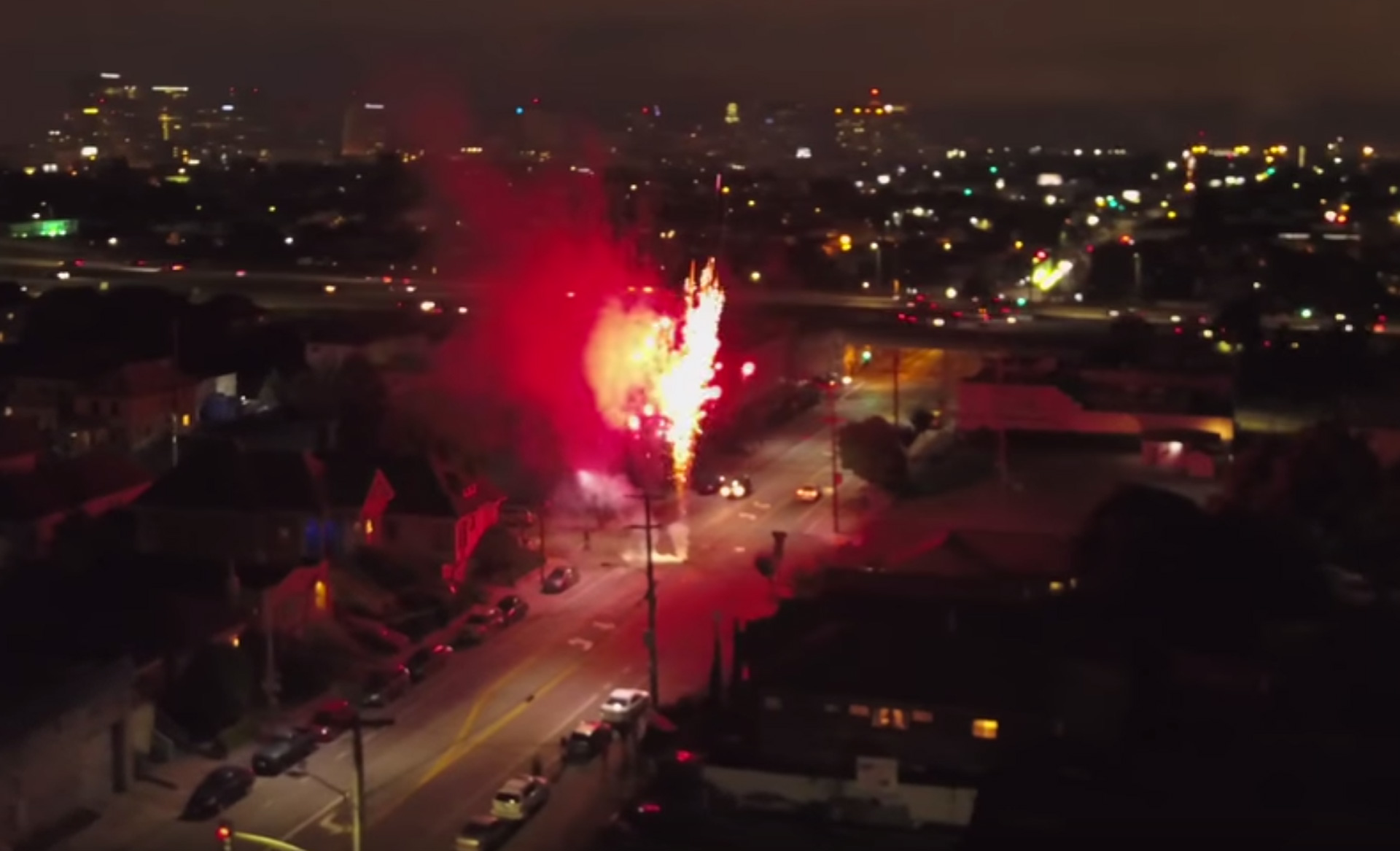
Cal Fire's figures on firework fires are sobering: In 2021, 916 fires caused by fireworks resulted in over $3.2 million of damage to properties around the state. 2020 was even worse, with more than 2,000 fires in California resulting in over $8 million of property damage.
Mishandled fireworks specifically around the Fourth of July in California have caused real damage in the past. In 2014, a reveler set off fireworks in Yolo County near the Monticello Dam, igniting a 6,500-acre blaze that took days to put out, injured five firefighters and drove dozens of people from their homes.