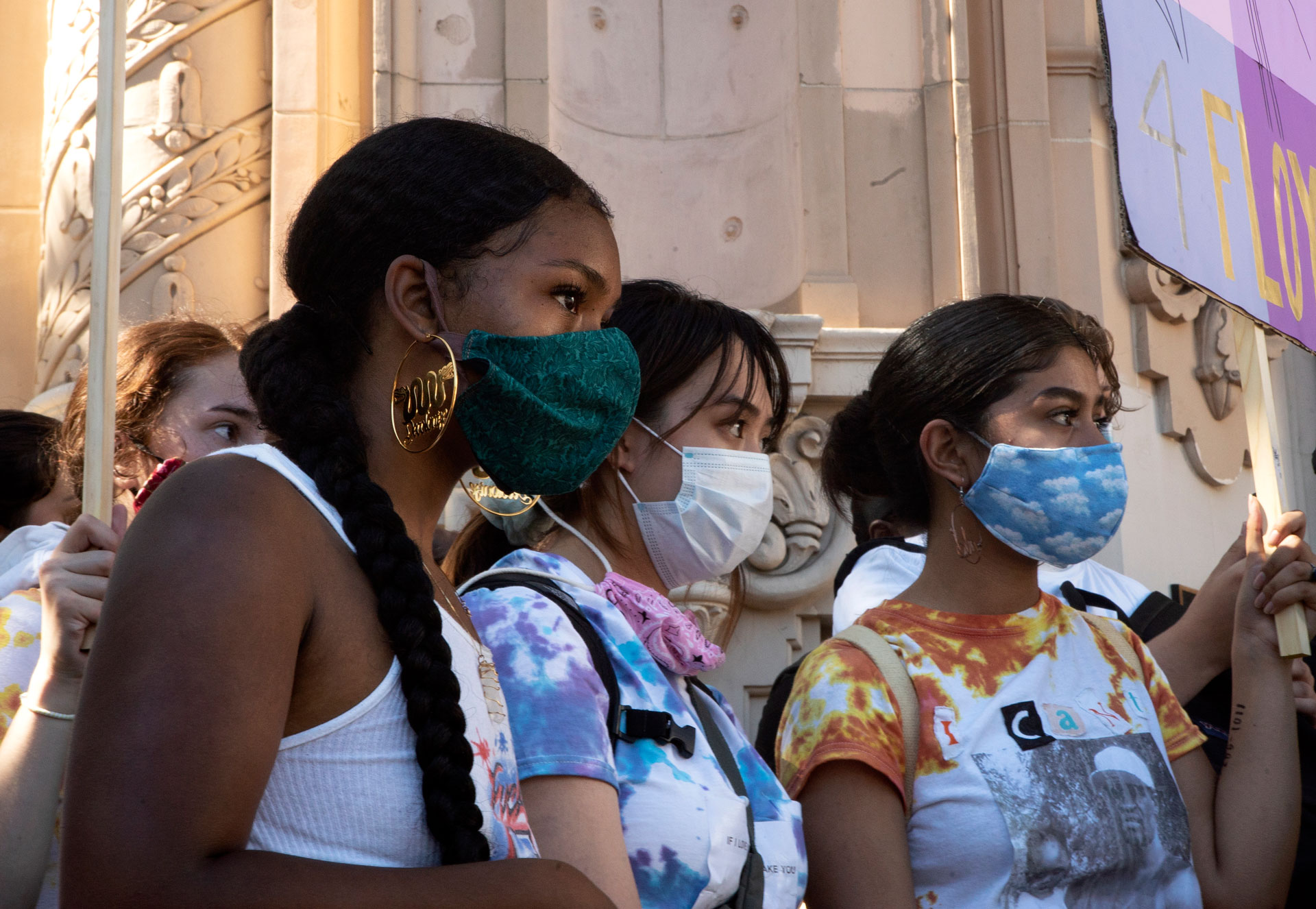
At one point, during last week's massive youth-led San Francisco protest against police brutality, Simone Jacques stood on top of a vintage yellow school bus to address the thousands of young people flooding the streets of the Mission District.
“The United States’ agenda has always been to profit off Black and brown bodies,” she shouted to the crowd, who had gathered by the thousands, galvanized by the killing of George Floyd at the hands of Minneapolis police. “We are here to acknowledge the Black people who built this country against their will, the Black women who birthed this country. … We call on your spirits to protect us and propel us through this march and the beginning of this revolution.”
Jacques, 17, and her friends organized the march through an Instagram platform she created called NoJusticeNoPeaceSF, which has over 10,000 followers.
“I love my community so much and I love the people around me so much that I never want them to have to lose somebody they love or one of them get hurt,” she told KQED.
Jacques, a junior in high school, is the proud daughter of immigrants: Her mother is from Mexico, her father from Haiti. ”All of them have had situations dealing with police brutality and being victims of police brutality, and I’m fighting for them.”
She acknowledges the differences between the fight for Black and brown liberation.
“The solidarity between Black and Latino people is still as strong as it's been since the Civil Rights era,” she said. “When it comes down to discrimination, though, our discrimination is unique. It seems that we are both fighting a battle against oppression in our own unique ways.”
Jacques said she is also fighting for the Mission, San Francisco's historically Latino neighborhood, where her mom and grandparents settled in the 1960s. Today, gentrification has turned many of the historic panaderias and botanicas into hipster coffee shops and restaurants, forcing brown and Black families out of their homes.
“I’m fighting for my home. Like I'm fighting for my human rights and my ability to breathe air into my lungs,” she said.
Jacques said it can be hard to explain to the Mexican side of her family what her experience is like as a young Black woman.
“Growing up, there was a flip-side of being Afro-Latina and people getting surprised when I speak Spanish. I still experience hella racism or hella anti-Blackness in my communities and my family.”