
In the wake of national protests following the death of George Floyd, House and Senate Democrats unveiled legislation on Monday that would bring about wide-ranging reforms to police departments across the country.
The Democratic proposal, the Justice in Policing Act of 2020, has more than 200 sponsors and marks one of the most comprehensive efforts in modern times to overhaul the way police do their jobs.
It would prohibit the use of chokeholds, lower legal standards to pursue criminal and civil penalties for police misconduct and ban no-knock warrants in drug-related cases. The plan would also create a national registry to track police misconduct.
"We can't settle for anything other than transformative structural change," House Speaker Nancy Pelosi said on Monday while flanked by the bill's authors gathered to introduce the legislation. "True justice can only be achieved with full, comprehensive action, that is what we are doing today. This is a first step; there is more to come."
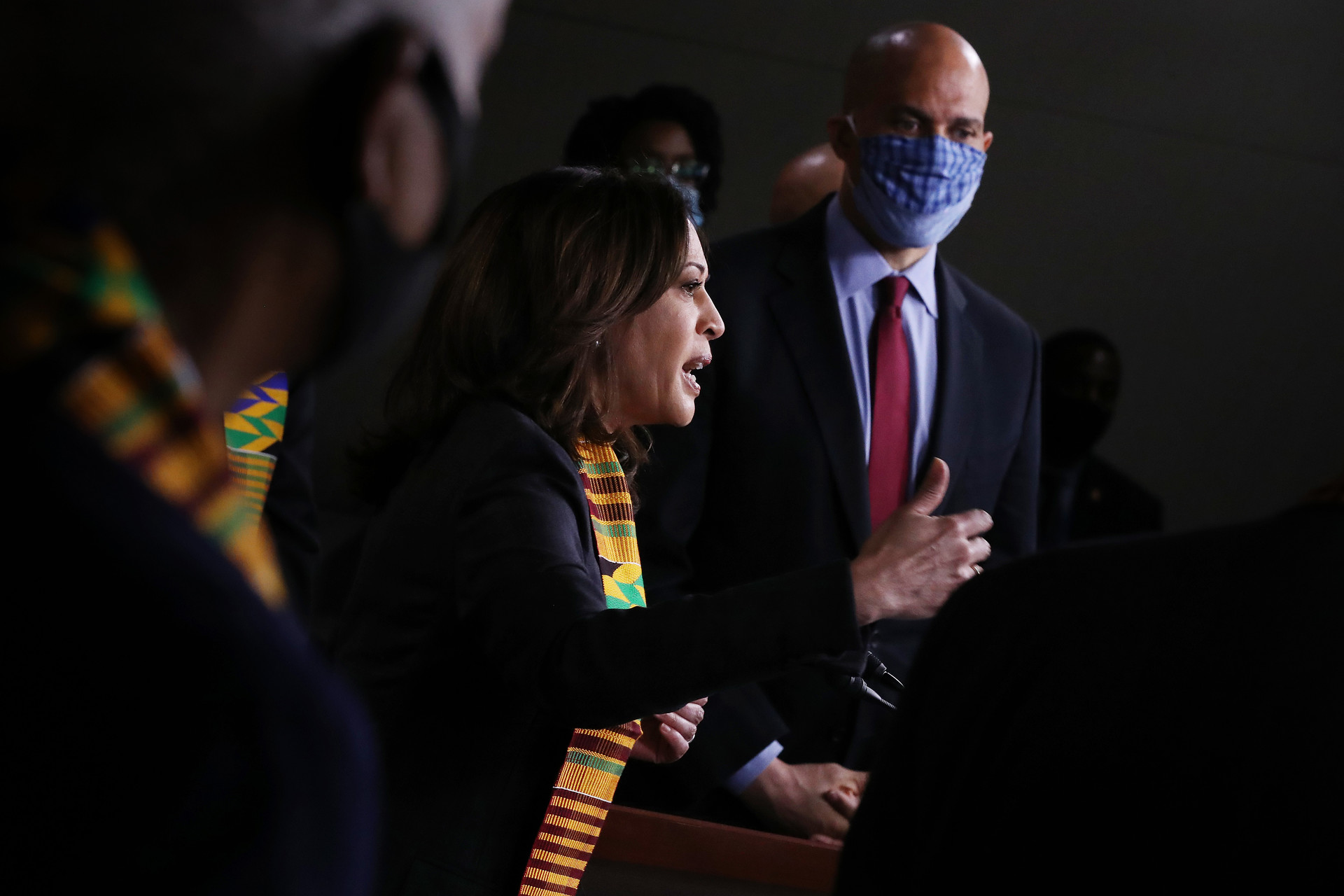
The Congressional Black Caucus and the House Judiciary Committee, as well as Sens. Cory Booker of New Jersey and Kamala Harris of California, crafted the plan. They wrote their colleagues an emailed letter with an outline of the legislation on Saturday and urged them to join as co-sponsors. A Democratic congressional aide provided the letter and bill outline to NPR.
"Persistent, unchecked bias in policing and a history of lack of accountability is wreaking havoc on the black community. Cities are literally on fire with the pain and anguish wrought by the violence visited upon black and brown bodies," the sponsors said, naming black people who have died in cases tied to police brutality.
"While there is no single policy prescription that will erase the decades of systemic racism and excessive policing — it's time we create structural change with meaningful reforms."
Bill Could Face Republican Opposition
Last week, Pelosi said she asked the Congressional Black Caucus to lead the process of drafting a legislative response. Democrats hope to calm a national outcry sparked by the May 25 death of Floyd, who was killed in Minneapolis police custody.
Democrats sorted through dozens of proposals to address policing issues, including excessive use of force and racial profiling. And while there is some degree of bipartisan support for reviewing the tactics that led to Floyd's death, cooperation is less certain on a legislative solution.
Republicans were absent from Democratic talks to develop the legislation and for now are unlikely to support it.
"I think we can easily find common ground on both sides and we can do it swiftly, but it's more difficult if you're away," House Minority Leader Rep. Kevin McCarthy, R-Calif., told reporters Thursday, referencing an extended House recess as a result of the pandemic. "Members of Congress should not be called back for one week and say, 'Here are all the bills.'"
The Democratic led-House is expected to take up the measure later this month, but its fate is much less clear in the Republican-controlled Senate. For now, Senate Majority Leader Mitch McConnell, R-Ky., and many Republicans have acknowledged "egregious wrongs" in police brutality cases.
"It's certainly something that we need to take a look at," McConnell told reporters last week. "We'll be talking to our colleagues about what, if anything, is appropriate for us to do in the wake of what's going on."
9(MDAxOTAwOTE4MDEyMTkxMDAzNjczZDljZA004))