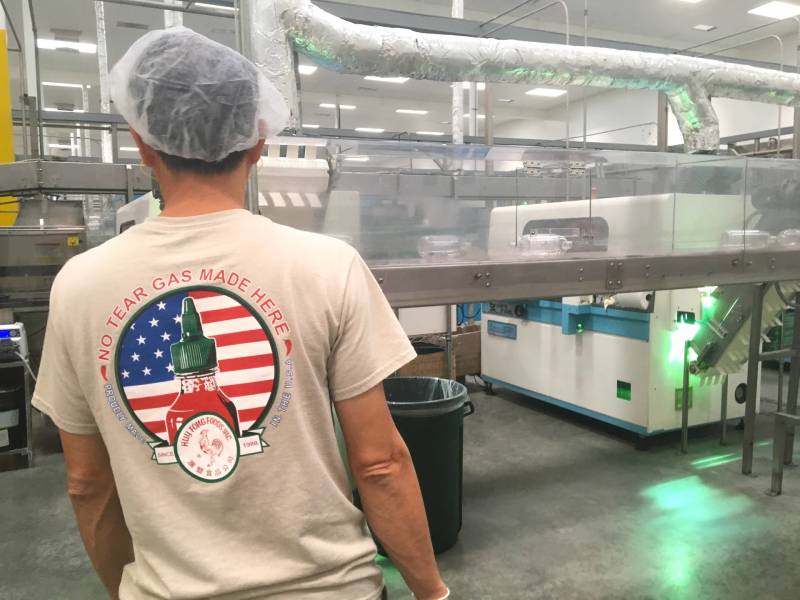
Sriracha is everywhere. It’s used to spice up anything from chips and chocolate bars to burgers. Just about every fast food chain has a Sriracha-infused menu option.
So how did this sauce go from niche condiment to a beloved mainstream staple?
The story begins with a Vietnamese refugee who found a home — and just the right peppers — in Southern California.
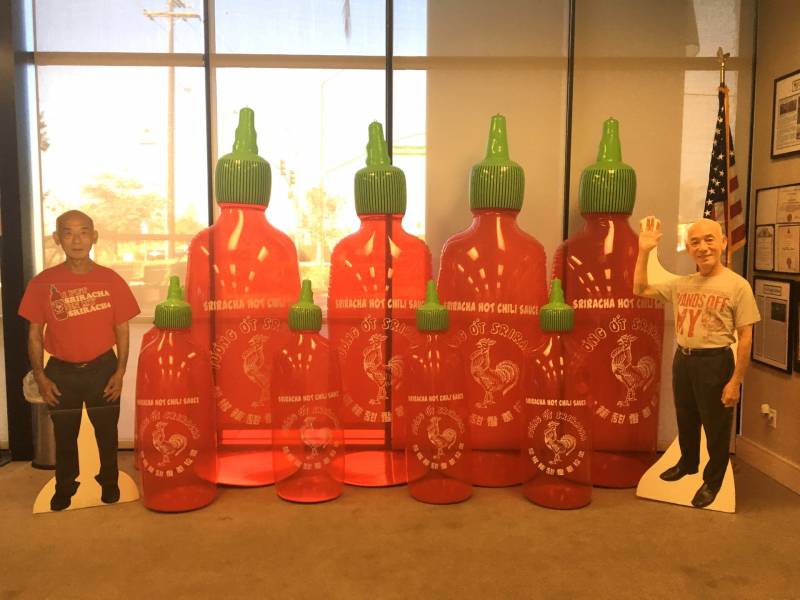
David Tran is the founder and CEO of Huy Fong Foods, the multi-million dollar company that makes Sriracha. The clear bottle filled with fiery red paste has itself become iconic, with a bright green top and a white rooster on the label. The rooster is there because Tran was born in 1945, and his Zodiac sign is the rooster. It’s also why Sriracha is sometimes referred to as “cock sauce” — and yes, they sell t-shirts with that name on it.
Tran got his start in Vietnam, when his brother gave him a chili field. He started making and selling a hot sauce called Pepper Sa-te in 1975. It’s based on a Thai chili sauce named for the coastal town of Si Racha. Tran sold the sauce in glass baby food jars.
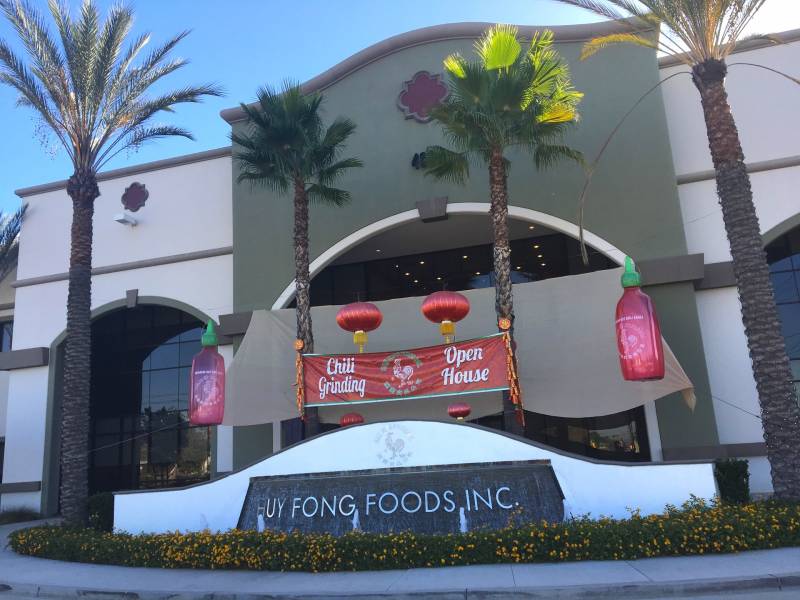
“They used to sell them actually on bikes. And actually my husband was one of the guys, the boys that helped him sell it to the markets over there. Because in Vietnam everybody makes their own hot sauce,” explained Donna Lam. She’s David Tran’s sister-in-law and the company’s executive operations officer. Many of the company’s officials are related to Tran.
Tran is ethnically Chinese and was a major in the South Vietnamese army, which made him a target of the Communist regime in Vietnam following the Vietnam War. He fled the country on a Taiwanese freighter called the Huey Fong, which means “gathering prosperity” and inspired the name of his company.
Tran sailed to the U.S., arriving first in Boston, but the cold winters and lack of fresh peppers drove him west. He moved to Los Angeles in 1979 and established his business in Chinatown, delivering the product himself in a blue Chevy van.
“California is the farmer state. They have a lot of produce. So I start a business in California. Seems like the right choice,” Tran explained matter-of-factly.
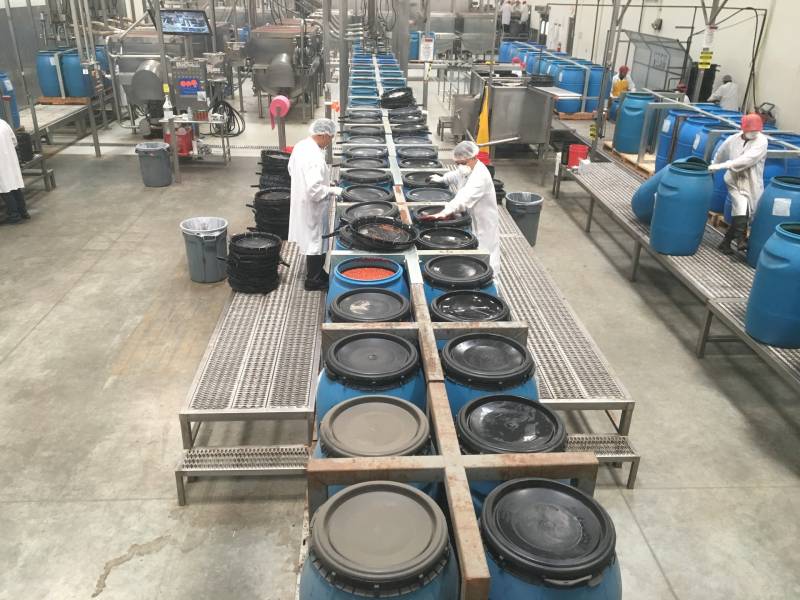
To make Sriracha, Tran uses red jalapeños. They’re no different from green jalapeños, except they’re left on the vine to mature, so they become spicier and sweeter. That’s how Tran made chili sauce back in Vietnam.
“In Asia, in China, chili must be red, not green. From beginning we using red, we’re not using green pepper,” Tran explained.
Because he insisted on using freshly-picked peppers, food writer Tien Nguyen says Tran is quintessentially Californian.
“All of this California Food Revolution stuff that was happening in the 1970s, where chefs were sourcing locally and seasonally, or trying to source locally and seasonally, he was doing it,” Nguyen said.
“He sourced these really fresh peppers. He processed them and they were on your table. That has become the definition of California cuisine. And I really think that he has helped develop this idea of what it means to cook and eat locally and seasonally,” she added.
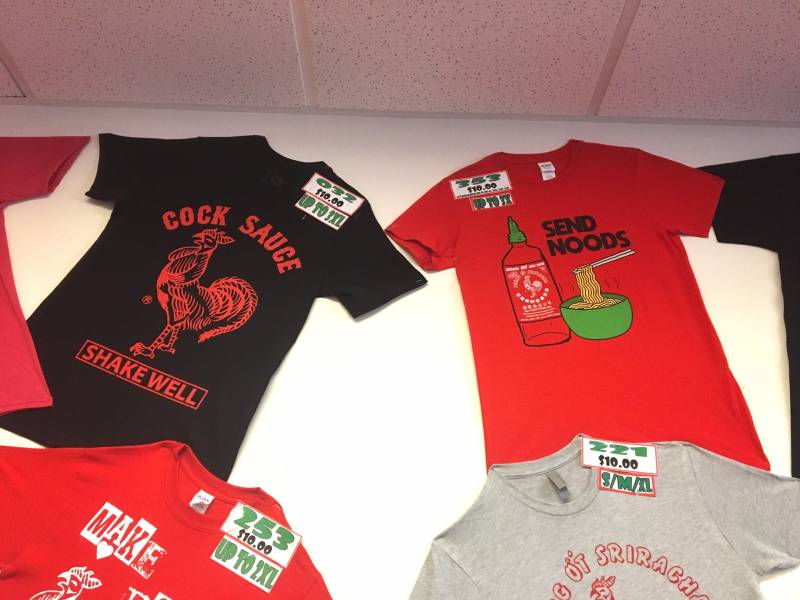
So why has the sauce become such a hit? Maybe the sweetness and spiciness played well with the American palate. Maybe it was the exotic look of the rooster logo. Or maybe, according to Huy Fong COO Donna Lam, because it’s cheap.
“David’s philosophy is to make a rich man’s sauce at a poor man’s price and everybody can get it,” she said.
Lam has another theory though. It’s the feel-good origin story of Sriracha. Tran came to America with nothing and launched a business that makes an estimated $80 million a year — and he happily poses for photos with tour groups.
“It’s not just like a guy in a glass office somewhere that’s unapproachable, he’s a very approachable guy,” she said.
Nguyen has a different theory: as Vietnamese and Thai food became more popular, chefs and foodies sought out Sriracha as well, and eventually, supermarkets started stocking it.
For 28 years, Huy Fong got peppers exclusively from Underwood Ranches in Ventura County. But the partnership fell apart in 2016 over allegations of an overpayment and breach of contract. Dueling lawsuits ended this summer when a jury in Ventura County awarded the grower $23.3 million. Huy Fong plans to fight the decision.
After the lawsuit with Underwood Ranches, Huy Fong has had to look elsewhere for fresh jalapeños. It now gets its peppers from farms in California, New Mexico and Mexico. The phrase “made in California” was taken off the label.