Temporary seasonal farmworkers will see wages decrease if a visa rule change proposed by the Trump administration goes through, and labor advocates worry that it also could lead to pay cuts for other domestic farmworkers.
Agriculture industry experts say the decreased costs will provide some much-needed relief for growers. The H-2A program allows agricultural employers to temporarily employ guest workers from other countries if there is a shortage of workers willing to take the jobs they offer. Some H-2A workers said they would still participate in the program even if they saw their wages go down, as they would make far more in six months as H-2A workers than they would doing the same work at home in Mexico.
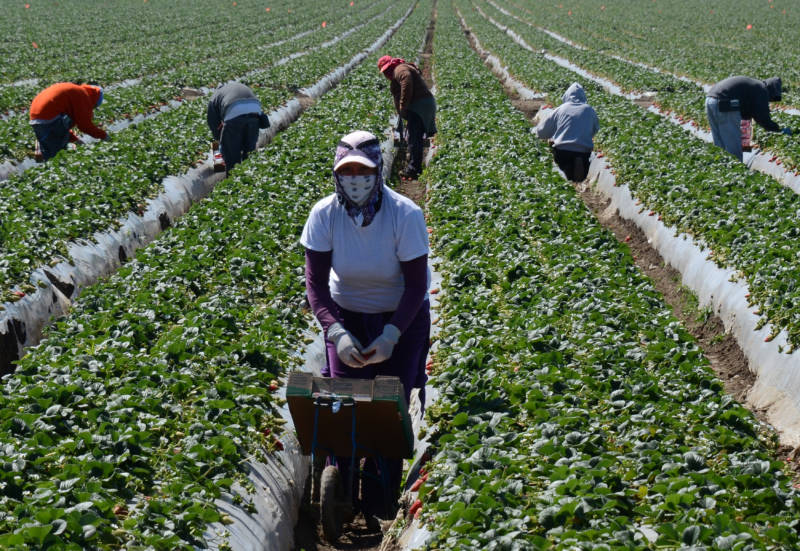
Orlando, who declined to give his last name for fear of losing his job, came to the Salinas Valley on an H-2A visa to pick strawberries. Picking strawberries is particularly difficult as it requires the picker to spend the day bent at the waist, gently twisting ripe strawberries off each bush.
Speaking in Spanish, Orlando said he sent the majority of his money home to his family in Michoacán, so his children could afford clothes and books for school. He supported his entire family, he said, and even if the wages in the U.S. dropped, he would still reapply for a job as an H-2A worker. The money was too good to pass up.
His roommate, César, who would only his first name for the same reason, agreed with Orlando. “It’s the reason why we come,” he added in Spanish.
Announced in July, the Trump administration’s proposed changes to the H-2A visa came shortly after the Adverse Effect Wage Rate (AEWR) increased across the U.S. The changes would alter how the AEWR, which is the minimum hourly wage needed to attract noncitizen, seasonal workers, is calculated, lowering the hourly wage to benefit growers.
The Department of Labor calculates the AEWR annually, and each state has a different one that employers must meet. Growers who employ H-2A workers have the option to pay workers whichever is higher: the AEWR, the agreed-upon amount set in a collective bargaining agreement, or the state or federal minimum wage. In some states, that list also includes the prevailing wage, based upon surveys of employees in similar positions within the same field.
From 2018 to 2019, California saw an increase of 6% in its AEWR, according to the Farm Bureau, driving the hourly wage from $13.18 to $13.92. Other states, such as Colorado, saw their AEWR increase by as much as 23%. Farmer advocates say growers and employers cannot sustain the pace of pay growth, which rarely drops. Between 2009 and 2014, the AEWR increased from $10.16 to just over $11, data from the Department of Labor shows. Today, it stands at just under $14 in California. Other states, including Washington, pay just over $15 an hour.
“This will continue to erode domestic farmers’ profitability while continuing to press upward domestic workers’ wages unsustainably,” said President and CEO of the National Council of Agricultural Employers, Michael Marsh. “You’ll see farmers expanding fruit and vegetable production in Canada and Mexico, where the wage rates are significantly lower than they have to pay in the U.S. About half the fresh fruit in the U.S. is produced in a foreign country, and about a third of the vegetables.”