T
yx Pulskamp shows me around his family’s farm, tucked into the rolling hills of Amador County, southeast of Sacramento. “There are something like a thousand strawberry plants right here. And we jar all our jam in the cafe,” he says.
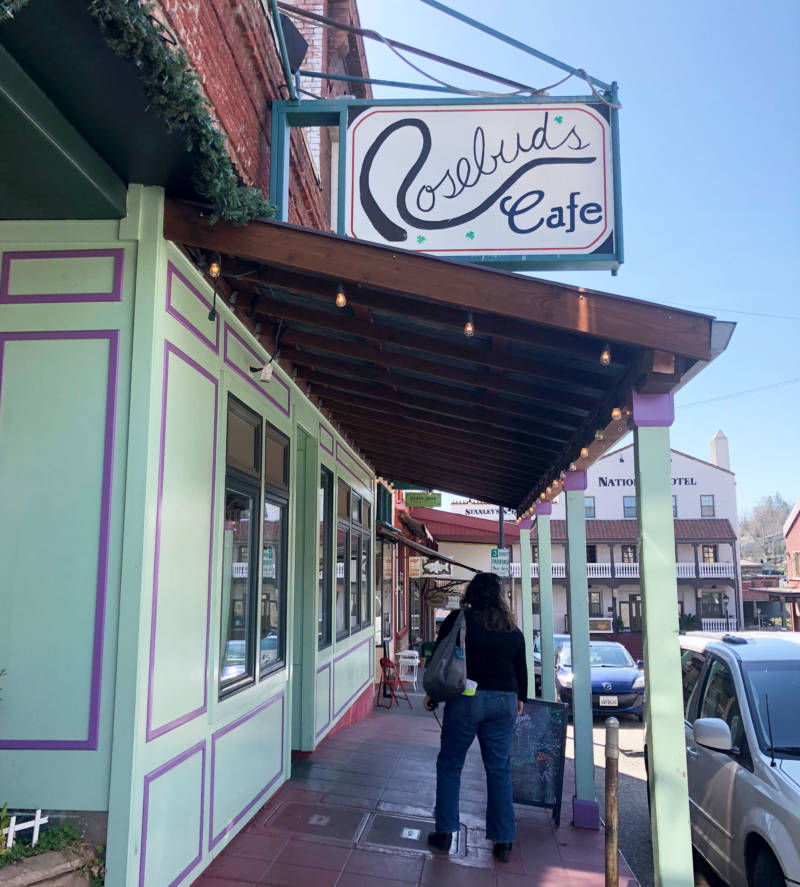
What his family grows and raises on the farm, they serve at Rosebud’s Cafe, which they opened in the nearby town of Jackson nearly 30 years ago.
Tyx shows off some sheep and says, “We have a nice lamb burger on the menu right now.”
He admits, it’s a bit of an experiment, and not everything works. Take the duck eggs. “The eggs weren’t really a hit in the restaurant. The people weren’t ready for duck eggs.”
But Tyx and his family are used to pushing the boundaries of what people are ready for in Amador County.
Jackson is a Gold Rush-era town with quaint brick buildings on its Main Street, and a reputation as the last of its kind to get rid of brothels and gaming halls. It’s pretty quiet, now, except when you walk into Rosebud’s Cafe.
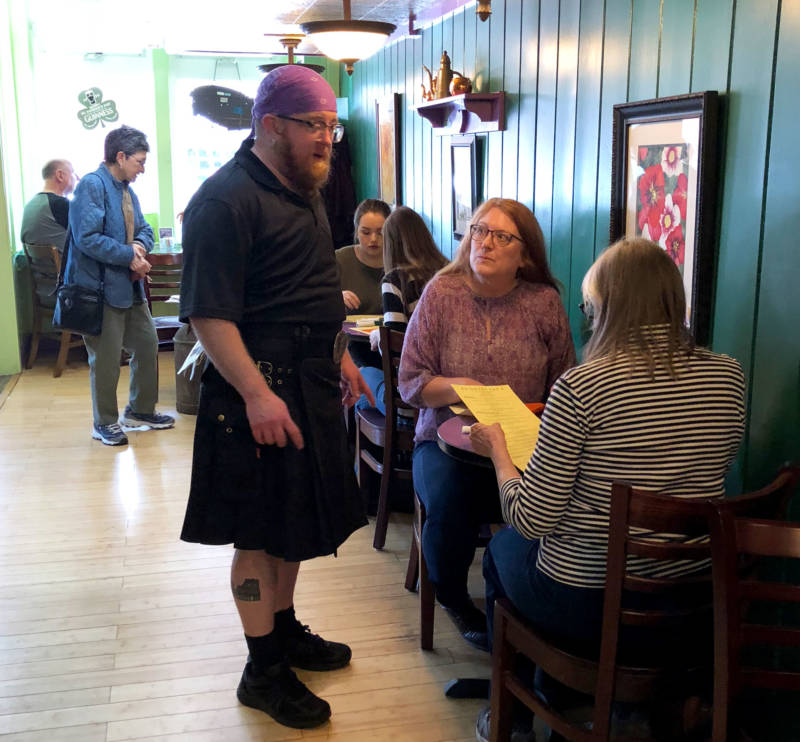
It’s a place that shouts its values from its walls: bright green paint, huge family portraits, and tons of posters and flyers announcing programs for the arts, supporting local homeless initiatives and advocating for LGBTQ rights.
At least half the customers are from far out of town — Stockton, Manteca, Monterey — and Tyx’s mom, Mary Pulskamp, says that’s important, because Rosebud’s doesn’t always feel the love from all of their neighbors.
“We’re very grateful for city people coming out here. I mean the big ranchers and the old families probably have blackballed us in some ways” she says. “We’re outspoken liberals in this cafe, and the community that we live in has not been so forward in those ideas.”
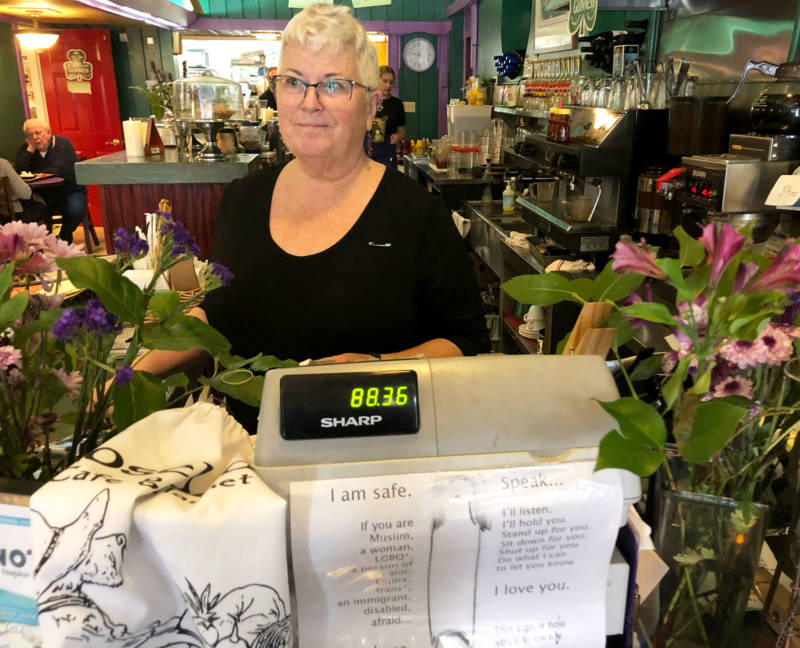
Rosebud’s has become a refuge for people who don’t always feel accepted, including Mary’s own family members.
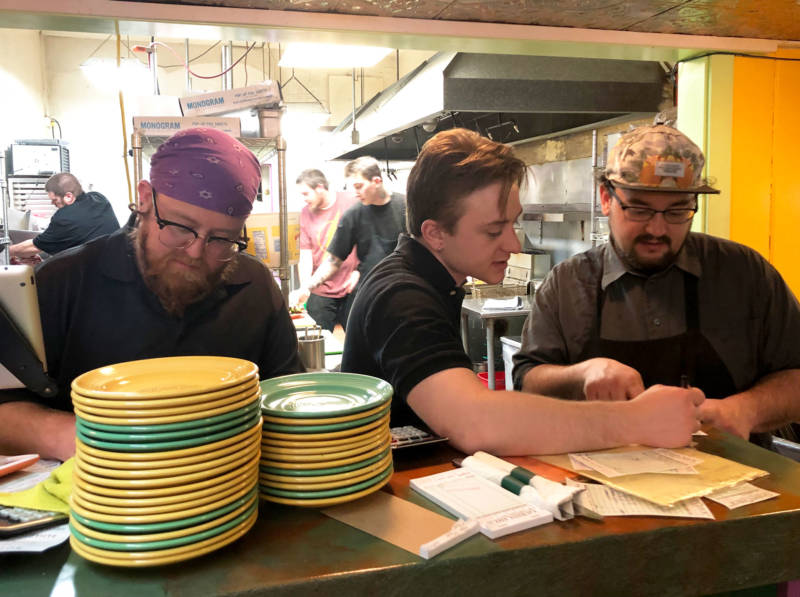
“Rosebud’s is like a beam of light,” says Tyx, who works the front of the house like he’s done since Rosebud’s opened. “I started on the cash register when I was 6 years old. It’s like my sibling, Rosebud’s. It’s like the fourth child.”
His parents and aunt and uncle opened Rosebud’s, and his brother, Roibeard Kyle, is the chef. “When the farm has a bumper crop of something, we’re going to use those for sure. It’s like a dialogue between the restaurant and the farm.”
Tyx’s sister, Meghan, has worked here throughout her life, but the day I visit she’s a customer, celebrating a friend’s birthday.
Mary says the family really started supporting LGBTQ issues when Meghan came out as a lesbian in high school.
“In this community that was really scary,” Mary says. She worried her daughter would be bullied. “But that was just the beginning.”
Tyx stood out even more than Meghan. There was the controversial neon-pink baseball cap, and the short hair dyed purple that provoked a teacher.
“She pulled me aside on the way out to PE one day and told me that I was ruining my life,” Tyx recalls. He pauses, then continues, “I knew then that she was wrong. But what I didn’t know was how her saying that would still be a part of my consciousness, 30 years later. That’s obscene! I was just a fat little girl. I was just trying to be OK.”
He didn’t know it then, but Tyx is a trans man. Playing with his look, he learned about himself. There was a mohawk, clothes cut up and pieced back together, decorated with safety pins.
“For me, our parents giving us the room to express ourselves through our physical aesthetic was a matter of my survival. If I wasn’t cutting my hair, I might have cut myself.”