A room in one of Ruby’s Place’s apartments for domestic violence survivors. (Virginia Fay/Peninsula Press)
On an April afternoon, Maria, paralyzed with fear, shrunk into herself, while her abusive husband told a judge hearing her restraining order case that she’s an illegal immigrant and a liar, who shouldn’t be here and who married him only for the visa.
“She was terrified. She was terrified that the judge was going to be like, ‘Oh, well, in that case, we’re calling ICE (U.S. Immigration and Customs Enforcement) right now,’ ” said Sophora Acheson, a manager at Ruby’s Place in Hayward, the domestic violence shelter where Maria sought help.
Maria, a pseudonym, because Ruby’s Place doesn’t identify any of its clients, arrived at the shelter in March. Now in her early thirties, she came to Los Angeles from Mexico over a decade ago, and moved to Northern California to marry her now-husband, who she says turned out to be abusive and alcoholic. They wed in 2015, and she left her factory job before giving birth prematurely to her son last year.
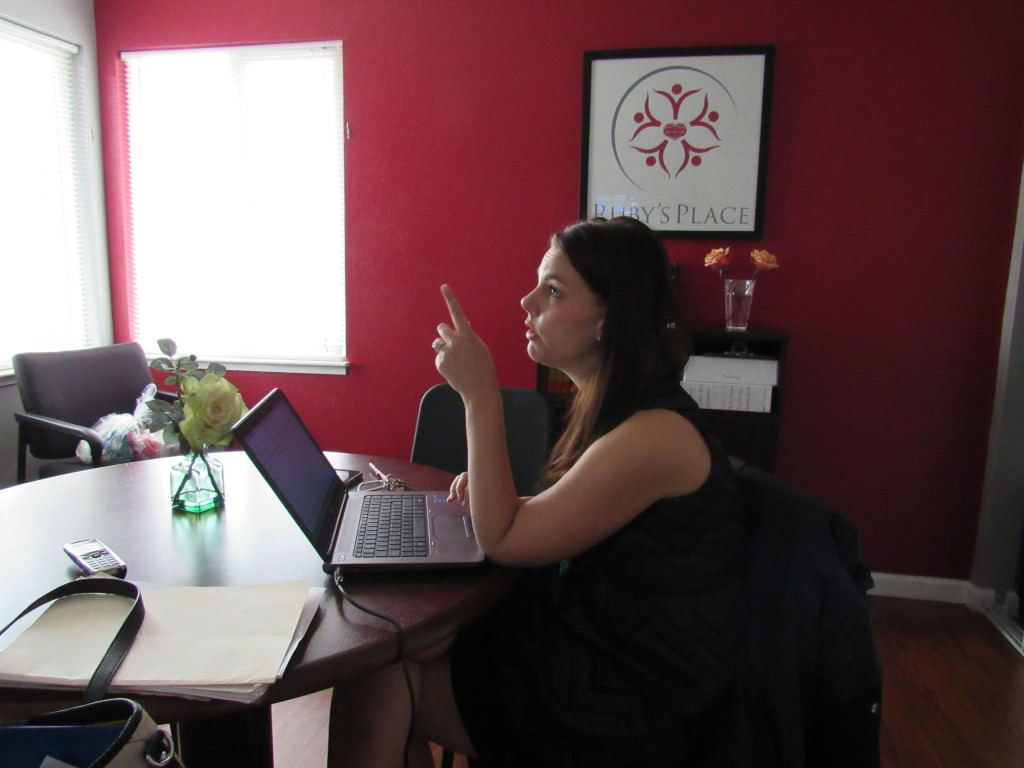
Sophora Acheson reviews the board tracking all families living at Ruby’s Place in the intake room. (Virginia Fay/Peninsula Press)
Afraid that her husband had also begun physically abusing their 6-month-old baby, she came to Ruby’s Place. She says he threatened to report her and her parents’ undocumented status and to have her baby taken away, if she reported the abuse.
After weeks of working with staff at Ruby’s Place, Maria overcame fears of deportation enough to seek a restraining order. Now, she worries about keeping custody of her son. Using a mother’s undocumented status against her in custody hearings is a typical move for an abuser, said Acheson.
Fear of deportation has always been a barrier to immigrants approaching law enforcement, especially for those who are undocumented. Compounding the issue, domestic and sexual violence are chronically under-reported across all demographics. In recent months, that fear has multiplied after President Trump’s pledges to crack down on illegal immigration and to build a wall along the Mexico border.
The playground at Ruby’s Place is strewn with toys used by children staying at the shelter. (Virginia Fay/Peninsula Press)
Julia Mass, an immigration lawyer for the ACLU, said, “What’s changed is the Trump administration has no priority enforcement, so they’re going to enforce against anybody they come across,” a policy that has raised anxiety for many immigrants.
Even in Northern California, where many cities and counties have designated themselves sanctuaries — indicating local law enforcement will not work with ICE — fear is rife.
Immigrants have retreated not just from law enforcement, but from services of all kinds. Parents are afraid to send their children to school, in case they’re taken in an ICE raid during the day and their kids have no one to return home to. Others fear using medical services — clinics note that some patients with chronic illnesses have stopped showing up for treatment. Even legal immigrants are afraid. In some areas, they’ve un-enrolled from CalFresh, government food benefits available only to legal residents.
And many immigrant women across Northern California are too afraid to file for restraining orders, report abuse or seek U visas — predominately for victims of domestic and sexual violence —because those filings require working with law enforcement.
Acheson said before Trump took office, roughly half of their undocumented domestic violence clients were interested in working with police and filing for U visas. Now, “maybe 10 percent are willing or will request any sort of legal services,” she said. “And especially [if] they have to be in direct contact with the police and working with them for prosecution, they’ll flat out just say no, absolutely not.”
When survivors do come in for help, they are often so scared that they won’t stay more than a few days or a week, even packing up their belongings and bolting in the middle of the night, under cover of darkness. “We haven’t really seen that in the past. Maybe once in a blue moon that would happen,” said Acheson. “Now, one in five undocumented families that come in will only stay a week and then flee, because they feel that they’re safer running, than sort of being a ‘sitting duck’ as they’ve called it.”
Police chiefs in Houston and Los Angeles have both announced concerning decreases in reports of sexual and domestic violence by Latina women. According to the San Francisco Police Department, their unpublished data show a 14 percent decrease in reports of domestic violence by Hispanic women in the first three months of the year, compared to the same time period in the previous year. SFPD Sgt. Michael Andraychak said they couldn't attribute the drop to any particular reason, though they are aware of deportation concerns in the immigrant community.
“Our goal is to reassure the community that victims or witnesses of any crime can come forward and report those incidents to the police, without concerns of their immigration status being questioned,” said Andraychak in an email.
Many other local law enforcement agencies, immigration lawyers and shelters say it’s too early in the new presidential administration to release conclusive data. But, from Livermore to Sacramento, organizations report observations of increased fears causing immigrants to retreat from the services they need, and the preliminary data they do have echoes the anecdotal reports.
Undocumented immigrants “are already so marginalized, and they’re getting nabbed by ICE and detained all the time, so it’s really scary for survivors of domestic violence … to come forward right now,” said Jill Zawisza, executive director of WOMAN Inc., an organization that serves domestic violence survivors in San Francisco.
Since the election, WOMAN Inc. has received about 10 percent more calls to its domestic violence hotline and seen an increase in therapy appointments from people who don’t want to involve law enforcement. As women shy away from reporting crimes, they turn to others for help. “There’s definitely something going on,” said Zawisza. “A lot of people who want to connect, people who want to talk to someone, people who don’t want to interface with the police department for a myriad of reasons.”
But service providers, like WOMAN Inc., are uncertain about how to advise their clients. “We basically tell them that anytime they call the police department to their home or into their situation, that they’re losing an element of control,” said Zawisza. Given San Francisco’s sanctuary status, she said undocumented immigrants have a better chance of safely interacting with law enforcement, but fear is still pervasive.
“We can’t wholeheartedly assure people that they’re not going to get in trouble if they call the police department. It’s hard to know how to respond,” she said.
Morgan Weibel, executive director of the San Francisco Bay Area office of Tahirih Justice Center, which specializes in legal services for immigrant women, said this is a pressing moral issue for advocates. “The current climate and situation, for me at least, has taken away my personal feeling that I could responsibly tell someone you have absolutely nothing to fear,” she said.
Local police departments are also concerned about how this climate is affecting their relationships with immigrant communities, and they’re conducting outreach to maintain communication.
Redwood City police Capt. John Spicer, who works closely with the immigrant community there, said his department has seen a noticeable dampening effect on victims’ and witnesses’ willingness to come forward, making it increasingly difficult for police to intervene. Such fear, he said, “means that crime is able to flourish a little more,” which impacts everyone’s safety.
This effect extends far beyond domestic and sexual violence survivors. “I don’t think it matters what the crime is. I think people will see law enforcement and the justice system as something that is now less accessible to them and potentially threatening to them, because they’re concerned that the federal government will somehow get that information and use it to deport them,” he said.
In early March, a man in Redwood City began shooting through the walls of his apartment and into neighbors’ homes in the middle of the night. Police came to the small, gray apartment complex, and began evacuating adjacent residences as the shooter’s gunshots blasted through walls, but one resident refused to leave.
This person could hear gunshots and see officers in uniform, but was convinced that the entire situation was “a ruse being used by the federal government to get them out and take them into custody,” said Spicer. As an undocumented immigrant, “that person was in peril, because they really mistrusted any form of authority.”
Getting a Driver's License
Fear of interacting with authorities is also affecting immigrants who want to obtain driver’s licenses. In January 2015, California passed a law, AB 60, allowing residents without Social Security numbers to get driver’s licenses. A recent Stanford study found that issuing licenses to undocumented immigrants decreased hit-and-run incidents and increased overall traffic safety.
However, data provided from the DMV show a steady decrease in AB 60 licenses issued since the program went into effect, which the department attributes to an initial rush of applications when the program began.
But Gina Gates, who runs free Spanish-language driver’s education workshops for immigrants applying for AB 60 licenses in San Jose, has noted increased fear and reluctance to apply for licenses since Trump’s campaign — which may also explain the decrease.
Following the election, she stopped offering classes while reaching out to elected officials and the DMV to see how the program might be affected under Trump.
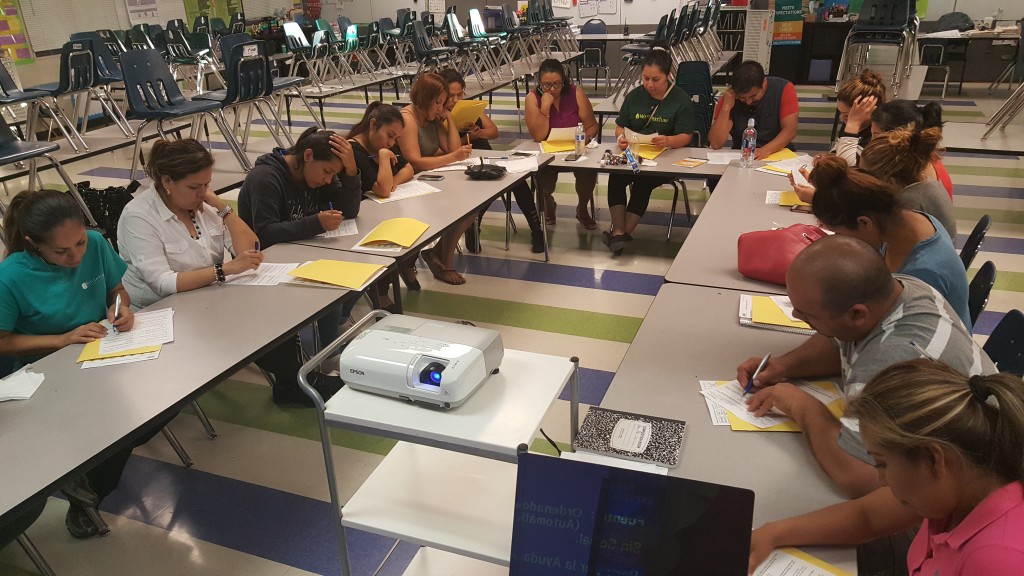
A group of driver’s education students study at Gina Gates’ recent class in May, the first she’s held since the election. (Courtesy of Gina Gates)
Gates said many immigrants are worried that, having given their addresses to the DMV to obtain licenses, ICE may find and arrest them. Some have even considering moving. Those who haven’t applied for licenses yet are more hesitant to do so.
Gates ran her first class since the election in late May, and although she said it went well, “everyone is feeling very attacked," and expressed worries about being deported if they give government officials their addresses. She’s updated her curriculum to include information about their rights when approached by ICE, and to encourage parents to make plans for their children in case they’re detained.
Mass, the ACLU lawyer, said the risk of obtaining an AB 60 license varies case by case. “It’s a little different calculus,” she said. “Now we just say, it’s important to get a driver’s license, but it’s also important to know that getting a driver’s license might make it easier for federal immigration authorities to find you.”
Gates will no longer list the locations or times of her classes online either, as she doesn't want that information to be available to federal immigration authorities. Instead, details of classes are circulated via word of mouth.
Anxiety Drives Down School Attendance
Undocumented immigrants’ fears of deportation are acute in schools, too. In Alameda County, Assistant District Attorney Teresa Drenick has seen an uptick in immigrant families embroiled in habitual truancy cases. Rumors of ICE patrolling near schools in largely Hispanic neighborhoods inspired so much fear that parents kept their children home from school for extended periods.
“Moms are worried that they’re going to drop their kids off in the morning and then get swept up by immigration authorities and not be there in the afternoon, so they’re scared to do it at all,” said Drenick in a May interview. Her priority was to work with families to keep children in class, rather than to prosecute truancy cases.
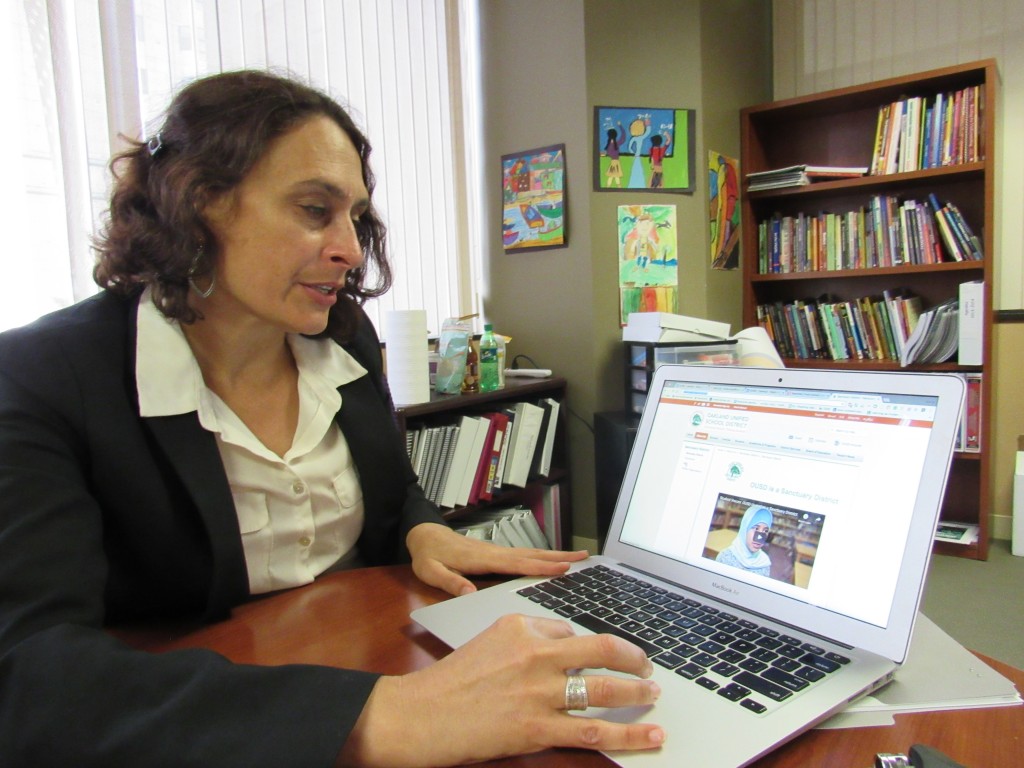
Nicole Knight references the Oakland Unified School District’s newly created Sanctuary District web page. (Virginia Fay/Peninsula Press)
In response to deportation fears and anxiety in schools, Oakland’s Board of Education renewed a resolution upholding the district as a sanctuary. Nicole Knight, executive director of the district’s English language learner and multilingual achievement department, led the task force to execute the resolution’s ideals, including developing protocol in case ICE comes to campus, in case there is ICE activity in the community, or in case a student’s family member is detained.
Since the resolution was renewed, at least three families have had members detained. In each case, school staff collected details about the time and place of arrest and where the family member was held and reached out to immigrant rights organizations and attorneys to obtain legal help. At the same time, school staff made plans for a safe place for the children to stay until their parents were released.
As part of its outreach campaign next year the district plans to plaster posters at all school sites in multiple languages affirming school as a sanctuary. In September, the district is holding a workshop for teachers to share best practices, process their own experiences, and create curricula that addresses trauma experienced by immigrants and other affected communities.
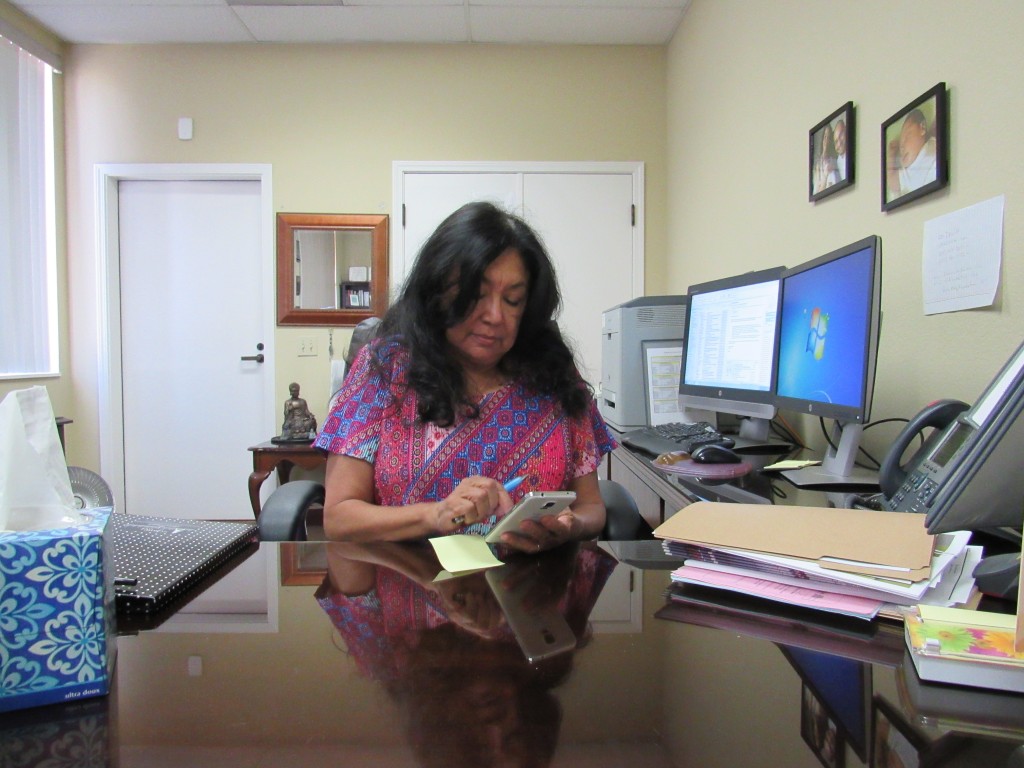
Gloria Hernandez-Goff checks her phone at the Ravenswood Unified School District office. (Virginia Fay/Peninsula Press)
Gloria Hernandez-Goff, superintendent of the East Palo Alto Ravenswood District, said that while attendance has not dropped, students’ unease has increased dramatically, causing students to act out and cry in the classroom. Each school in the district has one mental health counselor, which Hernandez-Goff said is no longer enough to manage the mental health issues that have manifested this year.
Ravenswood students recently completed yearly academic assessment tests. “Stress, and not having certain things in place in your everyday life, does affect your academic outcomes,” Hernandez-Goff said. “So I’m not really sure what to expect from the [test] results of this year.”
Medical Services Go Unused
The negative effects of anxiety on immigrants’ mental health extends past children. “It’s really traumatic. [We see] individuals who are going into forms of depression, individuals who now feel that they’re unwanted in the country they may have lived in for decades,” said Greg Garrett, chief of policy at Alameda Health Consortium, a private, nonprofit group of health centers. “And this is causing trauma, which is actually resulting in severe mental health issues.”
Though the consortium has seen an increase in immigrants seeking mental health services, they’ve experienced a drop-off in other patients, including immigrants with chronic illnesses. In one instance, a cancer patient was in remission until she recently started showing signs of cancer again. But after two sessions, she stopped showing up for treatment.
Caseworkers eventually were able to make contact with her, and discovered she had a friend who was recently deported. Her fear of being similarly identified and detained if she continued using health services caused her to stop treatment for several months.
“You have individuals putting their own lives at risk because of this fear,” said Garrett.
Kathleen Clanon, medical director of the Health Care Services Agency of Alameda County, said that though they’ve heard of immigrants hesitating to enroll or continue enrollment in health services, at their organization they've been able to leverage their existing relationships to prevent that from happening.
Clanon said they're worried, though, about people who don’t have trusting relationships with doctors and are now not receiving any medical care. Measuring that absence is difficult, she said.
Even Legal Residents Unenroll From Benefits
In the first few months of the year, the San Francisco Human Services Agency began receiving an unusual number of calls. Suddenly, people were picking up the phone to unenroll from CalFresh benefits. Only legal residents are eligible for CalFresh. But even legal immigrants are feeling compelled to disconnect from government food assistance.
“That has concerned our immigrant population in terms of feeling safe about applying for CalFresh, because they don’t want that to be the reason they might be deported,” said Denise Boland, director of employment and benefits services at the Santa Clara County Social Services Agency. “So even legal immigrants are concerned now about CalFresh and don’t feel safe.”
Chandra Johnson, director of communications at the San Francisco Human Services Agency, said they can’t know for sure why people decline services, but households with at least one noncitizen were particularly likely to unenroll. Many mixed-status families are especially prone to disengage from services due to fear of family members being deported, even if the person receiving benefits has legal status.
Due to the increase in mixed-status families unenrolling, and a slight decrease in applications from the same group, the San Francisco office has been reaching out to the community to ensure people know that policies have not changed, and anyone who was previously eligible for benefits still is.
“Any time we think that families are turning away from nutrition benefits, or having to make some of those hard choices … in a city as expensive as San Francisco, in between housing or putting food on the table or [paying for] utilities or those sorts of things,” Johnson said, “it’s a concern to us.”
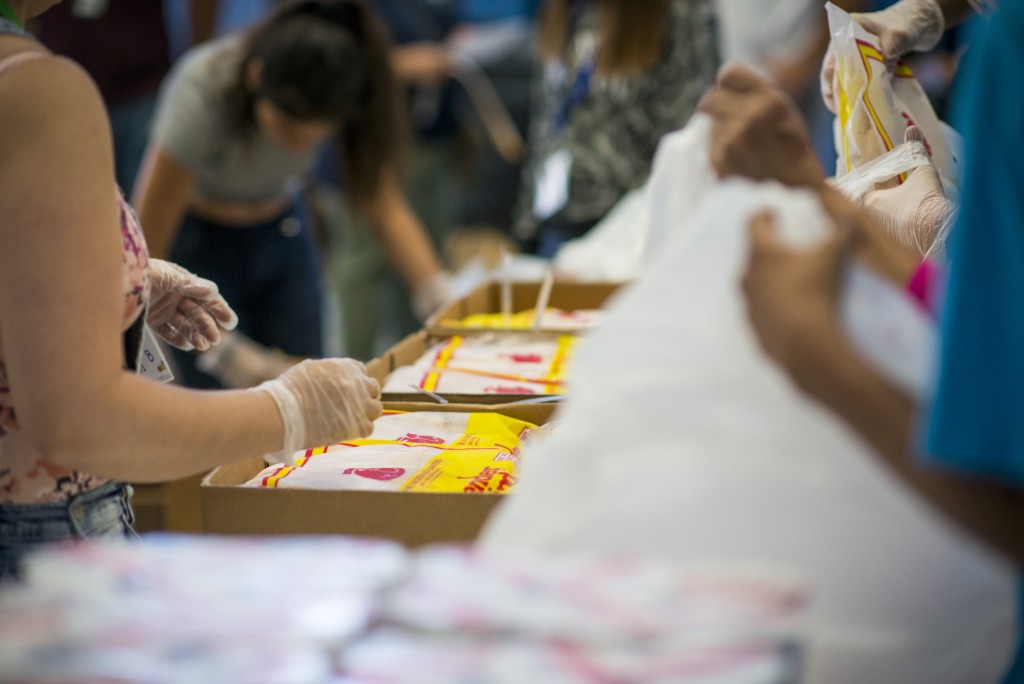
Food is passed out at a Second Harvest Food Bank distribution site. (Courtesy of Second Harvest Food Bank)
Second Harvest Food Bank, which both distributes food through several programs independent of the government and helps people enroll in CalFresh at some of their facilities, has seen increased hesitancy in immigrants wanting to take government benefits.
One family, of five legal refugees from Nepal living in Sunnyvale, came to the food pantry because they couldn't make ends meet. The family was paying $2,080 in monthly rent, but only bringing in a monthly income of $2,000. Second Harvest secured a translator and helped them fill out a CalFresh application.
“They were ready to hit submit in completing the application, and then they decided they just didn’t want to put … their ability to stay here in jeopardy. And so they decided not to apply for CalFresh after all, which was kind of heartbreaking,” said Anna Dyer, Second Harvest’s director of client services. “It’s really tough to qualify for [CalFresh], because it’s only the lowest-income folks, so it means that they’re really, really struggling.”
What Now?
Independent and government agencies alike are struggling with how to counteract the fear of deportation that’s causing immigrants to retreat back into the shadows. Nonprofit service providers and local government branches from social services to police departments are partnering with immigration lawyers to orchestrate Know Your Rights events and educate the immigrant community.
Beyond encouraging immigrants to continue engaging with the services they need, which, by and large, they are still entitled to under current policies, many service providers find themselves at a loss for how to inspire confidence. Uncertainty of what the future will bring is a major driving force in the collective anxiety felt by immigrants, and, to a lesser degree, by the service providers themselves.
Lucy Barron lives in East Palo Alto and works in administration at Ravenswood Unified School District. Steep local housing prices have led her to live in a garage with her husband and five children. She and her family are especially conscious of being good neighbors so others in the area won’t have reason to seek their eviction by calling ICE, a threat she says many in her neighborhood grapple with.
Barron has legal status here, and volunteers with Ravenswood’s food services to help other immigrants, whether documented or not, get healthy food. Her husband, however, is undocumented, and is currently going through a court process with ICE with the potential of being deported. He is working with a lawyer to try to obtain legal status.
“You have to be ready for anything,” said. She begins to tear up as she contemplates the possibility of providing for her family without her husband’s income, or, worse, returning to Mexico, which she said is impossible given the violence there.
She felt conditions for immigrants were improving under the previous administration, but now, “It’s like a bomb that’s going to explode pretty soon,” she said. “It’s just like nerves that you feel all the time. ‘OK, are we going to be OK today?’ That’s what it is … Now it’s more like we’re waiting for the worst.”
lower waypointnext waypoint
Player sponsored by
window.__IS_SSR__=true
window.__INITIAL_STATE__={
"attachmentsReducer": {
"audio_0": {
"type": "attachments",
"id": "audio_0",
"imgSizes": {
"kqedFullSize": {
"file": "https://ww2.kqed.org/news/wp-content/themes/KQED-unified/img/audio_bgs/background0.jpg"
}
}
},
"audio_1": {
"type": "attachments",
"id": "audio_1",
"imgSizes": {
"kqedFullSize": {
"file": "https://ww2.kqed.org/news/wp-content/themes/KQED-unified/img/audio_bgs/background1.jpg"
}
}
},
"audio_2": {
"type": "attachments",
"id": "audio_2",
"imgSizes": {
"kqedFullSize": {
"file": "https://ww2.kqed.org/news/wp-content/themes/KQED-unified/img/audio_bgs/background2.jpg"
}
}
},
"audio_3": {
"type": "attachments",
"id": "audio_3",
"imgSizes": {
"kqedFullSize": {
"file": "https://ww2.kqed.org/news/wp-content/themes/KQED-unified/img/audio_bgs/background3.jpg"
}
}
},
"audio_4": {
"type": "attachments",
"id": "audio_4",
"imgSizes": {
"kqedFullSize": {
"file": "https://ww2.kqed.org/news/wp-content/themes/KQED-unified/img/audio_bgs/background4.jpg"
}
}
},
"placeholder": {
"type": "attachments",
"id": "placeholder",
"imgSizes": {
"thumbnail": {
"file": "https://cdn.kqed.org/wp-content/uploads/2024/12/KQED-Default-Image-816638274-2000x1333-1-160x107.jpg",
"width": 160,
"height": 107,
"mimeType": "image/jpeg"
},
"medium": {
"file": "https://cdn.kqed.org/wp-content/uploads/2024/12/KQED-Default-Image-816638274-2000x1333-1-800x533.jpg",
"width": 800,
"height": 533,
"mimeType": "image/jpeg"
},
"medium_large": {
"file": "https://cdn.kqed.org/wp-content/uploads/2024/12/KQED-Default-Image-816638274-2000x1333-1-768x512.jpg",
"width": 768,
"height": 512,
"mimeType": "image/jpeg"
},
"large": {
"file": "https://cdn.kqed.org/wp-content/uploads/2024/12/KQED-Default-Image-816638274-2000x1333-1-1020x680.jpg",
"width": 1020,
"height": 680,
"mimeType": "image/jpeg"
},
"1536x1536": {
"file": "https://cdn.kqed.org/wp-content/uploads/2024/12/KQED-Default-Image-816638274-2000x1333-1-1536x1024.jpg",
"width": 1536,
"height": 1024,
"mimeType": "image/jpeg"
},
"fd-lrg": {
"file": "https://cdn.kqed.org/wp-content/uploads/2024/12/KQED-Default-Image-816638274-2000x1333-1-1536x1024.jpg",
"width": 1536,
"height": 1024,
"mimeType": "image/jpeg"
},
"fd-med": {
"file": "https://cdn.kqed.org/wp-content/uploads/2024/12/KQED-Default-Image-816638274-2000x1333-1-1020x680.jpg",
"width": 1020,
"height": 680,
"mimeType": "image/jpeg"
},
"fd-sm": {
"file": "https://cdn.kqed.org/wp-content/uploads/2024/12/KQED-Default-Image-816638274-2000x1333-1-800x533.jpg",
"width": 800,
"height": 533,
"mimeType": "image/jpeg"
},
"post-thumbnail": {
"file": "https://cdn.kqed.org/wp-content/uploads/2024/12/KQED-Default-Image-816638274-2000x1333-1-672x372.jpg",
"width": 672,
"height": 372,
"mimeType": "image/jpeg"
},
"twentyfourteen-full-width": {
"file": "https://cdn.kqed.org/wp-content/uploads/2024/12/KQED-Default-Image-816638274-2000x1333-1-1038x576.jpg",
"width": 1038,
"height": 576,
"mimeType": "image/jpeg"
},
"xxsmall": {
"file": "https://cdn.kqed.org/wp-content/uploads/2024/12/KQED-Default-Image-816638274-2000x1333-1-160x107.jpg",
"width": 160,
"height": 107,
"mimeType": "image/jpeg"
},
"xsmall": {
"file": "https://cdn.kqed.org/wp-content/uploads/2024/12/KQED-Default-Image-816638274-2000x1333-1-672x372.jpg",
"width": 672,
"height": 372,
"mimeType": "image/jpeg"
},
"small": {
"file": "https://cdn.kqed.org/wp-content/uploads/2024/12/KQED-Default-Image-816638274-2000x1333-1-672x372.jpg",
"width": 672,
"height": 372,
"mimeType": "image/jpeg"
},
"xlarge": {
"file": "https://cdn.kqed.org/wp-content/uploads/2024/12/KQED-Default-Image-816638274-2000x1333-1-1020x680.jpg",
"width": 1020,
"height": 680,
"mimeType": "image/jpeg"
},
"full-width": {
"file": "https://cdn.kqed.org/wp-content/uploads/2024/12/KQED-Default-Image-816638274-2000x1333-1-1920x1280.jpg",
"width": 1920,
"height": 1280,
"mimeType": "image/jpeg"
},
"guest-author-32": {
"file": "https://cdn.kqed.org/wp-content/uploads/2025/01/KQED-Default-Image-816638274-1333x1333-1-160x160.jpg",
"width": 32,
"height": 32,
"mimeType": "image/jpeg"
},
"guest-author-50": {
"file": "https://cdn.kqed.org/wp-content/uploads/2025/01/KQED-Default-Image-816638274-1333x1333-1-160x160.jpg",
"width": 50,
"height": 50,
"mimeType": "image/jpeg"
},
"guest-author-64": {
"file": "https://cdn.kqed.org/wp-content/uploads/2025/01/KQED-Default-Image-816638274-1333x1333-1-160x160.jpg",
"width": 64,
"height": 64,
"mimeType": "image/jpeg"
},
"guest-author-96": {
"file": "https://cdn.kqed.org/wp-content/uploads/2025/01/KQED-Default-Image-816638274-1333x1333-1-160x160.jpg",
"width": 96,
"height": 96,
"mimeType": "image/jpeg"
},
"guest-author-128": {
"file": "https://cdn.kqed.org/wp-content/uploads/2025/01/KQED-Default-Image-816638274-1333x1333-1-160x160.jpg",
"width": 128,
"height": 128,
"mimeType": "image/jpeg"
},
"detail": {
"file": "https://cdn.kqed.org/wp-content/uploads/2025/01/KQED-Default-Image-816638274-1333x1333-1-160x160.jpg",
"width": 160,
"height": 160,
"mimeType": "image/jpeg"
},
"kqedFullSize": {
"file": "https://cdn.kqed.org/wp-content/uploads/2024/12/KQED-Default-Image-816638274-2000x1333-1.jpg",
"width": 2000,
"height": 1333
}
}
},
"news_11510517": {
"type": "attachments",
"id": "news_11510517",
"meta": {
"index": "attachments_1716263798",
"site": "news",
"id": "11510517",
"found": true
},
"parent": 11506766,
"imgSizes": {
"small": {
"file": "https://ww2.kqed.org/app/uploads/sites/10/2017/06/IMG_2938-1024x768-520x390.jpg",
"width": 520,
"mimeType": "image/jpeg",
"height": 390
},
"twentyfourteen-full-width": {
"file": "https://ww2.kqed.org/app/uploads/sites/10/2017/06/IMG_2938-1024x768-1024x576.jpg",
"width": 1024,
"mimeType": "image/jpeg",
"height": 576
},
"thumbnail": {
"file": "https://ww2.kqed.org/app/uploads/sites/10/2017/06/IMG_2938-1024x768-160x120.jpg",
"width": 160,
"mimeType": "image/jpeg",
"height": 120
},
"fd-sm": {
"file": "https://ww2.kqed.org/app/uploads/sites/10/2017/06/IMG_2938-1024x768-960x720.jpg",
"width": 960,
"mimeType": "image/jpeg",
"height": 720
},
"post-thumbnail": {
"file": "https://ww2.kqed.org/app/uploads/sites/10/2017/06/IMG_2938-1024x768-672x372.jpg",
"width": 672,
"mimeType": "image/jpeg",
"height": 372
},
"xsmall": {
"file": "https://ww2.kqed.org/app/uploads/sites/10/2017/06/IMG_2938-1024x768-375x281.jpg",
"width": 375,
"mimeType": "image/jpeg",
"height": 281
},
"kqedFullSize": {
"file": "https://ww2.kqed.org/app/uploads/sites/10/2017/06/IMG_2938-1024x768.jpg",
"width": 1024,
"height": 768
},
"large": {
"file": "https://ww2.kqed.org/app/uploads/sites/10/2017/06/IMG_2938-1024x768-1020x765.jpg",
"width": 1020,
"mimeType": "image/jpeg",
"height": 765
},
"guest-author-50": {
"file": "https://ww2.kqed.org/app/uploads/sites/10/2017/06/IMG_2938-1024x768-50x50.jpg",
"width": 50,
"mimeType": "image/jpeg",
"height": 50
},
"guest-author-96": {
"file": "https://ww2.kqed.org/app/uploads/sites/10/2017/06/IMG_2938-1024x768-96x96.jpg",
"width": 96,
"mimeType": "image/jpeg",
"height": 96
},
"medium": {
"file": "https://ww2.kqed.org/app/uploads/sites/10/2017/06/IMG_2938-1024x768-800x600.jpg",
"width": 800,
"mimeType": "image/jpeg",
"height": 600
},
"guest-author-64": {
"file": "https://ww2.kqed.org/app/uploads/sites/10/2017/06/IMG_2938-1024x768-64x64.jpg",
"width": 64,
"mimeType": "image/jpeg",
"height": 64
},
"guest-author-32": {
"file": "https://ww2.kqed.org/app/uploads/sites/10/2017/06/IMG_2938-1024x768-32x32.jpg",
"width": 32,
"mimeType": "image/jpeg",
"height": 32
},
"detail": {
"file": "https://ww2.kqed.org/app/uploads/sites/10/2017/06/IMG_2938-1024x768-150x150.jpg",
"width": 150,
"mimeType": "image/jpeg",
"height": 150
},
"guest-author-128": {
"file": "https://ww2.kqed.org/app/uploads/sites/10/2017/06/IMG_2938-1024x768-128x128.jpg",
"width": 128,
"mimeType": "image/jpeg",
"height": 128
},
"xxsmall": {
"file": "https://ww2.kqed.org/app/uploads/sites/10/2017/06/IMG_2938-1024x768-240x180.jpg",
"width": 240,
"mimeType": "image/jpeg",
"height": 180
}
},
"publishDate": 1497476060,
"modified": 1497476117,
"caption": "A room in one of Ruby’s Place’s apartments for domestic violence survivors.",
"description": null,
"title": "IMG_2938-1024x768",
"credit": "Virginia Fay/Peninsula Press",
"status": "inherit",
"isLoading": false,
"fetchFailed": false
}
},
"audioPlayerReducer": {
"postId": "stream_live",
"isPaused": true,
"isPlaying": false,
"pfsActive": false,
"pledgeModalIsOpen": true,
"playerDrawerIsOpen": false,
"liveAudioPlayStartedAt": 0,
"liveAudioPlayContext": ""
},
"authorsReducer": {
"byline_news_11506766": {
"type": "authors",
"id": "byline_news_11506766",
"meta": {
"override": true
},
"slug": "byline_news_11506766",
"name": "Virginia Fay \u003cbr>\u003cstrong>\u003ca href=\"http://peninsulapress.com/2017/06/12/back-into-the-shadows/\">Peninsula Press\u003c/a>\u003c/strong>",
"isLoading": false
}
},
"pagesReducer": {},
"pfsSessionReducer": {},
"postsReducer": {
"stream_live": {
"type": "live",
"id": "stream_live",
"audioUrl": "https://hls.kqed.org/hls/kqed_app/playlist.m3u8",
"title": "Live Stream",
"excerpt": "Live Stream information currently unavailable.",
"link": "/radio",
"featImg": "",
"label": {
"name": "KQED Live",
"link": "/"
}
},
"stream_kqedNewscast": {
"type": "posts",
"id": "stream_kqedNewscast",
"audioUrl": "https://www.kqed.org/.stream/anon/radio/RDnews/newscast.mp3?_=1",
"title": "KQED Newscast",
"featImg": "",
"label": {
"name": "88.5 FM",
"link": "/"
}
},
"news_11506766": {
"type": "posts",
"id": "news_11506766",
"meta": {
"index": "posts_1716263798",
"site": "news",
"id": "11506766",
"found": true
},
"articlePosition": 0,
"parent": 0,
"labelTerm": {},
"blocks": [],
"publishDate": 1497531651,
"format": "standard",
"disqusTitle": "Back Into the Shadows: Immigrants Retreat From Needed Services as Deportation Fears Loom",
"title": "Back Into the Shadows: Immigrants Retreat From Needed Services as Deportation Fears Loom",
"headTitle": "The California Report | KQED News",
"content": "\u003cp>On an April afternoon, Maria, paralyzed with fear, shrunk into herself, while her abusive husband told a judge hearing her restraining order case that she’s an illegal immigrant and a liar, who shouldn’t be here and who married him only for the visa.\u003c/p>\n\u003cp>“She was terrified. She was terrified that the judge was going to be like, ‘Oh, well, in that case, we’re calling ICE (U.S. Immigration and Customs Enforcement) right now,’ ” said Sophora Acheson, a manager at \u003ca href=\"http://www.rubysplace.org/wp/\" target=\"_blank\" rel=\"noopener noreferrer\">Ruby’s Place\u003c/a> in Hayward, the domestic violence shelter where Maria sought help.\u003c/p>\n\u003cp>Maria, a pseudonym, because Ruby’s Place doesn’t identify any of its clients, arrived at the shelter in March. Now in her early thirties, she came to Los Angeles from Mexico over a decade ago, and moved to Northern California to marry her now-husband, who she says turned out to be abusive and alcoholic. They wed in 2015, and she left her factory job before giving birth prematurely to her son last year.\u003c/p>\n\u003cfigure id=\"attachment_11510515\" class=\"wp-caption aligncenter\" style=\"max-width: 1024px\">\u003ca href=\"https://ww2.kqed.org/news/wp-content/uploads/sites/10/2017/06/IMG_2932-1024x768.jpg\">\u003cimg class=\"size-full wp-image-11510515\" src=\"https://ww2.kqed.org/news/wp-content/uploads/sites/10/2017/06/IMG_2932-1024x768.jpg\" alt=\"\" width=\"1024\" height=\"768\" srcset=\"https://ww2.kqed.org/app/uploads/sites/10/2017/06/IMG_2932-1024x768.jpg 1024w, https://ww2.kqed.org/app/uploads/sites/10/2017/06/IMG_2932-1024x768-160x120.jpg 160w, https://ww2.kqed.org/app/uploads/sites/10/2017/06/IMG_2932-1024x768-800x600.jpg 800w, https://ww2.kqed.org/app/uploads/sites/10/2017/06/IMG_2932-1024x768-1020x765.jpg 1020w, https://ww2.kqed.org/app/uploads/sites/10/2017/06/IMG_2932-1024x768-960x720.jpg 960w, https://ww2.kqed.org/app/uploads/sites/10/2017/06/IMG_2932-1024x768-240x180.jpg 240w, https://ww2.kqed.org/app/uploads/sites/10/2017/06/IMG_2932-1024x768-375x281.jpg 375w, https://ww2.kqed.org/app/uploads/sites/10/2017/06/IMG_2932-1024x768-520x390.jpg 520w\" sizes=\"(max-width: 1024px) 100vw, 1024px\">\u003c/a>\u003cfigcaption class=\"wp-caption-text\">Sophora Acheson reviews the board tracking all families living at Ruby’s Place in the intake room. \u003ccite>(Virginia Fay/Peninsula Press)\u003c/cite>\u003c/figcaption>\u003c/figure>\n\u003cp>Afraid that her husband had also begun physically abusing their 6-month-old baby, she came to Ruby’s Place. She says he threatened to report her and her parents’ undocumented status and to have her baby taken away, if she reported the abuse.\u003c/p>\n\u003cp>After weeks of working with staff at Ruby’s Place, Maria overcame fears of deportation enough to seek a restraining order. Now, she worries about keeping custody of her son. Using a mother’s undocumented status against her in custody hearings is a typical move for an abuser, said Acheson.\u003c/p>\n\u003cp>[ad fullwidth]\u003c/p>\n\u003cp>Fear of deportation has always been a barrier to immigrants approaching law enforcement, especially for those who are undocumented. Compounding the issue, domestic and sexual violence are chronically under-reported across all demographics. In recent months, that fear has multiplied after President Trump’s pledges to crack down on illegal immigration and to build a wall along the Mexico border.\u003c/p>\n\u003cfigure id=\"attachment_11510514\" class=\"wp-caption alignright\" style=\"max-width: 800px\">\u003ca href=\"https://ww2.kqed.org/news/wp-content/uploads/sites/10/2017/06/IMG_2877-1024x768.jpg\">\u003cimg class=\"size-medium wp-image-11510514\" src=\"https://ww2.kqed.org/news/wp-content/uploads/sites/10/2017/06/IMG_2877-1024x768-800x600.jpg\" alt=\"\" width=\"800\" height=\"600\" srcset=\"https://ww2.kqed.org/app/uploads/sites/10/2017/06/IMG_2877-1024x768-800x600.jpg 800w, https://ww2.kqed.org/app/uploads/sites/10/2017/06/IMG_2877-1024x768-160x120.jpg 160w, https://ww2.kqed.org/app/uploads/sites/10/2017/06/IMG_2877-1024x768-1020x765.jpg 1020w, https://ww2.kqed.org/app/uploads/sites/10/2017/06/IMG_2877-1024x768-960x720.jpg 960w, https://ww2.kqed.org/app/uploads/sites/10/2017/06/IMG_2877-1024x768-240x180.jpg 240w, https://ww2.kqed.org/app/uploads/sites/10/2017/06/IMG_2877-1024x768-375x281.jpg 375w, https://ww2.kqed.org/app/uploads/sites/10/2017/06/IMG_2877-1024x768-520x390.jpg 520w, https://ww2.kqed.org/app/uploads/sites/10/2017/06/IMG_2877-1024x768.jpg 1024w\" sizes=\"(max-width: 800px) 100vw, 800px\">\u003c/a>\u003cfigcaption class=\"wp-caption-text\">The playground at Ruby’s Place is strewn with toys used by children staying at the shelter. \u003ccite>(Virginia Fay/Peninsula Press)\u003c/cite>\u003c/figcaption>\u003c/figure>\n\u003cp>Julia Mass, an immigration lawyer for the ACLU, said, “What’s changed is the Trump administration has no priority enforcement, so they’re going to enforce against anybody they come across,” a policy that has raised anxiety for many immigrants.\u003c/p>\n\u003cp>Even in Northern California, where many cities and counties have designated themselves \u003ca href=\"https://ww2.kqed.org/news/2017/04/06/long-history-of-sanctuary-laws-debate-in-san-francisco/\" target=\"_blank\" rel=\"noopener noreferrer\">sanctuaries\u003c/a> — indicating local law enforcement will not work with ICE — fear is rife.\u003c/p>\n\u003cp>Immigrants have retreated not just from law enforcement, but from services of all kinds. Parents are \u003ca href=\"https://ww2.kqed.org/news/2017/04/03/safe-haven-schools-face-limitations-in-protecting-immigrant-students/\" target=\"_blank\" rel=\"noopener noreferrer\">afraid to send their children to school\u003c/a>, in case they’re taken in an ICE raid during the day and their kids have no one to return home to. Others fear using medical services — clinics note that some patients with chronic illnesses have stopped showing up for treatment. Even legal immigrants are afraid. In some areas, they’ve un-enrolled from \u003ca href=\"http://www.cdss.ca.gov/inforesources/calfresh\" target=\"_blank\" rel=\"noopener noreferrer\">CalFresh\u003c/a>, government food benefits available only to legal residents.\u003c/p>\n\u003cp>And many immigrant women across Northern California are too afraid to file for restraining orders, report abuse or seek U visas — predominately for victims of domestic and sexual violence —because those filings require working with law enforcement.\u003c/p>\n\u003cp>Acheson said before Trump took office, roughly half of their undocumented domestic violence clients were interested in working with police and filing for U visas. Now, “maybe 10 percent are willing or will request any sort of legal services,” she said. “And especially [if] they have to be in direct contact with the police and working with them for prosecution, they’ll flat out just say no, absolutely not.”\u003c/p>\n\u003cp>When survivors do come in for help, they are often so scared that they won’t stay more than a few days or a week, even packing up their belongings and bolting in the middle of the night, under cover of darkness. “We haven’t really seen that in the past. Maybe once in a blue moon that would happen,” said Acheson. “Now, one in five undocumented families that come in will only stay a week and then flee, because they feel that they’re safer running, than sort of being a ‘sitting duck’ as they’ve called it.”\u003c/p>\n\u003cp>\u003c!-- iframe plugin v.4.3 wordpress.org/plugins/iframe/ -->\u003cbr>\n\u003ciframe width=\"100%\" height=\"166\" scrolling=\"no\" frameborder=\"no\" src=\"https://w.soundcloud.com/player/?url=https%3A//api.soundcloud.com/tracks/327145121&color=ff5500&auto_play=false&hide_related=false&show_comments=true&show_user=true&show_reposts=false\" class=\"iframe-class\">\u003c/iframe>\u003c/p>\n\u003cp>Police chiefs in \u003ca href=\"http://www.chron.com/news/houston-texas/houston/article/HPD-chief-announces-decrease-in-Hispanics-11053829.php\" target=\"_blank\" rel=\"noopener noreferrer\">Houston \u003c/a>and \u003ca href=\"http://www.latimes.com/local/lanow/la-me-ln-immigrant-crime-reporting-drops-20170321-story.html\" target=\"_blank\" rel=\"noopener noreferrer\">Los Angeles\u003c/a> have both announced concerning decreases in reports of sexual and domestic violence by Latina women. According to the San Francisco Police Department, their unpublished data show a 14 percent decrease in reports of domestic violence by Hispanic women in the first three months of the year, compared to the same time period in the previous year. SFPD Sgt. Michael Andraychak said they couldn't attribute the drop to any particular reason, though they are aware of deportation concerns in the immigrant community.\u003c/p>\n\u003cp>“Our goal is to reassure the community that victims or witnesses of any crime can come forward and report those incidents to the police, without concerns of their immigration status being questioned,” said Andraychak in an email.\u003c/p>\n\u003cp>Many other local law enforcement agencies, immigration lawyers and shelters say it’s too early in the new presidential administration to release conclusive data. But, from Livermore to Sacramento, organizations report observations of increased fears causing immigrants to retreat from the services they need, and the preliminary data they do have echoes the anecdotal reports.\u003c/p>\n\u003cp>Undocumented immigrants “are already so marginalized, and they’re getting nabbed by ICE and detained all the time, so it’s really scary for survivors of domestic violence … to come forward right now,” said Jill Zawisza, executive director of \u003ca href=\"http://www.womaninc.org/\" target=\"_blank\" rel=\"noopener noreferrer\">WOMAN Inc.\u003c/a>, an organization that serves domestic violence survivors in San Francisco.\u003c/p>\n\u003cp>Since the election, WOMAN Inc. has received about 10 percent more calls to its domestic violence hotline and seen an increase in therapy appointments from people who don’t want to involve law enforcement. As women shy away from reporting crimes, they turn to others for help. “There’s definitely something going on,” said Zawisza. “A lot of people who want to connect, people who want to talk to someone, people who don’t want to interface with the police department for a myriad of reasons.”\u003c/p>\n\u003cp>But service providers, like WOMAN Inc., are uncertain about how to advise their clients. “We basically tell them that anytime they call the police department to their home or into their situation, that they’re losing an element of control,” said Zawisza. \u003ca href=\"https://ww2.kqed.org/news/2016/11/14/defiant-san-francisco-vows-to-remain-sanctuary-city/\" target=\"_blank\" rel=\"noopener noreferrer\">Given San Francisco’s sanctuary status\u003c/a>, she said undocumented immigrants have a better chance of safely interacting with law enforcement, but fear is still pervasive.\u003c/p>\n\u003cp>“We can’t wholeheartedly assure people that they’re not going to get in trouble if they call the police department. It’s hard to know how to respond,” she said.\u003c/p>\n\u003cp>Morgan Weibel, executive director of the \u003ca href=\"http://www.tahirih.org/locations/san-francisco-bay-area/\" target=\"_blank\" rel=\"noopener noreferrer\">San Francisco Bay Area office of Tahirih Justice Center\u003c/a>, which specializes in legal services for immigrant women, said this is a pressing moral issue for advocates. “The current climate and situation, for me at least, has taken away my personal feeling that I could responsibly tell someone you have absolutely nothing to fear,” she said.\u003c/p>\n\u003cp>Local police departments are also concerned about how this climate is affecting their relationships with immigrant communities, and they’re conducting outreach to maintain communication.\u003c/p>\n\u003cp>Redwood City police Capt. John Spicer, who works closely with the immigrant community there, said his department has seen a noticeable dampening effect on victims’ and witnesses’ willingness to come forward, making it increasingly difficult for police to intervene. Such fear, he said, “means that crime is able to flourish a little more,” which impacts everyone’s safety.\u003c/p>\n\u003cp>This effect extends far beyond domestic and sexual violence survivors. “I don’t think it matters what the crime is. I think people will see law enforcement and the justice system as something that is now less accessible to them and potentially threatening to them, because they’re concerned that the federal government will somehow get that information and use it to deport them,” he said.\u003c/p>\n\u003cp>In early March, a man in Redwood City began shooting through the walls of his apartment and into neighbors’ homes in the middle of the night. Police came to the small, gray apartment complex, and began evacuating adjacent residences as the shooter’s gunshots blasted through walls, but one resident refused to leave.\u003c/p>\n\u003cp>This person could hear gunshots and see officers in uniform, but was convinced that the entire situation was “a ruse being used by the federal government to get them out and take them into custody,” said Spicer. As an undocumented immigrant, “that person was in peril, because they really mistrusted any form of authority.”\u003c/p>\n\u003ch3>Getting a Driver's License\u003c/h3>\n\u003cp>Fear of interacting with authorities is also affecting immigrants who want to obtain driver’s licenses. In January 2015, California passed a law, \u003ca href=\"https://www.dmv.ca.gov/portal/dmv/detail/ab60\" target=\"_blank\" rel=\"noopener noreferrer\">AB 60\u003c/a>, allowing residents without Social Security numbers to get driver’s licenses. \u003ca href=\"https://www.gsb.stanford.edu/insights/should-states-give-drivers-licenses-unauthorized-residents\" target=\"_blank\" rel=\"noopener noreferrer\">A recent Stanford study\u003c/a> found that issuing licenses to undocumented immigrants decreased hit-and-run incidents and increased overall traffic safety.\u003c/p>\n\u003cp>However, data provided from the DMV show a steady decrease in AB 60 licenses issued since the program went into effect, which the department attributes to an initial rush of applications when the program began.\u003c/p>\n\u003cp>But Gina Gates, who runs free Spanish-language driver’s education workshops for immigrants applying for AB 60 licenses in San Jose, has noted increased fear and reluctance to apply for licenses since Trump’s campaign — which may also explain the decrease.\u003c/p>\n\u003cp>Following the election, she stopped offering classes while reaching out to elected officials and the DMV to see how the program might be affected under Trump.\u003c/p>\n\u003cfigure id=\"attachment_11510513\" class=\"wp-caption aligncenter\" style=\"max-width: 1024px\">\u003ca href=\"https://ww2.kqed.org/news/wp-content/uploads/sites/10/2017/06/20170523_194416-1024x576.jpg\">\u003cimg class=\"size-full wp-image-11510513\" src=\"https://ww2.kqed.org/news/wp-content/uploads/sites/10/2017/06/20170523_194416-1024x576.jpg\" alt=\"\" width=\"1024\" height=\"576\" srcset=\"https://ww2.kqed.org/app/uploads/sites/10/2017/06/20170523_194416-1024x576.jpg 1024w, https://ww2.kqed.org/app/uploads/sites/10/2017/06/20170523_194416-1024x576-160x90.jpg 160w, https://ww2.kqed.org/app/uploads/sites/10/2017/06/20170523_194416-1024x576-800x450.jpg 800w, https://ww2.kqed.org/app/uploads/sites/10/2017/06/20170523_194416-1024x576-1020x574.jpg 1020w, https://ww2.kqed.org/app/uploads/sites/10/2017/06/20170523_194416-1024x576-960x540.jpg 960w, https://ww2.kqed.org/app/uploads/sites/10/2017/06/20170523_194416-1024x576-240x135.jpg 240w, https://ww2.kqed.org/app/uploads/sites/10/2017/06/20170523_194416-1024x576-375x211.jpg 375w, https://ww2.kqed.org/app/uploads/sites/10/2017/06/20170523_194416-1024x576-520x293.jpg 520w\" sizes=\"(max-width: 1024px) 100vw, 1024px\">\u003c/a>\u003cfigcaption class=\"wp-caption-text\">A group of driver’s education students study at Gina Gates’ recent class in May, the first she’s held since the election. \u003ccite>(Courtesy of Gina Gates)\u003c/cite>\u003c/figcaption>\u003c/figure>\n\u003cp>Gates said many immigrants are worried that, having given their addresses to the DMV to obtain licenses, ICE may find and arrest them. Some have even considering moving. Those who haven’t applied for licenses yet are more hesitant to do so.\u003c/p>\n\u003cp>Gates ran her first class since the election in late May, and although she said it went well, “everyone is feeling very attacked,\" and expressed worries about being deported if they give government officials their addresses. She’s updated her curriculum to include information about their rights when approached by ICE, and to encourage parents to make plans for their children in case they’re detained.\u003c/p>\n\u003cp>Mass, the ACLU lawyer, said the risk of obtaining an AB 60 license varies case by case. “It’s a little different calculus,” she said. “Now we just say, it’s important to get a driver’s license, but it’s also important to know that getting a driver’s license might make it easier for federal immigration authorities to find you.”\u003c/p>\n\u003cp>Gates will no longer list the locations or times of her classes online either, as she doesn't want that information to be available to federal immigration authorities. Instead, details of classes are circulated via word of mouth.\u003c/p>\n\u003ch3>Anxiety Drives Down School Attendance\u003c/h3>\n\u003cp>\u003cspan class=\"sc-dropcap\">U\u003c/span>ndocumented immigrants’ fears of deportation are acute in schools, too. In Alameda County, Assistant District Attorney Teresa Drenick has seen an uptick in immigrant families embroiled in habitual truancy cases. Rumors of ICE patrolling near schools in largely Hispanic neighborhoods inspired so much fear that parents kept their children home from school for extended periods.\u003c/p>\n\u003cp>“Moms are worried that they’re going to drop their kids off in the morning and then get swept up by immigration authorities and not be there in the afternoon, so they’re scared to do it at all,” said Drenick in a May interview. Her priority was to work with families to keep children in class, rather than to prosecute truancy cases.\u003c/p>\n\u003cfigure id=\"attachment_11510512\" class=\"wp-caption aligncenter\" style=\"max-width: 1024px\">\u003ca href=\"https://ww2.kqed.org/news/wp-content/uploads/sites/10/2017/06/IMG_2967-1024x768.jpg\">\u003cimg class=\"size-full wp-image-11510512\" src=\"https://ww2.kqed.org/news/wp-content/uploads/sites/10/2017/06/IMG_2967-1024x768.jpg\" alt=\"\" width=\"1024\" height=\"768\" srcset=\"https://ww2.kqed.org/app/uploads/sites/10/2017/06/IMG_2967-1024x768.jpg 1024w, https://ww2.kqed.org/app/uploads/sites/10/2017/06/IMG_2967-1024x768-160x120.jpg 160w, https://ww2.kqed.org/app/uploads/sites/10/2017/06/IMG_2967-1024x768-800x600.jpg 800w, https://ww2.kqed.org/app/uploads/sites/10/2017/06/IMG_2967-1024x768-1020x765.jpg 1020w, https://ww2.kqed.org/app/uploads/sites/10/2017/06/IMG_2967-1024x768-960x720.jpg 960w, https://ww2.kqed.org/app/uploads/sites/10/2017/06/IMG_2967-1024x768-240x180.jpg 240w, https://ww2.kqed.org/app/uploads/sites/10/2017/06/IMG_2967-1024x768-375x281.jpg 375w, https://ww2.kqed.org/app/uploads/sites/10/2017/06/IMG_2967-1024x768-520x390.jpg 520w\" sizes=\"(max-width: 1024px) 100vw, 1024px\">\u003c/a>\u003cfigcaption class=\"wp-caption-text\">Nicole Knight references the Oakland Unified School District’s newly created Sanctuary District web page. \u003ccite>(Virginia Fay/Peninsula Press)\u003c/cite>\u003c/figcaption>\u003c/figure>\n\u003cp>In response to deportation fears and anxiety in schools, Oakland’s Board of Education renewed \u003ca href=\"https://ww2.kqed.org/news/2017/01/05/pre-inauguration-california-districts-declare-sanctuary-schools/\" target=\"_blank\" rel=\"noopener noreferrer\">a resolution upholding the district as a sanctuary\u003c/a>. Nicole Knight, executive director of the district’s English language learner and multilingual achievement department, led the task force to execute the resolution’s ideals, including developing protocol in case ICE comes to campus, in case there is ICE activity in the community, or in case a student’s family member is detained.\u003c/p>\n\u003cp>Since the resolution was renewed, at least three families have had members detained. In each case, school staff collected details about the time and place of arrest and where the family member was held and reached out to immigrant rights organizations and attorneys to obtain legal help. At the same time, school staff made plans for a safe place for the children to stay until their parents were released.\u003c/p>\n\u003cp>As part of its outreach campaign next year the district plans to plaster posters at all school sites in multiple languages affirming school as a sanctuary. In September, the district is holding a workshop for teachers to share best practices, process their own experiences, and create curricula that addresses trauma experienced by immigrants and other affected communities.\u003c/p>\n\u003cfigure id=\"attachment_11510511\" class=\"wp-caption alignright\" style=\"max-width: 640px\">\u003ca href=\"https://ww2.kqed.org/news/wp-content/uploads/sites/10/2017/06/IMG_2857-1024x768.jpg\">\u003cimg class=\"size-large wp-image-11510511\" src=\"https://ww2.kqed.org/news/wp-content/uploads/sites/10/2017/06/IMG_2857-1024x768-1020x765.jpg\" alt=\"\" width=\"640\" height=\"480\" srcset=\"https://ww2.kqed.org/app/uploads/sites/10/2017/06/IMG_2857-1024x768-1020x765.jpg 1020w, https://ww2.kqed.org/app/uploads/sites/10/2017/06/IMG_2857-1024x768-160x120.jpg 160w, https://ww2.kqed.org/app/uploads/sites/10/2017/06/IMG_2857-1024x768-800x600.jpg 800w, https://ww2.kqed.org/app/uploads/sites/10/2017/06/IMG_2857-1024x768-960x720.jpg 960w, https://ww2.kqed.org/app/uploads/sites/10/2017/06/IMG_2857-1024x768-240x180.jpg 240w, https://ww2.kqed.org/app/uploads/sites/10/2017/06/IMG_2857-1024x768-375x281.jpg 375w, https://ww2.kqed.org/app/uploads/sites/10/2017/06/IMG_2857-1024x768-520x390.jpg 520w, https://ww2.kqed.org/app/uploads/sites/10/2017/06/IMG_2857-1024x768.jpg 1024w\" sizes=\"(max-width: 640px) 100vw, 640px\">\u003c/a>\u003cfigcaption class=\"wp-caption-text\">Gloria Hernandez-Goff checks her phone at the Ravenswood Unified School District office. \u003ccite>(Virginia Fay/Peninsula Press)\u003c/cite>\u003c/figcaption>\u003c/figure>\n\u003cp>Gloria Hernandez-Goff, superintendent of the East Palo Alto Ravenswood District, said that while attendance has not dropped, students’ unease has increased dramatically, causing students to act out and cry in the classroom. Each school in the district has one mental health counselor, which Hernandez-Goff said is no longer enough to manage the mental health issues that have manifested this year.\u003c/p>\n\u003cp>Ravenswood students recently completed yearly academic assessment tests. “Stress, and not having certain things in place in your everyday life, does affect your academic outcomes,” Hernandez-Goff said. “So I’m not really sure what to expect from the [test] results of this year.”\u003c/p>\n\u003ch3>Medical Services Go Unused\u003c/h3>\n\u003cp>The negative effects of anxiety on immigrants’ mental health extends past children. “It’s really traumatic. [We see] individuals who are going into forms of depression, individuals who now feel that they’re unwanted in the country they may have lived in for decades,” said Greg Garrett, chief of policy at \u003ca href=\"https://www.alamedahealthconsortium.org/\" target=\"_blank\" rel=\"noopener noreferrer\">Alameda Health Consortium\u003c/a>, a private, nonprofit group of health centers. “And this is causing trauma, which is actually resulting in severe mental health issues.”\u003c/p>\n\u003cp>Though the consortium has seen an increase in immigrants seeking mental health services, they’ve experienced a drop-off in other patients, including immigrants with chronic illnesses. In one instance, a cancer patient was in remission until she recently started showing signs of cancer again. But after two sessions, she stopped showing up for treatment.\u003c/p>\n\u003cp>Caseworkers eventually were able to make contact with her, and discovered she had a friend who was recently deported. Her fear of being similarly identified and detained if she continued using health services caused her to stop treatment for several months.\u003c/p>\n\u003cp>“You have individuals putting their own lives at risk because of this fear,” said Garrett.\u003c/p>\n\u003cp>Kathleen Clanon, medical director of the Health Care Services Agency of Alameda County, said that though they’ve heard of immigrants hesitating to enroll or continue enrollment in health services, at their organization they've been able to leverage their existing relationships to prevent that from happening.\u003c/p>\n\u003cp>Clanon said they're worried, though, about people who don’t have trusting relationships with doctors and are now not receiving any medical care. Measuring that absence is difficult, she said.\u003c/p>\n\u003ch3>Even Legal Residents Unenroll From Benefits\u003c/h3>\n\u003cp>\u003cspan class=\"sc-dropcap\">I\u003c/span>n the first few months of the year, the San Francisco Human Services Agency began receiving an unusual number of calls. Suddenly, people were picking up the phone to unenroll from CalFresh benefits. Only legal residents are eligible for CalFresh. But even legal immigrants are feeling compelled to disconnect from government food assistance.\u003c/p>\n\u003cp>A draft executive order leaked in January seeking to deport immigrants dependent on taxpayer help incited fear that \u003ca href=\"https://ww2.kqed.org/bayareabites/2017/03/28/deportation-fears-prompt-immigrants-to-cancel-food-stamps/\" target=\"_blank\" rel=\"noopener noreferrer\">legal immigrants would be deported for using social services\u003c/a>.\u003c/p>\n\u003cp>“That has concerned our immigrant population in terms of feeling safe about applying for CalFresh, because they don’t want that to be the reason they might be deported,” said Denise Boland, director of employment and benefits services at the Santa Clara County Social Services Agency. “So even legal immigrants are concerned now about CalFresh and don’t feel safe.”\u003c/p>\n\u003cp>Chandra Johnson, director of communications at the \u003ca href=\"http://www.sfhsa.org/\" target=\"_blank\" rel=\"noopener noreferrer\">San Francisco Human Services Agency\u003c/a>, said they can’t know for sure why people decline services, but households with at least one noncitizen were particularly likely to unenroll. Many mixed-status families are especially prone to disengage from services due to fear of family members being deported, even if the person receiving benefits has legal status.\u003c/p>\n\u003cp>Due to the increase in mixed-status families unenrolling, and a slight decrease in applications from the same group, the San Francisco office has been reaching out to the community to ensure people know that policies have not changed, and anyone who was previously eligible for benefits still is.\u003c/p>\n\u003cp>“Any time we think that families are turning away from nutrition benefits, or having to make some of those hard choices … in a city as expensive as San Francisco, in between housing or putting food on the table or [paying for] utilities or those sorts of things,” Johnson said, “it’s a concern to us.”\u003c/p>\n\u003cfigure id=\"attachment_11510519\" class=\"wp-caption alignright\" style=\"max-width: 640px\">\u003ca href=\"https://ww2.kqed.org/news/wp-content/uploads/sites/10/2017/06/DSC2159-1024x684.jpg\">\u003cimg class=\"size-large wp-image-11510519\" src=\"https://ww2.kqed.org/news/wp-content/uploads/sites/10/2017/06/DSC2159-1024x684-1020x681.jpg\" alt=\"\" width=\"640\" height=\"427\" srcset=\"https://ww2.kqed.org/app/uploads/sites/10/2017/06/DSC2159-1024x684-1020x681.jpg 1020w, https://ww2.kqed.org/app/uploads/sites/10/2017/06/DSC2159-1024x684-160x107.jpg 160w, https://ww2.kqed.org/app/uploads/sites/10/2017/06/DSC2159-1024x684-800x534.jpg 800w, https://ww2.kqed.org/app/uploads/sites/10/2017/06/DSC2159-1024x684-960x641.jpg 960w, https://ww2.kqed.org/app/uploads/sites/10/2017/06/DSC2159-1024x684-240x160.jpg 240w, https://ww2.kqed.org/app/uploads/sites/10/2017/06/DSC2159-1024x684-375x250.jpg 375w, https://ww2.kqed.org/app/uploads/sites/10/2017/06/DSC2159-1024x684-520x347.jpg 520w, https://ww2.kqed.org/app/uploads/sites/10/2017/06/DSC2159-1024x684.jpg 1024w\" sizes=\"(max-width: 640px) 100vw, 640px\">\u003c/a>\u003cfigcaption class=\"wp-caption-text\">Food is passed out at a Second Harvest Food Bank distribution site. \u003ccite>(Courtesy of Second Harvest Food Bank)\u003c/cite>\u003c/figcaption>\u003c/figure>\n\u003cp>\u003ca href=\"https://www.shfb.org/\">Second Harvest Food Bank\u003c/a>, which both distributes food through several programs independent of the government and helps people enroll in CalFresh at some of their facilities, has seen increased hesitancy in immigrants wanting to take government benefits.\u003c/p>\n\u003cp>One family, of five legal refugees from Nepal living in Sunnyvale, came to the food pantry because they couldn't make ends meet. The family was paying $2,080 in monthly rent, but only bringing in a monthly income of $2,000. Second Harvest secured a translator and helped them fill out a CalFresh application.\u003c/p>\n\u003cp>“They were ready to hit submit in completing the application, and then they decided they just didn’t want to put … their ability to stay here in jeopardy. And so they decided not to apply for CalFresh after all, which was kind of heartbreaking,” said Anna Dyer, Second Harvest’s director of client services. “It’s really tough to qualify for [CalFresh], because it’s only the lowest-income folks, so it means that they’re really, really struggling.”\u003c/p>\n\u003ch3>What Now?\u003c/h3>\n\u003cp>\u003cspan class=\"sc-dropcap\">I\u003c/span>ndependent and government agencies alike are struggling with how to counteract the fear of deportation that’s causing immigrants to retreat back into the shadows. Nonprofit service providers and local government branches from social services to police departments are partnering with immigration lawyers to orchestrate Know Your Rights events and educate the immigrant community.\u003c/p>\n\u003cp>Beyond encouraging immigrants to continue engaging with the services they need, which, by and large, they are still entitled to under current policies, many service providers find themselves at a loss for how to inspire confidence. Uncertainty of what the future will bring is a major driving force in the collective anxiety felt by immigrants, and, to a lesser degree, by the service providers themselves.\u003c/p>\n\u003cp>Lucy Barron lives in East Palo Alto and works in administration at Ravenswood Unified School District. Steep local housing prices have led her to live in a garage with her husband and five children. She and her family are especially conscious of being good neighbors so others in the area won’t have reason to seek their eviction by calling ICE, a threat she says many in her neighborhood grapple with.\u003c/p>\n\u003cp>Barron has legal status here, and volunteers with Ravenswood’s food services to help other immigrants, whether documented or not, get healthy food. Her husband, however, is undocumented, and is currently going through a court process with ICE with the potential of being deported. He is working with a lawyer to try to obtain legal status.\u003c/p>\n\u003cp>“You have to be ready for anything,” said. She begins to tear up as she contemplates the possibility of providing for her family without her husband’s income, or, worse, returning to Mexico, which she said is impossible given the violence there.\u003c/p>\n\u003cp>[ad floatright]\u003c/p>\n\u003cp>She felt conditions for immigrants were improving under the previous administration, but now, “It’s like a bomb that’s going to explode pretty soon,” she said. “It’s just like nerves that you feel all the time. ‘OK, are we going to be OK today?’ That’s what it is … Now it’s more like we’re waiting for the worst.”\u003c/p>\n\n",
"disqusIdentifier": "11506766 https://ww2.kqed.org/news/?p=11506766",
"disqusUrl": "https://ww2.kqed.org/news/2017/06/15/back-into-the-shadows-immigrants-retreat-from-needed-services-as-deportation-fears-loom/",
"stats": {
"hasVideo": false,
"hasChartOrMap": false,
"hasAudio": true,
"hasPolis": false,
"wordCount": 3650,
"hasGoogleForm": false,
"hasGallery": false,
"hasHearkenModule": false,
"iframeSrcs": [],
"paragraphCount": 64
},
"modified": 1498153686,
"excerpt": "With fear rising among immigrants, many are shying away from working with law enforcement or using government benefits.",
"headData": {
"twImgId": "",
"twTitle": "",
"ogTitle": "",
"ogImgId": "",
"twDescription": "",
"description": "With fear rising among immigrants, many are shying away from working with law enforcement or using government benefits.",
"title": "Back Into the Shadows: Immigrants Retreat From Needed Services as Deportation Fears Loom | KQED",
"ogDescription": "",
"schema": {
"@context": "https://schema.org",
"@type": "NewsArticle",
"headline": "Back Into the Shadows: Immigrants Retreat From Needed Services as Deportation Fears Loom",
"datePublished": "2017-06-15T06:00:51-07:00",
"dateModified": "2017-06-22T10:48:06-07:00",
"image": "https://ww2.kqed.org/app/uploads/sites/10/2017/06/IMG_2938-1024x768-1020x765.jpg",
"isAccessibleForFree": "True",
"publisher": {
"@type": "NewsMediaOrganization",
"@id": "https://www.kqed.org/#organization",
"name": "KQED",
"logo": "https://cdn.kqed.org/wp-content/uploads/2020/02/KQED-OG-Image@1x.png",
"url": "https://www.kqed.org",
"sameAs": [
"https://www.facebook.com/KQED",
"https://twitter.com/KQED",
"https://www.instagram.com/kqed/",
"https://www.tiktok.com/@kqedofficial",
"https://www.linkedin.com/company/kqed",
"https://www.youtube.com/channel/UCeC0IOo7i1P_61zVUWbJ4nw"
]
}
},
"authorsData": [],
"tagData": []
},
"guestAuthors": [],
"slug": "back-into-the-shadows-immigrants-retreat-from-needed-services-as-deportation-fears-loom",
"status": "publish",
"sourceUrl": "http://peninsulapress.com/2017/06/12/back-into-the-shadows/",
"nprByline": "Virginia Fay \u003cbr>\u003cstrong>\u003ca href=\"http://peninsulapress.com/2017/06/12/back-into-the-shadows/\">Peninsula Press\u003c/a>\u003c/strong>",
"source": "Peninsula Press",
"path": "/news/11506766/back-into-the-shadows-immigrants-retreat-from-needed-services-as-deportation-fears-loom",
"audioTrackLength": null,
"parsedContent": [
{
"type": "contentString",
"content": "\u003cdiv class=\"post-body\">\u003cp>\u003cp>On an April afternoon, Maria, paralyzed with fear, shrunk into herself, while her abusive husband told a judge hearing her restraining order case that she’s an illegal immigrant and a liar, who shouldn’t be here and who married him only for the visa.\u003c/p>\n\u003cp>“She was terrified. She was terrified that the judge was going to be like, ‘Oh, well, in that case, we’re calling ICE (U.S. Immigration and Customs Enforcement) right now,’ ” said Sophora Acheson, a manager at \u003ca href=\"http://www.rubysplace.org/wp/\" target=\"_blank\" rel=\"noopener noreferrer\">Ruby’s Place\u003c/a> in Hayward, the domestic violence shelter where Maria sought help.\u003c/p>\n\u003cp>Maria, a pseudonym, because Ruby’s Place doesn’t identify any of its clients, arrived at the shelter in March. Now in her early thirties, she came to Los Angeles from Mexico over a decade ago, and moved to Northern California to marry her now-husband, who she says turned out to be abusive and alcoholic. They wed in 2015, and she left her factory job before giving birth prematurely to her son last year.\u003c/p>\n\u003cfigure id=\"attachment_11510515\" class=\"wp-caption aligncenter\" style=\"max-width: 1024px\">\u003ca href=\"https://ww2.kqed.org/news/wp-content/uploads/sites/10/2017/06/IMG_2932-1024x768.jpg\">\u003cimg class=\"size-full wp-image-11510515\" src=\"https://ww2.kqed.org/news/wp-content/uploads/sites/10/2017/06/IMG_2932-1024x768.jpg\" alt=\"\" width=\"1024\" height=\"768\" srcset=\"https://ww2.kqed.org/app/uploads/sites/10/2017/06/IMG_2932-1024x768.jpg 1024w, https://ww2.kqed.org/app/uploads/sites/10/2017/06/IMG_2932-1024x768-160x120.jpg 160w, https://ww2.kqed.org/app/uploads/sites/10/2017/06/IMG_2932-1024x768-800x600.jpg 800w, https://ww2.kqed.org/app/uploads/sites/10/2017/06/IMG_2932-1024x768-1020x765.jpg 1020w, https://ww2.kqed.org/app/uploads/sites/10/2017/06/IMG_2932-1024x768-960x720.jpg 960w, https://ww2.kqed.org/app/uploads/sites/10/2017/06/IMG_2932-1024x768-240x180.jpg 240w, https://ww2.kqed.org/app/uploads/sites/10/2017/06/IMG_2932-1024x768-375x281.jpg 375w, https://ww2.kqed.org/app/uploads/sites/10/2017/06/IMG_2932-1024x768-520x390.jpg 520w\" sizes=\"(max-width: 1024px) 100vw, 1024px\">\u003c/a>\u003cfigcaption class=\"wp-caption-text\">Sophora Acheson reviews the board tracking all families living at Ruby’s Place in the intake room. \u003ccite>(Virginia Fay/Peninsula Press)\u003c/cite>\u003c/figcaption>\u003c/figure>\n\u003cp>Afraid that her husband had also begun physically abusing their 6-month-old baby, she came to Ruby’s Place. She says he threatened to report her and her parents’ undocumented status and to have her baby taken away, if she reported the abuse.\u003c/p>\n\u003cp>After weeks of working with staff at Ruby’s Place, Maria overcame fears of deportation enough to seek a restraining order. Now, she worries about keeping custody of her son. Using a mother’s undocumented status against her in custody hearings is a typical move for an abuser, said Acheson.\u003c/p>\n\u003cp>\u003c/p>\u003c/div>",
"attributes": {
"named": {},
"numeric": []
}
},
{
"type": "component",
"content": "",
"name": "ad",
"attributes": {
"named": {
"label": "fullwidth"
},
"numeric": [
"fullwidth"
]
}
},
{
"type": "contentString",
"content": "\u003cdiv class=\"post-body\">\u003cp>\u003c/p>\n\u003cp>Fear of deportation has always been a barrier to immigrants approaching law enforcement, especially for those who are undocumented. Compounding the issue, domestic and sexual violence are chronically under-reported across all demographics. In recent months, that fear has multiplied after President Trump’s pledges to crack down on illegal immigration and to build a wall along the Mexico border.\u003c/p>\n\u003cfigure id=\"attachment_11510514\" class=\"wp-caption alignright\" style=\"max-width: 800px\">\u003ca href=\"https://ww2.kqed.org/news/wp-content/uploads/sites/10/2017/06/IMG_2877-1024x768.jpg\">\u003cimg class=\"size-medium wp-image-11510514\" src=\"https://ww2.kqed.org/news/wp-content/uploads/sites/10/2017/06/IMG_2877-1024x768-800x600.jpg\" alt=\"\" width=\"800\" height=\"600\" srcset=\"https://ww2.kqed.org/app/uploads/sites/10/2017/06/IMG_2877-1024x768-800x600.jpg 800w, https://ww2.kqed.org/app/uploads/sites/10/2017/06/IMG_2877-1024x768-160x120.jpg 160w, https://ww2.kqed.org/app/uploads/sites/10/2017/06/IMG_2877-1024x768-1020x765.jpg 1020w, https://ww2.kqed.org/app/uploads/sites/10/2017/06/IMG_2877-1024x768-960x720.jpg 960w, https://ww2.kqed.org/app/uploads/sites/10/2017/06/IMG_2877-1024x768-240x180.jpg 240w, https://ww2.kqed.org/app/uploads/sites/10/2017/06/IMG_2877-1024x768-375x281.jpg 375w, https://ww2.kqed.org/app/uploads/sites/10/2017/06/IMG_2877-1024x768-520x390.jpg 520w, https://ww2.kqed.org/app/uploads/sites/10/2017/06/IMG_2877-1024x768.jpg 1024w\" sizes=\"(max-width: 800px) 100vw, 800px\">\u003c/a>\u003cfigcaption class=\"wp-caption-text\">The playground at Ruby’s Place is strewn with toys used by children staying at the shelter. \u003ccite>(Virginia Fay/Peninsula Press)\u003c/cite>\u003c/figcaption>\u003c/figure>\n\u003cp>Julia Mass, an immigration lawyer for the ACLU, said, “What’s changed is the Trump administration has no priority enforcement, so they’re going to enforce against anybody they come across,” a policy that has raised anxiety for many immigrants.\u003c/p>\n\u003cp>Even in Northern California, where many cities and counties have designated themselves \u003ca href=\"https://ww2.kqed.org/news/2017/04/06/long-history-of-sanctuary-laws-debate-in-san-francisco/\" target=\"_blank\" rel=\"noopener noreferrer\">sanctuaries\u003c/a> — indicating local law enforcement will not work with ICE — fear is rife.\u003c/p>\n\u003cp>Immigrants have retreated not just from law enforcement, but from services of all kinds. Parents are \u003ca href=\"https://ww2.kqed.org/news/2017/04/03/safe-haven-schools-face-limitations-in-protecting-immigrant-students/\" target=\"_blank\" rel=\"noopener noreferrer\">afraid to send their children to school\u003c/a>, in case they’re taken in an ICE raid during the day and their kids have no one to return home to. Others fear using medical services — clinics note that some patients with chronic illnesses have stopped showing up for treatment. Even legal immigrants are afraid. In some areas, they’ve un-enrolled from \u003ca href=\"http://www.cdss.ca.gov/inforesources/calfresh\" target=\"_blank\" rel=\"noopener noreferrer\">CalFresh\u003c/a>, government food benefits available only to legal residents.\u003c/p>\n\u003cp>And many immigrant women across Northern California are too afraid to file for restraining orders, report abuse or seek U visas — predominately for victims of domestic and sexual violence —because those filings require working with law enforcement.\u003c/p>\n\u003cp>Acheson said before Trump took office, roughly half of their undocumented domestic violence clients were interested in working with police and filing for U visas. Now, “maybe 10 percent are willing or will request any sort of legal services,” she said. “And especially [if] they have to be in direct contact with the police and working with them for prosecution, they’ll flat out just say no, absolutely not.”\u003c/p>\n\u003cp>When survivors do come in for help, they are often so scared that they won’t stay more than a few days or a week, even packing up their belongings and bolting in the middle of the night, under cover of darkness. “We haven’t really seen that in the past. Maybe once in a blue moon that would happen,” said Acheson. “Now, one in five undocumented families that come in will only stay a week and then flee, because they feel that they’re safer running, than sort of being a ‘sitting duck’ as they’ve called it.”\u003c/p>\n\u003cp>\u003c!-- iframe plugin v.4.3 wordpress.org/plugins/iframe/ -->\u003cbr>\n\u003ciframe width=\"100%\" height=\"166\" scrolling=\"no\" frameborder=\"no\" src=\"https://w.soundcloud.com/player/?url=https%3A//api.soundcloud.com/tracks/327145121&color=ff5500&auto_play=false&hide_related=false&show_comments=true&show_user=true&show_reposts=false\" class=\"iframe-class\">\u003c/iframe>\u003c/p>\n\u003cp>Police chiefs in \u003ca href=\"http://www.chron.com/news/houston-texas/houston/article/HPD-chief-announces-decrease-in-Hispanics-11053829.php\" target=\"_blank\" rel=\"noopener noreferrer\">Houston \u003c/a>and \u003ca href=\"http://www.latimes.com/local/lanow/la-me-ln-immigrant-crime-reporting-drops-20170321-story.html\" target=\"_blank\" rel=\"noopener noreferrer\">Los Angeles\u003c/a> have both announced concerning decreases in reports of sexual and domestic violence by Latina women. According to the San Francisco Police Department, their unpublished data show a 14 percent decrease in reports of domestic violence by Hispanic women in the first three months of the year, compared to the same time period in the previous year. SFPD Sgt. Michael Andraychak said they couldn't attribute the drop to any particular reason, though they are aware of deportation concerns in the immigrant community.\u003c/p>\n\u003cp>“Our goal is to reassure the community that victims or witnesses of any crime can come forward and report those incidents to the police, without concerns of their immigration status being questioned,” said Andraychak in an email.\u003c/p>\n\u003cp>Many other local law enforcement agencies, immigration lawyers and shelters say it’s too early in the new presidential administration to release conclusive data. But, from Livermore to Sacramento, organizations report observations of increased fears causing immigrants to retreat from the services they need, and the preliminary data they do have echoes the anecdotal reports.\u003c/p>\n\u003cp>Undocumented immigrants “are already so marginalized, and they’re getting nabbed by ICE and detained all the time, so it’s really scary for survivors of domestic violence … to come forward right now,” said Jill Zawisza, executive director of \u003ca href=\"http://www.womaninc.org/\" target=\"_blank\" rel=\"noopener noreferrer\">WOMAN Inc.\u003c/a>, an organization that serves domestic violence survivors in San Francisco.\u003c/p>\n\u003cp>Since the election, WOMAN Inc. has received about 10 percent more calls to its domestic violence hotline and seen an increase in therapy appointments from people who don’t want to involve law enforcement. As women shy away from reporting crimes, they turn to others for help. “There’s definitely something going on,” said Zawisza. “A lot of people who want to connect, people who want to talk to someone, people who don’t want to interface with the police department for a myriad of reasons.”\u003c/p>\n\u003cp>But service providers, like WOMAN Inc., are uncertain about how to advise their clients. “We basically tell them that anytime they call the police department to their home or into their situation, that they’re losing an element of control,” said Zawisza. \u003ca href=\"https://ww2.kqed.org/news/2016/11/14/defiant-san-francisco-vows-to-remain-sanctuary-city/\" target=\"_blank\" rel=\"noopener noreferrer\">Given San Francisco’s sanctuary status\u003c/a>, she said undocumented immigrants have a better chance of safely interacting with law enforcement, but fear is still pervasive.\u003c/p>\n\u003cp>“We can’t wholeheartedly assure people that they’re not going to get in trouble if they call the police department. It’s hard to know how to respond,” she said.\u003c/p>\n\u003cp>Morgan Weibel, executive director of the \u003ca href=\"http://www.tahirih.org/locations/san-francisco-bay-area/\" target=\"_blank\" rel=\"noopener noreferrer\">San Francisco Bay Area office of Tahirih Justice Center\u003c/a>, which specializes in legal services for immigrant women, said this is a pressing moral issue for advocates. “The current climate and situation, for me at least, has taken away my personal feeling that I could responsibly tell someone you have absolutely nothing to fear,” she said.\u003c/p>\n\u003cp>Local police departments are also concerned about how this climate is affecting their relationships with immigrant communities, and they’re conducting outreach to maintain communication.\u003c/p>\n\u003cp>Redwood City police Capt. John Spicer, who works closely with the immigrant community there, said his department has seen a noticeable dampening effect on victims’ and witnesses’ willingness to come forward, making it increasingly difficult for police to intervene. Such fear, he said, “means that crime is able to flourish a little more,” which impacts everyone’s safety.\u003c/p>\n\u003cp>This effect extends far beyond domestic and sexual violence survivors. “I don’t think it matters what the crime is. I think people will see law enforcement and the justice system as something that is now less accessible to them and potentially threatening to them, because they’re concerned that the federal government will somehow get that information and use it to deport them,” he said.\u003c/p>\n\u003cp>In early March, a man in Redwood City began shooting through the walls of his apartment and into neighbors’ homes in the middle of the night. Police came to the small, gray apartment complex, and began evacuating adjacent residences as the shooter’s gunshots blasted through walls, but one resident refused to leave.\u003c/p>\n\u003cp>This person could hear gunshots and see officers in uniform, but was convinced that the entire situation was “a ruse being used by the federal government to get them out and take them into custody,” said Spicer. As an undocumented immigrant, “that person was in peril, because they really mistrusted any form of authority.”\u003c/p>\n\u003ch3>Getting a Driver's License\u003c/h3>\n\u003cp>Fear of interacting with authorities is also affecting immigrants who want to obtain driver’s licenses. In January 2015, California passed a law, \u003ca href=\"https://www.dmv.ca.gov/portal/dmv/detail/ab60\" target=\"_blank\" rel=\"noopener noreferrer\">AB 60\u003c/a>, allowing residents without Social Security numbers to get driver’s licenses. \u003ca href=\"https://www.gsb.stanford.edu/insights/should-states-give-drivers-licenses-unauthorized-residents\" target=\"_blank\" rel=\"noopener noreferrer\">A recent Stanford study\u003c/a> found that issuing licenses to undocumented immigrants decreased hit-and-run incidents and increased overall traffic safety.\u003c/p>\n\u003cp>However, data provided from the DMV show a steady decrease in AB 60 licenses issued since the program went into effect, which the department attributes to an initial rush of applications when the program began.\u003c/p>\n\u003cp>But Gina Gates, who runs free Spanish-language driver’s education workshops for immigrants applying for AB 60 licenses in San Jose, has noted increased fear and reluctance to apply for licenses since Trump’s campaign — which may also explain the decrease.\u003c/p>\n\u003cp>Following the election, she stopped offering classes while reaching out to elected officials and the DMV to see how the program might be affected under Trump.\u003c/p>\n\u003cfigure id=\"attachment_11510513\" class=\"wp-caption aligncenter\" style=\"max-width: 1024px\">\u003ca href=\"https://ww2.kqed.org/news/wp-content/uploads/sites/10/2017/06/20170523_194416-1024x576.jpg\">\u003cimg class=\"size-full wp-image-11510513\" src=\"https://ww2.kqed.org/news/wp-content/uploads/sites/10/2017/06/20170523_194416-1024x576.jpg\" alt=\"\" width=\"1024\" height=\"576\" srcset=\"https://ww2.kqed.org/app/uploads/sites/10/2017/06/20170523_194416-1024x576.jpg 1024w, https://ww2.kqed.org/app/uploads/sites/10/2017/06/20170523_194416-1024x576-160x90.jpg 160w, https://ww2.kqed.org/app/uploads/sites/10/2017/06/20170523_194416-1024x576-800x450.jpg 800w, https://ww2.kqed.org/app/uploads/sites/10/2017/06/20170523_194416-1024x576-1020x574.jpg 1020w, https://ww2.kqed.org/app/uploads/sites/10/2017/06/20170523_194416-1024x576-960x540.jpg 960w, https://ww2.kqed.org/app/uploads/sites/10/2017/06/20170523_194416-1024x576-240x135.jpg 240w, https://ww2.kqed.org/app/uploads/sites/10/2017/06/20170523_194416-1024x576-375x211.jpg 375w, https://ww2.kqed.org/app/uploads/sites/10/2017/06/20170523_194416-1024x576-520x293.jpg 520w\" sizes=\"(max-width: 1024px) 100vw, 1024px\">\u003c/a>\u003cfigcaption class=\"wp-caption-text\">A group of driver’s education students study at Gina Gates’ recent class in May, the first she’s held since the election. \u003ccite>(Courtesy of Gina Gates)\u003c/cite>\u003c/figcaption>\u003c/figure>\n\u003cp>Gates said many immigrants are worried that, having given their addresses to the DMV to obtain licenses, ICE may find and arrest them. Some have even considering moving. Those who haven’t applied for licenses yet are more hesitant to do so.\u003c/p>\n\u003cp>Gates ran her first class since the election in late May, and although she said it went well, “everyone is feeling very attacked,\" and expressed worries about being deported if they give government officials their addresses. She’s updated her curriculum to include information about their rights when approached by ICE, and to encourage parents to make plans for their children in case they’re detained.\u003c/p>\n\u003cp>Mass, the ACLU lawyer, said the risk of obtaining an AB 60 license varies case by case. “It’s a little different calculus,” she said. “Now we just say, it’s important to get a driver’s license, but it’s also important to know that getting a driver’s license might make it easier for federal immigration authorities to find you.”\u003c/p>\n\u003cp>Gates will no longer list the locations or times of her classes online either, as she doesn't want that information to be available to federal immigration authorities. Instead, details of classes are circulated via word of mouth.\u003c/p>\n\u003ch3>Anxiety Drives Down School Attendance\u003c/h3>\n\u003cp>\u003cspan class=\"sc-dropcap\">U\u003c/span>ndocumented immigrants’ fears of deportation are acute in schools, too. In Alameda County, Assistant District Attorney Teresa Drenick has seen an uptick in immigrant families embroiled in habitual truancy cases. Rumors of ICE patrolling near schools in largely Hispanic neighborhoods inspired so much fear that parents kept their children home from school for extended periods.\u003c/p>\n\u003cp>“Moms are worried that they’re going to drop their kids off in the morning and then get swept up by immigration authorities and not be there in the afternoon, so they’re scared to do it at all,” said Drenick in a May interview. Her priority was to work with families to keep children in class, rather than to prosecute truancy cases.\u003c/p>\n\u003cfigure id=\"attachment_11510512\" class=\"wp-caption aligncenter\" style=\"max-width: 1024px\">\u003ca href=\"https://ww2.kqed.org/news/wp-content/uploads/sites/10/2017/06/IMG_2967-1024x768.jpg\">\u003cimg class=\"size-full wp-image-11510512\" src=\"https://ww2.kqed.org/news/wp-content/uploads/sites/10/2017/06/IMG_2967-1024x768.jpg\" alt=\"\" width=\"1024\" height=\"768\" srcset=\"https://ww2.kqed.org/app/uploads/sites/10/2017/06/IMG_2967-1024x768.jpg 1024w, https://ww2.kqed.org/app/uploads/sites/10/2017/06/IMG_2967-1024x768-160x120.jpg 160w, https://ww2.kqed.org/app/uploads/sites/10/2017/06/IMG_2967-1024x768-800x600.jpg 800w, https://ww2.kqed.org/app/uploads/sites/10/2017/06/IMG_2967-1024x768-1020x765.jpg 1020w, https://ww2.kqed.org/app/uploads/sites/10/2017/06/IMG_2967-1024x768-960x720.jpg 960w, https://ww2.kqed.org/app/uploads/sites/10/2017/06/IMG_2967-1024x768-240x180.jpg 240w, https://ww2.kqed.org/app/uploads/sites/10/2017/06/IMG_2967-1024x768-375x281.jpg 375w, https://ww2.kqed.org/app/uploads/sites/10/2017/06/IMG_2967-1024x768-520x390.jpg 520w\" sizes=\"(max-width: 1024px) 100vw, 1024px\">\u003c/a>\u003cfigcaption class=\"wp-caption-text\">Nicole Knight references the Oakland Unified School District’s newly created Sanctuary District web page. \u003ccite>(Virginia Fay/Peninsula Press)\u003c/cite>\u003c/figcaption>\u003c/figure>\n\u003cp>In response to deportation fears and anxiety in schools, Oakland’s Board of Education renewed \u003ca href=\"https://ww2.kqed.org/news/2017/01/05/pre-inauguration-california-districts-declare-sanctuary-schools/\" target=\"_blank\" rel=\"noopener noreferrer\">a resolution upholding the district as a sanctuary\u003c/a>. Nicole Knight, executive director of the district’s English language learner and multilingual achievement department, led the task force to execute the resolution’s ideals, including developing protocol in case ICE comes to campus, in case there is ICE activity in the community, or in case a student’s family member is detained.\u003c/p>\n\u003cp>Since the resolution was renewed, at least three families have had members detained. In each case, school staff collected details about the time and place of arrest and where the family member was held and reached out to immigrant rights organizations and attorneys to obtain legal help. At the same time, school staff made plans for a safe place for the children to stay until their parents were released.\u003c/p>\n\u003cp>As part of its outreach campaign next year the district plans to plaster posters at all school sites in multiple languages affirming school as a sanctuary. In September, the district is holding a workshop for teachers to share best practices, process their own experiences, and create curricula that addresses trauma experienced by immigrants and other affected communities.\u003c/p>\n\u003cfigure id=\"attachment_11510511\" class=\"wp-caption alignright\" style=\"max-width: 640px\">\u003ca href=\"https://ww2.kqed.org/news/wp-content/uploads/sites/10/2017/06/IMG_2857-1024x768.jpg\">\u003cimg class=\"size-large wp-image-11510511\" src=\"https://ww2.kqed.org/news/wp-content/uploads/sites/10/2017/06/IMG_2857-1024x768-1020x765.jpg\" alt=\"\" width=\"640\" height=\"480\" srcset=\"https://ww2.kqed.org/app/uploads/sites/10/2017/06/IMG_2857-1024x768-1020x765.jpg 1020w, https://ww2.kqed.org/app/uploads/sites/10/2017/06/IMG_2857-1024x768-160x120.jpg 160w, https://ww2.kqed.org/app/uploads/sites/10/2017/06/IMG_2857-1024x768-800x600.jpg 800w, https://ww2.kqed.org/app/uploads/sites/10/2017/06/IMG_2857-1024x768-960x720.jpg 960w, https://ww2.kqed.org/app/uploads/sites/10/2017/06/IMG_2857-1024x768-240x180.jpg 240w, https://ww2.kqed.org/app/uploads/sites/10/2017/06/IMG_2857-1024x768-375x281.jpg 375w, https://ww2.kqed.org/app/uploads/sites/10/2017/06/IMG_2857-1024x768-520x390.jpg 520w, https://ww2.kqed.org/app/uploads/sites/10/2017/06/IMG_2857-1024x768.jpg 1024w\" sizes=\"(max-width: 640px) 100vw, 640px\">\u003c/a>\u003cfigcaption class=\"wp-caption-text\">Gloria Hernandez-Goff checks her phone at the Ravenswood Unified School District office. \u003ccite>(Virginia Fay/Peninsula Press)\u003c/cite>\u003c/figcaption>\u003c/figure>\n\u003cp>Gloria Hernandez-Goff, superintendent of the East Palo Alto Ravenswood District, said that while attendance has not dropped, students’ unease has increased dramatically, causing students to act out and cry in the classroom. Each school in the district has one mental health counselor, which Hernandez-Goff said is no longer enough to manage the mental health issues that have manifested this year.\u003c/p>\n\u003cp>Ravenswood students recently completed yearly academic assessment tests. “Stress, and not having certain things in place in your everyday life, does affect your academic outcomes,” Hernandez-Goff said. “So I’m not really sure what to expect from the [test] results of this year.”\u003c/p>\n\u003ch3>Medical Services Go Unused\u003c/h3>\n\u003cp>The negative effects of anxiety on immigrants’ mental health extends past children. “It’s really traumatic. [We see] individuals who are going into forms of depression, individuals who now feel that they’re unwanted in the country they may have lived in for decades,” said Greg Garrett, chief of policy at \u003ca href=\"https://www.alamedahealthconsortium.org/\" target=\"_blank\" rel=\"noopener noreferrer\">Alameda Health Consortium\u003c/a>, a private, nonprofit group of health centers. “And this is causing trauma, which is actually resulting in severe mental health issues.”\u003c/p>\n\u003cp>Though the consortium has seen an increase in immigrants seeking mental health services, they’ve experienced a drop-off in other patients, including immigrants with chronic illnesses. In one instance, a cancer patient was in remission until she recently started showing signs of cancer again. But after two sessions, she stopped showing up for treatment.\u003c/p>\n\u003cp>Caseworkers eventually were able to make contact with her, and discovered she had a friend who was recently deported. Her fear of being similarly identified and detained if she continued using health services caused her to stop treatment for several months.\u003c/p>\n\u003cp>“You have individuals putting their own lives at risk because of this fear,” said Garrett.\u003c/p>\n\u003cp>Kathleen Clanon, medical director of the Health Care Services Agency of Alameda County, said that though they’ve heard of immigrants hesitating to enroll or continue enrollment in health services, at their organization they've been able to leverage their existing relationships to prevent that from happening.\u003c/p>\n\u003cp>Clanon said they're worried, though, about people who don’t have trusting relationships with doctors and are now not receiving any medical care. Measuring that absence is difficult, she said.\u003c/p>\n\u003ch3>Even Legal Residents Unenroll From Benefits\u003c/h3>\n\u003cp>\u003cspan class=\"sc-dropcap\">I\u003c/span>n the first few months of the year, the San Francisco Human Services Agency began receiving an unusual number of calls. Suddenly, people were picking up the phone to unenroll from CalFresh benefits. Only legal residents are eligible for CalFresh. But even legal immigrants are feeling compelled to disconnect from government food assistance.\u003c/p>\n\u003cp>A draft executive order leaked in January seeking to deport immigrants dependent on taxpayer help incited fear that \u003ca href=\"https://ww2.kqed.org/bayareabites/2017/03/28/deportation-fears-prompt-immigrants-to-cancel-food-stamps/\" target=\"_blank\" rel=\"noopener noreferrer\">legal immigrants would be deported for using social services\u003c/a>.\u003c/p>\n\u003cp>“That has concerned our immigrant population in terms of feeling safe about applying for CalFresh, because they don’t want that to be the reason they might be deported,” said Denise Boland, director of employment and benefits services at the Santa Clara County Social Services Agency. “So even legal immigrants are concerned now about CalFresh and don’t feel safe.”\u003c/p>\n\u003cp>Chandra Johnson, director of communications at the \u003ca href=\"http://www.sfhsa.org/\" target=\"_blank\" rel=\"noopener noreferrer\">San Francisco Human Services Agency\u003c/a>, said they can’t know for sure why people decline services, but households with at least one noncitizen were particularly likely to unenroll. Many mixed-status families are especially prone to disengage from services due to fear of family members being deported, even if the person receiving benefits has legal status.\u003c/p>\n\u003cp>Due to the increase in mixed-status families unenrolling, and a slight decrease in applications from the same group, the San Francisco office has been reaching out to the community to ensure people know that policies have not changed, and anyone who was previously eligible for benefits still is.\u003c/p>\n\u003cp>“Any time we think that families are turning away from nutrition benefits, or having to make some of those hard choices … in a city as expensive as San Francisco, in between housing or putting food on the table or [paying for] utilities or those sorts of things,” Johnson said, “it’s a concern to us.”\u003c/p>\n\u003cfigure id=\"attachment_11510519\" class=\"wp-caption alignright\" style=\"max-width: 640px\">\u003ca href=\"https://ww2.kqed.org/news/wp-content/uploads/sites/10/2017/06/DSC2159-1024x684.jpg\">\u003cimg class=\"size-large wp-image-11510519\" src=\"https://ww2.kqed.org/news/wp-content/uploads/sites/10/2017/06/DSC2159-1024x684-1020x681.jpg\" alt=\"\" width=\"640\" height=\"427\" srcset=\"https://ww2.kqed.org/app/uploads/sites/10/2017/06/DSC2159-1024x684-1020x681.jpg 1020w, https://ww2.kqed.org/app/uploads/sites/10/2017/06/DSC2159-1024x684-160x107.jpg 160w, https://ww2.kqed.org/app/uploads/sites/10/2017/06/DSC2159-1024x684-800x534.jpg 800w, https://ww2.kqed.org/app/uploads/sites/10/2017/06/DSC2159-1024x684-960x641.jpg 960w, https://ww2.kqed.org/app/uploads/sites/10/2017/06/DSC2159-1024x684-240x160.jpg 240w, https://ww2.kqed.org/app/uploads/sites/10/2017/06/DSC2159-1024x684-375x250.jpg 375w, https://ww2.kqed.org/app/uploads/sites/10/2017/06/DSC2159-1024x684-520x347.jpg 520w, https://ww2.kqed.org/app/uploads/sites/10/2017/06/DSC2159-1024x684.jpg 1024w\" sizes=\"(max-width: 640px) 100vw, 640px\">\u003c/a>\u003cfigcaption class=\"wp-caption-text\">Food is passed out at a Second Harvest Food Bank distribution site. \u003ccite>(Courtesy of Second Harvest Food Bank)\u003c/cite>\u003c/figcaption>\u003c/figure>\n\u003cp>\u003ca href=\"https://www.shfb.org/\">Second Harvest Food Bank\u003c/a>, which both distributes food through several programs independent of the government and helps people enroll in CalFresh at some of their facilities, has seen increased hesitancy in immigrants wanting to take government benefits.\u003c/p>\n\u003cp>One family, of five legal refugees from Nepal living in Sunnyvale, came to the food pantry because they couldn't make ends meet. The family was paying $2,080 in monthly rent, but only bringing in a monthly income of $2,000. Second Harvest secured a translator and helped them fill out a CalFresh application.\u003c/p>\n\u003cp>“They were ready to hit submit in completing the application, and then they decided they just didn’t want to put … their ability to stay here in jeopardy. And so they decided not to apply for CalFresh after all, which was kind of heartbreaking,” said Anna Dyer, Second Harvest’s director of client services. “It’s really tough to qualify for [CalFresh], because it’s only the lowest-income folks, so it means that they’re really, really struggling.”\u003c/p>\n\u003ch3>What Now?\u003c/h3>\n\u003cp>\u003cspan class=\"sc-dropcap\">I\u003c/span>ndependent and government agencies alike are struggling with how to counteract the fear of deportation that’s causing immigrants to retreat back into the shadows. Nonprofit service providers and local government branches from social services to police departments are partnering with immigration lawyers to orchestrate Know Your Rights events and educate the immigrant community.\u003c/p>\n\u003cp>Beyond encouraging immigrants to continue engaging with the services they need, which, by and large, they are still entitled to under current policies, many service providers find themselves at a loss for how to inspire confidence. Uncertainty of what the future will bring is a major driving force in the collective anxiety felt by immigrants, and, to a lesser degree, by the service providers themselves.\u003c/p>\n\u003cp>Lucy Barron lives in East Palo Alto and works in administration at Ravenswood Unified School District. Steep local housing prices have led her to live in a garage with her husband and five children. She and her family are especially conscious of being good neighbors so others in the area won’t have reason to seek their eviction by calling ICE, a threat she says many in her neighborhood grapple with.\u003c/p>\n\u003cp>Barron has legal status here, and volunteers with Ravenswood’s food services to help other immigrants, whether documented or not, get healthy food. Her husband, however, is undocumented, and is currently going through a court process with ICE with the potential of being deported. He is working with a lawyer to try to obtain legal status.\u003c/p>\n\u003cp>“You have to be ready for anything,” said. She begins to tear up as she contemplates the possibility of providing for her family without her husband’s income, or, worse, returning to Mexico, which she said is impossible given the violence there.\u003c/p>\n\u003cp>\u003c/p>\u003c/div>",
"attributes": {
"named": {},
"numeric": []
}
},
{
"type": "component",
"content": "",
"name": "ad",
"attributes": {
"named": {
"label": "floatright"
},
"numeric": [
"floatright"
]
}
},
{
"type": "contentString",
"content": "\u003cdiv class=\"post-body\">\u003cp>\u003c/p>\n\u003cp>She felt conditions for immigrants were improving under the previous administration, but now, “It’s like a bomb that’s going to explode pretty soon,” she said. “It’s just like nerves that you feel all the time. ‘OK, are we going to be OK today?’ That’s what it is … Now it’s more like we’re waiting for the worst.”\u003c/p>\n\n\u003c/div>\u003c/p>",
"attributes": {
"named": {},
"numeric": []
}
}
],
"link": "/news/11506766/back-into-the-shadows-immigrants-retreat-from-needed-services-as-deportation-fears-loom",
"authors": [
"byline_news_11506766"
],
"programs": [
"news_72"
],
"categories": [
"news_1169",
"news_6188",
"news_8"
],
"tags": [
"news_19994",
"news_21027",
"news_20202",
"news_116",
"news_17286"
],
"affiliates": [
"news_5933"
],
"featImg": "news_11510517",
"label": "source_news_11506766",
"isLoading": false,
"hasAllInfo": true
}
},
"podcastsReducer": {
"isFetching": false,
"fetchFailed": false,
"hasFetched": false,
"podcasts": {}
},
"radioProgramsReducer": {
"isFetching": false,
"fetchFailed": false,
"hasFetched": false,
"radioPrograms": {}
},
"radioSearchSegmentsReducer": {},
"programsReducer": {
"all-things-considered": {
"id": "all-things-considered",
"title": "All Things Considered",
"info": "Every weekday, \u003cem>All Things Considered\u003c/em> hosts Robert Siegel, Audie Cornish, Ari Shapiro, and Kelly McEvers present the program's trademark mix of news, interviews, commentaries, reviews, and offbeat features. Michel Martin hosts on the weekends.",
"airtime": "MON-FRI 1pm-2pm, 4:30pm-6:30pm\u003cbr />SAT-SUN 5pm-6pm",
"imageSrc": "https://cdn.kqed.org/wp-content/uploads/2024/04/All-Things-Considered-Podcast-Tile-360x360-1.jpg",
"officialWebsiteLink": "https://www.npr.org/programs/all-things-considered/",
"meta": {
"site": "news",
"source": "npr"
},
"link": "/radio/program/all-things-considered"
},
"american-suburb-podcast": {
"id": "american-suburb-podcast",
"title": "American Suburb: The Podcast",
"tagline": "The flip side of gentrification, told through one town",
"info": "Gentrification is changing cities across America, forcing people from neighborhoods they have long called home. Call them the displaced. Now those priced out of the Bay Area are looking for a better life in an unlikely place. American Suburb follows this migration to one California town along the Delta, 45 miles from San Francisco. But is this once sleepy suburb ready for them?",
"imageSrc": "https://cdn.kqed.org/wp-content/uploads/2024/04/American-Suburb-Podcast-Tile-703x703-1.jpg",
"officialWebsiteLink": "/news/series/american-suburb-podcast",
"meta": {
"site": "news",
"source": "kqed",
"order": 19
},
"link": "/news/series/american-suburb-podcast/",
"subscribe": {
"npr": "https://rpb3r.app.goo.gl/RBrW",
"apple": "https://itunes.apple.com/WebObjects/MZStore.woa/wa/viewPodcast?mt=2&id=1287748328",
"tuneIn": "https://tunein.com/radio/American-Suburb-p1086805/",
"rss": "https://ww2.kqed.org/news/series/american-suburb-podcast/feed/podcast",
"google": "https://podcasts.google.com/feed/aHR0cHM6Ly9mZWVkcy5tZWdhcGhvbmUuZm0vS1FJTkMzMDExODgxNjA5"
}
},
"baycurious": {
"id": "baycurious",
"title": "Bay Curious",
"tagline": "Exploring the Bay Area, one question at a time",
"info": "KQED’s new podcast, Bay Curious, gets to the bottom of the mysteries — both profound and peculiar — that give the Bay Area its unique identity. And we’ll do it with your help! You ask the questions. You decide what Bay Curious investigates. And you join us on the journey to find the answers.",
"imageSrc": "https://cdn.kqed.org/wp-content/uploads/2024/04/Bay-Curious-Podcast-Tile-703x703-1.jpg",
"imageAlt": "KQED Bay Curious",
"officialWebsiteLink": "/news/series/baycurious",
"meta": {
"site": "news",
"source": "kqed",
"order": 3
},
"link": "/podcasts/baycurious",
"subscribe": {
"apple": "https://podcasts.apple.com/us/podcast/bay-curious/id1172473406",
"npr": "https://www.npr.org/podcasts/500557090/bay-curious",
"rss": "https://ww2.kqed.org/news/category/bay-curious-podcast/feed/podcast",
"amazon": "https://music.amazon.com/podcasts/9a90d476-aa04-455d-9a4c-0871ed6216d4/bay-curious",
"stitcher": "https://www.stitcher.com/podcast/kqed/bay-curious",
"spotify": "https://open.spotify.com/show/6O76IdmhixfijmhTZLIJ8k"
}
},
"bbc-world-service": {
"id": "bbc-world-service",
"title": "BBC World Service",
"info": "The day's top stories from BBC News compiled twice daily in the week, once at weekends.",
"airtime": "MON-FRI 9pm-10pm, TUE-FRI 1am-2am",
"imageSrc": "https://cdn.kqed.org/wp-content/uploads/2024/04/BBC-World-Service-Podcast-Tile-360x360-1.jpg",
"officialWebsiteLink": "https://www.bbc.co.uk/sounds/play/live:bbc_world_service",
"meta": {
"site": "news",
"source": "BBC World Service"
},
"link": "/radio/program/bbc-world-service",
"subscribe": {
"apple": "https://itunes.apple.com/us/podcast/global-news-podcast/id135067274?mt=2",
"tuneIn": "https://tunein.com/radio/BBC-World-Service-p455581/",
"rss": "https://podcasts.files.bbci.co.uk/p02nq0gn.rss"
}
},
"californiareport": {
"id": "californiareport",
"title": "The California Report",
"tagline": "California, day by day",
"info": "KQED’s statewide radio news program providing daily coverage of issues, trends and public policy decisions.",
"imageSrc": "https://cdn.kqed.org/wp-content/uploads/2024/04/The-California-Report-Podcast-Tile-703x703-1.jpg",
"imageAlt": "KQED The California Report",
"officialWebsiteLink": "/californiareport",
"meta": {
"site": "news",
"source": "kqed",
"order": 8
},
"link": "/californiareport",
"subscribe": {
"apple": "https://podcasts.apple.com/us/podcast/kqeds-the-california-report/id79681292",
"amazon": "https://music.amazon.com/podcasts/26099305-72af-4542-9dde-ac1807fe36d5/kqed-s-the-california-report",
"npr": "https://www.npr.org/podcasts/432285393/the-california-report",
"stitcher": "https://www.stitcher.com/podcast/kqedfm-kqeds-the-california-report-podcast-8838",
"rss": "https://ww2.kqed.org/news/tag/tcram/feed/podcast"
}
},
"californiareportmagazine": {
"id": "californiareportmagazine",
"title": "The California Report Magazine",
"tagline": "Your state, your stories",
"info": "Every week, The California Report Magazine takes you on a road trip for the ears: to visit the places and meet the people who make California unique. The in-depth storytelling podcast from the California Report.",
"airtime": "FRI 4:30pm-5pm, 6:30pm-7pm, 11pm-11:30pm",
"imageSrc": "https://cdn.kqed.org/wp-content/uploads/2024/04/The-California-Report-Magazine-Podcast-Tile-703x703-1.jpg",
"imageAlt": "KQED The California Report Magazine",
"officialWebsiteLink": "/californiareportmagazine",
"meta": {
"site": "news",
"source": "kqed",
"order": 10
},
"link": "/californiareportmagazine",
"subscribe": {
"apple": "https://podcasts.apple.com/us/podcast/the-california-report-magazine/id1314750545",
"google": "https://podcasts.google.com/feed/aHR0cHM6Ly9mZWVkcy5tZWdhcGhvbmUuZm0vS1FJTkM3NjkwNjk1OTAz",
"npr": "https://www.npr.org/podcasts/564733126/the-california-report-magazine",
"stitcher": "https://www.stitcher.com/podcast/kqed/the-california-report-magazine",
"rss": "https://ww2.kqed.org/news/tag/tcrmag/feed/podcast"
}
},
"city-arts": {
"id": "city-arts",
"title": "City Arts & Lectures",
"info": "A one-hour radio program to hear celebrated writers, artists and thinkers address contemporary ideas and values, often discussing the creative process. Please note: tapes or transcripts are not available",
"imageSrc": "https://ww2.kqed.org/radio/wp-content/uploads/sites/50/2018/05/cityartsandlecture-300x300.jpg",
"officialWebsiteLink": "https://www.cityarts.net/",
"airtime": "SUN 1pm-2pm, TUE 10pm, WED 1am",
"meta": {
"site": "news",
"source": "City Arts & Lectures"
},
"link": "https://www.cityarts.net",
"subscribe": {
"tuneIn": "https://tunein.com/radio/City-Arts-and-Lectures-p692/",
"rss": "https://www.cityarts.net/feed/"
}
},
"closealltabs": {
"id": "closealltabs",
"title": "Close All Tabs",
"tagline": "Your irreverent guide to the trends redefining our world",
"info": "Close All Tabs breaks down how digital culture shapes our world through thoughtful insights and irreverent humor.",
"imageSrc": "https://cdn.kqed.org/wp-content/uploads/2025/02/CAT_2_Tile-scaled.jpg",
"imageAlt": "KQED Close All Tabs",
"officialWebsiteLink": "/podcasts/closealltabs",
"meta": {
"site": "news",
"source": "kqed",
"order": 1
},
"link": "/podcasts/closealltabs",
"subscribe": {
"apple": "https://podcasts.apple.com/us/podcast/close-all-tabs/id214663465",
"rss": "https://feeds.megaphone.fm/KQINC6993880386",
"amazon": "https://music.amazon.com/podcasts/92d9d4ac-67a3-4eed-b10a-fb45d45b1ef2/close-all-tabs",
"spotify": "https://open.spotify.com/show/6LAJFHnGK1pYXYzv6SIol6?si=deb0cae19813417c"
}
},
"code-switch-life-kit": {
"id": "code-switch-life-kit",
"title": "Code Switch / Life Kit",
"info": "\u003cem>Code Switch\u003c/em>, which listeners will hear in the first part of the hour, has fearless and much-needed conversations about race. Hosted by journalists of color, the show tackles the subject of race head-on, exploring how it impacts every part of society — from politics and pop culture to history, sports and more.\u003cbr />\u003cbr />\u003cem>Life Kit\u003c/em>, which will be in the second part of the hour, guides you through spaces and feelings no one prepares you for — from finances to mental health, from workplace microaggressions to imposter syndrome, from relationships to parenting. The show features experts with real world experience and shares their knowledge. Because everyone needs a little help being human.\u003cbr />\u003cbr />\u003ca href=\"https://www.npr.org/podcasts/510312/codeswitch\">\u003cem>Code Switch\u003c/em> offical site and podcast\u003c/a>\u003cbr />\u003ca href=\"https://www.npr.org/lifekit\">\u003cem>Life Kit\u003c/em> offical site and podcast\u003c/a>\u003cbr />",
"airtime": "SUN 9pm-10pm",
"imageSrc": "https://cdn.kqed.org/wp-content/uploads/2024/04/Code-Switch-Life-Kit-Podcast-Tile-360x360-1.jpg",
"meta": {
"site": "radio",
"source": "npr"
},
"link": "/radio/program/code-switch-life-kit",
"subscribe": {
"apple": "https://podcasts.apple.com/podcast/1112190608?mt=2&at=11l79Y&ct=nprdirectory",
"google": "https://podcasts.google.com/feed/aHR0cHM6Ly93d3cubnByLm9yZy9yc3MvcG9kY2FzdC5waHA_aWQ9NTEwMzEy",
"spotify": "https://open.spotify.com/show/3bExJ9JQpkwNhoHvaIIuyV",
"rss": "https://feeds.npr.org/510312/podcast.xml"
}
},
"commonwealth-club": {
"id": "commonwealth-club",
"title": "Commonwealth Club of California Podcast",
"info": "The Commonwealth Club of California is the nation's oldest and largest public affairs forum. As a non-partisan forum, The Club brings to the public airwaves diverse viewpoints on important topics. The Club's weekly radio broadcast - the oldest in the U.S., dating back to 1924 - is carried across the nation on public radio stations and is now podcasting. Our website archive features audio of our recent programs, as well as selected speeches from our long and distinguished history. This podcast feed is usually updated twice a week and is always un-edited.",
"airtime": "THU 10pm, FRI 1am",
"imageSrc": "https://cdn.kqed.org/wp-content/uploads/2024/04/Commonwealth-Club-Podcast-Tile-360x360-1.jpg",
"officialWebsiteLink": "https://www.commonwealthclub.org/podcasts",
"meta": {
"site": "news",
"source": "Commonwealth Club of California"
},
"link": "/radio/program/commonwealth-club",
"subscribe": {
"apple": "https://itunes.apple.com/us/podcast/commonwealth-club-of-california-podcast/id976334034?mt=2",
"google": "https://podcasts.google.com/feed/aHR0cDovL3d3dy5jb21tb253ZWFsdGhjbHViLm9yZy9hdWRpby9wb2RjYXN0L3dlZWtseS54bWw",
"tuneIn": "https://tunein.com/radio/Commonwealth-Club-of-California-p1060/"
}
},
"forum": {
"id": "forum",
"title": "Forum",
"tagline": "The conversation starts here",
"info": "KQED’s live call-in program discussing local, state, national and international issues, as well as in-depth interviews.",
"airtime": "MON-FRI 9am-11am, 10pm-11pm",
"imageSrc": "https://cdn.kqed.org/wp-content/uploads/2024/04/Forum-Podcast-Tile-703x703-1.jpg",
"imageAlt": "KQED Forum with Mina Kim and Alexis Madrigal",
"officialWebsiteLink": "/forum",
"meta": {
"site": "news",
"source": "kqed",
"order": 9
},
"link": "/forum",
"subscribe": {
"apple": "https://podcasts.apple.com/us/podcast/kqeds-forum/id73329719",
"google": "https://podcasts.google.com/feed/aHR0cHM6Ly9mZWVkcy5tZWdhcGhvbmUuZm0vS1FJTkM5NTU3MzgxNjMz",
"npr": "https://www.npr.org/podcasts/432307980/forum",
"stitcher": "https://www.stitcher.com/podcast/kqedfm-kqeds-forum-podcast",
"rss": "https://feeds.megaphone.fm/KQINC9557381633"
}
},
"freakonomics-radio": {
"id": "freakonomics-radio",
"title": "Freakonomics Radio",
"info": "Freakonomics Radio is a one-hour award-winning podcast and public-radio project hosted by Stephen Dubner, with co-author Steve Levitt as a regular guest. It is produced in partnership with WNYC.",
"imageSrc": "https://ww2.kqed.org/news/wp-content/uploads/sites/10/2018/05/freakonomicsRadio.png",
"officialWebsiteLink": "http://freakonomics.com/",
"airtime": "SUN 1am-2am, SAT 3pm-4pm",
"meta": {
"site": "radio",
"source": "WNYC"
},
"link": "/radio/program/freakonomics-radio",
"subscribe": {
"npr": "https://rpb3r.app.goo.gl/4s8b",
"apple": "https://itunes.apple.com/us/podcast/freakonomics-radio/id354668519",
"tuneIn": "https://tunein.com/podcasts/WNYC-Podcasts/Freakonomics-Radio-p272293/",
"rss": "https://feeds.feedburner.com/freakonomicsradio"
}
},
"fresh-air": {
"id": "fresh-air",
"title": "Fresh Air",
"info": "Hosted by Terry Gross, \u003cem>Fresh Air from WHYY\u003c/em> is the Peabody Award-winning weekday magazine of contemporary arts and issues. One of public radio's most popular programs, Fresh Air features intimate conversations with today's biggest luminaries.",
"airtime": "MON-FRI 7pm-8pm",
"imageSrc": "https://cdn.kqed.org/wp-content/uploads/2024/04/Fresh-Air-Podcast-Tile-360x360-1.jpg",
"officialWebsiteLink": "https://www.npr.org/programs/fresh-air/",
"meta": {
"site": "radio",
"source": "npr"
},
"link": "/radio/program/fresh-air",
"subscribe": {
"npr": "https://rpb3r.app.goo.gl/4s8b",
"apple": "https://itunes.apple.com/WebObjects/MZStore.woa/wa/viewPodcast?s=143441&mt=2&id=214089682&at=11l79Y&ct=nprdirectory",
"tuneIn": "https://tunein.com/radio/Fresh-Air-p17/",
"rss": "https://feeds.npr.org/381444908/podcast.xml"
}
},
"here-and-now": {
"id": "here-and-now",
"title": "Here & Now",
"info": "A live production of NPR and WBUR Boston, in collaboration with stations across the country, Here & Now reflects the fluid world of news as it's happening in the middle of the day, with timely, in-depth news, interviews and conversation. Hosted by Robin Young, Jeremy Hobson and Tonya Mosley.",
"airtime": "MON-THU 11am-12pm",
"imageSrc": "https://cdn.kqed.org/wp-content/uploads/2024/04/Here-And-Now-Podcast-Tile-360x360-1.jpg",
"officialWebsiteLink": "http://www.wbur.org/hereandnow",
"meta": {
"site": "news",
"source": "npr"
},
"link": "/radio/program/here-and-now",
"subsdcribe": {
"apple": "https://itunes.apple.com/WebObjects/MZStore.woa/wa/viewPodcast?mt=2&id=426698661",
"tuneIn": "https://tunein.com/radio/Here--Now-p211/",
"rss": "https://feeds.npr.org/510051/podcast.xml"
}
},
"hidden-brain": {
"id": "hidden-brain",
"title": "Hidden Brain",
"info": "Shankar Vedantam uses science and storytelling to reveal the unconscious patterns that drive human behavior, shape our choices and direct our relationships.",
"imageSrc": "https://ww2.kqed.org/radio/wp-content/uploads/sites/50/2018/05/hiddenbrain.jpg",
"officialWebsiteLink": "https://www.npr.org/series/423302056/hidden-brain",
"airtime": "SUN 7pm-8pm",
"meta": {
"site": "news",
"source": "NPR"
},
"link": "/radio/program/hidden-brain",
"subscribe": {
"apple": "https://itunes.apple.com/us/podcast/hidden-brain/id1028908750?mt=2",
"tuneIn": "https://tunein.com/podcasts/Science-Podcasts/Hidden-Brain-p787503/",
"rss": "https://feeds.npr.org/510308/podcast.xml"
}
},
"how-i-built-this": {
"id": "how-i-built-this",
"title": "How I Built This with Guy Raz",
"info": "Guy Raz dives into the stories behind some of the world's best known companies. How I Built This weaves a narrative journey about innovators, entrepreneurs and idealists—and the movements they built.",
"imageSrc": "https://ww2.kqed.org/news/wp-content/uploads/sites/10/2018/05/howIBuiltThis.png",
"officialWebsiteLink": "https://www.npr.org/podcasts/510313/how-i-built-this",
"airtime": "SUN 7:30pm-8pm",
"meta": {
"site": "news",
"source": "npr"
},
"link": "/radio/program/how-i-built-this",
"subscribe": {
"npr": "https://rpb3r.app.goo.gl/3zxy",
"apple": "https://itunes.apple.com/us/podcast/how-i-built-this-with-guy-raz/id1150510297?mt=2",
"tuneIn": "https://tunein.com/podcasts/Arts--Culture-Podcasts/How-I-Built-This-p910896/",
"rss": "https://feeds.npr.org/510313/podcast.xml"
}
},
"hyphenacion": {
"id": "hyphenacion",
"title": "Hyphenación",
"tagline": "Where conversation and cultura meet",
"info": "What kind of no sabo word is Hyphenación? For us, it’s about living within a hyphenation. Like being a third-gen Mexican-American from the Texas border now living that Bay Area Chicano life. Like Xorje! Each week we bring together a couple of hyphenated Latinos to talk all about personal life choices: family, careers, relationships, belonging … everything is on the table. ",
"imageSrc": "https://cdn.kqed.org/wp-content/uploads/2025/03/Hyphenacion_FinalAssets_PodcastTile.png",
"imageAlt": "KQED Hyphenación",
"officialWebsiteLink": "/podcasts/hyphenacion",
"meta": {
"site": "news",
"source": "kqed",
"order": 15
},
"link": "/podcasts/hyphenacion",
"subscribe": {
"apple": "https://podcasts.apple.com/us/podcast/hyphenaci%C3%B3n/id1191591838",
"spotify": "https://open.spotify.com/show/2p3Fifq96nw9BPcmFdIq0o?si=39209f7b25774f38",
"youtube": "https://www.youtube.com/c/kqedarts",
"amazon": "https://music.amazon.com/podcasts/6c3dd23c-93fb-4aab-97ba-1725fa6315f1/hyphenaci%C3%B3n",
"rss": "https://feeds.megaphone.fm/KQINC2275451163"
}
},
"jerrybrown": {
"id": "jerrybrown",
"title": "The Political Mind of Jerry Brown",
"tagline": "Lessons from a lifetime in politics",
"info": "The Political Mind of Jerry Brown brings listeners the wisdom of the former Governor, Mayor, and presidential candidate. Scott Shafer interviewed Brown for more than 40 hours, covering the former governor's life and half-century in the political game – and Brown has some lessons he'd like to share. ",
"imageSrc": "https://cdn.kqed.org/wp-content/uploads/2024/04/The-Political-Mind-of-Jerry-Brown-Podcast-Tile-703x703-1.jpg",
"imageAlt": "KQED The Political Mind of Jerry Brown",
"officialWebsiteLink": "/podcasts/jerrybrown",
"meta": {
"site": "news",
"source": "kqed",
"order": 18
},
"link": "/podcasts/jerrybrown",
"subscribe": {
"npr": "https://www.npr.org/podcasts/790253322/the-political-mind-of-jerry-brown",
"apple": "https://itunes.apple.com/us/podcast/id1492194549",
"rss": "https://ww2.kqed.org/news/series/jerrybrown/feed/podcast/",
"tuneIn": "http://tun.in/pjGcK",
"stitcher": "https://www.stitcher.com/podcast/kqed/the-political-mind-of-jerry-brown",
"spotify": "https://open.spotify.com/show/54C1dmuyFyKMFttY6X2j6r?si=K8SgRCoISNK6ZbjpXrX5-w",
"amazon": "https://music.amazon.com/podcasts/44420f75-3b0e-4301-ab3b-16da6b09e543/the-political-mind-of-jerry-brown"
}
},
"latino-usa": {
"id": "latino-usa",
"title": "Latino USA",
"airtime": "MON 1am-2am, SUN 6pm-7pm",
"info": "Latino USA, the radio journal of news and culture, is the only national, English-language radio program produced from a Latino perspective.",
"imageSrc": "https://ww2.kqed.org/radio/wp-content/uploads/sites/50/2018/04/latinoUsa.jpg",
"officialWebsiteLink": "http://latinousa.org/",
"meta": {
"site": "news",
"source": "npr"
},
"link": "/radio/program/latino-usa",
"subscribe": {
"npr": "https://rpb3r.app.goo.gl/xtTd",
"apple": "https://itunes.apple.com/WebObjects/MZStore.woa/wa/viewPodcast?s=143441&mt=2&id=79681317&at=11l79Y&ct=nprdirectory",
"tuneIn": "https://tunein.com/radio/Latino-USA-p621/",
"rss": "https://feeds.npr.org/510016/podcast.xml"
}
},
"marketplace": {
"id": "marketplace",
"title": "Marketplace",
"info": "Our flagship program, helmed by Kai Ryssdal, examines what the day in money delivered, through stories, conversations, newsworthy numbers and more. Updated Monday through Friday at about 3:30 p.m. PT.",
"airtime": "MON-FRI 4pm-4:30pm, MON-WED 6:30pm-7pm",
"imageSrc": "https://cdn.kqed.org/wp-content/uploads/2024/04/Marketplace-Podcast-Tile-360x360-1.jpg",
"officialWebsiteLink": "https://www.marketplace.org/",
"meta": {
"site": "news",
"source": "American Public Media"
},
"link": "/radio/program/marketplace",
"subscribe": {
"apple": "https://itunes.apple.com/WebObjects/MZStore.woa/wa/viewPodcast?s=143441&mt=2&id=201853034&at=11l79Y&ct=nprdirectory",
"tuneIn": "https://tunein.com/radio/APM-Marketplace-p88/",
"rss": "https://feeds.publicradio.org/public_feeds/marketplace-pm/rss/rss"
}
},
"masters-of-scale": {
"id": "masters-of-scale",
"title": "Masters of Scale",
"info": "Masters of Scale is an original podcast in which LinkedIn co-founder and Greylock Partner Reid Hoffman sets out to describe and prove theories that explain how great entrepreneurs take their companies from zero to a gazillion in ingenious fashion.",
"airtime": "Every other Wednesday June 12 through October 16 at 8pm (repeats Thursdays at 2am)",
"imageSrc": "https://cdn.kqed.org/wp-content/uploads/2024/04/Masters-of-Scale-Podcast-Tile-360x360-1.jpg",
"officialWebsiteLink": "https://mastersofscale.com/",
"meta": {
"site": "radio",
"source": "WaitWhat"
},
"link": "/radio/program/masters-of-scale",
"subscribe": {
"apple": "http://mastersofscale.app.link/",
"rss": "https://rss.art19.com/masters-of-scale"
}
},
"mindshift": {
"id": "mindshift",
"title": "MindShift",
"tagline": "A podcast about the future of learning and how we raise our kids",
"info": "The MindShift podcast explores the innovations in education that are shaping how kids learn. Hosts Ki Sung and Katrina Schwartz introduce listeners to educators, researchers, parents and students who are developing effective ways to improve how kids learn. We cover topics like how fed-up administrators are developing surprising tactics to deal with classroom disruptions; how listening to podcasts are helping kids develop reading skills; the consequences of overparenting; and why interdisciplinary learning can engage students on all ends of the traditional achievement spectrum. This podcast is part of the MindShift education site, a division of KQED News. KQED is an NPR/PBS member station based in San Francisco. You can also visit the MindShift website for episodes and supplemental blog posts or tweet us \u003ca href=\"https://twitter.com/MindShiftKQED\">@MindShiftKQED\u003c/a> or visit us at \u003ca href=\"/mindshift\">MindShift.KQED.org\u003c/a>",
"imageSrc": "https://cdn.kqed.org/wp-content/uploads/2024/04/Mindshift-Podcast-Tile-703x703-1.jpg",
"imageAlt": "KQED MindShift: How We Will Learn",
"officialWebsiteLink": "/mindshift/",
"meta": {
"site": "news",
"source": "kqed",
"order": 12
},
"link": "/podcasts/mindshift",
"subscribe": {
"apple": "https://podcasts.apple.com/us/podcast/mindshift-podcast/id1078765985",
"google": "https://podcasts.google.com/feed/aHR0cHM6Ly9mZWVkcy5tZWdhcGhvbmUuZm0vS1FJTkM1NzY0NjAwNDI5",
"npr": "https://www.npr.org/podcasts/464615685/mind-shift-podcast",
"stitcher": "https://www.stitcher.com/podcast/kqed/stories-teachers-share",
"spotify": "https://open.spotify.com/show/0MxSpNYZKNprFLCl7eEtyx"
}
},
"morning-edition": {
"id": "morning-edition",
"title": "Morning Edition",
"info": "\u003cem>Morning Edition\u003c/em> takes listeners around the country and the world with multi-faceted stories and commentaries every weekday. Hosts Steve Inskeep, David Greene and Rachel Martin bring you the latest breaking news and features to prepare you for the day.",
"airtime": "MON-FRI 3am-9am",
"imageSrc": "https://cdn.kqed.org/wp-content/uploads/2024/04/Morning-Edition-Podcast-Tile-360x360-1.jpg",
"officialWebsiteLink": "https://www.npr.org/programs/morning-edition/",
"meta": {
"site": "news",
"source": "npr"
},
"link": "/radio/program/morning-edition"
},
"onourwatch": {
"id": "onourwatch",
"title": "On Our Watch",
"tagline": "Deeply-reported investigative journalism",
"info": "For decades, the process for how police police themselves has been inconsistent – if not opaque. In some states, like California, these proceedings were completely hidden. After a new police transparency law unsealed scores of internal affairs files, our reporters set out to examine these cases and the shadow world of police discipline. On Our Watch brings listeners into the rooms where officers are questioned and witnesses are interrogated to find out who this system is really protecting. Is it the officers, or the public they've sworn to serve?",
"imageSrc": "https://cdn.kqed.org/wp-content/uploads/2024/04/On-Our-Watch-Podcast-Tile-703x703-1.jpg",
"imageAlt": "On Our Watch from NPR and KQED",
"officialWebsiteLink": "/podcasts/onourwatch",
"meta": {
"site": "news",
"source": "kqed",
"order": 11
},
"link": "/podcasts/onourwatch",
"subscribe": {
"apple": "https://podcasts.apple.com/podcast/id1567098962",
"google": "https://podcasts.google.com/feed/aHR0cHM6Ly9mZWVkcy5ucHIub3JnLzUxMDM2MC9wb2RjYXN0LnhtbD9zYz1nb29nbGVwb2RjYXN0cw",
"npr": "https://rpb3r.app.goo.gl/onourwatch",
"spotify": "https://open.spotify.com/show/0OLWoyizopu6tY1XiuX70x",
"tuneIn": "https://tunein.com/radio/On-Our-Watch-p1436229/",
"stitcher": "https://www.stitcher.com/show/on-our-watch",
"rss": "https://feeds.npr.org/510360/podcast.xml"
}
},
"on-the-media": {
"id": "on-the-media",
"title": "On The Media",
"info": "Our weekly podcast explores how the media 'sausage' is made, casts an incisive eye on fluctuations in the marketplace of ideas, and examines threats to the freedom of information and expression in America and abroad. For one hour a week, the show tries to lift the veil from the process of \"making media,\" especially news media, because it's through that lens that we see the world and the world sees us",
"airtime": "SUN 2pm-3pm, MON 12am-1am",
"imageSrc": "https://ww2.kqed.org/radio/wp-content/uploads/sites/50/2018/04/onTheMedia.png",
"officialWebsiteLink": "https://www.wnycstudios.org/shows/otm",
"meta": {
"site": "news",
"source": "wnyc"
},
"link": "/radio/program/on-the-media",
"subscribe": {
"apple": "https://itunes.apple.com/us/podcast/on-the-media/id73330715?mt=2",
"tuneIn": "https://tunein.com/radio/On-the-Media-p69/",
"rss": "http://feeds.wnyc.org/onthemedia"
}
},
"pbs-newshour": {
"id": "pbs-newshour",
"title": "PBS NewsHour",
"info": "Analysis, background reports and updates from the PBS NewsHour putting today's news in context.",
"airtime": "MON-FRI 3pm-4pm",
"imageSrc": "https://cdn.kqed.org/wp-content/uploads/2024/04/PBS-News-Hour-Podcast-Tile-360x360-1.jpg",
"officialWebsiteLink": "https://www.pbs.org/newshour/",
"meta": {
"site": "news",
"source": "pbs"
},
"link": "/radio/program/pbs-newshour",
"subscribe": {
"apple": "https://itunes.apple.com/us/podcast/pbs-newshour-full-show/id394432287?mt=2",
"tuneIn": "https://tunein.com/radio/PBS-NewsHour---Full-Show-p425698/",
"rss": "https://www.pbs.org/newshour/feeds/rss/podcasts/show"
}
},
"perspectives": {
"id": "perspectives",
"title": "Perspectives",
"tagline": "KQED's series of daily listener commentaries since 1991",
"info": "KQED's series of daily listener commentaries since 1991.",
"imageSrc": "https://cdn.kqed.org/wp-content/uploads/2025/01/Perspectives_Tile_Final.jpg",
"imageAlt": "KQED Perspectives",
"officialWebsiteLink": "/perspectives/",
"meta": {
"site": "radio",
"source": "kqed",
"order": 14
},
"link": "/perspectives",
"subscribe": {
"apple": "https://podcasts.apple.com/us/podcast/id73801135",
"npr": "https://www.npr.org/podcasts/432309616/perspectives",
"rss": "https://ww2.kqed.org/perspectives/category/perspectives/feed/",
"google": "https://podcasts.google.com/feed/aHR0cHM6Ly93dzIua3FlZC5vcmcvcGVyc3BlY3RpdmVzL2NhdGVnb3J5L3BlcnNwZWN0aXZlcy9mZWVkLw"
}
},
"planet-money": {
"id": "planet-money",
"title": "Planet Money",
"info": "The economy explained. Imagine you could call up a friend and say, Meet me at the bar and tell me what's going on with the economy. Now imagine that's actually a fun evening.",
"airtime": "SUN 3pm-4pm",
"imageSrc": "https://ww2.kqed.org/radio/wp-content/uploads/sites/50/2018/04/planetmoney.jpg",
"officialWebsiteLink": "https://www.npr.org/sections/money/",
"meta": {
"site": "news",
"source": "npr"
},
"link": "/radio/program/planet-money",
"subscribe": {
"npr": "https://rpb3r.app.goo.gl/M4f5",
"apple": "https://itunes.apple.com/us/podcast/planet-money/id290783428?mt=2",
"tuneIn": "https://tunein.com/podcasts/Business--Economics-Podcasts/Planet-Money-p164680/",
"rss": "https://feeds.npr.org/510289/podcast.xml"
}
},
"politicalbreakdown": {
"id": "politicalbreakdown",
"title": "Political Breakdown",
"tagline": "Politics from a personal perspective",
"info": "Political Breakdown is a new series that explores the political intersection of California and the nation. Each week hosts Scott Shafer and Marisa Lagos are joined with a new special guest to unpack politics -- with personality — and offer an insider’s glimpse at how politics happens.",
"airtime": "THU 6:30pm-7pm",
"imageSrc": "https://cdn.kqed.org/wp-content/uploads/2024/04/Political-Breakdown-2024-Podcast-Tile-703x703-1.jpg",
"imageAlt": "KQED Political Breakdown",
"officialWebsiteLink": "/podcasts/politicalbreakdown",
"meta": {
"site": "radio",
"source": "kqed",
"order": 5
},
"link": "/podcasts/politicalbreakdown",
"subscribe": {
"apple": "https://podcasts.apple.com/us/podcast/political-breakdown/id1327641087",
"amazon": "https://music.amazon.com/podcasts/e0c2d153-ad36-4c8d-901d-f1da6a724824/political-breakdown",
"npr": "https://www.npr.org/podcasts/572155894/political-breakdown",
"stitcher": "https://www.stitcher.com/podcast/kqed/political-breakdown",
"spotify": "https://open.spotify.com/show/07RVyIjIdk2WDuVehvBMoN",
"rss": "https://ww2.kqed.org/news/tag/political-breakdown/feed/podcast"
}
},
"possible": {
"id": "possible",
"title": "Possible",
"info": "Possible is hosted by entrepreneur Reid Hoffman and writer Aria Finger. Together in Possible, Hoffman and Finger lead enlightening discussions about building a brighter collective future. The show features interviews with visionary guests like Trevor Noah, Sam Altman and Janette Sadik-Khan. Possible paints an optimistic portrait of the world we can create through science, policy, business, art and our shared humanity. It asks: What if everything goes right for once? How can we get there? Each episode also includes a short fiction story generated by advanced AI GPT-4, serving as a thought-provoking springboard to speculate how humanity could leverage technology for good.",
"airtime": "SUN 2pm",
"imageSrc": "https://cdn.kqed.org/wp-content/uploads/2024/04/Possible-Podcast-Tile-360x360-1.jpg",
"officialWebsiteLink": "https://www.possible.fm/",
"meta": {
"site": "news",
"source": "Possible"
},
"link": "/radio/program/possible",
"subscribe": {
"apple": "https://podcasts.apple.com/us/podcast/possible/id1677184070",
"spotify": "https://open.spotify.com/show/730YpdUSNlMyPQwNnyjp4k"
}
},
"pri-the-world": {
"id": "pri-the-world",
"title": "PRI's The World: Latest Edition",
"info": "Each weekday, host Marco Werman and his team of producers bring you the world's most interesting stories in an hour of radio that reminds us just how small our planet really is.",
"airtime": "MON-FRI 2pm-3pm",
"imageSrc": "https://cdn.kqed.org/wp-content/uploads/2024/04/The-World-Podcast-Tile-360x360-1.jpg",
"officialWebsiteLink": "https://www.pri.org/programs/the-world",
"meta": {
"site": "news",
"source": "PRI"
},
"link": "/radio/program/pri-the-world",
"subscribe": {
"apple": "https://itunes.apple.com/us/podcast/pris-the-world-latest-edition/id278196007?mt=2",
"tuneIn": "https://tunein.com/podcasts/News--Politics-Podcasts/PRIs-The-World-p24/",
"rss": "http://feeds.feedburner.com/pri/theworld"
}
},
"radiolab": {
"id": "radiolab",
"title": "Radiolab",
"info": "A two-time Peabody Award-winner, Radiolab is an investigation told through sounds and stories, and centered around one big idea. In the Radiolab world, information sounds like music and science and culture collide. Hosted by Jad Abumrad and Robert Krulwich, the show is designed for listeners who demand skepticism, but appreciate wonder. WNYC Studios is the producer of other leading podcasts including Freakonomics Radio, Death, Sex & Money, On the Media and many more.",
"airtime": "SUN 12am-1am, SAT 2pm-3pm",
"imageSrc": "https://ww2.kqed.org/radio/wp-content/uploads/sites/50/2018/04/radiolab1400.png",
"officialWebsiteLink": "https://www.wnycstudios.org/shows/radiolab/",
"meta": {
"site": "science",
"source": "WNYC"
},
"link": "/radio/program/radiolab",
"subscribe": {
"apple": "https://itunes.apple.com/us/podcast/radiolab/id152249110?mt=2",
"tuneIn": "https://tunein.com/radio/RadioLab-p68032/",
"rss": "https://feeds.wnyc.org/radiolab"
}
},
"reveal": {
"id": "reveal",
"title": "Reveal",
"info": "Created by The Center for Investigative Reporting and PRX, Reveal is public radios first one-hour weekly radio show and podcast dedicated to investigative reporting. Credible, fact based and without a partisan agenda, Reveal combines the power and artistry of driveway moment storytelling with data-rich reporting on critically important issues. The result is stories that inform and inspire, arming our listeners with information to right injustices, hold the powerful accountable and improve lives.Reveal is hosted by Al Letson and showcases the award-winning work of CIR and newsrooms large and small across the nation. In a radio and podcast market crowded with choices, Reveal focuses on important and often surprising stories that illuminate the world for our listeners.",
"airtime": "SAT 4pm-5pm",
"imageSrc": "https://ww2.kqed.org/radio/wp-content/uploads/sites/50/2018/04/reveal300px.png",
"officialWebsiteLink": "https://www.revealnews.org/episodes/",
"meta": {
"site": "news",
"source": "npr"
},
"link": "/radio/program/reveal",
"subscribe": {
"apple": "https://itunes.apple.com/us/podcast/reveal/id886009669",
"tuneIn": "https://tunein.com/radio/Reveal-p679597/",
"rss": "http://feeds.revealradio.org/revealpodcast"
}
},
"rightnowish": {
"id": "rightnowish",
"title": "Rightnowish",
"tagline": "Art is where you find it",
"info": "Rightnowish digs into life in the Bay Area right now… ish. Journalist Pendarvis Harshaw takes us to galleries painted on the sides of liquor stores in West Oakland. We'll dance in warehouses in the Bayview, make smoothies with kids in South Berkeley, and listen to classical music in a 1984 Cutlass Supreme in Richmond. Every week, Pen talks to movers and shakers about how the Bay Area shapes what they create, and how they shape the place we call home.",
"imageSrc": "https://cdn.kqed.org/wp-content/uploads/2024/04/Rightnowish-Podcast-Tile-500x500-1.jpg",
"imageAlt": "KQED Rightnowish with Pendarvis Harshaw",
"officialWebsiteLink": "/podcasts/rightnowish",
"meta": {
"site": "arts",
"source": "kqed",
"order": 16
},
"link": "/podcasts/rightnowish",
"subscribe": {
"npr": "https://www.npr.org/podcasts/721590300/rightnowish",
"rss": "https://ww2.kqed.org/arts/programs/rightnowish/feed/podcast",
"apple": "https://podcasts.apple.com/us/podcast/rightnowish/id1482187648",
"stitcher": "https://www.stitcher.com/podcast/kqed/rightnowish",
"google": "https://podcasts.google.com/feed/aHR0cHM6Ly9mZWVkcy5tZWdhcGhvbmUuZm0vS1FJTkMxMjU5MTY3NDc4",
"spotify": "https://open.spotify.com/show/7kEJuafTzTVan7B78ttz1I"
}
},
"science-friday": {
"id": "science-friday",
"title": "Science Friday",
"info": "Science Friday is a weekly science talk show, broadcast live over public radio stations nationwide. Each week, the show focuses on science topics that are in the news and tries to bring an educated, balanced discussion to bear on the scientific issues at hand. Panels of expert guests join host Ira Flatow, a veteran science journalist, to discuss science and to take questions from listeners during the call-in portion of the program.",
"airtime": "FRI 11am-1pm",
"imageSrc": "https://cdn.kqed.org/wp-content/uploads/2024/04/Science-Friday-Podcast-Tile-360x360-1.jpg",
"officialWebsiteLink": "https://www.wnycstudios.org/shows/science-friday",
"meta": {
"site": "news",
"source": "npr"
},
"link": "/radio/program/science-friday",
"subscribe": {
"apple": "https://itunes.apple.com/WebObjects/MZStore.woa/wa/viewPodcast?s=143441&mt=2&id=73329284&at=11l79Y&ct=nprdirectory",
"tuneIn": "https://tunein.com/radio/Science-Friday-p394/",
"rss": "http://feeds.wnyc.org/science-friday"
}
},
"snap-judgment": {
"id": "snap-judgment",
"title": "Snap Judgment",
"tagline": "Real stories with killer beats",
"info": "The Snap Judgment radio show and podcast mixes real stories with killer beats to produce cinematic, dramatic radio. Snap's musical brand of storytelling dares listeners to see the world through the eyes of another. This is storytelling... with a BEAT!! Snap first aired on public radio stations nationwide in July 2010. Today, Snap Judgment airs on over 450 public radio stations and is brought to the airwaves by KQED & PRX.",
"airtime": "SAT 1pm-2pm, 9pm-10pm",
"imageSrc": "https://cdn.kqed.org/wp-content/uploads/2024/05/Snap-Judgment-Podcast-Tile-703x703-1.jpg",
"imageAlt": "KQED Snap Judgment",
"officialWebsiteLink": "https://snapjudgment.org",
"meta": {
"site": "arts",
"source": "kqed",
"order": 4
},
"link": "https://snapjudgment.org",
"subscribe": {
"apple": "https://podcasts.apple.com/us/podcast/snap-judgment/id283657561",
"npr": "https://www.npr.org/podcasts/449018144/snap-judgment",
"stitcher": "https://www.pandora.com/podcast/snap-judgment/PC:241?source=stitcher-sunset",
"spotify": "https://open.spotify.com/show/3Cct7ZWmxHNAtLgBTqjC5v",
"rss": "https://snap.feed.snapjudgment.org/"
}
},
"soldout": {
"id": "soldout",
"title": "SOLD OUT: Rethinking Housing in America",
"tagline": "A new future for housing",
"info": "Sold Out: Rethinking Housing in America",
"imageSrc": "https://cdn.kqed.org/wp-content/uploads/2024/04/Sold-Out-Podcast-Tile-703x703-1.jpg",
"imageAlt": "KQED Sold Out: Rethinking Housing in America",
"officialWebsiteLink": "/podcasts/soldout",
"meta": {
"site": "news",
"source": "kqed",
"order": 13
},
"link": "/podcasts/soldout",
"subscribe": {
"npr": "https://www.npr.org/podcasts/911586047/s-o-l-d-o-u-t-a-new-future-for-housing",
"apple": "https://podcasts.apple.com/us/podcast/introducing-sold-out-rethinking-housing-in-america/id1531354937",
"rss": "https://feeds.megaphone.fm/soldout",
"spotify": "https://open.spotify.com/show/38dTBSk2ISFoPiyYNoKn1X",
"stitcher": "https://www.stitcher.com/podcast/kqed/sold-out-rethinking-housing-in-america",
"tunein": "https://tunein.com/radio/SOLD-OUT-Rethinking-Housing-in-America-p1365871/"
}
},
"spooked": {
"id": "spooked",
"title": "Spooked",
"tagline": "True-life supernatural stories",
"info": "",
"imageSrc": "https://cdn.kqed.org/wp-content/uploads/2024/10/Spooked-Podcast-Tile-703x703-1.jpg",
"imageAlt": "KQED Spooked",
"officialWebsiteLink": "https://spookedpodcast.org/",
"meta": {
"site": "news",
"source": "kqed",
"order": 7
},
"link": "https://spookedpodcast.org/",
"subscribe": {
"apple": "https://podcasts.apple.com/us/podcast/spooked/id1279361017",
"npr": "https://www.npr.org/podcasts/549547848/snap-judgment-presents-spooked",
"spotify": "https://open.spotify.com/show/76571Rfl3m7PLJQZKQIGCT",
"rss": "https://feeds.simplecast.com/TBotaapn"
}
},
"tech-nation": {
"id": "tech-nation",
"title": "Tech Nation Radio Podcast",
"info": "Tech Nation is a weekly public radio program, hosted by Dr. Moira Gunn. Founded in 1993, it has grown from a simple interview show to a multi-faceted production, featuring conversations with noted technology and science leaders, and a weekly science and technology-related commentary.",
"airtime": "FRI 10pm",
"imageSrc": "https://cdn.kqed.org/wp-content/uploads/2024/04/Tech-Nation-Radio-Podcast-Tile-360x360-1.jpg",
"officialWebsiteLink": "http://technation.podomatic.com/",
"meta": {
"site": "science",
"source": "Tech Nation Media"
},
"link": "/radio/program/tech-nation",
"subscribe": {
"rss": "https://technation.podomatic.com/rss2.xml"
}
},
"ted-radio-hour": {
"id": "ted-radio-hour",
"title": "TED Radio Hour",
"info": "The TED Radio Hour is a journey through fascinating ideas, astonishing inventions, fresh approaches to old problems, and new ways to think and create.",
"airtime": "SUN 3pm-4pm, SAT 10pm-11pm",
"imageSrc": "https://ww2.kqed.org/radio/wp-content/uploads/sites/50/2018/04/tedRadioHour.jpg",
"officialWebsiteLink": "https://www.npr.org/programs/ted-radio-hour/?showDate=2018-06-22",
"meta": {
"site": "news",
"source": "npr"
},
"link": "/radio/program/ted-radio-hour",
"subscribe": {
"npr": "https://rpb3r.app.goo.gl/8vsS",
"apple": "https://itunes.apple.com/WebObjects/MZStore.woa/wa/viewPodcast?s=143441&mt=2&id=523121474&at=11l79Y&ct=nprdirectory",
"tuneIn": "https://tunein.com/radio/TED-Radio-Hour-p418021/",
"rss": "https://feeds.npr.org/510298/podcast.xml"
}
},
"thebay": {
"id": "thebay",
"title": "The Bay",
"tagline": "Local news to keep you rooted",
"info": "Host Devin Katayama walks you through the biggest story of the day with reporters and newsmakers.",
"imageSrc": "https://cdn.kqed.org/wp-content/uploads/2024/04/The-Bay-Podcast-Tile-703x703-1.jpg",
"imageAlt": "KQED The Bay",
"officialWebsiteLink": "/podcasts/thebay",
"meta": {
"site": "radio",
"source": "kqed",
"order": 2
},
"link": "/podcasts/thebay",
"subscribe": {
"apple": "https://podcasts.apple.com/us/podcast/the-bay/id1350043452",
"amazon": "https://music.amazon.com/podcasts/d800ea4c-7a2c-42f2-b861-edaf78a5db0b/the-bay",
"npr": "https://www.npr.org/podcasts/586725995/the-bay",
"stitcher": "https://www.stitcher.com/podcast/kqed/the-bay",
"spotify": "https://open.spotify.com/show/4BIKBKIujizLHlIlBNaAqQ",
"rss": "https://feeds.megaphone.fm/KQINC8259786327"
}
},
"thelatest": {
"id": "thelatest",
"title": "The Latest",
"tagline": "Trusted local news in real time",
"info": "",
"imageSrc": "https://cdn.kqed.org/wp-content/uploads/2025/05/The-Latest-2025-Podcast-Tile-703x703-1.jpg",
"imageAlt": "KQED The Latest",
"officialWebsiteLink": "/thelatest",
"meta": {
"site": "news",
"source": "kqed",
"order": 6
},
"link": "/thelatest",
"subscribe": {
"apple": "https://podcasts.apple.com/us/podcast/the-latest-from-kqed/id1197721799",
"npr": "https://www.npr.org/podcasts/1257949365/the-latest-from-k-q-e-d",
"spotify": "https://open.spotify.com/show/5KIIXMgM9GTi5AepwOYvIZ?si=bd3053fec7244dba",
"rss": "https://feeds.megaphone.fm/KQINC9137121918"
}
},
"theleap": {
"id": "theleap",
"title": "The Leap",
"tagline": "What if you closed your eyes, and jumped?",
"info": "Stories about people making dramatic, risky changes, told by award-winning public radio reporter Judy Campbell.",
"imageSrc": "https://cdn.kqed.org/wp-content/uploads/2024/04/The-Leap-Podcast-Tile-703x703-1.jpg",
"imageAlt": "KQED The Leap",
"officialWebsiteLink": "/podcasts/theleap",
"meta": {
"site": "news",
"source": "kqed",
"order": 17
},
"link": "/podcasts/theleap",
"subscribe": {
"apple": "https://podcasts.apple.com/us/podcast/the-leap/id1046668171",
"npr": "https://www.npr.org/podcasts/447248267/the-leap",
"stitcher": "https://www.stitcher.com/podcast/kqed/the-leap",
"spotify": "https://open.spotify.com/show/3sSlVHHzU0ytLwuGs1SD1U",
"rss": "https://ww2.kqed.org/news/programs/the-leap/feed/podcast"
}
},
"the-moth-radio-hour": {
"id": "the-moth-radio-hour",
"title": "The Moth Radio Hour",
"info": "Since its launch in 1997, The Moth has presented thousands of true stories, told live and without notes, to standing-room-only crowds worldwide. Moth storytellers stand alone, under a spotlight, with only a microphone and a roomful of strangers. The storyteller and the audience embark on a high-wire act of shared experience which is both terrifying and exhilarating. Since 2008, The Moth podcast has featured many of our favorite stories told live on Moth stages around the country. For information on all of our programs and live events, visit themoth.org.",
"airtime": "SAT 8pm-9pm and SUN 11am-12pm",
"imageSrc": "https://ww2.kqed.org/radio/wp-content/uploads/sites/50/2018/04/theMoth.jpg",
"officialWebsiteLink": "https://themoth.org/",
"meta": {
"site": "arts",
"source": "prx"
},
"link": "/radio/program/the-moth-radio-hour",
"subscribe": {
"apple": "https://itunes.apple.com/us/podcast/the-moth-podcast/id275699983?mt=2",
"tuneIn": "https://tunein.com/radio/The-Moth-p273888/",
"rss": "http://feeds.themoth.org/themothpodcast"
}
},
"the-new-yorker-radio-hour": {
"id": "the-new-yorker-radio-hour",
"title": "The New Yorker Radio Hour",
"info": "The New Yorker Radio Hour is a weekly program presented by the magazine's editor, David Remnick, and produced by WNYC Studios and The New Yorker. Each episode features a diverse mix of interviews, profiles, storytelling, and an occasional burst of humor inspired by the magazine, and shaped by its writers, artists, and editors. This isn't a radio version of a magazine, but something all its own, reflecting the rich possibilities of audio storytelling and conversation. Theme music for the show was composed and performed by Merrill Garbus of tUnE-YArDs.",
"airtime": "SAT 10am-11am",
"imageSrc": "https://cdn.kqed.org/wp-content/uploads/2024/04/The-New-Yorker-Podcast-Tile-360x360-1.jpg",
"officialWebsiteLink": "https://www.wnycstudios.org/shows/tnyradiohour",
"meta": {
"site": "arts",
"source": "WNYC"
},
"link": "/radio/program/the-new-yorker-radio-hour",
"subscribe": {
"apple": "https://itunes.apple.com/us/podcast/id1050430296",
"tuneIn": "https://tunein.com/podcasts/WNYC-Podcasts/New-Yorker-Radio-Hour-p803804/",
"rss": "https://feeds.feedburner.com/newyorkerradiohour"
}
},
"the-sam-sanders-show": {
"id": "the-sam-sanders-show",
"title": "The Sam Sanders Show",
"info": "One of public radio's most dynamic voices, Sam Sanders helped launch The NPR Politics Podcast and hosted NPR's hit show It's Been A Minute. Now, the award-winning host returns with something brand new, The Sam Sanders Show. Every week, Sam Sanders and friends dig into the culture that shapes our lives: what's driving the biggest trends, how artists really think, and even the memes you can't stop scrolling past. Sam is beloved for his way of unpacking the world and bringing you up close to fresh currents and engaging conversations. The Sam Sanders Show is smart, funny and always a good time.",
"airtime": "FRI 12-1pm AND SAT 11am-12pm",
"imageSrc": "https://cdn.kqed.org/wp-content/uploads/2025/11/The-Sam-Sanders-Show-Podcast-Tile-400x400-1.jpg",
"officialWebsiteLink": "https://www.kcrw.com/shows/the-sam-sanders-show/latest",
"meta": {
"site": "arts",
"source": "KCRW"
},
"link": "https://www.kcrw.com/shows/the-sam-sanders-show/latest",
"subscribe": {
"rss": "https://feed.cdnstream1.com/zjb/feed/download/ac/28/59/ac28594c-e1d0-4231-8728-61865cdc80e8.xml"
}
},
"the-splendid-table": {
"id": "the-splendid-table",
"title": "The Splendid Table",
"info": "\u003cem>The Splendid Table\u003c/em> hosts our nation's conversations about cooking, sustainability and food culture.",
"imageSrc": "https://cdn.kqed.org/wp-content/uploads/2024/04/The-Splendid-Table-Podcast-Tile-360x360-1.jpg",
"officialWebsiteLink": "https://www.splendidtable.org/",
"airtime": "SUN 10-11 pm",
"meta": {
"site": "radio",
"source": "npr"
},
"link": "/radio/program/the-splendid-table"
},
"this-american-life": {
"id": "this-american-life",
"title": "This American Life",
"info": "This American Life is a weekly public radio show, heard by 2.2 million people on more than 500 stations. Another 2.5 million people download the weekly podcast. It is hosted by Ira Glass, produced in collaboration with Chicago Public Media, delivered to stations by PRX The Public Radio Exchange, and has won all of the major broadcasting awards.",
"airtime": "SAT 12pm-1pm, 7pm-8pm",
"imageSrc": "https://ww2.kqed.org/radio/wp-content/uploads/sites/50/2018/04/thisAmericanLife.png",
"officialWebsiteLink": "https://www.thisamericanlife.org/",
"meta": {
"site": "news",
"source": "wbez"
},
"link": "/radio/program/this-american-life",
"subscribe": {
"apple": "https://itunes.apple.com/WebObjects/MZStore.woa/wa/viewPodcast?s=143441&mt=2&id=201671138&at=11l79Y&ct=nprdirectory",
"rss": "https://www.thisamericanlife.org/podcast/rss.xml"
}
},
"tinydeskradio": {
"id": "tinydeskradio",
"title": "Tiny Desk Radio",
"info": "We're bringing the best of Tiny Desk to the airwaves, only on public radio.",
"airtime": "SUN 8pm and SAT 9pm",
"imageSrc": "https://cdn.kqed.org/wp-content/uploads/2025/04/300x300-For-Member-Station-Logo-Tiny-Desk-Radio-@2x.png",
"officialWebsiteLink": "https://www.npr.org/series/g-s1-52030/tiny-desk-radio",
"meta": {
"site": "news",
"source": "npr"
},
"link": "/radio/program/tinydeskradio",
"subscribe": {
"rss": "https://feeds.npr.org/g-s1-52030/rss.xml"
}
},
"wait-wait-dont-tell-me": {
"id": "wait-wait-dont-tell-me",
"title": "Wait Wait... Don't Tell Me!",
"info": "Peter Sagal and Bill Kurtis host the weekly NPR News quiz show alongside some of the best and brightest news and entertainment personalities.",
"airtime": "SUN 10am-11am, SAT 11am-12pm, SAT 6pm-7pm",
"imageSrc": "https://cdn.kqed.org/wp-content/uploads/2024/04/Wait-Wait-Podcast-Tile-300x300-1.jpg",
"officialWebsiteLink": "https://www.npr.org/programs/wait-wait-dont-tell-me/",
"meta": {
"site": "news",
"source": "npr"
},
"link": "/radio/program/wait-wait-dont-tell-me",
"subscribe": {
"npr": "https://rpb3r.app.goo.gl/Xogv",
"apple": "https://itunes.apple.com/WebObjects/MZStore.woa/wa/viewPodcast?s=143441&mt=2&id=121493804&at=11l79Y&ct=nprdirectory",
"tuneIn": "https://tunein.com/radio/Wait-Wait-Dont-Tell-Me-p46/",
"rss": "https://feeds.npr.org/344098539/podcast.xml"
}
},
"weekend-edition-saturday": {
"id": "weekend-edition-saturday",
"title": "Weekend Edition Saturday",
"info": "Weekend Edition Saturday wraps up the week's news and offers a mix of analysis and features on a wide range of topics, including arts, sports, entertainment, and human interest stories. The two-hour program is hosted by NPR's Peabody Award-winning Scott Simon.",
"airtime": "SAT 5am-10am",
"imageSrc": "https://cdn.kqed.org/wp-content/uploads/2024/04/Weekend-Edition-Podcast-Tile-360x360-1.jpg",
"officialWebsiteLink": "https://www.npr.org/programs/weekend-edition-saturday/",
"meta": {
"site": "news",
"source": "npr"
},
"link": "/radio/program/weekend-edition-saturday"
},
"weekend-edition-sunday": {
"id": "weekend-edition-sunday",
"title": "Weekend Edition Sunday",
"info": "Weekend Edition Sunday features interviews with newsmakers, artists, scientists, politicians, musicians, writers, theologians and historians. The program has covered news events from Nelson Mandela's 1990 release from a South African prison to the capture of Saddam Hussein.",
"airtime": "SUN 5am-10am",
"imageSrc": "https://cdn.kqed.org/wp-content/uploads/2024/04/Weekend-Edition-Podcast-Tile-360x360-1.jpg",
"officialWebsiteLink": "https://www.npr.org/programs/weekend-edition-sunday/",
"meta": {
"site": "news",
"source": "npr"
},
"link": "/radio/program/weekend-edition-sunday"
}
},
"racesReducer": {},
"racesGenElectionReducer": {},
"racesGenElection2026Reducer": {},
"racesGenElection2026PresidentialReducer": {},
"radioSchedulesReducer": {},
"listsReducer": {},
"recallGuideReducer": {
"intros": {},
"policy": {},
"candidates": {}
},
"savedArticleReducer": {
"articles": [],
"status": {}
},
"newslettersReducer": {
"isFetching": false,
"fetchFailed": false,
"hasFetched": false,
"newsletters": {},
"isSubscribing": false,
"isUnsubscribing": false,
"subscribedNewsletters": {}
},
"termsReducer": {
"about": {
"name": "About",
"type": "terms",
"id": "about",
"slug": "about",
"link": "/about",
"taxonomy": "site"
},
"arts": {
"name": "Arts & Culture",
"grouping": [
"arts",
"pop",
"trulyca"
],
"description": "KQED Arts provides daily in-depth coverage of the Bay Area's music, art, film, performing arts, literature and arts news, as well as cultural commentary and criticism.",
"type": "terms",
"id": "arts",
"slug": "arts",
"link": "/arts",
"taxonomy": "site"
},
"artschool": {
"name": "Art School",
"parent": "arts",
"type": "terms",
"id": "artschool",
"slug": "artschool",
"link": "/artschool",
"taxonomy": "site"
},
"bayareabites": {
"name": "KQED food",
"grouping": [
"food",
"bayareabites",
"checkplease"
],
"parent": "food",
"type": "terms",
"id": "bayareabites",
"slug": "bayareabites",
"link": "/food",
"taxonomy": "site"
},
"bayareahiphop": {
"name": "Bay Area Hiphop",
"type": "terms",
"id": "bayareahiphop",
"slug": "bayareahiphop",
"link": "/bayareahiphop",
"taxonomy": "site"
},
"campaign21": {
"name": "Campaign 21",
"type": "terms",
"id": "campaign21",
"slug": "campaign21",
"link": "/campaign21",
"taxonomy": "site"
},
"careers": {
"name": "Careers",
"type": "terms",
"id": "careers",
"slug": "careers",
"link": "/careers",
"taxonomy": "site"
},
"checkplease": {
"name": "KQED food",
"grouping": [
"food",
"bayareabites",
"checkplease"
],
"parent": "food",
"type": "terms",
"id": "checkplease",
"slug": "checkplease",
"link": "/food",
"taxonomy": "site"
},
"education": {
"name": "Education",
"grouping": [
"education"
],
"type": "terms",
"id": "education",
"slug": "education",
"link": "/education",
"taxonomy": "site"
},
"elections": {
"name": "Elections",
"type": "terms",
"id": "elections",
"slug": "elections",
"link": "/elections",
"taxonomy": "site"
},
"events": {
"name": "Events",
"type": "terms",
"id": "events",
"slug": "events",
"link": "/events",
"taxonomy": "site"
},
"event": {
"name": "Event",
"alias": "events",
"type": "terms",
"id": "event",
"slug": "event",
"link": "/event",
"taxonomy": "site"
},
"filmschoolshorts": {
"name": "Film School Shorts",
"type": "terms",
"id": "filmschoolshorts",
"slug": "filmschoolshorts",
"link": "/filmschoolshorts",
"taxonomy": "site"
},
"food": {
"name": "KQED food",
"grouping": [
"food",
"bayareabites",
"checkplease"
],
"type": "terms",
"id": "food",
"slug": "food",
"link": "/food",
"taxonomy": "site"
},
"forum": {
"name": "Forum",
"relatedContentQuery": "posts/forum?",
"parent": "news",
"type": "terms",
"id": "forum",
"slug": "forum",
"link": "/forum",
"taxonomy": "site"
},
"futureofyou": {
"name": "Future of You",
"grouping": [
"science",
"futureofyou"
],
"parent": "science",
"type": "terms",
"id": "futureofyou",
"slug": "futureofyou",
"link": "/futureofyou",
"taxonomy": "site"
},
"jpepinheart": {
"name": "KQED food",
"relatedContentQuery": "posts/food,bayareabites,checkplease",
"parent": "food",
"type": "terms",
"id": "jpepinheart",
"slug": "jpepinheart",
"link": "/food",
"taxonomy": "site"
},
"liveblog": {
"name": "Live Blog",
"type": "terms",
"id": "liveblog",
"slug": "liveblog",
"link": "/liveblog",
"taxonomy": "site"
},
"livetv": {
"name": "Live TV",
"parent": "tv",
"type": "terms",
"id": "livetv",
"slug": "livetv",
"link": "/livetv",
"taxonomy": "site"
},
"lowdown": {
"name": "The Lowdown",
"relatedContentQuery": "posts/lowdown?",
"parent": "news",
"type": "terms",
"id": "lowdown",
"slug": "lowdown",
"link": "/lowdown",
"taxonomy": "site"
},
"mindshift": {
"name": "Mindshift",
"parent": "news",
"description": "MindShift explores the future of education by highlighting the innovative – and sometimes counterintuitive – ways educators and parents are helping all children succeed.",
"type": "terms",
"id": "mindshift",
"slug": "mindshift",
"link": "/mindshift",
"taxonomy": "site"
},
"news": {
"name": "News",
"grouping": [
"news",
"forum"
],
"type": "terms",
"id": "news",
"slug": "news",
"link": "/news",
"taxonomy": "site"
},
"newsletters": {
"name": "newsletters",
"type": "terms",
"id": "newsletters",
"slug": "newsletters",
"link": "/newsletters",
"taxonomy": "site"
},
"perspectives": {
"name": "Perspectives",
"parent": "radio",
"type": "terms",
"id": "perspectives",
"slug": "perspectives",
"link": "/perspectives",
"taxonomy": "site"
},
"podcasts": {
"name": "Podcasts",
"type": "terms",
"id": "podcasts",
"slug": "podcasts",
"link": "/podcasts",
"taxonomy": "site"
},
"pop": {
"name": "Pop",
"parent": "arts",
"type": "terms",
"id": "pop",
"slug": "pop",
"link": "/pop",
"taxonomy": "site"
},
"pressroom": {
"name": "Pressroom",
"type": "terms",
"id": "pressroom",
"slug": "pressroom",
"link": "/pressroom",
"taxonomy": "site"
},
"quest": {
"name": "Quest",
"parent": "science",
"type": "terms",
"id": "quest",
"slug": "quest",
"link": "/quest",
"taxonomy": "site"
},
"radio": {
"name": "Radio",
"grouping": [
"forum",
"perspectives"
],
"description": "Listen to KQED Public Radio – home of Forum and The California Report – on 88.5 FM in San Francisco, 89.3 FM in Sacramento, 88.3 FM in Santa Rosa and 88.1 FM in Martinez.",
"type": "terms",
"id": "radio",
"slug": "radio",
"link": "/radio",
"taxonomy": "site"
},
"root": {
"name": "KQED",
"image": "https://ww2.kqed.org/app/uploads/2020/02/KQED-OG-Image@1x.png",
"imageWidth": 1200,
"imageHeight": 630,
"headData": {
"title": "KQED | News, Radio, Podcasts, TV | Public Media for Northern California",
"description": "KQED provides public radio, television, and independent reporting on issues that matter to the Bay Area. We’re the NPR and PBS member station for Northern California."
},
"type": "terms",
"id": "root",
"slug": "root",
"link": "/root",
"taxonomy": "site"
},
"science": {
"name": "Science",
"grouping": [
"science",
"futureofyou"
],
"description": "KQED Science brings you award-winning science and environment coverage from the Bay Area and beyond.",
"type": "terms",
"id": "science",
"slug": "science",
"link": "/science",
"taxonomy": "site"
},
"stateofhealth": {
"name": "State of Health",
"parent": "science",
"type": "terms",
"id": "stateofhealth",
"slug": "stateofhealth",
"link": "/stateofhealth",
"taxonomy": "site"
},
"support": {
"name": "Support",
"type": "terms",
"id": "support",
"slug": "support",
"link": "/support",
"taxonomy": "site"
},
"thedolist": {
"name": "The Do List",
"parent": "arts",
"type": "terms",
"id": "thedolist",
"slug": "thedolist",
"link": "/thedolist",
"taxonomy": "site"
},
"trulyca": {
"name": "Truly CA",
"grouping": [
"arts",
"pop",
"trulyca"
],
"parent": "arts",
"type": "terms",
"id": "trulyca",
"slug": "trulyca",
"link": "/trulyca",
"taxonomy": "site"
},
"tv": {
"name": "TV",
"type": "terms",
"id": "tv",
"slug": "tv",
"link": "/tv",
"taxonomy": "site"
},
"voterguide": {
"name": "Voter Guide",
"parent": "elections",
"alias": "elections",
"type": "terms",
"id": "voterguide",
"slug": "voterguide",
"link": "/voterguide",
"taxonomy": "site"
},
"guiaelectoral": {
"name": "Guia Electoral",
"parent": "elections",
"alias": "elections",
"type": "terms",
"id": "guiaelectoral",
"slug": "guiaelectoral",
"link": "/guiaelectoral",
"taxonomy": "site"
},
"source_news_11506766": {
"type": "terms",
"id": "source_news_11506766",
"meta": {
"override": true
},
"name": "Peninsula Press",
"link": "http://peninsulapress.com/2017/06/12/back-into-the-shadows/",
"isLoading": false
},
"news_72": {
"type": "terms",
"id": "news_72",
"meta": {
"index": "terms_1716263798",
"site": "news",
"id": "72",
"found": true
},
"relationships": {},
"featImg": "https://ww2.kqed.org/app/uploads/sites/10/2014/10/TCR-2-Logo-Web-Banners-03.png",
"name": "The California Report",
"description": null,
"taxonomy": "program",
"headData": {
"twImgId": null,
"twTitle": null,
"ogTitle": null,
"ogImgId": null,
"twDescription": null,
"description": null,
"title": "The California Report Archives | KQED News",
"ogDescription": null
},
"ttid": 6969,
"slug": "the-california-report",
"isLoading": false,
"link": "/news/program/the-california-report"
},
"news_1169": {
"type": "terms",
"id": "news_1169",
"meta": {
"index": "terms_1716263798",
"site": "news",
"id": "1169",
"found": true
},
"relationships": {},
"featImg": null,
"name": "Immigration",
"description": null,
"taxonomy": "category",
"headData": {
"twImgId": null,
"twTitle": null,
"ogTitle": null,
"ogImgId": null,
"twDescription": null,
"description": null,
"title": "Immigration Archives | KQED News",
"ogDescription": null
},
"ttid": 1180,
"slug": "immigration",
"isLoading": false,
"link": "/news/category/immigration"
},
"news_6188": {
"type": "terms",
"id": "news_6188",
"meta": {
"index": "terms_1716263798",
"site": "news",
"id": "6188",
"found": true
},
"relationships": {},
"featImg": null,
"name": "Law and Justice",
"description": null,
"taxonomy": "category",
"headData": {
"twImgId": null,
"twTitle": null,
"ogTitle": null,
"ogImgId": null,
"twDescription": null,
"description": null,
"title": "Law and Justice Archives | KQED News",
"ogDescription": null
},
"ttid": 6212,
"slug": "law-and-justice",
"isLoading": false,
"link": "/news/category/law-and-justice"
},
"news_8": {
"type": "terms",
"id": "news_8",
"meta": {
"index": "terms_1716263798",
"site": "news",
"id": "8",
"found": true
},
"relationships": {},
"featImg": null,
"name": "News",
"description": null,
"taxonomy": "category",
"headData": {
"twImgId": null,
"twTitle": null,
"ogTitle": null,
"ogImgId": null,
"twDescription": null,
"description": null,
"title": "News Archives | KQED News",
"ogDescription": null
},
"ttid": 8,
"slug": "news",
"isLoading": false,
"link": "/news/category/news"
},
"news_19994": {
"type": "terms",
"id": "news_19994",
"meta": {
"index": "terms_1716263798",
"site": "news",
"id": "19994",
"found": true
},
"relationships": {},
"featImg": null,
"name": "food stamps",
"description": null,
"taxonomy": "tag",
"headData": {
"twImgId": null,
"twTitle": null,
"ogTitle": null,
"ogImgId": null,
"twDescription": null,
"description": null,
"title": "food stamps Archives | KQED News",
"ogDescription": null
},
"ttid": 20011,
"slug": "food-stamps",
"isLoading": false,
"link": "/news/tag/food-stamps"
},
"news_21027": {
"type": "terms",
"id": "news_21027",
"meta": {
"index": "terms_1716263798",
"site": "news",
"id": "21027",
"found": true
},
"relationships": {},
"featImg": null,
"name": "ICE",
"description": null,
"taxonomy": "tag",
"headData": {
"twImgId": null,
"twTitle": null,
"ogTitle": null,
"ogImgId": null,
"twDescription": null,
"description": null,
"title": "ICE Archives | KQED News",
"ogDescription": null
},
"ttid": 21044,
"slug": "ice",
"isLoading": false,
"link": "/news/tag/ice"
},
"news_20202": {
"type": "terms",
"id": "news_20202",
"meta": {
"index": "terms_1716263798",
"site": "news",
"id": "20202",
"found": true
},
"relationships": {},
"featImg": null,
"name": "immigration",
"description": null,
"taxonomy": "tag",
"headData": {
"twImgId": null,
"twTitle": null,
"ogTitle": null,
"ogImgId": null,
"twDescription": null,
"description": null,
"title": "immigration Archives | KQED News",
"ogDescription": null
},
"ttid": 20219,
"slug": "immigration",
"isLoading": false,
"link": "/news/tag/immigration"
},
"news_116": {
"type": "terms",
"id": "news_116",
"meta": {
"index": "terms_1716263798",
"site": "news",
"id": "116",
"found": true
},
"relationships": {},
"featImg": null,
"name": "police",
"description": null,
"taxonomy": "tag",
"headData": {
"twImgId": null,
"twTitle": null,
"ogTitle": null,
"ogImgId": null,
"twDescription": null,
"description": null,
"title": "police Archives | KQED News",
"ogDescription": null
},
"ttid": 120,
"slug": "police",
"isLoading": false,
"link": "/news/tag/police"
},
"news_17286": {
"type": "terms",
"id": "news_17286",
"meta": {
"index": "terms_1716263798",
"site": "news",
"id": "17286",
"found": true
},
"relationships": {},
"featImg": null,
"name": "tcr",
"description": null,
"taxonomy": "tag",
"headData": {
"twImgId": null,
"twTitle": null,
"ogTitle": null,
"ogImgId": null,
"twDescription": null,
"description": null,
"title": "tcr Archives | KQED News",
"ogDescription": null
},
"ttid": 17318,
"slug": "tcr",
"isLoading": false,
"link": "/news/tag/tcr"
},
"news_5933": {
"type": "terms",
"id": "news_5933",
"meta": {
"index": "terms_1716263798",
"site": "news",
"id": "5933",
"found": true
},
"relationships": {},
"featImg": null,
"name": "Peninsula Press",
"description": null,
"taxonomy": "affiliate",
"headData": {
"twImgId": null,
"twTitle": null,
"ogTitle": null,
"ogImgId": null,
"twDescription": null,
"description": null,
"title": "Peninsula Press Archives | KQED Arts",
"ogDescription": null
},
"ttid": 7088,
"slug": "peninsula-press",
"isLoading": false,
"link": "/news/affiliate/peninsula-press"
}
},
"userPermissionsReducer": {
"wpLoggedIn": false
},
"eventsReducer": {},
"fssReducer": {},
"tvDailyScheduleReducer": {},
"tvWeeklyScheduleReducer": {},
"tvPrimetimeScheduleReducer": {},
"tvMonthlyScheduleReducer": {},
"userAccountReducer": {
"user": {
"email": null,
"emailStatus": "EMAIL_UNVALIDATED",
"loggedStatus": "LOGGED_OUT",
"loggingChecked": false,
"articles": [],
"firstName": null,
"lastName": null,
"phoneNumber": null,
"fetchingMembership": false,
"membershipError": false,
"memberships": [
{
"id": null,
"startDate": null,
"firstName": null,
"lastName": null,
"familyNumber": null,
"memberNumber": null,
"memberSince": null,
"expirationDate": null,
"pfsEligible": false,
"isSustaining": false,
"membershipLevel": "Prospect",
"membershipStatus": "Non Member",
"lastGiftDate": null,
"renewalDate": null,
"lastDonationAmount": null
}
]
},
"authModal": {
"isOpen": false,
"view": "LANDING_VIEW"
},
"error": null
},
"youthMediaReducer": {},
"checkPleaseReducer": {
"filterData": {
"region": {
"key": "Restaurant Region",
"filters": [
"Any Region"
]
},
"cuisine": {
"key": "Restaurant Cuisine",
"filters": [
"Any Cuisine"
]
}
},
"restaurantDataById": {},
"restaurantIdsSorted": [],
"error": null
},
"userAgentReducer": {
"userAgent": "Mozilla/5.0 AppleWebKit/537.36 (KHTML, like Gecko; compatible; ClaudeBot/1.0; +claudebot@anthropic.com)",
"isBot": true
},
"requestOutcomesReducer": {
"notFound": []
},
"navPromosReducer": {
"isFetching": false,
"fetchFailed": false,
"hasFetched": true,
"promos": {
"news": {
"name": "2026 Voter Guide",
"link": "/voterguide",
"imageURL": "https://cdn.kqed.org/wp-content/uploads/2026/10/Nav-News-Nov2026ElectionCoverage@2x-7bd4aad4.png",
"description": "Get informed in minutes with our Voter Guide for California’s November 3 election."
},
"podcasts-radio": {},
"video-tv": {},
"events": {},
"support": {}
}
}
}