MindShift is part of KQED, a non-profit NPR and PBS member station in San Francisco, CA. Some articles are specifically indicated for republishing under a Creative Commons CC BY-NC-ND 4.0 license, thanks to support from the William and Flora Hewlett Foundation. If an article is available to republish, the Creative Commons information will be clearly noted at the bottom.
Why more schools are considering a 4-day week despite some drawbacks
Students can get to class without bells, but schools need to adapt
Three tools to help educators better understand what students need
Does my kid have a tech addiction?
5 Strategies for developing a school-wide culture of healing
How Changing Schools’ Culture of Discipline Paves the Way for Inclusivity
Retaining and Sustaining Black Teachers
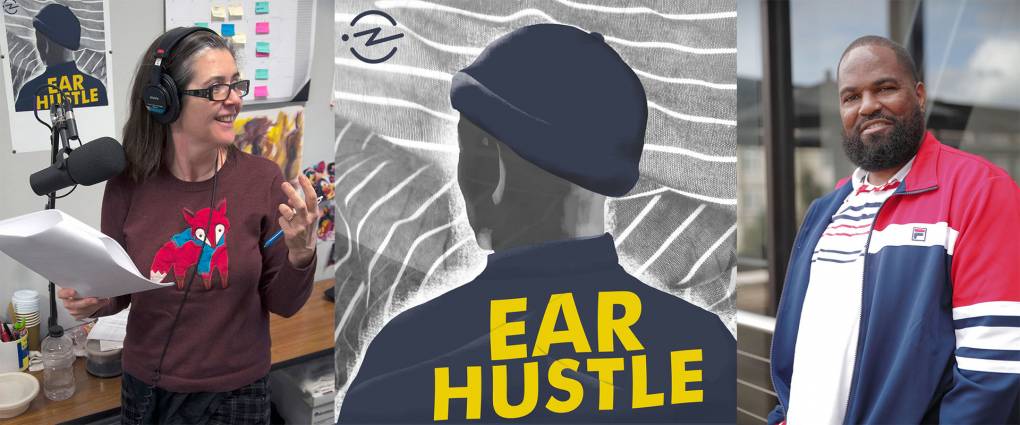
Listening to learn: Why ‘Ear Hustle’ stories about prison life are so engaging to students
A Framework for Conversations About Race in Schools
Sponsored
Player sponsored by
window.__IS_SSR__=true
window.__INITIAL_STATE__={
"attachmentsReducer": {
"audio_0": {
"type": "attachments",
"id": "audio_0",
"imgSizes": {
"kqedFullSize": {
"file": "https://ww2.kqed.org/news/wp-content/themes/KQED-unified/img/audio_bgs/background0.jpg"
}
}
},
"audio_1": {
"type": "attachments",
"id": "audio_1",
"imgSizes": {
"kqedFullSize": {
"file": "https://ww2.kqed.org/news/wp-content/themes/KQED-unified/img/audio_bgs/background1.jpg"
}
}
},
"audio_2": {
"type": "attachments",
"id": "audio_2",
"imgSizes": {
"kqedFullSize": {
"file": "https://ww2.kqed.org/news/wp-content/themes/KQED-unified/img/audio_bgs/background2.jpg"
}
}
},
"audio_3": {
"type": "attachments",
"id": "audio_3",
"imgSizes": {
"kqedFullSize": {
"file": "https://ww2.kqed.org/news/wp-content/themes/KQED-unified/img/audio_bgs/background3.jpg"
}
}
},
"audio_4": {
"type": "attachments",
"id": "audio_4",
"imgSizes": {
"kqedFullSize": {
"file": "https://ww2.kqed.org/news/wp-content/themes/KQED-unified/img/audio_bgs/background4.jpg"
}
}
},
"placeholder": {
"type": "attachments",
"id": "placeholder",
"imgSizes": {
"thumbnail": {
"file": "https://cdn.kqed.org/wp-content/uploads/2024/12/KQED-Default-Image-816638274-2000x1333-1-160x107.jpg",
"width": 160,
"height": 107,
"mimeType": "image/jpeg"
},
"medium": {
"file": "https://cdn.kqed.org/wp-content/uploads/2024/12/KQED-Default-Image-816638274-2000x1333-1-800x533.jpg",
"width": 800,
"height": 533,
"mimeType": "image/jpeg"
},
"medium_large": {
"file": "https://cdn.kqed.org/wp-content/uploads/2024/12/KQED-Default-Image-816638274-2000x1333-1-768x512.jpg",
"width": 768,
"height": 512,
"mimeType": "image/jpeg"
},
"large": {
"file": "https://cdn.kqed.org/wp-content/uploads/2024/12/KQED-Default-Image-816638274-2000x1333-1-1020x680.jpg",
"width": 1020,
"height": 680,
"mimeType": "image/jpeg"
},
"1536x1536": {
"file": "https://cdn.kqed.org/wp-content/uploads/2024/12/KQED-Default-Image-816638274-2000x1333-1-1536x1024.jpg",
"width": 1536,
"height": 1024,
"mimeType": "image/jpeg"
},
"fd-lrg": {
"file": "https://cdn.kqed.org/wp-content/uploads/2024/12/KQED-Default-Image-816638274-2000x1333-1-1536x1024.jpg",
"width": 1536,
"height": 1024,
"mimeType": "image/jpeg"
},
"fd-med": {
"file": "https://cdn.kqed.org/wp-content/uploads/2024/12/KQED-Default-Image-816638274-2000x1333-1-1020x680.jpg",
"width": 1020,
"height": 680,
"mimeType": "image/jpeg"
},
"fd-sm": {
"file": "https://cdn.kqed.org/wp-content/uploads/2024/12/KQED-Default-Image-816638274-2000x1333-1-800x533.jpg",
"width": 800,
"height": 533,
"mimeType": "image/jpeg"
},
"post-thumbnail": {
"file": "https://cdn.kqed.org/wp-content/uploads/2024/12/KQED-Default-Image-816638274-2000x1333-1-672x372.jpg",
"width": 672,
"height": 372,
"mimeType": "image/jpeg"
},
"twentyfourteen-full-width": {
"file": "https://cdn.kqed.org/wp-content/uploads/2024/12/KQED-Default-Image-816638274-2000x1333-1-1038x576.jpg",
"width": 1038,
"height": 576,
"mimeType": "image/jpeg"
},
"xxsmall": {
"file": "https://cdn.kqed.org/wp-content/uploads/2024/12/KQED-Default-Image-816638274-2000x1333-1-160x107.jpg",
"width": 160,
"height": 107,
"mimeType": "image/jpeg"
},
"xsmall": {
"file": "https://cdn.kqed.org/wp-content/uploads/2024/12/KQED-Default-Image-816638274-2000x1333-1-672x372.jpg",
"width": 672,
"height": 372,
"mimeType": "image/jpeg"
},
"small": {
"file": "https://cdn.kqed.org/wp-content/uploads/2024/12/KQED-Default-Image-816638274-2000x1333-1-672x372.jpg",
"width": 672,
"height": 372,
"mimeType": "image/jpeg"
},
"xlarge": {
"file": "https://cdn.kqed.org/wp-content/uploads/2024/12/KQED-Default-Image-816638274-2000x1333-1-1020x680.jpg",
"width": 1020,
"height": 680,
"mimeType": "image/jpeg"
},
"full-width": {
"file": "https://cdn.kqed.org/wp-content/uploads/2024/12/KQED-Default-Image-816638274-2000x1333-1-1920x1280.jpg",
"width": 1920,
"height": 1280,
"mimeType": "image/jpeg"
},
"guest-author-32": {
"file": "https://cdn.kqed.org/wp-content/uploads/2025/01/KQED-Default-Image-816638274-1333x1333-1-160x160.jpg",
"width": 32,
"height": 32,
"mimeType": "image/jpeg"
},
"guest-author-50": {
"file": "https://cdn.kqed.org/wp-content/uploads/2025/01/KQED-Default-Image-816638274-1333x1333-1-160x160.jpg",
"width": 50,
"height": 50,
"mimeType": "image/jpeg"
},
"guest-author-64": {
"file": "https://cdn.kqed.org/wp-content/uploads/2025/01/KQED-Default-Image-816638274-1333x1333-1-160x160.jpg",
"width": 64,
"height": 64,
"mimeType": "image/jpeg"
},
"guest-author-96": {
"file": "https://cdn.kqed.org/wp-content/uploads/2025/01/KQED-Default-Image-816638274-1333x1333-1-160x160.jpg",
"width": 96,
"height": 96,
"mimeType": "image/jpeg"
},
"guest-author-128": {
"file": "https://cdn.kqed.org/wp-content/uploads/2025/01/KQED-Default-Image-816638274-1333x1333-1-160x160.jpg",
"width": 128,
"height": 128,
"mimeType": "image/jpeg"
},
"detail": {
"file": "https://cdn.kqed.org/wp-content/uploads/2025/01/KQED-Default-Image-816638274-1333x1333-1-160x160.jpg",
"width": 160,
"height": 160,
"mimeType": "image/jpeg"
},
"kqedFullSize": {
"file": "https://cdn.kqed.org/wp-content/uploads/2024/12/KQED-Default-Image-816638274-2000x1333-1.jpg",
"width": 2000,
"height": 1333
}
}
},
"mindshift_59648": {
"type": "attachments",
"id": "mindshift_59648",
"meta": {
"index": "attachments_1716263798",
"site": "mindshift",
"id": "59648",
"found": true
},
"parent": 59644,
"imgSizes": {
"twentyfourteen-full-width": {
"file": "https://ww2.kqed.org/app/uploads/sites/23/2022/08/iStock-1338381557-1038x576.jpg",
"width": 1038,
"mimeType": "image/jpeg",
"height": 576
},
"thumbnail": {
"file": "https://ww2.kqed.org/app/uploads/sites/23/2022/08/iStock-1338381557-160x107.jpg",
"width": 160,
"mimeType": "image/jpeg",
"height": 107
},
"post-thumbnail": {
"file": "https://ww2.kqed.org/app/uploads/sites/23/2022/08/iStock-1338381557-672x372.jpg",
"width": 672,
"mimeType": "image/jpeg",
"height": 372
},
"kqedFullSize": {
"file": "https://ww2.kqed.org/app/uploads/sites/23/2022/08/iStock-1338381557.jpg",
"width": 2120,
"height": 1414
},
"2048x2048": {
"file": "https://ww2.kqed.org/app/uploads/sites/23/2022/08/iStock-1338381557-2048x1366.jpg",
"width": 2048,
"mimeType": "image/jpeg",
"height": 1366
},
"large": {
"file": "https://ww2.kqed.org/app/uploads/sites/23/2022/08/iStock-1338381557-1020x680.jpg",
"width": 1020,
"mimeType": "image/jpeg",
"height": 680
},
"1536x1536": {
"file": "https://ww2.kqed.org/app/uploads/sites/23/2022/08/iStock-1338381557-1536x1024.jpg",
"width": 1536,
"mimeType": "image/jpeg",
"height": 1024
},
"full-width": {
"file": "https://ww2.kqed.org/app/uploads/sites/23/2022/08/iStock-1338381557-1920x1281.jpg",
"width": 1920,
"mimeType": "image/jpeg",
"height": 1281
},
"medium": {
"file": "https://ww2.kqed.org/app/uploads/sites/23/2022/08/iStock-1338381557-800x534.jpg",
"width": 800,
"mimeType": "image/jpeg",
"height": 534
},
"medium_large": {
"file": "https://ww2.kqed.org/app/uploads/sites/23/2022/08/iStock-1338381557-768x512.jpg",
"width": 768,
"mimeType": "image/jpeg",
"height": 512
}
},
"publishDate": 1659382928,
"modified": 1659382966,
"caption": null,
"description": null,
"title": "iStock-1338381557",
"credit": "sinseeho/ iStock",
"status": "inherit",
"altTag": "Blue pins on four days in a week on a calendar. Friday, Saturday and Sunday crossed out. Four day work week",
"fetchFailed": false,
"isLoading": false
},
"mindshift_59621": {
"type": "attachments",
"id": "mindshift_59621",
"meta": {
"index": "attachments_1716263798",
"site": "mindshift",
"id": "59621",
"found": true
},
"parent": 59617,
"imgSizes": {
"twentyfourteen-full-width": {
"file": "https://ww2.kqed.org/app/uploads/sites/23/2022/07/iStock-1331931222-1038x576.jpg",
"width": 1038,
"mimeType": "image/jpeg",
"height": 576
},
"thumbnail": {
"file": "https://ww2.kqed.org/app/uploads/sites/23/2022/07/iStock-1331931222-160x87.jpg",
"width": 160,
"mimeType": "image/jpeg",
"height": 87
},
"post-thumbnail": {
"file": "https://ww2.kqed.org/app/uploads/sites/23/2022/07/iStock-1331931222-672x372.jpg",
"width": 672,
"mimeType": "image/jpeg",
"height": 372
},
"kqedFullSize": {
"file": "https://ww2.kqed.org/app/uploads/sites/23/2022/07/iStock-1331931222.jpg",
"width": 2345,
"height": 1279
},
"2048x2048": {
"file": "https://ww2.kqed.org/app/uploads/sites/23/2022/07/iStock-1331931222-2048x1117.jpg",
"width": 2048,
"mimeType": "image/jpeg",
"height": 1117
},
"large": {
"file": "https://ww2.kqed.org/app/uploads/sites/23/2022/07/iStock-1331931222-1020x556.jpg",
"width": 1020,
"mimeType": "image/jpeg",
"height": 556
},
"1536x1536": {
"file": "https://ww2.kqed.org/app/uploads/sites/23/2022/07/iStock-1331931222-1536x838.jpg",
"width": 1536,
"mimeType": "image/jpeg",
"height": 838
},
"full-width": {
"file": "https://ww2.kqed.org/app/uploads/sites/23/2022/07/iStock-1331931222-1920x1047.jpg",
"width": 1920,
"mimeType": "image/jpeg",
"height": 1047
},
"medium": {
"file": "https://ww2.kqed.org/app/uploads/sites/23/2022/07/iStock-1331931222-800x436.jpg",
"width": 800,
"mimeType": "image/jpeg",
"height": 436
},
"medium_large": {
"file": "https://ww2.kqed.org/app/uploads/sites/23/2022/07/iStock-1331931222-768x419.jpg",
"width": 768,
"mimeType": "image/jpeg",
"height": 419
}
},
"publishDate": 1659118765,
"modified": 1659118804,
"caption": null,
"description": null,
"title": "iStock-1331931222",
"credit": "AntonioSolano/ iStock",
"status": "inherit",
"altTag": "school bell above a row of yellow lockers.",
"fetchFailed": false,
"isLoading": false
},
"mindshift_59230": {
"type": "attachments",
"id": "mindshift_59230",
"meta": {
"index": "attachments_1716263798",
"site": "mindshift",
"id": "59230",
"found": true
},
"parent": 59217,
"imgSizes": {
"twentyfourteen-full-width": {
"file": "https://ww2.kqed.org/app/uploads/sites/23/2022/03/asset-based-strategies-1038x576.jpg",
"width": 1038,
"mimeType": "image/jpeg",
"height": 576
},
"thumbnail": {
"file": "https://ww2.kqed.org/app/uploads/sites/23/2022/03/asset-based-strategies-160x107.jpg",
"width": 160,
"mimeType": "image/jpeg",
"height": 107
},
"post-thumbnail": {
"file": "https://ww2.kqed.org/app/uploads/sites/23/2022/03/asset-based-strategies-672x372.jpg",
"width": 672,
"mimeType": "image/jpeg",
"height": 372
},
"kqedFullSize": {
"file": "https://ww2.kqed.org/app/uploads/sites/23/2022/03/asset-based-strategies.jpg",
"width": 2120,
"height": 1414
},
"2048x2048": {
"file": "https://ww2.kqed.org/app/uploads/sites/23/2022/03/asset-based-strategies-2048x1366.jpg",
"width": 2048,
"mimeType": "image/jpeg",
"height": 1366
},
"large": {
"file": "https://ww2.kqed.org/app/uploads/sites/23/2022/03/asset-based-strategies-1020x680.jpg",
"width": 1020,
"mimeType": "image/jpeg",
"height": 680
},
"1536x1536": {
"file": "https://ww2.kqed.org/app/uploads/sites/23/2022/03/asset-based-strategies-1536x1024.jpg",
"width": 1536,
"mimeType": "image/jpeg",
"height": 1024
},
"full-width": {
"file": "https://ww2.kqed.org/app/uploads/sites/23/2022/03/asset-based-strategies-1920x1281.jpg",
"width": 1920,
"mimeType": "image/jpeg",
"height": 1281
},
"medium": {
"file": "https://ww2.kqed.org/app/uploads/sites/23/2022/03/asset-based-strategies-800x534.jpg",
"width": 800,
"mimeType": "image/jpeg",
"height": 534
},
"medium_large": {
"file": "https://ww2.kqed.org/app/uploads/sites/23/2022/03/asset-based-strategies-768x512.jpg",
"width": 768,
"mimeType": "image/jpeg",
"height": 512
}
},
"publishDate": 1648252161,
"modified": 1648252182,
"caption": null,
"description": null,
"title": "asset-based-strategies",
"credit": "Inside Creative House/ iStock",
"status": "inherit",
"altTag": null,
"fetchFailed": false,
"isLoading": false
},
"mindshift_59096": {
"type": "attachments",
"id": "mindshift_59096",
"meta": {
"index": "attachments_1716263798",
"site": "mindshift",
"id": "59096",
"found": true
},
"parent": 59094,
"imgSizes": {
"twentyfourteen-full-width": {
"file": "https://ww2.kqed.org/app/uploads/sites/23/2022/02/kigs-screen-time-gaming-tik-tok-1038x576.jpg",
"width": 1038,
"mimeType": "image/jpeg",
"height": 576
},
"thumbnail": {
"file": "https://ww2.kqed.org/app/uploads/sites/23/2022/02/kigs-screen-time-gaming-tik-tok-160x107.jpg",
"width": 160,
"mimeType": "image/jpeg",
"height": 107
},
"post-thumbnail": {
"file": "https://ww2.kqed.org/app/uploads/sites/23/2022/02/kigs-screen-time-gaming-tik-tok-672x372.jpg",
"width": 672,
"mimeType": "image/jpeg",
"height": 372
},
"kqedFullSize": {
"file": "https://ww2.kqed.org/app/uploads/sites/23/2022/02/kigs-screen-time-gaming-tik-tok-e1646104548849.jpg",
"width": 1920,
"height": 1281
},
"2048x2048": {
"file": "https://ww2.kqed.org/app/uploads/sites/23/2022/02/kigs-screen-time-gaming-tik-tok-2048x1367.jpg",
"width": 2048,
"mimeType": "image/jpeg",
"height": 1367
},
"large": {
"file": "https://ww2.kqed.org/app/uploads/sites/23/2022/02/kigs-screen-time-gaming-tik-tok-1020x681.jpg",
"width": 1020,
"mimeType": "image/jpeg",
"height": 681
},
"1536x1536": {
"file": "https://ww2.kqed.org/app/uploads/sites/23/2022/02/kigs-screen-time-gaming-tik-tok-1536x1025.jpg",
"width": 1536,
"mimeType": "image/jpeg",
"height": 1025
},
"full-width": {
"file": "https://ww2.kqed.org/app/uploads/sites/23/2022/02/kigs-screen-time-gaming-tik-tok-1920x1281.jpg",
"width": 1920,
"mimeType": "image/jpeg",
"height": 1281
},
"medium": {
"file": "https://ww2.kqed.org/app/uploads/sites/23/2022/02/kigs-screen-time-gaming-tik-tok-800x534.jpg",
"width": 800,
"mimeType": "image/jpeg",
"height": 534
},
"medium_large": {
"file": "https://ww2.kqed.org/app/uploads/sites/23/2022/02/kigs-screen-time-gaming-tik-tok-768x512.jpg",
"width": 768,
"mimeType": "image/jpeg",
"height": 512
}
},
"publishDate": 1645208117,
"modified": 1646105782,
"caption": null,
"description": null,
"title": "kigs-screen-time-gaming-tik-tok",
"credit": "Halfpoint/ iStock",
"status": "inherit",
"altTag": "Two children having screen time in the dark",
"fetchFailed": false,
"isLoading": false
},
"mindshift_59010": {
"type": "attachments",
"id": "mindshift_59010",
"meta": {
"index": "attachments_1716263798",
"site": "mindshift",
"id": "59010",
"found": true
},
"parent": 59008,
"imgSizes": {
"twentyfourteen-full-width": {
"file": "https://ww2.kqed.org/app/uploads/sites/23/2022/01/healing-in-schools-1038x576.jpg",
"width": 1038,
"mimeType": "image/jpeg",
"height": 576
},
"thumbnail": {
"file": "https://ww2.kqed.org/app/uploads/sites/23/2022/01/healing-in-schools-160x139.jpg",
"width": 160,
"mimeType": "image/jpeg",
"height": 139
},
"post-thumbnail": {
"file": "https://ww2.kqed.org/app/uploads/sites/23/2022/01/healing-in-schools-672x372.jpg",
"width": 672,
"mimeType": "image/jpeg",
"height": 372
},
"kqedFullSize": {
"file": "https://ww2.kqed.org/app/uploads/sites/23/2022/01/healing-in-schools.jpg",
"width": 1920,
"height": 1673
},
"large": {
"file": "https://ww2.kqed.org/app/uploads/sites/23/2022/01/healing-in-schools-1020x889.jpg",
"width": 1020,
"mimeType": "image/jpeg",
"height": 889
},
"1536x1536": {
"file": "https://ww2.kqed.org/app/uploads/sites/23/2022/01/healing-in-schools-1536x1338.jpg",
"width": 1536,
"mimeType": "image/jpeg",
"height": 1338
},
"medium": {
"file": "https://ww2.kqed.org/app/uploads/sites/23/2022/01/healing-in-schools-800x697.jpg",
"width": 800,
"mimeType": "image/jpeg",
"height": 697
},
"medium_large": {
"file": "https://ww2.kqed.org/app/uploads/sites/23/2022/01/healing-in-schools-768x669.jpg",
"width": 768,
"mimeType": "image/jpeg",
"height": 669
}
},
"publishDate": 1643656103,
"modified": 1643656152,
"caption": null,
"description": null,
"title": "Empathy - Empathetic Design - Illustration",
"credit": "Shivendu Jauhari/ iStock",
"status": "inherit",
"altTag": null,
"fetchFailed": false,
"isLoading": false
},
"mindshift_58820": {
"type": "attachments",
"id": "mindshift_58820",
"meta": {
"index": "attachments_1716263798",
"site": "mindshift",
"id": "58820",
"found": true
},
"parent": 58817,
"imgSizes": {
"twentyfourteen-full-width": {
"file": "https://ww2.kqed.org/app/uploads/sites/23/2021/12/Inclusive-conversations-with-students-1038x576.jpg",
"width": 1038,
"mimeType": "image/jpeg",
"height": 576
},
"thumbnail": {
"file": "https://ww2.kqed.org/app/uploads/sites/23/2021/12/Inclusive-conversations-with-students-160x107.jpg",
"width": 160,
"mimeType": "image/jpeg",
"height": 107
},
"post-thumbnail": {
"file": "https://ww2.kqed.org/app/uploads/sites/23/2021/12/Inclusive-conversations-with-students-672x372.jpg",
"width": 672,
"mimeType": "image/jpeg",
"height": 372
},
"kqedFullSize": {
"file": "https://ww2.kqed.org/app/uploads/sites/23/2021/12/Inclusive-conversations-with-students-e1642063129217.jpg",
"width": 1920,
"height": 1280
},
"2048x2048": {
"file": "https://ww2.kqed.org/app/uploads/sites/23/2021/12/Inclusive-conversations-with-students-2048x1365.jpg",
"width": 2048,
"mimeType": "image/jpeg",
"height": 1365
},
"large": {
"file": "https://ww2.kqed.org/app/uploads/sites/23/2021/12/Inclusive-conversations-with-students-1020x680.jpg",
"width": 1020,
"mimeType": "image/jpeg",
"height": 680
},
"1536x1536": {
"file": "https://ww2.kqed.org/app/uploads/sites/23/2021/12/Inclusive-conversations-with-students-1536x1024.jpg",
"width": 1536,
"mimeType": "image/jpeg",
"height": 1024
},
"full-width": {
"file": "https://ww2.kqed.org/app/uploads/sites/23/2021/12/Inclusive-conversations-with-students-1920x1280.jpg",
"width": 1920,
"mimeType": "image/jpeg",
"height": 1280
},
"medium": {
"file": "https://ww2.kqed.org/app/uploads/sites/23/2021/12/Inclusive-conversations-with-students-800x533.jpg",
"width": 800,
"mimeType": "image/jpeg",
"height": 533
},
"medium_large": {
"file": "https://ww2.kqed.org/app/uploads/sites/23/2021/12/Inclusive-conversations-with-students-768x512.jpg",
"width": 768,
"mimeType": "image/jpeg",
"height": 512
}
},
"publishDate": 1638997782,
"modified": 1642063161,
"caption": null,
"description": null,
"title": null,
"credit": "iStock/ Tetiana Garkusha",
"status": "inherit",
"altTag": "Outline of young people talking",
"fetchFailed": false,
"isLoading": false
},
"mindshift_58918": {
"type": "attachments",
"id": "mindshift_58918",
"meta": {
"index": "attachments_1716263798",
"site": "mindshift",
"id": "58918",
"found": true
},
"parent": 58898,
"imgSizes": {
"twentyfourteen-full-width": {
"file": "https://ww2.kqed.org/app/uploads/sites/23/2022/01/Mosely2020PhotobyB.Hines_-scaled-1-e1641281638763-1038x576.jpg",
"width": 1038,
"mimeType": "image/jpeg",
"height": 576
},
"thumbnail": {
"file": "https://ww2.kqed.org/app/uploads/sites/23/2022/01/Mosely2020PhotobyB.Hines_-scaled-1-e1641281638763-160x158.jpg",
"width": 160,
"mimeType": "image/jpeg",
"height": 158
},
"post-thumbnail": {
"file": "https://ww2.kqed.org/app/uploads/sites/23/2022/01/Mosely2020PhotobyB.Hines_-scaled-1-e1641281638763-672x372.jpg",
"width": 672,
"mimeType": "image/jpeg",
"height": 372
},
"kqedFullSize": {
"file": "https://ww2.kqed.org/app/uploads/sites/23/2022/01/Mosely2020PhotobyB.Hines_-scaled-1-e1641281658247.jpg",
"width": 1920,
"height": 1893
},
"2048x2048": {
"file": "https://ww2.kqed.org/app/uploads/sites/23/2022/01/Mosely2020PhotobyB.Hines_-scaled-1-e1641281638763-2048x2019.jpg",
"width": 2048,
"mimeType": "image/jpeg",
"height": 2019
},
"large": {
"file": "https://ww2.kqed.org/app/uploads/sites/23/2022/01/Mosely2020PhotobyB.Hines_-scaled-1-e1641281638763-1020x1006.jpg",
"width": 1020,
"mimeType": "image/jpeg",
"height": 1006
},
"1536x1536": {
"file": "https://ww2.kqed.org/app/uploads/sites/23/2022/01/Mosely2020PhotobyB.Hines_-scaled-1-e1641281638763-1536x1514.jpg",
"width": 1536,
"mimeType": "image/jpeg",
"height": 1514
},
"full-width": {
"file": "https://ww2.kqed.org/app/uploads/sites/23/2022/01/Mosely2020PhotobyB.Hines_-scaled-1-e1641281638763-1920x1893.jpg",
"width": 1920,
"mimeType": "image/jpeg",
"height": 1893
},
"medium": {
"file": "https://ww2.kqed.org/app/uploads/sites/23/2022/01/Mosely2020PhotobyB.Hines_-scaled-1-e1641281638763-800x789.jpg",
"width": 800,
"mimeType": "image/jpeg",
"height": 789
},
"medium_large": {
"file": "https://ww2.kqed.org/app/uploads/sites/23/2022/01/Mosely2020PhotobyB.Hines_-scaled-1-e1641281638763-768x757.jpg",
"width": 768,
"mimeType": "image/jpeg",
"height": 757
}
},
"publishDate": 1641281587,
"modified": 1641284693,
"caption": "Micia Mosely, Founder and Director of the Black Teacher Project ",
"description": null,
"title": "Mosely2020PhotobyB.Hines_-scaled",
"credit": "Courtesy of Micia Mosely",
"status": "inherit",
"altTag": null,
"fetchFailed": false,
"isLoading": false
},
"mindshift_58639": {
"type": "attachments",
"id": "mindshift_58639",
"meta": {
"index": "attachments_1716263798",
"site": "mindshift",
"id": "58639",
"found": true
},
"parent": 58638,
"imgSizes": {
"twentyfourteen-full-width": {
"file": "https://ww2.kqed.org/app/uploads/sites/23/2021/10/This-is-Ear-Hustle-banner-photo-1038x576.jpg",
"width": 1038,
"mimeType": "image/jpeg",
"height": 576
},
"thumbnail": {
"file": "https://ww2.kqed.org/app/uploads/sites/23/2021/10/This-is-Ear-Hustle-banner-photo-160x67.jpg",
"width": 160,
"mimeType": "image/jpeg",
"height": 67
},
"post-thumbnail": {
"file": "https://ww2.kqed.org/app/uploads/sites/23/2021/10/This-is-Ear-Hustle-banner-photo-672x372.jpg",
"width": 672,
"mimeType": "image/jpeg",
"height": 372
},
"kqedFullSize": {
"file": "https://ww2.kqed.org/app/uploads/sites/23/2021/10/This-is-Ear-Hustle-banner-photo.jpg",
"width": 1920,
"height": 800
},
"large": {
"file": "https://ww2.kqed.org/app/uploads/sites/23/2021/10/This-is-Ear-Hustle-banner-photo-1020x425.jpg",
"width": 1020,
"mimeType": "image/jpeg",
"height": 425
},
"1536x1536": {
"file": "https://ww2.kqed.org/app/uploads/sites/23/2021/10/This-is-Ear-Hustle-banner-photo-1536x640.jpg",
"width": 1536,
"mimeType": "image/jpeg",
"height": 640
},
"medium": {
"file": "https://ww2.kqed.org/app/uploads/sites/23/2021/10/This-is-Ear-Hustle-banner-photo-800x333.jpg",
"width": 800,
"mimeType": "image/jpeg",
"height": 333
},
"medium_large": {
"file": "https://ww2.kqed.org/app/uploads/sites/23/2021/10/This-is-Ear-Hustle-banner-photo-768x320.jpg",
"width": 768,
"mimeType": "image/jpeg",
"height": 320
}
},
"publishDate": 1634597570,
"modified": 1634597677,
"caption": null,
"description": null,
"title": "This is Ear Hustle banner photo",
"credit": "Radiotopia, from PRX",
"status": "inherit",
"altTag": null,
"fetchFailed": false,
"isLoading": false
},
"mindshift_58567": {
"type": "attachments",
"id": "mindshift_58567",
"meta": {
"index": "attachments_1716263798",
"site": "mindshift",
"id": "58567",
"found": true
},
"parent": 58551,
"imgSizes": {
"twentyfourteen-full-width": {
"file": "https://ww2.kqed.org/app/uploads/sites/23/2021/09/iStock-1312245282-e1632811588635-1038x576.jpg",
"width": 1038,
"mimeType": "image/jpeg",
"height": 576
},
"thumbnail": {
"file": "https://ww2.kqed.org/app/uploads/sites/23/2021/09/iStock-1312245282-e1632811588635-160x113.jpg",
"width": 160,
"mimeType": "image/jpeg",
"height": 113
},
"post-thumbnail": {
"file": "https://ww2.kqed.org/app/uploads/sites/23/2021/09/iStock-1312245282-e1632811588635-672x372.jpg",
"width": 672,
"mimeType": "image/jpeg",
"height": 372
},
"kqedFullSize": {
"file": "https://ww2.kqed.org/app/uploads/sites/23/2021/09/iStock-1312245282-e1632811605369.jpg",
"width": 1920,
"height": 1352
},
"2048x2048": {
"file": "https://ww2.kqed.org/app/uploads/sites/23/2021/09/iStock-1312245282-e1632811588635-2048x1442.jpg",
"width": 2048,
"mimeType": "image/jpeg",
"height": 1442
},
"large": {
"file": "https://ww2.kqed.org/app/uploads/sites/23/2021/09/iStock-1312245282-e1632811588635-1020x718.jpg",
"width": 1020,
"mimeType": "image/jpeg",
"height": 718
},
"1536x1536": {
"file": "https://ww2.kqed.org/app/uploads/sites/23/2021/09/iStock-1312245282-e1632811588635-1536x1082.jpg",
"width": 1536,
"mimeType": "image/jpeg",
"height": 1082
},
"full-width": {
"file": "https://ww2.kqed.org/app/uploads/sites/23/2021/09/iStock-1312245282-e1632811588635-1920x1352.jpg",
"width": 1920,
"mimeType": "image/jpeg",
"height": 1352
},
"medium": {
"file": "https://ww2.kqed.org/app/uploads/sites/23/2021/09/iStock-1312245282-e1632811588635-800x563.jpg",
"width": 800,
"mimeType": "image/jpeg",
"height": 563
},
"medium_large": {
"file": "https://ww2.kqed.org/app/uploads/sites/23/2021/09/iStock-1312245282-e1632811588635-768x541.jpg",
"width": 768,
"mimeType": "image/jpeg",
"height": 541
}
},
"publishDate": 1632811564,
"modified": 1632811626,
"caption": null,
"description": null,
"title": null,
"credit": "melitas/iStock",
"status": "inherit",
"altTag": null,
"fetchFailed": false,
"isLoading": false
}
},
"audioPlayerReducer": {
"postId": "stream_live",
"isPaused": true,
"isPlaying": false,
"pfsActive": false,
"pledgeModalIsOpen": true,
"playerDrawerIsOpen": false
},
"authorsReducer": {
"ngobir": {
"type": "authors",
"id": "11721",
"meta": {
"index": "authors_1716337520",
"id": "11721",
"found": true
},
"name": "Nimah Gobir",
"firstName": "Nimah",
"lastName": "Gobir",
"slug": "ngobir",
"email": "ngobir@kqed.org",
"display_author_email": false,
"staff_mastheads": [],
"title": "KQED Contributor",
"bio": null,
"avatar": "https://secure.gravatar.com/avatar/e08e101e43fc79cc7bcd0c19038d7d08?s=600&d=blank&r=g",
"twitter": null,
"facebook": null,
"instagram": null,
"linkedin": null,
"sites": [
{
"site": "mindshift",
"roles": [
"editor"
]
}
],
"headData": {
"title": "Nimah Gobir | KQED",
"description": "KQED Contributor",
"ogImgSrc": "https://secure.gravatar.com/avatar/e08e101e43fc79cc7bcd0c19038d7d08?s=600&d=blank&r=g",
"twImgSrc": "https://secure.gravatar.com/avatar/e08e101e43fc79cc7bcd0c19038d7d08?s=600&d=blank&r=g"
},
"isLoading": false,
"link": "/author/ngobir"
}
},
"breakingNewsReducer": {},
"pagesReducer": {},
"postsReducer": {
"stream_live": {
"type": "live",
"id": "stream_live",
"audioUrl": "https://streams.kqed.org/kqedradio",
"title": "Live Stream",
"excerpt": "Live Stream information currently unavailable.",
"link": "/radio",
"featImg": "",
"label": {
"name": "KQED Live",
"link": "/"
}
},
"stream_kqedNewscast": {
"type": "posts",
"id": "stream_kqedNewscast",
"audioUrl": "https://www.kqed.org/.stream/anon/radio/RDnews/newscast.mp3?_=1",
"title": "KQED Newscast",
"featImg": "",
"label": {
"name": "88.5 FM",
"link": "/"
}
},
"mindshift_59644": {
"type": "posts",
"id": "mindshift_59644",
"meta": {
"index": "posts_1716263798",
"site": "mindshift",
"id": "59644",
"score": null,
"sort": [
1659507651000
]
},
"guestAuthors": [],
"slug": "why-more-schools-are-considering-a-4-day-week-despite-some-drawbacks",
"title": "Why more schools are considering a 4-day week despite some drawbacks",
"publishDate": 1659507651,
"format": "standard",
"headTitle": "Why more schools are considering a 4-day week despite some drawbacks | KQED",
"labelTerm": {
"term": 21942,
"site": "mindshift"
},
"content": "\u003cp>When Kirsten Bramstedt had to teach students online during the 2020 – 21 school year, her school made some changes to the schedule to accommodate distance learning. They reduced the number of classes on each day and made school start at a later time. They also adopted a four-day school week with no classes on Wednesdays.\u003c/p>\n\u003cp>“I thought, ‘This is great. We should do this all the time,’” said the Encinal High School Spanish language teacher. She liked having the extra time to prepare for classes and felt that her relationships with students were deeper.\u003c/p>\n\u003cp>But as soon as everyone returned to school in-person, they went back to the regular five-day weekly schedule. Bramstedt was disappointed. She felt that everyone could have benefitted from more time to ease into the transition back to school buildings.\u003c/p>\n\u003cp>“A lot of the students had a really hard time adjusting in the fall, especially the freshmen, because the last time freshmen were in school, they were seventh graders,” said Bramstedt. Students weren’t just figuring out how to be in high school, they were also getting used to being around their peers again.\u003c/p>\n\u003cp>In the transition back to school, Bramstedt had to abandon some of her personal wellness practices, which made it more stressful for her during the week as she managed \u003ca href=\"https://www.kqed.org/mindshift/58572/stress-and-short-tempers-schools-struggle-with-behavior-as-students-return\">student behavior issues\u003c/a>. \u003ca href=\"https://www.npr.org/2022/02/01/1076943883/teachers-quitting-burnout#:~:text=Over%20half%20of%20teachers%20want,early%2C%20NEA%20poll%20finds%20%3A%20NPR&text=Press-,Over%20half%20of%20teachers%20want%20to%20leave%20the%20profession%20early,they're%20thinking%20about%20leaving.\">Recent surveys show that teachers \u003c/a> are burned out and more than half of teachers want to leave the profession entirely.\u003c/p>\n\u003cp>[ad fullwidth]\u003c/p>\n\u003cp>For some schools, the pandemic created an opportunity to try new things and making four-day school weeks the norm is one of those considerations. One benefit administrators hope to achieve from a shortened school week is retaining and attracting experienced teachers.\u003c/p>\n\u003cp>Four-day school weeks are attractive to districts as a perk for teachers because salary increases are often met with resistance, according to \u003ca href=\"https://liberalarts.oregonstate.edu/users/paul-thompson\">Paul Thompson\u003c/a>, a professor at Oregon State University who studies the four-day school week. “Now schools are saying, what can we do for teachers to make their jobs a little bit easier and give them more flexibility?” Administrators are hopeful that a shorter school week might alleviate some of the burden on teachers and improve mental health.\u003c/p>\n\u003ch2>The four-week school day in practice\u003c/h2>\n\u003cp>Prior to the pandemic, 24 states had at least one school with a four-day week. “Most of these are found in the western half of the U.S. so places like Oregon, Montana, Idaho, Colorado and Oklahoma,” according to Thompson.\u003c/p>\n\u003cp>\u003ca href=\"https://nces.ed.gov/programs/statereform/tab1_1-2020.asp\">Each state has a required number of days\u003c/a> children need to be at school per year, so it’s easier for states with lower requirements to have four-day school weeks. Studies about students’ academic performance in four-day week schools show varied results. For example, students attending four-day week schools in \u003ca href=\"https://direct.mit.edu/edfp/article/10/3/314/10233/Does-Shortening-the-School-Week-Impact-Student#.Vd3cGGA7_Js.\">Colorado had higher scores in math and English language arts\u003c/a>, whereas \u003ca href=\"https://www.tandfonline.com/doi/abs/10.1080/09645292.2021.2006610\">students in Oregon experienced declines\u003c/a>.\u003c/p>\n\u003cp>“Many school districts that switch to a four-day week have never switched back,” said Thompson.\u003c/p>\n\u003cp>\u003c!-- iframe plugin v.4.3 wordpress.org/plugins/iframe/ -->\u003cbr>\n\u003ciframe loading=\"lazy\" frameborder=\"0\" height=\"200\" scrolling=\"no\" src=\"https://playlist.megaphone.fm?e=KQINC8589991528\" width=\"100%\" class=\"iframe-class\">\u003c/iframe>\u003c/p>\n\u003cp>The deciding factor for whether a four-day school week will negatively affect students’ academic performance is instructional hours, according to Thompson. Schools have to make up for the day students have off by increasing the amount of time during the days students are in school. On average, the four-day-week school days are about \u003ca href=\"https://www.rand.org/pubs/research_reports/RRA373-1.html\">an hour longer than five-day week schools\u003c/a>.\u003c/p>\n\u003cp>“In school districts that don’t increase time in school on those other four days, students are really suffering because they’re losing a lot of ‘time-in-seat’ as a result,” said Thompson. “We see a lot of negative achievement effects in places that didn’t decide to expand the school day much on those remaining four days.” On average, four-day week schools don’t have as many instructional hours as five-day week schools, even if they have longer school days. One study showed that \u003ca href=\"https://www.rand.org/pubs/research_reports/RRA373-1.html\">a four-day week school had almost 60 fewer hours of instruction\u003c/a> over the course of a year.\u003c/p>\n\u003cp>Elementary students also tend to fare worse in four-day week schools. Having a day off works out better for high schoolers because they are usually leaving class for sports or other extracurriculars anyway.\u003c/p>\n\u003cp>“Ninety-five percent of school districts that switched to a four-day school week do this district wide,” according to Thompson. So students can have games and extracurriculars on the off-day and actually end up being in class more than they would on a traditional school schedule. Families can also use the day students are not in school for doctor visits, which is common in rural districts where parents might need to travel a long distance for appointments.\u003c/p>\n\u003cp>Before the pandemic, schools shortened the week to cut costs. They save money because they don’t have to pay cafeteria workers, custodians, and other hourly workers. Schools also don’t have to pay for buses to run on the day that students are not in school. However, unless transportation is a big part of a school’s budget, they usually don’t save that much money when they transition to a four-day week.\u003c/p>\n\u003cp>“For most schools, instructional staff is the largest component of their budget. And these are all salaried workers,” said Thompson. “Teachers are not receiving pay cuts when schools switch to a four versus five-day model.” Savings are typically between zero and three percent of the school’s budget.\u003c/p>\n\u003ch2>What schools do with the fifth day\u003c/h2>\n\u003cp>Flexibility also attracts schools to the four-day week model. Schools can do different things with the day off. “It’s not like a one size fits all type of approach,” said Thompson. For example when high school teacher Kirsten Bramstedt had a four-day week during distance learning, there were no classes, but teachers still had internal meetings.\u003c/p>\n\u003cp>Other schools have more outside-the box-approaches, such as experiential learning opportunities, on-the-job training or an internship. “That’s something you wouldn’t get out of a traditional five-day week model,” said Thompson.\u003c/p>\n\u003cp>Other schools may use the off day for asynchronous learning. Thompson said that four-day week schools that offer learning opportunities on the day off are rare because they require funding and extra planning.\u003c/p>\n\u003cp>With the four-day school week, there are perks in store for teachers too. Having a day without instruction during the week means there is more time and bandwidth for teacher training and professional development, which can lead to stronger instruction. During a traditional five-day week model, many teachers who want to participate in professional development have to do it over the weekend or after school hours.\u003c/p>\n\u003ch2>Family buy-in\u003c/h2>\n\u003cp>Thompson cautions against switching to a 4-day model without checking in with families. When school schedules change, parents and caregivers have to take on more responsibilities, like childcare.\u003c/p>\n\u003cp>“There’s not a lot of good childcare options for school age children, especially during the school year. And finding it one day a week would be difficult,” said Thompson. Places that have four-day week schools usually have a high concentration of intergenerational families to take care of kids during their day off. “That’s not really the main case in other places like Colorado, Oklahoma or in Oregon, for example, where parents are working and kids are home alone.”\u003c/p>\n\u003cblockquote class=\"twitter-tweet\">\n\u003cp dir=\"ltr\" lang=\"en\">Families and students in districts with four-day school weeks—primarily in rural communities in America’s west—reported highly valuing the extra time that a four-day schedule allowed the family to spend together. \u003ca href=\"https://t.co/lfSdZbIaFj\">pic.twitter.com/lfSdZbIaFj\u003c/a>\u003c/p>\n\u003cp>— RAND Corporation (@RANDCorporation) \u003ca href=\"https://twitter.com/RANDCorporation/status/1446101850487496704?ref_src=twsrc%5Etfw\">October 7, 2021\u003c/a>\u003c/p>\u003c/blockquote>\n\u003cp>Additionally, school is where most \u003ca href=\"https://www.kqed.org/mindshift/58720/why-pe-matters-for-student-academics-and-wellness-right-now\">kids get their physical activity \u003c/a>whether it’s through recess or a PE class. Getting rid of a school day means kids are more likely to be less active throughout the day.\u003c/p>\n\u003cp>Some families rely on schools to provide at least one meal a day. Thompson urges schools to consider whether a four-day school week would make families more food insecure or affect students’ nutrition. Some schools may outsource to an outside organization to ensure that kids have food on the day they are not in school, though most do not.\u003c/p>\n\u003cp>Schools considering the four-day week are faced with choosing between less instructional time and shifting responsibilities to families with a four-day school week or losing teachers to burnout with the five-day week schedule.\u003c/p>\n\u003cp>“If we lose these high quality teachers, we’re going to replace them with probably much lower quality teachers, which [might surpass] the negative effects of lost instructional time,” said Thompson.\u003c/p>\n\u003cp>Research on the four-day school week during the pandemic is still emerging and with it are more innovative ways to think about how to do schooling so that it works for teachers, students and families.\u003c/p>\n\u003cp>“There’s this great resignation going on and if schools don’t do something quick, people like me – I’m a very good teacher with a lot of experience – are going to quit or retire early,” said Bramstedt.\u003c/p>\n\u003cp>[ad floatright]\u003c/p>\n\u003cp>\u003cem>MindShift is part of KQED, a non-profit NPR and PBS member station in San Francisco, CA. The text of this specific article is available to republish for noncommercial purposes under a Creative Commons \u003ca href=\"https://creativecommons.org/licenses/by-nc-nd/4.0/\">CC BY-NC-ND 4.0\u003c/a> license, thanks to support from the William and Flora Hewlett Foundation.\u003c/em>\u003c/p>\n\n",
"blocks": [],
"excerpt": "Researcher Paul Thompson shares that schools struggling with teacher burnout and retention are looking to four-day school weeks as a possible solution.",
"status": "publish",
"parent": 0,
"modified": 1726872423,
"stats": {
"hasAudio": true,
"hasVideo": false,
"hasChartOrMap": false,
"iframeSrcs": [],
"hasGoogleForm": false,
"hasGallery": false,
"hasHearkenModule": false,
"hasPolis": false,
"paragraphCount": 33,
"wordCount": 1628
},
"headData": {
"title": "Why more schools are considering a 4-day week despite some drawbacks | KQED",
"description": "Researcher Paul Thompson shares that schools struggling with teacher burnout and retention are looking to four-day school weeks as a possible solution.",
"ogTitle": "",
"ogDescription": "",
"ogImgId": "",
"twTitle": "",
"twDescription": "",
"twImgId": "",
"socialDescription": "Researcher Paul Thompson shares that schools struggling with teacher burnout and retention are looking to four-day school weeks as a possible solution.",
"schema": {
"@context": "https://schema.org",
"@type": "Article",
"headline": "Why more schools are considering a 4-day week despite some drawbacks",
"datePublished": "2022-08-02T23:20:51-07:00",
"dateModified": "2024-09-20T15:47:03-07:00",
"image": "https://cdn.kqed.org/wp-content/uploads/2020/02/KQED-OG-Image@1x.png"
}
},
"audioUrl": "https://dcs.megaphone.fm/KQINC8589991528.mp3?key=4b033e708927cde4cc2353b11d3988c5",
"sticky": false,
"excludeFromSiteSearch": "Include",
"articleAge": "0",
"path": "/mindshift/59644/why-more-schools-are-considering-a-4-day-week-despite-some-drawbacks",
"audioTrackLength": null,
"parsedContent": [
{
"type": "contentString",
"content": "\u003cdiv class=\"post-body\">\u003cp>\u003cp>When Kirsten Bramstedt had to teach students online during the 2020 – 21 school year, her school made some changes to the schedule to accommodate distance learning. They reduced the number of classes on each day and made school start at a later time. They also adopted a four-day school week with no classes on Wednesdays.\u003c/p>\n\u003cp>“I thought, ‘This is great. We should do this all the time,’” said the Encinal High School Spanish language teacher. She liked having the extra time to prepare for classes and felt that her relationships with students were deeper.\u003c/p>\n\u003cp>But as soon as everyone returned to school in-person, they went back to the regular five-day weekly schedule. Bramstedt was disappointed. She felt that everyone could have benefitted from more time to ease into the transition back to school buildings.\u003c/p>\n\u003cp>“A lot of the students had a really hard time adjusting in the fall, especially the freshmen, because the last time freshmen were in school, they were seventh graders,” said Bramstedt. Students weren’t just figuring out how to be in high school, they were also getting used to being around their peers again.\u003c/p>\n\u003cp>In the transition back to school, Bramstedt had to abandon some of her personal wellness practices, which made it more stressful for her during the week as she managed \u003ca href=\"https://www.kqed.org/mindshift/58572/stress-and-short-tempers-schools-struggle-with-behavior-as-students-return\">student behavior issues\u003c/a>. \u003ca href=\"https://www.npr.org/2022/02/01/1076943883/teachers-quitting-burnout#:~:text=Over%20half%20of%20teachers%20want,early%2C%20NEA%20poll%20finds%20%3A%20NPR&text=Press-,Over%20half%20of%20teachers%20want%20to%20leave%20the%20profession%20early,they're%20thinking%20about%20leaving.\">Recent surveys show that teachers \u003c/a> are burned out and more than half of teachers want to leave the profession entirely.\u003c/p>\n\u003cp>\u003c/p>\u003c/div>",
"attributes": {
"named": {},
"numeric": []
}
},
{
"type": "component",
"content": "",
"name": "ad",
"attributes": {
"named": {
"label": "fullwidth"
},
"numeric": [
"fullwidth"
]
}
},
{
"type": "contentString",
"content": "\u003cdiv class=\"post-body\">\u003cp>\u003c/p>\n\u003cp>For some schools, the pandemic created an opportunity to try new things and making four-day school weeks the norm is one of those considerations. One benefit administrators hope to achieve from a shortened school week is retaining and attracting experienced teachers.\u003c/p>\n\u003cp>Four-day school weeks are attractive to districts as a perk for teachers because salary increases are often met with resistance, according to \u003ca href=\"https://liberalarts.oregonstate.edu/users/paul-thompson\">Paul Thompson\u003c/a>, a professor at Oregon State University who studies the four-day school week. “Now schools are saying, what can we do for teachers to make their jobs a little bit easier and give them more flexibility?” Administrators are hopeful that a shorter school week might alleviate some of the burden on teachers and improve mental health.\u003c/p>\n\u003ch2>The four-week school day in practice\u003c/h2>\n\u003cp>Prior to the pandemic, 24 states had at least one school with a four-day week. “Most of these are found in the western half of the U.S. so places like Oregon, Montana, Idaho, Colorado and Oklahoma,” according to Thompson.\u003c/p>\n\u003cp>\u003ca href=\"https://nces.ed.gov/programs/statereform/tab1_1-2020.asp\">Each state has a required number of days\u003c/a> children need to be at school per year, so it’s easier for states with lower requirements to have four-day school weeks. Studies about students’ academic performance in four-day week schools show varied results. For example, students attending four-day week schools in \u003ca href=\"https://direct.mit.edu/edfp/article/10/3/314/10233/Does-Shortening-the-School-Week-Impact-Student#.Vd3cGGA7_Js.\">Colorado had higher scores in math and English language arts\u003c/a>, whereas \u003ca href=\"https://www.tandfonline.com/doi/abs/10.1080/09645292.2021.2006610\">students in Oregon experienced declines\u003c/a>.\u003c/p>\n\u003cp>“Many school districts that switch to a four-day week have never switched back,” said Thompson.\u003c/p>\n\u003cp>\u003c!-- iframe plugin v.4.3 wordpress.org/plugins/iframe/ -->\u003cbr>\n\u003ciframe loading=\"lazy\" frameborder=\"0\" height=\"200\" scrolling=\"no\" src=\"https://playlist.megaphone.fm?e=KQINC8589991528\" width=\"100%\" class=\"iframe-class\">\u003c/iframe>\u003c/p>\n\u003cp>The deciding factor for whether a four-day school week will negatively affect students’ academic performance is instructional hours, according to Thompson. Schools have to make up for the day students have off by increasing the amount of time during the days students are in school. On average, the four-day-week school days are about \u003ca href=\"https://www.rand.org/pubs/research_reports/RRA373-1.html\">an hour longer than five-day week schools\u003c/a>.\u003c/p>\n\u003cp>“In school districts that don’t increase time in school on those other four days, students are really suffering because they’re losing a lot of ‘time-in-seat’ as a result,” said Thompson. “We see a lot of negative achievement effects in places that didn’t decide to expand the school day much on those remaining four days.” On average, four-day week schools don’t have as many instructional hours as five-day week schools, even if they have longer school days. One study showed that \u003ca href=\"https://www.rand.org/pubs/research_reports/RRA373-1.html\">a four-day week school had almost 60 fewer hours of instruction\u003c/a> over the course of a year.\u003c/p>\n\u003cp>Elementary students also tend to fare worse in four-day week schools. Having a day off works out better for high schoolers because they are usually leaving class for sports or other extracurriculars anyway.\u003c/p>\n\u003cp>“Ninety-five percent of school districts that switched to a four-day school week do this district wide,” according to Thompson. So students can have games and extracurriculars on the off-day and actually end up being in class more than they would on a traditional school schedule. Families can also use the day students are not in school for doctor visits, which is common in rural districts where parents might need to travel a long distance for appointments.\u003c/p>\n\u003cp>Before the pandemic, schools shortened the week to cut costs. They save money because they don’t have to pay cafeteria workers, custodians, and other hourly workers. Schools also don’t have to pay for buses to run on the day that students are not in school. However, unless transportation is a big part of a school’s budget, they usually don’t save that much money when they transition to a four-day week.\u003c/p>\n\u003cp>“For most schools, instructional staff is the largest component of their budget. And these are all salaried workers,” said Thompson. “Teachers are not receiving pay cuts when schools switch to a four versus five-day model.” Savings are typically between zero and three percent of the school’s budget.\u003c/p>\n\u003ch2>What schools do with the fifth day\u003c/h2>\n\u003cp>Flexibility also attracts schools to the four-day week model. Schools can do different things with the day off. “It’s not like a one size fits all type of approach,” said Thompson. For example when high school teacher Kirsten Bramstedt had a four-day week during distance learning, there were no classes, but teachers still had internal meetings.\u003c/p>\n\u003cp>Other schools have more outside-the box-approaches, such as experiential learning opportunities, on-the-job training or an internship. “That’s something you wouldn’t get out of a traditional five-day week model,” said Thompson.\u003c/p>\n\u003cp>Other schools may use the off day for asynchronous learning. Thompson said that four-day week schools that offer learning opportunities on the day off are rare because they require funding and extra planning.\u003c/p>\n\u003cp>With the four-day school week, there are perks in store for teachers too. Having a day without instruction during the week means there is more time and bandwidth for teacher training and professional development, which can lead to stronger instruction. During a traditional five-day week model, many teachers who want to participate in professional development have to do it over the weekend or after school hours.\u003c/p>\n\u003ch2>Family buy-in\u003c/h2>\n\u003cp>Thompson cautions against switching to a 4-day model without checking in with families. When school schedules change, parents and caregivers have to take on more responsibilities, like childcare.\u003c/p>\n\u003cp>“There’s not a lot of good childcare options for school age children, especially during the school year. And finding it one day a week would be difficult,” said Thompson. Places that have four-day week schools usually have a high concentration of intergenerational families to take care of kids during their day off. “That’s not really the main case in other places like Colorado, Oklahoma or in Oregon, for example, where parents are working and kids are home alone.”\u003c/p>\n\u003cblockquote class=\"twitter-tweet\">\n\u003cp dir=\"ltr\" lang=\"en\">Families and students in districts with four-day school weeks—primarily in rural communities in America’s west—reported highly valuing the extra time that a four-day schedule allowed the family to spend together. \u003ca href=\"https://t.co/lfSdZbIaFj\">pic.twitter.com/lfSdZbIaFj\u003c/a>\u003c/p>\n\u003cp>— RAND Corporation (@RANDCorporation) \u003ca href=\"https://twitter.com/RANDCorporation/status/1446101850487496704?ref_src=twsrc%5Etfw\">October 7, 2021\u003c/a>\u003c/p>\u003c/blockquote>\n\u003cp>Additionally, school is where most \u003ca href=\"https://www.kqed.org/mindshift/58720/why-pe-matters-for-student-academics-and-wellness-right-now\">kids get their physical activity \u003c/a>whether it’s through recess or a PE class. Getting rid of a school day means kids are more likely to be less active throughout the day.\u003c/p>\n\u003cp>Some families rely on schools to provide at least one meal a day. Thompson urges schools to consider whether a four-day school week would make families more food insecure or affect students’ nutrition. Some schools may outsource to an outside organization to ensure that kids have food on the day they are not in school, though most do not.\u003c/p>\n\u003cp>Schools considering the four-day week are faced with choosing between less instructional time and shifting responsibilities to families with a four-day school week or losing teachers to burnout with the five-day week schedule.\u003c/p>\n\u003cp>“If we lose these high quality teachers, we’re going to replace them with probably much lower quality teachers, which [might surpass] the negative effects of lost instructional time,” said Thompson.\u003c/p>\n\u003cp>Research on the four-day school week during the pandemic is still emerging and with it are more innovative ways to think about how to do schooling so that it works for teachers, students and families.\u003c/p>\n\u003cp>“There’s this great resignation going on and if schools don’t do something quick, people like me – I’m a very good teacher with a lot of experience – are going to quit or retire early,” said Bramstedt.\u003c/p>\n\u003cp>\u003c/p>\u003c/div>",
"attributes": {
"named": {},
"numeric": []
}
},
{
"type": "component",
"content": "",
"name": "ad",
"attributes": {
"named": {
"label": "floatright"
},
"numeric": [
"floatright"
]
}
},
{
"type": "contentString",
"content": "\u003cdiv class=\"post-body\">\u003cp>\u003c/p>\n\u003cp>\u003cem>MindShift is part of KQED, a non-profit NPR and PBS member station in San Francisco, CA. The text of this specific article is available to republish for noncommercial purposes under a Creative Commons \u003ca href=\"https://creativecommons.org/licenses/by-nc-nd/4.0/\">CC BY-NC-ND 4.0\u003c/a> license, thanks to support from the William and Flora Hewlett Foundation.\u003c/em>\u003c/p>\n\n\u003c/div>\u003c/p>",
"attributes": {
"named": {},
"numeric": []
}
}
],
"link": "/mindshift/59644/why-more-schools-are-considering-a-4-day-week-despite-some-drawbacks",
"authors": [
"11721"
],
"programs": [
"mindshift_21847",
"mindshift_21942"
],
"categories": [
"mindshift_21130",
"mindshift_21848"
],
"tags": [
"mindshift_21027",
"mindshift_569",
"mindshift_21100",
"mindshift_21460",
"mindshift_20865",
"mindshift_96",
"mindshift_21906",
"mindshift_21398",
"mindshift_21461"
],
"featImg": "mindshift_59648",
"label": "mindshift_21942"
},
"mindshift_59617": {
"type": "posts",
"id": "mindshift_59617",
"meta": {
"index": "posts_1716263798",
"site": "mindshift",
"id": "59617",
"score": null,
"sort": [
1659424613000
]
},
"guestAuthors": [],
"slug": "students-can-get-to-class-without-bells-but-schools-need-to-adapt",
"title": "Students can get to class without bells, but schools need to adapt",
"publishDate": 1659424613,
"format": "audio",
"headTitle": "Students can get to class without bells, but schools need to adapt | KQED",
"labelTerm": {
"term": 21942,
"site": "mindshift"
},
"content": "\u003cp>From phones and apps, to microwaves and doorbells, there are all kinds of chimes and alarms that tell people where to put their attention. On campus, the sound that directs students is the school bell, which can be heard twice a day or sometimes as much as twice an hour.\u003c/p>\n\u003cp>But during remote learning, students didn’t have that buzzer at home. So when students returned to school buildings, some administrators decided to leave them off entirely. This might seem groundbreaking, but not having a bell isn’t a \u003ca href=\"https://edsource.org/2017/saved-by-the-peace-and-quiet-at-a-growing-number-of-california-schools/587211#:~:text=California%20schools%20aren't%20alone,class%20without%20high%2Ddecibel%20reminders.\">new phenomenon\u003c/a>. Most of these no-bell schools cite the same reasoning: using bells to move students from place to place has its roots in factories or the school-to-prison pipeline. But it’s false, according to \u003ca href=\"http://cv.audreywatters.com/\">ed tech journalist Audrey Watters\u003c/a>.\u003c/p>\n\u003cp>“People often say that school bells were used to sort of train students to become docile factory workers and that the ringing of the bell is Pavlovian, and it’s part of this larger effort to train students in particular ways,” she said. “And that’s simply not true. That is historically inaccurate. It’s a gross oversimplification.”\u003c/p>\n\u003cp>In fact, the first western school bells can be traced back to churches that often doubled as one-room schoolhouses, said Watters. Teachers would keep an eye on the time and reach for a hand bell that they would ring to tell students that class was about to start.\u003c/p>\n\u003cp>\u003cimg loading=\"lazy\" decoding=\"async\" class=\"size-medium wp-image-59619 aligncenter\" src=\"https://ww2.kqed.org/app/uploads/sites/23/2022/07/iStock-516356245-800x533.jpg\" alt=\"Teacher in front of blackboard holding a school bell\" width=\"800\" height=\"533\" srcset=\"https://cdn.kqed.org/wp-content/uploads/sites/23/2022/07/iStock-516356245-800x533.jpg 800w, https://cdn.kqed.org/wp-content/uploads/sites/23/2022/07/iStock-516356245-1020x680.jpg 1020w, https://cdn.kqed.org/wp-content/uploads/sites/23/2022/07/iStock-516356245-160x107.jpg 160w, https://cdn.kqed.org/wp-content/uploads/sites/23/2022/07/iStock-516356245-768x512.jpg 768w, https://cdn.kqed.org/wp-content/uploads/sites/23/2022/07/iStock-516356245-1536x1024.jpg 1536w, https://cdn.kqed.org/wp-content/uploads/sites/23/2022/07/iStock-516356245-2048x1365.jpg 2048w, https://cdn.kqed.org/wp-content/uploads/sites/23/2022/07/iStock-516356245-1920x1280.jpg 1920w\" sizes=\"(max-width: 800px) 100vw, 800px\">\u003c/p>\n\u003cp>[ad fullwidth]\u003c/p>\n\u003cp>Once schools grew from single rooms to multi-room school buildings, automatic bells became more common as students moved from the playground to math instruction to arts class. “This was really the first time that a bell was used to coordinate student movement,” said Watters.\u003c/p>\n\u003cp>Stories connecting the school bell to prisons persist for a reason: it feels true because schools, with their rows of desks and zero-tolerance policies, sometimes fall short of loftier ideals about education, said Watters.\u003c/p>\n\u003cp>“You can tell a lot about what a person thinks about school by how they describe the history and the functioning of the school bell today,” she said.\u003c/p>\n\u003cp>Despite their role as an educational Rorschach test, bells are actually worth reconsidering for different reasons, such as the brain.\u003c/p>\n\u003cp>\u003ca href=\"https://www.kqed.org/mindshift/58835/how-the-difference-between-sound-and-noise-can-influence-our-ability-to-learn\">Sounds are a “tremendously important part of how we connect with the world\u003c/a>,” according to auditory researcher Nina Kraus, author of “Of Sound Mind.” She said most people don’t think about the effect of sound on learning because it’s invisible.\u003c/p>\n\u003cp>\u003c!-- iframe plugin v.4.3 wordpress.org/plugins/iframe/ -->\u003cbr>\n\u003ciframe loading=\"lazy\" frameborder=\"0\" height=\"200\" scrolling=\"no\" src=\"https://playlist.megaphone.fm?e=KQINC8589991528\" width=\"100%\" class=\"iframe-class\">\u003c/iframe>\u003c/p>\n\u003cp>Even the sounds that get “tuned out” like the beeps from the delivery van backing up outside or the hum from a neighbor’s vacuuming take a toll on concentration. For example, \u003ca href=\"https://psycnet.apa.org/record/1976-21562-001\">in one study\u003c/a>, kids attending New York City public schools had significantly different reading scores depending on whether they were in a classroom facing busy train tracks or learning in another classroom that was shielded from the noise. Kids in the noisier classroom lagged three to 11 months behind in reading levels.\u003c/p>\n\u003cp>“We should be thinking about these things because they affect the way we feel,” said Kraus about the noise that surrounds us. “They affect our psychological health in terms of how safe we feel.”\u003c/p>\n\u003ch3>How teachers implement no-bell classrooms\u003c/h3>\n\u003cp>After returning to in-person learning, \u003ca href=\"https://chs-mdusd-ca.schoolloop.com/\">Concord High School\u003c/a> decided to start their school year without the school bell. “It seemed like coming off of the pandemic and distance learning was a good time to see what happens when we give kids this autonomy and tell them, ‘OK, we trust that you can be responsible for this,’” Concord High School English teacher Becca Dell told me. Concord saw no-bell policies as one way of getting students ready for real-world jobs and college.\u003c/p>\n\u003cfigure id=\"attachment_59628\" class=\"wp-caption alignnone\" style=\"max-width: 800px\">\u003cimg loading=\"lazy\" decoding=\"async\" class=\"size-medium wp-image-59628\" src=\"https://ww2.kqed.org/app/uploads/sites/23/2022/07/concord-high-800x662.png\" alt=\"sign that says Concord High\" width=\"800\" height=\"662\" srcset=\"https://cdn.kqed.org/wp-content/uploads/sites/23/2022/07/concord-high-800x662.png 800w, https://cdn.kqed.org/wp-content/uploads/sites/23/2022/07/concord-high-160x132.png 160w, https://cdn.kqed.org/wp-content/uploads/sites/23/2022/07/concord-high-768x635.png 768w, https://cdn.kqed.org/wp-content/uploads/sites/23/2022/07/concord-high.png 960w\" sizes=\"(max-width: 800px) 100vw, 800px\">\u003cfigcaption class=\"wp-caption-text\">Concord High School in Concord, CA (Courtesy of Becca Dell)\u003c/figcaption>\u003c/figure>\n\u003cp>The school is on a block schedule, so most days students have three classes with a five-minute passing period. Even with a simpler schedule, not having the bell was an adjustment for students. At first, teachers had to let students know when it was time to get moving during their passing periods.\u003c/p>\n\u003cp>“But I think as it’s gone on, it hasn’t really been an issue. There are the same little pockets of kids being late to class, but that’s always a thing,” said Dell, noting that this was an issue even before the no-bell change. “There are kids being let out early from class, but that’s always a thing.”\u003c/p>\n\u003cp>It took teachers time to get used to no bells too.\u003c/p>\n\u003cp>“The pushback from some teachers is that it feels like there are more kids who are tardy or that aren’t coming to class,” said Dell. But the school’s data showed this wasn’t the case.\u003c/p>\n\u003cp>One adjustment to not having a buzzer to launch instruction is that teachers had to rethink how they start class. Teachers at Concord High started using a grounding activity as a buffer to start and end each class as students were rolling in and out, which has created more structure for nurturing classroom relationships. For example, a class may start with a quick-write journal entry or a similar writing warm up. Dell likes to end her class by getting in a circle and having students share one of the three As: an appreciation, apology or aha moment.\u003c/p>\n\u003cp>Without the bells, Becca found that the classes were a little more flexible with more time to finish up a train of thought and connect with her students. “I think not having the loudness of the bells starting and ending class makes it feel less robotic and more free flowing, even though there are still [class periods] it just makes it feel more natural,” she said.\u003c/p>\n\u003cp>\u003c/p>\n\u003cp>\u003cem>MindShift is part of KQED, a non-profit NPR and PBS member station in San Francisco, CA. The text of this specific article is available to republish for noncommercial purposes under a Creative Commons \u003ca href=\"https://creativecommons.org/licenses/by-nc-nd/4.0/\">CC BY-NC-ND 4.0\u003c/a> license, thanks to support from the William and Flora Hewlett Foundation.\u003c/em>\u003c/p>\n\n",
"blocks": [],
"excerpt": "School bells provide structure, but ditching the buzzer may lead to better classroom relationships and more student agency.",
"status": "publish",
"parent": 0,
"modified": 1726872429,
"stats": {
"hasAudio": true,
"hasVideo": false,
"hasChartOrMap": false,
"iframeSrcs": [],
"hasGoogleForm": false,
"hasGallery": false,
"hasHearkenModule": false,
"hasPolis": false,
"paragraphCount": 23,
"wordCount": 1055
},
"headData": {
"title": "Students can get to class without bells, but schools need to adapt | KQED",
"description": "School bells provide structure, but ditching the buzzer may lead to better classroom relationships and more student agency.",
"ogTitle": "",
"ogDescription": "",
"ogImgId": "",
"twTitle": "",
"twDescription": "",
"twImgId": "",
"socialDescription": "School bells provide structure, but ditching the buzzer may lead to better classroom relationships and more student agency.",
"schema": {
"@context": "https://schema.org",
"@type": "Article",
"headline": "Students can get to class without bells, but schools need to adapt",
"datePublished": "2022-08-02T00:16:53-07:00",
"dateModified": "2024-09-20T15:47:09-07:00",
"image": "https://cdn.kqed.org/wp-content/uploads/2020/02/KQED-OG-Image@1x.png"
}
},
"audioUrl": "https://dcs.megaphone.fm/KQINC8589991528.mp3?key=4b033e708927cde4cc2353b11d3988c5",
"sticky": false,
"excludeFromSiteSearch": "Include",
"articleAge": "0",
"path": "/mindshift/59617/students-can-get-to-class-without-bells-but-schools-need-to-adapt",
"audioTrackLength": null,
"parsedContent": [
{
"type": "contentString",
"content": "\u003cdiv class=\"post-body\">\u003cp>\u003cp>From phones and apps, to microwaves and doorbells, there are all kinds of chimes and alarms that tell people where to put their attention. On campus, the sound that directs students is the school bell, which can be heard twice a day or sometimes as much as twice an hour.\u003c/p>\n\u003cp>But during remote learning, students didn’t have that buzzer at home. So when students returned to school buildings, some administrators decided to leave them off entirely. This might seem groundbreaking, but not having a bell isn’t a \u003ca href=\"https://edsource.org/2017/saved-by-the-peace-and-quiet-at-a-growing-number-of-california-schools/587211#:~:text=California%20schools%20aren't%20alone,class%20without%20high%2Ddecibel%20reminders.\">new phenomenon\u003c/a>. Most of these no-bell schools cite the same reasoning: using bells to move students from place to place has its roots in factories or the school-to-prison pipeline. But it’s false, according to \u003ca href=\"http://cv.audreywatters.com/\">ed tech journalist Audrey Watters\u003c/a>.\u003c/p>\n\u003cp>“People often say that school bells were used to sort of train students to become docile factory workers and that the ringing of the bell is Pavlovian, and it’s part of this larger effort to train students in particular ways,” she said. “And that’s simply not true. That is historically inaccurate. It’s a gross oversimplification.”\u003c/p>\n\u003cp>In fact, the first western school bells can be traced back to churches that often doubled as one-room schoolhouses, said Watters. Teachers would keep an eye on the time and reach for a hand bell that they would ring to tell students that class was about to start.\u003c/p>\n\u003cp>\u003cimg loading=\"lazy\" decoding=\"async\" class=\"size-medium wp-image-59619 aligncenter\" src=\"https://ww2.kqed.org/app/uploads/sites/23/2022/07/iStock-516356245-800x533.jpg\" alt=\"Teacher in front of blackboard holding a school bell\" width=\"800\" height=\"533\" srcset=\"https://cdn.kqed.org/wp-content/uploads/sites/23/2022/07/iStock-516356245-800x533.jpg 800w, https://cdn.kqed.org/wp-content/uploads/sites/23/2022/07/iStock-516356245-1020x680.jpg 1020w, https://cdn.kqed.org/wp-content/uploads/sites/23/2022/07/iStock-516356245-160x107.jpg 160w, https://cdn.kqed.org/wp-content/uploads/sites/23/2022/07/iStock-516356245-768x512.jpg 768w, https://cdn.kqed.org/wp-content/uploads/sites/23/2022/07/iStock-516356245-1536x1024.jpg 1536w, https://cdn.kqed.org/wp-content/uploads/sites/23/2022/07/iStock-516356245-2048x1365.jpg 2048w, https://cdn.kqed.org/wp-content/uploads/sites/23/2022/07/iStock-516356245-1920x1280.jpg 1920w\" sizes=\"(max-width: 800px) 100vw, 800px\">\u003c/p>\n\u003cp>\u003c/p>\u003c/div>",
"attributes": {
"named": {},
"numeric": []
}
},
{
"type": "component",
"content": "",
"name": "ad",
"attributes": {
"named": {
"label": "fullwidth"
},
"numeric": [
"fullwidth"
]
}
},
{
"type": "contentString",
"content": "\u003cdiv class=\"post-body\">\u003cp>\u003c/p>\n\u003cp>Once schools grew from single rooms to multi-room school buildings, automatic bells became more common as students moved from the playground to math instruction to arts class. “This was really the first time that a bell was used to coordinate student movement,” said Watters.\u003c/p>\n\u003cp>Stories connecting the school bell to prisons persist for a reason: it feels true because schools, with their rows of desks and zero-tolerance policies, sometimes fall short of loftier ideals about education, said Watters.\u003c/p>\n\u003cp>“You can tell a lot about what a person thinks about school by how they describe the history and the functioning of the school bell today,” she said.\u003c/p>\n\u003cp>Despite their role as an educational Rorschach test, bells are actually worth reconsidering for different reasons, such as the brain.\u003c/p>\n\u003cp>\u003ca href=\"https://www.kqed.org/mindshift/58835/how-the-difference-between-sound-and-noise-can-influence-our-ability-to-learn\">Sounds are a “tremendously important part of how we connect with the world\u003c/a>,” according to auditory researcher Nina Kraus, author of “Of Sound Mind.” She said most people don’t think about the effect of sound on learning because it’s invisible.\u003c/p>\n\u003cp>\u003c!-- iframe plugin v.4.3 wordpress.org/plugins/iframe/ -->\u003cbr>\n\u003ciframe loading=\"lazy\" frameborder=\"0\" height=\"200\" scrolling=\"no\" src=\"https://playlist.megaphone.fm?e=KQINC8589991528\" width=\"100%\" class=\"iframe-class\">\u003c/iframe>\u003c/p>\n\u003cp>Even the sounds that get “tuned out” like the beeps from the delivery van backing up outside or the hum from a neighbor’s vacuuming take a toll on concentration. For example, \u003ca href=\"https://psycnet.apa.org/record/1976-21562-001\">in one study\u003c/a>, kids attending New York City public schools had significantly different reading scores depending on whether they were in a classroom facing busy train tracks or learning in another classroom that was shielded from the noise. Kids in the noisier classroom lagged three to 11 months behind in reading levels.\u003c/p>\n\u003cp>“We should be thinking about these things because they affect the way we feel,” said Kraus about the noise that surrounds us. “They affect our psychological health in terms of how safe we feel.”\u003c/p>\n\u003ch3>How teachers implement no-bell classrooms\u003c/h3>\n\u003cp>After returning to in-person learning, \u003ca href=\"https://chs-mdusd-ca.schoolloop.com/\">Concord High School\u003c/a> decided to start their school year without the school bell. “It seemed like coming off of the pandemic and distance learning was a good time to see what happens when we give kids this autonomy and tell them, ‘OK, we trust that you can be responsible for this,’” Concord High School English teacher Becca Dell told me. Concord saw no-bell policies as one way of getting students ready for real-world jobs and college.\u003c/p>\n\u003cfigure id=\"attachment_59628\" class=\"wp-caption alignnone\" style=\"max-width: 800px\">\u003cimg loading=\"lazy\" decoding=\"async\" class=\"size-medium wp-image-59628\" src=\"https://ww2.kqed.org/app/uploads/sites/23/2022/07/concord-high-800x662.png\" alt=\"sign that says Concord High\" width=\"800\" height=\"662\" srcset=\"https://cdn.kqed.org/wp-content/uploads/sites/23/2022/07/concord-high-800x662.png 800w, https://cdn.kqed.org/wp-content/uploads/sites/23/2022/07/concord-high-160x132.png 160w, https://cdn.kqed.org/wp-content/uploads/sites/23/2022/07/concord-high-768x635.png 768w, https://cdn.kqed.org/wp-content/uploads/sites/23/2022/07/concord-high.png 960w\" sizes=\"(max-width: 800px) 100vw, 800px\">\u003cfigcaption class=\"wp-caption-text\">Concord High School in Concord, CA (Courtesy of Becca Dell)\u003c/figcaption>\u003c/figure>\n\u003cp>The school is on a block schedule, so most days students have three classes with a five-minute passing period. Even with a simpler schedule, not having the bell was an adjustment for students. At first, teachers had to let students know when it was time to get moving during their passing periods.\u003c/p>\n\u003cp>“But I think as it’s gone on, it hasn’t really been an issue. There are the same little pockets of kids being late to class, but that’s always a thing,” said Dell, noting that this was an issue even before the no-bell change. “There are kids being let out early from class, but that’s always a thing.”\u003c/p>\n\u003cp>It took teachers time to get used to no bells too.\u003c/p>\n\u003cp>“The pushback from some teachers is that it feels like there are more kids who are tardy or that aren’t coming to class,” said Dell. But the school’s data showed this wasn’t the case.\u003c/p>\n\u003cp>One adjustment to not having a buzzer to launch instruction is that teachers had to rethink how they start class. Teachers at Concord High started using a grounding activity as a buffer to start and end each class as students were rolling in and out, which has created more structure for nurturing classroom relationships. For example, a class may start with a quick-write journal entry or a similar writing warm up. Dell likes to end her class by getting in a circle and having students share one of the three As: an appreciation, apology or aha moment.\u003c/p>\n\u003cp>Without the bells, Becca found that the classes were a little more flexible with more time to finish up a train of thought and connect with her students. “I think not having the loudness of the bells starting and ending class makes it feel less robotic and more free flowing, even though there are still [class periods] it just makes it feel more natural,” she said.\u003c/p>\n\u003cp>\u003c/p>\n\u003cp>\u003cem>MindShift is part of KQED, a non-profit NPR and PBS member station in San Francisco, CA. The text of this specific article is available to republish for noncommercial purposes under a Creative Commons \u003ca href=\"https://creativecommons.org/licenses/by-nc-nd/4.0/\">CC BY-NC-ND 4.0\u003c/a> license, thanks to support from the William and Flora Hewlett Foundation.\u003c/em>\u003c/p>\n\n\u003c/div>\u003c/p>",
"attributes": {
"named": {},
"numeric": []
}
}
],
"link": "/mindshift/59617/students-can-get-to-class-without-bells-but-schools-need-to-adapt",
"authors": [
"11721"
],
"programs": [
"mindshift_21847",
"mindshift_21942"
],
"categories": [
"mindshift_21130",
"mindshift_21848"
],
"tags": [
"mindshift_20984",
"mindshift_21052",
"mindshift_21294",
"mindshift_21454",
"mindshift_21213",
"mindshift_21906",
"mindshift_21395",
"mindshift_20719"
],
"featImg": "mindshift_59621",
"label": "mindshift_21942"
},
"mindshift_59217": {
"type": "posts",
"id": "mindshift_59217",
"meta": {
"index": "posts_1716263798",
"site": "mindshift",
"id": "59217",
"score": null,
"sort": [
1648454759000
]
},
"parent": 0,
"labelTerm": {
"site": "mindshift"
},
"blocks": [],
"publishDate": 1648454759,
"format": "standard",
"title": "Three tools to help educators better understand what students need",
"headTitle": "Three tools to help educators better understand what students need | KQED",
"content": "\u003cp>\u003cspan style=\"font-weight: 400;\">While teachers are familiar with wearing many hats, they might be surprised to learn that they are researchers too. Educators are constantly gathering and assessing data from their students, schools and classrooms. \u003c/span>\u003c/p>\n\u003cp>\u003cspan style=\"font-weight: 400;\">Daphne Baxter, a special education teacher for elementary school students in Hayward Unified School District, gathers data each day when she uses \u003c/span>\u003ca href=\"https://www.lbyr.com/titles/anna-llenas/the-color-monster/9780316450010/\">\u003cspan style=\"font-weight: 400;\">“The Color Monster: A Pop-Up Book of Feelings” by Anna Llenas\u003c/span>\u003c/a>\u003cspan style=\"font-weight: 400;\"> to emotionally check in with her students every morning. One young student pointed to the red angry monster in the book and said that he was mad because his mom was agitated while getting him on the bus that morning. Another student told Baxter that she was feeling scared like the gray monster because the air purifier in the corner of the classroom was making loud rumbling noises that she didn’t like. \u003c/span>\u003c/p>\n\u003cp>\u003cspan style=\"font-weight: 400;\">Baxter says it’s worth it to take time away from students practicing tracing their name if it means she gets more insight into where they are in their life to learn that day.\u003c/span>\u003c/p>\n\u003cp>\u003cspan style=\"font-weight: 400;\"> “The district curriculum really relies on children sitting and discussing things with each other,” says Baxter about her class of 14 students. “Well, that’s not going to work. So, I was really interested in reimagining [their benchmarks].” \u003c/span>\u003c/p>\n\u003cp>\u003cspan style=\"font-weight: 400;\">For Baxter, this change was prompted after reading the book \u003c/span>\u003ca href=\"https://us.corwin.com/en-us/nam/street-data/book271852\">\u003cspan style=\"font-weight: 400;\">“Street Data: A Next-Generation Model for Equity Pedagogy and School Transformation”\u003c/span>\u003c/a>\u003cspan style=\"font-weight: 400;\"> by Shane Safir and Jamila Dugan. She committed to redefining success in her classroom by focusing on meeting students where they are, instead of imposing curriculum standards that do not take into account her students’ lived experiences. \u003c/span>\u003cspan style=\"font-weight: 400;\"> \u003c/span>\u003c/p>\n\u003cp>[ad fullwidth]\u003c/p>\n\u003cp>\u003cspan style=\"font-weight: 400;\">Street Data encourages teachers to gather data in a way that is “humanizing, liberatory and healing.” Schools typically collect data – such as test scores, attendance or disciplinary rates – \u003c/span>\u003ca href=\"https://hechingerreport.org/proof-points-researchers-blast-data-analysis-for-teachers-to-help-students/\">\u003cspan style=\"font-weight: 400;\">to identify deficits and pain points\u003c/span>\u003c/a>\u003cspan style=\"font-weight: 400;\">. The authors describe this as satellite data, which might be an aggregate of test scores for an entire grade or a data point about how many students get detention in a given year. It focuses on patterns of achievement, equity and teacher quality retention. However, two additional types of data can help:\u003c/span>\u003c/p>\n\u003cul>\n\u003cli style=\"font-weight: 400;\">\u003cb>Map data \u003c/b>\u003cspan style=\"font-weight: 400;\">is more focused than satellite data. It can be used to identify skill gaps, pointing educators and school leaders in a slightly more focused direction. Examples include rubric scores and student, staff or parent surveys.\u003c/span>\u003c/li>\n\u003cli style=\"font-weight: 400;\">\u003cb>Street data\u003c/b>\u003cspan style=\"font-weight: 400;\"> illuminates student, staff and parent experience. It is qualitative, relying on anecdotes, interviews and conversations to inform and shape next steps.\u003c/span>\u003c/li>\n\u003c/ul>\n\u003cp>\u003cspan style=\"font-weight: 400;\">While all three levels of data provide important information, in many districts satellite data is usually the most readily available. \u003c/span>\u003c/p>\n\u003cp>\u003cspan style=\"font-weight: 400;\">“The systems and structures are in place to get that data easily,” says David Haupert, a Hayward Unified School District principal. “It comes right to a portal and it’s color coded and disaggregated.”\u003c/span>\u003c/p>\n\u003cp>\u003cspan style=\"font-weight: 400;\">However, teachers like Baxter are shifting towards techniques that provide street or map level data, using firsthand information from students to shape their learning experiences. \u003c/span>\u003c/p>\n\u003cp>\u003cspan style=\"font-weight: 400;\"> \u003c/span>\u003cspan style=\"font-weight: 400;\">“My job asks ‘How do I adapt and give them accommodations so that they can work at a level where they can actually achieve?’” says Baxter\u003c/span>\u003c/p>\n\u003cp>\u003ciframe loading=\"lazy\" title=\"Street Data: A Next-Generation Model for Equity, Pedagogy, and School Transformation\" width=\"640\" height=\"360\" src=\"https://www.youtube.com/embed/69-hTpX9HRw?feature=oembed\" frameborder=\"0\" allow=\"accelerometer; autoplay; clipboard-write; encrypted-media; gyroscope; picture-in-picture; web-share\" allowfullscreen>\u003c/iframe>\u003c/p>\n\u003ch2>\u003cspan style=\"font-weight: 400;\">School-wide Connectedness Screener\u003c/span>\u003c/h2>\n\u003cp>\u003cspan style=\"font-weight: 400;\">New data practices aren’t only being used in Hayward at the classroom level. Principal Haupert has been using map data to change how his school collects student input about school climate. Initially, only fifth grade students were expected to complete the California Healthy Kids Survey and very few students ended up filling it out. “It meant that for a school of 350 students, we were basing our understanding of school climate on a survey that maybe 12 to 13 students took,” says Haupert. \u003c/span>\u003c/p>\n\u003cp>\u003cspan style=\"font-weight: 400;\">He and other teachers collaborated on a new school connectedness and well-being screener for all elementary school students that they will give at the beginning and end of every school year. The survey asks questions like “Is there a grownup at school I trust to talk to if I have a problem?” and “Do you feel safe at school?” The new screener is shorter, inviting and produces data that is more robust and meaningful than results from the California Healthy Kids \u003ca href=\"https://calschls.org/\">Survey\u003c/a>, says Haupert. \u003c/span>\u003c/p>\n\u003cp>\u003cspan style=\"font-weight: 400;\">While the new screener gets more responses from students, Haupert has had to work with teachers to make sure they feel comfortable with collecting data. “The intent of collecting this data is to determine whether or not we meet our annual school goals related to student climate,” says Haupert. “There’s a real fear around what this data is going to be used for. Is it going to be used to say that I’m doing something wrong or bad?” He makes sure that when implementing unfamiliar data practices, he’s clear about his intentions with how the information will be used. That has meant building – and in some cases repairing – the often fraught relationship between teachers and administrators. “It’s not to do a ‘gotcha,’” says Haupert about collecting data. “It really is to check in on our students.”\u003c/span>\u003c/p>\n\u003ch2>\u003cspan style=\"font-weight: 400;\">Empathy Interviews\u003c/span>\u003c/h2>\n\u003cp>\u003cspan style=\"font-weight: 400;\">With an intention to build a culture of compassion and care, San Mateo High School’s assistant principal Adam Gelb relied on another street data strategy: empathy interviews. Empathy interviews are a structured way for teachers and administrators to listen to how a student thinks about a specific challenge or topic that the school wants to address. An educator or school leader identifies at least five students that they think will bring important insights to the topic and each student is asked the same open ended questions. “One of the most rewarding questions for me as the interviewer to ask either students or fellow staff was to dream big with me: if you could change anything about our school, what would it be?” \u003c/span>\u003c/p>\n\u003cp>\u003cspan style=\"font-weight: 400;\">Based on the feedback they received from the interviews, Gelb and his colleagues chose to take a closer look at their\u003c/span>\u003ca href=\"https://www.kqed.org/mindshift/58155/grades-have-huge-impact-but-are-they-effective\">\u003cspan style=\"font-weight: 400;\"> grading and assessment practices\u003c/span>\u003c/a>\u003cspan style=\"font-weight: 400;\">. They’ve been focusing on how to make grading more equitable and considering how to ensure students have access to materials and support needed to complete their assignments. To Gelb, empathy interviews were more effective than sending a survey to students because they gave more insight into the nuances in individual students’ experiences. For instance, a prospective first generation college student who was out for 10 days with COVID can speak to things that might get lost or flattened in general survey data, says Gelb.\u003c/span>\u003c/p>\n\u003cp>\u003cspan style=\"font-weight: 400;\">As a school, they’ve scheduled time to come together to discuss next steps for changing their grading practices. “[We’re] really taking a deeper dive and a closer look at how specific teachers feel about their grading practices, having them reflect publicly, then breaking in small groups and saying, ‘Okay, what practices do you actually feel like you have to hold on to?” \u003c/span>\u003c/p>\n\u003cp>\u003cspan style=\"font-weight: 400;\">Empathy interviews also made their way into San Francisco Unified School District, where Presidio Middle School principal Emma Dunbar and several educators spoke with their most marginalized learners about literacy. They asked questions like “What helps you feel confident to speak in class?” and “How is class structured so you can talk about what you’re learning?” Students who participated in the interviews said that they enjoyed classes where they could share their ideas, but said they didn’t have opportunities to share their perspectives. “Everybody interviewed students about reading and then intentionally chose literacy strategies to adopt in response to what they heard from students.” \u003c/span>\u003cspan style=\"font-weight: 400;\">Even the PE department developed a literacy strategy, which highlighted ways to listen with your whole body through active listening and body language.\u003c/span>\u003c/p>\n\u003cp>\u003cspan style=\"font-weight: 400;\">“It’s important to be able to go back to students and let them know what we heard, what we have been able to do and what we still have questions about or are not able to do,” says Dunbar about staying accountable to students and making sure they’re still willing to continue sharing their thoughts even when their feedback isn’t immediately implemented. Still, empathy interviews and the access it has granted to student voice has helped them to better serve students. “We have consistently seen literacy grow over time and done empathy interviews again.”\u003c/span>\u003c/p>\n\u003ch2>\u003cspan style=\"font-weight: 400;\">Kiva Panels\u003c/span>\u003c/h2>\n\u003cp>\u003cspan style=\"font-weight: 400;\">Marlo Bagsik, an 11th grade English teacher at Peninsula High School in Burlingame, California gravitated towards gathering and sharing street data to advocate for students’ needs to the district. Because Peninsula High school is a continuation school that caters to students who are off-track for graduation, there are often stereotypes and misunderstandings about who students are and how to serve them, says Bagsik. He is familiar with making space for student voices in the classroom. “But oftentimes that’s lost in translation when you come to big meetings and look at satellite data,” he says. “So what street data does is help center the voices and experiences and the realities of our students.”\u003c/span>\u003c/p>\n\u003cp>\u003cspan style=\"font-weight: 400;\">Bagsik’s students recorded a Kiva Panel – a facilitated discussion with a diverse group of participants – to capture students’ input about their learning environment and what they would like to see going forward. Students answered questions like “Have you encountered discrimination during your schooling experience?” and “Did the discrimination come from peers, personnel, from the system itself?” and “How do you feel now at your current site?”\u003c/span>\u003c/p>\n\u003cp>\u003cspan style=\"font-weight: 400;\">They uncovered that several students had felt forgotten and isolated at many points in their educational experience. The Kiva Panel recording was shared with over 600 district and school employees. Many were shocked when they heard that students didn’t feel like they had relationships with staff at previous school sites or that they didn’t feel seen by teachers or administrators. It also highlighted the humanizing and relationship building practices Bagsik and other teachers were using to create safe and caring spaces for Peninsula High School’s students. “I think it really impacted the community at large because it showed them what it takes to center the voices that are at the margins,” he says. “Oftentimes school is not a place that is equated with vulnerability these days.”\u003c/span>\u003c/p>\n\u003cp>\u003cspan style=\"font-weight: 400;\">While Bagsik acknowledges that satellite data can be valuable, he says it is important that it is always paired with student accounts of their lived experiences. “Otherwise, we’re treating our students like they’re check boxes.”\u003c/span>\u003c/p>\n\u003cp>[ad floatright]\u003c/p>\n\u003cp>\u003cem>MindShift is part of KQED, a non-profit NPR and PBS member station in San Francisco, CA. The text of this specific article is available to republish for noncommercial purposes under a Creative Commons \u003ca href=\"https://creativecommons.org/licenses/by-nc-nd/4.0/\">CC BY-NC-ND 4.0\u003c/a> license, thanks to support from the William and Flora Hewlett Foundation.\u003c/em>\u003c/p>\n\n",
"stats": {
"hasVideo": true,
"hasChartOrMap": false,
"hasAudio": false,
"hasPolis": false,
"wordCount": 1876,
"hasGoogleForm": false,
"hasGallery": false,
"hasHearkenModule": false,
"iframeSrcs": [],
"paragraphCount": 24
},
"modified": 1713642578,
"excerpt": "When it comes to measuring student achievement most schools rely on standardized test scores. “Street Data: A Next-Generation Model for Equity Pedagogy and School Transformation,” by Shane Safir and Jamila Dugan offers asset-based strategies for centering students beyond their academic gaps.",
"headData": {
"twImgId": "",
"twTitle": "",
"ogTitle": "",
"ogImgId": "",
"twDescription": "",
"description": "When it comes to measuring student achievement most schools rely on standardized test scores. “Street Data: A Next-Generation Model for Equity Pedagogy and School Transformation,” by Shane Safir and Jamila Dugan offers asset-based strategies for centering students beyond their academic gaps.",
"socialDescription": "When it comes to measuring student achievement most schools rely on standardized test scores. “Street Data: A Next-Generation Model for Equity Pedagogy and School Transformation,” by Shane Safir and Jamila Dugan offers asset-based strategies for centering students beyond their academic gaps.",
"title": "Three tools to help educators better understand what students need | KQED",
"ogDescription": "",
"schema": {
"@context": "https://schema.org",
"@type": "Article",
"headline": "Three tools to help educators better understand what students need",
"datePublished": "2022-03-28T01:05:59-07:00",
"dateModified": "2024-04-20T12:49:38-07:00",
"image": "https://cdn.kqed.org/wp-content/uploads/2020/02/KQED-OG-Image@1x.png"
}
},
"guestAuthors": [],
"slug": "three-tools-to-help-educators-better-understand-what-students-need",
"status": "publish",
"excludeFromSiteSearch": "Include",
"sticky": false,
"articleAge": "0",
"path": "/mindshift/59217/three-tools-to-help-educators-better-understand-what-students-need",
"audioTrackLength": null,
"parsedContent": [
{
"type": "contentString",
"content": "\u003cdiv class=\"post-body\">\u003cp>\u003cp>\u003cspan style=\"font-weight: 400;\">While teachers are familiar with wearing many hats, they might be surprised to learn that they are researchers too. Educators are constantly gathering and assessing data from their students, schools and classrooms. \u003c/span>\u003c/p>\n\u003cp>\u003cspan style=\"font-weight: 400;\">Daphne Baxter, a special education teacher for elementary school students in Hayward Unified School District, gathers data each day when she uses \u003c/span>\u003ca href=\"https://www.lbyr.com/titles/anna-llenas/the-color-monster/9780316450010/\">\u003cspan style=\"font-weight: 400;\">“The Color Monster: A Pop-Up Book of Feelings” by Anna Llenas\u003c/span>\u003c/a>\u003cspan style=\"font-weight: 400;\"> to emotionally check in with her students every morning. One young student pointed to the red angry monster in the book and said that he was mad because his mom was agitated while getting him on the bus that morning. Another student told Baxter that she was feeling scared like the gray monster because the air purifier in the corner of the classroom was making loud rumbling noises that she didn’t like. \u003c/span>\u003c/p>\n\u003cp>\u003cspan style=\"font-weight: 400;\">Baxter says it’s worth it to take time away from students practicing tracing their name if it means she gets more insight into where they are in their life to learn that day.\u003c/span>\u003c/p>\n\u003cp>\u003cspan style=\"font-weight: 400;\"> “The district curriculum really relies on children sitting and discussing things with each other,” says Baxter about her class of 14 students. “Well, that’s not going to work. So, I was really interested in reimagining [their benchmarks].” \u003c/span>\u003c/p>\n\u003cp>\u003cspan style=\"font-weight: 400;\">For Baxter, this change was prompted after reading the book \u003c/span>\u003ca href=\"https://us.corwin.com/en-us/nam/street-data/book271852\">\u003cspan style=\"font-weight: 400;\">“Street Data: A Next-Generation Model for Equity Pedagogy and School Transformation”\u003c/span>\u003c/a>\u003cspan style=\"font-weight: 400;\"> by Shane Safir and Jamila Dugan. She committed to redefining success in her classroom by focusing on meeting students where they are, instead of imposing curriculum standards that do not take into account her students’ lived experiences. \u003c/span>\u003cspan style=\"font-weight: 400;\"> \u003c/span>\u003c/p>\n\u003cp>\u003c/p>\u003c/div>",
"attributes": {
"named": {},
"numeric": []
}
},
{
"type": "component",
"content": "",
"name": "ad",
"attributes": {
"named": {
"label": "fullwidth"
},
"numeric": [
"fullwidth"
]
}
},
{
"type": "contentString",
"content": "\u003cdiv class=\"post-body\">\u003cp>\u003c/p>\n\u003cp>\u003cspan style=\"font-weight: 400;\">Street Data encourages teachers to gather data in a way that is “humanizing, liberatory and healing.” Schools typically collect data – such as test scores, attendance or disciplinary rates – \u003c/span>\u003ca href=\"https://hechingerreport.org/proof-points-researchers-blast-data-analysis-for-teachers-to-help-students/\">\u003cspan style=\"font-weight: 400;\">to identify deficits and pain points\u003c/span>\u003c/a>\u003cspan style=\"font-weight: 400;\">. The authors describe this as satellite data, which might be an aggregate of test scores for an entire grade or a data point about how many students get detention in a given year. It focuses on patterns of achievement, equity and teacher quality retention. However, two additional types of data can help:\u003c/span>\u003c/p>\n\u003cul>\n\u003cli style=\"font-weight: 400;\">\u003cb>Map data \u003c/b>\u003cspan style=\"font-weight: 400;\">is more focused than satellite data. It can be used to identify skill gaps, pointing educators and school leaders in a slightly more focused direction. Examples include rubric scores and student, staff or parent surveys.\u003c/span>\u003c/li>\n\u003cli style=\"font-weight: 400;\">\u003cb>Street data\u003c/b>\u003cspan style=\"font-weight: 400;\"> illuminates student, staff and parent experience. It is qualitative, relying on anecdotes, interviews and conversations to inform and shape next steps.\u003c/span>\u003c/li>\n\u003c/ul>\n\u003cp>\u003cspan style=\"font-weight: 400;\">While all three levels of data provide important information, in many districts satellite data is usually the most readily available. \u003c/span>\u003c/p>\n\u003cp>\u003cspan style=\"font-weight: 400;\">“The systems and structures are in place to get that data easily,” says David Haupert, a Hayward Unified School District principal. “It comes right to a portal and it’s color coded and disaggregated.”\u003c/span>\u003c/p>\n\u003cp>\u003cspan style=\"font-weight: 400;\">However, teachers like Baxter are shifting towards techniques that provide street or map level data, using firsthand information from students to shape their learning experiences. \u003c/span>\u003c/p>\n\u003cp>\u003cspan style=\"font-weight: 400;\"> \u003c/span>\u003cspan style=\"font-weight: 400;\">“My job asks ‘How do I adapt and give them accommodations so that they can work at a level where they can actually achieve?’” says Baxter\u003c/span>\u003c/p>\n\u003cp>\u003ciframe loading=\"lazy\" title=\"Street Data: A Next-Generation Model for Equity, Pedagogy, and School Transformation\" width=\"640\" height=\"360\" src=\"https://www.youtube.com/embed/69-hTpX9HRw?feature=oembed\" frameborder=\"0\" allow=\"accelerometer; autoplay; clipboard-write; encrypted-media; gyroscope; picture-in-picture; web-share\" allowfullscreen>\u003c/iframe>\u003c/p>\n\u003ch2>\u003cspan style=\"font-weight: 400;\">School-wide Connectedness Screener\u003c/span>\u003c/h2>\n\u003cp>\u003cspan style=\"font-weight: 400;\">New data practices aren’t only being used in Hayward at the classroom level. Principal Haupert has been using map data to change how his school collects student input about school climate. Initially, only fifth grade students were expected to complete the California Healthy Kids Survey and very few students ended up filling it out. “It meant that for a school of 350 students, we were basing our understanding of school climate on a survey that maybe 12 to 13 students took,” says Haupert. \u003c/span>\u003c/p>\n\u003cp>\u003cspan style=\"font-weight: 400;\">He and other teachers collaborated on a new school connectedness and well-being screener for all elementary school students that they will give at the beginning and end of every school year. The survey asks questions like “Is there a grownup at school I trust to talk to if I have a problem?” and “Do you feel safe at school?” The new screener is shorter, inviting and produces data that is more robust and meaningful than results from the California Healthy Kids \u003ca href=\"https://calschls.org/\">Survey\u003c/a>, says Haupert. \u003c/span>\u003c/p>\n\u003cp>\u003cspan style=\"font-weight: 400;\">While the new screener gets more responses from students, Haupert has had to work with teachers to make sure they feel comfortable with collecting data. “The intent of collecting this data is to determine whether or not we meet our annual school goals related to student climate,” says Haupert. “There’s a real fear around what this data is going to be used for. Is it going to be used to say that I’m doing something wrong or bad?” He makes sure that when implementing unfamiliar data practices, he’s clear about his intentions with how the information will be used. That has meant building – and in some cases repairing – the often fraught relationship between teachers and administrators. “It’s not to do a ‘gotcha,’” says Haupert about collecting data. “It really is to check in on our students.”\u003c/span>\u003c/p>\n\u003ch2>\u003cspan style=\"font-weight: 400;\">Empathy Interviews\u003c/span>\u003c/h2>\n\u003cp>\u003cspan style=\"font-weight: 400;\">With an intention to build a culture of compassion and care, San Mateo High School’s assistant principal Adam Gelb relied on another street data strategy: empathy interviews. Empathy interviews are a structured way for teachers and administrators to listen to how a student thinks about a specific challenge or topic that the school wants to address. An educator or school leader identifies at least five students that they think will bring important insights to the topic and each student is asked the same open ended questions. “One of the most rewarding questions for me as the interviewer to ask either students or fellow staff was to dream big with me: if you could change anything about our school, what would it be?” \u003c/span>\u003c/p>\n\u003cp>\u003cspan style=\"font-weight: 400;\">Based on the feedback they received from the interviews, Gelb and his colleagues chose to take a closer look at their\u003c/span>\u003ca href=\"https://www.kqed.org/mindshift/58155/grades-have-huge-impact-but-are-they-effective\">\u003cspan style=\"font-weight: 400;\"> grading and assessment practices\u003c/span>\u003c/a>\u003cspan style=\"font-weight: 400;\">. They’ve been focusing on how to make grading more equitable and considering how to ensure students have access to materials and support needed to complete their assignments. To Gelb, empathy interviews were more effective than sending a survey to students because they gave more insight into the nuances in individual students’ experiences. For instance, a prospective first generation college student who was out for 10 days with COVID can speak to things that might get lost or flattened in general survey data, says Gelb.\u003c/span>\u003c/p>\n\u003cp>\u003cspan style=\"font-weight: 400;\">As a school, they’ve scheduled time to come together to discuss next steps for changing their grading practices. “[We’re] really taking a deeper dive and a closer look at how specific teachers feel about their grading practices, having them reflect publicly, then breaking in small groups and saying, ‘Okay, what practices do you actually feel like you have to hold on to?” \u003c/span>\u003c/p>\n\u003cp>\u003cspan style=\"font-weight: 400;\">Empathy interviews also made their way into San Francisco Unified School District, where Presidio Middle School principal Emma Dunbar and several educators spoke with their most marginalized learners about literacy. They asked questions like “What helps you feel confident to speak in class?” and “How is class structured so you can talk about what you’re learning?” Students who participated in the interviews said that they enjoyed classes where they could share their ideas, but said they didn’t have opportunities to share their perspectives. “Everybody interviewed students about reading and then intentionally chose literacy strategies to adopt in response to what they heard from students.” \u003c/span>\u003cspan style=\"font-weight: 400;\">Even the PE department developed a literacy strategy, which highlighted ways to listen with your whole body through active listening and body language.\u003c/span>\u003c/p>\n\u003cp>\u003cspan style=\"font-weight: 400;\">“It’s important to be able to go back to students and let them know what we heard, what we have been able to do and what we still have questions about or are not able to do,” says Dunbar about staying accountable to students and making sure they’re still willing to continue sharing their thoughts even when their feedback isn’t immediately implemented. Still, empathy interviews and the access it has granted to student voice has helped them to better serve students. “We have consistently seen literacy grow over time and done empathy interviews again.”\u003c/span>\u003c/p>\n\u003ch2>\u003cspan style=\"font-weight: 400;\">Kiva Panels\u003c/span>\u003c/h2>\n\u003cp>\u003cspan style=\"font-weight: 400;\">Marlo Bagsik, an 11th grade English teacher at Peninsula High School in Burlingame, California gravitated towards gathering and sharing street data to advocate for students’ needs to the district. Because Peninsula High school is a continuation school that caters to students who are off-track for graduation, there are often stereotypes and misunderstandings about who students are and how to serve them, says Bagsik. He is familiar with making space for student voices in the classroom. “But oftentimes that’s lost in translation when you come to big meetings and look at satellite data,” he says. “So what street data does is help center the voices and experiences and the realities of our students.”\u003c/span>\u003c/p>\n\u003cp>\u003cspan style=\"font-weight: 400;\">Bagsik’s students recorded a Kiva Panel – a facilitated discussion with a diverse group of participants – to capture students’ input about their learning environment and what they would like to see going forward. Students answered questions like “Have you encountered discrimination during your schooling experience?” and “Did the discrimination come from peers, personnel, from the system itself?” and “How do you feel now at your current site?”\u003c/span>\u003c/p>\n\u003cp>\u003cspan style=\"font-weight: 400;\">They uncovered that several students had felt forgotten and isolated at many points in their educational experience. The Kiva Panel recording was shared with over 600 district and school employees. Many were shocked when they heard that students didn’t feel like they had relationships with staff at previous school sites or that they didn’t feel seen by teachers or administrators. It also highlighted the humanizing and relationship building practices Bagsik and other teachers were using to create safe and caring spaces for Peninsula High School’s students. “I think it really impacted the community at large because it showed them what it takes to center the voices that are at the margins,” he says. “Oftentimes school is not a place that is equated with vulnerability these days.”\u003c/span>\u003c/p>\n\u003cp>\u003cspan style=\"font-weight: 400;\">While Bagsik acknowledges that satellite data can be valuable, he says it is important that it is always paired with student accounts of their lived experiences. “Otherwise, we’re treating our students like they’re check boxes.”\u003c/span>\u003c/p>\n\u003cp>\u003c/p>\u003c/div>",
"attributes": {
"named": {},
"numeric": []
}
},
{
"type": "component",
"content": "",
"name": "ad",
"attributes": {
"named": {
"label": "floatright"
},
"numeric": [
"floatright"
]
}
},
{
"type": "contentString",
"content": "\u003cdiv class=\"post-body\">\u003cp>\u003c/p>\n\u003cp>\u003cem>MindShift is part of KQED, a non-profit NPR and PBS member station in San Francisco, CA. The text of this specific article is available to republish for noncommercial purposes under a Creative Commons \u003ca href=\"https://creativecommons.org/licenses/by-nc-nd/4.0/\">CC BY-NC-ND 4.0\u003c/a> license, thanks to support from the William and Flora Hewlett Foundation.\u003c/em>\u003c/p>\n\n\u003c/div>\u003c/p>",
"attributes": {
"named": {},
"numeric": []
}
}
],
"link": "/mindshift/59217/three-tools-to-help-educators-better-understand-what-students-need",
"authors": [
"11721"
],
"categories": [
"mindshift_193"
],
"tags": [
"mindshift_179",
"mindshift_108",
"mindshift_21250",
"mindshift_21403",
"mindshift_631",
"mindshift_21906",
"mindshift_381",
"mindshift_91",
"mindshift_20779"
],
"featImg": "mindshift_59230",
"label": "mindshift"
},
"mindshift_59094": {
"type": "posts",
"id": "mindshift_59094",
"meta": {
"index": "posts_1716263798",
"site": "mindshift",
"id": "59094",
"score": null,
"sort": [
1646121602000
]
},
"guestAuthors": [],
"slug": "does-my-kid-have-a-tech-addiction",
"title": "Does my kid have a tech addiction?",
"publishDate": 1646121602,
"format": "audio",
"headTitle": "Does my kid have a tech addiction? | KQED",
"labelTerm": {
"term": 21942,
"site": "mindshift"
},
"content": "\u003cp>“For 45 minutes to an hour after, it’s just terrible. They’re throwing fits. It’s hard to get them off of it. It’s crazy,” said Kate, about the aftermath of when her son, a sixth grader, has to stop playing video games. And their family doesn’t have a gaming system, nor does her son have a personal smartphone. “We’re not in the trenches yet.”\u003c/p>\n\u003cp>Many parents, however, identify themselves as deep in the trenches of navigating screen time. With social distancing, stay-at-home orders and remote learning during the pandemic, many caregivers allowed more screen time than usual. \u003ca href=\"https://jamanetwork.com/journals/jamapediatrics/fullarticle/2785686\">Teenagers’ non-school screen time doubled during COVID\u003c/a>, and now many caregivers and parents are afraid their kid’s screen time has gone overboard.\u003c/p>\n\u003cp>In her book “\u003ca href=\"https://www.penguinrandomhouse.com/books/624957/dopamine-nation-by-anna-lembke-md/\">Dopamine Nation: Finding Balance in the Age of Indulgence\u003c/a>,” Dr. \u003ca href=\"https://www.annalembke.com/about\">Anna Lembke\u003c/a> makes the case for how technology, with its promise of nonstop engagement and flashing lights, can be addictive. And while addiction may make one think of hard drugs or alcohol, activities like video games, social media apps, and sites like YouTube can also become unhealthy addictions. The professor of psychiatry at Stanford University School of Medicine said tech addiction can have consequences such as low mood, irregular sleep, \u003ca href=\"https://www.mayoclinichealthsystem.org/hometown-health/speaking-of-health/children-and-screen-time\">attention problems, increased anxiety and poor academic performance\u003c/a>.\u003c/p>\n\u003cfigure id=\"attachment_59098\" class=\"wp-caption alignnone\" style=\"max-width: 800px\">\u003ca href=\"https://ww2.kqed.org/app/uploads/sites/23/2022/02/Anna_Lembke_office_112-copy.jpg\">\u003cimg loading=\"lazy\" decoding=\"async\" class=\"wp-image-59098 size-medium\" src=\"https://ww2.kqed.org/app/uploads/sites/23/2022/02/Anna_Lembke_office_112-copy-800x533.jpg\" alt=\"\" width=\"800\" height=\"533\" srcset=\"https://cdn.kqed.org/wp-content/uploads/sites/23/2022/02/Anna_Lembke_office_112-copy-800x533.jpg 800w, https://cdn.kqed.org/wp-content/uploads/sites/23/2022/02/Anna_Lembke_office_112-copy-1020x680.jpg 1020w, https://cdn.kqed.org/wp-content/uploads/sites/23/2022/02/Anna_Lembke_office_112-copy-160x107.jpg 160w, https://cdn.kqed.org/wp-content/uploads/sites/23/2022/02/Anna_Lembke_office_112-copy-768x512.jpg 768w, https://cdn.kqed.org/wp-content/uploads/sites/23/2022/02/Anna_Lembke_office_112-copy-1536x1024.jpg 1536w, https://cdn.kqed.org/wp-content/uploads/sites/23/2022/02/Anna_Lembke_office_112-copy-2048x1366.jpg 2048w, https://cdn.kqed.org/wp-content/uploads/sites/23/2022/02/Anna_Lembke_office_112-copy-1920x1280.jpg 1920w\" sizes=\"(max-width: 800px) 100vw, 800px\">\u003c/a>\u003cfigcaption class=\"wp-caption-text\">Dr. Anna Lembke, psychiatrist and professor at Stanford University School of Medicine\u003c/figcaption>\u003c/figure>\n\u003cp>To determine what actually constitutes addiction to a substance or a behavior, Dr. Lembke and other clinicians rely on the four C’s:\u003c/p>\n\u003cul>\n\u003cli style=\"font-weight: 400;\">Control is when a person uses something more or longer than they planned.\u003c/li>\n\u003cli style=\"font-weight: 400;\">Compulsion is when a person uses without being consciously aware or despite a strong desire not to use. “There’s a level of automaticity to the use,” said Lembke.\u003c/li>\n\u003cli style=\"font-weight: 400;\">Consequences are continued use despite harm, which can include harm done to health, relationships and work, as well as interference with goals and values.\u003c/li>\n\u003cli style=\"font-weight: 400;\">Craving is an intrusive urge to use, which can be mental, physical, or both.\u003c/li>\n\u003c/ul>\n\u003cp>Anya Kamenetz, NPR journalist and author of \u003ca href=\"http://www.anyakamenetz.net/\">“The Art of Screen Time,” \u003c/a>said the \u003ca href=\"https://www.ncbi.nlm.nih.gov/pmc/articles/PMC6411079/\">Problematic Media Use Measure (PMUM) \u003c/a>can help parents determine whether a child has a healthy relationship to technology. She encourages parents to consider questions based on the PMUM like, “When they have a bad day, is it the first thing they want?” “Are they breaking rules to get it?” and “Are they hurting their relationship with family members or failing at school because of it?”\u003c/p>\n\u003cfigure id=\"attachment_59100\" class=\"wp-caption alignright\" style=\"max-width: 220px\">\u003ca href=\"https://ww2.kqed.org/app/uploads/sites/23/2022/02/img_5264-scaled.jpg\">\u003cimg loading=\"lazy\" decoding=\"async\" class=\"wp-image-59100\" src=\"https://ww2.kqed.org/app/uploads/sites/23/2022/02/img_5264-800x1200.jpg\" alt=\"\" width=\"220\" height=\"331\" srcset=\"https://cdn.kqed.org/wp-content/uploads/sites/23/2022/02/img_5264-800x1200.jpg 800w, https://cdn.kqed.org/wp-content/uploads/sites/23/2022/02/img_5264-1020x1530.jpg 1020w, https://cdn.kqed.org/wp-content/uploads/sites/23/2022/02/img_5264-160x240.jpg 160w, https://cdn.kqed.org/wp-content/uploads/sites/23/2022/02/img_5264-768x1152.jpg 768w, https://cdn.kqed.org/wp-content/uploads/sites/23/2022/02/img_5264-1024x1536.jpg 1024w, https://cdn.kqed.org/wp-content/uploads/sites/23/2022/02/img_5264-1365x2048.jpg 1365w, https://cdn.kqed.org/wp-content/uploads/sites/23/2022/02/img_5264-1920x2880.jpg 1920w, https://cdn.kqed.org/wp-content/uploads/sites/23/2022/02/img_5264-scaled.jpg 1707w\" sizes=\"(max-width: 220px) 100vw, 220px\">\u003c/a>\u003cfigcaption class=\"wp-caption-text\">Anya Kamenetz, journalist and author of “The Art of Screen Time” (photo by Will O’Hare)\u003c/figcaption>\u003c/figure>\n\u003cp>While parents may be nervous about their kids’ technology use, not every meltdown after turning off the device is indicative of addiction. Because technology is such a big part of everyday life, Kamenetz encourages caregivers to think of technology use like food. “What do we do when we want to create a healthy food culture in the home? We have limits. We have structure around food. We don’t just eat anything at any time. There are routines and habits,” she said.\u003c/p>\n\u003cp>[ad fullwidth]\u003c/p>\n\u003cp>Still, today’s caregivers are raising kids in a world that offers more and more ways to get hooked on screens. According to a \u003ca href=\"https://jamanetwork.com/journals/jamapediatrics/fullarticle/2785686\">recent study\u003c/a>, teenagers spend nearly eight hours a day on recreational screen time. However, if parents and caregivers understand what is happening in a child’s mind when they are overusing screens , caregivers can support children in cultivating healthier practices and better relationships to devices.\u003c/p>\n\u003ch2>\u003cb>Social Media and the Brain \u003c/b>\u003c/h2>\n\u003cp>At the crux of behaviors – like an inability to tear oneself away from YouTube or stop scrolling through a phone – is brain chemistry, specifically a spike in a chemical called dopamine. “It is released in response to things that are pleasurable, things that are rewarding and things that are novel or different,” Lembke said. Substances and behaviors that are more addictive release higher than usual amounts of dopamine in the part of our brains called the reward pathway.\u003c/p>\n\u003cp>\u003ca href=\"https://www.kqed.org/mindshift/58624/how-parents-and-educators-can-support-healthy-teen-use-of-social-media\">Social media platforms\u003c/a> in particular tap into a human need to connect with other people, said Lembke in \u003ca href=\"https://www.thesocialdilemma.com/\">“The Social Dilemma\u003c/a>,” a \u003ca href=\"https://www.thesocialdilemma.com/\">Netflix documentary about social media and search platforms.\u003c/a> Technology enables people to connect across geography and disability as well as find and form meaningful communities.\u003c/p>\n\u003cp>“During the pandemic, that was really proved true because these are incredible tools that adults use for very good purposes: for creativity, to connect with others, to perform the work that they need to do and to enjoy themselves,” said Kamenetz.\u003c/p>\n\u003cp>These devices and the apps on them are deeply, inherently reinforcing, according to Lembke. “The way that they’ve been created immediately taps into our dopamine reward pathway and we are engaged,” she said. While dopamine and the enjoyable experiences that cause it are not inherently bad, pleasure and pain are co-located in the brain, meaning you can’t have one without the other.\u003c/p>\n\u003cp>\u003c!-- iframe plugin v.4.3 wordpress.org/plugins/iframe/ -->\u003cbr>\n\u003ciframe loading=\"lazy\" frameborder=\"0\" height=\"200\" scrolling=\"no\" src=\"https://playlist.megaphone.fm?e=KQINC1413255058\" width=\"100%\" class=\"iframe-class\">\u003c/iframe>\u003c/p>\n\u003cp>Much like a sugar crash after eating a bunch of Halloween candy, a big surge of dopamine is followed by a dip in dopamine levels that go below their initial baseline.\u003c/p>\n\u003cp>“When we release a large amount of dopamine in response to a highly reinforcing drug or behavior, our brain has to compensate,” said Lembke.\u003c/p>\n\u003cp>For instance, YouTube and TikTok will automatically generate videos, so that users are more likely to keep watching for hours on end. “Which in and of itself releases dopamine, followed by a dopamine deficit state which has us pressing that lever, which is what we all do when we’re looking for that next video,” said Lembke.\u003c/p>\n\u003cp>If a person continues to do addictive behaviors that cause their dopamine levels to skyrocket, they’ll begin to build up a tolerance. “Ultimately, we can end up in this chronic dopamine deficit state where we’re not making much of our own dopamine,” said Lembke. “Now we’re using just to get out of withdrawal to temporarily restore a baseline level.”\u003c/p>\n\u003cp>When young children are in a prolonged dopamine deficit state they may develop depression or generalized anxiety symptoms. Other activities will seem less appealing and they may lose their ability to wait for long term rewards.\u003c/p>\n\u003ch2>\u003cb>Strategies for limiting screen time\u003c/b>\u003c/h2>\n\u003cp>Most adults who have tried to take away an iPad from a child or turn off the television would like to avoid the tantrum that usually follows. Parents and caregivers often feel that they can’t enforce rules or set guidelines because they are concerned that they’ll do or say something that will leave their child with emotional damage or a longstanding illness, according to Lembke. “It’s really hard to take those things away. It feels harsh and punitive,” she said. “But in fact you’re doing your kids a favor when you’re helping them create guardrails around how they’re using their devices.”\u003c/p>\n\u003cp>While there is no \u003ca href=\"https://www.apa.org/monitor/2020/04/cover-kids-screens\">hard and fast rule\u003c/a> about how much screen time a child should have at each age, Dr. Lembke suggests not giving kids personal devices until they are at least 10 years old. Instead of creating strict screen time limits, Kamenetz urges parents to first take stock of how their kids spend time, assessing if they are getting sufficient sleep, playing outside, hanging out with friends and enjoying time with family.\u003c/p>\n\u003cp>“It’s like crowding out your plate with vegetables,” said Kamenetz, referring to the tech analogy of a well-balanced diet, and structuring children’s time with healthy activities. “Then you’re like, ‘OK, well, where does the screen time fit in?’”\u003c/p>\n\u003cp>Parents are also quick to point the finger at children’s excessive screen time, when they, too, could benefit from reevaluating their tech use. Alternatively, caregivers can model the relationship to technology they’d like their kids to have.\u003c/p>\n\u003cp>“The groundwork is laid in the very early years and it’s not the kids. It’s the parents who are doing it,” said Kamenetz. “Our kids are put on this planet to help us understand the consequences of our actions.”\u003c/p>\n\u003cp>She recommends \u003ca href=\"https://www.healthychildren.org/English/family-life/Media/Pages/How-to-Make-a-Family-Media-Use-Plan.aspx\">creating a family media plan\u003c/a> where all family members set standards for how and when devices will be used. “You should all have expectations around how you’re going to guard and protect the media free time in your day and your week.”\u003c/p>\n\u003cp>In more severe cases – such as those that qualify within the 4Cs – Lembke suggests encouraging children to take a break from using the device altogether. Even just putting away screens for one day can provide useful information, said Lembke. “Twenty-four hours is certainly enough to be able to observe our own attachments to our devices, and the anxiety that we feel while abstaining.”\u003c/p>\n\u003cp>However, it takes around 30 days for the dopamine levels to go back to normal if a person was in a dopamine deficit state. “It’s worth doing the full 30 days because if you do too little, all you’re going to get is the withdrawal part,” she said. “And it’s key to go long enough so that people can notice the benefits and then are motivated themselves to change their relationship with their device.” If a child still seems depressed or anxious at the end of the 30-day period, Lembke recommends consulting a mental health professional to see what additional support the child might need.\u003c/p>\n\u003cp>Most kids, especially ones who are in the throes of addiction, aren’t likely to give up their device willingly. Developmentally, kids don’t usually think in the long term, so it’s hard for them to realize that behaviors can be harmful further down the line.\u003c/p>\n\u003cp>“They only see the positives of their use,” said Lembke about kids experiencing addiction. If a child is feeling doubtful about taking a break from screens or any other addictive behavior, Lembke suggests inviting kids to think about the future and consider the full arc of their lives. Asking questions about their overuse of devices or harmful behavior like “Do you want to be doing this in ten years?” “Do you want to keep doing this in five years?” and “Do you want to be doing this a year from now?” can be a helpful way to energize kids to try something new.\u003c/p>\n\u003cp>One set of strategies for abstaining or putting limits on addictive behavior is self-binding. “It’s the way we intentionally create barriers between ourselves and our drug of choice,” said Lembke. Self-binding falls into three categories: space, time and meaning.\u003c/p>\n\u003ch4>\u003cb>Space \u003c/b>\u003c/h4>\n\u003cp>Focusing on space for self-binding means limiting the access you have to an object with physical barriers. For example, a parent or child might put their phone or gaming console in a container with a lock or in a different room. Space self-binding techniques acknowledge that sometimes willpower doesn’t cut it if the temptation is too great. Some self-binding examples from Lembke’s patients include unplugging the TV and putting it in the closet and keeping their gaming console stowed away in the garage.\u003c/p>\n\u003ch4>\u003cb>Time\u003c/b>\u003c/h4>\n\u003cp>Time self-binding uses time limits and finish lines or milestones to control misuse. “We narrow our window of consumption and thereby limit our use,” wrote Lembke in her book. For example a child might decide to delete an app on their phone until after they finish finals or choose to only play video games on the weekend. Even just tracking how much time is spent being on a device can be really helpful for children because they often don’t realize how much it is. Time self-binding is also helpful for building up kids capacity to\u003ca href=\"https://psycnet.apa.org/doiLanding?doi=10.1037%2F0012-1649.26.6.978\"> delay gratification, which is linked to better social adjustment\u003c/a>.\u003c/p>\n\u003ch4>\u003cb>Meaning \u003c/b>\u003c/h4>\n\u003cp>Using meaning to self-bind involves creating categories to identify what a person will allow themself to consume and what they’ll avoid. For example, Lembke worked with a young man who wanted to stop gaming. He decided to stop using screens altogether because he felt he might start watching people play video games and then he would want to play video games. “This method helps us to avoid not only our drug of choice but also the triggers that lead to craving for our drug,” she said.\u003c/p>\n\u003cp>The majority of young people will be able to self-correct if they are misusing substances or doing harmful behaviors, said Lembke. “But for those who cannot, we need to help them.” She urges parents to trust their instincts. “If you see your kid is circling the drain, I just really encourage you to gently, but firmly, intervene.”\u003c/p>\n\u003cp>\u003c!-- iframe plugin v.4.3 wordpress.org/plugins/iframe/ -->\u003cbr>\n\u003ciframe loading=\"lazy\" frameborder=\"0\" height=\"200\" scrolling=\"no\" src=\"https://playlist.megaphone.fm?e=KQINC1413255058\" width=\"100%\" class=\"iframe-class\">\u003c/iframe>\u003c/p>\n\u003cp>[ad floatright]\u003c/p>\n\u003cp>\u003cem>MindShift is part of KQED, a non-profit NPR and PBS member station in San Francisco, CA. The text of this specific article is available to republish for noncommercial purposes under a Creative Commons \u003ca href=\"https://creativecommons.org/licenses/by-nc-nd/4.0/\">CC BY-NC-ND 4.0\u003c/a> license, thanks to support from the William and Flora Hewlett Foundation.\u003c/em>\u003c/p>\n\n",
"blocks": [],
"excerpt": "For parents who need strategies for monitoring screen time, Dr. Anna Lembke’s book \"Dopamine Nation\" breaks down the neuroscience behind why today’s kids are addicted to devices and strategies for limiting use.",
"status": "publish",
"parent": 0,
"modified": 1726872444,
"stats": {
"hasAudio": true,
"hasVideo": false,
"hasChartOrMap": false,
"iframeSrcs": [],
"hasGoogleForm": false,
"hasGallery": false,
"hasHearkenModule": false,
"hasPolis": false,
"paragraphCount": 36,
"wordCount": 2273
},
"headData": {
"title": "Does my kid have a tech addiction? | KQED",
"description": "For parents who need strategies for monitoring screen time, Dr. Anna Lembke’s new book Dopamine Nation breaks down the neuroscience behind why today’s kids are addicted to devices and strategies for limiting use.",
"ogTitle": "",
"ogDescription": "",
"ogImgId": "",
"twTitle": "",
"twDescription": "",
"twImgId": "",
"socialDescription": "For parents who need strategies for monitoring screen time, Dr. Anna Lembke’s new book Dopamine Nation breaks down the neuroscience behind why today’s kids are addicted to devices and strategies for limiting use.",
"schema": {
"@context": "https://schema.org",
"@type": "Article",
"headline": "Does my kid have a tech addiction?",
"datePublished": "2022-03-01T00:00:02-08:00",
"dateModified": "2024-09-20T15:47:24-07:00",
"image": "https://cdn.kqed.org/wp-content/uploads/2020/02/KQED-OG-Image@1x.png"
}
},
"audioUrl": "https://www.podtrac.com/pts/redirect.mp3/traffic.megaphone.fm/KQINC1413255058.mp3?updated=1646074546",
"sticky": false,
"excludeFromSiteSearch": "Include",
"articleAge": "0",
"path": "/mindshift/59094/does-my-kid-have-a-tech-addiction",
"audioTrackLength": null,
"parsedContent": [
{
"type": "contentString",
"content": "\u003cdiv class=\"post-body\">\u003cp>\u003cp>“For 45 minutes to an hour after, it’s just terrible. They’re throwing fits. It’s hard to get them off of it. It’s crazy,” said Kate, about the aftermath of when her son, a sixth grader, has to stop playing video games. And their family doesn’t have a gaming system, nor does her son have a personal smartphone. “We’re not in the trenches yet.”\u003c/p>\n\u003cp>Many parents, however, identify themselves as deep in the trenches of navigating screen time. With social distancing, stay-at-home orders and remote learning during the pandemic, many caregivers allowed more screen time than usual. \u003ca href=\"https://jamanetwork.com/journals/jamapediatrics/fullarticle/2785686\">Teenagers’ non-school screen time doubled during COVID\u003c/a>, and now many caregivers and parents are afraid their kid’s screen time has gone overboard.\u003c/p>\n\u003cp>In her book “\u003ca href=\"https://www.penguinrandomhouse.com/books/624957/dopamine-nation-by-anna-lembke-md/\">Dopamine Nation: Finding Balance in the Age of Indulgence\u003c/a>,” Dr. \u003ca href=\"https://www.annalembke.com/about\">Anna Lembke\u003c/a> makes the case for how technology, with its promise of nonstop engagement and flashing lights, can be addictive. And while addiction may make one think of hard drugs or alcohol, activities like video games, social media apps, and sites like YouTube can also become unhealthy addictions. The professor of psychiatry at Stanford University School of Medicine said tech addiction can have consequences such as low mood, irregular sleep, \u003ca href=\"https://www.mayoclinichealthsystem.org/hometown-health/speaking-of-health/children-and-screen-time\">attention problems, increased anxiety and poor academic performance\u003c/a>.\u003c/p>\n\u003cfigure id=\"attachment_59098\" class=\"wp-caption alignnone\" style=\"max-width: 800px\">\u003ca href=\"https://ww2.kqed.org/app/uploads/sites/23/2022/02/Anna_Lembke_office_112-copy.jpg\">\u003cimg loading=\"lazy\" decoding=\"async\" class=\"wp-image-59098 size-medium\" src=\"https://ww2.kqed.org/app/uploads/sites/23/2022/02/Anna_Lembke_office_112-copy-800x533.jpg\" alt=\"\" width=\"800\" height=\"533\" srcset=\"https://cdn.kqed.org/wp-content/uploads/sites/23/2022/02/Anna_Lembke_office_112-copy-800x533.jpg 800w, https://cdn.kqed.org/wp-content/uploads/sites/23/2022/02/Anna_Lembke_office_112-copy-1020x680.jpg 1020w, https://cdn.kqed.org/wp-content/uploads/sites/23/2022/02/Anna_Lembke_office_112-copy-160x107.jpg 160w, https://cdn.kqed.org/wp-content/uploads/sites/23/2022/02/Anna_Lembke_office_112-copy-768x512.jpg 768w, https://cdn.kqed.org/wp-content/uploads/sites/23/2022/02/Anna_Lembke_office_112-copy-1536x1024.jpg 1536w, https://cdn.kqed.org/wp-content/uploads/sites/23/2022/02/Anna_Lembke_office_112-copy-2048x1366.jpg 2048w, https://cdn.kqed.org/wp-content/uploads/sites/23/2022/02/Anna_Lembke_office_112-copy-1920x1280.jpg 1920w\" sizes=\"(max-width: 800px) 100vw, 800px\">\u003c/a>\u003cfigcaption class=\"wp-caption-text\">Dr. Anna Lembke, psychiatrist and professor at Stanford University School of Medicine\u003c/figcaption>\u003c/figure>\n\u003cp>To determine what actually constitutes addiction to a substance or a behavior, Dr. Lembke and other clinicians rely on the four C’s:\u003c/p>\n\u003cul>\n\u003cli style=\"font-weight: 400;\">Control is when a person uses something more or longer than they planned.\u003c/li>\n\u003cli style=\"font-weight: 400;\">Compulsion is when a person uses without being consciously aware or despite a strong desire not to use. “There’s a level of automaticity to the use,” said Lembke.\u003c/li>\n\u003cli style=\"font-weight: 400;\">Consequences are continued use despite harm, which can include harm done to health, relationships and work, as well as interference with goals and values.\u003c/li>\n\u003cli style=\"font-weight: 400;\">Craving is an intrusive urge to use, which can be mental, physical, or both.\u003c/li>\n\u003c/ul>\n\u003cp>Anya Kamenetz, NPR journalist and author of \u003ca href=\"http://www.anyakamenetz.net/\">“The Art of Screen Time,” \u003c/a>said the \u003ca href=\"https://www.ncbi.nlm.nih.gov/pmc/articles/PMC6411079/\">Problematic Media Use Measure (PMUM) \u003c/a>can help parents determine whether a child has a healthy relationship to technology. She encourages parents to consider questions based on the PMUM like, “When they have a bad day, is it the first thing they want?” “Are they breaking rules to get it?” and “Are they hurting their relationship with family members or failing at school because of it?”\u003c/p>\n\u003cfigure id=\"attachment_59100\" class=\"wp-caption alignright\" style=\"max-width: 220px\">\u003ca href=\"https://ww2.kqed.org/app/uploads/sites/23/2022/02/img_5264-scaled.jpg\">\u003cimg loading=\"lazy\" decoding=\"async\" class=\"wp-image-59100\" src=\"https://ww2.kqed.org/app/uploads/sites/23/2022/02/img_5264-800x1200.jpg\" alt=\"\" width=\"220\" height=\"331\" srcset=\"https://cdn.kqed.org/wp-content/uploads/sites/23/2022/02/img_5264-800x1200.jpg 800w, https://cdn.kqed.org/wp-content/uploads/sites/23/2022/02/img_5264-1020x1530.jpg 1020w, https://cdn.kqed.org/wp-content/uploads/sites/23/2022/02/img_5264-160x240.jpg 160w, https://cdn.kqed.org/wp-content/uploads/sites/23/2022/02/img_5264-768x1152.jpg 768w, https://cdn.kqed.org/wp-content/uploads/sites/23/2022/02/img_5264-1024x1536.jpg 1024w, https://cdn.kqed.org/wp-content/uploads/sites/23/2022/02/img_5264-1365x2048.jpg 1365w, https://cdn.kqed.org/wp-content/uploads/sites/23/2022/02/img_5264-1920x2880.jpg 1920w, https://cdn.kqed.org/wp-content/uploads/sites/23/2022/02/img_5264-scaled.jpg 1707w\" sizes=\"(max-width: 220px) 100vw, 220px\">\u003c/a>\u003cfigcaption class=\"wp-caption-text\">Anya Kamenetz, journalist and author of “The Art of Screen Time” (photo by Will O’Hare)\u003c/figcaption>\u003c/figure>\n\u003cp>While parents may be nervous about their kids’ technology use, not every meltdown after turning off the device is indicative of addiction. Because technology is such a big part of everyday life, Kamenetz encourages caregivers to think of technology use like food. “What do we do when we want to create a healthy food culture in the home? We have limits. We have structure around food. We don’t just eat anything at any time. There are routines and habits,” she said.\u003c/p>\n\u003cp>\u003c/p>\u003c/div>",
"attributes": {
"named": {},
"numeric": []
}
},
{
"type": "component",
"content": "",
"name": "ad",
"attributes": {
"named": {
"label": "fullwidth"
},
"numeric": [
"fullwidth"
]
}
},
{
"type": "contentString",
"content": "\u003cdiv class=\"post-body\">\u003cp>\u003c/p>\n\u003cp>Still, today’s caregivers are raising kids in a world that offers more and more ways to get hooked on screens. According to a \u003ca href=\"https://jamanetwork.com/journals/jamapediatrics/fullarticle/2785686\">recent study\u003c/a>, teenagers spend nearly eight hours a day on recreational screen time. However, if parents and caregivers understand what is happening in a child’s mind when they are overusing screens , caregivers can support children in cultivating healthier practices and better relationships to devices.\u003c/p>\n\u003ch2>\u003cb>Social Media and the Brain \u003c/b>\u003c/h2>\n\u003cp>At the crux of behaviors – like an inability to tear oneself away from YouTube or stop scrolling through a phone – is brain chemistry, specifically a spike in a chemical called dopamine. “It is released in response to things that are pleasurable, things that are rewarding and things that are novel or different,” Lembke said. Substances and behaviors that are more addictive release higher than usual amounts of dopamine in the part of our brains called the reward pathway.\u003c/p>\n\u003cp>\u003ca href=\"https://www.kqed.org/mindshift/58624/how-parents-and-educators-can-support-healthy-teen-use-of-social-media\">Social media platforms\u003c/a> in particular tap into a human need to connect with other people, said Lembke in \u003ca href=\"https://www.thesocialdilemma.com/\">“The Social Dilemma\u003c/a>,” a \u003ca href=\"https://www.thesocialdilemma.com/\">Netflix documentary about social media and search platforms.\u003c/a> Technology enables people to connect across geography and disability as well as find and form meaningful communities.\u003c/p>\n\u003cp>“During the pandemic, that was really proved true because these are incredible tools that adults use for very good purposes: for creativity, to connect with others, to perform the work that they need to do and to enjoy themselves,” said Kamenetz.\u003c/p>\n\u003cp>These devices and the apps on them are deeply, inherently reinforcing, according to Lembke. “The way that they’ve been created immediately taps into our dopamine reward pathway and we are engaged,” she said. While dopamine and the enjoyable experiences that cause it are not inherently bad, pleasure and pain are co-located in the brain, meaning you can’t have one without the other.\u003c/p>\n\u003cp>\u003c!-- iframe plugin v.4.3 wordpress.org/plugins/iframe/ -->\u003cbr>\n\u003ciframe loading=\"lazy\" frameborder=\"0\" height=\"200\" scrolling=\"no\" src=\"https://playlist.megaphone.fm?e=KQINC1413255058\" width=\"100%\" class=\"iframe-class\">\u003c/iframe>\u003c/p>\n\u003cp>Much like a sugar crash after eating a bunch of Halloween candy, a big surge of dopamine is followed by a dip in dopamine levels that go below their initial baseline.\u003c/p>\n\u003cp>“When we release a large amount of dopamine in response to a highly reinforcing drug or behavior, our brain has to compensate,” said Lembke.\u003c/p>\n\u003cp>For instance, YouTube and TikTok will automatically generate videos, so that users are more likely to keep watching for hours on end. “Which in and of itself releases dopamine, followed by a dopamine deficit state which has us pressing that lever, which is what we all do when we’re looking for that next video,” said Lembke.\u003c/p>\n\u003cp>If a person continues to do addictive behaviors that cause their dopamine levels to skyrocket, they’ll begin to build up a tolerance. “Ultimately, we can end up in this chronic dopamine deficit state where we’re not making much of our own dopamine,” said Lembke. “Now we’re using just to get out of withdrawal to temporarily restore a baseline level.”\u003c/p>\n\u003cp>When young children are in a prolonged dopamine deficit state they may develop depression or generalized anxiety symptoms. Other activities will seem less appealing and they may lose their ability to wait for long term rewards.\u003c/p>\n\u003ch2>\u003cb>Strategies for limiting screen time\u003c/b>\u003c/h2>\n\u003cp>Most adults who have tried to take away an iPad from a child or turn off the television would like to avoid the tantrum that usually follows. Parents and caregivers often feel that they can’t enforce rules or set guidelines because they are concerned that they’ll do or say something that will leave their child with emotional damage or a longstanding illness, according to Lembke. “It’s really hard to take those things away. It feels harsh and punitive,” she said. “But in fact you’re doing your kids a favor when you’re helping them create guardrails around how they’re using their devices.”\u003c/p>\n\u003cp>While there is no \u003ca href=\"https://www.apa.org/monitor/2020/04/cover-kids-screens\">hard and fast rule\u003c/a> about how much screen time a child should have at each age, Dr. Lembke suggests not giving kids personal devices until they are at least 10 years old. Instead of creating strict screen time limits, Kamenetz urges parents to first take stock of how their kids spend time, assessing if they are getting sufficient sleep, playing outside, hanging out with friends and enjoying time with family.\u003c/p>\n\u003cp>“It’s like crowding out your plate with vegetables,” said Kamenetz, referring to the tech analogy of a well-balanced diet, and structuring children’s time with healthy activities. “Then you’re like, ‘OK, well, where does the screen time fit in?’”\u003c/p>\n\u003cp>Parents are also quick to point the finger at children’s excessive screen time, when they, too, could benefit from reevaluating their tech use. Alternatively, caregivers can model the relationship to technology they’d like their kids to have.\u003c/p>\n\u003cp>“The groundwork is laid in the very early years and it’s not the kids. It’s the parents who are doing it,” said Kamenetz. “Our kids are put on this planet to help us understand the consequences of our actions.”\u003c/p>\n\u003cp>She recommends \u003ca href=\"https://www.healthychildren.org/English/family-life/Media/Pages/How-to-Make-a-Family-Media-Use-Plan.aspx\">creating a family media plan\u003c/a> where all family members set standards for how and when devices will be used. “You should all have expectations around how you’re going to guard and protect the media free time in your day and your week.”\u003c/p>\n\u003cp>In more severe cases – such as those that qualify within the 4Cs – Lembke suggests encouraging children to take a break from using the device altogether. Even just putting away screens for one day can provide useful information, said Lembke. “Twenty-four hours is certainly enough to be able to observe our own attachments to our devices, and the anxiety that we feel while abstaining.”\u003c/p>\n\u003cp>However, it takes around 30 days for the dopamine levels to go back to normal if a person was in a dopamine deficit state. “It’s worth doing the full 30 days because if you do too little, all you’re going to get is the withdrawal part,” she said. “And it’s key to go long enough so that people can notice the benefits and then are motivated themselves to change their relationship with their device.” If a child still seems depressed or anxious at the end of the 30-day period, Lembke recommends consulting a mental health professional to see what additional support the child might need.\u003c/p>\n\u003cp>Most kids, especially ones who are in the throes of addiction, aren’t likely to give up their device willingly. Developmentally, kids don’t usually think in the long term, so it’s hard for them to realize that behaviors can be harmful further down the line.\u003c/p>\n\u003cp>“They only see the positives of their use,” said Lembke about kids experiencing addiction. If a child is feeling doubtful about taking a break from screens or any other addictive behavior, Lembke suggests inviting kids to think about the future and consider the full arc of their lives. Asking questions about their overuse of devices or harmful behavior like “Do you want to be doing this in ten years?” “Do you want to keep doing this in five years?” and “Do you want to be doing this a year from now?” can be a helpful way to energize kids to try something new.\u003c/p>\n\u003cp>One set of strategies for abstaining or putting limits on addictive behavior is self-binding. “It’s the way we intentionally create barriers between ourselves and our drug of choice,” said Lembke. Self-binding falls into three categories: space, time and meaning.\u003c/p>\n\u003ch4>\u003cb>Space \u003c/b>\u003c/h4>\n\u003cp>Focusing on space for self-binding means limiting the access you have to an object with physical barriers. For example, a parent or child might put their phone or gaming console in a container with a lock or in a different room. Space self-binding techniques acknowledge that sometimes willpower doesn’t cut it if the temptation is too great. Some self-binding examples from Lembke’s patients include unplugging the TV and putting it in the closet and keeping their gaming console stowed away in the garage.\u003c/p>\n\u003ch4>\u003cb>Time\u003c/b>\u003c/h4>\n\u003cp>Time self-binding uses time limits and finish lines or milestones to control misuse. “We narrow our window of consumption and thereby limit our use,” wrote Lembke in her book. For example a child might decide to delete an app on their phone until after they finish finals or choose to only play video games on the weekend. Even just tracking how much time is spent being on a device can be really helpful for children because they often don’t realize how much it is. Time self-binding is also helpful for building up kids capacity to\u003ca href=\"https://psycnet.apa.org/doiLanding?doi=10.1037%2F0012-1649.26.6.978\"> delay gratification, which is linked to better social adjustment\u003c/a>.\u003c/p>\n\u003ch4>\u003cb>Meaning \u003c/b>\u003c/h4>\n\u003cp>Using meaning to self-bind involves creating categories to identify what a person will allow themself to consume and what they’ll avoid. For example, Lembke worked with a young man who wanted to stop gaming. He decided to stop using screens altogether because he felt he might start watching people play video games and then he would want to play video games. “This method helps us to avoid not only our drug of choice but also the triggers that lead to craving for our drug,” she said.\u003c/p>\n\u003cp>The majority of young people will be able to self-correct if they are misusing substances or doing harmful behaviors, said Lembke. “But for those who cannot, we need to help them.” She urges parents to trust their instincts. “If you see your kid is circling the drain, I just really encourage you to gently, but firmly, intervene.”\u003c/p>\n\u003cp>\u003c!-- iframe plugin v.4.3 wordpress.org/plugins/iframe/ -->\u003cbr>\n\u003ciframe loading=\"lazy\" frameborder=\"0\" height=\"200\" scrolling=\"no\" src=\"https://playlist.megaphone.fm?e=KQINC1413255058\" width=\"100%\" class=\"iframe-class\">\u003c/iframe>\u003c/p>\n\u003cp>\u003c/p>\u003c/div>",
"attributes": {
"named": {},
"numeric": []
}
},
{
"type": "component",
"content": "",
"name": "ad",
"attributes": {
"named": {
"label": "floatright"
},
"numeric": [
"floatright"
]
}
},
{
"type": "contentString",
"content": "\u003cdiv class=\"post-body\">\u003cp>\u003c/p>\n\u003cp>\u003cem>MindShift is part of KQED, a non-profit NPR and PBS member station in San Francisco, CA. The text of this specific article is available to republish for noncommercial purposes under a Creative Commons \u003ca href=\"https://creativecommons.org/licenses/by-nc-nd/4.0/\">CC BY-NC-ND 4.0\u003c/a> license, thanks to support from the William and Flora Hewlett Foundation.\u003c/em>\u003c/p>\n\n\u003c/div>\u003c/p>",
"attributes": {
"named": {},
"numeric": []
}
}
],
"link": "/mindshift/59094/does-my-kid-have-a-tech-addiction",
"authors": [
"11721"
],
"programs": [
"mindshift_21847",
"mindshift_21942"
],
"categories": [
"mindshift_21130",
"mindshift_21848"
],
"tags": [
"mindshift_21207",
"mindshift_21198",
"mindshift_20794",
"mindshift_20865",
"mindshift_46",
"mindshift_21116",
"mindshift_21906",
"mindshift_20816",
"mindshift_20536"
],
"featImg": "mindshift_59096",
"label": "mindshift_21942"
},
"mindshift_59008": {
"type": "posts",
"id": "mindshift_59008",
"meta": {
"index": "posts_1716263798",
"site": "mindshift",
"id": "59008",
"score": null,
"sort": [
1644304833000
]
},
"parent": 0,
"labelTerm": {
"site": "mindshift"
},
"blocks": [],
"publishDate": 1644304833,
"format": "standard",
"title": "5 Strategies for developing a school-wide culture of healing",
"headTitle": "5 Strategies for developing a school-wide culture of healing | KQED",
"content": "\u003cp>\u003cspan style=\"font-weight: 400;\">If a child goes to the doctor because they have a tummy ache and they throw up on their doctor, the doctor doesn’t say, “This kid needs discipline!” The doctor asks questions. “What did they eat? Do they have a fever? They get curious about what’s toxic in that child’s system so that they can most appropriately treat it,” said Dr. Shawn Ginwright, founder of\u003c/span>\u003ca href=\"https://flourishagenda.com/\">\u003cspan style=\"font-weight: 400;\"> Flourish Agenda\u003c/span>\u003c/a>\u003cspan style=\"font-weight: 400;\"> and professor of education at San Francisco State University. The same goes for when children who have experienced trauma act out. “They emotionally throw up on teachers,” he said. “That means schools need to have a wider array of tools.”\u003c/span>\u003c/p>\n\u003cp>\u003cspan style=\"font-weight: 400;\">Social-emotional learning practices are just some of the tools making their way into more classrooms to help students manage trauma and relationships during pandemic schooling. Even so, the general understanding of trauma – and therefore the responses to trauma – is often limited. “While the term ‘trauma-informed care’ is important, it is incomplete,” \u003c/span>\u003ca href=\"https://ginwright.medium.com/the-future-of-healing-shifting-from-trauma-informed-care-to-healing-centered-engagement-634f557ce69c\">\u003cspan style=\"font-weight: 400;\">wrote Ginwright.\u003c/span>\u003c/a>\u003cspan style=\"font-weight: 400;\"> One of its shortcomings is that it leads people to think of trauma as only an individual experience instead of thinking about it in terms of systems or contexts. “We need to have a broader perspective of how the environment – where young people live and play – can be traumatizing,” said Ginwright. Another way many trauma-informed models fall short is that they are often deficit-based and focus on what is going wrong in a child’s life rather than looking at areas of possibility. \u003c/span>\u003c/p>\n\u003cp>\u003cspan style=\"font-weight: 400;\">To respond to the broader conditions of trauma, Ginwright developed healing-centered engagement (HCE), a strength-based social-emotional learning strategy for educators and caregivers. A healing-centered approach to addressing trauma requires a shift from asking a person, “What happened to you?” and instead asks, “What’s right with you?” Based on Ginwright’s research with young people and families for over 30 years in the San Francisco Bay Area, the healing-centered engagement model builds on trauma-informed care by focusing on development across five key principles: culture, agency, relationships, meaning and aspirations. \u003c/span>\u003c/p>\n\u003ch2>\u003ca href=\"https://ww2.kqed.org/app/uploads/sites/23/2022/01/Ginwright-sketchnote.jpg\">\u003cimg loading=\"lazy\" decoding=\"async\" class=\"alignnone size-medium wp-image-59011\" src=\"https://ww2.kqed.org/app/uploads/sites/23/2022/01/Ginwright-sketchnote-800x993.jpg\" alt=\"\" width=\"800\" height=\"993\" srcset=\"https://cdn.kqed.org/wp-content/uploads/sites/23/2022/01/Ginwright-sketchnote-800x993.jpg 800w, https://cdn.kqed.org/wp-content/uploads/sites/23/2022/01/Ginwright-sketchnote-1020x1266.jpg 1020w, https://cdn.kqed.org/wp-content/uploads/sites/23/2022/01/Ginwright-sketchnote-160x199.jpg 160w, https://cdn.kqed.org/wp-content/uploads/sites/23/2022/01/Ginwright-sketchnote-768x954.jpg 768w, https://cdn.kqed.org/wp-content/uploads/sites/23/2022/01/Ginwright-sketchnote-1237x1536.jpg 1237w, https://cdn.kqed.org/wp-content/uploads/sites/23/2022/01/Ginwright-sketchnote-1649x2048.jpg 1649w, https://cdn.kqed.org/wp-content/uploads/sites/23/2022/01/Ginwright-sketchnote.jpg 1668w\" sizes=\"(max-width: 800px) 100vw, 800px\">\u003c/a>\u003c/h2>\n\u003ch2>\u003cb>Culture\u003c/b>\u003c/h2>\n\u003cp>\u003cspan style=\"font-weight: 400;\">R\u003c/span>\u003cspan style=\"font-weight: 400;\">acism, classism and discrimination based on sexual orientation and immigration status can be stressors for\u003c/span>\u003cspan style=\"font-weight: 400;\"> young people and their families. “[Identity] is oftentimes the first area of harm that young people experience,” Ginwright said. However, healing-centered engagement focuses on culture and identity as pathways to healing. “We need to engage in restorative conversations about various types of identities that young people bring into our community programs or schools,” said Ginwright. \u003c/span>\u003c/p>\n\u003cp>\u003cspan style=\"font-weight: 400;\">For example, many students of color are told that they need to work twice as hard as their white peers, which may lead to stress, shame and anxiety. Instead of reinforcing the idea that students of color can’t be their authentic selves, schools may find it helpful to explore self reflection as a healing practice. They can set aside time for students to answer questions like, “How has your connection to a community or identity helped you through a hard time?” or “What are some healing practices rooted in an identity or community you belong to?” Strengthening introspection not only fosters healing, but leads to better decision making abilities and healthier relationships, said Ginwright.\u003c/span>\u003c/p>\n\u003ch2>\u003cb>Agency\u003c/b>\u003c/h2>\n\u003cp>\u003cspan style=\"font-weight: 400;\">Focusing on agency, youth voice and specific actions develops students’ ability to respond to traumatic environments. “Research shows that when we engage in action or some form of improving a problem, we find that action in and of itself facilitates a sense of well-being,” said Ginwright. Whether it’s making meaningful changes in their neighborhood or school, agency cultivates a sense of purpose and collective engagement. “We can act and respond in productive and collective ways to improve the environment where we live, work and play,” said Ginwright. “It provides us with a sense of control over what may be perceived as an uncontrollable situation.” \u003c/span>\u003c/p>\n\u003cp>[ad fullwidth]\u003c/p>\n\u003cp>\u003cspan style=\"font-weight: 400;\">When supporting students, Ginwright encourages educators to ask themselves, “How do we create strategies that allow for our young people to move out of trauma and into transformation?” For instance, ongoing systemic racism compounded the experience of COVID-19 and created stress and trauma among Black students. Many students felt helpless after George Floyd’s murder in 2020 and it prompted teachers to make space for students to talk about how they were feeling and the changes they’d like to see in their community. Ultimately \u003c/span>\u003ca href=\"https://www.edweek.org/leadership/a-year-of-activism-students-reflect-on-their-fight-for-racial-justice-at-school/2021/06\">\u003cspan style=\"font-weight: 400;\">many students were inspired to take action\u003c/span>\u003c/a>\u003cspan style=\"font-weight: 400;\"> from protesting police presence in schools to organizing neighborhood cleanups.\u003c/span>\u003c/p>\n\u003cp>\u003cspan style=\"font-weight: 400;\">Keeping up with constantly changing COVID-19 safety guidelines meant that students and educators alike felt like things were out of their control. “Even as leaders, you sometimes felt incompetent through all of this because you thought you understood what you were supposed to do and then you would do it only to find out the next day that it was something different,” said Dr. Sheila McCabe, assistant superintendent of educational services with the Fairfield-Suisun Unified School District in California. While those in the district couldn’t have control over the big picture, they found opportunities to exercise agency. Identifying and creating district-wide goals helped many people feel like they had a little bit of influence over their environment. \u003c/span>\u003c/p>\n\u003ch2>\u003cb>Transactional or Transformative Relationships\u003c/b>\u003c/h2>\n\u003cp>\u003cspan style=\"font-weight: 400;\">In school settings, according to Ginwright, relationships fall into two categories: transactional or transformative.\u003c/span>\u003c/p>\n\u003cp>\u003cspan style=\"font-weight: 400;\">Transactional relationships are related to the title or status a person has. For example, being a principal isn’t void of power dynamics with regards to staff. “Transactional relationships are effective and efficient relationships, but they’re not sufficient for healing,” said Ginwright. “Transactional relationships are easy to break because they are not about people. They’re about titles.”\u003c/span>\u003c/p>\n\u003cp>\u003cspan style=\"font-weight: 400;\">Transformative relationships, however, may require adults to learn how to be more vulnerable with each other and in turn cultivate a safe environment for students . Transformative relationships, he said, are built on pieces of our humanity. “And when we let our humanity spill out on each other, we create a bond that matters.”\u003c/span>\u003c/p>\n\u003cp>\u003cspan style=\"font-weight: 400;\">At Fairfield-Suisun Unified School District, administrators are using HCE to take steps in addressing chronic absenteeism with their students.\u003c/span>\u003c/p>\n\u003cp>\u003cspan style=\"font-weight: 400;\">Assistant superintendent McCabe said reaching out to students to learn more about why they aren’t able to show up to school revealed that many chronically absent students live in low income parts of the district and are more likely to experience persistent stress. “We think that part of [the solution] is really developing strategies to build authentic connection with our students and their parents and through those authentic connections help to reengage kids,” said McCabe. One strategy the district has used to create more transformative relationships is doing a check-in at the beginning of conversations with students. “The questions might be something like, ‘Share with the group the best thing that has happened this week’ or ‘What are you most proud of,’” said McCabe. “We are a few months into really using this technique and staff members have shared that they feel like their conversations, even those that might be challenging conversations, are more meaningful and more productive.”\u003c/span>\u003c/p>\n\u003cp>\u003cspan style=\"font-weight: 400;\">In McCabe’s district, they aren’t just strengthening relationships in the classroom. They’re building rapport among staff too. McCabe said her colleagues start every meeting by grounding the team with a breathing exercise. “It would take maybe three minutes of a one-hour meeting, but every time I’m like ‘Okay, I’m here.’”\u003c/span>\u003c/p>\n\u003ch2>\u003cb>Meaning\u003c/b>\u003c/h2>\n\u003cp>\u003cspan style=\"font-weight: 400;\">Being caught up in the daily grind can make people who work with kids lose sight of why they engage in this work in the first place, which is to build community, facilitate healing and wellbeing, and support young people in the restoration of their humanity. “We have to remind ourselves of the purpose that we’re engaged in when we are working with young people. We also have to remind young people of the broader, bigger, deeper purpose of their engagement.” Ginwright said, upholding the meaning in healing-centered engagement simply means that there is \u003c/span>\u003cspan style=\"font-weight: 400;\">ongoing focus on the things that matter. \u003c/span>\u003c/p>\n\u003ch2>\u003cb>Aspirations\u003c/b>\u003c/h2>\n\u003cp>\u003cspan style=\"font-weight: 400;\">COVID has made being a teacher and being a student incredibly difficult. However, it’s just as important to continue to envision a possible future, said Ginwright. \u003c/span>\u003c/p>\n\u003cp>\u003cspan style=\"font-weight: 400;\">“We know that schools are way more than knowledge exchange and acquisition. Schools are social emotional spaces,” he said. “So when we address the trauma and we create healing environments, then it means we get to the deep learning that young people so need and want.”\u003c/span>\u003c/p>\n\u003cp>[ad floatright]\u003c/p>\n\u003cp>\u003cem>MindShift is part of KQED, a non-profit NPR and PBS member station in San Francisco, CA. The text of this specific article is available to republish for noncommercial purposes under a Creative Commons \u003ca href=\"https://creativecommons.org/licenses/by-nc-nd/4.0/\">CC BY-NC-ND 4.0\u003c/a> license, thanks to support from the William and Flora Hewlett Foundation.\u003c/em>\u003c/p>\n\n",
"stats": {
"hasVideo": false,
"hasChartOrMap": false,
"hasAudio": false,
"hasPolis": false,
"wordCount": 1559,
"hasGoogleForm": false,
"hasGallery": false,
"hasHearkenModule": false,
"iframeSrcs": [],
"paragraphCount": 20
},
"modified": 1713642541,
"excerpt": "Shawn Ginwright’s healing centered engagement model builds on social-emotional learning and trauma-informed care to provide educators and school leaders with tools for healing.",
"headData": {
"twImgId": "",
"twTitle": "",
"ogTitle": "",
"ogImgId": "",
"twDescription": "",
"description": "Shawn Ginwright’s healing-centered engagement model builds on social-emotional learning and trauma-informed care to provide educators and school leaders with tools for healing.",
"socialDescription": "Shawn Ginwright’s healing-centered engagement model builds on social-emotional learning and trauma-informed care to provide educators and school leaders with tools for healing.",
"title": "5 Strategies for developing a school-wide culture of healing | KQED",
"ogDescription": "",
"schema": {
"@context": "https://schema.org",
"@type": "Article",
"headline": "5 Strategies for developing a school-wide culture of healing",
"datePublished": "2022-02-07T23:20:33-08:00",
"dateModified": "2024-04-20T12:49:01-07:00",
"image": "https://cdn.kqed.org/wp-content/uploads/2020/02/KQED-OG-Image@1x.png"
}
},
"guestAuthors": [],
"slug": "5-strategies-for-developing-a-school-wide-culture-of-healing",
"status": "publish",
"excludeFromSiteSearch": "Include",
"sticky": false,
"articleAge": "0",
"path": "/mindshift/59008/5-strategies-for-developing-a-school-wide-culture-of-healing",
"audioTrackLength": null,
"parsedContent": [
{
"type": "contentString",
"content": "\u003cdiv class=\"post-body\">\u003cp>\u003cp>\u003cspan style=\"font-weight: 400;\">If a child goes to the doctor because they have a tummy ache and they throw up on their doctor, the doctor doesn’t say, “This kid needs discipline!” The doctor asks questions. “What did they eat? Do they have a fever? They get curious about what’s toxic in that child’s system so that they can most appropriately treat it,” said Dr. Shawn Ginwright, founder of\u003c/span>\u003ca href=\"https://flourishagenda.com/\">\u003cspan style=\"font-weight: 400;\"> Flourish Agenda\u003c/span>\u003c/a>\u003cspan style=\"font-weight: 400;\"> and professor of education at San Francisco State University. The same goes for when children who have experienced trauma act out. “They emotionally throw up on teachers,” he said. “That means schools need to have a wider array of tools.”\u003c/span>\u003c/p>\n\u003cp>\u003cspan style=\"font-weight: 400;\">Social-emotional learning practices are just some of the tools making their way into more classrooms to help students manage trauma and relationships during pandemic schooling. Even so, the general understanding of trauma – and therefore the responses to trauma – is often limited. “While the term ‘trauma-informed care’ is important, it is incomplete,” \u003c/span>\u003ca href=\"https://ginwright.medium.com/the-future-of-healing-shifting-from-trauma-informed-care-to-healing-centered-engagement-634f557ce69c\">\u003cspan style=\"font-weight: 400;\">wrote Ginwright.\u003c/span>\u003c/a>\u003cspan style=\"font-weight: 400;\"> One of its shortcomings is that it leads people to think of trauma as only an individual experience instead of thinking about it in terms of systems or contexts. “We need to have a broader perspective of how the environment – where young people live and play – can be traumatizing,” said Ginwright. Another way many trauma-informed models fall short is that they are often deficit-based and focus on what is going wrong in a child’s life rather than looking at areas of possibility. \u003c/span>\u003c/p>\n\u003cp>\u003cspan style=\"font-weight: 400;\">To respond to the broader conditions of trauma, Ginwright developed healing-centered engagement (HCE), a strength-based social-emotional learning strategy for educators and caregivers. A healing-centered approach to addressing trauma requires a shift from asking a person, “What happened to you?” and instead asks, “What’s right with you?” Based on Ginwright’s research with young people and families for over 30 years in the San Francisco Bay Area, the healing-centered engagement model builds on trauma-informed care by focusing on development across five key principles: culture, agency, relationships, meaning and aspirations. \u003c/span>\u003c/p>\n\u003ch2>\u003ca href=\"https://ww2.kqed.org/app/uploads/sites/23/2022/01/Ginwright-sketchnote.jpg\">\u003cimg loading=\"lazy\" decoding=\"async\" class=\"alignnone size-medium wp-image-59011\" src=\"https://ww2.kqed.org/app/uploads/sites/23/2022/01/Ginwright-sketchnote-800x993.jpg\" alt=\"\" width=\"800\" height=\"993\" srcset=\"https://cdn.kqed.org/wp-content/uploads/sites/23/2022/01/Ginwright-sketchnote-800x993.jpg 800w, https://cdn.kqed.org/wp-content/uploads/sites/23/2022/01/Ginwright-sketchnote-1020x1266.jpg 1020w, https://cdn.kqed.org/wp-content/uploads/sites/23/2022/01/Ginwright-sketchnote-160x199.jpg 160w, https://cdn.kqed.org/wp-content/uploads/sites/23/2022/01/Ginwright-sketchnote-768x954.jpg 768w, https://cdn.kqed.org/wp-content/uploads/sites/23/2022/01/Ginwright-sketchnote-1237x1536.jpg 1237w, https://cdn.kqed.org/wp-content/uploads/sites/23/2022/01/Ginwright-sketchnote-1649x2048.jpg 1649w, https://cdn.kqed.org/wp-content/uploads/sites/23/2022/01/Ginwright-sketchnote.jpg 1668w\" sizes=\"(max-width: 800px) 100vw, 800px\">\u003c/a>\u003c/h2>\n\u003ch2>\u003cb>Culture\u003c/b>\u003c/h2>\n\u003cp>\u003cspan style=\"font-weight: 400;\">R\u003c/span>\u003cspan style=\"font-weight: 400;\">acism, classism and discrimination based on sexual orientation and immigration status can be stressors for\u003c/span>\u003cspan style=\"font-weight: 400;\"> young people and their families. “[Identity] is oftentimes the first area of harm that young people experience,” Ginwright said. However, healing-centered engagement focuses on culture and identity as pathways to healing. “We need to engage in restorative conversations about various types of identities that young people bring into our community programs or schools,” said Ginwright. \u003c/span>\u003c/p>\n\u003cp>\u003cspan style=\"font-weight: 400;\">For example, many students of color are told that they need to work twice as hard as their white peers, which may lead to stress, shame and anxiety. Instead of reinforcing the idea that students of color can’t be their authentic selves, schools may find it helpful to explore self reflection as a healing practice. They can set aside time for students to answer questions like, “How has your connection to a community or identity helped you through a hard time?” or “What are some healing practices rooted in an identity or community you belong to?” Strengthening introspection not only fosters healing, but leads to better decision making abilities and healthier relationships, said Ginwright.\u003c/span>\u003c/p>\n\u003ch2>\u003cb>Agency\u003c/b>\u003c/h2>\n\u003cp>\u003cspan style=\"font-weight: 400;\">Focusing on agency, youth voice and specific actions develops students’ ability to respond to traumatic environments. “Research shows that when we engage in action or some form of improving a problem, we find that action in and of itself facilitates a sense of well-being,” said Ginwright. Whether it’s making meaningful changes in their neighborhood or school, agency cultivates a sense of purpose and collective engagement. “We can act and respond in productive and collective ways to improve the environment where we live, work and play,” said Ginwright. “It provides us with a sense of control over what may be perceived as an uncontrollable situation.” \u003c/span>\u003c/p>\n\u003cp>\u003c/p>\u003c/div>",
"attributes": {
"named": {},
"numeric": []
}
},
{
"type": "component",
"content": "",
"name": "ad",
"attributes": {
"named": {
"label": "fullwidth"
},
"numeric": [
"fullwidth"
]
}
},
{
"type": "contentString",
"content": "\u003cdiv class=\"post-body\">\u003cp>\u003c/p>\n\u003cp>\u003cspan style=\"font-weight: 400;\">When supporting students, Ginwright encourages educators to ask themselves, “How do we create strategies that allow for our young people to move out of trauma and into transformation?” For instance, ongoing systemic racism compounded the experience of COVID-19 and created stress and trauma among Black students. Many students felt helpless after George Floyd’s murder in 2020 and it prompted teachers to make space for students to talk about how they were feeling and the changes they’d like to see in their community. Ultimately \u003c/span>\u003ca href=\"https://www.edweek.org/leadership/a-year-of-activism-students-reflect-on-their-fight-for-racial-justice-at-school/2021/06\">\u003cspan style=\"font-weight: 400;\">many students were inspired to take action\u003c/span>\u003c/a>\u003cspan style=\"font-weight: 400;\"> from protesting police presence in schools to organizing neighborhood cleanups.\u003c/span>\u003c/p>\n\u003cp>\u003cspan style=\"font-weight: 400;\">Keeping up with constantly changing COVID-19 safety guidelines meant that students and educators alike felt like things were out of their control. “Even as leaders, you sometimes felt incompetent through all of this because you thought you understood what you were supposed to do and then you would do it only to find out the next day that it was something different,” said Dr. Sheila McCabe, assistant superintendent of educational services with the Fairfield-Suisun Unified School District in California. While those in the district couldn’t have control over the big picture, they found opportunities to exercise agency. Identifying and creating district-wide goals helped many people feel like they had a little bit of influence over their environment. \u003c/span>\u003c/p>\n\u003ch2>\u003cb>Transactional or Transformative Relationships\u003c/b>\u003c/h2>\n\u003cp>\u003cspan style=\"font-weight: 400;\">In school settings, according to Ginwright, relationships fall into two categories: transactional or transformative.\u003c/span>\u003c/p>\n\u003cp>\u003cspan style=\"font-weight: 400;\">Transactional relationships are related to the title or status a person has. For example, being a principal isn’t void of power dynamics with regards to staff. “Transactional relationships are effective and efficient relationships, but they’re not sufficient for healing,” said Ginwright. “Transactional relationships are easy to break because they are not about people. They’re about titles.”\u003c/span>\u003c/p>\n\u003cp>\u003cspan style=\"font-weight: 400;\">Transformative relationships, however, may require adults to learn how to be more vulnerable with each other and in turn cultivate a safe environment for students . Transformative relationships, he said, are built on pieces of our humanity. “And when we let our humanity spill out on each other, we create a bond that matters.”\u003c/span>\u003c/p>\n\u003cp>\u003cspan style=\"font-weight: 400;\">At Fairfield-Suisun Unified School District, administrators are using HCE to take steps in addressing chronic absenteeism with their students.\u003c/span>\u003c/p>\n\u003cp>\u003cspan style=\"font-weight: 400;\">Assistant superintendent McCabe said reaching out to students to learn more about why they aren’t able to show up to school revealed that many chronically absent students live in low income parts of the district and are more likely to experience persistent stress. “We think that part of [the solution] is really developing strategies to build authentic connection with our students and their parents and through those authentic connections help to reengage kids,” said McCabe. One strategy the district has used to create more transformative relationships is doing a check-in at the beginning of conversations with students. “The questions might be something like, ‘Share with the group the best thing that has happened this week’ or ‘What are you most proud of,’” said McCabe. “We are a few months into really using this technique and staff members have shared that they feel like their conversations, even those that might be challenging conversations, are more meaningful and more productive.”\u003c/span>\u003c/p>\n\u003cp>\u003cspan style=\"font-weight: 400;\">In McCabe’s district, they aren’t just strengthening relationships in the classroom. They’re building rapport among staff too. McCabe said her colleagues start every meeting by grounding the team with a breathing exercise. “It would take maybe three minutes of a one-hour meeting, but every time I’m like ‘Okay, I’m here.’”\u003c/span>\u003c/p>\n\u003ch2>\u003cb>Meaning\u003c/b>\u003c/h2>\n\u003cp>\u003cspan style=\"font-weight: 400;\">Being caught up in the daily grind can make people who work with kids lose sight of why they engage in this work in the first place, which is to build community, facilitate healing and wellbeing, and support young people in the restoration of their humanity. “We have to remind ourselves of the purpose that we’re engaged in when we are working with young people. We also have to remind young people of the broader, bigger, deeper purpose of their engagement.” Ginwright said, upholding the meaning in healing-centered engagement simply means that there is \u003c/span>\u003cspan style=\"font-weight: 400;\">ongoing focus on the things that matter. \u003c/span>\u003c/p>\n\u003ch2>\u003cb>Aspirations\u003c/b>\u003c/h2>\n\u003cp>\u003cspan style=\"font-weight: 400;\">COVID has made being a teacher and being a student incredibly difficult. However, it’s just as important to continue to envision a possible future, said Ginwright. \u003c/span>\u003c/p>\n\u003cp>\u003cspan style=\"font-weight: 400;\">“We know that schools are way more than knowledge exchange and acquisition. Schools are social emotional spaces,” he said. “So when we address the trauma and we create healing environments, then it means we get to the deep learning that young people so need and want.”\u003c/span>\u003c/p>\n\u003cp>\u003c/p>\u003c/div>",
"attributes": {
"named": {},
"numeric": []
}
},
{
"type": "component",
"content": "",
"name": "ad",
"attributes": {
"named": {
"label": "floatright"
},
"numeric": [
"floatright"
]
}
},
{
"type": "contentString",
"content": "\u003cdiv class=\"post-body\">\u003cp>\u003c/p>\n\u003cp>\u003cem>MindShift is part of KQED, a non-profit NPR and PBS member station in San Francisco, CA. The text of this specific article is available to republish for noncommercial purposes under a Creative Commons \u003ca href=\"https://creativecommons.org/licenses/by-nc-nd/4.0/\">CC BY-NC-ND 4.0\u003c/a> license, thanks to support from the William and Flora Hewlett Foundation.\u003c/em>\u003c/p>\n\n\u003c/div>\u003c/p>",
"attributes": {
"named": {},
"numeric": []
}
}
],
"link": "/mindshift/59008/5-strategies-for-developing-a-school-wide-culture-of-healing",
"authors": [
"11721"
],
"categories": [
"mindshift_193"
],
"tags": [
"mindshift_21143",
"mindshift_21229",
"mindshift_20984",
"mindshift_21448",
"mindshift_21015",
"mindshift_21213",
"mindshift_21906",
"mindshift_20793",
"mindshift_486",
"mindshift_944",
"mindshift_943",
"mindshift_20925",
"mindshift_21395",
"mindshift_21105",
"mindshift_20999"
],
"featImg": "mindshift_59010",
"label": "mindshift"
},
"mindshift_58817": {
"type": "posts",
"id": "mindshift_58817",
"meta": {
"index": "posts_1716263798",
"site": "mindshift",
"id": "58817",
"score": null,
"sort": [
1642063499000
]
},
"parent": 0,
"labelTerm": {
"site": "mindshift"
},
"blocks": [],
"publishDate": 1642063499,
"format": "standard",
"title": "How Changing Schools’ Culture of Discipline Paves the Way for Inclusivity",
"headTitle": "How Changing Schools’ Culture of Discipline Paves the Way for Inclusivity | KQED",
"content": "\u003cp>\u003cspan style=\"font-weight: 400;\">Even grown adults can remember that one teacher they had who made school really exciting or terribly boring. Student-teacher relationships carry weight and have a significant effect on how kids perform in school. And this is even more apparent with \u003c/span>\u003ca href=\"https://www.educationnext.org/the-race-connection/\">\u003cspan style=\"font-weight: 400;\">studies\u003c/span>\u003c/a>\u003cspan style=\"font-weight: 400;\"> that show students who share their teacher’s racial identity experience benefits, such as better academic performance and more persistence in school. \u003c/span>\u003c/p>\n\u003cp>\u003cspan style=\"font-weight: 400;\">More evidence suggests that Black, Asian and Latinx students in grades four through eight who have teachers that match their ethnoracial identity get \u003c/span>\u003ca href=\"https://www.brookings.edu/blog/brown-center-chalkboard/2021/10/11/how-does-student-teacher-matching-affect-suspensions-for-students-of-color/\">\u003cspan style=\"font-weight: 400;\">fewer school suspensions\u003c/span>\u003c/a>\u003cspan style=\"font-weight: 400;\">, according to findings by educators \u003ca href=\"https://gse.berkeley.edu/travis-j-bristol-hehimhis\">Travis Bristol\u003c/a>, \u003ca href=\"https://gsehd.gwu.edu/directory/shirrell-matthew\">Matt Shirrell\u003c/a> and \u003ca href=\"https://gse.berkeley.edu/tolani-britton\">Tolani Britton\u003c/a> published last fall. In 2016, researchers at NYU found students of all races have more \u003c/span>\u003ca href=\"https://journals.sagepub.com/doi/full/10.3102/0013189X16671718\">\u003cspan style=\"font-weight: 400;\">favorable perceptions\u003c/span>\u003c/a>\u003cspan style=\"font-weight: 400;\"> of their Black and Latino teachers. “Something is happening in the classrooms of these teachers, and this is something that’s worthy of study and understanding,” said Britton, an assistant professor at UC Berkeley’s Graduate School of Education. \u003c/span>\u003c/p>\n\u003cp>\u003cspan style=\"font-weight: 400;\">That’s not to say that every student needs a teacher who exactly matches their race. With \u003c/span>\u003ca href=\"https://nces.ed.gov/programs/coe/indicator/cge\">\u003cspan style=\"font-weight: 400;\">more than half of the nation’s public school students being children of colo\u003c/span>\u003c/a>\u003cspan style=\"font-weight: 400;\">\u003ca href=\"https://nces.ed.gov/programs/coe/indicator/cge\">r\u003c/a> compared to about \u003c/span>\u003ca href=\"https://nces.ed.gov/programs/coe/indicator/clr\">\u003cspan style=\"font-weight: 400;\">20% of teachers\u003c/span>\u003c/a>\u003cspan style=\"font-weight: 400;\">, that would be an unrealistic expectation. It is to say that connecting with students matters and with that comes a need to diversify the teacher workforce and learn from the practices educators of color are using in their classrooms.\u003c/span>\u003c/p>\n\u003cp>\u003cspan style=\"font-weight: 400;\">Schools continue to \u003c/span>\u003ca href=\"https://www.childtrends.org/publications/despite-reductions-black-students-and-students-with-disabilities-remain-more-likely-to-experience-suspension\">\u003cspan style=\"font-weight: 400;\">disproportionately dole out suspensions to Black student\u003c/span>\u003c/a>\u003cspan style=\"font-weight: 400;\">\u003ca href=\"https://www.childtrends.org/publications/despite-reductions-black-students-and-students-with-disabilities-remain-more-likely-to-experience-suspension\">s\u003c/a>, even after reaching a peak in 2011-2012, \u003c/span>\u003ca href=\"https://www.ncsl.org/research/education/new-state-approaches-to-student-discipline.aspx\">\u003cspan style=\"font-weight: 400;\">which prompted action from state and federal governments\u003c/span>\u003c/a>\u003cspan style=\"font-weight: 400;\">. While one might see student misconduct and socioeconomic status as responsible for these high discipline rates, research suggests that\u003c/span>\u003cspan style=\"font-weight: 400;\"> it has more to do with how teachers and school leaders \u003ca href=\"https://journals.sagepub.com/stoken/default+domain/EZUzzne2qzAxus2Q69dK/full\">perceive student behavior\u003c/a>\u003c/span>\u003cspan style=\"font-weight: 400;\">. White teachers, who make up about 80% of the teacher workforce, are\u003c/span>\u003cspan style=\"font-weight: 400;\"> more likely \u003ca href=\"https://www.theguardian.com/world/2016/oct/04/black-students-teachers-implicit-racial-bias-preschool-study\">t\u003c/a>\u003ca href=\"https://www.theguardian.com/world/2016/oct/04/black-students-teachers-implicit-racial-bias-preschool-study\">o punish Black students more harshly\u003c/a> than white students for the same misbehavior\u003c/span>\u003cspan style=\"font-weight: 400;\">. \u003c/span>\u003c/p>\n\u003cp>\u003cspan style=\"font-weight: 400;\">Suspensions come with consequences that go far beyond missing several days of school. \u003c/span>\u003c/p>\n\u003cp>[ad fullwidth]\u003c/p>\n\u003cp>\u003cspan style=\"font-weight: 400;\">“There’s really tremendous evidence that the negatives far outweigh the benefits,” said Shirrell, an assistant professor at George Washington University’s Graduate School of Education and Human Development. He’s referring to \u003c/span>\u003ca href=\"https://drive.google.com/file/d/13RSSf4C6nD5La4VnlrYA1cnoGzVgTJ-d/view\">\u003cspan style=\"font-weight: 400;\">data \u003c/span>\u003c/a>\u003cspan style=\"font-weight: 400;\">showing that student suspensions are linked to a lower likelihood of graduating high school and going to college as well as\u003c/span>\u003ca href=\"https://www.ncbi.nlm.nih.gov/pmc/articles/PMC7288849/\">\u003cspan style=\"font-weight: 400;\"> a higher likelihood of interactions with the police\u003c/span>\u003c/a>\u003cspan style=\"font-weight: 400;\">. \u003c/span>\u003cspan style=\"font-weight: 400;\">Missing school, overall, even as little as \u003c/span>\u003ca href=\"https://www.ncbi.nlm.nih.gov/pmc/articles/PMC7288849/\">\u003cspan style=\"font-weight: 400;\">10 days in a school year\u003c/span>\u003c/a>\u003cspan style=\"font-weight: 400;\">, jeopardizes chances of graduating.\u003c/span>\u003cspan style=\"font-weight: 400;\"> Other studies show that \u003c/span>\u003ca href=\"https://www.nea.org/advocating-for-change/new-from-nea/school-suspensions-do-more-harm-good\">\u003cspan style=\"font-weight: 400;\">suspended students become less engaged in school\u003c/span>\u003c/a>\u003cspan style=\"font-weight: 400;\">, leading to low performance without necessarily correcting the behavior that caused the suspension in the first place. \u003c/span>\u003c/p>\n\u003cp>\u003cspan style=\"font-weight: 400;\">“If we’re trying to be more inclusive, what are we teaching young children by using exclusionary discipline practices?” asked Britton. “It’s not just that children are missing school or less likely to graduate, but it’s also what [they are] learning and internalizing about themselves.”\u003c/span>\u003c/p>\n\u003cp>\u003cspan style=\"font-weight: 400;\">With a transition back to learning in school buildings, \u003c/span>\u003ca href=\"https://www.cdc.gov/media/releases/2021/p1007-covid-19-orphaned-children.html\">\u003cspan style=\"font-weight: 400;\">many students have experienced trauma from the COVID-19 pandemic\u003c/span>\u003c/a>\u003cspan style=\"font-weight: 400;\"> and it’s showing up as alarming behavioral issues at school. “Our children are in crisis,” said Britton. Learning from Black, Asian and Latinx teachers about what is going well in their classrooms, especially in regards to discipline, helps all educators develop ways to better cope with how trauma is playing out in today’s students.\u003c/span>\u003c/p>\n\u003ch2>\u003cstrong>Strategies for shaping school culture\u003c/strong>\u003c/h2>\n\u003cp>\u003cspan style=\"font-weight: 400;\">School leaders are essential to \u003c/span>\u003cspan style=\"font-weight: 400;\">shaping\u003c/span>\u003cspan style=\"font-weight: 400;\"> school culture and retaining teachers who reflect the identities of their students. While school leaders are often under pressure from a variety of forces, including districts and school boards, factors that lead to increased retention are well in their control. \u003c/span>\u003ca href=\"https://journals.sagepub.com/doi/abs/10.1177/19427751211034214?journalCode=jrla\">\u003cspan style=\"font-weight: 400;\">Evidence\u003c/span>\u003c/a>\u003cspan style=\"font-weight: 400;\"> shows that teachers are more likely to stay at their school if their principal respects their input, is transparent and prioritizes quality student education. \u003c/span>\u003c/p>\n\u003cp>\u003ca href=\"https://www.kqed.org/mindshift/57646/how-unconditional-positive-regard-can-help-students-feel-cared-for\">\u003cspan style=\"font-weight: 400;\">Shaping school culture \u003c/span>\u003c/a>\u003cspan style=\"font-weight: 400;\">around discipline may include prioritizing mental health resources that address the underlying reasons for students’ behavioral issues or creating mandates around what types of disciplinary responses are allowed. Most importantly, school leaders need buy-in from teachers so that everyone is on the same page about how reexamining school discipline will have positive effects on both teaching and learning. \u003c/span>\u003c/p>\n\u003cp>\u003cspan style=\"font-weight: 400;\">Having teachers examine their own data, such as the race and gender of the students they have suspended in the past year, reveals helpful information, said Britton. Afterwards, teachers can participate in trainings and have honest, data-informed conversations about what they found when they reviewed the ways they were using discipline in their classrooms. “We need to understand and have more insight into what these biases are and how they might shape their expectations for students,” said Shirrell. \u003c/span>\u003c/p>\n\u003ch2>\u003cb>Coming up with creative solutions together\u003c/b>\u003c/h2>\n\u003cp>\u003cspan style=\"font-weight: 400;\">Educators don’t need to share the same race as their students in order to support their learning because teachers of color aren’t successful in the classroom just because they are teachers of color. “There are practices that they are bringing into their classroom that are allowing for some sort of relationship with students,” said Britton. “[It is] both social emotional as well as pedagogical.” \u003c/span>\u003ca href=\"https://journals.sagepub.com/doi/full/10.3102/0013189X16671718\">\u003cspan style=\"font-weight: 400;\">The success of teachers of color\u003c/span>\u003c/a>\u003cspan style=\"font-weight: 400;\"> with students is only in part because of their ability to serve as role models for students of color, draw from their own experience when addressing topics related to race and be culturally sensitive to the needs of their students. \u003c/span>\u003c/p>\n\u003cp>\u003cspan style=\"font-weight: 400;\">In order to bring these effective practices to light, teachers need to be in community together so that they can learn from each other, specifically in how to de-escalate situations with students. “There are so few opportunities for teachers to engage in that kind of collective work,” said Shirrell. He said creating a consistent space for teachers to come together to talk about the challenges they are having in the classroom could be impactful. “Engaging in this kind of critical thinking about our own biases and how that influences our work with our students is going to be more productive.” \u003c/span>\u003c/p>\n\u003cp>\u003cspan style=\"font-weight: 400;\">Additionally, there are opportunities for learning on both sides, said Britton about teachers of color and white teachers. Schools can make it a practice to allow teachers to visit their colleagues’ classrooms to learn about how they manage their classes. “Particularly when they’re teaching the same students,” she said, urging teachers to pay attention to how children perform with different teachers and in different environments. \u003c/span>\u003c/p>\n\u003cp>\u003cspan style=\"font-weight: 400;\">These conversations about discipline aren’t just isolated to schools.\u003c/span>\u003c/p>\n\u003cp>\u003cspan style=\"font-weight: 400;\"> “It’s part and parcel of the larger conversations that we are having as a society about how we police and monitor communities of color and students of color,” said Shirrell. \u003c/span>\u003c/p>\n\u003cp>\u003cspan style=\"font-weight: 400;\">Creativity will play an important role in finding new ways to address students who are not behaving according to expectations. One alternative is looking to parents and caregivers for the ways that they manage children’s behavior. \u003c/span>\u003c/p>\n\u003cp>\u003cspan style=\"font-weight: 400;\">“Our children spent a year home with us learning,” said Britton. “I may have wanted to use exclusionary discipline, but I didn’t.” Teachers can ask caregivers questions like “How can I support your child?” and “What does your child need in order to have a good learning experience?” to find different ways to address behavior. \u003c/span>\u003c/p>\n\u003cp>\u003cspan style=\"font-weight: 400;\">Fortunately, caregivers, school leaders and educators are united in one thing: wanting students to have a positive school experience. \u003c/span>\u003c/p>\n\u003cp>[ad floatright]\u003c/p>\n\u003cp>\u003cem>MindShift is part of KQED, a non-profit NPR and PBS member station in San Francisco, CA. The text of this specific article is available to republish for noncommercial purposes under a Creative Commons \u003ca href=\"https://creativecommons.org/licenses/by-nc-nd/4.0/\">CC BY-NC-ND 4.0\u003c/a> license, thanks to support from the William and Flora Hewlett Foundation.\u003c/em>\u003c/p>\n\n",
"stats": {
"hasVideo": false,
"hasChartOrMap": false,
"hasAudio": false,
"hasPolis": false,
"wordCount": 1336,
"hasGoogleForm": false,
"hasGallery": false,
"hasHearkenModule": false,
"iframeSrcs": [],
"paragraphCount": 22
},
"modified": 1713642519,
"excerpt": "The long-term negative consequences of suspensions are high, especially for students of color, who are disproportionately affected. Retaining diverse staff and creating opportunities for teachers to learn from each other can lead to less disciplinary responses and better outcomes for students.",
"headData": {
"twImgId": "",
"twTitle": "",
"ogTitle": "",
"ogImgId": "",
"twDescription": "",
"description": "With suspensions, the negatives far outweigh the positives. Retaining diverse staff and creating opportunities for teachers to learn from each other can lead to less disciplinary responses and better outcomes for students.",
"socialDescription": "With suspensions, the negatives far outweigh the positives. Retaining diverse staff and creating opportunities for teachers to learn from each other can lead to less disciplinary responses and better outcomes for students.",
"title": "How Changing Schools’ Culture of Discipline Paves the Way for Inclusivity | KQED",
"ogDescription": "",
"schema": {
"@context": "https://schema.org",
"@type": "Article",
"headline": "How Changing Schools’ Culture of Discipline Paves the Way for Inclusivity",
"datePublished": "2022-01-13T00:44:59-08:00",
"dateModified": "2024-04-20T12:48:39-07:00",
"image": "https://cdn.kqed.org/wp-content/uploads/2020/02/KQED-OG-Image@1x.png"
}
},
"guestAuthors": [],
"slug": "how-changing-schools-culture-of-discipline-paves-the-way-for-inclusivity",
"status": "publish",
"excludeFromSiteSearch": "Include",
"sticky": false,
"articleAge": "0",
"path": "/mindshift/58817/how-changing-schools-culture-of-discipline-paves-the-way-for-inclusivity",
"audioTrackLength": null,
"parsedContent": [
{
"type": "contentString",
"content": "\u003cdiv class=\"post-body\">\u003cp>\u003cp>\u003cspan style=\"font-weight: 400;\">Even grown adults can remember that one teacher they had who made school really exciting or terribly boring. Student-teacher relationships carry weight and have a significant effect on how kids perform in school. And this is even more apparent with \u003c/span>\u003ca href=\"https://www.educationnext.org/the-race-connection/\">\u003cspan style=\"font-weight: 400;\">studies\u003c/span>\u003c/a>\u003cspan style=\"font-weight: 400;\"> that show students who share their teacher’s racial identity experience benefits, such as better academic performance and more persistence in school. \u003c/span>\u003c/p>\n\u003cp>\u003cspan style=\"font-weight: 400;\">More evidence suggests that Black, Asian and Latinx students in grades four through eight who have teachers that match their ethnoracial identity get \u003c/span>\u003ca href=\"https://www.brookings.edu/blog/brown-center-chalkboard/2021/10/11/how-does-student-teacher-matching-affect-suspensions-for-students-of-color/\">\u003cspan style=\"font-weight: 400;\">fewer school suspensions\u003c/span>\u003c/a>\u003cspan style=\"font-weight: 400;\">, according to findings by educators \u003ca href=\"https://gse.berkeley.edu/travis-j-bristol-hehimhis\">Travis Bristol\u003c/a>, \u003ca href=\"https://gsehd.gwu.edu/directory/shirrell-matthew\">Matt Shirrell\u003c/a> and \u003ca href=\"https://gse.berkeley.edu/tolani-britton\">Tolani Britton\u003c/a> published last fall. In 2016, researchers at NYU found students of all races have more \u003c/span>\u003ca href=\"https://journals.sagepub.com/doi/full/10.3102/0013189X16671718\">\u003cspan style=\"font-weight: 400;\">favorable perceptions\u003c/span>\u003c/a>\u003cspan style=\"font-weight: 400;\"> of their Black and Latino teachers. “Something is happening in the classrooms of these teachers, and this is something that’s worthy of study and understanding,” said Britton, an assistant professor at UC Berkeley’s Graduate School of Education. \u003c/span>\u003c/p>\n\u003cp>\u003cspan style=\"font-weight: 400;\">That’s not to say that every student needs a teacher who exactly matches their race. With \u003c/span>\u003ca href=\"https://nces.ed.gov/programs/coe/indicator/cge\">\u003cspan style=\"font-weight: 400;\">more than half of the nation’s public school students being children of colo\u003c/span>\u003c/a>\u003cspan style=\"font-weight: 400;\">\u003ca href=\"https://nces.ed.gov/programs/coe/indicator/cge\">r\u003c/a> compared to about \u003c/span>\u003ca href=\"https://nces.ed.gov/programs/coe/indicator/clr\">\u003cspan style=\"font-weight: 400;\">20% of teachers\u003c/span>\u003c/a>\u003cspan style=\"font-weight: 400;\">, that would be an unrealistic expectation. It is to say that connecting with students matters and with that comes a need to diversify the teacher workforce and learn from the practices educators of color are using in their classrooms.\u003c/span>\u003c/p>\n\u003cp>\u003cspan style=\"font-weight: 400;\">Schools continue to \u003c/span>\u003ca href=\"https://www.childtrends.org/publications/despite-reductions-black-students-and-students-with-disabilities-remain-more-likely-to-experience-suspension\">\u003cspan style=\"font-weight: 400;\">disproportionately dole out suspensions to Black student\u003c/span>\u003c/a>\u003cspan style=\"font-weight: 400;\">\u003ca href=\"https://www.childtrends.org/publications/despite-reductions-black-students-and-students-with-disabilities-remain-more-likely-to-experience-suspension\">s\u003c/a>, even after reaching a peak in 2011-2012, \u003c/span>\u003ca href=\"https://www.ncsl.org/research/education/new-state-approaches-to-student-discipline.aspx\">\u003cspan style=\"font-weight: 400;\">which prompted action from state and federal governments\u003c/span>\u003c/a>\u003cspan style=\"font-weight: 400;\">. While one might see student misconduct and socioeconomic status as responsible for these high discipline rates, research suggests that\u003c/span>\u003cspan style=\"font-weight: 400;\"> it has more to do with how teachers and school leaders \u003ca href=\"https://journals.sagepub.com/stoken/default+domain/EZUzzne2qzAxus2Q69dK/full\">perceive student behavior\u003c/a>\u003c/span>\u003cspan style=\"font-weight: 400;\">. White teachers, who make up about 80% of the teacher workforce, are\u003c/span>\u003cspan style=\"font-weight: 400;\"> more likely \u003ca href=\"https://www.theguardian.com/world/2016/oct/04/black-students-teachers-implicit-racial-bias-preschool-study\">t\u003c/a>\u003ca href=\"https://www.theguardian.com/world/2016/oct/04/black-students-teachers-implicit-racial-bias-preschool-study\">o punish Black students more harshly\u003c/a> than white students for the same misbehavior\u003c/span>\u003cspan style=\"font-weight: 400;\">. \u003c/span>\u003c/p>\n\u003cp>\u003cspan style=\"font-weight: 400;\">Suspensions come with consequences that go far beyond missing several days of school. \u003c/span>\u003c/p>\n\u003cp>\u003c/p>\u003c/div>",
"attributes": {
"named": {},
"numeric": []
}
},
{
"type": "component",
"content": "",
"name": "ad",
"attributes": {
"named": {
"label": "fullwidth"
},
"numeric": [
"fullwidth"
]
}
},
{
"type": "contentString",
"content": "\u003cdiv class=\"post-body\">\u003cp>\u003c/p>\n\u003cp>\u003cspan style=\"font-weight: 400;\">“There’s really tremendous evidence that the negatives far outweigh the benefits,” said Shirrell, an assistant professor at George Washington University’s Graduate School of Education and Human Development. He’s referring to \u003c/span>\u003ca href=\"https://drive.google.com/file/d/13RSSf4C6nD5La4VnlrYA1cnoGzVgTJ-d/view\">\u003cspan style=\"font-weight: 400;\">data \u003c/span>\u003c/a>\u003cspan style=\"font-weight: 400;\">showing that student suspensions are linked to a lower likelihood of graduating high school and going to college as well as\u003c/span>\u003ca href=\"https://www.ncbi.nlm.nih.gov/pmc/articles/PMC7288849/\">\u003cspan style=\"font-weight: 400;\"> a higher likelihood of interactions with the police\u003c/span>\u003c/a>\u003cspan style=\"font-weight: 400;\">. \u003c/span>\u003cspan style=\"font-weight: 400;\">Missing school, overall, even as little as \u003c/span>\u003ca href=\"https://www.ncbi.nlm.nih.gov/pmc/articles/PMC7288849/\">\u003cspan style=\"font-weight: 400;\">10 days in a school year\u003c/span>\u003c/a>\u003cspan style=\"font-weight: 400;\">, jeopardizes chances of graduating.\u003c/span>\u003cspan style=\"font-weight: 400;\"> Other studies show that \u003c/span>\u003ca href=\"https://www.nea.org/advocating-for-change/new-from-nea/school-suspensions-do-more-harm-good\">\u003cspan style=\"font-weight: 400;\">suspended students become less engaged in school\u003c/span>\u003c/a>\u003cspan style=\"font-weight: 400;\">, leading to low performance without necessarily correcting the behavior that caused the suspension in the first place. \u003c/span>\u003c/p>\n\u003cp>\u003cspan style=\"font-weight: 400;\">“If we’re trying to be more inclusive, what are we teaching young children by using exclusionary discipline practices?” asked Britton. “It’s not just that children are missing school or less likely to graduate, but it’s also what [they are] learning and internalizing about themselves.”\u003c/span>\u003c/p>\n\u003cp>\u003cspan style=\"font-weight: 400;\">With a transition back to learning in school buildings, \u003c/span>\u003ca href=\"https://www.cdc.gov/media/releases/2021/p1007-covid-19-orphaned-children.html\">\u003cspan style=\"font-weight: 400;\">many students have experienced trauma from the COVID-19 pandemic\u003c/span>\u003c/a>\u003cspan style=\"font-weight: 400;\"> and it’s showing up as alarming behavioral issues at school. “Our children are in crisis,” said Britton. Learning from Black, Asian and Latinx teachers about what is going well in their classrooms, especially in regards to discipline, helps all educators develop ways to better cope with how trauma is playing out in today’s students.\u003c/span>\u003c/p>\n\u003ch2>\u003cstrong>Strategies for shaping school culture\u003c/strong>\u003c/h2>\n\u003cp>\u003cspan style=\"font-weight: 400;\">School leaders are essential to \u003c/span>\u003cspan style=\"font-weight: 400;\">shaping\u003c/span>\u003cspan style=\"font-weight: 400;\"> school culture and retaining teachers who reflect the identities of their students. While school leaders are often under pressure from a variety of forces, including districts and school boards, factors that lead to increased retention are well in their control. \u003c/span>\u003ca href=\"https://journals.sagepub.com/doi/abs/10.1177/19427751211034214?journalCode=jrla\">\u003cspan style=\"font-weight: 400;\">Evidence\u003c/span>\u003c/a>\u003cspan style=\"font-weight: 400;\"> shows that teachers are more likely to stay at their school if their principal respects their input, is transparent and prioritizes quality student education. \u003c/span>\u003c/p>\n\u003cp>\u003ca href=\"https://www.kqed.org/mindshift/57646/how-unconditional-positive-regard-can-help-students-feel-cared-for\">\u003cspan style=\"font-weight: 400;\">Shaping school culture \u003c/span>\u003c/a>\u003cspan style=\"font-weight: 400;\">around discipline may include prioritizing mental health resources that address the underlying reasons for students’ behavioral issues or creating mandates around what types of disciplinary responses are allowed. Most importantly, school leaders need buy-in from teachers so that everyone is on the same page about how reexamining school discipline will have positive effects on both teaching and learning. \u003c/span>\u003c/p>\n\u003cp>\u003cspan style=\"font-weight: 400;\">Having teachers examine their own data, such as the race and gender of the students they have suspended in the past year, reveals helpful information, said Britton. Afterwards, teachers can participate in trainings and have honest, data-informed conversations about what they found when they reviewed the ways they were using discipline in their classrooms. “We need to understand and have more insight into what these biases are and how they might shape their expectations for students,” said Shirrell. \u003c/span>\u003c/p>\n\u003ch2>\u003cb>Coming up with creative solutions together\u003c/b>\u003c/h2>\n\u003cp>\u003cspan style=\"font-weight: 400;\">Educators don’t need to share the same race as their students in order to support their learning because teachers of color aren’t successful in the classroom just because they are teachers of color. “There are practices that they are bringing into their classroom that are allowing for some sort of relationship with students,” said Britton. “[It is] both social emotional as well as pedagogical.” \u003c/span>\u003ca href=\"https://journals.sagepub.com/doi/full/10.3102/0013189X16671718\">\u003cspan style=\"font-weight: 400;\">The success of teachers of color\u003c/span>\u003c/a>\u003cspan style=\"font-weight: 400;\"> with students is only in part because of their ability to serve as role models for students of color, draw from their own experience when addressing topics related to race and be culturally sensitive to the needs of their students. \u003c/span>\u003c/p>\n\u003cp>\u003cspan style=\"font-weight: 400;\">In order to bring these effective practices to light, teachers need to be in community together so that they can learn from each other, specifically in how to de-escalate situations with students. “There are so few opportunities for teachers to engage in that kind of collective work,” said Shirrell. He said creating a consistent space for teachers to come together to talk about the challenges they are having in the classroom could be impactful. “Engaging in this kind of critical thinking about our own biases and how that influences our work with our students is going to be more productive.” \u003c/span>\u003c/p>\n\u003cp>\u003cspan style=\"font-weight: 400;\">Additionally, there are opportunities for learning on both sides, said Britton about teachers of color and white teachers. Schools can make it a practice to allow teachers to visit their colleagues’ classrooms to learn about how they manage their classes. “Particularly when they’re teaching the same students,” she said, urging teachers to pay attention to how children perform with different teachers and in different environments. \u003c/span>\u003c/p>\n\u003cp>\u003cspan style=\"font-weight: 400;\">These conversations about discipline aren’t just isolated to schools.\u003c/span>\u003c/p>\n\u003cp>\u003cspan style=\"font-weight: 400;\"> “It’s part and parcel of the larger conversations that we are having as a society about how we police and monitor communities of color and students of color,” said Shirrell. \u003c/span>\u003c/p>\n\u003cp>\u003cspan style=\"font-weight: 400;\">Creativity will play an important role in finding new ways to address students who are not behaving according to expectations. One alternative is looking to parents and caregivers for the ways that they manage children’s behavior. \u003c/span>\u003c/p>\n\u003cp>\u003cspan style=\"font-weight: 400;\">“Our children spent a year home with us learning,” said Britton. “I may have wanted to use exclusionary discipline, but I didn’t.” Teachers can ask caregivers questions like “How can I support your child?” and “What does your child need in order to have a good learning experience?” to find different ways to address behavior. \u003c/span>\u003c/p>\n\u003cp>\u003cspan style=\"font-weight: 400;\">Fortunately, caregivers, school leaders and educators are united in one thing: wanting students to have a positive school experience. \u003c/span>\u003c/p>\n\u003cp>\u003c/p>\u003c/div>",
"attributes": {
"named": {},
"numeric": []
}
},
{
"type": "component",
"content": "",
"name": "ad",
"attributes": {
"named": {
"label": "floatright"
},
"numeric": [
"floatright"
]
}
},
{
"type": "contentString",
"content": "\u003cdiv class=\"post-body\">\u003cp>\u003c/p>\n\u003cp>\u003cem>MindShift is part of KQED, a non-profit NPR and PBS member station in San Francisco, CA. The text of this specific article is available to republish for noncommercial purposes under a Creative Commons \u003ca href=\"https://creativecommons.org/licenses/by-nc-nd/4.0/\">CC BY-NC-ND 4.0\u003c/a> license, thanks to support from the William and Flora Hewlett Foundation.\u003c/em>\u003c/p>\n\n\u003c/div>\u003c/p>",
"attributes": {
"named": {},
"numeric": []
}
}
],
"link": "/mindshift/58817/how-changing-schools-culture-of-discipline-paves-the-way-for-inclusivity",
"authors": [
"11721"
],
"categories": [
"mindshift_21357"
],
"tags": [
"mindshift_21322",
"mindshift_20818",
"mindshift_20794",
"mindshift_21284",
"mindshift_21906",
"mindshift_943"
],
"featImg": "mindshift_58820",
"label": "mindshift"
},
"mindshift_58898": {
"type": "posts",
"id": "mindshift_58898",
"meta": {
"index": "posts_1716263798",
"site": "mindshift",
"id": "58898",
"score": null,
"sort": [
1641284749000
]
},
"guestAuthors": [],
"slug": "retaining-and-sustaining-black-teachers",
"title": "Retaining and Sustaining Black Teachers",
"publishDate": 1641284749,
"format": "audio",
"headTitle": "Retaining and Sustaining Black Teachers | KQED",
"labelTerm": {
"term": 21942,
"site": "mindshift"
},
"content": "\u003cp>\u003cspan style=\"font-weight: 400\">When Micia Mosely connected with her former student who had become a teacher, she thought, “I don’t want what happened to me to happen to her.” As a Black teacher in San Francisco, her former student was struggling with burnout and considering leaving the profession altogether. Like Mosely had when she was a young teacher, her former student was falling victim to what former U.S. Secretary of Education John King calls the \u003c/span>\u003ca href=\"https://www.washingtonpost.com/opinions/the-invisible-tax-on-black-teachers/2016/05/15/6b7bea06-16f7-11e6-aa55-670cabef46e0_story.html\">\u003cspan style=\"font-weight: 400\">“invisible tax” put on educators of color\u003c/span>\u003c/a>\u003cspan style=\"font-weight: 400\">. “There is so much that’s expected of us relative to being the liaison between Black families and schools, and really to do a lot of invisible and uncompensated work,” said Mosely. \u003c/span>\u003c/p>\n\u003cp>\u003cspan style=\"font-weight: 400\">Their shared story reflects the experiences of many Black educators and highlights an equally concerning Black teacher shortage nested within the national teacher shortage. In response to the \u003c/span>\u003ca href=\"https://journals.sagepub.com/doi/full/10.1177/0022487118812418\">\u003cspan style=\"font-weight: 400\">“push out factors”\u003c/span>\u003c/a>\u003cspan style=\"font-weight: 400\"> that often burden Black educators, Mosley founded the \u003c/span>\u003ca href=\"https://www.blackteacherproject.org/\">\u003cspan style=\"font-weight: 400\">Black Teacher Project \u003c/span>\u003c/a>\u003cspan style=\"font-weight: 400\">(BTP), an organization that supports the shrinking population of Black teachers through leadership-focused professional development to ensure their schools are liberatory learning environments. \u003c/span>\u003c/p>\n\u003cp>\u003c!-- iframe plugin v.4.3 wordpress.org/plugins/iframe/ -->\u003cbr>\n\u003ciframe loading=\"lazy\" frameborder=\"0\" height=\"200\" scrolling=\"no\" src=\"https://playlist.megaphone.fm?e=KQINC1545339134\" width=\"100%\" class=\"iframe-class\">\u003c/iframe>\u003c/p>\n\u003cp>\u003cspan style=\"font-weight: 400\">“Every Student Deserves a Black Teacher,” BTP’s slogan, draws from research that shows \u003c/span>\u003ca href=\"https://journals.sagepub.com/doi/full/10.3102/0013189X16671718\">\u003cspan style=\"font-weight: 400\">students of all races/ethnicities have more favorable views of Black teachers\u003c/span>\u003c/a>\u003cspan style=\"font-weight: 400\"> and evidence showing Black teachers’ \u003c/span>\u003ca href=\"https://www.educationnext.org/the-race-connection/\">\u003cspan style=\"font-weight: 400\">high expectations for Black students\u003c/span>\u003c/a>\u003cspan style=\"font-weight: 400\"> leads to better learning outcomes. Their vision is that “every student will benefit from the diversity, excellence, and leadership of an empo\u003c/span>\u003cspan style=\"font-weight: 400\">wered Black teaching force” and for Black teachers to work in environments that appreciate all of their gifts.\u003c/span>\u003c/p>\n\u003cp>\u003cspan style=\"font-weight: 400\">“When we think about non-black students, for many, the only interaction they’ll have with a Black person who is in authority and has a knowledge base greater than theirs is in the classroom,” said Mosely. \u003c/span>\u003c/p>\n\u003ch2>\u003cb>Recruitment, retention and relationships\u003c/b>\u003c/h2>\n\u003cp>\u003cspan style=\"font-weight: 400\">When school leaders come to Mosely looking to hire Black teachers, her first question might surprise them: “Why do you want a Black teacher at your school?” \u003c/span>\u003c/p>\n\u003cp>[ad fullwidth]\u003c/p>\n\u003cp>\u003cspan style=\"font-weight: 400\">While the reasons for hiring Black teachers may seem obvious to many, there is such a thing as hiring Black teachers for the wrong reason. “People won’t admit it, but underneath the desire it’s really about the management of Black bodies,” said Mosely. “When a Black child gets in trouble, it is often a Black adult who is called upon to address the situation.” Schools often push teachers into roles where their \u003c/span>\u003ca href=\"https://edtrust.org/wp-content/uploads/2014/09/ThroughOurEyes.pdf\">\u003cspan style=\"font-weight: 400\">job is to manage behavior.\u003c/span>\u003c/a>\u003cspan style=\"font-weight: 400\"> Mosely notes that Black educators are likely to be deans or be directed to participate on culture and climate committees rather than on instructional leadership teams. \u003c/span>\u003c/p>\n\u003cp>\u003cspan style=\"font-weight: 400\">Seeing Black educators as disciplinarians also results in Black teachers getting less support and recognition for their effectiveness when they have a well-behaved classroom. “Schools don’t often pore into Black teachers \u003c/span>in the way that they may other teachers because of the optics of discipline. It seems like everything’s calm, as though a successful classroom is simply students not misbehaving,” she said. Because of their success, these teachers are usually saddled with attending to students with behavioral issues and are left with little time to advance their teaching practices.\u003c/p>\n\u003cp>\u003cspan style=\"font-weight: 400\">Good behavior in B\u003c/span>\u003cspan style=\"font-weight: 400\">lack teachers’ classrooms is often indicative of their strong relationships with students, not their skill as disciplinarians. “Researchers talk about this concept of \u003c/span>\u003ca href=\"https://www.sjsu.edu/faculty/marachi/mle/Warm%20Demander%20Article.pdf\">\u003cspan style=\"font-weight: 400\">warm demanders,\u003c/span>\u003c/a>\u003cspan style=\"font-weight: 400\"> who are the folks who can tap into the emotional needs of a young person and still have demands of them academically,” \u003c/span>\u003cspan style=\"font-weight: 400\">said Mosely. “That phrase ‘warm demander’ is most often associated with Black teachers.” School leaders who intend to hire \u003c/span>\u003cspan style=\"font-weight: 400\">Black teachers must be prepared to both support the\u003c/span>\u003cspan style=\"font-weight: 400\">m with professional development and the structures that will allow their effective teaching practices to flourish. \u003c/span>\u003c/p>\n\u003cp>\u003cspan style=\"font-weight: 400\">Mosely uses work by \u003c/span>\u003ca href=\"https://belonging.berkeley.edu/john-powell\">\u003cspan style=\"font-weight: 400\">john a. powell, Director of the Othering & Belonging Institute\u003c/span>\u003c/a>\u003cspan style=\"font-weight: 400\"> at UC\u003c/span> Berkeley to explain why schools need to move\u003ca href=\"https://www.kqed.org/mindshift/57280/strategies-for-retaining-teachers-of-color-and-making-schools-more-equitable\"> Black teacher recruitment and retention efforts\u003c/a> beyond inclusion to authentic belongin\u003cspan style=\"font-weight: 400\">g. “Inclusion means you can get included in what we’re doing,” said Mosely. “Belonging says when I go into that environment, it changes.” This may look like shifting prioritization away from test scores towards relationships, or a willingness to have structures and processes shift in order to accommodate Black teachers’ expertise. “It doesn’t mean that you don’t value assessment, but you’re also going to need to create space to value people,” she said.\u003c/span>\u003c/p>\n\u003ch2>\u003cb>Healing as professional development \u003c/b>\u003c/h2>\n\u003cp>\u003cspan style=\"font-weight: 400\">As evidenced by \u003c/span>\u003ca href=\"https://www.childtrends.org/publications/despite-reductions-black-students-and-students-with-disabilities-remain-more-likely-to-experience-suspension\">\u003cspan style=\"font-weight: 400\">disproportionate discipline rates \u003c/span>\u003c/a>\u003cspan style=\"font-weight: 400\">and \u003c/span>\u003ca href=\"https://www.edweek.org/teaching-learning/survey-of-mostly-white-educators-finds-1-in-5-think-textbooks-accurately-reflect-people-of-color/2020/06\">\u003cspan style=\"font-weight: 400\">curriculum that usually privileges white perspectives\u003c/span>\u003c/a>\u003cspan style=\"font-weight: 400\">, Black students have had to figure out how to navigate a school system that was not created for them to succeed. That was the case when Mosely, as a young student, was bussed from her neighborhood to a mostly white school. “It was painful to go to a predominantly white institution where folks automatically assume that I wasn’t smart enough,” she said. Like Mosely, many Black teachers who remember learning in an unwelcoming and racist school system use their experiences to be better teachers. “Black teachers are focused on the well-being of the whole child and healing from all forms of oppression, which is something that successful Black teachers have had to figure out how to do.” \u003c/span>\u003c/p>\n\u003cp>\u003cspan style=\"font-weight: 400\">Though many Black teachers have been able to turn their difficult learning experiences into strong teaching practices, they need to do their own healing in order to become effective educators. “For many Black teachers, you’re dealing with the residual pain of however you navigated the system,” said Mosely. While healing may not seem like it falls under professional development, BTP spends a lot of time helping Black educators unpack experiences of \u003c/span>\u003ca href=\"https://www.learningforjustice.org/magazine/yeah-but-theyre-white\">\u003cspan style=\"font-weight: 400\">internalized oppression\u003c/span>\u003c/a>\u003cspan style=\"font-weight: 400\"> or feelings of inadequacy they might have picked up in the educational system. To Mosely and others at BTP, self and community care as a professional practice enables Black teachers to not burnout and continue to show up better for students. The healing work keeps them from perpetuating a harmful and oftentimes racist system.\u003c/span>\u003c/p>\n\u003cp>\u003ca href=\"https://ww2.kqed.org/app/uploads/sites/23/2022/01/IMG_7202-scaled.jpg\">\u003cimg loading=\"lazy\" decoding=\"async\" class=\"alignnone wp-image-58909 size-medium\" src=\"https://ww2.kqed.org/app/uploads/sites/23/2022/01/IMG_7202-800x600.jpg\" alt=\"\" width=\"800\" height=\"600\" srcset=\"https://cdn.kqed.org/wp-content/uploads/sites/23/2022/01/IMG_7202-800x600.jpg 800w, https://cdn.kqed.org/wp-content/uploads/sites/23/2022/01/IMG_7202-1020x765.jpg 1020w, https://cdn.kqed.org/wp-content/uploads/sites/23/2022/01/IMG_7202-160x120.jpg 160w, https://cdn.kqed.org/wp-content/uploads/sites/23/2022/01/IMG_7202-768x576.jpg 768w, https://cdn.kqed.org/wp-content/uploads/sites/23/2022/01/IMG_7202-1536x1152.jpg 1536w, https://cdn.kqed.org/wp-content/uploads/sites/23/2022/01/IMG_7202-2048x1536.jpg 2048w, https://cdn.kqed.org/wp-content/uploads/sites/23/2022/01/IMG_7202-1920x1440.jpg 1920w\" sizes=\"(max-width: 800px) 100vw, 800px\">\u003c/a>\u003c/p>\n\u003cp>\u003cspan style=\"font-weight: 400\">Black teachers are the focus of BTP, but Mosely makes it clear that all teachers are in need of healing, whether it’s because becoming a teacher went against your parents expectations or needing to understand the weight and responsibilities of being a teacher with certain identities. “When we think about everyone focusing on healing as part of professional practice, it allows us to move forward with a clearer understanding of who we are and what’s ours to do,” said Mosely, noting that the pandemic and its effect on schools has made the need for healing even greater. \u003c/span>\u003c/p>\n\u003cp>\u003cspan style=\"font-weight: 400\">One of the ways this healing can take place is through participation in affinity groups, or groupings of people with a shared identity. Mosely said that being in affinity groups like Black Teacher Project enables its participants to step outside systemic expectations and allow different practices to emerge. With a sense of purpose, together, they explore their shared experiences, histories and healing practices. \u003c/span>\u003c/p>\n\u003cp>\u003cspan style=\"font-weight: 400\">Though BTP focuses their support on Black teachers, Mosely said that all groupings benefit from affinity groups as long as they have a clear learning and healing agenda. For instance, a white affinity group may learn about the history of white antiracists, how they have come to be called white, and how to heal from the ways they too have been harmed by oppression. “We always talk about oppression as though it only harmed people of color, but white folks have been stripped of their humanity as well,” Mosely said.\u003c/span>\u003c/p>\n\u003cp>[ad floatright]\u003c/p>\n\u003cp>\u003cem>MindShift is part of KQED, a non-profit NPR and PBS member station in San Francisco, CA. The text of this specific article is available to republish for noncommercial purposes under a Creative Commons \u003ca href=\"https://creativecommons.org/licenses/by-nc-nd/4.0/\">CC BY-NC-ND 4.0\u003c/a> license, thanks to support from the William and Flora Hewlett Foundation.\u003c/em>\u003c/p>\n\n",
"blocks": [],
"excerpt": "Micia Mosely from the Black Teacher Project shares tips on how to end burnout, improve diversity and address the Black teacher shortage.",
"status": "publish",
"parent": 0,
"modified": 1726872463,
"stats": {
"hasAudio": true,
"hasVideo": false,
"hasChartOrMap": false,
"iframeSrcs": [],
"hasGoogleForm": false,
"hasGallery": false,
"hasHearkenModule": false,
"hasPolis": false,
"paragraphCount": 19,
"wordCount": 1364
},
"headData": {
"title": "Retaining and Sustaining Black Teachers | KQED",
"description": "Micia Mosely from the Black Teacher Project shares tips on how to end burnout, improve diversity and address the Black teacher shortage.",
"ogTitle": "",
"ogDescription": "",
"ogImgId": "",
"twTitle": "",
"twDescription": "",
"twImgId": "",
"socialDescription": "Micia Mosely from the Black Teacher Project shares tips on how to end burnout, improve diversity and address the Black teacher shortage.",
"schema": {
"@context": "https://schema.org",
"@type": "Article",
"headline": "Retaining and Sustaining Black Teachers",
"datePublished": "2022-01-04T00:25:49-08:00",
"dateModified": "2024-09-20T15:47:43-07:00",
"image": "https://cdn.kqed.org/wp-content/uploads/2020/02/KQED-OG-Image@1x.png"
}
},
"sticky": false,
"excludeFromSiteSearch": "Include",
"articleAge": "0",
"path": "/mindshift/58898/retaining-and-sustaining-black-teachers",
"audioTrackLength": null,
"parsedContent": [
{
"type": "contentString",
"content": "\u003cdiv class=\"post-body\">\u003cp>\u003cp>\u003cspan style=\"font-weight: 400\">When Micia Mosely connected with her former student who had become a teacher, she thought, “I don’t want what happened to me to happen to her.” As a Black teacher in San Francisco, her former student was struggling with burnout and considering leaving the profession altogether. Like Mosely had when she was a young teacher, her former student was falling victim to what former U.S. Secretary of Education John King calls the \u003c/span>\u003ca href=\"https://www.washingtonpost.com/opinions/the-invisible-tax-on-black-teachers/2016/05/15/6b7bea06-16f7-11e6-aa55-670cabef46e0_story.html\">\u003cspan style=\"font-weight: 400\">“invisible tax” put on educators of color\u003c/span>\u003c/a>\u003cspan style=\"font-weight: 400\">. “There is so much that’s expected of us relative to being the liaison between Black families and schools, and really to do a lot of invisible and uncompensated work,” said Mosely. \u003c/span>\u003c/p>\n\u003cp>\u003cspan style=\"font-weight: 400\">Their shared story reflects the experiences of many Black educators and highlights an equally concerning Black teacher shortage nested within the national teacher shortage. In response to the \u003c/span>\u003ca href=\"https://journals.sagepub.com/doi/full/10.1177/0022487118812418\">\u003cspan style=\"font-weight: 400\">“push out factors”\u003c/span>\u003c/a>\u003cspan style=\"font-weight: 400\"> that often burden Black educators, Mosley founded the \u003c/span>\u003ca href=\"https://www.blackteacherproject.org/\">\u003cspan style=\"font-weight: 400\">Black Teacher Project \u003c/span>\u003c/a>\u003cspan style=\"font-weight: 400\">(BTP), an organization that supports the shrinking population of Black teachers through leadership-focused professional development to ensure their schools are liberatory learning environments. \u003c/span>\u003c/p>\n\u003cp>\u003c!-- iframe plugin v.4.3 wordpress.org/plugins/iframe/ -->\u003cbr>\n\u003ciframe loading=\"lazy\" frameborder=\"0\" height=\"200\" scrolling=\"no\" src=\"https://playlist.megaphone.fm?e=KQINC1545339134\" width=\"100%\" class=\"iframe-class\">\u003c/iframe>\u003c/p>\n\u003cp>\u003cspan style=\"font-weight: 400\">“Every Student Deserves a Black Teacher,” BTP’s slogan, draws from research that shows \u003c/span>\u003ca href=\"https://journals.sagepub.com/doi/full/10.3102/0013189X16671718\">\u003cspan style=\"font-weight: 400\">students of all races/ethnicities have more favorable views of Black teachers\u003c/span>\u003c/a>\u003cspan style=\"font-weight: 400\"> and evidence showing Black teachers’ \u003c/span>\u003ca href=\"https://www.educationnext.org/the-race-connection/\">\u003cspan style=\"font-weight: 400\">high expectations for Black students\u003c/span>\u003c/a>\u003cspan style=\"font-weight: 400\"> leads to better learning outcomes. Their vision is that “every student will benefit from the diversity, excellence, and leadership of an empo\u003c/span>\u003cspan style=\"font-weight: 400\">wered Black teaching force” and for Black teachers to work in environments that appreciate all of their gifts.\u003c/span>\u003c/p>\n\u003cp>\u003cspan style=\"font-weight: 400\">“When we think about non-black students, for many, the only interaction they’ll have with a Black person who is in authority and has a knowledge base greater than theirs is in the classroom,” said Mosely. \u003c/span>\u003c/p>\n\u003ch2>\u003cb>Recruitment, retention and relationships\u003c/b>\u003c/h2>\n\u003cp>\u003cspan style=\"font-weight: 400\">When school leaders come to Mosely looking to hire Black teachers, her first question might surprise them: “Why do you want a Black teacher at your school?” \u003c/span>\u003c/p>\n\u003cp>\u003c/p>\u003c/div>",
"attributes": {
"named": {},
"numeric": []
}
},
{
"type": "component",
"content": "",
"name": "ad",
"attributes": {
"named": {
"label": "fullwidth"
},
"numeric": [
"fullwidth"
]
}
},
{
"type": "contentString",
"content": "\u003cdiv class=\"post-body\">\u003cp>\u003c/p>\n\u003cp>\u003cspan style=\"font-weight: 400\">While the reasons for hiring Black teachers may seem obvious to many, there is such a thing as hiring Black teachers for the wrong reason. “People won’t admit it, but underneath the desire it’s really about the management of Black bodies,” said Mosely. “When a Black child gets in trouble, it is often a Black adult who is called upon to address the situation.” Schools often push teachers into roles where their \u003c/span>\u003ca href=\"https://edtrust.org/wp-content/uploads/2014/09/ThroughOurEyes.pdf\">\u003cspan style=\"font-weight: 400\">job is to manage behavior.\u003c/span>\u003c/a>\u003cspan style=\"font-weight: 400\"> Mosely notes that Black educators are likely to be deans or be directed to participate on culture and climate committees rather than on instructional leadership teams. \u003c/span>\u003c/p>\n\u003cp>\u003cspan style=\"font-weight: 400\">Seeing Black educators as disciplinarians also results in Black teachers getting less support and recognition for their effectiveness when they have a well-behaved classroom. “Schools don’t often pore into Black teachers \u003c/span>in the way that they may other teachers because of the optics of discipline. It seems like everything’s calm, as though a successful classroom is simply students not misbehaving,” she said. Because of their success, these teachers are usually saddled with attending to students with behavioral issues and are left with little time to advance their teaching practices.\u003c/p>\n\u003cp>\u003cspan style=\"font-weight: 400\">Good behavior in B\u003c/span>\u003cspan style=\"font-weight: 400\">lack teachers’ classrooms is often indicative of their strong relationships with students, not their skill as disciplinarians. “Researchers talk about this concept of \u003c/span>\u003ca href=\"https://www.sjsu.edu/faculty/marachi/mle/Warm%20Demander%20Article.pdf\">\u003cspan style=\"font-weight: 400\">warm demanders,\u003c/span>\u003c/a>\u003cspan style=\"font-weight: 400\"> who are the folks who can tap into the emotional needs of a young person and still have demands of them academically,” \u003c/span>\u003cspan style=\"font-weight: 400\">said Mosely. “That phrase ‘warm demander’ is most often associated with Black teachers.” School leaders who intend to hire \u003c/span>\u003cspan style=\"font-weight: 400\">Black teachers must be prepared to both support the\u003c/span>\u003cspan style=\"font-weight: 400\">m with professional development and the structures that will allow their effective teaching practices to flourish. \u003c/span>\u003c/p>\n\u003cp>\u003cspan style=\"font-weight: 400\">Mosely uses work by \u003c/span>\u003ca href=\"https://belonging.berkeley.edu/john-powell\">\u003cspan style=\"font-weight: 400\">john a. powell, Director of the Othering & Belonging Institute\u003c/span>\u003c/a>\u003cspan style=\"font-weight: 400\"> at UC\u003c/span> Berkeley to explain why schools need to move\u003ca href=\"https://www.kqed.org/mindshift/57280/strategies-for-retaining-teachers-of-color-and-making-schools-more-equitable\"> Black teacher recruitment and retention efforts\u003c/a> beyond inclusion to authentic belongin\u003cspan style=\"font-weight: 400\">g. “Inclusion means you can get included in what we’re doing,” said Mosely. “Belonging says when I go into that environment, it changes.” This may look like shifting prioritization away from test scores towards relationships, or a willingness to have structures and processes shift in order to accommodate Black teachers’ expertise. “It doesn’t mean that you don’t value assessment, but you’re also going to need to create space to value people,” she said.\u003c/span>\u003c/p>\n\u003ch2>\u003cb>Healing as professional development \u003c/b>\u003c/h2>\n\u003cp>\u003cspan style=\"font-weight: 400\">As evidenced by \u003c/span>\u003ca href=\"https://www.childtrends.org/publications/despite-reductions-black-students-and-students-with-disabilities-remain-more-likely-to-experience-suspension\">\u003cspan style=\"font-weight: 400\">disproportionate discipline rates \u003c/span>\u003c/a>\u003cspan style=\"font-weight: 400\">and \u003c/span>\u003ca href=\"https://www.edweek.org/teaching-learning/survey-of-mostly-white-educators-finds-1-in-5-think-textbooks-accurately-reflect-people-of-color/2020/06\">\u003cspan style=\"font-weight: 400\">curriculum that usually privileges white perspectives\u003c/span>\u003c/a>\u003cspan style=\"font-weight: 400\">, Black students have had to figure out how to navigate a school system that was not created for them to succeed. That was the case when Mosely, as a young student, was bussed from her neighborhood to a mostly white school. “It was painful to go to a predominantly white institution where folks automatically assume that I wasn’t smart enough,” she said. Like Mosely, many Black teachers who remember learning in an unwelcoming and racist school system use their experiences to be better teachers. “Black teachers are focused on the well-being of the whole child and healing from all forms of oppression, which is something that successful Black teachers have had to figure out how to do.” \u003c/span>\u003c/p>\n\u003cp>\u003cspan style=\"font-weight: 400\">Though many Black teachers have been able to turn their difficult learning experiences into strong teaching practices, they need to do their own healing in order to become effective educators. “For many Black teachers, you’re dealing with the residual pain of however you navigated the system,” said Mosely. While healing may not seem like it falls under professional development, BTP spends a lot of time helping Black educators unpack experiences of \u003c/span>\u003ca href=\"https://www.learningforjustice.org/magazine/yeah-but-theyre-white\">\u003cspan style=\"font-weight: 400\">internalized oppression\u003c/span>\u003c/a>\u003cspan style=\"font-weight: 400\"> or feelings of inadequacy they might have picked up in the educational system. To Mosely and others at BTP, self and community care as a professional practice enables Black teachers to not burnout and continue to show up better for students. The healing work keeps them from perpetuating a harmful and oftentimes racist system.\u003c/span>\u003c/p>\n\u003cp>\u003ca href=\"https://ww2.kqed.org/app/uploads/sites/23/2022/01/IMG_7202-scaled.jpg\">\u003cimg loading=\"lazy\" decoding=\"async\" class=\"alignnone wp-image-58909 size-medium\" src=\"https://ww2.kqed.org/app/uploads/sites/23/2022/01/IMG_7202-800x600.jpg\" alt=\"\" width=\"800\" height=\"600\" srcset=\"https://cdn.kqed.org/wp-content/uploads/sites/23/2022/01/IMG_7202-800x600.jpg 800w, https://cdn.kqed.org/wp-content/uploads/sites/23/2022/01/IMG_7202-1020x765.jpg 1020w, https://cdn.kqed.org/wp-content/uploads/sites/23/2022/01/IMG_7202-160x120.jpg 160w, https://cdn.kqed.org/wp-content/uploads/sites/23/2022/01/IMG_7202-768x576.jpg 768w, https://cdn.kqed.org/wp-content/uploads/sites/23/2022/01/IMG_7202-1536x1152.jpg 1536w, https://cdn.kqed.org/wp-content/uploads/sites/23/2022/01/IMG_7202-2048x1536.jpg 2048w, https://cdn.kqed.org/wp-content/uploads/sites/23/2022/01/IMG_7202-1920x1440.jpg 1920w\" sizes=\"(max-width: 800px) 100vw, 800px\">\u003c/a>\u003c/p>\n\u003cp>\u003cspan style=\"font-weight: 400\">Black teachers are the focus of BTP, but Mosely makes it clear that all teachers are in need of healing, whether it’s because becoming a teacher went against your parents expectations or needing to understand the weight and responsibilities of being a teacher with certain identities. “When we think about everyone focusing on healing as part of professional practice, it allows us to move forward with a clearer understanding of who we are and what’s ours to do,” said Mosely, noting that the pandemic and its effect on schools has made the need for healing even greater. \u003c/span>\u003c/p>\n\u003cp>\u003cspan style=\"font-weight: 400\">One of the ways this healing can take place is through participation in affinity groups, or groupings of people with a shared identity. Mosely said that being in affinity groups like Black Teacher Project enables its participants to step outside systemic expectations and allow different practices to emerge. With a sense of purpose, together, they explore their shared experiences, histories and healing practices. \u003c/span>\u003c/p>\n\u003cp>\u003cspan style=\"font-weight: 400\">Though BTP focuses their support on Black teachers, Mosely said that all groupings benefit from affinity groups as long as they have a clear learning and healing agenda. For instance, a white affinity group may learn about the history of white antiracists, how they have come to be called white, and how to heal from the ways they too have been harmed by oppression. “We always talk about oppression as though it only harmed people of color, but white folks have been stripped of their humanity as well,” Mosely said.\u003c/span>\u003c/p>\n\u003cp>\u003c/p>\u003c/div>",
"attributes": {
"named": {},
"numeric": []
}
},
{
"type": "component",
"content": "",
"name": "ad",
"attributes": {
"named": {
"label": "floatright"
},
"numeric": [
"floatright"
]
}
},
{
"type": "contentString",
"content": "\u003cdiv class=\"post-body\">\u003cp>\u003c/p>\n\u003cp>\u003cem>MindShift is part of KQED, a non-profit NPR and PBS member station in San Francisco, CA. The text of this specific article is available to republish for noncommercial purposes under a Creative Commons \u003ca href=\"https://creativecommons.org/licenses/by-nc-nd/4.0/\">CC BY-NC-ND 4.0\u003c/a> license, thanks to support from the William and Flora Hewlett Foundation.\u003c/em>\u003c/p>\n\n\u003c/div>\u003c/p>",
"attributes": {
"named": {},
"numeric": []
}
}
],
"link": "/mindshift/58898/retaining-and-sustaining-black-teachers",
"authors": [
"11721"
],
"programs": [
"mindshift_21847",
"mindshift_21942"
],
"categories": [
"mindshift_21357",
"mindshift_21130",
"mindshift_21848"
],
"tags": [
"mindshift_21198",
"mindshift_21250",
"mindshift_21455",
"mindshift_21027",
"mindshift_20794",
"mindshift_20610",
"mindshift_21223",
"mindshift_20865",
"mindshift_21213",
"mindshift_21906",
"mindshift_21398",
"mindshift_21263"
],
"featImg": "mindshift_58918",
"label": "mindshift_21942"
},
"mindshift_58638": {
"type": "posts",
"id": "mindshift_58638",
"meta": {
"index": "posts_1716263798",
"site": "mindshift",
"id": "58638",
"score": null,
"sort": [
1635227031000
]
},
"parent": 0,
"labelTerm": {
"site": "mindshift"
},
"blocks": [],
"publishDate": 1635227031,
"format": "standard",
"title": "Listening to learn: Why ‘Ear Hustle’ stories about prison life are so engaging to students",
"headTitle": "Listening to learn: Why ‘Ear Hustle’ stories about prison life are so engaging to students | KQED",
"content": "\u003cp>\u003cspan style=\"font-weight: 400;\">When the podcast Ear Hustle first launched in 2017, Nigel Poor and Earlonne Woods explored the largely invisible stories inside San Quentin State Prison. While the word “prison” might make one think of felonies, violence and hardened criminals, any listener could clearly hear that the heart of the podcast is about humanity, early life choices and confronting mistakes. \u003c/span>\u003c/p>\n\u003cp>\u003cspan style=\"font-weight: 400;\">For example, \u003c/span>\u003ca href=\"https://www.earhustlesq.com/episodes/2017/6/14/cellies\">\u003cspan style=\"font-weight: 400;\">their first episode “Cellies”\u003c/span>\u003c/a>\u003cspan style=\"font-weight: 400;\"> is about seeking a person to safely share one’s limited space. Other episodes cover topics like parents working through challenging conditions to be \u003ca href=\"https://www.earhustlesq.com/episodes/2018/4/25/thick-glass\">present in their children’s lives\u003c/a> and\u003c/span>\u003cspan style=\"font-weight: 400;\"> nurturers who care for \u003ca href=\"https://www.earhustlesq.com/episodes/2017/7/12/looking-out\">unusual pets in a medium security facility\u003c/a>\u003c/span>\u003cspan style=\"font-weight: 400;\">. \u003c/span>\u003c/p>\n\u003cp>\u003cspan style=\"font-weight: 400;\">Podcast fans also got to hear incarcerated people reflect on what their lives were like growing up long before they ended up in San Quentin, including stories about their relationships with family and community members. Listeners, including teachers, heard this connection and reached out to Ear Hustle’s creators to share. \u003c/span>\u003c/p>\n\u003cp>\u003cspan style=\"font-weight: 400;\">“We got a lot of letters from teachers and their students talking about what they learned from the episode,” said Woods. He met Poor, a visual artist and educator, while serving a 31-years-to-life sentence at San Quentin. He served \u003c/span>\u003ca href=\"https://www.npr.org/2018/11/22/670313799/earlonne-woods-co-host-of-ear-hustle-podcast-gets-prison-sentence-commuted\">\u003cspan style=\"font-weight: 400;\">21 years before having his sentence commuted\u003c/span>\u003c/a>\u003cspan style=\"font-weight: 400;\"> by the governor in 2018. Educators were drawn to using Ear Hustle episodes as springboards for multimodal activities in their classrooms. \u003c/span>\u003c/p>\n\u003cp>\u003cspan style=\"font-weight: 400;\">And now there is\u003c/span>\u003ca href=\"https://sites.prh.com/thisisearhustle\">\u003cspan style=\"font-weight: 400;\"> “This is Ear Hustle: Unflinching Stories of Everyday Prison Life,”\u003c/span>\u003c/a>\u003cspan style=\"font-weight: 400;\"> their new book about uncovering and amplifying stories about prison life and how they came together to co-host the first ever podcast produced within a prison. They also write about their experiences in school, how it shaped their lives and how it informs what they do today. \u003c/span>\u003c/p>\n\u003cp>[ad fullwidth]\u003c/p>\n\u003cp>\u003cspan style=\"font-weight: 400;\">“I was one of [those] kids that learned to read way later,” said Woods. “I was the class clown to avoid being in the situations of reading, being in the situations of math, so I would just act out.” \u003c/span>\u003c/p>\n\u003cp>\u003cspan style=\"font-weight: 400;\">Similarly, Poor writes about how she had dyslexia and undiagnosed learning disabilities that made school difficult even though she was naturally curious. “I’ve carried that with me. That idea of being told that I wasn’t smart, that I couldn’t do things, that I was bothersome because teachers had to explain things to me over and over again,” she said. \u003c/span>\u003c/p>\n\u003cp>\u003cspan style=\"font-weight: 400;\">With a podcast that is already rich with activities for young learners, “This is Ear Hustle” provides more accounts from incarcerated and formerly incarcerated people that students can explore in the classroom.\u003c/span>\u003c/p>\n\u003ch2>\u003cb>How podcasts build writing skills\u003c/b>\u003c/h2>\n\u003cp>\u003cspan style=\"font-weight: 400;\">Benjamin Bush, a Kentucky-based high school English teacher, started using Ear Hustle in his class because he was looking for a new way to engage his students. “The biggest problem that I think that it addresses is apathy. Getting someone to just start working on something is the hardest,” said Bush. \u003c/span>\u003c/p>\n\u003cp>\u003cspan style=\"font-weight: 400;\">Ear Hustle drew in his learners because it allowed them to listen to voices other than his. They could hear from a wide range of people featured on the podcast and relate to their experiences. “We got to know the backgrounds of their lives and the things that they had struggled with through poverty and trauma, which affects a lot of our kids,” he said. \u003c/span>\u003c/p>\n\u003cp>\u003cspan style=\"font-weight: 400;\">After each episode, Bush’s students did a related writing assignment. “It allowed me to reimagine what a text is in a classroom and how multimedia exists in a classroom in the same way that a novel or a play would.” For example,\u003c/span>\u003ca href=\"https://www.earhustlesq.com/episodes/2017/6/14/cellies\">\u003cspan style=\"font-weight: 400;\"> “Cellies”\u003c/span>\u003c/a>\u003cspan style=\"font-weight: 400;\"> examines the size of a typical prison cell (Woods’ was five feet by ten feet at San Quentin) and how to negotiate the space with a cellmate. “We all have roommates at some point in our lives,” writes Woods in his book. “We also wanted the subject to be something that everybody could relate to—whether they were in prison or in society.” In class, Bush and his students used rulers to measure out the size of a cell and did creative writing about what it would feel like to inhabit the limited space with another person. \u003c/span>\u003c/p>\n\u003cp>\u003cspan style=\"font-weight: 400;\">For another assignment, Bush brought in additional articles about solitary confinement, sentencing guidelines and parole rules for students to fuel their classroom conversations about prison systems. Later, students could choose to write a persuasive argument piece about one of the issues they talked about. \u003c/span>\u003c/p>\n\u003cp>\u003cspan style=\"font-weight: 400;\">After listening to\u003c/span>\u003ca href=\"https://www.earhustlesq.com/episodes/2017/8/09/catch-a-kite\">\u003cspan style=\"font-weight: 400;\"> “Catch a Kite,”\u003c/span>\u003c/a>\u003cspan style=\"font-weight: 400;\"> an episode about receiving letters, students had the opportunity to write a letter to someone in the podcast. In one letter, a student talks about how he identifies with how his letter recipient needed to commit crimes to support his family. Another student wrote about how \u003c/span>\u003ca href=\"https://www.earhustlesq.com/episodes/2018/4/25/thick-glass\">\u003cspan style=\"font-weight: 400;\">“Thick Glass,” Ear Hustle’s episode about parenting\u003c/span>\u003c/a>\u003cspan style=\"font-weight: 400;\">, helped her understand dynamics within her own family. “Her father had been in and out of prison,” Bush said. “She wrote in her letter that Ear Hustle allowed her to envision her father as a good father. She was able to see him as redeemable in a way that maybe she hadn’t before.”\u003c/span>\u003c/p>\n\u003cblockquote class=\"twitter-tweet\" data-width=\"550\" data-dnt=\"true\">\n\u003cp lang=\"en\" dir=\"ltr\">Little Jaylen's beautiful letter. Hear his letter at the end of our most recent episode \"Thick Glass\": \u003ca href=\"https://t.co/uecEBskphM\">https://t.co/uecEBskphM\u003c/a> \u003ca href=\"https://t.co/IZVr1rPSS7\">pic.twitter.com/IZVr1rPSS7\u003c/a>\u003c/p>\n\u003cp>— Ear Hustle Podcast (@earhustlesq) \u003ca href=\"https://twitter.com/earhustlesq/status/991359292174413824?ref_src=twsrc%5Etfw\">May 1, 2018\u003c/a>\u003c/p>\u003c/blockquote>\n\u003cp>\u003cscript async src=\"https://platform.twitter.com/widgets.js\" charset=\"utf-8\">\u003c/script>\u003c/p>\n\u003cp>\u003cspan style=\"font-weight: 400;\">Connection and a sense of not being alone in hard situations are key feelings that Woods hopes to leave with young people who listen to Ear Hustle’s stories. \u003c/span>\u003cspan style=\"font-weight: 400;\">He also thinks these connections help young people become better learners.\u003c/span>\u003cspan style=\"font-weight: 400;\"> “You can benefit from someone’s story,” he said. “You can have a different insight on something that will help you navigate through your life.” \u003c/span>\u003c/p>\n\u003ch2>\u003cb>Kinetic learning and listening\u003c/b>\u003c/h2>\n\u003cp>\u003cspan style=\"font-weight: 400;\">Ear Hustle co-host Nigel Poor has brought the podcast into her photography classes at California State University, Sacramento, saying its focus on storytelling primes students to slow down and build important skills in observing. “I use it to talk about storytelling and compassionate listening and building empathy, which I think are tools anybody needs no matter what they’re studying.”\u003c/span>\u003c/p>\n\u003cp>https://www.youtube.com/watch?v=By0d5G4yRzM\u003c/p>\n\u003cp>\u003cspan style=\"font-weight: 400;\">For her class, Ear Hustle is the basis of a kinetic learning experience to help students pay attention to other invisible stories. She’ll tell students to go for a walk outside and find something discarded on the ground that draws their attention. Picking up abandoned bits and pieces is part of Poor’s art practice, and when she first started volunteering at San Quentin, she would collect things from the prison’s parking lot. In the book, she describes the lot as her “hunting ground.”\u003c/span>\u003c/p>\n\u003cp>\u003cspan style=\"font-weight: 400;\">In class, she’ll invite students to bring back their found object and share a story they’ve created about it. “It sounds weird at first, but it gets people to connect with their creativity and the associations that they make with objects and experiences. And that’s, to me, where stories start.” She’ll then move into playing clips from Ear Hustle and discussing what people hear in them and how she and Earlonne put episodes together.\u003c/span>\u003c/p>\n\u003cp>\u003cspan style=\"font-weight: 400;\">“There’s so much [emphasis] put on the end result,” said Poor about education. “Listening and thinking is actually a valid activity. So I like to talk about that, and I like to talk about ways to pull stories out of people and give people the confidence to talk about themselves.”\u003c/span>\u003c/p>\n\u003ch2>\u003cb>Using hands-on learning to understand systems\u003c/b>\u003c/h2>\n\u003cp>\u003cspan style=\"font-weight: 400;\">Danielle Devencenzi, assistant principal at St. Ignatius College Prep high school in San Francisco, begins her criminal justice class by looking at major legislation that shaped the U.S. justice system such as California’s Three Strikes Sentencing Law, the 1994 Crime Bill and landmark US Supreme Court cases. “Twelve years ago, I started to take my students to San Quentin to really understand the social justice issues facing our prison system in California, specifically mass incarceration,” she said.\u003c/span>\u003c/p>\n\u003cp>https://twitter.com/MsDevencenzi/status/961419775250350080\u003c/p>\n\u003cp>\u003cspan style=\"font-weight: 400;\">Hearing firsthand from incarcerated people and seeing the environment adds more depth to the books and articles they discuss as part of the class, according to Devencenzi. “I’m a firm believer that if you don’t really see what’s happening and really talk to the people who are impacted by our systems, then you can’t really be an informed agent of change.”\u003c/span>\u003c/p>\n\u003cp>\u003cspan style=\"font-weight: 400;\">Devencenzi gives each of her students a notebook that they’ll use to write down their reactions, observations and notes from conversations with the people they meet on their tour of the prison. In a debrief, after visiting the prison, Devencenzi has students circle up their desks to share one thing from their notebook while she takes notes that she’ll later send to San Quentin. “They always talk about the humanity of the guys and how brave they are to tell their story in front of a bunch of complete strangers,” she said. \u003c/span>\u003c/p>\n\u003cp>\u003cspan style=\"font-weight: 400;\">When Ear Hustle first came out, her class was able to see the recording studio and meet some of the people featured in the episodes during their visits to San Quentin. “The podcast just became humanized when they met Curtis,” said Devencenzi about connecting with Curtis Roberts, who shared his story in “\u003ca href=\"https://www.earhustlesq.com/episodes/2017/9/27/left-behind\">Left Behind\u003c/a>.” Like Woods, Roberts had his sentence commuted in 2018. “It was just a month later when Curtis actually came to my classroom and visited my students again after they had met him in the prison yard,” said Devencenzi. \u003c/span>\u003c/p>\n\u003cblockquote class=\"twitter-tweet\" data-width=\"550\" data-dnt=\"true\">\n\u003cp lang=\"en\" dir=\"ltr\">Curtis Roberts who served a 29 year prison sentence comes to \u003ca href=\"https://twitter.com/StIgnatius?ref_src=twsrc%5Etfw\">@StIgnatius\u003c/a> to speak with criminal justice students who just visited San Quentin. Check out his \u003ca href=\"https://twitter.com/earhustlesq?ref_src=twsrc%5Etfw\">@earhustlesq\u003c/a> episode called Left Behind \u003ca href=\"https://t.co/MkNenCgs0Z\">pic.twitter.com/MkNenCgs0Z\u003c/a>\u003c/p>\n\u003cp>— Danielle Devencenzi (@MsDevencenzi) \u003ca href=\"https://twitter.com/MsDevencenzi/status/1201586814026428418?ref_src=twsrc%5Etfw\">December 2, 2019\u003c/a>\u003c/p>\u003c/blockquote>\n\u003cp>\u003cscript async src=\"https://platform.twitter.com/widgets.js\" charset=\"utf-8\">\u003c/script>\u003c/p>\n\u003cp>\u003cspan style=\"font-weight: 400;\">As a culminating project, students in Devencenzi’s criminal justice class create a podcast based on in-depth interviews. Students explore their communities looking for trends and topics that – like their favorite episodes of Ear Hustle – require a little digging to uncover. \u003c/span>\u003c/p>\n\u003cp>\u003cspan style=\"font-weight: 400;\">Woods and Poor have dreams of creating an entire Ear Hustle curriculum that includes the expanded stories and deeper dives from “This is Ear Hustle.” At Woods’ request, Poor stands up to show that she’s wearing a black one-piece jumpsuit as part of her work for an episode \u003c/span>\u003ca href=\"https://www.earhustlesq.com/challenge\">\u003cspan style=\"font-weight: 400;\">about a 30-day Ear Hustle challenge. \u003c/span>\u003c/a>\u003cspan style=\"font-weight: 400;\">“We’re asking listeners to come on this journey with us where we are eating the food that’s eaten in prison during the same time and wearing three select outfits,” said Poor. “Not because we think we can replicate life in prison, but as a way to just build awareness and empathy about some of the things you give up when you go to prison.”\u003c/span>\u003c/p>\n\u003cp>\u003cspan style=\"font-weight: 400;\">They think the Ear Hustle challenge, which draws on themes surfaced in the “Prison 101” chapter from “This is Ear Hustle” and an episode from season two called “The Workaround,” would be a worthwhile activity for high school students.\u003c/span>\u003c/p>\n\u003cp>\u003cspan style=\"font-weight: 400;\">While stories from behind prison walls may seem to be an unlikely place to find education materials, Ear Hustle shows that there are several entry points into learning where storytelling is concerned. “There’s learning through reading. There’s learning through experiencing. People who don’t necessarily think they’re educators actually can be educators,” said Poor. “I would love for that to be a lesson of ‘This is Ear Hustle’: that voices really matter and that there’s surprising stories everywhere that are worthy of being heard.”\u003c/span>\u003c/p>\n\u003cp>[ad floatright]\u003c/p>\n\u003cp>\u003cem>MindShift is part of KQED, a non-profit NPR and PBS member station in San Francisco, CA. The text of this specific article is available to republish for noncommercial purposes under a Creative Commons \u003ca href=\"https://creativecommons.org/licenses/by-nc-nd/4.0/\">CC BY-NC-ND 4.0\u003c/a> license, thanks to support from the William and Flora Hewlett Foundation.\u003c/em>\u003c/p>\n\n",
"stats": {
"hasVideo": true,
"hasChartOrMap": false,
"hasAudio": false,
"hasPolis": false,
"wordCount": 2100,
"hasGoogleForm": false,
"hasGallery": false,
"hasHearkenModule": false,
"iframeSrcs": [],
"paragraphCount": 33
},
"modified": 1713642488,
"excerpt": "Many rich multimodal learning activities have come from using Ear Hustle, a podcast created by Earlonne Woods and Nigel Poor, in the classroom. Now, teachers can use their new book This is Ear Hustle to further unlock the power of storytelling.",
"headData": {
"twImgId": "",
"twTitle": "",
"ogTitle": "",
"ogImgId": "",
"twDescription": "",
"description": "Many rich multimodal learning activities have come from using Ear Hustle, a podcast created by Earlonne Woods and Nigel Poor, in the classroom. Now, teachers can use their new book This is Ear Hustle to further unlock the power of storytelling.",
"socialDescription": "Many rich multimodal learning activities have come from using Ear Hustle, a podcast created by Earlonne Woods and Nigel Poor, in the classroom. Now, teachers can use their new book This is Ear Hustle to further unlock the power of storytelling.",
"title": "Listening to learn: Why ‘Ear Hustle’ stories about prison life are so engaging to students | KQED",
"ogDescription": "",
"schema": {
"@context": "https://schema.org",
"@type": "Article",
"headline": "Listening to learn: Why ‘Ear Hustle’ stories about prison life are so engaging to students",
"datePublished": "2021-10-25T22:43:51-07:00",
"dateModified": "2024-04-20T12:48:08-07:00",
"image": "https://cdn.kqed.org/wp-content/uploads/2020/02/KQED-OG-Image@1x.png"
}
},
"guestAuthors": [],
"slug": "listening-to-learn-why-ear-hustle-stories-about-prison-life-is-so-engaging-to-students",
"status": "publish",
"excludeFromSiteSearch": "Include",
"sticky": false,
"articleAge": "0",
"path": "/mindshift/58638/listening-to-learn-why-ear-hustle-stories-about-prison-life-is-so-engaging-to-students",
"audioTrackLength": null,
"parsedContent": [
{
"type": "contentString",
"content": "\u003cdiv class=\"post-body\">\u003cp>\u003cp>\u003cspan style=\"font-weight: 400;\">When the podcast Ear Hustle first launched in 2017, Nigel Poor and Earlonne Woods explored the largely invisible stories inside San Quentin State Prison. While the word “prison” might make one think of felonies, violence and hardened criminals, any listener could clearly hear that the heart of the podcast is about humanity, early life choices and confronting mistakes. \u003c/span>\u003c/p>\n\u003cp>\u003cspan style=\"font-weight: 400;\">For example, \u003c/span>\u003ca href=\"https://www.earhustlesq.com/episodes/2017/6/14/cellies\">\u003cspan style=\"font-weight: 400;\">their first episode “Cellies”\u003c/span>\u003c/a>\u003cspan style=\"font-weight: 400;\"> is about seeking a person to safely share one’s limited space. Other episodes cover topics like parents working through challenging conditions to be \u003ca href=\"https://www.earhustlesq.com/episodes/2018/4/25/thick-glass\">present in their children’s lives\u003c/a> and\u003c/span>\u003cspan style=\"font-weight: 400;\"> nurturers who care for \u003ca href=\"https://www.earhustlesq.com/episodes/2017/7/12/looking-out\">unusual pets in a medium security facility\u003c/a>\u003c/span>\u003cspan style=\"font-weight: 400;\">. \u003c/span>\u003c/p>\n\u003cp>\u003cspan style=\"font-weight: 400;\">Podcast fans also got to hear incarcerated people reflect on what their lives were like growing up long before they ended up in San Quentin, including stories about their relationships with family and community members. Listeners, including teachers, heard this connection and reached out to Ear Hustle’s creators to share. \u003c/span>\u003c/p>\n\u003cp>\u003cspan style=\"font-weight: 400;\">“We got a lot of letters from teachers and their students talking about what they learned from the episode,” said Woods. He met Poor, a visual artist and educator, while serving a 31-years-to-life sentence at San Quentin. He served \u003c/span>\u003ca href=\"https://www.npr.org/2018/11/22/670313799/earlonne-woods-co-host-of-ear-hustle-podcast-gets-prison-sentence-commuted\">\u003cspan style=\"font-weight: 400;\">21 years before having his sentence commuted\u003c/span>\u003c/a>\u003cspan style=\"font-weight: 400;\"> by the governor in 2018. Educators were drawn to using Ear Hustle episodes as springboards for multimodal activities in their classrooms. \u003c/span>\u003c/p>\n\u003cp>\u003cspan style=\"font-weight: 400;\">And now there is\u003c/span>\u003ca href=\"https://sites.prh.com/thisisearhustle\">\u003cspan style=\"font-weight: 400;\"> “This is Ear Hustle: Unflinching Stories of Everyday Prison Life,”\u003c/span>\u003c/a>\u003cspan style=\"font-weight: 400;\"> their new book about uncovering and amplifying stories about prison life and how they came together to co-host the first ever podcast produced within a prison. They also write about their experiences in school, how it shaped their lives and how it informs what they do today. \u003c/span>\u003c/p>\n\u003cp>\u003c/p>\u003c/div>",
"attributes": {
"named": {},
"numeric": []
}
},
{
"type": "component",
"content": "",
"name": "ad",
"attributes": {
"named": {
"label": "fullwidth"
},
"numeric": [
"fullwidth"
]
}
},
{
"type": "contentString",
"content": "\u003cdiv class=\"post-body\">\u003cp>\u003c/p>\n\u003cp>\u003cspan style=\"font-weight: 400;\">“I was one of [those] kids that learned to read way later,” said Woods. “I was the class clown to avoid being in the situations of reading, being in the situations of math, so I would just act out.” \u003c/span>\u003c/p>\n\u003cp>\u003cspan style=\"font-weight: 400;\">Similarly, Poor writes about how she had dyslexia and undiagnosed learning disabilities that made school difficult even though she was naturally curious. “I’ve carried that with me. That idea of being told that I wasn’t smart, that I couldn’t do things, that I was bothersome because teachers had to explain things to me over and over again,” she said. \u003c/span>\u003c/p>\n\u003cp>\u003cspan style=\"font-weight: 400;\">With a podcast that is already rich with activities for young learners, “This is Ear Hustle” provides more accounts from incarcerated and formerly incarcerated people that students can explore in the classroom.\u003c/span>\u003c/p>\n\u003ch2>\u003cb>How podcasts build writing skills\u003c/b>\u003c/h2>\n\u003cp>\u003cspan style=\"font-weight: 400;\">Benjamin Bush, a Kentucky-based high school English teacher, started using Ear Hustle in his class because he was looking for a new way to engage his students. “The biggest problem that I think that it addresses is apathy. Getting someone to just start working on something is the hardest,” said Bush. \u003c/span>\u003c/p>\n\u003cp>\u003cspan style=\"font-weight: 400;\">Ear Hustle drew in his learners because it allowed them to listen to voices other than his. They could hear from a wide range of people featured on the podcast and relate to their experiences. “We got to know the backgrounds of their lives and the things that they had struggled with through poverty and trauma, which affects a lot of our kids,” he said. \u003c/span>\u003c/p>\n\u003cp>\u003cspan style=\"font-weight: 400;\">After each episode, Bush’s students did a related writing assignment. “It allowed me to reimagine what a text is in a classroom and how multimedia exists in a classroom in the same way that a novel or a play would.” For example,\u003c/span>\u003ca href=\"https://www.earhustlesq.com/episodes/2017/6/14/cellies\">\u003cspan style=\"font-weight: 400;\"> “Cellies”\u003c/span>\u003c/a>\u003cspan style=\"font-weight: 400;\"> examines the size of a typical prison cell (Woods’ was five feet by ten feet at San Quentin) and how to negotiate the space with a cellmate. “We all have roommates at some point in our lives,” writes Woods in his book. “We also wanted the subject to be something that everybody could relate to—whether they were in prison or in society.” In class, Bush and his students used rulers to measure out the size of a cell and did creative writing about what it would feel like to inhabit the limited space with another person. \u003c/span>\u003c/p>\n\u003cp>\u003cspan style=\"font-weight: 400;\">For another assignment, Bush brought in additional articles about solitary confinement, sentencing guidelines and parole rules for students to fuel their classroom conversations about prison systems. Later, students could choose to write a persuasive argument piece about one of the issues they talked about. \u003c/span>\u003c/p>\n\u003cp>\u003cspan style=\"font-weight: 400;\">After listening to\u003c/span>\u003ca href=\"https://www.earhustlesq.com/episodes/2017/8/09/catch-a-kite\">\u003cspan style=\"font-weight: 400;\"> “Catch a Kite,”\u003c/span>\u003c/a>\u003cspan style=\"font-weight: 400;\"> an episode about receiving letters, students had the opportunity to write a letter to someone in the podcast. In one letter, a student talks about how he identifies with how his letter recipient needed to commit crimes to support his family. Another student wrote about how \u003c/span>\u003ca href=\"https://www.earhustlesq.com/episodes/2018/4/25/thick-glass\">\u003cspan style=\"font-weight: 400;\">“Thick Glass,” Ear Hustle’s episode about parenting\u003c/span>\u003c/a>\u003cspan style=\"font-weight: 400;\">, helped her understand dynamics within her own family. “Her father had been in and out of prison,” Bush said. “She wrote in her letter that Ear Hustle allowed her to envision her father as a good father. She was able to see him as redeemable in a way that maybe she hadn’t before.”\u003c/span>\u003c/p>\n\u003cblockquote class=\"twitter-tweet\" data-width=\"550\" data-dnt=\"true\">\n\u003cp lang=\"en\" dir=\"ltr\">Little Jaylen's beautiful letter. Hear his letter at the end of our most recent episode \"Thick Glass\": \u003ca href=\"https://t.co/uecEBskphM\">https://t.co/uecEBskphM\u003c/a> \u003ca href=\"https://t.co/IZVr1rPSS7\">pic.twitter.com/IZVr1rPSS7\u003c/a>\u003c/p>\n\u003cp>— Ear Hustle Podcast (@earhustlesq) \u003ca href=\"https://twitter.com/earhustlesq/status/991359292174413824?ref_src=twsrc%5Etfw\">May 1, 2018\u003c/a>\u003c/p>\u003c/blockquote>\n\u003cp>\u003cscript async src=\"https://platform.twitter.com/widgets.js\" charset=\"utf-8\">\u003c/script>\u003c/p>\n\u003cp>\u003cspan style=\"font-weight: 400;\">Connection and a sense of not being alone in hard situations are key feelings that Woods hopes to leave with young people who listen to Ear Hustle’s stories. \u003c/span>\u003cspan style=\"font-weight: 400;\">He also thinks these connections help young people become better learners.\u003c/span>\u003cspan style=\"font-weight: 400;\"> “You can benefit from someone’s story,” he said. “You can have a different insight on something that will help you navigate through your life.” \u003c/span>\u003c/p>\n\u003ch2>\u003cb>Kinetic learning and listening\u003c/b>\u003c/h2>\n\u003cp>\u003cspan style=\"font-weight: 400;\">Ear Hustle co-host Nigel Poor has brought the podcast into her photography classes at California State University, Sacramento, saying its focus on storytelling primes students to slow down and build important skills in observing. “I use it to talk about storytelling and compassionate listening and building empathy, which I think are tools anybody needs no matter what they’re studying.”\u003c/span>\u003c/p>\u003c/p>\u003cp>\u003cspan class='utils-parseShortcode-shortcodes-__youtubeShortcode__embedYoutube'>\n \u003cspan class='utils-parseShortcode-shortcodes-__youtubeShortcode__embedYoutubeInside'>\n \u003ciframe\n loading='lazy'\n class='utils-parseShortcode-shortcodes-__youtubeShortcode__youtubePlayer'\n type='text/html'\n src='//www.youtube.com/embed/By0d5G4yRzM'\n title='//www.youtube.com/embed/By0d5G4yRzM'\n allowfullscreen='true'\n style='border:0;'>\u003c/iframe>\n \u003c/span>\n \u003c/span>\u003c/p>\u003cp>\u003cp>\u003cspan style=\"font-weight: 400;\">For her class, Ear Hustle is the basis of a kinetic learning experience to help students pay attention to other invisible stories. She’ll tell students to go for a walk outside and find something discarded on the ground that draws their attention. Picking up abandoned bits and pieces is part of Poor’s art practice, and when she first started volunteering at San Quentin, she would collect things from the prison’s parking lot. In the book, she describes the lot as her “hunting ground.”\u003c/span>\u003c/p>\n\u003cp>\u003cspan style=\"font-weight: 400;\">In class, she’ll invite students to bring back their found object and share a story they’ve created about it. “It sounds weird at first, but it gets people to connect with their creativity and the associations that they make with objects and experiences. And that’s, to me, where stories start.” She’ll then move into playing clips from Ear Hustle and discussing what people hear in them and how she and Earlonne put episodes together.\u003c/span>\u003c/p>\n\u003cp>\u003cspan style=\"font-weight: 400;\">“There’s so much [emphasis] put on the end result,” said Poor about education. “Listening and thinking is actually a valid activity. So I like to talk about that, and I like to talk about ways to pull stories out of people and give people the confidence to talk about themselves.”\u003c/span>\u003c/p>\n\u003ch2>\u003cb>Using hands-on learning to understand systems\u003c/b>\u003c/h2>\n\u003cp>\u003cspan style=\"font-weight: 400;\">Danielle Devencenzi, assistant principal at St. Ignatius College Prep high school in San Francisco, begins her criminal justice class by looking at major legislation that shaped the U.S. justice system such as California’s Three Strikes Sentencing Law, the 1994 Crime Bill and landmark US Supreme Court cases. “Twelve years ago, I started to take my students to San Quentin to really understand the social justice issues facing our prison system in California, specifically mass incarceration,” she said.\u003c/span>\u003c/p>\u003c/p>\u003c/div>",
"attributes": {
"named": {},
"numeric": []
}
},
{
"type": "component",
"content": "",
"name": "singleTwitterStatus",
"attributes": {
"named": {
"id": "961419775250350080"
},
"numeric": []
}
},
{
"type": "contentString",
"content": "\u003cdiv class=\"post-body\">\u003cp>\n\u003cp>\u003cspan style=\"font-weight: 400;\">Hearing firsthand from incarcerated people and seeing the environment adds more depth to the books and articles they discuss as part of the class, according to Devencenzi. “I’m a firm believer that if you don’t really see what’s happening and really talk to the people who are impacted by our systems, then you can’t really be an informed agent of change.”\u003c/span>\u003c/p>\n\u003cp>\u003cspan style=\"font-weight: 400;\">Devencenzi gives each of her students a notebook that they’ll use to write down their reactions, observations and notes from conversations with the people they meet on their tour of the prison. In a debrief, after visiting the prison, Devencenzi has students circle up their desks to share one thing from their notebook while she takes notes that she’ll later send to San Quentin. “They always talk about the humanity of the guys and how brave they are to tell their story in front of a bunch of complete strangers,” she said. \u003c/span>\u003c/p>\n\u003cp>\u003cspan style=\"font-weight: 400;\">When Ear Hustle first came out, her class was able to see the recording studio and meet some of the people featured in the episodes during their visits to San Quentin. “The podcast just became humanized when they met Curtis,” said Devencenzi about connecting with Curtis Roberts, who shared his story in “\u003ca href=\"https://www.earhustlesq.com/episodes/2017/9/27/left-behind\">Left Behind\u003c/a>.” Like Woods, Roberts had his sentence commuted in 2018. “It was just a month later when Curtis actually came to my classroom and visited my students again after they had met him in the prison yard,” said Devencenzi. \u003c/span>\u003c/p>\n\u003cblockquote class=\"twitter-tweet\" data-width=\"550\" data-dnt=\"true\">\n\u003cp lang=\"en\" dir=\"ltr\">Curtis Roberts who served a 29 year prison sentence comes to \u003ca href=\"https://twitter.com/StIgnatius?ref_src=twsrc%5Etfw\">@StIgnatius\u003c/a> to speak with criminal justice students who just visited San Quentin. Check out his \u003ca href=\"https://twitter.com/earhustlesq?ref_src=twsrc%5Etfw\">@earhustlesq\u003c/a> episode called Left Behind \u003ca href=\"https://t.co/MkNenCgs0Z\">pic.twitter.com/MkNenCgs0Z\u003c/a>\u003c/p>\n\u003cp>— Danielle Devencenzi (@MsDevencenzi) \u003ca href=\"https://twitter.com/MsDevencenzi/status/1201586814026428418?ref_src=twsrc%5Etfw\">December 2, 2019\u003c/a>\u003c/p>\u003c/blockquote>\n\u003cp>\u003cscript async src=\"https://platform.twitter.com/widgets.js\" charset=\"utf-8\">\u003c/script>\u003c/p>\n\u003cp>\u003cspan style=\"font-weight: 400;\">As a culminating project, students in Devencenzi’s criminal justice class create a podcast based on in-depth interviews. Students explore their communities looking for trends and topics that – like their favorite episodes of Ear Hustle – require a little digging to uncover. \u003c/span>\u003c/p>\n\u003cp>\u003cspan style=\"font-weight: 400;\">Woods and Poor have dreams of creating an entire Ear Hustle curriculum that includes the expanded stories and deeper dives from “This is Ear Hustle.” At Woods’ request, Poor stands up to show that she’s wearing a black one-piece jumpsuit as part of her work for an episode \u003c/span>\u003ca href=\"https://www.earhustlesq.com/challenge\">\u003cspan style=\"font-weight: 400;\">about a 30-day Ear Hustle challenge. \u003c/span>\u003c/a>\u003cspan style=\"font-weight: 400;\">“We’re asking listeners to come on this journey with us where we are eating the food that’s eaten in prison during the same time and wearing three select outfits,” said Poor. “Not because we think we can replicate life in prison, but as a way to just build awareness and empathy about some of the things you give up when you go to prison.”\u003c/span>\u003c/p>\n\u003cp>\u003cspan style=\"font-weight: 400;\">They think the Ear Hustle challenge, which draws on themes surfaced in the “Prison 101” chapter from “This is Ear Hustle” and an episode from season two called “The Workaround,” would be a worthwhile activity for high school students.\u003c/span>\u003c/p>\n\u003cp>\u003cspan style=\"font-weight: 400;\">While stories from behind prison walls may seem to be an unlikely place to find education materials, Ear Hustle shows that there are several entry points into learning where storytelling is concerned. “There’s learning through reading. There’s learning through experiencing. People who don’t necessarily think they’re educators actually can be educators,” said Poor. “I would love for that to be a lesson of ‘This is Ear Hustle’: that voices really matter and that there’s surprising stories everywhere that are worthy of being heard.”\u003c/span>\u003c/p>\n\u003cp>\u003c/p>\u003c/div>",
"attributes": {
"named": {},
"numeric": []
}
},
{
"type": "component",
"content": "",
"name": "ad",
"attributes": {
"named": {
"label": "floatright"
},
"numeric": [
"floatright"
]
}
},
{
"type": "contentString",
"content": "\u003cdiv class=\"post-body\">\u003cp>\u003c/p>\n\u003cp>\u003cem>MindShift is part of KQED, a non-profit NPR and PBS member station in San Francisco, CA. The text of this specific article is available to republish for noncommercial purposes under a Creative Commons \u003ca href=\"https://creativecommons.org/licenses/by-nc-nd/4.0/\">CC BY-NC-ND 4.0\u003c/a> license, thanks to support from the William and Flora Hewlett Foundation.\u003c/em>\u003c/p>\n\n\u003c/div>\u003c/p>",
"attributes": {
"named": {},
"numeric": []
}
}
],
"link": "/mindshift/58638/listening-to-learn-why-ear-hustle-stories-about-prison-life-is-so-engaging-to-students",
"authors": [
"11721"
],
"categories": [
"mindshift_21445"
],
"tags": [
"mindshift_20699",
"mindshift_20821",
"mindshift_243",
"mindshift_74",
"mindshift_21906",
"mindshift_20839",
"mindshift_21166",
"mindshift_851"
],
"featImg": "mindshift_58639",
"label": "mindshift"
},
"mindshift_58551": {
"type": "posts",
"id": "mindshift_58551",
"meta": {
"index": "posts_1716263798",
"site": "mindshift",
"id": "58551",
"score": null,
"sort": [
1632813765000
]
},
"guestAuthors": [],
"slug": "a-framework-for-conversations-about-race-in-schools",
"title": "A Framework for Conversations About Race in Schools",
"publishDate": 1632813765,
"format": "audio",
"headTitle": "A Framework for Conversations About Race in Schools | KQED",
"labelTerm": {
"term": 21942,
"site": "mindshift"
},
"content": "\u003cp>\u003cem>You can listen to this episode of the MindShift Podcast on \u003cstrong>\u003ca href=\"https://podcasts.apple.com/us/podcast/mindshift-podcast/id1078765985\">Apple Podcasts\u003c/a>, \u003ca href=\"https://podcasts.google.com/feed/aHR0cHM6Ly9mZWVkcy5tZWdhcGhvbmUuZm0vS1FJTkM1NzY0NjAwNDI5\">Google Podcasts\u003c/a>, \u003ca href=\"https://www.npr.org/podcasts/464615685/mind-shift-podcast\">NPR One\u003c/a>, \u003ca href=\"https://open.spotify.com/show/0MxSpNYZKNprFLCl7eEtyx\">Spotify\u003c/a>, \u003c/strong>\u003ca href=\"https://www.stitcher.com/podcast/kqed/stories-teachers-share\">\u003cstrong>Stitcher\u003c/strong>\u003c/a> or wherever you get your podcasts.\u003c/em>\u003c/p>\n\u003cp>\u003cspan style=\"font-weight: 400;\">Talking about race makes a lot of people feel like squirming away. And even as there has been more widespread acknowledgement that race should be at the center of conversations about inequity, people still get scared or freeze up when it’s mentioned. This can leave a person wondering, “Is there anyone who is good at navigating these types of conversations?”\u003c/span>\u003c/p>\n\u003cp>\u003cspan style=\"font-weight: 400;\">Not necessarily. However, there are ways to have those conversations in a way that is engaged and productive in one of the institutions that needs it most: schools. There’s been no shortage of schools recently blundering issues of race, such as \u003c/span>\u003ca href=\"https://www.washingtonpost.com/education/2020/06/12/scores-public-schools-still-have-names-glorifying-confederate-icons-changing-it-isnt-easy/\">\u003cspan style=\"font-weight: 400;\">racist namesakes\u003c/span>\u003c/a>\u003cspan style=\"font-weight: 400;\">, unfairly \u003c/span>\u003ca href=\"https://hechingerreport.org/dress-codes-are-the-new-whites-only-signs/\">\u003cspan style=\"font-weight: 400;\">enforced dress codes\u003c/span>\u003c/a>\u003cspan style=\"font-weight: 400;\"> and \u003c/span>\u003ca href=\"https://www.usatoday.com/story/news/education/2019/09/10/western-middle-school-indiana-cancels-slave-ship-role-play-lesson/2276633001/\">\u003cspan style=\"font-weight: 400;\">reenactments of historical oppression\u003c/span>\u003c/a>\u003cspan style=\"font-weight: 400;\">. And these are experiences that ultimately affect how students learn.\u003c/span>\u003c/p>\n\u003cp>\u003ca href=\"https://www.browardschools.com/\">\u003cspan style=\"font-weight: 400;\">Broward County Public Schools District\u003c/span>\u003c/a>\u003cspan style=\"font-weight: 400;\"> had its own \u003c/span>\u003ca href=\"https://www.browardschools.com/cms/lib/FL01803656/Centricity/Domain/2412/Strat_Plan_Flyer.pdf\">\u003cspan style=\"font-weight: 400;\">issues with racial disparities\u003c/span>\u003c/a>\u003cspan style=\"font-weight: 400;\"> in academic achievement, placement in advanced classes and discipline. In order to get to the root of the troubling data, former Broward County Superintendent Robert Runcie brought \u003c/span>\u003ca href=\"https://courageousconversation.com/about/\">\u003cspan style=\"font-weight: 400;\">Glenn Singleton’s Courageous Conversations\u003c/span>\u003c/a>\u003cspan style=\"font-weight: 400;\"> course to the district in 2015 as a \u003ca href=\"https://www.educatored.com/courses/courageous_conversations.html\">months-long professional development training\u003c/a> to help teachers understand how race can be central to outcomes for children. Gary Blandina was one of the first teachers to sign up.\u003c/span>\u003c/p>\n\u003cp>\u003c!-- iframe plugin v.4.3 wordpress.org/plugins/iframe/ -->\u003cbr>\n\u003ciframe loading=\"lazy\" frameborder=\"0\" height=\"200\" scrolling=\"no\" src=\"https://playlist.megaphone.fm?e=KQINC4990773915\" width=\"100%\" class=\"iframe-class\">\u003c/iframe>\u003c/p>\n\u003ch2>\u003cspan style=\"font-weight: 400;\">Reexamining Student Behavior and Discipline \u003c/span>\u003c/h2>\n\u003cp>\u003cspan style=\"font-weight: 400;\">Blandina saw the outcomes of implicit bias firsthand. As an autism coach and behavioral specialist in Broward County, he has insight into student discipline because teachers call him when they \u003c/span>\u003cspan style=\"font-weight: 400;\">say\u003c/span>\u003cspan style=\"font-weight: 400;\"> students aren’t acting appropriately. \u003c/span>\u003c/p>\n\u003cp>[ad fullwidth]\u003c/p>\n\u003cp>\u003cspan style=\"font-weight: 400;\">“Frequently when you go into the situation, the teachers are pretty stressed. There’s a heightened energy,” says Blandina.\u003c/span>\u003c/p>\n\u003cp>\u003cspan style=\"font-weight: 400;\">In his role, Blandina noticed how race and bias affected student outcomes. As the sixth largest school district in the nation, Broward County contains 31 cities in Florida with students representing 170 different countries and speaking over one hundred languages. \u003c/span>\u003c/p>\n\u003cp>\u003cspan style=\"font-weight: 400;\">“I’m an older white guy doing this work,” says Blandina. “There’s been a history of over-identifying Black students, Hispanic students – especially Black and Hispanic males – as having some sort of a learning or behavioral problem.” He’s referring to national data that shows \u003c/span>\u003cspan style=\"font-weight: 400;\">Black, Latino and Native American students are disciplined \u003ca href=\"https://www.washingtonpost.com/local/education/racial-disparities-in-school-discipline-are-growing-federal-data-shows/2018/04/24/67b5d2b8-47e4-11e8-827e-190efaf1f1ee_story.html\">more harshly\u003c/a> than their white counterparts with higher rates of suspension, expulsion and referral to law enforcement.\u003c/span>\u003cspan style=\"font-weight: 400;\"> \u003c/span>\u003c/p>\n\u003cp>\u003cspan style=\"font-weight: 400;\">This is in part because\u003c/span>\u003cspan style=\"font-weight: 400;\">\u003ca href=\"https://nces.ed.gov/programs/coe/indicator/clr\"> teachers in Broward County\u003c/a> – and schools across the nation\u003c/span>\u003cspan style=\"font-weight: 400;\"> – \u003c/span>\u003cspan style=\"font-weight: 400;\">\u003ca href=\"https://nces.ed.gov/programs/coe/indicator/cge\">don’t reflect\u003c/a> the identities of the students they teach\u003c/span>\u003cspan style=\"font-weight: 400;\">, according to Dan Gohl, Broward County’s Chief Academic Officer. There’s already a\u003c/span>\u003ca href=\"https://www.learningforjustice.org/professional-development/culture-in-the-classroom\">\u003cspan style=\"font-weight: 400;\"> cultural difference \u003c/span>\u003c/a>\u003cspan style=\"font-weight: 400;\">between teachers – who are enforcing what they think is appropriate classroom behavior – and students, he says.\u003c/span>\u003c/p>\n\u003cp>\u003cspan style=\"font-weight: 400;\">Singleton’s Courageous Conversation training aims to help educators have the tools they need to participate in generative conversations about race. \u003c/span>\u003cspan style=\"font-weight: 400;\">Developing \u003ca href=\"https://www.edsurge.com/news/2020-07-22-how-to-start-meaningful-conversations-about-race-in-the-classroom\">racial understanding\u003c/a> and having interracial dialogue\u003c/span>\u003cspan style=\"font-weight: 400;\"> about race is the foundation of creating equitable changes in schools and can improve student achievement. \u003c/span>\u003cspan style=\"font-weight: 400;\">He says normalizing generative conversations about race allows other important priorities to happen. “[It] allows us to enter into the space to develop the skills, knowledge and capacities that we need to be able to take on the challenges presented to us by race,” says Singleton.\u003c/span>\u003c/p>\n\u003cfigure id=\"attachment_58556\" class=\"wp-caption alignright\" style=\"max-width: 328px\">\u003ca href=\"https://ww2.kqed.org/app/uploads/sites/23/2021/09/Glenn-Singleton.jpeg\">\u003cimg loading=\"lazy\" decoding=\"async\" class=\" wp-image-58556\" src=\"https://ww2.kqed.org/app/uploads/sites/23/2021/09/Glenn-Singleton-800x533.jpeg\" alt=\"\" width=\"328\" height=\"218\" srcset=\"https://cdn.kqed.org/wp-content/uploads/sites/23/2021/09/Glenn-Singleton-800x533.jpeg 800w, https://cdn.kqed.org/wp-content/uploads/sites/23/2021/09/Glenn-Singleton-160x107.jpeg 160w, https://cdn.kqed.org/wp-content/uploads/sites/23/2021/09/Glenn-Singleton-768x512.jpeg 768w, https://cdn.kqed.org/wp-content/uploads/sites/23/2021/09/Glenn-Singleton.jpeg 900w\" sizes=\"(max-width: 328px) 100vw, 328px\">\u003c/a>\u003cfigcaption class=\"wp-caption-text\">Glenn Singleton (Courtesy of Glenn Singleton)\u003c/figcaption>\u003c/figure>\n\u003cp>\u003cspan style=\"font-weight: 400;\">The Courageous Conversation framework for talking about race can be boiled down to what he calls \u003ca href=\"https://ww2.kqed.org/app/uploads/sites/23/2021/09/CCAR-Protocol-Overview.pdf\">the protocol\u003c/a>. It’s made up of three parts: the agreements, compass and conditions. \u003c/span>\u003c/p>\n\u003ch2>\u003cb>PART 1: AGREEMENTS\u003c/b>\u003c/h2>\n\u003cp>\u003cspan style=\"font-weight: 400;\">Before engaging in a courageous conversation about race, participants need to acknowledge and commit to practicing the four agreements. \u003c/span>\u003c/p>\n\u003cul>\n\u003cli style=\"font-weight: 400;\">\u003cb>Stay engaged\u003c/b>\u003cspan style=\"font-weight: 400;\"> means participants will be “morally, emotionally, intellectually and socially involved in the dialogue” and will not check out of the conversation. It’s not unheard of for people to shut down when the topic of race comes up. \u003c/span>\u003c/li>\n\u003cli style=\"font-weight: 400;\">\u003cb>Speak your truth \u003c/b>\u003cspan style=\"font-weight: 400;\">is being completely honest about one’s thoughts, feelings and opinions. Participants will say what’s on their mind, not just what they think others want to hear.\u003c/span>\u003c/li>\n\u003cli style=\"font-weight: 400;\">\u003cb>Experience discomfort \u003c/b>\u003cspan style=\"font-weight: 400;\">ensures that participants might feel some distressing emotions. That’s normal. “Race was put into the human experience for less than noble purpose,” says Singleton about how race was created to assign value to certain people over others. And because of that, conversations about race are inherently uncomfortable. \u003c/span>\u003c/li>\n\u003cli style=\"font-weight: 400;\">\u003cb>Expect and accept nonclosure \u003c/b>means\u003cspan style=\"font-weight: 400;\"> there are no quick fixes and these conversations will be ongoing. Singleton likens this last agreement to continuously \u003c/span>\u003ca href=\"https://www.goldengate.org/bridge/bridge-maintenance/painting-the-bridge/\">\u003cspan style=\"font-weight: 400;\">painting the Golden Gate Bridge\u003c/span>\u003c/a>\u003cspan style=\"font-weight: 400;\"> in order to keep it from getting rusty.\u003c/span>\u003c/li>\n\u003c/ul>\n\u003ch2>\u003cb>PART 2: THE COMPASS \u003c/b>\u003c/h2>\n\u003cp>\u003cspan style=\"font-weight: 400;\">The next part of the protocol is the compass, which helps people recognize the source and influences of their and others’ responses to conversations about race. The compass highlights four broad categories that people draw from to deal with racial information.\u003c/span>\u003c/p>\n\u003cul>\n\u003cli>\u003cb>Thinking\u003c/b>\u003cspan style=\"font-weight: 400;\"> is usually a tendency to look for more information or data. People who default to thinking tend to personally disconnect from the subject of race or constantly require more evidence to justify its importance.\u003c/span>\u003c/li>\n\u003cli>\u003cb>Believing\u003c/b>\u003cspan style=\"font-weight: 400;\"> is where one tries to figure out the rightness or wrongness of a racial issue based on the values or systems in which they were raised. \u003c/span>\u003c/li>\n\u003cli>\u003cb>Doing\u003c/b>\u003cspan style=\"font-weight: 400;\"> is a desire to respond with behaviors or action, which may include \u003c/span>\u003ca href=\"https://voxatl.org/the-dangers-of-performative-activism/\">\u003cspan style=\"font-weight: 400;\">performative gestures of solidarity\u003c/span>\u003c/a>\u003cspan style=\"font-weight: 400;\">. People in the doing quadrant want to have next steps or get something done when they are faced with a racial issue, which can sidestep deeper structural issues.\u003c/span>\u003c/li>\n\u003cli>\u003cb>Feeling\u003c/b>\u003cspan style=\"font-weight: 400;\"> is an impulse to respond through emotions like anger, defensiveness or sadness. When racial information comes up, it triggers people in the feelings category to have an internal reaction.\u003c/span>\u003c/li>\n\u003c/ul>\n\u003ch2>\u003cb>PART 3: CONDITIONS \u003c/b>\u003c/h2>\n\u003cp>\u003cspan style=\"font-weight: 400;\">The final part of the protocol are the conditions, which are six conditions organized into three sequential tiers. The conditions ”guide participants through what they are supposed to talk about and what they need to be mindful of during the interracial dialogue.” \u003c/span>\u003c/p>\n\u003cp>\u003cb>Engage:\u003c/b>\u003cspan style=\"font-weight: 400;\"> The first tier is focused on personalizing race as it pertains to the individual’s experience and not getting sidetracked by anyone else’s experience. “I’m not talking about Prince Harry and Meghan Markle right now, but talking about my experiences,” Singleton says. \u003c/span>\u003c/p>\n\u003cp>\u003cspan style=\"font-weight: 400;\">One of the activities educators can do to practice personalizing race is a racial autobiography. “It makes you think about when you really become first aware that you are the race you are. How does that impact you? And how has that shaped your life going forward?” says Colton Griffith, a fourth grade teacher at a Broward County school. “I came out of it knowing myself better.”\u003c/span>\u003c/p>\n\u003cp>\u003cb>Sustain: \u003c/b>\u003cspan style=\"font-weight: 400;\">The next tier is about surfacing as many perspectives as possible to fuel the conversation. “You want to organize and get into conversation with people who don’t necessarily share your beliefs or your feelings or your thinking,” says Singleton. The challenge in this tier is to prevent living in an echo chamber and hear multiple perspectives without a need to judge or place agreement or disagreement. \u003c/span>\u003c/p>\n\u003cp>\u003cb>Deepen: \u003c/b>\u003cspan style=\"font-weight: 400;\">After completing the engage and sustain tiers, the last step focuses on expanding one’s understanding about race and identifying meaningful next steps. “Then we get to the deep end and we’re really talking about race as a system of power and we’re talking about how that power plays out and what is my relationship – and all of us have a relationship – to race as a system of power,” says Singleton. \u003c/span>\u003c/p>\n\u003ch2>\u003cb>Deepening Racial Understanding to Transform Teaching \u003c/b>\u003c/h2>\n\u003cp>\u003cspan style=\"font-weight: 400;\">For behavior specialist and autism coach Gary Blandina, the Courageous Conversations course transformed the way he talked about race with other teachers and administrators. For example, he’s changed the way he writes behavioral assessments after he’s called in by teachers to observe students. He uses what he calls “non-judgemental language” that excludes the use of adjectives.\u003c/span>\u003c/p>\n\u003cp>\u003cspan style=\"font-weight: 400;\">“Because adjectives, while they add color to a great piece of literature, when you are describing a human being and what they’re doing or saying, adjectives betray your attitude towards that person,” according to Blandina. \u003c/span>\u003c/p>\n\u003cp>\u003cspan style=\"font-weight: 400;\">For example, when he was called in to observe a young Black girl whose teacher said had “behavioral issues,” Blandina drew on what he learned from Courageous Conversations and brought an awareness that he didn’t have before.\u003c/span>\u003c/p>\n\u003cp>\u003cspan style=\"font-weight: 400;\">“She looked fine; she was on point; she was answering. She was squirming in her chair, but that’s not a crime,” says Blandina. “Behavior is communication. There’s a reason the student is behaving that way and we might not have uncovered that reason. And so even in a situation like that, I’ve developed a mindset that I’m going to go in to understand.”\u003c/span>\u003c/p>\n\u003cp>\u003cspan style=\"font-weight: 400;\">For fourth grade teacher Colton Griffith, the training emboldened him to reexamine his class curriculum when learning about Florida Native Americans. “We got to compare the resources that our district uses to talk about what happened to them and then go directly to \u003c/span>\u003ca href=\"https://www.semtribe.com/stof\">\u003cspan style=\"font-weight: 400;\">a similar website \u003c/span>\u003c/a>\u003cspan style=\"font-weight: 400;\">where we can see their version of the history,” he said. While the textbook treated Native American history as the past, learning directly from the source helped them have a better understanding of race at this moment. “And that it’s not that something happened, it’s that they’re still here.” \u003c/span>\u003c/p>\n\u003cp>\u003cspan style=\"font-weight: 400;\">Participating in the course enabled these teachers to connect their personal racial experiences to how race shows up in school settings. Now instead of cringing when race comes up, they feel prepared to be a part of the discussion. Since starting Courageous Conversations, Broward County has seen\u003c/span>\u003ca href=\"https://www.fldoe.org/accountability/assessments/k-12-student-assessment/results/2021.stml\">\u003cspan style=\"font-weight: 400;\"> increased literacy\u003c/span>\u003c/a>\u003cspan style=\"font-weight: 400;\"> for third grade students, which is a key academic benchmark, and \u003c/span>\u003ca href=\"https://www.browardschools.com/cms/lib/FL01803656/Centricity/domain/13537/releases/briefs/2020_Incident_Suspension_Report.pdf\">\u003cspan style=\"font-weight: 400;\">decreased discipline disparities\u003c/span>\u003c/a>\u003cspan style=\"font-weight: 400;\">. While Dan Gohl says they do not credit these changes to any one program, they acknowledge that participating in the course sparked needed discussion in the district.\u003c/span>\u003c/p>\n\u003cp>\u003cspan style=\"font-weight: 400;\">“I think it responded to a hunger that was in our community,” says Gohl. “What Courageous Conversations was able to do was to give us a structured process and common language.”\u003c/span>\u003c/p>\n\u003cp>\u003cspan style=\"font-weight: 400;\">Despite this training, no one is perfect. This past Juneteenth, the count\u003c/span>\u003cspan style=\"font-weight: 400;\">y had to correct a \u003c/span>\u003ca href=\"https://twitter.com/smtravis/status/1408220226618068995?s=21\">\u003cspan style=\"font-weight: 400;\">mistake they made\u003c/span>\u003c/a> \u003cspan style=\"font-weight: 400;\">in connection to the holiday, which, as Singleton would say, is part of the ongoing work\u003c/span>\u003cspan style=\"font-weight: 400;\">.\u003c/span>\u003c/p>\n\u003cblockquote class=\"twitter-tweet\">\n\u003cp dir=\"ltr\" lang=\"en\">.\u003ca href=\"https://twitter.com/browardschools?ref_src=twsrc%5Etfw\">@browardschools\u003c/a> understandably wants to educate the community about Juneteenth, our new federal holiday. Unfortunately it did so with info they now admit was factually inaccurate. Parent \u003ca href=\"https://twitter.com/adamrherman?ref_src=twsrc%5Etfw\">@adamrherman\u003c/a> identified the errors. \u003ca href=\"https://twitter.com/KatherineKoch?ref_src=twsrc%5Etfw\">@KatherineKoch\u003c/a> told him info has been changed. \u003ca href=\"https://t.co/ktByjAfm4l\">pic.twitter.com/ktByjAfm4l\u003c/a>\u003c/p>\n\u003cp>— Scott Travis (@smtravis) \u003ca href=\"https://twitter.com/smtravis/status/1408220226618068995?ref_src=twsrc%5Etfw\">June 25, 2021\u003c/a>\u003cspan style=\"color: #2b2b2b; font-size: 16px;\"> \u003c/span>\u003c/p>\u003c/blockquote>\n\u003cp>Listen to this episode of the MindShift Podcast for more information on how an entire district got on board with using Courageous Conversations about Race. And download \u003ca href=\"https://cdn.kqed.org/wp-content/uploads/sites/23/2021/09/CCAR-Protocol-Overview.pdf\">the PDF here\u003c/a> to follow along with each part of the protocol.\u003c/p>\n\u003cp>\u003c!-- iframe plugin v.4.3 wordpress.org/plugins/iframe/ -->\u003cbr>\n\u003ciframe loading=\"lazy\" frameborder=\"0\" height=\"200\" scrolling=\"no\" src=\"https://playlist.megaphone.fm?e=KQINC4990773915\" width=\"100%\" class=\"iframe-class\">\u003c/iframe>\u003c/p>\n\u003cp>\u003cem>You can listen to this episode of the MindShift Podcast on \u003cstrong>\u003ca href=\"https://podcasts.apple.com/us/podcast/mindshift-podcast/id1078765985\">Apple Podcasts\u003c/a>, \u003ca href=\"https://podcasts.google.com/feed/aHR0cHM6Ly9mZWVkcy5tZWdhcGhvbmUuZm0vS1FJTkM1NzY0NjAwNDI5\">Google Podcasts\u003c/a>, \u003ca href=\"https://www.npr.org/podcasts/464615685/mind-shift-podcast\">NPR One\u003c/a>, \u003ca href=\"https://open.spotify.com/show/0MxSpNYZKNprFLCl7eEtyx\">Spotify\u003c/a>, \u003c/strong>\u003ca href=\"https://www.stitcher.com/podcast/kqed/stories-teachers-share\">\u003cstrong>Stitcher\u003c/strong>\u003c/a> or wherever you get your podcasts.\u003c/em>\u003c/p>\n\u003cp>[ad floatright]\u003c/p>\n\u003cp>\u003cem>MindShift is part of KQED, a non-profit NPR and PBS member station in San Francisco, CA. The text of this specific article is available to republish for noncommercial purposes under a Creative Commons \u003ca href=\"https://creativecommons.org/licenses/by-nc-nd/4.0/\">CC BY-NC-ND 4.0\u003c/a> license, thanks to support from the William and Flora Hewlett Foundation.\u003c/em>\u003c/p>\n\n",
"blocks": [],
"excerpt": "For teachers and school leaders looking to promote more equity in their schools, Glenn Singleton’s Courageous Conversations framework guides educators through tough discussions about race.",
"status": "publish",
"parent": 0,
"modified": 1726872476,
"stats": {
"hasAudio": true,
"hasVideo": false,
"hasChartOrMap": false,
"iframeSrcs": [],
"hasGoogleForm": false,
"hasGallery": false,
"hasHearkenModule": false,
"hasPolis": false,
"paragraphCount": 34,
"wordCount": 1992
},
"headData": {
"title": "A Framework for Conversations About Race in Schools | KQED",
"description": "For teachers and school leaders looking to promote more equity in their schools, Glenn Singleton’s Courageous Conversations framework guides educators through tough discussions about race.",
"ogTitle": "",
"ogDescription": "",
"ogImgId": "",
"twTitle": "",
"twDescription": "",
"twImgId": "",
"socialDescription": "For teachers and school leaders looking to promote more equity in their schools, Glenn Singleton’s Courageous Conversations framework guides educators through tough discussions about race.",
"schema": {
"@context": "https://schema.org",
"@type": "Article",
"headline": "A Framework for Conversations About Race in Schools",
"datePublished": "2021-09-28T00:22:45-07:00",
"dateModified": "2024-09-20T15:47:56-07:00",
"image": "https://cdn.kqed.org/wp-content/uploads/2020/02/KQED-OG-Image@1x.png"
}
},
"audioUrl": "https://www.podtrac.com/pts/redirect.mp3/traffic.megaphone.fm/KQINC4990773915.mp3?updated=1632776384",
"sticky": false,
"excludeFromSiteSearch": "Include",
"articleAge": "0",
"path": "/mindshift/58551/a-framework-for-conversations-about-race-in-schools",
"audioTrackLength": null,
"parsedContent": [
{
"type": "contentString",
"content": "\u003cdiv class=\"post-body\">\u003cp>\u003cp>\u003cem>You can listen to this episode of the MindShift Podcast on \u003cstrong>\u003ca href=\"https://podcasts.apple.com/us/podcast/mindshift-podcast/id1078765985\">Apple Podcasts\u003c/a>, \u003ca href=\"https://podcasts.google.com/feed/aHR0cHM6Ly9mZWVkcy5tZWdhcGhvbmUuZm0vS1FJTkM1NzY0NjAwNDI5\">Google Podcasts\u003c/a>, \u003ca href=\"https://www.npr.org/podcasts/464615685/mind-shift-podcast\">NPR One\u003c/a>, \u003ca href=\"https://open.spotify.com/show/0MxSpNYZKNprFLCl7eEtyx\">Spotify\u003c/a>, \u003c/strong>\u003ca href=\"https://www.stitcher.com/podcast/kqed/stories-teachers-share\">\u003cstrong>Stitcher\u003c/strong>\u003c/a> or wherever you get your podcasts.\u003c/em>\u003c/p>\n\u003cp>\u003cspan style=\"font-weight: 400;\">Talking about race makes a lot of people feel like squirming away. And even as there has been more widespread acknowledgement that race should be at the center of conversations about inequity, people still get scared or freeze up when it’s mentioned. This can leave a person wondering, “Is there anyone who is good at navigating these types of conversations?”\u003c/span>\u003c/p>\n\u003cp>\u003cspan style=\"font-weight: 400;\">Not necessarily. However, there are ways to have those conversations in a way that is engaged and productive in one of the institutions that needs it most: schools. There’s been no shortage of schools recently blundering issues of race, such as \u003c/span>\u003ca href=\"https://www.washingtonpost.com/education/2020/06/12/scores-public-schools-still-have-names-glorifying-confederate-icons-changing-it-isnt-easy/\">\u003cspan style=\"font-weight: 400;\">racist namesakes\u003c/span>\u003c/a>\u003cspan style=\"font-weight: 400;\">, unfairly \u003c/span>\u003ca href=\"https://hechingerreport.org/dress-codes-are-the-new-whites-only-signs/\">\u003cspan style=\"font-weight: 400;\">enforced dress codes\u003c/span>\u003c/a>\u003cspan style=\"font-weight: 400;\"> and \u003c/span>\u003ca href=\"https://www.usatoday.com/story/news/education/2019/09/10/western-middle-school-indiana-cancels-slave-ship-role-play-lesson/2276633001/\">\u003cspan style=\"font-weight: 400;\">reenactments of historical oppression\u003c/span>\u003c/a>\u003cspan style=\"font-weight: 400;\">. And these are experiences that ultimately affect how students learn.\u003c/span>\u003c/p>\n\u003cp>\u003ca href=\"https://www.browardschools.com/\">\u003cspan style=\"font-weight: 400;\">Broward County Public Schools District\u003c/span>\u003c/a>\u003cspan style=\"font-weight: 400;\"> had its own \u003c/span>\u003ca href=\"https://www.browardschools.com/cms/lib/FL01803656/Centricity/Domain/2412/Strat_Plan_Flyer.pdf\">\u003cspan style=\"font-weight: 400;\">issues with racial disparities\u003c/span>\u003c/a>\u003cspan style=\"font-weight: 400;\"> in academic achievement, placement in advanced classes and discipline. In order to get to the root of the troubling data, former Broward County Superintendent Robert Runcie brought \u003c/span>\u003ca href=\"https://courageousconversation.com/about/\">\u003cspan style=\"font-weight: 400;\">Glenn Singleton’s Courageous Conversations\u003c/span>\u003c/a>\u003cspan style=\"font-weight: 400;\"> course to the district in 2015 as a \u003ca href=\"https://www.educatored.com/courses/courageous_conversations.html\">months-long professional development training\u003c/a> to help teachers understand how race can be central to outcomes for children. Gary Blandina was one of the first teachers to sign up.\u003c/span>\u003c/p>\n\u003cp>\u003c!-- iframe plugin v.4.3 wordpress.org/plugins/iframe/ -->\u003cbr>\n\u003ciframe loading=\"lazy\" frameborder=\"0\" height=\"200\" scrolling=\"no\" src=\"https://playlist.megaphone.fm?e=KQINC4990773915\" width=\"100%\" class=\"iframe-class\">\u003c/iframe>\u003c/p>\n\u003ch2>\u003cspan style=\"font-weight: 400;\">Reexamining Student Behavior and Discipline \u003c/span>\u003c/h2>\n\u003cp>\u003cspan style=\"font-weight: 400;\">Blandina saw the outcomes of implicit bias firsthand. As an autism coach and behavioral specialist in Broward County, he has insight into student discipline because teachers call him when they \u003c/span>\u003cspan style=\"font-weight: 400;\">say\u003c/span>\u003cspan style=\"font-weight: 400;\"> students aren’t acting appropriately. \u003c/span>\u003c/p>\n\u003cp>\u003c/p>\u003c/div>",
"attributes": {
"named": {},
"numeric": []
}
},
{
"type": "component",
"content": "",
"name": "ad",
"attributes": {
"named": {
"label": "fullwidth"
},
"numeric": [
"fullwidth"
]
}
},
{
"type": "contentString",
"content": "\u003cdiv class=\"post-body\">\u003cp>\u003c/p>\n\u003cp>\u003cspan style=\"font-weight: 400;\">“Frequently when you go into the situation, the teachers are pretty stressed. There’s a heightened energy,” says Blandina.\u003c/span>\u003c/p>\n\u003cp>\u003cspan style=\"font-weight: 400;\">In his role, Blandina noticed how race and bias affected student outcomes. As the sixth largest school district in the nation, Broward County contains 31 cities in Florida with students representing 170 different countries and speaking over one hundred languages. \u003c/span>\u003c/p>\n\u003cp>\u003cspan style=\"font-weight: 400;\">“I’m an older white guy doing this work,” says Blandina. “There’s been a history of over-identifying Black students, Hispanic students – especially Black and Hispanic males – as having some sort of a learning or behavioral problem.” He’s referring to national data that shows \u003c/span>\u003cspan style=\"font-weight: 400;\">Black, Latino and Native American students are disciplined \u003ca href=\"https://www.washingtonpost.com/local/education/racial-disparities-in-school-discipline-are-growing-federal-data-shows/2018/04/24/67b5d2b8-47e4-11e8-827e-190efaf1f1ee_story.html\">more harshly\u003c/a> than their white counterparts with higher rates of suspension, expulsion and referral to law enforcement.\u003c/span>\u003cspan style=\"font-weight: 400;\"> \u003c/span>\u003c/p>\n\u003cp>\u003cspan style=\"font-weight: 400;\">This is in part because\u003c/span>\u003cspan style=\"font-weight: 400;\">\u003ca href=\"https://nces.ed.gov/programs/coe/indicator/clr\"> teachers in Broward County\u003c/a> – and schools across the nation\u003c/span>\u003cspan style=\"font-weight: 400;\"> – \u003c/span>\u003cspan style=\"font-weight: 400;\">\u003ca href=\"https://nces.ed.gov/programs/coe/indicator/cge\">don’t reflect\u003c/a> the identities of the students they teach\u003c/span>\u003cspan style=\"font-weight: 400;\">, according to Dan Gohl, Broward County’s Chief Academic Officer. There’s already a\u003c/span>\u003ca href=\"https://www.learningforjustice.org/professional-development/culture-in-the-classroom\">\u003cspan style=\"font-weight: 400;\"> cultural difference \u003c/span>\u003c/a>\u003cspan style=\"font-weight: 400;\">between teachers – who are enforcing what they think is appropriate classroom behavior – and students, he says.\u003c/span>\u003c/p>\n\u003cp>\u003cspan style=\"font-weight: 400;\">Singleton’s Courageous Conversation training aims to help educators have the tools they need to participate in generative conversations about race. \u003c/span>\u003cspan style=\"font-weight: 400;\">Developing \u003ca href=\"https://www.edsurge.com/news/2020-07-22-how-to-start-meaningful-conversations-about-race-in-the-classroom\">racial understanding\u003c/a> and having interracial dialogue\u003c/span>\u003cspan style=\"font-weight: 400;\"> about race is the foundation of creating equitable changes in schools and can improve student achievement. \u003c/span>\u003cspan style=\"font-weight: 400;\">He says normalizing generative conversations about race allows other important priorities to happen. “[It] allows us to enter into the space to develop the skills, knowledge and capacities that we need to be able to take on the challenges presented to us by race,” says Singleton.\u003c/span>\u003c/p>\n\u003cfigure id=\"attachment_58556\" class=\"wp-caption alignright\" style=\"max-width: 328px\">\u003ca href=\"https://ww2.kqed.org/app/uploads/sites/23/2021/09/Glenn-Singleton.jpeg\">\u003cimg loading=\"lazy\" decoding=\"async\" class=\" wp-image-58556\" src=\"https://ww2.kqed.org/app/uploads/sites/23/2021/09/Glenn-Singleton-800x533.jpeg\" alt=\"\" width=\"328\" height=\"218\" srcset=\"https://cdn.kqed.org/wp-content/uploads/sites/23/2021/09/Glenn-Singleton-800x533.jpeg 800w, https://cdn.kqed.org/wp-content/uploads/sites/23/2021/09/Glenn-Singleton-160x107.jpeg 160w, https://cdn.kqed.org/wp-content/uploads/sites/23/2021/09/Glenn-Singleton-768x512.jpeg 768w, https://cdn.kqed.org/wp-content/uploads/sites/23/2021/09/Glenn-Singleton.jpeg 900w\" sizes=\"(max-width: 328px) 100vw, 328px\">\u003c/a>\u003cfigcaption class=\"wp-caption-text\">Glenn Singleton (Courtesy of Glenn Singleton)\u003c/figcaption>\u003c/figure>\n\u003cp>\u003cspan style=\"font-weight: 400;\">The Courageous Conversation framework for talking about race can be boiled down to what he calls \u003ca href=\"https://ww2.kqed.org/app/uploads/sites/23/2021/09/CCAR-Protocol-Overview.pdf\">the protocol\u003c/a>. It’s made up of three parts: the agreements, compass and conditions. \u003c/span>\u003c/p>\n\u003ch2>\u003cb>PART 1: AGREEMENTS\u003c/b>\u003c/h2>\n\u003cp>\u003cspan style=\"font-weight: 400;\">Before engaging in a courageous conversation about race, participants need to acknowledge and commit to practicing the four agreements. \u003c/span>\u003c/p>\n\u003cul>\n\u003cli style=\"font-weight: 400;\">\u003cb>Stay engaged\u003c/b>\u003cspan style=\"font-weight: 400;\"> means participants will be “morally, emotionally, intellectually and socially involved in the dialogue” and will not check out of the conversation. It’s not unheard of for people to shut down when the topic of race comes up. \u003c/span>\u003c/li>\n\u003cli style=\"font-weight: 400;\">\u003cb>Speak your truth \u003c/b>\u003cspan style=\"font-weight: 400;\">is being completely honest about one’s thoughts, feelings and opinions. Participants will say what’s on their mind, not just what they think others want to hear.\u003c/span>\u003c/li>\n\u003cli style=\"font-weight: 400;\">\u003cb>Experience discomfort \u003c/b>\u003cspan style=\"font-weight: 400;\">ensures that participants might feel some distressing emotions. That’s normal. “Race was put into the human experience for less than noble purpose,” says Singleton about how race was created to assign value to certain people over others. And because of that, conversations about race are inherently uncomfortable. \u003c/span>\u003c/li>\n\u003cli style=\"font-weight: 400;\">\u003cb>Expect and accept nonclosure \u003c/b>means\u003cspan style=\"font-weight: 400;\"> there are no quick fixes and these conversations will be ongoing. Singleton likens this last agreement to continuously \u003c/span>\u003ca href=\"https://www.goldengate.org/bridge/bridge-maintenance/painting-the-bridge/\">\u003cspan style=\"font-weight: 400;\">painting the Golden Gate Bridge\u003c/span>\u003c/a>\u003cspan style=\"font-weight: 400;\"> in order to keep it from getting rusty.\u003c/span>\u003c/li>\n\u003c/ul>\n\u003ch2>\u003cb>PART 2: THE COMPASS \u003c/b>\u003c/h2>\n\u003cp>\u003cspan style=\"font-weight: 400;\">The next part of the protocol is the compass, which helps people recognize the source and influences of their and others’ responses to conversations about race. The compass highlights four broad categories that people draw from to deal with racial information.\u003c/span>\u003c/p>\n\u003cul>\n\u003cli>\u003cb>Thinking\u003c/b>\u003cspan style=\"font-weight: 400;\"> is usually a tendency to look for more information or data. People who default to thinking tend to personally disconnect from the subject of race or constantly require more evidence to justify its importance.\u003c/span>\u003c/li>\n\u003cli>\u003cb>Believing\u003c/b>\u003cspan style=\"font-weight: 400;\"> is where one tries to figure out the rightness or wrongness of a racial issue based on the values or systems in which they were raised. \u003c/span>\u003c/li>\n\u003cli>\u003cb>Doing\u003c/b>\u003cspan style=\"font-weight: 400;\"> is a desire to respond with behaviors or action, which may include \u003c/span>\u003ca href=\"https://voxatl.org/the-dangers-of-performative-activism/\">\u003cspan style=\"font-weight: 400;\">performative gestures of solidarity\u003c/span>\u003c/a>\u003cspan style=\"font-weight: 400;\">. People in the doing quadrant want to have next steps or get something done when they are faced with a racial issue, which can sidestep deeper structural issues.\u003c/span>\u003c/li>\n\u003cli>\u003cb>Feeling\u003c/b>\u003cspan style=\"font-weight: 400;\"> is an impulse to respond through emotions like anger, defensiveness or sadness. When racial information comes up, it triggers people in the feelings category to have an internal reaction.\u003c/span>\u003c/li>\n\u003c/ul>\n\u003ch2>\u003cb>PART 3: CONDITIONS \u003c/b>\u003c/h2>\n\u003cp>\u003cspan style=\"font-weight: 400;\">The final part of the protocol are the conditions, which are six conditions organized into three sequential tiers. The conditions ”guide participants through what they are supposed to talk about and what they need to be mindful of during the interracial dialogue.” \u003c/span>\u003c/p>\n\u003cp>\u003cb>Engage:\u003c/b>\u003cspan style=\"font-weight: 400;\"> The first tier is focused on personalizing race as it pertains to the individual’s experience and not getting sidetracked by anyone else’s experience. “I’m not talking about Prince Harry and Meghan Markle right now, but talking about my experiences,” Singleton says. \u003c/span>\u003c/p>\n\u003cp>\u003cspan style=\"font-weight: 400;\">One of the activities educators can do to practice personalizing race is a racial autobiography. “It makes you think about when you really become first aware that you are the race you are. How does that impact you? And how has that shaped your life going forward?” says Colton Griffith, a fourth grade teacher at a Broward County school. “I came out of it knowing myself better.”\u003c/span>\u003c/p>\n\u003cp>\u003cb>Sustain: \u003c/b>\u003cspan style=\"font-weight: 400;\">The next tier is about surfacing as many perspectives as possible to fuel the conversation. “You want to organize and get into conversation with people who don’t necessarily share your beliefs or your feelings or your thinking,” says Singleton. The challenge in this tier is to prevent living in an echo chamber and hear multiple perspectives without a need to judge or place agreement or disagreement. \u003c/span>\u003c/p>\n\u003cp>\u003cb>Deepen: \u003c/b>\u003cspan style=\"font-weight: 400;\">After completing the engage and sustain tiers, the last step focuses on expanding one’s understanding about race and identifying meaningful next steps. “Then we get to the deep end and we’re really talking about race as a system of power and we’re talking about how that power plays out and what is my relationship – and all of us have a relationship – to race as a system of power,” says Singleton. \u003c/span>\u003c/p>\n\u003ch2>\u003cb>Deepening Racial Understanding to Transform Teaching \u003c/b>\u003c/h2>\n\u003cp>\u003cspan style=\"font-weight: 400;\">For behavior specialist and autism coach Gary Blandina, the Courageous Conversations course transformed the way he talked about race with other teachers and administrators. For example, he’s changed the way he writes behavioral assessments after he’s called in by teachers to observe students. He uses what he calls “non-judgemental language” that excludes the use of adjectives.\u003c/span>\u003c/p>\n\u003cp>\u003cspan style=\"font-weight: 400;\">“Because adjectives, while they add color to a great piece of literature, when you are describing a human being and what they’re doing or saying, adjectives betray your attitude towards that person,” according to Blandina. \u003c/span>\u003c/p>\n\u003cp>\u003cspan style=\"font-weight: 400;\">For example, when he was called in to observe a young Black girl whose teacher said had “behavioral issues,” Blandina drew on what he learned from Courageous Conversations and brought an awareness that he didn’t have before.\u003c/span>\u003c/p>\n\u003cp>\u003cspan style=\"font-weight: 400;\">“She looked fine; she was on point; she was answering. She was squirming in her chair, but that’s not a crime,” says Blandina. “Behavior is communication. There’s a reason the student is behaving that way and we might not have uncovered that reason. And so even in a situation like that, I’ve developed a mindset that I’m going to go in to understand.”\u003c/span>\u003c/p>\n\u003cp>\u003cspan style=\"font-weight: 400;\">For fourth grade teacher Colton Griffith, the training emboldened him to reexamine his class curriculum when learning about Florida Native Americans. “We got to compare the resources that our district uses to talk about what happened to them and then go directly to \u003c/span>\u003ca href=\"https://www.semtribe.com/stof\">\u003cspan style=\"font-weight: 400;\">a similar website \u003c/span>\u003c/a>\u003cspan style=\"font-weight: 400;\">where we can see their version of the history,” he said. While the textbook treated Native American history as the past, learning directly from the source helped them have a better understanding of race at this moment. “And that it’s not that something happened, it’s that they’re still here.” \u003c/span>\u003c/p>\n\u003cp>\u003cspan style=\"font-weight: 400;\">Participating in the course enabled these teachers to connect their personal racial experiences to how race shows up in school settings. Now instead of cringing when race comes up, they feel prepared to be a part of the discussion. Since starting Courageous Conversations, Broward County has seen\u003c/span>\u003ca href=\"https://www.fldoe.org/accountability/assessments/k-12-student-assessment/results/2021.stml\">\u003cspan style=\"font-weight: 400;\"> increased literacy\u003c/span>\u003c/a>\u003cspan style=\"font-weight: 400;\"> for third grade students, which is a key academic benchmark, and \u003c/span>\u003ca href=\"https://www.browardschools.com/cms/lib/FL01803656/Centricity/domain/13537/releases/briefs/2020_Incident_Suspension_Report.pdf\">\u003cspan style=\"font-weight: 400;\">decreased discipline disparities\u003c/span>\u003c/a>\u003cspan style=\"font-weight: 400;\">. While Dan Gohl says they do not credit these changes to any one program, they acknowledge that participating in the course sparked needed discussion in the district.\u003c/span>\u003c/p>\n\u003cp>\u003cspan style=\"font-weight: 400;\">“I think it responded to a hunger that was in our community,” says Gohl. “What Courageous Conversations was able to do was to give us a structured process and common language.”\u003c/span>\u003c/p>\n\u003cp>\u003cspan style=\"font-weight: 400;\">Despite this training, no one is perfect. This past Juneteenth, the count\u003c/span>\u003cspan style=\"font-weight: 400;\">y had to correct a \u003c/span>\u003ca href=\"https://twitter.com/smtravis/status/1408220226618068995?s=21\">\u003cspan style=\"font-weight: 400;\">mistake they made\u003c/span>\u003c/a> \u003cspan style=\"font-weight: 400;\">in connection to the holiday, which, as Singleton would say, is part of the ongoing work\u003c/span>\u003cspan style=\"font-weight: 400;\">.\u003c/span>\u003c/p>\n\u003cblockquote class=\"twitter-tweet\">\n\u003cp dir=\"ltr\" lang=\"en\">.\u003ca href=\"https://twitter.com/browardschools?ref_src=twsrc%5Etfw\">@browardschools\u003c/a> understandably wants to educate the community about Juneteenth, our new federal holiday. Unfortunately it did so with info they now admit was factually inaccurate. Parent \u003ca href=\"https://twitter.com/adamrherman?ref_src=twsrc%5Etfw\">@adamrherman\u003c/a> identified the errors. \u003ca href=\"https://twitter.com/KatherineKoch?ref_src=twsrc%5Etfw\">@KatherineKoch\u003c/a> told him info has been changed. \u003ca href=\"https://t.co/ktByjAfm4l\">pic.twitter.com/ktByjAfm4l\u003c/a>\u003c/p>\n\u003cp>— Scott Travis (@smtravis) \u003ca href=\"https://twitter.com/smtravis/status/1408220226618068995?ref_src=twsrc%5Etfw\">June 25, 2021\u003c/a>\u003cspan style=\"color: #2b2b2b; font-size: 16px;\"> \u003c/span>\u003c/p>\u003c/blockquote>\n\u003cp>Listen to this episode of the MindShift Podcast for more information on how an entire district got on board with using Courageous Conversations about Race. And download \u003ca href=\"https://cdn.kqed.org/wp-content/uploads/sites/23/2021/09/CCAR-Protocol-Overview.pdf\">the PDF here\u003c/a> to follow along with each part of the protocol.\u003c/p>\n\u003cp>\u003c!-- iframe plugin v.4.3 wordpress.org/plugins/iframe/ -->\u003cbr>\n\u003ciframe loading=\"lazy\" frameborder=\"0\" height=\"200\" scrolling=\"no\" src=\"https://playlist.megaphone.fm?e=KQINC4990773915\" width=\"100%\" class=\"iframe-class\">\u003c/iframe>\u003c/p>\n\u003cp>\u003cem>You can listen to this episode of the MindShift Podcast on \u003cstrong>\u003ca href=\"https://podcasts.apple.com/us/podcast/mindshift-podcast/id1078765985\">Apple Podcasts\u003c/a>, \u003ca href=\"https://podcasts.google.com/feed/aHR0cHM6Ly9mZWVkcy5tZWdhcGhvbmUuZm0vS1FJTkM1NzY0NjAwNDI5\">Google Podcasts\u003c/a>, \u003ca href=\"https://www.npr.org/podcasts/464615685/mind-shift-podcast\">NPR One\u003c/a>, \u003ca href=\"https://open.spotify.com/show/0MxSpNYZKNprFLCl7eEtyx\">Spotify\u003c/a>, \u003c/strong>\u003ca href=\"https://www.stitcher.com/podcast/kqed/stories-teachers-share\">\u003cstrong>Stitcher\u003c/strong>\u003c/a> or wherever you get your podcasts.\u003c/em>\u003c/p>\n\u003cp>\u003c/p>\u003c/div>",
"attributes": {
"named": {},
"numeric": []
}
},
{
"type": "component",
"content": "",
"name": "ad",
"attributes": {
"named": {
"label": "floatright"
},
"numeric": [
"floatright"
]
}
},
{
"type": "contentString",
"content": "\u003cdiv class=\"post-body\">\u003cp>\u003c/p>\n\u003cp>\u003cem>MindShift is part of KQED, a non-profit NPR and PBS member station in San Francisco, CA. The text of this specific article is available to republish for noncommercial purposes under a Creative Commons \u003ca href=\"https://creativecommons.org/licenses/by-nc-nd/4.0/\">CC BY-NC-ND 4.0\u003c/a> license, thanks to support from the William and Flora Hewlett Foundation.\u003c/em>\u003c/p>\n\n\u003c/div>\u003c/p>",
"attributes": {
"named": {},
"numeric": []
}
}
],
"link": "/mindshift/58551/a-framework-for-conversations-about-race-in-schools",
"authors": [
"11721"
],
"programs": [
"mindshift_21847",
"mindshift_21942"
],
"categories": [
"mindshift_21357",
"mindshift_21130",
"mindshift_21848"
],
"tags": [
"mindshift_21322",
"mindshift_21198",
"mindshift_20818",
"mindshift_21036",
"mindshift_20794",
"mindshift_96",
"mindshift_21284",
"mindshift_21906"
],
"featImg": "mindshift_58567",
"label": "mindshift_21942"
}
},
"programsReducer": {
"all-things-considered": {
"id": "all-things-considered",
"title": "All Things Considered",
"info": "Every weekday, \u003cem>All Things Considered\u003c/em> hosts Robert Siegel, Audie Cornish, Ari Shapiro, and Kelly McEvers present the program's trademark mix of news, interviews, commentaries, reviews, and offbeat features. Michel Martin hosts on the weekends.",
"airtime": "MON-FRI 1pm-2pm, 4:30pm-6:30pm\u003cbr />SAT-SUN 5pm-6pm",
"imageSrc": "https://cdn.kqed.org/wp-content/uploads/2024/04/All-Things-Considered-Podcast-Tile-360x360-1.jpg",
"officialWebsiteLink": "https://www.npr.org/programs/all-things-considered/",
"meta": {
"site": "news",
"source": "npr"
},
"link": "/radio/program/all-things-considered"
},
"american-suburb-podcast": {
"id": "american-suburb-podcast",
"title": "American Suburb: The Podcast",
"tagline": "The flip side of gentrification, told through one town",
"info": "Gentrification is changing cities across America, forcing people from neighborhoods they have long called home. Call them the displaced. Now those priced out of the Bay Area are looking for a better life in an unlikely place. American Suburb follows this migration to one California town along the Delta, 45 miles from San Francisco. But is this once sleepy suburb ready for them?",
"imageSrc": "https://cdn.kqed.org/wp-content/uploads/2024/04/American-Suburb-Podcast-Tile-703x703-1.jpg",
"officialWebsiteLink": "/news/series/american-suburb-podcast",
"meta": {
"site": "news",
"source": "kqed",
"order": 19
},
"link": "/news/series/american-suburb-podcast/",
"subscribe": {
"npr": "https://rpb3r.app.goo.gl/RBrW",
"apple": "https://itunes.apple.com/WebObjects/MZStore.woa/wa/viewPodcast?mt=2&id=1287748328",
"tuneIn": "https://tunein.com/radio/American-Suburb-p1086805/",
"rss": "https://ww2.kqed.org/news/series/american-suburb-podcast/feed/podcast",
"google": "https://podcasts.google.com/feed/aHR0cHM6Ly9mZWVkcy5tZWdhcGhvbmUuZm0vS1FJTkMzMDExODgxNjA5"
}
},
"baycurious": {
"id": "baycurious",
"title": "Bay Curious",
"tagline": "Exploring the Bay Area, one question at a time",
"info": "KQED’s new podcast, Bay Curious, gets to the bottom of the mysteries — both profound and peculiar — that give the Bay Area its unique identity. And we’ll do it with your help! You ask the questions. You decide what Bay Curious investigates. And you join us on the journey to find the answers.",
"imageSrc": "https://cdn.kqed.org/wp-content/uploads/2024/04/Bay-Curious-Podcast-Tile-703x703-1.jpg",
"imageAlt": "\"KQED Bay Curious",
"officialWebsiteLink": "/news/series/baycurious",
"meta": {
"site": "news",
"source": "kqed",
"order": 3
},
"link": "/podcasts/baycurious",
"subscribe": {
"apple": "https://podcasts.apple.com/us/podcast/bay-curious/id1172473406",
"npr": "https://www.npr.org/podcasts/500557090/bay-curious",
"rss": "https://ww2.kqed.org/news/category/bay-curious-podcast/feed/podcast",
"google": "https://podcasts.google.com/feed/aHR0cHM6Ly93dzIua3FlZC5vcmcvbmV3cy9jYXRlZ29yeS9iYXktY3VyaW91cy1wb2RjYXN0L2ZlZWQvcG9kY2FzdA",
"stitcher": "https://www.stitcher.com/podcast/kqed/bay-curious",
"spotify": "https://open.spotify.com/show/6O76IdmhixfijmhTZLIJ8k"
}
},
"bbc-world-service": {
"id": "bbc-world-service",
"title": "BBC World Service",
"info": "The day's top stories from BBC News compiled twice daily in the week, once at weekends.",
"airtime": "MON-FRI 9pm-10pm, TUE-FRI 1am-2am",
"imageSrc": "https://cdn.kqed.org/wp-content/uploads/2024/04/BBC-World-Service-Podcast-Tile-360x360-1.jpg",
"officialWebsiteLink": "https://www.bbc.co.uk/sounds/play/live:bbc_world_service",
"meta": {
"site": "news",
"source": "BBC World Service"
},
"link": "/radio/program/bbc-world-service",
"subscribe": {
"apple": "https://itunes.apple.com/us/podcast/global-news-podcast/id135067274?mt=2",
"tuneIn": "https://tunein.com/radio/BBC-World-Service-p455581/",
"rss": "https://podcasts.files.bbci.co.uk/p02nq0gn.rss"
}
},
"californiareport": {
"id": "californiareport",
"title": "The California Report",
"tagline": "California, day by day",
"info": "KQED’s statewide radio news program providing daily coverage of issues, trends and public policy decisions.",
"imageSrc": "https://cdn.kqed.org/wp-content/uploads/2024/04/The-California-Report-Podcast-Tile-703x703-1.jpg",
"imageAlt": "KQED The California Report",
"officialWebsiteLink": "/californiareport",
"meta": {
"site": "news",
"source": "kqed",
"order": 8
},
"link": "/californiareport",
"subscribe": {
"apple": "https://podcasts.apple.com/us/podcast/kqeds-the-california-report/id79681292",
"google": "https://podcasts.google.com/feed/aHR0cHM6Ly9mZWVkcy5tZWdhcGhvbmUuZm0vS1FJTkM1MDAyODE4NTgz",
"npr": "https://www.npr.org/podcasts/432285393/the-california-report",
"stitcher": "https://www.stitcher.com/podcast/kqedfm-kqeds-the-california-report-podcast-8838",
"rss": "https://ww2.kqed.org/news/tag/tcram/feed/podcast"
}
},
"californiareportmagazine": {
"id": "californiareportmagazine",
"title": "The California Report Magazine",
"tagline": "Your state, your stories",
"info": "Every week, The California Report Magazine takes you on a road trip for the ears: to visit the places and meet the people who make California unique. The in-depth storytelling podcast from the California Report.",
"airtime": "FRI 4:30pm-5pm, 6:30pm-7pm, 11pm-11:30pm",
"imageSrc": "https://cdn.kqed.org/wp-content/uploads/2024/04/The-California-Report-Magazine-Podcast-Tile-703x703-1.jpg",
"imageAlt": "KQED The California Report Magazine",
"officialWebsiteLink": "/californiareportmagazine",
"meta": {
"site": "news",
"source": "kqed",
"order": 10
},
"link": "/californiareportmagazine",
"subscribe": {
"apple": "https://podcasts.apple.com/us/podcast/the-california-report-magazine/id1314750545",
"google": "https://podcasts.google.com/feed/aHR0cHM6Ly9mZWVkcy5tZWdhcGhvbmUuZm0vS1FJTkM3NjkwNjk1OTAz",
"npr": "https://www.npr.org/podcasts/564733126/the-california-report-magazine",
"stitcher": "https://www.stitcher.com/podcast/kqed/the-california-report-magazine",
"rss": "https://ww2.kqed.org/news/tag/tcrmag/feed/podcast"
}
},
"city-arts": {
"id": "city-arts",
"title": "City Arts & Lectures",
"info": "A one-hour radio program to hear celebrated writers, artists and thinkers address contemporary ideas and values, often discussing the creative process. Please note: tapes or transcripts are not available",
"imageSrc": "https://ww2.kqed.org/radio/wp-content/uploads/sites/50/2018/05/cityartsandlecture-300x300.jpg",
"officialWebsiteLink": "https://www.cityarts.net/",
"airtime": "SUN 1pm-2pm, TUE 10pm, WED 1am",
"meta": {
"site": "news",
"source": "City Arts & Lectures"
},
"link": "https://www.cityarts.net",
"subscribe": {
"tuneIn": "https://tunein.com/radio/City-Arts-and-Lectures-p692/",
"rss": "https://www.cityarts.net/feed/"
}
},
"closealltabs": {
"id": "closealltabs",
"title": "Close All Tabs",
"tagline": "Your irreverent guide to the trends redefining our world",
"info": "Close All Tabs breaks down how digital culture shapes our world through thoughtful insights and irreverent humor.",
"imageSrc": "https://cdn.kqed.org/wp-content/uploads/2025/02/CAT_2_Tile-scaled.jpg",
"imageAlt": "\"KQED Close All Tabs",
"officialWebsiteLink": "/podcasts/closealltabs",
"meta": {
"site": "news",
"source": "kqed",
"order": 1
},
"link": "/podcasts/closealltabs",
"subscribe": {
"apple": "https://podcasts.apple.com/us/podcast/close-all-tabs/id214663465",
"rss": "https://feeds.megaphone.fm/KQINC6993880386",
"amazon": "https://music.amazon.com/podcasts/92d9d4ac-67a3-4eed-b10a-fb45d45b1ef2/close-all-tabs",
"spotify": "https://open.spotify.com/show/6LAJFHnGK1pYXYzv6SIol6?si=deb0cae19813417c"
}
},
"code-switch-life-kit": {
"id": "code-switch-life-kit",
"title": "Code Switch / Life Kit",
"info": "\u003cem>Code Switch\u003c/em>, which listeners will hear in the first part of the hour, has fearless and much-needed conversations about race. Hosted by journalists of color, the show tackles the subject of race head-on, exploring how it impacts every part of society — from politics and pop culture to history, sports and more.\u003cbr />\u003cbr />\u003cem>Life Kit\u003c/em>, which will be in the second part of the hour, guides you through spaces and feelings no one prepares you for — from finances to mental health, from workplace microaggressions to imposter syndrome, from relationships to parenting. The show features experts with real world experience and shares their knowledge. Because everyone needs a little help being human.\u003cbr />\u003cbr />\u003ca href=\"https://www.npr.org/podcasts/510312/codeswitch\">\u003cem>Code Switch\u003c/em> offical site and podcast\u003c/a>\u003cbr />\u003ca href=\"https://www.npr.org/lifekit\">\u003cem>Life Kit\u003c/em> offical site and podcast\u003c/a>\u003cbr />",
"airtime": "SUN 9pm-10pm",
"imageSrc": "https://cdn.kqed.org/wp-content/uploads/2024/04/Code-Switch-Life-Kit-Podcast-Tile-360x360-1.jpg",
"meta": {
"site": "radio",
"source": "npr"
},
"link": "/radio/program/code-switch-life-kit",
"subscribe": {
"apple": "https://podcasts.apple.com/podcast/1112190608?mt=2&at=11l79Y&ct=nprdirectory",
"google": "https://podcasts.google.com/feed/aHR0cHM6Ly93d3cubnByLm9yZy9yc3MvcG9kY2FzdC5waHA_aWQ9NTEwMzEy",
"spotify": "https://open.spotify.com/show/3bExJ9JQpkwNhoHvaIIuyV",
"rss": "https://feeds.npr.org/510312/podcast.xml"
}
},
"commonwealth-club": {
"id": "commonwealth-club",
"title": "Commonwealth Club of California Podcast",
"info": "The Commonwealth Club of California is the nation's oldest and largest public affairs forum. As a non-partisan forum, The Club brings to the public airwaves diverse viewpoints on important topics. The Club's weekly radio broadcast - the oldest in the U.S., dating back to 1924 - is carried across the nation on public radio stations and is now podcasting. Our website archive features audio of our recent programs, as well as selected speeches from our long and distinguished history. This podcast feed is usually updated twice a week and is always un-edited.",
"airtime": "THU 10pm, FRI 1am",
"imageSrc": "https://cdn.kqed.org/wp-content/uploads/2024/04/Commonwealth-Club-Podcast-Tile-360x360-1.jpg",
"officialWebsiteLink": "https://www.commonwealthclub.org/podcasts",
"meta": {
"site": "news",
"source": "Commonwealth Club of California"
},
"link": "/radio/program/commonwealth-club",
"subscribe": {
"apple": "https://itunes.apple.com/us/podcast/commonwealth-club-of-california-podcast/id976334034?mt=2",
"google": "https://podcasts.google.com/feed/aHR0cDovL3d3dy5jb21tb253ZWFsdGhjbHViLm9yZy9hdWRpby9wb2RjYXN0L3dlZWtseS54bWw",
"tuneIn": "https://tunein.com/radio/Commonwealth-Club-of-California-p1060/"
}
},
"forum": {
"id": "forum",
"title": "Forum",
"tagline": "The conversation starts here",
"info": "KQED’s live call-in program discussing local, state, national and international issues, as well as in-depth interviews.",
"airtime": "MON-FRI 9am-11am, 10pm-11pm",
"imageSrc": "https://cdn.kqed.org/wp-content/uploads/2024/04/Forum-Podcast-Tile-703x703-1.jpg",
"imageAlt": "KQED Forum with Mina Kim and Alexis Madrigal",
"officialWebsiteLink": "/forum",
"meta": {
"site": "news",
"source": "kqed",
"order": 9
},
"link": "/forum",
"subscribe": {
"apple": "https://podcasts.apple.com/us/podcast/kqeds-forum/id73329719",
"google": "https://podcasts.google.com/feed/aHR0cHM6Ly9mZWVkcy5tZWdhcGhvbmUuZm0vS1FJTkM5NTU3MzgxNjMz",
"npr": "https://www.npr.org/podcasts/432307980/forum",
"stitcher": "https://www.stitcher.com/podcast/kqedfm-kqeds-forum-podcast",
"rss": "https://feeds.megaphone.fm/KQINC9557381633"
}
},
"freakonomics-radio": {
"id": "freakonomics-radio",
"title": "Freakonomics Radio",
"info": "Freakonomics Radio is a one-hour award-winning podcast and public-radio project hosted by Stephen Dubner, with co-author Steve Levitt as a regular guest. It is produced in partnership with WNYC.",
"imageSrc": "https://ww2.kqed.org/news/wp-content/uploads/sites/10/2018/05/freakonomicsRadio.png",
"officialWebsiteLink": "http://freakonomics.com/",
"airtime": "SUN 1am-2am, SAT 3pm-4pm",
"meta": {
"site": "radio",
"source": "WNYC"
},
"link": "/radio/program/freakonomics-radio",
"subscribe": {
"npr": "https://rpb3r.app.goo.gl/4s8b",
"apple": "https://itunes.apple.com/us/podcast/freakonomics-radio/id354668519",
"tuneIn": "https://tunein.com/podcasts/WNYC-Podcasts/Freakonomics-Radio-p272293/",
"rss": "https://feeds.feedburner.com/freakonomicsradio"
}
},
"fresh-air": {
"id": "fresh-air",
"title": "Fresh Air",
"info": "Hosted by Terry Gross, \u003cem>Fresh Air from WHYY\u003c/em> is the Peabody Award-winning weekday magazine of contemporary arts and issues. One of public radio's most popular programs, Fresh Air features intimate conversations with today's biggest luminaries.",
"airtime": "MON-FRI 7pm-8pm",
"imageSrc": "https://cdn.kqed.org/wp-content/uploads/2024/04/Fresh-Air-Podcast-Tile-360x360-1.jpg",
"officialWebsiteLink": "https://www.npr.org/programs/fresh-air/",
"meta": {
"site": "radio",
"source": "npr"
},
"link": "/radio/program/fresh-air",
"subscribe": {
"npr": "https://rpb3r.app.goo.gl/4s8b",
"apple": "https://itunes.apple.com/WebObjects/MZStore.woa/wa/viewPodcast?s=143441&mt=2&id=214089682&at=11l79Y&ct=nprdirectory",
"tuneIn": "https://tunein.com/radio/Fresh-Air-p17/",
"rss": "https://feeds.npr.org/381444908/podcast.xml"
}
},
"here-and-now": {
"id": "here-and-now",
"title": "Here & Now",
"info": "A live production of NPR and WBUR Boston, in collaboration with stations across the country, Here & Now reflects the fluid world of news as it's happening in the middle of the day, with timely, in-depth news, interviews and conversation. Hosted by Robin Young, Jeremy Hobson and Tonya Mosley.",
"airtime": "MON-THU 11am-12pm",
"imageSrc": "https://cdn.kqed.org/wp-content/uploads/2024/04/Here-And-Now-Podcast-Tile-360x360-1.jpg",
"officialWebsiteLink": "http://www.wbur.org/hereandnow",
"meta": {
"site": "news",
"source": "npr"
},
"link": "/radio/program/here-and-now",
"subsdcribe": {
"apple": "https://itunes.apple.com/WebObjects/MZStore.woa/wa/viewPodcast?mt=2&id=426698661",
"tuneIn": "https://tunein.com/radio/Here--Now-p211/",
"rss": "https://feeds.npr.org/510051/podcast.xml"
}
},
"hidden-brain": {
"id": "hidden-brain",
"title": "Hidden Brain",
"info": "Shankar Vedantam uses science and storytelling to reveal the unconscious patterns that drive human behavior, shape our choices and direct our relationships.",
"imageSrc": "https://ww2.kqed.org/radio/wp-content/uploads/sites/50/2018/05/hiddenbrain.jpg",
"officialWebsiteLink": "https://www.npr.org/series/423302056/hidden-brain",
"airtime": "SUN 7pm-8pm",
"meta": {
"site": "news",
"source": "NPR"
},
"link": "/radio/program/hidden-brain",
"subscribe": {
"apple": "https://itunes.apple.com/us/podcast/hidden-brain/id1028908750?mt=2",
"tuneIn": "https://tunein.com/podcasts/Science-Podcasts/Hidden-Brain-p787503/",
"rss": "https://feeds.npr.org/510308/podcast.xml"
}
},
"how-i-built-this": {
"id": "how-i-built-this",
"title": "How I Built This with Guy Raz",
"info": "Guy Raz dives into the stories behind some of the world's best known companies. How I Built This weaves a narrative journey about innovators, entrepreneurs and idealists—and the movements they built.",
"imageSrc": "https://ww2.kqed.org/news/wp-content/uploads/sites/10/2018/05/howIBuiltThis.png",
"officialWebsiteLink": "https://www.npr.org/podcasts/510313/how-i-built-this",
"airtime": "SUN 7:30pm-8pm",
"meta": {
"site": "news",
"source": "npr"
},
"link": "/radio/program/how-i-built-this",
"subscribe": {
"npr": "https://rpb3r.app.goo.gl/3zxy",
"apple": "https://itunes.apple.com/us/podcast/how-i-built-this-with-guy-raz/id1150510297?mt=2",
"tuneIn": "https://tunein.com/podcasts/Arts--Culture-Podcasts/How-I-Built-This-p910896/",
"rss": "https://feeds.npr.org/510313/podcast.xml"
}
},
"hyphenacion": {
"id": "hyphenacion",
"title": "Hyphenación",
"tagline": "Where conversation and cultura meet",
"info": "What kind of no sabo word is Hyphenación? For us, it’s about living within a hyphenation. Like being a third-gen Mexican-American from the Texas border now living that Bay Area Chicano life. Like Xorje! Each week we bring together a couple of hyphenated Latinos to talk all about personal life choices: family, careers, relationships, belonging … everything is on the table. ",
"imageSrc": "https://cdn.kqed.org/wp-content/uploads/2025/03/Hyphenacion_FinalAssets_PodcastTile.png",
"imageAlt": "KQED Hyphenación",
"officialWebsiteLink": "/podcasts/hyphenacion",
"meta": {
"site": "news",
"source": "kqed",
"order": 15
},
"link": "/podcasts/hyphenacion",
"subscribe": {
"apple": "https://podcasts.apple.com/us/podcast/hyphenaci%C3%B3n/id1191591838",
"spotify": "https://open.spotify.com/show/2p3Fifq96nw9BPcmFdIq0o?si=39209f7b25774f38",
"youtube": "https://www.youtube.com/c/kqedarts",
"amazon": "https://music.amazon.com/podcasts/6c3dd23c-93fb-4aab-97ba-1725fa6315f1/hyphenaci%C3%B3n",
"rss": "https://feeds.megaphone.fm/KQINC2275451163"
}
},
"jerrybrown": {
"id": "jerrybrown",
"title": "The Political Mind of Jerry Brown",
"tagline": "Lessons from a lifetime in politics",
"info": "The Political Mind of Jerry Brown brings listeners the wisdom of the former Governor, Mayor, and presidential candidate. Scott Shafer interviewed Brown for more than 40 hours, covering the former governor's life and half-century in the political game – and Brown has some lessons he'd like to share. ",
"imageSrc": "https://cdn.kqed.org/wp-content/uploads/2024/04/The-Political-Mind-of-Jerry-Brown-Podcast-Tile-703x703-1.jpg",
"imageAlt": "KQED The Political Mind of Jerry Brown",
"officialWebsiteLink": "/podcasts/jerrybrown",
"meta": {
"site": "news",
"source": "kqed",
"order": 18
},
"link": "/podcasts/jerrybrown",
"subscribe": {
"npr": "https://www.npr.org/podcasts/790253322/the-political-mind-of-jerry-brown",
"apple": "https://itunes.apple.com/us/podcast/id1492194549",
"rss": "https://ww2.kqed.org/news/series/jerrybrown/feed/podcast/",
"tuneIn": "http://tun.in/pjGcK",
"stitcher": "https://www.stitcher.com/podcast/kqed/the-political-mind-of-jerry-brown",
"spotify": "https://open.spotify.com/show/54C1dmuyFyKMFttY6X2j6r?si=K8SgRCoISNK6ZbjpXrX5-w",
"google": "https://podcasts.google.com/feed/aHR0cHM6Ly93dzIua3FlZC5vcmcvbmV3cy9zZXJpZXMvamVycnlicm93bi9mZWVkL3BvZGNhc3Qv"
}
},
"latino-usa": {
"id": "latino-usa",
"title": "Latino USA",
"airtime": "MON 1am-2am, SUN 6pm-7pm",
"info": "Latino USA, the radio journal of news and culture, is the only national, English-language radio program produced from a Latino perspective.",
"imageSrc": "https://ww2.kqed.org/radio/wp-content/uploads/sites/50/2018/04/latinoUsa.jpg",
"officialWebsiteLink": "http://latinousa.org/",
"meta": {
"site": "news",
"source": "npr"
},
"link": "/radio/program/latino-usa",
"subscribe": {
"npr": "https://rpb3r.app.goo.gl/xtTd",
"apple": "https://itunes.apple.com/WebObjects/MZStore.woa/wa/viewPodcast?s=143441&mt=2&id=79681317&at=11l79Y&ct=nprdirectory",
"tuneIn": "https://tunein.com/radio/Latino-USA-p621/",
"rss": "https://feeds.npr.org/510016/podcast.xml"
}
},
"marketplace": {
"id": "marketplace",
"title": "Marketplace",
"info": "Our flagship program, helmed by Kai Ryssdal, examines what the day in money delivered, through stories, conversations, newsworthy numbers and more. Updated Monday through Friday at about 3:30 p.m. PT.",
"airtime": "MON-FRI 4pm-4:30pm, MON-WED 6:30pm-7pm",
"imageSrc": "https://cdn.kqed.org/wp-content/uploads/2024/04/Marketplace-Podcast-Tile-360x360-1.jpg",
"officialWebsiteLink": "https://www.marketplace.org/",
"meta": {
"site": "news",
"source": "American Public Media"
},
"link": "/radio/program/marketplace",
"subscribe": {
"apple": "https://itunes.apple.com/WebObjects/MZStore.woa/wa/viewPodcast?s=143441&mt=2&id=201853034&at=11l79Y&ct=nprdirectory",
"tuneIn": "https://tunein.com/radio/APM-Marketplace-p88/",
"rss": "https://feeds.publicradio.org/public_feeds/marketplace-pm/rss/rss"
}
},
"masters-of-scale": {
"id": "masters-of-scale",
"title": "Masters of Scale",
"info": "Masters of Scale is an original podcast in which LinkedIn co-founder and Greylock Partner Reid Hoffman sets out to describe and prove theories that explain how great entrepreneurs take their companies from zero to a gazillion in ingenious fashion.",
"airtime": "Every other Wednesday June 12 through October 16 at 8pm (repeats Thursdays at 2am)",
"imageSrc": "https://cdn.kqed.org/wp-content/uploads/2024/04/Masters-of-Scale-Podcast-Tile-360x360-1.jpg",
"officialWebsiteLink": "https://mastersofscale.com/",
"meta": {
"site": "radio",
"source": "WaitWhat"
},
"link": "/radio/program/masters-of-scale",
"subscribe": {
"apple": "http://mastersofscale.app.link/",
"rss": "https://rss.art19.com/masters-of-scale"
}
},
"mindshift": {
"id": "mindshift",
"title": "MindShift",
"tagline": "A podcast about the future of learning and how we raise our kids",
"info": "The MindShift podcast explores the innovations in education that are shaping how kids learn. Hosts Ki Sung and Katrina Schwartz introduce listeners to educators, researchers, parents and students who are developing effective ways to improve how kids learn. We cover topics like how fed-up administrators are developing surprising tactics to deal with classroom disruptions; how listening to podcasts are helping kids develop reading skills; the consequences of overparenting; and why interdisciplinary learning can engage students on all ends of the traditional achievement spectrum. This podcast is part of the MindShift education site, a division of KQED News. KQED is an NPR/PBS member station based in San Francisco. You can also visit the MindShift website for episodes and supplemental blog posts or tweet us \u003ca href=\"https://twitter.com/MindShiftKQED\">@MindShiftKQED\u003c/a> or visit us at \u003ca href=\"/mindshift\">MindShift.KQED.org\u003c/a>",
"imageSrc": "https://cdn.kqed.org/wp-content/uploads/2024/04/Mindshift-Podcast-Tile-703x703-1.jpg",
"imageAlt": "KQED MindShift: How We Will Learn",
"officialWebsiteLink": "/mindshift/",
"meta": {
"site": "news",
"source": "kqed",
"order": 12
},
"link": "/podcasts/mindshift",
"subscribe": {
"apple": "https://podcasts.apple.com/us/podcast/mindshift-podcast/id1078765985",
"google": "https://podcasts.google.com/feed/aHR0cHM6Ly9mZWVkcy5tZWdhcGhvbmUuZm0vS1FJTkM1NzY0NjAwNDI5",
"npr": "https://www.npr.org/podcasts/464615685/mind-shift-podcast",
"stitcher": "https://www.stitcher.com/podcast/kqed/stories-teachers-share",
"spotify": "https://open.spotify.com/show/0MxSpNYZKNprFLCl7eEtyx"
}
},
"morning-edition": {
"id": "morning-edition",
"title": "Morning Edition",
"info": "\u003cem>Morning Edition\u003c/em> takes listeners around the country and the world with multi-faceted stories and commentaries every weekday. Hosts Steve Inskeep, David Greene and Rachel Martin bring you the latest breaking news and features to prepare you for the day.",
"airtime": "MON-FRI 3am-9am",
"imageSrc": "https://cdn.kqed.org/wp-content/uploads/2024/04/Morning-Edition-Podcast-Tile-360x360-1.jpg",
"officialWebsiteLink": "https://www.npr.org/programs/morning-edition/",
"meta": {
"site": "news",
"source": "npr"
},
"link": "/radio/program/morning-edition"
},
"onourwatch": {
"id": "onourwatch",
"title": "On Our Watch",
"tagline": "Deeply-reported investigative journalism",
"info": "For decades, the process for how police police themselves has been inconsistent – if not opaque. In some states, like California, these proceedings were completely hidden. After a new police transparency law unsealed scores of internal affairs files, our reporters set out to examine these cases and the shadow world of police discipline. On Our Watch brings listeners into the rooms where officers are questioned and witnesses are interrogated to find out who this system is really protecting. Is it the officers, or the public they've sworn to serve?",
"imageSrc": "https://cdn.kqed.org/wp-content/uploads/2024/04/On-Our-Watch-Podcast-Tile-703x703-1.jpg",
"imageAlt": "On Our Watch from NPR and KQED",
"officialWebsiteLink": "/podcasts/onourwatch",
"meta": {
"site": "news",
"source": "kqed",
"order": 11
},
"link": "/podcasts/onourwatch",
"subscribe": {
"apple": "https://podcasts.apple.com/podcast/id1567098962",
"google": "https://podcasts.google.com/feed/aHR0cHM6Ly9mZWVkcy5ucHIub3JnLzUxMDM2MC9wb2RjYXN0LnhtbD9zYz1nb29nbGVwb2RjYXN0cw",
"npr": "https://rpb3r.app.goo.gl/onourwatch",
"spotify": "https://open.spotify.com/show/0OLWoyizopu6tY1XiuX70x",
"tuneIn": "https://tunein.com/radio/On-Our-Watch-p1436229/",
"stitcher": "https://www.stitcher.com/show/on-our-watch",
"rss": "https://feeds.npr.org/510360/podcast.xml"
}
},
"on-the-media": {
"id": "on-the-media",
"title": "On The Media",
"info": "Our weekly podcast explores how the media 'sausage' is made, casts an incisive eye on fluctuations in the marketplace of ideas, and examines threats to the freedom of information and expression in America and abroad. For one hour a week, the show tries to lift the veil from the process of \"making media,\" especially news media, because it's through that lens that we see the world and the world sees us",
"airtime": "SUN 2pm-3pm, MON 12am-1am",
"imageSrc": "https://ww2.kqed.org/radio/wp-content/uploads/sites/50/2018/04/onTheMedia.png",
"officialWebsiteLink": "https://www.wnycstudios.org/shows/otm",
"meta": {
"site": "news",
"source": "wnyc"
},
"link": "/radio/program/on-the-media",
"subscribe": {
"apple": "https://itunes.apple.com/us/podcast/on-the-media/id73330715?mt=2",
"tuneIn": "https://tunein.com/radio/On-the-Media-p69/",
"rss": "http://feeds.wnyc.org/onthemedia"
}
},
"pbs-newshour": {
"id": "pbs-newshour",
"title": "PBS NewsHour",
"info": "Analysis, background reports and updates from the PBS NewsHour putting today's news in context.",
"airtime": "MON-FRI 3pm-4pm",
"imageSrc": "https://cdn.kqed.org/wp-content/uploads/2024/04/PBS-News-Hour-Podcast-Tile-360x360-1.jpg",
"officialWebsiteLink": "https://www.pbs.org/newshour/",
"meta": {
"site": "news",
"source": "pbs"
},
"link": "/radio/program/pbs-newshour",
"subscribe": {
"apple": "https://itunes.apple.com/us/podcast/pbs-newshour-full-show/id394432287?mt=2",
"tuneIn": "https://tunein.com/radio/PBS-NewsHour---Full-Show-p425698/",
"rss": "https://www.pbs.org/newshour/feeds/rss/podcasts/show"
}
},
"perspectives": {
"id": "perspectives",
"title": "Perspectives",
"tagline": "KQED's series of daily listener commentaries since 1991",
"info": "KQED's series of daily listener commentaries since 1991.",
"imageSrc": "https://cdn.kqed.org/wp-content/uploads/2025/01/Perspectives_Tile_Final.jpg",
"officialWebsiteLink": "/perspectives/",
"meta": {
"site": "radio",
"source": "kqed",
"order": 14
},
"link": "/perspectives",
"subscribe": {
"apple": "https://podcasts.apple.com/us/podcast/id73801135",
"npr": "https://www.npr.org/podcasts/432309616/perspectives",
"rss": "https://ww2.kqed.org/perspectives/category/perspectives/feed/",
"google": "https://podcasts.google.com/feed/aHR0cHM6Ly93dzIua3FlZC5vcmcvcGVyc3BlY3RpdmVzL2NhdGVnb3J5L3BlcnNwZWN0aXZlcy9mZWVkLw"
}
},
"planet-money": {
"id": "planet-money",
"title": "Planet Money",
"info": "The economy explained. Imagine you could call up a friend and say, Meet me at the bar and tell me what's going on with the economy. Now imagine that's actually a fun evening.",
"airtime": "SUN 3pm-4pm",
"imageSrc": "https://ww2.kqed.org/radio/wp-content/uploads/sites/50/2018/04/planetmoney.jpg",
"officialWebsiteLink": "https://www.npr.org/sections/money/",
"meta": {
"site": "news",
"source": "npr"
},
"link": "/radio/program/planet-money",
"subscribe": {
"npr": "https://rpb3r.app.goo.gl/M4f5",
"apple": "https://itunes.apple.com/us/podcast/planet-money/id290783428?mt=2",
"tuneIn": "https://tunein.com/podcasts/Business--Economics-Podcasts/Planet-Money-p164680/",
"rss": "https://feeds.npr.org/510289/podcast.xml"
}
},
"politicalbreakdown": {
"id": "politicalbreakdown",
"title": "Political Breakdown",
"tagline": "Politics from a personal perspective",
"info": "Political Breakdown is a new series that explores the political intersection of California and the nation. Each week hosts Scott Shafer and Marisa Lagos are joined with a new special guest to unpack politics -- with personality — and offer an insider’s glimpse at how politics happens.",
"airtime": "THU 6:30pm-7pm",
"imageSrc": "https://cdn.kqed.org/wp-content/uploads/2024/04/Political-Breakdown-2024-Podcast-Tile-703x703-1.jpg",
"imageAlt": "KQED Political Breakdown",
"officialWebsiteLink": "/podcasts/politicalbreakdown",
"meta": {
"site": "radio",
"source": "kqed",
"order": 5
},
"link": "/podcasts/politicalbreakdown",
"subscribe": {
"apple": "https://podcasts.apple.com/us/podcast/political-breakdown/id1327641087",
"google": "https://podcasts.google.com/feed/aHR0cHM6Ly9mZWVkcy5tZWdhcGhvbmUuZm0vS1FJTkM5Nzk2MzI2MTEx",
"npr": "https://www.npr.org/podcasts/572155894/political-breakdown",
"stitcher": "https://www.stitcher.com/podcast/kqed/political-breakdown",
"spotify": "https://open.spotify.com/show/07RVyIjIdk2WDuVehvBMoN",
"rss": "https://ww2.kqed.org/news/tag/political-breakdown/feed/podcast"
}
},
"possible": {
"id": "possible",
"title": "Possible",
"info": "Possible is hosted by entrepreneur Reid Hoffman and writer Aria Finger. Together in Possible, Hoffman and Finger lead enlightening discussions about building a brighter collective future. The show features interviews with visionary guests like Trevor Noah, Sam Altman and Janette Sadik-Khan. Possible paints an optimistic portrait of the world we can create through science, policy, business, art and our shared humanity. It asks: What if everything goes right for once? How can we get there? Each episode also includes a short fiction story generated by advanced AI GPT-4, serving as a thought-provoking springboard to speculate how humanity could leverage technology for good.",
"airtime": "SUN 2pm",
"imageSrc": "https://cdn.kqed.org/wp-content/uploads/2024/04/Possible-Podcast-Tile-360x360-1.jpg",
"officialWebsiteLink": "https://www.possible.fm/",
"meta": {
"site": "news",
"source": "Possible"
},
"link": "/radio/program/possible",
"subscribe": {
"apple": "https://podcasts.apple.com/us/podcast/possible/id1677184070",
"spotify": "https://open.spotify.com/show/730YpdUSNlMyPQwNnyjp4k"
}
},
"pri-the-world": {
"id": "pri-the-world",
"title": "PRI's The World: Latest Edition",
"info": "Each weekday, host Marco Werman and his team of producers bring you the world's most interesting stories in an hour of radio that reminds us just how small our planet really is.",
"airtime": "MON-FRI 2pm-3pm",
"imageSrc": "https://cdn.kqed.org/wp-content/uploads/2024/04/The-World-Podcast-Tile-360x360-1.jpg",
"officialWebsiteLink": "https://www.pri.org/programs/the-world",
"meta": {
"site": "news",
"source": "PRI"
},
"link": "/radio/program/pri-the-world",
"subscribe": {
"apple": "https://itunes.apple.com/us/podcast/pris-the-world-latest-edition/id278196007?mt=2",
"tuneIn": "https://tunein.com/podcasts/News--Politics-Podcasts/PRIs-The-World-p24/",
"rss": "http://feeds.feedburner.com/pri/theworld"
}
},
"radiolab": {
"id": "radiolab",
"title": "Radiolab",
"info": "A two-time Peabody Award-winner, Radiolab is an investigation told through sounds and stories, and centered around one big idea. In the Radiolab world, information sounds like music and science and culture collide. Hosted by Jad Abumrad and Robert Krulwich, the show is designed for listeners who demand skepticism, but appreciate wonder. WNYC Studios is the producer of other leading podcasts including Freakonomics Radio, Death, Sex & Money, On the Media and many more.",
"airtime": "SUN 12am-1am, SAT 2pm-3pm",
"imageSrc": "https://ww2.kqed.org/radio/wp-content/uploads/sites/50/2018/04/radiolab1400.png",
"officialWebsiteLink": "https://www.wnycstudios.org/shows/radiolab/",
"meta": {
"site": "science",
"source": "WNYC"
},
"link": "/radio/program/radiolab",
"subscribe": {
"apple": "https://itunes.apple.com/us/podcast/radiolab/id152249110?mt=2",
"tuneIn": "https://tunein.com/radio/RadioLab-p68032/",
"rss": "https://feeds.wnyc.org/radiolab"
}
},
"reveal": {
"id": "reveal",
"title": "Reveal",
"info": "Created by The Center for Investigative Reporting and PRX, Reveal is public radios first one-hour weekly radio show and podcast dedicated to investigative reporting. Credible, fact based and without a partisan agenda, Reveal combines the power and artistry of driveway moment storytelling with data-rich reporting on critically important issues. The result is stories that inform and inspire, arming our listeners with information to right injustices, hold the powerful accountable and improve lives.Reveal is hosted by Al Letson and showcases the award-winning work of CIR and newsrooms large and small across the nation. In a radio and podcast market crowded with choices, Reveal focuses on important and often surprising stories that illuminate the world for our listeners.",
"airtime": "SAT 4pm-5pm",
"imageSrc": "https://ww2.kqed.org/radio/wp-content/uploads/sites/50/2018/04/reveal300px.png",
"officialWebsiteLink": "https://www.revealnews.org/episodes/",
"meta": {
"site": "news",
"source": "npr"
},
"link": "/radio/program/reveal",
"subscribe": {
"apple": "https://itunes.apple.com/us/podcast/reveal/id886009669",
"tuneIn": "https://tunein.com/radio/Reveal-p679597/",
"rss": "http://feeds.revealradio.org/revealpodcast"
}
},
"rightnowish": {
"id": "rightnowish",
"title": "Rightnowish",
"tagline": "Art is where you find it",
"info": "Rightnowish digs into life in the Bay Area right now… ish. Journalist Pendarvis Harshaw takes us to galleries painted on the sides of liquor stores in West Oakland. We'll dance in warehouses in the Bayview, make smoothies with kids in South Berkeley, and listen to classical music in a 1984 Cutlass Supreme in Richmond. Every week, Pen talks to movers and shakers about how the Bay Area shapes what they create, and how they shape the place we call home.",
"imageSrc": "https://cdn.kqed.org/wp-content/uploads/2024/04/Rightnowish-Podcast-Tile-500x500-1.jpg",
"imageAlt": "KQED Rightnowish with Pendarvis Harshaw",
"officialWebsiteLink": "/podcasts/rightnowish",
"meta": {
"site": "arts",
"source": "kqed",
"order": 16
},
"link": "/podcasts/rightnowish",
"subscribe": {
"npr": "https://www.npr.org/podcasts/721590300/rightnowish",
"rss": "https://ww2.kqed.org/arts/programs/rightnowish/feed/podcast",
"apple": "https://podcasts.apple.com/us/podcast/rightnowish/id1482187648",
"stitcher": "https://www.stitcher.com/podcast/kqed/rightnowish",
"google": "https://podcasts.google.com/feed/aHR0cHM6Ly9mZWVkcy5tZWdhcGhvbmUuZm0vS1FJTkMxMjU5MTY3NDc4",
"spotify": "https://open.spotify.com/show/7kEJuafTzTVan7B78ttz1I"
}
},
"science-friday": {
"id": "science-friday",
"title": "Science Friday",
"info": "Science Friday is a weekly science talk show, broadcast live over public radio stations nationwide. Each week, the show focuses on science topics that are in the news and tries to bring an educated, balanced discussion to bear on the scientific issues at hand. Panels of expert guests join host Ira Flatow, a veteran science journalist, to discuss science and to take questions from listeners during the call-in portion of the program.",
"airtime": "FRI 11am-1pm",
"imageSrc": "https://cdn.kqed.org/wp-content/uploads/2024/04/Science-Friday-Podcast-Tile-360x360-1.jpg",
"officialWebsiteLink": "https://www.wnycstudios.org/shows/science-friday",
"meta": {
"site": "news",
"source": "npr"
},
"link": "/radio/program/science-friday",
"subscribe": {
"apple": "https://itunes.apple.com/WebObjects/MZStore.woa/wa/viewPodcast?s=143441&mt=2&id=73329284&at=11l79Y&ct=nprdirectory",
"tuneIn": "https://tunein.com/radio/Science-Friday-p394/",
"rss": "http://feeds.wnyc.org/science-friday"
}
},
"snap-judgment": {
"id": "snap-judgment",
"title": "Snap Judgment",
"tagline": "Real stories with killer beats",
"info": "The Snap Judgment radio show and podcast mixes real stories with killer beats to produce cinematic, dramatic radio. Snap's musical brand of storytelling dares listeners to see the world through the eyes of another. This is storytelling... with a BEAT!! Snap first aired on public radio stations nationwide in July 2010. Today, Snap Judgment airs on over 450 public radio stations and is brought to the airwaves by KQED & PRX.",
"airtime": "SAT 1pm-2pm, 9pm-10pm",
"imageSrc": "https://cdn.kqed.org/wp-content/uploads/2024/05/Snap-Judgment-Podcast-Tile-703x703-1.jpg",
"officialWebsiteLink": "https://snapjudgment.org",
"meta": {
"site": "arts",
"source": "kqed",
"order": 4
},
"link": "https://snapjudgment.org",
"subscribe": {
"apple": "https://podcasts.apple.com/us/podcast/snap-judgment/id283657561",
"npr": "https://www.npr.org/podcasts/449018144/snap-judgment",
"stitcher": "https://www.pandora.com/podcast/snap-judgment/PC:241?source=stitcher-sunset",
"spotify": "https://open.spotify.com/show/3Cct7ZWmxHNAtLgBTqjC5v",
"rss": "https://snap.feed.snapjudgment.org/"
}
},
"soldout": {
"id": "soldout",
"title": "SOLD OUT: Rethinking Housing in America",
"tagline": "A new future for housing",
"info": "Sold Out: Rethinking Housing in America",
"imageSrc": "https://cdn.kqed.org/wp-content/uploads/2024/04/Sold-Out-Podcast-Tile-703x703-1.jpg",
"imageAlt": "KQED Sold Out: Rethinking Housing in America",
"officialWebsiteLink": "/podcasts/soldout",
"meta": {
"site": "news",
"source": "kqed",
"order": 13
},
"link": "/podcasts/soldout",
"subscribe": {
"npr": "https://www.npr.org/podcasts/911586047/s-o-l-d-o-u-t-a-new-future-for-housing",
"apple": "https://podcasts.apple.com/us/podcast/introducing-sold-out-rethinking-housing-in-america/id1531354937",
"rss": "https://feeds.megaphone.fm/soldout",
"spotify": "https://open.spotify.com/show/38dTBSk2ISFoPiyYNoKn1X",
"stitcher": "https://www.stitcher.com/podcast/kqed/sold-out-rethinking-housing-in-america",
"tunein": "https://tunein.com/radio/SOLD-OUT-Rethinking-Housing-in-America-p1365871/",
"google": "https://podcasts.google.com/feed/aHR0cHM6Ly9mZWVkcy5tZWdhcGhvbmUuZm0vc29sZG91dA"
}
},
"spooked": {
"id": "spooked",
"title": "Spooked",
"tagline": "True-life supernatural stories",
"info": "",
"imageSrc": "https://cdn.kqed.org/wp-content/uploads/2024/10/Spooked-Podcast-Tile-703x703-1.jpg",
"imageAlt": "",
"officialWebsiteLink": "https://spookedpodcast.org/",
"meta": {
"site": "news",
"source": "kqed",
"order": 7
},
"link": "https://spookedpodcast.org/",
"subscribe": {
"apple": "https://podcasts.apple.com/us/podcast/spooked/id1279361017",
"npr": "https://www.npr.org/podcasts/549547848/snap-judgment-presents-spooked",
"spotify": "https://open.spotify.com/show/76571Rfl3m7PLJQZKQIGCT",
"rss": "https://feeds.simplecast.com/TBotaapn"
}
},
"tech-nation": {
"id": "tech-nation",
"title": "Tech Nation Radio Podcast",
"info": "Tech Nation is a weekly public radio program, hosted by Dr. Moira Gunn. Founded in 1993, it has grown from a simple interview show to a multi-faceted production, featuring conversations with noted technology and science leaders, and a weekly science and technology-related commentary.",
"airtime": "FRI 10pm",
"imageSrc": "https://cdn.kqed.org/wp-content/uploads/2024/04/Tech-Nation-Radio-Podcast-Tile-360x360-1.jpg",
"officialWebsiteLink": "http://technation.podomatic.com/",
"meta": {
"site": "science",
"source": "Tech Nation Media"
},
"link": "/radio/program/tech-nation",
"subscribe": {
"rss": "https://technation.podomatic.com/rss2.xml"
}
},
"ted-radio-hour": {
"id": "ted-radio-hour",
"title": "TED Radio Hour",
"info": "The TED Radio Hour is a journey through fascinating ideas, astonishing inventions, fresh approaches to old problems, and new ways to think and create.",
"airtime": "SUN 3pm-4pm, SAT 10pm-11pm",
"imageSrc": "https://ww2.kqed.org/radio/wp-content/uploads/sites/50/2018/04/tedRadioHour.jpg",
"officialWebsiteLink": "https://www.npr.org/programs/ted-radio-hour/?showDate=2018-06-22",
"meta": {
"site": "news",
"source": "npr"
},
"link": "/radio/program/ted-radio-hour",
"subscribe": {
"npr": "https://rpb3r.app.goo.gl/8vsS",
"apple": "https://itunes.apple.com/WebObjects/MZStore.woa/wa/viewPodcast?s=143441&mt=2&id=523121474&at=11l79Y&ct=nprdirectory",
"tuneIn": "https://tunein.com/radio/TED-Radio-Hour-p418021/",
"rss": "https://feeds.npr.org/510298/podcast.xml"
}
},
"thebay": {
"id": "thebay",
"title": "The Bay",
"tagline": "Local news to keep you rooted",
"info": "Host Devin Katayama walks you through the biggest story of the day with reporters and newsmakers.",
"imageSrc": "https://cdn.kqed.org/wp-content/uploads/2024/04/The-Bay-Podcast-Tile-703x703-1.jpg",
"imageAlt": "KQED The Bay",
"officialWebsiteLink": "/podcasts/thebay",
"meta": {
"site": "radio",
"source": "kqed",
"order": 2
},
"link": "/podcasts/thebay",
"subscribe": {
"apple": "https://podcasts.apple.com/us/podcast/the-bay/id1350043452",
"google": "https://podcasts.google.com/feed/aHR0cHM6Ly9mZWVkcy5tZWdhcGhvbmUuZm0vS1FJTkM4MjU5Nzg2MzI3",
"npr": "https://www.npr.org/podcasts/586725995/the-bay",
"stitcher": "https://www.stitcher.com/podcast/kqed/the-bay",
"spotify": "https://open.spotify.com/show/4BIKBKIujizLHlIlBNaAqQ",
"rss": "https://feeds.megaphone.fm/KQINC8259786327"
}
},
"thelatest": {
"id": "thelatest",
"title": "The Latest",
"tagline": "Trusted local news in real time",
"info": "",
"imageSrc": "https://cdn.kqed.org/wp-content/uploads/2025/05/The-Latest-2025-Podcast-Tile-703x703-1.jpg",
"imageAlt": "KQED The Latest",
"officialWebsiteLink": "/thelatest",
"meta": {
"site": "news",
"source": "kqed",
"order": 6
},
"link": "/thelatest",
"subscribe": {
"apple": "https://podcasts.apple.com/us/podcast/the-latest-from-kqed/id1197721799",
"npr": "https://www.npr.org/podcasts/1257949365/the-latest-from-k-q-e-d",
"spotify": "https://open.spotify.com/show/5KIIXMgM9GTi5AepwOYvIZ?si=bd3053fec7244dba",
"rss": "https://feeds.megaphone.fm/KQINC9137121918"
}
},
"theleap": {
"id": "theleap",
"title": "The Leap",
"tagline": "What if you closed your eyes, and jumped?",
"info": "Stories about people making dramatic, risky changes, told by award-winning public radio reporter Judy Campbell.",
"imageSrc": "https://cdn.kqed.org/wp-content/uploads/2024/04/The-Leap-Podcast-Tile-703x703-1.jpg",
"imageAlt": "KQED The Leap",
"officialWebsiteLink": "/podcasts/theleap",
"meta": {
"site": "news",
"source": "kqed",
"order": 17
},
"link": "/podcasts/theleap",
"subscribe": {
"apple": "https://podcasts.apple.com/us/podcast/the-leap/id1046668171",
"google": "https://podcasts.google.com/feed/aHR0cHM6Ly9mZWVkcy5tZWdhcGhvbmUuZm0vS1FJTkM0NTcwODQ2MjY2",
"npr": "https://www.npr.org/podcasts/447248267/the-leap",
"stitcher": "https://www.stitcher.com/podcast/kqed/the-leap",
"spotify": "https://open.spotify.com/show/3sSlVHHzU0ytLwuGs1SD1U",
"rss": "https://ww2.kqed.org/news/programs/the-leap/feed/podcast"
}
},
"the-moth-radio-hour": {
"id": "the-moth-radio-hour",
"title": "The Moth Radio Hour",
"info": "Since its launch in 1997, The Moth has presented thousands of true stories, told live and without notes, to standing-room-only crowds worldwide. Moth storytellers stand alone, under a spotlight, with only a microphone and a roomful of strangers. The storyteller and the audience embark on a high-wire act of shared experience which is both terrifying and exhilarating. Since 2008, The Moth podcast has featured many of our favorite stories told live on Moth stages around the country. For information on all of our programs and live events, visit themoth.org.",
"airtime": "SAT 8pm-9pm and SUN 11am-12pm",
"imageSrc": "https://ww2.kqed.org/radio/wp-content/uploads/sites/50/2018/04/theMoth.jpg",
"officialWebsiteLink": "https://themoth.org/",
"meta": {
"site": "arts",
"source": "prx"
},
"link": "/radio/program/the-moth-radio-hour",
"subscribe": {
"apple": "https://itunes.apple.com/us/podcast/the-moth-podcast/id275699983?mt=2",
"tuneIn": "https://tunein.com/radio/The-Moth-p273888/",
"rss": "http://feeds.themoth.org/themothpodcast"
}
},
"the-new-yorker-radio-hour": {
"id": "the-new-yorker-radio-hour",
"title": "The New Yorker Radio Hour",
"info": "The New Yorker Radio Hour is a weekly program presented by the magazine's editor, David Remnick, and produced by WNYC Studios and The New Yorker. Each episode features a diverse mix of interviews, profiles, storytelling, and an occasional burst of humor inspired by the magazine, and shaped by its writers, artists, and editors. This isn't a radio version of a magazine, but something all its own, reflecting the rich possibilities of audio storytelling and conversation. Theme music for the show was composed and performed by Merrill Garbus of tUnE-YArDs.",
"airtime": "SAT 10am-11am",
"imageSrc": "https://cdn.kqed.org/wp-content/uploads/2024/04/The-New-Yorker-Podcast-Tile-360x360-1.jpg",
"officialWebsiteLink": "https://www.wnycstudios.org/shows/tnyradiohour",
"meta": {
"site": "arts",
"source": "WNYC"
},
"link": "/radio/program/the-new-yorker-radio-hour",
"subscribe": {
"apple": "https://itunes.apple.com/us/podcast/id1050430296",
"tuneIn": "https://tunein.com/podcasts/WNYC-Podcasts/New-Yorker-Radio-Hour-p803804/",
"rss": "https://feeds.feedburner.com/newyorkerradiohour"
}
},
"the-sam-sanders-show": {
"id": "the-sam-sanders-show",
"title": "The Sam Sanders Show",
"info": "One of public radio's most dynamic voices, Sam Sanders helped launch The NPR Politics Podcast and hosted NPR's hit show It's Been A Minute. Now, the award-winning host returns with something brand new, The Sam Sanders Show. Every week, Sam Sanders and friends dig into the culture that shapes our lives: what's driving the biggest trends, how artists really think, and even the memes you can't stop scrolling past. Sam is beloved for his way of unpacking the world and bringing you up close to fresh currents and engaging conversations. The Sam Sanders Show is smart, funny and always a good time.",
"airtime": "FRI 12-1pm AND SAT 11am-12pm",
"imageSrc": "https://cdn.kqed.org/wp-content/uploads/2025/11/The-Sam-Sanders-Show-Podcast-Tile-400x400-1.jpg",
"officialWebsiteLink": "https://www.kcrw.com/shows/the-sam-sanders-show/latest",
"meta": {
"site": "arts",
"source": "KCRW"
},
"link": "https://www.kcrw.com/shows/the-sam-sanders-show/latest",
"subscribe": {
"rss": "https://feed.cdnstream1.com/zjb/feed/download/ac/28/59/ac28594c-e1d0-4231-8728-61865cdc80e8.xml"
}
},
"the-splendid-table": {
"id": "the-splendid-table",
"title": "The Splendid Table",
"info": "\u003cem>The Splendid Table\u003c/em> hosts our nation's conversations about cooking, sustainability and food culture.",
"imageSrc": "https://cdn.kqed.org/wp-content/uploads/2024/04/The-Splendid-Table-Podcast-Tile-360x360-1.jpg",
"officialWebsiteLink": "https://www.splendidtable.org/",
"airtime": "SUN 10-11 pm",
"meta": {
"site": "radio",
"source": "npr"
},
"link": "/radio/program/the-splendid-table"
},
"this-american-life": {
"id": "this-american-life",
"title": "This American Life",
"info": "This American Life is a weekly public radio show, heard by 2.2 million people on more than 500 stations. Another 2.5 million people download the weekly podcast. It is hosted by Ira Glass, produced in collaboration with Chicago Public Media, delivered to stations by PRX The Public Radio Exchange, and has won all of the major broadcasting awards.",
"airtime": "SAT 12pm-1pm, 7pm-8pm",
"imageSrc": "https://ww2.kqed.org/radio/wp-content/uploads/sites/50/2018/04/thisAmericanLife.png",
"officialWebsiteLink": "https://www.thisamericanlife.org/",
"meta": {
"site": "news",
"source": "wbez"
},
"link": "/radio/program/this-american-life",
"subscribe": {
"apple": "https://itunes.apple.com/WebObjects/MZStore.woa/wa/viewPodcast?s=143441&mt=2&id=201671138&at=11l79Y&ct=nprdirectory",
"rss": "https://www.thisamericanlife.org/podcast/rss.xml"
}
},
"tinydeskradio": {
"id": "tinydeskradio",
"title": "Tiny Desk Radio",
"info": "We're bringing the best of Tiny Desk to the airwaves, only on public radio.",
"airtime": "SUN 8pm and SAT 9pm",
"imageSrc": "https://cdn.kqed.org/wp-content/uploads/2025/04/300x300-For-Member-Station-Logo-Tiny-Desk-Radio-@2x.png",
"officialWebsiteLink": "https://www.npr.org/series/g-s1-52030/tiny-desk-radio",
"meta": {
"site": "news",
"source": "npr"
},
"link": "/radio/program/tinydeskradio",
"subscribe": {
"rss": "https://feeds.npr.org/g-s1-52030/rss.xml"
}
},
"wait-wait-dont-tell-me": {
"id": "wait-wait-dont-tell-me",
"title": "Wait Wait... Don't Tell Me!",
"info": "Peter Sagal and Bill Kurtis host the weekly NPR News quiz show alongside some of the best and brightest news and entertainment personalities.",
"airtime": "SUN 10am-11am, SAT 11am-12pm, SAT 6pm-7pm",
"imageSrc": "https://cdn.kqed.org/wp-content/uploads/2024/04/Wait-Wait-Podcast-Tile-300x300-1.jpg",
"officialWebsiteLink": "https://www.npr.org/programs/wait-wait-dont-tell-me/",
"meta": {
"site": "news",
"source": "npr"
},
"link": "/radio/program/wait-wait-dont-tell-me",
"subscribe": {
"npr": "https://rpb3r.app.goo.gl/Xogv",
"apple": "https://itunes.apple.com/WebObjects/MZStore.woa/wa/viewPodcast?s=143441&mt=2&id=121493804&at=11l79Y&ct=nprdirectory",
"tuneIn": "https://tunein.com/radio/Wait-Wait-Dont-Tell-Me-p46/",
"rss": "https://feeds.npr.org/344098539/podcast.xml"
}
},
"weekend-edition-saturday": {
"id": "weekend-edition-saturday",
"title": "Weekend Edition Saturday",
"info": "Weekend Edition Saturday wraps up the week's news and offers a mix of analysis and features on a wide range of topics, including arts, sports, entertainment, and human interest stories. The two-hour program is hosted by NPR's Peabody Award-winning Scott Simon.",
"airtime": "SAT 5am-10am",
"imageSrc": "https://cdn.kqed.org/wp-content/uploads/2024/04/Weekend-Edition-Podcast-Tile-360x360-1.jpg",
"officialWebsiteLink": "https://www.npr.org/programs/weekend-edition-saturday/",
"meta": {
"site": "news",
"source": "npr"
},
"link": "/radio/program/weekend-edition-saturday"
},
"weekend-edition-sunday": {
"id": "weekend-edition-sunday",
"title": "Weekend Edition Sunday",
"info": "Weekend Edition Sunday features interviews with newsmakers, artists, scientists, politicians, musicians, writers, theologians and historians. The program has covered news events from Nelson Mandela's 1990 release from a South African prison to the capture of Saddam Hussein.",
"airtime": "SUN 5am-10am",
"imageSrc": "https://cdn.kqed.org/wp-content/uploads/2024/04/Weekend-Edition-Podcast-Tile-360x360-1.jpg",
"officialWebsiteLink": "https://www.npr.org/programs/weekend-edition-sunday/",
"meta": {
"site": "news",
"source": "npr"
},
"link": "/radio/program/weekend-edition-sunday"
}
},
"racesReducer": {},
"racesGenElectionReducer": {},
"radioSchedulesReducer": {},
"listsReducer": {
"posts/mindshift?tag=republish": {
"isFetching": false,
"latestQuery": {
"from": 0,
"postsToRender": 9
},
"tag": null,
"vitalsOnly": true,
"totalRequested": 9,
"isLoading": false,
"isLoadingMore": true,
"total": {
"value": 18,
"relation": "eq"
},
"items": [
"mindshift_59644",
"mindshift_59617",
"mindshift_59217",
"mindshift_59094",
"mindshift_59008",
"mindshift_58817",
"mindshift_58898",
"mindshift_58638",
"mindshift_58551"
]
}
},
"recallGuideReducer": {
"intros": {},
"policy": {},
"candidates": {}
},
"savedArticleReducer": {
"articles": [],
"status": {}
},
"pfsSessionReducer": {},
"subscriptionsReducer": {},
"termsReducer": {
"about": {
"name": "About",
"type": "terms",
"id": "about",
"slug": "about",
"link": "/about",
"taxonomy": "site"
},
"arts": {
"name": "Arts & Culture",
"grouping": [
"arts",
"pop",
"trulyca"
],
"description": "KQED Arts provides daily in-depth coverage of the Bay Area's music, art, film, performing arts, literature and arts news, as well as cultural commentary and criticism.",
"type": "terms",
"id": "arts",
"slug": "arts",
"link": "/arts",
"taxonomy": "site"
},
"artschool": {
"name": "Art School",
"parent": "arts",
"type": "terms",
"id": "artschool",
"slug": "artschool",
"link": "/artschool",
"taxonomy": "site"
},
"bayareabites": {
"name": "KQED food",
"grouping": [
"food",
"bayareabites",
"checkplease"
],
"parent": "food",
"type": "terms",
"id": "bayareabites",
"slug": "bayareabites",
"link": "/food",
"taxonomy": "site"
},
"bayareahiphop": {
"name": "Bay Area Hiphop",
"type": "terms",
"id": "bayareahiphop",
"slug": "bayareahiphop",
"link": "/bayareahiphop",
"taxonomy": "site"
},
"campaign21": {
"name": "Campaign 21",
"type": "terms",
"id": "campaign21",
"slug": "campaign21",
"link": "/campaign21",
"taxonomy": "site"
},
"checkplease": {
"name": "KQED food",
"grouping": [
"food",
"bayareabites",
"checkplease"
],
"parent": "food",
"type": "terms",
"id": "checkplease",
"slug": "checkplease",
"link": "/food",
"taxonomy": "site"
},
"education": {
"name": "Education",
"grouping": [
"education"
],
"type": "terms",
"id": "education",
"slug": "education",
"link": "/education",
"taxonomy": "site"
},
"elections": {
"name": "Elections",
"type": "terms",
"id": "elections",
"slug": "elections",
"link": "/elections",
"taxonomy": "site"
},
"events": {
"name": "Events",
"type": "terms",
"id": "events",
"slug": "events",
"link": "/events",
"taxonomy": "site"
},
"event": {
"name": "Event",
"alias": "events",
"type": "terms",
"id": "event",
"slug": "event",
"link": "/event",
"taxonomy": "site"
},
"filmschoolshorts": {
"name": "Film School Shorts",
"type": "terms",
"id": "filmschoolshorts",
"slug": "filmschoolshorts",
"link": "/filmschoolshorts",
"taxonomy": "site"
},
"food": {
"name": "KQED food",
"grouping": [
"food",
"bayareabites",
"checkplease"
],
"type": "terms",
"id": "food",
"slug": "food",
"link": "/food",
"taxonomy": "site"
},
"forum": {
"name": "Forum",
"relatedContentQuery": "posts/forum?",
"parent": "news",
"type": "terms",
"id": "forum",
"slug": "forum",
"link": "/forum",
"taxonomy": "site"
},
"futureofyou": {
"name": "Future of You",
"grouping": [
"science",
"futureofyou"
],
"parent": "science",
"type": "terms",
"id": "futureofyou",
"slug": "futureofyou",
"link": "/futureofyou",
"taxonomy": "site"
},
"jpepinheart": {
"name": "KQED food",
"relatedContentQuery": "posts/food,bayareabites,checkplease",
"parent": "food",
"type": "terms",
"id": "jpepinheart",
"slug": "jpepinheart",
"link": "/food",
"taxonomy": "site"
},
"liveblog": {
"name": "Live Blog",
"type": "terms",
"id": "liveblog",
"slug": "liveblog",
"link": "/liveblog",
"taxonomy": "site"
},
"livetv": {
"name": "Live TV",
"parent": "tv",
"type": "terms",
"id": "livetv",
"slug": "livetv",
"link": "/livetv",
"taxonomy": "site"
},
"lowdown": {
"name": "The Lowdown",
"relatedContentQuery": "posts/lowdown?",
"parent": "news",
"type": "terms",
"id": "lowdown",
"slug": "lowdown",
"link": "/lowdown",
"taxonomy": "site"
},
"mindshift": {
"name": "Mindshift",
"parent": "news",
"description": "MindShift explores the future of education by highlighting the innovative – and sometimes counterintuitive – ways educators and parents are helping all children succeed.",
"type": "terms",
"id": "mindshift",
"slug": "mindshift",
"link": "/mindshift",
"taxonomy": "site"
},
"news": {
"name": "News",
"grouping": [
"news",
"forum"
],
"type": "terms",
"id": "news",
"slug": "news",
"link": "/news",
"taxonomy": "site"
},
"perspectives": {
"name": "Perspectives",
"parent": "radio",
"type": "terms",
"id": "perspectives",
"slug": "perspectives",
"link": "/perspectives",
"taxonomy": "site"
},
"podcasts": {
"name": "Podcasts",
"type": "terms",
"id": "podcasts",
"slug": "podcasts",
"link": "/podcasts",
"taxonomy": "site"
},
"pop": {
"name": "Pop",
"parent": "arts",
"type": "terms",
"id": "pop",
"slug": "pop",
"link": "/pop",
"taxonomy": "site"
},
"pressroom": {
"name": "Pressroom",
"type": "terms",
"id": "pressroom",
"slug": "pressroom",
"link": "/pressroom",
"taxonomy": "site"
},
"quest": {
"name": "Quest",
"parent": "science",
"type": "terms",
"id": "quest",
"slug": "quest",
"link": "/quest",
"taxonomy": "site"
},
"radio": {
"name": "Radio",
"grouping": [
"forum",
"perspectives"
],
"description": "Listen to KQED Public Radio – home of Forum and The California Report – on 88.5 FM in San Francisco, 89.3 FM in Sacramento, 88.3 FM in Santa Rosa and 88.1 FM in Martinez.",
"type": "terms",
"id": "radio",
"slug": "radio",
"link": "/radio",
"taxonomy": "site"
},
"root": {
"name": "KQED",
"image": "https://ww2.kqed.org/app/uploads/2020/02/KQED-OG-Image@1x.png",
"imageWidth": 1200,
"imageHeight": 630,
"headData": {
"title": "KQED | News, Radio, Podcasts, TV | Public Media for Northern California",
"description": "KQED provides public radio, television, and independent reporting on issues that matter to the Bay Area. We’re the NPR and PBS member station for Northern California."
},
"type": "terms",
"id": "root",
"slug": "root",
"link": "/root",
"taxonomy": "site"
},
"science": {
"name": "Science",
"grouping": [
"science",
"futureofyou"
],
"description": "KQED Science brings you award-winning science and environment coverage from the Bay Area and beyond.",
"type": "terms",
"id": "science",
"slug": "science",
"link": "/science",
"taxonomy": "site"
},
"stateofhealth": {
"name": "State of Health",
"parent": "science",
"type": "terms",
"id": "stateofhealth",
"slug": "stateofhealth",
"link": "/stateofhealth",
"taxonomy": "site"
},
"support": {
"name": "Support",
"type": "terms",
"id": "support",
"slug": "support",
"link": "/support",
"taxonomy": "site"
},
"thedolist": {
"name": "The Do List",
"parent": "arts",
"type": "terms",
"id": "thedolist",
"slug": "thedolist",
"link": "/thedolist",
"taxonomy": "site"
},
"trulyca": {
"name": "Truly CA",
"grouping": [
"arts",
"pop",
"trulyca"
],
"parent": "arts",
"type": "terms",
"id": "trulyca",
"slug": "trulyca",
"link": "/trulyca",
"taxonomy": "site"
},
"tv": {
"name": "TV",
"type": "terms",
"id": "tv",
"slug": "tv",
"link": "/tv",
"taxonomy": "site"
},
"voterguide": {
"name": "Voter Guide",
"parent": "elections",
"alias": "elections",
"type": "terms",
"id": "voterguide",
"slug": "voterguide",
"link": "/voterguide",
"taxonomy": "site"
},
"guiaelectoral": {
"name": "Guia Electoral",
"parent": "elections",
"alias": "elections",
"type": "terms",
"id": "guiaelectoral",
"slug": "guiaelectoral",
"link": "/guiaelectoral",
"taxonomy": "site"
},
"mindshift_21906": {
"type": "terms",
"id": "mindshift_21906",
"meta": {
"index": "terms_1716263798",
"site": "mindshift",
"id": "21906",
"found": true
},
"relationships": {},
"featImg": null,
"name": "Republish",
"description": "MindShift is part of KQED, a non-profit NPR and PBS member station in San Francisco, CA. Some articles are specifically indicated for republishing under a \u003ca href=\"https://creativecommons.org/licenses/by-nc-nd/4.0/\">Creative Commons\u003c/a> CC BY-NC-ND 4.0 license, thanks to support from the William and Flora Hewlett Foundation. If an article is available to republish, the Creative Commons information will be clearly noted at the bottom.",
"taxonomy": "tag",
"headData": {
"twImgId": null,
"twTitle": null,
"ogTitle": null,
"ogImgId": null,
"twDescription": null,
"description": "MindShift is part of KQED, a non-profit NPR and PBS member station in San Francisco, CA. Some articles are specifically indicated for republishing under a Creative Commons CC BY-NC-ND 4.0 license, thanks to support from the William and Flora Hewlett Foundation. If an article is available to republish, the Creative Commons information will be clearly noted at the bottom.",
"title": "Republish Archives - KQED Mindshift",
"ogDescription": null,
"imageData": {
"ogImageSize": {
"file": "https://cdn.kqed.org/wp-content/uploads/2020/02/KQED-OG-Image@1x.png",
"width": 1200,
"height": 630
},
"twImageSize": {
"file": "https://cdn.kqed.org/wp-content/uploads/2020/02/KQED-OG-Image@1x.png"
},
"twitterCard": "summary_large_image"
}
},
"ttid": 21178,
"slug": "republish",
"isLoading": false,
"link": "/mindshift/tag/republish"
},
"mindshift_21847": {
"type": "terms",
"id": "mindshift_21847",
"meta": {
"index": "terms_1716263798",
"site": "mindshift",
"id": "21847",
"found": true
},
"relationships": {},
"featImg": null,
"name": "MindShift",
"description": null,
"taxonomy": "program",
"headData": {
"twImgId": null,
"twTitle": null,
"ogTitle": null,
"ogImgId": null,
"twDescription": null,
"description": null,
"title": "MindShift Archives - KQED Mindshift",
"ogDescription": null
},
"ttid": 21119,
"slug": "mindshift",
"isLoading": false,
"link": "/mindshift/program/mindshift"
},
"mindshift_21942": {
"type": "terms",
"id": "mindshift_21942",
"meta": {
"index": "terms_1716263798",
"site": "mindshift",
"id": "21942",
"found": true
},
"relationships": {},
"name": "Mindshift Podcast",
"slug": "mindshiftpodcast",
"taxonomy": "program",
"description": null,
"featImg": null,
"headData": {
"title": "Mindshift Podcast - KQED Mindshift",
"description": null,
"ogTitle": null,
"ogDescription": null,
"ogImgId": null,
"twTitle": null,
"twDescription": null,
"twImgId": null
},
"ttid": 21214,
"isLoading": false,
"link": "/mindshift/program/mindshiftpodcast"
},
"mindshift_21130": {
"type": "terms",
"id": "mindshift_21130",
"meta": {
"index": "terms_1716263798",
"site": "mindshift",
"id": "21130",
"found": true
},
"relationships": {},
"featImg": "https://ww2.kqed.org/app/uploads/sites/23/2017/08/Mindshift_KQEDorg_1440x1103_02-1.jpg",
"name": "MindShift Podcast",
"description": "It’s easy to see a child’s education as a path determined by grades, test scores and extra curricular activities. But genuine learning is about so much more than the points schools tally. MindShift explores the future of education by investigating innovations and issues that are shaping how kids learn.\r\nEmotional safety, trust, and relationships: this season, we investigate the intangible, and often overlooked, elements of academic success. You’ll hear how teacher home visits can help parents see themselves as a valued a partner in their child’s education; how far a public high school goes to develop an inclusive experience for the crucial transition to ninth grade; how parents and schools can address childhood trauma so it doesn’t become an obstacle to learning, and what parents and communities can do to help kids grow.\r\nThis podcast is part of the MindShift education site, a division of KQED News. KQED is an NPR/PBS member station based in San Francisco. You can also visit the MindShift website for episodes and supplemental blog posts or tweet us @MindShiftKQED or visit us at MindShift.KQED.org.",
"taxonomy": "category",
"headData": {
"twImgId": null,
"twTitle": null,
"ogTitle": null,
"ogImgId": null,
"twDescription": null,
"description": "It’s easy to see a child’s education as a path determined by grades, test scores and extra curricular activities. But genuine learning is about so much more than the points schools tally. MindShift explores the future of education by investigating innovations and issues that are shaping how kids learn. Emotional safety, trust, and relationships: this season, we investigate the intangible, and often overlooked, elements of academic success. You’ll hear how teacher home visits can help parents see themselves as a valued a partner in their child’s education; how far a public high school goes to develop an inclusive experience for the crucial transition to ninth grade; how parents and schools can address childhood trauma so it doesn’t become an obstacle to learning, and what parents and communities can do to help kids grow. This podcast is part of the MindShift education site, a division of KQED News. KQED is an NPR/PBS member station based in San Francisco. You can also visit the MindShift website for episodes and supplemental blog posts or tweet us @MindShiftKQED or visit us at MindShift.KQED.org.",
"title": "MindShift Podcast Archives | KQED Mindshift",
"ogDescription": null
},
"ttid": 20402,
"slug": "mindshiftpodcast",
"isLoading": false,
"link": "/mindshift/category/mindshiftpodcast"
},
"mindshift_21848": {
"type": "terms",
"id": "mindshift_21848",
"meta": {
"index": "terms_1716263798",
"site": "mindshift",
"id": "21848",
"found": true
},
"relationships": {},
"featImg": null,
"name": "Podcast",
"description": null,
"taxonomy": "category",
"headData": {
"twImgId": null,
"twTitle": null,
"ogTitle": null,
"ogImgId": null,
"twDescription": null,
"description": null,
"title": "Podcast Archives - KQED Mindshift",
"ogDescription": null
},
"ttid": 21120,
"slug": "podcast",
"isLoading": false,
"link": "/mindshift/category/podcast"
},
"mindshift_21027": {
"type": "terms",
"id": "mindshift_21027",
"meta": {
"index": "terms_1716263798",
"site": "mindshift",
"id": "21027",
"found": true
},
"relationships": {},
"featImg": null,
"name": "burnout",
"description": null,
"taxonomy": "tag",
"headData": {
"twImgId": null,
"twTitle": null,
"ogTitle": null,
"ogImgId": null,
"twDescription": null,
"description": null,
"title": "burnout Archives | KQED Mindshift",
"ogDescription": null
},
"ttid": 20299,
"slug": "burnout",
"isLoading": false,
"link": "/mindshift/tag/burnout"
},
"mindshift_569": {
"type": "terms",
"id": "mindshift_569",
"meta": {
"index": "terms_1716263798",
"site": "mindshift",
"id": "569",
"found": true
},
"relationships": {},
"featImg": null,
"name": "experiential learning",
"description": null,
"taxonomy": "tag",
"headData": {
"twImgId": null,
"twTitle": null,
"ogTitle": null,
"ogImgId": null,
"twDescription": null,
"description": null,
"title": "experiential learning Archives | KQED Mindshift",
"ogDescription": null
},
"ttid": 572,
"slug": "experiential-learning",
"isLoading": false,
"link": "/mindshift/tag/experiential-learning"
},
"mindshift_21100": {
"type": "terms",
"id": "mindshift_21100",
"meta": {
"index": "terms_1716263798",
"site": "mindshift",
"id": "21100",
"found": true
},
"relationships": {},
"featImg": null,
"name": "extracurricular",
"description": null,
"taxonomy": "tag",
"headData": {
"twImgId": null,
"twTitle": null,
"ogTitle": null,
"ogImgId": null,
"twDescription": null,
"description": null,
"title": "extracurricular Archives | KQED Mindshift",
"ogDescription": null
},
"ttid": 20372,
"slug": "extracurricular",
"isLoading": false,
"link": "/mindshift/tag/extracurricular"
},
"mindshift_21460": {
"type": "terms",
"id": "mindshift_21460",
"meta": {
"index": "terms_1716263798",
"site": "mindshift",
"id": "21460",
"found": true
},
"relationships": {},
"featImg": null,
"name": "Great Resignation",
"description": null,
"taxonomy": "tag",
"headData": {
"twImgId": null,
"twTitle": null,
"ogTitle": null,
"ogImgId": null,
"twDescription": null,
"description": null,
"title": "Great Resignation Archives | KQED Mindshift",
"ogDescription": null
},
"ttid": 20732,
"slug": "great-resignation",
"isLoading": false,
"link": "/mindshift/tag/great-resignation"
},
"mindshift_20865": {
"type": "terms",
"id": "mindshift_20865",
"meta": {
"index": "terms_1716263798",
"site": "mindshift",
"id": "20865",
"found": true
},
"relationships": {},
"featImg": null,
"name": "mental health",
"description": null,
"taxonomy": "tag",
"headData": {
"twImgId": null,
"twTitle": null,
"ogTitle": null,
"ogImgId": null,
"twDescription": null,
"description": null,
"title": "mental health Archives - KQED Mindshift",
"ogDescription": null
},
"ttid": 20143,
"slug": "mental-health",
"isLoading": false,
"link": "/mindshift/tag/mental-health"
},
"mindshift_96": {
"type": "terms",
"id": "mindshift_96",
"meta": {
"index": "terms_1716263798",
"site": "mindshift",
"id": "96",
"found": true
},
"relationships": {},
"featImg": null,
"name": "professional development",
"description": null,
"taxonomy": "tag",
"headData": {
"twImgId": null,
"twTitle": null,
"ogTitle": null,
"ogImgId": null,
"twDescription": null,
"description": null,
"title": "professional development Archives | KQED Mindshift",
"ogDescription": null
},
"ttid": 96,
"slug": "professional-development",
"isLoading": false,
"link": "/mindshift/tag/professional-development"
},
"mindshift_21398": {
"type": "terms",
"id": "mindshift_21398",
"meta": {
"index": "terms_1716263798",
"site": "mindshift",
"id": "21398",
"found": true
},
"relationships": {},
"featImg": null,
"name": "teacher burnout",
"description": null,
"taxonomy": "tag",
"headData": {
"twImgId": null,
"twTitle": null,
"ogTitle": null,
"ogImgId": null,
"twDescription": null,
"description": null,
"title": "teacher burnout Archives | KQED Mindshift",
"ogDescription": null
},
"ttid": 20670,
"slug": "teacher-burnout",
"isLoading": false,
"link": "/mindshift/tag/teacher-burnout"
},
"mindshift_21461": {
"type": "terms",
"id": "mindshift_21461",
"meta": {
"index": "terms_1716263798",
"site": "mindshift",
"id": "21461",
"found": true
},
"relationships": {},
"featImg": null,
"name": "teacher retention",
"description": null,
"taxonomy": "tag",
"headData": {
"twImgId": null,
"twTitle": null,
"ogTitle": null,
"ogImgId": null,
"twDescription": null,
"description": null,
"title": "teacher retention Archives | KQED Mindshift",
"ogDescription": null
},
"ttid": 20733,
"slug": "teacher-retention",
"isLoading": false,
"link": "/mindshift/tag/teacher-retention"
},
"mindshift_20984": {
"type": "terms",
"id": "mindshift_20984",
"meta": {
"index": "terms_1716263798",
"site": "mindshift",
"id": "20984",
"found": true
},
"relationships": {},
"featImg": null,
"name": "agency",
"description": null,
"taxonomy": "tag",
"headData": {
"twImgId": null,
"twTitle": null,
"ogTitle": null,
"ogImgId": null,
"twDescription": null,
"description": null,
"title": "agency Archives | KQED Mindshift",
"ogDescription": null
},
"ttid": 20256,
"slug": "agency",
"isLoading": false,
"link": "/mindshift/tag/agency"
},
"mindshift_21052": {
"type": "terms",
"id": "mindshift_21052",
"meta": {
"index": "terms_1716263798",
"site": "mindshift",
"id": "21052",
"found": true
},
"relationships": {},
"featImg": null,
"name": "auditory learning",
"description": null,
"taxonomy": "tag",
"headData": {
"twImgId": null,
"twTitle": null,
"ogTitle": null,
"ogImgId": null,
"twDescription": null,
"description": null,
"title": "auditory learning Archives | KQED Mindshift",
"ogDescription": null
},
"ttid": 20324,
"slug": "auditory-learning",
"isLoading": false,
"link": "/mindshift/tag/auditory-learning"
},
"mindshift_21294": {
"type": "terms",
"id": "mindshift_21294",
"meta": {
"index": "terms_1716263798",
"site": "mindshift",
"id": "21294",
"found": true
},
"relationships": {},
"featImg": null,
"name": "edtech",
"description": null,
"taxonomy": "tag",
"headData": {
"twImgId": null,
"twTitle": null,
"ogTitle": null,
"ogImgId": null,
"twDescription": null,
"description": null,
"title": "edtech Archives | KQED Mindshift",
"ogDescription": null
},
"ttid": 20566,
"slug": "edtech",
"isLoading": false,
"link": "/mindshift/tag/edtech"
},
"mindshift_21454": {
"type": "terms",
"id": "mindshift_21454",
"meta": {
"index": "terms_1716263798",
"site": "mindshift",
"id": "21454",
"found": true
},
"relationships": {},
"featImg": null,
"name": "loud classroom noise",
"description": null,
"taxonomy": "tag",
"headData": {
"twImgId": null,
"twTitle": null,
"ogTitle": null,
"ogImgId": null,
"twDescription": null,
"description": null,
"title": "loud classroom noise Archives | KQED Mindshift",
"ogDescription": null
},
"ttid": 20726,
"slug": "loud-classroom-noise",
"isLoading": false,
"link": "/mindshift/tag/loud-classroom-noise"
},
"mindshift_21213": {
"type": "terms",
"id": "mindshift_21213",
"meta": {
"index": "terms_1716263798",
"site": "mindshift",
"id": "21213",
"found": true
},
"relationships": {},
"featImg": null,
"name": "relationships",
"description": null,
"taxonomy": "tag",
"headData": {
"twImgId": null,
"twTitle": null,
"ogTitle": null,
"ogImgId": null,
"twDescription": null,
"description": null,
"title": "relationships Archives - KQED Mindshift",
"ogDescription": null
},
"ttid": 20485,
"slug": "relationships",
"isLoading": false,
"link": "/mindshift/tag/relationships"
},
"mindshift_21395": {
"type": "terms",
"id": "mindshift_21395",
"meta": {
"index": "terms_1716263798",
"site": "mindshift",
"id": "21395",
"found": true
},
"relationships": {},
"featImg": null,
"name": "student agency",
"description": null,
"taxonomy": "tag",
"headData": {
"twImgId": null,
"twTitle": null,
"ogTitle": null,
"ogImgId": null,
"twDescription": null,
"description": null,
"title": "student agency Archives | KQED Mindshift",
"ogDescription": null
},
"ttid": 20667,
"slug": "student-agency",
"isLoading": false,
"link": "/mindshift/tag/student-agency"
},
"mindshift_20719": {
"type": "terms",
"id": "mindshift_20719",
"meta": {
"index": "terms_1716263798",
"site": "mindshift",
"id": "20719",
"found": true
},
"relationships": {},
"featImg": null,
"name": "trust",
"description": null,
"taxonomy": "tag",
"headData": {
"twImgId": null,
"twTitle": null,
"ogTitle": null,
"ogImgId": null,
"twDescription": null,
"description": null,
"title": "trust Archives | KQED Mindshift",
"ogDescription": null
},
"ttid": 19996,
"slug": "trust",
"isLoading": false,
"link": "/mindshift/tag/trust"
},
"mindshift_193": {
"type": "terms",
"id": "mindshift_193",
"meta": {
"index": "terms_1716263798",
"site": "mindshift",
"id": "193",
"found": true
},
"relationships": {},
"featImg": null,
"name": "Teaching Strategies",
"description": "Innovative ideas - projects, processes, curricula, and more - that are transforming how we teach and learn.",
"taxonomy": "category",
"headData": {
"twImgId": null,
"twTitle": null,
"ogTitle": null,
"ogImgId": null,
"twDescription": null,
"description": "Innovative ideas - projects, processes, curricula, and more - that are transforming how we teach and learn.",
"title": "Teaching Strategies Archives | KQED Mindshift",
"ogDescription": null
},
"ttid": 193,
"slug": "teaching-strategies",
"isLoading": false,
"link": "/mindshift/category/teaching-strategies"
},
"mindshift_179": {
"type": "terms",
"id": "mindshift_179",
"meta": {
"index": "terms_1716263798",
"site": "mindshift",
"id": "179",
"found": true
},
"relationships": {},
"featImg": null,
"name": "achievement gap",
"description": null,
"taxonomy": "tag",
"headData": {
"twImgId": null,
"twTitle": null,
"ogTitle": null,
"ogImgId": null,
"twDescription": null,
"description": null,
"title": "achievement gap Archives | KQED Mindshift",
"ogDescription": null
},
"ttid": 179,
"slug": "achievement-gap",
"isLoading": false,
"link": "/mindshift/tag/achievement-gap"
},
"mindshift_108": {
"type": "terms",
"id": "mindshift_108",
"meta": {
"index": "terms_1716263798",
"site": "mindshift",
"id": "108",
"found": true
},
"relationships": {},
"featImg": null,
"name": "assessment",
"description": null,
"taxonomy": "tag",
"headData": {
"twImgId": null,
"twTitle": null,
"ogTitle": null,
"ogImgId": null,
"twDescription": null,
"description": null,
"title": "assessment Archives | KQED Mindshift",
"ogDescription": null
},
"ttid": 108,
"slug": "assessments",
"isLoading": false,
"link": "/mindshift/tag/assessments"
},
"mindshift_21250": {
"type": "terms",
"id": "mindshift_21250",
"meta": {
"index": "terms_1716263798",
"site": "mindshift",
"id": "21250",
"found": true
},
"relationships": {},
"featImg": null,
"name": "belonging",
"description": null,
"taxonomy": "tag",
"headData": {
"twImgId": null,
"twTitle": null,
"ogTitle": null,
"ogImgId": null,
"twDescription": null,
"description": null,
"title": "belonging Archives | KQED Mindshift",
"ogDescription": null
},
"ttid": 20522,
"slug": "belonging",
"isLoading": false,
"link": "/mindshift/tag/belonging"
},
"mindshift_21403": {
"type": "terms",
"id": "mindshift_21403",
"meta": {
"index": "terms_1716263798",
"site": "mindshift",
"id": "21403",
"found": true
},
"relationships": {},
"featImg": null,
"name": "curriculum",
"description": null,
"taxonomy": "tag",
"headData": {
"twImgId": null,
"twTitle": null,
"ogTitle": null,
"ogImgId": null,
"twDescription": null,
"description": null,
"title": "curriculum Archives | KQED Mindshift",
"ogDescription": null
},
"ttid": 20675,
"slug": "curriculum",
"isLoading": false,
"link": "/mindshift/tag/curriculum"
},
"mindshift_631": {
"type": "terms",
"id": "mindshift_631",
"meta": {
"index": "terms_1716263798",
"site": "mindshift",
"id": "631",
"found": true
},
"relationships": {},
"featImg": null,
"name": "data",
"description": null,
"taxonomy": "tag",
"headData": {
"twImgId": null,
"twTitle": null,
"ogTitle": null,
"ogImgId": null,
"twDescription": null,
"description": null,
"title": "data Archives | KQED Mindshift",
"ogDescription": null
},
"ttid": 634,
"slug": "data",
"isLoading": false,
"link": "/mindshift/tag/data"
},
"mindshift_381": {
"type": "terms",
"id": "mindshift_381",
"meta": {
"index": "terms_1716263798",
"site": "mindshift",
"id": "381",
"found": true
},
"relationships": {},
"featImg": null,
"name": "research",
"description": null,
"taxonomy": "tag",
"headData": {
"twImgId": null,
"twTitle": null,
"ogTitle": null,
"ogImgId": null,
"twDescription": null,
"description": null,
"title": "research Archives | KQED Mindshift",
"ogDescription": null
},
"ttid": 382,
"slug": "research-2",
"isLoading": false,
"link": "/mindshift/tag/research-2"
},
"mindshift_91": {
"type": "terms",
"id": "mindshift_91",
"meta": {
"index": "terms_1716263798",
"site": "mindshift",
"id": "91",
"found": true
},
"relationships": {},
"featImg": null,
"name": "standards",
"description": null,
"taxonomy": "tag",
"headData": {
"twImgId": null,
"twTitle": null,
"ogTitle": null,
"ogImgId": null,
"twDescription": null,
"description": null,
"title": "standards Archives | KQED Mindshift",
"ogDescription": null
},
"ttid": 91,
"slug": "standards",
"isLoading": false,
"link": "/mindshift/tag/standards"
},
"mindshift_20779": {
"type": "terms",
"id": "mindshift_20779",
"meta": {
"index": "terms_1716263798",
"site": "mindshift",
"id": "20779",
"found": true
},
"relationships": {},
"featImg": null,
"name": "student voice",
"description": null,
"taxonomy": "tag",
"headData": {
"twImgId": null,
"twTitle": null,
"ogTitle": null,
"ogImgId": null,
"twDescription": null,
"description": null,
"title": "student voice Archives - KQED Mindshift",
"ogDescription": null
},
"ttid": 20056,
"slug": "student-voice",
"isLoading": false,
"link": "/mindshift/tag/student-voice"
},
"mindshift_21207": {
"type": "terms",
"id": "mindshift_21207",
"meta": {
"index": "terms_1716263798",
"site": "mindshift",
"id": "21207",
"found": true
},
"relationships": {},
"featImg": null,
"name": "attention",
"description": null,
"taxonomy": "tag",
"headData": {
"twImgId": null,
"twTitle": null,
"ogTitle": null,
"ogImgId": null,
"twDescription": null,
"description": null,
"title": "attention Archives | KQED Mindshift",
"ogDescription": null
},
"ttid": 20479,
"slug": "attention",
"isLoading": false,
"link": "/mindshift/tag/attention"
},
"mindshift_21198": {
"type": "terms",
"id": "mindshift_21198",
"meta": {
"index": "terms_1716263798",
"site": "mindshift",
"id": "21198",
"found": true
},
"relationships": {},
"featImg": null,
"name": "behavior",
"description": null,
"taxonomy": "tag",
"headData": {
"twImgId": null,
"twTitle": null,
"ogTitle": null,
"ogImgId": null,
"twDescription": null,
"description": null,
"title": "behavior Archives | KQED Mindshift",
"ogDescription": null
},
"ttid": 20470,
"slug": "behavior",
"isLoading": false,
"link": "/mindshift/tag/behavior"
},
"mindshift_20794": {
"type": "terms",
"id": "mindshift_20794",
"meta": {
"index": "terms_1716263798",
"site": "mindshift",
"id": "20794",
"found": true
},
"relationships": {},
"featImg": null,
"name": "discipline",
"description": null,
"taxonomy": "tag",
"headData": {
"twImgId": null,
"twTitle": null,
"ogTitle": null,
"ogImgId": null,
"twDescription": null,
"description": null,
"title": "discipline Archives | KQED Mindshift",
"ogDescription": null
},
"ttid": 20071,
"slug": "discipline",
"isLoading": false,
"link": "/mindshift/tag/discipline"
},
"mindshift_46": {
"type": "terms",
"id": "mindshift_46",
"meta": {
"index": "terms_1716263798",
"site": "mindshift",
"id": "46",
"found": true
},
"relationships": {},
"featImg": null,
"name": "Neuroscience",
"description": null,
"taxonomy": "tag",
"headData": {
"twImgId": null,
"twTitle": null,
"ogTitle": null,
"ogImgId": null,
"twDescription": null,
"description": null,
"title": "Neuroscience Archives | KQED Mindshift",
"ogDescription": null
},
"ttid": 46,
"slug": "neuroscience",
"isLoading": false,
"link": "/mindshift/tag/neuroscience"
},
"mindshift_21116": {
"type": "terms",
"id": "mindshift_21116",
"meta": {
"index": "terms_1716263798",
"site": "mindshift",
"id": "21116",
"found": true
},
"relationships": {},
"featImg": null,
"name": "phone addiction",
"description": null,
"taxonomy": "tag",
"headData": {
"twImgId": null,
"twTitle": null,
"ogTitle": null,
"ogImgId": null,
"twDescription": null,
"description": null,
"title": "phone addiction Archives | KQED Mindshift",
"ogDescription": null
},
"ttid": 20388,
"slug": "phone-addiction",
"isLoading": false,
"link": "/mindshift/tag/phone-addiction"
},
"mindshift_20816": {
"type": "terms",
"id": "mindshift_20816",
"meta": {
"index": "terms_1716263798",
"site": "mindshift",
"id": "20816",
"found": true
},
"relationships": {},
"featImg": null,
"name": "screen time",
"description": null,
"taxonomy": "tag",
"headData": {
"twImgId": null,
"twTitle": null,
"ogTitle": null,
"ogImgId": null,
"twDescription": null,
"description": null,
"title": "screen time Archives | KQED Mindshift",
"ogDescription": null
},
"ttid": 20093,
"slug": "screen-time",
"isLoading": false,
"link": "/mindshift/tag/screen-time"
},
"mindshift_20536": {
"type": "terms",
"id": "mindshift_20536",
"meta": {
"index": "terms_1716263798",
"site": "mindshift",
"id": "20536",
"found": true
},
"relationships": {},
"featImg": null,
"name": "technology tools",
"description": null,
"taxonomy": "tag",
"headData": {
"twImgId": null,
"twTitle": null,
"ogTitle": null,
"ogImgId": null,
"twDescription": null,
"description": null,
"title": "technology tools Archives | KQED Mindshift",
"ogDescription": null
},
"ttid": 19813,
"slug": "technology-tools",
"isLoading": false,
"link": "/mindshift/tag/technology-tools"
},
"mindshift_21143": {
"type": "terms",
"id": "mindshift_21143",
"meta": {
"index": "terms_1716263798",
"site": "mindshift",
"id": "21143",
"found": true
},
"relationships": {},
"featImg": null,
"name": "adverse childhood experiences",
"description": null,
"taxonomy": "tag",
"headData": {
"twImgId": null,
"twTitle": null,
"ogTitle": null,
"ogImgId": null,
"twDescription": null,
"description": null,
"title": "adverse childhood experiences Archives | KQED Mindshift",
"ogDescription": null
},
"ttid": 20415,
"slug": "adverse-childhood-experiences",
"isLoading": false,
"link": "/mindshift/tag/adverse-childhood-experiences"
},
"mindshift_21229": {
"type": "terms",
"id": "mindshift_21229",
"meta": {
"index": "terms_1716263798",
"site": "mindshift",
"id": "21229",
"found": true
},
"relationships": {},
"featImg": null,
"name": "adverse community experiences",
"description": null,
"taxonomy": "tag",
"headData": {
"twImgId": null,
"twTitle": null,
"ogTitle": null,
"ogImgId": null,
"twDescription": null,
"description": null,
"title": "adverse community experiences Archives | KQED Mindshift",
"ogDescription": null
},
"ttid": 20501,
"slug": "adverse-community-experiences",
"isLoading": false,
"link": "/mindshift/tag/adverse-community-experiences"
},
"mindshift_21448": {
"type": "terms",
"id": "mindshift_21448",
"meta": {
"index": "terms_1716263798",
"site": "mindshift",
"id": "21448",
"found": true
},
"relationships": {},
"featImg": null,
"name": "community trauma",
"description": null,
"taxonomy": "tag",
"headData": {
"twImgId": null,
"twTitle": null,
"ogTitle": null,
"ogImgId": null,
"twDescription": null,
"description": null,
"title": "community trauma Archives | KQED Mindshift",
"ogDescription": null
},
"ttid": 20720,
"slug": "community-trauma",
"isLoading": false,
"link": "/mindshift/tag/community-trauma"
},
"mindshift_21015": {
"type": "terms",
"id": "mindshift_21015",
"meta": {
"index": "terms_1716263798",
"site": "mindshift",
"id": "21015",
"found": true
},
"relationships": {},
"featImg": null,
"name": "identity",
"description": null,
"taxonomy": "tag",
"headData": {
"twImgId": null,
"twTitle": null,
"ogTitle": null,
"ogImgId": null,
"twDescription": null,
"description": null,
"title": "identity Archives | KQED Mindshift",
"ogDescription": null
},
"ttid": 20287,
"slug": "identity",
"isLoading": false,
"link": "/mindshift/tag/identity"
},
"mindshift_20793": {
"type": "terms",
"id": "mindshift_20793",
"meta": {
"index": "terms_1716263798",
"site": "mindshift",
"id": "20793",
"found": true
},
"relationships": {},
"featImg": null,
"name": "restorative justice",
"description": null,
"taxonomy": "tag",
"headData": {
"twImgId": null,
"twTitle": null,
"ogTitle": null,
"ogImgId": null,
"twDescription": null,
"description": null,
"title": "restorative justice Archives | KQED Mindshift",
"ogDescription": null
},
"ttid": 20070,
"slug": "restorative-justice",
"isLoading": false,
"link": "/mindshift/tag/restorative-justice"
},
"mindshift_486": {
"type": "terms",
"id": "mindshift_486",
"meta": {
"index": "terms_1716263798",
"site": "mindshift",
"id": "486",
"found": true
},
"relationships": {},
"featImg": null,
"name": "school culture",
"description": null,
"taxonomy": "tag",
"headData": {
"twImgId": null,
"twTitle": null,
"ogTitle": null,
"ogImgId": null,
"twDescription": null,
"description": null,
"title": "school culture Archives | KQED Mindshift",
"ogDescription": null
},
"ttid": 489,
"slug": "school-culture",
"isLoading": false,
"link": "/mindshift/tag/school-culture"
},
"mindshift_944": {
"type": "terms",
"id": "mindshift_944",
"meta": {
"index": "terms_1716263798",
"site": "mindshift",
"id": "944",
"found": true
},
"relationships": {},
"featImg": null,
"name": "SEL",
"description": null,
"taxonomy": "tag",
"headData": {
"twImgId": null,
"twTitle": null,
"ogTitle": null,
"ogImgId": null,
"twDescription": null,
"description": null,
"title": "SEL Archives | KQED Mindshift",
"ogDescription": null
},
"ttid": 949,
"slug": "sel",
"isLoading": false,
"link": "/mindshift/tag/sel"
},
"mindshift_943": {
"type": "terms",
"id": "mindshift_943",
"meta": {
"index": "terms_1716263798",
"site": "mindshift",
"id": "943",
"found": true
},
"relationships": {},
"featImg": null,
"name": "social emotional learning",
"description": null,
"taxonomy": "tag",
"headData": {
"twImgId": null,
"twTitle": null,
"ogTitle": null,
"ogImgId": null,
"twDescription": null,
"description": null,
"title": "social emotional learning Archives - KQED Mindshift",
"ogDescription": null
},
"ttid": 948,
"slug": "social-emotional-learning",
"isLoading": false,
"link": "/mindshift/tag/social-emotional-learning"
},
"mindshift_20925": {
"type": "terms",
"id": "mindshift_20925",
"meta": {
"index": "terms_1716263798",
"site": "mindshift",
"id": "20925",
"found": true
},
"relationships": {},
"featImg": null,
"name": "stress",
"description": null,
"taxonomy": "tag",
"headData": {
"twImgId": null,
"twTitle": null,
"ogTitle": null,
"ogImgId": null,
"twDescription": null,
"description": null,
"title": "stress Archives | KQED Mindshift",
"ogDescription": null
},
"ttid": 20197,
"slug": "stress",
"isLoading": false,
"link": "/mindshift/tag/stress"
},
"mindshift_21105": {
"type": "terms",
"id": "mindshift_21105",
"meta": {
"index": "terms_1716263798",
"site": "mindshift",
"id": "21105",
"found": true
},
"relationships": {},
"featImg": null,
"name": "trauma",
"description": null,
"taxonomy": "tag",
"headData": {
"twImgId": null,
"twTitle": null,
"ogTitle": null,
"ogImgId": null,
"twDescription": null,
"description": null,
"title": "trauma Archives | KQED Mindshift",
"ogDescription": null
},
"ttid": 20377,
"slug": "trauma",
"isLoading": false,
"link": "/mindshift/tag/trauma"
},
"mindshift_20999": {
"type": "terms",
"id": "mindshift_20999",
"meta": {
"index": "terms_1716263798",
"site": "mindshift",
"id": "20999",
"found": true
},
"relationships": {},
"featImg": null,
"name": "trauma-informed teaching",
"description": null,
"taxonomy": "tag",
"headData": {
"twImgId": null,
"twTitle": null,
"ogTitle": null,
"ogImgId": null,
"twDescription": null,
"description": null,
"title": "trauma-informed teaching Archives | KQED Mindshift",
"ogDescription": null
},
"ttid": 20271,
"slug": "trauma-informed-teaching",
"isLoading": false,
"link": "/mindshift/tag/trauma-informed-teaching"
},
"mindshift_21357": {
"type": "terms",
"id": "mindshift_21357",
"meta": {
"index": "terms_1716263798",
"site": "mindshift",
"id": "21357",
"found": true
},
"relationships": {},
"featImg": null,
"name": "Antiracism",
"description": null,
"taxonomy": "category",
"headData": {
"twImgId": null,
"twTitle": null,
"ogTitle": null,
"ogImgId": null,
"twDescription": null,
"description": null,
"title": "Antiracism Archives | KQED Mindshift",
"ogDescription": null
},
"ttid": 20629,
"slug": "antiracism",
"isLoading": false,
"link": "/mindshift/category/antiracism"
},
"mindshift_21322": {
"type": "terms",
"id": "mindshift_21322",
"meta": {
"index": "terms_1716263798",
"site": "mindshift",
"id": "21322",
"found": true
},
"relationships": {},
"featImg": null,
"name": "antiracist",
"description": null,
"taxonomy": "tag",
"headData": {
"twImgId": null,
"twTitle": null,
"ogTitle": null,
"ogImgId": null,
"twDescription": null,
"description": null,
"title": "antiracist Archives | KQED Mindshift",
"ogDescription": null
},
"ttid": 20594,
"slug": "antiracist",
"isLoading": false,
"link": "/mindshift/tag/antiracist"
},
"mindshift_20818": {
"type": "terms",
"id": "mindshift_20818",
"meta": {
"index": "terms_1716263798",
"site": "mindshift",
"id": "20818",
"found": true
},
"relationships": {},
"featImg": null,
"name": "bias",
"description": null,
"taxonomy": "tag",
"headData": {
"twImgId": null,
"twTitle": null,
"ogTitle": null,
"ogImgId": null,
"twDescription": null,
"description": null,
"title": "bias Archives | KQED Mindshift",
"ogDescription": null
},
"ttid": 20095,
"slug": "bias",
"isLoading": false,
"link": "/mindshift/tag/bias"
},
"mindshift_21284": {
"type": "terms",
"id": "mindshift_21284",
"meta": {
"index": "terms_1716263798",
"site": "mindshift",
"id": "21284",
"found": true
},
"relationships": {},
"featImg": null,
"name": "race",
"description": null,
"taxonomy": "tag",
"headData": {
"twImgId": null,
"twTitle": null,
"ogTitle": null,
"ogImgId": null,
"twDescription": null,
"description": null,
"title": "race Archives | KQED Mindshift",
"ogDescription": null
},
"ttid": 20556,
"slug": "race",
"isLoading": false,
"link": "/mindshift/tag/race"
},
"mindshift_21455": {
"type": "terms",
"id": "mindshift_21455",
"meta": {
"index": "terms_1716263798",
"site": "mindshift",
"id": "21455",
"found": true
},
"relationships": {},
"featImg": null,
"name": "Black students",
"description": null,
"taxonomy": "tag",
"headData": {
"twImgId": null,
"twTitle": null,
"ogTitle": null,
"ogImgId": null,
"twDescription": null,
"description": null,
"title": "Black students Archives | KQED Mindshift",
"ogDescription": null
},
"ttid": 20727,
"slug": "black-students",
"isLoading": false,
"link": "/mindshift/tag/black-students"
},
"mindshift_20610": {
"type": "terms",
"id": "mindshift_20610",
"meta": {
"index": "terms_1716263798",
"site": "mindshift",
"id": "20610",
"found": true
},
"relationships": {},
"featImg": null,
"name": "diversity",
"description": null,
"taxonomy": "tag",
"headData": {
"twImgId": null,
"twTitle": null,
"ogTitle": null,
"ogImgId": null,
"twDescription": null,
"description": null,
"title": "diversity Archives | KQED Mindshift",
"ogDescription": null
},
"ttid": 19887,
"slug": "diversity",
"isLoading": false,
"link": "/mindshift/tag/diversity"
},
"mindshift_21223": {
"type": "terms",
"id": "mindshift_21223",
"meta": {
"index": "terms_1716263798",
"site": "mindshift",
"id": "21223",
"found": true
},
"relationships": {},
"featImg": null,
"name": "inclusion",
"description": null,
"taxonomy": "tag",
"headData": {
"twImgId": null,
"twTitle": null,
"ogTitle": null,
"ogImgId": null,
"twDescription": null,
"description": null,
"title": "inclusion Archives | KQED Mindshift",
"ogDescription": null
},
"ttid": 20495,
"slug": "inclusion",
"isLoading": false,
"link": "/mindshift/tag/inclusion"
},
"mindshift_21263": {
"type": "terms",
"id": "mindshift_21263",
"meta": {
"index": "terms_1716263798",
"site": "mindshift",
"id": "21263",
"found": true
},
"relationships": {},
"featImg": null,
"name": "teacher shortage",
"description": null,
"taxonomy": "tag",
"headData": {
"twImgId": null,
"twTitle": null,
"ogTitle": null,
"ogImgId": null,
"twDescription": null,
"description": null,
"title": "teacher shortage Archives | KQED Mindshift",
"ogDescription": null
},
"ttid": 20535,
"slug": "teacher-shortage",
"isLoading": false,
"link": "/mindshift/tag/teacher-shortage"
},
"mindshift_21445": {
"type": "terms",
"id": "mindshift_21445",
"meta": {
"index": "terms_1716263798",
"site": "mindshift",
"id": "21445",
"found": true
},
"relationships": {},
"featImg": null,
"name": "Adolescence",
"description": null,
"taxonomy": "category",
"headData": {
"twImgId": null,
"twTitle": null,
"ogTitle": null,
"ogImgId": null,
"twDescription": null,
"description": null,
"title": "Adolescence Archives | KQED Mindshift",
"ogDescription": null
},
"ttid": 20717,
"slug": "adolescence",
"isLoading": false,
"link": "/mindshift/category/adolescence"
},
"mindshift_20699": {
"type": "terms",
"id": "mindshift_20699",
"meta": {
"index": "terms_1716263798",
"site": "mindshift",
"id": "20699",
"found": true
},
"relationships": {},
"featImg": null,
"name": "empathy",
"description": null,
"taxonomy": "tag",
"headData": {
"twImgId": null,
"twTitle": null,
"ogTitle": null,
"ogImgId": null,
"twDescription": null,
"description": null,
"title": "empathy Archives | KQED Mindshift",
"ogDescription": null
},
"ttid": 19976,
"slug": "empathy",
"isLoading": false,
"link": "/mindshift/tag/empathy"
},
"mindshift_20821": {
"type": "terms",
"id": "mindshift_20821",
"meta": {
"index": "terms_1716263798",
"site": "mindshift",
"id": "20821",
"found": true
},
"relationships": {},
"featImg": null,
"name": "listening and learning",
"description": null,
"taxonomy": "tag",
"headData": {
"twImgId": null,
"twTitle": null,
"ogTitle": null,
"ogImgId": null,
"twDescription": null,
"description": null,
"title": "listening and learning Archives | KQED Mindshift",
"ogDescription": null
},
"ttid": 20098,
"slug": "listening-and-learning",
"isLoading": false,
"link": "/mindshift/tag/listening-and-learning"
},
"mindshift_243": {
"type": "terms",
"id": "mindshift_243",
"meta": {
"index": "terms_1716263798",
"site": "mindshift",
"id": "243",
"found": true
},
"relationships": {},
"featImg": null,
"name": "multimedia",
"description": null,
"taxonomy": "tag",
"headData": {
"twImgId": null,
"twTitle": null,
"ogTitle": null,
"ogImgId": null,
"twDescription": null,
"description": null,
"title": "multimedia Archives | KQED Mindshift",
"ogDescription": null
},
"ttid": 243,
"slug": "multimedia",
"isLoading": false,
"link": "/mindshift/tag/multimedia"
},
"mindshift_74": {
"type": "terms",
"id": "mindshift_74",
"meta": {
"index": "terms_1716263798",
"site": "mindshift",
"id": "74",
"found": true
},
"relationships": {},
"featImg": null,
"name": "Podcasts",
"description": null,
"taxonomy": "tag",
"headData": {
"twImgId": null,
"twTitle": null,
"ogTitle": null,
"ogImgId": null,
"twDescription": null,
"description": null,
"title": "Podcasts Archives | KQED Mindshift",
"ogDescription": null
},
"ttid": 74,
"slug": "podcasts",
"isLoading": false,
"link": "/mindshift/tag/podcasts"
},
"mindshift_20839": {
"type": "terms",
"id": "mindshift_20839",
"meta": {
"index": "terms_1716263798",
"site": "mindshift",
"id": "20839",
"found": true
},
"relationships": {},
"featImg": null,
"name": "social justice",
"description": null,
"taxonomy": "tag",
"headData": {
"twImgId": null,
"twTitle": null,
"ogTitle": null,
"ogImgId": null,
"twDescription": null,
"description": null,
"title": "social justice Archives | KQED Mindshift",
"ogDescription": null
},
"ttid": 20117,
"slug": "social-justice",
"isLoading": false,
"link": "/mindshift/tag/social-justice"
},
"mindshift_21166": {
"type": "terms",
"id": "mindshift_21166",
"meta": {
"index": "terms_1716263798",
"site": "mindshift",
"id": "21166",
"found": true
},
"relationships": {},
"featImg": null,
"name": "storytelling",
"description": null,
"taxonomy": "tag",
"headData": {
"twImgId": null,
"twTitle": null,
"ogTitle": null,
"ogImgId": null,
"twDescription": null,
"description": null,
"title": "storytelling Archives | KQED Mindshift",
"ogDescription": null
},
"ttid": 20438,
"slug": "storytelling",
"isLoading": false,
"link": "/mindshift/tag/storytelling"
},
"mindshift_851": {
"type": "terms",
"id": "mindshift_851",
"meta": {
"index": "terms_1716263798",
"site": "mindshift",
"id": "851",
"found": true
},
"relationships": {},
"featImg": null,
"name": "writing",
"description": null,
"taxonomy": "tag",
"headData": {
"twImgId": null,
"twTitle": null,
"ogTitle": null,
"ogImgId": null,
"twDescription": null,
"description": null,
"title": "writing Archives | KQED Mindshift",
"ogDescription": null
},
"ttid": 854,
"slug": "writing",
"isLoading": false,
"link": "/mindshift/tag/writing"
},
"mindshift_21036": {
"type": "terms",
"id": "mindshift_21036",
"meta": {
"index": "terms_1716263798",
"site": "mindshift",
"id": "21036",
"found": true
},
"relationships": {},
"featImg": null,
"name": "communication",
"description": null,
"taxonomy": "tag",
"headData": {
"twImgId": null,
"twTitle": null,
"ogTitle": null,
"ogImgId": null,
"twDescription": null,
"description": null,
"title": "communication Archives | KQED Mindshift",
"ogDescription": null
},
"ttid": 20308,
"slug": "communication",
"isLoading": false,
"link": "/mindshift/tag/communication"
}
},
"userAgentReducer": {
"userAgent": "Mozilla/5.0 AppleWebKit/537.36 (KHTML, like Gecko; compatible; ClaudeBot/1.0; +claudebot@anthropic.com)",
"isBot": true
},
"userPermissionsReducer": {
"wpLoggedIn": false
},
"localStorageReducer": {},
"browserHistoryReducer": [],
"eventsReducer": {},
"fssReducer": {},
"tvDailyScheduleReducer": {},
"tvWeeklyScheduleReducer": {},
"tvPrimetimeScheduleReducer": {},
"tvMonthlyScheduleReducer": {},
"userAccountReducer": {
"user": {
"email": null,
"emailStatus": "EMAIL_UNVALIDATED",
"loggedStatus": "LOGGED_OUT",
"loggingChecked": false,
"articles": [],
"firstName": null,
"lastName": null,
"phoneNumber": null,
"fetchingMembership": false,
"membershipError": false,
"memberships": [
{
"id": null,
"startDate": null,
"firstName": null,
"lastName": null,
"familyNumber": null,
"memberNumber": null,
"memberSince": null,
"expirationDate": null,
"pfsEligible": false,
"isSustaining": false,
"membershipLevel": "Prospect",
"membershipStatus": "Non Member",
"lastGiftDate": null,
"renewalDate": null,
"lastDonationAmount": null
}
]
},
"authModal": {
"isOpen": false,
"view": "LANDING_VIEW"
},
"error": null
},
"youthMediaReducer": {},
"checkPleaseReducer": {
"filterData": {},
"restaurantData": []
},
"location": {
"pathname": "/mindshift/tag/republish",
"previousPathname": "/"
}
}