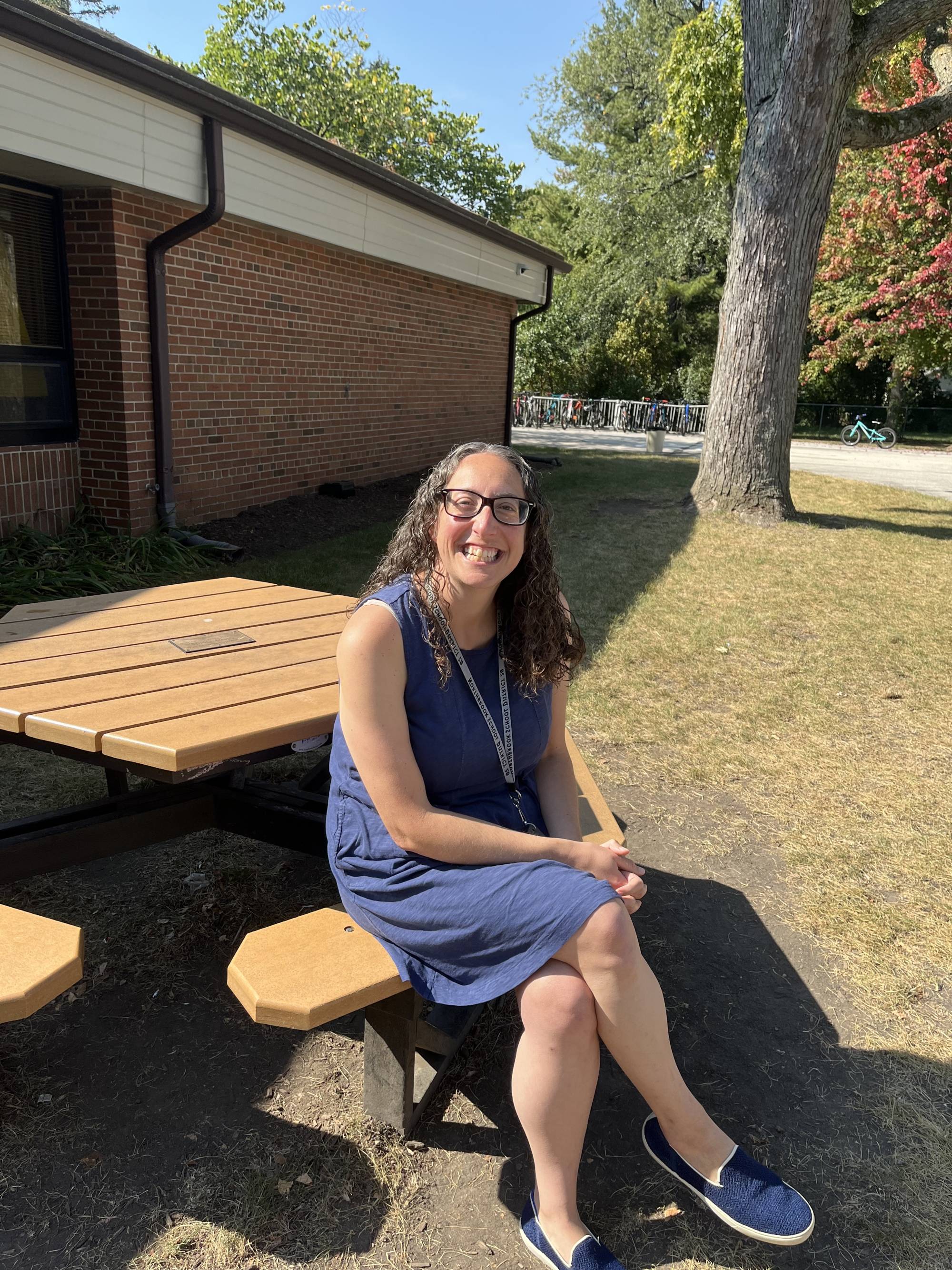
Finding Your Voice Isn't Just For Students. It's For Teachers, Too
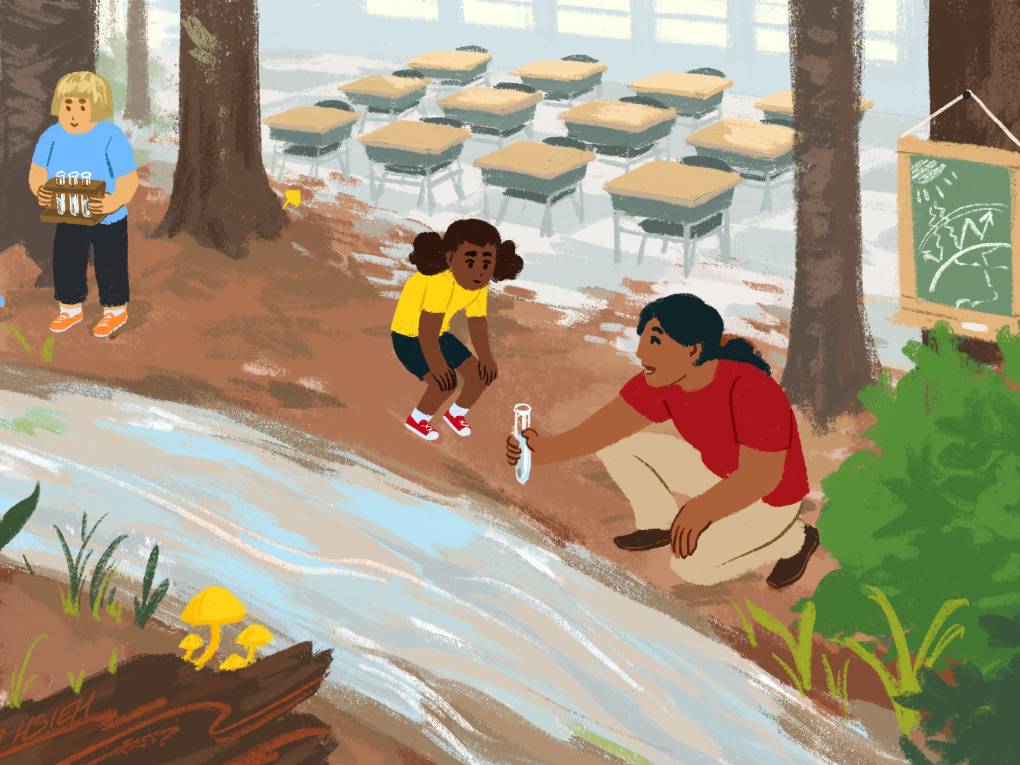
How kids are making sense of climate change and extreme weather
Living with an eating disorder, a teen finds comfort in her favorite Korean food
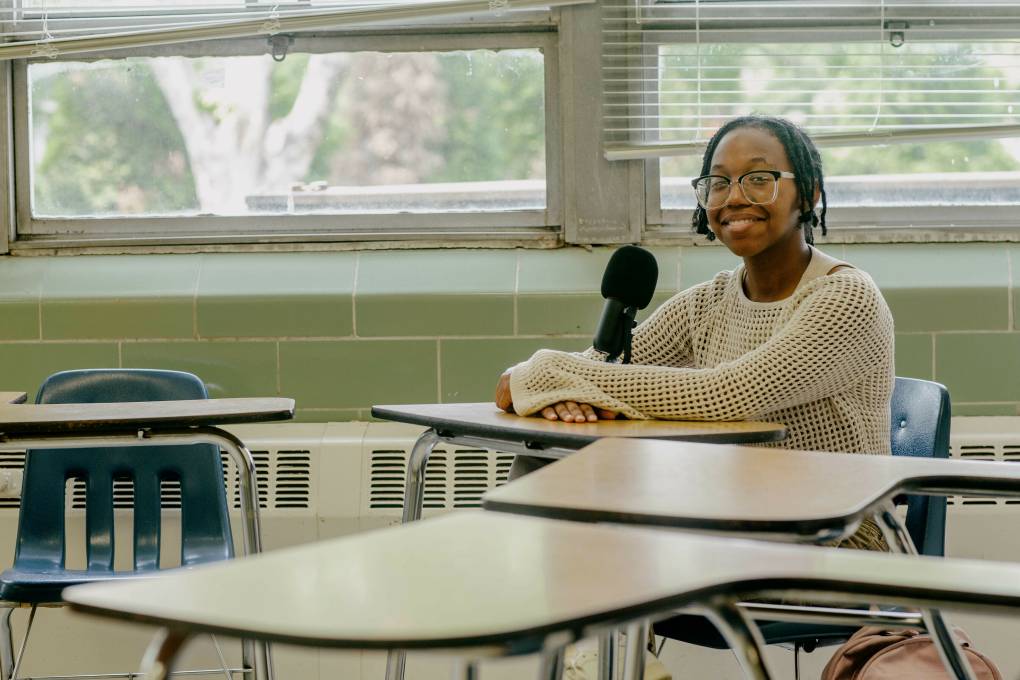
A Mississippi teen's podcast unpacks how the Jackson water crisis impacts education
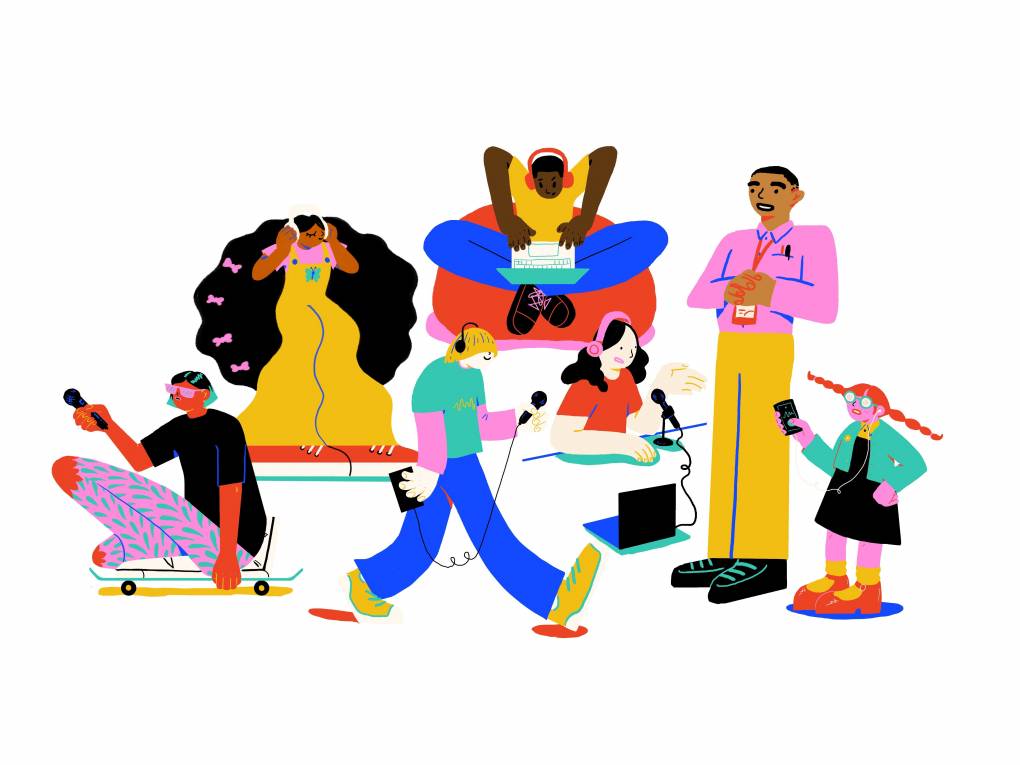
Student podcasters share the dark realities of middle school in America
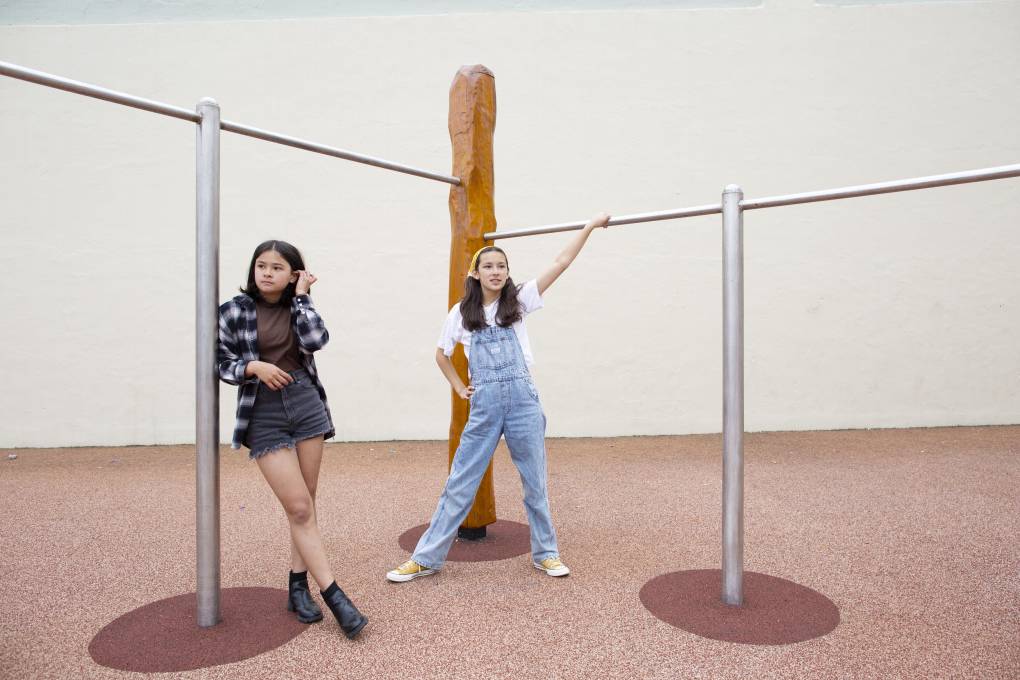
These middle school students have a warning about teens and social media
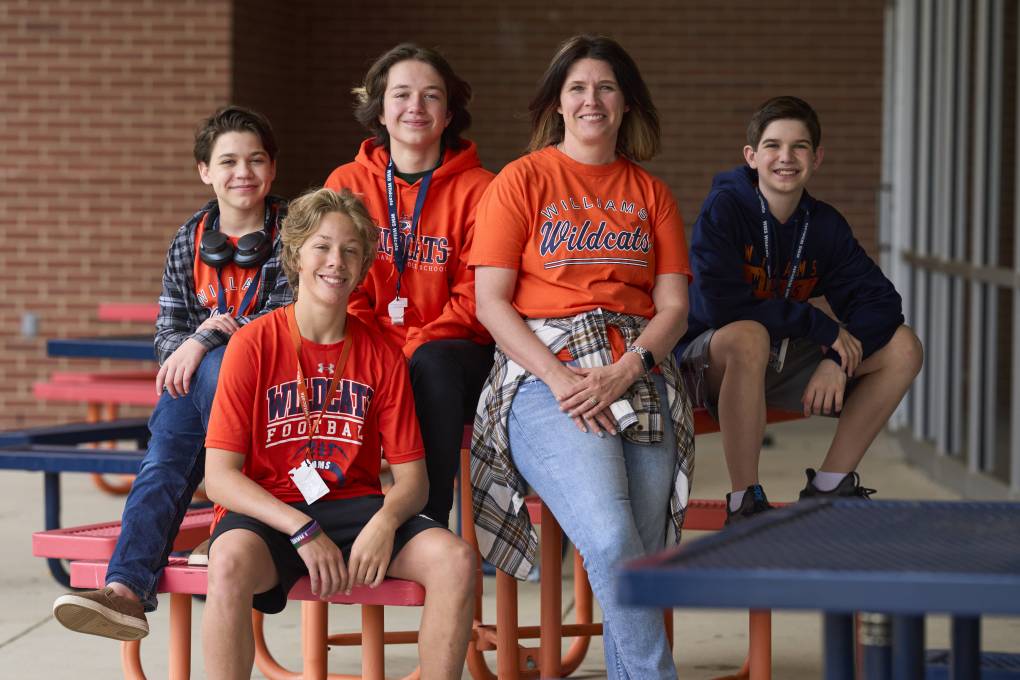
From a molasses flood to 'Titanic,' 6 podcasts that offer a glimpse into kids' minds
A Chinese student Americanized her name to fit in. It took more to feel she belonged
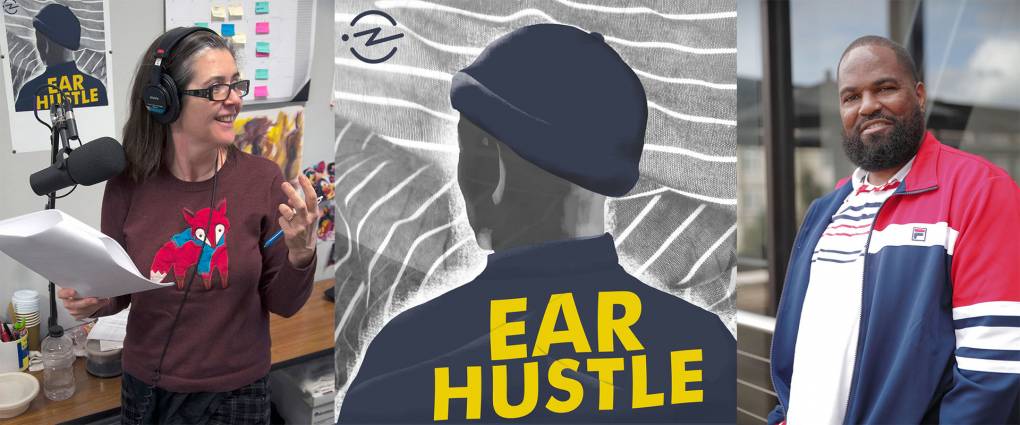
Listening to learn: Why ‘Ear Hustle’ stories about prison life are so engaging to students
Major support for MindShift comes from
Player sponsored by
window.__IS_SSR__=true
window.__INITIAL_STATE__={
"attachmentsReducer": {
"audio_0": {
"type": "attachments",
"id": "audio_0",
"imgSizes": {
"kqedFullSize": {
"file": "https://ww2.kqed.org/news/wp-content/themes/KQED-unified/img/audio_bgs/background0.jpg"
}
}
},
"audio_1": {
"type": "attachments",
"id": "audio_1",
"imgSizes": {
"kqedFullSize": {
"file": "https://ww2.kqed.org/news/wp-content/themes/KQED-unified/img/audio_bgs/background1.jpg"
}
}
},
"audio_2": {
"type": "attachments",
"id": "audio_2",
"imgSizes": {
"kqedFullSize": {
"file": "https://ww2.kqed.org/news/wp-content/themes/KQED-unified/img/audio_bgs/background2.jpg"
}
}
},
"audio_3": {
"type": "attachments",
"id": "audio_3",
"imgSizes": {
"kqedFullSize": {
"file": "https://ww2.kqed.org/news/wp-content/themes/KQED-unified/img/audio_bgs/background3.jpg"
}
}
},
"audio_4": {
"type": "attachments",
"id": "audio_4",
"imgSizes": {
"kqedFullSize": {
"file": "https://ww2.kqed.org/news/wp-content/themes/KQED-unified/img/audio_bgs/background4.jpg"
}
}
},
"placeholder": {
"type": "attachments",
"id": "placeholder",
"imgSizes": {
"thumbnail": {
"file": "https://cdn.kqed.org/wp-content/uploads/2024/12/KQED-Default-Image-816638274-2000x1333-1-160x107.jpg",
"width": 160,
"height": 107,
"mimeType": "image/jpeg"
},
"medium": {
"file": "https://cdn.kqed.org/wp-content/uploads/2024/12/KQED-Default-Image-816638274-2000x1333-1-800x533.jpg",
"width": 800,
"height": 533,
"mimeType": "image/jpeg"
},
"medium_large": {
"file": "https://cdn.kqed.org/wp-content/uploads/2024/12/KQED-Default-Image-816638274-2000x1333-1-768x512.jpg",
"width": 768,
"height": 512,
"mimeType": "image/jpeg"
},
"large": {
"file": "https://cdn.kqed.org/wp-content/uploads/2024/12/KQED-Default-Image-816638274-2000x1333-1-1020x680.jpg",
"width": 1020,
"height": 680,
"mimeType": "image/jpeg"
},
"1536x1536": {
"file": "https://cdn.kqed.org/wp-content/uploads/2024/12/KQED-Default-Image-816638274-2000x1333-1-1536x1024.jpg",
"width": 1536,
"height": 1024,
"mimeType": "image/jpeg"
},
"fd-lrg": {
"file": "https://cdn.kqed.org/wp-content/uploads/2024/12/KQED-Default-Image-816638274-2000x1333-1-1536x1024.jpg",
"width": 1536,
"height": 1024,
"mimeType": "image/jpeg"
},
"fd-med": {
"file": "https://cdn.kqed.org/wp-content/uploads/2024/12/KQED-Default-Image-816638274-2000x1333-1-1020x680.jpg",
"width": 1020,
"height": 680,
"mimeType": "image/jpeg"
},
"fd-sm": {
"file": "https://cdn.kqed.org/wp-content/uploads/2024/12/KQED-Default-Image-816638274-2000x1333-1-800x533.jpg",
"width": 800,
"height": 533,
"mimeType": "image/jpeg"
},
"post-thumbnail": {
"file": "https://cdn.kqed.org/wp-content/uploads/2024/12/KQED-Default-Image-816638274-2000x1333-1-672x372.jpg",
"width": 672,
"height": 372,
"mimeType": "image/jpeg"
},
"twentyfourteen-full-width": {
"file": "https://cdn.kqed.org/wp-content/uploads/2024/12/KQED-Default-Image-816638274-2000x1333-1-1038x576.jpg",
"width": 1038,
"height": 576,
"mimeType": "image/jpeg"
},
"xxsmall": {
"file": "https://cdn.kqed.org/wp-content/uploads/2024/12/KQED-Default-Image-816638274-2000x1333-1-160x107.jpg",
"width": 160,
"height": 107,
"mimeType": "image/jpeg"
},
"xsmall": {
"file": "https://cdn.kqed.org/wp-content/uploads/2024/12/KQED-Default-Image-816638274-2000x1333-1-672x372.jpg",
"width": 672,
"height": 372,
"mimeType": "image/jpeg"
},
"small": {
"file": "https://cdn.kqed.org/wp-content/uploads/2024/12/KQED-Default-Image-816638274-2000x1333-1-672x372.jpg",
"width": 672,
"height": 372,
"mimeType": "image/jpeg"
},
"xlarge": {
"file": "https://cdn.kqed.org/wp-content/uploads/2024/12/KQED-Default-Image-816638274-2000x1333-1-1020x680.jpg",
"width": 1020,
"height": 680,
"mimeType": "image/jpeg"
},
"full-width": {
"file": "https://cdn.kqed.org/wp-content/uploads/2024/12/KQED-Default-Image-816638274-2000x1333-1-1920x1280.jpg",
"width": 1920,
"height": 1280,
"mimeType": "image/jpeg"
},
"guest-author-32": {
"file": "https://cdn.kqed.org/wp-content/uploads/2025/01/KQED-Default-Image-816638274-1333x1333-1-160x160.jpg",
"width": 32,
"height": 32,
"mimeType": "image/jpeg"
},
"guest-author-50": {
"file": "https://cdn.kqed.org/wp-content/uploads/2025/01/KQED-Default-Image-816638274-1333x1333-1-160x160.jpg",
"width": 50,
"height": 50,
"mimeType": "image/jpeg"
},
"guest-author-64": {
"file": "https://cdn.kqed.org/wp-content/uploads/2025/01/KQED-Default-Image-816638274-1333x1333-1-160x160.jpg",
"width": 64,
"height": 64,
"mimeType": "image/jpeg"
},
"guest-author-96": {
"file": "https://cdn.kqed.org/wp-content/uploads/2025/01/KQED-Default-Image-816638274-1333x1333-1-160x160.jpg",
"width": 96,
"height": 96,
"mimeType": "image/jpeg"
},
"guest-author-128": {
"file": "https://cdn.kqed.org/wp-content/uploads/2025/01/KQED-Default-Image-816638274-1333x1333-1-160x160.jpg",
"width": 128,
"height": 128,
"mimeType": "image/jpeg"
},
"detail": {
"file": "https://cdn.kqed.org/wp-content/uploads/2025/01/KQED-Default-Image-816638274-1333x1333-1-160x160.jpg",
"width": 160,
"height": 160,
"mimeType": "image/jpeg"
},
"kqedFullSize": {
"file": "https://cdn.kqed.org/wp-content/uploads/2024/12/KQED-Default-Image-816638274-2000x1333-1.jpg",
"width": 2000,
"height": 1333
}
}
},
"mindshift_65617": {
"type": "attachments",
"id": "mindshift_65617",
"meta": {
"index": "attachments_1716263798",
"site": "mindshift",
"id": "65617",
"found": true
},
"title": "Lifshitz Outside of School",
"publishDate": 1752519909,
"status": "inherit",
"parent": 65612,
"modified": 1752557200,
"caption": "Teacher Jess Lifshitz developed a personal narrative unit based on \"The Moth\" podcast to tap into the personal stories students were so excited to share that weren't entirely captured in traditional writing prompts.",
"credit": "Courtesy of Jess Lifshitz",
"altTag": "Woman sitting at bench",
"description": null,
"imgSizes": {
"medium": {
"file": "https://cdn.kqed.org/wp-content/uploads/sites/23/2025/07/Lifshitz-Outside-of-School-2000x2667.jpg",
"width": 2000,
"height": 2667,
"mimeType": "image/jpeg"
},
"large": {
"file": "https://cdn.kqed.org/wp-content/uploads/sites/23/2025/07/Lifshitz-Outside-of-School-2000x2667.jpg",
"width": 2000,
"height": 2667,
"mimeType": "image/jpeg"
},
"thumbnail": {
"file": "https://cdn.kqed.org/wp-content/uploads/sites/23/2025/07/Lifshitz-Outside-of-School-scaled-e1752520128963-160x117.jpg",
"width": 160,
"height": 117,
"mimeType": "image/jpeg"
},
"medium_large": {
"file": "https://cdn.kqed.org/wp-content/uploads/sites/23/2025/07/Lifshitz-Outside-of-School-scaled-e1752520128963-768x563.jpg",
"width": 768,
"height": 563,
"mimeType": "image/jpeg"
},
"1536x1536": {
"file": "https://cdn.kqed.org/wp-content/uploads/sites/23/2025/07/Lifshitz-Outside-of-School-scaled-e1752520128963-1536x1126.jpg",
"width": 1536,
"height": 1126,
"mimeType": "image/jpeg"
},
"2048x2048": {
"file": "https://cdn.kqed.org/wp-content/uploads/sites/23/2025/07/Lifshitz-Outside-of-School-1536x2048.jpg",
"width": 1536,
"height": 2048,
"mimeType": "image/jpeg"
},
"post-thumbnail": {
"file": "https://cdn.kqed.org/wp-content/uploads/sites/23/2025/07/Lifshitz-Outside-of-School-scaled-e1752520128963-672x372.jpg",
"width": 672,
"height": 372,
"mimeType": "image/jpeg"
},
"twentyfourteen-full-width": {
"file": "https://cdn.kqed.org/wp-content/uploads/sites/23/2025/07/Lifshitz-Outside-of-School-scaled-e1752520128963-1038x576.jpg",
"width": 1038,
"height": 576,
"mimeType": "image/jpeg"
},
"full-width": {
"file": "https://cdn.kqed.org/wp-content/uploads/sites/23/2025/07/Lifshitz-Outside-of-School-2000x2667.jpg",
"width": 2000,
"height": 2667,
"mimeType": "image/jpeg"
},
"kqedFullSize": {
"file": "https://cdn.kqed.org/wp-content/uploads/sites/23/2025/07/Lifshitz-Outside-of-School-scaled-e1752520128963.jpg",
"width": 1920,
"height": 1408
}
},
"isLoading": false,
"fetchFailed": false
},
"mindshift_62567": {
"type": "attachments",
"id": "mindshift_62567",
"meta": {
"index": "attachments_1716263798",
"site": "mindshift",
"id": "62567",
"found": true
},
"parent": 62566,
"imgSizes": {
"twentyfourteen-full-width": {
"file": "https://ww2.kqed.org/app/uploads/sites/23/2023/10/hsieh_angela_ed_climatechangeteachingtips1-59bb3d3d6a7353b8bcd2f25bde855355b04f9a4e-1038x576.jpg",
"width": 1038,
"mimeType": "image/jpeg",
"height": 576
},
"thumbnail": {
"file": "https://ww2.kqed.org/app/uploads/sites/23/2023/10/hsieh_angela_ed_climatechangeteachingtips1-59bb3d3d6a7353b8bcd2f25bde855355b04f9a4e-160x120.jpg",
"width": 160,
"mimeType": "image/jpeg",
"height": 120
},
"post-thumbnail": {
"file": "https://ww2.kqed.org/app/uploads/sites/23/2023/10/hsieh_angela_ed_climatechangeteachingtips1-59bb3d3d6a7353b8bcd2f25bde855355b04f9a4e-672x372.jpg",
"width": 672,
"mimeType": "image/jpeg",
"height": 372
},
"kqedFullSize": {
"file": "https://ww2.kqed.org/app/uploads/sites/23/2023/10/hsieh_angela_ed_climatechangeteachingtips1-59bb3d3d6a7353b8bcd2f25bde855355b04f9a4e-scaled.jpg",
"width": 2560,
"height": 1920
},
"2048x2048": {
"file": "https://ww2.kqed.org/app/uploads/sites/23/2023/10/hsieh_angela_ed_climatechangeteachingtips1-59bb3d3d6a7353b8bcd2f25bde855355b04f9a4e-2048x1536.jpg",
"width": 2048,
"mimeType": "image/jpeg",
"height": 1536
},
"large": {
"file": "https://ww2.kqed.org/app/uploads/sites/23/2023/10/hsieh_angela_ed_climatechangeteachingtips1-59bb3d3d6a7353b8bcd2f25bde855355b04f9a4e-1020x765.jpg",
"width": 1020,
"mimeType": "image/jpeg",
"height": 765
},
"1536x1536": {
"file": "https://ww2.kqed.org/app/uploads/sites/23/2023/10/hsieh_angela_ed_climatechangeteachingtips1-59bb3d3d6a7353b8bcd2f25bde855355b04f9a4e-1536x1152.jpg",
"width": 1536,
"mimeType": "image/jpeg",
"height": 1152
},
"full-width": {
"file": "https://ww2.kqed.org/app/uploads/sites/23/2023/10/hsieh_angela_ed_climatechangeteachingtips1-59bb3d3d6a7353b8bcd2f25bde855355b04f9a4e-1920x1440.jpg",
"width": 1920,
"mimeType": "image/jpeg",
"height": 1440
},
"medium": {
"file": "https://ww2.kqed.org/app/uploads/sites/23/2023/10/hsieh_angela_ed_climatechangeteachingtips1-59bb3d3d6a7353b8bcd2f25bde855355b04f9a4e-800x600.jpg",
"width": 800,
"mimeType": "image/jpeg",
"height": 600
},
"medium_large": {
"file": "https://ww2.kqed.org/app/uploads/sites/23/2023/10/hsieh_angela_ed_climatechangeteachingtips1-59bb3d3d6a7353b8bcd2f25bde855355b04f9a4e-768x576.jpg",
"width": 768,
"mimeType": "image/jpeg",
"height": 576
}
},
"publishDate": 1697056916,
"modified": 1697141843,
"caption": null,
"description": null,
"title": "In a classroom by a river, a teacher collects water samples with her class.",
"credit": "Angela Hsieh/NPR",
"status": "inherit",
"altTag": "Illustration: In foreground a teacher collects water samples with a students at a creek. In background rows of classroom desks.",
"isLoading": false,
"fetchFailed": false
},
"mindshift_62030": {
"type": "attachments",
"id": "mindshift_62030",
"meta": {
"index": "attachments_1716263798",
"site": "mindshift",
"id": "62030",
"found": true
},
"parent": 62029,
"imgSizes": {
"twentyfourteen-full-width": {
"file": "https://ww2.kqed.org/app/uploads/sites/23/2023/07/migaki_foodspc_cheese2-afbfd795087286bbc498927d657b667fef6d71b8-1038x576.jpg",
"width": 1038,
"mimeType": "image/jpeg",
"height": 576
},
"thumbnail": {
"file": "https://ww2.kqed.org/app/uploads/sites/23/2023/07/migaki_foodspc_cheese2-afbfd795087286bbc498927d657b667fef6d71b8-160x120.jpg",
"width": 160,
"mimeType": "image/jpeg",
"height": 120
},
"post-thumbnail": {
"file": "https://ww2.kqed.org/app/uploads/sites/23/2023/07/migaki_foodspc_cheese2-afbfd795087286bbc498927d657b667fef6d71b8-672x372.jpg",
"width": 672,
"mimeType": "image/jpeg",
"height": 372
},
"kqedFullSize": {
"file": "https://ww2.kqed.org/app/uploads/sites/23/2023/07/migaki_foodspc_cheese2-afbfd795087286bbc498927d657b667fef6d71b8-scaled.jpg",
"width": 2560,
"height": 1920
},
"2048x2048": {
"file": "https://ww2.kqed.org/app/uploads/sites/23/2023/07/migaki_foodspc_cheese2-afbfd795087286bbc498927d657b667fef6d71b8-2048x1536.jpg",
"width": 2048,
"mimeType": "image/jpeg",
"height": 1536
},
"large": {
"file": "https://ww2.kqed.org/app/uploads/sites/23/2023/07/migaki_foodspc_cheese2-afbfd795087286bbc498927d657b667fef6d71b8-1020x765.jpg",
"width": 1020,
"mimeType": "image/jpeg",
"height": 765
},
"1536x1536": {
"file": "https://ww2.kqed.org/app/uploads/sites/23/2023/07/migaki_foodspc_cheese2-afbfd795087286bbc498927d657b667fef6d71b8-1536x1152.jpg",
"width": 1536,
"mimeType": "image/jpeg",
"height": 1152
},
"full-width": {
"file": "https://ww2.kqed.org/app/uploads/sites/23/2023/07/migaki_foodspc_cheese2-afbfd795087286bbc498927d657b667fef6d71b8-1920x1440.jpg",
"width": 1920,
"mimeType": "image/jpeg",
"height": 1440
},
"medium": {
"file": "https://ww2.kqed.org/app/uploads/sites/23/2023/07/migaki_foodspc_cheese2-afbfd795087286bbc498927d657b667fef6d71b8-800x600.jpg",
"width": 800,
"mimeType": "image/jpeg",
"height": 600
},
"medium_large": {
"file": "https://ww2.kqed.org/app/uploads/sites/23/2023/07/migaki_foodspc_cheese2-afbfd795087286bbc498927d657b667fef6d71b8-768x576.jpg",
"width": 768,
"mimeType": "image/jpeg",
"height": 576
}
},
"publishDate": 1689724348,
"modified": 1689726221,
"caption": "Budae jjigae or army stew is a Korean fusion stew that incorporates American style processed food.",
"description": null,
"title": null,
"credit": "Lauren Migaki/NPR",
"status": "inherit",
"altTag": null,
"isLoading": false,
"fetchFailed": false
},
"mindshift_61878": {
"type": "attachments",
"id": "mindshift_61878",
"meta": {
"index": "attachments_1716263798",
"site": "mindshift",
"id": "61878",
"found": true
},
"parent": 61877,
"imgSizes": {
"twentyfourteen-full-width": {
"file": "https://ww2.kqed.org/app/uploads/sites/23/2023/06/mg_0394_slide-5cf0f3ade4ba49f94c29099d3eb9bff77db69995-1038x576.jpg",
"width": 1038,
"mimeType": "image/jpeg",
"height": 576
},
"thumbnail": {
"file": "https://ww2.kqed.org/app/uploads/sites/23/2023/06/mg_0394_slide-5cf0f3ade4ba49f94c29099d3eb9bff77db69995-160x107.jpg",
"width": 160,
"mimeType": "image/jpeg",
"height": 107
},
"post-thumbnail": {
"file": "https://ww2.kqed.org/app/uploads/sites/23/2023/06/mg_0394_slide-5cf0f3ade4ba49f94c29099d3eb9bff77db69995-672x372.jpg",
"width": 672,
"mimeType": "image/jpeg",
"height": 372
},
"kqedFullSize": {
"file": "https://ww2.kqed.org/app/uploads/sites/23/2023/06/mg_0394_slide-5cf0f3ade4ba49f94c29099d3eb9bff77db69995-scaled.jpg",
"width": 2560,
"height": 1706
},
"2048x2048": {
"file": "https://ww2.kqed.org/app/uploads/sites/23/2023/06/mg_0394_slide-5cf0f3ade4ba49f94c29099d3eb9bff77db69995-2048x1365.jpg",
"width": 2048,
"mimeType": "image/jpeg",
"height": 1365
},
"large": {
"file": "https://ww2.kqed.org/app/uploads/sites/23/2023/06/mg_0394_slide-5cf0f3ade4ba49f94c29099d3eb9bff77db69995-1020x680.jpg",
"width": 1020,
"mimeType": "image/jpeg",
"height": 680
},
"1536x1536": {
"file": "https://ww2.kqed.org/app/uploads/sites/23/2023/06/mg_0394_slide-5cf0f3ade4ba49f94c29099d3eb9bff77db69995-1536x1024.jpg",
"width": 1536,
"mimeType": "image/jpeg",
"height": 1024
},
"full-width": {
"file": "https://ww2.kqed.org/app/uploads/sites/23/2023/06/mg_0394_slide-5cf0f3ade4ba49f94c29099d3eb9bff77db69995-1920x1280.jpg",
"width": 1920,
"mimeType": "image/jpeg",
"height": 1280
},
"medium": {
"file": "https://ww2.kqed.org/app/uploads/sites/23/2023/06/mg_0394_slide-5cf0f3ade4ba49f94c29099d3eb9bff77db69995-800x533.jpg",
"width": 800,
"mimeType": "image/jpeg",
"height": 533
},
"medium_large": {
"file": "https://ww2.kqed.org/app/uploads/sites/23/2023/06/mg_0394_slide-5cf0f3ade4ba49f94c29099d3eb9bff77db69995-768x512.jpg",
"width": 768,
"mimeType": "image/jpeg",
"height": 512
}
},
"publishDate": 1687359088,
"modified": 1687360297,
"caption": "Georgianna McKenny, 17, is the high school grand-prize winner in NPR's fifth-annual Student Podcast Challenge.",
"description": null,
"title": null,
"credit": "Imani Khayyam for NPR",
"status": "inherit",
"altTag": null,
"isLoading": false,
"fetchFailed": false
},
"mindshift_61869": {
"type": "attachments",
"id": "mindshift_61869",
"meta": {
"index": "attachments_1716263798",
"site": "mindshift",
"id": "61869",
"found": true
},
"parent": 61868,
"imgSizes": {
"twentyfourteen-full-width": {
"file": "https://ww2.kqed.org/app/uploads/sites/23/2023/06/n0a0956.tif_slide-8e58aa92b96a147dbe95accc7477afd2b8e4c920-1038x576.jpg",
"width": 1038,
"mimeType": "image/jpeg",
"height": 576
},
"thumbnail": {
"file": "https://ww2.kqed.org/app/uploads/sites/23/2023/06/n0a0956.tif_slide-8e58aa92b96a147dbe95accc7477afd2b8e4c920-160x107.jpg",
"width": 160,
"mimeType": "image/jpeg",
"height": 107
},
"post-thumbnail": {
"file": "https://ww2.kqed.org/app/uploads/sites/23/2023/06/n0a0956.tif_slide-8e58aa92b96a147dbe95accc7477afd2b8e4c920-672x372.jpg",
"width": 672,
"mimeType": "image/jpeg",
"height": 372
},
"kqedFullSize": {
"file": "https://ww2.kqed.org/app/uploads/sites/23/2023/06/n0a0956.tif_slide-8e58aa92b96a147dbe95accc7477afd2b8e4c920-scaled.jpg",
"width": 2560,
"height": 1706
},
"2048x2048": {
"file": "https://ww2.kqed.org/app/uploads/sites/23/2023/06/n0a0956.tif_slide-8e58aa92b96a147dbe95accc7477afd2b8e4c920-2048x1365.jpg",
"width": 2048,
"mimeType": "image/jpeg",
"height": 1365
},
"large": {
"file": "https://ww2.kqed.org/app/uploads/sites/23/2023/06/n0a0956.tif_slide-8e58aa92b96a147dbe95accc7477afd2b8e4c920-1020x680.jpg",
"width": 1020,
"mimeType": "image/jpeg",
"height": 680
},
"1536x1536": {
"file": "https://ww2.kqed.org/app/uploads/sites/23/2023/06/n0a0956.tif_slide-8e58aa92b96a147dbe95accc7477afd2b8e4c920-1536x1024.jpg",
"width": 1536,
"mimeType": "image/jpeg",
"height": 1024
},
"full-width": {
"file": "https://ww2.kqed.org/app/uploads/sites/23/2023/06/n0a0956.tif_slide-8e58aa92b96a147dbe95accc7477afd2b8e4c920-1920x1280.jpg",
"width": 1920,
"mimeType": "image/jpeg",
"height": 1280
},
"medium": {
"file": "https://ww2.kqed.org/app/uploads/sites/23/2023/06/n0a0956.tif_slide-8e58aa92b96a147dbe95accc7477afd2b8e4c920-800x533.jpg",
"width": 800,
"mimeType": "image/jpeg",
"height": 533
},
"medium_large": {
"file": "https://ww2.kqed.org/app/uploads/sites/23/2023/06/n0a0956.tif_slide-8e58aa92b96a147dbe95accc7477afd2b8e4c920-768x512.jpg",
"width": 768,
"mimeType": "image/jpeg",
"height": 512
}
},
"publishDate": 1687356138,
"modified": 1687357023,
"caption": "Norah Weiner (L) and Erika Young (R), the grand-prize winners in grades 5-8 of NPR's Student Podcast Challenge, at Presidio Middle School in San Francisco.",
"description": null,
"title": "Student Podcast Challenge winners middle school",
"credit": "Talia Herman for NPR",
"status": "inherit",
"altTag": null,
"isLoading": false,
"fetchFailed": false
},
"mindshift_59393": {
"type": "attachments",
"id": "mindshift_59393",
"meta": {
"index": "attachments_1716263798",
"site": "mindshift",
"id": "59393",
"found": true
},
"parent": 59392,
"imgSizes": {
"twentyfourteen-full-width": {
"file": "https://ww2.kqed.org/app/uploads/sites/23/2022/05/edit_c2n00588_slide-ed3ad3e5d79f5446f3bc012afa7f47d1f4857c28-2-1038x576.jpg",
"width": 1038,
"mimeType": "image/jpeg",
"height": 576
},
"thumbnail": {
"file": "https://ww2.kqed.org/app/uploads/sites/23/2022/05/edit_c2n00588_slide-ed3ad3e5d79f5446f3bc012afa7f47d1f4857c28-2-160x107.jpg",
"width": 160,
"mimeType": "image/jpeg",
"height": 107
},
"post-thumbnail": {
"file": "https://ww2.kqed.org/app/uploads/sites/23/2022/05/edit_c2n00588_slide-ed3ad3e5d79f5446f3bc012afa7f47d1f4857c28-2-672x372.jpg",
"width": 672,
"mimeType": "image/jpeg",
"height": 372
},
"kqedFullSize": {
"file": "https://ww2.kqed.org/app/uploads/sites/23/2022/05/edit_c2n00588_slide-ed3ad3e5d79f5446f3bc012afa7f47d1f4857c28-2-scaled-e1652855604218.jpg",
"width": 1920,
"height": 1280
},
"2048x2048": {
"file": "https://ww2.kqed.org/app/uploads/sites/23/2022/05/edit_c2n00588_slide-ed3ad3e5d79f5446f3bc012afa7f47d1f4857c28-2-2048x1365.jpg",
"width": 2048,
"mimeType": "image/jpeg",
"height": 1365
},
"large": {
"file": "https://ww2.kqed.org/app/uploads/sites/23/2022/05/edit_c2n00588_slide-ed3ad3e5d79f5446f3bc012afa7f47d1f4857c28-2-1020x680.jpg",
"width": 1020,
"mimeType": "image/jpeg",
"height": 680
},
"1536x1536": {
"file": "https://ww2.kqed.org/app/uploads/sites/23/2022/05/edit_c2n00588_slide-ed3ad3e5d79f5446f3bc012afa7f47d1f4857c28-2-1536x1024.jpg",
"width": 1536,
"mimeType": "image/jpeg",
"height": 1024
},
"full-width": {
"file": "https://ww2.kqed.org/app/uploads/sites/23/2022/05/edit_c2n00588_slide-ed3ad3e5d79f5446f3bc012afa7f47d1f4857c28-2-1920x1280.jpg",
"width": 1920,
"mimeType": "image/jpeg",
"height": 1280
},
"medium": {
"file": "https://ww2.kqed.org/app/uploads/sites/23/2022/05/edit_c2n00588_slide-ed3ad3e5d79f5446f3bc012afa7f47d1f4857c28-2-800x533.jpg",
"width": 800,
"mimeType": "image/jpeg",
"height": 533
},
"medium_large": {
"file": "https://ww2.kqed.org/app/uploads/sites/23/2022/05/edit_c2n00588_slide-ed3ad3e5d79f5446f3bc012afa7f47d1f4857c28-2-768x512.jpg",
"width": 768,
"mimeType": "image/jpeg",
"height": 512
}
},
"publishDate": 1652855043,
"modified": 1652855648,
"caption": "Middle school winners Harrison McDonald, Wesley Helmer, Kit Atteberry, and Blake Turley pose with librarian Misti Knight.\n",
"description": null,
"title": "Middle school winners Harrison McDonald, Wesley Helmer, Kit Atteberry, and Blake Turley pose with librarian Misti Knight.",
"credit": "Cooper Neill for NPR",
"status": "inherit",
"altTag": "Four students and one librarian at school",
"isLoading": false,
"fetchFailed": false
},
"mindshift_59302": {
"type": "attachments",
"id": "mindshift_59302",
"meta": {
"index": "attachments_1716263798",
"site": "mindshift",
"id": "59302",
"found": true
},
"parent": 59301,
"imgSizes": {
"twentyfourteen-full-width": {
"file": "https://ww2.kqed.org/app/uploads/sites/23/2022/04/spc-podcastkidsartboard-5-46735c52f339f042a1f5f43fef2dfd93e280addc-1038x576.jpg",
"width": 1038,
"mimeType": "image/jpeg",
"height": 576
},
"thumbnail": {
"file": "https://ww2.kqed.org/app/uploads/sites/23/2022/04/spc-podcastkidsartboard-5-46735c52f339f042a1f5f43fef2dfd93e280addc-160x120.jpg",
"width": 160,
"mimeType": "image/jpeg",
"height": 120
},
"post-thumbnail": {
"file": "https://ww2.kqed.org/app/uploads/sites/23/2022/04/spc-podcastkidsartboard-5-46735c52f339f042a1f5f43fef2dfd93e280addc-672x372.jpg",
"width": 672,
"mimeType": "image/jpeg",
"height": 372
},
"kqedFullSize": {
"file": "https://ww2.kqed.org/app/uploads/sites/23/2022/04/spc-podcastkidsartboard-5-46735c52f339f042a1f5f43fef2dfd93e280addc-scaled-e1650036170942.jpg",
"width": 1920,
"height": 1439
},
"2048x2048": {
"file": "https://ww2.kqed.org/app/uploads/sites/23/2022/04/spc-podcastkidsartboard-5-46735c52f339f042a1f5f43fef2dfd93e280addc-2048x1535.jpg",
"width": 2048,
"mimeType": "image/jpeg",
"height": 1535
},
"large": {
"file": "https://ww2.kqed.org/app/uploads/sites/23/2022/04/spc-podcastkidsartboard-5-46735c52f339f042a1f5f43fef2dfd93e280addc-1020x765.jpg",
"width": 1020,
"mimeType": "image/jpeg",
"height": 765
},
"1536x1536": {
"file": "https://ww2.kqed.org/app/uploads/sites/23/2022/04/spc-podcastkidsartboard-5-46735c52f339f042a1f5f43fef2dfd93e280addc-1536x1152.jpg",
"width": 1536,
"mimeType": "image/jpeg",
"height": 1152
},
"full-width": {
"file": "https://ww2.kqed.org/app/uploads/sites/23/2022/04/spc-podcastkidsartboard-5-46735c52f339f042a1f5f43fef2dfd93e280addc-1920x1439.jpg",
"width": 1920,
"mimeType": "image/jpeg",
"height": 1439
},
"medium": {
"file": "https://ww2.kqed.org/app/uploads/sites/23/2022/04/spc-podcastkidsartboard-5-46735c52f339f042a1f5f43fef2dfd93e280addc-800x600.jpg",
"width": 800,
"mimeType": "image/jpeg",
"height": 600
},
"medium_large": {
"file": "https://ww2.kqed.org/app/uploads/sites/23/2022/04/spc-podcastkidsartboard-5-46735c52f339f042a1f5f43fef2dfd93e280addc-768x576.jpg",
"width": 768,
"mimeType": "image/jpeg",
"height": 576
}
},
"publishDate": 1650036031,
"modified": 1650036192,
"caption": null,
"description": null,
"title": "Colorful illustration of student podcasters — some using headphones, others holding microphones.",
"credit": "LA Johnson",
"status": "inherit",
"altTag": null,
"isLoading": false,
"fetchFailed": false
},
"mindshift_59297": {
"type": "attachments",
"id": "mindshift_59297",
"meta": {
"index": "attachments_1716263798",
"site": "mindshift",
"id": "59297",
"found": true
},
"parent": 59296,
"imgSizes": {
"twentyfourteen-full-width": {
"file": "https://ww2.kqed.org/app/uploads/sites/23/2022/04/os_9896_slide-52d684f254d633eb35b8cb4802b5b09157b10652-1038x576.jpg",
"width": 1038,
"mimeType": "image/jpeg",
"height": 576
},
"thumbnail": {
"file": "https://ww2.kqed.org/app/uploads/sites/23/2022/04/os_9896_slide-52d684f254d633eb35b8cb4802b5b09157b10652-160x107.jpg",
"width": 160,
"mimeType": "image/jpeg",
"height": 107
},
"post-thumbnail": {
"file": "https://ww2.kqed.org/app/uploads/sites/23/2022/04/os_9896_slide-52d684f254d633eb35b8cb4802b5b09157b10652-672x372.jpg",
"width": 672,
"mimeType": "image/jpeg",
"height": 372
},
"kqedFullSize": {
"file": "https://ww2.kqed.org/app/uploads/sites/23/2022/04/os_9896_slide-52d684f254d633eb35b8cb4802b5b09157b10652-scaled-e1649851268848.jpg",
"width": 1920,
"height": 1280
},
"2048x2048": {
"file": "https://ww2.kqed.org/app/uploads/sites/23/2022/04/os_9896_slide-52d684f254d633eb35b8cb4802b5b09157b10652-2048x1365.jpg",
"width": 2048,
"mimeType": "image/jpeg",
"height": 1365
},
"large": {
"file": "https://ww2.kqed.org/app/uploads/sites/23/2022/04/os_9896_slide-52d684f254d633eb35b8cb4802b5b09157b10652-1020x680.jpg",
"width": 1020,
"mimeType": "image/jpeg",
"height": 680
},
"1536x1536": {
"file": "https://ww2.kqed.org/app/uploads/sites/23/2022/04/os_9896_slide-52d684f254d633eb35b8cb4802b5b09157b10652-1536x1024.jpg",
"width": 1536,
"mimeType": "image/jpeg",
"height": 1024
},
"full-width": {
"file": "https://ww2.kqed.org/app/uploads/sites/23/2022/04/os_9896_slide-52d684f254d633eb35b8cb4802b5b09157b10652-1920x1280.jpg",
"width": 1920,
"mimeType": "image/jpeg",
"height": 1280
},
"medium": {
"file": "https://ww2.kqed.org/app/uploads/sites/23/2022/04/os_9896_slide-52d684f254d633eb35b8cb4802b5b09157b10652-800x533.jpg",
"width": 800,
"mimeType": "image/jpeg",
"height": 533
},
"medium_large": {
"file": "https://ww2.kqed.org/app/uploads/sites/23/2022/04/os_9896_slide-52d684f254d633eb35b8cb4802b5b09157b10652-768x512.jpg",
"width": 768,
"mimeType": "image/jpeg",
"height": 512
}
},
"publishDate": 1649851215,
"modified": 1649851279,
"caption": "Four years into her life in the U.S., Aria Young has realized she wants more balance between the two halves of herself — Yáng Qìn Yuè of Shanghai and Aria Young of New York City.\n",
"description": "New York,NY NYU student, Aria Young in Washington sq park.",
"title": "Four years into her life in the U.S., Aria Young has realized she wants more balance between the two halves of herself — Yáng Qìn Yuè of Shanghai and Aria Young of New York City.",
"credit": "Mohamed Sadek for NPR",
"status": "inherit",
"altTag": null,
"isLoading": false,
"fetchFailed": false
},
"mindshift_58639": {
"type": "attachments",
"id": "mindshift_58639",
"meta": {
"index": "attachments_1716263798",
"site": "mindshift",
"id": "58639",
"found": true
},
"parent": 58638,
"imgSizes": {
"twentyfourteen-full-width": {
"file": "https://ww2.kqed.org/app/uploads/sites/23/2021/10/This-is-Ear-Hustle-banner-photo-1038x576.jpg",
"width": 1038,
"mimeType": "image/jpeg",
"height": 576
},
"thumbnail": {
"file": "https://ww2.kqed.org/app/uploads/sites/23/2021/10/This-is-Ear-Hustle-banner-photo-160x67.jpg",
"width": 160,
"mimeType": "image/jpeg",
"height": 67
},
"post-thumbnail": {
"file": "https://ww2.kqed.org/app/uploads/sites/23/2021/10/This-is-Ear-Hustle-banner-photo-672x372.jpg",
"width": 672,
"mimeType": "image/jpeg",
"height": 372
},
"kqedFullSize": {
"file": "https://ww2.kqed.org/app/uploads/sites/23/2021/10/This-is-Ear-Hustle-banner-photo.jpg",
"width": 1920,
"height": 800
},
"large": {
"file": "https://ww2.kqed.org/app/uploads/sites/23/2021/10/This-is-Ear-Hustle-banner-photo-1020x425.jpg",
"width": 1020,
"mimeType": "image/jpeg",
"height": 425
},
"1536x1536": {
"file": "https://ww2.kqed.org/app/uploads/sites/23/2021/10/This-is-Ear-Hustle-banner-photo-1536x640.jpg",
"width": 1536,
"mimeType": "image/jpeg",
"height": 640
},
"medium": {
"file": "https://ww2.kqed.org/app/uploads/sites/23/2021/10/This-is-Ear-Hustle-banner-photo-800x333.jpg",
"width": 800,
"mimeType": "image/jpeg",
"height": 333
},
"medium_large": {
"file": "https://ww2.kqed.org/app/uploads/sites/23/2021/10/This-is-Ear-Hustle-banner-photo-768x320.jpg",
"width": 768,
"mimeType": "image/jpeg",
"height": 320
}
},
"publishDate": 1634597570,
"modified": 1634597677,
"caption": null,
"description": null,
"title": "This is Ear Hustle banner photo",
"credit": "Radiotopia, from PRX",
"status": "inherit",
"altTag": null,
"isLoading": false,
"fetchFailed": false
}
},
"audioPlayerReducer": {
"postId": "stream_live",
"isPaused": true,
"isPlaying": false,
"pfsActive": false,
"pledgeModalIsOpen": true,
"playerDrawerIsOpen": false
},
"authorsReducer": {
"byline_mindshift_62566": {
"type": "authors",
"id": "byline_mindshift_62566",
"meta": {
"override": true
},
"slug": "byline_mindshift_62566",
"name": "Janet W. Lee",
"isLoading": false
},
"byline_mindshift_62029": {
"type": "authors",
"id": "byline_mindshift_62029",
"meta": {
"override": true
},
"slug": "byline_mindshift_62029",
"name": "Janet W. Lee",
"isLoading": false
},
"byline_mindshift_61877": {
"type": "authors",
"id": "byline_mindshift_61877",
"meta": {
"override": true
},
"slug": "byline_mindshift_61877",
"name": "Cory Turner, Lauren Migaki, Janet W. Lee",
"isLoading": false
},
"byline_mindshift_61868": {
"type": "authors",
"id": "byline_mindshift_61868",
"meta": {
"override": true
},
"slug": "byline_mindshift_61868",
"name": " Sequoia Carrillo, Janet W. Lee",
"isLoading": false
},
"byline_mindshift_59392": {
"type": "authors",
"id": "byline_mindshift_59392",
"meta": {
"override": true
},
"slug": "byline_mindshift_59392",
"name": "Cory Turner and Eda Uzunlar",
"isLoading": false
},
"byline_mindshift_59301": {
"type": "authors",
"id": "byline_mindshift_59301",
"meta": {
"override": true
},
"slug": "byline_mindshift_59301",
"name": "Eda Uzunlar",
"isLoading": false
},
"byline_mindshift_59296": {
"type": "authors",
"id": "byline_mindshift_59296",
"meta": {
"override": true
},
"slug": "byline_mindshift_59296",
"name": "Anya Steinberg",
"isLoading": false
},
"ksung": {
"type": "authors",
"id": "4596",
"meta": {
"index": "authors_1716337520",
"id": "4596",
"found": true
},
"name": "Ki Sung",
"firstName": "Ki",
"lastName": "Sung",
"slug": "ksung",
"email": "ksung@kqed.org",
"display_author_email": false,
"staff_mastheads": [
"news"
],
"title": "KQED Contributor",
"bio": "Ki Sung is Managing Editor of Digital News at KQED. She is former Senior Editor of MindShift and worked at NPR before joining KQED in 2014.",
"avatar": "https://secure.gravatar.com/avatar/4ab131bca80bafb89a073bf2348fce93?s=600&d=blank&r=g",
"twitter": null,
"facebook": null,
"instagram": null,
"linkedin": null,
"sites": [
{
"site": "news",
"roles": [
"editor"
]
},
{
"site": "mindshift",
"roles": [
"administrator"
]
},
{
"site": "elections",
"roles": [
"administrator"
]
}
],
"headData": {
"title": "Ki Sung | KQED",
"description": "KQED Contributor",
"ogImgSrc": "https://secure.gravatar.com/avatar/4ab131bca80bafb89a073bf2348fce93?s=600&d=blank&r=g",
"twImgSrc": "https://secure.gravatar.com/avatar/4ab131bca80bafb89a073bf2348fce93?s=600&d=blank&r=g"
},
"isLoading": false,
"link": "/author/ksung"
},
"ngobir": {
"type": "authors",
"id": "11721",
"meta": {
"index": "authors_1716337520",
"id": "11721",
"found": true
},
"name": "Nimah Gobir",
"firstName": "Nimah",
"lastName": "Gobir",
"slug": "ngobir",
"email": "ngobir@kqed.org",
"display_author_email": false,
"staff_mastheads": [],
"title": "KQED Contributor",
"bio": null,
"avatar": "https://secure.gravatar.com/avatar/e08e101e43fc79cc7bcd0c19038d7d08?s=600&d=blank&r=g",
"twitter": null,
"facebook": null,
"instagram": null,
"linkedin": null,
"sites": [
{
"site": "mindshift",
"roles": [
"editor"
]
}
],
"headData": {
"title": "Nimah Gobir | KQED",
"description": "KQED Contributor",
"ogImgSrc": "https://secure.gravatar.com/avatar/e08e101e43fc79cc7bcd0c19038d7d08?s=600&d=blank&r=g",
"twImgSrc": "https://secure.gravatar.com/avatar/e08e101e43fc79cc7bcd0c19038d7d08?s=600&d=blank&r=g"
},
"isLoading": false,
"link": "/author/ngobir"
},
"mjacksonretondo": {
"type": "authors",
"id": "11759",
"meta": {
"index": "authors_1716337520",
"id": "11759",
"found": true
},
"name": "Marlena Jackson-Retondo",
"firstName": "Marlena",
"lastName": "Jackson-Retondo",
"slug": "mjacksonretondo",
"email": "mjacksonretondo@kqed.org",
"display_author_email": false,
"staff_mastheads": [],
"title": "Engagement Producer",
"bio": "Marlena Jackson-Retondo is the engagement producer for KQED's \u003cem>Forum \u003c/em>and \u003cem>Mindshift\u003c/em>. Prior to joining the team in 2022, Marlena was an intern with the KQED Digital News Engagement team. She grew up in the Bay Area.\u003cem> \u003c/em>",
"avatar": "https://secure.gravatar.com/avatar/94ab429312e9a676559e31d1894130df?s=600&d=blank&r=g",
"twitter": null,
"facebook": null,
"instagram": null,
"linkedin": null,
"sites": [
{
"site": "arts",
"roles": [
"editor"
]
},
{
"site": "news",
"roles": [
"contributor"
]
},
{
"site": "mindshift",
"roles": [
"editor"
]
},
{
"site": "forum",
"roles": [
"editor"
]
}
],
"headData": {
"title": "Marlena Jackson-Retondo | KQED",
"description": "Engagement Producer",
"ogImgSrc": "https://secure.gravatar.com/avatar/94ab429312e9a676559e31d1894130df?s=600&d=blank&r=g",
"twImgSrc": "https://secure.gravatar.com/avatar/94ab429312e9a676559e31d1894130df?s=600&d=blank&r=g"
},
"isLoading": false,
"link": "/author/mjacksonretondo"
}
},
"breakingNewsReducer": {},
"pagesReducer": {},
"postsReducer": {
"stream_live": {
"type": "live",
"id": "stream_live",
"audioUrl": "https://streams.kqed.org/kqedradio",
"title": "Live Stream",
"excerpt": "Live Stream information currently unavailable.",
"link": "/radio",
"featImg": "",
"label": {
"name": "KQED Live",
"link": "/"
}
},
"stream_kqedNewscast": {
"type": "posts",
"id": "stream_kqedNewscast",
"audioUrl": "https://www.kqed.org/.stream/anon/radio/RDnews/newscast.mp3?_=1",
"title": "KQED Newscast",
"featImg": "",
"label": {
"name": "88.5 FM",
"link": "/"
}
},
"mindshift_65612": {
"type": "posts",
"id": "mindshift_65612",
"meta": {
"index": "posts_1716263798",
"site": "mindshift",
"id": "65612",
"score": null,
"sort": [
1752573633000
]
},
"guestAuthors": [],
"slug": "finding-your-voice-isnt-just-for-students-its-for-teachers-too",
"title": "Finding Your Voice Isn't Just For Students. It's For Teachers, Too",
"publishDate": 1752573633,
"format": "audio",
"headTitle": "Finding Your Voice Isn’t Just For Students. It’s For Teachers, Too | KQED",
"labelTerm": {
"term": 21942,
"site": "mindshift"
},
"content": "\u003cp>\u003ca href=\"#episode-transcript\">\u003ci>View the full episode transcript.\u003c/i>\u003c/a>\u003c/p>\n\u003cp>Jessica Lifshitz noticed a shift in the writing stamina of her fifth graders in recent years. Students weren’t connecting to text-heavy personal narratives in the way that they used to.\u003c/p>\n\u003cp>She couldn’t pinpoint the reason for this steady decline in writing stamina, but the disconnect was clear. “Our kids are just having a harder time writing longer pieces compared to what they used to be able to do,” said Lifshitz, who has been teaching for 21 years.\u003c/p>\n\u003cp>Looking at examples of writing and storytelling is an important element of building students’ literacy and writing skills. Since her students were struggling with the existing material, she decided to do something different: have her students rely on themselves and their voices for that narrative.\u003c/p>\n\u003cp>Last fall, Lifshitz decided to introduce the first writing unit of the year using “\u003ca href=\"https://themoth.org/\">The Moth\u003c/a>,” the popular podcast, public radio program and event.\u003c/p>\n\u003cp>[ad fullwidth]\u003c/p>\n\u003cp>Students spent six weeks listening to, watching, developing, writing and eventually recording their own stories. The unit was a success; it sparked the young readers’ and writers’ storytelling abilities and offered lessons in empathy, courage and multi-modal literacy.\u003c/p>\n\u003cp>“We certainly practice [responding to prompts about short readings] in other ways, but I also wanted to just bring the joy of storytelling back to kids,” said Lifshitz.\u003c/p>\n\u003cp>In an age where writing in school is often focused on fulfilling standardized test requirements, personal narrative writing units can offer a more personalized approach to literacy.\u003c/p>\n\u003cp>\u003cstrong>Personal Narrative Unit\u003c/strong>\u003c/p>\n\u003cp>Lifshitz starts the unit by introducing her students to examples of personal narratives from The Moth’s archives. The fifth graders then sample more of the pre-approved stories on their own. As the students listened to the stories, watched the videos and read the transcripts, they worked on annotating the text and answered questions like: What is this story about? How can this story help others?\u003c/p>\n\u003cp>Then students brainstormed stories from their own lives and shared these stories with their peers. Lifshitz said the energy from her students during the brainstorming was palpable and resulted in stories with titles like, “When Petsitting Goes Wrong,” “The Hardest Math Problem” and “Grandpa and Grandma Day.”\u003c/p>\n\u003cp>Once each student landed on a story they wanted to develop further, they mapped them out using a graphic organizer and studied four storytelling strategies. “Snapshots” describe in detail things that could be seen; “Thought-shots” describe the thoughts and emotions that the writer was experiencing; “Exploding important moments” magnified significant parts of the story; And “Adding in reflection” encouraged students to share a lesson that their story could teach.\u003c/p>\n\u003cp>Additionally, Lifshitz reflected on her own journey using The Moth in our latest episode of the MindShift Podcast. She describes the community of teachers she developed as she started sharing her own teaching stories with the world, and the difference it made in reigniting her excitement with teaching.\u003c/p>\n\u003cp>“As my voice found an audience, as our stories formed the basis for a strong community, my teaching began to change and I began to grow, and writing was such a huge part of that for me,” Lifshitz said in the podcast. “Maybe that is why storytelling is so important to me, because it was this storytelling that allowed me to connect with audiences, to develop community, to be challenged, to be exposed to others in the world.”\u003c/p>\n\u003cp>\u003c!-- iframe plugin v.4.3 wordpress.org/plugins/iframe/ -->\u003cbr>\n\u003ciframe loading=\"lazy\" frameborder=\"0\" height=\"200\" scrolling=\"no\" src=\"https://playlist.megaphone.fm?e=KQINC8799077194\" width=\"100%\" class=\"iframe-class\">\u003c/iframe>\u003c/p>\n\u003cp>\u003cstrong>The Moth Model\u003c/strong>\u003c/p>\n\u003cp>While Lifshitz developed her own unit, \u003ca href=\"https://themoth.org/the-moths-education-program\">The Moth has a curriculum for K-12 teachers\u003c/a> who are a part of their Teacher’s Lounge program. The Moth also hosts in-person afterschool and summer programs for teens, as well as virtual workshops.\u003c/p>\n\u003cp>It’s rare for teens to find a space where they are free to tell their own stories, uninterrupted, for five minutes “unless you’re talking to the internet in a void,” said Ana Stern, The Moth’s senior manager of education. At the end of the eight-week sessions, the teens share their stories for the whole group. The “slam,” as they call it, is also recorded. The recordings are given to each student and they get to decide what they want to do with them.\u003c/p>\n\u003cp>Some teens perform their story at the slam and never look at the recording again, said Stern, and that’s okay.\u003c/p>\n\u003cp>According to Stern, building a community comes first because storytelling can be a vulnerable experience. “We really spend a lot of time concentrating on building as brave and as safe a space as possible,” she said. And the program encourages students to lead with curiosity and withhold judgement when giving peer-to-peer feedback, she continued. Often, by the end of the eight-week program Stern hears feedback from students like, “I never thought my story would matter” and “I never thought I had anything to say.”\u003c/p>\n\u003cp>“Through the workshop, they’re realizing not only do they have something to say, but they have folks who want to hear them as well,” said Stern.\u003c/p>\n\u003cp>\u003c!-- iframe plugin v.4.3 wordpress.org/plugins/iframe/ -->\u003cbr>\n\u003ciframe loading=\"lazy\" frameborder=\"0\" height=\"200\" scrolling=\"no\" src=\"https://playlist.megaphone.fm?e=KQINC8799077194\" width=\"100%\" class=\"iframe-class\">\u003c/iframe>\u003c/p>\n\u003ch2 id=\"episode-transcript\">Episode Transcript\u003c/h2>\n\u003cp>\u003ci>This is a computer-generated transcript. While our team has reviewed it, there may be errors.\u003c/i>\u003c/p>\n\u003cp>\u003cstrong>Ki Sung:\u003c/strong> Welcome to MindShift, the podcast about the future of learning and how we raise our kids. I’m Ki Sung, and with me today is MindShift reporter Marlena Jackson-Retondo.\u003c/p>\n\u003cp>\u003cstrong>Marlena Jackson-Retondo: \u003c/strong>Hi, Ki.\u003c/p>\n\u003cp>\u003cstrong>Ki Sung: \u003c/strong>Hi, Marlena. So you have a story today that’s about writing, but it’s really about something else. Tell us more.\u003c/p>\n\u003cp>\u003cstrong>Marlena Jackson-Retondo: \u003c/strong>Yeah, I’m here to tell you about a teacher named Jessica Lifshitz. Jessica has been teaching for two decades, but over time, she began to notice a shift in the writing stamina of her fifth graders. They were petering out and not really interested in writing.\u003c/p>\n\u003cp>\u003cstrong>Ki Sung:\u003c/strong> Struggling with student engagement, that sounds like a really familiar problem teachers have, especially post pandemic.\u003c/p>\n\u003cp>\u003cstrong>Marlena Jackson-Retondo:\u003c/strong> Yeah, students weren’t connecting to traditional writing prompts for personal narratives in the way that they used to. Like how did the student spend their summer? What was their favorite memory? Something was missing, both from the text prompts and the student assignments, so she out an idea from the moth. In the moth, adults perform their stories in front of a live audience, usually about three stories per episode, and these stories are grouped by themes like timeless love, football, and grocery trips.\u003c/p>\n\u003cp>Jess’s students read their moth-style stories about fifth grade stuff, with titles like When Pet Sitting Goes Wrong.\u003c/p>\n\u003cp>\u003cstrong>Speaker: \u003c/strong>When I got into the backyard, I couldn’t find the pit bull. I was just like, oh my god, oh god, oh my God, oh God, Oh my God.\u003c/p>\n\u003cp>\u003cstrong>Marlena Jackson-Retondo\u003c/strong>: Grandpa and grandma day.\u003c/p>\n\u003cp>\u003cstrong>Speaker: \u003c/strong>Grandma always makes the best lunches. Cucumbers, mango, watermelon, tuna, croissants, grapes. I would put it all on my plate and start making food monsters.\u003c/p>\n\u003cp>\u003cstrong>Marlena Jackson-Retondo\u003c/strong>: And the hardest math problem.\u003c/p>\n\u003cp>\u003cstrong>Speaker:\u003c/strong> Once, when I was doing math, my teacher introduced me to an indescribably hard math problem. If my head had a fuse, like where a bomb would be, it would blow.\u003c/p>\n\u003cp>\u003cstrong>Marlena Jackson-Retondo: \u003c/strong>We’ll tell you why Jessica wanted to do this after the break.\u003c/p>\n\u003cp>\u003cstrong>Announcer: \u003c/strong>Support for MindShift comes from Landmark College. Landmark college’s fully online certificate in learning differences and neurodiversity provides educators with research-based skills and strategies that improve learning outcomes for neurodivergent students. Earn up to 15 graduate level credits and specialize in one of the following areas, post-secondary disability services, executive function, or autism on campus or online. Learn more at landmark.edu slash certificate.\u003c/p>\n\u003cp>\u003cstrong>Marlena Jackson-Retondo:\u003c/strong> Teacher Jessica Lifshitz does something special in her classroom. Instead of having her students respond to boring writing prompts on paper, she has them tell stories about their lives to each other.\u003c/p>\n\u003cp>\u003cstrong>Ki Sung:\u003c/strong> Okay Marlena, that sounds great. So what’s the real reason Jess has her students do this?\u003c/p>\n\u003cp>\u003cstrong>Marlena Jackson-Retondo:\u003c/strong> Well, I thought we’d get a little meta, so I asked Jess Lifshitz to do something a little different for you, our listeners. I asked just to tell the story of why she came to teach her students about narrative storytelling all of the month. She performed her piece in front of a tiny audience live near Chicago. Please welcome Jess Lifshitz.\u003c/p>\n\u003cp>\u003cstrong>Jess Lifshitz:\u003c/strong> My students are storytellers.\u003c/p>\n\u003cp>Their stories fill the spaces in which we learn. And when I think of my storytellers, I think of one student in particular. She is a master storyteller and her name is Lucy. Every morning we begin our days with a check-in question, a quick way to ease into our morning, a way for everyone to have their voice heard before we dig into the harder work of the day.\u003c/p>\n\u003cp>The questions are simple. What is the thing you are most proud of or what is your biggest fear?\u003c/p>\n\u003cp>And Lucy, she turns every answer into an adventure. Like the time when the question asked about your scariest moment. And Lucy launched into the ordeal that ensued when her dog ran away and she searched her entire neighborhood to find her only to return home and find her dog waiting for her in the backyard. Or the time she was answering a question about the worst injury you’ve ever had and it turned into a five minute retelling. Or the time she was wrapped in a mermaid blanket and turned over in her bed and fell directly onto her humidifier, smacking her face and leaving her with a permanent scar on her cheek.\u003c/p>\n\u003cp>There is rarely a day that goes by where she doesn’t give us all a good story.\u003c/p>\n\u003cp>Now I’ve been a teacher for more than 20 years. In those 20 years, I have heard my share of childhood adventures told through the dramatic voices of my students. But in those 20 years, I have also had to read the often dry words of those same students as they write in response to the boring prompts that we are required to assign from time to time. You know the kind. Prompts like, ‘What is something you did this summer?’ Or ‘What is an important moment you spent with someone you love?’\u003c/p>\n\u003cp>I don’t know what it is, but something about those prompts just sucks the soul out of a story. All that heart, all that voice that students like Lucy naturally pour into their stories seems to disappear when they are asked to write those same stories out for an assignment.\u003c/p>\n\u003cp>And after 20 years of watching the joy slip out of a story, I decided that I needed to do something to try to recapture the energy that filled my students’ stories when they were not writing for an an assignment, I wanted their classroom writing to be filled with the same kind of energy that filled every one of Lucy’s stories.\u003c/p>\n\u003cp>As I began to wrestle with how to bring this joy back to my students and to their stories, I started to think about my own history with writing. When I was a kid, I never saw myself as a writer. I saw writing as something I had to do, a task that I had complete. But at a certain point in my life, that changed. At some point, writing became a way for me to process the world.\u003c/p>\n\u003cp>Writing brought me peace. Writing became so much more than a task. It became a way to connect with myself and with others. Writing become a way for me to form community.\u003c/p>\n\u003cp>So when did that happen? For me, that transformation occurred when I started to write about my life as a fifth grade literacy teacher. This was in the days when the internet was a kinder place, when blogging wasn’t a career, when we weren’t worried about being influencers.\u003c/p>\n\u003cp>And this amazing thing happened through my writing. In a time when I felt isolated as a teacher, stagnant and bored with the teaching I was doing, I found others who opened up a whole new world for me through the sharing of their stories. I read the stories of others and they inspired me to think about teaching in a whole way.\u003c/p>\n\u003cp>As my voice found an audience, as our stories formed the basis for a strong community, my teaching began to change and I began to grow. And writing was such a huge part of that for me. Maybe that is why storytelling is so important to me, because it was this storytelling that allowed me to connect with audiences, to develop community, to be challenged, to be exposed to others in the world.\u003c/p>\n\u003cp>I was fine until I learned what else was out there. And then I became better because of it.\u003c/p>\n\u003cp>That is what I wanted for my students. I wanted my students to see storytelling as a way to connect with others. As a way to feel less alone in this world.\u003c/p>\n\u003cp>So I started to think about how to cultivate the same kind of experience for my students. And I kept thinking about the role that an audience plays in our storytelling. When our stories have a place to land, a place where they matter and can cause others to see the world in a new or different way, that is when our stories feel the most worthwhile.\u003c/p>\n\u003cp>And in all those boring writing prompts, the only audience my students saw for their stories was me, their teacher.\u003c/p>\n\u003cp>I needed to find a way to give them an audience beyond just me and to make their stories matter. And as I started to think about telling stories for an audience, my mind began to wander to one of my favorite public radio podcasts, the Moth Radio Hour.\u003c/p>\n\u003cp>How many times did I sat in my car at the end of a long day needing to hear the end of a Moth radio hour story? Sometimes those driveway moments were filled with laughter and sometimes with tears, but every one of those moments had one thing in common, a compelling story told in front of an audience that caused me to feel something in connection with the person telling the story.\u003c/p>\n\u003cp>It was those thoughts of the purpose of storytelling and of the Moth radio hour that led me to the realization that this year, my fifth graders and I would start our writing year with our very own Moth story hour. We would find a way to tell our stories, to use our stories to connect us, to learn from one another’s stories and to build our classroom community on the foundation of the stories that we would share.\u003c/p>\n\u003cp>I have a lot of hopes for my students and I had a lot hopes of what a Moth Story Hour might be able to do for my student and for me.\u003c/p>\n\u003cp>Let me share a few of those hopes with you.\u003c/p>\n\u003cp>Hope number one. In a world where far too much of the writing we ask our students to do in school is connected to the tests that they will take, it is my hope that my students can find a way to use writing to connect us to each other instead.\u003c/p>\n\u003cp>Hope number two, it is hope that if my students are able to feel the ways in which writing can serve a genuine purpose, that it can make them better, they will see the other benefits of writing on their own.\u003c/p>\n\u003cp>And finally, hope number three is really a hope for myself and my fellow educators. In order for our students to be able to feel the ways in which writing can serve these genuine purposes, we as educators must have the freedom to craft for our student the kinds of writing experiences that cultivate those possibilities.\u003c/p>\n\u003cp>And for me and for my fifth grade students, the Moth story hour was just that kind of experience.\u003c/p>\n\u003cp>\u003cstrong>Marlena Jackson-Retondo:\u003c/strong> That was Jess Lifshitz, a fifth grade teacher near Chicago. When I talked with her earlier this year, she said that this revamped writing unit not only allowed her students to connect with their own stories, but also help them develop empathy for one another. And who doesn’t love that?\u003c/p>\n\u003cp>\u003cstrong>Ki Sung: \u003c/strong>Sounds like a happy ending. Thanks Marlena for sharing that story with us.\u003c/p>\n\u003cp>\u003cstrong>Marlena Jackson-Retondo:\u003c/strong> You’re welcome.\u003c/p>\n\u003cp>[ad floatright]\u003c/p>\n\u003cp>\u003cstrong>Ki Sung: \u003c/strong>That was MindShift reporter Marlena Jackson-Retondo. We’ll bring you more ideas and innovations from experts in education and beyond. Hit follow on your favorite podcast app so you don’t miss a thing. The MindShift team includes me, Ki Sung, Nima Gobier, Marlena Jackson- Retondo, and Marnette Federis. Our editor is Chris Hambrick. Seth Samuel is our sound designer. Additional support from Jen Chien, Katie Sprenger, and Maha Sanad. MindShift is supported in part by the generosity of the William and Flora Hewlett Foundation and members of KQED. Some members of the KQED podcast team are represented by the Screen Actors Guild American Federation of Television and Radio Artists, San Francisco, Northern California Local. Thanks for listening.\u003c/p>\n\n",
"blocks": [],
"excerpt": "The Moth podcast resonated with teacher Jessica Lifshitz as a teaching tool because speaking in front of an audience can be the pathway to finding community.",
"status": "publish",
"parent": 0,
"modified": 1752868365,
"stats": {
"hasAudio": true,
"hasVideo": false,
"hasChartOrMap": false,
"iframeSrcs": [],
"hasGoogleForm": false,
"hasGallery": false,
"hasHearkenModule": false,
"hasPolis": false,
"paragraphCount": 72,
"wordCount": 2950
},
"headData": {
"title": "Finding Your Voice Isn't Just For Students. It's For Teachers, Too | KQED",
"description": "The Moth podcast resonated with teacher Jessica Lifshitz as a teaching tool because speaking in front of an audience can be the pathway to finding community.",
"ogTitle": "",
"ogDescription": "",
"ogImgId": "",
"twTitle": "",
"twDescription": "",
"twImgId": "",
"schema": {
"@context": "https://schema.org",
"@type": "Article",
"headline": "Finding Your Voice Isn't Just For Students. It's For Teachers, Too",
"datePublished": "2025-07-15T03:00:33-07:00",
"dateModified": "2025-07-18T12:52:45-07:00",
"image": "https://cdn.kqed.org/wp-content/uploads/2020/02/KQED-OG-Image@1x.png"
}
},
"primaryCategory": {
"termId": 193,
"slug": "teaching-strategies",
"name": "Teaching Strategies"
},
"audioUrl": "https://www.podtrac.com/pts/redirect.mp3/chrt.fm/track/G6C7C3/traffic.megaphone.fm/KQINC8799077194.mp3?updated=1751525407",
"sticky": false,
"nprStoryId": "kqed-65612",
"templateType": "standard",
"featuredImageType": "standard",
"excludeFromSiteSearch": "Include",
"articleAge": "0",
"path": "/mindshift/65612/finding-your-voice-isnt-just-for-students-its-for-teachers-too",
"audioTrackLength": null,
"parsedContent": [
{
"type": "contentString",
"content": "\u003cdiv class=\"post-body\">\u003cp>\u003cp>\u003ca href=\"#episode-transcript\">\u003ci>View the full episode transcript.\u003c/i>\u003c/a>\u003c/p>\n\u003cp>Jessica Lifshitz noticed a shift in the writing stamina of her fifth graders in recent years. Students weren’t connecting to text-heavy personal narratives in the way that they used to.\u003c/p>\n\u003cp>She couldn’t pinpoint the reason for this steady decline in writing stamina, but the disconnect was clear. “Our kids are just having a harder time writing longer pieces compared to what they used to be able to do,” said Lifshitz, who has been teaching for 21 years.\u003c/p>\n\u003cp>Looking at examples of writing and storytelling is an important element of building students’ literacy and writing skills. Since her students were struggling with the existing material, she decided to do something different: have her students rely on themselves and their voices for that narrative.\u003c/p>\n\u003cp>Last fall, Lifshitz decided to introduce the first writing unit of the year using “\u003ca href=\"https://themoth.org/\">The Moth\u003c/a>,” the popular podcast, public radio program and event.\u003c/p>\n\u003cp>\u003c/p>\u003c/div>",
"attributes": {
"named": {},
"numeric": []
}
},
{
"type": "component",
"content": "",
"name": "ad",
"attributes": {
"named": {
"label": "fullwidth"
},
"numeric": [
"fullwidth"
]
}
},
{
"type": "contentString",
"content": "\u003cdiv class=\"post-body\">\u003cp>\u003c/p>\n\u003cp>Students spent six weeks listening to, watching, developing, writing and eventually recording their own stories. The unit was a success; it sparked the young readers’ and writers’ storytelling abilities and offered lessons in empathy, courage and multi-modal literacy.\u003c/p>\n\u003cp>“We certainly practice [responding to prompts about short readings] in other ways, but I also wanted to just bring the joy of storytelling back to kids,” said Lifshitz.\u003c/p>\n\u003cp>In an age where writing in school is often focused on fulfilling standardized test requirements, personal narrative writing units can offer a more personalized approach to literacy.\u003c/p>\n\u003cp>\u003cstrong>Personal Narrative Unit\u003c/strong>\u003c/p>\n\u003cp>Lifshitz starts the unit by introducing her students to examples of personal narratives from The Moth’s archives. The fifth graders then sample more of the pre-approved stories on their own. As the students listened to the stories, watched the videos and read the transcripts, they worked on annotating the text and answered questions like: What is this story about? How can this story help others?\u003c/p>\n\u003cp>Then students brainstormed stories from their own lives and shared these stories with their peers. Lifshitz said the energy from her students during the brainstorming was palpable and resulted in stories with titles like, “When Petsitting Goes Wrong,” “The Hardest Math Problem” and “Grandpa and Grandma Day.”\u003c/p>\n\u003cp>Once each student landed on a story they wanted to develop further, they mapped them out using a graphic organizer and studied four storytelling strategies. “Snapshots” describe in detail things that could be seen; “Thought-shots” describe the thoughts and emotions that the writer was experiencing; “Exploding important moments” magnified significant parts of the story; And “Adding in reflection” encouraged students to share a lesson that their story could teach.\u003c/p>\n\u003cp>Additionally, Lifshitz reflected on her own journey using The Moth in our latest episode of the MindShift Podcast. She describes the community of teachers she developed as she started sharing her own teaching stories with the world, and the difference it made in reigniting her excitement with teaching.\u003c/p>\n\u003cp>“As my voice found an audience, as our stories formed the basis for a strong community, my teaching began to change and I began to grow, and writing was such a huge part of that for me,” Lifshitz said in the podcast. “Maybe that is why storytelling is so important to me, because it was this storytelling that allowed me to connect with audiences, to develop community, to be challenged, to be exposed to others in the world.”\u003c/p>\n\u003cp>\u003c!-- iframe plugin v.4.3 wordpress.org/plugins/iframe/ -->\u003cbr>\n\u003ciframe loading=\"lazy\" frameborder=\"0\" height=\"200\" scrolling=\"no\" src=\"https://playlist.megaphone.fm?e=KQINC8799077194\" width=\"100%\" class=\"iframe-class\">\u003c/iframe>\u003c/p>\n\u003cp>\u003cstrong>The Moth Model\u003c/strong>\u003c/p>\n\u003cp>While Lifshitz developed her own unit, \u003ca href=\"https://themoth.org/the-moths-education-program\">The Moth has a curriculum for K-12 teachers\u003c/a> who are a part of their Teacher’s Lounge program. The Moth also hosts in-person afterschool and summer programs for teens, as well as virtual workshops.\u003c/p>\n\u003cp>It’s rare for teens to find a space where they are free to tell their own stories, uninterrupted, for five minutes “unless you’re talking to the internet in a void,” said Ana Stern, The Moth’s senior manager of education. At the end of the eight-week sessions, the teens share their stories for the whole group. The “slam,” as they call it, is also recorded. The recordings are given to each student and they get to decide what they want to do with them.\u003c/p>\n\u003cp>Some teens perform their story at the slam and never look at the recording again, said Stern, and that’s okay.\u003c/p>\n\u003cp>According to Stern, building a community comes first because storytelling can be a vulnerable experience. “We really spend a lot of time concentrating on building as brave and as safe a space as possible,” she said. And the program encourages students to lead with curiosity and withhold judgement when giving peer-to-peer feedback, she continued. Often, by the end of the eight-week program Stern hears feedback from students like, “I never thought my story would matter” and “I never thought I had anything to say.”\u003c/p>\n\u003cp>“Through the workshop, they’re realizing not only do they have something to say, but they have folks who want to hear them as well,” said Stern.\u003c/p>\n\u003cp>\u003c!-- iframe plugin v.4.3 wordpress.org/plugins/iframe/ -->\u003cbr>\n\u003ciframe loading=\"lazy\" frameborder=\"0\" height=\"200\" scrolling=\"no\" src=\"https://playlist.megaphone.fm?e=KQINC8799077194\" width=\"100%\" class=\"iframe-class\">\u003c/iframe>\u003c/div>",
"attributes": {
"named": {},
"numeric": []
}
},
{
"type": "contentString",
"content": "\u003cdiv class=\"post-content post-body\">\u003ch2 id=\"episode-transcript\">Episode Transcript\u003c/h2>\n\u003cp>\u003ci>This is a computer-generated transcript. While our team has reviewed it, there may be errors.\u003c/i>\u003c/p>\n\u003cp>\u003cstrong>Ki Sung:\u003c/strong> Welcome to MindShift, the podcast about the future of learning and how we raise our kids. I’m Ki Sung, and with me today is MindShift reporter Marlena Jackson-Retondo.\u003c/p>\n\u003cp>\u003cstrong>Marlena Jackson-Retondo: \u003c/strong>Hi, Ki.\u003c/p>\n\u003cp>\u003cstrong>Ki Sung: \u003c/strong>Hi, Marlena. So you have a story today that’s about writing, but it’s really about something else. Tell us more.\u003c/p>\n\u003cp>\u003cstrong>Marlena Jackson-Retondo: \u003c/strong>Yeah, I’m here to tell you about a teacher named Jessica Lifshitz. Jessica has been teaching for two decades, but over time, she began to notice a shift in the writing stamina of her fifth graders. They were petering out and not really interested in writing.\u003c/p>\n\u003cp>\u003cstrong>Ki Sung:\u003c/strong> Struggling with student engagement, that sounds like a really familiar problem teachers have, especially post pandemic.\u003c/p>\n\u003cp>\u003cstrong>Marlena Jackson-Retondo:\u003c/strong> Yeah, students weren’t connecting to traditional writing prompts for personal narratives in the way that they used to. Like how did the student spend their summer? What was their favorite memory? Something was missing, both from the text prompts and the student assignments, so she out an idea from the moth. In the moth, adults perform their stories in front of a live audience, usually about three stories per episode, and these stories are grouped by themes like timeless love, football, and grocery trips.\u003c/p>\n\u003cp>Jess’s students read their moth-style stories about fifth grade stuff, with titles like When Pet Sitting Goes Wrong.\u003c/p>\n\u003cp>\u003cstrong>Speaker: \u003c/strong>When I got into the backyard, I couldn’t find the pit bull. I was just like, oh my god, oh god, oh my God, oh God, Oh my God.\u003c/p>\n\u003cp>\u003cstrong>Marlena Jackson-Retondo\u003c/strong>: Grandpa and grandma day.\u003c/p>\n\u003cp>\u003cstrong>Speaker: \u003c/strong>Grandma always makes the best lunches. Cucumbers, mango, watermelon, tuna, croissants, grapes. I would put it all on my plate and start making food monsters.\u003c/p>\n\u003cp>\u003cstrong>Marlena Jackson-Retondo\u003c/strong>: And the hardest math problem.\u003c/p>\n\u003cp>\u003cstrong>Speaker:\u003c/strong> Once, when I was doing math, my teacher introduced me to an indescribably hard math problem. If my head had a fuse, like where a bomb would be, it would blow.\u003c/p>\n\u003cp>\u003cstrong>Marlena Jackson-Retondo: \u003c/strong>We’ll tell you why Jessica wanted to do this after the break.\u003c/p>\n\u003cp>\u003cstrong>Announcer: \u003c/strong>Support for MindShift comes from Landmark College. Landmark college’s fully online certificate in learning differences and neurodiversity provides educators with research-based skills and strategies that improve learning outcomes for neurodivergent students. Earn up to 15 graduate level credits and specialize in one of the following areas, post-secondary disability services, executive function, or autism on campus or online. Learn more at landmark.edu slash certificate.\u003c/p>\n\u003cp>\u003cstrong>Marlena Jackson-Retondo:\u003c/strong> Teacher Jessica Lifshitz does something special in her classroom. Instead of having her students respond to boring writing prompts on paper, she has them tell stories about their lives to each other.\u003c/p>\n\u003cp>\u003cstrong>Ki Sung:\u003c/strong> Okay Marlena, that sounds great. So what’s the real reason Jess has her students do this?\u003c/p>\n\u003cp>\u003cstrong>Marlena Jackson-Retondo:\u003c/strong> Well, I thought we’d get a little meta, so I asked Jess Lifshitz to do something a little different for you, our listeners. I asked just to tell the story of why she came to teach her students about narrative storytelling all of the month. She performed her piece in front of a tiny audience live near Chicago. Please welcome Jess Lifshitz.\u003c/p>\n\u003cp>\u003cstrong>Jess Lifshitz:\u003c/strong> My students are storytellers.\u003c/p>\n\u003cp>Their stories fill the spaces in which we learn. And when I think of my storytellers, I think of one student in particular. She is a master storyteller and her name is Lucy. Every morning we begin our days with a check-in question, a quick way to ease into our morning, a way for everyone to have their voice heard before we dig into the harder work of the day.\u003c/p>\n\u003cp>The questions are simple. What is the thing you are most proud of or what is your biggest fear?\u003c/p>\n\u003cp>And Lucy, she turns every answer into an adventure. Like the time when the question asked about your scariest moment. And Lucy launched into the ordeal that ensued when her dog ran away and she searched her entire neighborhood to find her only to return home and find her dog waiting for her in the backyard. Or the time she was answering a question about the worst injury you’ve ever had and it turned into a five minute retelling. Or the time she was wrapped in a mermaid blanket and turned over in her bed and fell directly onto her humidifier, smacking her face and leaving her with a permanent scar on her cheek.\u003c/p>\n\u003cp>There is rarely a day that goes by where she doesn’t give us all a good story.\u003c/p>\n\u003cp>Now I’ve been a teacher for more than 20 years. In those 20 years, I have heard my share of childhood adventures told through the dramatic voices of my students. But in those 20 years, I have also had to read the often dry words of those same students as they write in response to the boring prompts that we are required to assign from time to time. You know the kind. Prompts like, ‘What is something you did this summer?’ Or ‘What is an important moment you spent with someone you love?’\u003c/p>\n\u003cp>I don’t know what it is, but something about those prompts just sucks the soul out of a story. All that heart, all that voice that students like Lucy naturally pour into their stories seems to disappear when they are asked to write those same stories out for an assignment.\u003c/p>\n\u003cp>And after 20 years of watching the joy slip out of a story, I decided that I needed to do something to try to recapture the energy that filled my students’ stories when they were not writing for an an assignment, I wanted their classroom writing to be filled with the same kind of energy that filled every one of Lucy’s stories.\u003c/p>\n\u003cp>As I began to wrestle with how to bring this joy back to my students and to their stories, I started to think about my own history with writing. When I was a kid, I never saw myself as a writer. I saw writing as something I had to do, a task that I had complete. But at a certain point in my life, that changed. At some point, writing became a way for me to process the world.\u003c/p>\n\u003cp>Writing brought me peace. Writing became so much more than a task. It became a way to connect with myself and with others. Writing become a way for me to form community.\u003c/p>\n\u003cp>So when did that happen? For me, that transformation occurred when I started to write about my life as a fifth grade literacy teacher. This was in the days when the internet was a kinder place, when blogging wasn’t a career, when we weren’t worried about being influencers.\u003c/p>\n\u003cp>And this amazing thing happened through my writing. In a time when I felt isolated as a teacher, stagnant and bored with the teaching I was doing, I found others who opened up a whole new world for me through the sharing of their stories. I read the stories of others and they inspired me to think about teaching in a whole way.\u003c/p>\n\u003cp>As my voice found an audience, as our stories formed the basis for a strong community, my teaching began to change and I began to grow. And writing was such a huge part of that for me. Maybe that is why storytelling is so important to me, because it was this storytelling that allowed me to connect with audiences, to develop community, to be challenged, to be exposed to others in the world.\u003c/p>\n\u003cp>I was fine until I learned what else was out there. And then I became better because of it.\u003c/p>\n\u003cp>That is what I wanted for my students. I wanted my students to see storytelling as a way to connect with others. As a way to feel less alone in this world.\u003c/p>\n\u003cp>So I started to think about how to cultivate the same kind of experience for my students. And I kept thinking about the role that an audience plays in our storytelling. When our stories have a place to land, a place where they matter and can cause others to see the world in a new or different way, that is when our stories feel the most worthwhile.\u003c/p>\n\u003cp>And in all those boring writing prompts, the only audience my students saw for their stories was me, their teacher.\u003c/p>\n\u003cp>I needed to find a way to give them an audience beyond just me and to make their stories matter. And as I started to think about telling stories for an audience, my mind began to wander to one of my favorite public radio podcasts, the Moth Radio Hour.\u003c/p>\n\u003cp>How many times did I sat in my car at the end of a long day needing to hear the end of a Moth radio hour story? Sometimes those driveway moments were filled with laughter and sometimes with tears, but every one of those moments had one thing in common, a compelling story told in front of an audience that caused me to feel something in connection with the person telling the story.\u003c/p>\n\u003cp>It was those thoughts of the purpose of storytelling and of the Moth radio hour that led me to the realization that this year, my fifth graders and I would start our writing year with our very own Moth story hour. We would find a way to tell our stories, to use our stories to connect us, to learn from one another’s stories and to build our classroom community on the foundation of the stories that we would share.\u003c/p>\n\u003cp>I have a lot of hopes for my students and I had a lot hopes of what a Moth Story Hour might be able to do for my student and for me.\u003c/p>\n\u003cp>Let me share a few of those hopes with you.\u003c/p>\n\u003cp>Hope number one. In a world where far too much of the writing we ask our students to do in school is connected to the tests that they will take, it is my hope that my students can find a way to use writing to connect us to each other instead.\u003c/p>\n\u003cp>Hope number two, it is hope that if my students are able to feel the ways in which writing can serve a genuine purpose, that it can make them better, they will see the other benefits of writing on their own.\u003c/p>\n\u003cp>And finally, hope number three is really a hope for myself and my fellow educators. In order for our students to be able to feel the ways in which writing can serve these genuine purposes, we as educators must have the freedom to craft for our student the kinds of writing experiences that cultivate those possibilities.\u003c/p>\n\u003cp>And for me and for my fifth grade students, the Moth story hour was just that kind of experience.\u003c/p>\n\u003cp>\u003cstrong>Marlena Jackson-Retondo:\u003c/strong> That was Jess Lifshitz, a fifth grade teacher near Chicago. When I talked with her earlier this year, she said that this revamped writing unit not only allowed her students to connect with their own stories, but also help them develop empathy for one another. And who doesn’t love that?\u003c/p>\n\u003cp>\u003cstrong>Ki Sung: \u003c/strong>Sounds like a happy ending. Thanks Marlena for sharing that story with us.\u003c/p>\n\u003cp>\u003cstrong>Marlena Jackson-Retondo:\u003c/strong> You’re welcome.\u003c/p>\n\u003cp>\u003c/p>\n\u003cp>\u003cstrong>Ki Sung: \u003c/strong>That was MindShift reporter Marlena Jackson-Retondo. We’ll bring you more ideas and innovations from experts in education and beyond. Hit follow on your favorite podcast app so you don’t miss a thing. The MindShift team includes me, Ki Sung, Nima Gobier, Marlena Jackson- Retondo, and Marnette Federis. Our editor is Chris Hambrick. Seth Samuel is our sound designer. Additional support from Jen Chien, Katie Sprenger, and Maha Sanad. MindShift is supported in part by the generosity of the William and Flora Hewlett Foundation and members of KQED. Some members of the KQED podcast team are represented by the Screen Actors Guild American Federation of Television and Radio Artists, San Francisco, Northern California Local. Thanks for listening.\u003c/p>\n\n\u003c/div>"
}
],
"link": "/mindshift/65612/finding-your-voice-isnt-just-for-students-its-for-teachers-too",
"authors": [
"11759",
"4596"
],
"programs": [
"mindshift_21847",
"mindshift_21942"
],
"categories": [
"mindshift_193"
],
"tags": [
"mindshift_20822",
"mindshift_21052",
"mindshift_21132",
"mindshift_74",
"mindshift_21166"
],
"featImg": "mindshift_65617",
"label": "mindshift_21942"
},
"mindshift_62566": {
"type": "posts",
"id": "mindshift_62566",
"meta": {
"index": "posts_1716263798",
"site": "mindshift",
"id": "62566",
"score": null,
"sort": [
1696709877000
]
},
"parent": 0,
"labelTerm": {
"site": "mindshift"
},
"blocks": [],
"publishDate": 1696709877,
"format": "standard",
"title": "How kids are making sense of climate change and extreme weather",
"headTitle": "How kids are making sense of climate change and extreme weather | KQED",
"content": "\u003cp>When three fifth-graders in Washington state sat down to make a podcast, they didn’t have to look far to find a good topic.\u003c/p>\n\u003cp>“Wildfires are a problem and they’re dangerous,” they say in their podcast from Chautauqua Elementary School, on Vashon Island. “But there’s ways to prevent them, so respect wildfire safety precautions and do your best to prevent these fires.”\u003c/p>\n\u003cp>\u003ca href=\"https://soundcloud.com/erin-kealy-546152272/wildfire-set-ablaze?utm_source=clipboard&utm_medium=text&utm_campaign=social_sharing\">This entry\u003c/a> from Roz Hinds, Jia Khurana and Sadie Pritsky was among more than 100 podcasts this year in \u003ca href=\"https://www.npr.org/series/662609200/npr-student-podcast-challenge\">NPR’s Student Podcast Challenge\u003c/a> that touched on a topic that’s increasingly important to young people: \u003ca href=\"https://www.npr.org/series/1199537689/climate-week\">climate change\u003c/a>. Over and over again, student journalists tried making sense of extreme weather events that are becoming more common or more intense: flash floods, hurricanes, droughts, wildfires.\u003c/p>\n\u003cp>Here are four student podcasts that offer a glimpse into the minds of students and what they have to say about climate-related news in their communities — and what they hope to do about it.\u003c/p>\n\u003cp>\u003ca href=\"https://soundcloud.com/andrea-brown-29328181/gt-fire-final?si=138ad790033e4391acc62d2a07d2db01&utm_source=clipboard&utm_medium=text&utm_campaign=social_sharing\">\u003cem>\u003cstrong>Behind the Scenes of the Mosquito Fire\u003c/strong>\u003c/em>\u003c/a>\u003cem>\u003cstrong>\u003cbr>\n\u003c/strong>\u003c/em>In a 10-episode series, a sixth-grade class at the Georgetown School of Innovation in Georgetown, Calif., shares stories from the devastating \u003ca href=\"https://www.npr.org/2022/09/10/1122195246/california-heat-wave-kay-mosquito-firehttps://www.npr.org/2022/09/10/1122195246/california-heat-wave-kay-mosquito-fire\">Mosquito\u003c/a> \u003ca href=\"https://www.npr.org/2022/09/10/1122195246/california-heat-wave-kay-mosquito-firehttps://www.npr.org/2022/09/10/1122195246/california-heat-wave-kay-mosquito-fire\">Fire in 2022\u003c/a>. This group of eight students asks two firefighters from the Georgetown Fire Department what it’s like to fight fires and protect loved ones in their hometown.\u003c/p>\n\u003cp>[ad fullwidth]\u003c/p>\n\u003cp>\u003ca href=\"https://soundcloud.com/erin-kealy-546152272/wildfire-set-ablaze?utm_source=clipboard&utm_medium=text&utm_campaign=social_sharing\">\u003cem>\u003cstrong>Fires: Set Ablaze\u003c/strong>\u003c/em>\u003c/a>\u003cem>\u003cbr>\n\u003c/em>At Chautauqua Elementary, the Vashon fifth-graders talk about the far-reaching and lasting impact of wildfires and wildfire smoke — and the direct effects on their lives, like waiting for the school bus on a smoky day. The students also interview experts and share their research on wildfire precautions.\u003c/p>\n\u003cp>\u003ca href=\"https://soundcloud.com/peak-academy-965420380/newer-flowing-through-time\">\u003cem>\u003cstrong>Flowing Through Time: The Past, Present, and Future of Water\u003c/strong>\u003c/em>\u003c/a>\u003cstrong>\u003cbr>\n\u003c/strong>In this podcast from Peak Academy, a group of eight middle schoolers reports on dealing with water shortages in Bozeman, Montana. They trace the history of their growing hometown’s water supply, which has been dependent on mountain snowmelt. As that source becomes less reliable in a warming world, the students turn to the grown-ups to ask what they can do to conserve water.\u003c/p>\n\u003cp>\u003ca href=\"https://soundcloud.com/carolina-johnson-176832121/washed-away-1?ref=clipboard&p=i&c=1&si=4547ECA9C74449CE8C5AD8926CA14533&utm_source=clipboard&utm_medium=text&utm_campaign=social_sharing\">\u003cem>\u003cstrong>Washed Away\u003c/strong>\u003c/em>\u003c/a>\u003cem>\u003cstrong>\u003cbr>\n\u003c/strong>\u003c/em>The \u003ca href=\"https://www.npr.org/2022/09/13/1122042884/a-month-after-record-flooding-a-crooked-road-lies-ahead-for-eastern-kentucky\">deadly flooding in eastern Kentucky\u003c/a> last year forever changed the lives of high schoolers Ryley Bowman, Carolina Johnson and Hunter Noble. The three classmates at Morgan County High School in West Liberty, Ky., share firsthand accounts of their own and their family’s experiences during the floods.\u003c/p>\n\u003cp>\u003c/p>\n\u003cp>\u003cem>Audio story produced by Michael Levitt\u003cbr>\nVisual design and development by LA Johnson\u003cbr>\nEdited by Steve Drummond and Rachel Waldholz\u003c/em>\u003c/p>\n\u003cdiv class=\"fullattribution\">Copyright 2023 NPR. To see more, visit https://www.npr.org.\u003cimg decoding=\"async\" src=\"https://www.google-analytics.com/__utm.gif?utmac=UA-5828686-4&utmdt=How+kids+are+making+sense+of+climate+change+and+extreme+weather&utme=8(APIKey)9(MDAxOTAwOTE4MDEyMTkxMDAzNjczZDljZA004)\">\u003c/div>\n\n",
"stats": {
"hasVideo": false,
"hasChartOrMap": false,
"hasAudio": false,
"hasPolis": false,
"wordCount": 449,
"hasGoogleForm": false,
"hasGallery": false,
"hasHearkenModule": false,
"iframeSrcs": [],
"paragraphCount": 11
},
"modified": 1697142832,
"excerpt": "For NPR's Student Podcast Challenge, more than 100 students shared how they're thinking about and responding to climate change.",
"headData": {
"twImgId": "",
"twTitle": "",
"ogTitle": "",
"ogImgId": "",
"twDescription": "",
"description": "For NPR's Student Podcast Challenge, more than 100 students shared how they're thinking about and responding to climate change.",
"socialDescription": "For NPR's Student Podcast Challenge, more than 100 students shared how they're thinking about and responding to climate change.",
"title": "How kids are making sense of climate change and extreme weather | KQED",
"ogDescription": "",
"schema": {
"@context": "https://schema.org",
"@type": "Article",
"headline": "How kids are making sense of climate change and extreme weather",
"datePublished": "2023-10-07T13:17:57-07:00",
"dateModified": "2023-10-12T13:33:52-07:00",
"image": "https://cdn.kqed.org/wp-content/uploads/2020/02/KQED-OG-Image@1x.png"
}
},
"guestAuthors": [],
"slug": "how-kids-are-making-sense-of-climate-change-and-extreme-weather",
"status": "publish",
"nprApiLink": "http://api.npr.org/query?id=1202624475&apiKey=MDAxOTAwOTE4MDEyMTkxMDAzNjczZDljZA004",
"nprStoryDate": "Sat, 07 Oct 2023 12:00:21 -0400",
"excludeFromSiteSearch": "Include",
"nprLastModifiedDate": "Sat, 07 Oct 2023 12:00:21 -0400",
"nprHtmlLink": "https://www.npr.org/2023/10/07/1202624475/kids-climate-change-extreme-weather?ft=nprml&f=1202624475",
"nprImageAgency": "NPR",
"nprStoryId": "1202624475",
"nprByline": "Janet W. Lee",
"nprImageCredit": "Angela Hsieh",
"showOnAuthorArchivePages": "No",
"articleAge": "0",
"nprRetrievedStory": "1",
"nprPubDate": "Sat, 07 Oct 2023 12:00:00 -0400",
"path": "/mindshift/62566/how-kids-are-making-sense-of-climate-change-and-extreme-weather",
"audioTrackLength": null,
"parsedContent": [
{
"type": "contentString",
"content": "\u003cdiv class=\"post-body\">\u003cp>\u003cp>When three fifth-graders in Washington state sat down to make a podcast, they didn’t have to look far to find a good topic.\u003c/p>\n\u003cp>“Wildfires are a problem and they’re dangerous,” they say in their podcast from Chautauqua Elementary School, on Vashon Island. “But there’s ways to prevent them, so respect wildfire safety precautions and do your best to prevent these fires.”\u003c/p>\n\u003cp>\u003ca href=\"https://soundcloud.com/erin-kealy-546152272/wildfire-set-ablaze?utm_source=clipboard&utm_medium=text&utm_campaign=social_sharing\">This entry\u003c/a> from Roz Hinds, Jia Khurana and Sadie Pritsky was among more than 100 podcasts this year in \u003ca href=\"https://www.npr.org/series/662609200/npr-student-podcast-challenge\">NPR’s Student Podcast Challenge\u003c/a> that touched on a topic that’s increasingly important to young people: \u003ca href=\"https://www.npr.org/series/1199537689/climate-week\">climate change\u003c/a>. Over and over again, student journalists tried making sense of extreme weather events that are becoming more common or more intense: flash floods, hurricanes, droughts, wildfires.\u003c/p>\n\u003cp>Here are four student podcasts that offer a glimpse into the minds of students and what they have to say about climate-related news in their communities — and what they hope to do about it.\u003c/p>\n\u003cp>\u003ca href=\"https://soundcloud.com/andrea-brown-29328181/gt-fire-final?si=138ad790033e4391acc62d2a07d2db01&utm_source=clipboard&utm_medium=text&utm_campaign=social_sharing\">\u003cem>\u003cstrong>Behind the Scenes of the Mosquito Fire\u003c/strong>\u003c/em>\u003c/a>\u003cem>\u003cstrong>\u003cbr>\n\u003c/strong>\u003c/em>In a 10-episode series, a sixth-grade class at the Georgetown School of Innovation in Georgetown, Calif., shares stories from the devastating \u003ca href=\"https://www.npr.org/2022/09/10/1122195246/california-heat-wave-kay-mosquito-firehttps://www.npr.org/2022/09/10/1122195246/california-heat-wave-kay-mosquito-fire\">Mosquito\u003c/a> \u003ca href=\"https://www.npr.org/2022/09/10/1122195246/california-heat-wave-kay-mosquito-firehttps://www.npr.org/2022/09/10/1122195246/california-heat-wave-kay-mosquito-fire\">Fire in 2022\u003c/a>. This group of eight students asks two firefighters from the Georgetown Fire Department what it’s like to fight fires and protect loved ones in their hometown.\u003c/p>\n\u003cp>\u003c/p>\u003c/div>",
"attributes": {
"named": {},
"numeric": []
}
},
{
"type": "component",
"content": "",
"name": "ad",
"attributes": {
"named": {
"label": "fullwidth"
},
"numeric": [
"fullwidth"
]
}
},
{
"type": "contentString",
"content": "\u003cdiv class=\"post-body\">\u003cp>\u003c/p>\n\u003cp>\u003ca href=\"https://soundcloud.com/erin-kealy-546152272/wildfire-set-ablaze?utm_source=clipboard&utm_medium=text&utm_campaign=social_sharing\">\u003cem>\u003cstrong>Fires: Set Ablaze\u003c/strong>\u003c/em>\u003c/a>\u003cem>\u003cbr>\n\u003c/em>At Chautauqua Elementary, the Vashon fifth-graders talk about the far-reaching and lasting impact of wildfires and wildfire smoke — and the direct effects on their lives, like waiting for the school bus on a smoky day. The students also interview experts and share their research on wildfire precautions.\u003c/p>\n\u003cp>\u003ca href=\"https://soundcloud.com/peak-academy-965420380/newer-flowing-through-time\">\u003cem>\u003cstrong>Flowing Through Time: The Past, Present, and Future of Water\u003c/strong>\u003c/em>\u003c/a>\u003cstrong>\u003cbr>\n\u003c/strong>In this podcast from Peak Academy, a group of eight middle schoolers reports on dealing with water shortages in Bozeman, Montana. They trace the history of their growing hometown’s water supply, which has been dependent on mountain snowmelt. As that source becomes less reliable in a warming world, the students turn to the grown-ups to ask what they can do to conserve water.\u003c/p>\n\u003cp>\u003ca href=\"https://soundcloud.com/carolina-johnson-176832121/washed-away-1?ref=clipboard&p=i&c=1&si=4547ECA9C74449CE8C5AD8926CA14533&utm_source=clipboard&utm_medium=text&utm_campaign=social_sharing\">\u003cem>\u003cstrong>Washed Away\u003c/strong>\u003c/em>\u003c/a>\u003cem>\u003cstrong>\u003cbr>\n\u003c/strong>\u003c/em>The \u003ca href=\"https://www.npr.org/2022/09/13/1122042884/a-month-after-record-flooding-a-crooked-road-lies-ahead-for-eastern-kentucky\">deadly flooding in eastern Kentucky\u003c/a> last year forever changed the lives of high schoolers Ryley Bowman, Carolina Johnson and Hunter Noble. The three classmates at Morgan County High School in West Liberty, Ky., share firsthand accounts of their own and their family’s experiences during the floods.\u003c/p>\n\u003cp>\u003c/p>\n\u003cp>\u003cem>Audio story produced by Michael Levitt\u003cbr>\nVisual design and development by LA Johnson\u003cbr>\nEdited by Steve Drummond and Rachel Waldholz\u003c/em>\u003c/p>\n\u003cdiv class=\"fullattribution\">Copyright 2023 NPR. To see more, visit https://www.npr.org.\u003cimg decoding=\"async\" src=\"https://www.google-analytics.com/__utm.gif?utmac=UA-5828686-4&utmdt=How+kids+are+making+sense+of+climate+change+and+extreme+weather&utme=8(APIKey)9(MDAxOTAwOTE4MDEyMTkxMDAzNjczZDljZA004)\">\u003c/div>\n\n\u003c/div>\u003c/p>",
"attributes": {
"named": {},
"numeric": []
}
}
],
"link": "/mindshift/62566/how-kids-are-making-sense-of-climate-change-and-extreme-weather",
"authors": [
"byline_mindshift_62566"
],
"categories": [
"mindshift_21508"
],
"tags": [
"mindshift_21124",
"mindshift_21778",
"mindshift_21819",
"mindshift_21822",
"mindshift_74",
"mindshift_21685",
"mindshift_20624",
"mindshift_21821",
"mindshift_21820"
],
"featImg": "mindshift_62567",
"label": "mindshift"
},
"mindshift_62029": {
"type": "posts",
"id": "mindshift_62029",
"meta": {
"index": "posts_1716263798",
"site": "mindshift",
"id": "62029",
"score": null,
"sort": [
1689726561000
]
},
"parent": 0,
"labelTerm": {
"site": "mindshift"
},
"blocks": [],
"publishDate": 1689726561,
"format": "standard",
"title": "Living with an eating disorder, a teen finds comfort in her favorite Korean food",
"headTitle": "Living with an eating disorder, a teen finds comfort in her favorite Korean food | KQED",
"content": "\u003cdiv class=\"storyMajorUpdateDate\">\u003cstrong>Updated July 18, 2023 at 9:51 AM ET\u003c/strong>\u003c/div>\n\u003cp>\u003cem>A version of this story originally appeared on the \u003c/em>\u003ca href=\"https://www.npr.org/newsletter/student-podcast-challenge\">\u003cem>Student Podcast Challenge newsletter\u003c/em>\u003c/a>.\u003cem> Learn more about the contest \u003c/em>\u003ca href=\"https://studentpodcastchallenge23.splashthat.com/\">\u003cem>here\u003c/em>\u003c/a>\u003cem>.\u003c/em>\u003c/p>\n\u003cp>Grace Go’s award-winning podcast starts with her favorite comfort food, \u003ca href=\"https://www.mashed.com/334384/the-fascinating-history-of-budae-jjigae/\">\u003cem>budae jjigae\u003c/em>\u003c/a>, which she describes as “ham, sausage, spam, a packet of instant noodles all cooked in a spicy broth topped with American cheese and chopped scallions.”\u003c/p>\n\u003cp>\u003cem>Budae jjigae\u003c/em>, which means army stew in English, \u003ca href=\"https://www.bbc.com/travel/article/20200609-how-a-south-korean-comfort-food-went-global\">became popular in South Korea\u003c/a> in the 1950s, during a time of poverty following the Korean War. “It contains traditional Korean staples such as \u003cem>gochujang\u003c/em> and \u003cem>kimchi\u003c/em> but with a twist of American foods,” Grace explains.\u003c/p>\n\u003cp>Grace’s podcast, which explores her complicated relationship with \u003cem>budae jjigae\u003c/em> and her own body, is the winner of the Best Mental Health Podcast Prize in this year’s \u003ca href=\"https://studentpodcastchallenge23.splashthat.com/\">Student Podcast Challenge\u003c/a>. Her podcast is called \u003ca href=\"https://soundcloud.com/user-809019079/discomfort-food?si=e67b78d938034669a0cbfbed2af2d7bc&utm_source=clipboard&utm_medium=text&utm_campaign=social_sharing\">\u003cem>Discomfort Food\u003c/em>\u003c/a>.\u003c/p>\n\u003cp>“This was the first piece that I’ve made where I put myself in the spotlight,” says Grace, a student journalist and rising senior at Mercer Island High School outside Seattle. That vulnerability, peppered throughout her podcast, caught our judges’ attention.\u003c/p>\n\u003cp>[ad fullwidth]\u003c/p>\n\u003cp>With the sound of her mom’s \u003cem>budae jjigae\u003c/em> sizzling in a metal pot, all recorded on her phone, Grace invites listeners into her Korean American family’s kitchen, and into her own journey with mental health.\u003c/p>\n\u003ch3>Food as a source of comfort – and discomfort\u003c/h3>\n\u003cp>“Many of us who grew up in an immigrant household know that our parents especially value food,” Grace explains in her podcast. “But paradoxically, another aspect of our culture contradicts this idea, and prevents many Asian Americans from having a healthy relationship with food.”\u003c/p>\n\u003cp>In her podcast, Grace plays recordings of her family members commenting on her body, in both English and Korean. “Grace, I think you gained weight,” says one person. Others tell her to stop eating, that she’s getting bigger.\u003c/p>\n\u003cp>These passive comments took a serious toll on Grace’s wellbeing. “For years, I didn’t eat properly, and it got to a point where I completely cut out foods I thought were bad for me, such as my favorite, \u003cem>budae jjigae\u003c/em>,” she explains.\u003c/p>\n\u003cp>“Then finally, in November of 2021, I was diagnosed with an eating disorder.”\u003c/p>\n\u003ch3>On her road to recovery, Grace looks at where she came from\u003c/h3>\n\u003cp>In the podcast, Grace processes her diagnosis like a journalist. She researches mental health in Asian American communities and interviews experts like Joann Kim, the family youth program manager at the Korean Community Service Center near Grace’s home.\u003c/p>\n\u003cp>Joann helped Grace through her own healing. In the podcast, Joann explains that there’s a common group mentality that’s often found in Korean immigrant communities – and it’s reflected in the language. So instead of saying “me,” there’s the Korean word \u003cem>woori\u003c/em>, meaning “us.” She says that can create a lot of pressure to fit in.\u003c/p>\n\u003cp>“And that makes us really tied to what other people think about us, and that image that we present to others,” Joann says.\u003c/p>\n\u003ch3>Grace learns to love her discomfort food\u003c/h3>\n\u003cp>Even with Joann’s help, it took over two years for Grace to feel comfortable asking her mom to make her favorite dinner, \u003cem>budae jjigae.\u003c/em>\u003c/p>\n\u003cp>“It wasn’t a craving. It was a lot deeper than that,” Grace recalls. “I ate the entire pot basically all by myself, and for the first time in a really long time, it didn’t really feel like I was doing something bad. I was doing something good for myself.”\u003c/p>\n\u003cp>Grappling with body image, while trying to understand how your culture, family and language can shape your understanding of mental health – that’s a lot. Grace says she’s sharing her story for anyone else who’s going through a similar experience.\u003c/p>\n\u003cp>“My hope is that more resources will be provided to my community and mental health will become less stigmatized, so that one day, others who have experienced a similar journey to mine will be able to enjoy their discomfort food and find comfort within it.”\u003c/p>\n\u003cp>Listen to Grace’s podcast \u003ca href=\"https://soundcloud.com/user-809019079/discomfort-food?si=b75bb53d0a4046d39db0cb5e8a84cbd1&utm_source=clipboard&utm_medium=text&utm_campaign=social_sharing\">here\u003c/a>.\u003c/p>\n\u003cp>\u003c/p>\n\u003cp>\u003cem>Visual design and development by: Elissa Nadworny, Lauren Migaki and LA Johnson\u003cbr>\nEdited by: Nicole Cohen\u003c/em>\u003c/p>\n\u003cdiv class=\"fullattribution\">Copyright 2023 NPR. To see more, visit https://www.npr.org.\u003cimg decoding=\"async\" src=\"https://www.google-analytics.com/__utm.gif?utmac=UA-5828686-4&utmdt=Living+with+an+eating+disorder%2C+a+teen+finds+comfort+in+her+favorite+Korean+food&utme=8(APIKey)9(MDAxOTAwOTE4MDEyMTkxMDAzNjczZDljZA004)\">\u003c/div>\n\n",
"stats": {
"hasVideo": false,
"hasChartOrMap": false,
"hasAudio": false,
"hasPolis": false,
"wordCount": 766,
"hasGoogleForm": false,
"hasGallery": false,
"hasHearkenModule": false,
"iframeSrcs": [],
"paragraphCount": 21
},
"modified": 1689733734,
"excerpt": "Grace Go, a 17-year-old rising senior at Mercer Island High School outside Seattle, is the winner of the first-ever Best Mental Health Podcast Prize from NPR's Student Podcast Challenge.",
"headData": {
"twImgId": "",
"twTitle": "",
"ogTitle": "",
"ogImgId": "",
"twDescription": "",
"description": "Grace Go, a 17-year-old rising senior at Mercer Island High School outside Seattle, is the winner of the first-ever Best Mental Health Podcast Prize from NPR's Student Podcast Challenge.",
"socialDescription": "Grace Go, a 17-year-old rising senior at Mercer Island High School outside Seattle, is the winner of the first-ever Best Mental Health Podcast Prize from NPR's Student Podcast Challenge.",
"title": "Living with an eating disorder, a teen finds comfort in her favorite Korean food | KQED",
"ogDescription": "",
"schema": {
"@context": "https://schema.org",
"@type": "Article",
"headline": "Living with an eating disorder, a teen finds comfort in her favorite Korean food",
"datePublished": "2023-07-18T17:29:21-07:00",
"dateModified": "2023-07-18T19:28:54-07:00",
"image": "https://cdn.kqed.org/wp-content/uploads/2020/02/KQED-OG-Image@1x.png"
}
},
"guestAuthors": [],
"slug": "living-with-an-eating-disorder-a-teen-finds-comfort-in-her-favorite-korean-food",
"status": "publish",
"nprApiLink": "http://api.npr.org/query?id=1187992896&apiKey=MDAxOTAwOTE4MDEyMTkxMDAzNjczZDljZA004",
"nprStoryDate": "Sun, 16 Jul 2023 08:04:06 -0400",
"excludeFromSiteSearch": "Include",
"nprLastModifiedDate": "Tue, 18 Jul 2023 09:50:30 -0400",
"nprHtmlLink": "https://www.npr.org/2023/07/16/1187992896/nprs-student-podcast-challenge-has-a-new-award-for-stories-about-mental-health?ft=nprml&f=1187992896",
"nprAudio": "https://ondemand.npr.org/anon.npr-mp3/npr/wesun/2023/07/20230716_wesun_best_mental_health_student_podcast_winner.mp3?orgId=1&topicId=1029&aggIds=662609200&d=254&p=10&story=1187992896&ft=nprml&f=1187992896",
"nprImageAgency": "Lauren Migaki/NPR",
"nprAudioM3u": "http://api.npr.org/m3u/11187992897-7df0a0.m3u?orgId=1&topicId=1029&aggIds=662609200&d=254&p=10&story=1187992896&ft=nprml&f=1187992896",
"nprStoryId": "1187992896",
"nprByline": "Janet W. Lee",
"showOnAuthorArchivePages": "No",
"articleAge": "0",
"nprRetrievedStory": "1",
"nprPubDate": "Tue, 18 Jul 2023 09:50:00 -0400",
"path": "/mindshift/62029/living-with-an-eating-disorder-a-teen-finds-comfort-in-her-favorite-korean-food",
"audioUrl": "https://ondemand.npr.org/anon.npr-mp3/npr/wesun/2023/07/20230716_wesun_best_mental_health_student_podcast_winner.mp3?orgId=1&topicId=1029&aggIds=662609200&d=254&p=10&story=1187992896&ft=nprml&f=1187992896",
"audioTrackLength": null,
"parsedContent": [
{
"type": "contentString",
"content": "\u003cdiv class=\"post-body\">\u003cp>\u003cdiv class=\"storyMajorUpdateDate\">\u003cstrong>Updated July 18, 2023 at 9:51 AM ET\u003c/strong>\u003c/div>\n\u003cp>\u003cem>A version of this story originally appeared on the \u003c/em>\u003ca href=\"https://www.npr.org/newsletter/student-podcast-challenge\">\u003cem>Student Podcast Challenge newsletter\u003c/em>\u003c/a>.\u003cem> Learn more about the contest \u003c/em>\u003ca href=\"https://studentpodcastchallenge23.splashthat.com/\">\u003cem>here\u003c/em>\u003c/a>\u003cem>.\u003c/em>\u003c/p>\n\u003cp>Grace Go’s award-winning podcast starts with her favorite comfort food, \u003ca href=\"https://www.mashed.com/334384/the-fascinating-history-of-budae-jjigae/\">\u003cem>budae jjigae\u003c/em>\u003c/a>, which she describes as “ham, sausage, spam, a packet of instant noodles all cooked in a spicy broth topped with American cheese and chopped scallions.”\u003c/p>\n\u003cp>\u003cem>Budae jjigae\u003c/em>, which means army stew in English, \u003ca href=\"https://www.bbc.com/travel/article/20200609-how-a-south-korean-comfort-food-went-global\">became popular in South Korea\u003c/a> in the 1950s, during a time of poverty following the Korean War. “It contains traditional Korean staples such as \u003cem>gochujang\u003c/em> and \u003cem>kimchi\u003c/em> but with a twist of American foods,” Grace explains.\u003c/p>\n\u003cp>Grace’s podcast, which explores her complicated relationship with \u003cem>budae jjigae\u003c/em> and her own body, is the winner of the Best Mental Health Podcast Prize in this year’s \u003ca href=\"https://studentpodcastchallenge23.splashthat.com/\">Student Podcast Challenge\u003c/a>. Her podcast is called \u003ca href=\"https://soundcloud.com/user-809019079/discomfort-food?si=e67b78d938034669a0cbfbed2af2d7bc&utm_source=clipboard&utm_medium=text&utm_campaign=social_sharing\">\u003cem>Discomfort Food\u003c/em>\u003c/a>.\u003c/p>\n\u003cp>“This was the first piece that I’ve made where I put myself in the spotlight,” says Grace, a student journalist and rising senior at Mercer Island High School outside Seattle. That vulnerability, peppered throughout her podcast, caught our judges’ attention.\u003c/p>\n\u003cp>\u003c/p>\u003c/div>",
"attributes": {
"named": {},
"numeric": []
}
},
{
"type": "component",
"content": "",
"name": "ad",
"attributes": {
"named": {
"label": "fullwidth"
},
"numeric": [
"fullwidth"
]
}
},
{
"type": "contentString",
"content": "\u003cdiv class=\"post-body\">\u003cp>\u003c/p>\n\u003cp>With the sound of her mom’s \u003cem>budae jjigae\u003c/em> sizzling in a metal pot, all recorded on her phone, Grace invites listeners into her Korean American family’s kitchen, and into her own journey with mental health.\u003c/p>\n\u003ch3>Food as a source of comfort – and discomfort\u003c/h3>\n\u003cp>“Many of us who grew up in an immigrant household know that our parents especially value food,” Grace explains in her podcast. “But paradoxically, another aspect of our culture contradicts this idea, and prevents many Asian Americans from having a healthy relationship with food.”\u003c/p>\n\u003cp>In her podcast, Grace plays recordings of her family members commenting on her body, in both English and Korean. “Grace, I think you gained weight,” says one person. Others tell her to stop eating, that she’s getting bigger.\u003c/p>\n\u003cp>These passive comments took a serious toll on Grace’s wellbeing. “For years, I didn’t eat properly, and it got to a point where I completely cut out foods I thought were bad for me, such as my favorite, \u003cem>budae jjigae\u003c/em>,” she explains.\u003c/p>\n\u003cp>“Then finally, in November of 2021, I was diagnosed with an eating disorder.”\u003c/p>\n\u003ch3>On her road to recovery, Grace looks at where she came from\u003c/h3>\n\u003cp>In the podcast, Grace processes her diagnosis like a journalist. She researches mental health in Asian American communities and interviews experts like Joann Kim, the family youth program manager at the Korean Community Service Center near Grace’s home.\u003c/p>\n\u003cp>Joann helped Grace through her own healing. In the podcast, Joann explains that there’s a common group mentality that’s often found in Korean immigrant communities – and it’s reflected in the language. So instead of saying “me,” there’s the Korean word \u003cem>woori\u003c/em>, meaning “us.” She says that can create a lot of pressure to fit in.\u003c/p>\n\u003cp>“And that makes us really tied to what other people think about us, and that image that we present to others,” Joann says.\u003c/p>\n\u003ch3>Grace learns to love her discomfort food\u003c/h3>\n\u003cp>Even with Joann’s help, it took over two years for Grace to feel comfortable asking her mom to make her favorite dinner, \u003cem>budae jjigae.\u003c/em>\u003c/p>\n\u003cp>“It wasn’t a craving. It was a lot deeper than that,” Grace recalls. “I ate the entire pot basically all by myself, and for the first time in a really long time, it didn’t really feel like I was doing something bad. I was doing something good for myself.”\u003c/p>\n\u003cp>Grappling with body image, while trying to understand how your culture, family and language can shape your understanding of mental health – that’s a lot. Grace says she’s sharing her story for anyone else who’s going through a similar experience.\u003c/p>\n\u003cp>“My hope is that more resources will be provided to my community and mental health will become less stigmatized, so that one day, others who have experienced a similar journey to mine will be able to enjoy their discomfort food and find comfort within it.”\u003c/p>\n\u003cp>Listen to Grace’s podcast \u003ca href=\"https://soundcloud.com/user-809019079/discomfort-food?si=b75bb53d0a4046d39db0cb5e8a84cbd1&utm_source=clipboard&utm_medium=text&utm_campaign=social_sharing\">here\u003c/a>.\u003c/p>\n\u003cp>\u003c/p>\n\u003cp>\u003cem>Visual design and development by: Elissa Nadworny, Lauren Migaki and LA Johnson\u003cbr>\nEdited by: Nicole Cohen\u003c/em>\u003c/p>\n\u003cdiv class=\"fullattribution\">Copyright 2023 NPR. To see more, visit https://www.npr.org.\u003cimg decoding=\"async\" src=\"https://www.google-analytics.com/__utm.gif?utmac=UA-5828686-4&utmdt=Living+with+an+eating+disorder%2C+a+teen+finds+comfort+in+her+favorite+Korean+food&utme=8(APIKey)9(MDAxOTAwOTE4MDEyMTkxMDAzNjczZDljZA004)\">\u003c/div>\n\n\u003c/div>\u003c/p>",
"attributes": {
"named": {},
"numeric": []
}
}
],
"link": "/mindshift/62029/living-with-an-eating-disorder-a-teen-finds-comfort-in-her-favorite-korean-food",
"authors": [
"byline_mindshift_62029"
],
"categories": [
"mindshift_21280"
],
"tags": [
"mindshift_21561",
"mindshift_21711",
"mindshift_21712",
"mindshift_21710",
"mindshift_20865",
"mindshift_74",
"mindshift_21685"
],
"featImg": "mindshift_62030",
"label": "mindshift"
},
"mindshift_61877": {
"type": "posts",
"id": "mindshift_61877",
"meta": {
"index": "posts_1716263798",
"site": "mindshift",
"id": "61877",
"score": null,
"sort": [
1687360824000
]
},
"parent": 0,
"labelTerm": {
"site": "mindshift"
},
"blocks": [],
"publishDate": 1687360824,
"format": "standard",
"title": "A Mississippi teen's podcast unpacks how the Jackson water crisis impacts education",
"headTitle": "A Mississippi teen’s podcast unpacks how the Jackson water crisis impacts education | KQED",
"content": "\u003cp>Georgianna McKenny’s \u003ca href=\"https://spotify.link/WdQIKXURdzb\">award-winning podcast\u003c/a> begins, fittingly, with a blaring alarm.\u003c/p>\n\u003cp>It’s an alarm \u003cem>clock\u003c/em>, waking her 17-year-old cousin, Mariah, as she navigates a morning, back in January, when living in Jackson, Miss., meant waking up \u003ca href=\"https://www.npr.org/2022/08/31/1120166328/jackson-mississippi-water-crisis\">without access to clean water\u003c/a>.\u003c/p>\n\u003cp>No showers, no drinkable water out of the tap, and, for a few days, no school.\u003c/p>\n\u003cp>McKenny is the newly-announced high-school winner of NPR’s fifth-annual \u003ca href=\"https://studentpodcastchallenge23.splashthat.com/\">Student Podcast Challenge\u003c/a>. In a year with more than 3,300 entries – from middle- and high-schoolers in 48 states as well as Washington, D.C., and Puerto Rico – McKenny and her winning entry tell the story of the toll Jackson’s water crisis has taken on the city’s \u003cem>students\u003c/em>.\u003c/p>\n\u003ch2>“I don’t listen to podcasts”\u003c/h2>\n\u003cp>Georgianna McKenny attends school two and a half hours northeast of Jackson, in Columbus – at the Mississippi School for Mathematics and Science, a prestigious, public boarding school for academically talented high-schoolers from all over the state.\u003c/p>\n\u003cp>[ad fullwidth]\u003c/p>\n\u003cp>In the school’s sun-filled lobby, summer-school students lower a handmade rope over a balcony. Others watch or conduct experiments of their own around the staircase. Mounted on one classroom door are posters in Russian, one of at least five languages students here can learn.\u003c/p>\n\u003cp>The school is something of a wonder, as is Georgianna.\u003c/p>\n\u003cp>A rising senior, she is soft-spoken, with glasses and hair in braids that hang to the corners of her broad smile. We meet her in the lobby, amidst the chaos, along with her English teacher, Thomas Easterling, who assigned the podcast as part of his composition class.\u003c/p>\n\u003cfigure id=\"attachment_61879\" class=\"wp-caption aligncenter\" style=\"max-width: 1920px\">\u003cimg decoding=\"async\" loading=\"lazy\" class=\"size-full wp-image-61879\" src=\"https://ww2.kqed.org/app/uploads/sites/23/2023/06/mg_0529_vert-1d33d07f26ac3fc2a60ef43c4e9590b7f50d9b15-scaled.jpg\" alt=\"\" width=\"1920\" height=\"2560\" srcset=\"https://ww2.kqed.org/app/uploads/sites/23/2023/06/mg_0529_vert-1d33d07f26ac3fc2a60ef43c4e9590b7f50d9b15-scaled.jpg 1920w, https://ww2.kqed.org/app/uploads/sites/23/2023/06/mg_0529_vert-1d33d07f26ac3fc2a60ef43c4e9590b7f50d9b15-800x1067.jpg 800w, https://ww2.kqed.org/app/uploads/sites/23/2023/06/mg_0529_vert-1d33d07f26ac3fc2a60ef43c4e9590b7f50d9b15-1020x1360.jpg 1020w, https://ww2.kqed.org/app/uploads/sites/23/2023/06/mg_0529_vert-1d33d07f26ac3fc2a60ef43c4e9590b7f50d9b15-160x213.jpg 160w, https://ww2.kqed.org/app/uploads/sites/23/2023/06/mg_0529_vert-1d33d07f26ac3fc2a60ef43c4e9590b7f50d9b15-768x1024.jpg 768w, https://ww2.kqed.org/app/uploads/sites/23/2023/06/mg_0529_vert-1d33d07f26ac3fc2a60ef43c4e9590b7f50d9b15-1152x1536.jpg 1152w, https://ww2.kqed.org/app/uploads/sites/23/2023/06/mg_0529_vert-1d33d07f26ac3fc2a60ef43c4e9590b7f50d9b15-1536x2048.jpg 1536w\" sizes=\"(max-width: 1920px) 100vw, 1920px\">\u003cfigcaption class=\"wp-caption-text\">Georgianna poses with her English teacher, Thomas Easterling, who assigned the podcast contest as part of his composition class. \u003ccite>(Imani Khayyam for NPR)\u003c/cite>\u003c/figcaption>\u003c/figure>\n\u003cp>“The idea was, they need to know their hometowns better,” Easterling says of the assignment in his University Composition class. “Since I have students from all over Mississippi, they did research on the parts of their hometown that gave them a sense of place\u003cem>.”\u003c/em>\u003c/p>\n\u003cp>Georgianna grew up south of Jackson and struggled, at first, to settle on a subject. Then she mentioned the water crisis, \u003ca href=\"https://www.npr.org/2022/09/07/1121532579/in-jackson-mississippi-a-water-crisis-decades-in-the-making\">which has troubled Jackson for years\u003c/a>, while texting with a friend from out of state.\u003c/p>\n\u003cp>“She lives in Georgia,” Georgianna remembers. “I texted her, and she was like, ‘What is that?’ Like, she didn’t know about it. I was like, really shocked.”\u003c/p>\n\u003cp>We walk to Easterling’s classroom, where Georgianna heads to her usual desk, in the back corner, and begins explaining how she went about making her podcast.\u003c/p>\n\u003cp>“I kind of had a vision in my head. I spend a lot of time in my head, actually, so it wasn’t that hard,” she says, smiling.\u003c/p>\n\u003cp>That’s Georgianna – disarmingly honest. While most of Easterling’s students worked in pairs – one writing, one producing – Georgianna did both, alone. Though she admits: She didn’t actually know how to \u003cem>make\u003c/em> a podcast.\u003c/p>\n\u003cp>“I don’t listen to podcasts,” she says, “they’re, like, really boring.”\u003c/p>\n\u003cp>But once she settled on the Jackson water crisis, and specifically, on her cousin Mariah’s experience of it, Georgianna had something just as powerful as experience.\u003c/p>\n\u003cp>She had purpose.\u003c/p>\n\u003ch2>“No water comes from the faucet”\u003c/h2>\n\u003cp>NPR judges loved Georgianna’s entry because she took on a major story in her community, conducted in-depth interviews – and made excellent use of sound.\u003c/p>\n\u003cp>After being awakened by that blaring alarm clock, “Mariah starts her day by going to the bathroom, to check if her water pressure is working before getting ready for school,” Georgianna narrates at the beginning of her podcast. “No water comes from the faucet.”\u003c/p>\n\u003cp>When Mariah looks for a bottle of water, she finds none. Welcome to Jackson in January, 2023.\u003c/p>\n\u003cp>Georgianna’s podcast is about a few tough days in January, when low water pressure across the city hit families and schools hard.\u003c/p>\n\u003cfigure id=\"attachment_61880\" class=\"wp-caption alignleft\" style=\"max-width: 200px\">\u003cimg decoding=\"async\" loading=\"lazy\" class=\"size-full wp-image-61880\" src=\"https://ww2.kqed.org/app/uploads/sites/23/2023/06/mg_0599-copy_custom-c26ac42f8fc190780afa84af805130bb86486155.jpg\" alt=\"\" width=\"200\" height=\"300\" srcset=\"https://ww2.kqed.org/app/uploads/sites/23/2023/06/mg_0599-copy_custom-c26ac42f8fc190780afa84af805130bb86486155.jpg 200w, https://ww2.kqed.org/app/uploads/sites/23/2023/06/mg_0599-copy_custom-c26ac42f8fc190780afa84af805130bb86486155-160x240.jpg 160w\" sizes=\"(max-width: 200px) 100vw, 200px\">\u003cfigcaption class=\"wp-caption-text\">Georgianna McKenny wins the high school award in NPR’s fifth-annual Student Podcast Challenge. \u003ccite>(Imani Khayyam for NPR)\u003c/cite>\u003c/figcaption>\u003c/figure>\n\u003cp>For two days early in the month, all Jackson Public Schools went virtual because little to no water pressure in schools made it difficult to prepare meals and flush toilets, Georgianna reports. Even after students returned for in-person learning, low water pressure remained a challenge.\u003c/p>\n\u003cp>“Something so simple as using the bathroom has become difficult,” Georgianna narrates, under the sound of a flushing toilet.\u003c/p>\n\u003cp>“They ended up shutting down some of the bathrooms” because the toilets could no longer be flushed, says Mariah, Georgianna’s cousin, who remembers one particularly uncomfortable day.\u003c/p>\n\u003cp>“Class was not my main focus,” Mariah says. “I couldn’t do anything else besides \u003cem>hold it\u003c/em>.”\u003c/p>\n\u003cp>Georgianna also interviewed an administrator with Jackson Public Schools, who agreed to discuss the crisis as long as Georgianna promised not to use her name.\u003c/p>\n\u003cp>Because water pressure continued to vary from school to school, instead of returning to virtual learning, the district sometimes sent students from one school to another.\u003c/p>\n\u003cp>“There were times when some other high schools relocated a grade level to our campus, which also made for extra adjustment to the classrooms,” the administrator says in the podcast. “Teachers weren’t able to be in the classrooms they’re usually assigned to. Students weren’t reporting to the area where they were assigned. So it just made for a very unpredictable circumstance.”\u003c/p>\n\u003cp>Mariah tells NPR, in a follow-up interview in downtown Jackson, that her school was one of those that ended up hosting a lot more students. “Sometimes the classroom would be packed. And just imagine the lunchroom, because our lunchroom is really not that big.”\u003c/p>\n\u003cp>The school administrator told Georgianna, the water problems even affected what students were given to eat. If there was enough water pressure, the cafeteria could prepare full, hot meals. If not: sack lunches.\u003c/p>\n\u003cp>Mariah, Georgianna’s cousin, was not a fan. “Imagine getting turkey and ham-and-cheese sandwiches for seven days straight. It felt like we were in prison.”\u003c/p>\n\u003cp>The good news is, this was back in January. Jackson Public Schools tells NPR, with the exception of a few boil-water notices and one high school having to return to virtual learning again in February, the district’s schools operated largely as usual for the rest of the school year.\u003c/p>\n\u003cp>As for Georgianna, she admits one of the hardest things about creating her podcast wasn’t the reporting itself; it was listening to the sound of her own voice.\u003c/p>\n\u003cp>The day Easterling played her assignment for the class, Georgianna remembers, “I requested, ‘Can I please leave the classroom when you play it?’ Because I couldn’t stand it.”\u003c/p>\n\u003cp>Easterling agreed, as long as she agreed to come back for her classmates’ critique.\u003c/p>\n\u003cp>Now, in winning NPR’s Student Podcast Challenge, Georgianna McKenny is getting exactly what she wanted: A platform to sound the alarm on behalf of the kids of Jackson.\u003c/p>\n\u003cp>To listen to Georgianna’s podcast, click \u003ca href=\"https://open.spotify.com/episode/5dISmtTl8ti6MAMBiM3hOQ\">here\u003c/a>.\u003c/p>\n\u003chr>\n\u003cp>[ad floatright]\u003c/p>\n\u003cp>\u003cem>Visual design and development by: LA Johnson\u003cbr>\nAudio story produced by: Lauren Migaki & Janet Woojeong Lee\u003cbr>\nAudio and digital story edited by: Steve Drummond\u003c/em>\u003c/p>\n\u003cdiv class=\"fullattribution\">Copyright 2023 NPR. To see more, visit https://www.npr.org.\u003cimg decoding=\"async\" src=\"https://www.google-analytics.com/__utm.gif?utmac=UA-5828686-4&utmdt=A+Mississippi+teen+unpacks+how+the+Jackson+water+crisis+impacts+education&utme=8(APIKey)9(MDAxOTAwOTE4MDEyMTkxMDAzNjczZDljZA004)\">\u003c/div>\n\n",
"stats": {
"hasVideo": false,
"hasChartOrMap": false,
"hasAudio": false,
"hasPolis": false,
"wordCount": 1284,
"hasGoogleForm": false,
"hasGallery": false,
"hasHearkenModule": false,
"iframeSrcs": [],
"paragraphCount": 40
},
"modified": 1690807817,
"excerpt": "17-year-old Georgianna McKenny is the high school grand prize winner in NPR's fifth annual Student Podcast Challenge.",
"headData": {
"twImgId": "",
"twTitle": "",
"ogTitle": "",
"ogImgId": "",
"twDescription": "",
"description": "17-year-old Georgianna McKenny is the high school grand prize winner in NPR's fifth annual Student Podcast Challenge.",
"socialDescription": "17-year-old Georgianna McKenny is the high school grand prize winner in NPR's fifth annual Student Podcast Challenge.",
"title": "A Mississippi teen's podcast unpacks how the Jackson water crisis impacts education | KQED",
"ogDescription": "",
"schema": {
"@context": "https://schema.org",
"@type": "Article",
"headline": "A Mississippi teen's podcast unpacks how the Jackson water crisis impacts education",
"datePublished": "2023-06-21T08:20:24-07:00",
"dateModified": "2023-07-31T05:50:17-07:00",
"image": "https://cdn.kqed.org/wp-content/uploads/2020/02/KQED-OG-Image@1x.png"
}
},
"guestAuthors": [],
"slug": "a-mississippi-teens-podcast-unpacks-how-the-jackson-water-crisis-impacts-education",
"status": "publish",
"nprApiLink": "http://api.npr.org/query?id=1181726312&apiKey=MDAxOTAwOTE4MDEyMTkxMDAzNjczZDljZA004",
"nprByline": "Cory Turner, Lauren Migaki, Janet W. Lee",
"nprStoryDate": "Wed, 21 Jun 2023 10:33:00 -0400",
"excludeFromSiteSearch": "Include",
"nprLastModifiedDate": "Wed, 21 Jun 2023 10:34:05 -0400",
"nprHtmlLink": "https://www.npr.org/2023/06/21/1181726312/student-podcast-challenge-2023-high-school-winner?ft=nprml&f=1181726312",
"nprImageAgency": "Imani Khayyam for NPR",
"showOnAuthorArchivePages": "No",
"articleAge": "0",
"nprStoryId": "1181726312",
"nprRetrievedStory": "1",
"nprPubDate": "Wed, 21 Jun 2023 10:34:00 -0400",
"path": "/mindshift/61877/a-mississippi-teens-podcast-unpacks-how-the-jackson-water-crisis-impacts-education",
"audioTrackLength": null,
"parsedContent": [
{
"type": "contentString",
"content": "\u003cdiv class=\"post-body\">\u003cp>\u003cp>Georgianna McKenny’s \u003ca href=\"https://spotify.link/WdQIKXURdzb\">award-winning podcast\u003c/a> begins, fittingly, with a blaring alarm.\u003c/p>\n\u003cp>It’s an alarm \u003cem>clock\u003c/em>, waking her 17-year-old cousin, Mariah, as she navigates a morning, back in January, when living in Jackson, Miss., meant waking up \u003ca href=\"https://www.npr.org/2022/08/31/1120166328/jackson-mississippi-water-crisis\">without access to clean water\u003c/a>.\u003c/p>\n\u003cp>No showers, no drinkable water out of the tap, and, for a few days, no school.\u003c/p>\n\u003cp>McKenny is the newly-announced high-school winner of NPR’s fifth-annual \u003ca href=\"https://studentpodcastchallenge23.splashthat.com/\">Student Podcast Challenge\u003c/a>. In a year with more than 3,300 entries – from middle- and high-schoolers in 48 states as well as Washington, D.C., and Puerto Rico – McKenny and her winning entry tell the story of the toll Jackson’s water crisis has taken on the city’s \u003cem>students\u003c/em>.\u003c/p>\n\u003ch2>“I don’t listen to podcasts”\u003c/h2>\n\u003cp>Georgianna McKenny attends school two and a half hours northeast of Jackson, in Columbus – at the Mississippi School for Mathematics and Science, a prestigious, public boarding school for academically talented high-schoolers from all over the state.\u003c/p>\n\u003cp>\u003c/p>\u003c/div>",
"attributes": {
"named": {},
"numeric": []
}
},
{
"type": "component",
"content": "",
"name": "ad",
"attributes": {
"named": {
"label": "fullwidth"
},
"numeric": [
"fullwidth"
]
}
},
{
"type": "contentString",
"content": "\u003cdiv class=\"post-body\">\u003cp>\u003c/p>\n\u003cp>In the school’s sun-filled lobby, summer-school students lower a handmade rope over a balcony. Others watch or conduct experiments of their own around the staircase. Mounted on one classroom door are posters in Russian, one of at least five languages students here can learn.\u003c/p>\n\u003cp>The school is something of a wonder, as is Georgianna.\u003c/p>\n\u003cp>A rising senior, she is soft-spoken, with glasses and hair in braids that hang to the corners of her broad smile. We meet her in the lobby, amidst the chaos, along with her English teacher, Thomas Easterling, who assigned the podcast as part of his composition class.\u003c/p>\n\u003cfigure id=\"attachment_61879\" class=\"wp-caption aligncenter\" style=\"max-width: 1920px\">\u003cimg decoding=\"async\" loading=\"lazy\" class=\"size-full wp-image-61879\" src=\"https://ww2.kqed.org/app/uploads/sites/23/2023/06/mg_0529_vert-1d33d07f26ac3fc2a60ef43c4e9590b7f50d9b15-scaled.jpg\" alt=\"\" width=\"1920\" height=\"2560\" srcset=\"https://ww2.kqed.org/app/uploads/sites/23/2023/06/mg_0529_vert-1d33d07f26ac3fc2a60ef43c4e9590b7f50d9b15-scaled.jpg 1920w, https://ww2.kqed.org/app/uploads/sites/23/2023/06/mg_0529_vert-1d33d07f26ac3fc2a60ef43c4e9590b7f50d9b15-800x1067.jpg 800w, https://ww2.kqed.org/app/uploads/sites/23/2023/06/mg_0529_vert-1d33d07f26ac3fc2a60ef43c4e9590b7f50d9b15-1020x1360.jpg 1020w, https://ww2.kqed.org/app/uploads/sites/23/2023/06/mg_0529_vert-1d33d07f26ac3fc2a60ef43c4e9590b7f50d9b15-160x213.jpg 160w, https://ww2.kqed.org/app/uploads/sites/23/2023/06/mg_0529_vert-1d33d07f26ac3fc2a60ef43c4e9590b7f50d9b15-768x1024.jpg 768w, https://ww2.kqed.org/app/uploads/sites/23/2023/06/mg_0529_vert-1d33d07f26ac3fc2a60ef43c4e9590b7f50d9b15-1152x1536.jpg 1152w, https://ww2.kqed.org/app/uploads/sites/23/2023/06/mg_0529_vert-1d33d07f26ac3fc2a60ef43c4e9590b7f50d9b15-1536x2048.jpg 1536w\" sizes=\"(max-width: 1920px) 100vw, 1920px\">\u003cfigcaption class=\"wp-caption-text\">Georgianna poses with her English teacher, Thomas Easterling, who assigned the podcast contest as part of his composition class. \u003ccite>(Imani Khayyam for NPR)\u003c/cite>\u003c/figcaption>\u003c/figure>\n\u003cp>“The idea was, they need to know their hometowns better,” Easterling says of the assignment in his University Composition class. “Since I have students from all over Mississippi, they did research on the parts of their hometown that gave them a sense of place\u003cem>.”\u003c/em>\u003c/p>\n\u003cp>Georgianna grew up south of Jackson and struggled, at first, to settle on a subject. Then she mentioned the water crisis, \u003ca href=\"https://www.npr.org/2022/09/07/1121532579/in-jackson-mississippi-a-water-crisis-decades-in-the-making\">which has troubled Jackson for years\u003c/a>, while texting with a friend from out of state.\u003c/p>\n\u003cp>“She lives in Georgia,” Georgianna remembers. “I texted her, and she was like, ‘What is that?’ Like, she didn’t know about it. I was like, really shocked.”\u003c/p>\n\u003cp>We walk to Easterling’s classroom, where Georgianna heads to her usual desk, in the back corner, and begins explaining how she went about making her podcast.\u003c/p>\n\u003cp>“I kind of had a vision in my head. I spend a lot of time in my head, actually, so it wasn’t that hard,” she says, smiling.\u003c/p>\n\u003cp>That’s Georgianna – disarmingly honest. While most of Easterling’s students worked in pairs – one writing, one producing – Georgianna did both, alone. Though she admits: She didn’t actually know how to \u003cem>make\u003c/em> a podcast.\u003c/p>\n\u003cp>“I don’t listen to podcasts,” she says, “they’re, like, really boring.”\u003c/p>\n\u003cp>But once she settled on the Jackson water crisis, and specifically, on her cousin Mariah’s experience of it, Georgianna had something just as powerful as experience.\u003c/p>\n\u003cp>She had purpose.\u003c/p>\n\u003ch2>“No water comes from the faucet”\u003c/h2>\n\u003cp>NPR judges loved Georgianna’s entry because she took on a major story in her community, conducted in-depth interviews – and made excellent use of sound.\u003c/p>\n\u003cp>After being awakened by that blaring alarm clock, “Mariah starts her day by going to the bathroom, to check if her water pressure is working before getting ready for school,” Georgianna narrates at the beginning of her podcast. “No water comes from the faucet.”\u003c/p>\n\u003cp>When Mariah looks for a bottle of water, she finds none. Welcome to Jackson in January, 2023.\u003c/p>\n\u003cp>Georgianna’s podcast is about a few tough days in January, when low water pressure across the city hit families and schools hard.\u003c/p>\n\u003cfigure id=\"attachment_61880\" class=\"wp-caption alignleft\" style=\"max-width: 200px\">\u003cimg decoding=\"async\" loading=\"lazy\" class=\"size-full wp-image-61880\" src=\"https://ww2.kqed.org/app/uploads/sites/23/2023/06/mg_0599-copy_custom-c26ac42f8fc190780afa84af805130bb86486155.jpg\" alt=\"\" width=\"200\" height=\"300\" srcset=\"https://ww2.kqed.org/app/uploads/sites/23/2023/06/mg_0599-copy_custom-c26ac42f8fc190780afa84af805130bb86486155.jpg 200w, https://ww2.kqed.org/app/uploads/sites/23/2023/06/mg_0599-copy_custom-c26ac42f8fc190780afa84af805130bb86486155-160x240.jpg 160w\" sizes=\"(max-width: 200px) 100vw, 200px\">\u003cfigcaption class=\"wp-caption-text\">Georgianna McKenny wins the high school award in NPR’s fifth-annual Student Podcast Challenge. \u003ccite>(Imani Khayyam for NPR)\u003c/cite>\u003c/figcaption>\u003c/figure>\n\u003cp>For two days early in the month, all Jackson Public Schools went virtual because little to no water pressure in schools made it difficult to prepare meals and flush toilets, Georgianna reports. Even after students returned for in-person learning, low water pressure remained a challenge.\u003c/p>\n\u003cp>“Something so simple as using the bathroom has become difficult,” Georgianna narrates, under the sound of a flushing toilet.\u003c/p>\n\u003cp>“They ended up shutting down some of the bathrooms” because the toilets could no longer be flushed, says Mariah, Georgianna’s cousin, who remembers one particularly uncomfortable day.\u003c/p>\n\u003cp>“Class was not my main focus,” Mariah says. “I couldn’t do anything else besides \u003cem>hold it\u003c/em>.”\u003c/p>\n\u003cp>Georgianna also interviewed an administrator with Jackson Public Schools, who agreed to discuss the crisis as long as Georgianna promised not to use her name.\u003c/p>\n\u003cp>Because water pressure continued to vary from school to school, instead of returning to virtual learning, the district sometimes sent students from one school to another.\u003c/p>\n\u003cp>“There were times when some other high schools relocated a grade level to our campus, which also made for extra adjustment to the classrooms,” the administrator says in the podcast. “Teachers weren’t able to be in the classrooms they’re usually assigned to. Students weren’t reporting to the area where they were assigned. So it just made for a very unpredictable circumstance.”\u003c/p>\n\u003cp>Mariah tells NPR, in a follow-up interview in downtown Jackson, that her school was one of those that ended up hosting a lot more students. “Sometimes the classroom would be packed. And just imagine the lunchroom, because our lunchroom is really not that big.”\u003c/p>\n\u003cp>The school administrator told Georgianna, the water problems even affected what students were given to eat. If there was enough water pressure, the cafeteria could prepare full, hot meals. If not: sack lunches.\u003c/p>\n\u003cp>Mariah, Georgianna’s cousin, was not a fan. “Imagine getting turkey and ham-and-cheese sandwiches for seven days straight. It felt like we were in prison.”\u003c/p>\n\u003cp>The good news is, this was back in January. Jackson Public Schools tells NPR, with the exception of a few boil-water notices and one high school having to return to virtual learning again in February, the district’s schools operated largely as usual for the rest of the school year.\u003c/p>\n\u003cp>As for Georgianna, she admits one of the hardest things about creating her podcast wasn’t the reporting itself; it was listening to the sound of her own voice.\u003c/p>\n\u003cp>The day Easterling played her assignment for the class, Georgianna remembers, “I requested, ‘Can I please leave the classroom when you play it?’ Because I couldn’t stand it.”\u003c/p>\n\u003cp>Easterling agreed, as long as she agreed to come back for her classmates’ critique.\u003c/p>\n\u003cp>Now, in winning NPR’s Student Podcast Challenge, Georgianna McKenny is getting exactly what she wanted: A platform to sound the alarm on behalf of the kids of Jackson.\u003c/p>\n\u003cp>To listen to Georgianna’s podcast, click \u003ca href=\"https://open.spotify.com/episode/5dISmtTl8ti6MAMBiM3hOQ\">here\u003c/a>.\u003c/p>\n\u003chr>\n\u003cp>\u003c/p>\u003c/div>",
"attributes": {
"named": {},
"numeric": []
}
},
{
"type": "component",
"content": "",
"name": "ad",
"attributes": {
"named": {
"label": "floatright"
},
"numeric": [
"floatright"
]
}
},
{
"type": "contentString",
"content": "\u003cdiv class=\"post-body\">\u003cp>\u003c/p>\n\u003cp>\u003cem>Visual design and development by: LA Johnson\u003cbr>\nAudio story produced by: Lauren Migaki & Janet Woojeong Lee\u003cbr>\nAudio and digital story edited by: Steve Drummond\u003c/em>\u003c/p>\n\u003cdiv class=\"fullattribution\">Copyright 2023 NPR. To see more, visit https://www.npr.org.\u003cimg decoding=\"async\" src=\"https://www.google-analytics.com/__utm.gif?utmac=UA-5828686-4&utmdt=A+Mississippi+teen+unpacks+how+the+Jackson+water+crisis+impacts+education&utme=8(APIKey)9(MDAxOTAwOTE4MDEyMTkxMDAzNjczZDljZA004)\">\u003c/div>\n\n\u003c/div>\u003c/p>",
"attributes": {
"named": {},
"numeric": []
}
}
],
"link": "/mindshift/61877/a-mississippi-teens-podcast-unpacks-how-the-jackson-water-crisis-impacts-education",
"authors": [
"byline_mindshift_61877"
],
"categories": [
"mindshift_21445",
"mindshift_21508",
"mindshift_20579",
"mindshift_195",
"mindshift_20874"
],
"tags": [
"mindshift_21124",
"mindshift_146",
"mindshift_21683",
"mindshift_21575",
"mindshift_74",
"mindshift_21685",
"mindshift_21684"
],
"featImg": "mindshift_61878",
"label": "mindshift"
},
"mindshift_61868": {
"type": "posts",
"id": "mindshift_61868",
"meta": {
"index": "posts_1716263798",
"site": "mindshift",
"id": "61868",
"score": null,
"sort": [
1687357042000
]
},
"parent": 0,
"labelTerm": {
"site": "mindshift"
},
"blocks": [],
"publishDate": 1687357042,
"format": "standard",
"title": "Student podcasters share the dark realities of middle school in America",
"headTitle": "Student podcasters share the dark realities of middle school in America | KQED",
"content": "\u003cp>School shootings, social media, beauty standards and fast-changing fashion trends – say that five times fast.\u003c/p>\n\u003cp>Adolescence has always been tough, but the acceleration of modern forces makes it more stressful than ever. In the words of two San Francisco best friends – the middle school winners of this year’s \u003ca href=\"https://studentpodcastchallenge23.splashthat.com/\">NPR Student Podcast Challenge\u003c/a> – welcome to \u003ca href=\"https://soundcloud.com/nwey/middle-schools-now\">\u003cem>Middle School Now\u003c/em>\u003c/a>.\u003c/p>\n\u003cp>In a classroom at Presidio Middle School, not far from the Golden Gate Bridge, 13-year-olds Erika Young and Norah Weiner sat down to tell us about their podcast. It is one of two Grand Prize winners chosen by our judges from \u003ca href=\"https://www.npr.org/2023/06/16/1182801008/student-podcast-challenge-2023-finalists\">more than 3,300 submissions\u003c/a> from 48 states, as well as the District of Columbia and Puerto Rico.\u003c/p>\n\u003cp>The two friends just finished the seventh grade, but haven’t been separated yet — they have seen each other every day since school let out. Norah shows up to our interview wearing boots that she borrowed from Erika for the special occasion. Their giddy laughter fills the empty school, their energy fueled by the knowledge that, in just a few days, they’re off to summer camp together.\u003c/p>\n\u003cp>While our high school winner this year tackled a big local news story, with reporting from students and educators, Erika and Norah took on a more universal experience – the ups and downs of being a middle-schooler today.\u003c/p>\n\u003cp>[ad fullwidth]\u003c/p>\n\u003cp>“Gun violence, social media and mental health are literally shaping middle school,” Erika says in their podcast.\u003c/p>\n\u003cp>They walk listeners through their day-to-day lives – everything from school lockdowns to TikTok dances in the bathroom – and how life in middle school today is different from when their English teacher, Jenny Chio, was a student.\u003c/p>\n\u003cp>“I went through it, and you guys are going through it,” says Chio, comparing her youth with the experience of today’s students. “I think it’s the same amount of pressure, but just amplified.”\u003c/p>\n\u003cp>One thing our judges loved about this podcast is the way the students wove in national trends with what’s happening in their own school and community. They interviewed their classmates and teachers about heavy topics that are, unfortunately, also a part of their daily lives.\u003c/p>\n\u003cp>Like lockdown drills.\u003c/p>\n\u003cp>\u003cstrong>A grim reality for middle school students and teachers\u003c/strong>\u003c/p>\n\u003cfigure id=\"attachment_61870\" class=\"wp-caption alignright\" style=\"max-width: 160px\">\u003cimg decoding=\"async\" loading=\"lazy\" class=\"wp-image-61870 size-thumbnail\" src=\"https://ww2.kqed.org/app/uploads/sites/23/2023/06/screen-shot-2023-06-12-at-10.39.50-am_vert-cc12674c0313a0fb012d672c04596b900c0d524e-160x213.png\" alt=\"\" width=\"160\" height=\"213\" srcset=\"https://ww2.kqed.org/app/uploads/sites/23/2023/06/screen-shot-2023-06-12-at-10.39.50-am_vert-cc12674c0313a0fb012d672c04596b900c0d524e-160x213.png 160w, https://ww2.kqed.org/app/uploads/sites/23/2023/06/screen-shot-2023-06-12-at-10.39.50-am_vert-cc12674c0313a0fb012d672c04596b900c0d524e.png 200w\" sizes=\"(max-width: 160px) 100vw, 160px\">\u003cfigcaption class=\"wp-caption-text\">Norah Weiner \u003ccite>(Talia Herman for NPR)\u003c/cite>\u003c/figcaption>\u003c/figure>\n\u003cp>Erika and Norah say they’ve had lockdown drills since early elementary school, but recently, their middle school had one that wasn’t just a drill – prompted by an unknown event nearby. Although everyone was fine, the experience still made the girls think differently about their relationship to school shootings.\u003c/p>\n\u003cp>“I can promise you that every child in our sixth- through eighth-grade school has imagined who they’d be in a shooting,” Norah says in the podcast. “Would they run? Would they hide?”\u003c/p>\n\u003cp>In interviews, their classmates share what they think they’d do in a school shooting: “I would run home and call the police”; “Find somewhere to hide and then just stay there”; “I’d try to text my parents and tell them, if anything bad happened, I love them.”\u003c/p>\n\u003cfigure id=\"attachment_61871\" class=\"wp-caption alignright\" style=\"max-width: 160px\">\u003cimg decoding=\"async\" loading=\"lazy\" class=\"wp-image-61871 size-thumbnail\" src=\"https://ww2.kqed.org/app/uploads/sites/23/2023/06/screen-shot-2023-06-12-at-10.39.28-am_vert-dd6b4d86d2b8db6acd87fc0323afeee7ca4d3c25-160x213.png\" alt=\"\" width=\"160\" height=\"213\" srcset=\"https://ww2.kqed.org/app/uploads/sites/23/2023/06/screen-shot-2023-06-12-at-10.39.28-am_vert-dd6b4d86d2b8db6acd87fc0323afeee7ca4d3c25-160x213.png 160w, https://ww2.kqed.org/app/uploads/sites/23/2023/06/screen-shot-2023-06-12-at-10.39.28-am_vert-dd6b4d86d2b8db6acd87fc0323afeee7ca4d3c25.png 383w\" sizes=\"(max-width: 160px) 100vw, 160px\">\u003cfigcaption class=\"wp-caption-text\">Erika Young \u003ccite>(Talia Herman for NPR)\u003c/cite>\u003c/figcaption>\u003c/figure>\n\u003cp>Chio, on the other hand, can’t remember ever having an active shooter drill when she was in middle or high school. The only emergency drills back then revolved around natural disasters: earthquakes or hurricanes. But she’s all too familiar with lockdowns these days.\u003c/p>\n\u003cp>The student journalists asked her to show them the emergency kit in her classroom, which among other items, has one surprising ingredient: cat litter. Chio says that if a lockdown lasted for several hours, she could use it, along with other toiletries, to create a DIY bathroom.\u003c/p>\n\u003cp>\u003cstrong>TikTok as middle-school trend-setter \u003c/strong>\u003c/p>\n\u003cp>Luckily, there \u003cem>is\u003c/em> more to middle school than lockdowns. One force that dominates both their virtual and in-person world? TikTok.\u003c/p>\n\u003cp>“Nowadays, when walking to school, you’ll see girls literally surrounding the building who are dancing,” Norah says in the podcast. “The dances look kind of weird because they’ve likely come from TikTok.”\u003c/p>\n\u003cp>Erika adds, “You can’t hear the music. And so you just see kids, like, moving their arms over their heads and like just dancing around. They look like jellyfish, and it’s really funny.”\u003c/p>\n\u003cfigure id=\"attachment_61872\" class=\"wp-caption aligncenter\" style=\"max-width: 2560px\">\u003cimg decoding=\"async\" loading=\"lazy\" class=\"size-full wp-image-61872\" src=\"https://ww2.kqed.org/app/uploads/sites/23/2023/06/n0a1490.psd-c3cbf132e5268523ee1e6630a74868f68b1dadc4-scaled.jpg\" alt=\"\" width=\"2560\" height=\"1920\" srcset=\"https://ww2.kqed.org/app/uploads/sites/23/2023/06/n0a1490.psd-c3cbf132e5268523ee1e6630a74868f68b1dadc4-scaled.jpg 2560w, https://ww2.kqed.org/app/uploads/sites/23/2023/06/n0a1490.psd-c3cbf132e5268523ee1e6630a74868f68b1dadc4-800x600.jpg 800w, https://ww2.kqed.org/app/uploads/sites/23/2023/06/n0a1490.psd-c3cbf132e5268523ee1e6630a74868f68b1dadc4-1020x765.jpg 1020w, https://ww2.kqed.org/app/uploads/sites/23/2023/06/n0a1490.psd-c3cbf132e5268523ee1e6630a74868f68b1dadc4-160x120.jpg 160w, https://ww2.kqed.org/app/uploads/sites/23/2023/06/n0a1490.psd-c3cbf132e5268523ee1e6630a74868f68b1dadc4-768x576.jpg 768w, https://ww2.kqed.org/app/uploads/sites/23/2023/06/n0a1490.psd-c3cbf132e5268523ee1e6630a74868f68b1dadc4-1536x1152.jpg 1536w, https://ww2.kqed.org/app/uploads/sites/23/2023/06/n0a1490.psd-c3cbf132e5268523ee1e6630a74868f68b1dadc4-2048x1536.jpg 2048w, https://ww2.kqed.org/app/uploads/sites/23/2023/06/n0a1490.psd-c3cbf132e5268523ee1e6630a74868f68b1dadc4-1920x1440.jpg 1920w\" sizes=\"(max-width: 2560px) 100vw, 2560px\">\u003cfigcaption class=\"wp-caption-text\">Winners of NPR’s Student Podcast Challenge Norah Weiner (left) and Erika Young (center)) with their teacher Jenny Chio (left) at Presidio Middle School, San Francisco, California, June 9th, 2023. \u003ccite>(Talia Herman for NPR)\u003c/cite>\u003c/figcaption>\u003c/figure>\n\u003cp>But TikTok’s influence goes beyond their viral dances. “Trends like baggy pants, crop corset tops, curtain bangs, ripped jeans are all instigated from this app,” Erika says in their podcast.\u003c/p>\n\u003cp>These rapidly shifting, and far-reaching trends are an inevitable part of the middle school experience, especially since the return to the classroom after the pandemic.\u003c/p>\n\u003cp>“I’ve been to different states, and people there dress exactly the same as they do here, kids my age and it’s really weird,” Erika says. “Because I thought different places had different things that were popular.”\u003c/p>\n\u003cp>Chio remembers well that feeling of trying to keep up with the latest trends, and failing. She and her students bonded over that losing battle to be “cool” in middle school.\u003c/p>\n\u003cp>“It’s like I’m going to be uncool no matter what,” Norah laughs, “so maybe I should just stick with what I’m doing right now.”\u003c/p>\n\u003cp>But luckily, the friends have each other to make it through. And what they are doing right now, making a podcast and amplifying their classmates’ voices, is still pretty cool.\u003c/p>\n\u003cp>To listen to Erika and Norah’s podcast, click \u003ca href=\"https://soundcloud.com/nwey/middle-schools-now\">here\u003c/a>.\u003c/p>\n\u003chr>\n\u003cp>\u003c/p>\n\u003cp>\u003cem>Visual design and development by: LA Johnson\u003cbr>\nAudio story produced by: Janet Woojeong Lee & Lauren Migaki\u003cbr>\nAudio and digital story edited by: Steve Drummond\u003c/em>\u003c/p>\n\u003cdiv class=\"fullattribution\">Copyright 2023 NPR. To see more, visit https://www.npr.org.\u003cimg decoding=\"async\" src=\"https://www.google-analytics.com/__utm.gif?utmac=UA-5828686-4&utmdt=Student+podcasters+share+the+dark+realities+of+middle+school+in+America&utme=8(APIKey)9(MDAxOTAwOTE4MDEyMTkxMDAzNjczZDljZA004)\">\u003c/div>\n\n",
"stats": {
"hasVideo": false,
"hasChartOrMap": false,
"hasAudio": false,
"hasPolis": false,
"wordCount": 1040,
"hasGoogleForm": false,
"hasGallery": false,
"hasHearkenModule": false,
"iframeSrcs": [],
"paragraphCount": 30
},
"modified": 1687357208,
"excerpt": "School shootings, social media, beauty standards. 13-year-olds Erika Young and Norah Weiner delve into what middle school looks like today in their award-winning podcast.",
"headData": {
"twImgId": "",
"twTitle": "",
"ogTitle": "",
"ogImgId": "",
"twDescription": "",
"description": "School shootings, social media, beauty standards. 13-year-olds Erika Young and Norah Weiner delve into what middle school looks like today in their award-winning podcast.",
"socialDescription": "School shootings, social media, beauty standards. 13-year-olds Erika Young and Norah Weiner delve into what middle school looks like today in their award-winning podcast.",
"title": "Student podcasters share the dark realities of middle school in America | KQED",
"ogDescription": "",
"schema": {
"@context": "https://schema.org",
"@type": "Article",
"headline": "Student podcasters share the dark realities of middle school in America",
"datePublished": "2023-06-21T07:17:22-07:00",
"dateModified": "2023-06-21T07:20:08-07:00",
"image": "https://cdn.kqed.org/wp-content/uploads/2020/02/KQED-OG-Image@1x.png"
}
},
"guestAuthors": [],
"slug": "student-podcasters-share-the-dark-realities-of-middle-school-in-america",
"status": "publish",
"nprApiLink": "http://api.npr.org/query?id=1182424027&apiKey=MDAxOTAwOTE4MDEyMTkxMDAzNjczZDljZA004",
"nprStoryDate": "Wed, 21 Jun 2023 05:22:00 -0400",
"excludeFromSiteSearch": "Include",
"nprLastModifiedDate": "Wed, 21 Jun 2023 05:22:08 -0400",
"nprHtmlLink": "https://www.npr.org/2023/06/21/1182424027/student-podcast-challenge-2023-middle-school-winner?ft=nprml&f=1182424027",
"nprAudio": "https://ondemand.npr.org/anon.npr-mp3/npr/me/2023/06/20230621_me_student_podcasters_share_the_dark_realities_of_middle_school_in_america.mp3?orgId=1&topicId=1013&aggIds=662609200&d=363&p=3&story=1182424027&ft=nprml&f=1182424027",
"nprImageAgency": "Talia Herman for NPR",
"nprAudioM3u": "http://api.npr.org/m3u/11183408503-8c696e.m3u?orgId=1&topicId=1013&aggIds=662609200&d=363&p=3&story=1182424027&ft=nprml&f=1182424027",
"nprStoryId": "1182424027",
"nprByline": " Sequoia Carrillo, Janet W. Lee",
"showOnAuthorArchivePages": "No",
"articleAge": "0",
"nprRetrievedStory": "1",
"nprPubDate": "Wed, 21 Jun 2023 09:19:00 -0400",
"path": "/mindshift/61868/student-podcasters-share-the-dark-realities-of-middle-school-in-america",
"audioUrl": "https://ondemand.npr.org/anon.npr-mp3/npr/me/2023/06/20230621_me_student_podcasters_share_the_dark_realities_of_middle_school_in_america.mp3?orgId=1&topicId=1013&aggIds=662609200&d=363&p=3&story=1182424027&ft=nprml&f=1182424027",
"audioTrackLength": null,
"parsedContent": [
{
"type": "contentString",
"content": "\u003cdiv class=\"post-body\">\u003cp>\u003cp>School shootings, social media, beauty standards and fast-changing fashion trends – say that five times fast.\u003c/p>\n\u003cp>Adolescence has always been tough, but the acceleration of modern forces makes it more stressful than ever. In the words of two San Francisco best friends – the middle school winners of this year’s \u003ca href=\"https://studentpodcastchallenge23.splashthat.com/\">NPR Student Podcast Challenge\u003c/a> – welcome to \u003ca href=\"https://soundcloud.com/nwey/middle-schools-now\">\u003cem>Middle School Now\u003c/em>\u003c/a>.\u003c/p>\n\u003cp>In a classroom at Presidio Middle School, not far from the Golden Gate Bridge, 13-year-olds Erika Young and Norah Weiner sat down to tell us about their podcast. It is one of two Grand Prize winners chosen by our judges from \u003ca href=\"https://www.npr.org/2023/06/16/1182801008/student-podcast-challenge-2023-finalists\">more than 3,300 submissions\u003c/a> from 48 states, as well as the District of Columbia and Puerto Rico.\u003c/p>\n\u003cp>The two friends just finished the seventh grade, but haven’t been separated yet — they have seen each other every day since school let out. Norah shows up to our interview wearing boots that she borrowed from Erika for the special occasion. Their giddy laughter fills the empty school, their energy fueled by the knowledge that, in just a few days, they’re off to summer camp together.\u003c/p>\n\u003cp>While our high school winner this year tackled a big local news story, with reporting from students and educators, Erika and Norah took on a more universal experience – the ups and downs of being a middle-schooler today.\u003c/p>\n\u003cp>\u003c/p>\u003c/div>",
"attributes": {
"named": {},
"numeric": []
}
},
{
"type": "component",
"content": "",
"name": "ad",
"attributes": {
"named": {
"label": "fullwidth"
},
"numeric": [
"fullwidth"
]
}
},
{
"type": "contentString",
"content": "\u003cdiv class=\"post-body\">\u003cp>\u003c/p>\n\u003cp>“Gun violence, social media and mental health are literally shaping middle school,” Erika says in their podcast.\u003c/p>\n\u003cp>They walk listeners through their day-to-day lives – everything from school lockdowns to TikTok dances in the bathroom – and how life in middle school today is different from when their English teacher, Jenny Chio, was a student.\u003c/p>\n\u003cp>“I went through it, and you guys are going through it,” says Chio, comparing her youth with the experience of today’s students. “I think it’s the same amount of pressure, but just amplified.”\u003c/p>\n\u003cp>One thing our judges loved about this podcast is the way the students wove in national trends with what’s happening in their own school and community. They interviewed their classmates and teachers about heavy topics that are, unfortunately, also a part of their daily lives.\u003c/p>\n\u003cp>Like lockdown drills.\u003c/p>\n\u003cp>\u003cstrong>A grim reality for middle school students and teachers\u003c/strong>\u003c/p>\n\u003cfigure id=\"attachment_61870\" class=\"wp-caption alignright\" style=\"max-width: 160px\">\u003cimg decoding=\"async\" loading=\"lazy\" class=\"wp-image-61870 size-thumbnail\" src=\"https://ww2.kqed.org/app/uploads/sites/23/2023/06/screen-shot-2023-06-12-at-10.39.50-am_vert-cc12674c0313a0fb012d672c04596b900c0d524e-160x213.png\" alt=\"\" width=\"160\" height=\"213\" srcset=\"https://ww2.kqed.org/app/uploads/sites/23/2023/06/screen-shot-2023-06-12-at-10.39.50-am_vert-cc12674c0313a0fb012d672c04596b900c0d524e-160x213.png 160w, https://ww2.kqed.org/app/uploads/sites/23/2023/06/screen-shot-2023-06-12-at-10.39.50-am_vert-cc12674c0313a0fb012d672c04596b900c0d524e.png 200w\" sizes=\"(max-width: 160px) 100vw, 160px\">\u003cfigcaption class=\"wp-caption-text\">Norah Weiner \u003ccite>(Talia Herman for NPR)\u003c/cite>\u003c/figcaption>\u003c/figure>\n\u003cp>Erika and Norah say they’ve had lockdown drills since early elementary school, but recently, their middle school had one that wasn’t just a drill – prompted by an unknown event nearby. Although everyone was fine, the experience still made the girls think differently about their relationship to school shootings.\u003c/p>\n\u003cp>“I can promise you that every child in our sixth- through eighth-grade school has imagined who they’d be in a shooting,” Norah says in the podcast. “Would they run? Would they hide?”\u003c/p>\n\u003cp>In interviews, their classmates share what they think they’d do in a school shooting: “I would run home and call the police”; “Find somewhere to hide and then just stay there”; “I’d try to text my parents and tell them, if anything bad happened, I love them.”\u003c/p>\n\u003cfigure id=\"attachment_61871\" class=\"wp-caption alignright\" style=\"max-width: 160px\">\u003cimg decoding=\"async\" loading=\"lazy\" class=\"wp-image-61871 size-thumbnail\" src=\"https://ww2.kqed.org/app/uploads/sites/23/2023/06/screen-shot-2023-06-12-at-10.39.28-am_vert-dd6b4d86d2b8db6acd87fc0323afeee7ca4d3c25-160x213.png\" alt=\"\" width=\"160\" height=\"213\" srcset=\"https://ww2.kqed.org/app/uploads/sites/23/2023/06/screen-shot-2023-06-12-at-10.39.28-am_vert-dd6b4d86d2b8db6acd87fc0323afeee7ca4d3c25-160x213.png 160w, https://ww2.kqed.org/app/uploads/sites/23/2023/06/screen-shot-2023-06-12-at-10.39.28-am_vert-dd6b4d86d2b8db6acd87fc0323afeee7ca4d3c25.png 383w\" sizes=\"(max-width: 160px) 100vw, 160px\">\u003cfigcaption class=\"wp-caption-text\">Erika Young \u003ccite>(Talia Herman for NPR)\u003c/cite>\u003c/figcaption>\u003c/figure>\n\u003cp>Chio, on the other hand, can’t remember ever having an active shooter drill when she was in middle or high school. The only emergency drills back then revolved around natural disasters: earthquakes or hurricanes. But she’s all too familiar with lockdowns these days.\u003c/p>\n\u003cp>The student journalists asked her to show them the emergency kit in her classroom, which among other items, has one surprising ingredient: cat litter. Chio says that if a lockdown lasted for several hours, she could use it, along with other toiletries, to create a DIY bathroom.\u003c/p>\n\u003cp>\u003cstrong>TikTok as middle-school trend-setter \u003c/strong>\u003c/p>\n\u003cp>Luckily, there \u003cem>is\u003c/em> more to middle school than lockdowns. One force that dominates both their virtual and in-person world? TikTok.\u003c/p>\n\u003cp>“Nowadays, when walking to school, you’ll see girls literally surrounding the building who are dancing,” Norah says in the podcast. “The dances look kind of weird because they’ve likely come from TikTok.”\u003c/p>\n\u003cp>Erika adds, “You can’t hear the music. And so you just see kids, like, moving their arms over their heads and like just dancing around. They look like jellyfish, and it’s really funny.”\u003c/p>\n\u003cfigure id=\"attachment_61872\" class=\"wp-caption aligncenter\" style=\"max-width: 2560px\">\u003cimg decoding=\"async\" loading=\"lazy\" class=\"size-full wp-image-61872\" src=\"https://ww2.kqed.org/app/uploads/sites/23/2023/06/n0a1490.psd-c3cbf132e5268523ee1e6630a74868f68b1dadc4-scaled.jpg\" alt=\"\" width=\"2560\" height=\"1920\" srcset=\"https://ww2.kqed.org/app/uploads/sites/23/2023/06/n0a1490.psd-c3cbf132e5268523ee1e6630a74868f68b1dadc4-scaled.jpg 2560w, https://ww2.kqed.org/app/uploads/sites/23/2023/06/n0a1490.psd-c3cbf132e5268523ee1e6630a74868f68b1dadc4-800x600.jpg 800w, https://ww2.kqed.org/app/uploads/sites/23/2023/06/n0a1490.psd-c3cbf132e5268523ee1e6630a74868f68b1dadc4-1020x765.jpg 1020w, https://ww2.kqed.org/app/uploads/sites/23/2023/06/n0a1490.psd-c3cbf132e5268523ee1e6630a74868f68b1dadc4-160x120.jpg 160w, https://ww2.kqed.org/app/uploads/sites/23/2023/06/n0a1490.psd-c3cbf132e5268523ee1e6630a74868f68b1dadc4-768x576.jpg 768w, https://ww2.kqed.org/app/uploads/sites/23/2023/06/n0a1490.psd-c3cbf132e5268523ee1e6630a74868f68b1dadc4-1536x1152.jpg 1536w, https://ww2.kqed.org/app/uploads/sites/23/2023/06/n0a1490.psd-c3cbf132e5268523ee1e6630a74868f68b1dadc4-2048x1536.jpg 2048w, https://ww2.kqed.org/app/uploads/sites/23/2023/06/n0a1490.psd-c3cbf132e5268523ee1e6630a74868f68b1dadc4-1920x1440.jpg 1920w\" sizes=\"(max-width: 2560px) 100vw, 2560px\">\u003cfigcaption class=\"wp-caption-text\">Winners of NPR’s Student Podcast Challenge Norah Weiner (left) and Erika Young (center)) with their teacher Jenny Chio (left) at Presidio Middle School, San Francisco, California, June 9th, 2023. \u003ccite>(Talia Herman for NPR)\u003c/cite>\u003c/figcaption>\u003c/figure>\n\u003cp>But TikTok’s influence goes beyond their viral dances. “Trends like baggy pants, crop corset tops, curtain bangs, ripped jeans are all instigated from this app,” Erika says in their podcast.\u003c/p>\n\u003cp>These rapidly shifting, and far-reaching trends are an inevitable part of the middle school experience, especially since the return to the classroom after the pandemic.\u003c/p>\n\u003cp>“I’ve been to different states, and people there dress exactly the same as they do here, kids my age and it’s really weird,” Erika says. “Because I thought different places had different things that were popular.”\u003c/p>\n\u003cp>Chio remembers well that feeling of trying to keep up with the latest trends, and failing. She and her students bonded over that losing battle to be “cool” in middle school.\u003c/p>\n\u003cp>“It’s like I’m going to be uncool no matter what,” Norah laughs, “so maybe I should just stick with what I’m doing right now.”\u003c/p>\n\u003cp>But luckily, the friends have each other to make it through. And what they are doing right now, making a podcast and amplifying their classmates’ voices, is still pretty cool.\u003c/p>\n\u003cp>To listen to Erika and Norah’s podcast, click \u003ca href=\"https://soundcloud.com/nwey/middle-schools-now\">here\u003c/a>.\u003c/p>\n\u003chr>\n\u003cp>\u003c/p>\n\u003cp>\u003cem>Visual design and development by: LA Johnson\u003cbr>\nAudio story produced by: Janet Woojeong Lee & Lauren Migaki\u003cbr>\nAudio and digital story edited by: Steve Drummond\u003c/em>\u003c/p>\n\u003cdiv class=\"fullattribution\">Copyright 2023 NPR. To see more, visit https://www.npr.org.\u003cimg decoding=\"async\" src=\"https://www.google-analytics.com/__utm.gif?utmac=UA-5828686-4&utmdt=Student+podcasters+share+the+dark+realities+of+middle+school+in+America&utme=8(APIKey)9(MDAxOTAwOTE4MDEyMTkxMDAzNjczZDljZA004)\">\u003c/div>\n\n\u003c/div>\u003c/p>",
"attributes": {
"named": {},
"numeric": []
}
}
],
"link": "/mindshift/61868/student-podcasters-share-the-dark-realities-of-middle-school-in-america",
"authors": [
"byline_mindshift_61868"
],
"categories": [
"mindshift_20579",
"mindshift_195",
"mindshift_21604"
],
"tags": [
"mindshift_21473",
"mindshift_21682",
"mindshift_21681",
"mindshift_145",
"mindshift_74",
"mindshift_21467",
"mindshift_20624",
"mindshift_21531",
"mindshift_21680"
],
"featImg": "mindshift_61869",
"label": "mindshift"
},
"mindshift_59392": {
"type": "posts",
"id": "mindshift_59392",
"meta": {
"index": "posts_1716263798",
"site": "mindshift",
"id": "59392",
"score": null,
"sort": [
1652855935000
]
},
"parent": 0,
"labelTerm": {
"site": "mindshift"
},
"blocks": [],
"publishDate": 1652855935,
"format": "standard",
"disqusTitle": "These middle school students have a warning about teens and social media",
"title": "These middle school students have a warning about teens and social media",
"headTitle": "MindShift | KQED News",
"content": "\u003cp>The town of Rockwall, Texas, has a few claims to fame: Bonafide Betties Pie Company, where \"thick pies save lives\"; the mega-sized Lakepointe Church; and Lake Ray Hubbard, which is lovely until the wet, Texas heat makes a shoreline stroll feel like a plod through hot butter.\u003c/p>\n\u003cp>Now add to that list: Rockwall is home to the middle-school winners of NPR's fourth-annual Student Podcast Challenge.\u003c/p>\n\u003cp>Their entry, \u003ca href=\"https://soundcloud.com/misti-knight-94541050/the-worlds-we-create?utm_source=clipboard&utm_medium=text&utm_campaign=social_sharing\">The Worlds We Create\u003c/a>, is a funny and sneakily thoughtful exploration of what it means that so many teens today are \"talking digitally,\" instead of face-to-face. It was one of two winning entries (the high school winner\u003ca href=\"https://www.npr.org/2022/05/09/1097555979/hs-podcast-winner?live=1\"> is here\u003c/a>) chosen by our judges from among more than 2,000 student podcasts from around the country.\u003c/p>\n\u003ch2>\u003cstrong>The team behind the pod\u003c/strong>\u003c/h2>\n\u003cp>Rockwall hugs the eastern shore of the lake and got its name from a wall-like thread of sandstone that unspools beneath the town. \"Every street name sounds the same: Lakeshore, Club Lake, Lakeview, Lakeside, and so on...\" says the podcast's narrator, 8th-grader Harrison McDonald. \"If it sounds like our town is boring, that's because it is. But let's zoom into the center of one of those neighborhoods, on Williams Middle School.\"\u003c/p>\n\u003cp>That's where Harrison, fellow 8th-grader Blake Turley and 7th-graders Kit Atteberry and Wesley Helmer made the podcast, as part of librarian Misti Knight's broadcasting class. Knight began teaching Harrison and Blake last year, when they would make videos for the school's morning announcements. \"But then I realized how good [the boys] were, and so I would say this year, I'm honestly more their manager,\" she laughs.\u003c/p>\n\u003cp>[ad fullwidth]\u003c/p>\n\u003cp>Meaning, often Ms. Knight just gives the boys the roughest of ideas and encourages them to get creative. Which is why, when Harrison came to her with an idea for NPR's Student Podcast Challenge, she said, \"Why not?\"\u003c/p>\n\u003cp>Harrison's interest in the contest surprised no one. He wears chunky headphones around his neck every day, like a uniform, and says he was raised on public radio. \"[My family] have a system. On long road trips, we listen to\u003cem> This American Life\u003c/em>. On shorter road trips, we listen to \u003cem>Wait, Wait, Don't Tell Me\u003c/em>.\"\u003c/p>\n\u003cp>Kit also brought a love of podcasting to the effort: \"My dad got me into listening to podcasts, and we would just listen to them in the car and listen to them in the house. You know, he never really got into music. He was mostly into podcasts,\" Kit says, especially \u003cem>The Moth\u003c/em>.\u003c/p>\n\u003cp>For their entry, Harrison, Kit and the team wanted to explore how students at Williams Middle School, and likely every other middle and high school in the country, interact on social media. Specifically, when they go on a platform like TikTok or Instagram and create anonymous accounts to share things about school and their classmates.\u003c/p>\n\u003cp>[soundcloud url=\"https://api.soundcloud.com/tracks/1262478289\" params=\"color=#ff5500&auto_play=false&hide_related=false&show_comments=true&show_user=true&show_reposts=false&show_teaser=true\" width=\"100%\" height=\"166\" iframe=\"true\"/]\u003c/p>\n\u003ch2>\u003cstrong>\"People feel anonymous, so they feel like they can do whatever they want\"\u003c/strong>\u003c/h2>\n\u003cp>For example: An account dedicated to pics of students considered \"hot.\"\u003c/p>\n\u003cp>\"My friend was on there,\" Blake says, \"and I texted him, 'Hey, do you know that you're on this Instagram account?' And he's like, 'What?!' \"\u003c/p>\n\u003cp>Most of these accounts \"aren't even gossip,\" Blake adds, \"they're just pictures of people sleeping, eating, acting surprised, acting sad.\"\u003c/p>\n\u003cp>One account was dedicated entirely to pictures of students sleeping in class. On some accounts, students are in on the joke, but often they're not, Harrison says.\u003c/p>\n\u003cp>\"Through the internet ... people feel anonymous, so they feel like they can do whatever they want — and get likes for it without any punishment.\"\u003c/p>\n\u003cp>The boys found at least 81 of these accounts at Williams alone. Then they got a bold idea.\u003c/p>\n\u003ch2>\u003cstrong>Fake it till you make it\u003c/strong>\u003c/h2>\n\u003cp>\"After seeing all of these social media pages, we decided it would be fun if we just made our own profile and posted fake gossip to see the impact it has and how it spreads through a middle school,\" they explain in the podcast.\u003c/p>\n\u003cp>Fake gossip is putting it mildly.\u003c/p>\n\u003cp>\"We knocked on our school police officer's door and asked if he would pretend to arrest one of our A-V club members for the camera. Surprisingly, he actually agreed,\" Harrison says.\u003c/p>\n\u003cp>It was the first video to go up on their new gossip account. \"We didn't think it would actually get anywhere, but less than 15 minutes later, we heard people starting to talk about it.\"\u003c/p>\n\u003cfigure id=\"attachment_59396\" class=\"wp-caption alignnone\" style=\"max-width: 1920px\">\u003cimg class=\"size-full wp-image-59396\" src=\"https://ww2.kqed.org/app/uploads/sites/23/2022/05/edit_c2n00418_slide-b7ced294d4ec0536155a20b848885d723fce44f6-2-scaled-e1652855769990.jpg\" alt=\"Four students who won the NPR Student Podcast Challenge for middle schools\" width=\"1920\" height=\"1280\">\u003cfigcaption class=\"wp-caption-text\">The NPR Student Podcast Challenge middle school winners Wesley Helmer, Kit Atteberry, Harrison McDonald and Blake Turley at Williams Middle School in Rockwall, Texas. \u003ccite>(Cooper Neill for NPR)\u003c/cite>\u003c/figcaption>\u003c/figure>\n\u003cp>Next up: The boys staged a fight in the band room, hoping a shaky camera and sound effects added in post-production would convince their classmates it was bigger and very real.\u003c/p>\n\u003cp>\"Some of us would have kids walking up to us daily to tell us how we got absolutely destroyed in that fight or how they didn't know we were in band. We were having fun with it now,\" Harrison says in the podcast. \"It didn't take long for our fake account to start getting more followers than any other gossip account we could find.\"\u003c/p>\n\u003ch2>\u003cstrong>\"Our generation prefers talking digitally\"\u003c/strong>\u003c/h2>\n\u003cp>As a social experiment, these four middle-schoolers went from quiet observers of social media to the school's master muckrakers – even though everything they posted was utterly fake. In that way, the podcast works as a warning about the importance of media literacy — at a time when Americans half-a-century their senior are being suckered by social media every day.\u003c/p>\n\u003cp>But the podcast isn't just a scold about fake news. It's also about how, for kids their age, this is communication.\u003c/p>\n\u003cp>\"We don't pass notes, we send texts with our phones hidden under our desks,\" Harrison says. \"We don't tell people about incidents that happened in class, we post it on TikTok. Our generation prefers talking digitally with each other from a distance, [rather] than communicating with each other in the real world.\"\u003c/p>\n\u003cp>The boys named their podcast, \u003cem>The Worlds We Create\u003c/em>.\u003c/p>\n\u003cp>Ms. Knight, a veteran teacher, says she's seen these changes in students over the years.\u003c/p>\n\u003cp>\"I just think there's a lot less talking and a lot more, you know, swiping through their phone instead of saying, 'Hey, guess what I saw today?' \"\u003c/p>\n\u003cp>Knight has even seen it in her own family. \"I would talk to my husband about, 'Oh, did you see our eldest daughter?' She lives in California. 'She did this or whatever.' And he would say, 'How do you know this?' \"\u003c/p>\n\u003cp>Her answer: \"'Because I'm following her social media and her friends' social media.' Because if you don't do that, she's probably not going to pick up the phone and call us and tell us.\"\u003c/p>\n\u003cp>Is that inherently bad? Knight says, no, not necessarily. She does get to see more of what her daughters and her friends, far and wide, are doing.\u003c/p>\n\u003cp>The boys' views are similarly complicated. All this \"talking digitally\" can be a real \"curse\" for teens, they say, especially when it hurts or excludes others. But it doesn't have to be that way.\u003c/p>\n\u003cp>After all, the boys say, the whole purpose of technologies from radio to the telephone, TV to the internet, has always been to help us feel less alone and more connected – by helping us create worlds – and build communities – bigger than the ones we're born into.\u003c/p>\n\u003cp>[ad floatright]\u003c/p>\n\u003cp>If you're looking for the high school winner of the Student Podcast Challenge, \u003ca href=\"https://www.npr.org/2022/05/16/1097555979/after-a-lockdown-students-found-comfort-in-humor-but-what-are-the-jokes-hiding\">click here.\u003c/a>\u003c/p>\n\u003cdiv class=\"fullattribution\">Copyright 2022 NPR. To see more, visit https://www.npr.org.\u003cimg src=\"https://www.google-analytics.com/__utm.gif?utmac=UA-5828686-4&utmdt=These+middle+school+students+have+a+warning+about+teens+and+social+media&utme=8(APIKey)9(MDAxOTAwOTE4MDEyMTkxMDAzNjczZDljZA004)\">\u003c/div>\n\n",
"disqusIdentifier": "59392 https://ww2.kqed.org/mindshift/?p=59392",
"disqusUrl": "https://ww2.kqed.org/mindshift/2022/05/17/these-middle-school-students-have-a-warning-about-teens-and-social-media/",
"stats": {
"hasVideo": false,
"hasChartOrMap": false,
"hasAudio": false,
"hasPolis": false,
"wordCount": 1335,
"hasGoogleForm": false,
"hasGallery": false,
"hasHearkenModule": false,
"iframeSrcs": [],
"paragraphCount": 36
},
"modified": 1652856257,
"excerpt": "A group of Texas middle-schoolers won NPR's 4th-annual Student Podcast Challenge, and learned a lesson about fake news and the limits of \"talking digitally.\"",
"headData": {
"twImgId": "",
"twTitle": "",
"ogTitle": "",
"ogImgId": "",
"twDescription": "",
"description": "A group of Texas middle-schoolers won NPR's 4th-annual Student Podcast Challenge, and learned a lesson about fake news and the limits of "talking digitally."",
"title": "These middle school students have a warning about teens and social media - MindShift",
"ogDescription": "",
"schema": {
"@context": "https://schema.org",
"@type": "Article",
"headline": "These middle school students have a warning about teens and social media",
"datePublished": "2022-05-17T23:38:55-07:00",
"dateModified": "2022-05-17T23:44:17-07:00",
"image": "https://cdn.kqed.org/wp-content/uploads/2020/02/KQED-OG-Image@1x.png"
}
},
"guestAuthors": [],
"slug": "these-middle-school-students-have-a-warning-about-teens-and-social-media",
"status": "publish",
"nprApiLink": "http://api.npr.org/query?id=1098786005&apiKey=MDAxOTAwOTE4MDEyMTkxMDAzNjczZDljZA004",
"nprStoryDate": "Mon, 16 May 2022 05:14:00 -0400",
"excludeFromSiteSearch": "Include",
"nprLastModifiedDate": "Tue, 17 May 2022 10:22:17 -0400",
"nprHtmlLink": "https://www.npr.org/2022/05/16/1098786005/middle-school-winners-npr-student-podcast-contest?ft=nprml&f=1098786005",
"nprAudio": "https://ondemand.npr.org/anon.npr-mp3/npr/me/2022/05/20220516_me_these_middle_school_students_have_a_warning_about_teens_and_social_media.mp3?orgId=1&topicId=1013&aggIds=662609200&d=403&p=3&story=1098786005&ft=nprml&f=1098786005",
"nprImageAgency": "Cooper Neill for NPR",
"nprAudioM3u": "http://api.npr.org/m3u/11099070463-20b2a7.m3u?orgId=1&topicId=1013&aggIds=662609200&d=403&p=3&story=1098786005&ft=nprml&f=1098786005",
"nprStoryId": "1098786005",
"nprByline": "Cory Turner and Eda Uzunlar",
"showOnAuthorArchivePages": "No",
"nprRetrievedStory": "1",
"nprPubDate": "Tue, 17 May 2022 10:22:00 -0400",
"path": "/mindshift/59392/these-middle-school-students-have-a-warning-about-teens-and-social-media",
"audioUrl": "https://ondemand.npr.org/anon.npr-mp3/npr/me/2022/05/20220516_me_these_middle_school_students_have_a_warning_about_teens_and_social_media.mp3?orgId=1&topicId=1013&aggIds=662609200&d=403&p=3&story=1098786005&ft=nprml&f=1098786005",
"audioTrackLength": null,
"parsedContent": [
{
"type": "contentString",
"content": "\u003cdiv class=\"post-body\">\u003cp>\u003cp>The town of Rockwall, Texas, has a few claims to fame: Bonafide Betties Pie Company, where \"thick pies save lives\"; the mega-sized Lakepointe Church; and Lake Ray Hubbard, which is lovely until the wet, Texas heat makes a shoreline stroll feel like a plod through hot butter.\u003c/p>\n\u003cp>Now add to that list: Rockwall is home to the middle-school winners of NPR's fourth-annual Student Podcast Challenge.\u003c/p>\n\u003cp>Their entry, \u003ca href=\"https://soundcloud.com/misti-knight-94541050/the-worlds-we-create?utm_source=clipboard&utm_medium=text&utm_campaign=social_sharing\">The Worlds We Create\u003c/a>, is a funny and sneakily thoughtful exploration of what it means that so many teens today are \"talking digitally,\" instead of face-to-face. It was one of two winning entries (the high school winner\u003ca href=\"https://www.npr.org/2022/05/09/1097555979/hs-podcast-winner?live=1\"> is here\u003c/a>) chosen by our judges from among more than 2,000 student podcasts from around the country.\u003c/p>\n\u003ch2>\u003cstrong>The team behind the pod\u003c/strong>\u003c/h2>\n\u003cp>Rockwall hugs the eastern shore of the lake and got its name from a wall-like thread of sandstone that unspools beneath the town. \"Every street name sounds the same: Lakeshore, Club Lake, Lakeview, Lakeside, and so on...\" says the podcast's narrator, 8th-grader Harrison McDonald. \"If it sounds like our town is boring, that's because it is. But let's zoom into the center of one of those neighborhoods, on Williams Middle School.\"\u003c/p>\n\u003cp>That's where Harrison, fellow 8th-grader Blake Turley and 7th-graders Kit Atteberry and Wesley Helmer made the podcast, as part of librarian Misti Knight's broadcasting class. Knight began teaching Harrison and Blake last year, when they would make videos for the school's morning announcements. \"But then I realized how good [the boys] were, and so I would say this year, I'm honestly more their manager,\" she laughs.\u003c/p>\n\u003cp>\u003c/p>\u003c/div>",
"attributes": {
"named": {},
"numeric": []
}
},
{
"type": "component",
"content": "",
"name": "ad",
"attributes": {
"named": {
"label": "fullwidth"
},
"numeric": [
"fullwidth"
]
}
},
{
"type": "contentString",
"content": "\u003cdiv class=\"post-body\">\u003cp>\u003c/p>\n\u003cp>Meaning, often Ms. Knight just gives the boys the roughest of ideas and encourages them to get creative. Which is why, when Harrison came to her with an idea for NPR's Student Podcast Challenge, she said, \"Why not?\"\u003c/p>\n\u003cp>Harrison's interest in the contest surprised no one. He wears chunky headphones around his neck every day, like a uniform, and says he was raised on public radio. \"[My family] have a system. On long road trips, we listen to\u003cem> This American Life\u003c/em>. On shorter road trips, we listen to \u003cem>Wait, Wait, Don't Tell Me\u003c/em>.\"\u003c/p>\n\u003cp>Kit also brought a love of podcasting to the effort: \"My dad got me into listening to podcasts, and we would just listen to them in the car and listen to them in the house. You know, he never really got into music. He was mostly into podcasts,\" Kit says, especially \u003cem>The Moth\u003c/em>.\u003c/p>\n\u003cp>For their entry, Harrison, Kit and the team wanted to explore how students at Williams Middle School, and likely every other middle and high school in the country, interact on social media. Specifically, when they go on a platform like TikTok or Instagram and create anonymous accounts to share things about school and their classmates.\u003c/p>\n\u003cp>\u003c/p>\u003cp>\u003cdiv class='utils-parseShortcode-shortcodes-__shortcodes__shortcodeWrapper'>\n \u003ciframe width='100%' height='166'\n scrolling='no' frameborder='no'\n src='https://w.soundcloud.com/player/?url=https://api.soundcloud.com/tracks/1262478289&visual=true&color=#ff5500&auto_play=false&hide_related=false&show_comments=true&show_user=true&show_reposts=false&show_teaser=true'\n title='https://api.soundcloud.com/tracks/1262478289'>\n \u003c/iframe>\n \u003c/div>\u003c/p>\u003cp>\u003c/p>\n\u003ch2>\u003cstrong>\"People feel anonymous, so they feel like they can do whatever they want\"\u003c/strong>\u003c/h2>\n\u003cp>For example: An account dedicated to pics of students considered \"hot.\"\u003c/p>\n\u003cp>\"My friend was on there,\" Blake says, \"and I texted him, 'Hey, do you know that you're on this Instagram account?' And he's like, 'What?!' \"\u003c/p>\n\u003cp>Most of these accounts \"aren't even gossip,\" Blake adds, \"they're just pictures of people sleeping, eating, acting surprised, acting sad.\"\u003c/p>\n\u003cp>One account was dedicated entirely to pictures of students sleeping in class. On some accounts, students are in on the joke, but often they're not, Harrison says.\u003c/p>\n\u003cp>\"Through the internet ... people feel anonymous, so they feel like they can do whatever they want — and get likes for it without any punishment.\"\u003c/p>\n\u003cp>The boys found at least 81 of these accounts at Williams alone. Then they got a bold idea.\u003c/p>\n\u003ch2>\u003cstrong>Fake it till you make it\u003c/strong>\u003c/h2>\n\u003cp>\"After seeing all of these social media pages, we decided it would be fun if we just made our own profile and posted fake gossip to see the impact it has and how it spreads through a middle school,\" they explain in the podcast.\u003c/p>\n\u003cp>Fake gossip is putting it mildly.\u003c/p>\n\u003cp>\"We knocked on our school police officer's door and asked if he would pretend to arrest one of our A-V club members for the camera. Surprisingly, he actually agreed,\" Harrison says.\u003c/p>\n\u003cp>It was the first video to go up on their new gossip account. \"We didn't think it would actually get anywhere, but less than 15 minutes later, we heard people starting to talk about it.\"\u003c/p>\n\u003cfigure id=\"attachment_59396\" class=\"wp-caption alignnone\" style=\"max-width: 1920px\">\u003cimg class=\"size-full wp-image-59396\" src=\"https://ww2.kqed.org/app/uploads/sites/23/2022/05/edit_c2n00418_slide-b7ced294d4ec0536155a20b848885d723fce44f6-2-scaled-e1652855769990.jpg\" alt=\"Four students who won the NPR Student Podcast Challenge for middle schools\" width=\"1920\" height=\"1280\">\u003cfigcaption class=\"wp-caption-text\">The NPR Student Podcast Challenge middle school winners Wesley Helmer, Kit Atteberry, Harrison McDonald and Blake Turley at Williams Middle School in Rockwall, Texas. \u003ccite>(Cooper Neill for NPR)\u003c/cite>\u003c/figcaption>\u003c/figure>\n\u003cp>Next up: The boys staged a fight in the band room, hoping a shaky camera and sound effects added in post-production would convince their classmates it was bigger and very real.\u003c/p>\n\u003cp>\"Some of us would have kids walking up to us daily to tell us how we got absolutely destroyed in that fight or how they didn't know we were in band. We were having fun with it now,\" Harrison says in the podcast. \"It didn't take long for our fake account to start getting more followers than any other gossip account we could find.\"\u003c/p>\n\u003ch2>\u003cstrong>\"Our generation prefers talking digitally\"\u003c/strong>\u003c/h2>\n\u003cp>As a social experiment, these four middle-schoolers went from quiet observers of social media to the school's master muckrakers – even though everything they posted was utterly fake. In that way, the podcast works as a warning about the importance of media literacy — at a time when Americans half-a-century their senior are being suckered by social media every day.\u003c/p>\n\u003cp>But the podcast isn't just a scold about fake news. It's also about how, for kids their age, this is communication.\u003c/p>\n\u003cp>\"We don't pass notes, we send texts with our phones hidden under our desks,\" Harrison says. \"We don't tell people about incidents that happened in class, we post it on TikTok. Our generation prefers talking digitally with each other from a distance, [rather] than communicating with each other in the real world.\"\u003c/p>\n\u003cp>The boys named their podcast, \u003cem>The Worlds We Create\u003c/em>.\u003c/p>\n\u003cp>Ms. Knight, a veteran teacher, says she's seen these changes in students over the years.\u003c/p>\n\u003cp>\"I just think there's a lot less talking and a lot more, you know, swiping through their phone instead of saying, 'Hey, guess what I saw today?' \"\u003c/p>\n\u003cp>Knight has even seen it in her own family. \"I would talk to my husband about, 'Oh, did you see our eldest daughter?' She lives in California. 'She did this or whatever.' And he would say, 'How do you know this?' \"\u003c/p>\n\u003cp>Her answer: \"'Because I'm following her social media and her friends' social media.' Because if you don't do that, she's probably not going to pick up the phone and call us and tell us.\"\u003c/p>\n\u003cp>Is that inherently bad? Knight says, no, not necessarily. She does get to see more of what her daughters and her friends, far and wide, are doing.\u003c/p>\n\u003cp>The boys' views are similarly complicated. All this \"talking digitally\" can be a real \"curse\" for teens, they say, especially when it hurts or excludes others. But it doesn't have to be that way.\u003c/p>\n\u003cp>After all, the boys say, the whole purpose of technologies from radio to the telephone, TV to the internet, has always been to help us feel less alone and more connected – by helping us create worlds – and build communities – bigger than the ones we're born into.\u003c/p>\n\u003cp>\u003c/p>\u003c/div>",
"attributes": {
"named": {},
"numeric": []
}
},
{
"type": "component",
"content": "",
"name": "ad",
"attributes": {
"named": {
"label": "floatright"
},
"numeric": [
"floatright"
]
}
},
{
"type": "contentString",
"content": "\u003cdiv class=\"post-body\">\u003cp>\u003c/p>\n\u003cp>If you're looking for the high school winner of the Student Podcast Challenge, \u003ca href=\"https://www.npr.org/2022/05/16/1097555979/after-a-lockdown-students-found-comfort-in-humor-but-what-are-the-jokes-hiding\">click here.\u003c/a>\u003c/p>\n\u003cdiv class=\"fullattribution\">Copyright 2022 NPR. To see more, visit https://www.npr.org.\u003cimg src=\"https://www.google-analytics.com/__utm.gif?utmac=UA-5828686-4&utmdt=These+middle+school+students+have+a+warning+about+teens+and+social+media&utme=8(APIKey)9(MDAxOTAwOTE4MDEyMTkxMDAzNjczZDljZA004)\">\u003c/div>\n\n\u003c/div>\u003c/p>",
"attributes": {
"named": {},
"numeric": []
}
}
],
"link": "/mindshift/59392/these-middle-school-students-have-a-warning-about-teens-and-social-media",
"authors": [
"byline_mindshift_59392"
],
"categories": [
"mindshift_193"
],
"tags": [
"mindshift_20822",
"mindshift_145",
"mindshift_74",
"mindshift_30"
],
"featImg": "mindshift_59393",
"label": "mindshift"
},
"mindshift_59301": {
"type": "posts",
"id": "mindshift_59301",
"meta": {
"index": "posts_1716263798",
"site": "mindshift",
"id": "59301",
"score": null,
"sort": [
1650036196000
]
},
"parent": 0,
"labelTerm": {
"site": "mindshift"
},
"blocks": [],
"publishDate": 1650036196,
"format": "standard",
"disqusTitle": "From a molasses flood to 'Titanic,' 6 podcasts that offer a glimpse into kids' minds",
"title": "From a molasses flood to 'Titanic,' 6 podcasts that offer a glimpse into kids' minds",
"headTitle": "MindShift | KQED News",
"content": "\u003cp>From discussions about teen mental health to explorations on the possibility of alien life, the 2022 \u003ca href=\"https://studentpodcastchallenge22.splashthat.com/\">Student Podcast Challenge\u003c/a> offers a glimpse into the mind of kids and teens from across the country. This year, the contest received well over 7,500 minutes of podcasting from 45 states and the District of Columbia. While all the entries spotlight a different topic, one thing is clear: we need to listen to kids more often – and we don't often get the chance to.\u003c/p>\n\u003cp>Your opportunity to discover what they've got to say starts here – with a compilation of a few early entries from this year's pool of submissions that made us smile, laugh or stop to think for a minute.\u003c/p>\n\u003cp>The finalists for the contest will be announced next week. Until then, check out these six podcasts to tide you over.\u003c/p>\n\u003cp>\u003cstrong>High School Entries: on neurodiversity, stage fright and \u003c/strong>\u003cem>\u003cstrong>The Titanic\u003c/strong>\u003c/em>\u003c/p>\n\u003cp>\u003ca href=\"https://soundcloud.com/fazli-qadir/we-are-all-different/s-OG2v7N1220P\">We are all different\u003c/a>\u003c/p>\n\u003cp>[ad fullwidth]\u003c/p>\n\u003cp>What happens when students don't get the right support at their school? Fazli Qadir, a student at Wolcott College Prep in Chicago, discusses the challenges, stigmas and strengths of the neurodiverse population in the U.S. In his podcast, Fazli compares his own experiences between two different high schools and offers insights on how to keep all types of students engaged in the classroom.\u003c/p>\n\u003cp>\u003ca href=\"https://soundcloud.com/user-761084389/fine-arts\">Carnegie-bound: inside Ramsay High's state-of-the-art choir class\u003c/a>\u003c/p>\n\u003cp>The choir students at Ramsay I.B. High School in Birmingham, Ala. are preparing for a performance at the one-and-only Carnegie Hall and ninth-graders Reign Jones, Darrious Moore, and Joselynn Walker are here to document it all. Their podcast touches on stage fright, creative self-discovery and what they learned about Black history along the way.\u003c/p>\n\u003cp>\u003ca href=\"https://soundcloud.com/user-311599922/did-jack-dawson-have-to-die3f-samantha-quiroga-1?utm_source=clipboard&utm_medium=text&utm_campaign=social_sharing\">Did Jack Dawson have to die?\u003c/a>\u003c/p>\n\u003cp>\"Did we really have to cry at the end of \u003cem>The Titanic?\" \u003c/em>asks Samantha Quiroga, a student at Morton East High School in Cicero, Ill. The podcast investigates the iconic movie scene where (spoiler alert!) the character Rose is saved from the frigid waters on a fragment of a door while her romantic interest, Jack, dies of hypothermia in the water. Samantha provides her own opinion on the movie she's seen \"over 100 times,\" refers to a \u003cem>Mythbusters\u003c/em> episode to get an expert opinion and conducts her own interviews to get to the bottom of the question that has been plaguing us since 1997: was there room for Jack on that door?\u003c/p>\n\u003cp>\u003cstrong>Middle School Entries: on molasses, protective hairstyles and Nvm, IDK\u003c/strong>\u003c/p>\n\u003cp>\u003ca href=\"https://soundcloud.com/user-326783993/boston-molasses-flood-of-1919?utm_source=clipboard&utm_medium=text&utm_campaign=social_sharing\">Unnatrual Disasters: Boston Molasses Flood of 1919\u003c/a>\u003c/p>\n\u003cp>Calling attention to a rather, ahem, \u003cem>sticky\u003c/em> situation. Eighth graders Alma Woods and Ella Horvath at Clearwater Fundamental Middle School in Clearwater, Fla., use their entry to guide us through the very real disaster of the Boston Molasses Flood, an incident that caused millions of gallons of molasses to flood city streets. The podcast oozes with highly detailed, (albeit fictionalized) interviews based off of historical research and their storytelling takes you to the scene, where you learn just how quickly molasses can move.\u003c/p>\n\u003cp>\u003ca href=\"https://soundcloud.com/kailee-plucknette-kurzen/black-hair-care\">Black hair care\u003c/a>\u003c/p>\n\u003cp>You can learn a lot from your mom. In her podcast, Arielle Lawrence from Chestnut Hill Middle School in Liverpool, N.Y., interviews her mother, a licensed cosmetologist, about Black hair care. We learn how methods of taking care of hair were passed down through generations of women in Arielle's family – from trimming ends to staying moisturized. Arielle and her mom discuss her mom's hair journey – navigating curl patterns, relaxers, and her decision to go natural.\u003c/p>\n\u003cp>\u003ca href=\"https://soundcloud.com/brennanlit2022/texting-troubles?utm_source=clipboard&utm_medium=text&utm_campaign=social_sharing\">Texting troubles\u003c/a>\u003c/p>\n\u003cp>\u003c/p>\n\u003cp>Nvm. Idk. Btw. All of these are textisms. As explained by Dylon Grimaldi and Liam Azzaoui at Indian Hill School in Holmdel, N.J., textisms are prevalent enough in today's world of language that they're having effects on test scores. Hold your cynicism, though – positive results were found in some categories! The students debate the pros and cons of textisms with their literacy teacher and a professional copywriter.\u003c/p>\n\u003cdiv class=\"fullattribution\">Copyright 2022 NPR. To see more, visit https://www.npr.org.\u003cimg src=\"https://www.google-analytics.com/__utm.gif?utmac=UA-5828686-4&utmdt=From+a+molasses+flood+to+%27Titanic%2C%27+6+podcasts+that+offer+a+glimpse+into+kids%27+minds&utme=8(APIKey)9(MDAxOTAwOTE4MDEyMTkxMDAzNjczZDljZA004)\">\u003c/div>\n\n",
"disqusIdentifier": "59301 https://ww2.kqed.org/mindshift/?p=59301",
"disqusUrl": "https://ww2.kqed.org/mindshift/2022/04/15/from-a-molasses-flood-to-titanic-6-podcasts-that-offer-a-glimpse-into-kids-minds/",
"stats": {
"hasVideo": false,
"hasChartOrMap": false,
"hasAudio": false,
"hasPolis": false,
"wordCount": 682,
"hasGoogleForm": false,
"hasGallery": false,
"hasHearkenModule": false,
"iframeSrcs": [],
"paragraphCount": 19
},
"modified": 1650036196,
"excerpt": "We listened to thousands of minutes of student podcasts and curated a list of episodes that will make you laugh, smile, or stop to think for a minute. ",
"headData": {
"twImgId": "",
"twTitle": "",
"ogTitle": "",
"ogImgId": "",
"twDescription": "",
"description": "We listened to thousands of minutes of student podcasts and curated a list of episodes that will make you laugh, smile, or stop to think for a minute. ",
"title": "From a molasses flood to 'Titanic,' 6 podcasts that offer a glimpse into kids' minds - MindShift",
"ogDescription": "",
"schema": {
"@context": "https://schema.org",
"@type": "Article",
"headline": "From a molasses flood to 'Titanic,' 6 podcasts that offer a glimpse into kids' minds",
"datePublished": "2022-04-15T08:23:16-07:00",
"dateModified": "2022-04-15T08:23:16-07:00",
"image": "https://cdn.kqed.org/wp-content/uploads/2020/02/KQED-OG-Image@1x.png"
}
},
"guestAuthors": [],
"slug": "from-a-molasses-flood-to-titanic-6-podcasts-that-offer-a-glimpse-into-kids-minds",
"status": "publish",
"nprApiLink": "http://api.npr.org/query?id=1093025116&apiKey=MDAxOTAwOTE4MDEyMTkxMDAzNjczZDljZA004",
"nprByline": "Eda Uzunlar",
"nprStoryDate": "Fri, 15 Apr 2022 10:05:06 -0400",
"excludeFromSiteSearch": "Include",
"nprLastModifiedDate": "Fri, 15 Apr 2022 10:10:12 -0400",
"nprHtmlLink": "https://www.npr.org/2022/04/15/1093025116/from-a-molasses-flood-to-titanic-6-podcasts-that-offer-a-glimpse-into-kids-minds?ft=nprml&f=1093025116",
"nprImageAgency": "LA Johnson",
"showOnAuthorArchivePages": "No",
"nprStoryId": "1093025116",
"nprRetrievedStory": "1",
"nprPubDate": "Fri, 15 Apr 2022 10:10:00 -0400",
"path": "/mindshift/59301/from-a-molasses-flood-to-titanic-6-podcasts-that-offer-a-glimpse-into-kids-minds",
"audioTrackLength": null,
"parsedContent": [
{
"type": "contentString",
"content": "\u003cdiv class=\"post-body\">\u003cp>\u003cp>From discussions about teen mental health to explorations on the possibility of alien life, the 2022 \u003ca href=\"https://studentpodcastchallenge22.splashthat.com/\">Student Podcast Challenge\u003c/a> offers a glimpse into the mind of kids and teens from across the country. This year, the contest received well over 7,500 minutes of podcasting from 45 states and the District of Columbia. While all the entries spotlight a different topic, one thing is clear: we need to listen to kids more often – and we don't often get the chance to.\u003c/p>\n\u003cp>Your opportunity to discover what they've got to say starts here – with a compilation of a few early entries from this year's pool of submissions that made us smile, laugh or stop to think for a minute.\u003c/p>\n\u003cp>The finalists for the contest will be announced next week. Until then, check out these six podcasts to tide you over.\u003c/p>\n\u003cp>\u003cstrong>High School Entries: on neurodiversity, stage fright and \u003c/strong>\u003cem>\u003cstrong>The Titanic\u003c/strong>\u003c/em>\u003c/p>\n\u003cp>\u003ca href=\"https://soundcloud.com/fazli-qadir/we-are-all-different/s-OG2v7N1220P\">We are all different\u003c/a>\u003c/p>\n\u003cp>\u003c/p>\u003c/div>",
"attributes": {
"named": {},
"numeric": []
}
},
{
"type": "component",
"content": "",
"name": "ad",
"attributes": {
"named": {
"label": "fullwidth"
},
"numeric": [
"fullwidth"
]
}
},
{
"type": "contentString",
"content": "\u003cdiv class=\"post-body\">\u003cp>\u003c/p>\n\u003cp>What happens when students don't get the right support at their school? Fazli Qadir, a student at Wolcott College Prep in Chicago, discusses the challenges, stigmas and strengths of the neurodiverse population in the U.S. In his podcast, Fazli compares his own experiences between two different high schools and offers insights on how to keep all types of students engaged in the classroom.\u003c/p>\n\u003cp>\u003ca href=\"https://soundcloud.com/user-761084389/fine-arts\">Carnegie-bound: inside Ramsay High's state-of-the-art choir class\u003c/a>\u003c/p>\n\u003cp>The choir students at Ramsay I.B. High School in Birmingham, Ala. are preparing for a performance at the one-and-only Carnegie Hall and ninth-graders Reign Jones, Darrious Moore, and Joselynn Walker are here to document it all. Their podcast touches on stage fright, creative self-discovery and what they learned about Black history along the way.\u003c/p>\n\u003cp>\u003ca href=\"https://soundcloud.com/user-311599922/did-jack-dawson-have-to-die3f-samantha-quiroga-1?utm_source=clipboard&utm_medium=text&utm_campaign=social_sharing\">Did Jack Dawson have to die?\u003c/a>\u003c/p>\n\u003cp>\"Did we really have to cry at the end of \u003cem>The Titanic?\" \u003c/em>asks Samantha Quiroga, a student at Morton East High School in Cicero, Ill. The podcast investigates the iconic movie scene where (spoiler alert!) the character Rose is saved from the frigid waters on a fragment of a door while her romantic interest, Jack, dies of hypothermia in the water. Samantha provides her own opinion on the movie she's seen \"over 100 times,\" refers to a \u003cem>Mythbusters\u003c/em> episode to get an expert opinion and conducts her own interviews to get to the bottom of the question that has been plaguing us since 1997: was there room for Jack on that door?\u003c/p>\n\u003cp>\u003cstrong>Middle School Entries: on molasses, protective hairstyles and Nvm, IDK\u003c/strong>\u003c/p>\n\u003cp>\u003ca href=\"https://soundcloud.com/user-326783993/boston-molasses-flood-of-1919?utm_source=clipboard&utm_medium=text&utm_campaign=social_sharing\">Unnatrual Disasters: Boston Molasses Flood of 1919\u003c/a>\u003c/p>\n\u003cp>Calling attention to a rather, ahem, \u003cem>sticky\u003c/em> situation. Eighth graders Alma Woods and Ella Horvath at Clearwater Fundamental Middle School in Clearwater, Fla., use their entry to guide us through the very real disaster of the Boston Molasses Flood, an incident that caused millions of gallons of molasses to flood city streets. The podcast oozes with highly detailed, (albeit fictionalized) interviews based off of historical research and their storytelling takes you to the scene, where you learn just how quickly molasses can move.\u003c/p>\n\u003cp>\u003ca href=\"https://soundcloud.com/kailee-plucknette-kurzen/black-hair-care\">Black hair care\u003c/a>\u003c/p>\n\u003cp>You can learn a lot from your mom. In her podcast, Arielle Lawrence from Chestnut Hill Middle School in Liverpool, N.Y., interviews her mother, a licensed cosmetologist, about Black hair care. We learn how methods of taking care of hair were passed down through generations of women in Arielle's family – from trimming ends to staying moisturized. Arielle and her mom discuss her mom's hair journey – navigating curl patterns, relaxers, and her decision to go natural.\u003c/p>\n\u003cp>\u003ca href=\"https://soundcloud.com/brennanlit2022/texting-troubles?utm_source=clipboard&utm_medium=text&utm_campaign=social_sharing\">Texting troubles\u003c/a>\u003c/p>\n\u003cp>\u003c/p>\n\u003cp>Nvm. Idk. Btw. All of these are textisms. As explained by Dylon Grimaldi and Liam Azzaoui at Indian Hill School in Holmdel, N.J., textisms are prevalent enough in today's world of language that they're having effects on test scores. Hold your cynicism, though – positive results were found in some categories! The students debate the pros and cons of textisms with their literacy teacher and a professional copywriter.\u003c/p>\n\u003cdiv class=\"fullattribution\">Copyright 2022 NPR. To see more, visit https://www.npr.org.\u003cimg src=\"https://www.google-analytics.com/__utm.gif?utmac=UA-5828686-4&utmdt=From+a+molasses+flood+to+%27Titanic%2C%27+6+podcasts+that+offer+a+glimpse+into+kids%27+minds&utme=8(APIKey)9(MDAxOTAwOTE4MDEyMTkxMDAzNjczZDljZA004)\">\u003c/div>\n\n\u003c/div>\u003c/p>",
"attributes": {
"named": {},
"numeric": []
}
}
],
"link": "/mindshift/59301/from-a-molasses-flood-to-titanic-6-podcasts-that-offer-a-glimpse-into-kids-minds",
"authors": [
"byline_mindshift_59301"
],
"categories": [
"mindshift_20874"
],
"tags": [
"mindshift_74"
],
"featImg": "mindshift_59302",
"label": "mindshift"
},
"mindshift_59296": {
"type": "posts",
"id": "mindshift_59296",
"meta": {
"index": "posts_1716263798",
"site": "mindshift",
"id": "59296",
"score": null,
"sort": [
1649678452000
]
},
"parent": 0,
"labelTerm": {
"site": "mindshift"
},
"blocks": [],
"publishDate": 1649678452,
"format": "standard",
"disqusTitle": "A Chinese student Americanized her name to fit in. It took more to feel she belonged",
"title": "A Chinese student Americanized her name to fit in. It took more to feel she belonged",
"headTitle": "MindShift | KQED News",
"content": "\u003cp>\u003cem>This story first appeared in NPR's Student Podcast Challenge newsletter. \u003c/em>\u003ca href=\"https://www.npr.org/newsletter/student-podcast-challenge\">\u003cem>Sign up here\u003c/em>\u003c/a>\u003cem>.\u003c/em>\u003c/p>\n\u003cp>Aria Young didn't \u003cem>become\u003c/em> Aria Young until she was 16 years old.\u003c/p>\n\u003cp>She was moving to Lancaster, Pa., from her home in Shanghai for high school. Her Chinese name, 杨沁悦, or Yáng Qìn Yuè, was \"too hard for the English tongue to pronounce,\" Young explains in \"\u003ca href=\"https://soundcloud.com/aria-yq/whats-in-a-name?utm_source=clipboard&utm_medium=text&utm_campaign=social_sharing\">What's in a Name\u003c/a>,\" her entry for \u003ca href=\"https://nprcollegepodcastchallenge2022.splashthat.com/\">NPR's College Podcast Challenge\u003c/a>. Judges selected Young's audio story as the grand-prize winner from 10 finalists.\u003c/p>\n\u003cp>In the podcast, Young, now a sophomore at New York University, tries to coach her English-speaking friends through pronouncing her Chinese name correctly. It doesn't go well.\u003c/p>\n\u003cp>\"Imagine doing that on the first day of school in front of a classroom of people, or at a party correcting every person you meet because they just can't get it right,\" Young says in her podcast.\u003c/p>\n\u003cp>[ad fullwidth]\u003c/p>\n\u003cp>\u003ciframe src=\"https://w.soundcloud.com/player/?url=https%3A//api.soundcloud.com/tracks/1224207073&color=%23ff5500&auto_play=false&hide_related=false&show_comments=true&show_user=true&show_reposts=false&show_teaser=true&visual=true\" width=\"100%\" height=\"300\" frameborder=\"no\" scrolling=\"no\">\u003c/iframe>\u003c/p>\n\u003cdiv style=\"font-size: 10px; color: #cccccc; line-break: anywhere; word-break: normal; overflow: hidden; white-space: nowrap; text-overflow: ellipsis; font-family: Interstate,Lucida Grande,Lucida Sans Unicode,Lucida Sans,Garuda,Verdana,Tahoma,sans-serif; font-weight: 100;\">\u003ca style=\"color: #cccccc; text-decoration: none;\" title=\"Aria Young\" href=\"https://soundcloud.com/aria-yq\" target=\"_blank\" rel=\"noopener noreferrer\">Aria Young\u003c/a> · \u003ca style=\"color: #cccccc; text-decoration: none;\" title=\"What's In A Name: NPR College Podcast Challenge 2022 Entry\" href=\"https://soundcloud.com/aria-yq/whats-in-a-name\" target=\"_blank\" rel=\"noopener noreferrer\">What's In A Name: NPR College Podcast Challenge 2022 Entry\u003c/a>\u003c/div>\n\u003cp>She knew it would be easier to make a home for herself in the U.S. if people could say her name.\u003c/p>\n\u003ch3>It takes more than a new name to feel you belong\u003c/h3>\n\u003cp>Taking an English name is not an uncommon practice among Asian international students. As one of Young's old high school teachers explains in the podcast, \"The [international] students from Spain and the students from Italy kept their names. The students from Asia did not keep their names. There might have been maybe one student in the five years I was there who kept their Chinese name. \u003cem>Everybody\u003c/em> had an American name.\"\u003c/p>\n\u003cp>After hours looking through lists of baby names, Young settled on Aria because it reflected her hopes for her new life in the United States.\u003c/p>\n\u003cp>\"It's a musical term. [An aria] is like a song,\" she tells NPR. \"It's almost like my new life is going to be melodic.\"\u003c/p>\n\u003cp>But changing her name didn't necessarily mean she fit in at her new Catholic high school in the middle of Pennsylvania Dutch Country.\u003c/p>\n\u003cp>\"Being Asian was not really accepted or appreciated,\" she explains. Young says she and other Asian international students faced microaggressions and racism at their new school.\u003c/p>\n\u003cp>\"People would come up to us and ask us if we eat dogs,\" she recalls. \"People would come up to me and ask questions about, you know, 'What's it like being Asian?' As if they've never seen an Asian person before.\"\u003c/p>\n\u003cp>Still, she was determined to \u003cem>belong\u003c/em>, and a big part of that meant assimilating into American culture.\u003c/p>\n\u003cp>\"I rejected my name. Rejected Yáng Qìn Yuè. Rejected my Asianness, because I felt like that was all I was,\" Young says in her podcast.\u003c/p>\n\u003cp>Four years into her life in the U.S., Young has realized she wants more balance between the two halves of herself — Yáng Qìn Yuè from Shanghai and Aria of New York City. She's grappling with how to honor her Chinese identity while continuing to build a life for herself in the United States. She says that's why she made \"\u003ca href=\"https://soundcloud.com/aria-yq/whats-in-a-name?utm_source=clipboard&utm_medium=text&utm_campaign=social_sharing\">What's in a Name\u003c/a>.\"\u003c/p>\n\u003ch3>A name to reflect where she's going and where she has been\u003c/h3>\n\u003cp>In her podcast, which Young recorded at her college radio station, she tells the story behind her given name: Her parents used the Chinese characters for \"water\" and \"heart\" in hopes that she would be \"gentle, pure and nurturing like water,\" as well as have \"a brave and kind heart.\"\u003c/p>\n\u003cfigure id=\"attachment_59298\" class=\"wp-caption alignnone\" style=\"max-width: 1920px\">\u003cimg class=\"size-full wp-image-59298\" src=\"https://ww2.kqed.org/app/uploads/sites/23/2022/04/wnyu-recordingstudio-e1ec41995831b6403ff9b636ee9fcc6a66b57da3-scaled-e1649851396343.jpg\" alt=\"\" width=\"1920\" height=\"1440\">\u003cfigcaption class=\"wp-caption-text\">Young recorded her winning podcast at WNYU, her college radio station, where she has her own radio show. \u003ccite>(Sequoia Carrillo/NPR)\u003c/cite>\u003c/figcaption>\u003c/figure>\n\u003cp>For a long time, her Americanized name, Aria, didn't feel as meaningful to her. But now, she says, \"this life in the States — that's important to me. And these people know me as Aria. So this name has meaning to me because there are people I care about here that know me as this name.\"\u003c/p>\n\u003cp>She feels like her Americanized name is a piece of herself that she has power over — it's a way for her to shape the person she wants to be.\u003c/p>\n\u003cp>\"I chose this name by myself, for myself. And this is the person I made myself to be,\" she says. \"In a way, I think it's liberating.\"\u003c/p>\n\u003cp>As she continues to find her footing in the U.S., her old name feels further and further away. But her last name, Young, doesn't feel quite right anymore.\u003c/p>\n\u003cp>\"That's me as my parents' daughter. Not just my mom's daughter but also my dad's daughter, and that kind of bothers me a little bit,\" she confesses.\u003c/p>\n\u003cp>Young says that her relationship with her dad is strained and that she was primarily raised by \"two very, very strong and resilient women\" — her mom and her grandmother. She wants to take her mother's maiden name, Xu, as a way to honor her mom's role in her life.\u003c/p>\n\u003cp>\u003c/p>\n\u003cp>It's one more step toward building a home for herself in the U.S. while still paying tribute to where she came from.\u003c/p>\n\u003cdiv class=\"fullattribution\">Copyright 2022 NPR. To see more, visit https://www.npr.org.\u003cimg src=\"https://www.google-analytics.com/__utm.gif?utmac=UA-5828686-4&utmdt=A+Chinese+student+Americanized+her+name+to+fit+in.+It+took+more+to+feel+she+belonged&utme=8(APIKey)9(MDAxOTAwOTE4MDEyMTkxMDAzNjczZDljZA004)\">\u003c/div>\n\n",
"disqusIdentifier": "59296 https://ww2.kqed.org/mindshift/?p=59296",
"disqusUrl": "https://ww2.kqed.org/mindshift/2022/04/11/a-chinese-student-americanized-her-name-to-fit-in-it-took-more-to-feel-she-belonged/",
"stats": {
"hasVideo": false,
"hasChartOrMap": false,
"hasAudio": true,
"hasPolis": false,
"wordCount": 895,
"hasGoogleForm": false,
"hasGallery": false,
"hasHearkenModule": false,
"iframeSrcs": [],
"paragraphCount": 26
},
"modified": 1649851488,
"excerpt": "When Aria Young moved to the U.S., she adopted an Americanized name. Now, she's wondering how to hold on to the version of herself she left in China.",
"headData": {
"twImgId": "",
"twTitle": "",
"ogTitle": "",
"ogImgId": "",
"twDescription": "",
"description": "When Aria Young moved to the U.S., she adopted an Americanized name. Now, she's wondering how to hold on to the version of herself she left in China.",
"title": "A Chinese student Americanized her name to fit in. It took more to feel she belonged - MindShift",
"ogDescription": "",
"schema": {
"@context": "https://schema.org",
"@type": "Article",
"headline": "A Chinese student Americanized her name to fit in. It took more to feel she belonged",
"datePublished": "2022-04-11T05:00:52-07:00",
"dateModified": "2022-04-13T05:04:48-07:00",
"image": "https://cdn.kqed.org/wp-content/uploads/2020/02/KQED-OG-Image@1x.png"
}
},
"guestAuthors": [],
"slug": "a-chinese-student-americanized-her-name-to-fit-in-it-took-more-to-feel-she-belonged",
"status": "publish",
"nprApiLink": "http://api.npr.org/query?id=1091407334&apiKey=MDAxOTAwOTE4MDEyMTkxMDAzNjczZDljZA004",
"nprStoryDate": "Mon, 11 Apr 2022 05:00:24 -0400",
"excludeFromSiteSearch": "Include",
"nprLastModifiedDate": "Mon, 11 Apr 2022 13:40:53 -0400",
"nprHtmlLink": "https://www.npr.org/2022/04/11/1091407334/college-podcast-challenge-winner?ft=nprml&f=1091407334",
"nprAudio": "https://ondemand.npr.org/anon.npr-mp3/npr/me/2022/04/20220411_me_a_chinese_student_americanized_her_name_to_fit_in_it_took_more_to_feel_she_belonged.mp3?orgId=1&topicId=1013&aggIds=662609200&d=266&p=3&story=1091407334&ft=nprml&f=1091407334",
"nprImageAgency": "Mohamed Sadek for NPR",
"nprAudioM3u": "http://api.npr.org/m3u/11091980669-42dba8.m3u?orgId=1&topicId=1013&aggIds=662609200&d=266&p=3&story=1091407334&ft=nprml&f=1091407334",
"nprStoryId": "1091407334",
"nprByline": "Anya Steinberg",
"showOnAuthorArchivePages": "No",
"nprRetrievedStory": "1",
"nprPubDate": "Mon, 11 Apr 2022 13:40:00 -0400",
"path": "/mindshift/59296/a-chinese-student-americanized-her-name-to-fit-in-it-took-more-to-feel-she-belonged",
"audioUrl": "https://ondemand.npr.org/anon.npr-mp3/npr/me/2022/04/20220411_me_a_chinese_student_americanized_her_name_to_fit_in_it_took_more_to_feel_she_belonged.mp3?orgId=1&topicId=1013&aggIds=662609200&d=266&p=3&story=1091407334&ft=nprml&f=1091407334",
"audioTrackLength": null,
"parsedContent": [
{
"type": "contentString",
"content": "\u003cdiv class=\"post-body\">\u003cp>\u003cp>\u003cem>This story first appeared in NPR's Student Podcast Challenge newsletter. \u003c/em>\u003ca href=\"https://www.npr.org/newsletter/student-podcast-challenge\">\u003cem>Sign up here\u003c/em>\u003c/a>\u003cem>.\u003c/em>\u003c/p>\n\u003cp>Aria Young didn't \u003cem>become\u003c/em> Aria Young until she was 16 years old.\u003c/p>\n\u003cp>She was moving to Lancaster, Pa., from her home in Shanghai for high school. Her Chinese name, 杨沁悦, or Yáng Qìn Yuè, was \"too hard for the English tongue to pronounce,\" Young explains in \"\u003ca href=\"https://soundcloud.com/aria-yq/whats-in-a-name?utm_source=clipboard&utm_medium=text&utm_campaign=social_sharing\">What's in a Name\u003c/a>,\" her entry for \u003ca href=\"https://nprcollegepodcastchallenge2022.splashthat.com/\">NPR's College Podcast Challenge\u003c/a>. Judges selected Young's audio story as the grand-prize winner from 10 finalists.\u003c/p>\n\u003cp>In the podcast, Young, now a sophomore at New York University, tries to coach her English-speaking friends through pronouncing her Chinese name correctly. It doesn't go well.\u003c/p>\n\u003cp>\"Imagine doing that on the first day of school in front of a classroom of people, or at a party correcting every person you meet because they just can't get it right,\" Young says in her podcast.\u003c/p>\n\u003cp>\u003c/p>\u003c/div>",
"attributes": {
"named": {},
"numeric": []
}
},
{
"type": "component",
"content": "",
"name": "ad",
"attributes": {
"named": {
"label": "fullwidth"
},
"numeric": [
"fullwidth"
]
}
},
{
"type": "contentString",
"content": "\u003cdiv class=\"post-body\">\u003cp>\u003c/p>\n\u003cp>\u003ciframe src=\"https://w.soundcloud.com/player/?url=https%3A//api.soundcloud.com/tracks/1224207073&color=%23ff5500&auto_play=false&hide_related=false&show_comments=true&show_user=true&show_reposts=false&show_teaser=true&visual=true\" width=\"100%\" height=\"300\" frameborder=\"no\" scrolling=\"no\">\u003c/iframe>\u003c/p>\n\u003cdiv style=\"font-size: 10px; color: #cccccc; line-break: anywhere; word-break: normal; overflow: hidden; white-space: nowrap; text-overflow: ellipsis; font-family: Interstate,Lucida Grande,Lucida Sans Unicode,Lucida Sans,Garuda,Verdana,Tahoma,sans-serif; font-weight: 100;\">\u003ca style=\"color: #cccccc; text-decoration: none;\" title=\"Aria Young\" href=\"https://soundcloud.com/aria-yq\" target=\"_blank\" rel=\"noopener noreferrer\">Aria Young\u003c/a> · \u003ca style=\"color: #cccccc; text-decoration: none;\" title=\"What's In A Name: NPR College Podcast Challenge 2022 Entry\" href=\"https://soundcloud.com/aria-yq/whats-in-a-name\" target=\"_blank\" rel=\"noopener noreferrer\">What's In A Name: NPR College Podcast Challenge 2022 Entry\u003c/a>\u003c/div>\n\u003cp>She knew it would be easier to make a home for herself in the U.S. if people could say her name.\u003c/p>\n\u003ch3>It takes more than a new name to feel you belong\u003c/h3>\n\u003cp>Taking an English name is not an uncommon practice among Asian international students. As one of Young's old high school teachers explains in the podcast, \"The [international] students from Spain and the students from Italy kept their names. The students from Asia did not keep their names. There might have been maybe one student in the five years I was there who kept their Chinese name. \u003cem>Everybody\u003c/em> had an American name.\"\u003c/p>\n\u003cp>After hours looking through lists of baby names, Young settled on Aria because it reflected her hopes for her new life in the United States.\u003c/p>\n\u003cp>\"It's a musical term. [An aria] is like a song,\" she tells NPR. \"It's almost like my new life is going to be melodic.\"\u003c/p>\n\u003cp>But changing her name didn't necessarily mean she fit in at her new Catholic high school in the middle of Pennsylvania Dutch Country.\u003c/p>\n\u003cp>\"Being Asian was not really accepted or appreciated,\" she explains. Young says she and other Asian international students faced microaggressions and racism at their new school.\u003c/p>\n\u003cp>\"People would come up to us and ask us if we eat dogs,\" she recalls. \"People would come up to me and ask questions about, you know, 'What's it like being Asian?' As if they've never seen an Asian person before.\"\u003c/p>\n\u003cp>Still, she was determined to \u003cem>belong\u003c/em>, and a big part of that meant assimilating into American culture.\u003c/p>\n\u003cp>\"I rejected my name. Rejected Yáng Qìn Yuè. Rejected my Asianness, because I felt like that was all I was,\" Young says in her podcast.\u003c/p>\n\u003cp>Four years into her life in the U.S., Young has realized she wants more balance between the two halves of herself — Yáng Qìn Yuè from Shanghai and Aria of New York City. She's grappling with how to honor her Chinese identity while continuing to build a life for herself in the United States. She says that's why she made \"\u003ca href=\"https://soundcloud.com/aria-yq/whats-in-a-name?utm_source=clipboard&utm_medium=text&utm_campaign=social_sharing\">What's in a Name\u003c/a>.\"\u003c/p>\n\u003ch3>A name to reflect where she's going and where she has been\u003c/h3>\n\u003cp>In her podcast, which Young recorded at her college radio station, she tells the story behind her given name: Her parents used the Chinese characters for \"water\" and \"heart\" in hopes that she would be \"gentle, pure and nurturing like water,\" as well as have \"a brave and kind heart.\"\u003c/p>\n\u003cfigure id=\"attachment_59298\" class=\"wp-caption alignnone\" style=\"max-width: 1920px\">\u003cimg class=\"size-full wp-image-59298\" src=\"https://ww2.kqed.org/app/uploads/sites/23/2022/04/wnyu-recordingstudio-e1ec41995831b6403ff9b636ee9fcc6a66b57da3-scaled-e1649851396343.jpg\" alt=\"\" width=\"1920\" height=\"1440\">\u003cfigcaption class=\"wp-caption-text\">Young recorded her winning podcast at WNYU, her college radio station, where she has her own radio show. \u003ccite>(Sequoia Carrillo/NPR)\u003c/cite>\u003c/figcaption>\u003c/figure>\n\u003cp>For a long time, her Americanized name, Aria, didn't feel as meaningful to her. But now, she says, \"this life in the States — that's important to me. And these people know me as Aria. So this name has meaning to me because there are people I care about here that know me as this name.\"\u003c/p>\n\u003cp>She feels like her Americanized name is a piece of herself that she has power over — it's a way for her to shape the person she wants to be.\u003c/p>\n\u003cp>\"I chose this name by myself, for myself. And this is the person I made myself to be,\" she says. \"In a way, I think it's liberating.\"\u003c/p>\n\u003cp>As she continues to find her footing in the U.S., her old name feels further and further away. But her last name, Young, doesn't feel quite right anymore.\u003c/p>\n\u003cp>\"That's me as my parents' daughter. Not just my mom's daughter but also my dad's daughter, and that kind of bothers me a little bit,\" she confesses.\u003c/p>\n\u003cp>Young says that her relationship with her dad is strained and that she was primarily raised by \"two very, very strong and resilient women\" — her mom and her grandmother. She wants to take her mother's maiden name, Xu, as a way to honor her mom's role in her life.\u003c/p>\n\u003cp>\u003c/p>\n\u003cp>It's one more step toward building a home for herself in the U.S. while still paying tribute to where she came from.\u003c/p>\n\u003cdiv class=\"fullattribution\">Copyright 2022 NPR. To see more, visit https://www.npr.org.\u003cimg src=\"https://www.google-analytics.com/__utm.gif?utmac=UA-5828686-4&utmdt=A+Chinese+student+Americanized+her+name+to+fit+in.+It+took+more+to+feel+she+belonged&utme=8(APIKey)9(MDAxOTAwOTE4MDEyMTkxMDAzNjczZDljZA004)\">\u003c/div>\n\n\u003c/div>\u003c/p>",
"attributes": {
"named": {},
"numeric": []
}
}
],
"link": "/mindshift/59296/a-chinese-student-americanized-her-name-to-fit-in-it-took-more-to-feel-she-belonged",
"authors": [
"byline_mindshift_59296"
],
"categories": [
"mindshift_21357"
],
"tags": [
"mindshift_74"
],
"featImg": "mindshift_59297",
"label": "mindshift"
},
"mindshift_58638": {
"type": "posts",
"id": "mindshift_58638",
"meta": {
"index": "posts_1716263798",
"site": "mindshift",
"id": "58638",
"score": null,
"sort": [
1635227031000
]
},
"parent": 0,
"labelTerm": {
"site": "mindshift"
},
"blocks": [],
"publishDate": 1635227031,
"format": "standard",
"title": "Listening to learn: Why ‘Ear Hustle’ stories about prison life are so engaging to students",
"headTitle": "Listening to learn: Why ‘Ear Hustle’ stories about prison life are so engaging to students | KQED",
"content": "\u003cp>\u003cspan style=\"font-weight: 400;\">When the podcast Ear Hustle first launched in 2017, Nigel Poor and Earlonne Woods explored the largely invisible stories inside San Quentin State Prison. While the word “prison” might make one think of felonies, violence and hardened criminals, any listener could clearly hear that the heart of the podcast is about humanity, early life choices and confronting mistakes. \u003c/span>\u003c/p>\n\u003cp>\u003cspan style=\"font-weight: 400;\">For example, \u003c/span>\u003ca href=\"https://www.earhustlesq.com/episodes/2017/6/14/cellies\">\u003cspan style=\"font-weight: 400;\">their first episode “Cellies”\u003c/span>\u003c/a>\u003cspan style=\"font-weight: 400;\"> is about seeking a person to safely share one’s limited space. Other episodes cover topics like parents working through challenging conditions to be \u003ca href=\"https://www.earhustlesq.com/episodes/2018/4/25/thick-glass\">present in their children’s lives\u003c/a> and\u003c/span>\u003cspan style=\"font-weight: 400;\"> nurturers who care for \u003ca href=\"https://www.earhustlesq.com/episodes/2017/7/12/looking-out\">unusual pets in a medium security facility\u003c/a>\u003c/span>\u003cspan style=\"font-weight: 400;\">. \u003c/span>\u003c/p>\n\u003cp>\u003cspan style=\"font-weight: 400;\">Podcast fans also got to hear incarcerated people reflect on what their lives were like growing up long before they ended up in San Quentin, including stories about their relationships with family and community members. Listeners, including teachers, heard this connection and reached out to Ear Hustle’s creators to share. \u003c/span>\u003c/p>\n\u003cp>\u003cspan style=\"font-weight: 400;\">“We got a lot of letters from teachers and their students talking about what they learned from the episode,” said Woods. He met Poor, a visual artist and educator, while serving a 31-years-to-life sentence at San Quentin. He served \u003c/span>\u003ca href=\"https://www.npr.org/2018/11/22/670313799/earlonne-woods-co-host-of-ear-hustle-podcast-gets-prison-sentence-commuted\">\u003cspan style=\"font-weight: 400;\">21 years before having his sentence commuted\u003c/span>\u003c/a>\u003cspan style=\"font-weight: 400;\"> by the governor in 2018. Educators were drawn to using Ear Hustle episodes as springboards for multimodal activities in their classrooms. \u003c/span>\u003c/p>\n\u003cp>\u003cspan style=\"font-weight: 400;\">And now there is\u003c/span>\u003ca href=\"https://sites.prh.com/thisisearhustle\">\u003cspan style=\"font-weight: 400;\"> “This is Ear Hustle: Unflinching Stories of Everyday Prison Life,”\u003c/span>\u003c/a>\u003cspan style=\"font-weight: 400;\"> their new book about uncovering and amplifying stories about prison life and how they came together to co-host the first ever podcast produced within a prison. They also write about their experiences in school, how it shaped their lives and how it informs what they do today. \u003c/span>\u003c/p>\n\u003cp>[ad fullwidth]\u003c/p>\n\u003cp>\u003cspan style=\"font-weight: 400;\">“I was one of [those] kids that learned to read way later,” said Woods. “I was the class clown to avoid being in the situations of reading, being in the situations of math, so I would just act out.” \u003c/span>\u003c/p>\n\u003cp>\u003cspan style=\"font-weight: 400;\">Similarly, Poor writes about how she had dyslexia and undiagnosed learning disabilities that made school difficult even though she was naturally curious. “I’ve carried that with me. That idea of being told that I wasn’t smart, that I couldn’t do things, that I was bothersome because teachers had to explain things to me over and over again,” she said. \u003c/span>\u003c/p>\n\u003cp>\u003cspan style=\"font-weight: 400;\">With a podcast that is already rich with activities for young learners, “This is Ear Hustle” provides more accounts from incarcerated and formerly incarcerated people that students can explore in the classroom.\u003c/span>\u003c/p>\n\u003ch2>\u003cb>How podcasts build writing skills\u003c/b>\u003c/h2>\n\u003cp>\u003cspan style=\"font-weight: 400;\">Benjamin Bush, a Kentucky-based high school English teacher, started using Ear Hustle in his class because he was looking for a new way to engage his students. “The biggest problem that I think that it addresses is apathy. Getting someone to just start working on something is the hardest,” said Bush. \u003c/span>\u003c/p>\n\u003cp>\u003cspan style=\"font-weight: 400;\">Ear Hustle drew in his learners because it allowed them to listen to voices other than his. They could hear from a wide range of people featured on the podcast and relate to their experiences. “We got to know the backgrounds of their lives and the things that they had struggled with through poverty and trauma, which affects a lot of our kids,” he said. \u003c/span>\u003c/p>\n\u003cp>\u003cspan style=\"font-weight: 400;\">After each episode, Bush’s students did a related writing assignment. “It allowed me to reimagine what a text is in a classroom and how multimedia exists in a classroom in the same way that a novel or a play would.” For example,\u003c/span>\u003ca href=\"https://www.earhustlesq.com/episodes/2017/6/14/cellies\">\u003cspan style=\"font-weight: 400;\"> “Cellies”\u003c/span>\u003c/a>\u003cspan style=\"font-weight: 400;\"> examines the size of a typical prison cell (Woods’ was five feet by ten feet at San Quentin) and how to negotiate the space with a cellmate. “We all have roommates at some point in our lives,” writes Woods in his book. “We also wanted the subject to be something that everybody could relate to—whether they were in prison or in society.” In class, Bush and his students used rulers to measure out the size of a cell and did creative writing about what it would feel like to inhabit the limited space with another person. \u003c/span>\u003c/p>\n\u003cp>\u003cspan style=\"font-weight: 400;\">For another assignment, Bush brought in additional articles about solitary confinement, sentencing guidelines and parole rules for students to fuel their classroom conversations about prison systems. Later, students could choose to write a persuasive argument piece about one of the issues they talked about. \u003c/span>\u003c/p>\n\u003cp>\u003cspan style=\"font-weight: 400;\">After listening to\u003c/span>\u003ca href=\"https://www.earhustlesq.com/episodes/2017/8/09/catch-a-kite\">\u003cspan style=\"font-weight: 400;\"> “Catch a Kite,”\u003c/span>\u003c/a>\u003cspan style=\"font-weight: 400;\"> an episode about receiving letters, students had the opportunity to write a letter to someone in the podcast. In one letter, a student talks about how he identifies with how his letter recipient needed to commit crimes to support his family. Another student wrote about how \u003c/span>\u003ca href=\"https://www.earhustlesq.com/episodes/2018/4/25/thick-glass\">\u003cspan style=\"font-weight: 400;\">“Thick Glass,” Ear Hustle’s episode about parenting\u003c/span>\u003c/a>\u003cspan style=\"font-weight: 400;\">, helped her understand dynamics within her own family. “Her father had been in and out of prison,” Bush said. “She wrote in her letter that Ear Hustle allowed her to envision her father as a good father. She was able to see him as redeemable in a way that maybe she hadn’t before.”\u003c/span>\u003c/p>\n\u003cblockquote class=\"twitter-tweet\" data-width=\"550\" data-dnt=\"true\">\n\u003cp lang=\"en\" dir=\"ltr\">Little Jaylen's beautiful letter. Hear his letter at the end of our most recent episode \"Thick Glass\": \u003ca href=\"https://t.co/uecEBskphM\">https://t.co/uecEBskphM\u003c/a> \u003ca href=\"https://t.co/IZVr1rPSS7\">pic.twitter.com/IZVr1rPSS7\u003c/a>\u003c/p>\n\u003cp>— Ear Hustle Podcast (@earhustlesq) \u003ca href=\"https://twitter.com/earhustlesq/status/991359292174413824?ref_src=twsrc%5Etfw\">May 1, 2018\u003c/a>\u003c/p>\u003c/blockquote>\n\u003cp>\u003cscript async src=\"https://platform.twitter.com/widgets.js\" charset=\"utf-8\">\u003c/script>\u003c/p>\n\u003cp>\u003cspan style=\"font-weight: 400;\">Connection and a sense of not being alone in hard situations are key feelings that Woods hopes to leave with young people who listen to Ear Hustle’s stories. \u003c/span>\u003cspan style=\"font-weight: 400;\">He also thinks these connections help young people become better learners.\u003c/span>\u003cspan style=\"font-weight: 400;\"> “You can benefit from someone’s story,” he said. “You can have a different insight on something that will help you navigate through your life.” \u003c/span>\u003c/p>\n\u003ch2>\u003cb>Kinetic learning and listening\u003c/b>\u003c/h2>\n\u003cp>\u003cspan style=\"font-weight: 400;\">Ear Hustle co-host Nigel Poor has brought the podcast into her photography classes at California State University, Sacramento, saying its focus on storytelling primes students to slow down and build important skills in observing. “I use it to talk about storytelling and compassionate listening and building empathy, which I think are tools anybody needs no matter what they’re studying.”\u003c/span>\u003c/p>\n\u003cp>https://www.youtube.com/watch?v=By0d5G4yRzM\u003c/p>\n\u003cp>\u003cspan style=\"font-weight: 400;\">For her class, Ear Hustle is the basis of a kinetic learning experience to help students pay attention to other invisible stories. She’ll tell students to go for a walk outside and find something discarded on the ground that draws their attention. Picking up abandoned bits and pieces is part of Poor’s art practice, and when she first started volunteering at San Quentin, she would collect things from the prison’s parking lot. In the book, she describes the lot as her “hunting ground.”\u003c/span>\u003c/p>\n\u003cp>\u003cspan style=\"font-weight: 400;\">In class, she’ll invite students to bring back their found object and share a story they’ve created about it. “It sounds weird at first, but it gets people to connect with their creativity and the associations that they make with objects and experiences. And that’s, to me, where stories start.” She’ll then move into playing clips from Ear Hustle and discussing what people hear in them and how she and Earlonne put episodes together.\u003c/span>\u003c/p>\n\u003cp>\u003cspan style=\"font-weight: 400;\">“There’s so much [emphasis] put on the end result,” said Poor about education. “Listening and thinking is actually a valid activity. So I like to talk about that, and I like to talk about ways to pull stories out of people and give people the confidence to talk about themselves.”\u003c/span>\u003c/p>\n\u003ch2>\u003cb>Using hands-on learning to understand systems\u003c/b>\u003c/h2>\n\u003cp>\u003cspan style=\"font-weight: 400;\">Danielle Devencenzi, assistant principal at St. Ignatius College Prep high school in San Francisco, begins her criminal justice class by looking at major legislation that shaped the U.S. justice system such as California’s Three Strikes Sentencing Law, the 1994 Crime Bill and landmark US Supreme Court cases. “Twelve years ago, I started to take my students to San Quentin to really understand the social justice issues facing our prison system in California, specifically mass incarceration,” she said.\u003c/span>\u003c/p>\n\u003cp>https://twitter.com/MsDevencenzi/status/961419775250350080\u003c/p>\n\u003cp>\u003cspan style=\"font-weight: 400;\">Hearing firsthand from incarcerated people and seeing the environment adds more depth to the books and articles they discuss as part of the class, according to Devencenzi. “I’m a firm believer that if you don’t really see what’s happening and really talk to the people who are impacted by our systems, then you can’t really be an informed agent of change.”\u003c/span>\u003c/p>\n\u003cp>\u003cspan style=\"font-weight: 400;\">Devencenzi gives each of her students a notebook that they’ll use to write down their reactions, observations and notes from conversations with the people they meet on their tour of the prison. In a debrief, after visiting the prison, Devencenzi has students circle up their desks to share one thing from their notebook while she takes notes that she’ll later send to San Quentin. “They always talk about the humanity of the guys and how brave they are to tell their story in front of a bunch of complete strangers,” she said. \u003c/span>\u003c/p>\n\u003cp>\u003cspan style=\"font-weight: 400;\">When Ear Hustle first came out, her class was able to see the recording studio and meet some of the people featured in the episodes during their visits to San Quentin. “The podcast just became humanized when they met Curtis,” said Devencenzi about connecting with Curtis Roberts, who shared his story in “\u003ca href=\"https://www.earhustlesq.com/episodes/2017/9/27/left-behind\">Left Behind\u003c/a>.” Like Woods, Roberts had his sentence commuted in 2018. “It was just a month later when Curtis actually came to my classroom and visited my students again after they had met him in the prison yard,” said Devencenzi. \u003c/span>\u003c/p>\n\u003cblockquote class=\"twitter-tweet\" data-width=\"550\" data-dnt=\"true\">\n\u003cp lang=\"en\" dir=\"ltr\">Curtis Roberts who served a 29 year prison sentence comes to \u003ca href=\"https://twitter.com/StIgnatius?ref_src=twsrc%5Etfw\">@StIgnatius\u003c/a> to speak with criminal justice students who just visited San Quentin. Check out his \u003ca href=\"https://twitter.com/earhustlesq?ref_src=twsrc%5Etfw\">@earhustlesq\u003c/a> episode called Left Behind \u003ca href=\"https://t.co/MkNenCgs0Z\">pic.twitter.com/MkNenCgs0Z\u003c/a>\u003c/p>\n\u003cp>— Danielle Devencenzi (@MsDevencenzi) \u003ca href=\"https://twitter.com/MsDevencenzi/status/1201586814026428418?ref_src=twsrc%5Etfw\">December 2, 2019\u003c/a>\u003c/p>\u003c/blockquote>\n\u003cp>\u003cscript async src=\"https://platform.twitter.com/widgets.js\" charset=\"utf-8\">\u003c/script>\u003c/p>\n\u003cp>\u003cspan style=\"font-weight: 400;\">As a culminating project, students in Devencenzi’s criminal justice class create a podcast based on in-depth interviews. Students explore their communities looking for trends and topics that – like their favorite episodes of Ear Hustle – require a little digging to uncover. \u003c/span>\u003c/p>\n\u003cp>\u003cspan style=\"font-weight: 400;\">Woods and Poor have dreams of creating an entire Ear Hustle curriculum that includes the expanded stories and deeper dives from “This is Ear Hustle.” At Woods’ request, Poor stands up to show that she’s wearing a black one-piece jumpsuit as part of her work for an episode \u003c/span>\u003ca href=\"https://www.earhustlesq.com/challenge\">\u003cspan style=\"font-weight: 400;\">about a 30-day Ear Hustle challenge. \u003c/span>\u003c/a>\u003cspan style=\"font-weight: 400;\">“We’re asking listeners to come on this journey with us where we are eating the food that’s eaten in prison during the same time and wearing three select outfits,” said Poor. “Not because we think we can replicate life in prison, but as a way to just build awareness and empathy about some of the things you give up when you go to prison.”\u003c/span>\u003c/p>\n\u003cp>\u003cspan style=\"font-weight: 400;\">They think the Ear Hustle challenge, which draws on themes surfaced in the “Prison 101” chapter from “This is Ear Hustle” and an episode from season two called “The Workaround,” would be a worthwhile activity for high school students.\u003c/span>\u003c/p>\n\u003cp>\u003cspan style=\"font-weight: 400;\">While stories from behind prison walls may seem to be an unlikely place to find education materials, Ear Hustle shows that there are several entry points into learning where storytelling is concerned. “There’s learning through reading. There’s learning through experiencing. People who don’t necessarily think they’re educators actually can be educators,” said Poor. “I would love for that to be a lesson of ‘This is Ear Hustle’: that voices really matter and that there’s surprising stories everywhere that are worthy of being heard.”\u003c/span>\u003c/p>\n\u003cp>[ad floatright]\u003c/p>\n\u003cp>\u003cem>MindShift is part of KQED, a non-profit NPR and PBS member station in San Francisco, CA. The text of this specific article is available to republish for noncommercial purposes under a Creative Commons \u003ca href=\"https://creativecommons.org/licenses/by-nc-nd/4.0/\">CC BY-NC-ND 4.0\u003c/a> license, thanks to support from the William and Flora Hewlett Foundation.\u003c/em>\u003c/p>\n\n",
"stats": {
"hasVideo": true,
"hasChartOrMap": false,
"hasAudio": false,
"hasPolis": false,
"wordCount": 2100,
"hasGoogleForm": false,
"hasGallery": false,
"hasHearkenModule": false,
"iframeSrcs": [],
"paragraphCount": 33
},
"modified": 1713642488,
"excerpt": "Many rich multimodal learning activities have come from using Ear Hustle, a podcast created by Earlonne Woods and Nigel Poor, in the classroom. Now, teachers can use their new book This is Ear Hustle to further unlock the power of storytelling.",
"headData": {
"twImgId": "",
"twTitle": "",
"ogTitle": "",
"ogImgId": "",
"twDescription": "",
"description": "Many rich multimodal learning activities have come from using Ear Hustle, a podcast created by Earlonne Woods and Nigel Poor, in the classroom. Now, teachers can use their new book This is Ear Hustle to further unlock the power of storytelling.",
"socialDescription": "Many rich multimodal learning activities have come from using Ear Hustle, a podcast created by Earlonne Woods and Nigel Poor, in the classroom. Now, teachers can use their new book This is Ear Hustle to further unlock the power of storytelling.",
"title": "Listening to learn: Why ‘Ear Hustle’ stories about prison life are so engaging to students | KQED",
"ogDescription": "",
"schema": {
"@context": "https://schema.org",
"@type": "Article",
"headline": "Listening to learn: Why ‘Ear Hustle’ stories about prison life are so engaging to students",
"datePublished": "2021-10-25T22:43:51-07:00",
"dateModified": "2024-04-20T12:48:08-07:00",
"image": "https://cdn.kqed.org/wp-content/uploads/2020/02/KQED-OG-Image@1x.png"
}
},
"guestAuthors": [],
"slug": "listening-to-learn-why-ear-hustle-stories-about-prison-life-is-so-engaging-to-students",
"status": "publish",
"excludeFromSiteSearch": "Include",
"sticky": false,
"articleAge": "0",
"path": "/mindshift/58638/listening-to-learn-why-ear-hustle-stories-about-prison-life-is-so-engaging-to-students",
"audioTrackLength": null,
"parsedContent": [
{
"type": "contentString",
"content": "\u003cdiv class=\"post-body\">\u003cp>\u003cp>\u003cspan style=\"font-weight: 400;\">When the podcast Ear Hustle first launched in 2017, Nigel Poor and Earlonne Woods explored the largely invisible stories inside San Quentin State Prison. While the word “prison” might make one think of felonies, violence and hardened criminals, any listener could clearly hear that the heart of the podcast is about humanity, early life choices and confronting mistakes. \u003c/span>\u003c/p>\n\u003cp>\u003cspan style=\"font-weight: 400;\">For example, \u003c/span>\u003ca href=\"https://www.earhustlesq.com/episodes/2017/6/14/cellies\">\u003cspan style=\"font-weight: 400;\">their first episode “Cellies”\u003c/span>\u003c/a>\u003cspan style=\"font-weight: 400;\"> is about seeking a person to safely share one’s limited space. Other episodes cover topics like parents working through challenging conditions to be \u003ca href=\"https://www.earhustlesq.com/episodes/2018/4/25/thick-glass\">present in their children’s lives\u003c/a> and\u003c/span>\u003cspan style=\"font-weight: 400;\"> nurturers who care for \u003ca href=\"https://www.earhustlesq.com/episodes/2017/7/12/looking-out\">unusual pets in a medium security facility\u003c/a>\u003c/span>\u003cspan style=\"font-weight: 400;\">. \u003c/span>\u003c/p>\n\u003cp>\u003cspan style=\"font-weight: 400;\">Podcast fans also got to hear incarcerated people reflect on what their lives were like growing up long before they ended up in San Quentin, including stories about their relationships with family and community members. Listeners, including teachers, heard this connection and reached out to Ear Hustle’s creators to share. \u003c/span>\u003c/p>\n\u003cp>\u003cspan style=\"font-weight: 400;\">“We got a lot of letters from teachers and their students talking about what they learned from the episode,” said Woods. He met Poor, a visual artist and educator, while serving a 31-years-to-life sentence at San Quentin. He served \u003c/span>\u003ca href=\"https://www.npr.org/2018/11/22/670313799/earlonne-woods-co-host-of-ear-hustle-podcast-gets-prison-sentence-commuted\">\u003cspan style=\"font-weight: 400;\">21 years before having his sentence commuted\u003c/span>\u003c/a>\u003cspan style=\"font-weight: 400;\"> by the governor in 2018. Educators were drawn to using Ear Hustle episodes as springboards for multimodal activities in their classrooms. \u003c/span>\u003c/p>\n\u003cp>\u003cspan style=\"font-weight: 400;\">And now there is\u003c/span>\u003ca href=\"https://sites.prh.com/thisisearhustle\">\u003cspan style=\"font-weight: 400;\"> “This is Ear Hustle: Unflinching Stories of Everyday Prison Life,”\u003c/span>\u003c/a>\u003cspan style=\"font-weight: 400;\"> their new book about uncovering and amplifying stories about prison life and how they came together to co-host the first ever podcast produced within a prison. They also write about their experiences in school, how it shaped their lives and how it informs what they do today. \u003c/span>\u003c/p>\n\u003cp>\u003c/p>\u003c/div>",
"attributes": {
"named": {},
"numeric": []
}
},
{
"type": "component",
"content": "",
"name": "ad",
"attributes": {
"named": {
"label": "fullwidth"
},
"numeric": [
"fullwidth"
]
}
},
{
"type": "contentString",
"content": "\u003cdiv class=\"post-body\">\u003cp>\u003c/p>\n\u003cp>\u003cspan style=\"font-weight: 400;\">“I was one of [those] kids that learned to read way later,” said Woods. “I was the class clown to avoid being in the situations of reading, being in the situations of math, so I would just act out.” \u003c/span>\u003c/p>\n\u003cp>\u003cspan style=\"font-weight: 400;\">Similarly, Poor writes about how she had dyslexia and undiagnosed learning disabilities that made school difficult even though she was naturally curious. “I’ve carried that with me. That idea of being told that I wasn’t smart, that I couldn’t do things, that I was bothersome because teachers had to explain things to me over and over again,” she said. \u003c/span>\u003c/p>\n\u003cp>\u003cspan style=\"font-weight: 400;\">With a podcast that is already rich with activities for young learners, “This is Ear Hustle” provides more accounts from incarcerated and formerly incarcerated people that students can explore in the classroom.\u003c/span>\u003c/p>\n\u003ch2>\u003cb>How podcasts build writing skills\u003c/b>\u003c/h2>\n\u003cp>\u003cspan style=\"font-weight: 400;\">Benjamin Bush, a Kentucky-based high school English teacher, started using Ear Hustle in his class because he was looking for a new way to engage his students. “The biggest problem that I think that it addresses is apathy. Getting someone to just start working on something is the hardest,” said Bush. \u003c/span>\u003c/p>\n\u003cp>\u003cspan style=\"font-weight: 400;\">Ear Hustle drew in his learners because it allowed them to listen to voices other than his. They could hear from a wide range of people featured on the podcast and relate to their experiences. “We got to know the backgrounds of their lives and the things that they had struggled with through poverty and trauma, which affects a lot of our kids,” he said. \u003c/span>\u003c/p>\n\u003cp>\u003cspan style=\"font-weight: 400;\">After each episode, Bush’s students did a related writing assignment. “It allowed me to reimagine what a text is in a classroom and how multimedia exists in a classroom in the same way that a novel or a play would.” For example,\u003c/span>\u003ca href=\"https://www.earhustlesq.com/episodes/2017/6/14/cellies\">\u003cspan style=\"font-weight: 400;\"> “Cellies”\u003c/span>\u003c/a>\u003cspan style=\"font-weight: 400;\"> examines the size of a typical prison cell (Woods’ was five feet by ten feet at San Quentin) and how to negotiate the space with a cellmate. “We all have roommates at some point in our lives,” writes Woods in his book. “We also wanted the subject to be something that everybody could relate to—whether they were in prison or in society.” In class, Bush and his students used rulers to measure out the size of a cell and did creative writing about what it would feel like to inhabit the limited space with another person. \u003c/span>\u003c/p>\n\u003cp>\u003cspan style=\"font-weight: 400;\">For another assignment, Bush brought in additional articles about solitary confinement, sentencing guidelines and parole rules for students to fuel their classroom conversations about prison systems. Later, students could choose to write a persuasive argument piece about one of the issues they talked about. \u003c/span>\u003c/p>\n\u003cp>\u003cspan style=\"font-weight: 400;\">After listening to\u003c/span>\u003ca href=\"https://www.earhustlesq.com/episodes/2017/8/09/catch-a-kite\">\u003cspan style=\"font-weight: 400;\"> “Catch a Kite,”\u003c/span>\u003c/a>\u003cspan style=\"font-weight: 400;\"> an episode about receiving letters, students had the opportunity to write a letter to someone in the podcast. In one letter, a student talks about how he identifies with how his letter recipient needed to commit crimes to support his family. Another student wrote about how \u003c/span>\u003ca href=\"https://www.earhustlesq.com/episodes/2018/4/25/thick-glass\">\u003cspan style=\"font-weight: 400;\">“Thick Glass,” Ear Hustle’s episode about parenting\u003c/span>\u003c/a>\u003cspan style=\"font-weight: 400;\">, helped her understand dynamics within her own family. “Her father had been in and out of prison,” Bush said. “She wrote in her letter that Ear Hustle allowed her to envision her father as a good father. She was able to see him as redeemable in a way that maybe she hadn’t before.”\u003c/span>\u003c/p>\n\u003cblockquote class=\"twitter-tweet\" data-width=\"550\" data-dnt=\"true\">\n\u003cp lang=\"en\" dir=\"ltr\">Little Jaylen's beautiful letter. Hear his letter at the end of our most recent episode \"Thick Glass\": \u003ca href=\"https://t.co/uecEBskphM\">https://t.co/uecEBskphM\u003c/a> \u003ca href=\"https://t.co/IZVr1rPSS7\">pic.twitter.com/IZVr1rPSS7\u003c/a>\u003c/p>\n\u003cp>— Ear Hustle Podcast (@earhustlesq) \u003ca href=\"https://twitter.com/earhustlesq/status/991359292174413824?ref_src=twsrc%5Etfw\">May 1, 2018\u003c/a>\u003c/p>\u003c/blockquote>\n\u003cp>\u003cscript async src=\"https://platform.twitter.com/widgets.js\" charset=\"utf-8\">\u003c/script>\u003c/p>\n\u003cp>\u003cspan style=\"font-weight: 400;\">Connection and a sense of not being alone in hard situations are key feelings that Woods hopes to leave with young people who listen to Ear Hustle’s stories. \u003c/span>\u003cspan style=\"font-weight: 400;\">He also thinks these connections help young people become better learners.\u003c/span>\u003cspan style=\"font-weight: 400;\"> “You can benefit from someone’s story,” he said. “You can have a different insight on something that will help you navigate through your life.” \u003c/span>\u003c/p>\n\u003ch2>\u003cb>Kinetic learning and listening\u003c/b>\u003c/h2>\n\u003cp>\u003cspan style=\"font-weight: 400;\">Ear Hustle co-host Nigel Poor has brought the podcast into her photography classes at California State University, Sacramento, saying its focus on storytelling primes students to slow down and build important skills in observing. “I use it to talk about storytelling and compassionate listening and building empathy, which I think are tools anybody needs no matter what they’re studying.”\u003c/span>\u003c/p>\u003c/p>\u003cp>\u003cspan class='utils-parseShortcode-shortcodes-__youtubeShortcode__embedYoutube'>\n \u003cspan class='utils-parseShortcode-shortcodes-__youtubeShortcode__embedYoutubeInside'>\n \u003ciframe\n loading='lazy'\n class='utils-parseShortcode-shortcodes-__youtubeShortcode__youtubePlayer'\n type='text/html'\n src='//www.youtube.com/embed/By0d5G4yRzM'\n title='//www.youtube.com/embed/By0d5G4yRzM'\n allowfullscreen='true'\n style='border:0;'>\u003c/iframe>\n \u003c/span>\n \u003c/span>\u003c/p>\u003cp>\u003cp>\u003cspan style=\"font-weight: 400;\">For her class, Ear Hustle is the basis of a kinetic learning experience to help students pay attention to other invisible stories. She’ll tell students to go for a walk outside and find something discarded on the ground that draws their attention. Picking up abandoned bits and pieces is part of Poor’s art practice, and when she first started volunteering at San Quentin, she would collect things from the prison’s parking lot. In the book, she describes the lot as her “hunting ground.”\u003c/span>\u003c/p>\n\u003cp>\u003cspan style=\"font-weight: 400;\">In class, she’ll invite students to bring back their found object and share a story they’ve created about it. “It sounds weird at first, but it gets people to connect with their creativity and the associations that they make with objects and experiences. And that’s, to me, where stories start.” She’ll then move into playing clips from Ear Hustle and discussing what people hear in them and how she and Earlonne put episodes together.\u003c/span>\u003c/p>\n\u003cp>\u003cspan style=\"font-weight: 400;\">“There’s so much [emphasis] put on the end result,” said Poor about education. “Listening and thinking is actually a valid activity. So I like to talk about that, and I like to talk about ways to pull stories out of people and give people the confidence to talk about themselves.”\u003c/span>\u003c/p>\n\u003ch2>\u003cb>Using hands-on learning to understand systems\u003c/b>\u003c/h2>\n\u003cp>\u003cspan style=\"font-weight: 400;\">Danielle Devencenzi, assistant principal at St. Ignatius College Prep high school in San Francisco, begins her criminal justice class by looking at major legislation that shaped the U.S. justice system such as California’s Three Strikes Sentencing Law, the 1994 Crime Bill and landmark US Supreme Court cases. “Twelve years ago, I started to take my students to San Quentin to really understand the social justice issues facing our prison system in California, specifically mass incarceration,” she said.\u003c/span>\u003c/p>\u003c/p>\u003c/div>",
"attributes": {
"named": {},
"numeric": []
}
},
{
"type": "component",
"content": "",
"name": "singleTwitterStatus",
"attributes": {
"named": {
"id": "961419775250350080"
},
"numeric": []
}
},
{
"type": "contentString",
"content": "\u003cdiv class=\"post-body\">\u003cp>\n\u003cp>\u003cspan style=\"font-weight: 400;\">Hearing firsthand from incarcerated people and seeing the environment adds more depth to the books and articles they discuss as part of the class, according to Devencenzi. “I’m a firm believer that if you don’t really see what’s happening and really talk to the people who are impacted by our systems, then you can’t really be an informed agent of change.”\u003c/span>\u003c/p>\n\u003cp>\u003cspan style=\"font-weight: 400;\">Devencenzi gives each of her students a notebook that they’ll use to write down their reactions, observations and notes from conversations with the people they meet on their tour of the prison. In a debrief, after visiting the prison, Devencenzi has students circle up their desks to share one thing from their notebook while she takes notes that she’ll later send to San Quentin. “They always talk about the humanity of the guys and how brave they are to tell their story in front of a bunch of complete strangers,” she said. \u003c/span>\u003c/p>\n\u003cp>\u003cspan style=\"font-weight: 400;\">When Ear Hustle first came out, her class was able to see the recording studio and meet some of the people featured in the episodes during their visits to San Quentin. “The podcast just became humanized when they met Curtis,” said Devencenzi about connecting with Curtis Roberts, who shared his story in “\u003ca href=\"https://www.earhustlesq.com/episodes/2017/9/27/left-behind\">Left Behind\u003c/a>.” Like Woods, Roberts had his sentence commuted in 2018. “It was just a month later when Curtis actually came to my classroom and visited my students again after they had met him in the prison yard,” said Devencenzi. \u003c/span>\u003c/p>\n\u003cblockquote class=\"twitter-tweet\" data-width=\"550\" data-dnt=\"true\">\n\u003cp lang=\"en\" dir=\"ltr\">Curtis Roberts who served a 29 year prison sentence comes to \u003ca href=\"https://twitter.com/StIgnatius?ref_src=twsrc%5Etfw\">@StIgnatius\u003c/a> to speak with criminal justice students who just visited San Quentin. Check out his \u003ca href=\"https://twitter.com/earhustlesq?ref_src=twsrc%5Etfw\">@earhustlesq\u003c/a> episode called Left Behind \u003ca href=\"https://t.co/MkNenCgs0Z\">pic.twitter.com/MkNenCgs0Z\u003c/a>\u003c/p>\n\u003cp>— Danielle Devencenzi (@MsDevencenzi) \u003ca href=\"https://twitter.com/MsDevencenzi/status/1201586814026428418?ref_src=twsrc%5Etfw\">December 2, 2019\u003c/a>\u003c/p>\u003c/blockquote>\n\u003cp>\u003cscript async src=\"https://platform.twitter.com/widgets.js\" charset=\"utf-8\">\u003c/script>\u003c/p>\n\u003cp>\u003cspan style=\"font-weight: 400;\">As a culminating project, students in Devencenzi’s criminal justice class create a podcast based on in-depth interviews. Students explore their communities looking for trends and topics that – like their favorite episodes of Ear Hustle – require a little digging to uncover. \u003c/span>\u003c/p>\n\u003cp>\u003cspan style=\"font-weight: 400;\">Woods and Poor have dreams of creating an entire Ear Hustle curriculum that includes the expanded stories and deeper dives from “This is Ear Hustle.” At Woods’ request, Poor stands up to show that she’s wearing a black one-piece jumpsuit as part of her work for an episode \u003c/span>\u003ca href=\"https://www.earhustlesq.com/challenge\">\u003cspan style=\"font-weight: 400;\">about a 30-day Ear Hustle challenge. \u003c/span>\u003c/a>\u003cspan style=\"font-weight: 400;\">“We’re asking listeners to come on this journey with us where we are eating the food that’s eaten in prison during the same time and wearing three select outfits,” said Poor. “Not because we think we can replicate life in prison, but as a way to just build awareness and empathy about some of the things you give up when you go to prison.”\u003c/span>\u003c/p>\n\u003cp>\u003cspan style=\"font-weight: 400;\">They think the Ear Hustle challenge, which draws on themes surfaced in the “Prison 101” chapter from “This is Ear Hustle” and an episode from season two called “The Workaround,” would be a worthwhile activity for high school students.\u003c/span>\u003c/p>\n\u003cp>\u003cspan style=\"font-weight: 400;\">While stories from behind prison walls may seem to be an unlikely place to find education materials, Ear Hustle shows that there are several entry points into learning where storytelling is concerned. “There’s learning through reading. There’s learning through experiencing. People who don’t necessarily think they’re educators actually can be educators,” said Poor. “I would love for that to be a lesson of ‘This is Ear Hustle’: that voices really matter and that there’s surprising stories everywhere that are worthy of being heard.”\u003c/span>\u003c/p>\n\u003cp>\u003c/p>\u003c/div>",
"attributes": {
"named": {},
"numeric": []
}
},
{
"type": "component",
"content": "",
"name": "ad",
"attributes": {
"named": {
"label": "floatright"
},
"numeric": [
"floatright"
]
}
},
{
"type": "contentString",
"content": "\u003cdiv class=\"post-body\">\u003cp>\u003c/p>\n\u003cp>\u003cem>MindShift is part of KQED, a non-profit NPR and PBS member station in San Francisco, CA. The text of this specific article is available to republish for noncommercial purposes under a Creative Commons \u003ca href=\"https://creativecommons.org/licenses/by-nc-nd/4.0/\">CC BY-NC-ND 4.0\u003c/a> license, thanks to support from the William and Flora Hewlett Foundation.\u003c/em>\u003c/p>\n\n\u003c/div>\u003c/p>",
"attributes": {
"named": {},
"numeric": []
}
}
],
"link": "/mindshift/58638/listening-to-learn-why-ear-hustle-stories-about-prison-life-is-so-engaging-to-students",
"authors": [
"11721"
],
"categories": [
"mindshift_21445"
],
"tags": [
"mindshift_20699",
"mindshift_20821",
"mindshift_243",
"mindshift_74",
"mindshift_21906",
"mindshift_20839",
"mindshift_21166",
"mindshift_851"
],
"featImg": "mindshift_58639",
"label": "mindshift"
}
},
"programsReducer": {
"all-things-considered": {
"id": "all-things-considered",
"title": "All Things Considered",
"info": "Every weekday, \u003cem>All Things Considered\u003c/em> hosts Robert Siegel, Audie Cornish, Ari Shapiro, and Kelly McEvers present the program's trademark mix of news, interviews, commentaries, reviews, and offbeat features. Michel Martin hosts on the weekends.",
"airtime": "MON-FRI 1pm-2pm, 4:30pm-6:30pm\u003cbr />SAT-SUN 5pm-6pm",
"imageSrc": "https://cdn.kqed.org/wp-content/uploads/2024/04/All-Things-Considered-Podcast-Tile-360x360-1.jpg",
"officialWebsiteLink": "https://www.npr.org/programs/all-things-considered/",
"meta": {
"site": "news",
"source": "npr"
},
"link": "/radio/program/all-things-considered"
},
"american-suburb-podcast": {
"id": "american-suburb-podcast",
"title": "American Suburb: The Podcast",
"tagline": "The flip side of gentrification, told through one town",
"info": "Gentrification is changing cities across America, forcing people from neighborhoods they have long called home. Call them the displaced. Now those priced out of the Bay Area are looking for a better life in an unlikely place. American Suburb follows this migration to one California town along the Delta, 45 miles from San Francisco. But is this once sleepy suburb ready for them?",
"imageSrc": "https://cdn.kqed.org/wp-content/uploads/2024/04/American-Suburb-Podcast-Tile-703x703-1.jpg",
"officialWebsiteLink": "/news/series/american-suburb-podcast",
"meta": {
"site": "news",
"source": "kqed",
"order": 19
},
"link": "/news/series/american-suburb-podcast/",
"subscribe": {
"npr": "https://rpb3r.app.goo.gl/RBrW",
"apple": "https://itunes.apple.com/WebObjects/MZStore.woa/wa/viewPodcast?mt=2&id=1287748328",
"tuneIn": "https://tunein.com/radio/American-Suburb-p1086805/",
"rss": "https://ww2.kqed.org/news/series/american-suburb-podcast/feed/podcast",
"google": "https://podcasts.google.com/feed/aHR0cHM6Ly9mZWVkcy5tZWdhcGhvbmUuZm0vS1FJTkMzMDExODgxNjA5"
}
},
"baycurious": {
"id": "baycurious",
"title": "Bay Curious",
"tagline": "Exploring the Bay Area, one question at a time",
"info": "KQED’s new podcast, Bay Curious, gets to the bottom of the mysteries — both profound and peculiar — that give the Bay Area its unique identity. And we’ll do it with your help! You ask the questions. You decide what Bay Curious investigates. And you join us on the journey to find the answers.",
"imageSrc": "https://cdn.kqed.org/wp-content/uploads/2024/04/Bay-Curious-Podcast-Tile-703x703-1.jpg",
"imageAlt": "KQED Bay Curious",
"officialWebsiteLink": "/news/series/baycurious",
"meta": {
"site": "news",
"source": "kqed",
"order": 3
},
"link": "/podcasts/baycurious",
"subscribe": {
"apple": "https://podcasts.apple.com/us/podcast/bay-curious/id1172473406",
"npr": "https://www.npr.org/podcasts/500557090/bay-curious",
"rss": "https://ww2.kqed.org/news/category/bay-curious-podcast/feed/podcast",
"amazon": "https://music.amazon.com/podcasts/9a90d476-aa04-455d-9a4c-0871ed6216d4/bay-curious",
"stitcher": "https://www.stitcher.com/podcast/kqed/bay-curious",
"spotify": "https://open.spotify.com/show/6O76IdmhixfijmhTZLIJ8k"
}
},
"bbc-world-service": {
"id": "bbc-world-service",
"title": "BBC World Service",
"info": "The day's top stories from BBC News compiled twice daily in the week, once at weekends.",
"airtime": "MON-FRI 9pm-10pm, TUE-FRI 1am-2am",
"imageSrc": "https://cdn.kqed.org/wp-content/uploads/2024/04/BBC-World-Service-Podcast-Tile-360x360-1.jpg",
"officialWebsiteLink": "https://www.bbc.co.uk/sounds/play/live:bbc_world_service",
"meta": {
"site": "news",
"source": "BBC World Service"
},
"link": "/radio/program/bbc-world-service",
"subscribe": {
"apple": "https://itunes.apple.com/us/podcast/global-news-podcast/id135067274?mt=2",
"tuneIn": "https://tunein.com/radio/BBC-World-Service-p455581/",
"rss": "https://podcasts.files.bbci.co.uk/p02nq0gn.rss"
}
},
"californiareport": {
"id": "californiareport",
"title": "The California Report",
"tagline": "California, day by day",
"info": "KQED’s statewide radio news program providing daily coverage of issues, trends and public policy decisions.",
"imageSrc": "https://cdn.kqed.org/wp-content/uploads/2024/04/The-California-Report-Podcast-Tile-703x703-1.jpg",
"imageAlt": "KQED The California Report",
"officialWebsiteLink": "/californiareport",
"meta": {
"site": "news",
"source": "kqed",
"order": 8
},
"link": "/californiareport",
"subscribe": {
"apple": "https://podcasts.apple.com/us/podcast/kqeds-the-california-report/id79681292",
"amazon": "https://music.amazon.com/podcasts/26099305-72af-4542-9dde-ac1807fe36d5/kqed-s-the-california-report",
"npr": "https://www.npr.org/podcasts/432285393/the-california-report",
"stitcher": "https://www.stitcher.com/podcast/kqedfm-kqeds-the-california-report-podcast-8838",
"rss": "https://ww2.kqed.org/news/tag/tcram/feed/podcast"
}
},
"californiareportmagazine": {
"id": "californiareportmagazine",
"title": "The California Report Magazine",
"tagline": "Your state, your stories",
"info": "Every week, The California Report Magazine takes you on a road trip for the ears: to visit the places and meet the people who make California unique. The in-depth storytelling podcast from the California Report.",
"airtime": "FRI 4:30pm-5pm, 6:30pm-7pm, 11pm-11:30pm",
"imageSrc": "https://cdn.kqed.org/wp-content/uploads/2024/04/The-California-Report-Magazine-Podcast-Tile-703x703-1.jpg",
"imageAlt": "KQED The California Report Magazine",
"officialWebsiteLink": "/californiareportmagazine",
"meta": {
"site": "news",
"source": "kqed",
"order": 10
},
"link": "/californiareportmagazine",
"subscribe": {
"apple": "https://podcasts.apple.com/us/podcast/the-california-report-magazine/id1314750545",
"google": "https://podcasts.google.com/feed/aHR0cHM6Ly9mZWVkcy5tZWdhcGhvbmUuZm0vS1FJTkM3NjkwNjk1OTAz",
"npr": "https://www.npr.org/podcasts/564733126/the-california-report-magazine",
"stitcher": "https://www.stitcher.com/podcast/kqed/the-california-report-magazine",
"rss": "https://ww2.kqed.org/news/tag/tcrmag/feed/podcast"
}
},
"city-arts": {
"id": "city-arts",
"title": "City Arts & Lectures",
"info": "A one-hour radio program to hear celebrated writers, artists and thinkers address contemporary ideas and values, often discussing the creative process. Please note: tapes or transcripts are not available",
"imageSrc": "https://ww2.kqed.org/radio/wp-content/uploads/sites/50/2018/05/cityartsandlecture-300x300.jpg",
"officialWebsiteLink": "https://www.cityarts.net/",
"airtime": "SUN 1pm-2pm, TUE 10pm, WED 1am",
"meta": {
"site": "news",
"source": "City Arts & Lectures"
},
"link": "https://www.cityarts.net",
"subscribe": {
"tuneIn": "https://tunein.com/radio/City-Arts-and-Lectures-p692/",
"rss": "https://www.cityarts.net/feed/"
}
},
"closealltabs": {
"id": "closealltabs",
"title": "Close All Tabs",
"tagline": "Your irreverent guide to the trends redefining our world",
"info": "Close All Tabs breaks down how digital culture shapes our world through thoughtful insights and irreverent humor.",
"imageSrc": "https://cdn.kqed.org/wp-content/uploads/2025/02/CAT_2_Tile-scaled.jpg",
"imageAlt": "KQED Close All Tabs",
"officialWebsiteLink": "/podcasts/closealltabs",
"meta": {
"site": "news",
"source": "kqed",
"order": 1
},
"link": "/podcasts/closealltabs",
"subscribe": {
"apple": "https://podcasts.apple.com/us/podcast/close-all-tabs/id214663465",
"rss": "https://feeds.megaphone.fm/KQINC6993880386",
"amazon": "https://music.amazon.com/podcasts/92d9d4ac-67a3-4eed-b10a-fb45d45b1ef2/close-all-tabs",
"spotify": "https://open.spotify.com/show/6LAJFHnGK1pYXYzv6SIol6?si=deb0cae19813417c"
}
},
"code-switch-life-kit": {
"id": "code-switch-life-kit",
"title": "Code Switch / Life Kit",
"info": "\u003cem>Code Switch\u003c/em>, which listeners will hear in the first part of the hour, has fearless and much-needed conversations about race. Hosted by journalists of color, the show tackles the subject of race head-on, exploring how it impacts every part of society — from politics and pop culture to history, sports and more.\u003cbr />\u003cbr />\u003cem>Life Kit\u003c/em>, which will be in the second part of the hour, guides you through spaces and feelings no one prepares you for — from finances to mental health, from workplace microaggressions to imposter syndrome, from relationships to parenting. The show features experts with real world experience and shares their knowledge. Because everyone needs a little help being human.\u003cbr />\u003cbr />\u003ca href=\"https://www.npr.org/podcasts/510312/codeswitch\">\u003cem>Code Switch\u003c/em> offical site and podcast\u003c/a>\u003cbr />\u003ca href=\"https://www.npr.org/lifekit\">\u003cem>Life Kit\u003c/em> offical site and podcast\u003c/a>\u003cbr />",
"airtime": "SUN 9pm-10pm",
"imageSrc": "https://cdn.kqed.org/wp-content/uploads/2024/04/Code-Switch-Life-Kit-Podcast-Tile-360x360-1.jpg",
"meta": {
"site": "radio",
"source": "npr"
},
"link": "/radio/program/code-switch-life-kit",
"subscribe": {
"apple": "https://podcasts.apple.com/podcast/1112190608?mt=2&at=11l79Y&ct=nprdirectory",
"google": "https://podcasts.google.com/feed/aHR0cHM6Ly93d3cubnByLm9yZy9yc3MvcG9kY2FzdC5waHA_aWQ9NTEwMzEy",
"spotify": "https://open.spotify.com/show/3bExJ9JQpkwNhoHvaIIuyV",
"rss": "https://feeds.npr.org/510312/podcast.xml"
}
},
"commonwealth-club": {
"id": "commonwealth-club",
"title": "Commonwealth Club of California Podcast",
"info": "The Commonwealth Club of California is the nation's oldest and largest public affairs forum. As a non-partisan forum, The Club brings to the public airwaves diverse viewpoints on important topics. The Club's weekly radio broadcast - the oldest in the U.S., dating back to 1924 - is carried across the nation on public radio stations and is now podcasting. Our website archive features audio of our recent programs, as well as selected speeches from our long and distinguished history. This podcast feed is usually updated twice a week and is always un-edited.",
"airtime": "THU 10pm, FRI 1am",
"imageSrc": "https://cdn.kqed.org/wp-content/uploads/2024/04/Commonwealth-Club-Podcast-Tile-360x360-1.jpg",
"officialWebsiteLink": "https://www.commonwealthclub.org/podcasts",
"meta": {
"site": "news",
"source": "Commonwealth Club of California"
},
"link": "/radio/program/commonwealth-club",
"subscribe": {
"apple": "https://itunes.apple.com/us/podcast/commonwealth-club-of-california-podcast/id976334034?mt=2",
"google": "https://podcasts.google.com/feed/aHR0cDovL3d3dy5jb21tb253ZWFsdGhjbHViLm9yZy9hdWRpby9wb2RjYXN0L3dlZWtseS54bWw",
"tuneIn": "https://tunein.com/radio/Commonwealth-Club-of-California-p1060/"
}
},
"forum": {
"id": "forum",
"title": "Forum",
"tagline": "The conversation starts here",
"info": "KQED’s live call-in program discussing local, state, national and international issues, as well as in-depth interviews.",
"airtime": "MON-FRI 9am-11am, 10pm-11pm",
"imageSrc": "https://cdn.kqed.org/wp-content/uploads/2024/04/Forum-Podcast-Tile-703x703-1.jpg",
"imageAlt": "KQED Forum with Mina Kim and Alexis Madrigal",
"officialWebsiteLink": "/forum",
"meta": {
"site": "news",
"source": "kqed",
"order": 9
},
"link": "/forum",
"subscribe": {
"apple": "https://podcasts.apple.com/us/podcast/kqeds-forum/id73329719",
"google": "https://podcasts.google.com/feed/aHR0cHM6Ly9mZWVkcy5tZWdhcGhvbmUuZm0vS1FJTkM5NTU3MzgxNjMz",
"npr": "https://www.npr.org/podcasts/432307980/forum",
"stitcher": "https://www.stitcher.com/podcast/kqedfm-kqeds-forum-podcast",
"rss": "https://feeds.megaphone.fm/KQINC9557381633"
}
},
"freakonomics-radio": {
"id": "freakonomics-radio",
"title": "Freakonomics Radio",
"info": "Freakonomics Radio is a one-hour award-winning podcast and public-radio project hosted by Stephen Dubner, with co-author Steve Levitt as a regular guest. It is produced in partnership with WNYC.",
"imageSrc": "https://ww2.kqed.org/news/wp-content/uploads/sites/10/2018/05/freakonomicsRadio.png",
"officialWebsiteLink": "http://freakonomics.com/",
"airtime": "SUN 1am-2am, SAT 3pm-4pm",
"meta": {
"site": "radio",
"source": "WNYC"
},
"link": "/radio/program/freakonomics-radio",
"subscribe": {
"npr": "https://rpb3r.app.goo.gl/4s8b",
"apple": "https://itunes.apple.com/us/podcast/freakonomics-radio/id354668519",
"tuneIn": "https://tunein.com/podcasts/WNYC-Podcasts/Freakonomics-Radio-p272293/",
"rss": "https://feeds.feedburner.com/freakonomicsradio"
}
},
"fresh-air": {
"id": "fresh-air",
"title": "Fresh Air",
"info": "Hosted by Terry Gross, \u003cem>Fresh Air from WHYY\u003c/em> is the Peabody Award-winning weekday magazine of contemporary arts and issues. One of public radio's most popular programs, Fresh Air features intimate conversations with today's biggest luminaries.",
"airtime": "MON-FRI 7pm-8pm",
"imageSrc": "https://cdn.kqed.org/wp-content/uploads/2024/04/Fresh-Air-Podcast-Tile-360x360-1.jpg",
"officialWebsiteLink": "https://www.npr.org/programs/fresh-air/",
"meta": {
"site": "radio",
"source": "npr"
},
"link": "/radio/program/fresh-air",
"subscribe": {
"npr": "https://rpb3r.app.goo.gl/4s8b",
"apple": "https://itunes.apple.com/WebObjects/MZStore.woa/wa/viewPodcast?s=143441&mt=2&id=214089682&at=11l79Y&ct=nprdirectory",
"tuneIn": "https://tunein.com/radio/Fresh-Air-p17/",
"rss": "https://feeds.npr.org/381444908/podcast.xml"
}
},
"here-and-now": {
"id": "here-and-now",
"title": "Here & Now",
"info": "A live production of NPR and WBUR Boston, in collaboration with stations across the country, Here & Now reflects the fluid world of news as it's happening in the middle of the day, with timely, in-depth news, interviews and conversation. Hosted by Robin Young, Jeremy Hobson and Tonya Mosley.",
"airtime": "MON-THU 11am-12pm",
"imageSrc": "https://cdn.kqed.org/wp-content/uploads/2024/04/Here-And-Now-Podcast-Tile-360x360-1.jpg",
"officialWebsiteLink": "http://www.wbur.org/hereandnow",
"meta": {
"site": "news",
"source": "npr"
},
"link": "/radio/program/here-and-now",
"subsdcribe": {
"apple": "https://itunes.apple.com/WebObjects/MZStore.woa/wa/viewPodcast?mt=2&id=426698661",
"tuneIn": "https://tunein.com/radio/Here--Now-p211/",
"rss": "https://feeds.npr.org/510051/podcast.xml"
}
},
"hidden-brain": {
"id": "hidden-brain",
"title": "Hidden Brain",
"info": "Shankar Vedantam uses science and storytelling to reveal the unconscious patterns that drive human behavior, shape our choices and direct our relationships.",
"imageSrc": "https://ww2.kqed.org/radio/wp-content/uploads/sites/50/2018/05/hiddenbrain.jpg",
"officialWebsiteLink": "https://www.npr.org/series/423302056/hidden-brain",
"airtime": "SUN 7pm-8pm",
"meta": {
"site": "news",
"source": "NPR"
},
"link": "/radio/program/hidden-brain",
"subscribe": {
"apple": "https://itunes.apple.com/us/podcast/hidden-brain/id1028908750?mt=2",
"tuneIn": "https://tunein.com/podcasts/Science-Podcasts/Hidden-Brain-p787503/",
"rss": "https://feeds.npr.org/510308/podcast.xml"
}
},
"how-i-built-this": {
"id": "how-i-built-this",
"title": "How I Built This with Guy Raz",
"info": "Guy Raz dives into the stories behind some of the world's best known companies. How I Built This weaves a narrative journey about innovators, entrepreneurs and idealists—and the movements they built.",
"imageSrc": "https://ww2.kqed.org/news/wp-content/uploads/sites/10/2018/05/howIBuiltThis.png",
"officialWebsiteLink": "https://www.npr.org/podcasts/510313/how-i-built-this",
"airtime": "SUN 7:30pm-8pm",
"meta": {
"site": "news",
"source": "npr"
},
"link": "/radio/program/how-i-built-this",
"subscribe": {
"npr": "https://rpb3r.app.goo.gl/3zxy",
"apple": "https://itunes.apple.com/us/podcast/how-i-built-this-with-guy-raz/id1150510297?mt=2",
"tuneIn": "https://tunein.com/podcasts/Arts--Culture-Podcasts/How-I-Built-This-p910896/",
"rss": "https://feeds.npr.org/510313/podcast.xml"
}
},
"hyphenacion": {
"id": "hyphenacion",
"title": "Hyphenación",
"tagline": "Where conversation and cultura meet",
"info": "What kind of no sabo word is Hyphenación? For us, it’s about living within a hyphenation. Like being a third-gen Mexican-American from the Texas border now living that Bay Area Chicano life. Like Xorje! Each week we bring together a couple of hyphenated Latinos to talk all about personal life choices: family, careers, relationships, belonging … everything is on the table. ",
"imageSrc": "https://cdn.kqed.org/wp-content/uploads/2025/03/Hyphenacion_FinalAssets_PodcastTile.png",
"imageAlt": "KQED Hyphenación",
"officialWebsiteLink": "/podcasts/hyphenacion",
"meta": {
"site": "news",
"source": "kqed",
"order": 15
},
"link": "/podcasts/hyphenacion",
"subscribe": {
"apple": "https://podcasts.apple.com/us/podcast/hyphenaci%C3%B3n/id1191591838",
"spotify": "https://open.spotify.com/show/2p3Fifq96nw9BPcmFdIq0o?si=39209f7b25774f38",
"youtube": "https://www.youtube.com/c/kqedarts",
"amazon": "https://music.amazon.com/podcasts/6c3dd23c-93fb-4aab-97ba-1725fa6315f1/hyphenaci%C3%B3n",
"rss": "https://feeds.megaphone.fm/KQINC2275451163"
}
},
"jerrybrown": {
"id": "jerrybrown",
"title": "The Political Mind of Jerry Brown",
"tagline": "Lessons from a lifetime in politics",
"info": "The Political Mind of Jerry Brown brings listeners the wisdom of the former Governor, Mayor, and presidential candidate. Scott Shafer interviewed Brown for more than 40 hours, covering the former governor's life and half-century in the political game – and Brown has some lessons he'd like to share. ",
"imageSrc": "https://cdn.kqed.org/wp-content/uploads/2024/04/The-Political-Mind-of-Jerry-Brown-Podcast-Tile-703x703-1.jpg",
"imageAlt": "KQED The Political Mind of Jerry Brown",
"officialWebsiteLink": "/podcasts/jerrybrown",
"meta": {
"site": "news",
"source": "kqed",
"order": 18
},
"link": "/podcasts/jerrybrown",
"subscribe": {
"npr": "https://www.npr.org/podcasts/790253322/the-political-mind-of-jerry-brown",
"apple": "https://itunes.apple.com/us/podcast/id1492194549",
"rss": "https://ww2.kqed.org/news/series/jerrybrown/feed/podcast/",
"tuneIn": "http://tun.in/pjGcK",
"stitcher": "https://www.stitcher.com/podcast/kqed/the-political-mind-of-jerry-brown",
"spotify": "https://open.spotify.com/show/54C1dmuyFyKMFttY6X2j6r?si=K8SgRCoISNK6ZbjpXrX5-w",
"amazon": "https://music.amazon.com/podcasts/44420f75-3b0e-4301-ab3b-16da6b09e543/the-political-mind-of-jerry-brown"
}
},
"latino-usa": {
"id": "latino-usa",
"title": "Latino USA",
"airtime": "MON 1am-2am, SUN 6pm-7pm",
"info": "Latino USA, the radio journal of news and culture, is the only national, English-language radio program produced from a Latino perspective.",
"imageSrc": "https://ww2.kqed.org/radio/wp-content/uploads/sites/50/2018/04/latinoUsa.jpg",
"officialWebsiteLink": "http://latinousa.org/",
"meta": {
"site": "news",
"source": "npr"
},
"link": "/radio/program/latino-usa",
"subscribe": {
"npr": "https://rpb3r.app.goo.gl/xtTd",
"apple": "https://itunes.apple.com/WebObjects/MZStore.woa/wa/viewPodcast?s=143441&mt=2&id=79681317&at=11l79Y&ct=nprdirectory",
"tuneIn": "https://tunein.com/radio/Latino-USA-p621/",
"rss": "https://feeds.npr.org/510016/podcast.xml"
}
},
"marketplace": {
"id": "marketplace",
"title": "Marketplace",
"info": "Our flagship program, helmed by Kai Ryssdal, examines what the day in money delivered, through stories, conversations, newsworthy numbers and more. Updated Monday through Friday at about 3:30 p.m. PT.",
"airtime": "MON-FRI 4pm-4:30pm, MON-WED 6:30pm-7pm",
"imageSrc": "https://cdn.kqed.org/wp-content/uploads/2024/04/Marketplace-Podcast-Tile-360x360-1.jpg",
"officialWebsiteLink": "https://www.marketplace.org/",
"meta": {
"site": "news",
"source": "American Public Media"
},
"link": "/radio/program/marketplace",
"subscribe": {
"apple": "https://itunes.apple.com/WebObjects/MZStore.woa/wa/viewPodcast?s=143441&mt=2&id=201853034&at=11l79Y&ct=nprdirectory",
"tuneIn": "https://tunein.com/radio/APM-Marketplace-p88/",
"rss": "https://feeds.publicradio.org/public_feeds/marketplace-pm/rss/rss"
}
},
"masters-of-scale": {
"id": "masters-of-scale",
"title": "Masters of Scale",
"info": "Masters of Scale is an original podcast in which LinkedIn co-founder and Greylock Partner Reid Hoffman sets out to describe and prove theories that explain how great entrepreneurs take their companies from zero to a gazillion in ingenious fashion.",
"airtime": "Every other Wednesday June 12 through October 16 at 8pm (repeats Thursdays at 2am)",
"imageSrc": "https://cdn.kqed.org/wp-content/uploads/2024/04/Masters-of-Scale-Podcast-Tile-360x360-1.jpg",
"officialWebsiteLink": "https://mastersofscale.com/",
"meta": {
"site": "radio",
"source": "WaitWhat"
},
"link": "/radio/program/masters-of-scale",
"subscribe": {
"apple": "http://mastersofscale.app.link/",
"rss": "https://rss.art19.com/masters-of-scale"
}
},
"mindshift": {
"id": "mindshift",
"title": "MindShift",
"tagline": "A podcast about the future of learning and how we raise our kids",
"info": "The MindShift podcast explores the innovations in education that are shaping how kids learn. Hosts Ki Sung and Katrina Schwartz introduce listeners to educators, researchers, parents and students who are developing effective ways to improve how kids learn. We cover topics like how fed-up administrators are developing surprising tactics to deal with classroom disruptions; how listening to podcasts are helping kids develop reading skills; the consequences of overparenting; and why interdisciplinary learning can engage students on all ends of the traditional achievement spectrum. This podcast is part of the MindShift education site, a division of KQED News. KQED is an NPR/PBS member station based in San Francisco. You can also visit the MindShift website for episodes and supplemental blog posts or tweet us \u003ca href=\"https://twitter.com/MindShiftKQED\">@MindShiftKQED\u003c/a> or visit us at \u003ca href=\"/mindshift\">MindShift.KQED.org\u003c/a>",
"imageSrc": "https://cdn.kqed.org/wp-content/uploads/2024/04/Mindshift-Podcast-Tile-703x703-1.jpg",
"imageAlt": "KQED MindShift: How We Will Learn",
"officialWebsiteLink": "/mindshift/",
"meta": {
"site": "news",
"source": "kqed",
"order": 12
},
"link": "/podcasts/mindshift",
"subscribe": {
"apple": "https://podcasts.apple.com/us/podcast/mindshift-podcast/id1078765985",
"google": "https://podcasts.google.com/feed/aHR0cHM6Ly9mZWVkcy5tZWdhcGhvbmUuZm0vS1FJTkM1NzY0NjAwNDI5",
"npr": "https://www.npr.org/podcasts/464615685/mind-shift-podcast",
"stitcher": "https://www.stitcher.com/podcast/kqed/stories-teachers-share",
"spotify": "https://open.spotify.com/show/0MxSpNYZKNprFLCl7eEtyx"
}
},
"morning-edition": {
"id": "morning-edition",
"title": "Morning Edition",
"info": "\u003cem>Morning Edition\u003c/em> takes listeners around the country and the world with multi-faceted stories and commentaries every weekday. Hosts Steve Inskeep, David Greene and Rachel Martin bring you the latest breaking news and features to prepare you for the day.",
"airtime": "MON-FRI 3am-9am",
"imageSrc": "https://cdn.kqed.org/wp-content/uploads/2024/04/Morning-Edition-Podcast-Tile-360x360-1.jpg",
"officialWebsiteLink": "https://www.npr.org/programs/morning-edition/",
"meta": {
"site": "news",
"source": "npr"
},
"link": "/radio/program/morning-edition"
},
"onourwatch": {
"id": "onourwatch",
"title": "On Our Watch",
"tagline": "Deeply-reported investigative journalism",
"info": "For decades, the process for how police police themselves has been inconsistent – if not opaque. In some states, like California, these proceedings were completely hidden. After a new police transparency law unsealed scores of internal affairs files, our reporters set out to examine these cases and the shadow world of police discipline. On Our Watch brings listeners into the rooms where officers are questioned and witnesses are interrogated to find out who this system is really protecting. Is it the officers, or the public they've sworn to serve?",
"imageSrc": "https://cdn.kqed.org/wp-content/uploads/2024/04/On-Our-Watch-Podcast-Tile-703x703-1.jpg",
"imageAlt": "On Our Watch from NPR and KQED",
"officialWebsiteLink": "/podcasts/onourwatch",
"meta": {
"site": "news",
"source": "kqed",
"order": 11
},
"link": "/podcasts/onourwatch",
"subscribe": {
"apple": "https://podcasts.apple.com/podcast/id1567098962",
"google": "https://podcasts.google.com/feed/aHR0cHM6Ly9mZWVkcy5ucHIub3JnLzUxMDM2MC9wb2RjYXN0LnhtbD9zYz1nb29nbGVwb2RjYXN0cw",
"npr": "https://rpb3r.app.goo.gl/onourwatch",
"spotify": "https://open.spotify.com/show/0OLWoyizopu6tY1XiuX70x",
"tuneIn": "https://tunein.com/radio/On-Our-Watch-p1436229/",
"stitcher": "https://www.stitcher.com/show/on-our-watch",
"rss": "https://feeds.npr.org/510360/podcast.xml"
}
},
"on-the-media": {
"id": "on-the-media",
"title": "On The Media",
"info": "Our weekly podcast explores how the media 'sausage' is made, casts an incisive eye on fluctuations in the marketplace of ideas, and examines threats to the freedom of information and expression in America and abroad. For one hour a week, the show tries to lift the veil from the process of \"making media,\" especially news media, because it's through that lens that we see the world and the world sees us",
"airtime": "SUN 2pm-3pm, MON 12am-1am",
"imageSrc": "https://ww2.kqed.org/radio/wp-content/uploads/sites/50/2018/04/onTheMedia.png",
"officialWebsiteLink": "https://www.wnycstudios.org/shows/otm",
"meta": {
"site": "news",
"source": "wnyc"
},
"link": "/radio/program/on-the-media",
"subscribe": {
"apple": "https://itunes.apple.com/us/podcast/on-the-media/id73330715?mt=2",
"tuneIn": "https://tunein.com/radio/On-the-Media-p69/",
"rss": "http://feeds.wnyc.org/onthemedia"
}
},
"pbs-newshour": {
"id": "pbs-newshour",
"title": "PBS NewsHour",
"info": "Analysis, background reports and updates from the PBS NewsHour putting today's news in context.",
"airtime": "MON-FRI 3pm-4pm",
"imageSrc": "https://cdn.kqed.org/wp-content/uploads/2024/04/PBS-News-Hour-Podcast-Tile-360x360-1.jpg",
"officialWebsiteLink": "https://www.pbs.org/newshour/",
"meta": {
"site": "news",
"source": "pbs"
},
"link": "/radio/program/pbs-newshour",
"subscribe": {
"apple": "https://itunes.apple.com/us/podcast/pbs-newshour-full-show/id394432287?mt=2",
"tuneIn": "https://tunein.com/radio/PBS-NewsHour---Full-Show-p425698/",
"rss": "https://www.pbs.org/newshour/feeds/rss/podcasts/show"
}
},
"perspectives": {
"id": "perspectives",
"title": "Perspectives",
"tagline": "KQED's series of daily listener commentaries since 1991",
"info": "KQED's series of daily listener commentaries since 1991.",
"imageSrc": "https://cdn.kqed.org/wp-content/uploads/2025/01/Perspectives_Tile_Final.jpg",
"imageAlt": "KQED Perspectives",
"officialWebsiteLink": "/perspectives/",
"meta": {
"site": "radio",
"source": "kqed",
"order": 14
},
"link": "/perspectives",
"subscribe": {
"apple": "https://podcasts.apple.com/us/podcast/id73801135",
"npr": "https://www.npr.org/podcasts/432309616/perspectives",
"rss": "https://ww2.kqed.org/perspectives/category/perspectives/feed/",
"google": "https://podcasts.google.com/feed/aHR0cHM6Ly93dzIua3FlZC5vcmcvcGVyc3BlY3RpdmVzL2NhdGVnb3J5L3BlcnNwZWN0aXZlcy9mZWVkLw"
}
},
"planet-money": {
"id": "planet-money",
"title": "Planet Money",
"info": "The economy explained. Imagine you could call up a friend and say, Meet me at the bar and tell me what's going on with the economy. Now imagine that's actually a fun evening.",
"airtime": "SUN 3pm-4pm",
"imageSrc": "https://ww2.kqed.org/radio/wp-content/uploads/sites/50/2018/04/planetmoney.jpg",
"officialWebsiteLink": "https://www.npr.org/sections/money/",
"meta": {
"site": "news",
"source": "npr"
},
"link": "/radio/program/planet-money",
"subscribe": {
"npr": "https://rpb3r.app.goo.gl/M4f5",
"apple": "https://itunes.apple.com/us/podcast/planet-money/id290783428?mt=2",
"tuneIn": "https://tunein.com/podcasts/Business--Economics-Podcasts/Planet-Money-p164680/",
"rss": "https://feeds.npr.org/510289/podcast.xml"
}
},
"politicalbreakdown": {
"id": "politicalbreakdown",
"title": "Political Breakdown",
"tagline": "Politics from a personal perspective",
"info": "Political Breakdown is a new series that explores the political intersection of California and the nation. Each week hosts Scott Shafer and Marisa Lagos are joined with a new special guest to unpack politics -- with personality — and offer an insider’s glimpse at how politics happens.",
"airtime": "THU 6:30pm-7pm",
"imageSrc": "https://cdn.kqed.org/wp-content/uploads/2024/04/Political-Breakdown-2024-Podcast-Tile-703x703-1.jpg",
"imageAlt": "KQED Political Breakdown",
"officialWebsiteLink": "/podcasts/politicalbreakdown",
"meta": {
"site": "radio",
"source": "kqed",
"order": 5
},
"link": "/podcasts/politicalbreakdown",
"subscribe": {
"apple": "https://podcasts.apple.com/us/podcast/political-breakdown/id1327641087",
"amazon": "https://music.amazon.com/podcasts/e0c2d153-ad36-4c8d-901d-f1da6a724824/political-breakdown",
"npr": "https://www.npr.org/podcasts/572155894/political-breakdown",
"stitcher": "https://www.stitcher.com/podcast/kqed/political-breakdown",
"spotify": "https://open.spotify.com/show/07RVyIjIdk2WDuVehvBMoN",
"rss": "https://ww2.kqed.org/news/tag/political-breakdown/feed/podcast"
}
},
"possible": {
"id": "possible",
"title": "Possible",
"info": "Possible is hosted by entrepreneur Reid Hoffman and writer Aria Finger. Together in Possible, Hoffman and Finger lead enlightening discussions about building a brighter collective future. The show features interviews with visionary guests like Trevor Noah, Sam Altman and Janette Sadik-Khan. Possible paints an optimistic portrait of the world we can create through science, policy, business, art and our shared humanity. It asks: What if everything goes right for once? How can we get there? Each episode also includes a short fiction story generated by advanced AI GPT-4, serving as a thought-provoking springboard to speculate how humanity could leverage technology for good.",
"airtime": "SUN 2pm",
"imageSrc": "https://cdn.kqed.org/wp-content/uploads/2024/04/Possible-Podcast-Tile-360x360-1.jpg",
"officialWebsiteLink": "https://www.possible.fm/",
"meta": {
"site": "news",
"source": "Possible"
},
"link": "/radio/program/possible",
"subscribe": {
"apple": "https://podcasts.apple.com/us/podcast/possible/id1677184070",
"spotify": "https://open.spotify.com/show/730YpdUSNlMyPQwNnyjp4k"
}
},
"pri-the-world": {
"id": "pri-the-world",
"title": "PRI's The World: Latest Edition",
"info": "Each weekday, host Marco Werman and his team of producers bring you the world's most interesting stories in an hour of radio that reminds us just how small our planet really is.",
"airtime": "MON-FRI 2pm-3pm",
"imageSrc": "https://cdn.kqed.org/wp-content/uploads/2024/04/The-World-Podcast-Tile-360x360-1.jpg",
"officialWebsiteLink": "https://www.pri.org/programs/the-world",
"meta": {
"site": "news",
"source": "PRI"
},
"link": "/radio/program/pri-the-world",
"subscribe": {
"apple": "https://itunes.apple.com/us/podcast/pris-the-world-latest-edition/id278196007?mt=2",
"tuneIn": "https://tunein.com/podcasts/News--Politics-Podcasts/PRIs-The-World-p24/",
"rss": "http://feeds.feedburner.com/pri/theworld"
}
},
"radiolab": {
"id": "radiolab",
"title": "Radiolab",
"info": "A two-time Peabody Award-winner, Radiolab is an investigation told through sounds and stories, and centered around one big idea. In the Radiolab world, information sounds like music and science and culture collide. Hosted by Jad Abumrad and Robert Krulwich, the show is designed for listeners who demand skepticism, but appreciate wonder. WNYC Studios is the producer of other leading podcasts including Freakonomics Radio, Death, Sex & Money, On the Media and many more.",
"airtime": "SUN 12am-1am, SAT 2pm-3pm",
"imageSrc": "https://ww2.kqed.org/radio/wp-content/uploads/sites/50/2018/04/radiolab1400.png",
"officialWebsiteLink": "https://www.wnycstudios.org/shows/radiolab/",
"meta": {
"site": "science",
"source": "WNYC"
},
"link": "/radio/program/radiolab",
"subscribe": {
"apple": "https://itunes.apple.com/us/podcast/radiolab/id152249110?mt=2",
"tuneIn": "https://tunein.com/radio/RadioLab-p68032/",
"rss": "https://feeds.wnyc.org/radiolab"
}
},
"reveal": {
"id": "reveal",
"title": "Reveal",
"info": "Created by The Center for Investigative Reporting and PRX, Reveal is public radios first one-hour weekly radio show and podcast dedicated to investigative reporting. Credible, fact based and without a partisan agenda, Reveal combines the power and artistry of driveway moment storytelling with data-rich reporting on critically important issues. The result is stories that inform and inspire, arming our listeners with information to right injustices, hold the powerful accountable and improve lives.Reveal is hosted by Al Letson and showcases the award-winning work of CIR and newsrooms large and small across the nation. In a radio and podcast market crowded with choices, Reveal focuses on important and often surprising stories that illuminate the world for our listeners.",
"airtime": "SAT 4pm-5pm",
"imageSrc": "https://ww2.kqed.org/radio/wp-content/uploads/sites/50/2018/04/reveal300px.png",
"officialWebsiteLink": "https://www.revealnews.org/episodes/",
"meta": {
"site": "news",
"source": "npr"
},
"link": "/radio/program/reveal",
"subscribe": {
"apple": "https://itunes.apple.com/us/podcast/reveal/id886009669",
"tuneIn": "https://tunein.com/radio/Reveal-p679597/",
"rss": "http://feeds.revealradio.org/revealpodcast"
}
},
"rightnowish": {
"id": "rightnowish",
"title": "Rightnowish",
"tagline": "Art is where you find it",
"info": "Rightnowish digs into life in the Bay Area right now… ish. Journalist Pendarvis Harshaw takes us to galleries painted on the sides of liquor stores in West Oakland. We'll dance in warehouses in the Bayview, make smoothies with kids in South Berkeley, and listen to classical music in a 1984 Cutlass Supreme in Richmond. Every week, Pen talks to movers and shakers about how the Bay Area shapes what they create, and how they shape the place we call home.",
"imageSrc": "https://cdn.kqed.org/wp-content/uploads/2024/04/Rightnowish-Podcast-Tile-500x500-1.jpg",
"imageAlt": "KQED Rightnowish with Pendarvis Harshaw",
"officialWebsiteLink": "/podcasts/rightnowish",
"meta": {
"site": "arts",
"source": "kqed",
"order": 16
},
"link": "/podcasts/rightnowish",
"subscribe": {
"npr": "https://www.npr.org/podcasts/721590300/rightnowish",
"rss": "https://ww2.kqed.org/arts/programs/rightnowish/feed/podcast",
"apple": "https://podcasts.apple.com/us/podcast/rightnowish/id1482187648",
"stitcher": "https://www.stitcher.com/podcast/kqed/rightnowish",
"google": "https://podcasts.google.com/feed/aHR0cHM6Ly9mZWVkcy5tZWdhcGhvbmUuZm0vS1FJTkMxMjU5MTY3NDc4",
"spotify": "https://open.spotify.com/show/7kEJuafTzTVan7B78ttz1I"
}
},
"science-friday": {
"id": "science-friday",
"title": "Science Friday",
"info": "Science Friday is a weekly science talk show, broadcast live over public radio stations nationwide. Each week, the show focuses on science topics that are in the news and tries to bring an educated, balanced discussion to bear on the scientific issues at hand. Panels of expert guests join host Ira Flatow, a veteran science journalist, to discuss science and to take questions from listeners during the call-in portion of the program.",
"airtime": "FRI 11am-1pm",
"imageSrc": "https://cdn.kqed.org/wp-content/uploads/2024/04/Science-Friday-Podcast-Tile-360x360-1.jpg",
"officialWebsiteLink": "https://www.wnycstudios.org/shows/science-friday",
"meta": {
"site": "news",
"source": "npr"
},
"link": "/radio/program/science-friday",
"subscribe": {
"apple": "https://itunes.apple.com/WebObjects/MZStore.woa/wa/viewPodcast?s=143441&mt=2&id=73329284&at=11l79Y&ct=nprdirectory",
"tuneIn": "https://tunein.com/radio/Science-Friday-p394/",
"rss": "http://feeds.wnyc.org/science-friday"
}
},
"snap-judgment": {
"id": "snap-judgment",
"title": "Snap Judgment",
"tagline": "Real stories with killer beats",
"info": "The Snap Judgment radio show and podcast mixes real stories with killer beats to produce cinematic, dramatic radio. Snap's musical brand of storytelling dares listeners to see the world through the eyes of another. This is storytelling... with a BEAT!! Snap first aired on public radio stations nationwide in July 2010. Today, Snap Judgment airs on over 450 public radio stations and is brought to the airwaves by KQED & PRX.",
"airtime": "SAT 1pm-2pm, 9pm-10pm",
"imageSrc": "https://cdn.kqed.org/wp-content/uploads/2024/05/Snap-Judgment-Podcast-Tile-703x703-1.jpg",
"imageAlt": "KQED Snap Judgment",
"officialWebsiteLink": "https://snapjudgment.org",
"meta": {
"site": "arts",
"source": "kqed",
"order": 4
},
"link": "https://snapjudgment.org",
"subscribe": {
"apple": "https://podcasts.apple.com/us/podcast/snap-judgment/id283657561",
"npr": "https://www.npr.org/podcasts/449018144/snap-judgment",
"stitcher": "https://www.pandora.com/podcast/snap-judgment/PC:241?source=stitcher-sunset",
"spotify": "https://open.spotify.com/show/3Cct7ZWmxHNAtLgBTqjC5v",
"rss": "https://snap.feed.snapjudgment.org/"
}
},
"soldout": {
"id": "soldout",
"title": "SOLD OUT: Rethinking Housing in America",
"tagline": "A new future for housing",
"info": "Sold Out: Rethinking Housing in America",
"imageSrc": "https://cdn.kqed.org/wp-content/uploads/2024/04/Sold-Out-Podcast-Tile-703x703-1.jpg",
"imageAlt": "KQED Sold Out: Rethinking Housing in America",
"officialWebsiteLink": "/podcasts/soldout",
"meta": {
"site": "news",
"source": "kqed",
"order": 13
},
"link": "/podcasts/soldout",
"subscribe": {
"npr": "https://www.npr.org/podcasts/911586047/s-o-l-d-o-u-t-a-new-future-for-housing",
"apple": "https://podcasts.apple.com/us/podcast/introducing-sold-out-rethinking-housing-in-america/id1531354937",
"rss": "https://feeds.megaphone.fm/soldout",
"spotify": "https://open.spotify.com/show/38dTBSk2ISFoPiyYNoKn1X",
"stitcher": "https://www.stitcher.com/podcast/kqed/sold-out-rethinking-housing-in-america",
"tunein": "https://tunein.com/radio/SOLD-OUT-Rethinking-Housing-in-America-p1365871/"
}
},
"spooked": {
"id": "spooked",
"title": "Spooked",
"tagline": "True-life supernatural stories",
"info": "",
"imageSrc": "https://cdn.kqed.org/wp-content/uploads/2024/10/Spooked-Podcast-Tile-703x703-1.jpg",
"imageAlt": "KQED Spooked",
"officialWebsiteLink": "https://spookedpodcast.org/",
"meta": {
"site": "news",
"source": "kqed",
"order": 7
},
"link": "https://spookedpodcast.org/",
"subscribe": {
"apple": "https://podcasts.apple.com/us/podcast/spooked/id1279361017",
"npr": "https://www.npr.org/podcasts/549547848/snap-judgment-presents-spooked",
"spotify": "https://open.spotify.com/show/76571Rfl3m7PLJQZKQIGCT",
"rss": "https://feeds.simplecast.com/TBotaapn"
}
},
"tech-nation": {
"id": "tech-nation",
"title": "Tech Nation Radio Podcast",
"info": "Tech Nation is a weekly public radio program, hosted by Dr. Moira Gunn. Founded in 1993, it has grown from a simple interview show to a multi-faceted production, featuring conversations with noted technology and science leaders, and a weekly science and technology-related commentary.",
"airtime": "FRI 10pm",
"imageSrc": "https://cdn.kqed.org/wp-content/uploads/2024/04/Tech-Nation-Radio-Podcast-Tile-360x360-1.jpg",
"officialWebsiteLink": "http://technation.podomatic.com/",
"meta": {
"site": "science",
"source": "Tech Nation Media"
},
"link": "/radio/program/tech-nation",
"subscribe": {
"rss": "https://technation.podomatic.com/rss2.xml"
}
},
"ted-radio-hour": {
"id": "ted-radio-hour",
"title": "TED Radio Hour",
"info": "The TED Radio Hour is a journey through fascinating ideas, astonishing inventions, fresh approaches to old problems, and new ways to think and create.",
"airtime": "SUN 3pm-4pm, SAT 10pm-11pm",
"imageSrc": "https://ww2.kqed.org/radio/wp-content/uploads/sites/50/2018/04/tedRadioHour.jpg",
"officialWebsiteLink": "https://www.npr.org/programs/ted-radio-hour/?showDate=2018-06-22",
"meta": {
"site": "news",
"source": "npr"
},
"link": "/radio/program/ted-radio-hour",
"subscribe": {
"npr": "https://rpb3r.app.goo.gl/8vsS",
"apple": "https://itunes.apple.com/WebObjects/MZStore.woa/wa/viewPodcast?s=143441&mt=2&id=523121474&at=11l79Y&ct=nprdirectory",
"tuneIn": "https://tunein.com/radio/TED-Radio-Hour-p418021/",
"rss": "https://feeds.npr.org/510298/podcast.xml"
}
},
"thebay": {
"id": "thebay",
"title": "The Bay",
"tagline": "Local news to keep you rooted",
"info": "Host Devin Katayama walks you through the biggest story of the day with reporters and newsmakers.",
"imageSrc": "https://cdn.kqed.org/wp-content/uploads/2024/04/The-Bay-Podcast-Tile-703x703-1.jpg",
"imageAlt": "KQED The Bay",
"officialWebsiteLink": "/podcasts/thebay",
"meta": {
"site": "radio",
"source": "kqed",
"order": 2
},
"link": "/podcasts/thebay",
"subscribe": {
"apple": "https://podcasts.apple.com/us/podcast/the-bay/id1350043452",
"amazon": "https://music.amazon.com/podcasts/d800ea4c-7a2c-42f2-b861-edaf78a5db0b/the-bay",
"npr": "https://www.npr.org/podcasts/586725995/the-bay",
"stitcher": "https://www.stitcher.com/podcast/kqed/the-bay",
"spotify": "https://open.spotify.com/show/4BIKBKIujizLHlIlBNaAqQ",
"rss": "https://feeds.megaphone.fm/KQINC8259786327"
}
},
"thelatest": {
"id": "thelatest",
"title": "The Latest",
"tagline": "Trusted local news in real time",
"info": "",
"imageSrc": "https://cdn.kqed.org/wp-content/uploads/2025/05/The-Latest-2025-Podcast-Tile-703x703-1.jpg",
"imageAlt": "KQED The Latest",
"officialWebsiteLink": "/thelatest",
"meta": {
"site": "news",
"source": "kqed",
"order": 6
},
"link": "/thelatest",
"subscribe": {
"apple": "https://podcasts.apple.com/us/podcast/the-latest-from-kqed/id1197721799",
"npr": "https://www.npr.org/podcasts/1257949365/the-latest-from-k-q-e-d",
"spotify": "https://open.spotify.com/show/5KIIXMgM9GTi5AepwOYvIZ?si=bd3053fec7244dba",
"rss": "https://feeds.megaphone.fm/KQINC9137121918"
}
},
"theleap": {
"id": "theleap",
"title": "The Leap",
"tagline": "What if you closed your eyes, and jumped?",
"info": "Stories about people making dramatic, risky changes, told by award-winning public radio reporter Judy Campbell.",
"imageSrc": "https://cdn.kqed.org/wp-content/uploads/2024/04/The-Leap-Podcast-Tile-703x703-1.jpg",
"imageAlt": "KQED The Leap",
"officialWebsiteLink": "/podcasts/theleap",
"meta": {
"site": "news",
"source": "kqed",
"order": 17
},
"link": "/podcasts/theleap",
"subscribe": {
"apple": "https://podcasts.apple.com/us/podcast/the-leap/id1046668171",
"npr": "https://www.npr.org/podcasts/447248267/the-leap",
"stitcher": "https://www.stitcher.com/podcast/kqed/the-leap",
"spotify": "https://open.spotify.com/show/3sSlVHHzU0ytLwuGs1SD1U",
"rss": "https://ww2.kqed.org/news/programs/the-leap/feed/podcast"
}
},
"the-moth-radio-hour": {
"id": "the-moth-radio-hour",
"title": "The Moth Radio Hour",
"info": "Since its launch in 1997, The Moth has presented thousands of true stories, told live and without notes, to standing-room-only crowds worldwide. Moth storytellers stand alone, under a spotlight, with only a microphone and a roomful of strangers. The storyteller and the audience embark on a high-wire act of shared experience which is both terrifying and exhilarating. Since 2008, The Moth podcast has featured many of our favorite stories told live on Moth stages around the country. For information on all of our programs and live events, visit themoth.org.",
"airtime": "SAT 8pm-9pm and SUN 11am-12pm",
"imageSrc": "https://ww2.kqed.org/radio/wp-content/uploads/sites/50/2018/04/theMoth.jpg",
"officialWebsiteLink": "https://themoth.org/",
"meta": {
"site": "arts",
"source": "prx"
},
"link": "/radio/program/the-moth-radio-hour",
"subscribe": {
"apple": "https://itunes.apple.com/us/podcast/the-moth-podcast/id275699983?mt=2",
"tuneIn": "https://tunein.com/radio/The-Moth-p273888/",
"rss": "http://feeds.themoth.org/themothpodcast"
}
},
"the-new-yorker-radio-hour": {
"id": "the-new-yorker-radio-hour",
"title": "The New Yorker Radio Hour",
"info": "The New Yorker Radio Hour is a weekly program presented by the magazine's editor, David Remnick, and produced by WNYC Studios and The New Yorker. Each episode features a diverse mix of interviews, profiles, storytelling, and an occasional burst of humor inspired by the magazine, and shaped by its writers, artists, and editors. This isn't a radio version of a magazine, but something all its own, reflecting the rich possibilities of audio storytelling and conversation. Theme music for the show was composed and performed by Merrill Garbus of tUnE-YArDs.",
"airtime": "SAT 10am-11am",
"imageSrc": "https://cdn.kqed.org/wp-content/uploads/2024/04/The-New-Yorker-Podcast-Tile-360x360-1.jpg",
"officialWebsiteLink": "https://www.wnycstudios.org/shows/tnyradiohour",
"meta": {
"site": "arts",
"source": "WNYC"
},
"link": "/radio/program/the-new-yorker-radio-hour",
"subscribe": {
"apple": "https://itunes.apple.com/us/podcast/id1050430296",
"tuneIn": "https://tunein.com/podcasts/WNYC-Podcasts/New-Yorker-Radio-Hour-p803804/",
"rss": "https://feeds.feedburner.com/newyorkerradiohour"
}
},
"the-sam-sanders-show": {
"id": "the-sam-sanders-show",
"title": "The Sam Sanders Show",
"info": "One of public radio's most dynamic voices, Sam Sanders helped launch The NPR Politics Podcast and hosted NPR's hit show It's Been A Minute. Now, the award-winning host returns with something brand new, The Sam Sanders Show. Every week, Sam Sanders and friends dig into the culture that shapes our lives: what's driving the biggest trends, how artists really think, and even the memes you can't stop scrolling past. Sam is beloved for his way of unpacking the world and bringing you up close to fresh currents and engaging conversations. The Sam Sanders Show is smart, funny and always a good time.",
"airtime": "FRI 12-1pm AND SAT 11am-12pm",
"imageSrc": "https://cdn.kqed.org/wp-content/uploads/2025/11/The-Sam-Sanders-Show-Podcast-Tile-400x400-1.jpg",
"officialWebsiteLink": "https://www.kcrw.com/shows/the-sam-sanders-show/latest",
"meta": {
"site": "arts",
"source": "KCRW"
},
"link": "https://www.kcrw.com/shows/the-sam-sanders-show/latest",
"subscribe": {
"rss": "https://feed.cdnstream1.com/zjb/feed/download/ac/28/59/ac28594c-e1d0-4231-8728-61865cdc80e8.xml"
}
},
"the-splendid-table": {
"id": "the-splendid-table",
"title": "The Splendid Table",
"info": "\u003cem>The Splendid Table\u003c/em> hosts our nation's conversations about cooking, sustainability and food culture.",
"imageSrc": "https://cdn.kqed.org/wp-content/uploads/2024/04/The-Splendid-Table-Podcast-Tile-360x360-1.jpg",
"officialWebsiteLink": "https://www.splendidtable.org/",
"airtime": "SUN 10-11 pm",
"meta": {
"site": "radio",
"source": "npr"
},
"link": "/radio/program/the-splendid-table"
},
"this-american-life": {
"id": "this-american-life",
"title": "This American Life",
"info": "This American Life is a weekly public radio show, heard by 2.2 million people on more than 500 stations. Another 2.5 million people download the weekly podcast. It is hosted by Ira Glass, produced in collaboration with Chicago Public Media, delivered to stations by PRX The Public Radio Exchange, and has won all of the major broadcasting awards.",
"airtime": "SAT 12pm-1pm, 7pm-8pm",
"imageSrc": "https://ww2.kqed.org/radio/wp-content/uploads/sites/50/2018/04/thisAmericanLife.png",
"officialWebsiteLink": "https://www.thisamericanlife.org/",
"meta": {
"site": "news",
"source": "wbez"
},
"link": "/radio/program/this-american-life",
"subscribe": {
"apple": "https://itunes.apple.com/WebObjects/MZStore.woa/wa/viewPodcast?s=143441&mt=2&id=201671138&at=11l79Y&ct=nprdirectory",
"rss": "https://www.thisamericanlife.org/podcast/rss.xml"
}
},
"tinydeskradio": {
"id": "tinydeskradio",
"title": "Tiny Desk Radio",
"info": "We're bringing the best of Tiny Desk to the airwaves, only on public radio.",
"airtime": "SUN 8pm and SAT 9pm",
"imageSrc": "https://cdn.kqed.org/wp-content/uploads/2025/04/300x300-For-Member-Station-Logo-Tiny-Desk-Radio-@2x.png",
"officialWebsiteLink": "https://www.npr.org/series/g-s1-52030/tiny-desk-radio",
"meta": {
"site": "news",
"source": "npr"
},
"link": "/radio/program/tinydeskradio",
"subscribe": {
"rss": "https://feeds.npr.org/g-s1-52030/rss.xml"
}
},
"wait-wait-dont-tell-me": {
"id": "wait-wait-dont-tell-me",
"title": "Wait Wait... Don't Tell Me!",
"info": "Peter Sagal and Bill Kurtis host the weekly NPR News quiz show alongside some of the best and brightest news and entertainment personalities.",
"airtime": "SUN 10am-11am, SAT 11am-12pm, SAT 6pm-7pm",
"imageSrc": "https://cdn.kqed.org/wp-content/uploads/2024/04/Wait-Wait-Podcast-Tile-300x300-1.jpg",
"officialWebsiteLink": "https://www.npr.org/programs/wait-wait-dont-tell-me/",
"meta": {
"site": "news",
"source": "npr"
},
"link": "/radio/program/wait-wait-dont-tell-me",
"subscribe": {
"npr": "https://rpb3r.app.goo.gl/Xogv",
"apple": "https://itunes.apple.com/WebObjects/MZStore.woa/wa/viewPodcast?s=143441&mt=2&id=121493804&at=11l79Y&ct=nprdirectory",
"tuneIn": "https://tunein.com/radio/Wait-Wait-Dont-Tell-Me-p46/",
"rss": "https://feeds.npr.org/344098539/podcast.xml"
}
},
"weekend-edition-saturday": {
"id": "weekend-edition-saturday",
"title": "Weekend Edition Saturday",
"info": "Weekend Edition Saturday wraps up the week's news and offers a mix of analysis and features on a wide range of topics, including arts, sports, entertainment, and human interest stories. The two-hour program is hosted by NPR's Peabody Award-winning Scott Simon.",
"airtime": "SAT 5am-10am",
"imageSrc": "https://cdn.kqed.org/wp-content/uploads/2024/04/Weekend-Edition-Podcast-Tile-360x360-1.jpg",
"officialWebsiteLink": "https://www.npr.org/programs/weekend-edition-saturday/",
"meta": {
"site": "news",
"source": "npr"
},
"link": "/radio/program/weekend-edition-saturday"
},
"weekend-edition-sunday": {
"id": "weekend-edition-sunday",
"title": "Weekend Edition Sunday",
"info": "Weekend Edition Sunday features interviews with newsmakers, artists, scientists, politicians, musicians, writers, theologians and historians. The program has covered news events from Nelson Mandela's 1990 release from a South African prison to the capture of Saddam Hussein.",
"airtime": "SUN 5am-10am",
"imageSrc": "https://cdn.kqed.org/wp-content/uploads/2024/04/Weekend-Edition-Podcast-Tile-360x360-1.jpg",
"officialWebsiteLink": "https://www.npr.org/programs/weekend-edition-sunday/",
"meta": {
"site": "news",
"source": "npr"
},
"link": "/radio/program/weekend-edition-sunday"
}
},
"racesReducer": {},
"racesGenElectionReducer": {},
"radioSchedulesReducer": {},
"listsReducer": {
"posts/mindshift?tag=podcasts": {
"isFetching": false,
"latestQuery": {
"from": 0,
"postsToRender": 9
},
"tag": null,
"vitalsOnly": true,
"totalRequested": 9,
"isLoading": false,
"isLoadingMore": true,
"total": {
"value": 38,
"relation": "eq"
},
"items": [
"mindshift_65612",
"mindshift_62566",
"mindshift_62029",
"mindshift_61877",
"mindshift_61868",
"mindshift_59392",
"mindshift_59301",
"mindshift_59296",
"mindshift_58638"
]
}
},
"recallGuideReducer": {
"intros": {},
"policy": {},
"candidates": {}
},
"savedArticleReducer": {
"articles": [],
"status": {}
},
"pfsSessionReducer": {},
"subscriptionsReducer": {},
"termsReducer": {
"about": {
"name": "About",
"type": "terms",
"id": "about",
"slug": "about",
"link": "/about",
"taxonomy": "site"
},
"arts": {
"name": "Arts & Culture",
"grouping": [
"arts",
"pop",
"trulyca"
],
"description": "KQED Arts provides daily in-depth coverage of the Bay Area's music, art, film, performing arts, literature and arts news, as well as cultural commentary and criticism.",
"type": "terms",
"id": "arts",
"slug": "arts",
"link": "/arts",
"taxonomy": "site"
},
"artschool": {
"name": "Art School",
"parent": "arts",
"type": "terms",
"id": "artschool",
"slug": "artschool",
"link": "/artschool",
"taxonomy": "site"
},
"bayareabites": {
"name": "KQED food",
"grouping": [
"food",
"bayareabites",
"checkplease"
],
"parent": "food",
"type": "terms",
"id": "bayareabites",
"slug": "bayareabites",
"link": "/food",
"taxonomy": "site"
},
"bayareahiphop": {
"name": "Bay Area Hiphop",
"type": "terms",
"id": "bayareahiphop",
"slug": "bayareahiphop",
"link": "/bayareahiphop",
"taxonomy": "site"
},
"campaign21": {
"name": "Campaign 21",
"type": "terms",
"id": "campaign21",
"slug": "campaign21",
"link": "/campaign21",
"taxonomy": "site"
},
"checkplease": {
"name": "KQED food",
"grouping": [
"food",
"bayareabites",
"checkplease"
],
"parent": "food",
"type": "terms",
"id": "checkplease",
"slug": "checkplease",
"link": "/food",
"taxonomy": "site"
},
"education": {
"name": "Education",
"grouping": [
"education"
],
"type": "terms",
"id": "education",
"slug": "education",
"link": "/education",
"taxonomy": "site"
},
"elections": {
"name": "Elections",
"type": "terms",
"id": "elections",
"slug": "elections",
"link": "/elections",
"taxonomy": "site"
},
"events": {
"name": "Events",
"type": "terms",
"id": "events",
"slug": "events",
"link": "/events",
"taxonomy": "site"
},
"event": {
"name": "Event",
"alias": "events",
"type": "terms",
"id": "event",
"slug": "event",
"link": "/event",
"taxonomy": "site"
},
"filmschoolshorts": {
"name": "Film School Shorts",
"type": "terms",
"id": "filmschoolshorts",
"slug": "filmschoolshorts",
"link": "/filmschoolshorts",
"taxonomy": "site"
},
"food": {
"name": "KQED food",
"grouping": [
"food",
"bayareabites",
"checkplease"
],
"type": "terms",
"id": "food",
"slug": "food",
"link": "/food",
"taxonomy": "site"
},
"forum": {
"name": "Forum",
"relatedContentQuery": "posts/forum?",
"parent": "news",
"type": "terms",
"id": "forum",
"slug": "forum",
"link": "/forum",
"taxonomy": "site"
},
"futureofyou": {
"name": "Future of You",
"grouping": [
"science",
"futureofyou"
],
"parent": "science",
"type": "terms",
"id": "futureofyou",
"slug": "futureofyou",
"link": "/futureofyou",
"taxonomy": "site"
},
"jpepinheart": {
"name": "KQED food",
"relatedContentQuery": "posts/food,bayareabites,checkplease",
"parent": "food",
"type": "terms",
"id": "jpepinheart",
"slug": "jpepinheart",
"link": "/food",
"taxonomy": "site"
},
"liveblog": {
"name": "Live Blog",
"type": "terms",
"id": "liveblog",
"slug": "liveblog",
"link": "/liveblog",
"taxonomy": "site"
},
"livetv": {
"name": "Live TV",
"parent": "tv",
"type": "terms",
"id": "livetv",
"slug": "livetv",
"link": "/livetv",
"taxonomy": "site"
},
"lowdown": {
"name": "The Lowdown",
"relatedContentQuery": "posts/lowdown?",
"parent": "news",
"type": "terms",
"id": "lowdown",
"slug": "lowdown",
"link": "/lowdown",
"taxonomy": "site"
},
"mindshift": {
"name": "Mindshift",
"parent": "news",
"description": "MindShift explores the future of education by highlighting the innovative – and sometimes counterintuitive – ways educators and parents are helping all children succeed.",
"type": "terms",
"id": "mindshift",
"slug": "mindshift",
"link": "/mindshift",
"taxonomy": "site"
},
"news": {
"name": "News",
"grouping": [
"news",
"forum"
],
"type": "terms",
"id": "news",
"slug": "news",
"link": "/news",
"taxonomy": "site"
},
"perspectives": {
"name": "Perspectives",
"parent": "radio",
"type": "terms",
"id": "perspectives",
"slug": "perspectives",
"link": "/perspectives",
"taxonomy": "site"
},
"podcasts": {
"name": "Podcasts",
"type": "terms",
"id": "podcasts",
"slug": "podcasts",
"link": "/podcasts",
"taxonomy": "site"
},
"pop": {
"name": "Pop",
"parent": "arts",
"type": "terms",
"id": "pop",
"slug": "pop",
"link": "/pop",
"taxonomy": "site"
},
"pressroom": {
"name": "Pressroom",
"type": "terms",
"id": "pressroom",
"slug": "pressroom",
"link": "/pressroom",
"taxonomy": "site"
},
"quest": {
"name": "Quest",
"parent": "science",
"type": "terms",
"id": "quest",
"slug": "quest",
"link": "/quest",
"taxonomy": "site"
},
"radio": {
"name": "Radio",
"grouping": [
"forum",
"perspectives"
],
"description": "Listen to KQED Public Radio – home of Forum and The California Report – on 88.5 FM in San Francisco, 89.3 FM in Sacramento, 88.3 FM in Santa Rosa and 88.1 FM in Martinez.",
"type": "terms",
"id": "radio",
"slug": "radio",
"link": "/radio",
"taxonomy": "site"
},
"root": {
"name": "KQED",
"image": "https://ww2.kqed.org/app/uploads/2020/02/KQED-OG-Image@1x.png",
"imageWidth": 1200,
"imageHeight": 630,
"headData": {
"title": "KQED | News, Radio, Podcasts, TV | Public Media for Northern California",
"description": "KQED provides public radio, television, and independent reporting on issues that matter to the Bay Area. We’re the NPR and PBS member station for Northern California."
},
"type": "terms",
"id": "root",
"slug": "root",
"link": "/root",
"taxonomy": "site"
},
"science": {
"name": "Science",
"grouping": [
"science",
"futureofyou"
],
"description": "KQED Science brings you award-winning science and environment coverage from the Bay Area and beyond.",
"type": "terms",
"id": "science",
"slug": "science",
"link": "/science",
"taxonomy": "site"
},
"stateofhealth": {
"name": "State of Health",
"parent": "science",
"type": "terms",
"id": "stateofhealth",
"slug": "stateofhealth",
"link": "/stateofhealth",
"taxonomy": "site"
},
"support": {
"name": "Support",
"type": "terms",
"id": "support",
"slug": "support",
"link": "/support",
"taxonomy": "site"
},
"thedolist": {
"name": "The Do List",
"parent": "arts",
"type": "terms",
"id": "thedolist",
"slug": "thedolist",
"link": "/thedolist",
"taxonomy": "site"
},
"trulyca": {
"name": "Truly CA",
"grouping": [
"arts",
"pop",
"trulyca"
],
"parent": "arts",
"type": "terms",
"id": "trulyca",
"slug": "trulyca",
"link": "/trulyca",
"taxonomy": "site"
},
"tv": {
"name": "TV",
"type": "terms",
"id": "tv",
"slug": "tv",
"link": "/tv",
"taxonomy": "site"
},
"voterguide": {
"name": "Voter Guide",
"parent": "elections",
"alias": "elections",
"type": "terms",
"id": "voterguide",
"slug": "voterguide",
"link": "/voterguide",
"taxonomy": "site"
},
"guiaelectoral": {
"name": "Guia Electoral",
"parent": "elections",
"alias": "elections",
"type": "terms",
"id": "guiaelectoral",
"slug": "guiaelectoral",
"link": "/guiaelectoral",
"taxonomy": "site"
},
"mindshift_74": {
"type": "terms",
"id": "mindshift_74",
"meta": {
"index": "terms_1716263798",
"site": "mindshift",
"id": "74",
"found": true
},
"relationships": {},
"featImg": null,
"name": "Podcasts",
"description": null,
"taxonomy": "tag",
"headData": {
"twImgId": null,
"twTitle": null,
"ogTitle": null,
"ogImgId": null,
"twDescription": null,
"description": null,
"title": "Podcasts Archives | KQED Mindshift",
"ogDescription": null,
"imageData": {
"ogImageSize": {
"file": "https://cdn.kqed.org/wp-content/uploads/2020/02/KQED-OG-Image@1x.png",
"width": 1200,
"height": 630
},
"twImageSize": {
"file": "https://cdn.kqed.org/wp-content/uploads/2020/02/KQED-OG-Image@1x.png"
},
"twitterCard": "summary_large_image"
}
},
"ttid": 74,
"slug": "podcasts",
"isLoading": false,
"link": "/mindshift/tag/podcasts"
},
"mindshift_21847": {
"type": "terms",
"id": "mindshift_21847",
"meta": {
"index": "terms_1716263798",
"site": "mindshift",
"id": "21847",
"found": true
},
"relationships": {},
"featImg": null,
"name": "MindShift",
"description": null,
"taxonomy": "program",
"headData": {
"twImgId": null,
"twTitle": null,
"ogTitle": null,
"ogImgId": null,
"twDescription": null,
"description": null,
"title": "MindShift Archives - KQED Mindshift",
"ogDescription": null
},
"ttid": 21119,
"slug": "mindshift",
"isLoading": false,
"link": "/mindshift/program/mindshift"
},
"mindshift_21942": {
"type": "terms",
"id": "mindshift_21942",
"meta": {
"index": "terms_1716263798",
"site": "mindshift",
"id": "21942",
"found": true
},
"relationships": {},
"name": "Mindshift Podcast",
"slug": "mindshiftpodcast",
"taxonomy": "program",
"description": null,
"featImg": null,
"headData": {
"title": "Mindshift Podcast - KQED Mindshift",
"description": null,
"ogTitle": null,
"ogDescription": null,
"ogImgId": null,
"twTitle": null,
"twDescription": null,
"twImgId": null
},
"ttid": 21214,
"isLoading": false,
"link": "/mindshift/program/mindshiftpodcast"
},
"mindshift_193": {
"type": "terms",
"id": "mindshift_193",
"meta": {
"index": "terms_1716263798",
"site": "mindshift",
"id": "193",
"found": true
},
"relationships": {},
"featImg": null,
"name": "Teaching Strategies",
"description": "Innovative ideas - projects, processes, curricula, and more - that are transforming how we teach and learn.",
"taxonomy": "category",
"headData": {
"twImgId": null,
"twTitle": null,
"ogTitle": null,
"ogImgId": null,
"twDescription": null,
"description": "Innovative ideas - projects, processes, curricula, and more - that are transforming how we teach and learn.",
"title": "Teaching Strategies Archives | KQED Mindshift",
"ogDescription": null
},
"ttid": 193,
"slug": "teaching-strategies",
"isLoading": false,
"link": "/mindshift/category/teaching-strategies"
},
"mindshift_20822": {
"type": "terms",
"id": "mindshift_20822",
"meta": {
"index": "terms_1716263798",
"site": "mindshift",
"id": "20822",
"found": true
},
"relationships": {},
"featImg": null,
"name": "audio",
"description": null,
"taxonomy": "tag",
"headData": {
"twImgId": null,
"twTitle": null,
"ogTitle": null,
"ogImgId": null,
"twDescription": null,
"description": null,
"title": "audio Archives | KQED Mindshift",
"ogDescription": null
},
"ttid": 20099,
"slug": "audio",
"isLoading": false,
"link": "/mindshift/tag/audio"
},
"mindshift_21052": {
"type": "terms",
"id": "mindshift_21052",
"meta": {
"index": "terms_1716263798",
"site": "mindshift",
"id": "21052",
"found": true
},
"relationships": {},
"featImg": null,
"name": "auditory learning",
"description": null,
"taxonomy": "tag",
"headData": {
"twImgId": null,
"twTitle": null,
"ogTitle": null,
"ogImgId": null,
"twDescription": null,
"description": null,
"title": "auditory learning Archives | KQED Mindshift",
"ogDescription": null
},
"ttid": 20324,
"slug": "auditory-learning",
"isLoading": false,
"link": "/mindshift/tag/auditory-learning"
},
"mindshift_21132": {
"type": "terms",
"id": "mindshift_21132",
"meta": {
"index": "terms_1716263798",
"site": "mindshift",
"id": "21132",
"found": true
},
"relationships": {},
"featImg": null,
"name": "MindShift Podcast",
"description": null,
"taxonomy": "tag",
"headData": {
"twImgId": null,
"twTitle": null,
"ogTitle": null,
"ogImgId": null,
"twDescription": null,
"description": null,
"title": "MindShift Podcast Archives | KQED Mindshift",
"ogDescription": null
},
"ttid": 20404,
"slug": "mindshift-podcast",
"isLoading": false,
"link": "/mindshift/tag/mindshift-podcast"
},
"mindshift_21166": {
"type": "terms",
"id": "mindshift_21166",
"meta": {
"index": "terms_1716263798",
"site": "mindshift",
"id": "21166",
"found": true
},
"relationships": {},
"featImg": null,
"name": "storytelling",
"description": null,
"taxonomy": "tag",
"headData": {
"twImgId": null,
"twTitle": null,
"ogTitle": null,
"ogImgId": null,
"twDescription": null,
"description": null,
"title": "storytelling Archives | KQED Mindshift",
"ogDescription": null
},
"ttid": 20438,
"slug": "storytelling",
"isLoading": false,
"link": "/mindshift/tag/storytelling"
},
"mindshift_21892": {
"type": "terms",
"id": "mindshift_21892",
"meta": {
"index": "terms_1716263798",
"site": "mindshift",
"id": "21892",
"found": true
},
"relationships": {},
"featImg": null,
"name": "Education",
"description": null,
"taxonomy": "interest",
"headData": {
"twImgId": null,
"twTitle": null,
"ogTitle": null,
"ogImgId": null,
"twDescription": null,
"description": null,
"title": "Education Archives - MindShift",
"ogDescription": null
},
"ttid": 21164,
"slug": "education",
"isLoading": false,
"link": "/mindshift/interest/education"
},
"mindshift_21508": {
"type": "terms",
"id": "mindshift_21508",
"meta": {
"index": "terms_1716263798",
"site": "mindshift",
"id": "21508",
"found": true
},
"relationships": {},
"featImg": null,
"name": "Climate change",
"description": null,
"taxonomy": "category",
"headData": {
"twImgId": null,
"twTitle": null,
"ogTitle": null,
"ogImgId": null,
"twDescription": null,
"description": null,
"title": "Climate change Archives | KQED Mindshift",
"ogDescription": null
},
"ttid": 20780,
"slug": "climate-change",
"isLoading": false,
"link": "/mindshift/category/climate-change"
},
"mindshift_21124": {
"type": "terms",
"id": "mindshift_21124",
"meta": {
"index": "terms_1716263798",
"site": "mindshift",
"id": "21124",
"found": true
},
"relationships": {},
"featImg": null,
"name": "climate change",
"description": null,
"taxonomy": "tag",
"headData": {
"twImgId": null,
"twTitle": null,
"ogTitle": null,
"ogImgId": null,
"twDescription": null,
"description": null,
"title": "climate change Archives | KQED Mindshift",
"ogDescription": null
},
"ttid": 20396,
"slug": "climate-change",
"isLoading": false,
"link": "/mindshift/tag/climate-change"
},
"mindshift_21778": {
"type": "terms",
"id": "mindshift_21778",
"meta": {
"index": "terms_1716263798",
"site": "mindshift",
"id": "21778",
"found": true
},
"relationships": {},
"featImg": null,
"name": "extreme heat",
"description": null,
"taxonomy": "tag",
"headData": {
"twImgId": null,
"twTitle": null,
"ogTitle": null,
"ogImgId": null,
"twDescription": null,
"description": null,
"title": "extreme heat Archives - KQED Mindshift",
"ogDescription": null
},
"ttid": 21050,
"slug": "extreme-heat",
"isLoading": false,
"link": "/mindshift/tag/extreme-heat"
},
"mindshift_21819": {
"type": "terms",
"id": "mindshift_21819",
"meta": {
"index": "terms_1716263798",
"site": "mindshift",
"id": "21819",
"found": true
},
"relationships": {},
"featImg": null,
"name": "extreme weather",
"description": null,
"taxonomy": "tag",
"headData": {
"twImgId": null,
"twTitle": null,
"ogTitle": null,
"ogImgId": null,
"twDescription": null,
"description": null,
"title": "extreme weather Archives - KQED Mindshift",
"ogDescription": null
},
"ttid": 21091,
"slug": "extreme-weather",
"isLoading": false,
"link": "/mindshift/tag/extreme-weather"
},
"mindshift_21822": {
"type": "terms",
"id": "mindshift_21822",
"meta": {
"index": "terms_1716263798",
"site": "mindshift",
"id": "21822",
"found": true
},
"relationships": {},
"featImg": null,
"name": "floods",
"description": null,
"taxonomy": "tag",
"headData": {
"twImgId": null,
"twTitle": null,
"ogTitle": null,
"ogImgId": null,
"twDescription": null,
"description": null,
"title": "floods Archives - KQED Mindshift",
"ogDescription": null
},
"ttid": 21094,
"slug": "floods",
"isLoading": false,
"link": "/mindshift/tag/floods"
},
"mindshift_21685": {
"type": "terms",
"id": "mindshift_21685",
"meta": {
"index": "terms_1716263798",
"site": "mindshift",
"id": "21685",
"found": true
},
"relationships": {},
"featImg": null,
"name": "Student Podcast Challenge",
"description": null,
"taxonomy": "tag",
"headData": {
"twImgId": null,
"twTitle": null,
"ogTitle": null,
"ogImgId": null,
"twDescription": null,
"description": null,
"title": "Student Podcast Challenge Archives - KQED Mindshift",
"ogDescription": null
},
"ttid": 20957,
"slug": "student-podcast-challenge",
"isLoading": false,
"link": "/mindshift/tag/student-podcast-challenge"
},
"mindshift_20624": {
"type": "terms",
"id": "mindshift_20624",
"meta": {
"index": "terms_1716263798",
"site": "mindshift",
"id": "20624",
"found": true
},
"relationships": {},
"featImg": null,
"name": "student voices",
"description": null,
"taxonomy": "tag",
"headData": {
"twImgId": null,
"twTitle": null,
"ogTitle": null,
"ogImgId": null,
"twDescription": null,
"description": null,
"title": "student voices Archives | KQED Mindshift",
"ogDescription": null
},
"ttid": 19901,
"slug": "student-voices",
"isLoading": false,
"link": "/mindshift/tag/student-voices"
},
"mindshift_21821": {
"type": "terms",
"id": "mindshift_21821",
"meta": {
"index": "terms_1716263798",
"site": "mindshift",
"id": "21821",
"found": true
},
"relationships": {},
"featImg": null,
"name": "water access",
"description": null,
"taxonomy": "tag",
"headData": {
"twImgId": null,
"twTitle": null,
"ogTitle": null,
"ogImgId": null,
"twDescription": null,
"description": null,
"title": "water access Archives - KQED Mindshift",
"ogDescription": null
},
"ttid": 21093,
"slug": "water-access",
"isLoading": false,
"link": "/mindshift/tag/water-access"
},
"mindshift_21820": {
"type": "terms",
"id": "mindshift_21820",
"meta": {
"index": "terms_1716263798",
"site": "mindshift",
"id": "21820",
"found": true
},
"relationships": {},
"featImg": null,
"name": "wildfires",
"description": null,
"taxonomy": "tag",
"headData": {
"twImgId": null,
"twTitle": null,
"ogTitle": null,
"ogImgId": null,
"twDescription": null,
"description": null,
"title": "wildfires Archives - KQED Mindshift",
"ogDescription": null
},
"ttid": 21092,
"slug": "wildfires",
"isLoading": false,
"link": "/mindshift/tag/wildfires"
},
"mindshift_21280": {
"type": "terms",
"id": "mindshift_21280",
"meta": {
"index": "terms_1716263798",
"site": "mindshift",
"id": "21280",
"found": true
},
"relationships": {},
"featImg": null,
"name": "Mental Health",
"description": null,
"taxonomy": "category",
"headData": {
"twImgId": null,
"twTitle": null,
"ogTitle": null,
"ogImgId": null,
"twDescription": null,
"description": null,
"title": "Mental Health Archives | KQED Mindshift",
"ogDescription": null
},
"ttid": 20552,
"slug": "mental-health",
"isLoading": false,
"link": "/mindshift/category/mental-health"
},
"mindshift_21561": {
"type": "terms",
"id": "mindshift_21561",
"meta": {
"index": "terms_1716263798",
"site": "mindshift",
"id": "21561",
"found": true
},
"relationships": {},
"featImg": null,
"name": "body image",
"description": null,
"taxonomy": "tag",
"headData": {
"twImgId": null,
"twTitle": null,
"ogTitle": null,
"ogImgId": null,
"twDescription": null,
"description": null,
"title": "body image Archives - KQED Mindshift",
"ogDescription": null
},
"ttid": 20833,
"slug": "body-image",
"isLoading": false,
"link": "/mindshift/tag/body-image"
},
"mindshift_21711": {
"type": "terms",
"id": "mindshift_21711",
"meta": {
"index": "terms_1716263798",
"site": "mindshift",
"id": "21711",
"found": true
},
"relationships": {},
"featImg": null,
"name": "comfort food",
"description": null,
"taxonomy": "tag",
"headData": {
"twImgId": null,
"twTitle": null,
"ogTitle": null,
"ogImgId": null,
"twDescription": null,
"description": null,
"title": "comfort food Archives - KQED Mindshift",
"ogDescription": null
},
"ttid": 20983,
"slug": "comfort-food",
"isLoading": false,
"link": "/mindshift/tag/comfort-food"
},
"mindshift_21712": {
"type": "terms",
"id": "mindshift_21712",
"meta": {
"index": "terms_1716263798",
"site": "mindshift",
"id": "21712",
"found": true
},
"relationships": {},
"featImg": null,
"name": "eating disorder",
"description": null,
"taxonomy": "tag",
"headData": {
"twImgId": null,
"twTitle": null,
"ogTitle": null,
"ogImgId": null,
"twDescription": null,
"description": null,
"title": "eating disorder Archives - KQED Mindshift",
"ogDescription": null
},
"ttid": 20984,
"slug": "eating-disorder",
"isLoading": false,
"link": "/mindshift/tag/eating-disorder"
},
"mindshift_21710": {
"type": "terms",
"id": "mindshift_21710",
"meta": {
"index": "terms_1716263798",
"site": "mindshift",
"id": "21710",
"found": true
},
"relationships": {},
"featImg": null,
"name": "Korean food",
"description": null,
"taxonomy": "tag",
"headData": {
"twImgId": null,
"twTitle": null,
"ogTitle": null,
"ogImgId": null,
"twDescription": null,
"description": null,
"title": "Korean food Archives - KQED Mindshift",
"ogDescription": null
},
"ttid": 20982,
"slug": "korean-food",
"isLoading": false,
"link": "/mindshift/tag/korean-food"
},
"mindshift_20865": {
"type": "terms",
"id": "mindshift_20865",
"meta": {
"index": "terms_1716263798",
"site": "mindshift",
"id": "20865",
"found": true
},
"relationships": {},
"featImg": null,
"name": "mental health",
"description": null,
"taxonomy": "tag",
"headData": {
"twImgId": null,
"twTitle": null,
"ogTitle": null,
"ogImgId": null,
"twDescription": null,
"description": null,
"title": "mental health Archives - KQED Mindshift",
"ogDescription": null
},
"ttid": 20143,
"slug": "mental-health",
"isLoading": false,
"link": "/mindshift/tag/mental-health"
},
"mindshift_21445": {
"type": "terms",
"id": "mindshift_21445",
"meta": {
"index": "terms_1716263798",
"site": "mindshift",
"id": "21445",
"found": true
},
"relationships": {},
"featImg": null,
"name": "Adolescence",
"description": null,
"taxonomy": "category",
"headData": {
"twImgId": null,
"twTitle": null,
"ogTitle": null,
"ogImgId": null,
"twDescription": null,
"description": null,
"title": "Adolescence Archives | KQED Mindshift",
"ogDescription": null
},
"ttid": 20717,
"slug": "adolescence",
"isLoading": false,
"link": "/mindshift/category/adolescence"
},
"mindshift_20579": {
"type": "terms",
"id": "mindshift_20579",
"meta": {
"index": "terms_1716263798",
"site": "mindshift",
"id": "20579",
"found": true
},
"relationships": {},
"featImg": null,
"name": "Creativity",
"description": null,
"taxonomy": "category",
"headData": {
"twImgId": null,
"twTitle": null,
"ogTitle": null,
"ogImgId": null,
"twDescription": null,
"description": null,
"title": "Creativity Archives | KQED Mindshift",
"ogDescription": null
},
"ttid": 19856,
"slug": "creativity-3",
"isLoading": false,
"link": "/mindshift/category/creativity-3"
},
"mindshift_195": {
"type": "terms",
"id": "mindshift_195",
"meta": {
"index": "terms_1716263798",
"site": "mindshift",
"id": "195",
"found": true
},
"relationships": {},
"featImg": null,
"name": "Digital Tools",
"description": "How devices, software, and the Internet are changing the classroom dynamic.",
"taxonomy": "category",
"headData": {
"twImgId": null,
"twTitle": null,
"ogTitle": null,
"ogImgId": null,
"twDescription": null,
"description": "How devices, software, and the Internet are changing the classroom dynamic.",
"title": "Digital Tools Archives | KQED Mindshift",
"ogDescription": null
},
"ttid": 195,
"slug": "digital-tools",
"isLoading": false,
"link": "/mindshift/category/digital-tools"
},
"mindshift_20874": {
"type": "terms",
"id": "mindshift_20874",
"meta": {
"index": "terms_1716263798",
"site": "mindshift",
"id": "20874",
"found": true
},
"relationships": {},
"featImg": null,
"name": "Teenage Years",
"description": null,
"taxonomy": "category",
"headData": {
"twImgId": null,
"twTitle": null,
"ogTitle": null,
"ogImgId": null,
"twDescription": null,
"description": null,
"title": "Teenage Years Archives | KQED Mindshift",
"ogDescription": null
},
"ttid": 20152,
"slug": "teenage-years",
"isLoading": false,
"link": "/mindshift/category/teenage-years"
},
"mindshift_146": {
"type": "terms",
"id": "mindshift_146",
"meta": {
"index": "terms_1716263798",
"site": "mindshift",
"id": "146",
"found": true
},
"relationships": {},
"featImg": null,
"name": "High School",
"description": null,
"taxonomy": "tag",
"headData": {
"twImgId": null,
"twTitle": null,
"ogTitle": null,
"ogImgId": null,
"twDescription": null,
"description": null,
"title": "High School Archives | KQED Mindshift",
"ogDescription": null
},
"ttid": 146,
"slug": "high-school",
"isLoading": false,
"link": "/mindshift/tag/high-school"
},
"mindshift_21683": {
"type": "terms",
"id": "mindshift_21683",
"meta": {
"index": "terms_1716263798",
"site": "mindshift",
"id": "21683",
"found": true
},
"relationships": {},
"featImg": null,
"name": "Jackson",
"description": null,
"taxonomy": "tag",
"headData": {
"twImgId": null,
"twTitle": null,
"ogTitle": null,
"ogImgId": null,
"twDescription": null,
"description": null,
"title": "Jackson Archives - KQED Mindshift",
"ogDescription": null
},
"ttid": 20955,
"slug": "jackson",
"isLoading": false,
"link": "/mindshift/tag/jackson"
},
"mindshift_21575": {
"type": "terms",
"id": "mindshift_21575",
"meta": {
"index": "terms_1716263798",
"site": "mindshift",
"id": "21575",
"found": true
},
"relationships": {},
"featImg": null,
"name": "Mississippi",
"description": null,
"taxonomy": "tag",
"headData": {
"twImgId": null,
"twTitle": null,
"ogTitle": null,
"ogImgId": null,
"twDescription": null,
"description": null,
"title": "Mississippi Archives - KQED Mindshift",
"ogDescription": null
},
"ttid": 20847,
"slug": "mississippi",
"isLoading": false,
"link": "/mindshift/tag/mississippi"
},
"mindshift_21684": {
"type": "terms",
"id": "mindshift_21684",
"meta": {
"index": "terms_1716263798",
"site": "mindshift",
"id": "21684",
"found": true
},
"relationships": {},
"featImg": null,
"name": "water crisis",
"description": null,
"taxonomy": "tag",
"headData": {
"twImgId": null,
"twTitle": null,
"ogTitle": null,
"ogImgId": null,
"twDescription": null,
"description": null,
"title": "water crisis Archives - KQED Mindshift",
"ogDescription": null
},
"ttid": 20956,
"slug": "water-crisis",
"isLoading": false,
"link": "/mindshift/tag/water-crisis"
},
"mindshift_21604": {
"type": "terms",
"id": "mindshift_21604",
"meta": {
"index": "terms_1716263798",
"site": "mindshift",
"id": "21604",
"found": true
},
"relationships": {},
"featImg": null,
"name": "School safety",
"description": null,
"taxonomy": "category",
"headData": {
"twImgId": null,
"twTitle": null,
"ogTitle": null,
"ogImgId": null,
"twDescription": null,
"description": null,
"title": "School safety Archives - KQED Mindshift",
"ogDescription": null
},
"ttid": 20876,
"slug": "school-safety",
"isLoading": false,
"link": "/mindshift/category/school-safety"
},
"mindshift_21473": {
"type": "terms",
"id": "mindshift_21473",
"meta": {
"index": "terms_1716263798",
"site": "mindshift",
"id": "21473",
"found": true
},
"relationships": {},
"featImg": null,
"name": "early adolescence",
"description": null,
"taxonomy": "tag",
"headData": {
"twImgId": null,
"twTitle": null,
"ogTitle": null,
"ogImgId": null,
"twDescription": null,
"description": null,
"title": "early adolescence Archives | KQED Mindshift",
"ogDescription": null
},
"ttid": 20745,
"slug": "early-adolescence",
"isLoading": false,
"link": "/mindshift/tag/early-adolescence"
},
"mindshift_21682": {
"type": "terms",
"id": "mindshift_21682",
"meta": {
"index": "terms_1716263798",
"site": "mindshift",
"id": "21682",
"found": true
},
"relationships": {},
"featImg": null,
"name": "fashion",
"description": null,
"taxonomy": "tag",
"headData": {
"twImgId": null,
"twTitle": null,
"ogTitle": null,
"ogImgId": null,
"twDescription": null,
"description": null,
"title": "fashion Archives - KQED Mindshift",
"ogDescription": null
},
"ttid": 20954,
"slug": "fashion",
"isLoading": false,
"link": "/mindshift/tag/fashion"
},
"mindshift_21681": {
"type": "terms",
"id": "mindshift_21681",
"meta": {
"index": "terms_1716263798",
"site": "mindshift",
"id": "21681",
"found": true
},
"relationships": {},
"featImg": null,
"name": "lockdown drills",
"description": null,
"taxonomy": "tag",
"headData": {
"twImgId": null,
"twTitle": null,
"ogTitle": null,
"ogImgId": null,
"twDescription": null,
"description": null,
"title": "lockdown drills Archives - KQED Mindshift",
"ogDescription": null
},
"ttid": 20953,
"slug": "lockdown-drills",
"isLoading": false,
"link": "/mindshift/tag/lockdown-drills"
},
"mindshift_145": {
"type": "terms",
"id": "mindshift_145",
"meta": {
"index": "terms_1716263798",
"site": "mindshift",
"id": "145",
"found": true
},
"relationships": {},
"featImg": null,
"name": "Middle School",
"description": null,
"taxonomy": "tag",
"headData": {
"twImgId": null,
"twTitle": null,
"ogTitle": null,
"ogImgId": null,
"twDescription": null,
"description": null,
"title": "Middle School Archives | KQED Mindshift",
"ogDescription": null
},
"ttid": 145,
"slug": "middle-school",
"isLoading": false,
"link": "/mindshift/tag/middle-school"
},
"mindshift_21467": {
"type": "terms",
"id": "mindshift_21467",
"meta": {
"index": "terms_1716263798",
"site": "mindshift",
"id": "21467",
"found": true
},
"relationships": {},
"featImg": null,
"name": "school shootings",
"description": null,
"taxonomy": "tag",
"headData": {
"twImgId": null,
"twTitle": null,
"ogTitle": null,
"ogImgId": null,
"twDescription": null,
"description": null,
"title": "school shootings Archives | KQED Mindshift",
"ogDescription": null
},
"ttid": 20739,
"slug": "school-shootings",
"isLoading": false,
"link": "/mindshift/tag/school-shootings"
},
"mindshift_21531": {
"type": "terms",
"id": "mindshift_21531",
"meta": {
"index": "terms_1716263798",
"site": "mindshift",
"id": "21531",
"found": true
},
"relationships": {},
"featImg": null,
"name": "TikTok",
"description": null,
"taxonomy": "tag",
"headData": {
"twImgId": null,
"twTitle": null,
"ogTitle": null,
"ogImgId": null,
"twDescription": null,
"description": null,
"title": "TikTok Archives | KQED Mindshift",
"ogDescription": null
},
"ttid": 20803,
"slug": "tiktok",
"isLoading": false,
"link": "/mindshift/tag/tiktok"
},
"mindshift_21680": {
"type": "terms",
"id": "mindshift_21680",
"meta": {
"index": "terms_1716263798",
"site": "mindshift",
"id": "21680",
"found": true
},
"relationships": {},
"featImg": null,
"name": "tweens",
"description": null,
"taxonomy": "tag",
"headData": {
"twImgId": null,
"twTitle": null,
"ogTitle": null,
"ogImgId": null,
"twDescription": null,
"description": null,
"title": "tweens Archives - KQED Mindshift",
"ogDescription": null
},
"ttid": 20952,
"slug": "tweens",
"isLoading": false,
"link": "/mindshift/tag/tweens"
},
"mindshift_30": {
"type": "terms",
"id": "mindshift_30",
"meta": {
"index": "terms_1716263798",
"site": "mindshift",
"id": "30",
"found": true
},
"relationships": {},
"featImg": null,
"name": "Social Media",
"description": null,
"taxonomy": "tag",
"headData": {
"twImgId": null,
"twTitle": null,
"ogTitle": null,
"ogImgId": null,
"twDescription": null,
"description": null,
"title": "Social Media Archives | KQED Mindshift",
"ogDescription": null
},
"ttid": 30,
"slug": "social-media",
"isLoading": false,
"link": "/mindshift/tag/social-media"
},
"mindshift_21357": {
"type": "terms",
"id": "mindshift_21357",
"meta": {
"index": "terms_1716263798",
"site": "mindshift",
"id": "21357",
"found": true
},
"relationships": {},
"featImg": null,
"name": "Antiracism",
"description": null,
"taxonomy": "category",
"headData": {
"twImgId": null,
"twTitle": null,
"ogTitle": null,
"ogImgId": null,
"twDescription": null,
"description": null,
"title": "Antiracism Archives | KQED Mindshift",
"ogDescription": null
},
"ttid": 20629,
"slug": "antiracism",
"isLoading": false,
"link": "/mindshift/category/antiracism"
},
"mindshift_20699": {
"type": "terms",
"id": "mindshift_20699",
"meta": {
"index": "terms_1716263798",
"site": "mindshift",
"id": "20699",
"found": true
},
"relationships": {},
"featImg": null,
"name": "empathy",
"description": null,
"taxonomy": "tag",
"headData": {
"twImgId": null,
"twTitle": null,
"ogTitle": null,
"ogImgId": null,
"twDescription": null,
"description": null,
"title": "empathy Archives | KQED Mindshift",
"ogDescription": null
},
"ttid": 19976,
"slug": "empathy",
"isLoading": false,
"link": "/mindshift/tag/empathy"
},
"mindshift_20821": {
"type": "terms",
"id": "mindshift_20821",
"meta": {
"index": "terms_1716263798",
"site": "mindshift",
"id": "20821",
"found": true
},
"relationships": {},
"featImg": null,
"name": "listening and learning",
"description": null,
"taxonomy": "tag",
"headData": {
"twImgId": null,
"twTitle": null,
"ogTitle": null,
"ogImgId": null,
"twDescription": null,
"description": null,
"title": "listening and learning Archives | KQED Mindshift",
"ogDescription": null
},
"ttid": 20098,
"slug": "listening-and-learning",
"isLoading": false,
"link": "/mindshift/tag/listening-and-learning"
},
"mindshift_243": {
"type": "terms",
"id": "mindshift_243",
"meta": {
"index": "terms_1716263798",
"site": "mindshift",
"id": "243",
"found": true
},
"relationships": {},
"featImg": null,
"name": "multimedia",
"description": null,
"taxonomy": "tag",
"headData": {
"twImgId": null,
"twTitle": null,
"ogTitle": null,
"ogImgId": null,
"twDescription": null,
"description": null,
"title": "multimedia Archives | KQED Mindshift",
"ogDescription": null
},
"ttid": 243,
"slug": "multimedia",
"isLoading": false,
"link": "/mindshift/tag/multimedia"
},
"mindshift_21906": {
"type": "terms",
"id": "mindshift_21906",
"meta": {
"index": "terms_1716263798",
"site": "mindshift",
"id": "21906",
"found": true
},
"relationships": {},
"featImg": null,
"name": "Republish",
"description": "MindShift is part of KQED, a non-profit NPR and PBS member station in San Francisco, CA. Some articles are specifically indicated for republishing under a \u003ca href=\"https://creativecommons.org/licenses/by-nc-nd/4.0/\">Creative Commons\u003c/a> CC BY-NC-ND 4.0 license, thanks to support from the William and Flora Hewlett Foundation. If an article is available to republish, the Creative Commons information will be clearly noted at the bottom.",
"taxonomy": "tag",
"headData": {
"twImgId": null,
"twTitle": null,
"ogTitle": null,
"ogImgId": null,
"twDescription": null,
"description": "MindShift is part of KQED, a non-profit NPR and PBS member station in San Francisco, CA. Some articles are specifically indicated for republishing under a Creative Commons CC BY-NC-ND 4.0 license, thanks to support from the William and Flora Hewlett Foundation. If an article is available to republish, the Creative Commons information will be clearly noted at the bottom.",
"title": "Republish Archives - KQED Mindshift",
"ogDescription": null
},
"ttid": 21178,
"slug": "republish",
"isLoading": false,
"link": "/mindshift/tag/republish"
},
"mindshift_20839": {
"type": "terms",
"id": "mindshift_20839",
"meta": {
"index": "terms_1716263798",
"site": "mindshift",
"id": "20839",
"found": true
},
"relationships": {},
"featImg": null,
"name": "social justice",
"description": null,
"taxonomy": "tag",
"headData": {
"twImgId": null,
"twTitle": null,
"ogTitle": null,
"ogImgId": null,
"twDescription": null,
"description": null,
"title": "social justice Archives | KQED Mindshift",
"ogDescription": null
},
"ttid": 20117,
"slug": "social-justice",
"isLoading": false,
"link": "/mindshift/tag/social-justice"
},
"mindshift_851": {
"type": "terms",
"id": "mindshift_851",
"meta": {
"index": "terms_1716263798",
"site": "mindshift",
"id": "851",
"found": true
},
"relationships": {},
"featImg": null,
"name": "writing",
"description": null,
"taxonomy": "tag",
"headData": {
"twImgId": null,
"twTitle": null,
"ogTitle": null,
"ogImgId": null,
"twDescription": null,
"description": null,
"title": "writing Archives | KQED Mindshift",
"ogDescription": null
},
"ttid": 854,
"slug": "writing",
"isLoading": false,
"link": "/mindshift/tag/writing"
}
},
"userAgentReducer": {
"userAgent": "Mozilla/5.0 AppleWebKit/537.36 (KHTML, like Gecko; compatible; ClaudeBot/1.0; +claudebot@anthropic.com)",
"isBot": true
},
"userPermissionsReducer": {
"wpLoggedIn": false
},
"localStorageReducer": {},
"browserHistoryReducer": [],
"eventsReducer": {},
"fssReducer": {},
"tvDailyScheduleReducer": {},
"tvWeeklyScheduleReducer": {},
"tvPrimetimeScheduleReducer": {},
"tvMonthlyScheduleReducer": {},
"userAccountReducer": {
"user": {
"email": null,
"emailStatus": "EMAIL_UNVALIDATED",
"loggedStatus": "LOGGED_OUT",
"loggingChecked": false,
"articles": [],
"firstName": null,
"lastName": null,
"phoneNumber": null,
"fetchingMembership": false,
"membershipError": false,
"memberships": [
{
"id": null,
"startDate": null,
"firstName": null,
"lastName": null,
"familyNumber": null,
"memberNumber": null,
"memberSince": null,
"expirationDate": null,
"pfsEligible": false,
"isSustaining": false,
"membershipLevel": "Prospect",
"membershipStatus": "Non Member",
"lastGiftDate": null,
"renewalDate": null,
"lastDonationAmount": null
}
]
},
"authModal": {
"isOpen": false,
"view": "LANDING_VIEW"
},
"error": null
},
"youthMediaReducer": {},
"checkPleaseReducer": {
"filterData": {
"region": {
"key": "Restaurant Region",
"filters": [
"Any Region"
]
},
"cuisine": {
"key": "Restaurant Cuisine",
"filters": [
"Any Cuisine"
]
}
},
"restaurantDataById": {},
"restaurantIdsSorted": [],
"error": null
},
"location": {
"pathname": "/mindshift/tag/podcasts",
"previousPathname": "/"
}
}