If You Want Students to Learn, Don’t Tell Them 'Pay Attention!' Try This Instead
The Benefits of Teaching Young Kids How Their Brains Work
Distracted? These Four Learning Strategies Can Help
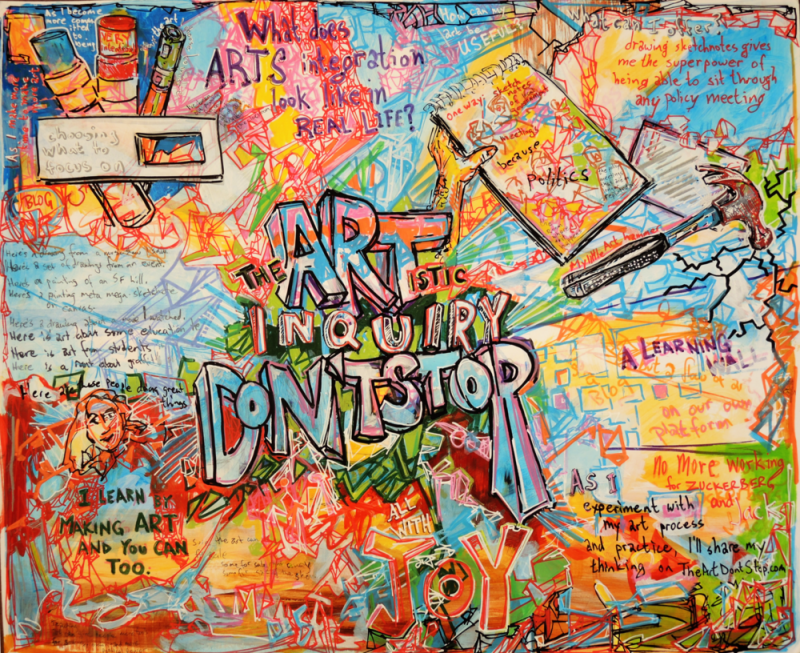
How Sketchnoting Can Help with ‘Zoom Fatigue,’ Student Agency and Building Relationships
Math Anxiety Is Real. Here's How To Help Your Child Avoid It
Five Best Practices Teachers Can Learn from Dungeon Masters
Seven Strategies to Keep Students Motivated All Year Long
What Students Gain From Learning Ethics in School
Angry?! How Naming and Understanding the Different Kinds of Anger Can Help
Sponsored
Player sponsored by
window.__IS_SSR__=true
window.__INITIAL_STATE__={
"attachmentsReducer": {
"audio_0": {
"type": "attachments",
"id": "audio_0",
"imgSizes": {
"kqedFullSize": {
"file": "https://ww2.kqed.org/news/wp-content/themes/KQED-unified/img/audio_bgs/background0.jpg"
}
}
},
"audio_1": {
"type": "attachments",
"id": "audio_1",
"imgSizes": {
"kqedFullSize": {
"file": "https://ww2.kqed.org/news/wp-content/themes/KQED-unified/img/audio_bgs/background1.jpg"
}
}
},
"audio_2": {
"type": "attachments",
"id": "audio_2",
"imgSizes": {
"kqedFullSize": {
"file": "https://ww2.kqed.org/news/wp-content/themes/KQED-unified/img/audio_bgs/background2.jpg"
}
}
},
"audio_3": {
"type": "attachments",
"id": "audio_3",
"imgSizes": {
"kqedFullSize": {
"file": "https://ww2.kqed.org/news/wp-content/themes/KQED-unified/img/audio_bgs/background3.jpg"
}
}
},
"audio_4": {
"type": "attachments",
"id": "audio_4",
"imgSizes": {
"kqedFullSize": {
"file": "https://ww2.kqed.org/news/wp-content/themes/KQED-unified/img/audio_bgs/background4.jpg"
}
}
},
"placeholder": {
"type": "attachments",
"id": "placeholder",
"imgSizes": {
"thumbnail": {
"file": "https://cdn.kqed.org/wp-content/uploads/2024/12/KQED-Default-Image-816638274-2000x1333-1-160x107.jpg",
"width": 160,
"height": 107,
"mimeType": "image/jpeg"
},
"medium": {
"file": "https://cdn.kqed.org/wp-content/uploads/2024/12/KQED-Default-Image-816638274-2000x1333-1-800x533.jpg",
"width": 800,
"height": 533,
"mimeType": "image/jpeg"
},
"medium_large": {
"file": "https://cdn.kqed.org/wp-content/uploads/2024/12/KQED-Default-Image-816638274-2000x1333-1-768x512.jpg",
"width": 768,
"height": 512,
"mimeType": "image/jpeg"
},
"large": {
"file": "https://cdn.kqed.org/wp-content/uploads/2024/12/KQED-Default-Image-816638274-2000x1333-1-1020x680.jpg",
"width": 1020,
"height": 680,
"mimeType": "image/jpeg"
},
"1536x1536": {
"file": "https://cdn.kqed.org/wp-content/uploads/2024/12/KQED-Default-Image-816638274-2000x1333-1-1536x1024.jpg",
"width": 1536,
"height": 1024,
"mimeType": "image/jpeg"
},
"fd-lrg": {
"file": "https://cdn.kqed.org/wp-content/uploads/2024/12/KQED-Default-Image-816638274-2000x1333-1-1536x1024.jpg",
"width": 1536,
"height": 1024,
"mimeType": "image/jpeg"
},
"fd-med": {
"file": "https://cdn.kqed.org/wp-content/uploads/2024/12/KQED-Default-Image-816638274-2000x1333-1-1020x680.jpg",
"width": 1020,
"height": 680,
"mimeType": "image/jpeg"
},
"fd-sm": {
"file": "https://cdn.kqed.org/wp-content/uploads/2024/12/KQED-Default-Image-816638274-2000x1333-1-800x533.jpg",
"width": 800,
"height": 533,
"mimeType": "image/jpeg"
},
"post-thumbnail": {
"file": "https://cdn.kqed.org/wp-content/uploads/2024/12/KQED-Default-Image-816638274-2000x1333-1-672x372.jpg",
"width": 672,
"height": 372,
"mimeType": "image/jpeg"
},
"twentyfourteen-full-width": {
"file": "https://cdn.kqed.org/wp-content/uploads/2024/12/KQED-Default-Image-816638274-2000x1333-1-1038x576.jpg",
"width": 1038,
"height": 576,
"mimeType": "image/jpeg"
},
"xxsmall": {
"file": "https://cdn.kqed.org/wp-content/uploads/2024/12/KQED-Default-Image-816638274-2000x1333-1-160x107.jpg",
"width": 160,
"height": 107,
"mimeType": "image/jpeg"
},
"xsmall": {
"file": "https://cdn.kqed.org/wp-content/uploads/2024/12/KQED-Default-Image-816638274-2000x1333-1-672x372.jpg",
"width": 672,
"height": 372,
"mimeType": "image/jpeg"
},
"small": {
"file": "https://cdn.kqed.org/wp-content/uploads/2024/12/KQED-Default-Image-816638274-2000x1333-1-672x372.jpg",
"width": 672,
"height": 372,
"mimeType": "image/jpeg"
},
"xlarge": {
"file": "https://cdn.kqed.org/wp-content/uploads/2024/12/KQED-Default-Image-816638274-2000x1333-1-1020x680.jpg",
"width": 1020,
"height": 680,
"mimeType": "image/jpeg"
},
"full-width": {
"file": "https://cdn.kqed.org/wp-content/uploads/2024/12/KQED-Default-Image-816638274-2000x1333-1-1920x1280.jpg",
"width": 1920,
"height": 1280,
"mimeType": "image/jpeg"
},
"guest-author-32": {
"file": "https://cdn.kqed.org/wp-content/uploads/2025/01/KQED-Default-Image-816638274-1333x1333-1-160x160.jpg",
"width": 32,
"height": 32,
"mimeType": "image/jpeg"
},
"guest-author-50": {
"file": "https://cdn.kqed.org/wp-content/uploads/2025/01/KQED-Default-Image-816638274-1333x1333-1-160x160.jpg",
"width": 50,
"height": 50,
"mimeType": "image/jpeg"
},
"guest-author-64": {
"file": "https://cdn.kqed.org/wp-content/uploads/2025/01/KQED-Default-Image-816638274-1333x1333-1-160x160.jpg",
"width": 64,
"height": 64,
"mimeType": "image/jpeg"
},
"guest-author-96": {
"file": "https://cdn.kqed.org/wp-content/uploads/2025/01/KQED-Default-Image-816638274-1333x1333-1-160x160.jpg",
"width": 96,
"height": 96,
"mimeType": "image/jpeg"
},
"guest-author-128": {
"file": "https://cdn.kqed.org/wp-content/uploads/2025/01/KQED-Default-Image-816638274-1333x1333-1-160x160.jpg",
"width": 128,
"height": 128,
"mimeType": "image/jpeg"
},
"detail": {
"file": "https://cdn.kqed.org/wp-content/uploads/2025/01/KQED-Default-Image-816638274-1333x1333-1-160x160.jpg",
"width": 160,
"height": 160,
"mimeType": "image/jpeg"
},
"kqedFullSize": {
"file": "https://cdn.kqed.org/wp-content/uploads/2024/12/KQED-Default-Image-816638274-2000x1333-1.jpg",
"width": 2000,
"height": 1333
}
}
},
"mindshift_65932": {
"type": "attachments",
"id": "mindshift_65932",
"meta": {
"index": "attachments_1716263798",
"site": "mindshift",
"id": "65932",
"found": true
},
"title": "Bored elementary school student looking away in classroom",
"publishDate": 1761625292,
"status": "inherit",
"parent": 65918,
"modified": 1761625316,
"caption": null,
"credit": "zamrznutitonovi/iStock",
"altTag": "Bored elementary school student looking away during class",
"description": null,
"imgSizes": {
"medium": {
"file": "https://cdn.kqed.org/wp-content/uploads/sites/23/2025/10/iStock-2218662963-2000x1333.jpg",
"width": 2000,
"height": 1333,
"mimeType": "image/jpeg"
},
"large": {
"file": "https://cdn.kqed.org/wp-content/uploads/sites/23/2025/10/iStock-2218662963-2000x1333.jpg",
"width": 2000,
"height": 1333,
"mimeType": "image/jpeg"
},
"thumbnail": {
"file": "https://cdn.kqed.org/wp-content/uploads/sites/23/2025/10/iStock-2218662963-160x107.jpg",
"width": 160,
"height": 107,
"mimeType": "image/jpeg"
},
"medium_large": {
"file": "https://cdn.kqed.org/wp-content/uploads/sites/23/2025/10/iStock-2218662963-768x512.jpg",
"width": 768,
"height": 512,
"mimeType": "image/jpeg"
},
"1536x1536": {
"file": "https://cdn.kqed.org/wp-content/uploads/sites/23/2025/10/iStock-2218662963-1536x1024.jpg",
"width": 1536,
"height": 1024,
"mimeType": "image/jpeg"
},
"2048x2048": {
"file": "https://cdn.kqed.org/wp-content/uploads/sites/23/2025/10/iStock-2218662963-2048x1365.jpg",
"width": 2048,
"height": 1365,
"mimeType": "image/jpeg"
},
"post-thumbnail": {
"file": "https://cdn.kqed.org/wp-content/uploads/sites/23/2025/10/iStock-2218662963-672x372.jpg",
"width": 672,
"height": 372,
"mimeType": "image/jpeg"
},
"twentyfourteen-full-width": {
"file": "https://cdn.kqed.org/wp-content/uploads/sites/23/2025/10/iStock-2218662963-1038x576.jpg",
"width": 1038,
"height": 576,
"mimeType": "image/jpeg"
},
"full-width": {
"file": "https://cdn.kqed.org/wp-content/uploads/sites/23/2025/10/iStock-2218662963-2000x1333.jpg",
"width": 2000,
"height": 1333,
"mimeType": "image/jpeg"
},
"npr-cds-wide": {
"file": "https://cdn.kqed.org/wp-content/uploads/sites/23/2025/10/iStock-2218662963-1600x900.jpg",
"width": 1600,
"height": 900,
"mimeType": "image/jpeg"
},
"kqedFullSize": {
"file": "https://cdn.kqed.org/wp-content/uploads/sites/23/2025/10/iStock-2218662963.jpg",
"width": 2121,
"height": 1414
}
},
"fetchFailed": false,
"isLoading": false
},
"mindshift_65791": {
"type": "attachments",
"id": "mindshift_65791",
"meta": {
"index": "attachments_1716263798",
"site": "mindshift",
"id": "65791",
"found": true
},
"title": "little boy looking at himself near mirror;",
"publishDate": 1758172929,
"status": "inherit",
"parent": 65790,
"modified": 1758172960,
"caption": null,
"credit": "Goami/iStock",
"altTag": "Young child looking at his reflection in the mirror",
"description": null,
"imgSizes": {
"medium": {
"file": "https://cdn.kqed.org/wp-content/uploads/sites/23/2025/09/iStock-614441360-2000x1333.jpg",
"width": 2000,
"height": 1333,
"mimeType": "image/jpeg"
},
"large": {
"file": "https://cdn.kqed.org/wp-content/uploads/sites/23/2025/09/iStock-614441360-2000x1333.jpg",
"width": 2000,
"height": 1333,
"mimeType": "image/jpeg"
},
"thumbnail": {
"file": "https://cdn.kqed.org/wp-content/uploads/sites/23/2025/09/iStock-614441360-160x107.jpg",
"width": 160,
"height": 107,
"mimeType": "image/jpeg"
},
"medium_large": {
"file": "https://cdn.kqed.org/wp-content/uploads/sites/23/2025/09/iStock-614441360-768x512.jpg",
"width": 768,
"height": 512,
"mimeType": "image/jpeg"
},
"1536x1536": {
"file": "https://cdn.kqed.org/wp-content/uploads/sites/23/2025/09/iStock-614441360-1536x1024.jpg",
"width": 1536,
"height": 1024,
"mimeType": "image/jpeg"
},
"2048x2048": {
"file": "https://cdn.kqed.org/wp-content/uploads/sites/23/2025/09/iStock-614441360-2048x1365.jpg",
"width": 2048,
"height": 1365,
"mimeType": "image/jpeg"
},
"post-thumbnail": {
"file": "https://cdn.kqed.org/wp-content/uploads/sites/23/2025/09/iStock-614441360-672x372.jpg",
"width": 672,
"height": 372,
"mimeType": "image/jpeg"
},
"twentyfourteen-full-width": {
"file": "https://cdn.kqed.org/wp-content/uploads/sites/23/2025/09/iStock-614441360-1038x576.jpg",
"width": 1038,
"height": 576,
"mimeType": "image/jpeg"
},
"full-width": {
"file": "https://cdn.kqed.org/wp-content/uploads/sites/23/2025/09/iStock-614441360-2000x1333.jpg",
"width": 2000,
"height": 1333,
"mimeType": "image/jpeg"
},
"kqedFullSize": {
"file": "https://cdn.kqed.org/wp-content/uploads/sites/23/2025/09/iStock-614441360-scaled.jpg",
"width": 2560,
"height": 1707
}
},
"fetchFailed": false,
"isLoading": false
},
"mindshift_57735": {
"type": "attachments",
"id": "mindshift_57735",
"meta": {
"index": "attachments_1716263798",
"site": "mindshift",
"id": "57735",
"found": true
},
"parent": 57734,
"imgSizes": {
"twentyfourteen-full-width": {
"file": "https://ww2.kqed.org/app/uploads/sites/23/2021/04/Overcome-cognitive-challenges-1038x576.jpg",
"width": 1038,
"mimeType": "image/jpeg",
"height": 576
},
"thumbnail": {
"file": "https://ww2.kqed.org/app/uploads/sites/23/2021/04/Overcome-cognitive-challenges-160x118.jpg",
"width": 160,
"mimeType": "image/jpeg",
"height": 118
},
"post-thumbnail": {
"file": "https://ww2.kqed.org/app/uploads/sites/23/2021/04/Overcome-cognitive-challenges-672x372.jpg",
"width": 672,
"mimeType": "image/jpeg",
"height": 372
},
"kqedFullSize": {
"file": "https://ww2.kqed.org/app/uploads/sites/23/2021/04/Overcome-cognitive-challenges.jpg",
"width": 2017,
"height": 1487
},
"large": {
"file": "https://ww2.kqed.org/app/uploads/sites/23/2021/04/Overcome-cognitive-challenges-1020x752.jpg",
"width": 1020,
"mimeType": "image/jpeg",
"height": 752
},
"1536x1536": {
"file": "https://ww2.kqed.org/app/uploads/sites/23/2021/04/Overcome-cognitive-challenges-1536x1132.jpg",
"width": 1536,
"mimeType": "image/jpeg",
"height": 1132
},
"full-width": {
"file": "https://ww2.kqed.org/app/uploads/sites/23/2021/04/Overcome-cognitive-challenges-1920x1415.jpg",
"width": 1920,
"mimeType": "image/jpeg",
"height": 1415
},
"medium": {
"file": "https://ww2.kqed.org/app/uploads/sites/23/2021/04/Overcome-cognitive-challenges-800x590.jpg",
"width": 800,
"mimeType": "image/jpeg",
"height": 590
},
"medium_large": {
"file": "https://ww2.kqed.org/app/uploads/sites/23/2021/04/Overcome-cognitive-challenges-768x566.jpg",
"width": 768,
"mimeType": "image/jpeg",
"height": 566
}
},
"publishDate": 1619368584,
"modified": 1619368663,
"caption": "Viktoria Kurpas/ (iStock)",
"description": null,
"title": null,
"credit": null,
"status": "inherit",
"altTag": null,
"fetchFailed": false,
"isLoading": false
},
"mindshift_57515": {
"type": "attachments",
"id": "mindshift_57515",
"meta": {
"index": "attachments_1716263798",
"site": "mindshift",
"id": "57515",
"found": true
},
"parent": 57500,
"imgSizes": {
"twentyfourteen-full-width": {
"file": "https://ww2.kqed.org/app/uploads/sites/23/2021/03/ArtisticInquiryDontStop-1000x576.png",
"width": 1000,
"mimeType": "image/png",
"height": 576
},
"thumbnail": {
"file": "https://ww2.kqed.org/app/uploads/sites/23/2021/03/ArtisticInquiryDontStop-160x131.png",
"width": 160,
"mimeType": "image/png",
"height": 131
},
"post-thumbnail": {
"file": "https://ww2.kqed.org/app/uploads/sites/23/2021/03/ArtisticInquiryDontStop-672x372.png",
"width": 672,
"mimeType": "image/png",
"height": 372
},
"kqedFullSize": {
"file": "https://ww2.kqed.org/app/uploads/sites/23/2021/03/ArtisticInquiryDontStop.png",
"width": 1000,
"height": 816
},
"medium": {
"file": "https://ww2.kqed.org/app/uploads/sites/23/2021/03/ArtisticInquiryDontStop-800x653.png",
"width": 800,
"mimeType": "image/png",
"height": 653
},
"medium_large": {
"file": "https://ww2.kqed.org/app/uploads/sites/23/2021/03/ArtisticInquiryDontStop-768x627.png",
"width": 768,
"mimeType": "image/png",
"height": 627
}
},
"publishDate": 1615836662,
"modified": 1615836838,
"caption": "The Artistic Inquiry Don’t Stop by Todd Berman (Courtesy of Todd Berman)",
"description": null,
"title": "ArtisticInquiryDontStop",
"credit": null,
"status": "inherit",
"altTag": null,
"fetchFailed": false,
"isLoading": false
},
"mindshift_56638": {
"type": "attachments",
"id": "mindshift_56638",
"meta": {
"index": "attachments_1716263798",
"site": "mindshift",
"id": "56638",
"found": true
},
"parent": 56637,
"imgSizes": {
"twentyfourteen-full-width": {
"file": "https://ww2.kqed.org/app/uploads/sites/23/2020/09/lifekit-math-lajohnson-002-1-6c765b408debc95daa35015b46ac633b9da544e4-1038x576.jpg",
"width": 1038,
"mimeType": "image/jpeg",
"height": 576
},
"thumbnail": {
"file": "https://ww2.kqed.org/app/uploads/sites/23/2020/09/lifekit-math-lajohnson-002-1-6c765b408debc95daa35015b46ac633b9da544e4-160x120.jpg",
"width": 160,
"mimeType": "image/jpeg",
"height": 120
},
"post-thumbnail": {
"file": "https://ww2.kqed.org/app/uploads/sites/23/2020/09/lifekit-math-lajohnson-002-1-6c765b408debc95daa35015b46ac633b9da544e4-672x372.jpg",
"width": 672,
"mimeType": "image/jpeg",
"height": 372
},
"kqedFullSize": {
"file": "https://ww2.kqed.org/app/uploads/sites/23/2020/09/lifekit-math-lajohnson-002-1-6c765b408debc95daa35015b46ac633b9da544e4-scaled-e1599633558757.jpg",
"width": 1920,
"height": 1440
},
"2048x2048": {
"file": "https://ww2.kqed.org/app/uploads/sites/23/2020/09/lifekit-math-lajohnson-002-1-6c765b408debc95daa35015b46ac633b9da544e4-2048x1536.jpg",
"width": 2048,
"mimeType": "image/jpeg",
"height": 1536
},
"large": {
"file": "https://ww2.kqed.org/app/uploads/sites/23/2020/09/lifekit-math-lajohnson-002-1-6c765b408debc95daa35015b46ac633b9da544e4-1020x765.jpg",
"width": 1020,
"mimeType": "image/jpeg",
"height": 765
},
"1536x1536": {
"file": "https://ww2.kqed.org/app/uploads/sites/23/2020/09/lifekit-math-lajohnson-002-1-6c765b408debc95daa35015b46ac633b9da544e4-1536x1152.jpg",
"width": 1536,
"mimeType": "image/jpeg",
"height": 1152
},
"full-width": {
"file": "https://ww2.kqed.org/app/uploads/sites/23/2020/09/lifekit-math-lajohnson-002-1-6c765b408debc95daa35015b46ac633b9da544e4-1920x1440.jpg",
"width": 1920,
"mimeType": "image/jpeg",
"height": 1440
},
"medium": {
"file": "https://ww2.kqed.org/app/uploads/sites/23/2020/09/lifekit-math-lajohnson-002-1-6c765b408debc95daa35015b46ac633b9da544e4-800x600.jpg",
"width": 800,
"mimeType": "image/jpeg",
"height": 600
},
"medium_large": {
"file": "https://ww2.kqed.org/app/uploads/sites/23/2020/09/lifekit-math-lajohnson-002-1-6c765b408debc95daa35015b46ac633b9da544e4-768x576.jpg",
"width": 768,
"mimeType": "image/jpeg",
"height": 576
}
},
"publishDate": 1599633493,
"modified": 1599633570,
"caption": "Teaching kids math doesn't need to involve a textbook.\n",
"description": "Teaching kids math doesn't need to involve a textbook.",
"title": "Teaching kids math doesn't need to involve a textbook.",
"credit": "LA Johnson/NPR",
"status": "inherit",
"fetchFailed": false,
"isLoading": false
},
"mindshift_55281": {
"type": "attachments",
"id": "mindshift_55281",
"meta": {
"index": "attachments_1716263798",
"site": "mindshift",
"id": "55281",
"found": true
},
"parent": 53553,
"imgSizes": {
"twentyfourteen-full-width": {
"file": "https://ww2.kqed.org/app/uploads/sites/23/2020/02/2212063669_8999014e2d_k-1038x576.jpg",
"width": 1038,
"mimeType": "image/jpeg",
"height": 576
},
"thumbnail": {
"file": "https://ww2.kqed.org/app/uploads/sites/23/2020/02/2212063669_8999014e2d_k-160x115.jpg",
"width": 160,
"mimeType": "image/jpeg",
"height": 115
},
"post-thumbnail": {
"file": "https://ww2.kqed.org/app/uploads/sites/23/2020/02/2212063669_8999014e2d_k-672x372.jpg",
"width": 672,
"mimeType": "image/jpeg",
"height": 372
},
"kqedFullSize": {
"file": "https://ww2.kqed.org/app/uploads/sites/23/2020/02/2212063669_8999014e2d_k-e1580974643102.jpg",
"width": 1920,
"height": 1378
},
"large": {
"file": "https://ww2.kqed.org/app/uploads/sites/23/2020/02/2212063669_8999014e2d_k-1020x732.jpg",
"width": 1020,
"mimeType": "image/jpeg",
"height": 732
},
"full-width": {
"file": "https://ww2.kqed.org/app/uploads/sites/23/2020/02/2212063669_8999014e2d_k-1920x1378.jpg",
"width": 1920,
"mimeType": "image/jpeg",
"height": 1378
},
"medium": {
"file": "https://ww2.kqed.org/app/uploads/sites/23/2020/02/2212063669_8999014e2d_k-800x574.jpg",
"width": 800,
"mimeType": "image/jpeg",
"height": 574
},
"medium_large": {
"file": "https://ww2.kqed.org/app/uploads/sites/23/2020/02/2212063669_8999014e2d_k-768x551.jpg",
"width": 768,
"mimeType": "image/jpeg",
"height": 551
}
},
"publishDate": 1580974619,
"modified": 1580974638,
"caption": null,
"description": null,
"title": "2212063669_8999014e2d_k",
"credit": "\u003ca href “https://www.flickr.com/photos/loresjoberg/2212063669/in/photolist-4ntpsM-9bTjQd-6jVWRU-8YpQ1R-84gRmk-8YsRLf-7PTZMv-9bTg3S-8Urpw8-bnUnf7-9bTfYG-84gRca-2hPGvvL-9bQbET-7HiQ9v-gmf1AA-9R6bYe-4pB7q6-7HnK75-2hPkQ7Y-8rFmE1-8HbXez-8HbXhH-4xGXBs-6TPAe5-8Hf5P3-79wHGo-8rCgzV-7BEpJR-84gRe4-8HbXfv-8UuuE3-8xwhk5-6g6w2Q-86wiY6-8vKECN-8w7Q3W-8UrpxD-9F5DVy-mqWqjJ-9ysCYs-8vGCQ4-b5jHGV-8Hf5Sw-e6d9L2-9hgV6f-8zpupc-8zpujX-2hPvWho-4pQVMp”>Flickr/Lore Sjoberg \u003c/a>",
"status": "inherit",
"fetchFailed": false,
"isLoading": false
},
"mindshift_53948": {
"type": "attachments",
"id": "mindshift_53948",
"meta": {
"index": "attachments_1716263798",
"site": "mindshift",
"id": "53948",
"found": true
},
"parent": 53937,
"imgSizes": {
"twentyfourteen-full-width": {
"file": "https://ww2.kqed.org/app/uploads/sites/23/2019/07/motivational-strategies-1038x576.jpg",
"width": 1038,
"mimeType": "image/jpeg",
"height": 576
},
"thumbnail": {
"file": "https://ww2.kqed.org/app/uploads/sites/23/2019/07/motivational-strategies-160x106.jpg",
"width": 160,
"mimeType": "image/jpeg",
"height": 106
},
"post-thumbnail": {
"file": "https://ww2.kqed.org/app/uploads/sites/23/2019/07/motivational-strategies-672x372.jpg",
"width": 672,
"mimeType": "image/jpeg",
"height": 372
},
"kqedFullSize": {
"file": "https://ww2.kqed.org/app/uploads/sites/23/2019/07/motivational-strategies-e1567659611356.jpg",
"width": 1920,
"height": 1275
},
"large": {
"file": "https://ww2.kqed.org/app/uploads/sites/23/2019/07/motivational-strategies-1020x677.jpg",
"width": 1020,
"mimeType": "image/jpeg",
"height": 677
},
"complete_open_graph": {
"file": "https://ww2.kqed.org/app/uploads/sites/23/2019/07/motivational-strategies-1200x797.jpg",
"width": 1200,
"mimeType": "image/jpeg",
"height": 797
},
"full-width": {
"file": "https://ww2.kqed.org/app/uploads/sites/23/2019/07/motivational-strategies-1920x1275.jpg",
"width": 1920,
"mimeType": "image/jpeg",
"height": 1275
},
"medium": {
"file": "https://ww2.kqed.org/app/uploads/sites/23/2019/07/motivational-strategies-800x531.jpg",
"width": 800,
"mimeType": "image/jpeg",
"height": 531
},
"medium_large": {
"file": "https://ww2.kqed.org/app/uploads/sites/23/2019/07/motivational-strategies-768x510.jpg",
"width": 768,
"mimeType": "image/jpeg",
"height": 510
}
},
"publishDate": 1562787397,
"modified": 1562787471,
"caption": "Keeping a journal with goals and reflections can help students see their progress over the year. That in turn helps them stay motivated.",
"description": null,
"title": "School girl writing in class",
"credit": "iStock/Ridofranz",
"status": "inherit",
"fetchFailed": false,
"isLoading": false
},
"mindshift_53717": {
"type": "attachments",
"id": "mindshift_53717",
"meta": {
"index": "attachments_1716263798",
"site": "mindshift",
"id": "53717",
"found": true
},
"parent": 53701,
"imgSizes": {
"twentyfourteen-full-width": {
"file": "https://ww2.kqed.org/app/uploads/sites/23/2019/05/iStock-1043032870-1038x576.jpg",
"width": 1038,
"mimeType": "image/jpeg",
"height": 576
},
"thumbnail": {
"file": "https://ww2.kqed.org/app/uploads/sites/23/2019/05/iStock-1043032870-160x103.jpg",
"width": 160,
"mimeType": "image/jpeg",
"height": 103
},
"post-thumbnail": {
"file": "https://ww2.kqed.org/app/uploads/sites/23/2019/05/iStock-1043032870-672x372.jpg",
"width": 672,
"mimeType": "image/jpeg",
"height": 372
},
"kqedFullSize": {
"file": "https://ww2.kqed.org/app/uploads/sites/23/2019/05/iStock-1043032870-e1558685047921.jpg",
"width": 1920,
"height": 1240
},
"large": {
"file": "https://ww2.kqed.org/app/uploads/sites/23/2019/05/iStock-1043032870-1020x659.jpg",
"width": 1020,
"mimeType": "image/jpeg",
"height": 659
},
"complete_open_graph": {
"file": "https://ww2.kqed.org/app/uploads/sites/23/2019/05/iStock-1043032870-1200x775.jpg",
"width": 1200,
"mimeType": "image/jpeg",
"height": 775
},
"full-width": {
"file": "https://ww2.kqed.org/app/uploads/sites/23/2019/05/iStock-1043032870-1920x1240.jpg",
"width": 1920,
"mimeType": "image/jpeg",
"height": 1240
},
"medium": {
"file": "https://ww2.kqed.org/app/uploads/sites/23/2019/05/iStock-1043032870-800x517.jpg",
"width": 800,
"mimeType": "image/jpeg",
"height": 517
},
"medium_large": {
"file": "https://ww2.kqed.org/app/uploads/sites/23/2019/05/iStock-1043032870-768x496.jpg",
"width": 768,
"mimeType": "image/jpeg",
"height": 496
}
},
"publishDate": 1558685027,
"modified": 1558685065,
"caption": null,
"description": null,
"title": "iStock-1043032870",
"credit": "Trifonov_Evgeniy/iStock",
"status": "inherit",
"fetchFailed": false,
"isLoading": false
},
"mindshift_52947": {
"type": "attachments",
"id": "mindshift_52947",
"meta": {
"index": "attachments_1716263798",
"site": "mindshift",
"id": "52947",
"found": true
},
"parent": 52946,
"imgSizes": {
"twentyfourteen-full-width": {
"file": "https://ww2.kqed.org/app/uploads/sites/23/2019/01/anger_1_final_wide-903771de7fd1f4af615d55829c8c2478443c095d-1038x576.jpg",
"width": 1038,
"mimeType": "image/jpeg",
"height": 576
},
"thumbnail": {
"file": "https://ww2.kqed.org/app/uploads/sites/23/2019/01/anger_1_final_wide-903771de7fd1f4af615d55829c8c2478443c095d-160x90.jpg",
"width": 160,
"mimeType": "image/jpeg",
"height": 90
},
"post-thumbnail": {
"file": "https://ww2.kqed.org/app/uploads/sites/23/2019/01/anger_1_final_wide-903771de7fd1f4af615d55829c8c2478443c095d-672x372.jpg",
"width": 672,
"mimeType": "image/jpeg",
"height": 372
},
"kqedFullSize": {
"file": "https://ww2.kqed.org/app/uploads/sites/23/2019/01/anger_1_final_wide-903771de7fd1f4af615d55829c8c2478443c095d-e1548710031472.jpg",
"width": 1920,
"height": 1080
},
"large": {
"file": "https://ww2.kqed.org/app/uploads/sites/23/2019/01/anger_1_final_wide-903771de7fd1f4af615d55829c8c2478443c095d-1020x574.jpg",
"width": 1020,
"mimeType": "image/jpeg",
"height": 574
},
"complete_open_graph": {
"file": "https://ww2.kqed.org/app/uploads/sites/23/2019/01/anger_1_final_wide-903771de7fd1f4af615d55829c8c2478443c095d-1200x675.jpg",
"width": 1200,
"mimeType": "image/jpeg",
"height": 675
},
"guest-author-50": {
"file": "https://ww2.kqed.org/app/uploads/sites/23/2019/01/anger_1_final_wide-903771de7fd1f4af615d55829c8c2478443c095d-50x50.jpg",
"width": 50,
"mimeType": "image/jpeg",
"height": 50
},
"guest-author-96": {
"file": "https://ww2.kqed.org/app/uploads/sites/23/2019/01/anger_1_final_wide-903771de7fd1f4af615d55829c8c2478443c095d-96x96.jpg",
"width": 96,
"mimeType": "image/jpeg",
"height": 96
},
"medium": {
"file": "https://ww2.kqed.org/app/uploads/sites/23/2019/01/anger_1_final_wide-903771de7fd1f4af615d55829c8c2478443c095d-800x450.jpg",
"width": 800,
"mimeType": "image/jpeg",
"height": 450
},
"guest-author-64": {
"file": "https://ww2.kqed.org/app/uploads/sites/23/2019/01/anger_1_final_wide-903771de7fd1f4af615d55829c8c2478443c095d-64x64.jpg",
"width": 64,
"mimeType": "image/jpeg",
"height": 64
},
"guest-author-32": {
"file": "https://ww2.kqed.org/app/uploads/sites/23/2019/01/anger_1_final_wide-903771de7fd1f4af615d55829c8c2478443c095d-32x32.jpg",
"width": 32,
"mimeType": "image/jpeg",
"height": 32
},
"full-width": {
"file": "https://ww2.kqed.org/app/uploads/sites/23/2019/01/anger_1_final_wide-903771de7fd1f4af615d55829c8c2478443c095d-1920x1080.jpg",
"width": 1920,
"mimeType": "image/jpeg",
"height": 1080
},
"detail": {
"file": "https://ww2.kqed.org/app/uploads/sites/23/2019/01/anger_1_final_wide-903771de7fd1f4af615d55829c8c2478443c095d-150x150.jpg",
"width": 150,
"mimeType": "image/jpeg",
"height": 150
},
"medium_large": {
"file": "https://ww2.kqed.org/app/uploads/sites/23/2019/01/anger_1_final_wide-903771de7fd1f4af615d55829c8c2478443c095d-768x432.jpg",
"width": 768,
"mimeType": "image/jpeg",
"height": 432
},
"guest-author-128": {
"file": "https://ww2.kqed.org/app/uploads/sites/23/2019/01/anger_1_final_wide-903771de7fd1f4af615d55829c8c2478443c095d-128x128.jpg",
"width": 128,
"mimeType": "image/jpeg",
"height": 128
}
},
"publishDate": 1548709661,
"modified": 1548710052,
"caption": "To tame your anger, it may help to take time to observe and name it.",
"description": null,
"title": "To tame your anger, it may help to take time to observe and name it.",
"credit": "Ariel Davis for NPR",
"status": "inherit",
"fetchFailed": false,
"isLoading": false
}
},
"audioPlayerReducer": {
"postId": "stream_live",
"isPaused": true,
"isPlaying": false,
"pfsActive": false,
"pledgeModalIsOpen": true,
"playerDrawerIsOpen": false
},
"authorsReducer": {
"byline_mindshift_65790": {
"type": "authors",
"id": "byline_mindshift_65790",
"meta": {
"override": true
},
"slug": "byline_mindshift_65790",
"name": "Jackie Mader, \u003ca href=\"https://hechingerreport.org/\" target=\"_blank\">The Hechinger Report\u003c/a>",
"isLoading": false
},
"byline_mindshift_56637": {
"type": "authors",
"id": "byline_mindshift_56637",
"meta": {
"override": true
},
"slug": "byline_mindshift_56637",
"name": "Anya Kamenetz and Cory Turner",
"isLoading": false
},
"byline_mindshift_52946": {
"type": "authors",
"id": "byline_mindshift_52946",
"meta": {
"override": true
},
"slug": "byline_mindshift_52946",
"name": "Michaeleen Doucleff",
"isLoading": false
},
"mindshift": {
"type": "authors",
"id": "4354",
"meta": {
"index": "authors_1716337520",
"id": "4354",
"found": true
},
"name": "MindShift",
"firstName": "MindShift",
"lastName": null,
"slug": "mindshift",
"email": "tina@barseghian.com",
"display_author_email": false,
"staff_mastheads": [],
"title": null,
"bio": null,
"avatar": "https://secure.gravatar.com/avatar/ae7f1f73a229130205aa5f57b55eaf16?s=600&d=blank&r=g",
"twitter": null,
"facebook": null,
"instagram": null,
"linkedin": null,
"sites": [
{
"site": "arts",
"roles": [
"author"
]
},
{
"site": "mindshift",
"roles": [
"editor"
]
}
],
"headData": {
"title": "MindShift | KQED",
"description": null,
"ogImgSrc": "https://secure.gravatar.com/avatar/ae7f1f73a229130205aa5f57b55eaf16?s=600&d=blank&r=g",
"twImgSrc": "https://secure.gravatar.com/avatar/ae7f1f73a229130205aa5f57b55eaf16?s=600&d=blank&r=g"
},
"isLoading": false,
"link": "/author/mindshift"
},
"lindaflan": {
"type": "authors",
"id": "4613",
"meta": {
"index": "authors_1716337520",
"id": "4613",
"found": true
},
"name": "Linda Flanagan",
"firstName": "Linda",
"lastName": "Flanagan",
"slug": "lindaflan",
"email": "lindaflan@comcast.net",
"display_author_email": false,
"staff_mastheads": [],
"title": null,
"bio": "Linda Flanagan is a freelance writer, researcher, and editor. Her work has appeared in The Atlantic, The Wall St. Journal, Newsweek, Running Times, and Mind/Shift, and she blogs regularly for the Huffington Post. Linda writes about education, culture, athletics, youth sports, mental health, politics, college admissions, and other curiosities. She also reviews books and conducts interviews.",
"avatar": "https://secure.gravatar.com/avatar/6bca04c0736bf5eaea80654019de688f?s=600&d=blank&r=g",
"twitter": "LindaFlanagan2",
"facebook": null,
"instagram": null,
"linkedin": null,
"sites": [
{
"site": "mindshift",
"roles": [
"contributor"
]
}
],
"headData": {
"title": "Linda Flanagan | KQED",
"description": null,
"ogImgSrc": "https://secure.gravatar.com/avatar/6bca04c0736bf5eaea80654019de688f?s=600&d=blank&r=g",
"twImgSrc": "https://secure.gravatar.com/avatar/6bca04c0736bf5eaea80654019de688f?s=600&d=blank&r=g"
},
"isLoading": false,
"link": "/author/lindaflan"
},
"pauldarvasi": {
"type": "authors",
"id": "11107",
"meta": {
"index": "authors_1716337520",
"id": "11107",
"found": true
},
"name": "Paul Darvasi",
"firstName": "Paul",
"lastName": "Darvasi",
"slug": "pauldarvasi",
"email": "pauldarvasi@gmail.com",
"display_author_email": false,
"staff_mastheads": [],
"title": null,
"bio": "Paul Darvasi is an experienced educator whose research, speaking and writing explore the intersections of learning, technology, narrative and games. You can follow him on Twitter:\u003ca href=\"https://twitter.com/PaulDarvasi\"> @pauldarvasi\u003c/a>",
"avatar": "https://secure.gravatar.com/avatar/df387897a1bf0cd4b720b8175112731a?s=600&d=blank&r=g",
"twitter": "pauldarvasi",
"facebook": null,
"instagram": null,
"linkedin": null,
"sites": [
{
"site": "mindshift",
"roles": [
"contributor"
]
}
],
"headData": {
"title": "Paul Darvasi | KQED",
"description": null,
"ogImgSrc": "https://secure.gravatar.com/avatar/df387897a1bf0cd4b720b8175112731a?s=600&d=blank&r=g",
"twImgSrc": "https://secure.gravatar.com/avatar/df387897a1bf0cd4b720b8175112731a?s=600&d=blank&r=g"
},
"isLoading": false,
"link": "/author/pauldarvasi"
},
"ngobir": {
"type": "authors",
"id": "11721",
"meta": {
"index": "authors_1716337520",
"id": "11721",
"found": true
},
"name": "Nimah Gobir",
"firstName": "Nimah",
"lastName": "Gobir",
"slug": "ngobir",
"email": "ngobir@kqed.org",
"display_author_email": false,
"staff_mastheads": [],
"title": "KQED Contributor",
"bio": null,
"avatar": "https://secure.gravatar.com/avatar/e08e101e43fc79cc7bcd0c19038d7d08?s=600&d=blank&r=g",
"twitter": null,
"facebook": null,
"instagram": null,
"linkedin": null,
"sites": [
{
"site": "mindshift",
"roles": [
"editor"
]
}
],
"headData": {
"title": "Nimah Gobir | KQED",
"description": "KQED Contributor",
"ogImgSrc": "https://secure.gravatar.com/avatar/e08e101e43fc79cc7bcd0c19038d7d08?s=600&d=blank&r=g",
"twImgSrc": "https://secure.gravatar.com/avatar/e08e101e43fc79cc7bcd0c19038d7d08?s=600&d=blank&r=g"
},
"isLoading": false,
"link": "/author/ngobir"
},
"mjacksonretondo": {
"type": "authors",
"id": "11759",
"meta": {
"index": "authors_1716337520",
"id": "11759",
"found": true
},
"name": "Marlena Jackson-Retondo",
"firstName": "Marlena",
"lastName": "Jackson-Retondo",
"slug": "mjacksonretondo",
"email": "mjacksonretondo@kqed.org",
"display_author_email": false,
"staff_mastheads": [],
"title": "Engagement Producer",
"bio": "Marlena Jackson-Retondo is the engagement producer for KQED's \u003cem>Forum \u003c/em>and \u003cem>Mindshift\u003c/em>. Prior to joining the team in 2022, Marlena was an intern with the KQED Digital News Engagement team. She grew up in the Bay Area.\u003cem> \u003c/em>",
"avatar": "https://secure.gravatar.com/avatar/94ab429312e9a676559e31d1894130df?s=600&d=blank&r=g",
"twitter": null,
"facebook": null,
"instagram": null,
"linkedin": null,
"sites": [
{
"site": "arts",
"roles": [
"editor"
]
},
{
"site": "news",
"roles": [
"contributor"
]
},
{
"site": "mindshift",
"roles": [
"editor"
]
},
{
"site": "forum",
"roles": [
"editor"
]
}
],
"headData": {
"title": "Marlena Jackson-Retondo | KQED",
"description": "Engagement Producer",
"ogImgSrc": "https://secure.gravatar.com/avatar/94ab429312e9a676559e31d1894130df?s=600&d=blank&r=g",
"twImgSrc": "https://secure.gravatar.com/avatar/94ab429312e9a676559e31d1894130df?s=600&d=blank&r=g"
},
"isLoading": false,
"link": "/author/mjacksonretondo"
}
},
"breakingNewsReducer": {},
"pagesReducer": {},
"postsReducer": {
"stream_live": {
"type": "live",
"id": "stream_live",
"audioUrl": "https://streams.kqed.org/kqedradio",
"title": "Live Stream",
"excerpt": "Live Stream information currently unavailable.",
"link": "/radio",
"featImg": "",
"label": {
"name": "KQED Live",
"link": "/"
}
},
"stream_kqedNewscast": {
"type": "posts",
"id": "stream_kqedNewscast",
"audioUrl": "https://www.kqed.org/.stream/anon/radio/RDnews/newscast.mp3?_=1",
"title": "KQED Newscast",
"featImg": "",
"label": {
"name": "88.5 FM",
"link": "/"
}
},
"mindshift_65918": {
"type": "posts",
"id": "mindshift_65918",
"meta": {
"index": "posts_1716263798",
"site": "mindshift",
"id": "65918",
"score": null,
"sort": [
1761645616000
]
},
"guestAuthors": [],
"slug": "if-you-want-students-to-learn-dont-tell-them-pay-attention-try-this-instead",
"title": "If You Want Students to Learn, Don’t Tell Them 'Pay Attention!' Try This Instead",
"publishDate": 1761645616,
"format": "standard",
"headTitle": "If You Want Students to Learn, Don’t Tell Them ‘Pay Attention!’ Try This Instead | KQED",
"labelTerm": {
"term": 21847,
"site": "mindshift"
},
"content": "\u003cp>Teaching is nearly impossible to do when \u003ca href=\"https://www.kqed.org/mindshift/63519/distracted-students-understanding-these-3-myths-of-attention-span-can-help\">students aren’t paying attention\u003c/a>, especially when there are distractions like \u003ca href=\"https://www.kqed.org/mindshift/65885/school-cellphone-bans-can-help-kids-learn-but-black-students-suspended-at-higher-rates\">smart phones\u003c/a>, \u003ca href=\"https://www.kqed.org/mindshift/46824/what-types-of-sound-experiences-enable-children-to-learn-best\">other students and hallway banter\u003c/a>. It’s easy to get frustrated, but \u003ca href=\"https://www.learningandthebrain.com/education-speakers/Andrew-Watson\">Andrew Watson\u003c/a> wants to shift the blame away from students.\u003c/p>\n\u003cp>“There’s no attention center in the brain,” said Watson who is a teacher and author of \u003ca href=\"https://www.hachettelearning.com/teaching-strategies/the-goldilocks-map-a-classroom-teacher-s-quest-to-evaluate-brain-based-teaching-advice\">several books\u003c/a> about learning. “Attention is a behavior that students do when three other mental processes are happening correctly.”\u003c/p>\n\u003cp>He spoke directly to teachers in attendance at Learning & the Brain’s \u003ca href=\"https://www.learningandthebrain.com/education-speakers/Andrew-Watson\">Teaching Stronger Brains conference\u003c/a> earlier this year about helping students pay attention better in class. He said the onus to engage students’ attention falls on classroom teachers like him, and the key is to minimize as many distractions as possible, while implementing teaching strategies with a full understanding of attention, memory and motivation.\u003c/p>\n\u003cp>“Almost any teacher will tell you that telling students to pay attention doesn’t work,” Watson informed me. Being told to “pay attention” isn’t specific enough, and the response from students will only last for a short amount of time because of that, he continued.\u003c/p>\n\u003cp>Watson identified the \u003ca href=\"https://pmc.ncbi.nlm.nih.gov/articles/PMC8073862/#:~:text=Attention%20involves%20three%20functionally%20and,vigilance%20(ANTI%2DV).\">three mental processes of attention\u003c/a> as alertness, orienting and executive control. A student can have too much or too little alertness — like running around or being sleepy. Orienting has to do with focusing on a specific task, and can be disrupted by distraction caused by outside stimuli. Executive control is complex because it requires students to choose to \u003ca href=\"https://pmc.ncbi.nlm.nih.gov/articles/PMC7367701/#:~:text=Effortful%20control%20is%20considered%20to,there%20are%20competing%20desires%20%28activation\">focus on a task in front of them\u003c/a> over distractions that might surround them.\u003c/p>\n\u003ch2>\u003cstrong>‘Memory is the Residue of Thought’\u003c/strong>\u003c/h2>\n\u003cp>Watson likes to think about memory as “\u003ca href=\"https://www.aft.org/sites/default/files/willingham_0.pdf\">the residue of thought\u003c/a>,” an idea developed by psychologist Daniel Willingham. And because memories are reinforced by thinking about an idea over and over again, it would make sense that part of a teachers’ job is to facilitate that process.\u003c/p>\n\u003cp>[ad fullwidth]\u003c/p>\n\u003cp>The more you know about a subject, the easier it is to build upon it and learn more about it, so there is a reciprocal relationship between learning, memory and attention, said Watson.\u003c/p>\n\u003cp>As a teacher, his role is to support memory building through assessment planning and reviews. Why? The likelihood that students will both be able to learn and also monitor their own attentiveness is nil, he said.\u003c/p>\n\u003cp>It’s easy to blame students for their shortcomings in attention and memory, but in reality “learning is actually very hard and takes up somewhere between most of and all of the cognitive resources that my students actually have,” said Watson. For example, if his students are learning how to craft topic sentences, they need to think about how to do this difficult task, and not think about how to stay on task — that’s something Watson can help them do.\u003c/p>\n\u003ch2>\u003cstrong>Helpful Attention Strategies for the Classroom\u003c/strong>\u003c/h2>\n\u003cp>\u003ca href=\"https://theeffortfuleducator.com/blake-harvard/\">High school teacher Blake Harvard\u003c/a> scaffolds self-assessment into the learning process in his AP psychology class.\u003c/p>\n\u003cp>He uses simple assessments – like asking students what they learned the previous day or even five minutes ago – to clue him in to what class material students are struggling to remember or learn. Frequency of these information recall opportunities help the lessons stick.\u003c/p>\n\u003cp>An assessment is a learning opportunity, Harvard said, and “retrieving information — pulling that memory out — and using it itself strengthens that memory.”\u003c/p>\n\u003cp>Harvard believes that teaching should center memory and that students need to think critically about the way that they take in and retrieve information. His new book, \u003ca href=\"https://www.routledge.com/Do-I-Have-Your-Attention-Understanding-Memory-Constraints-and-Maximizing-Learning/Harvard/p/book/9781032750279?srsltid=AfmBOoo6nFeLId1SOjgd0TFNRnZChOOqckvO9OuVgAT1fExe5y_Xz3DS\">“Do I Have Your Attention,\u003c/a>” brings the research to teachers in an easy to digest way that has positively contributed to his own classroom practices.\u003c/p>\n\u003cp>In order to maintain his students’ attention, Harvard has them face the front of the classroom, even when the classroom furniture doesn’t easily support that configuration. His students currently sit at tables, not individual desks, so he had to get creative to get everyone facing forward.\u003c/p>\n\u003cp>Decorations are also kept to a minimum in Harvard’s classroom, and those that remain all have to do with the subject matter of his classes. But “it’s not completely bleak,” he said. Cellphones are away at all times during the school day, and he also encourages his students to \u003ca href=\"https://www.kqed.org/mindshift/63759/why-writing-by-hand-beats-typing-for-thinking-and-learning\">take notes\u003c/a> with pencil on paper, instead of transcribing on a computer.\u003c/p>\n\u003cp>Common classroom practices like movement can be helpful to engage students’ attention and memory retention, and the \u003ca href=\"https://www.kqed.org/mindshift/58051/how-movement-and-gestures-can-improve-student-learning\">benefits of movement\u003c/a> when learning are well documented. But Watson warned that movement isn’t a cure all for students’ attention issues. “The point isn’t that movement is a good idea or that movement is bad; it’s a really useful solution to an alertness problem, but it might make an orienting problem worse,” said Watson.\u003c/p>\n\u003cp>So, if a student is falling asleep in Watson’s class, he might resort to having that student get up from their desk and do a task, like returning a book to another teacher’s classroom. But if a student seems to be distracted by a soccer game outside the classroom window and their focus is diverted away from the lesson — an orienting and executive control issue — “movement might be a bad idea,” said Watson.\u003c/p>\n\u003ch2>\u003cstrong>Giving students time to think\u003c/strong>\u003c/h2>\n\u003cp>\u003ca href=\"https://www.kqed.org/mindshift/64877/students-wont-always-remember-what-theyve-learned-heres-how-to-help\">Brains forget\u003c/a>, and that’s a normal process of memory, but sometimes students can experience \u003ca href=\"https://www.kqed.org/mindshift/64877/students-wont-always-remember-what-theyve-learned-heres-how-to-help\">retrieval failure\u003c/a>. When his students are struggling with retrieval, Harvard helps by providing context clues or reframing the definition of the concept that they are struggling to remember.\u003c/p>\n\u003cp>When reviewing material from a previous lesson, Watson takes a simple approach to prompting his students’ memory and memory retrieval. Instead of beginning with a short review of topics from the day before, he asks his students to write down what they learned the previous lesson. He then walks around the classroom and monitors students’ answers. “Now, [students are] practicing by retrieving from their memory rather than my telling them,” he said.\u003c/p>\n\u003cp>If students can’t seem to remember what they learned recently “that’s not their failing, that’s my failing, because I didn’t practice enough. So what I need to remember is to include that thing in more frequent, say, retrieval of practice exercises,” said Watson.\u003c/p>\n\u003cp>The pressure that teachers face from schools, administrators, and districts surrounding standardized tests can be overwhelming, and students not being able to remember class material can contribute to that stress. However, Watson knows that laying a great foundation in the first half of the year is essential for his students’ long term success.\u003c/p>\n\u003cp>For example, Watson’s sophomore students need to be able to write great five-paragraph analytical essays by the end of the school year. Instead of following an accelerated pace of teaching, Watson spends all of fall semester on individual sentences and paragraphs. His students often ask him why their class is behind, because their peers in other classes are already writing five-paragraph essays, but Watson reassures them that mastering the individual components of a five-paragraph essay first will make writing longer material easier come spring semester.\u003c/p>\n\u003cp>[ad floatright]\u003c/p>\n\u003cp>“As we’re building towards that summative assessment, it’s okay if they don’t know how to do it now. Especially in a cumulative class, the solid foundation is absolutely worth the time it takes to build,” said Watson.\u003c/p>\n\n",
"blocks": [],
"excerpt": "The attention economy makes focusing a struggle for students. Here’s what we can do to help.",
"status": "publish",
"parent": 0,
"modified": 1761626183,
"stats": {
"hasAudio": false,
"hasVideo": false,
"hasChartOrMap": false,
"iframeSrcs": [],
"hasGoogleForm": false,
"hasGallery": false,
"hasHearkenModule": false,
"hasPolis": false,
"paragraphCount": 25,
"wordCount": 1291
},
"headData": {
"title": "If You Want Students to Learn, Don’t Tell Them 'Pay Attention!' Try This Instead | KQED",
"description": "The attention economy makes focusing a struggle for students. Here’s what we can do to help.",
"ogTitle": "",
"ogDescription": "",
"ogImgId": "",
"twTitle": "",
"twDescription": "",
"twImgId": "",
"schema": {
"@context": "https://schema.org",
"@type": "Article",
"headline": "If You Want Students to Learn, Don’t Tell Them 'Pay Attention!' Try This Instead",
"datePublished": "2025-10-28T03:00:16-07:00",
"dateModified": "2025-10-27T21:36:23-07:00",
"image": "https://cdn.kqed.org/wp-content/uploads/2020/02/KQED-OG-Image@1x.png"
}
},
"primaryCategory": {
"termId": 192,
"slug": "big-ideas",
"name": "Big Ideas"
},
"sticky": false,
"templateType": "standard",
"featuredImageType": "standard",
"excludeFromSiteSearch": "Include",
"articleAge": "0",
"path": "/mindshift/65918/if-you-want-students-to-learn-dont-tell-them-pay-attention-try-this-instead",
"audioTrackLength": null,
"parsedContent": [
{
"type": "contentString",
"content": "\u003cdiv class=\"post-body\">\u003cp>\u003cp>Teaching is nearly impossible to do when \u003ca href=\"https://www.kqed.org/mindshift/63519/distracted-students-understanding-these-3-myths-of-attention-span-can-help\">students aren’t paying attention\u003c/a>, especially when there are distractions like \u003ca href=\"https://www.kqed.org/mindshift/65885/school-cellphone-bans-can-help-kids-learn-but-black-students-suspended-at-higher-rates\">smart phones\u003c/a>, \u003ca href=\"https://www.kqed.org/mindshift/46824/what-types-of-sound-experiences-enable-children-to-learn-best\">other students and hallway banter\u003c/a>. It’s easy to get frustrated, but \u003ca href=\"https://www.learningandthebrain.com/education-speakers/Andrew-Watson\">Andrew Watson\u003c/a> wants to shift the blame away from students.\u003c/p>\n\u003cp>“There’s no attention center in the brain,” said Watson who is a teacher and author of \u003ca href=\"https://www.hachettelearning.com/teaching-strategies/the-goldilocks-map-a-classroom-teacher-s-quest-to-evaluate-brain-based-teaching-advice\">several books\u003c/a> about learning. “Attention is a behavior that students do when three other mental processes are happening correctly.”\u003c/p>\n\u003cp>He spoke directly to teachers in attendance at Learning & the Brain’s \u003ca href=\"https://www.learningandthebrain.com/education-speakers/Andrew-Watson\">Teaching Stronger Brains conference\u003c/a> earlier this year about helping students pay attention better in class. He said the onus to engage students’ attention falls on classroom teachers like him, and the key is to minimize as many distractions as possible, while implementing teaching strategies with a full understanding of attention, memory and motivation.\u003c/p>\n\u003cp>“Almost any teacher will tell you that telling students to pay attention doesn’t work,” Watson informed me. Being told to “pay attention” isn’t specific enough, and the response from students will only last for a short amount of time because of that, he continued.\u003c/p>\n\u003cp>Watson identified the \u003ca href=\"https://pmc.ncbi.nlm.nih.gov/articles/PMC8073862/#:~:text=Attention%20involves%20three%20functionally%20and,vigilance%20(ANTI%2DV).\">three mental processes of attention\u003c/a> as alertness, orienting and executive control. A student can have too much or too little alertness — like running around or being sleepy. Orienting has to do with focusing on a specific task, and can be disrupted by distraction caused by outside stimuli. Executive control is complex because it requires students to choose to \u003ca href=\"https://pmc.ncbi.nlm.nih.gov/articles/PMC7367701/#:~:text=Effortful%20control%20is%20considered%20to,there%20are%20competing%20desires%20%28activation\">focus on a task in front of them\u003c/a> over distractions that might surround them.\u003c/p>\n\u003ch2>\u003cstrong>‘Memory is the Residue of Thought’\u003c/strong>\u003c/h2>\n\u003cp>Watson likes to think about memory as “\u003ca href=\"https://www.aft.org/sites/default/files/willingham_0.pdf\">the residue of thought\u003c/a>,” an idea developed by psychologist Daniel Willingham. And because memories are reinforced by thinking about an idea over and over again, it would make sense that part of a teachers’ job is to facilitate that process.\u003c/p>\n\u003cp>\u003c/p>\u003c/div>",
"attributes": {
"named": {},
"numeric": []
}
},
{
"type": "component",
"content": "",
"name": "ad",
"attributes": {
"named": {
"label": "fullwidth"
},
"numeric": [
"fullwidth"
]
}
},
{
"type": "contentString",
"content": "\u003cdiv class=\"post-body\">\u003cp>\u003c/p>\n\u003cp>The more you know about a subject, the easier it is to build upon it and learn more about it, so there is a reciprocal relationship between learning, memory and attention, said Watson.\u003c/p>\n\u003cp>As a teacher, his role is to support memory building through assessment planning and reviews. Why? The likelihood that students will both be able to learn and also monitor their own attentiveness is nil, he said.\u003c/p>\n\u003cp>It’s easy to blame students for their shortcomings in attention and memory, but in reality “learning is actually very hard and takes up somewhere between most of and all of the cognitive resources that my students actually have,” said Watson. For example, if his students are learning how to craft topic sentences, they need to think about how to do this difficult task, and not think about how to stay on task — that’s something Watson can help them do.\u003c/p>\n\u003ch2>\u003cstrong>Helpful Attention Strategies for the Classroom\u003c/strong>\u003c/h2>\n\u003cp>\u003ca href=\"https://theeffortfuleducator.com/blake-harvard/\">High school teacher Blake Harvard\u003c/a> scaffolds self-assessment into the learning process in his AP psychology class.\u003c/p>\n\u003cp>He uses simple assessments – like asking students what they learned the previous day or even five minutes ago – to clue him in to what class material students are struggling to remember or learn. Frequency of these information recall opportunities help the lessons stick.\u003c/p>\n\u003cp>An assessment is a learning opportunity, Harvard said, and “retrieving information — pulling that memory out — and using it itself strengthens that memory.”\u003c/p>\n\u003cp>Harvard believes that teaching should center memory and that students need to think critically about the way that they take in and retrieve information. His new book, \u003ca href=\"https://www.routledge.com/Do-I-Have-Your-Attention-Understanding-Memory-Constraints-and-Maximizing-Learning/Harvard/p/book/9781032750279?srsltid=AfmBOoo6nFeLId1SOjgd0TFNRnZChOOqckvO9OuVgAT1fExe5y_Xz3DS\">“Do I Have Your Attention,\u003c/a>” brings the research to teachers in an easy to digest way that has positively contributed to his own classroom practices.\u003c/p>\n\u003cp>In order to maintain his students’ attention, Harvard has them face the front of the classroom, even when the classroom furniture doesn’t easily support that configuration. His students currently sit at tables, not individual desks, so he had to get creative to get everyone facing forward.\u003c/p>\n\u003cp>Decorations are also kept to a minimum in Harvard’s classroom, and those that remain all have to do with the subject matter of his classes. But “it’s not completely bleak,” he said. Cellphones are away at all times during the school day, and he also encourages his students to \u003ca href=\"https://www.kqed.org/mindshift/63759/why-writing-by-hand-beats-typing-for-thinking-and-learning\">take notes\u003c/a> with pencil on paper, instead of transcribing on a computer.\u003c/p>\n\u003cp>Common classroom practices like movement can be helpful to engage students’ attention and memory retention, and the \u003ca href=\"https://www.kqed.org/mindshift/58051/how-movement-and-gestures-can-improve-student-learning\">benefits of movement\u003c/a> when learning are well documented. But Watson warned that movement isn’t a cure all for students’ attention issues. “The point isn’t that movement is a good idea or that movement is bad; it’s a really useful solution to an alertness problem, but it might make an orienting problem worse,” said Watson.\u003c/p>\n\u003cp>So, if a student is falling asleep in Watson’s class, he might resort to having that student get up from their desk and do a task, like returning a book to another teacher’s classroom. But if a student seems to be distracted by a soccer game outside the classroom window and their focus is diverted away from the lesson — an orienting and executive control issue — “movement might be a bad idea,” said Watson.\u003c/p>\n\u003ch2>\u003cstrong>Giving students time to think\u003c/strong>\u003c/h2>\n\u003cp>\u003ca href=\"https://www.kqed.org/mindshift/64877/students-wont-always-remember-what-theyve-learned-heres-how-to-help\">Brains forget\u003c/a>, and that’s a normal process of memory, but sometimes students can experience \u003ca href=\"https://www.kqed.org/mindshift/64877/students-wont-always-remember-what-theyve-learned-heres-how-to-help\">retrieval failure\u003c/a>. When his students are struggling with retrieval, Harvard helps by providing context clues or reframing the definition of the concept that they are struggling to remember.\u003c/p>\n\u003cp>When reviewing material from a previous lesson, Watson takes a simple approach to prompting his students’ memory and memory retrieval. Instead of beginning with a short review of topics from the day before, he asks his students to write down what they learned the previous lesson. He then walks around the classroom and monitors students’ answers. “Now, [students are] practicing by retrieving from their memory rather than my telling them,” he said.\u003c/p>\n\u003cp>If students can’t seem to remember what they learned recently “that’s not their failing, that’s my failing, because I didn’t practice enough. So what I need to remember is to include that thing in more frequent, say, retrieval of practice exercises,” said Watson.\u003c/p>\n\u003cp>The pressure that teachers face from schools, administrators, and districts surrounding standardized tests can be overwhelming, and students not being able to remember class material can contribute to that stress. However, Watson knows that laying a great foundation in the first half of the year is essential for his students’ long term success.\u003c/p>\n\u003cp>For example, Watson’s sophomore students need to be able to write great five-paragraph analytical essays by the end of the school year. Instead of following an accelerated pace of teaching, Watson spends all of fall semester on individual sentences and paragraphs. His students often ask him why their class is behind, because their peers in other classes are already writing five-paragraph essays, but Watson reassures them that mastering the individual components of a five-paragraph essay first will make writing longer material easier come spring semester.\u003c/p>\n\u003cp>\u003c/p>\u003c/div>",
"attributes": {
"named": {},
"numeric": []
}
},
{
"type": "component",
"content": "",
"name": "ad",
"attributes": {
"named": {
"label": "floatright"
},
"numeric": [
"floatright"
]
}
},
{
"type": "contentString",
"content": "\u003cdiv class=\"post-body\">\u003cp>\u003c/p>\n\u003cp>“As we’re building towards that summative assessment, it’s okay if they don’t know how to do it now. Especially in a cumulative class, the solid foundation is absolutely worth the time it takes to build,” said Watson.\u003c/p>\n\n\u003c/div>\u003c/p>",
"attributes": {
"named": {},
"numeric": []
}
}
],
"link": "/mindshift/65918/if-you-want-students-to-learn-dont-tell-them-pay-attention-try-this-instead",
"authors": [
"11759"
],
"programs": [
"mindshift_21847"
],
"categories": [
"mindshift_192"
],
"tags": [
"mindshift_20651",
"mindshift_20955",
"mindshift_21184",
"mindshift_20790"
],
"featImg": "mindshift_65932",
"label": "mindshift_21847"
},
"mindshift_65790": {
"type": "posts",
"id": "mindshift_65790",
"meta": {
"index": "posts_1716263798",
"site": "mindshift",
"id": "65790",
"score": null,
"sort": [
1758189619000
]
},
"guestAuthors": [],
"slug": "the-benefits-of-teaching-young-kids-how-their-brains-work",
"title": "The Benefits of Teaching Young Kids How Their Brains Work",
"publishDate": 1758189619,
"format": "standard",
"headTitle": "The Benefits of Teaching Young Kids How Their Brains Work | KQED",
"labelTerm": {
"term": 21847,
"site": "mindshift"
},
"content": "\u003cp>What if improving children’s mental health — and life outcomes — could be done by teaching kids how their brains work?\u003c/p>\n\u003cp>That’s a key idea behind the approach of teachers at Momentous School in Dallas, a private elementary school that serves 225 students, most of whom come from low-income families. Each day, educators present lessons on neuroscience and mindfulness, from the youngest learners all the way up to fifth graders.\u003c/p>\n\u003cp>Preschoolers in the school’s 3-year-old classroom learn about the brain by singing \u003ca href=\"https://www.youtube.com/watch?v=psRCo7yu1_I&t=1s\">“The Brain Song”\u003c/a> to the tune of “Bingo” (“I have a brain in my head/And it’s for thinking”). They practice mindfulness by lying down with stuffed animals on their stomachs and watching them move up and down as they breathe.\u003c/p>\n\u003cp>Older students learn calming strategies like slowly counting each finger on their hands while breathing in and out. Classrooms offer tactile models of the brain to help students learn about different parts such as the prefrontal cortex, which controls such processes as executive function and problem solving, and the brain stem, which regulates breathing and blood pressure.\u003c/p>\n\u003cp>This focus on mindfulness is happening in \u003ca href=\"https://childmind.org/article/mindfulness-in-the-classroom/\">schools across the country\u003c/a>, according to the Child Mind Institute, a nonprofit focused on children’s mental health. Experts say the goal is teaching self-awareness and regulation.\u003c/p>\n\u003cp>[ad fullwidth]\u003c/p>\n\u003cp>“Once the kids feel they can calm themselves, even just through breathing it’s like the ‘wow’ moment,” said Rick Kinder, creator of a mindfulness program called “Wellness Works in Schools,” in an article by the Child Mind Institute.\u003c/p>\n\u003cfigure id=\"attachment_65793\" class=\"wp-caption alignnone\" style=\"max-width: 1346px\">\u003cimg loading=\"lazy\" decoding=\"async\" class=\"size-full wp-image-65793\" src=\"https://cdn.kqed.org/wp-content/uploads/sites/23/2025/09/mader-ec-brain-learning.jpeg\" alt=\"Illustration of a brain and its functions\" width=\"1346\" height=\"1346\" srcset=\"https://cdn.kqed.org/wp-content/uploads/sites/23/2025/09/mader-ec-brain-learning.jpeg 1346w, https://cdn.kqed.org/wp-content/uploads/sites/23/2025/09/mader-ec-brain-learning-160x160.jpeg 160w, https://cdn.kqed.org/wp-content/uploads/sites/23/2025/09/mader-ec-brain-learning-768x768.jpeg 768w\" sizes=\"auto, (max-width: 1346px) 100vw, 1346px\">\u003cfigcaption class=\"wp-caption-text\">Research shows teaching children about their brains can help with learning and motivation. \u003ccite>(Momentous School)\u003c/cite>\u003c/figcaption>\u003c/figure>\n\u003cp>At Momentous School, conversations about the brain continue throughout the day, as teachers can be heard encouraging students to identify their emotions or asking, “What’s your amygdala saying to you in this moment?” according to Jessica Gomez, a psychologist and executive director of Momentous Institute, the Dallas-based mental health nonprofit that operates the school. (The amygdala processes emotions in the brain.)\u003c/p>\n\u003cp>Through these frequent discussions and additional lessons on mental health and healthy relationships, teachers are “trying to normalize these things as part of the human condition versus something that is stigmatizing,” Gomez said. The school also holds regular parent nights to educate families on how the brain works and teach emotional regulation strategies that families can practice together at home.\u003c/p>\n\u003cp>\u003ca href=\"https://momentousinstitute.org/momentous-school\">Momentous School\u003c/a>, which launched in 1997 and is funded by philanthropic donations, was developed to put into practice mental health and brain science research from Momentous Institute. A \u003ca href=\"https://centerforbrainhealth.org/article/momentous-case-study\">recent study\u003c/a> by Momentous Institute and the Center for BrainHealth at the University of Texas at Dallas found this approach may be contributing to positive outcomes for graduates of the school.\u003c/p>\n\u003cp>These findings come at a time when lessons on emotions, relationships and social awareness, often referred to as social and emotional learning, \u003ca href=\"https://hechingerreport.org/social-and-emotional-learning-is-the-latest-flashpoint-in-the-education-wars/\">have become a flashpoint in education and culture wars\u003c/a>. Studies show such lessons can improve academic performance: Other researchers unaffiliated with Momentous School have also found that teaching about the brain \u003ca href=\"https://pmc.ncbi.nlm.nih.gov/articles/PMC9775149/\">can provide motivation\u003c/a> for students and improve academic and social development.\u003c/p>\n\u003cp>As teachers and students head back to school and face new routines and social situations, now is a good time to build relationships and introduce even young students to ideas about how their brain works, Gomez said. Although many students at Momentous deal with challenges such as poverty, she believes that the school’s emphasis on mental health and brain science has helped families to better cope with those pressures.\u003c/p>\n\u003cp>“The point isn’t to never have stress in your life, it’s to know what to do with it,” Gomez said. “Children and parents having agency and tools helps them know how to navigate life stressors, which has a buffering effect on their brain.”\u003c/p>\n\u003cp>\u003cem>*Clarification: This story has been updated to clarify that Momentous School was developed based on research by Momentous Institute.\u003c/em>\u003c/p>\n\u003cp>\u003cem>Contact staff writer \u003c/em>\u003ca href=\"https://hechingerreport.org/author/jackie-mader/\">\u003cem>Jackie Mader\u003c/em>\u003c/a>\u003cem> at 212-678-3562 or mader@hechingerreport.org.\u003c/em>\u003c/p>\n\u003cp>\u003c/p>\n\u003cp>\u003cem>This story about \u003c/em>\u003ca href=\"https://url.us.m.mimecastprotect.com/s/j1U5CM890xs9omELswfOt8jvEJ?domain=hechingerreport.org\">\u003cem>neuroscience in education\u003c/em>\u003c/a>\u003cem> was produced by The \u003c/em>\u003cem>Hechinger\u003c/em>\u003cem> Report, a nonprofit, independent news organization focused on inequality and innovation in education. Sign up for the \u003c/em>\u003ca href=\"https://url.us.m.mimecastprotect.com/s/GmbvCNk8Pyf9nyvQs4hrtyzLzj?domain=hechingerreport.org\">\u003cem>Hechinger\u003c/em>\u003cem> newsletter\u003c/em>\u003c/a>\u003cem>.\u003c/em>\u003c/p>\n\n",
"blocks": [],
"excerpt": "A Dallas school says brain learning is key to helping students thrive. ",
"status": "publish",
"parent": 0,
"modified": 1758228918,
"stats": {
"hasAudio": false,
"hasVideo": false,
"hasChartOrMap": false,
"iframeSrcs": [],
"hasGoogleForm": false,
"hasGallery": false,
"hasHearkenModule": false,
"hasPolis": false,
"paragraphCount": 17,
"wordCount": 736
},
"headData": {
"title": "The Benefits of Teaching Young Kids How Their Brains Work | KQED",
"description": "A Dallas school says brain learning is key to helping students thrive. ",
"ogTitle": "",
"ogDescription": "",
"ogImgId": "",
"twTitle": "",
"twDescription": "",
"twImgId": "",
"schema": {
"@context": "https://schema.org",
"@type": "Article",
"headline": "The Benefits of Teaching Young Kids How Their Brains Work",
"datePublished": "2025-09-18T03:00:19-07:00",
"dateModified": "2025-09-18T13:55:18-07:00",
"image": "https://cdn.kqed.org/wp-content/uploads/2020/02/KQED-OG-Image@1x.png"
}
},
"primaryCategory": {
"termId": 21504,
"slug": "education-research",
"name": "Education research"
},
"sticky": false,
"nprByline": "Jackie Mader, \u003ca href=\"https://hechingerreport.org/\" target=\"_blank\">The Hechinger Report\u003c/a>",
"nprStoryId": "kqed-65790",
"templateType": "standard",
"featuredImageType": "standard",
"excludeFromSiteSearch": "Include",
"showOnAuthorArchivePages": "No",
"articleAge": "0",
"path": "/mindshift/65790/the-benefits-of-teaching-young-kids-how-their-brains-work",
"audioTrackLength": null,
"parsedContent": [
{
"type": "contentString",
"content": "\u003cdiv class=\"post-body\">\u003cp>\u003cp>What if improving children’s mental health — and life outcomes — could be done by teaching kids how their brains work?\u003c/p>\n\u003cp>That’s a key idea behind the approach of teachers at Momentous School in Dallas, a private elementary school that serves 225 students, most of whom come from low-income families. Each day, educators present lessons on neuroscience and mindfulness, from the youngest learners all the way up to fifth graders.\u003c/p>\n\u003cp>Preschoolers in the school’s 3-year-old classroom learn about the brain by singing \u003ca href=\"https://www.youtube.com/watch?v=psRCo7yu1_I&t=1s\">“The Brain Song”\u003c/a> to the tune of “Bingo” (“I have a brain in my head/And it’s for thinking”). They practice mindfulness by lying down with stuffed animals on their stomachs and watching them move up and down as they breathe.\u003c/p>\n\u003cp>Older students learn calming strategies like slowly counting each finger on their hands while breathing in and out. Classrooms offer tactile models of the brain to help students learn about different parts such as the prefrontal cortex, which controls such processes as executive function and problem solving, and the brain stem, which regulates breathing and blood pressure.\u003c/p>\n\u003cp>This focus on mindfulness is happening in \u003ca href=\"https://childmind.org/article/mindfulness-in-the-classroom/\">schools across the country\u003c/a>, according to the Child Mind Institute, a nonprofit focused on children’s mental health. Experts say the goal is teaching self-awareness and regulation.\u003c/p>\n\u003cp>\u003c/p>\u003c/div>",
"attributes": {
"named": {},
"numeric": []
}
},
{
"type": "component",
"content": "",
"name": "ad",
"attributes": {
"named": {
"label": "fullwidth"
},
"numeric": [
"fullwidth"
]
}
},
{
"type": "contentString",
"content": "\u003cdiv class=\"post-body\">\u003cp>\u003c/p>\n\u003cp>“Once the kids feel they can calm themselves, even just through breathing it’s like the ‘wow’ moment,” said Rick Kinder, creator of a mindfulness program called “Wellness Works in Schools,” in an article by the Child Mind Institute.\u003c/p>\n\u003cfigure id=\"attachment_65793\" class=\"wp-caption alignnone\" style=\"max-width: 1346px\">\u003cimg loading=\"lazy\" decoding=\"async\" class=\"size-full wp-image-65793\" src=\"https://cdn.kqed.org/wp-content/uploads/sites/23/2025/09/mader-ec-brain-learning.jpeg\" alt=\"Illustration of a brain and its functions\" width=\"1346\" height=\"1346\" srcset=\"https://cdn.kqed.org/wp-content/uploads/sites/23/2025/09/mader-ec-brain-learning.jpeg 1346w, https://cdn.kqed.org/wp-content/uploads/sites/23/2025/09/mader-ec-brain-learning-160x160.jpeg 160w, https://cdn.kqed.org/wp-content/uploads/sites/23/2025/09/mader-ec-brain-learning-768x768.jpeg 768w\" sizes=\"auto, (max-width: 1346px) 100vw, 1346px\">\u003cfigcaption class=\"wp-caption-text\">Research shows teaching children about their brains can help with learning and motivation. \u003ccite>(Momentous School)\u003c/cite>\u003c/figcaption>\u003c/figure>\n\u003cp>At Momentous School, conversations about the brain continue throughout the day, as teachers can be heard encouraging students to identify their emotions or asking, “What’s your amygdala saying to you in this moment?” according to Jessica Gomez, a psychologist and executive director of Momentous Institute, the Dallas-based mental health nonprofit that operates the school. (The amygdala processes emotions in the brain.)\u003c/p>\n\u003cp>Through these frequent discussions and additional lessons on mental health and healthy relationships, teachers are “trying to normalize these things as part of the human condition versus something that is stigmatizing,” Gomez said. The school also holds regular parent nights to educate families on how the brain works and teach emotional regulation strategies that families can practice together at home.\u003c/p>\n\u003cp>\u003ca href=\"https://momentousinstitute.org/momentous-school\">Momentous School\u003c/a>, which launched in 1997 and is funded by philanthropic donations, was developed to put into practice mental health and brain science research from Momentous Institute. A \u003ca href=\"https://centerforbrainhealth.org/article/momentous-case-study\">recent study\u003c/a> by Momentous Institute and the Center for BrainHealth at the University of Texas at Dallas found this approach may be contributing to positive outcomes for graduates of the school.\u003c/p>\n\u003cp>These findings come at a time when lessons on emotions, relationships and social awareness, often referred to as social and emotional learning, \u003ca href=\"https://hechingerreport.org/social-and-emotional-learning-is-the-latest-flashpoint-in-the-education-wars/\">have become a flashpoint in education and culture wars\u003c/a>. Studies show such lessons can improve academic performance: Other researchers unaffiliated with Momentous School have also found that teaching about the brain \u003ca href=\"https://pmc.ncbi.nlm.nih.gov/articles/PMC9775149/\">can provide motivation\u003c/a> for students and improve academic and social development.\u003c/p>\n\u003cp>As teachers and students head back to school and face new routines and social situations, now is a good time to build relationships and introduce even young students to ideas about how their brain works, Gomez said. Although many students at Momentous deal with challenges such as poverty, she believes that the school’s emphasis on mental health and brain science has helped families to better cope with those pressures.\u003c/p>\n\u003cp>“The point isn’t to never have stress in your life, it’s to know what to do with it,” Gomez said. “Children and parents having agency and tools helps them know how to navigate life stressors, which has a buffering effect on their brain.”\u003c/p>\n\u003cp>\u003cem>*Clarification: This story has been updated to clarify that Momentous School was developed based on research by Momentous Institute.\u003c/em>\u003c/p>\n\u003cp>\u003cem>Contact staff writer \u003c/em>\u003ca href=\"https://hechingerreport.org/author/jackie-mader/\">\u003cem>Jackie Mader\u003c/em>\u003c/a>\u003cem> at 212-678-3562 or mader@hechingerreport.org.\u003c/em>\u003c/p>\n\u003cp>\u003c/p>\n\u003cp>\u003cem>This story about \u003c/em>\u003ca href=\"https://url.us.m.mimecastprotect.com/s/j1U5CM890xs9omELswfOt8jvEJ?domain=hechingerreport.org\">\u003cem>neuroscience in education\u003c/em>\u003c/a>\u003cem> was produced by The \u003c/em>\u003cem>Hechinger\u003c/em>\u003cem> Report, a nonprofit, independent news organization focused on inequality and innovation in education. Sign up for the \u003c/em>\u003ca href=\"https://url.us.m.mimecastprotect.com/s/GmbvCNk8Pyf9nyvQs4hrtyzLzj?domain=hechingerreport.org\">\u003cem>Hechinger\u003c/em>\u003cem> newsletter\u003c/em>\u003c/a>\u003cem>.\u003c/em>\u003c/p>\n\n\u003c/div>\u003c/p>",
"attributes": {
"named": {},
"numeric": []
}
}
],
"link": "/mindshift/65790/the-benefits-of-teaching-young-kids-how-their-brains-work",
"authors": [
"byline_mindshift_65790"
],
"programs": [
"mindshift_21847"
],
"categories": [
"mindshift_21504"
],
"tags": [
"mindshift_767",
"mindshift_20955",
"mindshift_20790",
"mindshift_46",
"mindshift_943"
],
"featImg": "mindshift_65791",
"label": "mindshift_21847"
},
"mindshift_57734": {
"type": "posts",
"id": "mindshift_57734",
"meta": {
"index": "posts_1716263798",
"site": "mindshift",
"id": "57734",
"score": null,
"sort": [
1619421730000
]
},
"parent": 0,
"labelTerm": {
"site": "mindshift"
},
"blocks": [],
"publishDate": 1619421730,
"format": "standard",
"disqusTitle": "Distracted? These Four Learning Strategies Can Help",
"title": "Distracted? These Four Learning Strategies Can Help",
"headTitle": "MindShift | KQED News",
"content": "\u003cp>\u003cspan style=\"font-weight: 400\">If teaching were like following a recipe, it would be a much easier job. Unlike the reliable and straightforward process of baking a batch of chocolate chip cookies, practices that work in a morning class may not work the same way in the afternoon. Instead, teachers have the extremely complicated task of figuring out how to help students learn in classrooms that are uniquely composed of children with different relationships to learning. \u003c/span>\u003c/p>\n\u003cp>\u003cspan style=\"font-weight: 400\">“It's something that people outside of teaching don't really appreciate,\" said \u003ca href=\"https://www.samford.edu/arts-and-sciences/directory/Chew-Stephen-Linn\">Dr. Stephen Chew\u003c/a> at the 2021 \u003ca href=\"https://www.learningandthebrain.com/\">Learning & the Brain conference\u003c/a>. \"They think teaching is delivering information. It's much more than that. It’s creating an environment in which students can learn.\"\u003c/span>\u003cspan style=\"font-weight: 400\"> As a professor of psychology at Samford University, his research on the cognitive aspects of effective teaching and learning answers the question that many teachers ask: How is it that I’m doing everything right and still coming up against pitfalls and different outcomes?\u003c/span>\u003c/p>\n\u003cp>\u003cspan style=\"font-weight: 400\">“The challenge of teaching effectively is to understand the universal principles of learning that apply to anyone, but adapting those principles for individual differences so we can teach everyone,” he said. He provides “promising practices” that address the variety of cognitive challenges that teachers juggle when they are navigating the broad aspects of learning in tandem with students' individual needs.\u003c/span>\u003c/p>\n\u003ch2>\u003cb>Student Mindset\u003c/b>\u003c/h2>\n\u003cp>\u003cspan style=\"font-weight: 400\">When a student enters the classroom, whether it’s on Zoom or in person, they’re bringing their academic biases with them. And it’s no surprise that negative feelings towards a subject can lead to ineffective mindsets for overcoming learning obstacles.\u003c/span>\u003c/p>\n\u003cp>\u003cspan style=\"font-weight: 400\">“Students say, ‘I just dread this. I had terrible experiences with this. I failed at this before.’ They’ve convinced themselves of their inability in the subject, and they already sort of hate it.” \u003c/span>\u003c/p>\n\u003cp>[ad fullwidth]\u003c/p>\n\u003cp>\u003cspan style=\"font-weight: 400\">Chew said that learners’ attitudes and beliefs about a particular class are usually because of \u003c/span>\u003cspan style=\"font-weight: 400\">misconceptions they have about learning. One of the most common misunderstandings is the idea that learning happens quickly. Students tend to cram or spend insufficient time with learning material only to be disappointed when they have not fully grasped concepts.\u003c/span>\u003c/p>\n\u003cp>\u003cspan style=\"font-weight: 400\">However, teachers can support students in debunking this misconception. A few days before tests or assessments, Chew recommends saying something like, “If you plan to do well in the exam, you should have done all the reading by today because you learn much more in review than you learn reading it the first time.” For bigger projects or writing assignments, he advises teachers to require students to share updates about their progress five to six days before the due date. \u003c/span>\u003c/p>\n\u003cp>\u003cspan style=\"font-weight: 400\">“They can see where everyone else is and they can see that other students have already started on it. It really reminds them that this is due and it lets them see what other people are doing.”\u003c/span>\u003c/p>\n\u003cp>\u003cspan class=\"embed-youtube\" style=\"text-align:center; display: block;\">\u003ciframe class=\"youtube-player\" type=\"text/html\" width=\"640\" height=\"360\" src=\"https://www.youtube.com/embed/XOKG2LrnwYo?version=3&rel=1&fs=1&autohide=2&showsearch=0&showinfo=1&iv_load_policy=1&wmode=transparent\" allowfullscreen=\"true\" style=\"border:0;\">\u003c/iframe>\u003c/span>\u003c/p>\n\u003ch2>\u003cb>Metacognition and ineffective learning strategies\u003c/b>\u003c/h2>\n\u003cp>\u003cspan style=\"font-weight: 400\">Understandably, students are often drawn to study habits that require minimal effort, like skimming required readings and \u003c/span>\u003ca href=\"https://www.kqed.org/mindshift/48902/digital-note-taking-strategies-that-deepen-student-thinking\">\u003cspan style=\"font-weight: 400\">writing down lectures word-for-word\u003c/span>\u003c/a>\u003cspan style=\"font-weight: 400\">. The key terms highlighted in the margins of required readings and glossary sections promote the idea that learning is the result of quick intakes of information. As a result,\u003c/span>\u003ca href=\"https://www.kqed.org/mindshift/46038/the-role-of-metacognition-in-learning-and-achievement\">\u003cspan style=\"font-weight: 400\"> students’ metacognition, or awareness of their own understanding and mastery of the material,\u003c/span>\u003c/a>\u003cspan style=\"font-weight: 400\"> is often a bit off. A sure sign of faulty metacognition is when a student leaves a test feeling confident that they did well only to find out that they actually performed very poorly. \u003c/span>\u003c/p>\n\u003cp>\u003cspan style=\"font-weight: 400\">“Students don't automatically know how to make use of that feedback ,” Chew explains, urging teachers to “fine tune” students metacognitive awareness by introducing them to self-assessment tools and other effective learning strategies. “There's a big difference between studying for familiarity versus studying for self-assessment where you prove to yourself that you can perform at the level you expected to perform.”\u003c/span>\u003c/p>\n\u003cp>\u003cspan style=\"font-weight: 400\">Part of the challenge is convincing students that lengthier and more \u003c/span>difficult\u003cspan style=\"font-weight: 400\"> study habits are worth the effort. In some cases, it could mean encouraging students to be more strategic about the study tools available to them. For example, while flashcards are a quick learning technique, they may lead to students memorizing isolated facts instead of recognizing the connections between information. To address this, teachers should urge students to include examples on their flashcards as a more rewarding study practice.\u003c/span>\u003cspan style=\"font-weight: 400\"> \u003c/span>\u003c/p>\n\u003cp>\u003cspan style=\"font-weight: 400\">“\u003c/span>\u003ca href=\"https://www.kqed.org/mindshift/44726/how-productive-failure-for-students-can-help-lessons-stick\">\u003cspan style=\"font-weight: 400\">Students do have to engage in this difficulty\u003c/span>\u003c/a>\u003cspan style=\"font-weight: 400\">. This is the correct kind of difficult effort,” said Chew. “So you have to justify why students are doing these activities. What are they supposed to get out of it? What are they supposed to learn from it? A lot of times we don't do that because it's obvious to us, but it's not obvious to our students.”\u003c/span>\u003c/p>\n\u003cp>\u003cspan style=\"font-weight: 400\">Additionally, effective learning strategies encourage learners to develop a growth\u003c/span>\u003ca href=\"https://www.kqed.org/mindshift/47856/four-strategies-that-promote-a-growth-mindset-in-struggling-readers\">\u003cspan style=\"font-weight: 400\"> mindset and believe that they are able to succeed\u003c/span>\u003c/a>\u003cspan style=\"font-weight: 400\">. When students believe they can put forth the right amount of effort to cause positive changes in their learning it’s called “academic efficacy.” In order to bolster growth mindset and academic efficacy, students must believe that the work that they are doing has value for them. \u003c/span>\u003c/p>\n\u003ch2>\u003cb>Constraints of selective attention\u003c/b>\u003c/h2>\n\u003cp>\u003cspan style=\"font-weight: 400\">“Multi-tasking is the bane of our existence,” said Chew. “The metaphor typically used for attention is a small spotlight in a room. So it's a very narrow focus.” \u003c/span>\u003c/p>\n\u003cp>\u003cspan style=\"font-weight: 400\">Most people – students included –\u003c/span>\u003ca href=\"https://www.kqed.org/mindshift/50969/a-futuristic-look-at-assessing-learning\">\u003cspan style=\"font-weight: 400\"> think that they can multitask, when they\u003c/span>\u003c/a>\u003cspan style=\"font-weight: 400\"> are in fact missing a lot of information. Psychology research calls this phenomenon inattentional blindness and it doesn’t bode well for young learners who are convinced they can scroll through their social feeds or send off a quick email while remaining fully engaged in class.\u003c/span>\u003c/p>\n\u003cp>\u003cspan style=\"font-weight: 400\">Even when students are able to return their attention to the task at hand, be it studying or working on homework, shifting attention comes with a cost known as attentional blink. In a study where students had to memorize a list of words while sending and receiving texts, findings showed that their\u003c/span>\u003ca href=\"https://www.tandfonline.com/doi/abs/10.1080/03634523.2015.1038727?journalCode=rced20\">\u003cspan style=\"font-weight: 400\"> learning went down 25 to 30 percent \u003c/span>\u003c/a>\u003cspan style=\"font-weight: 400\">as they attended to these distracting tasks. “Every distraction is five minutes of suboptimal attention,” said Chew. “ And it builds up very quickly with all the distractions that students have – that any of us have – during the course of a day.”\u003c/span>\u003c/p>\n\u003cp>\u003cspan style=\"font-weight: 400\">For students schooling from home or in the classroom, Chew recommends removing distractions and shutting off devices so that students are able to put their full effort behind learning. “I tell students, ‘Don't study with your phone sitting on the desk.’ There's actually \u003c/span>\u003ca href=\"https://www.theatlantic.com/technology/archive/2017/08/a-sitting-phone-gathers-brain-dross/535476/\">\u003cspan style=\"font-weight: 400\">research that shows that hurts\u003c/span>\u003c/a>\u003cspan style=\"font-weight: 400\"> because you keep on looking longingly at your phone. You keep wondering if it's going to beep. So just put it in a drawer in the next room. Get it out of the way,” he said. Alternatively, students can use methods such as the \u003c/span>\u003ca href=\"https://www.kqed.org/mindshift/51765/procrastinating-still-how-a-tomato-timer-can-help-you-stop-putting-things-off\">\u003cspan style=\"font-weight: 400\">Pomodoro technique, which relies on timers\u003c/span>\u003c/a>\u003cspan style=\"font-weight: 400\"> to avoid procrastination and incentivize interruption-free studying. \u003c/span>\u003c/p>\n\u003cp>\u003cspan style=\"font-weight: 400\">Distractions can happen in a teacher’s digital lessons, too. “So much of teaching is attention management, so try and avoid distracting things like GIFs, memes or clipart in your presentations when students should be concentrating on other things.” \u003c/span>\u003c/p>\n\u003cp>\u003cspan style=\"font-weight: 400\"> \u003c/span>\u003cspan style=\"font-weight: 400\">Educators should also consider the role they play in leading learners off track by making sure that they’re not competing with their slide decks for students’ focus. \u003c/span>\u003c/p>\n\u003ch2>\u003cb>Mental Efforts and Working Memory \u003c/b>\u003c/h2>\n\u003cp>\u003cspan style=\"font-weight: 400\">Teachers often presume that the more students struggle, the more they learn, but that isn’t always the case. “Learning is effortful, but not all effort leads to learning,” explains Chew. \u003c/span>\u003c/p>\n\u003cp>\u003cspan style=\"font-weight: 400\">Concentration and mental capacity are limited and fluctuate throughout the day. Students can pay attention and carry out different learning tasks as long as the cognitive load is not more than their available mental effort. If the cognitive demand is too much, students will be overwhelmed and unable to learn.\u003c/span>\u003c/p>\n\u003cp>\u003cspan style=\"font-weight: 400\">Intrinsic, germane and extraneous loads are the “compartments” of students’ attention that form a cognitive load. “We have intrinsic load, which is the mental effort required to understand concepts. And then we have the germane load, which is the mental effort to understand the pedagogy that we're using, “ said Chew. “Then there's extraneous load which refers to anything that happens in the classroom that is not related to learning. So this is the jokes you tell and other distractions in the classroom.”\u003c/span>\u003c/p>\n\u003cp>\u003cspan style=\"font-weight: 400\">Being mindful of a lesson plan’s cognitive load ensures that students will not only understand academic material, but also schematize, comprehend and integrate it into what they already know. \u003c/span>\u003c/p>\n\u003cp>\u003cspan style=\"font-weight: 400\">Keep in mind that students' brains are working when they take notes, too. “Note taking takes a little bit more mental effort than two experts playing a game of chess. So that just shows how easy it is to overload our students and why we have to pay attention to this.”\u003c/span>\u003c/p>\n\u003cp>\u003cspan style=\"font-weight: 400\">Educators should ask trusted students about whether the pace of the class is allowing them to learn effectively. Additionally, veteran teachers can ask students who have been through the course for feedback about the difficulty to gauge whether they should adjust the cognitive load.\u003c/span>\u003c/p>\n\u003cp>[ad floatright]\u003c/p>\n\u003cp>\u003cspan style=\"font-weight: 400\">Teachers have continued to navigate the same cognitive challenges even as the pandemic has abruptly changed students’ learning contexts. “The teacher's job is to create the learning environment – wherever the student is – that will allow the student to learn.” And while educators’ efforts may not result in a yummy batch of fresh baked cookies, helping students cultivate effective strategies in the classroom will ensure that they become better learners overall. \u003c/span>\u003c/p>\n\n",
"disqusIdentifier": "57734 https://ww2.kqed.org/mindshift/?p=57734",
"disqusUrl": "https://ww2.kqed.org/mindshift/2021/04/26/distracted-these-four-learning-strategies-can-help/",
"stats": {
"hasVideo": true,
"hasChartOrMap": false,
"hasAudio": false,
"hasPolis": false,
"wordCount": 1690,
"hasGoogleForm": false,
"hasGallery": false,
"hasHearkenModule": false,
"iframeSrcs": [],
"paragraphCount": 28
},
"modified": 1619539876,
"excerpt": "Knowing effective learning strategies can help students improve how they study, while also helping teachers better their instruction. ",
"headData": {
"twImgId": "",
"twTitle": "",
"ogTitle": "",
"ogImgId": "",
"twDescription": "",
"description": "Knowing effective learning strategies can help students improve how they study, while also helping teachers better their instruction.",
"title": "Distracted? These Four Learning Strategies Can Help - MindShift",
"ogDescription": "",
"schema": {
"@context": "https://schema.org",
"@type": "Article",
"headline": "Distracted? These Four Learning Strategies Can Help",
"datePublished": "2021-04-26T00:22:10-07:00",
"dateModified": "2021-04-27T09:11:16-07:00",
"image": "https://cdn.kqed.org/wp-content/uploads/2020/02/KQED-OG-Image@1x.png"
}
},
"guestAuthors": [],
"slug": "distracted-these-four-learning-strategies-can-help",
"status": "publish",
"path": "/mindshift/57734/distracted-these-four-learning-strategies-can-help",
"audioTrackLength": null,
"parsedContent": [
{
"type": "contentString",
"content": "\u003cdiv class=\"post-body\">\u003cp>\u003cp>\u003cspan style=\"font-weight: 400\">If teaching were like following a recipe, it would be a much easier job. Unlike the reliable and straightforward process of baking a batch of chocolate chip cookies, practices that work in a morning class may not work the same way in the afternoon. Instead, teachers have the extremely complicated task of figuring out how to help students learn in classrooms that are uniquely composed of children with different relationships to learning. \u003c/span>\u003c/p>\n\u003cp>\u003cspan style=\"font-weight: 400\">“It's something that people outside of teaching don't really appreciate,\" said \u003ca href=\"https://www.samford.edu/arts-and-sciences/directory/Chew-Stephen-Linn\">Dr. Stephen Chew\u003c/a> at the 2021 \u003ca href=\"https://www.learningandthebrain.com/\">Learning & the Brain conference\u003c/a>. \"They think teaching is delivering information. It's much more than that. It’s creating an environment in which students can learn.\"\u003c/span>\u003cspan style=\"font-weight: 400\"> As a professor of psychology at Samford University, his research on the cognitive aspects of effective teaching and learning answers the question that many teachers ask: How is it that I’m doing everything right and still coming up against pitfalls and different outcomes?\u003c/span>\u003c/p>\n\u003cp>\u003cspan style=\"font-weight: 400\">“The challenge of teaching effectively is to understand the universal principles of learning that apply to anyone, but adapting those principles for individual differences so we can teach everyone,” he said. He provides “promising practices” that address the variety of cognitive challenges that teachers juggle when they are navigating the broad aspects of learning in tandem with students' individual needs.\u003c/span>\u003c/p>\n\u003ch2>\u003cb>Student Mindset\u003c/b>\u003c/h2>\n\u003cp>\u003cspan style=\"font-weight: 400\">When a student enters the classroom, whether it’s on Zoom or in person, they’re bringing their academic biases with them. And it’s no surprise that negative feelings towards a subject can lead to ineffective mindsets for overcoming learning obstacles.\u003c/span>\u003c/p>\n\u003cp>\u003cspan style=\"font-weight: 400\">“Students say, ‘I just dread this. I had terrible experiences with this. I failed at this before.’ They’ve convinced themselves of their inability in the subject, and they already sort of hate it.” \u003c/span>\u003c/p>\n\u003cp>\u003c/p>\u003c/div>",
"attributes": {
"named": {},
"numeric": []
}
},
{
"type": "component",
"content": "",
"name": "ad",
"attributes": {
"named": {
"label": "fullwidth"
},
"numeric": [
"fullwidth"
]
}
},
{
"type": "contentString",
"content": "\u003cdiv class=\"post-body\">\u003cp>\u003c/p>\n\u003cp>\u003cspan style=\"font-weight: 400\">Chew said that learners’ attitudes and beliefs about a particular class are usually because of \u003c/span>\u003cspan style=\"font-weight: 400\">misconceptions they have about learning. One of the most common misunderstandings is the idea that learning happens quickly. Students tend to cram or spend insufficient time with learning material only to be disappointed when they have not fully grasped concepts.\u003c/span>\u003c/p>\n\u003cp>\u003cspan style=\"font-weight: 400\">However, teachers can support students in debunking this misconception. A few days before tests or assessments, Chew recommends saying something like, “If you plan to do well in the exam, you should have done all the reading by today because you learn much more in review than you learn reading it the first time.” For bigger projects or writing assignments, he advises teachers to require students to share updates about their progress five to six days before the due date. \u003c/span>\u003c/p>\n\u003cp>\u003cspan style=\"font-weight: 400\">“They can see where everyone else is and they can see that other students have already started on it. It really reminds them that this is due and it lets them see what other people are doing.”\u003c/span>\u003c/p>\n\u003cp>\u003cspan class=\"embed-youtube\" style=\"text-align:center; display: block;\">\u003ciframe class=\"youtube-player\" type=\"text/html\" width=\"640\" height=\"360\" src=\"https://www.youtube.com/embed/XOKG2LrnwYo?version=3&rel=1&fs=1&autohide=2&showsearch=0&showinfo=1&iv_load_policy=1&wmode=transparent\" allowfullscreen=\"true\" style=\"border:0;\">\u003c/iframe>\u003c/span>\u003c/p>\n\u003ch2>\u003cb>Metacognition and ineffective learning strategies\u003c/b>\u003c/h2>\n\u003cp>\u003cspan style=\"font-weight: 400\">Understandably, students are often drawn to study habits that require minimal effort, like skimming required readings and \u003c/span>\u003ca href=\"https://www.kqed.org/mindshift/48902/digital-note-taking-strategies-that-deepen-student-thinking\">\u003cspan style=\"font-weight: 400\">writing down lectures word-for-word\u003c/span>\u003c/a>\u003cspan style=\"font-weight: 400\">. The key terms highlighted in the margins of required readings and glossary sections promote the idea that learning is the result of quick intakes of information. As a result,\u003c/span>\u003ca href=\"https://www.kqed.org/mindshift/46038/the-role-of-metacognition-in-learning-and-achievement\">\u003cspan style=\"font-weight: 400\"> students’ metacognition, or awareness of their own understanding and mastery of the material,\u003c/span>\u003c/a>\u003cspan style=\"font-weight: 400\"> is often a bit off. A sure sign of faulty metacognition is when a student leaves a test feeling confident that they did well only to find out that they actually performed very poorly. \u003c/span>\u003c/p>\n\u003cp>\u003cspan style=\"font-weight: 400\">“Students don't automatically know how to make use of that feedback ,” Chew explains, urging teachers to “fine tune” students metacognitive awareness by introducing them to self-assessment tools and other effective learning strategies. “There's a big difference between studying for familiarity versus studying for self-assessment where you prove to yourself that you can perform at the level you expected to perform.”\u003c/span>\u003c/p>\n\u003cp>\u003cspan style=\"font-weight: 400\">Part of the challenge is convincing students that lengthier and more \u003c/span>difficult\u003cspan style=\"font-weight: 400\"> study habits are worth the effort. In some cases, it could mean encouraging students to be more strategic about the study tools available to them. For example, while flashcards are a quick learning technique, they may lead to students memorizing isolated facts instead of recognizing the connections between information. To address this, teachers should urge students to include examples on their flashcards as a more rewarding study practice.\u003c/span>\u003cspan style=\"font-weight: 400\"> \u003c/span>\u003c/p>\n\u003cp>\u003cspan style=\"font-weight: 400\">“\u003c/span>\u003ca href=\"https://www.kqed.org/mindshift/44726/how-productive-failure-for-students-can-help-lessons-stick\">\u003cspan style=\"font-weight: 400\">Students do have to engage in this difficulty\u003c/span>\u003c/a>\u003cspan style=\"font-weight: 400\">. This is the correct kind of difficult effort,” said Chew. “So you have to justify why students are doing these activities. What are they supposed to get out of it? What are they supposed to learn from it? A lot of times we don't do that because it's obvious to us, but it's not obvious to our students.”\u003c/span>\u003c/p>\n\u003cp>\u003cspan style=\"font-weight: 400\">Additionally, effective learning strategies encourage learners to develop a growth\u003c/span>\u003ca href=\"https://www.kqed.org/mindshift/47856/four-strategies-that-promote-a-growth-mindset-in-struggling-readers\">\u003cspan style=\"font-weight: 400\"> mindset and believe that they are able to succeed\u003c/span>\u003c/a>\u003cspan style=\"font-weight: 400\">. When students believe they can put forth the right amount of effort to cause positive changes in their learning it’s called “academic efficacy.” In order to bolster growth mindset and academic efficacy, students must believe that the work that they are doing has value for them. \u003c/span>\u003c/p>\n\u003ch2>\u003cb>Constraints of selective attention\u003c/b>\u003c/h2>\n\u003cp>\u003cspan style=\"font-weight: 400\">“Multi-tasking is the bane of our existence,” said Chew. “The metaphor typically used for attention is a small spotlight in a room. So it's a very narrow focus.” \u003c/span>\u003c/p>\n\u003cp>\u003cspan style=\"font-weight: 400\">Most people – students included –\u003c/span>\u003ca href=\"https://www.kqed.org/mindshift/50969/a-futuristic-look-at-assessing-learning\">\u003cspan style=\"font-weight: 400\"> think that they can multitask, when they\u003c/span>\u003c/a>\u003cspan style=\"font-weight: 400\"> are in fact missing a lot of information. Psychology research calls this phenomenon inattentional blindness and it doesn’t bode well for young learners who are convinced they can scroll through their social feeds or send off a quick email while remaining fully engaged in class.\u003c/span>\u003c/p>\n\u003cp>\u003cspan style=\"font-weight: 400\">Even when students are able to return their attention to the task at hand, be it studying or working on homework, shifting attention comes with a cost known as attentional blink. In a study where students had to memorize a list of words while sending and receiving texts, findings showed that their\u003c/span>\u003ca href=\"https://www.tandfonline.com/doi/abs/10.1080/03634523.2015.1038727?journalCode=rced20\">\u003cspan style=\"font-weight: 400\"> learning went down 25 to 30 percent \u003c/span>\u003c/a>\u003cspan style=\"font-weight: 400\">as they attended to these distracting tasks. “Every distraction is five minutes of suboptimal attention,” said Chew. “ And it builds up very quickly with all the distractions that students have – that any of us have – during the course of a day.”\u003c/span>\u003c/p>\n\u003cp>\u003cspan style=\"font-weight: 400\">For students schooling from home or in the classroom, Chew recommends removing distractions and shutting off devices so that students are able to put their full effort behind learning. “I tell students, ‘Don't study with your phone sitting on the desk.’ There's actually \u003c/span>\u003ca href=\"https://www.theatlantic.com/technology/archive/2017/08/a-sitting-phone-gathers-brain-dross/535476/\">\u003cspan style=\"font-weight: 400\">research that shows that hurts\u003c/span>\u003c/a>\u003cspan style=\"font-weight: 400\"> because you keep on looking longingly at your phone. You keep wondering if it's going to beep. So just put it in a drawer in the next room. Get it out of the way,” he said. Alternatively, students can use methods such as the \u003c/span>\u003ca href=\"https://www.kqed.org/mindshift/51765/procrastinating-still-how-a-tomato-timer-can-help-you-stop-putting-things-off\">\u003cspan style=\"font-weight: 400\">Pomodoro technique, which relies on timers\u003c/span>\u003c/a>\u003cspan style=\"font-weight: 400\"> to avoid procrastination and incentivize interruption-free studying. \u003c/span>\u003c/p>\n\u003cp>\u003cspan style=\"font-weight: 400\">Distractions can happen in a teacher’s digital lessons, too. “So much of teaching is attention management, so try and avoid distracting things like GIFs, memes or clipart in your presentations when students should be concentrating on other things.” \u003c/span>\u003c/p>\n\u003cp>\u003cspan style=\"font-weight: 400\"> \u003c/span>\u003cspan style=\"font-weight: 400\">Educators should also consider the role they play in leading learners off track by making sure that they’re not competing with their slide decks for students’ focus. \u003c/span>\u003c/p>\n\u003ch2>\u003cb>Mental Efforts and Working Memory \u003c/b>\u003c/h2>\n\u003cp>\u003cspan style=\"font-weight: 400\">Teachers often presume that the more students struggle, the more they learn, but that isn’t always the case. “Learning is effortful, but not all effort leads to learning,” explains Chew. \u003c/span>\u003c/p>\n\u003cp>\u003cspan style=\"font-weight: 400\">Concentration and mental capacity are limited and fluctuate throughout the day. Students can pay attention and carry out different learning tasks as long as the cognitive load is not more than their available mental effort. If the cognitive demand is too much, students will be overwhelmed and unable to learn.\u003c/span>\u003c/p>\n\u003cp>\u003cspan style=\"font-weight: 400\">Intrinsic, germane and extraneous loads are the “compartments” of students’ attention that form a cognitive load. “We have intrinsic load, which is the mental effort required to understand concepts. And then we have the germane load, which is the mental effort to understand the pedagogy that we're using, “ said Chew. “Then there's extraneous load which refers to anything that happens in the classroom that is not related to learning. So this is the jokes you tell and other distractions in the classroom.”\u003c/span>\u003c/p>\n\u003cp>\u003cspan style=\"font-weight: 400\">Being mindful of a lesson plan’s cognitive load ensures that students will not only understand academic material, but also schematize, comprehend and integrate it into what they already know. \u003c/span>\u003c/p>\n\u003cp>\u003cspan style=\"font-weight: 400\">Keep in mind that students' brains are working when they take notes, too. “Note taking takes a little bit more mental effort than two experts playing a game of chess. So that just shows how easy it is to overload our students and why we have to pay attention to this.”\u003c/span>\u003c/p>\n\u003cp>\u003cspan style=\"font-weight: 400\">Educators should ask trusted students about whether the pace of the class is allowing them to learn effectively. Additionally, veteran teachers can ask students who have been through the course for feedback about the difficulty to gauge whether they should adjust the cognitive load.\u003c/span>\u003c/p>\n\u003cp>\u003c/p>\u003c/div>",
"attributes": {
"named": {},
"numeric": []
}
},
{
"type": "component",
"content": "",
"name": "ad",
"attributes": {
"named": {
"label": "floatright"
},
"numeric": [
"floatright"
]
}
},
{
"type": "contentString",
"content": "\u003cdiv class=\"post-body\">\u003cp>\u003c/p>\n\u003cp>\u003cspan style=\"font-weight: 400\">Teachers have continued to navigate the same cognitive challenges even as the pandemic has abruptly changed students’ learning contexts. “The teacher's job is to create the learning environment – wherever the student is – that will allow the student to learn.” And while educators’ efforts may not result in a yummy batch of fresh baked cookies, helping students cultivate effective strategies in the classroom will ensure that they become better learners overall. \u003c/span>\u003c/p>\n\n\u003c/div>\u003c/p>",
"attributes": {
"named": {},
"numeric": []
}
}
],
"link": "/mindshift/57734/distracted-these-four-learning-strategies-can-help",
"authors": [
"11721"
],
"categories": [
"mindshift_193"
],
"tags": [
"mindshift_21428",
"mindshift_108",
"mindshift_21207",
"mindshift_20512",
"mindshift_20562",
"mindshift_873",
"mindshift_20790",
"mindshift_380",
"mindshift_20942"
],
"featImg": "mindshift_57735",
"label": "mindshift"
},
"mindshift_57500": {
"type": "posts",
"id": "mindshift_57500",
"meta": {
"index": "posts_1716263798",
"site": "mindshift",
"id": "57500",
"score": null,
"sort": [
1616396104000
]
},
"parent": 0,
"labelTerm": {
"site": "mindshift"
},
"blocks": [],
"publishDate": 1616396104,
"format": "standard",
"disqusTitle": "How Sketchnoting Can Help with ‘Zoom Fatigue,’ Student Agency and Building Relationships",
"title": "How Sketchnoting Can Help with ‘Zoom Fatigue,’ Student Agency and Building Relationships",
"headTitle": "MindShift | KQED News",
"content": "\u003cp>\u003cspan style=\"font-weight: 400\">While “Zoom fatigue” is still a relatively new concept, students are experiencing it in a very real way. Signing into classes on video conferencing platforms for long remote learning days, clicking through cluttered Google classrooms and being dispatched to breakout rooms can leave many students burnt-out and exhausted. Bleary-eyed learners may find the relief they need from staring at screens in an \u003c/span>\u003ca href=\"https://www.kqed.org/mindshift/54655/why-teachers-are-so-excited-about-the-power-of-sketchnoting\">\u003cspan style=\"font-weight: 400\">illustrative note taking method called sketchnoting.\u003c/span>\u003c/a>\u003cspan style=\"font-weight: 400\"> \u003c/span>\u003c/p>\n\u003cp>\u003cspan style=\"font-weight: 400\">“It’s creating a vocabulary of symbols and arrows that you can use to represent ideas,” says\u003c/span> \u003ca href=\"https://www.theartdontstop.com/\">\u003cspan style=\"font-weight: 400\">Bay Area-based artist and educator Todd Berman\u003c/span>\u003c/a>\u003cspan style=\"font-weight: 400\">.\u003c/span>\u003cspan style=\"font-weight: 400\"> He says it’s much more than allowing students to doodle in the margins of their notebooks. “You have this whole vocabulary of little drawings that can help you as a shorthand, but also make the notes much more pleasing to look at.” \u003c/span>\u003c/p>\n\u003cp>\u003cspan style=\"font-weight: 400\">Sketchnoting gives students a reason to rest their eyes on something other than their computers. They’re actively listening and creating a visual representation of what they're learning while continuing to stay engaged in class. “It can give us a lot more durability on camera,” says Berman. “Spending time using Zoom causes real wear, and we can give ourselves permission to look away from the screen.”\u003c/span>\u003c/p>\n\u003ch2>\u003cb>Where doodling meets visual language\u003c/b>\u003c/h2>\n\u003cp>\u003cspan style=\"font-weight: 400\">Sketchnoting doesn’t just lead to gains in keeping students’ attention, it’s a useful way for learners to \u003ca href=\"https://www.kqed.org/mindshift/54655/why-teachers-are-so-excited-about-the-power-of-sketchnoting\">organize and retain\u003c/a> information. \u003c/span>\u003c/p>\n\u003cp>\u003cspan style=\"font-weight: 400\">While classic note taking usually has a more rigid structure of lines and lines of text – and can border on the edge of transcription – sketchnoting is non-linear, creating different opportunities to identify connections between topics and themes. Students can use spacing, symbols and text size to create a hierarchy of information that might be harder to capture in linear text. “It becomes an intuitive process of feeling like, ‘As I get this information, where do these words go? What words stand out? I can draw them bigger,’” explains Berman.\u003c/span>\u003c/p>\n\u003cfigure id=\"attachment_57514\" class=\"wp-caption alignnone\" style=\"max-width: 800px\">\u003cimg class=\"size-medium wp-image-57514\" src=\"https://ww2.kqed.org/app/uploads/sites/23/2021/03/Astronomy-800x1067.jpg\" alt=\"\" width=\"800\" height=\"1067\" srcset=\"https://ww2.kqed.org/app/uploads/sites/23/2021/03/Astronomy-800x1067.jpg 800w, https://ww2.kqed.org/app/uploads/sites/23/2021/03/Astronomy-1020x1360.jpg 1020w, https://ww2.kqed.org/app/uploads/sites/23/2021/03/Astronomy-160x213.jpg 160w, https://ww2.kqed.org/app/uploads/sites/23/2021/03/Astronomy-768x1024.jpg 768w, https://ww2.kqed.org/app/uploads/sites/23/2021/03/Astronomy-1152x1536.jpg 1152w, https://ww2.kqed.org/app/uploads/sites/23/2021/03/Astronomy-1536x2048.jpg 1536w, https://ww2.kqed.org/app/uploads/sites/23/2021/03/Astronomy-scaled.jpg 1920w\" sizes=\"(max-width: 800px) 100vw, 800px\">\u003cfigcaption class=\"wp-caption-text\">Visual notes from a student in Wendi Pillar's astronomy class\u003c/figcaption>\u003c/figure>\n\u003cp>\u003cspan style=\"font-weight: 400\">This process of conceptualizing and prioritizing ideas gives students more insight into what they are learning and how they are learning it. \u003c/span>\u003c/p>\n\u003cp>[ad fullwidth]\u003c/p>\n\u003cp>\u003cspan style=\"font-weight: 400\">“You've got multiple things happening in your brain at once,” says \u003c/span>\u003ca href=\"https://sketchmorethinkmore.com/\">\u003cspan style=\"font-weight: 400\">visual note taker and educator Wendi Pillars\u003c/span>\u003c/a>\u003cspan style=\"font-weight: 400\">. “You’re not just taking words and writing them down because you also have to hold what you want to write and draw while you're listening.” \u003c/span>\u003c/p>\n\u003ch2>\u003cb>How to get started with sketchnoting\u003c/b>\u003c/h2>\n\u003cp>\u003cspan style=\"font-weight: 400\">Like all new skills, using sketchnoting as a tool to actively engage with classroom information takes a bit of practice for teachers and students alike. \u003c/span>\u003c/p>\n\u003cp>\u003cspan style=\"font-weight: 400\">“I always love to start with scribbling. That's the groundwork for students,” says Berman who likes to focus on how art can access students' emotions. He uses the scribbling exercise as a way to check in with students at the beginning of his classes, often having students scribble for the duration of a song and inviting them to put their creations up to the camera when they’re finished.\u003c/span>\u003c/p>\n\u003cp>\u003cspan style=\"font-weight: 400\">For teachers who are new to visual thinking, Pillars recommends that they identify ten key words or concepts in their lesson plans or week-long unit. \u003c/span>\u003c/p>\n\u003cp>\u003cspan style=\"font-weight: 400\">“Take those ten\u003c/span>\u003cspan style=\"font-weight: 400\"> words and create your little visual library. And then, instead of a bullet point or maybe even at the top of your notes for that week, you have one icon or one little sketch,” she says. “It’ll already look different.”\u003c/span>\u003c/p>\n\u003cp>\u003cspan style=\"font-weight: 400\">Teachers don’t need to come up with a visual library on their own either. They can crowdsource the class’s insights by putting students into groups and asking them to come up with drawings that represent main concepts. “It gets their juices flowing,” says Pillars. “And then you have a co-created visual vocabulary that everybody can refer to when they take their own notes during that session of the unit.”\u003c/span>\u003c/p>\n\u003cp>\u003cspan style=\"font-weight: 400\">To get students more comfortable with sketchnoting, Pillars starts with audio. For example, she uses a scaffolding exercise to encourage students to translate what they hear into cohesive visual notes. First, she has the class listen only to the audio of a video (about ten minutes long) and write down ten key words without illustrating at all. Then, she’ll play the audio again, this time allowing students to add visuals and connect their ideas. Lastly, she’ll have the students watch the full video, so students can compare any images they may have drawn with the visuals they see the speaker used in their presentation. \u003c/span>\u003c/p>\n\u003cp>\u003cspan style=\"font-weight: 400\">“The number one skill is listening,” says Pillars. “It’s being able to focus and listen in a different way when you don't have those physical cues of letters and highlighted information. You're listening first and then from there you have to distinguish, ‘OK, well, what's important and why do I think that?’”\u003c/span>\u003c/p>\n\u003cp>\u003cspan style=\"font-weight: 400\">After her students have become more comfortable with visual note taking, it’s common for Pillars and her class to take notes simultaneously with Pillars piecing together sheets of paper on the whiteboard or beneath her overhead camera during distance learning and students creating their own individual notes. \u003c/span>\u003c/p>\n\u003cp>\u003cspan style=\"font-weight: 400\">“As we take the notes together, I will ask students, ‘How would you represent it?’ And they’ll shout out ideas like, ‘You could draw this or this!’ And sometimes I tell them ‘I can't draw that! You want to come on up here and show them?’”\u003c/span>\u003c/p>\n\u003cp>\u003cspan class=\"embed-youtube\" style=\"text-align:center; display: block;\">\u003ciframe class=\"youtube-player\" type=\"text/html\" width=\"640\" height=\"360\" src=\"https://www.youtube.com/embed/QNHbGl_QSfQ?version=3&rel=1&fs=1&autohide=2&showsearch=0&showinfo=1&iv_load_policy=1&wmode=transparent\" allowfullscreen=\"true\" style=\"border:0;\">\u003c/iframe>\u003c/span>\u003c/p>\n\u003ch2>\u003cb>Sketchnotes can be a “stealth check-in”\u003c/b>\u003c/h2>\n\u003cp>\u003cspan style=\"font-weight: 400\">Teaching over Zoom makes it difficult to know whether students are really paying attention. In lieu of walking around the classroom to look over students’ shoulders, teachers with remote learners can ask students to hold up their sketchnotes to the camera to get insight into whether they are understanding new concepts. Pillars refers to this as a “stealth check-in” because students who tend to keep their videos off often feel more comfortable turning on their cameras periodically to show their sketchnotes.\u003c/span>\u003c/p>\n\u003cp>\u003cspan style=\"font-weight: 400\">“One of the benefits is having everybody on the same page, literally and figuratively,” says Pillars.\u003c/span>\u003c/p>\n\u003cp>\u003cspan style=\"font-weight: 400\">Alternatively, students can also create sketchnotes collaboratively with their peers to help each other understand new material. “There are days where I'll have kids go into breakout rooms and one person has to create a visual for the group. That way they're talking about it,” says Pillars. “They can come back with their synthesis of the information.”\u003c/span>\u003c/p>\n\u003cfigure id=\"attachment_57513\" class=\"wp-caption alignnone\" style=\"max-width: 800px\">\u003cimg class=\"size-medium wp-image-57513\" src=\"https://ww2.kqed.org/app/uploads/sites/23/2021/03/Atmospheric-Heating-800x600.jpg\" alt=\"\" width=\"800\" height=\"600\" srcset=\"https://ww2.kqed.org/app/uploads/sites/23/2021/03/Atmospheric-Heating-800x600.jpg 800w, https://ww2.kqed.org/app/uploads/sites/23/2021/03/Atmospheric-Heating-1020x765.jpg 1020w, https://ww2.kqed.org/app/uploads/sites/23/2021/03/Atmospheric-Heating-160x120.jpg 160w, https://ww2.kqed.org/app/uploads/sites/23/2021/03/Atmospheric-Heating-768x576.jpg 768w, https://ww2.kqed.org/app/uploads/sites/23/2021/03/Atmospheric-Heating-1536x1152.jpg 1536w, https://ww2.kqed.org/app/uploads/sites/23/2021/03/Atmospheric-Heating-2048x1536.jpg 2048w, https://ww2.kqed.org/app/uploads/sites/23/2021/03/Atmospheric-Heating-1920x1440.jpg 1920w\" sizes=\"(max-width: 800px) 100vw, 800px\">\u003cfigcaption class=\"wp-caption-text\">Visual notes from a student in Wendi Pillar's earth science class\u003c/figcaption>\u003c/figure>\n\u003ch2>\u003cb>Permission to think differently \u003c/b>\u003c/h2>\n\u003cp>\u003cspan style=\"font-weight: 400\">Sketchnoting allows both teachers and students to see the nuances in how people process the same information. \u003c/span>\u003c/p>\n\u003cp>\u003cspan style=\"font-weight: 400\">“If I give you instructions or if I give you information, I'm going to assume that everybody heard it the same way. And one of the most magical outcomes of creating visual notes is that everybody has the same exact input and everybody's output looks so different,” Pillars explains.\u003c/span>\u003c/p>\n\u003cp>\u003cspan style=\"font-weight: 400\">Inviting students to interpret key concepts and make different connections gives\u003c/span>\u003ca href=\"https://www.kqed.org/mindshift/56946/how-can-teachers-nurture-meaningful-student-agency\">\u003cspan style=\"font-weight: 400\"> students more agency over their learning\u003c/span>\u003c/a>\u003cspan style=\"font-weight: 400\">. With sketchnoting, there’s more freedom to explore note taking techniques that work for their specific learning needs. Pillars notes that when learners see their decisions leading to better recall and retention of information it builds their confidence. \u003c/span>\u003c/p>\n\u003cp>\u003cspan style=\"font-weight: 400\">“It’s giving them permission to say, ‘You know what? Here's the key concept. Here's the key information.’” she says. “And knowing that, ‘OK, if I get the basic information right, however I express it or make those connections is what's important.’”\u003c/span>\u003c/p>\n\u003cp>[ad floatright]\u003c/p>\n\u003cp>\u003cspan style=\"font-weight: 400\">And hopefully, they do that with a little less Zoom fatigue.\u003c/span>\u003c/p>\n\n",
"disqusIdentifier": "57500 https://ww2.kqed.org/mindshift/?p=57500",
"disqusUrl": "https://ww2.kqed.org/mindshift/2021/03/21/how-sketchnoting-can-help-with-zoom-fatigue-student-agency-and-building-relationships/",
"stats": {
"hasVideo": true,
"hasChartOrMap": false,
"hasAudio": false,
"hasPolis": false,
"wordCount": 1365,
"hasGoogleForm": false,
"hasGallery": false,
"hasHearkenModule": false,
"iframeSrcs": [],
"paragraphCount": 27
},
"modified": 1616396104,
"excerpt": "Sketchoting can help give students a break from staring at a computer monitor and help make connections that they might otherwise miss in more traditional note taking. ",
"headData": {
"twImgId": "",
"twTitle": "",
"ogTitle": "",
"ogImgId": "",
"twDescription": "",
"description": "Got Zoom fatigue? Sketchoting can help give students a break from staring at a computer monitor and help make connections that they might otherwise miss in more traditional note taking.",
"title": "How Sketchnoting Can Help with ‘Zoom Fatigue,’ Student Agency and Building Relationships - MindShift",
"ogDescription": "",
"schema": {
"@context": "https://schema.org",
"@type": "Article",
"headline": "How Sketchnoting Can Help with ‘Zoom Fatigue,’ Student Agency and Building Relationships",
"datePublished": "2021-03-21T23:55:04-07:00",
"dateModified": "2021-03-21T23:55:04-07:00",
"image": "https://cdn.kqed.org/wp-content/uploads/2020/02/KQED-OG-Image@1x.png"
}
},
"guestAuthors": [],
"slug": "how-sketchnoting-can-help-with-zoom-fatigue-student-agency-and-building-relationships",
"status": "publish",
"path": "/mindshift/57500/how-sketchnoting-can-help-with-zoom-fatigue-student-agency-and-building-relationships",
"audioTrackLength": null,
"parsedContent": [
{
"type": "contentString",
"content": "\u003cdiv class=\"post-body\">\u003cp>\u003cp>\u003cspan style=\"font-weight: 400\">While “Zoom fatigue” is still a relatively new concept, students are experiencing it in a very real way. Signing into classes on video conferencing platforms for long remote learning days, clicking through cluttered Google classrooms and being dispatched to breakout rooms can leave many students burnt-out and exhausted. Bleary-eyed learners may find the relief they need from staring at screens in an \u003c/span>\u003ca href=\"https://www.kqed.org/mindshift/54655/why-teachers-are-so-excited-about-the-power-of-sketchnoting\">\u003cspan style=\"font-weight: 400\">illustrative note taking method called sketchnoting.\u003c/span>\u003c/a>\u003cspan style=\"font-weight: 400\"> \u003c/span>\u003c/p>\n\u003cp>\u003cspan style=\"font-weight: 400\">“It’s creating a vocabulary of symbols and arrows that you can use to represent ideas,” says\u003c/span> \u003ca href=\"https://www.theartdontstop.com/\">\u003cspan style=\"font-weight: 400\">Bay Area-based artist and educator Todd Berman\u003c/span>\u003c/a>\u003cspan style=\"font-weight: 400\">.\u003c/span>\u003cspan style=\"font-weight: 400\"> He says it’s much more than allowing students to doodle in the margins of their notebooks. “You have this whole vocabulary of little drawings that can help you as a shorthand, but also make the notes much more pleasing to look at.” \u003c/span>\u003c/p>\n\u003cp>\u003cspan style=\"font-weight: 400\">Sketchnoting gives students a reason to rest their eyes on something other than their computers. They’re actively listening and creating a visual representation of what they're learning while continuing to stay engaged in class. “It can give us a lot more durability on camera,” says Berman. “Spending time using Zoom causes real wear, and we can give ourselves permission to look away from the screen.”\u003c/span>\u003c/p>\n\u003ch2>\u003cb>Where doodling meets visual language\u003c/b>\u003c/h2>\n\u003cp>\u003cspan style=\"font-weight: 400\">Sketchnoting doesn’t just lead to gains in keeping students’ attention, it’s a useful way for learners to \u003ca href=\"https://www.kqed.org/mindshift/54655/why-teachers-are-so-excited-about-the-power-of-sketchnoting\">organize and retain\u003c/a> information. \u003c/span>\u003c/p>\n\u003cp>\u003cspan style=\"font-weight: 400\">While classic note taking usually has a more rigid structure of lines and lines of text – and can border on the edge of transcription – sketchnoting is non-linear, creating different opportunities to identify connections between topics and themes. Students can use spacing, symbols and text size to create a hierarchy of information that might be harder to capture in linear text. “It becomes an intuitive process of feeling like, ‘As I get this information, where do these words go? What words stand out? I can draw them bigger,’” explains Berman.\u003c/span>\u003c/p>\n\u003cfigure id=\"attachment_57514\" class=\"wp-caption alignnone\" style=\"max-width: 800px\">\u003cimg class=\"size-medium wp-image-57514\" src=\"https://ww2.kqed.org/app/uploads/sites/23/2021/03/Astronomy-800x1067.jpg\" alt=\"\" width=\"800\" height=\"1067\" srcset=\"https://ww2.kqed.org/app/uploads/sites/23/2021/03/Astronomy-800x1067.jpg 800w, https://ww2.kqed.org/app/uploads/sites/23/2021/03/Astronomy-1020x1360.jpg 1020w, https://ww2.kqed.org/app/uploads/sites/23/2021/03/Astronomy-160x213.jpg 160w, https://ww2.kqed.org/app/uploads/sites/23/2021/03/Astronomy-768x1024.jpg 768w, https://ww2.kqed.org/app/uploads/sites/23/2021/03/Astronomy-1152x1536.jpg 1152w, https://ww2.kqed.org/app/uploads/sites/23/2021/03/Astronomy-1536x2048.jpg 1536w, https://ww2.kqed.org/app/uploads/sites/23/2021/03/Astronomy-scaled.jpg 1920w\" sizes=\"(max-width: 800px) 100vw, 800px\">\u003cfigcaption class=\"wp-caption-text\">Visual notes from a student in Wendi Pillar's astronomy class\u003c/figcaption>\u003c/figure>\n\u003cp>\u003cspan style=\"font-weight: 400\">This process of conceptualizing and prioritizing ideas gives students more insight into what they are learning and how they are learning it. \u003c/span>\u003c/p>\n\u003cp>\u003c/p>\u003c/div>",
"attributes": {
"named": {},
"numeric": []
}
},
{
"type": "component",
"content": "",
"name": "ad",
"attributes": {
"named": {
"label": "fullwidth"
},
"numeric": [
"fullwidth"
]
}
},
{
"type": "contentString",
"content": "\u003cdiv class=\"post-body\">\u003cp>\u003c/p>\n\u003cp>\u003cspan style=\"font-weight: 400\">“You've got multiple things happening in your brain at once,” says \u003c/span>\u003ca href=\"https://sketchmorethinkmore.com/\">\u003cspan style=\"font-weight: 400\">visual note taker and educator Wendi Pillars\u003c/span>\u003c/a>\u003cspan style=\"font-weight: 400\">. “You’re not just taking words and writing them down because you also have to hold what you want to write and draw while you're listening.” \u003c/span>\u003c/p>\n\u003ch2>\u003cb>How to get started with sketchnoting\u003c/b>\u003c/h2>\n\u003cp>\u003cspan style=\"font-weight: 400\">Like all new skills, using sketchnoting as a tool to actively engage with classroom information takes a bit of practice for teachers and students alike. \u003c/span>\u003c/p>\n\u003cp>\u003cspan style=\"font-weight: 400\">“I always love to start with scribbling. That's the groundwork for students,” says Berman who likes to focus on how art can access students' emotions. He uses the scribbling exercise as a way to check in with students at the beginning of his classes, often having students scribble for the duration of a song and inviting them to put their creations up to the camera when they’re finished.\u003c/span>\u003c/p>\n\u003cp>\u003cspan style=\"font-weight: 400\">For teachers who are new to visual thinking, Pillars recommends that they identify ten key words or concepts in their lesson plans or week-long unit. \u003c/span>\u003c/p>\n\u003cp>\u003cspan style=\"font-weight: 400\">“Take those ten\u003c/span>\u003cspan style=\"font-weight: 400\"> words and create your little visual library. And then, instead of a bullet point or maybe even at the top of your notes for that week, you have one icon or one little sketch,” she says. “It’ll already look different.”\u003c/span>\u003c/p>\n\u003cp>\u003cspan style=\"font-weight: 400\">Teachers don’t need to come up with a visual library on their own either. They can crowdsource the class’s insights by putting students into groups and asking them to come up with drawings that represent main concepts. “It gets their juices flowing,” says Pillars. “And then you have a co-created visual vocabulary that everybody can refer to when they take their own notes during that session of the unit.”\u003c/span>\u003c/p>\n\u003cp>\u003cspan style=\"font-weight: 400\">To get students more comfortable with sketchnoting, Pillars starts with audio. For example, she uses a scaffolding exercise to encourage students to translate what they hear into cohesive visual notes. First, she has the class listen only to the audio of a video (about ten minutes long) and write down ten key words without illustrating at all. Then, she’ll play the audio again, this time allowing students to add visuals and connect their ideas. Lastly, she’ll have the students watch the full video, so students can compare any images they may have drawn with the visuals they see the speaker used in their presentation. \u003c/span>\u003c/p>\n\u003cp>\u003cspan style=\"font-weight: 400\">“The number one skill is listening,” says Pillars. “It’s being able to focus and listen in a different way when you don't have those physical cues of letters and highlighted information. You're listening first and then from there you have to distinguish, ‘OK, well, what's important and why do I think that?’”\u003c/span>\u003c/p>\n\u003cp>\u003cspan style=\"font-weight: 400\">After her students have become more comfortable with visual note taking, it’s common for Pillars and her class to take notes simultaneously with Pillars piecing together sheets of paper on the whiteboard or beneath her overhead camera during distance learning and students creating their own individual notes. \u003c/span>\u003c/p>\n\u003cp>\u003cspan style=\"font-weight: 400\">“As we take the notes together, I will ask students, ‘How would you represent it?’ And they’ll shout out ideas like, ‘You could draw this or this!’ And sometimes I tell them ‘I can't draw that! You want to come on up here and show them?’”\u003c/span>\u003c/p>\n\u003cp>\u003cspan class=\"embed-youtube\" style=\"text-align:center; display: block;\">\u003ciframe class=\"youtube-player\" type=\"text/html\" width=\"640\" height=\"360\" src=\"https://www.youtube.com/embed/QNHbGl_QSfQ?version=3&rel=1&fs=1&autohide=2&showsearch=0&showinfo=1&iv_load_policy=1&wmode=transparent\" allowfullscreen=\"true\" style=\"border:0;\">\u003c/iframe>\u003c/span>\u003c/p>\n\u003ch2>\u003cb>Sketchnotes can be a “stealth check-in”\u003c/b>\u003c/h2>\n\u003cp>\u003cspan style=\"font-weight: 400\">Teaching over Zoom makes it difficult to know whether students are really paying attention. In lieu of walking around the classroom to look over students’ shoulders, teachers with remote learners can ask students to hold up their sketchnotes to the camera to get insight into whether they are understanding new concepts. Pillars refers to this as a “stealth check-in” because students who tend to keep their videos off often feel more comfortable turning on their cameras periodically to show their sketchnotes.\u003c/span>\u003c/p>\n\u003cp>\u003cspan style=\"font-weight: 400\">“One of the benefits is having everybody on the same page, literally and figuratively,” says Pillars.\u003c/span>\u003c/p>\n\u003cp>\u003cspan style=\"font-weight: 400\">Alternatively, students can also create sketchnotes collaboratively with their peers to help each other understand new material. “There are days where I'll have kids go into breakout rooms and one person has to create a visual for the group. That way they're talking about it,” says Pillars. “They can come back with their synthesis of the information.”\u003c/span>\u003c/p>\n\u003cfigure id=\"attachment_57513\" class=\"wp-caption alignnone\" style=\"max-width: 800px\">\u003cimg class=\"size-medium wp-image-57513\" src=\"https://ww2.kqed.org/app/uploads/sites/23/2021/03/Atmospheric-Heating-800x600.jpg\" alt=\"\" width=\"800\" height=\"600\" srcset=\"https://ww2.kqed.org/app/uploads/sites/23/2021/03/Atmospheric-Heating-800x600.jpg 800w, https://ww2.kqed.org/app/uploads/sites/23/2021/03/Atmospheric-Heating-1020x765.jpg 1020w, https://ww2.kqed.org/app/uploads/sites/23/2021/03/Atmospheric-Heating-160x120.jpg 160w, https://ww2.kqed.org/app/uploads/sites/23/2021/03/Atmospheric-Heating-768x576.jpg 768w, https://ww2.kqed.org/app/uploads/sites/23/2021/03/Atmospheric-Heating-1536x1152.jpg 1536w, https://ww2.kqed.org/app/uploads/sites/23/2021/03/Atmospheric-Heating-2048x1536.jpg 2048w, https://ww2.kqed.org/app/uploads/sites/23/2021/03/Atmospheric-Heating-1920x1440.jpg 1920w\" sizes=\"(max-width: 800px) 100vw, 800px\">\u003cfigcaption class=\"wp-caption-text\">Visual notes from a student in Wendi Pillar's earth science class\u003c/figcaption>\u003c/figure>\n\u003ch2>\u003cb>Permission to think differently \u003c/b>\u003c/h2>\n\u003cp>\u003cspan style=\"font-weight: 400\">Sketchnoting allows both teachers and students to see the nuances in how people process the same information. \u003c/span>\u003c/p>\n\u003cp>\u003cspan style=\"font-weight: 400\">“If I give you instructions or if I give you information, I'm going to assume that everybody heard it the same way. And one of the most magical outcomes of creating visual notes is that everybody has the same exact input and everybody's output looks so different,” Pillars explains.\u003c/span>\u003c/p>\n\u003cp>\u003cspan style=\"font-weight: 400\">Inviting students to interpret key concepts and make different connections gives\u003c/span>\u003ca href=\"https://www.kqed.org/mindshift/56946/how-can-teachers-nurture-meaningful-student-agency\">\u003cspan style=\"font-weight: 400\"> students more agency over their learning\u003c/span>\u003c/a>\u003cspan style=\"font-weight: 400\">. With sketchnoting, there’s more freedom to explore note taking techniques that work for their specific learning needs. Pillars notes that when learners see their decisions leading to better recall and retention of information it builds their confidence. \u003c/span>\u003c/p>\n\u003cp>\u003cspan style=\"font-weight: 400\">“It’s giving them permission to say, ‘You know what? Here's the key concept. Here's the key information.’” she says. “And knowing that, ‘OK, if I get the basic information right, however I express it or make those connections is what's important.’”\u003c/span>\u003c/p>\n\u003cp>\u003c/p>\u003c/div>",
"attributes": {
"named": {},
"numeric": []
}
},
{
"type": "component",
"content": "",
"name": "ad",
"attributes": {
"named": {
"label": "floatright"
},
"numeric": [
"floatright"
]
}
},
{
"type": "contentString",
"content": "\u003cdiv class=\"post-body\">\u003cp>\u003c/p>\n\u003cp>\u003cspan style=\"font-weight: 400\">And hopefully, they do that with a little less Zoom fatigue.\u003c/span>\u003c/p>\n\n\u003c/div>\u003c/p>",
"attributes": {
"named": {},
"numeric": []
}
}
],
"link": "/mindshift/57500/how-sketchnoting-can-help-with-zoom-fatigue-student-agency-and-building-relationships",
"authors": [
"11721"
],
"categories": [
"mindshift_20579",
"mindshift_193"
],
"tags": [
"mindshift_21303",
"mindshift_20790",
"mindshift_20837",
"mindshift_21395",
"mindshift_21302",
"mindshift_21383"
],
"featImg": "mindshift_57515",
"label": "mindshift"
},
"mindshift_56637": {
"type": "posts",
"id": "mindshift_56637",
"meta": {
"index": "posts_1716263798",
"site": "mindshift",
"id": "56637",
"score": null,
"sort": [
1599633716000
]
},
"parent": 0,
"labelTerm": {
"site": "mindshift"
},
"blocks": [],
"publishDate": 1599633716,
"format": "standard",
"disqusTitle": "Math Anxiety Is Real. Here's How To Help Your Child Avoid It",
"title": "Math Anxiety Is Real. Here's How To Help Your Child Avoid It",
"headTitle": "MindShift | KQED News",
"content": "\u003cp>Does math make you a little nervous? You're in the majority.\u003c/p>\n\u003cp>The phrase \"number anxiety\" was first coined by researchers \u003ca href=\"https://psycnet.apa.org/record/1959-02153-001\">back in the 1950s\u003c/a>. By some estimates, as high as \u003ca href=\"https://eric.ed.gov/?id=ED536509\">93 percent\u003c/a> of Americans feel some degree of math anxiety.\u003c/p>\n\u003cp>In 2012, about 30 percent of high school students\u003ca href=\"https://www.oecd.org/pisa/keyfindings/PISA2012-Vol3-Chap4.pdf\"> reported that they felt \"helpless\"\u003c/a> when doing mathematics problems.\u003c/p>\n\u003cp>For many people, math fears can be traced back to elementary school, and specifically, to timed tests and forced memorization, says Stanford University professor Jo Boaler. \"Neuroscientists have shown recently that for people with math anxiety, a fear center lights up in their brain — the same as when they see snakes and spiders — and the problem- solving center of the brain shuts down,\" Boaler says.\u003c/p>\n\u003cp>But what can we do as parents to improve our kids' attitudes towards math?\u003c/p>\n\u003cp>[ad fullwidth]\u003c/p>\n\u003cp>We sat down with Rosemarie Truglio, the senior vice president of curriculum and content at Sesame Workshop, to learn.\u003c/p>\n\u003cp>She says, \"math is everywhere.\" It's embedded in everything we do. So with a little awareness, she says, by sharing everyday activities, playing and interacting with your child, you can familiarize them with math concepts without undue pressure.\u003c/p>\n\u003cp>But there are nuances to doing this well. First off:\u003c/p>\n\u003ch3>1. Don't let your own math anxiety hold your kids back.\u003c/h3>\n\u003cp>Math anxiety is a real phenomenon all over the world. But it's not equal opportunity. It's tied to stereotypes — to race, and especially to gender. Research shows that mothers are\u003ca href=\"https://pubmed.ncbi.nlm.nih.gov/26579000/\"> prone to pass that feeling on to their kids\u003c/a>, especially to girls.\u003c/p>\n\u003cp>That means, says Truglio, \"we have to check ourselves when we're talking about math.\" Boaler and Truglio agree that we must never tell our kids \"I'm bad at math,\" \"I don't like math,\" or \"I didn't do well in math at your age.\"\u003c/p>\n\u003cp>\"When kids get that message, their math achievement goes down immediately,\" Boaler says. \"And that's shown in particular with mothers and daughters.\"\u003c/p>\n\u003cp>She adds: \"You might have to fake it sometimes.\"\u003c/p>\n\u003ch3>2. Talk about math when you're sharing everyday activities.\u003c/h3>\n\u003cp>Sudha Swaminathan is an early childhood education professor at Eastern Connecticut State University. She says children who are successful in math have parents who point out math even in the most ordinary moments. For example, she says, \"You ask them to put their books away. It doesn't fit? Why doesn't it fit? Maybe the book is too tall? Too big?\"\u003c/p>\n\u003cp>Not only are you introducing the concept of measurements, Swaminathan says, but you're also introducing a math process: problem solving.\u003c/p>\n\u003cp>Similarly, Truglio suggests, you can sing a song together, faster and then slower. \"These are relational concepts — math words related to rhythm.\" Or try setting the table: Have them guess the right number of forks and then check.\u003c/p>\n\u003cp>Boaler's tip is to look out for visual patterns. \"Get kids to look and think — we can see patterns in fence posts, in flowers.\"\u003c/p>\n\u003cp>As children get older, the possibilities expand. Calendars, timers, money, maps, drawing, measuring, crafts...these are all chances to talk math.\u003c/p>\n\u003ch3>3. Play math — with board games, card games, puzzles, and more.\u003c/h3>\n\u003cp>\"Research has shown that when parents just play, they're actually really, really good at pulling out these deep concepts from children — much better than even teachers,\" Swaminathan says.\u003c/p>\n\u003cp>Blocks, puzzles, card games and even video games all have some research support. And board games are particular stars in this area. Research has shown that the more kids play any game with dice and numbered squares — \u003ca href=\"https://www.tandfonline.com/doi/abs/10.1080/01650250444000027\">like Chutes and Ladders\u003c/a> — the better their basic math skills get.\u003c/p>\n\u003ch3>4. Go beyond right and wrong answers.\u003c/h3>\n\u003cp>\"One thing I would tell parents not to do is to become the teacher in the house,\" says Swaminathan.\u003c/p>\n\u003cp>Avoid constantly quizzing your children, she says, or marching them through their homework, and for heaven's sake, put away the flashcards. \"When we play with our friends we're not constantly asking them: 'What's this shape?'\" Instead, she says, ask real, open-ended questions.\u003c/p>\n\u003cp>Say you and your child are sitting at a round table. You could ask, \"What's the shape of this table?\" But, you already know the answer, and your kids know that you know. Two better questions, Swaminathan suggests: \"Why did you choose the circle for our table?\" or \"How do you know this table is round?\"\u003c/p>\n\u003cp>These are good questions for several reasons. First, they are authentic. Parents, says Swaminathan, are naturally interested in both what their children know and how they think. Open-ended questions can start real conversations that bring you and your children closer together.\u003c/p>\n\u003cp>Second, they prompt children to describe their thinking out loud. This gets them thinking \u003cem>about \u003c/em>their own thinking process, a key skill known as \"metacognition.\" It gets them discussing and reflecting on the properties of shapes, for example. \"It's going to make them look at that circle one more time and to say; this feels curvy and the other one feels sharp on the edge.\"\u003c/p>\n\u003cp>The third reason that open-ended questions are a good idea? They don't have right or wrong answers.\u003c/p>\n\u003cp>The reason this is important gets back to the roots of math anxiety. As Boaler describes it, many students can get turned off by math instruction that focuses on high-pressure memorization of facts and formulas. They find it stressful, \"shallow\" or both. She recommends instilling a love of math along with a growth mindset; in other words, the insight that it's possible to improve one's skills by effort and experience.\u003c/p>\n\u003cp>But whether your kids are in preschool stacking blocks or in high school struggling with calculus, home should be a safe place where there's \"no fear in making a mistake,\" says Truglio. \"That's basically how children learn.\"\u003c/p>\n\u003cp>If you want to drive this lesson home, Swaminathan says you can deliberately make a mistake and give your child a chance to correct you.\u003c/p>\n\u003cp>In a bigger sense, for parents with math anxiety, raising kids provides a chance for a do-over. You can try experiencing the world through their eyes: a world that's made of math and full of wonder.\u003c/p>\n\u003chr>\n\u003cp>\u003cem>Thanks to Sudha Swaminathan, Jeffrey Trawick-Smith, Julia DeLapp, and the whole team at the Center for Early Childhood Education. Thanks are due also to the math learning researchers \u003c/em>\u003ca href=\"https://www.youcubed.org/resources/jo-boaler-enquiry-based-learning-mathematics/\">\u003cem>Jo Boaler,\u003c/em>\u003c/a>\u003cem> Manuela Paechter, Ann Dowker, Rosemarie Truglio, Ken Scarborough and all our friends at Sesame Workshop.\u003c/em>\u003c/p>\n\u003cp>\u003cem>This episode originally ran in May 2019. You can listen to the \u003c/em>\u003ca href=\"https://podcasts.apple.com/us/podcast/raising-kids-who-love-math-even-if-you-dont/id1454009140?i=1000438139029\">\u003cem>episode audio here.\u003c/em>\u003c/a>\u003c/p>\n\u003cp>\u003cem>The podcast portion of this story was produced by Lauren Migaki.\u003c/em>\u003c/p>\n\u003cp>\u003cem>We'd love to hear from you. Leave us a voicemail at 202-216-9823 with a greeting, your name, your phone number and a random life tip. Or send us an email at \u003c/em>\u003ca href=\"mailto:LifeKit@npr.org\">\u003cem>LifeKit@npr.org\u003c/em>\u003c/a>\u003cem>. It might appear in an upcoming episode.\u003c/em>\u003c/p>\n\u003cp>[ad floatright]\u003c/p>\n\u003cp>\u003cem>For more Life Kit, \u003c/em>\u003ca href=\"https://www.npr.org/newsletter/life-kit\">\u003cem>subscribe to our newsletter\u003c/em>\u003c/a>\u003cem>.\u003c/em>\u003c/p>\n\u003cdiv class=\"fullattribution\">Copyright 2020 NPR. To see more, visit https://www.npr.org.\u003cimg src=\"https://www.google-analytics.com/__utm.gif?utmac=UA-5828686-4&utmdt=Math+Anxiety+Is+Real.+Here%27s+How+To+Help+Your+Child+Avoid+It+&utme=8(APIKey)9(MDAxOTAwOTE4MDEyMTkxMDAzNjczZDljZA004)\">\u003c/div>\n\n",
"disqusIdentifier": "56637 https://ww2.kqed.org/mindshift/?p=56637",
"disqusUrl": "https://ww2.kqed.org/mindshift/2020/09/08/math-anxiety-is-real-heres-how-to-help-your-child-avoid-it/",
"stats": {
"hasVideo": false,
"hasChartOrMap": false,
"hasAudio": false,
"hasPolis": false,
"wordCount": 1185,
"hasGoogleForm": false,
"hasGallery": false,
"hasHearkenModule": false,
"iframeSrcs": [],
"paragraphCount": 36
},
"modified": 1599633743,
"excerpt": "Math anxiety is real for kids and adults. But parents can help. The solution goes beyond equations and textbooks. ",
"headData": {
"twImgId": "",
"twTitle": "",
"ogTitle": "",
"ogImgId": "",
"twDescription": "",
"description": "Math anxiety is real for kids and adults. But parents can help. The solution goes beyond equations and textbooks. ",
"title": "Math Anxiety Is Real. Here's How To Help Your Child Avoid It - MindShift",
"ogDescription": "",
"schema": {
"@context": "https://schema.org",
"@type": "Article",
"headline": "Math Anxiety Is Real. Here's How To Help Your Child Avoid It",
"datePublished": "2020-09-08T23:41:56-07:00",
"dateModified": "2020-09-08T23:42:23-07:00",
"image": "https://cdn.kqed.org/wp-content/uploads/2020/02/KQED-OG-Image@1x.png"
}
},
"guestAuthors": [],
"slug": "math-anxiety-is-real-heres-how-to-help-your-child-avoid-it",
"status": "publish",
"nprApiLink": "http://api.npr.org/query?id=723182826&profileTypeId=15&apiKey=MDAxOTAwOTE4MDEyMTkxMDAzNjczZDljZA004",
"nprByline": "Anya Kamenetz and Cory Turner",
"nprStoryDate": "Tue, 08 Sep 2020 08:45:52 -0400",
"nprLastModifiedDate": "Tue, 08 Sep 2020 09:34:49 -0400",
"nprHtmlLink": "https://www.npr.org/2019/05/14/723182826/raising-kids-who-love-math-even-if-you-dont?ft=nprml&f=723182826",
"nprAudio": "https://ondemand.npr.org/anon.npr-podcasts/podcast/npr/lifekit/2020/09/20200908_lifekit_life_kit_-_math_is_fun__-_corona_repeat-99287491-70db-4394-b74a-1307c0f33b2f.mp3?orgId=1&topicId=1013&aggIds=676529561&d=1393&p=510344&story=723182826&t=podcast&e=723182826&ft=nprml&f=723182826",
"nprImageAgency": "LA Johnson",
"nprAudioM3u": "http://api.npr.org/m3u/1723345761-22bdb1.m3u?orgId=1&topicId=1013&aggIds=676529561&d=1393&p=510344&story=723182826&t=podcast&e=723182826&ft=nprml&f=723182826",
"nprStoryId": "723182826",
"nprRetrievedStory": "1",
"nprPubDate": "Tue, 08 Sep 2020 09:34:00 -0400",
"path": "/mindshift/56637/math-anxiety-is-real-heres-how-to-help-your-child-avoid-it",
"audioUrl": "https://ondemand.npr.org/anon.npr-podcasts/podcast/npr/lifekit/2020/09/20200908_lifekit_life_kit_-_math_is_fun__-_corona_repeat-99287491-70db-4394-b74a-1307c0f33b2f.mp3?orgId=1&topicId=1013&aggIds=676529561&d=1393&p=510344&story=723182826&t=podcast&e=723182826&ft=nprml&f=723182826",
"audioTrackLength": null,
"parsedContent": [
{
"type": "contentString",
"content": "\u003cdiv class=\"post-body\">\u003cp>\u003cp>Does math make you a little nervous? You're in the majority.\u003c/p>\n\u003cp>The phrase \"number anxiety\" was first coined by researchers \u003ca href=\"https://psycnet.apa.org/record/1959-02153-001\">back in the 1950s\u003c/a>. By some estimates, as high as \u003ca href=\"https://eric.ed.gov/?id=ED536509\">93 percent\u003c/a> of Americans feel some degree of math anxiety.\u003c/p>\n\u003cp>In 2012, about 30 percent of high school students\u003ca href=\"https://www.oecd.org/pisa/keyfindings/PISA2012-Vol3-Chap4.pdf\"> reported that they felt \"helpless\"\u003c/a> when doing mathematics problems.\u003c/p>\n\u003cp>For many people, math fears can be traced back to elementary school, and specifically, to timed tests and forced memorization, says Stanford University professor Jo Boaler. \"Neuroscientists have shown recently that for people with math anxiety, a fear center lights up in their brain — the same as when they see snakes and spiders — and the problem- solving center of the brain shuts down,\" Boaler says.\u003c/p>\n\u003cp>But what can we do as parents to improve our kids' attitudes towards math?\u003c/p>\n\u003cp>\u003c/p>\u003c/div>",
"attributes": {
"named": {},
"numeric": []
}
},
{
"type": "component",
"content": "",
"name": "ad",
"attributes": {
"named": {
"label": "fullwidth"
},
"numeric": [
"fullwidth"
]
}
},
{
"type": "contentString",
"content": "\u003cdiv class=\"post-body\">\u003cp>\u003c/p>\n\u003cp>We sat down with Rosemarie Truglio, the senior vice president of curriculum and content at Sesame Workshop, to learn.\u003c/p>\n\u003cp>She says, \"math is everywhere.\" It's embedded in everything we do. So with a little awareness, she says, by sharing everyday activities, playing and interacting with your child, you can familiarize them with math concepts without undue pressure.\u003c/p>\n\u003cp>But there are nuances to doing this well. First off:\u003c/p>\n\u003ch3>1. Don't let your own math anxiety hold your kids back.\u003c/h3>\n\u003cp>Math anxiety is a real phenomenon all over the world. But it's not equal opportunity. It's tied to stereotypes — to race, and especially to gender. Research shows that mothers are\u003ca href=\"https://pubmed.ncbi.nlm.nih.gov/26579000/\"> prone to pass that feeling on to their kids\u003c/a>, especially to girls.\u003c/p>\n\u003cp>That means, says Truglio, \"we have to check ourselves when we're talking about math.\" Boaler and Truglio agree that we must never tell our kids \"I'm bad at math,\" \"I don't like math,\" or \"I didn't do well in math at your age.\"\u003c/p>\n\u003cp>\"When kids get that message, their math achievement goes down immediately,\" Boaler says. \"And that's shown in particular with mothers and daughters.\"\u003c/p>\n\u003cp>She adds: \"You might have to fake it sometimes.\"\u003c/p>\n\u003ch3>2. Talk about math when you're sharing everyday activities.\u003c/h3>\n\u003cp>Sudha Swaminathan is an early childhood education professor at Eastern Connecticut State University. She says children who are successful in math have parents who point out math even in the most ordinary moments. For example, she says, \"You ask them to put their books away. It doesn't fit? Why doesn't it fit? Maybe the book is too tall? Too big?\"\u003c/p>\n\u003cp>Not only are you introducing the concept of measurements, Swaminathan says, but you're also introducing a math process: problem solving.\u003c/p>\n\u003cp>Similarly, Truglio suggests, you can sing a song together, faster and then slower. \"These are relational concepts — math words related to rhythm.\" Or try setting the table: Have them guess the right number of forks and then check.\u003c/p>\n\u003cp>Boaler's tip is to look out for visual patterns. \"Get kids to look and think — we can see patterns in fence posts, in flowers.\"\u003c/p>\n\u003cp>As children get older, the possibilities expand. Calendars, timers, money, maps, drawing, measuring, crafts...these are all chances to talk math.\u003c/p>\n\u003ch3>3. Play math — with board games, card games, puzzles, and more.\u003c/h3>\n\u003cp>\"Research has shown that when parents just play, they're actually really, really good at pulling out these deep concepts from children — much better than even teachers,\" Swaminathan says.\u003c/p>\n\u003cp>Blocks, puzzles, card games and even video games all have some research support. And board games are particular stars in this area. Research has shown that the more kids play any game with dice and numbered squares — \u003ca href=\"https://www.tandfonline.com/doi/abs/10.1080/01650250444000027\">like Chutes and Ladders\u003c/a> — the better their basic math skills get.\u003c/p>\n\u003ch3>4. Go beyond right and wrong answers.\u003c/h3>\n\u003cp>\"One thing I would tell parents not to do is to become the teacher in the house,\" says Swaminathan.\u003c/p>\n\u003cp>Avoid constantly quizzing your children, she says, or marching them through their homework, and for heaven's sake, put away the flashcards. \"When we play with our friends we're not constantly asking them: 'What's this shape?'\" Instead, she says, ask real, open-ended questions.\u003c/p>\n\u003cp>Say you and your child are sitting at a round table. You could ask, \"What's the shape of this table?\" But, you already know the answer, and your kids know that you know. Two better questions, Swaminathan suggests: \"Why did you choose the circle for our table?\" or \"How do you know this table is round?\"\u003c/p>\n\u003cp>These are good questions for several reasons. First, they are authentic. Parents, says Swaminathan, are naturally interested in both what their children know and how they think. Open-ended questions can start real conversations that bring you and your children closer together.\u003c/p>\n\u003cp>Second, they prompt children to describe their thinking out loud. This gets them thinking \u003cem>about \u003c/em>their own thinking process, a key skill known as \"metacognition.\" It gets them discussing and reflecting on the properties of shapes, for example. \"It's going to make them look at that circle one more time and to say; this feels curvy and the other one feels sharp on the edge.\"\u003c/p>\n\u003cp>The third reason that open-ended questions are a good idea? They don't have right or wrong answers.\u003c/p>\n\u003cp>The reason this is important gets back to the roots of math anxiety. As Boaler describes it, many students can get turned off by math instruction that focuses on high-pressure memorization of facts and formulas. They find it stressful, \"shallow\" or both. She recommends instilling a love of math along with a growth mindset; in other words, the insight that it's possible to improve one's skills by effort and experience.\u003c/p>\n\u003cp>But whether your kids are in preschool stacking blocks or in high school struggling with calculus, home should be a safe place where there's \"no fear in making a mistake,\" says Truglio. \"That's basically how children learn.\"\u003c/p>\n\u003cp>If you want to drive this lesson home, Swaminathan says you can deliberately make a mistake and give your child a chance to correct you.\u003c/p>\n\u003cp>In a bigger sense, for parents with math anxiety, raising kids provides a chance for a do-over. You can try experiencing the world through their eyes: a world that's made of math and full of wonder.\u003c/p>\n\u003chr>\n\u003cp>\u003cem>Thanks to Sudha Swaminathan, Jeffrey Trawick-Smith, Julia DeLapp, and the whole team at the Center for Early Childhood Education. Thanks are due also to the math learning researchers \u003c/em>\u003ca href=\"https://www.youcubed.org/resources/jo-boaler-enquiry-based-learning-mathematics/\">\u003cem>Jo Boaler,\u003c/em>\u003c/a>\u003cem> Manuela Paechter, Ann Dowker, Rosemarie Truglio, Ken Scarborough and all our friends at Sesame Workshop.\u003c/em>\u003c/p>\n\u003cp>\u003cem>This episode originally ran in May 2019. You can listen to the \u003c/em>\u003ca href=\"https://podcasts.apple.com/us/podcast/raising-kids-who-love-math-even-if-you-dont/id1454009140?i=1000438139029\">\u003cem>episode audio here.\u003c/em>\u003c/a>\u003c/p>\n\u003cp>\u003cem>The podcast portion of this story was produced by Lauren Migaki.\u003c/em>\u003c/p>\n\u003cp>\u003cem>We'd love to hear from you. Leave us a voicemail at 202-216-9823 with a greeting, your name, your phone number and a random life tip. Or send us an email at \u003c/em>\u003ca href=\"mailto:LifeKit@npr.org\">\u003cem>LifeKit@npr.org\u003c/em>\u003c/a>\u003cem>. It might appear in an upcoming episode.\u003c/em>\u003c/p>\n\u003cp>\u003c/p>\u003c/div>",
"attributes": {
"named": {},
"numeric": []
}
},
{
"type": "component",
"content": "",
"name": "ad",
"attributes": {
"named": {
"label": "floatright"
},
"numeric": [
"floatright"
]
}
},
{
"type": "contentString",
"content": "\u003cdiv class=\"post-body\">\u003cp>\u003c/p>\n\u003cp>\u003cem>For more Life Kit, \u003c/em>\u003ca href=\"https://www.npr.org/newsletter/life-kit\">\u003cem>subscribe to our newsletter\u003c/em>\u003c/a>\u003cem>.\u003c/em>\u003c/p>\n\u003cdiv class=\"fullattribution\">Copyright 2020 NPR. To see more, visit https://www.npr.org.\u003cimg src=\"https://www.google-analytics.com/__utm.gif?utmac=UA-5828686-4&utmdt=Math+Anxiety+Is+Real.+Here%27s+How+To+Help+Your+Child+Avoid+It+&utme=8(APIKey)9(MDAxOTAwOTE4MDEyMTkxMDAzNjczZDljZA004)\">\u003c/div>\n\n\u003c/div>\u003c/p>",
"attributes": {
"named": {},
"numeric": []
}
}
],
"link": "/mindshift/56637/math-anxiety-is-real-heres-how-to-help-your-child-avoid-it",
"authors": [
"byline_mindshift_56637"
],
"categories": [
"mindshift_193"
],
"tags": [
"mindshift_797",
"mindshift_392",
"mindshift_20893",
"mindshift_20790"
],
"featImg": "mindshift_56638",
"label": "mindshift"
},
"mindshift_53553": {
"type": "posts",
"id": "mindshift_53553",
"meta": {
"index": "posts_1716263798",
"site": "mindshift",
"id": "53553",
"score": null,
"sort": [
1580976895000
]
},
"parent": 0,
"labelTerm": {
"site": "mindshift"
},
"blocks": [],
"publishDate": 1580976895,
"format": "standard",
"disqusTitle": "Five Best Practices Teachers Can Learn from Dungeon Masters",
"title": "Five Best Practices Teachers Can Learn from Dungeon Masters",
"headTitle": "MindShift | KQED News",
"content": "\u003cp>“Being a good teacher is exactly like being a good Dungeon Master, but with far more pressure,” said Kade Wells, who uses \u003cem>Dungeons & Dragons\u003c/em> with his high school students. As a preservice teacher he was struck by how much lesson planning felt like preparing for a \u003cem>D&D\u003c/em> campaign and, ever since, he’s plotted his classes with a Dungeon Master’s cunning.\u003c/p>\n\u003cp>The Dungeon Master (DM) is the popular role-playing game’s chief storyteller and referee. A DM designs and administers the medieval fantasy world where a party of player-adventurers quest for loot and glory. It’s a big job: they plan and narrate the story, enforce rules, settle disputes, draft floor plans and accommodate players’ whims. Like teachers, DMs aim to guide, challenge and engage.\u003c/p>\n\u003cp>This series has looked at how \u003cem>Dungeons & Dragons\u003c/em> and similar role-playing games (RPGs) have been used for learning. Be it in classrooms or afterschool clubs, \u003cem>D&D\u003c/em> has been used to\u003ca href=\"https://www.kqed.org/mindshift/51787/leveraging-the-lore-of-dungeons-and-dragons-to-motivate-students-to-read-and-write\"> support literacy\u003c/a>, \u003ca href=\"https://www.kqed.org/mindshift/51784/how-dungeons-dragons-can-help-kids-develop-social-emotional-learning-skills\">s\u003c/a>\u003ca href=\"https://www.kqed.org/mindshift/51784/how-dungeons-dragons-can-help-kids-develop-social-emotional-learning-skills\">ocial emotional development\u003c/a>, \u003ca href=\"https://www.kqed.org/mindshift/51790/how-dungeons-dragons-primes-students-for-interdisciplinary-learning-including-stem\">interdisciplinary studies\u003c/a> and to inspire teachers to structure their \u003ca href=\"https://www.kqed.org/mindshift/53071/how-schools-spark-excitement-for-learning-with-role-playing-games\">classes as games\u003c/a>. In all of these cases, teachers and professors channeled their inner Dungeon Master to reimagine how learning takes place in their classes and schools.\u003c/p>\n\u003cp>But what, specifically, are the Dungeon Master skills that can lead to fruitful implementations in education?\u003c/p>\n\u003cp>What follows are five DM practices that are compatible with teaching and learning objectives. Their application, whether with games or otherwise, can help make classes more fun, challenging, socially cohesive, personalized and, yes, epic.\u003c/p>\n\u003ch2>\u003cstrong>1. DESIGN FOR EXPERIENCE\u003c/strong>\u003c/h2>\n\u003cp>When it comes to preparing a successful class or planning a good game, design is king. A Dungeon Master’s focus on player-centred experiences can yield big learning dividends when applied to instructional design, which is why many educators who integrate RPGs in their practice plunder the DM’s bag of tricks for inspiration and ideas to power-up their lessons.\u003c/p>\n\u003cp>[ad fullwidth]\u003c/p>\n\u003cp>Sarah Roman, who uses \u003cem>D&D\u003c/em> with high school English students, draws parallels between the work of DMs and teachers.\u003c/p>\n\u003cfigure id=\"attachment_52305\" class=\"wp-caption alignright\" style=\"max-width: 640px\">\u003cimg class=\"wp-image-52305 size-large\" src=\"https://ww2.kqed.org/app/uploads/sites/23/2018/10/39198010181_c92257f585_k-1020x1530.jpg\" alt=\"\" width=\"640\" height=\"960\" srcset=\"https://ww2.kqed.org/app/uploads/sites/23/2018/10/39198010181_c92257f585_k-1020x1530.jpg 1020w, https://ww2.kqed.org/app/uploads/sites/23/2018/10/39198010181_c92257f585_k-160x240.jpg 160w, https://ww2.kqed.org/app/uploads/sites/23/2018/10/39198010181_c92257f585_k-800x1200.jpg 800w, https://ww2.kqed.org/app/uploads/sites/23/2018/10/39198010181_c92257f585_k-768x1152.jpg 768w, https://ww2.kqed.org/app/uploads/sites/23/2018/10/39198010181_c92257f585_k-1180x1770.jpg 1180w, https://ww2.kqed.org/app/uploads/sites/23/2018/10/39198010181_c92257f585_k-960x1440.jpg 960w, https://ww2.kqed.org/app/uploads/sites/23/2018/10/39198010181_c92257f585_k-240x360.jpg 240w, https://ww2.kqed.org/app/uploads/sites/23/2018/10/39198010181_c92257f585_k-375x563.jpg 375w, https://ww2.kqed.org/app/uploads/sites/23/2018/10/39198010181_c92257f585_k-520x780.jpg 520w, https://ww2.kqed.org/app/uploads/sites/23/2018/10/39198010181_c92257f585_k.jpg 1365w\" sizes=\"(max-width: 640px) 100vw, 640px\">\u003cfigcaption class=\"wp-caption-text\">Sarah Roman teaching students how to play Dungeons & Dragons. \u003ccite>(New Jersey Education Association)\u003c/cite>\u003c/figcaption>\u003c/figure>\n\u003cp>“You essentially progress with the same practices and ideas for getting a group of people to come together to work towards a common goal,” said Roman. “You set aside time to craft a campaign (lessons), put in roadblocks and problems (individual lessons), craft puzzles and dungeons that scale in difficulty (tests), all while making sure to understand the people with whom you’re working. In both cases, you become the leader and entryway to a world that they’ve never experienced.”\u003c/p>\n\u003cp>Michael Matera, who runs his middle-school \u003ca href=\"https://www.kqed.org/mindshift/53071/how-schools-spark-excitement-for-learning-with-role-playing-games\">social studies classes as games\u003c/a> synthesizes lesson planning with game design.\u003c/p>\n\u003cp>“When you think about the central points to building a good game, they share many with the core strategies for building successful instruction,” said Matera. “By creating an experience, we as the game designers for our classroom worlds venture into their worlds as students. Our efforts to design a great game are well returned by students who will work hard within the game environment.”\u003c/p>\n\u003cp>Matera designs for experience, an approach that aligns with \u003ca href=\"http://sydney.edu.au/education_social_work/learning_teaching/ict/theory/constructivism.shtml\">constructivist learning theories\u003c/a> that maintain that students learn better by \u003cem>doing\u003c/em> rather than as passive recipients of information. Dungeon Masters only design for experience, and educators who want to do the same can tap into their extensive resource toolbox for ideas and inspiration. There are virtually endless \u003ca href=\"https://en.wikipedia.org/wiki/Dungeon_Master%27s_Guide\">guides\u003c/a>, \u003ca href=\"https://en.wikipedia.org/wiki/Dungeon_Master%27s_Design_Kit\">manuals\u003c/a>, \u003ca href=\"http://www.dndadventure.com/dnda_dm_resources.html\">sheets and tables\u003c/a>, \u003ca href=\"https://geekdad.com/2016/02/easy-dungeon-master-preparation/\">blogs\u003c/a>, \u003ca href=\"https://geekandsundry.com/7-helpful-apps-for-dungeon-masters/\">apps\u003c/a>, \u003ca href=\"http://themagictreerpg.blogspot.com/2008/10/gms-ten-commandments.html\">commandments\u003c/a>, \u003ca href=\"http://themagictreerpg.blogspot.com/2008/10/gms-ten-commandments.html\">websites\u003c/a> and even a \u003ca href=\"http://dnd.wizards.com/articles/features/dm-support-group\">support group\u003c/a> to help DMs produce exciting experiences.\u003c/p>\n\u003cp>University of Connecticut assistant professor \u003ca href=\"https://education.uconn.edu/person/stephen-slota/\">Stephen Slota\u003c/a> encourages teachers to not only pick and glean from DMs, but from the wider design universe at large, whether video games, gardening or architecture. “Don’t reinvent the wheel,” said Slota. “If a design strategy exists and has been used in another realm but not yours, repurpose it - with appropriate attribution, of course. No one will worry that it’s been done before as long as the design works.”\u003c/p>\n\u003ch2>2. WRAP IT IN A STORY\u003c/h2>\n\u003cp>Stories shape our self-perception, help us organize knowledge and make sense of a chaotic world. From the tribal campfire to Netflix binges, stories and storytelling are intimately bound with human culture and society. A story’s narrative patterns and ability to arouse emotions make them ideal memory aids, which is why \u003ca href=\"https://www.nyu.edu/faculty/teaching-and-learning-resources/strategies-for-teaching-with-tech/storytelling-teching-and-learning.html\">stories and learning have been intertwined\u003c/a> throughout human history.\u003c/p>\n\u003cp>A Dungeon Master conjures a living world through narratives, and teachers who follow suit can also make learning more meaningful and memorable. When using \u003cem>D&D\u003c/em> or other RPGs \u003ca href=\"https://www.kqed.org/mindshift/51781/hacking-the-education-narrative-with-dungeons-dragons\">in their classes\u003c/a>, or investing courses with \u003ca href=\"https://www.kqed.org/mindshift/51787/leveraging-the-lore-of-dungeons-and-dragons-to-motivate-students-to-read-and-write\">thematic narratives\u003c/a>, teachers should not only seek to \u003ca href=\"https://www.edutopia.org/blog/storytelling-in-the-classroom-matters-matthew-friday\">leverage the power of story\u003c/a>, but can also recruit students in the storytelling process.\u003c/p>\n\u003cp>Famed Dungeon Master Matthew Mercer explains, the DM’s job is not just to tell a good story, but to lead a collaborative storytelling experience. “A Dungeon Master creates and directs a story for your friends to live and play in, and working with their ideas, collaborates with them in real time to write the next chapter together,” said Mercer, the star of \u003ca href=\"https://critrole.com/shows/critical-role/\">Critical Role\u003c/a>, which streams celebrity D&D campaigns. “Consider narratives that emphasize relationship and enable them to put their skills and teamwork together to surmount a challenge and really appreciate each other.”\u003c/p>\n\u003cp>But where do these stories come from? What if the creative well is dry?\u003c/p>\n\u003cp>“Steal relentlessly,” advises \u003ca href=\"https://kotaku.com/how-to-be-a-great-dungeon-master-1766262559\">Kotaku’s\u003c/a> Tim Colwill. “Steal from TV and movies. Steal from books and comics. Steal from another D&D game you watched on Twitch. I am deadly serious and it will make you a better Dungeon Master [and teacher] if you do this.”\u003c/p>\n\u003ch2>\u003cstrong>3. OFFER CHOICE\u003c/strong>\u003c/h2>\n\u003cp>Like classrooms, games operate with rules and constraints but, within those boundaries, they afford players interactivity and choice. In fact, \u003cem>The Guardian\u003c/em>’s Keith Stuart \u003ca href=\"https://www.theguardian.com/technology/2015/oct/16/video-games-power-agency-control\">argues that choice\u003c/a> may be the single biggest factor producing enjoyment in video games. We like to feel like masters of our destiny, and meaningful choices produce a sense of control that increases the likelihood of becoming invested in an experience. The absence of choice, however, can lead to the opposite.\u003c/p>\n\u003cp>“When a DM is the only one who makes decisions, we call it railroading and it’s no fun for anyone but the DM. Games are about meaningful choices,” said Scott Price at the \u003cspan class=\"s1\">Connected Learning Summit in 2018 when he was the director of product at BrainPOP. He said it's important to \u003c/span>include agency when designing a compelling experience.\u003cspan class=\"s1\"> “Good role-playing game experiences are player-driven, individualized, adaptive, meaningful and contextualized,” he said and stressed that the qualities that make a successful game also make a great class.\u003c/span>\u003c/p>\n\u003cp>It’s not a revelation that students are engaged by choice, as it’s the magic ingredient in approaches like inquiry-based learning, project-based learning, passion projects, genius hours and learning pathways. However, to offer choice, educators must be willing to give up some control.\u003c/p>\n\u003cp>“When I finally started and let go of control and many of the anticipated outcomes, I quickly realized how the students can really drive the learning in a powerful and fun way,\" said Steve Isaacs, who offers his middle-school game design students branching quests that allow them to choose \u003ca href=\"https://www.kqed.org/mindshift/53071/how-schools-spark-excitement-for-learning-with-role-playing-games\">personal learning paths\u003c/a>. \"Giving choice allowed me to step back and support students rather than ‘teach’.”\u003c/p>\n\u003cp>When choices and options are built into the curriculum, whether in homework, assignments, classroom roles, or even assessment, students can enjoy a more personalized and meaningful learning experience.\u003c/p>\n\u003cp>https://www.youtube.com/watch?v=2PEt5RdNHNw&feature=youtu.be\u003c/p>\n\u003ch2>\u003cstrong>4. REWARD RISK AND NORMALIZE FAILURE \u003c/strong>\u003c/h2>\n\u003cp>For a while now, the edusphere has been buzzing about the importance of inviting risks and embracing failure. In reality, many schools are competitive systems that rewards success and, especially when grades and standardized tests are involved, leave little allowance for meaningful failure.\u003c/p>\n\u003cp>Many games let players safely fail and try again, and encourage progression through risk-taking and iterative cycles of trial and error. Gamers naturally apply and practice a \u003ca href=\"http://nytimesineducation.com/spotlight/facing-failure-and-breeding-success/\">growth mindset\u003c/a> because they must constantly adjust their play tactics in response to mistakes and setbacks.\u003c/p>\n\u003cp>Using games and making classes more game-like can help educators genuinely embrace risk and failure. Michael Matera, for example, found that using\u003ca href=\"https://www.kqed.org/mindshift/53071/how-schools-spark-excitement-for-learning-with-role-playing-games\"> RPG elements\u003c/a> cultivates a forgiving classroom culture that embraces risk-taking.\u003c/p>\n\u003cp>“I am constantly amazed at how they thrive in my risk-rich classroom environment. As these are not graded in the traditional sense students can take a risk, tackle new challenges and grow as a learners,” said Matera.“When we are empowered as learners, as gamers, we win. Maybe not the game, but the war over wisdom. We learn from our failures, and when we are empowered, are able to pick ourselves up to learn even more.”\u003c/p>\n\u003cp>It’s also important to remember that game designers don’t build risk and failure into their games to edify and educate - they just know that overcoming adversity can be a lot of fun. A prize is all the more valuable for the obstacles surpassed to attain it, so a good DM aims for the Goldilocks sweet spot between too hard and too easy, where advancement is possible but challenging. This design principle coincides with Vygotsky’s \u003ca href=\"https://www.simplypsychology.org/Zone-of-Proximal-Development.html\">zone of proximal development\u003c/a>, thus synthesizing best practices for entertainment and learning.\u003c/p>\n\u003cp>But it’s not just the students who should take risks. Using a game in a class or, even more daunting, turning a class into a game also involves risk for the instructor. What if it’s boring? What if it doesn’t work? What if they hate it? It takes moxie, but educators can grow from silencing the voices of doubt and model risk taking for their students.\u003c/p>\n\u003cp>“Just know that the students often love you and are very willing to try new things,” said Roman. “Sometimes it won’t work or you’ll have days where it seems difficult due to timing and preparedness. They’ll see that you’re putting in effort into something new and they appreciate that regardless of the outcome.”\u003c/p>\n\u003ch2>\u003cstrong>5. PROVOKE EMOTIONS\u003c/strong>\u003c/h2>\n\u003cp>The \u003ca href=\"https://www.kqed.org/mindshift/51784/how-dungeons-dragons-can-help-kids-develop-social-emotional-learning-skills\">social and emotional benefits\u003c/a> of playing \u003cem>Dungeons & Dragons\u003c/em> were addressed in an earlier installment in this series, but games can also produce memorable emotional moments within the safety of the magic circle of play.\u003c/p>\n\u003cp>Trent Hergenrader, a professor at the Rochester Institute of Technology, describes how RPGs produce powerful emotions in his creative writing classes.\u003c/p>\n\u003cp>“We reach a momentous point in the story that requires a dice roll. Every time, the room goes quiet as the player shakes the dice in their hands and then release them, clattering on the table. I swear, the whole room sucks in a breath as we all lean in to see the result and, success or failure, there’s an explosion of hooting, hollering, laughing, groaning. In those moments, no one in that room would want to be anywhere else in the world, it’s that good. And of course that energy then translates into their work,” said Hergenrader.\u003c/p>\n\u003cp>Cheers, laughter, anticipation and surprise can all help in the absorption of knowledge and may be essential ingredients to create an experience that students will never forget.\u003c/p>\n\u003ch2>\u003cstrong>The Benevolent Subversions of the Chaotic Good\u003c/strong>\u003c/h2>\n\u003cp>The educators who have experimented with \u003cem>D&D\u003c/em> in their practice are also players who have experienced the force of shaping and reshaping stories. Whether deliberately or inadvertently, they use the power learned in the realms of fantasy to hack an all too real educational narrative. In \u003cem>Dungeons & Dragons\u003c/em> parlance, their race is Human, their class is Pedagog, and their moral alignment is clearly Chaotic Good, whose description in the \u003ca href=\"http://dnd.wizards.com/products/tabletop-games/rpg-products/rpg_playershandbook\">\u003cem>Player’s Handbook\u003c/em>\u003c/a> is eerily suitable:\u003c/p>\n\u003cblockquote>\u003cp>\u003cem>A chaotic good character does what is necessary to bring about change for the better, disdains bureaucratic organizations that get in the way of social improvement, and places a high value on personal freedom, not only for oneself, but for others as well.\u003c/em>\u003c/p>\u003c/blockquote>\n\u003cp>\u003cem>Dungeons & Dragons \u003c/em>is a salient example of an imaginative and timely intervention, but sword-and-sorcery is not for everybody. The plasticity of RPG systems allows for the implementation of any theme or setting, and students can be recruited to help design the games around a specific topic. Also, teachers are not only using RPGs in their classes, but turning their \u003ca href=\"https://www.kqed.org/mindshift/53071/how-schools-spark-excitement-for-learning-with-role-playing-games\">classes into role-playing games\u003c/a> which further challenges the status quo of our education system.\u003c/p>\n\u003cp>[ad floatright]\u003c/p>\n\u003cp>Ultimately, whether using games, RPGs, or any other initiatives, teachers have an unprecedented opportunity to exercise and model creativity, passion, problem-solving and courage to re-author their personal and institutional narratives. Armed with these mildly subversive but benevolent grassroots interventions they can rewrite the story of student, teacher and school as a legendary epic for the ages, and perhaps save the world along the way.\u003c/p>\n\n",
"disqusIdentifier": "53553 https://ww2.kqed.org/mindshift/?p=53553",
"disqusUrl": "https://ww2.kqed.org/mindshift/2020/02/06/five-best-practices-teachers-can-learn-from-dungeon-masters/",
"stats": {
"hasVideo": true,
"hasChartOrMap": false,
"hasAudio": false,
"hasPolis": false,
"wordCount": 2232,
"hasGoogleForm": false,
"hasGallery": false,
"hasHearkenModule": false,
"iframeSrcs": [],
"paragraphCount": 39
},
"modified": 1581103181,
"excerpt": "Being a great Dungeons & Dragons Dungeon Master has a lot of parallels to being a great teacher. That's why the role-playing game can be an effective teaching tool in the classroom.",
"headData": {
"twImgId": "",
"twTitle": "",
"ogTitle": "",
"ogImgId": "",
"twDescription": "",
"description": "Being a great Dungeons & Dragons Dungeon Master has a lot of parallels to being a great teacher. That's why the role-playing game can be an effective teaching tool in the classroom.",
"title": "Five Best Practices Teachers Can Learn from Dungeon Masters |",
"ogDescription": "",
"schema": {
"@context": "https://schema.org",
"@type": "Article",
"headline": "Five Best Practices Teachers Can Learn from Dungeon Masters",
"datePublished": "2020-02-06T00:14:55-08:00",
"dateModified": "2020-02-07T11:19:41-08:00",
"image": "https://cdn.kqed.org/wp-content/uploads/2020/02/KQED-OG-Image@1x.png"
}
},
"guestAuthors": [],
"slug": "five-best-practices-teachers-can-learn-from-dungeon-masters",
"status": "publish",
"path": "/mindshift/53553/five-best-practices-teachers-can-learn-from-dungeon-masters",
"audioTrackLength": null,
"parsedContent": [
{
"type": "contentString",
"content": "\u003cdiv class=\"post-body\">\u003cp>\u003cp>“Being a good teacher is exactly like being a good Dungeon Master, but with far more pressure,” said Kade Wells, who uses \u003cem>Dungeons & Dragons\u003c/em> with his high school students. As a preservice teacher he was struck by how much lesson planning felt like preparing for a \u003cem>D&D\u003c/em> campaign and, ever since, he’s plotted his classes with a Dungeon Master’s cunning.\u003c/p>\n\u003cp>The Dungeon Master (DM) is the popular role-playing game’s chief storyteller and referee. A DM designs and administers the medieval fantasy world where a party of player-adventurers quest for loot and glory. It’s a big job: they plan and narrate the story, enforce rules, settle disputes, draft floor plans and accommodate players’ whims. Like teachers, DMs aim to guide, challenge and engage.\u003c/p>\n\u003cp>This series has looked at how \u003cem>Dungeons & Dragons\u003c/em> and similar role-playing games (RPGs) have been used for learning. Be it in classrooms or afterschool clubs, \u003cem>D&D\u003c/em> has been used to\u003ca href=\"https://www.kqed.org/mindshift/51787/leveraging-the-lore-of-dungeons-and-dragons-to-motivate-students-to-read-and-write\"> support literacy\u003c/a>, \u003ca href=\"https://www.kqed.org/mindshift/51784/how-dungeons-dragons-can-help-kids-develop-social-emotional-learning-skills\">s\u003c/a>\u003ca href=\"https://www.kqed.org/mindshift/51784/how-dungeons-dragons-can-help-kids-develop-social-emotional-learning-skills\">ocial emotional development\u003c/a>, \u003ca href=\"https://www.kqed.org/mindshift/51790/how-dungeons-dragons-primes-students-for-interdisciplinary-learning-including-stem\">interdisciplinary studies\u003c/a> and to inspire teachers to structure their \u003ca href=\"https://www.kqed.org/mindshift/53071/how-schools-spark-excitement-for-learning-with-role-playing-games\">classes as games\u003c/a>. In all of these cases, teachers and professors channeled their inner Dungeon Master to reimagine how learning takes place in their classes and schools.\u003c/p>\n\u003cp>But what, specifically, are the Dungeon Master skills that can lead to fruitful implementations in education?\u003c/p>\n\u003cp>What follows are five DM practices that are compatible with teaching and learning objectives. Their application, whether with games or otherwise, can help make classes more fun, challenging, socially cohesive, personalized and, yes, epic.\u003c/p>\n\u003ch2>\u003cstrong>1. DESIGN FOR EXPERIENCE\u003c/strong>\u003c/h2>\n\u003cp>When it comes to preparing a successful class or planning a good game, design is king. A Dungeon Master’s focus on player-centred experiences can yield big learning dividends when applied to instructional design, which is why many educators who integrate RPGs in their practice plunder the DM’s bag of tricks for inspiration and ideas to power-up their lessons.\u003c/p>\n\u003cp>\u003c/p>\u003c/div>",
"attributes": {
"named": {},
"numeric": []
}
},
{
"type": "component",
"content": "",
"name": "ad",
"attributes": {
"named": {
"label": "fullwidth"
},
"numeric": [
"fullwidth"
]
}
},
{
"type": "contentString",
"content": "\u003cdiv class=\"post-body\">\u003cp>\u003c/p>\n\u003cp>Sarah Roman, who uses \u003cem>D&D\u003c/em> with high school English students, draws parallels between the work of DMs and teachers.\u003c/p>\n\u003cfigure id=\"attachment_52305\" class=\"wp-caption alignright\" style=\"max-width: 640px\">\u003cimg class=\"wp-image-52305 size-large\" src=\"https://ww2.kqed.org/app/uploads/sites/23/2018/10/39198010181_c92257f585_k-1020x1530.jpg\" alt=\"\" width=\"640\" height=\"960\" srcset=\"https://ww2.kqed.org/app/uploads/sites/23/2018/10/39198010181_c92257f585_k-1020x1530.jpg 1020w, https://ww2.kqed.org/app/uploads/sites/23/2018/10/39198010181_c92257f585_k-160x240.jpg 160w, https://ww2.kqed.org/app/uploads/sites/23/2018/10/39198010181_c92257f585_k-800x1200.jpg 800w, https://ww2.kqed.org/app/uploads/sites/23/2018/10/39198010181_c92257f585_k-768x1152.jpg 768w, https://ww2.kqed.org/app/uploads/sites/23/2018/10/39198010181_c92257f585_k-1180x1770.jpg 1180w, https://ww2.kqed.org/app/uploads/sites/23/2018/10/39198010181_c92257f585_k-960x1440.jpg 960w, https://ww2.kqed.org/app/uploads/sites/23/2018/10/39198010181_c92257f585_k-240x360.jpg 240w, https://ww2.kqed.org/app/uploads/sites/23/2018/10/39198010181_c92257f585_k-375x563.jpg 375w, https://ww2.kqed.org/app/uploads/sites/23/2018/10/39198010181_c92257f585_k-520x780.jpg 520w, https://ww2.kqed.org/app/uploads/sites/23/2018/10/39198010181_c92257f585_k.jpg 1365w\" sizes=\"(max-width: 640px) 100vw, 640px\">\u003cfigcaption class=\"wp-caption-text\">Sarah Roman teaching students how to play Dungeons & Dragons. \u003ccite>(New Jersey Education Association)\u003c/cite>\u003c/figcaption>\u003c/figure>\n\u003cp>“You essentially progress with the same practices and ideas for getting a group of people to come together to work towards a common goal,” said Roman. “You set aside time to craft a campaign (lessons), put in roadblocks and problems (individual lessons), craft puzzles and dungeons that scale in difficulty (tests), all while making sure to understand the people with whom you’re working. In both cases, you become the leader and entryway to a world that they’ve never experienced.”\u003c/p>\n\u003cp>Michael Matera, who runs his middle-school \u003ca href=\"https://www.kqed.org/mindshift/53071/how-schools-spark-excitement-for-learning-with-role-playing-games\">social studies classes as games\u003c/a> synthesizes lesson planning with game design.\u003c/p>\n\u003cp>“When you think about the central points to building a good game, they share many with the core strategies for building successful instruction,” said Matera. “By creating an experience, we as the game designers for our classroom worlds venture into their worlds as students. Our efforts to design a great game are well returned by students who will work hard within the game environment.”\u003c/p>\n\u003cp>Matera designs for experience, an approach that aligns with \u003ca href=\"http://sydney.edu.au/education_social_work/learning_teaching/ict/theory/constructivism.shtml\">constructivist learning theories\u003c/a> that maintain that students learn better by \u003cem>doing\u003c/em> rather than as passive recipients of information. Dungeon Masters only design for experience, and educators who want to do the same can tap into their extensive resource toolbox for ideas and inspiration. There are virtually endless \u003ca href=\"https://en.wikipedia.org/wiki/Dungeon_Master%27s_Guide\">guides\u003c/a>, \u003ca href=\"https://en.wikipedia.org/wiki/Dungeon_Master%27s_Design_Kit\">manuals\u003c/a>, \u003ca href=\"http://www.dndadventure.com/dnda_dm_resources.html\">sheets and tables\u003c/a>, \u003ca href=\"https://geekdad.com/2016/02/easy-dungeon-master-preparation/\">blogs\u003c/a>, \u003ca href=\"https://geekandsundry.com/7-helpful-apps-for-dungeon-masters/\">apps\u003c/a>, \u003ca href=\"http://themagictreerpg.blogspot.com/2008/10/gms-ten-commandments.html\">commandments\u003c/a>, \u003ca href=\"http://themagictreerpg.blogspot.com/2008/10/gms-ten-commandments.html\">websites\u003c/a> and even a \u003ca href=\"http://dnd.wizards.com/articles/features/dm-support-group\">support group\u003c/a> to help DMs produce exciting experiences.\u003c/p>\n\u003cp>University of Connecticut assistant professor \u003ca href=\"https://education.uconn.edu/person/stephen-slota/\">Stephen Slota\u003c/a> encourages teachers to not only pick and glean from DMs, but from the wider design universe at large, whether video games, gardening or architecture. “Don’t reinvent the wheel,” said Slota. “If a design strategy exists and has been used in another realm but not yours, repurpose it - with appropriate attribution, of course. No one will worry that it’s been done before as long as the design works.”\u003c/p>\n\u003ch2>2. WRAP IT IN A STORY\u003c/h2>\n\u003cp>Stories shape our self-perception, help us organize knowledge and make sense of a chaotic world. From the tribal campfire to Netflix binges, stories and storytelling are intimately bound with human culture and society. A story’s narrative patterns and ability to arouse emotions make them ideal memory aids, which is why \u003ca href=\"https://www.nyu.edu/faculty/teaching-and-learning-resources/strategies-for-teaching-with-tech/storytelling-teching-and-learning.html\">stories and learning have been intertwined\u003c/a> throughout human history.\u003c/p>\n\u003cp>A Dungeon Master conjures a living world through narratives, and teachers who follow suit can also make learning more meaningful and memorable. When using \u003cem>D&D\u003c/em> or other RPGs \u003ca href=\"https://www.kqed.org/mindshift/51781/hacking-the-education-narrative-with-dungeons-dragons\">in their classes\u003c/a>, or investing courses with \u003ca href=\"https://www.kqed.org/mindshift/51787/leveraging-the-lore-of-dungeons-and-dragons-to-motivate-students-to-read-and-write\">thematic narratives\u003c/a>, teachers should not only seek to \u003ca href=\"https://www.edutopia.org/blog/storytelling-in-the-classroom-matters-matthew-friday\">leverage the power of story\u003c/a>, but can also recruit students in the storytelling process.\u003c/p>\n\u003cp>Famed Dungeon Master Matthew Mercer explains, the DM’s job is not just to tell a good story, but to lead a collaborative storytelling experience. “A Dungeon Master creates and directs a story for your friends to live and play in, and working with their ideas, collaborates with them in real time to write the next chapter together,” said Mercer, the star of \u003ca href=\"https://critrole.com/shows/critical-role/\">Critical Role\u003c/a>, which streams celebrity D&D campaigns. “Consider narratives that emphasize relationship and enable them to put their skills and teamwork together to surmount a challenge and really appreciate each other.”\u003c/p>\n\u003cp>But where do these stories come from? What if the creative well is dry?\u003c/p>\n\u003cp>“Steal relentlessly,” advises \u003ca href=\"https://kotaku.com/how-to-be-a-great-dungeon-master-1766262559\">Kotaku’s\u003c/a> Tim Colwill. “Steal from TV and movies. Steal from books and comics. Steal from another D&D game you watched on Twitch. I am deadly serious and it will make you a better Dungeon Master [and teacher] if you do this.”\u003c/p>\n\u003ch2>\u003cstrong>3. OFFER CHOICE\u003c/strong>\u003c/h2>\n\u003cp>Like classrooms, games operate with rules and constraints but, within those boundaries, they afford players interactivity and choice. In fact, \u003cem>The Guardian\u003c/em>’s Keith Stuart \u003ca href=\"https://www.theguardian.com/technology/2015/oct/16/video-games-power-agency-control\">argues that choice\u003c/a> may be the single biggest factor producing enjoyment in video games. We like to feel like masters of our destiny, and meaningful choices produce a sense of control that increases the likelihood of becoming invested in an experience. The absence of choice, however, can lead to the opposite.\u003c/p>\n\u003cp>“When a DM is the only one who makes decisions, we call it railroading and it’s no fun for anyone but the DM. Games are about meaningful choices,” said Scott Price at the \u003cspan class=\"s1\">Connected Learning Summit in 2018 when he was the director of product at BrainPOP. He said it's important to \u003c/span>include agency when designing a compelling experience.\u003cspan class=\"s1\"> “Good role-playing game experiences are player-driven, individualized, adaptive, meaningful and contextualized,” he said and stressed that the qualities that make a successful game also make a great class.\u003c/span>\u003c/p>\n\u003cp>It’s not a revelation that students are engaged by choice, as it’s the magic ingredient in approaches like inquiry-based learning, project-based learning, passion projects, genius hours and learning pathways. However, to offer choice, educators must be willing to give up some control.\u003c/p>\n\u003cp>“When I finally started and let go of control and many of the anticipated outcomes, I quickly realized how the students can really drive the learning in a powerful and fun way,\" said Steve Isaacs, who offers his middle-school game design students branching quests that allow them to choose \u003ca href=\"https://www.kqed.org/mindshift/53071/how-schools-spark-excitement-for-learning-with-role-playing-games\">personal learning paths\u003c/a>. \"Giving choice allowed me to step back and support students rather than ‘teach’.”\u003c/p>\n\u003cp>When choices and options are built into the curriculum, whether in homework, assignments, classroom roles, or even assessment, students can enjoy a more personalized and meaningful learning experience.\u003c/p>\u003c/p>\u003cp>\u003cspan class='utils-parseShortcode-shortcodes-__youtubeShortcode__embedYoutube'>\n \u003cspan class='utils-parseShortcode-shortcodes-__youtubeShortcode__embedYoutubeInside'>\n \u003ciframe\n loading='lazy'\n class='utils-parseShortcode-shortcodes-__youtubeShortcode__youtubePlayer'\n type='text/html'\n src='//www.youtube.com/embed/2PEt5RdNHNw'\n title='//www.youtube.com/embed/2PEt5RdNHNw'\n allowfullscreen='true'\n style='border:0;'>\u003c/iframe>\n \u003c/span>\n \u003c/span>\u003c/p>\u003cp>\u003ch2>\u003cstrong>4. REWARD RISK AND NORMALIZE FAILURE \u003c/strong>\u003c/h2>\n\u003cp>For a while now, the edusphere has been buzzing about the importance of inviting risks and embracing failure. In reality, many schools are competitive systems that rewards success and, especially when grades and standardized tests are involved, leave little allowance for meaningful failure.\u003c/p>\n\u003cp>Many games let players safely fail and try again, and encourage progression through risk-taking and iterative cycles of trial and error. Gamers naturally apply and practice a \u003ca href=\"http://nytimesineducation.com/spotlight/facing-failure-and-breeding-success/\">growth mindset\u003c/a> because they must constantly adjust their play tactics in response to mistakes and setbacks.\u003c/p>\n\u003cp>Using games and making classes more game-like can help educators genuinely embrace risk and failure. Michael Matera, for example, found that using\u003ca href=\"https://www.kqed.org/mindshift/53071/how-schools-spark-excitement-for-learning-with-role-playing-games\"> RPG elements\u003c/a> cultivates a forgiving classroom culture that embraces risk-taking.\u003c/p>\n\u003cp>“I am constantly amazed at how they thrive in my risk-rich classroom environment. As these are not graded in the traditional sense students can take a risk, tackle new challenges and grow as a learners,” said Matera.“When we are empowered as learners, as gamers, we win. Maybe not the game, but the war over wisdom. We learn from our failures, and when we are empowered, are able to pick ourselves up to learn even more.”\u003c/p>\n\u003cp>It’s also important to remember that game designers don’t build risk and failure into their games to edify and educate - they just know that overcoming adversity can be a lot of fun. A prize is all the more valuable for the obstacles surpassed to attain it, so a good DM aims for the Goldilocks sweet spot between too hard and too easy, where advancement is possible but challenging. This design principle coincides with Vygotsky’s \u003ca href=\"https://www.simplypsychology.org/Zone-of-Proximal-Development.html\">zone of proximal development\u003c/a>, thus synthesizing best practices for entertainment and learning.\u003c/p>\n\u003cp>But it’s not just the students who should take risks. Using a game in a class or, even more daunting, turning a class into a game also involves risk for the instructor. What if it’s boring? What if it doesn’t work? What if they hate it? It takes moxie, but educators can grow from silencing the voices of doubt and model risk taking for their students.\u003c/p>\n\u003cp>“Just know that the students often love you and are very willing to try new things,” said Roman. “Sometimes it won’t work or you’ll have days where it seems difficult due to timing and preparedness. They’ll see that you’re putting in effort into something new and they appreciate that regardless of the outcome.”\u003c/p>\n\u003ch2>\u003cstrong>5. PROVOKE EMOTIONS\u003c/strong>\u003c/h2>\n\u003cp>The \u003ca href=\"https://www.kqed.org/mindshift/51784/how-dungeons-dragons-can-help-kids-develop-social-emotional-learning-skills\">social and emotional benefits\u003c/a> of playing \u003cem>Dungeons & Dragons\u003c/em> were addressed in an earlier installment in this series, but games can also produce memorable emotional moments within the safety of the magic circle of play.\u003c/p>\n\u003cp>Trent Hergenrader, a professor at the Rochester Institute of Technology, describes how RPGs produce powerful emotions in his creative writing classes.\u003c/p>\n\u003cp>“We reach a momentous point in the story that requires a dice roll. Every time, the room goes quiet as the player shakes the dice in their hands and then release them, clattering on the table. I swear, the whole room sucks in a breath as we all lean in to see the result and, success or failure, there’s an explosion of hooting, hollering, laughing, groaning. In those moments, no one in that room would want to be anywhere else in the world, it’s that good. And of course that energy then translates into their work,” said Hergenrader.\u003c/p>\n\u003cp>Cheers, laughter, anticipation and surprise can all help in the absorption of knowledge and may be essential ingredients to create an experience that students will never forget.\u003c/p>\n\u003ch2>\u003cstrong>The Benevolent Subversions of the Chaotic Good\u003c/strong>\u003c/h2>\n\u003cp>The educators who have experimented with \u003cem>D&D\u003c/em> in their practice are also players who have experienced the force of shaping and reshaping stories. Whether deliberately or inadvertently, they use the power learned in the realms of fantasy to hack an all too real educational narrative. In \u003cem>Dungeons & Dragons\u003c/em> parlance, their race is Human, their class is Pedagog, and their moral alignment is clearly Chaotic Good, whose description in the \u003ca href=\"http://dnd.wizards.com/products/tabletop-games/rpg-products/rpg_playershandbook\">\u003cem>Player’s Handbook\u003c/em>\u003c/a> is eerily suitable:\u003c/p>\n\u003cblockquote>\u003cp>\u003cem>A chaotic good character does what is necessary to bring about change for the better, disdains bureaucratic organizations that get in the way of social improvement, and places a high value on personal freedom, not only for oneself, but for others as well.\u003c/em>\u003c/p>\u003c/blockquote>\n\u003cp>\u003cem>Dungeons & Dragons \u003c/em>is a salient example of an imaginative and timely intervention, but sword-and-sorcery is not for everybody. The plasticity of RPG systems allows for the implementation of any theme or setting, and students can be recruited to help design the games around a specific topic. Also, teachers are not only using RPGs in their classes, but turning their \u003ca href=\"https://www.kqed.org/mindshift/53071/how-schools-spark-excitement-for-learning-with-role-playing-games\">classes into role-playing games\u003c/a> which further challenges the status quo of our education system.\u003c/p>\n\u003cp>\u003c/p>\u003c/div>",
"attributes": {
"named": {},
"numeric": []
}
},
{
"type": "component",
"content": "",
"name": "ad",
"attributes": {
"named": {
"label": "floatright"
},
"numeric": [
"floatright"
]
}
},
{
"type": "contentString",
"content": "\u003cdiv class=\"post-body\">\u003cp>\u003c/p>\n\u003cp>Ultimately, whether using games, RPGs, or any other initiatives, teachers have an unprecedented opportunity to exercise and model creativity, passion, problem-solving and courage to re-author their personal and institutional narratives. Armed with these mildly subversive but benevolent grassroots interventions they can rewrite the story of student, teacher and school as a legendary epic for the ages, and perhaps save the world along the way.\u003c/p>\n\n\u003c/div>\u003c/p>",
"attributes": {
"named": {},
"numeric": []
}
}
],
"link": "/mindshift/53553/five-best-practices-teachers-can-learn-from-dungeon-masters",
"authors": [
"11107"
],
"categories": [
"mindshift_193"
],
"tags": [
"mindshift_21211",
"mindshift_20784",
"mindshift_1040",
"mindshift_20790",
"mindshift_20774",
"mindshift_943",
"mindshift_21166",
"mindshift_20931"
],
"featImg": "mindshift_55281",
"label": "mindshift"
},
"mindshift_53937": {
"type": "posts",
"id": "mindshift_53937",
"meta": {
"index": "posts_1716263798",
"site": "mindshift",
"id": "53937",
"score": null,
"sort": [
1567659949000
]
},
"parent": 0,
"labelTerm": {
"site": "mindshift"
},
"blocks": [],
"publishDate": 1567659949,
"format": "standard",
"disqusTitle": "Seven Strategies to Keep Students Motivated All Year Long",
"title": "Seven Strategies to Keep Students Motivated All Year Long",
"headTitle": "MindShift | KQED News",
"content": "\u003cp>\u003cstrong>By Kendal Rolley\u003c/strong>\u003c/p>\n\u003cp>Looking around my seventh-grade Language Arts classroom at the start of another school year, I saw the same range of reactions that we are all familiar with as teachers. Some students were obviously eager to get started, returning from the break with a desire to start the year off in a positive way. Others were less confident, and had evidently approached the end of the summer holiday with a sense of dread.\u003c/p>\n\u003cp>Throughout the school year, I know I can expect some students to slowly lose motivation. I know when they get disappointing grades, they’ll be discouraged. And some will quietly decide that the material is too difficult, or not worth the effort, or that they generally lack the fundamental skills to keep up. As their teacher, I want to stop those thoughts early. But I’ve noticed that students often can’t see their own progress the way I can as their teacher. They often have unrealistic notions of what their growth should look like.\u003c/p>\n\u003cp>To try to help students see what I see, I started checking in with students one-on-one throughout the year. Using research from \u003ca href=\"https://www.zoltandornyei.co.uk/\" target=\"_blank\" rel=\"noopener\">Zoltan Dӧrnyei\u003c/a>, who specializes in motivation to learn second languages, I developed some practical motivational strategies that helped my students reflect on their own work and learning environments.\u003c/p>\n\u003cp>\u003cstrong>1. The Classroom Environment\u003c/strong>\u003c/p>\n\u003cp>[ad fullwidth]\u003c/p>\n\u003cp>It’s easy to overlook the most important step in any teaching strategy: build a positive class culture. When I take the time to set a solid, positive learning foundation, I find it smoothes the way for other interventions.\u003c/p>\n\u003cp>When \u003ca href=\"https://www.kqed.org/mindshift/40082/how-to-create-the-learning-community-project-based-learning-demands\" target=\"_blank\" rel=\"noopener\">classroom rules are negotiated with students\u003c/a> they feel a greater sense of ownership and commitment toward them. Often these \"rule-setting\" sessions at the start of the year generate fairly similar (and effective) sets of rules. A set of class rules may look as follows:\u003c/p>\n\u003cul>\n\u003cli>We should listen to each other\u003c/li>\n\u003cli>We should try not to hurt each other, verbally or physically\u003c/li>\n\u003cli>We should respect each other’s ideas and values\u003c/li>\n\u003cli>We shouldn’t make fun of each other’s learning / it’s OK to make mistakes\u003c/li>\n\u003cli>We should help each other\u003c/li>\n\u003c/ul>\n\u003cp>Student-negotiated consequences for breaking these rules, and ensuring they are followed throughout the year, can also reinforce a cohesive and positive learning environment. Students are more likely to meet expectations and interact positively with others when they’ve agreed on both the rules and consequences.\u003c/p>\n\u003cp>I’ve also had success in allowing students to set (realistic) rules for me as their teacher, such as “always be willing to help” and “make sure our tests are fair.”\u003c/p>\n\u003cp>The teacher also has an obligation in a motivation-sensitive teaching approach to make the learning interesting to students. I try to do that by changing up the teaching style and materials, making content and activities fun and relevant to learners, showing enthusiasm for my subject, and being available to offer help.\u003c/p>\n\u003cp>\u003cstrong>2. Strategies to Build Commitment\u003c/strong>\u003c/p>\n\u003cp>There are a few ways I help students preserve (and potentially increase) their commitment to the goals they set for themselves.\u003c/p>\n\u003cp>The first step is to \u003ca href=\"https://www.kqed.org/mindshift/41110/how-writing-down-specific-goals-can-empower-struggling-students\" target=\"_blank\" rel=\"noopener\">help students set appropriate goals\u003c/a>. This works best if students make goals based on the \u003ca href=\"https://en.wikipedia.org/wiki/SMART_criteria\" target=\"_blank\" rel=\"noopener\">S.M.A.R.T principles\u003c/a> (Specific, Measurable, Achievable, Realistic and Time-Specific). I then have them create a learning journal where they record both the goals and their progress. A good stimulus question may be, \"What did you learn this week?\"\u003c/p>\n\u003cp>Second, I provide short \u003ca href=\"https://www.kqed.org/mindshift/47948/why-giving-effective-feedback-is-trickier-than-it-seems\" target=\"_blank\" rel=\"noopener\">written feedback on a regular basis\u003c/a>. I encourage students to reflect positively on their own progress, and to not discuss grades wherever possible, since the point is to hold themselves to their own standards.\u003c/p>\n\u003cp>Third, I try to hold verbal feedback sessions several times a year. A natural time to check in is prior to parent-teacher meetings. These one-on-one meetings with students are a chance for a positive self-reflection and discussion about the student’s progress over a longer period of time.\u003c/p>\n\u003cp>\u003cstrong>3. Metacognitive Strategies\u003c/strong>\u003c/p>\n\u003cp>Students are going to get distracted at some point during the school year, and many procrastinate. But they may not have a lot of practice noticing when they start to get off task. To help them gain awareness, have them record examples of things that have interrupted their learning, both inside and outside the classroom. This can take place in their learning journals. Maybe they didn’t do their homework because a favorite show was on or they wasted their studying time on social media. Discuss the various choices implicit in those distractions, and focus on positive and realistic solutions, like choosing to watch the show later as a reward for task completion.\u003c/p>\n\u003cp>Use further student examples in feedback sessions throughout the year, where students can share strategies they’ve developed on their own for dealing with distractions. Students are often more receptive to this advice when it comes from a peer.\u003c/p>\n\u003cp>\u003cstrong>4. Strategies to Boost Student Interest\u003c/strong>\u003c/p>\n\u003cp>Students are more motivated by their schoolwork when it is interesting. \u003ca href=\"https://www.kqed.org/mindshift/52424/why-choice-matters-to-student-learning\" target=\"_blank\" rel=\"noopener\">Offering students choice\u003c/a> is a common way of building interest, along with the quality and relevance of learning materials.\u003c/p>\n\u003cp>Teachers may also allow students to negotiate twists on a task that makes it more interesting to them, while still working toward the learning outcomes of the lesson.\u003c/p>\n\u003cp>But not every learning goal will naturally pique students’ interests, a fact worth acknowledging openly. Ask students to reflect on tasks they find uninteresting in their learning journal to help them identify patterns in these moments and to react in a positive way. The journal entries are also great feedback for the teacher on how to make content more engaging for students.\u003c/p>\n\u003cp>\u003cstrong>5. Strategies to Handle Negative Emotions\u003c/strong>\u003c/p>\n\u003cp>At the start of the school year, I discuss with my students how different moods and emotions help or hurt learning. I’ve found students often aren’t aware of how much their \u003ca href=\"https://www.kqed.org/mindshift/47616/emotional-agility-as-a-tool-to-help-teens-manage-their-feelings\" target=\"_blank\" rel=\"noopener\">emotions affect their schoolwork\u003c/a>. Then, I ask students to create a positive \"mantra\" they can refer back to if feeling unmotivated or anxious.\u003c/p>\n\u003cp>Teachers can also prompt students to reflect on their moods when evaluating how they are progressing toward their goals, and note these observations in their learning journals. For example, a student might write: \"I didn't learn much new vocabulary this week. I was feeling angry and I couldn't focus.\" Once the teacher knows what’s going on in the emotional lives of students it’s easier to offer targeted advice on strategies to ensure learning continues, even when a student is in a heightened emotional state.\u003c/p>\n\u003cp>\u003cstrong>6. Strategies to Build Positive Learning Environments\u003c/strong>\u003c/p>\n\u003cp>Ask students to respond to the questions: Who do I work well with? Who don’t I work well with? Why? This helps students to evaluate the social dynamics of their classroom context. A target output might be something like: \"Harriet’s a great friend, but when we are put in a group together we just end up chatting about Riverdale instead of the work.\" As a teacher, you can also use this information to make groups that collaborate well and work effectively toward common goals.\u003c/p>\n\u003cp>Creating a positive learning environment — one in which students are free to express themselves, make mistakes and effectively self-reflect — will allow the environment to be an effective place for learning.\u003c/p>\n\u003cp>\u003cstrong>7. Visualizing the future\u003c/strong>\u003c/p>\n\u003cp>According to Dörnyei, motivation for learning is partly informed by two potential future versions of yourself — the ideal self of your future, and the self that you feel you ought to become. Asking students to map these out in as much detail as possible, and discussing them (what does your ideal self look like? At minimum, what do you feel like your future self should look like?) can be very helpful in bringing this background process into the light. Discussing these selves can also be a fun activity to start off the year, with students getting down to very specific details of what their future selves eat (my ideal self eats a lot more vegetables than I currently do!), where they live, and do for fun.\u003c/p>\n\u003cp>Refer back to these selves throughout the year to have students track their own progress, and in the process break down long-term motivational goals into shorter ones. This is especially necessary for younger learners who often have trouble visualizing life after school.\u003c/p>\n\u003cp>It’s also important to allow students, in the process of reflecting on these future selves, the ability to think about what they can do if they're not meeting the benchmarks on the road to either who they want to be or feel they should be. Reinforcing the idea that it is never too late to get back on track can help prevent students from feeling they've set unattainable goals for themselves.\u003c/p>\n\u003cp>While it may be difficult to reach every student with every one of the strategies mentioned above, all we can do as educators is to consistently try. All these strategies are ways to help students develop their ability to consciously recognize and mindfully react to their learning experiences. Strategies like these help students to make progress toward being lifelong learners.\u003c/p>\n\u003cp>[ad floatright]\u003c/p>\n\u003cp>\u003cem>Kendal Rolley is the English coordinator of a bilingual K-12 school in Hanoi, Vietnam. He conducts research on language policy and motivation in language learning, and supports TEFL professionals in the development of their classroom practice.\u003c/em>\u003c/p>\n\n",
"disqusIdentifier": "53937 https://ww2.kqed.org/mindshift/?p=53937",
"disqusUrl": "https://ww2.kqed.org/mindshift/2019/09/04/seven-strategies-to-keep-students-motivated-all-year-long/",
"stats": {
"hasVideo": false,
"hasChartOrMap": false,
"hasAudio": false,
"hasPolis": false,
"wordCount": 1601,
"hasGoogleForm": false,
"hasGallery": false,
"hasHearkenModule": false,
"iframeSrcs": [],
"paragraphCount": 36
},
"modified": 1567659949,
"excerpt": "Students aren't always aware of the progress they are making or how their emotions affect their learning throughout the year. These strategies can help make those things visible to them.",
"headData": {
"twImgId": "",
"twTitle": "",
"ogTitle": "",
"ogImgId": "",
"twDescription": "",
"description": "Students aren't always aware of the progress they are making or how their emotions affect their learning throughout the year. These strategies can help make those things visible to them.",
"title": "Seven Strategies to Keep Students Motivated All Year Long | KQED",
"ogDescription": "",
"schema": {
"@context": "https://schema.org",
"@type": "Article",
"headline": "Seven Strategies to Keep Students Motivated All Year Long",
"datePublished": "2019-09-04T22:05:49-07:00",
"dateModified": "2019-09-04T22:05:49-07:00",
"image": "https://cdn.kqed.org/wp-content/uploads/2020/02/KQED-OG-Image@1x.png"
}
},
"guestAuthors": [],
"slug": "seven-strategies-to-keep-students-motivated-all-year-long",
"status": "publish",
"path": "/mindshift/53937/seven-strategies-to-keep-students-motivated-all-year-long",
"audioTrackLength": null,
"parsedContent": [
{
"type": "contentString",
"content": "\u003cdiv class=\"post-body\">\u003cp>\u003cp>\u003cstrong>By Kendal Rolley\u003c/strong>\u003c/p>\n\u003cp>Looking around my seventh-grade Language Arts classroom at the start of another school year, I saw the same range of reactions that we are all familiar with as teachers. Some students were obviously eager to get started, returning from the break with a desire to start the year off in a positive way. Others were less confident, and had evidently approached the end of the summer holiday with a sense of dread.\u003c/p>\n\u003cp>Throughout the school year, I know I can expect some students to slowly lose motivation. I know when they get disappointing grades, they’ll be discouraged. And some will quietly decide that the material is too difficult, or not worth the effort, or that they generally lack the fundamental skills to keep up. As their teacher, I want to stop those thoughts early. But I’ve noticed that students often can’t see their own progress the way I can as their teacher. They often have unrealistic notions of what their growth should look like.\u003c/p>\n\u003cp>To try to help students see what I see, I started checking in with students one-on-one throughout the year. Using research from \u003ca href=\"https://www.zoltandornyei.co.uk/\" target=\"_blank\" rel=\"noopener\">Zoltan Dӧrnyei\u003c/a>, who specializes in motivation to learn second languages, I developed some practical motivational strategies that helped my students reflect on their own work and learning environments.\u003c/p>\n\u003cp>\u003cstrong>1. The Classroom Environment\u003c/strong>\u003c/p>\n\u003cp>\u003c/p>\u003c/div>",
"attributes": {
"named": {},
"numeric": []
}
},
{
"type": "component",
"content": "",
"name": "ad",
"attributes": {
"named": {
"label": "fullwidth"
},
"numeric": [
"fullwidth"
]
}
},
{
"type": "contentString",
"content": "\u003cdiv class=\"post-body\">\u003cp>\u003c/p>\n\u003cp>It’s easy to overlook the most important step in any teaching strategy: build a positive class culture. When I take the time to set a solid, positive learning foundation, I find it smoothes the way for other interventions.\u003c/p>\n\u003cp>When \u003ca href=\"https://www.kqed.org/mindshift/40082/how-to-create-the-learning-community-project-based-learning-demands\" target=\"_blank\" rel=\"noopener\">classroom rules are negotiated with students\u003c/a> they feel a greater sense of ownership and commitment toward them. Often these \"rule-setting\" sessions at the start of the year generate fairly similar (and effective) sets of rules. A set of class rules may look as follows:\u003c/p>\n\u003cul>\n\u003cli>We should listen to each other\u003c/li>\n\u003cli>We should try not to hurt each other, verbally or physically\u003c/li>\n\u003cli>We should respect each other’s ideas and values\u003c/li>\n\u003cli>We shouldn’t make fun of each other’s learning / it’s OK to make mistakes\u003c/li>\n\u003cli>We should help each other\u003c/li>\n\u003c/ul>\n\u003cp>Student-negotiated consequences for breaking these rules, and ensuring they are followed throughout the year, can also reinforce a cohesive and positive learning environment. Students are more likely to meet expectations and interact positively with others when they’ve agreed on both the rules and consequences.\u003c/p>\n\u003cp>I’ve also had success in allowing students to set (realistic) rules for me as their teacher, such as “always be willing to help” and “make sure our tests are fair.”\u003c/p>\n\u003cp>The teacher also has an obligation in a motivation-sensitive teaching approach to make the learning interesting to students. I try to do that by changing up the teaching style and materials, making content and activities fun and relevant to learners, showing enthusiasm for my subject, and being available to offer help.\u003c/p>\n\u003cp>\u003cstrong>2. Strategies to Build Commitment\u003c/strong>\u003c/p>\n\u003cp>There are a few ways I help students preserve (and potentially increase) their commitment to the goals they set for themselves.\u003c/p>\n\u003cp>The first step is to \u003ca href=\"https://www.kqed.org/mindshift/41110/how-writing-down-specific-goals-can-empower-struggling-students\" target=\"_blank\" rel=\"noopener\">help students set appropriate goals\u003c/a>. This works best if students make goals based on the \u003ca href=\"https://en.wikipedia.org/wiki/SMART_criteria\" target=\"_blank\" rel=\"noopener\">S.M.A.R.T principles\u003c/a> (Specific, Measurable, Achievable, Realistic and Time-Specific). I then have them create a learning journal where they record both the goals and their progress. A good stimulus question may be, \"What did you learn this week?\"\u003c/p>\n\u003cp>Second, I provide short \u003ca href=\"https://www.kqed.org/mindshift/47948/why-giving-effective-feedback-is-trickier-than-it-seems\" target=\"_blank\" rel=\"noopener\">written feedback on a regular basis\u003c/a>. I encourage students to reflect positively on their own progress, and to not discuss grades wherever possible, since the point is to hold themselves to their own standards.\u003c/p>\n\u003cp>Third, I try to hold verbal feedback sessions several times a year. A natural time to check in is prior to parent-teacher meetings. These one-on-one meetings with students are a chance for a positive self-reflection and discussion about the student’s progress over a longer period of time.\u003c/p>\n\u003cp>\u003cstrong>3. Metacognitive Strategies\u003c/strong>\u003c/p>\n\u003cp>Students are going to get distracted at some point during the school year, and many procrastinate. But they may not have a lot of practice noticing when they start to get off task. To help them gain awareness, have them record examples of things that have interrupted their learning, both inside and outside the classroom. This can take place in their learning journals. Maybe they didn’t do their homework because a favorite show was on or they wasted their studying time on social media. Discuss the various choices implicit in those distractions, and focus on positive and realistic solutions, like choosing to watch the show later as a reward for task completion.\u003c/p>\n\u003cp>Use further student examples in feedback sessions throughout the year, where students can share strategies they’ve developed on their own for dealing with distractions. Students are often more receptive to this advice when it comes from a peer.\u003c/p>\n\u003cp>\u003cstrong>4. Strategies to Boost Student Interest\u003c/strong>\u003c/p>\n\u003cp>Students are more motivated by their schoolwork when it is interesting. \u003ca href=\"https://www.kqed.org/mindshift/52424/why-choice-matters-to-student-learning\" target=\"_blank\" rel=\"noopener\">Offering students choice\u003c/a> is a common way of building interest, along with the quality and relevance of learning materials.\u003c/p>\n\u003cp>Teachers may also allow students to negotiate twists on a task that makes it more interesting to them, while still working toward the learning outcomes of the lesson.\u003c/p>\n\u003cp>But not every learning goal will naturally pique students’ interests, a fact worth acknowledging openly. Ask students to reflect on tasks they find uninteresting in their learning journal to help them identify patterns in these moments and to react in a positive way. The journal entries are also great feedback for the teacher on how to make content more engaging for students.\u003c/p>\n\u003cp>\u003cstrong>5. Strategies to Handle Negative Emotions\u003c/strong>\u003c/p>\n\u003cp>At the start of the school year, I discuss with my students how different moods and emotions help or hurt learning. I’ve found students often aren’t aware of how much their \u003ca href=\"https://www.kqed.org/mindshift/47616/emotional-agility-as-a-tool-to-help-teens-manage-their-feelings\" target=\"_blank\" rel=\"noopener\">emotions affect their schoolwork\u003c/a>. Then, I ask students to create a positive \"mantra\" they can refer back to if feeling unmotivated or anxious.\u003c/p>\n\u003cp>Teachers can also prompt students to reflect on their moods when evaluating how they are progressing toward their goals, and note these observations in their learning journals. For example, a student might write: \"I didn't learn much new vocabulary this week. I was feeling angry and I couldn't focus.\" Once the teacher knows what’s going on in the emotional lives of students it’s easier to offer targeted advice on strategies to ensure learning continues, even when a student is in a heightened emotional state.\u003c/p>\n\u003cp>\u003cstrong>6. Strategies to Build Positive Learning Environments\u003c/strong>\u003c/p>\n\u003cp>Ask students to respond to the questions: Who do I work well with? Who don’t I work well with? Why? This helps students to evaluate the social dynamics of their classroom context. A target output might be something like: \"Harriet’s a great friend, but when we are put in a group together we just end up chatting about Riverdale instead of the work.\" As a teacher, you can also use this information to make groups that collaborate well and work effectively toward common goals.\u003c/p>\n\u003cp>Creating a positive learning environment — one in which students are free to express themselves, make mistakes and effectively self-reflect — will allow the environment to be an effective place for learning.\u003c/p>\n\u003cp>\u003cstrong>7. Visualizing the future\u003c/strong>\u003c/p>\n\u003cp>According to Dörnyei, motivation for learning is partly informed by two potential future versions of yourself — the ideal self of your future, and the self that you feel you ought to become. Asking students to map these out in as much detail as possible, and discussing them (what does your ideal self look like? At minimum, what do you feel like your future self should look like?) can be very helpful in bringing this background process into the light. Discussing these selves can also be a fun activity to start off the year, with students getting down to very specific details of what their future selves eat (my ideal self eats a lot more vegetables than I currently do!), where they live, and do for fun.\u003c/p>\n\u003cp>Refer back to these selves throughout the year to have students track their own progress, and in the process break down long-term motivational goals into shorter ones. This is especially necessary for younger learners who often have trouble visualizing life after school.\u003c/p>\n\u003cp>It’s also important to allow students, in the process of reflecting on these future selves, the ability to think about what they can do if they're not meeting the benchmarks on the road to either who they want to be or feel they should be. Reinforcing the idea that it is never too late to get back on track can help prevent students from feeling they've set unattainable goals for themselves.\u003c/p>\n\u003cp>While it may be difficult to reach every student with every one of the strategies mentioned above, all we can do as educators is to consistently try. All these strategies are ways to help students develop their ability to consciously recognize and mindfully react to their learning experiences. Strategies like these help students to make progress toward being lifelong learners.\u003c/p>\n\u003cp>\u003c/p>\u003c/div>",
"attributes": {
"named": {},
"numeric": []
}
},
{
"type": "component",
"content": "",
"name": "ad",
"attributes": {
"named": {
"label": "floatright"
},
"numeric": [
"floatright"
]
}
},
{
"type": "contentString",
"content": "\u003cdiv class=\"post-body\">\u003cp>\u003c/p>\n\u003cp>\u003cem>Kendal Rolley is the English coordinator of a bilingual K-12 school in Hanoi, Vietnam. He conducts research on language policy and motivation in language learning, and supports TEFL professionals in the development of their classroom practice.\u003c/em>\u003c/p>\n\n\u003c/div>\u003c/p>",
"attributes": {
"named": {},
"numeric": []
}
}
],
"link": "/mindshift/53937/seven-strategies-to-keep-students-motivated-all-year-long",
"authors": [
"4354"
],
"categories": [
"mindshift_193"
],
"tags": [
"mindshift_20784",
"mindshift_21074",
"mindshift_1040",
"mindshift_815",
"mindshift_20790",
"mindshift_20557",
"mindshift_21288"
],
"featImg": "mindshift_53948",
"label": "mindshift"
},
"mindshift_53701": {
"type": "posts",
"id": "mindshift_53701",
"meta": {
"index": "posts_1716263798",
"site": "mindshift",
"id": "53701",
"score": null,
"sort": [
1558685450000
]
},
"parent": 0,
"labelTerm": {
"site": "mindshift"
},
"blocks": [],
"publishDate": 1558685450,
"format": "standard",
"disqusTitle": "What Students Gain From Learning Ethics in School",
"title": "What Students Gain From Learning Ethics in School",
"headTitle": "MindShift | KQED News",
"content": "\u003cp>When Sophie Huttner was 16 years old, she labored over an ethical dilemma. Her small class at Kent Place School in New Jersey was discussing a case study that concerned a woman who was thinking of leaving her disabled husband; caring for his injuries was devouring the woman’s every moment, and the couple’s affection for each other had fizzled. Was it ethically wrong for her to leave him?\u003c/p>\n\u003cp>“The case made me realize that the value I placed on individual autonomy would often conflict with other values that I also thought important, like loyalty and integrity,” Huttner said. At the time, she was involved in her first serious relationship, and the case and ensuing discussion touched on the very questions she was mulling in her personal life.\u003c/p>\n\u003cp>“When you give kids and teenagers the space to explore ethical dilemmas, this can be very powerful for students,” said Jana M. Lone, director of the \u003ca href=\"https://depts.washington.edu/nwcenter/\">Center for Philosophy for Children\u003c/a> at the University of Washington, which brings introductory philosophy to schoolkids in the Seattle area. Central to ethics education is teaching kids the skills to make sound decisions: to search for and evaluate their assumptions, to excavate the reasons behind those assumptions, to examine without prejudice another’s opinion and to make a thoughtful decision with confidence.\u003c/p>\n\u003cp>“There’s more hunger for this kind of training now,” Lone said. “The most recent political polarization, the shifting news cycle—which makes us less engaged with people who think differently—has made it more imperative,” she added. Kids, too, sense the ugly divisions in society. “Teenagers and kids recognize that they live in a fractured world, and it’s troubling to them,” Lone said.\u003c/p>\n\u003cp>Though sought after, ethics classes are largely absent from schools. Also, teachers’ freedom to migrate into wide-ranging conversations that might veer into ethics have been curbed by standardized testing and curriculum requirements. This is despite research that shows teenagers’ ability to make ethical decisions—to see problems from multiple view points, and to consider the potential harm to others that a decision can cause—is underdeveloped. In the most recent survey of teenage ethics done by the Josephson Institute, for example, just 49% percent of the 23,000 teenagers \u003ca href=\"https://charactercounts.org/wp-content/uploads/2014/02/ReportCard-2012-DataTables.pdf\">surveyed\u003c/a> reported never cheating on a test in school. A 2014 analysis by the Making Caring Common Project at Harvard University \u003ca href=\"https://static1.squarespace.com/static/5b7c56e255b02c683659fe43/t/5bae776da4222ffd8b7508a2/1538160493964/executive-summary-children-raise.pdf\">found\u003c/a> that a majority of teenagers value happiness and personal success more than concern for others.\u003c/p>\n\u003cp>[ad fullwidth]\u003c/p>\n\u003cp>https://vimeo.com/136588083\u003c/p>\n\u003cp>\u003cstrong>Teaching ethics to children and teenagers \u003c/strong>\u003c/p>\n\u003cp>The \u003ca href=\"https://www.kentplace.org/page/ethics-institute\">Ethics Institute*\u003c/a> at Kent Place School is devoted solely to teaching ethics to primary and secondary school students, said Karen Rezach, the institute’s director. “There are so many ethics institutes at the university level, but none at our level,” she said. Like Lone, Rezach thinks kids and teenagers long for ethical guidance. “We’re trying to teach them how to exist in this world,” she said.\u003c/p>\n\u003cp>Children at Kent Place are introduced to ethics in fifth grade, during what would otherwise be a health and wellness class. Rezach engages the students in simple case studies and invites them to consider the various points of view. She also acquaints them with the concept of right vs. right—the idea that ethical dilemmas often involve a contest between valid but conflicting values. “It’s really, really, really elementary,” she said.\u003c/p>\n\u003cp>In middle and upper school, the training is more structured and challenging. At the core of this education is a simple framework for ethical decision-making that Rezach underscores with all her classes, and which is captured on a poster board inside school. Paired with this framework is a collection of values that students are encouraged to study and explore. The values and framework for decision-making are the foundation of their ethics training.\u003c/p>\n\u003cp>\u003cimg class=\"alignnone size-full wp-image-53703\" src=\"https://ww2.kqed.org/mindshift/wp-content/uploads/sites/23/2019/05/Ethics-1.png\" alt=\"\" width=\"960\" height=\"540\" srcset=\"https://ww2.kqed.org/app/uploads/sites/23/2019/05/Ethics-1.png 960w, https://ww2.kqed.org/app/uploads/sites/23/2019/05/Ethics-1-160x90.png 160w, https://ww2.kqed.org/app/uploads/sites/23/2019/05/Ethics-1-800x450.png 800w, https://ww2.kqed.org/app/uploads/sites/23/2019/05/Ethics-1-768x432.png 768w\" sizes=\"(max-width: 960px) 100vw, 960px\">\u003c/p>\n\u003cp>Once a month, all middle school students grapple with an ethics case study during advisory that’s been written for their grade. Sixth-graders, for example, wrestled with a case about “Emma”, who wasn’t invited to Jane’s party but who saw pictures of the festivities on Instagram. The students then discussed various questions: How might Emma feel when she sees the Instagram photo? What is Jane’s responsibility in this case? What values influence the way you think about this scenario? Though the case studies reflect real-life problems the kids have encountered, the stories are told in the third person, which frees them to talk openly, Rezach said.\u003c/p>\n\u003cp>Two elective courses on ethics for seventh- and eighth-graders explore deeper quandaries while pressing students to understand the values reflected in those views. In one case study they discussed, “Allison” enters a coffee shop wearing a T-shirt with a swastika, which clearly offends other customers. What should the manager do? How does one balance the right to freedom of expression with the rights of the community? “In this situation, as in all ethical dilemmas, the students have to weigh the benefit and the harm,” Rezach said. She draws connections to books they’re reading in English class, brings up related news stories, and asks students to think of and share ethical quandaries they’ve encountered.\u003c/p>\n\u003cp>For homework, students study critical historical documents, like the Constitution and Bible, and identify the values that suffuse the work. In another assignment, they prepare a two-minute oral presentation on a principle that matters deeply to them. Some will read a poem, or sing a song, or produce a video that reflects that value. Once the presentations end, Rezach pairs up students with conflicting ideals—compassion versus justice, for example—and asks them to write a case study together.\u003c/p>\n\u003cp>\u003cimg class=\"alignnone wp-image-53704\" src=\"https://ww2.kqed.org/mindshift/wp-content/uploads/sites/23/2019/05/Ethics-2.png\" alt=\"\" width=\"960\" height=\"540\" srcset=\"https://ww2.kqed.org/app/uploads/sites/23/2019/05/Ethics-2.png 512w, https://ww2.kqed.org/app/uploads/sites/23/2019/05/Ethics-2-160x90.png 160w\" sizes=\"(max-width: 960px) 100vw, 960px\">\u003c/p>\n\u003cp>High school students interested in ethics have other ways to learn. Fourteen kids meet weekly after school on an ethics bowl team, which competes nationally against other schools. In bioethics class, an elective, students explore a particular ethical problem related to a single theme—such as “Environment and Health,” this year’s subject—then present and defend their position at a spring symposium. The ethics club is launching an Instagram account, \u003ca href=\"https://www.instagram.com/p/BxJQdHpn-YE/\">@ethicseverywhere\u003c/a>, which will pose an idea or dilemma for all student followers to reflect on. And during the summer, students can apply for shorter programs, one on the ethical issues surrounding science and technology and the other on ethics in business.\u003c/p>\n\u003cp>\u003cstrong>Impact on students \u003c/strong>\u003c/p>\n\u003cp>Research suggests that ethics training improves academic performance. Children in Scotland who had been taught to think about ethical decision-making and the responsibilities of citizenship \u003ca href=\"https://www.e-publicacoes.uerj.br/index.php/childhood/article/view/20690/15016\">showed\u003c/a> improved reasoning abilities. A study in Australia \u003ca href=\"http://www.ep.liu.se/ecp/021/vol1/005/ecp2107005.pdf\">showed\u003c/a> that young students who took part in a class on “dialogue-based ethical inquiry” were better able to evaluate and construct reasoned, ethical arguments. Standardized test scores for children who studied “collaborative philosophical enquiry”—a variant of ethics training—\u003ca href=\"https://www.ncbi.nlm.nih.gov/pubmed/17504547\">went up\u003c/a> in verbal, nonverbal, and quantitative reasoning. And a small study conducted by researchers at Penn State \u003ca href=\"https://drive.google.com/file/d/0B0q5bakTCCqVVnJxT0FhTm5BSEE/view\">revealed\u003c/a> that even preschoolers can engage with and learn from simple ethical instruction.\u003c/p>\n\u003cp>Academic benefits aside, students at Kent Place involved in ethics training relish the open-ended conversations with peers along with the chance to reflect on what matters to them. “I love discussing these things with other people, and hearing other points of view, especially on controversial topics,” said Alexandra Grushkin, an eighth-grader. The value she selected that’s most dear to her is integrity. “I believe you’re a good person if you have integrity,” she explained. In her class presentation, she shared a quote by author Lynne Namka that reflected this value. Alexandra was matched with a student who chose loyalty, and the two crafted a case study that captured the tension between these principles: What does a student do when she spots her close friend cheating in a school competition?\u003c/p>\n\u003cp>Encouraged at home to listen to others’ opinions, Alexandra said that she’s better able now to understand the ideals that undergird beliefs and to articulate her own positions. “It has changed the way I approach conflict—and most things, actually,” she said. “With ethics, I’ve learned that there are a lot of different sides to everything.” What Alexandra’s mother, Trisha, welcomes in this training is the open-mindedness it provokes, as well as the instruction it provides in how to converse calmly. “There’s a humility that comes with this ethical framework that will serve them well for the rest of their lives,” she said.\u003c/p>\n\u003cp>Rezach believes that students benefit from an ethics education in many ways. “For the first time in their lives, they’re allowed to think for themselves—without someone telling them what to think,” she said, adding “It’s like you’ve taken the lid off the top of their minds.” For teenagers who often struggle with confidence and identity, these debates on ethics free them to test their values in an abstract, unthreatening way. Exploring conflicts from different points of view—and striving to understand the value behind an opinion—also makes them more empathetic to others. “I see them grow in their ability to see somebody else’s perspective,” Rezach said. Having to identify and defend their decision is also critical, she added. Ordinarily, students she encounters avoid making decisions because they fear they’ll get it wrong. “Being able to make a decision and articulate why—that’s huge!” she said. “And being respectful to a person who doesn’t agree—that’s huge.”\u003c/p>\n\u003cp>Rezach writes the case studies, teaches the classes and overseas all the extracurricular ethics programs. She has also consulted with about 100 other middle- and high schools that want to bring this discipline back to their communities. “It can’t be a one and done,” Rezach said about how to build an ethical student body. “You have to infuse it into current programs—in classes and after school,” she added.\u003c/p>\n\u003cp>Now a college freshman, Sophie Huttner said she continues to apply the analytical frameworks she absorbed in her ethics training to her studies at Yale. “My ethics education, above all, has functioned as a mirror, allowing me to reflect on my own values and those held by my community,” she said. “Because I have had the chance to consider at length the ethical concepts most important to me, I have become a better judge of my own actions.”\u003c/p>\n\u003cp>https://www.youtube.com/watch?v=LDvYzxnwMGA&t=187s\u003c/p>\n\u003cp>[ad floatright]\u003c/p>\n\u003cp>\u003cem>*Linda Flanagan serves on the \u003ca href=\"https://www.kentplace.org/ethics-institute/about-ethics/eikps-governance\">advisory board\u003c/a> of the Ethics Institute, for which she receives no financial compensation. \u003c/em>\u003c/p>\n\n",
"disqusIdentifier": "53701 https://ww2.kqed.org/mindshift/?p=53701",
"disqusUrl": "https://ww2.kqed.org/mindshift/2019/05/24/what-students-gain-from-learning-ethics-in-school/",
"stats": {
"hasVideo": true,
"hasChartOrMap": false,
"hasAudio": false,
"hasPolis": false,
"wordCount": 1860,
"hasGoogleForm": false,
"hasGallery": false,
"hasHearkenModule": false,
"iframeSrcs": [],
"paragraphCount": 25
},
"modified": 1558685586,
"excerpt": "Kids have constant discussions about what's fair and right. Ethics education can help make youths have a framework for deepening one's understanding of the issues and developing empathy for other perspectives. \r\n",
"headData": {
"twImgId": "",
"twTitle": "",
"ogTitle": "",
"ogImgId": "",
"twDescription": "",
"description": "Kids have constant discussions about what's fair and right. Ethics education can help make youths have a framework for deepening one's understanding of the issues and developing empathy for other perspectives. \r\n",
"title": "What Students Gain From Learning Ethics in School | KQED",
"ogDescription": "",
"schema": {
"@context": "https://schema.org",
"@type": "Article",
"headline": "What Students Gain From Learning Ethics in School",
"datePublished": "2019-05-24T01:10:50-07:00",
"dateModified": "2019-05-24T01:13:06-07:00",
"image": "https://cdn.kqed.org/wp-content/uploads/2020/02/KQED-OG-Image@1x.png"
}
},
"guestAuthors": [],
"slug": "what-students-gain-from-learning-ethics-in-school",
"status": "publish",
"path": "/mindshift/53701/what-students-gain-from-learning-ethics-in-school",
"audioTrackLength": null,
"parsedContent": [
{
"type": "contentString",
"content": "\u003cdiv class=\"post-body\">\u003cp>\u003cp>When Sophie Huttner was 16 years old, she labored over an ethical dilemma. Her small class at Kent Place School in New Jersey was discussing a case study that concerned a woman who was thinking of leaving her disabled husband; caring for his injuries was devouring the woman’s every moment, and the couple’s affection for each other had fizzled. Was it ethically wrong for her to leave him?\u003c/p>\n\u003cp>“The case made me realize that the value I placed on individual autonomy would often conflict with other values that I also thought important, like loyalty and integrity,” Huttner said. At the time, she was involved in her first serious relationship, and the case and ensuing discussion touched on the very questions she was mulling in her personal life.\u003c/p>\n\u003cp>“When you give kids and teenagers the space to explore ethical dilemmas, this can be very powerful for students,” said Jana M. Lone, director of the \u003ca href=\"https://depts.washington.edu/nwcenter/\">Center for Philosophy for Children\u003c/a> at the University of Washington, which brings introductory philosophy to schoolkids in the Seattle area. Central to ethics education is teaching kids the skills to make sound decisions: to search for and evaluate their assumptions, to excavate the reasons behind those assumptions, to examine without prejudice another’s opinion and to make a thoughtful decision with confidence.\u003c/p>\n\u003cp>“There’s more hunger for this kind of training now,” Lone said. “The most recent political polarization, the shifting news cycle—which makes us less engaged with people who think differently—has made it more imperative,” she added. Kids, too, sense the ugly divisions in society. “Teenagers and kids recognize that they live in a fractured world, and it’s troubling to them,” Lone said.\u003c/p>\n\u003cp>Though sought after, ethics classes are largely absent from schools. Also, teachers’ freedom to migrate into wide-ranging conversations that might veer into ethics have been curbed by standardized testing and curriculum requirements. This is despite research that shows teenagers’ ability to make ethical decisions—to see problems from multiple view points, and to consider the potential harm to others that a decision can cause—is underdeveloped. In the most recent survey of teenage ethics done by the Josephson Institute, for example, just 49% percent of the 23,000 teenagers \u003ca href=\"https://charactercounts.org/wp-content/uploads/2014/02/ReportCard-2012-DataTables.pdf\">surveyed\u003c/a> reported never cheating on a test in school. A 2014 analysis by the Making Caring Common Project at Harvard University \u003ca href=\"https://static1.squarespace.com/static/5b7c56e255b02c683659fe43/t/5bae776da4222ffd8b7508a2/1538160493964/executive-summary-children-raise.pdf\">found\u003c/a> that a majority of teenagers value happiness and personal success more than concern for others.\u003c/p>\n\u003cp>\u003c/p>\u003c/div>",
"attributes": {
"named": {},
"numeric": []
}
},
{
"type": "component",
"content": "",
"name": "ad",
"attributes": {
"named": {
"label": "fullwidth"
},
"numeric": [
"fullwidth"
]
}
},
{
"type": "contentString",
"content": "\u003cdiv class=\"post-body\">\u003cp>\u003c/p>\u003c/p>\u003c/div>",
"attributes": {
"named": {},
"numeric": []
}
},
{
"type": "component",
"content": "",
"name": "vimeoLink",
"attributes": {
"named": {
"vimeoId": "136588083"
},
"numeric": []
}
},
{
"type": "contentString",
"content": "\u003cdiv class=\"post-body\">\u003cp>\u003cp>\u003cstrong>Teaching ethics to children and teenagers \u003c/strong>\u003c/p>\n\u003cp>The \u003ca href=\"https://www.kentplace.org/page/ethics-institute\">Ethics Institute*\u003c/a> at Kent Place School is devoted solely to teaching ethics to primary and secondary school students, said Karen Rezach, the institute’s director. “There are so many ethics institutes at the university level, but none at our level,” she said. Like Lone, Rezach thinks kids and teenagers long for ethical guidance. “We’re trying to teach them how to exist in this world,” she said.\u003c/p>\n\u003cp>Children at Kent Place are introduced to ethics in fifth grade, during what would otherwise be a health and wellness class. Rezach engages the students in simple case studies and invites them to consider the various points of view. She also acquaints them with the concept of right vs. right—the idea that ethical dilemmas often involve a contest between valid but conflicting values. “It’s really, really, really elementary,” she said.\u003c/p>\n\u003cp>In middle and upper school, the training is more structured and challenging. At the core of this education is a simple framework for ethical decision-making that Rezach underscores with all her classes, and which is captured on a poster board inside school. Paired with this framework is a collection of values that students are encouraged to study and explore. The values and framework for decision-making are the foundation of their ethics training.\u003c/p>\n\u003cp>\u003cimg class=\"alignnone size-full wp-image-53703\" src=\"https://ww2.kqed.org/mindshift/wp-content/uploads/sites/23/2019/05/Ethics-1.png\" alt=\"\" width=\"960\" height=\"540\" srcset=\"https://ww2.kqed.org/app/uploads/sites/23/2019/05/Ethics-1.png 960w, https://ww2.kqed.org/app/uploads/sites/23/2019/05/Ethics-1-160x90.png 160w, https://ww2.kqed.org/app/uploads/sites/23/2019/05/Ethics-1-800x450.png 800w, https://ww2.kqed.org/app/uploads/sites/23/2019/05/Ethics-1-768x432.png 768w\" sizes=\"(max-width: 960px) 100vw, 960px\">\u003c/p>\n\u003cp>Once a month, all middle school students grapple with an ethics case study during advisory that’s been written for their grade. Sixth-graders, for example, wrestled with a case about “Emma”, who wasn’t invited to Jane’s party but who saw pictures of the festivities on Instagram. The students then discussed various questions: How might Emma feel when she sees the Instagram photo? What is Jane’s responsibility in this case? What values influence the way you think about this scenario? Though the case studies reflect real-life problems the kids have encountered, the stories are told in the third person, which frees them to talk openly, Rezach said.\u003c/p>\n\u003cp>Two elective courses on ethics for seventh- and eighth-graders explore deeper quandaries while pressing students to understand the values reflected in those views. In one case study they discussed, “Allison” enters a coffee shop wearing a T-shirt with a swastika, which clearly offends other customers. What should the manager do? How does one balance the right to freedom of expression with the rights of the community? “In this situation, as in all ethical dilemmas, the students have to weigh the benefit and the harm,” Rezach said. She draws connections to books they’re reading in English class, brings up related news stories, and asks students to think of and share ethical quandaries they’ve encountered.\u003c/p>\n\u003cp>For homework, students study critical historical documents, like the Constitution and Bible, and identify the values that suffuse the work. In another assignment, they prepare a two-minute oral presentation on a principle that matters deeply to them. Some will read a poem, or sing a song, or produce a video that reflects that value. Once the presentations end, Rezach pairs up students with conflicting ideals—compassion versus justice, for example—and asks them to write a case study together.\u003c/p>\n\u003cp>\u003cimg class=\"alignnone wp-image-53704\" src=\"https://ww2.kqed.org/mindshift/wp-content/uploads/sites/23/2019/05/Ethics-2.png\" alt=\"\" width=\"960\" height=\"540\" srcset=\"https://ww2.kqed.org/app/uploads/sites/23/2019/05/Ethics-2.png 512w, https://ww2.kqed.org/app/uploads/sites/23/2019/05/Ethics-2-160x90.png 160w\" sizes=\"(max-width: 960px) 100vw, 960px\">\u003c/p>\n\u003cp>High school students interested in ethics have other ways to learn. Fourteen kids meet weekly after school on an ethics bowl team, which competes nationally against other schools. In bioethics class, an elective, students explore a particular ethical problem related to a single theme—such as “Environment and Health,” this year’s subject—then present and defend their position at a spring symposium. The ethics club is launching an Instagram account, \u003ca href=\"https://www.instagram.com/p/BxJQdHpn-YE/\">@ethicseverywhere\u003c/a>, which will pose an idea or dilemma for all student followers to reflect on. And during the summer, students can apply for shorter programs, one on the ethical issues surrounding science and technology and the other on ethics in business.\u003c/p>\n\u003cp>\u003cstrong>Impact on students \u003c/strong>\u003c/p>\n\u003cp>Research suggests that ethics training improves academic performance. Children in Scotland who had been taught to think about ethical decision-making and the responsibilities of citizenship \u003ca href=\"https://www.e-publicacoes.uerj.br/index.php/childhood/article/view/20690/15016\">showed\u003c/a> improved reasoning abilities. A study in Australia \u003ca href=\"http://www.ep.liu.se/ecp/021/vol1/005/ecp2107005.pdf\">showed\u003c/a> that young students who took part in a class on “dialogue-based ethical inquiry” were better able to evaluate and construct reasoned, ethical arguments. Standardized test scores for children who studied “collaborative philosophical enquiry”—a variant of ethics training—\u003ca href=\"https://www.ncbi.nlm.nih.gov/pubmed/17504547\">went up\u003c/a> in verbal, nonverbal, and quantitative reasoning. And a small study conducted by researchers at Penn State \u003ca href=\"https://drive.google.com/file/d/0B0q5bakTCCqVVnJxT0FhTm5BSEE/view\">revealed\u003c/a> that even preschoolers can engage with and learn from simple ethical instruction.\u003c/p>\n\u003cp>Academic benefits aside, students at Kent Place involved in ethics training relish the open-ended conversations with peers along with the chance to reflect on what matters to them. “I love discussing these things with other people, and hearing other points of view, especially on controversial topics,” said Alexandra Grushkin, an eighth-grader. The value she selected that’s most dear to her is integrity. “I believe you’re a good person if you have integrity,” she explained. In her class presentation, she shared a quote by author Lynne Namka that reflected this value. Alexandra was matched with a student who chose loyalty, and the two crafted a case study that captured the tension between these principles: What does a student do when she spots her close friend cheating in a school competition?\u003c/p>\n\u003cp>Encouraged at home to listen to others’ opinions, Alexandra said that she’s better able now to understand the ideals that undergird beliefs and to articulate her own positions. “It has changed the way I approach conflict—and most things, actually,” she said. “With ethics, I’ve learned that there are a lot of different sides to everything.” What Alexandra’s mother, Trisha, welcomes in this training is the open-mindedness it provokes, as well as the instruction it provides in how to converse calmly. “There’s a humility that comes with this ethical framework that will serve them well for the rest of their lives,” she said.\u003c/p>\n\u003cp>Rezach believes that students benefit from an ethics education in many ways. “For the first time in their lives, they’re allowed to think for themselves—without someone telling them what to think,” she said, adding “It’s like you’ve taken the lid off the top of their minds.” For teenagers who often struggle with confidence and identity, these debates on ethics free them to test their values in an abstract, unthreatening way. Exploring conflicts from different points of view—and striving to understand the value behind an opinion—also makes them more empathetic to others. “I see them grow in their ability to see somebody else’s perspective,” Rezach said. Having to identify and defend their decision is also critical, she added. Ordinarily, students she encounters avoid making decisions because they fear they’ll get it wrong. “Being able to make a decision and articulate why—that’s huge!” she said. “And being respectful to a person who doesn’t agree—that’s huge.”\u003c/p>\n\u003cp>Rezach writes the case studies, teaches the classes and overseas all the extracurricular ethics programs. She has also consulted with about 100 other middle- and high schools that want to bring this discipline back to their communities. “It can’t be a one and done,” Rezach said about how to build an ethical student body. “You have to infuse it into current programs—in classes and after school,” she added.\u003c/p>\n\u003cp>Now a college freshman, Sophie Huttner said she continues to apply the analytical frameworks she absorbed in her ethics training to her studies at Yale. “My ethics education, above all, has functioned as a mirror, allowing me to reflect on my own values and those held by my community,” she said. “Because I have had the chance to consider at length the ethical concepts most important to me, I have become a better judge of my own actions.”\u003c/p>\u003c/p>\u003cp>\u003cspan class='utils-parseShortcode-shortcodes-__youtubeShortcode__embedYoutube'>\n \u003cspan class='utils-parseShortcode-shortcodes-__youtubeShortcode__embedYoutubeInside'>\n \u003ciframe\n loading='lazy'\n class='utils-parseShortcode-shortcodes-__youtubeShortcode__youtubePlayer'\n type='text/html'\n src='//www.youtube.com/embed/LDvYzxnwMGA'\n title='//www.youtube.com/embed/LDvYzxnwMGA'\n allowfullscreen='true'\n style='border:0;'>\u003c/iframe>\n \u003c/span>\n \u003c/span>\u003c/p>\u003cp>\u003cp>\u003c/p>\u003c/div>",
"attributes": {
"named": {},
"numeric": []
}
},
{
"type": "component",
"content": "",
"name": "ad",
"attributes": {
"named": {
"label": "floatright"
},
"numeric": [
"floatright"
]
}
},
{
"type": "contentString",
"content": "\u003cdiv class=\"post-body\">\u003cp>\u003c/p>\n\u003cp>\u003cem>*Linda Flanagan serves on the \u003ca href=\"https://www.kentplace.org/ethics-institute/about-ethics/eikps-governance\">advisory board\u003c/a> of the Ethics Institute, for which she receives no financial compensation. \u003c/em>\u003c/p>\n\n\u003c/div>\u003c/p>",
"attributes": {
"named": {},
"numeric": []
}
}
],
"link": "/mindshift/53701/what-students-gain-from-learning-ethics-in-school",
"authors": [
"4613"
],
"categories": [
"mindshift_192",
"mindshift_193"
],
"tags": [
"mindshift_21268",
"mindshift_20784",
"mindshift_1040",
"mindshift_20790",
"mindshift_943"
],
"featImg": "mindshift_53717",
"label": "mindshift"
},
"mindshift_52946": {
"type": "posts",
"id": "mindshift_52946",
"meta": {
"index": "posts_1716263798",
"site": "mindshift",
"id": "52946",
"score": null,
"sort": [
1548710065000
]
},
"parent": 0,
"labelTerm": {
"site": "mindshift"
},
"blocks": [],
"publishDate": 1548710065,
"format": "standard",
"disqusTitle": "Angry?! How Naming and Understanding the Different Kinds of Anger Can Help",
"title": "Angry?! How Naming and Understanding the Different Kinds of Anger Can Help",
"headTitle": "MindShift | KQED News",
"content": "\u003cp>Over the past three years, I've had one major goal in my personal life: To stop being so angry.\u003c/p>\n\u003cp>Anger has been my emotional currency. I grew up in an angry home. Door slamming and phone throwing were basic means of communication.\u003c/p>\n\u003cp>I brought these skills to my 20-year marriage. \"Why are you yelling?\" my husband would say.\u003c/p>\n\u003cp>\"I'm not,\" I'd retort. Oh wait. On second thought: \"You're right. I am yelling.\"\u003c/p>\n\u003cp>Then three years ago, an earthquake hit our home: We had a baby girl. And all I wanted was the opposite. I wanted her to grow up in a peaceful environment — to learn other ways of handling uncomfortable situations.\u003c/p>\n\u003cp>[ad fullwidth]\u003c/p>\n\u003cp>So I went to therapy. I kept cognitive behavioral therapy worksheets. I took deep breaths, counted to 10 and walked out of rooms. And I even meditated at night.\u003c/p>\n\u003cp>These strategies helped me manage the anger, but they never really decreased it. It was like keeping a feral horse in a barn. I was contained, but not really domesticated.\u003c/p>\n\u003cp>Then, six months ago, I was talking with \u003ca href=\"https://lisafeldmanbarrett.com/\">Lisa Feldman Barrett\u003c/a>, a psychologist at Northeastern University. Right at the end of the hour-long interview, she tossed out this suggestion: \"You could increase your emotional granularity.\"\u003c/p>\n\u003cp>My \u003cem>emotional \u003c/em>what?\u003c/p>\n\u003cp>\"Go learn more emotion words and emotion concepts from your culture and other cultures,\" she added.\u003c/p>\n\u003cp>Over the past 30 years, Feldman Barrett has found evidence that anger isn't one emotion but rather a whole family of emotions. And learning to identify different members of the family is a powerful tool for regulating your anger, studies have \u003ca href=\"https://journals.sagepub.com/doi/abs/10.1177/0963721414550708\">shown\u003c/a>.\u003c/p>\n\u003cp>Or better yet, as I found, go and make up your own anger categories and start using them.\u003c/p>\n\u003cp>\u003cstrong>What is anger?\u003c/strong>\u003c/p>\n\u003cp>There's a common theory about anger. You'll find it in text books, scientific papers, news reports — even here at NPR. And some scientists support the theory, says Feldman Barrett.\u003c/p>\n\u003cp>The idea is that anger is one of several \"basic emotions\" that are universal, Feldman Barrett says. It's almost like a reflex — hard-wired in the brain. When something unjust or unfair happens to you, \"your blood pressure often goes up. Your heart rate will go up. Maybe you'll breathe heavily or you'll have a reddening of your skin,\" she says. \"Then you'll have an urge ... to punch or yell at someone. That's the stereotype of what anger is,\" Feldman Barrett says.\u003c/p>\n\u003cp>But it's not the full story.\u003c/p>\n\u003cp>\u003cstrong>Anger around the world\u003c/strong>\u003c/p>\n\u003cp>What you feel when you're angry depends on the situation, what your past experiences are and how your culture has taught you to respond, she says.\u003c/p>\n\u003cp>As a result, there is actually enormous variation in the types of anger in the U.S., like exuberant anger when you're getting pumped up to compete in sports, or sad anger when your spouse or boss doesn't appreciate you.\u003c/p>\n\u003cp>When you look at other cultures, the variation explodes.\u003c/p>\n\u003cp>Germans have a word that roughly means \"a face in need of a slap,\"or \u003cem>backpfeifengesicht\u003c/em>. \"It's like you're so furious with someone that you look at their face, and it's as if their face is urging you to punch them,\" Feldman Barrett says. \"It's a great emotion.\"\u003c/p>\n\u003cp>Ancient Greeks differentiated between a short-term anger that doesn't stick around (ὀργή or \u003cem>orge\u003c/em> ) with a long-lasting anger that's permanent (μῆνις or \u003cem>menin\u003c/em>).\u003c/p>\n\u003cp>Mandarin Chinese has a specific word for anger directed toward yourself, 悔恨 or \u003cem>huǐhèn\u003c/em>. It's literally a combination of regret and hate, says linguist \u003ca href=\"http://www.cbs.polyu.edu.hk/staff-en/yao-yao.php?&output=p\">Yao Yao\u003c/a> at Hong Kong Polytechnic University. \"You regret something you did so much, that you're angry at yourself,\" she says.\u003c/p>\n\u003cp>Thais have, at least, seven degrees of anger, says linguist \u003ca href=\"http://ipll.manoa.hawaii.edu/thai/staff-2/\">Yuphaphann Hoonchamlong\u003c/a> at the University of Hawaii. \"We don't walk around saying 'I'm angry.' That's too broad,\" she says. \"We may start with 'I'm displeased' and 'I'm dissatisfied' and then increase the intensity,\" she says.\u003c/p>\n\u003cp>And India is a treasure trove of angers.\u003c/p>\n\u003cp>\"There's a common form of anger which means like 'when eggplant hits the hot oil,' \" says \u003ca href=\"https://catalog.middlebury.edu/resources/view/catalog/catalog%2FMCUG/term/term%2F201590/resource/resource%2Fperson%2Fbca74017dbfc5f5ceedb449d9ab30780\">Abhijeet Paul\u003c/a>, who teaches South Asian literature at Middlebury College.\u003c/p>\n\u003cp>\"You suddenly become, like, really angry at hearing something shocking or learning something that you really, really dislike,\" Paul says.\u003c/p>\n\u003cp>Indians also differentiate between political anger, which you have for the ruling class or \"boss man,\" and personal angers, which you have for a friend, family or neighbor. You would never mix the two and express political anger in a personal relationship, Paul says.\u003c/p>\n\u003cp>\"There's also a very interesting anger that is a loving anger,\" Paul says. You express this emotion toward a spouse when your spouse has angered you but you can't help them, only love them, he says. \"It's a mixed bag of love, grief, sorrow and anger.\"\u003c/p>\n\u003cp>\u003cstrong>Personalize anger to help regulate it\u003c/strong>\u003c/p>\n\u003cp>So in many ways, anger is like wine. There are these major varieties — such as chardonnay and pinot noir — but each vintage has its own unique combination of aromas, flavors and potency. The more practice you have at detecting — and naming — these nuances, the better you understand wine.\u003c/p>\n\u003cp>And if you learn to detect all the various flavors and nuances of anger and label them, you can start to handle your anger better, says psychologist \u003ca href=\"https://psychology.yale.edu/people/maria-gendron\">Maria Gendron\u003c/a> at Yale University.\u003c/p>\n\u003cp>\"There's definitely emerging evidence that just the act of putting a label on your feelings is a really powerful tool for regulation,\" Gendron says. It can keep the anger from overwhelming you. It can offer clues about what to do in response to the anger. And sometimes, it can make the anger go away.\u003c/p>\n\u003cp>The idea is to take a statement that's broad and general, such as, \"I'm so angry,\" and make it more precise. Take the Thai: \"I'm displeased,\" or the German \"Backpfeifengesicht!\"\u003c/p>\n\u003cp>Psychologists call this strategy \u003ca href=\"https://journals.sagepub.com/doi/abs/10.1177/0963721414550708\">emotional granularity\u003c/a>. Studies show that the more emotional granularity a person has, the less likely they are to\u003ca href=\"https://www.ncbi.nlm.nih.gov/pubmed/22023359\"> shout or hit\u003c/a> someone who has hurt them. They are also less like to \u003ca href=\"https://journals.sagepub.com/doi/abs/10.1177/0956797610379863\">binge drink \u003c/a>when stressed. On the other hand, people diagnosed with major \u003ca href=\"https://www.ncbi.nlm.nih.gov/pubmed/23070307\">depressive disorder\u003c/a> are more likely to have low emotional granularity compared to healthy adults.\u003c/p>\n\u003cp>\"There's a whole arm of research showing how functional it is to have finely tuned categories for our experiences,\" Gendron says.\u003c/p>\n\u003cp>Emotional granularity is like watching HDTV versus regular TV. It lets you see your anger with higher resolution, Gendron says. \"It gives you more information about what that anger means, whether you value that experience and choices about what to do next,\" she says.\u003c/p>\n\u003cp>This last part is key: Being granular with you anger helps you figure out what's the best way to handle the situation — or whether you should do anything at all.\u003c/p>\n\u003cp>For instance, if you are feeling a quick burst of anger, which you know will fade rapidly, then maybe doing nothing is the best strategy.\u003c/p>\n\u003cp>And you don't have to limit yourself to the labels that already exist, Gendron says. Be creative. Analyze what's causing your various angers, give them specific names and start using the terms with family and coworkers.\u003c/p>\n\u003cp>\"If you're making a practice in your family of coming up with words and then using them together, that actually can regulate physiology,\" she says. \"That can resolve the kind of ambiguity about the situation.\"\u003c/p>\n\u003cp>Personally, I found this strategy the most helpful. I started paying attention to what typically triggers my anger at work and at home. And I found three major types, which I named.\u003c/p>\n\u003cp>\u003cstrong>Illogical anger\u003c/strong>: This emotions happens when somebody at work makes a decision that seems completely illogical. Once I labeled this anger and started tracking what happens afterwards, I quickly realized that trying to convince an illogical person of logic is often futile – and a waste of time.\u003c/p>\n\u003cp>\u003cstrong>Hurry-up anger:\u003c/strong> This is the anger I feel when someone else is not doing something fast enough — yes, I'm talking about the driver of the gray Prius at the stoplight this morning or the 3-year-old who will not put her shoes on fast enough. Once I labeled it, I realized that cars, people and toddlers eventually move. Huffing and puffing doesn't make it faster.\u003c/p>\n\u003cp>\u003cstrong>Disonophous anger:\u003c/strong> This is my favorite anger. And has the biggest impact on my life.\u003c/p>\n\u003cp>I wanted to figure out how to decrease yelling at our house. So I started paying attention to what often occurred right before the screaming began. It was super obvious: The dog was barking and the toddler was screaming. Basically two loud sounds simultaneously.\u003c/p>\n\u003cp>So my husband and I made up \u003cem>disonophous\u003c/em> anger from the Latin for \"two sounds.\"\u003c/p>\n\u003cp>Now when my husband says, \"I have disonophous anger, Michaeleen ...\" we know exactly what to do: Put the dog on the porch and pick up the baby.\u003c/p>\n\u003cp>[ad floatright]\u003c/p>\n\u003cp>And I know he's not angry at me. He just wants some peace and quiet.\u003c/p>\n\u003cdiv class=\"fullattribution\">Copyright 2019 NPR. To see more, visit https://www.npr.org.\u003cimg src=\"https://www.google-analytics.com/__utm.gif?utmac=UA-5828686-4&utmdt=Got+Anger%3F+Try+Naming+It+To+Tame+It&utme=8(APIKey)9(MDAxOTAwOTE4MDEyMTkxMDAzNjczZDljZA004)\">\u003c/div>\n\n",
"disqusIdentifier": "52946 https://ww2.kqed.org/mindshift/?p=52946",
"disqusUrl": "https://ww2.kqed.org/mindshift/2019/01/28/angry-how-naming-and-understanding-the-different-kinds-of-anger-can-help/",
"stats": {
"hasVideo": false,
"hasChartOrMap": false,
"hasAudio": false,
"hasPolis": false,
"wordCount": 1559,
"hasGoogleForm": false,
"hasGallery": false,
"hasHearkenModule": false,
"iframeSrcs": [],
"paragraphCount": 51
},
"modified": 1548710065,
"excerpt": "While many people believe that how we feel and express anger is hard-wired, some scientists suggest our experience and culture help shape it. One way to get a handle on it may be to personalize it.",
"headData": {
"twImgId": "",
"twTitle": "",
"ogTitle": "",
"ogImgId": "",
"twDescription": "",
"description": "While many people believe that how we feel and express anger is hard-wired, some scientists suggest our experience and culture help shape it. One way to get a handle on it may be to personalize it.",
"title": "Angry?! How Naming and Understanding the Different Kinds of Anger Can Help | KQED",
"ogDescription": "",
"schema": {
"@context": "https://schema.org",
"@type": "Article",
"headline": "Angry?! How Naming and Understanding the Different Kinds of Anger Can Help",
"datePublished": "2019-01-28T13:14:25-08:00",
"dateModified": "2019-01-28T13:14:25-08:00",
"image": "https://cdn.kqed.org/wp-content/uploads/2020/02/KQED-OG-Image@1x.png"
}
},
"guestAuthors": [],
"slug": "angry-how-naming-and-understanding-the-different-kinds-of-anger-can-help",
"status": "publish",
"nprApiLink": "http://api.npr.org/query?id=688180879&apiKey=MDAxOTAwOTE4MDEyMTkxMDAzNjczZDljZA004",
"nprByline": "Michaeleen Doucleff",
"nprStoryDate": "Mon, 28 Jan 2019 05:01:00 -0500",
"nprLastModifiedDate": "Mon, 28 Jan 2019 11:14:14 -0500",
"nprHtmlLink": "https://www.npr.org/sections/health-shots/2019/01/28/688180879/got-anger-try-naming-it-to-tame-it?ft=nprml&f=688180879",
"nprAudio": "https://ondemand.npr.org/anon.npr-mp3/npr/me/2019/01/20190128_me_got_anger_try_naming_it_to_tame_it.mp3?orgId=1&topicId=1128&d=421&p=3&story=688180879&ft=nprml&f=688180879",
"audioTrackLength": 422,
"nprImageAgency": "Ariel Davis for NPR",
"nprAudioM3u": "http://api.npr.org/m3u/1689237375-404046.m3u?orgId=1&topicId=1128&d=421&p=3&story=688180879&ft=nprml&f=688180879",
"nprStoryId": "688180879",
"nprRetrievedStory": "1",
"nprPubDate": "Mon, 28 Jan 2019 11:14:00 -0500",
"path": "/mindshift/52946/angry-how-naming-and-understanding-the-different-kinds-of-anger-can-help",
"audioUrl": "https://ondemand.npr.org/anon.npr-mp3/npr/me/2019/01/20190128_me_got_anger_try_naming_it_to_tame_it.mp3?orgId=1&topicId=1128&d=421&p=3&story=688180879&ft=nprml&f=688180879",
"parsedContent": [
{
"type": "contentString",
"content": "\u003cdiv class=\"post-body\">\u003cp>\u003cp>Over the past three years, I've had one major goal in my personal life: To stop being so angry.\u003c/p>\n\u003cp>Anger has been my emotional currency. I grew up in an angry home. Door slamming and phone throwing were basic means of communication.\u003c/p>\n\u003cp>I brought these skills to my 20-year marriage. \"Why are you yelling?\" my husband would say.\u003c/p>\n\u003cp>\"I'm not,\" I'd retort. Oh wait. On second thought: \"You're right. I am yelling.\"\u003c/p>\n\u003cp>Then three years ago, an earthquake hit our home: We had a baby girl. And all I wanted was the opposite. I wanted her to grow up in a peaceful environment — to learn other ways of handling uncomfortable situations.\u003c/p>\n\u003cp>\u003c/p>\u003c/div>",
"attributes": {
"named": {},
"numeric": []
}
},
{
"type": "component",
"content": "",
"name": "ad",
"attributes": {
"named": {
"label": "fullwidth"
},
"numeric": [
"fullwidth"
]
}
},
{
"type": "contentString",
"content": "\u003cdiv class=\"post-body\">\u003cp>\u003c/p>\n\u003cp>So I went to therapy. I kept cognitive behavioral therapy worksheets. I took deep breaths, counted to 10 and walked out of rooms. And I even meditated at night.\u003c/p>\n\u003cp>These strategies helped me manage the anger, but they never really decreased it. It was like keeping a feral horse in a barn. I was contained, but not really domesticated.\u003c/p>\n\u003cp>Then, six months ago, I was talking with \u003ca href=\"https://lisafeldmanbarrett.com/\">Lisa Feldman Barrett\u003c/a>, a psychologist at Northeastern University. Right at the end of the hour-long interview, she tossed out this suggestion: \"You could increase your emotional granularity.\"\u003c/p>\n\u003cp>My \u003cem>emotional \u003c/em>what?\u003c/p>\n\u003cp>\"Go learn more emotion words and emotion concepts from your culture and other cultures,\" she added.\u003c/p>\n\u003cp>Over the past 30 years, Feldman Barrett has found evidence that anger isn't one emotion but rather a whole family of emotions. And learning to identify different members of the family is a powerful tool for regulating your anger, studies have \u003ca href=\"https://journals.sagepub.com/doi/abs/10.1177/0963721414550708\">shown\u003c/a>.\u003c/p>\n\u003cp>Or better yet, as I found, go and make up your own anger categories and start using them.\u003c/p>\n\u003cp>\u003cstrong>What is anger?\u003c/strong>\u003c/p>\n\u003cp>There's a common theory about anger. You'll find it in text books, scientific papers, news reports — even here at NPR. And some scientists support the theory, says Feldman Barrett.\u003c/p>\n\u003cp>The idea is that anger is one of several \"basic emotions\" that are universal, Feldman Barrett says. It's almost like a reflex — hard-wired in the brain. When something unjust or unfair happens to you, \"your blood pressure often goes up. Your heart rate will go up. Maybe you'll breathe heavily or you'll have a reddening of your skin,\" she says. \"Then you'll have an urge ... to punch or yell at someone. That's the stereotype of what anger is,\" Feldman Barrett says.\u003c/p>\n\u003cp>But it's not the full story.\u003c/p>\n\u003cp>\u003cstrong>Anger around the world\u003c/strong>\u003c/p>\n\u003cp>What you feel when you're angry depends on the situation, what your past experiences are and how your culture has taught you to respond, she says.\u003c/p>\n\u003cp>As a result, there is actually enormous variation in the types of anger in the U.S., like exuberant anger when you're getting pumped up to compete in sports, or sad anger when your spouse or boss doesn't appreciate you.\u003c/p>\n\u003cp>When you look at other cultures, the variation explodes.\u003c/p>\n\u003cp>Germans have a word that roughly means \"a face in need of a slap,\"or \u003cem>backpfeifengesicht\u003c/em>. \"It's like you're so furious with someone that you look at their face, and it's as if their face is urging you to punch them,\" Feldman Barrett says. \"It's a great emotion.\"\u003c/p>\n\u003cp>Ancient Greeks differentiated between a short-term anger that doesn't stick around (ὀργή or \u003cem>orge\u003c/em> ) with a long-lasting anger that's permanent (μῆνις or \u003cem>menin\u003c/em>).\u003c/p>\n\u003cp>Mandarin Chinese has a specific word for anger directed toward yourself, 悔恨 or \u003cem>huǐhèn\u003c/em>. It's literally a combination of regret and hate, says linguist \u003ca href=\"http://www.cbs.polyu.edu.hk/staff-en/yao-yao.php?&output=p\">Yao Yao\u003c/a> at Hong Kong Polytechnic University. \"You regret something you did so much, that you're angry at yourself,\" she says.\u003c/p>\n\u003cp>Thais have, at least, seven degrees of anger, says linguist \u003ca href=\"http://ipll.manoa.hawaii.edu/thai/staff-2/\">Yuphaphann Hoonchamlong\u003c/a> at the University of Hawaii. \"We don't walk around saying 'I'm angry.' That's too broad,\" she says. \"We may start with 'I'm displeased' and 'I'm dissatisfied' and then increase the intensity,\" she says.\u003c/p>\n\u003cp>And India is a treasure trove of angers.\u003c/p>\n\u003cp>\"There's a common form of anger which means like 'when eggplant hits the hot oil,' \" says \u003ca href=\"https://catalog.middlebury.edu/resources/view/catalog/catalog%2FMCUG/term/term%2F201590/resource/resource%2Fperson%2Fbca74017dbfc5f5ceedb449d9ab30780\">Abhijeet Paul\u003c/a>, who teaches South Asian literature at Middlebury College.\u003c/p>\n\u003cp>\"You suddenly become, like, really angry at hearing something shocking or learning something that you really, really dislike,\" Paul says.\u003c/p>\n\u003cp>Indians also differentiate between political anger, which you have for the ruling class or \"boss man,\" and personal angers, which you have for a friend, family or neighbor. You would never mix the two and express political anger in a personal relationship, Paul says.\u003c/p>\n\u003cp>\"There's also a very interesting anger that is a loving anger,\" Paul says. You express this emotion toward a spouse when your spouse has angered you but you can't help them, only love them, he says. \"It's a mixed bag of love, grief, sorrow and anger.\"\u003c/p>\n\u003cp>\u003cstrong>Personalize anger to help regulate it\u003c/strong>\u003c/p>\n\u003cp>So in many ways, anger is like wine. There are these major varieties — such as chardonnay and pinot noir — but each vintage has its own unique combination of aromas, flavors and potency. The more practice you have at detecting — and naming — these nuances, the better you understand wine.\u003c/p>\n\u003cp>And if you learn to detect all the various flavors and nuances of anger and label them, you can start to handle your anger better, says psychologist \u003ca href=\"https://psychology.yale.edu/people/maria-gendron\">Maria Gendron\u003c/a> at Yale University.\u003c/p>\n\u003cp>\"There's definitely emerging evidence that just the act of putting a label on your feelings is a really powerful tool for regulation,\" Gendron says. It can keep the anger from overwhelming you. It can offer clues about what to do in response to the anger. And sometimes, it can make the anger go away.\u003c/p>\n\u003cp>The idea is to take a statement that's broad and general, such as, \"I'm so angry,\" and make it more precise. Take the Thai: \"I'm displeased,\" or the German \"Backpfeifengesicht!\"\u003c/p>\n\u003cp>Psychologists call this strategy \u003ca href=\"https://journals.sagepub.com/doi/abs/10.1177/0963721414550708\">emotional granularity\u003c/a>. Studies show that the more emotional granularity a person has, the less likely they are to\u003ca href=\"https://www.ncbi.nlm.nih.gov/pubmed/22023359\"> shout or hit\u003c/a> someone who has hurt them. They are also less like to \u003ca href=\"https://journals.sagepub.com/doi/abs/10.1177/0956797610379863\">binge drink \u003c/a>when stressed. On the other hand, people diagnosed with major \u003ca href=\"https://www.ncbi.nlm.nih.gov/pubmed/23070307\">depressive disorder\u003c/a> are more likely to have low emotional granularity compared to healthy adults.\u003c/p>\n\u003cp>\"There's a whole arm of research showing how functional it is to have finely tuned categories for our experiences,\" Gendron says.\u003c/p>\n\u003cp>Emotional granularity is like watching HDTV versus regular TV. It lets you see your anger with higher resolution, Gendron says. \"It gives you more information about what that anger means, whether you value that experience and choices about what to do next,\" she says.\u003c/p>\n\u003cp>This last part is key: Being granular with you anger helps you figure out what's the best way to handle the situation — or whether you should do anything at all.\u003c/p>\n\u003cp>For instance, if you are feeling a quick burst of anger, which you know will fade rapidly, then maybe doing nothing is the best strategy.\u003c/p>\n\u003cp>And you don't have to limit yourself to the labels that already exist, Gendron says. Be creative. Analyze what's causing your various angers, give them specific names and start using the terms with family and coworkers.\u003c/p>\n\u003cp>\"If you're making a practice in your family of coming up with words and then using them together, that actually can regulate physiology,\" she says. \"That can resolve the kind of ambiguity about the situation.\"\u003c/p>\n\u003cp>Personally, I found this strategy the most helpful. I started paying attention to what typically triggers my anger at work and at home. And I found three major types, which I named.\u003c/p>\n\u003cp>\u003cstrong>Illogical anger\u003c/strong>: This emotions happens when somebody at work makes a decision that seems completely illogical. Once I labeled this anger and started tracking what happens afterwards, I quickly realized that trying to convince an illogical person of logic is often futile – and a waste of time.\u003c/p>\n\u003cp>\u003cstrong>Hurry-up anger:\u003c/strong> This is the anger I feel when someone else is not doing something fast enough — yes, I'm talking about the driver of the gray Prius at the stoplight this morning or the 3-year-old who will not put her shoes on fast enough. Once I labeled it, I realized that cars, people and toddlers eventually move. Huffing and puffing doesn't make it faster.\u003c/p>\n\u003cp>\u003cstrong>Disonophous anger:\u003c/strong> This is my favorite anger. And has the biggest impact on my life.\u003c/p>\n\u003cp>I wanted to figure out how to decrease yelling at our house. So I started paying attention to what often occurred right before the screaming began. It was super obvious: The dog was barking and the toddler was screaming. Basically two loud sounds simultaneously.\u003c/p>\n\u003cp>So my husband and I made up \u003cem>disonophous\u003c/em> anger from the Latin for \"two sounds.\"\u003c/p>\n\u003cp>Now when my husband says, \"I have disonophous anger, Michaeleen ...\" we know exactly what to do: Put the dog on the porch and pick up the baby.\u003c/p>\n\u003cp>\u003c/p>\u003c/div>",
"attributes": {
"named": {},
"numeric": []
}
},
{
"type": "component",
"content": "",
"name": "ad",
"attributes": {
"named": {
"label": "floatright"
},
"numeric": [
"floatright"
]
}
},
{
"type": "contentString",
"content": "\u003cdiv class=\"post-body\">\u003cp>\u003c/p>\n\u003cp>And I know he's not angry at me. He just wants some peace and quiet.\u003c/p>\n\u003cdiv class=\"fullattribution\">Copyright 2019 NPR. To see more, visit https://www.npr.org.\u003cimg src=\"https://www.google-analytics.com/__utm.gif?utmac=UA-5828686-4&utmdt=Got+Anger%3F+Try+Naming+It+To+Tame+It&utme=8(APIKey)9(MDAxOTAwOTE4MDEyMTkxMDAzNjczZDljZA004)\">\u003c/div>\n\n\u003c/div>\u003c/p>",
"attributes": {
"named": {},
"numeric": []
}
}
],
"link": "/mindshift/52946/angry-how-naming-and-understanding-the-different-kinds-of-anger-can-help",
"authors": [
"byline_mindshift_52946"
],
"categories": [
"mindshift_192"
],
"tags": [
"mindshift_21247",
"mindshift_20720",
"mindshift_21248",
"mindshift_20865",
"mindshift_20790",
"mindshift_20568",
"mindshift_943"
],
"featImg": "mindshift_52947",
"label": "mindshift"
}
},
"programsReducer": {
"all-things-considered": {
"id": "all-things-considered",
"title": "All Things Considered",
"info": "Every weekday, \u003cem>All Things Considered\u003c/em> hosts Robert Siegel, Audie Cornish, Ari Shapiro, and Kelly McEvers present the program's trademark mix of news, interviews, commentaries, reviews, and offbeat features. Michel Martin hosts on the weekends.",
"airtime": "MON-FRI 1pm-2pm, 4:30pm-6:30pm\u003cbr />SAT-SUN 5pm-6pm",
"imageSrc": "https://cdn.kqed.org/wp-content/uploads/2024/04/All-Things-Considered-Podcast-Tile-360x360-1.jpg",
"officialWebsiteLink": "https://www.npr.org/programs/all-things-considered/",
"meta": {
"site": "news",
"source": "npr"
},
"link": "/radio/program/all-things-considered"
},
"american-suburb-podcast": {
"id": "american-suburb-podcast",
"title": "American Suburb: The Podcast",
"tagline": "The flip side of gentrification, told through one town",
"info": "Gentrification is changing cities across America, forcing people from neighborhoods they have long called home. Call them the displaced. Now those priced out of the Bay Area are looking for a better life in an unlikely place. American Suburb follows this migration to one California town along the Delta, 45 miles from San Francisco. But is this once sleepy suburb ready for them?",
"imageSrc": "https://cdn.kqed.org/wp-content/uploads/2024/04/American-Suburb-Podcast-Tile-703x703-1.jpg",
"officialWebsiteLink": "/news/series/american-suburb-podcast",
"meta": {
"site": "news",
"source": "kqed",
"order": 19
},
"link": "/news/series/american-suburb-podcast/",
"subscribe": {
"npr": "https://rpb3r.app.goo.gl/RBrW",
"apple": "https://itunes.apple.com/WebObjects/MZStore.woa/wa/viewPodcast?mt=2&id=1287748328",
"tuneIn": "https://tunein.com/radio/American-Suburb-p1086805/",
"rss": "https://ww2.kqed.org/news/series/american-suburb-podcast/feed/podcast",
"google": "https://podcasts.google.com/feed/aHR0cHM6Ly9mZWVkcy5tZWdhcGhvbmUuZm0vS1FJTkMzMDExODgxNjA5"
}
},
"baycurious": {
"id": "baycurious",
"title": "Bay Curious",
"tagline": "Exploring the Bay Area, one question at a time",
"info": "KQED’s new podcast, Bay Curious, gets to the bottom of the mysteries — both profound and peculiar — that give the Bay Area its unique identity. And we’ll do it with your help! You ask the questions. You decide what Bay Curious investigates. And you join us on the journey to find the answers.",
"imageSrc": "https://cdn.kqed.org/wp-content/uploads/2024/04/Bay-Curious-Podcast-Tile-703x703-1.jpg",
"imageAlt": "\"KQED Bay Curious",
"officialWebsiteLink": "/news/series/baycurious",
"meta": {
"site": "news",
"source": "kqed",
"order": 3
},
"link": "/podcasts/baycurious",
"subscribe": {
"apple": "https://podcasts.apple.com/us/podcast/bay-curious/id1172473406",
"npr": "https://www.npr.org/podcasts/500557090/bay-curious",
"rss": "https://ww2.kqed.org/news/category/bay-curious-podcast/feed/podcast",
"google": "https://podcasts.google.com/feed/aHR0cHM6Ly93dzIua3FlZC5vcmcvbmV3cy9jYXRlZ29yeS9iYXktY3VyaW91cy1wb2RjYXN0L2ZlZWQvcG9kY2FzdA",
"stitcher": "https://www.stitcher.com/podcast/kqed/bay-curious",
"spotify": "https://open.spotify.com/show/6O76IdmhixfijmhTZLIJ8k"
}
},
"bbc-world-service": {
"id": "bbc-world-service",
"title": "BBC World Service",
"info": "The day's top stories from BBC News compiled twice daily in the week, once at weekends.",
"airtime": "MON-FRI 9pm-10pm, TUE-FRI 1am-2am",
"imageSrc": "https://cdn.kqed.org/wp-content/uploads/2024/04/BBC-World-Service-Podcast-Tile-360x360-1.jpg",
"officialWebsiteLink": "https://www.bbc.co.uk/sounds/play/live:bbc_world_service",
"meta": {
"site": "news",
"source": "BBC World Service"
},
"link": "/radio/program/bbc-world-service",
"subscribe": {
"apple": "https://itunes.apple.com/us/podcast/global-news-podcast/id135067274?mt=2",
"tuneIn": "https://tunein.com/radio/BBC-World-Service-p455581/",
"rss": "https://podcasts.files.bbci.co.uk/p02nq0gn.rss"
}
},
"californiareport": {
"id": "californiareport",
"title": "The California Report",
"tagline": "California, day by day",
"info": "KQED’s statewide radio news program providing daily coverage of issues, trends and public policy decisions.",
"imageSrc": "https://cdn.kqed.org/wp-content/uploads/2024/04/The-California-Report-Podcast-Tile-703x703-1.jpg",
"imageAlt": "KQED The California Report",
"officialWebsiteLink": "/californiareport",
"meta": {
"site": "news",
"source": "kqed",
"order": 8
},
"link": "/californiareport",
"subscribe": {
"apple": "https://podcasts.apple.com/us/podcast/kqeds-the-california-report/id79681292",
"google": "https://podcasts.google.com/feed/aHR0cHM6Ly9mZWVkcy5tZWdhcGhvbmUuZm0vS1FJTkM1MDAyODE4NTgz",
"npr": "https://www.npr.org/podcasts/432285393/the-california-report",
"stitcher": "https://www.stitcher.com/podcast/kqedfm-kqeds-the-california-report-podcast-8838",
"rss": "https://ww2.kqed.org/news/tag/tcram/feed/podcast"
}
},
"californiareportmagazine": {
"id": "californiareportmagazine",
"title": "The California Report Magazine",
"tagline": "Your state, your stories",
"info": "Every week, The California Report Magazine takes you on a road trip for the ears: to visit the places and meet the people who make California unique. The in-depth storytelling podcast from the California Report.",
"airtime": "FRI 4:30pm-5pm, 6:30pm-7pm, 11pm-11:30pm",
"imageSrc": "https://cdn.kqed.org/wp-content/uploads/2024/04/The-California-Report-Magazine-Podcast-Tile-703x703-1.jpg",
"imageAlt": "KQED The California Report Magazine",
"officialWebsiteLink": "/californiareportmagazine",
"meta": {
"site": "news",
"source": "kqed",
"order": 10
},
"link": "/californiareportmagazine",
"subscribe": {
"apple": "https://podcasts.apple.com/us/podcast/the-california-report-magazine/id1314750545",
"google": "https://podcasts.google.com/feed/aHR0cHM6Ly9mZWVkcy5tZWdhcGhvbmUuZm0vS1FJTkM3NjkwNjk1OTAz",
"npr": "https://www.npr.org/podcasts/564733126/the-california-report-magazine",
"stitcher": "https://www.stitcher.com/podcast/kqed/the-california-report-magazine",
"rss": "https://ww2.kqed.org/news/tag/tcrmag/feed/podcast"
}
},
"city-arts": {
"id": "city-arts",
"title": "City Arts & Lectures",
"info": "A one-hour radio program to hear celebrated writers, artists and thinkers address contemporary ideas and values, often discussing the creative process. Please note: tapes or transcripts are not available",
"imageSrc": "https://ww2.kqed.org/radio/wp-content/uploads/sites/50/2018/05/cityartsandlecture-300x300.jpg",
"officialWebsiteLink": "https://www.cityarts.net/",
"airtime": "SUN 1pm-2pm, TUE 10pm, WED 1am",
"meta": {
"site": "news",
"source": "City Arts & Lectures"
},
"link": "https://www.cityarts.net",
"subscribe": {
"tuneIn": "https://tunein.com/radio/City-Arts-and-Lectures-p692/",
"rss": "https://www.cityarts.net/feed/"
}
},
"closealltabs": {
"id": "closealltabs",
"title": "Close All Tabs",
"tagline": "Your irreverent guide to the trends redefining our world",
"info": "Close All Tabs breaks down how digital culture shapes our world through thoughtful insights and irreverent humor.",
"imageSrc": "https://cdn.kqed.org/wp-content/uploads/2025/02/CAT_2_Tile-scaled.jpg",
"imageAlt": "\"KQED Close All Tabs",
"officialWebsiteLink": "/podcasts/closealltabs",
"meta": {
"site": "news",
"source": "kqed",
"order": 1
},
"link": "/podcasts/closealltabs",
"subscribe": {
"apple": "https://podcasts.apple.com/us/podcast/close-all-tabs/id214663465",
"rss": "https://feeds.megaphone.fm/KQINC6993880386",
"amazon": "https://music.amazon.com/podcasts/92d9d4ac-67a3-4eed-b10a-fb45d45b1ef2/close-all-tabs",
"spotify": "https://open.spotify.com/show/6LAJFHnGK1pYXYzv6SIol6?si=deb0cae19813417c"
}
},
"code-switch-life-kit": {
"id": "code-switch-life-kit",
"title": "Code Switch / Life Kit",
"info": "\u003cem>Code Switch\u003c/em>, which listeners will hear in the first part of the hour, has fearless and much-needed conversations about race. Hosted by journalists of color, the show tackles the subject of race head-on, exploring how it impacts every part of society — from politics and pop culture to history, sports and more.\u003cbr />\u003cbr />\u003cem>Life Kit\u003c/em>, which will be in the second part of the hour, guides you through spaces and feelings no one prepares you for — from finances to mental health, from workplace microaggressions to imposter syndrome, from relationships to parenting. The show features experts with real world experience and shares their knowledge. Because everyone needs a little help being human.\u003cbr />\u003cbr />\u003ca href=\"https://www.npr.org/podcasts/510312/codeswitch\">\u003cem>Code Switch\u003c/em> offical site and podcast\u003c/a>\u003cbr />\u003ca href=\"https://www.npr.org/lifekit\">\u003cem>Life Kit\u003c/em> offical site and podcast\u003c/a>\u003cbr />",
"airtime": "SUN 9pm-10pm",
"imageSrc": "https://cdn.kqed.org/wp-content/uploads/2024/04/Code-Switch-Life-Kit-Podcast-Tile-360x360-1.jpg",
"meta": {
"site": "radio",
"source": "npr"
},
"link": "/radio/program/code-switch-life-kit",
"subscribe": {
"apple": "https://podcasts.apple.com/podcast/1112190608?mt=2&at=11l79Y&ct=nprdirectory",
"google": "https://podcasts.google.com/feed/aHR0cHM6Ly93d3cubnByLm9yZy9yc3MvcG9kY2FzdC5waHA_aWQ9NTEwMzEy",
"spotify": "https://open.spotify.com/show/3bExJ9JQpkwNhoHvaIIuyV",
"rss": "https://feeds.npr.org/510312/podcast.xml"
}
},
"commonwealth-club": {
"id": "commonwealth-club",
"title": "Commonwealth Club of California Podcast",
"info": "The Commonwealth Club of California is the nation's oldest and largest public affairs forum. As a non-partisan forum, The Club brings to the public airwaves diverse viewpoints on important topics. The Club's weekly radio broadcast - the oldest in the U.S., dating back to 1924 - is carried across the nation on public radio stations and is now podcasting. Our website archive features audio of our recent programs, as well as selected speeches from our long and distinguished history. This podcast feed is usually updated twice a week and is always un-edited.",
"airtime": "THU 10pm, FRI 1am",
"imageSrc": "https://cdn.kqed.org/wp-content/uploads/2024/04/Commonwealth-Club-Podcast-Tile-360x360-1.jpg",
"officialWebsiteLink": "https://www.commonwealthclub.org/podcasts",
"meta": {
"site": "news",
"source": "Commonwealth Club of California"
},
"link": "/radio/program/commonwealth-club",
"subscribe": {
"apple": "https://itunes.apple.com/us/podcast/commonwealth-club-of-california-podcast/id976334034?mt=2",
"google": "https://podcasts.google.com/feed/aHR0cDovL3d3dy5jb21tb253ZWFsdGhjbHViLm9yZy9hdWRpby9wb2RjYXN0L3dlZWtseS54bWw",
"tuneIn": "https://tunein.com/radio/Commonwealth-Club-of-California-p1060/"
}
},
"forum": {
"id": "forum",
"title": "Forum",
"tagline": "The conversation starts here",
"info": "KQED’s live call-in program discussing local, state, national and international issues, as well as in-depth interviews.",
"airtime": "MON-FRI 9am-11am, 10pm-11pm",
"imageSrc": "https://cdn.kqed.org/wp-content/uploads/2024/04/Forum-Podcast-Tile-703x703-1.jpg",
"imageAlt": "KQED Forum with Mina Kim and Alexis Madrigal",
"officialWebsiteLink": "/forum",
"meta": {
"site": "news",
"source": "kqed",
"order": 9
},
"link": "/forum",
"subscribe": {
"apple": "https://podcasts.apple.com/us/podcast/kqeds-forum/id73329719",
"google": "https://podcasts.google.com/feed/aHR0cHM6Ly9mZWVkcy5tZWdhcGhvbmUuZm0vS1FJTkM5NTU3MzgxNjMz",
"npr": "https://www.npr.org/podcasts/432307980/forum",
"stitcher": "https://www.stitcher.com/podcast/kqedfm-kqeds-forum-podcast",
"rss": "https://feeds.megaphone.fm/KQINC9557381633"
}
},
"freakonomics-radio": {
"id": "freakonomics-radio",
"title": "Freakonomics Radio",
"info": "Freakonomics Radio is a one-hour award-winning podcast and public-radio project hosted by Stephen Dubner, with co-author Steve Levitt as a regular guest. It is produced in partnership with WNYC.",
"imageSrc": "https://ww2.kqed.org/news/wp-content/uploads/sites/10/2018/05/freakonomicsRadio.png",
"officialWebsiteLink": "http://freakonomics.com/",
"airtime": "SUN 1am-2am, SAT 3pm-4pm",
"meta": {
"site": "radio",
"source": "WNYC"
},
"link": "/radio/program/freakonomics-radio",
"subscribe": {
"npr": "https://rpb3r.app.goo.gl/4s8b",
"apple": "https://itunes.apple.com/us/podcast/freakonomics-radio/id354668519",
"tuneIn": "https://tunein.com/podcasts/WNYC-Podcasts/Freakonomics-Radio-p272293/",
"rss": "https://feeds.feedburner.com/freakonomicsradio"
}
},
"fresh-air": {
"id": "fresh-air",
"title": "Fresh Air",
"info": "Hosted by Terry Gross, \u003cem>Fresh Air from WHYY\u003c/em> is the Peabody Award-winning weekday magazine of contemporary arts and issues. One of public radio's most popular programs, Fresh Air features intimate conversations with today's biggest luminaries.",
"airtime": "MON-FRI 7pm-8pm",
"imageSrc": "https://cdn.kqed.org/wp-content/uploads/2024/04/Fresh-Air-Podcast-Tile-360x360-1.jpg",
"officialWebsiteLink": "https://www.npr.org/programs/fresh-air/",
"meta": {
"site": "radio",
"source": "npr"
},
"link": "/radio/program/fresh-air",
"subscribe": {
"npr": "https://rpb3r.app.goo.gl/4s8b",
"apple": "https://itunes.apple.com/WebObjects/MZStore.woa/wa/viewPodcast?s=143441&mt=2&id=214089682&at=11l79Y&ct=nprdirectory",
"tuneIn": "https://tunein.com/radio/Fresh-Air-p17/",
"rss": "https://feeds.npr.org/381444908/podcast.xml"
}
},
"here-and-now": {
"id": "here-and-now",
"title": "Here & Now",
"info": "A live production of NPR and WBUR Boston, in collaboration with stations across the country, Here & Now reflects the fluid world of news as it's happening in the middle of the day, with timely, in-depth news, interviews and conversation. Hosted by Robin Young, Jeremy Hobson and Tonya Mosley.",
"airtime": "MON-THU 11am-12pm",
"imageSrc": "https://cdn.kqed.org/wp-content/uploads/2024/04/Here-And-Now-Podcast-Tile-360x360-1.jpg",
"officialWebsiteLink": "http://www.wbur.org/hereandnow",
"meta": {
"site": "news",
"source": "npr"
},
"link": "/radio/program/here-and-now",
"subsdcribe": {
"apple": "https://itunes.apple.com/WebObjects/MZStore.woa/wa/viewPodcast?mt=2&id=426698661",
"tuneIn": "https://tunein.com/radio/Here--Now-p211/",
"rss": "https://feeds.npr.org/510051/podcast.xml"
}
},
"hidden-brain": {
"id": "hidden-brain",
"title": "Hidden Brain",
"info": "Shankar Vedantam uses science and storytelling to reveal the unconscious patterns that drive human behavior, shape our choices and direct our relationships.",
"imageSrc": "https://ww2.kqed.org/radio/wp-content/uploads/sites/50/2018/05/hiddenbrain.jpg",
"officialWebsiteLink": "https://www.npr.org/series/423302056/hidden-brain",
"airtime": "SUN 7pm-8pm",
"meta": {
"site": "news",
"source": "NPR"
},
"link": "/radio/program/hidden-brain",
"subscribe": {
"apple": "https://itunes.apple.com/us/podcast/hidden-brain/id1028908750?mt=2",
"tuneIn": "https://tunein.com/podcasts/Science-Podcasts/Hidden-Brain-p787503/",
"rss": "https://feeds.npr.org/510308/podcast.xml"
}
},
"how-i-built-this": {
"id": "how-i-built-this",
"title": "How I Built This with Guy Raz",
"info": "Guy Raz dives into the stories behind some of the world's best known companies. How I Built This weaves a narrative journey about innovators, entrepreneurs and idealists—and the movements they built.",
"imageSrc": "https://ww2.kqed.org/news/wp-content/uploads/sites/10/2018/05/howIBuiltThis.png",
"officialWebsiteLink": "https://www.npr.org/podcasts/510313/how-i-built-this",
"airtime": "SUN 7:30pm-8pm",
"meta": {
"site": "news",
"source": "npr"
},
"link": "/radio/program/how-i-built-this",
"subscribe": {
"npr": "https://rpb3r.app.goo.gl/3zxy",
"apple": "https://itunes.apple.com/us/podcast/how-i-built-this-with-guy-raz/id1150510297?mt=2",
"tuneIn": "https://tunein.com/podcasts/Arts--Culture-Podcasts/How-I-Built-This-p910896/",
"rss": "https://feeds.npr.org/510313/podcast.xml"
}
},
"hyphenacion": {
"id": "hyphenacion",
"title": "Hyphenación",
"tagline": "Where conversation and cultura meet",
"info": "What kind of no sabo word is Hyphenación? For us, it’s about living within a hyphenation. Like being a third-gen Mexican-American from the Texas border now living that Bay Area Chicano life. Like Xorje! Each week we bring together a couple of hyphenated Latinos to talk all about personal life choices: family, careers, relationships, belonging … everything is on the table. ",
"imageSrc": "https://cdn.kqed.org/wp-content/uploads/2025/03/Hyphenacion_FinalAssets_PodcastTile.png",
"imageAlt": "KQED Hyphenación",
"officialWebsiteLink": "/podcasts/hyphenacion",
"meta": {
"site": "news",
"source": "kqed",
"order": 15
},
"link": "/podcasts/hyphenacion",
"subscribe": {
"apple": "https://podcasts.apple.com/us/podcast/hyphenaci%C3%B3n/id1191591838",
"spotify": "https://open.spotify.com/show/2p3Fifq96nw9BPcmFdIq0o?si=39209f7b25774f38",
"youtube": "https://www.youtube.com/c/kqedarts",
"amazon": "https://music.amazon.com/podcasts/6c3dd23c-93fb-4aab-97ba-1725fa6315f1/hyphenaci%C3%B3n",
"rss": "https://feeds.megaphone.fm/KQINC2275451163"
}
},
"jerrybrown": {
"id": "jerrybrown",
"title": "The Political Mind of Jerry Brown",
"tagline": "Lessons from a lifetime in politics",
"info": "The Political Mind of Jerry Brown brings listeners the wisdom of the former Governor, Mayor, and presidential candidate. Scott Shafer interviewed Brown for more than 40 hours, covering the former governor's life and half-century in the political game – and Brown has some lessons he'd like to share. ",
"imageSrc": "https://cdn.kqed.org/wp-content/uploads/2024/04/The-Political-Mind-of-Jerry-Brown-Podcast-Tile-703x703-1.jpg",
"imageAlt": "KQED The Political Mind of Jerry Brown",
"officialWebsiteLink": "/podcasts/jerrybrown",
"meta": {
"site": "news",
"source": "kqed",
"order": 18
},
"link": "/podcasts/jerrybrown",
"subscribe": {
"npr": "https://www.npr.org/podcasts/790253322/the-political-mind-of-jerry-brown",
"apple": "https://itunes.apple.com/us/podcast/id1492194549",
"rss": "https://ww2.kqed.org/news/series/jerrybrown/feed/podcast/",
"tuneIn": "http://tun.in/pjGcK",
"stitcher": "https://www.stitcher.com/podcast/kqed/the-political-mind-of-jerry-brown",
"spotify": "https://open.spotify.com/show/54C1dmuyFyKMFttY6X2j6r?si=K8SgRCoISNK6ZbjpXrX5-w",
"google": "https://podcasts.google.com/feed/aHR0cHM6Ly93dzIua3FlZC5vcmcvbmV3cy9zZXJpZXMvamVycnlicm93bi9mZWVkL3BvZGNhc3Qv"
}
},
"latino-usa": {
"id": "latino-usa",
"title": "Latino USA",
"airtime": "MON 1am-2am, SUN 6pm-7pm",
"info": "Latino USA, the radio journal of news and culture, is the only national, English-language radio program produced from a Latino perspective.",
"imageSrc": "https://ww2.kqed.org/radio/wp-content/uploads/sites/50/2018/04/latinoUsa.jpg",
"officialWebsiteLink": "http://latinousa.org/",
"meta": {
"site": "news",
"source": "npr"
},
"link": "/radio/program/latino-usa",
"subscribe": {
"npr": "https://rpb3r.app.goo.gl/xtTd",
"apple": "https://itunes.apple.com/WebObjects/MZStore.woa/wa/viewPodcast?s=143441&mt=2&id=79681317&at=11l79Y&ct=nprdirectory",
"tuneIn": "https://tunein.com/radio/Latino-USA-p621/",
"rss": "https://feeds.npr.org/510016/podcast.xml"
}
},
"marketplace": {
"id": "marketplace",
"title": "Marketplace",
"info": "Our flagship program, helmed by Kai Ryssdal, examines what the day in money delivered, through stories, conversations, newsworthy numbers and more. Updated Monday through Friday at about 3:30 p.m. PT.",
"airtime": "MON-FRI 4pm-4:30pm, MON-WED 6:30pm-7pm",
"imageSrc": "https://cdn.kqed.org/wp-content/uploads/2024/04/Marketplace-Podcast-Tile-360x360-1.jpg",
"officialWebsiteLink": "https://www.marketplace.org/",
"meta": {
"site": "news",
"source": "American Public Media"
},
"link": "/radio/program/marketplace",
"subscribe": {
"apple": "https://itunes.apple.com/WebObjects/MZStore.woa/wa/viewPodcast?s=143441&mt=2&id=201853034&at=11l79Y&ct=nprdirectory",
"tuneIn": "https://tunein.com/radio/APM-Marketplace-p88/",
"rss": "https://feeds.publicradio.org/public_feeds/marketplace-pm/rss/rss"
}
},
"masters-of-scale": {
"id": "masters-of-scale",
"title": "Masters of Scale",
"info": "Masters of Scale is an original podcast in which LinkedIn co-founder and Greylock Partner Reid Hoffman sets out to describe and prove theories that explain how great entrepreneurs take their companies from zero to a gazillion in ingenious fashion.",
"airtime": "Every other Wednesday June 12 through October 16 at 8pm (repeats Thursdays at 2am)",
"imageSrc": "https://cdn.kqed.org/wp-content/uploads/2024/04/Masters-of-Scale-Podcast-Tile-360x360-1.jpg",
"officialWebsiteLink": "https://mastersofscale.com/",
"meta": {
"site": "radio",
"source": "WaitWhat"
},
"link": "/radio/program/masters-of-scale",
"subscribe": {
"apple": "http://mastersofscale.app.link/",
"rss": "https://rss.art19.com/masters-of-scale"
}
},
"mindshift": {
"id": "mindshift",
"title": "MindShift",
"tagline": "A podcast about the future of learning and how we raise our kids",
"info": "The MindShift podcast explores the innovations in education that are shaping how kids learn. Hosts Ki Sung and Katrina Schwartz introduce listeners to educators, researchers, parents and students who are developing effective ways to improve how kids learn. We cover topics like how fed-up administrators are developing surprising tactics to deal with classroom disruptions; how listening to podcasts are helping kids develop reading skills; the consequences of overparenting; and why interdisciplinary learning can engage students on all ends of the traditional achievement spectrum. This podcast is part of the MindShift education site, a division of KQED News. KQED is an NPR/PBS member station based in San Francisco. You can also visit the MindShift website for episodes and supplemental blog posts or tweet us \u003ca href=\"https://twitter.com/MindShiftKQED\">@MindShiftKQED\u003c/a> or visit us at \u003ca href=\"/mindshift\">MindShift.KQED.org\u003c/a>",
"imageSrc": "https://cdn.kqed.org/wp-content/uploads/2024/04/Mindshift-Podcast-Tile-703x703-1.jpg",
"imageAlt": "KQED MindShift: How We Will Learn",
"officialWebsiteLink": "/mindshift/",
"meta": {
"site": "news",
"source": "kqed",
"order": 12
},
"link": "/podcasts/mindshift",
"subscribe": {
"apple": "https://podcasts.apple.com/us/podcast/mindshift-podcast/id1078765985",
"google": "https://podcasts.google.com/feed/aHR0cHM6Ly9mZWVkcy5tZWdhcGhvbmUuZm0vS1FJTkM1NzY0NjAwNDI5",
"npr": "https://www.npr.org/podcasts/464615685/mind-shift-podcast",
"stitcher": "https://www.stitcher.com/podcast/kqed/stories-teachers-share",
"spotify": "https://open.spotify.com/show/0MxSpNYZKNprFLCl7eEtyx"
}
},
"morning-edition": {
"id": "morning-edition",
"title": "Morning Edition",
"info": "\u003cem>Morning Edition\u003c/em> takes listeners around the country and the world with multi-faceted stories and commentaries every weekday. Hosts Steve Inskeep, David Greene and Rachel Martin bring you the latest breaking news and features to prepare you for the day.",
"airtime": "MON-FRI 3am-9am",
"imageSrc": "https://cdn.kqed.org/wp-content/uploads/2024/04/Morning-Edition-Podcast-Tile-360x360-1.jpg",
"officialWebsiteLink": "https://www.npr.org/programs/morning-edition/",
"meta": {
"site": "news",
"source": "npr"
},
"link": "/radio/program/morning-edition"
},
"onourwatch": {
"id": "onourwatch",
"title": "On Our Watch",
"tagline": "Deeply-reported investigative journalism",
"info": "For decades, the process for how police police themselves has been inconsistent – if not opaque. In some states, like California, these proceedings were completely hidden. After a new police transparency law unsealed scores of internal affairs files, our reporters set out to examine these cases and the shadow world of police discipline. On Our Watch brings listeners into the rooms where officers are questioned and witnesses are interrogated to find out who this system is really protecting. Is it the officers, or the public they've sworn to serve?",
"imageSrc": "https://cdn.kqed.org/wp-content/uploads/2024/04/On-Our-Watch-Podcast-Tile-703x703-1.jpg",
"imageAlt": "On Our Watch from NPR and KQED",
"officialWebsiteLink": "/podcasts/onourwatch",
"meta": {
"site": "news",
"source": "kqed",
"order": 11
},
"link": "/podcasts/onourwatch",
"subscribe": {
"apple": "https://podcasts.apple.com/podcast/id1567098962",
"google": "https://podcasts.google.com/feed/aHR0cHM6Ly9mZWVkcy5ucHIub3JnLzUxMDM2MC9wb2RjYXN0LnhtbD9zYz1nb29nbGVwb2RjYXN0cw",
"npr": "https://rpb3r.app.goo.gl/onourwatch",
"spotify": "https://open.spotify.com/show/0OLWoyizopu6tY1XiuX70x",
"tuneIn": "https://tunein.com/radio/On-Our-Watch-p1436229/",
"stitcher": "https://www.stitcher.com/show/on-our-watch",
"rss": "https://feeds.npr.org/510360/podcast.xml"
}
},
"on-the-media": {
"id": "on-the-media",
"title": "On The Media",
"info": "Our weekly podcast explores how the media 'sausage' is made, casts an incisive eye on fluctuations in the marketplace of ideas, and examines threats to the freedom of information and expression in America and abroad. For one hour a week, the show tries to lift the veil from the process of \"making media,\" especially news media, because it's through that lens that we see the world and the world sees us",
"airtime": "SUN 2pm-3pm, MON 12am-1am",
"imageSrc": "https://ww2.kqed.org/radio/wp-content/uploads/sites/50/2018/04/onTheMedia.png",
"officialWebsiteLink": "https://www.wnycstudios.org/shows/otm",
"meta": {
"site": "news",
"source": "wnyc"
},
"link": "/radio/program/on-the-media",
"subscribe": {
"apple": "https://itunes.apple.com/us/podcast/on-the-media/id73330715?mt=2",
"tuneIn": "https://tunein.com/radio/On-the-Media-p69/",
"rss": "http://feeds.wnyc.org/onthemedia"
}
},
"pbs-newshour": {
"id": "pbs-newshour",
"title": "PBS NewsHour",
"info": "Analysis, background reports and updates from the PBS NewsHour putting today's news in context.",
"airtime": "MON-FRI 3pm-4pm",
"imageSrc": "https://cdn.kqed.org/wp-content/uploads/2024/04/PBS-News-Hour-Podcast-Tile-360x360-1.jpg",
"officialWebsiteLink": "https://www.pbs.org/newshour/",
"meta": {
"site": "news",
"source": "pbs"
},
"link": "/radio/program/pbs-newshour",
"subscribe": {
"apple": "https://itunes.apple.com/us/podcast/pbs-newshour-full-show/id394432287?mt=2",
"tuneIn": "https://tunein.com/radio/PBS-NewsHour---Full-Show-p425698/",
"rss": "https://www.pbs.org/newshour/feeds/rss/podcasts/show"
}
},
"perspectives": {
"id": "perspectives",
"title": "Perspectives",
"tagline": "KQED's series of daily listener commentaries since 1991",
"info": "KQED's series of daily listener commentaries since 1991.",
"imageSrc": "https://cdn.kqed.org/wp-content/uploads/2025/01/Perspectives_Tile_Final.jpg",
"officialWebsiteLink": "/perspectives/",
"meta": {
"site": "radio",
"source": "kqed",
"order": 14
},
"link": "/perspectives",
"subscribe": {
"apple": "https://podcasts.apple.com/us/podcast/id73801135",
"npr": "https://www.npr.org/podcasts/432309616/perspectives",
"rss": "https://ww2.kqed.org/perspectives/category/perspectives/feed/",
"google": "https://podcasts.google.com/feed/aHR0cHM6Ly93dzIua3FlZC5vcmcvcGVyc3BlY3RpdmVzL2NhdGVnb3J5L3BlcnNwZWN0aXZlcy9mZWVkLw"
}
},
"planet-money": {
"id": "planet-money",
"title": "Planet Money",
"info": "The economy explained. Imagine you could call up a friend and say, Meet me at the bar and tell me what's going on with the economy. Now imagine that's actually a fun evening.",
"airtime": "SUN 3pm-4pm",
"imageSrc": "https://ww2.kqed.org/radio/wp-content/uploads/sites/50/2018/04/planetmoney.jpg",
"officialWebsiteLink": "https://www.npr.org/sections/money/",
"meta": {
"site": "news",
"source": "npr"
},
"link": "/radio/program/planet-money",
"subscribe": {
"npr": "https://rpb3r.app.goo.gl/M4f5",
"apple": "https://itunes.apple.com/us/podcast/planet-money/id290783428?mt=2",
"tuneIn": "https://tunein.com/podcasts/Business--Economics-Podcasts/Planet-Money-p164680/",
"rss": "https://feeds.npr.org/510289/podcast.xml"
}
},
"politicalbreakdown": {
"id": "politicalbreakdown",
"title": "Political Breakdown",
"tagline": "Politics from a personal perspective",
"info": "Political Breakdown is a new series that explores the political intersection of California and the nation. Each week hosts Scott Shafer and Marisa Lagos are joined with a new special guest to unpack politics -- with personality — and offer an insider’s glimpse at how politics happens.",
"airtime": "THU 6:30pm-7pm",
"imageSrc": "https://cdn.kqed.org/wp-content/uploads/2024/04/Political-Breakdown-2024-Podcast-Tile-703x703-1.jpg",
"imageAlt": "KQED Political Breakdown",
"officialWebsiteLink": "/podcasts/politicalbreakdown",
"meta": {
"site": "radio",
"source": "kqed",
"order": 5
},
"link": "/podcasts/politicalbreakdown",
"subscribe": {
"apple": "https://podcasts.apple.com/us/podcast/political-breakdown/id1327641087",
"google": "https://podcasts.google.com/feed/aHR0cHM6Ly9mZWVkcy5tZWdhcGhvbmUuZm0vS1FJTkM5Nzk2MzI2MTEx",
"npr": "https://www.npr.org/podcasts/572155894/political-breakdown",
"stitcher": "https://www.stitcher.com/podcast/kqed/political-breakdown",
"spotify": "https://open.spotify.com/show/07RVyIjIdk2WDuVehvBMoN",
"rss": "https://ww2.kqed.org/news/tag/political-breakdown/feed/podcast"
}
},
"possible": {
"id": "possible",
"title": "Possible",
"info": "Possible is hosted by entrepreneur Reid Hoffman and writer Aria Finger. Together in Possible, Hoffman and Finger lead enlightening discussions about building a brighter collective future. The show features interviews with visionary guests like Trevor Noah, Sam Altman and Janette Sadik-Khan. Possible paints an optimistic portrait of the world we can create through science, policy, business, art and our shared humanity. It asks: What if everything goes right for once? How can we get there? Each episode also includes a short fiction story generated by advanced AI GPT-4, serving as a thought-provoking springboard to speculate how humanity could leverage technology for good.",
"airtime": "SUN 2pm",
"imageSrc": "https://cdn.kqed.org/wp-content/uploads/2024/04/Possible-Podcast-Tile-360x360-1.jpg",
"officialWebsiteLink": "https://www.possible.fm/",
"meta": {
"site": "news",
"source": "Possible"
},
"link": "/radio/program/possible",
"subscribe": {
"apple": "https://podcasts.apple.com/us/podcast/possible/id1677184070",
"spotify": "https://open.spotify.com/show/730YpdUSNlMyPQwNnyjp4k"
}
},
"pri-the-world": {
"id": "pri-the-world",
"title": "PRI's The World: Latest Edition",
"info": "Each weekday, host Marco Werman and his team of producers bring you the world's most interesting stories in an hour of radio that reminds us just how small our planet really is.",
"airtime": "MON-FRI 2pm-3pm",
"imageSrc": "https://cdn.kqed.org/wp-content/uploads/2024/04/The-World-Podcast-Tile-360x360-1.jpg",
"officialWebsiteLink": "https://www.pri.org/programs/the-world",
"meta": {
"site": "news",
"source": "PRI"
},
"link": "/radio/program/pri-the-world",
"subscribe": {
"apple": "https://itunes.apple.com/us/podcast/pris-the-world-latest-edition/id278196007?mt=2",
"tuneIn": "https://tunein.com/podcasts/News--Politics-Podcasts/PRIs-The-World-p24/",
"rss": "http://feeds.feedburner.com/pri/theworld"
}
},
"radiolab": {
"id": "radiolab",
"title": "Radiolab",
"info": "A two-time Peabody Award-winner, Radiolab is an investigation told through sounds and stories, and centered around one big idea. In the Radiolab world, information sounds like music and science and culture collide. Hosted by Jad Abumrad and Robert Krulwich, the show is designed for listeners who demand skepticism, but appreciate wonder. WNYC Studios is the producer of other leading podcasts including Freakonomics Radio, Death, Sex & Money, On the Media and many more.",
"airtime": "SUN 12am-1am, SAT 2pm-3pm",
"imageSrc": "https://ww2.kqed.org/radio/wp-content/uploads/sites/50/2018/04/radiolab1400.png",
"officialWebsiteLink": "https://www.wnycstudios.org/shows/radiolab/",
"meta": {
"site": "science",
"source": "WNYC"
},
"link": "/radio/program/radiolab",
"subscribe": {
"apple": "https://itunes.apple.com/us/podcast/radiolab/id152249110?mt=2",
"tuneIn": "https://tunein.com/radio/RadioLab-p68032/",
"rss": "https://feeds.wnyc.org/radiolab"
}
},
"reveal": {
"id": "reveal",
"title": "Reveal",
"info": "Created by The Center for Investigative Reporting and PRX, Reveal is public radios first one-hour weekly radio show and podcast dedicated to investigative reporting. Credible, fact based and without a partisan agenda, Reveal combines the power and artistry of driveway moment storytelling with data-rich reporting on critically important issues. The result is stories that inform and inspire, arming our listeners with information to right injustices, hold the powerful accountable and improve lives.Reveal is hosted by Al Letson and showcases the award-winning work of CIR and newsrooms large and small across the nation. In a radio and podcast market crowded with choices, Reveal focuses on important and often surprising stories that illuminate the world for our listeners.",
"airtime": "SAT 4pm-5pm",
"imageSrc": "https://ww2.kqed.org/radio/wp-content/uploads/sites/50/2018/04/reveal300px.png",
"officialWebsiteLink": "https://www.revealnews.org/episodes/",
"meta": {
"site": "news",
"source": "npr"
},
"link": "/radio/program/reveal",
"subscribe": {
"apple": "https://itunes.apple.com/us/podcast/reveal/id886009669",
"tuneIn": "https://tunein.com/radio/Reveal-p679597/",
"rss": "http://feeds.revealradio.org/revealpodcast"
}
},
"rightnowish": {
"id": "rightnowish",
"title": "Rightnowish",
"tagline": "Art is where you find it",
"info": "Rightnowish digs into life in the Bay Area right now… ish. Journalist Pendarvis Harshaw takes us to galleries painted on the sides of liquor stores in West Oakland. We'll dance in warehouses in the Bayview, make smoothies with kids in South Berkeley, and listen to classical music in a 1984 Cutlass Supreme in Richmond. Every week, Pen talks to movers and shakers about how the Bay Area shapes what they create, and how they shape the place we call home.",
"imageSrc": "https://cdn.kqed.org/wp-content/uploads/2024/04/Rightnowish-Podcast-Tile-500x500-1.jpg",
"imageAlt": "KQED Rightnowish with Pendarvis Harshaw",
"officialWebsiteLink": "/podcasts/rightnowish",
"meta": {
"site": "arts",
"source": "kqed",
"order": 16
},
"link": "/podcasts/rightnowish",
"subscribe": {
"npr": "https://www.npr.org/podcasts/721590300/rightnowish",
"rss": "https://ww2.kqed.org/arts/programs/rightnowish/feed/podcast",
"apple": "https://podcasts.apple.com/us/podcast/rightnowish/id1482187648",
"stitcher": "https://www.stitcher.com/podcast/kqed/rightnowish",
"google": "https://podcasts.google.com/feed/aHR0cHM6Ly9mZWVkcy5tZWdhcGhvbmUuZm0vS1FJTkMxMjU5MTY3NDc4",
"spotify": "https://open.spotify.com/show/7kEJuafTzTVan7B78ttz1I"
}
},
"science-friday": {
"id": "science-friday",
"title": "Science Friday",
"info": "Science Friday is a weekly science talk show, broadcast live over public radio stations nationwide. Each week, the show focuses on science topics that are in the news and tries to bring an educated, balanced discussion to bear on the scientific issues at hand. Panels of expert guests join host Ira Flatow, a veteran science journalist, to discuss science and to take questions from listeners during the call-in portion of the program.",
"airtime": "FRI 11am-1pm",
"imageSrc": "https://cdn.kqed.org/wp-content/uploads/2024/04/Science-Friday-Podcast-Tile-360x360-1.jpg",
"officialWebsiteLink": "https://www.wnycstudios.org/shows/science-friday",
"meta": {
"site": "news",
"source": "npr"
},
"link": "/radio/program/science-friday",
"subscribe": {
"apple": "https://itunes.apple.com/WebObjects/MZStore.woa/wa/viewPodcast?s=143441&mt=2&id=73329284&at=11l79Y&ct=nprdirectory",
"tuneIn": "https://tunein.com/radio/Science-Friday-p394/",
"rss": "http://feeds.wnyc.org/science-friday"
}
},
"snap-judgment": {
"id": "snap-judgment",
"title": "Snap Judgment",
"tagline": "Real stories with killer beats",
"info": "The Snap Judgment radio show and podcast mixes real stories with killer beats to produce cinematic, dramatic radio. Snap's musical brand of storytelling dares listeners to see the world through the eyes of another. This is storytelling... with a BEAT!! Snap first aired on public radio stations nationwide in July 2010. Today, Snap Judgment airs on over 450 public radio stations and is brought to the airwaves by KQED & PRX.",
"airtime": "SAT 1pm-2pm, 9pm-10pm",
"imageSrc": "https://cdn.kqed.org/wp-content/uploads/2024/05/Snap-Judgment-Podcast-Tile-703x703-1.jpg",
"officialWebsiteLink": "https://snapjudgment.org",
"meta": {
"site": "arts",
"source": "kqed",
"order": 4
},
"link": "https://snapjudgment.org",
"subscribe": {
"apple": "https://podcasts.apple.com/us/podcast/snap-judgment/id283657561",
"npr": "https://www.npr.org/podcasts/449018144/snap-judgment",
"stitcher": "https://www.pandora.com/podcast/snap-judgment/PC:241?source=stitcher-sunset",
"spotify": "https://open.spotify.com/show/3Cct7ZWmxHNAtLgBTqjC5v",
"rss": "https://snap.feed.snapjudgment.org/"
}
},
"soldout": {
"id": "soldout",
"title": "SOLD OUT: Rethinking Housing in America",
"tagline": "A new future for housing",
"info": "Sold Out: Rethinking Housing in America",
"imageSrc": "https://cdn.kqed.org/wp-content/uploads/2024/04/Sold-Out-Podcast-Tile-703x703-1.jpg",
"imageAlt": "KQED Sold Out: Rethinking Housing in America",
"officialWebsiteLink": "/podcasts/soldout",
"meta": {
"site": "news",
"source": "kqed",
"order": 13
},
"link": "/podcasts/soldout",
"subscribe": {
"npr": "https://www.npr.org/podcasts/911586047/s-o-l-d-o-u-t-a-new-future-for-housing",
"apple": "https://podcasts.apple.com/us/podcast/introducing-sold-out-rethinking-housing-in-america/id1531354937",
"rss": "https://feeds.megaphone.fm/soldout",
"spotify": "https://open.spotify.com/show/38dTBSk2ISFoPiyYNoKn1X",
"stitcher": "https://www.stitcher.com/podcast/kqed/sold-out-rethinking-housing-in-america",
"tunein": "https://tunein.com/radio/SOLD-OUT-Rethinking-Housing-in-America-p1365871/",
"google": "https://podcasts.google.com/feed/aHR0cHM6Ly9mZWVkcy5tZWdhcGhvbmUuZm0vc29sZG91dA"
}
},
"spooked": {
"id": "spooked",
"title": "Spooked",
"tagline": "True-life supernatural stories",
"info": "",
"imageSrc": "https://cdn.kqed.org/wp-content/uploads/2024/10/Spooked-Podcast-Tile-703x703-1.jpg",
"imageAlt": "",
"officialWebsiteLink": "https://spookedpodcast.org/",
"meta": {
"site": "news",
"source": "kqed",
"order": 7
},
"link": "https://spookedpodcast.org/",
"subscribe": {
"apple": "https://podcasts.apple.com/us/podcast/spooked/id1279361017",
"npr": "https://www.npr.org/podcasts/549547848/snap-judgment-presents-spooked",
"spotify": "https://open.spotify.com/show/76571Rfl3m7PLJQZKQIGCT",
"rss": "https://feeds.simplecast.com/TBotaapn"
}
},
"tech-nation": {
"id": "tech-nation",
"title": "Tech Nation Radio Podcast",
"info": "Tech Nation is a weekly public radio program, hosted by Dr. Moira Gunn. Founded in 1993, it has grown from a simple interview show to a multi-faceted production, featuring conversations with noted technology and science leaders, and a weekly science and technology-related commentary.",
"airtime": "FRI 10pm",
"imageSrc": "https://cdn.kqed.org/wp-content/uploads/2024/04/Tech-Nation-Radio-Podcast-Tile-360x360-1.jpg",
"officialWebsiteLink": "http://technation.podomatic.com/",
"meta": {
"site": "science",
"source": "Tech Nation Media"
},
"link": "/radio/program/tech-nation",
"subscribe": {
"rss": "https://technation.podomatic.com/rss2.xml"
}
},
"ted-radio-hour": {
"id": "ted-radio-hour",
"title": "TED Radio Hour",
"info": "The TED Radio Hour is a journey through fascinating ideas, astonishing inventions, fresh approaches to old problems, and new ways to think and create.",
"airtime": "SUN 3pm-4pm, SAT 10pm-11pm",
"imageSrc": "https://ww2.kqed.org/radio/wp-content/uploads/sites/50/2018/04/tedRadioHour.jpg",
"officialWebsiteLink": "https://www.npr.org/programs/ted-radio-hour/?showDate=2018-06-22",
"meta": {
"site": "news",
"source": "npr"
},
"link": "/radio/program/ted-radio-hour",
"subscribe": {
"npr": "https://rpb3r.app.goo.gl/8vsS",
"apple": "https://itunes.apple.com/WebObjects/MZStore.woa/wa/viewPodcast?s=143441&mt=2&id=523121474&at=11l79Y&ct=nprdirectory",
"tuneIn": "https://tunein.com/radio/TED-Radio-Hour-p418021/",
"rss": "https://feeds.npr.org/510298/podcast.xml"
}
},
"thebay": {
"id": "thebay",
"title": "The Bay",
"tagline": "Local news to keep you rooted",
"info": "Host Devin Katayama walks you through the biggest story of the day with reporters and newsmakers.",
"imageSrc": "https://cdn.kqed.org/wp-content/uploads/2024/04/The-Bay-Podcast-Tile-703x703-1.jpg",
"imageAlt": "KQED The Bay",
"officialWebsiteLink": "/podcasts/thebay",
"meta": {
"site": "radio",
"source": "kqed",
"order": 2
},
"link": "/podcasts/thebay",
"subscribe": {
"apple": "https://podcasts.apple.com/us/podcast/the-bay/id1350043452",
"google": "https://podcasts.google.com/feed/aHR0cHM6Ly9mZWVkcy5tZWdhcGhvbmUuZm0vS1FJTkM4MjU5Nzg2MzI3",
"npr": "https://www.npr.org/podcasts/586725995/the-bay",
"stitcher": "https://www.stitcher.com/podcast/kqed/the-bay",
"spotify": "https://open.spotify.com/show/4BIKBKIujizLHlIlBNaAqQ",
"rss": "https://feeds.megaphone.fm/KQINC8259786327"
}
},
"thelatest": {
"id": "thelatest",
"title": "The Latest",
"tagline": "Trusted local news in real time",
"info": "",
"imageSrc": "https://cdn.kqed.org/wp-content/uploads/2025/05/The-Latest-2025-Podcast-Tile-703x703-1.jpg",
"imageAlt": "KQED The Latest",
"officialWebsiteLink": "/thelatest",
"meta": {
"site": "news",
"source": "kqed",
"order": 6
},
"link": "/thelatest",
"subscribe": {
"apple": "https://podcasts.apple.com/us/podcast/the-latest-from-kqed/id1197721799",
"npr": "https://www.npr.org/podcasts/1257949365/the-latest-from-k-q-e-d",
"spotify": "https://open.spotify.com/show/5KIIXMgM9GTi5AepwOYvIZ?si=bd3053fec7244dba",
"rss": "https://feeds.megaphone.fm/KQINC9137121918"
}
},
"theleap": {
"id": "theleap",
"title": "The Leap",
"tagline": "What if you closed your eyes, and jumped?",
"info": "Stories about people making dramatic, risky changes, told by award-winning public radio reporter Judy Campbell.",
"imageSrc": "https://cdn.kqed.org/wp-content/uploads/2024/04/The-Leap-Podcast-Tile-703x703-1.jpg",
"imageAlt": "KQED The Leap",
"officialWebsiteLink": "/podcasts/theleap",
"meta": {
"site": "news",
"source": "kqed",
"order": 17
},
"link": "/podcasts/theleap",
"subscribe": {
"apple": "https://podcasts.apple.com/us/podcast/the-leap/id1046668171",
"google": "https://podcasts.google.com/feed/aHR0cHM6Ly9mZWVkcy5tZWdhcGhvbmUuZm0vS1FJTkM0NTcwODQ2MjY2",
"npr": "https://www.npr.org/podcasts/447248267/the-leap",
"stitcher": "https://www.stitcher.com/podcast/kqed/the-leap",
"spotify": "https://open.spotify.com/show/3sSlVHHzU0ytLwuGs1SD1U",
"rss": "https://ww2.kqed.org/news/programs/the-leap/feed/podcast"
}
},
"the-moth-radio-hour": {
"id": "the-moth-radio-hour",
"title": "The Moth Radio Hour",
"info": "Since its launch in 1997, The Moth has presented thousands of true stories, told live and without notes, to standing-room-only crowds worldwide. Moth storytellers stand alone, under a spotlight, with only a microphone and a roomful of strangers. The storyteller and the audience embark on a high-wire act of shared experience which is both terrifying and exhilarating. Since 2008, The Moth podcast has featured many of our favorite stories told live on Moth stages around the country. For information on all of our programs and live events, visit themoth.org.",
"airtime": "SAT 8pm-9pm and SUN 11am-12pm",
"imageSrc": "https://ww2.kqed.org/radio/wp-content/uploads/sites/50/2018/04/theMoth.jpg",
"officialWebsiteLink": "https://themoth.org/",
"meta": {
"site": "arts",
"source": "prx"
},
"link": "/radio/program/the-moth-radio-hour",
"subscribe": {
"apple": "https://itunes.apple.com/us/podcast/the-moth-podcast/id275699983?mt=2",
"tuneIn": "https://tunein.com/radio/The-Moth-p273888/",
"rss": "http://feeds.themoth.org/themothpodcast"
}
},
"the-new-yorker-radio-hour": {
"id": "the-new-yorker-radio-hour",
"title": "The New Yorker Radio Hour",
"info": "The New Yorker Radio Hour is a weekly program presented by the magazine's editor, David Remnick, and produced by WNYC Studios and The New Yorker. Each episode features a diverse mix of interviews, profiles, storytelling, and an occasional burst of humor inspired by the magazine, and shaped by its writers, artists, and editors. This isn't a radio version of a magazine, but something all its own, reflecting the rich possibilities of audio storytelling and conversation. Theme music for the show was composed and performed by Merrill Garbus of tUnE-YArDs.",
"airtime": "SAT 10am-11am",
"imageSrc": "https://cdn.kqed.org/wp-content/uploads/2024/04/The-New-Yorker-Podcast-Tile-360x360-1.jpg",
"officialWebsiteLink": "https://www.wnycstudios.org/shows/tnyradiohour",
"meta": {
"site": "arts",
"source": "WNYC"
},
"link": "/radio/program/the-new-yorker-radio-hour",
"subscribe": {
"apple": "https://itunes.apple.com/us/podcast/id1050430296",
"tuneIn": "https://tunein.com/podcasts/WNYC-Podcasts/New-Yorker-Radio-Hour-p803804/",
"rss": "https://feeds.feedburner.com/newyorkerradiohour"
}
},
"the-sam-sanders-show": {
"id": "the-sam-sanders-show",
"title": "The Sam Sanders Show",
"info": "One of public radio's most dynamic voices, Sam Sanders helped launch The NPR Politics Podcast and hosted NPR's hit show It's Been A Minute. Now, the award-winning host returns with something brand new, The Sam Sanders Show. Every week, Sam Sanders and friends dig into the culture that shapes our lives: what's driving the biggest trends, how artists really think, and even the memes you can't stop scrolling past. Sam is beloved for his way of unpacking the world and bringing you up close to fresh currents and engaging conversations. The Sam Sanders Show is smart, funny and always a good time.",
"airtime": "FRI 12-1pm AND SAT 11am-12pm",
"imageSrc": "https://cdn.kqed.org/wp-content/uploads/2025/11/The-Sam-Sanders-Show-Podcast-Tile-400x400-1.jpg",
"officialWebsiteLink": "https://www.kcrw.com/shows/the-sam-sanders-show/latest",
"meta": {
"site": "arts",
"source": "KCRW"
},
"link": "https://www.kcrw.com/shows/the-sam-sanders-show/latest",
"subscribe": {
"rss": "https://feed.cdnstream1.com/zjb/feed/download/ac/28/59/ac28594c-e1d0-4231-8728-61865cdc80e8.xml"
}
},
"the-splendid-table": {
"id": "the-splendid-table",
"title": "The Splendid Table",
"info": "\u003cem>The Splendid Table\u003c/em> hosts our nation's conversations about cooking, sustainability and food culture.",
"imageSrc": "https://cdn.kqed.org/wp-content/uploads/2024/04/The-Splendid-Table-Podcast-Tile-360x360-1.jpg",
"officialWebsiteLink": "https://www.splendidtable.org/",
"airtime": "SUN 10-11 pm",
"meta": {
"site": "radio",
"source": "npr"
},
"link": "/radio/program/the-splendid-table"
},
"this-american-life": {
"id": "this-american-life",
"title": "This American Life",
"info": "This American Life is a weekly public radio show, heard by 2.2 million people on more than 500 stations. Another 2.5 million people download the weekly podcast. It is hosted by Ira Glass, produced in collaboration with Chicago Public Media, delivered to stations by PRX The Public Radio Exchange, and has won all of the major broadcasting awards.",
"airtime": "SAT 12pm-1pm, 7pm-8pm",
"imageSrc": "https://ww2.kqed.org/radio/wp-content/uploads/sites/50/2018/04/thisAmericanLife.png",
"officialWebsiteLink": "https://www.thisamericanlife.org/",
"meta": {
"site": "news",
"source": "wbez"
},
"link": "/radio/program/this-american-life",
"subscribe": {
"apple": "https://itunes.apple.com/WebObjects/MZStore.woa/wa/viewPodcast?s=143441&mt=2&id=201671138&at=11l79Y&ct=nprdirectory",
"rss": "https://www.thisamericanlife.org/podcast/rss.xml"
}
},
"tinydeskradio": {
"id": "tinydeskradio",
"title": "Tiny Desk Radio",
"info": "We're bringing the best of Tiny Desk to the airwaves, only on public radio.",
"airtime": "SUN 8pm and SAT 9pm",
"imageSrc": "https://cdn.kqed.org/wp-content/uploads/2025/04/300x300-For-Member-Station-Logo-Tiny-Desk-Radio-@2x.png",
"officialWebsiteLink": "https://www.npr.org/series/g-s1-52030/tiny-desk-radio",
"meta": {
"site": "news",
"source": "npr"
},
"link": "/radio/program/tinydeskradio",
"subscribe": {
"rss": "https://feeds.npr.org/g-s1-52030/rss.xml"
}
},
"wait-wait-dont-tell-me": {
"id": "wait-wait-dont-tell-me",
"title": "Wait Wait... Don't Tell Me!",
"info": "Peter Sagal and Bill Kurtis host the weekly NPR News quiz show alongside some of the best and brightest news and entertainment personalities.",
"airtime": "SUN 10am-11am, SAT 11am-12pm, SAT 6pm-7pm",
"imageSrc": "https://cdn.kqed.org/wp-content/uploads/2024/04/Wait-Wait-Podcast-Tile-300x300-1.jpg",
"officialWebsiteLink": "https://www.npr.org/programs/wait-wait-dont-tell-me/",
"meta": {
"site": "news",
"source": "npr"
},
"link": "/radio/program/wait-wait-dont-tell-me",
"subscribe": {
"npr": "https://rpb3r.app.goo.gl/Xogv",
"apple": "https://itunes.apple.com/WebObjects/MZStore.woa/wa/viewPodcast?s=143441&mt=2&id=121493804&at=11l79Y&ct=nprdirectory",
"tuneIn": "https://tunein.com/radio/Wait-Wait-Dont-Tell-Me-p46/",
"rss": "https://feeds.npr.org/344098539/podcast.xml"
}
},
"weekend-edition-saturday": {
"id": "weekend-edition-saturday",
"title": "Weekend Edition Saturday",
"info": "Weekend Edition Saturday wraps up the week's news and offers a mix of analysis and features on a wide range of topics, including arts, sports, entertainment, and human interest stories. The two-hour program is hosted by NPR's Peabody Award-winning Scott Simon.",
"airtime": "SAT 5am-10am",
"imageSrc": "https://cdn.kqed.org/wp-content/uploads/2024/04/Weekend-Edition-Podcast-Tile-360x360-1.jpg",
"officialWebsiteLink": "https://www.npr.org/programs/weekend-edition-saturday/",
"meta": {
"site": "news",
"source": "npr"
},
"link": "/radio/program/weekend-edition-saturday"
},
"weekend-edition-sunday": {
"id": "weekend-edition-sunday",
"title": "Weekend Edition Sunday",
"info": "Weekend Edition Sunday features interviews with newsmakers, artists, scientists, politicians, musicians, writers, theologians and historians. The program has covered news events from Nelson Mandela's 1990 release from a South African prison to the capture of Saddam Hussein.",
"airtime": "SUN 5am-10am",
"imageSrc": "https://cdn.kqed.org/wp-content/uploads/2024/04/Weekend-Edition-Podcast-Tile-360x360-1.jpg",
"officialWebsiteLink": "https://www.npr.org/programs/weekend-edition-sunday/",
"meta": {
"site": "news",
"source": "npr"
},
"link": "/radio/program/weekend-edition-sunday"
}
},
"racesReducer": {},
"racesGenElectionReducer": {},
"radioSchedulesReducer": {},
"listsReducer": {
"posts/mindshift?tag=metacognition": {
"isFetching": false,
"latestQuery": {
"from": 0,
"postsToRender": 9
},
"tag": null,
"vitalsOnly": true,
"totalRequested": 9,
"isLoading": false,
"isLoadingMore": true,
"total": {
"value": 20,
"relation": "eq"
},
"items": [
"mindshift_65918",
"mindshift_65790",
"mindshift_57734",
"mindshift_57500",
"mindshift_56637",
"mindshift_53553",
"mindshift_53937",
"mindshift_53701",
"mindshift_52946"
]
}
},
"recallGuideReducer": {
"intros": {},
"policy": {},
"candidates": {}
},
"savedArticleReducer": {
"articles": [],
"status": {}
},
"pfsSessionReducer": {},
"subscriptionsReducer": {},
"termsReducer": {
"about": {
"name": "About",
"type": "terms",
"id": "about",
"slug": "about",
"link": "/about",
"taxonomy": "site"
},
"arts": {
"name": "Arts & Culture",
"grouping": [
"arts",
"pop",
"trulyca"
],
"description": "KQED Arts provides daily in-depth coverage of the Bay Area's music, art, film, performing arts, literature and arts news, as well as cultural commentary and criticism.",
"type": "terms",
"id": "arts",
"slug": "arts",
"link": "/arts",
"taxonomy": "site"
},
"artschool": {
"name": "Art School",
"parent": "arts",
"type": "terms",
"id": "artschool",
"slug": "artschool",
"link": "/artschool",
"taxonomy": "site"
},
"bayareabites": {
"name": "KQED food",
"grouping": [
"food",
"bayareabites",
"checkplease"
],
"parent": "food",
"type": "terms",
"id": "bayareabites",
"slug": "bayareabites",
"link": "/food",
"taxonomy": "site"
},
"bayareahiphop": {
"name": "Bay Area Hiphop",
"type": "terms",
"id": "bayareahiphop",
"slug": "bayareahiphop",
"link": "/bayareahiphop",
"taxonomy": "site"
},
"campaign21": {
"name": "Campaign 21",
"type": "terms",
"id": "campaign21",
"slug": "campaign21",
"link": "/campaign21",
"taxonomy": "site"
},
"checkplease": {
"name": "KQED food",
"grouping": [
"food",
"bayareabites",
"checkplease"
],
"parent": "food",
"type": "terms",
"id": "checkplease",
"slug": "checkplease",
"link": "/food",
"taxonomy": "site"
},
"education": {
"name": "Education",
"grouping": [
"education"
],
"type": "terms",
"id": "education",
"slug": "education",
"link": "/education",
"taxonomy": "site"
},
"elections": {
"name": "Elections",
"type": "terms",
"id": "elections",
"slug": "elections",
"link": "/elections",
"taxonomy": "site"
},
"events": {
"name": "Events",
"type": "terms",
"id": "events",
"slug": "events",
"link": "/events",
"taxonomy": "site"
},
"event": {
"name": "Event",
"alias": "events",
"type": "terms",
"id": "event",
"slug": "event",
"link": "/event",
"taxonomy": "site"
},
"filmschoolshorts": {
"name": "Film School Shorts",
"type": "terms",
"id": "filmschoolshorts",
"slug": "filmschoolshorts",
"link": "/filmschoolshorts",
"taxonomy": "site"
},
"food": {
"name": "KQED food",
"grouping": [
"food",
"bayareabites",
"checkplease"
],
"type": "terms",
"id": "food",
"slug": "food",
"link": "/food",
"taxonomy": "site"
},
"forum": {
"name": "Forum",
"relatedContentQuery": "posts/forum?",
"parent": "news",
"type": "terms",
"id": "forum",
"slug": "forum",
"link": "/forum",
"taxonomy": "site"
},
"futureofyou": {
"name": "Future of You",
"grouping": [
"science",
"futureofyou"
],
"parent": "science",
"type": "terms",
"id": "futureofyou",
"slug": "futureofyou",
"link": "/futureofyou",
"taxonomy": "site"
},
"jpepinheart": {
"name": "KQED food",
"relatedContentQuery": "posts/food,bayareabites,checkplease",
"parent": "food",
"type": "terms",
"id": "jpepinheart",
"slug": "jpepinheart",
"link": "/food",
"taxonomy": "site"
},
"liveblog": {
"name": "Live Blog",
"type": "terms",
"id": "liveblog",
"slug": "liveblog",
"link": "/liveblog",
"taxonomy": "site"
},
"livetv": {
"name": "Live TV",
"parent": "tv",
"type": "terms",
"id": "livetv",
"slug": "livetv",
"link": "/livetv",
"taxonomy": "site"
},
"lowdown": {
"name": "The Lowdown",
"relatedContentQuery": "posts/lowdown?",
"parent": "news",
"type": "terms",
"id": "lowdown",
"slug": "lowdown",
"link": "/lowdown",
"taxonomy": "site"
},
"mindshift": {
"name": "Mindshift",
"parent": "news",
"description": "MindShift explores the future of education by highlighting the innovative – and sometimes counterintuitive – ways educators and parents are helping all children succeed.",
"type": "terms",
"id": "mindshift",
"slug": "mindshift",
"link": "/mindshift",
"taxonomy": "site"
},
"news": {
"name": "News",
"grouping": [
"news",
"forum"
],
"type": "terms",
"id": "news",
"slug": "news",
"link": "/news",
"taxonomy": "site"
},
"perspectives": {
"name": "Perspectives",
"parent": "radio",
"type": "terms",
"id": "perspectives",
"slug": "perspectives",
"link": "/perspectives",
"taxonomy": "site"
},
"podcasts": {
"name": "Podcasts",
"type": "terms",
"id": "podcasts",
"slug": "podcasts",
"link": "/podcasts",
"taxonomy": "site"
},
"pop": {
"name": "Pop",
"parent": "arts",
"type": "terms",
"id": "pop",
"slug": "pop",
"link": "/pop",
"taxonomy": "site"
},
"pressroom": {
"name": "Pressroom",
"type": "terms",
"id": "pressroom",
"slug": "pressroom",
"link": "/pressroom",
"taxonomy": "site"
},
"quest": {
"name": "Quest",
"parent": "science",
"type": "terms",
"id": "quest",
"slug": "quest",
"link": "/quest",
"taxonomy": "site"
},
"radio": {
"name": "Radio",
"grouping": [
"forum",
"perspectives"
],
"description": "Listen to KQED Public Radio – home of Forum and The California Report – on 88.5 FM in San Francisco, 89.3 FM in Sacramento, 88.3 FM in Santa Rosa and 88.1 FM in Martinez.",
"type": "terms",
"id": "radio",
"slug": "radio",
"link": "/radio",
"taxonomy": "site"
},
"root": {
"name": "KQED",
"image": "https://ww2.kqed.org/app/uploads/2020/02/KQED-OG-Image@1x.png",
"imageWidth": 1200,
"imageHeight": 630,
"headData": {
"title": "KQED | News, Radio, Podcasts, TV | Public Media for Northern California",
"description": "KQED provides public radio, television, and independent reporting on issues that matter to the Bay Area. We’re the NPR and PBS member station for Northern California."
},
"type": "terms",
"id": "root",
"slug": "root",
"link": "/root",
"taxonomy": "site"
},
"science": {
"name": "Science",
"grouping": [
"science",
"futureofyou"
],
"description": "KQED Science brings you award-winning science and environment coverage from the Bay Area and beyond.",
"type": "terms",
"id": "science",
"slug": "science",
"link": "/science",
"taxonomy": "site"
},
"stateofhealth": {
"name": "State of Health",
"parent": "science",
"type": "terms",
"id": "stateofhealth",
"slug": "stateofhealth",
"link": "/stateofhealth",
"taxonomy": "site"
},
"support": {
"name": "Support",
"type": "terms",
"id": "support",
"slug": "support",
"link": "/support",
"taxonomy": "site"
},
"thedolist": {
"name": "The Do List",
"parent": "arts",
"type": "terms",
"id": "thedolist",
"slug": "thedolist",
"link": "/thedolist",
"taxonomy": "site"
},
"trulyca": {
"name": "Truly CA",
"grouping": [
"arts",
"pop",
"trulyca"
],
"parent": "arts",
"type": "terms",
"id": "trulyca",
"slug": "trulyca",
"link": "/trulyca",
"taxonomy": "site"
},
"tv": {
"name": "TV",
"type": "terms",
"id": "tv",
"slug": "tv",
"link": "/tv",
"taxonomy": "site"
},
"voterguide": {
"name": "Voter Guide",
"parent": "elections",
"alias": "elections",
"type": "terms",
"id": "voterguide",
"slug": "voterguide",
"link": "/voterguide",
"taxonomy": "site"
},
"guiaelectoral": {
"name": "Guia Electoral",
"parent": "elections",
"alias": "elections",
"type": "terms",
"id": "guiaelectoral",
"slug": "guiaelectoral",
"link": "/guiaelectoral",
"taxonomy": "site"
},
"mindshift_20790": {
"type": "terms",
"id": "mindshift_20790",
"meta": {
"index": "terms_1716263798",
"site": "mindshift",
"id": "20790",
"found": true
},
"relationships": {},
"featImg": null,
"name": "metacognition",
"description": null,
"taxonomy": "tag",
"headData": {
"twImgId": null,
"twTitle": null,
"ogTitle": null,
"ogImgId": null,
"twDescription": null,
"description": null,
"title": "metacognition Archives | KQED Mindshift",
"ogDescription": null,
"imageData": {
"ogImageSize": {
"file": "https://cdn.kqed.org/wp-content/uploads/2020/02/KQED-OG-Image@1x.png",
"width": 1200,
"height": 630
},
"twImageSize": {
"file": "https://cdn.kqed.org/wp-content/uploads/2020/02/KQED-OG-Image@1x.png"
},
"twitterCard": "summary_large_image"
}
},
"ttid": 20067,
"slug": "metacognition",
"isLoading": false,
"link": "/mindshift/tag/metacognition"
},
"mindshift_21847": {
"type": "terms",
"id": "mindshift_21847",
"meta": {
"index": "terms_1716263798",
"site": "mindshift",
"id": "21847",
"found": true
},
"relationships": {},
"featImg": null,
"name": "MindShift",
"description": null,
"taxonomy": "program",
"headData": {
"twImgId": null,
"twTitle": null,
"ogTitle": null,
"ogImgId": null,
"twDescription": null,
"description": null,
"title": "MindShift Archives - KQED Mindshift",
"ogDescription": null
},
"ttid": 21119,
"slug": "mindshift",
"isLoading": false,
"link": "/mindshift/program/mindshift"
},
"mindshift_192": {
"type": "terms",
"id": "mindshift_192",
"meta": {
"index": "terms_1716263798",
"site": "mindshift",
"id": "192",
"found": true
},
"relationships": {},
"featImg": null,
"name": "Big Ideas",
"description": "The latest findings from experts in the field related to the future of learning.",
"taxonomy": "category",
"headData": {
"twImgId": null,
"twTitle": null,
"ogTitle": null,
"ogImgId": null,
"twDescription": null,
"description": "The latest findings from experts in the field related to the future of learning.",
"title": "Big Ideas Archives | KQED Mindshift",
"ogDescription": null
},
"ttid": 192,
"slug": "big-ideas",
"isLoading": false,
"link": "/mindshift/category/big-ideas"
},
"mindshift_20651": {
"type": "terms",
"id": "mindshift_20651",
"meta": {
"index": "terms_1716263798",
"site": "mindshift",
"id": "20651",
"found": true
},
"relationships": {},
"featImg": null,
"name": "cognitive load",
"description": null,
"taxonomy": "tag",
"headData": {
"twImgId": null,
"twTitle": null,
"ogTitle": null,
"ogImgId": null,
"twDescription": null,
"description": null,
"title": "cognitive load Archives | KQED Mindshift",
"ogDescription": null
},
"ttid": 19928,
"slug": "cognitive-load",
"isLoading": false,
"link": "/mindshift/tag/cognitive-load"
},
"mindshift_20955": {
"type": "terms",
"id": "mindshift_20955",
"meta": {
"index": "terms_1716263798",
"site": "mindshift",
"id": "20955",
"found": true
},
"relationships": {},
"featImg": null,
"name": "executive function",
"description": null,
"taxonomy": "tag",
"headData": {
"twImgId": null,
"twTitle": null,
"ogTitle": null,
"ogImgId": null,
"twDescription": null,
"description": null,
"title": "executive function Archives | KQED Mindshift",
"ogDescription": null
},
"ttid": 20227,
"slug": "executive-function",
"isLoading": false,
"link": "/mindshift/tag/executive-function"
},
"mindshift_21184": {
"type": "terms",
"id": "mindshift_21184",
"meta": {
"index": "terms_1716263798",
"site": "mindshift",
"id": "21184",
"found": true
},
"relationships": {},
"featImg": null,
"name": "Learning and the Brain",
"description": null,
"taxonomy": "tag",
"headData": {
"twImgId": null,
"twTitle": null,
"ogTitle": null,
"ogImgId": null,
"twDescription": null,
"description": null,
"title": "Learning and the Brain Archives | KQED Mindshift",
"ogDescription": null
},
"ttid": 20456,
"slug": "learning-and-the-brain",
"isLoading": false,
"link": "/mindshift/tag/learning-and-the-brain"
},
"mindshift_21892": {
"type": "terms",
"id": "mindshift_21892",
"meta": {
"index": "terms_1716263798",
"site": "mindshift",
"id": "21892",
"found": true
},
"relationships": {},
"featImg": null,
"name": "Education",
"description": null,
"taxonomy": "interest",
"headData": {
"twImgId": null,
"twTitle": null,
"ogTitle": null,
"ogImgId": null,
"twDescription": null,
"description": null,
"title": "Education Archives - MindShift",
"ogDescription": null
},
"ttid": 21164,
"slug": "education",
"isLoading": false,
"link": "/mindshift/interest/education"
},
"mindshift_21504": {
"type": "terms",
"id": "mindshift_21504",
"meta": {
"index": "terms_1716263798",
"site": "mindshift",
"id": "21504",
"found": true
},
"relationships": {},
"featImg": null,
"name": "Education research",
"description": null,
"taxonomy": "category",
"headData": {
"twImgId": null,
"twTitle": null,
"ogTitle": null,
"ogImgId": null,
"twDescription": null,
"description": null,
"title": "Education research Archives | KQED Mindshift",
"ogDescription": null
},
"ttid": 20776,
"slug": "education-research",
"isLoading": false,
"link": "/mindshift/category/education-research"
},
"mindshift_767": {
"type": "terms",
"id": "mindshift_767",
"meta": {
"index": "terms_1716263798",
"site": "mindshift",
"id": "767",
"found": true
},
"relationships": {},
"featImg": null,
"name": "brain research",
"description": null,
"taxonomy": "tag",
"headData": {
"twImgId": null,
"twTitle": null,
"ogTitle": null,
"ogImgId": null,
"twDescription": null,
"description": null,
"title": "brain research Archives | KQED Mindshift",
"ogDescription": null
},
"ttid": 770,
"slug": "brain-research",
"isLoading": false,
"link": "/mindshift/tag/brain-research"
},
"mindshift_46": {
"type": "terms",
"id": "mindshift_46",
"meta": {
"index": "terms_1716263798",
"site": "mindshift",
"id": "46",
"found": true
},
"relationships": {},
"featImg": null,
"name": "Neuroscience",
"description": null,
"taxonomy": "tag",
"headData": {
"twImgId": null,
"twTitle": null,
"ogTitle": null,
"ogImgId": null,
"twDescription": null,
"description": null,
"title": "Neuroscience Archives | KQED Mindshift",
"ogDescription": null
},
"ttid": 46,
"slug": "neuroscience",
"isLoading": false,
"link": "/mindshift/tag/neuroscience"
},
"mindshift_943": {
"type": "terms",
"id": "mindshift_943",
"meta": {
"index": "terms_1716263798",
"site": "mindshift",
"id": "943",
"found": true
},
"relationships": {},
"featImg": null,
"name": "social emotional learning",
"description": null,
"taxonomy": "tag",
"headData": {
"twImgId": null,
"twTitle": null,
"ogTitle": null,
"ogImgId": null,
"twDescription": null,
"description": null,
"title": "social emotional learning Archives - KQED Mindshift",
"ogDescription": null
},
"ttid": 948,
"slug": "social-emotional-learning",
"isLoading": false,
"link": "/mindshift/tag/social-emotional-learning"
},
"mindshift_193": {
"type": "terms",
"id": "mindshift_193",
"meta": {
"index": "terms_1716263798",
"site": "mindshift",
"id": "193",
"found": true
},
"relationships": {},
"featImg": null,
"name": "Teaching Strategies",
"description": "Innovative ideas - projects, processes, curricula, and more - that are transforming how we teach and learn.",
"taxonomy": "category",
"headData": {
"twImgId": null,
"twTitle": null,
"ogTitle": null,
"ogImgId": null,
"twDescription": null,
"description": "Innovative ideas - projects, processes, curricula, and more - that are transforming how we teach and learn.",
"title": "Teaching Strategies Archives | KQED Mindshift",
"ogDescription": null
},
"ttid": 193,
"slug": "teaching-strategies",
"isLoading": false,
"link": "/mindshift/category/teaching-strategies"
},
"mindshift_21428": {
"type": "terms",
"id": "mindshift_21428",
"meta": {
"index": "terms_1716263798",
"site": "mindshift",
"id": "21428",
"found": true
},
"relationships": {},
"featImg": null,
"name": "academic efficacy",
"description": null,
"taxonomy": "tag",
"headData": {
"twImgId": null,
"twTitle": null,
"ogTitle": null,
"ogImgId": null,
"twDescription": null,
"description": null,
"title": "academic efficacy Archives | KQED Mindshift",
"ogDescription": null
},
"ttid": 20700,
"slug": "academic-efficacy",
"isLoading": false,
"link": "/mindshift/tag/academic-efficacy"
},
"mindshift_108": {
"type": "terms",
"id": "mindshift_108",
"meta": {
"index": "terms_1716263798",
"site": "mindshift",
"id": "108",
"found": true
},
"relationships": {},
"featImg": null,
"name": "assessment",
"description": null,
"taxonomy": "tag",
"headData": {
"twImgId": null,
"twTitle": null,
"ogTitle": null,
"ogImgId": null,
"twDescription": null,
"description": null,
"title": "assessment Archives | KQED Mindshift",
"ogDescription": null
},
"ttid": 108,
"slug": "assessments",
"isLoading": false,
"link": "/mindshift/tag/assessments"
},
"mindshift_21207": {
"type": "terms",
"id": "mindshift_21207",
"meta": {
"index": "terms_1716263798",
"site": "mindshift",
"id": "21207",
"found": true
},
"relationships": {},
"featImg": null,
"name": "attention",
"description": null,
"taxonomy": "tag",
"headData": {
"twImgId": null,
"twTitle": null,
"ogTitle": null,
"ogImgId": null,
"twDescription": null,
"description": null,
"title": "attention Archives | KQED Mindshift",
"ogDescription": null
},
"ttid": 20479,
"slug": "attention",
"isLoading": false,
"link": "/mindshift/tag/attention"
},
"mindshift_20512": {
"type": "terms",
"id": "mindshift_20512",
"meta": {
"index": "terms_1716263798",
"site": "mindshift",
"id": "20512",
"found": true
},
"relationships": {},
"featImg": null,
"name": "growth mindset",
"description": null,
"taxonomy": "tag",
"headData": {
"twImgId": null,
"twTitle": null,
"ogTitle": null,
"ogImgId": null,
"twDescription": null,
"description": null,
"title": "growth mindset Archives - KQED Mindshift",
"ogDescription": null
},
"ttid": 19789,
"slug": "growth-mindset",
"isLoading": false,
"link": "/mindshift/tag/growth-mindset"
},
"mindshift_20562": {
"type": "terms",
"id": "mindshift_20562",
"meta": {
"index": "terms_1716263798",
"site": "mindshift",
"id": "20562",
"found": true
},
"relationships": {},
"featImg": null,
"name": "learning strategies",
"description": null,
"taxonomy": "tag",
"headData": {
"twImgId": null,
"twTitle": null,
"ogTitle": null,
"ogImgId": null,
"twDescription": null,
"description": null,
"title": "learning strategies Archives | KQED Mindshift",
"ogDescription": null
},
"ttid": 19839,
"slug": "learning-strategies",
"isLoading": false,
"link": "/mindshift/tag/learning-strategies"
},
"mindshift_873": {
"type": "terms",
"id": "mindshift_873",
"meta": {
"index": "terms_1716263798",
"site": "mindshift",
"id": "873",
"found": true
},
"relationships": {},
"featImg": null,
"name": "mastery",
"description": null,
"taxonomy": "tag",
"headData": {
"twImgId": null,
"twTitle": null,
"ogTitle": null,
"ogImgId": null,
"twDescription": null,
"description": null,
"title": "mastery Archives | KQED Mindshift",
"ogDescription": null
},
"ttid": 876,
"slug": "mastery",
"isLoading": false,
"link": "/mindshift/tag/mastery"
},
"mindshift_380": {
"type": "terms",
"id": "mindshift_380",
"meta": {
"index": "terms_1716263798",
"site": "mindshift",
"id": "380",
"found": true
},
"relationships": {},
"featImg": null,
"name": "multitasking",
"description": null,
"taxonomy": "tag",
"headData": {
"twImgId": null,
"twTitle": null,
"ogTitle": null,
"ogImgId": null,
"twDescription": null,
"description": null,
"title": "multitasking Archives | KQED Mindshift",
"ogDescription": null
},
"ttid": 381,
"slug": "multitasking",
"isLoading": false,
"link": "/mindshift/tag/multitasking"
},
"mindshift_20942": {
"type": "terms",
"id": "mindshift_20942",
"meta": {
"index": "terms_1716263798",
"site": "mindshift",
"id": "20942",
"found": true
},
"relationships": {},
"featImg": null,
"name": "procrastination",
"description": null,
"taxonomy": "tag",
"headData": {
"twImgId": null,
"twTitle": null,
"ogTitle": null,
"ogImgId": null,
"twDescription": null,
"description": null,
"title": "procrastination Archives | KQED Mindshift",
"ogDescription": null
},
"ttid": 20214,
"slug": "procrastination",
"isLoading": false,
"link": "/mindshift/tag/procrastination"
},
"mindshift_20579": {
"type": "terms",
"id": "mindshift_20579",
"meta": {
"index": "terms_1716263798",
"site": "mindshift",
"id": "20579",
"found": true
},
"relationships": {},
"featImg": null,
"name": "Creativity",
"description": null,
"taxonomy": "category",
"headData": {
"twImgId": null,
"twTitle": null,
"ogTitle": null,
"ogImgId": null,
"twDescription": null,
"description": null,
"title": "Creativity Archives | KQED Mindshift",
"ogDescription": null
},
"ttid": 19856,
"slug": "creativity-3",
"isLoading": false,
"link": "/mindshift/category/creativity-3"
},
"mindshift_21303": {
"type": "terms",
"id": "mindshift_21303",
"meta": {
"index": "terms_1716263798",
"site": "mindshift",
"id": "21303",
"found": true
},
"relationships": {},
"featImg": null,
"name": "making thinking visible",
"description": null,
"taxonomy": "tag",
"headData": {
"twImgId": null,
"twTitle": null,
"ogTitle": null,
"ogImgId": null,
"twDescription": null,
"description": null,
"title": "making thinking visible Archives | KQED Mindshift",
"ogDescription": null
},
"ttid": 20575,
"slug": "making-thinking-visible",
"isLoading": false,
"link": "/mindshift/tag/making-thinking-visible"
},
"mindshift_20837": {
"type": "terms",
"id": "mindshift_20837",
"meta": {
"index": "terms_1716263798",
"site": "mindshift",
"id": "20837",
"found": true
},
"relationships": {},
"featImg": null,
"name": "sketchnotes",
"description": null,
"taxonomy": "tag",
"headData": {
"twImgId": null,
"twTitle": null,
"ogTitle": null,
"ogImgId": null,
"twDescription": null,
"description": null,
"title": "sketchnotes Archives | KQED Mindshift",
"ogDescription": null
},
"ttid": 20115,
"slug": "sketchnotes",
"isLoading": false,
"link": "/mindshift/tag/sketchnotes"
},
"mindshift_21395": {
"type": "terms",
"id": "mindshift_21395",
"meta": {
"index": "terms_1716263798",
"site": "mindshift",
"id": "21395",
"found": true
},
"relationships": {},
"featImg": null,
"name": "student agency",
"description": null,
"taxonomy": "tag",
"headData": {
"twImgId": null,
"twTitle": null,
"ogTitle": null,
"ogImgId": null,
"twDescription": null,
"description": null,
"title": "student agency Archives | KQED Mindshift",
"ogDescription": null
},
"ttid": 20667,
"slug": "student-agency",
"isLoading": false,
"link": "/mindshift/tag/student-agency"
},
"mindshift_21302": {
"type": "terms",
"id": "mindshift_21302",
"meta": {
"index": "terms_1716263798",
"site": "mindshift",
"id": "21302",
"found": true
},
"relationships": {},
"featImg": null,
"name": "visual thinking",
"description": null,
"taxonomy": "tag",
"headData": {
"twImgId": null,
"twTitle": null,
"ogTitle": null,
"ogImgId": null,
"twDescription": null,
"description": null,
"title": "visual thinking Archives | KQED Mindshift",
"ogDescription": null
},
"ttid": 20574,
"slug": "visual-thinking",
"isLoading": false,
"link": "/mindshift/tag/visual-thinking"
},
"mindshift_21383": {
"type": "terms",
"id": "mindshift_21383",
"meta": {
"index": "terms_1716263798",
"site": "mindshift",
"id": "21383",
"found": true
},
"relationships": {},
"featImg": null,
"name": "Zoom",
"description": null,
"taxonomy": "tag",
"headData": {
"twImgId": null,
"twTitle": null,
"ogTitle": null,
"ogImgId": null,
"twDescription": null,
"description": null,
"title": "Zoom Archives | KQED Mindshift",
"ogDescription": null
},
"ttid": 20655,
"slug": "zoom",
"isLoading": false,
"link": "/mindshift/tag/zoom"
},
"mindshift_797": {
"type": "terms",
"id": "mindshift_797",
"meta": {
"index": "terms_1716263798",
"site": "mindshift",
"id": "797",
"found": true
},
"relationships": {},
"featImg": null,
"name": "inquiry learning",
"description": null,
"taxonomy": "tag",
"headData": {
"twImgId": null,
"twTitle": null,
"ogTitle": null,
"ogImgId": null,
"twDescription": null,
"description": null,
"title": "inquiry learning Archives - KQED Mindshift",
"ogDescription": null
},
"ttid": 800,
"slug": "inquiry-learning",
"isLoading": false,
"link": "/mindshift/tag/inquiry-learning"
},
"mindshift_392": {
"type": "terms",
"id": "mindshift_392",
"meta": {
"index": "terms_1716263798",
"site": "mindshift",
"id": "392",
"found": true
},
"relationships": {},
"featImg": null,
"name": "math",
"description": null,
"taxonomy": "tag",
"headData": {
"twImgId": null,
"twTitle": null,
"ogTitle": null,
"ogImgId": null,
"twDescription": null,
"description": null,
"title": "math Archives - KQED Mindshift",
"ogDescription": null
},
"ttid": 393,
"slug": "math",
"isLoading": false,
"link": "/mindshift/tag/math"
},
"mindshift_20893": {
"type": "terms",
"id": "mindshift_20893",
"meta": {
"index": "terms_1716263798",
"site": "mindshift",
"id": "20893",
"found": true
},
"relationships": {},
"featImg": null,
"name": "math anxiety",
"description": null,
"taxonomy": "tag",
"headData": {
"twImgId": null,
"twTitle": null,
"ogTitle": null,
"ogImgId": null,
"twDescription": null,
"description": null,
"title": "math anxiety Archives | KQED Mindshift",
"ogDescription": null
},
"ttid": 20171,
"slug": "math-anxiety",
"isLoading": false,
"link": "/mindshift/tag/math-anxiety"
},
"mindshift_21211": {
"type": "terms",
"id": "mindshift_21211",
"meta": {
"index": "terms_1716263798",
"site": "mindshift",
"id": "21211",
"found": true
},
"relationships": {},
"featImg": null,
"name": "Dungeons & Dragons",
"description": null,
"taxonomy": "tag",
"headData": {
"twImgId": null,
"twTitle": null,
"ogTitle": null,
"ogImgId": null,
"twDescription": null,
"description": null,
"title": "Dungeons & Dragons Archives | KQED Mindshift",
"ogDescription": null
},
"ttid": 20483,
"slug": "dungeons-dragons",
"isLoading": false,
"link": "/mindshift/tag/dungeons-dragons"
},
"mindshift_20784": {
"type": "terms",
"id": "mindshift_20784",
"meta": {
"index": "terms_1716263798",
"site": "mindshift",
"id": "20784",
"found": true
},
"relationships": {},
"featImg": null,
"name": "featured",
"description": null,
"taxonomy": "tag",
"headData": {
"twImgId": null,
"twTitle": null,
"ogTitle": null,
"ogImgId": null,
"twDescription": null,
"description": null,
"title": "featured Archives | KQED Mindshift",
"ogDescription": null
},
"ttid": 20061,
"slug": "featured",
"isLoading": false,
"link": "/mindshift/tag/featured"
},
"mindshift_1040": {
"type": "terms",
"id": "mindshift_1040",
"meta": {
"index": "terms_1716263798",
"site": "mindshift",
"id": "1040",
"found": true
},
"relationships": {},
"featImg": null,
"name": "full-image",
"description": null,
"taxonomy": "tag",
"headData": {
"twImgId": null,
"twTitle": null,
"ogTitle": null,
"ogImgId": null,
"twDescription": null,
"description": null,
"title": "full-image Archives | KQED Mindshift",
"ogDescription": null
},
"ttid": 1045,
"slug": "full-image",
"isLoading": false,
"link": "/mindshift/tag/full-image"
},
"mindshift_20774": {
"type": "terms",
"id": "mindshift_20774",
"meta": {
"index": "terms_1716263798",
"site": "mindshift",
"id": "20774",
"found": true
},
"relationships": {},
"featImg": null,
"name": "role-playing games",
"description": null,
"taxonomy": "tag",
"headData": {
"twImgId": null,
"twTitle": null,
"ogTitle": null,
"ogImgId": null,
"twDescription": null,
"description": null,
"title": "role-playing games Archives | KQED Mindshift",
"ogDescription": null
},
"ttid": 20051,
"slug": "role-playing-games",
"isLoading": false,
"link": "/mindshift/tag/role-playing-games"
},
"mindshift_21166": {
"type": "terms",
"id": "mindshift_21166",
"meta": {
"index": "terms_1716263798",
"site": "mindshift",
"id": "21166",
"found": true
},
"relationships": {},
"featImg": null,
"name": "storytelling",
"description": null,
"taxonomy": "tag",
"headData": {
"twImgId": null,
"twTitle": null,
"ogTitle": null,
"ogImgId": null,
"twDescription": null,
"description": null,
"title": "storytelling Archives | KQED Mindshift",
"ogDescription": null
},
"ttid": 20438,
"slug": "storytelling",
"isLoading": false,
"link": "/mindshift/tag/storytelling"
},
"mindshift_20931": {
"type": "terms",
"id": "mindshift_20931",
"meta": {
"index": "terms_1716263798",
"site": "mindshift",
"id": "20931",
"found": true
},
"relationships": {},
"featImg": null,
"name": "tabletop role-playing games",
"description": null,
"taxonomy": "tag",
"headData": {
"twImgId": null,
"twTitle": null,
"ogTitle": null,
"ogImgId": null,
"twDescription": null,
"description": null,
"title": "tabletop role-playing games Archives | KQED Mindshift",
"ogDescription": null
},
"ttid": 20203,
"slug": "tabletop-role-playing-games",
"isLoading": false,
"link": "/mindshift/tag/tabletop-role-playing-games"
},
"mindshift_21074": {
"type": "terms",
"id": "mindshift_21074",
"meta": {
"index": "terms_1716263798",
"site": "mindshift",
"id": "21074",
"found": true
},
"relationships": {},
"featImg": null,
"name": "feedback",
"description": null,
"taxonomy": "tag",
"headData": {
"twImgId": null,
"twTitle": null,
"ogTitle": null,
"ogImgId": null,
"twDescription": null,
"description": null,
"title": "feedback Archives | KQED Mindshift",
"ogDescription": null
},
"ttid": 20346,
"slug": "feedback",
"isLoading": false,
"link": "/mindshift/tag/feedback"
},
"mindshift_815": {
"type": "terms",
"id": "mindshift_815",
"meta": {
"index": "terms_1716263798",
"site": "mindshift",
"id": "815",
"found": true
},
"relationships": {},
"featImg": null,
"name": "language learning",
"description": null,
"taxonomy": "tag",
"headData": {
"twImgId": null,
"twTitle": null,
"ogTitle": null,
"ogImgId": null,
"twDescription": null,
"description": null,
"title": "language learning Archives | KQED Mindshift",
"ogDescription": null
},
"ttid": 818,
"slug": "language-learning",
"isLoading": false,
"link": "/mindshift/tag/language-learning"
},
"mindshift_20557": {
"type": "terms",
"id": "mindshift_20557",
"meta": {
"index": "terms_1716263798",
"site": "mindshift",
"id": "20557",
"found": true
},
"relationships": {},
"featImg": null,
"name": "student motivation",
"description": null,
"taxonomy": "tag",
"headData": {
"twImgId": null,
"twTitle": null,
"ogTitle": null,
"ogImgId": null,
"twDescription": null,
"description": null,
"title": "student motivation Archives | KQED Mindshift",
"ogDescription": null
},
"ttid": 19834,
"slug": "student-motivation",
"isLoading": false,
"link": "/mindshift/tag/student-motivation"
},
"mindshift_21288": {
"type": "terms",
"id": "mindshift_21288",
"meta": {
"index": "terms_1716263798",
"site": "mindshift",
"id": "21288",
"found": true
},
"relationships": {},
"featImg": null,
"name": "Zoltan Dӧrnyei",
"description": null,
"taxonomy": "tag",
"headData": {
"twImgId": null,
"twTitle": null,
"ogTitle": null,
"ogImgId": null,
"twDescription": null,
"description": null,
"title": "Zoltan Dӧrnyei Archives | KQED Mindshift",
"ogDescription": null
},
"ttid": 20560,
"slug": "zoltan-d%d3%a7rnyei",
"isLoading": false,
"link": "/mindshift/tag/zoltan-d%d3%a7rnyei"
},
"mindshift_21268": {
"type": "terms",
"id": "mindshift_21268",
"meta": {
"index": "terms_1716263798",
"site": "mindshift",
"id": "21268",
"found": true
},
"relationships": {},
"featImg": null,
"name": "ethics",
"description": null,
"taxonomy": "tag",
"headData": {
"twImgId": null,
"twTitle": null,
"ogTitle": null,
"ogImgId": null,
"twDescription": null,
"description": null,
"title": "ethics Archives | KQED Mindshift",
"ogDescription": null
},
"ttid": 20540,
"slug": "ethics",
"isLoading": false,
"link": "/mindshift/tag/ethics"
},
"mindshift_21247": {
"type": "terms",
"id": "mindshift_21247",
"meta": {
"index": "terms_1716263798",
"site": "mindshift",
"id": "21247",
"found": true
},
"relationships": {},
"featImg": null,
"name": "anger",
"description": null,
"taxonomy": "tag",
"headData": {
"twImgId": null,
"twTitle": null,
"ogTitle": null,
"ogImgId": null,
"twDescription": null,
"description": null,
"title": "anger Archives | KQED Mindshift",
"ogDescription": null
},
"ttid": 20519,
"slug": "anger",
"isLoading": false,
"link": "/mindshift/tag/anger"
},
"mindshift_20720": {
"type": "terms",
"id": "mindshift_20720",
"meta": {
"index": "terms_1716263798",
"site": "mindshift",
"id": "20720",
"found": true
},
"relationships": {},
"featImg": null,
"name": "early childhood education",
"description": null,
"taxonomy": "tag",
"headData": {
"twImgId": null,
"twTitle": null,
"ogTitle": null,
"ogImgId": null,
"twDescription": null,
"description": null,
"title": "early childhood education Archives | KQED Mindshift",
"ogDescription": null
},
"ttid": 19997,
"slug": "early-childhood-education",
"isLoading": false,
"link": "/mindshift/tag/early-childhood-education"
},
"mindshift_21248": {
"type": "terms",
"id": "mindshift_21248",
"meta": {
"index": "terms_1716263798",
"site": "mindshift",
"id": "21248",
"found": true
},
"relationships": {},
"featImg": null,
"name": "emotional granularity",
"description": null,
"taxonomy": "tag",
"headData": {
"twImgId": null,
"twTitle": null,
"ogTitle": null,
"ogImgId": null,
"twDescription": null,
"description": null,
"title": "emotional granularity Archives | KQED Mindshift",
"ogDescription": null
},
"ttid": 20520,
"slug": "emotional-granularity",
"isLoading": false,
"link": "/mindshift/tag/emotional-granularity"
},
"mindshift_20865": {
"type": "terms",
"id": "mindshift_20865",
"meta": {
"index": "terms_1716263798",
"site": "mindshift",
"id": "20865",
"found": true
},
"relationships": {},
"featImg": null,
"name": "mental health",
"description": null,
"taxonomy": "tag",
"headData": {
"twImgId": null,
"twTitle": null,
"ogTitle": null,
"ogImgId": null,
"twDescription": null,
"description": null,
"title": "mental health Archives - KQED Mindshift",
"ogDescription": null
},
"ttid": 20143,
"slug": "mental-health",
"isLoading": false,
"link": "/mindshift/tag/mental-health"
},
"mindshift_20568": {
"type": "terms",
"id": "mindshift_20568",
"meta": {
"index": "terms_1716263798",
"site": "mindshift",
"id": "20568",
"found": true
},
"relationships": {},
"featImg": null,
"name": "parenting",
"description": null,
"taxonomy": "tag",
"headData": {
"twImgId": null,
"twTitle": null,
"ogTitle": null,
"ogImgId": null,
"twDescription": null,
"description": null,
"title": "parenting Archives - KQED Mindshift",
"ogDescription": null
},
"ttid": 19845,
"slug": "parenting",
"isLoading": false,
"link": "/mindshift/tag/parenting"
}
},
"userAgentReducer": {
"userAgent": "Mozilla/5.0 AppleWebKit/537.36 (KHTML, like Gecko; compatible; ClaudeBot/1.0; +claudebot@anthropic.com)",
"isBot": true
},
"userPermissionsReducer": {
"wpLoggedIn": false
},
"localStorageReducer": {},
"browserHistoryReducer": [],
"eventsReducer": {},
"fssReducer": {},
"tvDailyScheduleReducer": {},
"tvWeeklyScheduleReducer": {},
"tvPrimetimeScheduleReducer": {},
"tvMonthlyScheduleReducer": {},
"userAccountReducer": {
"user": {
"email": null,
"emailStatus": "EMAIL_UNVALIDATED",
"loggedStatus": "LOGGED_OUT",
"loggingChecked": false,
"articles": [],
"firstName": null,
"lastName": null,
"phoneNumber": null,
"fetchingMembership": false,
"membershipError": false,
"memberships": [
{
"id": null,
"startDate": null,
"firstName": null,
"lastName": null,
"familyNumber": null,
"memberNumber": null,
"memberSince": null,
"expirationDate": null,
"pfsEligible": false,
"isSustaining": false,
"membershipLevel": "Prospect",
"membershipStatus": "Non Member",
"lastGiftDate": null,
"renewalDate": null,
"lastDonationAmount": null
}
]
},
"authModal": {
"isOpen": false,
"view": "LANDING_VIEW"
},
"error": null
},
"youthMediaReducer": {},
"checkPleaseReducer": {
"filterData": {},
"restaurantData": []
},
"location": {
"pathname": "/mindshift/tag/metacognition",
"previousPathname": "/"
}
}