How Mastery-Based Learning Can Help Students of Every Background Succeed
Why It's Crucial – And Really Hard – To Talk About More Equitable Grading
Why Competency-Based Education Is Exciting And Where It May Stumble
Different Definitions of Personalized Learning Conflict, Cause Confusion
Building Thinking Skills to Help Students Access Their Best Work
Sponsored
Player sponsored by
window.__IS_SSR__=true
window.__INITIAL_STATE__={
"attachmentsReducer": {
"audio_0": {
"type": "attachments",
"id": "audio_0",
"imgSizes": {
"kqedFullSize": {
"file": "https://ww2.kqed.org/news/wp-content/themes/KQED-unified/img/audio_bgs/background0.jpg"
}
}
},
"audio_1": {
"type": "attachments",
"id": "audio_1",
"imgSizes": {
"kqedFullSize": {
"file": "https://ww2.kqed.org/news/wp-content/themes/KQED-unified/img/audio_bgs/background1.jpg"
}
}
},
"audio_2": {
"type": "attachments",
"id": "audio_2",
"imgSizes": {
"kqedFullSize": {
"file": "https://ww2.kqed.org/news/wp-content/themes/KQED-unified/img/audio_bgs/background2.jpg"
}
}
},
"audio_3": {
"type": "attachments",
"id": "audio_3",
"imgSizes": {
"kqedFullSize": {
"file": "https://ww2.kqed.org/news/wp-content/themes/KQED-unified/img/audio_bgs/background3.jpg"
}
}
},
"audio_4": {
"type": "attachments",
"id": "audio_4",
"imgSizes": {
"kqedFullSize": {
"file": "https://ww2.kqed.org/news/wp-content/themes/KQED-unified/img/audio_bgs/background4.jpg"
}
}
},
"placeholder": {
"type": "attachments",
"id": "placeholder",
"imgSizes": {
"thumbnail": {
"file": "https://cdn.kqed.org/wp-content/uploads/2024/12/KQED-Default-Image-816638274-2000x1333-1-160x107.jpg",
"width": 160,
"height": 107,
"mimeType": "image/jpeg"
},
"medium": {
"file": "https://cdn.kqed.org/wp-content/uploads/2024/12/KQED-Default-Image-816638274-2000x1333-1-800x533.jpg",
"width": 800,
"height": 533,
"mimeType": "image/jpeg"
},
"medium_large": {
"file": "https://cdn.kqed.org/wp-content/uploads/2024/12/KQED-Default-Image-816638274-2000x1333-1-768x512.jpg",
"width": 768,
"height": 512,
"mimeType": "image/jpeg"
},
"large": {
"file": "https://cdn.kqed.org/wp-content/uploads/2024/12/KQED-Default-Image-816638274-2000x1333-1-1020x680.jpg",
"width": 1020,
"height": 680,
"mimeType": "image/jpeg"
},
"1536x1536": {
"file": "https://cdn.kqed.org/wp-content/uploads/2024/12/KQED-Default-Image-816638274-2000x1333-1-1536x1024.jpg",
"width": 1536,
"height": 1024,
"mimeType": "image/jpeg"
},
"fd-lrg": {
"file": "https://cdn.kqed.org/wp-content/uploads/2024/12/KQED-Default-Image-816638274-2000x1333-1-1536x1024.jpg",
"width": 1536,
"height": 1024,
"mimeType": "image/jpeg"
},
"fd-med": {
"file": "https://cdn.kqed.org/wp-content/uploads/2024/12/KQED-Default-Image-816638274-2000x1333-1-1020x680.jpg",
"width": 1020,
"height": 680,
"mimeType": "image/jpeg"
},
"fd-sm": {
"file": "https://cdn.kqed.org/wp-content/uploads/2024/12/KQED-Default-Image-816638274-2000x1333-1-800x533.jpg",
"width": 800,
"height": 533,
"mimeType": "image/jpeg"
},
"post-thumbnail": {
"file": "https://cdn.kqed.org/wp-content/uploads/2024/12/KQED-Default-Image-816638274-2000x1333-1-672x372.jpg",
"width": 672,
"height": 372,
"mimeType": "image/jpeg"
},
"twentyfourteen-full-width": {
"file": "https://cdn.kqed.org/wp-content/uploads/2024/12/KQED-Default-Image-816638274-2000x1333-1-1038x576.jpg",
"width": 1038,
"height": 576,
"mimeType": "image/jpeg"
},
"xxsmall": {
"file": "https://cdn.kqed.org/wp-content/uploads/2024/12/KQED-Default-Image-816638274-2000x1333-1-160x107.jpg",
"width": 160,
"height": 107,
"mimeType": "image/jpeg"
},
"xsmall": {
"file": "https://cdn.kqed.org/wp-content/uploads/2024/12/KQED-Default-Image-816638274-2000x1333-1-672x372.jpg",
"width": 672,
"height": 372,
"mimeType": "image/jpeg"
},
"small": {
"file": "https://cdn.kqed.org/wp-content/uploads/2024/12/KQED-Default-Image-816638274-2000x1333-1-672x372.jpg",
"width": 672,
"height": 372,
"mimeType": "image/jpeg"
},
"xlarge": {
"file": "https://cdn.kqed.org/wp-content/uploads/2024/12/KQED-Default-Image-816638274-2000x1333-1-1020x680.jpg",
"width": 1020,
"height": 680,
"mimeType": "image/jpeg"
},
"full-width": {
"file": "https://cdn.kqed.org/wp-content/uploads/2024/12/KQED-Default-Image-816638274-2000x1333-1-1920x1280.jpg",
"width": 1920,
"height": 1280,
"mimeType": "image/jpeg"
},
"guest-author-32": {
"file": "https://cdn.kqed.org/wp-content/uploads/2025/01/KQED-Default-Image-816638274-1333x1333-1-160x160.jpg",
"width": 32,
"height": 32,
"mimeType": "image/jpeg"
},
"guest-author-50": {
"file": "https://cdn.kqed.org/wp-content/uploads/2025/01/KQED-Default-Image-816638274-1333x1333-1-160x160.jpg",
"width": 50,
"height": 50,
"mimeType": "image/jpeg"
},
"guest-author-64": {
"file": "https://cdn.kqed.org/wp-content/uploads/2025/01/KQED-Default-Image-816638274-1333x1333-1-160x160.jpg",
"width": 64,
"height": 64,
"mimeType": "image/jpeg"
},
"guest-author-96": {
"file": "https://cdn.kqed.org/wp-content/uploads/2025/01/KQED-Default-Image-816638274-1333x1333-1-160x160.jpg",
"width": 96,
"height": 96,
"mimeType": "image/jpeg"
},
"guest-author-128": {
"file": "https://cdn.kqed.org/wp-content/uploads/2025/01/KQED-Default-Image-816638274-1333x1333-1-160x160.jpg",
"width": 128,
"height": 128,
"mimeType": "image/jpeg"
},
"detail": {
"file": "https://cdn.kqed.org/wp-content/uploads/2025/01/KQED-Default-Image-816638274-1333x1333-1-160x160.jpg",
"width": 160,
"height": 160,
"mimeType": "image/jpeg"
},
"kqedFullSize": {
"file": "https://cdn.kqed.org/wp-content/uploads/2024/12/KQED-Default-Image-816638274-2000x1333-1.jpg",
"width": 2000,
"height": 1333
}
}
},
"mindshift_53244": {
"type": "attachments",
"id": "mindshift_53244",
"meta": {
"index": "attachments_1716263798",
"site": "mindshift",
"id": "53244",
"found": true
},
"parent": 53241,
"imgSizes": {
"twentyfourteen-full-width": {
"file": "https://ww2.kqed.org/app/uploads/sites/23/2019/03/Diallo_81002-800x0-c-default-800x576.jpg",
"width": 800,
"mimeType": "image/jpeg",
"height": 576
},
"thumbnail": {
"file": "https://ww2.kqed.org/app/uploads/sites/23/2019/03/Diallo_81002-800x0-c-default-160x120.jpg",
"width": 160,
"mimeType": "image/jpeg",
"height": 120
},
"post-thumbnail": {
"file": "https://ww2.kqed.org/app/uploads/sites/23/2019/03/Diallo_81002-800x0-c-default-672x372.jpg",
"width": 672,
"mimeType": "image/jpeg",
"height": 372
},
"kqedFullSize": {
"file": "https://ww2.kqed.org/app/uploads/sites/23/2019/03/Diallo_81002-800x0-c-default.jpg",
"width": 800,
"height": 600
},
"guest-author-50": {
"file": "https://ww2.kqed.org/app/uploads/sites/23/2019/03/Diallo_81002-800x0-c-default-50x50.jpg",
"width": 50,
"mimeType": "image/jpeg",
"height": 50
},
"guest-author-96": {
"file": "https://ww2.kqed.org/app/uploads/sites/23/2019/03/Diallo_81002-800x0-c-default-96x96.jpg",
"width": 96,
"mimeType": "image/jpeg",
"height": 96
},
"medium": {
"file": "https://ww2.kqed.org/app/uploads/sites/23/2019/03/Diallo_81002-800x0-c-default-800x600.jpg",
"width": 800,
"mimeType": "image/jpeg",
"height": 600
},
"guest-author-64": {
"file": "https://ww2.kqed.org/app/uploads/sites/23/2019/03/Diallo_81002-800x0-c-default-64x64.jpg",
"width": 64,
"mimeType": "image/jpeg",
"height": 64
},
"guest-author-32": {
"file": "https://ww2.kqed.org/app/uploads/sites/23/2019/03/Diallo_81002-800x0-c-default-32x32.jpg",
"width": 32,
"mimeType": "image/jpeg",
"height": 32
},
"medium_large": {
"file": "https://ww2.kqed.org/app/uploads/sites/23/2019/03/Diallo_81002-800x0-c-default-768x576.jpg",
"width": 768,
"mimeType": "image/jpeg",
"height": 576
},
"guest-author-128": {
"file": "https://ww2.kqed.org/app/uploads/sites/23/2019/03/Diallo_81002-800x0-c-default-128x128.jpg",
"width": 128,
"mimeType": "image/jpeg",
"height": 128
}
},
"publishDate": 1552284817,
"modified": 1552284869,
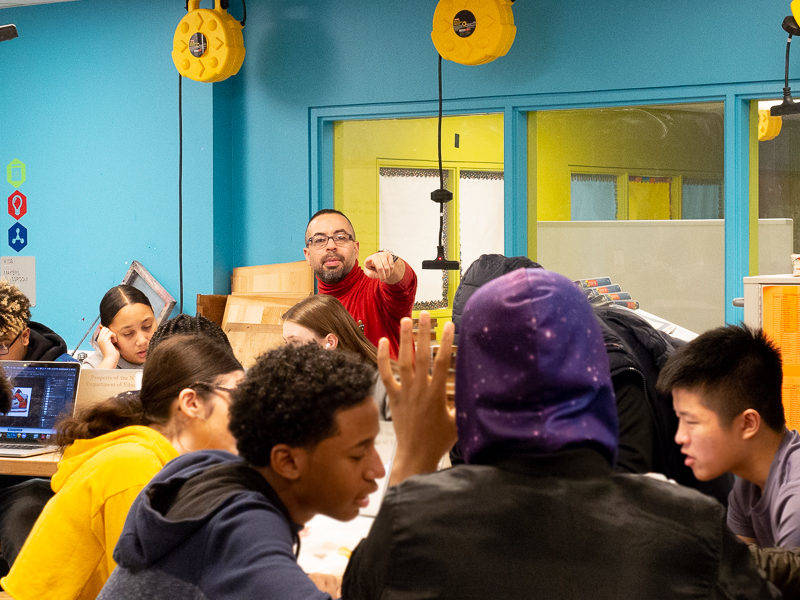
"caption": "Maker Academy teacher Gerry Irrizary assisting students in his Design Principles class. ",
"description": null,
"title": "OLYMPUS DIGITAL CAMERA",
"credit": "Amadou Diallo for The Hechinger Report",
"status": "inherit",
"fetchFailed": false,
"isLoading": false
},
"mindshift_52818": {
"type": "attachments",
"id": "mindshift_52818",
"meta": {
"index": "attachments_1716263798",
"site": "mindshift",
"id": "52818",
"found": true
},
"parent": 52679,
"imgSizes": {
"small": {
"file": "https://ww2.kqed.org/app/uploads/sites/23/2019/01/iStock-509661680-520x327.jpg",
"width": 520,
"mimeType": "image/jpeg",
"height": 327
},
"twentyfourteen-full-width": {
"file": "https://ww2.kqed.org/app/uploads/sites/23/2019/01/iStock-509661680-1038x576.jpg",
"width": 1038,
"mimeType": "image/jpeg",
"height": 576
},
"thumbnail": {
"file": "https://ww2.kqed.org/app/uploads/sites/23/2019/01/iStock-509661680-160x101.jpg",
"width": 160,
"mimeType": "image/jpeg",
"height": 101
},
"fd-sm": {
"file": "https://ww2.kqed.org/app/uploads/sites/23/2019/01/iStock-509661680-960x604.jpg",
"width": 960,
"mimeType": "image/jpeg",
"height": 604
},
"post-thumbnail": {
"file": "https://ww2.kqed.org/app/uploads/sites/23/2019/01/iStock-509661680-672x372.jpg",
"width": 672,
"mimeType": "image/jpeg",
"height": 372
},
"xsmall": {
"file": "https://ww2.kqed.org/app/uploads/sites/23/2019/01/iStock-509661680-375x236.jpg",
"width": 375,
"mimeType": "image/jpeg",
"height": 236
},
"kqedFullSize": {
"file": "https://ww2.kqed.org/app/uploads/sites/23/2019/01/iStock-509661680.jpg",
"width": 2183,
"height": 1373
},
"large": {
"file": "https://ww2.kqed.org/app/uploads/sites/23/2019/01/iStock-509661680-1020x642.jpg",
"width": 1020,
"mimeType": "image/jpeg",
"height": 642
},
"xlarge": {
"file": "https://ww2.kqed.org/app/uploads/sites/23/2019/01/iStock-509661680-1180x742.jpg",
"width": 1180,
"mimeType": "image/jpeg",
"height": 742
},
"complete_open_graph": {
"file": "https://ww2.kqed.org/app/uploads/sites/23/2019/01/iStock-509661680-1200x755.jpg",
"width": 1200,
"mimeType": "image/jpeg",
"height": 755
},
"guest-author-50": {
"file": "https://ww2.kqed.org/app/uploads/sites/23/2019/01/iStock-509661680-50x50.jpg",
"width": 50,
"mimeType": "image/jpeg",
"height": 50
},
"guest-author-96": {
"file": "https://ww2.kqed.org/app/uploads/sites/23/2019/01/iStock-509661680-96x96.jpg",
"width": 96,
"mimeType": "image/jpeg",
"height": 96
},
"medium": {
"file": "https://ww2.kqed.org/app/uploads/sites/23/2019/01/iStock-509661680-800x503.jpg",
"width": 800,
"mimeType": "image/jpeg",
"height": 503
},
"guest-author-64": {
"file": "https://ww2.kqed.org/app/uploads/sites/23/2019/01/iStock-509661680-64x64.jpg",
"width": 64,
"mimeType": "image/jpeg",
"height": 64
},
"guest-author-32": {
"file": "https://ww2.kqed.org/app/uploads/sites/23/2019/01/iStock-509661680-32x32.jpg",
"width": 32,
"mimeType": "image/jpeg",
"height": 32
},
"fd-lrg": {
"file": "https://ww2.kqed.org/app/uploads/sites/23/2019/01/iStock-509661680-1920x1208.jpg",
"width": 1920,
"mimeType": "image/jpeg",
"height": 1208
},
"fd-med": {
"file": "https://ww2.kqed.org/app/uploads/sites/23/2019/01/iStock-509661680-1180x742.jpg",
"width": 1180,
"mimeType": "image/jpeg",
"height": 742
},
"full-width": {
"file": "https://ww2.kqed.org/app/uploads/sites/23/2019/01/iStock-509661680-1920x1208.jpg",
"width": 1920,
"mimeType": "image/jpeg",
"height": 1208
},
"detail": {
"file": "https://ww2.kqed.org/app/uploads/sites/23/2019/01/iStock-509661680-150x150.jpg",
"width": 150,
"mimeType": "image/jpeg",
"height": 150
},
"medium_large": {
"file": "https://ww2.kqed.org/app/uploads/sites/23/2019/01/iStock-509661680-768x483.jpg",
"width": 768,
"mimeType": "image/jpeg",
"height": 483
},
"guest-author-128": {
"file": "https://ww2.kqed.org/app/uploads/sites/23/2019/01/iStock-509661680-128x128.jpg",
"width": 128,
"mimeType": "image/jpeg",
"height": 128
},
"xxsmall": {
"file": "https://ww2.kqed.org/app/uploads/sites/23/2019/01/iStock-509661680-240x151.jpg",
"width": 240,
"mimeType": "image/jpeg",
"height": 151
}
},
"publishDate": 1546645753,
"modified": 1546645781,
"caption": null,
"description": null,
"title": "Battle between heart and brain super heros",
"credit": "iStock/CurvaBezier",
"status": "inherit",
"fetchFailed": false,
"isLoading": false
},
"mindshift_52872": {
"type": "attachments",
"id": "mindshift_52872",
"meta": {
"index": "attachments_1716263798",
"site": "mindshift",
"id": "52872",
"found": true
},
"parent": 52866,
"imgSizes": {
"small": {
"file": "https://ww2.kqed.org/app/uploads/sites/23/2019/01/iStock-909874792-520x381.jpg",
"width": 520,
"mimeType": "image/jpeg",
"height": 381
},
"twentyfourteen-full-width": {
"file": "https://ww2.kqed.org/app/uploads/sites/23/2019/01/iStock-909874792-1038x576.jpg",
"width": 1038,
"mimeType": "image/jpeg",
"height": 576
},
"thumbnail": {
"file": "https://ww2.kqed.org/app/uploads/sites/23/2019/01/iStock-909874792-160x117.jpg",
"width": 160,
"mimeType": "image/jpeg",
"height": 117
},
"fd-sm": {
"file": "https://ww2.kqed.org/app/uploads/sites/23/2019/01/iStock-909874792-960x703.jpg",
"width": 960,
"mimeType": "image/jpeg",
"height": 703
},
"post-thumbnail": {
"file": "https://ww2.kqed.org/app/uploads/sites/23/2019/01/iStock-909874792-672x372.jpg",
"width": 672,
"mimeType": "image/jpeg",
"height": 372
},
"xsmall": {
"file": "https://ww2.kqed.org/app/uploads/sites/23/2019/01/iStock-909874792-375x275.jpg",
"width": 375,
"mimeType": "image/jpeg",
"height": 275
},
"kqedFullSize": {
"file": "https://ww2.kqed.org/app/uploads/sites/23/2019/01/iStock-909874792.jpg",
"width": 2023,
"height": 1482
},
"large": {
"file": "https://ww2.kqed.org/app/uploads/sites/23/2019/01/iStock-909874792-1020x747.jpg",
"width": 1020,
"mimeType": "image/jpeg",
"height": 747
},
"xlarge": {
"file": "https://ww2.kqed.org/app/uploads/sites/23/2019/01/iStock-909874792-1180x864.jpg",
"width": 1180,
"mimeType": "image/jpeg",
"height": 864
},
"complete_open_graph": {
"file": "https://ww2.kqed.org/app/uploads/sites/23/2019/01/iStock-909874792-1200x879.jpg",
"width": 1200,
"mimeType": "image/jpeg",
"height": 879
},
"guest-author-50": {
"file": "https://ww2.kqed.org/app/uploads/sites/23/2019/01/iStock-909874792-50x50.jpg",
"width": 50,
"mimeType": "image/jpeg",
"height": 50
},
"guest-author-96": {
"file": "https://ww2.kqed.org/app/uploads/sites/23/2019/01/iStock-909874792-96x96.jpg",
"width": 96,
"mimeType": "image/jpeg",
"height": 96
},
"medium": {
"file": "https://ww2.kqed.org/app/uploads/sites/23/2019/01/iStock-909874792-800x586.jpg",
"width": 800,
"mimeType": "image/jpeg",
"height": 586
},
"guest-author-64": {
"file": "https://ww2.kqed.org/app/uploads/sites/23/2019/01/iStock-909874792-64x64.jpg",
"width": 64,
"mimeType": "image/jpeg",
"height": 64
},
"guest-author-32": {
"file": "https://ww2.kqed.org/app/uploads/sites/23/2019/01/iStock-909874792-32x32.jpg",
"width": 32,
"mimeType": "image/jpeg",
"height": 32
},
"fd-lrg": {
"file": "https://ww2.kqed.org/app/uploads/sites/23/2019/01/iStock-909874792-1920x1407.jpg",
"width": 1920,
"mimeType": "image/jpeg",
"height": 1407
},
"fd-med": {
"file": "https://ww2.kqed.org/app/uploads/sites/23/2019/01/iStock-909874792-1180x864.jpg",
"width": 1180,
"mimeType": "image/jpeg",
"height": 864
},
"full-width": {
"file": "https://ww2.kqed.org/app/uploads/sites/23/2019/01/iStock-909874792-1920x1407.jpg",
"width": 1920,
"mimeType": "image/jpeg",
"height": 1407
},
"detail": {
"file": "https://ww2.kqed.org/app/uploads/sites/23/2019/01/iStock-909874792-150x150.jpg",
"width": 150,
"mimeType": "image/jpeg",
"height": 150
},
"medium_large": {
"file": "https://ww2.kqed.org/app/uploads/sites/23/2019/01/iStock-909874792-768x563.jpg",
"width": 768,
"mimeType": "image/jpeg",
"height": 563
},
"guest-author-128": {
"file": "https://ww2.kqed.org/app/uploads/sites/23/2019/01/iStock-909874792-128x128.jpg",
"width": 128,
"mimeType": "image/jpeg",
"height": 128
},
"xxsmall": {
"file": "https://ww2.kqed.org/app/uploads/sites/23/2019/01/iStock-909874792-240x176.jpg",
"width": 240,
"mimeType": "image/jpeg",
"height": 176
}
},
"publishDate": 1547256007,
"modified": 1547256029,
"caption": null,
"description": null,
"title": "Business development, project and research, testing and improvement",
"credit": "iStock/liravega",
"status": "inherit",
"fetchFailed": false,
"isLoading": false
},
"mindshift_52537": {
"type": "attachments",
"id": "mindshift_52537",
"meta": {
"index": "attachments_1716263798",
"site": "mindshift",
"id": "52537",
"found": true
},
"parent": 52536,
"imgSizes": {
"small": {
"file": "https://ww2.kqed.org/app/uploads/sites/23/2018/11/personallearning_lead_custom-d2271441a5c41409406ba5d93df7b9093d854d9f-520x325.jpg",
"width": 520,
"mimeType": "image/jpeg",
"height": 325
},
"twentyfourteen-full-width": {
"file": "https://ww2.kqed.org/app/uploads/sites/23/2018/11/personallearning_lead_custom-d2271441a5c41409406ba5d93df7b9093d854d9f-1038x576.jpg",
"width": 1038,
"mimeType": "image/jpeg",
"height": 576
},
"thumbnail": {
"file": "https://ww2.kqed.org/app/uploads/sites/23/2018/11/personallearning_lead_custom-d2271441a5c41409406ba5d93df7b9093d854d9f-160x100.jpg",
"width": 160,
"mimeType": "image/jpeg",
"height": 100
},
"fd-sm": {
"file": "https://ww2.kqed.org/app/uploads/sites/23/2018/11/personallearning_lead_custom-d2271441a5c41409406ba5d93df7b9093d854d9f-960x599.jpg",
"width": 960,
"mimeType": "image/jpeg",
"height": 599
},
"post-thumbnail": {
"file": "https://ww2.kqed.org/app/uploads/sites/23/2018/11/personallearning_lead_custom-d2271441a5c41409406ba5d93df7b9093d854d9f-672x372.jpg",
"width": 672,
"mimeType": "image/jpeg",
"height": 372
},
"xsmall": {
"file": "https://ww2.kqed.org/app/uploads/sites/23/2018/11/personallearning_lead_custom-d2271441a5c41409406ba5d93df7b9093d854d9f-375x234.jpg",
"width": 375,
"mimeType": "image/jpeg",
"height": 234
},
"kqedFullSize": {
"file": "https://ww2.kqed.org/app/uploads/sites/23/2018/11/personallearning_lead_custom-d2271441a5c41409406ba5d93df7b9093d854d9f.jpg",
"width": 3200,
"height": 1997
},
"large": {
"file": "https://ww2.kqed.org/app/uploads/sites/23/2018/11/personallearning_lead_custom-d2271441a5c41409406ba5d93df7b9093d854d9f-1020x637.jpg",
"width": 1020,
"mimeType": "image/jpeg",
"height": 637
},
"xlarge": {
"file": "https://ww2.kqed.org/app/uploads/sites/23/2018/11/personallearning_lead_custom-d2271441a5c41409406ba5d93df7b9093d854d9f-1180x736.jpg",
"width": 1180,
"mimeType": "image/jpeg",
"height": 736
},
"complete_open_graph": {
"file": "https://ww2.kqed.org/app/uploads/sites/23/2018/11/personallearning_lead_custom-d2271441a5c41409406ba5d93df7b9093d854d9f-1200x749.jpg",
"width": 1200,
"mimeType": "image/jpeg",
"height": 749
},
"guest-author-50": {
"file": "https://ww2.kqed.org/app/uploads/sites/23/2018/11/personallearning_lead_custom-d2271441a5c41409406ba5d93df7b9093d854d9f-50x50.jpg",
"width": 50,
"mimeType": "image/jpeg",
"height": 50
},
"guest-author-96": {
"file": "https://ww2.kqed.org/app/uploads/sites/23/2018/11/personallearning_lead_custom-d2271441a5c41409406ba5d93df7b9093d854d9f-96x96.jpg",
"width": 96,
"mimeType": "image/jpeg",
"height": 96
},
"medium": {
"file": "https://ww2.kqed.org/app/uploads/sites/23/2018/11/personallearning_lead_custom-d2271441a5c41409406ba5d93df7b9093d854d9f-800x499.jpg",
"width": 800,
"mimeType": "image/jpeg",
"height": 499
},
"guest-author-64": {
"file": "https://ww2.kqed.org/app/uploads/sites/23/2018/11/personallearning_lead_custom-d2271441a5c41409406ba5d93df7b9093d854d9f-64x64.jpg",
"width": 64,
"mimeType": "image/jpeg",
"height": 64
},
"guest-author-32": {
"file": "https://ww2.kqed.org/app/uploads/sites/23/2018/11/personallearning_lead_custom-d2271441a5c41409406ba5d93df7b9093d854d9f-32x32.jpg",
"width": 32,
"mimeType": "image/jpeg",
"height": 32
},
"fd-lrg": {
"file": "https://ww2.kqed.org/app/uploads/sites/23/2018/11/personallearning_lead_custom-d2271441a5c41409406ba5d93df7b9093d854d9f-1920x1198.jpg",
"width": 1920,
"mimeType": "image/jpeg",
"height": 1198
},
"fd-med": {
"file": "https://ww2.kqed.org/app/uploads/sites/23/2018/11/personallearning_lead_custom-d2271441a5c41409406ba5d93df7b9093d854d9f-1180x736.jpg",
"width": 1180,
"mimeType": "image/jpeg",
"height": 736
},
"full-width": {
"file": "https://ww2.kqed.org/app/uploads/sites/23/2018/11/personallearning_lead_custom-d2271441a5c41409406ba5d93df7b9093d854d9f-1920x1198.jpg",
"width": 1920,
"mimeType": "image/jpeg",
"height": 1198
},
"detail": {
"file": "https://ww2.kqed.org/app/uploads/sites/23/2018/11/personallearning_lead_custom-d2271441a5c41409406ba5d93df7b9093d854d9f-150x150.jpg",
"width": 150,
"mimeType": "image/jpeg",
"height": 150
},
"medium_large": {
"file": "https://ww2.kqed.org/app/uploads/sites/23/2018/11/personallearning_lead_custom-d2271441a5c41409406ba5d93df7b9093d854d9f-768x479.jpg",
"width": 768,
"mimeType": "image/jpeg",
"height": 479
},
"guest-author-128": {
"file": "https://ww2.kqed.org/app/uploads/sites/23/2018/11/personallearning_lead_custom-d2271441a5c41409406ba5d93df7b9093d854d9f-128x128.jpg",
"width": 128,
"mimeType": "image/jpeg",
"height": 128
},
"xxsmall": {
"file": "https://ww2.kqed.org/app/uploads/sites/23/2018/11/personallearning_lead_custom-d2271441a5c41409406ba5d93df7b9093d854d9f-240x150.jpg",
"width": 240,
"mimeType": "image/jpeg",
"height": 150
}
},
"publishDate": 1542389244,
"modified": 1542389444,
"caption": null,
"description": "Personalized learning in the classroom.",
"title": "Personalized learning in the classroom.",
"credit": "Drew Lytle for NPR ",
"status": "inherit",
"fetchFailed": false,
"isLoading": false
},
"mindshift_50668": {
"type": "attachments",
"id": "mindshift_50668",
"meta": {
"index": "attachments_1716263798",
"site": "mindshift",
"id": "50668",
"found": true
},
"parent": 50661,
"imgSizes": {
"small": {
"file": "https://ww2.kqed.org/app/uploads/sites/23/2018/02/reDesign1-520x309.jpg",
"width": 520,
"mimeType": "image/jpeg",
"height": 309
},
"twentyfourteen-full-width": {
"file": "https://ww2.kqed.org/app/uploads/sites/23/2018/02/reDesign1-1038x576.jpg",
"width": 1038,
"mimeType": "image/jpeg",
"height": 576
},
"thumbnail": {
"file": "https://ww2.kqed.org/app/uploads/sites/23/2018/02/reDesign1-160x95.jpg",
"width": 160,
"mimeType": "image/jpeg",
"height": 95
},
"fd-sm": {
"file": "https://ww2.kqed.org/app/uploads/sites/23/2018/02/reDesign1-960x570.jpg",
"width": 960,
"mimeType": "image/jpeg",
"height": 570
},
"post-thumbnail": {
"file": "https://ww2.kqed.org/app/uploads/sites/23/2018/02/reDesign1-672x372.jpg",
"width": 672,
"mimeType": "image/jpeg",
"height": 372
},
"xsmall": {
"file": "https://ww2.kqed.org/app/uploads/sites/23/2018/02/reDesign1-375x223.jpg",
"width": 375,
"mimeType": "image/jpeg",
"height": 223
},
"kqedFullSize": {
"file": "https://ww2.kqed.org/app/uploads/sites/23/2018/02/reDesign1.jpg",
"width": 5760,
"height": 3420
},
"large": {
"file": "https://ww2.kqed.org/app/uploads/sites/23/2018/02/reDesign1-1020x606.jpg",
"width": 1020,
"mimeType": "image/jpeg",
"height": 606
},
"xlarge": {
"file": "https://ww2.kqed.org/app/uploads/sites/23/2018/02/reDesign1-1180x701.jpg",
"width": 1180,
"mimeType": "image/jpeg",
"height": 701
},
"guest-author-50": {
"file": "https://ww2.kqed.org/app/uploads/sites/23/2018/02/reDesign1-50x50.jpg",
"width": 50,
"mimeType": "image/jpeg",
"height": 50
},
"guest-author-96": {
"file": "https://ww2.kqed.org/app/uploads/sites/23/2018/02/reDesign1-96x96.jpg",
"width": 96,
"mimeType": "image/jpeg",
"height": 96
},
"medium": {
"file": "https://ww2.kqed.org/app/uploads/sites/23/2018/02/reDesign1-800x475.jpg",
"width": 800,
"mimeType": "image/jpeg",
"height": 475
},
"guest-author-64": {
"file": "https://ww2.kqed.org/app/uploads/sites/23/2018/02/reDesign1-64x64.jpg",
"width": 64,
"mimeType": "image/jpeg",
"height": 64
},
"guest-author-32": {
"file": "https://ww2.kqed.org/app/uploads/sites/23/2018/02/reDesign1-32x32.jpg",
"width": 32,
"mimeType": "image/jpeg",
"height": 32
},
"fd-lrg": {
"file": "https://ww2.kqed.org/app/uploads/sites/23/2018/02/reDesign1-1920x1140.jpg",
"width": 1920,
"mimeType": "image/jpeg",
"height": 1140
},
"fd-med": {
"file": "https://ww2.kqed.org/app/uploads/sites/23/2018/02/reDesign1-1180x701.jpg",
"width": 1180,
"mimeType": "image/jpeg",
"height": 701
},
"full-width": {
"file": "https://ww2.kqed.org/app/uploads/sites/23/2018/02/reDesign1-1920x1140.jpg",
"width": 1920,
"mimeType": "image/jpeg",
"height": 1140
},
"detail": {
"file": "https://ww2.kqed.org/app/uploads/sites/23/2018/02/reDesign1-150x150.jpg",
"width": 150,
"mimeType": "image/jpeg",
"height": 150
},
"medium_large": {
"file": "https://ww2.kqed.org/app/uploads/sites/23/2018/02/reDesign1-768x456.jpg",
"width": 768,
"mimeType": "image/jpeg",
"height": 456
},
"guest-author-128": {
"file": "https://ww2.kqed.org/app/uploads/sites/23/2018/02/reDesign1-128x128.jpg",
"width": 128,
"mimeType": "image/jpeg",
"height": 128
},
"xxsmall": {
"file": "https://ww2.kqed.org/app/uploads/sites/23/2018/02/reDesign1-240x143.jpg",
"width": 240,
"mimeType": "image/jpeg",
"height": 143
}
},
"publishDate": 1519759205,
"modified": 1519759346,
"caption": "Students at Bronx Arena High School explore erosion through a sand table simulation.",
"description": null,
"title": "reDesign1",
"credit": "\u003ca href=\"http://eleitz.com/\">Elizabeth Leitzell\u003c/a>/reDesign",
"status": "inherit",
"fetchFailed": false,
"isLoading": false
}
},
"audioPlayerReducer": {
"postId": "stream_live",
"isPaused": true,
"isPlaying": false,
"pfsActive": false,
"pledgeModalIsOpen": true,
"playerDrawerIsOpen": false
},
"authorsReducer": {
"byline_mindshift_53241": {
"type": "authors",
"id": "byline_mindshift_53241",
"meta": {
"override": true
},
"slug": "byline_mindshift_53241",
"name": "\u003ca href=\"https://hechingerreport.org/\">Amadou Diallo, The Hechinger Report\u003c/a>",
"isLoading": false
},
"byline_mindshift_52536": {
"type": "authors",
"id": "byline_mindshift_52536",
"meta": {
"override": true
},
"slug": "byline_mindshift_52536",
"name": "Anya Kamenetz, Robbie Feinberg, Kyla Calvert Mason",
"isLoading": false
},
"katrinaschwartz": {
"type": "authors",
"id": "234",
"meta": {
"index": "authors_1716337520",
"id": "234",
"found": true
},
"name": "Katrina Schwartz",
"firstName": "Katrina",
"lastName": "Schwartz",
"slug": "katrinaschwartz",
"email": "kschwartz@kqed.org",
"display_author_email": false,
"staff_mastheads": [
"news"
],
"title": "Producer",
"bio": "Katrina Schwartz is a journalist based in San Francisco. She's worked at KPCC public radio in LA and has reported on air and online for KQED since 2010. She covered how teaching and learning is changing for MindShift between 2012 and 2020. She is the co-host of the MindShift podcast and now produces KQED's Bay Curious podcast.",
"avatar": "https://secure.gravatar.com/avatar/a6a567574dafefa959593925eead665c?s=600&d=blank&r=g",
"twitter": "kschwart",
"facebook": null,
"instagram": null,
"linkedin": null,
"sites": [
{
"site": "news",
"roles": [
"editor"
]
},
{
"site": "mindshift",
"roles": [
"administrator"
]
},
{
"site": "stateofhealth",
"roles": [
"author"
]
},
{
"site": "science",
"roles": [
"editor"
]
}
],
"headData": {
"title": "Katrina Schwartz | KQED",
"description": "Producer",
"ogImgSrc": "https://secure.gravatar.com/avatar/a6a567574dafefa959593925eead665c?s=600&d=blank&r=g",
"twImgSrc": "https://secure.gravatar.com/avatar/a6a567574dafefa959593925eead665c?s=600&d=blank&r=g"
},
"isLoading": false,
"link": "/author/katrinaschwartz"
},
"mindshift": {
"type": "authors",
"id": "4354",
"meta": {
"index": "authors_1716337520",
"id": "4354",
"found": true
},
"name": "MindShift",
"firstName": "MindShift",
"lastName": null,
"slug": "mindshift",
"email": "tina@barseghian.com",
"display_author_email": false,
"staff_mastheads": [],
"title": null,
"bio": null,
"avatar": "https://secure.gravatar.com/avatar/ae7f1f73a229130205aa5f57b55eaf16?s=600&d=blank&r=g",
"twitter": null,
"facebook": null,
"instagram": null,
"linkedin": null,
"sites": [
{
"site": "arts",
"roles": [
"author"
]
},
{
"site": "mindshift",
"roles": [
"editor"
]
}
],
"headData": {
"title": "MindShift | KQED",
"description": null,
"ogImgSrc": "https://secure.gravatar.com/avatar/ae7f1f73a229130205aa5f57b55eaf16?s=600&d=blank&r=g",
"twImgSrc": "https://secure.gravatar.com/avatar/ae7f1f73a229130205aa5f57b55eaf16?s=600&d=blank&r=g"
},
"isLoading": false,
"link": "/author/mindshift"
}
},
"breakingNewsReducer": {},
"pagesReducer": {},
"postsReducer": {
"stream_live": {
"type": "live",
"id": "stream_live",
"audioUrl": "https://streams.kqed.org/kqedradio",
"title": "Live Stream",
"excerpt": "Live Stream information currently unavailable.",
"link": "/radio",
"featImg": "",
"label": {
"name": "KQED Live",
"link": "/"
}
},
"stream_kqedNewscast": {
"type": "posts",
"id": "stream_kqedNewscast",
"audioUrl": "https://www.kqed.org/.stream/anon/radio/RDnews/newscast.mp3?_=1",
"title": "KQED Newscast",
"featImg": "",
"label": {
"name": "88.5 FM",
"link": "/"
}
},
"mindshift_53241": {
"type": "posts",
"id": "mindshift_53241",
"meta": {
"index": "posts_1716263798",
"site": "mindshift",
"id": "53241",
"score": null,
"sort": [
1552371032000
]
},
"parent": 0,
"labelTerm": {
"site": "mindshift"
},
"blocks": [],
"publishDate": 1552371032,
"format": "standard",
"disqusTitle": "How Mastery-Based Learning Can Help Students of Every Background Succeed",
"title": "How Mastery-Based Learning Can Help Students of Every Background Succeed",
"headTitle": "MindShift | KQED News",
"content": "\u003cp>NEW YORK — At New York City’s Urban Assembly Maker Academy high school in lower Manhattan, two things immediately stand out. First, its teachers are rarely standing at the front of the classroom dispensing facts and figures for students to dutifully transcribe. Instead, they’re constantly on the move, going from table to table facilitating group discussions and providing feedback as students work. Second, the students reflect the \u003ca href=\"https://www.census.gov/quickfacts/fact/table/newyorkcitynewyork/PST045217\">racial diversity of the city\u003c/a>. Within one of the nation’s \u003ca href=\"https://www.civilrightsproject.ucla.edu/research/k-12-education/integration-and-diversity/ny-norflet-report-placeholder/Kucsera-New-York-Extreme-Segregation-2014.pdf\">most segregated school systems\u003c/a>, Maker Academy has attracted a mix of black, Latino, white and Asian students in which no single group makes up less than 10 percent or more than 46 percent of the population.\u003c/p>\n\u003cp>“This is the most diverse school that I’ve ever been a part of in my 15 years in education,” says school principal Luke Bauer. “We have kids from the projects and kids who take Ubers.”\u003c/p>\n\u003cp>The school’s leaders made diversity a priority before it even opened five years ago, Bauer says, when they chose not to use grades or test scores as admissions criteria. They also embraced a nontraditional educational model. Like a growing number of schools around the country, Maker Academy uses a \u003ca href=\"https://hechingerreport.org/im-not-successful/\">mastery-based learning\u003c/a> model, in which static letter grades on one-off tests and assignments are jettisoned in favor of detailed feedback that students use to revise their work as they progress toward mastery of clearly defined skills. Instead of receiving a C grade on an essay, for example, a student’s evaluation may include a 1 out of 4 in reasoning, a 2 out of 4 in evidence and a 3 out of 4 in communication, with an opportunity to submit additional drafts throughout the semester.\u003c/p>\n\u003cp>The results are promising. The school saw \u003ca href=\"https://tools.nycenet.edu/guide/2018/#dbn=02M282&report_type=HS\">90 percent\u003c/a> of its inaugural class graduate in 2018 while surpassing the citywide average in \u003ca href=\"https://tools.nycenet.edu/dashboard/#dbn=02M282&report_type=HS&view=City\">measures of college readiness\u003c/a>. It ranks high on the education department’s annual school quality surveys, and it’s becoming increasingly attractive to families, with five times more applicants than seats available, according to the most recent city data.\u003c/p>\n\u003cp>With 1.1 million students in 1,800 schools, New York City’s school system is the largest in the country. By the \u003ca href=\"https://drive.google.com/file/d/0B2QOeF7EP10RV0V3SkFBLVIyR1k/view\">city’s own count\u003c/a>, roughly 70 percent of its schools are segregated by race and income. The result is essentially a two-tiered system of public education — academically thriving schools for students from white and affluent families, and underperforming schools that almost exclusively serve black and Latino students from low-income families.\u003c/p>\n\u003cp>[ad fullwidth]\u003c/p>\n\u003cp>New York City Mayor Bill de Blasio and his schools chancellor, Richard Carranza, have made racial and socioeconomic equity a priority. A panel commissioned by the mayor recently \u003ca href=\"https://www.schooldiversity.nyc/\">released a report \u003c/a>calling for schools to mirror the demographics of their surrounding neighborhoods and to implement principles of culturally responsive education as a way to combat the city’s \u003ca href=\"https://patch.com/new-york/brooklyn/achievement-gap-widens-nyc-students-color-report\">persistent achievement gap\u003c/a>. At Maker Academy and about three dozen other mastery-based schools in the city, culturally responsive teaching practices are already taking root. These schools are also among the most diverse in the city.\u003c/p>\n\u003cfigure id=\"attachment_53246\" class=\"wp-caption alignnone\" style=\"max-width: 800px\">\u003cimg class=\"size-full wp-image-53246\" src=\"https://ww2.kqed.org/mindshift/wp-content/uploads/sites/23/2019/03/Diallo_81042-800x0-c-default.jpg\" alt=\"\" width=\"800\" height=\"600\" srcset=\"https://ww2.kqed.org/app/uploads/sites/23/2019/03/Diallo_81042-800x0-c-default.jpg 800w, https://ww2.kqed.org/app/uploads/sites/23/2019/03/Diallo_81042-800x0-c-default-160x120.jpg 160w, https://ww2.kqed.org/app/uploads/sites/23/2019/03/Diallo_81042-800x0-c-default-768x576.jpg 768w\" sizes=\"(max-width: 800px) 100vw, 800px\">\u003cfigcaption class=\"wp-caption-text\">Maker Academy teacher Gerry Irrizary works with students in his Design Principles class. \u003ccite>(Amadou Diallo for The Hechinger Report)\u003c/cite>\u003c/figcaption>\u003c/figure>\n\u003cp>Yet support for these schools within the education department has been lukewarm. A small division that has served as a conduit for sharing information and best practices among the mastery-based schools is now down to a two-person staff, as department resources have shifted to more publicized efforts like a $23 million-dollar anti-bias training program for teachers. This may be a missed opportunity. While mastery-based learning isn’t explicitly linked to racial or economic equity, education experts say that any school willing to make the leap from traditional grades to a complex rubric of individualized student assessments most likely already has supports in place to tackle the difficult, messy work they say is necessary to ensure that children of every background can succeed.\u003c/p>\n\u003cp>“From the minute we opened we had a very diverse population and we needed to navigate that,” says Danielle Salzberg, principal of Frank McCourt High School, on the Upper West Side, which opened in 2010. “Kids come with different educational backgrounds … different socioeconomic backgrounds. We opened our doors fully aware that we were going to be meeting different kids’ needs in different kinds of ways.”\u003c/p>\n\u003cp>To meet those needs, Salzberg and her team turned to a mastery-based model.\u003c/p>\n\u003cp>“It’s the best way to provide feedback to students that allows them to understand themselves and be empowered as learners,” Salzberg says. “We focus a lot on student engagement. What are we doing to challenge their thinking and not just have them be compliant?”\u003c/p>\n\u003cp>The school is thriving. With 20 percent of its 400-plus students diagnosed with a learning disability and about half of its kids coming from families in economic need, McCourt nonetheless outperforms citywide averages on state-mandated Regents exams, graduation rates and postsecondary enrollment. Students describe the school as offering a much different experience than what they were used to.\u003c/p>\n\u003cp>“This school wasn’t my first choice, so I didn’t have big expectations,” says college-bound senior Kendra Castro. What Kendra found once she arrived was a deeper level of student-teacher interaction than at her previous schools. A typical class may begin with the instructor in “teacher mode,” going over the day’s agenda for a few minutes, but the rest of the time is spent engaging directly with students as they work, providing feedback and support.\u003c/p>\n\u003cp>“When kids struggle, teachers go to them,” she says. “Math especially can be hard for people. Here I’ve seen people struggle with it, but never for the whole semester.”\u003c/p>\n\u003cp>Support extends beyond teacher interventions. With a schoolwide emphasis on working in groups, students’ most-used academic resources are often their peers.\u003c/p>\n\u003cp>“In middle school we always did work as an individual,” says Rosalia Minyeti, an 11th-grader from the Bronx who found the adjustment challenging. “I didn’t like working in groups at first. But then, in classes where the work was more ambitious, I found that being in a group made it easier to understand things.”\u003c/p>\n\u003cp>Working in groups provides a benefit to students who have already mastered the material as well. “Teaching something to someone actually helps me learn it better,” says Kendra.\u003c/p>\n\u003cp>But implementing a mastery-based approach is difficult work, even in schools like McCourt and Maker Academy that have adopted it from the day they opened.\u003c/p>\n\u003cp>“Mastery-based learning is a complete paradigm shift for most teachers,” says Salzberg. “It means thinking about grading as a way to provide feedback, and not a random act that we do because the quarter is ending.”\u003c/p>\n\u003cfigure id=\"attachment_53245\" class=\"wp-caption alignright\" style=\"max-width: 800px\">\u003cimg class=\"size-full wp-image-53245\" src=\"https://ww2.kqed.org/mindshift/wp-content/uploads/sites/23/2019/03/Diallo_81007-800x0-c-default.jpg\" alt=\"\" width=\"800\" height=\"600\" srcset=\"https://ww2.kqed.org/app/uploads/sites/23/2019/03/Diallo_81007-800x0-c-default.jpg 800w, https://ww2.kqed.org/app/uploads/sites/23/2019/03/Diallo_81007-800x0-c-default-160x120.jpg 160w, https://ww2.kqed.org/app/uploads/sites/23/2019/03/Diallo_81007-800x0-c-default-768x576.jpg 768w\" sizes=\"(max-width: 800px) 100vw, 800px\">\u003cfigcaption class=\"wp-caption-text\">student at Maker Academy tries his hand at sneaker design. \u003ccite>(Amadou Diallo for The Hechinger Report)\u003c/cite>\u003c/figcaption>\u003c/figure>\n\u003cp>City schools that have adopted mastery-based practices — from large, highly competitive schools like Staten Island Technical High School to small, narrowly focused programs like the Young Women’s Leadership School of the Bronx — have gotten some support from a small unit, the Mastery Collaborative, tucked away in the education department’s Office of Leadership. It was launched in 2015 out of a recognition that schools adopting mastery-based principles were often doing so in isolation.\u003c/p>\n\u003cp>“We started the program as a community of practitioners,” says program director and co-founder Joy Nolan. “Our model was, let’s share resources, let’s have these conversations about [mastery-based] practice.”\u003c/p>\n\u003cp>Today it serves as a conduit for 37 member schools to exchange expertise regularly. And Nolan says that inquiries about the program from potential members have increased every year. Schools in the collaborative are united not only by an embrace of mastery-based learning but also by the desire to serve a diverse student population. An analysis of Department of Education data by The Hechinger Report found that 29 of the 37 schools either meet the city’s current standard of a racially representative school or reflect (within five percentage points) their borough’s demographic makeup for at least two ethnic groups.\u003c/p>\n\u003cp>Nolan emphasizes that the schools in the collaborative came to mastery-based learning on their own. Her program does not mandate curricula or evaluate practices. It is, however, seen by the schools as a valuable resource.\u003c/p>\n\u003cp>“What the Mastery Collaborative has done for a lot of schools is to get educators out of their own buildings,” says Maker Academy principal Bauer. “Visiting other schools is the best professional development that exists. There’s no slide deck that is going to lead to seeing new things and being able to apply them to your school.”\u003c/p>\n\u003cp>In a system where segregation is the norm, one of the biggest challenges for schools that seek to embrace diversity is creating an environment in which students from all backgrounds can excel. In 2016 the Mastery Collaborative began hosting anti-bias workshops for teachers and staff, spurred by member schools’ ongoing interest in culturally responsive education practices. Credited in large part to the work of educator Gloria Ladson-Billings, culturally responsive education is, first and foremost, a recognition that the academic disparities seen along racial and socioeconomic lines come from systemic practices that minimize anything other than the dominant culture.\u003c/p>\n\u003cp>Zaretta Hammond, the author of the book “Culturally Responsive Teaching and the Brain,” describes a vicious cycle in which low-income students of color begin their education in under-resourced schools with less-experienced teachers, then fall behind academically so that even if they get opportunities to attend a high-performing school later, they arrive grade levels behind their more affluent peers. Culturally responsive teaching seeks to address the inequity, not by dumbing down the curriculum, Hammond says, but by igniting students’ intellectual curiosity through rigorous content reflecting real-world issues.\u003c/p>\n\u003cp>Teachers must understand, Ladson-Billings argues, that academic outcomes say more about the education system than the child. “If a kid isn’t reading,” she says, “it can’t be the kid that’s the problem, it has to be the method.”\u003c/p>\n\u003cp>Creating a culturally responsive school environment isn’t achieved by putting up posters of African-American heroes or celebrating Cinco de Mayo, say proponents. It requires teachers and administrators to examine the biases and assumptions they carry, how those affect their relationships with students and, in turn, the students’ ability to master a challenging curriculum.\u003c/p>\n\u003cp>“It’s really hard and deep work for the adults in the building,” says Natasha Capers, coordinator for the NYC Coalition for Educational Justice, a parent-led nonprofit advocating the adoption of a culturally responsive curriculum in city schools.\u003c/p>\n\u003cp>“How do we make sure our schools are warm and welcoming environments for students across race, ethnicity, sexual orientation and gender presentation?” she asks. “It’s in thinking about how we deliver content, why we’re talking about the subjects we’re talking about, how we connect instruction to students’ everyday lives.”\u003c/p>\n\u003cp>Mastery-based schools, with their emphasis on feedback and revision, seem to be particularly well-suited to this challenge.\u003c/p>\n\u003cp>“Traditionally, when you’re talking about serving large numbers of children of color in particular, they don’t get feedback,” says Hammond. “What they get is ‘You got it wrong.’ Mastery-based learning works by creating feedback that is timely and corrective.”\u003c/p>\n\u003cp>Maker Academy’s assistant principal, Liz Dowdell, puts an emphasis on academic rigor. “If we’re really putting an appropriate challenge in front of kids, they are going to fail at first,” she says. “Our job is to … support them to revise and make it better.”\u003c/p>\n\u003cp>McCourt principal Salzberg stresses that this approach is relevant for all kids, whether their challenges are tied to racial or gender identity, economic status or parental expectations of high achievement: “Part of what we’re doing in CRE is finding the ways in which the kids are engaging or not engaging in the curriculum, and every kid is presenting us with some information about what’s getting in their way. We want to break through that to make sure every kid feels like they’re being met where they need to be met.”\u003c/p>\n\u003cp>Culturally responsive education is still a largely unstudied model. “You’ll see a lot of instances of cultural responsiveness in a particular classroom but not systemwide,” says Leah Peoples, a researcher at New York University’s Metropolitan Center for Research on Equity and the Transformation of Schools who is studying it. “With the Mastery Collaborative we’re talking about places that are implementing this across entire schools.”\u003c/p>\n\u003cp>Inside the city’s education department, however, reaction to these schools’ achievements is notably muted. Despite the city’s announced \u003ca href=\"https://www.chalkbeat.org/posts/ny/2018/08/15/carranza-aims-to-speed-up-anti-bias-training-for-educators-calling-it-a-cornerstone-to-school-improvement/\">mandatory anti-bias training\u003c/a> for all teachers and school administrators, the deputy chief of staff to the chancellor, David Hay, doesn’t view mastery-based learning as the only or even the preferred method for implementing culturally responsive practices. “You can have CRE in any kind of school, no matter what their guiding philosophy is, if people are willing to do the work,” he says.\u003c/p>\n\u003cp>He doesn’t see great potential for significant numbers of schools across the city emulating the work of schools in the Mastery Collaborative. “[Mastery] is something these schools have chosen to participate in,” he says, noting that such a dramatic move from traditional grading and evaluation may not be a good fit in other school communities.\u003c/p>\n\u003cp>Once a five-person operation, the Mastery Collaborative program was down to one full-time employee until a few weeks ago when a second was added, and the number of member schools declined from 43 to 37 in the past year. Asked about future program resources, Hay said, “We’re very happy with where the program is right now … [it] has got some great things going for it but there are other models that do, as well.”\u003c/p>\n\u003cp>Schools in the Mastery Collaborative have long been doing the heavy lifting required to achieve what the mayor and chancellor’s initiatives seek to promote: equity in both admissions and academic achievement. Without additional support, the question is whether an approach with a promising record of success can spread to schools with like-minded leadership, or whether the opportunity to attend diverse, high-performing schools will remain limited to a handful of the city’s children.\u003c/p>\n\u003cp>[ad floatright]\u003c/p>\n\u003cp>\u003cem>This story about \u003ca href=\"https://hechingerreport.org/access-does-not-equal-equity/\">culturally responsive education\u003c/a> was produced by \u003c/em>\u003ca href=\"https://hechingerreport.org/\">\u003cem>The Hechinger Report\u003c/em>\u003c/a>\u003cem>, a nonprofit, independent news organization focused on inequality and innovation in education. Sign up for the \u003c/em>\u003ca href=\"https://us2.list-manage.com/subscribe?u=66c306eebb323868c3ce353c1&id=d3ee4c3e04\">\u003cem>Hechinger newsletter\u003c/em>\u003c/a>\u003cem>.\u003c/em>\u003c/p>\n\n",
"disqusIdentifier": "53241 https://ww2.kqed.org/mindshift/?p=53241",
"disqusUrl": "https://ww2.kqed.org/mindshift/2019/03/11/how-mastery-based-learning-can-help-students-of-every-background-succeed/",
"stats": {
"hasVideo": false,
"hasChartOrMap": false,
"hasAudio": false,
"hasPolis": false,
"wordCount": 2576,
"hasGoogleForm": false,
"hasGallery": false,
"hasHearkenModule": false,
"iframeSrcs": [],
"paragraphCount": 41
},
"modified": 1552371032,
"excerpt": "In New York City’s highly segregated school system, some schools are embracing diversity through mastery-based learning.",
"headData": {
"twImgId": "",
"twTitle": "",
"ogTitle": "",
"ogImgId": "",
"twDescription": "",
"description": "In New York City’s highly segregated school system, some schools are embracing diversity through mastery-based learning.",
"title": "How Mastery-Based Learning Can Help Students of Every Background Succeed | KQED",
"ogDescription": "",
"schema": {
"@context": "https://schema.org",
"@type": "Article",
"headline": "How Mastery-Based Learning Can Help Students of Every Background Succeed",
"datePublished": "2019-03-11T23:10:32-07:00",
"dateModified": "2019-03-11T23:10:32-07:00",
"image": "https://cdn.kqed.org/wp-content/uploads/2020/02/KQED-OG-Image@1x.png"
}
},
"guestAuthors": [],
"slug": "how-mastery-based-learning-can-help-students-of-every-background-succeed",
"status": "publish",
"nprByline": "\u003ca href=\"https://hechingerreport.org/\">Amadou Diallo, The Hechinger Report\u003c/a>",
"path": "/mindshift/53241/how-mastery-based-learning-can-help-students-of-every-background-succeed",
"audioTrackLength": null,
"parsedContent": [
{
"type": "contentString",
"content": "\u003cdiv class=\"post-body\">\u003cp>\u003cp>NEW YORK — At New York City’s Urban Assembly Maker Academy high school in lower Manhattan, two things immediately stand out. First, its teachers are rarely standing at the front of the classroom dispensing facts and figures for students to dutifully transcribe. Instead, they’re constantly on the move, going from table to table facilitating group discussions and providing feedback as students work. Second, the students reflect the \u003ca href=\"https://www.census.gov/quickfacts/fact/table/newyorkcitynewyork/PST045217\">racial diversity of the city\u003c/a>. Within one of the nation’s \u003ca href=\"https://www.civilrightsproject.ucla.edu/research/k-12-education/integration-and-diversity/ny-norflet-report-placeholder/Kucsera-New-York-Extreme-Segregation-2014.pdf\">most segregated school systems\u003c/a>, Maker Academy has attracted a mix of black, Latino, white and Asian students in which no single group makes up less than 10 percent or more than 46 percent of the population.\u003c/p>\n\u003cp>“This is the most diverse school that I’ve ever been a part of in my 15 years in education,” says school principal Luke Bauer. “We have kids from the projects and kids who take Ubers.”\u003c/p>\n\u003cp>The school’s leaders made diversity a priority before it even opened five years ago, Bauer says, when they chose not to use grades or test scores as admissions criteria. They also embraced a nontraditional educational model. Like a growing number of schools around the country, Maker Academy uses a \u003ca href=\"https://hechingerreport.org/im-not-successful/\">mastery-based learning\u003c/a> model, in which static letter grades on one-off tests and assignments are jettisoned in favor of detailed feedback that students use to revise their work as they progress toward mastery of clearly defined skills. Instead of receiving a C grade on an essay, for example, a student’s evaluation may include a 1 out of 4 in reasoning, a 2 out of 4 in evidence and a 3 out of 4 in communication, with an opportunity to submit additional drafts throughout the semester.\u003c/p>\n\u003cp>The results are promising. The school saw \u003ca href=\"https://tools.nycenet.edu/guide/2018/#dbn=02M282&report_type=HS\">90 percent\u003c/a> of its inaugural class graduate in 2018 while surpassing the citywide average in \u003ca href=\"https://tools.nycenet.edu/dashboard/#dbn=02M282&report_type=HS&view=City\">measures of college readiness\u003c/a>. It ranks high on the education department’s annual school quality surveys, and it’s becoming increasingly attractive to families, with five times more applicants than seats available, according to the most recent city data.\u003c/p>\n\u003cp>With 1.1 million students in 1,800 schools, New York City’s school system is the largest in the country. By the \u003ca href=\"https://drive.google.com/file/d/0B2QOeF7EP10RV0V3SkFBLVIyR1k/view\">city’s own count\u003c/a>, roughly 70 percent of its schools are segregated by race and income. The result is essentially a two-tiered system of public education — academically thriving schools for students from white and affluent families, and underperforming schools that almost exclusively serve black and Latino students from low-income families.\u003c/p>\n\u003cp>\u003c/p>\u003c/div>",
"attributes": {
"named": {},
"numeric": []
}
},
{
"type": "component",
"content": "",
"name": "ad",
"attributes": {
"named": {
"label": "fullwidth"
},
"numeric": [
"fullwidth"
]
}
},
{
"type": "contentString",
"content": "\u003cdiv class=\"post-body\">\u003cp>\u003c/p>\n\u003cp>New York City Mayor Bill de Blasio and his schools chancellor, Richard Carranza, have made racial and socioeconomic equity a priority. A panel commissioned by the mayor recently \u003ca href=\"https://www.schooldiversity.nyc/\">released a report \u003c/a>calling for schools to mirror the demographics of their surrounding neighborhoods and to implement principles of culturally responsive education as a way to combat the city’s \u003ca href=\"https://patch.com/new-york/brooklyn/achievement-gap-widens-nyc-students-color-report\">persistent achievement gap\u003c/a>. At Maker Academy and about three dozen other mastery-based schools in the city, culturally responsive teaching practices are already taking root. These schools are also among the most diverse in the city.\u003c/p>\n\u003cfigure id=\"attachment_53246\" class=\"wp-caption alignnone\" style=\"max-width: 800px\">\u003cimg class=\"size-full wp-image-53246\" src=\"https://ww2.kqed.org/mindshift/wp-content/uploads/sites/23/2019/03/Diallo_81042-800x0-c-default.jpg\" alt=\"\" width=\"800\" height=\"600\" srcset=\"https://ww2.kqed.org/app/uploads/sites/23/2019/03/Diallo_81042-800x0-c-default.jpg 800w, https://ww2.kqed.org/app/uploads/sites/23/2019/03/Diallo_81042-800x0-c-default-160x120.jpg 160w, https://ww2.kqed.org/app/uploads/sites/23/2019/03/Diallo_81042-800x0-c-default-768x576.jpg 768w\" sizes=\"(max-width: 800px) 100vw, 800px\">\u003cfigcaption class=\"wp-caption-text\">Maker Academy teacher Gerry Irrizary works with students in his Design Principles class. \u003ccite>(Amadou Diallo for The Hechinger Report)\u003c/cite>\u003c/figcaption>\u003c/figure>\n\u003cp>Yet support for these schools within the education department has been lukewarm. A small division that has served as a conduit for sharing information and best practices among the mastery-based schools is now down to a two-person staff, as department resources have shifted to more publicized efforts like a $23 million-dollar anti-bias training program for teachers. This may be a missed opportunity. While mastery-based learning isn’t explicitly linked to racial or economic equity, education experts say that any school willing to make the leap from traditional grades to a complex rubric of individualized student assessments most likely already has supports in place to tackle the difficult, messy work they say is necessary to ensure that children of every background can succeed.\u003c/p>\n\u003cp>“From the minute we opened we had a very diverse population and we needed to navigate that,” says Danielle Salzberg, principal of Frank McCourt High School, on the Upper West Side, which opened in 2010. “Kids come with different educational backgrounds … different socioeconomic backgrounds. We opened our doors fully aware that we were going to be meeting different kids’ needs in different kinds of ways.”\u003c/p>\n\u003cp>To meet those needs, Salzberg and her team turned to a mastery-based model.\u003c/p>\n\u003cp>“It’s the best way to provide feedback to students that allows them to understand themselves and be empowered as learners,” Salzberg says. “We focus a lot on student engagement. What are we doing to challenge their thinking and not just have them be compliant?”\u003c/p>\n\u003cp>The school is thriving. With 20 percent of its 400-plus students diagnosed with a learning disability and about half of its kids coming from families in economic need, McCourt nonetheless outperforms citywide averages on state-mandated Regents exams, graduation rates and postsecondary enrollment. Students describe the school as offering a much different experience than what they were used to.\u003c/p>\n\u003cp>“This school wasn’t my first choice, so I didn’t have big expectations,” says college-bound senior Kendra Castro. What Kendra found once she arrived was a deeper level of student-teacher interaction than at her previous schools. A typical class may begin with the instructor in “teacher mode,” going over the day’s agenda for a few minutes, but the rest of the time is spent engaging directly with students as they work, providing feedback and support.\u003c/p>\n\u003cp>“When kids struggle, teachers go to them,” she says. “Math especially can be hard for people. Here I’ve seen people struggle with it, but never for the whole semester.”\u003c/p>\n\u003cp>Support extends beyond teacher interventions. With a schoolwide emphasis on working in groups, students’ most-used academic resources are often their peers.\u003c/p>\n\u003cp>“In middle school we always did work as an individual,” says Rosalia Minyeti, an 11th-grader from the Bronx who found the adjustment challenging. “I didn’t like working in groups at first. But then, in classes where the work was more ambitious, I found that being in a group made it easier to understand things.”\u003c/p>\n\u003cp>Working in groups provides a benefit to students who have already mastered the material as well. “Teaching something to someone actually helps me learn it better,” says Kendra.\u003c/p>\n\u003cp>But implementing a mastery-based approach is difficult work, even in schools like McCourt and Maker Academy that have adopted it from the day they opened.\u003c/p>\n\u003cp>“Mastery-based learning is a complete paradigm shift for most teachers,” says Salzberg. “It means thinking about grading as a way to provide feedback, and not a random act that we do because the quarter is ending.”\u003c/p>\n\u003cfigure id=\"attachment_53245\" class=\"wp-caption alignright\" style=\"max-width: 800px\">\u003cimg class=\"size-full wp-image-53245\" src=\"https://ww2.kqed.org/mindshift/wp-content/uploads/sites/23/2019/03/Diallo_81007-800x0-c-default.jpg\" alt=\"\" width=\"800\" height=\"600\" srcset=\"https://ww2.kqed.org/app/uploads/sites/23/2019/03/Diallo_81007-800x0-c-default.jpg 800w, https://ww2.kqed.org/app/uploads/sites/23/2019/03/Diallo_81007-800x0-c-default-160x120.jpg 160w, https://ww2.kqed.org/app/uploads/sites/23/2019/03/Diallo_81007-800x0-c-default-768x576.jpg 768w\" sizes=\"(max-width: 800px) 100vw, 800px\">\u003cfigcaption class=\"wp-caption-text\">student at Maker Academy tries his hand at sneaker design. \u003ccite>(Amadou Diallo for The Hechinger Report)\u003c/cite>\u003c/figcaption>\u003c/figure>\n\u003cp>City schools that have adopted mastery-based practices — from large, highly competitive schools like Staten Island Technical High School to small, narrowly focused programs like the Young Women’s Leadership School of the Bronx — have gotten some support from a small unit, the Mastery Collaborative, tucked away in the education department’s Office of Leadership. It was launched in 2015 out of a recognition that schools adopting mastery-based principles were often doing so in isolation.\u003c/p>\n\u003cp>“We started the program as a community of practitioners,” says program director and co-founder Joy Nolan. “Our model was, let’s share resources, let’s have these conversations about [mastery-based] practice.”\u003c/p>\n\u003cp>Today it serves as a conduit for 37 member schools to exchange expertise regularly. And Nolan says that inquiries about the program from potential members have increased every year. Schools in the collaborative are united not only by an embrace of mastery-based learning but also by the desire to serve a diverse student population. An analysis of Department of Education data by The Hechinger Report found that 29 of the 37 schools either meet the city’s current standard of a racially representative school or reflect (within five percentage points) their borough’s demographic makeup for at least two ethnic groups.\u003c/p>\n\u003cp>Nolan emphasizes that the schools in the collaborative came to mastery-based learning on their own. Her program does not mandate curricula or evaluate practices. It is, however, seen by the schools as a valuable resource.\u003c/p>\n\u003cp>“What the Mastery Collaborative has done for a lot of schools is to get educators out of their own buildings,” says Maker Academy principal Bauer. “Visiting other schools is the best professional development that exists. There’s no slide deck that is going to lead to seeing new things and being able to apply them to your school.”\u003c/p>\n\u003cp>In a system where segregation is the norm, one of the biggest challenges for schools that seek to embrace diversity is creating an environment in which students from all backgrounds can excel. In 2016 the Mastery Collaborative began hosting anti-bias workshops for teachers and staff, spurred by member schools’ ongoing interest in culturally responsive education practices. Credited in large part to the work of educator Gloria Ladson-Billings, culturally responsive education is, first and foremost, a recognition that the academic disparities seen along racial and socioeconomic lines come from systemic practices that minimize anything other than the dominant culture.\u003c/p>\n\u003cp>Zaretta Hammond, the author of the book “Culturally Responsive Teaching and the Brain,” describes a vicious cycle in which low-income students of color begin their education in under-resourced schools with less-experienced teachers, then fall behind academically so that even if they get opportunities to attend a high-performing school later, they arrive grade levels behind their more affluent peers. Culturally responsive teaching seeks to address the inequity, not by dumbing down the curriculum, Hammond says, but by igniting students’ intellectual curiosity through rigorous content reflecting real-world issues.\u003c/p>\n\u003cp>Teachers must understand, Ladson-Billings argues, that academic outcomes say more about the education system than the child. “If a kid isn’t reading,” she says, “it can’t be the kid that’s the problem, it has to be the method.”\u003c/p>\n\u003cp>Creating a culturally responsive school environment isn’t achieved by putting up posters of African-American heroes or celebrating Cinco de Mayo, say proponents. It requires teachers and administrators to examine the biases and assumptions they carry, how those affect their relationships with students and, in turn, the students’ ability to master a challenging curriculum.\u003c/p>\n\u003cp>“It’s really hard and deep work for the adults in the building,” says Natasha Capers, coordinator for the NYC Coalition for Educational Justice, a parent-led nonprofit advocating the adoption of a culturally responsive curriculum in city schools.\u003c/p>\n\u003cp>“How do we make sure our schools are warm and welcoming environments for students across race, ethnicity, sexual orientation and gender presentation?” she asks. “It’s in thinking about how we deliver content, why we’re talking about the subjects we’re talking about, how we connect instruction to students’ everyday lives.”\u003c/p>\n\u003cp>Mastery-based schools, with their emphasis on feedback and revision, seem to be particularly well-suited to this challenge.\u003c/p>\n\u003cp>“Traditionally, when you’re talking about serving large numbers of children of color in particular, they don’t get feedback,” says Hammond. “What they get is ‘You got it wrong.’ Mastery-based learning works by creating feedback that is timely and corrective.”\u003c/p>\n\u003cp>Maker Academy’s assistant principal, Liz Dowdell, puts an emphasis on academic rigor. “If we’re really putting an appropriate challenge in front of kids, they are going to fail at first,” she says. “Our job is to … support them to revise and make it better.”\u003c/p>\n\u003cp>McCourt principal Salzberg stresses that this approach is relevant for all kids, whether their challenges are tied to racial or gender identity, economic status or parental expectations of high achievement: “Part of what we’re doing in CRE is finding the ways in which the kids are engaging or not engaging in the curriculum, and every kid is presenting us with some information about what’s getting in their way. We want to break through that to make sure every kid feels like they’re being met where they need to be met.”\u003c/p>\n\u003cp>Culturally responsive education is still a largely unstudied model. “You’ll see a lot of instances of cultural responsiveness in a particular classroom but not systemwide,” says Leah Peoples, a researcher at New York University’s Metropolitan Center for Research on Equity and the Transformation of Schools who is studying it. “With the Mastery Collaborative we’re talking about places that are implementing this across entire schools.”\u003c/p>\n\u003cp>Inside the city’s education department, however, reaction to these schools’ achievements is notably muted. Despite the city’s announced \u003ca href=\"https://www.chalkbeat.org/posts/ny/2018/08/15/carranza-aims-to-speed-up-anti-bias-training-for-educators-calling-it-a-cornerstone-to-school-improvement/\">mandatory anti-bias training\u003c/a> for all teachers and school administrators, the deputy chief of staff to the chancellor, David Hay, doesn’t view mastery-based learning as the only or even the preferred method for implementing culturally responsive practices. “You can have CRE in any kind of school, no matter what their guiding philosophy is, if people are willing to do the work,” he says.\u003c/p>\n\u003cp>He doesn’t see great potential for significant numbers of schools across the city emulating the work of schools in the Mastery Collaborative. “[Mastery] is something these schools have chosen to participate in,” he says, noting that such a dramatic move from traditional grading and evaluation may not be a good fit in other school communities.\u003c/p>\n\u003cp>Once a five-person operation, the Mastery Collaborative program was down to one full-time employee until a few weeks ago when a second was added, and the number of member schools declined from 43 to 37 in the past year. Asked about future program resources, Hay said, “We’re very happy with where the program is right now … [it] has got some great things going for it but there are other models that do, as well.”\u003c/p>\n\u003cp>Schools in the Mastery Collaborative have long been doing the heavy lifting required to achieve what the mayor and chancellor’s initiatives seek to promote: equity in both admissions and academic achievement. Without additional support, the question is whether an approach with a promising record of success can spread to schools with like-minded leadership, or whether the opportunity to attend diverse, high-performing schools will remain limited to a handful of the city’s children.\u003c/p>\n\u003cp>\u003c/p>\u003c/div>",
"attributes": {
"named": {},
"numeric": []
}
},
{
"type": "component",
"content": "",
"name": "ad",
"attributes": {
"named": {
"label": "floatright"
},
"numeric": [
"floatright"
]
}
},
{
"type": "contentString",
"content": "\u003cdiv class=\"post-body\">\u003cp>\u003c/p>\n\u003cp>\u003cem>This story about \u003ca href=\"https://hechingerreport.org/access-does-not-equal-equity/\">culturally responsive education\u003c/a> was produced by \u003c/em>\u003ca href=\"https://hechingerreport.org/\">\u003cem>The Hechinger Report\u003c/em>\u003c/a>\u003cem>, a nonprofit, independent news organization focused on inequality and innovation in education. Sign up for the \u003c/em>\u003ca href=\"https://us2.list-manage.com/subscribe?u=66c306eebb323868c3ce353c1&id=d3ee4c3e04\">\u003cem>Hechinger newsletter\u003c/em>\u003c/a>\u003cem>.\u003c/em>\u003c/p>\n\n\u003c/div>\u003c/p>",
"attributes": {
"named": {},
"numeric": []
}
}
],
"link": "/mindshift/53241/how-mastery-based-learning-can-help-students-of-every-background-succeed",
"authors": [
"byline_mindshift_53241"
],
"categories": [
"mindshift_192"
],
"tags": [
"mindshift_1021",
"mindshift_21126",
"mindshift_20784",
"mindshift_1040",
"mindshift_21107",
"mindshift_21176"
],
"featImg": "mindshift_53244",
"label": "mindshift"
},
"mindshift_52679": {
"type": "posts",
"id": "mindshift_52679",
"meta": {
"index": "posts_1716263798",
"site": "mindshift",
"id": "52679",
"score": null,
"sort": [
1549866373000
]
},
"parent": 0,
"labelTerm": {
"site": "mindshift"
},
"blocks": [],
"publishDate": 1549866373,
"format": "standard",
"disqusTitle": "Why It's Crucial – And Really Hard – To Talk About More Equitable Grading",
"title": "Why It's Crucial – And Really Hard – To Talk About More Equitable Grading",
"headTitle": "MindShift | KQED News",
"content": "\u003cp>\u003cem>\"Prologue: Mallory's Dilemma\" excerpted from \u003ca href=\"https://us.corwin.com/en-us/nam/grading-for-equity/book258205\" target=\"_blank\" rel=\"noopener\">Grading for Equity: What It Is, Why It Matters, and How It Can Transform Schools and Classrooms\u003c/a> by Joe Feldman. Thousand Oaks, CA: \u003ca href=\"https://www.corwin.com\" target=\"_blank\" rel=\"noopener\">Corwin\u003c/a>, 2019.\u003c/em>\u003c/p>\n\u003cp>\u003cem>This is the first article in a two-part series about equitable grading practices. This article sets up some of the challenges. In part two, learn \u003ca href=\"https://www.kqed.org/mindshift/52813/how-teachers-are-changing-grading-practices-with-an-eye-on-equity\">how teachers are addressing this issue\u003c/a>.\u003c/em>\u003c/p>\n\u003cp>\u003cstrong>By Joe Feldman\u003c/strong>\u003c/p>\n\u003cp>The data couldn't be possible. Actually, it \u003cem>shouldn't\u003c/em> be possible.\u003c/p>\n\u003cp>Mallory had just completed her first year as principal of Centennial College Prep Middle School, a new public charter school in Huntington Park, California. As a young, white woman leading a school that served nearly all Latino students, many living below the poverty line, Mallory had approached her job humbly, not immediately pushing initiatives and changing policies to align to her own personal vision (what she called the “new sheriff in town approach”). Instead, her priority was to first understand her school community: its context, history, strengths, and needs. She had watched, listened, and built relationships with her faculty, students, and their families. She had visited classrooms, reviewed teachers’ lesson plans, and studied the school’s statistics: attendance percentages, disciplinary referrals, and test scores.\u003c/p>\n\u003cp>Whether the data she reviewed was “hard” data like test scores or “soft” data like her observations of teacher-student dynamics in classrooms, Mallory kept a sharp lookout for how the school could be made more equitable. Mallory’s vision was that students should have equal opportunities for success regardless of their ethnicity, first language, gender, income, or special needs. She paid attention to patterns of unequal achievement or opportunity in her school. For example, were boys being referred more frequently to the office? Were poorer students showing a common weakness on a strand of skills on the writing assessment? Did students who received special education services have a higher rate of absenteeism?\u003c/p>\n\u003cp>But that wasn’t all. To Mallory, one of the most important indications of a high quality, equitable school is that students are successful regardless of their teacher.\u003c/p>\n\u003cp>One teacher’s students shouldn’t learn different material or be less prepared for the next grade than another teacher’s students. Fortunately, based on her classroom visits and other data, Mallory found that although teachers approached their work in ways that reflected their individual backgrounds and personalities, students’ learning experiences were generally consistent across classrooms. Students in the same course taught by two different teachers—such as Ms. Thompson’s and Ms. Richardson’s sixth-grade English classes—were learning the same skills, reading the same books and essays, getting the same homework, receiving similar support, and taking the same tests. Mallory was confident that regardless of their sixth-grade teacher, students would be similarly prepared for seventh-grade English.\u003c/p>\n\u003cp>Since teachers were aligned with what and how they were teaching, and because the school didn’t track students or create unbalanced classes where one sixth-grade English class would be stronger than the others, Mallory reasoned that by all accounts the performance of students should be comparable across teachers of the same course. In other words, the rate of As, Bs, Cs, Ds, and Fs in any course should be relatively similar for each teacher of that course. But that wasn’t happening. Strange things were showing up in the data.\u003c/p>\n\u003cp>Take, for example, her school's sixth-grade math and English classes, each taught by three different teachers:\u003c/p>\n\u003ctable style=\"width: 100%\">\n\u003ctbody>\n\u003ctr>\n\u003cth>\u003cimg src=\"https://ww2.kqed.org/mindshift/wp-content/uploads/sites/23/2018/12/Math-image.png\" alt=\"\" width=\"320\" height=\"387\">\u003c/th>\n\u003cth>\u003cimg src=\"https://ww2.kqed.org/mindshift/wp-content/uploads/sites/23/2018/12/English-image.png\" alt=\"\" width=\"320\" height=\"399\">\u003c/th>\n\u003c/tr>\n\u003c/tbody>\n\u003c/table>\n\u003cp>If you were a student in two of the three teachers’ math classes you had about a 20 percent chance of getting a D or F, but if you were in the third teacher’s math class, you had 0 percent chance of getting a D or F. In the English classes, taught by three different teachers including Ms. Richardson and Ms.Thompson, the range of D and F rates—4 percent, 22 percent, and 35 percent—was even more dramatic. Mallory double-checked the grade data, then double-checked that students in the classes weren’t significantly different—in other words, one teacher’s students as a group didn’t have lower standardized test scores or higher rates of absences. No, the groups of students were similar; the only difference among the classes seemed to be the chances of receiving a particular grade.\u003c/p>\n\u003cp>Mallory put on her detective hat and considered, investigated, and then rejected several explanations: No substantive differences in instruction. Teachers were using the same curriculum with the same tests and even scored those tests as a team to ensure fairness and uniform evaluation. Mallory scoured students’ previous test scores and grades, with no indication of drastically different profiles of the classes as a whole. No substantive difference in the classroom physically—it wasn’t as if one classroom had a broken thermostat or was closer to a noisy playground. What was even odder was that students with identical standardized test scores received different grades depending on their teacher. The teachers were teaching similarly, the students were demonstrating similar achievement, but the grades showed inconsistency. This data seemed unexplainable, impossible, and grossly inequitable.\u003c/p>\n\u003cp>On a lark, Mallory looked at the syllabus for each class—each teacher of a course had created her own personalized version—and it shocked her. Each teacher’s syllabus began with a similar introduction to the course content and description of important materials for the class, but then it was as if each teacher was in an entirely different school:\u003c/p>\n\u003cul>\n\u003cli>One teacher accepted no homework after the attendance bell rang, some deducted points if homework was late (although the amount deducted ranged from a few points to two letter grades’ worth), and another accepted work beyond the due date up until the end of the quarter, with no penalty.\u003c/li>\n\u003cli>One teacher gave each daily homework assignment a grade of 10 percent or 100 percent based on how much of the homework was completed and correct, and allowed students who had received 10 percent up to one week to correct mistakes. Another gave full credit for an assignment if the student showed effort to complete it, regardless of whether answers were correct.\u003c/li>\n\u003cli>One teacher reduced points on an assignment if the student didn’t completely and correctly write her or his first and last name, along with the title of the assignment. Another subtracted points if an assignment was submitted on notebook paper that had ripped holes or ripped edges.\u003c/li>\n\u003cli>Most teachers organized their gradebook by grouping types of assignments into categories (Homework, Classwork, Tests, etc.), and weighted each category to denote its importance (Homework = 30% of the grade; Tests = 70%). However, no teacher had the same weightings for any categories. For example, the weight of tests ranged from 40 percent to 70 percent of a student’s grade.\u003c/li>\n\u003cli>Some teachers had only three categories of assignments (Tests, Classwork, and Homework), while others included categories that seemed more subjective, such as Citizenship, Participation, and Effort. There was no explanation in the syllabus of how these subjective categories were calculated or on what they were based.\u003c/li>\n\u003cli>Other teachers didn't use percentage weights at all, but assigned different point values to different assignments. For example, Homework assignments might be 5 to 10 points each, with tests worth 100 points.\u003c/li>\n\u003c/ul>\n\u003cp>Teachers' different grading policies made it possible for two students with the same academic performance to receive different grades. What particularly confused and concerned Mallory was that some teachers were grading students on criteria that seemed to have nothing to do with their academic achievement -- such as whether their paper had intact holes or had the proper heading -- and others were basing parts of students’ grades entirely on subjective criteria, such as effort, that were susceptible to teachers’ implicit biases. This grade data that couldn’t be possible suddenly was.\u003c/p>\n\u003cp>\u003ca href=\"https://www.amazon.com/Grading-Equity-Matters-Transform-Classrooms/dp/1506391575\">\u003cimg class=\"alignright wp-image-52685\" src=\"https://ww2.kqed.org/mindshift/wp-content/uploads/sites/23/2018/12/feldman_cover.jpg\" alt=\"\" width=\"250\" height=\"357\" srcset=\"https://ww2.kqed.org/app/uploads/sites/23/2018/12/feldman_cover.jpg 320w, https://ww2.kqed.org/app/uploads/sites/23/2018/12/feldman_cover-160x229.jpg 160w, https://ww2.kqed.org/app/uploads/sites/23/2018/12/feldman_cover-240x343.jpg 240w\" sizes=\"(max-width: 250px) 100vw, 250px\">\u003c/a>\u003c/p>\n\u003cp>A few days later, something happened that changed Mallory’s confusion to concern. Maria, a shy but earnest eighth grader, came to her office nearly in tears. Last year as a seventh grader, she had received a B in math, her most challenging subject, but this year was barely passing with a D. What was really frustrating Maria was that even though she often handed in homework assignments late or incomplete -- she had after-school responsibilities at home in addition to dance class three times a week -- she consistently performed well on every exam. She obviously had learned the math and had shown it when it mattered most, and though last year this type of performance had earned her a B, her teacher this year gave zeros for late or incomplete homework, resulting in her D. Maria was feeling a crisis of confidence: Other students copied to get their homework in on time for the homework points, which Maria had resisted, but would she have no other choice? Had last year’s teacher lied to her about her math skills? Was she not as good at math as she thought? Or was this year's teacher out to get her?\u003c/p>\n\u003cp>To Mallory, no longer were her teachers’ inconsistent policies a theoretical dilemma. The school had spent months of planning and coordination to make sure teachers in the math department were using sequenced curriculum and that each teacher was preparing students to be ready for the next year -- called \"vertical alignment.\" Yet teachers’ different approaches to grading was undermining all of it, sending confusing messages about learning and impacting students’ grades and promotion rates, their beliefs about school, and even their self-image.\u003c/p>\n\u003cp>Mallory had to talk to her teachers about what was happening. The prior year, she had broached many conversations -- some quite difficult and uncomfortable -- with her teachers about curriculum, teaching strategies, job responsibilities, even evaluation. Surely, she assumed, they would be as astonished as she was when they saw the data and would reconsider how they graded.\u003c/p>\n\u003cp>But now came her second shock: When she began a discussion of grades with her teachers, it was like poking a hornet’s nest. Nothing prepared her for the volatility of conversations about teachers’ grading practices. Many of her teachers, previously open to exploring new ideas about nearly every aspect of their work, reacted with defensiveness and adamant justification. Teachers with higher failure rates argued proudly that their grading reflected higher standards, that they were the \"real teachers.\" A teacher with low failure rates explained that he was the only teacher who cared enough to give students retakes and second chances. One teacher simply refused to discuss the topic, citing her state’s Education Code that protected teachers from administrators’ pressure to change or overwrite grades. One teacher began to cry, confessing that she had never received any training or support on how to grade and feared that she was grading students unfairly. Conversations about grading weren’t like conversations about classroom management or assessment design, which teachers approached with openness and in deference to research. Instead, teachers talked about grading in a language of morals about the “real world” beliefs about students; grading seemed to tap directly into the deepest sense of who teachers were in their classroom.\u003c/p>\n\u003cp>When she talked about these grading problems with principals of other schools, Mallory was surprised and dismayed to learn that grading varied by teacher in every school. This phenomenon was widespread, even the norm. Teachers thoughtfully and intentionally were creating policies that they believed, in their most thoughtful professional judgment, would promote learning. Yet they were doing so independently and often contradicting each other, yielding in each school a patchwork of well-intentioned but ultimately idiosyncratic approaches to evaluating and reporting student performance. Even when a department or a group of teachers made agreements -- for example, to have homework count for no more than 40 percent of a grade -- teachers' other unique policies and practices, such as whether homework would be accepted after the due date, made their attempts at consistency seem halfhearted and ineffectual.\u003c/p>\n\u003cp>[ad fullwidth]\u003c/p>\n\u003cp>What's more, even though every principal had the same problems and frustrations with inconsistent grading, no one had any success in addressing it. Other principals had tried to raise the topic of grading and had met the same kind of resistance Mallory had experienced, sometimes even with vitriol and formal allegations of attempted infringement upon teachers' academic freedom.\u003c/p>\n\u003cp>Mallory wondered: Was inconsistent grading an unavoidable part of schools, like the annoying bells between classes, the complaints about cafeteria food, the awkward physical education outfits, and weak turnout at Open House? Was it an inevitable side effect of teacher creativity, ownership, and initiative? Were teachers' different ways of evaluating and reporting student performance a hallmark of teachers’ professionalism or an undermining of that professionalism? And did principals’ avoidance of addressing the variance and inconsistency of grading represent support of their teachers, a détente between teachers and administrators, or an unspoken compromise that ignored the damaging impact on children, particularly those who are most vulnerable?\u003c/p>\n\u003cp>\u003cem>This excerpt is the first in a two-part series about equitable grading practices. This article set up some of the challenges to changing grading practices. In part two, \u003ca href=\"https://www.kqed.org/mindshift/52813/how-teachers-are-changing-grading-practices-with-an-eye-on-equity\">learn how teachers are addressing this issue.\u003c/a>\u003c/em>\u003c/p>\n\u003cfigure id=\"attachment_52698\" class=\"wp-caption alignleft\" style=\"max-width: 200px\">\u003cimg class=\"wp-image-52698\" src=\"https://ww2.kqed.org/mindshift/wp-content/uploads/sites/23/2018/12/Joe_Feldman-0014RT2-e1544573282656.jpg\" alt=\"\" width=\"200\" height=\"160\">\u003cfigcaption class=\"wp-caption-text\">Joe Feldman\u003c/figcaption>\u003c/figure>\n\u003cp>\u003cem>Joe Feldman has worked in education for over 20 years in both charter and district school contexts, as a teacher, principal, and district administrator. He is currently the CEO of Crescendo Education Group, which partners with school and districts to help teachers use improved and more equitable grading and assessment practices. He is the author of \u003cem>\u003ca href=\"https://www.amazon.com/Grading-Equity-Matters-Transform-Classrooms/dp/1506391575/ref=sr_1_1?ie=UTF8&qid=1544465479&sr=8-1&keywords=grading+for+equity&pldnSite=1\" target=\"_blank\" rel=\"noopener\">Grading for Equity: What It Is, Why It Matters, and How It Can Transform Schools and Classrooms\u003c/a>\u003c/em> and manages the website \u003ca href=\"https://gradingforequity.org/\" target=\"_blank\" rel=\"noopener\">gradingforequity.org\u003c/a>. He lives in Oakland, California.\u003c/em>\u003c/p>\n\u003cp>[ad floatright]\u003c/p>\n",
"disqusIdentifier": "52679 https://ww2.kqed.org/mindshift/?p=52679",
"disqusUrl": "https://ww2.kqed.org/mindshift/2019/02/10/why-its-crucial-and-really-hard-to-talk-about-more-equitable-grading/",
"stats": {
"hasVideo": false,
"hasChartOrMap": false,
"hasAudio": false,
"hasPolis": false,
"wordCount": 2326,
"hasGoogleForm": false,
"hasGallery": false,
"hasHearkenModule": false,
"iframeSrcs": [],
"paragraphCount": 26
},
"modified": 1571972433,
"excerpt": "Teachers thoughtfully develop grading policies in their classrooms that they believe will promote learning. But what if those same policies unintentionally add to the inequity in the system?",
"headData": {
"twImgId": "",
"twTitle": "",
"ogTitle": "",
"ogImgId": "",
"twDescription": "",
"description": "Teachers thoughtfully develop grading policies in their classrooms that they believe will promote learning. But what if those same policies unintentionally add to the inequity in the system?",
"title": "Why It's Crucial – And Really Hard – To Talk About More Equitable Grading | KQED",
"ogDescription": "",
"schema": {
"@context": "https://schema.org",
"@type": "Article",
"headline": "Why It's Crucial – And Really Hard – To Talk About More Equitable Grading",
"datePublished": "2019-02-10T22:26:13-08:00",
"dateModified": "2019-10-24T20:00:33-07:00",
"image": "https://cdn.kqed.org/wp-content/uploads/2020/02/KQED-OG-Image@1x.png"
}
},
"guestAuthors": [],
"slug": "why-its-crucial-and-really-hard-to-talk-about-more-equitable-grading",
"status": "publish",
"path": "/mindshift/52679/why-its-crucial-and-really-hard-to-talk-about-more-equitable-grading",
"audioTrackLength": null,
"parsedContent": [
{
"type": "contentString",
"content": "\u003cdiv class=\"post-body\">\u003cp>\u003cp>\u003cem>\"Prologue: Mallory's Dilemma\" excerpted from \u003ca href=\"https://us.corwin.com/en-us/nam/grading-for-equity/book258205\" target=\"_blank\" rel=\"noopener\">Grading for Equity: What It Is, Why It Matters, and How It Can Transform Schools and Classrooms\u003c/a> by Joe Feldman. Thousand Oaks, CA: \u003ca href=\"https://www.corwin.com\" target=\"_blank\" rel=\"noopener\">Corwin\u003c/a>, 2019.\u003c/em>\u003c/p>\n\u003cp>\u003cem>This is the first article in a two-part series about equitable grading practices. This article sets up some of the challenges. In part two, learn \u003ca href=\"https://www.kqed.org/mindshift/52813/how-teachers-are-changing-grading-practices-with-an-eye-on-equity\">how teachers are addressing this issue\u003c/a>.\u003c/em>\u003c/p>\n\u003cp>\u003cstrong>By Joe Feldman\u003c/strong>\u003c/p>\n\u003cp>The data couldn't be possible. Actually, it \u003cem>shouldn't\u003c/em> be possible.\u003c/p>\n\u003cp>Mallory had just completed her first year as principal of Centennial College Prep Middle School, a new public charter school in Huntington Park, California. As a young, white woman leading a school that served nearly all Latino students, many living below the poverty line, Mallory had approached her job humbly, not immediately pushing initiatives and changing policies to align to her own personal vision (what she called the “new sheriff in town approach”). Instead, her priority was to first understand her school community: its context, history, strengths, and needs. She had watched, listened, and built relationships with her faculty, students, and their families. She had visited classrooms, reviewed teachers’ lesson plans, and studied the school’s statistics: attendance percentages, disciplinary referrals, and test scores.\u003c/p>\n\u003cp>Whether the data she reviewed was “hard” data like test scores or “soft” data like her observations of teacher-student dynamics in classrooms, Mallory kept a sharp lookout for how the school could be made more equitable. Mallory’s vision was that students should have equal opportunities for success regardless of their ethnicity, first language, gender, income, or special needs. She paid attention to patterns of unequal achievement or opportunity in her school. For example, were boys being referred more frequently to the office? Were poorer students showing a common weakness on a strand of skills on the writing assessment? Did students who received special education services have a higher rate of absenteeism?\u003c/p>\n\u003cp>But that wasn’t all. To Mallory, one of the most important indications of a high quality, equitable school is that students are successful regardless of their teacher.\u003c/p>\n\u003cp>One teacher’s students shouldn’t learn different material or be less prepared for the next grade than another teacher’s students. Fortunately, based on her classroom visits and other data, Mallory found that although teachers approached their work in ways that reflected their individual backgrounds and personalities, students’ learning experiences were generally consistent across classrooms. Students in the same course taught by two different teachers—such as Ms. Thompson’s and Ms. Richardson’s sixth-grade English classes—were learning the same skills, reading the same books and essays, getting the same homework, receiving similar support, and taking the same tests. Mallory was confident that regardless of their sixth-grade teacher, students would be similarly prepared for seventh-grade English.\u003c/p>\n\u003cp>Since teachers were aligned with what and how they were teaching, and because the school didn’t track students or create unbalanced classes where one sixth-grade English class would be stronger than the others, Mallory reasoned that by all accounts the performance of students should be comparable across teachers of the same course. In other words, the rate of As, Bs, Cs, Ds, and Fs in any course should be relatively similar for each teacher of that course. But that wasn’t happening. Strange things were showing up in the data.\u003c/p>\n\u003cp>Take, for example, her school's sixth-grade math and English classes, each taught by three different teachers:\u003c/p>\n\u003ctable style=\"width: 100%\">\n\u003ctbody>\n\u003ctr>\n\u003cth>\u003cimg src=\"https://ww2.kqed.org/mindshift/wp-content/uploads/sites/23/2018/12/Math-image.png\" alt=\"\" width=\"320\" height=\"387\">\u003c/th>\n\u003cth>\u003cimg src=\"https://ww2.kqed.org/mindshift/wp-content/uploads/sites/23/2018/12/English-image.png\" alt=\"\" width=\"320\" height=\"399\">\u003c/th>\n\u003c/tr>\n\u003c/tbody>\n\u003c/table>\n\u003cp>If you were a student in two of the three teachers’ math classes you had about a 20 percent chance of getting a D or F, but if you were in the third teacher’s math class, you had 0 percent chance of getting a D or F. In the English classes, taught by three different teachers including Ms. Richardson and Ms.Thompson, the range of D and F rates—4 percent, 22 percent, and 35 percent—was even more dramatic. Mallory double-checked the grade data, then double-checked that students in the classes weren’t significantly different—in other words, one teacher’s students as a group didn’t have lower standardized test scores or higher rates of absences. No, the groups of students were similar; the only difference among the classes seemed to be the chances of receiving a particular grade.\u003c/p>\n\u003cp>Mallory put on her detective hat and considered, investigated, and then rejected several explanations: No substantive differences in instruction. Teachers were using the same curriculum with the same tests and even scored those tests as a team to ensure fairness and uniform evaluation. Mallory scoured students’ previous test scores and grades, with no indication of drastically different profiles of the classes as a whole. No substantive difference in the classroom physically—it wasn’t as if one classroom had a broken thermostat or was closer to a noisy playground. What was even odder was that students with identical standardized test scores received different grades depending on their teacher. The teachers were teaching similarly, the students were demonstrating similar achievement, but the grades showed inconsistency. This data seemed unexplainable, impossible, and grossly inequitable.\u003c/p>\n\u003cp>On a lark, Mallory looked at the syllabus for each class—each teacher of a course had created her own personalized version—and it shocked her. Each teacher’s syllabus began with a similar introduction to the course content and description of important materials for the class, but then it was as if each teacher was in an entirely different school:\u003c/p>\n\u003cul>\n\u003cli>One teacher accepted no homework after the attendance bell rang, some deducted points if homework was late (although the amount deducted ranged from a few points to two letter grades’ worth), and another accepted work beyond the due date up until the end of the quarter, with no penalty.\u003c/li>\n\u003cli>One teacher gave each daily homework assignment a grade of 10 percent or 100 percent based on how much of the homework was completed and correct, and allowed students who had received 10 percent up to one week to correct mistakes. Another gave full credit for an assignment if the student showed effort to complete it, regardless of whether answers were correct.\u003c/li>\n\u003cli>One teacher reduced points on an assignment if the student didn’t completely and correctly write her or his first and last name, along with the title of the assignment. Another subtracted points if an assignment was submitted on notebook paper that had ripped holes or ripped edges.\u003c/li>\n\u003cli>Most teachers organized their gradebook by grouping types of assignments into categories (Homework, Classwork, Tests, etc.), and weighted each category to denote its importance (Homework = 30% of the grade; Tests = 70%). However, no teacher had the same weightings for any categories. For example, the weight of tests ranged from 40 percent to 70 percent of a student’s grade.\u003c/li>\n\u003cli>Some teachers had only three categories of assignments (Tests, Classwork, and Homework), while others included categories that seemed more subjective, such as Citizenship, Participation, and Effort. There was no explanation in the syllabus of how these subjective categories were calculated or on what they were based.\u003c/li>\n\u003cli>Other teachers didn't use percentage weights at all, but assigned different point values to different assignments. For example, Homework assignments might be 5 to 10 points each, with tests worth 100 points.\u003c/li>\n\u003c/ul>\n\u003cp>Teachers' different grading policies made it possible for two students with the same academic performance to receive different grades. What particularly confused and concerned Mallory was that some teachers were grading students on criteria that seemed to have nothing to do with their academic achievement -- such as whether their paper had intact holes or had the proper heading -- and others were basing parts of students’ grades entirely on subjective criteria, such as effort, that were susceptible to teachers’ implicit biases. This grade data that couldn’t be possible suddenly was.\u003c/p>\n\u003cp>\u003ca href=\"https://www.amazon.com/Grading-Equity-Matters-Transform-Classrooms/dp/1506391575\">\u003cimg class=\"alignright wp-image-52685\" src=\"https://ww2.kqed.org/mindshift/wp-content/uploads/sites/23/2018/12/feldman_cover.jpg\" alt=\"\" width=\"250\" height=\"357\" srcset=\"https://ww2.kqed.org/app/uploads/sites/23/2018/12/feldman_cover.jpg 320w, https://ww2.kqed.org/app/uploads/sites/23/2018/12/feldman_cover-160x229.jpg 160w, https://ww2.kqed.org/app/uploads/sites/23/2018/12/feldman_cover-240x343.jpg 240w\" sizes=\"(max-width: 250px) 100vw, 250px\">\u003c/a>\u003c/p>\n\u003cp>A few days later, something happened that changed Mallory’s confusion to concern. Maria, a shy but earnest eighth grader, came to her office nearly in tears. Last year as a seventh grader, she had received a B in math, her most challenging subject, but this year was barely passing with a D. What was really frustrating Maria was that even though she often handed in homework assignments late or incomplete -- she had after-school responsibilities at home in addition to dance class three times a week -- she consistently performed well on every exam. She obviously had learned the math and had shown it when it mattered most, and though last year this type of performance had earned her a B, her teacher this year gave zeros for late or incomplete homework, resulting in her D. Maria was feeling a crisis of confidence: Other students copied to get their homework in on time for the homework points, which Maria had resisted, but would she have no other choice? Had last year’s teacher lied to her about her math skills? Was she not as good at math as she thought? Or was this year's teacher out to get her?\u003c/p>\n\u003cp>To Mallory, no longer were her teachers’ inconsistent policies a theoretical dilemma. The school had spent months of planning and coordination to make sure teachers in the math department were using sequenced curriculum and that each teacher was preparing students to be ready for the next year -- called \"vertical alignment.\" Yet teachers’ different approaches to grading was undermining all of it, sending confusing messages about learning and impacting students’ grades and promotion rates, their beliefs about school, and even their self-image.\u003c/p>\n\u003cp>Mallory had to talk to her teachers about what was happening. The prior year, she had broached many conversations -- some quite difficult and uncomfortable -- with her teachers about curriculum, teaching strategies, job responsibilities, even evaluation. Surely, she assumed, they would be as astonished as she was when they saw the data and would reconsider how they graded.\u003c/p>\n\u003cp>But now came her second shock: When she began a discussion of grades with her teachers, it was like poking a hornet’s nest. Nothing prepared her for the volatility of conversations about teachers’ grading practices. Many of her teachers, previously open to exploring new ideas about nearly every aspect of their work, reacted with defensiveness and adamant justification. Teachers with higher failure rates argued proudly that their grading reflected higher standards, that they were the \"real teachers.\" A teacher with low failure rates explained that he was the only teacher who cared enough to give students retakes and second chances. One teacher simply refused to discuss the topic, citing her state’s Education Code that protected teachers from administrators’ pressure to change or overwrite grades. One teacher began to cry, confessing that she had never received any training or support on how to grade and feared that she was grading students unfairly. Conversations about grading weren’t like conversations about classroom management or assessment design, which teachers approached with openness and in deference to research. Instead, teachers talked about grading in a language of morals about the “real world” beliefs about students; grading seemed to tap directly into the deepest sense of who teachers were in their classroom.\u003c/p>\n\u003cp>When she talked about these grading problems with principals of other schools, Mallory was surprised and dismayed to learn that grading varied by teacher in every school. This phenomenon was widespread, even the norm. Teachers thoughtfully and intentionally were creating policies that they believed, in their most thoughtful professional judgment, would promote learning. Yet they were doing so independently and often contradicting each other, yielding in each school a patchwork of well-intentioned but ultimately idiosyncratic approaches to evaluating and reporting student performance. Even when a department or a group of teachers made agreements -- for example, to have homework count for no more than 40 percent of a grade -- teachers' other unique policies and practices, such as whether homework would be accepted after the due date, made their attempts at consistency seem halfhearted and ineffectual.\u003c/p>\n\u003cp>\u003c/p>\u003c/div>",
"attributes": {
"named": {},
"numeric": []
}
},
{
"type": "component",
"content": "",
"name": "ad",
"attributes": {
"named": {
"label": "fullwidth"
},
"numeric": [
"fullwidth"
]
}
},
{
"type": "contentString",
"content": "\u003cdiv class=\"post-body\">\u003cp>\u003c/p>\n\u003cp>What's more, even though every principal had the same problems and frustrations with inconsistent grading, no one had any success in addressing it. Other principals had tried to raise the topic of grading and had met the same kind of resistance Mallory had experienced, sometimes even with vitriol and formal allegations of attempted infringement upon teachers' academic freedom.\u003c/p>\n\u003cp>Mallory wondered: Was inconsistent grading an unavoidable part of schools, like the annoying bells between classes, the complaints about cafeteria food, the awkward physical education outfits, and weak turnout at Open House? Was it an inevitable side effect of teacher creativity, ownership, and initiative? Were teachers' different ways of evaluating and reporting student performance a hallmark of teachers’ professionalism or an undermining of that professionalism? And did principals’ avoidance of addressing the variance and inconsistency of grading represent support of their teachers, a détente between teachers and administrators, or an unspoken compromise that ignored the damaging impact on children, particularly those who are most vulnerable?\u003c/p>\n\u003cp>\u003cem>This excerpt is the first in a two-part series about equitable grading practices. This article set up some of the challenges to changing grading practices. In part two, \u003ca href=\"https://www.kqed.org/mindshift/52813/how-teachers-are-changing-grading-practices-with-an-eye-on-equity\">learn how teachers are addressing this issue.\u003c/a>\u003c/em>\u003c/p>\n\u003cfigure id=\"attachment_52698\" class=\"wp-caption alignleft\" style=\"max-width: 200px\">\u003cimg class=\"wp-image-52698\" src=\"https://ww2.kqed.org/mindshift/wp-content/uploads/sites/23/2018/12/Joe_Feldman-0014RT2-e1544573282656.jpg\" alt=\"\" width=\"200\" height=\"160\">\u003cfigcaption class=\"wp-caption-text\">Joe Feldman\u003c/figcaption>\u003c/figure>\n\u003cp>\u003cem>Joe Feldman has worked in education for over 20 years in both charter and district school contexts, as a teacher, principal, and district administrator. He is currently the CEO of Crescendo Education Group, which partners with school and districts to help teachers use improved and more equitable grading and assessment practices. He is the author of \u003cem>\u003ca href=\"https://www.amazon.com/Grading-Equity-Matters-Transform-Classrooms/dp/1506391575/ref=sr_1_1?ie=UTF8&qid=1544465479&sr=8-1&keywords=grading+for+equity&pldnSite=1\" target=\"_blank\" rel=\"noopener\">Grading for Equity: What It Is, Why It Matters, and How It Can Transform Schools and Classrooms\u003c/a>\u003c/em> and manages the website \u003ca href=\"https://gradingforequity.org/\" target=\"_blank\" rel=\"noopener\">gradingforequity.org\u003c/a>. He lives in Oakland, California.\u003c/em>\u003c/p>\n\u003cp>\u003c/p>\u003c/div>",
"attributes": {
"named": {},
"numeric": []
}
},
{
"type": "component",
"content": "",
"name": "ad",
"attributes": {
"named": {
"label": "floatright"
},
"numeric": [
"floatright"
]
}
},
{
"type": "contentString",
"content": "\u003cdiv class=\"post-body\">\u003cp>\u003c/p>\n\u003c/div>\u003c/p>",
"attributes": {
"named": {},
"numeric": []
}
}
],
"link": "/mindshift/52679/why-its-crucial-and-really-hard-to-talk-about-more-equitable-grading",
"authors": [
"4354"
],
"categories": [
"mindshift_193"
],
"tags": [
"mindshift_20701",
"mindshift_20784",
"mindshift_1040",
"mindshift_21107",
"mindshift_1041",
"mindshift_21176",
"mindshift_21236"
],
"featImg": "mindshift_52818",
"label": "mindshift"
},
"mindshift_52866": {
"type": "posts",
"id": "mindshift_52866",
"meta": {
"index": "posts_1716263798",
"site": "mindshift",
"id": "52866",
"score": null,
"sort": [
1547534552000
]
},
"parent": 0,
"labelTerm": {
"site": "mindshift"
},
"blocks": [],
"publishDate": 1547534552,
"format": "standard",
"disqusTitle": "Why Competency-Based Education Is Exciting And Where It May Stumble",
"title": "Why Competency-Based Education Is Exciting And Where It May Stumble",
"headTitle": "MindShift | KQED News",
"content": "\u003cp>Educators all over the world are thinking creatively about ways to transform the traditional education system into an experience that will propel students forward into the world ready to take on its complex challenges. \u003ca href=\"https://www.kqed.org/mindshift/tag/competency-based-education\" target=\"_blank\" rel=\"noopener\">Competency-based education\u003c/a> has\u003ca href=\"https://www.competencyworks.org/about/competency-education/\" target=\"_blank\" rel=\"noopener\"> piqued the interest\u003c/a> of many communities because of its promise to make learning a more personal experience for students. In a competency-based model, children move through school based on their ability to demonstrate proficiency in skills and content, not by how many hours they spent sitting in class.\u003c/p>\n\u003cp>Teachers have long faced the difficult task of designing lessons for a group of students who are not all alike. Students come to school with different exposure to academic opportunities, disparate lived experiences, and unique interests and passions. For decades teachers have tried to impart a set curriculum in a limited amount of time to this heterogeneous group of students. And regardless of whether all students grasped the concepts and skills, for the most part students moved forward with their age cohort to the next grade.\u003c/p>\n\u003cp>Now some are \u003ca href=\"https://www.kqed.org/mindshift/39820/what-does-a-school-need-to-enable-learning-based-on-student-competency\" target=\"_blank\" rel=\"noopener\">questioning this time-based approach\u003c/a> to learning. They wonder what sitting in a classroom for a predetermined number of instructional hours says about what students know and can do. They argue some students are ready for more challenges, while others need more support. They say it’s unfair to shepherd everyone along at the same pace. Wouldn’t it make more sense if everyone could move at their own pace, investigate their unique interests and demonstrate their knowledge in the ways that are most meaningful to them? In its purest form, that’s what proponents of competency-based education want to see.\u003c/p>\n\u003cp>Several states in New England have passed legislation making it easier for schools to adopt competency-based systems, and online platforms like \u003ca href=\"https://www.kqed.org/mindshift/49617/its-time-for-a-deeper-conversation-about-how-schools-use-technology\" target=\"_blank\" rel=\"noopener\">Summit Learning\u003c/a> have spread a version of the idea to schools around the country. For many parents and educators it’s exciting to think that each student could move at their own pace through the curriculum with guidance and support from teachers. However, the discussion around competency-based education raises big questions about how teachers manage classrooms filled with learners at different stages of learning, the potential drawbacks to such a system, and whether it may inadvertently perpetuate inequality.\u003c/p>\n\u003cp>In the rush to fix a problem, it’s easy to forget the history behind the system we have. \u003ca href=\"https://www.carnegiefoundation.org/wp-content/uploads/2015/01/Carnegie_Unit_Report.pdf\" target=\"_blank\" rel=\"noopener\">The Carnegie Unit\u003c/a>, also known as the credit hour, was a grassroots solution to unreliable standards for college admissions educators faced in the late 19th century based on in-person inspections and exams. That system didn’t scale and it offered a limited curriculum. In an effort to open up various pathways to and through college, educators developed the idea of the credit hour, so that different courses that met an agreed-upon number of credit hours would be considered roughly equivalent by colleges.\u003c/p>\n\u003cp>[ad fullwidth]\u003c/p>\n\u003cp>The current system based on the Carnegie Unit has proven durable in part because it has allowed an eclectic mix of institutions to work together. No two classrooms are exactly alike, but the credit hour allows students to be considered equally prepared.\u003c/p>\n\u003cp>“If you think of it as a currency, then currencies are defined by the institutions or collective space in which you can use that currency and it’s honored at face value,” said \u003ca href=\"http://terpconnect.umd.edu/~ehutt/\" target=\"_blank\" rel=\"noopener\">Ethan Hutt\u003c/a>, assistant professor in the Department of Teaching and Learning, Policy and Leadership at the University of Maryland-College Park.\u003c/p>\n\u003cp>And, Hutt maintains, the current system puts significant trust in educator professionalism. The whole system is based on the fact that a student sitting in a U.S. history class in Maryland is learning roughly the same things as a student in California. Colleges are trusting high school teachers to do a good job. That trust is built into many public universities, where the top high school graduates may be guaranteed admission to one of the state’s colleges and into less-selective colleges where a high school diploma serves as the basis for admission.\u003c/p>\n\u003cp>That trust also allows students to move and change schools without losing credit for work they’ve completed. Hutt worries that while it’s a known fact that all U.S. history classes are not created equally, many competency-based systems are developed so locally that it would be difficult for another district or state to recognize the learning a student has done.\u003c/p>\n\u003cp>“Often when people talk about competency-based education, they don't really think about who it is that’s going to accept this measure, this certification,” Hutt said.\u003c/p>\n\u003cp>He's concerned that in an effort to make sure students have key skills, educators pursuing competency-based models will end up cut off from the larger system. In order to validate the learning for a wider audience, the same educators who hope to create a more open-ended system could end up relying on standardized tests to demonstrate that learning has happened.\u003c/p>\n\u003cp>And, “there’s a small concern that if you go to a competency-based system that’s not validated by standardized tests, people may rely strictly on school reputation when recognizing these competencies -- a decision with obvious equity implications,\" Hutt said. He worries that without addressing the other structural inequalities in the system, competency-based education will be yet another “innovation” that gives \u003ca href=\"https://www.kqed.org/mindshift/23196/is-it-time-to-reconsider-ap-classes\" target=\"_blank\" rel=\"noopener\">more affluent students a leg up\u003c/a>.\u003c/p>\n\u003cp>Despite the practical concerns with how competency-based reforms are implemented, and their effect on equity, there are already schools and districts \u003ca href=\"https://www.kqed.org/mindshift/41061/steps-to-help-schools-transform-to-competency-based-learning\" target=\"_blank\" rel=\"noopener\">tackling these issues\u003c/a>. In \u003ca href=\"https://www.kqed.org/mindshift/35947/going-all-in-how-to-make-competency-based-learning-work\" target=\"_blank\" rel=\"noopener\">New Hampshire\u003c/a>, some schools have used recent legislation as an opportunity to \u003ca href=\"https://www.kqed.org/mindshift/36020/step-by-step-the-journey-towards-freedom-from-grade-levels-competency-education\" target=\"_blank\" rel=\"noopener\">rethink what schools look like\u003c/a>, while others have used it as an opening to make \u003ca href=\"https://www.kqed.org/mindshift/36109/finding-the-most-creative-ways-to-help-students-advance-at-their-own-pace\" target=\"_blank\" rel=\"noopener\">other instructional shifts\u003c/a>. And in Maine, some of the challenges Hutt raises have led to \u003ca href=\"https://hechingerreport.org/as-states-push-for-news-ways-of-learning-some-kids-and-parents-feel-left-behind/\" target=\"_blank\" rel=\"noopener\">pushback\u003c/a> from teachers and parents.\u003c/p>\n\u003cp>https://www.youtube.com/watch?v=ZPnNoHSg-YU\u003c/p>\n\u003cp>MIT professor \u003ca href=\"https://cyber.harvard.edu/people/jreich\" target=\"_blank\" rel=\"noopener\">Justin Reich\u003c/a> is interested in the conversation around competency-based education because it touches on some fundamental problems in the system right now. He’s not convinced competency-based systems will be the solution for everyone, but he has seen positives come out of communities who are trying to implement it.\u003c/p>\n\u003cp>“It forces or compels people to think really carefully about what it is we want students to know, to do, to believe, and to have conversations that are not just within one person’s classroom or department, but across departments, “ Reich said. “They’re thinking really carefully about what it looks like for students to be on a trajectory.”\u003c/p>\n\u003cp>That kind of \u003ca href=\"https://www.kqed.org/mindshift/47273/four-ways-school-leaders-can-support-meaningful-innovation\" target=\"_blank\" rel=\"noopener\">coherence is key to innovative change\u003c/a>, Reich said. And often it's the incremental changes, not the huge innovations, that \u003ca href=\"https://journals.sagepub.com/doi/abs/10.3102/0002831217700078?journalCode=aera\" target=\"_blank\" rel=\"noopener\">ultimately transform systems\u003c/a>. So while competency-based education in its most radical form may not end up being a viable solution for many schools, elements of the reform may make a big difference for educators and students where these conversations are happening.\u003c/p>\n\u003cp>At competency-based schools Reich has visited, school is still recognizable to him. The differences are more subtle; teaches are on the same page about what students need to know and be able to do at each stage of their learning. Students know what the expectations are, and there’s a clear system to track students through their progression.\u003c/p>\n\u003cp>“It’s not a total transformation where in the same room there’s a kid working on calculus and another kid just getting started on something else,” Reich said.\u003c/p>\n\u003cp>[ad floatright]\u003c/p>\n\u003cp>Reich and his colleagues will be exploring the intricacies of competency-based education in a \u003ca href=\"https://www.edx.org/course/competency-based-education-the-why-what-and-how\" target=\"_blank\" rel=\"noopener\">free online course offered by EdX\u003c/a> beginning Jan. 31, 2019. Participants will hear from experts and on-the-ground practitioners about the positive and negatives of competency-based models. Reich hopes teachers, district leaders, school board members, parents and community members will participate in the six-week course so they can go back to their communities and start informed conversations about the best way forward in their unique contexts.\u003c/p>\n\n",
"disqusIdentifier": "52866 https://ww2.kqed.org/mindshift/?p=52866",
"disqusUrl": "https://ww2.kqed.org/mindshift/2019/01/14/why-competency-based-education-is-exciting-and-where-it-may-stumble/",
"stats": {
"hasVideo": true,
"hasChartOrMap": false,
"hasAudio": false,
"hasPolis": false,
"wordCount": 1363,
"hasGoogleForm": false,
"hasGallery": false,
"hasHearkenModule": false,
"iframeSrcs": [],
"paragraphCount": 21
},
"modified": 1547534552,
"excerpt": "Advocates of competency-based education see it as a way to free students from age-based cohorts and seat-time. But there may be drawbacks to this innovative approach, too.",
"headData": {
"twImgId": "",
"twTitle": "",
"ogTitle": "",
"ogImgId": "",
"twDescription": "",
"description": "Advocates of competency-based education see it as a way to free students from age-based cohorts and seat-time. But there may be drawbacks to this innovative approach, too.",
"title": "Why Competency-Based Education Is Exciting And Where It May Stumble | KQED",
"ogDescription": "",
"schema": {
"@context": "https://schema.org",
"@type": "Article",
"headline": "Why Competency-Based Education Is Exciting And Where It May Stumble",
"datePublished": "2019-01-14T22:42:32-08:00",
"dateModified": "2019-01-14T22:42:32-08:00",
"image": "https://cdn.kqed.org/wp-content/uploads/2020/02/KQED-OG-Image@1x.png"
}
},
"guestAuthors": [],
"slug": "why-competency-based-education-is-exciting-and-where-it-may-stumble",
"status": "publish",
"path": "/mindshift/52866/why-competency-based-education-is-exciting-and-where-it-may-stumble",
"audioTrackLength": null,
"parsedContent": [
{
"type": "contentString",
"content": "\u003cdiv class=\"post-body\">\u003cp>\u003cp>Educators all over the world are thinking creatively about ways to transform the traditional education system into an experience that will propel students forward into the world ready to take on its complex challenges. \u003ca href=\"https://www.kqed.org/mindshift/tag/competency-based-education\" target=\"_blank\" rel=\"noopener\">Competency-based education\u003c/a> has\u003ca href=\"https://www.competencyworks.org/about/competency-education/\" target=\"_blank\" rel=\"noopener\"> piqued the interest\u003c/a> of many communities because of its promise to make learning a more personal experience for students. In a competency-based model, children move through school based on their ability to demonstrate proficiency in skills and content, not by how many hours they spent sitting in class.\u003c/p>\n\u003cp>Teachers have long faced the difficult task of designing lessons for a group of students who are not all alike. Students come to school with different exposure to academic opportunities, disparate lived experiences, and unique interests and passions. For decades teachers have tried to impart a set curriculum in a limited amount of time to this heterogeneous group of students. And regardless of whether all students grasped the concepts and skills, for the most part students moved forward with their age cohort to the next grade.\u003c/p>\n\u003cp>Now some are \u003ca href=\"https://www.kqed.org/mindshift/39820/what-does-a-school-need-to-enable-learning-based-on-student-competency\" target=\"_blank\" rel=\"noopener\">questioning this time-based approach\u003c/a> to learning. They wonder what sitting in a classroom for a predetermined number of instructional hours says about what students know and can do. They argue some students are ready for more challenges, while others need more support. They say it’s unfair to shepherd everyone along at the same pace. Wouldn’t it make more sense if everyone could move at their own pace, investigate their unique interests and demonstrate their knowledge in the ways that are most meaningful to them? In its purest form, that’s what proponents of competency-based education want to see.\u003c/p>\n\u003cp>Several states in New England have passed legislation making it easier for schools to adopt competency-based systems, and online platforms like \u003ca href=\"https://www.kqed.org/mindshift/49617/its-time-for-a-deeper-conversation-about-how-schools-use-technology\" target=\"_blank\" rel=\"noopener\">Summit Learning\u003c/a> have spread a version of the idea to schools around the country. For many parents and educators it’s exciting to think that each student could move at their own pace through the curriculum with guidance and support from teachers. However, the discussion around competency-based education raises big questions about how teachers manage classrooms filled with learners at different stages of learning, the potential drawbacks to such a system, and whether it may inadvertently perpetuate inequality.\u003c/p>\n\u003cp>In the rush to fix a problem, it’s easy to forget the history behind the system we have. \u003ca href=\"https://www.carnegiefoundation.org/wp-content/uploads/2015/01/Carnegie_Unit_Report.pdf\" target=\"_blank\" rel=\"noopener\">The Carnegie Unit\u003c/a>, also known as the credit hour, was a grassroots solution to unreliable standards for college admissions educators faced in the late 19th century based on in-person inspections and exams. That system didn’t scale and it offered a limited curriculum. In an effort to open up various pathways to and through college, educators developed the idea of the credit hour, so that different courses that met an agreed-upon number of credit hours would be considered roughly equivalent by colleges.\u003c/p>\n\u003cp>\u003c/p>\u003c/div>",
"attributes": {
"named": {},
"numeric": []
}
},
{
"type": "component",
"content": "",
"name": "ad",
"attributes": {
"named": {
"label": "fullwidth"
},
"numeric": [
"fullwidth"
]
}
},
{
"type": "contentString",
"content": "\u003cdiv class=\"post-body\">\u003cp>\u003c/p>\n\u003cp>The current system based on the Carnegie Unit has proven durable in part because it has allowed an eclectic mix of institutions to work together. No two classrooms are exactly alike, but the credit hour allows students to be considered equally prepared.\u003c/p>\n\u003cp>“If you think of it as a currency, then currencies are defined by the institutions or collective space in which you can use that currency and it’s honored at face value,” said \u003ca href=\"http://terpconnect.umd.edu/~ehutt/\" target=\"_blank\" rel=\"noopener\">Ethan Hutt\u003c/a>, assistant professor in the Department of Teaching and Learning, Policy and Leadership at the University of Maryland-College Park.\u003c/p>\n\u003cp>And, Hutt maintains, the current system puts significant trust in educator professionalism. The whole system is based on the fact that a student sitting in a U.S. history class in Maryland is learning roughly the same things as a student in California. Colleges are trusting high school teachers to do a good job. That trust is built into many public universities, where the top high school graduates may be guaranteed admission to one of the state’s colleges and into less-selective colleges where a high school diploma serves as the basis for admission.\u003c/p>\n\u003cp>That trust also allows students to move and change schools without losing credit for work they’ve completed. Hutt worries that while it’s a known fact that all U.S. history classes are not created equally, many competency-based systems are developed so locally that it would be difficult for another district or state to recognize the learning a student has done.\u003c/p>\n\u003cp>“Often when people talk about competency-based education, they don't really think about who it is that’s going to accept this measure, this certification,” Hutt said.\u003c/p>\n\u003cp>He's concerned that in an effort to make sure students have key skills, educators pursuing competency-based models will end up cut off from the larger system. In order to validate the learning for a wider audience, the same educators who hope to create a more open-ended system could end up relying on standardized tests to demonstrate that learning has happened.\u003c/p>\n\u003cp>And, “there’s a small concern that if you go to a competency-based system that’s not validated by standardized tests, people may rely strictly on school reputation when recognizing these competencies -- a decision with obvious equity implications,\" Hutt said. He worries that without addressing the other structural inequalities in the system, competency-based education will be yet another “innovation” that gives \u003ca href=\"https://www.kqed.org/mindshift/23196/is-it-time-to-reconsider-ap-classes\" target=\"_blank\" rel=\"noopener\">more affluent students a leg up\u003c/a>.\u003c/p>\n\u003cp>Despite the practical concerns with how competency-based reforms are implemented, and their effect on equity, there are already schools and districts \u003ca href=\"https://www.kqed.org/mindshift/41061/steps-to-help-schools-transform-to-competency-based-learning\" target=\"_blank\" rel=\"noopener\">tackling these issues\u003c/a>. In \u003ca href=\"https://www.kqed.org/mindshift/35947/going-all-in-how-to-make-competency-based-learning-work\" target=\"_blank\" rel=\"noopener\">New Hampshire\u003c/a>, some schools have used recent legislation as an opportunity to \u003ca href=\"https://www.kqed.org/mindshift/36020/step-by-step-the-journey-towards-freedom-from-grade-levels-competency-education\" target=\"_blank\" rel=\"noopener\">rethink what schools look like\u003c/a>, while others have used it as an opening to make \u003ca href=\"https://www.kqed.org/mindshift/36109/finding-the-most-creative-ways-to-help-students-advance-at-their-own-pace\" target=\"_blank\" rel=\"noopener\">other instructional shifts\u003c/a>. And in Maine, some of the challenges Hutt raises have led to \u003ca href=\"https://hechingerreport.org/as-states-push-for-news-ways-of-learning-some-kids-and-parents-feel-left-behind/\" target=\"_blank\" rel=\"noopener\">pushback\u003c/a> from teachers and parents.\u003c/p>\u003c/p>\u003cp>\u003cspan class='utils-parseShortcode-shortcodes-__youtubeShortcode__embedYoutube'>\n \u003cspan class='utils-parseShortcode-shortcodes-__youtubeShortcode__embedYoutubeInside'>\n \u003ciframe\n loading='lazy'\n class='utils-parseShortcode-shortcodes-__youtubeShortcode__youtubePlayer'\n type='text/html'\n src='//www.youtube.com/embed/ZPnNoHSg-YU'\n title='//www.youtube.com/embed/ZPnNoHSg-YU'\n allowfullscreen='true'\n style='border:0;'>\u003c/iframe>\n \u003c/span>\n \u003c/span>\u003c/p>\u003cp>\u003cp>MIT professor \u003ca href=\"https://cyber.harvard.edu/people/jreich\" target=\"_blank\" rel=\"noopener\">Justin Reich\u003c/a> is interested in the conversation around competency-based education because it touches on some fundamental problems in the system right now. He’s not convinced competency-based systems will be the solution for everyone, but he has seen positives come out of communities who are trying to implement it.\u003c/p>\n\u003cp>“It forces or compels people to think really carefully about what it is we want students to know, to do, to believe, and to have conversations that are not just within one person’s classroom or department, but across departments, “ Reich said. “They’re thinking really carefully about what it looks like for students to be on a trajectory.”\u003c/p>\n\u003cp>That kind of \u003ca href=\"https://www.kqed.org/mindshift/47273/four-ways-school-leaders-can-support-meaningful-innovation\" target=\"_blank\" rel=\"noopener\">coherence is key to innovative change\u003c/a>, Reich said. And often it's the incremental changes, not the huge innovations, that \u003ca href=\"https://journals.sagepub.com/doi/abs/10.3102/0002831217700078?journalCode=aera\" target=\"_blank\" rel=\"noopener\">ultimately transform systems\u003c/a>. So while competency-based education in its most radical form may not end up being a viable solution for many schools, elements of the reform may make a big difference for educators and students where these conversations are happening.\u003c/p>\n\u003cp>At competency-based schools Reich has visited, school is still recognizable to him. The differences are more subtle; teaches are on the same page about what students need to know and be able to do at each stage of their learning. Students know what the expectations are, and there’s a clear system to track students through their progression.\u003c/p>\n\u003cp>“It’s not a total transformation where in the same room there’s a kid working on calculus and another kid just getting started on something else,” Reich said.\u003c/p>\n\u003cp>\u003c/p>\u003c/div>",
"attributes": {
"named": {},
"numeric": []
}
},
{
"type": "component",
"content": "",
"name": "ad",
"attributes": {
"named": {
"label": "floatright"
},
"numeric": [
"floatright"
]
}
},
{
"type": "contentString",
"content": "\u003cdiv class=\"post-body\">\u003cp>\u003c/p>\n\u003cp>Reich and his colleagues will be exploring the intricacies of competency-based education in a \u003ca href=\"https://www.edx.org/course/competency-based-education-the-why-what-and-how\" target=\"_blank\" rel=\"noopener\">free online course offered by EdX\u003c/a> beginning Jan. 31, 2019. Participants will hear from experts and on-the-ground practitioners about the positive and negatives of competency-based models. Reich hopes teachers, district leaders, school board members, parents and community members will participate in the six-week course so they can go back to their communities and start informed conversations about the best way forward in their unique contexts.\u003c/p>\n\n\u003c/div>\u003c/p>",
"attributes": {
"named": {},
"numeric": []
}
}
],
"link": "/mindshift/52866/why-competency-based-education-is-exciting-and-where-it-may-stumble",
"authors": [
"234"
],
"categories": [
"mindshift_192"
],
"tags": [
"mindshift_1021",
"mindshift_21203",
"mindshift_20784",
"mindshift_1040",
"mindshift_21176"
],
"featImg": "mindshift_52872",
"label": "mindshift"
},
"mindshift_52536": {
"type": "posts",
"id": "mindshift_52536",
"meta": {
"index": "posts_1716263798",
"site": "mindshift",
"id": "52536",
"score": null,
"sort": [
1542400805000
]
},
"parent": 0,
"labelTerm": {
"site": "mindshift"
},
"blocks": [],
"publishDate": 1542400805,
"format": "standard",
"disqusTitle": "Different Definitions of Personalized Learning Conflict, Cause Confusion",
"title": "Different Definitions of Personalized Learning Conflict, Cause Confusion",
"headTitle": "MindShift | KQED News",
"content": "\u003cp>If you do a Google image search for \"classroom,\" you'll mostly see one familiar scene: rows or \u003ca href=\"https://www.google.com/search?biw=1340&bih=687&tbm=isch&sa=1&ei=wcCzW9fEGsO0_Aa7waqgCw&q=classroom&oq=classroom&gs_l=img.3..35i39j0i67l2j0j0i67j0j0i67l2j0l2.2586.3508..3726...0.0..0.58.472.9......1....1..gws-wiz-img.N2J3HsobZNs\">groups of desks\u003c/a>, with a spot at the front of the room for the teacher.\u003c/p>\n\u003cp>One teacher, many students: It's basically the definition of school as we know it, going back to the earliest days of the Republic. \"We couldn't afford to have an individual teacher for every student, so we developed a way of teaching large groups,\" as John Pane, an education researcher at the RAND Corporation, puts it.\u003c/p>\n\u003cp>Pane is among a wave of education watchers getting excited by the idea that technology may finally offer a solution to the historic constraints of one-to-many teaching.\u003c/p>\n\u003cp>It's called personalized learning: What if each student had something like a private tutor, and more power over what and how they learned?\u003c/p>\n\u003cp>Pane is the lead author of one of the \u003ca href=\"https://www.rand.org/pubs/research_reports/RR2042.html\">few empirical studies \u003c/a>to date of this idea, published late last year. It found that schools using some form of personalized learning were, on average, performing better ( there were some wrinkles we'll talk about later on).\u003c/p>\n\u003cp>[ad fullwidth]\u003c/p>\n\u003cp>\"In a personalized system,\" he says, \"students are receiving instruction exactly at the point where they need it.\"\u003c/p>\n\u003cp>It's a concept grounded in the psychology of motivation, learning science and growing technologies like artificial intelligence (AI). And the hype around it is blowing up. Personalized learning is the No. 1 educational technology priority around the country, according to a recent survey by the Center for Digital Education, a news service that promotes ed-tech. More than nine out of 10 districts polled said they were directing devices, software and professional development resources toward personalized learning.\u003c/p>\n\u003cp>Personalized learning is also a major priority of the Bill & Melinda Gates Foundation (which is a supporter of NPR's education coverage) and the Chan Zuckerberg Initiative. The \u003ca href=\"http://www.attoreassociates.com/news/chan-zuckerberg-push-ambitious-new-vision-personalized-learning/\">commitment \u003c/a>by the Facebook founder's philanthropy is expected to run into the hundreds of millions of dollars per year.\u003c/p>\n\u003cfigure id=\"attachment_52538\" class=\"wp-caption alignright\" style=\"max-width: 200px\">\u003cimg class=\"size-full wp-image-52538\" src=\"https://ww2.kqed.org/mindshift/wp-content/uploads/sites/23/2018/11/competencybased_custom-c47994889baab2af2d34521336b54bf61812a348.jpg\" alt=\"\" width=\"200\" height=\"200\" srcset=\"https://ww2.kqed.org/app/uploads/sites/23/2018/11/competencybased_custom-c47994889baab2af2d34521336b54bf61812a348.jpg 200w, https://ww2.kqed.org/app/uploads/sites/23/2018/11/competencybased_custom-c47994889baab2af2d34521336b54bf61812a348-160x160.jpg 160w, https://ww2.kqed.org/app/uploads/sites/23/2018/11/competencybased_custom-c47994889baab2af2d34521336b54bf61812a348-32x32.jpg 32w, https://ww2.kqed.org/app/uploads/sites/23/2018/11/competencybased_custom-c47994889baab2af2d34521336b54bf61812a348-50x50.jpg 50w, https://ww2.kqed.org/app/uploads/sites/23/2018/11/competencybased_custom-c47994889baab2af2d34521336b54bf61812a348-64x64.jpg 64w, https://ww2.kqed.org/app/uploads/sites/23/2018/11/competencybased_custom-c47994889baab2af2d34521336b54bf61812a348-96x96.jpg 96w, https://ww2.kqed.org/app/uploads/sites/23/2018/11/competencybased_custom-c47994889baab2af2d34521336b54bf61812a348-128x128.jpg 128w, https://ww2.kqed.org/app/uploads/sites/23/2018/11/competencybased_custom-c47994889baab2af2d34521336b54bf61812a348-150x150.jpg 150w\" sizes=\"(max-width: 200px) 100vw, 200px\">\u003cfigcaption class=\"wp-caption-text\">Competency-based education. \u003ccite>(Drew Lytle for NPR )\u003c/cite>\u003c/figcaption>\u003c/figure>\n\u003cp>But there's already a backlash to the idea: it's drawn teacher, parent and student protests--even walkouts--in several states.\u003c/p>\n\u003cp>So what is personalized learning, exactly? The term has buzz, for sure. But it's also a bit — or more than a bit — baggy.\u003c/p>\n\u003cp>In fact, in speaking about it with more than a dozen educators, technologists, innovation experts and researchers, I've developed a theory: \"Personalized learning\" has become a \u003ca href=\"https://macaulay.cuny.edu/eportfolios/purves17/2017/09/03/janus-faced-trickster/\">Janus-faced \u003c/a>word, with at least two meanings in tension:\u003c/p>\n\u003col>\n\u003cli>The use of software to allow each student to proceed through a pre-determined body of knowledge, most often math, at his or her own pace.\u003c/li>\n\u003cli>A whole new way of doing school, not necessarily focused on technology, where students set their own goals. They work both independently and together on projects that match their interests, while adults facilitate and invest in getting to know each student one-on-one, both their strengths and their challenges.\u003c/li>\n\u003c/ol>\n\u003cp>Which vision of personalization will prevail? Pace alone, or \"Personalize it all\"? And what proportion of the hype will be realized?\u003c/p>\n\u003cp>\u003cstrong>At your own pace \u003c/strong>\u003c/p>\n\u003cp>The first version of personalization is less radical and, by that token, already more common. It's the selling point of software programs, primarily in math, that are already found in millions of classrooms around the country. Two examples are McGraw Hill's ALEKS and Khan Academy.\u003c/p>\n\u003cp>In a traditional 3rd grade classroom, the teacher may give a test one Friday on adding and subtracting numbers up to a thousand.\u003c/p>\n\u003cp>Let's say you don't quite get it, and you bomb that test. On the following Monday, the teacher will introduce multiplication. What are the chances that you're going to grasp the new concept? And what about the student sitting next to you? She already learned her multiplication tables over the summer. She's doodling in her notebook and passing notes during the lesson.\u003c/p>\n\u003cp>Sal Khan, the founder of Khan Academy, defines personalization by pace. He tells me: \"It's about every student getting to remediate if necessary, or accelerate if they can.\"\u003c/p>\n\u003cp>Khan Academy is a giant online library, viewed by tens of millions of people worldwide, of multiple-choice practice exercises and short instructional videos, with the strongest offerings in STEM disciplines.\u003c/p>\n\u003cp>In theory, it's possible to follow Khan's roadmap \u003ca href=\"https://www.khanacademy.org/exercisedashboard\">step-by-step\u003c/a>, node by node, from simple counting all the way through AP calculus. Students, parents or teachers can keep track of progress using a dashboard.\u003c/p>\n\u003cp>When it comes to the transformation of education, \"I strongly believe the biggest lever is moving from fixed-pace to mastery-based education,\" Khan says.\u003c/p>\n\u003cp>What he means by \"mastery-based,\" is that students move on to the next topic only when they are ready. It's simple in concept, yet it's not the way school usually works.\u003c/p>\n\u003cp>In our example of a third grader using Khan or another software system, you'd get the chance to keep doing practice problems and watching videos on addition and subtraction. You wouldn't move on until you'd answered a certain number of problems correctly. Your teacher would be put on notice that you haven't quite grasped the concept \u003cem>before \u003c/em>you bombed a test, so she could give you extra help. Meanwhile, your friend could move from multiplication on to division and beyond.\u003c/p>\n\u003cfigure id=\"attachment_52544\" class=\"wp-caption aligncenter\" style=\"max-width: 800px\">\u003cimg class=\"size-full wp-image-52544\" src=\"https://ww2.kqed.org/mindshift/wp-content/uploads/sites/23/2018/11/proficiency_vs_mastery_custom-a57fb7ea362d0b72b9edc22ac02f6f93eba08e9d-s800-c85.jpg\" alt=\"Proficiency vs. mastery\" width=\"800\" height=\"398\" srcset=\"https://ww2.kqed.org/app/uploads/sites/23/2018/11/proficiency_vs_mastery_custom-a57fb7ea362d0b72b9edc22ac02f6f93eba08e9d-s800-c85.jpg 800w, https://ww2.kqed.org/app/uploads/sites/23/2018/11/proficiency_vs_mastery_custom-a57fb7ea362d0b72b9edc22ac02f6f93eba08e9d-s800-c85-160x80.jpg 160w, https://ww2.kqed.org/app/uploads/sites/23/2018/11/proficiency_vs_mastery_custom-a57fb7ea362d0b72b9edc22ac02f6f93eba08e9d-s800-c85-768x382.jpg 768w, https://ww2.kqed.org/app/uploads/sites/23/2018/11/proficiency_vs_mastery_custom-a57fb7ea362d0b72b9edc22ac02f6f93eba08e9d-s800-c85-240x119.jpg 240w, https://ww2.kqed.org/app/uploads/sites/23/2018/11/proficiency_vs_mastery_custom-a57fb7ea362d0b72b9edc22ac02f6f93eba08e9d-s800-c85-375x187.jpg 375w, https://ww2.kqed.org/app/uploads/sites/23/2018/11/proficiency_vs_mastery_custom-a57fb7ea362d0b72b9edc22ac02f6f93eba08e9d-s800-c85-520x259.jpg 520w\" sizes=\"(max-width: 800px) 100vw, 800px\">\u003cfigcaption class=\"wp-caption-text\">Proficiency vs. mastery \u003ccite>(Drew Lytle for NPR )\u003c/cite>\u003c/figcaption>\u003c/figure>\n\u003cp>With Khan Academy, you can show \"mastery\" by getting a certain number of questions right in a row. Khan Academy has recently introduced more assessments, so that more of the exercises in their free library can be used in this way.\u003c/p>\n\u003cp>So there you have it. Personalized learning: a cost-effective, efficient way to improve direct instruction through pacing, while giving young people a little more autonomy. What's not to love?\u003c/p>\n\u003cp>Jade Davis has thoughts about that. She's an expert in emerging technologies in education, and the director of digital project management at Columbia University Libraries. When she thinks of personalized learning, \"I think of kids with machines that have algorithms attached to them that move them through learning at the pace where the student is.\"\u003c/p>\n\u003cp>Does that excite her?\u003c/p>\n\u003cp>\"No, it doesn't,\" she answers. \"Because learning is a collaborative process. When you take away the ability for people to make things together, I think you lose something.\"\u003c/p>\n\u003cp>And, she adds, there's another issue. Many recent critics have pointed out how biases, such as racial biases, can be baked into all kinds of algorithms, from search engines to credit ratings. Davis argues that educational software is no exception. \"It's going to sort students. It's going to stereotype, put up roadblocks and make assumptions about how students should be thinking.\" In other words, what's sold as \"personalization\" can actually become dehumanizing.\u003c/p>\n\u003cp>Teachers, I point out, can and do show biases as well. Point taken, she says. But, \"teachers can attempt to remedy their bias ... teachers are learners in the space, too, but software is not.\"\u003c/p>\n\u003cp>Equating personalized learning simply with pacing is \"a fairly large problem,\" according to Susan Patrick, the president and CEO of the International Association for K-12 Online Learning. She says part of the issue is that personalization has become a flimsy marketing term, with\u003c/p>\n\u003cp>\u003cstrong>\"\u003c/strong>software vendors putting a sticker on a product because there's variation in pacing.\" That, she says, \"does not equal a truly personalized approach.\"\u003c/p>\n\u003cp>I also talked to Ted Dintersmith. He's a technology venture capitalist who has visited schools in all 50 states. He presents himself as an expert, not in education, but in innovation, and is the author of \u003cem>What School Could Be, \u003c/em>which features teachers talking about the promise of education.\u003c/p>\n\u003cp>For Dintersmith, the at-your-own-pace model falls well short of what personalization could be.\u003c/p>\n\u003cp>\"If it's plopping down some obsolete or irrelevant curriculum on a laptop and letting every kid go at their own pace, It's hard to get excited about that,\" he says. \"If it's giving students more voice, helping them find their own talents in distinct ways, that's better.\"\u003c/p>\n\u003cp>When it comes to software like Khan Academy, \"I think it's a fair criticism to say most of what's on Khan has kids listening to lectures and practicing and taking multiple-choice tests to get good at some low-level procedure\" — such as multiplication, say — \"that the device they're working on does perfectly, instantly.\"\u003c/p>\n\u003cfigure id=\"attachment_52540\" class=\"wp-caption alignright\" style=\"max-width: 200px\">\u003cimg class=\"size-full wp-image-52540\" src=\"https://ww2.kqed.org/mindshift/wp-content/uploads/sites/23/2018/11/interestdriven_custom-f6950a13ceafc41f6971ed8f5fb96f860ba48d0e.jpg\" alt=\"\" width=\"200\" height=\"200\" srcset=\"https://ww2.kqed.org/app/uploads/sites/23/2018/11/interestdriven_custom-f6950a13ceafc41f6971ed8f5fb96f860ba48d0e.jpg 200w, https://ww2.kqed.org/app/uploads/sites/23/2018/11/interestdriven_custom-f6950a13ceafc41f6971ed8f5fb96f860ba48d0e-160x160.jpg 160w, https://ww2.kqed.org/app/uploads/sites/23/2018/11/interestdriven_custom-f6950a13ceafc41f6971ed8f5fb96f860ba48d0e-32x32.jpg 32w, https://ww2.kqed.org/app/uploads/sites/23/2018/11/interestdriven_custom-f6950a13ceafc41f6971ed8f5fb96f860ba48d0e-50x50.jpg 50w, https://ww2.kqed.org/app/uploads/sites/23/2018/11/interestdriven_custom-f6950a13ceafc41f6971ed8f5fb96f860ba48d0e-64x64.jpg 64w, https://ww2.kqed.org/app/uploads/sites/23/2018/11/interestdriven_custom-f6950a13ceafc41f6971ed8f5fb96f860ba48d0e-96x96.jpg 96w, https://ww2.kqed.org/app/uploads/sites/23/2018/11/interestdriven_custom-f6950a13ceafc41f6971ed8f5fb96f860ba48d0e-128x128.jpg 128w, https://ww2.kqed.org/app/uploads/sites/23/2018/11/interestdriven_custom-f6950a13ceafc41f6971ed8f5fb96f860ba48d0e-150x150.jpg 150w\" sizes=\"(max-width: 200px) 100vw, 200px\">\u003cfigcaption class=\"wp-caption-text\">Interest-driven education. \u003ccite>(Drew Lytle for NPR )\u003c/cite>\u003c/figcaption>\u003c/figure>\n\u003cp>That's not good enough for the demands of the 21st century, Dintersmith adds. \"Being pretty good — even very good — at the same thing that everyone else is pretty good to very good at doesn't get you anywhere. You really want bold, audacious, curious, creative problem-solving kids that embrace ambiguity.\"\u003c/p>\n\u003cp>He believes letting students choose more about what, and how, they learn is the way to awaken those qualities: letting them go off-roading, not merely letting them move at their own pace through a \"closed course\" of facts and skills that's already been set up for them.\u003c/p>\n\u003cp>\u003cstrong>Learn what you want\u003c/strong>\u003c/p>\n\u003cp>When you leave behind the narrow path of personalization simply as a matter of pacing, you enter a world that is broader. To some people that's more exciting, but it's also more difficult to sum up.\u003c/p>\n\u003cp>\"At the beginning of a fad there's a naming problem,\"Rich Halverson says. He's an education professor at the University of Wisconsin-Madison who has spent the last few years traveling around the country to see personalized learning in action at public schools.\u003c/p>\n\u003cp>He's found that, \"what schools call personalized varies considerably,\" and also that \"a lot of schools are doing personalized learning, but don't call it that.\"\u003c/p>\n\u003cp>Still, he's managed to identify some key common elements:\u003c/p>\n\u003cp>At the schools he's studied, students meet regularly, one on one, with teachers. They set individual learning goals, follow up and discuss progress. All of this may be recorded using some simple software, like a shared Google Doc. It's kind of like a schoolwide version of special education, with an IEP — an individualized education program — for every student.\u003c/p>\n\u003cp>This sounds simple, but face-to-face interaction is \"expensive,\" says Halverson. Think 28 meetings of 15 minutes each — that's a full day of a teacher's time, somewhere between once a week and once a month. In fact, the entire school day, week, year may need to be reconfigured to allow for it.\u003c/p>\n\u003cp>Some schools Halverson has studied, especially charter schools with more freedom, have remade the curriculum to emphasize group projects and presentations, where students can prove the necessary knowledge and skills while pursuing topics that interest them. Students are grouped by ability and interest, not age, and may change groups from subject to subject or day to day. Scheduling and staffing is necessarily fluid; even the building may need to be reconfigured for maximum flexibility.\u003c/p>\n\u003cp>\u003cstrong>\"I love school!\"\u003c/strong>\u003c/p>\n\u003cp>James Murray is the principal of Waukesha STEM Academy, a K-8 charter school in Wisconsin that is one of Halverson's exemplars. It has elements of at-your-own-pace, software-enabled learning: In middle school, students have the ability to take whatever math they need, from 4th grade through calculus.\u003c/p>\n\u003cp>There's also flexible scheduling, with Tuesday and Thursday \"flex time\" blocks for whatever students want to do, Murray said. On any give day, a student can say, \" 'If I need to work on a science lab, I go do that. When I'm done, I go to another class.'\"\u003c/p>\n\u003cp>Murray says a lot of parents will ask, \" 'Well what if my kid just takes gym class every day?' \" The answer is, with guidance and feedback, \"They really start to advocate for themselves and they start to understand what they need to do and why.\"\u003c/p>\n\u003cp>By middle school, his students propose their own long-term \"capstone\" projects, which range from raising money for a women's shelter to sharing their love of go-kart racing.\u003c/p>\n\u003cfigure id=\"attachment_52541\" class=\"wp-caption alignright\" style=\"max-width: 200px\">\u003cimg class=\"size-full wp-image-52541\" src=\"https://ww2.kqed.org/mindshift/wp-content/uploads/sites/23/2018/11/selfefficacy_custom-dbacb1074105b63db49e91a4ed3a1a567bd9519f.jpg\" alt=\"\" width=\"200\" height=\"200\" srcset=\"https://ww2.kqed.org/app/uploads/sites/23/2018/11/selfefficacy_custom-dbacb1074105b63db49e91a4ed3a1a567bd9519f.jpg 200w, https://ww2.kqed.org/app/uploads/sites/23/2018/11/selfefficacy_custom-dbacb1074105b63db49e91a4ed3a1a567bd9519f-160x160.jpg 160w, https://ww2.kqed.org/app/uploads/sites/23/2018/11/selfefficacy_custom-dbacb1074105b63db49e91a4ed3a1a567bd9519f-32x32.jpg 32w, https://ww2.kqed.org/app/uploads/sites/23/2018/11/selfefficacy_custom-dbacb1074105b63db49e91a4ed3a1a567bd9519f-50x50.jpg 50w, https://ww2.kqed.org/app/uploads/sites/23/2018/11/selfefficacy_custom-dbacb1074105b63db49e91a4ed3a1a567bd9519f-64x64.jpg 64w, https://ww2.kqed.org/app/uploads/sites/23/2018/11/selfefficacy_custom-dbacb1074105b63db49e91a4ed3a1a567bd9519f-96x96.jpg 96w, https://ww2.kqed.org/app/uploads/sites/23/2018/11/selfefficacy_custom-dbacb1074105b63db49e91a4ed3a1a567bd9519f-128x128.jpg 128w, https://ww2.kqed.org/app/uploads/sites/23/2018/11/selfefficacy_custom-dbacb1074105b63db49e91a4ed3a1a567bd9519f-150x150.jpg 150w\" sizes=\"(max-width: 200px) 100vw, 200px\">\u003cfigcaption class=\"wp-caption-text\">Self-efficacy \u003ccite>(Drew Lytle for NPR )\u003c/cite>\u003c/figcaption>\u003c/figure>\n\u003cp>Sounds like fun. And indeed, a common element to personalized learning schools, Halverson has found, is that \"when it's done well, there's a lot of parent and teacher enthusiasm.\"\u003c/p>\n\u003cp>Amy Bigelow is one of those enthusiastic parents. Her daughter started this fall at Murray's school, Waukesha STEM Academy. She's says she's seeing her daughter \"thrive\" and grow in self-confidence.\u003c/p>\n\u003cp>\"She can think outside the box, and be creative and work with her hands,\" Bigelow says. \"She has classes with seventh-graders, eighth-graders. It allows her to be with people on the same level, not based off age or grade, and that's been a refreshing outlook, too.\"\u003c/p>\n\u003cp>Last year, when her daughter was in fifth grade, Bigelow said, \"she would come home from school just in a funk at the end of the day.\" But now? \"She came home the first week and she said, 'Mom — I'm learning, but it doesn't feel like I'm learning.' \"\u003c/p>\n\u003cp>John Pane, the researcher at Rand, says this enthusiasm comes from two places. The first is that students care more about their learning when they have an element of choice and agency.\u003c/p>\n\u003cp>Amy Bigelow agrees: \"There are so many opportunities ... for her to be able to be empowered and take her schooling into her own hands.\"\u003c/p>\n\u003cp>The second point, Pane says, is that students care more about learning when they feel that teachers know them personally. And that happens through those regular one-on-one meetings, and through kids having the chance to share their passions.\u003c/p>\n\u003cp>It's what Halverson calls, \"an effort to build the instruction on a personal relationship: 'What do you need to know and how can I guide you to get there?' \"\u003c/p>\n\u003cp>\u003cstrong>\"It's hard to implement.\"\u003c/strong>\u003c/p>\n\u003cp>So there you have it. Personalized learning: a transformative, labor-intensive approach giving students ownership over their learning. What's not to love?\u003c/p>\n\u003cp>Well, Sal Khan, for one, is a bit dismissive of what he calls this 'flavor' of interest-driven personalization. \"We're all learning about factoring polynomials,\" he says, \"but you're doing it in a context of something that interests you, say soccer, and I'm doing it in the context of something that interests me, say architecture. Or maybe there's instruction in different modalities. That's not the type that we focus on. There's not evidence it's effective, and it's hard to implement.\"\u003c/p>\n\u003cp>The research by Pane and his colleagues bears this view out, to a point. Their study of charter networks that were early adopters of personalized learning found large average effects on student achievement.\u003c/p>\n\u003cp>But a second study by Pane, with a more diverse set of schools, found a smaller average positive effect, which included negative impacts on learning at \"a substantial number\" of schools.\u003c/p>\n\u003cp>\"So that, to me, is a warning sign that personalized learning appears not to be working every place that people are trying it,\" says Pane. \"While conceptually they are good ideas, when you come down to analyzing it there are potential pitfalls.\"\u003c/p>\n\u003cp>One emerging issue is that, as the \"fad\" spreads, teachers may not always be getting the supports they need.\u003c/p>\n\u003cfigure id=\"attachment_52545\" class=\"wp-caption aligncenter\" style=\"max-width: 600px\">\u003cimg class=\"size-full wp-image-52545\" src=\"https://ww2.kqed.org/mindshift/wp-content/uploads/sites/23/2018/11/differentiation_custom-184e6b57fb1296c174f9bdcbe10a87e6e12c6bd4-s800-c85.jpg\" alt=\"Differentiation\" width=\"600\" height=\"360\" srcset=\"https://ww2.kqed.org/app/uploads/sites/23/2018/11/differentiation_custom-184e6b57fb1296c174f9bdcbe10a87e6e12c6bd4-s800-c85.jpg 600w, https://ww2.kqed.org/app/uploads/sites/23/2018/11/differentiation_custom-184e6b57fb1296c174f9bdcbe10a87e6e12c6bd4-s800-c85-160x96.jpg 160w, https://ww2.kqed.org/app/uploads/sites/23/2018/11/differentiation_custom-184e6b57fb1296c174f9bdcbe10a87e6e12c6bd4-s800-c85-240x144.jpg 240w, https://ww2.kqed.org/app/uploads/sites/23/2018/11/differentiation_custom-184e6b57fb1296c174f9bdcbe10a87e6e12c6bd4-s800-c85-375x225.jpg 375w, https://ww2.kqed.org/app/uploads/sites/23/2018/11/differentiation_custom-184e6b57fb1296c174f9bdcbe10a87e6e12c6bd4-s800-c85-520x312.jpg 520w\" sizes=\"(max-width: 600px) 100vw, 600px\">\u003cfigcaption class=\"wp-caption-text\">Differentiation \u003ccite>(Drew Lytle for NPR )\u003c/cite>\u003c/figcaption>\u003c/figure>\n\u003cp>For a \u003ca href=\"https://www.crpe.org/publications/personalized-learning-crossroads\">report published in 2018\u003c/a> by the Center on Reinventing Public Education, researchers interviewed and surveyed hundreds of teachers at schools that had received funding from the Gates Foundation to design and implement personalized learning. They found that, while many teachers were wildly enthusiastic, they were often left on their own.\u003c/p>\n\u003cp>They had little guidance to set meaningful learning outcomes for students outside the state frameworks of standardized tests. And, they had little support at the school- or district-level to change key elements of school, like age-based grouping or all-at-once scheduling. So personalization efforts often didn't spread beyond pilot classrooms.\u003c/p>\n\u003cp>The case of Summit Learning is another example of personalized learning's growing pains. It's a personalized learning platform that originated at a California-based charter school network called Summit Public Schools. After investments from the Chan Zuckerberg Initiative and some work from Facebook engineers, the platform and curriculum, plus training, was offered up for free, and has been adopted by almost 400 schools around the country.\u003c/p>\n\u003cp>Summit Learning is different from single-subject systems like ALEKS. It's been advertised more like a whole-school personalized learning transformation in a box: from mentoring sessions with teachers to \"playlists\" of lessons in every subject. The company says that participating schools are reporting academic gains for students who start out behind, as well as \"greater student engagement, increased attendance, better behavior.\"\u003c/p>\n\u003cp>But not everyone loves the program. It's drawn teacher, parent and student protests in \u003ca href=\"https://www.edsurge.com/news/2017-12-20-connecticut-school-district-suspends-use-of-summit-learning-platform\">Cheshire, CT\u003c/a>; \u003ca href=\"https://www.cincinnati.com/story/news/2017/03/06/facebook-program-school-causes-controversy/97711414/\">Boone County, KY\u003c/a>; \u003ca href=\"https://www.ipetitions.com/petition/remove-the-summit-personalized-learning-program\">Fairview Park City\u003c/a> in Ohio; \u003ca href=\"https://www.indianagazette.com/news/directors-vote-to-scale-back-summit-learning-program/article_b3bc086a-e4d1-11e7-8c95-57ffb928e16e.html\">Indiana Area School District\u003c/a> in Indiana, PA; \u003ca href=\"http://www.clearwatertribune.com/news/top_stories/summit-learning-under-fire-gains-attention-and-lots-of-criticism/article_da14721a-74b2-11e8-8a35-33a44ea23f1d.html\">Clearwater County, ID\u003c/a>, and recently in \u003ca href=\"https://nypost.com/2018/11/10/brooklyn-students-hold-walkout-in-protest-of-facebook-designed-online-program/amp/?fbclid=IwAR2ATi_LGGl4QS1Y9OS1VaPMbbttTdwO9hCJRh6rkDekZbswldqfdzHtBn0&__twitter_impression=true\">New York City\u003c/a>.\u003c/p>\n\u003cp>Some have privacy concerns about students' personal data reportedly being shared with Microsoft, Amazon and other companies. Some object to the quality of the curriculum and supplementary materials. Some say students are getting distracted by working on the laptop or merely Googling for answers to quizzes. Some just don't want to learn on their own at their own pace.\u003c/p>\n\u003cp>\"It's annoying to just sit there staring at one screen for so long,\" Mitchel Storman, a ninth grader at the Secondary School for Journalism in Brooklyn, told the\u003ca href=\"%20the%20Secondary%20School%20for%20Journalism%20in%20Park%20Slope\">\u003cem> New York Post\u003c/em> \u003c/a>at a student walkout earlier this month. \"You have to teach yourself.\"\u003c/p>\n\u003cp>Summit shared with NPR a letter from Andrew Goldin, the Chief Program Officer of Summit Learning, to the principal of the Secondary School for Journalism, Livingston Hilaire. Goldin stated that the school lacked enough laptops, Internet bandwidth, and teacher training to successfully implement the program, and recommended that they suspend it immediately for 11th and 12th graders.\u003c/p>\n\u003cp>\u003cstrong>Backlash to the backlash\u003c/strong>\u003c/p>\n\u003cp>Is personalized learning, aided by computers, destined to be just another ed reform flash-in-the-pan? Will it have a narrow impact in just a few subjects? Or will it be transformative, and is that a good thing?\u003c/p>\n\u003cp>As the Gates Foundation experience suggests, the future of personalized learning may hinge on what kinds of supports are offered teachers. The experience of the state of Maine is instructive here too.\u003c/p>\n\u003cp>In 2012, Maine became the first state to adopt what's called a \"proficiency-based diploma.\" The idea behind it was that instead of needing to pass a certain set of classes to graduate, students in Maine now had to show they were \"proficient\" in certain skills and subjects.\u003c/p>\n\u003cp>To comply with the new law, many districts adopted \"proficiency-based learning.\" The new system shared elements of personalized learning, like students being allowed to re-do assignments and work at their own pace. Yet schools received little funding or guidance on how to implement these changes, leaving some teachers lost and overwhelmed.\u003c/p>\n\u003cp>Heather Finn, a veteran math teacher at a high school in central Maine, told NPRit was \"impossible ... so, so frustrating.\"\u003c/p>\n\u003cp>\"It works really well, like, the first month,\" Finn says. Then, students started to progress at different speeds.\u003c/p>\n\u003cp>\"So I have the kids who are on pace, and I have the kids who are perpetually, always behind. And it got to the point where I had 20 kids in 20 spots.\"\u003c/p>\n\u003cp>This past April, Maine lawmakers heard complaints from parents and teachers, as well as the statewide teachers union. Three months later, Gov. Paul LePage \u003ca href=\"https://www.pressherald.com/2018/07/20/bill-to-roll-back-proficiency-based-diplomas-becomes-law/\">signed a bill \u003c/a>to make \"proficiency-based diplomas\" optional. Some districts have already declared that they're leaving the new system behind and will return to a more traditional education style.\u003c/p>\n\u003cp>[ad floatright]\u003c/p>\n\u003cp>Some districts, though, like Kennebec Intra-District Schools in Maine, aren't going back. Kaylee Bodge, a fourth-grader at Marcia Buker Elementary School, says the appeal is simple. \"We get to make choices instead of the teacher choosing. If you like something and you want to do that first, you get to do that first.\"\u003c/p>\n\u003cdiv class=\"fullattribution\">Copyright 2018 NPR. To see more, visit http://www.npr.org/.\u003cimg src=\"https://www.google-analytics.com/__utm.gif?utmac=UA-5828686-4&utmdt=The+Future+Of+Learning%3F+Well%2C+It%27s+Personal&utme=8(APIKey)9(MDAxOTAwOTE4MDEyMTkxMDAzNjczZDljZA004)\">\u003c/div>\n\n",
"disqusIdentifier": "52536 https://ww2.kqed.org/mindshift/?p=52536",
"disqusUrl": "https://ww2.kqed.org/mindshift/2018/11/16/different-definitions-of-personalized-learning-conflict-cause-confusion/",
"stats": {
"hasVideo": false,
"hasChartOrMap": false,
"hasAudio": false,
"hasPolis": false,
"wordCount": 3388,
"hasGoogleForm": false,
"hasGallery": false,
"hasHearkenModule": false,
"iframeSrcs": [],
"paragraphCount": 85
},
"modified": 1542400805,
"excerpt": "Personalization is a huge ed-tech buzzword, but not everyone agrees on what that means or if it's a good thing.",
"headData": {
"twImgId": "",
"twTitle": "",
"ogTitle": "",
"ogImgId": "",
"twDescription": "",
"description": "Personalization is a huge ed-tech buzzword, but not everyone agrees on what that means or if it's a good thing.",
"title": "Different Definitions of Personalized Learning Conflict, Cause Confusion | KQED",
"ogDescription": "",
"schema": {
"@context": "https://schema.org",
"@type": "Article",
"headline": "Different Definitions of Personalized Learning Conflict, Cause Confusion",
"datePublished": "2018-11-16T12:40:05-08:00",
"dateModified": "2018-11-16T12:40:05-08:00",
"image": "https://cdn.kqed.org/wp-content/uploads/2020/02/KQED-OG-Image@1x.png"
}
},
"guestAuthors": [],
"slug": "different-definitions-of-personalized-learning-conflict-cause-confusion",
"status": "publish",
"nprApiLink": "http://api.npr.org/query?id=657895964&apiKey=MDAxOTAwOTE4MDEyMTkxMDAzNjczZDljZA004",
"nprByline": "Anya Kamenetz, Robbie Feinberg, Kyla Calvert Mason",
"nprStoryDate": "Fri, 16 Nov 2018 05:00:51 -0500",
"nprLastModifiedDate": "Fri, 16 Nov 2018 10:33:44 -0500",
"nprHtmlLink": "https://www.npr.org/2018/11/16/657895964/the-future-of-learning-well-it-s-personal?ft=nprml&f=657895964",
"nprImageAgency": "Drew Lytle for NPR",
"nprStoryId": "657895964",
"nprRetrievedStory": "1",
"nprPubDate": "Fri, 16 Nov 2018 10:33:00 -0500",
"path": "/mindshift/52536/different-definitions-of-personalized-learning-conflict-cause-confusion",
"audioTrackLength": null,
"parsedContent": [
{
"type": "contentString",
"content": "\u003cdiv class=\"post-body\">\u003cp>\u003cp>If you do a Google image search for \"classroom,\" you'll mostly see one familiar scene: rows or \u003ca href=\"https://www.google.com/search?biw=1340&bih=687&tbm=isch&sa=1&ei=wcCzW9fEGsO0_Aa7waqgCw&q=classroom&oq=classroom&gs_l=img.3..35i39j0i67l2j0j0i67j0j0i67l2j0l2.2586.3508..3726...0.0..0.58.472.9......1....1..gws-wiz-img.N2J3HsobZNs\">groups of desks\u003c/a>, with a spot at the front of the room for the teacher.\u003c/p>\n\u003cp>One teacher, many students: It's basically the definition of school as we know it, going back to the earliest days of the Republic. \"We couldn't afford to have an individual teacher for every student, so we developed a way of teaching large groups,\" as John Pane, an education researcher at the RAND Corporation, puts it.\u003c/p>\n\u003cp>Pane is among a wave of education watchers getting excited by the idea that technology may finally offer a solution to the historic constraints of one-to-many teaching.\u003c/p>\n\u003cp>It's called personalized learning: What if each student had something like a private tutor, and more power over what and how they learned?\u003c/p>\n\u003cp>Pane is the lead author of one of the \u003ca href=\"https://www.rand.org/pubs/research_reports/RR2042.html\">few empirical studies \u003c/a>to date of this idea, published late last year. It found that schools using some form of personalized learning were, on average, performing better ( there were some wrinkles we'll talk about later on).\u003c/p>\n\u003cp>\u003c/p>\u003c/div>",
"attributes": {
"named": {},
"numeric": []
}
},
{
"type": "component",
"content": "",
"name": "ad",
"attributes": {
"named": {
"label": "fullwidth"
},
"numeric": [
"fullwidth"
]
}
},
{
"type": "contentString",
"content": "\u003cdiv class=\"post-body\">\u003cp>\u003c/p>\n\u003cp>\"In a personalized system,\" he says, \"students are receiving instruction exactly at the point where they need it.\"\u003c/p>\n\u003cp>It's a concept grounded in the psychology of motivation, learning science and growing technologies like artificial intelligence (AI). And the hype around it is blowing up. Personalized learning is the No. 1 educational technology priority around the country, according to a recent survey by the Center for Digital Education, a news service that promotes ed-tech. More than nine out of 10 districts polled said they were directing devices, software and professional development resources toward personalized learning.\u003c/p>\n\u003cp>Personalized learning is also a major priority of the Bill & Melinda Gates Foundation (which is a supporter of NPR's education coverage) and the Chan Zuckerberg Initiative. The \u003ca href=\"http://www.attoreassociates.com/news/chan-zuckerberg-push-ambitious-new-vision-personalized-learning/\">commitment \u003c/a>by the Facebook founder's philanthropy is expected to run into the hundreds of millions of dollars per year.\u003c/p>\n\u003cfigure id=\"attachment_52538\" class=\"wp-caption alignright\" style=\"max-width: 200px\">\u003cimg class=\"size-full wp-image-52538\" src=\"https://ww2.kqed.org/mindshift/wp-content/uploads/sites/23/2018/11/competencybased_custom-c47994889baab2af2d34521336b54bf61812a348.jpg\" alt=\"\" width=\"200\" height=\"200\" srcset=\"https://ww2.kqed.org/app/uploads/sites/23/2018/11/competencybased_custom-c47994889baab2af2d34521336b54bf61812a348.jpg 200w, https://ww2.kqed.org/app/uploads/sites/23/2018/11/competencybased_custom-c47994889baab2af2d34521336b54bf61812a348-160x160.jpg 160w, https://ww2.kqed.org/app/uploads/sites/23/2018/11/competencybased_custom-c47994889baab2af2d34521336b54bf61812a348-32x32.jpg 32w, https://ww2.kqed.org/app/uploads/sites/23/2018/11/competencybased_custom-c47994889baab2af2d34521336b54bf61812a348-50x50.jpg 50w, https://ww2.kqed.org/app/uploads/sites/23/2018/11/competencybased_custom-c47994889baab2af2d34521336b54bf61812a348-64x64.jpg 64w, https://ww2.kqed.org/app/uploads/sites/23/2018/11/competencybased_custom-c47994889baab2af2d34521336b54bf61812a348-96x96.jpg 96w, https://ww2.kqed.org/app/uploads/sites/23/2018/11/competencybased_custom-c47994889baab2af2d34521336b54bf61812a348-128x128.jpg 128w, https://ww2.kqed.org/app/uploads/sites/23/2018/11/competencybased_custom-c47994889baab2af2d34521336b54bf61812a348-150x150.jpg 150w\" sizes=\"(max-width: 200px) 100vw, 200px\">\u003cfigcaption class=\"wp-caption-text\">Competency-based education. \u003ccite>(Drew Lytle for NPR )\u003c/cite>\u003c/figcaption>\u003c/figure>\n\u003cp>But there's already a backlash to the idea: it's drawn teacher, parent and student protests--even walkouts--in several states.\u003c/p>\n\u003cp>So what is personalized learning, exactly? The term has buzz, for sure. But it's also a bit — or more than a bit — baggy.\u003c/p>\n\u003cp>In fact, in speaking about it with more than a dozen educators, technologists, innovation experts and researchers, I've developed a theory: \"Personalized learning\" has become a \u003ca href=\"https://macaulay.cuny.edu/eportfolios/purves17/2017/09/03/janus-faced-trickster/\">Janus-faced \u003c/a>word, with at least two meanings in tension:\u003c/p>\n\u003col>\n\u003cli>The use of software to allow each student to proceed through a pre-determined body of knowledge, most often math, at his or her own pace.\u003c/li>\n\u003cli>A whole new way of doing school, not necessarily focused on technology, where students set their own goals. They work both independently and together on projects that match their interests, while adults facilitate and invest in getting to know each student one-on-one, both their strengths and their challenges.\u003c/li>\n\u003c/ol>\n\u003cp>Which vision of personalization will prevail? Pace alone, or \"Personalize it all\"? And what proportion of the hype will be realized?\u003c/p>\n\u003cp>\u003cstrong>At your own pace \u003c/strong>\u003c/p>\n\u003cp>The first version of personalization is less radical and, by that token, already more common. It's the selling point of software programs, primarily in math, that are already found in millions of classrooms around the country. Two examples are McGraw Hill's ALEKS and Khan Academy.\u003c/p>\n\u003cp>In a traditional 3rd grade classroom, the teacher may give a test one Friday on adding and subtracting numbers up to a thousand.\u003c/p>\n\u003cp>Let's say you don't quite get it, and you bomb that test. On the following Monday, the teacher will introduce multiplication. What are the chances that you're going to grasp the new concept? And what about the student sitting next to you? She already learned her multiplication tables over the summer. She's doodling in her notebook and passing notes during the lesson.\u003c/p>\n\u003cp>Sal Khan, the founder of Khan Academy, defines personalization by pace. He tells me: \"It's about every student getting to remediate if necessary, or accelerate if they can.\"\u003c/p>\n\u003cp>Khan Academy is a giant online library, viewed by tens of millions of people worldwide, of multiple-choice practice exercises and short instructional videos, with the strongest offerings in STEM disciplines.\u003c/p>\n\u003cp>In theory, it's possible to follow Khan's roadmap \u003ca href=\"https://www.khanacademy.org/exercisedashboard\">step-by-step\u003c/a>, node by node, from simple counting all the way through AP calculus. Students, parents or teachers can keep track of progress using a dashboard.\u003c/p>\n\u003cp>When it comes to the transformation of education, \"I strongly believe the biggest lever is moving from fixed-pace to mastery-based education,\" Khan says.\u003c/p>\n\u003cp>What he means by \"mastery-based,\" is that students move on to the next topic only when they are ready. It's simple in concept, yet it's not the way school usually works.\u003c/p>\n\u003cp>In our example of a third grader using Khan or another software system, you'd get the chance to keep doing practice problems and watching videos on addition and subtraction. You wouldn't move on until you'd answered a certain number of problems correctly. Your teacher would be put on notice that you haven't quite grasped the concept \u003cem>before \u003c/em>you bombed a test, so she could give you extra help. Meanwhile, your friend could move from multiplication on to division and beyond.\u003c/p>\n\u003cfigure id=\"attachment_52544\" class=\"wp-caption aligncenter\" style=\"max-width: 800px\">\u003cimg class=\"size-full wp-image-52544\" src=\"https://ww2.kqed.org/mindshift/wp-content/uploads/sites/23/2018/11/proficiency_vs_mastery_custom-a57fb7ea362d0b72b9edc22ac02f6f93eba08e9d-s800-c85.jpg\" alt=\"Proficiency vs. mastery\" width=\"800\" height=\"398\" srcset=\"https://ww2.kqed.org/app/uploads/sites/23/2018/11/proficiency_vs_mastery_custom-a57fb7ea362d0b72b9edc22ac02f6f93eba08e9d-s800-c85.jpg 800w, https://ww2.kqed.org/app/uploads/sites/23/2018/11/proficiency_vs_mastery_custom-a57fb7ea362d0b72b9edc22ac02f6f93eba08e9d-s800-c85-160x80.jpg 160w, https://ww2.kqed.org/app/uploads/sites/23/2018/11/proficiency_vs_mastery_custom-a57fb7ea362d0b72b9edc22ac02f6f93eba08e9d-s800-c85-768x382.jpg 768w, https://ww2.kqed.org/app/uploads/sites/23/2018/11/proficiency_vs_mastery_custom-a57fb7ea362d0b72b9edc22ac02f6f93eba08e9d-s800-c85-240x119.jpg 240w, https://ww2.kqed.org/app/uploads/sites/23/2018/11/proficiency_vs_mastery_custom-a57fb7ea362d0b72b9edc22ac02f6f93eba08e9d-s800-c85-375x187.jpg 375w, https://ww2.kqed.org/app/uploads/sites/23/2018/11/proficiency_vs_mastery_custom-a57fb7ea362d0b72b9edc22ac02f6f93eba08e9d-s800-c85-520x259.jpg 520w\" sizes=\"(max-width: 800px) 100vw, 800px\">\u003cfigcaption class=\"wp-caption-text\">Proficiency vs. mastery \u003ccite>(Drew Lytle for NPR )\u003c/cite>\u003c/figcaption>\u003c/figure>\n\u003cp>With Khan Academy, you can show \"mastery\" by getting a certain number of questions right in a row. Khan Academy has recently introduced more assessments, so that more of the exercises in their free library can be used in this way.\u003c/p>\n\u003cp>So there you have it. Personalized learning: a cost-effective, efficient way to improve direct instruction through pacing, while giving young people a little more autonomy. What's not to love?\u003c/p>\n\u003cp>Jade Davis has thoughts about that. She's an expert in emerging technologies in education, and the director of digital project management at Columbia University Libraries. When she thinks of personalized learning, \"I think of kids with machines that have algorithms attached to them that move them through learning at the pace where the student is.\"\u003c/p>\n\u003cp>Does that excite her?\u003c/p>\n\u003cp>\"No, it doesn't,\" she answers. \"Because learning is a collaborative process. When you take away the ability for people to make things together, I think you lose something.\"\u003c/p>\n\u003cp>And, she adds, there's another issue. Many recent critics have pointed out how biases, such as racial biases, can be baked into all kinds of algorithms, from search engines to credit ratings. Davis argues that educational software is no exception. \"It's going to sort students. It's going to stereotype, put up roadblocks and make assumptions about how students should be thinking.\" In other words, what's sold as \"personalization\" can actually become dehumanizing.\u003c/p>\n\u003cp>Teachers, I point out, can and do show biases as well. Point taken, she says. But, \"teachers can attempt to remedy their bias ... teachers are learners in the space, too, but software is not.\"\u003c/p>\n\u003cp>Equating personalized learning simply with pacing is \"a fairly large problem,\" according to Susan Patrick, the president and CEO of the International Association for K-12 Online Learning. She says part of the issue is that personalization has become a flimsy marketing term, with\u003c/p>\n\u003cp>\u003cstrong>\"\u003c/strong>software vendors putting a sticker on a product because there's variation in pacing.\" That, she says, \"does not equal a truly personalized approach.\"\u003c/p>\n\u003cp>I also talked to Ted Dintersmith. He's a technology venture capitalist who has visited schools in all 50 states. He presents himself as an expert, not in education, but in innovation, and is the author of \u003cem>What School Could Be, \u003c/em>which features teachers talking about the promise of education.\u003c/p>\n\u003cp>For Dintersmith, the at-your-own-pace model falls well short of what personalization could be.\u003c/p>\n\u003cp>\"If it's plopping down some obsolete or irrelevant curriculum on a laptop and letting every kid go at their own pace, It's hard to get excited about that,\" he says. \"If it's giving students more voice, helping them find their own talents in distinct ways, that's better.\"\u003c/p>\n\u003cp>When it comes to software like Khan Academy, \"I think it's a fair criticism to say most of what's on Khan has kids listening to lectures and practicing and taking multiple-choice tests to get good at some low-level procedure\" — such as multiplication, say — \"that the device they're working on does perfectly, instantly.\"\u003c/p>\n\u003cfigure id=\"attachment_52540\" class=\"wp-caption alignright\" style=\"max-width: 200px\">\u003cimg class=\"size-full wp-image-52540\" src=\"https://ww2.kqed.org/mindshift/wp-content/uploads/sites/23/2018/11/interestdriven_custom-f6950a13ceafc41f6971ed8f5fb96f860ba48d0e.jpg\" alt=\"\" width=\"200\" height=\"200\" srcset=\"https://ww2.kqed.org/app/uploads/sites/23/2018/11/interestdriven_custom-f6950a13ceafc41f6971ed8f5fb96f860ba48d0e.jpg 200w, https://ww2.kqed.org/app/uploads/sites/23/2018/11/interestdriven_custom-f6950a13ceafc41f6971ed8f5fb96f860ba48d0e-160x160.jpg 160w, https://ww2.kqed.org/app/uploads/sites/23/2018/11/interestdriven_custom-f6950a13ceafc41f6971ed8f5fb96f860ba48d0e-32x32.jpg 32w, https://ww2.kqed.org/app/uploads/sites/23/2018/11/interestdriven_custom-f6950a13ceafc41f6971ed8f5fb96f860ba48d0e-50x50.jpg 50w, https://ww2.kqed.org/app/uploads/sites/23/2018/11/interestdriven_custom-f6950a13ceafc41f6971ed8f5fb96f860ba48d0e-64x64.jpg 64w, https://ww2.kqed.org/app/uploads/sites/23/2018/11/interestdriven_custom-f6950a13ceafc41f6971ed8f5fb96f860ba48d0e-96x96.jpg 96w, https://ww2.kqed.org/app/uploads/sites/23/2018/11/interestdriven_custom-f6950a13ceafc41f6971ed8f5fb96f860ba48d0e-128x128.jpg 128w, https://ww2.kqed.org/app/uploads/sites/23/2018/11/interestdriven_custom-f6950a13ceafc41f6971ed8f5fb96f860ba48d0e-150x150.jpg 150w\" sizes=\"(max-width: 200px) 100vw, 200px\">\u003cfigcaption class=\"wp-caption-text\">Interest-driven education. \u003ccite>(Drew Lytle for NPR )\u003c/cite>\u003c/figcaption>\u003c/figure>\n\u003cp>That's not good enough for the demands of the 21st century, Dintersmith adds. \"Being pretty good — even very good — at the same thing that everyone else is pretty good to very good at doesn't get you anywhere. You really want bold, audacious, curious, creative problem-solving kids that embrace ambiguity.\"\u003c/p>\n\u003cp>He believes letting students choose more about what, and how, they learn is the way to awaken those qualities: letting them go off-roading, not merely letting them move at their own pace through a \"closed course\" of facts and skills that's already been set up for them.\u003c/p>\n\u003cp>\u003cstrong>Learn what you want\u003c/strong>\u003c/p>\n\u003cp>When you leave behind the narrow path of personalization simply as a matter of pacing, you enter a world that is broader. To some people that's more exciting, but it's also more difficult to sum up.\u003c/p>\n\u003cp>\"At the beginning of a fad there's a naming problem,\"Rich Halverson says. He's an education professor at the University of Wisconsin-Madison who has spent the last few years traveling around the country to see personalized learning in action at public schools.\u003c/p>\n\u003cp>He's found that, \"what schools call personalized varies considerably,\" and also that \"a lot of schools are doing personalized learning, but don't call it that.\"\u003c/p>\n\u003cp>Still, he's managed to identify some key common elements:\u003c/p>\n\u003cp>At the schools he's studied, students meet regularly, one on one, with teachers. They set individual learning goals, follow up and discuss progress. All of this may be recorded using some simple software, like a shared Google Doc. It's kind of like a schoolwide version of special education, with an IEP — an individualized education program — for every student.\u003c/p>\n\u003cp>This sounds simple, but face-to-face interaction is \"expensive,\" says Halverson. Think 28 meetings of 15 minutes each — that's a full day of a teacher's time, somewhere between once a week and once a month. In fact, the entire school day, week, year may need to be reconfigured to allow for it.\u003c/p>\n\u003cp>Some schools Halverson has studied, especially charter schools with more freedom, have remade the curriculum to emphasize group projects and presentations, where students can prove the necessary knowledge and skills while pursuing topics that interest them. Students are grouped by ability and interest, not age, and may change groups from subject to subject or day to day. Scheduling and staffing is necessarily fluid; even the building may need to be reconfigured for maximum flexibility.\u003c/p>\n\u003cp>\u003cstrong>\"I love school!\"\u003c/strong>\u003c/p>\n\u003cp>James Murray is the principal of Waukesha STEM Academy, a K-8 charter school in Wisconsin that is one of Halverson's exemplars. It has elements of at-your-own-pace, software-enabled learning: In middle school, students have the ability to take whatever math they need, from 4th grade through calculus.\u003c/p>\n\u003cp>There's also flexible scheduling, with Tuesday and Thursday \"flex time\" blocks for whatever students want to do, Murray said. On any give day, a student can say, \" 'If I need to work on a science lab, I go do that. When I'm done, I go to another class.'\"\u003c/p>\n\u003cp>Murray says a lot of parents will ask, \" 'Well what if my kid just takes gym class every day?' \" The answer is, with guidance and feedback, \"They really start to advocate for themselves and they start to understand what they need to do and why.\"\u003c/p>\n\u003cp>By middle school, his students propose their own long-term \"capstone\" projects, which range from raising money for a women's shelter to sharing their love of go-kart racing.\u003c/p>\n\u003cfigure id=\"attachment_52541\" class=\"wp-caption alignright\" style=\"max-width: 200px\">\u003cimg class=\"size-full wp-image-52541\" src=\"https://ww2.kqed.org/mindshift/wp-content/uploads/sites/23/2018/11/selfefficacy_custom-dbacb1074105b63db49e91a4ed3a1a567bd9519f.jpg\" alt=\"\" width=\"200\" height=\"200\" srcset=\"https://ww2.kqed.org/app/uploads/sites/23/2018/11/selfefficacy_custom-dbacb1074105b63db49e91a4ed3a1a567bd9519f.jpg 200w, https://ww2.kqed.org/app/uploads/sites/23/2018/11/selfefficacy_custom-dbacb1074105b63db49e91a4ed3a1a567bd9519f-160x160.jpg 160w, https://ww2.kqed.org/app/uploads/sites/23/2018/11/selfefficacy_custom-dbacb1074105b63db49e91a4ed3a1a567bd9519f-32x32.jpg 32w, https://ww2.kqed.org/app/uploads/sites/23/2018/11/selfefficacy_custom-dbacb1074105b63db49e91a4ed3a1a567bd9519f-50x50.jpg 50w, https://ww2.kqed.org/app/uploads/sites/23/2018/11/selfefficacy_custom-dbacb1074105b63db49e91a4ed3a1a567bd9519f-64x64.jpg 64w, https://ww2.kqed.org/app/uploads/sites/23/2018/11/selfefficacy_custom-dbacb1074105b63db49e91a4ed3a1a567bd9519f-96x96.jpg 96w, https://ww2.kqed.org/app/uploads/sites/23/2018/11/selfefficacy_custom-dbacb1074105b63db49e91a4ed3a1a567bd9519f-128x128.jpg 128w, https://ww2.kqed.org/app/uploads/sites/23/2018/11/selfefficacy_custom-dbacb1074105b63db49e91a4ed3a1a567bd9519f-150x150.jpg 150w\" sizes=\"(max-width: 200px) 100vw, 200px\">\u003cfigcaption class=\"wp-caption-text\">Self-efficacy \u003ccite>(Drew Lytle for NPR )\u003c/cite>\u003c/figcaption>\u003c/figure>\n\u003cp>Sounds like fun. And indeed, a common element to personalized learning schools, Halverson has found, is that \"when it's done well, there's a lot of parent and teacher enthusiasm.\"\u003c/p>\n\u003cp>Amy Bigelow is one of those enthusiastic parents. Her daughter started this fall at Murray's school, Waukesha STEM Academy. She's says she's seeing her daughter \"thrive\" and grow in self-confidence.\u003c/p>\n\u003cp>\"She can think outside the box, and be creative and work with her hands,\" Bigelow says. \"She has classes with seventh-graders, eighth-graders. It allows her to be with people on the same level, not based off age or grade, and that's been a refreshing outlook, too.\"\u003c/p>\n\u003cp>Last year, when her daughter was in fifth grade, Bigelow said, \"she would come home from school just in a funk at the end of the day.\" But now? \"She came home the first week and she said, 'Mom — I'm learning, but it doesn't feel like I'm learning.' \"\u003c/p>\n\u003cp>John Pane, the researcher at Rand, says this enthusiasm comes from two places. The first is that students care more about their learning when they have an element of choice and agency.\u003c/p>\n\u003cp>Amy Bigelow agrees: \"There are so many opportunities ... for her to be able to be empowered and take her schooling into her own hands.\"\u003c/p>\n\u003cp>The second point, Pane says, is that students care more about learning when they feel that teachers know them personally. And that happens through those regular one-on-one meetings, and through kids having the chance to share their passions.\u003c/p>\n\u003cp>It's what Halverson calls, \"an effort to build the instruction on a personal relationship: 'What do you need to know and how can I guide you to get there?' \"\u003c/p>\n\u003cp>\u003cstrong>\"It's hard to implement.\"\u003c/strong>\u003c/p>\n\u003cp>So there you have it. Personalized learning: a transformative, labor-intensive approach giving students ownership over their learning. What's not to love?\u003c/p>\n\u003cp>Well, Sal Khan, for one, is a bit dismissive of what he calls this 'flavor' of interest-driven personalization. \"We're all learning about factoring polynomials,\" he says, \"but you're doing it in a context of something that interests you, say soccer, and I'm doing it in the context of something that interests me, say architecture. Or maybe there's instruction in different modalities. That's not the type that we focus on. There's not evidence it's effective, and it's hard to implement.\"\u003c/p>\n\u003cp>The research by Pane and his colleagues bears this view out, to a point. Their study of charter networks that were early adopters of personalized learning found large average effects on student achievement.\u003c/p>\n\u003cp>But a second study by Pane, with a more diverse set of schools, found a smaller average positive effect, which included negative impacts on learning at \"a substantial number\" of schools.\u003c/p>\n\u003cp>\"So that, to me, is a warning sign that personalized learning appears not to be working every place that people are trying it,\" says Pane. \"While conceptually they are good ideas, when you come down to analyzing it there are potential pitfalls.\"\u003c/p>\n\u003cp>One emerging issue is that, as the \"fad\" spreads, teachers may not always be getting the supports they need.\u003c/p>\n\u003cfigure id=\"attachment_52545\" class=\"wp-caption aligncenter\" style=\"max-width: 600px\">\u003cimg class=\"size-full wp-image-52545\" src=\"https://ww2.kqed.org/mindshift/wp-content/uploads/sites/23/2018/11/differentiation_custom-184e6b57fb1296c174f9bdcbe10a87e6e12c6bd4-s800-c85.jpg\" alt=\"Differentiation\" width=\"600\" height=\"360\" srcset=\"https://ww2.kqed.org/app/uploads/sites/23/2018/11/differentiation_custom-184e6b57fb1296c174f9bdcbe10a87e6e12c6bd4-s800-c85.jpg 600w, https://ww2.kqed.org/app/uploads/sites/23/2018/11/differentiation_custom-184e6b57fb1296c174f9bdcbe10a87e6e12c6bd4-s800-c85-160x96.jpg 160w, https://ww2.kqed.org/app/uploads/sites/23/2018/11/differentiation_custom-184e6b57fb1296c174f9bdcbe10a87e6e12c6bd4-s800-c85-240x144.jpg 240w, https://ww2.kqed.org/app/uploads/sites/23/2018/11/differentiation_custom-184e6b57fb1296c174f9bdcbe10a87e6e12c6bd4-s800-c85-375x225.jpg 375w, https://ww2.kqed.org/app/uploads/sites/23/2018/11/differentiation_custom-184e6b57fb1296c174f9bdcbe10a87e6e12c6bd4-s800-c85-520x312.jpg 520w\" sizes=\"(max-width: 600px) 100vw, 600px\">\u003cfigcaption class=\"wp-caption-text\">Differentiation \u003ccite>(Drew Lytle for NPR )\u003c/cite>\u003c/figcaption>\u003c/figure>\n\u003cp>For a \u003ca href=\"https://www.crpe.org/publications/personalized-learning-crossroads\">report published in 2018\u003c/a> by the Center on Reinventing Public Education, researchers interviewed and surveyed hundreds of teachers at schools that had received funding from the Gates Foundation to design and implement personalized learning. They found that, while many teachers were wildly enthusiastic, they were often left on their own.\u003c/p>\n\u003cp>They had little guidance to set meaningful learning outcomes for students outside the state frameworks of standardized tests. And, they had little support at the school- or district-level to change key elements of school, like age-based grouping or all-at-once scheduling. So personalization efforts often didn't spread beyond pilot classrooms.\u003c/p>\n\u003cp>The case of Summit Learning is another example of personalized learning's growing pains. It's a personalized learning platform that originated at a California-based charter school network called Summit Public Schools. After investments from the Chan Zuckerberg Initiative and some work from Facebook engineers, the platform and curriculum, plus training, was offered up for free, and has been adopted by almost 400 schools around the country.\u003c/p>\n\u003cp>Summit Learning is different from single-subject systems like ALEKS. It's been advertised more like a whole-school personalized learning transformation in a box: from mentoring sessions with teachers to \"playlists\" of lessons in every subject. The company says that participating schools are reporting academic gains for students who start out behind, as well as \"greater student engagement, increased attendance, better behavior.\"\u003c/p>\n\u003cp>But not everyone loves the program. It's drawn teacher, parent and student protests in \u003ca href=\"https://www.edsurge.com/news/2017-12-20-connecticut-school-district-suspends-use-of-summit-learning-platform\">Cheshire, CT\u003c/a>; \u003ca href=\"https://www.cincinnati.com/story/news/2017/03/06/facebook-program-school-causes-controversy/97711414/\">Boone County, KY\u003c/a>; \u003ca href=\"https://www.ipetitions.com/petition/remove-the-summit-personalized-learning-program\">Fairview Park City\u003c/a> in Ohio; \u003ca href=\"https://www.indianagazette.com/news/directors-vote-to-scale-back-summit-learning-program/article_b3bc086a-e4d1-11e7-8c95-57ffb928e16e.html\">Indiana Area School District\u003c/a> in Indiana, PA; \u003ca href=\"http://www.clearwatertribune.com/news/top_stories/summit-learning-under-fire-gains-attention-and-lots-of-criticism/article_da14721a-74b2-11e8-8a35-33a44ea23f1d.html\">Clearwater County, ID\u003c/a>, and recently in \u003ca href=\"https://nypost.com/2018/11/10/brooklyn-students-hold-walkout-in-protest-of-facebook-designed-online-program/amp/?fbclid=IwAR2ATi_LGGl4QS1Y9OS1VaPMbbttTdwO9hCJRh6rkDekZbswldqfdzHtBn0&__twitter_impression=true\">New York City\u003c/a>.\u003c/p>\n\u003cp>Some have privacy concerns about students' personal data reportedly being shared with Microsoft, Amazon and other companies. Some object to the quality of the curriculum and supplementary materials. Some say students are getting distracted by working on the laptop or merely Googling for answers to quizzes. Some just don't want to learn on their own at their own pace.\u003c/p>\n\u003cp>\"It's annoying to just sit there staring at one screen for so long,\" Mitchel Storman, a ninth grader at the Secondary School for Journalism in Brooklyn, told the\u003ca href=\"%20the%20Secondary%20School%20for%20Journalism%20in%20Park%20Slope\">\u003cem> New York Post\u003c/em> \u003c/a>at a student walkout earlier this month. \"You have to teach yourself.\"\u003c/p>\n\u003cp>Summit shared with NPR a letter from Andrew Goldin, the Chief Program Officer of Summit Learning, to the principal of the Secondary School for Journalism, Livingston Hilaire. Goldin stated that the school lacked enough laptops, Internet bandwidth, and teacher training to successfully implement the program, and recommended that they suspend it immediately for 11th and 12th graders.\u003c/p>\n\u003cp>\u003cstrong>Backlash to the backlash\u003c/strong>\u003c/p>\n\u003cp>Is personalized learning, aided by computers, destined to be just another ed reform flash-in-the-pan? Will it have a narrow impact in just a few subjects? Or will it be transformative, and is that a good thing?\u003c/p>\n\u003cp>As the Gates Foundation experience suggests, the future of personalized learning may hinge on what kinds of supports are offered teachers. The experience of the state of Maine is instructive here too.\u003c/p>\n\u003cp>In 2012, Maine became the first state to adopt what's called a \"proficiency-based diploma.\" The idea behind it was that instead of needing to pass a certain set of classes to graduate, students in Maine now had to show they were \"proficient\" in certain skills and subjects.\u003c/p>\n\u003cp>To comply with the new law, many districts adopted \"proficiency-based learning.\" The new system shared elements of personalized learning, like students being allowed to re-do assignments and work at their own pace. Yet schools received little funding or guidance on how to implement these changes, leaving some teachers lost and overwhelmed.\u003c/p>\n\u003cp>Heather Finn, a veteran math teacher at a high school in central Maine, told NPRit was \"impossible ... so, so frustrating.\"\u003c/p>\n\u003cp>\"It works really well, like, the first month,\" Finn says. Then, students started to progress at different speeds.\u003c/p>\n\u003cp>\"So I have the kids who are on pace, and I have the kids who are perpetually, always behind. And it got to the point where I had 20 kids in 20 spots.\"\u003c/p>\n\u003cp>This past April, Maine lawmakers heard complaints from parents and teachers, as well as the statewide teachers union. Three months later, Gov. Paul LePage \u003ca href=\"https://www.pressherald.com/2018/07/20/bill-to-roll-back-proficiency-based-diplomas-becomes-law/\">signed a bill \u003c/a>to make \"proficiency-based diplomas\" optional. Some districts have already declared that they're leaving the new system behind and will return to a more traditional education style.\u003c/p>\n\u003cp>\u003c/p>\u003c/div>",
"attributes": {
"named": {},
"numeric": []
}
},
{
"type": "component",
"content": "",
"name": "ad",
"attributes": {
"named": {
"label": "floatright"
},
"numeric": [
"floatright"
]
}
},
{
"type": "contentString",
"content": "\u003cdiv class=\"post-body\">\u003cp>\u003c/p>\n\u003cp>Some districts, though, like Kennebec Intra-District Schools in Maine, aren't going back. Kaylee Bodge, a fourth-grader at Marcia Buker Elementary School, says the appeal is simple. \"We get to make choices instead of the teacher choosing. If you like something and you want to do that first, you get to do that first.\"\u003c/p>\n\u003cdiv class=\"fullattribution\">Copyright 2018 NPR. To see more, visit http://www.npr.org/.\u003cimg src=\"https://www.google-analytics.com/__utm.gif?utmac=UA-5828686-4&utmdt=The+Future+Of+Learning%3F+Well%2C+It%27s+Personal&utme=8(APIKey)9(MDAxOTAwOTE4MDEyMTkxMDAzNjczZDljZA004)\">\u003c/div>\n\n\u003c/div>\u003c/p>",
"attributes": {
"named": {},
"numeric": []
}
}
],
"link": "/mindshift/52536/different-definitions-of-personalized-learning-conflict-cause-confusion",
"authors": [
"byline_mindshift_52536"
],
"categories": [
"mindshift_193"
],
"tags": [
"mindshift_1021",
"mindshift_22",
"mindshift_1040",
"mindshift_20585",
"mindshift_21176",
"mindshift_421"
],
"featImg": "mindshift_52537",
"label": "mindshift"
},
"mindshift_50661": {
"type": "posts",
"id": "mindshift_50661",
"meta": {
"index": "posts_1716263798",
"site": "mindshift",
"id": "50661",
"score": null,
"sort": [
1525069613000
]
},
"parent": 0,
"labelTerm": {
"site": "mindshift"
},
"blocks": [],
"publishDate": 1525069613,
"format": "standard",
"disqusTitle": "Building Thinking Skills to Help Students Access Their Best Work",
"title": "Building Thinking Skills to Help Students Access Their Best Work",
"headTitle": "MindShift | KQED News",
"content": "\u003cp>\u003cspan style=\"font-weight: 400\">Urban Maker Assembly Academy serves students from all over New York City, many of whom come in behind grade level. The school uses a\u003c/span>\u003ca href=\"https://www.uamaker.nyc/mastery-grading-1/\"> \u003cspan style=\"font-weight: 400\">mastery-based approach\u003c/span>\u003c/a>\u003cspan style=\"font-weight: 400\">, focusing on helping each student become proficient in the necessary skills no matter how long it takes. They’re also committed to doing interesting, hands-on projects and letting students have autonomy over their learning. Despite the greater freedom that comes from this kind of learning, a couple of years ago, principal \u003c/span>\u003ca href=\"https://www.uamaker.nyc/principal\">\u003cspan style=\"font-weight: 400\">Luke Bauer\u003c/span>\u003c/a>\u003cspan style=\"font-weight: 400\"> realized his students needed more direction. \u003c/span>\u003c/p>\n\u003cp>\u003cspan style=\"font-weight: 400\">“A lot of schools that start with project-based learning think that you can throw this ambiguous project out and kids will naturally know how to solve it,” said\u003c/span> \u003cspan style=\"font-weight: 400\">Bauer. “The thing we’ve found is that kids need some more structure than that.”\u003c/span>\u003c/p>\n\u003cp>\u003cspan style=\"font-weight: 400\">Bauer brought in reDesign, an education consulting firm, to help him and his teachers intentionally build skills they hadn't previously realized were required for the projects they had planned.\u003c/span>\u003c/p>\n\u003cp>\u003cspan style=\"font-weight: 400\">The premise of reDesign’s approach is that there are many\u003c/span>\u003ca href=\"http://www.redesignu.org/design-lab/skills\"> \u003cspan style=\"font-weight: 400\">“portable skills”\u003c/span>\u003c/a> \u003cspan style=\"font-weight: 400\">required in any academic project, no matter the subject. These are things like determining importance, asking questions, thinking about purpose and audience, and even clarifying confusion. Students need these skills in everything they learn, but often aren’t aware of them as interstitial thinking steps necessary for a deeper analysis or more meaningful product. And often teachers don’t realize students are missing those thinking skills either.\u003c/span>\u003c/p>\n\u003cp> \u003c/p>\n\u003cfigure id=\"attachment_50669\" class=\"wp-caption aligncenter\" style=\"max-width: 640px\">\u003cimg class=\"size-large wp-image-50669\" src=\"https://ww2.kqed.org/mindshift/wp-content/uploads/sites/23/2018/02/reDesign3.jpg-1020x511.png\" alt=\"\" width=\"640\" height=\"321\" srcset=\"https://ww2.kqed.org/app/uploads/sites/23/2018/02/reDesign3.jpg-1020x511.png 1020w, https://ww2.kqed.org/app/uploads/sites/23/2018/02/reDesign3.jpg-160x80.png 160w, https://ww2.kqed.org/app/uploads/sites/23/2018/02/reDesign3.jpg-800x401.png 800w, https://ww2.kqed.org/app/uploads/sites/23/2018/02/reDesign3.jpg-768x385.png 768w, https://ww2.kqed.org/app/uploads/sites/23/2018/02/reDesign3.jpg-1180x591.png 1180w, https://ww2.kqed.org/app/uploads/sites/23/2018/02/reDesign3.jpg-960x481.png 960w, https://ww2.kqed.org/app/uploads/sites/23/2018/02/reDesign3.jpg-240x120.png 240w, https://ww2.kqed.org/app/uploads/sites/23/2018/02/reDesign3.jpg-375x188.png 375w, https://ww2.kqed.org/app/uploads/sites/23/2018/02/reDesign3.jpg-520x261.png 520w\" sizes=\"(max-width: 640px) 100vw, 640px\">\u003cfigcaption class=\"wp-caption-text\">An informal study of college syllabi found remarkably similar requirements of college freshman. \u003ccite>(Courtesy reDesign)\u003c/cite>\u003c/figcaption>\u003c/figure>\n\u003cp>\u003cspan style=\"font-weight: 400\">reDesign works with many schools that serve over-aged and under-credited students, so their goal is to find the fastest way to raise student skill level without succumbing to rote learning. Co-founder Antonia Rudenstine said their approach is rooted in a fundamental belief: “You get to deeper learning by taking students through a deep thinking process.”\u003c/span>\u003c/p>\n\u003cp>[ad fullwidth]\u003c/p>\n\u003cp>\u003cspan style=\"font-weight: 400\">So whether the project will ultimately result in a website, a speech, a three-dimensional model or an academic paper, there are certain thinking skills like identifying evidence or choosing a focus that can be embedded across subjects. When teachers explicitly name these skills, and identify them as something that can be learned, students become more aware of them. With practice they build up a comfort level with a thinking process that will be required again and again in any learning situation. And crucially, because these skills are found in almost everything, they can be\u003c/span>\u003ca href=\"http://www.redesignu.org/design-lab/learning-activities\"> \u003cspan style=\"font-weight: 400\">baked into\u003c/span>\u003c/a>\u003cspan style=\"font-weight: 400\"> more traditional lessons, as well as project-based curriculum.\u003c/span>\u003c/p>\n\u003cp>\u003cspan style=\"font-weight: 400\">“Projects are breaking down at the level of the thinking,” Rudenstine said. “There’s just way too many intellectual jumps that are expected of students who have had no exposure.”\u003c/span>\u003c/p>\n\u003cp>\u003cspan style=\"font-weight: 400\">She says teachers have to be very clear about the skills they are teaching through the content and communicate those learning goals to students. So, for example, rather than asking students to name the five causes of the Civil War -- essentially a memorization task -- a teacher could explain that the goal is to understand cause and effect. She could then ask students to read an article and pull out causes and their effects.\u003c/span>\u003c/p>\n\u003cp>\u003cspan style=\"font-weight: 400\">“That’s really different from breaking content down into bite-sized pieces,” Rudenstine said. “You’re breaking thinking into bite-sized nuggets.”\u003c/span>\u003c/p>\n\u003cp>[contextly_sidebar id=\"Ovl7ZbVwTCz1beVAPSP8Cg8UEK9HNW68\"]\u003c/p>\n\u003cp>\u003cspan style=\"font-weight: 400\">The advantage of this modular approach to skill building is that it can be mapped across a school to ensure students are getting enough practice. Especially when students are coming to high school without key skills, they’ll need more practice analyzing and synthesizing than they can possibly get if those skills are only taught in Humanities classes. Instead, analysis and synthesis have to become part of every performance task in every class. Rudenstine calls this\u003c/span>\u003ca href=\"https://docs.google.com/spreadsheets/d/1fK5PoxPgLdjAeY3kgWJQC37uKb_XaeJwU0QsLID8rf0/edit#gid=1956944941\"> \u003cspan style=\"font-weight: 400\">“opportunity mapping”\u003c/span>\u003c/a>\u003cspan style=\"font-weight: 400\"> and says it’s a crucial step to make sure students are prepared for the kind of learning expected in most colleges.\u003c/span>\u003c/p>\n\u003cp>\u003cb>IN PRACTICE AT A PROJECT-BASED SCHOOL\u003c/b>\u003c/p>\n\u003cp>\u003cspan style=\"font-weight: 400\">Earth science and AP Human Geography teacher\u003c/span>\u003ca href=\"https://www.uamaker.nyc/earthscience\"> \u003cspan style=\"font-weight: 400\">Ben Hoser\u003c/span>\u003c/a>\u003cspan style=\"font-weight: 400\"> has also found the reDesign modules to be a helpful tool to evaluate and rethink his projects. He’s in his second year of teaching at Urban Assembly Maker Academy and has struggled to find the right balance between content and skills-based work.\u003c/span>\u003c/p>\n\u003cp>\u003cspan style=\"font-weight: 400\">“One of my main takeaways from last year was kids’ engagement rates were really high, submission rates were really high, but then their scores on their Regents exams were really low,” Hoser said. That made him wonder if he wasn’t teaching the content explicitly enough.\u003c/span>\u003c/p>\n\u003cfigure id=\"attachment_50670\" class=\"wp-caption aligncenter\" style=\"max-width: 640px\">\u003cimg class=\"size-large wp-image-50670\" src=\"https://ww2.kqed.org/mindshift/wp-content/uploads/sites/23/2018/02/reDesign2-1020x606.jpg\" alt=\"\" width=\"640\" height=\"380\" srcset=\"https://ww2.kqed.org/app/uploads/sites/23/2018/02/reDesign2-1020x606.jpg 1020w, https://ww2.kqed.org/app/uploads/sites/23/2018/02/reDesign2-160x95.jpg 160w, https://ww2.kqed.org/app/uploads/sites/23/2018/02/reDesign2-800x475.jpg 800w, https://ww2.kqed.org/app/uploads/sites/23/2018/02/reDesign2-768x456.jpg 768w, https://ww2.kqed.org/app/uploads/sites/23/2018/02/reDesign2-1180x701.jpg 1180w, https://ww2.kqed.org/app/uploads/sites/23/2018/02/reDesign2-960x570.jpg 960w, https://ww2.kqed.org/app/uploads/sites/23/2018/02/reDesign2-240x142.jpg 240w, https://ww2.kqed.org/app/uploads/sites/23/2018/02/reDesign2-375x223.jpg 375w, https://ww2.kqed.org/app/uploads/sites/23/2018/02/reDesign2-520x309.jpg 520w\" sizes=\"(max-width: 640px) 100vw, 640px\">\u003cfigcaption class=\"wp-caption-text\">A student at Phoenix Charter Academy in Massachusetts explores the concept of density by measuring mass. \u003ccite>(Courtesy reDesign)\u003c/cite>\u003c/figcaption>\u003c/figure>\n\u003cp>\u003cspan style=\"font-weight: 400\">In his first year, he’d started out with a natural disaster project that didn’t have much core earth science content in it, but did bring up some key skills like asking the right questions, researching, and entering into an\u003c/span>\u003ca href=\"https://ww2.kqed.org/mindshift/2015/09/21/10-tips-for-launching-an-inquiry-based-classroom/\"> \u003cspan style=\"font-weight: 400\">inquiry\u003c/span>\u003c/a>\u003cspan style=\"font-weight: 400\">. At the time he thought the project was a success because it showed him that if he could help students establish a base ability to cite sources, read accurately, and find patterns he was setting up a framework for them to digest any content. Over the year, he was increasingly able to give students work without scaffolds, until they were leading socratic seminars.\u003c/span>\u003c/p>\n\u003cp>\u003cspan style=\"font-weight: 400\">Now, Hoser is taking the good elements of that first year to the next level, making sure the content is the explicit vehicle for skill building. To do that, he’s been clear that all his assessments will focus on skills, but the tasks themselves are rooted in content.\u003c/span>\u003c/p>\n\u003cp>\u003cspan style=\"font-weight: 400\">“I’m actually finding that I’m more able now to step away from the reDesign resources because I’ve used the reDesign stuff to identify what skills they need and that’s helped me reinvent the standards for our department and then my projects are more content driven,” Hoser said.\u003c/span>\u003c/p>\n\u003cp>\u003cspan style=\"font-weight: 400\">For example, Hoser has to teach a unit on landscapes, which is split between map reading and more traditional landscape topics like erosion and rivers. Previously he had struggled to bring those two ideas together in one project. Now, he has students creating maps of their neighborhoods to identify how they would fare in another storm like Hurricane Sandy.\u003c/span>\u003c/p>\n\u003cp>\u003cspan style=\"color: #767676;font-size: 19px;font-style: italic\">Diving into designing competency-based professional development series. Thank you \u003c/span>\u003ca style=\"font-size: 19px;font-style: italic\" href=\"https://twitter.com/reDesignLLC?ref_src=twsrc%5Etfw\">@reDesignLLC\u003c/a>\u003cspan style=\"color: #767676;font-size: 19px;font-style: italic\"> for inspiring the work. \u003c/span>\u003ca style=\"font-size: 19px;font-style: italic\" href=\"https://t.co/DHdAa3K538\">pic.twitter.com/DHdAa3K538\u003c/a>\u003c/p>\n\u003cblockquote class=\"twitter-tweet\">\u003cp>— Gillian Riley (@GillianRiley00) \u003ca href=\"https://twitter.com/GillianRiley00/status/933185883217346565?ref_src=twsrc%5Etfw\">November 22, 2017\u003c/a>\u003c/p>\u003c/blockquote>\n\u003cp>\u003cspan style=\"font-weight: 400\">Hoser asks students to survey their neighborhoods on foot, logging waypoints in a data table. Then they map the data and draw contour lines. “That’s testing are they understanding what a contour line is and can they construct a continental map from these spot heights,” Hoser said. He thinks it’s more rigorous to have students create their own maps than to read existing ones, which is what the Regents exam requires.\u003c/span>\u003c/p>\n\u003cp>\u003cspan style=\"font-weight: 400\">Hoser\u003c/span>\u003ca href=\"http://www.instructables.com/id/Augmented-Reality-Sandbox/\"> \u003cspan style=\"font-weight: 400\">built an augmented sandbox\u003c/span>\u003c/a>\u003cspan style=\"font-weight: 400\"> in his classroom last year with students. Step three of this project asks students to input their data into the sandbox and project what they’ve recorded in three-dimensional contour lines. That essentially creates a 3D topographical map of the student’s neighborhood, which they can then flood to see what happens. Lastly they have to write to their congressperson addressing the issues they found.\u003c/span>\u003c/p>\n\u003cp>\u003cspan style=\"font-weight: 400\">“The final tasks is a writing task, not a scientific one, so they have to really understand it and use evidence to make their argument,” Hoser said. It’s also a good example of how those “portable skills” show up in science class and reinforce what’s happening elsewhere in the school. \u003c/span>\u003c/p>\n\u003cp>\u003cspan style=\"font-weight: 400\">Hoser thinks the augmented sandbox element added a lot to the project because students didn’t expect some of the ways the water moved across the landscape. They didn’t all know, for example, that downhill isn’t always south, but they figured it out as the water flooded areas they know well in real life.\u003c/span>\u003c/p>\n\u003cfigure id=\"attachment_50690\" class=\"wp-caption alignnone\" style=\"max-width: 640px\">\u003cimg class=\"size-large wp-image-50690\" src=\"https://ww2.kqed.org/mindshift/wp-content/uploads/sites/23/2018/03/augmented-sandbox-1020x765.jpg\" alt=\"\" width=\"640\" height=\"480\">\u003cfigcaption class=\"wp-caption-text\">The augmented sandbox helps students visualize the data they collect. \u003ccite>(Courtesy Ben Hoser/Urban Assembly Maker Academy)\u003c/cite>\u003c/figcaption>\u003c/figure>\n\u003cp>\u003cspan style=\"font-weight: 400\">“It’s so heavily grounded in and driven by the content, but each stage of it requires them to use skills that I think they need,” Hoser said. He thinks he’s found a model for what a really good project looks like. And now he’s not shy to run smaller skill-based lessons for things that might come up in a project. For example, he taught students how to read a map for their landscape project, but it was a quick mini-lesson within a project that students otherwise largely drove themselves.\u003c/span>\u003c/p>\n\u003cp>\u003cspan style=\"font-weight: 400\">“What I’m trying to do is set kids up with those skills so they can feel that feeling of discovery,” Hoser said. He likes the reDesign tools because he can check his projects against them to make sure he isn’t missing key skills; they've become a back stop as he iterates on his projects. The tools have helped guide his thinking, but haven’t limited\u003c/span>\u003ca href=\"https://ww2.kqed.org/mindshift/2015/04/22/sir-ken-robinson-creativity-is-in-everything-especially-teaching/\"> \u003cspan style=\"font-weight: 400\">his creativity\u003c/span>\u003c/a>\u003cspan style=\"font-weight: 400\"> or autonomy as a teacher. \u003c/span>\u003c/p>\n\u003cp>\u003ca href=\"https://www.uamaker.nyc/english\">\u003cspan style=\"font-weight: 400\">Margarita Lopez\u003c/span>\u003c/a>\u003cspan style=\"font-weight: 400\"> teaches sophomores and seniors English. She’s only been teaching for a few years and has found the reDesign modules helpful as she evaluates what worked and what didn’t in various projects. For example, she wanted to understand why students weren’t turning in the level of work she expected in a multimedia storytelling project she does with sophomores every year.\u003c/span>\u003c/p>\n\u003cp>\u003cspan style=\"font-weight: 400\">“What I realized using the reDesign materials when I reassessed that entire project was that it needed more of the little pieces that make the connection to the overall bigger project,” Lopez said.\u003c/span>\u003c/p>\n\u003cp>[contextly_sidebar id=\"akfxeY6JF0Sv3QGmQ1IupviYKwbv9Iy2\"]\u003c/p>\n\u003cp>\u003cspan style=\"font-weight: 400\">The project requires students to interview an immigrant in their community and represent their life story in a video. While Lopez thought the aim was clear, she hadn’t realized that her students weren’t independently doing things like researching the history of their interviewee or scripting out their questions. They were diving in without planning, which resulted in shallow products.\u003c/span>\u003c/p>\n\u003cp>\u003cspan style=\"font-weight: 400\">Now, Lopez scaffolds these steps more explicitly. She discusses different types of\u003c/span>\u003ca href=\"https://ww2.kqed.org/mindshift/2012/10/26/for-students-why-the-question-is-more-important-than-the-answer/\">\u003cspan style=\"font-weight: 400\"> questioning strategies\u003c/span>\u003c/a>\u003cspan style=\"font-weight: 400\"> with students so they have tools to use when doing their interviews. Lopez hadn’t realized that students didn’t know how to get started on such a big project, but once she made the switch students turned their work in at higher rates and were ultimately able to approach the next project more independently.\u003c/span>\u003c/p>\n\u003cp>\u003cspan style=\"font-weight: 400\">These successes are exactly what Rudenstine is hoping to support. She has experience teaching in both traditional settings and more progressive ones, but worried that neither truly served students. She’s firm that there are fundamental skills students need if they want to be successful in college and that educators can’t expects students to pick those up through osmosis while doing a project. But with expert guidance from a skilled teacher, students can do the exciting hands-on project work that many constructivist educators love without sacrificing skill development.\u003c/span>\u003c/p>\n\u003cp>\u003cb>HOW IT LOOKS IN A TRADITIONAL SCHOOL\u003c/b>\u003c/p>\n\u003cp>\u003cspan style=\"font-weight: 400\">Even in more traditional schools where drilling academic skills is the focus, many teachers still skill over fundamental skills required for deep thinking, working with other people, and figuring things out on one’s own. That’s where Rudenstine says the reDesign materials might help.\u003c/span>\u003c/p>\n\u003cp>\u003cspan style=\"font-weight: 400\">Karen McCallion, a biology teacher at Epping High School in New Hampshire, teaches at a fairly traditional high school -- they still have rows of desks and bells. McCallion, like so many teachers, feels pressure to get through the content, but as she’s looked at the skills laid out by reDesign she’s given herself permission to slow down and make sure students have what they need to succeed.\u003c/span>\u003c/p>\n\u003cp>[contextly_sidebar id=\"yXxgnx6uDRya71qZ8hZMQqreU2m98u03\"]\u003c/p>\n\u003cp>\u003cspan style=\"font-weight: 400\">“It does feel like I’m going away from the content -- or it did at the beginning -- but then I realized I’m teaching them how to learn,” she said. She’s begun to realize that to succeed in science her students need to be good readers, and they need to be able to determine what’s important. She’s started helping them do that work with non-science texts first, then later asking them to apply those skills to science texts that can feel daunting to students.\u003c/span>\u003c/p>\n\u003cp>\u003cspan style=\"font-weight: 400\">“If you can give them some ownership and some skills then whatever content you put in front of them, even if it frustrates them, then they’re going to be able to engage with it,” McCallion said. She’s never going to give up lab reports, but she does see ways she can open up assignments she’s done in the past to build student skills beyond memorization.\u003c/span>\u003c/p>\n\u003cp>\u003cspan style=\"font-weight: 400\">For example, McCallion used to do a “design a cell project,” where each student was assigned an organelle and had to research and present on its function in the cell. “That’s not really what I want. It’s very surface. So I changed it,” she said. Now, she’s trying to emphasize collaboration and connections.\u003c/span>\u003c/p>\n\u003cp>\u003cspan style=\"font-weight: 400\">She modified the project so that students work in groups to come up with an analogy for what the organelle does, along with a representation of the analogy. At first, McCallion thought she had made a big mistake. Students didn’t know how to work together, they struggled to come up with a plan to collaborate and when they ran into problems they wanted her to solve them.\u003c/span>\u003c/p>\n\u003cp>\u003cspan style=\"font-weight: 400\">“Instead of telling them how to solve it we conference,” she said. “We sit and discuss and I have them speak up. I enjoy so much watching those light bulbs go off, and I don’t see them go off as much when I make them regurgitate facts,” she said.\u003c/span>\u003c/p>\n\u003cp>\u003cspan style=\"font-weight: 400\">As we talk, McCallion looks at her white board and tells me almost every assignment written in the top corner comes out of reDesign. She’s got the learning goal, the competency being covered, and the product she expects students to produce. Perhaps more importantly, she’s thought through some bigger questions about her lessons: Why is she doing it? What will the product look like? How will she support them? What strategies will she explicitly teach along the way?\u003c/span>\u003c/p>\n\u003cp>[ad floatright]\u003c/p>\n\u003cp>\u003cspan style=\"font-weight: 400\">McCallion says she’s even starting to think this way about her tests. She always writes in a few questions that require synthesis -- that’s where kids either fall down or wow her. And it’s a good indicator of where she might need to offer a little more support.\u003c/span>\u003c/p>\n\n",
"disqusIdentifier": "50661 https://ww2.kqed.org/mindshift/?p=50661",
"disqusUrl": "https://ww2.kqed.org/mindshift/2018/04/29/how-to-make-deep-thinking-bite-sized-for-students-with-skill-gaps/",
"stats": {
"hasVideo": false,
"hasChartOrMap": false,
"hasAudio": false,
"hasPolis": false,
"wordCount": 2521,
"hasGoogleForm": false,
"hasGallery": false,
"hasHearkenModule": false,
"iframeSrcs": [],
"paragraphCount": 45
},
"modified": 1525069684,
"excerpt": "To get to deeper levels of learning, many kids need explicit help breaking down the thinking steps in any academic project.",
"headData": {
"twImgId": "",
"twTitle": "",
"ogTitle": "",
"ogImgId": "",
"twDescription": "",
"description": "To get to deeper levels of learning, many kids need explicit help breaking down the thinking steps in any academic project.",
"title": "Building Thinking Skills to Help Students Access Their Best Work | KQED",
"ogDescription": "",
"schema": {
"@context": "https://schema.org",
"@type": "Article",
"headline": "Building Thinking Skills to Help Students Access Their Best Work",
"datePublished": "2018-04-29T23:26:53-07:00",
"dateModified": "2018-04-29T23:28:04-07:00",
"image": "https://cdn.kqed.org/wp-content/uploads/2020/02/KQED-OG-Image@1x.png"
}
},
"guestAuthors": [],
"slug": "how-to-make-deep-thinking-bite-sized-for-students-with-skill-gaps",
"status": "publish",
"path": "/mindshift/50661/how-to-make-deep-thinking-bite-sized-for-students-with-skill-gaps",
"audioTrackLength": null,
"parsedContent": [
{
"type": "contentString",
"content": "\u003cdiv class=\"post-body\">\u003cp>\u003cp>\u003cspan style=\"font-weight: 400\">Urban Maker Assembly Academy serves students from all over New York City, many of whom come in behind grade level. The school uses a\u003c/span>\u003ca href=\"https://www.uamaker.nyc/mastery-grading-1/\"> \u003cspan style=\"font-weight: 400\">mastery-based approach\u003c/span>\u003c/a>\u003cspan style=\"font-weight: 400\">, focusing on helping each student become proficient in the necessary skills no matter how long it takes. They’re also committed to doing interesting, hands-on projects and letting students have autonomy over their learning. Despite the greater freedom that comes from this kind of learning, a couple of years ago, principal \u003c/span>\u003ca href=\"https://www.uamaker.nyc/principal\">\u003cspan style=\"font-weight: 400\">Luke Bauer\u003c/span>\u003c/a>\u003cspan style=\"font-weight: 400\"> realized his students needed more direction. \u003c/span>\u003c/p>\n\u003cp>\u003cspan style=\"font-weight: 400\">“A lot of schools that start with project-based learning think that you can throw this ambiguous project out and kids will naturally know how to solve it,” said\u003c/span> \u003cspan style=\"font-weight: 400\">Bauer. “The thing we’ve found is that kids need some more structure than that.”\u003c/span>\u003c/p>\n\u003cp>\u003cspan style=\"font-weight: 400\">Bauer brought in reDesign, an education consulting firm, to help him and his teachers intentionally build skills they hadn't previously realized were required for the projects they had planned.\u003c/span>\u003c/p>\n\u003cp>\u003cspan style=\"font-weight: 400\">The premise of reDesign’s approach is that there are many\u003c/span>\u003ca href=\"http://www.redesignu.org/design-lab/skills\"> \u003cspan style=\"font-weight: 400\">“portable skills”\u003c/span>\u003c/a> \u003cspan style=\"font-weight: 400\">required in any academic project, no matter the subject. These are things like determining importance, asking questions, thinking about purpose and audience, and even clarifying confusion. Students need these skills in everything they learn, but often aren’t aware of them as interstitial thinking steps necessary for a deeper analysis or more meaningful product. And often teachers don’t realize students are missing those thinking skills either.\u003c/span>\u003c/p>\n\u003cp> \u003c/p>\n\u003cfigure id=\"attachment_50669\" class=\"wp-caption aligncenter\" style=\"max-width: 640px\">\u003cimg class=\"size-large wp-image-50669\" src=\"https://ww2.kqed.org/mindshift/wp-content/uploads/sites/23/2018/02/reDesign3.jpg-1020x511.png\" alt=\"\" width=\"640\" height=\"321\" srcset=\"https://ww2.kqed.org/app/uploads/sites/23/2018/02/reDesign3.jpg-1020x511.png 1020w, https://ww2.kqed.org/app/uploads/sites/23/2018/02/reDesign3.jpg-160x80.png 160w, https://ww2.kqed.org/app/uploads/sites/23/2018/02/reDesign3.jpg-800x401.png 800w, https://ww2.kqed.org/app/uploads/sites/23/2018/02/reDesign3.jpg-768x385.png 768w, https://ww2.kqed.org/app/uploads/sites/23/2018/02/reDesign3.jpg-1180x591.png 1180w, https://ww2.kqed.org/app/uploads/sites/23/2018/02/reDesign3.jpg-960x481.png 960w, https://ww2.kqed.org/app/uploads/sites/23/2018/02/reDesign3.jpg-240x120.png 240w, https://ww2.kqed.org/app/uploads/sites/23/2018/02/reDesign3.jpg-375x188.png 375w, https://ww2.kqed.org/app/uploads/sites/23/2018/02/reDesign3.jpg-520x261.png 520w\" sizes=\"(max-width: 640px) 100vw, 640px\">\u003cfigcaption class=\"wp-caption-text\">An informal study of college syllabi found remarkably similar requirements of college freshman. \u003ccite>(Courtesy reDesign)\u003c/cite>\u003c/figcaption>\u003c/figure>\n\u003cp>\u003cspan style=\"font-weight: 400\">reDesign works with many schools that serve over-aged and under-credited students, so their goal is to find the fastest way to raise student skill level without succumbing to rote learning. Co-founder Antonia Rudenstine said their approach is rooted in a fundamental belief: “You get to deeper learning by taking students through a deep thinking process.”\u003c/span>\u003c/p>\n\u003cp>\u003c/p>\u003c/div>",
"attributes": {
"named": {},
"numeric": []
}
},
{
"type": "component",
"content": "",
"name": "ad",
"attributes": {
"named": {
"label": "fullwidth"
},
"numeric": [
"fullwidth"
]
}
},
{
"type": "contentString",
"content": "\u003cdiv class=\"post-body\">\u003cp>\u003c/p>\n\u003cp>\u003cspan style=\"font-weight: 400\">So whether the project will ultimately result in a website, a speech, a three-dimensional model or an academic paper, there are certain thinking skills like identifying evidence or choosing a focus that can be embedded across subjects. When teachers explicitly name these skills, and identify them as something that can be learned, students become more aware of them. With practice they build up a comfort level with a thinking process that will be required again and again in any learning situation. And crucially, because these skills are found in almost everything, they can be\u003c/span>\u003ca href=\"http://www.redesignu.org/design-lab/learning-activities\"> \u003cspan style=\"font-weight: 400\">baked into\u003c/span>\u003c/a>\u003cspan style=\"font-weight: 400\"> more traditional lessons, as well as project-based curriculum.\u003c/span>\u003c/p>\n\u003cp>\u003cspan style=\"font-weight: 400\">“Projects are breaking down at the level of the thinking,” Rudenstine said. “There’s just way too many intellectual jumps that are expected of students who have had no exposure.”\u003c/span>\u003c/p>\n\u003cp>\u003cspan style=\"font-weight: 400\">She says teachers have to be very clear about the skills they are teaching through the content and communicate those learning goals to students. So, for example, rather than asking students to name the five causes of the Civil War -- essentially a memorization task -- a teacher could explain that the goal is to understand cause and effect. She could then ask students to read an article and pull out causes and their effects.\u003c/span>\u003c/p>\n\u003cp>\u003cspan style=\"font-weight: 400\">“That’s really different from breaking content down into bite-sized pieces,” Rudenstine said. “You’re breaking thinking into bite-sized nuggets.”\u003c/span>\u003c/p>\n\u003cp>\u003c/p>\u003cp>\u003c/p>\u003cp>\u003c/p>\n\u003cp>\u003cspan style=\"font-weight: 400\">The advantage of this modular approach to skill building is that it can be mapped across a school to ensure students are getting enough practice. Especially when students are coming to high school without key skills, they’ll need more practice analyzing and synthesizing than they can possibly get if those skills are only taught in Humanities classes. Instead, analysis and synthesis have to become part of every performance task in every class. Rudenstine calls this\u003c/span>\u003ca href=\"https://docs.google.com/spreadsheets/d/1fK5PoxPgLdjAeY3kgWJQC37uKb_XaeJwU0QsLID8rf0/edit#gid=1956944941\"> \u003cspan style=\"font-weight: 400\">“opportunity mapping”\u003c/span>\u003c/a>\u003cspan style=\"font-weight: 400\"> and says it’s a crucial step to make sure students are prepared for the kind of learning expected in most colleges.\u003c/span>\u003c/p>\n\u003cp>\u003cb>IN PRACTICE AT A PROJECT-BASED SCHOOL\u003c/b>\u003c/p>\n\u003cp>\u003cspan style=\"font-weight: 400\">Earth science and AP Human Geography teacher\u003c/span>\u003ca href=\"https://www.uamaker.nyc/earthscience\"> \u003cspan style=\"font-weight: 400\">Ben Hoser\u003c/span>\u003c/a>\u003cspan style=\"font-weight: 400\"> has also found the reDesign modules to be a helpful tool to evaluate and rethink his projects. He’s in his second year of teaching at Urban Assembly Maker Academy and has struggled to find the right balance between content and skills-based work.\u003c/span>\u003c/p>\n\u003cp>\u003cspan style=\"font-weight: 400\">“One of my main takeaways from last year was kids’ engagement rates were really high, submission rates were really high, but then their scores on their Regents exams were really low,” Hoser said. That made him wonder if he wasn’t teaching the content explicitly enough.\u003c/span>\u003c/p>\n\u003cfigure id=\"attachment_50670\" class=\"wp-caption aligncenter\" style=\"max-width: 640px\">\u003cimg class=\"size-large wp-image-50670\" src=\"https://ww2.kqed.org/mindshift/wp-content/uploads/sites/23/2018/02/reDesign2-1020x606.jpg\" alt=\"\" width=\"640\" height=\"380\" srcset=\"https://ww2.kqed.org/app/uploads/sites/23/2018/02/reDesign2-1020x606.jpg 1020w, https://ww2.kqed.org/app/uploads/sites/23/2018/02/reDesign2-160x95.jpg 160w, https://ww2.kqed.org/app/uploads/sites/23/2018/02/reDesign2-800x475.jpg 800w, https://ww2.kqed.org/app/uploads/sites/23/2018/02/reDesign2-768x456.jpg 768w, https://ww2.kqed.org/app/uploads/sites/23/2018/02/reDesign2-1180x701.jpg 1180w, https://ww2.kqed.org/app/uploads/sites/23/2018/02/reDesign2-960x570.jpg 960w, https://ww2.kqed.org/app/uploads/sites/23/2018/02/reDesign2-240x142.jpg 240w, https://ww2.kqed.org/app/uploads/sites/23/2018/02/reDesign2-375x223.jpg 375w, https://ww2.kqed.org/app/uploads/sites/23/2018/02/reDesign2-520x309.jpg 520w\" sizes=\"(max-width: 640px) 100vw, 640px\">\u003cfigcaption class=\"wp-caption-text\">A student at Phoenix Charter Academy in Massachusetts explores the concept of density by measuring mass. \u003ccite>(Courtesy reDesign)\u003c/cite>\u003c/figcaption>\u003c/figure>\n\u003cp>\u003cspan style=\"font-weight: 400\">In his first year, he’d started out with a natural disaster project that didn’t have much core earth science content in it, but did bring up some key skills like asking the right questions, researching, and entering into an\u003c/span>\u003ca href=\"https://ww2.kqed.org/mindshift/2015/09/21/10-tips-for-launching-an-inquiry-based-classroom/\"> \u003cspan style=\"font-weight: 400\">inquiry\u003c/span>\u003c/a>\u003cspan style=\"font-weight: 400\">. At the time he thought the project was a success because it showed him that if he could help students establish a base ability to cite sources, read accurately, and find patterns he was setting up a framework for them to digest any content. Over the year, he was increasingly able to give students work without scaffolds, until they were leading socratic seminars.\u003c/span>\u003c/p>\n\u003cp>\u003cspan style=\"font-weight: 400\">Now, Hoser is taking the good elements of that first year to the next level, making sure the content is the explicit vehicle for skill building. To do that, he’s been clear that all his assessments will focus on skills, but the tasks themselves are rooted in content.\u003c/span>\u003c/p>\n\u003cp>\u003cspan style=\"font-weight: 400\">“I’m actually finding that I’m more able now to step away from the reDesign resources because I’ve used the reDesign stuff to identify what skills they need and that’s helped me reinvent the standards for our department and then my projects are more content driven,” Hoser said.\u003c/span>\u003c/p>\n\u003cp>\u003cspan style=\"font-weight: 400\">For example, Hoser has to teach a unit on landscapes, which is split between map reading and more traditional landscape topics like erosion and rivers. Previously he had struggled to bring those two ideas together in one project. Now, he has students creating maps of their neighborhoods to identify how they would fare in another storm like Hurricane Sandy.\u003c/span>\u003c/p>\n\u003cp>\u003cspan style=\"color: #767676;font-size: 19px;font-style: italic\">Diving into designing competency-based professional development series. Thank you \u003c/span>\u003ca style=\"font-size: 19px;font-style: italic\" href=\"https://twitter.com/reDesignLLC?ref_src=twsrc%5Etfw\">@reDesignLLC\u003c/a>\u003cspan style=\"color: #767676;font-size: 19px;font-style: italic\"> for inspiring the work. \u003c/span>\u003ca style=\"font-size: 19px;font-style: italic\" href=\"https://t.co/DHdAa3K538\">pic.twitter.com/DHdAa3K538\u003c/a>\u003c/p>\n\u003cblockquote class=\"twitter-tweet\">\u003cp>— Gillian Riley (@GillianRiley00) \u003ca href=\"https://twitter.com/GillianRiley00/status/933185883217346565?ref_src=twsrc%5Etfw\">November 22, 2017\u003c/a>\u003c/p>\u003c/blockquote>\n\u003cp>\u003cspan style=\"font-weight: 400\">Hoser asks students to survey their neighborhoods on foot, logging waypoints in a data table. Then they map the data and draw contour lines. “That’s testing are they understanding what a contour line is and can they construct a continental map from these spot heights,” Hoser said. He thinks it’s more rigorous to have students create their own maps than to read existing ones, which is what the Regents exam requires.\u003c/span>\u003c/p>\n\u003cp>\u003cspan style=\"font-weight: 400\">Hoser\u003c/span>\u003ca href=\"http://www.instructables.com/id/Augmented-Reality-Sandbox/\"> \u003cspan style=\"font-weight: 400\">built an augmented sandbox\u003c/span>\u003c/a>\u003cspan style=\"font-weight: 400\"> in his classroom last year with students. Step three of this project asks students to input their data into the sandbox and project what they’ve recorded in three-dimensional contour lines. That essentially creates a 3D topographical map of the student’s neighborhood, which they can then flood to see what happens. Lastly they have to write to their congressperson addressing the issues they found.\u003c/span>\u003c/p>\n\u003cp>\u003cspan style=\"font-weight: 400\">“The final tasks is a writing task, not a scientific one, so they have to really understand it and use evidence to make their argument,” Hoser said. It’s also a good example of how those “portable skills” show up in science class and reinforce what’s happening elsewhere in the school. \u003c/span>\u003c/p>\n\u003cp>\u003cspan style=\"font-weight: 400\">Hoser thinks the augmented sandbox element added a lot to the project because students didn’t expect some of the ways the water moved across the landscape. They didn’t all know, for example, that downhill isn’t always south, but they figured it out as the water flooded areas they know well in real life.\u003c/span>\u003c/p>\n\u003cfigure id=\"attachment_50690\" class=\"wp-caption alignnone\" style=\"max-width: 640px\">\u003cimg class=\"size-large wp-image-50690\" src=\"https://ww2.kqed.org/mindshift/wp-content/uploads/sites/23/2018/03/augmented-sandbox-1020x765.jpg\" alt=\"\" width=\"640\" height=\"480\">\u003cfigcaption class=\"wp-caption-text\">The augmented sandbox helps students visualize the data they collect. \u003ccite>(Courtesy Ben Hoser/Urban Assembly Maker Academy)\u003c/cite>\u003c/figcaption>\u003c/figure>\n\u003cp>\u003cspan style=\"font-weight: 400\">“It’s so heavily grounded in and driven by the content, but each stage of it requires them to use skills that I think they need,” Hoser said. He thinks he’s found a model for what a really good project looks like. And now he’s not shy to run smaller skill-based lessons for things that might come up in a project. For example, he taught students how to read a map for their landscape project, but it was a quick mini-lesson within a project that students otherwise largely drove themselves.\u003c/span>\u003c/p>\n\u003cp>\u003cspan style=\"font-weight: 400\">“What I’m trying to do is set kids up with those skills so they can feel that feeling of discovery,” Hoser said. He likes the reDesign tools because he can check his projects against them to make sure he isn’t missing key skills; they've become a back stop as he iterates on his projects. The tools have helped guide his thinking, but haven’t limited\u003c/span>\u003ca href=\"https://ww2.kqed.org/mindshift/2015/04/22/sir-ken-robinson-creativity-is-in-everything-especially-teaching/\"> \u003cspan style=\"font-weight: 400\">his creativity\u003c/span>\u003c/a>\u003cspan style=\"font-weight: 400\"> or autonomy as a teacher. \u003c/span>\u003c/p>\n\u003cp>\u003ca href=\"https://www.uamaker.nyc/english\">\u003cspan style=\"font-weight: 400\">Margarita Lopez\u003c/span>\u003c/a>\u003cspan style=\"font-weight: 400\"> teaches sophomores and seniors English. She’s only been teaching for a few years and has found the reDesign modules helpful as she evaluates what worked and what didn’t in various projects. For example, she wanted to understand why students weren’t turning in the level of work she expected in a multimedia storytelling project she does with sophomores every year.\u003c/span>\u003c/p>\n\u003cp>\u003cspan style=\"font-weight: 400\">“What I realized using the reDesign materials when I reassessed that entire project was that it needed more of the little pieces that make the connection to the overall bigger project,” Lopez said.\u003c/span>\u003c/p>\n\u003cp>\u003c/p>\u003cp>\u003c/p>\u003cp>\u003c/p>\n\u003cp>\u003cspan style=\"font-weight: 400\">The project requires students to interview an immigrant in their community and represent their life story in a video. While Lopez thought the aim was clear, she hadn’t realized that her students weren’t independently doing things like researching the history of their interviewee or scripting out their questions. They were diving in without planning, which resulted in shallow products.\u003c/span>\u003c/p>\n\u003cp>\u003cspan style=\"font-weight: 400\">Now, Lopez scaffolds these steps more explicitly. She discusses different types of\u003c/span>\u003ca href=\"https://ww2.kqed.org/mindshift/2012/10/26/for-students-why-the-question-is-more-important-than-the-answer/\">\u003cspan style=\"font-weight: 400\"> questioning strategies\u003c/span>\u003c/a>\u003cspan style=\"font-weight: 400\"> with students so they have tools to use when doing their interviews. Lopez hadn’t realized that students didn’t know how to get started on such a big project, but once she made the switch students turned their work in at higher rates and were ultimately able to approach the next project more independently.\u003c/span>\u003c/p>\n\u003cp>\u003cspan style=\"font-weight: 400\">These successes are exactly what Rudenstine is hoping to support. She has experience teaching in both traditional settings and more progressive ones, but worried that neither truly served students. She’s firm that there are fundamental skills students need if they want to be successful in college and that educators can’t expects students to pick those up through osmosis while doing a project. But with expert guidance from a skilled teacher, students can do the exciting hands-on project work that many constructivist educators love without sacrificing skill development.\u003c/span>\u003c/p>\n\u003cp>\u003cb>HOW IT LOOKS IN A TRADITIONAL SCHOOL\u003c/b>\u003c/p>\n\u003cp>\u003cspan style=\"font-weight: 400\">Even in more traditional schools where drilling academic skills is the focus, many teachers still skill over fundamental skills required for deep thinking, working with other people, and figuring things out on one’s own. That’s where Rudenstine says the reDesign materials might help.\u003c/span>\u003c/p>\n\u003cp>\u003cspan style=\"font-weight: 400\">Karen McCallion, a biology teacher at Epping High School in New Hampshire, teaches at a fairly traditional high school -- they still have rows of desks and bells. McCallion, like so many teachers, feels pressure to get through the content, but as she’s looked at the skills laid out by reDesign she’s given herself permission to slow down and make sure students have what they need to succeed.\u003c/span>\u003c/p>\n\u003cp>\u003c/p>\u003cp>\u003c/p>\u003cp>\u003c/p>\n\u003cp>\u003cspan style=\"font-weight: 400\">“It does feel like I’m going away from the content -- or it did at the beginning -- but then I realized I’m teaching them how to learn,” she said. She’s begun to realize that to succeed in science her students need to be good readers, and they need to be able to determine what’s important. She’s started helping them do that work with non-science texts first, then later asking them to apply those skills to science texts that can feel daunting to students.\u003c/span>\u003c/p>\n\u003cp>\u003cspan style=\"font-weight: 400\">“If you can give them some ownership and some skills then whatever content you put in front of them, even if it frustrates them, then they’re going to be able to engage with it,” McCallion said. She’s never going to give up lab reports, but she does see ways she can open up assignments she’s done in the past to build student skills beyond memorization.\u003c/span>\u003c/p>\n\u003cp>\u003cspan style=\"font-weight: 400\">For example, McCallion used to do a “design a cell project,” where each student was assigned an organelle and had to research and present on its function in the cell. “That’s not really what I want. It’s very surface. So I changed it,” she said. Now, she’s trying to emphasize collaboration and connections.\u003c/span>\u003c/p>\n\u003cp>\u003cspan style=\"font-weight: 400\">She modified the project so that students work in groups to come up with an analogy for what the organelle does, along with a representation of the analogy. At first, McCallion thought she had made a big mistake. Students didn’t know how to work together, they struggled to come up with a plan to collaborate and when they ran into problems they wanted her to solve them.\u003c/span>\u003c/p>\n\u003cp>\u003cspan style=\"font-weight: 400\">“Instead of telling them how to solve it we conference,” she said. “We sit and discuss and I have them speak up. I enjoy so much watching those light bulbs go off, and I don’t see them go off as much when I make them regurgitate facts,” she said.\u003c/span>\u003c/p>\n\u003cp>\u003cspan style=\"font-weight: 400\">As we talk, McCallion looks at her white board and tells me almost every assignment written in the top corner comes out of reDesign. She’s got the learning goal, the competency being covered, and the product she expects students to produce. Perhaps more importantly, she’s thought through some bigger questions about her lessons: Why is she doing it? What will the product look like? How will she support them? What strategies will she explicitly teach along the way?\u003c/span>\u003c/p>\n\u003cp>\u003c/p>\u003c/div>",
"attributes": {
"named": {},
"numeric": []
}
},
{
"type": "component",
"content": "",
"name": "ad",
"attributes": {
"named": {
"label": "floatright"
},
"numeric": [
"floatright"
]
}
},
{
"type": "contentString",
"content": "\u003cdiv class=\"post-body\">\u003cp>\u003c/p>\n\u003cp>\u003cspan style=\"font-weight: 400\">McCallion says she’s even starting to think this way about her tests. She always writes in a few questions that require synthesis -- that’s where kids either fall down or wow her. And it’s a good indicator of where she might need to offer a little more support.\u003c/span>\u003c/p>\n\n\u003c/div>\u003c/p>",
"attributes": {
"named": {},
"numeric": []
}
}
],
"link": "/mindshift/50661/how-to-make-deep-thinking-bite-sized-for-students-with-skill-gaps",
"authors": [
"234"
],
"categories": [
"mindshift_193"
],
"tags": [
"mindshift_21177",
"mindshift_939",
"mindshift_20784",
"mindshift_1040",
"mindshift_146",
"mindshift_20945",
"mindshift_21176",
"mindshift_256"
],
"featImg": "mindshift_50668",
"label": "mindshift"
}
},
"programsReducer": {
"all-things-considered": {
"id": "all-things-considered",
"title": "All Things Considered",
"info": "Every weekday, \u003cem>All Things Considered\u003c/em> hosts Robert Siegel, Audie Cornish, Ari Shapiro, and Kelly McEvers present the program's trademark mix of news, interviews, commentaries, reviews, and offbeat features. Michel Martin hosts on the weekends.",
"airtime": "MON-FRI 1pm-2pm, 4:30pm-6:30pm\u003cbr />SAT-SUN 5pm-6pm",
"imageSrc": "https://cdn.kqed.org/wp-content/uploads/2024/04/All-Things-Considered-Podcast-Tile-360x360-1.jpg",
"officialWebsiteLink": "https://www.npr.org/programs/all-things-considered/",
"meta": {
"site": "news",
"source": "npr"
},
"link": "/radio/program/all-things-considered"
},
"american-suburb-podcast": {
"id": "american-suburb-podcast",
"title": "American Suburb: The Podcast",
"tagline": "The flip side of gentrification, told through one town",
"info": "Gentrification is changing cities across America, forcing people from neighborhoods they have long called home. Call them the displaced. Now those priced out of the Bay Area are looking for a better life in an unlikely place. American Suburb follows this migration to one California town along the Delta, 45 miles from San Francisco. But is this once sleepy suburb ready for them?",
"imageSrc": "https://cdn.kqed.org/wp-content/uploads/2024/04/American-Suburb-Podcast-Tile-703x703-1.jpg",
"officialWebsiteLink": "/news/series/american-suburb-podcast",
"meta": {
"site": "news",
"source": "kqed",
"order": 19
},
"link": "/news/series/american-suburb-podcast/",
"subscribe": {
"npr": "https://rpb3r.app.goo.gl/RBrW",
"apple": "https://itunes.apple.com/WebObjects/MZStore.woa/wa/viewPodcast?mt=2&id=1287748328",
"tuneIn": "https://tunein.com/radio/American-Suburb-p1086805/",
"rss": "https://ww2.kqed.org/news/series/american-suburb-podcast/feed/podcast",
"google": "https://podcasts.google.com/feed/aHR0cHM6Ly9mZWVkcy5tZWdhcGhvbmUuZm0vS1FJTkMzMDExODgxNjA5"
}
},
"baycurious": {
"id": "baycurious",
"title": "Bay Curious",
"tagline": "Exploring the Bay Area, one question at a time",
"info": "KQED’s new podcast, Bay Curious, gets to the bottom of the mysteries — both profound and peculiar — that give the Bay Area its unique identity. And we’ll do it with your help! You ask the questions. You decide what Bay Curious investigates. And you join us on the journey to find the answers.",
"imageSrc": "https://cdn.kqed.org/wp-content/uploads/2024/04/Bay-Curious-Podcast-Tile-703x703-1.jpg",
"imageAlt": "\"KQED Bay Curious",
"officialWebsiteLink": "/news/series/baycurious",
"meta": {
"site": "news",
"source": "kqed",
"order": 3
},
"link": "/podcasts/baycurious",
"subscribe": {
"apple": "https://podcasts.apple.com/us/podcast/bay-curious/id1172473406",
"npr": "https://www.npr.org/podcasts/500557090/bay-curious",
"rss": "https://ww2.kqed.org/news/category/bay-curious-podcast/feed/podcast",
"google": "https://podcasts.google.com/feed/aHR0cHM6Ly93dzIua3FlZC5vcmcvbmV3cy9jYXRlZ29yeS9iYXktY3VyaW91cy1wb2RjYXN0L2ZlZWQvcG9kY2FzdA",
"stitcher": "https://www.stitcher.com/podcast/kqed/bay-curious",
"spotify": "https://open.spotify.com/show/6O76IdmhixfijmhTZLIJ8k"
}
},
"bbc-world-service": {
"id": "bbc-world-service",
"title": "BBC World Service",
"info": "The day's top stories from BBC News compiled twice daily in the week, once at weekends.",
"airtime": "MON-FRI 9pm-10pm, TUE-FRI 1am-2am",
"imageSrc": "https://cdn.kqed.org/wp-content/uploads/2024/04/BBC-World-Service-Podcast-Tile-360x360-1.jpg",
"officialWebsiteLink": "https://www.bbc.co.uk/sounds/play/live:bbc_world_service",
"meta": {
"site": "news",
"source": "BBC World Service"
},
"link": "/radio/program/bbc-world-service",
"subscribe": {
"apple": "https://itunes.apple.com/us/podcast/global-news-podcast/id135067274?mt=2",
"tuneIn": "https://tunein.com/radio/BBC-World-Service-p455581/",
"rss": "https://podcasts.files.bbci.co.uk/p02nq0gn.rss"
}
},
"californiareport": {
"id": "californiareport",
"title": "The California Report",
"tagline": "California, day by day",
"info": "KQED’s statewide radio news program providing daily coverage of issues, trends and public policy decisions.",
"imageSrc": "https://cdn.kqed.org/wp-content/uploads/2024/04/The-California-Report-Podcast-Tile-703x703-1.jpg",
"imageAlt": "KQED The California Report",
"officialWebsiteLink": "/californiareport",
"meta": {
"site": "news",
"source": "kqed",
"order": 8
},
"link": "/californiareport",
"subscribe": {
"apple": "https://podcasts.apple.com/us/podcast/kqeds-the-california-report/id79681292",
"google": "https://podcasts.google.com/feed/aHR0cHM6Ly9mZWVkcy5tZWdhcGhvbmUuZm0vS1FJTkM1MDAyODE4NTgz",
"npr": "https://www.npr.org/podcasts/432285393/the-california-report",
"stitcher": "https://www.stitcher.com/podcast/kqedfm-kqeds-the-california-report-podcast-8838",
"rss": "https://ww2.kqed.org/news/tag/tcram/feed/podcast"
}
},
"californiareportmagazine": {
"id": "californiareportmagazine",
"title": "The California Report Magazine",
"tagline": "Your state, your stories",
"info": "Every week, The California Report Magazine takes you on a road trip for the ears: to visit the places and meet the people who make California unique. The in-depth storytelling podcast from the California Report.",
"airtime": "FRI 4:30pm-5pm, 6:30pm-7pm, 11pm-11:30pm",
"imageSrc": "https://cdn.kqed.org/wp-content/uploads/2024/04/The-California-Report-Magazine-Podcast-Tile-703x703-1.jpg",
"imageAlt": "KQED The California Report Magazine",
"officialWebsiteLink": "/californiareportmagazine",
"meta": {
"site": "news",
"source": "kqed",
"order": 10
},
"link": "/californiareportmagazine",
"subscribe": {
"apple": "https://podcasts.apple.com/us/podcast/the-california-report-magazine/id1314750545",
"google": "https://podcasts.google.com/feed/aHR0cHM6Ly9mZWVkcy5tZWdhcGhvbmUuZm0vS1FJTkM3NjkwNjk1OTAz",
"npr": "https://www.npr.org/podcasts/564733126/the-california-report-magazine",
"stitcher": "https://www.stitcher.com/podcast/kqed/the-california-report-magazine",
"rss": "https://ww2.kqed.org/news/tag/tcrmag/feed/podcast"
}
},
"city-arts": {
"id": "city-arts",
"title": "City Arts & Lectures",
"info": "A one-hour radio program to hear celebrated writers, artists and thinkers address contemporary ideas and values, often discussing the creative process. Please note: tapes or transcripts are not available",
"imageSrc": "https://ww2.kqed.org/radio/wp-content/uploads/sites/50/2018/05/cityartsandlecture-300x300.jpg",
"officialWebsiteLink": "https://www.cityarts.net/",
"airtime": "SUN 1pm-2pm, TUE 10pm, WED 1am",
"meta": {
"site": "news",
"source": "City Arts & Lectures"
},
"link": "https://www.cityarts.net",
"subscribe": {
"tuneIn": "https://tunein.com/radio/City-Arts-and-Lectures-p692/",
"rss": "https://www.cityarts.net/feed/"
}
},
"closealltabs": {
"id": "closealltabs",
"title": "Close All Tabs",
"tagline": "Your irreverent guide to the trends redefining our world",
"info": "Close All Tabs breaks down how digital culture shapes our world through thoughtful insights and irreverent humor.",
"imageSrc": "https://cdn.kqed.org/wp-content/uploads/2025/02/CAT_2_Tile-scaled.jpg",
"imageAlt": "\"KQED Close All Tabs",
"officialWebsiteLink": "/podcasts/closealltabs",
"meta": {
"site": "news",
"source": "kqed",
"order": 1
},
"link": "/podcasts/closealltabs",
"subscribe": {
"apple": "https://podcasts.apple.com/us/podcast/close-all-tabs/id214663465",
"rss": "https://feeds.megaphone.fm/KQINC6993880386",
"amazon": "https://music.amazon.com/podcasts/92d9d4ac-67a3-4eed-b10a-fb45d45b1ef2/close-all-tabs",
"spotify": "https://open.spotify.com/show/6LAJFHnGK1pYXYzv6SIol6?si=deb0cae19813417c"
}
},
"code-switch-life-kit": {
"id": "code-switch-life-kit",
"title": "Code Switch / Life Kit",
"info": "\u003cem>Code Switch\u003c/em>, which listeners will hear in the first part of the hour, has fearless and much-needed conversations about race. Hosted by journalists of color, the show tackles the subject of race head-on, exploring how it impacts every part of society — from politics and pop culture to history, sports and more.\u003cbr />\u003cbr />\u003cem>Life Kit\u003c/em>, which will be in the second part of the hour, guides you through spaces and feelings no one prepares you for — from finances to mental health, from workplace microaggressions to imposter syndrome, from relationships to parenting. The show features experts with real world experience and shares their knowledge. Because everyone needs a little help being human.\u003cbr />\u003cbr />\u003ca href=\"https://www.npr.org/podcasts/510312/codeswitch\">\u003cem>Code Switch\u003c/em> offical site and podcast\u003c/a>\u003cbr />\u003ca href=\"https://www.npr.org/lifekit\">\u003cem>Life Kit\u003c/em> offical site and podcast\u003c/a>\u003cbr />",
"airtime": "SUN 9pm-10pm",
"imageSrc": "https://cdn.kqed.org/wp-content/uploads/2024/04/Code-Switch-Life-Kit-Podcast-Tile-360x360-1.jpg",
"meta": {
"site": "radio",
"source": "npr"
},
"link": "/radio/program/code-switch-life-kit",
"subscribe": {
"apple": "https://podcasts.apple.com/podcast/1112190608?mt=2&at=11l79Y&ct=nprdirectory",
"google": "https://podcasts.google.com/feed/aHR0cHM6Ly93d3cubnByLm9yZy9yc3MvcG9kY2FzdC5waHA_aWQ9NTEwMzEy",
"spotify": "https://open.spotify.com/show/3bExJ9JQpkwNhoHvaIIuyV",
"rss": "https://feeds.npr.org/510312/podcast.xml"
}
},
"commonwealth-club": {
"id": "commonwealth-club",
"title": "Commonwealth Club of California Podcast",
"info": "The Commonwealth Club of California is the nation's oldest and largest public affairs forum. As a non-partisan forum, The Club brings to the public airwaves diverse viewpoints on important topics. The Club's weekly radio broadcast - the oldest in the U.S., dating back to 1924 - is carried across the nation on public radio stations and is now podcasting. Our website archive features audio of our recent programs, as well as selected speeches from our long and distinguished history. This podcast feed is usually updated twice a week and is always un-edited.",
"airtime": "THU 10pm, FRI 1am",
"imageSrc": "https://cdn.kqed.org/wp-content/uploads/2024/04/Commonwealth-Club-Podcast-Tile-360x360-1.jpg",
"officialWebsiteLink": "https://www.commonwealthclub.org/podcasts",
"meta": {
"site": "news",
"source": "Commonwealth Club of California"
},
"link": "/radio/program/commonwealth-club",
"subscribe": {
"apple": "https://itunes.apple.com/us/podcast/commonwealth-club-of-california-podcast/id976334034?mt=2",
"google": "https://podcasts.google.com/feed/aHR0cDovL3d3dy5jb21tb253ZWFsdGhjbHViLm9yZy9hdWRpby9wb2RjYXN0L3dlZWtseS54bWw",
"tuneIn": "https://tunein.com/radio/Commonwealth-Club-of-California-p1060/"
}
},
"forum": {
"id": "forum",
"title": "Forum",
"tagline": "The conversation starts here",
"info": "KQED’s live call-in program discussing local, state, national and international issues, as well as in-depth interviews.",
"airtime": "MON-FRI 9am-11am, 10pm-11pm",
"imageSrc": "https://cdn.kqed.org/wp-content/uploads/2024/04/Forum-Podcast-Tile-703x703-1.jpg",
"imageAlt": "KQED Forum with Mina Kim and Alexis Madrigal",
"officialWebsiteLink": "/forum",
"meta": {
"site": "news",
"source": "kqed",
"order": 9
},
"link": "/forum",
"subscribe": {
"apple": "https://podcasts.apple.com/us/podcast/kqeds-forum/id73329719",
"google": "https://podcasts.google.com/feed/aHR0cHM6Ly9mZWVkcy5tZWdhcGhvbmUuZm0vS1FJTkM5NTU3MzgxNjMz",
"npr": "https://www.npr.org/podcasts/432307980/forum",
"stitcher": "https://www.stitcher.com/podcast/kqedfm-kqeds-forum-podcast",
"rss": "https://feeds.megaphone.fm/KQINC9557381633"
}
},
"freakonomics-radio": {
"id": "freakonomics-radio",
"title": "Freakonomics Radio",
"info": "Freakonomics Radio is a one-hour award-winning podcast and public-radio project hosted by Stephen Dubner, with co-author Steve Levitt as a regular guest. It is produced in partnership with WNYC.",
"imageSrc": "https://ww2.kqed.org/news/wp-content/uploads/sites/10/2018/05/freakonomicsRadio.png",
"officialWebsiteLink": "http://freakonomics.com/",
"airtime": "SUN 1am-2am, SAT 3pm-4pm",
"meta": {
"site": "radio",
"source": "WNYC"
},
"link": "/radio/program/freakonomics-radio",
"subscribe": {
"npr": "https://rpb3r.app.goo.gl/4s8b",
"apple": "https://itunes.apple.com/us/podcast/freakonomics-radio/id354668519",
"tuneIn": "https://tunein.com/podcasts/WNYC-Podcasts/Freakonomics-Radio-p272293/",
"rss": "https://feeds.feedburner.com/freakonomicsradio"
}
},
"fresh-air": {
"id": "fresh-air",
"title": "Fresh Air",
"info": "Hosted by Terry Gross, \u003cem>Fresh Air from WHYY\u003c/em> is the Peabody Award-winning weekday magazine of contemporary arts and issues. One of public radio's most popular programs, Fresh Air features intimate conversations with today's biggest luminaries.",
"airtime": "MON-FRI 7pm-8pm",
"imageSrc": "https://cdn.kqed.org/wp-content/uploads/2024/04/Fresh-Air-Podcast-Tile-360x360-1.jpg",
"officialWebsiteLink": "https://www.npr.org/programs/fresh-air/",
"meta": {
"site": "radio",
"source": "npr"
},
"link": "/radio/program/fresh-air",
"subscribe": {
"npr": "https://rpb3r.app.goo.gl/4s8b",
"apple": "https://itunes.apple.com/WebObjects/MZStore.woa/wa/viewPodcast?s=143441&mt=2&id=214089682&at=11l79Y&ct=nprdirectory",
"tuneIn": "https://tunein.com/radio/Fresh-Air-p17/",
"rss": "https://feeds.npr.org/381444908/podcast.xml"
}
},
"here-and-now": {
"id": "here-and-now",
"title": "Here & Now",
"info": "A live production of NPR and WBUR Boston, in collaboration with stations across the country, Here & Now reflects the fluid world of news as it's happening in the middle of the day, with timely, in-depth news, interviews and conversation. Hosted by Robin Young, Jeremy Hobson and Tonya Mosley.",
"airtime": "MON-THU 11am-12pm",
"imageSrc": "https://cdn.kqed.org/wp-content/uploads/2024/04/Here-And-Now-Podcast-Tile-360x360-1.jpg",
"officialWebsiteLink": "http://www.wbur.org/hereandnow",
"meta": {
"site": "news",
"source": "npr"
},
"link": "/radio/program/here-and-now",
"subsdcribe": {
"apple": "https://itunes.apple.com/WebObjects/MZStore.woa/wa/viewPodcast?mt=2&id=426698661",
"tuneIn": "https://tunein.com/radio/Here--Now-p211/",
"rss": "https://feeds.npr.org/510051/podcast.xml"
}
},
"hidden-brain": {
"id": "hidden-brain",
"title": "Hidden Brain",
"info": "Shankar Vedantam uses science and storytelling to reveal the unconscious patterns that drive human behavior, shape our choices and direct our relationships.",
"imageSrc": "https://ww2.kqed.org/radio/wp-content/uploads/sites/50/2018/05/hiddenbrain.jpg",
"officialWebsiteLink": "https://www.npr.org/series/423302056/hidden-brain",
"airtime": "SUN 7pm-8pm",
"meta": {
"site": "news",
"source": "NPR"
},
"link": "/radio/program/hidden-brain",
"subscribe": {
"apple": "https://itunes.apple.com/us/podcast/hidden-brain/id1028908750?mt=2",
"tuneIn": "https://tunein.com/podcasts/Science-Podcasts/Hidden-Brain-p787503/",
"rss": "https://feeds.npr.org/510308/podcast.xml"
}
},
"how-i-built-this": {
"id": "how-i-built-this",
"title": "How I Built This with Guy Raz",
"info": "Guy Raz dives into the stories behind some of the world's best known companies. How I Built This weaves a narrative journey about innovators, entrepreneurs and idealists—and the movements they built.",
"imageSrc": "https://ww2.kqed.org/news/wp-content/uploads/sites/10/2018/05/howIBuiltThis.png",
"officialWebsiteLink": "https://www.npr.org/podcasts/510313/how-i-built-this",
"airtime": "SUN 7:30pm-8pm",
"meta": {
"site": "news",
"source": "npr"
},
"link": "/radio/program/how-i-built-this",
"subscribe": {
"npr": "https://rpb3r.app.goo.gl/3zxy",
"apple": "https://itunes.apple.com/us/podcast/how-i-built-this-with-guy-raz/id1150510297?mt=2",
"tuneIn": "https://tunein.com/podcasts/Arts--Culture-Podcasts/How-I-Built-This-p910896/",
"rss": "https://feeds.npr.org/510313/podcast.xml"
}
},
"hyphenacion": {
"id": "hyphenacion",
"title": "Hyphenación",
"tagline": "Where conversation and cultura meet",
"info": "What kind of no sabo word is Hyphenación? For us, it’s about living within a hyphenation. Like being a third-gen Mexican-American from the Texas border now living that Bay Area Chicano life. Like Xorje! Each week we bring together a couple of hyphenated Latinos to talk all about personal life choices: family, careers, relationships, belonging … everything is on the table. ",
"imageSrc": "https://cdn.kqed.org/wp-content/uploads/2025/03/Hyphenacion_FinalAssets_PodcastTile.png",
"imageAlt": "KQED Hyphenación",
"officialWebsiteLink": "/podcasts/hyphenacion",
"meta": {
"site": "news",
"source": "kqed",
"order": 15
},
"link": "/podcasts/hyphenacion",
"subscribe": {
"apple": "https://podcasts.apple.com/us/podcast/hyphenaci%C3%B3n/id1191591838",
"spotify": "https://open.spotify.com/show/2p3Fifq96nw9BPcmFdIq0o?si=39209f7b25774f38",
"youtube": "https://www.youtube.com/c/kqedarts",
"amazon": "https://music.amazon.com/podcasts/6c3dd23c-93fb-4aab-97ba-1725fa6315f1/hyphenaci%C3%B3n",
"rss": "https://feeds.megaphone.fm/KQINC2275451163"
}
},
"jerrybrown": {
"id": "jerrybrown",
"title": "The Political Mind of Jerry Brown",
"tagline": "Lessons from a lifetime in politics",
"info": "The Political Mind of Jerry Brown brings listeners the wisdom of the former Governor, Mayor, and presidential candidate. Scott Shafer interviewed Brown for more than 40 hours, covering the former governor's life and half-century in the political game – and Brown has some lessons he'd like to share. ",
"imageSrc": "https://cdn.kqed.org/wp-content/uploads/2024/04/The-Political-Mind-of-Jerry-Brown-Podcast-Tile-703x703-1.jpg",
"imageAlt": "KQED The Political Mind of Jerry Brown",
"officialWebsiteLink": "/podcasts/jerrybrown",
"meta": {
"site": "news",
"source": "kqed",
"order": 18
},
"link": "/podcasts/jerrybrown",
"subscribe": {
"npr": "https://www.npr.org/podcasts/790253322/the-political-mind-of-jerry-brown",
"apple": "https://itunes.apple.com/us/podcast/id1492194549",
"rss": "https://ww2.kqed.org/news/series/jerrybrown/feed/podcast/",
"tuneIn": "http://tun.in/pjGcK",
"stitcher": "https://www.stitcher.com/podcast/kqed/the-political-mind-of-jerry-brown",
"spotify": "https://open.spotify.com/show/54C1dmuyFyKMFttY6X2j6r?si=K8SgRCoISNK6ZbjpXrX5-w",
"google": "https://podcasts.google.com/feed/aHR0cHM6Ly93dzIua3FlZC5vcmcvbmV3cy9zZXJpZXMvamVycnlicm93bi9mZWVkL3BvZGNhc3Qv"
}
},
"latino-usa": {
"id": "latino-usa",
"title": "Latino USA",
"airtime": "MON 1am-2am, SUN 6pm-7pm",
"info": "Latino USA, the radio journal of news and culture, is the only national, English-language radio program produced from a Latino perspective.",
"imageSrc": "https://ww2.kqed.org/radio/wp-content/uploads/sites/50/2018/04/latinoUsa.jpg",
"officialWebsiteLink": "http://latinousa.org/",
"meta": {
"site": "news",
"source": "npr"
},
"link": "/radio/program/latino-usa",
"subscribe": {
"npr": "https://rpb3r.app.goo.gl/xtTd",
"apple": "https://itunes.apple.com/WebObjects/MZStore.woa/wa/viewPodcast?s=143441&mt=2&id=79681317&at=11l79Y&ct=nprdirectory",
"tuneIn": "https://tunein.com/radio/Latino-USA-p621/",
"rss": "https://feeds.npr.org/510016/podcast.xml"
}
},
"marketplace": {
"id": "marketplace",
"title": "Marketplace",
"info": "Our flagship program, helmed by Kai Ryssdal, examines what the day in money delivered, through stories, conversations, newsworthy numbers and more. Updated Monday through Friday at about 3:30 p.m. PT.",
"airtime": "MON-FRI 4pm-4:30pm, MON-WED 6:30pm-7pm",
"imageSrc": "https://cdn.kqed.org/wp-content/uploads/2024/04/Marketplace-Podcast-Tile-360x360-1.jpg",
"officialWebsiteLink": "https://www.marketplace.org/",
"meta": {
"site": "news",
"source": "American Public Media"
},
"link": "/radio/program/marketplace",
"subscribe": {
"apple": "https://itunes.apple.com/WebObjects/MZStore.woa/wa/viewPodcast?s=143441&mt=2&id=201853034&at=11l79Y&ct=nprdirectory",
"tuneIn": "https://tunein.com/radio/APM-Marketplace-p88/",
"rss": "https://feeds.publicradio.org/public_feeds/marketplace-pm/rss/rss"
}
},
"masters-of-scale": {
"id": "masters-of-scale",
"title": "Masters of Scale",
"info": "Masters of Scale is an original podcast in which LinkedIn co-founder and Greylock Partner Reid Hoffman sets out to describe and prove theories that explain how great entrepreneurs take their companies from zero to a gazillion in ingenious fashion.",
"airtime": "Every other Wednesday June 12 through October 16 at 8pm (repeats Thursdays at 2am)",
"imageSrc": "https://cdn.kqed.org/wp-content/uploads/2024/04/Masters-of-Scale-Podcast-Tile-360x360-1.jpg",
"officialWebsiteLink": "https://mastersofscale.com/",
"meta": {
"site": "radio",
"source": "WaitWhat"
},
"link": "/radio/program/masters-of-scale",
"subscribe": {
"apple": "http://mastersofscale.app.link/",
"rss": "https://rss.art19.com/masters-of-scale"
}
},
"mindshift": {
"id": "mindshift",
"title": "MindShift",
"tagline": "A podcast about the future of learning and how we raise our kids",
"info": "The MindShift podcast explores the innovations in education that are shaping how kids learn. Hosts Ki Sung and Katrina Schwartz introduce listeners to educators, researchers, parents and students who are developing effective ways to improve how kids learn. We cover topics like how fed-up administrators are developing surprising tactics to deal with classroom disruptions; how listening to podcasts are helping kids develop reading skills; the consequences of overparenting; and why interdisciplinary learning can engage students on all ends of the traditional achievement spectrum. This podcast is part of the MindShift education site, a division of KQED News. KQED is an NPR/PBS member station based in San Francisco. You can also visit the MindShift website for episodes and supplemental blog posts or tweet us \u003ca href=\"https://twitter.com/MindShiftKQED\">@MindShiftKQED\u003c/a> or visit us at \u003ca href=\"/mindshift\">MindShift.KQED.org\u003c/a>",
"imageSrc": "https://cdn.kqed.org/wp-content/uploads/2024/04/Mindshift-Podcast-Tile-703x703-1.jpg",
"imageAlt": "KQED MindShift: How We Will Learn",
"officialWebsiteLink": "/mindshift/",
"meta": {
"site": "news",
"source": "kqed",
"order": 12
},
"link": "/podcasts/mindshift",
"subscribe": {
"apple": "https://podcasts.apple.com/us/podcast/mindshift-podcast/id1078765985",
"google": "https://podcasts.google.com/feed/aHR0cHM6Ly9mZWVkcy5tZWdhcGhvbmUuZm0vS1FJTkM1NzY0NjAwNDI5",
"npr": "https://www.npr.org/podcasts/464615685/mind-shift-podcast",
"stitcher": "https://www.stitcher.com/podcast/kqed/stories-teachers-share",
"spotify": "https://open.spotify.com/show/0MxSpNYZKNprFLCl7eEtyx"
}
},
"morning-edition": {
"id": "morning-edition",
"title": "Morning Edition",
"info": "\u003cem>Morning Edition\u003c/em> takes listeners around the country and the world with multi-faceted stories and commentaries every weekday. Hosts Steve Inskeep, David Greene and Rachel Martin bring you the latest breaking news and features to prepare you for the day.",
"airtime": "MON-FRI 3am-9am",
"imageSrc": "https://cdn.kqed.org/wp-content/uploads/2024/04/Morning-Edition-Podcast-Tile-360x360-1.jpg",
"officialWebsiteLink": "https://www.npr.org/programs/morning-edition/",
"meta": {
"site": "news",
"source": "npr"
},
"link": "/radio/program/morning-edition"
},
"onourwatch": {
"id": "onourwatch",
"title": "On Our Watch",
"tagline": "Deeply-reported investigative journalism",
"info": "For decades, the process for how police police themselves has been inconsistent – if not opaque. In some states, like California, these proceedings were completely hidden. After a new police transparency law unsealed scores of internal affairs files, our reporters set out to examine these cases and the shadow world of police discipline. On Our Watch brings listeners into the rooms where officers are questioned and witnesses are interrogated to find out who this system is really protecting. Is it the officers, or the public they've sworn to serve?",
"imageSrc": "https://cdn.kqed.org/wp-content/uploads/2024/04/On-Our-Watch-Podcast-Tile-703x703-1.jpg",
"imageAlt": "On Our Watch from NPR and KQED",
"officialWebsiteLink": "/podcasts/onourwatch",
"meta": {
"site": "news",
"source": "kqed",
"order": 11
},
"link": "/podcasts/onourwatch",
"subscribe": {
"apple": "https://podcasts.apple.com/podcast/id1567098962",
"google": "https://podcasts.google.com/feed/aHR0cHM6Ly9mZWVkcy5ucHIub3JnLzUxMDM2MC9wb2RjYXN0LnhtbD9zYz1nb29nbGVwb2RjYXN0cw",
"npr": "https://rpb3r.app.goo.gl/onourwatch",
"spotify": "https://open.spotify.com/show/0OLWoyizopu6tY1XiuX70x",
"tuneIn": "https://tunein.com/radio/On-Our-Watch-p1436229/",
"stitcher": "https://www.stitcher.com/show/on-our-watch",
"rss": "https://feeds.npr.org/510360/podcast.xml"
}
},
"on-the-media": {
"id": "on-the-media",
"title": "On The Media",
"info": "Our weekly podcast explores how the media 'sausage' is made, casts an incisive eye on fluctuations in the marketplace of ideas, and examines threats to the freedom of information and expression in America and abroad. For one hour a week, the show tries to lift the veil from the process of \"making media,\" especially news media, because it's through that lens that we see the world and the world sees us",
"airtime": "SUN 2pm-3pm, MON 12am-1am",
"imageSrc": "https://ww2.kqed.org/radio/wp-content/uploads/sites/50/2018/04/onTheMedia.png",
"officialWebsiteLink": "https://www.wnycstudios.org/shows/otm",
"meta": {
"site": "news",
"source": "wnyc"
},
"link": "/radio/program/on-the-media",
"subscribe": {
"apple": "https://itunes.apple.com/us/podcast/on-the-media/id73330715?mt=2",
"tuneIn": "https://tunein.com/radio/On-the-Media-p69/",
"rss": "http://feeds.wnyc.org/onthemedia"
}
},
"pbs-newshour": {
"id": "pbs-newshour",
"title": "PBS NewsHour",
"info": "Analysis, background reports and updates from the PBS NewsHour putting today's news in context.",
"airtime": "MON-FRI 3pm-4pm",
"imageSrc": "https://cdn.kqed.org/wp-content/uploads/2024/04/PBS-News-Hour-Podcast-Tile-360x360-1.jpg",
"officialWebsiteLink": "https://www.pbs.org/newshour/",
"meta": {
"site": "news",
"source": "pbs"
},
"link": "/radio/program/pbs-newshour",
"subscribe": {
"apple": "https://itunes.apple.com/us/podcast/pbs-newshour-full-show/id394432287?mt=2",
"tuneIn": "https://tunein.com/radio/PBS-NewsHour---Full-Show-p425698/",
"rss": "https://www.pbs.org/newshour/feeds/rss/podcasts/show"
}
},
"perspectives": {
"id": "perspectives",
"title": "Perspectives",
"tagline": "KQED's series of daily listener commentaries since 1991",
"info": "KQED's series of daily listener commentaries since 1991.",
"imageSrc": "https://cdn.kqed.org/wp-content/uploads/2025/01/Perspectives_Tile_Final.jpg",
"officialWebsiteLink": "/perspectives/",
"meta": {
"site": "radio",
"source": "kqed",
"order": 14
},
"link": "/perspectives",
"subscribe": {
"apple": "https://podcasts.apple.com/us/podcast/id73801135",
"npr": "https://www.npr.org/podcasts/432309616/perspectives",
"rss": "https://ww2.kqed.org/perspectives/category/perspectives/feed/",
"google": "https://podcasts.google.com/feed/aHR0cHM6Ly93dzIua3FlZC5vcmcvcGVyc3BlY3RpdmVzL2NhdGVnb3J5L3BlcnNwZWN0aXZlcy9mZWVkLw"
}
},
"planet-money": {
"id": "planet-money",
"title": "Planet Money",
"info": "The economy explained. Imagine you could call up a friend and say, Meet me at the bar and tell me what's going on with the economy. Now imagine that's actually a fun evening.",
"airtime": "SUN 3pm-4pm",
"imageSrc": "https://ww2.kqed.org/radio/wp-content/uploads/sites/50/2018/04/planetmoney.jpg",
"officialWebsiteLink": "https://www.npr.org/sections/money/",
"meta": {
"site": "news",
"source": "npr"
},
"link": "/radio/program/planet-money",
"subscribe": {
"npr": "https://rpb3r.app.goo.gl/M4f5",
"apple": "https://itunes.apple.com/us/podcast/planet-money/id290783428?mt=2",
"tuneIn": "https://tunein.com/podcasts/Business--Economics-Podcasts/Planet-Money-p164680/",
"rss": "https://feeds.npr.org/510289/podcast.xml"
}
},
"politicalbreakdown": {
"id": "politicalbreakdown",
"title": "Political Breakdown",
"tagline": "Politics from a personal perspective",
"info": "Political Breakdown is a new series that explores the political intersection of California and the nation. Each week hosts Scott Shafer and Marisa Lagos are joined with a new special guest to unpack politics -- with personality — and offer an insider’s glimpse at how politics happens.",
"airtime": "THU 6:30pm-7pm",
"imageSrc": "https://cdn.kqed.org/wp-content/uploads/2024/04/Political-Breakdown-2024-Podcast-Tile-703x703-1.jpg",
"imageAlt": "KQED Political Breakdown",
"officialWebsiteLink": "/podcasts/politicalbreakdown",
"meta": {
"site": "radio",
"source": "kqed",
"order": 5
},
"link": "/podcasts/politicalbreakdown",
"subscribe": {
"apple": "https://podcasts.apple.com/us/podcast/political-breakdown/id1327641087",
"google": "https://podcasts.google.com/feed/aHR0cHM6Ly9mZWVkcy5tZWdhcGhvbmUuZm0vS1FJTkM5Nzk2MzI2MTEx",
"npr": "https://www.npr.org/podcasts/572155894/political-breakdown",
"stitcher": "https://www.stitcher.com/podcast/kqed/political-breakdown",
"spotify": "https://open.spotify.com/show/07RVyIjIdk2WDuVehvBMoN",
"rss": "https://ww2.kqed.org/news/tag/political-breakdown/feed/podcast"
}
},
"possible": {
"id": "possible",
"title": "Possible",
"info": "Possible is hosted by entrepreneur Reid Hoffman and writer Aria Finger. Together in Possible, Hoffman and Finger lead enlightening discussions about building a brighter collective future. The show features interviews with visionary guests like Trevor Noah, Sam Altman and Janette Sadik-Khan. Possible paints an optimistic portrait of the world we can create through science, policy, business, art and our shared humanity. It asks: What if everything goes right for once? How can we get there? Each episode also includes a short fiction story generated by advanced AI GPT-4, serving as a thought-provoking springboard to speculate how humanity could leverage technology for good.",
"airtime": "SUN 2pm",
"imageSrc": "https://cdn.kqed.org/wp-content/uploads/2024/04/Possible-Podcast-Tile-360x360-1.jpg",
"officialWebsiteLink": "https://www.possible.fm/",
"meta": {
"site": "news",
"source": "Possible"
},
"link": "/radio/program/possible",
"subscribe": {
"apple": "https://podcasts.apple.com/us/podcast/possible/id1677184070",
"spotify": "https://open.spotify.com/show/730YpdUSNlMyPQwNnyjp4k"
}
},
"pri-the-world": {
"id": "pri-the-world",
"title": "PRI's The World: Latest Edition",
"info": "Each weekday, host Marco Werman and his team of producers bring you the world's most interesting stories in an hour of radio that reminds us just how small our planet really is.",
"airtime": "MON-FRI 2pm-3pm",
"imageSrc": "https://cdn.kqed.org/wp-content/uploads/2024/04/The-World-Podcast-Tile-360x360-1.jpg",
"officialWebsiteLink": "https://www.pri.org/programs/the-world",
"meta": {
"site": "news",
"source": "PRI"
},
"link": "/radio/program/pri-the-world",
"subscribe": {
"apple": "https://itunes.apple.com/us/podcast/pris-the-world-latest-edition/id278196007?mt=2",
"tuneIn": "https://tunein.com/podcasts/News--Politics-Podcasts/PRIs-The-World-p24/",
"rss": "http://feeds.feedburner.com/pri/theworld"
}
},
"radiolab": {
"id": "radiolab",
"title": "Radiolab",
"info": "A two-time Peabody Award-winner, Radiolab is an investigation told through sounds and stories, and centered around one big idea. In the Radiolab world, information sounds like music and science and culture collide. Hosted by Jad Abumrad and Robert Krulwich, the show is designed for listeners who demand skepticism, but appreciate wonder. WNYC Studios is the producer of other leading podcasts including Freakonomics Radio, Death, Sex & Money, On the Media and many more.",
"airtime": "SUN 12am-1am, SAT 2pm-3pm",
"imageSrc": "https://ww2.kqed.org/radio/wp-content/uploads/sites/50/2018/04/radiolab1400.png",
"officialWebsiteLink": "https://www.wnycstudios.org/shows/radiolab/",
"meta": {
"site": "science",
"source": "WNYC"
},
"link": "/radio/program/radiolab",
"subscribe": {
"apple": "https://itunes.apple.com/us/podcast/radiolab/id152249110?mt=2",
"tuneIn": "https://tunein.com/radio/RadioLab-p68032/",
"rss": "https://feeds.wnyc.org/radiolab"
}
},
"reveal": {
"id": "reveal",
"title": "Reveal",
"info": "Created by The Center for Investigative Reporting and PRX, Reveal is public radios first one-hour weekly radio show and podcast dedicated to investigative reporting. Credible, fact based and without a partisan agenda, Reveal combines the power and artistry of driveway moment storytelling with data-rich reporting on critically important issues. The result is stories that inform and inspire, arming our listeners with information to right injustices, hold the powerful accountable and improve lives.Reveal is hosted by Al Letson and showcases the award-winning work of CIR and newsrooms large and small across the nation. In a radio and podcast market crowded with choices, Reveal focuses on important and often surprising stories that illuminate the world for our listeners.",
"airtime": "SAT 4pm-5pm",
"imageSrc": "https://ww2.kqed.org/radio/wp-content/uploads/sites/50/2018/04/reveal300px.png",
"officialWebsiteLink": "https://www.revealnews.org/episodes/",
"meta": {
"site": "news",
"source": "npr"
},
"link": "/radio/program/reveal",
"subscribe": {
"apple": "https://itunes.apple.com/us/podcast/reveal/id886009669",
"tuneIn": "https://tunein.com/radio/Reveal-p679597/",
"rss": "http://feeds.revealradio.org/revealpodcast"
}
},
"rightnowish": {
"id": "rightnowish",
"title": "Rightnowish",
"tagline": "Art is where you find it",
"info": "Rightnowish digs into life in the Bay Area right now… ish. Journalist Pendarvis Harshaw takes us to galleries painted on the sides of liquor stores in West Oakland. We'll dance in warehouses in the Bayview, make smoothies with kids in South Berkeley, and listen to classical music in a 1984 Cutlass Supreme in Richmond. Every week, Pen talks to movers and shakers about how the Bay Area shapes what they create, and how they shape the place we call home.",
"imageSrc": "https://cdn.kqed.org/wp-content/uploads/2024/04/Rightnowish-Podcast-Tile-500x500-1.jpg",
"imageAlt": "KQED Rightnowish with Pendarvis Harshaw",
"officialWebsiteLink": "/podcasts/rightnowish",
"meta": {
"site": "arts",
"source": "kqed",
"order": 16
},
"link": "/podcasts/rightnowish",
"subscribe": {
"npr": "https://www.npr.org/podcasts/721590300/rightnowish",
"rss": "https://ww2.kqed.org/arts/programs/rightnowish/feed/podcast",
"apple": "https://podcasts.apple.com/us/podcast/rightnowish/id1482187648",
"stitcher": "https://www.stitcher.com/podcast/kqed/rightnowish",
"google": "https://podcasts.google.com/feed/aHR0cHM6Ly9mZWVkcy5tZWdhcGhvbmUuZm0vS1FJTkMxMjU5MTY3NDc4",
"spotify": "https://open.spotify.com/show/7kEJuafTzTVan7B78ttz1I"
}
},
"science-friday": {
"id": "science-friday",
"title": "Science Friday",
"info": "Science Friday is a weekly science talk show, broadcast live over public radio stations nationwide. Each week, the show focuses on science topics that are in the news and tries to bring an educated, balanced discussion to bear on the scientific issues at hand. Panels of expert guests join host Ira Flatow, a veteran science journalist, to discuss science and to take questions from listeners during the call-in portion of the program.",
"airtime": "FRI 11am-1pm",
"imageSrc": "https://cdn.kqed.org/wp-content/uploads/2024/04/Science-Friday-Podcast-Tile-360x360-1.jpg",
"officialWebsiteLink": "https://www.wnycstudios.org/shows/science-friday",
"meta": {
"site": "news",
"source": "npr"
},
"link": "/radio/program/science-friday",
"subscribe": {
"apple": "https://itunes.apple.com/WebObjects/MZStore.woa/wa/viewPodcast?s=143441&mt=2&id=73329284&at=11l79Y&ct=nprdirectory",
"tuneIn": "https://tunein.com/radio/Science-Friday-p394/",
"rss": "http://feeds.wnyc.org/science-friday"
}
},
"snap-judgment": {
"id": "snap-judgment",
"title": "Snap Judgment",
"tagline": "Real stories with killer beats",
"info": "The Snap Judgment radio show and podcast mixes real stories with killer beats to produce cinematic, dramatic radio. Snap's musical brand of storytelling dares listeners to see the world through the eyes of another. This is storytelling... with a BEAT!! Snap first aired on public radio stations nationwide in July 2010. Today, Snap Judgment airs on over 450 public radio stations and is brought to the airwaves by KQED & PRX.",
"airtime": "SAT 1pm-2pm, 9pm-10pm",
"imageSrc": "https://cdn.kqed.org/wp-content/uploads/2024/05/Snap-Judgment-Podcast-Tile-703x703-1.jpg",
"officialWebsiteLink": "https://snapjudgment.org",
"meta": {
"site": "arts",
"source": "kqed",
"order": 4
},
"link": "https://snapjudgment.org",
"subscribe": {
"apple": "https://podcasts.apple.com/us/podcast/snap-judgment/id283657561",
"npr": "https://www.npr.org/podcasts/449018144/snap-judgment",
"stitcher": "https://www.pandora.com/podcast/snap-judgment/PC:241?source=stitcher-sunset",
"spotify": "https://open.spotify.com/show/3Cct7ZWmxHNAtLgBTqjC5v",
"rss": "https://snap.feed.snapjudgment.org/"
}
},
"soldout": {
"id": "soldout",
"title": "SOLD OUT: Rethinking Housing in America",
"tagline": "A new future for housing",
"info": "Sold Out: Rethinking Housing in America",
"imageSrc": "https://cdn.kqed.org/wp-content/uploads/2024/04/Sold-Out-Podcast-Tile-703x703-1.jpg",
"imageAlt": "KQED Sold Out: Rethinking Housing in America",
"officialWebsiteLink": "/podcasts/soldout",
"meta": {
"site": "news",
"source": "kqed",
"order": 13
},
"link": "/podcasts/soldout",
"subscribe": {
"npr": "https://www.npr.org/podcasts/911586047/s-o-l-d-o-u-t-a-new-future-for-housing",
"apple": "https://podcasts.apple.com/us/podcast/introducing-sold-out-rethinking-housing-in-america/id1531354937",
"rss": "https://feeds.megaphone.fm/soldout",
"spotify": "https://open.spotify.com/show/38dTBSk2ISFoPiyYNoKn1X",
"stitcher": "https://www.stitcher.com/podcast/kqed/sold-out-rethinking-housing-in-america",
"tunein": "https://tunein.com/radio/SOLD-OUT-Rethinking-Housing-in-America-p1365871/",
"google": "https://podcasts.google.com/feed/aHR0cHM6Ly9mZWVkcy5tZWdhcGhvbmUuZm0vc29sZG91dA"
}
},
"spooked": {
"id": "spooked",
"title": "Spooked",
"tagline": "True-life supernatural stories",
"info": "",
"imageSrc": "https://cdn.kqed.org/wp-content/uploads/2024/10/Spooked-Podcast-Tile-703x703-1.jpg",
"imageAlt": "",
"officialWebsiteLink": "https://spookedpodcast.org/",
"meta": {
"site": "news",
"source": "kqed",
"order": 7
},
"link": "https://spookedpodcast.org/",
"subscribe": {
"apple": "https://podcasts.apple.com/us/podcast/spooked/id1279361017",
"npr": "https://www.npr.org/podcasts/549547848/snap-judgment-presents-spooked",
"spotify": "https://open.spotify.com/show/76571Rfl3m7PLJQZKQIGCT",
"rss": "https://feeds.simplecast.com/TBotaapn"
}
},
"tech-nation": {
"id": "tech-nation",
"title": "Tech Nation Radio Podcast",
"info": "Tech Nation is a weekly public radio program, hosted by Dr. Moira Gunn. Founded in 1993, it has grown from a simple interview show to a multi-faceted production, featuring conversations with noted technology and science leaders, and a weekly science and technology-related commentary.",
"airtime": "FRI 10pm",
"imageSrc": "https://cdn.kqed.org/wp-content/uploads/2024/04/Tech-Nation-Radio-Podcast-Tile-360x360-1.jpg",
"officialWebsiteLink": "http://technation.podomatic.com/",
"meta": {
"site": "science",
"source": "Tech Nation Media"
},
"link": "/radio/program/tech-nation",
"subscribe": {
"rss": "https://technation.podomatic.com/rss2.xml"
}
},
"ted-radio-hour": {
"id": "ted-radio-hour",
"title": "TED Radio Hour",
"info": "The TED Radio Hour is a journey through fascinating ideas, astonishing inventions, fresh approaches to old problems, and new ways to think and create.",
"airtime": "SUN 3pm-4pm, SAT 10pm-11pm",
"imageSrc": "https://ww2.kqed.org/radio/wp-content/uploads/sites/50/2018/04/tedRadioHour.jpg",
"officialWebsiteLink": "https://www.npr.org/programs/ted-radio-hour/?showDate=2018-06-22",
"meta": {
"site": "news",
"source": "npr"
},
"link": "/radio/program/ted-radio-hour",
"subscribe": {
"npr": "https://rpb3r.app.goo.gl/8vsS",
"apple": "https://itunes.apple.com/WebObjects/MZStore.woa/wa/viewPodcast?s=143441&mt=2&id=523121474&at=11l79Y&ct=nprdirectory",
"tuneIn": "https://tunein.com/radio/TED-Radio-Hour-p418021/",
"rss": "https://feeds.npr.org/510298/podcast.xml"
}
},
"thebay": {
"id": "thebay",
"title": "The Bay",
"tagline": "Local news to keep you rooted",
"info": "Host Devin Katayama walks you through the biggest story of the day with reporters and newsmakers.",
"imageSrc": "https://cdn.kqed.org/wp-content/uploads/2024/04/The-Bay-Podcast-Tile-703x703-1.jpg",
"imageAlt": "KQED The Bay",
"officialWebsiteLink": "/podcasts/thebay",
"meta": {
"site": "radio",
"source": "kqed",
"order": 2
},
"link": "/podcasts/thebay",
"subscribe": {
"apple": "https://podcasts.apple.com/us/podcast/the-bay/id1350043452",
"google": "https://podcasts.google.com/feed/aHR0cHM6Ly9mZWVkcy5tZWdhcGhvbmUuZm0vS1FJTkM4MjU5Nzg2MzI3",
"npr": "https://www.npr.org/podcasts/586725995/the-bay",
"stitcher": "https://www.stitcher.com/podcast/kqed/the-bay",
"spotify": "https://open.spotify.com/show/4BIKBKIujizLHlIlBNaAqQ",
"rss": "https://feeds.megaphone.fm/KQINC8259786327"
}
},
"thelatest": {
"id": "thelatest",
"title": "The Latest",
"tagline": "Trusted local news in real time",
"info": "",
"imageSrc": "https://cdn.kqed.org/wp-content/uploads/2025/05/The-Latest-2025-Podcast-Tile-703x703-1.jpg",
"imageAlt": "KQED The Latest",
"officialWebsiteLink": "/thelatest",
"meta": {
"site": "news",
"source": "kqed",
"order": 6
},
"link": "/thelatest",
"subscribe": {
"apple": "https://podcasts.apple.com/us/podcast/the-latest-from-kqed/id1197721799",
"npr": "https://www.npr.org/podcasts/1257949365/the-latest-from-k-q-e-d",
"spotify": "https://open.spotify.com/show/5KIIXMgM9GTi5AepwOYvIZ?si=bd3053fec7244dba",
"rss": "https://feeds.megaphone.fm/KQINC9137121918"
}
},
"theleap": {
"id": "theleap",
"title": "The Leap",
"tagline": "What if you closed your eyes, and jumped?",
"info": "Stories about people making dramatic, risky changes, told by award-winning public radio reporter Judy Campbell.",
"imageSrc": "https://cdn.kqed.org/wp-content/uploads/2024/04/The-Leap-Podcast-Tile-703x703-1.jpg",
"imageAlt": "KQED The Leap",
"officialWebsiteLink": "/podcasts/theleap",
"meta": {
"site": "news",
"source": "kqed",
"order": 17
},
"link": "/podcasts/theleap",
"subscribe": {
"apple": "https://podcasts.apple.com/us/podcast/the-leap/id1046668171",
"google": "https://podcasts.google.com/feed/aHR0cHM6Ly9mZWVkcy5tZWdhcGhvbmUuZm0vS1FJTkM0NTcwODQ2MjY2",
"npr": "https://www.npr.org/podcasts/447248267/the-leap",
"stitcher": "https://www.stitcher.com/podcast/kqed/the-leap",
"spotify": "https://open.spotify.com/show/3sSlVHHzU0ytLwuGs1SD1U",
"rss": "https://ww2.kqed.org/news/programs/the-leap/feed/podcast"
}
},
"the-moth-radio-hour": {
"id": "the-moth-radio-hour",
"title": "The Moth Radio Hour",
"info": "Since its launch in 1997, The Moth has presented thousands of true stories, told live and without notes, to standing-room-only crowds worldwide. Moth storytellers stand alone, under a spotlight, with only a microphone and a roomful of strangers. The storyteller and the audience embark on a high-wire act of shared experience which is both terrifying and exhilarating. Since 2008, The Moth podcast has featured many of our favorite stories told live on Moth stages around the country. For information on all of our programs and live events, visit themoth.org.",
"airtime": "SAT 8pm-9pm and SUN 11am-12pm",
"imageSrc": "https://ww2.kqed.org/radio/wp-content/uploads/sites/50/2018/04/theMoth.jpg",
"officialWebsiteLink": "https://themoth.org/",
"meta": {
"site": "arts",
"source": "prx"
},
"link": "/radio/program/the-moth-radio-hour",
"subscribe": {
"apple": "https://itunes.apple.com/us/podcast/the-moth-podcast/id275699983?mt=2",
"tuneIn": "https://tunein.com/radio/The-Moth-p273888/",
"rss": "http://feeds.themoth.org/themothpodcast"
}
},
"the-new-yorker-radio-hour": {
"id": "the-new-yorker-radio-hour",
"title": "The New Yorker Radio Hour",
"info": "The New Yorker Radio Hour is a weekly program presented by the magazine's editor, David Remnick, and produced by WNYC Studios and The New Yorker. Each episode features a diverse mix of interviews, profiles, storytelling, and an occasional burst of humor inspired by the magazine, and shaped by its writers, artists, and editors. This isn't a radio version of a magazine, but something all its own, reflecting the rich possibilities of audio storytelling and conversation. Theme music for the show was composed and performed by Merrill Garbus of tUnE-YArDs.",
"airtime": "SAT 10am-11am",
"imageSrc": "https://cdn.kqed.org/wp-content/uploads/2024/04/The-New-Yorker-Podcast-Tile-360x360-1.jpg",
"officialWebsiteLink": "https://www.wnycstudios.org/shows/tnyradiohour",
"meta": {
"site": "arts",
"source": "WNYC"
},
"link": "/radio/program/the-new-yorker-radio-hour",
"subscribe": {
"apple": "https://itunes.apple.com/us/podcast/id1050430296",
"tuneIn": "https://tunein.com/podcasts/WNYC-Podcasts/New-Yorker-Radio-Hour-p803804/",
"rss": "https://feeds.feedburner.com/newyorkerradiohour"
}
},
"the-sam-sanders-show": {
"id": "the-sam-sanders-show",
"title": "The Sam Sanders Show",
"info": "One of public radio's most dynamic voices, Sam Sanders helped launch The NPR Politics Podcast and hosted NPR's hit show It's Been A Minute. Now, the award-winning host returns with something brand new, The Sam Sanders Show. Every week, Sam Sanders and friends dig into the culture that shapes our lives: what's driving the biggest trends, how artists really think, and even the memes you can't stop scrolling past. Sam is beloved for his way of unpacking the world and bringing you up close to fresh currents and engaging conversations. The Sam Sanders Show is smart, funny and always a good time.",
"airtime": "FRI 12-1pm AND SAT 11am-12pm",
"imageSrc": "https://cdn.kqed.org/wp-content/uploads/2025/11/The-Sam-Sanders-Show-Podcast-Tile-400x400-1.jpg",
"officialWebsiteLink": "https://www.kcrw.com/shows/the-sam-sanders-show/latest",
"meta": {
"site": "arts",
"source": "KCRW"
},
"link": "https://www.kcrw.com/shows/the-sam-sanders-show/latest",
"subscribe": {
"rss": "https://feed.cdnstream1.com/zjb/feed/download/ac/28/59/ac28594c-e1d0-4231-8728-61865cdc80e8.xml"
}
},
"the-splendid-table": {
"id": "the-splendid-table",
"title": "The Splendid Table",
"info": "\u003cem>The Splendid Table\u003c/em> hosts our nation's conversations about cooking, sustainability and food culture.",
"imageSrc": "https://cdn.kqed.org/wp-content/uploads/2024/04/The-Splendid-Table-Podcast-Tile-360x360-1.jpg",
"officialWebsiteLink": "https://www.splendidtable.org/",
"airtime": "SUN 10-11 pm",
"meta": {
"site": "radio",
"source": "npr"
},
"link": "/radio/program/the-splendid-table"
},
"this-american-life": {
"id": "this-american-life",
"title": "This American Life",
"info": "This American Life is a weekly public radio show, heard by 2.2 million people on more than 500 stations. Another 2.5 million people download the weekly podcast. It is hosted by Ira Glass, produced in collaboration with Chicago Public Media, delivered to stations by PRX The Public Radio Exchange, and has won all of the major broadcasting awards.",
"airtime": "SAT 12pm-1pm, 7pm-8pm",
"imageSrc": "https://ww2.kqed.org/radio/wp-content/uploads/sites/50/2018/04/thisAmericanLife.png",
"officialWebsiteLink": "https://www.thisamericanlife.org/",
"meta": {
"site": "news",
"source": "wbez"
},
"link": "/radio/program/this-american-life",
"subscribe": {
"apple": "https://itunes.apple.com/WebObjects/MZStore.woa/wa/viewPodcast?s=143441&mt=2&id=201671138&at=11l79Y&ct=nprdirectory",
"rss": "https://www.thisamericanlife.org/podcast/rss.xml"
}
},
"tinydeskradio": {
"id": "tinydeskradio",
"title": "Tiny Desk Radio",
"info": "We're bringing the best of Tiny Desk to the airwaves, only on public radio.",
"airtime": "SUN 8pm and SAT 9pm",
"imageSrc": "https://cdn.kqed.org/wp-content/uploads/2025/04/300x300-For-Member-Station-Logo-Tiny-Desk-Radio-@2x.png",
"officialWebsiteLink": "https://www.npr.org/series/g-s1-52030/tiny-desk-radio",
"meta": {
"site": "news",
"source": "npr"
},
"link": "/radio/program/tinydeskradio",
"subscribe": {
"rss": "https://feeds.npr.org/g-s1-52030/rss.xml"
}
},
"wait-wait-dont-tell-me": {
"id": "wait-wait-dont-tell-me",
"title": "Wait Wait... Don't Tell Me!",
"info": "Peter Sagal and Bill Kurtis host the weekly NPR News quiz show alongside some of the best and brightest news and entertainment personalities.",
"airtime": "SUN 10am-11am, SAT 11am-12pm, SAT 6pm-7pm",
"imageSrc": "https://cdn.kqed.org/wp-content/uploads/2024/04/Wait-Wait-Podcast-Tile-300x300-1.jpg",
"officialWebsiteLink": "https://www.npr.org/programs/wait-wait-dont-tell-me/",
"meta": {
"site": "news",
"source": "npr"
},
"link": "/radio/program/wait-wait-dont-tell-me",
"subscribe": {
"npr": "https://rpb3r.app.goo.gl/Xogv",
"apple": "https://itunes.apple.com/WebObjects/MZStore.woa/wa/viewPodcast?s=143441&mt=2&id=121493804&at=11l79Y&ct=nprdirectory",
"tuneIn": "https://tunein.com/radio/Wait-Wait-Dont-Tell-Me-p46/",
"rss": "https://feeds.npr.org/344098539/podcast.xml"
}
},
"weekend-edition-saturday": {
"id": "weekend-edition-saturday",
"title": "Weekend Edition Saturday",
"info": "Weekend Edition Saturday wraps up the week's news and offers a mix of analysis and features on a wide range of topics, including arts, sports, entertainment, and human interest stories. The two-hour program is hosted by NPR's Peabody Award-winning Scott Simon.",
"airtime": "SAT 5am-10am",
"imageSrc": "https://cdn.kqed.org/wp-content/uploads/2024/04/Weekend-Edition-Podcast-Tile-360x360-1.jpg",
"officialWebsiteLink": "https://www.npr.org/programs/weekend-edition-saturday/",
"meta": {
"site": "news",
"source": "npr"
},
"link": "/radio/program/weekend-edition-saturday"
},
"weekend-edition-sunday": {
"id": "weekend-edition-sunday",
"title": "Weekend Edition Sunday",
"info": "Weekend Edition Sunday features interviews with newsmakers, artists, scientists, politicians, musicians, writers, theologians and historians. The program has covered news events from Nelson Mandela's 1990 release from a South African prison to the capture of Saddam Hussein.",
"airtime": "SUN 5am-10am",
"imageSrc": "https://cdn.kqed.org/wp-content/uploads/2024/04/Weekend-Edition-Podcast-Tile-360x360-1.jpg",
"officialWebsiteLink": "https://www.npr.org/programs/weekend-edition-sunday/",
"meta": {
"site": "news",
"source": "npr"
},
"link": "/radio/program/weekend-edition-sunday"
}
},
"racesReducer": {},
"racesGenElectionReducer": {},
"radioSchedulesReducer": {},
"listsReducer": {
"posts/mindshift?tag=mastery-based": {
"isFetching": false,
"latestQuery": {
"from": 0,
"postsToRender": 9
},
"tag": null,
"vitalsOnly": true,
"totalRequested": 5,
"isLoading": false,
"isLoadingMore": true,
"total": {
"value": 5,
"relation": "eq"
},
"items": [
"mindshift_53241",
"mindshift_52679",
"mindshift_52866",
"mindshift_52536",
"mindshift_50661"
]
}
},
"recallGuideReducer": {
"intros": {},
"policy": {},
"candidates": {}
},
"savedArticleReducer": {
"articles": [],
"status": {}
},
"pfsSessionReducer": {},
"subscriptionsReducer": {},
"termsReducer": {
"about": {
"name": "About",
"type": "terms",
"id": "about",
"slug": "about",
"link": "/about",
"taxonomy": "site"
},
"arts": {
"name": "Arts & Culture",
"grouping": [
"arts",
"pop",
"trulyca"
],
"description": "KQED Arts provides daily in-depth coverage of the Bay Area's music, art, film, performing arts, literature and arts news, as well as cultural commentary and criticism.",
"type": "terms",
"id": "arts",
"slug": "arts",
"link": "/arts",
"taxonomy": "site"
},
"artschool": {
"name": "Art School",
"parent": "arts",
"type": "terms",
"id": "artschool",
"slug": "artschool",
"link": "/artschool",
"taxonomy": "site"
},
"bayareabites": {
"name": "KQED food",
"grouping": [
"food",
"bayareabites",
"checkplease"
],
"parent": "food",
"type": "terms",
"id": "bayareabites",
"slug": "bayareabites",
"link": "/food",
"taxonomy": "site"
},
"bayareahiphop": {
"name": "Bay Area Hiphop",
"type": "terms",
"id": "bayareahiphop",
"slug": "bayareahiphop",
"link": "/bayareahiphop",
"taxonomy": "site"
},
"campaign21": {
"name": "Campaign 21",
"type": "terms",
"id": "campaign21",
"slug": "campaign21",
"link": "/campaign21",
"taxonomy": "site"
},
"checkplease": {
"name": "KQED food",
"grouping": [
"food",
"bayareabites",
"checkplease"
],
"parent": "food",
"type": "terms",
"id": "checkplease",
"slug": "checkplease",
"link": "/food",
"taxonomy": "site"
},
"education": {
"name": "Education",
"grouping": [
"education"
],
"type": "terms",
"id": "education",
"slug": "education",
"link": "/education",
"taxonomy": "site"
},
"elections": {
"name": "Elections",
"type": "terms",
"id": "elections",
"slug": "elections",
"link": "/elections",
"taxonomy": "site"
},
"events": {
"name": "Events",
"type": "terms",
"id": "events",
"slug": "events",
"link": "/events",
"taxonomy": "site"
},
"event": {
"name": "Event",
"alias": "events",
"type": "terms",
"id": "event",
"slug": "event",
"link": "/event",
"taxonomy": "site"
},
"filmschoolshorts": {
"name": "Film School Shorts",
"type": "terms",
"id": "filmschoolshorts",
"slug": "filmschoolshorts",
"link": "/filmschoolshorts",
"taxonomy": "site"
},
"food": {
"name": "KQED food",
"grouping": [
"food",
"bayareabites",
"checkplease"
],
"type": "terms",
"id": "food",
"slug": "food",
"link": "/food",
"taxonomy": "site"
},
"forum": {
"name": "Forum",
"relatedContentQuery": "posts/forum?",
"parent": "news",
"type": "terms",
"id": "forum",
"slug": "forum",
"link": "/forum",
"taxonomy": "site"
},
"futureofyou": {
"name": "Future of You",
"grouping": [
"science",
"futureofyou"
],
"parent": "science",
"type": "terms",
"id": "futureofyou",
"slug": "futureofyou",
"link": "/futureofyou",
"taxonomy": "site"
},
"jpepinheart": {
"name": "KQED food",
"relatedContentQuery": "posts/food,bayareabites,checkplease",
"parent": "food",
"type": "terms",
"id": "jpepinheart",
"slug": "jpepinheart",
"link": "/food",
"taxonomy": "site"
},
"liveblog": {
"name": "Live Blog",
"type": "terms",
"id": "liveblog",
"slug": "liveblog",
"link": "/liveblog",
"taxonomy": "site"
},
"livetv": {
"name": "Live TV",
"parent": "tv",
"type": "terms",
"id": "livetv",
"slug": "livetv",
"link": "/livetv",
"taxonomy": "site"
},
"lowdown": {
"name": "The Lowdown",
"relatedContentQuery": "posts/lowdown?",
"parent": "news",
"type": "terms",
"id": "lowdown",
"slug": "lowdown",
"link": "/lowdown",
"taxonomy": "site"
},
"mindshift": {
"name": "Mindshift",
"parent": "news",
"description": "MindShift explores the future of education by highlighting the innovative – and sometimes counterintuitive – ways educators and parents are helping all children succeed.",
"type": "terms",
"id": "mindshift",
"slug": "mindshift",
"link": "/mindshift",
"taxonomy": "site"
},
"news": {
"name": "News",
"grouping": [
"news",
"forum"
],
"type": "terms",
"id": "news",
"slug": "news",
"link": "/news",
"taxonomy": "site"
},
"perspectives": {
"name": "Perspectives",
"parent": "radio",
"type": "terms",
"id": "perspectives",
"slug": "perspectives",
"link": "/perspectives",
"taxonomy": "site"
},
"podcasts": {
"name": "Podcasts",
"type": "terms",
"id": "podcasts",
"slug": "podcasts",
"link": "/podcasts",
"taxonomy": "site"
},
"pop": {
"name": "Pop",
"parent": "arts",
"type": "terms",
"id": "pop",
"slug": "pop",
"link": "/pop",
"taxonomy": "site"
},
"pressroom": {
"name": "Pressroom",
"type": "terms",
"id": "pressroom",
"slug": "pressroom",
"link": "/pressroom",
"taxonomy": "site"
},
"quest": {
"name": "Quest",
"parent": "science",
"type": "terms",
"id": "quest",
"slug": "quest",
"link": "/quest",
"taxonomy": "site"
},
"radio": {
"name": "Radio",
"grouping": [
"forum",
"perspectives"
],
"description": "Listen to KQED Public Radio – home of Forum and The California Report – on 88.5 FM in San Francisco, 89.3 FM in Sacramento, 88.3 FM in Santa Rosa and 88.1 FM in Martinez.",
"type": "terms",
"id": "radio",
"slug": "radio",
"link": "/radio",
"taxonomy": "site"
},
"root": {
"name": "KQED",
"image": "https://ww2.kqed.org/app/uploads/2020/02/KQED-OG-Image@1x.png",
"imageWidth": 1200,
"imageHeight": 630,
"headData": {
"title": "KQED | News, Radio, Podcasts, TV | Public Media for Northern California",
"description": "KQED provides public radio, television, and independent reporting on issues that matter to the Bay Area. We’re the NPR and PBS member station for Northern California."
},
"type": "terms",
"id": "root",
"slug": "root",
"link": "/root",
"taxonomy": "site"
},
"science": {
"name": "Science",
"grouping": [
"science",
"futureofyou"
],
"description": "KQED Science brings you award-winning science and environment coverage from the Bay Area and beyond.",
"type": "terms",
"id": "science",
"slug": "science",
"link": "/science",
"taxonomy": "site"
},
"stateofhealth": {
"name": "State of Health",
"parent": "science",
"type": "terms",
"id": "stateofhealth",
"slug": "stateofhealth",
"link": "/stateofhealth",
"taxonomy": "site"
},
"support": {
"name": "Support",
"type": "terms",
"id": "support",
"slug": "support",
"link": "/support",
"taxonomy": "site"
},
"thedolist": {
"name": "The Do List",
"parent": "arts",
"type": "terms",
"id": "thedolist",
"slug": "thedolist",
"link": "/thedolist",
"taxonomy": "site"
},
"trulyca": {
"name": "Truly CA",
"grouping": [
"arts",
"pop",
"trulyca"
],
"parent": "arts",
"type": "terms",
"id": "trulyca",
"slug": "trulyca",
"link": "/trulyca",
"taxonomy": "site"
},
"tv": {
"name": "TV",
"type": "terms",
"id": "tv",
"slug": "tv",
"link": "/tv",
"taxonomy": "site"
},
"voterguide": {
"name": "Voter Guide",
"parent": "elections",
"alias": "elections",
"type": "terms",
"id": "voterguide",
"slug": "voterguide",
"link": "/voterguide",
"taxonomy": "site"
},
"guiaelectoral": {
"name": "Guia Electoral",
"parent": "elections",
"alias": "elections",
"type": "terms",
"id": "guiaelectoral",
"slug": "guiaelectoral",
"link": "/guiaelectoral",
"taxonomy": "site"
},
"mindshift_21176": {
"type": "terms",
"id": "mindshift_21176",
"meta": {
"index": "terms_1716263798",
"site": "mindshift",
"id": "21176",
"found": true
},
"relationships": {},
"featImg": null,
"name": "mastery-based",
"description": null,
"taxonomy": "tag",
"headData": {
"twImgId": null,
"twTitle": null,
"ogTitle": null,
"ogImgId": null,
"twDescription": null,
"description": null,
"title": "mastery-based Archives | KQED Mindshift",
"ogDescription": null,
"imageData": {
"ogImageSize": {
"file": "https://cdn.kqed.org/wp-content/uploads/2020/02/KQED-OG-Image@1x.png",
"width": 1200,
"height": 630
},
"twImageSize": {
"file": "https://cdn.kqed.org/wp-content/uploads/2020/02/KQED-OG-Image@1x.png"
},
"twitterCard": "summary_large_image"
}
},
"ttid": 20448,
"slug": "mastery-based",
"isLoading": false,
"link": "/mindshift/tag/mastery-based"
},
"mindshift_192": {
"type": "terms",
"id": "mindshift_192",
"meta": {
"index": "terms_1716263798",
"site": "mindshift",
"id": "192",
"found": true
},
"relationships": {},
"featImg": null,
"name": "Big Ideas",
"description": "The latest findings from experts in the field related to the future of learning.",
"taxonomy": "category",
"headData": {
"twImgId": null,
"twTitle": null,
"ogTitle": null,
"ogImgId": null,
"twDescription": null,
"description": "The latest findings from experts in the field related to the future of learning.",
"title": "Big Ideas Archives | KQED Mindshift",
"ogDescription": null
},
"ttid": 192,
"slug": "big-ideas",
"isLoading": false,
"link": "/mindshift/category/big-ideas"
},
"mindshift_1021": {
"type": "terms",
"id": "mindshift_1021",
"meta": {
"index": "terms_1716263798",
"site": "mindshift",
"id": "1021",
"found": true
},
"relationships": {},
"featImg": null,
"name": "competency-based education",
"description": null,
"taxonomy": "tag",
"headData": {
"twImgId": null,
"twTitle": null,
"ogTitle": null,
"ogImgId": null,
"twDescription": null,
"description": null,
"title": "competency-based education Archives | KQED Mindshift",
"ogDescription": null
},
"ttid": 1026,
"slug": "competency-based-education",
"isLoading": false,
"link": "/mindshift/tag/competency-based-education"
},
"mindshift_21126": {
"type": "terms",
"id": "mindshift_21126",
"meta": {
"index": "terms_1716263798",
"site": "mindshift",
"id": "21126",
"found": true
},
"relationships": {},
"featImg": null,
"name": "culturally responsive teaching",
"description": null,
"taxonomy": "tag",
"headData": {
"twImgId": null,
"twTitle": null,
"ogTitle": null,
"ogImgId": null,
"twDescription": null,
"description": null,
"title": "culturally responsive teaching Archives | KQED Mindshift",
"ogDescription": null
},
"ttid": 20398,
"slug": "culturally-responsive-teaching",
"isLoading": false,
"link": "/mindshift/tag/culturally-responsive-teaching"
},
"mindshift_20784": {
"type": "terms",
"id": "mindshift_20784",
"meta": {
"index": "terms_1716263798",
"site": "mindshift",
"id": "20784",
"found": true
},
"relationships": {},
"featImg": null,
"name": "featured",
"description": null,
"taxonomy": "tag",
"headData": {
"twImgId": null,
"twTitle": null,
"ogTitle": null,
"ogImgId": null,
"twDescription": null,
"description": null,
"title": "featured Archives | KQED Mindshift",
"ogDescription": null
},
"ttid": 20061,
"slug": "featured",
"isLoading": false,
"link": "/mindshift/tag/featured"
},
"mindshift_1040": {
"type": "terms",
"id": "mindshift_1040",
"meta": {
"index": "terms_1716263798",
"site": "mindshift",
"id": "1040",
"found": true
},
"relationships": {},
"featImg": null,
"name": "full-image",
"description": null,
"taxonomy": "tag",
"headData": {
"twImgId": null,
"twTitle": null,
"ogTitle": null,
"ogImgId": null,
"twDescription": null,
"description": null,
"title": "full-image Archives | KQED Mindshift",
"ogDescription": null
},
"ttid": 1045,
"slug": "full-image",
"isLoading": false,
"link": "/mindshift/tag/full-image"
},
"mindshift_21107": {
"type": "terms",
"id": "mindshift_21107",
"meta": {
"index": "terms_1716263798",
"site": "mindshift",
"id": "21107",
"found": true
},
"relationships": {},
"featImg": null,
"name": "grading",
"description": null,
"taxonomy": "tag",
"headData": {
"twImgId": null,
"twTitle": null,
"ogTitle": null,
"ogImgId": null,
"twDescription": null,
"description": null,
"title": "grading Archives | KQED Mindshift",
"ogDescription": null
},
"ttid": 20379,
"slug": "grading",
"isLoading": false,
"link": "/mindshift/tag/grading"
},
"mindshift_193": {
"type": "terms",
"id": "mindshift_193",
"meta": {
"index": "terms_1716263798",
"site": "mindshift",
"id": "193",
"found": true
},
"relationships": {},
"featImg": null,
"name": "Teaching Strategies",
"description": "Innovative ideas - projects, processes, curricula, and more - that are transforming how we teach and learn.",
"taxonomy": "category",
"headData": {
"twImgId": null,
"twTitle": null,
"ogTitle": null,
"ogImgId": null,
"twDescription": null,
"description": "Innovative ideas - projects, processes, curricula, and more - that are transforming how we teach and learn.",
"title": "Teaching Strategies Archives | KQED Mindshift",
"ogDescription": null
},
"ttid": 193,
"slug": "teaching-strategies",
"isLoading": false,
"link": "/mindshift/category/teaching-strategies"
},
"mindshift_20701": {
"type": "terms",
"id": "mindshift_20701",
"meta": {
"index": "terms_1716263798",
"site": "mindshift",
"id": "20701",
"found": true
},
"relationships": {},
"featImg": null,
"name": "equity",
"description": null,
"taxonomy": "tag",
"headData": {
"twImgId": null,
"twTitle": null,
"ogTitle": null,
"ogImgId": null,
"twDescription": null,
"description": null,
"title": "equity Archives - KQED Mindshift",
"ogDescription": null
},
"ttid": 19978,
"slug": "equity",
"isLoading": false,
"link": "/mindshift/tag/equity"
},
"mindshift_1041": {
"type": "terms",
"id": "mindshift_1041",
"meta": {
"index": "terms_1716263798",
"site": "mindshift",
"id": "1041",
"found": true
},
"relationships": {},
"featImg": null,
"name": "leadership",
"description": null,
"taxonomy": "tag",
"headData": {
"twImgId": null,
"twTitle": null,
"ogTitle": null,
"ogImgId": null,
"twDescription": null,
"description": null,
"title": "leadership Archives | KQED Mindshift",
"ogDescription": null
},
"ttid": 1046,
"slug": "leadership",
"isLoading": false,
"link": "/mindshift/tag/leadership"
},
"mindshift_21236": {
"type": "terms",
"id": "mindshift_21236",
"meta": {
"index": "terms_1716263798",
"site": "mindshift",
"id": "21236",
"found": true
},
"relationships": {},
"featImg": null,
"name": "standards-based grading",
"description": null,
"taxonomy": "tag",
"headData": {
"twImgId": null,
"twTitle": null,
"ogTitle": null,
"ogImgId": null,
"twDescription": null,
"description": null,
"title": "standards-based grading Archives | KQED Mindshift",
"ogDescription": null
},
"ttid": 20508,
"slug": "standards-based-grading",
"isLoading": false,
"link": "/mindshift/tag/standards-based-grading"
},
"mindshift_21203": {
"type": "terms",
"id": "mindshift_21203",
"meta": {
"index": "terms_1716263798",
"site": "mindshift",
"id": "21203",
"found": true
},
"relationships": {},
"featImg": null,
"name": "education history",
"description": null,
"taxonomy": "tag",
"headData": {
"twImgId": null,
"twTitle": null,
"ogTitle": null,
"ogImgId": null,
"twDescription": null,
"description": null,
"title": "education history Archives | KQED Mindshift",
"ogDescription": null
},
"ttid": 20475,
"slug": "education-history",
"isLoading": false,
"link": "/mindshift/tag/education-history"
},
"mindshift_22": {
"type": "terms",
"id": "mindshift_22",
"meta": {
"index": "terms_1716263798",
"site": "mindshift",
"id": "22",
"found": true
},
"relationships": {},
"featImg": null,
"name": "differentiated learning",
"description": null,
"taxonomy": "tag",
"headData": {
"twImgId": null,
"twTitle": null,
"ogTitle": null,
"ogImgId": null,
"twDescription": null,
"description": null,
"title": "differentiated learning Archives | KQED Mindshift",
"ogDescription": null
},
"ttid": 22,
"slug": "differentiated-learning",
"isLoading": false,
"link": "/mindshift/tag/differentiated-learning"
},
"mindshift_20585": {
"type": "terms",
"id": "mindshift_20585",
"meta": {
"index": "terms_1716263798",
"site": "mindshift",
"id": "20585",
"found": true
},
"relationships": {},
"featImg": null,
"name": "interest-based learning",
"description": null,
"taxonomy": "tag",
"headData": {
"twImgId": null,
"twTitle": null,
"ogTitle": null,
"ogImgId": null,
"twDescription": null,
"description": null,
"title": "interest-based learning Archives | KQED Mindshift",
"ogDescription": null
},
"ttid": 19862,
"slug": "interest-based-learning",
"isLoading": false,
"link": "/mindshift/tag/interest-based-learning"
},
"mindshift_421": {
"type": "terms",
"id": "mindshift_421",
"meta": {
"index": "terms_1716263798",
"site": "mindshift",
"id": "421",
"found": true
},
"relationships": {},
"featImg": null,
"name": "personalized learning",
"description": null,
"taxonomy": "tag",
"headData": {
"twImgId": null,
"twTitle": null,
"ogTitle": null,
"ogImgId": null,
"twDescription": null,
"description": null,
"title": "personalized learning Archives | KQED Mindshift",
"ogDescription": null
},
"ttid": 422,
"slug": "personalized-learning",
"isLoading": false,
"link": "/mindshift/tag/personalized-learning"
},
"mindshift_21177": {
"type": "terms",
"id": "mindshift_21177",
"meta": {
"index": "terms_1716263798",
"site": "mindshift",
"id": "21177",
"found": true
},
"relationships": {},
"featImg": null,
"name": "college-ready",
"description": null,
"taxonomy": "tag",
"headData": {
"twImgId": null,
"twTitle": null,
"ogTitle": null,
"ogImgId": null,
"twDescription": null,
"description": null,
"title": "college-ready Archives | KQED Mindshift",
"ogDescription": null
},
"ttid": 20449,
"slug": "college-ready",
"isLoading": false,
"link": "/mindshift/tag/college-ready"
},
"mindshift_939": {
"type": "terms",
"id": "mindshift_939",
"meta": {
"index": "terms_1716263798",
"site": "mindshift",
"id": "939",
"found": true
},
"relationships": {},
"featImg": null,
"name": "deeper learning",
"description": null,
"taxonomy": "tag",
"headData": {
"twImgId": null,
"twTitle": null,
"ogTitle": null,
"ogImgId": null,
"twDescription": null,
"description": null,
"title": "deeper learning Archives | KQED Mindshift",
"ogDescription": null
},
"ttid": 944,
"slug": "deeper-learning",
"isLoading": false,
"link": "/mindshift/tag/deeper-learning"
},
"mindshift_146": {
"type": "terms",
"id": "mindshift_146",
"meta": {
"index": "terms_1716263798",
"site": "mindshift",
"id": "146",
"found": true
},
"relationships": {},
"featImg": null,
"name": "High School",
"description": null,
"taxonomy": "tag",
"headData": {
"twImgId": null,
"twTitle": null,
"ogTitle": null,
"ogImgId": null,
"twDescription": null,
"description": null,
"title": "High School Archives | KQED Mindshift",
"ogDescription": null
},
"ttid": 146,
"slug": "high-school",
"isLoading": false,
"link": "/mindshift/tag/high-school"
},
"mindshift_20945": {
"type": "terms",
"id": "mindshift_20945",
"meta": {
"index": "terms_1716263798",
"site": "mindshift",
"id": "20945",
"found": true
},
"relationships": {},
"featImg": null,
"name": "maker education",
"description": null,
"taxonomy": "tag",
"headData": {
"twImgId": null,
"twTitle": null,
"ogTitle": null,
"ogImgId": null,
"twDescription": null,
"description": null,
"title": "maker education Archives | KQED Mindshift",
"ogDescription": null
},
"ttid": 20217,
"slug": "maker-education",
"isLoading": false,
"link": "/mindshift/tag/maker-education"
},
"mindshift_256": {
"type": "terms",
"id": "mindshift_256",
"meta": {
"index": "terms_1716263798",
"site": "mindshift",
"id": "256",
"found": true
},
"relationships": {},
"featImg": null,
"name": "Project Based Learning",
"description": "Educators use Project Based Learning to allow students to make projects as they learn certain subjects.",
"taxonomy": "tag",
"headData": {
"twImgId": null,
"twTitle": null,
"ogTitle": null,
"ogImgId": null,
"twDescription": null,
"description": "Educators use Project Based Learning to allow students to make projects as they learn certain subjects.",
"title": "Project Based Learning Archives - KQED Mindshift",
"ogDescription": null
},
"ttid": 256,
"slug": "project-based-learning",
"isLoading": false,
"link": "/mindshift/tag/project-based-learning"
}
},
"userAgentReducer": {
"userAgent": "Mozilla/5.0 AppleWebKit/537.36 (KHTML, like Gecko; compatible; ClaudeBot/1.0; +claudebot@anthropic.com)",
"isBot": true
},
"userPermissionsReducer": {
"wpLoggedIn": false
},
"localStorageReducer": {},
"browserHistoryReducer": [],
"eventsReducer": {},
"fssReducer": {},
"tvDailyScheduleReducer": {},
"tvWeeklyScheduleReducer": {},
"tvPrimetimeScheduleReducer": {},
"tvMonthlyScheduleReducer": {},
"userAccountReducer": {
"user": {
"email": null,
"emailStatus": "EMAIL_UNVALIDATED",
"loggedStatus": "LOGGED_OUT",
"loggingChecked": false,
"articles": [],
"firstName": null,
"lastName": null,
"phoneNumber": null,
"fetchingMembership": false,
"membershipError": false,
"memberships": [
{
"id": null,
"startDate": null,
"firstName": null,
"lastName": null,
"familyNumber": null,
"memberNumber": null,
"memberSince": null,
"expirationDate": null,
"pfsEligible": false,
"isSustaining": false,
"membershipLevel": "Prospect",
"membershipStatus": "Non Member",
"lastGiftDate": null,
"renewalDate": null,
"lastDonationAmount": null
}
]
},
"authModal": {
"isOpen": false,
"view": "LANDING_VIEW"
},
"error": null
},
"youthMediaReducer": {},
"checkPleaseReducer": {
"filterData": {},
"restaurantData": []
},
"location": {
"pathname": "/mindshift/tag/mastery-based",
"previousPathname": "/"
}
}