Why Hope is Fundamental to Achieving Goals and Combatting Cynicism
Experiencing the Wonders of Awe While Raising Children
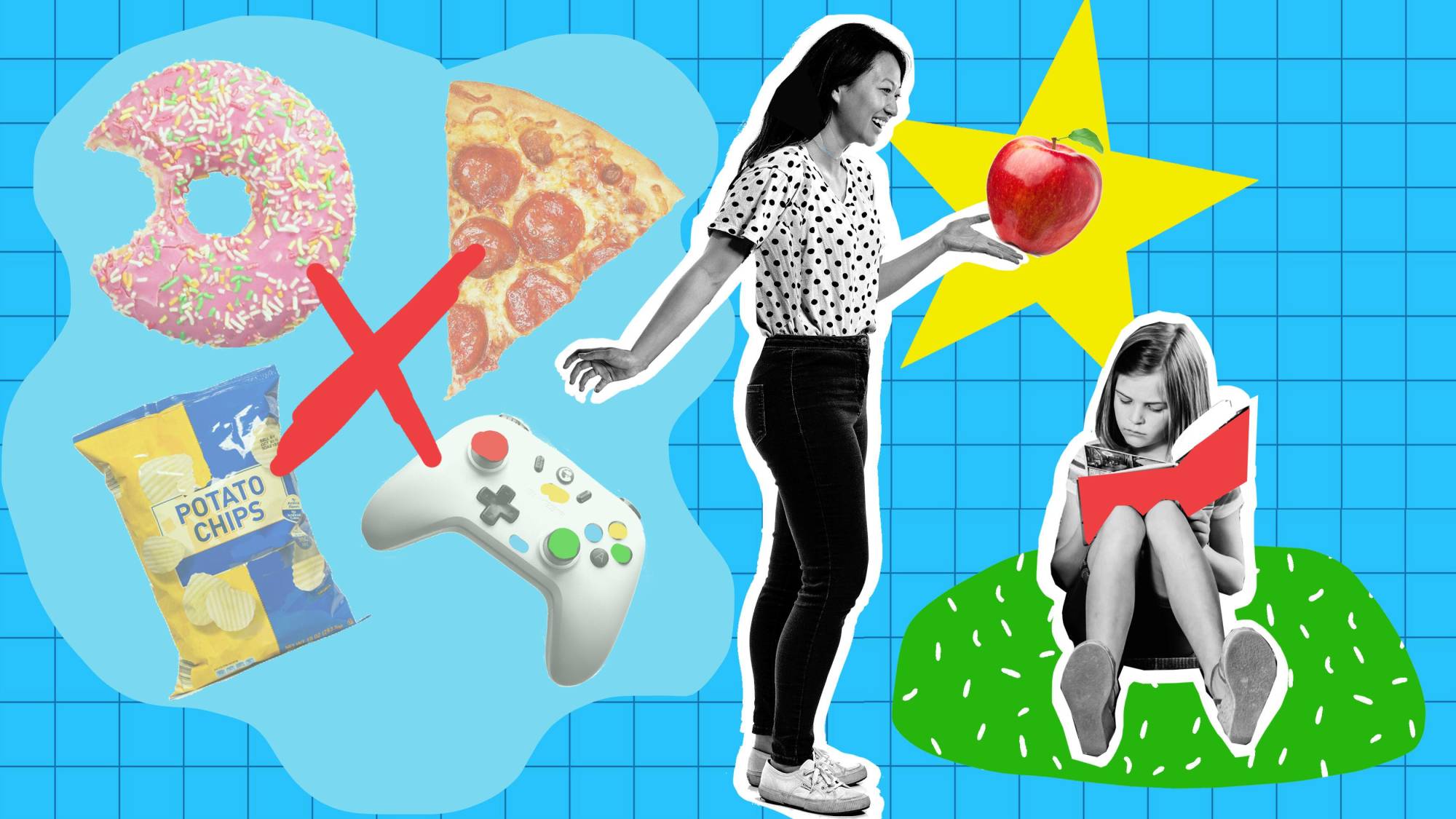
It’s Tough World. Here’s How Parents Can Raise Resilient Kids
Should Parents Not Say 'I'm So Proud of You' or 'Good Job'?
When Not Paying Attention in Class Isn’t What It Seems
How teens are experiencing their version of the ‘Great Resignation’
Intrinsic Motivation is Key to Student Achievement – But Schools Can Crush It
How to Develop a Greater Sense of Motivation in Students
Major support for MindShift comes from
Player sponsored by
window.__IS_SSR__=true
window.__INITIAL_STATE__={
"attachmentsReducer": {
"audio_0": {
"type": "attachments",
"id": "audio_0",
"imgSizes": {
"kqedFullSize": {
"file": "https://ww2.kqed.org/news/wp-content/themes/KQED-unified/img/audio_bgs/background0.jpg"
}
}
},
"audio_1": {
"type": "attachments",
"id": "audio_1",
"imgSizes": {
"kqedFullSize": {
"file": "https://ww2.kqed.org/news/wp-content/themes/KQED-unified/img/audio_bgs/background1.jpg"
}
}
},
"audio_2": {
"type": "attachments",
"id": "audio_2",
"imgSizes": {
"kqedFullSize": {
"file": "https://ww2.kqed.org/news/wp-content/themes/KQED-unified/img/audio_bgs/background2.jpg"
}
}
},
"audio_3": {
"type": "attachments",
"id": "audio_3",
"imgSizes": {
"kqedFullSize": {
"file": "https://ww2.kqed.org/news/wp-content/themes/KQED-unified/img/audio_bgs/background3.jpg"
}
}
},
"audio_4": {
"type": "attachments",
"id": "audio_4",
"imgSizes": {
"kqedFullSize": {
"file": "https://ww2.kqed.org/news/wp-content/themes/KQED-unified/img/audio_bgs/background4.jpg"
}
}
},
"placeholder": {
"type": "attachments",
"id": "placeholder",
"imgSizes": {
"thumbnail": {
"file": "https://cdn.kqed.org/wp-content/uploads/2024/12/KQED-Default-Image-816638274-2000x1333-1-160x107.jpg",
"width": 160,
"height": 107,
"mimeType": "image/jpeg"
},
"medium": {
"file": "https://cdn.kqed.org/wp-content/uploads/2024/12/KQED-Default-Image-816638274-2000x1333-1-800x533.jpg",
"width": 800,
"height": 533,
"mimeType": "image/jpeg"
},
"medium_large": {
"file": "https://cdn.kqed.org/wp-content/uploads/2024/12/KQED-Default-Image-816638274-2000x1333-1-768x512.jpg",
"width": 768,
"height": 512,
"mimeType": "image/jpeg"
},
"large": {
"file": "https://cdn.kqed.org/wp-content/uploads/2024/12/KQED-Default-Image-816638274-2000x1333-1-1020x680.jpg",
"width": 1020,
"height": 680,
"mimeType": "image/jpeg"
},
"1536x1536": {
"file": "https://cdn.kqed.org/wp-content/uploads/2024/12/KQED-Default-Image-816638274-2000x1333-1-1536x1024.jpg",
"width": 1536,
"height": 1024,
"mimeType": "image/jpeg"
},
"fd-lrg": {
"file": "https://cdn.kqed.org/wp-content/uploads/2024/12/KQED-Default-Image-816638274-2000x1333-1-1536x1024.jpg",
"width": 1536,
"height": 1024,
"mimeType": "image/jpeg"
},
"fd-med": {
"file": "https://cdn.kqed.org/wp-content/uploads/2024/12/KQED-Default-Image-816638274-2000x1333-1-1020x680.jpg",
"width": 1020,
"height": 680,
"mimeType": "image/jpeg"
},
"fd-sm": {
"file": "https://cdn.kqed.org/wp-content/uploads/2024/12/KQED-Default-Image-816638274-2000x1333-1-800x533.jpg",
"width": 800,
"height": 533,
"mimeType": "image/jpeg"
},
"post-thumbnail": {
"file": "https://cdn.kqed.org/wp-content/uploads/2024/12/KQED-Default-Image-816638274-2000x1333-1-672x372.jpg",
"width": 672,
"height": 372,
"mimeType": "image/jpeg"
},
"twentyfourteen-full-width": {
"file": "https://cdn.kqed.org/wp-content/uploads/2024/12/KQED-Default-Image-816638274-2000x1333-1-1038x576.jpg",
"width": 1038,
"height": 576,
"mimeType": "image/jpeg"
},
"xxsmall": {
"file": "https://cdn.kqed.org/wp-content/uploads/2024/12/KQED-Default-Image-816638274-2000x1333-1-160x107.jpg",
"width": 160,
"height": 107,
"mimeType": "image/jpeg"
},
"xsmall": {
"file": "https://cdn.kqed.org/wp-content/uploads/2024/12/KQED-Default-Image-816638274-2000x1333-1-672x372.jpg",
"width": 672,
"height": 372,
"mimeType": "image/jpeg"
},
"small": {
"file": "https://cdn.kqed.org/wp-content/uploads/2024/12/KQED-Default-Image-816638274-2000x1333-1-672x372.jpg",
"width": 672,
"height": 372,
"mimeType": "image/jpeg"
},
"xlarge": {
"file": "https://cdn.kqed.org/wp-content/uploads/2024/12/KQED-Default-Image-816638274-2000x1333-1-1020x680.jpg",
"width": 1020,
"height": 680,
"mimeType": "image/jpeg"
},
"full-width": {
"file": "https://cdn.kqed.org/wp-content/uploads/2024/12/KQED-Default-Image-816638274-2000x1333-1-1920x1280.jpg",
"width": 1920,
"height": 1280,
"mimeType": "image/jpeg"
},
"guest-author-32": {
"file": "https://cdn.kqed.org/wp-content/uploads/2025/01/KQED-Default-Image-816638274-1333x1333-1-160x160.jpg",
"width": 32,
"height": 32,
"mimeType": "image/jpeg"
},
"guest-author-50": {
"file": "https://cdn.kqed.org/wp-content/uploads/2025/01/KQED-Default-Image-816638274-1333x1333-1-160x160.jpg",
"width": 50,
"height": 50,
"mimeType": "image/jpeg"
},
"guest-author-64": {
"file": "https://cdn.kqed.org/wp-content/uploads/2025/01/KQED-Default-Image-816638274-1333x1333-1-160x160.jpg",
"width": 64,
"height": 64,
"mimeType": "image/jpeg"
},
"guest-author-96": {
"file": "https://cdn.kqed.org/wp-content/uploads/2025/01/KQED-Default-Image-816638274-1333x1333-1-160x160.jpg",
"width": 96,
"height": 96,
"mimeType": "image/jpeg"
},
"guest-author-128": {
"file": "https://cdn.kqed.org/wp-content/uploads/2025/01/KQED-Default-Image-816638274-1333x1333-1-160x160.jpg",
"width": 128,
"height": 128,
"mimeType": "image/jpeg"
},
"detail": {
"file": "https://cdn.kqed.org/wp-content/uploads/2025/01/KQED-Default-Image-816638274-1333x1333-1-160x160.jpg",
"width": 160,
"height": 160,
"mimeType": "image/jpeg"
},
"kqedFullSize": {
"file": "https://cdn.kqed.org/wp-content/uploads/2024/12/KQED-Default-Image-816638274-2000x1333-1.jpg",
"width": 2000,
"height": 1333
}
}
},
"mindshift_66172": {
"type": "attachments",
"id": "mindshift_66172",
"meta": {
"index": "attachments_1716263798",
"site": "mindshift",
"id": "66172",
"found": true
},
"title": "npr_willpower_Final.hi.jpg",
"publishDate": 1773111799,
"status": "inherit",
"parent": 66171,
"modified": 1773112174,
"caption": null,
"credit": "Andrea D'Aquino/NPR",
"altTag": "Illustration of a child surrounded by temptations",
"description": null,
"imgSizes": {
"medium": {
"file": "https://cdn.kqed.org/wp-content/uploads/sites/23/2026/03/npr-willpower-final-hi-2000x1125.jpeg",
"width": 2000,
"height": 1125,
"mimeType": "image/jpeg"
},
"large": {
"file": "https://cdn.kqed.org/wp-content/uploads/sites/23/2026/03/npr-willpower-final-hi-2000x1125.jpeg",
"width": 2000,
"height": 1125,
"mimeType": "image/jpeg"
},
"thumbnail": {
"file": "https://cdn.kqed.org/wp-content/uploads/sites/23/2026/03/npr-willpower-final-hi-160x90.jpeg",
"width": 160,
"height": 90,
"mimeType": "image/jpeg"
},
"medium_large": {
"file": "https://cdn.kqed.org/wp-content/uploads/sites/23/2026/03/npr-willpower-final-hi-768x432.jpeg",
"width": 768,
"height": 432,
"mimeType": "image/jpeg"
},
"1536x1536": {
"file": "https://cdn.kqed.org/wp-content/uploads/sites/23/2026/03/npr-willpower-final-hi-1536x864.jpeg",
"width": 1536,
"height": 864,
"mimeType": "image/jpeg"
},
"2048x2048": {
"file": "https://cdn.kqed.org/wp-content/uploads/sites/23/2026/03/npr-willpower-final-hi-2048x1152.jpeg",
"width": 2048,
"height": 1152,
"mimeType": "image/jpeg"
},
"post-thumbnail": {
"file": "https://cdn.kqed.org/wp-content/uploads/sites/23/2026/03/npr-willpower-final-hi-672x372.jpeg",
"width": 672,
"height": 372,
"mimeType": "image/jpeg"
},
"twentyfourteen-full-width": {
"file": "https://cdn.kqed.org/wp-content/uploads/sites/23/2026/03/npr-willpower-final-hi-1038x576.jpeg",
"width": 1038,
"height": 576,
"mimeType": "image/jpeg"
},
"full-width": {
"file": "https://cdn.kqed.org/wp-content/uploads/sites/23/2026/03/npr-willpower-final-hi-2000x1125.jpeg",
"width": 2000,
"height": 1125,
"mimeType": "image/jpeg"
},
"npr-cds-wide": {
"file": "https://cdn.kqed.org/wp-content/uploads/sites/23/2026/03/npr-willpower-final-hi-1200x675.jpeg",
"width": 1200,
"height": 675,
"mimeType": "image/jpeg"
},
"kqedFullSize": {
"file": "https://cdn.kqed.org/wp-content/uploads/sites/23/2026/03/npr-willpower-final-hi-scaled.jpeg",
"width": 2560,
"height": 1440
}
},
"isLoading": false,
"fetchFailed": false
},
"mindshift_65997": {
"type": "attachments",
"id": "mindshift_65997",
"meta": {
"index": "attachments_1716263798",
"site": "mindshift",
"id": "65997",
"found": true
},
"title": "People, fist bump and teamwork with blue sky for gratitude, appreciation or thank you in sunlight. Closeup, friends or touch with trust or lens flare below for commitment, greeting or agreement",
"publishDate": 1764654263,
"status": "inherit",
"parent": 65995,
"modified": 1764654300,
"caption": null,
"credit": "Jacob Wackerhausen/iStock",
"altTag": "Two people fist bump with sunbeams shining in background",
"description": null,
"imgSizes": {
"medium": {
"file": "https://cdn.kqed.org/wp-content/uploads/sites/23/2025/12/iStock-2223048266-2000x1055.jpg",
"width": 2000,
"height": 1055,
"mimeType": "image/jpeg"
},
"large": {
"file": "https://cdn.kqed.org/wp-content/uploads/sites/23/2025/12/iStock-2223048266-2000x1055.jpg",
"width": 2000,
"height": 1055,
"mimeType": "image/jpeg"
},
"thumbnail": {
"file": "https://cdn.kqed.org/wp-content/uploads/sites/23/2025/12/iStock-2223048266-160x84.jpg",
"width": 160,
"height": 84,
"mimeType": "image/jpeg"
},
"medium_large": {
"file": "https://cdn.kqed.org/wp-content/uploads/sites/23/2025/12/iStock-2223048266-768x405.jpg",
"width": 768,
"height": 405,
"mimeType": "image/jpeg"
},
"1536x1536": {
"file": "https://cdn.kqed.org/wp-content/uploads/sites/23/2025/12/iStock-2223048266-1536x810.jpg",
"width": 1536,
"height": 810,
"mimeType": "image/jpeg"
},
"2048x2048": {
"file": "https://cdn.kqed.org/wp-content/uploads/sites/23/2025/12/iStock-2223048266-2048x1080.jpg",
"width": 2048,
"height": 1080,
"mimeType": "image/jpeg"
},
"post-thumbnail": {
"file": "https://cdn.kqed.org/wp-content/uploads/sites/23/2025/12/iStock-2223048266-672x372.jpg",
"width": 672,
"height": 372,
"mimeType": "image/jpeg"
},
"twentyfourteen-full-width": {
"file": "https://cdn.kqed.org/wp-content/uploads/sites/23/2025/12/iStock-2223048266-1038x576.jpg",
"width": 1038,
"height": 576,
"mimeType": "image/jpeg"
},
"full-width": {
"file": "https://cdn.kqed.org/wp-content/uploads/sites/23/2025/12/iStock-2223048266-2000x1055.jpg",
"width": 2000,
"height": 1055,
"mimeType": "image/jpeg"
},
"npr-cds-wide": {
"file": "https://cdn.kqed.org/wp-content/uploads/sites/23/2025/12/iStock-2223048266-1200x675.jpg",
"width": 1200,
"height": 675,
"mimeType": "image/jpeg"
},
"kqedFullSize": {
"file": "https://cdn.kqed.org/wp-content/uploads/sites/23/2025/12/iStock-2223048266-scaled.jpg",
"width": 2560,
"height": 1350
}
},
"isLoading": false,
"fetchFailed": false
},
"mindshift_65831": {
"type": "attachments",
"id": "mindshift_65831",
"meta": {
"index": "attachments_1716263798",
"site": "mindshift",
"id": "65831",
"found": true
},
"title": "Man holding a lantern in a Quivertree forest",
"publishDate": 1758687247,
"status": "inherit",
"parent": 65829,
"modified": 1758687352,
"caption": "Quiver Tree Forest in Namibia.",
"credit": "Marco Bottigelli/Getty Images",
"altTag": "Man holding a lantern with the Milky Way in the background",
"description": null,
"imgSizes": {
"medium": {
"file": "https://cdn.kqed.org/wp-content/uploads/sites/23/2025/09/GettyImages-2172356033-2000x1333.jpg",
"width": 2000,
"height": 1333,
"mimeType": "image/jpeg"
},
"large": {
"file": "https://cdn.kqed.org/wp-content/uploads/sites/23/2025/09/GettyImages-2172356033-2000x1333.jpg",
"width": 2000,
"height": 1333,
"mimeType": "image/jpeg"
},
"thumbnail": {
"file": "https://cdn.kqed.org/wp-content/uploads/sites/23/2025/09/GettyImages-2172356033-160x107.jpg",
"width": 160,
"height": 107,
"mimeType": "image/jpeg"
},
"medium_large": {
"file": "https://cdn.kqed.org/wp-content/uploads/sites/23/2025/09/GettyImages-2172356033-768x512.jpg",
"width": 768,
"height": 512,
"mimeType": "image/jpeg"
},
"1536x1536": {
"file": "https://cdn.kqed.org/wp-content/uploads/sites/23/2025/09/GettyImages-2172356033-1536x1024.jpg",
"width": 1536,
"height": 1024,
"mimeType": "image/jpeg"
},
"2048x2048": {
"file": "https://cdn.kqed.org/wp-content/uploads/sites/23/2025/09/GettyImages-2172356033-2048x1365.jpg",
"width": 2048,
"height": 1365,
"mimeType": "image/jpeg"
},
"post-thumbnail": {
"file": "https://cdn.kqed.org/wp-content/uploads/sites/23/2025/09/GettyImages-2172356033-672x372.jpg",
"width": 672,
"height": 372,
"mimeType": "image/jpeg"
},
"twentyfourteen-full-width": {
"file": "https://cdn.kqed.org/wp-content/uploads/sites/23/2025/09/GettyImages-2172356033-1038x576.jpg",
"width": 1038,
"height": 576,
"mimeType": "image/jpeg"
},
"full-width": {
"file": "https://cdn.kqed.org/wp-content/uploads/sites/23/2025/09/GettyImages-2172356033-2000x1333.jpg",
"width": 2000,
"height": 1333,
"mimeType": "image/jpeg"
},
"kqedFullSize": {
"file": "https://cdn.kqed.org/wp-content/uploads/sites/23/2025/09/GettyImages-2172356033.jpg",
"width": 2121,
"height": 1414
}
},
"isLoading": false,
"fetchFailed": false
},
"mindshift_65551": {
"type": "attachments",
"id": "mindshift_65551",
"meta": {
"index": "attachments_1716263798",
"site": "mindshift",
"id": "65551",
"found": true
},
"title": "Purple saxifrage at rocks",
"publishDate": 1748353030,
"status": "inherit",
"parent": 65545,
"modified": 1748353125,
"caption": "Purple saxifrage flowering at gray rocks at Nordland coast, Norway.",
"credit": "Maasik/iStock",
"altTag": "Flowers growing in rocks",
"description": null,
"imgSizes": {
"medium": {
"file": "https://cdn.kqed.org/wp-content/uploads/sites/23/2025/05/iStock-472954836-800x533.jpg",
"width": 800,
"height": 533,
"mimeType": "image/jpeg"
},
"large": {
"file": "https://cdn.kqed.org/wp-content/uploads/sites/23/2025/05/iStock-472954836-1020x680.jpg",
"width": 1020,
"height": 680,
"mimeType": "image/jpeg"
},
"thumbnail": {
"file": "https://cdn.kqed.org/wp-content/uploads/sites/23/2025/05/iStock-472954836-160x107.jpg",
"width": 160,
"height": 107,
"mimeType": "image/jpeg"
},
"medium_large": {
"file": "https://cdn.kqed.org/wp-content/uploads/sites/23/2025/05/iStock-472954836-768x512.jpg",
"width": 768,
"height": 512,
"mimeType": "image/jpeg"
},
"1536x1536": {
"file": "https://cdn.kqed.org/wp-content/uploads/sites/23/2025/05/iStock-472954836-1536x1024.jpg",
"width": 1536,
"height": 1024,
"mimeType": "image/jpeg"
},
"2048x2048": {
"file": "https://cdn.kqed.org/wp-content/uploads/sites/23/2025/05/iStock-472954836-2048x1365.jpg",
"width": 2048,
"height": 1365,
"mimeType": "image/jpeg"
},
"post-thumbnail": {
"file": "https://cdn.kqed.org/wp-content/uploads/sites/23/2025/05/iStock-472954836-672x372.jpg",
"width": 672,
"height": 372,
"mimeType": "image/jpeg"
},
"twentyfourteen-full-width": {
"file": "https://cdn.kqed.org/wp-content/uploads/sites/23/2025/05/iStock-472954836-1038x576.jpg",
"width": 1038,
"height": 576,
"mimeType": "image/jpeg"
},
"full-width": {
"file": "https://cdn.kqed.org/wp-content/uploads/sites/23/2025/05/iStock-472954836-1920x1280.jpg",
"width": 1920,
"height": 1280,
"mimeType": "image/jpeg"
},
"kqedFullSize": {
"file": "https://cdn.kqed.org/wp-content/uploads/sites/23/2025/05/iStock-472954836.jpg",
"width": 2121,
"height": 1414
}
},
"isLoading": false,
"fetchFailed": false
},
"mindshift_64902": {
"type": "attachments",
"id": "mindshift_64902",
"meta": {
"index": "attachments_1716263798",
"site": "mindshift",
"id": "64902",
"found": true
},
"title": null,
"publishDate": 1729755164,
"status": "inherit",
"parent": 64898,
"modified": 1729755202,
"caption": null,
"credit": "fizkes/iStock",
"altTag": "Excited mother high-fives her child",
"description": null,
"imgSizes": {
"medium": {
"file": "https://cdn.kqed.org/wp-content/uploads/sites/23/2024/10/GettyImages-1305169691-800x533.jpg",
"width": 800,
"height": 533,
"mimeType": "image/jpeg"
},
"large": {
"file": "https://cdn.kqed.org/wp-content/uploads/sites/23/2024/10/GettyImages-1305169691-1020x680.jpg",
"width": 1020,
"height": 680,
"mimeType": "image/jpeg"
},
"thumbnail": {
"file": "https://cdn.kqed.org/wp-content/uploads/sites/23/2024/10/GettyImages-1305169691-160x107.jpg",
"width": 160,
"height": 107,
"mimeType": "image/jpeg"
},
"medium_large": {
"file": "https://cdn.kqed.org/wp-content/uploads/sites/23/2024/10/GettyImages-1305169691-768x512.jpg",
"width": 768,
"height": 512,
"mimeType": "image/jpeg"
},
"1536x1536": {
"file": "https://cdn.kqed.org/wp-content/uploads/sites/23/2024/10/GettyImages-1305169691-1536x1024.jpg",
"width": 1536,
"height": 1024,
"mimeType": "image/jpeg"
},
"2048x2048": {
"file": "https://cdn.kqed.org/wp-content/uploads/sites/23/2024/10/GettyImages-1305169691-2048x1365.jpg",
"width": 2048,
"height": 1365,
"mimeType": "image/jpeg"
},
"post-thumbnail": {
"file": "https://cdn.kqed.org/wp-content/uploads/sites/23/2024/10/GettyImages-1305169691-672x372.jpg",
"width": 672,
"height": 372,
"mimeType": "image/jpeg"
},
"twentyfourteen-full-width": {
"file": "https://cdn.kqed.org/wp-content/uploads/sites/23/2024/10/GettyImages-1305169691-1038x576.jpg",
"width": 1038,
"height": 576,
"mimeType": "image/jpeg"
},
"full-width": {
"file": "https://cdn.kqed.org/wp-content/uploads/sites/23/2024/10/GettyImages-1305169691-1920x1280.jpg",
"width": 1920,
"height": 1280,
"mimeType": "image/jpeg"
},
"kqedFullSize": {
"file": "https://cdn.kqed.org/wp-content/uploads/sites/23/2024/10/GettyImages-1305169691.jpg",
"width": 2121,
"height": 1414
}
},
"isLoading": false,
"fetchFailed": false
},
"mindshift_59182": {
"type": "attachments",
"id": "mindshift_59182",
"meta": {
"index": "attachments_1716263798",
"site": "mindshift",
"id": "59182",
"found": true
},
"parent": 59181,
"imgSizes": {
"twentyfourteen-full-width": {
"file": "https://ww2.kqed.org/app/uploads/sites/23/2022/03/IMG_0780-e1647326478404-1038x576.jpg",
"width": 1038,
"mimeType": "image/jpeg",
"height": 576
},
"thumbnail": {
"file": "https://ww2.kqed.org/app/uploads/sites/23/2022/03/IMG_0780-e1647326478404-160x132.jpg",
"width": 160,
"mimeType": "image/jpeg",
"height": 132
},
"post-thumbnail": {
"file": "https://ww2.kqed.org/app/uploads/sites/23/2022/03/IMG_0780-e1647326478404-672x372.jpg",
"width": 672,
"mimeType": "image/jpeg",
"height": 372
},
"kqedFullSize": {
"file": "https://ww2.kqed.org/app/uploads/sites/23/2022/03/IMG_0780-e1647326478404.jpg",
"width": 1536,
"height": 1264
},
"large": {
"file": "https://ww2.kqed.org/app/uploads/sites/23/2022/03/IMG_0780-e1647326478404-1020x839.jpg",
"width": 1020,
"mimeType": "image/jpeg",
"height": 839
},
"1536x1536": {
"file": "https://ww2.kqed.org/app/uploads/sites/23/2022/03/IMG_0780-1152x1536.jpg",
"width": 1152,
"mimeType": "image/jpeg",
"height": 1536
},
"medium": {
"file": "https://ww2.kqed.org/app/uploads/sites/23/2022/03/IMG_0780-e1647326478404-800x658.jpg",
"width": 800,
"mimeType": "image/jpeg",
"height": 658
},
"medium_large": {
"file": "https://ww2.kqed.org/app/uploads/sites/23/2022/03/IMG_0780-e1647326478404-768x632.jpg",
"width": 768,
"mimeType": "image/jpeg",
"height": 632
}
},
"publishDate": 1647326370,
"modified": 1647326548,
"caption": "Nick Belsaguy and Jacob Johnson",
"description": null,
"title": "IMG_0780",
"credit": "Courtesy of Jacob Johnson",
"status": "inherit",
"altTag": "Student Nick Belsaguy and teacher Jacob Johnson",
"isLoading": false,
"fetchFailed": false
},
"mindshift_58975": {
"type": "attachments",
"id": "mindshift_58975",
"meta": {
"index": "attachments_1716263798",
"site": "mindshift",
"id": "58975",
"found": true
},
"parent": 58972,
"imgSizes": {
"twentyfourteen-full-width": {
"file": "https://ww2.kqed.org/app/uploads/sites/23/2022/01/IMG_20201231_121902_mh1627255188496-1038x576.jpg",
"width": 1038,
"mimeType": "image/jpeg",
"height": 576
},
"thumbnail": {
"file": "https://ww2.kqed.org/app/uploads/sites/23/2022/01/IMG_20201231_121902_mh1627255188496-160x90.jpg",
"width": 160,
"mimeType": "image/jpeg",
"height": 90
},
"post-thumbnail": {
"file": "https://ww2.kqed.org/app/uploads/sites/23/2022/01/IMG_20201231_121902_mh1627255188496-672x372.jpg",
"width": 672,
"mimeType": "image/jpeg",
"height": 372
},
"kqedFullSize": {
"file": "https://ww2.kqed.org/app/uploads/sites/23/2022/01/IMG_20201231_121902_mh1627255188496-scaled-e1642993964317.jpg",
"width": 1920,
"height": 1080
},
"2048x2048": {
"file": "https://ww2.kqed.org/app/uploads/sites/23/2022/01/IMG_20201231_121902_mh1627255188496-2048x1152.jpg",
"width": 2048,
"mimeType": "image/jpeg",
"height": 1152
},
"large": {
"file": "https://ww2.kqed.org/app/uploads/sites/23/2022/01/IMG_20201231_121902_mh1627255188496-1020x574.jpg",
"width": 1020,
"mimeType": "image/jpeg",
"height": 574
},
"1536x1536": {
"file": "https://ww2.kqed.org/app/uploads/sites/23/2022/01/IMG_20201231_121902_mh1627255188496-1536x864.jpg",
"width": 1536,
"mimeType": "image/jpeg",
"height": 864
},
"full-width": {
"file": "https://ww2.kqed.org/app/uploads/sites/23/2022/01/IMG_20201231_121902_mh1627255188496-1920x1080.jpg",
"width": 1920,
"mimeType": "image/jpeg",
"height": 1080
},
"medium": {
"file": "https://ww2.kqed.org/app/uploads/sites/23/2022/01/IMG_20201231_121902_mh1627255188496-800x450.jpg",
"width": 800,
"mimeType": "image/jpeg",
"height": 450
},
"medium_large": {
"file": "https://ww2.kqed.org/app/uploads/sites/23/2022/01/IMG_20201231_121902_mh1627255188496-768x432.jpg",
"width": 768,
"mimeType": "image/jpeg",
"height": 432
}
},
"publishDate": 1642993722,
"modified": 1642994736,
"caption": "Student Melody Dao created the \"Study Break\" podcast during the pandemic as she was reassessing what was important to her. ",
"description": null,
"title": "IMG_20201231_121902_mh1627255188496",
"credit": null,
"status": "inherit",
"altTag": null,
"isLoading": false,
"fetchFailed": false
},
"mindshift_53340": {
"type": "attachments",
"id": "mindshift_53340",
"meta": {
"index": "attachments_1716263798",
"site": "mindshift",
"id": "53340",
"found": true
},
"parent": 53337,
"imgSizes": {
"twentyfourteen-full-width": {
"file": "https://ww2.kqed.org/app/uploads/sites/23/2019/03/Tara-Garcia-Mathewson-Met3-1038x576.jpg",
"width": 1038,
"mimeType": "image/jpeg",
"height": 576
},
"thumbnail": {
"file": "https://ww2.kqed.org/app/uploads/sites/23/2019/03/Tara-Garcia-Mathewson-Met3-160x90.jpg",
"width": 160,
"mimeType": "image/jpeg",
"height": 90
},
"post-thumbnail": {
"file": "https://ww2.kqed.org/app/uploads/sites/23/2019/03/Tara-Garcia-Mathewson-Met3-672x372.jpg",
"width": 672,
"mimeType": "image/jpeg",
"height": 372
},
"kqedFullSize": {
"file": "https://ww2.kqed.org/app/uploads/sites/23/2019/03/Tara-Garcia-Mathewson-Met3-e1553668020560.jpg",
"width": 1920,
"height": 1080
},
"large": {
"file": "https://ww2.kqed.org/app/uploads/sites/23/2019/03/Tara-Garcia-Mathewson-Met3-1020x574.jpg",
"width": 1020,
"mimeType": "image/jpeg",
"height": 574
},
"complete_open_graph": {
"file": "https://ww2.kqed.org/app/uploads/sites/23/2019/03/Tara-Garcia-Mathewson-Met3-1200x675.jpg",
"width": 1200,
"mimeType": "image/jpeg",
"height": 675
},
"guest-author-50": {
"file": "https://ww2.kqed.org/app/uploads/sites/23/2019/03/Tara-Garcia-Mathewson-Met3-50x50.jpg",
"width": 50,
"mimeType": "image/jpeg",
"height": 50
},
"guest-author-96": {
"file": "https://ww2.kqed.org/app/uploads/sites/23/2019/03/Tara-Garcia-Mathewson-Met3-96x96.jpg",
"width": 96,
"mimeType": "image/jpeg",
"height": 96
},
"medium": {
"file": "https://ww2.kqed.org/app/uploads/sites/23/2019/03/Tara-Garcia-Mathewson-Met3-800x450.jpg",
"width": 800,
"mimeType": "image/jpeg",
"height": 450
},
"guest-author-64": {
"file": "https://ww2.kqed.org/app/uploads/sites/23/2019/03/Tara-Garcia-Mathewson-Met3-64x64.jpg",
"width": 64,
"mimeType": "image/jpeg",
"height": 64
},
"guest-author-32": {
"file": "https://ww2.kqed.org/app/uploads/sites/23/2019/03/Tara-Garcia-Mathewson-Met3-32x32.jpg",
"width": 32,
"mimeType": "image/jpeg",
"height": 32
},
"full-width": {
"file": "https://ww2.kqed.org/app/uploads/sites/23/2019/03/Tara-Garcia-Mathewson-Met3-1920x1080.jpg",
"width": 1920,
"mimeType": "image/jpeg",
"height": 1080
},
"medium_large": {
"file": "https://ww2.kqed.org/app/uploads/sites/23/2019/03/Tara-Garcia-Mathewson-Met3-768x432.jpg",
"width": 768,
"mimeType": "image/jpeg",
"height": 432
},
"guest-author-128": {
"file": "https://ww2.kqed.org/app/uploads/sites/23/2019/03/Tara-Garcia-Mathewson-Met3-128x128.jpg",
"width": 128,
"mimeType": "image/jpeg",
"height": 128
}
},
"publishDate": 1553667874,
"modified": 1553668062,
"caption": "Sarah McCaffrey, a sophomore at The Met, has long been interested in marine science, a topic she gets to explore through internships, including one at the New England Aquarium. ",
"description": null,
"title": "Tara Garcia Mathewson - Met3",
"credit": "Tara García Mathewson/The Hechinger Report",
"status": "inherit",
"isLoading": false,
"fetchFailed": false
},
"mindshift_53260": {
"type": "attachments",
"id": "mindshift_53260",
"meta": {
"index": "attachments_1716263798",
"site": "mindshift",
"id": "53260",
"found": true
},
"parent": 53256,
"imgSizes": {
"twentyfourteen-full-width": {
"file": "https://ww2.kqed.org/app/uploads/sites/23/2019/03/iStock-875575022-1038x576.jpg",
"width": 1038,
"mimeType": "image/jpeg",
"height": 576
},
"thumbnail": {
"file": "https://ww2.kqed.org/app/uploads/sites/23/2019/03/iStock-875575022-160x107.jpg",
"width": 160,
"mimeType": "image/jpeg",
"height": 107
},
"post-thumbnail": {
"file": "https://ww2.kqed.org/app/uploads/sites/23/2019/03/iStock-875575022-672x372.jpg",
"width": 672,
"mimeType": "image/jpeg",
"height": 372
},
"kqedFullSize": {
"file": "https://ww2.kqed.org/app/uploads/sites/23/2019/03/iStock-875575022-e1552457916622.jpg",
"width": 1920,
"height": 1281
},
"large": {
"file": "https://ww2.kqed.org/app/uploads/sites/23/2019/03/iStock-875575022-1020x681.jpg",
"width": 1020,
"mimeType": "image/jpeg",
"height": 681
},
"complete_open_graph": {
"file": "https://ww2.kqed.org/app/uploads/sites/23/2019/03/iStock-875575022-1200x801.jpg",
"width": 1200,
"mimeType": "image/jpeg",
"height": 801
},
"guest-author-50": {
"file": "https://ww2.kqed.org/app/uploads/sites/23/2019/03/iStock-875575022-50x50.jpg",
"width": 50,
"mimeType": "image/jpeg",
"height": 50
},
"guest-author-96": {
"file": "https://ww2.kqed.org/app/uploads/sites/23/2019/03/iStock-875575022-96x96.jpg",
"width": 96,
"mimeType": "image/jpeg",
"height": 96
},
"medium": {
"file": "https://ww2.kqed.org/app/uploads/sites/23/2019/03/iStock-875575022-800x534.jpg",
"width": 800,
"mimeType": "image/jpeg",
"height": 534
},
"guest-author-64": {
"file": "https://ww2.kqed.org/app/uploads/sites/23/2019/03/iStock-875575022-64x64.jpg",
"width": 64,
"mimeType": "image/jpeg",
"height": 64
},
"guest-author-32": {
"file": "https://ww2.kqed.org/app/uploads/sites/23/2019/03/iStock-875575022-32x32.jpg",
"width": 32,
"mimeType": "image/jpeg",
"height": 32
},
"full-width": {
"file": "https://ww2.kqed.org/app/uploads/sites/23/2019/03/iStock-875575022-1920x1281.jpg",
"width": 1920,
"mimeType": "image/jpeg",
"height": 1281
},
"medium_large": {
"file": "https://ww2.kqed.org/app/uploads/sites/23/2019/03/iStock-875575022-768x512.jpg",
"width": 768,
"mimeType": "image/jpeg",
"height": 512
},
"guest-author-128": {
"file": "https://ww2.kqed.org/app/uploads/sites/23/2019/03/iStock-875575022-128x128.jpg",
"width": 128,
"mimeType": "image/jpeg",
"height": 128
}
},
"publishDate": 1552457855,
"modified": 1552457910,
"caption": null,
"description": null,
"title": "Student motivation can be a challenge",
"credit": "iStock/MachineHeadz",
"status": "inherit",
"isLoading": false,
"fetchFailed": false
}
},
"audioPlayerReducer": {
"postId": "stream_live",
"isPaused": true,
"isPlaying": false,
"pfsActive": false,
"pledgeModalIsOpen": true,
"playerDrawerIsOpen": false,
"liveAudioPlayStartedAt": 0,
"liveAudioPlayContext": ""
},
"authorsReducer": {
"byline_mindshift_66171": {
"type": "authors",
"id": "byline_mindshift_66171",
"meta": {
"override": true
},
"slug": "byline_mindshift_66171",
"name": "Michaeleen Doucleff",
"isLoading": false
},
"byline_mindshift_65829": {
"type": "authors",
"id": "byline_mindshift_65829",
"meta": {
"override": true
},
"slug": "byline_mindshift_65829",
"name": "Cara Goodwin, \u003ca href=\"https://parentingtranslator.org\">The Parenting Translator\u003c/a>",
"isLoading": false
},
"byline_mindshift_64898": {
"type": "authors",
"id": "byline_mindshift_64898",
"meta": {
"override": true
},
"slug": "byline_mindshift_64898",
"name": "Cara Goodwin, \u003ca href=\"https://parentingtranslator.org\">The Parenting Translator\u003c/a>",
"isLoading": false
},
"byline_mindshift_53337": {
"type": "authors",
"id": "byline_mindshift_53337",
"meta": {
"override": true
},
"slug": "byline_mindshift_53337",
"name": "\u003ca href=\"https://hechingerreport.org/\">Tara García Mathewson, The Hechinger Report\u003c/a>",
"isLoading": false
},
"byline_mindshift_53256": {
"type": "authors",
"id": "byline_mindshift_53256",
"meta": {
"override": true
},
"slug": "byline_mindshift_53256",
"name": "\u003ca href=\"https://www.gse.harvard.edu/\">Grace Tatter, Usable Knowledge\u003c/a>",
"isLoading": false
},
"lindaflan": {
"type": "authors",
"id": "4613",
"meta": {
"index": "authors_1716337520",
"id": "4613",
"found": true
},
"name": "Linda Flanagan",
"firstName": "Linda",
"lastName": "Flanagan",
"slug": "lindaflan",
"email": "lindaflan@comcast.net",
"display_author_email": false,
"staff_mastheads": [],
"title": null,
"bio": "Linda Flanagan is a freelance writer, researcher, and editor. Her work has appeared in The Atlantic, The Wall St. Journal, Newsweek, Running Times, and Mind/Shift, and she blogs regularly for the Huffington Post. Linda writes about education, culture, athletics, youth sports, mental health, politics, college admissions, and other curiosities. She also reviews books and conducts interviews.",
"avatar": "https://secure.gravatar.com/avatar/6bca04c0736bf5eaea80654019de688f?s=600&d=blank&r=g",
"twitter": "LindaFlanagan2",
"facebook": null,
"instagram": null,
"linkedin": null,
"sites": [
{
"site": "mindshift",
"roles": [
"contributor"
]
}
],
"headData": {
"title": "Linda Flanagan | KQED",
"description": null,
"ogImgSrc": "https://secure.gravatar.com/avatar/6bca04c0736bf5eaea80654019de688f?s=600&d=blank&r=g",
"twImgSrc": "https://secure.gravatar.com/avatar/6bca04c0736bf5eaea80654019de688f?s=600&d=blank&r=g"
},
"isLoading": false,
"link": "/author/lindaflan"
},
"kdnewhouse": {
"type": "authors",
"id": "11487",
"meta": {
"index": "authors_1716337520",
"id": "11487",
"found": true
},
"name": "Kara Newhouse",
"firstName": "Kara",
"lastName": "Newhouse",
"slug": "kdnewhouse",
"email": "knewhouse@kqed.org",
"display_author_email": false,
"staff_mastheads": [],
"title": "MindShift Editor",
"bio": null,
"avatar": "https://secure.gravatar.com/avatar/3dceed6fb271527113abfa9a8e9df34e?s=600&d=blank&r=g",
"twitter": null,
"facebook": null,
"instagram": null,
"linkedin": null,
"sites": [
{
"site": "",
"roles": [
"editor"
]
},
{
"site": "mindshift",
"roles": []
}
],
"headData": {
"title": "Kara Newhouse | KQED",
"description": "MindShift Editor",
"ogImgSrc": "https://secure.gravatar.com/avatar/3dceed6fb271527113abfa9a8e9df34e?s=600&d=blank&r=g",
"twImgSrc": "https://secure.gravatar.com/avatar/3dceed6fb271527113abfa9a8e9df34e?s=600&d=blank&r=g"
},
"isLoading": false,
"link": "/author/kdnewhouse"
},
"csmith": {
"type": "authors",
"id": "11603",
"meta": {
"index": "authors_1716337520",
"id": "11603",
"found": true
},
"name": "Caroline Smith",
"firstName": "Caroline",
"lastName": "Smith",
"slug": "csmith",
"email": "csmith@kqed.org",
"display_author_email": true,
"staff_mastheads": [
"news"
],
"title": "Producer, Forum",
"bio": "Caroline Smith is a producer for \u003cem>Forum\u003c/em>, producing more than 500 segments since joining the team in 2019 as an intern. From the Bay Area, Smith graduated with a B.A. in Rhetoric from UC Berkeley and is an alumnus of \u003cem>The Daily Californian.\u003c/em> They have received multiple San Francisco Press Club awards, a Fulbright scholarship and the ICFJ's Arthur F. Burns Fellowship, through which they reported from Berlin for one of Germany's largest national newspapers.",
"avatar": "https://secure.gravatar.com/avatar/36b81e5f708f5bf91084149f95da8754?s=600&d=blank&r=g",
"twitter": null,
"bluesky": null,
"facebook": null,
"instagram": null,
"linkedin": null,
"sites": [
{
"site": "arts",
"roles": [
"editor"
]
},
{
"site": "news",
"roles": [
"author"
]
},
{
"site": "mindshift",
"roles": [
"editor"
]
},
{
"site": "forum",
"roles": [
"administrator"
]
},
{
"site": "perspectives",
"roles": [
"editor"
]
}
],
"headData": {
"title": "Caroline Smith | KQED",
"description": "Producer, Forum",
"ogImgSrc": "https://secure.gravatar.com/avatar/36b81e5f708f5bf91084149f95da8754?s=600&d=blank&r=g",
"twImgSrc": "https://secure.gravatar.com/avatar/36b81e5f708f5bf91084149f95da8754?s=600&d=blank&r=g"
},
"isLoading": false,
"link": "/author/csmith"
},
"mjacksonretondo": {
"type": "authors",
"id": "11759",
"meta": {
"index": "authors_1716337520",
"id": "11759",
"found": true
},
"name": "Marlena Jackson-Retondo",
"firstName": "Marlena",
"lastName": "Jackson-Retondo",
"slug": "mjacksonretondo",
"email": "mjacksonretondo@kqed.org",
"display_author_email": false,
"staff_mastheads": [],
"title": "Engagement Producer",
"bio": "Marlena Jackson-Retondo is the engagement producer for KQED's \u003cem>Forum \u003c/em>and \u003cem>Mindshift\u003c/em>. Prior to joining the team in 2022, Marlena was an intern with the KQED Digital News Engagement team. She grew up in the Bay Area.\u003cem> \u003c/em>",
"avatar": "https://secure.gravatar.com/avatar/94ab429312e9a676559e31d1894130df?s=600&d=blank&r=g",
"twitter": null,
"facebook": null,
"instagram": null,
"linkedin": null,
"sites": [
{
"site": "arts",
"roles": [
"editor"
]
},
{
"site": "news",
"roles": [
"contributor"
]
},
{
"site": "mindshift",
"roles": [
"editor"
]
},
{
"site": "forum",
"roles": [
"editor"
]
}
],
"headData": {
"title": "Marlena Jackson-Retondo | KQED",
"description": "Engagement Producer",
"ogImgSrc": "https://secure.gravatar.com/avatar/94ab429312e9a676559e31d1894130df?s=600&d=blank&r=g",
"twImgSrc": "https://secure.gravatar.com/avatar/94ab429312e9a676559e31d1894130df?s=600&d=blank&r=g"
},
"isLoading": false,
"link": "/author/mjacksonretondo"
}
},
"pagesReducer": {
"mindshift_tag_intrinsic-motivation": {
"type": "terms",
"id": "mindshift_20772",
"meta": {
"index": "terms_1716263798",
"site": "mindshift",
"id": "20772",
"score": 10.398907
},
"featImg": null,
"name": "intrinsic motivation",
"description": null,
"taxonomy": "tag",
"headData": {
"twImgId": null,
"twTitle": null,
"ogTitle": null,
"ogImgId": null,
"twDescription": null,
"description": null,
"title": "intrinsic motivation Archives | KQED Mindshift",
"ogDescription": null
},
"ttid": 20049,
"slug": "intrinsic-motivation",
"isLoading": false,
"title": "intrinsic motivation",
"pageMeta": {
"site": "mindshift",
"WpPageTemplate": "page-topic-editorial"
},
"blocks": [
{
"blockName": "kqed/post-list",
"attrs": {
"layout": "cardArticle2",
"query": "posts/mindshift?tag=intrinsic-motivation",
"seeMore": true
}
},
{
"blockName": "kqed/ad"
}
]
}
},
"pfsSessionReducer": {},
"postsReducer": {
"stream_live": {
"type": "live",
"id": "stream_live",
"audioUrl": "https://streams.kqed.org/kqedradio",
"title": "Live Stream",
"excerpt": "Live Stream information currently unavailable.",
"link": "/radio",
"featImg": "",
"label": {
"name": "KQED Live",
"link": "/"
}
},
"stream_kqedNewscast": {
"type": "posts",
"id": "stream_kqedNewscast",
"audioUrl": "https://www.kqed.org/.stream/anon/radio/RDnews/newscast.mp3?_=1",
"title": "KQED Newscast",
"featImg": "",
"label": {
"name": "88.5 FM",
"link": "/"
}
},
"mindshift_66171": {
"type": "posts",
"id": "mindshift_66171",
"meta": {
"index": "posts_1716263798",
"site": "mindshift",
"id": "66171",
"score": null,
"sort": [
1773140427000
]
},
"guestAuthors": [],
"slug": "why-the-focus-on-willpower-backfires-with-kids",
"title": "Why the Focus on Willpower Backfires with Kids",
"publishDate": 1773140427,
"format": "standard",
"headTitle": "Why the Focus on Willpower Backfires with Kids | KQED",
"labelTerm": {
"term": 21847,
"site": "mindshift"
},
"content": "\u003cp>For decades, psychologists believed willpower was the ticket to a good life.\u003c/p>\n\u003cp>“It was thought that people with better willpower would be more successful,” says psychologist\u003ca href=\"https://carleton.ca/psychology/people/marina-milyavskaya/\" target=\"_blank\" rel=\"noopener\"> Marina Milyavskaya\u003c/a> at Carleton University, in Ottawa, Canada.\u003c/p>\n\u003cp>Hundreds of studies appeared to support this idea. Researchers found links between better willpower and \u003ca href=\"https://pubmed.ncbi.nlm.nih.gov/15016066/\" target=\"_blank\" rel=\"noopener\">better grades\u003c/a> in school,\u003ca href=\"https://pubmed.ncbi.nlm.nih.gov/11519931/\" target=\"_blank\" rel=\"noopener\"> better relationships \u003c/a>and careers as adults, \u003ca href=\"https://pubmed.ncbi.nlm.nih.gov/27329604/\" target=\"_blank\" rel=\"noopener\">healthier diets\u003c/a> and even more\u003ca href=\"https://pmc.ncbi.nlm.nih.gov/articles/PMC2861800/\" target=\"_blank\" rel=\"noopener\"> consistent parenting\u003c/a>.\u003c/p>\n\u003cp>So psychologists and parenting experts advised parents to teach children to use willpower to\u003ca href=\"https://www.npr.org/2026/03/06/nx-s1-5737901/dopamine-kids-parenting-screens\" target=\"_blank\" rel=\"noopener\"> resist modern temptations,\u003c/a> such as sweets, fast food, video games, phones and other screens.\u003c/p>\n\u003cp>But in the past 15 years, Milyavskaya and other psychologists have dug deeper into the studies, and they uncovered a major flaw: These studies weren’t actually measuring willpower but a different skill — the ability to avoid temptation in the first place.\u003c/p>\n\u003cp>[ad fullwidth]\u003c/p>\n\u003cp>And in the process, they’ve found easier and more effective ways for parents to handle the \u003ca href=\"https://www.npr.org/sections/health-shots/2023/07/12/1187130983/smartphone-tween-safe-alternatives\" target=\"_blank\" rel=\"noopener\">tsunami of temptations\u003c/a> in children’s lives.\u003c/p>\n\u003ch2>Focusing on willpower can backfire\u003c/h2>\n\u003cp>Willpower is the ability to resist a temptation right in front of you, Milyavskaya says. “It’s the idea of effortful resistance of temptation.” For example, your ability to say no to a fast-food cheeseburger for dinner and choose baked salmon instead. Or to resist the video game and finish your homework.\u003c/p>\n\u003cp>“Fifteen to 20 years ago, it was thought you could train willpower,” she adds, by building a child’s ability to resist temptations the way athletes build up muscles — through practice. Let children play video games each day and teach them to stop after one hour, for example. Or expose your children to “forbidden” foods, such as chips, cookies and soda, so they can learn to self-regulate and not gobble up too many.\u003c/p>\n\u003cp>“There was this idea that if you’re exposed to junk food more, you’re going to resist it better,” says \u003ca href=\"https://michaelinzlicht.com/\" target=\"_blank\" rel=\"noopener\">Michael Inzlicht\u003c/a>, a professor of psychology at the University of Toronto. But there was one big problem with this approach: It doesn’t work for very long. “Evidence from my lab and other people’s labs suggests that it’s not gonna help you in the long term.”\u003c/p>\n\u003cfigure class=\"wp-block-embed npr-promo-card insettwocolumn\">\n\u003cdiv class=\"wp-block-embed__wrapper\">\u003c/div>\n\u003c/figure>\n\u003cp>In fact, he says, trying to build up kids’ willpower actually backfires. By offering children temptations regularly, parents are teaching kids to prefer and want these foods and activities. “Guess what the kids are going to like?” Inzlicht asks. “Fatty foods and sweet foods because that’s what we’re programmed to like,” he says.\u003c/p>\n\u003ch2>New strategies for modern temptations\u003c/h2>\n\u003cp>The original studies on willpower relied on surveys or questionnaires to measure a person’s self-control and their success in life. Researchers assumed these questionnaires measured a person’s willpower — the ability to resist temptations in front of you.\u003c/p>\n\u003cp>But in the early 2010s, psychologists decided to stop relying on surveys and, instead, study \u003ca href=\"https://psycnet.apa.org/record/2011-28783-001\" target=\"_blank\" rel=\"noopener\">what people do\u003c/a> in real life to meet their long-term goals. These studies\u003ca href=\"https://journals.sagepub.com/doi/abs/10.1177/1948550616679237\" target=\"_blank\" rel=\"noopener\"> revealed a surprise\u003c/a>, Inzlicht says. The more successful people didn’t have better willpower compared to those who were less successful. Instead, successful people set up their lives so they didn’t need to use willpower frequently. They exposed themselves to fewer temptations.\u003c/p>\n\u003cp>And this is the strategy parents should be teaching their children, says Wendy Wood, a\u003ca href=\"https://dornsife.usc.edu/wendy-wood/\" target=\"_blank\" rel=\"noopener\"> professor emerita of psychology\u003c/a> at the University of Southern California. “Teach them how to choose situations that reduce the likelihood of doing things that aren’t good for them. Teach them how to control the temptations,” Wood says.\u003c/p>\n\u003cp>In essence, parents don’t need to teach kids how to say “no” to the marshmallow sitting in front of them — like in the \u003ca href=\"https://www.npr.org/sections/goatsandsoda/2017/07/03/534743719/want-to-teach-your-kids-self-control-ask-a-cameroonian-farmer\" target=\"_blank\" rel=\"noopener\">infamous Stanford study \u003c/a>— but rather, learn “how to put a pie pan over the marshmallow,” Wood says. Or how to avoid being in a room with marshmallows.\u003c/p>\n\u003cp>“For example, parents can teach kids to leave their phone in another room when they’re studying,” Wood says, or to use apps that block distracting websites and games. They can teach kids how to keep sweets and ultra-processed foods out of the house and out of their backpack or car. In other words, parents can create times and places in children’s life where distractions or temptations aren’t an option at all — and show them how they can implement this strategy themselves.\u003c/p>\n\u003ch2>Learn to love what’s good for you\u003c/h2>\n\u003cp>The great thing, Wood says, is that parents can help kids fall in love with the healthier alternatives — to love salmon and bok choy at dinner, love playing outside with friends, or love working hard in school.\u003c/p>\n\u003cp>“Your kids’ choices are malleable, and it’s really influenced in part by what they’re exposed to,” she says. “You can truly learn to like the things that are good for you.”\u003c/p>\n\u003cp>To shape their preferences, she says, give your kids oodles of opportunities to experience the pleasure of these healthy options. For example, Wood wanted to teach her kids to love reading. So she kept books in the car and her purse. “I like to eat out at nice restaurants, and I would take my kids along.” While waiting at the restaurant, the only option they had was to read. And so they built a habit of reading. “Today my kids are still wild readers.”\u003c/p>\n\u003cp>Finally, Carleton University’s \u003ca href=\"https://carleton.ca/psychology/people/marina-milyavskaya/\" target=\"_blank\" rel=\"noopener\">Marina Milyavskaya\u003c/a> says, pay attention to how you talk about healthy foods and activities. Don’t present them as burdens, sacrifices or punishments. Instead, focus on how good these foods taste or how fun an activity offline is.\u003ca href=\"https://sparqtools.org/edgyveggies-research/\" target=\"_blank\" rel=\"noopener\"> Studies have found \u003c/a>that our language shapes our preference for foods, as well as how much we eat them.\u003c/p>\n\u003cp>“Whether it’s eating healthier food or going to the gym, if you make the activity more fun in the moment, then you’re more likely to do it again,” Milyavskaya says.\u003c/p>\n\u003cp>So if you want your child to love salmon, talk about how great it tastes with yummy, garlicky soy sauce and wild rice. And how great it makes you feel right after eating it. Something that a frozen ultra-processed dinner won’t do.\u003c/p>\n\u003cp>[ad floatright]\u003c/p>\n\u003cp>\u003cem>Michaeleen Doucleff has a Ph.D. in chemistry and is a longtime science journalist (including previously for NPR). She has a new parenting book out called \u003c/em>\u003ca href=\"https://www.npr.org/2026/03/06/nx-s1-5737901/dopamine-kids-parenting-screens\" target=\"_blank\" rel=\"noopener\">\u003cem>Dopamine Kids.\u003c/em>\u003c/a>\u003c/p>\n\u003cdiv class=\"npr-transcript\">\n\u003cp>\u003cstrong>Transcript:\u003c/strong>\u003c/p>\n\u003cp>STEVE INSKEEP, HOST:\u003c/p>\n\u003cp>We have some advice about how to help children handle unhealthy habits like eating too many sugary treats or spending too much time on that addictive device in your hand. For decades, psychologists have encouraged parents to help kids build up willpower. Our friend Michaeleen Doucleff reports that some now see a better strategy.\u003c/p>\n\u003cp>MICHAELEEN DOUCLEFF, BYLINE: In a nutshell, willpower is the ability to resist a temptation right in front of you – your ability to say no to a fast food cheeseburger and choose baked salmon instead, or to resist the video game and finish your homework.\u003c/p>\n\u003cp>MARINA MILYAVSKAYA: A fruitful resistance of temptation.\u003c/p>\n\u003cp>DOUCLEFF: That’s Marina Milyavskaya. She’s a psychologist at Carleton University in Ottawa, Canada. She says scientists once thought that having a lot of willpower was the ticket to a good life.\u003c/p>\n\u003cp>MILYAVSKAYA: People with better willpower would be kind of more successful in life.\u003c/p>\n\u003cp>DOUCLEFF: They were more likely to get better grades, have better relationships, even eat healthier diets. Parents have been told to build up their kids’ willpower the way athletes build up muscles, through practice. Let children play video games every day and teach them to stop after 1 hour. Expose your children to sugary and junk food, then teach them how to resist them. But Michael Inzlicht at the University of Toronto says…\u003c/p>\n\u003cp>MICHAEL INZLICHT: Evidence from my lab and other people’s labs suggests that it’s not going to help you for the long term.\u003c/p>\n\u003cp>DOUCLEFF: In fact, he says, there’s accumulating evidence that trying to build up kids’ willpower actually backfires. By offering children temptations regularly, parents are teaching kids to prefer and want these foods and activities.\u003c/p>\n\u003cp>INZLICHT: And guess what the kids are going to like? Fatty foods and sweet foods because that’s what we’re programmed to like.\u003c/p>\n\u003cp>DOUCLEFF: So what strategies do work for modern foods and technologies? Wendy Wood is a professor emerita of psychology at the University of Southern California. She says the better strategy is to teach kids to set up their lives so they don’t need to use willpower.\u003c/p>\n\u003cp>WENDY WOOD: How to choose situations that reduce the likelihood of doing things that aren’t good for them, how to control the temptations.\u003c/p>\n\u003cp>DOUCLEFF: And you do that by creating times and places in your life where temptations aren’t an option at all.\u003c/p>\n\u003cp>WOOD: How do you learn, when you’re studying, to leave your phone in another room?\u003c/p>\n\u003cp>DOUCLEFF: You learn to use apps that block distracting websites and games. You learn to keep sweets and ultra-processed foods out of your house and out of your backpack or car. And, Wood says, parents can teach kids to love the healthier alternative.\u003c/p>\n\u003cp>WOOD: Your kids’ choices are malleable. And it’s really influenced, in part, by what they’re exposed to.\u003c/p>\n\u003cp>DOUCLEFF: Give them oodles of opportunities to experience the pleasure of these healthy options. And don’t talk about the healthy options as a burden or a punishment. Studies show that if you celebrate and enjoy the healthy foods and activities, you grow to love them.\u003c/p>\n\u003cp>WOOD: You can truly learn to like the things that are good for you.\u003c/p>\n\u003cp>DOUCLEFF: So if you want your child to love salmon, talk about how great it tastes with yummy, garlicky soy sauce, and how great you feel after eating it, something that a frozen, ultra-processed dinner can’t do.\u003c/p>\n\u003cp>For NPR News, I’m Michaeleen Doucleff.\u003c/p>\n\u003cp>(SOUNDBITE OF MUSIC)\u003c/p>\n\u003cp>INSKEEP: Man, I want some salmon now. Michaeleen was a longtime NPR science correspondent and has a lot more about kids, junk food and screens in her new book called “Dopamine Kids.”\u003c/p>\n\u003c/div>\n\n",
"blocks": [],
"excerpt": "For decades, parents were told to help children build willpower like a muscle, to resist things like junk food and too much time on their screens. But new research suggests a better strategy.",
"status": "publish",
"parent": 0,
"modified": 1773112228,
"stats": {
"hasAudio": false,
"hasVideo": false,
"hasChartOrMap": false,
"iframeSrcs": [],
"hasGoogleForm": false,
"hasGallery": false,
"hasHearkenModule": false,
"hasPolis": false,
"paragraphCount": 47,
"wordCount": 1771
},
"headData": {
"title": "Why the Focus on Willpower Backfires with Kids | KQED",
"description": "For decades, parents were told to help children build willpower like a muscle, to resist things like junk food and too much time on their screens. But new research suggests a better strategy.",
"ogTitle": "",
"ogDescription": "",
"ogImgId": "",
"twTitle": "",
"twDescription": "",
"twImgId": "",
"schema": {
"@context": "https://schema.org",
"@type": "Article",
"headline": "Why the Focus on Willpower Backfires with Kids",
"datePublished": "2026-03-10T04:00:27-07:00",
"dateModified": "2026-03-09T20:10:28-07:00",
"image": "https://cdn.kqed.org/wp-content/uploads/2020/02/KQED-OG-Image@1x.png"
}
},
"primaryCategory": {
"termId": 20827,
"slug": "motivation",
"name": "Motivation"
},
"sticky": false,
"nprByline": "Michaeleen Doucleff",
"nprStoryId": "nx-s1-5736553",
"nprHtmlLink": "https://www.npr.org/2026/03/09/nx-s1-5736553/fast-food-screens-kids-health",
"nprRetrievedStory": "1",
"nprPubDate": "2026-03-09T05:00:00-04:00",
"nprStoryDate": "2026-03-09T05:00:00-04:00",
"nprLastModifiedDate": "2026-03-09T12:55:44.462-04:00",
"nprAudio": "https://ondemand.npr.org/anon.npr-mp3/npr/me/2026/03/20260309_me_a_better_way_to_help_kids_avoid_junk_food_and_screens.mp3?t=progseg&e=nx-s1-5723018&p=3&seg=7&d=210&size=3370467",
"templateType": "standard",
"featuredImageType": "standard",
"excludeFromSiteSearch": "Include",
"showOnAuthorArchivePages": "No",
"articleAge": "0",
"path": "/mindshift/66171/why-the-focus-on-willpower-backfires-with-kids",
"audioUrl": "https://ondemand.npr.org/anon.npr-mp3/npr/me/2026/03/20260309_me_a_better_way_to_help_kids_avoid_junk_food_and_screens.mp3?t=progseg&e=nx-s1-5723018&p=3&seg=7&d=210&size=3370467",
"audioTrackLength": null,
"parsedContent": [
{
"type": "contentString",
"content": "\u003cdiv class=\"post-body\">\u003cp>\u003cp>For decades, psychologists believed willpower was the ticket to a good life.\u003c/p>\n\u003cp>“It was thought that people with better willpower would be more successful,” says psychologist\u003ca href=\"https://carleton.ca/psychology/people/marina-milyavskaya/\" target=\"_blank\" rel=\"noopener\"> Marina Milyavskaya\u003c/a> at Carleton University, in Ottawa, Canada.\u003c/p>\n\u003cp>Hundreds of studies appeared to support this idea. Researchers found links between better willpower and \u003ca href=\"https://pubmed.ncbi.nlm.nih.gov/15016066/\" target=\"_blank\" rel=\"noopener\">better grades\u003c/a> in school,\u003ca href=\"https://pubmed.ncbi.nlm.nih.gov/11519931/\" target=\"_blank\" rel=\"noopener\"> better relationships \u003c/a>and careers as adults, \u003ca href=\"https://pubmed.ncbi.nlm.nih.gov/27329604/\" target=\"_blank\" rel=\"noopener\">healthier diets\u003c/a> and even more\u003ca href=\"https://pmc.ncbi.nlm.nih.gov/articles/PMC2861800/\" target=\"_blank\" rel=\"noopener\"> consistent parenting\u003c/a>.\u003c/p>\n\u003cp>So psychologists and parenting experts advised parents to teach children to use willpower to\u003ca href=\"https://www.npr.org/2026/03/06/nx-s1-5737901/dopamine-kids-parenting-screens\" target=\"_blank\" rel=\"noopener\"> resist modern temptations,\u003c/a> such as sweets, fast food, video games, phones and other screens.\u003c/p>\n\u003cp>But in the past 15 years, Milyavskaya and other psychologists have dug deeper into the studies, and they uncovered a major flaw: These studies weren’t actually measuring willpower but a different skill — the ability to avoid temptation in the first place.\u003c/p>\n\u003cp>\u003c/p>\u003c/div>",
"attributes": {
"named": {},
"numeric": []
}
},
{
"type": "component",
"content": "",
"name": "ad",
"attributes": {
"named": {
"label": "fullwidth"
},
"numeric": [
"fullwidth"
]
}
},
{
"type": "contentString",
"content": "\u003cdiv class=\"post-body\">\u003cp>\u003c/p>\n\u003cp>And in the process, they’ve found easier and more effective ways for parents to handle the \u003ca href=\"https://www.npr.org/sections/health-shots/2023/07/12/1187130983/smartphone-tween-safe-alternatives\" target=\"_blank\" rel=\"noopener\">tsunami of temptations\u003c/a> in children’s lives.\u003c/p>\n\u003ch2>Focusing on willpower can backfire\u003c/h2>\n\u003cp>Willpower is the ability to resist a temptation right in front of you, Milyavskaya says. “It’s the idea of effortful resistance of temptation.” For example, your ability to say no to a fast-food cheeseburger for dinner and choose baked salmon instead. Or to resist the video game and finish your homework.\u003c/p>\n\u003cp>“Fifteen to 20 years ago, it was thought you could train willpower,” she adds, by building a child’s ability to resist temptations the way athletes build up muscles — through practice. Let children play video games each day and teach them to stop after one hour, for example. Or expose your children to “forbidden” foods, such as chips, cookies and soda, so they can learn to self-regulate and not gobble up too many.\u003c/p>\n\u003cp>“There was this idea that if you’re exposed to junk food more, you’re going to resist it better,” says \u003ca href=\"https://michaelinzlicht.com/\" target=\"_blank\" rel=\"noopener\">Michael Inzlicht\u003c/a>, a professor of psychology at the University of Toronto. But there was one big problem with this approach: It doesn’t work for very long. “Evidence from my lab and other people’s labs suggests that it’s not gonna help you in the long term.”\u003c/p>\n\u003cfigure class=\"wp-block-embed npr-promo-card insettwocolumn\">\n\u003cdiv class=\"wp-block-embed__wrapper\">\u003c/div>\n\u003c/figure>\n\u003cp>In fact, he says, trying to build up kids’ willpower actually backfires. By offering children temptations regularly, parents are teaching kids to prefer and want these foods and activities. “Guess what the kids are going to like?” Inzlicht asks. “Fatty foods and sweet foods because that’s what we’re programmed to like,” he says.\u003c/p>\n\u003ch2>New strategies for modern temptations\u003c/h2>\n\u003cp>The original studies on willpower relied on surveys or questionnaires to measure a person’s self-control and their success in life. Researchers assumed these questionnaires measured a person’s willpower — the ability to resist temptations in front of you.\u003c/p>\n\u003cp>But in the early 2010s, psychologists decided to stop relying on surveys and, instead, study \u003ca href=\"https://psycnet.apa.org/record/2011-28783-001\" target=\"_blank\" rel=\"noopener\">what people do\u003c/a> in real life to meet their long-term goals. These studies\u003ca href=\"https://journals.sagepub.com/doi/abs/10.1177/1948550616679237\" target=\"_blank\" rel=\"noopener\"> revealed a surprise\u003c/a>, Inzlicht says. The more successful people didn’t have better willpower compared to those who were less successful. Instead, successful people set up their lives so they didn’t need to use willpower frequently. They exposed themselves to fewer temptations.\u003c/p>\n\u003cp>And this is the strategy parents should be teaching their children, says Wendy Wood, a\u003ca href=\"https://dornsife.usc.edu/wendy-wood/\" target=\"_blank\" rel=\"noopener\"> professor emerita of psychology\u003c/a> at the University of Southern California. “Teach them how to choose situations that reduce the likelihood of doing things that aren’t good for them. Teach them how to control the temptations,” Wood says.\u003c/p>\n\u003cp>In essence, parents don’t need to teach kids how to say “no” to the marshmallow sitting in front of them — like in the \u003ca href=\"https://www.npr.org/sections/goatsandsoda/2017/07/03/534743719/want-to-teach-your-kids-self-control-ask-a-cameroonian-farmer\" target=\"_blank\" rel=\"noopener\">infamous Stanford study \u003c/a>— but rather, learn “how to put a pie pan over the marshmallow,” Wood says. Or how to avoid being in a room with marshmallows.\u003c/p>\n\u003cp>“For example, parents can teach kids to leave their phone in another room when they’re studying,” Wood says, or to use apps that block distracting websites and games. They can teach kids how to keep sweets and ultra-processed foods out of the house and out of their backpack or car. In other words, parents can create times and places in children’s life where distractions or temptations aren’t an option at all — and show them how they can implement this strategy themselves.\u003c/p>\n\u003ch2>Learn to love what’s good for you\u003c/h2>\n\u003cp>The great thing, Wood says, is that parents can help kids fall in love with the healthier alternatives — to love salmon and bok choy at dinner, love playing outside with friends, or love working hard in school.\u003c/p>\n\u003cp>“Your kids’ choices are malleable, and it’s really influenced in part by what they’re exposed to,” she says. “You can truly learn to like the things that are good for you.”\u003c/p>\n\u003cp>To shape their preferences, she says, give your kids oodles of opportunities to experience the pleasure of these healthy options. For example, Wood wanted to teach her kids to love reading. So she kept books in the car and her purse. “I like to eat out at nice restaurants, and I would take my kids along.” While waiting at the restaurant, the only option they had was to read. And so they built a habit of reading. “Today my kids are still wild readers.”\u003c/p>\n\u003cp>Finally, Carleton University’s \u003ca href=\"https://carleton.ca/psychology/people/marina-milyavskaya/\" target=\"_blank\" rel=\"noopener\">Marina Milyavskaya\u003c/a> says, pay attention to how you talk about healthy foods and activities. Don’t present them as burdens, sacrifices or punishments. Instead, focus on how good these foods taste or how fun an activity offline is.\u003ca href=\"https://sparqtools.org/edgyveggies-research/\" target=\"_blank\" rel=\"noopener\"> Studies have found \u003c/a>that our language shapes our preference for foods, as well as how much we eat them.\u003c/p>\n\u003cp>“Whether it’s eating healthier food or going to the gym, if you make the activity more fun in the moment, then you’re more likely to do it again,” Milyavskaya says.\u003c/p>\n\u003cp>So if you want your child to love salmon, talk about how great it tastes with yummy, garlicky soy sauce and wild rice. And how great it makes you feel right after eating it. Something that a frozen ultra-processed dinner won’t do.\u003c/p>\n\u003cp>\u003c/p>\u003c/div>",
"attributes": {
"named": {},
"numeric": []
}
},
{
"type": "component",
"content": "",
"name": "ad",
"attributes": {
"named": {
"label": "floatright"
},
"numeric": [
"floatright"
]
}
},
{
"type": "contentString",
"content": "\u003cdiv class=\"post-body\">\u003cp>\u003c/p>\n\u003cp>\u003cem>Michaeleen Doucleff has a Ph.D. in chemistry and is a longtime science journalist (including previously for NPR). She has a new parenting book out called \u003c/em>\u003ca href=\"https://www.npr.org/2026/03/06/nx-s1-5737901/dopamine-kids-parenting-screens\" target=\"_blank\" rel=\"noopener\">\u003cem>Dopamine Kids.\u003c/em>\u003c/a>\u003c/p>\n\u003cdiv class=\"npr-transcript\">\n\u003cp>\u003cstrong>Transcript:\u003c/strong>\u003c/p>\n\u003cp>STEVE INSKEEP, HOST:\u003c/p>\n\u003cp>We have some advice about how to help children handle unhealthy habits like eating too many sugary treats or spending too much time on that addictive device in your hand. For decades, psychologists have encouraged parents to help kids build up willpower. Our friend Michaeleen Doucleff reports that some now see a better strategy.\u003c/p>\n\u003cp>MICHAELEEN DOUCLEFF, BYLINE: In a nutshell, willpower is the ability to resist a temptation right in front of you – your ability to say no to a fast food cheeseburger and choose baked salmon instead, or to resist the video game and finish your homework.\u003c/p>\n\u003cp>MARINA MILYAVSKAYA: A fruitful resistance of temptation.\u003c/p>\n\u003cp>DOUCLEFF: That’s Marina Milyavskaya. She’s a psychologist at Carleton University in Ottawa, Canada. She says scientists once thought that having a lot of willpower was the ticket to a good life.\u003c/p>\n\u003cp>MILYAVSKAYA: People with better willpower would be kind of more successful in life.\u003c/p>\n\u003cp>DOUCLEFF: They were more likely to get better grades, have better relationships, even eat healthier diets. Parents have been told to build up their kids’ willpower the way athletes build up muscles, through practice. Let children play video games every day and teach them to stop after 1 hour. Expose your children to sugary and junk food, then teach them how to resist them. But Michael Inzlicht at the University of Toronto says…\u003c/p>\n\u003cp>MICHAEL INZLICHT: Evidence from my lab and other people’s labs suggests that it’s not going to help you for the long term.\u003c/p>\n\u003cp>DOUCLEFF: In fact, he says, there’s accumulating evidence that trying to build up kids’ willpower actually backfires. By offering children temptations regularly, parents are teaching kids to prefer and want these foods and activities.\u003c/p>\n\u003cp>INZLICHT: And guess what the kids are going to like? Fatty foods and sweet foods because that’s what we’re programmed to like.\u003c/p>\n\u003cp>DOUCLEFF: So what strategies do work for modern foods and technologies? Wendy Wood is a professor emerita of psychology at the University of Southern California. She says the better strategy is to teach kids to set up their lives so they don’t need to use willpower.\u003c/p>\n\u003cp>WENDY WOOD: How to choose situations that reduce the likelihood of doing things that aren’t good for them, how to control the temptations.\u003c/p>\n\u003cp>DOUCLEFF: And you do that by creating times and places in your life where temptations aren’t an option at all.\u003c/p>\n\u003cp>WOOD: How do you learn, when you’re studying, to leave your phone in another room?\u003c/p>\n\u003cp>DOUCLEFF: You learn to use apps that block distracting websites and games. You learn to keep sweets and ultra-processed foods out of your house and out of your backpack or car. And, Wood says, parents can teach kids to love the healthier alternative.\u003c/p>\n\u003cp>WOOD: Your kids’ choices are malleable. And it’s really influenced, in part, by what they’re exposed to.\u003c/p>\n\u003cp>DOUCLEFF: Give them oodles of opportunities to experience the pleasure of these healthy options. And don’t talk about the healthy options as a burden or a punishment. Studies show that if you celebrate and enjoy the healthy foods and activities, you grow to love them.\u003c/p>\n\u003cp>WOOD: You can truly learn to like the things that are good for you.\u003c/p>\n\u003cp>DOUCLEFF: So if you want your child to love salmon, talk about how great it tastes with yummy, garlicky soy sauce, and how great you feel after eating it, something that a frozen, ultra-processed dinner can’t do.\u003c/p>\n\u003cp>For NPR News, I’m Michaeleen Doucleff.\u003c/p>\n\u003cp>(SOUNDBITE OF MUSIC)\u003c/p>\n\u003cp>INSKEEP: Man, I want some salmon now. Michaeleen was a longtime NPR science correspondent and has a lot more about kids, junk food and screens in her new book called “Dopamine Kids.”\u003c/p>\n\u003c/div>\n\n\u003c/div>\u003c/p>",
"attributes": {
"named": {},
"numeric": []
}
}
],
"link": "/mindshift/66171/why-the-focus-on-willpower-backfires-with-kids",
"authors": [
"byline_mindshift_66171"
],
"programs": [
"mindshift_21847"
],
"categories": [
"mindshift_20827",
"mindshift_21385"
],
"tags": [
"mindshift_20772",
"mindshift_21920",
"mindshift_20787"
],
"featImg": "mindshift_66172",
"label": "mindshift_21847"
},
"mindshift_65995": {
"type": "posts",
"id": "mindshift_65995",
"meta": {
"index": "posts_1716263798",
"site": "mindshift",
"id": "65995",
"score": null,
"sort": [
1764673212000
]
},
"guestAuthors": [],
"slug": "why-hope-is-fundamental-to-achieving-goals-and-combatting-cynicism",
"title": "Why Hope is Fundamental to Achieving Goals and Combatting Cynicism",
"publishDate": 1764673212,
"format": "standard",
"headTitle": "Why Hope is Fundamental to Achieving Goals and Combatting Cynicism | KQED",
"labelTerm": {
"term": 21847,
"site": "mindshift"
},
"content": "\u003cp>Cynicism is all around us; it’s contagious, and it can permeate an entire generation’s thinking quickly. Young people today are faced with mental health, physical health, social, democracy and climate crises in the classroom. And when crisis is all around us, it can be easy to fall into patterns of cynicism.\u003c/p>\n\u003cp>According to Jamil Zaki, a professor of psychology at Stanford University, Gen Z is the most cynical generation and this is learned behavior. An \u003ca href=\"https://www.kqed.org/mindshift/64886/the-benefits-of-raising-hopeful-kids-in-cynical-times\">uptick in cynicism\u003c/a> has also led to a glamorization of a cynical mindset or the illusion of the “cynical genius,” said Zaki at the \u003ca href=\"https://www.learningandthebrain.com/\">Learning & the Brain\u003c/a> conference earlier this year. Cynicism isn’t isolated to our attitudes; it can lead to chronic stress, earlier mortality, social division and extremism, and broken social relationships, Zaki added.\u003c/p>\n\u003cp>\u003ca href=\"https://www.kqed.org/news/12022760/wired-for-connection-what-science-tells-us-about-why-we-should-be-hopeful-even-in-hard-times\">But there’s hope\u003c/a> – or at least, the science of hope, a measurable ability to set goals, push forward and track your own path to completion of those goals, according to \u003ca href=\"https://www.uttyler.edu/directory/som-student-affairs/crystal-bryce.php\">Crystal Bryce\u003c/a>, an associate professor and assistant dean at The University of Texas at Tyler, who also presented at this year’s conference.\u003c/p>\n\u003cp>It wasn’t until Bryce was in the early stages of her career that she realized that hope could be measured. Previously, Bryce had done research focused on how to promote hope by studying the benefits of having a caring teacher, positive peer interactions and student motivation. But as it turns out, hope is tangible, “and it is something that we can teach,” Bryce told me.\u003c/p>\n\u003cp>This isn’t the type of hope that we use to define blanket optimism in our everyday life; this type of hope is a cognitive skill, Bryce continued, and it “helps us reach our goals by helping us identify how we get there.”\u003c/p>\n\u003cp>[ad fullwidth]\u003c/p>\n\u003cp>Using \u003ca href=\"https://ppc.sas.upenn.edu/resources/questionnaires-researchers/adult-hope-scale\">Snyder’s Adult Hope Scale\u003c/a>, Bryce and her team were able to measure pathway thinking, which helps people get from a to b, and agency thinking, which demonstrates a person’s belief in their ability to reach their goals. Bryce’s team found that increased hope outcomes were related to greater academic achievement, reduced stress and anxiety; and for college students, increased hope was related to \u003ca href=\"https://www.npr.org/2023/06/17/1182941164/to-improve-student-retention-some-colleges-consider-ungrading\">higher retention rates\u003c/a> from their first to their second year of college.\u003c/p>\n\u003cp>Then, her team applied \u003ca href=\"https://www.kqed.org/mindshift/38827/why-understanding-obstacles-is-essential-to-achieving-goals\">WOOP\u003c/a> — wish, outcome, obstacle, plan — which creates a framework for hope in the classroom. Developed by psychologist Gabriele Oettingen, the WOOP method allows educators to guide students throughout an effective \u003ca href=\"https://www.kqed.org/mindshift/41110/how-writing-down-specific-goals-can-empower-struggling-students\">goal-setting\u003c/a> process. The wish and outcome steps of WOOP are self explanatory; a basic scaffold for a project, lesson, or the school year can be created by having students state their goal and desired outcome.\u003c/p>\n\u003cp>According to Bryce, the obstacle and planning steps of the WOOP method are the most important. Identifying potential obstacles during goal setting allows students to think about the future and build extra scaffolding to help them reach their goals and desired outcomes. And planning practice helps to build students’ self-confidence — increasing their hopefulness, and strengthening their ability to pivot when faced with barriers.\u003c/p>\n\u003ch2>\u003cstrong>Extending Hope Into Later Years\u003c/strong>\u003c/h2>\n\u003cp>Hope isn’t just a scientific practice; it can also come organically. Young children are really good at having hope, said Bryce. Take a 4-year-old attempting and failing to climb to the top of a structure at the playground. They might fall, but they believe in their ability to reach their goal and will naturally get up to try again, and maybe even try again in a different way. As kids get older, Bryce continued, they start to doubt themselves and their ability to reach their goals. Bryce suggested that this could be due to growing cynicism in early adolescence, or a dwindling support system.\u003c/p>\n\u003cp>Bryce and fellow researchers have found that there is a marked decline in hope for adolescents in eighth grade. And this finding was consistent across countries. While there is no definitive answer for why the decline exists for this particular age group, Bryce postulated that the decrease could be related to a combination of puberty, developmental changes, and the generally difficult \u003ca href=\"https://www.kqed.org/mindshift/59687/middle-schoolers-are-social-what-opportunity-does-that-create-for-learning\">transitional period between seventh and ninth grades\u003c/a>.\u003c/p>\n\u003cp>\u003c/p>\n\u003cp>Ultimately, having a peer or older adult as a sounding board can help combat cynicism and keep you looking forward to the future, said Bryce. That sounding board isn’t necessarily there to commiserate or ruminate. “They’re going to say, ‘yeah let’s keep going; what is the next step?’” according to Bryce.\u003c/p>\n\n",
"blocks": [],
"excerpt": "Identifying goals, developing steps to achieve those goals and finding ways to overcome potential obstacles can have the added benefit of cultivating hope in cynical times. ",
"status": "publish",
"parent": 0,
"modified": 1764654355,
"stats": {
"hasAudio": false,
"hasVideo": false,
"hasChartOrMap": false,
"iframeSrcs": [],
"hasGoogleForm": false,
"hasGallery": false,
"hasHearkenModule": false,
"hasPolis": false,
"paragraphCount": 13,
"wordCount": 776
},
"headData": {
"title": "Why Hope is Fundamental to Achieving Goals and Combatting Cynicism | KQED",
"description": "Identifying goals, developing steps to achieve those goals and finding ways to overcome potential obstacles can have the added benefit of cultivating hope in cynical times. ",
"ogTitle": "",
"ogDescription": "",
"ogImgId": "",
"twTitle": "",
"twDescription": "",
"twImgId": "",
"schema": {
"@context": "https://schema.org",
"@type": "Article",
"headline": "Why Hope is Fundamental to Achieving Goals and Combatting Cynicism",
"datePublished": "2025-12-02T03:00:12-08:00",
"dateModified": "2025-12-01T21:45:55-08:00",
"image": "https://cdn.kqed.org/wp-content/uploads/2020/02/KQED-OG-Image@1x.png"
}
},
"primaryCategory": {
"termId": 193,
"slug": "teaching-strategies",
"name": "Teaching Strategies"
},
"sticky": false,
"templateType": "standard",
"featuredImageType": "standard",
"excludeFromSiteSearch": "Include",
"articleAge": "0",
"path": "/mindshift/65995/why-hope-is-fundamental-to-achieving-goals-and-combatting-cynicism",
"audioTrackLength": null,
"parsedContent": [
{
"type": "contentString",
"content": "\u003cdiv class=\"post-body\">\u003cp>\u003cp>Cynicism is all around us; it’s contagious, and it can permeate an entire generation’s thinking quickly. Young people today are faced with mental health, physical health, social, democracy and climate crises in the classroom. And when crisis is all around us, it can be easy to fall into patterns of cynicism.\u003c/p>\n\u003cp>According to Jamil Zaki, a professor of psychology at Stanford University, Gen Z is the most cynical generation and this is learned behavior. An \u003ca href=\"https://www.kqed.org/mindshift/64886/the-benefits-of-raising-hopeful-kids-in-cynical-times\">uptick in cynicism\u003c/a> has also led to a glamorization of a cynical mindset or the illusion of the “cynical genius,” said Zaki at the \u003ca href=\"https://www.learningandthebrain.com/\">Learning & the Brain\u003c/a> conference earlier this year. Cynicism isn’t isolated to our attitudes; it can lead to chronic stress, earlier mortality, social division and extremism, and broken social relationships, Zaki added.\u003c/p>\n\u003cp>\u003ca href=\"https://www.kqed.org/news/12022760/wired-for-connection-what-science-tells-us-about-why-we-should-be-hopeful-even-in-hard-times\">But there’s hope\u003c/a> – or at least, the science of hope, a measurable ability to set goals, push forward and track your own path to completion of those goals, according to \u003ca href=\"https://www.uttyler.edu/directory/som-student-affairs/crystal-bryce.php\">Crystal Bryce\u003c/a>, an associate professor and assistant dean at The University of Texas at Tyler, who also presented at this year’s conference.\u003c/p>\n\u003cp>It wasn’t until Bryce was in the early stages of her career that she realized that hope could be measured. Previously, Bryce had done research focused on how to promote hope by studying the benefits of having a caring teacher, positive peer interactions and student motivation. But as it turns out, hope is tangible, “and it is something that we can teach,” Bryce told me.\u003c/p>\n\u003cp>This isn’t the type of hope that we use to define blanket optimism in our everyday life; this type of hope is a cognitive skill, Bryce continued, and it “helps us reach our goals by helping us identify how we get there.”\u003c/p>\n\u003cp>\u003c/p>\u003c/div>",
"attributes": {
"named": {},
"numeric": []
}
},
{
"type": "component",
"content": "",
"name": "ad",
"attributes": {
"named": {
"label": "fullwidth"
},
"numeric": [
"fullwidth"
]
}
},
{
"type": "contentString",
"content": "\u003cdiv class=\"post-body\">\u003cp>\u003c/p>\n\u003cp>Using \u003ca href=\"https://ppc.sas.upenn.edu/resources/questionnaires-researchers/adult-hope-scale\">Snyder’s Adult Hope Scale\u003c/a>, Bryce and her team were able to measure pathway thinking, which helps people get from a to b, and agency thinking, which demonstrates a person’s belief in their ability to reach their goals. Bryce’s team found that increased hope outcomes were related to greater academic achievement, reduced stress and anxiety; and for college students, increased hope was related to \u003ca href=\"https://www.npr.org/2023/06/17/1182941164/to-improve-student-retention-some-colleges-consider-ungrading\">higher retention rates\u003c/a> from their first to their second year of college.\u003c/p>\n\u003cp>Then, her team applied \u003ca href=\"https://www.kqed.org/mindshift/38827/why-understanding-obstacles-is-essential-to-achieving-goals\">WOOP\u003c/a> — wish, outcome, obstacle, plan — which creates a framework for hope in the classroom. Developed by psychologist Gabriele Oettingen, the WOOP method allows educators to guide students throughout an effective \u003ca href=\"https://www.kqed.org/mindshift/41110/how-writing-down-specific-goals-can-empower-struggling-students\">goal-setting\u003c/a> process. The wish and outcome steps of WOOP are self explanatory; a basic scaffold for a project, lesson, or the school year can be created by having students state their goal and desired outcome.\u003c/p>\n\u003cp>According to Bryce, the obstacle and planning steps of the WOOP method are the most important. Identifying potential obstacles during goal setting allows students to think about the future and build extra scaffolding to help them reach their goals and desired outcomes. And planning practice helps to build students’ self-confidence — increasing their hopefulness, and strengthening their ability to pivot when faced with barriers.\u003c/p>\n\u003ch2>\u003cstrong>Extending Hope Into Later Years\u003c/strong>\u003c/h2>\n\u003cp>Hope isn’t just a scientific practice; it can also come organically. Young children are really good at having hope, said Bryce. Take a 4-year-old attempting and failing to climb to the top of a structure at the playground. They might fall, but they believe in their ability to reach their goal and will naturally get up to try again, and maybe even try again in a different way. As kids get older, Bryce continued, they start to doubt themselves and their ability to reach their goals. Bryce suggested that this could be due to growing cynicism in early adolescence, or a dwindling support system.\u003c/p>\n\u003cp>Bryce and fellow researchers have found that there is a marked decline in hope for adolescents in eighth grade. And this finding was consistent across countries. While there is no definitive answer for why the decline exists for this particular age group, Bryce postulated that the decrease could be related to a combination of puberty, developmental changes, and the generally difficult \u003ca href=\"https://www.kqed.org/mindshift/59687/middle-schoolers-are-social-what-opportunity-does-that-create-for-learning\">transitional period between seventh and ninth grades\u003c/a>.\u003c/p>\n\u003cp>\u003c/p>\n\u003cp>Ultimately, having a peer or older adult as a sounding board can help combat cynicism and keep you looking forward to the future, said Bryce. That sounding board isn’t necessarily there to commiserate or ruminate. “They’re going to say, ‘yeah let’s keep going; what is the next step?’” according to Bryce.\u003c/p>\n\n\u003c/div>\u003c/p>",
"attributes": {
"named": {},
"numeric": []
}
}
],
"link": "/mindshift/65995/why-hope-is-fundamental-to-achieving-goals-and-combatting-cynicism",
"authors": [
"11759"
],
"programs": [
"mindshift_21847"
],
"categories": [
"mindshift_193"
],
"tags": [
"mindshift_20878",
"mindshift_20512",
"mindshift_20772",
"mindshift_20562",
"mindshift_22001",
"mindshift_20800"
],
"featImg": "mindshift_65997",
"label": "mindshift_21847"
},
"mindshift_65829": {
"type": "posts",
"id": "mindshift_65829",
"meta": {
"index": "posts_1716263798",
"site": "mindshift",
"id": "65829",
"score": null,
"sort": [
1758708038000
]
},
"guestAuthors": [],
"slug": "experiencing-the-wonders-of-awe-while-raising-children",
"title": "Experiencing the Wonders of Awe While Raising Children",
"publishDate": 1758708038,
"format": "standard",
"headTitle": "Experiencing the Wonders of Awe While Raising Children | KQED",
"labelTerm": {
"term": 21847,
"site": "mindshift"
},
"content": "\u003cp>So much of parenting takes place in the doldrums of everyday life — planning meals, blowing noses, soothing yet another tantrum and tackling the endless mountain of laundry. Yet, every so often, a magical moment occurs that makes parenting feel like the miracle it truly is.\u003c/p>\n\u003cp>Maybe your child utters a new word, the siblings who usually bicker are suddenly snuggled up together on the couch, or an impromptu kitchen dance party erupts out of nowhere. Researchers call the feeling sparked by these moments “awe.”\u003c/p>\n\u003cp>Experiencing awe with your child might bring tears to your eyes, make your heart feel like it’s bursting, or leave you with a profound sense of connection to something greater than yourself. These awe-inspiring moments might arise when your child does something unexpectedly kind, reaches a new developmental milestone, says something hilariously wise, or simply shares a quiet, beautiful moment with you in nature.\u003c/p>\n\u003ch2>\u003cstrong>The Magic of Awe\u003c/strong>\u003c/h2>\n\u003cp>Awe is more than just a powerful emotion — it has real benefits. \u003ca href=\"https://journals.sagepub.com/doi/10.1177/19485506251332690\">Research\u003c/a> shows that parents who experience more moments of awe report greater life satisfaction, fewer negative emotions, and a deeper sense of meaning and emotional richness in their lives. While both awe and pride are positive experiences, they are distinctly different. Pride comes from feeling pleased with something your child has accomplished, whereas awe is a more transcendent, almost spiritual experience of wonder.\u003c/p>\n\u003cp>Interestingly, \u003ca href=\"https://journals.sagepub.com/doi/10.1177/19485506251332690\">research\u003c/a> suggests that awe may be an even more rewarding experience than pride.\u003c/p>\n\u003cp>[ad fullwidth]\u003c/p>\n\u003cp>\u003ca href=\"https://journals.sagepub.com/doi/10.1177/19485506251332690\">Researchers\u003c/a> have even generated feelings of awe in the laboratory by asking parent to remember an experience with their child in which they experienced awe. Simply remembering these experiences caused parents to report that their lives were more full, interesting, and meaningful!\u003c/p>\n\u003ch2>\u003cstrong>How to Experience this Magic in Your Own Life\u003c/strong>\u003c/h2>\n\u003cp>So research finds that experiencing awe may really enrich your life but how do you generate these experiences in your own life?\u003c/p>\n\u003col>\n\u003cli>Be present in the moment. Awe can only be experienced if you are noticing what is going on around you. Pay attention to your senses. Really look at your child’s face, smell their hair, really listen to their voice, or feel their soft skin.\u003c/li>\n\u003cli>Make an effort to notice the good in your child. You are more likely to experience awe when you are paying attention to the positive aspects of your child. Because our brains are wired to notice and solve problems, it can often take conscious effort to focus on the good.\u003c/li>\n\u003cli>Reflect on the miracles of parenting and raising a child, such as your child intuitively trusting and loving you, how amazing it is that a collection of cells formed to create your unique child, the profound beauty of being their safe place, and the joy of seeing the world through their eyes.\u003c/li>\n\u003cli>Think back on awe-inducing experiences. \u003ca href=\"https://journals.sagepub.com/doi/10.1177/19485506251332690\">Research\u003c/a> finds simply thinking back on times when you felt awe may improve your life. Keep a journal of these moments or simply jot them down in the Notes app on your phone and read through this list when you need a boost.\u003c/li>\n\u003c/ol>\n\u003ch2>\u003cstrong>How to Teach Your Children to Experience Awe\u003c/strong>\u003c/h2>\n\u003cp>There are so many benefits of teaching your children to share in the experience of awe with you. Research finds that experiencing awe may make children \u003ca href=\"https://pubmed.ncbi.nlm.nih.gov/36745740/\">more hard-working\u003c/a>, \u003ca href=\"https://pubmed.ncbi.nlm.nih.gov/36745740/\">more generous\u003c/a>, and \u003ca href=\"https://pubmed.ncbi.nlm.nih.gov/38294048/\">more motivated\u003c/a>. So how can you encourage your child to experience awe?\u003c/p>\n\u003col>\n\u003cli>Engage in activities with your child that are likely to inspire awe (\u003ca href=\"https://pubmed.ncbi.nlm.nih.gov/35457603/\">nature, music, or art\u003c/a> are great options). Take a long walk in the woods, visit an art museum together, or attend a concert.\u003c/li>\n\u003cli>Seek out new and interesting experiences with your child. \u003ca href=\"https://pmc.ncbi.nlm.nih.gov/articles/PMC9992215/\">Research\u003c/a> finds that novelty is likely to inspire awe. You can make a habit of trying new sports, new foods, or a new craft project together or exploring a new area together. Ask questions during these experiences such as “What surprised you?” or “What did you learn from this experience?”\u003c/li>\n\u003cli>Go on an “\u003ca href=\"https://pubmed.ncbi.nlm.nih.gov/32955293/\">awe walk\u003c/a>” with your child in which you pay attention to everything around you. Be fully present and ask your child what they are seeing, hearing, and smelling. Collect items like rocks and leaves and feel their texture. Turn off your phone and try to be fully present in the moment. When kids see your delight hen you hear a bird or catch a snowflake on your tongue, it can inspire them to look for small wonders, too.\u003c/li>\n\u003cli>Encourage your child’s curiosity and wonder. You can do this by asking them open-ended questions about the world around them and paying attention to and responding thoughtfully to their question. \u003ca href=\"https://www.amazon.com/See-You-Wonder-Board-Books/dp/B0DJ22MY97/ref=sr_1_1?crid=3AR3KJ2197049&dib=eyJ2IjoiMSJ9.SBPIzbkIpPxoVTAy-qLkUIwWF9I15sXCAEw8ESuwsRVUBqDDVMirqExSIoQLDwUS7xYD3XvJZBaem42hNG4Mg5ox-7t6bJq2Yd-ZBCnihfZsAWNvI73fX9fHxxoNi2eePueTdO0k6YM-NQNlsZUXPrgx346PeHgShnpgAkv7UQDrxcsawFA9eXBnnkRx1xnZ3RTSm2O2szo1zaEjpRXvRA5lKZuCMsuOcmGYF5WxDLI.1NUXT7c9HR4gB6wY9W-d-6o4Zq-FRo04hzmWz8hJ9l0&dib_tag=se&keywords=i%20see%20wonder&qid=1757901111&s=books&sprefix=i%20see%20wonder%2Cstripbooks%2C115&sr=1-1&utm_source=substack&utm_medium=email\">I See You Wonder\u003c/a> is a book that you can read with your child to teach you both ways to encourage curiosity and wonder in everyday life.\u003c/li>\n\u003cli>Watch TV shows or movies that inspire awe such as Planet Earth or nature documentaries like March of the Penguins, or if you are limited on time, the short video clip below I use often used in research to elicit feelings of awe:\u003c/li>\n\u003c/ol>\n\u003cp>https://www.youtube.com/watch?v=N6-2fVsFV8E&t=73s\u003c/p>\n\u003ch2>Overall Translation\u003c/h2>\n\u003cp>Parenting is one of the most difficult jobs in the world, and it’s easy to focus solely on the daily challenges we face. But there’s also a surprising amount of magic woven into everyday life with children—and paying attention to that magic can help both you and your child experience something researchers call \u003cem>awe\u003c/em>. These awe-filled moments aren’t just feel-good; they actually make life feel richer, more meaningful, and emotionally rewarding. In fact, simply \u003cem>remembering\u003c/em> a moment of awe with your child can give your brain a boost. So next time you’re elbow-deep in diaper duty or playing referee in a sibling showdown, keep an eye out for those little miracles. They’re doing more for you than you think.\u003c/p>\n\u003ch2>\u003cstrong>Expert Review\u003c/strong>\u003c/h2>\n\u003cp>This post was reviewed by Deborah Farmer Kris. Deborah is a child development expert and the author of “Raising Awe-Seekers: How the Science of Wonder Helps Our Kids Thrive,” the\u003cem> I See You\u003c/em> board book series, and the \u003cem>All the Time\u003c/em> picture book series. Her bylines include CNN, PBS KIDS, NPR’s Mindshift, The Washington Post, the Boston Globe Magazine, and Oprah Daily. Deborah is currently an expert advisor for the PBS KIDS show, “Carl the Collector,” and spent 20+ years as a K-12 educator. You can purchase her books \u003ca href=\"https://www.amazon.com/stores/Deborah-Farmer-Kris/author/B09GK2JYGD?ref=sr_ntt_srch_lnk_1&qid=1757960174&sr=8-1&isDramIntegrated=true&shoppingPortalEnabled=true&ccs_id=7390a3fd-e6a4-4631-9f35-0b5551a5bfb7&utm_source=substack&utm_medium=email\">here\u003c/a>.\u003c/p>\n\u003cp>[ad floatright]\u003c/p>\n\u003cp>\u003cem>Cara Goodwin, PhD, is a licensed psychologist, a mother of four and the founder of \u003ca href=\"https://parentingtranslator.substack.com/\">Parenting Translator\u003c/a>, a nonprofit newsletter that turns scientific research into information that is accurate, relevant and useful for parents.\u003c/em>\u003c/p>\n\n",
"blocks": [],
"excerpt": "Research on awe may help parents to have a richer and more fulfilling life.",
"status": "publish",
"parent": 0,
"modified": 1758687858,
"stats": {
"hasAudio": false,
"hasVideo": true,
"hasChartOrMap": false,
"iframeSrcs": [],
"hasGoogleForm": false,
"hasGallery": false,
"hasHearkenModule": false,
"hasPolis": false,
"paragraphCount": 13,
"wordCount": 1158
},
"headData": {
"title": "Experiencing the Wonders of Awe While Raising Children | KQED",
"description": "Research on awe may help parents to have a richer and more fulfilling life.",
"ogTitle": "",
"ogDescription": "",
"ogImgId": "",
"twTitle": "",
"twDescription": "",
"twImgId": "",
"schema": {
"@context": "https://schema.org",
"@type": "Article",
"headline": "Experiencing the Wonders of Awe While Raising Children",
"datePublished": "2025-09-24T03:00:38-07:00",
"dateModified": "2025-09-23T21:24:18-07:00",
"image": "https://cdn.kqed.org/wp-content/uploads/2020/02/KQED-OG-Image@1x.png"
}
},
"primaryCategory": {
"termId": 21385,
"slug": "parenting",
"name": "Parenting"
},
"sticky": false,
"nprByline": "Cara Goodwin, \u003ca href=\"https://parentingtranslator.org\">The Parenting Translator\u003c/a>",
"templateType": "standard",
"featuredImageType": "standard",
"excludeFromSiteSearch": "Include",
"showOnAuthorArchivePages": "No",
"articleAge": "0",
"path": "/mindshift/65829/experiencing-the-wonders-of-awe-while-raising-children",
"audioTrackLength": null,
"parsedContent": [
{
"type": "contentString",
"content": "\u003cdiv class=\"post-body\">\u003cp>\u003cp>So much of parenting takes place in the doldrums of everyday life — planning meals, blowing noses, soothing yet another tantrum and tackling the endless mountain of laundry. Yet, every so often, a magical moment occurs that makes parenting feel like the miracle it truly is.\u003c/p>\n\u003cp>Maybe your child utters a new word, the siblings who usually bicker are suddenly snuggled up together on the couch, or an impromptu kitchen dance party erupts out of nowhere. Researchers call the feeling sparked by these moments “awe.”\u003c/p>\n\u003cp>Experiencing awe with your child might bring tears to your eyes, make your heart feel like it’s bursting, or leave you with a profound sense of connection to something greater than yourself. These awe-inspiring moments might arise when your child does something unexpectedly kind, reaches a new developmental milestone, says something hilariously wise, or simply shares a quiet, beautiful moment with you in nature.\u003c/p>\n\u003ch2>\u003cstrong>The Magic of Awe\u003c/strong>\u003c/h2>\n\u003cp>Awe is more than just a powerful emotion — it has real benefits. \u003ca href=\"https://journals.sagepub.com/doi/10.1177/19485506251332690\">Research\u003c/a> shows that parents who experience more moments of awe report greater life satisfaction, fewer negative emotions, and a deeper sense of meaning and emotional richness in their lives. While both awe and pride are positive experiences, they are distinctly different. Pride comes from feeling pleased with something your child has accomplished, whereas awe is a more transcendent, almost spiritual experience of wonder.\u003c/p>\n\u003cp>Interestingly, \u003ca href=\"https://journals.sagepub.com/doi/10.1177/19485506251332690\">research\u003c/a> suggests that awe may be an even more rewarding experience than pride.\u003c/p>\n\u003cp>\u003c/p>\u003c/div>",
"attributes": {
"named": {},
"numeric": []
}
},
{
"type": "component",
"content": "",
"name": "ad",
"attributes": {
"named": {
"label": "fullwidth"
},
"numeric": [
"fullwidth"
]
}
},
{
"type": "contentString",
"content": "\u003cdiv class=\"post-body\">\u003cp>\u003c/p>\n\u003cp>\u003ca href=\"https://journals.sagepub.com/doi/10.1177/19485506251332690\">Researchers\u003c/a> have even generated feelings of awe in the laboratory by asking parent to remember an experience with their child in which they experienced awe. Simply remembering these experiences caused parents to report that their lives were more full, interesting, and meaningful!\u003c/p>\n\u003ch2>\u003cstrong>How to Experience this Magic in Your Own Life\u003c/strong>\u003c/h2>\n\u003cp>So research finds that experiencing awe may really enrich your life but how do you generate these experiences in your own life?\u003c/p>\n\u003col>\n\u003cli>Be present in the moment. Awe can only be experienced if you are noticing what is going on around you. Pay attention to your senses. Really look at your child’s face, smell their hair, really listen to their voice, or feel their soft skin.\u003c/li>\n\u003cli>Make an effort to notice the good in your child. You are more likely to experience awe when you are paying attention to the positive aspects of your child. Because our brains are wired to notice and solve problems, it can often take conscious effort to focus on the good.\u003c/li>\n\u003cli>Reflect on the miracles of parenting and raising a child, such as your child intuitively trusting and loving you, how amazing it is that a collection of cells formed to create your unique child, the profound beauty of being their safe place, and the joy of seeing the world through their eyes.\u003c/li>\n\u003cli>Think back on awe-inducing experiences. \u003ca href=\"https://journals.sagepub.com/doi/10.1177/19485506251332690\">Research\u003c/a> finds simply thinking back on times when you felt awe may improve your life. Keep a journal of these moments or simply jot them down in the Notes app on your phone and read through this list when you need a boost.\u003c/li>\n\u003c/ol>\n\u003ch2>\u003cstrong>How to Teach Your Children to Experience Awe\u003c/strong>\u003c/h2>\n\u003cp>There are so many benefits of teaching your children to share in the experience of awe with you. Research finds that experiencing awe may make children \u003ca href=\"https://pubmed.ncbi.nlm.nih.gov/36745740/\">more hard-working\u003c/a>, \u003ca href=\"https://pubmed.ncbi.nlm.nih.gov/36745740/\">more generous\u003c/a>, and \u003ca href=\"https://pubmed.ncbi.nlm.nih.gov/38294048/\">more motivated\u003c/a>. So how can you encourage your child to experience awe?\u003c/p>\n\u003col>\n\u003cli>Engage in activities with your child that are likely to inspire awe (\u003ca href=\"https://pubmed.ncbi.nlm.nih.gov/35457603/\">nature, music, or art\u003c/a> are great options). Take a long walk in the woods, visit an art museum together, or attend a concert.\u003c/li>\n\u003cli>Seek out new and interesting experiences with your child. \u003ca href=\"https://pmc.ncbi.nlm.nih.gov/articles/PMC9992215/\">Research\u003c/a> finds that novelty is likely to inspire awe. You can make a habit of trying new sports, new foods, or a new craft project together or exploring a new area together. Ask questions during these experiences such as “What surprised you?” or “What did you learn from this experience?”\u003c/li>\n\u003cli>Go on an “\u003ca href=\"https://pubmed.ncbi.nlm.nih.gov/32955293/\">awe walk\u003c/a>” with your child in which you pay attention to everything around you. Be fully present and ask your child what they are seeing, hearing, and smelling. Collect items like rocks and leaves and feel their texture. Turn off your phone and try to be fully present in the moment. When kids see your delight hen you hear a bird or catch a snowflake on your tongue, it can inspire them to look for small wonders, too.\u003c/li>\n\u003cli>Encourage your child’s curiosity and wonder. You can do this by asking them open-ended questions about the world around them and paying attention to and responding thoughtfully to their question. \u003ca href=\"https://www.amazon.com/See-You-Wonder-Board-Books/dp/B0DJ22MY97/ref=sr_1_1?crid=3AR3KJ2197049&dib=eyJ2IjoiMSJ9.SBPIzbkIpPxoVTAy-qLkUIwWF9I15sXCAEw8ESuwsRVUBqDDVMirqExSIoQLDwUS7xYD3XvJZBaem42hNG4Mg5ox-7t6bJq2Yd-ZBCnihfZsAWNvI73fX9fHxxoNi2eePueTdO0k6YM-NQNlsZUXPrgx346PeHgShnpgAkv7UQDrxcsawFA9eXBnnkRx1xnZ3RTSm2O2szo1zaEjpRXvRA5lKZuCMsuOcmGYF5WxDLI.1NUXT7c9HR4gB6wY9W-d-6o4Zq-FRo04hzmWz8hJ9l0&dib_tag=se&keywords=i%20see%20wonder&qid=1757901111&s=books&sprefix=i%20see%20wonder%2Cstripbooks%2C115&sr=1-1&utm_source=substack&utm_medium=email\">I See You Wonder\u003c/a> is a book that you can read with your child to teach you both ways to encourage curiosity and wonder in everyday life.\u003c/li>\n\u003cli>Watch TV shows or movies that inspire awe such as Planet Earth or nature documentaries like March of the Penguins, or if you are limited on time, the short video clip below I use often used in research to elicit feelings of awe:\u003c/li>\n\u003c/ol>\u003c/p>\u003cp>\u003cspan class='utils-parseShortcode-shortcodes-__youtubeShortcode__embedYoutube'>\n \u003cspan class='utils-parseShortcode-shortcodes-__youtubeShortcode__embedYoutubeInside'>\n \u003ciframe\n loading='lazy'\n class='utils-parseShortcode-shortcodes-__youtubeShortcode__youtubePlayer'\n type='text/html'\n src='//www.youtube.com/embed/N6-2fVsFV8E'\n title='//www.youtube.com/embed/N6-2fVsFV8E'\n allowfullscreen='true'\n style='border:0;'>\u003c/iframe>\n \u003c/span>\n \u003c/span>\u003c/p>\u003cp>\u003ch2>Overall Translation\u003c/h2>\n\u003cp>Parenting is one of the most difficult jobs in the world, and it’s easy to focus solely on the daily challenges we face. But there’s also a surprising amount of magic woven into everyday life with children—and paying attention to that magic can help both you and your child experience something researchers call \u003cem>awe\u003c/em>. These awe-filled moments aren’t just feel-good; they actually make life feel richer, more meaningful, and emotionally rewarding. In fact, simply \u003cem>remembering\u003c/em> a moment of awe with your child can give your brain a boost. So next time you’re elbow-deep in diaper duty or playing referee in a sibling showdown, keep an eye out for those little miracles. They’re doing more for you than you think.\u003c/p>\n\u003ch2>\u003cstrong>Expert Review\u003c/strong>\u003c/h2>\n\u003cp>This post was reviewed by Deborah Farmer Kris. Deborah is a child development expert and the author of “Raising Awe-Seekers: How the Science of Wonder Helps Our Kids Thrive,” the\u003cem> I See You\u003c/em> board book series, and the \u003cem>All the Time\u003c/em> picture book series. Her bylines include CNN, PBS KIDS, NPR’s Mindshift, The Washington Post, the Boston Globe Magazine, and Oprah Daily. Deborah is currently an expert advisor for the PBS KIDS show, “Carl the Collector,” and spent 20+ years as a K-12 educator. You can purchase her books \u003ca href=\"https://www.amazon.com/stores/Deborah-Farmer-Kris/author/B09GK2JYGD?ref=sr_ntt_srch_lnk_1&qid=1757960174&sr=8-1&isDramIntegrated=true&shoppingPortalEnabled=true&ccs_id=7390a3fd-e6a4-4631-9f35-0b5551a5bfb7&utm_source=substack&utm_medium=email\">here\u003c/a>.\u003c/p>\n\u003cp>\u003c/p>\u003c/div>",
"attributes": {
"named": {},
"numeric": []
}
},
{
"type": "component",
"content": "",
"name": "ad",
"attributes": {
"named": {
"label": "floatright"
},
"numeric": [
"floatright"
]
}
},
{
"type": "contentString",
"content": "\u003cdiv class=\"post-body\">\u003cp>\u003c/p>\n\u003cp>\u003cem>Cara Goodwin, PhD, is a licensed psychologist, a mother of four and the founder of \u003ca href=\"https://parentingtranslator.substack.com/\">Parenting Translator\u003c/a>, a nonprofit newsletter that turns scientific research into information that is accurate, relevant and useful for parents.\u003c/em>\u003c/p>\n\n\u003c/div>\u003c/p>",
"attributes": {
"named": {},
"numeric": []
}
}
],
"link": "/mindshift/65829/experiencing-the-wonders-of-awe-while-raising-children",
"authors": [
"byline_mindshift_65829"
],
"programs": [
"mindshift_21847"
],
"categories": [
"mindshift_21385"
],
"tags": [
"mindshift_20854",
"mindshift_21998",
"mindshift_20772",
"mindshift_519",
"mindshift_21706"
],
"featImg": "mindshift_65831",
"label": "mindshift_21847"
},
"mindshift_65545": {
"type": "posts",
"id": "mindshift_65545",
"meta": {
"index": "posts_1716263798",
"site": "mindshift",
"id": "65545",
"score": null,
"sort": [
1748353175000
]
},
"guestAuthors": [],
"slug": "its-tough-world-heres-how-parents-can-raise-resilient-kids",
"title": "It’s Tough World. Here’s How Parents Can Raise Resilient Kids",
"publishDate": 1748353175,
"format": "standard",
"headTitle": "It’s Tough World. Here’s How Parents Can Raise Resilient Kids | KQED",
"labelTerm": {
"term": 21847,
"site": "mindshift"
},
"content": "\u003cp>When Devon B. was in the fourth grade, the elementary school she attended in Chatham, NJ, noted the wintry conditions about to develop and announced an early dismissal. It was noon and snowflakes had begun to fall, prompting the school to call Devon’s mother. Could she come and pick up her child? It’s OK for Devon to walk, the mother said; home was just half a mile from school. As Devon trudged through the snow, her mother received a handful of calls from concerned parents. Should she be walking alone in this weather?\u003c/p>\n\u003cp>“In situations like this when there is such a small likelihood of danger, it is so much better for a child to be given that independence,” said \u003ca href=\"https://www.melindawennermoyer.com/\">Melinda Wenner Moyer\u003c/a>, a journalist and author of “\u003ca href=\"https://www.penguinrandomhouse.com/books/751131/hello-cruel-world-by-melinda-wenner-moyer/\">Hello, Cruel World! Science-Based Strategies for Raising Terrific Kids in Terrifying Times\u003c/a>.”\u003c/p>\n\u003cp>“These are the opportunities we need to give kids to build confidence and resilience,” she added. Inviting children to take healthy risks is just one bit of counsel Moyer offers parents. To prepare kids for an uncertain future, parents should help their offspring learn how to cope, \u003ca href=\"https://www.kqed.org/mindshift/62762/how-parents-can-help-their-kids-feel-seen\">connect with others\u003c/a> and cultivate important competencies. Hello, Cruel World! relies on research to explain why children need these skills and offers direction to parents on how best to promote them.\u003c/p>\n\u003cp>Kids are better able to cope when they learn how to be kind to themselves; self-compassion translates into less anxiety, stress and depression — and more kindness towards others. \u003ca href=\"https://www.kqed.org/mindshift/62235/teens-are-overwhelmed-by-pressure-to-achieve-how-can-parents-restore-balance\">Resilience\u003c/a>, the ability to handle adversity and keep going after failure or disappointment, is also crucial for children. And understanding the need for rest and recovery keeps kids from accepting a permanent state of stress, which erodes well-being. Developing these resources will offer some protection over time against drug abuse and addiction, scourges that afflict those who lack coping skills.\u003c/p>\n\u003cp>\u003ca href=\"https://www.melindawennermoyer.com/\">\u003cimg loading=\"lazy\" decoding=\"async\" class=\"alignleft wp-image-65547\" src=\"https://cdn.kqed.org/wp-content/uploads/sites/23/2025/05/Hello-Cruel-World.jpeg\" alt=\"Book jacket\" width=\"250\" height=\"388\" srcset=\"https://cdn.kqed.org/wp-content/uploads/sites/23/2025/05/Hello-Cruel-World.jpeg 290w, https://cdn.kqed.org/wp-content/uploads/sites/23/2025/05/Hello-Cruel-World-160x248.jpeg 160w\" sizes=\"auto, (max-width: 250px) 100vw, 250px\">\u003c/a>What can parents do? Give kids the \u003ca href=\"https://www.kqed.org/mindshift/61186/what-parents-need-to-know-about-their-teens-mental-health\">vocabulary to discuss their feelings\u003c/a> and make clear that being sad or upset is not an abnormality but a part of life, Moyer advises. Back off the performance pressure and normalize failure by sharing your own struggles. Avoid jumping in at every sign of distress, as children interpret such interventions as a sign of their own incompetence. Also, get away from hovering over and tracking your kids, as excessive parental involvement shrinks kids’ motivation and undermines school performance. And resist the false notion that danger lurks at every turn by permitting your child to take reasonable risks—and allowing him to squirm. Along the way, model the behavior you’re promoting: demonstrate self-compassion, use substances responsibly and don’t apologize for taking a break. Moyer offers much more in the way of research-backed advice on boosting children’s coping abilities.\u003c/p>\n\u003cp>[ad fullwidth]\u003c/p>\n\u003cp>Learning how to connect with others is essential, especially as American society fractures and online activities supplant in-person interactions. Kids need help building compassion and empathy for others and skills in establishing stable relationships, as well as a healthy curiosity.\u003c/p>\n\u003cp>Mothers and fathers can nurture their kids’ connection skills by showing compassion and concern for others. Building kids’ “cognitive empathy”— understanding another’s emotions without taking on the feeling itself—is more apt to develop when parents talk about feelings, actively listen to their children and avoid scolding them for expressing distasteful views. “Take a breath and bring it up later,” Moyer advises. Invite even very young children to help around the home and be affectionate with daughters and sons. Boys are every bit in need of emotional support as girls, especially given the subtle cues they receive to “man up” at the first sign of anguish. Promote curiosity by asking kids questions and welcoming their queries.\u003c/p>\n\u003cp>If learning how to cope and connect build well-being, figuring out how to cultivate practical abilities is more of an “outward-turning” talent, one that will help children “engage with the world in a way that’s healthy and productive and constructive,” Moyer told me. Kids need to grasp some basic life skills that may be absent from the school curriculum: financial literacy, media knowledge and \u003ca href=\"https://www.kqed.org/mindshift/62233/how-to-help-your-kids-navigate-social-media-without-getting-lost\">social media savvy.\u003c/a>\u003c/p>\n\u003cp>To facilitate these abilities, parents can talk often about budgets, investments and debt. Absent these open discussions, kids will struggle to understand how to manage income and expenses—a growing concern for many young people who are struggling to get by. To support media literacy, mothers and fathers can educate their children about logical fallacies and ask questions about the information itself. What’s missing from the story? Who might benefit? Practicing good media hygiene themselves also helps, as does showing a willingness to tolerate uncertainty. As for social media, parents might allow access to such sites gradually and be mindful of a teenager’s use; active engagement is better than passive use. Try not to panic and be mindful of how often you turn to Instagram and TikTok.\u003c/p>\n\u003cp>\u003c/p>\n\u003cp>Though her book bursts with guidance, Moyer admits to a certain queasiness about providing parenting advice. “There is no one-size-fits-all approach to raising kids,” she writes, acknowledging that a particular strategy that works for one child may blow up with another. Moyer encourages parents to embrace the approaches that best suit their own family and keep the big picture in mind. When in doubt, Moyer concludes, stick to these three truisms: preparing children is better than protecting them; listening beats lecturing; and comforting is more productive than scolding. “You don’t have to be a perfect parent and it’s good if you’re not,” she told me.\u003c/p>\n\n",
"blocks": [],
"excerpt": "Author Melinda Wenner Moyer shares parenting strategies to help kids engage with the world in healthy and productive ways. ",
"status": "publish",
"parent": 0,
"modified": 1748611048,
"stats": {
"hasAudio": false,
"hasVideo": false,
"hasChartOrMap": false,
"iframeSrcs": [],
"hasGoogleForm": false,
"hasGallery": false,
"hasHearkenModule": false,
"hasPolis": false,
"paragraphCount": 12,
"wordCount": 971
},
"headData": {
"title": "It’s Tough World. Here’s How Parents Can Raise Resilient Kids | KQED",
"description": "Author Melinda Wenner Moyer shares parenting strategies to help kids engage with the world in healthy and productive ways. ",
"ogTitle": "",
"ogDescription": "",
"ogImgId": "",
"twTitle": "",
"twDescription": "",
"twImgId": "",
"schema": {
"@context": "https://schema.org",
"@type": "Article",
"headline": "It’s Tough World. Here’s How Parents Can Raise Resilient Kids",
"datePublished": "2025-05-27T06:39:35-07:00",
"dateModified": "2025-05-30T06:17:28-07:00",
"image": "https://cdn.kqed.org/wp-content/uploads/2020/02/KQED-OG-Image@1x.png"
}
},
"sticky": false,
"nprStoryId": "kqed-65545",
"templateType": "standard",
"featuredImageType": "standard",
"excludeFromSiteSearch": "Include",
"articleAge": "0",
"path": "/mindshift/65545/its-tough-world-heres-how-parents-can-raise-resilient-kids",
"audioTrackLength": null,
"parsedContent": [
{
"type": "contentString",
"content": "\u003cdiv class=\"post-body\">\u003cp>\u003cp>When Devon B. was in the fourth grade, the elementary school she attended in Chatham, NJ, noted the wintry conditions about to develop and announced an early dismissal. It was noon and snowflakes had begun to fall, prompting the school to call Devon’s mother. Could she come and pick up her child? It’s OK for Devon to walk, the mother said; home was just half a mile from school. As Devon trudged through the snow, her mother received a handful of calls from concerned parents. Should she be walking alone in this weather?\u003c/p>\n\u003cp>“In situations like this when there is such a small likelihood of danger, it is so much better for a child to be given that independence,” said \u003ca href=\"https://www.melindawennermoyer.com/\">Melinda Wenner Moyer\u003c/a>, a journalist and author of “\u003ca href=\"https://www.penguinrandomhouse.com/books/751131/hello-cruel-world-by-melinda-wenner-moyer/\">Hello, Cruel World! Science-Based Strategies for Raising Terrific Kids in Terrifying Times\u003c/a>.”\u003c/p>\n\u003cp>“These are the opportunities we need to give kids to build confidence and resilience,” she added. Inviting children to take healthy risks is just one bit of counsel Moyer offers parents. To prepare kids for an uncertain future, parents should help their offspring learn how to cope, \u003ca href=\"https://www.kqed.org/mindshift/62762/how-parents-can-help-their-kids-feel-seen\">connect with others\u003c/a> and cultivate important competencies. Hello, Cruel World! relies on research to explain why children need these skills and offers direction to parents on how best to promote them.\u003c/p>\n\u003cp>Kids are better able to cope when they learn how to be kind to themselves; self-compassion translates into less anxiety, stress and depression — and more kindness towards others. \u003ca href=\"https://www.kqed.org/mindshift/62235/teens-are-overwhelmed-by-pressure-to-achieve-how-can-parents-restore-balance\">Resilience\u003c/a>, the ability to handle adversity and keep going after failure or disappointment, is also crucial for children. And understanding the need for rest and recovery keeps kids from accepting a permanent state of stress, which erodes well-being. Developing these resources will offer some protection over time against drug abuse and addiction, scourges that afflict those who lack coping skills.\u003c/p>\n\u003cp>\u003ca href=\"https://www.melindawennermoyer.com/\">\u003cimg loading=\"lazy\" decoding=\"async\" class=\"alignleft wp-image-65547\" src=\"https://cdn.kqed.org/wp-content/uploads/sites/23/2025/05/Hello-Cruel-World.jpeg\" alt=\"Book jacket\" width=\"250\" height=\"388\" srcset=\"https://cdn.kqed.org/wp-content/uploads/sites/23/2025/05/Hello-Cruel-World.jpeg 290w, https://cdn.kqed.org/wp-content/uploads/sites/23/2025/05/Hello-Cruel-World-160x248.jpeg 160w\" sizes=\"auto, (max-width: 250px) 100vw, 250px\">\u003c/a>What can parents do? Give kids the \u003ca href=\"https://www.kqed.org/mindshift/61186/what-parents-need-to-know-about-their-teens-mental-health\">vocabulary to discuss their feelings\u003c/a> and make clear that being sad or upset is not an abnormality but a part of life, Moyer advises. Back off the performance pressure and normalize failure by sharing your own struggles. Avoid jumping in at every sign of distress, as children interpret such interventions as a sign of their own incompetence. Also, get away from hovering over and tracking your kids, as excessive parental involvement shrinks kids’ motivation and undermines school performance. And resist the false notion that danger lurks at every turn by permitting your child to take reasonable risks—and allowing him to squirm. Along the way, model the behavior you’re promoting: demonstrate self-compassion, use substances responsibly and don’t apologize for taking a break. Moyer offers much more in the way of research-backed advice on boosting children’s coping abilities.\u003c/p>\n\u003cp>\u003c/p>\u003c/div>",
"attributes": {
"named": {},
"numeric": []
}
},
{
"type": "component",
"content": "",
"name": "ad",
"attributes": {
"named": {
"label": "fullwidth"
},
"numeric": [
"fullwidth"
]
}
},
{
"type": "contentString",
"content": "\u003cdiv class=\"post-body\">\u003cp>\u003c/p>\n\u003cp>Learning how to connect with others is essential, especially as American society fractures and online activities supplant in-person interactions. Kids need help building compassion and empathy for others and skills in establishing stable relationships, as well as a healthy curiosity.\u003c/p>\n\u003cp>Mothers and fathers can nurture their kids’ connection skills by showing compassion and concern for others. Building kids’ “cognitive empathy”— understanding another’s emotions without taking on the feeling itself—is more apt to develop when parents talk about feelings, actively listen to their children and avoid scolding them for expressing distasteful views. “Take a breath and bring it up later,” Moyer advises. Invite even very young children to help around the home and be affectionate with daughters and sons. Boys are every bit in need of emotional support as girls, especially given the subtle cues they receive to “man up” at the first sign of anguish. Promote curiosity by asking kids questions and welcoming their queries.\u003c/p>\n\u003cp>If learning how to cope and connect build well-being, figuring out how to cultivate practical abilities is more of an “outward-turning” talent, one that will help children “engage with the world in a way that’s healthy and productive and constructive,” Moyer told me. Kids need to grasp some basic life skills that may be absent from the school curriculum: financial literacy, media knowledge and \u003ca href=\"https://www.kqed.org/mindshift/62233/how-to-help-your-kids-navigate-social-media-without-getting-lost\">social media savvy.\u003c/a>\u003c/p>\n\u003cp>To facilitate these abilities, parents can talk often about budgets, investments and debt. Absent these open discussions, kids will struggle to understand how to manage income and expenses—a growing concern for many young people who are struggling to get by. To support media literacy, mothers and fathers can educate their children about logical fallacies and ask questions about the information itself. What’s missing from the story? Who might benefit? Practicing good media hygiene themselves also helps, as does showing a willingness to tolerate uncertainty. As for social media, parents might allow access to such sites gradually and be mindful of a teenager’s use; active engagement is better than passive use. Try not to panic and be mindful of how often you turn to Instagram and TikTok.\u003c/p>\n\u003cp>\u003c/p>\n\u003cp>Though her book bursts with guidance, Moyer admits to a certain queasiness about providing parenting advice. “There is no one-size-fits-all approach to raising kids,” she writes, acknowledging that a particular strategy that works for one child may blow up with another. Moyer encourages parents to embrace the approaches that best suit their own family and keep the big picture in mind. When in doubt, Moyer concludes, stick to these three truisms: preparing children is better than protecting them; listening beats lecturing; and comforting is more productive than scolding. “You don’t have to be a perfect parent and it’s good if you’re not,” she told me.\u003c/p>\n\n\u003c/div>\u003c/p>",
"attributes": {
"named": {},
"numeric": []
}
}
],
"link": "/mindshift/65545/its-tough-world-heres-how-parents-can-raise-resilient-kids",
"authors": [
"4613"
],
"programs": [
"mindshift_21847"
],
"categories": [
"mindshift_21385"
],
"tags": [
"mindshift_21757",
"mindshift_20772",
"mindshift_21038",
"mindshift_21159"
],
"featImg": "mindshift_65551",
"label": "mindshift_21847"
},
"mindshift_64898": {
"type": "posts",
"id": "mindshift_64898",
"meta": {
"index": "posts_1716263798",
"site": "mindshift",
"id": "64898",
"score": null,
"sort": [
1729764226000
]
},
"guestAuthors": [],
"slug": "should-parents-not-say-im-so-proud-of-you-or-good-job",
"title": "Should Parents Not Say 'I'm So Proud of You' or 'Good Job'?",
"publishDate": 1729764226,
"format": "standard",
"headTitle": "Should Parents Not Say ‘I’m So Proud of You’ or ‘Good Job’? | KQED",
"labelTerm": {
"site": "mindshift"
},
"content": "\u003cp>Most loving parents feel a natural desire to praise their children. Yet, there seems to be a backlash against praise recently, particularly on social media. One of my favorite comedians, Taylor Wolfe, highlighted the anti-praise movement in a viral reel titled “Teaching My Boomer Mom About Millennial Parenting” (watch \u003ca href=\"https://www.instagram.com/reel/DAWXzhYSck5/?utm_source=ig_web_copy_link&igsh=MzRlODBiNWFlZA==\">here\u003c/a> if you haven’t already). In this video, she instructs her mother not to say “Good job” or “I’m so proud of you” — a request that her mother clearly finds ridiculous. This video is relatable in part because it showcases the confusion we all feel around praise.\u003c/p>\n\u003cp>For those of us who grew up in the \u003ca href=\"https://www.thecut.com/2017/05/self-esteem-grit-do-they-really-help.html\">“self-esteem craze” of the 90’s\u003c/a>, it is hard to understand what could be wrong with a seemingly benign and loving phrase like “I’m so proud of you.” Enter gentle parenting influencers. Gentle parenting advocates would argue this type of praise will cause children to become overly dependent on validation from others and ultimately reduce their internal motivation to engage in the behavior.\u003c/p>\n\u003cp>So what does the research actually find about praising children? Is it an effective way to encourage children \u003cem>or\u003c/em> will it make children overly dependent on the approval of others and lacking in internal motivation? Will phrases like “I’m proud of you” and “Good job” really turn your children into \u003ca href=\"https://www.alfiekohn.org/article/five-reasons-stop-saying-good-job/\">“praise junkies”\u003c/a>?\u003c/p>\n\u003ch2>\u003cstrong>The Research on Praise\u003c/strong>\u003c/h2>\n\u003cp>First, it is important to mention that there is isn’t anything inherently wrong with praise. Praise has long been a tool encouraged by psychologists and included in most \u003ca href=\"https://journals.plos.org/plosone/article?id=10.1371/journal.pone.0204929\">evidence-based parenting programs\u003c/a>. Most psychologists and researchers consider praise an essential part of positive parenting. Research also suggests that praise generally has a positive impact on children, as praise has been associated with improved \u003ca href=\"https://doi.apa.org/doiLanding?doi=10.1037%2Fdev0000444\">academic performance\u003c/a>, increased likelihood of \u003ca href=\"https://www.eva.mpg.de/documents/Wiley-Blackwell/Ulber_Extrinsic_ChildDev_2016_2327864.pdf\">engaging in kind and helpful behavior\u003c/a> and \u003ca href=\"https://www.jstage.jst.go.jp/article/jea/advpub/0/advpub_JE20090168/_pdf\">enhanced social competence\u003c/a>. Praise from parents is even associated with \u003ca href=\"https://journals.plos.org/plosone/article?id=10.1371/journal.pone.0154220\">increased brain matter\u003c/a> in an area of the brain associated with empathy, conscientiousness and open-mindedness. We also don’t have any evidence that praise in general decreases intrinsic motivation and we actually have \u003ca href=\"https://www.eva.mpg.de/documents/Wiley-Blackwell/Ulber_Extrinsic_ChildDev_2016_2327864.pdf\">evidence that praise may increase intrinsic motivation.\u003c/a>Yet, \u003ca href=\"https://srcd.onlinelibrary.wiley.com/doi/abs/10.1111/cdev.12064\">research\u003c/a> does find that \u003cem>how\u003c/em> you praise your child matters and that some types of praise may be better than other types of praise. Fortunately, research gives us some guidance here.\u003c/p>\n\u003ch2>\u003cstrong>How To Praise Your Child\u003c/strong>\u003c/h2>\n\u003cp>So how exactly should you praise your children? Research provides the following tips:\u003c/p>\n\u003col>\n\u003cli>\u003cstrong> Praise the process, not the person. \u003c/strong>Praise your child’s effort, strategy and process, rather than praising traits that they cannot change as easily (such as intelligence, athleticism or beauty). \u003ca href=\"https://www.researchgate.net/profile/Andrei-Cimpian/publication/6360300_Subtle_Linguistic_Cues_Affect_Children%27s_Motivation/links/5e9ccd4d299bf13079aa3266/Subtle-Linguistic-Cues-Affect-Childrens-Motivation.pdf\">Research\u003c/a> finds that “process praise” (translation: praising effort, strategy and process) enhances children’s internal motivation and persistence in the face of challenge. “Person praise” (translation: praising fixed traits associated with the person such as “you are so smart/nice/beautiful”) tends to make children\u003ca href=\"https://www.researchgate.net/profile/Bradley-Morris/publication/44694663_Good_job_you%27re_so_smart_The_effects_of_inconsistency_of_praise_type_on_young_children%27s_motivation/links/5a2745fe4585155dd42419c2/Good-job-youre-so-smart-The-effects-of-inconsistency-of-praise-type-on-young-childrens-motivation.pdf\"> fixate more on their mistakes\u003c/a>, \u003ca href=\"https://link.springer.com/article/10.3758/s13423-012-0294-y\">give up more easily\u003c/a> and \u003ca href=\"http://people.uncw.edu/hungerforda/Infancy/PDF/Person%20versus%20process%20praise%20and%20criticism.pdf\">blame themselves\u003c/a>. Why does this happen? Imagine if your parents have always told you how smart you are and then you just cannot understand algebra. You might assume that your parents are wrong and you actually aren’t “smart” and decide there is no point in even trying because you are either “smart” or “not smart”— it’s a fixed trait that you can’t change. You might also feel less inclined to challenge yourself (because what if you fail and are no longer considered “smart”) and you may be more likely to cheat to prove you are “smart.” The pressure to achieve feels both overwhelming and out of your control. However, if your parents mostly praised you for how hard you worked in math, you would likely simply work harder if you did not understand algebra, entirely avoiding the intense pressure and existential crisis of no longer being “smart.”\u003c/li>\n\u003cli>\u003cstrong> Use supportive rather than controlling praise. \u003c/strong>\u003ca href=\"http://home.ubalt.edu/ntygmitc/642/Articles%20syllabus/Deci%20Koestner%20Ryan%20meta%20IM%20psy%20bull%2099.pdf\">Research\u003c/a> suggests that you should avoid using praise that aims to control your child’s behavior because this type of praise \u003cem>does\u003c/em> seem to decrease intrinsic motivation. In other words, the goal of your praise should not be to try to pressure your child into doing what you want them to do. For example, rather than saying, “You are so good at science. You should be a doctor like me when you grow up,” say, “It seems like you really enjoy science and really work hard to understand it.” Be careful of any praise that uses the word “should” or may make your child feel pressured.\u003c/li>\n\u003cli>\u003cstrong> Avoid using praise that compares your child to other children. \u003c/strong>When you use praise to compare your child to other children, it seems to \u003ca href=\"https://www.tandfonline.com/doi/abs/10.1080/15298860500280223\">enhance performance\u003c/a> in the short term, \u003cem>but\u003c/em> in the long-term this practice may lead your children to judge their performance \u003ca href=\"https://citeseerx.ist.psu.edu/viewdoc/download?doi=10.1.1.469.2099&rep=rep1&type=pdf\">only in relation to other people\u003c/a> rather than meeting their own goals or enjoying it themselves. For example, rather than praising your child for being the best soccer player on their team, focus on their own performance. You want to be particularly careful about not comparing your child to their siblings with your praise (such as, “You are such a better listener than your brother”), since \u003ca href=\"https://www.ncbi.nlm.nih.gov/pmc/articles/PMC6298862/\">research\u003c/a> finds that sibling comparisons are linked to behavior problems.\u003c/li>\n\u003cli>\u003cstrong> Use specific rather than general praise. \u003c/strong>\u003ca href=\"http://search.ebscohost.com/login.aspx?direct=true&profile=ehost&scope=site&authtype=crawler&jrnl=10742956&AN=72084567&h=ohKN3AWW8XkZii0vGQc9mhTKvIBkrKNo348mYG0eFOLrCHEtrADZN1lLNAMZXzpR16pGXZAlWpZe9cjjMRRTIQ%3D%3D&crl=c\">Research\u003c/a> finds that praise with specific information helps children to learn how to improve their behavior in the future. For example, “good job putting your toys back in the bin when you were done using them” helps children to learn a specific expectation. If you simply say “good job” after your child cleans up their toys, they may not know what you are referring to. However, it is also important to mention that a \u003ca href=\"https://www.frontiersin.org/articles/10.3389/fpsyg.2014.00928/full\">recent study\u003c/a> found that even general and vague praise (“Yea” in this study) may not undermine persistence or make kids view themselves more negatively. The only concern with this type of general praise is that it may not give children an idea of how to improve in the future.\u003c/li>\n\u003cli>\u003cstrong> Use gestures as praise. \u003c/strong>Research also suggests that parents may want to use gestures (high fives, thumbs up) to encourage their children occasionally. \u003ca href=\"https://www.frontiersin.org/articles/10.3389/fpsyg.2014.00928/full\">Research\u003c/a> finds that gestures may even be very effective in improving children’s self-evaluation, that is their own judgement of how they did and how they feel about it.\u003c/li>\n\u003cli>\u003cstrong> Combine praise with positive attention. \u003c/strong>Try to use praise with positive attention or a positive nonverbal response (hug, smile, pat or another type of physical affection). Research finds that this may be the \u003ca href=\"http://parented.wdfiles.com/local--files/discipline/Effect%20of%20Praise,%20Reprimand%20on%20Compliance.pdf\">most effective in improving children’s behavior.\u003c/a>\u003c/li>\n\u003cli>\u003cstrong> Be sincere with your praise. \u003c/strong>This last tip may be the most important. \u003ca href=\"https://journals.sagepub.com/doi/abs/10.1177/1948550616683020\">Research\u003c/a> suggests that when children sense that their parents are either over-praising or under-praising their performance, they are more likely to experience depression and lower academic performance. \u003ca href=\"https://doi.apa.org/doiLanding?doi=10.1037%2Fa0031917\">Research\u003c/a> also finds that overly effusive praise (such as, “That is the most beautiful drawing I have ever seen”) is associated with children developing low self-esteem, avoiding challenges and becoming overly dependent on praise.\u003c/li>\n\u003c/ol>\n\u003ch2>\u003cstrong>So Can You Say “I’m So Proud of You”? \u003c/strong>\u003c/h2>\n\u003cp>There is no research that specifically examines the impact of telling your children “I’m so proud of you” or even research comparing phrases that focus on the child’s self-evaluation versus the adult’s evaluation (such as saying “You seem so happy with this artwork” versus “I think your artwork is so beautiful”) so it is hard to make a specific recommendation about this phrase. However, based on the research that we do have, there doesn’t seem to be anything wrong with saying “I’m proud of you.” However, research would suggest that you might want to make sure that you are specific (“I’m proud of you for trying so hard to make the team”), that you are not focusing on fixed traits (“I’m proud of you for helping others” versus “I’m proud of you for being a helper”) and that you aren’t being controlling or pressuring (“I’m so proud that you are finally getting A’s in math”).\u003c/p>\n\u003ch2>\u003cstrong>What About “Good Job”?\u003c/strong>\u003c/h2>\n\u003cp>Again, there is no research looking specifically at the phrase “good job.” Based on the research we do have, “good job” does not seem to be harmful but may not be specific enough. If your child doesn’t know what you are referring to, they may misinterpret or discredit your praise. In addition, “good job” is often used in an insincere way. I am imagining a scenario where your child insists that you watch them do hundreds of handstands in the pool and for each one you say “good job” without even looking up from your phone. It is easy to see how this experience would cheapen the experience of praise for children.\u003c/p>\n\u003ch2>\u003cstrong>What Happens If You Don’t Praise Perfectly? \u003c/strong>\u003c/h2>\n\u003cp>After reading all of this research, you may be feeling overwhelmed by all of these “praise rules” or guilty about the times you haven’t followed these guidelines. But don’t stress— you don’t have to do this perfectly (and literally no parent ever has)! Just aim for following these rules as often as you can. \u003ca href=\"https://www.sciencedirect.com/science/article/pii/S0022096510000755\">Research\u003c/a> finds that as long as most of the praise that children hear (at least three out of four times) is the praise supported by research, children show increased persistence and improved self-evaluation. This suggests that even if you forget these rules 1 out of 4 times, there is no reason to worry. So when you slip up and call your child “smart” or give them an insincere “good job” (and trust me— we have \u003cem>all\u003c/em> done it), your child will be just fine.\u003c/p>\n\u003ch2>\u003cstrong>Some Examples of The Type of Praise You Should Use\u003c/strong>\u003c/h2>\n\u003cp>I can see how hard you worked on that\u003c/p>\n\u003cp>[ad fullwidth]\u003c/p>\n\u003cp>I’m so proud of you for making a good choice even when it felt hard for you\u003c/p>\n\u003cp>Thank you for helping me\u003c/p>\n\u003cp>That was so creative\u003c/p>\n\u003cp>I love how you are sharing with your brother\u003c/p>\n\u003ch2>\u003cstrong>Some Examples of The Type of Praise You Should Try to Avoid\u003c/strong>\u003c/h2>\n\u003cp>You’re so smart\u003c/p>\n\u003cp>You are the best player on the team\u003c/p>\n\u003cp>You’re such a good boy/girl\u003c/p>\n\u003cp>You are the best helper/listener\u003c/p>\n\u003cp>Great job sharing with your brother. You should act like this everyday. It would make my life so much easier.\u003c/p>\n\u003ch2>\u003cstrong>Overall Translation\u003c/strong>\u003c/h2>\n\u003cp>In summary, praise enhances motivation and perseverance and improves behavior when it is sincere, suggests that the child has control over improving the outcome, is supportive rather than controlling, encourages internal motivation, does not compare the child to others and is specific and accurate. There is nothing wrong with saying “I’m so proud of you” or “Good job”— just try to make sure you are being sincere and specific when you use these phrases. Above all, as long as your praise is sincere, don’t overthink it. It’s the children whose parents never praise them who really struggle, not the children whose parents are worried about praising them in the “right” way.\u003c/p>\n\u003cp>[ad floatright]\u003c/p>\n\u003cp>\u003ci>Cara Goodwin, PhD, is a licensed psychologist, a mother of four and the founder of \u003ca href=\"https://parentingtranslator.substack.com/\" target=\"_blank\" rel=\"noopener\">Parenting Translator\u003c/a>, a nonprofit newsletter that turns scientific research into information that is accurate, relevant and useful for parents.\u003c/i>\u003c/p>\n\n",
"blocks": [],
"excerpt": "The rise of gentle parenting has drawn attention to helpful ways to praise children. ",
"status": "publish",
"parent": 0,
"modified": 1729786037,
"stats": {
"hasAudio": false,
"hasVideo": false,
"hasChartOrMap": false,
"iframeSrcs": [],
"hasGoogleForm": false,
"hasGallery": false,
"hasHearkenModule": false,
"hasPolis": false,
"paragraphCount": 22,
"wordCount": 2021
},
"headData": {
"title": "Should Parents Not Say 'I'm So Proud of You' or 'Good Job'? | KQED",
"description": "The rise of gentle parenting has drawn attention to helpful ways to praise children. ",
"ogTitle": "",
"ogDescription": "",
"ogImgId": "",
"twTitle": "",
"twDescription": "",
"twImgId": "",
"schema": {
"@context": "https://schema.org",
"@type": "Article",
"headline": "Should Parents Not Say 'I'm So Proud of You' or 'Good Job'?",
"datePublished": "2024-10-24T03:03:46-07:00",
"dateModified": "2024-10-24T09:07:17-07:00",
"image": "https://cdn.kqed.org/wp-content/uploads/2020/02/KQED-OG-Image@1x.png"
}
},
"sticky": false,
"nprByline": "Cara Goodwin, \u003ca href=\"https://parentingtranslator.org\">The Parenting Translator\u003c/a>",
"nprStoryId": "kqed-64898",
"excludeFromSiteSearch": "Include",
"showOnAuthorArchivePages": "No",
"articleAge": "0",
"path": "/mindshift/64898/should-parents-not-say-im-so-proud-of-you-or-good-job",
"audioTrackLength": null,
"parsedContent": [
{
"type": "contentString",
"content": "\u003cdiv class=\"post-body\">\u003cp>\u003cp>Most loving parents feel a natural desire to praise their children. Yet, there seems to be a backlash against praise recently, particularly on social media. One of my favorite comedians, Taylor Wolfe, highlighted the anti-praise movement in a viral reel titled “Teaching My Boomer Mom About Millennial Parenting” (watch \u003ca href=\"https://www.instagram.com/reel/DAWXzhYSck5/?utm_source=ig_web_copy_link&igsh=MzRlODBiNWFlZA==\">here\u003c/a> if you haven’t already). In this video, she instructs her mother not to say “Good job” or “I’m so proud of you” — a request that her mother clearly finds ridiculous. This video is relatable in part because it showcases the confusion we all feel around praise.\u003c/p>\n\u003cp>For those of us who grew up in the \u003ca href=\"https://www.thecut.com/2017/05/self-esteem-grit-do-they-really-help.html\">“self-esteem craze” of the 90’s\u003c/a>, it is hard to understand what could be wrong with a seemingly benign and loving phrase like “I’m so proud of you.” Enter gentle parenting influencers. Gentle parenting advocates would argue this type of praise will cause children to become overly dependent on validation from others and ultimately reduce their internal motivation to engage in the behavior.\u003c/p>\n\u003cp>So what does the research actually find about praising children? Is it an effective way to encourage children \u003cem>or\u003c/em> will it make children overly dependent on the approval of others and lacking in internal motivation? Will phrases like “I’m proud of you” and “Good job” really turn your children into \u003ca href=\"https://www.alfiekohn.org/article/five-reasons-stop-saying-good-job/\">“praise junkies”\u003c/a>?\u003c/p>\n\u003ch2>\u003cstrong>The Research on Praise\u003c/strong>\u003c/h2>\n\u003cp>First, it is important to mention that there is isn’t anything inherently wrong with praise. Praise has long been a tool encouraged by psychologists and included in most \u003ca href=\"https://journals.plos.org/plosone/article?id=10.1371/journal.pone.0204929\">evidence-based parenting programs\u003c/a>. Most psychologists and researchers consider praise an essential part of positive parenting. Research also suggests that praise generally has a positive impact on children, as praise has been associated with improved \u003ca href=\"https://doi.apa.org/doiLanding?doi=10.1037%2Fdev0000444\">academic performance\u003c/a>, increased likelihood of \u003ca href=\"https://www.eva.mpg.de/documents/Wiley-Blackwell/Ulber_Extrinsic_ChildDev_2016_2327864.pdf\">engaging in kind and helpful behavior\u003c/a> and \u003ca href=\"https://www.jstage.jst.go.jp/article/jea/advpub/0/advpub_JE20090168/_pdf\">enhanced social competence\u003c/a>. Praise from parents is even associated with \u003ca href=\"https://journals.plos.org/plosone/article?id=10.1371/journal.pone.0154220\">increased brain matter\u003c/a> in an area of the brain associated with empathy, conscientiousness and open-mindedness. We also don’t have any evidence that praise in general decreases intrinsic motivation and we actually have \u003ca href=\"https://www.eva.mpg.de/documents/Wiley-Blackwell/Ulber_Extrinsic_ChildDev_2016_2327864.pdf\">evidence that praise may increase intrinsic motivation.\u003c/a>Yet, \u003ca href=\"https://srcd.onlinelibrary.wiley.com/doi/abs/10.1111/cdev.12064\">research\u003c/a> does find that \u003cem>how\u003c/em> you praise your child matters and that some types of praise may be better than other types of praise. Fortunately, research gives us some guidance here.\u003c/p>\n\u003ch2>\u003cstrong>How To Praise Your Child\u003c/strong>\u003c/h2>\n\u003cp>So how exactly should you praise your children? Research provides the following tips:\u003c/p>\n\u003col>\n\u003cli>\u003cstrong> Praise the process, not the person. \u003c/strong>Praise your child’s effort, strategy and process, rather than praising traits that they cannot change as easily (such as intelligence, athleticism or beauty). \u003ca href=\"https://www.researchgate.net/profile/Andrei-Cimpian/publication/6360300_Subtle_Linguistic_Cues_Affect_Children%27s_Motivation/links/5e9ccd4d299bf13079aa3266/Subtle-Linguistic-Cues-Affect-Childrens-Motivation.pdf\">Research\u003c/a> finds that “process praise” (translation: praising effort, strategy and process) enhances children’s internal motivation and persistence in the face of challenge. “Person praise” (translation: praising fixed traits associated with the person such as “you are so smart/nice/beautiful”) tends to make children\u003ca href=\"https://www.researchgate.net/profile/Bradley-Morris/publication/44694663_Good_job_you%27re_so_smart_The_effects_of_inconsistency_of_praise_type_on_young_children%27s_motivation/links/5a2745fe4585155dd42419c2/Good-job-youre-so-smart-The-effects-of-inconsistency-of-praise-type-on-young-childrens-motivation.pdf\"> fixate more on their mistakes\u003c/a>, \u003ca href=\"https://link.springer.com/article/10.3758/s13423-012-0294-y\">give up more easily\u003c/a> and \u003ca href=\"http://people.uncw.edu/hungerforda/Infancy/PDF/Person%20versus%20process%20praise%20and%20criticism.pdf\">blame themselves\u003c/a>. Why does this happen? Imagine if your parents have always told you how smart you are and then you just cannot understand algebra. You might assume that your parents are wrong and you actually aren’t “smart” and decide there is no point in even trying because you are either “smart” or “not smart”— it’s a fixed trait that you can’t change. You might also feel less inclined to challenge yourself (because what if you fail and are no longer considered “smart”) and you may be more likely to cheat to prove you are “smart.” The pressure to achieve feels both overwhelming and out of your control. However, if your parents mostly praised you for how hard you worked in math, you would likely simply work harder if you did not understand algebra, entirely avoiding the intense pressure and existential crisis of no longer being “smart.”\u003c/li>\n\u003cli>\u003cstrong> Use supportive rather than controlling praise. \u003c/strong>\u003ca href=\"http://home.ubalt.edu/ntygmitc/642/Articles%20syllabus/Deci%20Koestner%20Ryan%20meta%20IM%20psy%20bull%2099.pdf\">Research\u003c/a> suggests that you should avoid using praise that aims to control your child’s behavior because this type of praise \u003cem>does\u003c/em> seem to decrease intrinsic motivation. In other words, the goal of your praise should not be to try to pressure your child into doing what you want them to do. For example, rather than saying, “You are so good at science. You should be a doctor like me when you grow up,” say, “It seems like you really enjoy science and really work hard to understand it.” Be careful of any praise that uses the word “should” or may make your child feel pressured.\u003c/li>\n\u003cli>\u003cstrong> Avoid using praise that compares your child to other children. \u003c/strong>When you use praise to compare your child to other children, it seems to \u003ca href=\"https://www.tandfonline.com/doi/abs/10.1080/15298860500280223\">enhance performance\u003c/a> in the short term, \u003cem>but\u003c/em> in the long-term this practice may lead your children to judge their performance \u003ca href=\"https://citeseerx.ist.psu.edu/viewdoc/download?doi=10.1.1.469.2099&rep=rep1&type=pdf\">only in relation to other people\u003c/a> rather than meeting their own goals or enjoying it themselves. For example, rather than praising your child for being the best soccer player on their team, focus on their own performance. You want to be particularly careful about not comparing your child to their siblings with your praise (such as, “You are such a better listener than your brother”), since \u003ca href=\"https://www.ncbi.nlm.nih.gov/pmc/articles/PMC6298862/\">research\u003c/a> finds that sibling comparisons are linked to behavior problems.\u003c/li>\n\u003cli>\u003cstrong> Use specific rather than general praise. \u003c/strong>\u003ca href=\"http://search.ebscohost.com/login.aspx?direct=true&profile=ehost&scope=site&authtype=crawler&jrnl=10742956&AN=72084567&h=ohKN3AWW8XkZii0vGQc9mhTKvIBkrKNo348mYG0eFOLrCHEtrADZN1lLNAMZXzpR16pGXZAlWpZe9cjjMRRTIQ%3D%3D&crl=c\">Research\u003c/a> finds that praise with specific information helps children to learn how to improve their behavior in the future. For example, “good job putting your toys back in the bin when you were done using them” helps children to learn a specific expectation. If you simply say “good job” after your child cleans up their toys, they may not know what you are referring to. However, it is also important to mention that a \u003ca href=\"https://www.frontiersin.org/articles/10.3389/fpsyg.2014.00928/full\">recent study\u003c/a> found that even general and vague praise (“Yea” in this study) may not undermine persistence or make kids view themselves more negatively. The only concern with this type of general praise is that it may not give children an idea of how to improve in the future.\u003c/li>\n\u003cli>\u003cstrong> Use gestures as praise. \u003c/strong>Research also suggests that parents may want to use gestures (high fives, thumbs up) to encourage their children occasionally. \u003ca href=\"https://www.frontiersin.org/articles/10.3389/fpsyg.2014.00928/full\">Research\u003c/a> finds that gestures may even be very effective in improving children’s self-evaluation, that is their own judgement of how they did and how they feel about it.\u003c/li>\n\u003cli>\u003cstrong> Combine praise with positive attention. \u003c/strong>Try to use praise with positive attention or a positive nonverbal response (hug, smile, pat or another type of physical affection). Research finds that this may be the \u003ca href=\"http://parented.wdfiles.com/local--files/discipline/Effect%20of%20Praise,%20Reprimand%20on%20Compliance.pdf\">most effective in improving children’s behavior.\u003c/a>\u003c/li>\n\u003cli>\u003cstrong> Be sincere with your praise. \u003c/strong>This last tip may be the most important. \u003ca href=\"https://journals.sagepub.com/doi/abs/10.1177/1948550616683020\">Research\u003c/a> suggests that when children sense that their parents are either over-praising or under-praising their performance, they are more likely to experience depression and lower academic performance. \u003ca href=\"https://doi.apa.org/doiLanding?doi=10.1037%2Fa0031917\">Research\u003c/a> also finds that overly effusive praise (such as, “That is the most beautiful drawing I have ever seen”) is associated with children developing low self-esteem, avoiding challenges and becoming overly dependent on praise.\u003c/li>\n\u003c/ol>\n\u003ch2>\u003cstrong>So Can You Say “I’m So Proud of You”? \u003c/strong>\u003c/h2>\n\u003cp>There is no research that specifically examines the impact of telling your children “I’m so proud of you” or even research comparing phrases that focus on the child’s self-evaluation versus the adult’s evaluation (such as saying “You seem so happy with this artwork” versus “I think your artwork is so beautiful”) so it is hard to make a specific recommendation about this phrase. However, based on the research that we do have, there doesn’t seem to be anything wrong with saying “I’m proud of you.” However, research would suggest that you might want to make sure that you are specific (“I’m proud of you for trying so hard to make the team”), that you are not focusing on fixed traits (“I’m proud of you for helping others” versus “I’m proud of you for being a helper”) and that you aren’t being controlling or pressuring (“I’m so proud that you are finally getting A’s in math”).\u003c/p>\n\u003ch2>\u003cstrong>What About “Good Job”?\u003c/strong>\u003c/h2>\n\u003cp>Again, there is no research looking specifically at the phrase “good job.” Based on the research we do have, “good job” does not seem to be harmful but may not be specific enough. If your child doesn’t know what you are referring to, they may misinterpret or discredit your praise. In addition, “good job” is often used in an insincere way. I am imagining a scenario where your child insists that you watch them do hundreds of handstands in the pool and for each one you say “good job” without even looking up from your phone. It is easy to see how this experience would cheapen the experience of praise for children.\u003c/p>\n\u003ch2>\u003cstrong>What Happens If You Don’t Praise Perfectly? \u003c/strong>\u003c/h2>\n\u003cp>After reading all of this research, you may be feeling overwhelmed by all of these “praise rules” or guilty about the times you haven’t followed these guidelines. But don’t stress— you don’t have to do this perfectly (and literally no parent ever has)! Just aim for following these rules as often as you can. \u003ca href=\"https://www.sciencedirect.com/science/article/pii/S0022096510000755\">Research\u003c/a> finds that as long as most of the praise that children hear (at least three out of four times) is the praise supported by research, children show increased persistence and improved self-evaluation. This suggests that even if you forget these rules 1 out of 4 times, there is no reason to worry. So when you slip up and call your child “smart” or give them an insincere “good job” (and trust me— we have \u003cem>all\u003c/em> done it), your child will be just fine.\u003c/p>\n\u003ch2>\u003cstrong>Some Examples of The Type of Praise You Should Use\u003c/strong>\u003c/h2>\n\u003cp>I can see how hard you worked on that\u003c/p>\n\u003cp>\u003c/p>\u003c/div>",
"attributes": {
"named": {},
"numeric": []
}
},
{
"type": "component",
"content": "",
"name": "ad",
"attributes": {
"named": {
"label": "fullwidth"
},
"numeric": [
"fullwidth"
]
}
},
{
"type": "contentString",
"content": "\u003cdiv class=\"post-body\">\u003cp>\u003c/p>\n\u003cp>I’m so proud of you for making a good choice even when it felt hard for you\u003c/p>\n\u003cp>Thank you for helping me\u003c/p>\n\u003cp>That was so creative\u003c/p>\n\u003cp>I love how you are sharing with your brother\u003c/p>\n\u003ch2>\u003cstrong>Some Examples of The Type of Praise You Should Try to Avoid\u003c/strong>\u003c/h2>\n\u003cp>You’re so smart\u003c/p>\n\u003cp>You are the best player on the team\u003c/p>\n\u003cp>You’re such a good boy/girl\u003c/p>\n\u003cp>You are the best helper/listener\u003c/p>\n\u003cp>Great job sharing with your brother. You should act like this everyday. It would make my life so much easier.\u003c/p>\n\u003ch2>\u003cstrong>Overall Translation\u003c/strong>\u003c/h2>\n\u003cp>In summary, praise enhances motivation and perseverance and improves behavior when it is sincere, suggests that the child has control over improving the outcome, is supportive rather than controlling, encourages internal motivation, does not compare the child to others and is specific and accurate. There is nothing wrong with saying “I’m so proud of you” or “Good job”— just try to make sure you are being sincere and specific when you use these phrases. Above all, as long as your praise is sincere, don’t overthink it. It’s the children whose parents never praise them who really struggle, not the children whose parents are worried about praising them in the “right” way.\u003c/p>\n\u003cp>\u003c/p>\u003c/div>",
"attributes": {
"named": {},
"numeric": []
}
},
{
"type": "component",
"content": "",
"name": "ad",
"attributes": {
"named": {
"label": "floatright"
},
"numeric": [
"floatright"
]
}
},
{
"type": "contentString",
"content": "\u003cdiv class=\"post-body\">\u003cp>\u003c/p>\n\u003cp>\u003ci>Cara Goodwin, PhD, is a licensed psychologist, a mother of four and the founder of \u003ca href=\"https://parentingtranslator.substack.com/\" target=\"_blank\" rel=\"noopener\">Parenting Translator\u003c/a>, a nonprofit newsletter that turns scientific research into information that is accurate, relevant and useful for parents.\u003c/i>\u003c/p>\n\n\u003c/div>\u003c/p>",
"attributes": {
"named": {},
"numeric": []
}
}
],
"link": "/mindshift/64898/should-parents-not-say-im-so-proud-of-you-or-good-job",
"authors": [
"byline_mindshift_64898"
],
"categories": [
"mindshift_21385"
],
"tags": [
"mindshift_21588",
"mindshift_20512",
"mindshift_20772",
"mindshift_20660",
"mindshift_20872"
],
"featImg": "mindshift_64902",
"label": "mindshift"
},
"mindshift_59181": {
"type": "posts",
"id": "mindshift_59181",
"meta": {
"index": "posts_1716263798",
"site": "mindshift",
"id": "59181",
"score": null,
"sort": [
1647327920000
]
},
"parent": 0,
"labelTerm": {
"site": "mindshift"
},
"blocks": [],
"publishDate": 1647327920,
"format": "standard",
"title": "When Not Paying Attention in Class Isn’t What It Seems",
"headTitle": "When Not Paying Attention in Class Isn’t What It Seems | KQED",
"content": "\u003cp>\u003cspan style=\"font-weight: 400\">High school junior Nick Belsaguy pulled a lot of all-nighters in December. He wasn’t cramming for science tests or writing history papers, though. He was in his backyard woodshop, crafting \u003c/span>\u003ca href=\"https://www.instagram.com/nicks.woodworking/\">\u003cspan style=\"font-weight: 400\">laser-engraved cutting boards\u003c/span>\u003c/a>\u003cspan style=\"font-weight: 400\"> until 4 a.m.\u003c/span>\u003c/p>\n\u003cp>\u003cspan style=\"font-weight: 400\">Nick has devoted a lot of time during the coronavirus pandemic to learning woodworking, primarily from YouTube videos. He started by building furniture for his family’s house, then started selling his work after his mom’s proud photos on social media led to requests. When supply chain issues raised the cost of materials, he switched from tables to smaller kitchen wares. Sales peaked this past holiday season, when Nick brought in almost $3,000 in profit in one month.\u003c/span>\u003c/p>\n\u003cp>\u003cspan style=\"font-weight: 400\">“(Woodworking) lets me go from the start of ideas in my mind then to a complete finished product,” the 16-year-old entrepreneur said. “I just love seeing that.”\u003c/span>\u003c/p>\n\u003cp>\u003cspan style=\"font-weight: 400\">That passion and focus \u003c/span>\u003ca href=\"https://www.kqed.org/mindshift/59014/student-proposals-on-how-to-rethink-school\">\u003cspan style=\"font-weight: 400\">rarely gets tapped at school\u003c/span>\u003c/a>\u003cspan style=\"font-weight: 400\">, though. Nick said he sometimes rushes through classwork so he can use class time to respond to client inquiries or create laser designs on school software.\u003c/span>\u003c/p>\n\u003cp>\u003cspan style=\"font-weight: 400\">It was in one of those moments when Jacob Johnson, who is Nick’s teacher in a credit recovery class at Murrieta Valley High School, learned of his student’s thriving business. \u003c/span>\u003c/p>\n\u003cp>[ad fullwidth]\u003c/p>\n\u003cp>https://www.instagram.com/p/CY4vlDuvhT9/\u003c/p>\n\u003cp>\u003cspan style=\"font-weight: 400\">For Johnson, \u003c/span>\u003ca href=\"https://twitter.com/gradeslayer/status/1481265017626537987?s=21\">\u003cspan style=\"font-weight: 400\">that discovery\u003c/span>\u003c/a>\u003cspan style=\"font-weight: 400\"> was the perfect parable for why schools need to be transformed from their longstanding models in the wake of the pandemic: Here’s Nick, an optimistic, motivated teenager who loves to learn (besides woodworking, he’s studying for his personal pilot’s license) and who can tell you the exact ways that he learns best. With his business, Nick demonstrates hard and soft skills that education and industry leaders say they value, such as entrepreneurship, mathematics and communication. But nothing in his transcript captures that.\u003c/span>\u003c/p>\n\u003cp>\u003cspan style=\"font-weight: 400\">“With Nick, when I was observing his behaviors in classes, he’s so driven,” Johnson said. “Yet he’s in a class where he could be labeled as a ‘failure’ or ‘failing.’”\u003c/span>\u003c/p>\n\u003cp>https://twitter.com/gradeslayer/status/1481265031509463040\u003c/p>\n\u003cp>\u003cspan style=\"font-weight: 400\">For some teachers, the pandemic provided \u003c/span>\u003ca href=\"https://www.kqed.org/mindshift/55889/why-grading-policies-for-equity-matter-more-than-ever\">\u003cspan style=\"font-weight: 400\">a catalyst\u003c/span>\u003c/a>\u003cspan style=\"font-weight: 400\"> to abandon that reductive framework and \u003c/span>\u003ca href=\"https://www.kqed.org/mindshift/58155/grades-have-huge-impact-but-are-they-effective\">\u003cspan style=\"font-weight: 400\">the grading model that feeds it\u003c/span>\u003c/a>\u003cspan style=\"font-weight: 400\">. Johnson is among them. He said his new approach has been “career-saving,” but as educators cope with \u003c/span>\u003ca href=\"https://www.kqed.org/mindshift/59018/more-than-half-of-teachers-are-looking-for-the-exits-a-poll-says\">\u003cspan style=\"font-weight: 400\">pandemic fatigue\u003c/span>\u003c/a>\u003cspan style=\"font-weight: 400\"> and the pressure to \u003c/span>\u003ca href=\"https://www.kqed.org/mindshift/59067/more-high-schoolers-are-off-track-to-graduate-heres-how-schools-can-help\">\u003cspan style=\"font-weight: 400\">make up for Covid-19 learning losses\u003c/span>\u003c/a>\u003cspan style=\"font-weight: 400\">, he wonders if the desire to return to status quo will win out. “Or do we take this opportunity to reinvent a lot of what we’ve done, primarily how we assess and try to quantify knowledge and potential?”\u003c/span>\u003c/p>\n\u003ch2>\u003cb>Real-life learning\u003c/b>\u003c/h2>\n\u003cp>\u003cspan style=\"font-weight: 400\">Nick is the type of kid who likes to ask his teachers how what he’s learning \u003c/span>\u003ca href=\"https://www.kqed.org/mindshift/tag/project-based-learning\">\u003cspan style=\"font-weight: 400\">fits into the real world\u003c/span>\u003c/a>\u003cspan style=\"font-weight: 400\">. “That’s the way my mind works. I’m a very physical person, and that’s why I love working with my hands,” he explains. “I love to see it in a real-life example, so I can think, ‘OK, I understand this connects to this.’”\u003c/span>\u003c/p>\n\u003cp>\u003cspan style=\"font-weight: 400\">During a geometry unit in his math class last year, examples weren’t necessary. Nick already recognized the mathematical principles from skills he’d taught himself in his woodshop.\u003c/span>\u003c/p>\n\u003cp>\u003cspan style=\"font-weight: 400\">“So my grades went from having a D+ to an A-. Because I’ve learned it, and in my mind, I picture, ‘Oh, when I’m doing this, this is for this.’ So it’s just the same thing on paper.”\u003c/span>\u003c/p>\n\u003cp>\u003cspan style=\"font-weight: 400\">The geometry lessons also helped Nick extend his knowledge. At the time, he was working on end tables where the legs form Xs. He had struggled to figure out the correct angles and lengths to cut the legs. Then, while learning more about triangles, he had an a-ha moment that solved his problem.\u003c/span>\u003c/p>\n\u003cp>\u003cspan style=\"font-weight: 400\">“It kind of made me excited to go to class,” he said. “I love building on what I know already. So to me, I’m like, ‘Oh, I wonder what’s going to come next after this?’”\u003c/span>\u003c/p>\n\u003cp>https://www.instagram.com/p/CY4rbSiPyCv/\u003c/p>\n\u003cp>\u003cspan style=\"font-weight: 400\">As it turned out, algebra “and a whole bunch of other random stuff” were next, so the flame of Nick’s academic interest dimmed back to its usual flicker. Most of the time, he said, he does what he has to in school because he knows it’s important to graduate, \u003c/span>\u003ca href=\"https://www.kqed.org/mindshift/58972/how-teens-are-experiencing-their-version-of-the-great-resignation\">\u003cspan style=\"font-weight: 400\">not out of real curiosity\u003c/span>\u003c/a>\u003cspan style=\"font-weight: 400\">.\u003c/span>\u003c/p>\n\u003ch2>\u003cb>A pandemic mindshift\u003c/b>\u003c/h2>\n\u003cp>\u003cspan style=\"font-weight: 400\">Johnson calls that “playing the grade game.” He wants teachers to consider what it would take to fan the flames of every student’s interests instead of focusing on points and grades as \u003c/span>\u003ca href=\"https://www.kqed.org/mindshift/category/motivation\">\u003cspan style=\"font-weight: 400\">motivation \u003c/span>\u003c/a>\u003cspan style=\"font-weight: 400\">— which \u003c/span>\u003ca href=\"https://www.kqed.org/mindshift/58155/grades-have-huge-impact-but-are-they-effective\">\u003cspan style=\"font-weight: 400\">doesn’t work for many kids\u003c/span>\u003c/a>\u003cspan style=\"font-weight: 400\"> anyway.\u003c/span>\u003c/p>\n\u003cp>\u003cspan style=\"font-weight: 400\">Johnson said that during the first year of the pandemic, while teaching in his garage and staring at blank Zoom boxes, he had no choice but to tackle that issue head-on. He said it took a mindset shift on both his assignments and classroom management. Instead of seeing himself as a judge who calculates points and assigns grades, he began thinking of himself as a sherpa guiding students through unfamiliar knowledge and skills.\u003c/span>\u003c/p>\n\u003cp>\u003cspan style=\"font-weight: 400\">With the return to in-person learning, Johnson carried that new perspective with him. This year, his ninth-grade English classes created a grading contract focused on effort and growth. Every progress report period, students discuss with Johnson what mark they believe they earned. That’s what goes into the gradebook. \u003c/span>\u003c/p>\n\u003cp>\u003cspan style=\"font-weight: 400\">“I’m not adding up points. I’m not adding up the percentages. I’m not giving punitive penalties for late work. I’m trying to keep it really simple,” Johnson said.\u003c/span>\u003c/p>\n\u003cp>\u003cspan style=\"font-weight: 400\">And with less time spent enforcing compliance, he can devote more energy toward finding ways for each student to learn and \u003c/span>\u003ca href=\"https://www.kqed.org/mindshift/47948/why-giving-effective-feedback-is-trickier-than-it-seems\">\u003cspan style=\"font-weight: 400\">giving them timely feedback\u003c/span>\u003c/a>\u003cspan style=\"font-weight: 400\">. Johnson said his students’ participation levels are similar to before he changed his grading policy, but his \u003c/span>\u003ca href=\"https://www.kqed.org/mindshift/55144/relationships-are-important-how-do-we-build-them-effectively-with-kids\">\u003cspan style=\"font-weight: 400\">relationships with students\u003c/span>\u003c/a>\u003cspan style=\"font-weight: 400\"> are more positive and collaborative.\u003c/span>\u003c/p>\n\u003cp>\u003cspan style=\"font-weight: 400\">Hearing his teacher describe this approach, Nick was surprised. “I just wish I had Mr. Johnson as a freshman (in English class). I didn’t know he did that.”\u003c/span>\u003c/p>\n\u003cp>\u003cspan style=\"font-weight: 400\">Nick also said Johnson’s policy appealed to him more than when teachers give an option to revise assignments for a better grade. He said the feedback for assignments usually comes weeks after submitting, and he would need to revise while the next assignment’s deadline also looms. “It’s just so overwhelming. It’s like, I’ll take my D, because am I going to risk another 12 hours on this paper just for the chance I get a C?”\u003c/span>\u003c/p>\n\u003cp>\u003cspan style=\"font-weight: 400\">“That’s what I’m talking about there,” Johnson replied. “He’s playing the grade game. Because he’s forced to play the grade game.”\u003c/span>\u003c/p>\n\u003cp>[ad floatright]\u003c/p>\n\u003cp>\u003cspan style=\"font-weight: 400\">Teachers, Johnson believes, hold the power to call “game over.” And if they do, he hopes they will work to make school a place where all students can achieve the passion and multidisciplinary competencies that Nick has developed in his woodshop.\u003c/span>\u003c/p>\n\n",
"stats": {
"hasVideo": false,
"hasChartOrMap": false,
"hasAudio": false,
"hasPolis": false,
"wordCount": 1257,
"hasGoogleForm": false,
"hasGallery": false,
"hasHearkenModule": false,
"iframeSrcs": [],
"paragraphCount": 25
},
"modified": 1713448390,
"excerpt": "A teacher learned that a student who wasn't paying attention in class was focused more on growing his business by applying the skills that are supposed to be reserved for school work. However, in school, it's usually the academic work that counts towards achievement, not the activities that intrinsically motivate them.",
"headData": {
"twImgId": "",
"twTitle": "",
"ogTitle": "",
"ogImgId": "",
"twDescription": "",
"description": "A teacher learned that a student who wasn't paying attention in class was focused more on growing his business by applying the skills that are supposed to be reserved for school work. However, in school, it's usually the academic work that counts towards achievement, not the activities that intrinsically motivate them.",
"socialDescription": "A teacher learned that a student who wasn't paying attention in class was focused more on growing his business by applying the skills that are supposed to be reserved for school work. However, in school, it's usually the academic work that counts towards achievement, not the activities that intrinsically motivate them.",
"title": "When Not Paying Attention in Class Isn’t What It Seems | KQED",
"ogDescription": "",
"schema": {
"@context": "https://schema.org",
"@type": "Article",
"headline": "When Not Paying Attention in Class Isn’t What It Seems",
"datePublished": "2022-03-15T00:05:20-07:00",
"dateModified": "2024-04-18T06:53:10-07:00",
"image": "https://cdn.kqed.org/wp-content/uploads/2020/02/KQED-OG-Image@1x.png"
}
},
"guestAuthors": [],
"slug": "when-not-paying-attention-in-class-isnt-what-it-seems",
"status": "publish",
"excludeFromSiteSearch": "Include",
"sticky": false,
"articleAge": "0",
"path": "/mindshift/59181/when-not-paying-attention-in-class-isnt-what-it-seems",
"audioTrackLength": null,
"parsedContent": [
{
"type": "contentString",
"content": "\u003cdiv class=\"post-body\">\u003cp>\u003cp>\u003cspan style=\"font-weight: 400\">High school junior Nick Belsaguy pulled a lot of all-nighters in December. He wasn’t cramming for science tests or writing history papers, though. He was in his backyard woodshop, crafting \u003c/span>\u003ca href=\"https://www.instagram.com/nicks.woodworking/\">\u003cspan style=\"font-weight: 400\">laser-engraved cutting boards\u003c/span>\u003c/a>\u003cspan style=\"font-weight: 400\"> until 4 a.m.\u003c/span>\u003c/p>\n\u003cp>\u003cspan style=\"font-weight: 400\">Nick has devoted a lot of time during the coronavirus pandemic to learning woodworking, primarily from YouTube videos. He started by building furniture for his family’s house, then started selling his work after his mom’s proud photos on social media led to requests. When supply chain issues raised the cost of materials, he switched from tables to smaller kitchen wares. Sales peaked this past holiday season, when Nick brought in almost $3,000 in profit in one month.\u003c/span>\u003c/p>\n\u003cp>\u003cspan style=\"font-weight: 400\">“(Woodworking) lets me go from the start of ideas in my mind then to a complete finished product,” the 16-year-old entrepreneur said. “I just love seeing that.”\u003c/span>\u003c/p>\n\u003cp>\u003cspan style=\"font-weight: 400\">That passion and focus \u003c/span>\u003ca href=\"https://www.kqed.org/mindshift/59014/student-proposals-on-how-to-rethink-school\">\u003cspan style=\"font-weight: 400\">rarely gets tapped at school\u003c/span>\u003c/a>\u003cspan style=\"font-weight: 400\">, though. Nick said he sometimes rushes through classwork so he can use class time to respond to client inquiries or create laser designs on school software.\u003c/span>\u003c/p>\n\u003cp>\u003cspan style=\"font-weight: 400\">It was in one of those moments when Jacob Johnson, who is Nick’s teacher in a credit recovery class at Murrieta Valley High School, learned of his student’s thriving business. \u003c/span>\u003c/p>\n\u003cp>\u003c/p>\u003c/div>",
"attributes": {
"named": {},
"numeric": []
}
},
{
"type": "component",
"content": "",
"name": "ad",
"attributes": {
"named": {
"label": "fullwidth"
},
"numeric": [
"fullwidth"
]
}
},
{
"type": "contentString",
"content": "\u003cdiv class=\"post-body\">\u003cp>\u003c/p>\u003c/p>\u003c/div>",
"attributes": {
"named": {},
"numeric": []
}
},
{
"type": "component",
"content": "",
"name": "instagramLink",
"attributes": {
"named": {
"instagramUrl": "https://www.instagram.com/p/CY4vlDuvhT9/"
},
"numeric": []
}
},
{
"type": "contentString",
"content": "\u003cdiv class=\"post-body\">\u003cp>\u003cp>\u003cspan style=\"font-weight: 400\">For Johnson, \u003c/span>\u003ca href=\"https://twitter.com/gradeslayer/status/1481265017626537987?s=21\">\u003cspan style=\"font-weight: 400\">that discovery\u003c/span>\u003c/a>\u003cspan style=\"font-weight: 400\"> was the perfect parable for why schools need to be transformed from their longstanding models in the wake of the pandemic: Here’s Nick, an optimistic, motivated teenager who loves to learn (besides woodworking, he’s studying for his personal pilot’s license) and who can tell you the exact ways that he learns best. With his business, Nick demonstrates hard and soft skills that education and industry leaders say they value, such as entrepreneurship, mathematics and communication. But nothing in his transcript captures that.\u003c/span>\u003c/p>\n\u003cp>\u003cspan style=\"font-weight: 400\">“With Nick, when I was observing his behaviors in classes, he’s so driven,” Johnson said. “Yet he’s in a class where he could be labeled as a ‘failure’ or ‘failing.’”\u003c/span>\u003c/p>\u003c/p>\u003c/div>",
"attributes": {
"named": {},
"numeric": []
}
},
{
"type": "component",
"content": "",
"name": "singleTwitterStatus",
"attributes": {
"named": {
"id": "1481265031509463040"
},
"numeric": []
}
},
{
"type": "contentString",
"content": "\u003cdiv class=\"post-body\">\u003cp>\n\u003cp>\u003cspan style=\"font-weight: 400\">For some teachers, the pandemic provided \u003c/span>\u003ca href=\"https://www.kqed.org/mindshift/55889/why-grading-policies-for-equity-matter-more-than-ever\">\u003cspan style=\"font-weight: 400\">a catalyst\u003c/span>\u003c/a>\u003cspan style=\"font-weight: 400\"> to abandon that reductive framework and \u003c/span>\u003ca href=\"https://www.kqed.org/mindshift/58155/grades-have-huge-impact-but-are-they-effective\">\u003cspan style=\"font-weight: 400\">the grading model that feeds it\u003c/span>\u003c/a>\u003cspan style=\"font-weight: 400\">. Johnson is among them. He said his new approach has been “career-saving,” but as educators cope with \u003c/span>\u003ca href=\"https://www.kqed.org/mindshift/59018/more-than-half-of-teachers-are-looking-for-the-exits-a-poll-says\">\u003cspan style=\"font-weight: 400\">pandemic fatigue\u003c/span>\u003c/a>\u003cspan style=\"font-weight: 400\"> and the pressure to \u003c/span>\u003ca href=\"https://www.kqed.org/mindshift/59067/more-high-schoolers-are-off-track-to-graduate-heres-how-schools-can-help\">\u003cspan style=\"font-weight: 400\">make up for Covid-19 learning losses\u003c/span>\u003c/a>\u003cspan style=\"font-weight: 400\">, he wonders if the desire to return to status quo will win out. “Or do we take this opportunity to reinvent a lot of what we’ve done, primarily how we assess and try to quantify knowledge and potential?”\u003c/span>\u003c/p>\n\u003ch2>\u003cb>Real-life learning\u003c/b>\u003c/h2>\n\u003cp>\u003cspan style=\"font-weight: 400\">Nick is the type of kid who likes to ask his teachers how what he’s learning \u003c/span>\u003ca href=\"https://www.kqed.org/mindshift/tag/project-based-learning\">\u003cspan style=\"font-weight: 400\">fits into the real world\u003c/span>\u003c/a>\u003cspan style=\"font-weight: 400\">. “That’s the way my mind works. I’m a very physical person, and that’s why I love working with my hands,” he explains. “I love to see it in a real-life example, so I can think, ‘OK, I understand this connects to this.’”\u003c/span>\u003c/p>\n\u003cp>\u003cspan style=\"font-weight: 400\">During a geometry unit in his math class last year, examples weren’t necessary. Nick already recognized the mathematical principles from skills he’d taught himself in his woodshop.\u003c/span>\u003c/p>\n\u003cp>\u003cspan style=\"font-weight: 400\">“So my grades went from having a D+ to an A-. Because I’ve learned it, and in my mind, I picture, ‘Oh, when I’m doing this, this is for this.’ So it’s just the same thing on paper.”\u003c/span>\u003c/p>\n\u003cp>\u003cspan style=\"font-weight: 400\">The geometry lessons also helped Nick extend his knowledge. At the time, he was working on end tables where the legs form Xs. He had struggled to figure out the correct angles and lengths to cut the legs. Then, while learning more about triangles, he had an a-ha moment that solved his problem.\u003c/span>\u003c/p>\n\u003cp>\u003cspan style=\"font-weight: 400\">“It kind of made me excited to go to class,” he said. “I love building on what I know already. So to me, I’m like, ‘Oh, I wonder what’s going to come next after this?’”\u003c/span>\u003c/p>\u003c/p>\u003c/div>",
"attributes": {
"named": {},
"numeric": []
}
},
{
"type": "component",
"content": "",
"name": "instagramLink",
"attributes": {
"named": {
"instagramUrl": "https://www.instagram.com/p/CY4rbSiPyCv/"
},
"numeric": []
}
},
{
"type": "contentString",
"content": "\u003cdiv class=\"post-body\">\u003cp>\u003cp>\u003cspan style=\"font-weight: 400\">As it turned out, algebra “and a whole bunch of other random stuff” were next, so the flame of Nick’s academic interest dimmed back to its usual flicker. Most of the time, he said, he does what he has to in school because he knows it’s important to graduate, \u003c/span>\u003ca href=\"https://www.kqed.org/mindshift/58972/how-teens-are-experiencing-their-version-of-the-great-resignation\">\u003cspan style=\"font-weight: 400\">not out of real curiosity\u003c/span>\u003c/a>\u003cspan style=\"font-weight: 400\">.\u003c/span>\u003c/p>\n\u003ch2>\u003cb>A pandemic mindshift\u003c/b>\u003c/h2>\n\u003cp>\u003cspan style=\"font-weight: 400\">Johnson calls that “playing the grade game.” He wants teachers to consider what it would take to fan the flames of every student’s interests instead of focusing on points and grades as \u003c/span>\u003ca href=\"https://www.kqed.org/mindshift/category/motivation\">\u003cspan style=\"font-weight: 400\">motivation \u003c/span>\u003c/a>\u003cspan style=\"font-weight: 400\">— which \u003c/span>\u003ca href=\"https://www.kqed.org/mindshift/58155/grades-have-huge-impact-but-are-they-effective\">\u003cspan style=\"font-weight: 400\">doesn’t work for many kids\u003c/span>\u003c/a>\u003cspan style=\"font-weight: 400\"> anyway.\u003c/span>\u003c/p>\n\u003cp>\u003cspan style=\"font-weight: 400\">Johnson said that during the first year of the pandemic, while teaching in his garage and staring at blank Zoom boxes, he had no choice but to tackle that issue head-on. He said it took a mindset shift on both his assignments and classroom management. Instead of seeing himself as a judge who calculates points and assigns grades, he began thinking of himself as a sherpa guiding students through unfamiliar knowledge and skills.\u003c/span>\u003c/p>\n\u003cp>\u003cspan style=\"font-weight: 400\">With the return to in-person learning, Johnson carried that new perspective with him. This year, his ninth-grade English classes created a grading contract focused on effort and growth. Every progress report period, students discuss with Johnson what mark they believe they earned. That’s what goes into the gradebook. \u003c/span>\u003c/p>\n\u003cp>\u003cspan style=\"font-weight: 400\">“I’m not adding up points. I’m not adding up the percentages. I’m not giving punitive penalties for late work. I’m trying to keep it really simple,” Johnson said.\u003c/span>\u003c/p>\n\u003cp>\u003cspan style=\"font-weight: 400\">And with less time spent enforcing compliance, he can devote more energy toward finding ways for each student to learn and \u003c/span>\u003ca href=\"https://www.kqed.org/mindshift/47948/why-giving-effective-feedback-is-trickier-than-it-seems\">\u003cspan style=\"font-weight: 400\">giving them timely feedback\u003c/span>\u003c/a>\u003cspan style=\"font-weight: 400\">. Johnson said his students’ participation levels are similar to before he changed his grading policy, but his \u003c/span>\u003ca href=\"https://www.kqed.org/mindshift/55144/relationships-are-important-how-do-we-build-them-effectively-with-kids\">\u003cspan style=\"font-weight: 400\">relationships with students\u003c/span>\u003c/a>\u003cspan style=\"font-weight: 400\"> are more positive and collaborative.\u003c/span>\u003c/p>\n\u003cp>\u003cspan style=\"font-weight: 400\">Hearing his teacher describe this approach, Nick was surprised. “I just wish I had Mr. Johnson as a freshman (in English class). I didn’t know he did that.”\u003c/span>\u003c/p>\n\u003cp>\u003cspan style=\"font-weight: 400\">Nick also said Johnson’s policy appealed to him more than when teachers give an option to revise assignments for a better grade. He said the feedback for assignments usually comes weeks after submitting, and he would need to revise while the next assignment’s deadline also looms. “It’s just so overwhelming. It’s like, I’ll take my D, because am I going to risk another 12 hours on this paper just for the chance I get a C?”\u003c/span>\u003c/p>\n\u003cp>\u003cspan style=\"font-weight: 400\">“That’s what I’m talking about there,” Johnson replied. “He’s playing the grade game. Because he’s forced to play the grade game.”\u003c/span>\u003c/p>\n\u003cp>\u003c/p>\u003c/div>",
"attributes": {
"named": {},
"numeric": []
}
},
{
"type": "component",
"content": "",
"name": "ad",
"attributes": {
"named": {
"label": "floatright"
},
"numeric": [
"floatright"
]
}
},
{
"type": "contentString",
"content": "\u003cdiv class=\"post-body\">\u003cp>\u003c/p>\n\u003cp>\u003cspan style=\"font-weight: 400\">Teachers, Johnson believes, hold the power to call “game over.” And if they do, he hopes they will work to make school a place where all students can achieve the passion and multidisciplinary competencies that Nick has developed in his woodshop.\u003c/span>\u003c/p>\n\n\u003c/div>\u003c/p>",
"attributes": {
"named": {},
"numeric": []
}
}
],
"link": "/mindshift/59181/when-not-paying-attention-in-class-isnt-what-it-seems",
"authors": [
"11487"
],
"categories": [
"mindshift_193"
],
"tags": [
"mindshift_21443",
"mindshift_20772",
"mindshift_21236",
"mindshift_20557"
],
"featImg": "mindshift_59182",
"label": "mindshift"
},
"mindshift_58972": {
"type": "posts",
"id": "mindshift_58972",
"meta": {
"index": "posts_1716263798",
"site": "mindshift",
"id": "58972",
"score": null,
"sort": [
1643014798000
]
},
"guestAuthors": [],
"slug": "how-teens-are-experiencing-their-version-of-the-great-resignation",
"title": "How teens are experiencing their version of the ‘Great Resignation’",
"publishDate": 1643014798,
"format": "audio",
"headTitle": "How teens are experiencing their version of the ‘Great Resignation’ | KQED",
"labelTerm": {
"term": 21942,
"site": "mindshift"
},
"content": "\u003cp>\u003c!-- iframe plugin v.4.3 wordpress.org/plugins/iframe/ -->\u003cbr>\n\u003ciframe loading=\"lazy\" frameborder=\"0\" height=\"200\" scrolling=\"no\" src=\"https://playlist.megaphone.fm?e=KQINC5636330471\" width=\"100%\" class=\"iframe-class\">\u003c/iframe>\u003c/p>\n\u003cp>By her sophomore year, Melody Dao was already enrolled in three AP classes at her high school in Los Angeles County. She expected the challenges ahead to largely be academic.\u003c/p>\n\u003cp>“Before the pandemic,” she said, “I thought I had everything planned out. Everything was going to go smoothly.”\u003c/p>\n\u003cp>Her senior year marked the first time Dao attended class in person since she was a sophomore in March 2020. She described her junior year, spent entirely online, as unmotivating and numbing. Everything seemed overwhelming. She found she couldn’t conjure the same amount of effort she did pre-pandemic to a classroom on Zoom, something we now know is a common experience among students.\u003c/p>\n\u003cp>“Before the pandemic, I was kind of focusing. Then during the pandemic and distance learning, I feel like I just kind of lost it a bit,” said Azalia Mariscal, a junior at Richmond High School in Richmond, California. Mariscal took care of her younger siblings during the school day, helping them focus on their classes and occasionally cooking their meals. She felt there was a lot more to do than just school — which made finding the motivation to pay attention in class and do school work difficult online. Teens took on caregiving roles for their families at a time when the balancing of paid and domestic labor forced women out of the workforce at a disproportionate rate: Estimates in May 2021 placed the figure at \u003ca href=\"https://www.npr.org/2021/05/26/999952298/women-left-their-jobs-to-be-caregivers-a-business-coalition-wants-companies-to-h\">400,000 more\u003c/a> U.S. women left than men.\u003c/p>\n\u003cp>[ad fullwidth]\u003c/p>\n\u003cp>Much of the coverage on Covid’s effects on adolescent mental health focuses on isolation from peers or a desire for normalcy. But for some students, not doing well on \u003ca href=\"https://www.kqed.org/mindshift/58055/dont-go-back-to-the-old-normal-opportunities-for-adolescent-learning-revealed-by-covid-19\">Zoom school\u003c/a> interfered with self-identities they were deeply invested in.\u003c/p>\n\u003cp>“It was a hard realization to realize that I wasn’t the student that I was before and I couldn’t be as motivated as I was before,” said Ian Szeto, also a high school senior in Los Angeles County.\u003c/p>\n\u003cp>Even though his junior year was online, Szeto found his courses were rigorous, eroding his confidence when he \u003ca href=\"https://www.latimes.com/california/story/2021-11-08/as-ds-and-fs-soar-schools-ditch-inequitable-grade-systems\">couldn’t meet expectations\u003c/a> as he once did. With so much of his self esteem and identity based in school, he felt as though he’d lost who he thought he was.\u003c/p>\n\u003cp>“It just felt very frustrating and tiring,” said Szeto.\u003c/p>\n\u003cp>This sentiment seemed widespread amongst his classmates: Szeto recalled Zoom classes where, the moment class wrapped with a teacher’s dismissal, 15 or so students would disappear instantly — as though they’d been hovering over the “Leave” button. It wasn’t as though they had places to be, he said. They just couldn’t take being in class anymore.\u003c/p>\n\u003cfigure id=\"attachment_58988\" class=\"wp-caption alignright\" style=\"max-width: 250px\">\u003cimg loading=\"lazy\" decoding=\"async\" class=\"wp-image-58988\" src=\"https://ww2.kqed.org/app/uploads/sites/23/2022/01/Podcast-Logo.png\" alt=\"Study Break with Melody Dao podcast\" width=\"250\" height=\"249\" srcset=\"https://cdn.kqed.org/wp-content/uploads/sites/23/2022/01/Podcast-Logo.png 2663w, https://cdn.kqed.org/wp-content/uploads/sites/23/2022/01/Podcast-Logo-800x798.png 800w, https://cdn.kqed.org/wp-content/uploads/sites/23/2022/01/Podcast-Logo-1020x1018.png 1020w, https://cdn.kqed.org/wp-content/uploads/sites/23/2022/01/Podcast-Logo-160x160.png 160w, https://cdn.kqed.org/wp-content/uploads/sites/23/2022/01/Podcast-Logo-768x766.png 768w, https://cdn.kqed.org/wp-content/uploads/sites/23/2022/01/Podcast-Logo-1536x1533.png 1536w, https://cdn.kqed.org/wp-content/uploads/sites/23/2022/01/Podcast-Logo-2048x2043.png 2048w, https://cdn.kqed.org/wp-content/uploads/sites/23/2022/01/Podcast-Logo-1920x1916.png 1920w\" sizes=\"(max-width: 250px) 100vw, 250px\">\u003cfigcaption class=\"wp-caption-text\">During the pandemic, Melody Dao decided to focus less on school and more on what interests her, such as creating a podcast.\u003c/figcaption>\u003c/figure>\n\u003cp>“With everything happening outside of school, how could I focus on school?” asked Dao. “I learned that, yeah, school is not that serious. So why should I focus on it when I can focus on other things that matter more to me?”\u003c/p>\n\u003cp>That’s not to say Dao stopped attending school, or even that she stopped working hard in her classes. But she de-centered school and grades from her priorities focusing instead on her family, her friends, her mental health and her dedication to helping others outside of school.\u003c/p>\n\u003cp>This self-first approach to high school was novel for many of these high school students. Instead of forcing themselves into being or becoming straight-A students, they began thinking about how school could best serve them. They decided to make time for themselves and prioritize what they care about. Many decided to safeguard their mental health.\u003c/p>\n\u003cp>Sound familiar?\u003c/p>\n\u003cp>In continuation of last year’s upward trend of \u003ca href=\"https://www.shrm.org/resourcesandtools/hr-topics/talent-acquisition/pages/interactive-quits-level-by-year.aspx\">voluntary resignations\u003c/a>, a record 4.5 million adults \u003ca href=\"https://fortune.com/2022/01/04/great-resignation-record-quit-rate-4-5-million/\">quit\u003c/a> their jobs in November 2021, according to the \u003ca href=\"https://www.bls.gov/news.release/jolts.t04.htm\">most recent data\u003c/a> from the\u003ca href=\"https://fortune.com/2022/01/04/great-resignation-record-quit-rate-4-5-million/\"> U.S. Bureau of Labor Statistics\u003c/a>. While some economists \u003ca href=\"https://www.kqed.org/forum/2010101887279/beyond-the-great-resignation-how-the-u-s-job-market-broke\">complain\u003c/a> that “\u003ca href=\"https://fortune.com/2022/01/04/great-resignation-record-quit-rate-4-5-million/\">The Great Resignation\u003c/a>” or “The Big Quit” has been largely misunderstood by the media and general public for its failure to take into account retirement and job-swapping rates, many find it undeniable that Covid has influenced the employment conditions workers desire and demand from their employers.\u003c/p>\n\u003cp>Unlike adults, in most states, teens can’t really just quit school. But during the pandemic, teens also experienced a mindset shift as to the best conditions that would facilitate their learning, the ways they prefer to learn, and the role school should play in their lives.\u003c/p>\n\u003cp>These students said the pandemic caused them to approach school differently than they did as freshmen or sophomores in March 2020. Though attitude changes and re-prioritizations are par for the course in adolescence, these teens’ experiences are larger than that: they can draw direct lines from their time spent in isolation, in online classrooms, in the ongoing fear they or their loved ones could become sick — to the students they are now, and to what they value most.\u003c/p>\n\u003cp>\u003cb>DECENTERING SCHOOL\u003c/b>\u003c/p>\n\u003cp>One of the biggest realizations these teens expressed was that school — and by extension, college — wasn’t everything. The speed with which Covid razed once normal, taken-for-granted routines made the future even less predictable. Many students looked inward and asked themselves what they wanted, rather than what was expected of them.\u003c/p>\n\u003cp>Szeto shared that many of his classmates reconsidered their planned majors — wanting to pursue subjects they were actually passionate about — and reconsidered college itself. Some debated whether a high tuition would be worth a university experience that could be largely online. Others reconsidered life plans, given the odds that they would have to work remotely or that another life-altering event could happen. Why not spend your time on this earth doing what you want?\u003c/p>\n\u003cfigure id=\"attachment_58985\" class=\"wp-caption alignnone\" style=\"max-width: 1364px\">\u003cimg loading=\"lazy\" decoding=\"async\" class=\"size-full wp-image-58985\" src=\"https://ww2.kqed.org/app/uploads/sites/23/2022/01/IMG_0019.jpg\" alt=\"\" width=\"1364\" height=\"1819\" srcset=\"https://cdn.kqed.org/wp-content/uploads/sites/23/2022/01/IMG_0019.jpg 1364w, https://cdn.kqed.org/wp-content/uploads/sites/23/2022/01/IMG_0019-800x1067.jpg 800w, https://cdn.kqed.org/wp-content/uploads/sites/23/2022/01/IMG_0019-1020x1360.jpg 1020w, https://cdn.kqed.org/wp-content/uploads/sites/23/2022/01/IMG_0019-160x213.jpg 160w, https://cdn.kqed.org/wp-content/uploads/sites/23/2022/01/IMG_0019-768x1024.jpg 768w, https://cdn.kqed.org/wp-content/uploads/sites/23/2022/01/IMG_0019-1152x1536.jpg 1152w\" sizes=\"(max-width: 1364px) 100vw, 1364px\">\u003cfigcaption class=\"wp-caption-text\">Ian Szeto \u003ccite>(Courtesy of Ian Szeto)\u003c/cite>\u003c/figcaption>\u003c/figure>\n\u003cp>During shelter-in-place, many students — like their adult counterparts — developed hobbies, reignited passions or aligned priorities. Some students went so far as to realize that the untold amounts of effort they spent \u003ca href=\"https://www.kqed.org/mindshift/58155/grades-have-huge-impact-but-are-they-effective\">striving for an ‘A’\u003c/a> in a subject they weren’t passionate about might not be as worthy a use of their time. A lower grade and more time to work on their own extracurricular projects provided a balance that felt more true.\u003c/p>\n\u003cp>“Now that there’s been this pandemic, it’s given me more opportunity to reflect. And it’s made me come to the realization that I want to prioritize my interests,” said Sirihaasa Nallamothu, a high school junior in Normal, Illinois.\u003c/p>\n\u003cp>Nallamothu learned new coding languages, as did Danielle Ma, a high school senior in Los Angeles County. Szeto spent more time sewing — he designed, cut and stitched the backpack he now wears to school. He feels a rush of pride when classmates compliment him and ask where it’s from. Dao created a \u003ca href=\"https://podcasts.apple.com/us/podcast/study-break/id1522538171\">podcast\u003c/a> in which she \u003ca href=\"https://open.spotify.com/show/12xEOwnqJrsFYwuU9pOPhA\">interviews\u003c/a> teens around the world about their experiences, differences and common ground.\u003c/p>\n\u003cfigure id=\"attachment_58981\" class=\"wp-caption alignright\" style=\"max-width: 250px\">\u003cimg loading=\"lazy\" decoding=\"async\" class=\"wp-image-58981\" src=\"https://ww2.kqed.org/app/uploads/sites/23/2022/01/IMG_1584-scaled-e1643003971380.jpeg\" alt=\"\" width=\"250\" height=\"264\" srcset=\"https://cdn.kqed.org/wp-content/uploads/sites/23/2022/01/IMG_1584-scaled-e1643003971380.jpeg 1920w, https://cdn.kqed.org/wp-content/uploads/sites/23/2022/01/IMG_1584-scaled-e1643003971380-800x845.jpeg 800w, https://cdn.kqed.org/wp-content/uploads/sites/23/2022/01/IMG_1584-scaled-e1643003971380-1020x1077.jpeg 1020w, https://cdn.kqed.org/wp-content/uploads/sites/23/2022/01/IMG_1584-scaled-e1643003971380-160x169.jpeg 160w, https://cdn.kqed.org/wp-content/uploads/sites/23/2022/01/IMG_1584-scaled-e1643003971380-768x811.jpeg 768w, https://cdn.kqed.org/wp-content/uploads/sites/23/2022/01/IMG_1584-scaled-e1643003971380-1454x1536.jpeg 1454w\" sizes=\"(max-width: 250px) 100vw, 250px\">\u003cfigcaption class=\"wp-caption-text\">Danielle Ma\u003c/figcaption>\u003c/figure>\n\u003cp>“I know a couple of students that have reprioritized their mental health over the pandemic,” said Nallamothu. She says these students changed track from courses solely designed to optimize college admittance to ones that better suit who they are.\u003c/p>\n\u003cp>“They’re taking courses that make them happy or make them feel challenged while prioritizing their mental health, which is really cool,” said Nallamothu. “College isn’t everything. You pursue your interests and you prioritize your mental health and then you’ll have a pretty good outlook on life.”\u003c/p>\n\u003cp>\u003c!-- iframe plugin v.4.3 wordpress.org/plugins/iframe/ -->\u003cbr>\n\u003ciframe loading=\"lazy\" frameborder=\"0\" height=\"200\" scrolling=\"no\" src=\"https://playlist.megaphone.fm?e=KQINC5636330471\" width=\"100%\" class=\"iframe-class\">\u003c/iframe>\u003c/p>\n\u003cp>\u003cb>HOW TO REFORM SCHOOL\u003c/b>\u003c/p>\n\u003cp>This new approach to school largely seems to have occurred on an individual level: each student discovering what they want, the state of their mental health, and how to protect both interests in their decisions regarding class choice, college applications and how much studying to do. But students also want to see this emphasis on mental health occurring school-wide, even education system-wide, in the midst of a pandemic.\u003c/p>\n\u003cp>“People have lost family members, they’ve lost friends, they’ve lost other important figures in their life. And it’s just really hard to go through all of that, but then receive a notification on your phone saying, ‘Your teacher posted a new math assignment. It’s due tonight at 11:59 p.m.’,” said Dao.\u003c/p>\n\u003cp>Students don’t think their teachers are insensitive to what they’re going through. All of the students I spoke with expressed gratitude for their teachers, who were right there alongside them on Zoom. But based on her experiences and her podcast’s conversations, Dao wants to see greater sensitivity from schools. She wants there to be better structural support for mental health. She wants students to have a chance to share what they need and desire. And she wants schools to actively listen.\u003c/p>\n\u003cp>Dao appreciates the mental health resources her own school shares and its peer counseling program. While many things are easier in person, she posited that her peers seem less open about their mental health than they were online. Face-to-face, there’s no anonymity and there’s increased vulnerability compared with posting from a social media handle. So peer counseling programs allow students to feel supported in sharing again. The ability to talk with someone in one’s own year, someone who also knows what it’s like to be a student right now — and then to resultantly feel heard, supported and validated, is crucial, she said.\u003c/p>\n\u003cp>Szeto pointed out that some students may be skeptical about using a school resource.\u003c/p>\n\u003cp>“It’s almost like, ‘Oh, you put us through this, how could you know what we’re going through?’” he said.\u003c/p>\n\u003cp>Dao suggested schools could go beyond more formal resources and services to make adaptations that better serve students’ mental health. Some of Nallamothu’s teachers are encouraging more talking in class in general, allowing chatting between topics to go on for longer than she remembers pre-pandemic. Beyond the benefit of getting to socialize with peers again, she noticed the value of getting to talk out concepts, being directly asked for her thoughts or turning around and asking the person behind her a question. She felt more engaged. She wasn’t just speaking at her computer to rectangular video feeds of her classmates. School felt more real in person.\u003c/p>\n\u003cp>“You feel like you’re in a bigger and more connected community that way,” she said. “It’s the people that make it valuable.”\u003c/p>\n\u003cp>While Dao finds it easier to focus in person than at home — she can less easily be distracted by her phone, her family or her neighbor’s dog — she thinks the rapid adjustment makes paying attention still difficult, if in a different way. She likes that some of her teachers are providing opportunities for students to take breaks. She’s heard of students being allowed to go for a quick walk around the building and then return to class, a two-minute reset that she thinks makes a real difference for concentration.\u003c/p>\n\u003cfigure id=\"attachment_58983\" class=\"wp-caption alignright\" style=\"max-width: 250px\">\u003cimg loading=\"lazy\" decoding=\"async\" class=\"wp-image-58983\" src=\"https://ww2.kqed.org/app/uploads/sites/23/2022/01/IMG_5443.jpeg\" alt=\"\" width=\"250\" height=\"487\">\u003cfigcaption class=\"wp-caption-text\">Courtesy of Azalia Mariscal \u003ccite>(Courtesy of Azalia Mariscal)\u003c/cite>\u003c/figcaption>\u003c/figure>\n\u003cp>Mariscal felt grateful to be able to leave her house when classes went back in person, but that feeling was tempered by her fear of catching Covid. Band class helps distract from that fear: she plays tuba and trombone, and couldn’t really play during online learning. She appreciates the focus required to use the specific amount of air needed to hit each note. “It’s that one thing that makes me feel better,” she said.\u003c/p>\n\u003cp>Dao wants teachers and administrators system-wide to allow students to get in touch with their emotions and personal identities, to allow students to talk about what they’re going through and what they need. Teachers should listen when students say they need more time for homework, for instance: they could correspondingly push out due dates or even assign less work.\u003c/p>\n\u003cp>Ma would like to see less busy work — she can tell the difference between an assignment that challenges her and one that seems only assigned for the sake of assigning. She said her class has been more “bold” in asking for less of that busy work, as well as in asking for extended time for work or test preparation, compared with pre-pandemic school. She feels she and many of her classmates have acquired agency and self-efficacy skills that will benefit them in the future — even if that future includes online learning.\u003c/p>\n\u003cp>“I don’t want to go to online school again. But if it’s for health reasons, it would be OK. I just have to work harder to stay focused,” said Ma.\u003c/p>\n\u003cp>This agency is presently being \u003ca href=\"https://www.kqed.org/news/11902396/shouldnt-have-to-make-this-decision-thousands-of-contra-costa-students-stay-home-citing-omicron-fears\">utilized\u003c/a> by students \u003ca href=\"https://www.washingtonpost.com/education/2022/01/14/students-walkout-covid-safety/\">nationwide\u003c/a> who have staged protests and walk-outs amidst the omicron surge to demand better Covid protections, testing and online schooling options. To only hear students’ preferences for in-person learning and to omit the context of the pandemic is disingenuous. The pandemic made even more visible systemic inequities that made safety and school most challenging for the families who needed the most help — the conditions that often worsen mental health in the first place. Students are pushing both for interesting classes and a feeling of safety at school in the ways they can.\u003c/p>\n\u003cp>\u003cb>TIME BETTER SPENT IN CLASS\u003c/b>\u003c/p>\n\u003cp>When filling out her college applications, Ma asked herself why she goes to school at all. She thought about classes where the teacher is engaging, ones where the discussions are fun. In her English class, not only are her readings insightful, but she feels there’s a depth to them. She learns more from each re-reading, then more out of her teacher’s analysis, then even more from class discussions.\u003c/p>\n\u003cp>The discussions weren’t like that on Zoom. In person, students are energetic. They build off each other. They’re funny. Ma enjoys the chance to laugh, to listen to new points of view, to participate herself. She appreciates when her English class’ readings deal with taboo topics, are open to interpretation and reflect non-Eurocentric worldviews. She’d like to see more of that. Her class read a work by Amy Tan, and Ma appreciated the chance to personally relate to the content, to connect with the narrator and to be able to draw from her own life in her analysis.\u003c/p>\n\u003cp>Ma realized she keeps going to class not just for her English teacher or fellow classmates, but because she actually likes the subject itself. Beyond grades, she feels challenged to uncover meanings and learn how to improve her own writing. The transfer from passively wanting good grades to actively wanting to learn is new, she said.\u003c/p>\n\u003cfigure id=\"attachment_58974\" class=\"wp-caption alignnone\" style=\"max-width: 1078px\">\u003cimg loading=\"lazy\" decoding=\"async\" class=\"size-full wp-image-58974\" src=\"https://ww2.kqed.org/app/uploads/sites/23/2022/01/nallamothuprofile.png\" alt=\"\" width=\"1078\" height=\"1424\" srcset=\"https://cdn.kqed.org/wp-content/uploads/sites/23/2022/01/nallamothuprofile.png 1078w, https://cdn.kqed.org/wp-content/uploads/sites/23/2022/01/nallamothuprofile-800x1057.png 800w, https://cdn.kqed.org/wp-content/uploads/sites/23/2022/01/nallamothuprofile-1020x1347.png 1020w, https://cdn.kqed.org/wp-content/uploads/sites/23/2022/01/nallamothuprofile-160x211.png 160w, https://cdn.kqed.org/wp-content/uploads/sites/23/2022/01/nallamothuprofile-768x1015.png 768w\" sizes=\"(max-width: 1078px) 100vw, 1078px\">\u003cfigcaption class=\"wp-caption-text\">Sirihaasa Nallamothu is one of several students who re-evaluated the role of school in their lives during the pandemic and chose to follow more personally interesting pursuits. \u003ccite>(Courtesy of Sirihaasa Nallamothu)\u003c/cite>\u003c/figcaption>\u003c/figure>\n\u003cp>Moving from online to in-person laboratory experiments helped Nallamothu understand why she was learning chemistry, instead of just to achieve a good grade. Real-world applications allow students to see the value of learning beyond test scores, she said. She praised recent decisions by some universities to drop SAT or ACT score requirements for admissions and by the CollegeBoard to \u003ca href=\"https://www.politico.com/news/2021/01/22/college-board-scraps-sat-subject-tests-461357\">nix SAT subject tests\u003c/a>. She sees this as a sign that more higher-ups are realizing that understanding is far deeper than test scores: it’s about personal mastery and application.\u003c/p>\n\u003cp>Nallamothu conceived her own way of applying what she was learning. After reading her AP U.S. History textbook’s sole paragraph on the 1918 influenza, she realized she didn’t want her town’s experience from this pandemic to be similarly truncated and forgotten. So she organized the 20-Year Project, a \u003ca href=\"https://www.wjbc.com/2022/01/10/town-of-normal-preserving-artifacts-from-the-covid-19-pandemic-in-a-community-time-capsule/\">community time capsule\u003c/a>.\u003c/p>\n\u003cp>Community-based efforts by her generation give Nallamothu the hope she needs to go to school and try her best in an increasingly unpredictable world. She characterizes Gen Z as trying its best to remedy its unjust inheritances, ones that stretch back far before the pandemic.\u003c/p>\n\u003cp>“Gen Z-ers have been exposed to so much around them. They’ve been exposed to political polarization, social movements, the pandemic, \u003ca href=\"https://www.kqed.org/news/11900424/combating-climate-anxiety-how-young-activists-in-california-are-taking-action\">climate change\u003c/a>. And it feels like we’re really going to make a difference. I’ve seen so many cool people working in my community and on social media, working to make a change. So I think we’ll be in pretty good hands,” said Nallamothu.\u003c/p>\n\u003cp>\u003c!-- iframe plugin v.4.3 wordpress.org/plugins/iframe/ -->\u003cbr>\n\u003ciframe loading=\"lazy\" frameborder=\"0\" height=\"200\" scrolling=\"no\" src=\"https://playlist.megaphone.fm?e=KQINC5636330471\" width=\"100%\" class=\"iframe-class\">\u003c/iframe>\u003c/p>\n\u003cp>Shocking events that disrupt any idea of normalcy are now normal to this generation, Szeto argues. That means many have realized that they can’t plan for their lives using a baseline assumption that the former status quo will return, or even that the current status quo will continue.\u003c/p>\n\u003cp>[ad floatright]\u003c/p>\n\u003cp>“I don’t really know if normalcy exists anymore, and I think we’re all just trying to create a new normal in a way,” said Szeto. “But I don’t really know if people can really go back to what they had before. We just went through too much for it, for us to just go back and forget everything that happened.”\u003c/p>\n\n",
"blocks": [],
"excerpt": "Struggling over Zoom tested students’ self-identities. Now teens are taking action to find balance, prioritize mental wellness and care less about school 24/7.",
"status": "publish",
"parent": 0,
"modified": 1726872455,
"stats": {
"hasAudio": true,
"hasVideo": false,
"hasChartOrMap": false,
"iframeSrcs": [],
"hasGoogleForm": false,
"hasGallery": false,
"hasHearkenModule": false,
"hasPolis": false,
"paragraphCount": 54,
"wordCount": 2991
},
"headData": {
"title": "How teens are experiencing their version of the ‘Great Resignation’ | KQED",
"description": "Struggling over Zoom tested students’ self-identities. Now teens are taking action to find balance, prioritize mental wellness and care less about school 24/7.",
"ogTitle": "",
"ogDescription": "",
"ogImgId": "",
"twTitle": "",
"twDescription": "",
"twImgId": "",
"socialDescription": "Struggling over Zoom tested students’ self-identities. Now teens are taking action to find balance, prioritize mental wellness and care less about school 24/7.",
"schema": {
"@context": "https://schema.org",
"@type": "Article",
"headline": "How teens are experiencing their version of the ‘Great Resignation’",
"datePublished": "2022-01-24T00:59:58-08:00",
"dateModified": "2024-09-20T15:47:35-07:00",
"image": "https://cdn.kqed.org/wp-content/uploads/2020/02/KQED-OG-Image@1x.png"
}
},
"audioUrl": "https://www.podtrac.com/pts/redirect.mp3/traffic.megaphone.fm/KQINC5636330471.mp3?updated=1649108769",
"sticky": false,
"subhead": "Struggling over Zoom tested students’ self-identities. Now teens are taking action to find balance, prioritize mental wellness and care less about school 24/7",
"excludeFromSiteSearch": "Include",
"path": "/mindshift/58972/how-teens-are-experiencing-their-version-of-the-great-resignation",
"audioTrackLength": null,
"parsedContent": [
{
"type": "contentString",
"content": "\u003cdiv class=\"post-body\">\u003cp>\u003cp>\u003c!-- iframe plugin v.4.3 wordpress.org/plugins/iframe/ -->\u003cbr>\n\u003ciframe loading=\"lazy\" frameborder=\"0\" height=\"200\" scrolling=\"no\" src=\"https://playlist.megaphone.fm?e=KQINC5636330471\" width=\"100%\" class=\"iframe-class\">\u003c/iframe>\u003c/p>\n\u003cp>By her sophomore year, Melody Dao was already enrolled in three AP classes at her high school in Los Angeles County. She expected the challenges ahead to largely be academic.\u003c/p>\n\u003cp>“Before the pandemic,” she said, “I thought I had everything planned out. Everything was going to go smoothly.”\u003c/p>\n\u003cp>Her senior year marked the first time Dao attended class in person since she was a sophomore in March 2020. She described her junior year, spent entirely online, as unmotivating and numbing. Everything seemed overwhelming. She found she couldn’t conjure the same amount of effort she did pre-pandemic to a classroom on Zoom, something we now know is a common experience among students.\u003c/p>\n\u003cp>“Before the pandemic, I was kind of focusing. Then during the pandemic and distance learning, I feel like I just kind of lost it a bit,” said Azalia Mariscal, a junior at Richmond High School in Richmond, California. Mariscal took care of her younger siblings during the school day, helping them focus on their classes and occasionally cooking their meals. She felt there was a lot more to do than just school — which made finding the motivation to pay attention in class and do school work difficult online. Teens took on caregiving roles for their families at a time when the balancing of paid and domestic labor forced women out of the workforce at a disproportionate rate: Estimates in May 2021 placed the figure at \u003ca href=\"https://www.npr.org/2021/05/26/999952298/women-left-their-jobs-to-be-caregivers-a-business-coalition-wants-companies-to-h\">400,000 more\u003c/a> U.S. women left than men.\u003c/p>\n\u003cp>\u003c/p>\u003c/div>",
"attributes": {
"named": {},
"numeric": []
}
},
{
"type": "component",
"content": "",
"name": "ad",
"attributes": {
"named": {
"label": "fullwidth"
},
"numeric": [
"fullwidth"
]
}
},
{
"type": "contentString",
"content": "\u003cdiv class=\"post-body\">\u003cp>\u003c/p>\n\u003cp>Much of the coverage on Covid’s effects on adolescent mental health focuses on isolation from peers or a desire for normalcy. But for some students, not doing well on \u003ca href=\"https://www.kqed.org/mindshift/58055/dont-go-back-to-the-old-normal-opportunities-for-adolescent-learning-revealed-by-covid-19\">Zoom school\u003c/a> interfered with self-identities they were deeply invested in.\u003c/p>\n\u003cp>“It was a hard realization to realize that I wasn’t the student that I was before and I couldn’t be as motivated as I was before,” said Ian Szeto, also a high school senior in Los Angeles County.\u003c/p>\n\u003cp>Even though his junior year was online, Szeto found his courses were rigorous, eroding his confidence when he \u003ca href=\"https://www.latimes.com/california/story/2021-11-08/as-ds-and-fs-soar-schools-ditch-inequitable-grade-systems\">couldn’t meet expectations\u003c/a> as he once did. With so much of his self esteem and identity based in school, he felt as though he’d lost who he thought he was.\u003c/p>\n\u003cp>“It just felt very frustrating and tiring,” said Szeto.\u003c/p>\n\u003cp>This sentiment seemed widespread amongst his classmates: Szeto recalled Zoom classes where, the moment class wrapped with a teacher’s dismissal, 15 or so students would disappear instantly — as though they’d been hovering over the “Leave” button. It wasn’t as though they had places to be, he said. They just couldn’t take being in class anymore.\u003c/p>\n\u003cfigure id=\"attachment_58988\" class=\"wp-caption alignright\" style=\"max-width: 250px\">\u003cimg loading=\"lazy\" decoding=\"async\" class=\"wp-image-58988\" src=\"https://ww2.kqed.org/app/uploads/sites/23/2022/01/Podcast-Logo.png\" alt=\"Study Break with Melody Dao podcast\" width=\"250\" height=\"249\" srcset=\"https://cdn.kqed.org/wp-content/uploads/sites/23/2022/01/Podcast-Logo.png 2663w, https://cdn.kqed.org/wp-content/uploads/sites/23/2022/01/Podcast-Logo-800x798.png 800w, https://cdn.kqed.org/wp-content/uploads/sites/23/2022/01/Podcast-Logo-1020x1018.png 1020w, https://cdn.kqed.org/wp-content/uploads/sites/23/2022/01/Podcast-Logo-160x160.png 160w, https://cdn.kqed.org/wp-content/uploads/sites/23/2022/01/Podcast-Logo-768x766.png 768w, https://cdn.kqed.org/wp-content/uploads/sites/23/2022/01/Podcast-Logo-1536x1533.png 1536w, https://cdn.kqed.org/wp-content/uploads/sites/23/2022/01/Podcast-Logo-2048x2043.png 2048w, https://cdn.kqed.org/wp-content/uploads/sites/23/2022/01/Podcast-Logo-1920x1916.png 1920w\" sizes=\"(max-width: 250px) 100vw, 250px\">\u003cfigcaption class=\"wp-caption-text\">During the pandemic, Melody Dao decided to focus less on school and more on what interests her, such as creating a podcast.\u003c/figcaption>\u003c/figure>\n\u003cp>“With everything happening outside of school, how could I focus on school?” asked Dao. “I learned that, yeah, school is not that serious. So why should I focus on it when I can focus on other things that matter more to me?”\u003c/p>\n\u003cp>That’s not to say Dao stopped attending school, or even that she stopped working hard in her classes. But she de-centered school and grades from her priorities focusing instead on her family, her friends, her mental health and her dedication to helping others outside of school.\u003c/p>\n\u003cp>This self-first approach to high school was novel for many of these high school students. Instead of forcing themselves into being or becoming straight-A students, they began thinking about how school could best serve them. They decided to make time for themselves and prioritize what they care about. Many decided to safeguard their mental health.\u003c/p>\n\u003cp>Sound familiar?\u003c/p>\n\u003cp>In continuation of last year’s upward trend of \u003ca href=\"https://www.shrm.org/resourcesandtools/hr-topics/talent-acquisition/pages/interactive-quits-level-by-year.aspx\">voluntary resignations\u003c/a>, a record 4.5 million adults \u003ca href=\"https://fortune.com/2022/01/04/great-resignation-record-quit-rate-4-5-million/\">quit\u003c/a> their jobs in November 2021, according to the \u003ca href=\"https://www.bls.gov/news.release/jolts.t04.htm\">most recent data\u003c/a> from the\u003ca href=\"https://fortune.com/2022/01/04/great-resignation-record-quit-rate-4-5-million/\"> U.S. Bureau of Labor Statistics\u003c/a>. While some economists \u003ca href=\"https://www.kqed.org/forum/2010101887279/beyond-the-great-resignation-how-the-u-s-job-market-broke\">complain\u003c/a> that “\u003ca href=\"https://fortune.com/2022/01/04/great-resignation-record-quit-rate-4-5-million/\">The Great Resignation\u003c/a>” or “The Big Quit” has been largely misunderstood by the media and general public for its failure to take into account retirement and job-swapping rates, many find it undeniable that Covid has influenced the employment conditions workers desire and demand from their employers.\u003c/p>\n\u003cp>Unlike adults, in most states, teens can’t really just quit school. But during the pandemic, teens also experienced a mindset shift as to the best conditions that would facilitate their learning, the ways they prefer to learn, and the role school should play in their lives.\u003c/p>\n\u003cp>These students said the pandemic caused them to approach school differently than they did as freshmen or sophomores in March 2020. Though attitude changes and re-prioritizations are par for the course in adolescence, these teens’ experiences are larger than that: they can draw direct lines from their time spent in isolation, in online classrooms, in the ongoing fear they or their loved ones could become sick — to the students they are now, and to what they value most.\u003c/p>\n\u003cp>\u003cb>DECENTERING SCHOOL\u003c/b>\u003c/p>\n\u003cp>One of the biggest realizations these teens expressed was that school — and by extension, college — wasn’t everything. The speed with which Covid razed once normal, taken-for-granted routines made the future even less predictable. Many students looked inward and asked themselves what they wanted, rather than what was expected of them.\u003c/p>\n\u003cp>Szeto shared that many of his classmates reconsidered their planned majors — wanting to pursue subjects they were actually passionate about — and reconsidered college itself. Some debated whether a high tuition would be worth a university experience that could be largely online. Others reconsidered life plans, given the odds that they would have to work remotely or that another life-altering event could happen. Why not spend your time on this earth doing what you want?\u003c/p>\n\u003cfigure id=\"attachment_58985\" class=\"wp-caption alignnone\" style=\"max-width: 1364px\">\u003cimg loading=\"lazy\" decoding=\"async\" class=\"size-full wp-image-58985\" src=\"https://ww2.kqed.org/app/uploads/sites/23/2022/01/IMG_0019.jpg\" alt=\"\" width=\"1364\" height=\"1819\" srcset=\"https://cdn.kqed.org/wp-content/uploads/sites/23/2022/01/IMG_0019.jpg 1364w, https://cdn.kqed.org/wp-content/uploads/sites/23/2022/01/IMG_0019-800x1067.jpg 800w, https://cdn.kqed.org/wp-content/uploads/sites/23/2022/01/IMG_0019-1020x1360.jpg 1020w, https://cdn.kqed.org/wp-content/uploads/sites/23/2022/01/IMG_0019-160x213.jpg 160w, https://cdn.kqed.org/wp-content/uploads/sites/23/2022/01/IMG_0019-768x1024.jpg 768w, https://cdn.kqed.org/wp-content/uploads/sites/23/2022/01/IMG_0019-1152x1536.jpg 1152w\" sizes=\"(max-width: 1364px) 100vw, 1364px\">\u003cfigcaption class=\"wp-caption-text\">Ian Szeto \u003ccite>(Courtesy of Ian Szeto)\u003c/cite>\u003c/figcaption>\u003c/figure>\n\u003cp>During shelter-in-place, many students — like their adult counterparts — developed hobbies, reignited passions or aligned priorities. Some students went so far as to realize that the untold amounts of effort they spent \u003ca href=\"https://www.kqed.org/mindshift/58155/grades-have-huge-impact-but-are-they-effective\">striving for an ‘A’\u003c/a> in a subject they weren’t passionate about might not be as worthy a use of their time. A lower grade and more time to work on their own extracurricular projects provided a balance that felt more true.\u003c/p>\n\u003cp>“Now that there’s been this pandemic, it’s given me more opportunity to reflect. And it’s made me come to the realization that I want to prioritize my interests,” said Sirihaasa Nallamothu, a high school junior in Normal, Illinois.\u003c/p>\n\u003cp>Nallamothu learned new coding languages, as did Danielle Ma, a high school senior in Los Angeles County. Szeto spent more time sewing — he designed, cut and stitched the backpack he now wears to school. He feels a rush of pride when classmates compliment him and ask where it’s from. Dao created a \u003ca href=\"https://podcasts.apple.com/us/podcast/study-break/id1522538171\">podcast\u003c/a> in which she \u003ca href=\"https://open.spotify.com/show/12xEOwnqJrsFYwuU9pOPhA\">interviews\u003c/a> teens around the world about their experiences, differences and common ground.\u003c/p>\n\u003cfigure id=\"attachment_58981\" class=\"wp-caption alignright\" style=\"max-width: 250px\">\u003cimg loading=\"lazy\" decoding=\"async\" class=\"wp-image-58981\" src=\"https://ww2.kqed.org/app/uploads/sites/23/2022/01/IMG_1584-scaled-e1643003971380.jpeg\" alt=\"\" width=\"250\" height=\"264\" srcset=\"https://cdn.kqed.org/wp-content/uploads/sites/23/2022/01/IMG_1584-scaled-e1643003971380.jpeg 1920w, https://cdn.kqed.org/wp-content/uploads/sites/23/2022/01/IMG_1584-scaled-e1643003971380-800x845.jpeg 800w, https://cdn.kqed.org/wp-content/uploads/sites/23/2022/01/IMG_1584-scaled-e1643003971380-1020x1077.jpeg 1020w, https://cdn.kqed.org/wp-content/uploads/sites/23/2022/01/IMG_1584-scaled-e1643003971380-160x169.jpeg 160w, https://cdn.kqed.org/wp-content/uploads/sites/23/2022/01/IMG_1584-scaled-e1643003971380-768x811.jpeg 768w, https://cdn.kqed.org/wp-content/uploads/sites/23/2022/01/IMG_1584-scaled-e1643003971380-1454x1536.jpeg 1454w\" sizes=\"(max-width: 250px) 100vw, 250px\">\u003cfigcaption class=\"wp-caption-text\">Danielle Ma\u003c/figcaption>\u003c/figure>\n\u003cp>“I know a couple of students that have reprioritized their mental health over the pandemic,” said Nallamothu. She says these students changed track from courses solely designed to optimize college admittance to ones that better suit who they are.\u003c/p>\n\u003cp>“They’re taking courses that make them happy or make them feel challenged while prioritizing their mental health, which is really cool,” said Nallamothu. “College isn’t everything. You pursue your interests and you prioritize your mental health and then you’ll have a pretty good outlook on life.”\u003c/p>\n\u003cp>\u003c!-- iframe plugin v.4.3 wordpress.org/plugins/iframe/ -->\u003cbr>\n\u003ciframe loading=\"lazy\" frameborder=\"0\" height=\"200\" scrolling=\"no\" src=\"https://playlist.megaphone.fm?e=KQINC5636330471\" width=\"100%\" class=\"iframe-class\">\u003c/iframe>\u003c/p>\n\u003cp>\u003cb>HOW TO REFORM SCHOOL\u003c/b>\u003c/p>\n\u003cp>This new approach to school largely seems to have occurred on an individual level: each student discovering what they want, the state of their mental health, and how to protect both interests in their decisions regarding class choice, college applications and how much studying to do. But students also want to see this emphasis on mental health occurring school-wide, even education system-wide, in the midst of a pandemic.\u003c/p>\n\u003cp>“People have lost family members, they’ve lost friends, they’ve lost other important figures in their life. And it’s just really hard to go through all of that, but then receive a notification on your phone saying, ‘Your teacher posted a new math assignment. It’s due tonight at 11:59 p.m.’,” said Dao.\u003c/p>\n\u003cp>Students don’t think their teachers are insensitive to what they’re going through. All of the students I spoke with expressed gratitude for their teachers, who were right there alongside them on Zoom. But based on her experiences and her podcast’s conversations, Dao wants to see greater sensitivity from schools. She wants there to be better structural support for mental health. She wants students to have a chance to share what they need and desire. And she wants schools to actively listen.\u003c/p>\n\u003cp>Dao appreciates the mental health resources her own school shares and its peer counseling program. While many things are easier in person, she posited that her peers seem less open about their mental health than they were online. Face-to-face, there’s no anonymity and there’s increased vulnerability compared with posting from a social media handle. So peer counseling programs allow students to feel supported in sharing again. The ability to talk with someone in one’s own year, someone who also knows what it’s like to be a student right now — and then to resultantly feel heard, supported and validated, is crucial, she said.\u003c/p>\n\u003cp>Szeto pointed out that some students may be skeptical about using a school resource.\u003c/p>\n\u003cp>“It’s almost like, ‘Oh, you put us through this, how could you know what we’re going through?’” he said.\u003c/p>\n\u003cp>Dao suggested schools could go beyond more formal resources and services to make adaptations that better serve students’ mental health. Some of Nallamothu’s teachers are encouraging more talking in class in general, allowing chatting between topics to go on for longer than she remembers pre-pandemic. Beyond the benefit of getting to socialize with peers again, she noticed the value of getting to talk out concepts, being directly asked for her thoughts or turning around and asking the person behind her a question. She felt more engaged. She wasn’t just speaking at her computer to rectangular video feeds of her classmates. School felt more real in person.\u003c/p>\n\u003cp>“You feel like you’re in a bigger and more connected community that way,” she said. “It’s the people that make it valuable.”\u003c/p>\n\u003cp>While Dao finds it easier to focus in person than at home — she can less easily be distracted by her phone, her family or her neighbor’s dog — she thinks the rapid adjustment makes paying attention still difficult, if in a different way. She likes that some of her teachers are providing opportunities for students to take breaks. She’s heard of students being allowed to go for a quick walk around the building and then return to class, a two-minute reset that she thinks makes a real difference for concentration.\u003c/p>\n\u003cfigure id=\"attachment_58983\" class=\"wp-caption alignright\" style=\"max-width: 250px\">\u003cimg loading=\"lazy\" decoding=\"async\" class=\"wp-image-58983\" src=\"https://ww2.kqed.org/app/uploads/sites/23/2022/01/IMG_5443.jpeg\" alt=\"\" width=\"250\" height=\"487\">\u003cfigcaption class=\"wp-caption-text\">Courtesy of Azalia Mariscal \u003ccite>(Courtesy of Azalia Mariscal)\u003c/cite>\u003c/figcaption>\u003c/figure>\n\u003cp>Mariscal felt grateful to be able to leave her house when classes went back in person, but that feeling was tempered by her fear of catching Covid. Band class helps distract from that fear: she plays tuba and trombone, and couldn’t really play during online learning. She appreciates the focus required to use the specific amount of air needed to hit each note. “It’s that one thing that makes me feel better,” she said.\u003c/p>\n\u003cp>Dao wants teachers and administrators system-wide to allow students to get in touch with their emotions and personal identities, to allow students to talk about what they’re going through and what they need. Teachers should listen when students say they need more time for homework, for instance: they could correspondingly push out due dates or even assign less work.\u003c/p>\n\u003cp>Ma would like to see less busy work — she can tell the difference between an assignment that challenges her and one that seems only assigned for the sake of assigning. She said her class has been more “bold” in asking for less of that busy work, as well as in asking for extended time for work or test preparation, compared with pre-pandemic school. She feels she and many of her classmates have acquired agency and self-efficacy skills that will benefit them in the future — even if that future includes online learning.\u003c/p>\n\u003cp>“I don’t want to go to online school again. But if it’s for health reasons, it would be OK. I just have to work harder to stay focused,” said Ma.\u003c/p>\n\u003cp>This agency is presently being \u003ca href=\"https://www.kqed.org/news/11902396/shouldnt-have-to-make-this-decision-thousands-of-contra-costa-students-stay-home-citing-omicron-fears\">utilized\u003c/a> by students \u003ca href=\"https://www.washingtonpost.com/education/2022/01/14/students-walkout-covid-safety/\">nationwide\u003c/a> who have staged protests and walk-outs amidst the omicron surge to demand better Covid protections, testing and online schooling options. To only hear students’ preferences for in-person learning and to omit the context of the pandemic is disingenuous. The pandemic made even more visible systemic inequities that made safety and school most challenging for the families who needed the most help — the conditions that often worsen mental health in the first place. Students are pushing both for interesting classes and a feeling of safety at school in the ways they can.\u003c/p>\n\u003cp>\u003cb>TIME BETTER SPENT IN CLASS\u003c/b>\u003c/p>\n\u003cp>When filling out her college applications, Ma asked herself why she goes to school at all. She thought about classes where the teacher is engaging, ones where the discussions are fun. In her English class, not only are her readings insightful, but she feels there’s a depth to them. She learns more from each re-reading, then more out of her teacher’s analysis, then even more from class discussions.\u003c/p>\n\u003cp>The discussions weren’t like that on Zoom. In person, students are energetic. They build off each other. They’re funny. Ma enjoys the chance to laugh, to listen to new points of view, to participate herself. She appreciates when her English class’ readings deal with taboo topics, are open to interpretation and reflect non-Eurocentric worldviews. She’d like to see more of that. Her class read a work by Amy Tan, and Ma appreciated the chance to personally relate to the content, to connect with the narrator and to be able to draw from her own life in her analysis.\u003c/p>\n\u003cp>Ma realized she keeps going to class not just for her English teacher or fellow classmates, but because she actually likes the subject itself. Beyond grades, she feels challenged to uncover meanings and learn how to improve her own writing. The transfer from passively wanting good grades to actively wanting to learn is new, she said.\u003c/p>\n\u003cfigure id=\"attachment_58974\" class=\"wp-caption alignnone\" style=\"max-width: 1078px\">\u003cimg loading=\"lazy\" decoding=\"async\" class=\"size-full wp-image-58974\" src=\"https://ww2.kqed.org/app/uploads/sites/23/2022/01/nallamothuprofile.png\" alt=\"\" width=\"1078\" height=\"1424\" srcset=\"https://cdn.kqed.org/wp-content/uploads/sites/23/2022/01/nallamothuprofile.png 1078w, https://cdn.kqed.org/wp-content/uploads/sites/23/2022/01/nallamothuprofile-800x1057.png 800w, https://cdn.kqed.org/wp-content/uploads/sites/23/2022/01/nallamothuprofile-1020x1347.png 1020w, https://cdn.kqed.org/wp-content/uploads/sites/23/2022/01/nallamothuprofile-160x211.png 160w, https://cdn.kqed.org/wp-content/uploads/sites/23/2022/01/nallamothuprofile-768x1015.png 768w\" sizes=\"(max-width: 1078px) 100vw, 1078px\">\u003cfigcaption class=\"wp-caption-text\">Sirihaasa Nallamothu is one of several students who re-evaluated the role of school in their lives during the pandemic and chose to follow more personally interesting pursuits. \u003ccite>(Courtesy of Sirihaasa Nallamothu)\u003c/cite>\u003c/figcaption>\u003c/figure>\n\u003cp>Moving from online to in-person laboratory experiments helped Nallamothu understand why she was learning chemistry, instead of just to achieve a good grade. Real-world applications allow students to see the value of learning beyond test scores, she said. She praised recent decisions by some universities to drop SAT or ACT score requirements for admissions and by the CollegeBoard to \u003ca href=\"https://www.politico.com/news/2021/01/22/college-board-scraps-sat-subject-tests-461357\">nix SAT subject tests\u003c/a>. She sees this as a sign that more higher-ups are realizing that understanding is far deeper than test scores: it’s about personal mastery and application.\u003c/p>\n\u003cp>Nallamothu conceived her own way of applying what she was learning. After reading her AP U.S. History textbook’s sole paragraph on the 1918 influenza, she realized she didn’t want her town’s experience from this pandemic to be similarly truncated and forgotten. So she organized the 20-Year Project, a \u003ca href=\"https://www.wjbc.com/2022/01/10/town-of-normal-preserving-artifacts-from-the-covid-19-pandemic-in-a-community-time-capsule/\">community time capsule\u003c/a>.\u003c/p>\n\u003cp>Community-based efforts by her generation give Nallamothu the hope she needs to go to school and try her best in an increasingly unpredictable world. She characterizes Gen Z as trying its best to remedy its unjust inheritances, ones that stretch back far before the pandemic.\u003c/p>\n\u003cp>“Gen Z-ers have been exposed to so much around them. They’ve been exposed to political polarization, social movements, the pandemic, \u003ca href=\"https://www.kqed.org/news/11900424/combating-climate-anxiety-how-young-activists-in-california-are-taking-action\">climate change\u003c/a>. And it feels like we’re really going to make a difference. I’ve seen so many cool people working in my community and on social media, working to make a change. So I think we’ll be in pretty good hands,” said Nallamothu.\u003c/p>\n\u003cp>\u003c!-- iframe plugin v.4.3 wordpress.org/plugins/iframe/ -->\u003cbr>\n\u003ciframe loading=\"lazy\" frameborder=\"0\" height=\"200\" scrolling=\"no\" src=\"https://playlist.megaphone.fm?e=KQINC5636330471\" width=\"100%\" class=\"iframe-class\">\u003c/iframe>\u003c/p>\n\u003cp>Shocking events that disrupt any idea of normalcy are now normal to this generation, Szeto argues. That means many have realized that they can’t plan for their lives using a baseline assumption that the former status quo will return, or even that the current status quo will continue.\u003c/p>\n\u003cp>\u003c/p>\u003c/div>",
"attributes": {
"named": {},
"numeric": []
}
},
{
"type": "component",
"content": "",
"name": "ad",
"attributes": {
"named": {
"label": "floatright"
},
"numeric": [
"floatright"
]
}
},
{
"type": "contentString",
"content": "\u003cdiv class=\"post-body\">\u003cp>\u003c/p>\n\u003cp>“I don’t really know if normalcy exists anymore, and I think we’re all just trying to create a new normal in a way,” said Szeto. “But I don’t really know if people can really go back to what they had before. We just went through too much for it, for us to just go back and forget everything that happened.”\u003c/p>\n\n\u003c/div>\u003c/p>",
"attributes": {
"named": {},
"numeric": []
}
}
],
"link": "/mindshift/58972/how-teens-are-experiencing-their-version-of-the-great-resignation",
"authors": [
"11603"
],
"programs": [
"mindshift_21847",
"mindshift_21942"
],
"categories": [
"mindshift_21130",
"mindshift_21848",
"mindshift_20874"
],
"tags": [
"mindshift_20984",
"mindshift_21460",
"mindshift_20772",
"mindshift_21395",
"mindshift_20852",
"mindshift_21159"
],
"featImg": "mindshift_58975",
"label": "mindshift_21942"
},
"mindshift_53337": {
"type": "posts",
"id": "mindshift_53337",
"meta": {
"index": "posts_1716263798",
"site": "mindshift",
"id": "53337",
"score": null,
"sort": [
1553670450000
]
},
"parent": 0,
"labelTerm": {
"site": "mindshift"
},
"blocks": [],
"publishDate": 1553670450,
"format": "standard",
"disqusTitle": "Intrinsic Motivation is Key to Student Achievement – But Schools Can Crush It",
"title": "Intrinsic Motivation is Key to Student Achievement – But Schools Can Crush It",
"headTitle": "MindShift | KQED News",
"content": "\u003cp>\u003cem>This story about intrinsic motivation was produced by \u003c/em>\u003ca href=\"http://hechingerreport.org\">The Hechinger Report\u003c/a>\u003cem>, a nonprofit, independent news organization focused on inequality and innovation in education. Sign up for the \u003c/em>\u003ca href=\"https://us2.list-manage.com/subscribe?u=66c306eebb323868c3ce353c1&id=d3ee4c3e04\">\u003cem>Hechinger newsletter\u003c/em>\u003c/a>\u003cem>.\u003c/em>\u003c/p>\n\u003cp>PROVIDENCE, R.I. – When Destiny Reyes started elementary school, she felt highly motivated. Like most young children, she liked learning new things, and she excelled at school. She got good grades and reveled in her success, thriving in an environment that, at least implicitly, set her up in competition with her peers. She was at the top of her class, and she proved herself further by testing into a competitive, private middle school. But there, among Providence’s brightest, it wasn’t as easy to be at the top of the class, and her excitement about school – and learning – subsided. Eventually, she says, nothing motivated her. She went to school because she had to.\u003c/p>\n\u003cp>Destiny, 18, is like most students in the United States. Surveys reveal a steady decline in student engagement throughout middle and high school, a trend that Gallup deemed the “school engagement cliff.” \u003ca href=\"https://news.gallup.com/opinion/gallup/211631/student-enthusiasm-falls-high-school-graduation-nears.aspx\">The latest data from the company’s Student Poll \u003c/a>found that 74 percent of fifth graders felt engaged, while the same was true of just 32 percent of high school juniors.\u003c/p>\n\u003cp>One of the key components of engagement is students’ excitement about what they learn. Yet most schools extinguish that excitement.\u003c/p>\n\u003cp>It all comes down to motivation. In many schools, students do their work because their teachers tell them to. Or because they need to do it to get a certain grade. For students like Destiny, getting a good grade and outshining their peers – not learning itself – becomes the goal of school. For other students, they need minimum grades to be on sports teams or participate in extracurricular activities or please their parents, and that becomes their motivation. Students who do their work because they’re genuinely interested in learning the material are few and far between.\u003c/p>\n\u003cp>[ad fullwidth]\u003c/p>\n\u003cp>But that’s exactly backwards.\u003c/p>\n\u003cp>The teacher demands, the grades, the promise of additional opportunities – they’re all external rewards. Decades of research, both about educational best practice and the way the human brain works, say these types of motivators are dangerous. Offering students rewards for learning creates reliance on the reward. If they becomes less interesting to the student or disappear entirely, the motivation does, too. That’s what happened to Destiny in middle school when she no longer got the reward of being celebrated as the top of her class.\u003c/p>\n\u003cp>Inspiring students’ intrinsic motivation to learn is a more effective strategy to get and keep students interested. And it’s more than that. Students actually learn better when motivated this way. They \u003ca href=\"https://files.eric.ed.gov/fulltext/ED370200.pdf\">put forth more effort, tackle more challenging tasks, and end up gaining a more profound understanding of the concepts they study\u003c/a>.\u003c/p>\n\u003cp>Still, Deborah Stipek, a Stanford University professor of education and author of the book “Motivation to Learn: From Theory to Practice,” is pragmatic about the role of extrinsic motivation.\u003c/p>\n\u003cp>“I think most realistic people in the field say that you’ve got to have both,” Stipek said. “You can rely entirely on intrinsic motivation if you don’t care what children learn, but if you’ve got a curriculum and a set of standards, then you can’t just go with what they’re interested in.”\u003c/p>\n\u003cp>The problem is that the balance, in most schools, is way off. While some schools around the country are trying to personalize learning and, in doing so, to tap into students’ interests, Stipek estimates that most teaching minimizes students’ internal desire to learn.\u003c/p>\n\u003cfigure id=\"attachment_53342\" class=\"wp-caption alignnone\" style=\"max-width: 1920px\">\u003cimg class=\"size-full wp-image-53342\" src=\"https://ww2.kqed.org/mindshift/wp-content/uploads/sites/23/2019/03/Tara-Garcia-Mathewson-Met1-e1553668001955.jpg\" alt=\"Destiny Reyes, 18, spends one school day each week at the New England Aquarium and much of her schoolwork is built around research opportunities there.\" width=\"1920\" height=\"1080\">\u003cfigcaption class=\"wp-caption-text\">Destiny Reyes, 18, spends one school day each week at the New England Aquarium and much of her schoolwork is built around research opportunities there. \u003ccite>(Tara García Mathewson/The Hechinger Report)\u003c/cite>\u003c/figcaption>\u003c/figure>\n\u003cp>In traditional schools, it’s easier to offer a steady stream of rewards and punishments to keep students in line. And preparing students to succeed on state tests tends to discourage the lessons that let them explore their own interests. Teachers who want to inspire intrinsic motivation have to swim against the current.\u003c/p>\n\u003cp>That’s not the case everywhere, though. Destiny’s trajectory of diminishing engagement took a turn in high school. Instead of getting increasingly uninterested and disconnected from school, she became more engaged. That’s because she enrolled in the Metropolitan Regional Career and Technical Center, a public high school district in Rhode Island that goes by ‘The Met.’ She is now a senior.\u003c/p>\n\u003cp>The Met is at the extreme when it comes to tapping into intrinsic motivation. Students don’t take traditional classes. They spend virtually all of their time learning independently, with support from advisors or at internships. Students all have individual learning plans and accumulate credits toward traditional subject areas through projects, self-directed study, internship experience and dual enrollment with local colleges. Almost everything they do, all day, connects to a personal goal or something they’re interested in.\u003c/p>\n\u003cp>That’s what inspired Destiny to enroll at The Met. “I thought, oh my God, I have all this power to choose what I want,” she remembers.\u003c/p>\n\u003cp>Education researchers have been studying student motivation for decades, identifying the best classroom strategies to promote an intrinsic drive to learn. The Met puts many of them to use. Students learn through real-world, hands-on problem-solving; they tackle open-ended assignments that require sustained effort; they get the power to choose what and how they learn; they finish projects with something to show for their learning in portfolios and concrete products; they set their own academic goals; they need never focus more on a grade than the process of learning because they don’t get traditional grades. All of these things come straight out of playbooks for inspiring intrinsic motivation, including Stipek’s. And the impact on students can be profound.\u003c/p>\n\u003cp>Destiny started high school with the academic zeal she left middle school with – meaning very little. Her freshman-year report card reflected that. While The Met doesn’t give out traditional grades, students do get assessed on their mastery of the goals they set for each subject. The dominant note on Destiny’s report card from ninth grade is “meeting expectations.” She had very few instances of “exceeding expectations” and in some subjects, her mastery was only “in progress.” In her sophomore year, things started to shift, and “exceeding expectations” started to become a more common assessment. By junior year, Destiny exceeded expectations in almost every subject and “in progress” was nowhere to be found on her report card. Gone was the middle schooler who didn’t want to be in class. In her place was a driven young woman who again liked school.\u003c/p>\n\u003cp>Destiny’s experience is common for Met students. On state surveys, these students report being more interested in their coursework, more convinced that what they’re learning will matter to their futures, and more supported at school \u003ca href=\"https://secure.panoramaed.com/ride/understand/1314726/leadership_dashboard\">than their peers in almost every other district in Rhode Island\u003c/a>. She and other students at The Met continually bring the conversation back to how much difference it makes to be in control of their learning.\u003c/p>\n\u003cfigure id=\"attachment_53341\" class=\"wp-caption alignnone\" style=\"max-width: 1920px\">\u003cimg class=\"size-full wp-image-53341\" src=\"https://ww2.kqed.org/mindshift/wp-content/uploads/sites/23/2019/03/Tara-Garcia-Mathewson-Met2-e1553667986909.jpg\" alt=\"\" width=\"1920\" height=\"1080\">\u003cfigcaption class=\"wp-caption-text\">The Metropolitan Regional Career and Technical Center in Providence, R.I., known as The Met, is among a relatively small number of schools in the U.S. designed to intrinsically motivate students by tapping into their interests. \u003ccite>(Tara García Mathewson/The Hechinger Report)\u003c/cite>\u003c/figcaption>\u003c/figure>\n\u003cp>Sarah McCaffrey, a 10th grader, appreciates the stark difference between The Met and her experience in middle school, “where it was just ‘Do this, this, this,’” she said. “I like more hands-on, where I’m in control, rather than you’re just going to tell me how to do it and then I do it. It’s more like I’m in charge.”\u003c/p>\n\u003cp>Marissa Souza, a 2017 graduate of The Met and now a sophomore at Rhode Island College, said she had similar motivations in high school. At The Met, she said, students set their own goals, based on their own assessments of their strengths and weaknesses, tied to the dreams they identify for themselves. “You’re more proud of your work because you know this was your goal,” she said. “You met \u003cem>your\u003c/em> goal, you didn’t meet a goal that a teacher or principal made for you.”\u003c/p>\n\u003cp>“It really pushes you to be your best self,” Marissa said.\u003c/p>\n\u003cp>It tends to take a little while for students to rise to the challenge, though.\u003c/p>\n\u003cp>Beccy Siddons, Destiny’s advisor, considers watching that trajectory to be one of the most exciting parts of her job. As the main contact for an “advisory” of about 16 students who stay with her for their entire time at The Met, Siddons guides students through their internships, all of their academic work and, eventually, their college applications.\u003c/p>\n\u003cp>“Ninth graders who have spent their whole life being told what to learn, some of them don’t even know what they’re interested in because they haven’t been given the opportunity,” Siddons said.\u003c/p>\n\u003cp>That was Destiny as a freshman. Her first internship was at an elementary school in a bilingual classroom – a safe, familiar choice for the native Spanish- and English-speaker. In the end, she didn’t like it. As a sophomore, Destiny saw another student present about an internship at the New England Aquarium, and it piqued her interest. Last year, she worked there, too, and quickly discovered a deep love of sea life. She now has a favorite creature she didn't even know existed before: the puffer fish. And she has a career interest she otherwise might not have found until college, if ever: environmental science.\u003c/p>\n\u003cfigure id=\"attachment_53339\" class=\"wp-caption alignnone\" style=\"max-width: 1920px\">\u003cimg class=\"size-full wp-image-53339\" src=\"https://ww2.kqed.org/mindshift/wp-content/uploads/sites/23/2019/03/Tara-Garcia-Mathewson-Met4-e1553668080193.jpg\" alt=\"\" width=\"1920\" height=\"1080\">\u003cfigcaption class=\"wp-caption-text\">The Metropolitan Regional Career and Technical Center in Providence, R.I., known as The Met, gives students uncommonly broad control over what they learn in an effort to engage them in school. \u003ccite>(Tara García Mathewson/The Hechinger Report)\u003c/cite>\u003c/figcaption>\u003c/figure>\n\u003cp>Siddons routinely oversees such meandering paths, and a key part of her job is helping students discover passions they didn't know they might have. The freshmen she welcomes to The Met are a far cry from the seniors she sends out into the world.\u003c/p>\n\u003cp>The early part of that transformation does take work, though. And while it isn’t typical for schools to orient themselves around intrinsic motivation, hundreds do attempt it. \u003ca href=\"https://www.nextgenlearning.org/\">Next Generation Learning Challenges\u003c/a> has grown into a network of about 150 schools, all of which focus on tapping into students’ intrinsic motivation in one way or another. The Digital Promise \u003ca href=\"https://digitalpromise.org/initiative/league-of-innovative-schools/\">League of Innovative Schools\u003c/a> represents 102 school districts doing similar work; \u003ca href=\"http://www.battelleforkids.org/networks/edleader21-network\">EdLeader21\u003c/a> has another 300 districts, many of whom aim to inspire students’ intrinsic desire to learn. And the Big Picture Learning network, built around the success of The Met, now counts more than 60 schools in the U.S. (and another 100 abroad).\u003c/p>\n\u003cp>In Chicago, a charter school made its commitment to this goal very clear, choosing the name Intrinsic Schools when it launched in 2013 to serve students in grades seven through 12. Learning there happens in “pods,” large, flexible classroom spaces that let students rotate from independent work to group instruction to collaborative, project-based learning. Ami Gandhi, director of innovation and collaboration and a co-founder of the charter, said that in the first year, administrators blocked out “independent learning time” for students, expecting they would thrive with the period of freedom. Looking back, Gandhi calls that naïve.\u003c/p>\n\u003cp>“I would go into the pod during that time and kids were just sitting there,” Gandhi said. “I was like, ‘What are you interested in?’ ‘Nothing.’ ‘What do you want to explore?’ ‘Nothing.’”\u003c/p>\n\u003cp>“If someone’s been telling you what to do for nine to 10 years of your life in school, you really don’t know what to do with that independent time,” Gandhi said.\u003c/p>\n\u003cp>Teachers had to help equip students to take advantage of academic independence. At first, they didn’t give students open-ended choices. They told them what they should work on in the independent time. Then they gave them a menu of options, slowly working up to the point where students could choose for themselves, entirely. After the first-year’s naiveté, Intrinsic Schools teachers systematically prepare students to take control of their learning.\u003c/p>\n\u003cp>Another major challenge for schools trying to spark intrinsic motivation is to make sure that fun, engaging lessons also bring academic rigor. Several studies have found that projects and hands-on activities can be effective at intrinsically motivating students, but don’t actually result in substantive learning.\u003c/p>\n\u003cp>Stipek, the Stanford researcher, said this comes down to teacher preparation and school design. Teachers aren’t trained to design academically rigorous lessons that motivate students in the right way. And schools aren’t set up to give teachers the time to do so. It is possible, though. Stipek directed the UCLA Lab School for 10 years, and she said her teachers – experienced and highly trained – consistently planned projects that engaged students’ natural desire to learn while also forcing them to master concrete concepts and skills.\u003c/p>\n\u003cp>“It’s not that it can’t be done,” Stipek said. “It’s just really, really hard.”\u003c/p>\n\u003cp>And because it’s hard, it’s necessarily risky. Many teachers – and their bosses – are afraid to experiment with this work. Stipek said the accountability movement, where states hold schools to strict standards for student performance on standardized tests, put a damper on teaching methods that prioritize intrinsic motivation. She believes accountability is important, but, in its latest form, has prompted teachers to focus on test prep. That prioritizes the testing outcome – the grade – rather than the learning process, a surefire way to kill students’ sense of intrinsic motivation.\u003c/p>\n\u003cp>Researchers have found that one consequence of using grades to motivate students is that they stop challenging themselves for fear of trying something hard and failing at it. The hesitance of teachers and administrators to take a leap with new learning opportunities is an extension of the same thing.\u003c/p>\n\u003cp>Destiny’s school, though, breaks the mold.\u003c/p>\n\u003cp>Students don’t do particularly well on standardized tests at The Met. Rhode Island gives every school a star rating based on test scores, graduation rates and other metrics. The Met graduates more students than the state average (90 percent vs. 84 percent), but its rating, just two out of five stars, is dragged down by student achievement on state tests.\u003c/p>\n\u003cp>School leaders, though, don’t pay much attention to test scores. Nancy Diaz Bain, a co-director, said she and her colleagues prefer to keep track of state survey data about student engagement, parent feedback about their children’s progress, student behavior, graduation rates and student performance in college courses. When students from The Met take and pass college courses in high school – which all of them do – they not only prove they can handle advanced coursework, they save money on an eventual degree, Diaz Bain said. And the other metrics about student engagement and success persuade school leaders that the model works. They also persuaded the Bill & Melinda Gates Foundation to pour $20 million into helping Big Picture Learning expand The Met’s model to other schools and President Barack Obama to highlight The Met up as an example \u003ca href=\"https://www.prweb.com/releases/bigpicturelearning/presidentobama/prweb3670994.htm\">in a 2010 speech before the U.S. Chamber of Commerce\u003c/a>. \u003cspan class=\"s1\">(The Gates Foundation is also one of the many funders of The Hechinger Report.) \u003c/span>\u003c/p>\n\u003cp>For her part, Destiny feels prepared for what comes next. She’ll finish high school this spring and then pursue a bachelor’s degree. She plans to major in environmental science. While she knows her peers from traditional schools may have gotten a broader education, she expects the depth of knowledge she gained doing internships and related research projects will actually give her a leg up in college. And she’ll enroll armed with a sense of intrinsic motivation to learn new things that many of her peers lost a long time ago.\u003c/p>\n\u003cp>[ad floatright]\u003c/p>\n\u003cp>\u003cem>This story about\u003c/em> \u003ca href=\"https://hechingerreport.org/intrinsic-motivation-is-key-to-student-achievement-but-schools-kill-it/\">\u003cem>intrinsic motivation in the classroom\u003c/em>\u003c/a>\u003cem> was produced by \u003c/em>\u003ca href=\"http://hechingerreport.org\">The Hechinger Report\u003c/a>\u003cem>, a nonprofit, independent news organization focused on inequality and innovation in education. Sign up for the \u003c/em>\u003ca href=\"https://us2.list-manage.com/subscribe?u=66c306eebb323868c3ce353c1&id=d3ee4c3e04\">\u003cem>Hechinger newsletter\u003c/em>\u003c/a>\u003cem>.\u003c/em>\u003c/p>\n\n",
"disqusIdentifier": "53337 https://ww2.kqed.org/mindshift/?p=53337",
"disqusUrl": "https://ww2.kqed.org/mindshift/2019/03/27/intrinsic-motivation-is-key-to-student-achievement-but-schools-can-crush-it/",
"stats": {
"hasVideo": false,
"hasChartOrMap": false,
"hasAudio": false,
"hasPolis": false,
"wordCount": 2850,
"hasGoogleForm": false,
"hasGallery": false,
"hasHearkenModule": false,
"iframeSrcs": [],
"paragraphCount": 43
},
"modified": 1553701920,
"excerpt": "Extrinsic motivators dominate classrooms even though research clearly shows why they shouldn’t. Most schools motivate students to learn with external rewards or punishment. But decades of research, both about educational best practice and the way the human brain works, say these types of motivators are less effective. Students learn better when they are intrinsically motivated. The Met high school in Providence goes to the extreme to tap into students’ intrinsic motivation, letting them study what they’re most interested in. It’s difficult to pull off this type of school design, but by many indicators, it’s worth it. ",
"headData": {
"twImgId": "",
"twTitle": "",
"ogTitle": "",
"ogImgId": "",
"twDescription": "",
"description": "Extrinsic motivators dominate classrooms even though research clearly shows why they shouldn’t. Most schools motivate students to learn with external rewards or punishment. But decades of research, both about educational best practice and the way the human brain works, say these types of motivators are less effective. Students learn better when they are intrinsically motivated. The Met high school in Providence goes to the extreme to tap into students’ intrinsic motivation, letting them study what they’re most interested in. It’s difficult to pull off this type of school design, but by many indicators, it’s worth it. ",
"title": "Intrinsic Motivation is Key to Student Achievement – But Schools Can Crush It | KQED",
"ogDescription": "",
"schema": {
"@context": "https://schema.org",
"@type": "Article",
"headline": "Intrinsic Motivation is Key to Student Achievement – But Schools Can Crush It",
"datePublished": "2019-03-27T00:07:30-07:00",
"dateModified": "2019-03-27T08:52:00-07:00",
"image": "https://cdn.kqed.org/wp-content/uploads/2020/02/KQED-OG-Image@1x.png"
}
},
"guestAuthors": [],
"slug": "intrinsic-motivation-is-key-to-student-achievement-but-schools-can-crush-it",
"status": "publish",
"nprByline": "\u003ca href=\"https://hechingerreport.org/\">Tara García Mathewson, The Hechinger Report\u003c/a>",
"path": "/mindshift/53337/intrinsic-motivation-is-key-to-student-achievement-but-schools-can-crush-it",
"audioTrackLength": null,
"parsedContent": [
{
"type": "contentString",
"content": "\u003cdiv class=\"post-body\">\u003cp>\u003cp>\u003cem>This story about intrinsic motivation was produced by \u003c/em>\u003ca href=\"http://hechingerreport.org\">The Hechinger Report\u003c/a>\u003cem>, a nonprofit, independent news organization focused on inequality and innovation in education. Sign up for the \u003c/em>\u003ca href=\"https://us2.list-manage.com/subscribe?u=66c306eebb323868c3ce353c1&id=d3ee4c3e04\">\u003cem>Hechinger newsletter\u003c/em>\u003c/a>\u003cem>.\u003c/em>\u003c/p>\n\u003cp>PROVIDENCE, R.I. – When Destiny Reyes started elementary school, she felt highly motivated. Like most young children, she liked learning new things, and she excelled at school. She got good grades and reveled in her success, thriving in an environment that, at least implicitly, set her up in competition with her peers. She was at the top of her class, and she proved herself further by testing into a competitive, private middle school. But there, among Providence’s brightest, it wasn’t as easy to be at the top of the class, and her excitement about school – and learning – subsided. Eventually, she says, nothing motivated her. She went to school because she had to.\u003c/p>\n\u003cp>Destiny, 18, is like most students in the United States. Surveys reveal a steady decline in student engagement throughout middle and high school, a trend that Gallup deemed the “school engagement cliff.” \u003ca href=\"https://news.gallup.com/opinion/gallup/211631/student-enthusiasm-falls-high-school-graduation-nears.aspx\">The latest data from the company’s Student Poll \u003c/a>found that 74 percent of fifth graders felt engaged, while the same was true of just 32 percent of high school juniors.\u003c/p>\n\u003cp>One of the key components of engagement is students’ excitement about what they learn. Yet most schools extinguish that excitement.\u003c/p>\n\u003cp>It all comes down to motivation. In many schools, students do their work because their teachers tell them to. Or because they need to do it to get a certain grade. For students like Destiny, getting a good grade and outshining their peers – not learning itself – becomes the goal of school. For other students, they need minimum grades to be on sports teams or participate in extracurricular activities or please their parents, and that becomes their motivation. Students who do their work because they’re genuinely interested in learning the material are few and far between.\u003c/p>\n\u003cp>\u003c/p>\u003c/div>",
"attributes": {
"named": {},
"numeric": []
}
},
{
"type": "component",
"content": "",
"name": "ad",
"attributes": {
"named": {
"label": "fullwidth"
},
"numeric": [
"fullwidth"
]
}
},
{
"type": "contentString",
"content": "\u003cdiv class=\"post-body\">\u003cp>\u003c/p>\n\u003cp>But that’s exactly backwards.\u003c/p>\n\u003cp>The teacher demands, the grades, the promise of additional opportunities – they’re all external rewards. Decades of research, both about educational best practice and the way the human brain works, say these types of motivators are dangerous. Offering students rewards for learning creates reliance on the reward. If they becomes less interesting to the student or disappear entirely, the motivation does, too. That’s what happened to Destiny in middle school when she no longer got the reward of being celebrated as the top of her class.\u003c/p>\n\u003cp>Inspiring students’ intrinsic motivation to learn is a more effective strategy to get and keep students interested. And it’s more than that. Students actually learn better when motivated this way. They \u003ca href=\"https://files.eric.ed.gov/fulltext/ED370200.pdf\">put forth more effort, tackle more challenging tasks, and end up gaining a more profound understanding of the concepts they study\u003c/a>.\u003c/p>\n\u003cp>Still, Deborah Stipek, a Stanford University professor of education and author of the book “Motivation to Learn: From Theory to Practice,” is pragmatic about the role of extrinsic motivation.\u003c/p>\n\u003cp>“I think most realistic people in the field say that you’ve got to have both,” Stipek said. “You can rely entirely on intrinsic motivation if you don’t care what children learn, but if you’ve got a curriculum and a set of standards, then you can’t just go with what they’re interested in.”\u003c/p>\n\u003cp>The problem is that the balance, in most schools, is way off. While some schools around the country are trying to personalize learning and, in doing so, to tap into students’ interests, Stipek estimates that most teaching minimizes students’ internal desire to learn.\u003c/p>\n\u003cfigure id=\"attachment_53342\" class=\"wp-caption alignnone\" style=\"max-width: 1920px\">\u003cimg class=\"size-full wp-image-53342\" src=\"https://ww2.kqed.org/mindshift/wp-content/uploads/sites/23/2019/03/Tara-Garcia-Mathewson-Met1-e1553668001955.jpg\" alt=\"Destiny Reyes, 18, spends one school day each week at the New England Aquarium and much of her schoolwork is built around research opportunities there.\" width=\"1920\" height=\"1080\">\u003cfigcaption class=\"wp-caption-text\">Destiny Reyes, 18, spends one school day each week at the New England Aquarium and much of her schoolwork is built around research opportunities there. \u003ccite>(Tara García Mathewson/The Hechinger Report)\u003c/cite>\u003c/figcaption>\u003c/figure>\n\u003cp>In traditional schools, it’s easier to offer a steady stream of rewards and punishments to keep students in line. And preparing students to succeed on state tests tends to discourage the lessons that let them explore their own interests. Teachers who want to inspire intrinsic motivation have to swim against the current.\u003c/p>\n\u003cp>That’s not the case everywhere, though. Destiny’s trajectory of diminishing engagement took a turn in high school. Instead of getting increasingly uninterested and disconnected from school, she became more engaged. That’s because she enrolled in the Metropolitan Regional Career and Technical Center, a public high school district in Rhode Island that goes by ‘The Met.’ She is now a senior.\u003c/p>\n\u003cp>The Met is at the extreme when it comes to tapping into intrinsic motivation. Students don’t take traditional classes. They spend virtually all of their time learning independently, with support from advisors or at internships. Students all have individual learning plans and accumulate credits toward traditional subject areas through projects, self-directed study, internship experience and dual enrollment with local colleges. Almost everything they do, all day, connects to a personal goal or something they’re interested in.\u003c/p>\n\u003cp>That’s what inspired Destiny to enroll at The Met. “I thought, oh my God, I have all this power to choose what I want,” she remembers.\u003c/p>\n\u003cp>Education researchers have been studying student motivation for decades, identifying the best classroom strategies to promote an intrinsic drive to learn. The Met puts many of them to use. Students learn through real-world, hands-on problem-solving; they tackle open-ended assignments that require sustained effort; they get the power to choose what and how they learn; they finish projects with something to show for their learning in portfolios and concrete products; they set their own academic goals; they need never focus more on a grade than the process of learning because they don’t get traditional grades. All of these things come straight out of playbooks for inspiring intrinsic motivation, including Stipek’s. And the impact on students can be profound.\u003c/p>\n\u003cp>Destiny started high school with the academic zeal she left middle school with – meaning very little. Her freshman-year report card reflected that. While The Met doesn’t give out traditional grades, students do get assessed on their mastery of the goals they set for each subject. The dominant note on Destiny’s report card from ninth grade is “meeting expectations.” She had very few instances of “exceeding expectations” and in some subjects, her mastery was only “in progress.” In her sophomore year, things started to shift, and “exceeding expectations” started to become a more common assessment. By junior year, Destiny exceeded expectations in almost every subject and “in progress” was nowhere to be found on her report card. Gone was the middle schooler who didn’t want to be in class. In her place was a driven young woman who again liked school.\u003c/p>\n\u003cp>Destiny’s experience is common for Met students. On state surveys, these students report being more interested in their coursework, more convinced that what they’re learning will matter to their futures, and more supported at school \u003ca href=\"https://secure.panoramaed.com/ride/understand/1314726/leadership_dashboard\">than their peers in almost every other district in Rhode Island\u003c/a>. She and other students at The Met continually bring the conversation back to how much difference it makes to be in control of their learning.\u003c/p>\n\u003cfigure id=\"attachment_53341\" class=\"wp-caption alignnone\" style=\"max-width: 1920px\">\u003cimg class=\"size-full wp-image-53341\" src=\"https://ww2.kqed.org/mindshift/wp-content/uploads/sites/23/2019/03/Tara-Garcia-Mathewson-Met2-e1553667986909.jpg\" alt=\"\" width=\"1920\" height=\"1080\">\u003cfigcaption class=\"wp-caption-text\">The Metropolitan Regional Career and Technical Center in Providence, R.I., known as The Met, is among a relatively small number of schools in the U.S. designed to intrinsically motivate students by tapping into their interests. \u003ccite>(Tara García Mathewson/The Hechinger Report)\u003c/cite>\u003c/figcaption>\u003c/figure>\n\u003cp>Sarah McCaffrey, a 10th grader, appreciates the stark difference between The Met and her experience in middle school, “where it was just ‘Do this, this, this,’” she said. “I like more hands-on, where I’m in control, rather than you’re just going to tell me how to do it and then I do it. It’s more like I’m in charge.”\u003c/p>\n\u003cp>Marissa Souza, a 2017 graduate of The Met and now a sophomore at Rhode Island College, said she had similar motivations in high school. At The Met, she said, students set their own goals, based on their own assessments of their strengths and weaknesses, tied to the dreams they identify for themselves. “You’re more proud of your work because you know this was your goal,” she said. “You met \u003cem>your\u003c/em> goal, you didn’t meet a goal that a teacher or principal made for you.”\u003c/p>\n\u003cp>“It really pushes you to be your best self,” Marissa said.\u003c/p>\n\u003cp>It tends to take a little while for students to rise to the challenge, though.\u003c/p>\n\u003cp>Beccy Siddons, Destiny’s advisor, considers watching that trajectory to be one of the most exciting parts of her job. As the main contact for an “advisory” of about 16 students who stay with her for their entire time at The Met, Siddons guides students through their internships, all of their academic work and, eventually, their college applications.\u003c/p>\n\u003cp>“Ninth graders who have spent their whole life being told what to learn, some of them don’t even know what they’re interested in because they haven’t been given the opportunity,” Siddons said.\u003c/p>\n\u003cp>That was Destiny as a freshman. Her first internship was at an elementary school in a bilingual classroom – a safe, familiar choice for the native Spanish- and English-speaker. In the end, she didn’t like it. As a sophomore, Destiny saw another student present about an internship at the New England Aquarium, and it piqued her interest. Last year, she worked there, too, and quickly discovered a deep love of sea life. She now has a favorite creature she didn't even know existed before: the puffer fish. And she has a career interest she otherwise might not have found until college, if ever: environmental science.\u003c/p>\n\u003cfigure id=\"attachment_53339\" class=\"wp-caption alignnone\" style=\"max-width: 1920px\">\u003cimg class=\"size-full wp-image-53339\" src=\"https://ww2.kqed.org/mindshift/wp-content/uploads/sites/23/2019/03/Tara-Garcia-Mathewson-Met4-e1553668080193.jpg\" alt=\"\" width=\"1920\" height=\"1080\">\u003cfigcaption class=\"wp-caption-text\">The Metropolitan Regional Career and Technical Center in Providence, R.I., known as The Met, gives students uncommonly broad control over what they learn in an effort to engage them in school. \u003ccite>(Tara García Mathewson/The Hechinger Report)\u003c/cite>\u003c/figcaption>\u003c/figure>\n\u003cp>Siddons routinely oversees such meandering paths, and a key part of her job is helping students discover passions they didn't know they might have. The freshmen she welcomes to The Met are a far cry from the seniors she sends out into the world.\u003c/p>\n\u003cp>The early part of that transformation does take work, though. And while it isn’t typical for schools to orient themselves around intrinsic motivation, hundreds do attempt it. \u003ca href=\"https://www.nextgenlearning.org/\">Next Generation Learning Challenges\u003c/a> has grown into a network of about 150 schools, all of which focus on tapping into students’ intrinsic motivation in one way or another. The Digital Promise \u003ca href=\"https://digitalpromise.org/initiative/league-of-innovative-schools/\">League of Innovative Schools\u003c/a> represents 102 school districts doing similar work; \u003ca href=\"http://www.battelleforkids.org/networks/edleader21-network\">EdLeader21\u003c/a> has another 300 districts, many of whom aim to inspire students’ intrinsic desire to learn. And the Big Picture Learning network, built around the success of The Met, now counts more than 60 schools in the U.S. (and another 100 abroad).\u003c/p>\n\u003cp>In Chicago, a charter school made its commitment to this goal very clear, choosing the name Intrinsic Schools when it launched in 2013 to serve students in grades seven through 12. Learning there happens in “pods,” large, flexible classroom spaces that let students rotate from independent work to group instruction to collaborative, project-based learning. Ami Gandhi, director of innovation and collaboration and a co-founder of the charter, said that in the first year, administrators blocked out “independent learning time” for students, expecting they would thrive with the period of freedom. Looking back, Gandhi calls that naïve.\u003c/p>\n\u003cp>“I would go into the pod during that time and kids were just sitting there,” Gandhi said. “I was like, ‘What are you interested in?’ ‘Nothing.’ ‘What do you want to explore?’ ‘Nothing.’”\u003c/p>\n\u003cp>“If someone’s been telling you what to do for nine to 10 years of your life in school, you really don’t know what to do with that independent time,” Gandhi said.\u003c/p>\n\u003cp>Teachers had to help equip students to take advantage of academic independence. At first, they didn’t give students open-ended choices. They told them what they should work on in the independent time. Then they gave them a menu of options, slowly working up to the point where students could choose for themselves, entirely. After the first-year’s naiveté, Intrinsic Schools teachers systematically prepare students to take control of their learning.\u003c/p>\n\u003cp>Another major challenge for schools trying to spark intrinsic motivation is to make sure that fun, engaging lessons also bring academic rigor. Several studies have found that projects and hands-on activities can be effective at intrinsically motivating students, but don’t actually result in substantive learning.\u003c/p>\n\u003cp>Stipek, the Stanford researcher, said this comes down to teacher preparation and school design. Teachers aren’t trained to design academically rigorous lessons that motivate students in the right way. And schools aren’t set up to give teachers the time to do so. It is possible, though. Stipek directed the UCLA Lab School for 10 years, and she said her teachers – experienced and highly trained – consistently planned projects that engaged students’ natural desire to learn while also forcing them to master concrete concepts and skills.\u003c/p>\n\u003cp>“It’s not that it can’t be done,” Stipek said. “It’s just really, really hard.”\u003c/p>\n\u003cp>And because it’s hard, it’s necessarily risky. Many teachers – and their bosses – are afraid to experiment with this work. Stipek said the accountability movement, where states hold schools to strict standards for student performance on standardized tests, put a damper on teaching methods that prioritize intrinsic motivation. She believes accountability is important, but, in its latest form, has prompted teachers to focus on test prep. That prioritizes the testing outcome – the grade – rather than the learning process, a surefire way to kill students’ sense of intrinsic motivation.\u003c/p>\n\u003cp>Researchers have found that one consequence of using grades to motivate students is that they stop challenging themselves for fear of trying something hard and failing at it. The hesitance of teachers and administrators to take a leap with new learning opportunities is an extension of the same thing.\u003c/p>\n\u003cp>Destiny’s school, though, breaks the mold.\u003c/p>\n\u003cp>Students don’t do particularly well on standardized tests at The Met. Rhode Island gives every school a star rating based on test scores, graduation rates and other metrics. The Met graduates more students than the state average (90 percent vs. 84 percent), but its rating, just two out of five stars, is dragged down by student achievement on state tests.\u003c/p>\n\u003cp>School leaders, though, don’t pay much attention to test scores. Nancy Diaz Bain, a co-director, said she and her colleagues prefer to keep track of state survey data about student engagement, parent feedback about their children’s progress, student behavior, graduation rates and student performance in college courses. When students from The Met take and pass college courses in high school – which all of them do – they not only prove they can handle advanced coursework, they save money on an eventual degree, Diaz Bain said. And the other metrics about student engagement and success persuade school leaders that the model works. They also persuaded the Bill & Melinda Gates Foundation to pour $20 million into helping Big Picture Learning expand The Met’s model to other schools and President Barack Obama to highlight The Met up as an example \u003ca href=\"https://www.prweb.com/releases/bigpicturelearning/presidentobama/prweb3670994.htm\">in a 2010 speech before the U.S. Chamber of Commerce\u003c/a>. \u003cspan class=\"s1\">(The Gates Foundation is also one of the many funders of The Hechinger Report.) \u003c/span>\u003c/p>\n\u003cp>For her part, Destiny feels prepared for what comes next. She’ll finish high school this spring and then pursue a bachelor’s degree. She plans to major in environmental science. While she knows her peers from traditional schools may have gotten a broader education, she expects the depth of knowledge she gained doing internships and related research projects will actually give her a leg up in college. And she’ll enroll armed with a sense of intrinsic motivation to learn new things that many of her peers lost a long time ago.\u003c/p>\n\u003cp>\u003c/p>\u003c/div>",
"attributes": {
"named": {},
"numeric": []
}
},
{
"type": "component",
"content": "",
"name": "ad",
"attributes": {
"named": {
"label": "floatright"
},
"numeric": [
"floatright"
]
}
},
{
"type": "contentString",
"content": "\u003cdiv class=\"post-body\">\u003cp>\u003c/p>\n\u003cp>\u003cem>This story about\u003c/em> \u003ca href=\"https://hechingerreport.org/intrinsic-motivation-is-key-to-student-achievement-but-schools-kill-it/\">\u003cem>intrinsic motivation in the classroom\u003c/em>\u003c/a>\u003cem> was produced by \u003c/em>\u003ca href=\"http://hechingerreport.org\">The Hechinger Report\u003c/a>\u003cem>, a nonprofit, independent news organization focused on inequality and innovation in education. Sign up for the \u003c/em>\u003ca href=\"https://us2.list-manage.com/subscribe?u=66c306eebb323868c3ce353c1&id=d3ee4c3e04\">\u003cem>Hechinger newsletter\u003c/em>\u003c/a>\u003cem>.\u003c/em>\u003c/p>\n\n\u003c/div>\u003c/p>",
"attributes": {
"named": {},
"numeric": []
}
}
],
"link": "/mindshift/53337/intrinsic-motivation-is-key-to-student-achievement-but-schools-can-crush-it",
"authors": [
"byline_mindshift_53337"
],
"categories": [
"mindshift_193"
],
"tags": [
"mindshift_20984",
"mindshift_20891",
"mindshift_21118",
"mindshift_20784",
"mindshift_1040",
"mindshift_20772",
"mindshift_558",
"mindshift_21252",
"mindshift_20616"
],
"featImg": "mindshift_53340",
"label": "mindshift"
},
"mindshift_53256": {
"type": "posts",
"id": "mindshift_53256",
"meta": {
"index": "posts_1716263798",
"site": "mindshift",
"id": "53256",
"score": null,
"sort": [
1552458551000
]
},
"parent": 0,
"labelTerm": {
"site": "mindshift"
},
"blocks": [],
"publishDate": 1552458551,
"format": "standard",
"disqusTitle": "How to Develop a Greater Sense of Motivation in Students",
"title": "How to Develop a Greater Sense of Motivation in Students",
"headTitle": "MindShift | KQED News",
"content": "\u003cdiv class=\"field-item even\">\n\u003cdiv class=\"entity entity-paragraphs-item paragraphs-item-body-content standard\">\n\u003cdiv class=\"content\">\n\u003cdiv class=\"field field-name-field-body field-type-text-long field-label-hidden\">\n\u003cdiv class=\"field-items\">\n\u003cdiv class=\"field-item even\">\n\u003cp>Teachers can know their content backwards and forwards. They might have put hours into their lesson plans. But if their students aren't motivated, learning won't happen.\u003c/p>\n\u003cp>Often, childhood experiences may make motivation harder for students, according to \u003ca href=\"https://46y5eh11fhgw3ve3ytpwxt9r-wpengine.netdna-ssl.com/wp-content/uploads/2018/12/wp14_reward_motivation_121118_FINAL.pdf\" rel=\"nofollow\">a new working \u003c/a>paper from the \u003ca href=\"https://developingchild.harvard.edu/science/national-scientific-council-on-the-developing-child/\" rel=\"nofollow\">National Scientific Council on the Developing Child\u003c/a>, a multidisciplinary research collaborative housed at Harvard University. The paper takes a look at the machinery of motivation: what’s going on in children’s brains when they’re motivated, and what’s holding them back?\u003c/p>\n\u003cp>The researchers identify two types of motivation: \u003ci>approach motivation\u003c/i>, which steers us toward a reward, and \u003ci>avoidance motivation\u003c/i>, which prompts us to avoid damage. Ideally, they balance each other out. \u003cem>Approach\u003c/em> is foundational to most forms of learning, while \u003cem>avoidance\u003c/em> can inhibit higher-level learning by forcing us to fixate on our immediate response to a task, rather than a long-term goal. Ultimately, to survive, we need both, but when they’re out of balance, it can lead to impulse-control problems, anxiety, or depression, among other mental health struggles.\u003c/p>\n\u003cp>Our motivation systems are partially laid out by genetics, but they’re also shaped by experiences. High levels of stress and \u003ca href=\"https://www.gse.harvard.edu/news/uk/16/03/understanding-neglect\">a dearth of positive relationships \u003c/a>with adults can affect how children’s brains respond to different tasks. Caring adults can help students develop the motivation systems that will serve them well, long into adulthood.\u003c/p>\n\u003cp>\u003cstrong>How to Build Healthy Motivation\u003c/strong>\u003c/p>\n\u003cp>\u003cb>Elicit curiosity and encourage exploration. \u003c/b>Beyond their basic needs, children are intrinsically motivated by exploration, play, mastery, and success — all of which lay the groundwork for meaningful learning. Adults can reinforce these motivations through \u003ca href=\"https://www.gse.harvard.edu/news/uk/17/11/how-caregivers-can-boost-young-brains\">positive feedback\u003c/a> of kids' natural tendencies, rather than tampering these tendencies by dismissing opportunities to explore, or being overly fearful that children will get hurt — fears that can rub off. Caring adults whom children can trust can help them figure out what to actually be afraid of and avoid. Children from more volatile or abusive environments, perhaps lacking that caring adult influence, might become more highly attuned to avoidance and lose interest in healthy exploration.\u003c/p>\n\u003c/div>\n\u003cdiv>\u003c/div>\n\u003c/div>\n\u003c/div>\n\u003c/div>\n\u003c/div>\n\u003c/div>\n\u003cdiv class=\"field-item even\">\n\u003cdiv class=\"entity entity-paragraphs-item paragraphs-item-body-content standard\">\n\u003cdiv class=\"content\">\n\u003cdiv class=\"field field-name-field-body field-type-text-long field-label-hidden\">\n\u003cdiv class=\"field-items\">\n\u003cdiv class=\"field-item even\">\n\u003cp>\u003cb>Don’t rely on incentives. \u003c/b>But extrinsic feedback by itself is insufficient to drive motivation — the goal is to help kids develop their own inner fire to learn. Children have been shown to stop engaging in activities of their own accord once they’ve been given a tangible reward for it. “Systems focused solely on external rewards and punishments are unlikely to achieve sustained, productive motivation,” the report’s authors warn; “those that balance intrinsically motivating activities — such as creative problem-solving and playful learning — with positive feedback are more likely to support healthy motivation over the long run.”\u003c/p>\n\u003cp>\u003cb>Remind children that success is possible. \u003c/b>We’re unlikely to be motivated to do anything if we think it’s impossible. A growth mindset — the belief that we can change and improve through practice, and that our talents and skills aren’t fixed — enables children to get motivated. \u003cb> \u003c/b>\u003c/p>\n\u003cp>\u003cb>Prioritize social interaction. \u003c/b>From babies to adolescents, social interaction is a key to motivation, releasing natural opioids — dopamine and serotonin — that activate the brain’s reward system. One study showed that babies learned language more quickly through face-to-face interactions with a caregiver than by watching that caregiver on video. In our digital world, apps and screens can be supplements for learning, but in-person interactions remain essential.\u003c/p>\n\u003cp>\u003cb>Remember that we all have different intrinsic motivators. \u003c/b>A child intrinsically motivated to play sports might respond well to constructive criticism from a coach, eager for the internal sense of satisfaction from doing well. But another student might respond more to encouragement and get discouraged by criticism. Be mindful that these different motivation systems may be due to children's genes and their life experiences, and that they might require different approaches to motivate.\u003c/p>\n\u003c/div>\n\u003c/div>\n\u003c/div>\n\u003c/div>\n\u003c/div>\n\u003c/div>\n\u003cdiv class=\"field-item odd\">\n\u003cdiv class=\"paragraph__quote__stage entity entity-paragraphs-item paragraphs-item-quote\">\n\u003cdiv class=\"paragraph__quote__boundary\">\n\u003cdiv class=\"paragraph__quote__body\">\n\u003cdiv class=\"field field-name-field-body field-type-text-long field-label-hidden\">\n\u003cdiv class=\"field-items\">\n\u003cdiv class=\"field-item even\">\u003cem>\u003ca href=\"https://twitter.com/GraceTatter\">Grace Tatter\u003c/a> is a staff writer for \u003ca href=\"https://www.gse.harvard.edu/uk\">Usable Knowledge\u003c/a>, which translates education research and well-tested practices so they're accessible to practitioners, policymakers, and parents. \u003ca href=\"https://www.gse.harvard.edu/uk\">Usable Knowledge \u003c/a>is based at the Harvard Graduate School of Education. \u003c/em>\u003c/div>\n\u003c/div>\n\u003c/div>\n\u003c/div>\n\u003c/div>\n\u003c/div>\n\u003c/div>\n\u003cp>[ad fullwidth]\u003c/p>\u003cp>\u003c/p>\n",
"disqusIdentifier": "53256 https://ww2.kqed.org/mindshift/?p=53256",
"disqusUrl": "https://ww2.kqed.org/mindshift/2019/03/12/how-to-develop-a-greater-sense-of-motivation-in-students/",
"stats": {
"hasVideo": false,
"hasChartOrMap": false,
"hasAudio": false,
"hasPolis": false,
"wordCount": 736,
"hasGoogleForm": false,
"hasGallery": false,
"hasHearkenModule": false,
"iframeSrcs": [],
"paragraphCount": 12
},
"modified": 1552458551,
"excerpt": "Learn new insights into how motivation works, why it can lag, and what we can do to help students develop it. Researchers look at approach motivation and avoidance motivation and how they both work in a person's life. ",
"headData": {
"twImgId": "",
"twTitle": "",
"ogTitle": "",
"ogImgId": "",
"twDescription": "",
"description": "Learn new insights into how motivation works, why it can lag, and what we can do to help students develop it. Researchers look at approach motivation and avoidance motivation and how they both work in a person's life. ",
"title": "How to Develop a Greater Sense of Motivation in Students | KQED",
"ogDescription": "",
"schema": {
"@context": "https://schema.org",
"@type": "Article",
"headline": "How to Develop a Greater Sense of Motivation in Students",
"datePublished": "2019-03-12T23:29:11-07:00",
"dateModified": "2019-03-12T23:29:11-07:00",
"image": "https://cdn.kqed.org/wp-content/uploads/2020/02/KQED-OG-Image@1x.png"
}
},
"guestAuthors": [],
"slug": "how-to-develop-a-greater-sense-of-motivation-in-students",
"status": "publish",
"nprByline": "\u003ca href=\"https://www.gse.harvard.edu/\">Grace Tatter, Usable Knowledge\u003c/a>",
"path": "/mindshift/53256/how-to-develop-a-greater-sense-of-motivation-in-students",
"audioTrackLength": null,
"parsedContent": [
{
"type": "contentString",
"content": "\u003cdiv class=\"post-body\">\u003cp>\u003cdiv class=\"field-item even\">\n\u003cdiv class=\"entity entity-paragraphs-item paragraphs-item-body-content standard\">\n\u003cdiv class=\"content\">\n\u003cdiv class=\"field field-name-field-body field-type-text-long field-label-hidden\">\n\u003cdiv class=\"field-items\">\n\u003cdiv class=\"field-item even\">\n\u003cp>Teachers can know their content backwards and forwards. They might have put hours into their lesson plans. But if their students aren't motivated, learning won't happen.\u003c/p>\n\u003cp>Often, childhood experiences may make motivation harder for students, according to \u003ca href=\"https://46y5eh11fhgw3ve3ytpwxt9r-wpengine.netdna-ssl.com/wp-content/uploads/2018/12/wp14_reward_motivation_121118_FINAL.pdf\" rel=\"nofollow\">a new working \u003c/a>paper from the \u003ca href=\"https://developingchild.harvard.edu/science/national-scientific-council-on-the-developing-child/\" rel=\"nofollow\">National Scientific Council on the Developing Child\u003c/a>, a multidisciplinary research collaborative housed at Harvard University. The paper takes a look at the machinery of motivation: what’s going on in children’s brains when they’re motivated, and what’s holding them back?\u003c/p>\n\u003cp>The researchers identify two types of motivation: \u003ci>approach motivation\u003c/i>, which steers us toward a reward, and \u003ci>avoidance motivation\u003c/i>, which prompts us to avoid damage. Ideally, they balance each other out. \u003cem>Approach\u003c/em> is foundational to most forms of learning, while \u003cem>avoidance\u003c/em> can inhibit higher-level learning by forcing us to fixate on our immediate response to a task, rather than a long-term goal. Ultimately, to survive, we need both, but when they’re out of balance, it can lead to impulse-control problems, anxiety, or depression, among other mental health struggles.\u003c/p>\n\u003cp>Our motivation systems are partially laid out by genetics, but they’re also shaped by experiences. High levels of stress and \u003ca href=\"https://www.gse.harvard.edu/news/uk/16/03/understanding-neglect\">a dearth of positive relationships \u003c/a>with adults can affect how children’s brains respond to different tasks. Caring adults can help students develop the motivation systems that will serve them well, long into adulthood.\u003c/p>\n\u003cp>\u003cstrong>How to Build Healthy Motivation\u003c/strong>\u003c/p>\n\u003cp>\u003cb>Elicit curiosity and encourage exploration. \u003c/b>Beyond their basic needs, children are intrinsically motivated by exploration, play, mastery, and success — all of which lay the groundwork for meaningful learning. Adults can reinforce these motivations through \u003ca href=\"https://www.gse.harvard.edu/news/uk/17/11/how-caregivers-can-boost-young-brains\">positive feedback\u003c/a> of kids' natural tendencies, rather than tampering these tendencies by dismissing opportunities to explore, or being overly fearful that children will get hurt — fears that can rub off. Caring adults whom children can trust can help them figure out what to actually be afraid of and avoid. Children from more volatile or abusive environments, perhaps lacking that caring adult influence, might become more highly attuned to avoidance and lose interest in healthy exploration.\u003c/p>\n\u003c/div>\n\u003cdiv>\u003c/div>\n\u003c/div>\n\u003c/div>\n\u003c/div>\n\u003c/div>\n\u003c/div>\n\u003cdiv class=\"field-item even\">\n\u003cdiv class=\"entity entity-paragraphs-item paragraphs-item-body-content standard\">\n\u003cdiv class=\"content\">\n\u003cdiv class=\"field field-name-field-body field-type-text-long field-label-hidden\">\n\u003cdiv class=\"field-items\">\n\u003cdiv class=\"field-item even\">\n\u003cp>\u003cb>Don’t rely on incentives. \u003c/b>But extrinsic feedback by itself is insufficient to drive motivation — the goal is to help kids develop their own inner fire to learn. Children have been shown to stop engaging in activities of their own accord once they’ve been given a tangible reward for it. “Systems focused solely on external rewards and punishments are unlikely to achieve sustained, productive motivation,” the report’s authors warn; “those that balance intrinsically motivating activities — such as creative problem-solving and playful learning — with positive feedback are more likely to support healthy motivation over the long run.”\u003c/p>\n\u003cp>\u003cb>Remind children that success is possible. \u003c/b>We’re unlikely to be motivated to do anything if we think it’s impossible. A growth mindset — the belief that we can change and improve through practice, and that our talents and skills aren’t fixed — enables children to get motivated. \u003cb> \u003c/b>\u003c/p>\n\u003cp>\u003cb>Prioritize social interaction. \u003c/b>From babies to adolescents, social interaction is a key to motivation, releasing natural opioids — dopamine and serotonin — that activate the brain’s reward system. One study showed that babies learned language more quickly through face-to-face interactions with a caregiver than by watching that caregiver on video. In our digital world, apps and screens can be supplements for learning, but in-person interactions remain essential.\u003c/p>\n\u003cp>\u003cb>Remember that we all have different intrinsic motivators. \u003c/b>A child intrinsically motivated to play sports might respond well to constructive criticism from a coach, eager for the internal sense of satisfaction from doing well. But another student might respond more to encouragement and get discouraged by criticism. Be mindful that these different motivation systems may be due to children's genes and their life experiences, and that they might require different approaches to motivate.\u003c/p>\n\u003c/div>\n\u003c/div>\n\u003c/div>\n\u003c/div>\n\u003c/div>\n\u003c/div>\n\u003cdiv class=\"field-item odd\">\n\u003cdiv class=\"paragraph__quote__stage entity entity-paragraphs-item paragraphs-item-quote\">\n\u003cdiv class=\"paragraph__quote__boundary\">\n\u003cdiv class=\"paragraph__quote__body\">\n\u003cdiv class=\"field field-name-field-body field-type-text-long field-label-hidden\">\n\u003cdiv class=\"field-items\">\n\u003cdiv class=\"field-item even\">\u003cem>\u003ca href=\"https://twitter.com/GraceTatter\">Grace Tatter\u003c/a> is a staff writer for \u003ca href=\"https://www.gse.harvard.edu/uk\">Usable Knowledge\u003c/a>, which translates education research and well-tested practices so they're accessible to practitioners, policymakers, and parents. \u003ca href=\"https://www.gse.harvard.edu/uk\">Usable Knowledge \u003c/a>is based at the Harvard Graduate School of Education. \u003c/em>\u003c/div>\n\u003c/div>\n\u003c/div>\n\u003c/div>\n\u003c/div>\n\u003c/div>\n\u003c/div>\n\u003cp>\u003c/p>\u003c/div>",
"attributes": {
"named": {},
"numeric": []
}
},
{
"type": "component",
"content": "",
"name": "ad",
"attributes": {
"named": {
"label": "fullwidth"
},
"numeric": [
"fullwidth"
]
}
},
{
"type": "contentString",
"content": "\u003cdiv class=\"post-body\">\u003cp>\u003c/p>\u003cp>\u003c/p>\n\u003c/div>\u003c/p>",
"attributes": {
"named": {},
"numeric": []
}
}
],
"link": "/mindshift/53256/how-to-develop-a-greater-sense-of-motivation-in-students",
"authors": [
"byline_mindshift_53256"
],
"categories": [
"mindshift_193"
],
"tags": [
"mindshift_1020",
"mindshift_21118",
"mindshift_20784",
"mindshift_21074",
"mindshift_1040",
"mindshift_20512",
"mindshift_20772",
"mindshift_20557"
],
"featImg": "mindshift_53260",
"label": "mindshift"
}
},
"podcastsReducer": {
"isFetching": false,
"fetchFailed": false,
"hasFetched": false,
"podcasts": {}
},
"radioProgramsReducer": {
"isFetching": false,
"fetchFailed": false,
"hasFetched": false,
"radioPrograms": {}
},
"programsReducer": {
"all-things-considered": {
"id": "all-things-considered",
"title": "All Things Considered",
"info": "Every weekday, \u003cem>All Things Considered\u003c/em> hosts Robert Siegel, Audie Cornish, Ari Shapiro, and Kelly McEvers present the program's trademark mix of news, interviews, commentaries, reviews, and offbeat features. Michel Martin hosts on the weekends.",
"airtime": "MON-FRI 1pm-2pm, 4:30pm-6:30pm\u003cbr />SAT-SUN 5pm-6pm",
"imageSrc": "https://cdn.kqed.org/wp-content/uploads/2024/04/All-Things-Considered-Podcast-Tile-360x360-1.jpg",
"officialWebsiteLink": "https://www.npr.org/programs/all-things-considered/",
"meta": {
"site": "news",
"source": "npr"
},
"link": "/radio/program/all-things-considered"
},
"american-suburb-podcast": {
"id": "american-suburb-podcast",
"title": "American Suburb: The Podcast",
"tagline": "The flip side of gentrification, told through one town",
"info": "Gentrification is changing cities across America, forcing people from neighborhoods they have long called home. Call them the displaced. Now those priced out of the Bay Area are looking for a better life in an unlikely place. American Suburb follows this migration to one California town along the Delta, 45 miles from San Francisco. But is this once sleepy suburb ready for them?",
"imageSrc": "https://cdn.kqed.org/wp-content/uploads/2024/04/American-Suburb-Podcast-Tile-703x703-1.jpg",
"officialWebsiteLink": "/news/series/american-suburb-podcast",
"meta": {
"site": "news",
"source": "kqed",
"order": 19
},
"link": "/news/series/american-suburb-podcast/",
"subscribe": {
"npr": "https://rpb3r.app.goo.gl/RBrW",
"apple": "https://itunes.apple.com/WebObjects/MZStore.woa/wa/viewPodcast?mt=2&id=1287748328",
"tuneIn": "https://tunein.com/radio/American-Suburb-p1086805/",
"rss": "https://ww2.kqed.org/news/series/american-suburb-podcast/feed/podcast",
"google": "https://podcasts.google.com/feed/aHR0cHM6Ly9mZWVkcy5tZWdhcGhvbmUuZm0vS1FJTkMzMDExODgxNjA5"
}
},
"baycurious": {
"id": "baycurious",
"title": "Bay Curious",
"tagline": "Exploring the Bay Area, one question at a time",
"info": "KQED’s new podcast, Bay Curious, gets to the bottom of the mysteries — both profound and peculiar — that give the Bay Area its unique identity. And we’ll do it with your help! You ask the questions. You decide what Bay Curious investigates. And you join us on the journey to find the answers.",
"imageSrc": "https://cdn.kqed.org/wp-content/uploads/2024/04/Bay-Curious-Podcast-Tile-703x703-1.jpg",
"imageAlt": "KQED Bay Curious",
"officialWebsiteLink": "/news/series/baycurious",
"meta": {
"site": "news",
"source": "kqed",
"order": 3
},
"link": "/podcasts/baycurious",
"subscribe": {
"apple": "https://podcasts.apple.com/us/podcast/bay-curious/id1172473406",
"npr": "https://www.npr.org/podcasts/500557090/bay-curious",
"rss": "https://ww2.kqed.org/news/category/bay-curious-podcast/feed/podcast",
"amazon": "https://music.amazon.com/podcasts/9a90d476-aa04-455d-9a4c-0871ed6216d4/bay-curious",
"stitcher": "https://www.stitcher.com/podcast/kqed/bay-curious",
"spotify": "https://open.spotify.com/show/6O76IdmhixfijmhTZLIJ8k"
}
},
"bbc-world-service": {
"id": "bbc-world-service",
"title": "BBC World Service",
"info": "The day's top stories from BBC News compiled twice daily in the week, once at weekends.",
"airtime": "MON-FRI 9pm-10pm, TUE-FRI 1am-2am",
"imageSrc": "https://cdn.kqed.org/wp-content/uploads/2024/04/BBC-World-Service-Podcast-Tile-360x360-1.jpg",
"officialWebsiteLink": "https://www.bbc.co.uk/sounds/play/live:bbc_world_service",
"meta": {
"site": "news",
"source": "BBC World Service"
},
"link": "/radio/program/bbc-world-service",
"subscribe": {
"apple": "https://itunes.apple.com/us/podcast/global-news-podcast/id135067274?mt=2",
"tuneIn": "https://tunein.com/radio/BBC-World-Service-p455581/",
"rss": "https://podcasts.files.bbci.co.uk/p02nq0gn.rss"
}
},
"californiareport": {
"id": "californiareport",
"title": "The California Report",
"tagline": "California, day by day",
"info": "KQED’s statewide radio news program providing daily coverage of issues, trends and public policy decisions.",
"imageSrc": "https://cdn.kqed.org/wp-content/uploads/2024/04/The-California-Report-Podcast-Tile-703x703-1.jpg",
"imageAlt": "KQED The California Report",
"officialWebsiteLink": "/californiareport",
"meta": {
"site": "news",
"source": "kqed",
"order": 8
},
"link": "/californiareport",
"subscribe": {
"apple": "https://podcasts.apple.com/us/podcast/kqeds-the-california-report/id79681292",
"amazon": "https://music.amazon.com/podcasts/26099305-72af-4542-9dde-ac1807fe36d5/kqed-s-the-california-report",
"npr": "https://www.npr.org/podcasts/432285393/the-california-report",
"stitcher": "https://www.stitcher.com/podcast/kqedfm-kqeds-the-california-report-podcast-8838",
"rss": "https://ww2.kqed.org/news/tag/tcram/feed/podcast"
}
},
"californiareportmagazine": {
"id": "californiareportmagazine",
"title": "The California Report Magazine",
"tagline": "Your state, your stories",
"info": "Every week, The California Report Magazine takes you on a road trip for the ears: to visit the places and meet the people who make California unique. The in-depth storytelling podcast from the California Report.",
"airtime": "FRI 4:30pm-5pm, 6:30pm-7pm, 11pm-11:30pm",
"imageSrc": "https://cdn.kqed.org/wp-content/uploads/2024/04/The-California-Report-Magazine-Podcast-Tile-703x703-1.jpg",
"imageAlt": "KQED The California Report Magazine",
"officialWebsiteLink": "/californiareportmagazine",
"meta": {
"site": "news",
"source": "kqed",
"order": 10
},
"link": "/californiareportmagazine",
"subscribe": {
"apple": "https://podcasts.apple.com/us/podcast/the-california-report-magazine/id1314750545",
"google": "https://podcasts.google.com/feed/aHR0cHM6Ly9mZWVkcy5tZWdhcGhvbmUuZm0vS1FJTkM3NjkwNjk1OTAz",
"npr": "https://www.npr.org/podcasts/564733126/the-california-report-magazine",
"stitcher": "https://www.stitcher.com/podcast/kqed/the-california-report-magazine",
"rss": "https://ww2.kqed.org/news/tag/tcrmag/feed/podcast"
}
},
"city-arts": {
"id": "city-arts",
"title": "City Arts & Lectures",
"info": "A one-hour radio program to hear celebrated writers, artists and thinkers address contemporary ideas and values, often discussing the creative process. Please note: tapes or transcripts are not available",
"imageSrc": "https://ww2.kqed.org/radio/wp-content/uploads/sites/50/2018/05/cityartsandlecture-300x300.jpg",
"officialWebsiteLink": "https://www.cityarts.net/",
"airtime": "SUN 1pm-2pm, TUE 10pm, WED 1am",
"meta": {
"site": "news",
"source": "City Arts & Lectures"
},
"link": "https://www.cityarts.net",
"subscribe": {
"tuneIn": "https://tunein.com/radio/City-Arts-and-Lectures-p692/",
"rss": "https://www.cityarts.net/feed/"
}
},
"closealltabs": {
"id": "closealltabs",
"title": "Close All Tabs",
"tagline": "Your irreverent guide to the trends redefining our world",
"info": "Close All Tabs breaks down how digital culture shapes our world through thoughtful insights and irreverent humor.",
"imageSrc": "https://cdn.kqed.org/wp-content/uploads/2025/02/CAT_2_Tile-scaled.jpg",
"imageAlt": "KQED Close All Tabs",
"officialWebsiteLink": "/podcasts/closealltabs",
"meta": {
"site": "news",
"source": "kqed",
"order": 1
},
"link": "/podcasts/closealltabs",
"subscribe": {
"apple": "https://podcasts.apple.com/us/podcast/close-all-tabs/id214663465",
"rss": "https://feeds.megaphone.fm/KQINC6993880386",
"amazon": "https://music.amazon.com/podcasts/92d9d4ac-67a3-4eed-b10a-fb45d45b1ef2/close-all-tabs",
"spotify": "https://open.spotify.com/show/6LAJFHnGK1pYXYzv6SIol6?si=deb0cae19813417c"
}
},
"code-switch-life-kit": {
"id": "code-switch-life-kit",
"title": "Code Switch / Life Kit",
"info": "\u003cem>Code Switch\u003c/em>, which listeners will hear in the first part of the hour, has fearless and much-needed conversations about race. Hosted by journalists of color, the show tackles the subject of race head-on, exploring how it impacts every part of society — from politics and pop culture to history, sports and more.\u003cbr />\u003cbr />\u003cem>Life Kit\u003c/em>, which will be in the second part of the hour, guides you through spaces and feelings no one prepares you for — from finances to mental health, from workplace microaggressions to imposter syndrome, from relationships to parenting. The show features experts with real world experience and shares their knowledge. Because everyone needs a little help being human.\u003cbr />\u003cbr />\u003ca href=\"https://www.npr.org/podcasts/510312/codeswitch\">\u003cem>Code Switch\u003c/em> offical site and podcast\u003c/a>\u003cbr />\u003ca href=\"https://www.npr.org/lifekit\">\u003cem>Life Kit\u003c/em> offical site and podcast\u003c/a>\u003cbr />",
"airtime": "SUN 9pm-10pm",
"imageSrc": "https://cdn.kqed.org/wp-content/uploads/2024/04/Code-Switch-Life-Kit-Podcast-Tile-360x360-1.jpg",
"meta": {
"site": "radio",
"source": "npr"
},
"link": "/radio/program/code-switch-life-kit",
"subscribe": {
"apple": "https://podcasts.apple.com/podcast/1112190608?mt=2&at=11l79Y&ct=nprdirectory",
"google": "https://podcasts.google.com/feed/aHR0cHM6Ly93d3cubnByLm9yZy9yc3MvcG9kY2FzdC5waHA_aWQ9NTEwMzEy",
"spotify": "https://open.spotify.com/show/3bExJ9JQpkwNhoHvaIIuyV",
"rss": "https://feeds.npr.org/510312/podcast.xml"
}
},
"commonwealth-club": {
"id": "commonwealth-club",
"title": "Commonwealth Club of California Podcast",
"info": "The Commonwealth Club of California is the nation's oldest and largest public affairs forum. As a non-partisan forum, The Club brings to the public airwaves diverse viewpoints on important topics. The Club's weekly radio broadcast - the oldest in the U.S., dating back to 1924 - is carried across the nation on public radio stations and is now podcasting. Our website archive features audio of our recent programs, as well as selected speeches from our long and distinguished history. This podcast feed is usually updated twice a week and is always un-edited.",
"airtime": "THU 10pm, FRI 1am",
"imageSrc": "https://cdn.kqed.org/wp-content/uploads/2024/04/Commonwealth-Club-Podcast-Tile-360x360-1.jpg",
"officialWebsiteLink": "https://www.commonwealthclub.org/podcasts",
"meta": {
"site": "news",
"source": "Commonwealth Club of California"
},
"link": "/radio/program/commonwealth-club",
"subscribe": {
"apple": "https://itunes.apple.com/us/podcast/commonwealth-club-of-california-podcast/id976334034?mt=2",
"google": "https://podcasts.google.com/feed/aHR0cDovL3d3dy5jb21tb253ZWFsdGhjbHViLm9yZy9hdWRpby9wb2RjYXN0L3dlZWtseS54bWw",
"tuneIn": "https://tunein.com/radio/Commonwealth-Club-of-California-p1060/"
}
},
"forum": {
"id": "forum",
"title": "Forum",
"tagline": "The conversation starts here",
"info": "KQED’s live call-in program discussing local, state, national and international issues, as well as in-depth interviews.",
"airtime": "MON-FRI 9am-11am, 10pm-11pm",
"imageSrc": "https://cdn.kqed.org/wp-content/uploads/2024/04/Forum-Podcast-Tile-703x703-1.jpg",
"imageAlt": "KQED Forum with Mina Kim and Alexis Madrigal",
"officialWebsiteLink": "/forum",
"meta": {
"site": "news",
"source": "kqed",
"order": 9
},
"link": "/forum",
"subscribe": {
"apple": "https://podcasts.apple.com/us/podcast/kqeds-forum/id73329719",
"google": "https://podcasts.google.com/feed/aHR0cHM6Ly9mZWVkcy5tZWdhcGhvbmUuZm0vS1FJTkM5NTU3MzgxNjMz",
"npr": "https://www.npr.org/podcasts/432307980/forum",
"stitcher": "https://www.stitcher.com/podcast/kqedfm-kqeds-forum-podcast",
"rss": "https://feeds.megaphone.fm/KQINC9557381633"
}
},
"freakonomics-radio": {
"id": "freakonomics-radio",
"title": "Freakonomics Radio",
"info": "Freakonomics Radio is a one-hour award-winning podcast and public-radio project hosted by Stephen Dubner, with co-author Steve Levitt as a regular guest. It is produced in partnership with WNYC.",
"imageSrc": "https://ww2.kqed.org/news/wp-content/uploads/sites/10/2018/05/freakonomicsRadio.png",
"officialWebsiteLink": "http://freakonomics.com/",
"airtime": "SUN 1am-2am, SAT 3pm-4pm",
"meta": {
"site": "radio",
"source": "WNYC"
},
"link": "/radio/program/freakonomics-radio",
"subscribe": {
"npr": "https://rpb3r.app.goo.gl/4s8b",
"apple": "https://itunes.apple.com/us/podcast/freakonomics-radio/id354668519",
"tuneIn": "https://tunein.com/podcasts/WNYC-Podcasts/Freakonomics-Radio-p272293/",
"rss": "https://feeds.feedburner.com/freakonomicsradio"
}
},
"fresh-air": {
"id": "fresh-air",
"title": "Fresh Air",
"info": "Hosted by Terry Gross, \u003cem>Fresh Air from WHYY\u003c/em> is the Peabody Award-winning weekday magazine of contemporary arts and issues. One of public radio's most popular programs, Fresh Air features intimate conversations with today's biggest luminaries.",
"airtime": "MON-FRI 7pm-8pm",
"imageSrc": "https://cdn.kqed.org/wp-content/uploads/2024/04/Fresh-Air-Podcast-Tile-360x360-1.jpg",
"officialWebsiteLink": "https://www.npr.org/programs/fresh-air/",
"meta": {
"site": "radio",
"source": "npr"
},
"link": "/radio/program/fresh-air",
"subscribe": {
"npr": "https://rpb3r.app.goo.gl/4s8b",
"apple": "https://itunes.apple.com/WebObjects/MZStore.woa/wa/viewPodcast?s=143441&mt=2&id=214089682&at=11l79Y&ct=nprdirectory",
"tuneIn": "https://tunein.com/radio/Fresh-Air-p17/",
"rss": "https://feeds.npr.org/381444908/podcast.xml"
}
},
"here-and-now": {
"id": "here-and-now",
"title": "Here & Now",
"info": "A live production of NPR and WBUR Boston, in collaboration with stations across the country, Here & Now reflects the fluid world of news as it's happening in the middle of the day, with timely, in-depth news, interviews and conversation. Hosted by Robin Young, Jeremy Hobson and Tonya Mosley.",
"airtime": "MON-THU 11am-12pm",
"imageSrc": "https://cdn.kqed.org/wp-content/uploads/2024/04/Here-And-Now-Podcast-Tile-360x360-1.jpg",
"officialWebsiteLink": "http://www.wbur.org/hereandnow",
"meta": {
"site": "news",
"source": "npr"
},
"link": "/radio/program/here-and-now",
"subsdcribe": {
"apple": "https://itunes.apple.com/WebObjects/MZStore.woa/wa/viewPodcast?mt=2&id=426698661",
"tuneIn": "https://tunein.com/radio/Here--Now-p211/",
"rss": "https://feeds.npr.org/510051/podcast.xml"
}
},
"hidden-brain": {
"id": "hidden-brain",
"title": "Hidden Brain",
"info": "Shankar Vedantam uses science and storytelling to reveal the unconscious patterns that drive human behavior, shape our choices and direct our relationships.",
"imageSrc": "https://ww2.kqed.org/radio/wp-content/uploads/sites/50/2018/05/hiddenbrain.jpg",
"officialWebsiteLink": "https://www.npr.org/series/423302056/hidden-brain",
"airtime": "SUN 7pm-8pm",
"meta": {
"site": "news",
"source": "NPR"
},
"link": "/radio/program/hidden-brain",
"subscribe": {
"apple": "https://itunes.apple.com/us/podcast/hidden-brain/id1028908750?mt=2",
"tuneIn": "https://tunein.com/podcasts/Science-Podcasts/Hidden-Brain-p787503/",
"rss": "https://feeds.npr.org/510308/podcast.xml"
}
},
"how-i-built-this": {
"id": "how-i-built-this",
"title": "How I Built This with Guy Raz",
"info": "Guy Raz dives into the stories behind some of the world's best known companies. How I Built This weaves a narrative journey about innovators, entrepreneurs and idealists—and the movements they built.",
"imageSrc": "https://ww2.kqed.org/news/wp-content/uploads/sites/10/2018/05/howIBuiltThis.png",
"officialWebsiteLink": "https://www.npr.org/podcasts/510313/how-i-built-this",
"airtime": "SUN 7:30pm-8pm",
"meta": {
"site": "news",
"source": "npr"
},
"link": "/radio/program/how-i-built-this",
"subscribe": {
"npr": "https://rpb3r.app.goo.gl/3zxy",
"apple": "https://itunes.apple.com/us/podcast/how-i-built-this-with-guy-raz/id1150510297?mt=2",
"tuneIn": "https://tunein.com/podcasts/Arts--Culture-Podcasts/How-I-Built-This-p910896/",
"rss": "https://feeds.npr.org/510313/podcast.xml"
}
},
"hyphenacion": {
"id": "hyphenacion",
"title": "Hyphenación",
"tagline": "Where conversation and cultura meet",
"info": "What kind of no sabo word is Hyphenación? For us, it’s about living within a hyphenation. Like being a third-gen Mexican-American from the Texas border now living that Bay Area Chicano life. Like Xorje! Each week we bring together a couple of hyphenated Latinos to talk all about personal life choices: family, careers, relationships, belonging … everything is on the table. ",
"imageSrc": "https://cdn.kqed.org/wp-content/uploads/2025/03/Hyphenacion_FinalAssets_PodcastTile.png",
"imageAlt": "KQED Hyphenación",
"officialWebsiteLink": "/podcasts/hyphenacion",
"meta": {
"site": "news",
"source": "kqed",
"order": 15
},
"link": "/podcasts/hyphenacion",
"subscribe": {
"apple": "https://podcasts.apple.com/us/podcast/hyphenaci%C3%B3n/id1191591838",
"spotify": "https://open.spotify.com/show/2p3Fifq96nw9BPcmFdIq0o?si=39209f7b25774f38",
"youtube": "https://www.youtube.com/c/kqedarts",
"amazon": "https://music.amazon.com/podcasts/6c3dd23c-93fb-4aab-97ba-1725fa6315f1/hyphenaci%C3%B3n",
"rss": "https://feeds.megaphone.fm/KQINC2275451163"
}
},
"jerrybrown": {
"id": "jerrybrown",
"title": "The Political Mind of Jerry Brown",
"tagline": "Lessons from a lifetime in politics",
"info": "The Political Mind of Jerry Brown brings listeners the wisdom of the former Governor, Mayor, and presidential candidate. Scott Shafer interviewed Brown for more than 40 hours, covering the former governor's life and half-century in the political game – and Brown has some lessons he'd like to share. ",
"imageSrc": "https://cdn.kqed.org/wp-content/uploads/2024/04/The-Political-Mind-of-Jerry-Brown-Podcast-Tile-703x703-1.jpg",
"imageAlt": "KQED The Political Mind of Jerry Brown",
"officialWebsiteLink": "/podcasts/jerrybrown",
"meta": {
"site": "news",
"source": "kqed",
"order": 18
},
"link": "/podcasts/jerrybrown",
"subscribe": {
"npr": "https://www.npr.org/podcasts/790253322/the-political-mind-of-jerry-brown",
"apple": "https://itunes.apple.com/us/podcast/id1492194549",
"rss": "https://ww2.kqed.org/news/series/jerrybrown/feed/podcast/",
"tuneIn": "http://tun.in/pjGcK",
"stitcher": "https://www.stitcher.com/podcast/kqed/the-political-mind-of-jerry-brown",
"spotify": "https://open.spotify.com/show/54C1dmuyFyKMFttY6X2j6r?si=K8SgRCoISNK6ZbjpXrX5-w",
"amazon": "https://music.amazon.com/podcasts/44420f75-3b0e-4301-ab3b-16da6b09e543/the-political-mind-of-jerry-brown"
}
},
"latino-usa": {
"id": "latino-usa",
"title": "Latino USA",
"airtime": "MON 1am-2am, SUN 6pm-7pm",
"info": "Latino USA, the radio journal of news and culture, is the only national, English-language radio program produced from a Latino perspective.",
"imageSrc": "https://ww2.kqed.org/radio/wp-content/uploads/sites/50/2018/04/latinoUsa.jpg",
"officialWebsiteLink": "http://latinousa.org/",
"meta": {
"site": "news",
"source": "npr"
},
"link": "/radio/program/latino-usa",
"subscribe": {
"npr": "https://rpb3r.app.goo.gl/xtTd",
"apple": "https://itunes.apple.com/WebObjects/MZStore.woa/wa/viewPodcast?s=143441&mt=2&id=79681317&at=11l79Y&ct=nprdirectory",
"tuneIn": "https://tunein.com/radio/Latino-USA-p621/",
"rss": "https://feeds.npr.org/510016/podcast.xml"
}
},
"marketplace": {
"id": "marketplace",
"title": "Marketplace",
"info": "Our flagship program, helmed by Kai Ryssdal, examines what the day in money delivered, through stories, conversations, newsworthy numbers and more. Updated Monday through Friday at about 3:30 p.m. PT.",
"airtime": "MON-FRI 4pm-4:30pm, MON-WED 6:30pm-7pm",
"imageSrc": "https://cdn.kqed.org/wp-content/uploads/2024/04/Marketplace-Podcast-Tile-360x360-1.jpg",
"officialWebsiteLink": "https://www.marketplace.org/",
"meta": {
"site": "news",
"source": "American Public Media"
},
"link": "/radio/program/marketplace",
"subscribe": {
"apple": "https://itunes.apple.com/WebObjects/MZStore.woa/wa/viewPodcast?s=143441&mt=2&id=201853034&at=11l79Y&ct=nprdirectory",
"tuneIn": "https://tunein.com/radio/APM-Marketplace-p88/",
"rss": "https://feeds.publicradio.org/public_feeds/marketplace-pm/rss/rss"
}
},
"masters-of-scale": {
"id": "masters-of-scale",
"title": "Masters of Scale",
"info": "Masters of Scale is an original podcast in which LinkedIn co-founder and Greylock Partner Reid Hoffman sets out to describe and prove theories that explain how great entrepreneurs take their companies from zero to a gazillion in ingenious fashion.",
"airtime": "Every other Wednesday June 12 through October 16 at 8pm (repeats Thursdays at 2am)",
"imageSrc": "https://cdn.kqed.org/wp-content/uploads/2024/04/Masters-of-Scale-Podcast-Tile-360x360-1.jpg",
"officialWebsiteLink": "https://mastersofscale.com/",
"meta": {
"site": "radio",
"source": "WaitWhat"
},
"link": "/radio/program/masters-of-scale",
"subscribe": {
"apple": "http://mastersofscale.app.link/",
"rss": "https://rss.art19.com/masters-of-scale"
}
},
"mindshift": {
"id": "mindshift",
"title": "MindShift",
"tagline": "A podcast about the future of learning and how we raise our kids",
"info": "The MindShift podcast explores the innovations in education that are shaping how kids learn. Hosts Ki Sung and Katrina Schwartz introduce listeners to educators, researchers, parents and students who are developing effective ways to improve how kids learn. We cover topics like how fed-up administrators are developing surprising tactics to deal with classroom disruptions; how listening to podcasts are helping kids develop reading skills; the consequences of overparenting; and why interdisciplinary learning can engage students on all ends of the traditional achievement spectrum. This podcast is part of the MindShift education site, a division of KQED News. KQED is an NPR/PBS member station based in San Francisco. You can also visit the MindShift website for episodes and supplemental blog posts or tweet us \u003ca href=\"https://twitter.com/MindShiftKQED\">@MindShiftKQED\u003c/a> or visit us at \u003ca href=\"/mindshift\">MindShift.KQED.org\u003c/a>",
"imageSrc": "https://cdn.kqed.org/wp-content/uploads/2024/04/Mindshift-Podcast-Tile-703x703-1.jpg",
"imageAlt": "KQED MindShift: How We Will Learn",
"officialWebsiteLink": "/mindshift/",
"meta": {
"site": "news",
"source": "kqed",
"order": 12
},
"link": "/podcasts/mindshift",
"subscribe": {
"apple": "https://podcasts.apple.com/us/podcast/mindshift-podcast/id1078765985",
"google": "https://podcasts.google.com/feed/aHR0cHM6Ly9mZWVkcy5tZWdhcGhvbmUuZm0vS1FJTkM1NzY0NjAwNDI5",
"npr": "https://www.npr.org/podcasts/464615685/mind-shift-podcast",
"stitcher": "https://www.stitcher.com/podcast/kqed/stories-teachers-share",
"spotify": "https://open.spotify.com/show/0MxSpNYZKNprFLCl7eEtyx"
}
},
"morning-edition": {
"id": "morning-edition",
"title": "Morning Edition",
"info": "\u003cem>Morning Edition\u003c/em> takes listeners around the country and the world with multi-faceted stories and commentaries every weekday. Hosts Steve Inskeep, David Greene and Rachel Martin bring you the latest breaking news and features to prepare you for the day.",
"airtime": "MON-FRI 3am-9am",
"imageSrc": "https://cdn.kqed.org/wp-content/uploads/2024/04/Morning-Edition-Podcast-Tile-360x360-1.jpg",
"officialWebsiteLink": "https://www.npr.org/programs/morning-edition/",
"meta": {
"site": "news",
"source": "npr"
},
"link": "/radio/program/morning-edition"
},
"onourwatch": {
"id": "onourwatch",
"title": "On Our Watch",
"tagline": "Deeply-reported investigative journalism",
"info": "For decades, the process for how police police themselves has been inconsistent – if not opaque. In some states, like California, these proceedings were completely hidden. After a new police transparency law unsealed scores of internal affairs files, our reporters set out to examine these cases and the shadow world of police discipline. On Our Watch brings listeners into the rooms where officers are questioned and witnesses are interrogated to find out who this system is really protecting. Is it the officers, or the public they've sworn to serve?",
"imageSrc": "https://cdn.kqed.org/wp-content/uploads/2024/04/On-Our-Watch-Podcast-Tile-703x703-1.jpg",
"imageAlt": "On Our Watch from NPR and KQED",
"officialWebsiteLink": "/podcasts/onourwatch",
"meta": {
"site": "news",
"source": "kqed",
"order": 11
},
"link": "/podcasts/onourwatch",
"subscribe": {
"apple": "https://podcasts.apple.com/podcast/id1567098962",
"google": "https://podcasts.google.com/feed/aHR0cHM6Ly9mZWVkcy5ucHIub3JnLzUxMDM2MC9wb2RjYXN0LnhtbD9zYz1nb29nbGVwb2RjYXN0cw",
"npr": "https://rpb3r.app.goo.gl/onourwatch",
"spotify": "https://open.spotify.com/show/0OLWoyizopu6tY1XiuX70x",
"tuneIn": "https://tunein.com/radio/On-Our-Watch-p1436229/",
"stitcher": "https://www.stitcher.com/show/on-our-watch",
"rss": "https://feeds.npr.org/510360/podcast.xml"
}
},
"on-the-media": {
"id": "on-the-media",
"title": "On The Media",
"info": "Our weekly podcast explores how the media 'sausage' is made, casts an incisive eye on fluctuations in the marketplace of ideas, and examines threats to the freedom of information and expression in America and abroad. For one hour a week, the show tries to lift the veil from the process of \"making media,\" especially news media, because it's through that lens that we see the world and the world sees us",
"airtime": "SUN 2pm-3pm, MON 12am-1am",
"imageSrc": "https://ww2.kqed.org/radio/wp-content/uploads/sites/50/2018/04/onTheMedia.png",
"officialWebsiteLink": "https://www.wnycstudios.org/shows/otm",
"meta": {
"site": "news",
"source": "wnyc"
},
"link": "/radio/program/on-the-media",
"subscribe": {
"apple": "https://itunes.apple.com/us/podcast/on-the-media/id73330715?mt=2",
"tuneIn": "https://tunein.com/radio/On-the-Media-p69/",
"rss": "http://feeds.wnyc.org/onthemedia"
}
},
"pbs-newshour": {
"id": "pbs-newshour",
"title": "PBS NewsHour",
"info": "Analysis, background reports and updates from the PBS NewsHour putting today's news in context.",
"airtime": "MON-FRI 3pm-4pm",
"imageSrc": "https://cdn.kqed.org/wp-content/uploads/2024/04/PBS-News-Hour-Podcast-Tile-360x360-1.jpg",
"officialWebsiteLink": "https://www.pbs.org/newshour/",
"meta": {
"site": "news",
"source": "pbs"
},
"link": "/radio/program/pbs-newshour",
"subscribe": {
"apple": "https://itunes.apple.com/us/podcast/pbs-newshour-full-show/id394432287?mt=2",
"tuneIn": "https://tunein.com/radio/PBS-NewsHour---Full-Show-p425698/",
"rss": "https://www.pbs.org/newshour/feeds/rss/podcasts/show"
}
},
"perspectives": {
"id": "perspectives",
"title": "Perspectives",
"tagline": "KQED's series of daily listener commentaries since 1991",
"info": "KQED's series of daily listener commentaries since 1991.",
"imageSrc": "https://cdn.kqed.org/wp-content/uploads/2025/01/Perspectives_Tile_Final.jpg",
"imageAlt": "KQED Perspectives",
"officialWebsiteLink": "/perspectives/",
"meta": {
"site": "radio",
"source": "kqed",
"order": 14
},
"link": "/perspectives",
"subscribe": {
"apple": "https://podcasts.apple.com/us/podcast/id73801135",
"npr": "https://www.npr.org/podcasts/432309616/perspectives",
"rss": "https://ww2.kqed.org/perspectives/category/perspectives/feed/",
"google": "https://podcasts.google.com/feed/aHR0cHM6Ly93dzIua3FlZC5vcmcvcGVyc3BlY3RpdmVzL2NhdGVnb3J5L3BlcnNwZWN0aXZlcy9mZWVkLw"
}
},
"planet-money": {
"id": "planet-money",
"title": "Planet Money",
"info": "The economy explained. Imagine you could call up a friend and say, Meet me at the bar and tell me what's going on with the economy. Now imagine that's actually a fun evening.",
"airtime": "SUN 3pm-4pm",
"imageSrc": "https://ww2.kqed.org/radio/wp-content/uploads/sites/50/2018/04/planetmoney.jpg",
"officialWebsiteLink": "https://www.npr.org/sections/money/",
"meta": {
"site": "news",
"source": "npr"
},
"link": "/radio/program/planet-money",
"subscribe": {
"npr": "https://rpb3r.app.goo.gl/M4f5",
"apple": "https://itunes.apple.com/us/podcast/planet-money/id290783428?mt=2",
"tuneIn": "https://tunein.com/podcasts/Business--Economics-Podcasts/Planet-Money-p164680/",
"rss": "https://feeds.npr.org/510289/podcast.xml"
}
},
"politicalbreakdown": {
"id": "politicalbreakdown",
"title": "Political Breakdown",
"tagline": "Politics from a personal perspective",
"info": "Political Breakdown is a new series that explores the political intersection of California and the nation. Each week hosts Scott Shafer and Marisa Lagos are joined with a new special guest to unpack politics -- with personality — and offer an insider’s glimpse at how politics happens.",
"airtime": "THU 6:30pm-7pm",
"imageSrc": "https://cdn.kqed.org/wp-content/uploads/2024/04/Political-Breakdown-2024-Podcast-Tile-703x703-1.jpg",
"imageAlt": "KQED Political Breakdown",
"officialWebsiteLink": "/podcasts/politicalbreakdown",
"meta": {
"site": "radio",
"source": "kqed",
"order": 5
},
"link": "/podcasts/politicalbreakdown",
"subscribe": {
"apple": "https://podcasts.apple.com/us/podcast/political-breakdown/id1327641087",
"amazon": "https://music.amazon.com/podcasts/e0c2d153-ad36-4c8d-901d-f1da6a724824/political-breakdown",
"npr": "https://www.npr.org/podcasts/572155894/political-breakdown",
"stitcher": "https://www.stitcher.com/podcast/kqed/political-breakdown",
"spotify": "https://open.spotify.com/show/07RVyIjIdk2WDuVehvBMoN",
"rss": "https://ww2.kqed.org/news/tag/political-breakdown/feed/podcast"
}
},
"possible": {
"id": "possible",
"title": "Possible",
"info": "Possible is hosted by entrepreneur Reid Hoffman and writer Aria Finger. Together in Possible, Hoffman and Finger lead enlightening discussions about building a brighter collective future. The show features interviews with visionary guests like Trevor Noah, Sam Altman and Janette Sadik-Khan. Possible paints an optimistic portrait of the world we can create through science, policy, business, art and our shared humanity. It asks: What if everything goes right for once? How can we get there? Each episode also includes a short fiction story generated by advanced AI GPT-4, serving as a thought-provoking springboard to speculate how humanity could leverage technology for good.",
"airtime": "SUN 2pm",
"imageSrc": "https://cdn.kqed.org/wp-content/uploads/2024/04/Possible-Podcast-Tile-360x360-1.jpg",
"officialWebsiteLink": "https://www.possible.fm/",
"meta": {
"site": "news",
"source": "Possible"
},
"link": "/radio/program/possible",
"subscribe": {
"apple": "https://podcasts.apple.com/us/podcast/possible/id1677184070",
"spotify": "https://open.spotify.com/show/730YpdUSNlMyPQwNnyjp4k"
}
},
"pri-the-world": {
"id": "pri-the-world",
"title": "PRI's The World: Latest Edition",
"info": "Each weekday, host Marco Werman and his team of producers bring you the world's most interesting stories in an hour of radio that reminds us just how small our planet really is.",
"airtime": "MON-FRI 2pm-3pm",
"imageSrc": "https://cdn.kqed.org/wp-content/uploads/2024/04/The-World-Podcast-Tile-360x360-1.jpg",
"officialWebsiteLink": "https://www.pri.org/programs/the-world",
"meta": {
"site": "news",
"source": "PRI"
},
"link": "/radio/program/pri-the-world",
"subscribe": {
"apple": "https://itunes.apple.com/us/podcast/pris-the-world-latest-edition/id278196007?mt=2",
"tuneIn": "https://tunein.com/podcasts/News--Politics-Podcasts/PRIs-The-World-p24/",
"rss": "http://feeds.feedburner.com/pri/theworld"
}
},
"radiolab": {
"id": "radiolab",
"title": "Radiolab",
"info": "A two-time Peabody Award-winner, Radiolab is an investigation told through sounds and stories, and centered around one big idea. In the Radiolab world, information sounds like music and science and culture collide. Hosted by Jad Abumrad and Robert Krulwich, the show is designed for listeners who demand skepticism, but appreciate wonder. WNYC Studios is the producer of other leading podcasts including Freakonomics Radio, Death, Sex & Money, On the Media and many more.",
"airtime": "SUN 12am-1am, SAT 2pm-3pm",
"imageSrc": "https://ww2.kqed.org/radio/wp-content/uploads/sites/50/2018/04/radiolab1400.png",
"officialWebsiteLink": "https://www.wnycstudios.org/shows/radiolab/",
"meta": {
"site": "science",
"source": "WNYC"
},
"link": "/radio/program/radiolab",
"subscribe": {
"apple": "https://itunes.apple.com/us/podcast/radiolab/id152249110?mt=2",
"tuneIn": "https://tunein.com/radio/RadioLab-p68032/",
"rss": "https://feeds.wnyc.org/radiolab"
}
},
"reveal": {
"id": "reveal",
"title": "Reveal",
"info": "Created by The Center for Investigative Reporting and PRX, Reveal is public radios first one-hour weekly radio show and podcast dedicated to investigative reporting. Credible, fact based and without a partisan agenda, Reveal combines the power and artistry of driveway moment storytelling with data-rich reporting on critically important issues. The result is stories that inform and inspire, arming our listeners with information to right injustices, hold the powerful accountable and improve lives.Reveal is hosted by Al Letson and showcases the award-winning work of CIR and newsrooms large and small across the nation. In a radio and podcast market crowded with choices, Reveal focuses on important and often surprising stories that illuminate the world for our listeners.",
"airtime": "SAT 4pm-5pm",
"imageSrc": "https://ww2.kqed.org/radio/wp-content/uploads/sites/50/2018/04/reveal300px.png",
"officialWebsiteLink": "https://www.revealnews.org/episodes/",
"meta": {
"site": "news",
"source": "npr"
},
"link": "/radio/program/reveal",
"subscribe": {
"apple": "https://itunes.apple.com/us/podcast/reveal/id886009669",
"tuneIn": "https://tunein.com/radio/Reveal-p679597/",
"rss": "http://feeds.revealradio.org/revealpodcast"
}
},
"rightnowish": {
"id": "rightnowish",
"title": "Rightnowish",
"tagline": "Art is where you find it",
"info": "Rightnowish digs into life in the Bay Area right now… ish. Journalist Pendarvis Harshaw takes us to galleries painted on the sides of liquor stores in West Oakland. We'll dance in warehouses in the Bayview, make smoothies with kids in South Berkeley, and listen to classical music in a 1984 Cutlass Supreme in Richmond. Every week, Pen talks to movers and shakers about how the Bay Area shapes what they create, and how they shape the place we call home.",
"imageSrc": "https://cdn.kqed.org/wp-content/uploads/2024/04/Rightnowish-Podcast-Tile-500x500-1.jpg",
"imageAlt": "KQED Rightnowish with Pendarvis Harshaw",
"officialWebsiteLink": "/podcasts/rightnowish",
"meta": {
"site": "arts",
"source": "kqed",
"order": 16
},
"link": "/podcasts/rightnowish",
"subscribe": {
"npr": "https://www.npr.org/podcasts/721590300/rightnowish",
"rss": "https://ww2.kqed.org/arts/programs/rightnowish/feed/podcast",
"apple": "https://podcasts.apple.com/us/podcast/rightnowish/id1482187648",
"stitcher": "https://www.stitcher.com/podcast/kqed/rightnowish",
"google": "https://podcasts.google.com/feed/aHR0cHM6Ly9mZWVkcy5tZWdhcGhvbmUuZm0vS1FJTkMxMjU5MTY3NDc4",
"spotify": "https://open.spotify.com/show/7kEJuafTzTVan7B78ttz1I"
}
},
"science-friday": {
"id": "science-friday",
"title": "Science Friday",
"info": "Science Friday is a weekly science talk show, broadcast live over public radio stations nationwide. Each week, the show focuses on science topics that are in the news and tries to bring an educated, balanced discussion to bear on the scientific issues at hand. Panels of expert guests join host Ira Flatow, a veteran science journalist, to discuss science and to take questions from listeners during the call-in portion of the program.",
"airtime": "FRI 11am-1pm",
"imageSrc": "https://cdn.kqed.org/wp-content/uploads/2024/04/Science-Friday-Podcast-Tile-360x360-1.jpg",
"officialWebsiteLink": "https://www.wnycstudios.org/shows/science-friday",
"meta": {
"site": "news",
"source": "npr"
},
"link": "/radio/program/science-friday",
"subscribe": {
"apple": "https://itunes.apple.com/WebObjects/MZStore.woa/wa/viewPodcast?s=143441&mt=2&id=73329284&at=11l79Y&ct=nprdirectory",
"tuneIn": "https://tunein.com/radio/Science-Friday-p394/",
"rss": "http://feeds.wnyc.org/science-friday"
}
},
"snap-judgment": {
"id": "snap-judgment",
"title": "Snap Judgment",
"tagline": "Real stories with killer beats",
"info": "The Snap Judgment radio show and podcast mixes real stories with killer beats to produce cinematic, dramatic radio. Snap's musical brand of storytelling dares listeners to see the world through the eyes of another. This is storytelling... with a BEAT!! Snap first aired on public radio stations nationwide in July 2010. Today, Snap Judgment airs on over 450 public radio stations and is brought to the airwaves by KQED & PRX.",
"airtime": "SAT 1pm-2pm, 9pm-10pm",
"imageSrc": "https://cdn.kqed.org/wp-content/uploads/2024/05/Snap-Judgment-Podcast-Tile-703x703-1.jpg",
"imageAlt": "KQED Snap Judgment",
"officialWebsiteLink": "https://snapjudgment.org",
"meta": {
"site": "arts",
"source": "kqed",
"order": 4
},
"link": "https://snapjudgment.org",
"subscribe": {
"apple": "https://podcasts.apple.com/us/podcast/snap-judgment/id283657561",
"npr": "https://www.npr.org/podcasts/449018144/snap-judgment",
"stitcher": "https://www.pandora.com/podcast/snap-judgment/PC:241?source=stitcher-sunset",
"spotify": "https://open.spotify.com/show/3Cct7ZWmxHNAtLgBTqjC5v",
"rss": "https://snap.feed.snapjudgment.org/"
}
},
"soldout": {
"id": "soldout",
"title": "SOLD OUT: Rethinking Housing in America",
"tagline": "A new future for housing",
"info": "Sold Out: Rethinking Housing in America",
"imageSrc": "https://cdn.kqed.org/wp-content/uploads/2024/04/Sold-Out-Podcast-Tile-703x703-1.jpg",
"imageAlt": "KQED Sold Out: Rethinking Housing in America",
"officialWebsiteLink": "/podcasts/soldout",
"meta": {
"site": "news",
"source": "kqed",
"order": 13
},
"link": "/podcasts/soldout",
"subscribe": {
"npr": "https://www.npr.org/podcasts/911586047/s-o-l-d-o-u-t-a-new-future-for-housing",
"apple": "https://podcasts.apple.com/us/podcast/introducing-sold-out-rethinking-housing-in-america/id1531354937",
"rss": "https://feeds.megaphone.fm/soldout",
"spotify": "https://open.spotify.com/show/38dTBSk2ISFoPiyYNoKn1X",
"stitcher": "https://www.stitcher.com/podcast/kqed/sold-out-rethinking-housing-in-america",
"tunein": "https://tunein.com/radio/SOLD-OUT-Rethinking-Housing-in-America-p1365871/"
}
},
"spooked": {
"id": "spooked",
"title": "Spooked",
"tagline": "True-life supernatural stories",
"info": "",
"imageSrc": "https://cdn.kqed.org/wp-content/uploads/2024/10/Spooked-Podcast-Tile-703x703-1.jpg",
"imageAlt": "KQED Spooked",
"officialWebsiteLink": "https://spookedpodcast.org/",
"meta": {
"site": "news",
"source": "kqed",
"order": 7
},
"link": "https://spookedpodcast.org/",
"subscribe": {
"apple": "https://podcasts.apple.com/us/podcast/spooked/id1279361017",
"npr": "https://www.npr.org/podcasts/549547848/snap-judgment-presents-spooked",
"spotify": "https://open.spotify.com/show/76571Rfl3m7PLJQZKQIGCT",
"rss": "https://feeds.simplecast.com/TBotaapn"
}
},
"tech-nation": {
"id": "tech-nation",
"title": "Tech Nation Radio Podcast",
"info": "Tech Nation is a weekly public radio program, hosted by Dr. Moira Gunn. Founded in 1993, it has grown from a simple interview show to a multi-faceted production, featuring conversations with noted technology and science leaders, and a weekly science and technology-related commentary.",
"airtime": "FRI 10pm",
"imageSrc": "https://cdn.kqed.org/wp-content/uploads/2024/04/Tech-Nation-Radio-Podcast-Tile-360x360-1.jpg",
"officialWebsiteLink": "http://technation.podomatic.com/",
"meta": {
"site": "science",
"source": "Tech Nation Media"
},
"link": "/radio/program/tech-nation",
"subscribe": {
"rss": "https://technation.podomatic.com/rss2.xml"
}
},
"ted-radio-hour": {
"id": "ted-radio-hour",
"title": "TED Radio Hour",
"info": "The TED Radio Hour is a journey through fascinating ideas, astonishing inventions, fresh approaches to old problems, and new ways to think and create.",
"airtime": "SUN 3pm-4pm, SAT 10pm-11pm",
"imageSrc": "https://ww2.kqed.org/radio/wp-content/uploads/sites/50/2018/04/tedRadioHour.jpg",
"officialWebsiteLink": "https://www.npr.org/programs/ted-radio-hour/?showDate=2018-06-22",
"meta": {
"site": "news",
"source": "npr"
},
"link": "/radio/program/ted-radio-hour",
"subscribe": {
"npr": "https://rpb3r.app.goo.gl/8vsS",
"apple": "https://itunes.apple.com/WebObjects/MZStore.woa/wa/viewPodcast?s=143441&mt=2&id=523121474&at=11l79Y&ct=nprdirectory",
"tuneIn": "https://tunein.com/radio/TED-Radio-Hour-p418021/",
"rss": "https://feeds.npr.org/510298/podcast.xml"
}
},
"thebay": {
"id": "thebay",
"title": "The Bay",
"tagline": "Local news to keep you rooted",
"info": "Host Devin Katayama walks you through the biggest story of the day with reporters and newsmakers.",
"imageSrc": "https://cdn.kqed.org/wp-content/uploads/2024/04/The-Bay-Podcast-Tile-703x703-1.jpg",
"imageAlt": "KQED The Bay",
"officialWebsiteLink": "/podcasts/thebay",
"meta": {
"site": "radio",
"source": "kqed",
"order": 2
},
"link": "/podcasts/thebay",
"subscribe": {
"apple": "https://podcasts.apple.com/us/podcast/the-bay/id1350043452",
"amazon": "https://music.amazon.com/podcasts/d800ea4c-7a2c-42f2-b861-edaf78a5db0b/the-bay",
"npr": "https://www.npr.org/podcasts/586725995/the-bay",
"stitcher": "https://www.stitcher.com/podcast/kqed/the-bay",
"spotify": "https://open.spotify.com/show/4BIKBKIujizLHlIlBNaAqQ",
"rss": "https://feeds.megaphone.fm/KQINC8259786327"
}
},
"thelatest": {
"id": "thelatest",
"title": "The Latest",
"tagline": "Trusted local news in real time",
"info": "",
"imageSrc": "https://cdn.kqed.org/wp-content/uploads/2025/05/The-Latest-2025-Podcast-Tile-703x703-1.jpg",
"imageAlt": "KQED The Latest",
"officialWebsiteLink": "/thelatest",
"meta": {
"site": "news",
"source": "kqed",
"order": 6
},
"link": "/thelatest",
"subscribe": {
"apple": "https://podcasts.apple.com/us/podcast/the-latest-from-kqed/id1197721799",
"npr": "https://www.npr.org/podcasts/1257949365/the-latest-from-k-q-e-d",
"spotify": "https://open.spotify.com/show/5KIIXMgM9GTi5AepwOYvIZ?si=bd3053fec7244dba",
"rss": "https://feeds.megaphone.fm/KQINC9137121918"
}
},
"theleap": {
"id": "theleap",
"title": "The Leap",
"tagline": "What if you closed your eyes, and jumped?",
"info": "Stories about people making dramatic, risky changes, told by award-winning public radio reporter Judy Campbell.",
"imageSrc": "https://cdn.kqed.org/wp-content/uploads/2024/04/The-Leap-Podcast-Tile-703x703-1.jpg",
"imageAlt": "KQED The Leap",
"officialWebsiteLink": "/podcasts/theleap",
"meta": {
"site": "news",
"source": "kqed",
"order": 17
},
"link": "/podcasts/theleap",
"subscribe": {
"apple": "https://podcasts.apple.com/us/podcast/the-leap/id1046668171",
"npr": "https://www.npr.org/podcasts/447248267/the-leap",
"stitcher": "https://www.stitcher.com/podcast/kqed/the-leap",
"spotify": "https://open.spotify.com/show/3sSlVHHzU0ytLwuGs1SD1U",
"rss": "https://ww2.kqed.org/news/programs/the-leap/feed/podcast"
}
},
"the-moth-radio-hour": {
"id": "the-moth-radio-hour",
"title": "The Moth Radio Hour",
"info": "Since its launch in 1997, The Moth has presented thousands of true stories, told live and without notes, to standing-room-only crowds worldwide. Moth storytellers stand alone, under a spotlight, with only a microphone and a roomful of strangers. The storyteller and the audience embark on a high-wire act of shared experience which is both terrifying and exhilarating. Since 2008, The Moth podcast has featured many of our favorite stories told live on Moth stages around the country. For information on all of our programs and live events, visit themoth.org.",
"airtime": "SAT 8pm-9pm and SUN 11am-12pm",
"imageSrc": "https://ww2.kqed.org/radio/wp-content/uploads/sites/50/2018/04/theMoth.jpg",
"officialWebsiteLink": "https://themoth.org/",
"meta": {
"site": "arts",
"source": "prx"
},
"link": "/radio/program/the-moth-radio-hour",
"subscribe": {
"apple": "https://itunes.apple.com/us/podcast/the-moth-podcast/id275699983?mt=2",
"tuneIn": "https://tunein.com/radio/The-Moth-p273888/",
"rss": "http://feeds.themoth.org/themothpodcast"
}
},
"the-new-yorker-radio-hour": {
"id": "the-new-yorker-radio-hour",
"title": "The New Yorker Radio Hour",
"info": "The New Yorker Radio Hour is a weekly program presented by the magazine's editor, David Remnick, and produced by WNYC Studios and The New Yorker. Each episode features a diverse mix of interviews, profiles, storytelling, and an occasional burst of humor inspired by the magazine, and shaped by its writers, artists, and editors. This isn't a radio version of a magazine, but something all its own, reflecting the rich possibilities of audio storytelling and conversation. Theme music for the show was composed and performed by Merrill Garbus of tUnE-YArDs.",
"airtime": "SAT 10am-11am",
"imageSrc": "https://cdn.kqed.org/wp-content/uploads/2024/04/The-New-Yorker-Podcast-Tile-360x360-1.jpg",
"officialWebsiteLink": "https://www.wnycstudios.org/shows/tnyradiohour",
"meta": {
"site": "arts",
"source": "WNYC"
},
"link": "/radio/program/the-new-yorker-radio-hour",
"subscribe": {
"apple": "https://itunes.apple.com/us/podcast/id1050430296",
"tuneIn": "https://tunein.com/podcasts/WNYC-Podcasts/New-Yorker-Radio-Hour-p803804/",
"rss": "https://feeds.feedburner.com/newyorkerradiohour"
}
},
"the-sam-sanders-show": {
"id": "the-sam-sanders-show",
"title": "The Sam Sanders Show",
"info": "One of public radio's most dynamic voices, Sam Sanders helped launch The NPR Politics Podcast and hosted NPR's hit show It's Been A Minute. Now, the award-winning host returns with something brand new, The Sam Sanders Show. Every week, Sam Sanders and friends dig into the culture that shapes our lives: what's driving the biggest trends, how artists really think, and even the memes you can't stop scrolling past. Sam is beloved for his way of unpacking the world and bringing you up close to fresh currents and engaging conversations. The Sam Sanders Show is smart, funny and always a good time.",
"airtime": "FRI 12-1pm AND SAT 11am-12pm",
"imageSrc": "https://cdn.kqed.org/wp-content/uploads/2025/11/The-Sam-Sanders-Show-Podcast-Tile-400x400-1.jpg",
"officialWebsiteLink": "https://www.kcrw.com/shows/the-sam-sanders-show/latest",
"meta": {
"site": "arts",
"source": "KCRW"
},
"link": "https://www.kcrw.com/shows/the-sam-sanders-show/latest",
"subscribe": {
"rss": "https://feed.cdnstream1.com/zjb/feed/download/ac/28/59/ac28594c-e1d0-4231-8728-61865cdc80e8.xml"
}
},
"the-splendid-table": {
"id": "the-splendid-table",
"title": "The Splendid Table",
"info": "\u003cem>The Splendid Table\u003c/em> hosts our nation's conversations about cooking, sustainability and food culture.",
"imageSrc": "https://cdn.kqed.org/wp-content/uploads/2024/04/The-Splendid-Table-Podcast-Tile-360x360-1.jpg",
"officialWebsiteLink": "https://www.splendidtable.org/",
"airtime": "SUN 10-11 pm",
"meta": {
"site": "radio",
"source": "npr"
},
"link": "/radio/program/the-splendid-table"
},
"this-american-life": {
"id": "this-american-life",
"title": "This American Life",
"info": "This American Life is a weekly public radio show, heard by 2.2 million people on more than 500 stations. Another 2.5 million people download the weekly podcast. It is hosted by Ira Glass, produced in collaboration with Chicago Public Media, delivered to stations by PRX The Public Radio Exchange, and has won all of the major broadcasting awards.",
"airtime": "SAT 12pm-1pm, 7pm-8pm",
"imageSrc": "https://ww2.kqed.org/radio/wp-content/uploads/sites/50/2018/04/thisAmericanLife.png",
"officialWebsiteLink": "https://www.thisamericanlife.org/",
"meta": {
"site": "news",
"source": "wbez"
},
"link": "/radio/program/this-american-life",
"subscribe": {
"apple": "https://itunes.apple.com/WebObjects/MZStore.woa/wa/viewPodcast?s=143441&mt=2&id=201671138&at=11l79Y&ct=nprdirectory",
"rss": "https://www.thisamericanlife.org/podcast/rss.xml"
}
},
"tinydeskradio": {
"id": "tinydeskradio",
"title": "Tiny Desk Radio",
"info": "We're bringing the best of Tiny Desk to the airwaves, only on public radio.",
"airtime": "SUN 8pm and SAT 9pm",
"imageSrc": "https://cdn.kqed.org/wp-content/uploads/2025/04/300x300-For-Member-Station-Logo-Tiny-Desk-Radio-@2x.png",
"officialWebsiteLink": "https://www.npr.org/series/g-s1-52030/tiny-desk-radio",
"meta": {
"site": "news",
"source": "npr"
},
"link": "/radio/program/tinydeskradio",
"subscribe": {
"rss": "https://feeds.npr.org/g-s1-52030/rss.xml"
}
},
"wait-wait-dont-tell-me": {
"id": "wait-wait-dont-tell-me",
"title": "Wait Wait... Don't Tell Me!",
"info": "Peter Sagal and Bill Kurtis host the weekly NPR News quiz show alongside some of the best and brightest news and entertainment personalities.",
"airtime": "SUN 10am-11am, SAT 11am-12pm, SAT 6pm-7pm",
"imageSrc": "https://cdn.kqed.org/wp-content/uploads/2024/04/Wait-Wait-Podcast-Tile-300x300-1.jpg",
"officialWebsiteLink": "https://www.npr.org/programs/wait-wait-dont-tell-me/",
"meta": {
"site": "news",
"source": "npr"
},
"link": "/radio/program/wait-wait-dont-tell-me",
"subscribe": {
"npr": "https://rpb3r.app.goo.gl/Xogv",
"apple": "https://itunes.apple.com/WebObjects/MZStore.woa/wa/viewPodcast?s=143441&mt=2&id=121493804&at=11l79Y&ct=nprdirectory",
"tuneIn": "https://tunein.com/radio/Wait-Wait-Dont-Tell-Me-p46/",
"rss": "https://feeds.npr.org/344098539/podcast.xml"
}
},
"weekend-edition-saturday": {
"id": "weekend-edition-saturday",
"title": "Weekend Edition Saturday",
"info": "Weekend Edition Saturday wraps up the week's news and offers a mix of analysis and features on a wide range of topics, including arts, sports, entertainment, and human interest stories. The two-hour program is hosted by NPR's Peabody Award-winning Scott Simon.",
"airtime": "SAT 5am-10am",
"imageSrc": "https://cdn.kqed.org/wp-content/uploads/2024/04/Weekend-Edition-Podcast-Tile-360x360-1.jpg",
"officialWebsiteLink": "https://www.npr.org/programs/weekend-edition-saturday/",
"meta": {
"site": "news",
"source": "npr"
},
"link": "/radio/program/weekend-edition-saturday"
},
"weekend-edition-sunday": {
"id": "weekend-edition-sunday",
"title": "Weekend Edition Sunday",
"info": "Weekend Edition Sunday features interviews with newsmakers, artists, scientists, politicians, musicians, writers, theologians and historians. The program has covered news events from Nelson Mandela's 1990 release from a South African prison to the capture of Saddam Hussein.",
"airtime": "SUN 5am-10am",
"imageSrc": "https://cdn.kqed.org/wp-content/uploads/2024/04/Weekend-Edition-Podcast-Tile-360x360-1.jpg",
"officialWebsiteLink": "https://www.npr.org/programs/weekend-edition-sunday/",
"meta": {
"site": "news",
"source": "npr"
},
"link": "/radio/program/weekend-edition-sunday"
}
},
"racesReducer": {},
"racesGenElectionReducer": {},
"racesGenElection2026Reducer": {},
"radioSchedulesReducer": {},
"listsReducer": {
"posts/mindshift?tag=intrinsic-motivation": {
"isFetching": false,
"latestQuery": {
"from": 0,
"size": 9
},
"vitalsOnly": false,
"totalRequested": 9,
"isLoading": false,
"isLoadingMore": true,
"total": {
"value": 35,
"relation": "eq"
},
"items": [
"mindshift_66171",
"mindshift_65995",
"mindshift_65829",
"mindshift_65545",
"mindshift_64898",
"mindshift_59181",
"mindshift_58972",
"mindshift_53337",
"mindshift_53256"
],
"complete": true
}
},
"recallGuideReducer": {
"intros": {},
"policy": {},
"candidates": {}
},
"savedArticleReducer": {
"articles": [],
"status": {}
},
"newslettersReducer": {
"isFetching": false,
"fetchFailed": false,
"hasFetched": false,
"newsletters": {},
"isSubscribing": false,
"isUnsubscribing": false,
"subscribedNewsletters": {}
},
"termsReducer": {
"about": {
"name": "About",
"type": "terms",
"id": "about",
"slug": "about",
"link": "/about",
"taxonomy": "site"
},
"arts": {
"name": "Arts & Culture",
"grouping": [
"arts",
"pop",
"trulyca"
],
"description": "KQED Arts provides daily in-depth coverage of the Bay Area's music, art, film, performing arts, literature and arts news, as well as cultural commentary and criticism.",
"type": "terms",
"id": "arts",
"slug": "arts",
"link": "/arts",
"taxonomy": "site"
},
"artschool": {
"name": "Art School",
"parent": "arts",
"type": "terms",
"id": "artschool",
"slug": "artschool",
"link": "/artschool",
"taxonomy": "site"
},
"bayareabites": {
"name": "KQED food",
"grouping": [
"food",
"bayareabites",
"checkplease"
],
"parent": "food",
"type": "terms",
"id": "bayareabites",
"slug": "bayareabites",
"link": "/food",
"taxonomy": "site"
},
"bayareahiphop": {
"name": "Bay Area Hiphop",
"type": "terms",
"id": "bayareahiphop",
"slug": "bayareahiphop",
"link": "/bayareahiphop",
"taxonomy": "site"
},
"campaign21": {
"name": "Campaign 21",
"type": "terms",
"id": "campaign21",
"slug": "campaign21",
"link": "/campaign21",
"taxonomy": "site"
},
"careers": {
"name": "Careers",
"type": "terms",
"id": "careers",
"slug": "careers",
"link": "/careers",
"taxonomy": "site"
},
"checkplease": {
"name": "KQED food",
"grouping": [
"food",
"bayareabites",
"checkplease"
],
"parent": "food",
"type": "terms",
"id": "checkplease",
"slug": "checkplease",
"link": "/food",
"taxonomy": "site"
},
"education": {
"name": "Education",
"grouping": [
"education"
],
"type": "terms",
"id": "education",
"slug": "education",
"link": "/education",
"taxonomy": "site"
},
"elections": {
"name": "Elections",
"type": "terms",
"id": "elections",
"slug": "elections",
"link": "/elections",
"taxonomy": "site"
},
"events": {
"name": "Events",
"type": "terms",
"id": "events",
"slug": "events",
"link": "/events",
"taxonomy": "site"
},
"event": {
"name": "Event",
"alias": "events",
"type": "terms",
"id": "event",
"slug": "event",
"link": "/event",
"taxonomy": "site"
},
"filmschoolshorts": {
"name": "Film School Shorts",
"type": "terms",
"id": "filmschoolshorts",
"slug": "filmschoolshorts",
"link": "/filmschoolshorts",
"taxonomy": "site"
},
"food": {
"name": "KQED food",
"grouping": [
"food",
"bayareabites",
"checkplease"
],
"type": "terms",
"id": "food",
"slug": "food",
"link": "/food",
"taxonomy": "site"
},
"forum": {
"name": "Forum",
"relatedContentQuery": "posts/forum?",
"parent": "news",
"type": "terms",
"id": "forum",
"slug": "forum",
"link": "/forum",
"taxonomy": "site"
},
"futureofyou": {
"name": "Future of You",
"grouping": [
"science",
"futureofyou"
],
"parent": "science",
"type": "terms",
"id": "futureofyou",
"slug": "futureofyou",
"link": "/futureofyou",
"taxonomy": "site"
},
"jpepinheart": {
"name": "KQED food",
"relatedContentQuery": "posts/food,bayareabites,checkplease",
"parent": "food",
"type": "terms",
"id": "jpepinheart",
"slug": "jpepinheart",
"link": "/food",
"taxonomy": "site"
},
"liveblog": {
"name": "Live Blog",
"type": "terms",
"id": "liveblog",
"slug": "liveblog",
"link": "/liveblog",
"taxonomy": "site"
},
"livetv": {
"name": "Live TV",
"parent": "tv",
"type": "terms",
"id": "livetv",
"slug": "livetv",
"link": "/livetv",
"taxonomy": "site"
},
"lowdown": {
"name": "The Lowdown",
"relatedContentQuery": "posts/lowdown?",
"parent": "news",
"type": "terms",
"id": "lowdown",
"slug": "lowdown",
"link": "/lowdown",
"taxonomy": "site"
},
"mindshift": {
"name": "Mindshift",
"parent": "news",
"description": "MindShift explores the future of education by highlighting the innovative – and sometimes counterintuitive – ways educators and parents are helping all children succeed.",
"type": "terms",
"id": "mindshift",
"slug": "mindshift",
"link": "/mindshift",
"taxonomy": "site"
},
"news": {
"name": "News",
"grouping": [
"news",
"forum"
],
"type": "terms",
"id": "news",
"slug": "news",
"link": "/news",
"taxonomy": "site"
},
"newsletters": {
"name": "newsletters",
"type": "terms",
"id": "newsletters",
"slug": "newsletters",
"link": "/newsletters",
"taxonomy": "site"
},
"perspectives": {
"name": "Perspectives",
"parent": "radio",
"type": "terms",
"id": "perspectives",
"slug": "perspectives",
"link": "/perspectives",
"taxonomy": "site"
},
"podcasts": {
"name": "Podcasts",
"type": "terms",
"id": "podcasts",
"slug": "podcasts",
"link": "/podcasts",
"taxonomy": "site"
},
"pop": {
"name": "Pop",
"parent": "arts",
"type": "terms",
"id": "pop",
"slug": "pop",
"link": "/pop",
"taxonomy": "site"
},
"pressroom": {
"name": "Pressroom",
"type": "terms",
"id": "pressroom",
"slug": "pressroom",
"link": "/pressroom",
"taxonomy": "site"
},
"quest": {
"name": "Quest",
"parent": "science",
"type": "terms",
"id": "quest",
"slug": "quest",
"link": "/quest",
"taxonomy": "site"
},
"radio": {
"name": "Radio",
"grouping": [
"forum",
"perspectives"
],
"description": "Listen to KQED Public Radio – home of Forum and The California Report – on 88.5 FM in San Francisco, 89.3 FM in Sacramento, 88.3 FM in Santa Rosa and 88.1 FM in Martinez.",
"type": "terms",
"id": "radio",
"slug": "radio",
"link": "/radio",
"taxonomy": "site"
},
"root": {
"name": "KQED",
"image": "https://ww2.kqed.org/app/uploads/2020/02/KQED-OG-Image@1x.png",
"imageWidth": 1200,
"imageHeight": 630,
"headData": {
"title": "KQED | News, Radio, Podcasts, TV | Public Media for Northern California",
"description": "KQED provides public radio, television, and independent reporting on issues that matter to the Bay Area. We’re the NPR and PBS member station for Northern California."
},
"type": "terms",
"id": "root",
"slug": "root",
"link": "/root",
"taxonomy": "site"
},
"science": {
"name": "Science",
"grouping": [
"science",
"futureofyou"
],
"description": "KQED Science brings you award-winning science and environment coverage from the Bay Area and beyond.",
"type": "terms",
"id": "science",
"slug": "science",
"link": "/science",
"taxonomy": "site"
},
"stateofhealth": {
"name": "State of Health",
"parent": "science",
"type": "terms",
"id": "stateofhealth",
"slug": "stateofhealth",
"link": "/stateofhealth",
"taxonomy": "site"
},
"support": {
"name": "Support",
"type": "terms",
"id": "support",
"slug": "support",
"link": "/support",
"taxonomy": "site"
},
"thedolist": {
"name": "The Do List",
"parent": "arts",
"type": "terms",
"id": "thedolist",
"slug": "thedolist",
"link": "/thedolist",
"taxonomy": "site"
},
"trulyca": {
"name": "Truly CA",
"grouping": [
"arts",
"pop",
"trulyca"
],
"parent": "arts",
"type": "terms",
"id": "trulyca",
"slug": "trulyca",
"link": "/trulyca",
"taxonomy": "site"
},
"tv": {
"name": "TV",
"type": "terms",
"id": "tv",
"slug": "tv",
"link": "/tv",
"taxonomy": "site"
},
"voterguide": {
"name": "Voter Guide",
"parent": "elections",
"alias": "elections",
"type": "terms",
"id": "voterguide",
"slug": "voterguide",
"link": "/voterguide",
"taxonomy": "site"
},
"guiaelectoral": {
"name": "Guia Electoral",
"parent": "elections",
"alias": "elections",
"type": "terms",
"id": "guiaelectoral",
"slug": "guiaelectoral",
"link": "/guiaelectoral",
"taxonomy": "site"
},
"mindshift_tag_intrinsic-motivation": {
"isLoading": true
},
"mindshift_20772": {
"type": "terms",
"id": "mindshift_20772",
"meta": {
"index": "terms_1716263798",
"site": "mindshift",
"id": "20772",
"found": true
},
"relationships": {},
"featImg": null,
"name": "intrinsic motivation",
"description": null,
"taxonomy": "tag",
"headData": {
"twImgId": null,
"twTitle": null,
"ogTitle": null,
"ogImgId": null,
"twDescription": null,
"description": null,
"title": "intrinsic motivation Archives | KQED Mindshift",
"ogDescription": null
},
"ttid": 20049,
"slug": "intrinsic-motivation",
"isLoading": false,
"link": "/mindshift/tag/intrinsic-motivation"
},
"mindshift_21847": {
"type": "terms",
"id": "mindshift_21847",
"meta": {
"index": "terms_1716263798",
"site": "mindshift",
"id": "21847",
"found": true
},
"relationships": {},
"featImg": null,
"name": "MindShift",
"description": null,
"taxonomy": "program",
"headData": {
"twImgId": null,
"twTitle": null,
"ogTitle": null,
"ogImgId": null,
"twDescription": null,
"description": null,
"title": "MindShift Archives - KQED Mindshift",
"ogDescription": null
},
"ttid": 21119,
"slug": "mindshift",
"isLoading": false,
"link": "/mindshift/program/mindshift"
},
"mindshift_20827": {
"type": "terms",
"id": "mindshift_20827",
"meta": {
"index": "terms_1716263798",
"site": "mindshift",
"id": "20827",
"found": true
},
"relationships": {},
"featImg": null,
"name": "Motivation",
"description": null,
"taxonomy": "category",
"headData": {
"twImgId": null,
"twTitle": null,
"ogTitle": null,
"ogImgId": null,
"twDescription": null,
"description": null,
"title": "Motivation Archives | KQED Mindshift",
"ogDescription": null
},
"ttid": 20105,
"slug": "motivation",
"isLoading": false,
"link": "/mindshift/category/motivation"
},
"mindshift_21385": {
"type": "terms",
"id": "mindshift_21385",
"meta": {
"index": "terms_1716263798",
"site": "mindshift",
"id": "21385",
"found": true
},
"relationships": {},
"featImg": null,
"name": "Parenting",
"description": null,
"taxonomy": "category",
"headData": {
"twImgId": null,
"twTitle": null,
"ogTitle": null,
"ogImgId": null,
"twDescription": null,
"description": null,
"title": "Parenting Archives | KQED Mindshift",
"ogDescription": null
},
"ttid": 20657,
"slug": "parenting",
"isLoading": false,
"link": "/mindshift/category/parenting"
},
"mindshift_21920": {
"type": "terms",
"id": "mindshift_21920",
"meta": {
"index": "terms_1716263798",
"site": "mindshift",
"id": "21920",
"found": true
},
"relationships": {},
"featImg": null,
"name": "kids health",
"description": null,
"taxonomy": "tag",
"headData": {
"twImgId": null,
"twTitle": null,
"ogTitle": null,
"ogImgId": null,
"twDescription": null,
"description": null,
"title": "kids health Archives - KQED Mindshift",
"ogDescription": null
},
"ttid": 21192,
"slug": "kids-health",
"isLoading": false,
"link": "/mindshift/tag/kids-health"
},
"mindshift_20787": {
"type": "terms",
"id": "mindshift_20787",
"meta": {
"index": "terms_1716263798",
"site": "mindshift",
"id": "20787",
"found": true
},
"relationships": {},
"featImg": null,
"name": "marshmallow test",
"description": null,
"taxonomy": "tag",
"headData": {
"twImgId": null,
"twTitle": null,
"ogTitle": null,
"ogImgId": null,
"twDescription": null,
"description": null,
"title": "marshmallow test Archives | KQED Mindshift",
"ogDescription": null
},
"ttid": 20064,
"slug": "marshmallow-test",
"isLoading": false,
"link": "/mindshift/tag/marshmallow-test"
},
"mindshift_21892": {
"type": "terms",
"id": "mindshift_21892",
"meta": {
"index": "terms_1716263798",
"site": "mindshift",
"id": "21892",
"found": true
},
"relationships": {},
"featImg": null,
"name": "Education",
"description": null,
"taxonomy": "interest",
"headData": {
"twImgId": null,
"twTitle": null,
"ogTitle": null,
"ogImgId": null,
"twDescription": null,
"description": null,
"title": "Education Archives - MindShift",
"ogDescription": null
},
"ttid": 21164,
"slug": "education",
"isLoading": false,
"link": "/mindshift/interest/education"
},
"mindshift_193": {
"type": "terms",
"id": "mindshift_193",
"meta": {
"index": "terms_1716263798",
"site": "mindshift",
"id": "193",
"found": true
},
"relationships": {},
"featImg": null,
"name": "Teaching Strategies",
"description": "Innovative ideas - projects, processes, curricula, and more - that are transforming how we teach and learn.",
"taxonomy": "category",
"headData": {
"twImgId": null,
"twTitle": null,
"ogTitle": null,
"ogImgId": null,
"twDescription": null,
"description": "Innovative ideas - projects, processes, curricula, and more - that are transforming how we teach and learn.",
"title": "Teaching Strategies Archives | KQED Mindshift",
"ogDescription": null
},
"ttid": 193,
"slug": "teaching-strategies",
"isLoading": false,
"link": "/mindshift/category/teaching-strategies"
},
"mindshift_20878": {
"type": "terms",
"id": "mindshift_20878",
"meta": {
"index": "terms_1716263798",
"site": "mindshift",
"id": "20878",
"found": true
},
"relationships": {},
"featImg": null,
"name": "goal-setting",
"description": null,
"taxonomy": "tag",
"headData": {
"twImgId": null,
"twTitle": null,
"ogTitle": null,
"ogImgId": null,
"twDescription": null,
"description": null,
"title": "goal-setting Archives | KQED Mindshift",
"ogDescription": null
},
"ttid": 20156,
"slug": "goal-setting",
"isLoading": false,
"link": "/mindshift/tag/goal-setting"
},
"mindshift_20512": {
"type": "terms",
"id": "mindshift_20512",
"meta": {
"index": "terms_1716263798",
"site": "mindshift",
"id": "20512",
"found": true
},
"relationships": {},
"featImg": null,
"name": "growth mindset",
"description": null,
"taxonomy": "tag",
"headData": {
"twImgId": null,
"twTitle": null,
"ogTitle": null,
"ogImgId": null,
"twDescription": null,
"description": null,
"title": "growth mindset Archives - KQED Mindshift",
"ogDescription": null
},
"ttid": 19789,
"slug": "growth-mindset",
"isLoading": false,
"link": "/mindshift/tag/growth-mindset"
},
"mindshift_20562": {
"type": "terms",
"id": "mindshift_20562",
"meta": {
"index": "terms_1716263798",
"site": "mindshift",
"id": "20562",
"found": true
},
"relationships": {},
"featImg": null,
"name": "learning strategies",
"description": null,
"taxonomy": "tag",
"headData": {
"twImgId": null,
"twTitle": null,
"ogTitle": null,
"ogImgId": null,
"twDescription": null,
"description": null,
"title": "learning strategies Archives | KQED Mindshift",
"ogDescription": null
},
"ttid": 19839,
"slug": "learning-strategies",
"isLoading": false,
"link": "/mindshift/tag/learning-strategies"
},
"mindshift_22001": {
"type": "terms",
"id": "mindshift_22001",
"meta": {
"index": "terms_1716263798",
"site": "mindshift",
"id": "22001",
"found": true
},
"relationships": {},
"name": "science of hope",
"slug": "science-of-hope",
"taxonomy": "tag",
"description": null,
"featImg": null,
"headData": {
"title": "science of hope - KQED Mindshift",
"description": null,
"ogTitle": null,
"ogDescription": null,
"ogImgId": null,
"twTitle": null,
"twDescription": null,
"twImgId": null
},
"ttid": 21273,
"isLoading": false,
"link": "/mindshift/tag/science-of-hope"
},
"mindshift_20800": {
"type": "terms",
"id": "mindshift_20800",
"meta": {
"index": "terms_1716263798",
"site": "mindshift",
"id": "20800",
"found": true
},
"relationships": {},
"featImg": null,
"name": "WOOP",
"description": null,
"taxonomy": "tag",
"headData": {
"twImgId": null,
"twTitle": null,
"ogTitle": null,
"ogImgId": null,
"twDescription": null,
"description": null,
"title": "WOOP Archives | KQED Mindshift",
"ogDescription": null
},
"ttid": 20077,
"slug": "woop",
"isLoading": false,
"link": "/mindshift/tag/woop"
},
"mindshift_20854": {
"type": "terms",
"id": "mindshift_20854",
"meta": {
"index": "terms_1716263798",
"site": "mindshift",
"id": "20854",
"found": true
},
"relationships": {},
"featImg": null,
"name": "art education",
"description": null,
"taxonomy": "tag",
"headData": {
"twImgId": null,
"twTitle": null,
"ogTitle": null,
"ogImgId": null,
"twDescription": null,
"description": null,
"title": "art education Archives | KQED Mindshift",
"ogDescription": null
},
"ttid": 20132,
"slug": "art-education",
"isLoading": false,
"link": "/mindshift/tag/art-education"
},
"mindshift_21998": {
"type": "terms",
"id": "mindshift_21998",
"meta": {
"index": "terms_1716263798",
"site": "mindshift",
"id": "21998",
"found": true
},
"relationships": {},
"name": "awe",
"slug": "awe",
"taxonomy": "tag",
"description": null,
"featImg": null,
"headData": {
"title": "awe - KQED Mindshift",
"description": null,
"ogTitle": null,
"ogDescription": null,
"ogImgId": null,
"twTitle": null,
"twDescription": null,
"twImgId": null
},
"ttid": 21270,
"isLoading": false,
"link": "/mindshift/tag/awe"
},
"mindshift_519": {
"type": "terms",
"id": "mindshift_519",
"meta": {
"index": "terms_1716263798",
"site": "mindshift",
"id": "519",
"found": true
},
"relationships": {},
"featImg": null,
"name": "Nature Education",
"description": null,
"taxonomy": "tag",
"headData": {
"twImgId": null,
"twTitle": null,
"ogTitle": null,
"ogImgId": null,
"twDescription": null,
"description": null,
"title": "Nature Education Archives | KQED Mindshift",
"ogDescription": null
},
"ttid": 522,
"slug": "nature-education",
"isLoading": false,
"link": "/mindshift/tag/nature-education"
},
"mindshift_21706": {
"type": "terms",
"id": "mindshift_21706",
"meta": {
"index": "terms_1716263798",
"site": "mindshift",
"id": "21706",
"found": true
},
"relationships": {},
"featImg": null,
"name": "Parenting Translator",
"description": null,
"taxonomy": "tag",
"headData": {
"twImgId": null,
"twTitle": null,
"ogTitle": null,
"ogImgId": null,
"twDescription": null,
"description": null,
"title": "Parenting Translator Archives - KQED Mindshift",
"ogDescription": null
},
"ttid": 20978,
"slug": "parenting-translator",
"isLoading": false,
"link": "/mindshift/tag/parenting-translator"
},
"mindshift_21757": {
"type": "terms",
"id": "mindshift_21757",
"meta": {
"index": "terms_1716263798",
"site": "mindshift",
"id": "21757",
"found": true
},
"relationships": {},
"featImg": null,
"name": "climate anxiety",
"description": null,
"taxonomy": "tag",
"headData": {
"twImgId": null,
"twTitle": null,
"ogTitle": null,
"ogImgId": null,
"twDescription": null,
"description": null,
"title": "climate anxiety Archives - KQED Mindshift",
"ogDescription": null
},
"ttid": 21029,
"slug": "climate-anxiety",
"isLoading": false,
"link": "/mindshift/tag/climate-anxiety"
},
"mindshift_21038": {
"type": "terms",
"id": "mindshift_21038",
"meta": {
"index": "terms_1716263798",
"site": "mindshift",
"id": "21038",
"found": true
},
"relationships": {},
"featImg": null,
"name": "resilience",
"description": null,
"taxonomy": "tag",
"headData": {
"twImgId": null,
"twTitle": null,
"ogTitle": null,
"ogImgId": null,
"twDescription": null,
"description": null,
"title": "resilience Archives | KQED Mindshift",
"ogDescription": null
},
"ttid": 20310,
"slug": "resilience",
"isLoading": false,
"link": "/mindshift/tag/resilience"
},
"mindshift_21159": {
"type": "terms",
"id": "mindshift_21159",
"meta": {
"index": "terms_1716263798",
"site": "mindshift",
"id": "21159",
"found": true
},
"relationships": {},
"featImg": null,
"name": "teenage brain",
"description": null,
"taxonomy": "tag",
"headData": {
"twImgId": null,
"twTitle": null,
"ogTitle": null,
"ogImgId": null,
"twDescription": null,
"description": null,
"title": "teenage brain Archives | KQED Mindshift",
"ogDescription": null
},
"ttid": 20431,
"slug": "teenage-brain",
"isLoading": false,
"link": "/mindshift/tag/teenage-brain"
},
"mindshift_21588": {
"type": "terms",
"id": "mindshift_21588",
"meta": {
"index": "terms_1716263798",
"site": "mindshift",
"id": "21588",
"found": true
},
"relationships": {},
"featImg": null,
"name": "gentle parenting",
"description": null,
"taxonomy": "tag",
"headData": {
"twImgId": null,
"twTitle": null,
"ogTitle": null,
"ogImgId": null,
"twDescription": null,
"description": null,
"title": "gentle parenting Archives - KQED Mindshift",
"ogDescription": null
},
"ttid": 20860,
"slug": "gentle-parenting",
"isLoading": false,
"link": "/mindshift/tag/gentle-parenting"
},
"mindshift_20660": {
"type": "terms",
"id": "mindshift_20660",
"meta": {
"index": "terms_1716263798",
"site": "mindshift",
"id": "20660",
"found": true
},
"relationships": {},
"featImg": null,
"name": "praise",
"description": null,
"taxonomy": "tag",
"headData": {
"twImgId": null,
"twTitle": null,
"ogTitle": null,
"ogImgId": null,
"twDescription": null,
"description": null,
"title": "praise Archives | KQED Mindshift",
"ogDescription": null
},
"ttid": 19937,
"slug": "praise",
"isLoading": false,
"link": "/mindshift/tag/praise"
},
"mindshift_20872": {
"type": "terms",
"id": "mindshift_20872",
"meta": {
"index": "terms_1716263798",
"site": "mindshift",
"id": "20872",
"found": true
},
"relationships": {},
"featImg": null,
"name": "process praise",
"description": null,
"taxonomy": "tag",
"headData": {
"twImgId": null,
"twTitle": null,
"ogTitle": null,
"ogImgId": null,
"twDescription": null,
"description": null,
"title": "process praise Archives | KQED Mindshift",
"ogDescription": null
},
"ttid": 20150,
"slug": "process-praise",
"isLoading": false,
"link": "/mindshift/tag/process-praise"
},
"mindshift_21443": {
"type": "terms",
"id": "mindshift_21443",
"meta": {
"index": "terms_1716263798",
"site": "mindshift",
"id": "21443",
"found": true
},
"relationships": {},
"featImg": null,
"name": "equitable grading",
"description": null,
"taxonomy": "tag",
"headData": {
"twImgId": null,
"twTitle": null,
"ogTitle": null,
"ogImgId": null,
"twDescription": null,
"description": null,
"title": "equitable grading Archives | KQED Mindshift",
"ogDescription": null
},
"ttid": 20715,
"slug": "equitable-grading",
"isLoading": false,
"link": "/mindshift/tag/equitable-grading"
},
"mindshift_21236": {
"type": "terms",
"id": "mindshift_21236",
"meta": {
"index": "terms_1716263798",
"site": "mindshift",
"id": "21236",
"found": true
},
"relationships": {},
"featImg": null,
"name": "standards-based grading",
"description": null,
"taxonomy": "tag",
"headData": {
"twImgId": null,
"twTitle": null,
"ogTitle": null,
"ogImgId": null,
"twDescription": null,
"description": null,
"title": "standards-based grading Archives | KQED Mindshift",
"ogDescription": null
},
"ttid": 20508,
"slug": "standards-based-grading",
"isLoading": false,
"link": "/mindshift/tag/standards-based-grading"
},
"mindshift_20557": {
"type": "terms",
"id": "mindshift_20557",
"meta": {
"index": "terms_1716263798",
"site": "mindshift",
"id": "20557",
"found": true
},
"relationships": {},
"featImg": null,
"name": "student motivation",
"description": null,
"taxonomy": "tag",
"headData": {
"twImgId": null,
"twTitle": null,
"ogTitle": null,
"ogImgId": null,
"twDescription": null,
"description": null,
"title": "student motivation Archives | KQED Mindshift",
"ogDescription": null
},
"ttid": 19834,
"slug": "student-motivation",
"isLoading": false,
"link": "/mindshift/tag/student-motivation"
},
"mindshift_21942": {
"type": "terms",
"id": "mindshift_21942",
"meta": {
"index": "terms_1716263798",
"site": "mindshift",
"id": "21942",
"found": true
},
"relationships": {},
"name": "Mindshift Podcast",
"slug": "mindshiftpodcast",
"taxonomy": "program",
"description": null,
"featImg": null,
"headData": {
"title": "Mindshift Podcast - KQED Mindshift",
"description": null,
"ogTitle": null,
"ogDescription": null,
"ogImgId": null,
"twTitle": null,
"twDescription": null,
"twImgId": null
},
"ttid": 21214,
"isLoading": false,
"link": "/mindshift/program/mindshiftpodcast"
},
"mindshift_21130": {
"type": "terms",
"id": "mindshift_21130",
"meta": {
"index": "terms_1716263798",
"site": "mindshift",
"id": "21130",
"found": true
},
"relationships": {},
"featImg": "https://ww2.kqed.org/app/uploads/sites/23/2017/08/Mindshift_KQEDorg_1440x1103_02-1.jpg",
"name": "MindShift Podcast",
"description": "It’s easy to see a child’s education as a path determined by grades, test scores and extra curricular activities. But genuine learning is about so much more than the points schools tally. MindShift explores the future of education by investigating innovations and issues that are shaping how kids learn.\r\nEmotional safety, trust, and relationships: this season, we investigate the intangible, and often overlooked, elements of academic success. You’ll hear how teacher home visits can help parents see themselves as a valued a partner in their child’s education; how far a public high school goes to develop an inclusive experience for the crucial transition to ninth grade; how parents and schools can address childhood trauma so it doesn’t become an obstacle to learning, and what parents and communities can do to help kids grow.\r\nThis podcast is part of the MindShift education site, a division of KQED News. KQED is an NPR/PBS member station based in San Francisco. You can also visit the MindShift website for episodes and supplemental blog posts or tweet us @MindShiftKQED or visit us at MindShift.KQED.org.",
"taxonomy": "category",
"headData": {
"twImgId": null,
"twTitle": null,
"ogTitle": null,
"ogImgId": null,
"twDescription": null,
"description": "It’s easy to see a child’s education as a path determined by grades, test scores and extra curricular activities. But genuine learning is about so much more than the points schools tally. MindShift explores the future of education by investigating innovations and issues that are shaping how kids learn. Emotional safety, trust, and relationships: this season, we investigate the intangible, and often overlooked, elements of academic success. You’ll hear how teacher home visits can help parents see themselves as a valued a partner in their child’s education; how far a public high school goes to develop an inclusive experience for the crucial transition to ninth grade; how parents and schools can address childhood trauma so it doesn’t become an obstacle to learning, and what parents and communities can do to help kids grow. This podcast is part of the MindShift education site, a division of KQED News. KQED is an NPR/PBS member station based in San Francisco. You can also visit the MindShift website for episodes and supplemental blog posts or tweet us @MindShiftKQED or visit us at MindShift.KQED.org.",
"title": "MindShift Podcast Archives | KQED Mindshift",
"ogDescription": null
},
"ttid": 20402,
"slug": "mindshiftpodcast",
"isLoading": false,
"link": "/mindshift/category/mindshiftpodcast"
},
"mindshift_21848": {
"type": "terms",
"id": "mindshift_21848",
"meta": {
"index": "terms_1716263798",
"site": "mindshift",
"id": "21848",
"found": true
},
"relationships": {},
"featImg": null,
"name": "Podcast",
"description": null,
"taxonomy": "category",
"headData": {
"twImgId": null,
"twTitle": null,
"ogTitle": null,
"ogImgId": null,
"twDescription": null,
"description": null,
"title": "Podcast Archives - KQED Mindshift",
"ogDescription": null
},
"ttid": 21120,
"slug": "podcast",
"isLoading": false,
"link": "/mindshift/category/podcast"
},
"mindshift_20874": {
"type": "terms",
"id": "mindshift_20874",
"meta": {
"index": "terms_1716263798",
"site": "mindshift",
"id": "20874",
"found": true
},
"relationships": {},
"featImg": null,
"name": "Teenage Years",
"description": null,
"taxonomy": "category",
"headData": {
"twImgId": null,
"twTitle": null,
"ogTitle": null,
"ogImgId": null,
"twDescription": null,
"description": null,
"title": "Teenage Years Archives | KQED Mindshift",
"ogDescription": null
},
"ttid": 20152,
"slug": "teenage-years",
"isLoading": false,
"link": "/mindshift/category/teenage-years"
},
"mindshift_20984": {
"type": "terms",
"id": "mindshift_20984",
"meta": {
"index": "terms_1716263798",
"site": "mindshift",
"id": "20984",
"found": true
},
"relationships": {},
"featImg": null,
"name": "agency",
"description": null,
"taxonomy": "tag",
"headData": {
"twImgId": null,
"twTitle": null,
"ogTitle": null,
"ogImgId": null,
"twDescription": null,
"description": null,
"title": "agency Archives | KQED Mindshift",
"ogDescription": null
},
"ttid": 20256,
"slug": "agency",
"isLoading": false,
"link": "/mindshift/tag/agency"
},
"mindshift_21460": {
"type": "terms",
"id": "mindshift_21460",
"meta": {
"index": "terms_1716263798",
"site": "mindshift",
"id": "21460",
"found": true
},
"relationships": {},
"featImg": null,
"name": "Great Resignation",
"description": null,
"taxonomy": "tag",
"headData": {
"twImgId": null,
"twTitle": null,
"ogTitle": null,
"ogImgId": null,
"twDescription": null,
"description": null,
"title": "Great Resignation Archives | KQED Mindshift",
"ogDescription": null
},
"ttid": 20732,
"slug": "great-resignation",
"isLoading": false,
"link": "/mindshift/tag/great-resignation"
},
"mindshift_21395": {
"type": "terms",
"id": "mindshift_21395",
"meta": {
"index": "terms_1716263798",
"site": "mindshift",
"id": "21395",
"found": true
},
"relationships": {},
"featImg": null,
"name": "student agency",
"description": null,
"taxonomy": "tag",
"headData": {
"twImgId": null,
"twTitle": null,
"ogTitle": null,
"ogImgId": null,
"twDescription": null,
"description": null,
"title": "student agency Archives | KQED Mindshift",
"ogDescription": null
},
"ttid": 20667,
"slug": "student-agency",
"isLoading": false,
"link": "/mindshift/tag/student-agency"
},
"mindshift_20852": {
"type": "terms",
"id": "mindshift_20852",
"meta": {
"index": "terms_1716263798",
"site": "mindshift",
"id": "20852",
"found": true
},
"relationships": {},
"featImg": null,
"name": "student-centered learning",
"description": null,
"taxonomy": "tag",
"headData": {
"twImgId": null,
"twTitle": null,
"ogTitle": null,
"ogImgId": null,
"twDescription": null,
"description": null,
"title": "student-centered learning Archives | KQED Mindshift",
"ogDescription": null
},
"ttid": 20130,
"slug": "student-centered-learning",
"isLoading": false,
"link": "/mindshift/tag/student-centered-learning"
},
"mindshift_20891": {
"type": "terms",
"id": "mindshift_20891",
"meta": {
"index": "terms_1716263798",
"site": "mindshift",
"id": "20891",
"found": true
},
"relationships": {},
"featImg": null,
"name": "Big Picture Learning",
"description": null,
"taxonomy": "tag",
"headData": {
"twImgId": null,
"twTitle": null,
"ogTitle": null,
"ogImgId": null,
"twDescription": null,
"description": null,
"title": "Big Picture Learning Archives | KQED Mindshift",
"ogDescription": null
},
"ttid": 20169,
"slug": "big-picture-learning",
"isLoading": false,
"link": "/mindshift/tag/big-picture-learning"
},
"mindshift_21118": {
"type": "terms",
"id": "mindshift_21118",
"meta": {
"index": "terms_1716263798",
"site": "mindshift",
"id": "21118",
"found": true
},
"relationships": {},
"featImg": null,
"name": "extrinsic motivation",
"description": null,
"taxonomy": "tag",
"headData": {
"twImgId": null,
"twTitle": null,
"ogTitle": null,
"ogImgId": null,
"twDescription": null,
"description": null,
"title": "extrinsic motivation Archives | KQED Mindshift",
"ogDescription": null
},
"ttid": 20390,
"slug": "extrinsic-motivation",
"isLoading": false,
"link": "/mindshift/tag/extrinsic-motivation"
},
"mindshift_20784": {
"type": "terms",
"id": "mindshift_20784",
"meta": {
"index": "terms_1716263798",
"site": "mindshift",
"id": "20784",
"found": true
},
"relationships": {},
"featImg": null,
"name": "featured",
"description": null,
"taxonomy": "tag",
"headData": {
"twImgId": null,
"twTitle": null,
"ogTitle": null,
"ogImgId": null,
"twDescription": null,
"description": null,
"title": "featured Archives | KQED Mindshift",
"ogDescription": null
},
"ttid": 20061,
"slug": "featured",
"isLoading": false,
"link": "/mindshift/tag/featured"
},
"mindshift_1040": {
"type": "terms",
"id": "mindshift_1040",
"meta": {
"index": "terms_1716263798",
"site": "mindshift",
"id": "1040",
"found": true
},
"relationships": {},
"featImg": null,
"name": "full-image",
"description": null,
"taxonomy": "tag",
"headData": {
"twImgId": null,
"twTitle": null,
"ogTitle": null,
"ogImgId": null,
"twDescription": null,
"description": null,
"title": "full-image Archives | KQED Mindshift",
"ogDescription": null
},
"ttid": 1045,
"slug": "full-image",
"isLoading": false,
"link": "/mindshift/tag/full-image"
},
"mindshift_558": {
"type": "terms",
"id": "mindshift_558",
"meta": {
"index": "terms_1716263798",
"site": "mindshift",
"id": "558",
"found": true
},
"relationships": {},
"featImg": null,
"name": "Next Generation Learning Challenges",
"description": null,
"taxonomy": "tag",
"headData": {
"twImgId": null,
"twTitle": null,
"ogTitle": null,
"ogImgId": null,
"twDescription": null,
"description": null,
"title": "Next Generation Learning Challenges Archives | KQED Mindshift",
"ogDescription": null
},
"ttid": 561,
"slug": "next-generation-learning-challenges",
"isLoading": false,
"link": "/mindshift/tag/next-generation-learning-challenges"
},
"mindshift_21252": {
"type": "terms",
"id": "mindshift_21252",
"meta": {
"index": "terms_1716263798",
"site": "mindshift",
"id": "21252",
"found": true
},
"relationships": {},
"featImg": null,
"name": "self-regulation",
"description": null,
"taxonomy": "tag",
"headData": {
"twImgId": null,
"twTitle": null,
"ogTitle": null,
"ogImgId": null,
"twDescription": null,
"description": null,
"title": "self-regulation Archives | KQED Mindshift",
"ogDescription": null
},
"ttid": 20524,
"slug": "self-regulation",
"isLoading": false,
"link": "/mindshift/tag/self-regulation"
},
"mindshift_20616": {
"type": "terms",
"id": "mindshift_20616",
"meta": {
"index": "terms_1716263798",
"site": "mindshift",
"id": "20616",
"found": true
},
"relationships": {},
"featImg": null,
"name": "student engagement",
"description": null,
"taxonomy": "tag",
"headData": {
"twImgId": null,
"twTitle": null,
"ogTitle": null,
"ogImgId": null,
"twDescription": null,
"description": null,
"title": "student engagement Archives | KQED Mindshift",
"ogDescription": null
},
"ttid": 19893,
"slug": "student-engagement",
"isLoading": false,
"link": "/mindshift/tag/student-engagement"
},
"mindshift_1020": {
"type": "terms",
"id": "mindshift_1020",
"meta": {
"index": "terms_1716263798",
"site": "mindshift",
"id": "1020",
"found": true
},
"relationships": {},
"featImg": null,
"name": "Curiosity",
"description": null,
"taxonomy": "tag",
"headData": {
"twImgId": null,
"twTitle": null,
"ogTitle": null,
"ogImgId": null,
"twDescription": null,
"description": null,
"title": "Curiosity Archives | KQED Mindshift",
"ogDescription": null
},
"ttid": 1025,
"slug": "curiosity",
"isLoading": false,
"link": "/mindshift/tag/curiosity"
},
"mindshift_21074": {
"type": "terms",
"id": "mindshift_21074",
"meta": {
"index": "terms_1716263798",
"site": "mindshift",
"id": "21074",
"found": true
},
"relationships": {},
"featImg": null,
"name": "feedback",
"description": null,
"taxonomy": "tag",
"headData": {
"twImgId": null,
"twTitle": null,
"ogTitle": null,
"ogImgId": null,
"twDescription": null,
"description": null,
"title": "feedback Archives | KQED Mindshift",
"ogDescription": null
},
"ttid": 20346,
"slug": "feedback",
"isLoading": false,
"link": "/mindshift/tag/feedback"
}
},
"userPermissionsReducer": {
"wpLoggedIn": false
},
"eventsReducer": {},
"fssReducer": {},
"tvDailyScheduleReducer": {},
"tvWeeklyScheduleReducer": {},
"tvPrimetimeScheduleReducer": {},
"tvMonthlyScheduleReducer": {},
"userAccountReducer": {
"user": {
"email": null,
"emailStatus": "EMAIL_UNVALIDATED",
"loggedStatus": "LOGGED_OUT",
"loggingChecked": false,
"articles": [],
"firstName": null,
"lastName": null,
"phoneNumber": null,
"fetchingMembership": false,
"membershipError": false,
"memberships": [
{
"id": null,
"startDate": null,
"firstName": null,
"lastName": null,
"familyNumber": null,
"memberNumber": null,
"memberSince": null,
"expirationDate": null,
"pfsEligible": false,
"isSustaining": false,
"membershipLevel": "Prospect",
"membershipStatus": "Non Member",
"lastGiftDate": null,
"renewalDate": null,
"lastDonationAmount": null
}
]
},
"authModal": {
"isOpen": false,
"view": "LANDING_VIEW"
},
"error": null
},
"youthMediaReducer": {},
"checkPleaseReducer": {
"filterData": {
"region": {
"key": "Restaurant Region",
"filters": [
"Any Region"
]
},
"cuisine": {
"key": "Restaurant Cuisine",
"filters": [
"Any Cuisine"
]
}
},
"restaurantDataById": {},
"restaurantIdsSorted": [],
"error": null
},
"userAgentReducer": {
"userAgent": "Mozilla/5.0 AppleWebKit/537.36 (KHTML, like Gecko; compatible; ClaudeBot/1.0; +claudebot@anthropic.com)",
"isBot": true
}
}