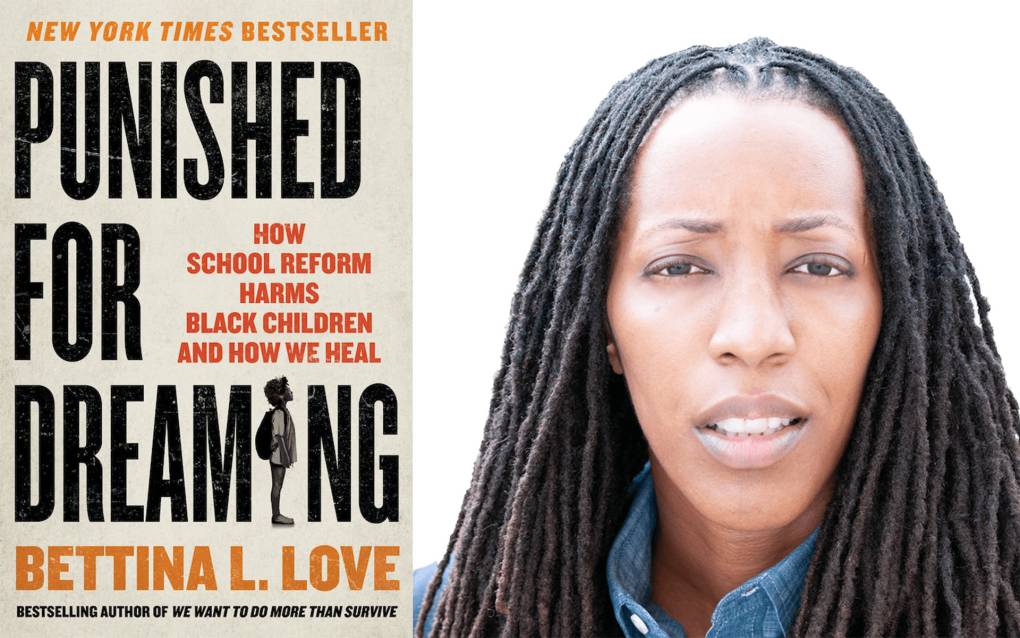
Bettina Love Examines the Impact of Education Policies on Black Students and What We Can Do Next
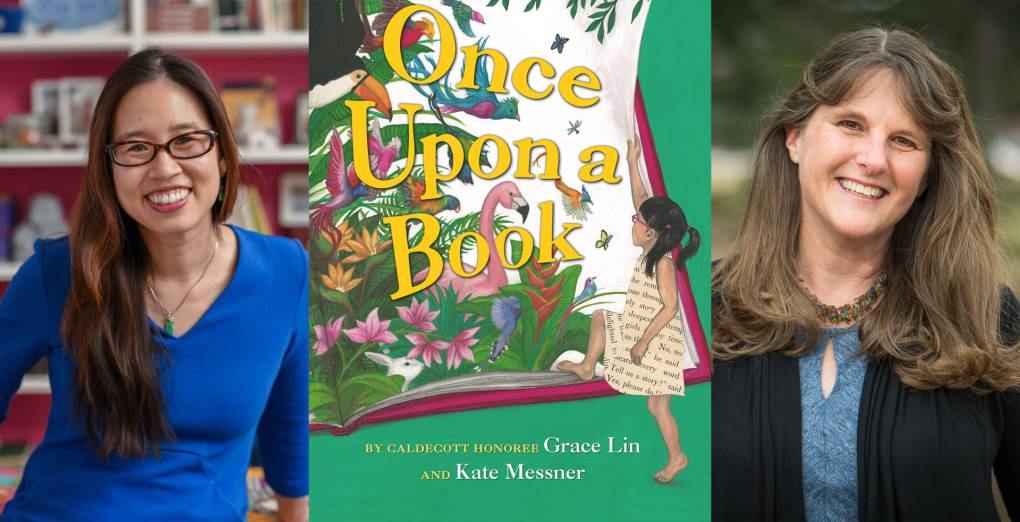
Want Kids to Love Reading? Authors Grace Lin and Kate Messner Share How to Find Wonder in Books
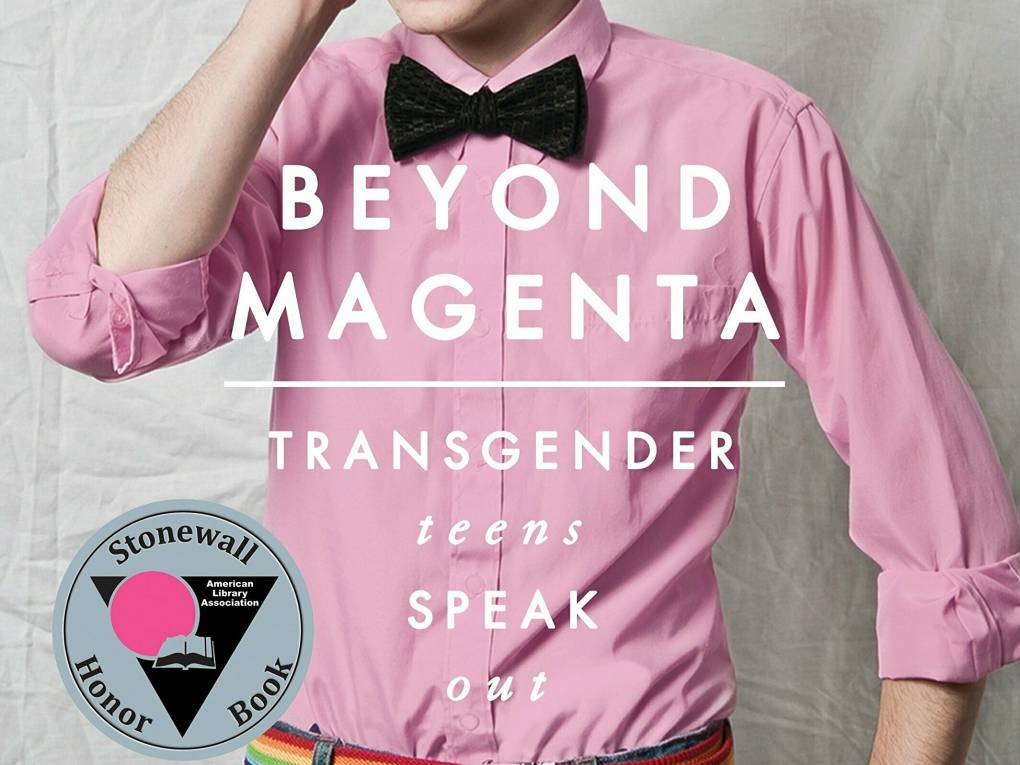
Banned Books: Author Susan Kuklin on allowing teens to control their own narratives
Banned Books: Author Ashley Hope Pérez on writing honest history in YA fiction
Is your kid misbehaving? Instead of time-out, try 'connecting' with them first
Major support for MindShift comes from
Player sponsored by
window.__IS_SSR__=true
window.__INITIAL_STATE__={
"attachmentsReducer": {
"audio_0": {
"type": "attachments",
"id": "audio_0",
"imgSizes": {
"kqedFullSize": {
"file": "https://ww2.kqed.org/news/wp-content/themes/KQED-unified/img/audio_bgs/background0.jpg"
}
}
},
"audio_1": {
"type": "attachments",
"id": "audio_1",
"imgSizes": {
"kqedFullSize": {
"file": "https://ww2.kqed.org/news/wp-content/themes/KQED-unified/img/audio_bgs/background1.jpg"
}
}
},
"audio_2": {
"type": "attachments",
"id": "audio_2",
"imgSizes": {
"kqedFullSize": {
"file": "https://ww2.kqed.org/news/wp-content/themes/KQED-unified/img/audio_bgs/background2.jpg"
}
}
},
"audio_3": {
"type": "attachments",
"id": "audio_3",
"imgSizes": {
"kqedFullSize": {
"file": "https://ww2.kqed.org/news/wp-content/themes/KQED-unified/img/audio_bgs/background3.jpg"
}
}
},
"audio_4": {
"type": "attachments",
"id": "audio_4",
"imgSizes": {
"kqedFullSize": {
"file": "https://ww2.kqed.org/news/wp-content/themes/KQED-unified/img/audio_bgs/background4.jpg"
}
}
},
"placeholder": {
"type": "attachments",
"id": "placeholder",
"imgSizes": {
"thumbnail": {
"file": "https://cdn.kqed.org/wp-content/uploads/2024/12/KQED-Default-Image-816638274-2000x1333-1-160x107.jpg",
"width": 160,
"height": 107,
"mimeType": "image/jpeg"
},
"medium": {
"file": "https://cdn.kqed.org/wp-content/uploads/2024/12/KQED-Default-Image-816638274-2000x1333-1-800x533.jpg",
"width": 800,
"height": 533,
"mimeType": "image/jpeg"
},
"medium_large": {
"file": "https://cdn.kqed.org/wp-content/uploads/2024/12/KQED-Default-Image-816638274-2000x1333-1-768x512.jpg",
"width": 768,
"height": 512,
"mimeType": "image/jpeg"
},
"large": {
"file": "https://cdn.kqed.org/wp-content/uploads/2024/12/KQED-Default-Image-816638274-2000x1333-1-1020x680.jpg",
"width": 1020,
"height": 680,
"mimeType": "image/jpeg"
},
"1536x1536": {
"file": "https://cdn.kqed.org/wp-content/uploads/2024/12/KQED-Default-Image-816638274-2000x1333-1-1536x1024.jpg",
"width": 1536,
"height": 1024,
"mimeType": "image/jpeg"
},
"fd-lrg": {
"file": "https://cdn.kqed.org/wp-content/uploads/2024/12/KQED-Default-Image-816638274-2000x1333-1-1536x1024.jpg",
"width": 1536,
"height": 1024,
"mimeType": "image/jpeg"
},
"fd-med": {
"file": "https://cdn.kqed.org/wp-content/uploads/2024/12/KQED-Default-Image-816638274-2000x1333-1-1020x680.jpg",
"width": 1020,
"height": 680,
"mimeType": "image/jpeg"
},
"fd-sm": {
"file": "https://cdn.kqed.org/wp-content/uploads/2024/12/KQED-Default-Image-816638274-2000x1333-1-800x533.jpg",
"width": 800,
"height": 533,
"mimeType": "image/jpeg"
},
"post-thumbnail": {
"file": "https://cdn.kqed.org/wp-content/uploads/2024/12/KQED-Default-Image-816638274-2000x1333-1-672x372.jpg",
"width": 672,
"height": 372,
"mimeType": "image/jpeg"
},
"twentyfourteen-full-width": {
"file": "https://cdn.kqed.org/wp-content/uploads/2024/12/KQED-Default-Image-816638274-2000x1333-1-1038x576.jpg",
"width": 1038,
"height": 576,
"mimeType": "image/jpeg"
},
"xxsmall": {
"file": "https://cdn.kqed.org/wp-content/uploads/2024/12/KQED-Default-Image-816638274-2000x1333-1-160x107.jpg",
"width": 160,
"height": 107,
"mimeType": "image/jpeg"
},
"xsmall": {
"file": "https://cdn.kqed.org/wp-content/uploads/2024/12/KQED-Default-Image-816638274-2000x1333-1-672x372.jpg",
"width": 672,
"height": 372,
"mimeType": "image/jpeg"
},
"small": {
"file": "https://cdn.kqed.org/wp-content/uploads/2024/12/KQED-Default-Image-816638274-2000x1333-1-672x372.jpg",
"width": 672,
"height": 372,
"mimeType": "image/jpeg"
},
"xlarge": {
"file": "https://cdn.kqed.org/wp-content/uploads/2024/12/KQED-Default-Image-816638274-2000x1333-1-1020x680.jpg",
"width": 1020,
"height": 680,
"mimeType": "image/jpeg"
},
"full-width": {
"file": "https://cdn.kqed.org/wp-content/uploads/2024/12/KQED-Default-Image-816638274-2000x1333-1-1920x1280.jpg",
"width": 1920,
"height": 1280,
"mimeType": "image/jpeg"
},
"guest-author-32": {
"file": "https://cdn.kqed.org/wp-content/uploads/2025/01/KQED-Default-Image-816638274-1333x1333-1-160x160.jpg",
"width": 32,
"height": 32,
"mimeType": "image/jpeg"
},
"guest-author-50": {
"file": "https://cdn.kqed.org/wp-content/uploads/2025/01/KQED-Default-Image-816638274-1333x1333-1-160x160.jpg",
"width": 50,
"height": 50,
"mimeType": "image/jpeg"
},
"guest-author-64": {
"file": "https://cdn.kqed.org/wp-content/uploads/2025/01/KQED-Default-Image-816638274-1333x1333-1-160x160.jpg",
"width": 64,
"height": 64,
"mimeType": "image/jpeg"
},
"guest-author-96": {
"file": "https://cdn.kqed.org/wp-content/uploads/2025/01/KQED-Default-Image-816638274-1333x1333-1-160x160.jpg",
"width": 96,
"height": 96,
"mimeType": "image/jpeg"
},
"guest-author-128": {
"file": "https://cdn.kqed.org/wp-content/uploads/2025/01/KQED-Default-Image-816638274-1333x1333-1-160x160.jpg",
"width": 128,
"height": 128,
"mimeType": "image/jpeg"
},
"detail": {
"file": "https://cdn.kqed.org/wp-content/uploads/2025/01/KQED-Default-Image-816638274-1333x1333-1-160x160.jpg",
"width": 160,
"height": 160,
"mimeType": "image/jpeg"
},
"kqedFullSize": {
"file": "https://cdn.kqed.org/wp-content/uploads/2024/12/KQED-Default-Image-816638274-2000x1333-1.jpg",
"width": 2000,
"height": 1333
}
}
},
"mindshift_62937": {
"type": "attachments",
"id": "mindshift_62937",
"meta": {
"index": "attachments_1716263798",
"site": "mindshift",
"id": "62937",
"found": true
},
"parent": 62934,
"imgSizes": {
"twentyfourteen-full-width": {
"file": "https://cdn.kqed.org/wp-content/uploads/sites/23/2024/01/bettina-love_HED-image-1038x576.jpg",
"width": 1038,
"mimeType": "image/jpeg",
"height": 576
},
"thumbnail": {
"file": "https://cdn.kqed.org/wp-content/uploads/sites/23/2024/01/bettina-love_HED-image-160x100.jpg",
"width": 160,
"mimeType": "image/jpeg",
"height": 100
},
"post-thumbnail": {
"file": "https://cdn.kqed.org/wp-content/uploads/sites/23/2024/01/bettina-love_HED-image-672x372.jpg",
"width": 672,
"mimeType": "image/jpeg",
"height": 372
},
"kqedFullSize": {
"file": "https://cdn.kqed.org/wp-content/uploads/sites/23/2024/01/bettina-love_HED-image.jpg",
"width": 1920,
"height": 1200
},
"large": {
"file": "https://cdn.kqed.org/wp-content/uploads/sites/23/2024/01/bettina-love_HED-image-1020x638.jpg",
"width": 1020,
"mimeType": "image/jpeg",
"height": 638
},
"1536x1536": {
"file": "https://cdn.kqed.org/wp-content/uploads/sites/23/2024/01/bettina-love_HED-image-1536x960.jpg",
"width": 1536,
"mimeType": "image/jpeg",
"height": 960
},
"medium": {
"file": "https://cdn.kqed.org/wp-content/uploads/sites/23/2024/01/bettina-love_HED-image-800x500.jpg",
"width": 800,
"mimeType": "image/jpeg",
"height": 500
},
"medium_large": {
"file": "https://cdn.kqed.org/wp-content/uploads/sites/23/2024/01/bettina-love_HED-image-768x480.jpg",
"width": 768,
"mimeType": "image/jpeg",
"height": 480
}
},
"publishDate": 1704751482,
"modified": 1704751514,
"caption": null,
"description": "Bettina Love, Columbia University professor and abolitionist educator, shares insights and proposes transformative solutions in her book, \"Punished for Dreaming.\"",
"title": "bettina love_HED image",
"credit": null,
"status": "inherit",
"altTag": null,
"isLoading": false,
"fetchFailed": false
},
"mindshift_61075": {
"type": "attachments",
"id": "mindshift_61075",
"meta": {
"index": "attachments_1716263798",
"site": "mindshift",
"id": "61075",
"found": true
},
"parent": 61018,
"imgSizes": {
"twentyfourteen-full-width": {
"file": "https://ww2.kqed.org/app/uploads/sites/23/2023/02/GraceKateCover-e1676925496548-1038x576.jpg",
"width": 1038,
"mimeType": "image/jpeg",
"height": 576
},
"thumbnail": {
"file": "https://ww2.kqed.org/app/uploads/sites/23/2023/02/GraceKateCover-e1676925496548-160x82.jpg",
"width": 160,
"mimeType": "image/jpeg",
"height": 82
},
"post-thumbnail": {
"file": "https://ww2.kqed.org/app/uploads/sites/23/2023/02/GraceKateCover-e1676925496548-672x372.jpg",
"width": 672,
"mimeType": "image/jpeg",
"height": 372
},
"kqedFullSize": {
"file": "https://ww2.kqed.org/app/uploads/sites/23/2023/02/GraceKateCover-e1676925496548.jpg",
"width": 1920,
"height": 983
},
"2048x2048": {
"file": "https://ww2.kqed.org/app/uploads/sites/23/2023/02/GraceKateCover-2048x1049.jpg",
"width": 2048,
"mimeType": "image/jpeg",
"height": 1049
},
"large": {
"file": "https://ww2.kqed.org/app/uploads/sites/23/2023/02/GraceKateCover-e1676925496548-1020x522.jpg",
"width": 1020,
"mimeType": "image/jpeg",
"height": 522
},
"1536x1536": {
"file": "https://ww2.kqed.org/app/uploads/sites/23/2023/02/GraceKateCover-e1676925496548-1536x786.jpg",
"width": 1536,
"mimeType": "image/jpeg",
"height": 786
},
"full-width": {
"file": "https://ww2.kqed.org/app/uploads/sites/23/2023/02/GraceKateCover-1920x983.jpg",
"width": 1920,
"mimeType": "image/jpeg",
"height": 983
},
"medium": {
"file": "https://ww2.kqed.org/app/uploads/sites/23/2023/02/GraceKateCover-e1676925496548-800x410.jpg",
"width": 800,
"mimeType": "image/jpeg",
"height": 410
},
"medium_large": {
"file": "https://ww2.kqed.org/app/uploads/sites/23/2023/02/GraceKateCover-e1676925496548-768x393.jpg",
"width": 768,
"mimeType": "image/jpeg",
"height": 393
}
},
"publishDate": 1676925473,
"modified": 1676925523,
"caption": null,
"description": null,
"title": "GraceKateCover",
"credit": null,
"status": "inherit",
"altTag": null,
"isLoading": false,
"fetchFailed": false
},
"mindshift_60722": {
"type": "attachments",
"id": "mindshift_60722",
"meta": {
"index": "attachments_1716263798",
"site": "mindshift",
"id": "60722",
"found": true
},
"parent": 60721,
"imgSizes": {
"twentyfourteen-full-width": {
"file": "https://ww2.kqed.org/app/uploads/sites/23/2022/12/beyond-magenta-c9fc97e629baaa41e5f55c9c4dfa02aaf164034b-1038x576.jpg",
"width": 1038,
"mimeType": "image/jpeg",
"height": 576
},
"thumbnail": {
"file": "https://ww2.kqed.org/app/uploads/sites/23/2022/12/beyond-magenta-c9fc97e629baaa41e5f55c9c4dfa02aaf164034b-160x120.jpg",
"width": 160,
"mimeType": "image/jpeg",
"height": 120
},
"post-thumbnail": {
"file": "https://ww2.kqed.org/app/uploads/sites/23/2022/12/beyond-magenta-c9fc97e629baaa41e5f55c9c4dfa02aaf164034b-672x372.jpg",
"width": 672,
"mimeType": "image/jpeg",
"height": 372
},
"kqedFullSize": {
"file": "https://ww2.kqed.org/app/uploads/sites/23/2022/12/beyond-magenta-c9fc97e629baaa41e5f55c9c4dfa02aaf164034b.jpg",
"width": 2129,
"height": 1597
},
"2048x2048": {
"file": "https://ww2.kqed.org/app/uploads/sites/23/2022/12/beyond-magenta-c9fc97e629baaa41e5f55c9c4dfa02aaf164034b-2048x1536.jpg",
"width": 2048,
"mimeType": "image/jpeg",
"height": 1536
},
"large": {
"file": "https://ww2.kqed.org/app/uploads/sites/23/2022/12/beyond-magenta-c9fc97e629baaa41e5f55c9c4dfa02aaf164034b-1020x765.jpg",
"width": 1020,
"mimeType": "image/jpeg",
"height": 765
},
"1536x1536": {
"file": "https://ww2.kqed.org/app/uploads/sites/23/2022/12/beyond-magenta-c9fc97e629baaa41e5f55c9c4dfa02aaf164034b-1536x1152.jpg",
"width": 1536,
"mimeType": "image/jpeg",
"height": 1152
},
"full-width": {
"file": "https://ww2.kqed.org/app/uploads/sites/23/2022/12/beyond-magenta-c9fc97e629baaa41e5f55c9c4dfa02aaf164034b-1920x1440.jpg",
"width": 1920,
"mimeType": "image/jpeg",
"height": 1440
},
"medium": {
"file": "https://ww2.kqed.org/app/uploads/sites/23/2022/12/beyond-magenta-c9fc97e629baaa41e5f55c9c4dfa02aaf164034b-800x600.jpg",
"width": 800,
"mimeType": "image/jpeg",
"height": 600
},
"medium_large": {
"file": "https://ww2.kqed.org/app/uploads/sites/23/2022/12/beyond-magenta-c9fc97e629baaa41e5f55c9c4dfa02aaf164034b-768x576.jpg",
"width": 768,
"mimeType": "image/jpeg",
"height": 576
}
},
"publishDate": 1672272395,
"modified": 1672272395,
"caption": null,
"description": null,
"title": "Cover of Beyond Magenta",
"credit": null,
"status": "inherit",
"altTag": null,
"isLoading": false,
"fetchFailed": false
},
"mindshift_60738": {
"type": "attachments",
"id": "mindshift_60738",
"meta": {
"index": "attachments_1716263798",
"site": "mindshift",
"id": "60738",
"found": true
},
"parent": 60733,
"imgSizes": {
"thumbnail": {
"file": "https://ww2.kqed.org/app/uploads/sites/23/2022/12/out-of-the-darkness-160x90.jpg",
"width": 160,
"mimeType": "image/jpeg",
"height": 90
},
"kqedFullSize": {
"file": "https://ww2.kqed.org/app/uploads/sites/23/2022/12/out-of-the-darkness.jpg",
"width": 400,
"height": 225
}
},
"publishDate": 1672277380,
"modified": 1672277380,
"caption": null,
"description": null,
"title": "out of the darkness",
"credit": null,
"status": "inherit",
"altTag": null,
"isLoading": false,
"fetchFailed": false
},
"mindshift_64240": {
"type": "attachments",
"id": "mindshift_64240",
"meta": {
"index": "attachments_1716263798",
"site": "mindshift",
"id": "64240",
"found": true
},
"title": "Illustration of a mother kneeling down on a carpet in a living room. She sits between two feuding children, separating them with a hand on each of their shoulders and an empathetic look on her face. The three are surrounded by toys on the floor, a green couch, a fish tank and some of the children's artwork on the wall is behind them.",
"publishDate": 1721053762,
"status": "inherit",
"parent": 60025,
"modified": 1721053762,
"caption": null,
"credit": null,
"altTag": null,
"description": null,
"imgSizes": {
"medium": {
"file": "https://cdn.kqed.org/wp-content/uploads/sites/23/2022/09/tildarose-npr-final_slide-6ffab3d68262bc863ec7bd461fa7fce084f02d40-800x533.jpeg",
"width": 800,
"height": 533,
"mimeType": "image/jpeg"
},
"large": {
"file": "https://cdn.kqed.org/wp-content/uploads/sites/23/2022/09/tildarose-npr-final_slide-6ffab3d68262bc863ec7bd461fa7fce084f02d40-1020x680.jpeg",
"width": 1020,
"height": 680,
"mimeType": "image/jpeg"
},
"thumbnail": {
"file": "https://cdn.kqed.org/wp-content/uploads/sites/23/2022/09/tildarose-npr-final_slide-6ffab3d68262bc863ec7bd461fa7fce084f02d40-160x107.jpeg",
"width": 160,
"height": 107,
"mimeType": "image/jpeg"
},
"medium_large": {
"file": "https://cdn.kqed.org/wp-content/uploads/sites/23/2022/09/tildarose-npr-final_slide-6ffab3d68262bc863ec7bd461fa7fce084f02d40-768x512.jpeg",
"width": 768,
"height": 512,
"mimeType": "image/jpeg"
},
"1536x1536": {
"file": "https://cdn.kqed.org/wp-content/uploads/sites/23/2022/09/tildarose-npr-final_slide-6ffab3d68262bc863ec7bd461fa7fce084f02d40-1536x1023.jpeg",
"width": 1536,
"height": 1023,
"mimeType": "image/jpeg"
},
"post-thumbnail": {
"file": "https://cdn.kqed.org/wp-content/uploads/sites/23/2022/09/tildarose-npr-final_slide-6ffab3d68262bc863ec7bd461fa7fce084f02d40-672x372.jpeg",
"width": 672,
"height": 372,
"mimeType": "image/jpeg"
},
"twentyfourteen-full-width": {
"file": "https://cdn.kqed.org/wp-content/uploads/sites/23/2022/09/tildarose-npr-final_slide-6ffab3d68262bc863ec7bd461fa7fce084f02d40-1038x576.jpeg",
"width": 1038,
"height": 576,
"mimeType": "image/jpeg"
},
"kqedFullSize": {
"file": "https://cdn.kqed.org/wp-content/uploads/sites/23/2022/09/tildarose-npr-final_slide-6ffab3d68262bc863ec7bd461fa7fce084f02d40.jpeg",
"width": 1798,
"height": 1198
}
},
"isLoading": false,
"fetchFailed": false
}
},
"audioPlayerReducer": {
"postId": "stream_live",
"isPaused": true,
"isPlaying": false,
"pfsActive": false,
"pledgeModalIsOpen": true,
"playerDrawerIsOpen": false,
"liveAudioPlayStartedAt": 0,
"liveAudioPlayContext": ""
},
"authorsReducer": {
"byline_mindshift_60721": {
"type": "authors",
"id": "byline_mindshift_60721",
"meta": {
"override": true
},
"slug": "byline_mindshift_60721",
"name": "Pilar Galvan, Reena Advani, Steve Inskeep",
"isLoading": false
},
"byline_mindshift_60733": {
"type": "authors",
"id": "byline_mindshift_60733",
"meta": {
"override": true
},
"slug": "byline_mindshift_60733",
"name": "Pilar Galvan, Reena Advani, Rob Schmitz",
"isLoading": false
},
"byline_mindshift_60025": {
"type": "authors",
"id": "byline_mindshift_60025",
"meta": {
"override": true
},
"slug": "byline_mindshift_60025",
"name": "Elise Hu",
"isLoading": false
},
"ngobir": {
"type": "authors",
"id": "11721",
"meta": {
"index": "authors_1716337520",
"id": "11721",
"found": true
},
"name": "Nimah Gobir",
"firstName": "Nimah",
"lastName": "Gobir",
"slug": "ngobir",
"email": "ngobir@kqed.org",
"display_author_email": false,
"staff_mastheads": [],
"title": "KQED Contributor",
"bio": null,
"avatar": "https://secure.gravatar.com/avatar/e08e101e43fc79cc7bcd0c19038d7d08?s=600&d=blank&r=g",
"twitter": null,
"facebook": null,
"instagram": null,
"linkedin": null,
"sites": [
{
"site": "mindshift",
"roles": [
"editor"
]
}
],
"headData": {
"title": "Nimah Gobir | KQED",
"description": "KQED Contributor",
"ogImgSrc": "https://secure.gravatar.com/avatar/e08e101e43fc79cc7bcd0c19038d7d08?s=600&d=blank&r=g",
"twImgSrc": "https://secure.gravatar.com/avatar/e08e101e43fc79cc7bcd0c19038d7d08?s=600&d=blank&r=g"
},
"isLoading": false,
"link": "/author/ngobir"
}
},
"pagesReducer": {
"mindshift_category_author-interviews": {
"type": "terms",
"id": "mindshift_21517",
"meta": {
"index": "terms_1716263798",
"site": "mindshift",
"id": "21517",
"score": 13.889879
},
"featImg": null,
"name": "Author interviews",
"description": null,
"taxonomy": "category",
"headData": {
"twImgId": null,
"twTitle": null,
"ogTitle": null,
"ogImgId": null,
"twDescription": null,
"description": null,
"title": "Author interviews Archives | KQED Mindshift",
"ogDescription": null
},
"ttid": 20789,
"slug": "author-interviews",
"isLoading": false,
"title": "Author interviews",
"pageMeta": {
"site": "mindshift",
"WpPageTemplate": "page-topic-editorial"
},
"blocks": [
{
"blockName": "kqed/post-list",
"attrs": {
"layout": "cardArticle2",
"query": "posts/mindshift?category=author-interviews",
"seeMore": true
}
},
{
"blockName": "kqed/ad"
}
]
}
},
"pfsSessionReducer": {},
"postsReducer": {
"stream_live": {
"type": "live",
"id": "stream_live",
"audioUrl": "https://streams.kqed.org/kqedradio",
"title": "Live Stream",
"excerpt": "Live Stream information currently unavailable.",
"link": "/radio",
"featImg": "",
"label": {
"name": "KQED Live",
"link": "/"
}
},
"stream_kqedNewscast": {
"type": "posts",
"id": "stream_kqedNewscast",
"audioUrl": "https://www.kqed.org/.stream/anon/radio/RDnews/newscast.mp3?_=1",
"title": "KQED Newscast",
"featImg": "",
"label": {
"name": "88.5 FM",
"link": "/"
}
},
"mindshift_62934": {
"type": "posts",
"id": "mindshift_62934",
"meta": {
"index": "posts_1716263798",
"site": "mindshift",
"id": "62934",
"score": null,
"sort": [
1704798057000
]
},
"guestAuthors": [],
"slug": "bettina-love-examines-the-impact-of-education-policies-on-black-students-and-what-we-can-do-next",
"title": "Bettina Love Examines the Impact of Education Policies on Black Students and What We Can Do Next",
"publishDate": 1704798057,
"format": "audio",
"headTitle": "Bettina Love Examines the Impact of Education Policies on Black Students and What We Can Do Next | KQED",
"labelTerm": {
"term": 21942,
"site": "mindshift"
},
"content": "\u003cp>\u003ca href=\"#episode-transcript\">\u003cspan style=\"font-weight: 400\">\u003ci>View the full episode transcript.\u003c/i>\u003c/span>\u003c/a>\u003c/p>\n\u003cp>\u003cspan style=\"font-weight: 400\">Zook, a high schooler in Rochester, NY in the 1990s, found her dreams of competing in city and state basketball competitions shattered when allegations of class-skipping led to the school revoke the team’s game record. In her frustration, Zook punched a teacher and was expelled. However, according to \u003c/span>\u003ca href=\"https://twitter.com/BLoveSoulPower\">\u003cspan style=\"font-weight: 400\">Bettina Love\u003c/span>\u003c/a>\u003cspan style=\"font-weight: 400\">, a professor at Columbia University Teachers College, Zook’s outburst was a culmination of years of neglect and mistreatment within the education system. \u003c/span>\u003c/p>\n\u003cp>\u003cspan style=\"font-weight: 400\">“She doesn’t really punch a teacher for that particular incident. It [was for] all incidents: going through school for the last 13 years and not having one teacher tell her that she was bright, not having one teacher take any type of care, having a teacher in middle school body slam her to the ground and put her in a chokehold,” recounted Love, who played basketball with Zook and \u003c/span>\u003ca href=\"https://www.youtube.com/watch?v=duWxVlrFhpc\">\u003cspan style=\"font-weight: 400\">looked up to her teammate and friend\u003c/span>\u003c/a>\u003cspan style=\"font-weight: 400\">.\u003c/span>\u003c/p>\n\u003cp>\u003cspan style=\"font-weight: 400\">Zook’s experience was the impetus for Love’s book, \u003c/span>\u003ca href=\"https://us.macmillan.com/books/9781250280381/punishedfordreaming\">\u003ci>\u003cspan style=\"font-weight: 400\">Punished for Dreaming: How School Reform Harms Black Children and How We Heal\u003c/span>\u003c/i>\u003c/a>\u003cspan style=\"font-weight: 400\">, about the adverse effects of 40 years of education reform on Black students. Love highlights the experiences of many Black students, like Zook, navigating a flawed system. “I thought it was important to use real people’s lives to talk about school reform,” said Love, who, as an \u003c/span>\u003ca href=\"https://snfpaideia.upenn.edu/abolitionist-teaching-and-learning-with-bettina-l-love/\">\u003cspan style=\"font-weight: 400\">abolitionist educator\u003c/span>\u003c/a>\u003cspan style=\"font-weight: 400\">, believes schools must undergo structural changes in order to serve all students. Throughout the book, she outlines solutions at the teacher, administrator and policy levels. \u003c/span>\u003c/p>\n\u003ch2>\u003cb>The decline of “a glorious era in Black education”\u003c/b>\u003c/h2>\n\u003cp>\u003ca href=\"https://www.archives.gov/milestone-documents/brown-v-board-of-education\">\u003cspan style=\"font-weight: 400\">Brown v. Board of Education of Topeka, Kansas\u003c/span>\u003c/a>\u003cspan style=\"font-weight: 400\"> was a landmark Supreme Court decision that marked the end of the “separate, but equal” precedent for segregated schools. While celebrated as a civil rights victory, Love argues that it also marked the decline of a glorious era in Black education. Before the historic ruling, there were over \u003c/span>\u003ca href=\"https://www.researchgate.net/publication/249682316_UnIntended_Consequences\">\u003cspan style=\"font-weight: 400\">80,000 Black educators teaching about 2 million Black children\u003c/span>\u003c/a>\u003cspan style=\"font-weight: 400\">. \u003c/span>\u003c/p>\n\u003cp>[ad fullwidth]\u003c/p>\n\u003cp>\u003cspan style=\"font-weight: 400\">“Not only were Black teachers teaching, they were highly credentialed, highly certified and were amazing,” said Love. After Brown v. Board, over \u003c/span>\u003ca href=\"https://newprairiepress.org/cgi/viewcontent.cgi?article=1085&context=ojrrp\">\u003cspan style=\"font-weight: 400\">38,000 Black educators lost their jobs.\u003c/span>\u003c/a>\u003cspan style=\"font-weight: 400\"> The relationships and curriculum they cultivated were lost. “If you understand how racism works and how anti-blackness works, understanding how the gutting of Brown happened is not really hard,” said Love. “If I did not want my child to sit next to a Black child, I’m certainly not going to let a Black teacher teach them,” said Love.\u003c/span>\u003c/p>\n\u003cp>\u003cspan style=\"font-weight: 400\">As the 70th anniversary of Brown v. Board approaches, \u003ca href=\"https://www.thebaltimorebanner.com/education/k-12-schools/maryland-black-teachers-YARRTE6ALRDCXNOXQHKOHLW3SI/\">the numbers of Black educators remain low\u003c/a>, with Black teachers making up nearly 6% of the teaching workforce, according to \u003c/span>\u003ca href=\"https://nces.ed.gov/pubs2022/2022113.pdf\">\u003cspan style=\"font-weight: 400\">a federal survey\u003c/span>\u003c/a>\u003cspan style=\"font-weight: 400\"> of the 2020-2021 school year. \u003c/span>\u003ca href=\"https://journals.sagepub.com/doi/full/10.3102/0013189X16671718\">\u003cspan style=\"font-weight: 400\">Research\u003c/span>\u003c/a>\u003cspan style=\"font-weight: 400\"> shows that students of all races tend to view Black teachers more positively than white teachers. “It has been a loss not only for Black students, but really all students,” explained Love. “Brown was really the impetus that started the destruction of Black education in this country.”\u003c/span>\u003c/p>\n\u003ch2>\u003cb>Reagan-era shifts in education\u003c/b>\u003c/h2>\n\u003cp>\u003cspan style=\"font-weight: 400\">Ronald Reagan’s presidency in the 1980s brought about lasting changes to education, including significant cuts to funding. A report commissioned by his administration, “\u003c/span>\u003ca href=\"https://www.reaganfoundation.org/media/130020/a-nation-at-risk-report.pdf\">\u003cspan style=\"font-weight: 400\">A Nation at Risk: The Imperative for Educational Reform\u003c/span>\u003c/a>\u003cspan style=\"font-weight: 400\">,” said that US students were being out-performed and that educational standards were declining and led to policy shifts such as increased emphasis on standardized testing and enforcement of stringent graduation requirements. “This probably is one of the most consequential education reports of our time,” said Love.\u003c/span>\u003c/p>\n\u003cp>\u003cspan style=\"font-weight: 400\">Another report, “\u003c/span>\u003ca href=\"https://www.nytimes.com/1984/01/01/us/reagan-expected-to-present-plan-to-fight-crime-in-public-schools.html\">\u003cspan style=\"font-weight: 400\">Chaos in the Classroom: Enemy of American Education\u003c/span>\u003c/a>\u003cspan style=\"font-weight: 400\">,” said many students were victims of crimes at schools and schools needed better discipline practices. According to Love, this report laid the groundwork for the introduction of police officers in schools. “You start to see how education reform and crime reform begin to converge,” said Love. “Reagan was really the linchpin of merging education reform with crime reform.”\u003c/span>\u003c/p>\n\u003cp>\u003cspan style=\"font-weight: 400\">Love and others have critiqued these reports, pointing out alarmist language and \u003c/span>\u003ca href=\"https://www.upi.com/Archives/1984/01/25/Reagan-administration-rejects-criticism-of-school-violence-report/2979443854800/\">\u003cspan style=\"font-weight: 400\">misleading data\u003c/span>\u003c/a>\u003cspan style=\"font-weight: 400\">. For example, at the time that “A Nation at Risk” was published, \u003c/span>\u003ca href=\"https://www.npr.org/sections/ed/2018/04/29/604986823/what-a-nation-at-risk-got-wrong-and-right-about-u-s-schools\">\u003cspan style=\"font-weight: 400\">more students than ever were graduating\u003c/span>\u003c/a>\u003cspan style=\"font-weight: 400\"> high school and attending college. Love added that even if the report was an accurate representation of the educational landscape, harsher discipline could not achieve the desired results. “The solutions were never going to get us towards any type of educational justice or higher test scores,” she said. “[The solutions] were just punitive and anti-Black to the core.”\u003c/span>\u003c/p>\n\u003ch2>\u003cb>Strategies for overcoming challenges in education\u003c/b>\u003c/h2>\n\u003cp>\u003cspan style=\"font-weight: 400\">Despite the critical need for funding, Love noted that Black schools receive less funding on average than predominantly white schools. She also pointed out that teachers’ compensation has not kept pace with other professions. Recent data shows \u003c/span>\u003ca href=\"https://www.edweek.org/leadership/to-make-ends-meet-1-in-5-teachers-have-second-jobs/2018/06\">\u003cspan style=\"font-weight: 400\">1 in 5 teachers moonlight\u003c/span>\u003c/a>\u003cspan style=\"font-weight: 400\"> and that teachers spend anywhere from\u003c/span>\u003ca href=\"https://www.nea.org/nea-today/all-news-articles/why-are-educators-still-buying-their-own-school-supplies#:~:text=Key%20Takeaways,supplies%20increased%20almost%2024%20percent.\">\u003cspan style=\"font-weight: 400\"> $500 to $1000 dollars a year\u003c/span>\u003c/a>\u003cspan style=\"font-weight: 400\"> on their own supplies. Love said that teachers across t\u003c/span>\u003cspan style=\"font-weight: 400\">he country are not only \u003c/span>\u003ca href=\"https://www.kqed.org/news/11948465/oakland-teachers-to-go-on-strike-thursday-amid-deadlock-with-district\">\u003cspan style=\"font-weight: 400\">going on strike to get higher pay\u003c/span>\u003c/a>\u003cspan style=\"font-weight: 400\">, but also fo\u003c/span>\u003cspan style=\"font-weight: 400\">r essentials like \u003c/span>\u003ca href=\"https://www.npr.org/sections/health-shots/2022/03/14/1086125626/school-air-quality\">\u003cspan style=\"font-weight: 400\">better air quality\u003c/span>\u003c/a>\u003cspan style=\"font-weight: 400\"> in their schools and \u003c/span>\u003ca href=\"https://www.sacbee.com/news/local/health-and-medicine/article279354719.html\">\u003cspan style=\"font-weight: 400\">clean water\u003c/span>\u003c/a>\u003cspan style=\"font-weight: 400\">. However, both Republicans and Democrats \u003c/span>\u003ca href=\"https://www.chalkbeat.org/2022/3/9/22969172/title-i-biden-budget-deal/\">\u003cspan style=\"font-weight: 400\">rejected\u003c/span>\u003c/a>\u003cspan style=\"font-weight: 400\"> President Joe Biden’s \u003c/span>\u003ca href=\"https://www.edweek.org/policy-politics/joe-bidens-education-plan-triple-title-i-to-boost-teacher-pay-and-student-supports/2019/05\">\u003cspan style=\"font-weight: 400\">plan to triple Title 1 funding\u003c/span>\u003c/a>\u003cspan style=\"font-weight: 400\"> which would have tripled per pupil spending. “We actually need politicians who are going to actually fight for teachers, fight for parents, fight for students and understand historical inequalities,” said Love.\u003c/span>\u003c/p>\n\u003cp>\u003cspan style=\"font-weight: 400\">Acknowledging the dramatic influence of education policies on Black lives, Love suggested reparations as a form of compensation for the harm done. “Another word for reparations is repair,” she said. \u003c/span>\u003ca href=\"https://www.kqed.org/reparations\">\u003cspan style=\"font-weight: 400\">California is the only state so far that has put action behind the idea of reparations\u003c/span>\u003c/a>\u003cspan style=\"font-weight: 400\">. Love advocates for monetary compensation to Black individuals. “It’s a check to say we have done harm to you, your family, your community, and it has changed the course of your life. And we want to start to repair,” said Love.\u003c/span>\u003c/p>\n\u003cp>\u003cspan style=\"font-weight: 400\">People are divided on whether reparations are the right thing to do. “If you can’t see black folks as beautiful and worthy, then reparations [will be] hard for you,” said Love. “If folks know what we’ve done and what we continue to do and you see how this country has treated us, then you understand why reparations are important.”\u003c/span>\u003c/p>\n\u003cp>\u003cspan style=\"font-weight: 400\">In the face of systemic challenges, Love encouraged teachers to prioritize personal care through activities such as yoga, meditation and therapy. “We need teachers well in the classroom,” said Love. “We got to be well to show up for our kids when we know we are teaching in a system that is proliferating their destruction.” She said that administrators can help teachers take care of themselves by limiting superfluous work so that teachers can do what they need to do. \u003c/span>\u003c/p>\n\u003cp>\u003cspan style=\"font-weight: 400\">Love also emphasized the importance of treating children as children, noting that often Black and Brown children are treated \u003c/span>\u003ca href=\"https://open.bu.edu/handle/2144/35596\">\u003cspan style=\"font-weight: 400\">– and even punished – like adults\u003c/span>\u003c/a>\u003cspan style=\"font-weight: 400\">. She said that sometimes educators can have outsized reactions to things that are developmentally appropriate for kids. “They’re going to get on your nerves. You’ll tell them not to touch something and they’re going to touch it,” Love said. “We have to get back as a culture to seeing children and treating children and protecting children as children. If we did that, our policies would follow that. Our books, our classroom rules, all those things would follow.”\u003c/span>\u003c/p>\n\u003cp>\u003c!-- iframe plugin v.4.3 wordpress.org/plugins/iframe/ -->\u003cbr>\n\u003ciframe loading=\"lazy\" frameborder=\"0\" height=\"200\" scrolling=\"no\" src=\"https://playlist.megaphone.fm/?e=KQINC2522512170&light=true\" width=\"100%\" class=\"iframe-class\">\u003c/iframe>\u003c/p>\n\u003ch2 id=\"episode-transcript\">Episode Transcript\u003c/h2>\n\u003cp>\u003ci>\u003cspan style=\"font-weight: 400\">This is a computer-generated transcript. While our team has reviewed it, there may be errors.\u003c/span>\u003c/i>\u003c/p>\n\u003cp>\u003cspan style=\"font-weight: 400\">\u003cstrong>Nimah Gobir:\u003c/strong> Welcome to MindShift, the podcast where we explore the future of learning and how we raise our kids. I’m Nimah Gobir. \u003c/span>\u003c/p>\n\u003cp>\u003cspan style=\"font-weight: 400\">\u003cstrong>Nimah Gobir: \u003c/strong>As caregivers and educators, we’re likely used to interacting with schools in the day to day sense. It’s easy to forget that our experiences of school today are built on decades of history. And that’s what I’m here to talk to Dr. Bettina Love about. She’s a professor at Teachers College in Columbia University.\u003c/span>\u003c/p>\n\u003cp>\u003cspan style=\"font-weight: 400\">\u003cstrong>Nimah Gobir: \u003c/strong>Her recently released book, \u003cem>Punished for Dreaming\u003c/em>, explores the disproportionate impact of education policies on Black students. If you’ve ever wondered why certain issues in education persist, Bettina might be able to give you some answers. My conversation with one of our favorite abolitionist educators, Bettina Love is up after the break. \u003c/span>\u003c/p>\n\u003cp>\u003cspan style=\"font-weight: 400\">\u003cstrong>Nimah Gobir: \u003c/strong>I’m going to start at the top of your book. There’s a story that you share about Zook in \u003cem>Punished For Dreaming\u003c/em>. Can you tell me about how her experience shows the impact of educational policies on individual lives? \u003c/span>\u003c/p>\n\u003cp>\u003cspan style=\"font-weight: 400\">\u003cstrong>Bettina Love:\u003c/strong> Yeah, I thought it was important to really talk and use real people’s lives to talk about school reform. Zook is not only just a person in the book, but she’s one of my dearest, closest friends, and I was able to really understand how school policy impacts a person through Zook. And so Zook is a high school basketball star. She can do almost anything with a basketball. We are on our way to winning city and state. And then there’s this report or this allegation that Zook and some other male athletes are not going to class, they’re not attending class, and all our games are taken away. And then at the disciplinary hearing, Zook doesn’t have anybody there in her corner and she punches a teacher, but she doesn’t really punch a teacher for that particular incident. It’s all the incidents. It’s going through school for the last 13 years and not having one teacher tell her that she was bright, not having one teacher take any type of care, having a teacher in middle school body slam her to the ground and put her in a chokehold, 13 years of harm. And the book really opens with her story because it was a cautionary tale for me because I saw how you could be a superstar, you could score a lot of points, everybody could love you, but if you do something that people feel is so-called criminal, then you are punished for it in American schools. And she was really the impetus for this book. \u003c/span>\u003c/p>\n\u003cp>\u003cspan style=\"font-weight: 400\">\u003cstrong>Bettina Love: \u003c/strong>And so the book really wants us to put education in the same conversation as crime reform and welfare reform and immigration reform, like all these reform policies that we know historically have been hurtful to people of color. We don’t think about education reform like that. So it’s really trying to use people’s stories to go through the last 40 years of education reform and tell the story about what happened to us as Black people through education. \u003c/span>\u003c/p>\n\u003cp>\u003cspan style=\"font-weight: 400\">\u003cstrong>Nimah Gobir:\u003c/strong> Let’s take a look at Brown v Board of Education. I’m thinking about me as a kid in Walnut Creek, California, in public school, learning about Brown v Board. And I was taught that it was definitely a good thing with no downsides. Most people don’t know about the harm that it caused. Can you talk about how it shaped the trajectory of public education, specifically for Black students? \u003c/span>\u003c/p>\n\u003cp>\u003cspan style=\"font-weight: 400\">\u003cstrong>Bettina Love:\u003c/strong> It is probably one of the most consequential cases in the last 70, 80 years when it comes to education, that we don’t talk enough about. So it was really important in this book for me to talk about what we had before. Brown. Now, there is a glorious time in Black education before \u003c/span>\u003ca href=\"https://www.archives.gov/milestone-documents/brown-v-board-of-education\">\u003cspan style=\"font-weight: 400\">Brown versus Board of Education\u003c/span>\u003c/a>\u003cspan style=\"font-weight: 400\">. Not only were Black teachers teaching, they were highly credentialed, they were teaching students to their highest potential. Black teachers made up 30 to 50% of teachers in the segregated South. \u003c/span>\u003c/p>\n\u003cp>\u003cspan style=\"font-weight: 400\">\u003cstrong>Nimah Gobir:\u003c/strong> Wow. \u003c/span>\u003c/p>\n\u003cp>\u003cspan style=\"font-weight: 400\">\u003cstrong>Bettina Love:\u003c/strong> We had upwards to around \u003c/span>\u003cspan style=\"font-weight: 400\">90,000 black educators teaching about 2 million Black children\u003c/span>\u003cspan style=\"font-weight: 400\">, with almost 89% of them being Black women. So Brown pretty much guts black education. And so then we see almost 38,000 Black educators fired. Black teachers are pretty much out of the profession through policy, through reform. And here we are, you know, 70 years after Brown and in the last \u003c/span>\u003cspan style=\"font-weight: 400\">40 years, black teachers have not made up words of 10% of teachers\u003c/span>\u003cspan style=\"font-weight: 400\">. \u003c/span>\u003cspan style=\"font-weight: 400\">Black male teachers are\u003c/span>\u003cspan style=\"font-weight: 400\"> less than 2% of teachers, and black women are anywhere from 6 to 8%.\u003c/span>\u003cspan style=\"font-weight: 400\"> All students benefit from teachers of color. And so it has been a disastrous loss not only for Black students, but really all students. \u003c/span>\u003c/p>\n\u003cp>\u003cspan style=\"font-weight: 400\">\u003cstrong>Nimah Gobir:\u003c/strong> That’s really important because it’s not that Black teachers aren’t qualified. It’s not that they don’t want to teach. It’s that they were pushed out of teaching positions. \u003c/span>\u003c/p>\n\u003cp>\u003cspan style=\"font-weight: 400\">\u003cstrong>Bettina Love:\u003c/strong> Right. And I want to be very clear, it’s not that white teachers can’t teach Black students. That’s not what we’re arguing. What we’re arguing is that 88% of the teaching force can’t be white. You need diversity, you need diversity of thought, a diversity of ideas. You need to at least have through your 13 years of schooling someone who looks like you and talks like you and understands you and sees you. It’s important. Representation is important. Your culture is important. \u003c/span>\u003c/p>\n\u003cp>\u003cspan style=\"font-weight: 400\">\u003cstrong>Nimah Gobir:\u003c/strong> Moving forward in history. I want to discuss the Reagan presidency and what you call the war on Black children. Can you voice over some key policies and shifts during this time and also the repercussions those had in education? \u003c/span>\u003c/p>\n\u003cp>\u003cspan style=\"font-weight: 400\">\u003cstrong>Bettina Love:\u003c/strong> Reagan was not very fond of the very ideas of public education. He was also not very fond of the government paying for public education. Reagan takes office 1982, he declares a war on drugs. 1983, Reagan releases another report. This probably is one of the most consequential education reports of our time, which is \u003cem>A Nation At Risk\u003c/em>.\u003cem> A Nation At Risk\u003c/em> says that this country, the United States of America, is failing behind most Western countries and that our education system is failing so badly that, you know, it could cause a war. This is just language of just fear mongering. By 1984, a year later, Reagan comes out with a report called\u003cem> Chaos in the Classroom\u003c/em>, which says these children are so rude and disorderly, We need police in schools. That’s 82, 83, 84. Just those few entry points, you start to see how education reform and crime reform begin to emerge. We start to see this language that is extremely punitive, not only in crime reform, but it becomes punitive and education reform. Reagan was really the linchpin, really the start, the spark, of us really merging education reform with crime reform. And every situation that I just talked about from the war on drugs,\u003cem> A Nation At Risk\u003c/em>, \u003cem>Chaos In The Classroom\u003c/em>, the data was always flawed. These reform efforts and these policies were not created with data that actually was factual. Much of the data was misleading. \u003c/span>\u003c/p>\n\u003cp>\u003cspan style=\"font-weight: 400\">\u003cstrong>Nimah Gobir:\u003c/strong> With such alarmist titles, too. I feel like that’s the first giveaway. \u003c/span>\u003c/p>\n\u003cp>\u003cspan style=\"font-weight: 400\">\u003cstrong>Bettina Love:\u003c/strong> Chaos in the classroom! Like where? And, you know, and I think what people need to be clear about is that let’s say the data was correct. Okay? Let’s just say the data wasn’t misleading. Okay. If that’s what’s happening, the solution should not be: be punitive. The solution should have been, well, we need to hire more teachers. We need to pay teachers a living wage. We need to have smaller classrooms. Why is the solution “we need more police.” How has that got anything to do with the low test score that you’re talking about? Those things don’t go hand in hand. \u003c/span>\u003c/p>\n\u003cp>\u003cspan style=\"font-weight: 400\">\u003cstrong>Nimah Gobir:\u003c/strong> Given this historical context, I feel like at this point we’re sitting on a pile of punitive reform ideas. What does the educational landscape look like for Black students in particular, and what are some of the challenges Black students are facing because of these policies? \u003c/span>\u003c/p>\n\u003cp>\u003cspan style=\"font-weight: 400\">\u003cstrong>Bettina Love:\u003c/strong> Well, you know, I think many people would say, you know, the critical race theory bans the book bans. And those are serious things we have to be talking about. But I also want us to understand that in 2016, there was a report by Ed Bilder. And Ed Bilder came out and said that white schools in this country receive $23 billion more funding than nonwhite schools. We also know that students who need the most in this country get the least experienced teachers. 1 in 5 teachers, moonlight. Teachers around the country are deeply underpaid. We’ve seen teacher strikes all over the country last year, and I’m sure there’s going to be many more this year. Our schools have air pollutants in them that children can’t breathe. Our schools are talking about an achievement gap. We need babies in schools with clean air and clean water and credentialed teachers. We need schools where children can walk in and feel a sense of pride. And we also need schools where they can learn about themselves and the beauty of their history and who they are. Education, Right. Not right now. When you put all of that in context, it’s pretty dire. \u003c/span>\u003c/p>\n\u003cp>\u003cspan style=\"font-weight: 400\">\u003cstrong>Nimah Gobir:\u003c/strong> What I’m hearing in your answer is that a lot needs to happen on many different scales. What should we be looking at as far as – I mean, I’m scared to say policy reform at this point – but what should we be looking at on a national level? What needs to be done to address some of the issues that you outlined? \u003c/span>\u003c/p>\n\u003cp>\u003cspan style=\"font-weight: 400\">\u003cstrong>Bettina Love:\u003c/strong> A child in this country per pupil rate is like between 12 or $14,000. Like that’s what we get per pupil. Joe Biden is running and saying, listen, we need to increase Title one funding, per pupil funding by three times. So like making every child, particularly in low income schools, low income communities, you know, $30,000. Not only was that struck down, but it was struck down by the Democrats, too. Folks who say they are about justice and equity and equality are shooting down these type of policies. We got to be clear that there has been no party that essentially has been the party of education, has done some type of educational justice, liberation, thoughtful equality work. We actually need politicians who are going to actually fight for teachers, fight for parents, fight for students, understand inequality, understand historical inequalities, fight for funding, fight for resources. You cannot simply say that you’re going to hold education and teachers to these policies, to these laws, and then don’t have anything in the background to say how they’re going to support you. \u003c/span>\u003c/p>\n\u003cp>\u003cspan style=\"font-weight: 400\">\u003cstrong>Nimah Gobir:\u003c/strong> In your book, you make a case for reparations. Can you clarify what that means first for people who might be new to this concept and also what it might look like? \u003c/span>\u003c/p>\n\u003cp>\u003cspan style=\"font-weight: 400\">\u003cstrong>Bettina Love:\u003c/strong> Yeah. You know, I thought it was really important to try and write about something bold. So what I argue in this book is that if you look at the current education system just by generation, the last 40 years, harm has been done. The way Black students have been police and tested, expelled, funded, you have changed the trajectory of my life through education. Another word for reparations is repair. So how do you begin to repair this system? And the fullness of reparations is to end harm, is to atone for harm, is to start to think structurally how we say, “Hey, we did this. We know we did this. We’re apologizing because we did this. We’re compensating you because we did this. We’re going to end these policies that have done harm to you.” If you can’t see Black folks as beautiful and worthy, then reparations is hard for you. If you know who we are and you know our history and what we’ve done and what we continue to do and you see how this country has treated us even as we have kept creating and loving and inventing, then you will understand why reparations is important. \u003c/span>\u003c/p>\n\u003cp>\u003cspan style=\"font-weight: 400\">\u003cstrong>Nimah Gobir:\u003c/strong> Shifting the focus to educators and administrators. What actions can they take to make their classrooms more equitable and inclusive for black students? And I also want to acknowledge that I think it’s really hard to think about what to do at the teacher level when so much is happening at the policy level or so much isn’t happening at the policy level. \u003c/span>\u003c/p>\n\u003cp>\u003cspan style=\"font-weight: 400\">\u003cstrong>Bettina Love:\u003c/strong> I think the one thing teachers have to do on a very personal level is just take care of themselves. Drink your water, meditate, exercise. Do some yoga if you can. Find some time to really care about your wellbeing and yourself. Because we need teachers not only in the classroom. We need teachers well in the classroom. Right. Go to therapy, Indigenous practices, like we got to be well to show up for our kids when we know we are teaching in a system that is proliferating their destruction. So that is a really hard thing to show up every day, knowing that there are so many systems and structures and rules and policies and tests that are hurtful. Administrators have a lot of power too. So we need administrators to really understand what is necessary for a teacher and move that busy work to the side, so they can actually do what they need to do. But I would say the biggest thing that teachers and administrators can do tomorrow is remember that you have children in front of you. And what we see now is that seven year olds and five year olds and 15 year olds are treated, particularly if they’re Black and brown like adults. We got to remember that these are actual children. \u003c/span>\u003c/p>\n\u003cp>\u003cspan style=\"font-weight: 400\">\u003cstrong>Nimah Gobir:\u003c/strong> I love that double pronged approach. It’s like, number one, if this meeting could be an email, make it an email. And number two, let kids be kids. My last question for you is what is your vision for the future of education in America? What do you hope to see in the years to come? \u003c/span>\u003c/p>\n\u003cp>\u003cspan style=\"font-weight: 400\">\u003cstrong>Bettina Love:\u003c/strong> What I would hope to see in the years to come is that the folks who say they are truly concerned about education, make the policies, make the laws would actually ask Gholdy Muhammad, Dena Simmons, Yolanda Sealy Ruiz, Gloria Ladson Billings, Cynthia Dillard, Adrian Dixon. Like, I would really like them to understand that there is a profound piece of knowledge – Linda Darling-Hammond – there’s a profound piece of knowledge – Pedro Negara. Like we can go on and on and on about these educational giants. There’s folks who have answers and solutions. Pick up our writings, ask us a question. We would like to be in these conversations. We got years of data, experience and knowledge. And so that’s what I would really want to see. I would want to see the folks who have invested their careers and their time and have done this work really be the ones who are asked, charged with doing the educational work, the folks in the communities and the parents and the aunties and the grandmas who have knowledge. I would love to see us actually ask a question. \u003c/span>\u003c/p>\n\u003cp>\u003cspan style=\"font-weight: 400\">\u003cstrong>Nimah Gobir:\u003c/strong> Oh, I love that. I want whatever new policy that comes out to be: Please ask Goldie Muhammad. \u003c/span>\u003c/p>\n\u003cp>\u003cspan style=\"font-weight: 400\">\u003cstrong>Bettina Love:\u003c/strong> Ask Goldie Muhammad. Right. There are just people who we know are amazing black educators, scholars doing this work. So I would love for them to be able to create policy on a federal level. These folks know what they’re talking about, know what they’re doing. Never called. \u003c/span>\u003c/p>\n\u003cp>\u003cspan style=\"font-weight: 400\">\u003cstrong>Nimah Gobir:\u003c/strong> I think MindShift’s audience is really going to appreciate the reading list you just gave them. Thank you so much for taking the time to talk today. \u003c/span>\u003c/p>\n\u003cp>\u003cspan style=\"font-weight: 400\">\u003cstrong>Bettina Love:\u003c/strong> Thank you so much. I’m glad we had this opportunity. \u003c/span>\u003c/p>\n\u003cp>\u003cspan style=\"font-weight: 400\">\u003cstrong>Nimah Gobir:\u003c/strong> Bettina Love’s book is called Punished for Dreaming. MindShift will have more minisodes coming down the pipeline to bring you ideas and innovations from experts in education and beyond. Don’t forget to hit follow on your favorite podcast app so you don’t miss a thing. \u003c/span>\u003c/p>\n\u003cp>\u003cspan style=\"font-weight: 400\">\u003cstrong>Nimah Gobir:\u003c/strong> If you like what you heard in this episode, I have recommendations for you. We did an episode with Micia Mosley about why every student deserves a black teacher. We’ve also done two episodes with Gholdy Muhammad. \u003c/span>\u003c/p>\n\u003cp>\u003cspan style=\"font-weight: 400\">\u003cstrong>Bettina Love:\u003c/strong> Ask Goldie Muhammad!\u003c/span>\u003c/p>\n\u003cp>[ad floatright]\u003c/p>\n\u003cp>\u003cspan style=\"font-weight: 400\">\u003cstrong>Nimah Gobir:\u003c/strong> The MindShift team includes me, Nimah Gobir, Ki Sung, Kara Newhouse and Marlena Jackson Retondo. Our editor is Chris Hambrick. Seth Samuel is our sound designer. We receive additional support from Jen Chien, Katie Sprenger, Cesar Saldana and Holly Kernan. MindShift is supported in part by the generosity of the William and Flora Hewlett Foundation and members of KQED. Thank you for listening.\u003c/span>\u003c/p>\n\n",
"blocks": [],
"excerpt": "After Brown v. Board of Education, over 38,000 Black educators lost their jobs. That transformation, along with other policies that followed have had long-lasting consequences for Black children. Bettina Love, Columbia University professor and abolitionist educator, discusses these topics in her book, \"Punished for Dreaming.\"",
"status": "publish",
"parent": 0,
"modified": 1726872296,
"stats": {
"hasAudio": true,
"hasVideo": false,
"hasChartOrMap": false,
"iframeSrcs": [],
"hasGoogleForm": false,
"hasGallery": false,
"hasHearkenModule": false,
"hasPolis": false,
"paragraphCount": 53,
"wordCount": 4399
},
"headData": {
"title": "Bettina Love Examines the Impact of Education Policies on Black Students and What We Can Do Next | KQED",
"description": "After Brown v. Board, over 38,000 Black educators lost their jobs. That change, along with other policies, have had long-lasting effects on Black children.",
"ogTitle": "",
"ogDescription": "",
"ogImgId": "",
"twTitle": "",
"twDescription": "",
"twImgId": "",
"socialDescription": "After Brown v. Board, over 38,000 Black educators lost their jobs. That change, along with other policies, have had long-lasting effects on Black children.",
"schema": {
"@context": "https://schema.org",
"@type": "Article",
"headline": "Bettina Love Examines the Impact of Education Policies on Black Students and What We Can Do Next",
"datePublished": "2024-01-09T03:00:57-08:00",
"dateModified": "2024-09-20T15:44:56-07:00",
"image": "https://cdn.kqed.org/wp-content/uploads/2020/02/KQED-OG-Image@1x.png"
}
},
"audioUrl": "https://www.podtrac.com/pts/redirect.mp3/chrt.fm/track/G6C7C3/traffic.megaphone.fm/KQINC2522512170.mp3?updated=1704737099",
"sticky": false,
"excludeFromSiteSearch": "Include",
"articleAge": "0",
"path": "/mindshift/62934/bettina-love-examines-the-impact-of-education-policies-on-black-students-and-what-we-can-do-next",
"audioTrackLength": null,
"parsedContent": [
{
"type": "contentString",
"content": "\u003cdiv class=\"post-body\">\u003cp>\u003cp>\u003ca href=\"#episode-transcript\">\u003cspan style=\"font-weight: 400\">\u003ci>View the full episode transcript.\u003c/i>\u003c/span>\u003c/a>\u003c/p>\n\u003cp>\u003cspan style=\"font-weight: 400\">Zook, a high schooler in Rochester, NY in the 1990s, found her dreams of competing in city and state basketball competitions shattered when allegations of class-skipping led to the school revoke the team’s game record. In her frustration, Zook punched a teacher and was expelled. However, according to \u003c/span>\u003ca href=\"https://twitter.com/BLoveSoulPower\">\u003cspan style=\"font-weight: 400\">Bettina Love\u003c/span>\u003c/a>\u003cspan style=\"font-weight: 400\">, a professor at Columbia University Teachers College, Zook’s outburst was a culmination of years of neglect and mistreatment within the education system. \u003c/span>\u003c/p>\n\u003cp>\u003cspan style=\"font-weight: 400\">“She doesn’t really punch a teacher for that particular incident. It [was for] all incidents: going through school for the last 13 years and not having one teacher tell her that she was bright, not having one teacher take any type of care, having a teacher in middle school body slam her to the ground and put her in a chokehold,” recounted Love, who played basketball with Zook and \u003c/span>\u003ca href=\"https://www.youtube.com/watch?v=duWxVlrFhpc\">\u003cspan style=\"font-weight: 400\">looked up to her teammate and friend\u003c/span>\u003c/a>\u003cspan style=\"font-weight: 400\">.\u003c/span>\u003c/p>\n\u003cp>\u003cspan style=\"font-weight: 400\">Zook’s experience was the impetus for Love’s book, \u003c/span>\u003ca href=\"https://us.macmillan.com/books/9781250280381/punishedfordreaming\">\u003ci>\u003cspan style=\"font-weight: 400\">Punished for Dreaming: How School Reform Harms Black Children and How We Heal\u003c/span>\u003c/i>\u003c/a>\u003cspan style=\"font-weight: 400\">, about the adverse effects of 40 years of education reform on Black students. Love highlights the experiences of many Black students, like Zook, navigating a flawed system. “I thought it was important to use real people’s lives to talk about school reform,” said Love, who, as an \u003c/span>\u003ca href=\"https://snfpaideia.upenn.edu/abolitionist-teaching-and-learning-with-bettina-l-love/\">\u003cspan style=\"font-weight: 400\">abolitionist educator\u003c/span>\u003c/a>\u003cspan style=\"font-weight: 400\">, believes schools must undergo structural changes in order to serve all students. Throughout the book, she outlines solutions at the teacher, administrator and policy levels. \u003c/span>\u003c/p>\n\u003ch2>\u003cb>The decline of “a glorious era in Black education”\u003c/b>\u003c/h2>\n\u003cp>\u003ca href=\"https://www.archives.gov/milestone-documents/brown-v-board-of-education\">\u003cspan style=\"font-weight: 400\">Brown v. Board of Education of Topeka, Kansas\u003c/span>\u003c/a>\u003cspan style=\"font-weight: 400\"> was a landmark Supreme Court decision that marked the end of the “separate, but equal” precedent for segregated schools. While celebrated as a civil rights victory, Love argues that it also marked the decline of a glorious era in Black education. Before the historic ruling, there were over \u003c/span>\u003ca href=\"https://www.researchgate.net/publication/249682316_UnIntended_Consequences\">\u003cspan style=\"font-weight: 400\">80,000 Black educators teaching about 2 million Black children\u003c/span>\u003c/a>\u003cspan style=\"font-weight: 400\">. \u003c/span>\u003c/p>\n\u003cp>\u003c/p>\u003c/div>",
"attributes": {
"named": {},
"numeric": []
}
},
{
"type": "component",
"content": "",
"name": "ad",
"attributes": {
"named": {
"label": "fullwidth"
},
"numeric": [
"fullwidth"
]
}
},
{
"type": "contentString",
"content": "\u003cdiv class=\"post-body\">\u003cp>\u003c/p>\n\u003cp>\u003cspan style=\"font-weight: 400\">“Not only were Black teachers teaching, they were highly credentialed, highly certified and were amazing,” said Love. After Brown v. Board, over \u003c/span>\u003ca href=\"https://newprairiepress.org/cgi/viewcontent.cgi?article=1085&context=ojrrp\">\u003cspan style=\"font-weight: 400\">38,000 Black educators lost their jobs.\u003c/span>\u003c/a>\u003cspan style=\"font-weight: 400\"> The relationships and curriculum they cultivated were lost. “If you understand how racism works and how anti-blackness works, understanding how the gutting of Brown happened is not really hard,” said Love. “If I did not want my child to sit next to a Black child, I’m certainly not going to let a Black teacher teach them,” said Love.\u003c/span>\u003c/p>\n\u003cp>\u003cspan style=\"font-weight: 400\">As the 70th anniversary of Brown v. Board approaches, \u003ca href=\"https://www.thebaltimorebanner.com/education/k-12-schools/maryland-black-teachers-YARRTE6ALRDCXNOXQHKOHLW3SI/\">the numbers of Black educators remain low\u003c/a>, with Black teachers making up nearly 6% of the teaching workforce, according to \u003c/span>\u003ca href=\"https://nces.ed.gov/pubs2022/2022113.pdf\">\u003cspan style=\"font-weight: 400\">a federal survey\u003c/span>\u003c/a>\u003cspan style=\"font-weight: 400\"> of the 2020-2021 school year. \u003c/span>\u003ca href=\"https://journals.sagepub.com/doi/full/10.3102/0013189X16671718\">\u003cspan style=\"font-weight: 400\">Research\u003c/span>\u003c/a>\u003cspan style=\"font-weight: 400\"> shows that students of all races tend to view Black teachers more positively than white teachers. “It has been a loss not only for Black students, but really all students,” explained Love. “Brown was really the impetus that started the destruction of Black education in this country.”\u003c/span>\u003c/p>\n\u003ch2>\u003cb>Reagan-era shifts in education\u003c/b>\u003c/h2>\n\u003cp>\u003cspan style=\"font-weight: 400\">Ronald Reagan’s presidency in the 1980s brought about lasting changes to education, including significant cuts to funding. A report commissioned by his administration, “\u003c/span>\u003ca href=\"https://www.reaganfoundation.org/media/130020/a-nation-at-risk-report.pdf\">\u003cspan style=\"font-weight: 400\">A Nation at Risk: The Imperative for Educational Reform\u003c/span>\u003c/a>\u003cspan style=\"font-weight: 400\">,” said that US students were being out-performed and that educational standards were declining and led to policy shifts such as increased emphasis on standardized testing and enforcement of stringent graduation requirements. “This probably is one of the most consequential education reports of our time,” said Love.\u003c/span>\u003c/p>\n\u003cp>\u003cspan style=\"font-weight: 400\">Another report, “\u003c/span>\u003ca href=\"https://www.nytimes.com/1984/01/01/us/reagan-expected-to-present-plan-to-fight-crime-in-public-schools.html\">\u003cspan style=\"font-weight: 400\">Chaos in the Classroom: Enemy of American Education\u003c/span>\u003c/a>\u003cspan style=\"font-weight: 400\">,” said many students were victims of crimes at schools and schools needed better discipline practices. According to Love, this report laid the groundwork for the introduction of police officers in schools. “You start to see how education reform and crime reform begin to converge,” said Love. “Reagan was really the linchpin of merging education reform with crime reform.”\u003c/span>\u003c/p>\n\u003cp>\u003cspan style=\"font-weight: 400\">Love and others have critiqued these reports, pointing out alarmist language and \u003c/span>\u003ca href=\"https://www.upi.com/Archives/1984/01/25/Reagan-administration-rejects-criticism-of-school-violence-report/2979443854800/\">\u003cspan style=\"font-weight: 400\">misleading data\u003c/span>\u003c/a>\u003cspan style=\"font-weight: 400\">. For example, at the time that “A Nation at Risk” was published, \u003c/span>\u003ca href=\"https://www.npr.org/sections/ed/2018/04/29/604986823/what-a-nation-at-risk-got-wrong-and-right-about-u-s-schools\">\u003cspan style=\"font-weight: 400\">more students than ever were graduating\u003c/span>\u003c/a>\u003cspan style=\"font-weight: 400\"> high school and attending college. Love added that even if the report was an accurate representation of the educational landscape, harsher discipline could not achieve the desired results. “The solutions were never going to get us towards any type of educational justice or higher test scores,” she said. “[The solutions] were just punitive and anti-Black to the core.”\u003c/span>\u003c/p>\n\u003ch2>\u003cb>Strategies for overcoming challenges in education\u003c/b>\u003c/h2>\n\u003cp>\u003cspan style=\"font-weight: 400\">Despite the critical need for funding, Love noted that Black schools receive less funding on average than predominantly white schools. She also pointed out that teachers’ compensation has not kept pace with other professions. Recent data shows \u003c/span>\u003ca href=\"https://www.edweek.org/leadership/to-make-ends-meet-1-in-5-teachers-have-second-jobs/2018/06\">\u003cspan style=\"font-weight: 400\">1 in 5 teachers moonlight\u003c/span>\u003c/a>\u003cspan style=\"font-weight: 400\"> and that teachers spend anywhere from\u003c/span>\u003ca href=\"https://www.nea.org/nea-today/all-news-articles/why-are-educators-still-buying-their-own-school-supplies#:~:text=Key%20Takeaways,supplies%20increased%20almost%2024%20percent.\">\u003cspan style=\"font-weight: 400\"> $500 to $1000 dollars a year\u003c/span>\u003c/a>\u003cspan style=\"font-weight: 400\"> on their own supplies. Love said that teachers across t\u003c/span>\u003cspan style=\"font-weight: 400\">he country are not only \u003c/span>\u003ca href=\"https://www.kqed.org/news/11948465/oakland-teachers-to-go-on-strike-thursday-amid-deadlock-with-district\">\u003cspan style=\"font-weight: 400\">going on strike to get higher pay\u003c/span>\u003c/a>\u003cspan style=\"font-weight: 400\">, but also fo\u003c/span>\u003cspan style=\"font-weight: 400\">r essentials like \u003c/span>\u003ca href=\"https://www.npr.org/sections/health-shots/2022/03/14/1086125626/school-air-quality\">\u003cspan style=\"font-weight: 400\">better air quality\u003c/span>\u003c/a>\u003cspan style=\"font-weight: 400\"> in their schools and \u003c/span>\u003ca href=\"https://www.sacbee.com/news/local/health-and-medicine/article279354719.html\">\u003cspan style=\"font-weight: 400\">clean water\u003c/span>\u003c/a>\u003cspan style=\"font-weight: 400\">. However, both Republicans and Democrats \u003c/span>\u003ca href=\"https://www.chalkbeat.org/2022/3/9/22969172/title-i-biden-budget-deal/\">\u003cspan style=\"font-weight: 400\">rejected\u003c/span>\u003c/a>\u003cspan style=\"font-weight: 400\"> President Joe Biden’s \u003c/span>\u003ca href=\"https://www.edweek.org/policy-politics/joe-bidens-education-plan-triple-title-i-to-boost-teacher-pay-and-student-supports/2019/05\">\u003cspan style=\"font-weight: 400\">plan to triple Title 1 funding\u003c/span>\u003c/a>\u003cspan style=\"font-weight: 400\"> which would have tripled per pupil spending. “We actually need politicians who are going to actually fight for teachers, fight for parents, fight for students and understand historical inequalities,” said Love.\u003c/span>\u003c/p>\n\u003cp>\u003cspan style=\"font-weight: 400\">Acknowledging the dramatic influence of education policies on Black lives, Love suggested reparations as a form of compensation for the harm done. “Another word for reparations is repair,” she said. \u003c/span>\u003ca href=\"https://www.kqed.org/reparations\">\u003cspan style=\"font-weight: 400\">California is the only state so far that has put action behind the idea of reparations\u003c/span>\u003c/a>\u003cspan style=\"font-weight: 400\">. Love advocates for monetary compensation to Black individuals. “It’s a check to say we have done harm to you, your family, your community, and it has changed the course of your life. And we want to start to repair,” said Love.\u003c/span>\u003c/p>\n\u003cp>\u003cspan style=\"font-weight: 400\">People are divided on whether reparations are the right thing to do. “If you can’t see black folks as beautiful and worthy, then reparations [will be] hard for you,” said Love. “If folks know what we’ve done and what we continue to do and you see how this country has treated us, then you understand why reparations are important.”\u003c/span>\u003c/p>\n\u003cp>\u003cspan style=\"font-weight: 400\">In the face of systemic challenges, Love encouraged teachers to prioritize personal care through activities such as yoga, meditation and therapy. “We need teachers well in the classroom,” said Love. “We got to be well to show up for our kids when we know we are teaching in a system that is proliferating their destruction.” She said that administrators can help teachers take care of themselves by limiting superfluous work so that teachers can do what they need to do. \u003c/span>\u003c/p>\n\u003cp>\u003cspan style=\"font-weight: 400\">Love also emphasized the importance of treating children as children, noting that often Black and Brown children are treated \u003c/span>\u003ca href=\"https://open.bu.edu/handle/2144/35596\">\u003cspan style=\"font-weight: 400\">– and even punished – like adults\u003c/span>\u003c/a>\u003cspan style=\"font-weight: 400\">. She said that sometimes educators can have outsized reactions to things that are developmentally appropriate for kids. “They’re going to get on your nerves. You’ll tell them not to touch something and they’re going to touch it,” Love said. “We have to get back as a culture to seeing children and treating children and protecting children as children. If we did that, our policies would follow that. Our books, our classroom rules, all those things would follow.”\u003c/span>\u003c/p>\n\u003cp>\u003c!-- iframe plugin v.4.3 wordpress.org/plugins/iframe/ -->\u003cbr>\n\u003ciframe loading=\"lazy\" frameborder=\"0\" height=\"200\" scrolling=\"no\" src=\"https://playlist.megaphone.fm/?e=KQINC2522512170&light=true\" width=\"100%\" class=\"iframe-class\">\u003c/iframe>\u003c/div>",
"attributes": {
"named": {},
"numeric": []
}
},
{
"type": "contentString",
"content": "\u003cdiv class=\"post-content post-body\">\u003ch2 id=\"episode-transcript\">Episode Transcript\u003c/h2>\n\u003cp>\u003ci>\u003cspan style=\"font-weight: 400\">This is a computer-generated transcript. While our team has reviewed it, there may be errors.\u003c/span>\u003c/i>\u003c/p>\n\u003cp>\u003cspan style=\"font-weight: 400\">\u003cstrong>Nimah Gobir:\u003c/strong> Welcome to MindShift, the podcast where we explore the future of learning and how we raise our kids. I’m Nimah Gobir. \u003c/span>\u003c/p>\n\u003cp>\u003cspan style=\"font-weight: 400\">\u003cstrong>Nimah Gobir: \u003c/strong>As caregivers and educators, we’re likely used to interacting with schools in the day to day sense. It’s easy to forget that our experiences of school today are built on decades of history. And that’s what I’m here to talk to Dr. Bettina Love about. She’s a professor at Teachers College in Columbia University.\u003c/span>\u003c/p>\n\u003cp>\u003cspan style=\"font-weight: 400\">\u003cstrong>Nimah Gobir: \u003c/strong>Her recently released book, \u003cem>Punished for Dreaming\u003c/em>, explores the disproportionate impact of education policies on Black students. If you’ve ever wondered why certain issues in education persist, Bettina might be able to give you some answers. My conversation with one of our favorite abolitionist educators, Bettina Love is up after the break. \u003c/span>\u003c/p>\n\u003cp>\u003cspan style=\"font-weight: 400\">\u003cstrong>Nimah Gobir: \u003c/strong>I’m going to start at the top of your book. There’s a story that you share about Zook in \u003cem>Punished For Dreaming\u003c/em>. Can you tell me about how her experience shows the impact of educational policies on individual lives? \u003c/span>\u003c/p>\n\u003cp>\u003cspan style=\"font-weight: 400\">\u003cstrong>Bettina Love:\u003c/strong> Yeah, I thought it was important to really talk and use real people’s lives to talk about school reform. Zook is not only just a person in the book, but she’s one of my dearest, closest friends, and I was able to really understand how school policy impacts a person through Zook. And so Zook is a high school basketball star. She can do almost anything with a basketball. We are on our way to winning city and state. And then there’s this report or this allegation that Zook and some other male athletes are not going to class, they’re not attending class, and all our games are taken away. And then at the disciplinary hearing, Zook doesn’t have anybody there in her corner and she punches a teacher, but she doesn’t really punch a teacher for that particular incident. It’s all the incidents. It’s going through school for the last 13 years and not having one teacher tell her that she was bright, not having one teacher take any type of care, having a teacher in middle school body slam her to the ground and put her in a chokehold, 13 years of harm. And the book really opens with her story because it was a cautionary tale for me because I saw how you could be a superstar, you could score a lot of points, everybody could love you, but if you do something that people feel is so-called criminal, then you are punished for it in American schools. And she was really the impetus for this book. \u003c/span>\u003c/p>\n\u003cp>\u003cspan style=\"font-weight: 400\">\u003cstrong>Bettina Love: \u003c/strong>And so the book really wants us to put education in the same conversation as crime reform and welfare reform and immigration reform, like all these reform policies that we know historically have been hurtful to people of color. We don’t think about education reform like that. So it’s really trying to use people’s stories to go through the last 40 years of education reform and tell the story about what happened to us as Black people through education. \u003c/span>\u003c/p>\n\u003cp>\u003cspan style=\"font-weight: 400\">\u003cstrong>Nimah Gobir:\u003c/strong> Let’s take a look at Brown v Board of Education. I’m thinking about me as a kid in Walnut Creek, California, in public school, learning about Brown v Board. And I was taught that it was definitely a good thing with no downsides. Most people don’t know about the harm that it caused. Can you talk about how it shaped the trajectory of public education, specifically for Black students? \u003c/span>\u003c/p>\n\u003cp>\u003cspan style=\"font-weight: 400\">\u003cstrong>Bettina Love:\u003c/strong> It is probably one of the most consequential cases in the last 70, 80 years when it comes to education, that we don’t talk enough about. So it was really important in this book for me to talk about what we had before. Brown. Now, there is a glorious time in Black education before \u003c/span>\u003ca href=\"https://www.archives.gov/milestone-documents/brown-v-board-of-education\">\u003cspan style=\"font-weight: 400\">Brown versus Board of Education\u003c/span>\u003c/a>\u003cspan style=\"font-weight: 400\">. Not only were Black teachers teaching, they were highly credentialed, they were teaching students to their highest potential. Black teachers made up 30 to 50% of teachers in the segregated South. \u003c/span>\u003c/p>\n\u003cp>\u003cspan style=\"font-weight: 400\">\u003cstrong>Nimah Gobir:\u003c/strong> Wow. \u003c/span>\u003c/p>\n\u003cp>\u003cspan style=\"font-weight: 400\">\u003cstrong>Bettina Love:\u003c/strong> We had upwards to around \u003c/span>\u003cspan style=\"font-weight: 400\">90,000 black educators teaching about 2 million Black children\u003c/span>\u003cspan style=\"font-weight: 400\">, with almost 89% of them being Black women. So Brown pretty much guts black education. And so then we see almost 38,000 Black educators fired. Black teachers are pretty much out of the profession through policy, through reform. And here we are, you know, 70 years after Brown and in the last \u003c/span>\u003cspan style=\"font-weight: 400\">40 years, black teachers have not made up words of 10% of teachers\u003c/span>\u003cspan style=\"font-weight: 400\">. \u003c/span>\u003cspan style=\"font-weight: 400\">Black male teachers are\u003c/span>\u003cspan style=\"font-weight: 400\"> less than 2% of teachers, and black women are anywhere from 6 to 8%.\u003c/span>\u003cspan style=\"font-weight: 400\"> All students benefit from teachers of color. And so it has been a disastrous loss not only for Black students, but really all students. \u003c/span>\u003c/p>\n\u003cp>\u003cspan style=\"font-weight: 400\">\u003cstrong>Nimah Gobir:\u003c/strong> That’s really important because it’s not that Black teachers aren’t qualified. It’s not that they don’t want to teach. It’s that they were pushed out of teaching positions. \u003c/span>\u003c/p>\n\u003cp>\u003cspan style=\"font-weight: 400\">\u003cstrong>Bettina Love:\u003c/strong> Right. And I want to be very clear, it’s not that white teachers can’t teach Black students. That’s not what we’re arguing. What we’re arguing is that 88% of the teaching force can’t be white. You need diversity, you need diversity of thought, a diversity of ideas. You need to at least have through your 13 years of schooling someone who looks like you and talks like you and understands you and sees you. It’s important. Representation is important. Your culture is important. \u003c/span>\u003c/p>\n\u003cp>\u003cspan style=\"font-weight: 400\">\u003cstrong>Nimah Gobir:\u003c/strong> Moving forward in history. I want to discuss the Reagan presidency and what you call the war on Black children. Can you voice over some key policies and shifts during this time and also the repercussions those had in education? \u003c/span>\u003c/p>\n\u003cp>\u003cspan style=\"font-weight: 400\">\u003cstrong>Bettina Love:\u003c/strong> Reagan was not very fond of the very ideas of public education. He was also not very fond of the government paying for public education. Reagan takes office 1982, he declares a war on drugs. 1983, Reagan releases another report. This probably is one of the most consequential education reports of our time, which is \u003cem>A Nation At Risk\u003c/em>.\u003cem> A Nation At Risk\u003c/em> says that this country, the United States of America, is failing behind most Western countries and that our education system is failing so badly that, you know, it could cause a war. This is just language of just fear mongering. By 1984, a year later, Reagan comes out with a report called\u003cem> Chaos in the Classroom\u003c/em>, which says these children are so rude and disorderly, We need police in schools. That’s 82, 83, 84. Just those few entry points, you start to see how education reform and crime reform begin to emerge. We start to see this language that is extremely punitive, not only in crime reform, but it becomes punitive and education reform. Reagan was really the linchpin, really the start, the spark, of us really merging education reform with crime reform. And every situation that I just talked about from the war on drugs,\u003cem> A Nation At Risk\u003c/em>, \u003cem>Chaos In The Classroom\u003c/em>, the data was always flawed. These reform efforts and these policies were not created with data that actually was factual. Much of the data was misleading. \u003c/span>\u003c/p>\n\u003cp>\u003cspan style=\"font-weight: 400\">\u003cstrong>Nimah Gobir:\u003c/strong> With such alarmist titles, too. I feel like that’s the first giveaway. \u003c/span>\u003c/p>\n\u003cp>\u003cspan style=\"font-weight: 400\">\u003cstrong>Bettina Love:\u003c/strong> Chaos in the classroom! Like where? And, you know, and I think what people need to be clear about is that let’s say the data was correct. Okay? Let’s just say the data wasn’t misleading. Okay. If that’s what’s happening, the solution should not be: be punitive. The solution should have been, well, we need to hire more teachers. We need to pay teachers a living wage. We need to have smaller classrooms. Why is the solution “we need more police.” How has that got anything to do with the low test score that you’re talking about? Those things don’t go hand in hand. \u003c/span>\u003c/p>\n\u003cp>\u003cspan style=\"font-weight: 400\">\u003cstrong>Nimah Gobir:\u003c/strong> Given this historical context, I feel like at this point we’re sitting on a pile of punitive reform ideas. What does the educational landscape look like for Black students in particular, and what are some of the challenges Black students are facing because of these policies? \u003c/span>\u003c/p>\n\u003cp>\u003cspan style=\"font-weight: 400\">\u003cstrong>Bettina Love:\u003c/strong> Well, you know, I think many people would say, you know, the critical race theory bans the book bans. And those are serious things we have to be talking about. But I also want us to understand that in 2016, there was a report by Ed Bilder. And Ed Bilder came out and said that white schools in this country receive $23 billion more funding than nonwhite schools. We also know that students who need the most in this country get the least experienced teachers. 1 in 5 teachers, moonlight. Teachers around the country are deeply underpaid. We’ve seen teacher strikes all over the country last year, and I’m sure there’s going to be many more this year. Our schools have air pollutants in them that children can’t breathe. Our schools are talking about an achievement gap. We need babies in schools with clean air and clean water and credentialed teachers. We need schools where children can walk in and feel a sense of pride. And we also need schools where they can learn about themselves and the beauty of their history and who they are. Education, Right. Not right now. When you put all of that in context, it’s pretty dire. \u003c/span>\u003c/p>\n\u003cp>\u003cspan style=\"font-weight: 400\">\u003cstrong>Nimah Gobir:\u003c/strong> What I’m hearing in your answer is that a lot needs to happen on many different scales. What should we be looking at as far as – I mean, I’m scared to say policy reform at this point – but what should we be looking at on a national level? What needs to be done to address some of the issues that you outlined? \u003c/span>\u003c/p>\n\u003cp>\u003cspan style=\"font-weight: 400\">\u003cstrong>Bettina Love:\u003c/strong> A child in this country per pupil rate is like between 12 or $14,000. Like that’s what we get per pupil. Joe Biden is running and saying, listen, we need to increase Title one funding, per pupil funding by three times. So like making every child, particularly in low income schools, low income communities, you know, $30,000. Not only was that struck down, but it was struck down by the Democrats, too. Folks who say they are about justice and equity and equality are shooting down these type of policies. We got to be clear that there has been no party that essentially has been the party of education, has done some type of educational justice, liberation, thoughtful equality work. We actually need politicians who are going to actually fight for teachers, fight for parents, fight for students, understand inequality, understand historical inequalities, fight for funding, fight for resources. You cannot simply say that you’re going to hold education and teachers to these policies, to these laws, and then don’t have anything in the background to say how they’re going to support you. \u003c/span>\u003c/p>\n\u003cp>\u003cspan style=\"font-weight: 400\">\u003cstrong>Nimah Gobir:\u003c/strong> In your book, you make a case for reparations. Can you clarify what that means first for people who might be new to this concept and also what it might look like? \u003c/span>\u003c/p>\n\u003cp>\u003cspan style=\"font-weight: 400\">\u003cstrong>Bettina Love:\u003c/strong> Yeah. You know, I thought it was really important to try and write about something bold. So what I argue in this book is that if you look at the current education system just by generation, the last 40 years, harm has been done. The way Black students have been police and tested, expelled, funded, you have changed the trajectory of my life through education. Another word for reparations is repair. So how do you begin to repair this system? And the fullness of reparations is to end harm, is to atone for harm, is to start to think structurally how we say, “Hey, we did this. We know we did this. We’re apologizing because we did this. We’re compensating you because we did this. We’re going to end these policies that have done harm to you.” If you can’t see Black folks as beautiful and worthy, then reparations is hard for you. If you know who we are and you know our history and what we’ve done and what we continue to do and you see how this country has treated us even as we have kept creating and loving and inventing, then you will understand why reparations is important. \u003c/span>\u003c/p>\n\u003cp>\u003cspan style=\"font-weight: 400\">\u003cstrong>Nimah Gobir:\u003c/strong> Shifting the focus to educators and administrators. What actions can they take to make their classrooms more equitable and inclusive for black students? And I also want to acknowledge that I think it’s really hard to think about what to do at the teacher level when so much is happening at the policy level or so much isn’t happening at the policy level. \u003c/span>\u003c/p>\n\u003cp>\u003cspan style=\"font-weight: 400\">\u003cstrong>Bettina Love:\u003c/strong> I think the one thing teachers have to do on a very personal level is just take care of themselves. Drink your water, meditate, exercise. Do some yoga if you can. Find some time to really care about your wellbeing and yourself. Because we need teachers not only in the classroom. We need teachers well in the classroom. Right. Go to therapy, Indigenous practices, like we got to be well to show up for our kids when we know we are teaching in a system that is proliferating their destruction. So that is a really hard thing to show up every day, knowing that there are so many systems and structures and rules and policies and tests that are hurtful. Administrators have a lot of power too. So we need administrators to really understand what is necessary for a teacher and move that busy work to the side, so they can actually do what they need to do. But I would say the biggest thing that teachers and administrators can do tomorrow is remember that you have children in front of you. And what we see now is that seven year olds and five year olds and 15 year olds are treated, particularly if they’re Black and brown like adults. We got to remember that these are actual children. \u003c/span>\u003c/p>\n\u003cp>\u003cspan style=\"font-weight: 400\">\u003cstrong>Nimah Gobir:\u003c/strong> I love that double pronged approach. It’s like, number one, if this meeting could be an email, make it an email. And number two, let kids be kids. My last question for you is what is your vision for the future of education in America? What do you hope to see in the years to come? \u003c/span>\u003c/p>\n\u003cp>\u003cspan style=\"font-weight: 400\">\u003cstrong>Bettina Love:\u003c/strong> What I would hope to see in the years to come is that the folks who say they are truly concerned about education, make the policies, make the laws would actually ask Gholdy Muhammad, Dena Simmons, Yolanda Sealy Ruiz, Gloria Ladson Billings, Cynthia Dillard, Adrian Dixon. Like, I would really like them to understand that there is a profound piece of knowledge – Linda Darling-Hammond – there’s a profound piece of knowledge – Pedro Negara. Like we can go on and on and on about these educational giants. There’s folks who have answers and solutions. Pick up our writings, ask us a question. We would like to be in these conversations. We got years of data, experience and knowledge. And so that’s what I would really want to see. I would want to see the folks who have invested their careers and their time and have done this work really be the ones who are asked, charged with doing the educational work, the folks in the communities and the parents and the aunties and the grandmas who have knowledge. I would love to see us actually ask a question. \u003c/span>\u003c/p>\n\u003cp>\u003cspan style=\"font-weight: 400\">\u003cstrong>Nimah Gobir:\u003c/strong> Oh, I love that. I want whatever new policy that comes out to be: Please ask Goldie Muhammad. \u003c/span>\u003c/p>\n\u003cp>\u003cspan style=\"font-weight: 400\">\u003cstrong>Bettina Love:\u003c/strong> Ask Goldie Muhammad. Right. There are just people who we know are amazing black educators, scholars doing this work. So I would love for them to be able to create policy on a federal level. These folks know what they’re talking about, know what they’re doing. Never called. \u003c/span>\u003c/p>\n\u003cp>\u003cspan style=\"font-weight: 400\">\u003cstrong>Nimah Gobir:\u003c/strong> I think MindShift’s audience is really going to appreciate the reading list you just gave them. Thank you so much for taking the time to talk today. \u003c/span>\u003c/p>\n\u003cp>\u003cspan style=\"font-weight: 400\">\u003cstrong>Bettina Love:\u003c/strong> Thank you so much. I’m glad we had this opportunity. \u003c/span>\u003c/p>\n\u003cp>\u003cspan style=\"font-weight: 400\">\u003cstrong>Nimah Gobir:\u003c/strong> Bettina Love’s book is called Punished for Dreaming. MindShift will have more minisodes coming down the pipeline to bring you ideas and innovations from experts in education and beyond. Don’t forget to hit follow on your favorite podcast app so you don’t miss a thing. \u003c/span>\u003c/p>\n\u003cp>\u003cspan style=\"font-weight: 400\">\u003cstrong>Nimah Gobir:\u003c/strong> If you like what you heard in this episode, I have recommendations for you. We did an episode with Micia Mosley about why every student deserves a black teacher. We’ve also done two episodes with Gholdy Muhammad. \u003c/span>\u003c/p>\n\u003cp>\u003cspan style=\"font-weight: 400\">\u003cstrong>Bettina Love:\u003c/strong> Ask Goldie Muhammad!\u003c/span>\u003c/p>\n\u003cp>\u003c/p>\n\u003cp>\u003cspan style=\"font-weight: 400\">\u003cstrong>Nimah Gobir:\u003c/strong> The MindShift team includes me, Nimah Gobir, Ki Sung, Kara Newhouse and Marlena Jackson Retondo. Our editor is Chris Hambrick. Seth Samuel is our sound designer. We receive additional support from Jen Chien, Katie Sprenger, Cesar Saldana and Holly Kernan. MindShift is supported in part by the generosity of the William and Flora Hewlett Foundation and members of KQED. Thank you for listening.\u003c/span>\u003c/p>\n\n\u003c/div>"
}
],
"link": "/mindshift/62934/bettina-love-examines-the-impact-of-education-policies-on-black-students-and-what-we-can-do-next",
"authors": [
"11721"
],
"programs": [
"mindshift_21942"
],
"categories": [
"mindshift_21357",
"mindshift_21517",
"mindshift_21504",
"mindshift_21130",
"mindshift_21848"
],
"tags": [
"mindshift_21322",
"mindshift_21455",
"mindshift_21479",
"mindshift_20794",
"mindshift_20598",
"mindshift_35",
"mindshift_199",
"mindshift_381"
],
"featImg": "mindshift_62937",
"label": "mindshift_21942"
},
"mindshift_61018": {
"type": "posts",
"id": "mindshift_61018",
"meta": {
"index": "posts_1716263798",
"site": "mindshift",
"id": "61018",
"score": null,
"sort": [
1676977219000
]
},
"guestAuthors": [],
"slug": "want-kids-to-love-reading-authors-grace-lin-and-kate-messner-share-how-to-find-wonder-in-books",
"title": "Want Kids to Love Reading? Authors Grace Lin and Kate Messner Share How to Find Wonder in Books",
"publishDate": 1676977219,
"format": "audio",
"headTitle": "Want Kids to Love Reading? Authors Grace Lin and Kate Messner Share How to Find Wonder in Books | KQED",
"labelTerm": {
"term": 21942,
"site": "mindshift"
},
"content": "\u003cp>\u003cspan style=\"font-weight: 400\">Where have all the bookworms gone? Recreational reading has been shown to \u003c/span>\u003ca href=\"https://www.tandfonline.com/doi/abs/10.1080/07448481.2020.1728280\" target=\"_blank\" rel=\"noopener\">\u003cspan style=\"font-weight: 400\">reduce stress\u003c/span>\u003c/a>\u003cspan style=\"font-weight: 400\"> and \u003c/span>\u003ca href=\"https://beckman.illinois.edu/about/news/article/2022/12/05/reading-for-pleasure-can-strengthen-memory-in-older-adults-beckman-researchers-find#:~:text=The%20results%20were%20incontrovertible%3A%20in,strengthened%20older%20adults'%20memory%20skills\" target=\"_blank\" rel=\"noopener\">\u003cspan style=\"font-weight: 400\">improve working memory\u003c/span>\u003c/a>\u003cspan style=\"font-weight: 400\">, but fewer children are reading for fun than ever before. In recent \u003ca style=\"font-weight: 400\" href=\"https://www.pewresearch.org/fact-tank/2021/11/12/among-many-u-s-children-reading-for-fun-has-become-less-common-federal-data-shows/\" target=\"_blank\" rel=\"noopener\">surveys\u003c/a>\u003c/span>\u003cspan style=\"font-weight: 400\"> by the National Assessment of Educational Progress, 16% of 9-year-olds said they never or hardly ever read for fun, compared to 11% in 2012 and 9% in 1984. Among 13-year-olds, that number was 29% in 2020, compared with 22% in 2012 and 8% in 1984.\u003c/span>\u003c/p>\n\u003cp>\u003cspan style=\"font-weight: 400\">Authors \u003c/span>\u003ca href=\"https://twitter.com/pacylin\" target=\"_blank\" rel=\"noopener\">\u003cspan style=\"font-weight: 400\">Grace Lin\u003c/span>\u003c/a>\u003cspan style=\"font-weight: 400\"> and \u003c/span>\u003ca href=\"https://twitter.com/KateMessner\" target=\"_blank\" rel=\"noopener\">\u003cspan style=\"font-weight: 400\">Kate Messner\u003c/span>\u003c/a>\u003cspan style=\"font-weight: 400\"> believe books give readers the ability to experience new worlds and empathize with others. Together they wrote \u003c/span>\u003ca href=\"https://www.lbyr.com/titles/grace-lin/once-upon-a-book/9780316541077/\" target=\"_blank\" rel=\"noopener\">\u003cspan style=\"font-weight: 400\">“Once Upon A Book,”\u003c/span>\u003c/a> a children’s picture book where the main character Alice is swept away on an adventure through the magic of reading.\u003c/p>\n\u003cp>\u003cspan style=\"font-weight: 400\">“There is a perfect book for everyone,” said Lin. “You just have to find it.” However, there is an art to matching kids with the right book. For parents and teachers who want children to cultivate a love of reading, Messner and Lin provided tips on how to help kids find wonder through books. \u003c/span>\u003c/p>\n\u003cfigure id=\"attachment_61020\" class=\"wp-caption alignnone\" style=\"max-width: 800px\">\u003cimg loading=\"lazy\" decoding=\"async\" class=\"size-medium wp-image-61020\" src=\"https://ww2.kqed.org/app/uploads/sites/23/2023/02/Mindshift-Spreads_Page_1-scaled-e1676572691590-800x526.jpg\" alt=\"\" width=\"800\" height=\"526\" srcset=\"https://cdn.kqed.org/wp-content/uploads/sites/23/2023/02/Mindshift-Spreads_Page_1-scaled-e1676572691590-800x526.jpg 800w, https://cdn.kqed.org/wp-content/uploads/sites/23/2023/02/Mindshift-Spreads_Page_1-scaled-e1676572691590-1020x670.jpg 1020w, https://cdn.kqed.org/wp-content/uploads/sites/23/2023/02/Mindshift-Spreads_Page_1-scaled-e1676572691590-160x105.jpg 160w, https://cdn.kqed.org/wp-content/uploads/sites/23/2023/02/Mindshift-Spreads_Page_1-scaled-e1676572691590-768x505.jpg 768w, https://cdn.kqed.org/wp-content/uploads/sites/23/2023/02/Mindshift-Spreads_Page_1-scaled-e1676572691590-1536x1010.jpg 1536w, https://cdn.kqed.org/wp-content/uploads/sites/23/2023/02/Mindshift-Spreads_Page_1-scaled-e1676572691590.jpg 1920w\" sizes=\"(max-width: 800px) 100vw, 800px\">\u003cfigcaption class=\"wp-caption-text\">A page from the children’s book ” Once Upon A Book” by Grace Lin and Kate Messner. (Courtesy of Little, Brown and Company)\u003c/figcaption>\u003c/figure>\n\u003ch2>\u003cspan style=\"font-weight: 400\">Let kids pick their own books \u003c/span>\u003c/h2>\n\u003cp>\u003cspan style=\"font-weight: 400\">Adults sometimes seek out award-winning children’s books only to find that their kid has no interest in reading them. As a parent, Lin had to reconsider her lofty expectations. “[My daughter] wanted her ‘My Little Pony’ book and she wanted Curious George stories – not even the original Curious George books, but the cheap, knock off Curious George books,” said Lin. “Letting go of this idea that I needed her to read ‘good books’ is what I think really has made her love and enjoy reading.”\u003c/span>\u003c/p>\n\u003cp>\u003cspan style=\"font-weight: 400\">When kids have room to gravitate to the books that spark their interest, it helps them cultivate their identities as readers. Letting kids choose their own books \u003c/span>\u003ca href=\"http://teacher.scholastic.com/education/classroom-library/pdfs/The-Power-of-Reading-Choice.pdf?esp=TSO/ib/202104////label/card/classroom/reading/////\" target=\"_blank\" rel=\"noopener\">\u003cspan style=\"font-weight: 400\">leads to more motivation to read and ownership over the reading process\u003c/span>\u003c/a>\u003cspan style=\"font-weight: 400\">, whereas imposing a book on a child can make the child feel like reading is \u003c/span>\u003ca href=\"https://www.kqed.org/mindshift/51693/why-stepping-back-can-empower-kids-in-an-anxious-world\" target=\"_blank\" rel=\"noopener\">\u003cspan style=\"font-weight: 400\">a chore instead of a treat\u003c/span>\u003c/a>\u003cspan style=\"font-weight: 400\">. “What makes a great book is just the simple fact that a child loves it,” said Lin. “The fact that they’re reading is great.” \u003c/span>\u003c/p>\n\u003cp>[ad fullwidth]\u003c/p>\n\u003cp>\u003cspan style=\"font-weight: 400\">Just because a kid rebuffs esteemed literature, it doesn’t mean those books should be thrown out or given away. Messner recommends putting them in kids’ vicinity. When her son only wanted to read Tonka truck books from the grocery store, she still kept other books around the house.\u003c/span>\u003c/p>\n\u003cp>\u003cspan style=\"font-weight: 400\">“They were always on the bookshelf and in the baskets and on the table and by the bed and all over the place,” said Messner. “When you live immersed in words like that, you eventually find your way to the other stories. And I think that’s a really powerful way to introduce kids to ideas.”\u003c/span>\u003c/p>\n\u003cp>\u003c!-- iframe plugin v.4.3 wordpress.org/plugins/iframe/ -->\u003cbr>\n\u003ciframe loading=\"lazy\" frameborder=\"0\" height=\"200\" scrolling=\"no\" src=\"https://playlist.megaphone.fm/?e=KQINC8621075589&light=true\" width=\"100%\" class=\"iframe-class\">\u003c/iframe>\u003c/p>\n\u003ch2>\u003cspan style=\"font-weight: 400\">Give everyone access to windows, mirrors and sliding glass doors\u003c/span>\u003c/h2>\n\u003cp>\u003cspan style=\"font-weight: 400\">As an author/illustrator known for bringing her Taiwanese heritage\u003c/span>\u003ca href=\"https://gracelin.com/books/\" target=\"_blank\" rel=\"noopener\">\u003cspan style=\"font-weight: 400\"> to her work\u003c/span>\u003c/a>\u003cspan style=\"font-weight: 400\">, \u003c/span>\u003cspan style=\"font-weight: 400\">one of Lin’s biggest fears is that after Lunar New Year, students won’t read another book with an Asian character until the following year. When teachers only bring books about different cultures into the classroom during holidays, they’re participating in cultural tourism, Lin said. “It’s like Asians only exist during the Lunar New Year and Black people only exist in February.” She invites teachers to make sure that \u003c/span>\u003ca href=\"https://www.kqed.org/mindshift/57026/diversifying-your-classroom-book-collections-avoid-these-7-pitfalls\" target=\"_blank\" rel=\"noopener\">\u003cspan style=\"font-weight: 400\">diverse books surround children every single day of the year\u003c/span>\u003c/a>\u003cspan style=\"font-weight: 400\">. \u003c/span>\u003c/p>\n\u003cp>\u003cspan style=\"font-weight: 400\">Lin encourages teachers and parents to see books as windows, mirrors and sliding glass doors, a framework developed by scholar \u003c/span>\u003ca href=\"https://journals.sagepub.com/doi/full/10.1177/23813377211028256\" target=\"_blank\" rel=\"noopener\">\u003cspan style=\"font-weight: 400\">Rudine Sims Bishop\u003c/span>\u003c/a>\u003cspan style=\"font-weight: 400\">. Books that are windows show readers new worlds, mirrors show readers themselves, and sliding glass doors allow readers to fully immerse themselves in a story. “Books as mirrors are very important because that is what gives a child a sense of self-worth,” Lin said. “It tells them that they can be the hero in a book. They can be a changemaker. They are the ones who have control in their world. And that’s something that a lot of people from marginalized groups have not had for a long time.” \u003c/span>\u003c/p>\n\u003cp>\u003ciframe loading=\"lazy\" title=\"The Windows and Mirrors of Your Child's Bookshelf | Grace Lin | TEDxNatick\" width=\"640\" height=\"360\" src=\"https://www.youtube.com/embed/_wQ8wiV3FVo?feature=oembed\" frameborder=\"0\" allow=\"accelerometer; autoplay; clipboard-write; encrypted-media; gyroscope; picture-in-picture; web-share\" referrerpolicy=\"strict-origin-when-cross-origin\" allowfullscreen>\u003c/iframe>\u003c/p>\n\u003cp>\u003cspan style=\"font-weight: 400\">She advises teachers and parents to be tactful about how they make books as mirrors available to children of color. “My mother tried to get me to read Asian books. I wouldn’t touch them because I just didn’t want to be reminded of how different I was from my classmates,” she said. Educators and parents can make it clear that kids of any identity can and should explore diverse books. “Push the book with the Black character onto the Asian child. Push the book with the Asian character onto the white child,” she said.\u003c/span>\u003c/p>\n\u003ch2>\u003cspan style=\"font-weight: 400\">Recommend books in stacks \u003c/span>\u003c/h2>\n\u003cp>\u003cspan style=\"font-weight: 400\">What Kate Messner misses most about her 15 years as a middle school English teacher is putting the perfect book into a reader’s eager hands. If a teacher has a book they think will benefit a student, she encourages them to recommend a stack of books rather than one book at a time. \u003c/span>\u003c/p>\n\u003cp>\u003cspan style=\"font-weight: 400\">“Instead of saying, ‘This book has an Asian character and you’re Asian, so you should read this book,’ which is awkward and uncomfortable, what we can do is say, ‘Oh, here are four books I think you might love,’” Messner explained. The four books might actually focus on another topic the student is interested in and feature at least one Asian character. “Recommending books in stacks is a really great way to introduce kids to stories, but also let them feel the ownership of choice.”\u003c/span>\u003c/p>\n\u003cfigure id=\"attachment_61021\" class=\"wp-caption alignnone\" style=\"max-width: 800px\">\u003cimg loading=\"lazy\" decoding=\"async\" class=\"size-medium wp-image-61021\" src=\"https://ww2.kqed.org/app/uploads/sites/23/2023/02/Mindshift-Spreads_Page_2-800x528.jpg\" alt=\"\" width=\"800\" height=\"528\" srcset=\"https://cdn.kqed.org/wp-content/uploads/sites/23/2023/02/Mindshift-Spreads_Page_2-800x528.jpg 800w, https://cdn.kqed.org/wp-content/uploads/sites/23/2023/02/Mindshift-Spreads_Page_2-1020x673.jpg 1020w, https://cdn.kqed.org/wp-content/uploads/sites/23/2023/02/Mindshift-Spreads_Page_2-160x106.jpg 160w, https://cdn.kqed.org/wp-content/uploads/sites/23/2023/02/Mindshift-Spreads_Page_2-768x506.jpg 768w, https://cdn.kqed.org/wp-content/uploads/sites/23/2023/02/Mindshift-Spreads_Page_2-1536x1013.jpg 1536w, https://cdn.kqed.org/wp-content/uploads/sites/23/2023/02/Mindshift-Spreads_Page_2-2048x1350.jpg 2048w, https://cdn.kqed.org/wp-content/uploads/sites/23/2023/02/Mindshift-Spreads_Page_2-1920x1266.jpg 1920w\" sizes=\"(max-width: 800px) 100vw, 800px\">\u003cfigcaption class=\"wp-caption-text\">A page from the children’s book ” Once Upon A Book” by Grace Lin and Kate Messner. (Courtesy of Little, Brown and Company)\u003c/figcaption>\u003c/figure>\n\u003cp>\u003cspan style=\"font-weight: 400\">Stacks are particularly helpful when students are going through something difficult and a teacher wants to give them a book that helps them through a tough time. “I would have kids who I knew were dealing with various tough situations outside of the classroom. Maybe I knew they were struggling with a relative with addiction or maybe I knew that they had some history that was difficult,” Messner said. With these students she’d find and suggest a few books where the main characters overcame a variety of challenges. \u003c/span>\u003c/p>\n\u003cp>\u003cspan style=\"font-weight: 400\">“I’d just present the stack to them and then go away, so that kid who might really need that one book can choose it themselves without me standing over their shoulder,” she said.\u003c/span>\u003c/p>\n\u003cp>[ad floatright]\u003c/p>\n\u003cp>\u003cspan style=\"font-weight: 400\">Books have the power to spark children’s interest, broaden their understanding, reflect their experiences and affirm their identities. Every time young readers feel empowered to choose a book for themselves is an opportunity to create a lasting relationship with reading.\u003c/span>\u003c/p>\n\n",
"blocks": [],
"excerpt": "For parents and teachers who want to support kids’ love of reading, “Once Upon A Book” authors Grace Lin and Kate Messner’s share how to be a good book matchmaker and boost kids' motivation to read.",
"status": "publish",
"parent": 0,
"modified": 1726872361,
"stats": {
"hasAudio": true,
"hasVideo": true,
"hasChartOrMap": false,
"iframeSrcs": [],
"hasGoogleForm": false,
"hasGallery": false,
"hasHearkenModule": false,
"hasPolis": false,
"paragraphCount": 19,
"wordCount": 1216
},
"headData": {
"title": "Want Kids to Love Reading? Authors Grace Lin and Kate Messner Share How to Find Wonder in Books | KQED",
"description": "“Once Upon A Book” authors Grace Lin and Kate Messner’s share strategies for how to be a good book matchmaker and support kids’ love of reading.",
"ogTitle": "",
"ogDescription": "",
"ogImgId": "",
"twTitle": "",
"twDescription": "",
"twImgId": "",
"socialDescription": "“Once Upon A Book” authors Grace Lin and Kate Messner’s share strategies for how to be a good book matchmaker and support kids’ love of reading.",
"schema": {
"@context": "https://schema.org",
"@type": "Article",
"headline": "Want Kids to Love Reading? Authors Grace Lin and Kate Messner Share How to Find Wonder in Books",
"datePublished": "2023-02-21T03:00:19-08:00",
"dateModified": "2024-09-20T15:46:01-07:00",
"image": "https://cdn.kqed.org/wp-content/uploads/2020/02/KQED-OG-Image@1x.png"
}
},
"audioUrl": "https://www.podtrac.com/pts/redirect.mp3/traffic.megaphone.fm/KQINC8621075589.mp3?updated=1676920349",
"sticky": false,
"excludeFromSiteSearch": "Include",
"articleAge": "0",
"path": "/mindshift/61018/want-kids-to-love-reading-authors-grace-lin-and-kate-messner-share-how-to-find-wonder-in-books",
"audioTrackLength": null,
"parsedContent": [
{
"type": "contentString",
"content": "\u003cdiv class=\"post-body\">\u003cp>\u003cp>\u003cspan style=\"font-weight: 400\">Where have all the bookworms gone? Recreational reading has been shown to \u003c/span>\u003ca href=\"https://www.tandfonline.com/doi/abs/10.1080/07448481.2020.1728280\" target=\"_blank\" rel=\"noopener\">\u003cspan style=\"font-weight: 400\">reduce stress\u003c/span>\u003c/a>\u003cspan style=\"font-weight: 400\"> and \u003c/span>\u003ca href=\"https://beckman.illinois.edu/about/news/article/2022/12/05/reading-for-pleasure-can-strengthen-memory-in-older-adults-beckman-researchers-find#:~:text=The%20results%20were%20incontrovertible%3A%20in,strengthened%20older%20adults'%20memory%20skills\" target=\"_blank\" rel=\"noopener\">\u003cspan style=\"font-weight: 400\">improve working memory\u003c/span>\u003c/a>\u003cspan style=\"font-weight: 400\">, but fewer children are reading for fun than ever before. In recent \u003ca style=\"font-weight: 400\" href=\"https://www.pewresearch.org/fact-tank/2021/11/12/among-many-u-s-children-reading-for-fun-has-become-less-common-federal-data-shows/\" target=\"_blank\" rel=\"noopener\">surveys\u003c/a>\u003c/span>\u003cspan style=\"font-weight: 400\"> by the National Assessment of Educational Progress, 16% of 9-year-olds said they never or hardly ever read for fun, compared to 11% in 2012 and 9% in 1984. Among 13-year-olds, that number was 29% in 2020, compared with 22% in 2012 and 8% in 1984.\u003c/span>\u003c/p>\n\u003cp>\u003cspan style=\"font-weight: 400\">Authors \u003c/span>\u003ca href=\"https://twitter.com/pacylin\" target=\"_blank\" rel=\"noopener\">\u003cspan style=\"font-weight: 400\">Grace Lin\u003c/span>\u003c/a>\u003cspan style=\"font-weight: 400\"> and \u003c/span>\u003ca href=\"https://twitter.com/KateMessner\" target=\"_blank\" rel=\"noopener\">\u003cspan style=\"font-weight: 400\">Kate Messner\u003c/span>\u003c/a>\u003cspan style=\"font-weight: 400\"> believe books give readers the ability to experience new worlds and empathize with others. Together they wrote \u003c/span>\u003ca href=\"https://www.lbyr.com/titles/grace-lin/once-upon-a-book/9780316541077/\" target=\"_blank\" rel=\"noopener\">\u003cspan style=\"font-weight: 400\">“Once Upon A Book,”\u003c/span>\u003c/a> a children’s picture book where the main character Alice is swept away on an adventure through the magic of reading.\u003c/p>\n\u003cp>\u003cspan style=\"font-weight: 400\">“There is a perfect book for everyone,” said Lin. “You just have to find it.” However, there is an art to matching kids with the right book. For parents and teachers who want children to cultivate a love of reading, Messner and Lin provided tips on how to help kids find wonder through books. \u003c/span>\u003c/p>\n\u003cfigure id=\"attachment_61020\" class=\"wp-caption alignnone\" style=\"max-width: 800px\">\u003cimg loading=\"lazy\" decoding=\"async\" class=\"size-medium wp-image-61020\" src=\"https://ww2.kqed.org/app/uploads/sites/23/2023/02/Mindshift-Spreads_Page_1-scaled-e1676572691590-800x526.jpg\" alt=\"\" width=\"800\" height=\"526\" srcset=\"https://cdn.kqed.org/wp-content/uploads/sites/23/2023/02/Mindshift-Spreads_Page_1-scaled-e1676572691590-800x526.jpg 800w, https://cdn.kqed.org/wp-content/uploads/sites/23/2023/02/Mindshift-Spreads_Page_1-scaled-e1676572691590-1020x670.jpg 1020w, https://cdn.kqed.org/wp-content/uploads/sites/23/2023/02/Mindshift-Spreads_Page_1-scaled-e1676572691590-160x105.jpg 160w, https://cdn.kqed.org/wp-content/uploads/sites/23/2023/02/Mindshift-Spreads_Page_1-scaled-e1676572691590-768x505.jpg 768w, https://cdn.kqed.org/wp-content/uploads/sites/23/2023/02/Mindshift-Spreads_Page_1-scaled-e1676572691590-1536x1010.jpg 1536w, https://cdn.kqed.org/wp-content/uploads/sites/23/2023/02/Mindshift-Spreads_Page_1-scaled-e1676572691590.jpg 1920w\" sizes=\"(max-width: 800px) 100vw, 800px\">\u003cfigcaption class=\"wp-caption-text\">A page from the children’s book ” Once Upon A Book” by Grace Lin and Kate Messner. (Courtesy of Little, Brown and Company)\u003c/figcaption>\u003c/figure>\n\u003ch2>\u003cspan style=\"font-weight: 400\">Let kids pick their own books \u003c/span>\u003c/h2>\n\u003cp>\u003cspan style=\"font-weight: 400\">Adults sometimes seek out award-winning children’s books only to find that their kid has no interest in reading them. As a parent, Lin had to reconsider her lofty expectations. “[My daughter] wanted her ‘My Little Pony’ book and she wanted Curious George stories – not even the original Curious George books, but the cheap, knock off Curious George books,” said Lin. “Letting go of this idea that I needed her to read ‘good books’ is what I think really has made her love and enjoy reading.”\u003c/span>\u003c/p>\n\u003cp>\u003cspan style=\"font-weight: 400\">When kids have room to gravitate to the books that spark their interest, it helps them cultivate their identities as readers. Letting kids choose their own books \u003c/span>\u003ca href=\"http://teacher.scholastic.com/education/classroom-library/pdfs/The-Power-of-Reading-Choice.pdf?esp=TSO/ib/202104////label/card/classroom/reading/////\" target=\"_blank\" rel=\"noopener\">\u003cspan style=\"font-weight: 400\">leads to more motivation to read and ownership over the reading process\u003c/span>\u003c/a>\u003cspan style=\"font-weight: 400\">, whereas imposing a book on a child can make the child feel like reading is \u003c/span>\u003ca href=\"https://www.kqed.org/mindshift/51693/why-stepping-back-can-empower-kids-in-an-anxious-world\" target=\"_blank\" rel=\"noopener\">\u003cspan style=\"font-weight: 400\">a chore instead of a treat\u003c/span>\u003c/a>\u003cspan style=\"font-weight: 400\">. “What makes a great book is just the simple fact that a child loves it,” said Lin. “The fact that they’re reading is great.” \u003c/span>\u003c/p>\n\u003cp>\u003c/p>\u003c/div>",
"attributes": {
"named": {},
"numeric": []
}
},
{
"type": "component",
"content": "",
"name": "ad",
"attributes": {
"named": {
"label": "fullwidth"
},
"numeric": [
"fullwidth"
]
}
},
{
"type": "contentString",
"content": "\u003cdiv class=\"post-body\">\u003cp>\u003c/p>\n\u003cp>\u003cspan style=\"font-weight: 400\">Just because a kid rebuffs esteemed literature, it doesn’t mean those books should be thrown out or given away. Messner recommends putting them in kids’ vicinity. When her son only wanted to read Tonka truck books from the grocery store, she still kept other books around the house.\u003c/span>\u003c/p>\n\u003cp>\u003cspan style=\"font-weight: 400\">“They were always on the bookshelf and in the baskets and on the table and by the bed and all over the place,” said Messner. “When you live immersed in words like that, you eventually find your way to the other stories. And I think that’s a really powerful way to introduce kids to ideas.”\u003c/span>\u003c/p>\n\u003cp>\u003c!-- iframe plugin v.4.3 wordpress.org/plugins/iframe/ -->\u003cbr>\n\u003ciframe loading=\"lazy\" frameborder=\"0\" height=\"200\" scrolling=\"no\" src=\"https://playlist.megaphone.fm/?e=KQINC8621075589&light=true\" width=\"100%\" class=\"iframe-class\">\u003c/iframe>\u003c/p>\n\u003ch2>\u003cspan style=\"font-weight: 400\">Give everyone access to windows, mirrors and sliding glass doors\u003c/span>\u003c/h2>\n\u003cp>\u003cspan style=\"font-weight: 400\">As an author/illustrator known for bringing her Taiwanese heritage\u003c/span>\u003ca href=\"https://gracelin.com/books/\" target=\"_blank\" rel=\"noopener\">\u003cspan style=\"font-weight: 400\"> to her work\u003c/span>\u003c/a>\u003cspan style=\"font-weight: 400\">, \u003c/span>\u003cspan style=\"font-weight: 400\">one of Lin’s biggest fears is that after Lunar New Year, students won’t read another book with an Asian character until the following year. When teachers only bring books about different cultures into the classroom during holidays, they’re participating in cultural tourism, Lin said. “It’s like Asians only exist during the Lunar New Year and Black people only exist in February.” She invites teachers to make sure that \u003c/span>\u003ca href=\"https://www.kqed.org/mindshift/57026/diversifying-your-classroom-book-collections-avoid-these-7-pitfalls\" target=\"_blank\" rel=\"noopener\">\u003cspan style=\"font-weight: 400\">diverse books surround children every single day of the year\u003c/span>\u003c/a>\u003cspan style=\"font-weight: 400\">. \u003c/span>\u003c/p>\n\u003cp>\u003cspan style=\"font-weight: 400\">Lin encourages teachers and parents to see books as windows, mirrors and sliding glass doors, a framework developed by scholar \u003c/span>\u003ca href=\"https://journals.sagepub.com/doi/full/10.1177/23813377211028256\" target=\"_blank\" rel=\"noopener\">\u003cspan style=\"font-weight: 400\">Rudine Sims Bishop\u003c/span>\u003c/a>\u003cspan style=\"font-weight: 400\">. Books that are windows show readers new worlds, mirrors show readers themselves, and sliding glass doors allow readers to fully immerse themselves in a story. “Books as mirrors are very important because that is what gives a child a sense of self-worth,” Lin said. “It tells them that they can be the hero in a book. They can be a changemaker. They are the ones who have control in their world. And that’s something that a lot of people from marginalized groups have not had for a long time.” \u003c/span>\u003c/p>\n\u003cp>\u003ciframe loading=\"lazy\" title=\"The Windows and Mirrors of Your Child's Bookshelf | Grace Lin | TEDxNatick\" width=\"640\" height=\"360\" src=\"https://www.youtube.com/embed/_wQ8wiV3FVo?feature=oembed\" frameborder=\"0\" allow=\"accelerometer; autoplay; clipboard-write; encrypted-media; gyroscope; picture-in-picture; web-share\" referrerpolicy=\"strict-origin-when-cross-origin\" allowfullscreen>\u003c/iframe>\u003c/p>\n\u003cp>\u003cspan style=\"font-weight: 400\">She advises teachers and parents to be tactful about how they make books as mirrors available to children of color. “My mother tried to get me to read Asian books. I wouldn’t touch them because I just didn’t want to be reminded of how different I was from my classmates,” she said. Educators and parents can make it clear that kids of any identity can and should explore diverse books. “Push the book with the Black character onto the Asian child. Push the book with the Asian character onto the white child,” she said.\u003c/span>\u003c/p>\n\u003ch2>\u003cspan style=\"font-weight: 400\">Recommend books in stacks \u003c/span>\u003c/h2>\n\u003cp>\u003cspan style=\"font-weight: 400\">What Kate Messner misses most about her 15 years as a middle school English teacher is putting the perfect book into a reader’s eager hands. If a teacher has a book they think will benefit a student, she encourages them to recommend a stack of books rather than one book at a time. \u003c/span>\u003c/p>\n\u003cp>\u003cspan style=\"font-weight: 400\">“Instead of saying, ‘This book has an Asian character and you’re Asian, so you should read this book,’ which is awkward and uncomfortable, what we can do is say, ‘Oh, here are four books I think you might love,’” Messner explained. The four books might actually focus on another topic the student is interested in and feature at least one Asian character. “Recommending books in stacks is a really great way to introduce kids to stories, but also let them feel the ownership of choice.”\u003c/span>\u003c/p>\n\u003cfigure id=\"attachment_61021\" class=\"wp-caption alignnone\" style=\"max-width: 800px\">\u003cimg loading=\"lazy\" decoding=\"async\" class=\"size-medium wp-image-61021\" src=\"https://ww2.kqed.org/app/uploads/sites/23/2023/02/Mindshift-Spreads_Page_2-800x528.jpg\" alt=\"\" width=\"800\" height=\"528\" srcset=\"https://cdn.kqed.org/wp-content/uploads/sites/23/2023/02/Mindshift-Spreads_Page_2-800x528.jpg 800w, https://cdn.kqed.org/wp-content/uploads/sites/23/2023/02/Mindshift-Spreads_Page_2-1020x673.jpg 1020w, https://cdn.kqed.org/wp-content/uploads/sites/23/2023/02/Mindshift-Spreads_Page_2-160x106.jpg 160w, https://cdn.kqed.org/wp-content/uploads/sites/23/2023/02/Mindshift-Spreads_Page_2-768x506.jpg 768w, https://cdn.kqed.org/wp-content/uploads/sites/23/2023/02/Mindshift-Spreads_Page_2-1536x1013.jpg 1536w, https://cdn.kqed.org/wp-content/uploads/sites/23/2023/02/Mindshift-Spreads_Page_2-2048x1350.jpg 2048w, https://cdn.kqed.org/wp-content/uploads/sites/23/2023/02/Mindshift-Spreads_Page_2-1920x1266.jpg 1920w\" sizes=\"(max-width: 800px) 100vw, 800px\">\u003cfigcaption class=\"wp-caption-text\">A page from the children’s book ” Once Upon A Book” by Grace Lin and Kate Messner. (Courtesy of Little, Brown and Company)\u003c/figcaption>\u003c/figure>\n\u003cp>\u003cspan style=\"font-weight: 400\">Stacks are particularly helpful when students are going through something difficult and a teacher wants to give them a book that helps them through a tough time. “I would have kids who I knew were dealing with various tough situations outside of the classroom. Maybe I knew they were struggling with a relative with addiction or maybe I knew that they had some history that was difficult,” Messner said. With these students she’d find and suggest a few books where the main characters overcame a variety of challenges. \u003c/span>\u003c/p>\n\u003cp>\u003cspan style=\"font-weight: 400\">“I’d just present the stack to them and then go away, so that kid who might really need that one book can choose it themselves without me standing over their shoulder,” she said.\u003c/span>\u003c/p>\n\u003cp>\u003c/p>\u003c/div>",
"attributes": {
"named": {},
"numeric": []
}
},
{
"type": "component",
"content": "",
"name": "ad",
"attributes": {
"named": {
"label": "floatright"
},
"numeric": [
"floatright"
]
}
},
{
"type": "contentString",
"content": "\u003cdiv class=\"post-body\">\u003cp>\u003c/p>\n\u003cp>\u003cspan style=\"font-weight: 400\">Books have the power to spark children’s interest, broaden their understanding, reflect their experiences and affirm their identities. Every time young readers feel empowered to choose a book for themselves is an opportunity to create a lasting relationship with reading.\u003c/span>\u003c/p>\n\n\u003c/div>\u003c/p>",
"attributes": {
"named": {},
"numeric": []
}
}
],
"link": "/mindshift/61018/want-kids-to-love-reading-authors-grace-lin-and-kate-messner-share-how-to-find-wonder-in-books",
"authors": [
"11721"
],
"programs": [
"mindshift_21847",
"mindshift_21942"
],
"categories": [
"mindshift_21517",
"mindshift_21130",
"mindshift_21385",
"mindshift_21848",
"mindshift_193"
],
"tags": [
"mindshift_21319",
"mindshift_20997",
"mindshift_20646",
"mindshift_895",
"mindshift_470",
"mindshift_20568",
"mindshift_21423",
"mindshift_550",
"mindshift_21128",
"mindshift_21465",
"mindshift_21259",
"mindshift_21397"
],
"featImg": "mindshift_61075",
"label": "mindshift_21942"
},
"mindshift_60721": {
"type": "posts",
"id": "mindshift_60721",
"meta": {
"index": "posts_1716263798",
"site": "mindshift",
"id": "60721",
"score": null,
"sort": [
1671651327000
]
},
"parent": 0,
"labelTerm": {
"site": "mindshift"
},
"blocks": [],
"publishDate": 1671651327,
"format": "standard",
"title": "Banned Books: Author Susan Kuklin on allowing teens to control their own narratives",
"headTitle": "MindShift | KQED News",
"content": "\u003cp>\u003cem>This discussion with Susan Kuklin is part of a series of interviews with — and \u003ca href=\"https://www.npr.org/2022/12/21/1144627475/author-susan-kuklin-beyond-magenta-book-ban\">essays\u003c/a>\u003c/em>\u003cem> by — authors who are finding their books being challenged and banned in the U.S.\u003c/em>\u003c/p>\n\u003cp>Writer and photographer Susan Kuklin is the author of the award-winning nonfiction book, \u003cem>Beyond Magenta: Transgender Teens Speak Out.\u003c/em> The book is banned from school library shelves in 11 school districts in the U.S.\u003c/p>\n\u003cp>The book compiles Kuklin's photos of — and interviews with — transgender and nonbinary teens and young adults. The stories these teens tell are raw and heartfelt. They describe their experiences transitioning and reflect on their identities.\u003c/p>\n\u003cp>Kuklin's work often focuses on human rights issues; she has written about topics ranging from immigration to the AIDS epidemic. \u003cem>Beyond Magenta, \u003c/em>published in 2014, has been on the American Library Association's (ALA) \u003ca href=\"https://www.npr.org/2022/04/04/1090067026/efforts-to-ban-books-jumped-an-unprecedented-four-fold-in-2021-ala-report-says\">list of most books most often challenged\u003c/a> a number of times since 2015, cited for \"for LGBTQIA+ content and because it was considered to be sexually explicit.\"\u003c/p>\n\u003cp>\u003cem>The interview below has been edited for length and clarity.\u003c/em>\u003c/p>\n\u003chr>\n\u003ch3>\u003cstrong>Interview highlights\u003c/strong>\u003c/h3>\n\u003cp>\u003cstrong>On how everyone is human\u003c/strong>\u003c/p>\n\u003cp>[ad fullwidth]\u003c/p>\n\u003cp>\u003cimg class=\"alignright wp-image-60725 size-thumbnail\" src=\"https://ww2.kqed.org/app/uploads/sites/23/2022/12/beyond-magenta-2-160x192.jpg\" alt=\"\" width=\"160\" height=\"192\" srcset=\"https://ww2.kqed.org/app/uploads/sites/23/2022/12/beyond-magenta-2-160x192.jpg 160w, https://ww2.kqed.org/app/uploads/sites/23/2022/12/beyond-magenta-2.jpg 300w\" sizes=\"(max-width: 160px) 100vw, 160px\">When I was talking to various people about whether or not I should be doing the book and what are some of the issues that needed to be addressed. I was uncomfortable, when I didn't know what the sex of the person was. It just felt strange to me and I thought, why should it feel strange to me? Would I be speaking differently to a man than to a woman? It just didn't sit right. And I thought, are we hard wired to believe this? And so I went on a quest to find out if indeed we were hard wired. And I found that we're not. Because very quickly, once I got to know people, it became totally irrelevant... people are people. And that's the point of all my books that people are people and they do some crazy things, some negative things, some positive things, and that's who we are.\u003c/p>\n\u003cp>\u003cstrong>On \u003cem>Beyond Magenta\u003c/em> being challenged\u003c/strong>\u003c/p>\n\u003cp>It's kind of awful, frankly. When I think about it. I think... here are these kids whose main reason was to... control their own narrative. And they're really good kids. They're nice kids. And my whole for doing this point was to start a conversation to bring humanity to the page, to show some empathy, to just be able to broaden ourselves. And instead the book is being vilified. Vilified because of who these people are.\u003c/p>\n\u003cp>\u003cstrong>On what it means to have a book banned vs. challenged\u003c/strong>\u003c/p>\n\u003cp>Well, banned and challenged are two different points. When you're challenged, a person, a parent, whoever goes to the school and fills out a form saying this book should not be in your library. That's the challenge. Banned is the actual removal of the book.\u003c/p>\n\u003cp>\u003cstrong>On what some people are objecting to in her book\u003c/strong>\u003c/p>\n\u003cp>Oddly, people are mostly complaining about things that have little to do with being transgender. So what they do is they'll pick a paragraph from the story, whether it's bad language — because kids curse — or whether it's a story of someone's life. They take it out of context, and then they turn — they complain about that, that the whole book should be banned and everything that's in it because of a paragraph here or a word there.\u003c/p>\n\u003cp>...people took [one] chapter and that story and turned it around into something very negative and very ugly. Whereas I saw it as an example of how someone can survive. I saw that chapter as someone who started — who was born into a terrible environment with lots of violence and very little education and managed to become a hero and live a successful life and go to college. To pretend that people like this do not exist is ridiculous because we know they do exist, and so their voices being heard could be very helpful.\u003c/p>\n\u003cp>\u003cstrong>On the importance of telling stories that inform understanding\u003c/strong>\u003c/p>\n\u003cp>Those kids are so important to me. They're just beautiful people. I think the one story that I appreciated a lot was a young trans woman who went to an all boys Catholic school in the Bronx. By her senior year she decided she was going to live her true life...she started a transition right there in school. She bucked an awful lot of bullying and teasing and stood her ground — and today is a beautiful artist and creative person and living a wonderful life. Also in that chapter, which was very important to me, was her mother, who was very much opposed to her becoming female — her transitioning. Her evolution from being frightened, scared, uninformed to an absolutely adoring parent is a beautiful story. The mother asked to be in the book. She said she wanted her point to be taken so that parents would know what they were feeling... getting concerned because of parental love. You love your child. You hear your child. You love your child.\u003c/p>\n\u003chr>\n\u003cp>\u003c/p>\n\u003cp>\u003cem>Claire Murashima produced the broadcast version of this story. Meghan Collins Sullivan edited this story for the web.\u003c/em>\u003c/p>\n\u003cdiv class=\"fullattribution\">Copyright 2022 NPR. To see more, visit https://www.npr.org.\u003cimg src=\"https://www.google-analytics.com/__utm.gif?utmac=UA-5828686-4&utmdt=Banned+Books%3A+Author+Susan+Kuklin+on+telling+stories+that+inform+understanding+&utme=8(APIKey)9(MDAxOTAwOTE4MDEyMTkxMDAzNjczZDljZA004)\">\u003c/div>\n\n",
"stats": {
"hasVideo": false,
"hasChartOrMap": false,
"hasAudio": false,
"hasPolis": false,
"wordCount": 889,
"hasGoogleForm": false,
"hasGallery": false,
"hasHearkenModule": false,
"iframeSrcs": [],
"paragraphCount": 19
},
"modified": 1672274452,
"excerpt": "Susan Kuklin published the award-winning \"Beyond Magenta\" in 2014. The collection of images and interviews with transgender and nonbinary teens and young adults centers their experiences and identities.",
"headData": {
"twImgId": "",
"twTitle": "",
"ogTitle": "",
"ogImgId": "",
"twDescription": "",
"description": "Susan Kuklin's award-winning 2014 book, "Beyond Magenta," centers voices and images of transgender and nonbinary teens. It's banned in 11 school districts.",
"title": "Banned Books: Author Susan Kuklin on allowing teens to control their own narratives - MindShift",
"ogDescription": "",
"schema": {
"@context": "https://schema.org",
"@type": "Article",
"headline": "Banned Books: Author Susan Kuklin on allowing teens to control their own narratives",
"datePublished": "2022-12-21T11:35:27-08:00",
"dateModified": "2022-12-28T16:40:52-08:00",
"image": "https://cdn.kqed.org/wp-content/uploads/2020/02/KQED-OG-Image@1x.png"
}
},
"guestAuthors": [],
"slug": "banned-books-author-susan-kuklin-on-allowing-teens-to-control-their-own-narratives",
"status": "publish",
"nprApiLink": "http://api.npr.org/query?id=1143100410&apiKey=MDAxOTAwOTE4MDEyMTkxMDAzNjczZDljZA004",
"nprStoryDate": "Wed, 21 Dec 2022 05:11:00 -0500",
"excludeFromSiteSearch": "Include",
"nprLastModifiedDate": "Wed, 21 Dec 2022 11:01:30 -0500",
"nprHtmlLink": "https://www.npr.org/2022/12/21/1143100410/banned-books-author-susan-kuklin-beyond-magenta?ft=nprml&f=1143100410",
"nprAudio": "https://ondemand.npr.org/anon.npr-mp3/npr/me/2022/12/20221221_me_banned_books_author_susan_kuklin_on_telling_stories_that_inform_understanding_.mp3?orgId=1&topicId=1033&d=426&p=3&story=1143100410&ft=nprml&f=1143100410",
"nprImageAgency": "Candlewick Press",
"nprAudioM3u": "http://api.npr.org/m3u/11144627767-f5b557.m3u?orgId=1&topicId=1033&d=426&p=3&story=1143100410&ft=nprml&f=1143100410",
"nprStoryId": "1143100410",
"nprByline": "Pilar Galvan, Reena Advani, Steve Inskeep",
"showOnAuthorArchivePages": "No",
"articleAge": "0",
"nprRetrievedStory": "1",
"nprPubDate": "Wed, 21 Dec 2022 11:01:00 -0500",
"path": "/mindshift/60721/banned-books-author-susan-kuklin-on-allowing-teens-to-control-their-own-narratives",
"audioUrl": "https://ondemand.npr.org/anon.npr-mp3/npr/me/2022/12/20221221_me_banned_books_author_susan_kuklin_on_telling_stories_that_inform_understanding_.mp3?orgId=1&topicId=1033&d=426&p=3&story=1143100410&ft=nprml&f=1143100410",
"audioTrackLength": null,
"parsedContent": [
{
"type": "contentString",
"content": "\u003cdiv class=\"post-body\">\u003cp>\u003cp>\u003cem>This discussion with Susan Kuklin is part of a series of interviews with — and \u003ca href=\"https://www.npr.org/2022/12/21/1144627475/author-susan-kuklin-beyond-magenta-book-ban\">essays\u003c/a>\u003c/em>\u003cem> by — authors who are finding their books being challenged and banned in the U.S.\u003c/em>\u003c/p>\n\u003cp>Writer and photographer Susan Kuklin is the author of the award-winning nonfiction book, \u003cem>Beyond Magenta: Transgender Teens Speak Out.\u003c/em> The book is banned from school library shelves in 11 school districts in the U.S.\u003c/p>\n\u003cp>The book compiles Kuklin's photos of — and interviews with — transgender and nonbinary teens and young adults. The stories these teens tell are raw and heartfelt. They describe their experiences transitioning and reflect on their identities.\u003c/p>\n\u003cp>Kuklin's work often focuses on human rights issues; she has written about topics ranging from immigration to the AIDS epidemic. \u003cem>Beyond Magenta, \u003c/em>published in 2014, has been on the American Library Association's (ALA) \u003ca href=\"https://www.npr.org/2022/04/04/1090067026/efforts-to-ban-books-jumped-an-unprecedented-four-fold-in-2021-ala-report-says\">list of most books most often challenged\u003c/a> a number of times since 2015, cited for \"for LGBTQIA+ content and because it was considered to be sexually explicit.\"\u003c/p>\n\u003cp>\u003cem>The interview below has been edited for length and clarity.\u003c/em>\u003c/p>\n\u003chr>\n\u003ch3>\u003cstrong>Interview highlights\u003c/strong>\u003c/h3>\n\u003cp>\u003cstrong>On how everyone is human\u003c/strong>\u003c/p>\n\u003cp>\u003c/p>\u003c/div>",
"attributes": {
"named": {},
"numeric": []
}
},
{
"type": "component",
"content": "",
"name": "ad",
"attributes": {
"named": {
"label": "fullwidth"
},
"numeric": [
"fullwidth"
]
}
},
{
"type": "contentString",
"content": "\u003cdiv class=\"post-body\">\u003cp>\u003c/p>\n\u003cp>\u003cimg class=\"alignright wp-image-60725 size-thumbnail\" src=\"https://ww2.kqed.org/app/uploads/sites/23/2022/12/beyond-magenta-2-160x192.jpg\" alt=\"\" width=\"160\" height=\"192\" srcset=\"https://ww2.kqed.org/app/uploads/sites/23/2022/12/beyond-magenta-2-160x192.jpg 160w, https://ww2.kqed.org/app/uploads/sites/23/2022/12/beyond-magenta-2.jpg 300w\" sizes=\"(max-width: 160px) 100vw, 160px\">When I was talking to various people about whether or not I should be doing the book and what are some of the issues that needed to be addressed. I was uncomfortable, when I didn't know what the sex of the person was. It just felt strange to me and I thought, why should it feel strange to me? Would I be speaking differently to a man than to a woman? It just didn't sit right. And I thought, are we hard wired to believe this? And so I went on a quest to find out if indeed we were hard wired. And I found that we're not. Because very quickly, once I got to know people, it became totally irrelevant... people are people. And that's the point of all my books that people are people and they do some crazy things, some negative things, some positive things, and that's who we are.\u003c/p>\n\u003cp>\u003cstrong>On \u003cem>Beyond Magenta\u003c/em> being challenged\u003c/strong>\u003c/p>\n\u003cp>It's kind of awful, frankly. When I think about it. I think... here are these kids whose main reason was to... control their own narrative. And they're really good kids. They're nice kids. And my whole for doing this point was to start a conversation to bring humanity to the page, to show some empathy, to just be able to broaden ourselves. And instead the book is being vilified. Vilified because of who these people are.\u003c/p>\n\u003cp>\u003cstrong>On what it means to have a book banned vs. challenged\u003c/strong>\u003c/p>\n\u003cp>Well, banned and challenged are two different points. When you're challenged, a person, a parent, whoever goes to the school and fills out a form saying this book should not be in your library. That's the challenge. Banned is the actual removal of the book.\u003c/p>\n\u003cp>\u003cstrong>On what some people are objecting to in her book\u003c/strong>\u003c/p>\n\u003cp>Oddly, people are mostly complaining about things that have little to do with being transgender. So what they do is they'll pick a paragraph from the story, whether it's bad language — because kids curse — or whether it's a story of someone's life. They take it out of context, and then they turn — they complain about that, that the whole book should be banned and everything that's in it because of a paragraph here or a word there.\u003c/p>\n\u003cp>...people took [one] chapter and that story and turned it around into something very negative and very ugly. Whereas I saw it as an example of how someone can survive. I saw that chapter as someone who started — who was born into a terrible environment with lots of violence and very little education and managed to become a hero and live a successful life and go to college. To pretend that people like this do not exist is ridiculous because we know they do exist, and so their voices being heard could be very helpful.\u003c/p>\n\u003cp>\u003cstrong>On the importance of telling stories that inform understanding\u003c/strong>\u003c/p>\n\u003cp>Those kids are so important to me. They're just beautiful people. I think the one story that I appreciated a lot was a young trans woman who went to an all boys Catholic school in the Bronx. By her senior year she decided she was going to live her true life...she started a transition right there in school. She bucked an awful lot of bullying and teasing and stood her ground — and today is a beautiful artist and creative person and living a wonderful life. Also in that chapter, which was very important to me, was her mother, who was very much opposed to her becoming female — her transitioning. Her evolution from being frightened, scared, uninformed to an absolutely adoring parent is a beautiful story. The mother asked to be in the book. She said she wanted her point to be taken so that parents would know what they were feeling... getting concerned because of parental love. You love your child. You hear your child. You love your child.\u003c/p>\n\u003chr>\n\u003cp>\u003c/p>\n\u003cp>\u003cem>Claire Murashima produced the broadcast version of this story. Meghan Collins Sullivan edited this story for the web.\u003c/em>\u003c/p>\n\u003cdiv class=\"fullattribution\">Copyright 2022 NPR. To see more, visit https://www.npr.org.\u003cimg src=\"https://www.google-analytics.com/__utm.gif?utmac=UA-5828686-4&utmdt=Banned+Books%3A+Author+Susan+Kuklin+on+telling+stories+that+inform+understanding+&utme=8(APIKey)9(MDAxOTAwOTE4MDEyMTkxMDAzNjczZDljZA004)\">\u003c/div>\n\n\u003c/div>\u003c/p>",
"attributes": {
"named": {},
"numeric": []
}
}
],
"link": "/mindshift/60721/banned-books-author-susan-kuklin-on-allowing-teens-to-control-their-own-narratives",
"authors": [
"byline_mindshift_60721"
],
"categories": [
"mindshift_21445",
"mindshift_21517",
"mindshift_21014"
],
"tags": [
"mindshift_21516",
"mindshift_972",
"mindshift_21518",
"mindshift_1038",
"mindshift_21451",
"mindshift_21397"
],
"featImg": "mindshift_60722",
"label": "mindshift"
},
"mindshift_60733": {
"type": "posts",
"id": "mindshift_60733",
"meta": {
"index": "posts_1716263798",
"site": "mindshift",
"id": "60733",
"score": null,
"sort": [
1671044770000
]
},
"parent": 0,
"labelTerm": {
"site": "mindshift"
},
"blocks": [],
"publishDate": 1671044770,
"format": "standard",
"title": "Banned Books: Author Ashley Hope Pérez on writing honest history in YA fiction",
"headTitle": "MindShift | KQED News",
"content": "\u003cp>\u003cem>This discussion with Ashley Hope Pérez is part of a series of interviews with — and \u003ca href=\"https://www.npr.org/2022/12/14/1142428557/ashley-hope-perez-on-out-of-darkness-book-ban\">essays\u003c/a> by — authors who are finding their books being challenged and banned in the U.S.\u003c/em>\u003c/p>\n\u003cp>Ashley Hope Pérez is the author of the award-winning \u003cem>Out of Darkness\u003c/em>, a young adult novel that has faced challenges and bans in the U.S. in recent years.\u003c/p>\n\u003cp>Pérez — who is a comparative literature professor at The Ohio State University in addition to having authored three novels — centers her writing on Latin American narratives, making space for young Latino readers to see themselves in her work. She published \u003cem>Out of Darkness in\u003c/em> 2015, a year that invoked a national conversation surrounding issues of race, environmental racism, racialized violence and police brutality.\u003c/p>\n\u003cp>\u003cem>Out of Darkness\u003c/em> is based on a true-events: In 1937, a natural gas explosion at a school in New London, Texas, killed nearly 300 students and teachers — one of the deadliest school disasters in U.S. history. This historical context is foregrounded by the fictional love story between an African American boy and a Mexican American girl. The characters cross color lines and navigate familial tensions and traumas.\u003c/p>\n\u003cp>The novel re-contextualizes contemporary issues of race, providing a historical framework in a not-so-post-racial America. After many years on bookshelves, in 2021 this frank portrayal earned the book a spot on the \u003ca href=\"https://www.npr.org/2022/04/04/1090067026/efforts-to-ban-books-jumped-an-unprecedented-four-fold-in-2021-ala-report-says\">American Library Association (ALA) Banned Book List\u003c/a> for \"depictions of abuse and because it was considered to be sexually explicit.\"\u003c/p>\n\u003cp>[ad fullwidth]\u003c/p>\n\u003cp>\u003cem>The interview below has been edited for length and clarity. \u003c/em>\u003c/p>\n\u003chr>\n\u003ch3>\u003cstrong>Interview highlights\u003c/strong>\u003c/h3>\n\u003cp>\u003cstrong>On writing about the human experience, even the hard parts\u003c/strong>\u003c/p>\n\u003cp>\u003cem>\u003cimg class=\"alignright wp-image-60734 size-thumbnail\" src=\"https://ww2.kqed.org/app/uploads/sites/23/2022/12/out-of-darkness_custom-fc6bb3f47feb57907f20c82c46c8e4d8edc302c2-1-160x227.jpg\" alt=\"\" width=\"160\" height=\"227\" srcset=\"https://ww2.kqed.org/app/uploads/sites/23/2022/12/out-of-darkness_custom-fc6bb3f47feb57907f20c82c46c8e4d8edc302c2-1-160x227.jpg 160w, https://ww2.kqed.org/app/uploads/sites/23/2022/12/out-of-darkness_custom-fc6bb3f47feb57907f20c82c46c8e4d8edc302c2-1-800x1136.jpg 800w, https://ww2.kqed.org/app/uploads/sites/23/2022/12/out-of-darkness_custom-fc6bb3f47feb57907f20c82c46c8e4d8edc302c2-1-1020x1448.jpg 1020w, https://ww2.kqed.org/app/uploads/sites/23/2022/12/out-of-darkness_custom-fc6bb3f47feb57907f20c82c46c8e4d8edc302c2-1-768x1091.jpg 768w, https://ww2.kqed.org/app/uploads/sites/23/2022/12/out-of-darkness_custom-fc6bb3f47feb57907f20c82c46c8e4d8edc302c2-1-1082x1536.jpg 1082w, https://ww2.kqed.org/app/uploads/sites/23/2022/12/out-of-darkness_custom-fc6bb3f47feb57907f20c82c46c8e4d8edc302c2-1-1442x2048.jpg 1442w, https://ww2.kqed.org/app/uploads/sites/23/2022/12/out-of-darkness_custom-fc6bb3f47feb57907f20c82c46c8e4d8edc302c2-1.jpg 1745w\" sizes=\"(max-width: 160px) 100vw, 160px\">Out of Darkness\u003c/em>, like many works of literature, engages with all kinds of aspects of human experience. And as a literature professor myself, I can tell you that literature from the Bible to Chaucer to Shakespeare to Faulkner deals with difficult topics because those aspects of life are the materials literature... it's not to be provocative or to distress anyone, but because when we want to write about human experience honestly and completely, we have to include the pain of being a person. And so I think that \u003cem>Out of Darkness\u003c/em> is literature. And in many ways, what book banners in the present moment are suggesting is that literature that honestly engages human experience is somehow inappropriate for teenagers. And when we hear things like 'there is pornographic content in school libraries,' what we're really hearing is engagement with human experience, such as sexual experience — we're hearing that being portrayed as pornographic. But that's not that's not that's not true of \u003cem>Out of Darkness\u003c/em> or the other books that have been vilified in this movement any more than it's true of the Bible being pornographic because it has sexual content.\u003c/p>\n\u003cp>\u003cstrong>On books about the past being resonant in the present \u003c/strong>\u003c/p>\n\u003cp>With \u003cem>Out of Darkness\u003c/em> I was trying to do something a little bit different, which was to write the historical novel that readers like my students wouldn't be able to put down. A historical novel that, though being about the past, would seem powerfully resonant with their lives. In \u003cem>Out of Darkness\u003c/em>, for example, I engaged the histories of school segregation in Texas, not just the ways that schools were segregated to separate Black Americans and white American students, but also what happened to Mexican American kids or anyone who was didn't fit into those categories. Texas had \"Mexican schools\" that were unequal in different ways and in some ways more damaging. And my students didn't know that history. So I thought with \u003cem>Out of Darkness\u003c/em> about what my former students would want in a book about the past so that it would speak to them now. And a lot of what they wanted was honesty, not to see things sugarcoated or sanitized.\u003c/p>\n\u003cp>\u003cstrong>On bans overwhelmingly targeting authors who are marginalized\u003c/strong>\u003c/p>\n\u003cp>There will be people who buy the book because of hearing this interview. But for the hundreds of authors whose works have been banned but who haven't been interviewed on NPR, this can be career ending. I mean, losing access to school and library markets can be career ending for authors. And since these bans are overwhelmingly targeting people — authors of color and authors with other marginalized identities, this is a real threat to the modest progress we've made in diversifying children's literature and literature for young adults.\u003c/p>\n\u003chr>\n\u003cp>\u003c/p>\n\u003cp>\u003cem>Claire Murashima produced the broadcast version of this story. Meghan Collins Sullivan edited this story for the web. \u003c/em>\u003c/p>\n\u003cdiv class=\"fullattribution\">Copyright 2022 NPR. To see more, visit https://www.npr.org.\u003cimg src=\"https://www.google-analytics.com/__utm.gif?utmac=UA-5828686-4&utmdt=Banned+Books%3A+Author+Ashley+Hope+P%C3%A9rez+on+finding+humanity+in+the+%27darkness%27&utme=8(APIKey)9(MDAxOTAwOTE4MDEyMTkxMDAzNjczZDljZA004)\">\u003c/div>\n\n",
"stats": {
"hasVideo": false,
"hasChartOrMap": false,
"hasAudio": false,
"hasPolis": false,
"wordCount": 787,
"hasGoogleForm": false,
"hasGallery": false,
"hasHearkenModule": false,
"iframeSrcs": [],
"paragraphCount": 15
},
"modified": 1672277695,
"excerpt": "Ashley Hope Pérez published \"Out of Darkness\" in 2015 to critical acclaim. The novel re-contextualized contemporary issues of race providing a historical framework in a not-so-post-racial America.",
"headData": {
"twImgId": "",
"twTitle": "",
"ogTitle": "",
"ogImgId": "",
"twDescription": "",
"description": "In 2015, Ashley Hope Pérez's young adult novel, "Out of Darkness," re-contextualized contemporary issues of race through historical events in Texas.",
"title": "Banned Books: Author Ashley Hope Pérez on writing honest history in YA fiction - MindShift",
"ogDescription": "",
"schema": {
"@context": "https://schema.org",
"@type": "Article",
"headline": "Banned Books: Author Ashley Hope Pérez on writing honest history in YA fiction",
"datePublished": "2022-12-14T11:06:10-08:00",
"dateModified": "2022-12-28T17:34:55-08:00",
"image": "https://cdn.kqed.org/wp-content/uploads/2020/02/KQED-OG-Image@1x.png"
}
},
"guestAuthors": [],
"slug": "banned-books-author-ashley-hope-perez-on-writing-honest-history-in-ya-fiction",
"status": "publish",
"nprApiLink": "http://api.npr.org/query?id=1142246532&apiKey=MDAxOTAwOTE4MDEyMTkxMDAzNjczZDljZA004",
"nprStoryDate": "Wed, 14 Dec 2022 05:07:00 -0500",
"excludeFromSiteSearch": "Include",
"nprLastModifiedDate": "Wed, 14 Dec 2022 09:10:37 -0500",
"nprHtmlLink": "https://www.npr.org/2022/12/14/1142246532/author-ashley-hope-perez-on-book-bans-out-of-darkness?ft=nprml&f=1142246532",
"nprAudio": "https://ondemand.npr.org/anon.npr-mp3/npr/me/2022/12/20221214_me_author_ashley_perez_on_finding_humanity_in_the_darkness.mp3?orgId=1&topicId=1033&d=413&p=3&story=1142246532&ft=nprml&f=1142246532",
"nprImageAgency": "Carolrhoda Lab",
"nprAudioM3u": "http://api.npr.org/m3u/11142704873-7d30e4.m3u?orgId=1&topicId=1033&d=413&p=3&story=1142246532&ft=nprml&f=1142246532",
"nprStoryId": "1142246532",
"nprByline": "Pilar Galvan, Reena Advani, Rob Schmitz",
"showOnAuthorArchivePages": "No",
"articleAge": "0",
"nprRetrievedStory": "1",
"nprPubDate": "Wed, 14 Dec 2022 09:10:00 -0500",
"path": "/mindshift/60733/banned-books-author-ashley-hope-perez-on-writing-honest-history-in-ya-fiction",
"audioUrl": "https://ondemand.npr.org/anon.npr-mp3/npr/me/2022/12/20221214_me_author_ashley_perez_on_finding_humanity_in_the_darkness.mp3?orgId=1&topicId=1033&d=413&p=3&story=1142246532&ft=nprml&f=1142246532",
"audioTrackLength": null,
"parsedContent": [
{
"type": "contentString",
"content": "\u003cdiv class=\"post-body\">\u003cp>\u003cp>\u003cem>This discussion with Ashley Hope Pérez is part of a series of interviews with — and \u003ca href=\"https://www.npr.org/2022/12/14/1142428557/ashley-hope-perez-on-out-of-darkness-book-ban\">essays\u003c/a> by — authors who are finding their books being challenged and banned in the U.S.\u003c/em>\u003c/p>\n\u003cp>Ashley Hope Pérez is the author of the award-winning \u003cem>Out of Darkness\u003c/em>, a young adult novel that has faced challenges and bans in the U.S. in recent years.\u003c/p>\n\u003cp>Pérez — who is a comparative literature professor at The Ohio State University in addition to having authored three novels — centers her writing on Latin American narratives, making space for young Latino readers to see themselves in her work. She published \u003cem>Out of Darkness in\u003c/em> 2015, a year that invoked a national conversation surrounding issues of race, environmental racism, racialized violence and police brutality.\u003c/p>\n\u003cp>\u003cem>Out of Darkness\u003c/em> is based on a true-events: In 1937, a natural gas explosion at a school in New London, Texas, killed nearly 300 students and teachers — one of the deadliest school disasters in U.S. history. This historical context is foregrounded by the fictional love story between an African American boy and a Mexican American girl. The characters cross color lines and navigate familial tensions and traumas.\u003c/p>\n\u003cp>The novel re-contextualizes contemporary issues of race, providing a historical framework in a not-so-post-racial America. After many years on bookshelves, in 2021 this frank portrayal earned the book a spot on the \u003ca href=\"https://www.npr.org/2022/04/04/1090067026/efforts-to-ban-books-jumped-an-unprecedented-four-fold-in-2021-ala-report-says\">American Library Association (ALA) Banned Book List\u003c/a> for \"depictions of abuse and because it was considered to be sexually explicit.\"\u003c/p>\n\u003cp>\u003c/p>\u003c/div>",
"attributes": {
"named": {},
"numeric": []
}
},
{
"type": "component",
"content": "",
"name": "ad",
"attributes": {
"named": {
"label": "fullwidth"
},
"numeric": [
"fullwidth"
]
}
},
{
"type": "contentString",
"content": "\u003cdiv class=\"post-body\">\u003cp>\u003c/p>\n\u003cp>\u003cem>The interview below has been edited for length and clarity. \u003c/em>\u003c/p>\n\u003chr>\n\u003ch3>\u003cstrong>Interview highlights\u003c/strong>\u003c/h3>\n\u003cp>\u003cstrong>On writing about the human experience, even the hard parts\u003c/strong>\u003c/p>\n\u003cp>\u003cem>\u003cimg class=\"alignright wp-image-60734 size-thumbnail\" src=\"https://ww2.kqed.org/app/uploads/sites/23/2022/12/out-of-darkness_custom-fc6bb3f47feb57907f20c82c46c8e4d8edc302c2-1-160x227.jpg\" alt=\"\" width=\"160\" height=\"227\" srcset=\"https://ww2.kqed.org/app/uploads/sites/23/2022/12/out-of-darkness_custom-fc6bb3f47feb57907f20c82c46c8e4d8edc302c2-1-160x227.jpg 160w, https://ww2.kqed.org/app/uploads/sites/23/2022/12/out-of-darkness_custom-fc6bb3f47feb57907f20c82c46c8e4d8edc302c2-1-800x1136.jpg 800w, https://ww2.kqed.org/app/uploads/sites/23/2022/12/out-of-darkness_custom-fc6bb3f47feb57907f20c82c46c8e4d8edc302c2-1-1020x1448.jpg 1020w, https://ww2.kqed.org/app/uploads/sites/23/2022/12/out-of-darkness_custom-fc6bb3f47feb57907f20c82c46c8e4d8edc302c2-1-768x1091.jpg 768w, https://ww2.kqed.org/app/uploads/sites/23/2022/12/out-of-darkness_custom-fc6bb3f47feb57907f20c82c46c8e4d8edc302c2-1-1082x1536.jpg 1082w, https://ww2.kqed.org/app/uploads/sites/23/2022/12/out-of-darkness_custom-fc6bb3f47feb57907f20c82c46c8e4d8edc302c2-1-1442x2048.jpg 1442w, https://ww2.kqed.org/app/uploads/sites/23/2022/12/out-of-darkness_custom-fc6bb3f47feb57907f20c82c46c8e4d8edc302c2-1.jpg 1745w\" sizes=\"(max-width: 160px) 100vw, 160px\">Out of Darkness\u003c/em>, like many works of literature, engages with all kinds of aspects of human experience. And as a literature professor myself, I can tell you that literature from the Bible to Chaucer to Shakespeare to Faulkner deals with difficult topics because those aspects of life are the materials literature... it's not to be provocative or to distress anyone, but because when we want to write about human experience honestly and completely, we have to include the pain of being a person. And so I think that \u003cem>Out of Darkness\u003c/em> is literature. And in many ways, what book banners in the present moment are suggesting is that literature that honestly engages human experience is somehow inappropriate for teenagers. And when we hear things like 'there is pornographic content in school libraries,' what we're really hearing is engagement with human experience, such as sexual experience — we're hearing that being portrayed as pornographic. But that's not that's not that's not true of \u003cem>Out of Darkness\u003c/em> or the other books that have been vilified in this movement any more than it's true of the Bible being pornographic because it has sexual content.\u003c/p>\n\u003cp>\u003cstrong>On books about the past being resonant in the present \u003c/strong>\u003c/p>\n\u003cp>With \u003cem>Out of Darkness\u003c/em> I was trying to do something a little bit different, which was to write the historical novel that readers like my students wouldn't be able to put down. A historical novel that, though being about the past, would seem powerfully resonant with their lives. In \u003cem>Out of Darkness\u003c/em>, for example, I engaged the histories of school segregation in Texas, not just the ways that schools were segregated to separate Black Americans and white American students, but also what happened to Mexican American kids or anyone who was didn't fit into those categories. Texas had \"Mexican schools\" that were unequal in different ways and in some ways more damaging. And my students didn't know that history. So I thought with \u003cem>Out of Darkness\u003c/em> about what my former students would want in a book about the past so that it would speak to them now. And a lot of what they wanted was honesty, not to see things sugarcoated or sanitized.\u003c/p>\n\u003cp>\u003cstrong>On bans overwhelmingly targeting authors who are marginalized\u003c/strong>\u003c/p>\n\u003cp>There will be people who buy the book because of hearing this interview. But for the hundreds of authors whose works have been banned but who haven't been interviewed on NPR, this can be career ending. I mean, losing access to school and library markets can be career ending for authors. And since these bans are overwhelmingly targeting people — authors of color and authors with other marginalized identities, this is a real threat to the modest progress we've made in diversifying children's literature and literature for young adults.\u003c/p>\n\u003chr>\n\u003cp>\u003c/p>\n\u003cp>\u003cem>Claire Murashima produced the broadcast version of this story. Meghan Collins Sullivan edited this story for the web. \u003c/em>\u003c/p>\n\u003cdiv class=\"fullattribution\">Copyright 2022 NPR. To see more, visit https://www.npr.org.\u003cimg src=\"https://www.google-analytics.com/__utm.gif?utmac=UA-5828686-4&utmdt=Banned+Books%3A+Author+Ashley+Hope+P%C3%A9rez+on+finding+humanity+in+the+%27darkness%27&utme=8(APIKey)9(MDAxOTAwOTE4MDEyMTkxMDAzNjczZDljZA004)\">\u003c/div>\n\n\u003c/div>\u003c/p>",
"attributes": {
"named": {},
"numeric": []
}
}
],
"link": "/mindshift/60733/banned-books-author-ashley-hope-perez-on-writing-honest-history-in-ya-fiction",
"authors": [
"byline_mindshift_60733"
],
"categories": [
"mindshift_21445",
"mindshift_21517",
"mindshift_21014"
],
"tags": [
"mindshift_21519",
"mindshift_21516",
"mindshift_20997",
"mindshift_1013",
"mindshift_21397",
"mindshift_21158"
],
"featImg": "mindshift_60738",
"label": "mindshift"
},
"mindshift_60025": {
"type": "posts",
"id": "mindshift_60025",
"meta": {
"index": "posts_1716263798",
"site": "mindshift",
"id": "60025",
"score": null,
"sort": [
1664186410000
]
},
"guestAuthors": [],
"slug": "how-to-change-your-kids-behavior-according-to-the-host-of-a-hit-parenting-podcast",
"title": "Is your kid misbehaving? Instead of time-out, try 'connecting' with them first",
"publishDate": 1664186410,
"format": "standard",
"headTitle": "Is your kid misbehaving? Instead of time-out, try ‘connecting’ with them first | KQED",
"labelTerm": {
"site": "mindshift"
},
"content": "\u003cp>\u003cstrong>\u003cem>This story was updated on July 9, 2024, to include an episode rerun from Life Kit. \u003c/em>\u003c/strong>\u003c/p>\n\u003cp>This is a typical morning with my three kids, all under age 10. The youngest one wants help putting on her shoes. The oldest is whining about how she has “nothing” to wear. And the middle daughter is growing increasingly anxious that we are “GOING TO BE LATE!”\u003c/p>\n\u003cp>My initial reaction in this scenario — before they start smacking each other — is to sanction my kids. I might threaten to take away their screen time or make them sit alone in their rooms.\u003c/p>\n\u003cp>But clinical psychologist Becky Kennedy, author of the book \u003ca href=\"https://www.amazon.com/Good-Inside-Guide-Becoming-Parent/dp/0063159481/ref=sr_1_1?gclid=CjwKCAjwvsqZBhAlEiwAqAHElcGj29T7YeG2z6W_eUa6uKb0CnHg50JBiiMgaAPkrUBOFYroBorCdhoCYGQQAvD_BwE&hvadid=598731412760&hvdev=c&hvlocphy=9013187&hvnetw=g&hvqmt=b&hvrand=702880839577198777&hvtargid=kwd-1532735926777&hydadcr=14931_13423601&keywords=dr+becky+good+inside&qid=1664290913&qu=eyJxc2MiOiIxLjYyIiwicXNhIjoiMS4wOCIsInFzcCI6IjAuODkifQ%3D%3D&sr=8-1\">\u003cem>Good Inside: A Guide to Becoming the Parent You Want to Be\u003c/em>\u003c/a>, says parents should try another approach. Rather than using time-outs and consequences to change a child’s behavior, parents should make an effort to understand \u003cem>why\u003c/em> their kid is acting out in the first place.\u003c/p>\n\u003cp>To do that, says Kennedy, parents have to assume their child is inherently “good inside” – that they have good intentions and want to do the right thing. This mindset can help parents avoid making assumptions about their child’s character — and focus their attention instead on unpacking the root reasons of the behavior. Doing so, she says, creates an opportunity for parents to show validation and empathy to their child and encourage their personal growth.\u003c/p>\n\u003cp>[ad fullwidth]\u003c/p>\n\u003cp>Kennedy, a mother of three based in New York City and host of the \u003ca href=\"https://www.goodinside.com/podcast/\">hit parenting podcast and online community Good Inside\u003c/a>, talks to Life Kit about strategies for common behavioral issues in young children. This conversation has been edited for length and clarity. Additional context has been added to the questions.\u003c/p>\n\u003cfigure class=\"wp-block-image size-large\">\u003cimg decoding=\"async\" src=\"https://media.npr.org/assets/img/2022/09/21/lk_drbeckyportrait_goodinsidebookcover_custom-4136b4ed2d28cb2c135bbb7326e9c7b0b50f8031.jpg?s=1200&c=75&f=jpeg\" alt=\"Becky Kennedy is a clinical psychologist, the host of the podcast Good Inside with Dr. Becky and the author of Good Inside: A Guide to Becoming the Parent You Want to Be. \">\u003cfigcaption>Becky Kennedy is a clinical psychologist, the host of the podcast \u003cem>Good Inside\u003c/em> \u003cem>with Dr. Becky\u003c/em> and the author of \u003cem>Good Inside: A Guide to Becoming the Parent You Want to Be. \u003c/em> \u003ccite> (Left: Photograph by Melanie Dunea; Right: Harper Wave)\u003c/cite>\u003c/figcaption>\u003c/figure>\n\u003cp>\u003cstrong>How does the “good inside” mentality help when a kid is, say, acting out? \u003c/strong>\u003c/p>\n\u003cp>Let’s say my three-year-old son just hit his sister. That is not at all good behavior. But if I base my mindset on the idea that my kid is “good inside,” then I can activate curiosity. \u003cem>Why\u003c/em> is my kid hitting his sister?\u003c/p>\n\u003cp>When I don’t operate from that foundation, it’s easy to put frustration, anger and judgment in the driver’s seat and think, “What is wrong with my kid? Do I have kids who are never going to get along?”\u003c/p>\n\u003cp>The idea of “good inside” [helps parents] see the identity of our kid as separate from a descriptor of a behavior.\u003c/p>\n\u003cp>\u003cstrong>So let’s walk through how you would deal with your son in this situation. Your first step, you say, is to address the hitting. \u003c/strong>\u003c/p>\n\u003cp>Right. So I might say [to my son], “I’m not going to let you hit your sister.” Then I’d look at my daughter and say, “Ouch, I know that hurt. That wasn’t OK.”\u003c/p>\n\u003cp>\u003cstrong>And instead of disciplining the kid who’s hitting, which is what \u003c/strong>\u003cem>\u003cstrong>my\u003c/strong>\u003c/em>\u003cstrong> instinct would be as a parent, your approach is to actually \u003c/strong>\u003cem>\u003cstrong>connect\u003c/strong>\u003c/em>\u003cstrong> with that child. To you, that means making an effort to understand what’s going on and help them feel confident, capable and worthy. What does that look like in the real world? \u003c/strong>\u003c/p>\n\u003cp>So let’s stay with the hitting example. A “connection-first” experience [from a parent would be like]: whoa, it’s clearly not OK to hit and also I have a good kid. He’s struggling. I should connect to him. [To do that], I’m going to look at my son and say, “You’re having a hard time. I’m here. We’re going to figure it out together.” I am \u003cem>connecting\u003c/em> to the kid having a hard time.\u003c/p>\n\u003cp>\u003cstrong>I’m not hearing any consequences to your son for hitting his sister. Some parents might take issue with that — for many, disciplining is a way to show kids that what they’re doing is wrong. Why do you prefer connection over behavior correction, as you say in your book? \u003c/strong>\u003c/p>\n\u003cp>[Chastising a child when they exhibit bad behavior] only increases their shame and belief inside of, “See? This part of me is so bad and so unlovable.”\u003c/p>\n\u003cp>\u003cstrong>What happens if a parent chooses the discipline route and yells at their child for hitting? How can they repair the connection with their kid? \u003c/strong>\u003c/p>\n\u003cp>The key elements to a repair — or some version of saying you’re sorry — is sharing your reflections with your kid about what happened, then saying what you wish you had done differently.\u003c/p>\n\u003cp>Something like, “Hey, last week something happened and maybe you’re not remembering it, but I’m remembering it and I want to bring it up again. I yelled at you big time. I was having a lot going on at work and I was having big feelings that came out in a yelling voice. And just like we talk about you learning to manage feelings, well, guess what? I’m still learning that too. It’s never your fault when I yell. I love you.”\u003c/p>\n\u003cp>\u003ca href=\"https://www.npr.org/transcripts/1124314881\">\u003cem>Listen to the full interview\u003c/em>\u003c/a>\u003cem> with Becky Kennedy on Life Kit. \u003c/em>\u003c/p>\n\u003cp>[ad floatright]\u003c/p>\n\u003cp>\u003cem>The audio portion of this episode was produced by Sylvie Douglis. The digital story was edited by Malaka Gharib. We’d love to hear from you. Leave us a voicemail at \u003c/em>\u003ca href=\"tel:2022169823\">\u003cem>202-216-9823\u003c/em>\u003c/a>\u003cem>, or email us at \u003c/em>\u003ca href=\"mailto:LifeKit@npr.org\">\u003cem>LifeKit@npr.org\u003c/em>\u003c/a>\u003cem>.\u003c/em>\u003c/p>\n\u003cdiv class=\"npr-transcript\">\n\u003cp>\u003cstrong>Transcript:\u003c/strong>\u003c/p>\n\u003cp>ELISE HU, HOST:\u003c/p>\n\u003cp>Hey, y’all. I’m Elise Hu with a very LIFE KIT conversation. So we want to do right by our kids. We want to help them develop and grow into resilient, confident adults. But that can be easier said than done. It can feel pretty hard. Clinical psychologist Becky Kennedy – or Dr. Becky to her fans – knows a thing or two about this. Like many of us, she heard all the parenting guidance that includes consequences and timeouts, where kids are sent away when they’re distressed. And when she herself was giving that kind of advice to her patients in private practice, she realized that the notion of disconnecting with kids when they struggled felt really off to her.\u003c/p>\n\u003cp>BECKY KENNEDY: I actually don’t think timeouts are effective for anyone, right? I think leading with connection isn’t soft, OK? It’s simply effective.\u003c/p>\n\u003cp>HU: Connection – connecting with your kids first, nurturing that connection and repairing connection when needed. That’s the core to Becky Kennedy’s philosophy.\u003c/p>\n\u003cp>All right. Let’s start with what this idea of good inside means to you.\u003c/p>\n\u003cp>KENNEDY: So good inside to me is in some ways, like, a very simple idea. And it’s really the idea that people are inherently good inside. And while I think a lot of us can say, oh, OK, that makes sense, or I believe that’s true, where I think it’s really, really powerful is when we consider the difference between identity, who someone is, and behavior, what someone does. It frequently allows us to have a gap between what we know, let’s say, about my 3-year-old son – looks like he’s good inside – and his behavior. Wow, he just hit his sister. That is not at all good behavior. And when we are basing our mindset in the idea that my kid is good inside, then I can really activate curiosity. Why is my kid hitting his sister, OK? Versus, when I don’t operate from that foundation, it’s just really easy to put frustration and anger and judgment in the driver’s seat. And then we look at our kid and really go into, what is wrong with my kid? Do I have a cold-hearted kid? Do I have kids who are never going to get along?\u003c/p>\n\u003cp>HU: Oh, gosh.\u003c/p>\n\u003cp>KENNEDY: Does my kid even have empathy?\u003c/p>\n\u003cp>HU: Yes.\u003c/p>\n\u003cp>KENNEDY: Is something wrong with me? And we all know…\u003c/p>\n\u003cp>HU: Guilty. Yes.\u003c/p>\n\u003cp>KENNEDY: …The spiral, just – right, me too. Guilty. Guilty this morning, OK? And so, really, the idea of good inside – it’s a strategy because as soon as we think about that mindset, we can see the identity of our kid as separate from a descriptor of a behavior, which I agree is far from ideal.\u003c/p>\n\u003cp>HU: That is a huge foundational idea and an important framing. And in covering and helping treat a wide range of parenting troubles, everything from food pickiness to sibling rivalry to lying or even aggressive tantrums, there’s another foundational idea that you really focus on. And it seems to stem from this one overarching idea about having connection or establishing connection first. Can you unpack that for us?\u003c/p>\n\u003cp>KENNEDY: Yes. So let’s even stay with the hitting example. OK. So my kid just hit, let’s say, his older sister. OK. So that just happened in my house, which, yes, does happen in my house.\u003c/p>\n\u003cp>HU: Just happened at mine 12 hours ago.\u003c/p>\n\u003cp>KENNEDY: Great. We’re in that trench together. So I think a connection-first experience comes from whoa, clearly not OK to hit. And also, I have a good kid. He’s struggling. I would connect to him, which involves a boundary, right? So I might say, I’m not going to let you hit your sister. And then I’d actually step in. And then I might look at my daughter and say, ouch, I know that hurt. That wasn’t OK. But I’m also going to look at my son and say, you’re having a hard time. I’m here. We’re going to figure it out together. I am connecting to the kid having a hard time. You know, I think in that situation, we’re so prone to looking at a kid who is hit as the kid who needs protection. Now, certainly, my daughter needs protection. That’s why I’m stepping in, and I’m embodying my authority. But we, I think, too often don’t realize our kid who acted out – they need protection from further identifying in the bad kid role. And so connection first allows us to still connect to a child who’s struggling.\u003c/p>\n\u003cp>HU: What do you say to folks who hear that and think, my kid just, you know, acted out in a series of unacceptable ways, and I’m going to just try and connect with them? You know, they’re not going to be immediately sanctioned or punished somehow? That does sound soft.\u003c/p>\n\u003cp>KENNEDY: I know. If that person was in my office, the first thing I’d say is, like, I know, right?\u003c/p>\n\u003cp>(LAUGHTER)\u003c/p>\n\u003cp>KENNEDY: I get it. Like, me too. But what I would then say to the parent is, look. In this office or here on this podcast, like, we have to choose. Am I more interested in being right or being effective? Sure, you’re right. It’s wrong. Nobody likes that. Send your kid to your room. OK, cool. Do you want to be effective? Do you want to actually help your kid build a skill so that they can show up and make a different decision next time? Because if you’re on that train, I promise you I’m a good conductor, and we’re going to end up getting to a better place. But it sounds like that’s something really different from what you’ve done, so it’s going to feel really unfamiliar.\u003c/p>\n\u003cp>HU: Throughout your book, you write of various tools like these in our parenting toolbox that we can use. Telling the truth is a huge one. Another is this shame detection. What is shame detection? How do you define it, and how do we use it?\u003c/p>\n\u003cp>KENNEDY: Yeah, shame is one of the most powerful emotions, I think maybe the most powerful. And what’s key to know is shame starts out as adaptive in childhood because shame really is a feeling that comes up when we believe a part of us is not connectable or attachable. Essentially, our body learns, this part is bad. Nobody wants to be around you. And you’re a kid, so you’re helpless. And so then shame literally is a freeze state. It’s a freeze animal defense state. And so in a freeze state, we don’t listen to anyone. We can’t incorporate help. We look blank. And so actually, right now, everyone listening thinks about some of the most frustrating experiences with our kids. I think it’s when we have these moments with them, which we interpret as disrespect, but they’re probably in a state of shame because they’re frozen. It looks like they’re not hearing what we’re saying. It looks like they’re not taking in our advice, right?\u003c/p>\n\u003cp>And to reframe those moments as, oh, my goodness, if I have my shame detector up, I think I’m finding shame. And when we know that and then we have strategies of how to deal with shame, our interventions are completely different. When you notice shame in your child, your main goal is surviving the moment. Like, there’s nothing effective you’re going to say because if they’re frozen in that way and they’re so overstimulated and therefore overwhelmed and frightened, the only thing that matters is our presence. And the more we do, the worse it gets.\u003c/p>\n\u003cp>So, like, I’m here. I got you. We’re going to get through this. Sometimes, it’s saying nothing. It’s often saying nothing and just taking a deep breath. And that really changes our intervention because, usually, what we do in those moments when we interpret it differently is we continue – right? – or we even chastise, which only increases the shame and the belief inside of, see – this part of me is so bad and so unlovable.\u003c/p>\n\u003cp>HU: What if we have gotten disconnected with our kids? After moments of disconnection, you write that repair is often more important than the rupture because ruptures happen.\u003c/p>\n\u003cp>KENNEDY: Yes.\u003c/p>\n\u003cp>HU: So can you break down, what are the components of a quality relationship repair?\u003c/p>\n\u003cp>KENNEDY: Yeah, for sure. You know, I think a way to think about it is, like, if you’re like me, it’s like, OK, I just yelled at my kid. What next, right? And I think the first step in a repair that is something we’re never taught – and let me be clear, this is also the first step in repairing with a partner or with a colleague or with a mother-in-law. The first step is repairing with yourself because as you – as long as you’re in, oh, I’m the worst parent, oh, I’m the worst wife or, oh, I messed up my kid forever mode, you are overwhelmed. It’s a freeze state. Well, how could I go to someone and offer a connection if I’m frozen?\u003c/p>\n\u003cp>HU: Right.\u003c/p>\n\u003cp>KENNEDY: And so that first step of repairing myself, I always say, it’s not letting yourself off the hook. If you want to let yourself off the hook in life, blame and shame yourself because it will literally make it impossible for you to change. If you want to leave yourself on the hook, self-compassion and self-repair is a critical first step. And that’s actually saying to yourself some version of, I’m a good parent who is having a hard time. I didn’t mess up my kids.\u003c/p>\n\u003cp>So that is step one. And only after that can you go to your kids. And then, you know, I’ll give a script because it’s always just concretely helpful. But the key elements to a repair are some version of saying you’re sorry, sharing your reflections with your kid about what happened and then really saying what you wish you had done differently or kind of what you want to do differently in the future. So something like, hey, I yelled at you earlier. Or maybe it’s, hey, last week something happened, and maybe you’re not even remembering it, but I’m remembering it, and I wanted to bring it up again. I yelled at you, big time. And you know the truth? I was having a lot going on. Whatever it was at work. Or I was having big feelings that came out in a yelling voice. And just like we talk about you learning to manage feelings, well, guess what? I’m still learning that, too. Those were my feelings. I was going through something. It came out in a yelling voice. It’s never your fault when I yell. I love you.\u003c/p>\n\u003cp>HU: I love that. So much of what you teach is that to raise resilient kids, we have to do that work on ourselves – right? – that we as parents have to feel good inside, which is the underpinning idea – right? – for how we should see each other. How do our own pasts and the baggage from how we were raised show up so prominently in our parenting? And why is it so important to recognize this connection?\u003c/p>\n\u003cp>KENNEDY: Oh, I know. It’s, like – it’s so annoying, isn’t it? Like, it’s…\u003c/p>\n\u003cp>HU: I feel it constantly. But I’d love for you to draw the link.\u003c/p>\n\u003cp>KENNEDY: It’s so annoying.\u003c/p>\n\u003cp>HU: Yeah, yeah.\u003c/p>\n\u003cp>KENNEDY: Yes, right? And I think part of it is like, I do think there’s this unconscious wish that our kids will heal us. And the truth is our kids trigger us. When we’re triggered, what’s happening is we’re really looking to shut down in someone else what we had to learn to shut down in ourselves. So here’s an example. Let’s take whining. Whining is, like, a really common trigger, right? There are parents who hear whining and find it annoying but don’t react in ways that they’re not proud of, right?\u003c/p>\n\u003cp>HU: Yeah.\u003c/p>\n\u003cp>KENNEDY: And that’s the goal. It just becomes annoying but not triggering. And so why is whining so triggering? How does my past inform that moment? And so if you’re an adult who, when you reflect on your childhood, even if you don’t remember specifics, if you would say, oh, I definitely grew up in one of those, pull yourself up by your bootstraps family. I definitely grew up in one of those, oh, you’re crying about this? I’ll give you something to cry about type of family.\u003c/p>\n\u003cp>HU: Yeah.\u003c/p>\n\u003cp>KENNEDY: Then helplessness and vulnerability and powerlessness had no place. Now, fast forward however many years, and my kid is whining. My body kind of scans itself, and it’s like, what do I know about helplessness and powerlessness and vulnerability? And then we – that part of us that learned to shut it down in ourself jumps out. And so when we think about it that way, number one, we can have appreciation for our triggers. Number two, we can start to think about, oh, well, it’s not really about my kid not whining. It’s about me rewiring myself around those core kind of characteristics so that I don’t embrace my kids whining. No one does that – but so I show up as sturdy and grounded, not reactive.\u003c/p>\n\u003cp>HU: Yeah. Yeah. One of the big insights for me after reading your book is about confidence and what having a confident kid means. It’s a little counterintuitive. So can you share that with us?\u003c/p>\n\u003cp>KENNEDY: Well, I think we’ve been fed this narrative that, like, confidence is feeling good about ourselves. And I just simply don’t think that’s what confidence is. I think confidence is self-trust, and there’s no time that confidence is as important, actually, as when we’re not feeling great about ourselves. Like, learning to trust yourself in moments of, like, this feels off to me. Or I’m not getting what I need now. Or I am confused. And I think one of my most profound realizations around confidence came from a series of sessions in my private practice years ago that were literally back to back. The first session was parents coming to talk to me about parenting issues with their kid, who they described as very hesitant and shy. And the specific situation that they described so we could jump in was something like, my kid was the only kid who didn’t join the party. Like, they knew every kid there. They’ve been to the location. Like, I wish I had a more confident kid.\u003c/p>\n\u003cp>HU: Yeah, yeah.\u003c/p>\n\u003cp>KENNEDY: Right. So OK. So then the second situation was parents of a teenager, where this kid got in a ton of trouble at school, got suspended because he was part of a group that was doing some really inappropriate peer things, wasn’t like the ringleader, but, like, didn’t say anything, didn’t step in – right…\u003c/p>\n\u003cp>HU: Yeah.\u003c/p>\n\u003cp>KENNEDY: …Got in a lot of trouble. And this – the parents literally said to me, word-for-word, something – it was something like, you know, I wish my kid just didn’t, like, go along with the crowd. Like, can’t they know what’s right and wrong? Like, can’t they stand up? I wish I had a kid who was more confident. And I remember, like, laughing, being like, whoa, whoa. So when our kids are young, we define confidence as doing what all the other kids are doing.\u003c/p>\n\u003cp>KENNEDY: Yeah.\u003c/p>\n\u003cp>KENNEDY: And when our kids are older, we define confidence as being able to resist what other kids are doing and doing your own thing. Like, I think we’re, like, not being that fair to our kids, right? And so it really made me think we can reframe confidence. And the way then that reframe helps us build confidence is confidence is about trusting the information in your body and learning to be curious about it. And that’s a really different starting point than the idea of feeling good about yourself.\u003c/p>\n\u003cp>HU: I love that. OK. Before we let you go, Dr. Becky, for those who are listening and maybe learning these approaches for the first time, those of us who might have older kids now and have used other methods rather than building connection first, what then? Is it too late? Have I messed up my kids?\u003c/p>\n\u003cp>KENNEDY: It’s never too late. If you’re still listening, like, just – this is the most important thing to take. It is not too late. And there’s a couple of things I want to say about that. So you, right now, picture getting a call from your parent if one of them is still alive, OK? Or if they’re not, you find a letter that you had never opened, and the call says something like this. Hey, Elise, look. I don’t even know exactly how to say this, but I’ve been reflecting on how I brought you up, and there were so many things that, like, I wish I could’ve done differently, and I don’t know exactly where to go from here, but it matters to me. And I want us to do better together.\u003c/p>\n\u003cp>Like, and everyone just right now, like, register what that feels like because I don’t know any adult who’s like, oh, that’s funny. I feel nothing. Any adult I know would be like, wow. Like, that doesn’t erase things that happened. I’m not ready to start at, you know, point number one, but, like, that makes a difference.\u003c/p>\n\u003cp>HU: Sure does.\u003c/p>\n\u003cp>KENNEDY: And here’s what I know about you with certainty. Your kids are younger than you are. I just know that’s mathematically true, OK? And so if that would be meaningful to you – to me, that is the body’s evidence. It is never too late.\u003c/p>\n\u003cp>(SOUNDBITE OF MUSIC)\u003c/p>\n\u003cp>KENNEDY: Parenting is the single most important and hardest job in the world, OK? And we get zero training for it. And if there’s one real impact that I truly want to have, it would not be a script or a strategy. It would be the much bigger idea…\u003c/p>\n\u003cp>HU: Yeah.\u003c/p>\n\u003cp>KENNEDY: …That parents deserve resources and support and that parents – in some ways, we need to invest in that, too. Not because you’re a bad parent – because that’s a sign of everything you’re doing right. So if this is new, that says so much about you that you’re a person who’s brave enough and reflective enough to consider a new idea. And I’d watch for the tendency to take those new ideas and turn them inward with self-blame. And I’d encourage you to join me. I’m turning them outward to the world with a little bit of anger of, like, yeah, what is this bull**** narrative I’ve been fed? And where can I go to get resources and support that I deserve for this incredibly important and difficult job I take on every day?\u003c/p>\n\u003cp>HU: Well, listeners, one place you can go is Becky Kennedy’s new book, “Good Inside.” Becky, thank you so much.\u003c/p>\n\u003cp>KENNEDY: Thank you so much, Elise.\u003c/p>\n\u003cp>HU: For more LIFE KIT, check out our other episodes. We have one all about strategies for busy parents to reclaim some of their time. You can find that at npr.org/lifekit. And if you love LIFE KIT and want more, subscribe to our newsletter at npr.org/lifekitnewsletter. And now one of my favorite parts, a random tip from one of our listeners.\u003c/p>\n\u003cp>ANTHONY: My name is Anthony (ph), and my life hack is if you’ve got an old phone lying around the house, you can put all your social media on that thing. You can put it in a drawer in the kitchen. Wherever you want your social media to be, you can keep that phone there.\u003c/p>\n\u003cp>HU: If you’ve got a good tip, leave us a voicemail at 202-216-9823 or email us a voice memo at lifekit@npr.org. This episode of LIFE KIT was produced by Sylvie Douglis. Our visuals editor is Beck Harlan. Our digital editor is Malaka Gharib. Meghan Keane is the supervising editor. Beth Donovan is the executive producer. Our production team also includes Marielle Segarra, Andee Tagle, Audrey Nguyen, Clare Marie Schneider, Michelle Aslam and Summer Thomad. Julia Carney is our podcast coordinator. Engineering support comes from Stu Rushfield, Tre Watson and Patrick Murray. I’m Elise Hu. Thanks for listening.\u003c/p>\n\u003c/div>\n\n",
"blocks": [],
"excerpt": "It all starts with the assumption that your kids have good intentions and want to do the right thing, says Becky Kennedy, a psychologist and host of the Good Inside parenting podcast.",
"status": "publish",
"parent": 0,
"modified": 1721054066,
"stats": {
"hasAudio": false,
"hasVideo": false,
"hasChartOrMap": false,
"iframeSrcs": [],
"hasGoogleForm": false,
"hasGallery": false,
"hasHearkenModule": false,
"hasPolis": false,
"paragraphCount": 87,
"wordCount": 4747
},
"headData": {
"title": "Is your kid misbehaving? Instead of time-out, try 'connecting' with them first | KQED",
"description": "It all starts with the assumption that your kids have good intentions and want to do the right thing, says Becky Kennedy, a psychologist and host of the Good Inside parenting podcast.",
"ogTitle": "",
"ogDescription": "",
"ogImgId": "",
"twTitle": "",
"twDescription": "",
"twImgId": "",
"schema": {
"@context": "https://schema.org",
"@type": "Article",
"headline": "Is your kid misbehaving? Instead of time-out, try 'connecting' with them first",
"datePublished": "2022-09-26T03:00:10-07:00",
"dateModified": "2024-07-15T07:34:26-07:00",
"image": "https://cdn.kqed.org/wp-content/uploads/2020/02/KQED-OG-Image@1x.png"
}
},
"sticky": false,
"nprByline": "Elise Hu",
"nprImageAgency": "Tilda Rose for NPR ",
"nprStoryId": "1124314881",
"nprApiLink": "http://api.npr.org/query?id=1124314881&profileTypeId=15&apiKey=MDAxOTAwOTE4MDEyMTkxMDAzNjczZDljZA004",
"nprHtmlLink": "https://www.npr.org/2022/09/21/1124314881/why-you-should-connect-with-your-kid-not-correct-them",
"nprRetrievedStory": "1",
"nprPubDate": "2022-09-26T03:00:10-04:00",
"nprStoryDate": "2022-09-26T03:00:10-04:00",
"nprLastModifiedDate": "2024-07-11T13:07:04-04:00",
"nprAudio": "https://chrt.fm/track/138C95/prfx.byspotify.com/e/play.podtrac.com/npr-510338/traffic.megaphone.fm/NPR4572234724.mp3?d=1079&size=17278895&e=1124314881&t=podcast&p=510338",
"nprAudioM3u": "http://api.npr.org/m3u/11124820908-a11222.m3u?orgId=1&topicId=1033&aggIds=676529561&d=1107&p=510338&story=1124314881&t=podcast&e=1124314881&ft=nprml&f=1124314881,http://api.npr.org/m3u/11124855786-a4a2c2.m3u?orgId=1&topicId=1033&aggIds=676529561&d=1106&p=510338&story=1124314881&t=podcast&e=1124314881&ft=nprml&f=1124314881",
"excludeFromSiteSearch": "Include",
"showOnAuthorArchivePages": "No",
"articleAge": "0",
"path": "/mindshift/60025/how-to-change-your-kids-behavior-according-to-the-host-of-a-hit-parenting-podcast",
"audioUrl": "https://chrt.fm/track/138C95/prfx.byspotify.com/e/play.podtrac.com/npr-510338/traffic.megaphone.fm/NPR4572234724.mp3?d=1079&size=17278895&e=1124314881&t=podcast&p=510338",
"audioTrackLength": null,
"parsedContent": [
{
"type": "contentString",
"content": "\u003cdiv class=\"post-body\">\u003cp>\u003cp>\u003cstrong>\u003cem>This story was updated on July 9, 2024, to include an episode rerun from Life Kit. \u003c/em>\u003c/strong>\u003c/p>\n\u003cp>This is a typical morning with my three kids, all under age 10. The youngest one wants help putting on her shoes. The oldest is whining about how she has “nothing” to wear. And the middle daughter is growing increasingly anxious that we are “GOING TO BE LATE!”\u003c/p>\n\u003cp>My initial reaction in this scenario — before they start smacking each other — is to sanction my kids. I might threaten to take away their screen time or make them sit alone in their rooms.\u003c/p>\n\u003cp>But clinical psychologist Becky Kennedy, author of the book \u003ca href=\"https://www.amazon.com/Good-Inside-Guide-Becoming-Parent/dp/0063159481/ref=sr_1_1?gclid=CjwKCAjwvsqZBhAlEiwAqAHElcGj29T7YeG2z6W_eUa6uKb0CnHg50JBiiMgaAPkrUBOFYroBorCdhoCYGQQAvD_BwE&hvadid=598731412760&hvdev=c&hvlocphy=9013187&hvnetw=g&hvqmt=b&hvrand=702880839577198777&hvtargid=kwd-1532735926777&hydadcr=14931_13423601&keywords=dr+becky+good+inside&qid=1664290913&qu=eyJxc2MiOiIxLjYyIiwicXNhIjoiMS4wOCIsInFzcCI6IjAuODkifQ%3D%3D&sr=8-1\">\u003cem>Good Inside: A Guide to Becoming the Parent You Want to Be\u003c/em>\u003c/a>, says parents should try another approach. Rather than using time-outs and consequences to change a child’s behavior, parents should make an effort to understand \u003cem>why\u003c/em> their kid is acting out in the first place.\u003c/p>\n\u003cp>To do that, says Kennedy, parents have to assume their child is inherently “good inside” – that they have good intentions and want to do the right thing. This mindset can help parents avoid making assumptions about their child’s character — and focus their attention instead on unpacking the root reasons of the behavior. Doing so, she says, creates an opportunity for parents to show validation and empathy to their child and encourage their personal growth.\u003c/p>\n\u003cp>\u003c/p>\u003c/div>",
"attributes": {
"named": {},
"numeric": []
}
},
{
"type": "component",
"content": "",
"name": "ad",
"attributes": {
"named": {
"label": "fullwidth"
},
"numeric": [
"fullwidth"
]
}
},
{
"type": "contentString",
"content": "\u003cdiv class=\"post-body\">\u003cp>\u003c/p>\n\u003cp>Kennedy, a mother of three based in New York City and host of the \u003ca href=\"https://www.goodinside.com/podcast/\">hit parenting podcast and online community Good Inside\u003c/a>, talks to Life Kit about strategies for common behavioral issues in young children. This conversation has been edited for length and clarity. Additional context has been added to the questions.\u003c/p>\n\u003cfigure class=\"wp-block-image size-large\">\u003cimg decoding=\"async\" src=\"https://media.npr.org/assets/img/2022/09/21/lk_drbeckyportrait_goodinsidebookcover_custom-4136b4ed2d28cb2c135bbb7326e9c7b0b50f8031.jpg?s=1200&c=75&f=jpeg\" alt=\"Becky Kennedy is a clinical psychologist, the host of the podcast Good Inside with Dr. Becky and the author of Good Inside: A Guide to Becoming the Parent You Want to Be. \">\u003cfigcaption>Becky Kennedy is a clinical psychologist, the host of the podcast \u003cem>Good Inside\u003c/em> \u003cem>with Dr. Becky\u003c/em> and the author of \u003cem>Good Inside: A Guide to Becoming the Parent You Want to Be. \u003c/em> \u003ccite> (Left: Photograph by Melanie Dunea; Right: Harper Wave)\u003c/cite>\u003c/figcaption>\u003c/figure>\n\u003cp>\u003cstrong>How does the “good inside” mentality help when a kid is, say, acting out? \u003c/strong>\u003c/p>\n\u003cp>Let’s say my three-year-old son just hit his sister. That is not at all good behavior. But if I base my mindset on the idea that my kid is “good inside,” then I can activate curiosity. \u003cem>Why\u003c/em> is my kid hitting his sister?\u003c/p>\n\u003cp>When I don’t operate from that foundation, it’s easy to put frustration, anger and judgment in the driver’s seat and think, “What is wrong with my kid? Do I have kids who are never going to get along?”\u003c/p>\n\u003cp>The idea of “good inside” [helps parents] see the identity of our kid as separate from a descriptor of a behavior.\u003c/p>\n\u003cp>\u003cstrong>So let’s walk through how you would deal with your son in this situation. Your first step, you say, is to address the hitting. \u003c/strong>\u003c/p>\n\u003cp>Right. So I might say [to my son], “I’m not going to let you hit your sister.” Then I’d look at my daughter and say, “Ouch, I know that hurt. That wasn’t OK.”\u003c/p>\n\u003cp>\u003cstrong>And instead of disciplining the kid who’s hitting, which is what \u003c/strong>\u003cem>\u003cstrong>my\u003c/strong>\u003c/em>\u003cstrong> instinct would be as a parent, your approach is to actually \u003c/strong>\u003cem>\u003cstrong>connect\u003c/strong>\u003c/em>\u003cstrong> with that child. To you, that means making an effort to understand what’s going on and help them feel confident, capable and worthy. What does that look like in the real world? \u003c/strong>\u003c/p>\n\u003cp>So let’s stay with the hitting example. A “connection-first” experience [from a parent would be like]: whoa, it’s clearly not OK to hit and also I have a good kid. He’s struggling. I should connect to him. [To do that], I’m going to look at my son and say, “You’re having a hard time. I’m here. We’re going to figure it out together.” I am \u003cem>connecting\u003c/em> to the kid having a hard time.\u003c/p>\n\u003cp>\u003cstrong>I’m not hearing any consequences to your son for hitting his sister. Some parents might take issue with that — for many, disciplining is a way to show kids that what they’re doing is wrong. Why do you prefer connection over behavior correction, as you say in your book? \u003c/strong>\u003c/p>\n\u003cp>[Chastising a child when they exhibit bad behavior] only increases their shame and belief inside of, “See? This part of me is so bad and so unlovable.”\u003c/p>\n\u003cp>\u003cstrong>What happens if a parent chooses the discipline route and yells at their child for hitting? How can they repair the connection with their kid? \u003c/strong>\u003c/p>\n\u003cp>The key elements to a repair — or some version of saying you’re sorry — is sharing your reflections with your kid about what happened, then saying what you wish you had done differently.\u003c/p>\n\u003cp>Something like, “Hey, last week something happened and maybe you’re not remembering it, but I’m remembering it and I want to bring it up again. I yelled at you big time. I was having a lot going on at work and I was having big feelings that came out in a yelling voice. And just like we talk about you learning to manage feelings, well, guess what? I’m still learning that too. It’s never your fault when I yell. I love you.”\u003c/p>\n\u003cp>\u003ca href=\"https://www.npr.org/transcripts/1124314881\">\u003cem>Listen to the full interview\u003c/em>\u003c/a>\u003cem> with Becky Kennedy on Life Kit. \u003c/em>\u003c/p>\n\u003cp>\u003c/p>\u003c/div>",
"attributes": {
"named": {},
"numeric": []
}
},
{
"type": "component",
"content": "",
"name": "ad",
"attributes": {
"named": {
"label": "floatright"
},
"numeric": [
"floatright"
]
}
},
{
"type": "contentString",
"content": "\u003cdiv class=\"post-body\">\u003cp>\u003c/p>\n\u003cp>\u003cem>The audio portion of this episode was produced by Sylvie Douglis. The digital story was edited by Malaka Gharib. We’d love to hear from you. Leave us a voicemail at \u003c/em>\u003ca href=\"tel:2022169823\">\u003cem>202-216-9823\u003c/em>\u003c/a>\u003cem>, or email us at \u003c/em>\u003ca href=\"mailto:LifeKit@npr.org\">\u003cem>LifeKit@npr.org\u003c/em>\u003c/a>\u003cem>.\u003c/em>\u003c/p>\n\u003cdiv class=\"npr-transcript\">\n\u003cp>\u003cstrong>Transcript:\u003c/strong>\u003c/p>\n\u003cp>ELISE HU, HOST:\u003c/p>\n\u003cp>Hey, y’all. I’m Elise Hu with a very LIFE KIT conversation. So we want to do right by our kids. We want to help them develop and grow into resilient, confident adults. But that can be easier said than done. It can feel pretty hard. Clinical psychologist Becky Kennedy – or Dr. Becky to her fans – knows a thing or two about this. Like many of us, she heard all the parenting guidance that includes consequences and timeouts, where kids are sent away when they’re distressed. And when she herself was giving that kind of advice to her patients in private practice, she realized that the notion of disconnecting with kids when they struggled felt really off to her.\u003c/p>\n\u003cp>BECKY KENNEDY: I actually don’t think timeouts are effective for anyone, right? I think leading with connection isn’t soft, OK? It’s simply effective.\u003c/p>\n\u003cp>HU: Connection – connecting with your kids first, nurturing that connection and repairing connection when needed. That’s the core to Becky Kennedy’s philosophy.\u003c/p>\n\u003cp>All right. Let’s start with what this idea of good inside means to you.\u003c/p>\n\u003cp>KENNEDY: So good inside to me is in some ways, like, a very simple idea. And it’s really the idea that people are inherently good inside. And while I think a lot of us can say, oh, OK, that makes sense, or I believe that’s true, where I think it’s really, really powerful is when we consider the difference between identity, who someone is, and behavior, what someone does. It frequently allows us to have a gap between what we know, let’s say, about my 3-year-old son – looks like he’s good inside – and his behavior. Wow, he just hit his sister. That is not at all good behavior. And when we are basing our mindset in the idea that my kid is good inside, then I can really activate curiosity. Why is my kid hitting his sister, OK? Versus, when I don’t operate from that foundation, it’s just really easy to put frustration and anger and judgment in the driver’s seat. And then we look at our kid and really go into, what is wrong with my kid? Do I have a cold-hearted kid? Do I have kids who are never going to get along?\u003c/p>\n\u003cp>HU: Oh, gosh.\u003c/p>\n\u003cp>KENNEDY: Does my kid even have empathy?\u003c/p>\n\u003cp>HU: Yes.\u003c/p>\n\u003cp>KENNEDY: Is something wrong with me? And we all know…\u003c/p>\n\u003cp>HU: Guilty. Yes.\u003c/p>\n\u003cp>KENNEDY: …The spiral, just – right, me too. Guilty. Guilty this morning, OK? And so, really, the idea of good inside – it’s a strategy because as soon as we think about that mindset, we can see the identity of our kid as separate from a descriptor of a behavior, which I agree is far from ideal.\u003c/p>\n\u003cp>HU: That is a huge foundational idea and an important framing. And in covering and helping treat a wide range of parenting troubles, everything from food pickiness to sibling rivalry to lying or even aggressive tantrums, there’s another foundational idea that you really focus on. And it seems to stem from this one overarching idea about having connection or establishing connection first. Can you unpack that for us?\u003c/p>\n\u003cp>KENNEDY: Yes. So let’s even stay with the hitting example. OK. So my kid just hit, let’s say, his older sister. OK. So that just happened in my house, which, yes, does happen in my house.\u003c/p>\n\u003cp>HU: Just happened at mine 12 hours ago.\u003c/p>\n\u003cp>KENNEDY: Great. We’re in that trench together. So I think a connection-first experience comes from whoa, clearly not OK to hit. And also, I have a good kid. He’s struggling. I would connect to him, which involves a boundary, right? So I might say, I’m not going to let you hit your sister. And then I’d actually step in. And then I might look at my daughter and say, ouch, I know that hurt. That wasn’t OK. But I’m also going to look at my son and say, you’re having a hard time. I’m here. We’re going to figure it out together. I am connecting to the kid having a hard time. You know, I think in that situation, we’re so prone to looking at a kid who is hit as the kid who needs protection. Now, certainly, my daughter needs protection. That’s why I’m stepping in, and I’m embodying my authority. But we, I think, too often don’t realize our kid who acted out – they need protection from further identifying in the bad kid role. And so connection first allows us to still connect to a child who’s struggling.\u003c/p>\n\u003cp>HU: What do you say to folks who hear that and think, my kid just, you know, acted out in a series of unacceptable ways, and I’m going to just try and connect with them? You know, they’re not going to be immediately sanctioned or punished somehow? That does sound soft.\u003c/p>\n\u003cp>KENNEDY: I know. If that person was in my office, the first thing I’d say is, like, I know, right?\u003c/p>\n\u003cp>(LAUGHTER)\u003c/p>\n\u003cp>KENNEDY: I get it. Like, me too. But what I would then say to the parent is, look. In this office or here on this podcast, like, we have to choose. Am I more interested in being right or being effective? Sure, you’re right. It’s wrong. Nobody likes that. Send your kid to your room. OK, cool. Do you want to be effective? Do you want to actually help your kid build a skill so that they can show up and make a different decision next time? Because if you’re on that train, I promise you I’m a good conductor, and we’re going to end up getting to a better place. But it sounds like that’s something really different from what you’ve done, so it’s going to feel really unfamiliar.\u003c/p>\n\u003cp>HU: Throughout your book, you write of various tools like these in our parenting toolbox that we can use. Telling the truth is a huge one. Another is this shame detection. What is shame detection? How do you define it, and how do we use it?\u003c/p>\n\u003cp>KENNEDY: Yeah, shame is one of the most powerful emotions, I think maybe the most powerful. And what’s key to know is shame starts out as adaptive in childhood because shame really is a feeling that comes up when we believe a part of us is not connectable or attachable. Essentially, our body learns, this part is bad. Nobody wants to be around you. And you’re a kid, so you’re helpless. And so then shame literally is a freeze state. It’s a freeze animal defense state. And so in a freeze state, we don’t listen to anyone. We can’t incorporate help. We look blank. And so actually, right now, everyone listening thinks about some of the most frustrating experiences with our kids. I think it’s when we have these moments with them, which we interpret as disrespect, but they’re probably in a state of shame because they’re frozen. It looks like they’re not hearing what we’re saying. It looks like they’re not taking in our advice, right?\u003c/p>\n\u003cp>And to reframe those moments as, oh, my goodness, if I have my shame detector up, I think I’m finding shame. And when we know that and then we have strategies of how to deal with shame, our interventions are completely different. When you notice shame in your child, your main goal is surviving the moment. Like, there’s nothing effective you’re going to say because if they’re frozen in that way and they’re so overstimulated and therefore overwhelmed and frightened, the only thing that matters is our presence. And the more we do, the worse it gets.\u003c/p>\n\u003cp>So, like, I’m here. I got you. We’re going to get through this. Sometimes, it’s saying nothing. It’s often saying nothing and just taking a deep breath. And that really changes our intervention because, usually, what we do in those moments when we interpret it differently is we continue – right? – or we even chastise, which only increases the shame and the belief inside of, see – this part of me is so bad and so unlovable.\u003c/p>\n\u003cp>HU: What if we have gotten disconnected with our kids? After moments of disconnection, you write that repair is often more important than the rupture because ruptures happen.\u003c/p>\n\u003cp>KENNEDY: Yes.\u003c/p>\n\u003cp>HU: So can you break down, what are the components of a quality relationship repair?\u003c/p>\n\u003cp>KENNEDY: Yeah, for sure. You know, I think a way to think about it is, like, if you’re like me, it’s like, OK, I just yelled at my kid. What next, right? And I think the first step in a repair that is something we’re never taught – and let me be clear, this is also the first step in repairing with a partner or with a colleague or with a mother-in-law. The first step is repairing with yourself because as you – as long as you’re in, oh, I’m the worst parent, oh, I’m the worst wife or, oh, I messed up my kid forever mode, you are overwhelmed. It’s a freeze state. Well, how could I go to someone and offer a connection if I’m frozen?\u003c/p>\n\u003cp>HU: Right.\u003c/p>\n\u003cp>KENNEDY: And so that first step of repairing myself, I always say, it’s not letting yourself off the hook. If you want to let yourself off the hook in life, blame and shame yourself because it will literally make it impossible for you to change. If you want to leave yourself on the hook, self-compassion and self-repair is a critical first step. And that’s actually saying to yourself some version of, I’m a good parent who is having a hard time. I didn’t mess up my kids.\u003c/p>\n\u003cp>So that is step one. And only after that can you go to your kids. And then, you know, I’ll give a script because it’s always just concretely helpful. But the key elements to a repair are some version of saying you’re sorry, sharing your reflections with your kid about what happened and then really saying what you wish you had done differently or kind of what you want to do differently in the future. So something like, hey, I yelled at you earlier. Or maybe it’s, hey, last week something happened, and maybe you’re not even remembering it, but I’m remembering it, and I wanted to bring it up again. I yelled at you, big time. And you know the truth? I was having a lot going on. Whatever it was at work. Or I was having big feelings that came out in a yelling voice. And just like we talk about you learning to manage feelings, well, guess what? I’m still learning that, too. Those were my feelings. I was going through something. It came out in a yelling voice. It’s never your fault when I yell. I love you.\u003c/p>\n\u003cp>HU: I love that. So much of what you teach is that to raise resilient kids, we have to do that work on ourselves – right? – that we as parents have to feel good inside, which is the underpinning idea – right? – for how we should see each other. How do our own pasts and the baggage from how we were raised show up so prominently in our parenting? And why is it so important to recognize this connection?\u003c/p>\n\u003cp>KENNEDY: Oh, I know. It’s, like – it’s so annoying, isn’t it? Like, it’s…\u003c/p>\n\u003cp>HU: I feel it constantly. But I’d love for you to draw the link.\u003c/p>\n\u003cp>KENNEDY: It’s so annoying.\u003c/p>\n\u003cp>HU: Yeah, yeah.\u003c/p>\n\u003cp>KENNEDY: Yes, right? And I think part of it is like, I do think there’s this unconscious wish that our kids will heal us. And the truth is our kids trigger us. When we’re triggered, what’s happening is we’re really looking to shut down in someone else what we had to learn to shut down in ourselves. So here’s an example. Let’s take whining. Whining is, like, a really common trigger, right? There are parents who hear whining and find it annoying but don’t react in ways that they’re not proud of, right?\u003c/p>\n\u003cp>HU: Yeah.\u003c/p>\n\u003cp>KENNEDY: And that’s the goal. It just becomes annoying but not triggering. And so why is whining so triggering? How does my past inform that moment? And so if you’re an adult who, when you reflect on your childhood, even if you don’t remember specifics, if you would say, oh, I definitely grew up in one of those, pull yourself up by your bootstraps family. I definitely grew up in one of those, oh, you’re crying about this? I’ll give you something to cry about type of family.\u003c/p>\n\u003cp>HU: Yeah.\u003c/p>\n\u003cp>KENNEDY: Then helplessness and vulnerability and powerlessness had no place. Now, fast forward however many years, and my kid is whining. My body kind of scans itself, and it’s like, what do I know about helplessness and powerlessness and vulnerability? And then we – that part of us that learned to shut it down in ourself jumps out. And so when we think about it that way, number one, we can have appreciation for our triggers. Number two, we can start to think about, oh, well, it’s not really about my kid not whining. It’s about me rewiring myself around those core kind of characteristics so that I don’t embrace my kids whining. No one does that – but so I show up as sturdy and grounded, not reactive.\u003c/p>\n\u003cp>HU: Yeah. Yeah. One of the big insights for me after reading your book is about confidence and what having a confident kid means. It’s a little counterintuitive. So can you share that with us?\u003c/p>\n\u003cp>KENNEDY: Well, I think we’ve been fed this narrative that, like, confidence is feeling good about ourselves. And I just simply don’t think that’s what confidence is. I think confidence is self-trust, and there’s no time that confidence is as important, actually, as when we’re not feeling great about ourselves. Like, learning to trust yourself in moments of, like, this feels off to me. Or I’m not getting what I need now. Or I am confused. And I think one of my most profound realizations around confidence came from a series of sessions in my private practice years ago that were literally back to back. The first session was parents coming to talk to me about parenting issues with their kid, who they described as very hesitant and shy. And the specific situation that they described so we could jump in was something like, my kid was the only kid who didn’t join the party. Like, they knew every kid there. They’ve been to the location. Like, I wish I had a more confident kid.\u003c/p>\n\u003cp>HU: Yeah, yeah.\u003c/p>\n\u003cp>KENNEDY: Right. So OK. So then the second situation was parents of a teenager, where this kid got in a ton of trouble at school, got suspended because he was part of a group that was doing some really inappropriate peer things, wasn’t like the ringleader, but, like, didn’t say anything, didn’t step in – right…\u003c/p>\n\u003cp>HU: Yeah.\u003c/p>\n\u003cp>KENNEDY: …Got in a lot of trouble. And this – the parents literally said to me, word-for-word, something – it was something like, you know, I wish my kid just didn’t, like, go along with the crowd. Like, can’t they know what’s right and wrong? Like, can’t they stand up? I wish I had a kid who was more confident. And I remember, like, laughing, being like, whoa, whoa. So when our kids are young, we define confidence as doing what all the other kids are doing.\u003c/p>\n\u003cp>KENNEDY: Yeah.\u003c/p>\n\u003cp>KENNEDY: And when our kids are older, we define confidence as being able to resist what other kids are doing and doing your own thing. Like, I think we’re, like, not being that fair to our kids, right? And so it really made me think we can reframe confidence. And the way then that reframe helps us build confidence is confidence is about trusting the information in your body and learning to be curious about it. And that’s a really different starting point than the idea of feeling good about yourself.\u003c/p>\n\u003cp>HU: I love that. OK. Before we let you go, Dr. Becky, for those who are listening and maybe learning these approaches for the first time, those of us who might have older kids now and have used other methods rather than building connection first, what then? Is it too late? Have I messed up my kids?\u003c/p>\n\u003cp>KENNEDY: It’s never too late. If you’re still listening, like, just – this is the most important thing to take. It is not too late. And there’s a couple of things I want to say about that. So you, right now, picture getting a call from your parent if one of them is still alive, OK? Or if they’re not, you find a letter that you had never opened, and the call says something like this. Hey, Elise, look. I don’t even know exactly how to say this, but I’ve been reflecting on how I brought you up, and there were so many things that, like, I wish I could’ve done differently, and I don’t know exactly where to go from here, but it matters to me. And I want us to do better together.\u003c/p>\n\u003cp>Like, and everyone just right now, like, register what that feels like because I don’t know any adult who’s like, oh, that’s funny. I feel nothing. Any adult I know would be like, wow. Like, that doesn’t erase things that happened. I’m not ready to start at, you know, point number one, but, like, that makes a difference.\u003c/p>\n\u003cp>HU: Sure does.\u003c/p>\n\u003cp>KENNEDY: And here’s what I know about you with certainty. Your kids are younger than you are. I just know that’s mathematically true, OK? And so if that would be meaningful to you – to me, that is the body’s evidence. It is never too late.\u003c/p>\n\u003cp>(SOUNDBITE OF MUSIC)\u003c/p>\n\u003cp>KENNEDY: Parenting is the single most important and hardest job in the world, OK? And we get zero training for it. And if there’s one real impact that I truly want to have, it would not be a script or a strategy. It would be the much bigger idea…\u003c/p>\n\u003cp>HU: Yeah.\u003c/p>\n\u003cp>KENNEDY: …That parents deserve resources and support and that parents – in some ways, we need to invest in that, too. Not because you’re a bad parent – because that’s a sign of everything you’re doing right. So if this is new, that says so much about you that you’re a person who’s brave enough and reflective enough to consider a new idea. And I’d watch for the tendency to take those new ideas and turn them inward with self-blame. And I’d encourage you to join me. I’m turning them outward to the world with a little bit of anger of, like, yeah, what is this bull**** narrative I’ve been fed? And where can I go to get resources and support that I deserve for this incredibly important and difficult job I take on every day?\u003c/p>\n\u003cp>HU: Well, listeners, one place you can go is Becky Kennedy’s new book, “Good Inside.” Becky, thank you so much.\u003c/p>\n\u003cp>KENNEDY: Thank you so much, Elise.\u003c/p>\n\u003cp>HU: For more LIFE KIT, check out our other episodes. We have one all about strategies for busy parents to reclaim some of their time. You can find that at npr.org/lifekit. And if you love LIFE KIT and want more, subscribe to our newsletter at npr.org/lifekitnewsletter. And now one of my favorite parts, a random tip from one of our listeners.\u003c/p>\n\u003cp>ANTHONY: My name is Anthony (ph), and my life hack is if you’ve got an old phone lying around the house, you can put all your social media on that thing. You can put it in a drawer in the kitchen. Wherever you want your social media to be, you can keep that phone there.\u003c/p>\n\u003cp>HU: If you’ve got a good tip, leave us a voicemail at 202-216-9823 or email us a voice memo at lifekit@npr.org. This episode of LIFE KIT was produced by Sylvie Douglis. Our visuals editor is Beck Harlan. Our digital editor is Malaka Gharib. Meghan Keane is the supervising editor. Beth Donovan is the executive producer. Our production team also includes Marielle Segarra, Andee Tagle, Audrey Nguyen, Clare Marie Schneider, Michelle Aslam and Summer Thomad. Julia Carney is our podcast coordinator. Engineering support comes from Stu Rushfield, Tre Watson and Patrick Murray. I’m Elise Hu. Thanks for listening.\u003c/p>\n\u003c/div>\n\n\u003c/div>\u003c/p>",
"attributes": {
"named": {},
"numeric": []
}
}
],
"link": "/mindshift/60025/how-to-change-your-kids-behavior-according-to-the-host-of-a-hit-parenting-podcast",
"authors": [
"byline_mindshift_60025"
],
"categories": [
"mindshift_21517",
"mindshift_194",
"mindshift_21385"
],
"tags": [
"mindshift_21934",
"mindshift_21935",
"mindshift_20568"
],
"featImg": "mindshift_64240",
"label": "mindshift"
}
},
"podcastsReducer": {
"isFetching": false,
"fetchFailed": false,
"hasFetched": false,
"podcasts": {}
},
"radioProgramsReducer": {
"isFetching": false,
"fetchFailed": false,
"hasFetched": false,
"radioPrograms": {}
},
"programsReducer": {
"all-things-considered": {
"id": "all-things-considered",
"title": "All Things Considered",
"info": "Every weekday, \u003cem>All Things Considered\u003c/em> hosts Robert Siegel, Audie Cornish, Ari Shapiro, and Kelly McEvers present the program's trademark mix of news, interviews, commentaries, reviews, and offbeat features. Michel Martin hosts on the weekends.",
"airtime": "MON-FRI 1pm-2pm, 4:30pm-6:30pm\u003cbr />SAT-SUN 5pm-6pm",
"imageSrc": "https://cdn.kqed.org/wp-content/uploads/2024/04/All-Things-Considered-Podcast-Tile-360x360-1.jpg",
"officialWebsiteLink": "https://www.npr.org/programs/all-things-considered/",
"meta": {
"site": "news",
"source": "npr"
},
"link": "/radio/program/all-things-considered"
},
"american-suburb-podcast": {
"id": "american-suburb-podcast",
"title": "American Suburb: The Podcast",
"tagline": "The flip side of gentrification, told through one town",
"info": "Gentrification is changing cities across America, forcing people from neighborhoods they have long called home. Call them the displaced. Now those priced out of the Bay Area are looking for a better life in an unlikely place. American Suburb follows this migration to one California town along the Delta, 45 miles from San Francisco. But is this once sleepy suburb ready for them?",
"imageSrc": "https://cdn.kqed.org/wp-content/uploads/2024/04/American-Suburb-Podcast-Tile-703x703-1.jpg",
"officialWebsiteLink": "/news/series/american-suburb-podcast",
"meta": {
"site": "news",
"source": "kqed",
"order": 19
},
"link": "/news/series/american-suburb-podcast/",
"subscribe": {
"npr": "https://rpb3r.app.goo.gl/RBrW",
"apple": "https://itunes.apple.com/WebObjects/MZStore.woa/wa/viewPodcast?mt=2&id=1287748328",
"tuneIn": "https://tunein.com/radio/American-Suburb-p1086805/",
"rss": "https://ww2.kqed.org/news/series/american-suburb-podcast/feed/podcast",
"google": "https://podcasts.google.com/feed/aHR0cHM6Ly9mZWVkcy5tZWdhcGhvbmUuZm0vS1FJTkMzMDExODgxNjA5"
}
},
"baycurious": {
"id": "baycurious",
"title": "Bay Curious",
"tagline": "Exploring the Bay Area, one question at a time",
"info": "KQED’s new podcast, Bay Curious, gets to the bottom of the mysteries — both profound and peculiar — that give the Bay Area its unique identity. And we’ll do it with your help! You ask the questions. You decide what Bay Curious investigates. And you join us on the journey to find the answers.",
"imageSrc": "https://cdn.kqed.org/wp-content/uploads/2024/04/Bay-Curious-Podcast-Tile-703x703-1.jpg",
"imageAlt": "KQED Bay Curious",
"officialWebsiteLink": "/news/series/baycurious",
"meta": {
"site": "news",
"source": "kqed",
"order": 3
},
"link": "/podcasts/baycurious",
"subscribe": {
"apple": "https://podcasts.apple.com/us/podcast/bay-curious/id1172473406",
"npr": "https://www.npr.org/podcasts/500557090/bay-curious",
"rss": "https://ww2.kqed.org/news/category/bay-curious-podcast/feed/podcast",
"amazon": "https://music.amazon.com/podcasts/9a90d476-aa04-455d-9a4c-0871ed6216d4/bay-curious",
"stitcher": "https://www.stitcher.com/podcast/kqed/bay-curious",
"spotify": "https://open.spotify.com/show/6O76IdmhixfijmhTZLIJ8k"
}
},
"bbc-world-service": {
"id": "bbc-world-service",
"title": "BBC World Service",
"info": "The day's top stories from BBC News compiled twice daily in the week, once at weekends.",
"airtime": "MON-FRI 9pm-10pm, TUE-FRI 1am-2am",
"imageSrc": "https://cdn.kqed.org/wp-content/uploads/2024/04/BBC-World-Service-Podcast-Tile-360x360-1.jpg",
"officialWebsiteLink": "https://www.bbc.co.uk/sounds/play/live:bbc_world_service",
"meta": {
"site": "news",
"source": "BBC World Service"
},
"link": "/radio/program/bbc-world-service",
"subscribe": {
"apple": "https://itunes.apple.com/us/podcast/global-news-podcast/id135067274?mt=2",
"tuneIn": "https://tunein.com/radio/BBC-World-Service-p455581/",
"rss": "https://podcasts.files.bbci.co.uk/p02nq0gn.rss"
}
},
"californiareport": {
"id": "californiareport",
"title": "The California Report",
"tagline": "California, day by day",
"info": "KQED’s statewide radio news program providing daily coverage of issues, trends and public policy decisions.",
"imageSrc": "https://cdn.kqed.org/wp-content/uploads/2024/04/The-California-Report-Podcast-Tile-703x703-1.jpg",
"imageAlt": "KQED The California Report",
"officialWebsiteLink": "/californiareport",
"meta": {
"site": "news",
"source": "kqed",
"order": 8
},
"link": "/californiareport",
"subscribe": {
"apple": "https://podcasts.apple.com/us/podcast/kqeds-the-california-report/id79681292",
"amazon": "https://music.amazon.com/podcasts/26099305-72af-4542-9dde-ac1807fe36d5/kqed-s-the-california-report",
"npr": "https://www.npr.org/podcasts/432285393/the-california-report",
"stitcher": "https://www.stitcher.com/podcast/kqedfm-kqeds-the-california-report-podcast-8838",
"rss": "https://ww2.kqed.org/news/tag/tcram/feed/podcast"
}
},
"californiareportmagazine": {
"id": "californiareportmagazine",
"title": "The California Report Magazine",
"tagline": "Your state, your stories",
"info": "Every week, The California Report Magazine takes you on a road trip for the ears: to visit the places and meet the people who make California unique. The in-depth storytelling podcast from the California Report.",
"airtime": "FRI 4:30pm-5pm, 6:30pm-7pm, 11pm-11:30pm",
"imageSrc": "https://cdn.kqed.org/wp-content/uploads/2024/04/The-California-Report-Magazine-Podcast-Tile-703x703-1.jpg",
"imageAlt": "KQED The California Report Magazine",
"officialWebsiteLink": "/californiareportmagazine",
"meta": {
"site": "news",
"source": "kqed",
"order": 10
},
"link": "/californiareportmagazine",
"subscribe": {
"apple": "https://podcasts.apple.com/us/podcast/the-california-report-magazine/id1314750545",
"google": "https://podcasts.google.com/feed/aHR0cHM6Ly9mZWVkcy5tZWdhcGhvbmUuZm0vS1FJTkM3NjkwNjk1OTAz",
"npr": "https://www.npr.org/podcasts/564733126/the-california-report-magazine",
"stitcher": "https://www.stitcher.com/podcast/kqed/the-california-report-magazine",
"rss": "https://ww2.kqed.org/news/tag/tcrmag/feed/podcast"
}
},
"city-arts": {
"id": "city-arts",
"title": "City Arts & Lectures",
"info": "A one-hour radio program to hear celebrated writers, artists and thinkers address contemporary ideas and values, often discussing the creative process. Please note: tapes or transcripts are not available",
"imageSrc": "https://ww2.kqed.org/radio/wp-content/uploads/sites/50/2018/05/cityartsandlecture-300x300.jpg",
"officialWebsiteLink": "https://www.cityarts.net/",
"airtime": "SUN 1pm-2pm, TUE 10pm, WED 1am",
"meta": {
"site": "news",
"source": "City Arts & Lectures"
},
"link": "https://www.cityarts.net",
"subscribe": {
"tuneIn": "https://tunein.com/radio/City-Arts-and-Lectures-p692/",
"rss": "https://www.cityarts.net/feed/"
}
},
"closealltabs": {
"id": "closealltabs",
"title": "Close All Tabs",
"tagline": "Your irreverent guide to the trends redefining our world",
"info": "Close All Tabs breaks down how digital culture shapes our world through thoughtful insights and irreverent humor.",
"imageSrc": "https://cdn.kqed.org/wp-content/uploads/2025/02/CAT_2_Tile-scaled.jpg",
"imageAlt": "KQED Close All Tabs",
"officialWebsiteLink": "/podcasts/closealltabs",
"meta": {
"site": "news",
"source": "kqed",
"order": 1
},
"link": "/podcasts/closealltabs",
"subscribe": {
"apple": "https://podcasts.apple.com/us/podcast/close-all-tabs/id214663465",
"rss": "https://feeds.megaphone.fm/KQINC6993880386",
"amazon": "https://music.amazon.com/podcasts/92d9d4ac-67a3-4eed-b10a-fb45d45b1ef2/close-all-tabs",
"spotify": "https://open.spotify.com/show/6LAJFHnGK1pYXYzv6SIol6?si=deb0cae19813417c"
}
},
"code-switch-life-kit": {
"id": "code-switch-life-kit",
"title": "Code Switch / Life Kit",
"info": "\u003cem>Code Switch\u003c/em>, which listeners will hear in the first part of the hour, has fearless and much-needed conversations about race. Hosted by journalists of color, the show tackles the subject of race head-on, exploring how it impacts every part of society — from politics and pop culture to history, sports and more.\u003cbr />\u003cbr />\u003cem>Life Kit\u003c/em>, which will be in the second part of the hour, guides you through spaces and feelings no one prepares you for — from finances to mental health, from workplace microaggressions to imposter syndrome, from relationships to parenting. The show features experts with real world experience and shares their knowledge. Because everyone needs a little help being human.\u003cbr />\u003cbr />\u003ca href=\"https://www.npr.org/podcasts/510312/codeswitch\">\u003cem>Code Switch\u003c/em> offical site and podcast\u003c/a>\u003cbr />\u003ca href=\"https://www.npr.org/lifekit\">\u003cem>Life Kit\u003c/em> offical site and podcast\u003c/a>\u003cbr />",
"airtime": "SUN 9pm-10pm",
"imageSrc": "https://cdn.kqed.org/wp-content/uploads/2024/04/Code-Switch-Life-Kit-Podcast-Tile-360x360-1.jpg",
"meta": {
"site": "radio",
"source": "npr"
},
"link": "/radio/program/code-switch-life-kit",
"subscribe": {
"apple": "https://podcasts.apple.com/podcast/1112190608?mt=2&at=11l79Y&ct=nprdirectory",
"google": "https://podcasts.google.com/feed/aHR0cHM6Ly93d3cubnByLm9yZy9yc3MvcG9kY2FzdC5waHA_aWQ9NTEwMzEy",
"spotify": "https://open.spotify.com/show/3bExJ9JQpkwNhoHvaIIuyV",
"rss": "https://feeds.npr.org/510312/podcast.xml"
}
},
"commonwealth-club": {
"id": "commonwealth-club",
"title": "Commonwealth Club of California Podcast",
"info": "The Commonwealth Club of California is the nation's oldest and largest public affairs forum. As a non-partisan forum, The Club brings to the public airwaves diverse viewpoints on important topics. The Club's weekly radio broadcast - the oldest in the U.S., dating back to 1924 - is carried across the nation on public radio stations and is now podcasting. Our website archive features audio of our recent programs, as well as selected speeches from our long and distinguished history. This podcast feed is usually updated twice a week and is always un-edited.",
"airtime": "THU 10pm, FRI 1am",
"imageSrc": "https://cdn.kqed.org/wp-content/uploads/2024/04/Commonwealth-Club-Podcast-Tile-360x360-1.jpg",
"officialWebsiteLink": "https://www.commonwealthclub.org/podcasts",
"meta": {
"site": "news",
"source": "Commonwealth Club of California"
},
"link": "/radio/program/commonwealth-club",
"subscribe": {
"apple": "https://itunes.apple.com/us/podcast/commonwealth-club-of-california-podcast/id976334034?mt=2",
"google": "https://podcasts.google.com/feed/aHR0cDovL3d3dy5jb21tb253ZWFsdGhjbHViLm9yZy9hdWRpby9wb2RjYXN0L3dlZWtseS54bWw",
"tuneIn": "https://tunein.com/radio/Commonwealth-Club-of-California-p1060/"
}
},
"forum": {
"id": "forum",
"title": "Forum",
"tagline": "The conversation starts here",
"info": "KQED’s live call-in program discussing local, state, national and international issues, as well as in-depth interviews.",
"airtime": "MON-FRI 9am-11am, 10pm-11pm",
"imageSrc": "https://cdn.kqed.org/wp-content/uploads/2024/04/Forum-Podcast-Tile-703x703-1.jpg",
"imageAlt": "KQED Forum with Mina Kim and Alexis Madrigal",
"officialWebsiteLink": "/forum",
"meta": {
"site": "news",
"source": "kqed",
"order": 9
},
"link": "/forum",
"subscribe": {
"apple": "https://podcasts.apple.com/us/podcast/kqeds-forum/id73329719",
"google": "https://podcasts.google.com/feed/aHR0cHM6Ly9mZWVkcy5tZWdhcGhvbmUuZm0vS1FJTkM5NTU3MzgxNjMz",
"npr": "https://www.npr.org/podcasts/432307980/forum",
"stitcher": "https://www.stitcher.com/podcast/kqedfm-kqeds-forum-podcast",
"rss": "https://feeds.megaphone.fm/KQINC9557381633"
}
},
"freakonomics-radio": {
"id": "freakonomics-radio",
"title": "Freakonomics Radio",
"info": "Freakonomics Radio is a one-hour award-winning podcast and public-radio project hosted by Stephen Dubner, with co-author Steve Levitt as a regular guest. It is produced in partnership with WNYC.",
"imageSrc": "https://ww2.kqed.org/news/wp-content/uploads/sites/10/2018/05/freakonomicsRadio.png",
"officialWebsiteLink": "http://freakonomics.com/",
"airtime": "SUN 1am-2am, SAT 3pm-4pm",
"meta": {
"site": "radio",
"source": "WNYC"
},
"link": "/radio/program/freakonomics-radio",
"subscribe": {
"npr": "https://rpb3r.app.goo.gl/4s8b",
"apple": "https://itunes.apple.com/us/podcast/freakonomics-radio/id354668519",
"tuneIn": "https://tunein.com/podcasts/WNYC-Podcasts/Freakonomics-Radio-p272293/",
"rss": "https://feeds.feedburner.com/freakonomicsradio"
}
},
"fresh-air": {
"id": "fresh-air",
"title": "Fresh Air",
"info": "Hosted by Terry Gross, \u003cem>Fresh Air from WHYY\u003c/em> is the Peabody Award-winning weekday magazine of contemporary arts and issues. One of public radio's most popular programs, Fresh Air features intimate conversations with today's biggest luminaries.",
"airtime": "MON-FRI 7pm-8pm",
"imageSrc": "https://cdn.kqed.org/wp-content/uploads/2024/04/Fresh-Air-Podcast-Tile-360x360-1.jpg",
"officialWebsiteLink": "https://www.npr.org/programs/fresh-air/",
"meta": {
"site": "radio",
"source": "npr"
},
"link": "/radio/program/fresh-air",
"subscribe": {
"npr": "https://rpb3r.app.goo.gl/4s8b",
"apple": "https://itunes.apple.com/WebObjects/MZStore.woa/wa/viewPodcast?s=143441&mt=2&id=214089682&at=11l79Y&ct=nprdirectory",
"tuneIn": "https://tunein.com/radio/Fresh-Air-p17/",
"rss": "https://feeds.npr.org/381444908/podcast.xml"
}
},
"here-and-now": {
"id": "here-and-now",
"title": "Here & Now",
"info": "A live production of NPR and WBUR Boston, in collaboration with stations across the country, Here & Now reflects the fluid world of news as it's happening in the middle of the day, with timely, in-depth news, interviews and conversation. Hosted by Robin Young, Jeremy Hobson and Tonya Mosley.",
"airtime": "MON-THU 11am-12pm",
"imageSrc": "https://cdn.kqed.org/wp-content/uploads/2024/04/Here-And-Now-Podcast-Tile-360x360-1.jpg",
"officialWebsiteLink": "http://www.wbur.org/hereandnow",
"meta": {
"site": "news",
"source": "npr"
},
"link": "/radio/program/here-and-now",
"subsdcribe": {
"apple": "https://itunes.apple.com/WebObjects/MZStore.woa/wa/viewPodcast?mt=2&id=426698661",
"tuneIn": "https://tunein.com/radio/Here--Now-p211/",
"rss": "https://feeds.npr.org/510051/podcast.xml"
}
},
"hidden-brain": {
"id": "hidden-brain",
"title": "Hidden Brain",
"info": "Shankar Vedantam uses science and storytelling to reveal the unconscious patterns that drive human behavior, shape our choices and direct our relationships.",
"imageSrc": "https://ww2.kqed.org/radio/wp-content/uploads/sites/50/2018/05/hiddenbrain.jpg",
"officialWebsiteLink": "https://www.npr.org/series/423302056/hidden-brain",
"airtime": "SUN 7pm-8pm",
"meta": {
"site": "news",
"source": "NPR"
},
"link": "/radio/program/hidden-brain",
"subscribe": {
"apple": "https://itunes.apple.com/us/podcast/hidden-brain/id1028908750?mt=2",
"tuneIn": "https://tunein.com/podcasts/Science-Podcasts/Hidden-Brain-p787503/",
"rss": "https://feeds.npr.org/510308/podcast.xml"
}
},
"how-i-built-this": {
"id": "how-i-built-this",
"title": "How I Built This with Guy Raz",
"info": "Guy Raz dives into the stories behind some of the world's best known companies. How I Built This weaves a narrative journey about innovators, entrepreneurs and idealists—and the movements they built.",
"imageSrc": "https://ww2.kqed.org/news/wp-content/uploads/sites/10/2018/05/howIBuiltThis.png",
"officialWebsiteLink": "https://www.npr.org/podcasts/510313/how-i-built-this",
"airtime": "SUN 7:30pm-8pm",
"meta": {
"site": "news",
"source": "npr"
},
"link": "/radio/program/how-i-built-this",
"subscribe": {
"npr": "https://rpb3r.app.goo.gl/3zxy",
"apple": "https://itunes.apple.com/us/podcast/how-i-built-this-with-guy-raz/id1150510297?mt=2",
"tuneIn": "https://tunein.com/podcasts/Arts--Culture-Podcasts/How-I-Built-This-p910896/",
"rss": "https://feeds.npr.org/510313/podcast.xml"
}
},
"hyphenacion": {
"id": "hyphenacion",
"title": "Hyphenación",
"tagline": "Where conversation and cultura meet",
"info": "What kind of no sabo word is Hyphenación? For us, it’s about living within a hyphenation. Like being a third-gen Mexican-American from the Texas border now living that Bay Area Chicano life. Like Xorje! Each week we bring together a couple of hyphenated Latinos to talk all about personal life choices: family, careers, relationships, belonging … everything is on the table. ",
"imageSrc": "https://cdn.kqed.org/wp-content/uploads/2025/03/Hyphenacion_FinalAssets_PodcastTile.png",
"imageAlt": "KQED Hyphenación",
"officialWebsiteLink": "/podcasts/hyphenacion",
"meta": {
"site": "news",
"source": "kqed",
"order": 15
},
"link": "/podcasts/hyphenacion",
"subscribe": {
"apple": "https://podcasts.apple.com/us/podcast/hyphenaci%C3%B3n/id1191591838",
"spotify": "https://open.spotify.com/show/2p3Fifq96nw9BPcmFdIq0o?si=39209f7b25774f38",
"youtube": "https://www.youtube.com/c/kqedarts",
"amazon": "https://music.amazon.com/podcasts/6c3dd23c-93fb-4aab-97ba-1725fa6315f1/hyphenaci%C3%B3n",
"rss": "https://feeds.megaphone.fm/KQINC2275451163"
}
},
"jerrybrown": {
"id": "jerrybrown",
"title": "The Political Mind of Jerry Brown",
"tagline": "Lessons from a lifetime in politics",
"info": "The Political Mind of Jerry Brown brings listeners the wisdom of the former Governor, Mayor, and presidential candidate. Scott Shafer interviewed Brown for more than 40 hours, covering the former governor's life and half-century in the political game – and Brown has some lessons he'd like to share. ",
"imageSrc": "https://cdn.kqed.org/wp-content/uploads/2024/04/The-Political-Mind-of-Jerry-Brown-Podcast-Tile-703x703-1.jpg",
"imageAlt": "KQED The Political Mind of Jerry Brown",
"officialWebsiteLink": "/podcasts/jerrybrown",
"meta": {
"site": "news",
"source": "kqed",
"order": 18
},
"link": "/podcasts/jerrybrown",
"subscribe": {
"npr": "https://www.npr.org/podcasts/790253322/the-political-mind-of-jerry-brown",
"apple": "https://itunes.apple.com/us/podcast/id1492194549",
"rss": "https://ww2.kqed.org/news/series/jerrybrown/feed/podcast/",
"tuneIn": "http://tun.in/pjGcK",
"stitcher": "https://www.stitcher.com/podcast/kqed/the-political-mind-of-jerry-brown",
"spotify": "https://open.spotify.com/show/54C1dmuyFyKMFttY6X2j6r?si=K8SgRCoISNK6ZbjpXrX5-w",
"amazon": "https://music.amazon.com/podcasts/44420f75-3b0e-4301-ab3b-16da6b09e543/the-political-mind-of-jerry-brown"
}
},
"latino-usa": {
"id": "latino-usa",
"title": "Latino USA",
"airtime": "MON 1am-2am, SUN 6pm-7pm",
"info": "Latino USA, the radio journal of news and culture, is the only national, English-language radio program produced from a Latino perspective.",
"imageSrc": "https://ww2.kqed.org/radio/wp-content/uploads/sites/50/2018/04/latinoUsa.jpg",
"officialWebsiteLink": "http://latinousa.org/",
"meta": {
"site": "news",
"source": "npr"
},
"link": "/radio/program/latino-usa",
"subscribe": {
"npr": "https://rpb3r.app.goo.gl/xtTd",
"apple": "https://itunes.apple.com/WebObjects/MZStore.woa/wa/viewPodcast?s=143441&mt=2&id=79681317&at=11l79Y&ct=nprdirectory",
"tuneIn": "https://tunein.com/radio/Latino-USA-p621/",
"rss": "https://feeds.npr.org/510016/podcast.xml"
}
},
"marketplace": {
"id": "marketplace",
"title": "Marketplace",
"info": "Our flagship program, helmed by Kai Ryssdal, examines what the day in money delivered, through stories, conversations, newsworthy numbers and more. Updated Monday through Friday at about 3:30 p.m. PT.",
"airtime": "MON-FRI 4pm-4:30pm, MON-WED 6:30pm-7pm",
"imageSrc": "https://cdn.kqed.org/wp-content/uploads/2024/04/Marketplace-Podcast-Tile-360x360-1.jpg",
"officialWebsiteLink": "https://www.marketplace.org/",
"meta": {
"site": "news",
"source": "American Public Media"
},
"link": "/radio/program/marketplace",
"subscribe": {
"apple": "https://itunes.apple.com/WebObjects/MZStore.woa/wa/viewPodcast?s=143441&mt=2&id=201853034&at=11l79Y&ct=nprdirectory",
"tuneIn": "https://tunein.com/radio/APM-Marketplace-p88/",
"rss": "https://feeds.publicradio.org/public_feeds/marketplace-pm/rss/rss"
}
},
"masters-of-scale": {
"id": "masters-of-scale",
"title": "Masters of Scale",
"info": "Masters of Scale is an original podcast in which LinkedIn co-founder and Greylock Partner Reid Hoffman sets out to describe and prove theories that explain how great entrepreneurs take their companies from zero to a gazillion in ingenious fashion.",
"airtime": "Every other Wednesday June 12 through October 16 at 8pm (repeats Thursdays at 2am)",
"imageSrc": "https://cdn.kqed.org/wp-content/uploads/2024/04/Masters-of-Scale-Podcast-Tile-360x360-1.jpg",
"officialWebsiteLink": "https://mastersofscale.com/",
"meta": {
"site": "radio",
"source": "WaitWhat"
},
"link": "/radio/program/masters-of-scale",
"subscribe": {
"apple": "http://mastersofscale.app.link/",
"rss": "https://rss.art19.com/masters-of-scale"
}
},
"mindshift": {
"id": "mindshift",
"title": "MindShift",
"tagline": "A podcast about the future of learning and how we raise our kids",
"info": "The MindShift podcast explores the innovations in education that are shaping how kids learn. Hosts Ki Sung and Katrina Schwartz introduce listeners to educators, researchers, parents and students who are developing effective ways to improve how kids learn. We cover topics like how fed-up administrators are developing surprising tactics to deal with classroom disruptions; how listening to podcasts are helping kids develop reading skills; the consequences of overparenting; and why interdisciplinary learning can engage students on all ends of the traditional achievement spectrum. This podcast is part of the MindShift education site, a division of KQED News. KQED is an NPR/PBS member station based in San Francisco. You can also visit the MindShift website for episodes and supplemental blog posts or tweet us \u003ca href=\"https://twitter.com/MindShiftKQED\">@MindShiftKQED\u003c/a> or visit us at \u003ca href=\"/mindshift\">MindShift.KQED.org\u003c/a>",
"imageSrc": "https://cdn.kqed.org/wp-content/uploads/2024/04/Mindshift-Podcast-Tile-703x703-1.jpg",
"imageAlt": "KQED MindShift: How We Will Learn",
"officialWebsiteLink": "/mindshift/",
"meta": {
"site": "news",
"source": "kqed",
"order": 12
},
"link": "/podcasts/mindshift",
"subscribe": {
"apple": "https://podcasts.apple.com/us/podcast/mindshift-podcast/id1078765985",
"google": "https://podcasts.google.com/feed/aHR0cHM6Ly9mZWVkcy5tZWdhcGhvbmUuZm0vS1FJTkM1NzY0NjAwNDI5",
"npr": "https://www.npr.org/podcasts/464615685/mind-shift-podcast",
"stitcher": "https://www.stitcher.com/podcast/kqed/stories-teachers-share",
"spotify": "https://open.spotify.com/show/0MxSpNYZKNprFLCl7eEtyx"
}
},
"morning-edition": {
"id": "morning-edition",
"title": "Morning Edition",
"info": "\u003cem>Morning Edition\u003c/em> takes listeners around the country and the world with multi-faceted stories and commentaries every weekday. Hosts Steve Inskeep, David Greene and Rachel Martin bring you the latest breaking news and features to prepare you for the day.",
"airtime": "MON-FRI 3am-9am",
"imageSrc": "https://cdn.kqed.org/wp-content/uploads/2024/04/Morning-Edition-Podcast-Tile-360x360-1.jpg",
"officialWebsiteLink": "https://www.npr.org/programs/morning-edition/",
"meta": {
"site": "news",
"source": "npr"
},
"link": "/radio/program/morning-edition"
},
"onourwatch": {
"id": "onourwatch",
"title": "On Our Watch",
"tagline": "Deeply-reported investigative journalism",
"info": "For decades, the process for how police police themselves has been inconsistent – if not opaque. In some states, like California, these proceedings were completely hidden. After a new police transparency law unsealed scores of internal affairs files, our reporters set out to examine these cases and the shadow world of police discipline. On Our Watch brings listeners into the rooms where officers are questioned and witnesses are interrogated to find out who this system is really protecting. Is it the officers, or the public they've sworn to serve?",
"imageSrc": "https://cdn.kqed.org/wp-content/uploads/2024/04/On-Our-Watch-Podcast-Tile-703x703-1.jpg",
"imageAlt": "On Our Watch from NPR and KQED",
"officialWebsiteLink": "/podcasts/onourwatch",
"meta": {
"site": "news",
"source": "kqed",
"order": 11
},
"link": "/podcasts/onourwatch",
"subscribe": {
"apple": "https://podcasts.apple.com/podcast/id1567098962",
"google": "https://podcasts.google.com/feed/aHR0cHM6Ly9mZWVkcy5ucHIub3JnLzUxMDM2MC9wb2RjYXN0LnhtbD9zYz1nb29nbGVwb2RjYXN0cw",
"npr": "https://rpb3r.app.goo.gl/onourwatch",
"spotify": "https://open.spotify.com/show/0OLWoyizopu6tY1XiuX70x",
"tuneIn": "https://tunein.com/radio/On-Our-Watch-p1436229/",
"stitcher": "https://www.stitcher.com/show/on-our-watch",
"rss": "https://feeds.npr.org/510360/podcast.xml"
}
},
"on-the-media": {
"id": "on-the-media",
"title": "On The Media",
"info": "Our weekly podcast explores how the media 'sausage' is made, casts an incisive eye on fluctuations in the marketplace of ideas, and examines threats to the freedom of information and expression in America and abroad. For one hour a week, the show tries to lift the veil from the process of \"making media,\" especially news media, because it's through that lens that we see the world and the world sees us",
"airtime": "SUN 2pm-3pm, MON 12am-1am",
"imageSrc": "https://ww2.kqed.org/radio/wp-content/uploads/sites/50/2018/04/onTheMedia.png",
"officialWebsiteLink": "https://www.wnycstudios.org/shows/otm",
"meta": {
"site": "news",
"source": "wnyc"
},
"link": "/radio/program/on-the-media",
"subscribe": {
"apple": "https://itunes.apple.com/us/podcast/on-the-media/id73330715?mt=2",
"tuneIn": "https://tunein.com/radio/On-the-Media-p69/",
"rss": "http://feeds.wnyc.org/onthemedia"
}
},
"pbs-newshour": {
"id": "pbs-newshour",
"title": "PBS NewsHour",
"info": "Analysis, background reports and updates from the PBS NewsHour putting today's news in context.",
"airtime": "MON-FRI 3pm-4pm",
"imageSrc": "https://cdn.kqed.org/wp-content/uploads/2024/04/PBS-News-Hour-Podcast-Tile-360x360-1.jpg",
"officialWebsiteLink": "https://www.pbs.org/newshour/",
"meta": {
"site": "news",
"source": "pbs"
},
"link": "/radio/program/pbs-newshour",
"subscribe": {
"apple": "https://itunes.apple.com/us/podcast/pbs-newshour-full-show/id394432287?mt=2",
"tuneIn": "https://tunein.com/radio/PBS-NewsHour---Full-Show-p425698/",
"rss": "https://www.pbs.org/newshour/feeds/rss/podcasts/show"
}
},
"perspectives": {
"id": "perspectives",
"title": "Perspectives",
"tagline": "KQED's series of daily listener commentaries since 1991",
"info": "KQED's series of daily listener commentaries since 1991.",
"imageSrc": "https://cdn.kqed.org/wp-content/uploads/2025/01/Perspectives_Tile_Final.jpg",
"imageAlt": "KQED Perspectives",
"officialWebsiteLink": "/perspectives/",
"meta": {
"site": "radio",
"source": "kqed",
"order": 14
},
"link": "/perspectives",
"subscribe": {
"apple": "https://podcasts.apple.com/us/podcast/id73801135",
"npr": "https://www.npr.org/podcasts/432309616/perspectives",
"rss": "https://ww2.kqed.org/perspectives/category/perspectives/feed/",
"google": "https://podcasts.google.com/feed/aHR0cHM6Ly93dzIua3FlZC5vcmcvcGVyc3BlY3RpdmVzL2NhdGVnb3J5L3BlcnNwZWN0aXZlcy9mZWVkLw"
}
},
"planet-money": {
"id": "planet-money",
"title": "Planet Money",
"info": "The economy explained. Imagine you could call up a friend and say, Meet me at the bar and tell me what's going on with the economy. Now imagine that's actually a fun evening.",
"airtime": "SUN 3pm-4pm",
"imageSrc": "https://ww2.kqed.org/radio/wp-content/uploads/sites/50/2018/04/planetmoney.jpg",
"officialWebsiteLink": "https://www.npr.org/sections/money/",
"meta": {
"site": "news",
"source": "npr"
},
"link": "/radio/program/planet-money",
"subscribe": {
"npr": "https://rpb3r.app.goo.gl/M4f5",
"apple": "https://itunes.apple.com/us/podcast/planet-money/id290783428?mt=2",
"tuneIn": "https://tunein.com/podcasts/Business--Economics-Podcasts/Planet-Money-p164680/",
"rss": "https://feeds.npr.org/510289/podcast.xml"
}
},
"politicalbreakdown": {
"id": "politicalbreakdown",
"title": "Political Breakdown",
"tagline": "Politics from a personal perspective",
"info": "Political Breakdown is a new series that explores the political intersection of California and the nation. Each week hosts Scott Shafer and Marisa Lagos are joined with a new special guest to unpack politics -- with personality — and offer an insider’s glimpse at how politics happens.",
"airtime": "THU 6:30pm-7pm",
"imageSrc": "https://cdn.kqed.org/wp-content/uploads/2024/04/Political-Breakdown-2024-Podcast-Tile-703x703-1.jpg",
"imageAlt": "KQED Political Breakdown",
"officialWebsiteLink": "/podcasts/politicalbreakdown",
"meta": {
"site": "radio",
"source": "kqed",
"order": 5
},
"link": "/podcasts/politicalbreakdown",
"subscribe": {
"apple": "https://podcasts.apple.com/us/podcast/political-breakdown/id1327641087",
"amazon": "https://music.amazon.com/podcasts/e0c2d153-ad36-4c8d-901d-f1da6a724824/political-breakdown",
"npr": "https://www.npr.org/podcasts/572155894/political-breakdown",
"stitcher": "https://www.stitcher.com/podcast/kqed/political-breakdown",
"spotify": "https://open.spotify.com/show/07RVyIjIdk2WDuVehvBMoN",
"rss": "https://ww2.kqed.org/news/tag/political-breakdown/feed/podcast"
}
},
"possible": {
"id": "possible",
"title": "Possible",
"info": "Possible is hosted by entrepreneur Reid Hoffman and writer Aria Finger. Together in Possible, Hoffman and Finger lead enlightening discussions about building a brighter collective future. The show features interviews with visionary guests like Trevor Noah, Sam Altman and Janette Sadik-Khan. Possible paints an optimistic portrait of the world we can create through science, policy, business, art and our shared humanity. It asks: What if everything goes right for once? How can we get there? Each episode also includes a short fiction story generated by advanced AI GPT-4, serving as a thought-provoking springboard to speculate how humanity could leverage technology for good.",
"airtime": "SUN 2pm",
"imageSrc": "https://cdn.kqed.org/wp-content/uploads/2024/04/Possible-Podcast-Tile-360x360-1.jpg",
"officialWebsiteLink": "https://www.possible.fm/",
"meta": {
"site": "news",
"source": "Possible"
},
"link": "/radio/program/possible",
"subscribe": {
"apple": "https://podcasts.apple.com/us/podcast/possible/id1677184070",
"spotify": "https://open.spotify.com/show/730YpdUSNlMyPQwNnyjp4k"
}
},
"pri-the-world": {
"id": "pri-the-world",
"title": "PRI's The World: Latest Edition",
"info": "Each weekday, host Marco Werman and his team of producers bring you the world's most interesting stories in an hour of radio that reminds us just how small our planet really is.",
"airtime": "MON-FRI 2pm-3pm",
"imageSrc": "https://cdn.kqed.org/wp-content/uploads/2024/04/The-World-Podcast-Tile-360x360-1.jpg",
"officialWebsiteLink": "https://www.pri.org/programs/the-world",
"meta": {
"site": "news",
"source": "PRI"
},
"link": "/radio/program/pri-the-world",
"subscribe": {
"apple": "https://itunes.apple.com/us/podcast/pris-the-world-latest-edition/id278196007?mt=2",
"tuneIn": "https://tunein.com/podcasts/News--Politics-Podcasts/PRIs-The-World-p24/",
"rss": "http://feeds.feedburner.com/pri/theworld"
}
},
"radiolab": {
"id": "radiolab",
"title": "Radiolab",
"info": "A two-time Peabody Award-winner, Radiolab is an investigation told through sounds and stories, and centered around one big idea. In the Radiolab world, information sounds like music and science and culture collide. Hosted by Jad Abumrad and Robert Krulwich, the show is designed for listeners who demand skepticism, but appreciate wonder. WNYC Studios is the producer of other leading podcasts including Freakonomics Radio, Death, Sex & Money, On the Media and many more.",
"airtime": "SUN 12am-1am, SAT 2pm-3pm",
"imageSrc": "https://ww2.kqed.org/radio/wp-content/uploads/sites/50/2018/04/radiolab1400.png",
"officialWebsiteLink": "https://www.wnycstudios.org/shows/radiolab/",
"meta": {
"site": "science",
"source": "WNYC"
},
"link": "/radio/program/radiolab",
"subscribe": {
"apple": "https://itunes.apple.com/us/podcast/radiolab/id152249110?mt=2",
"tuneIn": "https://tunein.com/radio/RadioLab-p68032/",
"rss": "https://feeds.wnyc.org/radiolab"
}
},
"reveal": {
"id": "reveal",
"title": "Reveal",
"info": "Created by The Center for Investigative Reporting and PRX, Reveal is public radios first one-hour weekly radio show and podcast dedicated to investigative reporting. Credible, fact based and without a partisan agenda, Reveal combines the power and artistry of driveway moment storytelling with data-rich reporting on critically important issues. The result is stories that inform and inspire, arming our listeners with information to right injustices, hold the powerful accountable and improve lives.Reveal is hosted by Al Letson and showcases the award-winning work of CIR and newsrooms large and small across the nation. In a radio and podcast market crowded with choices, Reveal focuses on important and often surprising stories that illuminate the world for our listeners.",
"airtime": "SAT 4pm-5pm",
"imageSrc": "https://ww2.kqed.org/radio/wp-content/uploads/sites/50/2018/04/reveal300px.png",
"officialWebsiteLink": "https://www.revealnews.org/episodes/",
"meta": {
"site": "news",
"source": "npr"
},
"link": "/radio/program/reveal",
"subscribe": {
"apple": "https://itunes.apple.com/us/podcast/reveal/id886009669",
"tuneIn": "https://tunein.com/radio/Reveal-p679597/",
"rss": "http://feeds.revealradio.org/revealpodcast"
}
},
"rightnowish": {
"id": "rightnowish",
"title": "Rightnowish",
"tagline": "Art is where you find it",
"info": "Rightnowish digs into life in the Bay Area right now… ish. Journalist Pendarvis Harshaw takes us to galleries painted on the sides of liquor stores in West Oakland. We'll dance in warehouses in the Bayview, make smoothies with kids in South Berkeley, and listen to classical music in a 1984 Cutlass Supreme in Richmond. Every week, Pen talks to movers and shakers about how the Bay Area shapes what they create, and how they shape the place we call home.",
"imageSrc": "https://cdn.kqed.org/wp-content/uploads/2024/04/Rightnowish-Podcast-Tile-500x500-1.jpg",
"imageAlt": "KQED Rightnowish with Pendarvis Harshaw",
"officialWebsiteLink": "/podcasts/rightnowish",
"meta": {
"site": "arts",
"source": "kqed",
"order": 16
},
"link": "/podcasts/rightnowish",
"subscribe": {
"npr": "https://www.npr.org/podcasts/721590300/rightnowish",
"rss": "https://ww2.kqed.org/arts/programs/rightnowish/feed/podcast",
"apple": "https://podcasts.apple.com/us/podcast/rightnowish/id1482187648",
"stitcher": "https://www.stitcher.com/podcast/kqed/rightnowish",
"google": "https://podcasts.google.com/feed/aHR0cHM6Ly9mZWVkcy5tZWdhcGhvbmUuZm0vS1FJTkMxMjU5MTY3NDc4",
"spotify": "https://open.spotify.com/show/7kEJuafTzTVan7B78ttz1I"
}
},
"science-friday": {
"id": "science-friday",
"title": "Science Friday",
"info": "Science Friday is a weekly science talk show, broadcast live over public radio stations nationwide. Each week, the show focuses on science topics that are in the news and tries to bring an educated, balanced discussion to bear on the scientific issues at hand. Panels of expert guests join host Ira Flatow, a veteran science journalist, to discuss science and to take questions from listeners during the call-in portion of the program.",
"airtime": "FRI 11am-1pm",
"imageSrc": "https://cdn.kqed.org/wp-content/uploads/2024/04/Science-Friday-Podcast-Tile-360x360-1.jpg",
"officialWebsiteLink": "https://www.wnycstudios.org/shows/science-friday",
"meta": {
"site": "news",
"source": "npr"
},
"link": "/radio/program/science-friday",
"subscribe": {
"apple": "https://itunes.apple.com/WebObjects/MZStore.woa/wa/viewPodcast?s=143441&mt=2&id=73329284&at=11l79Y&ct=nprdirectory",
"tuneIn": "https://tunein.com/radio/Science-Friday-p394/",
"rss": "http://feeds.wnyc.org/science-friday"
}
},
"snap-judgment": {
"id": "snap-judgment",
"title": "Snap Judgment",
"tagline": "Real stories with killer beats",
"info": "The Snap Judgment radio show and podcast mixes real stories with killer beats to produce cinematic, dramatic radio. Snap's musical brand of storytelling dares listeners to see the world through the eyes of another. This is storytelling... with a BEAT!! Snap first aired on public radio stations nationwide in July 2010. Today, Snap Judgment airs on over 450 public radio stations and is brought to the airwaves by KQED & PRX.",
"airtime": "SAT 1pm-2pm, 9pm-10pm",
"imageSrc": "https://cdn.kqed.org/wp-content/uploads/2024/05/Snap-Judgment-Podcast-Tile-703x703-1.jpg",
"imageAlt": "KQED Snap Judgment",
"officialWebsiteLink": "https://snapjudgment.org",
"meta": {
"site": "arts",
"source": "kqed",
"order": 4
},
"link": "https://snapjudgment.org",
"subscribe": {
"apple": "https://podcasts.apple.com/us/podcast/snap-judgment/id283657561",
"npr": "https://www.npr.org/podcasts/449018144/snap-judgment",
"stitcher": "https://www.pandora.com/podcast/snap-judgment/PC:241?source=stitcher-sunset",
"spotify": "https://open.spotify.com/show/3Cct7ZWmxHNAtLgBTqjC5v",
"rss": "https://snap.feed.snapjudgment.org/"
}
},
"soldout": {
"id": "soldout",
"title": "SOLD OUT: Rethinking Housing in America",
"tagline": "A new future for housing",
"info": "Sold Out: Rethinking Housing in America",
"imageSrc": "https://cdn.kqed.org/wp-content/uploads/2024/04/Sold-Out-Podcast-Tile-703x703-1.jpg",
"imageAlt": "KQED Sold Out: Rethinking Housing in America",
"officialWebsiteLink": "/podcasts/soldout",
"meta": {
"site": "news",
"source": "kqed",
"order": 13
},
"link": "/podcasts/soldout",
"subscribe": {
"npr": "https://www.npr.org/podcasts/911586047/s-o-l-d-o-u-t-a-new-future-for-housing",
"apple": "https://podcasts.apple.com/us/podcast/introducing-sold-out-rethinking-housing-in-america/id1531354937",
"rss": "https://feeds.megaphone.fm/soldout",
"spotify": "https://open.spotify.com/show/38dTBSk2ISFoPiyYNoKn1X",
"stitcher": "https://www.stitcher.com/podcast/kqed/sold-out-rethinking-housing-in-america",
"tunein": "https://tunein.com/radio/SOLD-OUT-Rethinking-Housing-in-America-p1365871/"
}
},
"spooked": {
"id": "spooked",
"title": "Spooked",
"tagline": "True-life supernatural stories",
"info": "",
"imageSrc": "https://cdn.kqed.org/wp-content/uploads/2024/10/Spooked-Podcast-Tile-703x703-1.jpg",
"imageAlt": "KQED Spooked",
"officialWebsiteLink": "https://spookedpodcast.org/",
"meta": {
"site": "news",
"source": "kqed",
"order": 7
},
"link": "https://spookedpodcast.org/",
"subscribe": {
"apple": "https://podcasts.apple.com/us/podcast/spooked/id1279361017",
"npr": "https://www.npr.org/podcasts/549547848/snap-judgment-presents-spooked",
"spotify": "https://open.spotify.com/show/76571Rfl3m7PLJQZKQIGCT",
"rss": "https://feeds.simplecast.com/TBotaapn"
}
},
"tech-nation": {
"id": "tech-nation",
"title": "Tech Nation Radio Podcast",
"info": "Tech Nation is a weekly public radio program, hosted by Dr. Moira Gunn. Founded in 1993, it has grown from a simple interview show to a multi-faceted production, featuring conversations with noted technology and science leaders, and a weekly science and technology-related commentary.",
"airtime": "FRI 10pm",
"imageSrc": "https://cdn.kqed.org/wp-content/uploads/2024/04/Tech-Nation-Radio-Podcast-Tile-360x360-1.jpg",
"officialWebsiteLink": "http://technation.podomatic.com/",
"meta": {
"site": "science",
"source": "Tech Nation Media"
},
"link": "/radio/program/tech-nation",
"subscribe": {
"rss": "https://technation.podomatic.com/rss2.xml"
}
},
"ted-radio-hour": {
"id": "ted-radio-hour",
"title": "TED Radio Hour",
"info": "The TED Radio Hour is a journey through fascinating ideas, astonishing inventions, fresh approaches to old problems, and new ways to think and create.",
"airtime": "SUN 3pm-4pm, SAT 10pm-11pm",
"imageSrc": "https://ww2.kqed.org/radio/wp-content/uploads/sites/50/2018/04/tedRadioHour.jpg",
"officialWebsiteLink": "https://www.npr.org/programs/ted-radio-hour/?showDate=2018-06-22",
"meta": {
"site": "news",
"source": "npr"
},
"link": "/radio/program/ted-radio-hour",
"subscribe": {
"npr": "https://rpb3r.app.goo.gl/8vsS",
"apple": "https://itunes.apple.com/WebObjects/MZStore.woa/wa/viewPodcast?s=143441&mt=2&id=523121474&at=11l79Y&ct=nprdirectory",
"tuneIn": "https://tunein.com/radio/TED-Radio-Hour-p418021/",
"rss": "https://feeds.npr.org/510298/podcast.xml"
}
},
"thebay": {
"id": "thebay",
"title": "The Bay",
"tagline": "Local news to keep you rooted",
"info": "Host Devin Katayama walks you through the biggest story of the day with reporters and newsmakers.",
"imageSrc": "https://cdn.kqed.org/wp-content/uploads/2024/04/The-Bay-Podcast-Tile-703x703-1.jpg",
"imageAlt": "KQED The Bay",
"officialWebsiteLink": "/podcasts/thebay",
"meta": {
"site": "radio",
"source": "kqed",
"order": 2
},
"link": "/podcasts/thebay",
"subscribe": {
"apple": "https://podcasts.apple.com/us/podcast/the-bay/id1350043452",
"amazon": "https://music.amazon.com/podcasts/d800ea4c-7a2c-42f2-b861-edaf78a5db0b/the-bay",
"npr": "https://www.npr.org/podcasts/586725995/the-bay",
"stitcher": "https://www.stitcher.com/podcast/kqed/the-bay",
"spotify": "https://open.spotify.com/show/4BIKBKIujizLHlIlBNaAqQ",
"rss": "https://feeds.megaphone.fm/KQINC8259786327"
}
},
"thelatest": {
"id": "thelatest",
"title": "The Latest",
"tagline": "Trusted local news in real time",
"info": "",
"imageSrc": "https://cdn.kqed.org/wp-content/uploads/2025/05/The-Latest-2025-Podcast-Tile-703x703-1.jpg",
"imageAlt": "KQED The Latest",
"officialWebsiteLink": "/thelatest",
"meta": {
"site": "news",
"source": "kqed",
"order": 6
},
"link": "/thelatest",
"subscribe": {
"apple": "https://podcasts.apple.com/us/podcast/the-latest-from-kqed/id1197721799",
"npr": "https://www.npr.org/podcasts/1257949365/the-latest-from-k-q-e-d",
"spotify": "https://open.spotify.com/show/5KIIXMgM9GTi5AepwOYvIZ?si=bd3053fec7244dba",
"rss": "https://feeds.megaphone.fm/KQINC9137121918"
}
},
"theleap": {
"id": "theleap",
"title": "The Leap",
"tagline": "What if you closed your eyes, and jumped?",
"info": "Stories about people making dramatic, risky changes, told by award-winning public radio reporter Judy Campbell.",
"imageSrc": "https://cdn.kqed.org/wp-content/uploads/2024/04/The-Leap-Podcast-Tile-703x703-1.jpg",
"imageAlt": "KQED The Leap",
"officialWebsiteLink": "/podcasts/theleap",
"meta": {
"site": "news",
"source": "kqed",
"order": 17
},
"link": "/podcasts/theleap",
"subscribe": {
"apple": "https://podcasts.apple.com/us/podcast/the-leap/id1046668171",
"npr": "https://www.npr.org/podcasts/447248267/the-leap",
"stitcher": "https://www.stitcher.com/podcast/kqed/the-leap",
"spotify": "https://open.spotify.com/show/3sSlVHHzU0ytLwuGs1SD1U",
"rss": "https://ww2.kqed.org/news/programs/the-leap/feed/podcast"
}
},
"the-moth-radio-hour": {
"id": "the-moth-radio-hour",
"title": "The Moth Radio Hour",
"info": "Since its launch in 1997, The Moth has presented thousands of true stories, told live and without notes, to standing-room-only crowds worldwide. Moth storytellers stand alone, under a spotlight, with only a microphone and a roomful of strangers. The storyteller and the audience embark on a high-wire act of shared experience which is both terrifying and exhilarating. Since 2008, The Moth podcast has featured many of our favorite stories told live on Moth stages around the country. For information on all of our programs and live events, visit themoth.org.",
"airtime": "SAT 8pm-9pm and SUN 11am-12pm",
"imageSrc": "https://ww2.kqed.org/radio/wp-content/uploads/sites/50/2018/04/theMoth.jpg",
"officialWebsiteLink": "https://themoth.org/",
"meta": {
"site": "arts",
"source": "prx"
},
"link": "/radio/program/the-moth-radio-hour",
"subscribe": {
"apple": "https://itunes.apple.com/us/podcast/the-moth-podcast/id275699983?mt=2",
"tuneIn": "https://tunein.com/radio/The-Moth-p273888/",
"rss": "http://feeds.themoth.org/themothpodcast"
}
},
"the-new-yorker-radio-hour": {
"id": "the-new-yorker-radio-hour",
"title": "The New Yorker Radio Hour",
"info": "The New Yorker Radio Hour is a weekly program presented by the magazine's editor, David Remnick, and produced by WNYC Studios and The New Yorker. Each episode features a diverse mix of interviews, profiles, storytelling, and an occasional burst of humor inspired by the magazine, and shaped by its writers, artists, and editors. This isn't a radio version of a magazine, but something all its own, reflecting the rich possibilities of audio storytelling and conversation. Theme music for the show was composed and performed by Merrill Garbus of tUnE-YArDs.",
"airtime": "SAT 10am-11am",
"imageSrc": "https://cdn.kqed.org/wp-content/uploads/2024/04/The-New-Yorker-Podcast-Tile-360x360-1.jpg",
"officialWebsiteLink": "https://www.wnycstudios.org/shows/tnyradiohour",
"meta": {
"site": "arts",
"source": "WNYC"
},
"link": "/radio/program/the-new-yorker-radio-hour",
"subscribe": {
"apple": "https://itunes.apple.com/us/podcast/id1050430296",
"tuneIn": "https://tunein.com/podcasts/WNYC-Podcasts/New-Yorker-Radio-Hour-p803804/",
"rss": "https://feeds.feedburner.com/newyorkerradiohour"
}
},
"the-sam-sanders-show": {
"id": "the-sam-sanders-show",
"title": "The Sam Sanders Show",
"info": "One of public radio's most dynamic voices, Sam Sanders helped launch The NPR Politics Podcast and hosted NPR's hit show It's Been A Minute. Now, the award-winning host returns with something brand new, The Sam Sanders Show. Every week, Sam Sanders and friends dig into the culture that shapes our lives: what's driving the biggest trends, how artists really think, and even the memes you can't stop scrolling past. Sam is beloved for his way of unpacking the world and bringing you up close to fresh currents and engaging conversations. The Sam Sanders Show is smart, funny and always a good time.",
"airtime": "FRI 12-1pm AND SAT 11am-12pm",
"imageSrc": "https://cdn.kqed.org/wp-content/uploads/2025/11/The-Sam-Sanders-Show-Podcast-Tile-400x400-1.jpg",
"officialWebsiteLink": "https://www.kcrw.com/shows/the-sam-sanders-show/latest",
"meta": {
"site": "arts",
"source": "KCRW"
},
"link": "https://www.kcrw.com/shows/the-sam-sanders-show/latest",
"subscribe": {
"rss": "https://feed.cdnstream1.com/zjb/feed/download/ac/28/59/ac28594c-e1d0-4231-8728-61865cdc80e8.xml"
}
},
"the-splendid-table": {
"id": "the-splendid-table",
"title": "The Splendid Table",
"info": "\u003cem>The Splendid Table\u003c/em> hosts our nation's conversations about cooking, sustainability and food culture.",
"imageSrc": "https://cdn.kqed.org/wp-content/uploads/2024/04/The-Splendid-Table-Podcast-Tile-360x360-1.jpg",
"officialWebsiteLink": "https://www.splendidtable.org/",
"airtime": "SUN 10-11 pm",
"meta": {
"site": "radio",
"source": "npr"
},
"link": "/radio/program/the-splendid-table"
},
"this-american-life": {
"id": "this-american-life",
"title": "This American Life",
"info": "This American Life is a weekly public radio show, heard by 2.2 million people on more than 500 stations. Another 2.5 million people download the weekly podcast. It is hosted by Ira Glass, produced in collaboration with Chicago Public Media, delivered to stations by PRX The Public Radio Exchange, and has won all of the major broadcasting awards.",
"airtime": "SAT 12pm-1pm, 7pm-8pm",
"imageSrc": "https://ww2.kqed.org/radio/wp-content/uploads/sites/50/2018/04/thisAmericanLife.png",
"officialWebsiteLink": "https://www.thisamericanlife.org/",
"meta": {
"site": "news",
"source": "wbez"
},
"link": "/radio/program/this-american-life",
"subscribe": {
"apple": "https://itunes.apple.com/WebObjects/MZStore.woa/wa/viewPodcast?s=143441&mt=2&id=201671138&at=11l79Y&ct=nprdirectory",
"rss": "https://www.thisamericanlife.org/podcast/rss.xml"
}
},
"tinydeskradio": {
"id": "tinydeskradio",
"title": "Tiny Desk Radio",
"info": "We're bringing the best of Tiny Desk to the airwaves, only on public radio.",
"airtime": "SUN 8pm and SAT 9pm",
"imageSrc": "https://cdn.kqed.org/wp-content/uploads/2025/04/300x300-For-Member-Station-Logo-Tiny-Desk-Radio-@2x.png",
"officialWebsiteLink": "https://www.npr.org/series/g-s1-52030/tiny-desk-radio",
"meta": {
"site": "news",
"source": "npr"
},
"link": "/radio/program/tinydeskradio",
"subscribe": {
"rss": "https://feeds.npr.org/g-s1-52030/rss.xml"
}
},
"wait-wait-dont-tell-me": {
"id": "wait-wait-dont-tell-me",
"title": "Wait Wait... Don't Tell Me!",
"info": "Peter Sagal and Bill Kurtis host the weekly NPR News quiz show alongside some of the best and brightest news and entertainment personalities.",
"airtime": "SUN 10am-11am, SAT 11am-12pm, SAT 6pm-7pm",
"imageSrc": "https://cdn.kqed.org/wp-content/uploads/2024/04/Wait-Wait-Podcast-Tile-300x300-1.jpg",
"officialWebsiteLink": "https://www.npr.org/programs/wait-wait-dont-tell-me/",
"meta": {
"site": "news",
"source": "npr"
},
"link": "/radio/program/wait-wait-dont-tell-me",
"subscribe": {
"npr": "https://rpb3r.app.goo.gl/Xogv",
"apple": "https://itunes.apple.com/WebObjects/MZStore.woa/wa/viewPodcast?s=143441&mt=2&id=121493804&at=11l79Y&ct=nprdirectory",
"tuneIn": "https://tunein.com/radio/Wait-Wait-Dont-Tell-Me-p46/",
"rss": "https://feeds.npr.org/344098539/podcast.xml"
}
},
"weekend-edition-saturday": {
"id": "weekend-edition-saturday",
"title": "Weekend Edition Saturday",
"info": "Weekend Edition Saturday wraps up the week's news and offers a mix of analysis and features on a wide range of topics, including arts, sports, entertainment, and human interest stories. The two-hour program is hosted by NPR's Peabody Award-winning Scott Simon.",
"airtime": "SAT 5am-10am",
"imageSrc": "https://cdn.kqed.org/wp-content/uploads/2024/04/Weekend-Edition-Podcast-Tile-360x360-1.jpg",
"officialWebsiteLink": "https://www.npr.org/programs/weekend-edition-saturday/",
"meta": {
"site": "news",
"source": "npr"
},
"link": "/radio/program/weekend-edition-saturday"
},
"weekend-edition-sunday": {
"id": "weekend-edition-sunday",
"title": "Weekend Edition Sunday",
"info": "Weekend Edition Sunday features interviews with newsmakers, artists, scientists, politicians, musicians, writers, theologians and historians. The program has covered news events from Nelson Mandela's 1990 release from a South African prison to the capture of Saddam Hussein.",
"airtime": "SUN 5am-10am",
"imageSrc": "https://cdn.kqed.org/wp-content/uploads/2024/04/Weekend-Edition-Podcast-Tile-360x360-1.jpg",
"officialWebsiteLink": "https://www.npr.org/programs/weekend-edition-sunday/",
"meta": {
"site": "news",
"source": "npr"
},
"link": "/radio/program/weekend-edition-sunday"
}
},
"racesReducer": {},
"racesGenElectionReducer": {},
"racesGenElection2026Reducer": {},
"radioSchedulesReducer": {},
"listsReducer": {
"posts/mindshift?category=author-interviews": {
"isFetching": false,
"latestQuery": {
"from": 0,
"size": 9
},
"vitalsOnly": false,
"totalRequested": 5,
"isLoading": false,
"isLoadingMore": true,
"total": {
"value": 5,
"relation": "eq"
},
"items": [
"mindshift_62934",
"mindshift_61018",
"mindshift_60721",
"mindshift_60733",
"mindshift_60025"
],
"complete": true
}
},
"recallGuideReducer": {
"intros": {},
"policy": {},
"candidates": {}
},
"savedArticleReducer": {
"articles": [],
"status": {}
},
"newslettersReducer": {
"isFetching": false,
"fetchFailed": false,
"hasFetched": false,
"newsletters": {},
"isSubscribing": false,
"isUnsubscribing": false,
"subscribedNewsletters": {}
},
"termsReducer": {
"about": {
"name": "About",
"type": "terms",
"id": "about",
"slug": "about",
"link": "/about",
"taxonomy": "site"
},
"arts": {
"name": "Arts & Culture",
"grouping": [
"arts",
"pop",
"trulyca"
],
"description": "KQED Arts provides daily in-depth coverage of the Bay Area's music, art, film, performing arts, literature and arts news, as well as cultural commentary and criticism.",
"type": "terms",
"id": "arts",
"slug": "arts",
"link": "/arts",
"taxonomy": "site"
},
"artschool": {
"name": "Art School",
"parent": "arts",
"type": "terms",
"id": "artschool",
"slug": "artschool",
"link": "/artschool",
"taxonomy": "site"
},
"bayareabites": {
"name": "KQED food",
"grouping": [
"food",
"bayareabites",
"checkplease"
],
"parent": "food",
"type": "terms",
"id": "bayareabites",
"slug": "bayareabites",
"link": "/food",
"taxonomy": "site"
},
"bayareahiphop": {
"name": "Bay Area Hiphop",
"type": "terms",
"id": "bayareahiphop",
"slug": "bayareahiphop",
"link": "/bayareahiphop",
"taxonomy": "site"
},
"campaign21": {
"name": "Campaign 21",
"type": "terms",
"id": "campaign21",
"slug": "campaign21",
"link": "/campaign21",
"taxonomy": "site"
},
"careers": {
"name": "Careers",
"type": "terms",
"id": "careers",
"slug": "careers",
"link": "/careers",
"taxonomy": "site"
},
"checkplease": {
"name": "KQED food",
"grouping": [
"food",
"bayareabites",
"checkplease"
],
"parent": "food",
"type": "terms",
"id": "checkplease",
"slug": "checkplease",
"link": "/food",
"taxonomy": "site"
},
"education": {
"name": "Education",
"grouping": [
"education"
],
"type": "terms",
"id": "education",
"slug": "education",
"link": "/education",
"taxonomy": "site"
},
"elections": {
"name": "Elections",
"type": "terms",
"id": "elections",
"slug": "elections",
"link": "/elections",
"taxonomy": "site"
},
"events": {
"name": "Events",
"type": "terms",
"id": "events",
"slug": "events",
"link": "/events",
"taxonomy": "site"
},
"event": {
"name": "Event",
"alias": "events",
"type": "terms",
"id": "event",
"slug": "event",
"link": "/event",
"taxonomy": "site"
},
"filmschoolshorts": {
"name": "Film School Shorts",
"type": "terms",
"id": "filmschoolshorts",
"slug": "filmschoolshorts",
"link": "/filmschoolshorts",
"taxonomy": "site"
},
"food": {
"name": "KQED food",
"grouping": [
"food",
"bayareabites",
"checkplease"
],
"type": "terms",
"id": "food",
"slug": "food",
"link": "/food",
"taxonomy": "site"
},
"forum": {
"name": "Forum",
"relatedContentQuery": "posts/forum?",
"parent": "news",
"type": "terms",
"id": "forum",
"slug": "forum",
"link": "/forum",
"taxonomy": "site"
},
"futureofyou": {
"name": "Future of You",
"grouping": [
"science",
"futureofyou"
],
"parent": "science",
"type": "terms",
"id": "futureofyou",
"slug": "futureofyou",
"link": "/futureofyou",
"taxonomy": "site"
},
"jpepinheart": {
"name": "KQED food",
"relatedContentQuery": "posts/food,bayareabites,checkplease",
"parent": "food",
"type": "terms",
"id": "jpepinheart",
"slug": "jpepinheart",
"link": "/food",
"taxonomy": "site"
},
"liveblog": {
"name": "Live Blog",
"type": "terms",
"id": "liveblog",
"slug": "liveblog",
"link": "/liveblog",
"taxonomy": "site"
},
"livetv": {
"name": "Live TV",
"parent": "tv",
"type": "terms",
"id": "livetv",
"slug": "livetv",
"link": "/livetv",
"taxonomy": "site"
},
"lowdown": {
"name": "The Lowdown",
"relatedContentQuery": "posts/lowdown?",
"parent": "news",
"type": "terms",
"id": "lowdown",
"slug": "lowdown",
"link": "/lowdown",
"taxonomy": "site"
},
"mindshift": {
"name": "Mindshift",
"parent": "news",
"description": "MindShift explores the future of education by highlighting the innovative – and sometimes counterintuitive – ways educators and parents are helping all children succeed.",
"type": "terms",
"id": "mindshift",
"slug": "mindshift",
"link": "/mindshift",
"taxonomy": "site"
},
"news": {
"name": "News",
"grouping": [
"news",
"forum"
],
"type": "terms",
"id": "news",
"slug": "news",
"link": "/news",
"taxonomy": "site"
},
"newsletters": {
"name": "newsletters",
"type": "terms",
"id": "newsletters",
"slug": "newsletters",
"link": "/newsletters",
"taxonomy": "site"
},
"perspectives": {
"name": "Perspectives",
"parent": "radio",
"type": "terms",
"id": "perspectives",
"slug": "perspectives",
"link": "/perspectives",
"taxonomy": "site"
},
"podcasts": {
"name": "Podcasts",
"type": "terms",
"id": "podcasts",
"slug": "podcasts",
"link": "/podcasts",
"taxonomy": "site"
},
"pop": {
"name": "Pop",
"parent": "arts",
"type": "terms",
"id": "pop",
"slug": "pop",
"link": "/pop",
"taxonomy": "site"
},
"pressroom": {
"name": "Pressroom",
"type": "terms",
"id": "pressroom",
"slug": "pressroom",
"link": "/pressroom",
"taxonomy": "site"
},
"quest": {
"name": "Quest",
"parent": "science",
"type": "terms",
"id": "quest",
"slug": "quest",
"link": "/quest",
"taxonomy": "site"
},
"radio": {
"name": "Radio",
"grouping": [
"forum",
"perspectives"
],
"description": "Listen to KQED Public Radio – home of Forum and The California Report – on 88.5 FM in San Francisco, 89.3 FM in Sacramento, 88.3 FM in Santa Rosa and 88.1 FM in Martinez.",
"type": "terms",
"id": "radio",
"slug": "radio",
"link": "/radio",
"taxonomy": "site"
},
"root": {
"name": "KQED",
"image": "https://ww2.kqed.org/app/uploads/2020/02/KQED-OG-Image@1x.png",
"imageWidth": 1200,
"imageHeight": 630,
"headData": {
"title": "KQED | News, Radio, Podcasts, TV | Public Media for Northern California",
"description": "KQED provides public radio, television, and independent reporting on issues that matter to the Bay Area. We’re the NPR and PBS member station for Northern California."
},
"type": "terms",
"id": "root",
"slug": "root",
"link": "/root",
"taxonomy": "site"
},
"science": {
"name": "Science",
"grouping": [
"science",
"futureofyou"
],
"description": "KQED Science brings you award-winning science and environment coverage from the Bay Area and beyond.",
"type": "terms",
"id": "science",
"slug": "science",
"link": "/science",
"taxonomy": "site"
},
"stateofhealth": {
"name": "State of Health",
"parent": "science",
"type": "terms",
"id": "stateofhealth",
"slug": "stateofhealth",
"link": "/stateofhealth",
"taxonomy": "site"
},
"support": {
"name": "Support",
"type": "terms",
"id": "support",
"slug": "support",
"link": "/support",
"taxonomy": "site"
},
"thedolist": {
"name": "The Do List",
"parent": "arts",
"type": "terms",
"id": "thedolist",
"slug": "thedolist",
"link": "/thedolist",
"taxonomy": "site"
},
"trulyca": {
"name": "Truly CA",
"grouping": [
"arts",
"pop",
"trulyca"
],
"parent": "arts",
"type": "terms",
"id": "trulyca",
"slug": "trulyca",
"link": "/trulyca",
"taxonomy": "site"
},
"tv": {
"name": "TV",
"type": "terms",
"id": "tv",
"slug": "tv",
"link": "/tv",
"taxonomy": "site"
},
"voterguide": {
"name": "Voter Guide",
"parent": "elections",
"alias": "elections",
"type": "terms",
"id": "voterguide",
"slug": "voterguide",
"link": "/voterguide",
"taxonomy": "site"
},
"guiaelectoral": {
"name": "Guia Electoral",
"parent": "elections",
"alias": "elections",
"type": "terms",
"id": "guiaelectoral",
"slug": "guiaelectoral",
"link": "/guiaelectoral",
"taxonomy": "site"
},
"mindshift_category_author-interviews": {
"isLoading": true
},
"mindshift_21517": {
"type": "terms",
"id": "mindshift_21517",
"meta": {
"index": "terms_1716263798",
"site": "mindshift",
"id": "21517",
"found": true
},
"relationships": {},
"featImg": null,
"name": "Author interviews",
"description": null,
"taxonomy": "category",
"headData": {
"twImgId": null,
"twTitle": null,
"ogTitle": null,
"ogImgId": null,
"twDescription": null,
"description": null,
"title": "Author interviews Archives | KQED Mindshift",
"ogDescription": null
},
"ttid": 20789,
"slug": "author-interviews",
"isLoading": false,
"link": "/mindshift/category/author-interviews"
},
"mindshift_21942": {
"type": "terms",
"id": "mindshift_21942",
"meta": {
"index": "terms_1716263798",
"site": "mindshift",
"id": "21942",
"found": true
},
"relationships": {},
"name": "Mindshift Podcast",
"slug": "mindshiftpodcast",
"taxonomy": "program",
"description": null,
"featImg": null,
"headData": {
"title": "Mindshift Podcast - KQED Mindshift",
"description": null,
"ogTitle": null,
"ogDescription": null,
"ogImgId": null,
"twTitle": null,
"twDescription": null,
"twImgId": null
},
"ttid": 21214,
"isLoading": false,
"link": "/mindshift/program/mindshiftpodcast"
},
"mindshift_21357": {
"type": "terms",
"id": "mindshift_21357",
"meta": {
"index": "terms_1716263798",
"site": "mindshift",
"id": "21357",
"found": true
},
"relationships": {},
"featImg": null,
"name": "Antiracism",
"description": null,
"taxonomy": "category",
"headData": {
"twImgId": null,
"twTitle": null,
"ogTitle": null,
"ogImgId": null,
"twDescription": null,
"description": null,
"title": "Antiracism Archives | KQED Mindshift",
"ogDescription": null
},
"ttid": 20629,
"slug": "antiracism",
"isLoading": false,
"link": "/mindshift/category/antiracism"
},
"mindshift_21504": {
"type": "terms",
"id": "mindshift_21504",
"meta": {
"index": "terms_1716263798",
"site": "mindshift",
"id": "21504",
"found": true
},
"relationships": {},
"featImg": null,
"name": "Education research",
"description": null,
"taxonomy": "category",
"headData": {
"twImgId": null,
"twTitle": null,
"ogTitle": null,
"ogImgId": null,
"twDescription": null,
"description": null,
"title": "Education research Archives | KQED Mindshift",
"ogDescription": null
},
"ttid": 20776,
"slug": "education-research",
"isLoading": false,
"link": "/mindshift/category/education-research"
},
"mindshift_21130": {
"type": "terms",
"id": "mindshift_21130",
"meta": {
"index": "terms_1716263798",
"site": "mindshift",
"id": "21130",
"found": true
},
"relationships": {},
"featImg": "https://ww2.kqed.org/app/uploads/sites/23/2017/08/Mindshift_KQEDorg_1440x1103_02-1.jpg",
"name": "MindShift Podcast",
"description": "It’s easy to see a child’s education as a path determined by grades, test scores and extra curricular activities. But genuine learning is about so much more than the points schools tally. MindShift explores the future of education by investigating innovations and issues that are shaping how kids learn.\r\nEmotional safety, trust, and relationships: this season, we investigate the intangible, and often overlooked, elements of academic success. You’ll hear how teacher home visits can help parents see themselves as a valued a partner in their child’s education; how far a public high school goes to develop an inclusive experience for the crucial transition to ninth grade; how parents and schools can address childhood trauma so it doesn’t become an obstacle to learning, and what parents and communities can do to help kids grow.\r\nThis podcast is part of the MindShift education site, a division of KQED News. KQED is an NPR/PBS member station based in San Francisco. You can also visit the MindShift website for episodes and supplemental blog posts or tweet us @MindShiftKQED or visit us at MindShift.KQED.org.",
"taxonomy": "category",
"headData": {
"twImgId": null,
"twTitle": null,
"ogTitle": null,
"ogImgId": null,
"twDescription": null,
"description": "It’s easy to see a child’s education as a path determined by grades, test scores and extra curricular activities. But genuine learning is about so much more than the points schools tally. MindShift explores the future of education by investigating innovations and issues that are shaping how kids learn. Emotional safety, trust, and relationships: this season, we investigate the intangible, and often overlooked, elements of academic success. You’ll hear how teacher home visits can help parents see themselves as a valued a partner in their child’s education; how far a public high school goes to develop an inclusive experience for the crucial transition to ninth grade; how parents and schools can address childhood trauma so it doesn’t become an obstacle to learning, and what parents and communities can do to help kids grow. This podcast is part of the MindShift education site, a division of KQED News. KQED is an NPR/PBS member station based in San Francisco. You can also visit the MindShift website for episodes and supplemental blog posts or tweet us @MindShiftKQED or visit us at MindShift.KQED.org.",
"title": "MindShift Podcast Archives | KQED Mindshift",
"ogDescription": null
},
"ttid": 20402,
"slug": "mindshiftpodcast",
"isLoading": false,
"link": "/mindshift/category/mindshiftpodcast"
},
"mindshift_21848": {
"type": "terms",
"id": "mindshift_21848",
"meta": {
"index": "terms_1716263798",
"site": "mindshift",
"id": "21848",
"found": true
},
"relationships": {},
"featImg": null,
"name": "Podcast",
"description": null,
"taxonomy": "category",
"headData": {
"twImgId": null,
"twTitle": null,
"ogTitle": null,
"ogImgId": null,
"twDescription": null,
"description": null,
"title": "Podcast Archives - KQED Mindshift",
"ogDescription": null
},
"ttid": 21120,
"slug": "podcast",
"isLoading": false,
"link": "/mindshift/category/podcast"
},
"mindshift_21322": {
"type": "terms",
"id": "mindshift_21322",
"meta": {
"index": "terms_1716263798",
"site": "mindshift",
"id": "21322",
"found": true
},
"relationships": {},
"featImg": null,
"name": "antiracist",
"description": null,
"taxonomy": "tag",
"headData": {
"twImgId": null,
"twTitle": null,
"ogTitle": null,
"ogImgId": null,
"twDescription": null,
"description": null,
"title": "antiracist Archives | KQED Mindshift",
"ogDescription": null
},
"ttid": 20594,
"slug": "antiracist",
"isLoading": false,
"link": "/mindshift/tag/antiracist"
},
"mindshift_21455": {
"type": "terms",
"id": "mindshift_21455",
"meta": {
"index": "terms_1716263798",
"site": "mindshift",
"id": "21455",
"found": true
},
"relationships": {},
"featImg": null,
"name": "Black students",
"description": null,
"taxonomy": "tag",
"headData": {
"twImgId": null,
"twTitle": null,
"ogTitle": null,
"ogImgId": null,
"twDescription": null,
"description": null,
"title": "Black students Archives | KQED Mindshift",
"ogDescription": null
},
"ttid": 20727,
"slug": "black-students",
"isLoading": false,
"link": "/mindshift/tag/black-students"
},
"mindshift_21479": {
"type": "terms",
"id": "mindshift_21479",
"meta": {
"index": "terms_1716263798",
"site": "mindshift",
"id": "21479",
"found": true
},
"relationships": {},
"featImg": null,
"name": "Black teachers",
"description": null,
"taxonomy": "tag",
"headData": {
"twImgId": null,
"twTitle": null,
"ogTitle": null,
"ogImgId": null,
"twDescription": null,
"description": null,
"title": "Black teachers Archives | KQED Mindshift",
"ogDescription": null
},
"ttid": 20751,
"slug": "black-teachers",
"isLoading": false,
"link": "/mindshift/tag/black-teachers"
},
"mindshift_20794": {
"type": "terms",
"id": "mindshift_20794",
"meta": {
"index": "terms_1716263798",
"site": "mindshift",
"id": "20794",
"found": true
},
"relationships": {},
"featImg": null,
"name": "discipline",
"description": null,
"taxonomy": "tag",
"headData": {
"twImgId": null,
"twTitle": null,
"ogTitle": null,
"ogImgId": null,
"twDescription": null,
"description": null,
"title": "discipline Archives | KQED Mindshift",
"ogDescription": null
},
"ttid": 20071,
"slug": "discipline",
"isLoading": false,
"link": "/mindshift/tag/discipline"
},
"mindshift_20598": {
"type": "terms",
"id": "mindshift_20598",
"meta": {
"index": "terms_1716263798",
"site": "mindshift",
"id": "20598",
"found": true
},
"relationships": {},
"featImg": null,
"name": "education reform",
"description": null,
"taxonomy": "tag",
"headData": {
"twImgId": null,
"twTitle": null,
"ogTitle": null,
"ogImgId": null,
"twDescription": null,
"description": null,
"title": "education reform Archives | KQED Mindshift",
"ogDescription": null
},
"ttid": 19875,
"slug": "education-reform",
"isLoading": false,
"link": "/mindshift/tag/education-reform"
},
"mindshift_35": {
"type": "terms",
"id": "mindshift_35",
"meta": {
"index": "terms_1716263798",
"site": "mindshift",
"id": "35",
"found": true
},
"relationships": {},
"featImg": null,
"name": "Policy",
"description": null,
"taxonomy": "tag",
"headData": {
"twImgId": null,
"twTitle": null,
"ogTitle": null,
"ogImgId": null,
"twDescription": null,
"description": null,
"title": "Policy Archives | KQED Mindshift",
"ogDescription": null
},
"ttid": 35,
"slug": "policy",
"isLoading": false,
"link": "/mindshift/tag/policy"
},
"mindshift_199": {
"type": "terms",
"id": "mindshift_199",
"meta": {
"index": "terms_1716263798",
"site": "mindshift",
"id": "199",
"found": true
},
"relationships": {},
"featImg": null,
"name": "reform",
"description": null,
"taxonomy": "tag",
"headData": {
"twImgId": null,
"twTitle": null,
"ogTitle": null,
"ogImgId": null,
"twDescription": null,
"description": null,
"title": "reform Archives | KQED Mindshift",
"ogDescription": null
},
"ttid": 199,
"slug": "reform",
"isLoading": false,
"link": "/mindshift/tag/reform"
},
"mindshift_381": {
"type": "terms",
"id": "mindshift_381",
"meta": {
"index": "terms_1716263798",
"site": "mindshift",
"id": "381",
"found": true
},
"relationships": {},
"featImg": null,
"name": "research",
"description": null,
"taxonomy": "tag",
"headData": {
"twImgId": null,
"twTitle": null,
"ogTitle": null,
"ogImgId": null,
"twDescription": null,
"description": null,
"title": "research Archives | KQED Mindshift",
"ogDescription": null
},
"ttid": 382,
"slug": "research-2",
"isLoading": false,
"link": "/mindshift/tag/research-2"
},
"mindshift_21847": {
"type": "terms",
"id": "mindshift_21847",
"meta": {
"index": "terms_1716263798",
"site": "mindshift",
"id": "21847",
"found": true
},
"relationships": {},
"featImg": null,
"name": "MindShift",
"description": null,
"taxonomy": "program",
"headData": {
"twImgId": null,
"twTitle": null,
"ogTitle": null,
"ogImgId": null,
"twDescription": null,
"description": null,
"title": "MindShift Archives - KQED Mindshift",
"ogDescription": null
},
"ttid": 21119,
"slug": "mindshift",
"isLoading": false,
"link": "/mindshift/program/mindshift"
},
"mindshift_21385": {
"type": "terms",
"id": "mindshift_21385",
"meta": {
"index": "terms_1716263798",
"site": "mindshift",
"id": "21385",
"found": true
},
"relationships": {},
"featImg": null,
"name": "Parenting",
"description": null,
"taxonomy": "category",
"headData": {
"twImgId": null,
"twTitle": null,
"ogTitle": null,
"ogImgId": null,
"twDescription": null,
"description": null,
"title": "Parenting Archives | KQED Mindshift",
"ogDescription": null
},
"ttid": 20657,
"slug": "parenting",
"isLoading": false,
"link": "/mindshift/category/parenting"
},
"mindshift_193": {
"type": "terms",
"id": "mindshift_193",
"meta": {
"index": "terms_1716263798",
"site": "mindshift",
"id": "193",
"found": true
},
"relationships": {},
"featImg": null,
"name": "Teaching Strategies",
"description": "Innovative ideas - projects, processes, curricula, and more - that are transforming how we teach and learn.",
"taxonomy": "category",
"headData": {
"twImgId": null,
"twTitle": null,
"ogTitle": null,
"ogImgId": null,
"twDescription": null,
"description": "Innovative ideas - projects, processes, curricula, and more - that are transforming how we teach and learn.",
"title": "Teaching Strategies Archives | KQED Mindshift",
"ogDescription": null
},
"ttid": 193,
"slug": "teaching-strategies",
"isLoading": false,
"link": "/mindshift/category/teaching-strategies"
},
"mindshift_21319": {
"type": "terms",
"id": "mindshift_21319",
"meta": {
"index": "terms_1716263798",
"site": "mindshift",
"id": "21319",
"found": true
},
"relationships": {},
"featImg": null,
"name": "#DisruptTexts",
"description": null,
"taxonomy": "tag",
"headData": {
"twImgId": null,
"twTitle": null,
"ogTitle": null,
"ogImgId": null,
"twDescription": null,
"description": null,
"title": "#DisruptTexts Archives | KQED Mindshift",
"ogDescription": null
},
"ttid": 20591,
"slug": "disrupttexts",
"isLoading": false,
"link": "/mindshift/tag/disrupttexts"
},
"mindshift_20997": {
"type": "terms",
"id": "mindshift_20997",
"meta": {
"index": "terms_1716263798",
"site": "mindshift",
"id": "20997",
"found": true
},
"relationships": {},
"featImg": null,
"name": "children's books",
"description": null,
"taxonomy": "tag",
"headData": {
"twImgId": null,
"twTitle": null,
"ogTitle": null,
"ogImgId": null,
"twDescription": null,
"description": null,
"title": "children's books Archives | KQED Mindshift",
"ogDescription": null
},
"ttid": 20269,
"slug": "childrens-books",
"isLoading": false,
"link": "/mindshift/tag/childrens-books"
},
"mindshift_20646": {
"type": "terms",
"id": "mindshift_20646",
"meta": {
"index": "terms_1716263798",
"site": "mindshift",
"id": "20646",
"found": true
},
"relationships": {},
"featImg": null,
"name": "English Language Arts",
"description": null,
"taxonomy": "tag",
"headData": {
"twImgId": null,
"twTitle": null,
"ogTitle": null,
"ogImgId": null,
"twDescription": null,
"description": null,
"title": "English Language Arts Archives | KQED Mindshift",
"ogDescription": null
},
"ttid": 19923,
"slug": "english-language-arts",
"isLoading": false,
"link": "/mindshift/tag/english-language-arts"
},
"mindshift_895": {
"type": "terms",
"id": "mindshift_895",
"meta": {
"index": "terms_1716263798",
"site": "mindshift",
"id": "895",
"found": true
},
"relationships": {},
"featImg": null,
"name": "libraries",
"description": null,
"taxonomy": "tag",
"headData": {
"twImgId": null,
"twTitle": null,
"ogTitle": null,
"ogImgId": null,
"twDescription": null,
"description": null,
"title": "libraries Archives | KQED Mindshift",
"ogDescription": null
},
"ttid": 899,
"slug": "libraries",
"isLoading": false,
"link": "/mindshift/tag/libraries"
},
"mindshift_470": {
"type": "terms",
"id": "mindshift_470",
"meta": {
"index": "terms_1716263798",
"site": "mindshift",
"id": "470",
"found": true
},
"relationships": {},
"featImg": null,
"name": "library",
"description": null,
"taxonomy": "tag",
"headData": {
"twImgId": null,
"twTitle": null,
"ogTitle": null,
"ogImgId": null,
"twDescription": null,
"description": null,
"title": "library Archives | KQED Mindshift",
"ogDescription": null
},
"ttid": 472,
"slug": "library",
"isLoading": false,
"link": "/mindshift/tag/library"
},
"mindshift_20568": {
"type": "terms",
"id": "mindshift_20568",
"meta": {
"index": "terms_1716263798",
"site": "mindshift",
"id": "20568",
"found": true
},
"relationships": {},
"featImg": null,
"name": "parenting",
"description": null,
"taxonomy": "tag",
"headData": {
"twImgId": null,
"twTitle": null,
"ogTitle": null,
"ogImgId": null,
"twDescription": null,
"description": null,
"title": "parenting Archives - KQED Mindshift",
"ogDescription": null
},
"ttid": 19845,
"slug": "parenting",
"isLoading": false,
"link": "/mindshift/tag/parenting"
},
"mindshift_21423": {
"type": "terms",
"id": "mindshift_21423",
"meta": {
"index": "terms_1716263798",
"site": "mindshift",
"id": "21423",
"found": true
},
"relationships": {},
"featImg": null,
"name": "picture books",
"description": null,
"taxonomy": "tag",
"headData": {
"twImgId": null,
"twTitle": null,
"ogTitle": null,
"ogImgId": null,
"twDescription": null,
"description": null,
"title": "picture books Archives | KQED Mindshift",
"ogDescription": null
},
"ttid": 20695,
"slug": "picture-books",
"isLoading": false,
"link": "/mindshift/tag/picture-books"
},
"mindshift_550": {
"type": "terms",
"id": "mindshift_550",
"meta": {
"index": "terms_1716263798",
"site": "mindshift",
"id": "550",
"found": true
},
"relationships": {},
"featImg": null,
"name": "Reading",
"description": null,
"taxonomy": "tag",
"headData": {
"twImgId": null,
"twTitle": null,
"ogTitle": null,
"ogImgId": null,
"twDescription": null,
"description": null,
"title": "Reading Archives | KQED Mindshift",
"ogDescription": null
},
"ttid": 553,
"slug": "reading",
"isLoading": false,
"link": "/mindshift/tag/reading"
},
"mindshift_21128": {
"type": "terms",
"id": "mindshift_21128",
"meta": {
"index": "terms_1716263798",
"site": "mindshift",
"id": "21128",
"found": true
},
"relationships": {},
"featImg": null,
"name": "reading comprehension",
"description": null,
"taxonomy": "tag",
"headData": {
"twImgId": null,
"twTitle": null,
"ogTitle": null,
"ogImgId": null,
"twDescription": null,
"description": null,
"title": "reading comprehension Archives | KQED Mindshift",
"ogDescription": null
},
"ttid": 20400,
"slug": "reading-comprehension",
"isLoading": false,
"link": "/mindshift/tag/reading-comprehension"
},
"mindshift_21465": {
"type": "terms",
"id": "mindshift_21465",
"meta": {
"index": "terms_1716263798",
"site": "mindshift",
"id": "21465",
"found": true
},
"relationships": {},
"featImg": null,
"name": "reading instruction",
"description": null,
"taxonomy": "tag",
"headData": {
"twImgId": null,
"twTitle": null,
"ogTitle": null,
"ogImgId": null,
"twDescription": null,
"description": null,
"title": "reading instruction Archives | KQED Mindshift",
"ogDescription": null
},
"ttid": 20737,
"slug": "reading-instruction",
"isLoading": false,
"link": "/mindshift/tag/reading-instruction"
},
"mindshift_21259": {
"type": "terms",
"id": "mindshift_21259",
"meta": {
"index": "terms_1716263798",
"site": "mindshift",
"id": "21259",
"found": true
},
"relationships": {},
"featImg": null,
"name": "teacher-librarian",
"description": null,
"taxonomy": "tag",
"headData": {
"twImgId": null,
"twTitle": null,
"ogTitle": null,
"ogImgId": null,
"twDescription": null,
"description": null,
"title": "teacher-librarian Archives | KQED Mindshift",
"ogDescription": null
},
"ttid": 20531,
"slug": "teacher-librarian",
"isLoading": false,
"link": "/mindshift/tag/teacher-librarian"
},
"mindshift_21397": {
"type": "terms",
"id": "mindshift_21397",
"meta": {
"index": "terms_1716263798",
"site": "mindshift",
"id": "21397",
"found": true
},
"relationships": {},
"featImg": null,
"name": "We Need Diverse Books",
"description": null,
"taxonomy": "tag",
"headData": {
"twImgId": null,
"twTitle": null,
"ogTitle": null,
"ogImgId": null,
"twDescription": null,
"description": null,
"title": "We Need Diverse Books Archives | KQED Mindshift",
"ogDescription": null
},
"ttid": 20669,
"slug": "we-need-diverse-books",
"isLoading": false,
"link": "/mindshift/tag/we-need-diverse-books"
},
"mindshift_21445": {
"type": "terms",
"id": "mindshift_21445",
"meta": {
"index": "terms_1716263798",
"site": "mindshift",
"id": "21445",
"found": true
},
"relationships": {},
"featImg": null,
"name": "Adolescence",
"description": null,
"taxonomy": "category",
"headData": {
"twImgId": null,
"twTitle": null,
"ogTitle": null,
"ogImgId": null,
"twDescription": null,
"description": null,
"title": "Adolescence Archives | KQED Mindshift",
"ogDescription": null
},
"ttid": 20717,
"slug": "adolescence",
"isLoading": false,
"link": "/mindshift/category/adolescence"
},
"mindshift_21014": {
"type": "terms",
"id": "mindshift_21014",
"meta": {
"index": "terms_1716263798",
"site": "mindshift",
"id": "21014",
"found": true
},
"relationships": {},
"featImg": null,
"name": "Books Teachers Share",
"description": null,
"taxonomy": "category",
"headData": {
"twImgId": null,
"twTitle": null,
"ogTitle": null,
"ogImgId": null,
"twDescription": null,
"description": null,
"title": "Books Teachers Share Archives | KQED Mindshift",
"ogDescription": null
},
"ttid": 20286,
"slug": "books-teachers-share",
"isLoading": false,
"link": "/mindshift/category/books-teachers-share"
},
"mindshift_21516": {
"type": "terms",
"id": "mindshift_21516",
"meta": {
"index": "terms_1716263798",
"site": "mindshift",
"id": "21516",
"found": true
},
"relationships": {},
"featImg": null,
"name": "banned books",
"description": null,
"taxonomy": "tag",
"headData": {
"twImgId": null,
"twTitle": null,
"ogTitle": null,
"ogImgId": null,
"twDescription": null,
"description": null,
"title": "banned books Archives | KQED Mindshift",
"ogDescription": null
},
"ttid": 20788,
"slug": "banned-books",
"isLoading": false,
"link": "/mindshift/tag/banned-books"
},
"mindshift_972": {
"type": "terms",
"id": "mindshift_972",
"meta": {
"index": "terms_1716263798",
"site": "mindshift",
"id": "972",
"found": true
},
"relationships": {},
"featImg": null,
"name": "books",
"description": null,
"taxonomy": "tag",
"headData": {
"twImgId": null,
"twTitle": null,
"ogTitle": null,
"ogImgId": null,
"twDescription": null,
"description": null,
"title": "books Archives | KQED Mindshift",
"ogDescription": null
},
"ttid": 977,
"slug": "books",
"isLoading": false,
"link": "/mindshift/tag/books"
},
"mindshift_21518": {
"type": "terms",
"id": "mindshift_21518",
"meta": {
"index": "terms_1716263798",
"site": "mindshift",
"id": "21518",
"found": true
},
"relationships": {},
"featImg": null,
"name": "Susan Kuklin",
"description": null,
"taxonomy": "tag",
"headData": {
"twImgId": null,
"twTitle": null,
"ogTitle": null,
"ogImgId": null,
"twDescription": null,
"description": null,
"title": "Susan Kuklin Archives | KQED Mindshift",
"ogDescription": null
},
"ttid": 20790,
"slug": "susan-kuklin",
"isLoading": false,
"link": "/mindshift/tag/susan-kuklin"
},
"mindshift_1038": {
"type": "terms",
"id": "mindshift_1038",
"meta": {
"index": "terms_1716263798",
"site": "mindshift",
"id": "1038",
"found": true
},
"relationships": {},
"featImg": null,
"name": "teens",
"description": null,
"taxonomy": "tag",
"headData": {
"twImgId": null,
"twTitle": null,
"ogTitle": null,
"ogImgId": null,
"twDescription": null,
"description": null,
"title": "teens Archives | KQED Mindshift",
"ogDescription": null
},
"ttid": 1043,
"slug": "teens",
"isLoading": false,
"link": "/mindshift/tag/teens"
},
"mindshift_21451": {
"type": "terms",
"id": "mindshift_21451",
"meta": {
"index": "terms_1716263798",
"site": "mindshift",
"id": "21451",
"found": true
},
"relationships": {},
"featImg": null,
"name": "transgender",
"description": null,
"taxonomy": "tag",
"headData": {
"twImgId": null,
"twTitle": null,
"ogTitle": null,
"ogImgId": null,
"twDescription": null,
"description": null,
"title": "transgender Archives | KQED Mindshift",
"ogDescription": null
},
"ttid": 20723,
"slug": "transgender",
"isLoading": false,
"link": "/mindshift/tag/transgender"
},
"mindshift_21519": {
"type": "terms",
"id": "mindshift_21519",
"meta": {
"index": "terms_1716263798",
"site": "mindshift",
"id": "21519",
"found": true
},
"relationships": {},
"featImg": null,
"name": "Ashley Hope Perez",
"description": null,
"taxonomy": "tag",
"headData": {
"twImgId": null,
"twTitle": null,
"ogTitle": null,
"ogImgId": null,
"twDescription": null,
"description": null,
"title": "Ashley Hope Perez Archives | KQED Mindshift",
"ogDescription": null
},
"ttid": 20791,
"slug": "ashley-hope-perez",
"isLoading": false,
"link": "/mindshift/tag/ashley-hope-perez"
},
"mindshift_1013": {
"type": "terms",
"id": "mindshift_1013",
"meta": {
"index": "terms_1716263798",
"site": "mindshift",
"id": "1013",
"found": true
},
"relationships": {},
"featImg": null,
"name": "history",
"description": null,
"taxonomy": "tag",
"headData": {
"twImgId": null,
"twTitle": null,
"ogTitle": null,
"ogImgId": null,
"twDescription": null,
"description": null,
"title": "history Archives | KQED Mindshift",
"ogDescription": null
},
"ttid": 1018,
"slug": "history",
"isLoading": false,
"link": "/mindshift/tag/history"
},
"mindshift_21158": {
"type": "terms",
"id": "mindshift_21158",
"meta": {
"index": "terms_1716263798",
"site": "mindshift",
"id": "21158",
"found": true
},
"relationships": {},
"featImg": null,
"name": "young adult",
"description": null,
"taxonomy": "tag",
"headData": {
"twImgId": null,
"twTitle": null,
"ogTitle": null,
"ogImgId": null,
"twDescription": null,
"description": null,
"title": "young adult Archives | KQED Mindshift",
"ogDescription": null
},
"ttid": 20430,
"slug": "young-adult",
"isLoading": false,
"link": "/mindshift/tag/young-adult"
},
"mindshift_194": {
"type": "terms",
"id": "mindshift_194",
"meta": {
"index": "terms_1716263798",
"site": "mindshift",
"id": "194",
"found": true
},
"relationships": {},
"featImg": null,
"name": "Culture",
"description": "How trends in technology – social networks, Internet privacy, cyberbullying – influence education.",
"taxonomy": "category",
"headData": {
"twImgId": null,
"twTitle": null,
"ogTitle": null,
"ogImgId": null,
"twDescription": null,
"description": "How trends in technology – social networks, Internet privacy, cyberbullying – influence education.",
"title": "Culture Archives | KQED Mindshift",
"ogDescription": null
},
"ttid": 194,
"slug": "culture",
"isLoading": false,
"link": "/mindshift/category/culture"
},
"mindshift_21934": {
"type": "terms",
"id": "mindshift_21934",
"meta": {
"index": "terms_1716263798",
"site": "mindshift",
"id": "21934",
"found": true
},
"relationships": {},
"name": "interview",
"slug": "interview",
"taxonomy": "tag",
"description": null,
"featImg": null,
"headData": {
"title": "interview Archives - KQED Mindshift",
"description": null,
"ogTitle": null,
"ogDescription": null,
"ogImgId": null,
"twTitle": null,
"twDescription": null,
"twImgId": null
},
"ttid": 21206,
"isLoading": false,
"link": "/mindshift/tag/interview"
},
"mindshift_21935": {
"type": "terms",
"id": "mindshift_21935",
"meta": {
"index": "terms_1716263798",
"site": "mindshift",
"id": "21935",
"found": true
},
"relationships": {},
"name": "Life Kit: Parenting",
"slug": "life-kit-parenting",
"taxonomy": "tag",
"description": null,
"featImg": null,
"headData": {
"title": "Life Kit: Parenting Archives - KQED Mindshift",
"description": null,
"ogTitle": null,
"ogDescription": null,
"ogImgId": null,
"twTitle": null,
"twDescription": null,
"twImgId": null
},
"ttid": 21207,
"isLoading": false,
"link": "/mindshift/tag/life-kit-parenting"
}
},
"userPermissionsReducer": {
"wpLoggedIn": false
},
"eventsReducer": {},
"fssReducer": {},
"tvDailyScheduleReducer": {},
"tvWeeklyScheduleReducer": {},
"tvPrimetimeScheduleReducer": {},
"tvMonthlyScheduleReducer": {},
"userAccountReducer": {
"user": {
"email": null,
"emailStatus": "EMAIL_UNVALIDATED",
"loggedStatus": "LOGGED_OUT",
"loggingChecked": false,
"articles": [],
"firstName": null,
"lastName": null,
"phoneNumber": null,
"fetchingMembership": false,
"membershipError": false,
"memberships": [
{
"id": null,
"startDate": null,
"firstName": null,
"lastName": null,
"familyNumber": null,
"memberNumber": null,
"memberSince": null,
"expirationDate": null,
"pfsEligible": false,
"isSustaining": false,
"membershipLevel": "Prospect",
"membershipStatus": "Non Member",
"lastGiftDate": null,
"renewalDate": null,
"lastDonationAmount": null
}
]
},
"authModal": {
"isOpen": false,
"view": "LANDING_VIEW"
},
"error": null
},
"youthMediaReducer": {},
"checkPleaseReducer": {
"filterData": {
"region": {
"key": "Restaurant Region",
"filters": [
"Any Region"
]
},
"cuisine": {
"key": "Restaurant Cuisine",
"filters": [
"Any Cuisine"
]
}
},
"restaurantDataById": {},
"restaurantIdsSorted": [],
"error": null
},
"userAgentReducer": {
"userAgent": "Mozilla/5.0 AppleWebKit/537.36 (KHTML, like Gecko; compatible; ClaudeBot/1.0; +claudebot@anthropic.com)",
"isBot": true
}
}