Major support for MindShift comes from
Landmark College
upper waypoint

Key Oversight Helping Keep Student Loan Records Accurate Has stopped, Watchdog Says

Save ArticleSave Article
Failed to save article

Please try again

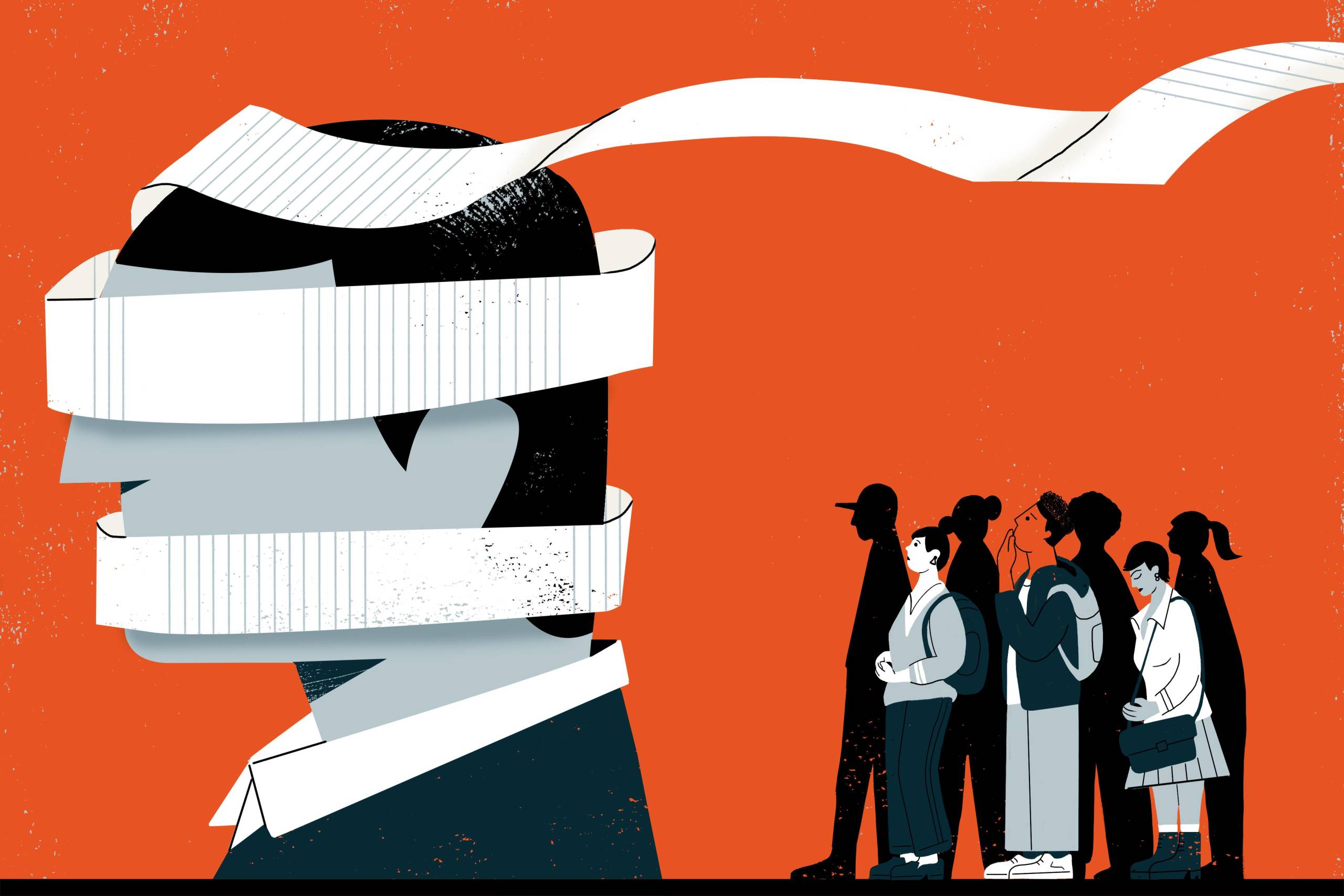
Illustration of a man blinded with tape as students watch
 (Hanna Barczyk / NPR)

Just over a year ago, the U.S. Department of Education abandoned key oversight of the companies that run the federal student loan program, according to a new report from the nonpartisan U.S. Government Accountability Office (GAO).

GAO investigators found that, in February 2025, the Office of Federal Student Aid (FSA) stopped reviewing the accuracy of loan servicers’ records. FSA also stopped reviewing recordings of calls with borrowers to make sure they’re being given accurate information.

Without this oversight, the report warns, borrowers could feel the consequences.

“If servicers’ records are inaccurate, borrowers could, for instance, be placed in the wrong loan repayment status, billed for incorrect amounts, or not have a refund processed in time,” the report says. “Similarly, FSA has not monitored calls since February 2025, so there is a risk that borrowers have received or will receive incorrect information and poor customer service.”

The investigation was requested by the ranking members of the House and Senate education committees, Rep. Bobby Scott, D-Va., and Sen. Bernie Sanders, I-Vt.

Sponsored

“Instead of providing relief to 43 million Americans who are drowning in student debt,” Sanders said in a statement to NPR, “the Trump administration has made it harder for them to understand how much they owe and how long it will take to pay back.”

What the administration has to say about GAO’s findings

The Office of Federal Student Aid is supposed to conduct quarterly reviews, according to its contracts with loan servicers.

These reviews include comparing loan servicers’ borrower records with FSA’s own records, to screen for gaps or discrepancies, as well as “targeted reviews” of borrowers in specific situations, including those who request temporary relief from their payments.

The assessments that were stopped are more labor-intensive than other types of oversight that have been automated, GAO says. According to the report, agency officials told the government watchdog they stopped these reviews in early 2025 “due to lack of FSA staff capacity.” That’s around the same time the Trump administration began dramatically reducing staffing levels at the Education Department.

According to the report, FSA began 2025 with 1,433 staffers; by December, it had 777 — a 46% reduction.

In a written response accompanying the report, Richard Lucas, FSA’s acting chief operating officer, disagreed with GAO’s recommendation that FSA resume the reviews. While he confirmed that FSA had, indeed, stopped the oversight in question, Lucas wrote, “FSA determined that a better approach is to provide substantial oversight through additional activities that measure the accuracy of servicer data and the quality of their performance.” Those activities include regular reviews of borrower satisfaction surveys.

Melissa Emrey-Arras, who led the GAO study, says FSA’s “better approach” isn’t better.

“While reviewing those satisfaction surveys may be helpful, they don’t directly assess the quality of the information given to borrowers. A borrower may indicate they were satisfied with a call, not realizing they were given completely wrong information by their servicer,” she says.

The last FSA review found problems with loan servicer accuracy

Scott Buchanan, the executive director of the Student Loan Servicing Alliance, which represents the servicers working on the federal student loan program, says servicers also police themselves.

“[Servicers] internally are monitoring far more than any of our regulators ever could or would. Because it is in our best interest to make sure those errors are fixed. And because we have contracts, and if we have major issues that have become clearly apparent, then people will say, ‘We’ll find someone else to do it.'”

At the end of 2024, before the Trump administration cut oversight, GAO’s review of servicer recordkeeping found that “four of the five servicers did not meet the accuracy performance standard and faced associated financial penalties.”

In fact, recordkeeping at two servicers was troubled enough to merit the maximum financial penalty allowed.

And GAO notes that the Education Department’s independent financial auditor reported as recently as January 2026 that the department “continued to have a material weakness related to the reliability of its student loan data.”

What’s more, Emrey-Arras says, scaling back oversight at FSA has also meant scaling back efforts to hold servicers financially accountable for their performance. This accountability, she says, “is critical. Without it, the government risks overpaying for poor performance.”

For borrowers, servicer mistakes can lead to very real problems, said Rep. Scott in a statement to NPR. “Borrowers can either overpay or be placed in the wrong student loan repayment program. [The Education Department’s] refusal to conduct oversight of student loan servicers is a dereliction of duty.”

Scaled-back oversight of big student loan changes

These cutbacks in staff and oversight come as millions of federal student loan borrowers will need help transitioning into new repayment plans. The Biden-era SAVE plan is in turmoil, with borrowers now being charged interest and the plan due to be closed by 2028 at the latest. Another 12 million borrowers are either in default on their loans or on their way there.

What’s more, in July, a raft of new, potentially challenging changes to the student loan program will begin — courtesy of Republicans’ One Big Beautiful Bill Act — including the introduction of two brand-new repayment plans and the phasing out of others.


Sponsored

GAO warns that these changes will affect millions of borrowers who “will need accurate and complete information when they call for help,” yet, for the time being, the Education Department can’t be certain that’s what borrowers are actually getting.

Transcript:

STEVE INSKEEP, HOST:

Student loan borrowers could be getting bad information from the companies hired to manage their loans. That is one takeaway from a new investigation by the nonpartisan Government Accountability Office. The GAO found the Department of Education under President Trump abandoned some oversight of those companies. NPR education correspondent Cory Turner got an early look at the report. Cory, good morning.

CORY TURNER, BYLINE: Good morning, Steve.

INSKEEP: OK. When we hear that borrowers are getting bad information, what sort of bad information?

TURNER: Well, we’re talking about what borrowers are being told over the phone when they call their servicer with questions. What repayment plan should I be in? How much do I owe? Am I close to forgiveness? And also whether servicers’ records themselves for each borrower are complete and accurate. So the head of this GAO study, Melissa Emrey-Arras, told me stopping this oversight poses serious risks to borrowers.

MELISSA EMREY-ARRAS: They could be placed in the wrong payment plan, billed an incorrect amount, not be given a refund when they should. These are real financial consequences for borrowers.

TURNER: Now, Steve, as for the oversight that actually stopped, GAO found that the Ed Department used to do two really important things. One – department staff used to listen back to recordings of those phone calls I mentioned between student loan borrowers and call center workers to make sure they’re getting accurate information. And two – department staff would do these manual data comparisons between the department’s own borrower records and servicer records. And that’s because – I mean, I’ve talked to you many times over the years. Servicer records are notoriously messy, incomplete, maybe just wrong. And it’s worth noting, at the end of 2024, before these reviews stopped, four of the five servicers failed the data accuracy review.

INSKEEP: Wow.

TURNER: In other words, this oversight didn’t stop because everything’s awesome. It stopped in spite of serious red flags.

INSKEEP: OK. So if it’s clear that the servicers are not doing a very good job, why would the administration have stopped the oversight?

TURNER: Well, there are a couple answers to that. What they say in their official response to this GAO report is those specific reviews didn’t really matter. Quote, they did “not meaningfully measure” servicer performance and will “not improve the financial health of the federal student loan portfolio.” The department also say they’re doing plenty of other oversight, which they are. But GAO says department officials told them, as part of their review, the oversight stopped because of a lack of staff capacity, which also makes sense when you consider the timeline here, Steve. The oversight stopped in February 2025. At roughly the same time, the Trump administration began downsizing the Ed Department, eventually cutting the student loan office nearly in half. In fact, today is the one-year anniversary of those huge layoffs.

INSKEEP: OK. So the oversight stopped ’cause they fired the people doing the oversight. How does that story fit into the broader landscape of student loans right now?

TURNER: I mean, look. We’re – the next six months are going to be big, right? Without staff, without oversight, you’re going to have millions of borrowers calling with questions. You got 7 million folks who are still in the Biden-era SAVE plan. It is ending, and they’re going to need to put – be put in a different plan. And we have even more borrowers who are either right now in default or they are well on their way. And then in July, Republicans’ One Big Beautiful Bill Act starts rolling out a bunch of other really big student loan changes, including introducing two new plans. So as I said, it is safe to assume many borrowers are going to be calling their servicers with questions. And without this oversight, we won’t know what kind of help they’re actually getting.

INSKEEP: Well, we can at least call on NPR education correspondent Cory Turner to give us the most reliable information possible. Cory, thanks so much.

TURNER: You’re welcome, Steve.

(SOUNDBITE OF MOLLY LEWIS’ “CRUSHED VELVET (FEAT. THEE SACRED SOULS)”)

lower waypoint
next waypoint
Player sponsored by