A collection of embedded short news clips, animations, commentary and originally-produced videos
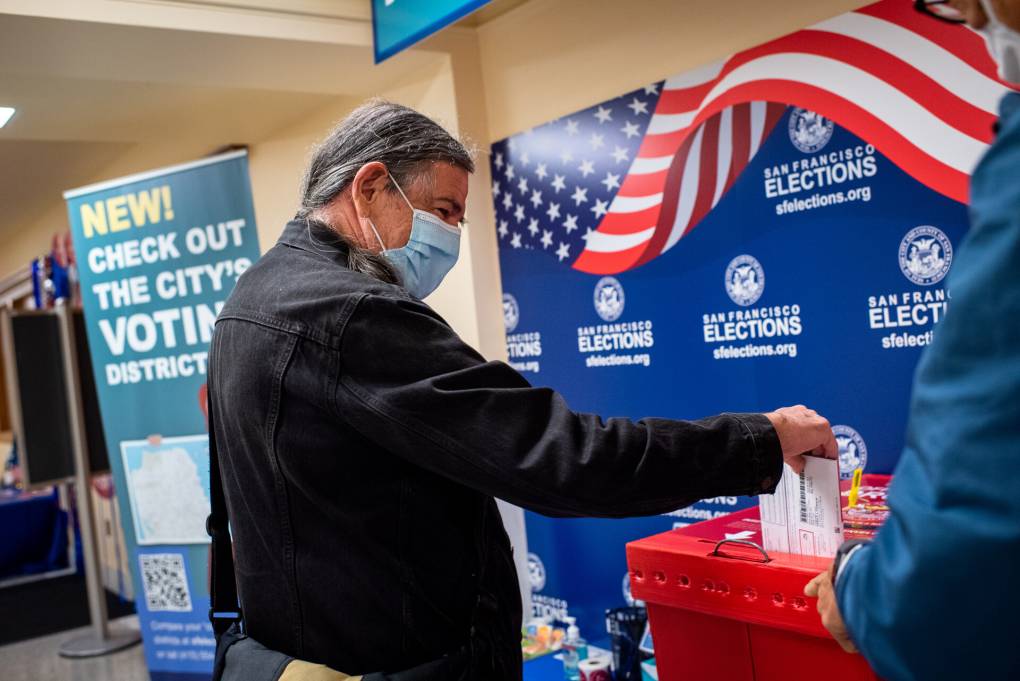
How the Electoral College Works and Why It's So Controversial
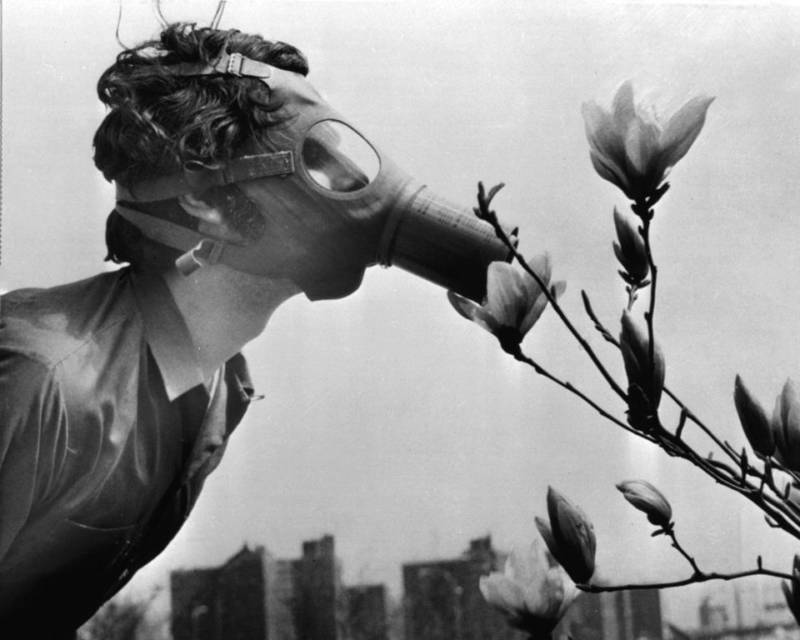
When Rivers Caught Fire: A Brief History of Earth Day (with Lesson Plan)
Looking for the Fastest Way to Board a Plane? Go Ask An Astrophysicist
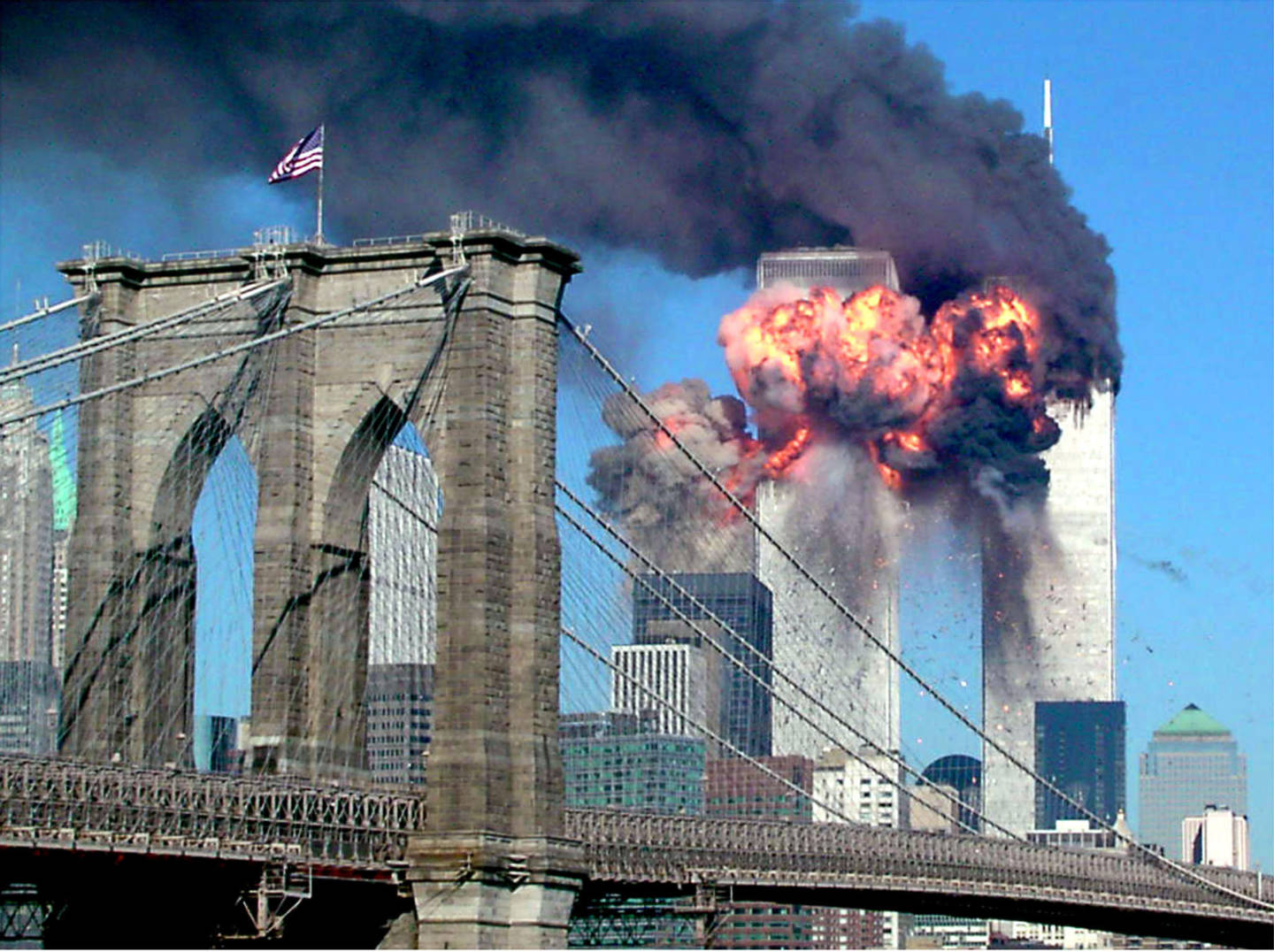
How 9/11 Changed America: Four Major Lasting Impacts (with Lesson Plan)
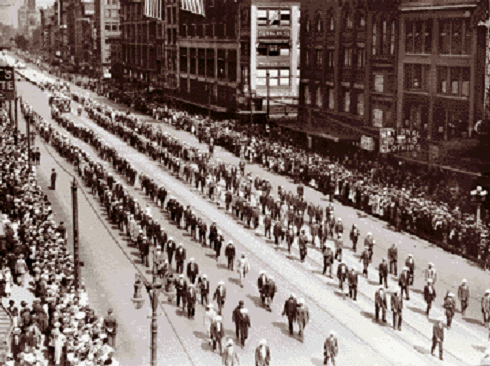
Labor Day's Violent Roots: The Hard-Won Fight for Your Long Weekend
Does Your School Start Too Early in the Morning? (with Lesson Plan)
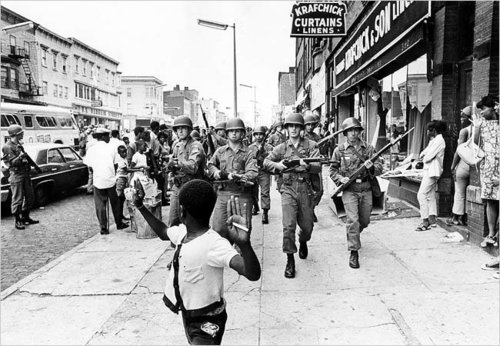
The Summer of Rage: Lessons from the Race Riots in Detroit and Newark 50 Years Ago
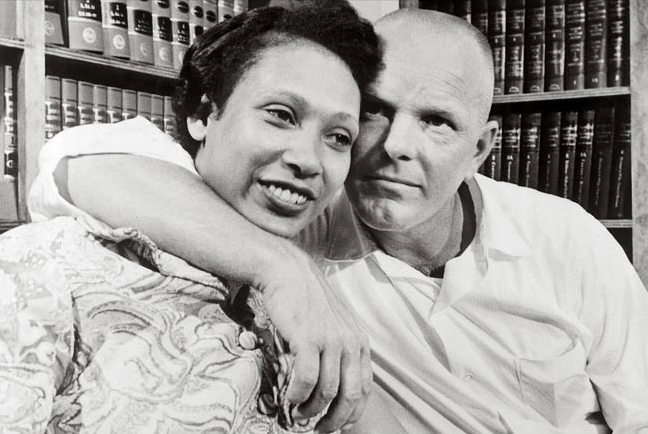
The Case for Loving: The Supreme Court Legalized Interracial Marriage Just 50 Years Ago
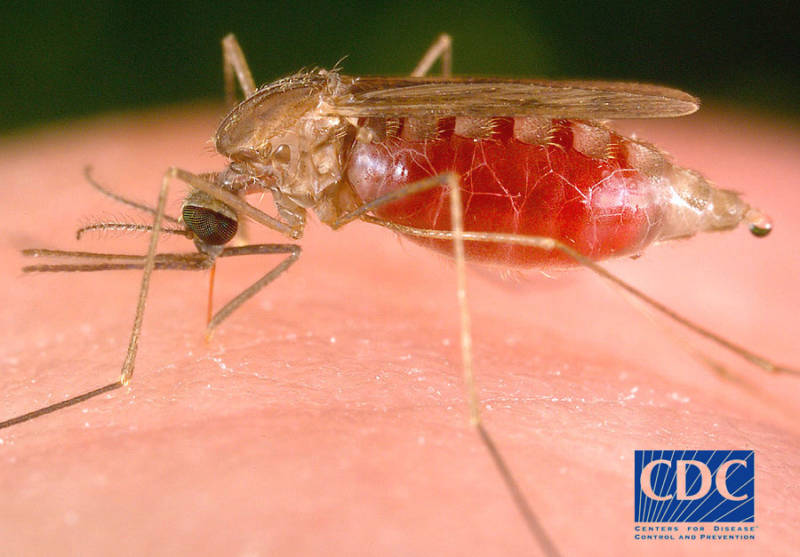
Bloodsuckers! The War on Mosquitoes
Player sponsored by
window.__IS_SSR__=true
window.__INITIAL_STATE__={
"attachmentsReducer": {
"audio_0": {
"type": "attachments",
"id": "audio_0",
"imgSizes": {
"kqedFullSize": {
"file": "https://ww2.kqed.org/news/wp-content/themes/KQED-unified/img/audio_bgs/background0.jpg"
}
}
},
"audio_1": {
"type": "attachments",
"id": "audio_1",
"imgSizes": {
"kqedFullSize": {
"file": "https://ww2.kqed.org/news/wp-content/themes/KQED-unified/img/audio_bgs/background1.jpg"
}
}
},
"audio_2": {
"type": "attachments",
"id": "audio_2",
"imgSizes": {
"kqedFullSize": {
"file": "https://ww2.kqed.org/news/wp-content/themes/KQED-unified/img/audio_bgs/background2.jpg"
}
}
},
"audio_3": {
"type": "attachments",
"id": "audio_3",
"imgSizes": {
"kqedFullSize": {
"file": "https://ww2.kqed.org/news/wp-content/themes/KQED-unified/img/audio_bgs/background3.jpg"
}
}
},
"audio_4": {
"type": "attachments",
"id": "audio_4",
"imgSizes": {
"kqedFullSize": {
"file": "https://ww2.kqed.org/news/wp-content/themes/KQED-unified/img/audio_bgs/background4.jpg"
}
}
},
"placeholder": {
"type": "attachments",
"id": "placeholder",
"imgSizes": {
"thumbnail": {
"file": "https://cdn.kqed.org/wp-content/uploads/2024/12/KQED-Default-Image-816638274-2000x1333-1-160x107.jpg",
"width": 160,
"height": 107,
"mimeType": "image/jpeg"
},
"medium": {
"file": "https://cdn.kqed.org/wp-content/uploads/2024/12/KQED-Default-Image-816638274-2000x1333-1-800x533.jpg",
"width": 800,
"height": 533,
"mimeType": "image/jpeg"
},
"medium_large": {
"file": "https://cdn.kqed.org/wp-content/uploads/2024/12/KQED-Default-Image-816638274-2000x1333-1-768x512.jpg",
"width": 768,
"height": 512,
"mimeType": "image/jpeg"
},
"large": {
"file": "https://cdn.kqed.org/wp-content/uploads/2024/12/KQED-Default-Image-816638274-2000x1333-1-1020x680.jpg",
"width": 1020,
"height": 680,
"mimeType": "image/jpeg"
},
"1536x1536": {
"file": "https://cdn.kqed.org/wp-content/uploads/2024/12/KQED-Default-Image-816638274-2000x1333-1-1536x1024.jpg",
"width": 1536,
"height": 1024,
"mimeType": "image/jpeg"
},
"fd-lrg": {
"file": "https://cdn.kqed.org/wp-content/uploads/2024/12/KQED-Default-Image-816638274-2000x1333-1-1536x1024.jpg",
"width": 1536,
"height": 1024,
"mimeType": "image/jpeg"
},
"fd-med": {
"file": "https://cdn.kqed.org/wp-content/uploads/2024/12/KQED-Default-Image-816638274-2000x1333-1-1020x680.jpg",
"width": 1020,
"height": 680,
"mimeType": "image/jpeg"
},
"fd-sm": {
"file": "https://cdn.kqed.org/wp-content/uploads/2024/12/KQED-Default-Image-816638274-2000x1333-1-800x533.jpg",
"width": 800,
"height": 533,
"mimeType": "image/jpeg"
},
"post-thumbnail": {
"file": "https://cdn.kqed.org/wp-content/uploads/2024/12/KQED-Default-Image-816638274-2000x1333-1-672x372.jpg",
"width": 672,
"height": 372,
"mimeType": "image/jpeg"
},
"twentyfourteen-full-width": {
"file": "https://cdn.kqed.org/wp-content/uploads/2024/12/KQED-Default-Image-816638274-2000x1333-1-1038x576.jpg",
"width": 1038,
"height": 576,
"mimeType": "image/jpeg"
},
"xxsmall": {
"file": "https://cdn.kqed.org/wp-content/uploads/2024/12/KQED-Default-Image-816638274-2000x1333-1-160x107.jpg",
"width": 160,
"height": 107,
"mimeType": "image/jpeg"
},
"xsmall": {
"file": "https://cdn.kqed.org/wp-content/uploads/2024/12/KQED-Default-Image-816638274-2000x1333-1-672x372.jpg",
"width": 672,
"height": 372,
"mimeType": "image/jpeg"
},
"small": {
"file": "https://cdn.kqed.org/wp-content/uploads/2024/12/KQED-Default-Image-816638274-2000x1333-1-672x372.jpg",
"width": 672,
"height": 372,
"mimeType": "image/jpeg"
},
"xlarge": {
"file": "https://cdn.kqed.org/wp-content/uploads/2024/12/KQED-Default-Image-816638274-2000x1333-1-1020x680.jpg",
"width": 1020,
"height": 680,
"mimeType": "image/jpeg"
},
"full-width": {
"file": "https://cdn.kqed.org/wp-content/uploads/2024/12/KQED-Default-Image-816638274-2000x1333-1-1920x1280.jpg",
"width": 1920,
"height": 1280,
"mimeType": "image/jpeg"
},
"guest-author-32": {
"file": "https://cdn.kqed.org/wp-content/uploads/2025/01/KQED-Default-Image-816638274-1333x1333-1-160x160.jpg",
"width": 32,
"height": 32,
"mimeType": "image/jpeg"
},
"guest-author-50": {
"file": "https://cdn.kqed.org/wp-content/uploads/2025/01/KQED-Default-Image-816638274-1333x1333-1-160x160.jpg",
"width": 50,
"height": 50,
"mimeType": "image/jpeg"
},
"guest-author-64": {
"file": "https://cdn.kqed.org/wp-content/uploads/2025/01/KQED-Default-Image-816638274-1333x1333-1-160x160.jpg",
"width": 64,
"height": 64,
"mimeType": "image/jpeg"
},
"guest-author-96": {
"file": "https://cdn.kqed.org/wp-content/uploads/2025/01/KQED-Default-Image-816638274-1333x1333-1-160x160.jpg",
"width": 96,
"height": 96,
"mimeType": "image/jpeg"
},
"guest-author-128": {
"file": "https://cdn.kqed.org/wp-content/uploads/2025/01/KQED-Default-Image-816638274-1333x1333-1-160x160.jpg",
"width": 128,
"height": 128,
"mimeType": "image/jpeg"
},
"detail": {
"file": "https://cdn.kqed.org/wp-content/uploads/2025/01/KQED-Default-Image-816638274-1333x1333-1-160x160.jpg",
"width": 160,
"height": 160,
"mimeType": "image/jpeg"
},
"kqedFullSize": {
"file": "https://cdn.kqed.org/wp-content/uploads/2024/12/KQED-Default-Image-816638274-2000x1333-1.jpg",
"width": 2000,
"height": 1333
}
}
},
"lowdown_31391": {
"type": "attachments",
"id": "lowdown_31391",
"meta": {
"index": "attachments_1716263798",
"site": "lowdown",
"id": "31391",
"found": true
},
"title": "KQED_EarlyVoting",
"publishDate": 1729901894,
"status": "inherit",
"parent": 3825,
"modified": 1729902098,
"caption": "Harold Turner of San Francisco drops off his ballot early at City Hall in San Francisco on Tuesday, Oct. 11, 2022.",
"credit": "Marlena Sloss/KQED",
"altTag": "A man with a mask drops his ballot into a ballot box.",
"description": null,
"imgSizes": {
"medium": {
"file": "https://cdn.kqed.org/wp-content/uploads/sites/26/2016/10/RS59244_Early_Voting_003-qut-800x534.jpg",
"width": 800,
"height": 534,
"mimeType": "image/jpeg"
},
"large": {
"file": "https://cdn.kqed.org/wp-content/uploads/sites/26/2016/10/RS59244_Early_Voting_003-qut-1020x681.jpg",
"width": 1020,
"height": 681,
"mimeType": "image/jpeg"
},
"thumbnail": {
"file": "https://cdn.kqed.org/wp-content/uploads/sites/26/2016/10/RS59244_Early_Voting_003-qut-160x107.jpg",
"width": 160,
"height": 107,
"mimeType": "image/jpeg"
},
"medium_large": {
"file": "https://cdn.kqed.org/wp-content/uploads/sites/26/2016/10/RS59244_Early_Voting_003-qut-768x513.jpg",
"width": 768,
"height": 513,
"mimeType": "image/jpeg"
},
"1536x1536": {
"file": "https://cdn.kqed.org/wp-content/uploads/sites/26/2016/10/RS59244_Early_Voting_003-qut-1536x1026.jpg",
"width": 1536,
"height": 1026,
"mimeType": "image/jpeg"
},
"post-thumbnail": {
"file": "https://cdn.kqed.org/wp-content/uploads/sites/26/2016/10/RS59244_Early_Voting_003-qut-672x372.jpg",
"width": 672,
"height": 372,
"mimeType": "image/jpeg"
},
"twentyfourteen-full-width": {
"file": "https://cdn.kqed.org/wp-content/uploads/sites/26/2016/10/RS59244_Early_Voting_003-qut-1038x576.jpg",
"width": 1038,
"height": 576,
"mimeType": "image/jpeg"
},
"kqedFullSize": {
"file": "https://cdn.kqed.org/wp-content/uploads/sites/26/2016/10/RS59244_Early_Voting_003-qut.jpg",
"width": 1920,
"height": 1282
}
},
"isLoading": false,
"fetchFailed": false
},
"lowdown_26637": {
"type": "attachments",
"id": "lowdown_26637",
"meta": {
"index": "attachments_1716263798",
"site": "lowdown",
"id": "26637",
"found": true
},
"parent": 21839,
"imgSizes": {
"small": {
"file": "https://ww2.kqed.org/app/uploads/sites/26/2016/04/earth-day-520x416.jpeg",
"width": 520,
"mimeType": "image/jpeg",
"height": 416
},
"twentyfourteen-full-width": {
"file": "https://ww2.kqed.org/app/uploads/sites/26/2016/04/earth-day-960x576.jpeg",
"width": 960,
"mimeType": "image/jpeg",
"height": 576
},
"thumbnail": {
"file": "https://ww2.kqed.org/app/uploads/sites/26/2016/04/earth-day-160x128.jpeg",
"width": 160,
"mimeType": "image/jpeg",
"height": 128
},
"fd-sm": {
"file": "https://ww2.kqed.org/app/uploads/sites/26/2016/04/earth-day-960x768.jpeg",
"width": 960,
"mimeType": "image/jpeg",
"height": 768
},
"post-thumbnail": {
"file": "https://ww2.kqed.org/app/uploads/sites/26/2016/04/earth-day-672x372.jpeg",
"width": 672,
"mimeType": "image/jpeg",
"height": 372
},
"xsmall": {
"file": "https://ww2.kqed.org/app/uploads/sites/26/2016/04/earth-day-375x300.jpeg",
"width": 375,
"mimeType": "image/jpeg",
"height": 300
},
"kqedFullSize": {
"file": "https://ww2.kqed.org/app/uploads/sites/26/2016/04/earth-day.jpeg",
"width": 960,
"height": 768
},
"guest-author-50": {
"file": "https://ww2.kqed.org/app/uploads/sites/26/2016/04/earth-day-50x50.jpeg",
"width": 50,
"mimeType": "image/jpeg",
"height": 50
},
"guest-author-96": {
"file": "https://ww2.kqed.org/app/uploads/sites/26/2016/04/earth-day-96x96.jpeg",
"width": 96,
"mimeType": "image/jpeg",
"height": 96
},
"medium": {
"file": "https://ww2.kqed.org/app/uploads/sites/26/2016/04/earth-day-800x640.jpeg",
"width": 800,
"mimeType": "image/jpeg",
"height": 640
},
"guest-author-64": {
"file": "https://ww2.kqed.org/app/uploads/sites/26/2016/04/earth-day-64x64.jpeg",
"width": 64,
"mimeType": "image/jpeg",
"height": 64
},
"guest-author-32": {
"file": "https://ww2.kqed.org/app/uploads/sites/26/2016/04/earth-day-32x32.jpeg",
"width": 32,
"mimeType": "image/jpeg",
"height": 32
},
"detail": {
"file": "https://ww2.kqed.org/app/uploads/sites/26/2016/04/earth-day-150x150.jpeg",
"width": 150,
"mimeType": "image/jpeg",
"height": 150
},
"medium_large": {
"file": "https://ww2.kqed.org/app/uploads/sites/26/2016/04/earth-day-768x614.jpeg",
"width": 768,
"mimeType": "image/jpeg",
"height": 614
},
"guest-author-128": {
"file": "https://ww2.kqed.org/app/uploads/sites/26/2016/04/earth-day-128x128.jpeg",
"width": 128,
"mimeType": "image/jpeg",
"height": 128
},
"xxsmall": {
"file": "https://ww2.kqed.org/app/uploads/sites/26/2016/04/earth-day-240x192.jpeg",
"width": 240,
"mimeType": "image/jpeg",
"height": 192
}
},
"publishDate": 1492569770,
"modified": 1492579657,
"caption": "A college student in a gas mask \"smells\" a magnolia blossom in New York's City Hall Park on the first Earth Day in 1970.",
"description": null,
"title": "earth day",
"credit": "AP/Wide World Photos",
"status": "inherit",
"isLoading": false,
"fetchFailed": false
},
"lowdown_15446": {
"type": "attachments",
"id": "lowdown_15446",
"meta": {
"index": "attachments_1716263798",
"site": "lowdown",
"id": "15446",
"found": true
},
"parent": 15427,
"imgSizes": {
"thumbnail": {
"file": "https://ww2.kqed.org/app/uploads/sites/26/2015/01/gty_boarding_airplane_mi_130319_wmain-400x225.jpg",
"width": 400,
"mimeType": "image/jpeg",
"height": 225
},
"fd-sm": {
"file": "https://ww2.kqed.org/app/uploads/sites/26/2015/01/gty_boarding_airplane_mi_130319_wmain-320x180.jpg",
"width": 320,
"mimeType": "image/jpeg",
"height": 180
},
"kqedFullSize": {
"file": "https://ww2.kqed.org/app/uploads/sites/26/2015/01/gty_boarding_airplane_mi_130319_wmain.jpg",
"width": 640,
"height": 360
},
"guest-author-96": {
"file": "https://ww2.kqed.org/app/uploads/sites/26/2015/01/gty_boarding_airplane_mi_130319_wmain-96x96.jpg",
"width": 96,
"mimeType": "image/jpeg",
"height": 96
},
"guest-author-64": {
"file": "https://ww2.kqed.org/app/uploads/sites/26/2015/01/gty_boarding_airplane_mi_130319_wmain-64x64.jpg",
"width": 64,
"mimeType": "image/jpeg",
"height": 64
},
"detail": {
"file": "https://ww2.kqed.org/app/uploads/sites/26/2015/01/gty_boarding_airplane_mi_130319_wmain-75x75.jpg",
"width": 75,
"mimeType": "image/jpeg",
"height": 75
},
"guest-author-32": {
"file": "https://ww2.kqed.org/app/uploads/sites/26/2015/01/gty_boarding_airplane_mi_130319_wmain-32x32.jpg",
"width": 32,
"mimeType": "image/jpeg",
"height": 32
},
"guest-author-128": {
"file": "https://ww2.kqed.org/app/uploads/sites/26/2015/01/gty_boarding_airplane_mi_130319_wmain-128x128.jpg",
"width": 128,
"mimeType": "image/jpeg",
"height": 128
}
},
"publishDate": 1420514390,
"modified": 1420514390,
"caption": null,
"description": null,
"title": "gty_boarding_airplane_mi_130319_wmain",
"credit": null,
"status": "inherit",
"isLoading": false,
"fetchFailed": false
},
"lowdown_23785": {
"type": "attachments",
"id": "lowdown_23785",
"meta": {
"index": "attachments_1716263798",
"site": "lowdown",
"id": "23785",
"found": true
},
"parent": 14066,
"imgSizes": {
"twentyfourteen-full-width": {
"file": "https://ww2.kqed.org/app/uploads/sites/26/2016/09/9-11_retuers-1-1038x576.jpg",
"width": 1038,
"mimeType": "image/jpeg",
"height": 576
},
"thumbnail": {
"file": "https://ww2.kqed.org/app/uploads/sites/26/2016/09/9-11_retuers-1-400x299.jpg",
"width": 400,
"mimeType": "image/jpeg",
"height": 299
},
"fd-sm": {
"file": "https://ww2.kqed.org/app/uploads/sites/26/2016/09/9-11_retuers-1-960x717.jpg",
"width": 960,
"mimeType": "image/jpeg",
"height": 717
},
"post-thumbnail": {
"file": "https://ww2.kqed.org/app/uploads/sites/26/2016/09/9-11_retuers-1-672x372.jpg",
"width": 672,
"mimeType": "image/jpeg",
"height": 372
},
"kqedFullSize": {
"file": "https://ww2.kqed.org/app/uploads/sites/26/2016/09/9-11_retuers-1.jpg",
"width": 2048,
"height": 1530
},
"large": {
"file": "https://ww2.kqed.org/app/uploads/sites/26/2016/09/9-11_retuers-1-1440x1076.jpg",
"width": 1440,
"mimeType": "image/jpeg",
"height": 1076
},
"guest-author-50": {
"file": "https://ww2.kqed.org/app/uploads/sites/26/2016/09/9-11_retuers-1-50x50.jpg",
"width": 50,
"mimeType": "image/jpeg",
"height": 50
},
"guest-author-96": {
"file": "https://ww2.kqed.org/app/uploads/sites/26/2016/09/9-11_retuers-1-96x96.jpg",
"width": 96,
"mimeType": "image/jpeg",
"height": 96
},
"medium": {
"file": "https://ww2.kqed.org/app/uploads/sites/26/2016/09/9-11_retuers-1-800x598.jpg",
"width": 800,
"mimeType": "image/jpeg",
"height": 598
},
"guest-author-64": {
"file": "https://ww2.kqed.org/app/uploads/sites/26/2016/09/9-11_retuers-1-64x64.jpg",
"width": 64,
"mimeType": "image/jpeg",
"height": 64
},
"guest-author-32": {
"file": "https://ww2.kqed.org/app/uploads/sites/26/2016/09/9-11_retuers-1-32x32.jpg",
"width": 32,
"mimeType": "image/jpeg",
"height": 32
},
"fd-lrg": {
"file": "https://ww2.kqed.org/app/uploads/sites/26/2016/09/9-11_retuers-1-1920x1434.jpg",
"width": 1920,
"mimeType": "image/jpeg",
"height": 1434
},
"fd-med": {
"file": "https://ww2.kqed.org/app/uploads/sites/26/2016/09/9-11_retuers-1-1180x882.jpg",
"width": 1180,
"mimeType": "image/jpeg",
"height": 882
},
"detail": {
"file": "https://ww2.kqed.org/app/uploads/sites/26/2016/09/9-11_retuers-1-150x150.jpg",
"width": 150,
"mimeType": "image/jpeg",
"height": 150
},
"medium_large": {
"file": "https://ww2.kqed.org/app/uploads/sites/26/2016/09/9-11_retuers-1-768x574.jpg",
"width": 768,
"mimeType": "image/jpeg",
"height": 574
},
"guest-author-128": {
"file": "https://ww2.kqed.org/app/uploads/sites/26/2016/09/9-11_retuers-1-128x128.jpg",
"width": 128,
"mimeType": "image/jpeg",
"height": 128
}
},
"publishDate": 1473720115,
"modified": 1473720214,
"caption": "The second tower of the World Trade Center bursts into flames after being hit by a hijacked airplane in New York on September 11, 2001.",
"description": null,
"title": "File photo of the second tower of the World Trade Center bursting into flames after being hit by an airplane in New York",
"credit": "REUTERS/Sara K. Schwittek",
"status": "inherit",
"isLoading": false,
"fetchFailed": false
},
"lowdown_9168": {
"type": "attachments",
"id": "lowdown_9168",
"meta": {
"index": "attachments_1716263798",
"site": "lowdown",
"id": "9168",
"found": true
},
"parent": 9148,
"imgSizes": {
"thumbnail": {
"file": "https://ww2.kqed.org/app/uploads/sites/26/2013/08/labordayparade1-400x299.gif",
"width": 400,
"mimeType": "image/gif",
"height": 299
},
"fd-sm": {
"file": "https://ww2.kqed.org/app/uploads/sites/26/2013/08/labordayparade1-320x239.gif",
"width": 320,
"mimeType": "image/gif",
"height": 239
},
"kqedFullSize": {
"file": "https://ww2.kqed.org/app/uploads/sites/26/2013/08/labordayparade1.gif",
"width": 490,
"height": 366
},
"guest-author-96": {
"file": "https://ww2.kqed.org/app/uploads/sites/26/2013/08/labordayparade1-96x96.gif",
"width": 96,
"mimeType": "image/gif",
"height": 96
},
"guest-author-64": {
"file": "https://ww2.kqed.org/app/uploads/sites/26/2013/08/labordayparade1-64x64.gif",
"width": 64,
"mimeType": "image/gif",
"height": 64
},
"detail": {
"file": "https://ww2.kqed.org/app/uploads/sites/26/2013/08/labordayparade1-75x75.gif",
"width": 75,
"mimeType": "image/gif",
"height": 75
},
"guest-author-32": {
"file": "https://ww2.kqed.org/app/uploads/sites/26/2013/08/labordayparade1-32x32.gif",
"width": 32,
"mimeType": "image/gif",
"height": 32
},
"guest-author-128": {
"file": "https://ww2.kqed.org/app/uploads/sites/26/2013/08/labordayparade1-128x128.gif",
"width": 128,
"mimeType": "image/gif",
"height": 128
}
},
"publishDate": 1377986901,
"modified": 1377986901,
"caption": null,
"description": null,
"title": "labordayparade1",
"credit": null,
"status": "inherit",
"isLoading": false,
"fetchFailed": false
},
"lowdown_30292": {
"type": "attachments",
"id": "lowdown_30292",
"meta": {
"index": "attachments_1716263798",
"site": "lowdown",
"id": "30292",
"found": true
},
"parent": 27920,
"imgSizes": {
"small": {
"file": "https://ww2.kqed.org/app/uploads/sites/26/2017/08/SCHOOL-START-TIME-THUMBNAIL_1-520x293.png",
"width": 520,
"mimeType": "image/png",
"height": 293
},
"twentyfourteen-full-width": {
"file": "https://ww2.kqed.org/app/uploads/sites/26/2017/08/SCHOOL-START-TIME-THUMBNAIL_1-1038x576.png",
"width": 1038,
"mimeType": "image/png",
"height": 576
},
"thumbnail": {
"file": "https://ww2.kqed.org/app/uploads/sites/26/2017/08/SCHOOL-START-TIME-THUMBNAIL_1-160x90.png",
"width": 160,
"mimeType": "image/png",
"height": 90
},
"fd-sm": {
"file": "https://ww2.kqed.org/app/uploads/sites/26/2017/08/SCHOOL-START-TIME-THUMBNAIL_1-960x540.png",
"width": 960,
"mimeType": "image/png",
"height": 540
},
"post-thumbnail": {
"file": "https://ww2.kqed.org/app/uploads/sites/26/2017/08/SCHOOL-START-TIME-THUMBNAIL_1-672x372.png",
"width": 672,
"mimeType": "image/png",
"height": 372
},
"xsmall": {
"file": "https://ww2.kqed.org/app/uploads/sites/26/2017/08/SCHOOL-START-TIME-THUMBNAIL_1-375x211.png",
"width": 375,
"mimeType": "image/png",
"height": 211
},
"kqedFullSize": {
"file": "https://ww2.kqed.org/app/uploads/sites/26/2017/08/SCHOOL-START-TIME-THUMBNAIL_1.png",
"width": 1920,
"height": 1080
},
"large": {
"file": "https://ww2.kqed.org/app/uploads/sites/26/2017/08/SCHOOL-START-TIME-THUMBNAIL_1-1020x574.png",
"width": 1020,
"mimeType": "image/png",
"height": 574
},
"xlarge": {
"file": "https://ww2.kqed.org/app/uploads/sites/26/2017/08/SCHOOL-START-TIME-THUMBNAIL_1-1180x664.png",
"width": 1180,
"mimeType": "image/png",
"height": 664
},
"guest-author-50": {
"file": "https://ww2.kqed.org/app/uploads/sites/26/2017/08/SCHOOL-START-TIME-THUMBNAIL_1-50x50.png",
"width": 50,
"mimeType": "image/png",
"height": 50
},
"guest-author-96": {
"file": "https://ww2.kqed.org/app/uploads/sites/26/2017/08/SCHOOL-START-TIME-THUMBNAIL_1-96x96.png",
"width": 96,
"mimeType": "image/png",
"height": 96
},
"medium": {
"file": "https://ww2.kqed.org/app/uploads/sites/26/2017/08/SCHOOL-START-TIME-THUMBNAIL_1-800x450.png",
"width": 800,
"mimeType": "image/png",
"height": 450
},
"guest-author-64": {
"file": "https://ww2.kqed.org/app/uploads/sites/26/2017/08/SCHOOL-START-TIME-THUMBNAIL_1-64x64.png",
"width": 64,
"mimeType": "image/png",
"height": 64
},
"guest-author-32": {
"file": "https://ww2.kqed.org/app/uploads/sites/26/2017/08/SCHOOL-START-TIME-THUMBNAIL_1-32x32.png",
"width": 32,
"mimeType": "image/png",
"height": 32
},
"fd-lrg": {
"file": "https://ww2.kqed.org/app/uploads/sites/26/2017/08/SCHOOL-START-TIME-THUMBNAIL_1-1920x1080.png",
"width": 1920,
"mimeType": "image/png",
"height": 1080
},
"fd-med": {
"file": "https://ww2.kqed.org/app/uploads/sites/26/2017/08/SCHOOL-START-TIME-THUMBNAIL_1-1180x664.png",
"width": 1180,
"mimeType": "image/png",
"height": 664
},
"full-width": {
"file": "https://ww2.kqed.org/app/uploads/sites/26/2017/08/SCHOOL-START-TIME-THUMBNAIL_1-1920x1080.png",
"width": 1920,
"mimeType": "image/png",
"height": 1080
},
"detail": {
"file": "https://ww2.kqed.org/app/uploads/sites/26/2017/08/SCHOOL-START-TIME-THUMBNAIL_1-150x150.png",
"width": 150,
"mimeType": "image/png",
"height": 150
},
"medium_large": {
"file": "https://ww2.kqed.org/app/uploads/sites/26/2017/08/SCHOOL-START-TIME-THUMBNAIL_1-768x432.png",
"width": 768,
"mimeType": "image/png",
"height": 432
},
"guest-author-128": {
"file": "https://ww2.kqed.org/app/uploads/sites/26/2017/08/SCHOOL-START-TIME-THUMBNAIL_1-128x128.png",
"width": 128,
"mimeType": "image/png",
"height": 128
},
"xxsmall": {
"file": "https://ww2.kqed.org/app/uploads/sites/26/2017/08/SCHOOL-START-TIME-THUMBNAIL_1-240x135.png",
"width": 240,
"mimeType": "image/png",
"height": 135
}
},
"publishDate": 1520017334,
"modified": 1520017334,
"caption": null,
"description": null,
"title": "SCHOOL START TIME THUMBNAIL_1",
"credit": null,
"status": "inherit",
"isLoading": false,
"fetchFailed": false
},
"lowdown_22772": {
"type": "attachments",
"id": "lowdown_22772",
"meta": {
"index": "attachments_1716263798",
"site": "lowdown",
"id": "22772",
"found": true
},
"parent": 0,
"imgSizes": {
"thumbnail": {
"file": "https://ww2.kqed.org/app/uploads/sites/26/2016/07/Newark-Riot-400x277.jpeg",
"width": 400,
"mimeType": "image/jpeg",
"height": 277
},
"kqedFullSize": {
"file": "https://ww2.kqed.org/app/uploads/sites/26/2016/07/Newark-Riot.jpeg",
"width": 500,
"height": 346
},
"guest-author-50": {
"file": "https://ww2.kqed.org/app/uploads/sites/26/2016/07/Newark-Riot-50x50.jpeg",
"width": 50,
"mimeType": "image/jpeg",
"height": 50
},
"guest-author-96": {
"file": "https://ww2.kqed.org/app/uploads/sites/26/2016/07/Newark-Riot-96x96.jpeg",
"width": 96,
"mimeType": "image/jpeg",
"height": 96
},
"guest-author-64": {
"file": "https://ww2.kqed.org/app/uploads/sites/26/2016/07/Newark-Riot-64x64.jpeg",
"width": 64,
"mimeType": "image/jpeg",
"height": 64
},
"detail": {
"file": "https://ww2.kqed.org/app/uploads/sites/26/2016/07/Newark-Riot-150x150.jpeg",
"width": 150,
"mimeType": "image/jpeg",
"height": 150
},
"guest-author-32": {
"file": "https://ww2.kqed.org/app/uploads/sites/26/2016/07/Newark-Riot-32x32.jpeg",
"width": 32,
"mimeType": "image/jpeg",
"height": 32
},
"guest-author-128": {
"file": "https://ww2.kqed.org/app/uploads/sites/26/2016/07/Newark-Riot-128x128.jpeg",
"width": 128,
"mimeType": "image/jpeg",
"height": 128
}
},
"publishDate": 1468630921,
"modified": 1501026832,
"caption": "A boy runs from National Guard troops in Newark, NJ during the 1967 riots.",
"description": null,
"title": "Newark Riot",
"credit": "From the New York Times archives",
"status": "inherit",
"isLoading": false,
"fetchFailed": false
},
"lowdown_18032": {
"type": "attachments",
"id": "lowdown_18032",
"meta": {
"index": "attachments_1716263798",
"site": "lowdown",
"id": "18032",
"found": true
},
"parent": 2012,
"imgSizes": {
"thumbnail": {
"file": "https://ww2.kqed.org/app/uploads/sites/26/2013/03/Mildred_Jeter_and_Richard_Loving-400x268.jpg",
"width": 400,
"mimeType": "image/jpeg",
"height": 268
},
"post-thumbnail": {
"file": "https://ww2.kqed.org/app/uploads/sites/26/2013/03/Mildred_Jeter_and_Richard_Loving-648x372.jpg",
"width": 648,
"mimeType": "image/jpeg",
"height": 372
},
"kqedFullSize": {
"file": "https://ww2.kqed.org/app/uploads/sites/26/2013/03/Mildred_Jeter_and_Richard_Loving.jpg",
"width": 648,
"height": 434
},
"guest-author-96": {
"file": "https://ww2.kqed.org/app/uploads/sites/26/2013/03/Mildred_Jeter_and_Richard_Loving-96x96.jpg",
"width": 96,
"mimeType": "image/jpeg",
"height": 96
},
"guest-author-64": {
"file": "https://ww2.kqed.org/app/uploads/sites/26/2013/03/Mildred_Jeter_and_Richard_Loving-64x64.jpg",
"width": 64,
"mimeType": "image/jpeg",
"height": 64
},
"detail": {
"file": "https://ww2.kqed.org/app/uploads/sites/26/2013/03/Mildred_Jeter_and_Richard_Loving-75x75.jpg",
"width": 75,
"mimeType": "image/jpeg",
"height": 75
},
"guest-author-32": {
"file": "https://ww2.kqed.org/app/uploads/sites/26/2013/03/Mildred_Jeter_and_Richard_Loving-32x32.jpg",
"width": 32,
"mimeType": "image/jpeg",
"height": 32
},
"guest-author-128": {
"file": "https://ww2.kqed.org/app/uploads/sites/26/2013/03/Mildred_Jeter_and_Richard_Loving-128x128.jpg",
"width": 128,
"mimeType": "image/jpeg",
"height": 128
}
},
"publishDate": 1432331040,
"modified": 1435618850,
"caption": "Mildred and Richard Loving in 1967. ",
"description": null,
"title": "Mildred_Jeter_and_Richard_Loving",
"credit": "Wikipedia",
"status": "inherit",
"isLoading": false,
"fetchFailed": false
},
"lowdown_27385": {
"type": "attachments",
"id": "lowdown_27385",
"meta": {
"index": "attachments_1716263798",
"site": "lowdown",
"id": "27385",
"found": true
},
"parent": 27383,
"imgSizes": {
"small": {
"file": "https://ww2.kqed.org/app/uploads/sites/26/2017/06/freeborniwithlogo-520x362.jpg",
"width": 520,
"mimeType": "image/jpeg",
"height": 362
},
"twentyfourteen-full-width": {
"file": "https://ww2.kqed.org/app/uploads/sites/26/2017/06/freeborniwithlogo-900x576.jpg",
"width": 900,
"mimeType": "image/jpeg",
"height": 576
},
"thumbnail": {
"file": "https://ww2.kqed.org/app/uploads/sites/26/2017/06/freeborniwithlogo-160x111.jpg",
"width": 160,
"mimeType": "image/jpeg",
"height": 111
},
"post-thumbnail": {
"file": "https://ww2.kqed.org/app/uploads/sites/26/2017/06/freeborniwithlogo-672x372.jpg",
"width": 672,
"mimeType": "image/jpeg",
"height": 372
},
"xsmall": {
"file": "https://ww2.kqed.org/app/uploads/sites/26/2017/06/freeborniwithlogo-375x261.jpg",
"width": 375,
"mimeType": "image/jpeg",
"height": 261
},
"kqedFullSize": {
"file": "https://ww2.kqed.org/app/uploads/sites/26/2017/06/freeborniwithlogo.jpg",
"width": 900,
"height": 627
},
"guest-author-50": {
"file": "https://ww2.kqed.org/app/uploads/sites/26/2017/06/freeborniwithlogo-50x50.jpg",
"width": 50,
"mimeType": "image/jpeg",
"height": 50
},
"guest-author-96": {
"file": "https://ww2.kqed.org/app/uploads/sites/26/2017/06/freeborniwithlogo-96x96.jpg",
"width": 96,
"mimeType": "image/jpeg",
"height": 96
},
"medium": {
"file": "https://ww2.kqed.org/app/uploads/sites/26/2017/06/freeborniwithlogo-800x557.jpg",
"width": 800,
"mimeType": "image/jpeg",
"height": 557
},
"guest-author-64": {
"file": "https://ww2.kqed.org/app/uploads/sites/26/2017/06/freeborniwithlogo-64x64.jpg",
"width": 64,
"mimeType": "image/jpeg",
"height": 64
},
"guest-author-32": {
"file": "https://ww2.kqed.org/app/uploads/sites/26/2017/06/freeborniwithlogo-32x32.jpg",
"width": 32,
"mimeType": "image/jpeg",
"height": 32
},
"detail": {
"file": "https://ww2.kqed.org/app/uploads/sites/26/2017/06/freeborniwithlogo-150x150.jpg",
"width": 150,
"mimeType": "image/jpeg",
"height": 150
},
"medium_large": {
"file": "https://ww2.kqed.org/app/uploads/sites/26/2017/06/freeborniwithlogo-768x535.jpg",
"width": 768,
"mimeType": "image/jpeg",
"height": 535
},
"guest-author-128": {
"file": "https://ww2.kqed.org/app/uploads/sites/26/2017/06/freeborniwithlogo-128x128.jpg",
"width": 128,
"mimeType": "image/jpeg",
"height": 128
},
"xxsmall": {
"file": "https://ww2.kqed.org/app/uploads/sites/26/2017/06/freeborniwithlogo-240x167.jpg",
"width": 240,
"mimeType": "image/jpeg",
"height": 167
}
},
"publishDate": 1497562281,
"modified": 1497562281,
"caption": null,
"description": null,
"title": "freeborniwithlogo",
"credit": null,
"status": "inherit",
"isLoading": false,
"fetchFailed": false
}
},
"audioPlayerReducer": {
"postId": "stream_live",
"isPaused": true,
"isPlaying": false,
"pfsActive": false,
"pledgeModalIsOpen": true,
"playerDrawerIsOpen": false
},
"authorsReducer": {
"matthewgreen": {
"type": "authors",
"id": "1263",
"meta": {
"index": "authors_1716337520",
"id": "1263",
"found": true
},
"name": "Matthew Green",
"firstName": "Matthew",
"lastName": "Green",
"slug": "matthewgreen",
"email": "mgreen@kqed.org",
"display_author_email": false,
"staff_mastheads": [],
"title": "KQED Editor/Reporter",
"bio": "Matthew Green is a digital media producer for KQED News. He previously produced \u003ca href=\"http://www.kqed.org/lowdown\">The Lowdown\u003c/a>, KQED’s multimedia news education blog. Matthew's written for numerous Bay Area publications, including the Oakland Tribune and San Francisco Chronicle. He also taught journalism classes at Fremont High School in East Oakland.\r\n\r\nEmail: mgreen@kqed.org; Twitter: @MGreenKQED",
"avatar": "https://secure.gravatar.com/avatar/3bf498d1267ca02c8494f33d8cfc575e?s=600&d=blank&r=g",
"twitter": "MGreenKQED",
"facebook": null,
"instagram": null,
"linkedin": null,
"sites": [
{
"site": "news",
"roles": []
},
{
"site": "lowdown",
"roles": []
},
{
"site": "science",
"roles": []
},
{
"site": "education",
"roles": []
},
{
"site": "quest",
"roles": []
},
{
"site": "liveblog",
"roles": []
}
],
"headData": {
"title": "Matthew Green | KQED",
"description": "KQED Editor/Reporter",
"ogImgSrc": "https://secure.gravatar.com/avatar/3bf498d1267ca02c8494f33d8cfc575e?s=600&d=blank&r=g",
"twImgSrc": "https://secure.gravatar.com/avatar/3bf498d1267ca02c8494f33d8cfc575e?s=600&d=blank&r=g"
},
"isLoading": false,
"link": "/author/matthewgreen"
},
"jessengebretson": {
"type": "authors",
"id": "8628",
"meta": {
"index": "authors_1716337520",
"id": "8628",
"found": true
},
"name": "Jess Engebretson",
"firstName": "Jess",
"lastName": "Engebretson",
"slug": "jessengebretson",
"email": "jess.engebretson@gmail.com",
"display_author_email": false,
"staff_mastheads": [],
"title": null,
"bio": "Jess Engebretson is a radio producer from Virginia.",
"avatar": "https://secure.gravatar.com/avatar/82da81d5865f1a046c91ee925e616266?s=600&d=blank&r=g",
"twitter": null,
"facebook": null,
"instagram": null,
"linkedin": null,
"sites": [
{
"site": "lowdown",
"roles": [
"contributor"
]
}
],
"headData": {
"title": "Jess Engebretson | KQED",
"description": null,
"ogImgSrc": "https://secure.gravatar.com/avatar/82da81d5865f1a046c91ee925e616266?s=600&d=blank&r=g",
"twImgSrc": "https://secure.gravatar.com/avatar/82da81d5865f1a046c91ee925e616266?s=600&d=blank&r=g"
},
"isLoading": false,
"link": "/author/jessengebretson"
}
},
"breakingNewsReducer": {},
"pagesReducer": {},
"postsReducer": {
"stream_live": {
"type": "live",
"id": "stream_live",
"audioUrl": "https://streams.kqed.org/kqedradio",
"title": "Live Stream",
"excerpt": "Live Stream information currently unavailable.",
"link": "/radio",
"featImg": "",
"label": {
"name": "KQED Live",
"link": "/"
}
},
"stream_kqedNewscast": {
"type": "posts",
"id": "stream_kqedNewscast",
"audioUrl": "https://www.kqed.org/.stream/anon/radio/RDnews/newscast.mp3?_=1",
"title": "KQED Newscast",
"featImg": "",
"label": {
"name": "88.5 FM",
"link": "/"
}
},
"lowdown_3825": {
"type": "posts",
"id": "lowdown_3825",
"meta": {
"index": "posts_1716263798",
"site": "lowdown",
"id": "3825",
"score": null,
"sort": [
1729940503000
]
},
"guestAuthors": [],
"slug": "what-is-the-electoral-college-and-is-it-time-to-get-rid-of-it",
"title": "How the Electoral College Works and Why It's So Controversial",
"publishDate": 1729940503,
"format": "standard",
"headTitle": "How the Electoral College Works and Why It’s So Controversial | KQED",
"labelTerm": {
"term": 2693,
"site": "lowdown"
},
"content": "\u003cp>Here’s a little factual nugget that never fails to baffle:\u003c/p>\n\u003cp>American voters do not directly elect the president.\u003c/p>\n\u003cp>Yes, you read that correctly: The U.S. president is not chosen through a one-person, one-vote system of direct democracy.\u003c/p>\n\u003cp>When \u003ca href=\"https://www.kqed.org/voterguide\">voters fill out their ballots\u003c/a> in this tightly contested (and seemingly never ending) presidential election, they’re not actually voting for any one person. Instead, they’re throwing their support behind a group of “electors” who belong to a curious institution called the \u003ca href=\"http://www.archives.gov/federal-register/electoral-college/about.html\" target=\"_blank\" rel=\"noopener noreferrer\">Electoral College\u003c/a> – a mysterious group of 538 members who directly cast the votes that actually determine who the next president will be. The threshold to win: 270 electoral votes.\u003c/p>\n\u003cp>Don’t believe me? Check out \u003ca href=\"http://constitutioncenter.org/interactive-constitution/articles/article-ii\" target=\"_blank\" rel=\"noopener noreferrer\">Article II, Section I \u003c/a>of the U.S. Constitution. Says it right there. Honest.\u003c/p>\n\u003cp>[ad fullwidth]\u003c/p>\n\u003cp>Keep reading for everything you need to know about the Electoral College. And if you’re looking for information about what’s on your ballot, \u003ca href=\"https://www.kqed.org/voterguide\">take a look at KQED’s Voter Guide\u003c/a>, which unpacks ballot measures and compares candidates in every race in the Bay Area.\u003c/p>\n\u003ch2>So, what is this Electoral College?\u003c/h2>\n\u003cp>Every four years, during presidential elections, state political parties each appoint a group of “electors.” They are usually committed party activists who have pledged to support whichever party candidate has won the state’s popular vote.\u003c/p>\n\u003cp>In other words, if “Democratic Candidate A” got the most votes from California voters, then each of the Democratic electors from California would, in turn, be expected to throw their support behind that candidate in the Electoral College vote.\u003c/p>\n\u003cp>(Note that it doesn’t always play out that smoothly – more on that later.)\u003c/p>\n\u003ch2>How many electors does each state get?\u003c/h2>\n\u003cp>It’s based on a simple equation: each state’s total number of congressional representatives plus its two senators.[aside label=”From the 2024 Voter Guide” link1=’https://www.kqed.org/voterguide/president,Learn about the U.S. Presidential Election’ hero=https://cdn.kqed.org/wp-content/uploads/sites/80/2024/09/Aside-Presidential-2024-General-Election-1200×1200-1.png]Every state (and Washington, D.C.) is guaranteed at least three electoral votes. So a sparsely populated state like North Dakota – which has two senators but only one congressional representative – gets just three electoral votes. Meanwhile, crowded California – the most populous state – gets 54 electoral votes, based on its 52 congressional representatives and two senators.\u003c/p>\n\u003cp>Interestingly, California actually has one fewer electoral vote than it did in the 2020 presidential election. That’s because \u003ca href=\"https://calmatters.org/politics/2021/04/california-congress-census/\">the state lost one of its House seats\u003c/a> following the release of 2020 Census results, which showed a slight decline in the state’s population.\u003c/p>\n\u003cp>And then you have the U.S territories. Controversially, the more than 4 million people living in places like Puerto Rico and Guam get no electors at all. So even though most of them are U.S. citizens and can participate in their party’s presidential primaries, they have no influence in the general election.\u003c/p>\n\u003ch2>How does a presidential candidate win electors?\u003c/h2>\n\u003cp>The presidential election is a grueling state-by-state battle, and in nearly every one of those states, it’s a winner-take-all scenario. That means the candidate who receives the most popular votes (a plurality) in each state gets all that state’s Republican or Democratic electors.\u003c/p>\n\u003cp>That means that even if your candidate loses the popular vote by even a single vote, they walk away completely empty handed.\u003c/p>\n\u003cp>So purely hypothetically: If Donald Trump were to very narrowly beat Kamala Harris in a swing state like Michigan – let’s say by 500 votes – he would get all 15 of that state’s electors … and she wouldn’t get any.\u003c/p>\n\u003cp>As if this wasn’t complicated enough, there are actually two states that follow different rules. Maine and Nebraska use a proportional system, in which two electors go to the candidate that wins the state’s popular vote and the remaining electors are decided by popular vote \u003cem>within\u003c/em> each congressional district.\u003c/p>\n\u003cp>In most previous presidential elections, the electoral process in these two small states has been largely overlooked. But in a presidential race as agonizingly close as this one, that unique electoral calculus could potentially tip the balance. That’s because unlike most of solidly Republican Nebraska, its Second Congressional District – which includes Omaha – \u003ca href=\"https://www.npr.org/2024/10/15/nx-s1-5144673/nebraskas-blue-dot-a-thorn-for-gop-puts-republican-congressional-seat-in-jeopardy\">is considered a “swing district,”\u003c/a> meaning it could go either way in terms of which candidate the majority of its voters choose. And that single electoral vote may be enough to give one of the candidates the 270 electoral votes they need to move into the White House.\u003c/p>\n\u003ch2>Why is 270 the magic Electoral College number to win the presidential race?\u003c/h2>\n\u003cp>There are 538 electors nationwide, and to win the presidency, a candidate needs half of them (269) plus one – hence the 270.\u003c/p>\n\u003cp>So, if a candidate wins a state like California (even by a single measly vote), they’ve just secured 20% of the electoral votes needed to be sitting pretty in the White House come January.\u003c/p>\n\u003cp>And that’s why on the campaign trail, the candidates generally don’t spend too much time in relatively small states where electors are scarce (with Nebraska as the big exception). You also usually won’t find them spending too much time campaigning in big but generally politically predictable states like Democratic-leaning California or New York or Republican-leaning Texas or Florida – even though the latter was a prized swing state not too long ago.\u003c/p>\n\u003cp>It’s the big swing states (a.k.a. the battleground states) – like Pennsylvania, Wisconsin, Michigan, Nevada, Arizona – that they’re spending most of their time in, trying hard to win over undecided voters. These are the states that are still up for grabs and chock full of electors; the ones that will almost definitely decide the election.\u003c/p>\n\u003cp>The site \u003ca href=\"http://www.270towin.com/\" target=\"_blank\" rel=\"noopener noreferrer\">270 To Win\u003c/a> provides good interactive maps that let you simulate different outcomes. It also shows state-by-state breakdowns and results from previous presidential elections.\u003c/p>\n\u003cp>https://youtu.be/hlQE4IGFc5A?si=jpb5uHKjlk4hdRvC\u003c/p>\n\u003ch2>But what if neither candidate gets to 270 Electoral College votes?\u003c/h2>\n\u003cp>The chances of this happening are incredibly slim.\u003c/p>\n\u003cp>But if it did, the House of Representatives would elect the next president from a pool of the three candidates who received the most electoral votes. Each state delegation has one vote.\u003c/p>\n\u003cp>The Senate would then elect the vice president, with all 100 senators each casting one vote.\u003c/p>\n\u003cp>This has only happened once before. In the \u003ca href=\"http://www.history.com/this-day-in-history/congress-decides-outcome-of-presidential-election\" target=\"_blank\" rel=\"noopener noreferrer\">1824 presidential election\u003c/a>, Andrew Jackson won the most popular vote and led the pack in electoral votes. But because it was a competitive race among four candidates, Jackson fell short of winning the requisite electoral majority. Congress decided the outcome, and ultimately elected Jackson’s rival, John Quincy Adams. Trivial Pursuit, anyone?\u003c/p>\n\u003ch2>When do electors cast their official votes?\u003c/h2>\n\u003cp>Oddly, it’s not until about a month after Election Day.\u003c/p>\n\u003cp>On the Monday following the second Wednesday of December (stay with me here), each state’s electors meet in their respective state capitals and cast their votes – one for president, and one for vice president.\u003c/p>\n\u003cp>These events don’t \u003cem>usually\u003c/em> get a whole lot of attention because everyone already knows that those electors are almost certainly going to vote for the candidate in their own party.\u003c/p>\n\u003cp>\u003ca href=\"http://www.time.com/time/nation/article/0,8599,55439,00.html\">Technically, electors \u003cem>can\u003c/em> change their minds\u003c/a>, but it’s only happened a handful of times. These electors are labeled “faithless electors.”\u003c/p>\n\u003cp>Several weeks later, a joint session of Congress meets to officially count the electoral votes and announce the winner. This process is presided over by the vice president, in his or her role as president of the Senate, who then announces the official winner. This whole process is largely ceremonial, the outcome a foregone conclusion.\u003c/p>\n\u003cp>However, in 2020, as you may remember, \u003ca href=\"https://www.npr.org/2022/01/05/1069977469/a-timeline-of-how-the-jan-6-attack-unfolded-including-who-said-what-and-when\">things got pretty crazy\u003c/a> when a mob of pro-Trump supporters stormed the halls of Congress on Jan. 6, in a Hail Mary attempt to stop legislators and Vice President Mike Pence from counting and affirming the results. Things got ugly fast, \u003ca href=\"https://www.nytimes.com/2022/01/05/us/politics/jan-6-capitol-deaths.html\">resulting in the multiple deaths\u003c/a>, including one rioter – an Air Force veteran – who was shot by Capitol Police as she tried to breach the House chamber, along with three police officers (one who was attacked by the mob and two who took their own lives afterward).\u003c/p>\n\u003cp>Needless to say, the congressional electoral-count process was postponed and \u003ca href=\"https://www.cnn.com/2021/01/06/politics/2020-election-congress-electoral-college-vote-count/index.html\">taken back up again the following day\u003c/a>, with Pence affirming Joe Biden’s victory. This time around, \u003ca href=\"https://www.archives.gov/electoral-college/key-dates#:~:text=The%20electors%20record%20their%20votes,and%20one%20Certificate%20of%20Vote.\">Congress is scheduled\u003c/a> to count the electoral votes on the same day: Jan. 6, 2025.\u003c/p>\n\u003ch2>\u003cstrong>This is really confusing. How about a real example?\u003c/strong>\u003c/h2>\n\u003cp>Fine! Let’s look back at the historic 2008 election when Democrat Barack Obama handily defeated Republican John McCain. First off, in terms of electoral votes, Obama killed it – he ended up with more than twice what John McCain had: 365 to 173.\u003c/p>\n\u003cp>But Obama won the election by less than 10 million popular votes. Why? Because he was able to squeak out wins in the big critical swing states (including, at the time: Pennsylvania, Florida and Ohio), amassing all of those electoral votes.\u003c/p>\n\u003ch2>\u003cstrong>Can a candidate win the presidency without winning the popular vote?\u003c/strong>\u003c/h2>\n\u003cp>Indeed they can.\u003c/p>\n\u003cp>This has actually occurred five different times: In 1876 and 1888, Rutherford B. Hayes and Benjamin Harrison, respectively, won the White House even though they lost the popular vote (but won the electoral vote). There was also that strange aforementioned 1824 election, decided by the U.S. House of Representatives, which handed the presidency to John Quincy Adams over Andrew Jackson.\u003c/p>\n\u003cp>And then there was the infamous 2000 election, ultimately decided by the U.S. Supreme Court, in which Democrat Al Gore won more popular votes than George W. Bush, but came up short on electoral votes following a controversial Florida recount. Guess who then became a staunch advocate for getting rid of the Electoral College?\u003c/p>\n\u003cp>Most recently was the 2016 presidential election. Democrat Hillary Clinton got nearly 3 million more popular votes than Republican Donald Trump, but still lost the race.\u003c/p>\n\u003cp>That’s because Trump won a decisive victory in the Electoral College, with 306 pledged electors, based on the 30 states he carried. He did that by not only winning Florida, Iowa and Ohio (which were still considered solid swing states at the time), but also flipping Michigan, Pennsylvania and Wisconsin – states that have historically voted Democrat, and that pundits love to refer to as the “Blue Wall.”\u003c/p>\n\u003ch2>\u003cstrong>Why did the founders come up with such a zany system? \u003c/strong>\u003c/h2>\n\u003cp>Three main reasons:\u003c/p>\n\u003cp>1. They sought to steer clear of the British parliamentary model, in which the chief executive (prime minister) is chosen by elected representatives of the majority party. The founders thought that it was more democratic to appoint electors from each state than to have a system in which the president was elected by Congress. Of course, the irony with this logic is that in 1787, only white, landholding men could vote. Not very democratic.\u003c/p>\n\u003cp>2. It came down to an issue of old-school logistics: Back in the day, long distance communication and travel was, to put it mildly, a challenge. Voting for delegates at a local level was easier and less susceptible to tampering and corruption than was counting every last person’s vote across the whole country.What are some of the arguments for keeping the Electoral College?\u003c/p>\n\u003cp>3. The slavery issue: Back in 1787, as the Founders wrestled over the question of apportionment, the Southern states demanded that enslaved people be included in the general population count, even though they were considered chattel. That’s because the bigger a state’s population, the more representation it would get in Congress and the more federal money it would receive.\u003c/p>\n\u003cp>At the time, a large majority of the nation’s fledgling citizenry lived in northern cities like Philadelphia and Boston, dwarfing the white population of the agrarian South. To give the South more influence, James Madison and other influential slave-holding members of the Constitutional Convention advocated for counting slaves, who made up an \u003ca href=\"https://books.google.com/books?id=6gbQHxb_P0QC&lpg=RA3-PA358&dq=three-fifths%20compromise%20%2240%20percent%22&pg=RA3-PA358#v=onepage&q=three-fifths%20compromise%20%2240%20percent%22&f=falsehttp://www.crf-usa.org/black-history-month/the-constitution-and-slavery\" target=\"_blank\" rel=\"noopener\">estimated 40%\u003c/a> of the South’s population.\u003c/p>\n\u003cp>As Michael Klarman, a Harvard Law School professor, explains in “\u003ca href=\"https://www.amazon.com/Framers-Coup-Making-United-Constitution/dp/019994203X\" target=\"_blank\" rel=\"noopener\">The Framer’s Coup\u003c/a>,” the framers “rejected direct election of the president mostly because they distrusted the people and because Southern slaves would not count in a direct vote.”\u003c/p>\n\u003cp>As part of the “compromise,” the framers determined that each slave would be counted as \u003ca href=\"http://www.smithsonianmag.com/history/electoral-college-has-been-divisive-day-one-180961171/\" target=\"_blank\" rel=\"noopener\">three-fifths\u003c/a> of a person, a major power grab for Southern states, guaranteeing they would have a much stronger national influence. For more on this, check out \u003ca href=\"https://www.npr.org/2020/10/30/929609038/how-electoral-college-came-to-choose-the-president-of-the-u-s\">this episode of Throughline\u003c/a>, NPR’s history podcast.\u003c/p>\n\u003ch2>What are some arguments for keeping the Electoral College?\u003c/h2>\n\u003cul>\n\u003cli>It’s intended to make candidates pay at least some attention to less-populated states and rural regions (whose electors can add up) rather than focusing entirely on voter-rich urban centers.\u003c/li>\n\u003cli>It avoids the need for a nationwide recount in the event of a very close race.\u003c/li>\n\u003cli>It’s consistent with America’s representative system of government.\u003c/li>\n\u003cli>It’s in our Constitution and what our founders wanted – so just leave it be!\u003c/li>\n\u003c/ul>\n\u003ch2>And how about against?\u003c/h2>\n\u003cp>Ever since the Founders concocted the Electoral College nearly 240 years ago, there have been hundreds of ultimately unsuccessful attempts to abolish or reform what many consider an inherently flawed system. \u003ca href=\"https://www.washingtonpost.com/history/2020/12/04/abolish-electoral-college-george-wallace-trump-bayh/\">But one effort came pretty darn close\u003c/a>: In 1969, the year after a chaotic presidential election, the House overwhelmingly approved a constitutional amendment to abolish it altogether. But it ultimately died in the Senate after a group of segregationist Southern senators blocked it from moving forward with a filibuster.\u003c/p>\n\u003cp>Here are just some of the reasons many people want to get rid of it:\u003c/p>\n\u003cul>\n\u003cli>Under our current electoral system, not all votes are created equal. One vote in a swing state or less populous state matters more than a vote in a larger Democratic or Republican leaning state. In a direct democracy, everyone’s vote should have the same weight, regardless of geography.\u003c/li>\n\u003cli>It encourages candidates to focus their campaigns largely in swing states while often ignoring the millions of voters in more populous states that tend to predictably favor one party.\u003c/li>\n\u003cli>It’s a super-outdated system that does not reflect the will of the people, enabling a candidate to win the presidency despite losing the popular vote – sometimes by millions of votes.\u003c/li>\n\u003cli>Because it’s a system that was originally designed to benefit slaveholders, and is so deeply rooted in that shameful legacy.\u003c/li>\n\u003c/ul>\n\u003cp>[ad floatright]\u003c/p>\n\u003cp>\u003cem>An earlier version of this story originally published in Oct., 2016.\u003c/em>\u003c/p>\n\n",
"blocks": [],
"excerpt": "Who actually elects the U.S. president? That would be a curious institution called the Electoral College, not voters. Here's how it works.",
"status": "publish",
"parent": 0,
"modified": 1730311311,
"stats": {
"hasAudio": false,
"hasVideo": false,
"hasChartOrMap": false,
"iframeSrcs": [],
"hasGoogleForm": false,
"hasGallery": false,
"hasHearkenModule": false,
"hasPolis": false,
"paragraphCount": 52,
"wordCount": 2540
},
"headData": {
"title": "How the Electoral College Works and Why It's So Controversial | KQED",
"description": "Who actually elects the U.S. president? That would be a curious institution called the Electoral College, not voters. Here's how it works.",
"ogTitle": "",
"ogDescription": "",
"ogImgId": "",
"twTitle": "",
"twDescription": "",
"twImgId": "",
"schema": {
"@context": "https://schema.org",
"@type": "Article",
"headline": "How the Electoral College Works and Why It's So Controversial",
"datePublished": "2024-10-26T04:01:43-07:00",
"dateModified": "2024-10-30T11:01:51-07:00",
"image": "https://cdn.kqed.org/wp-content/uploads/2020/02/KQED-OG-Image@1x.png"
}
},
"sticky": false,
"excludeFromSiteSearch": "Include",
"articleAge": "0",
"path": "/lowdown/3825/what-is-the-electoral-college-and-is-it-time-to-get-rid-of-it",
"audioTrackLength": null,
"parsedContent": [
{
"type": "contentString",
"content": "\u003cdiv class=\"post-body\">\u003cp>\u003cp>Here’s a little factual nugget that never fails to baffle:\u003c/p>\n\u003cp>American voters do not directly elect the president.\u003c/p>\n\u003cp>Yes, you read that correctly: The U.S. president is not chosen through a one-person, one-vote system of direct democracy.\u003c/p>\n\u003cp>When \u003ca href=\"https://www.kqed.org/voterguide\">voters fill out their ballots\u003c/a> in this tightly contested (and seemingly never ending) presidential election, they’re not actually voting for any one person. Instead, they’re throwing their support behind a group of “electors” who belong to a curious institution called the \u003ca href=\"http://www.archives.gov/federal-register/electoral-college/about.html\" target=\"_blank\" rel=\"noopener noreferrer\">Electoral College\u003c/a> – a mysterious group of 538 members who directly cast the votes that actually determine who the next president will be. The threshold to win: 270 electoral votes.\u003c/p>\n\u003cp>Don’t believe me? Check out \u003ca href=\"http://constitutioncenter.org/interactive-constitution/articles/article-ii\" target=\"_blank\" rel=\"noopener noreferrer\">Article II, Section I \u003c/a>of the U.S. Constitution. Says it right there. Honest.\u003c/p>\n\u003cp>\u003c/p>\u003c/div>",
"attributes": {
"named": {},
"numeric": []
}
},
{
"type": "component",
"content": "",
"name": "ad",
"attributes": {
"named": {
"label": "fullwidth"
},
"numeric": [
"fullwidth"
]
}
},
{
"type": "contentString",
"content": "\u003cdiv class=\"post-body\">\u003cp>\u003c/p>\n\u003cp>Keep reading for everything you need to know about the Electoral College. And if you’re looking for information about what’s on your ballot, \u003ca href=\"https://www.kqed.org/voterguide\">take a look at KQED’s Voter Guide\u003c/a>, which unpacks ballot measures and compares candidates in every race in the Bay Area.\u003c/p>\n\u003ch2>So, what is this Electoral College?\u003c/h2>\n\u003cp>Every four years, during presidential elections, state political parties each appoint a group of “electors.” They are usually committed party activists who have pledged to support whichever party candidate has won the state’s popular vote.\u003c/p>\n\u003cp>In other words, if “Democratic Candidate A” got the most votes from California voters, then each of the Democratic electors from California would, in turn, be expected to throw their support behind that candidate in the Electoral College vote.\u003c/p>\n\u003cp>(Note that it doesn’t always play out that smoothly – more on that later.)\u003c/p>\n\u003ch2>How many electors does each state get?\u003c/h2>\n\u003cp>It’s based on a simple equation: each state’s total number of congressional representatives plus its two senators.\u003c/p>\u003c/div>",
"attributes": {
"named": {},
"numeric": []
}
},
{
"type": "component",
"content": "",
"name": "aside",
"attributes": {
"named": {
"label": "From the 2024 Voter Guide about the U.S. Presidential Election",
"link1": "’https://www.kqed.org/voterguide/president,Learn",
"hero": "https://cdn.kqed.org/wp-content/uploads/sites/80/2024/09/Aside-Presidential-2024-General-Election-1200×1200-1.png"
},
"numeric": [
"the",
"2024",
"Voter",
"Guide”",
"about",
"the",
"U.S.",
"Presidential",
"Election’"
]
}
},
{
"type": "contentString",
"content": "\u003cdiv class=\"post-body\">\u003cp>Every state (and Washington, D.C.) is guaranteed at least three electoral votes. So a sparsely populated state like North Dakota – which has two senators but only one congressional representative – gets just three electoral votes. Meanwhile, crowded California – the most populous state – gets 54 electoral votes, based on its 52 congressional representatives and two senators.\u003c/p>\n\u003cp>Interestingly, California actually has one fewer electoral vote than it did in the 2020 presidential election. That’s because \u003ca href=\"https://calmatters.org/politics/2021/04/california-congress-census/\">the state lost one of its House seats\u003c/a> following the release of 2020 Census results, which showed a slight decline in the state’s population.\u003c/p>\n\u003cp>And then you have the U.S territories. Controversially, the more than 4 million people living in places like Puerto Rico and Guam get no electors at all. So even though most of them are U.S. citizens and can participate in their party’s presidential primaries, they have no influence in the general election.\u003c/p>\n\u003ch2>How does a presidential candidate win electors?\u003c/h2>\n\u003cp>The presidential election is a grueling state-by-state battle, and in nearly every one of those states, it’s a winner-take-all scenario. That means the candidate who receives the most popular votes (a plurality) in each state gets all that state’s Republican or Democratic electors.\u003c/p>\n\u003cp>That means that even if your candidate loses the popular vote by even a single vote, they walk away completely empty handed.\u003c/p>\n\u003cp>So purely hypothetically: If Donald Trump were to very narrowly beat Kamala Harris in a swing state like Michigan – let’s say by 500 votes – he would get all 15 of that state’s electors … and she wouldn’t get any.\u003c/p>\n\u003cp>As if this wasn’t complicated enough, there are actually two states that follow different rules. Maine and Nebraska use a proportional system, in which two electors go to the candidate that wins the state’s popular vote and the remaining electors are decided by popular vote \u003cem>within\u003c/em> each congressional district.\u003c/p>\n\u003cp>In most previous presidential elections, the electoral process in these two small states has been largely overlooked. But in a presidential race as agonizingly close as this one, that unique electoral calculus could potentially tip the balance. That’s because unlike most of solidly Republican Nebraska, its Second Congressional District – which includes Omaha – \u003ca href=\"https://www.npr.org/2024/10/15/nx-s1-5144673/nebraskas-blue-dot-a-thorn-for-gop-puts-republican-congressional-seat-in-jeopardy\">is considered a “swing district,”\u003c/a> meaning it could go either way in terms of which candidate the majority of its voters choose. And that single electoral vote may be enough to give one of the candidates the 270 electoral votes they need to move into the White House.\u003c/p>\n\u003ch2>Why is 270 the magic Electoral College number to win the presidential race?\u003c/h2>\n\u003cp>There are 538 electors nationwide, and to win the presidency, a candidate needs half of them (269) plus one – hence the 270.\u003c/p>\n\u003cp>So, if a candidate wins a state like California (even by a single measly vote), they’ve just secured 20% of the electoral votes needed to be sitting pretty in the White House come January.\u003c/p>\n\u003cp>And that’s why on the campaign trail, the candidates generally don’t spend too much time in relatively small states where electors are scarce (with Nebraska as the big exception). You also usually won’t find them spending too much time campaigning in big but generally politically predictable states like Democratic-leaning California or New York or Republican-leaning Texas or Florida – even though the latter was a prized swing state not too long ago.\u003c/p>\n\u003cp>It’s the big swing states (a.k.a. the battleground states) – like Pennsylvania, Wisconsin, Michigan, Nevada, Arizona – that they’re spending most of their time in, trying hard to win over undecided voters. These are the states that are still up for grabs and chock full of electors; the ones that will almost definitely decide the election.\u003c/p>\n\u003cp>The site \u003ca href=\"http://www.270towin.com/\" target=\"_blank\" rel=\"noopener noreferrer\">270 To Win\u003c/a> provides good interactive maps that let you simulate different outcomes. It also shows state-by-state breakdowns and results from previous presidential elections.\u003c/p>\u003c/p>\u003cp>\u003cspan class='utils-parseShortcode-shortcodes-__youtubeShortcode__embedYoutube'>\n \u003cspan class='utils-parseShortcode-shortcodes-__youtubeShortcode__embedYoutubeInside'>\n \u003ciframe\n loading='lazy'\n class='utils-parseShortcode-shortcodes-__youtubeShortcode__youtubePlayer'\n type='text/html'\n src='//www.youtube.com/embed/hlQE4IGFc5A'\n title='//www.youtube.com/embed/hlQE4IGFc5A'\n allowfullscreen='true'\n style='border:0;'>\u003c/iframe>\n \u003c/span>\n \u003c/span>\u003c/p>\u003cp>\u003ch2>But what if neither candidate gets to 270 Electoral College votes?\u003c/h2>\n\u003cp>The chances of this happening are incredibly slim.\u003c/p>\n\u003cp>But if it did, the House of Representatives would elect the next president from a pool of the three candidates who received the most electoral votes. Each state delegation has one vote.\u003c/p>\n\u003cp>The Senate would then elect the vice president, with all 100 senators each casting one vote.\u003c/p>\n\u003cp>This has only happened once before. In the \u003ca href=\"http://www.history.com/this-day-in-history/congress-decides-outcome-of-presidential-election\" target=\"_blank\" rel=\"noopener noreferrer\">1824 presidential election\u003c/a>, Andrew Jackson won the most popular vote and led the pack in electoral votes. But because it was a competitive race among four candidates, Jackson fell short of winning the requisite electoral majority. Congress decided the outcome, and ultimately elected Jackson’s rival, John Quincy Adams. Trivial Pursuit, anyone?\u003c/p>\n\u003ch2>When do electors cast their official votes?\u003c/h2>\n\u003cp>Oddly, it’s not until about a month after Election Day.\u003c/p>\n\u003cp>On the Monday following the second Wednesday of December (stay with me here), each state’s electors meet in their respective state capitals and cast their votes – one for president, and one for vice president.\u003c/p>\n\u003cp>These events don’t \u003cem>usually\u003c/em> get a whole lot of attention because everyone already knows that those electors are almost certainly going to vote for the candidate in their own party.\u003c/p>\n\u003cp>\u003ca href=\"http://www.time.com/time/nation/article/0,8599,55439,00.html\">Technically, electors \u003cem>can\u003c/em> change their minds\u003c/a>, but it’s only happened a handful of times. These electors are labeled “faithless electors.”\u003c/p>\n\u003cp>Several weeks later, a joint session of Congress meets to officially count the electoral votes and announce the winner. This process is presided over by the vice president, in his or her role as president of the Senate, who then announces the official winner. This whole process is largely ceremonial, the outcome a foregone conclusion.\u003c/p>\n\u003cp>However, in 2020, as you may remember, \u003ca href=\"https://www.npr.org/2022/01/05/1069977469/a-timeline-of-how-the-jan-6-attack-unfolded-including-who-said-what-and-when\">things got pretty crazy\u003c/a> when a mob of pro-Trump supporters stormed the halls of Congress on Jan. 6, in a Hail Mary attempt to stop legislators and Vice President Mike Pence from counting and affirming the results. Things got ugly fast, \u003ca href=\"https://www.nytimes.com/2022/01/05/us/politics/jan-6-capitol-deaths.html\">resulting in the multiple deaths\u003c/a>, including one rioter – an Air Force veteran – who was shot by Capitol Police as she tried to breach the House chamber, along with three police officers (one who was attacked by the mob and two who took their own lives afterward).\u003c/p>\n\u003cp>Needless to say, the congressional electoral-count process was postponed and \u003ca href=\"https://www.cnn.com/2021/01/06/politics/2020-election-congress-electoral-college-vote-count/index.html\">taken back up again the following day\u003c/a>, with Pence affirming Joe Biden’s victory. This time around, \u003ca href=\"https://www.archives.gov/electoral-college/key-dates#:~:text=The%20electors%20record%20their%20votes,and%20one%20Certificate%20of%20Vote.\">Congress is scheduled\u003c/a> to count the electoral votes on the same day: Jan. 6, 2025.\u003c/p>\n\u003ch2>\u003cstrong>This is really confusing. How about a real example?\u003c/strong>\u003c/h2>\n\u003cp>Fine! Let’s look back at the historic 2008 election when Democrat Barack Obama handily defeated Republican John McCain. First off, in terms of electoral votes, Obama killed it – he ended up with more than twice what John McCain had: 365 to 173.\u003c/p>\n\u003cp>But Obama won the election by less than 10 million popular votes. Why? Because he was able to squeak out wins in the big critical swing states (including, at the time: Pennsylvania, Florida and Ohio), amassing all of those electoral votes.\u003c/p>\n\u003ch2>\u003cstrong>Can a candidate win the presidency without winning the popular vote?\u003c/strong>\u003c/h2>\n\u003cp>Indeed they can.\u003c/p>\n\u003cp>This has actually occurred five different times: In 1876 and 1888, Rutherford B. Hayes and Benjamin Harrison, respectively, won the White House even though they lost the popular vote (but won the electoral vote). There was also that strange aforementioned 1824 election, decided by the U.S. House of Representatives, which handed the presidency to John Quincy Adams over Andrew Jackson.\u003c/p>\n\u003cp>And then there was the infamous 2000 election, ultimately decided by the U.S. Supreme Court, in which Democrat Al Gore won more popular votes than George W. Bush, but came up short on electoral votes following a controversial Florida recount. Guess who then became a staunch advocate for getting rid of the Electoral College?\u003c/p>\n\u003cp>Most recently was the 2016 presidential election. Democrat Hillary Clinton got nearly 3 million more popular votes than Republican Donald Trump, but still lost the race.\u003c/p>\n\u003cp>That’s because Trump won a decisive victory in the Electoral College, with 306 pledged electors, based on the 30 states he carried. He did that by not only winning Florida, Iowa and Ohio (which were still considered solid swing states at the time), but also flipping Michigan, Pennsylvania and Wisconsin – states that have historically voted Democrat, and that pundits love to refer to as the “Blue Wall.”\u003c/p>\n\u003ch2>\u003cstrong>Why did the founders come up with such a zany system? \u003c/strong>\u003c/h2>\n\u003cp>Three main reasons:\u003c/p>\n\u003cp>1. They sought to steer clear of the British parliamentary model, in which the chief executive (prime minister) is chosen by elected representatives of the majority party. The founders thought that it was more democratic to appoint electors from each state than to have a system in which the president was elected by Congress. Of course, the irony with this logic is that in 1787, only white, landholding men could vote. Not very democratic.\u003c/p>\n\u003cp>2. It came down to an issue of old-school logistics: Back in the day, long distance communication and travel was, to put it mildly, a challenge. Voting for delegates at a local level was easier and less susceptible to tampering and corruption than was counting every last person’s vote across the whole country.What are some of the arguments for keeping the Electoral College?\u003c/p>\n\u003cp>3. The slavery issue: Back in 1787, as the Founders wrestled over the question of apportionment, the Southern states demanded that enslaved people be included in the general population count, even though they were considered chattel. That’s because the bigger a state’s population, the more representation it would get in Congress and the more federal money it would receive.\u003c/p>\n\u003cp>At the time, a large majority of the nation’s fledgling citizenry lived in northern cities like Philadelphia and Boston, dwarfing the white population of the agrarian South. To give the South more influence, James Madison and other influential slave-holding members of the Constitutional Convention advocated for counting slaves, who made up an \u003ca href=\"https://books.google.com/books?id=6gbQHxb_P0QC&lpg=RA3-PA358&dq=three-fifths%20compromise%20%2240%20percent%22&pg=RA3-PA358#v=onepage&q=three-fifths%20compromise%20%2240%20percent%22&f=falsehttp://www.crf-usa.org/black-history-month/the-constitution-and-slavery\" target=\"_blank\" rel=\"noopener\">estimated 40%\u003c/a> of the South’s population.\u003c/p>\n\u003cp>As Michael Klarman, a Harvard Law School professor, explains in “\u003ca href=\"https://www.amazon.com/Framers-Coup-Making-United-Constitution/dp/019994203X\" target=\"_blank\" rel=\"noopener\">The Framer’s Coup\u003c/a>,” the framers “rejected direct election of the president mostly because they distrusted the people and because Southern slaves would not count in a direct vote.”\u003c/p>\n\u003cp>As part of the “compromise,” the framers determined that each slave would be counted as \u003ca href=\"http://www.smithsonianmag.com/history/electoral-college-has-been-divisive-day-one-180961171/\" target=\"_blank\" rel=\"noopener\">three-fifths\u003c/a> of a person, a major power grab for Southern states, guaranteeing they would have a much stronger national influence. For more on this, check out \u003ca href=\"https://www.npr.org/2020/10/30/929609038/how-electoral-college-came-to-choose-the-president-of-the-u-s\">this episode of Throughline\u003c/a>, NPR’s history podcast.\u003c/p>\n\u003ch2>What are some arguments for keeping the Electoral College?\u003c/h2>\n\u003cul>\n\u003cli>It’s intended to make candidates pay at least some attention to less-populated states and rural regions (whose electors can add up) rather than focusing entirely on voter-rich urban centers.\u003c/li>\n\u003cli>It avoids the need for a nationwide recount in the event of a very close race.\u003c/li>\n\u003cli>It’s consistent with America’s representative system of government.\u003c/li>\n\u003cli>It’s in our Constitution and what our founders wanted – so just leave it be!\u003c/li>\n\u003c/ul>\n\u003ch2>And how about against?\u003c/h2>\n\u003cp>Ever since the Founders concocted the Electoral College nearly 240 years ago, there have been hundreds of ultimately unsuccessful attempts to abolish or reform what many consider an inherently flawed system. \u003ca href=\"https://www.washingtonpost.com/history/2020/12/04/abolish-electoral-college-george-wallace-trump-bayh/\">But one effort came pretty darn close\u003c/a>: In 1969, the year after a chaotic presidential election, the House overwhelmingly approved a constitutional amendment to abolish it altogether. But it ultimately died in the Senate after a group of segregationist Southern senators blocked it from moving forward with a filibuster.\u003c/p>\n\u003cp>Here are just some of the reasons many people want to get rid of it:\u003c/p>\n\u003cul>\n\u003cli>Under our current electoral system, not all votes are created equal. One vote in a swing state or less populous state matters more than a vote in a larger Democratic or Republican leaning state. In a direct democracy, everyone’s vote should have the same weight, regardless of geography.\u003c/li>\n\u003cli>It encourages candidates to focus their campaigns largely in swing states while often ignoring the millions of voters in more populous states that tend to predictably favor one party.\u003c/li>\n\u003cli>It’s a super-outdated system that does not reflect the will of the people, enabling a candidate to win the presidency despite losing the popular vote – sometimes by millions of votes.\u003c/li>\n\u003cli>Because it’s a system that was originally designed to benefit slaveholders, and is so deeply rooted in that shameful legacy.\u003c/li>\n\u003c/ul>\n\u003cp>\u003c/p>\u003c/div>",
"attributes": {
"named": {},
"numeric": []
}
},
{
"type": "component",
"content": "",
"name": "ad",
"attributes": {
"named": {
"label": "floatright"
},
"numeric": [
"floatright"
]
}
},
{
"type": "contentString",
"content": "\u003cdiv class=\"post-body\">\u003cp>\u003c/p>\n\u003cp>\u003cem>An earlier version of this story originally published in Oct., 2016.\u003c/em>\u003c/p>\n\n\u003c/div>\u003c/p>",
"attributes": {
"named": {},
"numeric": []
}
}
],
"link": "/lowdown/3825/what-is-the-electoral-college-and-is-it-time-to-get-rid-of-it",
"authors": [
"1263"
],
"programs": [
"lowdown_2693"
],
"categories": [
"lowdown_2498",
"lowdown_245",
"lowdown_2398",
"lowdown_243"
],
"tags": [
"lowdown_2692",
"lowdown_2691",
"lowdown_173",
"lowdown_29"
],
"featImg": "lowdown_31391",
"label": "lowdown_2693"
},
"lowdown_21839": {
"type": "posts",
"id": "lowdown_21839",
"meta": {
"index": "posts_1716263798",
"site": "lowdown",
"id": "21839",
"score": null,
"sort": [
1524240056000
]
},
"parent": 0,
"labelTerm": {
"site": "lowdown",
"term": 2381
},
"blocks": [],
"publishDate": 1524240056,
"format": "standard",
"title": "When Rivers Caught Fire: A Brief History of Earth Day (with Lesson Plan)",
"headTitle": "When Rivers Caught Fire: A Brief History of Earth Day (with Lesson Plan) | KQED",
"content": "\u003cdiv>\n\u003caside class=\"alignright\">\n\u003cdiv>\u003cspan style=\"font-size: x-large;\">\u003cspan style=\"color: #993300;\">Teach with the Lowdown\u003c/span>\u003c/span>\u003c/div>\n\u003cp>\u003cimg loading=\"lazy\" decoding=\"async\" class=\"alignnone wp-image-22868\" src=\"http://ww2.kqed.org/lowdown/wp-content/uploads/sites/26/2016/07/hands-e1469568663680-400x143.jpg\" width=\"340\" height=\"122\" srcset=\"https://cdn.kqed.org/wp-content/uploads/sites/26/2016/07/hands-e1469568663680-400x143.jpg 400w, https://cdn.kqed.org/wp-content/uploads/sites/26/2016/07/hands-e1469568663680-800x286.jpg 800w, https://cdn.kqed.org/wp-content/uploads/sites/26/2016/07/hands-e1469568663680-768x274.jpg 768w, https://cdn.kqed.org/wp-content/uploads/sites/26/2016/07/hands-e1469568663680.jpg 957w\" sizes=\"(max-width: 340px) 100vw, 340px\">Suggestions for nonfiction analysis, writing/discussion prompts and multimedia projects. Browse our lesson plan collection \u003ca href=\"https://ww2.kqed.org/lowdown/category/lesson-plans-and-guides/\" target=\"_blank\">here\u003c/a>.\u003c/p>\n\u003cul>\n\u003cli>\u003ca href=\"https://ww2.kqed.org/lowdown/wp-content/uploads/sites/26/2017/04/A-Brief-History-of-Earth-Day-lesson-plan.pdf\" target=\"_blank\">Lesson Plan: Earth Day History (PDF)\u003c/a>\u003c/li>\n\u003c/ul>\n\u003c/aside>\n\u003c/div>\n\u003cp>To start, a quick quiz (keep reading for answers):\u003c/p>\n\u003cp>1. Which labor group helped fund and organize the first Earth Day celebration?\u003c/p>\n\u003cp>2. Who made the following statement:\u003c/p>\n\u003cp>\u003cem>“Restoring nature to its natural state is a cause beyond party and beyond factions … It is a cause of particular concern to young Americans, because they, more than we, will wreak the grim consequences of our failure to act on programs which are needed now if we are to prevent disaster later.”\u003c/em>\u003c/p>\n\u003ch4>Rivers on fire\u003c/h4>\n\u003cp>Today, our planet needs all the love it can get. From the increasingly severe impacts of climate change to rapid deforestation and species extinction, there is broad scientific consensus that we’re up against a mounting number of potentially catastrophic challenges.\u003c/p>\n\u003cp>[ad fullwidth]\u003c/p>\n\u003cp>The evidence notwithstanding, many of America’s strongest environmental protections are under attack in Washington, a battle that’s grown more divisive and hyperpolitical than perhaps ever before. The Trump administration and Republican congressional leaders have demonstrated their determination to weaken or flat-out eliminate many long-standing regulations and regulatory agencies that they say kill jobs and impede economic growth.\u003c/p>\n\u003cp>For what it’s worth, though, the environmental outlook in the late 1960s wasn’t too rosy either.\u003c/p>\n\u003cp>After decades of largely unregulated industrial and economic growth in the wake of World War II, the U.S. had managed to majorly muck up its air and water resources. Toxic effluent from factories frequently spilled into streams and rivers. Open spaces were used as dumping grounds. DDT and other synthetic chemicals contaminated natural habitats and water supplies. And air pollution from factories and belching cars left many industrial areas shrouded in thick blankets of smog.\u003c/p>\n\u003cp>Here’s a handful of the environmental catastrophes that happened within less than three years:\u003c/p>\n\u003cul>\n\u003cli>\u003cstrong>November 1966\u003c/strong>: In New York City, 168 people die of respiratory-related illnesses over a three-day period due primarily to horrendously poor air quality.\u003c/li>\n\u003cli>\u003cstrong>March 1967\u003c/strong>: Interior Department Secretary Stewart L. Udall announces the first official list of endangered wildlife species. Among the 78 species is the bald eagle, America’s national bird.\u003c/li>\n\u003cli>\u003cstrong>January 1969\u003c/strong>: A blowout at an offshore oil rig near Santa Barbara caused as much as \u003ca href=\"http://response.restoration.noaa.gov/about/media/45-years-after-santa-barbara-oil-spill-looking-historic-disaster-through-technology.html\" target=\"_blank\">4.2 million gallons\u003c/a> of crude oil to spill into the Santa Barbara Channel and onto nearby beaches. It lasts for 10 straight days, becoming (at that point) the largest oil spill in American history. Today, it ranks only third, overtaken by the 1989 Exxon Valdez and 2010 Deepwater Horizon spills).\u003c/li>\n\u003cli>\u003cstrong>June 1969\u003c/strong>: A particularly fetid industrial stretch of the Cuyahoga River running through Cleveland bursts into flames (seriously) when oil-soaked debris in the water is ignited by sparks from a passing train.\u003c/li>\n\u003c/ul>\n\u003cp>https://youtu.be/nlHiaZFvcXA\u003c/p>\n\u003ch4>A movement begins\u003c/h4>\n\u003cp>As urban unrest and the anti-war movement ignited across the nation, environmental activism had yet to gain a strong foothold.\u003c/p>\n\u003cp>“If the people really understood that in the lifetime of their children, they’re going to have destroyed the quality of the air and the water all over the world and perhaps made the globe unlivable in a half century, they’d do something about it. But this is not well understood.”\u003c/p>\n\u003cp>That’s a quote from Sen. Gaylord Nelson, a Democrat from Wisconsin, who spearheaded a national day of awareness in the aftermath of these environmental disasters, .\u003c/p>\n\u003cp>“If we could tap into the environmental concerns of the general public and infuse the student anti-war energy into the environmental cause, we could generate a demonstration that would force the issue onto the national political agenda.”\u003c/p>\n\u003cp>In late 1969, Nelson formed a bipartisan congressional steering committee and enlisted Denis Hayes, a 25-year-old Harvard Law School dropout, to coordinate the initiative. Influenced by anti-war campus activism, Hayes sought to organize environmental teach-ins throughout the country to occur simultaneously on April 22, 1970.\u003c/p>\n\u003cp>[Interestingly, an independent Earth Day effort had earlier been proposed by peace activist John McConnell during a 1969 UNESCO conference in San Francisco. McConnell reserved the date of March 21, 1970 — the first day of spring — a month prior to Hayes’ event.]\u003c/p>\n\u003cp>With a limited budget and no email or internet access, Hayes and a small group of organizers mailed out thousands of appeals, recruiting an army of young volunteers to organize local events in communities and campuses across the country.\u003c/p>\n\u003cp>On Nov. 30, 1969, the New York Times reported:\u003c/p>\n\u003cp>“Rising concern about the ‘environmental crisis’ is sweeping the nation’s campuses with an intensity that may be on its way to eclipsing student discontent over the war in Vietnam.”\u003c/p>\n\u003ch4>The first Earth Day\u003c/h4>\n\u003cp>Interviewed in the recent PBS documentary \u003ca href=\"http://www.pbs.org/wgbh/americanexperience/films/earthdays/player/\" target=\"_blank\">Earth Days\u003c/a>, Hayes recalled the sentiment:\u003c/p>\n\u003cp>“Lord knows what we thought we were doing. It was wild and exciting and out of control and the sort of thing that lets you know you’ve really got something big happening … What we were trying to do was create a brand-new public consciousness that would cause the rules of the game to change.”\u003c/p>\n\u003cp>In the end, an estimated 20 million people participated in that first Earth Day, a name coined by advertising guru \u003ca href=\"http://www.npr.org/2015/04/22/401540530/julian-koenig-well-known-adman-named-earth-day\" target=\"_blank\">Julian Koenig\u003c/a> (father of Sarah Koenig of “Serial” podcast fame).\u003c/p>\n\u003cp>[\u003ca href=\"http://graphics8.nytimes.com/packages/pdf/topics/earthday.pdf\" target=\"_blank\">Read the NY Times article\u003c/a> from April 22, 1970]\u003c/p>\n\u003cp>https://youtu.be/WbwC281uzUs?list=PL3480E41AA956A42B\u003c/p>\n\u003cp>“It was a huge high adrenaline effort that in the end genuinely changed things,” Hayes said. “Before (that), there were people that opposed freeways, people that opposed clear-cutting, or people worried about pesticides, (but) they didn’t think of themselves as having anything in common. After Earth Day they were all part of an environmental movement.”\u003c/p>\n\u003cp>Hayes’ assertions were affirmed by several national polls showing a rapid rise in the public’s concern about air and water resources. In the \u003ca href=\"https://books.google.com/books?id=Xaw_LEGXnLgC&pg=PA152&lpg=PA152&dq=gallup+poll+1970+air+and+water&source=bl&ots=2VWCAqHwG0&sig=cHedWfHfSGwQged_dPXyHtrbjSg&hl=en&sa=X&ei=GEs1VfCRCJe3ogS7yoHIAQ&ved=0CEEQ6AEwBg#v=onepage&q=gallup%20poll%201970%20air%20and%20water&f=false\" target=\"_blank\">Gallup Opinion Index\u003c/a>, the percentage of respondents who considered air and water pollution a top national problem rose from 17 percent in 1969 to 53 percent by 1970.\u003c/p>\n\u003cp>On Earth Day the following year, an independent group launched an anti-litter public service announcement, known as the “Crying Indian,” which featured a white actor in a headdress, rowing a birch bark canoe and shedding a tear when he sees garbage strewn everywhere. Despite the ad’s culturally questionable premise, it proved enormously popular and is still considered one of the most successful public service announcements in history.\u003c/p>\n\u003cp>https://youtu.be/9Dmtkxm9yQY\u003c/p>\n\u003ch4>Unexpected allegiances\u003c/h4>\n\u003cp>That brings us back to the first question of the quiz. The group most supportive of the first Earth Day organizing effort — financially and otherwise — was none other than the United Auto Workers.\u003c/p>\n\u003cp>\u003ca href=\"http://ww2.kqed.org/lowdown/wp-content/uploads/sites/26/2012/05/UAW.jpg\">\u003cimg loading=\"lazy\" decoding=\"async\" class=\"size-medium wp-image-1888 alignright\" style=\"border: 0px none;\" title=\"UAW\" src=\"http://ww2.kqed.org/lowdown/wp-content/uploads/sites/26/2012/05/UAW-300x387.jpg\" alt=\"\" width=\"232\" height=\"300\">\u003c/a>A labor union not generally thought of for championing environmental causes, the UAW donated funds for the event and turned out volunteers across the country.\u003c/p>\n\u003cp>UAW President Walter Reuther pledged his union’s full support for Earth Day and for subsequent air quality legislation that the auto industry staunchly opposed.\u003c/p>\n\u003cp>“What good is a dollar an hour more in wages if your neighborhood is burning down?” he said. “What good is another week’s vacation if the lake you used to go to is polluted and you can’t swim in it and the kids can’t play in it?”\u003c/p>\n\u003cp>Sensing a political shift, General Motors president Edward Cole soon thereafter promised “pollution-free” cars by 1980. (That didn’t pan out so well.)\u003c/p>\n\u003ch4>Nixon and the golden era of environmental regulation\u003c/h4>\n\u003cp>Remember the mystery quote?\u003c/p>\n\u003cp>That was said by President Richard Nixon during his 1970 State of the Union address.\u003c/p>\n\u003cp>Yes, that Nixon, the conservative Republican most commonly remembered for prolonging America’s involvement in Vietnam and resigning in disgrace over the Watergate scandal.\u003c/p>\n\u003cp>But Nixon also oversaw the most sweeping environmental regulations in the nation’s history.\u003c/p>\n\u003cp>Even before the first Earth Day, Congress passed the \u003ca href=\"http://ceq.hss.doe.gov/\">National Environmental Policy Act\u003c/a>, which among other things, required environmental impact statements for major new building projects and developments. Nixon signed it into law on Jan. 1, 1970.\u003c/p>\n\u003cp>Environmentalism had never been one of Nixon’s major political priorities, but his administration — like the UAW — recognized the shifting political tide, as public outcry and media attention to environmental issues increased. It also didn’t hurt that at the time both the House and Senate were controlled by Democrats.\u003c/p>\n\u003cp>Within months, Nixon approved the creation of the \u003ca href=\"http://www.epa.gov/\">Environmental Protection Agency \u003c/a>(EPA) and the \u003ca href=\"http://www.noaa.gov/\">National Oceanic and Atmospheric Administration \u003c/a>(NOAA). Later that year, he signed an extension of the Clean Air Act, requiring the newly formed EPA to create and enforce air regulations, which among other things led to the installation of catalytic converters on all cars sold in the U.S.\u003c/p>\n\u003cp>By the end of 1972, Nixon signed the Clean Water Act, Pesticide Control Act (which banned DDT) and Marine Mammal Protection Act. A year later, he also signed the Endangered Species Act and the Safe Water Drinking Act.\u003c/p>\n\u003cp>Most of these bills were approved with bipartisan support in Congress, in some instances nearly unanimously.\u003c/p>\n\u003cp>In a televised speech in 1972, Nixon said:\u003c/p>\n\u003cp>“We are taking these actions not in some distant future, but now, because we know that it is now or never.”\u003c/p>\n\u003cp>Environmental conditions in the United States began to slowly improve. Which is not to say there wasn’t strong political opposition and major lingering problems, But for a time — stretching through the Ford and Carter administrations — the pursuit of environmentalism maintained a strong bipartisan support. In the last year of his presidency, Carter even installed solar panels on the roof of the White House to promote renewable energy initiatives.\u003c/p>\n\u003ch4>Green honeymoon ends\u003c/h4>\n\u003cp>The economic slowdown in the late 1970s swept in a tide of political change. In 1981, a year into his first term as president, Ronald Reagan appointed two aggressive defenders of industry to head the EPA and the Department of the Interior. As part of the “Reagan Revolution,” the administration moved rapidly to slash federal budgets, cutting the EPA’s funding by nearly half. Environmental enforcement was weakened considerably, as large swaths of public land were opened up for mining, drilling, grazing and other private uses. In a famous symbolic act, the solar panels on the White House roof were dismantled during his second term.\u003c/p>\n\u003cp>To be fair, a number of significant environmental policies were advanced during Reagan’s administration, including the Superfund program to clean up hazardous waste sites, creation of wilderness areas and the \u003ca href=\"http://www.epa.gov/ozone/intpol/\" target=\"_blank\">Montreal Protocol\u003c/a>, an international agreement to protect the ozone layer by phasing out the production of substances responsible for its depletion, an effort that has been largely successful.\u003c/p>\n\u003cp>But the anti-regulatory sentiment established during Reagan’s presidency took root. Efforts to strengthen the nation’s environmental protection laws grew increasingly partisan, a trend that continues today. The stream of regulatory measures approved by Nixon four decades ago would have scant chance of passing today’s Congress.\u003c/p>\n\u003cp>Throughout his populist presidential campaign, President Trump repeatedly took aim at environmental regulations, promising to roll them back and attacking them as elitist, job-killing measures that showed just how out of touch politicians were with the true concerns of ordinary Americans.\u003c/p>\n\u003ch4>\u003cstrong>The benefit of tangible problems\u003c/strong>\u003c/h4>\n\u003cp>Organizers of the first Earth Day had a key advantage: They were tackling visible, tangible problems impacting people’s daily lives. Rivers and lakes were too polluted for kids to swim in; parks were strewn with trash; people were getting sick from foul air. The evidence was indisputable, and it made it a whole lot easier to draw clear connections between quality of life and the urgent need for strong environmental protections.\u003c/p>\n\u003cp>In contrast, many of today’s major environmental threats, like climate change — which threaten to be even more catastrophic — remain pretty abstract to many Americans. Unless you’ve been a victim of some disaster directly related to climate change — say, your house has been destroyed because of sea-level rise — it’s harder to connect the dots. And that makes it far more challenging to convey the sense of urgency necessary to mobilize the masses and pressure lawmakers to act. The abundance of scientific evidence showing that burning fossil fuels is the key driver of climate change, and the persistent warnings by scientists and activists of impending disaster if we continue along this course, have clearly not proven effective enough to push the kind of sweeping environmental policies enacted in the 1970s.\u003c/p>\n\u003cp>The United States, one of the world’s largest greenhouse gas emitters, refused to join the Kyoto Protocol, a 2005 international treaty approved by 180 nations requiring rapid cuts in emissions, and in 2010, Congress failed to pass comprehensive national climate change legislation. The U.S. did, however, sign on to \u003ca href=\"http://www.nytimes.com/2015/12/13/world/europe/climate-change-accord-paris.html\" target=\"_blank\">landmark international climate accord in Paris in 2015\u003c/a>, in which it pledged to dramatically reduce its carbon emissions over the next decade. Environmental advocates and climate scientists generally agree that this marked a big step forward, but most say the deal doesn’t go far enough to prevent the worst impacts of catastrophic climate change.\u003c/p>\n\u003cp>For more on how we think about climate change, check out \u003ca href=\"https://www.universityofcalifornia.edu/climate-lab\" target=\"_blank\">Climate Lab\u003c/a>, a new video series from the University of California and Vox.\u003c/p>\n\u003cp>Meanwhile, President Trump ran on a pledge to withdraw from the agreement entirely (although that now seems increasingly unlikely) and roll back the Obama administration’s \u003ca href=\"https://www.epa.gov/cleanpowerplan/clean-power-plan-existing-power-plants\" target=\"_blank\">regulations\u003c/a> that set the course to reach the carbon reduction goal.\u003c/p>\n\u003cp>All of which begs an ominous question:\u003c/p>\n\u003cp>[ad floatright]\u003c/p>\n\u003cp>What degree of disaster is necessary to spur a new era of environmental change?\u003c/p>\n\n",
"stats": {
"hasVideo": false,
"hasChartOrMap": false,
"hasAudio": false,
"hasPolis": false,
"wordCount": 2372,
"hasGoogleForm": false,
"hasGallery": false,
"hasHearkenModule": false,
"iframeSrcs": [],
"paragraphCount": 56
},
"modified": 1524245146,
"excerpt": "How the first Earth Day, 47 years ago, led to some of America's most sweeping environmental reforms. ",
"headData": {
"twImgId": "",
"twTitle": "",
"ogTitle": "",
"ogImgId": "",
"twDescription": "",
"description": "How the first Earth Day, 47 years ago, led to some of America's most sweeping environmental reforms. ",
"title": "When Rivers Caught Fire: A Brief History of Earth Day (with Lesson Plan) | KQED",
"ogDescription": "",
"schema": {
"@context": "https://schema.org",
"@type": "Article",
"headline": "When Rivers Caught Fire: A Brief History of Earth Day (with Lesson Plan)",
"datePublished": "2018-04-20T09:00:56-07:00",
"dateModified": "2018-04-20T10:25:46-07:00",
"image": "https://cdn.kqed.org/wp-content/uploads/2020/02/KQED-OG-Image@1x.png"
}
},
"guestAuthors": [],
"slug": "when-rivers-caught-fire-a-brief-history-of-earth-day",
"status": "publish",
"customPermalink": "2014/04/18/earth-day-a-brief-history/",
"sticky": false,
"path": "/lowdown/21839/when-rivers-caught-fire-a-brief-history-of-earth-day",
"audioTrackLength": null,
"parsedContent": [
{
"type": "contentString",
"content": "\u003cdiv class=\"post-body\">\u003cp>\u003cdiv>\n\u003caside class=\"alignright\">\n\u003cdiv>\u003cspan style=\"font-size: x-large;\">\u003cspan style=\"color: #993300;\">Teach with the Lowdown\u003c/span>\u003c/span>\u003c/div>\n\u003cp>\u003cimg loading=\"lazy\" decoding=\"async\" class=\"alignnone wp-image-22868\" src=\"http://ww2.kqed.org/lowdown/wp-content/uploads/sites/26/2016/07/hands-e1469568663680-400x143.jpg\" width=\"340\" height=\"122\" srcset=\"https://cdn.kqed.org/wp-content/uploads/sites/26/2016/07/hands-e1469568663680-400x143.jpg 400w, https://cdn.kqed.org/wp-content/uploads/sites/26/2016/07/hands-e1469568663680-800x286.jpg 800w, https://cdn.kqed.org/wp-content/uploads/sites/26/2016/07/hands-e1469568663680-768x274.jpg 768w, https://cdn.kqed.org/wp-content/uploads/sites/26/2016/07/hands-e1469568663680.jpg 957w\" sizes=\"(max-width: 340px) 100vw, 340px\">Suggestions for nonfiction analysis, writing/discussion prompts and multimedia projects. Browse our lesson plan collection \u003ca href=\"https://ww2.kqed.org/lowdown/category/lesson-plans-and-guides/\" target=\"_blank\">here\u003c/a>.\u003c/p>\n\u003cul>\n\u003cli>\u003ca href=\"https://ww2.kqed.org/lowdown/wp-content/uploads/sites/26/2017/04/A-Brief-History-of-Earth-Day-lesson-plan.pdf\" target=\"_blank\">Lesson Plan: Earth Day History (PDF)\u003c/a>\u003c/li>\n\u003c/ul>\n\u003c/aside>\n\u003c/div>\n\u003cp>To start, a quick quiz (keep reading for answers):\u003c/p>\n\u003cp>1. Which labor group helped fund and organize the first Earth Day celebration?\u003c/p>\n\u003cp>2. Who made the following statement:\u003c/p>\n\u003cp>\u003cem>“Restoring nature to its natural state is a cause beyond party and beyond factions … It is a cause of particular concern to young Americans, because they, more than we, will wreak the grim consequences of our failure to act on programs which are needed now if we are to prevent disaster later.”\u003c/em>\u003c/p>\n\u003ch4>Rivers on fire\u003c/h4>\n\u003cp>Today, our planet needs all the love it can get. From the increasingly severe impacts of climate change to rapid deforestation and species extinction, there is broad scientific consensus that we’re up against a mounting number of potentially catastrophic challenges.\u003c/p>\n\u003cp>\u003c/p>\u003c/div>",
"attributes": {
"named": {},
"numeric": []
}
},
{
"type": "component",
"content": "",
"name": "ad",
"attributes": {
"named": {
"label": "fullwidth"
},
"numeric": [
"fullwidth"
]
}
},
{
"type": "contentString",
"content": "\u003cdiv class=\"post-body\">\u003cp>\u003c/p>\n\u003cp>The evidence notwithstanding, many of America’s strongest environmental protections are under attack in Washington, a battle that’s grown more divisive and hyperpolitical than perhaps ever before. The Trump administration and Republican congressional leaders have demonstrated their determination to weaken or flat-out eliminate many long-standing regulations and regulatory agencies that they say kill jobs and impede economic growth.\u003c/p>\n\u003cp>For what it’s worth, though, the environmental outlook in the late 1960s wasn’t too rosy either.\u003c/p>\n\u003cp>After decades of largely unregulated industrial and economic growth in the wake of World War II, the U.S. had managed to majorly muck up its air and water resources. Toxic effluent from factories frequently spilled into streams and rivers. Open spaces were used as dumping grounds. DDT and other synthetic chemicals contaminated natural habitats and water supplies. And air pollution from factories and belching cars left many industrial areas shrouded in thick blankets of smog.\u003c/p>\n\u003cp>Here’s a handful of the environmental catastrophes that happened within less than three years:\u003c/p>\n\u003cul>\n\u003cli>\u003cstrong>November 1966\u003c/strong>: In New York City, 168 people die of respiratory-related illnesses over a three-day period due primarily to horrendously poor air quality.\u003c/li>\n\u003cli>\u003cstrong>March 1967\u003c/strong>: Interior Department Secretary Stewart L. Udall announces the first official list of endangered wildlife species. Among the 78 species is the bald eagle, America’s national bird.\u003c/li>\n\u003cli>\u003cstrong>January 1969\u003c/strong>: A blowout at an offshore oil rig near Santa Barbara caused as much as \u003ca href=\"http://response.restoration.noaa.gov/about/media/45-years-after-santa-barbara-oil-spill-looking-historic-disaster-through-technology.html\" target=\"_blank\">4.2 million gallons\u003c/a> of crude oil to spill into the Santa Barbara Channel and onto nearby beaches. It lasts for 10 straight days, becoming (at that point) the largest oil spill in American history. Today, it ranks only third, overtaken by the 1989 Exxon Valdez and 2010 Deepwater Horizon spills).\u003c/li>\n\u003cli>\u003cstrong>June 1969\u003c/strong>: A particularly fetid industrial stretch of the Cuyahoga River running through Cleveland bursts into flames (seriously) when oil-soaked debris in the water is ignited by sparks from a passing train.\u003c/li>\n\u003c/ul>\u003c/p>\u003cp>\u003cspan class='utils-parseShortcode-shortcodes-__youtubeShortcode__embedYoutube'>\n \u003cspan class='utils-parseShortcode-shortcodes-__youtubeShortcode__embedYoutubeInside'>\n \u003ciframe\n loading='lazy'\n class='utils-parseShortcode-shortcodes-__youtubeShortcode__youtubePlayer'\n type='text/html'\n src='//www.youtube.com/embed/nlHiaZFvcXA'\n title='//www.youtube.com/embed/nlHiaZFvcXA'\n allowfullscreen='true'\n style='border:0;'>\u003c/iframe>\n \u003c/span>\n \u003c/span>\u003c/p>\u003cp>\u003ch4>A movement begins\u003c/h4>\n\u003cp>As urban unrest and the anti-war movement ignited across the nation, environmental activism had yet to gain a strong foothold.\u003c/p>\n\u003cp>“If the people really understood that in the lifetime of their children, they’re going to have destroyed the quality of the air and the water all over the world and perhaps made the globe unlivable in a half century, they’d do something about it. But this is not well understood.”\u003c/p>\n\u003cp>That’s a quote from Sen. Gaylord Nelson, a Democrat from Wisconsin, who spearheaded a national day of awareness in the aftermath of these environmental disasters, .\u003c/p>\n\u003cp>“If we could tap into the environmental concerns of the general public and infuse the student anti-war energy into the environmental cause, we could generate a demonstration that would force the issue onto the national political agenda.”\u003c/p>\n\u003cp>In late 1969, Nelson formed a bipartisan congressional steering committee and enlisted Denis Hayes, a 25-year-old Harvard Law School dropout, to coordinate the initiative. Influenced by anti-war campus activism, Hayes sought to organize environmental teach-ins throughout the country to occur simultaneously on April 22, 1970.\u003c/p>\n\u003cp>[Interestingly, an independent Earth Day effort had earlier been proposed by peace activist John McConnell during a 1969 UNESCO conference in San Francisco. McConnell reserved the date of March 21, 1970 — the first day of spring — a month prior to Hayes’ event.]\u003c/p>\n\u003cp>With a limited budget and no email or internet access, Hayes and a small group of organizers mailed out thousands of appeals, recruiting an army of young volunteers to organize local events in communities and campuses across the country.\u003c/p>\n\u003cp>On Nov. 30, 1969, the New York Times reported:\u003c/p>\n\u003cp>“Rising concern about the ‘environmental crisis’ is sweeping the nation’s campuses with an intensity that may be on its way to eclipsing student discontent over the war in Vietnam.”\u003c/p>\n\u003ch4>The first Earth Day\u003c/h4>\n\u003cp>Interviewed in the recent PBS documentary \u003ca href=\"http://www.pbs.org/wgbh/americanexperience/films/earthdays/player/\" target=\"_blank\">Earth Days\u003c/a>, Hayes recalled the sentiment:\u003c/p>\n\u003cp>“Lord knows what we thought we were doing. It was wild and exciting and out of control and the sort of thing that lets you know you’ve really got something big happening … What we were trying to do was create a brand-new public consciousness that would cause the rules of the game to change.”\u003c/p>\n\u003cp>In the end, an estimated 20 million people participated in that first Earth Day, a name coined by advertising guru \u003ca href=\"http://www.npr.org/2015/04/22/401540530/julian-koenig-well-known-adman-named-earth-day\" target=\"_blank\">Julian Koenig\u003c/a> (father of Sarah Koenig of “Serial” podcast fame).\u003c/p>\n\u003cp>[\u003ca href=\"http://graphics8.nytimes.com/packages/pdf/topics/earthday.pdf\" target=\"_blank\">Read the NY Times article\u003c/a> from April 22, 1970]\u003c/p>\u003c/p>\u003cp>\u003cspan class='utils-parseShortcode-shortcodes-__youtubeShortcode__embedYoutube'>\n \u003cspan class='utils-parseShortcode-shortcodes-__youtubeShortcode__embedYoutubeInside'>\n \u003ciframe\n loading='lazy'\n class='utils-parseShortcode-shortcodes-__youtubeShortcode__youtubePlayer'\n type='text/html'\n src='//www.youtube.com/embed/WbwC281uzUs'\n title='//www.youtube.com/embed/WbwC281uzUs'\n allowfullscreen='true'\n style='border:0;'>\u003c/iframe>\n \u003c/span>\n \u003c/span>\u003c/p>\u003cp>\u003cp>“It was a huge high adrenaline effort that in the end genuinely changed things,” Hayes said. “Before (that), there were people that opposed freeways, people that opposed clear-cutting, or people worried about pesticides, (but) they didn’t think of themselves as having anything in common. After Earth Day they were all part of an environmental movement.”\u003c/p>\n\u003cp>Hayes’ assertions were affirmed by several national polls showing a rapid rise in the public’s concern about air and water resources. In the \u003ca href=\"https://books.google.com/books?id=Xaw_LEGXnLgC&pg=PA152&lpg=PA152&dq=gallup+poll+1970+air+and+water&source=bl&ots=2VWCAqHwG0&sig=cHedWfHfSGwQged_dPXyHtrbjSg&hl=en&sa=X&ei=GEs1VfCRCJe3ogS7yoHIAQ&ved=0CEEQ6AEwBg#v=onepage&q=gallup%20poll%201970%20air%20and%20water&f=false\" target=\"_blank\">Gallup Opinion Index\u003c/a>, the percentage of respondents who considered air and water pollution a top national problem rose from 17 percent in 1969 to 53 percent by 1970.\u003c/p>\n\u003cp>On Earth Day the following year, an independent group launched an anti-litter public service announcement, known as the “Crying Indian,” which featured a white actor in a headdress, rowing a birch bark canoe and shedding a tear when he sees garbage strewn everywhere. Despite the ad’s culturally questionable premise, it proved enormously popular and is still considered one of the most successful public service announcements in history.\u003c/p>\u003c/p>\u003cp>\u003cspan class='utils-parseShortcode-shortcodes-__youtubeShortcode__embedYoutube'>\n \u003cspan class='utils-parseShortcode-shortcodes-__youtubeShortcode__embedYoutubeInside'>\n \u003ciframe\n loading='lazy'\n class='utils-parseShortcode-shortcodes-__youtubeShortcode__youtubePlayer'\n type='text/html'\n src='//www.youtube.com/embed/9Dmtkxm9yQY'\n title='//www.youtube.com/embed/9Dmtkxm9yQY'\n allowfullscreen='true'\n style='border:0;'>\u003c/iframe>\n \u003c/span>\n \u003c/span>\u003c/p>\u003cp>\u003ch4>Unexpected allegiances\u003c/h4>\n\u003cp>That brings us back to the first question of the quiz. The group most supportive of the first Earth Day organizing effort — financially and otherwise — was none other than the United Auto Workers.\u003c/p>\n\u003cp>\u003ca href=\"http://ww2.kqed.org/lowdown/wp-content/uploads/sites/26/2012/05/UAW.jpg\">\u003cimg loading=\"lazy\" decoding=\"async\" class=\"size-medium wp-image-1888 alignright\" style=\"border: 0px none;\" title=\"UAW\" src=\"http://ww2.kqed.org/lowdown/wp-content/uploads/sites/26/2012/05/UAW-300x387.jpg\" alt=\"\" width=\"232\" height=\"300\">\u003c/a>A labor union not generally thought of for championing environmental causes, the UAW donated funds for the event and turned out volunteers across the country.\u003c/p>\n\u003cp>UAW President Walter Reuther pledged his union’s full support for Earth Day and for subsequent air quality legislation that the auto industry staunchly opposed.\u003c/p>\n\u003cp>“What good is a dollar an hour more in wages if your neighborhood is burning down?” he said. “What good is another week’s vacation if the lake you used to go to is polluted and you can’t swim in it and the kids can’t play in it?”\u003c/p>\n\u003cp>Sensing a political shift, General Motors president Edward Cole soon thereafter promised “pollution-free” cars by 1980. (That didn’t pan out so well.)\u003c/p>\n\u003ch4>Nixon and the golden era of environmental regulation\u003c/h4>\n\u003cp>Remember the mystery quote?\u003c/p>\n\u003cp>That was said by President Richard Nixon during his 1970 State of the Union address.\u003c/p>\n\u003cp>Yes, that Nixon, the conservative Republican most commonly remembered for prolonging America’s involvement in Vietnam and resigning in disgrace over the Watergate scandal.\u003c/p>\n\u003cp>But Nixon also oversaw the most sweeping environmental regulations in the nation’s history.\u003c/p>\n\u003cp>Even before the first Earth Day, Congress passed the \u003ca href=\"http://ceq.hss.doe.gov/\">National Environmental Policy Act\u003c/a>, which among other things, required environmental impact statements for major new building projects and developments. Nixon signed it into law on Jan. 1, 1970.\u003c/p>\n\u003cp>Environmentalism had never been one of Nixon’s major political priorities, but his administration — like the UAW — recognized the shifting political tide, as public outcry and media attention to environmental issues increased. It also didn’t hurt that at the time both the House and Senate were controlled by Democrats.\u003c/p>\n\u003cp>Within months, Nixon approved the creation of the \u003ca href=\"http://www.epa.gov/\">Environmental Protection Agency \u003c/a>(EPA) and the \u003ca href=\"http://www.noaa.gov/\">National Oceanic and Atmospheric Administration \u003c/a>(NOAA). Later that year, he signed an extension of the Clean Air Act, requiring the newly formed EPA to create and enforce air regulations, which among other things led to the installation of catalytic converters on all cars sold in the U.S.\u003c/p>\n\u003cp>By the end of 1972, Nixon signed the Clean Water Act, Pesticide Control Act (which banned DDT) and Marine Mammal Protection Act. A year later, he also signed the Endangered Species Act and the Safe Water Drinking Act.\u003c/p>\n\u003cp>Most of these bills were approved with bipartisan support in Congress, in some instances nearly unanimously.\u003c/p>\n\u003cp>In a televised speech in 1972, Nixon said:\u003c/p>\n\u003cp>“We are taking these actions not in some distant future, but now, because we know that it is now or never.”\u003c/p>\n\u003cp>Environmental conditions in the United States began to slowly improve. Which is not to say there wasn’t strong political opposition and major lingering problems, But for a time — stretching through the Ford and Carter administrations — the pursuit of environmentalism maintained a strong bipartisan support. In the last year of his presidency, Carter even installed solar panels on the roof of the White House to promote renewable energy initiatives.\u003c/p>\n\u003ch4>Green honeymoon ends\u003c/h4>\n\u003cp>The economic slowdown in the late 1970s swept in a tide of political change. In 1981, a year into his first term as president, Ronald Reagan appointed two aggressive defenders of industry to head the EPA and the Department of the Interior. As part of the “Reagan Revolution,” the administration moved rapidly to slash federal budgets, cutting the EPA’s funding by nearly half. Environmental enforcement was weakened considerably, as large swaths of public land were opened up for mining, drilling, grazing and other private uses. In a famous symbolic act, the solar panels on the White House roof were dismantled during his second term.\u003c/p>\n\u003cp>To be fair, a number of significant environmental policies were advanced during Reagan’s administration, including the Superfund program to clean up hazardous waste sites, creation of wilderness areas and the \u003ca href=\"http://www.epa.gov/ozone/intpol/\" target=\"_blank\">Montreal Protocol\u003c/a>, an international agreement to protect the ozone layer by phasing out the production of substances responsible for its depletion, an effort that has been largely successful.\u003c/p>\n\u003cp>But the anti-regulatory sentiment established during Reagan’s presidency took root. Efforts to strengthen the nation’s environmental protection laws grew increasingly partisan, a trend that continues today. The stream of regulatory measures approved by Nixon four decades ago would have scant chance of passing today’s Congress.\u003c/p>\n\u003cp>Throughout his populist presidential campaign, President Trump repeatedly took aim at environmental regulations, promising to roll them back and attacking them as elitist, job-killing measures that showed just how out of touch politicians were with the true concerns of ordinary Americans.\u003c/p>\n\u003ch4>\u003cstrong>The benefit of tangible problems\u003c/strong>\u003c/h4>\n\u003cp>Organizers of the first Earth Day had a key advantage: They were tackling visible, tangible problems impacting people’s daily lives. Rivers and lakes were too polluted for kids to swim in; parks were strewn with trash; people were getting sick from foul air. The evidence was indisputable, and it made it a whole lot easier to draw clear connections between quality of life and the urgent need for strong environmental protections.\u003c/p>\n\u003cp>In contrast, many of today’s major environmental threats, like climate change — which threaten to be even more catastrophic — remain pretty abstract to many Americans. Unless you’ve been a victim of some disaster directly related to climate change — say, your house has been destroyed because of sea-level rise — it’s harder to connect the dots. And that makes it far more challenging to convey the sense of urgency necessary to mobilize the masses and pressure lawmakers to act. The abundance of scientific evidence showing that burning fossil fuels is the key driver of climate change, and the persistent warnings by scientists and activists of impending disaster if we continue along this course, have clearly not proven effective enough to push the kind of sweeping environmental policies enacted in the 1970s.\u003c/p>\n\u003cp>The United States, one of the world’s largest greenhouse gas emitters, refused to join the Kyoto Protocol, a 2005 international treaty approved by 180 nations requiring rapid cuts in emissions, and in 2010, Congress failed to pass comprehensive national climate change legislation. The U.S. did, however, sign on to \u003ca href=\"http://www.nytimes.com/2015/12/13/world/europe/climate-change-accord-paris.html\" target=\"_blank\">landmark international climate accord in Paris in 2015\u003c/a>, in which it pledged to dramatically reduce its carbon emissions over the next decade. Environmental advocates and climate scientists generally agree that this marked a big step forward, but most say the deal doesn’t go far enough to prevent the worst impacts of catastrophic climate change.\u003c/p>\n\u003cp>For more on how we think about climate change, check out \u003ca href=\"https://www.universityofcalifornia.edu/climate-lab\" target=\"_blank\">Climate Lab\u003c/a>, a new video series from the University of California and Vox.\u003c/p>\n\u003cp>Meanwhile, President Trump ran on a pledge to withdraw from the agreement entirely (although that now seems increasingly unlikely) and roll back the Obama administration’s \u003ca href=\"https://www.epa.gov/cleanpowerplan/clean-power-plan-existing-power-plants\" target=\"_blank\">regulations\u003c/a> that set the course to reach the carbon reduction goal.\u003c/p>\n\u003cp>All of which begs an ominous question:\u003c/p>\n\u003cp>\u003c/p>\u003c/div>",
"attributes": {
"named": {},
"numeric": []
}
},
{
"type": "component",
"content": "",
"name": "ad",
"attributes": {
"named": {
"label": "floatright"
},
"numeric": [
"floatright"
]
}
},
{
"type": "contentString",
"content": "\u003cdiv class=\"post-body\">\u003cp>\u003c/p>\n\u003cp>What degree of disaster is necessary to spur a new era of environmental change?\u003c/p>\n\n\u003c/div>\u003c/p>",
"attributes": {
"named": {},
"numeric": []
}
}
],
"link": "/lowdown/21839/when-rivers-caught-fire-a-brief-history-of-earth-day",
"authors": [
"1263"
],
"categories": [
"lowdown_245",
"lowdown_2399",
"lowdown_457",
"lowdown_572"
],
"tags": [
"lowdown_111",
"lowdown_2337",
"lowdown_2600"
],
"affiliates": [
"lowdown_2381"
],
"featImg": "lowdown_26637",
"label": "lowdown_2381"
},
"lowdown_15427": {
"type": "posts",
"id": "lowdown_15427",
"meta": {
"index": "posts_1716263798",
"site": "lowdown",
"id": "15427",
"score": null,
"sort": [
1514478016000
]
},
"parent": 0,
"labelTerm": {
"site": "lowdown"
},
"blocks": [],
"publishDate": 1514478016,
"format": "video",
"disqusTitle": "Looking for the Fastest Way to Board a Plane? Go Ask An Astrophysicist",
"title": "Looking for the Fastest Way to Board a Plane? Go Ask An Astrophysicist",
"headTitle": "The Lowdown | KQED News",
"content": "\u003cp>If you're braving the \"friendly,\" crowded skies this holiday season, brace yourself for the inevitably glacial pace of the boarding process.\u003c/p>\n\u003cp>The boarding methods of most commercial airlines are not quite the gold standard of efficiency.\u003c/p>\n\u003cp>So, what's the fastest way to get in your seat? I mean, come on, we're not exactly talking rocket science here.\u003c/p>\n\u003cp>As it turns out, it's actually a fairly complicated puzzle to decipher: a intricate enough problem to tantalize the likes of an astrophysicist.\u003c/p>\n\u003cfigure id=\"attachment_15443\" class=\"wp-caption alignnone\" style=\"max-width: 889px\">\u003ca href=\"http://ww2.kqed.org/lowdown/wp-content/uploads/sites/26/2015/01/vox_boarding.png\">\u003cimg class=\"wp-image-15443 size-full\" src=\"http://ww2.kqed.org/lowdown/wp-content/uploads/sites/26/2015/01/vox_boarding.png\" alt=\"Courtesy of Vox\" width=\"889\" height=\"579\" srcset=\"https://ww2.kqed.org/app/uploads/sites/26/2015/01/vox_boarding.png 889w, https://ww2.kqed.org/app/uploads/sites/26/2015/01/vox_boarding-400x261.png 400w, https://ww2.kqed.org/app/uploads/sites/26/2015/01/vox_boarding-800x521.png 800w, https://ww2.kqed.org/app/uploads/sites/26/2015/01/vox_boarding-768x500.png 768w, https://ww2.kqed.org/app/uploads/sites/26/2015/01/vox_boarding-320x208.png 320w\" sizes=\"(max-width: 889px) 100vw, 889px\">\u003c/a>\u003cfigcaption class=\"wp-caption-text\">Courtesy of Vox.com\u003c/figcaption>\u003c/figure>\n\u003cp>After enduring one too many maddeningly slow boarding experiences, \u003ca href=\"https://www.unlv.edu/news/article/new-faces-jason-steffen\" target=\"_blank\" rel=\"noopener\">Jason Steffen \u003c/a>a professor of physics and astronomy at the University of Nevada Las Vegas, began digging into the unexpectedly complicated mechanics of efficiently ushering passengers onto planes.\u003c/p>\n\u003cp>[ad fullwidth]\u003c/p>\n\u003cp>In 2008, Steffen created a computer simulation to evaluate existing boarding methods and ultimately design what he claims is the most efficient option for getting restless passengers into their seats. The results were published several years ago in the Journal of Air Transport Management (\u003ca href=\"http://home.fnal.gov/~jsteffen/airplanes.html\" target=\"_blank\" rel=\"noopener\">summarized here\u003c/a>).\u003c/p>\n\u003cp>In his research, Steffen identified the two most common factors responsible for slowing the boarding process to a painful crawl:\u003c/p>\n\u003cp>1. Passengers typically have to wait in the aisle for those ahead of them to stow luggage.\u003c/p>\n\u003cp>2. Those already seated in aisle or middle seats have to get up and move back into the aisle to let passengers behind them take the seats closer to the window.\u003c/p>\n\u003cp>In fact, the most routine boarding process -- from back to front -- is actually the slowest of them all, Steffen's argues, It's even less efficient than boarding a plane in a completely random order.\u003c/p>\n\u003cp>Steffen claims that his proposed method, which minimizes the former issue and eliminates the latter, could significantly reduce boarding times, thus cutting down on overall door-to-door flight lengths, and ultimately saving airlines hundreds of millions of dollars a year.\u003c/p>\n\u003cp>The news site \u003ca href=\"http://www.vox.com/2014/4/25/5647696/the-way-we-board-airplanes-makes-absolutely-no-sense\" target=\"_blank\" rel=\"noopener\">Vox \u003c/a>recently explored this question and created the above video analyzing various standard boarding methods. The videos below show individual simulations of these different boarding processes, listed from worst (slowest) to best (fastest).\u003c/p>\n\u003cp>Think you have a better idea? Let us know in the comment section below.\u003c/p>\n\u003cp>Here's to safe, relatively painless and highly efficient travels!\u003c/p>\n\u003ch4>5. The dreaded back-to-front method\u003c/h4>\n\u003cp>https://youtu.be/CsRfFhrNtho\u003c/p>\n\u003ch4>4. The random method\u003c/h4>\n\u003cp>https://youtu.be/QJMuXZrV3gY\u003c/p>\n\u003ch4>3. The outside-in method\u003c/h4>\n\u003cp>https://youtu.be/cHFWuP37Ha4\u003c/p>\n\u003ch4>2. The best current option: Southwest's self-selection method\u003c/h4>\n\u003cp>No video simulation for this one, but the basic gist is that Southwest doesn't assign seats. Instead, passengers get on the plane in the order they check in and can sit in which ever seats are available. This method has proven to be the most efficient one currently used because passengers have more freedom to sit where they want and spend less time waiting in the aisle.\u003c/p>\n\u003ch4>1. And finally, the winner (in theory, at least): The Steffen method\u003c/h4>\n\u003cp>Steffen's method is closest to the the outside-in method, with one major difference: rather than having all window seat passengers board first, it creates a choreographed boarding sequence that eliminates any waiting in the aisle by having passengers board in a staggered format. Take a look:\u003c/p>\n\u003cp>\u003c/p>\n\u003cp>https://youtu.be/cHFWuP37Ha4\u003c/p>\n\n",
"disqusIdentifier": "15427 http://blogs.kqed.org/lowdown/?p=15427",
"disqusUrl": "https://ww2.kqed.org/lowdown/2017/12/28/whats-the-fastest-way-to-board-a-plane-hint-probably-not-how-youre-used-to-doing-it/",
"stats": {
"hasVideo": false,
"hasChartOrMap": false,
"hasAudio": false,
"hasPolis": false,
"wordCount": 551,
"hasGoogleForm": false,
"hasGallery": false,
"hasHearkenModule": false,
"iframeSrcs": [],
"paragraphCount": 18
},
"modified": 1515026888,
"excerpt": "Figuring out the best boarding method is more complicated than you might think. ",
"headData": {
"twImgId": "",
"twTitle": "",
"ogTitle": "",
"ogImgId": "",
"twDescription": "",
"description": "Figuring out the best boarding method is more complicated than you might think. ",
"title": "Looking for the Fastest Way to Board a Plane? Go Ask An Astrophysicist | KQED",
"ogDescription": "",
"schema": {
"@context": "https://schema.org",
"@type": "Article",
"headline": "Looking for the Fastest Way to Board a Plane? Go Ask An Astrophysicist",
"datePublished": "2017-12-28T08:20:16-08:00",
"dateModified": "2018-01-03T16:48:08-08:00",
"image": "https://cdn.kqed.org/wp-content/uploads/2020/02/KQED-OG-Image@1x.png"
}
},
"guestAuthors": [],
"slug": "whats-the-fastest-way-to-board-a-plane-hint-probably-not-how-youre-used-to-doing-it",
"status": "publish",
"customPermalink": "2015/01/05/whats-the-fastest-way-to-board-a-plane-hint-probably-not-how-youre-used-to-doing-it/",
"videoEmbed": "https://youtu.be/cMgarcFkXz4",
"path": "/lowdown/15427/whats-the-fastest-way-to-board-a-plane-hint-probably-not-how-youre-used-to-doing-it",
"audioTrackLength": null,
"parsedContent": [
{
"type": "contentString",
"content": "\u003cdiv class=\"post-body\">\u003cp>\u003cp>If you're braving the \"friendly,\" crowded skies this holiday season, brace yourself for the inevitably glacial pace of the boarding process.\u003c/p>\n\u003cp>The boarding methods of most commercial airlines are not quite the gold standard of efficiency.\u003c/p>\n\u003cp>So, what's the fastest way to get in your seat? I mean, come on, we're not exactly talking rocket science here.\u003c/p>\n\u003cp>As it turns out, it's actually a fairly complicated puzzle to decipher: a intricate enough problem to tantalize the likes of an astrophysicist.\u003c/p>\n\u003cfigure id=\"attachment_15443\" class=\"wp-caption alignnone\" style=\"max-width: 889px\">\u003ca href=\"http://ww2.kqed.org/lowdown/wp-content/uploads/sites/26/2015/01/vox_boarding.png\">\u003cimg class=\"wp-image-15443 size-full\" src=\"http://ww2.kqed.org/lowdown/wp-content/uploads/sites/26/2015/01/vox_boarding.png\" alt=\"Courtesy of Vox\" width=\"889\" height=\"579\" srcset=\"https://ww2.kqed.org/app/uploads/sites/26/2015/01/vox_boarding.png 889w, https://ww2.kqed.org/app/uploads/sites/26/2015/01/vox_boarding-400x261.png 400w, https://ww2.kqed.org/app/uploads/sites/26/2015/01/vox_boarding-800x521.png 800w, https://ww2.kqed.org/app/uploads/sites/26/2015/01/vox_boarding-768x500.png 768w, https://ww2.kqed.org/app/uploads/sites/26/2015/01/vox_boarding-320x208.png 320w\" sizes=\"(max-width: 889px) 100vw, 889px\">\u003c/a>\u003cfigcaption class=\"wp-caption-text\">Courtesy of Vox.com\u003c/figcaption>\u003c/figure>\n\u003cp>After enduring one too many maddeningly slow boarding experiences, \u003ca href=\"https://www.unlv.edu/news/article/new-faces-jason-steffen\" target=\"_blank\" rel=\"noopener\">Jason Steffen \u003c/a>a professor of physics and astronomy at the University of Nevada Las Vegas, began digging into the unexpectedly complicated mechanics of efficiently ushering passengers onto planes.\u003c/p>\n\u003cp>\u003c/p>\u003c/div>",
"attributes": {
"named": {},
"numeric": []
}
},
{
"type": "component",
"content": "",
"name": "ad",
"attributes": {
"named": {
"label": "fullwidth"
},
"numeric": [
"fullwidth"
]
}
},
{
"type": "contentString",
"content": "\u003cdiv class=\"post-body\">\u003cp>\u003c/p>\n\u003cp>In 2008, Steffen created a computer simulation to evaluate existing boarding methods and ultimately design what he claims is the most efficient option for getting restless passengers into their seats. The results were published several years ago in the Journal of Air Transport Management (\u003ca href=\"http://home.fnal.gov/~jsteffen/airplanes.html\" target=\"_blank\" rel=\"noopener\">summarized here\u003c/a>).\u003c/p>\n\u003cp>In his research, Steffen identified the two most common factors responsible for slowing the boarding process to a painful crawl:\u003c/p>\n\u003cp>1. Passengers typically have to wait in the aisle for those ahead of them to stow luggage.\u003c/p>\n\u003cp>2. Those already seated in aisle or middle seats have to get up and move back into the aisle to let passengers behind them take the seats closer to the window.\u003c/p>\n\u003cp>In fact, the most routine boarding process -- from back to front -- is actually the slowest of them all, Steffen's argues, It's even less efficient than boarding a plane in a completely random order.\u003c/p>\n\u003cp>Steffen claims that his proposed method, which minimizes the former issue and eliminates the latter, could significantly reduce boarding times, thus cutting down on overall door-to-door flight lengths, and ultimately saving airlines hundreds of millions of dollars a year.\u003c/p>\n\u003cp>The news site \u003ca href=\"http://www.vox.com/2014/4/25/5647696/the-way-we-board-airplanes-makes-absolutely-no-sense\" target=\"_blank\" rel=\"noopener\">Vox \u003c/a>recently explored this question and created the above video analyzing various standard boarding methods. The videos below show individual simulations of these different boarding processes, listed from worst (slowest) to best (fastest).\u003c/p>\n\u003cp>Think you have a better idea? Let us know in the comment section below.\u003c/p>\n\u003cp>Here's to safe, relatively painless and highly efficient travels!\u003c/p>\n\u003ch4>5. The dreaded back-to-front method\u003c/h4>\u003c/p>\u003cp>\u003cspan class='utils-parseShortcode-shortcodes-__youtubeShortcode__embedYoutube'>\n \u003cspan class='utils-parseShortcode-shortcodes-__youtubeShortcode__embedYoutubeInside'>\n \u003ciframe\n loading='lazy'\n class='utils-parseShortcode-shortcodes-__youtubeShortcode__youtubePlayer'\n type='text/html'\n src='//www.youtube.com/embed/CsRfFhrNtho'\n title='//www.youtube.com/embed/CsRfFhrNtho'\n allowfullscreen='true'\n style='border:0;'>\u003c/iframe>\n \u003c/span>\n \u003c/span>\u003c/p>\u003cp>\u003ch4>4. The random method\u003c/h4>\u003c/p>\u003cp>\u003cspan class='utils-parseShortcode-shortcodes-__youtubeShortcode__embedYoutube'>\n \u003cspan class='utils-parseShortcode-shortcodes-__youtubeShortcode__embedYoutubeInside'>\n \u003ciframe\n loading='lazy'\n class='utils-parseShortcode-shortcodes-__youtubeShortcode__youtubePlayer'\n type='text/html'\n src='//www.youtube.com/embed/QJMuXZrV3gY'\n title='//www.youtube.com/embed/QJMuXZrV3gY'\n allowfullscreen='true'\n style='border:0;'>\u003c/iframe>\n \u003c/span>\n \u003c/span>\u003c/p>\u003cp>\u003ch4>3. The outside-in method\u003c/h4>\u003c/p>\u003cp>\u003cspan class='utils-parseShortcode-shortcodes-__youtubeShortcode__embedYoutube'>\n \u003cspan class='utils-parseShortcode-shortcodes-__youtubeShortcode__embedYoutubeInside'>\n \u003ciframe\n loading='lazy'\n class='utils-parseShortcode-shortcodes-__youtubeShortcode__youtubePlayer'\n type='text/html'\n src='//www.youtube.com/embed/cHFWuP37Ha4'\n title='//www.youtube.com/embed/cHFWuP37Ha4'\n allowfullscreen='true'\n style='border:0;'>\u003c/iframe>\n \u003c/span>\n \u003c/span>\u003c/p>\u003cp>\u003ch4>2. The best current option: Southwest's self-selection method\u003c/h4>\n\u003cp>No video simulation for this one, but the basic gist is that Southwest doesn't assign seats. Instead, passengers get on the plane in the order they check in and can sit in which ever seats are available. This method has proven to be the most efficient one currently used because passengers have more freedom to sit where they want and spend less time waiting in the aisle.\u003c/p>\n\u003ch4>1. And finally, the winner (in theory, at least): The Steffen method\u003c/h4>\n\u003cp>Steffen's method is closest to the the outside-in method, with one major difference: rather than having all window seat passengers board first, it creates a choreographed boarding sequence that eliminates any waiting in the aisle by having passengers board in a staggered format. Take a look:\u003c/p>\n\u003cp>\u003c/p>\u003c/p>\u003cp>\u003cspan class='utils-parseShortcode-shortcodes-__youtubeShortcode__embedYoutube'>\n \u003cspan class='utils-parseShortcode-shortcodes-__youtubeShortcode__embedYoutubeInside'>\n \u003ciframe\n loading='lazy'\n class='utils-parseShortcode-shortcodes-__youtubeShortcode__youtubePlayer'\n type='text/html'\n src='//www.youtube.com/embed/cHFWuP37Ha4'\n title='//www.youtube.com/embed/cHFWuP37Ha4'\n allowfullscreen='true'\n style='border:0;'>\u003c/iframe>\n \u003c/span>\n \u003c/span>\u003c/p>\u003cp>\n\u003c/div>\u003c/p>",
"attributes": {
"named": {},
"numeric": []
}
}
],
"link": "/lowdown/15427/whats-the-fastest-way-to-board-a-plane-hint-probably-not-how-youre-used-to-doing-it",
"authors": [
"1263"
],
"categories": [
"lowdown_245",
"lowdown_256",
"lowdown_457",
"lowdown_2408"
],
"tags": [
"lowdown_2337",
"lowdown_562",
"lowdown_563"
],
"featImg": "lowdown_15446",
"label": "lowdown"
},
"lowdown_14066": {
"type": "posts",
"id": "lowdown_14066",
"meta": {
"index": "posts_1716263798",
"site": "lowdown",
"id": "14066",
"score": null,
"sort": [
1504893632000
]
},
"guestAuthors": [],
"slug": "13-years-later-four-major-lasting-impacts-of-911",
"title": "How 9/11 Changed America: Four Major Lasting Impacts (with Lesson Plan)",
"publishDate": 1504893632,
"format": "image",
"headTitle": "How 9/11 Changed America: Four Major Lasting Impacts (with Lesson Plan) | KQED",
"labelTerm": {
"site": "lowdown"
},
"content": "\u003cblockquote>\u003cp>TEACHERS: Your students are too young to have lived through the 9/11 attack, but that doesn’t mean it hasn’t impacted their lives. The \u003ca href=\"https://learn.kqed.org/challenges/teachers/perspectives/?utm_source=kqed-edu&utm_medium=blog&utm_campaign=lowdown\">Perspectives Youth Media Challenge\u003c/a> offers them a chance to tell their stories. Maybe they have a parent, older sibling or cousin who served in Afghanistan. Maybe they have seen anti-Muslim sentiment in their own communities. Invite them to share how 9/11 has affected their lives with the Perspectives Challenge. (Preview the \u003ca class=\"c-link\" href=\"https://learn.kqed.org/challenges/curriculum/perspectives/?utm_source=kqed-edu&utm_medium=blog&utm_campaign=lowdown\" target=\"_blank\" rel=\"noopener noreferrer\" data-sk=\"tooltip_parent\">curriculum here\u003c/a>.)\u003c/p>\u003c/blockquote>\n\u003cp>\u003cem>Updated Sept. 10, 2024\u003c/em>\u003c/p>\n\u003cp>Twenty-three years ago, the United States wasn’t officially engaged in any wars. Few of us had ever heard of al-Qaeda or Osama bin Laden, and ISIS didn’t even exist.\u003c/p>\n\u003cp>We deported half the number of people we do today. Our surveillance state was a fraction of its current size. And — perhaps hardest to believe — we didn’t have to take off our shoes to go through airport security.\u003c/p>\n\u003cp>America’s involvement in the War on Terror — prompted by the 9/11 terrorist attacks — resulted in a dramatic change in our nation’s attitudes and concerns about safety, vigilance and privacy.\u003c/p>\n\u003cp>It ushered in a new generation of policies like the \u003ca href=\"http://www.pbs.org/newshour/indepth_coverage/terrorism/homeland/patriotact.html\">USA Patriot Act\u003c/a>, prioritizing national security and defense, often at the expense of civil liberties.\u003c/p>\n\u003cdiv>\n\u003caside class=\"alignright\">\n\u003cdiv>\u003cb>\u003cspan style=\"font-size: x-large;\">\u003cspan style=\"color: #993300;\">Teach with the Lowdown\u003c/span>\u003c/span>\u003c/b>\u003cbr>\n\u003cimg loading=\"lazy\" decoding=\"async\" class=\"alignnone wp-image-22868\" src=\"http://ww2.kqed.org/lowdown/wp-content/uploads/sites/26/2016/07/hands-e1469568663680-400x143.jpg\" width=\"340\" height=\"122\" srcset=\"https://cdn.kqed.org/wp-content/uploads/sites/26/2016/07/hands-e1469568663680-400x143.jpg 400w, https://cdn.kqed.org/wp-content/uploads/sites/26/2016/07/hands-e1469568663680-800x286.jpg 800w, https://cdn.kqed.org/wp-content/uploads/sites/26/2016/07/hands-e1469568663680-768x274.jpg 768w, https://cdn.kqed.org/wp-content/uploads/sites/26/2016/07/hands-e1469568663680.jpg 957w\" sizes=\"(max-width: 340px) 100vw, 340px\">\u003c/div>\n\u003cp>Suggestions for nonfiction analysis, writing/discussion prompts and multimedia projects. Browse our entire lesson plan collection \u003ca href=\"https://ww2.kqed.org/lowdown/category/lesson-plans-and-guides/\" target=\"_blank\" rel=\"noopener noreferrer\">here\u003c/a>.\u003c/p>\n\u003cul>\n\u003cli>\u003ca href=\"https://ww2.kqed.org/lowdown/wp-content/uploads/sites/26/2017/09/Sept-11-lesson-plan-2017-1.pdf\" target=\"_blank\" rel=\"noopener noreferrer\">Lasting impacts of 9/11 lesson plan (PDF)\u003c/a>\u003c/li>\n\u003c/ul>\n\u003c/aside>\n\u003c/div>\n\u003cp>These changes continue to have ripple effects across the globe, particularly in the Middle East, where American-led military operations helped foment rebellions and ongoing warfare throughout the region.\u003c/p>\n\u003cp>Below are four of the many dramatic impacts — nationwide and in California — resulting from the events of that one tragic day.\u003c/p>\n\u003ch3>\u003cstrong>I. ‘Forever Wars’\u003cbr>\n\u003c/strong>\u003c/h3>\n\u003cp>Less than a month after 9/11, U.S. troops invaded Afghanistan in an attempt to dismantle al-Qaeda — the terrorist group that claimed responsibility for the attacks — and remove the Taliban government harboring it. Two years later, in March 2003, the United States invaded Iraq and deposed President Saddam Hussein. Although not directly linked to the terrorist attacks, Hussein was suspected of producing weapons of mass destruction (none were ever found). The invasion was a key part of America’s newly launched War on Terror, under the leadership of President George W. Bush.\u003c/p>\n\u003cp>Our military involvement in Afghanistan — which just ended calamitously last year, with the Taliban reclaiming control of the country — was the longest war in American history.\u003c/p>\n\u003cp>https://www.youtube.com/watch?v=zS0qENVESv0\u003c/p>\n\u003cp>In December 2011, remaining U.S. troops were pulled out of \u003ca href=\"http://www.cfr.org/iraq/timeline-iraq-war/p18876\" target=\"_blank\" rel=\"noopener noreferrer\">Iraq\u003c/a>, leaving that nation in a far more volatile state than when military operations first began in 2003. But the U.S. soon after resumed intermittent air strikes following the emergence of the Islamic State extremist group, which sprouted from the chaos of war and terrorized the region.\u003c/p>\n\u003cp>In 2002, the Bush Administration also opened the Guantanamo Bay detention center in Cuba, where it began sending suspected enemy combatants. Held indefinitely, prisoners were denied access to trials or legal representation, and were subject to brutal interrogation techniques. There were more than 650 foreign inmates at the facility by 2003.\u003c/p>\n\u003cp>Critics have long pushed to shut down the Guantanamo facility, calling it a gross violation of basic human rights and a stain on America’s image abroad. And although early in his first term, Obama vowed to close it — and significantly reduced the population\u003ca href=\"https://www.nytimes.com/interactive/projects/guantanamo/detainees?mcubz=1\" target=\"_blank\" rel=\"noopener noreferrer\"> \u003c/a>— he failed to completely shut it down. Former President Donald Trump was intent on keeping it open, and even sought, unsuccessfully, to refill it. Today, Guantanamo has \u003ca href=\"https://www.nytimes.com/interactive/2021/us/guantanamo-bay-detainees.html?mcubz=1\">fewer than 40 prisoners\u003c/a>, but still remains operational.\u003c/p>\n\u003cp>After 9/11, budgets for defense-related agencies skyrocketed: Homeland Security’s discretionary budget jumped from about $16 billion in 2002 to \u003ca href=\"http://www.dhs.gov/xlibrary/assets/budget-bib-fy2012.pdf\" target=\"_blank\" rel=\"noopener noreferrer\">more than $43 billion\u003c/a> in 2011. Meanwhile, the budgets of the Coast Guard, Transportation Security Administration and Border Patrol have all more than doubled since 2001.\u003c/p>\n\u003cp>Over the last 20 years, millions of young U.S. soldiers have been deployed overseas, thousands have been killed and many have returned home with debilitating physical and mental injuries.\u003c/p>\n\u003cp>Since the start of post-9/11 U.S. military operations, some 7,000 American troops have been killed in Afghanistan and Iraq, according to \u003ca href=\"https://www.defense.gov/casualty.pdf\">the latest figures\u003c/a> from the U.S. Department of Defense. That marks just a tiny fraction of total casualties in the two conflicts, which have claimed the lives of \u003ca href=\"https://watson.brown.edu/costsofwar/figures/2019/direct-war-death-toll-2001-801000\">hundreds of thousands\u003c/a> of Iraqi and Afghan civilians, as well as contractors, journalists, allied troops and opposition fighters.\u003c/p>\n\u003cp>Meanwhile, more than 52,000 U.S. troops in Afghanistan and Iraq have been wounded in action over the last 20 years. And many more have returned home physically intact but suffering from severe long-term mental health issues, like post-traumatic stress disorder (PTSD), depression and psychological ailments linked to traumatic brain injury (TBI). Thousands of veterans of the two conflicts have taken their own lives.\u003c/p>\n\u003cp>\u003cstrong>\u003cem>California impact\u003c/em>\u003c/strong>\u003c/p>\n\u003cp>California is second only to Texas in its contribution of recruits to the U.S. military.\u003c/p>\n\u003cp>As of this year, 776 men and women from across the state have been killed in Iraq and Afghanistan since 2001, accounting for 11% of total U.S. casualties — more than any other state — according to an\u003ca href=\"http://projects.latimes.com/wardead/\" target=\"_blank\" rel=\"noopener noreferrer\"> LA Times database\u003c/a>.\u003c/p>\n\u003cp>As the Times reports, “Nearly 20% of California’s war dead were old enough to die for their country but too young to buy a drink. They left behind 453 children.”\u003c/p>\n\u003cp>Four of the 13 U.S. troops killed In the \u003ca class=\"link\" href=\"https://www.latimes.com/politics/story/2021-08-26/us-troops-killed-afghanistan-airport-bombing\" target=\"_blank\" rel=\"noopener noreferrer\">Aug. 26 suicide bombing\u003c/a> at the Kabul airport gate were Marines from California. Occurring just days before the official end of U.S. military operations in Afghanistan, the attack also killed dozens of Afghan civilians — one of the deadliest bombings in the almost two decades since the U.S.-led invasion.\u003c/p>\n\u003cp>http://www.youtube.com/embed/iNUX8W5_oxk\u003c/p>\n\u003ch3>\u003cstrong>II. Immigration and Deportation\u003c/strong>\u003c/h3>\n\u003cp>The Bush Administration created the \u003ca href=\"http://www.dhs.gov/\" target=\"_blank\" rel=\"noopener noreferrer\">Department of Homeland Security\u003c/a> in 2002, a cabinet-level office that merged 22 government agencies. The Immigration and Naturalization Service and the U.S. Customs Service — both formerly part of the Department of Justice — were consolidated into the newly formed \u003ca title=\"Multimedia Resource Roundup\" href=\"https://www.ice.gov/\" target=\"_blank\" rel=\"noopener noreferrer\">U.S. Immigration and Customs Enforcement (ICE)\u003c/a>. The agency has overseen a massive increase in deportations; they have nearly doubled since 9/11.\u003c/p>\n\u003cp>According to the Department of Homeland Security’s\u003ca href=\"http://www.google.com/url?sa=t&rct=j&q=&esrc=s&source=web&cd=1&ved=0CCAQFjAA&url=http%3A%2F%2Fwww.dhs.gov%2Fyearbook-immigration-statistics&ei=NKxPUPu5K87hiwKn14HADQ&usg=AFQjCNFZCr-MNftShOtU3Ycc8HPUr1M1Zg&sig2=agIJsVoj7kiDoBqPasJOQQ\" target=\"_blank\" rel=\"noopener noreferrer\"> Yearbook of Immigration Statistics\u003c/a>, there were roughly 200,000 annual deportations a year between 1999 and 2001. While that number dropped slightly in 2002, it began to steadily climb the following year. In the first two years of the Obama Administration (2009 – 2010), deportations hit a record high: nearly 400,000 annually. About half of those deported during that period were convicted of a criminal offense, although mostly low-level, non-violent crimes.\u003c/p>\n\u003cp>[ad fullwidth]\u003c/p>\n\u003cp>The \u003ca href=\"http://www.ice.gov/secure_communities/\" target=\"_blank\" rel=\"noopener noreferrer\">Secure Communities\u003c/a> program, established in 2008 and officially phased out in 2014, allowed local law enforcement to check the immigration status of every person booked in a county or local jail — even if not ultimately convicted of a crime — by comparing fingerprints against federal immigration records. The program resulted in numerous instances of undocumented immigrants entering deportation proceedings after being stopped for minor infractions (like not using a turn signal while driving).\u003c/p>\n\u003cp>By 2014, when Obama announced plans to phase out the program, ICE had established Secure Communities partnerships with every single\u003ca href=\"https://www.ice.gov/doclib/secure-communities/pdf/sc-activated.pdf\" target=\"_blank\" rel=\"noopener noreferrer\"> law enforcement jurisdiction \u003c/a>in the nation (all 3,181 of them).\u003c/p>\n\u003cp>\u003cstrong>\u003cem>California impact\u003c/em>\u003c/strong>\u003c/p>\n\u003cp>In 2009, Jerry Brown — then California’s Attorney General — agreed to implement the Secure Communities. As of 2012, ICE reported it had taken nearly 48,000 “convicted criminal aliens” in California into custody. Almost half of them were deported, even though less than a quarter had been convicted of offenses considered “serious or violent.”\u003c/p>\n\u003cp>California is the primary destination for foreign nationals entering the country, and home to a quarter of America’s immigrant population. Of the nearly 10 million immigrants (both naturalized and undocumented) residing in the state, an estimated 4.3 million are Mexican, 28% of whom are naturalized, according to the \u003ca title=\"Multimedia Resource Roundup\" href=\"http://www.ppic.org\" target=\"_blank\" rel=\"noopener noreferrer\">Public Policy Institute of California\u003c/a>.\u003c/p>\n\u003cp>http://www.youtube.com/embed/XrKd_2MoKpE\u003c/p>\n\u003ch3>\u003cstrong>III. The Friendly-ish Skies\u003cbr>\n\u003c/strong>\u003c/h3>\n\u003cp>Long airport lines, full body scans, the occasional pat-down (for the lucky ones). It’s all par for the course when you fly these days. But not so long ago, it wasn’t unusual to show up at the airport a half-hour before a domestic flight, keep your shoes tied tight, and skip through the metal detector while sipping a Big Gulp, all without ever having to show an ID.\u003c/p>\n\u003cp>Before the advent of color-coded security threat warnings, pat downs were rare, liquids were allowed, and the notion of having to go through full-body scanners was the stuff of science fiction. Heck, prior to 9/11, some airport security teams even allowed passengers to take box cutters aboard (the supposed weapon used by the 9/11 hijackers). Any knife with a blade up to four inches long was permitted. And cigarette lighters? No problem!\u003c/p>\n\u003cp>In the wake of the terrorist attacks, airport security underwent a series of major overhauls. And a service that was once largely provided by private companies is now primarily overseen by the massive \u003ca href=\"http://www.tsa.gov/\" target=\"_blank\" rel=\"noopener noreferrer\">Transportation Security Administration\u003c/a>.\u003c/p>\n\u003cp>Created in the wake of the 9/11 attacks, the TSA is tasked with instituting new security procedures and managing screenings at every commercial airport checkpoint in the country (although, private contractors still operate at some airports). It marks the single largest federal start-up since the days of World War II. The agency is authorized to refer to watch lists of individuals who could pose flight safety risks.\u003c/p>\n\u003cp>Although advocates argue that the changes have made air travel safer, the additional security steps have also tacked on a significant amount of travel time for the average passenger, while sometimes infringing on privacy rights and, in many instances, increasing scrutiny of minority travelers, particularly those of Middle Eastern descent.\u003c/p>\n\u003cp>http://www.youtube.com/embed/HsDAvCOFT9M\u003c/p>\n\u003ch3>\u003cstrong>IV. Big surveillance\u003c/strong>\u003c/h3>\n\u003cp>The U.S. intelligence state boomed in the wake of 9/11. The growth resulted in a marked increase in government oversight, primarily through a vast, clandestine network of phone and web surveillance.\u003c/p>\n\u003cp>Classified documents that were leaked in 2013 by former government contractor Edward Snowden detail the expansion of a colossal surveillance state that’s seeped into the lives of millions of ordinary Americans. The exponential growth of this apparatus — armed with a $52.6 billion budget in 2013 — was brought to light when the \u003ca href=\"http://www.washingtonpost.com/world/national-security/black-budget-summary-details-us-spy-networks-successes-failures-and-objectives/2013/08/29/7e57bb78-10ab-11e3-8cdd-bcdc09410972_story.html\" target=\"_blank\" rel=\"noopener noreferrer\">Washington Post\u003c/a> obtained a “black budget” report from Snowden, detailing the bureaucratic and operational landscape of the 16 spy agencies and more than 107,000 employees that now make up the U.S. intelligence community.\u003c/p>\n\u003cp>Further audits reveal that the National Security Agency alone has annually scooped up as many as 56,000 emails and other communications by Americans with no connection to terrorism, and in doing so, had violated privacy laws thousands of times per year.\u003c/p>\n\u003cp>http://www.youtube.com/embed/S61eL_06RZ4\u003c/p>\n\u003cp>[ad floatright]\u003c/p>\n",
"blocks": [],
"excerpt": "America’s involvement in the War on Terror — prompted by the 9/11 terrorist attacks — resulted in dramatic changes in our nation's attitudes and concerns about safety, vigilance and privacy.",
"status": "publish",
"parent": 0,
"modified": 1726007754,
"stats": {
"hasAudio": false,
"hasVideo": true,
"hasChartOrMap": false,
"iframeSrcs": [],
"hasGoogleForm": false,
"hasGallery": false,
"hasHearkenModule": false,
"hasPolis": false,
"paragraphCount": 40,
"wordCount": 1927
},
"headData": {
"title": "How 9/11 Changed America: Four Major Lasting Impacts (with Lesson Plan) | KQED",
"description": "America’s involvement in the War on Terror — prompted by the 9/11 terrorist attacks — resulted in dramatic changes in our nation's attitudes and concerns about safety, vigilance and privacy.",
"ogTitle": "",
"ogDescription": "",
"ogImgId": "",
"twTitle": "",
"twDescription": "",
"twImgId": "",
"schema": {
"@context": "https://schema.org",
"@type": "Article",
"headline": "How 9/11 Changed America: Four Major Lasting Impacts (with Lesson Plan)",
"datePublished": "2017-09-08T11:00:32-07:00",
"dateModified": "2024-09-10T15:35:54-07:00",
"image": "https://cdn.kqed.org/wp-content/uploads/2020/02/KQED-OG-Image@1x.png"
}
},
"sticky": false,
"customPermalink": "2014/09/10/13-years-later-four-major-lasting-impacts-of-911/",
"templateType": "standard",
"featuredImageType": "standard",
"excludeFromSiteSearch": "Include",
"articleAge": "0",
"path": "/lowdown/14066/13-years-later-four-major-lasting-impacts-of-911",
"audioTrackLength": null,
"parsedContent": [
{
"type": "contentString",
"content": "\u003cdiv class=\"post-body\">\u003cp>\u003cblockquote>\u003cp>TEACHERS: Your students are too young to have lived through the 9/11 attack, but that doesn’t mean it hasn’t impacted their lives. The \u003ca href=\"https://learn.kqed.org/challenges/teachers/perspectives/?utm_source=kqed-edu&utm_medium=blog&utm_campaign=lowdown\">Perspectives Youth Media Challenge\u003c/a> offers them a chance to tell their stories. Maybe they have a parent, older sibling or cousin who served in Afghanistan. Maybe they have seen anti-Muslim sentiment in their own communities. Invite them to share how 9/11 has affected their lives with the Perspectives Challenge. (Preview the \u003ca class=\"c-link\" href=\"https://learn.kqed.org/challenges/curriculum/perspectives/?utm_source=kqed-edu&utm_medium=blog&utm_campaign=lowdown\" target=\"_blank\" rel=\"noopener noreferrer\" data-sk=\"tooltip_parent\">curriculum here\u003c/a>.)\u003c/p>\u003c/blockquote>\n\u003cp>\u003cem>Updated Sept. 10, 2024\u003c/em>\u003c/p>\n\u003cp>Twenty-three years ago, the United States wasn’t officially engaged in any wars. Few of us had ever heard of al-Qaeda or Osama bin Laden, and ISIS didn’t even exist.\u003c/p>\n\u003cp>We deported half the number of people we do today. Our surveillance state was a fraction of its current size. And — perhaps hardest to believe — we didn’t have to take off our shoes to go through airport security.\u003c/p>\n\u003cp>America’s involvement in the War on Terror — prompted by the 9/11 terrorist attacks — resulted in a dramatic change in our nation’s attitudes and concerns about safety, vigilance and privacy.\u003c/p>\n\u003cp>It ushered in a new generation of policies like the \u003ca href=\"http://www.pbs.org/newshour/indepth_coverage/terrorism/homeland/patriotact.html\">USA Patriot Act\u003c/a>, prioritizing national security and defense, often at the expense of civil liberties.\u003c/p>\n\u003cdiv>\n\u003caside class=\"alignright\">\n\u003cdiv>\u003cb>\u003cspan style=\"font-size: x-large;\">\u003cspan style=\"color: #993300;\">Teach with the Lowdown\u003c/span>\u003c/span>\u003c/b>\u003cbr>\n\u003cimg loading=\"lazy\" decoding=\"async\" class=\"alignnone wp-image-22868\" src=\"http://ww2.kqed.org/lowdown/wp-content/uploads/sites/26/2016/07/hands-e1469568663680-400x143.jpg\" width=\"340\" height=\"122\" srcset=\"https://cdn.kqed.org/wp-content/uploads/sites/26/2016/07/hands-e1469568663680-400x143.jpg 400w, https://cdn.kqed.org/wp-content/uploads/sites/26/2016/07/hands-e1469568663680-800x286.jpg 800w, https://cdn.kqed.org/wp-content/uploads/sites/26/2016/07/hands-e1469568663680-768x274.jpg 768w, https://cdn.kqed.org/wp-content/uploads/sites/26/2016/07/hands-e1469568663680.jpg 957w\" sizes=\"(max-width: 340px) 100vw, 340px\">\u003c/div>\n\u003cp>Suggestions for nonfiction analysis, writing/discussion prompts and multimedia projects. Browse our entire lesson plan collection \u003ca href=\"https://ww2.kqed.org/lowdown/category/lesson-plans-and-guides/\" target=\"_blank\" rel=\"noopener noreferrer\">here\u003c/a>.\u003c/p>\n\u003cul>\n\u003cli>\u003ca href=\"https://ww2.kqed.org/lowdown/wp-content/uploads/sites/26/2017/09/Sept-11-lesson-plan-2017-1.pdf\" target=\"_blank\" rel=\"noopener noreferrer\">Lasting impacts of 9/11 lesson plan (PDF)\u003c/a>\u003c/li>\n\u003c/ul>\n\u003c/aside>\n\u003c/div>\n\u003cp>These changes continue to have ripple effects across the globe, particularly in the Middle East, where American-led military operations helped foment rebellions and ongoing warfare throughout the region.\u003c/p>\n\u003cp>Below are four of the many dramatic impacts — nationwide and in California — resulting from the events of that one tragic day.\u003c/p>\n\u003ch3>\u003cstrong>I. ‘Forever Wars’\u003cbr>\n\u003c/strong>\u003c/h3>\n\u003cp>Less than a month after 9/11, U.S. troops invaded Afghanistan in an attempt to dismantle al-Qaeda — the terrorist group that claimed responsibility for the attacks — and remove the Taliban government harboring it. Two years later, in March 2003, the United States invaded Iraq and deposed President Saddam Hussein. Although not directly linked to the terrorist attacks, Hussein was suspected of producing weapons of mass destruction (none were ever found). The invasion was a key part of America’s newly launched War on Terror, under the leadership of President George W. Bush.\u003c/p>\n\u003cp>Our military involvement in Afghanistan — which just ended calamitously last year, with the Taliban reclaiming control of the country — was the longest war in American history.\u003c/p>\u003c/p>\u003cp>\u003cspan class='utils-parseShortcode-shortcodes-__youtubeShortcode__embedYoutube'>\n \u003cspan class='utils-parseShortcode-shortcodes-__youtubeShortcode__embedYoutubeInside'>\n \u003ciframe\n loading='lazy'\n class='utils-parseShortcode-shortcodes-__youtubeShortcode__youtubePlayer'\n type='text/html'\n src='//www.youtube.com/embed/zS0qENVESv0'\n title='//www.youtube.com/embed/zS0qENVESv0'\n allowfullscreen='true'\n style='border:0;'>\u003c/iframe>\n \u003c/span>\n \u003c/span>\u003c/p>\u003cp>\u003cp>In December 2011, remaining U.S. troops were pulled out of \u003ca href=\"http://www.cfr.org/iraq/timeline-iraq-war/p18876\" target=\"_blank\" rel=\"noopener noreferrer\">Iraq\u003c/a>, leaving that nation in a far more volatile state than when military operations first began in 2003. But the U.S. soon after resumed intermittent air strikes following the emergence of the Islamic State extremist group, which sprouted from the chaos of war and terrorized the region.\u003c/p>\n\u003cp>In 2002, the Bush Administration also opened the Guantanamo Bay detention center in Cuba, where it began sending suspected enemy combatants. Held indefinitely, prisoners were denied access to trials or legal representation, and were subject to brutal interrogation techniques. There were more than 650 foreign inmates at the facility by 2003.\u003c/p>\n\u003cp>Critics have long pushed to shut down the Guantanamo facility, calling it a gross violation of basic human rights and a stain on America’s image abroad. And although early in his first term, Obama vowed to close it — and significantly reduced the population\u003ca href=\"https://www.nytimes.com/interactive/projects/guantanamo/detainees?mcubz=1\" target=\"_blank\" rel=\"noopener noreferrer\"> \u003c/a>— he failed to completely shut it down. Former President Donald Trump was intent on keeping it open, and even sought, unsuccessfully, to refill it. Today, Guantanamo has \u003ca href=\"https://www.nytimes.com/interactive/2021/us/guantanamo-bay-detainees.html?mcubz=1\">fewer than 40 prisoners\u003c/a>, but still remains operational.\u003c/p>\n\u003cp>After 9/11, budgets for defense-related agencies skyrocketed: Homeland Security’s discretionary budget jumped from about $16 billion in 2002 to \u003ca href=\"http://www.dhs.gov/xlibrary/assets/budget-bib-fy2012.pdf\" target=\"_blank\" rel=\"noopener noreferrer\">more than $43 billion\u003c/a> in 2011. Meanwhile, the budgets of the Coast Guard, Transportation Security Administration and Border Patrol have all more than doubled since 2001.\u003c/p>\n\u003cp>Over the last 20 years, millions of young U.S. soldiers have been deployed overseas, thousands have been killed and many have returned home with debilitating physical and mental injuries.\u003c/p>\n\u003cp>Since the start of post-9/11 U.S. military operations, some 7,000 American troops have been killed in Afghanistan and Iraq, according to \u003ca href=\"https://www.defense.gov/casualty.pdf\">the latest figures\u003c/a> from the U.S. Department of Defense. That marks just a tiny fraction of total casualties in the two conflicts, which have claimed the lives of \u003ca href=\"https://watson.brown.edu/costsofwar/figures/2019/direct-war-death-toll-2001-801000\">hundreds of thousands\u003c/a> of Iraqi and Afghan civilians, as well as contractors, journalists, allied troops and opposition fighters.\u003c/p>\n\u003cp>Meanwhile, more than 52,000 U.S. troops in Afghanistan and Iraq have been wounded in action over the last 20 years. And many more have returned home physically intact but suffering from severe long-term mental health issues, like post-traumatic stress disorder (PTSD), depression and psychological ailments linked to traumatic brain injury (TBI). Thousands of veterans of the two conflicts have taken their own lives.\u003c/p>\n\u003cp>\u003cstrong>\u003cem>California impact\u003c/em>\u003c/strong>\u003c/p>\n\u003cp>California is second only to Texas in its contribution of recruits to the U.S. military.\u003c/p>\n\u003cp>As of this year, 776 men and women from across the state have been killed in Iraq and Afghanistan since 2001, accounting for 11% of total U.S. casualties — more than any other state — according to an\u003ca href=\"http://projects.latimes.com/wardead/\" target=\"_blank\" rel=\"noopener noreferrer\"> LA Times database\u003c/a>.\u003c/p>\n\u003cp>As the Times reports, “Nearly 20% of California’s war dead were old enough to die for their country but too young to buy a drink. They left behind 453 children.”\u003c/p>\n\u003cp>Four of the 13 U.S. troops killed In the \u003ca class=\"link\" href=\"https://www.latimes.com/politics/story/2021-08-26/us-troops-killed-afghanistan-airport-bombing\" target=\"_blank\" rel=\"noopener noreferrer\">Aug. 26 suicide bombing\u003c/a> at the Kabul airport gate were Marines from California. Occurring just days before the official end of U.S. military operations in Afghanistan, the attack also killed dozens of Afghan civilians — one of the deadliest bombings in the almost two decades since the U.S.-led invasion.\u003c/p>\u003c/p>\u003cp>\u003cspan class='utils-parseShortcode-shortcodes-__youtubeShortcode__embedYoutube'>\n \u003cspan class='utils-parseShortcode-shortcodes-__youtubeShortcode__embedYoutubeInside'>\n \u003ciframe\n loading='lazy'\n class='utils-parseShortcode-shortcodes-__youtubeShortcode__youtubePlayer'\n type='text/html'\n src='//www.youtube.com/embed/iNUX8W5_oxk'\n title='//www.youtube.com/embed/iNUX8W5_oxk'\n allowfullscreen='true'\n style='border:0;'>\u003c/iframe>\n \u003c/span>\n \u003c/span>\u003c/p>\u003cp>\u003ch3>\u003cstrong>II. Immigration and Deportation\u003c/strong>\u003c/h3>\n\u003cp>The Bush Administration created the \u003ca href=\"http://www.dhs.gov/\" target=\"_blank\" rel=\"noopener noreferrer\">Department of Homeland Security\u003c/a> in 2002, a cabinet-level office that merged 22 government agencies. The Immigration and Naturalization Service and the U.S. Customs Service — both formerly part of the Department of Justice — were consolidated into the newly formed \u003ca title=\"Multimedia Resource Roundup\" href=\"https://www.ice.gov/\" target=\"_blank\" rel=\"noopener noreferrer\">U.S. Immigration and Customs Enforcement (ICE)\u003c/a>. The agency has overseen a massive increase in deportations; they have nearly doubled since 9/11.\u003c/p>\n\u003cp>According to the Department of Homeland Security’s\u003ca href=\"http://www.google.com/url?sa=t&rct=j&q=&esrc=s&source=web&cd=1&ved=0CCAQFjAA&url=http%3A%2F%2Fwww.dhs.gov%2Fyearbook-immigration-statistics&ei=NKxPUPu5K87hiwKn14HADQ&usg=AFQjCNFZCr-MNftShOtU3Ycc8HPUr1M1Zg&sig2=agIJsVoj7kiDoBqPasJOQQ\" target=\"_blank\" rel=\"noopener noreferrer\"> Yearbook of Immigration Statistics\u003c/a>, there were roughly 200,000 annual deportations a year between 1999 and 2001. While that number dropped slightly in 2002, it began to steadily climb the following year. In the first two years of the Obama Administration (2009 – 2010), deportations hit a record high: nearly 400,000 annually. About half of those deported during that period were convicted of a criminal offense, although mostly low-level, non-violent crimes.\u003c/p>\n\u003cp>\u003c/p>\u003c/div>",
"attributes": {
"named": {},
"numeric": []
}
},
{
"type": "component",
"content": "",
"name": "ad",
"attributes": {
"named": {
"label": "fullwidth"
},
"numeric": [
"fullwidth"
]
}
},
{
"type": "contentString",
"content": "\u003cdiv class=\"post-body\">\u003cp>\u003c/p>\n\u003cp>The \u003ca href=\"http://www.ice.gov/secure_communities/\" target=\"_blank\" rel=\"noopener noreferrer\">Secure Communities\u003c/a> program, established in 2008 and officially phased out in 2014, allowed local law enforcement to check the immigration status of every person booked in a county or local jail — even if not ultimately convicted of a crime — by comparing fingerprints against federal immigration records. The program resulted in numerous instances of undocumented immigrants entering deportation proceedings after being stopped for minor infractions (like not using a turn signal while driving).\u003c/p>\n\u003cp>By 2014, when Obama announced plans to phase out the program, ICE had established Secure Communities partnerships with every single\u003ca href=\"https://www.ice.gov/doclib/secure-communities/pdf/sc-activated.pdf\" target=\"_blank\" rel=\"noopener noreferrer\"> law enforcement jurisdiction \u003c/a>in the nation (all 3,181 of them).\u003c/p>\n\u003cp>\u003cstrong>\u003cem>California impact\u003c/em>\u003c/strong>\u003c/p>\n\u003cp>In 2009, Jerry Brown — then California’s Attorney General — agreed to implement the Secure Communities. As of 2012, ICE reported it had taken nearly 48,000 “convicted criminal aliens” in California into custody. Almost half of them were deported, even though less than a quarter had been convicted of offenses considered “serious or violent.”\u003c/p>\n\u003cp>California is the primary destination for foreign nationals entering the country, and home to a quarter of America’s immigrant population. Of the nearly 10 million immigrants (both naturalized and undocumented) residing in the state, an estimated 4.3 million are Mexican, 28% of whom are naturalized, according to the \u003ca title=\"Multimedia Resource Roundup\" href=\"http://www.ppic.org\" target=\"_blank\" rel=\"noopener noreferrer\">Public Policy Institute of California\u003c/a>.\u003c/p>\u003c/p>\u003cp>\u003cspan class='utils-parseShortcode-shortcodes-__youtubeShortcode__embedYoutube'>\n \u003cspan class='utils-parseShortcode-shortcodes-__youtubeShortcode__embedYoutubeInside'>\n \u003ciframe\n loading='lazy'\n class='utils-parseShortcode-shortcodes-__youtubeShortcode__youtubePlayer'\n type='text/html'\n src='//www.youtube.com/embed/XrKd_2MoKpE'\n title='//www.youtube.com/embed/XrKd_2MoKpE'\n allowfullscreen='true'\n style='border:0;'>\u003c/iframe>\n \u003c/span>\n \u003c/span>\u003c/p>\u003cp>\u003ch3>\u003cstrong>III. The Friendly-ish Skies\u003cbr>\n\u003c/strong>\u003c/h3>\n\u003cp>Long airport lines, full body scans, the occasional pat-down (for the lucky ones). It’s all par for the course when you fly these days. But not so long ago, it wasn’t unusual to show up at the airport a half-hour before a domestic flight, keep your shoes tied tight, and skip through the metal detector while sipping a Big Gulp, all without ever having to show an ID.\u003c/p>\n\u003cp>Before the advent of color-coded security threat warnings, pat downs were rare, liquids were allowed, and the notion of having to go through full-body scanners was the stuff of science fiction. Heck, prior to 9/11, some airport security teams even allowed passengers to take box cutters aboard (the supposed weapon used by the 9/11 hijackers). Any knife with a blade up to four inches long was permitted. And cigarette lighters? No problem!\u003c/p>\n\u003cp>In the wake of the terrorist attacks, airport security underwent a series of major overhauls. And a service that was once largely provided by private companies is now primarily overseen by the massive \u003ca href=\"http://www.tsa.gov/\" target=\"_blank\" rel=\"noopener noreferrer\">Transportation Security Administration\u003c/a>.\u003c/p>\n\u003cp>Created in the wake of the 9/11 attacks, the TSA is tasked with instituting new security procedures and managing screenings at every commercial airport checkpoint in the country (although, private contractors still operate at some airports). It marks the single largest federal start-up since the days of World War II. The agency is authorized to refer to watch lists of individuals who could pose flight safety risks.\u003c/p>\n\u003cp>Although advocates argue that the changes have made air travel safer, the additional security steps have also tacked on a significant amount of travel time for the average passenger, while sometimes infringing on privacy rights and, in many instances, increasing scrutiny of minority travelers, particularly those of Middle Eastern descent.\u003c/p>\u003c/p>\u003cp>\u003cspan class='utils-parseShortcode-shortcodes-__youtubeShortcode__embedYoutube'>\n \u003cspan class='utils-parseShortcode-shortcodes-__youtubeShortcode__embedYoutubeInside'>\n \u003ciframe\n loading='lazy'\n class='utils-parseShortcode-shortcodes-__youtubeShortcode__youtubePlayer'\n type='text/html'\n src='//www.youtube.com/embed/HsDAvCOFT9M'\n title='//www.youtube.com/embed/HsDAvCOFT9M'\n allowfullscreen='true'\n style='border:0;'>\u003c/iframe>\n \u003c/span>\n \u003c/span>\u003c/p>\u003cp>\u003ch3>\u003cstrong>IV. Big surveillance\u003c/strong>\u003c/h3>\n\u003cp>The U.S. intelligence state boomed in the wake of 9/11. The growth resulted in a marked increase in government oversight, primarily through a vast, clandestine network of phone and web surveillance.\u003c/p>\n\u003cp>Classified documents that were leaked in 2013 by former government contractor Edward Snowden detail the expansion of a colossal surveillance state that’s seeped into the lives of millions of ordinary Americans. The exponential growth of this apparatus — armed with a $52.6 billion budget in 2013 — was brought to light when the \u003ca href=\"http://www.washingtonpost.com/world/national-security/black-budget-summary-details-us-spy-networks-successes-failures-and-objectives/2013/08/29/7e57bb78-10ab-11e3-8cdd-bcdc09410972_story.html\" target=\"_blank\" rel=\"noopener noreferrer\">Washington Post\u003c/a> obtained a “black budget” report from Snowden, detailing the bureaucratic and operational landscape of the 16 spy agencies and more than 107,000 employees that now make up the U.S. intelligence community.\u003c/p>\n\u003cp>Further audits reveal that the National Security Agency alone has annually scooped up as many as 56,000 emails and other communications by Americans with no connection to terrorism, and in doing so, had violated privacy laws thousands of times per year.\u003c/p>\u003c/p>\u003cp>\u003cspan class='utils-parseShortcode-shortcodes-__youtubeShortcode__embedYoutube'>\n \u003cspan class='utils-parseShortcode-shortcodes-__youtubeShortcode__embedYoutubeInside'>\n \u003ciframe\n loading='lazy'\n class='utils-parseShortcode-shortcodes-__youtubeShortcode__youtubePlayer'\n type='text/html'\n src='//www.youtube.com/embed/S61eL_06RZ4'\n title='//www.youtube.com/embed/S61eL_06RZ4'\n allowfullscreen='true'\n style='border:0;'>\u003c/iframe>\n \u003c/span>\n \u003c/span>\u003c/p>\u003cp>\u003cp>\u003c/p>\u003c/div>",
"attributes": {
"named": {},
"numeric": []
}
},
{
"type": "component",
"content": "",
"name": "ad",
"attributes": {
"named": {
"label": "floatright"
},
"numeric": [
"floatright"
]
}
},
{
"type": "contentString",
"content": "\u003cdiv class=\"post-body\">\u003cp>\u003c/p>\n\u003c/div>\u003c/p>",
"attributes": {
"named": {},
"numeric": []
}
}
],
"link": "/lowdown/14066/13-years-later-four-major-lasting-impacts-of-911",
"authors": [
"1263"
],
"categories": [
"lowdown_245",
"lowdown_509",
"lowdown_2362",
"lowdown_2399",
"lowdown_457",
"lowdown_2365",
"lowdown_2359",
"lowdown_2397"
],
"tags": [
"lowdown_168",
"lowdown_2337",
"lowdown_524"
],
"featImg": "lowdown_23785",
"label": "lowdown"
},
"lowdown_9148": {
"type": "posts",
"id": "lowdown_9148",
"meta": {
"index": "posts_1716263798",
"site": "lowdown",
"id": "9148",
"score": null,
"sort": [
1504306832000
]
},
"parent": 0,
"labelTerm": {
"site": "lowdown"
},
"blocks": [],
"publishDate": 1504306832,
"format": "aside",
"disqusTitle": "Labor Day's Violent Roots: The Hard-Won Fight for Your Long Weekend",
"title": "Labor Day's Violent Roots: The Hard-Won Fight for Your Long Weekend",
"headTitle": "The Lowdown | KQED News",
"content": "\u003cp>https://youtu.be/xPhLKARAve4\u003c/p>\n\u003cp>It wasn't always about the grilling and Slip'N Slide.\u003c/p>\n\u003cp>In fact, that last glorious slice of summertime that Labor Day has come to represent masks the overlooked turbulent history that led to its establishment in the first place.\u003c!--more-->\u003c/p>\n\u003cp>Nineteenth Century America was a time of rapid industrialization. Many of the nation's urban centers were bursting at the seams, attracting a flood of poor immigrants desperate for work, but vulnerable to exploitation. Growing labor unrest led to a string of major strikes and protests, with workers demanding higher pay, safer working conditions and the right to unionize. The demonstrations often sparked violent clashes with police and private company security forces.\u003c/p>\n\u003cp>The unrest, though, proved fruitful. It ultimately led to major improvements for millions of workers, ushering in an era of new labor regulations that included the establishment of an 8-hour workday and laws prohibiting child labor. The reforms also gave rise to a prolonged period of burgeoning union membership, increased wages and a notable rise in the ranks of America's middle class.\u003c/p>\n\u003cp>[ad fullwidth]\u003c/p>\n\u003cp>This trend continued until the 1970s, when good blue collar jobs, the influence\u003ca href=\"https://ww2.kqed.org/lowdown/2014/07/02/the-rise-and-fall-of-americas-labor-unions/\" target=\"_blank\" rel=\"noopener noreferrer\"> of unions\u003c/a> and the \u003ca href=\"https://ww2.kqed.org/lowdown/2016/05/25/interactive-are-you-in-the-american-middle-class/\">size of the middle class\u003c/a> all began to sharply decline, as more U.S. companies moved their manufacturing to cheaper factories overseas.\u003c/p>\n\u003cp>Labor Day became an official national holiday in 1894 in the aftermath of the notorious \u003ca href=\"http://www.pbs.org/newshour/updates/business-july-dec01-labor_day_9-2/\" target=\"_blank\" rel=\"noopener noreferrer\">Pullman Strike\u003c/a>, which was among the largest in U.S. history.\u003c/p>\n\u003cp>Soon after ordering federal authorities to quell the unrest (resulting in a number of strikers killed), President Grover Cleveland made Labor Day an official holiday as a conciliatory nod to the nation's working class. But eager to distinguish the holiday from the more radical, socialist roots of \u003ca href=\"https://ww2.kqed.org/lowdown/2016/04/29/a-brief-history-of-may-day-the-workers-holiday-not-the-pole/\" target=\"_blank\" rel=\"noopener noreferrer\">May Day\u003c/a> -- an internationally recognized workers day -- Cleveland pushed for an apolitical September date.\u003c/p>\n\u003cp>These two short videos (above and below) provide a good, brief overview of those origins.\u003c/p>\n\u003cp>Additionally, \u003ca href=\"http://www.pbs.org/newshour/updates/business-july-dec01-labor_day_9-2/\" target=\"_blank\" rel=\"noopener noreferrer\">PBS\u003c/a> and \u003ca href=\"http://blogs.scientificamerican.com/anthropology-in-practice/2013/08/30/labor-day-its-about-time/\" target=\"_blank\" rel=\"noopener noreferrer\">Scientific American\u003c/a> feature informative articles on Labor Day's roots.\u003c/p>\n\u003cp>\u003c/p>\n\u003cp>http://www.youtube.com/embed/YqmPE2HtkyU\u003c/p>\n\n",
"disqusIdentifier": "9148 http://blogs.kqed.org/lowdown/?p=9148",
"disqusUrl": "https://ww2.kqed.org/lowdown/2017/09/01/labor-days-violent-roots-the-hard-won-fight-for-your-three-day-weekend/",
"stats": {
"hasVideo": true,
"hasChartOrMap": false,
"hasAudio": false,
"hasPolis": false,
"wordCount": 356,
"hasGoogleForm": false,
"hasGallery": false,
"hasHearkenModule": false,
"iframeSrcs": [],
"paragraphCount": 11
},
"modified": 1504323433,
"excerpt": null,
"headData": {
"twImgId": "",
"twTitle": "",
"ogTitle": "",
"ogImgId": "",
"twDescription": "",
"description": "https://youtu.be/xPhLKARAve4 It wasn't always about the grilling and Slip'N Slide. In fact, that last glorious slice of summertime that Labor Day has come to represent masks the overlooked turbulent history that led to its establishment in the first place.",
"title": "Labor Day's Violent Roots: The Hard-Won Fight for Your Long Weekend | KQED",
"ogDescription": "",
"schema": {
"@context": "https://schema.org",
"@type": "Article",
"headline": "Labor Day's Violent Roots: The Hard-Won Fight for Your Long Weekend",
"datePublished": "2017-09-01T16:00:32-07:00",
"dateModified": "2017-09-01T20:37:13-07:00",
"image": "https://cdn.kqed.org/wp-content/uploads/2020/02/KQED-OG-Image@1x.png"
}
},
"guestAuthors": [],
"slug": "labor-days-violent-roots-the-hard-won-fight-for-your-three-day-weekend",
"status": "publish",
"path": "/lowdown/9148/labor-days-violent-roots-the-hard-won-fight-for-your-three-day-weekend",
"audioTrackLength": null,
"parsedContent": [
{
"type": "contentString",
"content": "\u003cdiv class=\"post-body\">\u003cp>\u003c/p>\u003cp>\u003cspan class='utils-parseShortcode-shortcodes-__youtubeShortcode__embedYoutube'>\n \u003cspan class='utils-parseShortcode-shortcodes-__youtubeShortcode__embedYoutubeInside'>\n \u003ciframe\n loading='lazy'\n class='utils-parseShortcode-shortcodes-__youtubeShortcode__youtubePlayer'\n type='text/html'\n src='//www.youtube.com/embed/xPhLKARAve4'\n title='//www.youtube.com/embed/xPhLKARAve4'\n allowfullscreen='true'\n style='border:0;'>\u003c/iframe>\n \u003c/span>\n \u003c/span>\u003c/p>\u003cp>\u003cp>It wasn't always about the grilling and Slip'N Slide.\u003c/p>\n\u003cp>In fact, that last glorious slice of summertime that Labor Day has come to represent masks the overlooked turbulent history that led to its establishment in the first place.\u003c!--more-->\u003c/p>\n\u003cp>Nineteenth Century America was a time of rapid industrialization. Many of the nation's urban centers were bursting at the seams, attracting a flood of poor immigrants desperate for work, but vulnerable to exploitation. Growing labor unrest led to a string of major strikes and protests, with workers demanding higher pay, safer working conditions and the right to unionize. The demonstrations often sparked violent clashes with police and private company security forces.\u003c/p>\n\u003cp>The unrest, though, proved fruitful. It ultimately led to major improvements for millions of workers, ushering in an era of new labor regulations that included the establishment of an 8-hour workday and laws prohibiting child labor. The reforms also gave rise to a prolonged period of burgeoning union membership, increased wages and a notable rise in the ranks of America's middle class.\u003c/p>\n\u003cp>\u003c/p>\u003c/div>",
"attributes": {
"named": {},
"numeric": []
}
},
{
"type": "component",
"content": "",
"name": "ad",
"attributes": {
"named": {
"label": "fullwidth"
},
"numeric": [
"fullwidth"
]
}
},
{
"type": "contentString",
"content": "\u003cdiv class=\"post-body\">\u003cp>\u003c/p>\n\u003cp>This trend continued until the 1970s, when good blue collar jobs, the influence\u003ca href=\"https://ww2.kqed.org/lowdown/2014/07/02/the-rise-and-fall-of-americas-labor-unions/\" target=\"_blank\" rel=\"noopener noreferrer\"> of unions\u003c/a> and the \u003ca href=\"https://ww2.kqed.org/lowdown/2016/05/25/interactive-are-you-in-the-american-middle-class/\">size of the middle class\u003c/a> all began to sharply decline, as more U.S. companies moved their manufacturing to cheaper factories overseas.\u003c/p>\n\u003cp>Labor Day became an official national holiday in 1894 in the aftermath of the notorious \u003ca href=\"http://www.pbs.org/newshour/updates/business-july-dec01-labor_day_9-2/\" target=\"_blank\" rel=\"noopener noreferrer\">Pullman Strike\u003c/a>, which was among the largest in U.S. history.\u003c/p>\n\u003cp>Soon after ordering federal authorities to quell the unrest (resulting in a number of strikers killed), President Grover Cleveland made Labor Day an official holiday as a conciliatory nod to the nation's working class. But eager to distinguish the holiday from the more radical, socialist roots of \u003ca href=\"https://ww2.kqed.org/lowdown/2016/04/29/a-brief-history-of-may-day-the-workers-holiday-not-the-pole/\" target=\"_blank\" rel=\"noopener noreferrer\">May Day\u003c/a> -- an internationally recognized workers day -- Cleveland pushed for an apolitical September date.\u003c/p>\n\u003cp>These two short videos (above and below) provide a good, brief overview of those origins.\u003c/p>\n\u003cp>Additionally, \u003ca href=\"http://www.pbs.org/newshour/updates/business-july-dec01-labor_day_9-2/\" target=\"_blank\" rel=\"noopener noreferrer\">PBS\u003c/a> and \u003ca href=\"http://blogs.scientificamerican.com/anthropology-in-practice/2013/08/30/labor-day-its-about-time/\" target=\"_blank\" rel=\"noopener noreferrer\">Scientific American\u003c/a> feature informative articles on Labor Day's roots.\u003c/p>\n\u003cp>\u003c/p>\u003c/p>\u003cp>\u003cspan class='utils-parseShortcode-shortcodes-__youtubeShortcode__embedYoutube'>\n \u003cspan class='utils-parseShortcode-shortcodes-__youtubeShortcode__embedYoutubeInside'>\n \u003ciframe\n loading='lazy'\n class='utils-parseShortcode-shortcodes-__youtubeShortcode__youtubePlayer'\n type='text/html'\n src='//www.youtube.com/embed/YqmPE2HtkyU'\n title='//www.youtube.com/embed/YqmPE2HtkyU'\n allowfullscreen='true'\n style='border:0;'>\u003c/iframe>\n \u003c/span>\n \u003c/span>\u003c/p>\u003cp>\n\u003c/div>\u003c/p>",
"attributes": {
"named": {},
"numeric": []
}
}
],
"link": "/lowdown/9148/labor-days-violent-roots-the-hard-won-fight-for-your-three-day-weekend",
"authors": [
"1263"
],
"categories": [
"lowdown_245",
"lowdown_451",
"lowdown_435"
],
"tags": [
"lowdown_2337",
"lowdown_399",
"lowdown_2534",
"lowdown_46"
],
"featImg": "lowdown_9168",
"label": "lowdown"
},
"lowdown_27920": {
"type": "posts",
"id": "lowdown_27920",
"meta": {
"index": "posts_1716263798",
"site": "lowdown",
"id": "27920",
"score": null,
"sort": [
1503607118000
]
},
"parent": 0,
"labelTerm": {
"site": "lowdown"
},
"blocks": [],
"publishDate": 1503607118,
"format": "video",
"disqusTitle": "Does Your School Start Too Early in the Morning? (with Lesson Plan)",
"title": "Does Your School Start Too Early in the Morning? (with Lesson Plan)",
"headTitle": "The Lowdown | KQED News",
"content": "\u003cp>How's this for a rude awakening?\u003c/p>\n\u003cp>The average adolescent in the U.S. is \"chronically sleep deprived and pathologically tired.\"\u003c/p>\n\u003cdiv class=\"callout aligncenter\">\n\u003ch4>\u003cspan style=\"font-size: x-large\">\u003cspan style=\"color: #993300\">Teach with the Lowdown and Above the Noise\u003c/span>\u003c/span>\u003cimg class=\"wp-image-28023 alignnone\" src=\"https://ww2.kqed.org/lowdown/wp-content/uploads/sites/26/2017/08/hands.png\" width=\"600\" height=\"100\">\u003c/h4>\n\u003cdiv>\n\u003cp>\u003cspan style=\"font-size: medium\">Ideas for analysis, discussion and multimedia projects. Browse our \u003ca href=\"https://ww2.kqed.org/lowdown/category/lesson-plans-and-guides/\" target=\"_blank\" rel=\"noopener noreferrer\">lesson archive\u003c/a>.\u003c/span>\u003c/p>\n\u003cdiv>\u003c/div>\n\u003c/div>\n\u003cul>\n\u003cli>\u003cstrong>Read-Think-Respond: \u003c/strong>Should school start later in the morning?\u003cbr>\n\u003cspan style=\"font-size: medium\">\u003cem>[Tell us what you think in the \u003ca href=\"#unique-identifier1\">comments section\u003c/a>]\u003c/em>\u003c/span>\u003c/li>\n\u003cli>\u003ca href=\"https://ww2.kqed.org/education/2016/09/02/should-schools-start-later-to-improve-academic-performance-2/\" target=\"_blank\" rel=\"noopener noreferrer\">Youth media: Article from students at Cal Academy of Sciences\u003c/a>\u003c/li>\n\u003cli>\u003ca href=\"https://ww2.kqed.org/lowdown/wp-content/uploads/sites/26/2017/08/Lesson-Plan-School-Start-Times-2.pdf\" target=\"_blank\" rel=\"noopener noreferrer\">Lesson plan\u003c/a> \u003cem>and\u003c/em> \u003ca href=\"https://ww2.kqed.org/lowdown/wp-content/uploads/sites/26/2017/08/Source-List-School-Start-Times.pdf\" target=\"_blank\" rel=\"noopener noreferrer\">list of sources\u003c/a>\u003c/li>\n\u003c/ul>\n\u003c/div>\n\u003cp>That's according to a 2014 report from the American Academy of Pediatrics, which describes an \"epidemic\" of sleep deprivation among America's middle and high school students. Roughly 70 percent of U.S. teenagers don't get anywhere near the recommended nightly minimum of 8.5 hours each night.\u003c/p>\n\u003cp>Such deprivation, sleep researchers argue, can affect academic performance and contribute to the prevalence of serious health problems like depression, obesity and car crashes -- the \u003ca href=\"http://www.latimes.com/business/autos/la-fi-hy-auto-accidents-top-teen-killer-20140603-story.html\" target=\"_blank\" rel=\"noopener noreferrer\">number one killer\u003c/a> of teens in the U.S.\u003c/p>\n\u003cp>“Chronic sleep loss in children and adolescents is one of the most common – and easily fixable – public health issues in the U.S. today,” said pediatrician Judith Owens, lead author of the AAP's “\u003ca href=\"http://pediatrics.aappublications.org/content/early/2014/08/19/peds.2014-1697\">School Start Times for Adolescents\u003c/a>” report, which recommends that middle and high schools push back start times to 8:30 a.m. or later.\u003c/p>\n\u003cp>[ad fullwidth]\u003c/p>\n\u003cp>“Studies have shown that delaying early school start times is one key factor that can help adolescents get the sleep they need to grow and learn,\" she writes. Doing so would align to the biological sleep rhythms of adolescents, whose sleep-wake cycles -- or circadian rhythms -- shift up to two hours later when puberty begins. For more on this, check out our \u003cem>totally energizing\u003c/em> \u003ca href=\"https://www.youtube.com/channel/UC4K10PNjqgGLKA3lo5V8KdQ\" target=\"_blank\" rel=\"noopener noreferrer\">Above the Noise video\u003c/a> (better than a shot of espresso, I promise).\u003c/p>\n\u003cp>The APP's recommendation, supported by a growing number of other public health groups, is the basis for new California legislation that would mandate publicly funded middle and high schools throughout the state to push back their school start times to 8:30 a.m. or later.\u003c/p>\n\u003cp>The bill -- \u003ca href=\"https://leginfo.legislature.ca.gov/faces/billNavClient.xhtml?bill_id=201720180SB328\">SB 328\u003c/a> -- which already passed in the state Senate and now heads to the Assembly, is the first statewide bill of its kind in the country. Districts would have until July 2020 to adjust their schedules. Most would presumably end the school day later.\u003c/p>\n\u003cp>If it passes, the bill would delay the start of first period for the more than 3 million middle and high school students in California, where schools now abide by a hodgepodge of start times. The average high school starts at 8:07 a.m., as compared to the national average of 8:03 a.m., according to the Centers for Disease Control and Prevention.\u003c/p>\n\u003cp>\"We have the science that says this is a public health issue and a public health crisis, \" said state Sen. Anthony Portantino a Democrat representing the San Fernando and San Gabriel Valley in Southern California, who introduced the bill earlier this year.\u003c/p>\n\u003cp>\"The morning sleep is the most therapeutic, healthy sleep for teenagers,\" he told \u003ca href=\"https://ww2.kqed.org/forum/2017/08/07/bill-for-late-school-start-passes-senate-heads-to-assembly/\" target=\"_blank\" rel=\"noopener noreferrer\">KQED's Forum\u003c/a>. \"And what we do as a society, we wake them up in the middle of that healthy sleep and send them to school too early when they're sleep deprived.\"\u003c/p>\n\u003cp>The roughly 400 school districts nationwide that have already pushed back their start times have seen overwhelmingly positive results, he said, with boosts in academic performance, attendance and graduation rates, and a decrease in car accidents and suicide attempts.\u003c/p>\n\u003cp>The bill, though, faces strong opposition, particularly among many districts, school boards and even teachers who argue these decisions should be made at a local level, given the diverse needs of each community. The delayed schedule would likely lead to lengthy renegotiations with teacher unions and could require additional funding for the necessary changes in bus transportation.\u003c/p>\n\u003cp>Parents have also raised concerns that later start times will cause serious disruptions, making it harder to drop off kids in the morning before work. And later school dismissal times, they add, could disrupt afterschool sports activities, pushing practices even later into the evening.\u003c/p>\n\u003cp>\"We oppose this bill because it imposes a one-size-fits-all approach that we don't actually think will result in kids getting more sleep,\" said Nancy Chaires Espinoza, a legislative advocate for the California School Boards Association, which opposes the measure.\u003c/p>\n\u003cp>Many school districts have determined that a better way of increasing the amount of sleep students get is to minimize their homework load so they can go to bed earlier, Espinoza said in an interview on WBUR's \u003ca href=\"http://www.wbur.org/hereandnow/2017/08/14/school-start-times-california\" target=\"_blank\" rel=\"noopener noreferrer\">Here and Now\u003c/a>.\u003c/p>\n\u003cp>\"That's why school times should be a local decision informed by parents and teachers, those who know the students and the community best,\" she added. \"And unfortunately this bill would negate the entire public decision-making process. And we just don't think that's the best way to do right by kids.\"\u003cbr>\n\u003ca name=\"unique-identifier1\">\u003c/a>\u003cbr>\nBut Portantino counters that this argument flies in the face of basic biology: Most teenagers, he argues, are simply hardwired to stay up late, until at least 11 p.m.\u003c/p>\n\u003cp>\u003c/p>\n\u003cp>\"All the arguments against it are adult-based arguments, not kid-based arguments,\" he added.\u003c/p>\n\n",
"disqusIdentifier": "27920 https://ww2.kqed.org/lowdown/?p=27920",
"disqusUrl": "https://ww2.kqed.org/lowdown/2017/08/24/should-school-start-later-with-lesson-plan/",
"stats": {
"hasVideo": false,
"hasChartOrMap": false,
"hasAudio": false,
"hasPolis": false,
"wordCount": 898,
"hasGoogleForm": false,
"hasGallery": false,
"hasHearkenModule": false,
"iframeSrcs": [],
"paragraphCount": 21
},
"modified": 1571198888,
"excerpt": "Most teenagers are seriously sleep deprived, and research shows that early school start times contribute to the problem. New legislation in California aims to address that by mandating later start times.\r\n\r\n",
"headData": {
"twImgId": "",
"twTitle": "",
"ogTitle": "",
"ogImgId": "",
"twDescription": "",
"description": "Most teenagers are seriously sleep deprived, and research shows that early school start times contribute to the problem. New legislation in California aims to address that by mandating later start times.\r\n\r\n",
"title": "Does Your School Start Too Early in the Morning? (with Lesson Plan) | KQED",
"ogDescription": "",
"schema": {
"@context": "https://schema.org",
"@type": "Article",
"headline": "Does Your School Start Too Early in the Morning? (with Lesson Plan)",
"datePublished": "2017-08-24T13:38:38-07:00",
"dateModified": "2019-10-15T21:08:08-07:00",
"image": "https://cdn.kqed.org/wp-content/uploads/2020/02/KQED-OG-Image@1x.png"
}
},
"guestAuthors": [],
"slug": "should-school-start-later-with-lesson-plan",
"status": "publish",
"videoEmbed": "https://youtu.be/Bw_3Q6CRxGA",
"path": "/lowdown/27920/should-school-start-later-with-lesson-plan",
"audioTrackLength": null,
"parsedContent": [
{
"type": "contentString",
"content": "\u003cdiv class=\"post-body\">\u003cp>\u003cp>How's this for a rude awakening?\u003c/p>\n\u003cp>The average adolescent in the U.S. is \"chronically sleep deprived and pathologically tired.\"\u003c/p>\n\u003cdiv class=\"callout aligncenter\">\n\u003ch4>\u003cspan style=\"font-size: x-large\">\u003cspan style=\"color: #993300\">Teach with the Lowdown and Above the Noise\u003c/span>\u003c/span>\u003cimg class=\"wp-image-28023 alignnone\" src=\"https://ww2.kqed.org/lowdown/wp-content/uploads/sites/26/2017/08/hands.png\" width=\"600\" height=\"100\">\u003c/h4>\n\u003cdiv>\n\u003cp>\u003cspan style=\"font-size: medium\">Ideas for analysis, discussion and multimedia projects. Browse our \u003ca href=\"https://ww2.kqed.org/lowdown/category/lesson-plans-and-guides/\" target=\"_blank\" rel=\"noopener noreferrer\">lesson archive\u003c/a>.\u003c/span>\u003c/p>\n\u003cdiv>\u003c/div>\n\u003c/div>\n\u003cul>\n\u003cli>\u003cstrong>Read-Think-Respond: \u003c/strong>Should school start later in the morning?\u003cbr>\n\u003cspan style=\"font-size: medium\">\u003cem>[Tell us what you think in the \u003ca href=\"#unique-identifier1\">comments section\u003c/a>]\u003c/em>\u003c/span>\u003c/li>\n\u003cli>\u003ca href=\"https://ww2.kqed.org/education/2016/09/02/should-schools-start-later-to-improve-academic-performance-2/\" target=\"_blank\" rel=\"noopener noreferrer\">Youth media: Article from students at Cal Academy of Sciences\u003c/a>\u003c/li>\n\u003cli>\u003ca href=\"https://ww2.kqed.org/lowdown/wp-content/uploads/sites/26/2017/08/Lesson-Plan-School-Start-Times-2.pdf\" target=\"_blank\" rel=\"noopener noreferrer\">Lesson plan\u003c/a> \u003cem>and\u003c/em> \u003ca href=\"https://ww2.kqed.org/lowdown/wp-content/uploads/sites/26/2017/08/Source-List-School-Start-Times.pdf\" target=\"_blank\" rel=\"noopener noreferrer\">list of sources\u003c/a>\u003c/li>\n\u003c/ul>\n\u003c/div>\n\u003cp>That's according to a 2014 report from the American Academy of Pediatrics, which describes an \"epidemic\" of sleep deprivation among America's middle and high school students. Roughly 70 percent of U.S. teenagers don't get anywhere near the recommended nightly minimum of 8.5 hours each night.\u003c/p>\n\u003cp>Such deprivation, sleep researchers argue, can affect academic performance and contribute to the prevalence of serious health problems like depression, obesity and car crashes -- the \u003ca href=\"http://www.latimes.com/business/autos/la-fi-hy-auto-accidents-top-teen-killer-20140603-story.html\" target=\"_blank\" rel=\"noopener noreferrer\">number one killer\u003c/a> of teens in the U.S.\u003c/p>\n\u003cp>“Chronic sleep loss in children and adolescents is one of the most common – and easily fixable – public health issues in the U.S. today,” said pediatrician Judith Owens, lead author of the AAP's “\u003ca href=\"http://pediatrics.aappublications.org/content/early/2014/08/19/peds.2014-1697\">School Start Times for Adolescents\u003c/a>” report, which recommends that middle and high schools push back start times to 8:30 a.m. or later.\u003c/p>\n\u003cp>\u003c/p>\u003c/div>",
"attributes": {
"named": {},
"numeric": []
}
},
{
"type": "component",
"content": "",
"name": "ad",
"attributes": {
"named": {
"label": "fullwidth"
},
"numeric": [
"fullwidth"
]
}
},
{
"type": "contentString",
"content": "\u003cdiv class=\"post-body\">\u003cp>\u003c/p>\n\u003cp>“Studies have shown that delaying early school start times is one key factor that can help adolescents get the sleep they need to grow and learn,\" she writes. Doing so would align to the biological sleep rhythms of adolescents, whose sleep-wake cycles -- or circadian rhythms -- shift up to two hours later when puberty begins. For more on this, check out our \u003cem>totally energizing\u003c/em> \u003ca href=\"https://www.youtube.com/channel/UC4K10PNjqgGLKA3lo5V8KdQ\" target=\"_blank\" rel=\"noopener noreferrer\">Above the Noise video\u003c/a> (better than a shot of espresso, I promise).\u003c/p>\n\u003cp>The APP's recommendation, supported by a growing number of other public health groups, is the basis for new California legislation that would mandate publicly funded middle and high schools throughout the state to push back their school start times to 8:30 a.m. or later.\u003c/p>\n\u003cp>The bill -- \u003ca href=\"https://leginfo.legislature.ca.gov/faces/billNavClient.xhtml?bill_id=201720180SB328\">SB 328\u003c/a> -- which already passed in the state Senate and now heads to the Assembly, is the first statewide bill of its kind in the country. Districts would have until July 2020 to adjust their schedules. Most would presumably end the school day later.\u003c/p>\n\u003cp>If it passes, the bill would delay the start of first period for the more than 3 million middle and high school students in California, where schools now abide by a hodgepodge of start times. The average high school starts at 8:07 a.m., as compared to the national average of 8:03 a.m., according to the Centers for Disease Control and Prevention.\u003c/p>\n\u003cp>\"We have the science that says this is a public health issue and a public health crisis, \" said state Sen. Anthony Portantino a Democrat representing the San Fernando and San Gabriel Valley in Southern California, who introduced the bill earlier this year.\u003c/p>\n\u003cp>\"The morning sleep is the most therapeutic, healthy sleep for teenagers,\" he told \u003ca href=\"https://ww2.kqed.org/forum/2017/08/07/bill-for-late-school-start-passes-senate-heads-to-assembly/\" target=\"_blank\" rel=\"noopener noreferrer\">KQED's Forum\u003c/a>. \"And what we do as a society, we wake them up in the middle of that healthy sleep and send them to school too early when they're sleep deprived.\"\u003c/p>\n\u003cp>The roughly 400 school districts nationwide that have already pushed back their start times have seen overwhelmingly positive results, he said, with boosts in academic performance, attendance and graduation rates, and a decrease in car accidents and suicide attempts.\u003c/p>\n\u003cp>The bill, though, faces strong opposition, particularly among many districts, school boards and even teachers who argue these decisions should be made at a local level, given the diverse needs of each community. The delayed schedule would likely lead to lengthy renegotiations with teacher unions and could require additional funding for the necessary changes in bus transportation.\u003c/p>\n\u003cp>Parents have also raised concerns that later start times will cause serious disruptions, making it harder to drop off kids in the morning before work. And later school dismissal times, they add, could disrupt afterschool sports activities, pushing practices even later into the evening.\u003c/p>\n\u003cp>\"We oppose this bill because it imposes a one-size-fits-all approach that we don't actually think will result in kids getting more sleep,\" said Nancy Chaires Espinoza, a legislative advocate for the California School Boards Association, which opposes the measure.\u003c/p>\n\u003cp>Many school districts have determined that a better way of increasing the amount of sleep students get is to minimize their homework load so they can go to bed earlier, Espinoza said in an interview on WBUR's \u003ca href=\"http://www.wbur.org/hereandnow/2017/08/14/school-start-times-california\" target=\"_blank\" rel=\"noopener noreferrer\">Here and Now\u003c/a>.\u003c/p>\n\u003cp>\"That's why school times should be a local decision informed by parents and teachers, those who know the students and the community best,\" she added. \"And unfortunately this bill would negate the entire public decision-making process. And we just don't think that's the best way to do right by kids.\"\u003cbr>\n\u003ca name=\"unique-identifier1\">\u003c/a>\u003cbr>\nBut Portantino counters that this argument flies in the face of basic biology: Most teenagers, he argues, are simply hardwired to stay up late, until at least 11 p.m.\u003c/p>\n\u003cp>\u003c/p>\n\u003cp>\"All the arguments against it are adult-based arguments, not kid-based arguments,\" he added.\u003c/p>\n\n\u003c/div>\u003c/p>",
"attributes": {
"named": {},
"numeric": []
}
}
],
"link": "/lowdown/27920/should-school-start-later-with-lesson-plan",
"authors": [
"1263"
],
"categories": [
"lowdown_2618",
"lowdown_245",
"lowdown_2399",
"lowdown_1",
"lowdown_457",
"lowdown_475"
],
"tags": [
"lowdown_2608",
"lowdown_2337",
"lowdown_2617"
],
"featImg": "lowdown_30292",
"label": "lowdown"
},
"lowdown_22779": {
"type": "posts",
"id": "lowdown_22779",
"meta": {
"index": "posts_1716263798",
"site": "lowdown",
"id": "22779",
"score": null,
"sort": [
1500937216000
]
},
"parent": 0,
"labelTerm": {
"site": "lowdown"
},
"blocks": [],
"publishDate": 1500937216,
"format": "standard",
"disqusTitle": "The Summer of Rage: Lessons from the Race Riots in Detroit and Newark 50 Years Ago",
"title": "The Summer of Rage: Lessons from the Race Riots in Detroit and Newark 50 Years Ago",
"headTitle": "The Lowdown | KQED News",
"content": "\u003cblockquote>\u003cp>“This is our basic conclusion: Our nation is moving toward two societies, one black, one white -- separate and unequal.\"\u003cbr>\n\u003cstrong>-- Kerner Commission report, 1968\u003c/strong>\u003c/p>\u003c/blockquote>\n\u003cdiv>\n\u003caside class=\"alignright\">\n\u003cdiv>\u003cspan style=\"font-size: x-large\">\u003cspan style=\"color: #993300\">Teach with the Lowdown!\u003c/span>\u003c/span>\u003c/div>\n\u003cp>\u003cimg class=\"alignnone wp-image-22868\" src=\"http://ww2.kqed.org/lowdown/wp-content/uploads/sites/26/2016/07/hands-e1469568663680-400x143.jpg\" width=\"340\" height=\"122\" srcset=\"https://ww2.kqed.org/app/uploads/sites/26/2016/07/hands-e1469568663680-400x143.jpg 400w, https://ww2.kqed.org/app/uploads/sites/26/2016/07/hands-e1469568663680-800x286.jpg 800w, https://ww2.kqed.org/app/uploads/sites/26/2016/07/hands-e1469568663680-768x274.jpg 768w, https://ww2.kqed.org/app/uploads/sites/26/2016/07/hands-e1469568663680.jpg 957w\" sizes=\"(max-width: 340px) 100vw, 340px\">Ideas for nonfiction analysis, writing/discussion prompts and multimedia projects.\u003c/p>\n\u003cul>\n\u003cli>\u003ca href=\"http://ww2.kqed.org/lowdown/wp-content/uploads/sites/26/2016/07/Kerner_LessonPlan-1.pdf\" target=\"_blank\" rel=\"noopener noreferrer\">Kerner Commission Lesson plan (PDF)\u003c/a>\u003c/li>\n\u003cli>\u003ca href=\"http://ww2.kqed.org/lowdown/wp-content/uploads/sites/26/2016/07/Primary-Docs_Kerner-and-Ferguson-1.pdf\" target=\"_blank\" rel=\"noopener noreferrer\">Primary source docs (PDF)\u003c/a>\u003c/li>\n\u003c/ul>\n\u003c/aside>\n\u003c/div>\n\u003cp>While the Summer of Love swept through San Francisco 50 years ago this summer, scores of inner-city neighborhoods across the country burned with rage.\u003c/p>\n\u003cp>In what was dubbed the “long, hot summer,\" more than 100 poor, largely black communities were rocked by violent incidents in 1967. Some labelled them riots, others called them uprisings and rebellions. Erupting primarily in East Coast and Midwestern cities, including Milwaukee, Buffalo, Tampa and Cincinnati, the incidents resulted in more than 100 deaths, hundreds of millions of dollars in property damage and scores of burned-out neighborhoods, some of which never fully recovered.\u003c/p>\n\u003cp>The unrest was a reaction to a larger problem: deep-seated anger and hopelessness simmering in many disenfranchised, urban communities where rates of poverty, joblessness and crime were disproportionately high.\u003c/p>\n\u003cp>But nearly every instance of unrest was ignited by the same kind of spark: an individual local incident involving an unarmed black man (or men) beaten or killed by white police officers for a seemingly minor infraction.\u003c/p>\n\u003cp>And two of the most devastating riots occurred back-to-back that July.\u003c/p>\n\u003ch4>Newark and Detroit\u003c/h4>\n\u003cp>In Newark, NJ two white police officers severely beat a black cab driver after stopping him for a minor traffic violation. As word of the incident spread, thousands of residents rioted in the streets, looting businesses and prompting the deployment of several thousand police officers and National Guardsmen. The violence raged for six days, leaving 26 people dead, scores more injured and tens of millions of dollars in property damage.\u003c/p>\n\u003cp>[ad fullwidth]\u003c/p>\n\u003cp>https://youtu.be/2n0e3_vD-xE\u003c/p>\n\u003cp>Just two weeks later in \u003ca href=\"http://www.mlive.com/news/detroit/index.ssf/2016/03/a_quick_guide_to_the_1967_detr.html\" target=\"_blank\" rel=\"noopener noreferrer\">Detroit\u003c/a>, a police raid on an unlicensed bar in the largely black Virginia Park neighborhood sparked an even more devastating riot. Looters raided shops and set buildings on fire. Panic ensued amid rumors of snipers on rooftops. Roughly 17,000 law local and national law enforcement officials, including the National Guard and US Army paratroopers, were sent in to quell the unrest.\u003c/p>\n\u003cp>Over the course of five bloody, chaotic days, 43 people were killed and more a thousand injured -- mostly black men at the hands of law enforcement. More than 7,000 arrests were made, and an estimated 2,500 stores were looted or burned, leaving large swaths of Detroit’s inner-city in ruins.\u003c/p>\n\u003cp>It marked Detroit's \u003ca href=\"http://time.com/3880177/detroit-race-riots-1943-photos-from-a-city-in-turmoil-during-wwii/\" target=\"_blank\" rel=\"noopener noreferrer\">second major riot\u003c/a> in just 24 years.\u003c/p>\n\u003cp>\u003c!-- iframe plugin v.4.3 wordpress.org/plugins/iframe/ -->\u003cbr>\n\u003ciframe src=\"https://player.vimeo.com/video/33221356\" width=\"640\" height=\"368\" frameborder=\"0\" scrolling=\"yes\" class=\"iframe-class\">\u003c/iframe>\u003c/p>\n\u003cp>Newark and Detroit were not isolated incidents. Two years before, a confrontation between a young black man and a police officer in the Watts neighborhood of Los Angeles resulted in \u003ca href=\"https://www.youtube.com/watch?v=SRDvY_anJdc\">days of rioting\u003c/a> that left 34 people dead. Violent unrest continued in 1966 in poor sections of cities like Chicago, Cleveland, New York and \u003ca href=\"http://www.foundsf.org/index.php?title=Hunter%27s_Point_riot_by_Fleming\">San Francisco\u003c/a>.\u003c/p>\n\u003cp>As wealthier, largely white communities increasingly flocked to the suburbs, the remaining inner-city neighborhood were often thrust into deeper states of prolonged economic isolation, Over the following decades, jobs and home values in these areas continued to \u003ca href=\"http://www.nber.org/digest/sep04/w10243.html\">drop\u003c/a> sharply.\u003c/p>\n\u003cp>https://youtu.be/qxli_aCSKbg\u003c/p>\n\u003ch4>The Kerner Commission\u003c/h4>\n\u003cp>In the immediate wake of the riots, President Johnson established a bipartisan task force: the \u003ca href=\"http://www.eisenhowerfoundation.org/docs/kerner.pdf\">National Advisory Commission on Civil Disorders,\u003c/a> known as the Kerner Commission, named after its chair, Illinois Governor Otto Kerner. The group was tasked with addressing three major questions:\u003c/p>\n\u003cp>“What happened? Why did it happen? What can be done to prevent it happening again?”\u003c/p>\n\u003cfigure id=\"attachment_22824\" class=\"wp-caption alignright\" style=\"max-width: 500px\">\u003ca href=\"http://ww2.kqed.org/lowdown/wp-content/uploads/sites/26/2016/07/detroit_race_riot_1967.jpg\">\u003cimg class=\"size-full wp-image-22824\" src=\"http://ww2.kqed.org/lowdown/wp-content/uploads/sites/26/2016/07/detroit_race_riot_1967.jpg\" alt=\"Rioting in Detroit.\" width=\"500\" height=\"283\" srcset=\"https://ww2.kqed.org/app/uploads/sites/26/2016/07/detroit_race_riot_1967.jpg 500w, https://ww2.kqed.org/app/uploads/sites/26/2016/07/detroit_race_riot_1967-400x226.jpg 400w\" sizes=\"(max-width: 500px) 100vw, 500px\">\u003c/a>\u003cfigcaption class=\"wp-caption-text\">Rioting in Detroit. \u003ccite>(Courtesy of Detroit Free Press)\u003c/cite>\u003c/figcaption>\u003c/figure>\n\u003cp>In his televised address announcing the commission, Johnson began:\u003c/p>\n\u003cp>\"We have endured a week such as no nation should live through: a time of violence and tragedy.\"\u003c/p>\n\u003cp>He then proclaimed:\u003c/p>\n\u003cp>\"Not even the sternest police action nor the most effective federal troops can every create lasting peace in our cities. The only genuine long-range solution for what has happened, lies in an attack, mounted at every level, upon the conditions that breed despair and breed violence. All of us, I think, know what those conditions are: ignorance, discrimination, slums, poverty, disease, not enough jobs ... There is simply no other way to achieve a decent and orderly society in America.\"\u003c/p>\n\u003cp>https://youtu.be/ZoU4cmRULKY\u003c/p>\n\u003cp>Over the next six months, members of the commission visited inner-city neighborhoods throughout the country, interviewing residents, police officers, and local officials. They drew on the research of social scientists and analyzed media coverage of the recent violence.\u003c/p>\n\u003cp>The 11-member commission was not politically radical in any sense of the word: It included four members of Congress, the mayor of New York, Atlanta’s police chief, and union and industry representatives. Only two members were black.\u003c/p>\n\u003cp>Nevertheless, the commission’s \u003ca href=\"http://faculty.washington.edu/qtaylor/documents_us/Kerner%20Report.htm\">final report\u003c/a> was blunt, and to many Americans, shocking:\u003c/p>\n\u003cp>“This is our basic conclusion: Our nation is moving toward two societies, one black, one white -- separate and unequal. White racism is essentially responsible for the explosive mixture which has been accumulating in our cities.\"\u003c/p>\n\u003cp>The report's direct reference to white racism as a root cause of the riots was particularly controversial.\u003c/p>\n\u003cp>\u003cstrong>\"\u003c/strong>We used the word racism. And on the commission, we had two or three people say, 'Should we use that word, racism?'\" former Senator Fred Harris (D-Okla.), who served on the commission, \u003ca href=\"http://www.pbs.org/moyers/journal/03282008/watch.html\">told Bill Moyers\u003c/a> in 2008.\u003c/p>\n\u003cfigure id=\"attachment_22815\" class=\"wp-caption alignright\" style=\"max-width: 500px\">\u003ca href=\"https://www.ncjrs.gov/pdffiles1/Digitization/8073NCJRS.pdf\" target=\"_blank\" rel=\"noopener noreferrer\">\u003cimg class=\"wp-image-22815\" src=\"http://ww2.kqed.org/lowdown/wp-content/uploads/sites/26/2016/07/kerner-report-400x225.png\" alt=\"Courtesy Bill Moyers Journal\" width=\"500\" height=\"281\" srcset=\"https://ww2.kqed.org/app/uploads/sites/26/2016/07/kerner-report-400x225.png 400w, https://ww2.kqed.org/app/uploads/sites/26/2016/07/kerner-report.png 640w\" sizes=\"(max-width: 500px) 100vw, 500px\">\u003c/a>\u003cfigcaption class=\"wp-caption-text\">Click to download part of the original text (Photo courtesy Bill Moyers Journal\u003c/figcaption>\u003c/figure>\n\u003cp>\u003cstrong>\"\u003c/strong>We felt that it was very important ... to say it. Because what we know is that oppressed people often come to believe about themselves the same bad stereotypes that the dominant society has. Our saying racism, I think, was very important to a lot of black people who said, 'Well, maybe it's not just me. Maybe I'm not, by myself, at fault here. Maybe there's something else going on.'\"\u003c/p>\n\u003cp>The report elaborated on the often explosive relationship between local police forces and the black communities they patrolled:\u003c/p>\n\u003cp>\u003ci>The police are not merely a “spark” factor. To some Negroes police have come to symbolize white power, white racism and white repression. And the fact is that many police do reflect and express these white attitudes. The atmosphere of hostility and cynicism is reinforced by a widespread belief among Negroes in the existence of police brutality and in a “double standard” of justice and protection—one for Negroes and one for whites.\u003c/i>\u003c/p>\n\u003cp>At the time, many observers believed that the unrest was the work of “\u003ca href=\"blank\">outside agitators\u003c/a>,” radical groups traveling from city to city, intent on sowing chaos and disorder. The commission, though, found no evidence of conspiracy or premeditated plans. Although it stopped short of labelling the riots a flat-out rebellion against racial oppression, it underscored that the conflicts were an indication of the deep frustration stemming from a host of social problems afflicting inner city communities of color.\u003c/p>\n\u003cp>Topping that list was police brutality, unemployment, and an inadequate supply of affordable housing. The commission stated, in no uncertain terms, that white America was directly implicated in creating these problems:\u003c/p>\n\u003cp>“What white Americans have never fully understood—but what the Negro can never forget—is that white society is deeply implicated in the ghetto. White institutions created it, white institutions maintain it, and white society condones it.”\u003c/p>\n\u003cp>The long list of sweeping policy recommendations included :\u003c/p>\n\u003cul>\n\u003cli>Creating two million new jobs and six million new affordable housing units\u003c/li>\n\u003cli>Revamping the welfare system\u003c/li>\n\u003cli>Eliminating de facto school segregation\u003c/li>\n\u003cli>Eliminating “abrasive” police practices and establishing redress mechanisms\u003c/li>\n\u003cli>Improving news coverage of the problems facing black Americans\u003c/li>\n\u003cli>Making local government more responsive to inner city communities\u003c/li>\n\u003c/ul>\n\u003cp>The 426-page report, published in March 1968, sold \u003ca href=\"http://www.heritage.org/research/lecture/the-kerner-commission-report\">over two million copies\u003c/a> and earned a spot on the nonfiction \u003ca href=\"https://books.google.com/books?id=4il1AwAAQBAJ&pg=PT453&lpg=PT453&dq=new+york+times+bestseller+list+nonfiction+1968+kerner&source=bl&ots=iUXvd_Hwq1&sig=AdfVX8Yc9xYLAIaoWtD1ckwUjIM&hl=en&sa=X&ved=0CCwQ6AEwA2oVChMIz4rKhI-9yAIVwbgeCh1DWQXU#v=onepage&q&f=false\">bestseller list\u003c/a> of the New York Times, which called it a “stinging indictment of white society.”\u003c/p>\n\u003cp>And then, it all but disappeared.\u003c/p>\n\u003cp>The Johnson Administration countered that the commission \u003ca href=\"http://backstoryradio.org/2014/10/02/the-report-that-could-have-stopped-ferguson/\">hadn’t given the president enough credit\u003c/a> for past civil rights legislation, and Johnson later refused to support further research or even meet with the commissioners.\u003c/p>\n\u003cp>The report noted that in order to improve conditions, “hard choices must be made, and, if necessary, new taxes enacted.” But there was little political will to do so, particularly as the nation planted itself deeper into the incredibly costly conflict in Vietnam.\u003c/p>\n\u003cp>And less than a month after its publication, Martin Luther King, Jr.’s assassination sparked another string of violent riots in poor, urban communities across the country.\u003c/p>\n\u003ch4>From Kerner to Ferguson\u003c/h4>\n\u003cp>After the Michael Brown shooting in 2014 and the unrest that followed, a new commission was formed to study a similar issue. Chaired by Jimmy Carter and George W. Bush, the group was tasked with identifying the underlying causes of the unrest. Its \u003ca href=\"http://forwardthroughferguson.org/report/executive-summary/\">final report\u003c/a>, while much smaller in scope, bears some resemblance to the Kerner findings. The series of recommendations, modest in comparison to the Kerner report, included:\u003c/p>\n\u003cul>\n\u003cli>Reducing the use of force by police officers\u003c/li>\n\u003cli>Reforming sentencing laws\u003c/li>\n\u003cli>Improving the health and education of children and young people\u003c/li>\n\u003cli>Increasing access to affordable housing and public transit\u003c/li>\n\u003cli>Expanding Medicaid\u003c/li>\n\u003c/ul>\n\u003cp>Like the Kerner report, the Ferguson analysis identifies racial inequality as the primary problem. But the language and tone is strikingly different: far less piercing, accusatory and urgent.\u003c/p>\n\u003cp>“We are not pointing fingers and calling individual people racist,” the report states. “We are not even suggesting that institutions or existing systems intend to be racist.”\u003c/p>\n\u003cp>The original members of the Kerner commission may have foreseen this. They concluded their report by quoting the testimony of psychologist Kenneth Clark\u003ci>. \u003c/i>Clark – whose famous \u003ca href=\"http://www.naacpldf.org/brown-at-60-the-doll-test\">doll tests\u003c/a> were cited in \u003ci>Brown v. Board of Education\u003c/i> – reminded his audience of the many previous commissions assembled to study incidents of racial unrest: Chicago in 1919, Harlem in 1935 and 1943, Los Angeles in 1965. Testifying before the Kerner Commission, he said, was a kind of Alice in Wonderland experience: he watched the same images flickering past, sat listening to the same analysis and the same recommendations – and it all culminated, finally, in the same inaction. The commissioners quoted his words:\u003c/p>\n\u003cp>[ad floatright]\u003c/p>\n\u003cp>“It is time now to end the destruction and the violence.”\u003c/p>\n\n",
"disqusIdentifier": "22779 http://ww2.kqed.org/lowdown/?p=22779",
"disqusUrl": "https://ww2.kqed.org/lowdown/2017/07/24/uprising-lessons-from-the-race-riots-of-1967/",
"stats": {
"hasVideo": true,
"hasChartOrMap": true,
"hasAudio": false,
"hasPolis": false,
"wordCount": 1758,
"hasGoogleForm": false,
"hasGallery": false,
"hasHearkenModule": false,
"iframeSrcs": [
"https://player.vimeo.com/video/33221356"
],
"paragraphCount": 45
},
"modified": 1590796227,
"excerpt": "While the Summer of Love swept through San Francisco 50 years ago this summer, scores of inner-city neighborhoods across the country burned with rage.",
"headData": {
"twImgId": "",
"twTitle": "",
"ogTitle": "",
"ogImgId": "",
"twDescription": "",
"description": "While the Summer of Love swept through San Francisco 50 years ago this summer, scores of inner-city neighborhoods across the country burned with rage.",
"title": "The Summer of Rage: Lessons from the Race Riots in Detroit and Newark 50 Years Ago | KQED",
"ogDescription": "",
"schema": {
"@context": "https://schema.org",
"@type": "Article",
"headline": "The Summer of Rage: Lessons from the Race Riots in Detroit and Newark 50 Years Ago",
"datePublished": "2017-07-24T16:00:16-07:00",
"dateModified": "2020-05-29T16:50:27-07:00",
"image": "https://cdn.kqed.org/wp-content/uploads/2020/02/KQED-OG-Image@1x.png"
}
},
"guestAuthors": [],
"slug": "uprising-lessons-from-the-race-riots-of-1967",
"status": "publish",
"path": "/lowdown/22779/uprising-lessons-from-the-race-riots-of-1967",
"audioTrackLength": null,
"parsedContent": [
{
"type": "contentString",
"content": "\u003cdiv class=\"post-body\">\u003cp>\u003cblockquote>\u003cp>“This is our basic conclusion: Our nation is moving toward two societies, one black, one white -- separate and unequal.\"\u003cbr>\n\u003cstrong>-- Kerner Commission report, 1968\u003c/strong>\u003c/p>\u003c/blockquote>\n\u003cdiv>\n\u003caside class=\"alignright\">\n\u003cdiv>\u003cspan style=\"font-size: x-large\">\u003cspan style=\"color: #993300\">Teach with the Lowdown!\u003c/span>\u003c/span>\u003c/div>\n\u003cp>\u003cimg class=\"alignnone wp-image-22868\" src=\"http://ww2.kqed.org/lowdown/wp-content/uploads/sites/26/2016/07/hands-e1469568663680-400x143.jpg\" width=\"340\" height=\"122\" srcset=\"https://ww2.kqed.org/app/uploads/sites/26/2016/07/hands-e1469568663680-400x143.jpg 400w, https://ww2.kqed.org/app/uploads/sites/26/2016/07/hands-e1469568663680-800x286.jpg 800w, https://ww2.kqed.org/app/uploads/sites/26/2016/07/hands-e1469568663680-768x274.jpg 768w, https://ww2.kqed.org/app/uploads/sites/26/2016/07/hands-e1469568663680.jpg 957w\" sizes=\"(max-width: 340px) 100vw, 340px\">Ideas for nonfiction analysis, writing/discussion prompts and multimedia projects.\u003c/p>\n\u003cul>\n\u003cli>\u003ca href=\"http://ww2.kqed.org/lowdown/wp-content/uploads/sites/26/2016/07/Kerner_LessonPlan-1.pdf\" target=\"_blank\" rel=\"noopener noreferrer\">Kerner Commission Lesson plan (PDF)\u003c/a>\u003c/li>\n\u003cli>\u003ca href=\"http://ww2.kqed.org/lowdown/wp-content/uploads/sites/26/2016/07/Primary-Docs_Kerner-and-Ferguson-1.pdf\" target=\"_blank\" rel=\"noopener noreferrer\">Primary source docs (PDF)\u003c/a>\u003c/li>\n\u003c/ul>\n\u003c/aside>\n\u003c/div>\n\u003cp>While the Summer of Love swept through San Francisco 50 years ago this summer, scores of inner-city neighborhoods across the country burned with rage.\u003c/p>\n\u003cp>In what was dubbed the “long, hot summer,\" more than 100 poor, largely black communities were rocked by violent incidents in 1967. Some labelled them riots, others called them uprisings and rebellions. Erupting primarily in East Coast and Midwestern cities, including Milwaukee, Buffalo, Tampa and Cincinnati, the incidents resulted in more than 100 deaths, hundreds of millions of dollars in property damage and scores of burned-out neighborhoods, some of which never fully recovered.\u003c/p>\n\u003cp>The unrest was a reaction to a larger problem: deep-seated anger and hopelessness simmering in many disenfranchised, urban communities where rates of poverty, joblessness and crime were disproportionately high.\u003c/p>\n\u003cp>But nearly every instance of unrest was ignited by the same kind of spark: an individual local incident involving an unarmed black man (or men) beaten or killed by white police officers for a seemingly minor infraction.\u003c/p>\n\u003cp>And two of the most devastating riots occurred back-to-back that July.\u003c/p>\n\u003ch4>Newark and Detroit\u003c/h4>\n\u003cp>In Newark, NJ two white police officers severely beat a black cab driver after stopping him for a minor traffic violation. As word of the incident spread, thousands of residents rioted in the streets, looting businesses and prompting the deployment of several thousand police officers and National Guardsmen. The violence raged for six days, leaving 26 people dead, scores more injured and tens of millions of dollars in property damage.\u003c/p>\n\u003cp>\u003c/p>\u003c/div>",
"attributes": {
"named": {},
"numeric": []
}
},
{
"type": "component",
"content": "",
"name": "ad",
"attributes": {
"named": {
"label": "fullwidth"
},
"numeric": [
"fullwidth"
]
}
},
{
"type": "contentString",
"content": "\u003cdiv class=\"post-body\">\u003cp>\u003c/p>\u003c/p>\u003cp>\u003cspan class='utils-parseShortcode-shortcodes-__youtubeShortcode__embedYoutube'>\n \u003cspan class='utils-parseShortcode-shortcodes-__youtubeShortcode__embedYoutubeInside'>\n \u003ciframe\n loading='lazy'\n class='utils-parseShortcode-shortcodes-__youtubeShortcode__youtubePlayer'\n type='text/html'\n src='//www.youtube.com/embed/2n0e3_vD-xE'\n title='//www.youtube.com/embed/2n0e3_vD-xE'\n allowfullscreen='true'\n style='border:0;'>\u003c/iframe>\n \u003c/span>\n \u003c/span>\u003c/p>\u003cp>\u003cp>Just two weeks later in \u003ca href=\"http://www.mlive.com/news/detroit/index.ssf/2016/03/a_quick_guide_to_the_1967_detr.html\" target=\"_blank\" rel=\"noopener noreferrer\">Detroit\u003c/a>, a police raid on an unlicensed bar in the largely black Virginia Park neighborhood sparked an even more devastating riot. Looters raided shops and set buildings on fire. Panic ensued amid rumors of snipers on rooftops. Roughly 17,000 law local and national law enforcement officials, including the National Guard and US Army paratroopers, were sent in to quell the unrest.\u003c/p>\n\u003cp>Over the course of five bloody, chaotic days, 43 people were killed and more a thousand injured -- mostly black men at the hands of law enforcement. More than 7,000 arrests were made, and an estimated 2,500 stores were looted or burned, leaving large swaths of Detroit’s inner-city in ruins.\u003c/p>\n\u003cp>It marked Detroit's \u003ca href=\"http://time.com/3880177/detroit-race-riots-1943-photos-from-a-city-in-turmoil-during-wwii/\" target=\"_blank\" rel=\"noopener noreferrer\">second major riot\u003c/a> in just 24 years.\u003c/p>\n\u003cp>\u003c!-- iframe plugin v.4.3 wordpress.org/plugins/iframe/ -->\u003cbr>\n\u003ciframe src=\"https://player.vimeo.com/video/33221356\" width=\"640\" height=\"368\" frameborder=\"0\" scrolling=\"yes\" class=\"iframe-class\">\u003c/iframe>\u003c/p>\n\u003cp>Newark and Detroit were not isolated incidents. Two years before, a confrontation between a young black man and a police officer in the Watts neighborhood of Los Angeles resulted in \u003ca href=\"https://www.youtube.com/watch?v=SRDvY_anJdc\">days of rioting\u003c/a> that left 34 people dead. Violent unrest continued in 1966 in poor sections of cities like Chicago, Cleveland, New York and \u003ca href=\"http://www.foundsf.org/index.php?title=Hunter%27s_Point_riot_by_Fleming\">San Francisco\u003c/a>.\u003c/p>\n\u003cp>As wealthier, largely white communities increasingly flocked to the suburbs, the remaining inner-city neighborhood were often thrust into deeper states of prolonged economic isolation, Over the following decades, jobs and home values in these areas continued to \u003ca href=\"http://www.nber.org/digest/sep04/w10243.html\">drop\u003c/a> sharply.\u003c/p>\u003c/p>\u003cp>\u003cspan class='utils-parseShortcode-shortcodes-__youtubeShortcode__embedYoutube'>\n \u003cspan class='utils-parseShortcode-shortcodes-__youtubeShortcode__embedYoutubeInside'>\n \u003ciframe\n loading='lazy'\n class='utils-parseShortcode-shortcodes-__youtubeShortcode__youtubePlayer'\n type='text/html'\n src='//www.youtube.com/embed/qxli_aCSKbg'\n title='//www.youtube.com/embed/qxli_aCSKbg'\n allowfullscreen='true'\n style='border:0;'>\u003c/iframe>\n \u003c/span>\n \u003c/span>\u003c/p>\u003cp>\u003ch4>The Kerner Commission\u003c/h4>\n\u003cp>In the immediate wake of the riots, President Johnson established a bipartisan task force: the \u003ca href=\"http://www.eisenhowerfoundation.org/docs/kerner.pdf\">National Advisory Commission on Civil Disorders,\u003c/a> known as the Kerner Commission, named after its chair, Illinois Governor Otto Kerner. The group was tasked with addressing three major questions:\u003c/p>\n\u003cp>“What happened? Why did it happen? What can be done to prevent it happening again?”\u003c/p>\n\u003cfigure id=\"attachment_22824\" class=\"wp-caption alignright\" style=\"max-width: 500px\">\u003ca href=\"http://ww2.kqed.org/lowdown/wp-content/uploads/sites/26/2016/07/detroit_race_riot_1967.jpg\">\u003cimg class=\"size-full wp-image-22824\" src=\"http://ww2.kqed.org/lowdown/wp-content/uploads/sites/26/2016/07/detroit_race_riot_1967.jpg\" alt=\"Rioting in Detroit.\" width=\"500\" height=\"283\" srcset=\"https://ww2.kqed.org/app/uploads/sites/26/2016/07/detroit_race_riot_1967.jpg 500w, https://ww2.kqed.org/app/uploads/sites/26/2016/07/detroit_race_riot_1967-400x226.jpg 400w\" sizes=\"(max-width: 500px) 100vw, 500px\">\u003c/a>\u003cfigcaption class=\"wp-caption-text\">Rioting in Detroit. \u003ccite>(Courtesy of Detroit Free Press)\u003c/cite>\u003c/figcaption>\u003c/figure>\n\u003cp>In his televised address announcing the commission, Johnson began:\u003c/p>\n\u003cp>\"We have endured a week such as no nation should live through: a time of violence and tragedy.\"\u003c/p>\n\u003cp>He then proclaimed:\u003c/p>\n\u003cp>\"Not even the sternest police action nor the most effective federal troops can every create lasting peace in our cities. The only genuine long-range solution for what has happened, lies in an attack, mounted at every level, upon the conditions that breed despair and breed violence. All of us, I think, know what those conditions are: ignorance, discrimination, slums, poverty, disease, not enough jobs ... There is simply no other way to achieve a decent and orderly society in America.\"\u003c/p>\u003c/p>\u003cp>\u003cspan class='utils-parseShortcode-shortcodes-__youtubeShortcode__embedYoutube'>\n \u003cspan class='utils-parseShortcode-shortcodes-__youtubeShortcode__embedYoutubeInside'>\n \u003ciframe\n loading='lazy'\n class='utils-parseShortcode-shortcodes-__youtubeShortcode__youtubePlayer'\n type='text/html'\n src='//www.youtube.com/embed/ZoU4cmRULKY'\n title='//www.youtube.com/embed/ZoU4cmRULKY'\n allowfullscreen='true'\n style='border:0;'>\u003c/iframe>\n \u003c/span>\n \u003c/span>\u003c/p>\u003cp>\u003cp>Over the next six months, members of the commission visited inner-city neighborhoods throughout the country, interviewing residents, police officers, and local officials. They drew on the research of social scientists and analyzed media coverage of the recent violence.\u003c/p>\n\u003cp>The 11-member commission was not politically radical in any sense of the word: It included four members of Congress, the mayor of New York, Atlanta’s police chief, and union and industry representatives. Only two members were black.\u003c/p>\n\u003cp>Nevertheless, the commission’s \u003ca href=\"http://faculty.washington.edu/qtaylor/documents_us/Kerner%20Report.htm\">final report\u003c/a> was blunt, and to many Americans, shocking:\u003c/p>\n\u003cp>“This is our basic conclusion: Our nation is moving toward two societies, one black, one white -- separate and unequal. White racism is essentially responsible for the explosive mixture which has been accumulating in our cities.\"\u003c/p>\n\u003cp>The report's direct reference to white racism as a root cause of the riots was particularly controversial.\u003c/p>\n\u003cp>\u003cstrong>\"\u003c/strong>We used the word racism. And on the commission, we had two or three people say, 'Should we use that word, racism?'\" former Senator Fred Harris (D-Okla.), who served on the commission, \u003ca href=\"http://www.pbs.org/moyers/journal/03282008/watch.html\">told Bill Moyers\u003c/a> in 2008.\u003c/p>\n\u003cfigure id=\"attachment_22815\" class=\"wp-caption alignright\" style=\"max-width: 500px\">\u003ca href=\"https://www.ncjrs.gov/pdffiles1/Digitization/8073NCJRS.pdf\" target=\"_blank\" rel=\"noopener noreferrer\">\u003cimg class=\"wp-image-22815\" src=\"http://ww2.kqed.org/lowdown/wp-content/uploads/sites/26/2016/07/kerner-report-400x225.png\" alt=\"Courtesy Bill Moyers Journal\" width=\"500\" height=\"281\" srcset=\"https://ww2.kqed.org/app/uploads/sites/26/2016/07/kerner-report-400x225.png 400w, https://ww2.kqed.org/app/uploads/sites/26/2016/07/kerner-report.png 640w\" sizes=\"(max-width: 500px) 100vw, 500px\">\u003c/a>\u003cfigcaption class=\"wp-caption-text\">Click to download part of the original text (Photo courtesy Bill Moyers Journal\u003c/figcaption>\u003c/figure>\n\u003cp>\u003cstrong>\"\u003c/strong>We felt that it was very important ... to say it. Because what we know is that oppressed people often come to believe about themselves the same bad stereotypes that the dominant society has. Our saying racism, I think, was very important to a lot of black people who said, 'Well, maybe it's not just me. Maybe I'm not, by myself, at fault here. Maybe there's something else going on.'\"\u003c/p>\n\u003cp>The report elaborated on the often explosive relationship between local police forces and the black communities they patrolled:\u003c/p>\n\u003cp>\u003ci>The police are not merely a “spark” factor. To some Negroes police have come to symbolize white power, white racism and white repression. And the fact is that many police do reflect and express these white attitudes. The atmosphere of hostility and cynicism is reinforced by a widespread belief among Negroes in the existence of police brutality and in a “double standard” of justice and protection—one for Negroes and one for whites.\u003c/i>\u003c/p>\n\u003cp>At the time, many observers believed that the unrest was the work of “\u003ca href=\"blank\">outside agitators\u003c/a>,” radical groups traveling from city to city, intent on sowing chaos and disorder. The commission, though, found no evidence of conspiracy or premeditated plans. Although it stopped short of labelling the riots a flat-out rebellion against racial oppression, it underscored that the conflicts were an indication of the deep frustration stemming from a host of social problems afflicting inner city communities of color.\u003c/p>\n\u003cp>Topping that list was police brutality, unemployment, and an inadequate supply of affordable housing. The commission stated, in no uncertain terms, that white America was directly implicated in creating these problems:\u003c/p>\n\u003cp>“What white Americans have never fully understood—but what the Negro can never forget—is that white society is deeply implicated in the ghetto. White institutions created it, white institutions maintain it, and white society condones it.”\u003c/p>\n\u003cp>The long list of sweeping policy recommendations included :\u003c/p>\n\u003cul>\n\u003cli>Creating two million new jobs and six million new affordable housing units\u003c/li>\n\u003cli>Revamping the welfare system\u003c/li>\n\u003cli>Eliminating de facto school segregation\u003c/li>\n\u003cli>Eliminating “abrasive” police practices and establishing redress mechanisms\u003c/li>\n\u003cli>Improving news coverage of the problems facing black Americans\u003c/li>\n\u003cli>Making local government more responsive to inner city communities\u003c/li>\n\u003c/ul>\n\u003cp>The 426-page report, published in March 1968, sold \u003ca href=\"http://www.heritage.org/research/lecture/the-kerner-commission-report\">over two million copies\u003c/a> and earned a spot on the nonfiction \u003ca href=\"https://books.google.com/books?id=4il1AwAAQBAJ&pg=PT453&lpg=PT453&dq=new+york+times+bestseller+list+nonfiction+1968+kerner&source=bl&ots=iUXvd_Hwq1&sig=AdfVX8Yc9xYLAIaoWtD1ckwUjIM&hl=en&sa=X&ved=0CCwQ6AEwA2oVChMIz4rKhI-9yAIVwbgeCh1DWQXU#v=onepage&q&f=false\">bestseller list\u003c/a> of the New York Times, which called it a “stinging indictment of white society.”\u003c/p>\n\u003cp>And then, it all but disappeared.\u003c/p>\n\u003cp>The Johnson Administration countered that the commission \u003ca href=\"http://backstoryradio.org/2014/10/02/the-report-that-could-have-stopped-ferguson/\">hadn’t given the president enough credit\u003c/a> for past civil rights legislation, and Johnson later refused to support further research or even meet with the commissioners.\u003c/p>\n\u003cp>The report noted that in order to improve conditions, “hard choices must be made, and, if necessary, new taxes enacted.” But there was little political will to do so, particularly as the nation planted itself deeper into the incredibly costly conflict in Vietnam.\u003c/p>\n\u003cp>And less than a month after its publication, Martin Luther King, Jr.’s assassination sparked another string of violent riots in poor, urban communities across the country.\u003c/p>\n\u003ch4>From Kerner to Ferguson\u003c/h4>\n\u003cp>After the Michael Brown shooting in 2014 and the unrest that followed, a new commission was formed to study a similar issue. Chaired by Jimmy Carter and George W. Bush, the group was tasked with identifying the underlying causes of the unrest. Its \u003ca href=\"http://forwardthroughferguson.org/report/executive-summary/\">final report\u003c/a>, while much smaller in scope, bears some resemblance to the Kerner findings. The series of recommendations, modest in comparison to the Kerner report, included:\u003c/p>\n\u003cul>\n\u003cli>Reducing the use of force by police officers\u003c/li>\n\u003cli>Reforming sentencing laws\u003c/li>\n\u003cli>Improving the health and education of children and young people\u003c/li>\n\u003cli>Increasing access to affordable housing and public transit\u003c/li>\n\u003cli>Expanding Medicaid\u003c/li>\n\u003c/ul>\n\u003cp>Like the Kerner report, the Ferguson analysis identifies racial inequality as the primary problem. But the language and tone is strikingly different: far less piercing, accusatory and urgent.\u003c/p>\n\u003cp>“We are not pointing fingers and calling individual people racist,” the report states. “We are not even suggesting that institutions or existing systems intend to be racist.”\u003c/p>\n\u003cp>The original members of the Kerner commission may have foreseen this. They concluded their report by quoting the testimony of psychologist Kenneth Clark\u003ci>. \u003c/i>Clark – whose famous \u003ca href=\"http://www.naacpldf.org/brown-at-60-the-doll-test\">doll tests\u003c/a> were cited in \u003ci>Brown v. Board of Education\u003c/i> – reminded his audience of the many previous commissions assembled to study incidents of racial unrest: Chicago in 1919, Harlem in 1935 and 1943, Los Angeles in 1965. Testifying before the Kerner Commission, he said, was a kind of Alice in Wonderland experience: he watched the same images flickering past, sat listening to the same analysis and the same recommendations – and it all culminated, finally, in the same inaction. The commissioners quoted his words:\u003c/p>\n\u003cp>\u003c/p>\u003c/div>",
"attributes": {
"named": {},
"numeric": []
}
},
{
"type": "component",
"content": "",
"name": "ad",
"attributes": {
"named": {
"label": "floatright"
},
"numeric": [
"floatright"
]
}
},
{
"type": "contentString",
"content": "\u003cdiv class=\"post-body\">\u003cp>\u003c/p>\n\u003cp>“It is time now to end the destruction and the violence.”\u003c/p>\n\n\u003c/div>\u003c/p>",
"attributes": {
"named": {},
"numeric": []
}
}
],
"link": "/lowdown/22779/uprising-lessons-from-the-race-riots-of-1967",
"authors": [
"8628",
"1263"
],
"categories": [
"lowdown_245",
"lowdown_2390",
"lowdown_2399",
"lowdown_2366"
],
"tags": [
"lowdown_2337",
"lowdown_2548",
"lowdown_2460",
"lowdown_2549"
],
"featImg": "lowdown_22772",
"label": "lowdown"
},
"lowdown_2012": {
"type": "posts",
"id": "lowdown_2012",
"meta": {
"index": "posts_1716263798",
"site": "lowdown",
"id": "2012",
"score": null,
"sort": [
1498244439000
]
},
"parent": 0,
"labelTerm": {
"site": "lowdown"
},
"blocks": [],
"publishDate": 1498244439,
"format": "standard",
"disqusTitle": "The Case for Loving: The Supreme Court Legalized Interracial Marriage Just 50 Years Ago",
"title": "The Case for Loving: The Supreme Court Legalized Interracial Marriage Just 50 Years Ago",
"headTitle": "The Lowdown | KQED News",
"content": "\u003cp>\u003c!--more-->Interracial marriage was banned in nearly a third of all states up until 50 years ago.\u003c/p>\n\u003cp>That changed overnight following the Supreme Court's June 1967 ruling in \u003ca href=\"http://www.oyez.org/cases/1960-1969/1966/1966_395\" target=\"_blank\" rel=\"noopener noreferrer\">Loving v. Virginia\u003c/a>, a landmark case concerning an interracial married couple living in Virginia, one of the many mostly southern states that still enforced anti-miscegenation laws. (\u003ca href=\"http://www.virginia.org/\">Virginia\u003c/a>, it turns out, hasn't always been for lovers.)\u003c/p>\n\u003cp>In its unanimous decision, the Court -- led by Chief Justice Earl Warren, a former California governor -- ruled that anti-miscegenation laws violated the Constitution's Equal Protection Clause. The court ruled along similar lines in 2015, when it moved to legalize same-sex marriage nationwide.\u003c/p>\n\u003ch4>\u003cstrong>The plaintiffs\u003c/strong>\u003c/h4>\n\u003cp>In 1958, Virginia residents Mildred Jeter, a black woman, and Richard Loving, a white man, crossed into Washington, D.C. to get legally married . Soon after returning to Virginia, police raided their home in the middle of the night, arresting the couple on felony charges for breaking the state’s anti-miscegenation law, known as the \u003ca href=\"http://en.wikipedia.org/wiki/Racial_Integrity_Act\">Racial Integrity Act\u003c/a>.\u003c/p>\n\u003cp>The two pleaded guilty in state court in January 1959 and were sentenced to a year in prison unless they agreed to leave the state for 25 years. \u003ca href=\"http://www.law.cornell.edu/supct/html/historics/USSC_CR_0388_0001_ZO.html\" target=\"_blank\" rel=\"noopener noreferrer\">In explaining his verdict\u003c/a>, trial judge Leon Bazile wrote:\u003c/p>\n\u003cblockquote>\u003cp>Almighty God created the races white, black, yellow, malay and red, and he placed them on separate continents. And but for the interference with his arrangement there would be no cause for such marriages. The fact that he separated the races shows that he did not intend for the races to mix.\u003c/p>\u003c/blockquote>\n\u003cp>The Loving's moved to Washington, D.C., where their marriage was legally recognized. A bricklayer and homemaker, the couple had little intention of becoming activists, but wanted the option of returning to Virginia.\u003c/p>\n\u003cp>[ad fullwidth]\u003c/p>\n\u003cp>In 1964, as Congress debated passage of the Civil Rights Act, Mildred wrote to Attorney General Robert Kennedy to see if the pending law could help them. She was referred to the American Civil Liberties Union, who filed suit in federal court against the state of Virginia. Three years later, after several appeals, the case reached the Supreme Court.\u003c/p>\n\u003ch4>Anti-miscegenation laws\u003c/h4>\n\u003cp>Nearly every state in the country has had an anti-miscegenation law on the book at some point in its history. By the end of World War II, roughly 40 states still had active statues, including California.\u003c/p>\n\u003cfigure id=\"attachment_7188\" class=\"wp-caption alignnone\" style=\"max-width: 626px\">\u003ca href=\"http://ww2.kqed.org/lowdown/wp-content/uploads/sites/26/2013/03/Screen-shot-2013-03-24-at-8.57.01-PM.png\" rel=\"attachment wp-att-7188\">\u003cimg class=\"wp-image-7188 size-full\" src=\"https://ww2.kqed.org/lowdown/wp-content/uploads/sites/26/2013/03/Screen-shot-2013-03-24-at-8.57.01-PM.png\" alt=\"\" width=\"626\" height=\"525\" srcset=\"https://ww2.kqed.org/app/uploads/sites/26/2013/03/Screen-shot-2013-03-24-at-8.57.01-PM.png 626w, https://ww2.kqed.org/app/uploads/sites/26/2013/03/Screen-shot-2013-03-24-at-8.57.01-PM-400x335.png 400w, https://ww2.kqed.org/app/uploads/sites/26/2013/03/Screen-shot-2013-03-24-at-8.57.01-PM-320x268.png 320w\" sizes=\"(max-width: 626px) 100vw, 626px\">\u003c/a>\u003cfigcaption class=\"wp-caption-text\">Source: Wikimedia Commons\u003c/figcaption>\u003c/figure>\n\u003cp>The California Supreme Court in 1948 \u003ca href=\"http://scocal.stanford.edu/opinion/perez-v-sharp-26107\" target=\"_blank\" rel=\"noopener noreferrer\">overturned\u003c/a> the state’s longstanding anti-miscegenation statute. Throughout the 1950s, numerous states followed California’s lead, and by the time of the Loving case, there were 16 holdouts, located almost entirely in the South.\u003c/p>\n\u003ch4>The High Court's Ruling\u003c/h4>\n\u003cp>The Court unanimously overturned Virginia’s anti-miscegenation law, rejecting the state's defense that the statute applied to blacks and whites equally. The court ruled that drawing distinctions based on race were generally \"odious to a free people\" and should therefore be subject to \"the most rigid scrutiny\" under the Equal Protection Clause. The Virginia law, the Court stated, had no legitimate purpose except blatant racial discrimination as “measures designed to maintain white supremacy.”\u003c/p>\n\u003cp>Writing for the \u003ca href=\"http://www.law.cornell.edu/supct/html/historics/USSC_CR_0388_0001_ZO.html\" target=\"_blank\" rel=\"noopener noreferrer\">court\u003c/a>, Chief Justice Warren explained:\u003c/p>\n\u003cblockquote>\u003cp>Marriage is one of the \"basic civil rights of man,\" fundamental to our very existence and survival. ... To deny this fundamental freedom on so unsupportable a basis as the racial classifications embodied in these statutes, classifications so directly subversive of the principle of equality at the heart of the Fourteenth Amendment, is surely to deprive all the State's citizens of liberty without due process of law.\u003c/p>\u003c/blockquote>\n\u003cp>The decision overturned all state laws prohibiting interracial marriage. Several states, however, maintained their anti-miscegenation statutes as a symbolic measures, though no longer legally enforceable.\u003c/p>\n\u003cp>In 2000, \u003ca href=\"http://www.nytimes.com/2000/11/12/weekinreview/november-5-11-marry-at-will.html\" target=\"_blank\" rel=\"noopener noreferrer\"> Alabama\u003c/a> became the last state to officially remove its anti-miscegenation provision from the state constitution, the result of a ballot measure that only passed by a 60 percent margin (more than 525,000 Alabamans people voted to keep it in place).\u003c/p>\n\u003cp>In 2007, a year before her death, Mildred Loving reflected on the landmark decision that changed her life:\u003c/p>\n\u003cblockquote>\u003cp>I believe all Americans, no matter their race, no matter their sex, no matter their sexual orientation, should have that same freedom to marry... I am still not a political person, but I am proud that Richard’s and my name is on a court case that can help reinforce the love, the commitment, the fairness and the family that so many people, black or white, young or old, gay or straight, seek in life. I support the freedom to marry for all. That’s what Loving, and loving, are all about.\u003c/p>\u003c/blockquote>\n\u003cp>\u003c/p>\n\u003cp>https://youtu.be/3-yKjd-tUkI\u003c/p>\n\n",
"disqusIdentifier": "2012 http://blogs.kqed.org/lowdown/?p=2012",
"disqusUrl": "https://ww2.kqed.org/lowdown/2017/06/23/less-than-50-years-ago-the-supreme-court-put-an-end-to-race-based-marriage-bans/",
"stats": {
"hasVideo": false,
"hasChartOrMap": false,
"hasAudio": false,
"hasPolis": false,
"wordCount": 796,
"hasGoogleForm": false,
"hasGallery": false,
"hasHearkenModule": false,
"iframeSrcs": [],
"paragraphCount": 19
},
"modified": 1498505596,
"excerpt": null,
"headData": {
"twImgId": "",
"twTitle": "",
"ogTitle": "",
"ogImgId": "",
"twDescription": "",
"description": "",
"title": "The Case for Loving: The Supreme Court Legalized Interracial Marriage Just 50 Years Ago | KQED",
"ogDescription": "",
"schema": {
"@context": "https://schema.org",
"@type": "Article",
"headline": "The Case for Loving: The Supreme Court Legalized Interracial Marriage Just 50 Years Ago",
"datePublished": "2017-06-23T12:00:39-07:00",
"dateModified": "2017-06-26T12:33:16-07:00",
"image": "https://cdn.kqed.org/wp-content/uploads/2020/02/KQED-OG-Image@1x.png"
}
},
"guestAuthors": [],
"slug": "less-than-50-years-ago-the-supreme-court-put-an-end-to-race-based-marriage-bans",
"status": "publish",
"path": "/lowdown/2012/less-than-50-years-ago-the-supreme-court-put-an-end-to-race-based-marriage-bans",
"audioTrackLength": null,
"parsedContent": [
{
"type": "contentString",
"content": "\u003cdiv class=\"post-body\">\u003cp>\u003cp>\u003c!--more-->Interracial marriage was banned in nearly a third of all states up until 50 years ago.\u003c/p>\n\u003cp>That changed overnight following the Supreme Court's June 1967 ruling in \u003ca href=\"http://www.oyez.org/cases/1960-1969/1966/1966_395\" target=\"_blank\" rel=\"noopener noreferrer\">Loving v. Virginia\u003c/a>, a landmark case concerning an interracial married couple living in Virginia, one of the many mostly southern states that still enforced anti-miscegenation laws. (\u003ca href=\"http://www.virginia.org/\">Virginia\u003c/a>, it turns out, hasn't always been for lovers.)\u003c/p>\n\u003cp>In its unanimous decision, the Court -- led by Chief Justice Earl Warren, a former California governor -- ruled that anti-miscegenation laws violated the Constitution's Equal Protection Clause. The court ruled along similar lines in 2015, when it moved to legalize same-sex marriage nationwide.\u003c/p>\n\u003ch4>\u003cstrong>The plaintiffs\u003c/strong>\u003c/h4>\n\u003cp>In 1958, Virginia residents Mildred Jeter, a black woman, and Richard Loving, a white man, crossed into Washington, D.C. to get legally married . Soon after returning to Virginia, police raided their home in the middle of the night, arresting the couple on felony charges for breaking the state’s anti-miscegenation law, known as the \u003ca href=\"http://en.wikipedia.org/wiki/Racial_Integrity_Act\">Racial Integrity Act\u003c/a>.\u003c/p>\n\u003cp>The two pleaded guilty in state court in January 1959 and were sentenced to a year in prison unless they agreed to leave the state for 25 years. \u003ca href=\"http://www.law.cornell.edu/supct/html/historics/USSC_CR_0388_0001_ZO.html\" target=\"_blank\" rel=\"noopener noreferrer\">In explaining his verdict\u003c/a>, trial judge Leon Bazile wrote:\u003c/p>\n\u003cblockquote>\u003cp>Almighty God created the races white, black, yellow, malay and red, and he placed them on separate continents. And but for the interference with his arrangement there would be no cause for such marriages. The fact that he separated the races shows that he did not intend for the races to mix.\u003c/p>\u003c/blockquote>\n\u003cp>The Loving's moved to Washington, D.C., where their marriage was legally recognized. A bricklayer and homemaker, the couple had little intention of becoming activists, but wanted the option of returning to Virginia.\u003c/p>\n\u003cp>\u003c/p>\u003c/div>",
"attributes": {
"named": {},
"numeric": []
}
},
{
"type": "component",
"content": "",
"name": "ad",
"attributes": {
"named": {
"label": "fullwidth"
},
"numeric": [
"fullwidth"
]
}
},
{
"type": "contentString",
"content": "\u003cdiv class=\"post-body\">\u003cp>\u003c/p>\n\u003cp>In 1964, as Congress debated passage of the Civil Rights Act, Mildred wrote to Attorney General Robert Kennedy to see if the pending law could help them. She was referred to the American Civil Liberties Union, who filed suit in federal court against the state of Virginia. Three years later, after several appeals, the case reached the Supreme Court.\u003c/p>\n\u003ch4>Anti-miscegenation laws\u003c/h4>\n\u003cp>Nearly every state in the country has had an anti-miscegenation law on the book at some point in its history. By the end of World War II, roughly 40 states still had active statues, including California.\u003c/p>\n\u003cfigure id=\"attachment_7188\" class=\"wp-caption alignnone\" style=\"max-width: 626px\">\u003ca href=\"http://ww2.kqed.org/lowdown/wp-content/uploads/sites/26/2013/03/Screen-shot-2013-03-24-at-8.57.01-PM.png\" rel=\"attachment wp-att-7188\">\u003cimg class=\"wp-image-7188 size-full\" src=\"https://ww2.kqed.org/lowdown/wp-content/uploads/sites/26/2013/03/Screen-shot-2013-03-24-at-8.57.01-PM.png\" alt=\"\" width=\"626\" height=\"525\" srcset=\"https://ww2.kqed.org/app/uploads/sites/26/2013/03/Screen-shot-2013-03-24-at-8.57.01-PM.png 626w, https://ww2.kqed.org/app/uploads/sites/26/2013/03/Screen-shot-2013-03-24-at-8.57.01-PM-400x335.png 400w, https://ww2.kqed.org/app/uploads/sites/26/2013/03/Screen-shot-2013-03-24-at-8.57.01-PM-320x268.png 320w\" sizes=\"(max-width: 626px) 100vw, 626px\">\u003c/a>\u003cfigcaption class=\"wp-caption-text\">Source: Wikimedia Commons\u003c/figcaption>\u003c/figure>\n\u003cp>The California Supreme Court in 1948 \u003ca href=\"http://scocal.stanford.edu/opinion/perez-v-sharp-26107\" target=\"_blank\" rel=\"noopener noreferrer\">overturned\u003c/a> the state’s longstanding anti-miscegenation statute. Throughout the 1950s, numerous states followed California’s lead, and by the time of the Loving case, there were 16 holdouts, located almost entirely in the South.\u003c/p>\n\u003ch4>The High Court's Ruling\u003c/h4>\n\u003cp>The Court unanimously overturned Virginia’s anti-miscegenation law, rejecting the state's defense that the statute applied to blacks and whites equally. The court ruled that drawing distinctions based on race were generally \"odious to a free people\" and should therefore be subject to \"the most rigid scrutiny\" under the Equal Protection Clause. The Virginia law, the Court stated, had no legitimate purpose except blatant racial discrimination as “measures designed to maintain white supremacy.”\u003c/p>\n\u003cp>Writing for the \u003ca href=\"http://www.law.cornell.edu/supct/html/historics/USSC_CR_0388_0001_ZO.html\" target=\"_blank\" rel=\"noopener noreferrer\">court\u003c/a>, Chief Justice Warren explained:\u003c/p>\n\u003cblockquote>\u003cp>Marriage is one of the \"basic civil rights of man,\" fundamental to our very existence and survival. ... To deny this fundamental freedom on so unsupportable a basis as the racial classifications embodied in these statutes, classifications so directly subversive of the principle of equality at the heart of the Fourteenth Amendment, is surely to deprive all the State's citizens of liberty without due process of law.\u003c/p>\u003c/blockquote>\n\u003cp>The decision overturned all state laws prohibiting interracial marriage. Several states, however, maintained their anti-miscegenation statutes as a symbolic measures, though no longer legally enforceable.\u003c/p>\n\u003cp>In 2000, \u003ca href=\"http://www.nytimes.com/2000/11/12/weekinreview/november-5-11-marry-at-will.html\" target=\"_blank\" rel=\"noopener noreferrer\"> Alabama\u003c/a> became the last state to officially remove its anti-miscegenation provision from the state constitution, the result of a ballot measure that only passed by a 60 percent margin (more than 525,000 Alabamans people voted to keep it in place).\u003c/p>\n\u003cp>In 2007, a year before her death, Mildred Loving reflected on the landmark decision that changed her life:\u003c/p>\n\u003cblockquote>\u003cp>I believe all Americans, no matter their race, no matter their sex, no matter their sexual orientation, should have that same freedom to marry... I am still not a political person, but I am proud that Richard’s and my name is on a court case that can help reinforce the love, the commitment, the fairness and the family that so many people, black or white, young or old, gay or straight, seek in life. I support the freedom to marry for all. That’s what Loving, and loving, are all about.\u003c/p>\u003c/blockquote>\n\u003cp>\u003c/p>\u003c/p>\u003cp>\u003cspan class='utils-parseShortcode-shortcodes-__youtubeShortcode__embedYoutube'>\n \u003cspan class='utils-parseShortcode-shortcodes-__youtubeShortcode__embedYoutubeInside'>\n \u003ciframe\n loading='lazy'\n class='utils-parseShortcode-shortcodes-__youtubeShortcode__youtubePlayer'\n type='text/html'\n src='//www.youtube.com/embed/3-yKjd-tUkI'\n title='//www.youtube.com/embed/3-yKjd-tUkI'\n allowfullscreen='true'\n style='border:0;'>\u003c/iframe>\n \u003c/span>\n \u003c/span>\u003c/p>\u003cp>\n\u003c/div>\u003c/p>",
"attributes": {
"named": {},
"numeric": []
}
}
],
"link": "/lowdown/2012/less-than-50-years-ago-the-supreme-court-put-an-end-to-race-based-marriage-bans",
"authors": [
"1263"
],
"categories": [
"lowdown_245",
"lowdown_242",
"lowdown_2356"
],
"tags": [
"lowdown_333",
"lowdown_2337",
"lowdown_334",
"lowdown_84"
],
"featImg": "lowdown_18032",
"label": "lowdown"
},
"lowdown_27383": {
"type": "posts",
"id": "lowdown_27383",
"meta": {
"index": "posts_1716263798",
"site": "lowdown",
"id": "27383",
"score": null,
"sort": [
1497593936000
]
},
"parent": 0,
"labelTerm": {
"site": "lowdown"
},
"blocks": [],
"publishDate": 1497593936,
"format": "aside",
"disqusTitle": "Bloodsuckers! The War on Mosquitoes",
"title": "Bloodsuckers! The War on Mosquitoes",
"headTitle": "The Lowdown | KQED News",
"content": "\u003cp>\u003c!--more-->\u003c/p>\n\u003cp>https://youtu.be/CB_h7aheAEM\u003c/p>\n\u003cp>Sharks aren't even close. Neither are bears or crocodiles or scorpions or wolves.\u003c/p>\n\u003cp>In fact, the deadliest animal in the world is hardly the terrifying beast you might expect. Rather, it's that incredibly annoying, unwelcome dinner guest that can easily ruin an otherwise delightful summertime picnic.\u003c/p>\n\u003cp>I'm talking, of course, about mosquitoes.\u003c/p>\n\u003cp>[ad fullwidth]\u003c/p>\n\u003cp>Those tiny ear-buzzing, blood-sucking buggers kill more people each year, by a long shot, than any other animal. On average, they're even deadlier to humans than humans are to each other (which is sadly, a pretty high threshold).\u003c/p>\n\u003cp>Just take a look at this infographic from \u003ca href=\"https://www.gatesnotes.com/Health/Mapping-the-End-of-Malaria\" target=\"_blank\" rel=\"noopener noreferrer\">Bill Gates' blog\u003c/a>, which shows a selection of the world's deadliest creatures. Among the pack, mosquitoes -- female mosquitoes, to be exact -- are the world's most dangerous assassins, responsible for more than an estimated 830,000 deaths in 2015 alone.\u003c/p>\n\u003cp>\u003cimg class=\"size-full wp-image-27386 alignnone\" src=\"https://ww2.kqed.org/lowdown/wp-content/uploads/sites/26/2017/06/TGN_Mosquitos_TGN_800px-V2.png\" alt=\"\" width=\"800\" height=\"1600\" srcset=\"https://ww2.kqed.org/app/uploads/sites/26/2017/06/TGN_Mosquitos_TGN_800px-V2.png 800w, https://ww2.kqed.org/app/uploads/sites/26/2017/06/TGN_Mosquitos_TGN_800px-V2-160x320.png 160w, https://ww2.kqed.org/app/uploads/sites/26/2017/06/TGN_Mosquitos_TGN_800px-V2-768x1536.png 768w, https://ww2.kqed.org/app/uploads/sites/26/2017/06/TGN_Mosquitos_TGN_800px-V2-240x480.png 240w, https://ww2.kqed.org/app/uploads/sites/26/2017/06/TGN_Mosquitos_TGN_800px-V2-375x750.png 375w, https://ww2.kqed.org/app/uploads/sites/26/2017/06/TGN_Mosquitos_TGN_800px-V2-520x1040.png 520w\" sizes=\"(max-width: 800px) 100vw, 800px\">\u003c/p>\n\u003cp>Of course, not all mosquitoes are created equal. Of the thousands of species buzzing around, some are much deadlier than others.\u003c/p>\n\u003cp>In the last couple of years, the mosquito species Aedes aegypti has garnered perhaps the most attention, at least in parts of the U.S. where it resides. It's the one that can transmit a generous selection of very nasty diseases including Zika, yellow fever, dengue and chikungunya.\u003c/p>\n\u003cp>The Aedes, though, is hardly the deadliest of the pack. That title goes to the Anopheles, a mosquito species endemic to many tropical regions of the world that can transmit a parasitic infection that causes malaria.\u003c/p>\n\u003cp>Malaria is responsible for more than half of all mosquito-related deaths, and remains one of the most pressing health issues in much of the developing world. There were an estimated 214 million cases in 2015, resulting in more than 430,000 deaths, mostly in sub-Saharan Africa, where the disease is still the biggest killer of children under five, according to the \u003ca href=\"http://www.who.int/mediacentre/factsheets/fs094/en/\" target=\"_blank\" rel=\"noopener noreferrer\">World Health Organization\u003c/a>.\u003c/p>\n\u003cp>As grim as that sounds, the number of fatalities worldwide has actually fallen sharply in recent decades, dropping by more than 60 percent since 2000 (translating to nearly 7 million lives saved). And Gates, a major funder of malaria prevention efforts, believes it can be \u003ca href=\"https://www.gatesnotes.com/Health/Eradicating-Malaria-in-a-Generation\" target=\"_blank\" rel=\"noopener noreferrer\">eradicated worldwide\u003c/a> by mid-century.\u003c/p>\n\u003cp>Recent history supports this conviction.\u003c/p>\n\u003cp>100 years ago, malaria existed just about everywhere in the world. By mid-century, though, most industrialized nations, had wiped it out almost entirely, the result of well-funded eradication campaigns.\u003c/p>\n\u003cp>Today, malaria is generally considered a disease confined to poor, tropical regions of the world. But that's not an inevitability.\u003c/p>\n\u003cp>Although harder to eradicate in tropical climates that are particularly good for mosquito breeding, the disease is entirely preventable if attacked with the appropriate resources. In fact, it's a region's wealth rather than it's physical environment that plays the largest role in determining the fate of the disease.\u003c/p>\n\u003cfigure id=\"attachment_27390\" class=\"wp-caption alignnone\" style=\"max-width: 640px\">\u003cimg class=\"wp-image-27390 size-large\" src=\"https://ww2.kqed.org/lowdown/wp-content/uploads/sites/26/2017/06/malariamap-1020x587.png\" alt=\"\" width=\"640\" height=\"368\" srcset=\"https://ww2.kqed.org/app/uploads/sites/26/2017/06/malariamap-1020x587.png 1020w, https://ww2.kqed.org/app/uploads/sites/26/2017/06/malariamap-160x92.png 160w, https://ww2.kqed.org/app/uploads/sites/26/2017/06/malariamap-800x460.png 800w, https://ww2.kqed.org/app/uploads/sites/26/2017/06/malariamap-768x442.png 768w, https://ww2.kqed.org/app/uploads/sites/26/2017/06/malariamap-1180x679.png 1180w, https://ww2.kqed.org/app/uploads/sites/26/2017/06/malariamap-960x552.png 960w, https://ww2.kqed.org/app/uploads/sites/26/2017/06/malariamap-240x138.png 240w, https://ww2.kqed.org/app/uploads/sites/26/2017/06/malariamap-375x216.png 375w, https://ww2.kqed.org/app/uploads/sites/26/2017/06/malariamap-520x299.png 520w, https://ww2.kqed.org/app/uploads/sites/26/2017/06/malariamap.png 1600w\" sizes=\"(max-width: 640px) 100vw, 640px\">\u003cfigcaption class=\"wp-caption-text\">World Malaria Report\u003c/figcaption>\u003c/figure>\n\u003cp>Malaria, for instance, was long a serious public health issue in the United States, particularly in warm, swampy southern regions.\u003c/p>\n\u003cp>Today's Centers for Disease Control and Prevention was founded during World War II as the \u003ca href=\"https://www.cdc.gov/malaria/about/history/elimination_us.html\" target=\"_blank\" rel=\"noopener noreferrer\">Office of Malaria Control in War Areas\u003c/a>. The agency was charged with preventing troops stationed abroad from contracting malaria. It also waged a concerted domestic effort to eradicate it in the South (which is why the CDC is based in Atlanta). In 1947, when the agency commenced its National Malaria Eradication Program in 13 southeastern states, there were roughly 15,000 reported cases of malaria in the U.S.\u003c/p>\n\u003cp>By the end of 1949, more than 4.6 million houses in the South had been sprayed with the highly toxic insecticide DDT. The agency also conducted large-scale drainage projects to remove mosquito breeding sites, provided training to local health agencies and even ran publicity campaigns against the mosquitoes, including the cartoon below. By 1951, operations ceased, and the disease was declared eradicated in the U.S.\u003c/p>\n\u003cp>https://youtu.be/iSbKqi41Hi0\u003c/p>\n\u003cp>\u003c/p>\n\u003cp>In 1955, the World Health Organization began a \u003ca href=\"https://www.cdc.gov/malaria/about/history/\" target=\"_blank\" rel=\"noopener noreferrer\">major international effort\u003c/a>, along the lines of the NMEP program, to target the Anopheles species and eradicate malaria worldwide. The campaign, however, was eventually abandoned.\u003c/p>\n\n",
"disqusIdentifier": "27383 https://ww2.kqed.org/lowdown/?p=27383",
"disqusUrl": "https://ww2.kqed.org/lowdown/2017/06/15/why-mosquitoes-are-still-so-deadly/",
"stats": {
"hasVideo": false,
"hasChartOrMap": false,
"hasAudio": false,
"hasPolis": false,
"wordCount": 712,
"hasGoogleForm": false,
"hasGallery": false,
"hasHearkenModule": false,
"iframeSrcs": [],
"paragraphCount": 22
},
"modified": 1520629984,
"excerpt": null,
"headData": {
"twImgId": "",
"twTitle": "",
"ogTitle": "",
"ogImgId": "",
"twDescription": "",
"description": "",
"title": "Bloodsuckers! The War on Mosquitoes | KQED",
"ogDescription": "",
"schema": {
"@context": "https://schema.org",
"@type": "Article",
"headline": "Bloodsuckers! The War on Mosquitoes",
"datePublished": "2017-06-15T23:18:56-07:00",
"dateModified": "2018-03-09T13:13:04-08:00",
"image": "https://cdn.kqed.org/wp-content/uploads/2020/02/KQED-OG-Image@1x.png"
}
},
"guestAuthors": [],
"slug": "why-mosquitoes-are-still-so-deadly",
"status": "publish",
"path": "/lowdown/27383/why-mosquitoes-are-still-so-deadly",
"audioTrackLength": null,
"parsedContent": [
{
"type": "contentString",
"content": "\u003cdiv class=\"post-body\">\u003cp>\u003cp>\u003c!--more-->\u003c/p>\u003c/p>\u003cp>\u003cspan class='utils-parseShortcode-shortcodes-__youtubeShortcode__embedYoutube'>\n \u003cspan class='utils-parseShortcode-shortcodes-__youtubeShortcode__embedYoutubeInside'>\n \u003ciframe\n loading='lazy'\n class='utils-parseShortcode-shortcodes-__youtubeShortcode__youtubePlayer'\n type='text/html'\n src='//www.youtube.com/embed/CB_h7aheAEM'\n title='//www.youtube.com/embed/CB_h7aheAEM'\n allowfullscreen='true'\n style='border:0;'>\u003c/iframe>\n \u003c/span>\n \u003c/span>\u003c/p>\u003cp>\u003cp>Sharks aren't even close. Neither are bears or crocodiles or scorpions or wolves.\u003c/p>\n\u003cp>In fact, the deadliest animal in the world is hardly the terrifying beast you might expect. Rather, it's that incredibly annoying, unwelcome dinner guest that can easily ruin an otherwise delightful summertime picnic.\u003c/p>\n\u003cp>I'm talking, of course, about mosquitoes.\u003c/p>\n\u003cp>\u003c/p>\u003c/div>",
"attributes": {
"named": {},
"numeric": []
}
},
{
"type": "component",
"content": "",
"name": "ad",
"attributes": {
"named": {
"label": "fullwidth"
},
"numeric": [
"fullwidth"
]
}
},
{
"type": "contentString",
"content": "\u003cdiv class=\"post-body\">\u003cp>\u003c/p>\n\u003cp>Those tiny ear-buzzing, blood-sucking buggers kill more people each year, by a long shot, than any other animal. On average, they're even deadlier to humans than humans are to each other (which is sadly, a pretty high threshold).\u003c/p>\n\u003cp>Just take a look at this infographic from \u003ca href=\"https://www.gatesnotes.com/Health/Mapping-the-End-of-Malaria\" target=\"_blank\" rel=\"noopener noreferrer\">Bill Gates' blog\u003c/a>, which shows a selection of the world's deadliest creatures. Among the pack, mosquitoes -- female mosquitoes, to be exact -- are the world's most dangerous assassins, responsible for more than an estimated 830,000 deaths in 2015 alone.\u003c/p>\n\u003cp>\u003cimg class=\"size-full wp-image-27386 alignnone\" src=\"https://ww2.kqed.org/lowdown/wp-content/uploads/sites/26/2017/06/TGN_Mosquitos_TGN_800px-V2.png\" alt=\"\" width=\"800\" height=\"1600\" srcset=\"https://ww2.kqed.org/app/uploads/sites/26/2017/06/TGN_Mosquitos_TGN_800px-V2.png 800w, https://ww2.kqed.org/app/uploads/sites/26/2017/06/TGN_Mosquitos_TGN_800px-V2-160x320.png 160w, https://ww2.kqed.org/app/uploads/sites/26/2017/06/TGN_Mosquitos_TGN_800px-V2-768x1536.png 768w, https://ww2.kqed.org/app/uploads/sites/26/2017/06/TGN_Mosquitos_TGN_800px-V2-240x480.png 240w, https://ww2.kqed.org/app/uploads/sites/26/2017/06/TGN_Mosquitos_TGN_800px-V2-375x750.png 375w, https://ww2.kqed.org/app/uploads/sites/26/2017/06/TGN_Mosquitos_TGN_800px-V2-520x1040.png 520w\" sizes=\"(max-width: 800px) 100vw, 800px\">\u003c/p>\n\u003cp>Of course, not all mosquitoes are created equal. Of the thousands of species buzzing around, some are much deadlier than others.\u003c/p>\n\u003cp>In the last couple of years, the mosquito species Aedes aegypti has garnered perhaps the most attention, at least in parts of the U.S. where it resides. It's the one that can transmit a generous selection of very nasty diseases including Zika, yellow fever, dengue and chikungunya.\u003c/p>\n\u003cp>The Aedes, though, is hardly the deadliest of the pack. That title goes to the Anopheles, a mosquito species endemic to many tropical regions of the world that can transmit a parasitic infection that causes malaria.\u003c/p>\n\u003cp>Malaria is responsible for more than half of all mosquito-related deaths, and remains one of the most pressing health issues in much of the developing world. There were an estimated 214 million cases in 2015, resulting in more than 430,000 deaths, mostly in sub-Saharan Africa, where the disease is still the biggest killer of children under five, according to the \u003ca href=\"http://www.who.int/mediacentre/factsheets/fs094/en/\" target=\"_blank\" rel=\"noopener noreferrer\">World Health Organization\u003c/a>.\u003c/p>\n\u003cp>As grim as that sounds, the number of fatalities worldwide has actually fallen sharply in recent decades, dropping by more than 60 percent since 2000 (translating to nearly 7 million lives saved). And Gates, a major funder of malaria prevention efforts, believes it can be \u003ca href=\"https://www.gatesnotes.com/Health/Eradicating-Malaria-in-a-Generation\" target=\"_blank\" rel=\"noopener noreferrer\">eradicated worldwide\u003c/a> by mid-century.\u003c/p>\n\u003cp>Recent history supports this conviction.\u003c/p>\n\u003cp>100 years ago, malaria existed just about everywhere in the world. By mid-century, though, most industrialized nations, had wiped it out almost entirely, the result of well-funded eradication campaigns.\u003c/p>\n\u003cp>Today, malaria is generally considered a disease confined to poor, tropical regions of the world. But that's not an inevitability.\u003c/p>\n\u003cp>Although harder to eradicate in tropical climates that are particularly good for mosquito breeding, the disease is entirely preventable if attacked with the appropriate resources. In fact, it's a region's wealth rather than it's physical environment that plays the largest role in determining the fate of the disease.\u003c/p>\n\u003cfigure id=\"attachment_27390\" class=\"wp-caption alignnone\" style=\"max-width: 640px\">\u003cimg class=\"wp-image-27390 size-large\" src=\"https://ww2.kqed.org/lowdown/wp-content/uploads/sites/26/2017/06/malariamap-1020x587.png\" alt=\"\" width=\"640\" height=\"368\" srcset=\"https://ww2.kqed.org/app/uploads/sites/26/2017/06/malariamap-1020x587.png 1020w, https://ww2.kqed.org/app/uploads/sites/26/2017/06/malariamap-160x92.png 160w, https://ww2.kqed.org/app/uploads/sites/26/2017/06/malariamap-800x460.png 800w, https://ww2.kqed.org/app/uploads/sites/26/2017/06/malariamap-768x442.png 768w, https://ww2.kqed.org/app/uploads/sites/26/2017/06/malariamap-1180x679.png 1180w, https://ww2.kqed.org/app/uploads/sites/26/2017/06/malariamap-960x552.png 960w, https://ww2.kqed.org/app/uploads/sites/26/2017/06/malariamap-240x138.png 240w, https://ww2.kqed.org/app/uploads/sites/26/2017/06/malariamap-375x216.png 375w, https://ww2.kqed.org/app/uploads/sites/26/2017/06/malariamap-520x299.png 520w, https://ww2.kqed.org/app/uploads/sites/26/2017/06/malariamap.png 1600w\" sizes=\"(max-width: 640px) 100vw, 640px\">\u003cfigcaption class=\"wp-caption-text\">World Malaria Report\u003c/figcaption>\u003c/figure>\n\u003cp>Malaria, for instance, was long a serious public health issue in the United States, particularly in warm, swampy southern regions.\u003c/p>\n\u003cp>Today's Centers for Disease Control and Prevention was founded during World War II as the \u003ca href=\"https://www.cdc.gov/malaria/about/history/elimination_us.html\" target=\"_blank\" rel=\"noopener noreferrer\">Office of Malaria Control in War Areas\u003c/a>. The agency was charged with preventing troops stationed abroad from contracting malaria. It also waged a concerted domestic effort to eradicate it in the South (which is why the CDC is based in Atlanta). In 1947, when the agency commenced its National Malaria Eradication Program in 13 southeastern states, there were roughly 15,000 reported cases of malaria in the U.S.\u003c/p>\n\u003cp>By the end of 1949, more than 4.6 million houses in the South had been sprayed with the highly toxic insecticide DDT. The agency also conducted large-scale drainage projects to remove mosquito breeding sites, provided training to local health agencies and even ran publicity campaigns against the mosquitoes, including the cartoon below. By 1951, operations ceased, and the disease was declared eradicated in the U.S.\u003c/p>\u003c/p>\u003cp>\u003cspan class='utils-parseShortcode-shortcodes-__youtubeShortcode__embedYoutube'>\n \u003cspan class='utils-parseShortcode-shortcodes-__youtubeShortcode__embedYoutubeInside'>\n \u003ciframe\n loading='lazy'\n class='utils-parseShortcode-shortcodes-__youtubeShortcode__youtubePlayer'\n type='text/html'\n src='//www.youtube.com/embed/iSbKqi41Hi0'\n title='//www.youtube.com/embed/iSbKqi41Hi0'\n allowfullscreen='true'\n style='border:0;'>\u003c/iframe>\n \u003c/span>\n \u003c/span>\u003c/p>\u003cp>\u003cp>\u003c/p>\n\u003cp>In 1955, the World Health Organization began a \u003ca href=\"https://www.cdc.gov/malaria/about/history/\" target=\"_blank\" rel=\"noopener noreferrer\">major international effort\u003c/a>, along the lines of the NMEP program, to target the Anopheles species and eradicate malaria worldwide. The campaign, however, was eventually abandoned.\u003c/p>\n\n\u003c/div>\u003c/p>",
"attributes": {
"named": {},
"numeric": []
}
}
],
"link": "/lowdown/27383/why-mosquitoes-are-still-so-deadly",
"authors": [
"1263"
],
"categories": [
"lowdown_245",
"lowdown_475"
],
"tags": [
"lowdown_2608",
"lowdown_2337"
],
"featImg": "lowdown_27385",
"label": "lowdown"
}
},
"programsReducer": {
"all-things-considered": {
"id": "all-things-considered",
"title": "All Things Considered",
"info": "Every weekday, \u003cem>All Things Considered\u003c/em> hosts Robert Siegel, Audie Cornish, Ari Shapiro, and Kelly McEvers present the program's trademark mix of news, interviews, commentaries, reviews, and offbeat features. Michel Martin hosts on the weekends.",
"airtime": "MON-FRI 1pm-2pm, 4:30pm-6:30pm\u003cbr />SAT-SUN 5pm-6pm",
"imageSrc": "https://cdn.kqed.org/wp-content/uploads/2024/04/All-Things-Considered-Podcast-Tile-360x360-1.jpg",
"officialWebsiteLink": "https://www.npr.org/programs/all-things-considered/",
"meta": {
"site": "news",
"source": "npr"
},
"link": "/radio/program/all-things-considered"
},
"american-suburb-podcast": {
"id": "american-suburb-podcast",
"title": "American Suburb: The Podcast",
"tagline": "The flip side of gentrification, told through one town",
"info": "Gentrification is changing cities across America, forcing people from neighborhoods they have long called home. Call them the displaced. Now those priced out of the Bay Area are looking for a better life in an unlikely place. American Suburb follows this migration to one California town along the Delta, 45 miles from San Francisco. But is this once sleepy suburb ready for them?",
"imageSrc": "https://cdn.kqed.org/wp-content/uploads/2024/04/American-Suburb-Podcast-Tile-703x703-1.jpg",
"officialWebsiteLink": "/news/series/american-suburb-podcast",
"meta": {
"site": "news",
"source": "kqed",
"order": 19
},
"link": "/news/series/american-suburb-podcast/",
"subscribe": {
"npr": "https://rpb3r.app.goo.gl/RBrW",
"apple": "https://itunes.apple.com/WebObjects/MZStore.woa/wa/viewPodcast?mt=2&id=1287748328",
"tuneIn": "https://tunein.com/radio/American-Suburb-p1086805/",
"rss": "https://ww2.kqed.org/news/series/american-suburb-podcast/feed/podcast",
"google": "https://podcasts.google.com/feed/aHR0cHM6Ly9mZWVkcy5tZWdhcGhvbmUuZm0vS1FJTkMzMDExODgxNjA5"
}
},
"baycurious": {
"id": "baycurious",
"title": "Bay Curious",
"tagline": "Exploring the Bay Area, one question at a time",
"info": "KQED’s new podcast, Bay Curious, gets to the bottom of the mysteries — both profound and peculiar — that give the Bay Area its unique identity. And we’ll do it with your help! You ask the questions. You decide what Bay Curious investigates. And you join us on the journey to find the answers.",
"imageSrc": "https://cdn.kqed.org/wp-content/uploads/2024/04/Bay-Curious-Podcast-Tile-703x703-1.jpg",
"imageAlt": "KQED Bay Curious",
"officialWebsiteLink": "/news/series/baycurious",
"meta": {
"site": "news",
"source": "kqed",
"order": 3
},
"link": "/podcasts/baycurious",
"subscribe": {
"apple": "https://podcasts.apple.com/us/podcast/bay-curious/id1172473406",
"npr": "https://www.npr.org/podcasts/500557090/bay-curious",
"rss": "https://ww2.kqed.org/news/category/bay-curious-podcast/feed/podcast",
"amazon": "https://music.amazon.com/podcasts/9a90d476-aa04-455d-9a4c-0871ed6216d4/bay-curious",
"stitcher": "https://www.stitcher.com/podcast/kqed/bay-curious",
"spotify": "https://open.spotify.com/show/6O76IdmhixfijmhTZLIJ8k"
}
},
"bbc-world-service": {
"id": "bbc-world-service",
"title": "BBC World Service",
"info": "The day's top stories from BBC News compiled twice daily in the week, once at weekends.",
"airtime": "MON-FRI 9pm-10pm, TUE-FRI 1am-2am",
"imageSrc": "https://cdn.kqed.org/wp-content/uploads/2024/04/BBC-World-Service-Podcast-Tile-360x360-1.jpg",
"officialWebsiteLink": "https://www.bbc.co.uk/sounds/play/live:bbc_world_service",
"meta": {
"site": "news",
"source": "BBC World Service"
},
"link": "/radio/program/bbc-world-service",
"subscribe": {
"apple": "https://itunes.apple.com/us/podcast/global-news-podcast/id135067274?mt=2",
"tuneIn": "https://tunein.com/radio/BBC-World-Service-p455581/",
"rss": "https://podcasts.files.bbci.co.uk/p02nq0gn.rss"
}
},
"californiareport": {
"id": "californiareport",
"title": "The California Report",
"tagline": "California, day by day",
"info": "KQED’s statewide radio news program providing daily coverage of issues, trends and public policy decisions.",
"imageSrc": "https://cdn.kqed.org/wp-content/uploads/2024/04/The-California-Report-Podcast-Tile-703x703-1.jpg",
"imageAlt": "KQED The California Report",
"officialWebsiteLink": "/californiareport",
"meta": {
"site": "news",
"source": "kqed",
"order": 8
},
"link": "/californiareport",
"subscribe": {
"apple": "https://podcasts.apple.com/us/podcast/kqeds-the-california-report/id79681292",
"amazon": "https://music.amazon.com/podcasts/26099305-72af-4542-9dde-ac1807fe36d5/kqed-s-the-california-report",
"npr": "https://www.npr.org/podcasts/432285393/the-california-report",
"stitcher": "https://www.stitcher.com/podcast/kqedfm-kqeds-the-california-report-podcast-8838",
"rss": "https://ww2.kqed.org/news/tag/tcram/feed/podcast"
}
},
"californiareportmagazine": {
"id": "californiareportmagazine",
"title": "The California Report Magazine",
"tagline": "Your state, your stories",
"info": "Every week, The California Report Magazine takes you on a road trip for the ears: to visit the places and meet the people who make California unique. The in-depth storytelling podcast from the California Report.",
"airtime": "FRI 4:30pm-5pm, 6:30pm-7pm, 11pm-11:30pm",
"imageSrc": "https://cdn.kqed.org/wp-content/uploads/2024/04/The-California-Report-Magazine-Podcast-Tile-703x703-1.jpg",
"imageAlt": "KQED The California Report Magazine",
"officialWebsiteLink": "/californiareportmagazine",
"meta": {
"site": "news",
"source": "kqed",
"order": 10
},
"link": "/californiareportmagazine",
"subscribe": {
"apple": "https://podcasts.apple.com/us/podcast/the-california-report-magazine/id1314750545",
"google": "https://podcasts.google.com/feed/aHR0cHM6Ly9mZWVkcy5tZWdhcGhvbmUuZm0vS1FJTkM3NjkwNjk1OTAz",
"npr": "https://www.npr.org/podcasts/564733126/the-california-report-magazine",
"stitcher": "https://www.stitcher.com/podcast/kqed/the-california-report-magazine",
"rss": "https://ww2.kqed.org/news/tag/tcrmag/feed/podcast"
}
},
"city-arts": {
"id": "city-arts",
"title": "City Arts & Lectures",
"info": "A one-hour radio program to hear celebrated writers, artists and thinkers address contemporary ideas and values, often discussing the creative process. Please note: tapes or transcripts are not available",
"imageSrc": "https://ww2.kqed.org/radio/wp-content/uploads/sites/50/2018/05/cityartsandlecture-300x300.jpg",
"officialWebsiteLink": "https://www.cityarts.net/",
"airtime": "SUN 1pm-2pm, TUE 10pm, WED 1am",
"meta": {
"site": "news",
"source": "City Arts & Lectures"
},
"link": "https://www.cityarts.net",
"subscribe": {
"tuneIn": "https://tunein.com/radio/City-Arts-and-Lectures-p692/",
"rss": "https://www.cityarts.net/feed/"
}
},
"closealltabs": {
"id": "closealltabs",
"title": "Close All Tabs",
"tagline": "Your irreverent guide to the trends redefining our world",
"info": "Close All Tabs breaks down how digital culture shapes our world through thoughtful insights and irreverent humor.",
"imageSrc": "https://cdn.kqed.org/wp-content/uploads/2025/02/CAT_2_Tile-scaled.jpg",
"imageAlt": "KQED Close All Tabs",
"officialWebsiteLink": "/podcasts/closealltabs",
"meta": {
"site": "news",
"source": "kqed",
"order": 1
},
"link": "/podcasts/closealltabs",
"subscribe": {
"apple": "https://podcasts.apple.com/us/podcast/close-all-tabs/id214663465",
"rss": "https://feeds.megaphone.fm/KQINC6993880386",
"amazon": "https://music.amazon.com/podcasts/92d9d4ac-67a3-4eed-b10a-fb45d45b1ef2/close-all-tabs",
"spotify": "https://open.spotify.com/show/6LAJFHnGK1pYXYzv6SIol6?si=deb0cae19813417c"
}
},
"code-switch-life-kit": {
"id": "code-switch-life-kit",
"title": "Code Switch / Life Kit",
"info": "\u003cem>Code Switch\u003c/em>, which listeners will hear in the first part of the hour, has fearless and much-needed conversations about race. Hosted by journalists of color, the show tackles the subject of race head-on, exploring how it impacts every part of society — from politics and pop culture to history, sports and more.\u003cbr />\u003cbr />\u003cem>Life Kit\u003c/em>, which will be in the second part of the hour, guides you through spaces and feelings no one prepares you for — from finances to mental health, from workplace microaggressions to imposter syndrome, from relationships to parenting. The show features experts with real world experience and shares their knowledge. Because everyone needs a little help being human.\u003cbr />\u003cbr />\u003ca href=\"https://www.npr.org/podcasts/510312/codeswitch\">\u003cem>Code Switch\u003c/em> offical site and podcast\u003c/a>\u003cbr />\u003ca href=\"https://www.npr.org/lifekit\">\u003cem>Life Kit\u003c/em> offical site and podcast\u003c/a>\u003cbr />",
"airtime": "SUN 9pm-10pm",
"imageSrc": "https://cdn.kqed.org/wp-content/uploads/2024/04/Code-Switch-Life-Kit-Podcast-Tile-360x360-1.jpg",
"meta": {
"site": "radio",
"source": "npr"
},
"link": "/radio/program/code-switch-life-kit",
"subscribe": {
"apple": "https://podcasts.apple.com/podcast/1112190608?mt=2&at=11l79Y&ct=nprdirectory",
"google": "https://podcasts.google.com/feed/aHR0cHM6Ly93d3cubnByLm9yZy9yc3MvcG9kY2FzdC5waHA_aWQ9NTEwMzEy",
"spotify": "https://open.spotify.com/show/3bExJ9JQpkwNhoHvaIIuyV",
"rss": "https://feeds.npr.org/510312/podcast.xml"
}
},
"commonwealth-club": {
"id": "commonwealth-club",
"title": "Commonwealth Club of California Podcast",
"info": "The Commonwealth Club of California is the nation's oldest and largest public affairs forum. As a non-partisan forum, The Club brings to the public airwaves diverse viewpoints on important topics. The Club's weekly radio broadcast - the oldest in the U.S., dating back to 1924 - is carried across the nation on public radio stations and is now podcasting. Our website archive features audio of our recent programs, as well as selected speeches from our long and distinguished history. This podcast feed is usually updated twice a week and is always un-edited.",
"airtime": "THU 10pm, FRI 1am",
"imageSrc": "https://cdn.kqed.org/wp-content/uploads/2024/04/Commonwealth-Club-Podcast-Tile-360x360-1.jpg",
"officialWebsiteLink": "https://www.commonwealthclub.org/podcasts",
"meta": {
"site": "news",
"source": "Commonwealth Club of California"
},
"link": "/radio/program/commonwealth-club",
"subscribe": {
"apple": "https://itunes.apple.com/us/podcast/commonwealth-club-of-california-podcast/id976334034?mt=2",
"google": "https://podcasts.google.com/feed/aHR0cDovL3d3dy5jb21tb253ZWFsdGhjbHViLm9yZy9hdWRpby9wb2RjYXN0L3dlZWtseS54bWw",
"tuneIn": "https://tunein.com/radio/Commonwealth-Club-of-California-p1060/"
}
},
"forum": {
"id": "forum",
"title": "Forum",
"tagline": "The conversation starts here",
"info": "KQED’s live call-in program discussing local, state, national and international issues, as well as in-depth interviews.",
"airtime": "MON-FRI 9am-11am, 10pm-11pm",
"imageSrc": "https://cdn.kqed.org/wp-content/uploads/2024/04/Forum-Podcast-Tile-703x703-1.jpg",
"imageAlt": "KQED Forum with Mina Kim and Alexis Madrigal",
"officialWebsiteLink": "/forum",
"meta": {
"site": "news",
"source": "kqed",
"order": 9
},
"link": "/forum",
"subscribe": {
"apple": "https://podcasts.apple.com/us/podcast/kqeds-forum/id73329719",
"google": "https://podcasts.google.com/feed/aHR0cHM6Ly9mZWVkcy5tZWdhcGhvbmUuZm0vS1FJTkM5NTU3MzgxNjMz",
"npr": "https://www.npr.org/podcasts/432307980/forum",
"stitcher": "https://www.stitcher.com/podcast/kqedfm-kqeds-forum-podcast",
"rss": "https://feeds.megaphone.fm/KQINC9557381633"
}
},
"freakonomics-radio": {
"id": "freakonomics-radio",
"title": "Freakonomics Radio",
"info": "Freakonomics Radio is a one-hour award-winning podcast and public-radio project hosted by Stephen Dubner, with co-author Steve Levitt as a regular guest. It is produced in partnership with WNYC.",
"imageSrc": "https://ww2.kqed.org/news/wp-content/uploads/sites/10/2018/05/freakonomicsRadio.png",
"officialWebsiteLink": "http://freakonomics.com/",
"airtime": "SUN 1am-2am, SAT 3pm-4pm",
"meta": {
"site": "radio",
"source": "WNYC"
},
"link": "/radio/program/freakonomics-radio",
"subscribe": {
"npr": "https://rpb3r.app.goo.gl/4s8b",
"apple": "https://itunes.apple.com/us/podcast/freakonomics-radio/id354668519",
"tuneIn": "https://tunein.com/podcasts/WNYC-Podcasts/Freakonomics-Radio-p272293/",
"rss": "https://feeds.feedburner.com/freakonomicsradio"
}
},
"fresh-air": {
"id": "fresh-air",
"title": "Fresh Air",
"info": "Hosted by Terry Gross, \u003cem>Fresh Air from WHYY\u003c/em> is the Peabody Award-winning weekday magazine of contemporary arts and issues. One of public radio's most popular programs, Fresh Air features intimate conversations with today's biggest luminaries.",
"airtime": "MON-FRI 7pm-8pm",
"imageSrc": "https://cdn.kqed.org/wp-content/uploads/2024/04/Fresh-Air-Podcast-Tile-360x360-1.jpg",
"officialWebsiteLink": "https://www.npr.org/programs/fresh-air/",
"meta": {
"site": "radio",
"source": "npr"
},
"link": "/radio/program/fresh-air",
"subscribe": {
"npr": "https://rpb3r.app.goo.gl/4s8b",
"apple": "https://itunes.apple.com/WebObjects/MZStore.woa/wa/viewPodcast?s=143441&mt=2&id=214089682&at=11l79Y&ct=nprdirectory",
"tuneIn": "https://tunein.com/radio/Fresh-Air-p17/",
"rss": "https://feeds.npr.org/381444908/podcast.xml"
}
},
"here-and-now": {
"id": "here-and-now",
"title": "Here & Now",
"info": "A live production of NPR and WBUR Boston, in collaboration with stations across the country, Here & Now reflects the fluid world of news as it's happening in the middle of the day, with timely, in-depth news, interviews and conversation. Hosted by Robin Young, Jeremy Hobson and Tonya Mosley.",
"airtime": "MON-THU 11am-12pm",
"imageSrc": "https://cdn.kqed.org/wp-content/uploads/2024/04/Here-And-Now-Podcast-Tile-360x360-1.jpg",
"officialWebsiteLink": "http://www.wbur.org/hereandnow",
"meta": {
"site": "news",
"source": "npr"
},
"link": "/radio/program/here-and-now",
"subsdcribe": {
"apple": "https://itunes.apple.com/WebObjects/MZStore.woa/wa/viewPodcast?mt=2&id=426698661",
"tuneIn": "https://tunein.com/radio/Here--Now-p211/",
"rss": "https://feeds.npr.org/510051/podcast.xml"
}
},
"hidden-brain": {
"id": "hidden-brain",
"title": "Hidden Brain",
"info": "Shankar Vedantam uses science and storytelling to reveal the unconscious patterns that drive human behavior, shape our choices and direct our relationships.",
"imageSrc": "https://ww2.kqed.org/radio/wp-content/uploads/sites/50/2018/05/hiddenbrain.jpg",
"officialWebsiteLink": "https://www.npr.org/series/423302056/hidden-brain",
"airtime": "SUN 7pm-8pm",
"meta": {
"site": "news",
"source": "NPR"
},
"link": "/radio/program/hidden-brain",
"subscribe": {
"apple": "https://itunes.apple.com/us/podcast/hidden-brain/id1028908750?mt=2",
"tuneIn": "https://tunein.com/podcasts/Science-Podcasts/Hidden-Brain-p787503/",
"rss": "https://feeds.npr.org/510308/podcast.xml"
}
},
"how-i-built-this": {
"id": "how-i-built-this",
"title": "How I Built This with Guy Raz",
"info": "Guy Raz dives into the stories behind some of the world's best known companies. How I Built This weaves a narrative journey about innovators, entrepreneurs and idealists—and the movements they built.",
"imageSrc": "https://ww2.kqed.org/news/wp-content/uploads/sites/10/2018/05/howIBuiltThis.png",
"officialWebsiteLink": "https://www.npr.org/podcasts/510313/how-i-built-this",
"airtime": "SUN 7:30pm-8pm",
"meta": {
"site": "news",
"source": "npr"
},
"link": "/radio/program/how-i-built-this",
"subscribe": {
"npr": "https://rpb3r.app.goo.gl/3zxy",
"apple": "https://itunes.apple.com/us/podcast/how-i-built-this-with-guy-raz/id1150510297?mt=2",
"tuneIn": "https://tunein.com/podcasts/Arts--Culture-Podcasts/How-I-Built-This-p910896/",
"rss": "https://feeds.npr.org/510313/podcast.xml"
}
},
"hyphenacion": {
"id": "hyphenacion",
"title": "Hyphenación",
"tagline": "Where conversation and cultura meet",
"info": "What kind of no sabo word is Hyphenación? For us, it’s about living within a hyphenation. Like being a third-gen Mexican-American from the Texas border now living that Bay Area Chicano life. Like Xorje! Each week we bring together a couple of hyphenated Latinos to talk all about personal life choices: family, careers, relationships, belonging … everything is on the table. ",
"imageSrc": "https://cdn.kqed.org/wp-content/uploads/2025/03/Hyphenacion_FinalAssets_PodcastTile.png",
"imageAlt": "KQED Hyphenación",
"officialWebsiteLink": "/podcasts/hyphenacion",
"meta": {
"site": "news",
"source": "kqed",
"order": 15
},
"link": "/podcasts/hyphenacion",
"subscribe": {
"apple": "https://podcasts.apple.com/us/podcast/hyphenaci%C3%B3n/id1191591838",
"spotify": "https://open.spotify.com/show/2p3Fifq96nw9BPcmFdIq0o?si=39209f7b25774f38",
"youtube": "https://www.youtube.com/c/kqedarts",
"amazon": "https://music.amazon.com/podcasts/6c3dd23c-93fb-4aab-97ba-1725fa6315f1/hyphenaci%C3%B3n",
"rss": "https://feeds.megaphone.fm/KQINC2275451163"
}
},
"jerrybrown": {
"id": "jerrybrown",
"title": "The Political Mind of Jerry Brown",
"tagline": "Lessons from a lifetime in politics",
"info": "The Political Mind of Jerry Brown brings listeners the wisdom of the former Governor, Mayor, and presidential candidate. Scott Shafer interviewed Brown for more than 40 hours, covering the former governor's life and half-century in the political game – and Brown has some lessons he'd like to share. ",
"imageSrc": "https://cdn.kqed.org/wp-content/uploads/2024/04/The-Political-Mind-of-Jerry-Brown-Podcast-Tile-703x703-1.jpg",
"imageAlt": "KQED The Political Mind of Jerry Brown",
"officialWebsiteLink": "/podcasts/jerrybrown",
"meta": {
"site": "news",
"source": "kqed",
"order": 18
},
"link": "/podcasts/jerrybrown",
"subscribe": {
"npr": "https://www.npr.org/podcasts/790253322/the-political-mind-of-jerry-brown",
"apple": "https://itunes.apple.com/us/podcast/id1492194549",
"rss": "https://ww2.kqed.org/news/series/jerrybrown/feed/podcast/",
"tuneIn": "http://tun.in/pjGcK",
"stitcher": "https://www.stitcher.com/podcast/kqed/the-political-mind-of-jerry-brown",
"spotify": "https://open.spotify.com/show/54C1dmuyFyKMFttY6X2j6r?si=K8SgRCoISNK6ZbjpXrX5-w",
"amazon": "https://music.amazon.com/podcasts/44420f75-3b0e-4301-ab3b-16da6b09e543/the-political-mind-of-jerry-brown"
}
},
"latino-usa": {
"id": "latino-usa",
"title": "Latino USA",
"airtime": "MON 1am-2am, SUN 6pm-7pm",
"info": "Latino USA, the radio journal of news and culture, is the only national, English-language radio program produced from a Latino perspective.",
"imageSrc": "https://ww2.kqed.org/radio/wp-content/uploads/sites/50/2018/04/latinoUsa.jpg",
"officialWebsiteLink": "http://latinousa.org/",
"meta": {
"site": "news",
"source": "npr"
},
"link": "/radio/program/latino-usa",
"subscribe": {
"npr": "https://rpb3r.app.goo.gl/xtTd",
"apple": "https://itunes.apple.com/WebObjects/MZStore.woa/wa/viewPodcast?s=143441&mt=2&id=79681317&at=11l79Y&ct=nprdirectory",
"tuneIn": "https://tunein.com/radio/Latino-USA-p621/",
"rss": "https://feeds.npr.org/510016/podcast.xml"
}
},
"marketplace": {
"id": "marketplace",
"title": "Marketplace",
"info": "Our flagship program, helmed by Kai Ryssdal, examines what the day in money delivered, through stories, conversations, newsworthy numbers and more. Updated Monday through Friday at about 3:30 p.m. PT.",
"airtime": "MON-FRI 4pm-4:30pm, MON-WED 6:30pm-7pm",
"imageSrc": "https://cdn.kqed.org/wp-content/uploads/2024/04/Marketplace-Podcast-Tile-360x360-1.jpg",
"officialWebsiteLink": "https://www.marketplace.org/",
"meta": {
"site": "news",
"source": "American Public Media"
},
"link": "/radio/program/marketplace",
"subscribe": {
"apple": "https://itunes.apple.com/WebObjects/MZStore.woa/wa/viewPodcast?s=143441&mt=2&id=201853034&at=11l79Y&ct=nprdirectory",
"tuneIn": "https://tunein.com/radio/APM-Marketplace-p88/",
"rss": "https://feeds.publicradio.org/public_feeds/marketplace-pm/rss/rss"
}
},
"masters-of-scale": {
"id": "masters-of-scale",
"title": "Masters of Scale",
"info": "Masters of Scale is an original podcast in which LinkedIn co-founder and Greylock Partner Reid Hoffman sets out to describe and prove theories that explain how great entrepreneurs take their companies from zero to a gazillion in ingenious fashion.",
"airtime": "Every other Wednesday June 12 through October 16 at 8pm (repeats Thursdays at 2am)",
"imageSrc": "https://cdn.kqed.org/wp-content/uploads/2024/04/Masters-of-Scale-Podcast-Tile-360x360-1.jpg",
"officialWebsiteLink": "https://mastersofscale.com/",
"meta": {
"site": "radio",
"source": "WaitWhat"
},
"link": "/radio/program/masters-of-scale",
"subscribe": {
"apple": "http://mastersofscale.app.link/",
"rss": "https://rss.art19.com/masters-of-scale"
}
},
"mindshift": {
"id": "mindshift",
"title": "MindShift",
"tagline": "A podcast about the future of learning and how we raise our kids",
"info": "The MindShift podcast explores the innovations in education that are shaping how kids learn. Hosts Ki Sung and Katrina Schwartz introduce listeners to educators, researchers, parents and students who are developing effective ways to improve how kids learn. We cover topics like how fed-up administrators are developing surprising tactics to deal with classroom disruptions; how listening to podcasts are helping kids develop reading skills; the consequences of overparenting; and why interdisciplinary learning can engage students on all ends of the traditional achievement spectrum. This podcast is part of the MindShift education site, a division of KQED News. KQED is an NPR/PBS member station based in San Francisco. You can also visit the MindShift website for episodes and supplemental blog posts or tweet us \u003ca href=\"https://twitter.com/MindShiftKQED\">@MindShiftKQED\u003c/a> or visit us at \u003ca href=\"/mindshift\">MindShift.KQED.org\u003c/a>",
"imageSrc": "https://cdn.kqed.org/wp-content/uploads/2024/04/Mindshift-Podcast-Tile-703x703-1.jpg",
"imageAlt": "KQED MindShift: How We Will Learn",
"officialWebsiteLink": "/mindshift/",
"meta": {
"site": "news",
"source": "kqed",
"order": 12
},
"link": "/podcasts/mindshift",
"subscribe": {
"apple": "https://podcasts.apple.com/us/podcast/mindshift-podcast/id1078765985",
"google": "https://podcasts.google.com/feed/aHR0cHM6Ly9mZWVkcy5tZWdhcGhvbmUuZm0vS1FJTkM1NzY0NjAwNDI5",
"npr": "https://www.npr.org/podcasts/464615685/mind-shift-podcast",
"stitcher": "https://www.stitcher.com/podcast/kqed/stories-teachers-share",
"spotify": "https://open.spotify.com/show/0MxSpNYZKNprFLCl7eEtyx"
}
},
"morning-edition": {
"id": "morning-edition",
"title": "Morning Edition",
"info": "\u003cem>Morning Edition\u003c/em> takes listeners around the country and the world with multi-faceted stories and commentaries every weekday. Hosts Steve Inskeep, David Greene and Rachel Martin bring you the latest breaking news and features to prepare you for the day.",
"airtime": "MON-FRI 3am-9am",
"imageSrc": "https://cdn.kqed.org/wp-content/uploads/2024/04/Morning-Edition-Podcast-Tile-360x360-1.jpg",
"officialWebsiteLink": "https://www.npr.org/programs/morning-edition/",
"meta": {
"site": "news",
"source": "npr"
},
"link": "/radio/program/morning-edition"
},
"onourwatch": {
"id": "onourwatch",
"title": "On Our Watch",
"tagline": "Deeply-reported investigative journalism",
"info": "For decades, the process for how police police themselves has been inconsistent – if not opaque. In some states, like California, these proceedings were completely hidden. After a new police transparency law unsealed scores of internal affairs files, our reporters set out to examine these cases and the shadow world of police discipline. On Our Watch brings listeners into the rooms where officers are questioned and witnesses are interrogated to find out who this system is really protecting. Is it the officers, or the public they've sworn to serve?",
"imageSrc": "https://cdn.kqed.org/wp-content/uploads/2024/04/On-Our-Watch-Podcast-Tile-703x703-1.jpg",
"imageAlt": "On Our Watch from NPR and KQED",
"officialWebsiteLink": "/podcasts/onourwatch",
"meta": {
"site": "news",
"source": "kqed",
"order": 11
},
"link": "/podcasts/onourwatch",
"subscribe": {
"apple": "https://podcasts.apple.com/podcast/id1567098962",
"google": "https://podcasts.google.com/feed/aHR0cHM6Ly9mZWVkcy5ucHIub3JnLzUxMDM2MC9wb2RjYXN0LnhtbD9zYz1nb29nbGVwb2RjYXN0cw",
"npr": "https://rpb3r.app.goo.gl/onourwatch",
"spotify": "https://open.spotify.com/show/0OLWoyizopu6tY1XiuX70x",
"tuneIn": "https://tunein.com/radio/On-Our-Watch-p1436229/",
"stitcher": "https://www.stitcher.com/show/on-our-watch",
"rss": "https://feeds.npr.org/510360/podcast.xml"
}
},
"on-the-media": {
"id": "on-the-media",
"title": "On The Media",
"info": "Our weekly podcast explores how the media 'sausage' is made, casts an incisive eye on fluctuations in the marketplace of ideas, and examines threats to the freedom of information and expression in America and abroad. For one hour a week, the show tries to lift the veil from the process of \"making media,\" especially news media, because it's through that lens that we see the world and the world sees us",
"airtime": "SUN 2pm-3pm, MON 12am-1am",
"imageSrc": "https://ww2.kqed.org/radio/wp-content/uploads/sites/50/2018/04/onTheMedia.png",
"officialWebsiteLink": "https://www.wnycstudios.org/shows/otm",
"meta": {
"site": "news",
"source": "wnyc"
},
"link": "/radio/program/on-the-media",
"subscribe": {
"apple": "https://itunes.apple.com/us/podcast/on-the-media/id73330715?mt=2",
"tuneIn": "https://tunein.com/radio/On-the-Media-p69/",
"rss": "http://feeds.wnyc.org/onthemedia"
}
},
"pbs-newshour": {
"id": "pbs-newshour",
"title": "PBS NewsHour",
"info": "Analysis, background reports and updates from the PBS NewsHour putting today's news in context.",
"airtime": "MON-FRI 3pm-4pm",
"imageSrc": "https://cdn.kqed.org/wp-content/uploads/2024/04/PBS-News-Hour-Podcast-Tile-360x360-1.jpg",
"officialWebsiteLink": "https://www.pbs.org/newshour/",
"meta": {
"site": "news",
"source": "pbs"
},
"link": "/radio/program/pbs-newshour",
"subscribe": {
"apple": "https://itunes.apple.com/us/podcast/pbs-newshour-full-show/id394432287?mt=2",
"tuneIn": "https://tunein.com/radio/PBS-NewsHour---Full-Show-p425698/",
"rss": "https://www.pbs.org/newshour/feeds/rss/podcasts/show"
}
},
"perspectives": {
"id": "perspectives",
"title": "Perspectives",
"tagline": "KQED's series of daily listener commentaries since 1991",
"info": "KQED's series of daily listener commentaries since 1991.",
"imageSrc": "https://cdn.kqed.org/wp-content/uploads/2025/01/Perspectives_Tile_Final.jpg",
"imageAlt": "KQED Perspectives",
"officialWebsiteLink": "/perspectives/",
"meta": {
"site": "radio",
"source": "kqed",
"order": 14
},
"link": "/perspectives",
"subscribe": {
"apple": "https://podcasts.apple.com/us/podcast/id73801135",
"npr": "https://www.npr.org/podcasts/432309616/perspectives",
"rss": "https://ww2.kqed.org/perspectives/category/perspectives/feed/",
"google": "https://podcasts.google.com/feed/aHR0cHM6Ly93dzIua3FlZC5vcmcvcGVyc3BlY3RpdmVzL2NhdGVnb3J5L3BlcnNwZWN0aXZlcy9mZWVkLw"
}
},
"planet-money": {
"id": "planet-money",
"title": "Planet Money",
"info": "The economy explained. Imagine you could call up a friend and say, Meet me at the bar and tell me what's going on with the economy. Now imagine that's actually a fun evening.",
"airtime": "SUN 3pm-4pm",
"imageSrc": "https://ww2.kqed.org/radio/wp-content/uploads/sites/50/2018/04/planetmoney.jpg",
"officialWebsiteLink": "https://www.npr.org/sections/money/",
"meta": {
"site": "news",
"source": "npr"
},
"link": "/radio/program/planet-money",
"subscribe": {
"npr": "https://rpb3r.app.goo.gl/M4f5",
"apple": "https://itunes.apple.com/us/podcast/planet-money/id290783428?mt=2",
"tuneIn": "https://tunein.com/podcasts/Business--Economics-Podcasts/Planet-Money-p164680/",
"rss": "https://feeds.npr.org/510289/podcast.xml"
}
},
"politicalbreakdown": {
"id": "politicalbreakdown",
"title": "Political Breakdown",
"tagline": "Politics from a personal perspective",
"info": "Political Breakdown is a new series that explores the political intersection of California and the nation. Each week hosts Scott Shafer and Marisa Lagos are joined with a new special guest to unpack politics -- with personality — and offer an insider’s glimpse at how politics happens.",
"airtime": "THU 6:30pm-7pm",
"imageSrc": "https://cdn.kqed.org/wp-content/uploads/2024/04/Political-Breakdown-2024-Podcast-Tile-703x703-1.jpg",
"imageAlt": "KQED Political Breakdown",
"officialWebsiteLink": "/podcasts/politicalbreakdown",
"meta": {
"site": "radio",
"source": "kqed",
"order": 5
},
"link": "/podcasts/politicalbreakdown",
"subscribe": {
"apple": "https://podcasts.apple.com/us/podcast/political-breakdown/id1327641087",
"amazon": "https://music.amazon.com/podcasts/e0c2d153-ad36-4c8d-901d-f1da6a724824/political-breakdown",
"npr": "https://www.npr.org/podcasts/572155894/political-breakdown",
"stitcher": "https://www.stitcher.com/podcast/kqed/political-breakdown",
"spotify": "https://open.spotify.com/show/07RVyIjIdk2WDuVehvBMoN",
"rss": "https://ww2.kqed.org/news/tag/political-breakdown/feed/podcast"
}
},
"possible": {
"id": "possible",
"title": "Possible",
"info": "Possible is hosted by entrepreneur Reid Hoffman and writer Aria Finger. Together in Possible, Hoffman and Finger lead enlightening discussions about building a brighter collective future. The show features interviews with visionary guests like Trevor Noah, Sam Altman and Janette Sadik-Khan. Possible paints an optimistic portrait of the world we can create through science, policy, business, art and our shared humanity. It asks: What if everything goes right for once? How can we get there? Each episode also includes a short fiction story generated by advanced AI GPT-4, serving as a thought-provoking springboard to speculate how humanity could leverage technology for good.",
"airtime": "SUN 2pm",
"imageSrc": "https://cdn.kqed.org/wp-content/uploads/2024/04/Possible-Podcast-Tile-360x360-1.jpg",
"officialWebsiteLink": "https://www.possible.fm/",
"meta": {
"site": "news",
"source": "Possible"
},
"link": "/radio/program/possible",
"subscribe": {
"apple": "https://podcasts.apple.com/us/podcast/possible/id1677184070",
"spotify": "https://open.spotify.com/show/730YpdUSNlMyPQwNnyjp4k"
}
},
"pri-the-world": {
"id": "pri-the-world",
"title": "PRI's The World: Latest Edition",
"info": "Each weekday, host Marco Werman and his team of producers bring you the world's most interesting stories in an hour of radio that reminds us just how small our planet really is.",
"airtime": "MON-FRI 2pm-3pm",
"imageSrc": "https://cdn.kqed.org/wp-content/uploads/2024/04/The-World-Podcast-Tile-360x360-1.jpg",
"officialWebsiteLink": "https://www.pri.org/programs/the-world",
"meta": {
"site": "news",
"source": "PRI"
},
"link": "/radio/program/pri-the-world",
"subscribe": {
"apple": "https://itunes.apple.com/us/podcast/pris-the-world-latest-edition/id278196007?mt=2",
"tuneIn": "https://tunein.com/podcasts/News--Politics-Podcasts/PRIs-The-World-p24/",
"rss": "http://feeds.feedburner.com/pri/theworld"
}
},
"radiolab": {
"id": "radiolab",
"title": "Radiolab",
"info": "A two-time Peabody Award-winner, Radiolab is an investigation told through sounds and stories, and centered around one big idea. In the Radiolab world, information sounds like music and science and culture collide. Hosted by Jad Abumrad and Robert Krulwich, the show is designed for listeners who demand skepticism, but appreciate wonder. WNYC Studios is the producer of other leading podcasts including Freakonomics Radio, Death, Sex & Money, On the Media and many more.",
"airtime": "SUN 12am-1am, SAT 2pm-3pm",
"imageSrc": "https://ww2.kqed.org/radio/wp-content/uploads/sites/50/2018/04/radiolab1400.png",
"officialWebsiteLink": "https://www.wnycstudios.org/shows/radiolab/",
"meta": {
"site": "science",
"source": "WNYC"
},
"link": "/radio/program/radiolab",
"subscribe": {
"apple": "https://itunes.apple.com/us/podcast/radiolab/id152249110?mt=2",
"tuneIn": "https://tunein.com/radio/RadioLab-p68032/",
"rss": "https://feeds.wnyc.org/radiolab"
}
},
"reveal": {
"id": "reveal",
"title": "Reveal",
"info": "Created by The Center for Investigative Reporting and PRX, Reveal is public radios first one-hour weekly radio show and podcast dedicated to investigative reporting. Credible, fact based and without a partisan agenda, Reveal combines the power and artistry of driveway moment storytelling with data-rich reporting on critically important issues. The result is stories that inform and inspire, arming our listeners with information to right injustices, hold the powerful accountable and improve lives.Reveal is hosted by Al Letson and showcases the award-winning work of CIR and newsrooms large and small across the nation. In a radio and podcast market crowded with choices, Reveal focuses on important and often surprising stories that illuminate the world for our listeners.",
"airtime": "SAT 4pm-5pm",
"imageSrc": "https://ww2.kqed.org/radio/wp-content/uploads/sites/50/2018/04/reveal300px.png",
"officialWebsiteLink": "https://www.revealnews.org/episodes/",
"meta": {
"site": "news",
"source": "npr"
},
"link": "/radio/program/reveal",
"subscribe": {
"apple": "https://itunes.apple.com/us/podcast/reveal/id886009669",
"tuneIn": "https://tunein.com/radio/Reveal-p679597/",
"rss": "http://feeds.revealradio.org/revealpodcast"
}
},
"rightnowish": {
"id": "rightnowish",
"title": "Rightnowish",
"tagline": "Art is where you find it",
"info": "Rightnowish digs into life in the Bay Area right now… ish. Journalist Pendarvis Harshaw takes us to galleries painted on the sides of liquor stores in West Oakland. We'll dance in warehouses in the Bayview, make smoothies with kids in South Berkeley, and listen to classical music in a 1984 Cutlass Supreme in Richmond. Every week, Pen talks to movers and shakers about how the Bay Area shapes what they create, and how they shape the place we call home.",
"imageSrc": "https://cdn.kqed.org/wp-content/uploads/2024/04/Rightnowish-Podcast-Tile-500x500-1.jpg",
"imageAlt": "KQED Rightnowish with Pendarvis Harshaw",
"officialWebsiteLink": "/podcasts/rightnowish",
"meta": {
"site": "arts",
"source": "kqed",
"order": 16
},
"link": "/podcasts/rightnowish",
"subscribe": {
"npr": "https://www.npr.org/podcasts/721590300/rightnowish",
"rss": "https://ww2.kqed.org/arts/programs/rightnowish/feed/podcast",
"apple": "https://podcasts.apple.com/us/podcast/rightnowish/id1482187648",
"stitcher": "https://www.stitcher.com/podcast/kqed/rightnowish",
"google": "https://podcasts.google.com/feed/aHR0cHM6Ly9mZWVkcy5tZWdhcGhvbmUuZm0vS1FJTkMxMjU5MTY3NDc4",
"spotify": "https://open.spotify.com/show/7kEJuafTzTVan7B78ttz1I"
}
},
"science-friday": {
"id": "science-friday",
"title": "Science Friday",
"info": "Science Friday is a weekly science talk show, broadcast live over public radio stations nationwide. Each week, the show focuses on science topics that are in the news and tries to bring an educated, balanced discussion to bear on the scientific issues at hand. Panels of expert guests join host Ira Flatow, a veteran science journalist, to discuss science and to take questions from listeners during the call-in portion of the program.",
"airtime": "FRI 11am-1pm",
"imageSrc": "https://cdn.kqed.org/wp-content/uploads/2024/04/Science-Friday-Podcast-Tile-360x360-1.jpg",
"officialWebsiteLink": "https://www.wnycstudios.org/shows/science-friday",
"meta": {
"site": "news",
"source": "npr"
},
"link": "/radio/program/science-friday",
"subscribe": {
"apple": "https://itunes.apple.com/WebObjects/MZStore.woa/wa/viewPodcast?s=143441&mt=2&id=73329284&at=11l79Y&ct=nprdirectory",
"tuneIn": "https://tunein.com/radio/Science-Friday-p394/",
"rss": "http://feeds.wnyc.org/science-friday"
}
},
"snap-judgment": {
"id": "snap-judgment",
"title": "Snap Judgment",
"tagline": "Real stories with killer beats",
"info": "The Snap Judgment radio show and podcast mixes real stories with killer beats to produce cinematic, dramatic radio. Snap's musical brand of storytelling dares listeners to see the world through the eyes of another. This is storytelling... with a BEAT!! Snap first aired on public radio stations nationwide in July 2010. Today, Snap Judgment airs on over 450 public radio stations and is brought to the airwaves by KQED & PRX.",
"airtime": "SAT 1pm-2pm, 9pm-10pm",
"imageSrc": "https://cdn.kqed.org/wp-content/uploads/2024/05/Snap-Judgment-Podcast-Tile-703x703-1.jpg",
"imageAlt": "KQED Snap Judgment",
"officialWebsiteLink": "https://snapjudgment.org",
"meta": {
"site": "arts",
"source": "kqed",
"order": 4
},
"link": "https://snapjudgment.org",
"subscribe": {
"apple": "https://podcasts.apple.com/us/podcast/snap-judgment/id283657561",
"npr": "https://www.npr.org/podcasts/449018144/snap-judgment",
"stitcher": "https://www.pandora.com/podcast/snap-judgment/PC:241?source=stitcher-sunset",
"spotify": "https://open.spotify.com/show/3Cct7ZWmxHNAtLgBTqjC5v",
"rss": "https://snap.feed.snapjudgment.org/"
}
},
"soldout": {
"id": "soldout",
"title": "SOLD OUT: Rethinking Housing in America",
"tagline": "A new future for housing",
"info": "Sold Out: Rethinking Housing in America",
"imageSrc": "https://cdn.kqed.org/wp-content/uploads/2024/04/Sold-Out-Podcast-Tile-703x703-1.jpg",
"imageAlt": "KQED Sold Out: Rethinking Housing in America",
"officialWebsiteLink": "/podcasts/soldout",
"meta": {
"site": "news",
"source": "kqed",
"order": 13
},
"link": "/podcasts/soldout",
"subscribe": {
"npr": "https://www.npr.org/podcasts/911586047/s-o-l-d-o-u-t-a-new-future-for-housing",
"apple": "https://podcasts.apple.com/us/podcast/introducing-sold-out-rethinking-housing-in-america/id1531354937",
"rss": "https://feeds.megaphone.fm/soldout",
"spotify": "https://open.spotify.com/show/38dTBSk2ISFoPiyYNoKn1X",
"stitcher": "https://www.stitcher.com/podcast/kqed/sold-out-rethinking-housing-in-america",
"tunein": "https://tunein.com/radio/SOLD-OUT-Rethinking-Housing-in-America-p1365871/"
}
},
"spooked": {
"id": "spooked",
"title": "Spooked",
"tagline": "True-life supernatural stories",
"info": "",
"imageSrc": "https://cdn.kqed.org/wp-content/uploads/2024/10/Spooked-Podcast-Tile-703x703-1.jpg",
"imageAlt": "KQED Spooked",
"officialWebsiteLink": "https://spookedpodcast.org/",
"meta": {
"site": "news",
"source": "kqed",
"order": 7
},
"link": "https://spookedpodcast.org/",
"subscribe": {
"apple": "https://podcasts.apple.com/us/podcast/spooked/id1279361017",
"npr": "https://www.npr.org/podcasts/549547848/snap-judgment-presents-spooked",
"spotify": "https://open.spotify.com/show/76571Rfl3m7PLJQZKQIGCT",
"rss": "https://feeds.simplecast.com/TBotaapn"
}
},
"tech-nation": {
"id": "tech-nation",
"title": "Tech Nation Radio Podcast",
"info": "Tech Nation is a weekly public radio program, hosted by Dr. Moira Gunn. Founded in 1993, it has grown from a simple interview show to a multi-faceted production, featuring conversations with noted technology and science leaders, and a weekly science and technology-related commentary.",
"airtime": "FRI 10pm",
"imageSrc": "https://cdn.kqed.org/wp-content/uploads/2024/04/Tech-Nation-Radio-Podcast-Tile-360x360-1.jpg",
"officialWebsiteLink": "http://technation.podomatic.com/",
"meta": {
"site": "science",
"source": "Tech Nation Media"
},
"link": "/radio/program/tech-nation",
"subscribe": {
"rss": "https://technation.podomatic.com/rss2.xml"
}
},
"ted-radio-hour": {
"id": "ted-radio-hour",
"title": "TED Radio Hour",
"info": "The TED Radio Hour is a journey through fascinating ideas, astonishing inventions, fresh approaches to old problems, and new ways to think and create.",
"airtime": "SUN 3pm-4pm, SAT 10pm-11pm",
"imageSrc": "https://ww2.kqed.org/radio/wp-content/uploads/sites/50/2018/04/tedRadioHour.jpg",
"officialWebsiteLink": "https://www.npr.org/programs/ted-radio-hour/?showDate=2018-06-22",
"meta": {
"site": "news",
"source": "npr"
},
"link": "/radio/program/ted-radio-hour",
"subscribe": {
"npr": "https://rpb3r.app.goo.gl/8vsS",
"apple": "https://itunes.apple.com/WebObjects/MZStore.woa/wa/viewPodcast?s=143441&mt=2&id=523121474&at=11l79Y&ct=nprdirectory",
"tuneIn": "https://tunein.com/radio/TED-Radio-Hour-p418021/",
"rss": "https://feeds.npr.org/510298/podcast.xml"
}
},
"thebay": {
"id": "thebay",
"title": "The Bay",
"tagline": "Local news to keep you rooted",
"info": "Host Devin Katayama walks you through the biggest story of the day with reporters and newsmakers.",
"imageSrc": "https://cdn.kqed.org/wp-content/uploads/2024/04/The-Bay-Podcast-Tile-703x703-1.jpg",
"imageAlt": "KQED The Bay",
"officialWebsiteLink": "/podcasts/thebay",
"meta": {
"site": "radio",
"source": "kqed",
"order": 2
},
"link": "/podcasts/thebay",
"subscribe": {
"apple": "https://podcasts.apple.com/us/podcast/the-bay/id1350043452",
"amazon": "https://music.amazon.com/podcasts/d800ea4c-7a2c-42f2-b861-edaf78a5db0b/the-bay",
"npr": "https://www.npr.org/podcasts/586725995/the-bay",
"stitcher": "https://www.stitcher.com/podcast/kqed/the-bay",
"spotify": "https://open.spotify.com/show/4BIKBKIujizLHlIlBNaAqQ",
"rss": "https://feeds.megaphone.fm/KQINC8259786327"
}
},
"thelatest": {
"id": "thelatest",
"title": "The Latest",
"tagline": "Trusted local news in real time",
"info": "",
"imageSrc": "https://cdn.kqed.org/wp-content/uploads/2025/05/The-Latest-2025-Podcast-Tile-703x703-1.jpg",
"imageAlt": "KQED The Latest",
"officialWebsiteLink": "/thelatest",
"meta": {
"site": "news",
"source": "kqed",
"order": 6
},
"link": "/thelatest",
"subscribe": {
"apple": "https://podcasts.apple.com/us/podcast/the-latest-from-kqed/id1197721799",
"npr": "https://www.npr.org/podcasts/1257949365/the-latest-from-k-q-e-d",
"spotify": "https://open.spotify.com/show/5KIIXMgM9GTi5AepwOYvIZ?si=bd3053fec7244dba",
"rss": "https://feeds.megaphone.fm/KQINC9137121918"
}
},
"theleap": {
"id": "theleap",
"title": "The Leap",
"tagline": "What if you closed your eyes, and jumped?",
"info": "Stories about people making dramatic, risky changes, told by award-winning public radio reporter Judy Campbell.",
"imageSrc": "https://cdn.kqed.org/wp-content/uploads/2024/04/The-Leap-Podcast-Tile-703x703-1.jpg",
"imageAlt": "KQED The Leap",
"officialWebsiteLink": "/podcasts/theleap",
"meta": {
"site": "news",
"source": "kqed",
"order": 17
},
"link": "/podcasts/theleap",
"subscribe": {
"apple": "https://podcasts.apple.com/us/podcast/the-leap/id1046668171",
"npr": "https://www.npr.org/podcasts/447248267/the-leap",
"stitcher": "https://www.stitcher.com/podcast/kqed/the-leap",
"spotify": "https://open.spotify.com/show/3sSlVHHzU0ytLwuGs1SD1U",
"rss": "https://ww2.kqed.org/news/programs/the-leap/feed/podcast"
}
},
"the-moth-radio-hour": {
"id": "the-moth-radio-hour",
"title": "The Moth Radio Hour",
"info": "Since its launch in 1997, The Moth has presented thousands of true stories, told live and without notes, to standing-room-only crowds worldwide. Moth storytellers stand alone, under a spotlight, with only a microphone and a roomful of strangers. The storyteller and the audience embark on a high-wire act of shared experience which is both terrifying and exhilarating. Since 2008, The Moth podcast has featured many of our favorite stories told live on Moth stages around the country. For information on all of our programs and live events, visit themoth.org.",
"airtime": "SAT 8pm-9pm and SUN 11am-12pm",
"imageSrc": "https://ww2.kqed.org/radio/wp-content/uploads/sites/50/2018/04/theMoth.jpg",
"officialWebsiteLink": "https://themoth.org/",
"meta": {
"site": "arts",
"source": "prx"
},
"link": "/radio/program/the-moth-radio-hour",
"subscribe": {
"apple": "https://itunes.apple.com/us/podcast/the-moth-podcast/id275699983?mt=2",
"tuneIn": "https://tunein.com/radio/The-Moth-p273888/",
"rss": "http://feeds.themoth.org/themothpodcast"
}
},
"the-new-yorker-radio-hour": {
"id": "the-new-yorker-radio-hour",
"title": "The New Yorker Radio Hour",
"info": "The New Yorker Radio Hour is a weekly program presented by the magazine's editor, David Remnick, and produced by WNYC Studios and The New Yorker. Each episode features a diverse mix of interviews, profiles, storytelling, and an occasional burst of humor inspired by the magazine, and shaped by its writers, artists, and editors. This isn't a radio version of a magazine, but something all its own, reflecting the rich possibilities of audio storytelling and conversation. Theme music for the show was composed and performed by Merrill Garbus of tUnE-YArDs.",
"airtime": "SAT 10am-11am",
"imageSrc": "https://cdn.kqed.org/wp-content/uploads/2024/04/The-New-Yorker-Podcast-Tile-360x360-1.jpg",
"officialWebsiteLink": "https://www.wnycstudios.org/shows/tnyradiohour",
"meta": {
"site": "arts",
"source": "WNYC"
},
"link": "/radio/program/the-new-yorker-radio-hour",
"subscribe": {
"apple": "https://itunes.apple.com/us/podcast/id1050430296",
"tuneIn": "https://tunein.com/podcasts/WNYC-Podcasts/New-Yorker-Radio-Hour-p803804/",
"rss": "https://feeds.feedburner.com/newyorkerradiohour"
}
},
"the-sam-sanders-show": {
"id": "the-sam-sanders-show",
"title": "The Sam Sanders Show",
"info": "One of public radio's most dynamic voices, Sam Sanders helped launch The NPR Politics Podcast and hosted NPR's hit show It's Been A Minute. Now, the award-winning host returns with something brand new, The Sam Sanders Show. Every week, Sam Sanders and friends dig into the culture that shapes our lives: what's driving the biggest trends, how artists really think, and even the memes you can't stop scrolling past. Sam is beloved for his way of unpacking the world and bringing you up close to fresh currents and engaging conversations. The Sam Sanders Show is smart, funny and always a good time.",
"airtime": "FRI 12-1pm AND SAT 11am-12pm",
"imageSrc": "https://cdn.kqed.org/wp-content/uploads/2025/11/The-Sam-Sanders-Show-Podcast-Tile-400x400-1.jpg",
"officialWebsiteLink": "https://www.kcrw.com/shows/the-sam-sanders-show/latest",
"meta": {
"site": "arts",
"source": "KCRW"
},
"link": "https://www.kcrw.com/shows/the-sam-sanders-show/latest",
"subscribe": {
"rss": "https://feed.cdnstream1.com/zjb/feed/download/ac/28/59/ac28594c-e1d0-4231-8728-61865cdc80e8.xml"
}
},
"the-splendid-table": {
"id": "the-splendid-table",
"title": "The Splendid Table",
"info": "\u003cem>The Splendid Table\u003c/em> hosts our nation's conversations about cooking, sustainability and food culture.",
"imageSrc": "https://cdn.kqed.org/wp-content/uploads/2024/04/The-Splendid-Table-Podcast-Tile-360x360-1.jpg",
"officialWebsiteLink": "https://www.splendidtable.org/",
"airtime": "SUN 10-11 pm",
"meta": {
"site": "radio",
"source": "npr"
},
"link": "/radio/program/the-splendid-table"
},
"this-american-life": {
"id": "this-american-life",
"title": "This American Life",
"info": "This American Life is a weekly public radio show, heard by 2.2 million people on more than 500 stations. Another 2.5 million people download the weekly podcast. It is hosted by Ira Glass, produced in collaboration with Chicago Public Media, delivered to stations by PRX The Public Radio Exchange, and has won all of the major broadcasting awards.",
"airtime": "SAT 12pm-1pm, 7pm-8pm",
"imageSrc": "https://ww2.kqed.org/radio/wp-content/uploads/sites/50/2018/04/thisAmericanLife.png",
"officialWebsiteLink": "https://www.thisamericanlife.org/",
"meta": {
"site": "news",
"source": "wbez"
},
"link": "/radio/program/this-american-life",
"subscribe": {
"apple": "https://itunes.apple.com/WebObjects/MZStore.woa/wa/viewPodcast?s=143441&mt=2&id=201671138&at=11l79Y&ct=nprdirectory",
"rss": "https://www.thisamericanlife.org/podcast/rss.xml"
}
},
"tinydeskradio": {
"id": "tinydeskradio",
"title": "Tiny Desk Radio",
"info": "We're bringing the best of Tiny Desk to the airwaves, only on public radio.",
"airtime": "SUN 8pm and SAT 9pm",
"imageSrc": "https://cdn.kqed.org/wp-content/uploads/2025/04/300x300-For-Member-Station-Logo-Tiny-Desk-Radio-@2x.png",
"officialWebsiteLink": "https://www.npr.org/series/g-s1-52030/tiny-desk-radio",
"meta": {
"site": "news",
"source": "npr"
},
"link": "/radio/program/tinydeskradio",
"subscribe": {
"rss": "https://feeds.npr.org/g-s1-52030/rss.xml"
}
},
"wait-wait-dont-tell-me": {
"id": "wait-wait-dont-tell-me",
"title": "Wait Wait... Don't Tell Me!",
"info": "Peter Sagal and Bill Kurtis host the weekly NPR News quiz show alongside some of the best and brightest news and entertainment personalities.",
"airtime": "SUN 10am-11am, SAT 11am-12pm, SAT 6pm-7pm",
"imageSrc": "https://cdn.kqed.org/wp-content/uploads/2024/04/Wait-Wait-Podcast-Tile-300x300-1.jpg",
"officialWebsiteLink": "https://www.npr.org/programs/wait-wait-dont-tell-me/",
"meta": {
"site": "news",
"source": "npr"
},
"link": "/radio/program/wait-wait-dont-tell-me",
"subscribe": {
"npr": "https://rpb3r.app.goo.gl/Xogv",
"apple": "https://itunes.apple.com/WebObjects/MZStore.woa/wa/viewPodcast?s=143441&mt=2&id=121493804&at=11l79Y&ct=nprdirectory",
"tuneIn": "https://tunein.com/radio/Wait-Wait-Dont-Tell-Me-p46/",
"rss": "https://feeds.npr.org/344098539/podcast.xml"
}
},
"weekend-edition-saturday": {
"id": "weekend-edition-saturday",
"title": "Weekend Edition Saturday",
"info": "Weekend Edition Saturday wraps up the week's news and offers a mix of analysis and features on a wide range of topics, including arts, sports, entertainment, and human interest stories. The two-hour program is hosted by NPR's Peabody Award-winning Scott Simon.",
"airtime": "SAT 5am-10am",
"imageSrc": "https://cdn.kqed.org/wp-content/uploads/2024/04/Weekend-Edition-Podcast-Tile-360x360-1.jpg",
"officialWebsiteLink": "https://www.npr.org/programs/weekend-edition-saturday/",
"meta": {
"site": "news",
"source": "npr"
},
"link": "/radio/program/weekend-edition-saturday"
},
"weekend-edition-sunday": {
"id": "weekend-edition-sunday",
"title": "Weekend Edition Sunday",
"info": "Weekend Edition Sunday features interviews with newsmakers, artists, scientists, politicians, musicians, writers, theologians and historians. The program has covered news events from Nelson Mandela's 1990 release from a South African prison to the capture of Saddam Hussein.",
"airtime": "SUN 5am-10am",
"imageSrc": "https://cdn.kqed.org/wp-content/uploads/2024/04/Weekend-Edition-Podcast-Tile-360x360-1.jpg",
"officialWebsiteLink": "https://www.npr.org/programs/weekend-edition-sunday/",
"meta": {
"site": "news",
"source": "npr"
},
"link": "/radio/program/weekend-edition-sunday"
}
},
"racesReducer": {},
"racesGenElectionReducer": {},
"radioSchedulesReducer": {},
"listsReducer": {
"posts/lowdown?category=video": {
"isFetching": false,
"latestQuery": {
"from": 0,
"postsToRender": 9
},
"tag": null,
"vitalsOnly": true,
"totalRequested": 9,
"isLoading": false,
"isLoadingMore": true,
"total": {
"value": 95,
"relation": "eq"
},
"items": [
"lowdown_3825",
"lowdown_21839",
"lowdown_15427",
"lowdown_14066",
"lowdown_9148",
"lowdown_27920",
"lowdown_22779",
"lowdown_2012",
"lowdown_27383"
]
}
},
"recallGuideReducer": {
"intros": {},
"policy": {},
"candidates": {}
},
"savedArticleReducer": {
"articles": [],
"status": {}
},
"pfsSessionReducer": {},
"subscriptionsReducer": {},
"termsReducer": {
"about": {
"name": "About",
"type": "terms",
"id": "about",
"slug": "about",
"link": "/about",
"taxonomy": "site"
},
"arts": {
"name": "Arts & Culture",
"grouping": [
"arts",
"pop",
"trulyca"
],
"description": "KQED Arts provides daily in-depth coverage of the Bay Area's music, art, film, performing arts, literature and arts news, as well as cultural commentary and criticism.",
"type": "terms",
"id": "arts",
"slug": "arts",
"link": "/arts",
"taxonomy": "site"
},
"artschool": {
"name": "Art School",
"parent": "arts",
"type": "terms",
"id": "artschool",
"slug": "artschool",
"link": "/artschool",
"taxonomy": "site"
},
"bayareabites": {
"name": "KQED food",
"grouping": [
"food",
"bayareabites",
"checkplease"
],
"parent": "food",
"type": "terms",
"id": "bayareabites",
"slug": "bayareabites",
"link": "/food",
"taxonomy": "site"
},
"bayareahiphop": {
"name": "Bay Area Hiphop",
"type": "terms",
"id": "bayareahiphop",
"slug": "bayareahiphop",
"link": "/bayareahiphop",
"taxonomy": "site"
},
"campaign21": {
"name": "Campaign 21",
"type": "terms",
"id": "campaign21",
"slug": "campaign21",
"link": "/campaign21",
"taxonomy": "site"
},
"checkplease": {
"name": "KQED food",
"grouping": [
"food",
"bayareabites",
"checkplease"
],
"parent": "food",
"type": "terms",
"id": "checkplease",
"slug": "checkplease",
"link": "/food",
"taxonomy": "site"
},
"education": {
"name": "Education",
"grouping": [
"education"
],
"type": "terms",
"id": "education",
"slug": "education",
"link": "/education",
"taxonomy": "site"
},
"elections": {
"name": "Elections",
"type": "terms",
"id": "elections",
"slug": "elections",
"link": "/elections",
"taxonomy": "site"
},
"events": {
"name": "Events",
"type": "terms",
"id": "events",
"slug": "events",
"link": "/events",
"taxonomy": "site"
},
"event": {
"name": "Event",
"alias": "events",
"type": "terms",
"id": "event",
"slug": "event",
"link": "/event",
"taxonomy": "site"
},
"filmschoolshorts": {
"name": "Film School Shorts",
"type": "terms",
"id": "filmschoolshorts",
"slug": "filmschoolshorts",
"link": "/filmschoolshorts",
"taxonomy": "site"
},
"food": {
"name": "KQED food",
"grouping": [
"food",
"bayareabites",
"checkplease"
],
"type": "terms",
"id": "food",
"slug": "food",
"link": "/food",
"taxonomy": "site"
},
"forum": {
"name": "Forum",
"relatedContentQuery": "posts/forum?",
"parent": "news",
"type": "terms",
"id": "forum",
"slug": "forum",
"link": "/forum",
"taxonomy": "site"
},
"futureofyou": {
"name": "Future of You",
"grouping": [
"science",
"futureofyou"
],
"parent": "science",
"type": "terms",
"id": "futureofyou",
"slug": "futureofyou",
"link": "/futureofyou",
"taxonomy": "site"
},
"jpepinheart": {
"name": "KQED food",
"relatedContentQuery": "posts/food,bayareabites,checkplease",
"parent": "food",
"type": "terms",
"id": "jpepinheart",
"slug": "jpepinheart",
"link": "/food",
"taxonomy": "site"
},
"liveblog": {
"name": "Live Blog",
"type": "terms",
"id": "liveblog",
"slug": "liveblog",
"link": "/liveblog",
"taxonomy": "site"
},
"livetv": {
"name": "Live TV",
"parent": "tv",
"type": "terms",
"id": "livetv",
"slug": "livetv",
"link": "/livetv",
"taxonomy": "site"
},
"lowdown": {
"name": "The Lowdown",
"relatedContentQuery": "posts/lowdown?",
"parent": "news",
"type": "terms",
"id": "lowdown",
"slug": "lowdown",
"link": "/lowdown",
"taxonomy": "site"
},
"mindshift": {
"name": "Mindshift",
"parent": "news",
"description": "MindShift explores the future of education by highlighting the innovative – and sometimes counterintuitive – ways educators and parents are helping all children succeed.",
"type": "terms",
"id": "mindshift",
"slug": "mindshift",
"link": "/mindshift",
"taxonomy": "site"
},
"news": {
"name": "News",
"grouping": [
"news",
"forum"
],
"type": "terms",
"id": "news",
"slug": "news",
"link": "/news",
"taxonomy": "site"
},
"perspectives": {
"name": "Perspectives",
"parent": "radio",
"type": "terms",
"id": "perspectives",
"slug": "perspectives",
"link": "/perspectives",
"taxonomy": "site"
},
"podcasts": {
"name": "Podcasts",
"type": "terms",
"id": "podcasts",
"slug": "podcasts",
"link": "/podcasts",
"taxonomy": "site"
},
"pop": {
"name": "Pop",
"parent": "arts",
"type": "terms",
"id": "pop",
"slug": "pop",
"link": "/pop",
"taxonomy": "site"
},
"pressroom": {
"name": "Pressroom",
"type": "terms",
"id": "pressroom",
"slug": "pressroom",
"link": "/pressroom",
"taxonomy": "site"
},
"quest": {
"name": "Quest",
"parent": "science",
"type": "terms",
"id": "quest",
"slug": "quest",
"link": "/quest",
"taxonomy": "site"
},
"radio": {
"name": "Radio",
"grouping": [
"forum",
"perspectives"
],
"description": "Listen to KQED Public Radio – home of Forum and The California Report – on 88.5 FM in San Francisco, 89.3 FM in Sacramento, 88.3 FM in Santa Rosa and 88.1 FM in Martinez.",
"type": "terms",
"id": "radio",
"slug": "radio",
"link": "/radio",
"taxonomy": "site"
},
"root": {
"name": "KQED",
"image": "https://ww2.kqed.org/app/uploads/2020/02/KQED-OG-Image@1x.png",
"imageWidth": 1200,
"imageHeight": 630,
"headData": {
"title": "KQED | News, Radio, Podcasts, TV | Public Media for Northern California",
"description": "KQED provides public radio, television, and independent reporting on issues that matter to the Bay Area. We’re the NPR and PBS member station for Northern California."
},
"type": "terms",
"id": "root",
"slug": "root",
"link": "/root",
"taxonomy": "site"
},
"science": {
"name": "Science",
"grouping": [
"science",
"futureofyou"
],
"description": "KQED Science brings you award-winning science and environment coverage from the Bay Area and beyond.",
"type": "terms",
"id": "science",
"slug": "science",
"link": "/science",
"taxonomy": "site"
},
"stateofhealth": {
"name": "State of Health",
"parent": "science",
"type": "terms",
"id": "stateofhealth",
"slug": "stateofhealth",
"link": "/stateofhealth",
"taxonomy": "site"
},
"support": {
"name": "Support",
"type": "terms",
"id": "support",
"slug": "support",
"link": "/support",
"taxonomy": "site"
},
"thedolist": {
"name": "The Do List",
"parent": "arts",
"type": "terms",
"id": "thedolist",
"slug": "thedolist",
"link": "/thedolist",
"taxonomy": "site"
},
"trulyca": {
"name": "Truly CA",
"grouping": [
"arts",
"pop",
"trulyca"
],
"parent": "arts",
"type": "terms",
"id": "trulyca",
"slug": "trulyca",
"link": "/trulyca",
"taxonomy": "site"
},
"tv": {
"name": "TV",
"type": "terms",
"id": "tv",
"slug": "tv",
"link": "/tv",
"taxonomy": "site"
},
"voterguide": {
"name": "Voter Guide",
"parent": "elections",
"alias": "elections",
"type": "terms",
"id": "voterguide",
"slug": "voterguide",
"link": "/voterguide",
"taxonomy": "site"
},
"guiaelectoral": {
"name": "Guia Electoral",
"parent": "elections",
"alias": "elections",
"type": "terms",
"id": "guiaelectoral",
"slug": "guiaelectoral",
"link": "/guiaelectoral",
"taxonomy": "site"
},
"lowdown_245": {
"type": "terms",
"id": "lowdown_245",
"meta": {
"index": "terms_1716263798",
"site": "lowdown",
"id": "245",
"found": true
},
"relationships": {},
"featImg": null,
"name": "All Videos",
"description": "A collection of embedded short news clips, animations, commentary and originally-produced videos ",
"taxonomy": "category",
"headData": {
"twImgId": null,
"twTitle": null,
"ogTitle": null,
"ogImgId": null,
"twDescription": null,
"description": "A collection of embedded short news clips, animations, commentary and originally-produced videos",
"title": "All Videos Archives | KQED Arts",
"ogDescription": null,
"imageData": {
"ogImageSize": {
"file": "https://cdn.kqed.org/wp-content/uploads/2020/02/KQED-OG-Image@1x.png",
"width": 1200,
"height": 630
},
"twImageSize": {
"file": "https://cdn.kqed.org/wp-content/uploads/2020/02/KQED-OG-Image@1x.png"
},
"twitterCard": "summary_large_image"
}
},
"ttid": 247,
"slug": "video",
"isLoading": false,
"link": "/lowdown/category/video"
},
"lowdown_2693": {
"type": "terms",
"id": "lowdown_2693",
"meta": {
"index": "terms_1716263798",
"site": "lowdown",
"id": "2693",
"found": true
},
"relationships": {},
"name": "News",
"slug": "news",
"taxonomy": "program",
"description": null,
"featImg": null,
"headData": {
"title": "News - The Lowdown",
"description": null,
"ogTitle": null,
"ogDescription": null,
"ogImgId": null,
"twTitle": null,
"twDescription": null,
"twImgId": null
},
"ttid": 2703,
"isLoading": false,
"link": "/lowdown/program/news"
},
"lowdown_2498": {
"type": "terms",
"id": "lowdown_2498",
"meta": {
"index": "terms_1716263798",
"site": "lowdown",
"id": "2498",
"found": true
},
"relationships": {},
"featImg": null,
"name": "2016 Election",
"description": null,
"taxonomy": "category",
"headData": {
"twImgId": null,
"twTitle": null,
"ogTitle": null,
"ogImgId": null,
"twDescription": null,
"description": null,
"title": "2016 Election Archives | KQED Arts",
"ogDescription": null
},
"ttid": 2508,
"slug": "election-2016",
"isLoading": false,
"link": "/lowdown/category/election-2016"
},
"lowdown_2398": {
"type": "terms",
"id": "lowdown_2398",
"meta": {
"index": "terms_1716263798",
"site": "lowdown",
"id": "2398",
"found": true
},
"relationships": {},
"featImg": null,
"name": "Electoral Process",
"description": null,
"taxonomy": "category",
"headData": {
"twImgId": null,
"twTitle": null,
"ogTitle": null,
"ogImgId": null,
"twDescription": null,
"description": null,
"title": "Electoral Process Archives | KQED Arts",
"ogDescription": null
},
"ttid": 2408,
"slug": "electoral-process",
"isLoading": false,
"link": "/lowdown/category/electoral-process"
},
"lowdown_243": {
"type": "terms",
"id": "lowdown_243",
"meta": {
"index": "terms_1716263798",
"site": "lowdown",
"id": "243",
"found": true
},
"relationships": {},
"featImg": null,
"name": "Timelines & Visualizations",
"description": "Includes multimedia timelines, Prezis, and additional exploratory presentation formats",
"taxonomy": "category",
"headData": {
"twImgId": null,
"twTitle": null,
"ogTitle": null,
"ogImgId": null,
"twDescription": null,
"description": "Includes multimedia timelines, Prezis, and additional exploratory presentation formats",
"title": "Timelines & Visualizations Archives | KQED Arts",
"ogDescription": null
},
"ttid": 245,
"slug": "multimedia-presentations",
"isLoading": false,
"link": "/lowdown/category/multimedia-presentations"
},
"lowdown_2692": {
"type": "terms",
"id": "lowdown_2692",
"meta": {
"index": "terms_1716263798",
"site": "lowdown",
"id": "2692",
"found": true
},
"relationships": {},
"name": "audience-news",
"slug": "audience-news",
"taxonomy": "tag",
"description": null,
"featImg": null,
"headData": {
"title": "audience-news - The Lowdown",
"description": null,
"ogTitle": null,
"ogDescription": null,
"ogImgId": null,
"twTitle": null,
"twDescription": null,
"twImgId": null
},
"ttid": 2702,
"isLoading": false,
"link": "/lowdown/tag/audience-news"
},
"lowdown_2691": {
"type": "terms",
"id": "lowdown_2691",
"meta": {
"index": "terms_1716263798",
"site": "lowdown",
"id": "2691",
"found": true
},
"relationships": {},
"name": "election 2024",
"slug": "election-2024",
"taxonomy": "tag",
"description": null,
"featImg": null,
"headData": {
"title": "election 2024 - The Lowdown",
"description": null,
"ogTitle": null,
"ogDescription": null,
"ogImgId": null,
"twTitle": null,
"twDescription": null,
"twImgId": null
},
"ttid": 2701,
"isLoading": false,
"link": "/lowdown/tag/election-2024"
},
"lowdown_173": {
"type": "terms",
"id": "lowdown_173",
"meta": {
"index": "terms_1716263798",
"site": "lowdown",
"id": "173",
"found": true
},
"relationships": {},
"featImg": null,
"name": "electoral college",
"description": null,
"taxonomy": "tag",
"headData": {
"twImgId": null,
"twTitle": null,
"ogTitle": null,
"ogImgId": null,
"twDescription": null,
"description": null,
"title": "electoral college Archives | KQED Arts",
"ogDescription": null
},
"ttid": 175,
"slug": "electoral-college",
"isLoading": false,
"link": "/lowdown/tag/electoral-college"
},
"lowdown_29": {
"type": "terms",
"id": "lowdown_29",
"meta": {
"index": "terms_1716263798",
"site": "lowdown",
"id": "29",
"found": true
},
"relationships": {},
"featImg": null,
"name": "voting",
"description": null,
"taxonomy": "tag",
"headData": {
"twImgId": null,
"twTitle": null,
"ogTitle": null,
"ogImgId": null,
"twDescription": null,
"description": null,
"title": "voting Archives | KQED Arts",
"ogDescription": null
},
"ttid": 29,
"slug": "voting",
"isLoading": false,
"link": "/lowdown/tag/voting"
},
"lowdown_2672": {
"type": "terms",
"id": "lowdown_2672",
"meta": {
"index": "terms_1716263798",
"site": "lowdown",
"id": "2672",
"found": true
},
"relationships": {},
"featImg": null,
"name": "News",
"description": null,
"taxonomy": "interest",
"headData": {
"twImgId": null,
"twTitle": null,
"ogTitle": null,
"ogImgId": null,
"twDescription": null,
"description": null,
"title": "News Archives - The Lowdown",
"ogDescription": null
},
"ttid": 2682,
"slug": "news",
"isLoading": false,
"link": "/lowdown/interest/news"
},
"lowdown_2399": {
"type": "terms",
"id": "lowdown_2399",
"meta": {
"index": "terms_1716263798",
"site": "lowdown",
"id": "2399",
"found": true
},
"relationships": {},
"featImg": null,
"name": "Lesson Plans and Educator Guides",
"description": null,
"taxonomy": "category",
"headData": {
"twImgId": null,
"twTitle": null,
"ogTitle": null,
"ogImgId": null,
"twDescription": null,
"description": null,
"title": "Lesson Plans and Educator Guides Archives | KQED Arts",
"ogDescription": null
},
"ttid": 2409,
"slug": "lesson-plans-and-guides",
"isLoading": false,
"link": "/lowdown/category/lesson-plans-and-guides"
},
"lowdown_457": {
"type": "terms",
"id": "lowdown_457",
"meta": {
"index": "terms_1716263798",
"site": "lowdown",
"id": "457",
"found": true
},
"relationships": {},
"featImg": null,
"name": "Multimedia",
"description": "A collection of original and featured multimedia resources ",
"taxonomy": "category",
"headData": {
"twImgId": null,
"twTitle": null,
"ogTitle": null,
"ogImgId": null,
"twDescription": null,
"description": "A collection of original and featured multimedia resources",
"title": "Multimedia Archives | KQED Arts",
"ogDescription": null
},
"ttid": 462,
"slug": "multimedia",
"isLoading": false,
"link": "/lowdown/category/multimedia"
},
"lowdown_572": {
"type": "terms",
"id": "lowdown_572",
"meta": {
"index": "terms_1716263798",
"site": "lowdown",
"id": "572",
"found": true
},
"relationships": {},
"featImg": null,
"name": "Science and Environment",
"description": null,
"taxonomy": "category",
"headData": {
"twImgId": null,
"twTitle": null,
"ogTitle": null,
"ogImgId": null,
"twDescription": null,
"description": null,
"title": "Science and Environment Archives | KQED Arts",
"ogDescription": null
},
"ttid": 577,
"slug": "climate-change-2",
"isLoading": false,
"link": "/lowdown/category/climate-change-2"
},
"lowdown_111": {
"type": "terms",
"id": "lowdown_111",
"meta": {
"index": "terms_1716263798",
"site": "lowdown",
"id": "111",
"found": true
},
"relationships": {},
"featImg": null,
"name": "earth day",
"description": null,
"taxonomy": "tag",
"headData": {
"twImgId": null,
"twTitle": null,
"ogTitle": null,
"ogImgId": null,
"twDescription": null,
"description": null,
"title": "earth day Archives | KQED Arts",
"ogDescription": null
},
"ttid": 112,
"slug": "earth-day",
"isLoading": false,
"link": "/lowdown/tag/earth-day"
},
"lowdown_2337": {
"type": "terms",
"id": "lowdown_2337",
"meta": {
"index": "terms_1716263798",
"site": "lowdown",
"id": "2337",
"found": true
},
"relationships": {},
"featImg": null,
"name": "featured",
"description": null,
"taxonomy": "tag",
"headData": {
"twImgId": null,
"twTitle": null,
"ogTitle": null,
"ogImgId": null,
"twDescription": null,
"description": null,
"title": "featured Archives | KQED Arts",
"ogDescription": null
},
"ttid": 2349,
"slug": "featured",
"isLoading": false,
"link": "/lowdown/tag/featured"
},
"lowdown_2600": {
"type": "terms",
"id": "lowdown_2600",
"meta": {
"index": "terms_1716263798",
"site": "lowdown",
"id": "2600",
"found": true
},
"relationships": {},
"featImg": null,
"name": "march for science",
"description": null,
"taxonomy": "tag",
"headData": {
"twImgId": null,
"twTitle": null,
"ogTitle": null,
"ogImgId": null,
"twDescription": null,
"description": null,
"title": "march for science Archives | KQED Arts",
"ogDescription": null
},
"ttid": 2610,
"slug": "march-for-science",
"isLoading": false,
"link": "/lowdown/tag/march-for-science"
},
"lowdown_2381": {
"type": "terms",
"id": "lowdown_2381",
"meta": {
"index": "terms_1716263798",
"site": "lowdown",
"id": "2381",
"found": true
},
"relationships": {},
"featImg": null,
"name": "Environmental Issues",
"description": null,
"taxonomy": "affiliate",
"headData": {
"twImgId": null,
"twTitle": null,
"ogTitle": null,
"ogImgId": null,
"twDescription": null,
"description": null,
"metaRobotsNoIndex": "noindex",
"title": "Environmental Issues Archives - The Lowdown",
"ogDescription": null
},
"ttid": 2391,
"slug": "environmental-issues",
"isLoading": false,
"link": "/lowdown/affiliate/environmental-issues"
},
"lowdown_256": {
"type": "terms",
"id": "lowdown_256",
"meta": {
"index": "terms_1716263798",
"site": "lowdown",
"id": "256",
"found": true
},
"relationships": {},
"featImg": null,
"name": "Charts & Infographics",
"description": "Charts and infographics illustrating key statistics",
"taxonomy": "category",
"headData": {
"twImgId": null,
"twTitle": null,
"ogTitle": null,
"ogImgId": null,
"twDescription": null,
"description": "Charts and infographics illustrating key statistics",
"title": "Charts & Infographics Archives | KQED Arts",
"ogDescription": null
},
"ttid": 258,
"slug": "charts",
"isLoading": false,
"link": "/lowdown/category/charts"
},
"lowdown_2408": {
"type": "terms",
"id": "lowdown_2408",
"meta": {
"index": "terms_1716263798",
"site": "lowdown",
"id": "2408",
"found": true
},
"relationships": {},
"featImg": null,
"name": "Transportation & Traffic",
"description": "How we get around.",
"taxonomy": "category",
"headData": {
"twImgId": null,
"twTitle": null,
"ogTitle": null,
"ogImgId": null,
"twDescription": null,
"description": "How we get around.",
"title": "Transportation & Traffic Archives | KQED Arts",
"ogDescription": null
},
"ttid": 2418,
"slug": "traffic",
"isLoading": false,
"link": "/lowdown/category/traffic"
},
"lowdown_562": {
"type": "terms",
"id": "lowdown_562",
"meta": {
"index": "terms_1716263798",
"site": "lowdown",
"id": "562",
"found": true
},
"relationships": {},
"featImg": null,
"name": "plane boarding",
"description": null,
"taxonomy": "tag",
"headData": {
"twImgId": null,
"twTitle": null,
"ogTitle": null,
"ogImgId": null,
"twDescription": null,
"description": null,
"title": "plane boarding Archives | KQED Arts",
"ogDescription": null
},
"ttid": 567,
"slug": "plane-boarding",
"isLoading": false,
"link": "/lowdown/tag/plane-boarding"
},
"lowdown_563": {
"type": "terms",
"id": "lowdown_563",
"meta": {
"index": "terms_1716263798",
"site": "lowdown",
"id": "563",
"found": true
},
"relationships": {},
"featImg": null,
"name": "travel",
"description": null,
"taxonomy": "tag",
"headData": {
"twImgId": null,
"twTitle": null,
"ogTitle": null,
"ogImgId": null,
"twDescription": null,
"description": null,
"title": "travel Archives | KQED Arts",
"ogDescription": null
},
"ttid": 568,
"slug": "travel",
"isLoading": false,
"link": "/lowdown/tag/travel"
},
"lowdown_509": {
"type": "terms",
"id": "lowdown_509",
"meta": {
"index": "terms_1716263798",
"site": "lowdown",
"id": "509",
"found": true
},
"relationships": {},
"featImg": null,
"name": "Foreign Affairs",
"description": null,
"taxonomy": "category",
"headData": {
"twImgId": null,
"twTitle": null,
"ogTitle": null,
"ogImgId": null,
"twDescription": null,
"description": null,
"title": "Foreign Affairs Archives | KQED Arts",
"ogDescription": null
},
"ttid": 514,
"slug": "foreign-affairs",
"isLoading": false,
"link": "/lowdown/category/foreign-affairs"
},
"lowdown_2362": {
"type": "terms",
"id": "lowdown_2362",
"meta": {
"index": "terms_1716263798",
"site": "lowdown",
"id": "2362",
"found": true
},
"relationships": {},
"featImg": null,
"name": "Immigration",
"description": "America's complicated, ever-changing relationship with its most recent residents.",
"taxonomy": "category",
"headData": {
"twImgId": null,
"twTitle": null,
"ogTitle": null,
"ogImgId": null,
"twDescription": null,
"description": "America's complicated, ever-changing relationship with its most recent residents.",
"title": "Immigration Archives | KQED Arts",
"ogDescription": null
},
"ttid": 459,
"slug": "immigration",
"isLoading": false,
"link": "/lowdown/category/immigration"
},
"lowdown_2365": {
"type": "terms",
"id": "lowdown_2365",
"meta": {
"index": "terms_1716263798",
"site": "lowdown",
"id": "2365",
"found": true
},
"relationships": {},
"featImg": null,
"name": "National Policy",
"description": null,
"taxonomy": "category",
"headData": {
"twImgId": null,
"twTitle": null,
"ogTitle": null,
"ogImgId": null,
"twDescription": null,
"description": null,
"title": "National Policy Archives | KQED Arts",
"ogDescription": null
},
"ttid": 2376,
"slug": "domestic-policy",
"isLoading": false,
"link": "/lowdown/category/domestic-policy"
},
"lowdown_2359": {
"type": "terms",
"id": "lowdown_2359",
"meta": {
"index": "terms_1716263798",
"site": "lowdown",
"id": "2359",
"found": true
},
"relationships": {},
"featImg": null,
"name": "Privacy and Security",
"description": null,
"taxonomy": "category",
"headData": {
"twImgId": null,
"twTitle": null,
"ogTitle": null,
"ogImgId": null,
"twDescription": null,
"description": null,
"title": "Privacy and Security Archives | KQED Arts",
"ogDescription": null
},
"ttid": 2371,
"slug": "privacy-and-security",
"isLoading": false,
"link": "/lowdown/category/privacy-and-security"
},
"lowdown_2397": {
"type": "terms",
"id": "lowdown_2397",
"meta": {
"index": "terms_1716263798",
"site": "lowdown",
"id": "2397",
"found": true
},
"relationships": {},
"featImg": null,
"name": "U.S. Foreign Policy",
"description": null,
"taxonomy": "category",
"headData": {
"twImgId": null,
"twTitle": null,
"ogTitle": null,
"ogImgId": null,
"twDescription": null,
"description": null,
"title": "U.S. Foreign Policy Archives | KQED Arts",
"ogDescription": null
},
"ttid": 2407,
"slug": "u-s-foreign-policy",
"isLoading": false,
"link": "/lowdown/category/u-s-foreign-policy"
},
"lowdown_168": {
"type": "terms",
"id": "lowdown_168",
"meta": {
"index": "terms_1716263798",
"site": "lowdown",
"id": "168",
"found": true
},
"relationships": {},
"featImg": null,
"name": "9/11",
"description": null,
"taxonomy": "tag",
"headData": {
"twImgId": null,
"twTitle": null,
"ogTitle": null,
"ogImgId": null,
"twDescription": null,
"description": null,
"title": "9/11 Archives | KQED Arts",
"ogDescription": null
},
"ttid": 170,
"slug": "911",
"isLoading": false,
"link": "/lowdown/tag/911"
},
"lowdown_524": {
"type": "terms",
"id": "lowdown_524",
"meta": {
"index": "terms_1716263798",
"site": "lowdown",
"id": "524",
"found": true
},
"relationships": {},
"featImg": null,
"name": "major impacts",
"description": null,
"taxonomy": "tag",
"headData": {
"twImgId": null,
"twTitle": null,
"ogTitle": null,
"ogImgId": null,
"twDescription": null,
"description": null,
"title": "major impacts Archives | KQED Arts",
"ogDescription": null
},
"ttid": 529,
"slug": "major-impacts",
"isLoading": false,
"link": "/lowdown/tag/major-impacts"
},
"lowdown_451": {
"type": "terms",
"id": "lowdown_451",
"meta": {
"index": "terms_1716263798",
"site": "lowdown",
"id": "451",
"found": true
},
"relationships": {},
"featImg": null,
"name": "Income Inequality",
"description": "Opportunity, inequality and the struggle to make a buck",
"taxonomy": "category",
"headData": {
"twImgId": null,
"twTitle": null,
"ogTitle": null,
"ogImgId": null,
"twDescription": null,
"description": "Opportunity, inequality and the struggle to make a buck",
"title": "Income Inequality Archives | KQED Arts",
"ogDescription": null
},
"ttid": 454,
"slug": "wealth-and-poverty",
"isLoading": false,
"link": "/lowdown/category/wealth-and-poverty"
},
"lowdown_435": {
"type": "terms",
"id": "lowdown_435",
"meta": {
"index": "terms_1716263798",
"site": "lowdown",
"id": "435",
"found": true
},
"relationships": {},
"featImg": null,
"name": "Labor & Minimum Wage",
"description": null,
"taxonomy": "category",
"headData": {
"twImgId": null,
"twTitle": null,
"ogTitle": null,
"ogImgId": null,
"twDescription": null,
"description": null,
"title": "Labor & Minimum Wage Archives | KQED Arts",
"ogDescription": null
},
"ttid": 438,
"slug": "minumum-wage",
"isLoading": false,
"link": "/lowdown/category/minumum-wage"
},
"lowdown_399": {
"type": "terms",
"id": "lowdown_399",
"meta": {
"index": "terms_1716263798",
"site": "lowdown",
"id": "399",
"found": true
},
"relationships": {},
"featImg": null,
"name": "Labor Day",
"description": null,
"taxonomy": "tag",
"headData": {
"twImgId": null,
"twTitle": null,
"ogTitle": null,
"ogImgId": null,
"twDescription": null,
"description": null,
"title": "Labor Day Archives | KQED Arts",
"ogDescription": null
},
"ttid": 402,
"slug": "labor-day",
"isLoading": false,
"link": "/lowdown/tag/labor-day"
},
"lowdown_2534": {
"type": "terms",
"id": "lowdown_2534",
"meta": {
"index": "terms_1716263798",
"site": "lowdown",
"id": "2534",
"found": true
},
"relationships": {},
"featImg": null,
"name": "middle class",
"description": null,
"taxonomy": "tag",
"headData": {
"twImgId": null,
"twTitle": null,
"ogTitle": null,
"ogImgId": null,
"twDescription": null,
"description": null,
"title": "middle class Archives | KQED Arts",
"ogDescription": null
},
"ttid": 2544,
"slug": "middle-class",
"isLoading": false,
"link": "/lowdown/tag/middle-class"
},
"lowdown_46": {
"type": "terms",
"id": "lowdown_46",
"meta": {
"index": "terms_1716263798",
"site": "lowdown",
"id": "46",
"found": true
},
"relationships": {},
"featImg": null,
"name": "unions",
"description": null,
"taxonomy": "tag",
"headData": {
"twImgId": null,
"twTitle": null,
"ogTitle": null,
"ogImgId": null,
"twDescription": null,
"description": null,
"title": "unions Archives | KQED Arts",
"ogDescription": null
},
"ttid": 46,
"slug": "unions",
"isLoading": false,
"link": "/lowdown/tag/unions"
},
"lowdown_2618": {
"type": "terms",
"id": "lowdown_2618",
"meta": {
"index": "terms_1716263798",
"site": "lowdown",
"id": "2618",
"found": true
},
"relationships": {},
"featImg": null,
"name": "Above the Noise",
"description": null,
"taxonomy": "category",
"headData": {
"twImgId": null,
"twTitle": null,
"ogTitle": null,
"ogImgId": null,
"twDescription": null,
"description": null,
"title": "Above the Noise Archives | KQED Arts",
"ogDescription": null
},
"ttid": 2628,
"slug": "above-the-noise",
"isLoading": false,
"link": "/lowdown/category/above-the-noise"
},
"lowdown_1": {
"type": "terms",
"id": "lowdown_1",
"meta": {
"index": "terms_1716263798",
"site": "lowdown",
"id": "1",
"found": true
},
"relationships": {},
"featImg": null,
"name": "Lowdown",
"description": null,
"taxonomy": "category",
"headData": {
"twImgId": null,
"twTitle": null,
"ogTitle": null,
"ogImgId": null,
"twDescription": null,
"description": null,
"title": "Lowdown Archives | KQED Arts",
"ogDescription": null
},
"ttid": 1,
"slug": "lowdown",
"isLoading": false,
"link": "/lowdown/category/lowdown"
},
"lowdown_475": {
"type": "terms",
"id": "lowdown_475",
"meta": {
"index": "terms_1716263798",
"site": "lowdown",
"id": "475",
"found": true
},
"relationships": {},
"featImg": null,
"name": "Original videos",
"description": "Original videos produced by The Lowdown",
"taxonomy": "category",
"headData": {
"twImgId": null,
"twTitle": null,
"ogTitle": null,
"ogImgId": null,
"twDescription": null,
"description": "Original videos produced by The Lowdown",
"title": "Original videos Archives | KQED Arts",
"ogDescription": null
},
"ttid": 480,
"slug": "original-videos",
"isLoading": false,
"link": "/lowdown/category/original-videos"
},
"lowdown_2608": {
"type": "terms",
"id": "lowdown_2608",
"meta": {
"index": "terms_1716263798",
"site": "lowdown",
"id": "2608",
"found": true
},
"relationships": {},
"featImg": null,
"name": "above the noise",
"description": null,
"taxonomy": "tag",
"headData": {
"twImgId": null,
"twTitle": null,
"ogTitle": null,
"ogImgId": null,
"twDescription": null,
"description": null,
"title": "above the noise Archives | KQED Arts",
"ogDescription": null
},
"ttid": 2618,
"slug": "above-the-noise",
"isLoading": false,
"link": "/lowdown/tag/above-the-noise"
},
"lowdown_2617": {
"type": "terms",
"id": "lowdown_2617",
"meta": {
"index": "terms_1716263798",
"site": "lowdown",
"id": "2617",
"found": true
},
"relationships": {},
"featImg": null,
"name": "school",
"description": null,
"taxonomy": "tag",
"headData": {
"twImgId": null,
"twTitle": null,
"ogTitle": null,
"ogImgId": null,
"twDescription": null,
"description": null,
"title": "school Archives | KQED Arts",
"ogDescription": null
},
"ttid": 2627,
"slug": "school",
"isLoading": false,
"link": "/lowdown/tag/school"
},
"lowdown_2390": {
"type": "terms",
"id": "lowdown_2390",
"meta": {
"index": "terms_1716263798",
"site": "lowdown",
"id": "2390",
"found": true
},
"relationships": {},
"featImg": null,
"name": "Civil Rights Struggles",
"description": null,
"taxonomy": "category",
"headData": {
"twImgId": null,
"twTitle": null,
"ogTitle": null,
"ogImgId": null,
"twDescription": null,
"description": null,
"title": "Civil Rights Struggles Archives | KQED Arts",
"ogDescription": null
},
"ttid": 2400,
"slug": "civil-rights-struggles",
"isLoading": false,
"link": "/lowdown/category/civil-rights-struggles"
},
"lowdown_2366": {
"type": "terms",
"id": "lowdown_2366",
"meta": {
"index": "terms_1716263798",
"site": "lowdown",
"id": "2366",
"found": true
},
"relationships": {},
"featImg": null,
"name": "Policing",
"description": null,
"taxonomy": "category",
"headData": {
"twImgId": null,
"twTitle": null,
"ogTitle": null,
"ogImgId": null,
"twDescription": null,
"description": null,
"title": "Policing Archives | KQED Arts",
"ogDescription": null
},
"ttid": 2377,
"slug": "policing",
"isLoading": false,
"link": "/lowdown/category/policing"
},
"lowdown_2548": {
"type": "terms",
"id": "lowdown_2548",
"meta": {
"index": "terms_1716263798",
"site": "lowdown",
"id": "2548",
"found": true
},
"relationships": {},
"featImg": null,
"name": "kerner commission",
"description": null,
"taxonomy": "tag",
"headData": {
"twImgId": null,
"twTitle": null,
"ogTitle": null,
"ogImgId": null,
"twDescription": null,
"description": null,
"title": "kerner commission Archives | KQED Arts",
"ogDescription": null
},
"ttid": 2558,
"slug": "kerner-commission",
"isLoading": false,
"link": "/lowdown/tag/kerner-commission"
},
"lowdown_2460": {
"type": "terms",
"id": "lowdown_2460",
"meta": {
"index": "terms_1716263798",
"site": "lowdown",
"id": "2460",
"found": true
},
"relationships": {},
"featImg": null,
"name": "police brutality",
"description": null,
"taxonomy": "tag",
"headData": {
"twImgId": null,
"twTitle": null,
"ogTitle": null,
"ogImgId": null,
"twDescription": null,
"description": null,
"title": "police brutality Archives | KQED Arts",
"ogDescription": null
},
"ttid": 2470,
"slug": "police-brutality",
"isLoading": false,
"link": "/lowdown/tag/police-brutality"
},
"lowdown_2549": {
"type": "terms",
"id": "lowdown_2549",
"meta": {
"index": "terms_1716263798",
"site": "lowdown",
"id": "2549",
"found": true
},
"relationships": {},
"featImg": null,
"name": "race riots",
"description": null,
"taxonomy": "tag",
"headData": {
"twImgId": null,
"twTitle": null,
"ogTitle": null,
"ogImgId": null,
"twDescription": null,
"description": null,
"title": "race riots Archives | KQED Arts",
"ogDescription": null
},
"ttid": 2559,
"slug": "race-riots",
"isLoading": false,
"link": "/lowdown/tag/race-riots"
},
"lowdown_242": {
"type": "terms",
"id": "lowdown_242",
"meta": {
"index": "terms_1716263798",
"site": "lowdown",
"id": "242",
"found": true
},
"relationships": {},
"featImg": null,
"name": "Interactive Maps",
"description": "Interactive maps ",
"taxonomy": "category",
"headData": {
"twImgId": null,
"twTitle": null,
"ogTitle": null,
"ogImgId": null,
"twDescription": null,
"description": "Interactive maps",
"title": "Interactive Maps Archives | KQED Arts",
"ogDescription": null
},
"ttid": 244,
"slug": "maps",
"isLoading": false,
"link": "/lowdown/category/maps"
},
"lowdown_2356": {
"type": "terms",
"id": "lowdown_2356",
"meta": {
"index": "terms_1716263798",
"site": "lowdown",
"id": "2356",
"found": true
},
"relationships": {},
"featImg": null,
"name": "Same-Sex Marriage",
"description": "\u003ca href=\"http://ww2.kqed.org/lowdown/wp-content/uploads/sites/26/2012/12/gay_marriage_guide.pdf\">\u003cstrong>With downloadable lesson plan\u003c/strong>\u003cimg src=\"http://ww2.kqed.org/lowdown/files/2012/04/list_icon_pdf.png\">",
"taxonomy": "category",
"headData": {
"twImgId": null,
"twTitle": null,
"ogTitle": null,
"ogImgId": null,
"twDescription": null,
"description": "With downloadable lesson plan",
"title": "Same-Sex Marriage Archives | KQED Arts",
"ogDescription": null
},
"ttid": 2368,
"slug": "same-sex-marriage",
"isLoading": false,
"link": "/lowdown/category/same-sex-marriage"
},
"lowdown_333": {
"type": "terms",
"id": "lowdown_333",
"meta": {
"index": "terms_1716263798",
"site": "lowdown",
"id": "333",
"found": true
},
"relationships": {},
"featImg": null,
"name": "anti-miscegenation",
"description": null,
"taxonomy": "tag",
"headData": {
"twImgId": null,
"twTitle": null,
"ogTitle": null,
"ogImgId": null,
"twDescription": null,
"description": null,
"title": "anti-miscegenation Archives | KQED Arts",
"ogDescription": null
},
"ttid": 336,
"slug": "anti-miscegenation",
"isLoading": false,
"link": "/lowdown/tag/anti-miscegenation"
},
"lowdown_334": {
"type": "terms",
"id": "lowdown_334",
"meta": {
"index": "terms_1716263798",
"site": "lowdown",
"id": "334",
"found": true
},
"relationships": {},
"featImg": null,
"name": "interracial marriage",
"description": null,
"taxonomy": "tag",
"headData": {
"twImgId": null,
"twTitle": null,
"ogTitle": null,
"ogImgId": null,
"twDescription": null,
"description": null,
"title": "interracial marriage Archives | KQED Arts",
"ogDescription": null
},
"ttid": 337,
"slug": "interracial-marriage",
"isLoading": false,
"link": "/lowdown/tag/interracial-marriage"
},
"lowdown_84": {
"type": "terms",
"id": "lowdown_84",
"meta": {
"index": "terms_1716263798",
"site": "lowdown",
"id": "84",
"found": true
},
"relationships": {},
"featImg": null,
"name": "same-sex marriage",
"description": "The ongoing fight for marriage equality in the United States.",
"taxonomy": "tag",
"headData": {
"twImgId": null,
"twTitle": null,
"ogTitle": null,
"ogImgId": null,
"twDescription": null,
"description": "The ongoing fight for marriage equality in the United States.",
"title": "same-sex marriage Archives | KQED Arts",
"ogDescription": null
},
"ttid": 85,
"slug": "same-sex-marriage",
"isLoading": false,
"link": "/lowdown/tag/same-sex-marriage"
}
},
"userAgentReducer": {
"userAgent": "Mozilla/5.0 AppleWebKit/537.36 (KHTML, like Gecko; compatible; ClaudeBot/1.0; +claudebot@anthropic.com)",
"isBot": true
},
"userPermissionsReducer": {
"wpLoggedIn": false
},
"localStorageReducer": {},
"browserHistoryReducer": [],
"eventsReducer": {},
"fssReducer": {},
"tvDailyScheduleReducer": {},
"tvWeeklyScheduleReducer": {},
"tvPrimetimeScheduleReducer": {},
"tvMonthlyScheduleReducer": {},
"userAccountReducer": {
"user": {
"email": null,
"emailStatus": "EMAIL_UNVALIDATED",
"loggedStatus": "LOGGED_OUT",
"loggingChecked": false,
"articles": [],
"firstName": null,
"lastName": null,
"phoneNumber": null,
"fetchingMembership": false,
"membershipError": false,
"memberships": [
{
"id": null,
"startDate": null,
"firstName": null,
"lastName": null,
"familyNumber": null,
"memberNumber": null,
"memberSince": null,
"expirationDate": null,
"pfsEligible": false,
"isSustaining": false,
"membershipLevel": "Prospect",
"membershipStatus": "Non Member",
"lastGiftDate": null,
"renewalDate": null,
"lastDonationAmount": null
}
]
},
"authModal": {
"isOpen": false,
"view": "LANDING_VIEW"
},
"error": null
},
"youthMediaReducer": {},
"checkPleaseReducer": {
"filterData": {
"region": {
"key": "Restaurant Region",
"filters": [
"Any Region"
]
},
"cuisine": {
"key": "Restaurant Cuisine",
"filters": [
"Any Cuisine"
]
}
},
"restaurantDataById": {},
"restaurantIdsSorted": [],
"error": null
},
"location": {
"pathname": "/lowdown/category/video",
"previousPathname": "/"
}
}