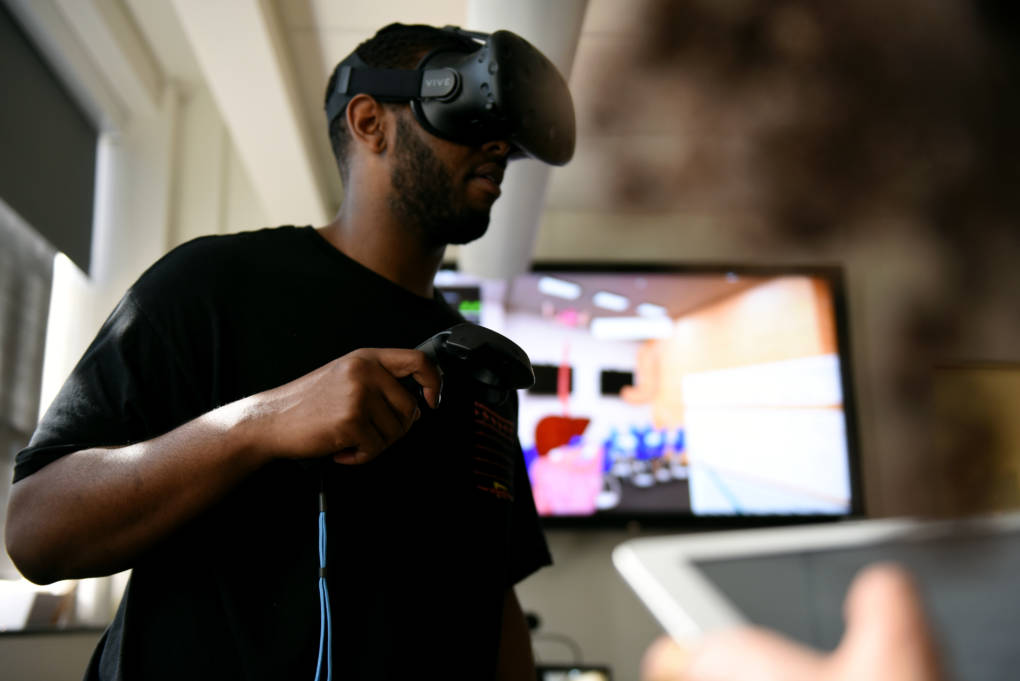
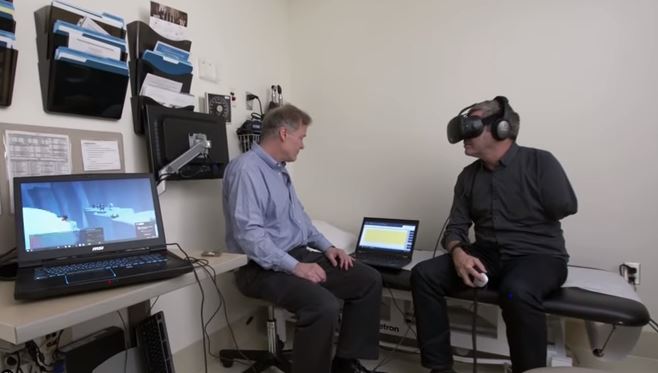
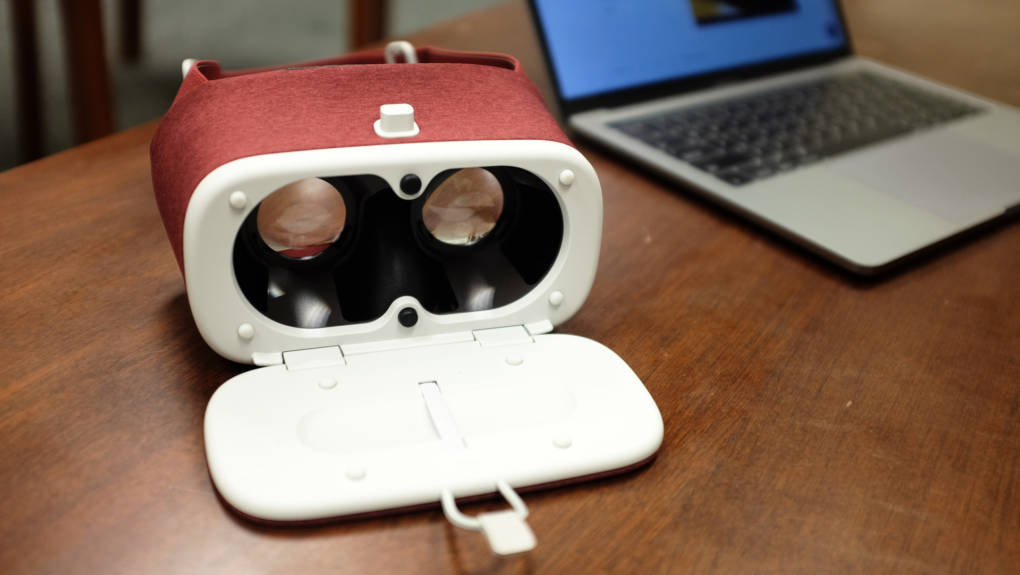
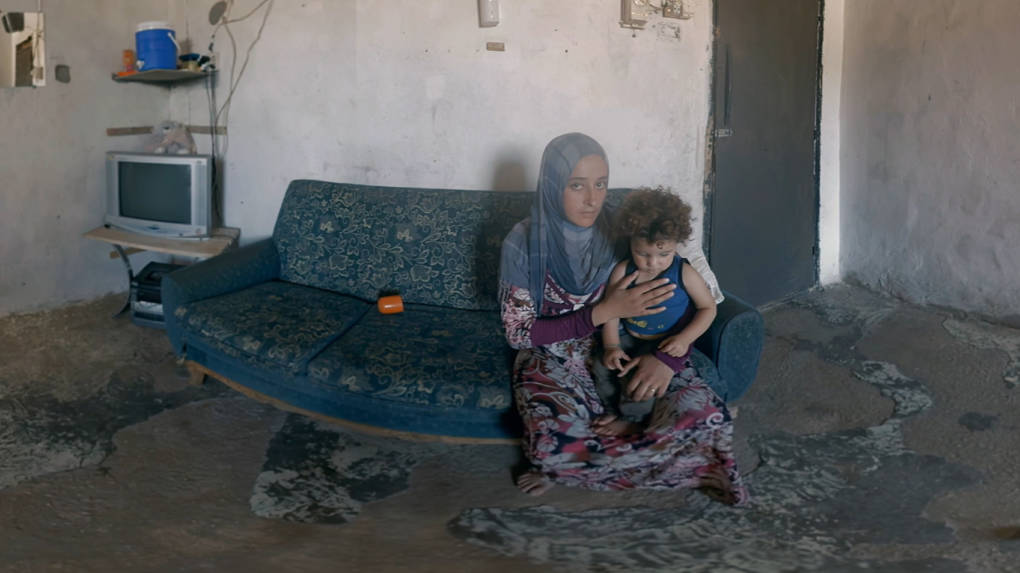
window.__IS_SSR__=true
window.__INITIAL_STATE__={
"attachmentsReducer": {
"audio_0": {
"type": "attachments",
"id": "audio_0",
"imgSizes": {
"kqedFullSize": {
"file": "https://ww2.kqed.org/news/wp-content/themes/KQED-unified/img/audio_bgs/background0.jpg"
}
}
},
"audio_1": {
"type": "attachments",
"id": "audio_1",
"imgSizes": {
"kqedFullSize": {
"file": "https://ww2.kqed.org/news/wp-content/themes/KQED-unified/img/audio_bgs/background1.jpg"
}
}
},
"audio_2": {
"type": "attachments",
"id": "audio_2",
"imgSizes": {
"kqedFullSize": {
"file": "https://ww2.kqed.org/news/wp-content/themes/KQED-unified/img/audio_bgs/background2.jpg"
}
}
},
"audio_3": {
"type": "attachments",
"id": "audio_3",
"imgSizes": {
"kqedFullSize": {
"file": "https://ww2.kqed.org/news/wp-content/themes/KQED-unified/img/audio_bgs/background3.jpg"
}
}
},
"audio_4": {
"type": "attachments",
"id": "audio_4",
"imgSizes": {
"kqedFullSize": {
"file": "https://ww2.kqed.org/news/wp-content/themes/KQED-unified/img/audio_bgs/background4.jpg"
}
}
},
"placeholder": {
"type": "attachments",
"id": "placeholder",
"imgSizes": {
"thumbnail": {
"file": "https://cdn.kqed.org/wp-content/uploads/2024/12/KQED-Default-Image-816638274-2000x1333-1-160x107.jpg",
"width": 160,
"height": 107,
"mimeType": "image/jpeg"
},
"medium": {
"file": "https://cdn.kqed.org/wp-content/uploads/2024/12/KQED-Default-Image-816638274-2000x1333-1-800x533.jpg",
"width": 800,
"height": 533,
"mimeType": "image/jpeg"
},
"medium_large": {
"file": "https://cdn.kqed.org/wp-content/uploads/2024/12/KQED-Default-Image-816638274-2000x1333-1-768x512.jpg",
"width": 768,
"height": 512,
"mimeType": "image/jpeg"
},
"large": {
"file": "https://cdn.kqed.org/wp-content/uploads/2024/12/KQED-Default-Image-816638274-2000x1333-1-1020x680.jpg",
"width": 1020,
"height": 680,
"mimeType": "image/jpeg"
},
"1536x1536": {
"file": "https://cdn.kqed.org/wp-content/uploads/2024/12/KQED-Default-Image-816638274-2000x1333-1-1536x1024.jpg",
"width": 1536,
"height": 1024,
"mimeType": "image/jpeg"
},
"fd-lrg": {
"file": "https://cdn.kqed.org/wp-content/uploads/2024/12/KQED-Default-Image-816638274-2000x1333-1-1536x1024.jpg",
"width": 1536,
"height": 1024,
"mimeType": "image/jpeg"
},
"fd-med": {
"file": "https://cdn.kqed.org/wp-content/uploads/2024/12/KQED-Default-Image-816638274-2000x1333-1-1020x680.jpg",
"width": 1020,
"height": 680,
"mimeType": "image/jpeg"
},
"fd-sm": {
"file": "https://cdn.kqed.org/wp-content/uploads/2024/12/KQED-Default-Image-816638274-2000x1333-1-800x533.jpg",
"width": 800,
"height": 533,
"mimeType": "image/jpeg"
},
"post-thumbnail": {
"file": "https://cdn.kqed.org/wp-content/uploads/2024/12/KQED-Default-Image-816638274-2000x1333-1-672x372.jpg",
"width": 672,
"height": 372,
"mimeType": "image/jpeg"
},
"twentyfourteen-full-width": {
"file": "https://cdn.kqed.org/wp-content/uploads/2024/12/KQED-Default-Image-816638274-2000x1333-1-1038x576.jpg",
"width": 1038,
"height": 576,
"mimeType": "image/jpeg"
},
"xxsmall": {
"file": "https://cdn.kqed.org/wp-content/uploads/2024/12/KQED-Default-Image-816638274-2000x1333-1-160x107.jpg",
"width": 160,
"height": 107,
"mimeType": "image/jpeg"
},
"xsmall": {
"file": "https://cdn.kqed.org/wp-content/uploads/2024/12/KQED-Default-Image-816638274-2000x1333-1-672x372.jpg",
"width": 672,
"height": 372,
"mimeType": "image/jpeg"
},
"small": {
"file": "https://cdn.kqed.org/wp-content/uploads/2024/12/KQED-Default-Image-816638274-2000x1333-1-672x372.jpg",
"width": 672,
"height": 372,
"mimeType": "image/jpeg"
},
"xlarge": {
"file": "https://cdn.kqed.org/wp-content/uploads/2024/12/KQED-Default-Image-816638274-2000x1333-1-1020x680.jpg",
"width": 1020,
"height": 680,
"mimeType": "image/jpeg"
},
"full-width": {
"file": "https://cdn.kqed.org/wp-content/uploads/2024/12/KQED-Default-Image-816638274-2000x1333-1-1920x1280.jpg",
"width": 1920,
"height": 1280,
"mimeType": "image/jpeg"
},
"guest-author-32": {
"file": "https://cdn.kqed.org/wp-content/uploads/2025/01/KQED-Default-Image-816638274-1333x1333-1-160x160.jpg",
"width": 32,
"height": 32,
"mimeType": "image/jpeg"
},
"guest-author-50": {
"file": "https://cdn.kqed.org/wp-content/uploads/2025/01/KQED-Default-Image-816638274-1333x1333-1-160x160.jpg",
"width": 50,
"height": 50,
"mimeType": "image/jpeg"
},
"guest-author-64": {
"file": "https://cdn.kqed.org/wp-content/uploads/2025/01/KQED-Default-Image-816638274-1333x1333-1-160x160.jpg",
"width": 64,
"height": 64,
"mimeType": "image/jpeg"
},
"guest-author-96": {
"file": "https://cdn.kqed.org/wp-content/uploads/2025/01/KQED-Default-Image-816638274-1333x1333-1-160x160.jpg",
"width": 96,
"height": 96,
"mimeType": "image/jpeg"
},
"guest-author-128": {
"file": "https://cdn.kqed.org/wp-content/uploads/2025/01/KQED-Default-Image-816638274-1333x1333-1-160x160.jpg",
"width": 128,
"height": 128,
"mimeType": "image/jpeg"
},
"detail": {
"file": "https://cdn.kqed.org/wp-content/uploads/2025/01/KQED-Default-Image-816638274-1333x1333-1-160x160.jpg",
"width": 160,
"height": 160,
"mimeType": "image/jpeg"
},
"kqedFullSize": {
"file": "https://cdn.kqed.org/wp-content/uploads/2024/12/KQED-Default-Image-816638274-2000x1333-1.jpg",
"width": 2000,
"height": 1333
}
}
},
"futureofyou_440299": {
"type": "attachments",
"id": "futureofyou_440299",
"meta": {
"index": "attachments_1716263798",
"site": "futureofyou",
"id": "440299",
"found": true
},
"parent": 440290,
"imgSizes": {
"small": {
"file": "https://ww2.kqed.org/app/uploads/sites/13/2018/03/RS29324_ANATOMYVR_020818_021-520x347.jpg",
"width": 520,
"mimeType": "image/jpeg",
"height": 347
},
"twentyfourteen-full-width": {
"file": "https://ww2.kqed.org/app/uploads/sites/13/2018/03/RS29324_ANATOMYVR_020818_021-1038x576.jpg",
"width": 1038,
"mimeType": "image/jpeg",
"height": 576
},
"thumbnail": {
"file": "https://ww2.kqed.org/app/uploads/sites/13/2018/03/RS29324_ANATOMYVR_020818_021-160x107.jpg",
"width": 160,
"mimeType": "image/jpeg",
"height": 107
},
"fd-sm": {
"file": "https://ww2.kqed.org/app/uploads/sites/13/2018/03/RS29324_ANATOMYVR_020818_021-960x641.jpg",
"width": 960,
"mimeType": "image/jpeg",
"height": 641
},
"post-thumbnail": {
"file": "https://ww2.kqed.org/app/uploads/sites/13/2018/03/RS29324_ANATOMYVR_020818_021-672x372.jpg",
"width": 672,
"mimeType": "image/jpeg",
"height": 372
},
"xsmall": {
"file": "https://ww2.kqed.org/app/uploads/sites/13/2018/03/RS29324_ANATOMYVR_020818_021-375x250.jpg",
"width": 375,
"mimeType": "image/jpeg",
"height": 250
},
"kqedFullSize": {
"file": "https://ww2.kqed.org/app/uploads/sites/13/2018/03/RS29324_ANATOMYVR_020818_021.jpg",
"width": 6016,
"height": 4016
},
"large": {
"file": "https://ww2.kqed.org/app/uploads/sites/13/2018/03/RS29324_ANATOMYVR_020818_021-1020x681.jpg",
"width": 1020,
"mimeType": "image/jpeg",
"height": 681
},
"xlarge": {
"file": "https://ww2.kqed.org/app/uploads/sites/13/2018/03/RS29324_ANATOMYVR_020818_021-1180x788.jpg",
"width": 1180,
"mimeType": "image/jpeg",
"height": 788
},
"guest-author-50": {
"file": "https://ww2.kqed.org/app/uploads/sites/13/2018/03/RS29324_ANATOMYVR_020818_021-50x50.jpg",
"width": 50,
"mimeType": "image/jpeg",
"height": 50
},
"guest-author-96": {
"file": "https://ww2.kqed.org/app/uploads/sites/13/2018/03/RS29324_ANATOMYVR_020818_021-96x96.jpg",
"width": 96,
"mimeType": "image/jpeg",
"height": 96
},
"medium": {
"file": "https://ww2.kqed.org/app/uploads/sites/13/2018/03/RS29324_ANATOMYVR_020818_021-800x534.jpg",
"width": 800,
"mimeType": "image/jpeg",
"height": 534
},
"guest-author-64": {
"file": "https://ww2.kqed.org/app/uploads/sites/13/2018/03/RS29324_ANATOMYVR_020818_021-64x64.jpg",
"width": 64,
"mimeType": "image/jpeg",
"height": 64
},
"guest-author-32": {
"file": "https://ww2.kqed.org/app/uploads/sites/13/2018/03/RS29324_ANATOMYVR_020818_021-32x32.jpg",
"width": 32,
"mimeType": "image/jpeg",
"height": 32
},
"fd-lrg": {
"file": "https://ww2.kqed.org/app/uploads/sites/13/2018/03/RS29324_ANATOMYVR_020818_021-1920x1282.jpg",
"width": 1920,
"mimeType": "image/jpeg",
"height": 1282
},
"fd-med": {
"file": "https://ww2.kqed.org/app/uploads/sites/13/2018/03/RS29324_ANATOMYVR_020818_021-1180x788.jpg",
"width": 1180,
"mimeType": "image/jpeg",
"height": 788
},
"full-width": {
"file": "https://ww2.kqed.org/app/uploads/sites/13/2018/03/RS29324_ANATOMYVR_020818_021-1920x1282.jpg",
"width": 1920,
"mimeType": "image/jpeg",
"height": 1282
},
"detail": {
"file": "https://ww2.kqed.org/app/uploads/sites/13/2018/03/RS29324_ANATOMYVR_020818_021-150x150.jpg",
"width": 150,
"mimeType": "image/jpeg",
"height": 150
},
"medium_large": {
"file": "https://ww2.kqed.org/app/uploads/sites/13/2018/03/RS29324_ANATOMYVR_020818_021-768x513.jpg",
"width": 768,
"mimeType": "image/jpeg",
"height": 513
},
"guest-author-128": {
"file": "https://ww2.kqed.org/app/uploads/sites/13/2018/03/RS29324_ANATOMYVR_020818_021-128x128.jpg",
"width": 128,
"mimeType": "image/jpeg",
"height": 128
},
"xxsmall": {
"file": "https://ww2.kqed.org/app/uploads/sites/13/2018/03/RS29324_ANATOMYVR_020818_021-240x160.jpg",
"width": 240,
"mimeType": "image/jpeg",
"height": 160
}
},
"publishDate": 1521484851,
"modified": 1521484955,
"caption": "Eric Smith, a medical student at UC San Francisco uses virtual reality to study the digestive system aided by Sheyda Aboii, a fellow student.",
"description": "Eric Smith uses virtual reality to study the GI, or digestive, system while Sheyda Aboii, a fellow student, reads aloud the lesson at UCSF School of Medicine in San Francisco, Calif., on Thursday, February 8, 2017.",
"title": "ANATOMYVR",
"credit": "Lauren Hanussak/KQED",
"status": "inherit",
"fetchFailed": false,
"isLoading": false
},
"futureofyou_436721": {
"type": "attachments",
"id": "futureofyou_436721",
"meta": {
"index": "attachments_1716263798",
"site": "futureofyou",
"id": "436721",
"found": true
},
"parent": 436086,
"imgSizes": {
"small": {
"file": "https://ww2.kqed.org/app/uploads/sites/13/2017/10/PBSVRPain-520x295.jpg",
"width": 520,
"mimeType": "image/jpeg",
"height": 295
},
"thumbnail": {
"file": "https://ww2.kqed.org/app/uploads/sites/13/2017/10/PBSVRPain-160x91.jpg",
"width": 160,
"mimeType": "image/jpeg",
"height": 91
},
"post-thumbnail": {
"file": "https://ww2.kqed.org/app/uploads/sites/13/2017/10/PBSVRPain-658x372.jpg",
"width": 658,
"mimeType": "image/jpeg",
"height": 372
},
"xsmall": {
"file": "https://ww2.kqed.org/app/uploads/sites/13/2017/10/PBSVRPain-375x213.jpg",
"width": 375,
"mimeType": "image/jpeg",
"height": 213
},
"kqedFullSize": {
"file": "https://ww2.kqed.org/app/uploads/sites/13/2017/10/PBSVRPain.jpg",
"width": 658,
"height": 373
},
"guest-author-50": {
"file": "https://ww2.kqed.org/app/uploads/sites/13/2017/10/PBSVRPain-50x50.jpg",
"width": 50,
"mimeType": "image/jpeg",
"height": 50
},
"guest-author-96": {
"file": "https://ww2.kqed.org/app/uploads/sites/13/2017/10/PBSVRPain-96x96.jpg",
"width": 96,
"mimeType": "image/jpeg",
"height": 96
},
"guest-author-64": {
"file": "https://ww2.kqed.org/app/uploads/sites/13/2017/10/PBSVRPain-64x64.jpg",
"width": 64,
"mimeType": "image/jpeg",
"height": 64
},
"detail": {
"file": "https://ww2.kqed.org/app/uploads/sites/13/2017/10/PBSVRPain-150x150.jpg",
"width": 150,
"mimeType": "image/jpeg",
"height": 150
},
"guest-author-32": {
"file": "https://ww2.kqed.org/app/uploads/sites/13/2017/10/PBSVRPain-32x32.jpg",
"width": 32,
"mimeType": "image/jpeg",
"height": 32
},
"guest-author-128": {
"file": "https://ww2.kqed.org/app/uploads/sites/13/2017/10/PBSVRPain-128x128.jpg",
"width": 128,
"mimeType": "image/jpeg",
"height": 128
},
"xxsmall": {
"file": "https://ww2.kqed.org/app/uploads/sites/13/2017/10/PBSVRPain-240x136.jpg",
"width": 240,
"mimeType": "image/jpeg",
"height": 136
}
},
"publishDate": 1509405686,
"modified": 1509406300,
"caption": "PBS NewsHour correspondent Miles O'Brien using the 'SnowWorld' VR program to withstand pain from burning.",
"description": null,
"title": "PBSVRPain",
"credit": "PBS NewsHour",
"status": "inherit",
"fetchFailed": false,
"isLoading": false
},
"news_11612525": {
"type": "attachments",
"id": "news_11612525",
"meta": {
"index": "attachments_1716263798",
"site": "news",
"id": "11612525",
"found": true
},
"parent": 11611079,
"imgSizes": {
"small": {
"file": "https://ww2.kqed.org/app/uploads/sites/10/2017/08/VRHeadset-520x293.jpg",
"width": 520,
"mimeType": "image/jpeg",
"height": 293
},
"twentyfourteen-full-width": {
"file": "https://ww2.kqed.org/app/uploads/sites/10/2017/08/VRHeadset-1038x576.jpg",
"width": 1038,
"mimeType": "image/jpeg",
"height": 576
},
"thumbnail": {
"file": "https://ww2.kqed.org/app/uploads/sites/10/2017/08/VRHeadset-160x90.jpg",
"width": 160,
"mimeType": "image/jpeg",
"height": 90
},
"fd-sm": {
"file": "https://ww2.kqed.org/app/uploads/sites/10/2017/08/VRHeadset-960x541.jpg",
"width": 960,
"mimeType": "image/jpeg",
"height": 541
},
"post-thumbnail": {
"file": "https://ww2.kqed.org/app/uploads/sites/10/2017/08/VRHeadset-672x372.jpg",
"width": 672,
"mimeType": "image/jpeg",
"height": 372
},
"xsmall": {
"file": "https://ww2.kqed.org/app/uploads/sites/10/2017/08/VRHeadset-375x211.jpg",
"width": 375,
"mimeType": "image/jpeg",
"height": 211
},
"kqedFullSize": {
"file": "https://ww2.kqed.org/app/uploads/sites/10/2017/08/VRHeadset.jpg",
"width": 1920,
"height": 1082
},
"large": {
"file": "https://ww2.kqed.org/app/uploads/sites/10/2017/08/VRHeadset-1020x575.jpg",
"width": 1020,
"mimeType": "image/jpeg",
"height": 575
},
"xlarge": {
"file": "https://ww2.kqed.org/app/uploads/sites/10/2017/08/VRHeadset-1180x665.jpg",
"width": 1180,
"mimeType": "image/jpeg",
"height": 665
},
"guest-author-50": {
"file": "https://ww2.kqed.org/app/uploads/sites/10/2017/08/VRHeadset-50x50.jpg",
"width": 50,
"mimeType": "image/jpeg",
"height": 50
},
"guest-author-96": {
"file": "https://ww2.kqed.org/app/uploads/sites/10/2017/08/VRHeadset-96x96.jpg",
"width": 96,
"mimeType": "image/jpeg",
"height": 96
},
"medium": {
"file": "https://ww2.kqed.org/app/uploads/sites/10/2017/08/VRHeadset-800x451.jpg",
"width": 800,
"mimeType": "image/jpeg",
"height": 451
},
"guest-author-64": {
"file": "https://ww2.kqed.org/app/uploads/sites/10/2017/08/VRHeadset-64x64.jpg",
"width": 64,
"mimeType": "image/jpeg",
"height": 64
},
"guest-author-32": {
"file": "https://ww2.kqed.org/app/uploads/sites/10/2017/08/VRHeadset-32x32.jpg",
"width": 32,
"mimeType": "image/jpeg",
"height": 32
},
"fd-lrg": {
"file": "https://ww2.kqed.org/app/uploads/sites/10/2017/08/VRHeadset-1920x1082.jpg",
"width": 1920,
"mimeType": "image/jpeg",
"height": 1082
},
"fd-med": {
"file": "https://ww2.kqed.org/app/uploads/sites/10/2017/08/VRHeadset-1180x665.jpg",
"width": 1180,
"mimeType": "image/jpeg",
"height": 665
},
"full-width": {
"file": "https://ww2.kqed.org/app/uploads/sites/10/2017/08/VRHeadset-1920x1082.jpg",
"width": 1920,
"mimeType": "image/jpeg",
"height": 1082
},
"detail": {
"file": "https://ww2.kqed.org/app/uploads/sites/10/2017/08/VRHeadset-150x150.jpg",
"width": 150,
"mimeType": "image/jpeg",
"height": 150
},
"guest-author-128": {
"file": "https://ww2.kqed.org/app/uploads/sites/10/2017/08/VRHeadset-128x128.jpg",
"width": 128,
"mimeType": "image/jpeg",
"height": 128
},
"xxsmall": {
"file": "https://ww2.kqed.org/app/uploads/sites/10/2017/08/VRHeadset-240x135.jpg",
"width": 240,
"mimeType": "image/jpeg",
"height": 135
}
},
"publishDate": 1502932664,
"modified": 1502932699,
"caption": "Lightweight VR headsets like Google's Daydream View allow therapists to utilize virtual reality in their sessions.",
"description": "Lightweight VR headsets like Google's Daydream View allow therapists to utilize virtual reality in their sessions.",
"title": "VRHeadset",
"credit": "Peter Arcuni/KQED",
"status": "inherit",
"fetchFailed": false,
"isLoading": false
},
"futureofyou_322484": {
"type": "attachments",
"id": "futureofyou_322484",
"meta": {
"index": "attachments_1716263798",
"site": "futureofyou",
"id": "322484",
"found": true
},
"parent": 322483,
"imgSizes": {
"small": {
"file": "https://ww2.kqed.org/app/uploads/sites/13/2017/01/pano-screenshots_irc_11_wide-1de0b02a027bc79a6e56d6cbc5cf7ecdf7a74acc-520x292.jpg",
"width": 520,
"mimeType": "image/jpeg",
"height": 292
},
"twentyfourteen-full-width": {
"file": "https://ww2.kqed.org/app/uploads/sites/13/2017/01/pano-screenshots_irc_11_wide-1de0b02a027bc79a6e56d6cbc5cf7ecdf7a74acc-1038x576.jpg",
"width": 1038,
"mimeType": "image/jpeg",
"height": 576
},
"thumbnail": {
"file": "https://ww2.kqed.org/app/uploads/sites/13/2017/01/pano-screenshots_irc_11_wide-1de0b02a027bc79a6e56d6cbc5cf7ecdf7a74acc-160x90.jpg",
"width": 160,
"mimeType": "image/jpeg",
"height": 90
},
"fd-sm": {
"file": "https://ww2.kqed.org/app/uploads/sites/13/2017/01/pano-screenshots_irc_11_wide-1de0b02a027bc79a6e56d6cbc5cf7ecdf7a74acc-960x540.jpg",
"width": 960,
"mimeType": "image/jpeg",
"height": 540
},
"post-thumbnail": {
"file": "https://ww2.kqed.org/app/uploads/sites/13/2017/01/pano-screenshots_irc_11_wide-1de0b02a027bc79a6e56d6cbc5cf7ecdf7a74acc-672x372.jpg",
"width": 672,
"mimeType": "image/jpeg",
"height": 372
},
"xsmall": {
"file": "https://ww2.kqed.org/app/uploads/sites/13/2017/01/pano-screenshots_irc_11_wide-1de0b02a027bc79a6e56d6cbc5cf7ecdf7a74acc-375x211.jpg",
"width": 375,
"mimeType": "image/jpeg",
"height": 211
},
"kqedFullSize": {
"file": "https://ww2.kqed.org/app/uploads/sites/13/2017/01/pano-screenshots_irc_11_wide-1de0b02a027bc79a6e56d6cbc5cf7ecdf7a74acc.jpg",
"width": 1697,
"height": 954
},
"large": {
"file": "https://ww2.kqed.org/app/uploads/sites/13/2017/01/pano-screenshots_irc_11_wide-1de0b02a027bc79a6e56d6cbc5cf7ecdf7a74acc-1020x573.jpg",
"width": 1020,
"mimeType": "image/jpeg",
"height": 573
},
"xlarge": {
"file": "https://ww2.kqed.org/app/uploads/sites/13/2017/01/pano-screenshots_irc_11_wide-1de0b02a027bc79a6e56d6cbc5cf7ecdf7a74acc-1180x663.jpg",
"width": 1180,
"mimeType": "image/jpeg",
"height": 663
},
"guest-author-50": {
"file": "https://ww2.kqed.org/app/uploads/sites/13/2017/01/pano-screenshots_irc_11_wide-1de0b02a027bc79a6e56d6cbc5cf7ecdf7a74acc-50x50.jpg",
"width": 50,
"mimeType": "image/jpeg",
"height": 50
},
"guest-author-96": {
"file": "https://ww2.kqed.org/app/uploads/sites/13/2017/01/pano-screenshots_irc_11_wide-1de0b02a027bc79a6e56d6cbc5cf7ecdf7a74acc-96x96.jpg",
"width": 96,
"mimeType": "image/jpeg",
"height": 96
},
"medium": {
"file": "https://ww2.kqed.org/app/uploads/sites/13/2017/01/pano-screenshots_irc_11_wide-1de0b02a027bc79a6e56d6cbc5cf7ecdf7a74acc-800x450.jpg",
"width": 800,
"mimeType": "image/jpeg",
"height": 450
},
"guest-author-64": {
"file": "https://ww2.kqed.org/app/uploads/sites/13/2017/01/pano-screenshots_irc_11_wide-1de0b02a027bc79a6e56d6cbc5cf7ecdf7a74acc-64x64.jpg",
"width": 64,
"mimeType": "image/jpeg",
"height": 64
},
"guest-author-32": {
"file": "https://ww2.kqed.org/app/uploads/sites/13/2017/01/pano-screenshots_irc_11_wide-1de0b02a027bc79a6e56d6cbc5cf7ecdf7a74acc-32x32.jpg",
"width": 32,
"mimeType": "image/jpeg",
"height": 32
},
"fd-med": {
"file": "https://ww2.kqed.org/app/uploads/sites/13/2017/01/pano-screenshots_irc_11_wide-1de0b02a027bc79a6e56d6cbc5cf7ecdf7a74acc-1180x663.jpg",
"width": 1180,
"mimeType": "image/jpeg",
"height": 663
},
"detail": {
"file": "https://ww2.kqed.org/app/uploads/sites/13/2017/01/pano-screenshots_irc_11_wide-1de0b02a027bc79a6e56d6cbc5cf7ecdf7a74acc-150x150.jpg",
"width": 150,
"mimeType": "image/jpeg",
"height": 150
},
"medium_large": {
"file": "https://ww2.kqed.org/app/uploads/sites/13/2017/01/pano-screenshots_irc_11_wide-1de0b02a027bc79a6e56d6cbc5cf7ecdf7a74acc-768x432.jpg",
"width": 768,
"mimeType": "image/jpeg",
"height": 432
},
"guest-author-128": {
"file": "https://ww2.kqed.org/app/uploads/sites/13/2017/01/pano-screenshots_irc_11_wide-1de0b02a027bc79a6e56d6cbc5cf7ecdf7a74acc-128x128.jpg",
"width": 128,
"mimeType": "image/jpeg",
"height": 128
},
"xxsmall": {
"file": "https://ww2.kqed.org/app/uploads/sites/13/2017/01/pano-screenshots_irc_11_wide-1de0b02a027bc79a6e56d6cbc5cf7ecdf7a74acc-240x135.jpg",
"width": 240,
"mimeType": "image/jpeg",
"height": 135
}
},
"publishDate": 1484856101,
"modified": 1484857246,
"caption": "A Syrian woman and her child sit in their refugee living space in Lebanon. They are featured in Four Walls, a virtual reality presentation by the International Rescue Committee.",
"description": "A Syrian woman and her child sit in their refugee living space in Lebanon. They are featured in Four Walls, <a href="https://www.rescue.org/four-walls",
"title": "A Syrian woman and her child sit in their refugee living space in Lebanon. They are featured in Four Walls, a virtual reality presentation by the International Rescue Committee.",
"credit": "YouVisit Studios",
"status": "inherit",
"fetchFailed": false,
"isLoading": false
},
"futureofyou_284322": {
"type": "attachments",
"id": "futureofyou_284322",
"meta": {
"index": "attachments_1716263798",
"site": "futureofyou",
"id": "284322",
"found": true
},
"parent": 279800,
"imgSizes": {
"small": {
"file": "https://ww2.kqed.org/app/uploads/sites/13/2016/11/GearVR-520x345.png",
"width": 520,
"mimeType": "image/png",
"height": 345
},
"thumbnail": {
"file": "https://ww2.kqed.org/app/uploads/sites/13/2016/11/GearVR-160x106.png",
"width": 160,
"mimeType": "image/png",
"height": 106
},
"post-thumbnail": {
"file": "https://ww2.kqed.org/app/uploads/sites/13/2016/11/GearVR-672x372.png",
"width": 672,
"mimeType": "image/png",
"height": 372
},
"xsmall": {
"file": "https://ww2.kqed.org/app/uploads/sites/13/2016/11/GearVR-375x249.png",
"width": 375,
"mimeType": "image/png",
"height": 249
},
"kqedFullSize": {
"file": "https://ww2.kqed.org/app/uploads/sites/13/2016/11/GearVR.png",
"width": 719,
"height": 477
},
"guest-author-50": {
"file": "https://ww2.kqed.org/app/uploads/sites/13/2016/11/GearVR-50x50.png",
"width": 50,
"mimeType": "image/png",
"height": 50
},
"guest-author-96": {
"file": "https://ww2.kqed.org/app/uploads/sites/13/2016/11/GearVR-96x96.png",
"width": 96,
"mimeType": "image/png",
"height": 96
},
"guest-author-64": {
"file": "https://ww2.kqed.org/app/uploads/sites/13/2016/11/GearVR-64x64.png",
"width": 64,
"mimeType": "image/png",
"height": 64
},
"detail": {
"file": "https://ww2.kqed.org/app/uploads/sites/13/2016/11/GearVR-150x150.png",
"width": 150,
"mimeType": "image/png",
"height": 150
},
"guest-author-32": {
"file": "https://ww2.kqed.org/app/uploads/sites/13/2016/11/GearVR-32x32.png",
"width": 32,
"mimeType": "image/png",
"height": 32
},
"guest-author-128": {
"file": "https://ww2.kqed.org/app/uploads/sites/13/2016/11/GearVR-128x128.png",
"width": 128,
"mimeType": "image/png",
"height": 128
},
"xxsmall": {
"file": "https://ww2.kqed.org/app/uploads/sites/13/2016/11/GearVR-240x159.png",
"width": 240,
"mimeType": "image/png",
"height": 159
}
},
"publishDate": 1479490235,
"modified": 1479490431,
"caption": "IrisVision is an app that magnifies whatever the user is looking at. It can be used with a Samsung Gear VR headset, pictured.. ",
"description": null,
"title": "gearvr",
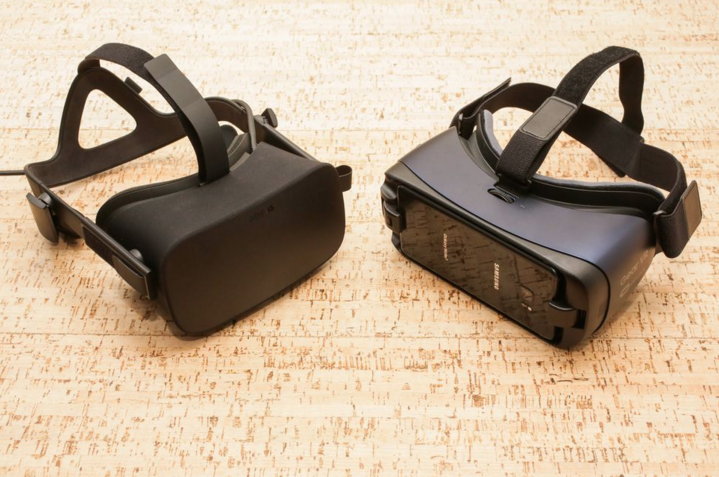
"credit": "Sarah Tew/CNET",
"status": "inherit",
"fetchFailed": false,
"isLoading": false
},
"futureofyou_219956": {
"type": "attachments",
"id": "futureofyou_219956",
"meta": {
"index": "attachments_1716263798",
"site": "futureofyou",
"id": "219956",
"found": true
},
"parent": 219070,
"imgSizes": {
"twentyfourteen-full-width": {
"file": "https://ww2.kqed.org/app/uploads/sites/13/2016/08/Shaheem-and-Deaf-NationFinal-e1470775449128-988x576.jpg",
"width": 988,
"mimeType": "image/jpeg",
"height": 576
},
"thumbnail": {
"file": "https://ww2.kqed.org/app/uploads/sites/13/2016/08/Shaheem-and-Deaf-NationFinal-e1470775449128-400x404.jpg",
"width": 400,
"mimeType": "image/jpeg",
"height": 404
},
"fd-sm": {
"file": "https://ww2.kqed.org/app/uploads/sites/13/2016/08/Shaheem-and-Deaf-NationFinal-e1470775449128-960x969.jpg",
"width": 960,
"mimeType": "image/jpeg",
"height": 969
},
"post-thumbnail": {
"file": "https://ww2.kqed.org/app/uploads/sites/13/2016/08/Shaheem-and-Deaf-NationFinal-e1470775449128-672x372.jpg",
"width": 672,
"mimeType": "image/jpeg",
"height": 372
},
"kqedFullSize": {
"file": "https://ww2.kqed.org/app/uploads/sites/13/2016/08/Shaheem-and-Deaf-NationFinal-e1470775449128.jpg",
"width": 988,
"height": 997
},
"large": {
"file": "https://ww2.kqed.org/app/uploads/sites/13/2016/08/Shaheem-and-Deaf-NationFinal-1180x1170.jpg",
"width": 1180,
"mimeType": "image/jpeg",
"height": 1170
},
"guest-author-50": {
"file": "https://ww2.kqed.org/app/uploads/sites/13/2016/08/Shaheem-and-Deaf-NationFinal-e1470775449128-50x50.jpg",
"width": 50,
"mimeType": "image/jpeg",
"height": 50
},
"guest-author-96": {
"file": "https://ww2.kqed.org/app/uploads/sites/13/2016/08/Shaheem-and-Deaf-NationFinal-e1470775449128-96x96.jpg",
"width": 96,
"mimeType": "image/jpeg",
"height": 96
},
"medium": {
"file": "https://ww2.kqed.org/app/uploads/sites/13/2016/08/Shaheem-and-Deaf-NationFinal-e1470775449128-595x600.jpg",
"width": 595,
"mimeType": "image/jpeg",
"height": 600
},
"guest-author-64": {
"file": "https://ww2.kqed.org/app/uploads/sites/13/2016/08/Shaheem-and-Deaf-NationFinal-e1470775449128-64x64.jpg",
"width": 64,
"mimeType": "image/jpeg",
"height": 64
},
"guest-author-32": {
"file": "https://ww2.kqed.org/app/uploads/sites/13/2016/08/Shaheem-and-Deaf-NationFinal-e1470775449128-32x32.jpg",
"width": 32,
"mimeType": "image/jpeg",
"height": 32
},
"fd-med": {
"file": "https://ww2.kqed.org/app/uploads/sites/13/2016/08/Shaheem-and-Deaf-NationFinal-1180x1170.jpg",
"width": 1180,
"mimeType": "image/jpeg",
"height": 1170
},
"detail": {
"file": "https://ww2.kqed.org/app/uploads/sites/13/2016/08/Shaheem-and-Deaf-NationFinal-e1470775449128-150x150.jpg",
"width": 150,
"mimeType": "image/jpeg",
"height": 150
},
"medium_large": {
"file": "https://ww2.kqed.org/app/uploads/sites/13/2016/08/Shaheem-and-Deaf-NationFinal-e1470775449128-768x775.jpg",
"width": 768,
"mimeType": "image/jpeg",
"height": 775
},
"guest-author-128": {
"file": "https://ww2.kqed.org/app/uploads/sites/13/2016/08/Shaheem-and-Deaf-NationFinal-e1470775449128-128x128.jpg",
"width": 128,
"mimeType": "image/jpeg",
"height": 128
}
},
"publishDate": 1470774624,
"modified": 1470776820,
"caption": "Dancer Shaheem Sanchez (left) uses the SubPac to feel the beat in his hip hop performances, and Brandon White (right) uses his SubPac to skateboard. Both are hearing-impaired.",
"description": null,
"title": "Shaheem-and-Deaf-NationFinal",
"credit": "Meredith Badali/SubPac",
"status": "inherit",
"fetchFailed": false,
"isLoading": false
},
"futureofyou_221157": {
"type": "attachments",
"id": "futureofyou_221157",
"meta": {
"index": "attachments_1716263798",
"site": "futureofyou",
"id": "221157",
"found": true
},
"parent": 221156,
"imgSizes": {
"twentyfourteen-full-width": {
"file": "https://ww2.kqed.org/app/uploads/sites/13/2016/08/exoskeleton_wide-53294dbf996e4e23224b6570e2f179ef54909e17-1038x576.jpg",
"width": 1038,
"mimeType": "image/jpeg",
"height": 576
},
"thumbnail": {
"file": "https://ww2.kqed.org/app/uploads/sites/13/2016/08/exoskeleton_wide-53294dbf996e4e23224b6570e2f179ef54909e17-400x225.jpg",
"width": 400,
"mimeType": "image/jpeg",
"height": 225
},
"fd-sm": {
"file": "https://ww2.kqed.org/app/uploads/sites/13/2016/08/exoskeleton_wide-53294dbf996e4e23224b6570e2f179ef54909e17-960x540.jpg",
"width": 960,
"mimeType": "image/jpeg",
"height": 540
},
"post-thumbnail": {
"file": "https://ww2.kqed.org/app/uploads/sites/13/2016/08/exoskeleton_wide-53294dbf996e4e23224b6570e2f179ef54909e17-672x372.jpg",
"width": 672,
"mimeType": "image/jpeg",
"height": 372
},
"kqedFullSize": {
"file": "https://ww2.kqed.org/app/uploads/sites/13/2016/08/exoskeleton_wide-53294dbf996e4e23224b6570e2f179ef54909e17.jpg",
"width": 1893,
"height": 1065
},
"large": {
"file": "https://ww2.kqed.org/app/uploads/sites/13/2016/08/exoskeleton_wide-53294dbf996e4e23224b6570e2f179ef54909e17-1180x664.jpg",
"width": 1180,
"mimeType": "image/jpeg",
"height": 664
},
"guest-author-50": {
"file": "https://ww2.kqed.org/app/uploads/sites/13/2016/08/exoskeleton_wide-53294dbf996e4e23224b6570e2f179ef54909e17-50x50.jpg",
"width": 50,
"mimeType": "image/jpeg",
"height": 50
},
"guest-author-96": {
"file": "https://ww2.kqed.org/app/uploads/sites/13/2016/08/exoskeleton_wide-53294dbf996e4e23224b6570e2f179ef54909e17-96x96.jpg",
"width": 96,
"mimeType": "image/jpeg",
"height": 96
},
"medium": {
"file": "https://ww2.kqed.org/app/uploads/sites/13/2016/08/exoskeleton_wide-53294dbf996e4e23224b6570e2f179ef54909e17-800x450.jpg",
"width": 800,
"mimeType": "image/jpeg",
"height": 450
},
"guest-author-64": {
"file": "https://ww2.kqed.org/app/uploads/sites/13/2016/08/exoskeleton_wide-53294dbf996e4e23224b6570e2f179ef54909e17-64x64.jpg",
"width": 64,
"mimeType": "image/jpeg",
"height": 64
},
"guest-author-32": {
"file": "https://ww2.kqed.org/app/uploads/sites/13/2016/08/exoskeleton_wide-53294dbf996e4e23224b6570e2f179ef54909e17-32x32.jpg",
"width": 32,
"mimeType": "image/jpeg",
"height": 32
},
"fd-med": {
"file": "https://ww2.kqed.org/app/uploads/sites/13/2016/08/exoskeleton_wide-53294dbf996e4e23224b6570e2f179ef54909e17-1180x664.jpg",
"width": 1180,
"mimeType": "image/jpeg",
"height": 664
},
"detail": {
"file": "https://ww2.kqed.org/app/uploads/sites/13/2016/08/exoskeleton_wide-53294dbf996e4e23224b6570e2f179ef54909e17-150x150.jpg",
"width": 150,
"mimeType": "image/jpeg",
"height": 150
},
"medium_large": {
"file": "https://ww2.kqed.org/app/uploads/sites/13/2016/08/exoskeleton_wide-53294dbf996e4e23224b6570e2f179ef54909e17-768x432.jpg",
"width": 768,
"mimeType": "image/jpeg",
"height": 432
},
"guest-author-128": {
"file": "https://ww2.kqed.org/app/uploads/sites/13/2016/08/exoskeleton_wide-53294dbf996e4e23224b6570e2f179ef54909e17-128x128.jpg",
"width": 128,
"mimeType": "image/jpeg",
"height": 128
}
},
"publishDate": 1470934152,
"modified": 1470934263,
"caption": null,
"description": "Scientists with the international scientific collaboration known as the \"Walk Again Project\" use noninvasive brain-machine interfaces in their efforts to reawaken damaged fibers in the spinal cord.",
"title": "Scientists with the international scientific collaboration known as the \"Walk Again Project\" use noninvasive brain-machine interfaces in their efforts to reawaken damaged fibers in the spinal cord.",
"credit": "AASDAP and Lente Viva Filmes, São Paulo, Brazil/Nature",
"status": "inherit",
"fetchFailed": false,
"isLoading": false
},
"arts_11744365": {
"type": "attachments",
"id": "arts_11744365",
"meta": {
"index": "attachments_1716263798",
"site": "arts",
"id": "11744365",
"found": true
},
"parent": 11744066,
"imgSizes": {
"twentyfourteen-full-width": {
"file": "https://ww2.kqed.org/app/uploads/sites/2/2016/06/RS19970_HomelessStudy_Scene4-qut-1038x576.jpg",
"width": 1038,
"mimeType": "image/jpeg",
"height": 576
},
"thumbnail": {
"file": "https://ww2.kqed.org/app/uploads/sites/2/2016/06/RS19970_HomelessStudy_Scene4-qut-400x241.jpg",
"width": 400,
"mimeType": "image/jpeg",
"height": 241
},
"fd-sm": {
"file": "https://ww2.kqed.org/app/uploads/sites/2/2016/06/RS19970_HomelessStudy_Scene4-qut-960x577.jpg",
"width": 960,
"mimeType": "image/jpeg",
"height": 577
},
"post-thumbnail": {
"file": "https://ww2.kqed.org/app/uploads/sites/2/2016/06/RS19970_HomelessStudy_Scene4-qut-672x372.jpg",
"width": 672,
"mimeType": "image/jpeg",
"height": 372
},
"kqedFullSize": {
"file": "https://ww2.kqed.org/app/uploads/sites/2/2016/06/RS19970_HomelessStudy_Scene4-qut.jpg",
"width": 1455,
"height": 875
},
"large": {
"file": "https://ww2.kqed.org/app/uploads/sites/2/2016/06/RS19970_HomelessStudy_Scene4-qut-1180x710.jpg",
"width": 1180,
"mimeType": "image/jpeg",
"height": 710
},
"guest-author-50": {
"file": "https://ww2.kqed.org/app/uploads/sites/2/2016/06/RS19970_HomelessStudy_Scene4-qut-50x50.jpg",
"width": 50,
"mimeType": "image/jpeg",
"height": 50
},
"guest-author-96": {
"file": "https://ww2.kqed.org/app/uploads/sites/2/2016/06/RS19970_HomelessStudy_Scene4-qut-96x96.jpg",
"width": 96,
"mimeType": "image/jpeg",
"height": 96
},
"medium": {
"file": "https://ww2.kqed.org/app/uploads/sites/2/2016/06/RS19970_HomelessStudy_Scene4-qut-800x481.jpg",
"width": 800,
"mimeType": "image/jpeg",
"height": 481
},
"guest-author-64": {
"file": "https://ww2.kqed.org/app/uploads/sites/2/2016/06/RS19970_HomelessStudy_Scene4-qut-64x64.jpg",
"width": 64,
"mimeType": "image/jpeg",
"height": 64
},
"guest-author-32": {
"file": "https://ww2.kqed.org/app/uploads/sites/2/2016/06/RS19970_HomelessStudy_Scene4-qut-32x32.jpg",
"width": 32,
"mimeType": "image/jpeg",
"height": 32
},
"fd-med": {
"file": "https://ww2.kqed.org/app/uploads/sites/2/2016/06/RS19970_HomelessStudy_Scene4-qut-1180x710.jpg",
"width": 1180,
"mimeType": "image/jpeg",
"height": 710
},
"detail": {
"file": "https://ww2.kqed.org/app/uploads/sites/2/2016/06/RS19970_HomelessStudy_Scene4-qut-150x150.jpg",
"width": 150,
"mimeType": "image/jpeg",
"height": 150
},
"medium_large": {
"file": "https://ww2.kqed.org/app/uploads/sites/2/2016/06/RS19970_HomelessStudy_Scene4-qut-768x462.jpg",
"width": 768,
"mimeType": "image/jpeg",
"height": 462
},
"guest-author-128": {
"file": "https://ww2.kqed.org/app/uploads/sites/2/2016/06/RS19970_HomelessStudy_Scene4-qut-128x128.jpg",
"width": 128,
"mimeType": "image/jpeg",
"height": 128
}
},
"publishDate": 1467052478,
"modified": 1467052510,
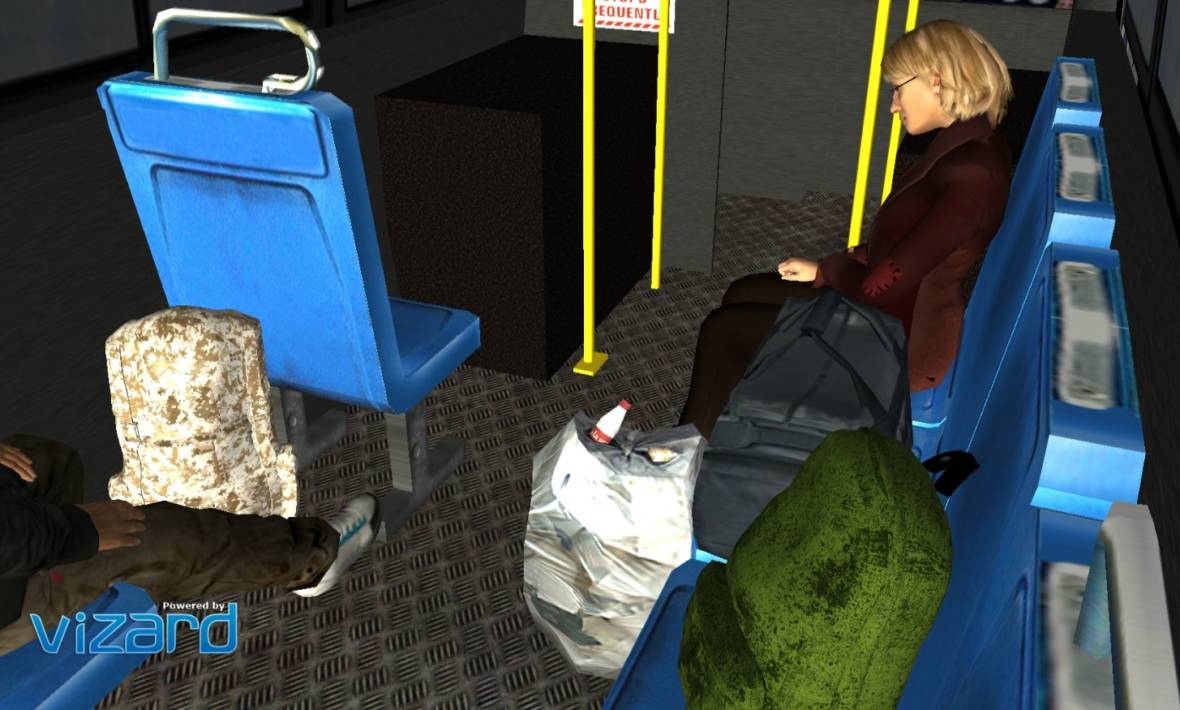
"caption": "In the study \"Empathy at Scale,\" participants get on a virtual reality bus, where they can click on a mouse to hear the stories of homeless people. The computer simulation doesn't feel \"real,\" but it does feel intimate, as if we're overhearing the thoughts of fellow passengers.",
"description": "In the study \"Empathy at Scale,\" participants get on a virtual reality bus, where they can click on a mouse to hear the stories of homeless people. The computer simulation doesn't feel \"real,\" but it does feel intimate, as if we're overhearing the thoughts of fellow passengers.",
"title": "RS19970_HomelessStudy_Scene4-qut",
"credit": "Photo: Courtesy Stanford’s Virtual Human Interaction Lab",
"status": "inherit",
"fetchFailed": false,
"isLoading": false
},
"futureofyou_166621": {
"type": "attachments",
"id": "futureofyou_166621",
"meta": {
"index": "attachments_1716263798",
"site": "futureofyou",
"id": "166621",
"found": true
},
"parent": 166123,
"imgSizes": {
"twentyfourteen-full-width": {
"file": "https://ww2.kqed.org/app/uploads/sites/13/2016/05/Ana-Maiques-1038x576.jpg",
"width": 1038,
"mimeType": "image/jpeg",
"height": 576
},
"thumbnail": {
"file": "https://ww2.kqed.org/app/uploads/sites/13/2016/05/Ana-Maiques-400x300.jpg",
"width": 400,
"mimeType": "image/jpeg",
"height": 300
},
"fd-sm": {
"file": "https://ww2.kqed.org/app/uploads/sites/13/2016/05/Ana-Maiques-960x720.jpg",
"width": 960,
"mimeType": "image/jpeg",
"height": 720
},
"post-thumbnail": {
"file": "https://ww2.kqed.org/app/uploads/sites/13/2016/05/Ana-Maiques-672x372.jpg",
"width": 672,
"mimeType": "image/jpeg",
"height": 372
},
"kqedFullSize": {
"file": "https://ww2.kqed.org/app/uploads/sites/13/2016/05/Ana-Maiques.jpg",
"width": 4032,
"height": 3024
},
"large": {
"file": "https://ww2.kqed.org/app/uploads/sites/13/2016/05/Ana-Maiques-1180x885.jpg",
"width": 1180,
"mimeType": "image/jpeg",
"height": 885
},
"guest-author-50": {
"file": "https://ww2.kqed.org/app/uploads/sites/13/2016/05/Ana-Maiques-50x50.jpg",
"width": 50,
"mimeType": "image/jpeg",
"height": 50
},
"guest-author-96": {
"file": "https://ww2.kqed.org/app/uploads/sites/13/2016/05/Ana-Maiques-96x96.jpg",
"width": 96,
"mimeType": "image/jpeg",
"height": 96
},
"medium": {
"file": "https://ww2.kqed.org/app/uploads/sites/13/2016/05/Ana-Maiques-800x600.jpg",
"width": 800,
"mimeType": "image/jpeg",
"height": 600
},
"guest-author-64": {
"file": "https://ww2.kqed.org/app/uploads/sites/13/2016/05/Ana-Maiques-64x64.jpg",
"width": 64,
"mimeType": "image/jpeg",
"height": 64
},
"guest-author-32": {
"file": "https://ww2.kqed.org/app/uploads/sites/13/2016/05/Ana-Maiques-32x32.jpg",
"width": 32,
"mimeType": "image/jpeg",
"height": 32
},
"fd-lrg": {
"file": "https://ww2.kqed.org/app/uploads/sites/13/2016/05/Ana-Maiques-1920x1440.jpg",
"width": 1920,
"mimeType": "image/jpeg",
"height": 1440
},
"fd-med": {
"file": "https://ww2.kqed.org/app/uploads/sites/13/2016/05/Ana-Maiques-1180x885.jpg",
"width": 1180,
"mimeType": "image/jpeg",
"height": 885
},
"detail": {
"file": "https://ww2.kqed.org/app/uploads/sites/13/2016/05/Ana-Maiques-150x150.jpg",
"width": 150,
"mimeType": "image/jpeg",
"height": 150
},
"medium_large": {
"file": "https://ww2.kqed.org/app/uploads/sites/13/2016/05/Ana-Maiques-768x576.jpg",
"width": 768,
"mimeType": "image/jpeg",
"height": 576
},
"guest-author-128": {
"file": "https://ww2.kqed.org/app/uploads/sites/13/2016/05/Ana-Maiques-128x128.jpg",
"width": 128,
"mimeType": "image/jpeg",
"height": 128
}
},
"publishDate": 1463686058,
"modified": 1463701080,
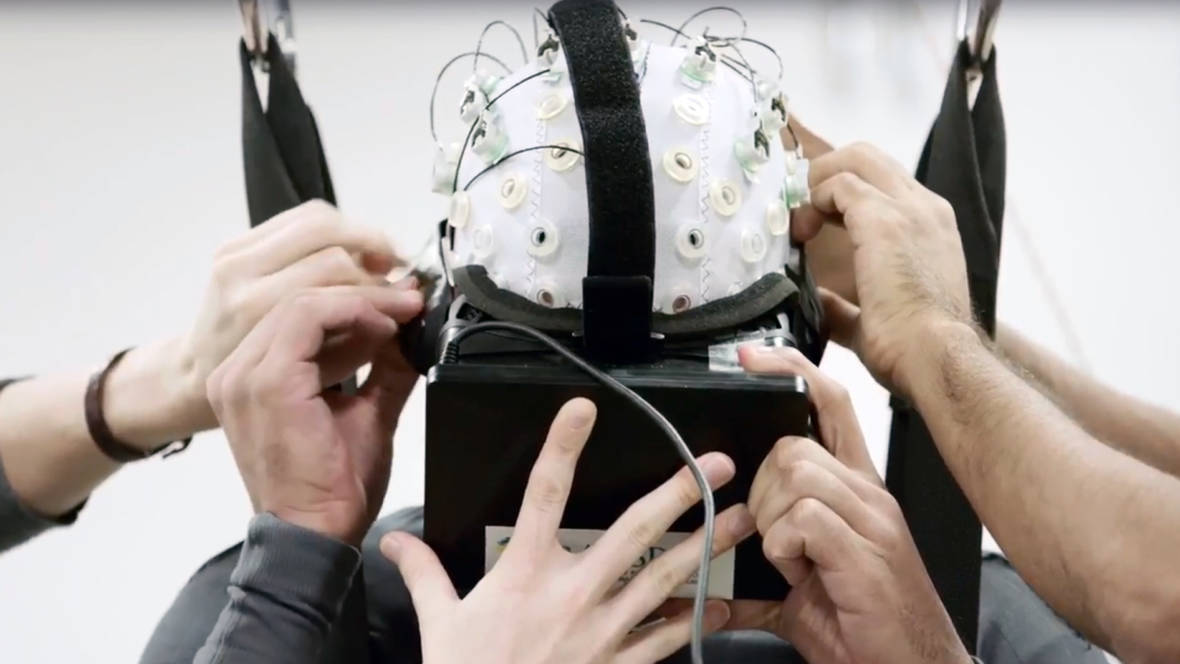
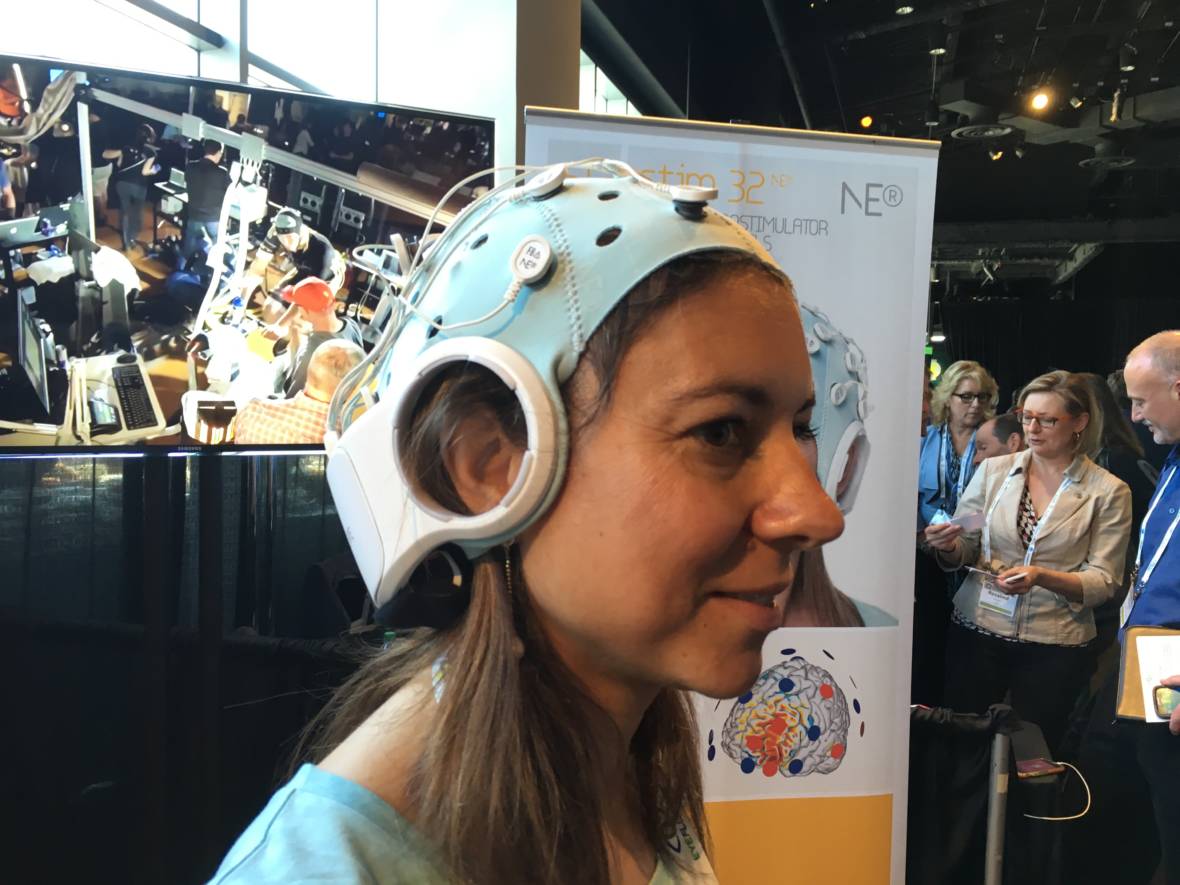
"caption": "Ana Maiques, CEO of Neuroelectrics, demonstrates the company's neoprene caps, which can measure and stimulate brain activity. ",
"description": null,
"title": "Ana Maiques",
"credit": "Lesley McClurg/KQED",
"status": "inherit",
"fetchFailed": false,
"isLoading": false
}
},
"audioPlayerReducer": {
"postId": "stream_live",
"isPaused": true,
"isPlaying": false,
"pfsActive": false,
"pledgeModalIsOpen": true,
"playerDrawerIsOpen": false
},
"authorsReducer": {
"byline_futureofyou_440290": {
"type": "authors",
"id": "byline_futureofyou_440290",
"meta": {
"override": true
},
"slug": "byline_futureofyou_440290",
"name": "Julia Vassey",
"isLoading": false
},
"byline_futureofyou_436086": {
"type": "authors",
"id": "byline_futureofyou_436086",
"meta": {
"override": true
},
"slug": "byline_futureofyou_436086",
"name": "PBS NewsHour",
"isLoading": false
},
"byline_futureofyou_322483": {
"type": "authors",
"id": "byline_futureofyou_322483",
"meta": {
"override": true
},
"slug": "byline_futureofyou_322483",
"name": "Laura Sydell\u003cbr />NPR All Tech Considered",
"isLoading": false
},
"byline_futureofyou_279800": {
"type": "authors",
"id": "byline_futureofyou_279800",
"meta": {
"override": true
},
"slug": "byline_futureofyou_279800",
"name": "Erin Carson\u003cbr />CNET",
"isLoading": false
},
"byline_futureofyou_219070": {
"type": "authors",
"id": "byline_futureofyou_219070",
"meta": {
"override": true
},
"slug": "byline_futureofyou_219070",
"name": "Kara Platoni",
"isLoading": false
},
"byline_futureofyou_221156": {
"type": "authors",
"id": "byline_futureofyou_221156",
"meta": {
"override": true
},
"slug": "byline_futureofyou_221156",
"name": "Richard Harris\u003cbr />NPR Shots",
"isLoading": false
},
"rachael-myrow": {
"type": "authors",
"id": "251",
"meta": {
"index": "authors_1716337520",
"id": "251",
"found": true
},
"name": "Rachael Myrow",
"firstName": "Rachael",
"lastName": "Myrow",
"slug": "rachael-myrow",
"email": "rmyrow@kqed.org",
"display_author_email": true,
"staff_mastheads": [
"news"
],
"title": "Senior Editor of KQED's Silicon Valley News Desk",
"bio": "• I write and edit stories about how Silicon Valley power and policies shape everyday life in California. I’m also passionate about making Bay Area history and culture more accessible to a broad public. • I’ve been a journalist for most of my life, starting in high school with The Franklin Press in Los Angeles, where I grew up. While earning my first degree in English at UC Berkeley, I got my start in public radio at KALX-FM. After completing a second degree in journalism at Cal, I landed my first professional job at Marketplace, then moved on to KPCC (now LAist), and then KQED, where I hosted The California Report for more than seven years. • My reporting has appeared on NPR, The World, WBUR’s \u003ci>Here & Now\u003c/i>, and the BBC. I also guest host for KQED’s \u003ci>Forum\u003c/i>, as well as the Commonwealth Club in San Francisco. • I speak periodically on media, democracy and technology issues, and do voiceover work for documentaries and educational video projects. • Outside of the studio, you'll find me hiking Bay Area trails and whipping up Insta-ready meals in my kitchen. • I do not accept gifts, money, or favors from anyone connected to my reporting, I don't pay people for information, and I do not support or donate to political causes. • I strive to treat the people I report on with fairness, honesty, and respect. I also recognize there are often multiple sides to a story and work to verify information through multiple sources and documentation. If I get something wrong, I correct it.",
"avatar": "https://secure.gravatar.com/avatar/87bf8cb5874e045cdff430523a6d48b1?s=600&d=blank&r=g",
"twitter": "rachaelmyrow",
"facebook": null,
"instagram": null,
"linkedin": "https://www.linkedin.com/in/rachaelmyrow/",
"sites": [
{
"site": "arts",
"roles": [
"administrator"
]
},
{
"site": "news",
"roles": [
"edit_others_posts",
"editor"
]
},
{
"site": "futureofyou",
"roles": [
"editor"
]
},
{
"site": "bayareabites",
"roles": [
"editor"
]
},
{
"site": "stateofhealth",
"roles": [
"editor"
]
},
{
"site": "science",
"roles": [
"editor"
]
},
{
"site": "food",
"roles": [
"editor"
]
},
{
"site": "forum",
"roles": [
"editor"
]
},
{
"site": "liveblog",
"roles": [
"author"
]
}
],
"headData": {
"title": "Rachael Myrow | KQED",
"description": "Senior Editor of KQED's Silicon Valley News Desk",
"ogImgSrc": "https://secure.gravatar.com/avatar/87bf8cb5874e045cdff430523a6d48b1?s=600&d=blank&r=g",
"twImgSrc": "https://secure.gravatar.com/avatar/87bf8cb5874e045cdff430523a6d48b1?s=600&d=blank&r=g"
},
"isLoading": false,
"link": "/author/rachael-myrow"
},
"lesleymcclurg": {
"type": "authors",
"id": "11229",
"meta": {
"index": "authors_1716337520",
"id": "11229",
"found": true
},
"name": "Lesley McClurg",
"firstName": "Lesley",
"lastName": "McClurg",
"slug": "lesleymcclurg",
"email": "lmcclurg@KQED.org",
"display_author_email": false,
"staff_mastheads": [
"news",
"science"
],
"title": "KQED Health Correspondent",
"bio": "Lesley McClurg is a health correspondent and fill-in host whose work is regularly rebroadcast on NPR and PBS programs. She’s earned multiple regional Emmy awards, a national and a regional Edward R. Murrow award, and was named Best Beat Reporter by the Association of Health Care Journalists. The Society of Professional Journalists has recognized her work several times, and the Society of Environmental Journalists spotlighted her coverage of California’s historic drought.\r\n\r\nBefore joining KQED in 2016, Lesley covered food and sustainability for Capital Public Radio, environmental issues for Colorado Public Radio, and reported for KUOW and KCTS 9 in Seattle. Away from the newsroom, she loves skiing with her daughter, mountain biking with her partner, and playing with Ollie, the family’s goldendoodle. On deadline, she runs almost entirely on chocolate chips.\r\n\r\n ",
"avatar": "https://secure.gravatar.com/avatar/3fb78e873af3312f34d0bc1d60a07c7f?s=600&d=blank&r=g",
"twitter": "lesleywmcclurg",
"facebook": null,
"instagram": null,
"linkedin": null,
"sites": [
{
"site": "arts",
"roles": [
"author"
]
},
{
"site": "news",
"roles": [
"editor"
]
},
{
"site": "futureofyou",
"roles": [
"editor"
]
},
{
"site": "stateofhealth",
"roles": [
"author"
]
},
{
"site": "science",
"roles": [
"editor"
]
},
{
"site": "quest",
"roles": [
"subscriber"
]
},
{
"site": "forum",
"roles": [
"administrator"
]
},
{
"site": "liveblog",
"roles": [
"author"
]
}
],
"headData": {
"title": "Lesley McClurg | KQED",
"description": "KQED Health Correspondent",
"ogImgSrc": "https://secure.gravatar.com/avatar/3fb78e873af3312f34d0bc1d60a07c7f?s=600&d=blank&r=g",
"twImgSrc": "https://secure.gravatar.com/avatar/3fb78e873af3312f34d0bc1d60a07c7f?s=600&d=blank&r=g"
},
"isLoading": false,
"link": "/author/lesleymcclurg"
},
"parcuni": {
"type": "authors",
"id": "11368",
"meta": {
"index": "authors_1716337520",
"id": "11368",
"found": true
},
"name": "Peter Arcuni",
"firstName": "Peter",
"lastName": "Arcuni",
"slug": "parcuni",
"email": "parcuni@KQED.org",
"display_author_email": false,
"staff_mastheads": [
"science"
],
"title": "Reporter",
"bio": "Peter reports radio and online stories for \u003cem>KQED Science\u003c/em>. His work has also appeared on the \u003cem>The California Report\u003c/em> morning show and \u003cem>KQED News\u003c/em>. His production credits include \u003cem>The California Report, The California Report Magazine\u003c/em> and KQED's local news podcast \u003cem>The Bay\u003c/em>. Other credits include NPR's \u003cem>All Things Considered\u003c/em>, WNYC's \u003cem>Science Friday\u003c/em>, WBUR's \u003cem>Here & Now\u003c/em>, WIRED and SFGate. Peter graduated from Brown University and earned a master's degree in journalism from Stanford. He's covered everything from homelessness to wildfires, health, the environment, arts and Thanksgiving in San Quentin prison. In other lives, he played rock n roll music and studied neuroscience. You can email him at: parcuni@kqed.org",
"avatar": "https://secure.gravatar.com/avatar/d5032f6f27199d478af34ad2e1d98732?s=600&d=blank&r=g",
"twitter": "peterarcuni",
"facebook": null,
"instagram": null,
"linkedin": null,
"sites": [
{
"site": "news",
"roles": [
"editor"
]
},
{
"site": "science",
"roles": [
"editor"
]
}
],
"headData": {
"title": "Peter Arcuni | KQED",
"description": "Reporter",
"ogImgSrc": "https://secure.gravatar.com/avatar/d5032f6f27199d478af34ad2e1d98732?s=600&d=blank&r=g",
"twImgSrc": "https://secure.gravatar.com/avatar/d5032f6f27199d478af34ad2e1d98732?s=600&d=blank&r=g"
},
"isLoading": false,
"link": "/author/parcuni"
}
},
"breakingNewsReducer": {},
"pagesReducer": {},
"postsReducer": {
"stream_live": {
"type": "live",
"id": "stream_live",
"audioUrl": "https://streams.kqed.org/kqedradio",
"title": "Live Stream",
"excerpt": "Live Stream information currently unavailable.",
"link": "/radio",
"featImg": "",
"label": {
"name": "KQED Live",
"link": "/"
}
},
"stream_kqedNewscast": {
"type": "posts",
"id": "stream_kqedNewscast",
"audioUrl": "https://www.kqed.org/.stream/anon/radio/RDnews/newscast.mp3?_=1",
"title": "KQED Newscast",
"featImg": "",
"label": {
"name": "88.5 FM",
"link": "/"
}
},
"futureofyou_440290": {
"type": "posts",
"id": "futureofyou_440290",
"meta": {
"index": "posts_1716263798",
"site": "futureofyou",
"id": "440290",
"score": null,
"sort": [
1521646230000
]
},
"parent": 0,
"labelTerm": {},
"blocks": [],
"publishDate": 1521646230,
"format": "image",
"disqusTitle": "3-D Space Gives New Life to Dead Bodies",
"title": "3-D Space Gives New Life to Dead Bodies",
"headTitle": "KQED Future of You | KQED Science",
"content": "\u003cp>Eric Smith has just gained new appreciation for the pancreas.\u003c/p>\n\u003cp>It’s “so unassuming,” he says. Pulling the pancreas out of the gastrointestinal tract and holding it in mid-air, he regards it with a sense of awe.\u003c/p>\n\u003cp>“In surgery people always say don’t touch the pancreas, and I thought it would be this ugly thing. ... But it is cute. It looks like a shrimp.”\u003c/p>\n\u003caside class=\"pullquote alignright\">Medical schools are weighing the advantages of teaching students anatomy with the help of virtual reality.\u003c/aside>\n\u003cp>Smith, a first year medical student at UC San Francisco, then tucks the “cute” organ back in place, between the liver and the large intestine. He’s not using gloves, a scalpel or a surgical mask. Instead of having a cadaver in front of him, he’s moving around a large room in a 3-D headset. On the wall-mounted 72-inch screen in UCSF’s virtual anatomy learning center Smith sees a skeleton with stomach, intestines and liver attached to the bones.\u003c/p>\n\u003cp>Fellow student Sheyda Aboii is helping him study the digestive system.\u003c/p>\n\u003cp>[ad fullwidth]\u003c/p>\n\u003cp>[contextly_sidebar id=\"7355EazHRrQLdJAifTzwdkXCkQhYWDkV\"]“The coronary ligament attaches the liver to what structure?” Aboii asks.\u003c/p>\n\u003cp>“Anterior abdominal wall?” Smith hesitates.\u003c/p>\n\u003cp>“No.” Aboii responds. “What lies right above?”\u003c/p>\n\u003cp>“Oh, the diaphragm!” Smith says.\u003c/p>\n\u003cp>Smith and Aboii are part of a new generation of doctors-in-training who are learning anatomy with the help of Virtual Reality. The VR lessons allow students to see a complete three dimensional picture of body parts, easily move virtual organs in and out of the body and memorize medical terms — each organ displays its name tag once you hover over it.\u003c/p>\n\u003cp>Running a 3-D learning center is also less expensive than a cadaver lab and less toxic to be around, say proponents. However, some medical professors believe the benefits of learning anatomy through real bodies will never be replaced. VR doesn’t give students the same experience they get from a human body with its unique structure.\u003c/p>\n\u003cp>https://www.youtube.com/embed/4z3zdjbZdQU\u003c/p>\n\u003cp>\u003cb>VR Arrives on the Scene\u003c/b>\u003c/p>\n\u003cp>For over a 100 years medical students in the United States have been studying anatomy on cadavers. Curriculums hadn’t really changed much until about five or six years ago, with the introduction of VR technology as a new educational option.\u003c/p>\n\u003cp>Derek Harmon, an assistant adjunct professor at UCSF’s Department of Anatomy, who has been teaching the VR course for over a year, says virtual reality brings an important technological innovation to medical students.\u003c/p>\n\u003cp>They can walk around the virtual model in the 3-D space getting the 360-degree view of the body they can’t get in the lab: the cadaver lies facing up or down providing only a 180-degree view.\u003c/p>\n\u003cp>Dissecting virtual organs and tissues is easier, and does not require surgical finesse. Students can move tissues apart and back together as many times as they want, while in the lab they have to keep organs in place so the next group of students can study on the same body.\u003c/p>\n\u003cfigure id=\"attachment_440301\" class=\"wp-caption aligncenter\" style=\"max-width: 539px\">\u003cimg class=\"size-full wp-image-440301\" src=\"https://ww2.kqed.org/futureofyou/wp-content/uploads/sites/13/2018/03/RS29317_ANATOMYVR_020818_037-sfi.jpg\" alt=\"Two women in a room with a large screen.\" width=\"539\" height=\"360\" srcset=\"https://ww2.kqed.org/app/uploads/sites/13/2018/03/RS29317_ANATOMYVR_020818_037-sfi.jpg 539w, https://ww2.kqed.org/app/uploads/sites/13/2018/03/RS29317_ANATOMYVR_020818_037-sfi-160x107.jpg 160w, https://ww2.kqed.org/app/uploads/sites/13/2018/03/RS29317_ANATOMYVR_020818_037-sfi-240x160.jpg 240w, https://ww2.kqed.org/app/uploads/sites/13/2018/03/RS29317_ANATOMYVR_020818_037-sfi-375x250.jpg 375w, https://ww2.kqed.org/app/uploads/sites/13/2018/03/RS29317_ANATOMYVR_020818_037-sfi-520x347.jpg 520w\" sizes=\"(max-width: 539px) 100vw, 539px\">\u003cfigcaption class=\"wp-caption-text\">Stacey Yu, assistant manager of the anatomy lab at UCSF, guides Sheyda Aboii, a student, while she uses virtual reality to study the GI, or digestive, system at the UCSF School of Medicine. \u003ccite>(Lauren Hanussak/KQED)\u003c/cite>\u003c/figcaption>\u003c/figure>\n\u003cp>Sometimes virtual reality can give students motion sickness, but Harmon says it only affects about 20 percent of them.\u003c/p>\n\u003cp>A virtual learning center may also be a healthier place to study, as it has no smell of formaldehyde used for embalming dead bodies. Formaldehyde inhalation triggers dry mouth, eye and throat irritation.\u003c/p>\n\u003cp>The 3-D space revolution has already engulfed dozens of American medical colleges that have introduced not only virtual, but also augmented and mixed reality to their curriculum.\u003c/p>\n\u003cp>The University of Nebraska Medical Center teaches on \u003ca href=\"https://www.youtube.com/watch?v=QpkiKzNnJ1w\" target=\"_blank\" rel=\"noopener\">virtual dissection tables\u003c/a>; California’s Western University is actively using holographic displays and Oculus rift stations.\u003c/p>\n\u003cp>Western University’s College of Dental Medicine built their \u003ca href=\"https://westernu.smugmug.com/Virtual-Reality-Learning/i-PNhZJzK/A\" target=\"_blank\" rel=\"noopener\">virtual reality learning center\u003c/a> for just about $120,000, while the cost of maintaining the cadaver lab runs at about $2 to 4 million a year, according to the college Associate Dean of Simulation, Immersion and Digital Learning Robert W. Hasel.\u003c/p>\n\u003cp>Hasel is one of the most vocal critics of cadaver labs, because of their high operational cost and use of toxic chemicals like formaldehyde recognized by the American Cancer Society as carcinogenic. Chemical compounds used for embalming bodies have not changed in 100 years.\u003c/p>\n\u003cp>He also questions learning efficiency in cadaver labs. He says students leave the bodies so “hacked up” that it is hard to recognize organs and tissues. As a result, “students make mistakes, and you can't recover,” says Hasel.\u003c/p>\n\u003cp>According to Hasel, since Western University introduced VR technology in its curriculum about five years ago, students’ grades on their anatomical sciences national board exams have gone up 15 to 20 percent.\u003c/p>\n\u003cfigure id=\"attachment_440305\" class=\"wp-caption aligncenter\" style=\"max-width: 539px\">\u003cimg class=\"size-full wp-image-440305\" src=\"https://ww2.kqed.org/futureofyou/wp-content/uploads/sites/13/2018/03/RS29319_ANATOMYVR_020818_025-sfi.jpg\" alt=\"Two students, one with a VR headset on.\" width=\"539\" height=\"360\" srcset=\"https://ww2.kqed.org/app/uploads/sites/13/2018/03/RS29319_ANATOMYVR_020818_025-sfi.jpg 539w, https://ww2.kqed.org/app/uploads/sites/13/2018/03/RS29319_ANATOMYVR_020818_025-sfi-160x107.jpg 160w, https://ww2.kqed.org/app/uploads/sites/13/2018/03/RS29319_ANATOMYVR_020818_025-sfi-240x160.jpg 240w, https://ww2.kqed.org/app/uploads/sites/13/2018/03/RS29319_ANATOMYVR_020818_025-sfi-375x250.jpg 375w, https://ww2.kqed.org/app/uploads/sites/13/2018/03/RS29319_ANATOMYVR_020818_025-sfi-520x347.jpg 520w\" sizes=\"(max-width: 539px) 100vw, 539px\">\u003cfigcaption class=\"wp-caption-text\">Medical students Sheyda Aboii (left) and Eric Smith use virtual reality to study the GI, or digestive, system at the UCSF School of Medicine. \u003ccite>(Lauren Hanussak/KQED)\u003c/cite>\u003c/figcaption>\u003c/figure>\n\u003cp>\u003cb>Traditional Anatomy Classes Here to Stay, For Now\u003c/b>\u003c/p>\n\u003cp>The numbers don’t convince Douglas Gross, professor of cell biology and human anatomy at UC Davis, who likes to stick to the good old practice. He has been teaching anatomy for 42 years and believes that 3-D could be valuable adjunct, but not a replacement for studying a human body.\u003c/p>\n\u003cp>He says programs that try to get rid of their dissection studying labs are doomed to a “pretty dismal failure.”\u003c/p>\n\u003cp>Gross says it is important for students to touch and feel a real human body as they learn anatomy, literally squeeze the organs in their fingers. Lack of this tangible experience won’t allow them to become good doctors.\u003c/p>\n\u003cp>Beyond that, “changing curriculum in a medical school is like moving a glacier,” says Gross. Faculty members, scientists and clinicians often have different opinions on teaching strategies. And even small changes take a lot of time.\u003c/p>\n\u003cp>\u003cb>An Appreciation for Cadavers\u003c/b>\u003c/p>\n\u003cp>Aboii just like the majority of medical students at UCSF welcomes VR lessons. But she sees them as a useful fun tool and doesn’t admire them as much as she does the traditional anatomy classes.\u003c/p>\n\u003cfigure id=\"attachment_440359\" class=\"wp-caption aligncenter\" style=\"max-width: 539px\">\u003cimg class=\"size-full wp-image-440359\" src=\"https://ww2.kqed.org/futureofyou/wp-content/uploads/sites/13/2018/03/RS29325_ANATOMYVR_020818_030-sfi.jpg\" alt=\"A GI track appears on a large screen.\" width=\"539\" height=\"360\" srcset=\"https://ww2.kqed.org/app/uploads/sites/13/2018/03/RS29325_ANATOMYVR_020818_030-sfi.jpg 539w, https://ww2.kqed.org/app/uploads/sites/13/2018/03/RS29325_ANATOMYVR_020818_030-sfi-160x107.jpg 160w, https://ww2.kqed.org/app/uploads/sites/13/2018/03/RS29325_ANATOMYVR_020818_030-sfi-240x160.jpg 240w, https://ww2.kqed.org/app/uploads/sites/13/2018/03/RS29325_ANATOMYVR_020818_030-sfi-375x250.jpg 375w, https://ww2.kqed.org/app/uploads/sites/13/2018/03/RS29325_ANATOMYVR_020818_030-sfi-520x347.jpg 520w\" sizes=\"(max-width: 539px) 100vw, 539px\">\u003cfigcaption class=\"wp-caption-text\">VR anatomy lessons are gaining popularity, but traditional learning using cadavers isn't going away any time soon. \u003ccite>(Lauren Hanussak/KQED)\u003c/cite>\u003c/figcaption>\u003c/figure>\n\u003cp>She says the smell of formaldehyde doesn’t bother her. And knowing that the bodies students work on were donated for research and education fills her respect.\u003c/p>\n\u003cp>“There is a certain gravity to that,” Aboii says. “Each of the cadavers is unique. In life, they were unique human beings, and now they are unique donations. For a trainee, like myself, it's good to start getting used to that spectrum of life and death.”\u003c/p>\n\u003cp>[contextly_sidebar id=\"FwbyNhLT7uzLhRDlXYonilNTpUsv3z8Y\"]Virtual lessons help memorize and review, but they don’t show “the unique human variability,” she says.\u003c/p>\n\u003cp>“You get almost like an average idealized artistic rendering of what the human body looks like,” says Aboii. However in real life things might be different. Arteries, for example, may not always be connected in the same way on a cadaver.\u003c/p>\n\u003cp>Harmon is convinced cadaver labs are here to stay, at least for now, but the number of VR platforms in medical schools will skyrocket in the next couple of years and will be especially useful for medical professions that use a lot of 3-D scans in their practice, like radiologists.\u003c/p>\n\u003cp>[ad floatright]\u003c/p>\n\u003cp>“VR in medicine is going to explode,\" says Harmon. \"And it is exciting.\"\u003c/p>\n\n",
"disqusIdentifier": "440290 https://ww2.kqed.org/futureofyou/?p=440290",
"disqusUrl": "https://ww2.kqed.org/futureofyou/2018/03/21/3-d-space-gives-new-life-to-dead-bodies/",
"stats": {
"hasVideo": true,
"hasChartOrMap": false,
"hasAudio": false,
"hasPolis": false,
"wordCount": 1307,
"hasGoogleForm": false,
"hasGallery": false,
"hasHearkenModule": false,
"iframeSrcs": [],
"paragraphCount": 39
},
"modified": 1521645604,
"excerpt": "A new crop of doctors-in-training are learning anatomy with the help of virtual reality.",
"headData": {
"twImgId": "",
"twTitle": "",
"ogTitle": "",
"ogImgId": "",
"twDescription": "",
"description": "A new crop of doctors-in-training are learning anatomy with the help of virtual reality.",
"title": "3-D Space Gives New Life to Dead Bodies | KQED",
"ogDescription": "",
"schema": {
"@context": "https://schema.org",
"@type": "Article",
"headline": "3-D Space Gives New Life to Dead Bodies",
"datePublished": "2018-03-21T08:30:30-07:00",
"dateModified": "2018-03-21T08:20:04-07:00",
"image": "https://cdn.kqed.org/wp-content/uploads/2020/02/KQED-OG-Image@1x.png"
}
},
"guestAuthors": [],
"slug": "3-d-space-gives-new-life-to-dead-bodies",
"status": "publish",
"nprByline": "Julia Vassey",
"source": "Virtual Reality",
"path": "/futureofyou/440290/3-d-space-gives-new-life-to-dead-bodies",
"audioTrackLength": null,
"parsedContent": [
{
"type": "contentString",
"content": "\u003cdiv class=\"post-body\">\u003cp>\u003cp>Eric Smith has just gained new appreciation for the pancreas.\u003c/p>\n\u003cp>It’s “so unassuming,” he says. Pulling the pancreas out of the gastrointestinal tract and holding it in mid-air, he regards it with a sense of awe.\u003c/p>\n\u003cp>“In surgery people always say don’t touch the pancreas, and I thought it would be this ugly thing. ... But it is cute. It looks like a shrimp.”\u003c/p>\n\u003caside class=\"pullquote alignright\">Medical schools are weighing the advantages of teaching students anatomy with the help of virtual reality.\u003c/aside>\n\u003cp>Smith, a first year medical student at UC San Francisco, then tucks the “cute” organ back in place, between the liver and the large intestine. He’s not using gloves, a scalpel or a surgical mask. Instead of having a cadaver in front of him, he’s moving around a large room in a 3-D headset. On the wall-mounted 72-inch screen in UCSF’s virtual anatomy learning center Smith sees a skeleton with stomach, intestines and liver attached to the bones.\u003c/p>\n\u003cp>Fellow student Sheyda Aboii is helping him study the digestive system.\u003c/p>\n\u003cp>\u003c/p>\u003c/div>",
"attributes": {
"named": {},
"numeric": []
}
},
{
"type": "component",
"content": "",
"name": "ad",
"attributes": {
"named": {
"label": "fullwidth"
},
"numeric": [
"fullwidth"
]
}
},
{
"type": "contentString",
"content": "\u003cdiv class=\"post-body\">\u003cp>\u003c/p>\n\u003cp>\u003c/p>\u003cp>\u003c/p>\u003cp>“The coronary ligament attaches the liver to what structure?” Aboii asks.\u003c/p>\n\u003cp>“Anterior abdominal wall?” Smith hesitates.\u003c/p>\n\u003cp>“No.” Aboii responds. “What lies right above?”\u003c/p>\n\u003cp>“Oh, the diaphragm!” Smith says.\u003c/p>\n\u003cp>Smith and Aboii are part of a new generation of doctors-in-training who are learning anatomy with the help of Virtual Reality. The VR lessons allow students to see a complete three dimensional picture of body parts, easily move virtual organs in and out of the body and memorize medical terms — each organ displays its name tag once you hover over it.\u003c/p>\n\u003cp>Running a 3-D learning center is also less expensive than a cadaver lab and less toxic to be around, say proponents. However, some medical professors believe the benefits of learning anatomy through real bodies will never be replaced. VR doesn’t give students the same experience they get from a human body with its unique structure.\u003c/p>\u003c/p>\u003cp>\u003cspan class='utils-parseShortcode-shortcodes-__youtubeShortcode__embedYoutube'>\n \u003cspan class='utils-parseShortcode-shortcodes-__youtubeShortcode__embedYoutubeInside'>\n \u003ciframe\n loading='lazy'\n class='utils-parseShortcode-shortcodes-__youtubeShortcode__youtubePlayer'\n type='text/html'\n src='//www.youtube.com/embed/4z3zdjbZdQU'\n title='//www.youtube.com/embed/4z3zdjbZdQU'\n allowfullscreen='true'\n style='border:0;'>\u003c/iframe>\n \u003c/span>\n \u003c/span>\u003c/p>\u003cp>\u003cp>\u003cb>VR Arrives on the Scene\u003c/b>\u003c/p>\n\u003cp>For over a 100 years medical students in the United States have been studying anatomy on cadavers. Curriculums hadn’t really changed much until about five or six years ago, with the introduction of VR technology as a new educational option.\u003c/p>\n\u003cp>Derek Harmon, an assistant adjunct professor at UCSF’s Department of Anatomy, who has been teaching the VR course for over a year, says virtual reality brings an important technological innovation to medical students.\u003c/p>\n\u003cp>They can walk around the virtual model in the 3-D space getting the 360-degree view of the body they can’t get in the lab: the cadaver lies facing up or down providing only a 180-degree view.\u003c/p>\n\u003cp>Dissecting virtual organs and tissues is easier, and does not require surgical finesse. Students can move tissues apart and back together as many times as they want, while in the lab they have to keep organs in place so the next group of students can study on the same body.\u003c/p>\n\u003cfigure id=\"attachment_440301\" class=\"wp-caption aligncenter\" style=\"max-width: 539px\">\u003cimg class=\"size-full wp-image-440301\" src=\"https://ww2.kqed.org/futureofyou/wp-content/uploads/sites/13/2018/03/RS29317_ANATOMYVR_020818_037-sfi.jpg\" alt=\"Two women in a room with a large screen.\" width=\"539\" height=\"360\" srcset=\"https://ww2.kqed.org/app/uploads/sites/13/2018/03/RS29317_ANATOMYVR_020818_037-sfi.jpg 539w, https://ww2.kqed.org/app/uploads/sites/13/2018/03/RS29317_ANATOMYVR_020818_037-sfi-160x107.jpg 160w, https://ww2.kqed.org/app/uploads/sites/13/2018/03/RS29317_ANATOMYVR_020818_037-sfi-240x160.jpg 240w, https://ww2.kqed.org/app/uploads/sites/13/2018/03/RS29317_ANATOMYVR_020818_037-sfi-375x250.jpg 375w, https://ww2.kqed.org/app/uploads/sites/13/2018/03/RS29317_ANATOMYVR_020818_037-sfi-520x347.jpg 520w\" sizes=\"(max-width: 539px) 100vw, 539px\">\u003cfigcaption class=\"wp-caption-text\">Stacey Yu, assistant manager of the anatomy lab at UCSF, guides Sheyda Aboii, a student, while she uses virtual reality to study the GI, or digestive, system at the UCSF School of Medicine. \u003ccite>(Lauren Hanussak/KQED)\u003c/cite>\u003c/figcaption>\u003c/figure>\n\u003cp>Sometimes virtual reality can give students motion sickness, but Harmon says it only affects about 20 percent of them.\u003c/p>\n\u003cp>A virtual learning center may also be a healthier place to study, as it has no smell of formaldehyde used for embalming dead bodies. Formaldehyde inhalation triggers dry mouth, eye and throat irritation.\u003c/p>\n\u003cp>The 3-D space revolution has already engulfed dozens of American medical colleges that have introduced not only virtual, but also augmented and mixed reality to their curriculum.\u003c/p>\n\u003cp>The University of Nebraska Medical Center teaches on \u003ca href=\"https://www.youtube.com/watch?v=QpkiKzNnJ1w\" target=\"_blank\" rel=\"noopener\">virtual dissection tables\u003c/a>; California’s Western University is actively using holographic displays and Oculus rift stations.\u003c/p>\n\u003cp>Western University’s College of Dental Medicine built their \u003ca href=\"https://westernu.smugmug.com/Virtual-Reality-Learning/i-PNhZJzK/A\" target=\"_blank\" rel=\"noopener\">virtual reality learning center\u003c/a> for just about $120,000, while the cost of maintaining the cadaver lab runs at about $2 to 4 million a year, according to the college Associate Dean of Simulation, Immersion and Digital Learning Robert W. Hasel.\u003c/p>\n\u003cp>Hasel is one of the most vocal critics of cadaver labs, because of their high operational cost and use of toxic chemicals like formaldehyde recognized by the American Cancer Society as carcinogenic. Chemical compounds used for embalming bodies have not changed in 100 years.\u003c/p>\n\u003cp>He also questions learning efficiency in cadaver labs. He says students leave the bodies so “hacked up” that it is hard to recognize organs and tissues. As a result, “students make mistakes, and you can't recover,” says Hasel.\u003c/p>\n\u003cp>According to Hasel, since Western University introduced VR technology in its curriculum about five years ago, students’ grades on their anatomical sciences national board exams have gone up 15 to 20 percent.\u003c/p>\n\u003cfigure id=\"attachment_440305\" class=\"wp-caption aligncenter\" style=\"max-width: 539px\">\u003cimg class=\"size-full wp-image-440305\" src=\"https://ww2.kqed.org/futureofyou/wp-content/uploads/sites/13/2018/03/RS29319_ANATOMYVR_020818_025-sfi.jpg\" alt=\"Two students, one with a VR headset on.\" width=\"539\" height=\"360\" srcset=\"https://ww2.kqed.org/app/uploads/sites/13/2018/03/RS29319_ANATOMYVR_020818_025-sfi.jpg 539w, https://ww2.kqed.org/app/uploads/sites/13/2018/03/RS29319_ANATOMYVR_020818_025-sfi-160x107.jpg 160w, https://ww2.kqed.org/app/uploads/sites/13/2018/03/RS29319_ANATOMYVR_020818_025-sfi-240x160.jpg 240w, https://ww2.kqed.org/app/uploads/sites/13/2018/03/RS29319_ANATOMYVR_020818_025-sfi-375x250.jpg 375w, https://ww2.kqed.org/app/uploads/sites/13/2018/03/RS29319_ANATOMYVR_020818_025-sfi-520x347.jpg 520w\" sizes=\"(max-width: 539px) 100vw, 539px\">\u003cfigcaption class=\"wp-caption-text\">Medical students Sheyda Aboii (left) and Eric Smith use virtual reality to study the GI, or digestive, system at the UCSF School of Medicine. \u003ccite>(Lauren Hanussak/KQED)\u003c/cite>\u003c/figcaption>\u003c/figure>\n\u003cp>\u003cb>Traditional Anatomy Classes Here to Stay, For Now\u003c/b>\u003c/p>\n\u003cp>The numbers don’t convince Douglas Gross, professor of cell biology and human anatomy at UC Davis, who likes to stick to the good old practice. He has been teaching anatomy for 42 years and believes that 3-D could be valuable adjunct, but not a replacement for studying a human body.\u003c/p>\n\u003cp>He says programs that try to get rid of their dissection studying labs are doomed to a “pretty dismal failure.”\u003c/p>\n\u003cp>Gross says it is important for students to touch and feel a real human body as they learn anatomy, literally squeeze the organs in their fingers. Lack of this tangible experience won’t allow them to become good doctors.\u003c/p>\n\u003cp>Beyond that, “changing curriculum in a medical school is like moving a glacier,” says Gross. Faculty members, scientists and clinicians often have different opinions on teaching strategies. And even small changes take a lot of time.\u003c/p>\n\u003cp>\u003cb>An Appreciation for Cadavers\u003c/b>\u003c/p>\n\u003cp>Aboii just like the majority of medical students at UCSF welcomes VR lessons. But she sees them as a useful fun tool and doesn’t admire them as much as she does the traditional anatomy classes.\u003c/p>\n\u003cfigure id=\"attachment_440359\" class=\"wp-caption aligncenter\" style=\"max-width: 539px\">\u003cimg class=\"size-full wp-image-440359\" src=\"https://ww2.kqed.org/futureofyou/wp-content/uploads/sites/13/2018/03/RS29325_ANATOMYVR_020818_030-sfi.jpg\" alt=\"A GI track appears on a large screen.\" width=\"539\" height=\"360\" srcset=\"https://ww2.kqed.org/app/uploads/sites/13/2018/03/RS29325_ANATOMYVR_020818_030-sfi.jpg 539w, https://ww2.kqed.org/app/uploads/sites/13/2018/03/RS29325_ANATOMYVR_020818_030-sfi-160x107.jpg 160w, https://ww2.kqed.org/app/uploads/sites/13/2018/03/RS29325_ANATOMYVR_020818_030-sfi-240x160.jpg 240w, https://ww2.kqed.org/app/uploads/sites/13/2018/03/RS29325_ANATOMYVR_020818_030-sfi-375x250.jpg 375w, https://ww2.kqed.org/app/uploads/sites/13/2018/03/RS29325_ANATOMYVR_020818_030-sfi-520x347.jpg 520w\" sizes=\"(max-width: 539px) 100vw, 539px\">\u003cfigcaption class=\"wp-caption-text\">VR anatomy lessons are gaining popularity, but traditional learning using cadavers isn't going away any time soon. \u003ccite>(Lauren Hanussak/KQED)\u003c/cite>\u003c/figcaption>\u003c/figure>\n\u003cp>She says the smell of formaldehyde doesn’t bother her. And knowing that the bodies students work on were donated for research and education fills her respect.\u003c/p>\n\u003cp>“There is a certain gravity to that,” Aboii says. “Each of the cadavers is unique. In life, they were unique human beings, and now they are unique donations. For a trainee, like myself, it's good to start getting used to that spectrum of life and death.”\u003c/p>\n\u003cp>\u003c/p>\u003cp>\u003c/p>\u003cp>Virtual lessons help memorize and review, but they don’t show “the unique human variability,” she says.\u003c/p>\n\u003cp>“You get almost like an average idealized artistic rendering of what the human body looks like,” says Aboii. However in real life things might be different. Arteries, for example, may not always be connected in the same way on a cadaver.\u003c/p>\n\u003cp>Harmon is convinced cadaver labs are here to stay, at least for now, but the number of VR platforms in medical schools will skyrocket in the next couple of years and will be especially useful for medical professions that use a lot of 3-D scans in their practice, like radiologists.\u003c/p>\n\u003cp>\u003c/p>\u003c/div>",
"attributes": {
"named": {},
"numeric": []
}
},
{
"type": "component",
"content": "",
"name": "ad",
"attributes": {
"named": {
"label": "floatright"
},
"numeric": [
"floatright"
]
}
},
{
"type": "contentString",
"content": "\u003cdiv class=\"post-body\">\u003cp>\u003c/p>\n\u003cp>“VR in medicine is going to explode,\" says Harmon. \"And it is exciting.\"\u003c/p>\n\n\u003c/div>\u003c/p>",
"attributes": {
"named": {},
"numeric": []
}
}
],
"link": "/futureofyou/440290/3-d-space-gives-new-life-to-dead-bodies",
"authors": [
"byline_futureofyou_440290"
],
"categories": [
"futureofyou_1",
"futureofyou_1063"
],
"tags": [
"futureofyou_1474",
"futureofyou_1275",
"futureofyou_1256",
"futureofyou_23",
"futureofyou_35",
"futureofyou_113"
],
"featImg": "futureofyou_440299",
"label": "source_futureofyou_440290"
},
"futureofyou_436086": {
"type": "posts",
"id": "futureofyou_436086",
"meta": {
"index": "posts_1716263798",
"site": "futureofyou",
"id": "436086",
"score": null,
"sort": [
1509406004000
]
},
"parent": 0,
"labelTerm": {},
"blocks": [],
"publishDate": 1509406004,
"format": "standard",
"disqusTitle": "Using Virtual Reality, Not Opioids, to Reduce Pain (Video)",
"title": "Using Virtual Reality, Not Opioids, to Reduce Pain (Video)",
"headTitle": "KQED Future of You | KQED Science",
"content": "\u003cp>As part of its series on the opioid crisis, PBS NewsHour's Miles O'Brien earlier this month looked at cutting-edge pain treatment that allows patients to take fewer pills. These non-pharmacological approaches include hypnosis, physical therapy and even virtual reality.\u003c/p>\n\u003cp>The VR program is known as SnowWorld, and it's used to treat burn patients. O'Brien himself suffers from chronic pain related to a phantom limb -- he \u003ca href=\"https://www.usatoday.com/story/life/people/2014/02/25/miles-o-brien-amputation/5817755/\" target=\"_blank\" rel=\"noopener\">lost part of his left arm\u003c/a> in 2014 after an accident involving TV gear. In the video below, you'll see O'Brien use SnowWorld to withstand painful heat applied to his forearm.\u003c/p>\n\u003cp>\"Intent on hurling snowballs at penguins. I didn't feel heat at all,\" O'Brien says.\u003c/p>\n\u003cp>And he didn't feel the phantom pain from his missing limb, either.\u003c/p>\n\u003cp>Watch:\u003c/p>\n\u003cp>[ad fullwidth]\u003c/p>\n\u003cp>\u003c/p>\n\u003cp>https://www.youtube.com/watch?v=DM9WrnvS8lM&ab_channel=PBSNewsHour\u003c/p>\n\n",
"disqusIdentifier": "436086 https://ww2.kqed.org/futureofyou/?p=436086",
"disqusUrl": "https://ww2.kqed.org/futureofyou/2017/10/30/pain-patients-ditch-opioids-using-virtual-reality-video/",
"stats": {
"hasVideo": true,
"hasChartOrMap": false,
"hasAudio": false,
"hasPolis": false,
"wordCount": 146,
"hasGoogleForm": false,
"hasGallery": false,
"hasHearkenModule": false,
"iframeSrcs": [],
"paragraphCount": 7
},
"modified": 1509406881,
"excerpt": "As part of its series on the opioid crisis, PBS NewsHour's Miles O'Brien earlier this month examined cutting-edge pain treatment that allows patients to take fewer pills.",
"headData": {
"twImgId": "",
"twTitle": "",
"ogTitle": "",
"ogImgId": "",
"twDescription": "",
"description": "As part of its series on the opioid crisis, PBS NewsHour's Miles O'Brien earlier this month examined cutting-edge pain treatment that allows patients to take fewer pills.",
"title": "Using Virtual Reality, Not Opioids, to Reduce Pain (Video) | KQED",
"ogDescription": "",
"schema": {
"@context": "https://schema.org",
"@type": "Article",
"headline": "Using Virtual Reality, Not Opioids, to Reduce Pain (Video)",
"datePublished": "2017-10-30T16:26:44-07:00",
"dateModified": "2017-10-30T16:41:21-07:00",
"image": "https://cdn.kqed.org/wp-content/uploads/2020/02/KQED-OG-Image@1x.png"
}
},
"guestAuthors": [],
"slug": "pain-patients-ditch-opioids-using-virtual-reality-video",
"status": "publish",
"nprByline": "PBS NewsHour",
"source": "Future of You",
"path": "/futureofyou/436086/pain-patients-ditch-opioids-using-virtual-reality-video",
"audioTrackLength": null,
"parsedContent": [
{
"type": "contentString",
"content": "\u003cdiv class=\"post-body\">\u003cp>\u003cp>As part of its series on the opioid crisis, PBS NewsHour's Miles O'Brien earlier this month looked at cutting-edge pain treatment that allows patients to take fewer pills. These non-pharmacological approaches include hypnosis, physical therapy and even virtual reality.\u003c/p>\n\u003cp>The VR program is known as SnowWorld, and it's used to treat burn patients. O'Brien himself suffers from chronic pain related to a phantom limb -- he \u003ca href=\"https://www.usatoday.com/story/life/people/2014/02/25/miles-o-brien-amputation/5817755/\" target=\"_blank\" rel=\"noopener\">lost part of his left arm\u003c/a> in 2014 after an accident involving TV gear. In the video below, you'll see O'Brien use SnowWorld to withstand painful heat applied to his forearm.\u003c/p>\n\u003cp>\"Intent on hurling snowballs at penguins. I didn't feel heat at all,\" O'Brien says.\u003c/p>\n\u003cp>And he didn't feel the phantom pain from his missing limb, either.\u003c/p>\n\u003cp>Watch:\u003c/p>\n\u003cp>\u003c/p>\u003c/div>",
"attributes": {
"named": {},
"numeric": []
}
},
{
"type": "component",
"content": "",
"name": "ad",
"attributes": {
"named": {
"label": "fullwidth"
},
"numeric": [
"fullwidth"
]
}
},
{
"type": "contentString",
"content": "\u003cdiv class=\"post-body\">\u003cp>\u003c/p>\n\u003cp>\u003c/p>\u003c/p>\u003cp>\u003cspan class='utils-parseShortcode-shortcodes-__youtubeShortcode__embedYoutube'>\n \u003cspan class='utils-parseShortcode-shortcodes-__youtubeShortcode__embedYoutubeInside'>\n \u003ciframe\n loading='lazy'\n class='utils-parseShortcode-shortcodes-__youtubeShortcode__youtubePlayer'\n type='text/html'\n src='//www.youtube.com/embed/DM9WrnvS8lM'\n title='//www.youtube.com/embed/DM9WrnvS8lM'\n allowfullscreen='true'\n style='border:0;'>\u003c/iframe>\n \u003c/span>\n \u003c/span>\u003c/p>\u003cp>\n\u003c/div>\u003c/p>",
"attributes": {
"named": {},
"numeric": []
}
}
],
"link": "/futureofyou/436086/pain-patients-ditch-opioids-using-virtual-reality-video",
"authors": [
"byline_futureofyou_436086"
],
"categories": [
"futureofyou_452",
"futureofyou_1062",
"futureofyou_1",
"futureofyou_1063"
],
"tags": [
"futureofyou_938",
"futureofyou_379",
"futureofyou_380",
"futureofyou_668"
],
"featImg": "futureofyou_436721",
"label": "source_futureofyou_436086"
},
"news_11611079": {
"type": "posts",
"id": "news_11611079",
"meta": {
"index": "posts_1716263798",
"site": "news",
"id": "11611079",
"score": null,
"sort": [
1502955045000
]
},
"parent": 0,
"labelTerm": {
"site": "news",
"term": 72
},
"blocks": [],
"publishDate": 1502955045,
"format": "audio",
"disqusTitle": "Virtual Reality Unlocks New Tools for Facing Your Worst Fears",
"title": "Virtual Reality Unlocks New Tools for Facing Your Worst Fears",
"headTitle": "The California Report | KQED News",
"content": "\u003cp>Imagine you’re terrified of dogs. The anxiety has gotten so bad you can’t even enter your best friend’s apartment for fear of his pet chihuahua.\u003c/p>\n\u003cp>Now imagine being stranded alone in a forest with a pack of wild canines charging you from all directions. You're paralyzed by fear -- only it's not real. It just feels that way, because of a virtual reality headset.\u003c/p>\n\u003cp>A therapist walks you through the scenario. After some counseling, the idea of facing your friend’s lapdog may begin to seem more manageable.\u003c/p>\n\u003cp>New software and the rise of low-cost portable headsets have enabled therapists to start treating phobias and other anxiety-based disorders using virtual reality exposure therapy.\u003c/p>\n\u003cp>“We are here at the doorstep of a virtual reality revolution in health care,” said Sean Sullivan, a San Francisco-based psychologist. \"Therapists are leading the way.\"\u003c/p>\n\u003cp>[ad fullwidth]\u003c/p>\n\u003cp>Sullivan \u003ca href=\"https://blog.limbix.com/vr-is-enriching-my-therapy-practice-e907bdb57d03\">uses VR in his private practice\u003c/a>, and helped develop the software for \u003ca href=\"https://www.limbix.com/vr\">Limbix\u003c/a>, a Silicon Valley startup, where he is the director of psychology.\u003c/p>\n\u003cp>By stepping patients through a series of immersive experiences that gradually exposes them to their phobias -- be it snakes or public speaking -- they can learn to overcome their fears.\u003c/p>\n\u003cfigure id=\"attachment_11612529\" class=\"wp-caption aligncenter\" style=\"max-width: 800px\">\u003cimg src=\"https://ww2.kqed.org/news/wp-content/uploads/sites/10/2017/08/SeanSullivan-800x491.jpg\" alt=\"Psychologist Sean Sullivan uses VR in his private practice and helped develop the software for Limbix.\" width=\"800\" height=\"491\" class=\"size-medium wp-image-11612529\" srcset=\"https://ww2.kqed.org/app/uploads/sites/10/2017/08/SeanSullivan-800x491.jpg 800w, https://ww2.kqed.org/app/uploads/sites/10/2017/08/SeanSullivan-160x98.jpg 160w, https://ww2.kqed.org/app/uploads/sites/10/2017/08/SeanSullivan-1020x626.jpg 1020w, https://ww2.kqed.org/app/uploads/sites/10/2017/08/SeanSullivan.jpg 1920w, https://ww2.kqed.org/app/uploads/sites/10/2017/08/SeanSullivan-1180x724.jpg 1180w, https://ww2.kqed.org/app/uploads/sites/10/2017/08/SeanSullivan-960x589.jpg 960w, https://ww2.kqed.org/app/uploads/sites/10/2017/08/SeanSullivan-240x147.jpg 240w, https://ww2.kqed.org/app/uploads/sites/10/2017/08/SeanSullivan-375x230.jpg 375w, https://ww2.kqed.org/app/uploads/sites/10/2017/08/SeanSullivan-520x319.jpg 520w\" sizes=\"(max-width: 800px) 100vw, 800px\">\u003cfigcaption class=\"wp-caption-text\">Psychologist Sean Sullivan uses VR in his private practice and helped develop the software for Limbix. \u003ccite>(Peter Arcuni/KQED)\u003c/cite>\u003c/figcaption>\u003c/figure>\n\u003cp>In the case of dogs, Sullivan says the first step could be walking into a house where a dog lives, but is locked up outside. For many patients, just spending enough time in the virtual environment causes the physiological signs of stress to dissipate. Once they get comfortable in one scenario, they move on to the next challenge.\u003c/p>\n\u003cp>This type of guided exposure also allows therapists to help patients work through the root cause of their fear or anxiety, which is often the memory of a traumatic experience that has spread to everyday situations that pose little objective threat. Over time, exposure therapy can change both the emotional and psychological responses to anxiety-inducing triggers.\u003c/p>\n\u003cp>While the principles of exposure therapy have been around for decades, virtual reality offers unprecedented accessibility. Before VR, a therapist might have to go with a patient on a plane, for example, to help them face a fear of flying.\u003c/p>\n\u003cp>\"To me as a therapist, it’s incredible that now with a four-inch headset that’s comfortable, you can deliver incredible treatments,\" Sullivan said.\u003c/p>\n\u003cp>[contextly_sidebar id=\"y2701HqhGJOSEPhIcGeKM7bihSW94NpV\"]\u003c/p>\n\u003cp>A May 2017 article in the \u003ca href=\"https://www.e-mence.org/sites/default/files/domain-39/Maples-Keller%20Use%20VR%20in%20disorders%202017.pdf\">Harvard Review of Psychiatry\u003c/a> shows 20 years of research supporting the use of exposure-based VR interventions for anxiety disorders. A meta-analysis of existing studies showed that results were long-lasting and translated to real world situations.\u003c/p>\n\u003cp>The application of VR-based therapy extends beyond the treatment of phobias to interventions for generalized anxiety, substance abuse and acute pain.\u003c/p>\n\u003cp>According to Sullivan, the power of Limbix’s tools is how present patients feel in the environments, which the company films with 360-degree video cameras. It can also pull any 360-degree video from \u003ca href=\"https://www.youtube.com/channel/UCzuqhhs6NWbgTzMuM09WKDQ\">YouTube\u003c/a> or tap into Google Maps’ street view feature to transport patients to any number of places, including a busy intersection or childhood home.\u003c/p>\n\u003cp>The first scene, an intersection, could be used to help a patient process a car wreck. And the latter scenario, Sullivan says, could allow therapists to help patients work through early-life trauma. \u003c/p>\n\u003cp>One of the unexpected benefits Sullivan has seen from the \u003ca href=\"https://www.nytimes.com/2017/07/30/technology/virtual-reality-limbix-mental-health.html?_r=1\">increasing public awareness\u003c/a> about VR-based therapies, is that more people are reaching out for help.\u003c/p>\n\u003cp>\u003c/p>\n\u003cp>“A lot of people think it’s only about depression or anxiety,” Sullivan said. “But there’s really a whole range of challenges that people face in great numbers, and they’re struggling with it alone, not knowing that there’s help out there.”\u003c/p>\n\n",
"disqusIdentifier": "11611079 https://ww2.kqed.org/news/?p=11611079",
"disqusUrl": "https://ww2.kqed.org/news/2017/08/17/virtual-reality-unlocks-new-tools-for-facing-your-worst-fears/",
"stats": {
"hasVideo": false,
"hasChartOrMap": false,
"hasAudio": false,
"hasPolis": false,
"wordCount": 650,
"hasGoogleForm": false,
"hasGallery": false,
"hasHearkenModule": false,
"iframeSrcs": [],
"paragraphCount": 20
},
"modified": 1502934017,
"excerpt": "New software and the rise of low-cost headsets have enabled therapists to start treating phobias and other anxiety-based disorders with VR.",
"headData": {
"twImgId": "",
"twTitle": "",
"ogTitle": "",
"ogImgId": "",
"twDescription": "",
"description": "New software and the rise of low-cost headsets have enabled therapists to start treating phobias and other anxiety-based disorders with VR.",
"title": "Virtual Reality Unlocks New Tools for Facing Your Worst Fears | KQED",
"ogDescription": "",
"schema": {
"@context": "https://schema.org",
"@type": "NewsArticle",
"headline": "Virtual Reality Unlocks New Tools for Facing Your Worst Fears",
"datePublished": "2017-08-17T00:30:45-07:00",
"dateModified": "2017-08-16T18:40:17-07:00",
"image": "https://cdn.kqed.org/wp-content/uploads/2020/02/KQED-OG-Image@1x.png",
"isAccessibleForFree": "True",
"publisher": {
"@type": "NewsMediaOrganization",
"@id": "https://www.kqed.org/#organization",
"name": "KQED",
"logo": "https://cdn.kqed.org/wp-content/uploads/2020/02/KQED-OG-Image@1x.png",
"url": "https://www.kqed.org",
"sameAs": [
"https://www.facebook.com/KQED",
"https://twitter.com/KQED",
"https://www.instagram.com/kqed/",
"https://www.tiktok.com/@kqedofficial",
"https://www.linkedin.com/company/kqed",
"https://www.youtube.com/channel/UCeC0IOo7i1P_61zVUWbJ4nw"
]
}
}
},
"guestAuthors": [],
"slug": "virtual-reality-unlocks-new-tools-for-facing-your-worst-fears",
"status": "publish",
"audioUrl": "http://www.kqed.org/.stream/anon/radio/tcr/2017/08/170809ftcr.mp3",
"guestFields": "0",
"path": "/news/11611079/virtual-reality-unlocks-new-tools-for-facing-your-worst-fears",
"audioTrackLength": null,
"parsedContent": [
{
"type": "contentString",
"content": "\u003cdiv class=\"post-body\">\u003cp>\u003cp>Imagine you’re terrified of dogs. The anxiety has gotten so bad you can’t even enter your best friend’s apartment for fear of his pet chihuahua.\u003c/p>\n\u003cp>Now imagine being stranded alone in a forest with a pack of wild canines charging you from all directions. You're paralyzed by fear -- only it's not real. It just feels that way, because of a virtual reality headset.\u003c/p>\n\u003cp>A therapist walks you through the scenario. After some counseling, the idea of facing your friend’s lapdog may begin to seem more manageable.\u003c/p>\n\u003cp>New software and the rise of low-cost portable headsets have enabled therapists to start treating phobias and other anxiety-based disorders using virtual reality exposure therapy.\u003c/p>\n\u003cp>“We are here at the doorstep of a virtual reality revolution in health care,” said Sean Sullivan, a San Francisco-based psychologist. \"Therapists are leading the way.\"\u003c/p>\n\u003cp>\u003c/p>\u003c/div>",
"attributes": {
"named": {},
"numeric": []
}
},
{
"type": "component",
"content": "",
"name": "ad",
"attributes": {
"named": {
"label": "fullwidth"
},
"numeric": [
"fullwidth"
]
}
},
{
"type": "contentString",
"content": "\u003cdiv class=\"post-body\">\u003cp>\u003c/p>\n\u003cp>Sullivan \u003ca href=\"https://blog.limbix.com/vr-is-enriching-my-therapy-practice-e907bdb57d03\">uses VR in his private practice\u003c/a>, and helped develop the software for \u003ca href=\"https://www.limbix.com/vr\">Limbix\u003c/a>, a Silicon Valley startup, where he is the director of psychology.\u003c/p>\n\u003cp>By stepping patients through a series of immersive experiences that gradually exposes them to their phobias -- be it snakes or public speaking -- they can learn to overcome their fears.\u003c/p>\n\u003cfigure id=\"attachment_11612529\" class=\"wp-caption aligncenter\" style=\"max-width: 800px\">\u003cimg src=\"https://ww2.kqed.org/news/wp-content/uploads/sites/10/2017/08/SeanSullivan-800x491.jpg\" alt=\"Psychologist Sean Sullivan uses VR in his private practice and helped develop the software for Limbix.\" width=\"800\" height=\"491\" class=\"size-medium wp-image-11612529\" srcset=\"https://ww2.kqed.org/app/uploads/sites/10/2017/08/SeanSullivan-800x491.jpg 800w, https://ww2.kqed.org/app/uploads/sites/10/2017/08/SeanSullivan-160x98.jpg 160w, https://ww2.kqed.org/app/uploads/sites/10/2017/08/SeanSullivan-1020x626.jpg 1020w, https://ww2.kqed.org/app/uploads/sites/10/2017/08/SeanSullivan.jpg 1920w, https://ww2.kqed.org/app/uploads/sites/10/2017/08/SeanSullivan-1180x724.jpg 1180w, https://ww2.kqed.org/app/uploads/sites/10/2017/08/SeanSullivan-960x589.jpg 960w, https://ww2.kqed.org/app/uploads/sites/10/2017/08/SeanSullivan-240x147.jpg 240w, https://ww2.kqed.org/app/uploads/sites/10/2017/08/SeanSullivan-375x230.jpg 375w, https://ww2.kqed.org/app/uploads/sites/10/2017/08/SeanSullivan-520x319.jpg 520w\" sizes=\"(max-width: 800px) 100vw, 800px\">\u003cfigcaption class=\"wp-caption-text\">Psychologist Sean Sullivan uses VR in his private practice and helped develop the software for Limbix. \u003ccite>(Peter Arcuni/KQED)\u003c/cite>\u003c/figcaption>\u003c/figure>\n\u003cp>In the case of dogs, Sullivan says the first step could be walking into a house where a dog lives, but is locked up outside. For many patients, just spending enough time in the virtual environment causes the physiological signs of stress to dissipate. Once they get comfortable in one scenario, they move on to the next challenge.\u003c/p>\n\u003cp>This type of guided exposure also allows therapists to help patients work through the root cause of their fear or anxiety, which is often the memory of a traumatic experience that has spread to everyday situations that pose little objective threat. Over time, exposure therapy can change both the emotional and psychological responses to anxiety-inducing triggers.\u003c/p>\n\u003cp>While the principles of exposure therapy have been around for decades, virtual reality offers unprecedented accessibility. Before VR, a therapist might have to go with a patient on a plane, for example, to help them face a fear of flying.\u003c/p>\n\u003cp>\"To me as a therapist, it’s incredible that now with a four-inch headset that’s comfortable, you can deliver incredible treatments,\" Sullivan said.\u003c/p>\n\u003cp>\u003c/p>\u003cp>\u003c/p>\u003cp>\u003c/p>\n\u003cp>A May 2017 article in the \u003ca href=\"https://www.e-mence.org/sites/default/files/domain-39/Maples-Keller%20Use%20VR%20in%20disorders%202017.pdf\">Harvard Review of Psychiatry\u003c/a> shows 20 years of research supporting the use of exposure-based VR interventions for anxiety disorders. A meta-analysis of existing studies showed that results were long-lasting and translated to real world situations.\u003c/p>\n\u003cp>The application of VR-based therapy extends beyond the treatment of phobias to interventions for generalized anxiety, substance abuse and acute pain.\u003c/p>\n\u003cp>According to Sullivan, the power of Limbix’s tools is how present patients feel in the environments, which the company films with 360-degree video cameras. It can also pull any 360-degree video from \u003ca href=\"https://www.youtube.com/channel/UCzuqhhs6NWbgTzMuM09WKDQ\">YouTube\u003c/a> or tap into Google Maps’ street view feature to transport patients to any number of places, including a busy intersection or childhood home.\u003c/p>\n\u003cp>The first scene, an intersection, could be used to help a patient process a car wreck. And the latter scenario, Sullivan says, could allow therapists to help patients work through early-life trauma. \u003c/p>\n\u003cp>One of the unexpected benefits Sullivan has seen from the \u003ca href=\"https://www.nytimes.com/2017/07/30/technology/virtual-reality-limbix-mental-health.html?_r=1\">increasing public awareness\u003c/a> about VR-based therapies, is that more people are reaching out for help.\u003c/p>\n\u003cp>\u003c/p>\n\u003cp>“A lot of people think it’s only about depression or anxiety,” Sullivan said. “But there’s really a whole range of challenges that people face in great numbers, and they’re struggling with it alone, not knowing that there’s help out there.”\u003c/p>\n\n\u003c/div>\u003c/p>",
"attributes": {
"named": {},
"numeric": []
}
}
],
"link": "/news/11611079/virtual-reality-unlocks-new-tools-for-facing-your-worst-fears",
"authors": [
"11368"
],
"programs": [
"news_6944",
"news_72"
],
"categories": [
"news_457",
"news_8",
"news_356",
"news_248"
],
"tags": [
"news_2109",
"news_21423",
"news_17286",
"news_20782",
"news_6813"
],
"featImg": "news_11612525",
"label": "news_72"
},
"futureofyou_322483": {
"type": "posts",
"id": "futureofyou_322483",
"meta": {
"index": "posts_1716263798",
"site": "futureofyou",
"id": "322483",
"score": null,
"sort": [
1484856985000
]
},
"parent": 0,
"labelTerm": {
"site": "futureofyou"
},
"blocks": [],
"publishDate": 1484856985,
"format": "standard",
"disqusTitle": "Is Virtual Reality an 'Empathy Machine'? Some Charities Think So",
"title": "Is Virtual Reality an 'Empathy Machine'? Some Charities Think So",
"headTitle": "KQED Future of You | KQED Science",
"content": "\u003cp>Media coverage of tragedy — terrorist attacks, homelessness, the refugee crisis — can be so overwhelming it's numbing. Charities say it can also make it harder to get support.\u003c/p>\n\u003cp>[contextly_sidebar id=\"EptXNcfPE3jycvkr9LahlMZvHL93Ccc0\"]Some are hoping a new form of media will be more persuasive — virtual reality or VR, which they think makes people more empathetic.\u003c/p>\n\u003cp>At a recent New York City fundraiser for the International Rescue Committee, attendees could step away from the mingling and have a more direct connection to the people they were there to help. A few seats were set up where the guests could sit down and put on a VR headset.\u003c/p>\n\u003cp>Once they've donned the headset the guest is \u003ca href=\"https://www.rescue.org/four-walls\">immersed in the world of a refugee camp\u003c/a> in Lebanon. Cheryl Henson, an IRC donor, says that via VR she was in a family's tent, watching children play.\u003c/p>\n\u003cp>\"It's a very effective way to feel like you're there in the room because you have a real sense of these are real people,\" she says. \"There's the food, there's the clothes, there's the talk.\"\u003c/p>\n\u003cp>[ad fullwidth]\u003c/p>\n\u003cp>This sense of really being there is why some fans of VR have dubbed it \u003ca href=\"http://www.npr.org/2015/09/11/439199892/what-happens-when-we-step-inside-the-screen\">\"the empathy machine.\"\u003c/a>\u003c/p>\n\u003cp>Henson's reaction was fairly typical of others who have tried the Lebanon experience, says Cathe Neukum, executive producer for the IRC. \"We can't bring donors or people to the field, but we bring the field to donors and our constituents and our supporters,\" she says. \"That's what's so great about VR; that's what makes it, I think, such an important tool for charities.\"\u003c/p>\n\u003cp>Other charities are also trying VR, including \u003ca href=\"http://www.360syria.com/\">Amnesty International\u003c/a> and the \u003ca href=\"https://www.clintonfoundation.org/clinton-global-initiative/inside-impact-east-africa\">Clinton Foundation\u003c/a>.\u003c/p>\n\u003cp>\"The goal ultimately is that when you take the headset off, you have the inspiration to act in real life,\" says Gordon Meyer, director of marketing for \u003ca href=\"https://www.youvisit.com/\">YouVisit\u003c/a>, which created the VR experience for the IRC.\u003c/p>\n\u003cp>No one knows for sure whether VR is a more powerful tool than other media for getting people to act charitably, but it is a subject of serious study.\u003c/p>\n\u003cp>Jeremy Bailenson, the founding director of Stanford University's \u003ca href=\"http://vhil.stanford.edu/\">Virtual Human Interaction Lab\u003c/a>, has been studying VR since its earliest days. He says there is increasing evidence that VR can be more effective than other media in evoking empathy. But it has to be done right.\u003c/p>\n\u003cp>\"What we know how to do well is to create these experiences that really leverage what's called embodied cognition, which is moving through a space, looking around, using your eyes, using your body to interact with the scene and that's what makes VR special,\" Bailenson says.\u003c/p>\n\u003cp>Right now his lab is studying whether VR makes people more empathetic to homeless people than other forms of media do. One group gets a video or some literature and the other group has the VR experience.\u003c/p>\n\u003cp>The VR experience puts you in the shoes of someone who goes through a journey that ends in homelessness.\u003c/p>\n\u003cp>\"You start out in your home and you find out that you've lost your job,\" Bailenson says. \"You struggle to make rent and you use your body to pick items in your home to sell to try to make your rent so you don't get evicted.\"\u003c/p>\n\u003cp>Of course, you do get evicted. And you find yourself living in your car. Your car gets towed and you find yourself trying to sleep on a bus. On the bus, you must guard your backpack from thieves all night long.\u003c/p>\n\u003cp>Journalist Vignesh Ramachandran, who participated in the study, says he's read a lot about homelessness but something about the experience of protecting his stuff on the bus got to him.\u003c/p>\n\u003cp>\"I just remember thinking like, 'Oh my gosh' you just can't imagine having to constantly be looking out for your safety just when you're trying to get a good night's sleep,\" he says. \"That part was like striking to me.\"\u003c/p>\n\u003cp>After the VR experience the participants are asked to sign a petition for housing for the homeless. The study will look at whether they or the people who read material and saw a video are more likely to sign.\u003c/p>\n\u003cp>But using VR to promote empathy has its skeptics. \u003ca href=\"http://bostonreview.net/forum/paul-bloom-against-empathy\">Paul Bloom\u003c/a>, a Yale psychology professor and author of \u003cem>Against Empathy, \u003c/em>thinks that if these kinds of VR experiences become common they will be no more effective than any other media.\u003c/p>\n\u003cp>\"Empathy — feeling the suffering of other people — is fatiguing. It leads to burnout. It leads to withdrawal,\" Bloom says. \"The best therapists, the best doctors, the best philanthropists are people who don't feel the suffering of others. It's just people who care about others want to help, but do it joyously.\"\u003c/p>\n\u003cp>\u003c/p>\n\u003cp>Bloom says he may be old school, but he thinks if you really want to get into the head of another human being and understand them, try reading a good novel.\u003c/p>\n\u003cdiv class=\"fullattribution\">Copyright 2017 NPR. To see more, visit http://www.npr.org/.\u003cimg src=\"http://www.google-analytics.com/__utm.gif?utmac=UA-5828686-4&utmdt=Can+Virtual+Reality+Make+You+More+Empathetic%3F&utme=8(APIKey)9(MDAxOTAwOTE4MDEyMTkxMDAzNjczZDljZA004)\">\u003c/div>\n\n",
"disqusIdentifier": "322483 https://ww2.kqed.org/futureofyou/?p=322483",
"disqusUrl": "https://ww2.kqed.org/futureofyou/2017/01/19/is-virtual-reality-an-empathy-machine-some-charities-think-so/",
"stats": {
"hasVideo": false,
"hasChartOrMap": false,
"hasAudio": false,
"hasPolis": false,
"wordCount": 841,
"hasGoogleForm": false,
"hasGallery": false,
"hasHearkenModule": false,
"iframeSrcs": [],
"paragraphCount": 24
},
"modified": 1484857348,
"excerpt": "Charities are using virtual reality to immerse people in the plight of refugees and others who need help. Researchers are studying whether it's more effective than other media. And there are skeptics.",
"headData": {
"twImgId": "",
"twTitle": "",
"ogTitle": "",
"ogImgId": "",
"twDescription": "",
"description": "Charities are using virtual reality to immerse people in the plight of refugees and others who need help. Researchers are studying whether it's more effective than other media. And there are skeptics.",
"title": "Is Virtual Reality an 'Empathy Machine'? Some Charities Think So | KQED",
"ogDescription": "",
"schema": {
"@context": "https://schema.org",
"@type": "Article",
"headline": "Is Virtual Reality an 'Empathy Machine'? Some Charities Think So",
"datePublished": "2017-01-19T12:16:25-08:00",
"dateModified": "2017-01-19T12:22:28-08:00",
"image": "https://cdn.kqed.org/wp-content/uploads/2020/02/KQED-OG-Image@1x.png"
}
},
"guestAuthors": [],
"slug": "is-virtual-reality-an-empathy-machine-some-charities-think-so",
"status": "publish",
"nprApiLink": "http://api.npr.org/query?id=508617333&apiKey=MDAxOTAwOTE4MDEyMTkxMDAzNjczZDljZA004",
"nprByline": "Laura Sydell\u003cbr />NPR All Tech Considered",
"nprStoryDate": "Mon, 09 Jan 2017 16:46:00 -0500",
"nprLastModifiedDate": "Mon, 09 Jan 2017 16:52:28 -0500",
"nprHtmlLink": "http://www.npr.org/sections/alltechconsidered/2017/01/09/508617333/can-virtual-reality-make-you-more-empathetic?ft=nprml&f=508617333",
"nprAudio": "https://ondemand.npr.org/anon.npr-mp3/npr/atc/2017/01/20170109_atc_can_virtual_reality_make_you_more_empathetic.mp3?orgId=1&topicId=1019&d=285&p=2&story=508617333&t=progseg&e=509001287&seg=9&ft=nprml&f=508617333",
"nprImageAgency": "YouVisit Studios",
"nprAudioM3u": "http://api.npr.org/m3u/1509001416-d86b6b.m3u?orgId=1&topicId=1019&d=285&p=2&story=508617333&t=progseg&e=509001287&seg=9&ft=nprml&f=508617333",
"nprStoryId": "508617333",
"nprRetrievedStory": "1",
"nprPubDate": "Mon, 09 Jan 2017 16:46:00 -0500",
"path": "/futureofyou/322483/is-virtual-reality-an-empathy-machine-some-charities-think-so",
"audioUrl": "https://ondemand.npr.org/anon.npr-mp3/npr/atc/2017/01/20170109_atc_can_virtual_reality_make_you_more_empathetic.mp3?orgId=1&topicId=1019&d=285&p=2&story=508617333&t=progseg&e=509001287&seg=9&ft=nprml&f=508617333",
"audioTrackLength": null,
"parsedContent": [
{
"type": "contentString",
"content": "\u003cdiv class=\"post-body\">\u003cp>\u003cp>Media coverage of tragedy — terrorist attacks, homelessness, the refugee crisis — can be so overwhelming it's numbing. Charities say it can also make it harder to get support.\u003c/p>\n\u003cp>\u003c/p>\u003cp>\u003c/p>\u003cp>Some are hoping a new form of media will be more persuasive — virtual reality or VR, which they think makes people more empathetic.\u003c/p>\n\u003cp>At a recent New York City fundraiser for the International Rescue Committee, attendees could step away from the mingling and have a more direct connection to the people they were there to help. A few seats were set up where the guests could sit down and put on a VR headset.\u003c/p>\n\u003cp>Once they've donned the headset the guest is \u003ca href=\"https://www.rescue.org/four-walls\">immersed in the world of a refugee camp\u003c/a> in Lebanon. Cheryl Henson, an IRC donor, says that via VR she was in a family's tent, watching children play.\u003c/p>\n\u003cp>\"It's a very effective way to feel like you're there in the room because you have a real sense of these are real people,\" she says. \"There's the food, there's the clothes, there's the talk.\"\u003c/p>\n\u003cp>\u003c/p>\u003c/div>",
"attributes": {
"named": {},
"numeric": []
}
},
{
"type": "component",
"content": "",
"name": "ad",
"attributes": {
"named": {
"label": "fullwidth"
},
"numeric": [
"fullwidth"
]
}
},
{
"type": "contentString",
"content": "\u003cdiv class=\"post-body\">\u003cp>\u003c/p>\n\u003cp>This sense of really being there is why some fans of VR have dubbed it \u003ca href=\"http://www.npr.org/2015/09/11/439199892/what-happens-when-we-step-inside-the-screen\">\"the empathy machine.\"\u003c/a>\u003c/p>\n\u003cp>Henson's reaction was fairly typical of others who have tried the Lebanon experience, says Cathe Neukum, executive producer for the IRC. \"We can't bring donors or people to the field, but we bring the field to donors and our constituents and our supporters,\" she says. \"That's what's so great about VR; that's what makes it, I think, such an important tool for charities.\"\u003c/p>\n\u003cp>Other charities are also trying VR, including \u003ca href=\"http://www.360syria.com/\">Amnesty International\u003c/a> and the \u003ca href=\"https://www.clintonfoundation.org/clinton-global-initiative/inside-impact-east-africa\">Clinton Foundation\u003c/a>.\u003c/p>\n\u003cp>\"The goal ultimately is that when you take the headset off, you have the inspiration to act in real life,\" says Gordon Meyer, director of marketing for \u003ca href=\"https://www.youvisit.com/\">YouVisit\u003c/a>, which created the VR experience for the IRC.\u003c/p>\n\u003cp>No one knows for sure whether VR is a more powerful tool than other media for getting people to act charitably, but it is a subject of serious study.\u003c/p>\n\u003cp>Jeremy Bailenson, the founding director of Stanford University's \u003ca href=\"http://vhil.stanford.edu/\">Virtual Human Interaction Lab\u003c/a>, has been studying VR since its earliest days. He says there is increasing evidence that VR can be more effective than other media in evoking empathy. But it has to be done right.\u003c/p>\n\u003cp>\"What we know how to do well is to create these experiences that really leverage what's called embodied cognition, which is moving through a space, looking around, using your eyes, using your body to interact with the scene and that's what makes VR special,\" Bailenson says.\u003c/p>\n\u003cp>Right now his lab is studying whether VR makes people more empathetic to homeless people than other forms of media do. One group gets a video or some literature and the other group has the VR experience.\u003c/p>\n\u003cp>The VR experience puts you in the shoes of someone who goes through a journey that ends in homelessness.\u003c/p>\n\u003cp>\"You start out in your home and you find out that you've lost your job,\" Bailenson says. \"You struggle to make rent and you use your body to pick items in your home to sell to try to make your rent so you don't get evicted.\"\u003c/p>\n\u003cp>Of course, you do get evicted. And you find yourself living in your car. Your car gets towed and you find yourself trying to sleep on a bus. On the bus, you must guard your backpack from thieves all night long.\u003c/p>\n\u003cp>Journalist Vignesh Ramachandran, who participated in the study, says he's read a lot about homelessness but something about the experience of protecting his stuff on the bus got to him.\u003c/p>\n\u003cp>\"I just remember thinking like, 'Oh my gosh' you just can't imagine having to constantly be looking out for your safety just when you're trying to get a good night's sleep,\" he says. \"That part was like striking to me.\"\u003c/p>\n\u003cp>After the VR experience the participants are asked to sign a petition for housing for the homeless. The study will look at whether they or the people who read material and saw a video are more likely to sign.\u003c/p>\n\u003cp>But using VR to promote empathy has its skeptics. \u003ca href=\"http://bostonreview.net/forum/paul-bloom-against-empathy\">Paul Bloom\u003c/a>, a Yale psychology professor and author of \u003cem>Against Empathy, \u003c/em>thinks that if these kinds of VR experiences become common they will be no more effective than any other media.\u003c/p>\n\u003cp>\"Empathy — feeling the suffering of other people — is fatiguing. It leads to burnout. It leads to withdrawal,\" Bloom says. \"The best therapists, the best doctors, the best philanthropists are people who don't feel the suffering of others. It's just people who care about others want to help, but do it joyously.\"\u003c/p>\n\u003cp>\u003c/p>\n\u003cp>Bloom says he may be old school, but he thinks if you really want to get into the head of another human being and understand them, try reading a good novel.\u003c/p>\n\u003cdiv class=\"fullattribution\">Copyright 2017 NPR. To see more, visit http://www.npr.org/.\u003cimg src=\"http://www.google-analytics.com/__utm.gif?utmac=UA-5828686-4&utmdt=Can+Virtual+Reality+Make+You+More+Empathetic%3F&utme=8(APIKey)9(MDAxOTAwOTE4MDEyMTkxMDAzNjczZDljZA004)\">\u003c/div>\n\n\u003c/div>\u003c/p>",
"attributes": {
"named": {},
"numeric": []
}
}
],
"link": "/futureofyou/322483/is-virtual-reality-an-empathy-machine-some-charities-think-so",
"authors": [
"byline_futureofyou_322483"
],
"categories": [
"futureofyou_1",
"futureofyou_1063",
"futureofyou_1061"
],
"tags": [
"futureofyou_380"
],
"featImg": "futureofyou_322484",
"label": "futureofyou"
},
"futureofyou_279800": {
"type": "posts",
"id": "futureofyou_279800",
"meta": {
"index": "posts_1716263798",
"site": "futureofyou",
"id": "279800",
"score": null,
"sort": [
1479862074000
]
},
"parent": 0,
"labelTerm": {
"site": "futureofyou"
},
"blocks": [],
"publishDate": 1479862074,
"format": "aside",
"disqusTitle": "Virtual and Augmented Reality That Helps the Visually Impaired",
"title": "Virtual and Augmented Reality That Helps the Visually Impaired",
"headTitle": "KQED Future of You | KQED Science",
"content": "\u003cp>\u003cem>This story is part of CNET's \"\u003ca href=\"https://www.cnet.com/tech-enabled/\" target=\"_blank\">Tech Enabled\u003c/a>\" series about the role technology plays in helping the disability community.\u003c/em>\u003c/p>\n\u003cp>Virtual reality and augmented reality are often associated with gaming. For many people, the allure has to do with the ability to visit an alien world or an exotic location -- to go someplace or do something they couldn't do otherwise. Bridging worlds seems to be a sweet spot for these technologies.\u003c/p>\n\u003cp>But VR and AR don't necessarily have to take users to far-off or fictional places. They also can better connect people with vision issues to the everyday world. Most take for granted the ability to sit at a computer at work and read the text on the screen, or freely and confidently walk around their home or office. These technologies aim to help people reclaim some of the vision they may have lost and to make it easier to function in the world.\u003c/p>\n\u003cp>The World Health Organization estimates that 246 million people have low vision, which includes blurry vision, tunnel vision or blind spots that can't be corrected. The WHO also estimates that 90 percent of those who have vision problems, not just low vision, tend to have low incomes.\u003c/p>\n\u003cp>Frank Werblin, professor of neuroscience at the University of California, Berkeley, is working to bring a lower-cost vision aid to the low-vision community. About a year and a half ago, he realized he could do this by piggybacking on virtual-reality technology.\u003c/p>\n\u003cfigure id=\"attachment_284322\" class=\"wp-caption aligncenter\" style=\"max-width: 719px\">\u003ca href=\"http://ww2.kqed.org/futureofyou/wp-content/uploads/sites/13/2016/11/GearVR.png\">\u003cimg class=\"size-full wp-image-284322\" src=\"http://ww2.kqed.org/futureofyou/wp-content/uploads/sites/13/2016/11/GearVR.png\" alt=\"IrisVision is an app that magnifies whatever the user is looking at. It can be used with a Samsung Gear VR headset, pictured.. \" width=\"719\" height=\"477\" srcset=\"https://ww2.kqed.org/app/uploads/sites/13/2016/11/GearVR.png 719w, https://ww2.kqed.org/app/uploads/sites/13/2016/11/GearVR-160x106.png 160w, https://ww2.kqed.org/app/uploads/sites/13/2016/11/GearVR-240x159.png 240w, https://ww2.kqed.org/app/uploads/sites/13/2016/11/GearVR-375x249.png 375w, https://ww2.kqed.org/app/uploads/sites/13/2016/11/GearVR-520x345.png 520w\" sizes=\"(max-width: 719px) 100vw, 719px\">\u003c/a>\u003cfigcaption class=\"wp-caption-text\">IrisVision is an app that magnifies whatever the user is looking at. It can be used with a Samsung Gear VR headset, pictured.. \u003ccite>(Sarah Tew/CNET)\u003c/cite>\u003c/figcaption>\u003c/figure>\n\u003cp>IrisVision is an app that uses a Samsung Gear VR headset. It's responsive to the wearer's head movements and will magnify whatever they're directly looking at, while still providing a wide field of view. It's meant to help users better see the world, even read on a computer.\u003c/p>\n\u003cp>[ad fullwidth]\u003c/p>\n\u003cp>One of the biggest challenges he's trying to address is cost. Wearable vision aids can go as high as $15,000.\u003c/p>\n\u003cp>\"There's a huge price gap between a magnifying glass, which you could buy for $25 or $50, and what these people could really use, which is a wearable portable device, which is many thousands of dollars,\" he said.\u003c/p>\n\u003cp>IrisVision is available online for $2,500, and in certain clinics around the country on an experimental basis. The price includes the software, headset and phone needed to power the Gear VR. Werblin, who for 44 years has been studying the way the retina functions, even took it to the California School for the Blind in Fremont, California.\u003c/p>\n\u003cp>\u003cstrong>Lazy Eye No More\u003c/strong>\u003c/p>\n\u003cp>Werblin's not the first to use virtual-reality hardware. James Blaha had dealt with amblyopia, or lazy eye, his whole life. In the process of researching the condition and tinkering with an early Oculus Rift VR headset, the now-founder and CEO of Vivid Vision, a company that makes therapy solutions for the condition, discovered he could strengthen his weaker eye using virtual reality.\u003c/p>\n\u003cp>Amblyopia occurs when one eye is far less effective than the other, and the brain tries to suppress it. This creates problems with depth perception that can make it hard to cross a busy street or drive, among other things. Conventional wisdom in the medical field has held that if the problem isn't fixed by the age of 8, it won't be fixed at all.\u003c/p>\n\u003cp>Blaha is proving that idea wrong. By cranking up the brightness in the goggles for just his weaker eye, he essentially forced his brain to stop suppressing the eye. He started seeing in 3D for the first time in his life, including seeing the keys on his keyboard in relief. These days, he has 90 percent normal depth perception.\u003c/p>\n\u003cp>\"We're sort of outside the context of VR, particularly for the patients who use it, and definitely for the doctors who are not playing any of the VR games, typically,\" Blaha said of his company, which now has ties to about 50 clinics in the US and Canada, plus a few in Europe and Australia.\u003c/p>\n\u003cp>Vivid Vision is also working with UC Berkeley on improving depth perception in adults.\u003c/p>\n\u003cp>\u003cstrong>Finding Your Way\u003c/strong>\u003c/p>\n\u003cp>Then there are the people who have difficulty seeing at all.\u003c/p>\n\u003cp>OxSight, formerly known as VA-ST, is a startup out of the University of Oxford that makes applications for those with vision problems. Its SmartSpecs headset is built as a portable device for those who are legally blind or partially sighted.\u003c/p>\n\u003cp>SmartSpecs, which don't have a price just yet, boost the visibility of objects and faces by accentuating those objects and their edges against a darkened background. They even work in darkness, helping users find doorways or navigate around furniture. SmartSpecs' algorithms look for things like faces, including facial expressions, and text in real time.\u003c/p>\n\u003cp>\"I think the real trick is coming up with ways of delivering relevant information to the user without bombarding them with irrelevant info,\" said co-founder Stephen Hicks, who is also a university research lecturer and Royal Academy of Engineering enterprise fellow at Oxford.\u003c/p>\n\u003cp>SmartSpecs wants to give users more confidence and independence. It's set to launch mid 2017.\u003c/p>\n\u003cp>\u003c/p>\n\u003cp>\"We have the potential,\" he said, \"to make a dent in this feeling of isolation and helplessness that many visually impaired individuals experience.\"\u003c/p>\n\n",
"disqusIdentifier": "279800 http://ww2.kqed.org/futureofyou/?p=279800",
"disqusUrl": "https://ww2.kqed.org/futureofyou/2016/11/22/virtual-and-augmented-reality-gear-can-help-the-visually-impaired/",
"stats": {
"hasVideo": false,
"hasChartOrMap": false,
"hasAudio": false,
"hasPolis": false,
"wordCount": 906,
"hasGoogleForm": false,
"hasGallery": false,
"hasHearkenModule": false,
"iframeSrcs": [],
"paragraphCount": 24
},
"modified": 1479866409,
"excerpt": "Often associated with gaming, VR and AR don't necessarily have to take users to far-off or fictional places. They can also better connect people who have vision issues to the everyday world.",
"headData": {
"twImgId": "",
"twTitle": "",
"ogTitle": "",
"ogImgId": "",
"twDescription": "",
"description": "Often associated with gaming, VR and AR don't necessarily have to take users to far-off or fictional places. They can also better connect people who have vision issues to the everyday world.",
"title": "Virtual and Augmented Reality That Helps the Visually Impaired | KQED",
"ogDescription": "",
"schema": {
"@context": "https://schema.org",
"@type": "Article",
"headline": "Virtual and Augmented Reality That Helps the Visually Impaired",
"datePublished": "2016-11-22T16:47:54-08:00",
"dateModified": "2016-11-22T18:00:09-08:00",
"image": "https://cdn.kqed.org/wp-content/uploads/2020/02/KQED-OG-Image@1x.png"
}
},
"guestAuthors": [],
"slug": "virtual-and-augmented-reality-gear-can-help-the-visually-impaired",
"status": "publish",
"customPermalink": "2016/11/18/virtual-and-augmented-reality-gear-can-help-the-visually-impaired/",
"nprByline": "Erin Carson\u003cbr />CNET",
"path": "/futureofyou/279800/virtual-and-augmented-reality-gear-can-help-the-visually-impaired",
"audioTrackLength": null,
"parsedContent": [
{
"type": "contentString",
"content": "\u003cdiv class=\"post-body\">\u003cp>\u003cp>\u003cem>This story is part of CNET's \"\u003ca href=\"https://www.cnet.com/tech-enabled/\" target=\"_blank\">Tech Enabled\u003c/a>\" series about the role technology plays in helping the disability community.\u003c/em>\u003c/p>\n\u003cp>Virtual reality and augmented reality are often associated with gaming. For many people, the allure has to do with the ability to visit an alien world or an exotic location -- to go someplace or do something they couldn't do otherwise. Bridging worlds seems to be a sweet spot for these technologies.\u003c/p>\n\u003cp>But VR and AR don't necessarily have to take users to far-off or fictional places. They also can better connect people with vision issues to the everyday world. Most take for granted the ability to sit at a computer at work and read the text on the screen, or freely and confidently walk around their home or office. These technologies aim to help people reclaim some of the vision they may have lost and to make it easier to function in the world.\u003c/p>\n\u003cp>The World Health Organization estimates that 246 million people have low vision, which includes blurry vision, tunnel vision or blind spots that can't be corrected. The WHO also estimates that 90 percent of those who have vision problems, not just low vision, tend to have low incomes.\u003c/p>\n\u003cp>Frank Werblin, professor of neuroscience at the University of California, Berkeley, is working to bring a lower-cost vision aid to the low-vision community. About a year and a half ago, he realized he could do this by piggybacking on virtual-reality technology.\u003c/p>\n\u003cfigure id=\"attachment_284322\" class=\"wp-caption aligncenter\" style=\"max-width: 719px\">\u003ca href=\"http://ww2.kqed.org/futureofyou/wp-content/uploads/sites/13/2016/11/GearVR.png\">\u003cimg class=\"size-full wp-image-284322\" src=\"http://ww2.kqed.org/futureofyou/wp-content/uploads/sites/13/2016/11/GearVR.png\" alt=\"IrisVision is an app that magnifies whatever the user is looking at. It can be used with a Samsung Gear VR headset, pictured.. \" width=\"719\" height=\"477\" srcset=\"https://ww2.kqed.org/app/uploads/sites/13/2016/11/GearVR.png 719w, https://ww2.kqed.org/app/uploads/sites/13/2016/11/GearVR-160x106.png 160w, https://ww2.kqed.org/app/uploads/sites/13/2016/11/GearVR-240x159.png 240w, https://ww2.kqed.org/app/uploads/sites/13/2016/11/GearVR-375x249.png 375w, https://ww2.kqed.org/app/uploads/sites/13/2016/11/GearVR-520x345.png 520w\" sizes=\"(max-width: 719px) 100vw, 719px\">\u003c/a>\u003cfigcaption class=\"wp-caption-text\">IrisVision is an app that magnifies whatever the user is looking at. It can be used with a Samsung Gear VR headset, pictured.. \u003ccite>(Sarah Tew/CNET)\u003c/cite>\u003c/figcaption>\u003c/figure>\n\u003cp>IrisVision is an app that uses a Samsung Gear VR headset. It's responsive to the wearer's head movements and will magnify whatever they're directly looking at, while still providing a wide field of view. It's meant to help users better see the world, even read on a computer.\u003c/p>\n\u003cp>\u003c/p>\u003c/div>",
"attributes": {
"named": {},
"numeric": []
}
},
{
"type": "component",
"content": "",
"name": "ad",
"attributes": {
"named": {
"label": "fullwidth"
},
"numeric": [
"fullwidth"
]
}
},
{
"type": "contentString",
"content": "\u003cdiv class=\"post-body\">\u003cp>\u003c/p>\n\u003cp>One of the biggest challenges he's trying to address is cost. Wearable vision aids can go as high as $15,000.\u003c/p>\n\u003cp>\"There's a huge price gap between a magnifying glass, which you could buy for $25 or $50, and what these people could really use, which is a wearable portable device, which is many thousands of dollars,\" he said.\u003c/p>\n\u003cp>IrisVision is available online for $2,500, and in certain clinics around the country on an experimental basis. The price includes the software, headset and phone needed to power the Gear VR. Werblin, who for 44 years has been studying the way the retina functions, even took it to the California School for the Blind in Fremont, California.\u003c/p>\n\u003cp>\u003cstrong>Lazy Eye No More\u003c/strong>\u003c/p>\n\u003cp>Werblin's not the first to use virtual-reality hardware. James Blaha had dealt with amblyopia, or lazy eye, his whole life. In the process of researching the condition and tinkering with an early Oculus Rift VR headset, the now-founder and CEO of Vivid Vision, a company that makes therapy solutions for the condition, discovered he could strengthen his weaker eye using virtual reality.\u003c/p>\n\u003cp>Amblyopia occurs when one eye is far less effective than the other, and the brain tries to suppress it. This creates problems with depth perception that can make it hard to cross a busy street or drive, among other things. Conventional wisdom in the medical field has held that if the problem isn't fixed by the age of 8, it won't be fixed at all.\u003c/p>\n\u003cp>Blaha is proving that idea wrong. By cranking up the brightness in the goggles for just his weaker eye, he essentially forced his brain to stop suppressing the eye. He started seeing in 3D for the first time in his life, including seeing the keys on his keyboard in relief. These days, he has 90 percent normal depth perception.\u003c/p>\n\u003cp>\"We're sort of outside the context of VR, particularly for the patients who use it, and definitely for the doctors who are not playing any of the VR games, typically,\" Blaha said of his company, which now has ties to about 50 clinics in the US and Canada, plus a few in Europe and Australia.\u003c/p>\n\u003cp>Vivid Vision is also working with UC Berkeley on improving depth perception in adults.\u003c/p>\n\u003cp>\u003cstrong>Finding Your Way\u003c/strong>\u003c/p>\n\u003cp>Then there are the people who have difficulty seeing at all.\u003c/p>\n\u003cp>OxSight, formerly known as VA-ST, is a startup out of the University of Oxford that makes applications for those with vision problems. Its SmartSpecs headset is built as a portable device for those who are legally blind or partially sighted.\u003c/p>\n\u003cp>SmartSpecs, which don't have a price just yet, boost the visibility of objects and faces by accentuating those objects and their edges against a darkened background. They even work in darkness, helping users find doorways or navigate around furniture. SmartSpecs' algorithms look for things like faces, including facial expressions, and text in real time.\u003c/p>\n\u003cp>\"I think the real trick is coming up with ways of delivering relevant information to the user without bombarding them with irrelevant info,\" said co-founder Stephen Hicks, who is also a university research lecturer and Royal Academy of Engineering enterprise fellow at Oxford.\u003c/p>\n\u003cp>SmartSpecs wants to give users more confidence and independence. It's set to launch mid 2017.\u003c/p>\n\u003cp>\u003c/p>\n\u003cp>\"We have the potential,\" he said, \"to make a dent in this feeling of isolation and helplessness that many visually impaired individuals experience.\"\u003c/p>\n\n\u003c/div>\u003c/p>",
"attributes": {
"named": {},
"numeric": []
}
}
],
"link": "/futureofyou/279800/virtual-and-augmented-reality-gear-can-help-the-visually-impaired",
"authors": [
"byline_futureofyou_279800"
],
"categories": [
"futureofyou_1062",
"futureofyou_1",
"futureofyou_73",
"futureofyou_1063"
],
"tags": [
"futureofyou_627",
"futureofyou_1130",
"futureofyou_587",
"futureofyou_380"
],
"featImg": "futureofyou_284322",
"label": "futureofyou"
},
"futureofyou_219070": {
"type": "posts",
"id": "futureofyou_219070",
"meta": {
"index": "posts_1716263798",
"site": "futureofyou",
"id": "219070",
"score": null,
"sort": [
1471282223000
]
},
"parent": 0,
"labelTerm": {},
"blocks": [],
"publishDate": 1471282223,
"format": "standard",
"disqusTitle": "Sound System Allows Deaf People to Experience Music Like Never Before",
"title": "Sound System Allows Deaf People to Experience Music Like Never Before",
"headTitle": "Contributor | KQED Future of You | KQED Science",
"content": "\u003cp>Sean Leonard is buckling me into, essentially, a sound system.\u003c/p>\n\u003cp>First, he helps me into a rubbery, black backpack that looks, as he points out, a lot like “Batman armor.” The pack lies flat across my back. Its straps go over my shoulders and across my ribs and belly, then tighten like a life vest.\u003c/p>\n\u003cp>Leonard plugs the pack into a tablet computer, on which he’s cued up a list of songs. Then he hands me headphones, which I'm only going to be wearing half the time.\u003c/p>\n\u003cp>My job today isn’t to hear the music.\u003c/p>\n\u003cp>It’s to \u003cem>feel\u003c/em> it.\u003c/p>\n\u003caside class=\"pullquote alignright\">'I can actually feel it slither down my spine, as the percussion begins hammering me from my shoulders down to my kidneys.'\u003c/aside>\n\u003cp>This is the \u003ca href=\"http://subpac.com/\" target=\"_blank\">SubPac\u003c/a>, a wearable device that makes music tactile; the company calls it “physical audio.” While SubPac started as a gadget mostly for sound designers, it’s attracting attention from people who are deaf or have limited hearing, who are exploring how it can be used for music, dance and education.\u003c/p>\n\u003cp>[ad fullwidth]\u003c/p>\n\u003cp>Feeling sound, instead of hearing it, is a form of sensory substitution—using information from one sense as a proxy for another. (The same principle is at work when people who are blind use their sense of touch to read Braille.)\u003c/p>\n\u003cp>“We’re transferring energy directly to the body,” says Leonard, SubPac's executive vice president for strategic development. “And then your body is just doing the rest of the work.”\u003c/p>\n\u003cp>For someone who can hear, enjoying recorded music usually means listening through a speaker. A speaker works by moving an amplifying cone, which pushes the air around it, propagating pressure waves that eventually reach the ear.\u003c/p>\n\u003cp>But with a SubPac, users wear two tactile transducers right on their back, so they feel the music’s vibration both directly and through bone conduction, as the energy rattles their rib cages.\u003c/p>\n\u003cp>“It’s all about contact with the body,” says Leonard, “taking air out of the equation.”\u003c/p>\n\u003cfigure id=\"attachment_219835\" class=\"wp-caption aligncenter\" style=\"max-width: 750px\">\u003ca href=\"http://ww2.kqed.org/futureofyou/wp-content/uploads/sites/13/2016/08/Shaheen-from-back.jpg\">\u003cimg class=\"size-full wp-image-219835\" src=\"http://ww2.kqed.org/futureofyou/wp-content/uploads/sites/13/2016/08/Shaheen-from-back.jpg\" alt=\"Deaf hip hop dancer Shaheem Sanchez.\" width=\"750\" height=\"741\" srcset=\"https://ww2.kqed.org/app/uploads/sites/13/2016/08/Shaheen-from-back.jpg 750w, https://ww2.kqed.org/app/uploads/sites/13/2016/08/Shaheen-from-back-400x395.jpg 400w, https://ww2.kqed.org/app/uploads/sites/13/2016/08/Shaheen-from-back-607x600.jpg 607w, https://ww2.kqed.org/app/uploads/sites/13/2016/08/Shaheen-from-back-32x32.jpg 32w, https://ww2.kqed.org/app/uploads/sites/13/2016/08/Shaheen-from-back-50x50.jpg 50w, https://ww2.kqed.org/app/uploads/sites/13/2016/08/Shaheen-from-back-64x64.jpg 64w, https://ww2.kqed.org/app/uploads/sites/13/2016/08/Shaheen-from-back-96x96.jpg 96w\" sizes=\"(max-width: 750px) 100vw, 750px\">\u003c/a>\u003cfigcaption class=\"wp-caption-text\">Deaf dancer Shaheem Sanchez uses the SubPac for both performance and to learn choreography. \u003ccite>(Brandon White)\u003c/cite>\u003c/figcaption>\u003c/figure>\n\u003cp>OK, now I'm ready to rattle. Leonard cues up the Beatles’ “Come Together,” and I burst into laughter. The song’s iconic shoooooop-boom-boom-boom bassline radiates across my back like a supercharged set of Magic Fingers.\u003c/p>\n\u003cp>“It’s a beautiful bass line, so it feels pretty good,” Leonard agrees. “But do this for me as well. Take the headphones off. Plug your ears.”\u003c/p>\n\u003cp>Have you ever pulled up at a stoplight next to a car with the bass cranked and the windows rolled up, and been able to recognize the song from the vibration alone? It’s like that.\u003c/p>\n\u003cp>“I’ll give you a fun one,” says Leonard, cuing up \u003ca href=\"http://www.asvpxrocky.com/\" target=\"_blank\">A$AP Rocky\u003c/a>’s hip hop cover of “Big Spender.” The song begins with a fake-out, a tinny recording of a female vocalist over a traditional jazz band, and the SubPac doesn't do very much in response. But when the bass finally drops, does it \u003cem>ever\u003c/em> drop. I can actually feel it slither down my spine, as the percussion begins hammering me from my shoulders down to my kidneys and through my ribs.\u003c/p>\n\u003cp>“You’re feeling the lower lows down in sort of your solar plexus region, and you are feeling the higher frequencies up higher,” says Leonard. “It’s so precise you are actually able to feel the notes moving up and down your body.”\u003c/p>\n\u003cp>\u003cstrong>'An Earthquake Took Over My Body'\u003c/strong>\u003c/p>\n\u003cp>\u003ca href=\"https://www.instagram.com/shaaheem/?hl=en\" target=\"_blank\">Shaheem Sanchez\u003c/a> is a Los Angeles freestyle R&B and hip hop dancer who lost his hearing at age 4 but started dancing at age 11—he says he practiced feeling music by bopping his head along to the subwoofers in his mom’s car. He now regularly wears a SubPac to perform.\u003c/p>\n\u003cp>\u003cem>From \u003ca href=\"https://ww2.kqed.org/arts/2016/08/09/antoine-hunter-empowers-deaf-community-through-dance/\" target=\"_blank\">KQED Arts\u003c/a>: Empowering the deaf community through dance \u003c/em>\u003c/p>\n\u003cp>https://www.youtube.com/watch?v=1PTjNqysmHk\u003c/p>\n\u003cp>\"When I first tried it on, it felt like an earthquake took over my body,” Sanchez says in an email. “And that's a good thing!\"\u003c/p>\n\u003cp>Without the device, he writes, choreography is harder—he has to rely on memorizing the beat and repeating the counts over and over.\u003c/p>\n\u003cp>\"With the SubPac,\" he says, \"it's amazing how you can feel it just like everyone else. You can dance to the same song for both worlds [the hearing and the deaf]. Deaf people will never feel left out.”\u003c/p>\n\u003cp>Jo-Ann Dean, a Los Angeles sign language interpreter and producer whose company, \u003ca href=\"http://www.deaftalentblog.com/mobile/\" target=\"_blank\">SIGNmation\u003c/a>, promotes deaf talent and advocates for accessibility in the entertainment industry, helped outfit audience members with the packs at her monthly revue, the ASL Cabaret.\u003c/p>\n\u003cp>“I liked the idea that somebody onstage would also be able to relate to somebody that’s in the audience wearing the unit,” says Dean.\u003c/p>\n\u003cp>Their first SubPac-enabled show included a dance performance by Sanchez, a percussion act, and cast members from the rock musical Spring Awakening, which includes both deaf and hearing actors, singing Broadway show tunes.\u003c/p>\n\u003cp>This summer, Dean also organized a poolside disco during the DeafNation World Expo in Las Vegas. Deaf DJ Nico DiMarco—the twin brother of dancer Nyle—spun tunes, which were wirelessly transmitted to dancers wearing the vests.\u003c/p>\n\u003cp>[contextly_sidebar id=\"cYkiLRjurproibDdhcTqvbcyMO1JbM4z\"]“Instead of somebody just moving up and down, bobbing to the music like you would with the bass, or tapping their foot with the boom, boom, boom,\" Dean says, \"now the shoulders are moving. The arms are moving. They are swaying with whatever the music is.”\u003c/p>\n\u003cp>SubPac has donated sets to \u003ca href=\"http://www.themuseseekproject.com/\" target=\"_blank\">The Muse Seek Project\u003c/a> in the Dominican Republic, which has organized silent dance sessions and excursions for kids to listen to whale songs. The company has also partnered with Brendan Angelides, AKA electronic musician \u003ca href=\"http://www.eskmo.com/\" target=\"_blank\">Eskmo\u003c/a>, for his \u003ca href=\"http://www.feelharmonic.org/\" target=\"_blank\">FeelHarmonic\u003c/a> education program, which offers a “visual concert” for deaf and hard-of-hearing children.\u003c/p>\n\u003cp>\u003cstrong>From Sound Design to Deaf Culture\u003c/strong>\u003c/p>\n\u003cp>SubPac began its life as an aid for musicians and producers who wanted to feel bass they couldn’t easily hear. The first design, funded by a 2013 Kickstarter campaign, fits into the back of a chair, so a person working with audio software can simply lean back into it.\u003c/p>\n\u003cp>“Producing low frequencies is fraught with all kinds of complications and problems. It’s expensive, it’s loud, it’s hard to reproduce accurately across any environment,” says Leonard, who in a previous career life was a studio sound engineer for bands like U2, The Breeders and Frank Black. “So instead of having a big subwoofer, pushing lots of air, making lots of noise, being potentially affected by the environment, this gives you very accurate, high fidelity, reproducible reference points.”\u003c/p>\n\u003cp>But deaf artists quickly joined the SubPac user base. \u003ca href=\"http://thedjlist.com/djs/robbie-wilde/info/\" target=\"_blank\">Deaf DJ Robbie Wilde\u003c/a> was an early adopter, and this spring, SubPac outfitted the guest section for deaf \u003ca href=\"https://www.youtube.com/watch?v=ArttowOUOg4\" target=\"_blank\">Dancing with the Stars winner Nyle DiMarco\u003c/a> with seated versions of the device, so the audience could feel the beat as he danced.\u003c/p>\n\u003cp>Today, SubPac has offices in Los Angeles, Toronto and at Playground Studios in San Francisco, a co-development workspace that features an indoor swing set and two-story curly slide. One of their goals is to find new ways simply to help people feel good, says Meredith Badali, who leads the deaf and hard-of-hearing initiatives for the company’s health and wellness team.\u003c/p>\n\u003cfigure id=\"attachment_219837\" class=\"wp-caption aligncenter\" style=\"max-width: 4032px\">\u003ca href=\"http://ww2.kqed.org/futureofyou/wp-content/uploads/sites/13/2016/08/Subpac-dancing.jpg\">\u003cimg class=\"size-full wp-image-219837\" src=\"http://ww2.kqed.org/futureofyou/wp-content/uploads/sites/13/2016/08/Subpac-dancing.jpg\" alt=\"A dancer tries out the SubPac at the DeafNation World Expo in Las Vegas.\" width=\"4032\" height=\"3024\" srcset=\"https://ww2.kqed.org/app/uploads/sites/13/2016/08/Subpac-dancing.jpg 4032w, https://ww2.kqed.org/app/uploads/sites/13/2016/08/Subpac-dancing-400x300.jpg 400w, https://ww2.kqed.org/app/uploads/sites/13/2016/08/Subpac-dancing-800x600.jpg 800w, https://ww2.kqed.org/app/uploads/sites/13/2016/08/Subpac-dancing-768x576.jpg 768w, https://ww2.kqed.org/app/uploads/sites/13/2016/08/Subpac-dancing-1180x885.jpg 1180w, https://ww2.kqed.org/app/uploads/sites/13/2016/08/Subpac-dancing-1920x1440.jpg 1920w, https://ww2.kqed.org/app/uploads/sites/13/2016/08/Subpac-dancing-960x720.jpg 960w\" sizes=\"(max-width: 4032px) 100vw, 4032px\">\u003c/a>\u003cfigcaption class=\"wp-caption-text\">A dancer tries out the SubPac at the DeafNation World Expo in Las Vegas. \u003ccite>(Jo-Ann Dean/SIGNmation)\u003c/cite>\u003c/figcaption>\u003c/figure>\n\u003cp>“The SubPac is a medium for art,” she says. “It allows you to express yourself and it allows you to share the gift of music and feeling with others. It adds another dimension to unlocking the world around you or breaking down barriers for communication.”\u003c/p>\n\u003cp>\u003cstrong>Amping the Reality in Virtual Reality\u003c/strong>\u003c/p>\n\u003cp>Badali likes to think of the SubPac as a vessel into which you can insert any cultural wedge—music, dance, video games, virtual reality experiences, movies. During my visit to Playground, I watched the most recent \"Star Wars\" and \"Mission Impossible\" trailers while wearing the vest. This time, it felt like having a chaotic fireworks finale erupt across my back, each rumble echoing an onscreen explosion, spaceship maneuver or feat of derring-do by a spy.\u003c/p>\n\u003cp>Then, Leonard offered me a go at a virtual reality game called Audioshield. Still wearing the SubPac vest and headphones, we added a VR headset and a pair of hand controllers, and dropped me into the middle of a (virtual) neon-lit arena. My task was to jump around deflecting oncoming blobs of light, catching the blue ones with my left hand and the orange ones with the right—all to the beat of Missy Elliott’s enormously bouncy \u003ca href=\"https://www.instagram.com/shaaheem/?hl=en\" target=\"_blank\">“WTF (Where They From),”\u003c/a> which engulfed me in the beat from both the headphones and the vest. VR labs often rely on subwoofers built into the floor or mounted under chairs to relay tactile sensations and create the illusion of “presence,” or actually being within the virtual environment. Moving floors work, but actually being shaken by the chest makes the virtual feel incredibly close.\u003c/p>\n\u003cp>Darin McFadyen, SubPac’s head of creative, who also doubles as the DJ and electronic music producer \u003ca href=\"http://freqnasty.com/\" target=\"_blank\">FreQ Nasty\u003c/a>, envisions SubPacs adding a tactile element to augmented reality. Imagine, he says, playing a game like Pokémon GO or taking an interactive tour of a museum without having to keep an eye on your phone. Instead, the pack buzzing to the left or right could cue you which way to walk.\u003c/p>\n\u003cp>“We don’t want to wander around holding up phones to our faces,” McFadyen says. “That’s not something we are used to doing, it’s not something that a lot of people like, and we're already seeing people walking off cliffs and walking into cars and ridiculous things like that.”\u003c/p>\n\u003cp>But people are already used to wearing equipment on their torsos, everything from backpacks to baby carriers. And, as Leonard points out, the back offers plenty of real estate for sensory input.\u003c/p>\n\u003cp>Indeed, by the time I am done at SubPac, I have moved and vibrated and jumped so much that I have thoroughly sweated on all of their gear. But to Leonard, this physicality is a good thing, an indicator that SubPac is onto something that will help musicians use sound and feeling to create truly inclusive entertainment for people who can hear and those who can’t.\u003c/p>\n\u003cp>[ad floatright]\u003c/p>\n\u003cp>“We have an opportunity here for artists to really connect with their fan base,” he says, “to create things that literally move people, physically move people, reach out and touch people.”\u003c/p>\n\n",
"disqusIdentifier": "219070 http://ww2.kqed.org/futureofyou/?p=219070",
"disqusUrl": "https://ww2.kqed.org/futureofyou/2016/08/15/for-deaf-tactile-sound-system-takes-music-beyond-the-vibe/",
"stats": {
"hasVideo": true,
"hasChartOrMap": false,
"hasAudio": false,
"hasPolis": false,
"wordCount": 1881,
"hasGoogleForm": false,
"hasGallery": false,
"hasHearkenModule": false,
"iframeSrcs": [],
"paragraphCount": 44
},
"modified": 1475118880,
"excerpt": "The SubPac device was developed for sound designers to hear low frequencies, but deaf people are using it to choreograph, dance, DJ and just enjoy music.",
"headData": {
"twImgId": "",
"twTitle": "",
"ogTitle": "",
"ogImgId": "",
"twDescription": "",
"description": "The SubPac device was developed for sound designers to hear low frequencies, but deaf people are using it to choreograph, dance, DJ and just enjoy music.",
"title": "Sound System Allows Deaf People to Experience Music Like Never Before | KQED",
"ogDescription": "",
"schema": {
"@context": "https://schema.org",
"@type": "Article",
"headline": "Sound System Allows Deaf People to Experience Music Like Never Before",
"datePublished": "2016-08-15T10:30:23-07:00",
"dateModified": "2016-09-28T20:14:40-07:00",
"image": "https://cdn.kqed.org/wp-content/uploads/2020/02/KQED-OG-Image@1x.png"
}
},
"guestAuthors": [],
"slug": "for-deaf-tactile-sound-system-takes-music-beyond-the-vibe",
"status": "publish",
"customPermalink": "2016/08/09/for-deaf-tactile-sound-system-takes-music-beyond-the-vibe/",
"nprByline": "Kara Platoni",
"source": "Future of You",
"path": "/futureofyou/219070/for-deaf-tactile-sound-system-takes-music-beyond-the-vibe",
"audioTrackLength": null,
"parsedContent": [
{
"type": "contentString",
"content": "\u003cdiv class=\"post-body\">\u003cp>\u003cp>Sean Leonard is buckling me into, essentially, a sound system.\u003c/p>\n\u003cp>First, he helps me into a rubbery, black backpack that looks, as he points out, a lot like “Batman armor.” The pack lies flat across my back. Its straps go over my shoulders and across my ribs and belly, then tighten like a life vest.\u003c/p>\n\u003cp>Leonard plugs the pack into a tablet computer, on which he’s cued up a list of songs. Then he hands me headphones, which I'm only going to be wearing half the time.\u003c/p>\n\u003cp>My job today isn’t to hear the music.\u003c/p>\n\u003cp>It’s to \u003cem>feel\u003c/em> it.\u003c/p>\n\u003caside class=\"pullquote alignright\">'I can actually feel it slither down my spine, as the percussion begins hammering me from my shoulders down to my kidneys.'\u003c/aside>\n\u003cp>This is the \u003ca href=\"http://subpac.com/\" target=\"_blank\">SubPac\u003c/a>, a wearable device that makes music tactile; the company calls it “physical audio.” While SubPac started as a gadget mostly for sound designers, it’s attracting attention from people who are deaf or have limited hearing, who are exploring how it can be used for music, dance and education.\u003c/p>\n\u003cp>\u003c/p>\u003c/div>",
"attributes": {
"named": {},
"numeric": []
}
},
{
"type": "component",
"content": "",
"name": "ad",
"attributes": {
"named": {
"label": "fullwidth"
},
"numeric": [
"fullwidth"
]
}
},
{
"type": "contentString",
"content": "\u003cdiv class=\"post-body\">\u003cp>\u003c/p>\n\u003cp>Feeling sound, instead of hearing it, is a form of sensory substitution—using information from one sense as a proxy for another. (The same principle is at work when people who are blind use their sense of touch to read Braille.)\u003c/p>\n\u003cp>“We’re transferring energy directly to the body,” says Leonard, SubPac's executive vice president for strategic development. “And then your body is just doing the rest of the work.”\u003c/p>\n\u003cp>For someone who can hear, enjoying recorded music usually means listening through a speaker. A speaker works by moving an amplifying cone, which pushes the air around it, propagating pressure waves that eventually reach the ear.\u003c/p>\n\u003cp>But with a SubPac, users wear two tactile transducers right on their back, so they feel the music’s vibration both directly and through bone conduction, as the energy rattles their rib cages.\u003c/p>\n\u003cp>“It’s all about contact with the body,” says Leonard, “taking air out of the equation.”\u003c/p>\n\u003cfigure id=\"attachment_219835\" class=\"wp-caption aligncenter\" style=\"max-width: 750px\">\u003ca href=\"http://ww2.kqed.org/futureofyou/wp-content/uploads/sites/13/2016/08/Shaheen-from-back.jpg\">\u003cimg class=\"size-full wp-image-219835\" src=\"http://ww2.kqed.org/futureofyou/wp-content/uploads/sites/13/2016/08/Shaheen-from-back.jpg\" alt=\"Deaf hip hop dancer Shaheem Sanchez.\" width=\"750\" height=\"741\" srcset=\"https://ww2.kqed.org/app/uploads/sites/13/2016/08/Shaheen-from-back.jpg 750w, https://ww2.kqed.org/app/uploads/sites/13/2016/08/Shaheen-from-back-400x395.jpg 400w, https://ww2.kqed.org/app/uploads/sites/13/2016/08/Shaheen-from-back-607x600.jpg 607w, https://ww2.kqed.org/app/uploads/sites/13/2016/08/Shaheen-from-back-32x32.jpg 32w, https://ww2.kqed.org/app/uploads/sites/13/2016/08/Shaheen-from-back-50x50.jpg 50w, https://ww2.kqed.org/app/uploads/sites/13/2016/08/Shaheen-from-back-64x64.jpg 64w, https://ww2.kqed.org/app/uploads/sites/13/2016/08/Shaheen-from-back-96x96.jpg 96w\" sizes=\"(max-width: 750px) 100vw, 750px\">\u003c/a>\u003cfigcaption class=\"wp-caption-text\">Deaf dancer Shaheem Sanchez uses the SubPac for both performance and to learn choreography. \u003ccite>(Brandon White)\u003c/cite>\u003c/figcaption>\u003c/figure>\n\u003cp>OK, now I'm ready to rattle. Leonard cues up the Beatles’ “Come Together,” and I burst into laughter. The song’s iconic shoooooop-boom-boom-boom bassline radiates across my back like a supercharged set of Magic Fingers.\u003c/p>\n\u003cp>“It’s a beautiful bass line, so it feels pretty good,” Leonard agrees. “But do this for me as well. Take the headphones off. Plug your ears.”\u003c/p>\n\u003cp>Have you ever pulled up at a stoplight next to a car with the bass cranked and the windows rolled up, and been able to recognize the song from the vibration alone? It’s like that.\u003c/p>\n\u003cp>“I’ll give you a fun one,” says Leonard, cuing up \u003ca href=\"http://www.asvpxrocky.com/\" target=\"_blank\">A$AP Rocky\u003c/a>’s hip hop cover of “Big Spender.” The song begins with a fake-out, a tinny recording of a female vocalist over a traditional jazz band, and the SubPac doesn't do very much in response. But when the bass finally drops, does it \u003cem>ever\u003c/em> drop. I can actually feel it slither down my spine, as the percussion begins hammering me from my shoulders down to my kidneys and through my ribs.\u003c/p>\n\u003cp>“You’re feeling the lower lows down in sort of your solar plexus region, and you are feeling the higher frequencies up higher,” says Leonard. “It’s so precise you are actually able to feel the notes moving up and down your body.”\u003c/p>\n\u003cp>\u003cstrong>'An Earthquake Took Over My Body'\u003c/strong>\u003c/p>\n\u003cp>\u003ca href=\"https://www.instagram.com/shaaheem/?hl=en\" target=\"_blank\">Shaheem Sanchez\u003c/a> is a Los Angeles freestyle R&B and hip hop dancer who lost his hearing at age 4 but started dancing at age 11—he says he practiced feeling music by bopping his head along to the subwoofers in his mom’s car. He now regularly wears a SubPac to perform.\u003c/p>\n\u003cp>\u003cem>From \u003ca href=\"https://ww2.kqed.org/arts/2016/08/09/antoine-hunter-empowers-deaf-community-through-dance/\" target=\"_blank\">KQED Arts\u003c/a>: Empowering the deaf community through dance \u003c/em>\u003c/p>\u003c/p>\u003cp>\u003cspan class='utils-parseShortcode-shortcodes-__youtubeShortcode__embedYoutube'>\n \u003cspan class='utils-parseShortcode-shortcodes-__youtubeShortcode__embedYoutubeInside'>\n \u003ciframe\n loading='lazy'\n class='utils-parseShortcode-shortcodes-__youtubeShortcode__youtubePlayer'\n type='text/html'\n src='//www.youtube.com/embed/1PTjNqysmHk'\n title='//www.youtube.com/embed/1PTjNqysmHk'\n allowfullscreen='true'\n style='border:0;'>\u003c/iframe>\n \u003c/span>\n \u003c/span>\u003c/p>\u003cp>\u003cp>\"When I first tried it on, it felt like an earthquake took over my body,” Sanchez says in an email. “And that's a good thing!\"\u003c/p>\n\u003cp>Without the device, he writes, choreography is harder—he has to rely on memorizing the beat and repeating the counts over and over.\u003c/p>\n\u003cp>\"With the SubPac,\" he says, \"it's amazing how you can feel it just like everyone else. You can dance to the same song for both worlds [the hearing and the deaf]. Deaf people will never feel left out.”\u003c/p>\n\u003cp>Jo-Ann Dean, a Los Angeles sign language interpreter and producer whose company, \u003ca href=\"http://www.deaftalentblog.com/mobile/\" target=\"_blank\">SIGNmation\u003c/a>, promotes deaf talent and advocates for accessibility in the entertainment industry, helped outfit audience members with the packs at her monthly revue, the ASL Cabaret.\u003c/p>\n\u003cp>“I liked the idea that somebody onstage would also be able to relate to somebody that’s in the audience wearing the unit,” says Dean.\u003c/p>\n\u003cp>Their first SubPac-enabled show included a dance performance by Sanchez, a percussion act, and cast members from the rock musical Spring Awakening, which includes both deaf and hearing actors, singing Broadway show tunes.\u003c/p>\n\u003cp>This summer, Dean also organized a poolside disco during the DeafNation World Expo in Las Vegas. Deaf DJ Nico DiMarco—the twin brother of dancer Nyle—spun tunes, which were wirelessly transmitted to dancers wearing the vests.\u003c/p>\n\u003cp>\u003c/p>\u003cp>\u003c/p>\u003cp>“Instead of somebody just moving up and down, bobbing to the music like you would with the bass, or tapping their foot with the boom, boom, boom,\" Dean says, \"now the shoulders are moving. The arms are moving. They are swaying with whatever the music is.”\u003c/p>\n\u003cp>SubPac has donated sets to \u003ca href=\"http://www.themuseseekproject.com/\" target=\"_blank\">The Muse Seek Project\u003c/a> in the Dominican Republic, which has organized silent dance sessions and excursions for kids to listen to whale songs. The company has also partnered with Brendan Angelides, AKA electronic musician \u003ca href=\"http://www.eskmo.com/\" target=\"_blank\">Eskmo\u003c/a>, for his \u003ca href=\"http://www.feelharmonic.org/\" target=\"_blank\">FeelHarmonic\u003c/a> education program, which offers a “visual concert” for deaf and hard-of-hearing children.\u003c/p>\n\u003cp>\u003cstrong>From Sound Design to Deaf Culture\u003c/strong>\u003c/p>\n\u003cp>SubPac began its life as an aid for musicians and producers who wanted to feel bass they couldn’t easily hear. The first design, funded by a 2013 Kickstarter campaign, fits into the back of a chair, so a person working with audio software can simply lean back into it.\u003c/p>\n\u003cp>“Producing low frequencies is fraught with all kinds of complications and problems. It’s expensive, it’s loud, it’s hard to reproduce accurately across any environment,” says Leonard, who in a previous career life was a studio sound engineer for bands like U2, The Breeders and Frank Black. “So instead of having a big subwoofer, pushing lots of air, making lots of noise, being potentially affected by the environment, this gives you very accurate, high fidelity, reproducible reference points.”\u003c/p>\n\u003cp>But deaf artists quickly joined the SubPac user base. \u003ca href=\"http://thedjlist.com/djs/robbie-wilde/info/\" target=\"_blank\">Deaf DJ Robbie Wilde\u003c/a> was an early adopter, and this spring, SubPac outfitted the guest section for deaf \u003ca href=\"https://www.youtube.com/watch?v=ArttowOUOg4\" target=\"_blank\">Dancing with the Stars winner Nyle DiMarco\u003c/a> with seated versions of the device, so the audience could feel the beat as he danced.\u003c/p>\n\u003cp>Today, SubPac has offices in Los Angeles, Toronto and at Playground Studios in San Francisco, a co-development workspace that features an indoor swing set and two-story curly slide. One of their goals is to find new ways simply to help people feel good, says Meredith Badali, who leads the deaf and hard-of-hearing initiatives for the company’s health and wellness team.\u003c/p>\n\u003cfigure id=\"attachment_219837\" class=\"wp-caption aligncenter\" style=\"max-width: 4032px\">\u003ca href=\"http://ww2.kqed.org/futureofyou/wp-content/uploads/sites/13/2016/08/Subpac-dancing.jpg\">\u003cimg class=\"size-full wp-image-219837\" src=\"http://ww2.kqed.org/futureofyou/wp-content/uploads/sites/13/2016/08/Subpac-dancing.jpg\" alt=\"A dancer tries out the SubPac at the DeafNation World Expo in Las Vegas.\" width=\"4032\" height=\"3024\" srcset=\"https://ww2.kqed.org/app/uploads/sites/13/2016/08/Subpac-dancing.jpg 4032w, https://ww2.kqed.org/app/uploads/sites/13/2016/08/Subpac-dancing-400x300.jpg 400w, https://ww2.kqed.org/app/uploads/sites/13/2016/08/Subpac-dancing-800x600.jpg 800w, https://ww2.kqed.org/app/uploads/sites/13/2016/08/Subpac-dancing-768x576.jpg 768w, https://ww2.kqed.org/app/uploads/sites/13/2016/08/Subpac-dancing-1180x885.jpg 1180w, https://ww2.kqed.org/app/uploads/sites/13/2016/08/Subpac-dancing-1920x1440.jpg 1920w, https://ww2.kqed.org/app/uploads/sites/13/2016/08/Subpac-dancing-960x720.jpg 960w\" sizes=\"(max-width: 4032px) 100vw, 4032px\">\u003c/a>\u003cfigcaption class=\"wp-caption-text\">A dancer tries out the SubPac at the DeafNation World Expo in Las Vegas. \u003ccite>(Jo-Ann Dean/SIGNmation)\u003c/cite>\u003c/figcaption>\u003c/figure>\n\u003cp>“The SubPac is a medium for art,” she says. “It allows you to express yourself and it allows you to share the gift of music and feeling with others. It adds another dimension to unlocking the world around you or breaking down barriers for communication.”\u003c/p>\n\u003cp>\u003cstrong>Amping the Reality in Virtual Reality\u003c/strong>\u003c/p>\n\u003cp>Badali likes to think of the SubPac as a vessel into which you can insert any cultural wedge—music, dance, video games, virtual reality experiences, movies. During my visit to Playground, I watched the most recent \"Star Wars\" and \"Mission Impossible\" trailers while wearing the vest. This time, it felt like having a chaotic fireworks finale erupt across my back, each rumble echoing an onscreen explosion, spaceship maneuver or feat of derring-do by a spy.\u003c/p>\n\u003cp>Then, Leonard offered me a go at a virtual reality game called Audioshield. Still wearing the SubPac vest and headphones, we added a VR headset and a pair of hand controllers, and dropped me into the middle of a (virtual) neon-lit arena. My task was to jump around deflecting oncoming blobs of light, catching the blue ones with my left hand and the orange ones with the right—all to the beat of Missy Elliott’s enormously bouncy \u003ca href=\"https://www.instagram.com/shaaheem/?hl=en\" target=\"_blank\">“WTF (Where They From),”\u003c/a> which engulfed me in the beat from both the headphones and the vest. VR labs often rely on subwoofers built into the floor or mounted under chairs to relay tactile sensations and create the illusion of “presence,” or actually being within the virtual environment. Moving floors work, but actually being shaken by the chest makes the virtual feel incredibly close.\u003c/p>\n\u003cp>Darin McFadyen, SubPac’s head of creative, who also doubles as the DJ and electronic music producer \u003ca href=\"http://freqnasty.com/\" target=\"_blank\">FreQ Nasty\u003c/a>, envisions SubPacs adding a tactile element to augmented reality. Imagine, he says, playing a game like Pokémon GO or taking an interactive tour of a museum without having to keep an eye on your phone. Instead, the pack buzzing to the left or right could cue you which way to walk.\u003c/p>\n\u003cp>“We don’t want to wander around holding up phones to our faces,” McFadyen says. “That’s not something we are used to doing, it’s not something that a lot of people like, and we're already seeing people walking off cliffs and walking into cars and ridiculous things like that.”\u003c/p>\n\u003cp>But people are already used to wearing equipment on their torsos, everything from backpacks to baby carriers. And, as Leonard points out, the back offers plenty of real estate for sensory input.\u003c/p>\n\u003cp>Indeed, by the time I am done at SubPac, I have moved and vibrated and jumped so much that I have thoroughly sweated on all of their gear. But to Leonard, this physicality is a good thing, an indicator that SubPac is onto something that will help musicians use sound and feeling to create truly inclusive entertainment for people who can hear and those who can’t.\u003c/p>\n\u003cp>\u003c/p>\u003c/div>",
"attributes": {
"named": {},
"numeric": []
}
},
{
"type": "component",
"content": "",
"name": "ad",
"attributes": {
"named": {
"label": "floatright"
},
"numeric": [
"floatright"
]
}
},
{
"type": "contentString",
"content": "\u003cdiv class=\"post-body\">\u003cp>\u003c/p>\n\u003cp>“We have an opportunity here for artists to really connect with their fan base,” he says, “to create things that literally move people, physically move people, reach out and touch people.”\u003c/p>\n\n\u003c/div>\u003c/p>",
"attributes": {
"named": {},
"numeric": []
}
}
],
"link": "/futureofyou/219070/for-deaf-tactile-sound-system-takes-music-beyond-the-vibe",
"authors": [
"byline_futureofyou_219070"
],
"series": [
"futureofyou_172"
],
"categories": [
"futureofyou_1063"
],
"tags": [
"futureofyou_488",
"futureofyou_1005",
"futureofyou_1004"
],
"featImg": "futureofyou_219956",
"label": "source_futureofyou_219070"
},
"futureofyou_221156": {
"type": "posts",
"id": "futureofyou_221156",
"meta": {
"index": "posts_1716263798",
"site": "futureofyou",
"id": "221156",
"score": null,
"sort": [
1470935208000
]
},
"parent": 0,
"labelTerm": {
"site": "futureofyou"
},
"blocks": [],
"publishDate": 1470935208,
"format": "aside",
"disqusTitle": "Virtual Reality + Robotics Help Paraplegics Regain Some Movement (Video)",
"title": "Virtual Reality + Robotics Help Paraplegics Regain Some Movement (Video)",
"headTitle": "KQED Future of You | KQED Science",
"content": "\u003cp>https://www.youtube.com/watch?v=M7LPa5JPB-4&ab_channel=CNN\u003c/p>\n\u003cp>Researchers in Brazil who are trying to help people with spine injuries gain mobility have made a surprising discovery: Injured people doing brain training while interacting with robot-like machines were able to regain some sensation and movement.\u003c/p>\n\u003caside class=\"pullquote alignright\">For the first time in many years, eight paralyzed people were able to voluntarily control their muscles.\u003c/aside>\n\u003cp>The \u003ca href=\"http://nature.com/articles/doi:10.1038/srep30383\">findings\u003c/a>, published in \u003cem>Scientific Reports\u003c/em> (one of the \u003cem>Nature\u003c/em> journals), suggest that damaged spinal tissue in some people with paraplegia can be retrained to a certain extent — somewhat the way certain people can regain some brain function following stroke though repetition and practice. In fact, this isn't a new idea for treating injuries of the spinal cord. Even people with severe injuries can regain some sensation and function through physical therapy if some nerve fibers remain.\u003c/p>\n\u003cp>The eight paralyzed people in the Brazilian study didn't regain enough mobility to support their own weight on their legs, but \u003ca href=\"http://bme.duke.edu/faculty/miguel-nicolelis\">Dr. Miguel Nicolelis\u003c/a>, a neuroscientist and physician with Duke University who led the research, says his experimental subjects did make \"partial recovery\" — improvements that significantly helped their quality of life. They had better control of bowel and bladder functions, he says. Some men were able to have erections and one woman decided to deliver a baby vaginally. \"She could feel the baby for the first time,\" he says. \"She could feel the contractions.\"\u003c/p>\n\u003cp>The study of the first 12 months of training didn't document the most dramatic quality-of-life improvements that Nicolelis announced in a telephone briefing with reporters. But it did describe some of the improvements in sensation and movement.\u003c/p>\n\u003cp>[ad fullwidth]\u003c/p>\n\u003cp>Nicolelis previously garnered worldwide publicity for his work by arranging for one of his patients to kick out a ceremonial soccer ball during the World Cup tournament in Rio de Janeiro in 2014. The \u003ca href=\"http://www.npr.org/2014/06/08/320077425/scientist-touts-exoskeleton-that-could-offer-a-chance-to-walk-again\">build-up\u003c/a> for that moment was more dramatic than \u003ca href=\"https://www.youtube.com/watch?v=inCvbDLfXBo\">the actual event\u003c/a>. But it did highlight Nicolelis' ambitious efforts to help people with paralysis improve their mobility through robotics, through an international scientific collaboration known as the \u003ca href=\"http://virtualreality.duke.edu/project/walk-again-project/\">Walk Again Project\u003c/a>.\u003c/p>\n\u003cp>Other research groups are pursuing similar strategies, and there are several products on the market that help people with spinal cord injuries to walk.\u003c/p>\n\u003cp>In his work, Nicolelis and his team \u003ca href=\"http://www.nicolelislab.net/\">trained people\u003c/a> with paraplegia to visualize moving their muscles, by having them wear virtual reality goggles and giving them tactile feedback on their arms. The idea was to create brain signals that could be picked up by electrodes and used to control the bulky robotic apparatus. Nicolelis was surprised to see that, as people improved their ability to visualize limb movements, they were also regaining some feeling and movement as well.\u003c/p>\n\u003cp>His patients had been paralyzed for three to 13 years.\u003c/p>\n\u003cp>\"For the first time in many years they were able to voluntarily control their muscles,\" he says. \"They could move their legs or contract muscles under voluntary control.\" Some people had their level of paralysis upgraded to a less severe rating of \"incomplete paraplegia.\"\u003c/p>\n\u003cp>\"This has not been seen before,\" he says. \"I call this an important milestone.\"\u003c/p>\n\u003cp>But \u003ca href=\"http://www.rehabmed.emory.edu/pt/faculty/field-fote.shtml\">Edelle Field-Fote\u003c/a>, director of spinal cord injury research at the Shepherd Center at Emory University, wasn't so rhapsodic. \"I would not say it's unprecedented,\" she tells Shots. \"I'd say the \u003cem>intervention\u003c/em> [used in Brazil] is unprecedented.\"\u003c/p>\n\u003cp>\u003cstrong>3-Pronged Approach\u003c/strong>\u003c/p>\n\u003cp>Nicolelis' therapy involves not just the virtual-reality training; it includes physical therapy and extensive stimulation as the robotic machines move their muscles. \"If you gave anybody [with some remaining spinal cord] 12 months of therapy, you'd see improvement,\" Field-Fote says, even years after an injury.\u003c/p>\n\u003cp>She notes that at the outset of the study, all the participants had some ability to walk — with assistance from crutches, walkers, braces and in some cases human attendants.\u003c/p>\n\u003cp>\"If you exercise with the body-weight support and treadmill training, you also get improvements,\" says \u003ca href=\"http://www.themiamiproject.org/research/faculty/monica-perez/\">Monica Perez\u003c/a>, a scientist at the Miami Project to Cure Paralysis who studies mechanisms involved in the control of human movement.\u003c/p>\n\u003cp>\"The question is whether this is superior to previous approaches and which are the mechanisms,\" Perez says. \"This was a long period of training, so it's hard to compare.\"\u003c/p>\n\u003cp>The findings from Brazil raise the possibility that more prolonged efforts to restore some movement in paralyzed people could pay off.\u003c/p>\n\u003cp>\"Overall, the study is plausible and interesting,\" says \u003ca href=\"http://www.ninds.nih.gov/find_people/ninds/pdbio_lyn_jakeman.htm\">Dr. Lyn Jakeman\u003c/a>, a neuroscientist who oversees extramural research on spinal cord injury for the National Institute of Neurological Disorders and Stroke. But she also notes that the participants had so many different interventions, it's not entirely clear whether the visualization exercises or some other combination of factors was responsible for the reported effects. And the study had no control group for comparison.\u003c/p>\n\u003cp>These independent experts couldn't evaluate the claims Nicolelis made in his press call but didn't include in his published report.\u003c/p>\n\u003cp>Nicolelis tells reporters that two women in his study who had been paralyzed for more than a decade showed the most improvement. They \"can generate leg movements, move their legs out and in and flex their knees,\" he says. Some of that is captured in a \u003ca href=\"https://youtu.be/9W0LDAK7mZQ\">video\u003c/a> he released with the published study.\u003c/p>\n\u003cp>\"They are continuously improving,\" he says, beyond what he reports in his peer-reviewed paper. One woman now has enough mobility to get out and about, Nicolelis said. \"Now she can sit [and] she can basically drive.\"\u003c/p>\n\u003cp>Nicolelis says it's possible that people with even weak muscles in their legs can more easily control the robotic machinery that he and his collaborators are developing. He suspects that residual nerve fibers through the spinal injury are able to carry sensations up to the brain, along with some rudimentary commands from the brain down to the muscles.\u003c/p>\n\u003cp>Other researchers internationally are pursuing \u003ca href=\"http://www.ninds.nih.gov/disorders/sci/detail_sci.htm\">several different approaches\u003c/a> to treating spinal injuries. Those include drugs to limit the damage caused by an injury, along with various approaches to cell transplantation, as well as electrical stimulation and efforts to retrain the central nervous system.\u003c/p>\n\u003cp>[ad floatright]\u003c/p>\n\u003cp>There are roughly 25 million people worldwide with severe spinal injuries. Nicolelis acknowledges that his experiments have been expensive. But if the virtual reality training is indeed key to the improvements he has documented, that could be the basis of less expensive therapy, he believes. Given the success he has seen with his first eight volunteers, he says, he's planning to expand his research to a new study group.\u003c/p>\n\u003cdiv class=\"fullattribution\">Copyright 2016 NPR. To see more, visit http://www.npr.org/.\u003cimg src=\"http://www.google-analytics.com/__utm.gif?utmac=UA-5828686-4&utmdt=Robot-Like+Machines+Helped+People+With+Spinal+Injuries+Regain+Function&utme=8(APIKey)9(MDAxOTAwOTE4MDEyMTkxMDAzNjczZDljZA004)\">\u003c/div>\n\n",
"disqusIdentifier": "221156 http://ww2.kqed.org/futureofyou/?p=221156",
"disqusUrl": "https://ww2.kqed.org/futureofyou/2016/08/11/vr-plus-robotics-help-paraplegics-regain-some-movement-video/",
"stats": {
"hasVideo": true,
"hasChartOrMap": false,
"hasAudio": false,
"hasPolis": false,
"wordCount": 1106,
"hasGoogleForm": false,
"hasGallery": false,
"hasHearkenModule": false,
"iframeSrcs": [],
"paragraphCount": 26
},
"modified": 1475118947,
"excerpt": "Eight people with serious spinal injuries who practiced hours of interaction with wearable machines for months regained lost feeling and some ability to move.",
"headData": {
"twImgId": "",
"twTitle": "",
"ogTitle": "",
"ogImgId": "",
"twDescription": "",
"description": "Eight people with serious spinal injuries who practiced hours of interaction with wearable machines for months regained lost feeling and some ability to move.",
"title": "Virtual Reality + Robotics Help Paraplegics Regain Some Movement (Video) | KQED",
"ogDescription": "",
"schema": {
"@context": "https://schema.org",
"@type": "Article",
"headline": "Virtual Reality + Robotics Help Paraplegics Regain Some Movement (Video)",
"datePublished": "2016-08-11T10:06:48-07:00",
"dateModified": "2016-09-28T20:15:47-07:00",
"image": "https://cdn.kqed.org/wp-content/uploads/2020/02/KQED-OG-Image@1x.png"
}
},
"guestAuthors": [],
"slug": "vr-plus-robotics-help-paraplegics-regain-some-movement-video",
"status": "publish",
"nprApiLink": "http://api.npr.org/query?id=489524505&apiKey=MDAxOTAwOTE4MDEyMTkxMDAzNjczZDljZA004",
"nprByline": "Richard Harris\u003cbr />NPR Shots",
"nprStoryDate": "Thu, 11 Aug 2016 09:00:00 -0400",
"nprLastModifiedDate": "Thu, 11 Aug 2016 10:48:16 -0400",
"nprHtmlLink": "http://www.npr.org/sections/health-shots/2016/08/11/489524505/robot-like-machines-helped-people-with-spinal-injuries-regain-function?ft=nprml&f=489524505",
"nprImageAgency": "AASDAP and Lente Viva Filmes, São Paulo, Brazil/Nature",
"nprStoryId": "489524505",
"nprRetrievedStory": "1",
"nprPubDate": "Thu, 11 Aug 2016 10:48:00 -0400",
"path": "/futureofyou/221156/vr-plus-robotics-help-paraplegics-regain-some-movement-video",
"audioTrackLength": null,
"parsedContent": [
{
"type": "contentString",
"content": "\u003cdiv class=\"post-body\">\u003cp>\u003c/p>\u003cp>\u003cspan class='utils-parseShortcode-shortcodes-__youtubeShortcode__embedYoutube'>\n \u003cspan class='utils-parseShortcode-shortcodes-__youtubeShortcode__embedYoutubeInside'>\n \u003ciframe\n loading='lazy'\n class='utils-parseShortcode-shortcodes-__youtubeShortcode__youtubePlayer'\n type='text/html'\n src='//www.youtube.com/embed/M7LPa5JPB-4'\n title='//www.youtube.com/embed/M7LPa5JPB-4'\n allowfullscreen='true'\n style='border:0;'>\u003c/iframe>\n \u003c/span>\n \u003c/span>\u003c/p>\u003cp>\u003cp>Researchers in Brazil who are trying to help people with spine injuries gain mobility have made a surprising discovery: Injured people doing brain training while interacting with robot-like machines were able to regain some sensation and movement.\u003c/p>\n\u003caside class=\"pullquote alignright\">For the first time in many years, eight paralyzed people were able to voluntarily control their muscles.\u003c/aside>\n\u003cp>The \u003ca href=\"http://nature.com/articles/doi:10.1038/srep30383\">findings\u003c/a>, published in \u003cem>Scientific Reports\u003c/em> (one of the \u003cem>Nature\u003c/em> journals), suggest that damaged spinal tissue in some people with paraplegia can be retrained to a certain extent — somewhat the way certain people can regain some brain function following stroke though repetition and practice. In fact, this isn't a new idea for treating injuries of the spinal cord. Even people with severe injuries can regain some sensation and function through physical therapy if some nerve fibers remain.\u003c/p>\n\u003cp>The eight paralyzed people in the Brazilian study didn't regain enough mobility to support their own weight on their legs, but \u003ca href=\"http://bme.duke.edu/faculty/miguel-nicolelis\">Dr. Miguel Nicolelis\u003c/a>, a neuroscientist and physician with Duke University who led the research, says his experimental subjects did make \"partial recovery\" — improvements that significantly helped their quality of life. They had better control of bowel and bladder functions, he says. Some men were able to have erections and one woman decided to deliver a baby vaginally. \"She could feel the baby for the first time,\" he says. \"She could feel the contractions.\"\u003c/p>\n\u003cp>The study of the first 12 months of training didn't document the most dramatic quality-of-life improvements that Nicolelis announced in a telephone briefing with reporters. But it did describe some of the improvements in sensation and movement.\u003c/p>\n\u003cp>\u003c/p>\u003c/div>",
"attributes": {
"named": {},
"numeric": []
}
},
{
"type": "component",
"content": "",
"name": "ad",
"attributes": {
"named": {
"label": "fullwidth"
},
"numeric": [
"fullwidth"
]
}
},
{
"type": "contentString",
"content": "\u003cdiv class=\"post-body\">\u003cp>\u003c/p>\n\u003cp>Nicolelis previously garnered worldwide publicity for his work by arranging for one of his patients to kick out a ceremonial soccer ball during the World Cup tournament in Rio de Janeiro in 2014. The \u003ca href=\"http://www.npr.org/2014/06/08/320077425/scientist-touts-exoskeleton-that-could-offer-a-chance-to-walk-again\">build-up\u003c/a> for that moment was more dramatic than \u003ca href=\"https://www.youtube.com/watch?v=inCvbDLfXBo\">the actual event\u003c/a>. But it did highlight Nicolelis' ambitious efforts to help people with paralysis improve their mobility through robotics, through an international scientific collaboration known as the \u003ca href=\"http://virtualreality.duke.edu/project/walk-again-project/\">Walk Again Project\u003c/a>.\u003c/p>\n\u003cp>Other research groups are pursuing similar strategies, and there are several products on the market that help people with spinal cord injuries to walk.\u003c/p>\n\u003cp>In his work, Nicolelis and his team \u003ca href=\"http://www.nicolelislab.net/\">trained people\u003c/a> with paraplegia to visualize moving their muscles, by having them wear virtual reality goggles and giving them tactile feedback on their arms. The idea was to create brain signals that could be picked up by electrodes and used to control the bulky robotic apparatus. Nicolelis was surprised to see that, as people improved their ability to visualize limb movements, they were also regaining some feeling and movement as well.\u003c/p>\n\u003cp>His patients had been paralyzed for three to 13 years.\u003c/p>\n\u003cp>\"For the first time in many years they were able to voluntarily control their muscles,\" he says. \"They could move their legs or contract muscles under voluntary control.\" Some people had their level of paralysis upgraded to a less severe rating of \"incomplete paraplegia.\"\u003c/p>\n\u003cp>\"This has not been seen before,\" he says. \"I call this an important milestone.\"\u003c/p>\n\u003cp>But \u003ca href=\"http://www.rehabmed.emory.edu/pt/faculty/field-fote.shtml\">Edelle Field-Fote\u003c/a>, director of spinal cord injury research at the Shepherd Center at Emory University, wasn't so rhapsodic. \"I would not say it's unprecedented,\" she tells Shots. \"I'd say the \u003cem>intervention\u003c/em> [used in Brazil] is unprecedented.\"\u003c/p>\n\u003cp>\u003cstrong>3-Pronged Approach\u003c/strong>\u003c/p>\n\u003cp>Nicolelis' therapy involves not just the virtual-reality training; it includes physical therapy and extensive stimulation as the robotic machines move their muscles. \"If you gave anybody [with some remaining spinal cord] 12 months of therapy, you'd see improvement,\" Field-Fote says, even years after an injury.\u003c/p>\n\u003cp>She notes that at the outset of the study, all the participants had some ability to walk — with assistance from crutches, walkers, braces and in some cases human attendants.\u003c/p>\n\u003cp>\"If you exercise with the body-weight support and treadmill training, you also get improvements,\" says \u003ca href=\"http://www.themiamiproject.org/research/faculty/monica-perez/\">Monica Perez\u003c/a>, a scientist at the Miami Project to Cure Paralysis who studies mechanisms involved in the control of human movement.\u003c/p>\n\u003cp>\"The question is whether this is superior to previous approaches and which are the mechanisms,\" Perez says. \"This was a long period of training, so it's hard to compare.\"\u003c/p>\n\u003cp>The findings from Brazil raise the possibility that more prolonged efforts to restore some movement in paralyzed people could pay off.\u003c/p>\n\u003cp>\"Overall, the study is plausible and interesting,\" says \u003ca href=\"http://www.ninds.nih.gov/find_people/ninds/pdbio_lyn_jakeman.htm\">Dr. Lyn Jakeman\u003c/a>, a neuroscientist who oversees extramural research on spinal cord injury for the National Institute of Neurological Disorders and Stroke. But she also notes that the participants had so many different interventions, it's not entirely clear whether the visualization exercises or some other combination of factors was responsible for the reported effects. And the study had no control group for comparison.\u003c/p>\n\u003cp>These independent experts couldn't evaluate the claims Nicolelis made in his press call but didn't include in his published report.\u003c/p>\n\u003cp>Nicolelis tells reporters that two women in his study who had been paralyzed for more than a decade showed the most improvement. They \"can generate leg movements, move their legs out and in and flex their knees,\" he says. Some of that is captured in a \u003ca href=\"https://youtu.be/9W0LDAK7mZQ\">video\u003c/a> he released with the published study.\u003c/p>\n\u003cp>\"They are continuously improving,\" he says, beyond what he reports in his peer-reviewed paper. One woman now has enough mobility to get out and about, Nicolelis said. \"Now she can sit [and] she can basically drive.\"\u003c/p>\n\u003cp>Nicolelis says it's possible that people with even weak muscles in their legs can more easily control the robotic machinery that he and his collaborators are developing. He suspects that residual nerve fibers through the spinal injury are able to carry sensations up to the brain, along with some rudimentary commands from the brain down to the muscles.\u003c/p>\n\u003cp>Other researchers internationally are pursuing \u003ca href=\"http://www.ninds.nih.gov/disorders/sci/detail_sci.htm\">several different approaches\u003c/a> to treating spinal injuries. Those include drugs to limit the damage caused by an injury, along with various approaches to cell transplantation, as well as electrical stimulation and efforts to retrain the central nervous system.\u003c/p>\n\u003cp>\u003c/p>\u003c/div>",
"attributes": {
"named": {},
"numeric": []
}
},
{
"type": "component",
"content": "",
"name": "ad",
"attributes": {
"named": {
"label": "floatright"
},
"numeric": [
"floatright"
]
}
},
{
"type": "contentString",
"content": "\u003cdiv class=\"post-body\">\u003cp>\u003c/p>\n\u003cp>There are roughly 25 million people worldwide with severe spinal injuries. Nicolelis acknowledges that his experiments have been expensive. But if the virtual reality training is indeed key to the improvements he has documented, that could be the basis of less expensive therapy, he believes. Given the success he has seen with his first eight volunteers, he says, he's planning to expand his research to a new study group.\u003c/p>\n\u003cdiv class=\"fullattribution\">Copyright 2016 NPR. To see more, visit http://www.npr.org/.\u003cimg src=\"http://www.google-analytics.com/__utm.gif?utmac=UA-5828686-4&utmdt=Robot-Like+Machines+Helped+People+With+Spinal+Injuries+Regain+Function&utme=8(APIKey)9(MDAxOTAwOTE4MDEyMTkxMDAzNjczZDljZA004)\">\u003c/div>\n\n\u003c/div>\u003c/p>",
"attributes": {
"named": {},
"numeric": []
}
}
],
"link": "/futureofyou/221156/vr-plus-robotics-help-paraplegics-regain-some-movement-video",
"authors": [
"byline_futureofyou_221156"
],
"categories": [
"futureofyou_1063"
],
"tags": [
"futureofyou_692",
"futureofyou_59",
"futureofyou_129",
"futureofyou_1010",
"futureofyou_380"
],
"featImg": "futureofyou_221157",
"label": "futureofyou"
},
"arts_11744066": {
"type": "posts",
"id": "arts_11744066",
"meta": {
"index": "posts_1716263798",
"site": "arts",
"id": "11744066",
"score": null,
"sort": [
1467064853000
]
},
"guestAuthors": [],
"slug": "stanfords-virtual-reality-lab-cultivates-empathy-for-the-homeless",
"title": "Stanford's Virtual Reality Lab Cultivates Empathy for the Homeless",
"publishDate": 1467064853,
"format": "standard",
"headTitle": "Stanford’s Virtual Reality Lab Cultivates Empathy for the Homeless | KQED",
"labelTerm": {
"site": "arts"
},
"content": "\u003cp>The burgeoning field of Virtual Reality — or VR as it is commonly known — is a vehicle for telling stories through 360-degree visuals and sound that put you right in the middle of the action, be it at a crowded \u003ca href=\"https://www.youtube.com/watch?v=iXHil1TPxvA&feature=youtu.be&t=6m30s\" target=\"_blank\" rel=\"noopener\">Syrian refugee camp\u003c/a>, or inside the body of an \u003ca href=\"https://www.genworth.com/lets-talk/r70i-aging-experience.html\" target=\"_blank\" rel=\"noopener\">85-year-old with a bad hip and cataracts\u003c/a>. Because of VR’s immersive properties, some people describe the medium as “the ultimate empathy machine.” But can it make people care about something as fraught and multi-faceted as homelessness?\u003c/p>\n\u003cp>A study in progress at Stanford’s \u003ca href=\"https://vhil.stanford.edu/\" target=\"_blank\" rel=\"noopener\">Virtual Human Interaction Lab\u003c/a> explores that question, and I strapped on an \u003ca href=\"https://www.oculus.com/en-us/\" target=\"_blank\" rel=\"noopener\">Oculus Rift\u003c/a> headset (one of the most popular devices people currently use to experience VR) to look for an answer.\u003c/p>\n\u003cp>\u003cstrong>A new way of understanding homelessness\u003c/strong>\u003c/p>\n\u003cp>The study, called \u003cem>\u003ca href=\"https://vhil.stanford.edu/projects/2015/empathy-at-scale/\" target=\"_blank\" rel=\"noopener\">Empathy at Scale\u003c/a>,\u003c/em> puts participants in a variety of scenes designed to help them imagine the experience of being homeless themselves.\u003c/p>\n\u003cfigure id=\"attachment_11744366\" class=\"wp-caption aligncenter\" style=\"max-width: 800px\">\u003cimg loading=\"lazy\" decoding=\"async\" class=\"wp-image-11744366 size-medium\" src=\"http://ww2.kqed.org/arts/wp-content/uploads/sites/2/2016/06/RS19971_HomelessStudy_Scene2-qut-800x481.jpg\" alt=\"'Empathy at Scale,' a computer simulation developed by Stanford researchers, attempts to help you experience what it is to live as a homeless person.\" width=\"800\" height=\"481\" srcset=\"https://cdn.kqed.org/wp-content/uploads/sites/2/2016/06/RS19971_HomelessStudy_Scene2-qut-800x481.jpg 800w, https://cdn.kqed.org/wp-content/uploads/sites/2/2016/06/RS19971_HomelessStudy_Scene2-qut-400x240.jpg 400w, https://cdn.kqed.org/wp-content/uploads/sites/2/2016/06/RS19971_HomelessStudy_Scene2-qut-768x462.jpg 768w, https://cdn.kqed.org/wp-content/uploads/sites/2/2016/06/RS19971_HomelessStudy_Scene2-qut-1180x709.jpg 1180w, https://cdn.kqed.org/wp-content/uploads/sites/2/2016/06/RS19971_HomelessStudy_Scene2-qut-960x577.jpg 960w, https://cdn.kqed.org/wp-content/uploads/sites/2/2016/06/RS19971_HomelessStudy_Scene2-qut.jpg 1449w\" sizes=\"(max-width: 800px) 100vw, 800px\">\u003cfigcaption class=\"wp-caption-text\">‘Empathy at Scale,’ a computer simulation developed by Stanford researchers, attempts to help you experience what it is to live as a homeless person. \u003ccite>(Photo: Courtesy Stanford’s Virtual Human Interaction Lab)\u003c/cite>\u003c/figcaption>\u003c/figure>\n\u003cp>Unlike VR that uses 360-degree video, this dramatization looks like a low-fi video game, so it’s hard to mistake it for reality. Even so, my brain responded to the immersive environment to some extent as if I did perceive it as real. When a cop pulled up and trained a flashlight into the car, I physically flinched.\u003c/p>\n\u003cp>[ad fullwidth]\u003c/p>\n\u003cp>“There are people who come into our lab and say ‘I knew that was fake the whole time,’” says \u003cem>Empathy at Scale\u003c/em> project manager Elise Ogle. “But for some people, your brain just can’t determine the difference between real life and this powerful visual stimuli that we’re showing you.”\u003c/p>\n\u003cp>\u003cstrong>The 22 bus line story\u003c/strong>\u003c/p>\n\u003cp>As part of their research for the project, the creators of \u003cem>Empathy at Scale\u003c/em> incorporated local stories about homelessness. One they found particularly affecting was \u003cem>Hotel 22\u003c/em>, a short documentary by a Stanford student filmmaker about Valley Transportation Authority \u003ca href=\"http://www.vta.org/routes/rt22\" target=\"_blank\" rel=\"noopener\">bus line 22\u003c/a>, which runs all night between Palo Alto and San Jose. The line is nicknamed “Hotel 22,” because it’s popular with homeless people looking for a safe alternative to sleeping on the streets.\u003c/p>\n\u003caside class=\"aligncenter\">[vimeo 138190538 w=640 h=360]\u003c/aside>\n\u003cp>\u003ca href=\"https://vimeo.com/138190538\">\u003cem>Hotel 22\u003c/em> by Elizabeth Lo\u003c/a> from \u003ca href=\"https://vimeo.com/shortoftheweek\">Short of the Week\u003c/a> on \u003ca href=\"https://vimeo.com\">Vimeo\u003c/a>.\u003c/p>\n\u003cp>The bus, it turns out, is an ideal virtual reality setting for delivering a variety of stories that show how complex the problem of homelessness is. As the bus travels down the street in the VR world, I click on each passenger, and hear a recording of Ogle telling me how they got on the bus.\u003c/p>\n\u003cp>In the back, a man sits with a boy of about 10. “This is a father, Ray, and his son, named Ethan,” Ogle says in a flat, emotionally neutral tone. “Ethan’s mother suffered from a chronic illness and recently passed away. Left with the hospital bills, Ray is in debt. They’re on a family shelter waiting list. So until free spaces become available, they sleep on the bus at night.\u003cem>“\u003c/em>\u003c/p>\n\u003cp>[soundcloud url=”https://api.soundcloud.com/tracks/271733576″ params=”color=ff5500&auto_play=false&hide_related=false&show_comments=true&show_user=true&show_reposts=false” width=”100%” height=”166″ iframe=”true” /]\u003c/p>\n\u003cp>\u003cstrong>Empathy is uncomfortable\u003c/strong>\u003c/p>\n\u003cp>Jamil Zaki, an assistant professor of psychology at \u003ca href=\"http://ssnl.stanford.edu/\">Stanford’s Social Neuroscience Lab\u003c/a>, helped the VR team design its study, and he says we often go out of our way to avoid feeling empathy. “People are incredibly efficient at cutting the world up into us and them,” Zaki says. “And when they do so, they’re also incredibly efficient at cutting off whoever’s on the other side of that boundary. Even when people acknowledge that someone who’s different from them experiences pain and suffering, they often find ways to blame that individual. They say ‘Well, that person’s having a bad time, but it’s because of the choices that they made. I would never been in that position.’”\u003c/p>\n\u003cp>[contextly_sidebar id=”rSm5iIUjxRt3aztiv3qAbmK9w2V2jhfe”]\u003c/p>\n\u003cp>But wearing a VR headset that engages your ears, eyes and even peripheral vision, makes it hard to shut out the pain of the people or avatars in front of you. “Once you understand the world as someone else sees it, and inhabit their inner life, you’re on the hook!” Zaki says. “You now, in essence, have a responsibility to care for that person, and maybe invest in their well-being.”\u003cbr>\nAs University of Southern California VR researcher \u003ca href=\"http://www.immersivejournalism.com/\" target=\"_blank\" rel=\"noopener\">Nonny de la Peña\u003c/a> explained in a recent TED talk, the VR scenario may also force people to confront strong emotions like panic when events occur that they feel powerless to stop. (Even though, physically, you could just take your headset off.)\u003c/p>\n\u003cp>[youtube https://www.youtube.com/watch?v=zsLz0mRmEG0]\u003c/p>\n\u003cp>\u003cstrong>Testing the technology\u003c/strong>\u003c/p>\n\u003cp>The Stanford researchers are looking for a diverse pool of around 1,000 people to test \u003cem>Empathy at Scale\u003c/em> before the end of this year. So they’ve set up a mobile testing unit at places like the \u003ca href=\"http://www.thetech.org/\" target=\"_blank\" rel=\"noopener\">Tech Museum\u003c/a> in San Jose.\u003c/p>\n\u003cp>Jhansi Raju, an ophthalmologist from Chicago, tried out the technology while visiting the Tech Museum with her family recently. She found the \u003cem>Hotel 22\u003c/em> sequence most affecting. “It showed the human side of homelessness,” Raju says. “Everyone’s story was so different.”\u003c/p>\n\u003cp>Raju was especially moved by the story of Ray and his son Ethan. “For me, having a child and imagining how you could live on a bus with a kid, that was very moving and very sad to see,” Rajus says.\u003c/p>\n\u003cp>[ad floatright]\u003c/p>\n\u003cp>The study tests the level of empathy a user feels after experiencing the VR narratives by asking various questions after he or she goes through the various scenes. It also offers her the option to donate the $10 gift card she got for participating in the study to a local charity. Raju agrees to donate. “I feel like I’m a pretty aware person, in terms of social issues like that,” Raju says. “But going through this process really makes you experience the feelings and the emotions of it.”\u003c/p>\n\n",
"blocks": [],
"excerpt": "Strapping on a VR headset really does seem to make people care more about those who live on the streets",
"status": "publish",
"parent": 0,
"modified": 1726771140,
"stats": {
"hasAudio": false,
"hasVideo": true,
"hasChartOrMap": false,
"iframeSrcs": [],
"hasGoogleForm": false,
"hasGallery": false,
"hasHearkenModule": false,
"hasPolis": false,
"paragraphCount": 24,
"wordCount": 1151
},
"headData": {
"title": "Stanford's Virtual Reality Lab Cultivates Empathy for the Homeless | KQED",
"description": "Strapping on a VR headset really does seem to make people care more about those who live on the streets",
"ogTitle": "",
"ogDescription": "",
"ogImgId": "",
"twTitle": "",
"twDescription": "",
"twImgId": "",
"schema": {
"@context": "https://schema.org",
"@type": "Article",
"headline": "Stanford's Virtual Reality Lab Cultivates Empathy for the Homeless",
"datePublished": "2016-06-27T15:00:53-07:00",
"dateModified": "2024-09-19T11:39:00-07:00",
"image": "https://cdn.kqed.org/wp-content/uploads/2020/02/KQED-OG-Image@1x.png"
}
},
"sticky": false,
"path": "/arts/11744066/stanfords-virtual-reality-lab-cultivates-empathy-for-the-homeless",
"audioTrackLength": null,
"parsedContent": [
{
"type": "contentString",
"content": "\u003cdiv class=\"post-body\">\u003cp>\u003cp>The burgeoning field of Virtual Reality — or VR as it is commonly known — is a vehicle for telling stories through 360-degree visuals and sound that put you right in the middle of the action, be it at a crowded \u003ca href=\"https://www.youtube.com/watch?v=iXHil1TPxvA&feature=youtu.be&t=6m30s\" target=\"_blank\" rel=\"noopener\">Syrian refugee camp\u003c/a>, or inside the body of an \u003ca href=\"https://www.genworth.com/lets-talk/r70i-aging-experience.html\" target=\"_blank\" rel=\"noopener\">85-year-old with a bad hip and cataracts\u003c/a>. Because of VR’s immersive properties, some people describe the medium as “the ultimate empathy machine.” But can it make people care about something as fraught and multi-faceted as homelessness?\u003c/p>\n\u003cp>A study in progress at Stanford’s \u003ca href=\"https://vhil.stanford.edu/\" target=\"_blank\" rel=\"noopener\">Virtual Human Interaction Lab\u003c/a> explores that question, and I strapped on an \u003ca href=\"https://www.oculus.com/en-us/\" target=\"_blank\" rel=\"noopener\">Oculus Rift\u003c/a> headset (one of the most popular devices people currently use to experience VR) to look for an answer.\u003c/p>\n\u003cp>\u003cstrong>A new way of understanding homelessness\u003c/strong>\u003c/p>\n\u003cp>The study, called \u003cem>\u003ca href=\"https://vhil.stanford.edu/projects/2015/empathy-at-scale/\" target=\"_blank\" rel=\"noopener\">Empathy at Scale\u003c/a>,\u003c/em> puts participants in a variety of scenes designed to help them imagine the experience of being homeless themselves.\u003c/p>\n\u003cfigure id=\"attachment_11744366\" class=\"wp-caption aligncenter\" style=\"max-width: 800px\">\u003cimg loading=\"lazy\" decoding=\"async\" class=\"wp-image-11744366 size-medium\" src=\"http://ww2.kqed.org/arts/wp-content/uploads/sites/2/2016/06/RS19971_HomelessStudy_Scene2-qut-800x481.jpg\" alt=\"'Empathy at Scale,' a computer simulation developed by Stanford researchers, attempts to help you experience what it is to live as a homeless person.\" width=\"800\" height=\"481\" srcset=\"https://cdn.kqed.org/wp-content/uploads/sites/2/2016/06/RS19971_HomelessStudy_Scene2-qut-800x481.jpg 800w, https://cdn.kqed.org/wp-content/uploads/sites/2/2016/06/RS19971_HomelessStudy_Scene2-qut-400x240.jpg 400w, https://cdn.kqed.org/wp-content/uploads/sites/2/2016/06/RS19971_HomelessStudy_Scene2-qut-768x462.jpg 768w, https://cdn.kqed.org/wp-content/uploads/sites/2/2016/06/RS19971_HomelessStudy_Scene2-qut-1180x709.jpg 1180w, https://cdn.kqed.org/wp-content/uploads/sites/2/2016/06/RS19971_HomelessStudy_Scene2-qut-960x577.jpg 960w, https://cdn.kqed.org/wp-content/uploads/sites/2/2016/06/RS19971_HomelessStudy_Scene2-qut.jpg 1449w\" sizes=\"(max-width: 800px) 100vw, 800px\">\u003cfigcaption class=\"wp-caption-text\">‘Empathy at Scale,’ a computer simulation developed by Stanford researchers, attempts to help you experience what it is to live as a homeless person. \u003ccite>(Photo: Courtesy Stanford’s Virtual Human Interaction Lab)\u003c/cite>\u003c/figcaption>\u003c/figure>\n\u003cp>Unlike VR that uses 360-degree video, this dramatization looks like a low-fi video game, so it’s hard to mistake it for reality. Even so, my brain responded to the immersive environment to some extent as if I did perceive it as real. When a cop pulled up and trained a flashlight into the car, I physically flinched.\u003c/p>\n\u003cp>\u003c/p>\u003c/div>",
"attributes": {
"named": {},
"numeric": []
}
},
{
"type": "component",
"content": "",
"name": "ad",
"attributes": {
"named": {
"label": "fullwidth"
},
"numeric": [
"fullwidth"
]
}
},
{
"type": "contentString",
"content": "\u003cdiv class=\"post-body\">\u003cp>\u003c/p>\n\u003cp>“There are people who come into our lab and say ‘I knew that was fake the whole time,’” says \u003cem>Empathy at Scale\u003c/em> project manager Elise Ogle. “But for some people, your brain just can’t determine the difference between real life and this powerful visual stimuli that we’re showing you.”\u003c/p>\n\u003cp>\u003cstrong>The 22 bus line story\u003c/strong>\u003c/p>\n\u003cp>As part of their research for the project, the creators of \u003cem>Empathy at Scale\u003c/em> incorporated local stories about homelessness. One they found particularly affecting was \u003cem>Hotel 22\u003c/em>, a short documentary by a Stanford student filmmaker about Valley Transportation Authority \u003ca href=\"http://www.vta.org/routes/rt22\" target=\"_blank\" rel=\"noopener\">bus line 22\u003c/a>, which runs all night between Palo Alto and San Jose. The line is nicknamed “Hotel 22,” because it’s popular with homeless people looking for a safe alternative to sleeping on the streets.\u003c/p>\n\u003caside class=\"aligncenter\">\u003c/p>\u003c/div>",
"attributes": {
"named": {},
"numeric": []
}
},
{
"type": "component",
"content": "",
"name": "vimeo",
"attributes": {
"named": {
"w": "640",
"h": "360",
"label": "138190538"
},
"numeric": [
"138190538"
]
}
},
{
"type": "contentString",
"content": "\u003cdiv class=\"post-body\">\u003cp>\u003c/aside>\n\u003cp>\u003ca href=\"https://vimeo.com/138190538\">\u003cem>Hotel 22\u003c/em> by Elizabeth Lo\u003c/a> from \u003ca href=\"https://vimeo.com/shortoftheweek\">Short of the Week\u003c/a> on \u003ca href=\"https://vimeo.com\">Vimeo\u003c/a>.\u003c/p>\n\u003cp>The bus, it turns out, is an ideal virtual reality setting for delivering a variety of stories that show how complex the problem of homelessness is. As the bus travels down the street in the VR world, I click on each passenger, and hear a recording of Ogle telling me how they got on the bus.\u003c/p>\n\u003cp>In the back, a man sits with a boy of about 10. “This is a father, Ray, and his son, named Ethan,” Ogle says in a flat, emotionally neutral tone. “Ethan’s mother suffered from a chronic illness and recently passed away. Left with the hospital bills, Ray is in debt. They’re on a family shelter waiting list. So until free spaces become available, they sleep on the bus at night.\u003cem>“\u003c/em>\u003c/p>\n\u003cp>\u003c/p>\u003cp>\u003cdiv class='utils-parseShortcode-shortcodes-__shortcodes__shortcodeWrapper'>\n \u003ciframe width='”100%”' height='”166″'\n scrolling='no' frameborder='no'\n src='https://w.soundcloud.com/player/?url=”https://api.soundcloud.com/tracks/271733576″&visual=true&”color=ff5500&auto_play=false&hide_related=false&show_comments=true&show_user=true&show_reposts=false”'\n title='”https://api.soundcloud.com/tracks/271733576″'>\n \u003c/iframe>\n \u003c/div>\u003c/p>\u003cp>\u003c/p>\n\u003cp>\u003cstrong>Empathy is uncomfortable\u003c/strong>\u003c/p>\n\u003cp>Jamil Zaki, an assistant professor of psychology at \u003ca href=\"http://ssnl.stanford.edu/\">Stanford’s Social Neuroscience Lab\u003c/a>, helped the VR team design its study, and he says we often go out of our way to avoid feeling empathy. “People are incredibly efficient at cutting the world up into us and them,” Zaki says. “And when they do so, they’re also incredibly efficient at cutting off whoever’s on the other side of that boundary. Even when people acknowledge that someone who’s different from them experiences pain and suffering, they often find ways to blame that individual. They say ‘Well, that person’s having a bad time, but it’s because of the choices that they made. I would never been in that position.’”\u003c/p>\n\u003cp>\u003c/p>\u003cp>\u003c/p>\u003cp>\u003c/p>\n\u003cp>But wearing a VR headset that engages your ears, eyes and even peripheral vision, makes it hard to shut out the pain of the people or avatars in front of you. “Once you understand the world as someone else sees it, and inhabit their inner life, you’re on the hook!” Zaki says. “You now, in essence, have a responsibility to care for that person, and maybe invest in their well-being.”\u003cbr>\nAs University of Southern California VR researcher \u003ca href=\"http://www.immersivejournalism.com/\" target=\"_blank\" rel=\"noopener\">Nonny de la Peña\u003c/a> explained in a recent TED talk, the VR scenario may also force people to confront strong emotions like panic when events occur that they feel powerless to stop. (Even though, physically, you could just take your headset off.)\u003c/p>\n\u003cp>\u003c/p>\u003cp>\u003cspan class='utils-parseShortcode-shortcodes-__youtubeShortcode__embedYoutube'>\n \u003cspan class='utils-parseShortcode-shortcodes-__youtubeShortcode__embedYoutubeInside'>\n \u003ciframe\n loading='lazy'\n class='utils-parseShortcode-shortcodes-__youtubeShortcode__youtubePlayer'\n type='text/html'\n src='//www.youtube.com/embed/zsLz0mRmEG0'\n title='//www.youtube.com/embed/zsLz0mRmEG0'\n allowfullscreen='true'\n style='border:0;'>\u003c/iframe>\n \u003c/span>\n \u003c/span>\u003c/p>\u003cp>\u003c/p>\n\u003cp>\u003cstrong>Testing the technology\u003c/strong>\u003c/p>\n\u003cp>The Stanford researchers are looking for a diverse pool of around 1,000 people to test \u003cem>Empathy at Scale\u003c/em> before the end of this year. So they’ve set up a mobile testing unit at places like the \u003ca href=\"http://www.thetech.org/\" target=\"_blank\" rel=\"noopener\">Tech Museum\u003c/a> in San Jose.\u003c/p>\n\u003cp>Jhansi Raju, an ophthalmologist from Chicago, tried out the technology while visiting the Tech Museum with her family recently. She found the \u003cem>Hotel 22\u003c/em> sequence most affecting. “It showed the human side of homelessness,” Raju says. “Everyone’s story was so different.”\u003c/p>\n\u003cp>Raju was especially moved by the story of Ray and his son Ethan. “For me, having a child and imagining how you could live on a bus with a kid, that was very moving and very sad to see,” Rajus says.\u003c/p>\n\u003cp>\u003c/p>\u003c/div>",
"attributes": {
"named": {},
"numeric": []
}
},
{
"type": "component",
"content": "",
"name": "ad",
"attributes": {
"named": {
"label": "floatright"
},
"numeric": [
"floatright"
]
}
},
{
"type": "contentString",
"content": "\u003cdiv class=\"post-body\">\u003cp>\u003c/p>\n\u003cp>The study tests the level of empathy a user feels after experiencing the VR narratives by asking various questions after he or she goes through the various scenes. It also offers her the option to donate the $10 gift card she got for participating in the study to a local charity. Raju agrees to donate. “I feel like I’m a pretty aware person, in terms of social issues like that,” Raju says. “But going through this process really makes you experience the feelings and the emotions of it.”\u003c/p>\n\n\u003c/div>\u003c/p>",
"attributes": {
"named": {},
"numeric": []
}
}
],
"link": "/arts/11744066/stanfords-virtual-reality-lab-cultivates-empathy-for-the-homeless",
"authors": [
"251"
],
"categories": [
"arts_235"
],
"tags": [
"arts_1037",
"arts_1119",
"arts_1118",
"arts_596"
],
"featImg": "arts_11744365",
"label": "arts"
},
"futureofyou_166123": {
"type": "posts",
"id": "futureofyou_166123",
"meta": {
"index": "posts_1716263798",
"site": "futureofyou",
"id": "166123",
"score": null,
"sort": [
1463770522000
]
},
"parent": 0,
"labelTerm": {
"site": "futureofyou",
"term": 54
},
"blocks": [],
"publishDate": 1463770522,
"format": "standard",
"disqusTitle": "Getting FDA Approval is Hot Topic at Neurogaming Conference",
"title": "Getting FDA Approval is Hot Topic at Neurogaming Conference",
"headTitle": "Future of You | KQED Future of You | KQED Science",
"content": "\u003cp>Wandering through booths at a neurogaming conference in downtown San Francisco this week was a little like finding myself in a science fiction infomercial.\u003c/p>\n\u003cp>This was the the fourth annual \u003ca href=\"http://www.xtechexpo.com/\" target=\"_blank\">Experiential Technology & NeuroGaming Conference and Expo\u003c/a>, where I mingled with neuroscientists and inventors, eager to explain the technology behind their multiwired headsets or sleek brain gadgets.\u003c/p>\n\u003caside class=\"pullquote alignright\">'There is a lot of noise out there and there is really no way for patients, or clinicians or for anyone to know what works and what doesn’t. We really think that FDA is the gold standard to really speak to clinicians.'\u003ccite>Corey McCann, Pear Therapeutics\u003c/cite>\u003c/aside>\n\u003cp>Products fell into three primary categories:\u003c/p>\n\u003cul>\n\u003cli>\u003cstrong>This Product Will Improve Your Life:\u003c/strong> In the life enhancement category, there were a number of devices that reps claimed would help me meditate, focus or train more efficiently. In one booth, attendees sat on black leather cushions, eyes closed and listening to guided meditations on black headsets. When listeners became distracted -- as determined by brain wave tracking -- the volume increased. In another booth, athletes tested the virtual reality devices that Stanford quarterbacks are using to help them prepare for games.\u003c/li>\n\u003cli>\u003cstrong>For Entertainment Only:\u003c/strong> PlayStation sponsored the most popular entertainment booth, where a long line of people were buzzing about the upcoming fall release of the company's virtual reality games. When my turn came, the rep tightened my headset, and suddenly I was immersed in the deep of the ocean. When an animated shark opened its giant jaw and swam straight at me, I screamed.\u003c/li>\n\u003cli>\u003cstrong>This Product is Therapeutic:\u003c/strong> A number of companies are targeting the medical field through an emerging market called digital therapeutics. Devices, apps and video games were on display targeting more serious mental conditions like attention deficit hyperactivity disorder or autism. Some are even seeking approval from the FDA.\u003c/li>\n\u003c/ul>\n\u003cp>\u003cstrong>Apps Headed to Hospitals and Clinics\u003c/strong>\u003c/p>\n\u003cp>Here’s a round-up of four companies who attended. They're offering products your doctor may suggest or even \u003cem>prescribe\u003c/em> in the future.\u003c/p>\n\u003caside class=\"pullquote alignright\">'I think this is going to play out a lot like the drug versus supplement route.'\u003ccite>Corey McCann, Pear Therapeutics\u003c/cite>\u003c/aside>\n\u003cfigure id=\"attachment_166550\" class=\"wp-caption alignleft\" style=\"max-width: 250px\">\u003cimg class=\"wp-image-166550\" src=\"http://ww2.kqed.org/futureofyou/wp-content/uploads/sites/13/2016/05/pear-400x244.jpg\" alt=\"pear\" width=\"250\" height=\"153\" srcset=\"https://ww2.kqed.org/app/uploads/sites/13/2016/05/pear-400x244.jpg 400w, https://ww2.kqed.org/app/uploads/sites/13/2016/05/pear.jpg 800w, https://ww2.kqed.org/app/uploads/sites/13/2016/05/pear-768x468.jpg 768w\" sizes=\"(max-width: 250px) 100vw, 250px\">\u003cfigcaption class=\"wp-caption-text\">Users can track their medicine with Pear Therapeutics' smartphone app. \u003ccite>(Pear Therapeutics)\u003c/cite>\u003c/figcaption>\u003c/figure>\n\u003cp>\u003ca href=\"https://peartherapeutics.com/\">\u003cb>Pear Therapeutics'\u003c/b>\u003c/a> primary product is called Reset. It’s an app that a doctor must prescribe to treat substance abuse or addiction. Patients can log cravings, triggers and drugs, or take learning modules to train themselves in new behaviors. Clinicians can log on and follow the patient’s progress. The app isn't on the market yet because it's been submitted to the FDA for approval. The company has spent about $40 million on five clinical studies with about 1,500 patients. If all goes well, CEO Corey McCann says he expects approval sometime this year. “There is a lot of noise out there and there is really no way for patients, or clinicians or for anyone to know what works and what doesn’t,” says McCann. “We really think that FDA is the gold standard to really speak to clinicians.”\u003c/p>\n\u003cfigure id=\"attachment_166553\" class=\"wp-caption alignleft\" style=\"max-width: 250px\">\u003cimg class=\"wp-image-166553\" src=\"http://ww2.kqed.org/futureofyou/wp-content/uploads/sites/13/2016/05/Vivid_Vision_for_Amblyopia_Box_and_Bundle-400x184.png\" alt=\"The equipment (computer, headset and software) you'll need to use Vivid Vision. \" width=\"250\" height=\"115\" srcset=\"https://ww2.kqed.org/app/uploads/sites/13/2016/05/Vivid_Vision_for_Amblyopia_Box_and_Bundle-400x184.png 400w, https://ww2.kqed.org/app/uploads/sites/13/2016/05/Vivid_Vision_for_Amblyopia_Box_and_Bundle-800x367.png 800w, https://ww2.kqed.org/app/uploads/sites/13/2016/05/Vivid_Vision_for_Amblyopia_Box_and_Bundle-768x353.png 768w, https://ww2.kqed.org/app/uploads/sites/13/2016/05/Vivid_Vision_for_Amblyopia_Box_and_Bundle-1180x542.png 1180w, https://ww2.kqed.org/app/uploads/sites/13/2016/05/Vivid_Vision_for_Amblyopia_Box_and_Bundle-960x441.png 960w, https://ww2.kqed.org/app/uploads/sites/13/2016/05/Vivid_Vision_for_Amblyopia_Box_and_Bundle.png 1599w\" sizes=\"(max-width: 250px) 100vw, 250px\">\u003cfigcaption class=\"wp-caption-text\">The equipment (computer, headset and software) you'll need to use Vivid Vision. \u003ccite>(Vivid Vision)\u003c/cite>\u003c/figcaption>\u003c/figure>\n\u003cp>\u003ca href=\"https://www.seevividly.com/\">\u003cb>Vivid Vision\u003c/b>\u003c/a> offers 3-D video games for people with lazy eye, cross-eye or \u003ca href=\"http://www.convergenceinsufficiency.org/\" target=\"_blank\">convergence insufficiency\u003c/a>. When you visit the company's website, it directs you to the closest eye clinic that carries the software, which must be prescribed by a doctor. The company was a dream for CEO James Blaha, whose eyes don't align normally.\u003c/p>\n\u003cp>[ad fullwidth]\u003c/p>\n\u003cp>\"I am not a doctor and I haven't proven that my game will work for anyone,\" Blaha told \u003ca href=\"http://www.fastcompany.com/3025877/fast-feed/using-leap-motion-and-oculus-rift-this-game-tries-to-correct-lazy-eye\" target=\"_blank\">Fast Company\u003c/a>. \"That being said, I am working on doing studies to catalog any of the benefits of playing Diplopia, and playing it has improved the vision in my amblyopic eye substantially.\" He says the company eventually will pursue FDA approval because he'd like insurance carriers to be able to reimburse patients for the software.\u003c/p>\n\u003cfigure id=\"attachment_166554\" class=\"wp-caption alignleft\" style=\"max-width: 250px\">\u003cimg class=\"wp-image-166554\" src=\"http://ww2.kqed.org/futureofyou/wp-content/uploads/sites/13/2016/05/2d3d421c-patientvr.png\" alt=\"Patient watching AppliedVR game. \" width=\"250\" height=\"133\">\u003cfigcaption class=\"wp-caption-text\">Patient watching AppliedVR app. \u003ccite>(Applied VR)\u003c/cite>\u003c/figcaption>\u003c/figure>\n\u003cp>\u003ca href=\"http://www.appliedvr.net/\">\u003cb>AppliedVR\u003c/b>\u003c/a> offers two virtual reality apps aimed at reducing patient anxiety or pain through immersive distraction. The app leads a patient into another world to take their mind off a surgery before, during and after the procedure. The company is launching pilot studies in several medical facilities. “We have not yet taken steps toward FDA approval,\" says Josh Sackman, AppliedVR's president. \"We don't believe it's initially necessary given the types of applications we are launching.” He says he's considering seeking FDA approval in the future. Meanwhile, Sackman says the device is being tested in \u003ca href=\"http://www.fda.gov/RegulatoryInformation/Guidances/ucm126420.htm\">Institutional Review Board\u003c/a> approved clinical studies with Cedars-Sinai and Children’s Hospital Los Angeles.\u003c/p>\n\u003cfigure id=\"attachment_166555\" class=\"wp-caption alignleft\" style=\"max-width: 139px\">\u003cimg class=\"wp-image-166555\" src=\"http://ww2.kqed.org/futureofyou/wp-content/uploads/sites/13/2016/05/evo-phone-400x811.png\" alt=\"Akili's Project Evo smartphone video game.\" width=\"139\" height=\"282\" srcset=\"https://ww2.kqed.org/app/uploads/sites/13/2016/05/evo-phone-400x811.png 400w, https://ww2.kqed.org/app/uploads/sites/13/2016/05/evo-phone-296x600.png 296w, https://ww2.kqed.org/app/uploads/sites/13/2016/05/evo-phone.png 500w\" sizes=\"(max-width: 139px) 100vw, 139px\">\u003cfigcaption class=\"wp-caption-text\">Akili's Project Evo smartphone video game. \u003ccite>(Alkili)\u003c/cite>\u003c/figcaption>\u003c/figure>\n\u003cp>\u003ca href=\"http://www.akiliinteractive.com/\">\u003cb>Akili Interactive\u003c/b>\u003c/a> developed a video game called Project Evo, which is intended to help players ignore distractions and focus. The company is targeting patients with ADHD, autism, depression and traumatic brain injury. The premise is that improving cognitive skills will in turn, relieve painful symptoms associated with cognitive disorders. The product is in final FDA device trials at 10 clinical sites. CEO Eddie Martucci says the company chose the highly regulated route to assure the end user, clinicians and insurers that the product works.\u003c/p>\n\u003cp>\u003cstrong>Pros and Cons of the FDA Route\u003c/strong>\u003c/p>\n\u003cp>All four of the CEOs listed above were on a panel discussing the merits and risks of choosing FDA approval. They all agreed it depends on money, time and target market.\u003c/p>\n\u003cp>It's much quicker to penetrate the market and get your product in the hands of consumers if a company chooses the unregulated route. FDA approval of a medical device can take three to five years, and that's light years in the world of technology.\u003c/p>\n\u003cp>But the recent government crackdown on the company Lumos Labs points to another risk of not seeking government approval. The Federal Trade Commission penalized Lumos for falsely claiming its online games could delay cognitive impairments like Alzheimer's, dementia and memory loss. The company had to pay $2 million for partial customer refunds and is prohibited from “\u003ca href=\"https://www.ftc.gov/system/files/documents/public_statements/903353/160104lumositystatement.pdf\" target=\"_blank\">deceptive conduct in the future\u003c/a>.”\u003c/p>\n\u003cp>Future of You's Jon Brooks recently \u003ca href=\"http://ww2.kqed.org/futureofyou/2016/01/15/lumosity-cant-prove-claims-say-scientists-but-brain-training-worth-researching/\">reported\u003c/a> on Lumos Labs:\u003c/p>\n\u003cblockquote>\u003cp>“I think claims these companies have been making—and Lumosity is not alone—have been grossly exaggerated,” Dr. Laura Carstensen, founding director of the \u003ca href=\"http://longevity3.stanford.edu/\" target=\"_blank\">Stanford Center on Longevity\u003c/a> told KQED's Jon Brooks recently. “They’re trying to argue that we’re going to take you out of that active world … and that we’re going to put you in a room alone in front of a computer screen and you’ll play a game that will make you smarter, and you’re going to pay us to do it.”\u003c/p>\n\u003cp>This assessment is pretty much in line with the 2014 Stanford Center’s critique of the so-called brain-training industry. Called “\u003ca href=\"http://longevity3.stanford.edu/blog/2014/10/15/the-consensus-on-the-brain-training-industry-from-the-scientific-community-2/\" target=\"_blank\">A Consensus on the Brain Training Industry From the Scientific Community\u003c/a>,” it was signed by dozens of scientists in the field.\u003c/p>\n\u003cp>“To date, there is little evidence that playing brain games improves underlying broad cognitive abilities,” the analysis said, “or that it enables one to better navigate a complex realm of everyday life.”\u003c/p>\u003c/blockquote>\n\u003cp>[ad floatright]\u003c/p>\n\u003cp>\"I think this is going to play out a lot like the drug versus supplement route,\" says Corey McCann, CEO of Pear Therapeutics. \"There will be some products that have some data and there will probably be a premium price that is associated with them. Physicians will be comfortable using them, and payers will feel comfortable reimbursing for them. And you'll have other products that are not backed by data, and that's the more supplement approach or direct-to-consumer approach.\"\u003c/p>\n\n",
"disqusIdentifier": "166123 http://ww2.kqed.org/futureofyou/?p=166123",
"disqusUrl": "https://ww2.kqed.org/futureofyou/2016/05/20/to-fda-or-not-to-fda-is-hot-topic-at-neurogaming-conference/",
"stats": {
"hasVideo": false,
"hasChartOrMap": false,
"hasAudio": false,
"hasPolis": false,
"wordCount": 1327,
"hasGoogleForm": false,
"hasGallery": false,
"hasHearkenModule": false,
"iframeSrcs": [],
"paragraphCount": 21
},
"modified": 1476850163,
"excerpt": "New companies designing apps and video games for medical conditions weigh the benefits of going the FDA route. ",
"headData": {
"twImgId": "",
"twTitle": "",
"ogTitle": "",
"ogImgId": "",
"twDescription": "",
"description": "New companies designing apps and video games for medical conditions weigh the benefits of going the FDA route. ",
"title": "Getting FDA Approval is Hot Topic at Neurogaming Conference | KQED",
"ogDescription": "",
"schema": {
"@context": "https://schema.org",
"@type": "Article",
"headline": "Getting FDA Approval is Hot Topic at Neurogaming Conference",
"datePublished": "2016-05-20T11:55:22-07:00",
"dateModified": "2016-10-18T21:09:23-07:00",
"image": "https://cdn.kqed.org/wp-content/uploads/2020/02/KQED-OG-Image@1x.png"
}
},
"guestAuthors": [],
"slug": "to-fda-or-not-to-fda-is-hot-topic-at-neurogaming-conference",
"status": "publish",
"path": "/futureofyou/166123/to-fda-or-not-to-fda-is-hot-topic-at-neurogaming-conference",
"audioTrackLength": null,
"parsedContent": [
{
"type": "contentString",
"content": "\u003cdiv class=\"post-body\">\u003cp>\u003cp>Wandering through booths at a neurogaming conference in downtown San Francisco this week was a little like finding myself in a science fiction infomercial.\u003c/p>\n\u003cp>This was the the fourth annual \u003ca href=\"http://www.xtechexpo.com/\" target=\"_blank\">Experiential Technology & NeuroGaming Conference and Expo\u003c/a>, where I mingled with neuroscientists and inventors, eager to explain the technology behind their multiwired headsets or sleek brain gadgets.\u003c/p>\n\u003caside class=\"pullquote alignright\">'There is a lot of noise out there and there is really no way for patients, or clinicians or for anyone to know what works and what doesn’t. We really think that FDA is the gold standard to really speak to clinicians.'\u003ccite>Corey McCann, Pear Therapeutics\u003c/cite>\u003c/aside>\n\u003cp>Products fell into three primary categories:\u003c/p>\n\u003cul>\n\u003cli>\u003cstrong>This Product Will Improve Your Life:\u003c/strong> In the life enhancement category, there were a number of devices that reps claimed would help me meditate, focus or train more efficiently. In one booth, attendees sat on black leather cushions, eyes closed and listening to guided meditations on black headsets. When listeners became distracted -- as determined by brain wave tracking -- the volume increased. In another booth, athletes tested the virtual reality devices that Stanford quarterbacks are using to help them prepare for games.\u003c/li>\n\u003cli>\u003cstrong>For Entertainment Only:\u003c/strong> PlayStation sponsored the most popular entertainment booth, where a long line of people were buzzing about the upcoming fall release of the company's virtual reality games. When my turn came, the rep tightened my headset, and suddenly I was immersed in the deep of the ocean. When an animated shark opened its giant jaw and swam straight at me, I screamed.\u003c/li>\n\u003cli>\u003cstrong>This Product is Therapeutic:\u003c/strong> A number of companies are targeting the medical field through an emerging market called digital therapeutics. Devices, apps and video games were on display targeting more serious mental conditions like attention deficit hyperactivity disorder or autism. Some are even seeking approval from the FDA.\u003c/li>\n\u003c/ul>\n\u003cp>\u003cstrong>Apps Headed to Hospitals and Clinics\u003c/strong>\u003c/p>\n\u003cp>Here’s a round-up of four companies who attended. They're offering products your doctor may suggest or even \u003cem>prescribe\u003c/em> in the future.\u003c/p>\n\u003caside class=\"pullquote alignright\">'I think this is going to play out a lot like the drug versus supplement route.'\u003ccite>Corey McCann, Pear Therapeutics\u003c/cite>\u003c/aside>\n\u003cfigure id=\"attachment_166550\" class=\"wp-caption alignleft\" style=\"max-width: 250px\">\u003cimg class=\"wp-image-166550\" src=\"http://ww2.kqed.org/futureofyou/wp-content/uploads/sites/13/2016/05/pear-400x244.jpg\" alt=\"pear\" width=\"250\" height=\"153\" srcset=\"https://ww2.kqed.org/app/uploads/sites/13/2016/05/pear-400x244.jpg 400w, https://ww2.kqed.org/app/uploads/sites/13/2016/05/pear.jpg 800w, https://ww2.kqed.org/app/uploads/sites/13/2016/05/pear-768x468.jpg 768w\" sizes=\"(max-width: 250px) 100vw, 250px\">\u003cfigcaption class=\"wp-caption-text\">Users can track their medicine with Pear Therapeutics' smartphone app. \u003ccite>(Pear Therapeutics)\u003c/cite>\u003c/figcaption>\u003c/figure>\n\u003cp>\u003ca href=\"https://peartherapeutics.com/\">\u003cb>Pear Therapeutics'\u003c/b>\u003c/a> primary product is called Reset. It’s an app that a doctor must prescribe to treat substance abuse or addiction. Patients can log cravings, triggers and drugs, or take learning modules to train themselves in new behaviors. Clinicians can log on and follow the patient’s progress. The app isn't on the market yet because it's been submitted to the FDA for approval. The company has spent about $40 million on five clinical studies with about 1,500 patients. If all goes well, CEO Corey McCann says he expects approval sometime this year. “There is a lot of noise out there and there is really no way for patients, or clinicians or for anyone to know what works and what doesn’t,” says McCann. “We really think that FDA is the gold standard to really speak to clinicians.”\u003c/p>\n\u003cfigure id=\"attachment_166553\" class=\"wp-caption alignleft\" style=\"max-width: 250px\">\u003cimg class=\"wp-image-166553\" src=\"http://ww2.kqed.org/futureofyou/wp-content/uploads/sites/13/2016/05/Vivid_Vision_for_Amblyopia_Box_and_Bundle-400x184.png\" alt=\"The equipment (computer, headset and software) you'll need to use Vivid Vision. \" width=\"250\" height=\"115\" srcset=\"https://ww2.kqed.org/app/uploads/sites/13/2016/05/Vivid_Vision_for_Amblyopia_Box_and_Bundle-400x184.png 400w, https://ww2.kqed.org/app/uploads/sites/13/2016/05/Vivid_Vision_for_Amblyopia_Box_and_Bundle-800x367.png 800w, https://ww2.kqed.org/app/uploads/sites/13/2016/05/Vivid_Vision_for_Amblyopia_Box_and_Bundle-768x353.png 768w, https://ww2.kqed.org/app/uploads/sites/13/2016/05/Vivid_Vision_for_Amblyopia_Box_and_Bundle-1180x542.png 1180w, https://ww2.kqed.org/app/uploads/sites/13/2016/05/Vivid_Vision_for_Amblyopia_Box_and_Bundle-960x441.png 960w, https://ww2.kqed.org/app/uploads/sites/13/2016/05/Vivid_Vision_for_Amblyopia_Box_and_Bundle.png 1599w\" sizes=\"(max-width: 250px) 100vw, 250px\">\u003cfigcaption class=\"wp-caption-text\">The equipment (computer, headset and software) you'll need to use Vivid Vision. \u003ccite>(Vivid Vision)\u003c/cite>\u003c/figcaption>\u003c/figure>\n\u003cp>\u003ca href=\"https://www.seevividly.com/\">\u003cb>Vivid Vision\u003c/b>\u003c/a> offers 3-D video games for people with lazy eye, cross-eye or \u003ca href=\"http://www.convergenceinsufficiency.org/\" target=\"_blank\">convergence insufficiency\u003c/a>. When you visit the company's website, it directs you to the closest eye clinic that carries the software, which must be prescribed by a doctor. The company was a dream for CEO James Blaha, whose eyes don't align normally.\u003c/p>\n\u003cp>\u003c/p>\u003c/div>",
"attributes": {
"named": {},
"numeric": []
}
},
{
"type": "component",
"content": "",
"name": "ad",
"attributes": {
"named": {
"label": "fullwidth"
},
"numeric": [
"fullwidth"
]
}
},
{
"type": "contentString",
"content": "\u003cdiv class=\"post-body\">\u003cp>\u003c/p>\n\u003cp>\"I am not a doctor and I haven't proven that my game will work for anyone,\" Blaha told \u003ca href=\"http://www.fastcompany.com/3025877/fast-feed/using-leap-motion-and-oculus-rift-this-game-tries-to-correct-lazy-eye\" target=\"_blank\">Fast Company\u003c/a>. \"That being said, I am working on doing studies to catalog any of the benefits of playing Diplopia, and playing it has improved the vision in my amblyopic eye substantially.\" He says the company eventually will pursue FDA approval because he'd like insurance carriers to be able to reimburse patients for the software.\u003c/p>\n\u003cfigure id=\"attachment_166554\" class=\"wp-caption alignleft\" style=\"max-width: 250px\">\u003cimg class=\"wp-image-166554\" src=\"http://ww2.kqed.org/futureofyou/wp-content/uploads/sites/13/2016/05/2d3d421c-patientvr.png\" alt=\"Patient watching AppliedVR game. \" width=\"250\" height=\"133\">\u003cfigcaption class=\"wp-caption-text\">Patient watching AppliedVR app. \u003ccite>(Applied VR)\u003c/cite>\u003c/figcaption>\u003c/figure>\n\u003cp>\u003ca href=\"http://www.appliedvr.net/\">\u003cb>AppliedVR\u003c/b>\u003c/a> offers two virtual reality apps aimed at reducing patient anxiety or pain through immersive distraction. The app leads a patient into another world to take their mind off a surgery before, during and after the procedure. The company is launching pilot studies in several medical facilities. “We have not yet taken steps toward FDA approval,\" says Josh Sackman, AppliedVR's president. \"We don't believe it's initially necessary given the types of applications we are launching.” He says he's considering seeking FDA approval in the future. Meanwhile, Sackman says the device is being tested in \u003ca href=\"http://www.fda.gov/RegulatoryInformation/Guidances/ucm126420.htm\">Institutional Review Board\u003c/a> approved clinical studies with Cedars-Sinai and Children’s Hospital Los Angeles.\u003c/p>\n\u003cfigure id=\"attachment_166555\" class=\"wp-caption alignleft\" style=\"max-width: 139px\">\u003cimg class=\"wp-image-166555\" src=\"http://ww2.kqed.org/futureofyou/wp-content/uploads/sites/13/2016/05/evo-phone-400x811.png\" alt=\"Akili's Project Evo smartphone video game.\" width=\"139\" height=\"282\" srcset=\"https://ww2.kqed.org/app/uploads/sites/13/2016/05/evo-phone-400x811.png 400w, https://ww2.kqed.org/app/uploads/sites/13/2016/05/evo-phone-296x600.png 296w, https://ww2.kqed.org/app/uploads/sites/13/2016/05/evo-phone.png 500w\" sizes=\"(max-width: 139px) 100vw, 139px\">\u003cfigcaption class=\"wp-caption-text\">Akili's Project Evo smartphone video game. \u003ccite>(Alkili)\u003c/cite>\u003c/figcaption>\u003c/figure>\n\u003cp>\u003ca href=\"http://www.akiliinteractive.com/\">\u003cb>Akili Interactive\u003c/b>\u003c/a> developed a video game called Project Evo, which is intended to help players ignore distractions and focus. The company is targeting patients with ADHD, autism, depression and traumatic brain injury. The premise is that improving cognitive skills will in turn, relieve painful symptoms associated with cognitive disorders. The product is in final FDA device trials at 10 clinical sites. CEO Eddie Martucci says the company chose the highly regulated route to assure the end user, clinicians and insurers that the product works.\u003c/p>\n\u003cp>\u003cstrong>Pros and Cons of the FDA Route\u003c/strong>\u003c/p>\n\u003cp>All four of the CEOs listed above were on a panel discussing the merits and risks of choosing FDA approval. They all agreed it depends on money, time and target market.\u003c/p>\n\u003cp>It's much quicker to penetrate the market and get your product in the hands of consumers if a company chooses the unregulated route. FDA approval of a medical device can take three to five years, and that's light years in the world of technology.\u003c/p>\n\u003cp>But the recent government crackdown on the company Lumos Labs points to another risk of not seeking government approval. The Federal Trade Commission penalized Lumos for falsely claiming its online games could delay cognitive impairments like Alzheimer's, dementia and memory loss. The company had to pay $2 million for partial customer refunds and is prohibited from “\u003ca href=\"https://www.ftc.gov/system/files/documents/public_statements/903353/160104lumositystatement.pdf\" target=\"_blank\">deceptive conduct in the future\u003c/a>.”\u003c/p>\n\u003cp>Future of You's Jon Brooks recently \u003ca href=\"http://ww2.kqed.org/futureofyou/2016/01/15/lumosity-cant-prove-claims-say-scientists-but-brain-training-worth-researching/\">reported\u003c/a> on Lumos Labs:\u003c/p>\n\u003cblockquote>\u003cp>“I think claims these companies have been making—and Lumosity is not alone—have been grossly exaggerated,” Dr. Laura Carstensen, founding director of the \u003ca href=\"http://longevity3.stanford.edu/\" target=\"_blank\">Stanford Center on Longevity\u003c/a> told KQED's Jon Brooks recently. “They’re trying to argue that we’re going to take you out of that active world … and that we’re going to put you in a room alone in front of a computer screen and you’ll play a game that will make you smarter, and you’re going to pay us to do it.”\u003c/p>\n\u003cp>This assessment is pretty much in line with the 2014 Stanford Center’s critique of the so-called brain-training industry. Called “\u003ca href=\"http://longevity3.stanford.edu/blog/2014/10/15/the-consensus-on-the-brain-training-industry-from-the-scientific-community-2/\" target=\"_blank\">A Consensus on the Brain Training Industry From the Scientific Community\u003c/a>,” it was signed by dozens of scientists in the field.\u003c/p>\n\u003cp>“To date, there is little evidence that playing brain games improves underlying broad cognitive abilities,” the analysis said, “or that it enables one to better navigate a complex realm of everyday life.”\u003c/p>\u003c/blockquote>\n\u003cp>\u003c/p>\u003c/div>",
"attributes": {
"named": {},
"numeric": []
}
},
{
"type": "component",
"content": "",
"name": "ad",
"attributes": {
"named": {
"label": "floatright"
},
"numeric": [
"floatright"
]
}
},
{
"type": "contentString",
"content": "\u003cdiv class=\"post-body\">\u003cp>\u003c/p>\n\u003cp>\"I think this is going to play out a lot like the drug versus supplement route,\" says Corey McCann, CEO of Pear Therapeutics. \"There will be some products that have some data and there will probably be a premium price that is associated with them. Physicians will be comfortable using them, and payers will feel comfortable reimbursing for them. And you'll have other products that are not backed by data, and that's the more supplement approach or direct-to-consumer approach.\"\u003c/p>\n\n\u003c/div>\u003c/p>",
"attributes": {
"named": {},
"numeric": []
}
}
],
"link": "/futureofyou/166123/to-fda-or-not-to-fda-is-hot-topic-at-neurogaming-conference",
"authors": [
"11229"
],
"programs": [
"futureofyou_54"
],
"categories": [
"futureofyou_1060",
"futureofyou_1063",
"futureofyou_1061"
],
"tags": [
"futureofyou_930",
"futureofyou_929",
"futureofyou_928"
],
"featImg": "futureofyou_166621",
"label": "futureofyou_54"
}
},
"programsReducer": {
"all-things-considered": {
"id": "all-things-considered",
"title": "All Things Considered",
"info": "Every weekday, \u003cem>All Things Considered\u003c/em> hosts Robert Siegel, Audie Cornish, Ari Shapiro, and Kelly McEvers present the program's trademark mix of news, interviews, commentaries, reviews, and offbeat features. Michel Martin hosts on the weekends.",
"airtime": "MON-FRI 1pm-2pm, 4:30pm-6:30pm\u003cbr />SAT-SUN 5pm-6pm",
"imageSrc": "https://cdn.kqed.org/wp-content/uploads/2024/04/All-Things-Considered-Podcast-Tile-360x360-1.jpg",
"officialWebsiteLink": "https://www.npr.org/programs/all-things-considered/",
"meta": {
"site": "news",
"source": "npr"
},
"link": "/radio/program/all-things-considered"
},
"american-suburb-podcast": {
"id": "american-suburb-podcast",
"title": "American Suburb: The Podcast",
"tagline": "The flip side of gentrification, told through one town",
"info": "Gentrification is changing cities across America, forcing people from neighborhoods they have long called home. Call them the displaced. Now those priced out of the Bay Area are looking for a better life in an unlikely place. American Suburb follows this migration to one California town along the Delta, 45 miles from San Francisco. But is this once sleepy suburb ready for them?",
"imageSrc": "https://cdn.kqed.org/wp-content/uploads/2024/04/American-Suburb-Podcast-Tile-703x703-1.jpg",
"officialWebsiteLink": "/news/series/american-suburb-podcast",
"meta": {
"site": "news",
"source": "kqed",
"order": 19
},
"link": "/news/series/american-suburb-podcast/",
"subscribe": {
"npr": "https://rpb3r.app.goo.gl/RBrW",
"apple": "https://itunes.apple.com/WebObjects/MZStore.woa/wa/viewPodcast?mt=2&id=1287748328",
"tuneIn": "https://tunein.com/radio/American-Suburb-p1086805/",
"rss": "https://ww2.kqed.org/news/series/american-suburb-podcast/feed/podcast",
"google": "https://podcasts.google.com/feed/aHR0cHM6Ly9mZWVkcy5tZWdhcGhvbmUuZm0vS1FJTkMzMDExODgxNjA5"
}
},
"baycurious": {
"id": "baycurious",
"title": "Bay Curious",
"tagline": "Exploring the Bay Area, one question at a time",
"info": "KQED’s new podcast, Bay Curious, gets to the bottom of the mysteries — both profound and peculiar — that give the Bay Area its unique identity. And we’ll do it with your help! You ask the questions. You decide what Bay Curious investigates. And you join us on the journey to find the answers.",
"imageSrc": "https://cdn.kqed.org/wp-content/uploads/2024/04/Bay-Curious-Podcast-Tile-703x703-1.jpg",
"imageAlt": "\"KQED Bay Curious",
"officialWebsiteLink": "/news/series/baycurious",
"meta": {
"site": "news",
"source": "kqed",
"order": 3
},
"link": "/podcasts/baycurious",
"subscribe": {
"apple": "https://podcasts.apple.com/us/podcast/bay-curious/id1172473406",
"npr": "https://www.npr.org/podcasts/500557090/bay-curious",
"rss": "https://ww2.kqed.org/news/category/bay-curious-podcast/feed/podcast",
"google": "https://podcasts.google.com/feed/aHR0cHM6Ly93dzIua3FlZC5vcmcvbmV3cy9jYXRlZ29yeS9iYXktY3VyaW91cy1wb2RjYXN0L2ZlZWQvcG9kY2FzdA",
"stitcher": "https://www.stitcher.com/podcast/kqed/bay-curious",
"spotify": "https://open.spotify.com/show/6O76IdmhixfijmhTZLIJ8k"
}
},
"bbc-world-service": {
"id": "bbc-world-service",
"title": "BBC World Service",
"info": "The day's top stories from BBC News compiled twice daily in the week, once at weekends.",
"airtime": "MON-FRI 9pm-10pm, TUE-FRI 1am-2am",
"imageSrc": "https://cdn.kqed.org/wp-content/uploads/2024/04/BBC-World-Service-Podcast-Tile-360x360-1.jpg",
"officialWebsiteLink": "https://www.bbc.co.uk/sounds/play/live:bbc_world_service",
"meta": {
"site": "news",
"source": "BBC World Service"
},
"link": "/radio/program/bbc-world-service",
"subscribe": {
"apple": "https://itunes.apple.com/us/podcast/global-news-podcast/id135067274?mt=2",
"tuneIn": "https://tunein.com/radio/BBC-World-Service-p455581/",
"rss": "https://podcasts.files.bbci.co.uk/p02nq0gn.rss"
}
},
"californiareport": {
"id": "californiareport",
"title": "The California Report",
"tagline": "California, day by day",
"info": "KQED’s statewide radio news program providing daily coverage of issues, trends and public policy decisions.",
"imageSrc": "https://cdn.kqed.org/wp-content/uploads/2024/04/The-California-Report-Podcast-Tile-703x703-1.jpg",
"imageAlt": "KQED The California Report",
"officialWebsiteLink": "/californiareport",
"meta": {
"site": "news",
"source": "kqed",
"order": 8
},
"link": "/californiareport",
"subscribe": {
"apple": "https://podcasts.apple.com/us/podcast/kqeds-the-california-report/id79681292",
"google": "https://podcasts.google.com/feed/aHR0cHM6Ly9mZWVkcy5tZWdhcGhvbmUuZm0vS1FJTkM1MDAyODE4NTgz",
"npr": "https://www.npr.org/podcasts/432285393/the-california-report",
"stitcher": "https://www.stitcher.com/podcast/kqedfm-kqeds-the-california-report-podcast-8838",
"rss": "https://ww2.kqed.org/news/tag/tcram/feed/podcast"
}
},
"californiareportmagazine": {
"id": "californiareportmagazine",
"title": "The California Report Magazine",
"tagline": "Your state, your stories",
"info": "Every week, The California Report Magazine takes you on a road trip for the ears: to visit the places and meet the people who make California unique. The in-depth storytelling podcast from the California Report.",
"airtime": "FRI 4:30pm-5pm, 6:30pm-7pm, 11pm-11:30pm",
"imageSrc": "https://cdn.kqed.org/wp-content/uploads/2024/04/The-California-Report-Magazine-Podcast-Tile-703x703-1.jpg",
"imageAlt": "KQED The California Report Magazine",
"officialWebsiteLink": "/californiareportmagazine",
"meta": {
"site": "news",
"source": "kqed",
"order": 10
},
"link": "/californiareportmagazine",
"subscribe": {
"apple": "https://podcasts.apple.com/us/podcast/the-california-report-magazine/id1314750545",
"google": "https://podcasts.google.com/feed/aHR0cHM6Ly9mZWVkcy5tZWdhcGhvbmUuZm0vS1FJTkM3NjkwNjk1OTAz",
"npr": "https://www.npr.org/podcasts/564733126/the-california-report-magazine",
"stitcher": "https://www.stitcher.com/podcast/kqed/the-california-report-magazine",
"rss": "https://ww2.kqed.org/news/tag/tcrmag/feed/podcast"
}
},
"city-arts": {
"id": "city-arts",
"title": "City Arts & Lectures",
"info": "A one-hour radio program to hear celebrated writers, artists and thinkers address contemporary ideas and values, often discussing the creative process. Please note: tapes or transcripts are not available",
"imageSrc": "https://ww2.kqed.org/radio/wp-content/uploads/sites/50/2018/05/cityartsandlecture-300x300.jpg",
"officialWebsiteLink": "https://www.cityarts.net/",
"airtime": "SUN 1pm-2pm, TUE 10pm, WED 1am",
"meta": {
"site": "news",
"source": "City Arts & Lectures"
},
"link": "https://www.cityarts.net",
"subscribe": {
"tuneIn": "https://tunein.com/radio/City-Arts-and-Lectures-p692/",
"rss": "https://www.cityarts.net/feed/"
}
},
"closealltabs": {
"id": "closealltabs",
"title": "Close All Tabs",
"tagline": "Your irreverent guide to the trends redefining our world",
"info": "Close All Tabs breaks down how digital culture shapes our world through thoughtful insights and irreverent humor.",
"imageSrc": "https://cdn.kqed.org/wp-content/uploads/2025/02/CAT_2_Tile-scaled.jpg",
"imageAlt": "\"KQED Close All Tabs",
"officialWebsiteLink": "/podcasts/closealltabs",
"meta": {
"site": "news",
"source": "kqed",
"order": 1
},
"link": "/podcasts/closealltabs",
"subscribe": {
"apple": "https://podcasts.apple.com/us/podcast/close-all-tabs/id214663465",
"rss": "https://feeds.megaphone.fm/KQINC6993880386",
"amazon": "https://music.amazon.com/podcasts/92d9d4ac-67a3-4eed-b10a-fb45d45b1ef2/close-all-tabs",
"spotify": "https://open.spotify.com/show/6LAJFHnGK1pYXYzv6SIol6?si=deb0cae19813417c"
}
},
"code-switch-life-kit": {
"id": "code-switch-life-kit",
"title": "Code Switch / Life Kit",
"info": "\u003cem>Code Switch\u003c/em>, which listeners will hear in the first part of the hour, has fearless and much-needed conversations about race. Hosted by journalists of color, the show tackles the subject of race head-on, exploring how it impacts every part of society — from politics and pop culture to history, sports and more.\u003cbr />\u003cbr />\u003cem>Life Kit\u003c/em>, which will be in the second part of the hour, guides you through spaces and feelings no one prepares you for — from finances to mental health, from workplace microaggressions to imposter syndrome, from relationships to parenting. The show features experts with real world experience and shares their knowledge. Because everyone needs a little help being human.\u003cbr />\u003cbr />\u003ca href=\"https://www.npr.org/podcasts/510312/codeswitch\">\u003cem>Code Switch\u003c/em> offical site and podcast\u003c/a>\u003cbr />\u003ca href=\"https://www.npr.org/lifekit\">\u003cem>Life Kit\u003c/em> offical site and podcast\u003c/a>\u003cbr />",
"airtime": "SUN 9pm-10pm",
"imageSrc": "https://cdn.kqed.org/wp-content/uploads/2024/04/Code-Switch-Life-Kit-Podcast-Tile-360x360-1.jpg",
"meta": {
"site": "radio",
"source": "npr"
},
"link": "/radio/program/code-switch-life-kit",
"subscribe": {
"apple": "https://podcasts.apple.com/podcast/1112190608?mt=2&at=11l79Y&ct=nprdirectory",
"google": "https://podcasts.google.com/feed/aHR0cHM6Ly93d3cubnByLm9yZy9yc3MvcG9kY2FzdC5waHA_aWQ9NTEwMzEy",
"spotify": "https://open.spotify.com/show/3bExJ9JQpkwNhoHvaIIuyV",
"rss": "https://feeds.npr.org/510312/podcast.xml"
}
},
"commonwealth-club": {
"id": "commonwealth-club",
"title": "Commonwealth Club of California Podcast",
"info": "The Commonwealth Club of California is the nation's oldest and largest public affairs forum. As a non-partisan forum, The Club brings to the public airwaves diverse viewpoints on important topics. The Club's weekly radio broadcast - the oldest in the U.S., dating back to 1924 - is carried across the nation on public radio stations and is now podcasting. Our website archive features audio of our recent programs, as well as selected speeches from our long and distinguished history. This podcast feed is usually updated twice a week and is always un-edited.",
"airtime": "THU 10pm, FRI 1am",
"imageSrc": "https://cdn.kqed.org/wp-content/uploads/2024/04/Commonwealth-Club-Podcast-Tile-360x360-1.jpg",
"officialWebsiteLink": "https://www.commonwealthclub.org/podcasts",
"meta": {
"site": "news",
"source": "Commonwealth Club of California"
},
"link": "/radio/program/commonwealth-club",
"subscribe": {
"apple": "https://itunes.apple.com/us/podcast/commonwealth-club-of-california-podcast/id976334034?mt=2",
"google": "https://podcasts.google.com/feed/aHR0cDovL3d3dy5jb21tb253ZWFsdGhjbHViLm9yZy9hdWRpby9wb2RjYXN0L3dlZWtseS54bWw",
"tuneIn": "https://tunein.com/radio/Commonwealth-Club-of-California-p1060/"
}
},
"forum": {
"id": "forum",
"title": "Forum",
"tagline": "The conversation starts here",
"info": "KQED’s live call-in program discussing local, state, national and international issues, as well as in-depth interviews.",
"airtime": "MON-FRI 9am-11am, 10pm-11pm",
"imageSrc": "https://cdn.kqed.org/wp-content/uploads/2024/04/Forum-Podcast-Tile-703x703-1.jpg",
"imageAlt": "KQED Forum with Mina Kim and Alexis Madrigal",
"officialWebsiteLink": "/forum",
"meta": {
"site": "news",
"source": "kqed",
"order": 9
},
"link": "/forum",
"subscribe": {
"apple": "https://podcasts.apple.com/us/podcast/kqeds-forum/id73329719",
"google": "https://podcasts.google.com/feed/aHR0cHM6Ly9mZWVkcy5tZWdhcGhvbmUuZm0vS1FJTkM5NTU3MzgxNjMz",
"npr": "https://www.npr.org/podcasts/432307980/forum",
"stitcher": "https://www.stitcher.com/podcast/kqedfm-kqeds-forum-podcast",
"rss": "https://feeds.megaphone.fm/KQINC9557381633"
}
},
"freakonomics-radio": {
"id": "freakonomics-radio",
"title": "Freakonomics Radio",
"info": "Freakonomics Radio is a one-hour award-winning podcast and public-radio project hosted by Stephen Dubner, with co-author Steve Levitt as a regular guest. It is produced in partnership with WNYC.",
"imageSrc": "https://ww2.kqed.org/news/wp-content/uploads/sites/10/2018/05/freakonomicsRadio.png",
"officialWebsiteLink": "http://freakonomics.com/",
"airtime": "SUN 1am-2am, SAT 3pm-4pm",
"meta": {
"site": "radio",
"source": "WNYC"
},
"link": "/radio/program/freakonomics-radio",
"subscribe": {
"npr": "https://rpb3r.app.goo.gl/4s8b",
"apple": "https://itunes.apple.com/us/podcast/freakonomics-radio/id354668519",
"tuneIn": "https://tunein.com/podcasts/WNYC-Podcasts/Freakonomics-Radio-p272293/",
"rss": "https://feeds.feedburner.com/freakonomicsradio"
}
},
"fresh-air": {
"id": "fresh-air",
"title": "Fresh Air",
"info": "Hosted by Terry Gross, \u003cem>Fresh Air from WHYY\u003c/em> is the Peabody Award-winning weekday magazine of contemporary arts and issues. One of public radio's most popular programs, Fresh Air features intimate conversations with today's biggest luminaries.",
"airtime": "MON-FRI 7pm-8pm",
"imageSrc": "https://cdn.kqed.org/wp-content/uploads/2024/04/Fresh-Air-Podcast-Tile-360x360-1.jpg",
"officialWebsiteLink": "https://www.npr.org/programs/fresh-air/",
"meta": {
"site": "radio",
"source": "npr"
},
"link": "/radio/program/fresh-air",
"subscribe": {
"npr": "https://rpb3r.app.goo.gl/4s8b",
"apple": "https://itunes.apple.com/WebObjects/MZStore.woa/wa/viewPodcast?s=143441&mt=2&id=214089682&at=11l79Y&ct=nprdirectory",
"tuneIn": "https://tunein.com/radio/Fresh-Air-p17/",
"rss": "https://feeds.npr.org/381444908/podcast.xml"
}
},
"here-and-now": {
"id": "here-and-now",
"title": "Here & Now",
"info": "A live production of NPR and WBUR Boston, in collaboration with stations across the country, Here & Now reflects the fluid world of news as it's happening in the middle of the day, with timely, in-depth news, interviews and conversation. Hosted by Robin Young, Jeremy Hobson and Tonya Mosley.",
"airtime": "MON-THU 11am-12pm",
"imageSrc": "https://cdn.kqed.org/wp-content/uploads/2024/04/Here-And-Now-Podcast-Tile-360x360-1.jpg",
"officialWebsiteLink": "http://www.wbur.org/hereandnow",
"meta": {
"site": "news",
"source": "npr"
},
"link": "/radio/program/here-and-now",
"subsdcribe": {
"apple": "https://itunes.apple.com/WebObjects/MZStore.woa/wa/viewPodcast?mt=2&id=426698661",
"tuneIn": "https://tunein.com/radio/Here--Now-p211/",
"rss": "https://feeds.npr.org/510051/podcast.xml"
}
},
"hidden-brain": {
"id": "hidden-brain",
"title": "Hidden Brain",
"info": "Shankar Vedantam uses science and storytelling to reveal the unconscious patterns that drive human behavior, shape our choices and direct our relationships.",
"imageSrc": "https://ww2.kqed.org/radio/wp-content/uploads/sites/50/2018/05/hiddenbrain.jpg",
"officialWebsiteLink": "https://www.npr.org/series/423302056/hidden-brain",
"airtime": "SUN 7pm-8pm",
"meta": {
"site": "news",
"source": "NPR"
},
"link": "/radio/program/hidden-brain",
"subscribe": {
"apple": "https://itunes.apple.com/us/podcast/hidden-brain/id1028908750?mt=2",
"tuneIn": "https://tunein.com/podcasts/Science-Podcasts/Hidden-Brain-p787503/",
"rss": "https://feeds.npr.org/510308/podcast.xml"
}
},
"how-i-built-this": {
"id": "how-i-built-this",
"title": "How I Built This with Guy Raz",
"info": "Guy Raz dives into the stories behind some of the world's best known companies. How I Built This weaves a narrative journey about innovators, entrepreneurs and idealists—and the movements they built.",
"imageSrc": "https://ww2.kqed.org/news/wp-content/uploads/sites/10/2018/05/howIBuiltThis.png",
"officialWebsiteLink": "https://www.npr.org/podcasts/510313/how-i-built-this",
"airtime": "SUN 7:30pm-8pm",
"meta": {
"site": "news",
"source": "npr"
},
"link": "/radio/program/how-i-built-this",
"subscribe": {
"npr": "https://rpb3r.app.goo.gl/3zxy",
"apple": "https://itunes.apple.com/us/podcast/how-i-built-this-with-guy-raz/id1150510297?mt=2",
"tuneIn": "https://tunein.com/podcasts/Arts--Culture-Podcasts/How-I-Built-This-p910896/",
"rss": "https://feeds.npr.org/510313/podcast.xml"
}
},
"hyphenacion": {
"id": "hyphenacion",
"title": "Hyphenación",
"tagline": "Where conversation and cultura meet",
"info": "What kind of no sabo word is Hyphenación? For us, it’s about living within a hyphenation. Like being a third-gen Mexican-American from the Texas border now living that Bay Area Chicano life. Like Xorje! Each week we bring together a couple of hyphenated Latinos to talk all about personal life choices: family, careers, relationships, belonging … everything is on the table. ",
"imageSrc": "https://cdn.kqed.org/wp-content/uploads/2025/03/Hyphenacion_FinalAssets_PodcastTile.png",
"imageAlt": "KQED Hyphenación",
"officialWebsiteLink": "/podcasts/hyphenacion",
"meta": {
"site": "news",
"source": "kqed",
"order": 15
},
"link": "/podcasts/hyphenacion",
"subscribe": {
"apple": "https://podcasts.apple.com/us/podcast/hyphenaci%C3%B3n/id1191591838",
"spotify": "https://open.spotify.com/show/2p3Fifq96nw9BPcmFdIq0o?si=39209f7b25774f38",
"youtube": "https://www.youtube.com/c/kqedarts",
"amazon": "https://music.amazon.com/podcasts/6c3dd23c-93fb-4aab-97ba-1725fa6315f1/hyphenaci%C3%B3n",
"rss": "https://feeds.megaphone.fm/KQINC2275451163"
}
},
"jerrybrown": {
"id": "jerrybrown",
"title": "The Political Mind of Jerry Brown",
"tagline": "Lessons from a lifetime in politics",
"info": "The Political Mind of Jerry Brown brings listeners the wisdom of the former Governor, Mayor, and presidential candidate. Scott Shafer interviewed Brown for more than 40 hours, covering the former governor's life and half-century in the political game – and Brown has some lessons he'd like to share. ",
"imageSrc": "https://cdn.kqed.org/wp-content/uploads/2024/04/The-Political-Mind-of-Jerry-Brown-Podcast-Tile-703x703-1.jpg",
"imageAlt": "KQED The Political Mind of Jerry Brown",
"officialWebsiteLink": "/podcasts/jerrybrown",
"meta": {
"site": "news",
"source": "kqed",
"order": 18
},
"link": "/podcasts/jerrybrown",
"subscribe": {
"npr": "https://www.npr.org/podcasts/790253322/the-political-mind-of-jerry-brown",
"apple": "https://itunes.apple.com/us/podcast/id1492194549",
"rss": "https://ww2.kqed.org/news/series/jerrybrown/feed/podcast/",
"tuneIn": "http://tun.in/pjGcK",
"stitcher": "https://www.stitcher.com/podcast/kqed/the-political-mind-of-jerry-brown",
"spotify": "https://open.spotify.com/show/54C1dmuyFyKMFttY6X2j6r?si=K8SgRCoISNK6ZbjpXrX5-w",
"google": "https://podcasts.google.com/feed/aHR0cHM6Ly93dzIua3FlZC5vcmcvbmV3cy9zZXJpZXMvamVycnlicm93bi9mZWVkL3BvZGNhc3Qv"
}
},
"latino-usa": {
"id": "latino-usa",
"title": "Latino USA",
"airtime": "MON 1am-2am, SUN 6pm-7pm",
"info": "Latino USA, the radio journal of news and culture, is the only national, English-language radio program produced from a Latino perspective.",
"imageSrc": "https://ww2.kqed.org/radio/wp-content/uploads/sites/50/2018/04/latinoUsa.jpg",
"officialWebsiteLink": "http://latinousa.org/",
"meta": {
"site": "news",
"source": "npr"
},
"link": "/radio/program/latino-usa",
"subscribe": {
"npr": "https://rpb3r.app.goo.gl/xtTd",
"apple": "https://itunes.apple.com/WebObjects/MZStore.woa/wa/viewPodcast?s=143441&mt=2&id=79681317&at=11l79Y&ct=nprdirectory",
"tuneIn": "https://tunein.com/radio/Latino-USA-p621/",
"rss": "https://feeds.npr.org/510016/podcast.xml"
}
},
"marketplace": {
"id": "marketplace",
"title": "Marketplace",
"info": "Our flagship program, helmed by Kai Ryssdal, examines what the day in money delivered, through stories, conversations, newsworthy numbers and more. Updated Monday through Friday at about 3:30 p.m. PT.",
"airtime": "MON-FRI 4pm-4:30pm, MON-WED 6:30pm-7pm",
"imageSrc": "https://cdn.kqed.org/wp-content/uploads/2024/04/Marketplace-Podcast-Tile-360x360-1.jpg",
"officialWebsiteLink": "https://www.marketplace.org/",
"meta": {
"site": "news",
"source": "American Public Media"
},
"link": "/radio/program/marketplace",
"subscribe": {
"apple": "https://itunes.apple.com/WebObjects/MZStore.woa/wa/viewPodcast?s=143441&mt=2&id=201853034&at=11l79Y&ct=nprdirectory",
"tuneIn": "https://tunein.com/radio/APM-Marketplace-p88/",
"rss": "https://feeds.publicradio.org/public_feeds/marketplace-pm/rss/rss"
}
},
"masters-of-scale": {
"id": "masters-of-scale",
"title": "Masters of Scale",
"info": "Masters of Scale is an original podcast in which LinkedIn co-founder and Greylock Partner Reid Hoffman sets out to describe and prove theories that explain how great entrepreneurs take their companies from zero to a gazillion in ingenious fashion.",
"airtime": "Every other Wednesday June 12 through October 16 at 8pm (repeats Thursdays at 2am)",
"imageSrc": "https://cdn.kqed.org/wp-content/uploads/2024/04/Masters-of-Scale-Podcast-Tile-360x360-1.jpg",
"officialWebsiteLink": "https://mastersofscale.com/",
"meta": {
"site": "radio",
"source": "WaitWhat"
},
"link": "/radio/program/masters-of-scale",
"subscribe": {
"apple": "http://mastersofscale.app.link/",
"rss": "https://rss.art19.com/masters-of-scale"
}
},
"mindshift": {
"id": "mindshift",
"title": "MindShift",
"tagline": "A podcast about the future of learning and how we raise our kids",
"info": "The MindShift podcast explores the innovations in education that are shaping how kids learn. Hosts Ki Sung and Katrina Schwartz introduce listeners to educators, researchers, parents and students who are developing effective ways to improve how kids learn. We cover topics like how fed-up administrators are developing surprising tactics to deal with classroom disruptions; how listening to podcasts are helping kids develop reading skills; the consequences of overparenting; and why interdisciplinary learning can engage students on all ends of the traditional achievement spectrum. This podcast is part of the MindShift education site, a division of KQED News. KQED is an NPR/PBS member station based in San Francisco. You can also visit the MindShift website for episodes and supplemental blog posts or tweet us \u003ca href=\"https://twitter.com/MindShiftKQED\">@MindShiftKQED\u003c/a> or visit us at \u003ca href=\"/mindshift\">MindShift.KQED.org\u003c/a>",
"imageSrc": "https://cdn.kqed.org/wp-content/uploads/2024/04/Mindshift-Podcast-Tile-703x703-1.jpg",
"imageAlt": "KQED MindShift: How We Will Learn",
"officialWebsiteLink": "/mindshift/",
"meta": {
"site": "news",
"source": "kqed",
"order": 12
},
"link": "/podcasts/mindshift",
"subscribe": {
"apple": "https://podcasts.apple.com/us/podcast/mindshift-podcast/id1078765985",
"google": "https://podcasts.google.com/feed/aHR0cHM6Ly9mZWVkcy5tZWdhcGhvbmUuZm0vS1FJTkM1NzY0NjAwNDI5",
"npr": "https://www.npr.org/podcasts/464615685/mind-shift-podcast",
"stitcher": "https://www.stitcher.com/podcast/kqed/stories-teachers-share",
"spotify": "https://open.spotify.com/show/0MxSpNYZKNprFLCl7eEtyx"
}
},
"morning-edition": {
"id": "morning-edition",
"title": "Morning Edition",
"info": "\u003cem>Morning Edition\u003c/em> takes listeners around the country and the world with multi-faceted stories and commentaries every weekday. Hosts Steve Inskeep, David Greene and Rachel Martin bring you the latest breaking news and features to prepare you for the day.",
"airtime": "MON-FRI 3am-9am",
"imageSrc": "https://cdn.kqed.org/wp-content/uploads/2024/04/Morning-Edition-Podcast-Tile-360x360-1.jpg",
"officialWebsiteLink": "https://www.npr.org/programs/morning-edition/",
"meta": {
"site": "news",
"source": "npr"
},
"link": "/radio/program/morning-edition"
},
"onourwatch": {
"id": "onourwatch",
"title": "On Our Watch",
"tagline": "Deeply-reported investigative journalism",
"info": "For decades, the process for how police police themselves has been inconsistent – if not opaque. In some states, like California, these proceedings were completely hidden. After a new police transparency law unsealed scores of internal affairs files, our reporters set out to examine these cases and the shadow world of police discipline. On Our Watch brings listeners into the rooms where officers are questioned and witnesses are interrogated to find out who this system is really protecting. Is it the officers, or the public they've sworn to serve?",
"imageSrc": "https://cdn.kqed.org/wp-content/uploads/2024/04/On-Our-Watch-Podcast-Tile-703x703-1.jpg",
"imageAlt": "On Our Watch from NPR and KQED",
"officialWebsiteLink": "/podcasts/onourwatch",
"meta": {
"site": "news",
"source": "kqed",
"order": 11
},
"link": "/podcasts/onourwatch",
"subscribe": {
"apple": "https://podcasts.apple.com/podcast/id1567098962",
"google": "https://podcasts.google.com/feed/aHR0cHM6Ly9mZWVkcy5ucHIub3JnLzUxMDM2MC9wb2RjYXN0LnhtbD9zYz1nb29nbGVwb2RjYXN0cw",
"npr": "https://rpb3r.app.goo.gl/onourwatch",
"spotify": "https://open.spotify.com/show/0OLWoyizopu6tY1XiuX70x",
"tuneIn": "https://tunein.com/radio/On-Our-Watch-p1436229/",
"stitcher": "https://www.stitcher.com/show/on-our-watch",
"rss": "https://feeds.npr.org/510360/podcast.xml"
}
},
"on-the-media": {
"id": "on-the-media",
"title": "On The Media",
"info": "Our weekly podcast explores how the media 'sausage' is made, casts an incisive eye on fluctuations in the marketplace of ideas, and examines threats to the freedom of information and expression in America and abroad. For one hour a week, the show tries to lift the veil from the process of \"making media,\" especially news media, because it's through that lens that we see the world and the world sees us",
"airtime": "SUN 2pm-3pm, MON 12am-1am",
"imageSrc": "https://ww2.kqed.org/radio/wp-content/uploads/sites/50/2018/04/onTheMedia.png",
"officialWebsiteLink": "https://www.wnycstudios.org/shows/otm",
"meta": {
"site": "news",
"source": "wnyc"
},
"link": "/radio/program/on-the-media",
"subscribe": {
"apple": "https://itunes.apple.com/us/podcast/on-the-media/id73330715?mt=2",
"tuneIn": "https://tunein.com/radio/On-the-Media-p69/",
"rss": "http://feeds.wnyc.org/onthemedia"
}
},
"pbs-newshour": {
"id": "pbs-newshour",
"title": "PBS NewsHour",
"info": "Analysis, background reports and updates from the PBS NewsHour putting today's news in context.",
"airtime": "MON-FRI 3pm-4pm",
"imageSrc": "https://cdn.kqed.org/wp-content/uploads/2024/04/PBS-News-Hour-Podcast-Tile-360x360-1.jpg",
"officialWebsiteLink": "https://www.pbs.org/newshour/",
"meta": {
"site": "news",
"source": "pbs"
},
"link": "/radio/program/pbs-newshour",
"subscribe": {
"apple": "https://itunes.apple.com/us/podcast/pbs-newshour-full-show/id394432287?mt=2",
"tuneIn": "https://tunein.com/radio/PBS-NewsHour---Full-Show-p425698/",
"rss": "https://www.pbs.org/newshour/feeds/rss/podcasts/show"
}
},
"perspectives": {
"id": "perspectives",
"title": "Perspectives",
"tagline": "KQED's series of daily listener commentaries since 1991",
"info": "KQED's series of daily listener commentaries since 1991.",
"imageSrc": "https://cdn.kqed.org/wp-content/uploads/2025/01/Perspectives_Tile_Final.jpg",
"officialWebsiteLink": "/perspectives/",
"meta": {
"site": "radio",
"source": "kqed",
"order": 14
},
"link": "/perspectives",
"subscribe": {
"apple": "https://podcasts.apple.com/us/podcast/id73801135",
"npr": "https://www.npr.org/podcasts/432309616/perspectives",
"rss": "https://ww2.kqed.org/perspectives/category/perspectives/feed/",
"google": "https://podcasts.google.com/feed/aHR0cHM6Ly93dzIua3FlZC5vcmcvcGVyc3BlY3RpdmVzL2NhdGVnb3J5L3BlcnNwZWN0aXZlcy9mZWVkLw"
}
},
"planet-money": {
"id": "planet-money",
"title": "Planet Money",
"info": "The economy explained. Imagine you could call up a friend and say, Meet me at the bar and tell me what's going on with the economy. Now imagine that's actually a fun evening.",
"airtime": "SUN 3pm-4pm",
"imageSrc": "https://ww2.kqed.org/radio/wp-content/uploads/sites/50/2018/04/planetmoney.jpg",
"officialWebsiteLink": "https://www.npr.org/sections/money/",
"meta": {
"site": "news",
"source": "npr"
},
"link": "/radio/program/planet-money",
"subscribe": {
"npr": "https://rpb3r.app.goo.gl/M4f5",
"apple": "https://itunes.apple.com/us/podcast/planet-money/id290783428?mt=2",
"tuneIn": "https://tunein.com/podcasts/Business--Economics-Podcasts/Planet-Money-p164680/",
"rss": "https://feeds.npr.org/510289/podcast.xml"
}
},
"politicalbreakdown": {
"id": "politicalbreakdown",
"title": "Political Breakdown",
"tagline": "Politics from a personal perspective",
"info": "Political Breakdown is a new series that explores the political intersection of California and the nation. Each week hosts Scott Shafer and Marisa Lagos are joined with a new special guest to unpack politics -- with personality — and offer an insider’s glimpse at how politics happens.",
"airtime": "THU 6:30pm-7pm",
"imageSrc": "https://cdn.kqed.org/wp-content/uploads/2024/04/Political-Breakdown-2024-Podcast-Tile-703x703-1.jpg",
"imageAlt": "KQED Political Breakdown",
"officialWebsiteLink": "/podcasts/politicalbreakdown",
"meta": {
"site": "radio",
"source": "kqed",
"order": 5
},
"link": "/podcasts/politicalbreakdown",
"subscribe": {
"apple": "https://podcasts.apple.com/us/podcast/political-breakdown/id1327641087",
"google": "https://podcasts.google.com/feed/aHR0cHM6Ly9mZWVkcy5tZWdhcGhvbmUuZm0vS1FJTkM5Nzk2MzI2MTEx",
"npr": "https://www.npr.org/podcasts/572155894/political-breakdown",
"stitcher": "https://www.stitcher.com/podcast/kqed/political-breakdown",
"spotify": "https://open.spotify.com/show/07RVyIjIdk2WDuVehvBMoN",
"rss": "https://ww2.kqed.org/news/tag/political-breakdown/feed/podcast"
}
},
"possible": {
"id": "possible",
"title": "Possible",
"info": "Possible is hosted by entrepreneur Reid Hoffman and writer Aria Finger. Together in Possible, Hoffman and Finger lead enlightening discussions about building a brighter collective future. The show features interviews with visionary guests like Trevor Noah, Sam Altman and Janette Sadik-Khan. Possible paints an optimistic portrait of the world we can create through science, policy, business, art and our shared humanity. It asks: What if everything goes right for once? How can we get there? Each episode also includes a short fiction story generated by advanced AI GPT-4, serving as a thought-provoking springboard to speculate how humanity could leverage technology for good.",
"airtime": "SUN 2pm",
"imageSrc": "https://cdn.kqed.org/wp-content/uploads/2024/04/Possible-Podcast-Tile-360x360-1.jpg",
"officialWebsiteLink": "https://www.possible.fm/",
"meta": {
"site": "news",
"source": "Possible"
},
"link": "/radio/program/possible",
"subscribe": {
"apple": "https://podcasts.apple.com/us/podcast/possible/id1677184070",
"spotify": "https://open.spotify.com/show/730YpdUSNlMyPQwNnyjp4k"
}
},
"pri-the-world": {
"id": "pri-the-world",
"title": "PRI's The World: Latest Edition",
"info": "Each weekday, host Marco Werman and his team of producers bring you the world's most interesting stories in an hour of radio that reminds us just how small our planet really is.",
"airtime": "MON-FRI 2pm-3pm",
"imageSrc": "https://cdn.kqed.org/wp-content/uploads/2024/04/The-World-Podcast-Tile-360x360-1.jpg",
"officialWebsiteLink": "https://www.pri.org/programs/the-world",
"meta": {
"site": "news",
"source": "PRI"
},
"link": "/radio/program/pri-the-world",
"subscribe": {
"apple": "https://itunes.apple.com/us/podcast/pris-the-world-latest-edition/id278196007?mt=2",
"tuneIn": "https://tunein.com/podcasts/News--Politics-Podcasts/PRIs-The-World-p24/",
"rss": "http://feeds.feedburner.com/pri/theworld"
}
},
"radiolab": {
"id": "radiolab",
"title": "Radiolab",
"info": "A two-time Peabody Award-winner, Radiolab is an investigation told through sounds and stories, and centered around one big idea. In the Radiolab world, information sounds like music and science and culture collide. Hosted by Jad Abumrad and Robert Krulwich, the show is designed for listeners who demand skepticism, but appreciate wonder. WNYC Studios is the producer of other leading podcasts including Freakonomics Radio, Death, Sex & Money, On the Media and many more.",
"airtime": "SUN 12am-1am, SAT 2pm-3pm",
"imageSrc": "https://ww2.kqed.org/radio/wp-content/uploads/sites/50/2018/04/radiolab1400.png",
"officialWebsiteLink": "https://www.wnycstudios.org/shows/radiolab/",
"meta": {
"site": "science",
"source": "WNYC"
},
"link": "/radio/program/radiolab",
"subscribe": {
"apple": "https://itunes.apple.com/us/podcast/radiolab/id152249110?mt=2",
"tuneIn": "https://tunein.com/radio/RadioLab-p68032/",
"rss": "https://feeds.wnyc.org/radiolab"
}
},
"reveal": {
"id": "reveal",
"title": "Reveal",
"info": "Created by The Center for Investigative Reporting and PRX, Reveal is public radios first one-hour weekly radio show and podcast dedicated to investigative reporting. Credible, fact based and without a partisan agenda, Reveal combines the power and artistry of driveway moment storytelling with data-rich reporting on critically important issues. The result is stories that inform and inspire, arming our listeners with information to right injustices, hold the powerful accountable and improve lives.Reveal is hosted by Al Letson and showcases the award-winning work of CIR and newsrooms large and small across the nation. In a radio and podcast market crowded with choices, Reveal focuses on important and often surprising stories that illuminate the world for our listeners.",
"airtime": "SAT 4pm-5pm",
"imageSrc": "https://ww2.kqed.org/radio/wp-content/uploads/sites/50/2018/04/reveal300px.png",
"officialWebsiteLink": "https://www.revealnews.org/episodes/",
"meta": {
"site": "news",
"source": "npr"
},
"link": "/radio/program/reveal",
"subscribe": {
"apple": "https://itunes.apple.com/us/podcast/reveal/id886009669",
"tuneIn": "https://tunein.com/radio/Reveal-p679597/",
"rss": "http://feeds.revealradio.org/revealpodcast"
}
},
"rightnowish": {
"id": "rightnowish",
"title": "Rightnowish",
"tagline": "Art is where you find it",
"info": "Rightnowish digs into life in the Bay Area right now… ish. Journalist Pendarvis Harshaw takes us to galleries painted on the sides of liquor stores in West Oakland. We'll dance in warehouses in the Bayview, make smoothies with kids in South Berkeley, and listen to classical music in a 1984 Cutlass Supreme in Richmond. Every week, Pen talks to movers and shakers about how the Bay Area shapes what they create, and how they shape the place we call home.",
"imageSrc": "https://cdn.kqed.org/wp-content/uploads/2024/04/Rightnowish-Podcast-Tile-500x500-1.jpg",
"imageAlt": "KQED Rightnowish with Pendarvis Harshaw",
"officialWebsiteLink": "/podcasts/rightnowish",
"meta": {
"site": "arts",
"source": "kqed",
"order": 16
},
"link": "/podcasts/rightnowish",
"subscribe": {
"npr": "https://www.npr.org/podcasts/721590300/rightnowish",
"rss": "https://ww2.kqed.org/arts/programs/rightnowish/feed/podcast",
"apple": "https://podcasts.apple.com/us/podcast/rightnowish/id1482187648",
"stitcher": "https://www.stitcher.com/podcast/kqed/rightnowish",
"google": "https://podcasts.google.com/feed/aHR0cHM6Ly9mZWVkcy5tZWdhcGhvbmUuZm0vS1FJTkMxMjU5MTY3NDc4",
"spotify": "https://open.spotify.com/show/7kEJuafTzTVan7B78ttz1I"
}
},
"science-friday": {
"id": "science-friday",
"title": "Science Friday",
"info": "Science Friday is a weekly science talk show, broadcast live over public radio stations nationwide. Each week, the show focuses on science topics that are in the news and tries to bring an educated, balanced discussion to bear on the scientific issues at hand. Panels of expert guests join host Ira Flatow, a veteran science journalist, to discuss science and to take questions from listeners during the call-in portion of the program.",
"airtime": "FRI 11am-1pm",
"imageSrc": "https://cdn.kqed.org/wp-content/uploads/2024/04/Science-Friday-Podcast-Tile-360x360-1.jpg",
"officialWebsiteLink": "https://www.wnycstudios.org/shows/science-friday",
"meta": {
"site": "news",
"source": "npr"
},
"link": "/radio/program/science-friday",
"subscribe": {
"apple": "https://itunes.apple.com/WebObjects/MZStore.woa/wa/viewPodcast?s=143441&mt=2&id=73329284&at=11l79Y&ct=nprdirectory",
"tuneIn": "https://tunein.com/radio/Science-Friday-p394/",
"rss": "http://feeds.wnyc.org/science-friday"
}
},
"snap-judgment": {
"id": "snap-judgment",
"title": "Snap Judgment",
"tagline": "Real stories with killer beats",
"info": "The Snap Judgment radio show and podcast mixes real stories with killer beats to produce cinematic, dramatic radio. Snap's musical brand of storytelling dares listeners to see the world through the eyes of another. This is storytelling... with a BEAT!! Snap first aired on public radio stations nationwide in July 2010. Today, Snap Judgment airs on over 450 public radio stations and is brought to the airwaves by KQED & PRX.",
"airtime": "SAT 1pm-2pm, 9pm-10pm",
"imageSrc": "https://cdn.kqed.org/wp-content/uploads/2024/05/Snap-Judgment-Podcast-Tile-703x703-1.jpg",
"officialWebsiteLink": "https://snapjudgment.org",
"meta": {
"site": "arts",
"source": "kqed",
"order": 4
},
"link": "https://snapjudgment.org",
"subscribe": {
"apple": "https://podcasts.apple.com/us/podcast/snap-judgment/id283657561",
"npr": "https://www.npr.org/podcasts/449018144/snap-judgment",
"stitcher": "https://www.pandora.com/podcast/snap-judgment/PC:241?source=stitcher-sunset",
"spotify": "https://open.spotify.com/show/3Cct7ZWmxHNAtLgBTqjC5v",
"rss": "https://snap.feed.snapjudgment.org/"
}
},
"soldout": {
"id": "soldout",
"title": "SOLD OUT: Rethinking Housing in America",
"tagline": "A new future for housing",
"info": "Sold Out: Rethinking Housing in America",
"imageSrc": "https://cdn.kqed.org/wp-content/uploads/2024/04/Sold-Out-Podcast-Tile-703x703-1.jpg",
"imageAlt": "KQED Sold Out: Rethinking Housing in America",
"officialWebsiteLink": "/podcasts/soldout",
"meta": {
"site": "news",
"source": "kqed",
"order": 13
},
"link": "/podcasts/soldout",
"subscribe": {
"npr": "https://www.npr.org/podcasts/911586047/s-o-l-d-o-u-t-a-new-future-for-housing",
"apple": "https://podcasts.apple.com/us/podcast/introducing-sold-out-rethinking-housing-in-america/id1531354937",
"rss": "https://feeds.megaphone.fm/soldout",
"spotify": "https://open.spotify.com/show/38dTBSk2ISFoPiyYNoKn1X",
"stitcher": "https://www.stitcher.com/podcast/kqed/sold-out-rethinking-housing-in-america",
"tunein": "https://tunein.com/radio/SOLD-OUT-Rethinking-Housing-in-America-p1365871/",
"google": "https://podcasts.google.com/feed/aHR0cHM6Ly9mZWVkcy5tZWdhcGhvbmUuZm0vc29sZG91dA"
}
},
"spooked": {
"id": "spooked",
"title": "Spooked",
"tagline": "True-life supernatural stories",
"info": "",
"imageSrc": "https://cdn.kqed.org/wp-content/uploads/2024/10/Spooked-Podcast-Tile-703x703-1.jpg",
"imageAlt": "",
"officialWebsiteLink": "https://spookedpodcast.org/",
"meta": {
"site": "news",
"source": "kqed",
"order": 7
},
"link": "https://spookedpodcast.org/",
"subscribe": {
"apple": "https://podcasts.apple.com/us/podcast/spooked/id1279361017",
"npr": "https://www.npr.org/podcasts/549547848/snap-judgment-presents-spooked",
"spotify": "https://open.spotify.com/show/76571Rfl3m7PLJQZKQIGCT",
"rss": "https://feeds.simplecast.com/TBotaapn"
}
},
"tech-nation": {
"id": "tech-nation",
"title": "Tech Nation Radio Podcast",
"info": "Tech Nation is a weekly public radio program, hosted by Dr. Moira Gunn. Founded in 1993, it has grown from a simple interview show to a multi-faceted production, featuring conversations with noted technology and science leaders, and a weekly science and technology-related commentary.",
"airtime": "FRI 10pm",
"imageSrc": "https://cdn.kqed.org/wp-content/uploads/2024/04/Tech-Nation-Radio-Podcast-Tile-360x360-1.jpg",
"officialWebsiteLink": "http://technation.podomatic.com/",
"meta": {
"site": "science",
"source": "Tech Nation Media"
},
"link": "/radio/program/tech-nation",
"subscribe": {
"rss": "https://technation.podomatic.com/rss2.xml"
}
},
"ted-radio-hour": {
"id": "ted-radio-hour",
"title": "TED Radio Hour",
"info": "The TED Radio Hour is a journey through fascinating ideas, astonishing inventions, fresh approaches to old problems, and new ways to think and create.",
"airtime": "SUN 3pm-4pm, SAT 10pm-11pm",
"imageSrc": "https://ww2.kqed.org/radio/wp-content/uploads/sites/50/2018/04/tedRadioHour.jpg",
"officialWebsiteLink": "https://www.npr.org/programs/ted-radio-hour/?showDate=2018-06-22",
"meta": {
"site": "news",
"source": "npr"
},
"link": "/radio/program/ted-radio-hour",
"subscribe": {
"npr": "https://rpb3r.app.goo.gl/8vsS",
"apple": "https://itunes.apple.com/WebObjects/MZStore.woa/wa/viewPodcast?s=143441&mt=2&id=523121474&at=11l79Y&ct=nprdirectory",
"tuneIn": "https://tunein.com/radio/TED-Radio-Hour-p418021/",
"rss": "https://feeds.npr.org/510298/podcast.xml"
}
},
"thebay": {
"id": "thebay",
"title": "The Bay",
"tagline": "Local news to keep you rooted",
"info": "Host Devin Katayama walks you through the biggest story of the day with reporters and newsmakers.",
"imageSrc": "https://cdn.kqed.org/wp-content/uploads/2024/04/The-Bay-Podcast-Tile-703x703-1.jpg",
"imageAlt": "KQED The Bay",
"officialWebsiteLink": "/podcasts/thebay",
"meta": {
"site": "radio",
"source": "kqed",
"order": 2
},
"link": "/podcasts/thebay",
"subscribe": {
"apple": "https://podcasts.apple.com/us/podcast/the-bay/id1350043452",
"google": "https://podcasts.google.com/feed/aHR0cHM6Ly9mZWVkcy5tZWdhcGhvbmUuZm0vS1FJTkM4MjU5Nzg2MzI3",
"npr": "https://www.npr.org/podcasts/586725995/the-bay",
"stitcher": "https://www.stitcher.com/podcast/kqed/the-bay",
"spotify": "https://open.spotify.com/show/4BIKBKIujizLHlIlBNaAqQ",
"rss": "https://feeds.megaphone.fm/KQINC8259786327"
}
},
"thelatest": {
"id": "thelatest",
"title": "The Latest",
"tagline": "Trusted local news in real time",
"info": "",
"imageSrc": "https://cdn.kqed.org/wp-content/uploads/2025/05/The-Latest-2025-Podcast-Tile-703x703-1.jpg",
"imageAlt": "KQED The Latest",
"officialWebsiteLink": "/thelatest",
"meta": {
"site": "news",
"source": "kqed",
"order": 6
},
"link": "/thelatest",
"subscribe": {
"apple": "https://podcasts.apple.com/us/podcast/the-latest-from-kqed/id1197721799",
"npr": "https://www.npr.org/podcasts/1257949365/the-latest-from-k-q-e-d",
"spotify": "https://open.spotify.com/show/5KIIXMgM9GTi5AepwOYvIZ?si=bd3053fec7244dba",
"rss": "https://feeds.megaphone.fm/KQINC9137121918"
}
},
"theleap": {
"id": "theleap",
"title": "The Leap",
"tagline": "What if you closed your eyes, and jumped?",
"info": "Stories about people making dramatic, risky changes, told by award-winning public radio reporter Judy Campbell.",
"imageSrc": "https://cdn.kqed.org/wp-content/uploads/2024/04/The-Leap-Podcast-Tile-703x703-1.jpg",
"imageAlt": "KQED The Leap",
"officialWebsiteLink": "/podcasts/theleap",
"meta": {
"site": "news",
"source": "kqed",
"order": 17
},
"link": "/podcasts/theleap",
"subscribe": {
"apple": "https://podcasts.apple.com/us/podcast/the-leap/id1046668171",
"google": "https://podcasts.google.com/feed/aHR0cHM6Ly9mZWVkcy5tZWdhcGhvbmUuZm0vS1FJTkM0NTcwODQ2MjY2",
"npr": "https://www.npr.org/podcasts/447248267/the-leap",
"stitcher": "https://www.stitcher.com/podcast/kqed/the-leap",
"spotify": "https://open.spotify.com/show/3sSlVHHzU0ytLwuGs1SD1U",
"rss": "https://ww2.kqed.org/news/programs/the-leap/feed/podcast"
}
},
"the-moth-radio-hour": {
"id": "the-moth-radio-hour",
"title": "The Moth Radio Hour",
"info": "Since its launch in 1997, The Moth has presented thousands of true stories, told live and without notes, to standing-room-only crowds worldwide. Moth storytellers stand alone, under a spotlight, with only a microphone and a roomful of strangers. The storyteller and the audience embark on a high-wire act of shared experience which is both terrifying and exhilarating. Since 2008, The Moth podcast has featured many of our favorite stories told live on Moth stages around the country. For information on all of our programs and live events, visit themoth.org.",
"airtime": "SAT 8pm-9pm and SUN 11am-12pm",
"imageSrc": "https://ww2.kqed.org/radio/wp-content/uploads/sites/50/2018/04/theMoth.jpg",
"officialWebsiteLink": "https://themoth.org/",
"meta": {
"site": "arts",
"source": "prx"
},
"link": "/radio/program/the-moth-radio-hour",
"subscribe": {
"apple": "https://itunes.apple.com/us/podcast/the-moth-podcast/id275699983?mt=2",
"tuneIn": "https://tunein.com/radio/The-Moth-p273888/",
"rss": "http://feeds.themoth.org/themothpodcast"
}
},
"the-new-yorker-radio-hour": {
"id": "the-new-yorker-radio-hour",
"title": "The New Yorker Radio Hour",
"info": "The New Yorker Radio Hour is a weekly program presented by the magazine's editor, David Remnick, and produced by WNYC Studios and The New Yorker. Each episode features a diverse mix of interviews, profiles, storytelling, and an occasional burst of humor inspired by the magazine, and shaped by its writers, artists, and editors. This isn't a radio version of a magazine, but something all its own, reflecting the rich possibilities of audio storytelling and conversation. Theme music for the show was composed and performed by Merrill Garbus of tUnE-YArDs.",
"airtime": "SAT 10am-11am",
"imageSrc": "https://cdn.kqed.org/wp-content/uploads/2024/04/The-New-Yorker-Podcast-Tile-360x360-1.jpg",
"officialWebsiteLink": "https://www.wnycstudios.org/shows/tnyradiohour",
"meta": {
"site": "arts",
"source": "WNYC"
},
"link": "/radio/program/the-new-yorker-radio-hour",
"subscribe": {
"apple": "https://itunes.apple.com/us/podcast/id1050430296",
"tuneIn": "https://tunein.com/podcasts/WNYC-Podcasts/New-Yorker-Radio-Hour-p803804/",
"rss": "https://feeds.feedburner.com/newyorkerradiohour"
}
},
"the-sam-sanders-show": {
"id": "the-sam-sanders-show",
"title": "The Sam Sanders Show",
"info": "One of public radio's most dynamic voices, Sam Sanders helped launch The NPR Politics Podcast and hosted NPR's hit show It's Been A Minute. Now, the award-winning host returns with something brand new, The Sam Sanders Show. Every week, Sam Sanders and friends dig into the culture that shapes our lives: what's driving the biggest trends, how artists really think, and even the memes you can't stop scrolling past. Sam is beloved for his way of unpacking the world and bringing you up close to fresh currents and engaging conversations. The Sam Sanders Show is smart, funny and always a good time.",
"airtime": "FRI 12-1pm AND SAT 11am-12pm",
"imageSrc": "https://cdn.kqed.org/wp-content/uploads/2025/11/The-Sam-Sanders-Show-Podcast-Tile-400x400-1.jpg",
"officialWebsiteLink": "https://www.kcrw.com/shows/the-sam-sanders-show/latest",
"meta": {
"site": "arts",
"source": "KCRW"
},
"link": "https://www.kcrw.com/shows/the-sam-sanders-show/latest",
"subscribe": {
"rss": "https://feed.cdnstream1.com/zjb/feed/download/ac/28/59/ac28594c-e1d0-4231-8728-61865cdc80e8.xml"
}
},
"the-splendid-table": {
"id": "the-splendid-table",
"title": "The Splendid Table",
"info": "\u003cem>The Splendid Table\u003c/em> hosts our nation's conversations about cooking, sustainability and food culture.",
"imageSrc": "https://cdn.kqed.org/wp-content/uploads/2024/04/The-Splendid-Table-Podcast-Tile-360x360-1.jpg",
"officialWebsiteLink": "https://www.splendidtable.org/",
"airtime": "SUN 10-11 pm",
"meta": {
"site": "radio",
"source": "npr"
},
"link": "/radio/program/the-splendid-table"
},
"this-american-life": {
"id": "this-american-life",
"title": "This American Life",
"info": "This American Life is a weekly public radio show, heard by 2.2 million people on more than 500 stations. Another 2.5 million people download the weekly podcast. It is hosted by Ira Glass, produced in collaboration with Chicago Public Media, delivered to stations by PRX The Public Radio Exchange, and has won all of the major broadcasting awards.",
"airtime": "SAT 12pm-1pm, 7pm-8pm",
"imageSrc": "https://ww2.kqed.org/radio/wp-content/uploads/sites/50/2018/04/thisAmericanLife.png",
"officialWebsiteLink": "https://www.thisamericanlife.org/",
"meta": {
"site": "news",
"source": "wbez"
},
"link": "/radio/program/this-american-life",
"subscribe": {
"apple": "https://itunes.apple.com/WebObjects/MZStore.woa/wa/viewPodcast?s=143441&mt=2&id=201671138&at=11l79Y&ct=nprdirectory",
"rss": "https://www.thisamericanlife.org/podcast/rss.xml"
}
},
"tinydeskradio": {
"id": "tinydeskradio",
"title": "Tiny Desk Radio",
"info": "We're bringing the best of Tiny Desk to the airwaves, only on public radio.",
"airtime": "SUN 8pm and SAT 9pm",
"imageSrc": "https://cdn.kqed.org/wp-content/uploads/2025/04/300x300-For-Member-Station-Logo-Tiny-Desk-Radio-@2x.png",
"officialWebsiteLink": "https://www.npr.org/series/g-s1-52030/tiny-desk-radio",
"meta": {
"site": "news",
"source": "npr"
},
"link": "/radio/program/tinydeskradio",
"subscribe": {
"rss": "https://feeds.npr.org/g-s1-52030/rss.xml"
}
},
"wait-wait-dont-tell-me": {
"id": "wait-wait-dont-tell-me",
"title": "Wait Wait... Don't Tell Me!",
"info": "Peter Sagal and Bill Kurtis host the weekly NPR News quiz show alongside some of the best and brightest news and entertainment personalities.",
"airtime": "SUN 10am-11am, SAT 11am-12pm, SAT 6pm-7pm",
"imageSrc": "https://cdn.kqed.org/wp-content/uploads/2024/04/Wait-Wait-Podcast-Tile-300x300-1.jpg",
"officialWebsiteLink": "https://www.npr.org/programs/wait-wait-dont-tell-me/",
"meta": {
"site": "news",
"source": "npr"
},
"link": "/radio/program/wait-wait-dont-tell-me",
"subscribe": {
"npr": "https://rpb3r.app.goo.gl/Xogv",
"apple": "https://itunes.apple.com/WebObjects/MZStore.woa/wa/viewPodcast?s=143441&mt=2&id=121493804&at=11l79Y&ct=nprdirectory",
"tuneIn": "https://tunein.com/radio/Wait-Wait-Dont-Tell-Me-p46/",
"rss": "https://feeds.npr.org/344098539/podcast.xml"
}
},
"weekend-edition-saturday": {
"id": "weekend-edition-saturday",
"title": "Weekend Edition Saturday",
"info": "Weekend Edition Saturday wraps up the week's news and offers a mix of analysis and features on a wide range of topics, including arts, sports, entertainment, and human interest stories. The two-hour program is hosted by NPR's Peabody Award-winning Scott Simon.",
"airtime": "SAT 5am-10am",
"imageSrc": "https://cdn.kqed.org/wp-content/uploads/2024/04/Weekend-Edition-Podcast-Tile-360x360-1.jpg",
"officialWebsiteLink": "https://www.npr.org/programs/weekend-edition-saturday/",
"meta": {
"site": "news",
"source": "npr"
},
"link": "/radio/program/weekend-edition-saturday"
},
"weekend-edition-sunday": {
"id": "weekend-edition-sunday",
"title": "Weekend Edition Sunday",
"info": "Weekend Edition Sunday features interviews with newsmakers, artists, scientists, politicians, musicians, writers, theologians and historians. The program has covered news events from Nelson Mandela's 1990 release from a South African prison to the capture of Saddam Hussein.",
"airtime": "SUN 5am-10am",
"imageSrc": "https://cdn.kqed.org/wp-content/uploads/2024/04/Weekend-Edition-Podcast-Tile-360x360-1.jpg",
"officialWebsiteLink": "https://www.npr.org/programs/weekend-edition-sunday/",
"meta": {
"site": "news",
"source": "npr"
},
"link": "/radio/program/weekend-edition-sunday"
}
},
"racesReducer": {},
"racesGenElectionReducer": {},
"radioSchedulesReducer": {},
"listsReducer": {
"posts/futureofyou?category=virtual-reality": {
"isFetching": false,
"latestQuery": {
"from": 0,
"postsToRender": 9
},
"tag": null,
"vitalsOnly": true,
"totalRequested": 9,
"isLoading": false,
"isLoadingMore": true,
"total": {
"value": 14,
"relation": "eq"
},
"items": [
"futureofyou_440290",
"futureofyou_436086",
"news_11611079",
"futureofyou_322483",
"futureofyou_279800",
"futureofyou_219070",
"futureofyou_221156",
"arts_11744066",
"futureofyou_166123"
]
}
},
"recallGuideReducer": {
"intros": {},
"policy": {},
"candidates": {}
},
"savedArticleReducer": {
"articles": [],
"status": {}
},
"pfsSessionReducer": {},
"subscriptionsReducer": {},
"termsReducer": {
"about": {
"name": "About",
"type": "terms",
"id": "about",
"slug": "about",
"link": "/about",
"taxonomy": "site"
},
"arts": {
"name": "Arts & Culture",
"grouping": [
"arts",
"pop",
"trulyca"
],
"description": "KQED Arts provides daily in-depth coverage of the Bay Area's music, art, film, performing arts, literature and arts news, as well as cultural commentary and criticism.",
"type": "terms",
"id": "arts",
"slug": "arts",
"link": "/arts",
"taxonomy": "site"
},
"artschool": {
"name": "Art School",
"parent": "arts",
"type": "terms",
"id": "artschool",
"slug": "artschool",
"link": "/artschool",
"taxonomy": "site"
},
"bayareabites": {
"name": "KQED food",
"grouping": [
"food",
"bayareabites",
"checkplease"
],
"parent": "food",
"type": "terms",
"id": "bayareabites",
"slug": "bayareabites",
"link": "/food",
"taxonomy": "site"
},
"bayareahiphop": {
"name": "Bay Area Hiphop",
"type": "terms",
"id": "bayareahiphop",
"slug": "bayareahiphop",
"link": "/bayareahiphop",
"taxonomy": "site"
},
"campaign21": {
"name": "Campaign 21",
"type": "terms",
"id": "campaign21",
"slug": "campaign21",
"link": "/campaign21",
"taxonomy": "site"
},
"checkplease": {
"name": "KQED food",
"grouping": [
"food",
"bayareabites",
"checkplease"
],
"parent": "food",
"type": "terms",
"id": "checkplease",
"slug": "checkplease",
"link": "/food",
"taxonomy": "site"
},
"education": {
"name": "Education",
"grouping": [
"education"
],
"type": "terms",
"id": "education",
"slug": "education",
"link": "/education",
"taxonomy": "site"
},
"elections": {
"name": "Elections",
"type": "terms",
"id": "elections",
"slug": "elections",
"link": "/elections",
"taxonomy": "site"
},
"events": {
"name": "Events",
"type": "terms",
"id": "events",
"slug": "events",
"link": "/events",
"taxonomy": "site"
},
"event": {
"name": "Event",
"alias": "events",
"type": "terms",
"id": "event",
"slug": "event",
"link": "/event",
"taxonomy": "site"
},
"filmschoolshorts": {
"name": "Film School Shorts",
"type": "terms",
"id": "filmschoolshorts",
"slug": "filmschoolshorts",
"link": "/filmschoolshorts",
"taxonomy": "site"
},
"food": {
"name": "KQED food",
"grouping": [
"food",
"bayareabites",
"checkplease"
],
"type": "terms",
"id": "food",
"slug": "food",
"link": "/food",
"taxonomy": "site"
},
"forum": {
"name": "Forum",
"relatedContentQuery": "posts/forum?",
"parent": "news",
"type": "terms",
"id": "forum",
"slug": "forum",
"link": "/forum",
"taxonomy": "site"
},
"futureofyou": {
"name": "Future of You",
"grouping": [
"science",
"futureofyou"
],
"parent": "science",
"type": "terms",
"id": "futureofyou",
"slug": "futureofyou",
"link": "/futureofyou",
"taxonomy": "site"
},
"jpepinheart": {
"name": "KQED food",
"relatedContentQuery": "posts/food,bayareabites,checkplease",
"parent": "food",
"type": "terms",
"id": "jpepinheart",
"slug": "jpepinheart",
"link": "/food",
"taxonomy": "site"
},
"liveblog": {
"name": "Live Blog",
"type": "terms",
"id": "liveblog",
"slug": "liveblog",
"link": "/liveblog",
"taxonomy": "site"
},
"livetv": {
"name": "Live TV",
"parent": "tv",
"type": "terms",
"id": "livetv",
"slug": "livetv",
"link": "/livetv",
"taxonomy": "site"
},
"lowdown": {
"name": "The Lowdown",
"relatedContentQuery": "posts/lowdown?",
"parent": "news",
"type": "terms",
"id": "lowdown",
"slug": "lowdown",
"link": "/lowdown",
"taxonomy": "site"
},
"mindshift": {
"name": "Mindshift",
"parent": "news",
"description": "MindShift explores the future of education by highlighting the innovative – and sometimes counterintuitive – ways educators and parents are helping all children succeed.",
"type": "terms",
"id": "mindshift",
"slug": "mindshift",
"link": "/mindshift",
"taxonomy": "site"
},
"news": {
"name": "News",
"grouping": [
"news",
"forum"
],
"type": "terms",
"id": "news",
"slug": "news",
"link": "/news",
"taxonomy": "site"
},
"perspectives": {
"name": "Perspectives",
"parent": "radio",
"type": "terms",
"id": "perspectives",
"slug": "perspectives",
"link": "/perspectives",
"taxonomy": "site"
},
"podcasts": {
"name": "Podcasts",
"type": "terms",
"id": "podcasts",
"slug": "podcasts",
"link": "/podcasts",
"taxonomy": "site"
},
"pop": {
"name": "Pop",
"parent": "arts",
"type": "terms",
"id": "pop",
"slug": "pop",
"link": "/pop",
"taxonomy": "site"
},
"pressroom": {
"name": "Pressroom",
"type": "terms",
"id": "pressroom",
"slug": "pressroom",
"link": "/pressroom",
"taxonomy": "site"
},
"quest": {
"name": "Quest",
"parent": "science",
"type": "terms",
"id": "quest",
"slug": "quest",
"link": "/quest",
"taxonomy": "site"
},
"radio": {
"name": "Radio",
"grouping": [
"forum",
"perspectives"
],
"description": "Listen to KQED Public Radio – home of Forum and The California Report – on 88.5 FM in San Francisco, 89.3 FM in Sacramento, 88.3 FM in Santa Rosa and 88.1 FM in Martinez.",
"type": "terms",
"id": "radio",
"slug": "radio",
"link": "/radio",
"taxonomy": "site"
},
"root": {
"name": "KQED",
"image": "https://ww2.kqed.org/app/uploads/2020/02/KQED-OG-Image@1x.png",
"imageWidth": 1200,
"imageHeight": 630,
"headData": {
"title": "KQED | News, Radio, Podcasts, TV | Public Media for Northern California",
"description": "KQED provides public radio, television, and independent reporting on issues that matter to the Bay Area. We’re the NPR and PBS member station for Northern California."
},
"type": "terms",
"id": "root",
"slug": "root",
"link": "/root",
"taxonomy": "site"
},
"science": {
"name": "Science",
"grouping": [
"science",
"futureofyou"
],
"description": "KQED Science brings you award-winning science and environment coverage from the Bay Area and beyond.",
"type": "terms",
"id": "science",
"slug": "science",
"link": "/science",
"taxonomy": "site"
},
"stateofhealth": {
"name": "State of Health",
"parent": "science",
"type": "terms",
"id": "stateofhealth",
"slug": "stateofhealth",
"link": "/stateofhealth",
"taxonomy": "site"
},
"support": {
"name": "Support",
"type": "terms",
"id": "support",
"slug": "support",
"link": "/support",
"taxonomy": "site"
},
"thedolist": {
"name": "The Do List",
"parent": "arts",
"type": "terms",
"id": "thedolist",
"slug": "thedolist",
"link": "/thedolist",
"taxonomy": "site"
},
"trulyca": {
"name": "Truly CA",
"grouping": [
"arts",
"pop",
"trulyca"
],
"parent": "arts",
"type": "terms",
"id": "trulyca",
"slug": "trulyca",
"link": "/trulyca",
"taxonomy": "site"
},
"tv": {
"name": "TV",
"type": "terms",
"id": "tv",
"slug": "tv",
"link": "/tv",
"taxonomy": "site"
},
"voterguide": {
"name": "Voter Guide",
"parent": "elections",
"alias": "elections",
"type": "terms",
"id": "voterguide",
"slug": "voterguide",
"link": "/voterguide",
"taxonomy": "site"
},
"guiaelectoral": {
"name": "Guia Electoral",
"parent": "elections",
"alias": "elections",
"type": "terms",
"id": "guiaelectoral",
"slug": "guiaelectoral",
"link": "/guiaelectoral",
"taxonomy": "site"
},
"futureofyou_1063": {
"type": "terms",
"id": "futureofyou_1063",
"meta": {
"index": "terms_1716263798",
"site": "futureofyou",
"id": "1063",
"found": true
},
"relationships": {},
"featImg": null,
"name": "Virtual Reality",
"description": null,
"taxonomy": "category",
"headData": {
"twImgId": null,
"twTitle": null,
"ogTitle": null,
"ogImgId": null,
"twDescription": null,
"description": null,
"title": "Virtual Reality Archives | KQED Arts",
"ogDescription": null,
"imageData": {
"ogImageSize": {
"file": "https://cdn.kqed.org/wp-content/uploads/2020/02/KQED-OG-Image@1x.png",
"width": 1200,
"height": 630
},
"twImageSize": {
"file": "https://cdn.kqed.org/wp-content/uploads/2020/02/KQED-OG-Image@1x.png"
},
"twitterCard": "summary_large_image"
}
},
"ttid": 1063,
"slug": "virtual-reality",
"isLoading": false,
"link": "/futureofyou/category/virtual-reality"
},
"source_futureofyou_440290": {
"type": "terms",
"id": "source_futureofyou_440290",
"meta": {
"override": true
},
"name": "Virtual Reality",
"isLoading": false
},
"source_futureofyou_436086": {
"type": "terms",
"id": "source_futureofyou_436086",
"meta": {
"override": true
},
"name": "Future of You",
"isLoading": false
},
"source_futureofyou_219070": {
"type": "terms",
"id": "source_futureofyou_219070",
"meta": {
"override": true
},
"name": "Future of You",
"isLoading": false
},
"futureofyou_1": {
"type": "terms",
"id": "futureofyou_1",
"meta": {
"index": "terms_1716263798",
"site": "futureofyou",
"id": "1",
"found": true
},
"relationships": {},
"featImg": null,
"name": "KQED Future Of You",
"description": null,
"taxonomy": "category",
"headData": {
"twImgId": null,
"twTitle": null,
"ogTitle": null,
"ogImgId": null,
"twDescription": null,
"description": null,
"title": "KQED Future Of You Archives | KQED Arts",
"ogDescription": null
},
"ttid": 1,
"slug": "future-of-you",
"isLoading": false,
"link": "/futureofyou/category/future-of-you"
},
"futureofyou_1474": {
"type": "terms",
"id": "futureofyou_1474",
"meta": {
"index": "terms_1716263798",
"site": "futureofyou",
"id": "1474",
"found": true
},
"relationships": {},
"featImg": null,
"name": "anatomy",
"description": null,
"taxonomy": "tag",
"headData": {
"twImgId": null,
"twTitle": null,
"ogTitle": null,
"ogImgId": null,
"twDescription": null,
"description": null,
"title": "anatomy Archives | KQED Arts",
"ogDescription": null
},
"ttid": 1474,
"slug": "anatomy",
"isLoading": false,
"link": "/futureofyou/tag/anatomy"
},
"futureofyou_1275": {
"type": "terms",
"id": "futureofyou_1275",
"meta": {
"index": "terms_1716263798",
"site": "futureofyou",
"id": "1275",
"found": true
},
"relationships": {},
"featImg": null,
"name": "featured",
"description": null,
"taxonomy": "tag",
"headData": {
"twImgId": null,
"twTitle": null,
"ogTitle": null,
"ogImgId": null,
"twDescription": null,
"description": null,
"title": "featured Archives | KQED Arts",
"ogDescription": null
},
"ttid": 1275,
"slug": "featured",
"isLoading": false,
"link": "/futureofyou/tag/featured"
},
"futureofyou_1256": {
"type": "terms",
"id": "futureofyou_1256",
"meta": {
"index": "terms_1716263798",
"site": "futureofyou",
"id": "1256",
"found": true
},
"relationships": {},
"featImg": null,
"name": "medical schools",
"description": null,
"taxonomy": "tag",
"headData": {
"twImgId": null,
"twTitle": null,
"ogTitle": null,
"ogImgId": null,
"twDescription": null,
"description": null,
"title": "medical schools Archives | KQED Arts",
"ogDescription": null
},
"ttid": 1256,
"slug": "medical-schools",
"isLoading": false,
"link": "/futureofyou/tag/medical-schools"
},
"futureofyou_23": {
"type": "terms",
"id": "futureofyou_23",
"meta": {
"index": "terms_1716263798",
"site": "futureofyou",
"id": "23",
"found": true
},
"relationships": {},
"featImg": null,
"name": "news",
"description": null,
"taxonomy": "tag",
"headData": {
"twImgId": null,
"twTitle": null,
"ogTitle": null,
"ogImgId": null,
"twDescription": null,
"description": null,
"title": "news Archives | KQED Arts",
"ogDescription": null
},
"ttid": 23,
"slug": "news",
"isLoading": false,
"link": "/futureofyou/tag/news"
},
"futureofyou_35": {
"type": "terms",
"id": "futureofyou_35",
"meta": {
"index": "terms_1716263798",
"site": "futureofyou",
"id": "35",
"found": true
},
"relationships": {},
"featImg": null,
"name": "technology",
"description": null,
"taxonomy": "tag",
"headData": {
"twImgId": null,
"twTitle": null,
"ogTitle": null,
"ogImgId": null,
"twDescription": null,
"description": null,
"title": "technology Archives | KQED Arts",
"ogDescription": null
},
"ttid": 35,
"slug": "technology",
"isLoading": false,
"link": "/futureofyou/tag/technology"
},
"futureofyou_113": {
"type": "terms",
"id": "futureofyou_113",
"meta": {
"index": "terms_1716263798",
"site": "futureofyou",
"id": "113",
"found": true
},
"relationships": {},
"featImg": null,
"name": "ucsf",
"description": null,
"taxonomy": "tag",
"headData": {
"twImgId": null,
"twTitle": null,
"ogTitle": null,
"ogImgId": null,
"twDescription": null,
"description": null,
"title": "ucsf Archives | KQED Arts",
"ogDescription": null
},
"ttid": 113,
"slug": "ucsf",
"isLoading": false,
"link": "/futureofyou/tag/ucsf"
},
"futureofyou_452": {
"type": "terms",
"id": "futureofyou_452",
"meta": {
"index": "terms_1716263798",
"site": "futureofyou",
"id": "452",
"found": true
},
"relationships": {},
"featImg": null,
"name": "Health Policy",
"description": null,
"taxonomy": "category",
"headData": {
"twImgId": null,
"twTitle": null,
"ogTitle": null,
"ogImgId": null,
"twDescription": null,
"description": null,
"title": "Health Policy Archives | KQED Arts",
"ogDescription": null
},
"ttid": 452,
"slug": "health-policy",
"isLoading": false,
"link": "/futureofyou/category/health-policy"
},
"futureofyou_1062": {
"type": "terms",
"id": "futureofyou_1062",
"meta": {
"index": "terms_1716263798",
"site": "futureofyou",
"id": "1062",
"found": true
},
"relationships": {},
"featImg": null,
"name": "Hope/Hype",
"description": null,
"taxonomy": "category",
"headData": {
"twImgId": null,
"twTitle": null,
"ogTitle": null,
"ogImgId": null,
"twDescription": null,
"description": null,
"title": "Hope/Hype Archives | KQED Arts",
"ogDescription": null
},
"ttid": 1062,
"slug": "hopehype",
"isLoading": false,
"link": "/futureofyou/category/hopehype"
},
"futureofyou_938": {
"type": "terms",
"id": "futureofyou_938",
"meta": {
"index": "terms_1716263798",
"site": "futureofyou",
"id": "938",
"found": true
},
"relationships": {},
"featImg": null,
"name": "opioids",
"description": null,
"taxonomy": "tag",
"headData": {
"twImgId": null,
"twTitle": null,
"ogTitle": null,
"ogImgId": null,
"twDescription": null,
"description": null,
"title": "opioids Archives | KQED Arts",
"ogDescription": null
},
"ttid": 938,
"slug": "opioids",
"isLoading": false,
"link": "/futureofyou/tag/opioids"
},
"futureofyou_379": {
"type": "terms",
"id": "futureofyou_379",
"meta": {
"index": "terms_1716263798",
"site": "futureofyou",
"id": "379",
"found": true
},
"relationships": {},
"featImg": null,
"name": "pain",
"description": null,
"taxonomy": "tag",
"headData": {
"twImgId": null,
"twTitle": null,
"ogTitle": null,
"ogImgId": null,
"twDescription": null,
"description": null,
"title": "pain Archives | KQED Arts",
"ogDescription": null
},
"ttid": 379,
"slug": "pain",
"isLoading": false,
"link": "/futureofyou/tag/pain"
},
"futureofyou_380": {
"type": "terms",
"id": "futureofyou_380",
"meta": {
"index": "terms_1716263798",
"site": "futureofyou",
"id": "380",
"found": true
},
"relationships": {},
"featImg": null,
"name": "virtual reality",
"description": null,
"taxonomy": "tag",
"headData": {
"twImgId": null,
"twTitle": null,
"ogTitle": null,
"ogImgId": null,
"twDescription": null,
"description": null,
"title": "virtual reality Archives | KQED Arts",
"ogDescription": null
},
"ttid": 380,
"slug": "virtual-reality",
"isLoading": false,
"link": "/futureofyou/tag/virtual-reality"
},
"futureofyou_668": {
"type": "terms",
"id": "futureofyou_668",
"meta": {
"index": "terms_1716263798",
"site": "futureofyou",
"id": "668",
"found": true
},
"relationships": {},
"featImg": null,
"name": "VR",
"description": null,
"taxonomy": "tag",
"headData": {
"twImgId": null,
"twTitle": null,
"ogTitle": null,
"ogImgId": null,
"twDescription": null,
"description": null,
"title": "VR Archives | KQED Arts",
"ogDescription": null
},
"ttid": 668,
"slug": "vr",
"isLoading": false,
"link": "/futureofyou/tag/vr"
},
"news_6944": {
"type": "terms",
"id": "news_6944",
"meta": {
"index": "terms_1716263798",
"site": "news",
"id": "6944",
"found": true
},
"relationships": {},
"featImg": "https://ww2.kqed.org/app/uploads/sites/10/2014/10/News-Fix-Logo-Web-Banners-04.png",
"name": "News Fix",
"description": null,
"taxonomy": "program",
"headData": {
"twImgId": null,
"twTitle": null,
"ogTitle": null,
"ogImgId": null,
"twDescription": null,
"description": "The News Fix is a daily news podcast from KQED that breaks down the latest headlines and provides in-depth analysis of the stories that matter to the Bay Area.",
"title": "News Fix - Daily Dose of Bay Area News | KQED",
"ogDescription": null
},
"ttid": 6968,
"slug": "news-fix",
"isLoading": false,
"link": "/news/program/news-fix"
},
"news_72": {
"type": "terms",
"id": "news_72",
"meta": {
"index": "terms_1716263798",
"site": "news",
"id": "72",
"found": true
},
"relationships": {},
"featImg": "https://ww2.kqed.org/app/uploads/sites/10/2014/10/TCR-2-Logo-Web-Banners-03.png",
"name": "The California Report",
"description": null,
"taxonomy": "program",
"headData": {
"twImgId": null,
"twTitle": null,
"ogTitle": null,
"ogImgId": null,
"twDescription": null,
"description": null,
"title": "The California Report Archives | KQED News",
"ogDescription": null
},
"ttid": 6969,
"slug": "the-california-report",
"isLoading": false,
"link": "/news/program/the-california-report"
},
"news_457": {
"type": "terms",
"id": "news_457",
"meta": {
"index": "terms_1716263798",
"site": "news",
"id": "457",
"found": true
},
"relationships": {},
"featImg": null,
"name": "Health",
"description": null,
"taxonomy": "category",
"headData": {
"twImgId": null,
"twTitle": null,
"ogTitle": null,
"ogImgId": null,
"twDescription": null,
"description": null,
"title": "Health Archives | KQED News",
"ogDescription": null
},
"ttid": 16998,
"slug": "health",
"isLoading": false,
"link": "/news/category/health"
},
"news_8": {
"type": "terms",
"id": "news_8",
"meta": {
"index": "terms_1716263798",
"site": "news",
"id": "8",
"found": true
},
"relationships": {},
"featImg": null,
"name": "News",
"description": null,
"taxonomy": "category",
"headData": {
"twImgId": null,
"twTitle": null,
"ogTitle": null,
"ogImgId": null,
"twDescription": null,
"description": null,
"title": "News Archives | KQED News",
"ogDescription": null
},
"ttid": 8,
"slug": "news",
"isLoading": false,
"link": "/news/category/news"
},
"news_356": {
"type": "terms",
"id": "news_356",
"meta": {
"index": "terms_1716263798",
"site": "news",
"id": "356",
"found": true
},
"relationships": {},
"featImg": null,
"name": "Science",
"description": null,
"taxonomy": "category",
"headData": {
"twImgId": null,
"twTitle": null,
"ogTitle": null,
"ogImgId": null,
"twDescription": null,
"description": null,
"title": "Science Archives | KQED News",
"ogDescription": null
},
"ttid": 364,
"slug": "science",
"isLoading": false,
"link": "/news/category/science"
},
"news_248": {
"type": "terms",
"id": "news_248",
"meta": {
"index": "terms_1716263798",
"site": "news",
"id": "248",
"found": true
},
"relationships": {},
"featImg": null,
"name": "Technology",
"description": null,
"taxonomy": "category",
"headData": {
"twImgId": null,
"twTitle": null,
"ogTitle": null,
"ogImgId": null,
"twDescription": null,
"description": null,
"title": "Technology Archives | KQED News",
"ogDescription": null
},
"ttid": 256,
"slug": "technology",
"isLoading": false,
"link": "/news/category/technology"
},
"news_2109": {
"type": "terms",
"id": "news_2109",
"meta": {
"index": "terms_1716263798",
"site": "news",
"id": "2109",
"found": true
},
"relationships": {},
"featImg": null,
"name": "mental health",
"description": null,
"taxonomy": "tag",
"headData": {
"twImgId": null,
"twTitle": null,
"ogTitle": null,
"ogImgId": null,
"twDescription": null,
"description": null,
"title": "mental health Archives | KQED News",
"ogDescription": null
},
"ttid": 2124,
"slug": "mental-health",
"isLoading": false,
"link": "/news/tag/mental-health"
},
"news_21423": {
"type": "terms",
"id": "news_21423",
"meta": {
"index": "terms_1716263798",
"site": "news",
"id": "21423",
"found": true
},
"relationships": {},
"featImg": null,
"name": "psychology",
"description": null,
"taxonomy": "tag",
"headData": {
"twImgId": null,
"twTitle": null,
"ogTitle": null,
"ogImgId": null,
"twDescription": null,
"description": null,
"title": "psychology Archives | KQED News",
"ogDescription": null
},
"ttid": 21440,
"slug": "psychology",
"isLoading": false,
"link": "/news/tag/psychology"
},
"news_17286": {
"type": "terms",
"id": "news_17286",
"meta": {
"index": "terms_1716263798",
"site": "news",
"id": "17286",
"found": true
},
"relationships": {},
"featImg": null,
"name": "tcr",
"description": null,
"taxonomy": "tag",
"headData": {
"twImgId": null,
"twTitle": null,
"ogTitle": null,
"ogImgId": null,
"twDescription": null,
"description": null,
"title": "tcr Archives | KQED News",
"ogDescription": null
},
"ttid": 17318,
"slug": "tcr",
"isLoading": false,
"link": "/news/tag/tcr"
},
"news_20782": {
"type": "terms",
"id": "news_20782",
"meta": {
"index": "terms_1716263798",
"site": "news",
"id": "20782",
"found": true
},
"relationships": {},
"featImg": null,
"name": "therapy",
"description": null,
"taxonomy": "tag",
"headData": {
"twImgId": null,
"twTitle": null,
"ogTitle": null,
"ogImgId": null,
"twDescription": null,
"description": null,
"title": "therapy Archives | KQED News",
"ogDescription": null
},
"ttid": 20799,
"slug": "therapy",
"isLoading": false,
"link": "/news/tag/therapy"
},
"news_6813": {
"type": "terms",
"id": "news_6813",
"meta": {
"index": "terms_1716263798",
"site": "news",
"id": "6813",
"found": true
},
"relationships": {},
"featImg": null,
"name": "virtual reality",
"description": null,
"taxonomy": "tag",
"headData": {
"twImgId": null,
"twTitle": null,
"ogTitle": null,
"ogImgId": null,
"twDescription": null,
"description": null,
"title": "virtual reality Archives | KQED News",
"ogDescription": null
},
"ttid": 6837,
"slug": "virtual-reality",
"isLoading": false,
"link": "/news/tag/virtual-reality"
},
"futureofyou_1061": {
"type": "terms",
"id": "futureofyou_1061",
"meta": {
"index": "terms_1716263798",
"site": "futureofyou",
"id": "1061",
"found": true
},
"relationships": {},
"featImg": null,
"name": "Your Brain on Tech",
"description": null,
"taxonomy": "category",
"headData": {
"twImgId": null,
"twTitle": null,
"ogTitle": null,
"ogImgId": null,
"twDescription": null,
"description": null,
"title": "Your Brain on Tech Archives | KQED Arts",
"ogDescription": null
},
"ttid": 1061,
"slug": "your-brain-on-tech",
"isLoading": false,
"link": "/futureofyou/category/your-brain-on-tech"
},
"futureofyou_73": {
"type": "terms",
"id": "futureofyou_73",
"meta": {
"index": "terms_1716263798",
"site": "futureofyou",
"id": "73",
"found": true
},
"relationships": {},
"featImg": null,
"name": "KQED News",
"description": null,
"taxonomy": "category",
"headData": {
"twImgId": null,
"twTitle": null,
"ogTitle": null,
"ogImgId": null,
"twDescription": null,
"description": null,
"title": "KQED News Archives | KQED Arts",
"ogDescription": null
},
"ttid": 73,
"slug": "kqed-news",
"isLoading": false,
"link": "/futureofyou/category/kqed-news"
},
"futureofyou_627": {
"type": "terms",
"id": "futureofyou_627",
"meta": {
"index": "terms_1716263798",
"site": "futureofyou",
"id": "627",
"found": true
},
"relationships": {},
"featImg": null,
"name": "augmented reality",
"description": null,
"taxonomy": "tag",
"headData": {
"twImgId": null,
"twTitle": null,
"ogTitle": null,
"ogImgId": null,
"twDescription": null,
"description": null,
"title": "augmented reality Archives | KQED Arts",
"ogDescription": null
},
"ttid": 627,
"slug": "augmented-reality",
"isLoading": false,
"link": "/futureofyou/tag/augmented-reality"
},
"futureofyou_1130": {
"type": "terms",
"id": "futureofyou_1130",
"meta": {
"index": "terms_1716263798",
"site": "futureofyou",
"id": "1130",
"found": true
},
"relationships": {},
"featImg": null,
"name": "blindness",
"description": null,
"taxonomy": "tag",
"headData": {
"twImgId": null,
"twTitle": null,
"ogTitle": null,
"ogImgId": null,
"twDescription": null,
"description": null,
"title": "blindness Archives | KQED Arts",
"ogDescription": null
},
"ttid": 1130,
"slug": "blindness",
"isLoading": false,
"link": "/futureofyou/tag/blindness"
},
"futureofyou_587": {
"type": "terms",
"id": "futureofyou_587",
"meta": {
"index": "terms_1716263798",
"site": "futureofyou",
"id": "587",
"found": true
},
"relationships": {},
"featImg": null,
"name": "disabilities",
"description": null,
"taxonomy": "tag",
"headData": {
"twImgId": null,
"twTitle": null,
"ogTitle": null,
"ogImgId": null,
"twDescription": null,
"description": null,
"title": "disabilities Archives | KQED Arts",
"ogDescription": null
},
"ttid": 587,
"slug": "disabilities",
"isLoading": false,
"link": "/futureofyou/tag/disabilities"
},
"futureofyou_172": {
"type": "terms",
"id": "futureofyou_172",
"meta": {
"index": "terms_1716263798",
"site": "futureofyou",
"id": "172",
"found": true
},
"relationships": {},
"featImg": null,
"name": "Contributor",
"description": null,
"taxonomy": "series",
"headData": {
"twImgId": null,
"twTitle": null,
"ogTitle": null,
"ogImgId": null,
"twDescription": null,
"description": null,
"title": "Contributor Archives | KQED Arts",
"ogDescription": null
},
"ttid": 172,
"slug": "contributor",
"isLoading": false,
"link": "/futureofyou/series/contributor"
},
"futureofyou_488": {
"type": "terms",
"id": "futureofyou_488",
"meta": {
"index": "terms_1716263798",
"site": "futureofyou",
"id": "488",
"found": true
},
"relationships": {},
"featImg": null,
"name": "deaf",
"description": null,
"taxonomy": "tag",
"headData": {
"twImgId": null,
"twTitle": null,
"ogTitle": null,
"ogImgId": null,
"twDescription": null,
"description": null,
"title": "deaf Archives | KQED Arts",
"ogDescription": null
},
"ttid": 488,
"slug": "deaf",
"isLoading": false,
"link": "/futureofyou/tag/deaf"
},
"futureofyou_1005": {
"type": "terms",
"id": "futureofyou_1005",
"meta": {
"index": "terms_1716263798",
"site": "futureofyou",
"id": "1005",
"found": true
},
"relationships": {},
"featImg": null,
"name": "physical audio",
"description": null,
"taxonomy": "tag",
"headData": {
"twImgId": null,
"twTitle": null,
"ogTitle": null,
"ogImgId": null,
"twDescription": null,
"description": null,
"title": "physical audio Archives | KQED Arts",
"ogDescription": null
},
"ttid": 1005,
"slug": "physical-audio",
"isLoading": false,
"link": "/futureofyou/tag/physical-audio"
},
"futureofyou_1004": {
"type": "terms",
"id": "futureofyou_1004",
"meta": {
"index": "terms_1716263798",
"site": "futureofyou",
"id": "1004",
"found": true
},
"relationships": {},
"featImg": null,
"name": "Subpac",
"description": null,
"taxonomy": "tag",
"headData": {
"twImgId": null,
"twTitle": null,
"ogTitle": null,
"ogImgId": null,
"twDescription": null,
"description": null,
"title": "Subpac Archives | KQED Arts",
"ogDescription": null
},
"ttid": 1004,
"slug": "subpac",
"isLoading": false,
"link": "/futureofyou/tag/subpac"
},
"futureofyou_692": {
"type": "terms",
"id": "futureofyou_692",
"meta": {
"index": "terms_1716263798",
"site": "futureofyou",
"id": "692",
"found": true
},
"relationships": {},
"featImg": null,
"name": "brain-training",
"description": null,
"taxonomy": "tag",
"headData": {
"twImgId": null,
"twTitle": null,
"ogTitle": null,
"ogImgId": null,
"twDescription": null,
"description": null,
"title": "brain-training Archives | KQED Arts",
"ogDescription": null
},
"ttid": 692,
"slug": "brain-training",
"isLoading": false,
"link": "/futureofyou/tag/brain-training"
},
"futureofyou_59": {
"type": "terms",
"id": "futureofyou_59",
"meta": {
"index": "terms_1716263798",
"site": "futureofyou",
"id": "59",
"found": true
},
"relationships": {},
"featImg": null,
"name": "neuroscience",
"description": null,
"taxonomy": "tag",
"headData": {
"twImgId": null,
"twTitle": null,
"ogTitle": null,
"ogImgId": null,
"twDescription": null,
"description": null,
"title": "neuroscience Archives | KQED Arts",
"ogDescription": null
},
"ttid": 59,
"slug": "neuroscience",
"isLoading": false,
"link": "/futureofyou/tag/neuroscience"
},
"futureofyou_129": {
"type": "terms",
"id": "futureofyou_129",
"meta": {
"index": "terms_1716263798",
"site": "futureofyou",
"id": "129",
"found": true
},
"relationships": {},
"featImg": null,
"name": "robotics",
"description": null,
"taxonomy": "tag",
"headData": {
"twImgId": null,
"twTitle": null,
"ogTitle": null,
"ogImgId": null,
"twDescription": null,
"description": null,
"title": "robotics Archives | KQED Arts",
"ogDescription": null
},
"ttid": 129,
"slug": "robotics",
"isLoading": false,
"link": "/futureofyou/tag/robotics"
},
"futureofyou_1010": {
"type": "terms",
"id": "futureofyou_1010",
"meta": {
"index": "terms_1716263798",
"site": "futureofyou",
"id": "1010",
"found": true
},
"relationships": {},
"featImg": null,
"name": "spinal injuries",
"description": null,
"taxonomy": "tag",
"headData": {
"twImgId": null,
"twTitle": null,
"ogTitle": null,
"ogImgId": null,
"twDescription": null,
"description": null,
"title": "spinal injuries Archives | KQED Arts",
"ogDescription": null
},
"ttid": 1010,
"slug": "spinal-injuries",
"isLoading": false,
"link": "/futureofyou/tag/spinal-injuries"
},
"arts_235": {
"type": "terms",
"id": "arts_235",
"meta": {
"index": "terms_1716263798",
"site": "arts",
"id": "235",
"found": true
},
"relationships": {},
"featImg": null,
"name": "News",
"description": null,
"taxonomy": "category",
"headData": {
"twImgId": null,
"twTitle": null,
"ogTitle": null,
"ogImgId": null,
"twDescription": null,
"description": null,
"title": "News Archives | KQED Arts",
"ogDescription": null
},
"ttid": 236,
"slug": "news",
"isLoading": false,
"link": "/arts/category/news"
},
"arts_1037": {
"type": "terms",
"id": "arts_1037",
"meta": {
"index": "terms_1716263798",
"site": "arts",
"id": "1037",
"found": true
},
"relationships": {},
"featImg": null,
"name": "audio",
"description": null,
"taxonomy": "tag",
"headData": {
"twImgId": null,
"twTitle": null,
"ogTitle": null,
"ogImgId": null,
"twDescription": null,
"description": null,
"title": "audio Archives | KQED Arts",
"ogDescription": null
},
"ttid": 1054,
"slug": "audio",
"isLoading": false,
"link": "/arts/tag/audio"
},
"arts_1119": {
"type": "terms",
"id": "arts_1119",
"meta": {
"index": "terms_1716263798",
"site": "arts",
"id": "1119",
"found": true
},
"relationships": {},
"featImg": null,
"name": "feature",
"description": null,
"taxonomy": "tag",
"headData": {
"twImgId": null,
"twTitle": null,
"ogTitle": null,
"ogImgId": null,
"twDescription": null,
"description": null,
"title": "feature Archives | KQED Arts",
"ogDescription": null
},
"ttid": 1136,
"slug": "feature",
"isLoading": false,
"link": "/arts/tag/feature"
},
"arts_1118": {
"type": "terms",
"id": "arts_1118",
"meta": {
"index": "terms_1716263798",
"site": "arts",
"id": "1118",
"found": true
},
"relationships": {},
"featImg": null,
"name": "featured",
"description": null,
"taxonomy": "tag",
"headData": {
"twImgId": null,
"twTitle": null,
"ogTitle": null,
"ogImgId": null,
"twDescription": null,
"description": null,
"title": "featured Archives | KQED Arts",
"ogDescription": null
},
"ttid": 1135,
"slug": "featured",
"isLoading": false,
"link": "/arts/tag/featured"
},
"arts_596": {
"type": "terms",
"id": "arts_596",
"meta": {
"index": "terms_1716263798",
"site": "arts",
"id": "596",
"found": true
},
"relationships": {},
"featImg": null,
"name": "ntv",
"description": null,
"taxonomy": "tag",
"headData": {
"twImgId": null,
"twTitle": null,
"ogTitle": null,
"ogImgId": null,
"twDescription": null,
"description": null,
"title": "ntv Archives | KQED Arts",
"ogDescription": null
},
"ttid": 602,
"slug": "ntv",
"isLoading": false,
"link": "/arts/tag/ntv"
},
"futureofyou_54": {
"type": "terms",
"id": "futureofyou_54",
"meta": {
"index": "terms_1716263798",
"site": "futureofyou",
"id": "54",
"found": true
},
"relationships": {},
"featImg": null,
"name": "Future of You",
"description": null,
"taxonomy": "program",
"headData": {
"twImgId": null,
"twTitle": null,
"ogTitle": null,
"ogImgId": null,
"twDescription": null,
"description": null,
"title": "Future of You Archives | KQED Arts",
"ogDescription": null
},
"ttid": 54,
"slug": "future-of-you",
"isLoading": false,
"link": "/futureofyou/program/future-of-you"
},
"futureofyou_1060": {
"type": "terms",
"id": "futureofyou_1060",
"meta": {
"index": "terms_1716263798",
"site": "futureofyou",
"id": "1060",
"found": true
},
"relationships": {},
"featImg": null,
"name": "DIY Health",
"description": null,
"taxonomy": "category",
"headData": {
"twImgId": null,
"twTitle": null,
"ogTitle": null,
"ogImgId": null,
"twDescription": null,
"description": null,
"title": "DIY Health Archives | KQED Arts",
"ogDescription": null
},
"ttid": 1060,
"slug": "diy-health",
"isLoading": false,
"link": "/futureofyou/category/diy-health"
},
"futureofyou_930": {
"type": "terms",
"id": "futureofyou_930",
"meta": {
"index": "terms_1716263798",
"site": "futureofyou",
"id": "930",
"found": true
},
"relationships": {},
"featImg": null,
"name": "digital therapeutics",
"description": null,
"taxonomy": "tag",
"headData": {
"twImgId": null,
"twTitle": null,
"ogTitle": null,
"ogImgId": null,
"twDescription": null,
"description": null,
"title": "digital therapeutics Archives | KQED Arts",
"ogDescription": null
},
"ttid": 930,
"slug": "digital-therapeutics",
"isLoading": false,
"link": "/futureofyou/tag/digital-therapeutics"
},
"futureofyou_929": {
"type": "terms",
"id": "futureofyou_929",
"meta": {
"index": "terms_1716263798",
"site": "futureofyou",
"id": "929",
"found": true
},
"relationships": {},
"featImg": null,
"name": "expo",
"description": null,
"taxonomy": "tag",
"headData": {
"twImgId": null,
"twTitle": null,
"ogTitle": null,
"ogImgId": null,
"twDescription": null,
"description": null,
"title": "expo Archives | KQED Arts",
"ogDescription": null
},
"ttid": 929,
"slug": "expo",
"isLoading": false,
"link": "/futureofyou/tag/expo"
},
"futureofyou_928": {
"type": "terms",
"id": "futureofyou_928",
"meta": {
"index": "terms_1716263798",
"site": "futureofyou",
"id": "928",
"found": true
},
"relationships": {},
"featImg": null,
"name": "neurogaming",
"description": null,
"taxonomy": "tag",
"headData": {
"twImgId": null,
"twTitle": null,
"ogTitle": null,
"ogImgId": null,
"twDescription": null,
"description": null,
"title": "neurogaming Archives | KQED Arts",
"ogDescription": null
},
"ttid": 928,
"slug": "neurogaming",
"isLoading": false,
"link": "/futureofyou/tag/neurogaming"
}
},
"userAgentReducer": {
"userAgent": "Mozilla/5.0 AppleWebKit/537.36 (KHTML, like Gecko; compatible; ClaudeBot/1.0; +claudebot@anthropic.com)",
"isBot": true
},
"userPermissionsReducer": {
"wpLoggedIn": false
},
"localStorageReducer": {},
"browserHistoryReducer": [],
"eventsReducer": {},
"fssReducer": {},
"tvDailyScheduleReducer": {},
"tvWeeklyScheduleReducer": {},
"tvPrimetimeScheduleReducer": {},
"tvMonthlyScheduleReducer": {},
"userAccountReducer": {
"user": {
"email": null,
"emailStatus": "EMAIL_UNVALIDATED",
"loggedStatus": "LOGGED_OUT",
"loggingChecked": false,
"articles": [],
"firstName": null,
"lastName": null,
"phoneNumber": null,
"fetchingMembership": false,
"membershipError": false,
"memberships": [
{
"id": null,
"startDate": null,
"firstName": null,
"lastName": null,
"familyNumber": null,
"memberNumber": null,
"memberSince": null,
"expirationDate": null,
"pfsEligible": false,
"isSustaining": false,
"membershipLevel": "Prospect",
"membershipStatus": "Non Member",
"lastGiftDate": null,
"renewalDate": null,
"lastDonationAmount": null
}
]
},
"authModal": {
"isOpen": false,
"view": "LANDING_VIEW"
},
"error": null
},
"youthMediaReducer": {},
"checkPleaseReducer": {
"filterData": {
"region": {
"key": "Restaurant Region",
"filters": [
"Any Region"
]
},
"cuisine": {
"key": "Restaurant Cuisine",
"filters": [
"Any Cuisine"
]
}
},
"restaurantDataById": {},
"restaurantIdsSorted": [],
"error": null
},
"location": {
"pathname": "/futureofyou/category/virtual-reality",
"previousPathname": "/"
}
}