This partial transcript was computer-generated. While our team has reviewed it, there may be errors.
Alexis Madrigal: Welcome to Forum. I’m Alexis Madrigal. Few figures can claim a larger role in the push to understand genomes than J. Craig Venter, who died last week. He led a private effort through the company Celera to race ahead of the public Human Genome Project to create the first map of our genome. The efforts eventually, uneasily, merged, and Venter went on to do much of the research over the last 25 years, pushing genomic sequencing technology with money and force of will. We now live in a changed landscape when it comes to sequencing any DNA, and we, in part, have J. Craig Venter and his research organizations to thank.
Here to talk about his legacy, we’re joined by Dr. Fyodor Urnov, who’s a professor in the Department of Molecular and Cell Biology at UC Berkeley and the director for therapeutic research and development at Berkeley’s Innovative Genomics Institute. Welcome.
Fyodor Urnov: I failed an intelligence test — I was on mute despite being a professor. I beg your pardon. Good morning.
Alexis Madrigal: Good morning. Thanks for joining us. We’re also joined by Michael Marshall, a science writer. His most recent book is The Genesis Quest: The Geniuses and Eccentrics on a Journey to Uncover the Origin of Life on Earth. Welcome, Michael.
Michael Marshall: Good morning.
Alexis Madrigal: Michael, when we take a step back, where is Craig Venter in the timeline of molecular biology—from, say, the discovery of the structure of DNA in the mid-20th century to today’s more complex understandings of genomes and cellular biology?
Michael Marshall: I mean, I think that he’s an absolutely pivotal figure in the story. He was active in genetic research from the 1980s onward. And as you said, toward the end of the ’90s, he played this absolutely pivotal role in the sequencing of the human genome and a number of other genomes as well. From then on, he went on to do a host of other work, often focused on genetics but using it in different ways—for example, using DNA from the environment to identify a host of previously undiscovered life forms. So, yeah, an absolutely pivotal figure who changed the field in a number of ways.
Alexis Madrigal: Do you think there’s now a broad understanding that he actually sped up the mapping of the human genome—not just because of the competition he provided for the government, but also because of the technologies and money he poured into it?
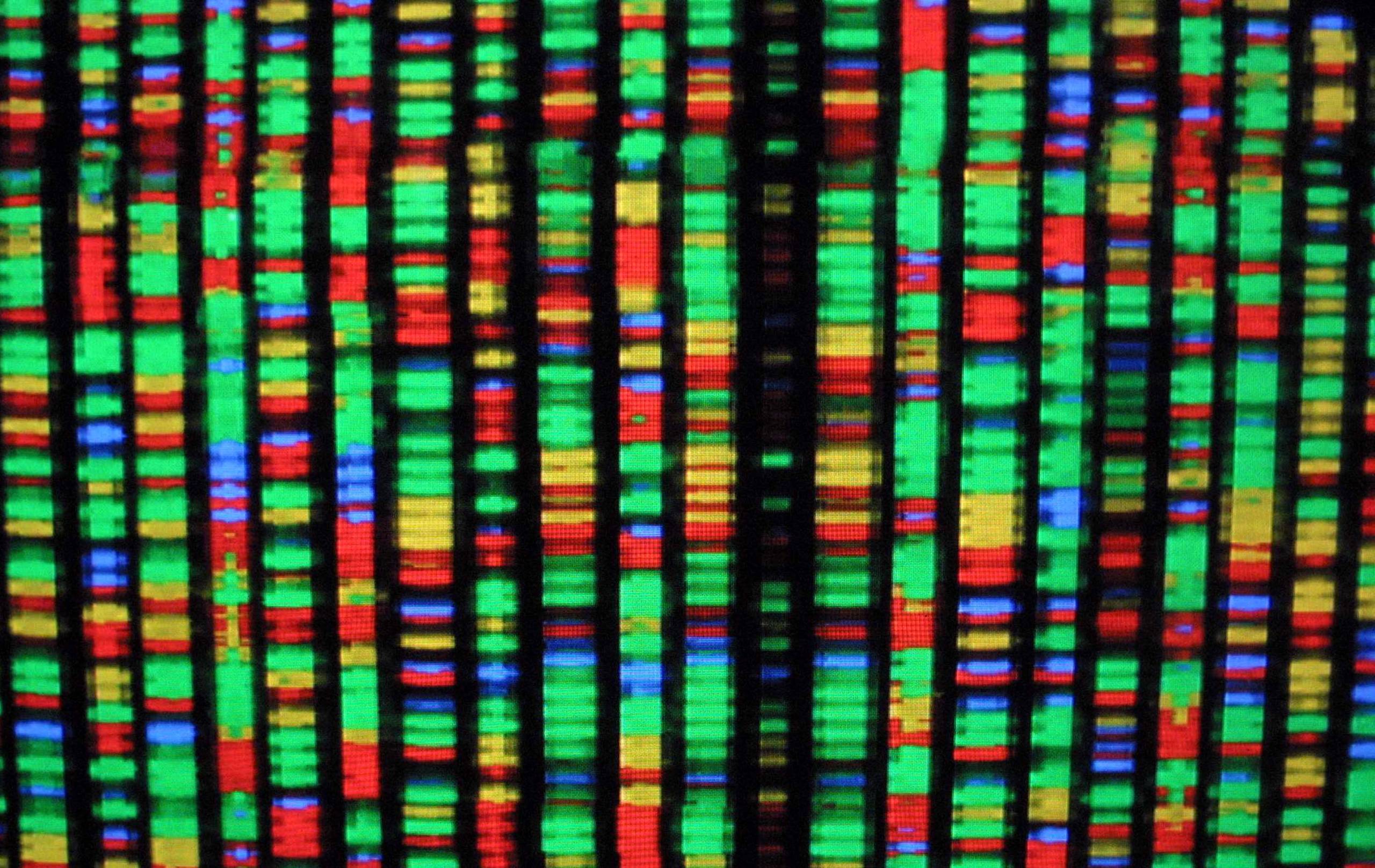
Michael Marshall: I think it would be hard to argue that he didn’t. The publicly funded Human Genome Project started in 1990 and was proceeding steadily through that decade. But Venter came in and essentially argued that it was possible to do the genome faster by reversing the way they were doing it. The publicly funded project planned to map the genome first, then sequence all the little bits and assemble them. Venter said it would be much quicker to break the whole thing up into small chunks, sequence them, and then use a computer program to piece it back together. That’s called shotgun sequencing. And it’s hard to argue that he wasn’t right, at least to some extent, because the public project eventually adopted that method too. Shotgun sequencing has since become a standard methodology because it’s so much faster.
Alexis Madrigal: Fyodor, you were at the NIH around the time of the completion of this draft of the Human Genome Project. How do you think about Venter’s contribution, and how important was the overall project in the broader scheme of science?
Fyodor Urnov: In early August of 2024, I got an email from a physician-scientist at Penn Medicine named Kiran Musunuru, and we’re collaborating on genetic therapies for newborns with severe genetic diseases. Kiran said, “Look, we have a child who has been newly diagnosed with a devastating genetic disorder within a week of birth, and we have to help him.”
An amazing team at Children’s Hospital of Philadelphia, the company Danaher, and my team at the Innovative Genomics Institute got together, and we built a genetic medicine on demand for this child. This would not have happened without what Craig Venter did.
Genomics England has sequenced 50,000 newborns. In the United States, programs like Guardian and BabySeq have sequenced over 100,000. The resonance of his work today is that we can diagnose children at severe risk of death from genetic diseases within two days. Their entire genome gets read using the Venter method, and computers identify what is, frankly, the killer typo. Then genetic medicine developers like myself and physicians can try to save the child before it’s too late.
If Venter had not developed the shotgun approach, we would never have gotten here. Taking an even bigger step back, it’s not an exaggeration to say that his bold move—one many people thought was like jumping into a swimming pool with no water—was enabling. He didn’t just build a better mousetrap; he invented a cat. He proposed a fundamentally new way to read human DNA, and that “cat” is still with us today.
Alexis Madrigal: That’s—so, you know, Michael Marshall, at the same time, Venter was a pretty controversial figure, both as a person and because of his desire to do science outside traditional public institutions.
Michael Marshall: Yeah, there were a number of things. People who knew him well have said he had an ego—there’s no two ways about it. That said, he was also quite straightforward. What he said he was going to do, he generally did. He had a very direct honesty, which could also be called undiplomatic.
When Venter was working on the human genome, he did so through a private company he founded. Their aim was to keep the data confidential and sell it to pharmaceutical companies. In contrast, the publicly funded project made all of its data immediately available.
There are ethical questions there—can you keep data private that essentially belongs to the human species? But setting that aside, it’s now clear that publicly available data has enormous advantages in driving scientific research. The more accessible the data, the faster discoveries are made. This is especially important for scientists in the developing world who may not have access to expensive datasets.
So I do think there was an issue there. But it’s also fair to say that Venter drove the field forward, and you could argue that the benefits of what he did far outweigh the controversies at the time.
Fyodor Urnov: I really agree with Michael there. As I look at the world today, there’s a company called Natera that will read a person’s DNA and provide information to guide reproductive and personal health decisions. That DNA belongs to the person.
I think separating Craig the person—we could do a whole separate show on that—from Craig the scientist is valuable. As I said, he wrote a fundamentally new playbook for connecting human DNA to human health, and we benefit from it every day.
Alexis Madrigal: Here’s one question I have for you, Fyodor. You mentioned we’ve sequenced tens of thousands of newborns. Did we overestimate the importance of having that first rough draft of the human genome? Did we think we’d get more from it than we actually did?
Fyodor Urnov: I often look at ancient maps—what people thought continents looked like—and it’s easy to look back and say they were crude compared to Google Maps today. The original human genome sequence was similar. First, we had nothing. Then we had a rough map that told us where to look more carefully.
I don’t think anyone could have predicted how quickly sequencing would become cheaper and faster. When I was a grad student in the early ’90s, it took me two months to read 1,000 letters of DNA. The human genome has about six billion letters. If you read one letter per second, it would take a century.
If you had told me back then that in 2026 it would take 48 hours, I would have thought you were joking. So the people working on the first genome couldn’t have imagined the technological leaps that followed.
Alexis Madrigal: That’s Fyodor Urnov, professor in the Department of Molecular and Cell Biology at UC Berkeley and director for therapeutic research and development at the Innovative Genomics Institute. We’re also joined by Michael Marshall, science writer. His most recent book is The Genesis Quest: The Geniuses and Eccentrics on a Journey to Uncover the Origin of Life on Earth.
Thank you so much for joining us, Michael.
Michael Marshall: My pleasure. Thank you.
Alexis Madrigal: All right, thanks a lot. We are, of course, talking about pioneering biologist and entrepreneur J. Craig Venter. We’re going to turn the conversation to what mapping the human genome has done for us—and what it hasn’t. I’m Alexis Madrigal. Stay tuned for more right after the break.