This partial transcript was computer-generated. While our team has reviewed it, there may be errors.
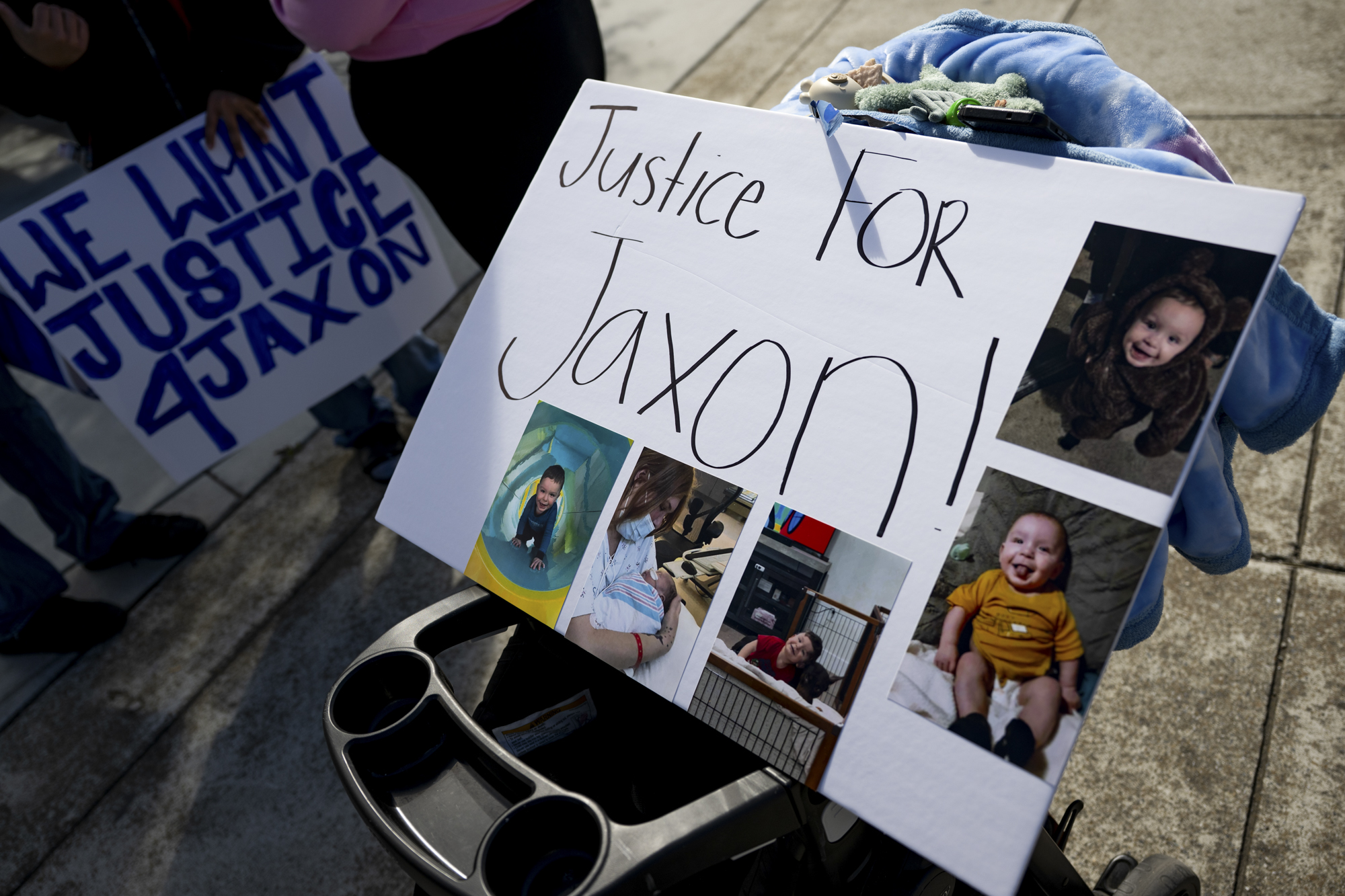
Alexis Madrigal: Welcome to Forum. I’m Alexis Madrigal. In San Jose, Jackson was a two-year-old experiencing a very difficult early life. He’d been placed in foster care with a paternal cousin, and tragically, he was killed by a teen relative living in that home, according to authorities. It’s a horrible story. We’re going to try to explain what happened, explore the fallout, and then broaden out this show to talk about the realities of the foster care system in our region and how it attempts to balance really difficult values in really difficult situations.
Joining us first, we have Julia Prodis Sulek, a reporter with the Bay Area News Group. She was part of the San Jose Mercury News team that won the 2017 Pulitzer Prize for breaking news reporting. Welcome.
Julia Prodis Sulek: Thank you.
Alexis Madrigal: So give us a little more, Julia, about what we know of what happened to Jackson, this two-year-old.
Julia Prodis Sulek: It’s just such a tragic, horrible story. The teenager—his cousin, whom he lived with for the last six weeks of his life—has been charged with murder and multiple counts of sexual assault. It’s been devastating to everyone, from the foster care community to social workers to county leaders. I’ve been trying to investigate what went wrong, and it seems like there were many things along the way.
Alexis Madrigal: Yeah. Why was Jackson in foster care to begin with?
Julia Prodis Sulek: He was born two years ago with fetal alcohol syndrome and was almost two months premature. Child Protective Services had been involved early on—in Santa Clara County, it’s called the Department of Family and Children’s Services. At a certain point in his young life, rules were put in place that his parents couldn’t be left alone with him. His mother had alcohol problems, and his father had significant health issues and was frequently in and out of the hospital.
So it was difficult for his parents to care for him. He was living with them as well as his paternal grandmother. As long as she was present, Jackson could remain in that home. But there were some issues—at one point, his mother wasn’t home when a CPS worker visited—and they decided it was time to remove him.
He went to live with his grandfather in the Sacramento area for six months. Unfortunately, because of his medical and developmental challenges—he had some autism-related issues, difficulty walking, and was nonverbal—he was very difficult for his grandfather to care for. After six months, social workers decided he should be placed with his paternal cousin back in San Jose. She was a 40-year-old woman with three children of her own, including her teenage son, who is now charged with murder. That’s how he ended up there.
Alexis Madrigal: In a situation like this—a child with significant needs and a family that’s fractured in important ways—how does the Department of Family and Children’s Services determine placement? Is it about availability, or are they working from some kind of rubric? What are they actually looking at?
Julia Prodis Sulek: I think keeping children with family and relatives is really a priority. There’s a lot of concern about the trauma that comes from moving a child from one place to another, and there’s a strong belief that being with family is generally the better option.
Jackson’s father and grandmother also encouraged placing him with this cousin. And I should add that his mother died about six months ago, when he was around a year and a half old, due to alcohol-related problems. So the tragedies really mounted for this child.
There’s been a strong push to keep families together, but that has also contributed to some of the agency’s challenges. Two years ago, the state Department of Social Services investigated after the death of a baby named Phoenix from a fentanyl overdose. They found the county was putting too much emphasis on keeping families together rather than on child safety. That’s one of the questions now—whether that approach is still influencing decisions and may have played a role here.
Alexis Madrigal: But isn’t prioritizing keeping families together fairly standard practice across the country?
Julia Prodis Sulek: Yes, absolutely. Social workers have long tried to place children with relatives. But in Santa Clara County, many say the pendulum swung too far in recent years. Children were sometimes kept in homes despite multiple allegations of abuse, with the hope that services—like parenting classes or drug rehab—would help parents improve.
But there were breakdowns in that system, and in some cases, children remained in dangerous situations.
Alexis Madrigal: In this case, the cousin Jackson was placed with had a prior felony child endangerment conviction from about 10 or 12 years ago. Shouldn’t that have disqualified her as a caregiver?
Julia Prodis Sulek: Yes, especially for what’s called an emergency placement—although in this case, it doesn’t seem like a true emergency. The grandfather had given plenty of notice that he couldn’t continue caring for Jackson.
Child welfare experts have said that this conviction should have disqualified her from the start. There can be exceptions, but they say there shouldn’t have been one here.
Alexis Madrigal: There’s also broader context in Santa Clara County, including other child deaths that prompted state oversight. What did that state report find?
Julia Prodis Sulek: One key finding—also reflected in our reporting at the Mercury News—was that starting in 2021, after the George Floyd protests, an email from then-agency head Dan Little urged social workers to do everything possible to keep children in their homes.
The state later found that removals through the court system dropped significantly after that. After the death of baby Phoenix, reforms were implemented, including a corrective action plan. One important issue they identified was the reliance on voluntary safety plans. If a case doesn’t go through the courts, social workers have limited authority. Parents are encouraged—but not required—to follow through on services, and there was often little follow-up or consequence when they didn’t.
Alexis Madrigal: Outside of these tragic deaths, do we know how the system was performing overall?
Julia Prodis Sulek: Social workers have one of the toughest jobs imaginable. They deal with deep dysfunction, generational trauma, and families trying to cope without adequate tools. It’s an incredibly difficult system, and many are doing the best they can under challenging circumstances.
Alexis Madrigal: What happens now? Are there policy changes underway at the county level?
Julia Prodis Sulek: The big question is how, after two years of reforms and renewed focus on child safety, another death could happen. Beyond baby Phoenix in 2023, there was another case in 2024 where a seven-year-old was placed with his grandmother despite relatives’ objections. He was later stabbed to death by an uncle.
A child death review also found three additional cases where children died while having some level of involvement with child protective services.
Often, referrals come in—people report suspected abuse—but when social workers investigate, they may not find enough evidence to take action.
Alexis Madrigal: We’re talking about the foster care system and the tragic death of a child in Santa Clara County. Thank you so much for joining us. Julia Prodis Sulek, a reporter with the Bay Area News Group. We’ll be back with more right after the break.