This partial transcript was computer-generated. While our team has reviewed it, there may be errors.
Grace Won: Welcome to Forum. I’m Grace Won, in for Alexis Madrigal. As the war in Iran marks its seventh week, a fragile ceasefire between the U.S. and Iran continues to hold. President Trump declared on Wednesday that the war is, quote, “very close to being over.” But this morning, Secretary of Defense Pete Hegseth stated that the U.S. was, quote, “locked and loaded and ready to destroy civilian energy infrastructure in Iran,” which is a potential war crime. His remarks seem to belie the president’s contention that the war is winding down.
Here to discuss the current situation and what options the U.S. has, we’re joined by Dalia Dassa Kaye. She’s a senior fellow at the UCLA Burkle Center for International Relations. She’s also the author of Enduring Hostility: The Making of America’s Iran Policy. Welcome to Forum, Dalia.
Dalia Dassa Kaye: Great to be here. Thanks so much.
Grace Won: We also have Robin Wright. She’s a contributing writer for The New Yorker. Her most recent piece for the magazine is “The Peace President Gets Belligerent with Iran and the Pope.” Welcome back to Forum, Robin.
Robin Wright: Hi, Grace.
Grace Won: Hi. And we also have David Sanger. He’s the White House and national security correspondent for The New York Times. His most recent book is New Cold Wars: China’s Rise, Russia’s Invasion, and America’s Struggle to Save the West, which is out in paperback. Welcome to Forum, David.
David Sanger: Great to be with you, Grace, and to be with Robin and Dalia.
Grace Won: David, this morning during a press conference, Secretary of Defense Pete Hegseth seemed to be speaking to the Iranian government when he said the U.S. is “locked and loaded” and ready to hit civilian energy infrastructure targets. What do you make of Hegseth’s comments at this moment?
David Sanger: Well, first, there’s been a big effort to gain as much leverage in these negotiations as they can. And so he was trying to make the argument that they’ve resupplied, they’re restocked, and they’re happy to start the war up again if they need to.
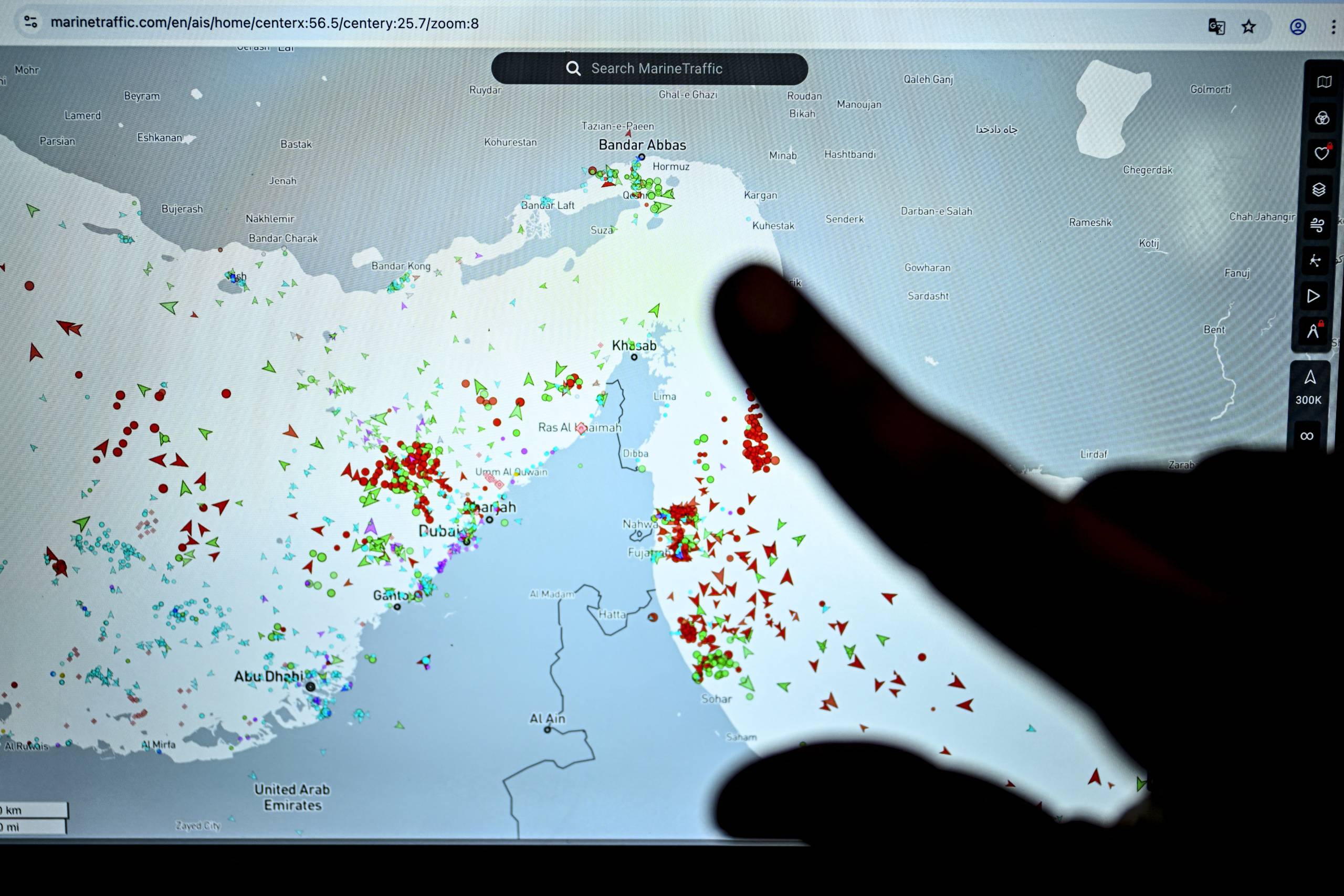
Now, of course, what we’re hearing on the other side of that is that, if anything, the ceasefire may be extended because there are discussions and negotiations underway. I think you also have to view the blockade as a form of leverage in these talks, because they’re trying to flip the script and keep all Iranian shipping from leaving the Gulf and making its way out to provide oil sales and revenue—rather than the way the Iranians were doing it, which was letting Iranian ships out and blocking everybody else.
But that’s a diminishing asset over time because, under the current circumstances, very little is getting out. You’re not getting Iranian shipping and you’re not getting non-Iranian shipping. It’s almost as if two blockades are underway. So I think it was fairly typical of Secretary Hegseth and came after he did a big blast at the press for not cheerleading every element of the American effort here.
Grace Won: I think he contends that the press is not patriotic enough.
David Sanger: Well, he used some religious metaphors to make the case that the press had “hardened his heart,” I think he said, against President Trump. And we’ve heard this before. But the fact of the matter is, what we’re seeing happen here is, I think, exactly what the founders wanted to have happen—independent journalism that questions American statements, investigates whether public accounts of the war are true or not, and interrogates the underlying policy.
Grace Won: Robin, as David alluded to, there are a lot of details and pivots that have happened since the ten-day ceasefire went into place. And I think a lot of people are wondering: what have we accomplished so far with this war? Is the United States’ position in a better place than it was? Have objectives been met that couldn’t be achieved before this war began? Or are we the same, better, or worse off?
Robin Wright: That’s such a good question. First of all, let me just say to all your viewers that you should read anything that David’s written about any subject. I get up in the morning, I see him on CNN, I read his stuff all day, and then I see him on CNN again. He’s one of the two best journalists in all America.
So in terms of whether we’re in a better place—look, we’re in a better place in that we’re actually having direct talks with the Iranians, not through intermediaries. So we’ve established a kind of channel that had never existed before.
When it comes to where we are militarily, clearly the Iranians are much weakened on many fronts. But the Iranians also have more leverage over us and the international community—and the global economy—than they did at the beginning of the war because of the issue of the Strait. The irony is the Strait was open before the war, and now one of the major issues is over nuclear questions and reopening the Strait.
The other issues—ballistic missiles, human rights, support for proxies, support for protesters in Iran—all of those have not seemed to be as important, or at least not as publicly discussed.
So there’s not a clear answer. But I’m kind of afraid that we’re not where we want to be. We thought we could accomplish this militarily, and we discovered—whoops—we can’t. And the Iranians know how to game us. So now we’re in one of those situations of who can hold out longer, and on what front.
The Iranians have some time. They’ve sent out enough oil that they have income to last for a while. There are questions of munitions on both sides. Trump wants an answer soon. The Iranians have been famous for stringing things out. Who knows?
Grace Won: Yeah. Dalia Dassa Kaye, I want to pick up on something Robin said, which is: we now have high-level talks at the table. The United States brought in JD Vance over the weekend, who had opposed this war, and now he’s sitting at the table. And Vance said after the negotiations that Trump was seeking, quote, “a grand bargain.”
But a lot of Iran hands—analysts, people like Nate Swanson, who is on the negotiating team—have said that Iran will probably respond with something smaller and more transactional. What do you think the approach right now to further negotiations should or will be?
Dalia Dassa Kaye: Yeah. Well, I think just today there are reports suggesting that talk of the “grand bargain” the vice president was describing—which is what the U.S. would prefer, that Trump wants to go big—is already shifting. The Iranians are looking for something smaller. They’re just trying to survive and maintain their leverage.
The reports today suggest they’re moving from talk of a grand bargain to just a temporary memorandum to prevent a return to conflict. So I think there is a gap between the rhetoric and the reality of what’s actually happening on the ground.
As Robin was alluding to, are we in a better place? We’re not there yet. I think part of the problem is we’re not clear on what the deal actually is that we’re looking for. At the end of the day, after all the cost and destruction of this seven weeks of war, what are we going to end up with? That’s the big question.
Best-case scenario, we reopen the Strait—which was not a problem we had before the war—and maybe, if we’re lucky, get some semblance of a nuclear deal. But it’s likely to be something more or less similar to a nuclear rollback for sanctions relief type of formula.
So Robin’s absolutely right: the channel is very important, and it’s at the highest level with the vice president. That said, there have been multiple cases of U.S.-Iranian direct dialogue, and even with this administration it’s happened twice—and it literally blew up into military conflict. So I think we’re a long way away from a breakthrough here.
Grace Won: David, in 2018, Trump said the Obama-negotiated agreement from 2015—on containing Iran’s nuclear capability—was not good enough. So he withdrew from it. Is what’s on the table now better than that 2015 deal?
David Sanger: It’s a great question because, as Robin alluded to earlier, Trump is going to be measured here by whether this deal is substantially better than what was struck in 2015—and whether it avoids the pitfalls he himself identified when he pulled out in 2018, which I think paved the way for the Iranians to build up the stockpiles they have today.
So what were the elements of the deal? One thing we’re hearing right now is that Vice President Vance insisted on a 20-year moratorium on all nuclear activity. That would be longer than the 15-year limit in the Obama-era deal. During that time, the Iranians were allowed some low-level activity, so they could say they hadn’t given up their right to enrich.
So I would say that if President Trump can get 20 years with no nuclear activity—and has a way to inspect and enforce that—that would be better. But if he gets something shorter than 15 years, or there is continued nuclear activity, then he hasn’t really solved the problem.
We know the Trump administration also wanted a missile agreement that would limit the range and size of Iran’s arsenal. If they don’t get that—and President Obama never did—then it suffers from one of the same problems Trump complained about.
And then there’s the ultimate question of regime change. Early in the war, Trump said he wanted the war to end and then an uprising against the Iranian government. He hasn’t talked about that much lately. But if he signs an agreement with the existing government, it might actually bolster it.
Grace Won: And as Dalia mentioned, what’s on the table right now is some kind of memorandum of understanding—it wouldn’t be an agreement of the size, scope, and depth we’re talking about.
David Sanger: Dalia is exactly right. Having covered all of that—and Robin was at some of those negotiations as well—the agreement reached by the Obama team was about 150 pages long. It had detailed inspection regimes and very measurable limits on what the Iranians could and could not do.
Grace Won: We’re talking about the war in Iran with a great panel of guests today: Dalia Dassa Kaye, senior fellow at the UCLA Burkle Center; Robin Wright, contributing writer for The New Yorker; and David Sanger, White House and national security correspondent for The New York Times.
We want to hear from you. What are your questions about the Iran conflict? Give us a call now at 866-733-6786. That’s 866-733-6786. I’m Grace Won, in for Alexis Madrigal. More Forum after this break.