This partial transcript was computer-generated. While our team has reviewed it, there may be errors.
Alexis Madrigal: Welcome to Forum. I’m Alexis Madrigal. Americans overwhelmingly read books written in English, often by other Americans. But our country’s publishing industry has highly specific features, our educational institutions have specific shapes, and we deeply, deeply underfund the arts here. This isn’t to say that there aren’t great American poets and novelists and essayists, but that perhaps it’s worth reading things from other countries to broaden our sense of what it is to be alive at this politically surreal moment in time, or to simply be with another culture and place. To that end, we’re talking about the art and economics of translation. How does a work like On the Calculation of Volume get from the original Danish onto the shelves at your local indie bookstore?
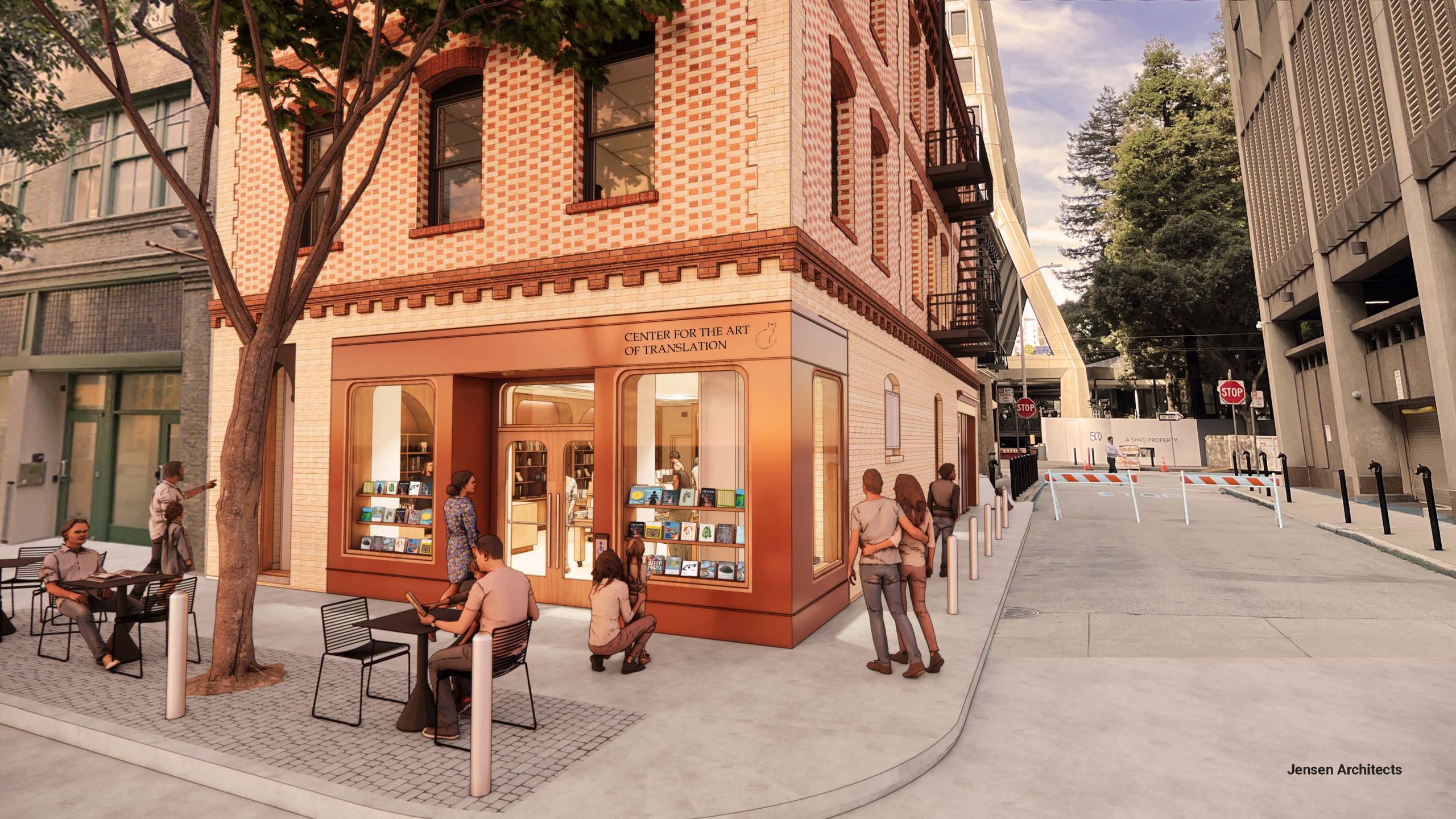
Joining us this morning, we’ve got some stars of literary translation here. Olivia Sears is founder of the Center for the Art of Translation, which just announced plans for a bookstore and cultural event center in San Francisco. Welcome, Olivia.
Olivia Sears: Thank you so much, Alexis. It’s wonderful to be here.
Alexis Madrigal: Yeah. We’ve also got Bruna Dantas Lobato, who is an author and translator of Brazilian literature. Welcome, Bruna.
Bruna Dantas Lobato: Thank you. Thank you so much for having me.
Alexis Madrigal: And I think, live from Bologna, we have Adam Levy, publisher of Transit Books, a publishing house based in Berkeley dedicated to translated literature. Welcome, Adam.
Adam Levy: Thank you so much for having me, Alexis.
Alexis Madrigal: Adam, you also work in this field. A lot of people, when they read a book that’s been translated, might not consider the kind of labor that goes into translating it into English. Do you have an example of a particularly challenging line or section, or something within the process, and what you have to consider to really make it work?
Adam Levy: You’re talking about as a translator—I mean, I don’t do so much work in translation these days, now that the publishing house takes up so much of my own time. But I think people often think of translation as kind of a unit-for-unit exchange at the level of the word, where it’s one word replacing another. Much more often, it seems like we’re thinking about texts on a more holistic level. What kind of effect is the author trying to convey across an entire text, across this chapter, across this section, within this style? So often what we’re trying to do is reanimate the kinds of choices that the author is making in the original language in the English that we’re writing.
Alexis Madrigal: Oh, yeah. And Olivia, you oftentimes translate poetry from Italian. So how does that work for you at the level of a line or a poem?
Olivia Sears: Well, I think the most important thing, first of all, is to get inside the voice of the author and figure out where they’re coming from, what tone they’re going for, as Adam says, but also what the effect is going to be for the reader.
I have been translating a wonderful living poet, Mariangela Gualtieri, and she has a poem where she hears dogs barking in the distance and she says, “Attenta.” It means watch out, be careful, look, something’s coming. It means all of these different things. And obviously the tone of “heads up” versus “be careful” or—
Alexis Madrigal: Watch out.
Olivia Sears: Watch out. They’re all very different. So you really have to have some confidence in the voice of the author coming through you to be able to make those decisions.
Alexis Madrigal: And do you do that intuitively, or do you sit there with the thesaurus next to you, kind of looking at every possible variation and selecting in a more cognitive way?
Olivia Sears: I think it’s a little of both. One of the appeals of translation is—I think it was Lydia Davis who said that the pleasures of translation are writing without having to invent something and solving puzzles. And I think we all really love to solve puzzles. So part of solving a puzzle is reaching for all the resources at hand.
English, in particular, has an enormous vocabulary, and so we always try to use as much of English as we can, and that really broadens our choices.
Alexis Madrigal: And is that just because you think of English as a hungry language, which has absorbed pieces of French, some pieces of Germanic languages, and everything else?
Olivia Sears: Yes. It’s definitely a hungry language, and there’s obviously a lot of colonialism that contributes to the heterogeneity of the language. But we’re also a language of immigrants. We bring new words into language all the time, and translation can expand that even more. Bringing the voices of other writers from around the world can expand the English language.
Alexis Madrigal: Yeah. Bruna, people sometimes say that there are certain terms or words or phrases in another language that are untranslatable, or something along those lines. You mostly work translating from Portuguese. Do you think there are words in the language you can’t translate?
Bruna Dantas Lobato: I actually don’t believe that, mostly because when I’m translating, along with what everyone has been saying, I’m not translating the individual word. I’m translating a mood, a vibe, a sentiment, a concern. And I usually can capture that with the words around it, really—with the character development, with the ambiance in a scene. I don’t actually always even need to say the word at all.
Alexis Madrigal: That’s so interesting. I think I’ve heard this around the Portuguese word—and I’m going to butcher this, so please correct me after I say it—saudade. This kind of longing. So if you saw that word, how many different translations do you feel like there might be?
Bruna Dantas Lobato: So there are no words for it in English, but I feel like we all know longing. We all know, for example, missing a place that you’ve never been to, that you’ve fantasized about. So it could be applied to something like that.
Though there isn’t one word in English, you know it. You know the feeling. And that’s more interesting to me—the fact that I can invoke these feelings with the English language, and I can make the English language show things that maybe we don’t even have language for. But it’s really there on the page, and we can feel alongside the character or speaker.
Adam Levy: Along the lines of what Olivia was saying, part of the great joys of translating is the possibility, too, of growing English. So even with a word like saudade, it feels like that’s the kind of word that has almost been assimilated into our own vocabulary in English. We published a book with that title, actually, because it feels like rather than searching for something so particular to replace it—
Alexis Madrigal: It’s like they nailed it.
Adam Levy: Yeah. They already got this. We don’t need to do it again.
Bruna Dantas Lobato: Sorry to interrupt, but I had a wonderful professor in graduate school when I was studying translation, a very accomplished translator, Arun Adhikari. He used to say that the goal of the translator is also to make the English language more capacious so that it can do more things than it normally can do. And I think that’s a wonderful example of that. We don’t need that word, but we can invent it. We can push some boundaries. We can maybe sometimes just bring the word as is.
Alexis Madrigal: Mm-hmm. It’s so interesting.
One of the things I’m still stuck on is what you said, Bruna, about you know the feeling even if you don’t have the word for it.
What I like about this is it feels to me that in literature—and this is a good thing—there are many more American identities represented in books that are published now. So you can read things by someone who’s much closer to your particular set of identity categories, you know, half Mexican in San Francisco with this particular set of millennial experiences, et cetera, et cetera.
And I think people tend to think, oh, those are the people who are going to know the feelings that I know. I think that’s at least the way people approach it as consumers of literature. And what you’re suggesting by saying you know the feeling is that maybe there’s at least a set of feelings that cross not just smaller identity categories, but massive ones.
Bruna Dantas Lobato: Yeah. And even if you haven’t experienced that yourself, my hope is that you will see it on the page and you will understand where those people are coming from, why they would feel that way, even if it’s something unfamiliar to you.
Humans have a great capacity for imagination. Growing up in Brazil, I watched The O.C., and I knew all of the Upper West Side. I knew nothing about those places. I’d never set foot in California. But somehow I understood the private dramas of those people. It’s not my life, but I get it. If I were in that context, maybe I would feel that way too. So you can just kind of let yourself be carried by the stories.
Alexis Madrigal: Yeah. I love that. Olivia?
Olivia Sears: I just wanted to add that one of the things that’s really amazing about translation is that it never has to end. There can always be a new translation that speaks to a new generation. In fact, I think it’s really necessary.
So, for instance, Dante’s Divine Comedy, very famous, has been translated thousands of times. Several translations come out every year, but most of them we don’t even pay much attention to because they’re not really doing anything new, and we already have lots of translations to read.
Mary Jo Bang, this amazing American poet, several years ago started translating the Commedia herself, and she wanted to make the experience of reading it more like it was in Dante’s time. What Dante did was condemn all of his political enemies to hell, and then the character would go into hell and say, “Oh no, what are you doing here? Is it because of that terrible thing you did that ruined my life?”
So he really was controlling heaven and hell in the book. Mary Jo Bang wanted that to come through, and so she put Muammar Gaddafi in there. She had Eric Cartman in there. She had all kinds of contemporary characters from TV and from politics so that we would get the sense that these people aren’t just medieval names. They’re actual characters, and they have a function in the book.
Alexis Madrigal: That’s so interesting. We are talking about the art of translating literature with Olivia Sears, founder of the Center for the Art of Translation, which just announced plans for a bookstore and cultural event center in San Francisco, which we’re going to talk about after the break. We’ve got Bruna Dantas Lobato, who is an author and translator of Brazilian literature, and we’ve got Adam Levy, publisher at Transit Books, based in Berkeley and dedicated to translated literature.
We want to hear from you. Do you speak multiple languages? Are there sayings or cultural things or words that you struggle to translate, or that you feel like actually have amazing English translations? Do you have a favorite translated work that you want to share with people?
You can give us a call. The number is 866-733-6786. That’s 866-733-6786. You can email [email protected]. Find us on social media, of course.
I’m Alexis Madrigal. Stay tuned for more right after the break.