upper waypoint

Why We’re Headed Back to the Moon For the First Time in Half a Century

Save ArticleSave Article
Failed to save article

Please try again

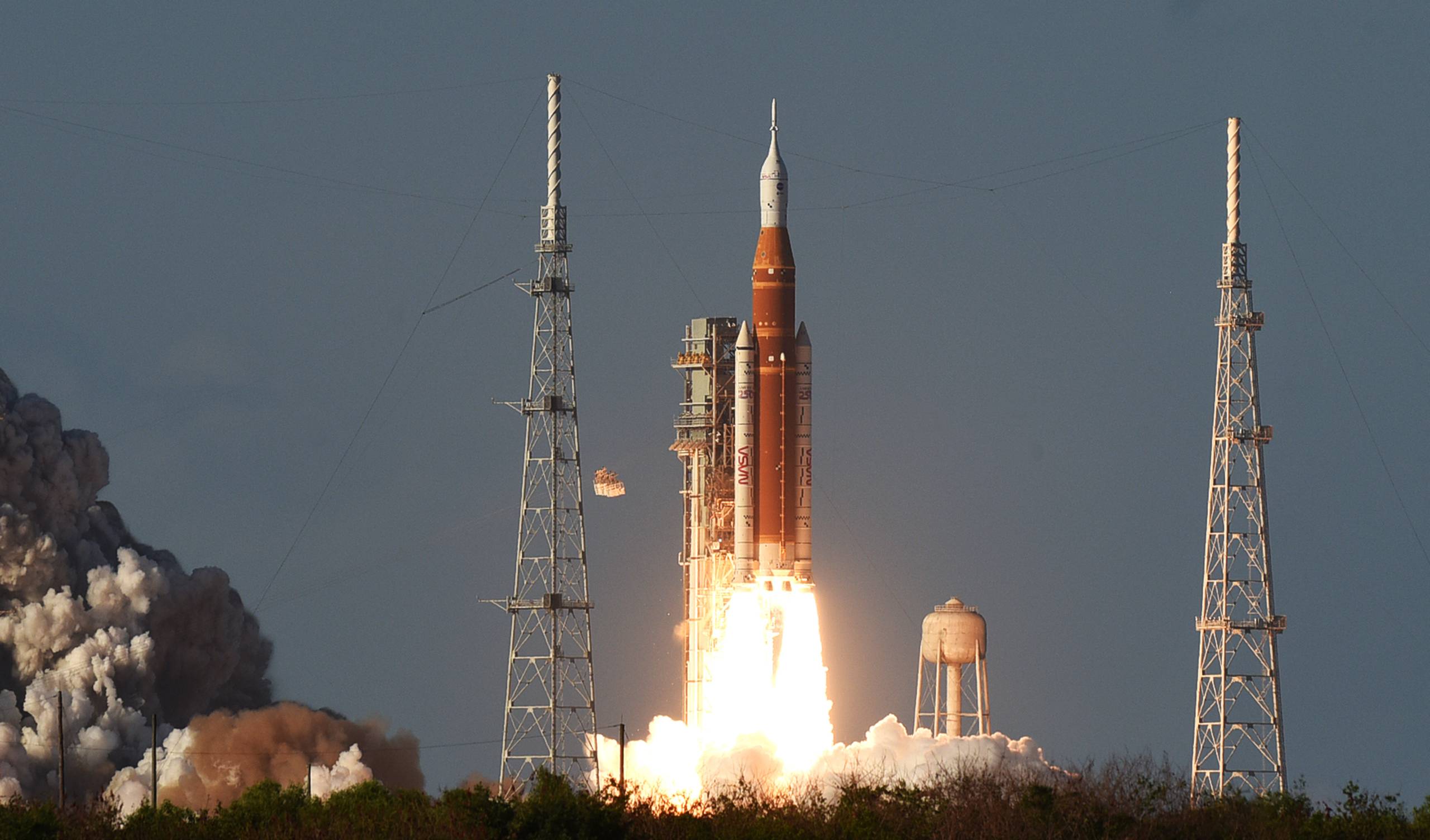
The Space Launch System (SLS) rocket and Orion capsule carrying NASA astronauts Reid Wiseman, Victor Glover, and Christina Koch, and Canadian Space Agency astronaut Jeremy Hansen lifts off from pad 39B at the Kennedy Space Center on April 1, 2026 in Cape Canaveral, Florida. The Artemis II crew will travel for more than nine days on a journey around the moon before splashing down in the Pacific. (Paul Hennessy/Anadolu via Getty Images)

Airdate: Friday, April 3 at 9 AM

“We go for all humanity,” remarked Artemis II commander Reid Wiseman, moments before the rocket taking him and his crew to the moon launched on Wednesday. It’s the first moon mission since 1972.  But the astronauts will not land on the moon. Instead, over the next 10 days,  the crew will study the science that’s necessary to get to the ultimate goal: A moonbase that can sustain human life and act as a jumping off point for missions to Mars. We talk about the science of space exploration, and its impacts on life on earth.

Guests:

Loren Grush, global space reporter, Bloomberg; author, "The Six: The Untold Story of America's First Women Astronauts"

Anthony Colaprete, acting director for the science directorate, NASA Ames Research Center - Colaprete is on the science team for the Artemis II mission

lower waypoint
next waypoint
Player sponsored by