This partial transcript was computer-generated. While our team has reviewed it, there may be errors.
Alexis Madrigal: Welcome to Forum. I’m Alexis Madrigal.
It was a brutal tragedy. Nine backcountry skiers died in an avalanche last month. Some were experienced; others were not. Some were professional guides, others were clients. Today, we talk about what happened and what it can teach us about avalanche risk and human decision-making.
We’re joined first this morning by KQED outdoors reporter Sarah Wright. Welcome, Sarah.
Sarah Wright: Thanks so much.
Alexis Madrigal: All right. Let’s just review what happened. People have probably heard about it, but let’s walk through the conditions and who the people were. Start us out on that day.
Sarah Wright: Yeah. So it was a group of fifteen people. They were on a guided trip up to the Frog Lake Huts. That’s up in Tahoe in the Castle Peak Wilderness, just north of Highway 80. So if you’ve ever driven up to Tahoe, you’ve actually been pretty close to this wilderness.
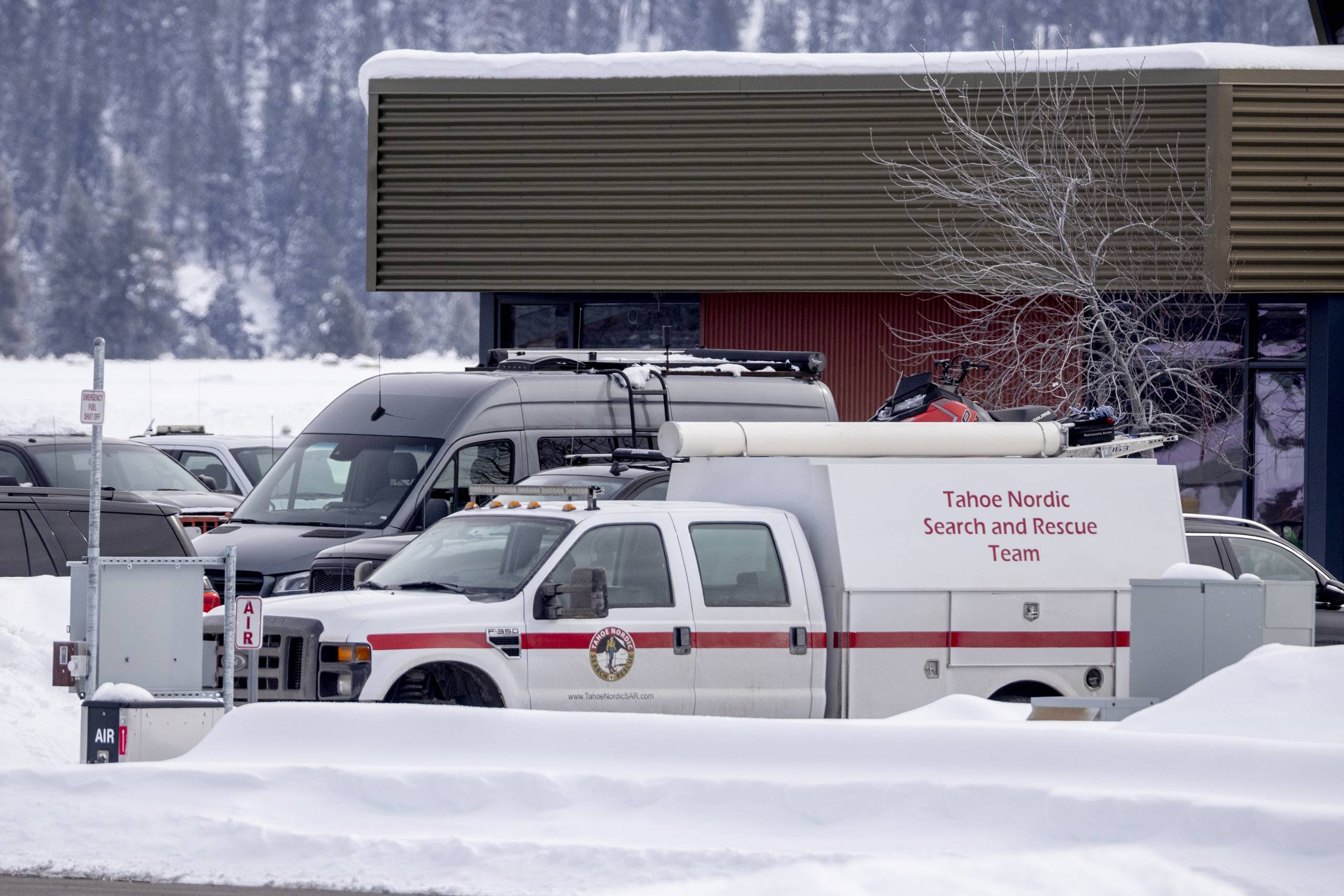
They were on a guided backcountry ski trip, and they were due to return on Tuesday to get back to their families and their cars after spending a couple of nights out in the backcountry. On the way home, first responders received an SOS notification and emergency call around midday notifying them that there had been an avalanche.
Alexis Madrigal: So they’re staying at this series of huts. When they went in — this is my understanding from reading the reporting — it was sort of a nice day. They get to the huts, they’re all kind of cozied up there getting ready to do this backcountry skiing adventure, and then the weather really starts to turn.
Sarah Wright: Yeah. They got out there over the weekend when the conditions were really beautiful. I was actually up in Tahoe as well skiing that weekend. Saturday and Sunday were sunny and beautiful. But come Monday, a storm started to roll in pretty severely starting Monday morning and escalating into Tuesday. So they were due to leave kind of in the midst of the height of this storm.
Alexis Madrigal: Also, as I understand it, avalanche risk is a combination of what has come before — how much snow was already on the ground, how warm it had been, those conditions — and then whatever is coming down in the moment. So what had the conditions been like up there for those who haven’t been following?
Sarah Wright: Yeah. So it was blizzard-like conditions. On Tuesday there were reports of extreme winds, even whiteout conditions. If you’ve ever skied or been outside during whiteout conditions, you know it’s pretty hard to figure out where you are, what’s going on, or what the snow conditions are.
It had snowed several inches — even feet in the highest parts of the mountains — and these folks were up there in high-elevation backcountry areas of Tahoe.
Alexis Madrigal: And it’s also sitting over some snow and other layers that had been experiencing some warm conditions, right? Which kind of weakens the integrity of the snowpack?
Sarah Wright: Right. We hadn’t had a ton of snow up in Tahoe up until this storm. January was extremely dry. If you were at any ski resorts or even just walking around in Tahoe, there was absolutely nothing on the ground.
So that base layer covered with this loose powder from a pretty cold storm created a really sort of weird, unstable situation.
Alexis Madrigal: And we’re going to talk more about avalanche conditions and risk and understanding them. But in this particular case, what happens?
Sarah Wright: Yeah. First responders received that emergency notification around midday and were told that several people had been buried in an avalanche. It wasn’t clear at that time exactly how many people were involved or buried.
Over the course of the next five hours, rescue teams were sent from both the north and the south to try to reach the survivors. What we know now from accounts published by the survivors themselves is that they were engaged in a desperate search to try to save the other people who were on this backcountry ski trip with them.
Then they had to shelter and wait out rescuers, who arrived at about 5:30 p.m. They actually had to ski in to reach the group because of the remoteness of the location.
Alexis Madrigal: Yeah. From reading the New York Times account — two of the survivors spoke with the Times — one of the most striking things is that it was almost pure luck that two of them were able to rescue the others.
They kind of ended up in this little bowl, this little depression, which then filled with snow during the avalanche. These two people ended up working to free the others. What do we know about the people who were on this trip?
Sarah Wright: Yeah. So it was a group — there were actually a couple of groups — but there was a large group of women in their forties and early fifties, many of them local to the Bay Area and mothers. Among them as well were three men.
The group was guided by four backcountry guides. So this was a large group of people. The guides themselves were experts in backcountry guiding and were fully certified, according to the guide company.
This was a group of people who, their families said, come out every year to do backcountry skiing or other adventure trips together. Their families released a statement saying they were united in their love of the outdoors and spending time together outside.
As this news started to break over the course of the week here in the Bay Area, I experienced moments of shock and sadness hearing who the victims were and what a horrifying experience this must have been for the survivors.
Alexis Madrigal: Also, you know the area up there well, right? You’re not only our outdoors reporter — you really know it.
Sarah Wright: Yeah. I went to middle school and high school and grew up in Tahoe on the North Shore, only about forty minutes from where this avalanche occurred.
I was instantly concerned that I might know people involved. I also know a lot of people who backcountry ski — it’s a huge part of their lifestyle. I saw my community kind of shocked by this news.
I don’t backcountry ski, but I spend a lot of time in the backcountry backpacking. So I immediately thought, oh my God, I have to think about my safety and what I’m considering before every trip.
Alexis Madrigal: Yeah. I’m also not a backcountry skier, but I’m a big trail runner. I’ve had enough experiences out there to feel like these decisions kind of compound. It’s hard to make the right decisions when you’re out there. It’s hard to understand what risks you might be inviting into your life. And it’s very scary.
We’re talking about avalanches and backcountry safety. We’ve got KQED outdoors reporter Sarah Wright. And we want to hear from you. What questions do you have about avalanches? Are you a backcountry skier? Have you considered backcountry skiing? Maybe you’ve found yourself in a dangerous situation in the backcountry.
Give us a call. The number is 866-733-6786. That’s 866-733-6786. The email is [email protected]. Social media — Bluesky, Instagram, Discord.
I want to bring in an avalanche specialist here. Ethan Greene is director of the Colorado Avalanche Information Center. Welcome, Ethan.
Ethan Greene: Hi. Thanks for having me.
Alexis Madrigal: I have to say, because I’m not a skier or really a snow person, I didn’t quite realize how prevalent avalanches are across all of our major ski areas.
Ethan Greene: Yeah. Avalanches are really an integral part of being in the mountains in the wintertime. In Colorado, our agency documents about 5,000 avalanches a year, and our guess is that might be around 10% of the total.
Alexis Madrigal: Wow. And are conditions similar in the Sierra Nevada, or are avalanches unevenly distributed across these mountain systems?
Ethan Greene: I don’t know if they’re unevenly distributed, but certainly the details of how avalanches form and release are a little bit different. We talk about it in terms of snow climates.
The coastal ranges — the Sierras, the Cascades — would be in a maritime snow climate, dominated by big storm events and deep snowpacks with warmer temperatures. Colorado is in a continental snow climate. It’s a cold and windy high-elevation place with a thin snowpack that has a lot more of these structural weaknesses you were talking about.
And then in between is Utah, Jackson, parts of Montana.
Alexis Madrigal: Obviously, I’m sure people in the avalanche community are paying close attention. This is the deadliest avalanche in California in a long time. As someone looking at the conditions from the outside, what are the first thoughts that come to mind for you?
Ethan Greene: For this one, it’s been a bit easier to be an outsider and really just be struck by the tragedy of it. Similar to what Sarah was talking about and what you’ve been saying — it’s a really tragic accident.
As somebody who investigates accidents, does rescues, and talks to families and friends of people involved in these incidents, it really pulls at your heartstrings. There are obviously a lot of questions about the snowpack, the physical details, and the situation of being at a hut on a guided trip.
But the main thing is that it’s just a really tragic, sad accident. These deaths ripple through communities. Having this many people killed — it’s really hard to think about and hard to stomach.
Alexis Madrigal: We’re talking about the recent avalanche up by Lake Tahoe and about backcountry safety. We’re joined by Ethan Greene, director of the Colorado Avalanche Information Center, as well as KQED outdoors reporter Sarah Wright.
We’re also taking your questions about avalanches. Maybe you’re a backcountry skier or backcountry adventurer yourself and can tell us about your experiences. You can give us a call at 866-733-6786 or email [email protected].
You can also find us on all the social media platforms — we’re @KQEDForum.
I’m Alexis Madrigal. Stay tuned.