This partial transcript was computer-generated. While our team has reviewed it, there may be errors.
Alexis Madrigal: Welcome to Forum. I’m Alexis Madrigal. Over the last decade here in the Bay Area, it seems like everything has become too expensive — health care, food at the grocery store, childcare, a mid-meal at a fast-casual restaurant, schools, caretakers, homes, cars, every service, every product. People come here from places like London and are blown away by how expensive everything is.
So KQED is launching a new project, How We Get By. And here first to introduce it is Erin Baldassari, senior editor of housing affordability. Welcome, Erin.
Erin Baldassari: Hey. Thanks for having me.
Alexis Madrigal: All right. Talk to me about this project.
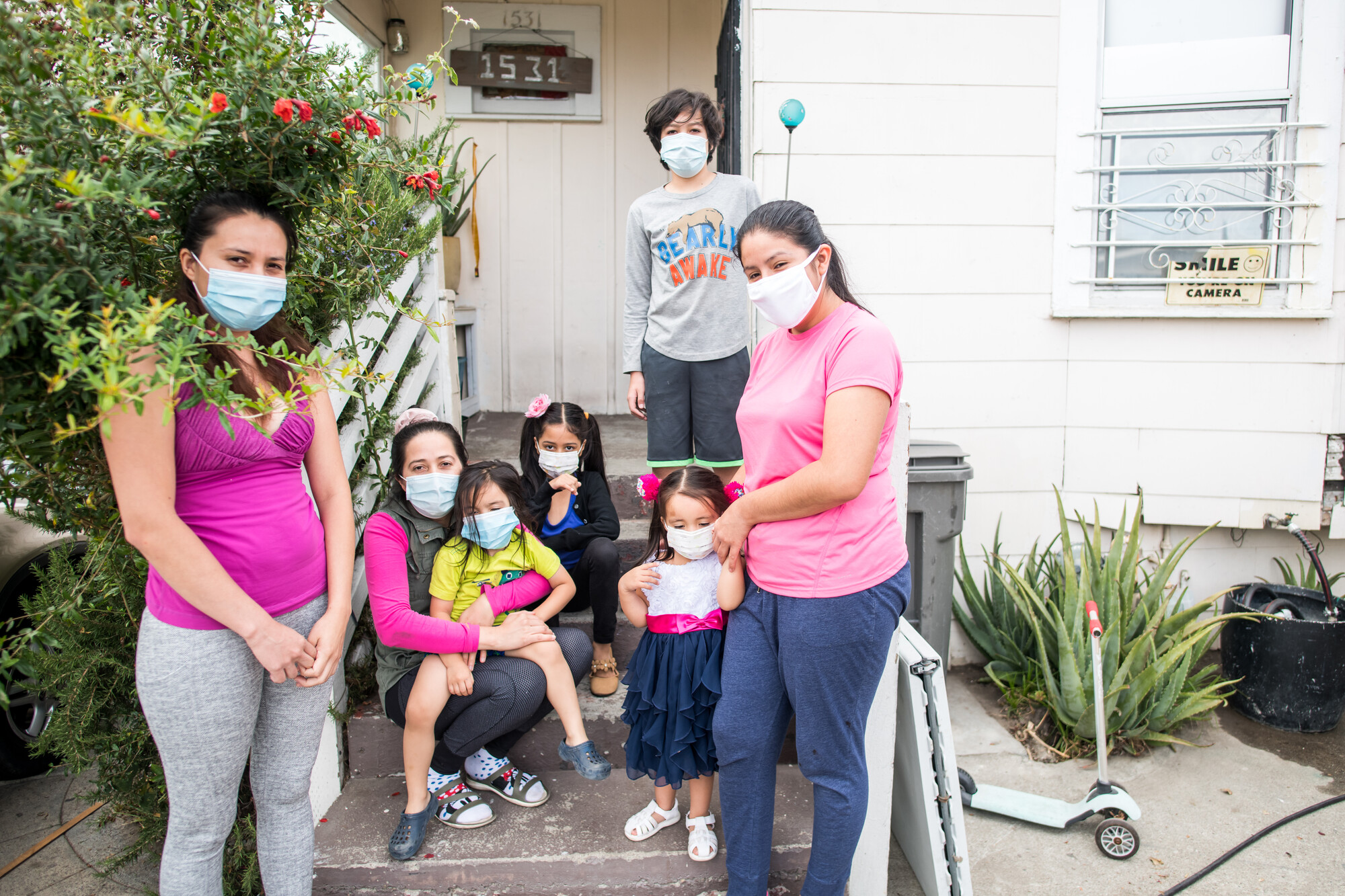
Erin Baldassari: Yeah. So, I mean, the idea behind this series is really just to take stock of this moment that we’re living in. As you said, housing, health care, food — everything just feels more expensive right now. And we know that people are really good at finding solutions for themselves. People figure things out.
Alexis Madrigal: Mm-hmm.
Erin Baldassari: So we didn’t really want to focus too much on big policy solutions. We wanted to ground this moment in people’s experiences and hear about all the ways they’re making it work. Maybe that’s hosting family dinner night with friends, jointly buying a home with a non-romantic partner, or putting up an Airstream in your parents’ backyard. There are extreme strategies, surprising ones, creative ones, and a lot of quiet compromises people are making to figure out how to afford to keep living here.
Alexis Madrigal: We want to hear yours, of course. We’re going to open up the phone lines early. What are your strategies for keeping up with the Bay Area’s cost of living? The number is 866-733-6786. That’s 866-733-6786. You can email [email protected] or find us on social media.
I do want to know — the Bay Area has been expensive for decades. I’ve looked at documents from 40 years ago where people were talking about the cost of living here. So what do you think is specific about the current moment when it comes to affordability?
Erin Baldassari: Yeah. There are a lot of ways I can answer that. There’s how I feel personally in my own life, there’s how I think about it as a journalist, and there’s this specific moment in time.
Personally, I’m a millennial approaching 40. I know exactly two people my age who own a home. Some of my Gen X friends who bought 15 years ago own homes, but very few people in my age cohort do. And when I look at my counterparts in Gen Z, they’re still living with their parents. I also have friends who’ve left their jobs because their salaries couldn’t cover the cost of childcare. So yes, affordability has long been a challenge in the Bay Area —
Alexis Madrigal: But that doesn’t mean it can’t be worse.
Erin Baldassari: Exactly. There’s just something about it that feels different now. I think it was exacerbated by the pandemic. Food became a lot more expensive. It just feels different in my life and in the lives of people I’m talking to.
As a journalist, I’ve been focusing on housing affordability for the past six years. It’s the single biggest category of expense in people’s lives, so it makes sense to start there. When housing becomes less affordable, everything else becomes harder. And what I’ve been seeing is that the feeling we have toward housing in the Bay Area is creeping into other parts of our lives. Even owning a car is becoming increasingly challenging and out of reach for a lot of people.
We’ve talked about health care, childcare, higher education — all of these expenses have risen faster than inflation. So we’re seeing all these pressures compound.
And then, thinking about this specific political moment, watching Zohran Mamdani’s election to become New York mayor made it clear that affordability concerns are going to drive the midterm elections coming up this November. It’s going to be a huge part of the conversation in California, one of the most expensive states. As we begin to hear from future policymakers about how to address this crisis, it felt like a good time to hear from people about their lived experiences and the ways they’re making it work.
Alexis Madrigal: It also strikes me that levels of inequality in the Bay Area — especially since the pandemic — have gone off the charts. Just when you thought it couldn’t get worse, there was more where that came from.
Let’s bring in a couple of other guests to help us talk about this. Neale Mahoney is a professor of economics at Stanford and the Trione Director of the Stanford Institute for Economic Policy Research. Welcome, Neale.
Neale Mahoney: Good morning.
Alexis Madrigal: We also have Abigail Lucia Sanchez, a predoctoral researcher at the Stanford Institute for Economic Policy Research. Welcome, Abigail.
Abigail Lucia Sanchez: Thank you. Thank you for having me.
Alexis Madrigal: Neale, you were listening to us talk about our anecdotal impressions of how affordability has changed. What do you think? What components of affordability have shifted the most?
Neale Mahoney: What Erin said is completely right and borne out in the data. We have structural affordability issues in the United States, and particularly in the Bay Area. The Bay Area is ground zero for our affordability crisis. Those issues were turbocharged by the pandemic and then by an administration that campaigned on reducing prices but, once in office, imposed tariffs on many of the goods we buy, further increasing prices. So it’s not surprising that everybody is worried about making ends meet right now.
Alexis Madrigal: How much of that is perception? You go to the grocery store with an expectation for how much eggs, milk, or a bag of chips should cost. Then you see the price and think, “That’s too expensive.” How much is that psychological, and how much is it that things really are more expensive across the board?
Neale Mahoney: It’s mostly real, especially in the Bay Area. Housing costs, health care — many families are one health shock away from bankruptcy. The cost of childcare that Erin mentioned: families with young kids are paying more for childcare than they are for their already high rent.
We’ve seen gas prices go up 20 cents in the last two days following the war in Iran. Food is interesting. We anchor on the price of eggs or beef. Overall, food inflation has tracked wage growth, so we’re not spending a larger percentage of our income on food. But we are getting sticker shock on certain items, and combined with everything else, it’s driving a general feeling of financial anxiety.
Alexis Madrigal: Talk to me about the causal mechanisms here. My folk theory is that housing makes everything more expensive because everyone needs housing, so it gets embedded in the price of everything else. Is that part of it?
Neale Mahoney: It’s not just a folk theory. It’s right. California has spectacularly high housing costs, particularly in the Bay Area. That problem started in the late 1970s with land-use regulation that limited how much housing we build. We’ve been building less than our peer cities.
Then we had the dot-com boom, the social media boom, and now the AI boom — a limited housing supply combined with a group of people who have significant spending power. That drives up housing prices, which makes it very expensive for nurses, public school teachers, childcare workers to live here. That increases costs for everything else. Housing is at the root of our affordability issue.
Alexis Madrigal: We’ve got a listener comment here. Abigail, I’m curious how this tracks with what you’ve been hearing.
A listener writes: “I’ve lived in the Bay Area for almost 30 years. First-generation immigrant, no family nest egg. I have a great job that pays $150,000 a year. However, I’m experiencing cognitive dissonance as I’m actively trying to move into San Francisco proper. Looks like more than half of my take-home salary will go to rent. On one hand, I know I’m blessed and should be grateful for the job I have, but the inability to afford to live comfortably with this type of salary is giving me a great deal of anxiety.”
Abigail Lucia Sanchez: I completely agree. Affordability issues have been top of mind for as long as I’ve lived here. I grew up in the Bay Area, and especially on the first of the month, these issues become really salient.
$150,000 can go a lot farther in other places. I empathize with the desire to stay in your home and community. For Gen Z, 64% of us spend more than 30% of our income on housing. So how are we supposed to save? How are we supposed to think about homeownership as a goal, or even something that’s possible?
It’s heartbreaking because we call the Bay Area home. But it’s why so many people have left the core of the region for places like Vallejo, Tracy, or Antioch. That migration makes moving toward San Francisco even harder.
Alexis Madrigal: And then the commutes from those places are brutal. If you have to get to Palo Alto or San Francisco —
Abigail Lucia Sanchez: Absolutely. I think the average commuting time in Antioch is 43 minutes.
Alexis Madrigal: That’s tough.
We’re talking about KQED’s new series, How We Get By. We’re joined by Abigail Lucia Sanchez, a predoctoral researcher at the Stanford Institute for Economic Policy Research; Neale Mahoney, professor of economics at Stanford and director of the institute; and Erin Baldassari, senior editor of housing affordability here at KQED.
We want to hear your strategies for keeping up with the Bay Area’s cost of living. Maybe you’re sharing a home, traveling for lower prescription drug costs, or coordinating with neighbors to save on childcare. Call us at 866-733-6786. That’s 866-733-6786. You can email [email protected] or find us on social media at KQED Forum.
I’m Alexis Madrigal. Stay tuned.