This partial transcript was computer-generated. While our team has reviewed it, there may be errors.
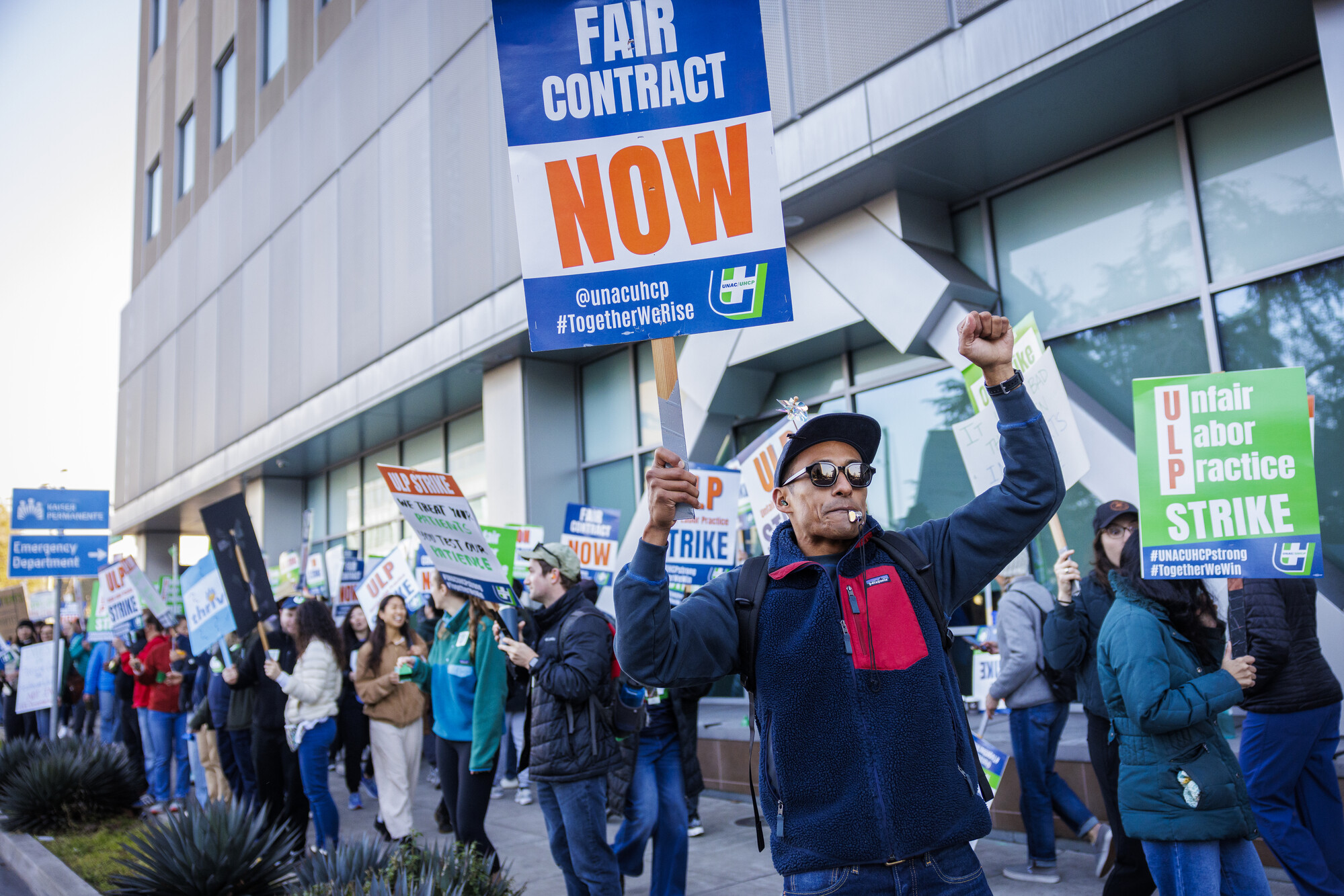
Scott Shafer: This is Forum. I’m Scott Shafer, in for Mina Kim. Tens of thousands of Kaiser employees across California are in their third week of an open-ended strike. At issue: wages, benefits, staffing, and more. The union says Kaiser has plenty of money to pay for increased wages and benefits. Kaiser responds that they’ve already put a generous package on the table at a time when the industry is facing serious financial headwinds from things like deep cuts to health care spending from the federal government.
We’re going to dig into the issues involved and the impact the strike is having — and could have as it continues. We begin with KQED labor correspondent Farida Jhabvala Romero, who has been covering the strike for us. Farida, welcome.
Farida Jhabvala Romero: Hi, Scott.
Scott Shafer: First of all, tell us a little bit about the groups of employees who are striking and what they’re asking for.
Farida Jhabvala Romero: As you mentioned in your intro, there’s one union that represents about 31,000 registered nurses, nurse anesthetists, physician assistants, physical therapists, and other employees at Kaiser — really the backbone of the company’s health care operations. They’ve been out in this open-ended strike for a third week, and it’s very likely this labor conflict will continue.
On the surface, the immediate concerns are staffing levels, staffing ratios, and compensation. But if you take a wider lens, this is really a battle over the direction Kaiser — the largest nonprofit health insurer in the country — is taking in the long run.
Scott Shafer: What do you mean by that — the direction?
Farida Jhabvala Romero: Many workers on the picket line have worked for Kaiser for 10, 15, 20 years, and they’re concerned the company is moving away from its values as a nonprofit organization — a mission to reinvest all of its revenues from health insurance premiums into patient care and facilities.
These workers feel the company is not listening to their concerns about what they describe as declining patient care and staffing problems. They believe new leadership at the organization is trading those values for the bottom line — for profits.
Scott Shafer: We should say we did ask Kaiser to provide a representative to appear on the program. They declined. But Farida, as best you can, tell us what Kaiser’s position is. What’s their response?
Farida Jhabvala Romero: Another important thing to mention is that this is California’s largest private employer, with more than 180,000 employees in the state and more than 240,000 nationwide. They serve more than nine million people in California alone.
Kaiser has dismissed claims that patient care is deteriorating or that they don’t have enough staff to handle patient volume. They point to very high patient satisfaction ratings and say they meet all safe staffing requirements.
In public communications, Kaiser focuses on wages. They say what union-represented employees are asking for is unsustainable and would lead to increasing premiums for customers at a time when the federal government has made massive budget cuts to Medicaid and chosen not to extend Affordable Care Act subsidies. They argue that these factors are making health insurance unaffordable for many Americans.
Because Kaiser operates as both a health insurer and health care provider, they’re looking at potential lower revenues and increased costs — for example, if more uninsured patients seek care. Executives say long-term expenses like higher payroll costs must be weighed carefully.
Scott Shafer: The union has pointed out that Kaiser has a very large reserve fund — about $66 billion. What does Kaiser say they need that for?
Farida Jhabvala Romero: When discussing reserves, context is important because this is such a large organization. Kaiser says those reserves are necessary for long-term obligations like pensions, upgrading facilities, and preparing for economic downturns or emergencies like the pandemic.
They argue they don’t want to be in a precarious fiscal position. Kaiser says wage increases need to come from operations, not reserves.
Scott Shafer: I want to bring in a certified registered nurse anesthetist with Kaiser. She’s in Sacramento and joins us from the picket line. Truc Le, welcome to Forum.
Truc Le: Hi. Thank you for having me.
Scott Shafer: Tell us about what your life is like in the operating room and what brings you to the picket line.
Truc Le: A little background: nurse anesthetists have a registered nursing bachelor’s degree, then return to school after at least two years of ICU experience to complete a graduate anesthesia program.
In the hospital, we’re very proud of our job. We often don’t see patients until the day of surgery — a time when people are very nervous. I tell them, I’m here to keep you safe. I’ll hold your hand. I’ll make sure you’re comfortable during surgery and afterward. We’re here to provide the best care possible.
Scott Shafer: Everyone understands the issue of wages. But in terms of working conditions and staffing, what is the union asking for?
Truc Le: We unionized because we want a stronger voice. Kaiser is limiting our ability to advocate for improvements. In the long term, that limits our ability to provide better service to patients.
Kaiser frames this as fiscal responsibility and higher wages, but we’re asking for autonomy and a voice — not just for us, but for our patients.
Scott Shafer: Would you describe current practices as unsafe?
Truc Le: I would say they’re very limiting. It’s delay after delay after delay. Kaiser could open more operating rooms. They could be more competitive in hiring CRNAs and other staff so we can care for patients more efficiently. But we feel Kaiser is prioritizing finances over investing in members.
Scott Shafer: What do you mean by that?
Truc Le: They’re holding $66 billion in reserves while increasing member dues every year. We believe they should reinvest that money — open more operating rooms, hire more people, and improve patient care.
Scott Shafer: What will it take to end this strike?
Truc Le: We’ve been very united. None of the CRNAs have crossed the picket line. We’ll continue until we have a fair contract that protects both caregivers and patients.
Scott Shafer: Truc Le, thank you for joining us from the picket line in Sacramento.
Truc Le: Thank you.
Scott Shafer: As mentioned, Kaiser declined to join us but provided a statement. It reads in part:
“These negotiations come at a time when health care costs are rising and millions of Americans are at risk of losing access to health coverage. This underscores our responsibility to deliver fair, competitive pay for employees while protecting access and affordability for our members. We’re doing both.”
Kaiser also says its employees are already well paid and that a competitive package is on the table.
Farida, this is now an open-ended strike, which is unusual. What’s the significance?
Farida Jhabvala Romero: It’s definitely an escalation. This union is part of a broader alliance of health care unions nationwide. Since September, they’ve held two limited-duration strikes — one day, five days — where everyone knew ahead of time when the strike would end.
This time it’s open-ended, which signals they’re serious and willing to stay out until progress is made.
Scott Shafer: After those earlier strikes, did they get any of what they were asking for?
Farida Jhabvala Romero: No. There’s a national contract Kaiser and the union have been negotiating for about nine months. There hasn’t been much movement, which led to the current strike.
Meanwhile, patients are experiencing disruptions — delayed surgeries, postponed care. There’s also a stalemate: Kaiser has reportedly declined to meet with national union negotiators, preferring to address issues locally. The union argues that won’t resolve a national contract dispute.
So when you think about how labor conflicts typically resolve — through negotiation and compromise — that isn’t happening right now. They’re not meeting.
Scott Shafer: We’re going to hear from some patients about how this is affecting them. But first, we’ll take a quick break.
When we return, we’ll broaden the conversation about the implications of the Kaiser strike, now in its third week.
You can email [email protected], find us on Discord, Bluesky, Facebook, Instagram, and Threads at @KQEDForum, or call 866-733-6786.
I’m Scott Shafer. You’re listening to Forum.