This partial transcript was computer-generated. While our team has reviewed it, there may be errors.
Alexis Madrigal: Welcome to Forum. I’m Alexis Madrigal. I love when we’ve been following a story out in the world long enough that we can complete a certain arc here on Forum. A couple years ago, we did a whole show about the renovation of the Castro Theatre and its potential futures. There was this big dispute about the seats — that may be ongoing; I’m not sure. But here we are, two years later. The Castro is really reopening. The vibe in the city is different, but that doesn’t mean it’s easy to keep a venue rolling. The rest of the arts scene is still kind of a question mark.
Here to discuss the challenges at the Castro and for nightlife and the arts in general in San Francisco, we’re joined by Gabe Meline, senior editor of KQED Arts and Culture. Welcome, Gabe.
Gabe Meline: Hi, Alexis.
Alexis Madrigal: And we’ve got Mary Conde, who’s senior vice president of Another Planet Entertainment, which, of course, undertook the renovation of the Castro. Welcome, Mary.
Mary Conde: Good morning. Thank you.
Alexis Madrigal: So, Mary, let’s start with you. Tell us about what you were hoping to do with the renovation.
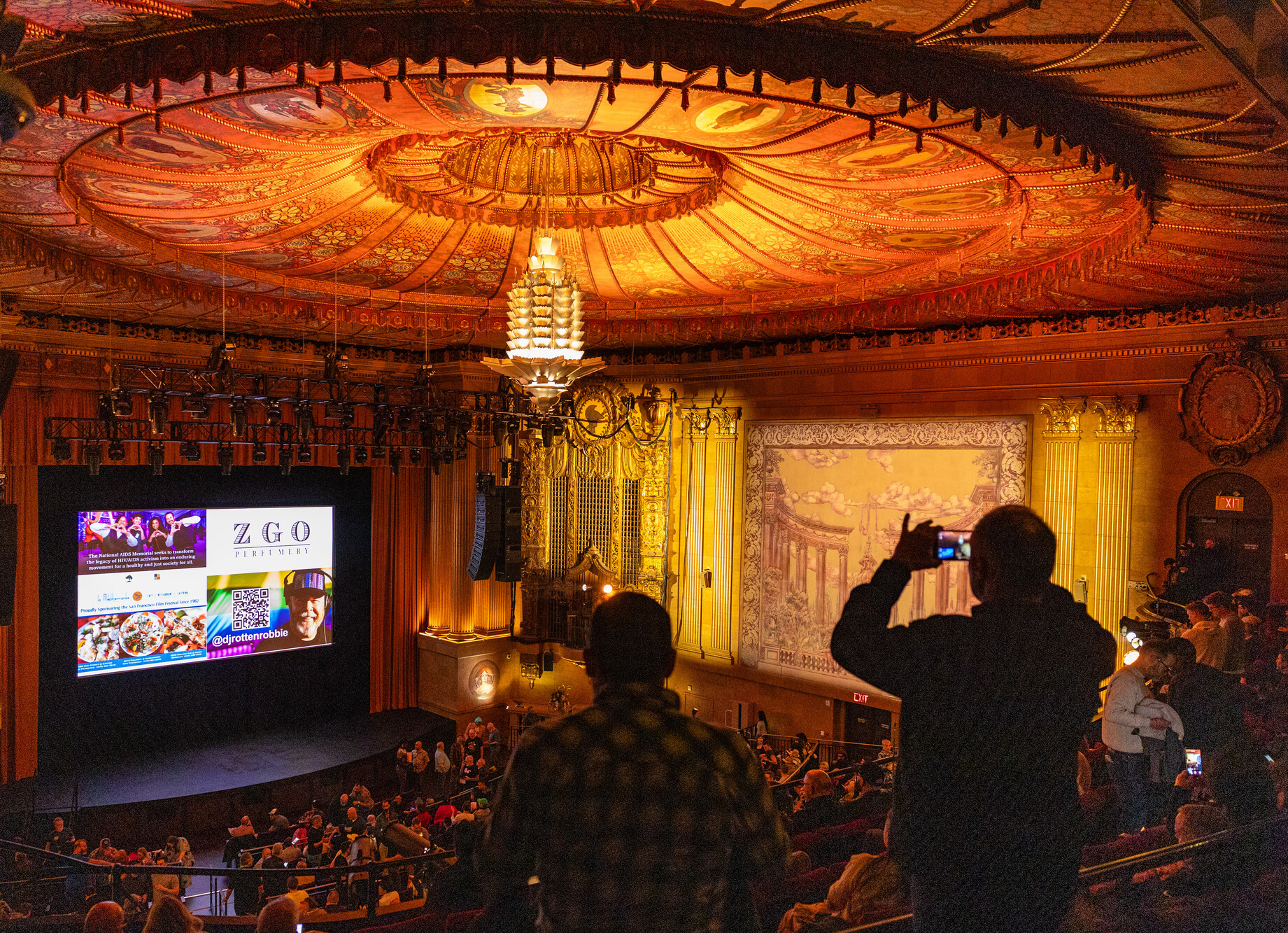
Mary Conde: I think we have exceeded our wildest dreams. The Castro Theatre is gorgeous. The renovation and restoration of the ceiling and the murals and the artwork is just spectacular. It feels like a cathedral. And the infrastructure behind the walls — which isn’t quite as sexy and fun — makes it a much safer and more comfortable space to be in.
Alexis Madrigal: What are we talking about? Was there knob-and-tube wiring? Was it that old?
Mary Conde: Oh, yes. There was knob-and-tube wiring. The plumbing had to be replaced. The sewer lines had to be upgraded. There’s a brand-new mechanical system for the first time, with healthy air changes and HEPA filters, and a fire life-safety system for the first time as well.
Alexis Madrigal: But how many ghosts do you think you released in the course of this renovation?
Mary Conde: Quite so many. So many. We sincerely have an altar set up in our office to tell them we’re here with good intentions. Please be nice.
Alexis Madrigal: Were there good surprises that you found?
Mary Conde: Yes. Well, the best surprise was the fabulous neighborhood that we’re in and the friendships that we’ve made and the supporters who are working with us. The Castro is the best neighborhood in the city, and it’s so much fun to be a part of that community.
We discovered an original proscenium behind the film screen. The screen had been rigged with a sort of DIY wooden scaffolding. When we took that down to clean the screen, there was this beautiful gilded plaster masterpiece that had been hidden for years — probably forty years. It was dinged up and needed some repairs and rehabilitation, but it’s gorgeous.
Alexis Madrigal: Are you going to use that for shows and stuff?
Mary Conde: Yes. It is the centerpiece of the stage set for Sam Smith. They really leaned into it and installed some beautiful lighting to highlight it, and there’s some drapery that complements it. It’s lovely.
Alexis Madrigal: The renovation was estimated to cost $15 million, but it went over $40 million. Does that mean something different for the Castro’s planning and finances? Do you have to make that money up somehow more quickly?
Mary Conde: It’s not the best business decision we’ve ever made, but we went in wholeheartedly. We wanted to do it right. As costs escalated — tariffs came into our world in a very significant way — and the years it took to plan, design, and get permitted drawings, cost escalation became a major factor. The condition behind the walls was worse than we expected. There were literally places in the theater where water intrusion had melted away concrete walls, and there were pieces of rebar hanging in thin air. There were hollow clay walls from 1922 that had simply disintegrated — it was sort of paint holding up some walls. Cost escalation was definitely a factor, but we wanted to do it right.
Alexis Madrigal: Gabe Meline, you’ve been to the theater now, and you’d been to it before. In fact, you wrote a whole piece in the past about how much you love the Castro. So what do you think?
Gabe Meline: Mary showed me around last week before the opening, and I went to the grand opening on Friday night. I guess you could say I’m here representing the dubious filmgoer community. My first movie at the Castro was in 1996 — it was Grey Gardens — and I’ve seen countless movies there since. I love it so much. It is a cathedral for film.
Like many others, I was unsure how Another Planet was going to pull this off. They wanted to make it a music venue and a movie theater at the same time. Plans came out showing flat tiers that resembled the Fox Theater in Oakland or the Warfield. Then they had a plan to mimic the raked seating somehow with removable chairs. Even after touring it on Thursday, I thought, I’m not sure if this is going to work.
I went to the grand opening on Friday. They showed Priscilla, Queen of the Desert. After the preshow, the movie started. And halfway through, I realized: I don’t mind these seats at all. I am lost in this film with a group of strangers in the dark, all having this same funny, emotional, resonant experience. It was like the old Castro magic was back.
Of course, I will forever miss the old Castro. I’ll miss being able to waltz in at 2 p.m. on a random Tuesday and see a Sam Peckinpah matinee. The Castro is required to show film seventy-five days out of the calendar year, so that’s good. It’s much less than they were showing. But I want to say: aesthetically, I don’t love the seating, but the experience of seeing a movie at the Castro is virtually the same, at least from my perspective. Kudos. They pulled it off. I don’t know how they did it.
Alexis Madrigal: We’re talking about the reopening of the Castro Theatre after a couple of years and $40 million in renovations. It is back now. We’re joined by Gabe Meline, senior editor of KQED Arts and Culture, and Mary Conde, senior vice president of Another Planet Entertainment, which has been behind the renovation and will operate the Castro.
We want to hear from you. Maybe you’ve been. Maybe you’re planning to go. Maybe you’re still worried. What do you want to see there? 866-733-6786. That’s 866-733-6786. You can also email [email protected] or reach us via social media — Bluesky, Instagram, Discord — we’re @KQEDForum.
Mary, what about the organ? This organ was famous. Did you have to tune it? What happened there?
Mary Conde: It’s the world’s largest digital symphonic organ. It’s beautiful — a stunning piece of artwork. We had to excavate an additional ten feet below the stage to install a proper lift for it with a slip stage. Mr. Heggarty and the Castro Theatre Organ Devotees Association — he’s been playing at the Castro Theatre for well over forty years — designed this gorgeous piece of equipment. We’re thrilled to have it in the building.
They did such a great job raising a million dollars to build it, and there was a bit of a shortfall when it came to installation costs. We were happy to partner with them. We’ve made a million-dollar investment to install the organ and make sure it’s safe, wired properly, and that the lift works.
Alexis Madrigal: When no one’s in there, do you ever get out there and just kind of bang on it a little bit?
Mary Conde: No. It’s a very intimidating piece of equipment. I can’t even imagine how smart someone has to be to manage seven keyboards at the same time. My brain doesn’t work that way.
Alexis Madrigal: That’s so awesome. Don’t you want to play it, though, Gabe? If there’s one thing you could do at the Castro Theatre all by yourself.
Gabe Meline: I’m getting the sense that you want to play it, Alexis. Bust out some “Chopsticks.”
Alexis Madrigal: Was that a leading question? I guess it was.
Gabe Meline: Some “Heart and Soul” on the Castro organ.
We didn’t even talk about the ceiling, though.
Alexis Madrigal: Oh, yeah.
Gabe Meline: On Friday night, someone mentioned the “brown expanse” it used to be. It looked like hanging leather from the ceiling. You could kind of make out details, but it was covered with decades of cigarette tar.
That has been completely cleaned up. People walked in on Friday night, looked up, and their jaws hit the floor. They couldn’t believe what they were seeing.
Alexis Madrigal: Mary, who do you hire for that? Are there special ceiling-cleaning experts?
Mary Conde: This was more than just a dirty ceiling. After the 1989 Loma Prieta earthquake, someone made the unfortunate decision to put a polyurethane coat on the ceiling because chunks of plaster had been disturbed. The whole dome moved about an inch and a half in ’89. It was a misguided attempt to stabilize the plaster, and it discolored and was too heavy — it was pulling the plaster apart.
This was a very complex plaster restoration. There’s a company called Evergreen Architectural Arts based in New York. They worked with us on the Fox Theater in Oakland, and they’ve also worked on Radio City Music Hall, the Empire State Building, the U.S. Capitol, and the Mormon Tabernacle. They’re the foremost experts in plaster and historic renovations.
Alexis Madrigal: How long did it take?
Mary Conde: Over six months, with forty-foot-tall scaffolding. It was inch-by-inch, loving restoration. There were places where the paint had delaminated from the plaster. They used different chemical solutions and heat guns to make it malleable so they could preserve the original paint. They did microscopic analysis to ensure the colors matched what they were in 1922.
It was remarkable to be part of. And Timothy Pflueger was such a fun architect. There are little cherubs, little winking devils, dragons. The colors are these beautiful jewel tones. It was thrilling.
Alexis Madrigal: One listener writes: “One of my first Castro experiences was the Sound of Music sing-along. Oh my lord. It was so, so fun. The energy, the number of men dressed as nuns, the folks who came dressed as the Von Trapp children in curtain fabric — it was magic. I’m so happy to see they have another sing-along on the calendar. The Castro is alive with the Sound of Music.”
We’re talking about the reopening of the Castro Theatre and what’s happening with arts and nightlife in the city. We’re joined by Mary Conde of Another Planet Entertainment and Gabe Meline of KQED. If you want to join the conversation, call 866-733-6786 or email [email protected].
I’m Alexis Madrigal. Stay tuned.