This partial transcript was computer-generated. While our team has reviewed it, there may be errors.
Alexis Madrigal: Welcome to Forum. I’m Alexis Madrigal. Today, we’re talking about the shooting of Renee Good in Minneapolis, and the protests and actions that have followed. We start the show with a check-in from our colleagues at Minnesota Public Radio, who have been out in the streets every day since the event. We’re joined by Matt Sepic, a correspondent with NPR. Welcome.
Matt Sepic: Hi. Glad to be here.
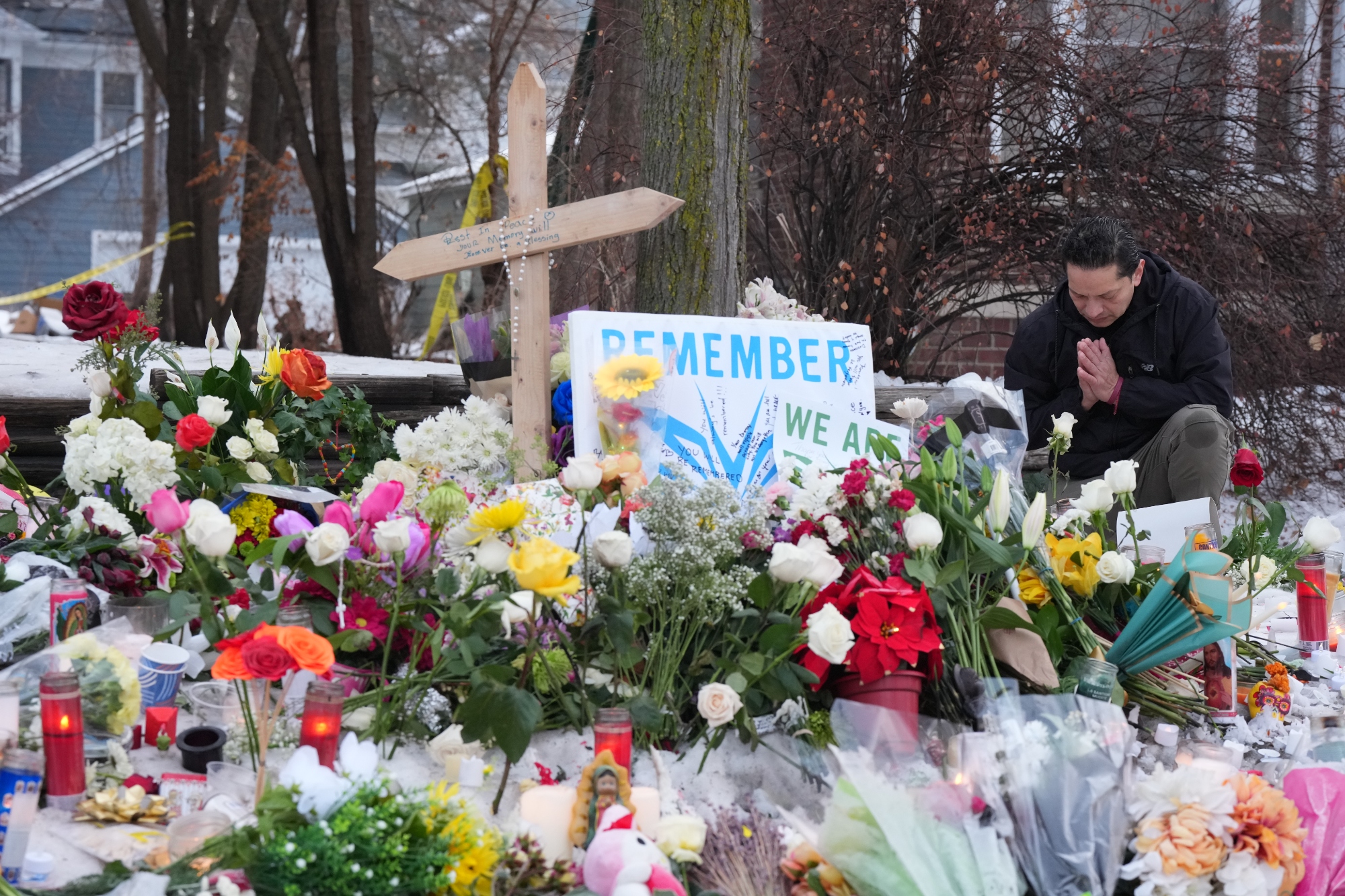
Alexis Madrigal: I’ve been trying to wrap my head around what’s happening in the Twin Cities right now. I saw a post from St. Paul City Council member for Ward 4, Molly Coleman, saying — quote — “Trying to explain what it feels like in the Twin Cities right now to people who aren’t here and haven’t experienced this is genuinely crazy-making.”
So for our listeners who may not be that familiar with Minneapolis or St. Paul, what does it feel like in the city right now? And is it just social media that makes it seem like ICE is everywhere, or is that something you actually feel on the streets?
Matt Sepic: It’s very real. It is something we’re feeling on the streets. There is a lot of anxiety. Just a personal anecdote: I still get the print version of the Star Tribune. It’s delivered on Sundays to my house by a Latino family. My paper didn’t show up. I’m speculating here, but they were probably afraid to go outside. I checked with another friend who’s also a subscriber — she didn’t get her paper either. That’s just one small anecdote from one part of the city, but we are seeing a large increase in the presence of ICE and Border Patrol — masked agents with large guns — moving around many areas of the city.
Just to update you on what I was reporting on most recently: yesterday, about twenty-four hours ago, there was a raid at a home on the far north side of Minneapolis. It’s a very diverse area — a large Black community and a large immigrant community. I don’t know exactly why they were going after this person, presumably some sort of immigration violation, and I’m looking into court records.
What I do know comes from speaking with a witness who lives nearby, as well as reporting from the Associated Press, which posted video of the incident. Masked agents with large guns, dressed in battle gear, went to a home and — without a judicially signed warrant — knocked in the door and arrested a man.
When people in the crowd asked to see the warrant, this witness — who is an attorney — was clearly upset but had the presence of mind to ask for paperwork. All that existed was an administrative warrant signed by a deportation officer. These administrative warrants allow ICE to arrest someone in public, but they do not give agents the right to knock down a door.
They used a battering ram to break down this person’s door. There were children inside the home — masked gunmen entering the house — and we still don’t know why. I do know the man’s name, but I’m not going to say it on the air to protect his privacy. He’s 38 years old. I checked his Minnesota court records and saw a smattering of driving violations — driving without a license — but that’s the extent of it, and that can be enough of a pretext for deportation. We’ve seen that here before.
Alexis Madrigal: How have local political officials and the police department been reacting to this ICE presence?
Matt Sepic: You’ve probably heard the soundbites from last week, right after the shooting of Renee Good, from Minneapolis Mayor Jacob Frey. In no uncertain terms, he dropped an F-bomb on live TV telling ICE to get out of Minneapolis.
He pushed back strongly against the narrative that Kristi Noem, JD Vance, and others in the administration immediately put forward — smearing Renee Good as a domestic terrorist when she was anything but that. They claimed the agent was in danger and that she rammed him with her vehicle, which is completely contradicted by video. The mayor called that narrative BS.
We’ve seen a strong reaction from the mayor and from Minnesota Governor Tim Walz, a Democrat, who has said this is not creating public safety. Public officials have also been admonishing people not to take the bait from the Trump administration — not to give them the show they’re seeking. By and large, people have been following that guidance.
Aside from a few knuckleheads smashing windows and spray-painting graffiti on immigrant-owned businesses along Lake Street in Minneapolis, these protests have been loud and raucous, but largely peaceful. That’s one small blessing we can take away from this. The governor does have the National Guard on standby, but they have not been deployed.
Alexis Madrigal: How big are these protests? And do the tactics and strategies feel different from what we saw during the George Floyd protests?
Matt Sepic: During the George Floyd protests, there was a lot more civil disobedience, and things got tense very quickly. I was out there at the time — things spiraled out of control. It only takes a spark to ignite literal fires.
I’ve always described what happened after George Floyd as largely peaceful civil disobedience by day, giving way to rioting and destruction by night. Thankfully, we have not seen that here.
There have been street protests — loud, raucous — but aside from some limited property damage, there were about thirty people arrested a few nights ago outside a hotel where protesters believed ICE agents were staying, in downtown Minneapolis, about a mile from where I’m sitting right now.
Police have been focused on preventing property destruction. The people participating in these protests have largely not been destroying property. I wouldn’t even characterize this as widespread civil disobedience. After George Floyd, people were walking onto interstates, shutting down freeways and major streets. Here, people are marching in the streets, but these are well-organized marches expressing First Amendment rights.
Alexis Madrigal: Another intergovernmental question here: the FBI shut out the Minnesota Bureau of Criminal Apprehension from the investigation. What’s the significance of that?
Matt Sepic: It’s a very big deal. Typically, in high-profile investigations here, state and federal agencies work together. I can point to two recent examples.
In June, a Democratic state lawmaker and her husband were assassinated in their home by a man posing as a police officer wearing a silicone mask. That was a joint investigation with the FBI and the BCA. Then there was the Catholic church shooting in August — a mass casualty incident where two children were killed — also investigated jointly.
What’s happening now is almost unprecedented. There’s always tension between law enforcement agencies — it’s a trope in TV shows — but this is next-level.
Initially, the BCA said this would be a joint investigation. Then, Thursday morning, BCA Superintendent Drew Evans said they were reluctantly withdrawing because the FBI refused to share evidence. Later, Trump administration officials said this was because of Mayor Frey’s comments calling the government’s narrative BS, claiming it prejudiced the investigation.
But comments from Kristi Noem and JD Vance were no less prejudicial. You would never normally hear administration officials weighing in on an investigation before the facts are in. It’s incredible.
Alexis Madrigal: Let’s talk about the scale of this deployment. The administration says this is the largest ever — 2,000 agents, with more on the way. How does that compare to local policing?
Matt Sepic: Another 200 agents are on the way. There are around 600 officers in the Minneapolis Police Department. So we’re talking about nearly four times the number of local police — masked ICE, Homeland Security Investigations, and Border Patrol agents, all with tactical gear and big guns.
And they’re obviously not from here, because they don’t know how to drive in the snow.
Alexis Madrigal: One of the protest tactics we’ll get into later is following ICE vehicles. Does that appear to be working from the protesters’ perspective?
Matt Sepic: It exposes what ICE is doing and allows others to gather. Federal officials say it increases tension and interferes with operations, but filming law enforcement is a First Amendment–protected activity. As long as people don’t physically interfere, they can film and heckle.
That filming is exactly what led to so much video of Wednesday’s incident — when agent Jonathan Ross shot and killed Renee Good. We’ve seen footage from multiple angles, including body camera video released Friday.
Alexis Madrigal: We’ve been talking about the fatal shooting of Renee Good in Minneapolis by an ICE agent with Matt Sepic of Minnesota Public Radio. Thanks so much for joining us.
Matt Sepic: Glad to be here anytime.
Alexis Madrigal: What questions do you have about ICE actions and what’s happening in Minneapolis? You can give us a call at 866-733-6786, or email [email protected]. I’m Alexis Madrigal. Stay tuned.