This partial transcript was computer-generated. While our team has reviewed it, there may be errors.
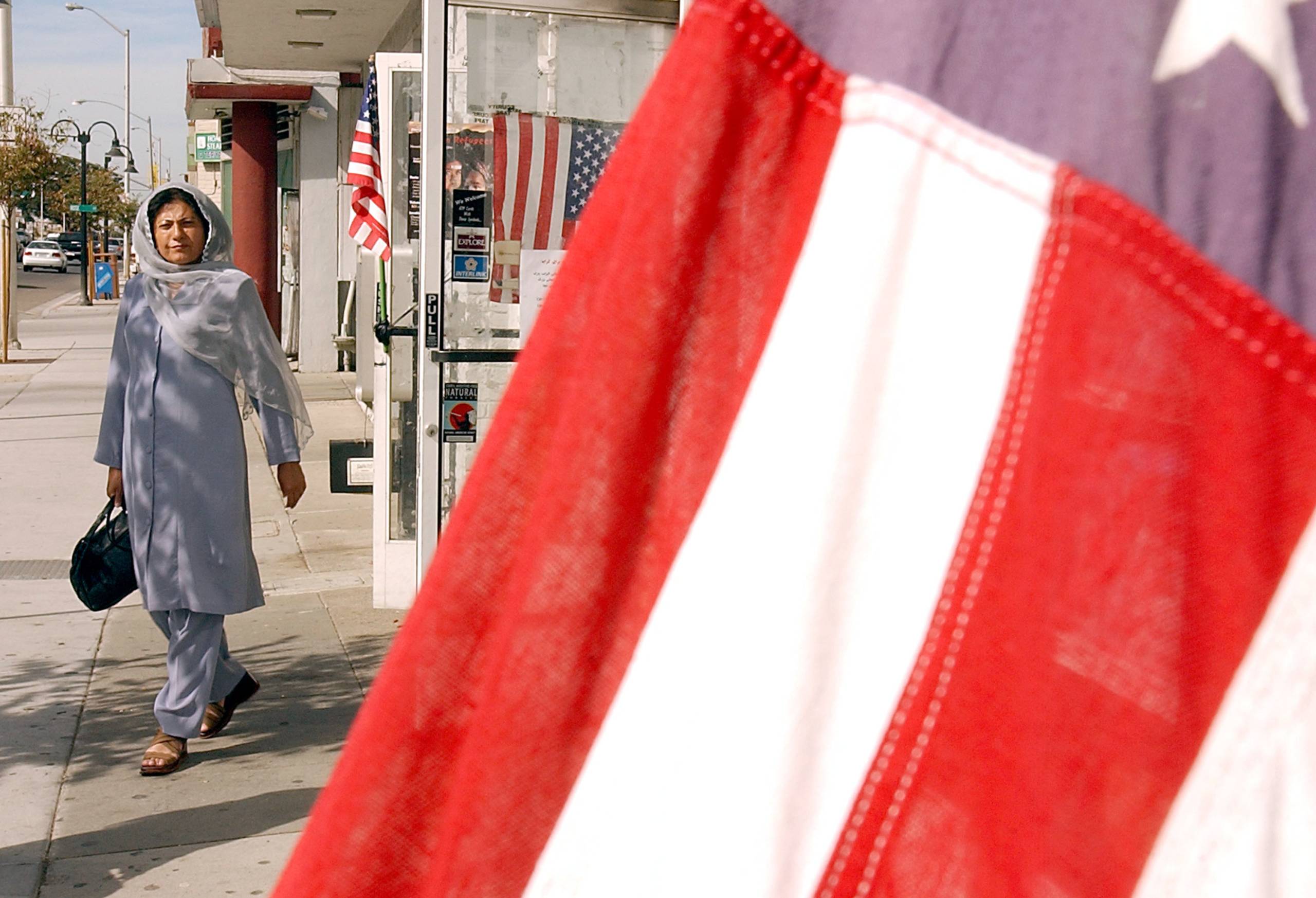
Alexis Madrigal: Welcome to Forum. I’m Alexis Madrigal. Regular Forum listeners — and just about everyone who lives on the southern side of the East Bay — know that there’s a large Afghan American community centered in the city of Fremont. Over the decades, as global powers have tussled over their country of origin, many people from that part of the world have come to the US through a variety of programs, and an estimated sixty thousand have settled around here. With the chaotic US withdrawal from the country, the community has experienced a lot of difficulty and strain over the last several years. And now, the Trump administration’s new stance targeting Afghan asylees and immigrants is threatening the community’s newest members and overall status.
Here to discuss the situation, we’re joined by Joseph Azam, who’s board chair of the Afghan-American Foundation, a nonpartisan nonprofit focused on advocating on behalf of the Afghan American community. Welcome, Joseph.
Joseph Azam: Thanks for having me, Alexis.
Alexis Madrigal: We’re also joined by Karen Musalo, who’s professor of law and director of the Center for Gender and Refugee Studies at UC Law San Francisco. Thanks for joining us.
Karen Musalo: Thank you for inviting me.
Alexis Madrigal: And we have Nick Miroff, staff writer covering immigration, the Department of Homeland Security, and the US–Mexico border for The Atlantic. Thanks for joining us, Nick.
Nick Miroff: Thanks, Alexis. Good to be with you again.
Alexis Madrigal: So, Joseph, let’s start with you. Maybe you can just walk us through what the last week — ten days — have been like for you as a leader in the Afghan American community.
Joseph Azam: Yeah, thanks. I mean, what it’s been like for me and for our community — it’s been scary. It’s been incredibly sad. I mean, what happened in DC, the murder, was a heinous crime. And just as people, it’s been devastating to see that happen in our country. And it’s been incredibly unsettling to see the response from our government.
Alexis Madrigal: What are you actually hearing from the folks that you serve? Like, what are people’s core concerns?
Joseph Azam: The core concern is that what we’re seeing is collective punishment and collective culpability for one person’s really heinous act. At its core, that is what people are talking about.
Alexis Madrigal: Yeah. And what do people fear that punishment might look like?
Joseph Azam: It’s a great question. I think for Afghans who are here legally but don’t have permanent status, they fear that punishment — that retribution — can come in the form of losing that legal status and potentially being sent back to certain death in Afghanistan. For the Afghan American community who’s been here for generations, it’s a bit of a revisit to darker times in our country — I’m thinking of the post–9/11 period in particular — where we were scrutinized and scapegoated and subjected to a lot of hatred and bigotry, which really has had lasting impacts on our community.
Alexis Madrigal: Nick, let’s come to you. For people who haven’t been paying as close attention to what’s happened in the aftermath of the shooting in DC, what are the policies that the Trump administration has announced since then?
Nick Miroff: Well, gosh. There’s a suspension of asylum adjudications. There’s a broad pause on some categories of green card processing, even some naturalization ceremonies. There’s a travel ban on nineteen nations that DHS is looking to expand to more than thirty. I’m probably leaving some off, but it’s a whole raft of new measures and policies targeting aspects of the legal immigration system. It’s part of an effort to get US Citizenship and Immigration Services — which administers the legal immigration system as well as the State Department — more involved in advancing the broader mass-deportation campaign the administration is carrying out.
Alexis Madrigal: Karen, the thing I feel like we always find ourselves asking in these situations is: Is this legal? I thought the ability to ask for asylum was a right. What’s the legal justification being used, and how do you see it?
Karen Musalo: I think that’s an excellent place to start — talking about the rule of law. Congress in 1980 passed the Refugee Act, which provides that any person who arrives at our border or is within the US has the right to seek asylum. And so when we see this administration putting an indefinite pause on adjudicating asylum applications, the question that has to be asked is exactly what you asked, Alexis — is this legal?
We’ve seen many policies of the Trump administration challenged in court, with many victories in the district courts and courts of appeal. And I don’t want to predict what’s going to happen, but I would not be surprised if this policy about pausing asylum adjudications — and many other policies that were part of this most recent intensification of anti-immigrant, anti-refugee measures — continue to face legal challenges.
Alexis Madrigal: What happens for someone who’s already in the process now, Karen?
Karen Musalo: This is devastating for people. We have to put this in context: people seeking asylum have either already suffered egregious persecution or fear being persecuted. They often arrive to the US traumatized and frightened. They come forward to seek protection under US laws — they are following the law by doing so. And now everything they had hoped for, the security and stability they sought, has been paused.
And I want to echo what Joseph said — this is very frightening for people. What does this indicate about who this administration has chosen to go after? How has it used the tragic act in DC — the heinous crime committed by one person who happened to be Afghan — to target every single immigrant in the US who’s seeking protection? I can’t help but say: this does not seem like a rational response to this tragedy, but rather an opportunistic use of the tragedy to do what this administration has wanted to do from day one.
Alexis Madrigal: Joseph, let’s talk a little about Operation Allies Welcome. This is the program the alleged shooter came through. These are people who worked with the CIA, the military, other US government agencies in Afghanistan during our long war there. What did those people go through to get to the US? Who is this particular set of people?
Joseph Azam: Sure. Well, in short, they went through a lot — including significant vetting. Beyond that, the reason they left is because the Taliban had put targets on their backs and on the backs of their family members because of their affiliation with the US. For twenty years, most Afghans stood with America in a joint mission to take on the Taliban and terrorism. When the country collapsed, the people most at risk were the ones closest to the US.
Most of the people who got out immediately and were evacuated by our government were affiliated with the US — translators, interpreters, civil-society leaders who fought for democracy and women’s rights, for example. These are the people who worked so hard, across the political spectrum and American society, to get out after the collapse.
Alexis Madrigal: Nick, that’s the most specific case here. The more general one is all asylum decisions, which are now paused. We’re talking over a million people whose lives will be affected by this.
Nick Miroff: Sure. This is a continuation of the administration’s shutdown along the border of asylum processing when Trump took office. US Customs and Border Protection is basically not allowing asylum seekers to get processed and released in the way we’ve seen over the past few years. And now this is being extended more broadly to people already in the process with pending claims, and it’s going to throw the process into chaos.
Alexis Madrigal: There’s another term I want people to hear, Nick. Some folks who came from Afghanistan had Special Immigrant Visas. What was that program, and how did it work?
Nick Miroff: There were Special Immigrant Visas, and then there were people who were paroled into the country. Parole was essentially an emergency measure used by the Biden administration to get people evacuated from Afghanistan. Listeners will remember the images of people packed into military cargo planes. Those planes didn’t fly directly from Afghanistan to the United States — they were taken to third countries, where a rapid effort was made to conduct some level of vetting and then provide pathways into the US so people could arrive safely and then be processed slowly to apply for proper asylum status.
That’s the status tens of thousands of people are still in — and those are the people who are going to be affected by these new edicts.
Alexis Madrigal: The Trump administration has said the reason for this is inadequate vetting under the Biden administration. What do we know about the process that was used and what may or may not have changed under this new administration?
Nick Miroff: There was vetting — even as part of the parole process and through Special Immigrant Visas — and then there’s additional vetting that’s supposed to occur in the US. It’s worth noting that the shooter had his asylum application approved in April by the Trump administration. Someone who worked with the CIA likely went through additional rounds of screening and vetting. So to claim this is a vetting failure that occurred only during the Biden presidency doesn’t seem to match the facts.
Alexis Madrigal: We’re talking about our country’s immigration policies, especially in light of President Trump’s decision to freeze asylum applications indefinitely. We’re joined by The Atlantic‘s Nick Miroff; UC Law San Francisco’s Karen Musalo — professor of law and director of the Center for Gender and Refugee Studies; and, of course, Joseph Azam, board chair of the Afghan-American Foundation and someone who’s joined us several times in the past.
We want to hear from you. What are your questions about the changes to this asylum policy or other new immigration policies? What do you think about President Trump’s decision to freeze these applications? The number is 866-733-6786. Forum at KQED dot org. I’m Alexis Madrigal. Stay tuned.