This partial transcript was computer-generated. While our team has reviewed it, there may be errors.
Alexis Madrigal: Welcome to Forum. I’m Alexis Madrigal. Let’s just stipulate up here at the top of the show that there are huge problems with the immigration system in the United States. Let’s further stipulate that there are huge problems with the specific programs that bring workers into our local tech industry — most prominently, of course, the H-1B visa program. That is to say, the status quo might not be worth defending just to defend the status quo.
But the latest actions by the Trump administration around the H-1B program have introduced a new level of uncertainty, jerking around people who’ve come to the U.S. to work for American companies and creating chaos for people’s families both here and abroad.
Joining us to talk about what happened and what might happen, we’re joined by Pranav Dixit, Meta correspondent with Business Insider. Welcome.
Pranav Dixit: Hi. Thanks for having me.
Alexis Madrigal: We’re also joined by Tanay Gokhale, a freelance reporter who’s covered our area for the publication India Currents. Welcome.
Tanay Gokhale: Hey, Alexis.
Alexis Madrigal: And we’ve got Emily Neumann, immigration attorney with Reddy Neumann Brown, PC. Welcome.
Emily Neumann: Thanks for having me.
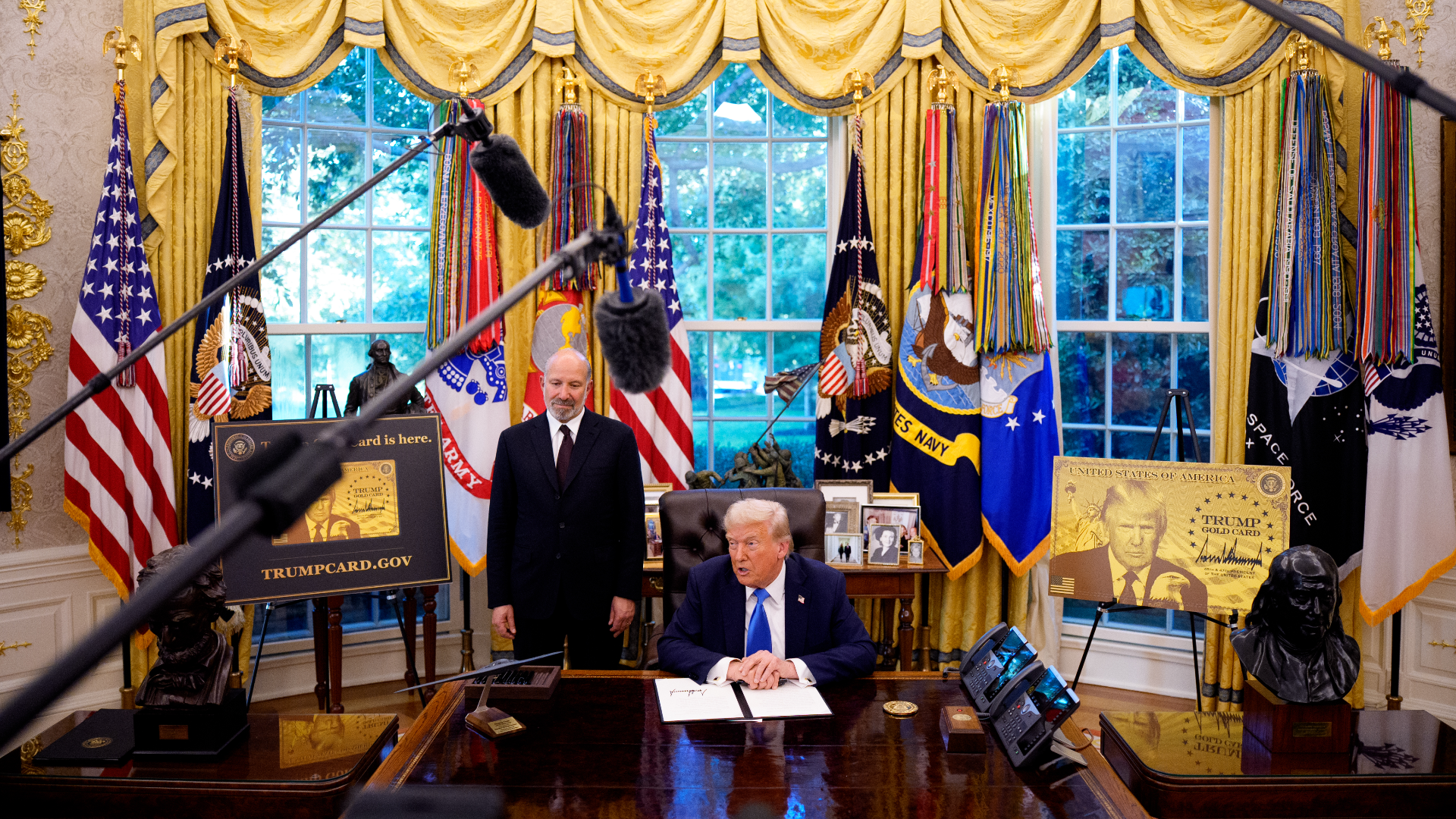
Alexis Madrigal: So, Pranav, why don’t you walk us through what happened on Friday when this executive order was signed? What did it say? Why was it such a shock?
Pranav Dixit: Yeah. So the news about the executive order dropped late Friday evening. Almost immediately, there was shock and confusion. Most of corporate America scrambled to send out advisories to all employees on H-1B visas, asking them either not to leave the U.S. if they were here, or to come back immediately within twenty-four hours if they were abroad.
At Business Insider, we got memos from Microsoft, Amazon, Google, and many other companies that were sent Friday night. We reported that dozens of people were getting off international flights.
Alexis Madrigal: Yes. I saw there was a video of an Emirates flight where people were like, “Wait, I gotta get off the plane. I can’t fly to India right now.”
Pranav Dixit: Yeah, absolutely. We reported on that specific Emirates flight. Others scrambled to return to the U.S. from Canada, Mexico, and around the world within that twenty-four-hour deadline because nobody had any idea what was going to happen once the Sunday evening deadline had passed.
Alexis Madrigal: I mean, why did this happen? Do we know? Given that the provision was kind of rolled back, or clarified, or whatever it was, how could it be that this just landed on the desks of HR people across the country with no warning or clear way to interpret it?
Pranav Dixit: Yeah, it definitely came as a big shock right when everyone was trying to wrap up their week and get ready for the weekend. The initial chaos stemmed from the fact that the way the proclamation was written, everyone felt that even current visa holders might be banned from reentry unless their employers paid a $100,000 fee.
It was effectively a travel ban for anybody on an H-1B. Within a day, the White House clarified that the fee doesn’t apply to anyone with an existing visa or anybody renewing a visa, and then things calmed down a little. But it took the whole night and most of the next morning to get there.
Alexis Madrigal: Wow. Emily Neumann, you’re an immigration attorney. It’s Friday afternoon — what happens to your phone and email?
Emily Neumann: Oh, yeah. The first email I got was from an HR director saying, “Hey, our CEO is hearing something about a $100,000 fee. How is this going to impact us? Is this true?” So then we’re scrambling to find out what’s going to be in this executive order.
We’re listening live as he’s signing this order, and we have someone saying this is going to apply to everyone, every H-1B. Every year, you’re going to have to pay $600,000. Then a few minutes later, we get the actual text, which sounds quite different, but still seems like it applies to everyone.
Alexis Madrigal: Clarifications, right?
Emily Neumann: Exactly. Then we start getting clarifications coming on Twitter of all places, rather than anything official. Then three different agencies posted fact sheets and FAQs — and still we had questions. But at least we knew people outside the U.S. could still travel back in, and those already here leaving were still safe to go out and return. But it was very hectic Friday and all through the weekend.
Alexis Madrigal: Yeah. And it lasted long enough that HR departments — like, I read the Microsoft memo — actually said, “Come back now.” The uncertainty lasted long enough that massive corporations had to react in drastic ways.
And part of the confusion was that they weren’t necessarily using the legal terms associated with the U.S. immigration system.
Emily Neumann: Absolutely. They kept referring to this “new petition.” Nobody knows what “new petition” is. That’s not a term on the I-129 form. There’s a term on that form that refers to new employment, but it doesn’t say “new petition.” There’s also a term for cap-subject H-1Bs, which are the new visas issued every year on October 1st. Was that what they were referring to? We still don’t know.
Alexis Madrigal: Yeah. We want to hear from you. We know a lot of people in our community are touched and affected by the H-1B program. Were you, your family, or your workplace affected by these changes and the uncertainty around them?
The number is 866-733-6786. That’s 866-733-6786. The email is [email protected]. And you can find us on social media — Bluesky, Instagram, Discord — we’re @KQEDForum.
Tanay, I mean, I saw this playing out on Bluesky with people saying, “Oh my god. What’s happening to my status? What’s happening to my company?” Especially within the Indian community of the Bay Area, there seemed to be enormous chaos and concern.
Tanay Gokhale: Yeah, totally. In the short term, there was panic among visa holders who were outside the country or planning to travel. Even after the clarification, though there was some relief that people weren’t in immediate danger, the big emotion that’s emerged is uncertainty and confusion among international workers and students, many of whom hope to apply next year for the H-1B.
I’m hearing that even in top tech companies — which, according to Howard Lutnick, were supposed to have been on board with this plan — it’s not likely a lot of them will pay $100,000 per employee if it comes to pass. There are expected to be legal barriers to actually enforcing this executive order, but people are worried: even if they didn’t come for us right now, will they eventually in the next few months or year?
It’s thrown a lot into a tailspin for people who’ve planned to live their lives here, set up families, and build careers in this country. A lot of things are up in the air right now.
Alexis Madrigal: That was the thing that really struck me — the sense that even if this was pulled back, it rang a certain bell you can’t unring. Even with all the problems of the H-1B program, there was at least a path people could see and understand.
Tanay Gokhale: Yeah, totally. In the context of all the other changes happening, it feels like a concerted attack on the H-1B system specifically. Remember, a few months ago international students were affected by consulates pausing visa interviews. When they resumed, they added heavy social media vetting that delayed students’ plans, and many couldn’t make it to their programs.
Now imagine when you finally make it to your program, and you realize maybe the one bankable visa opportunity — the H-1B — might not be viable anymore. There’s also talk of changing the lottery to prioritize higher-paid, more specialized roles, disadvantaging entry-level jobs, which many recent graduates and international students depend on.
And this is all happening in the middle of a tariff war between the U.S. and India, with talk of retaliation. We’re also seeing a lot of anti-Indian hate on social media. From a macro perspective, I’ve had conversations in the past few days that signaled a sense of disillusionment with the H-1B-to-green-card-to-citizenship pipeline — the so-called American dream. People are reevaluating whether the U.S. is still a good place to invest their future.
Alexis Madrigal: One listener writes, “While the new fee will be very bad for tech, let’s not forget how it harms medical care in our country. There’s a major shortage of nurses and doctors in the U.S., and the new fee will only worsen the problem.”
Emily, how do you read this? Obviously the tech world has been heavily invested in H-1Bs, but doctors and nurses too, right?
Emily Neumann: Yeah, absolutely. Universities, hospitals, and medical facilities often sponsor people from outside the U.S. because most are cap-exempt institutions. They can file all year round; they don’t have to worry about the March lottery and April filing.
So they do bring in a lot of people from abroad. As of today, this $100,000 fee applies to any petition filed for someone outside the country. The only filings happening right now are from these cap-exempt institutions — for doctors, nurses, researchers. So it’s really shooting ourselves in the foot.
Alexis Madrigal: We’re talking about the Trump administration imposing a $100,000 fee for H-1B visas. We’re joined by Emily Neumann, immigration attorney with Reddy Neumann Brown, PC; Tanay Gokhale, freelance reporter with India Currents; and Pranav Dixit, Meta correspondent with Business Insider.
We want to hear from you. Were you, your family, or your workplace affected by the H-1B changes? Give us a call: 866-733-6786. Email [email protected]. I’m Alexis Madrigal. Stay tuned.