The Trump administration is pushing to reopen Alcatraz as a federal prison, requiring the repeal of National Park protections and ending its six-decade transformation from America’s most notorious penitentiary into one of its most popular tourist sites. Throughout its long history, Alcatraz has served not only as a prison, but also as a military base, a site of Native American unity and resistance, a bird sanctuary, and a tourist site for 1.4 million of visitors who journey to it every year. Critics contend that the effort to convert it back into a prison is a wasteful folly. While others decry the loss of the site as a national park and museum, which offers a historical perspective into the American carceral system. We talk about the unique space that Alcatraz occupies in Bay Area cultural history, and its lasting legacy.
Alcatraz’s Cultural Legacy Extends Beyond Its Prison Past
We talk about the unique space that Alcatraz occupies in Bay Area cultural history, and its lasting legacy.
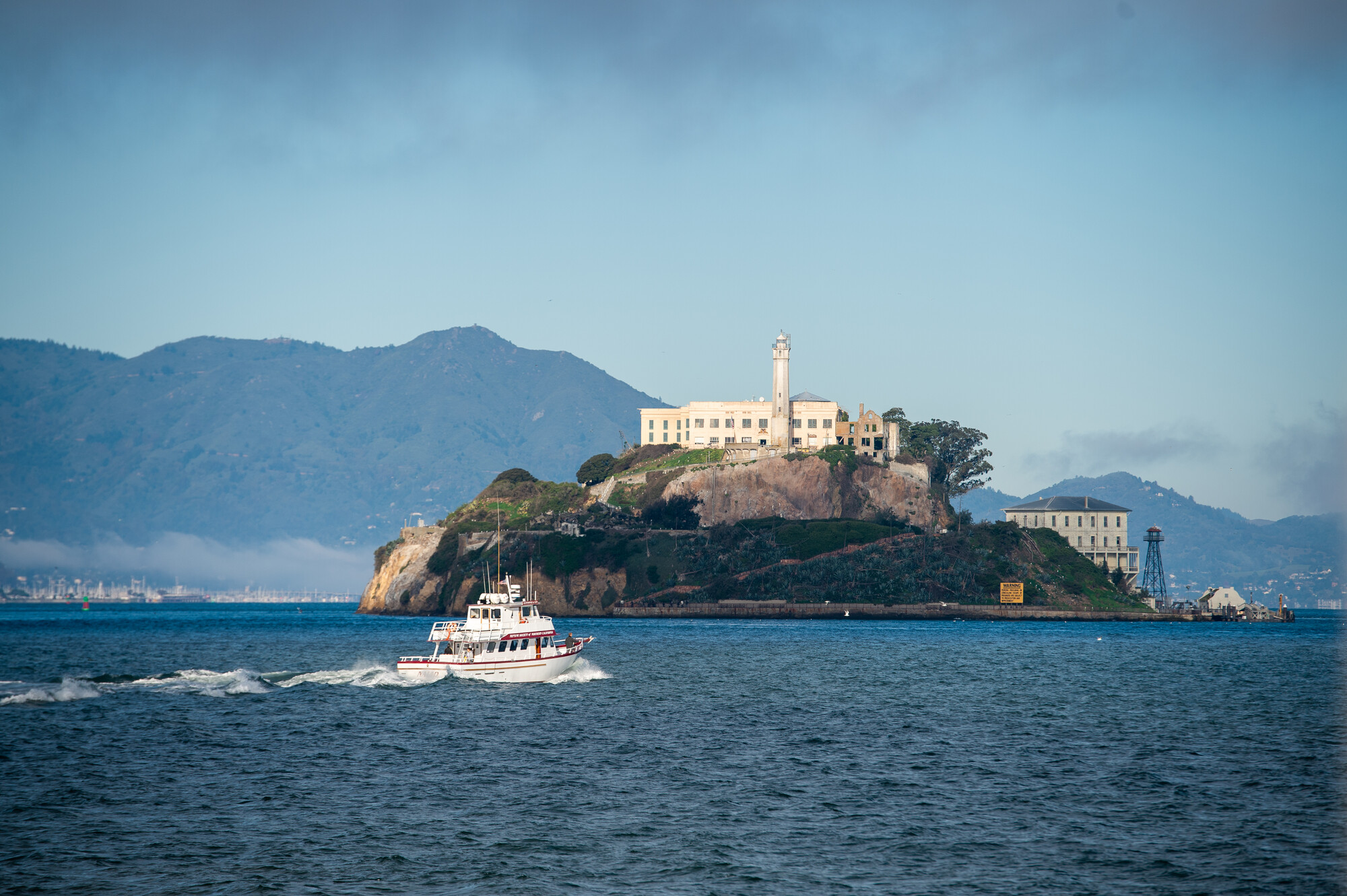
A boat passes by Alcatraz on Nov. 20, 2021. (Beth LaBerge)
Guests:
Michele Gee, deputy chief executive officer, Golden Gate National Parks Conservancy
Kent Blansett, associate professor of Native American studies and history, University of Kansas; author, "Journey to Freedom: Richard Oakes, Alcatraz, and the Red Power Movement"
Jolene Babyak, former resident of Alcatraz; author, “Breaking the Rock: The Great Escape from Alcatraz”