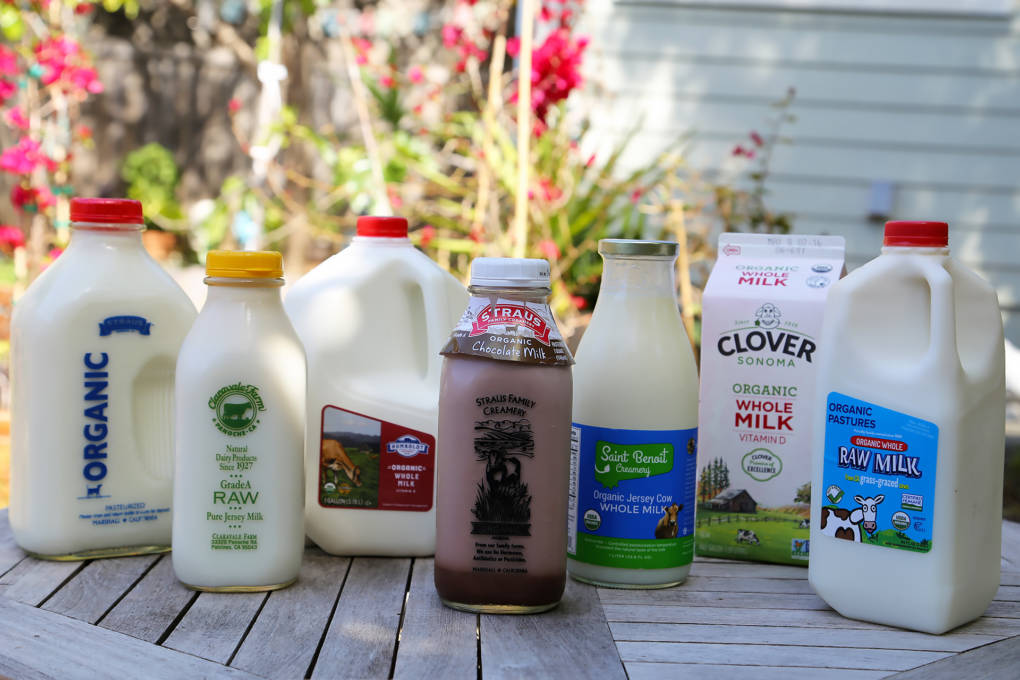
Taste Test: Local, Sustainable Whole Milk From 6 Top California Dairies
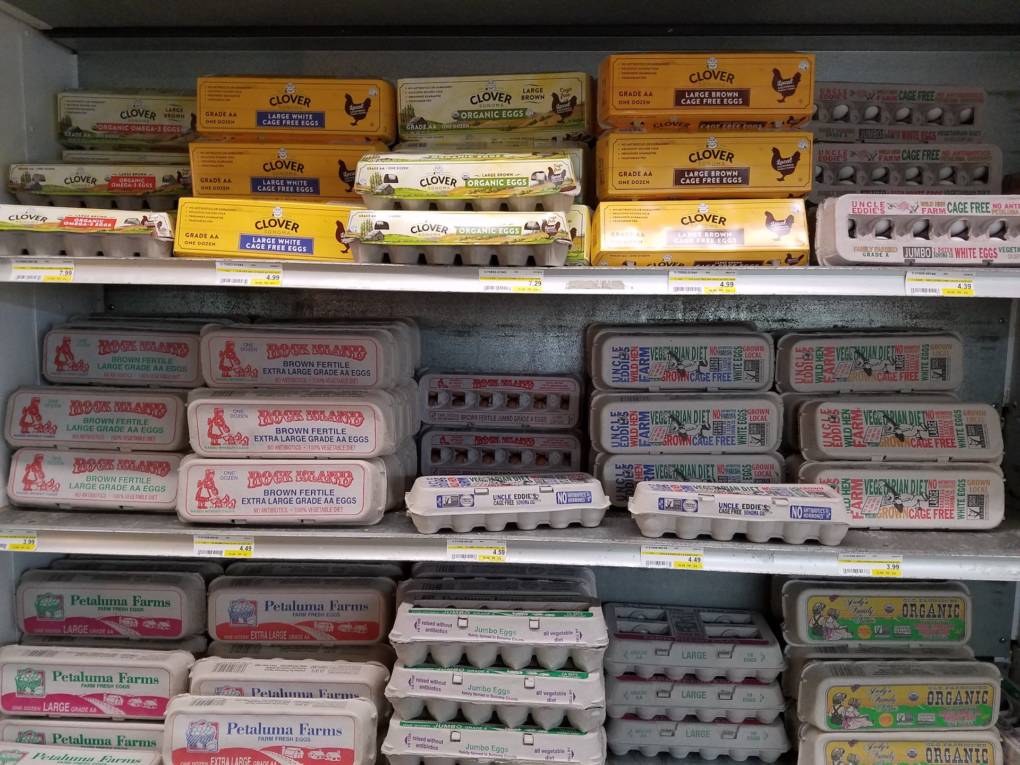
Guide: 5 Local Bay Area Egg Producers You Should Know
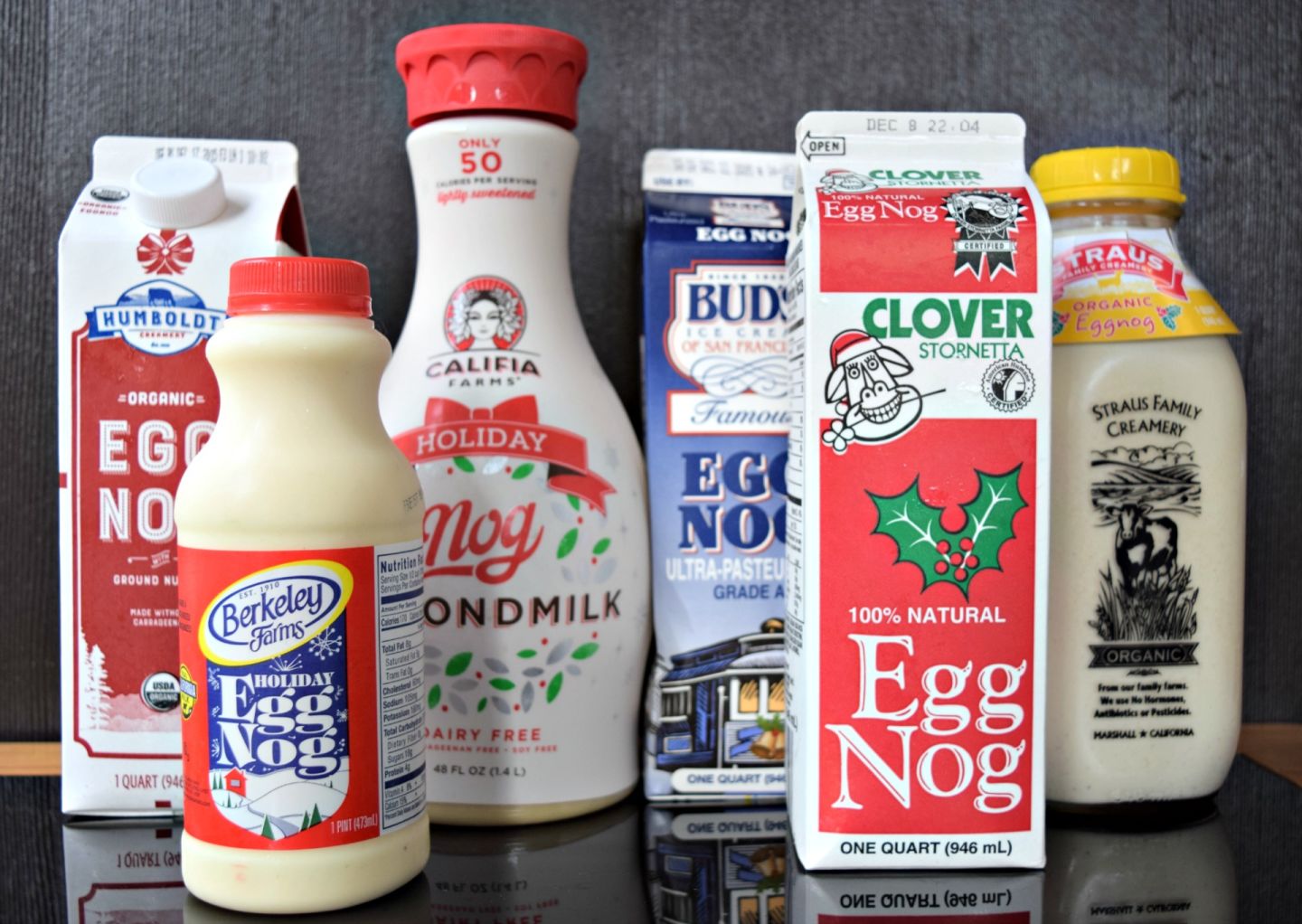
Holiday Taste Test: 6 California Eggnogs
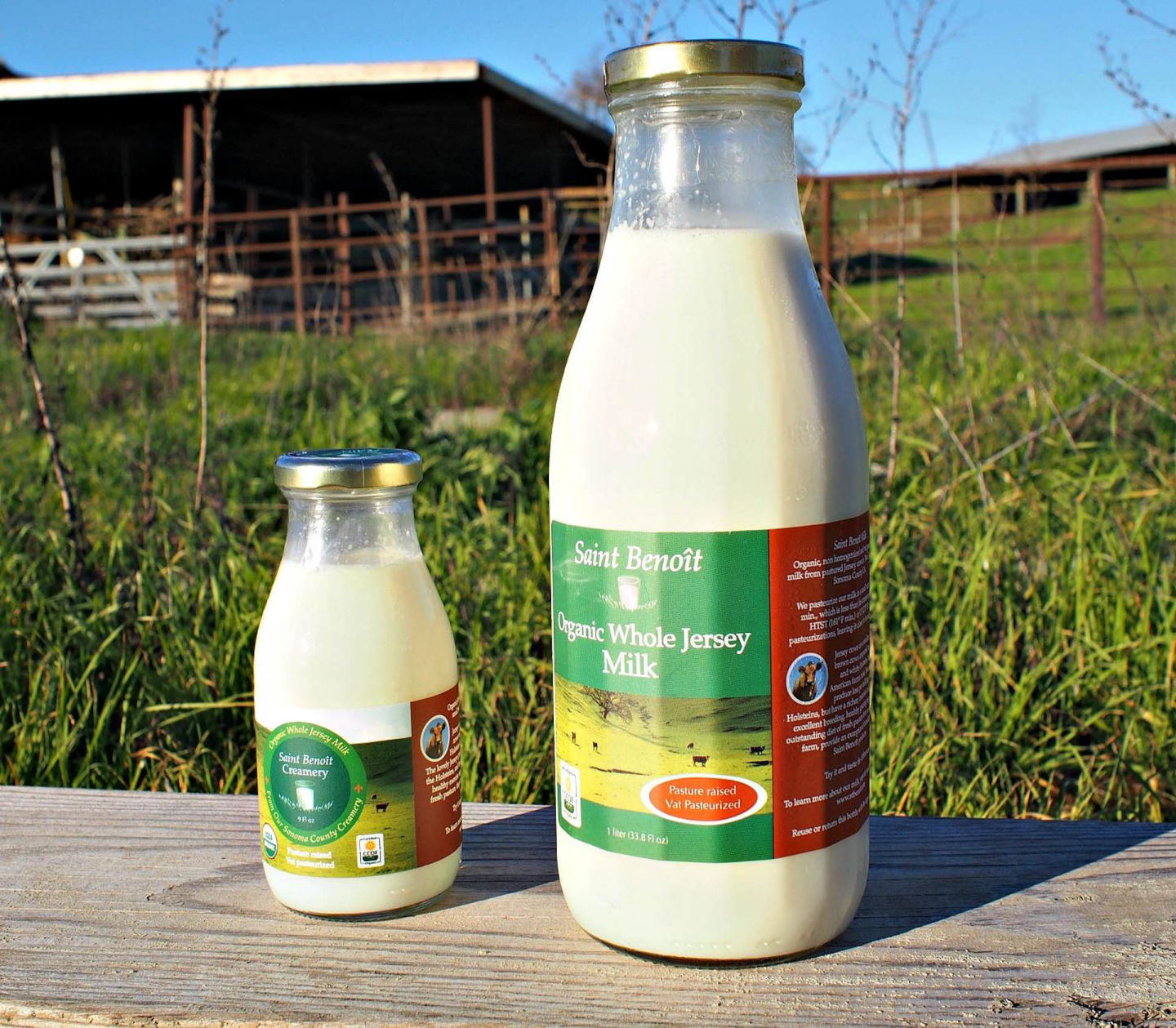
Bay Area Bites Guide to Local Dairies and Creameries
Player sponsored by
window.__IS_SSR__=true
window.__INITIAL_STATE__={
"attachmentsReducer": {
"audio_0": {
"type": "attachments",
"id": "audio_0",
"imgSizes": {
"kqedFullSize": {
"file": "https://ww2.kqed.org/news/wp-content/themes/KQED-unified/img/audio_bgs/background0.jpg"
}
}
},
"audio_1": {
"type": "attachments",
"id": "audio_1",
"imgSizes": {
"kqedFullSize": {
"file": "https://ww2.kqed.org/news/wp-content/themes/KQED-unified/img/audio_bgs/background1.jpg"
}
}
},
"audio_2": {
"type": "attachments",
"id": "audio_2",
"imgSizes": {
"kqedFullSize": {
"file": "https://ww2.kqed.org/news/wp-content/themes/KQED-unified/img/audio_bgs/background2.jpg"
}
}
},
"audio_3": {
"type": "attachments",
"id": "audio_3",
"imgSizes": {
"kqedFullSize": {
"file": "https://ww2.kqed.org/news/wp-content/themes/KQED-unified/img/audio_bgs/background3.jpg"
}
}
},
"audio_4": {
"type": "attachments",
"id": "audio_4",
"imgSizes": {
"kqedFullSize": {
"file": "https://ww2.kqed.org/news/wp-content/themes/KQED-unified/img/audio_bgs/background4.jpg"
}
}
},
"placeholder": {
"type": "attachments",
"id": "placeholder",
"imgSizes": {
"thumbnail": {
"file": "https://cdn.kqed.org/wp-content/uploads/2024/12/KQED-Default-Image-816638274-2000x1333-1-160x107.jpg",
"width": 160,
"height": 107,
"mimeType": "image/jpeg"
},
"medium": {
"file": "https://cdn.kqed.org/wp-content/uploads/2024/12/KQED-Default-Image-816638274-2000x1333-1-800x533.jpg",
"width": 800,
"height": 533,
"mimeType": "image/jpeg"
},
"medium_large": {
"file": "https://cdn.kqed.org/wp-content/uploads/2024/12/KQED-Default-Image-816638274-2000x1333-1-768x512.jpg",
"width": 768,
"height": 512,
"mimeType": "image/jpeg"
},
"large": {
"file": "https://cdn.kqed.org/wp-content/uploads/2024/12/KQED-Default-Image-816638274-2000x1333-1-1020x680.jpg",
"width": 1020,
"height": 680,
"mimeType": "image/jpeg"
},
"1536x1536": {
"file": "https://cdn.kqed.org/wp-content/uploads/2024/12/KQED-Default-Image-816638274-2000x1333-1-1536x1024.jpg",
"width": 1536,
"height": 1024,
"mimeType": "image/jpeg"
},
"fd-lrg": {
"file": "https://cdn.kqed.org/wp-content/uploads/2024/12/KQED-Default-Image-816638274-2000x1333-1-1536x1024.jpg",
"width": 1536,
"height": 1024,
"mimeType": "image/jpeg"
},
"fd-med": {
"file": "https://cdn.kqed.org/wp-content/uploads/2024/12/KQED-Default-Image-816638274-2000x1333-1-1020x680.jpg",
"width": 1020,
"height": 680,
"mimeType": "image/jpeg"
},
"fd-sm": {
"file": "https://cdn.kqed.org/wp-content/uploads/2024/12/KQED-Default-Image-816638274-2000x1333-1-800x533.jpg",
"width": 800,
"height": 533,
"mimeType": "image/jpeg"
},
"post-thumbnail": {
"file": "https://cdn.kqed.org/wp-content/uploads/2024/12/KQED-Default-Image-816638274-2000x1333-1-672x372.jpg",
"width": 672,
"height": 372,
"mimeType": "image/jpeg"
},
"twentyfourteen-full-width": {
"file": "https://cdn.kqed.org/wp-content/uploads/2024/12/KQED-Default-Image-816638274-2000x1333-1-1038x576.jpg",
"width": 1038,
"height": 576,
"mimeType": "image/jpeg"
},
"xxsmall": {
"file": "https://cdn.kqed.org/wp-content/uploads/2024/12/KQED-Default-Image-816638274-2000x1333-1-160x107.jpg",
"width": 160,
"height": 107,
"mimeType": "image/jpeg"
},
"xsmall": {
"file": "https://cdn.kqed.org/wp-content/uploads/2024/12/KQED-Default-Image-816638274-2000x1333-1-672x372.jpg",
"width": 672,
"height": 372,
"mimeType": "image/jpeg"
},
"small": {
"file": "https://cdn.kqed.org/wp-content/uploads/2024/12/KQED-Default-Image-816638274-2000x1333-1-672x372.jpg",
"width": 672,
"height": 372,
"mimeType": "image/jpeg"
},
"xlarge": {
"file": "https://cdn.kqed.org/wp-content/uploads/2024/12/KQED-Default-Image-816638274-2000x1333-1-1020x680.jpg",
"width": 1020,
"height": 680,
"mimeType": "image/jpeg"
},
"full-width": {
"file": "https://cdn.kqed.org/wp-content/uploads/2024/12/KQED-Default-Image-816638274-2000x1333-1-1920x1280.jpg",
"width": 1920,
"height": 1280,
"mimeType": "image/jpeg"
},
"guest-author-32": {
"file": "https://cdn.kqed.org/wp-content/uploads/2025/01/KQED-Default-Image-816638274-1333x1333-1-160x160.jpg",
"width": 32,
"height": 32,
"mimeType": "image/jpeg"
},
"guest-author-50": {
"file": "https://cdn.kqed.org/wp-content/uploads/2025/01/KQED-Default-Image-816638274-1333x1333-1-160x160.jpg",
"width": 50,
"height": 50,
"mimeType": "image/jpeg"
},
"guest-author-64": {
"file": "https://cdn.kqed.org/wp-content/uploads/2025/01/KQED-Default-Image-816638274-1333x1333-1-160x160.jpg",
"width": 64,
"height": 64,
"mimeType": "image/jpeg"
},
"guest-author-96": {
"file": "https://cdn.kqed.org/wp-content/uploads/2025/01/KQED-Default-Image-816638274-1333x1333-1-160x160.jpg",
"width": 96,
"height": 96,
"mimeType": "image/jpeg"
},
"guest-author-128": {
"file": "https://cdn.kqed.org/wp-content/uploads/2025/01/KQED-Default-Image-816638274-1333x1333-1-160x160.jpg",
"width": 128,
"height": 128,
"mimeType": "image/jpeg"
},
"detail": {
"file": "https://cdn.kqed.org/wp-content/uploads/2025/01/KQED-Default-Image-816638274-1333x1333-1-160x160.jpg",
"width": 160,
"height": 160,
"mimeType": "image/jpeg"
},
"kqedFullSize": {
"file": "https://cdn.kqed.org/wp-content/uploads/2024/12/KQED-Default-Image-816638274-2000x1333-1.jpg",
"width": 2000,
"height": 1333
}
}
},
"bayareabites_127672": {
"type": "attachments",
"id": "bayareabites_127672",
"meta": {
"index": "attachments_1716263798",
"site": "bayareabites",
"id": "127672",
"found": true
},
"parent": 127618,
"imgSizes": {
"small": {
"file": "https://ww2.kqed.org/app/uploads/sites/24/2018/05/IMG_3221-new-520x347.jpg",
"width": 520,
"mimeType": "image/jpeg",
"height": 347
},
"twentyfourteen-full-width": {
"file": "https://ww2.kqed.org/app/uploads/sites/24/2018/05/IMG_3221-new-1038x576.jpg",
"width": 1038,
"mimeType": "image/jpeg",
"height": 576
},
"thumbnail": {
"file": "https://ww2.kqed.org/app/uploads/sites/24/2018/05/IMG_3221-new-160x107.jpg",
"width": 160,
"mimeType": "image/jpeg",
"height": 107
},
"fd-sm": {
"file": "https://ww2.kqed.org/app/uploads/sites/24/2018/05/IMG_3221-new-960x640.jpg",
"width": 960,
"mimeType": "image/jpeg",
"height": 640
},
"post-thumbnail": {
"file": "https://ww2.kqed.org/app/uploads/sites/24/2018/05/IMG_3221-new-672x372.jpg",
"width": 672,
"mimeType": "image/jpeg",
"height": 372
},
"xsmall": {
"file": "https://ww2.kqed.org/app/uploads/sites/24/2018/05/IMG_3221-new-375x250.jpg",
"width": 375,
"mimeType": "image/jpeg",
"height": 250
},
"kqedFullSize": {
"file": "https://ww2.kqed.org/app/uploads/sites/24/2018/05/IMG_3221-new.jpg",
"width": 1920,
"height": 1280
},
"large": {
"file": "https://ww2.kqed.org/app/uploads/sites/24/2018/05/IMG_3221-new-1020x680.jpg",
"width": 1020,
"mimeType": "image/jpeg",
"height": 680
},
"xlarge": {
"file": "https://ww2.kqed.org/app/uploads/sites/24/2018/05/IMG_3221-new-1180x787.jpg",
"width": 1180,
"mimeType": "image/jpeg",
"height": 787
},
"complete_open_graph": {
"file": "https://ww2.kqed.org/app/uploads/sites/24/2018/05/IMG_3221-new-1200x800.jpg",
"width": 1200,
"mimeType": "image/jpeg",
"height": 800
},
"guest-author-50": {
"file": "https://ww2.kqed.org/app/uploads/sites/24/2018/05/IMG_3221-new-50x50.jpg",
"width": 50,
"mimeType": "image/jpeg",
"height": 50
},
"guest-author-96": {
"file": "https://ww2.kqed.org/app/uploads/sites/24/2018/05/IMG_3221-new-96x96.jpg",
"width": 96,
"mimeType": "image/jpeg",
"height": 96
},
"medium": {
"file": "https://ww2.kqed.org/app/uploads/sites/24/2018/05/IMG_3221-new-800x533.jpg",
"width": 800,
"mimeType": "image/jpeg",
"height": 533
},
"guest-author-64": {
"file": "https://ww2.kqed.org/app/uploads/sites/24/2018/05/IMG_3221-new-64x64.jpg",
"width": 64,
"mimeType": "image/jpeg",
"height": 64
},
"guest-author-32": {
"file": "https://ww2.kqed.org/app/uploads/sites/24/2018/05/IMG_3221-new-32x32.jpg",
"width": 32,
"mimeType": "image/jpeg",
"height": 32
},
"fd-lrg": {
"file": "https://ww2.kqed.org/app/uploads/sites/24/2018/05/IMG_3221-new-1920x1280.jpg",
"width": 1920,
"mimeType": "image/jpeg",
"height": 1280
},
"fd-med": {
"file": "https://ww2.kqed.org/app/uploads/sites/24/2018/05/IMG_3221-new-1180x787.jpg",
"width": 1180,
"mimeType": "image/jpeg",
"height": 787
},
"full-width": {
"file": "https://ww2.kqed.org/app/uploads/sites/24/2018/05/IMG_3221-new-1920x1280.jpg",
"width": 1920,
"mimeType": "image/jpeg",
"height": 1280
},
"detail": {
"file": "https://ww2.kqed.org/app/uploads/sites/24/2018/05/IMG_3221-new-150x150.jpg",
"width": 150,
"mimeType": "image/jpeg",
"height": 150
},
"medium_large": {
"file": "https://ww2.kqed.org/app/uploads/sites/24/2018/05/IMG_3221-new-768x512.jpg",
"width": 768,
"mimeType": "image/jpeg",
"height": 512
},
"guest-author-128": {
"file": "https://ww2.kqed.org/app/uploads/sites/24/2018/05/IMG_3221-new-128x128.jpg",
"width": 128,
"mimeType": "image/jpeg",
"height": 128
},
"xxsmall": {
"file": "https://ww2.kqed.org/app/uploads/sites/24/2018/05/IMG_3221-new-240x160.jpg",
"width": 240,
"mimeType": "image/jpeg",
"height": 160
}
},
"publishDate": 1525309944,
"modified": 1525310725,
"caption": "The six brands of milk tasted",
"description": null,
"title": "IMG_3221-new",
"credit": "Wendy Goodfriend",
"status": "inherit",
"fetchFailed": false,
"isLoading": false
},
"bayareabites_127304": {
"type": "attachments",
"id": "bayareabites_127304",
"meta": {
"index": "attachments_1716263798",
"site": "bayareabites",
"id": "127304",
"found": true
},
"parent": 127290,
"imgSizes": {
"small": {
"file": "https://ww2.kqed.org/app/uploads/sites/24/2018/04/20180322_174544-520x390.jpg",
"width": 520,
"mimeType": "image/jpeg",
"height": 390
},
"twentyfourteen-full-width": {
"file": "https://ww2.kqed.org/app/uploads/sites/24/2018/04/20180322_174544-1038x576.jpg",
"width": 1038,
"mimeType": "image/jpeg",
"height": 576
},
"thumbnail": {
"file": "https://ww2.kqed.org/app/uploads/sites/24/2018/04/20180322_174544-160x120.jpg",
"width": 160,
"mimeType": "image/jpeg",
"height": 120
},
"fd-sm": {
"file": "https://ww2.kqed.org/app/uploads/sites/24/2018/04/20180322_174544-960x720.jpg",
"width": 960,
"mimeType": "image/jpeg",
"height": 720
},
"post-thumbnail": {
"file": "https://ww2.kqed.org/app/uploads/sites/24/2018/04/20180322_174544-672x372.jpg",
"width": 672,
"mimeType": "image/jpeg",
"height": 372
},
"xsmall": {
"file": "https://ww2.kqed.org/app/uploads/sites/24/2018/04/20180322_174544-375x281.jpg",
"width": 375,
"mimeType": "image/jpeg",
"height": 281
},
"kqedFullSize": {
"file": "https://ww2.kqed.org/app/uploads/sites/24/2018/04/20180322_174544.jpg",
"width": 1920,
"height": 1440
},
"large": {
"file": "https://ww2.kqed.org/app/uploads/sites/24/2018/04/20180322_174544-1020x765.jpg",
"width": 1020,
"mimeType": "image/jpeg",
"height": 765
},
"xlarge": {
"file": "https://ww2.kqed.org/app/uploads/sites/24/2018/04/20180322_174544-1180x885.jpg",
"width": 1180,
"mimeType": "image/jpeg",
"height": 885
},
"complete_open_graph": {
"file": "https://ww2.kqed.org/app/uploads/sites/24/2018/04/20180322_174544-1200x900.jpg",
"width": 1200,
"mimeType": "image/jpeg",
"height": 900
},
"guest-author-50": {
"file": "https://ww2.kqed.org/app/uploads/sites/24/2018/04/20180322_174544-50x50.jpg",
"width": 50,
"mimeType": "image/jpeg",
"height": 50
},
"guest-author-96": {
"file": "https://ww2.kqed.org/app/uploads/sites/24/2018/04/20180322_174544-96x96.jpg",
"width": 96,
"mimeType": "image/jpeg",
"height": 96
},
"medium": {
"file": "https://ww2.kqed.org/app/uploads/sites/24/2018/04/20180322_174544-800x600.jpg",
"width": 800,
"mimeType": "image/jpeg",
"height": 600
},
"guest-author-64": {
"file": "https://ww2.kqed.org/app/uploads/sites/24/2018/04/20180322_174544-64x64.jpg",
"width": 64,
"mimeType": "image/jpeg",
"height": 64
},
"guest-author-32": {
"file": "https://ww2.kqed.org/app/uploads/sites/24/2018/04/20180322_174544-32x32.jpg",
"width": 32,
"mimeType": "image/jpeg",
"height": 32
},
"fd-lrg": {
"file": "https://ww2.kqed.org/app/uploads/sites/24/2018/04/20180322_174544-1920x1440.jpg",
"width": 1920,
"mimeType": "image/jpeg",
"height": 1440
},
"fd-med": {
"file": "https://ww2.kqed.org/app/uploads/sites/24/2018/04/20180322_174544-1180x885.jpg",
"width": 1180,
"mimeType": "image/jpeg",
"height": 885
},
"full-width": {
"file": "https://ww2.kqed.org/app/uploads/sites/24/2018/04/20180322_174544-1920x1440.jpg",
"width": 1920,
"mimeType": "image/jpeg",
"height": 1440
},
"detail": {
"file": "https://ww2.kqed.org/app/uploads/sites/24/2018/04/20180322_174544-150x150.jpg",
"width": 150,
"mimeType": "image/jpeg",
"height": 150
},
"medium_large": {
"file": "https://ww2.kqed.org/app/uploads/sites/24/2018/04/20180322_174544-768x576.jpg",
"width": 768,
"mimeType": "image/jpeg",
"height": 576
},
"guest-author-128": {
"file": "https://ww2.kqed.org/app/uploads/sites/24/2018/04/20180322_174544-128x128.jpg",
"width": 128,
"mimeType": "image/jpeg",
"height": 128
},
"xxsmall": {
"file": "https://ww2.kqed.org/app/uploads/sites/24/2018/04/20180322_174544-240x180.jpg",
"width": 240,
"mimeType": "image/jpeg",
"height": 180
}
},
"publishDate": 1524517905,
"modified": 1524604875,
"caption": "Local eggs for sale at the grocery store.",
"description": "Local eggs for sale at the grocery store.",
"title": "20180322_174544",
"credit": "Kelly O'Mara",
"status": "inherit",
"fetchFailed": false,
"isLoading": false
},
"bayareabites_104622": {
"type": "attachments",
"id": "bayareabites_104622",
"meta": {
"index": "attachments_1716263798",
"site": "bayareabites",
"id": "104622",
"found": true
},
"parent": 0,
"imgSizes": {
"twentyfourteen-full-width": {
"file": "https://ww2.kqed.org/app/uploads/sites/24/2015/12/DSC_1040-1038x576.jpg",
"width": 1038,
"mimeType": "image/jpeg",
"height": 576
},
"thumbnail": {
"file": "https://ww2.kqed.org/app/uploads/sites/24/2015/12/DSC_1040-400x284.jpg",
"width": 400,
"mimeType": "image/jpeg",
"height": 284
},
"fd-sm": {
"file": "https://ww2.kqed.org/app/uploads/sites/24/2015/12/DSC_1040-960x682.jpg",
"width": 960,
"mimeType": "image/jpeg",
"height": 682
},
"post-thumbnail": {
"file": "https://ww2.kqed.org/app/uploads/sites/24/2015/12/DSC_1040-672x372.jpg",
"width": 672,
"mimeType": "image/jpeg",
"height": 372
},
"kqedFullSize": {
"file": "https://ww2.kqed.org/app/uploads/sites/24/2015/12/DSC_1040.jpg",
"width": 1920,
"height": 1363
},
"large": {
"file": "https://ww2.kqed.org/app/uploads/sites/24/2015/12/DSC_1040-1440x1022.jpg",
"width": 1440,
"mimeType": "image/jpeg",
"height": 1022
},
"guest-author-96": {
"file": "https://ww2.kqed.org/app/uploads/sites/24/2015/12/DSC_1040-96x96.jpg",
"width": 96,
"mimeType": "image/jpeg",
"height": 96
},
"medium": {
"file": "https://ww2.kqed.org/app/uploads/sites/24/2015/12/DSC_1040-800x568.jpg",
"width": 800,
"mimeType": "image/jpeg",
"height": 568
},
"guest-author-64": {
"file": "https://ww2.kqed.org/app/uploads/sites/24/2015/12/DSC_1040-64x64.jpg",
"width": 64,
"mimeType": "image/jpeg",
"height": 64
},
"guest-author-32": {
"file": "https://ww2.kqed.org/app/uploads/sites/24/2015/12/DSC_1040-32x32.jpg",
"width": 32,
"mimeType": "image/jpeg",
"height": 32
},
"cat_post_thumb_sizecategory-posts-2": {
"file": "https://ww2.kqed.org/app/uploads/sites/24/2015/12/DSC_1040-150x150.jpg",
"width": 150,
"mimeType": "image/jpeg",
"height": 150
},
"fd-lrg": {
"file": "https://ww2.kqed.org/app/uploads/sites/24/2015/12/DSC_1040-1920x1363.jpg",
"width": 1920,
"mimeType": "image/jpeg",
"height": 1363
},
"fd-med": {
"file": "https://ww2.kqed.org/app/uploads/sites/24/2015/12/DSC_1040-1180x838.jpg",
"width": 1180,
"mimeType": "image/jpeg",
"height": 838
},
"detail": {
"file": "https://ww2.kqed.org/app/uploads/sites/24/2015/12/DSC_1040-75x75.jpg",
"width": 75,
"mimeType": "image/jpeg",
"height": 75
},
"medium_large": {
"file": "https://ww2.kqed.org/app/uploads/sites/24/2015/12/DSC_1040-768x545.jpg",
"width": 768,
"mimeType": "image/jpeg",
"height": 545
},
"guest-author-128": {
"file": "https://ww2.kqed.org/app/uploads/sites/24/2015/12/DSC_1040-128x128.jpg",
"width": 128,
"mimeType": "image/jpeg",
"height": 128
}
},
"publishDate": 1449798362,
"modified": 1449798676,
"caption": "The contenders in our eggnog taste test.",
"description": "The contenders in our eggnog taste test.",
"title": "The contenders in our eggnog taste test.",
"credit": "Shelby Pope ",
"status": "inherit",
"fetchFailed": false,
"isLoading": false
},
"bayareabites_102414": {
"type": "attachments",
"id": "bayareabites_102414",
"meta": {
"index": "attachments_1716263798",
"site": "bayareabites",
"id": "102414",
"found": true
},
"parent": 102394,
"imgSizes": {
"twentyfourteen-full-width": {
"file": "https://ww2.kqed.org/app/uploads/sites/24/2015/10/St-Benoit-7-1038x576.jpg",
"width": 1038,
"mimeType": "image/jpeg",
"height": 576
},
"thumbnail": {
"file": "https://ww2.kqed.org/app/uploads/sites/24/2015/10/St-Benoit-7-400x350.jpg",
"width": 400,
"mimeType": "image/jpeg",
"height": 350
},
"fd-sm": {
"file": "https://ww2.kqed.org/app/uploads/sites/24/2015/10/St-Benoit-7-960x839.jpg",
"width": 960,
"mimeType": "image/jpeg",
"height": 839
},
"post-thumbnail": {
"file": "https://ww2.kqed.org/app/uploads/sites/24/2015/10/St-Benoit-7-672x372.jpg",
"width": 672,
"mimeType": "image/jpeg",
"height": 372
},
"kqedFullSize": {
"file": "https://ww2.kqed.org/app/uploads/sites/24/2015/10/St-Benoit-7.jpg",
"width": 1920,
"height": 1678
},
"large": {
"file": "https://ww2.kqed.org/app/uploads/sites/24/2015/10/St-Benoit-7-1440x1259.jpg",
"width": 1440,
"mimeType": "image/jpeg",
"height": 1259
},
"guest-author-96": {
"file": "https://ww2.kqed.org/app/uploads/sites/24/2015/10/St-Benoit-7-96x96.jpg",
"width": 96,
"mimeType": "image/jpeg",
"height": 96
},
"medium": {
"file": "https://ww2.kqed.org/app/uploads/sites/24/2015/10/St-Benoit-7-800x699.jpg",
"width": 800,
"mimeType": "image/jpeg",
"height": 699
},
"guest-author-64": {
"file": "https://ww2.kqed.org/app/uploads/sites/24/2015/10/St-Benoit-7-64x64.jpg",
"width": 64,
"mimeType": "image/jpeg",
"height": 64
},
"guest-author-32": {
"file": "https://ww2.kqed.org/app/uploads/sites/24/2015/10/St-Benoit-7-32x32.jpg",
"width": 32,
"mimeType": "image/jpeg",
"height": 32
},
"cat_post_thumb_sizecategory-posts-2": {
"file": "https://ww2.kqed.org/app/uploads/sites/24/2015/10/St-Benoit-7-150x150.jpg",
"width": 150,
"mimeType": "image/jpeg",
"height": 150
},
"fd-lrg": {
"file": "https://ww2.kqed.org/app/uploads/sites/24/2015/10/St-Benoit-7-1920x1678.jpg",
"width": 1920,
"mimeType": "image/jpeg",
"height": 1678
},
"fd-med": {
"file": "https://ww2.kqed.org/app/uploads/sites/24/2015/10/St-Benoit-7-1180x1031.jpg",
"width": 1180,
"mimeType": "image/jpeg",
"height": 1031
},
"detail": {
"file": "https://ww2.kqed.org/app/uploads/sites/24/2015/10/St-Benoit-7-75x75.jpg",
"width": 75,
"mimeType": "image/jpeg",
"height": 75
},
"guest-author-128": {
"file": "https://ww2.kqed.org/app/uploads/sites/24/2015/10/St-Benoit-7-128x128.jpg",
"width": 128,
"mimeType": "image/jpeg",
"height": 128
}
},
"publishDate": 1445545164,
"modified": 1445545492,
"caption": "Saint Benoit's milk is sold in glass jars.",
"description": "Saint Benoit's milk is sold in glass jars.",
"title": "St Benoit-7",
"credit": "St. Benoit Creamery",
"status": "inherit",
"fetchFailed": false,
"isLoading": false
}
},
"audioPlayerReducer": {
"postId": "stream_live",
"isPaused": true,
"isPlaying": false,
"pfsActive": false,
"pledgeModalIsOpen": true,
"playerDrawerIsOpen": false
},
"authorsReducer": {
"byline_bayareabites_127618": {
"type": "authors",
"id": "byline_bayareabites_127618",
"meta": {
"override": true
},
"slug": "byline_bayareabites_127618",
"name": "\u003ca href=\"https://www.kqed.org/author/kimwesterman\">Kim Westerman\u003c/a> (writer), \u003ca href=\"https://www.kqed.org/author/wendy-goodfriend\">Wendy Goodfriend\u003c/a> (photos/video)",
"isLoading": false
},
"kdomara": {
"type": "authors",
"id": "1459",
"meta": {
"index": "authors_1716337520",
"id": "1459",
"found": true
},
"name": "Kelly O'Mara",
"firstName": "Kelly",
"lastName": "O'Mara",
"slug": "kdomara",
"email": "komara@kqed.org",
"display_author_email": false,
"staff_mastheads": [
"news"
],
"title": "KQED Contributor",
"bio": "Kelly O'Mara is a writer and reporter in the San Francisco Bay Area. She writes about food, health, sports, travel, business and California news. Her work has appeared on KQED, online for Outside Magazine, epsnW, VICE and in Competitor Magazine, among others. Follow Kelly on Twitter \u003ca href=\"https://twitter.com/kellydomara\">@kellydomara\u003c/a>.",
"avatar": "https://secure.gravatar.com/avatar/768fec7412028b72f13bdd0f5f9d8186?s=600&d=blank&r=g",
"twitter": null,
"facebook": null,
"instagram": null,
"linkedin": null,
"sites": [
{
"site": "arts",
"roles": []
},
{
"site": "news",
"roles": []
},
{
"site": "bayareabites",
"roles": []
},
{
"site": "stateofhealth",
"roles": []
},
{
"site": "science",
"roles": []
},
{
"site": "checkplease",
"roles": [
"editor"
]
},
{
"site": "food",
"roles": []
},
{
"site": "forum",
"roles": [
"editor"
]
},
{
"site": "liveblog",
"roles": [
"editor"
]
}
],
"headData": {
"title": "Kelly O'Mara | KQED",
"description": "KQED Contributor",
"ogImgSrc": "https://secure.gravatar.com/avatar/768fec7412028b72f13bdd0f5f9d8186?s=600&d=blank&r=g",
"twImgSrc": "https://secure.gravatar.com/avatar/768fec7412028b72f13bdd0f5f9d8186?s=600&d=blank&r=g"
},
"isLoading": false,
"link": "/author/kdomara"
},
"shelbypope": {
"type": "authors",
"id": "5566",
"meta": {
"index": "authors_1716337520",
"id": "5566",
"found": true
},
"name": "Shelby Pope",
"firstName": "Shelby",
"lastName": "Pope",
"slug": "shelbypope",
"email": "shelbylpope@gmail.com",
"display_author_email": false,
"staff_mastheads": [],
"title": "KQED Contributor",
"bio": "Shelby Pope is a freelance writer living and eating her way through the East Bay. She’s written about food, art and science for publications including the Smithsonian, Lucky Peach, and the Washington Post's pet blog. When she’s not taste testing sourdough bread to find the Bay Area’s best loaf, you can find her on Twitter \u003ca href=\"https://twitter.com/shelbylpope\">@shelbylpope\u003c/a> or at \u003ca href=\"https://shelbypope.com/\">shelbypope.com\u003c/a>",
"avatar": "https://secure.gravatar.com/avatar/f0bc7c2dc7ea404f67cbf922a5393d8a?s=600&d=mm&r=g",
"twitter": "shelbylpope",
"facebook": null,
"instagram": null,
"linkedin": null,
"sites": [
{
"site": "bayareabites",
"roles": []
},
{
"site": "food",
"roles": []
}
],
"headData": {
"title": "Shelby Pope | KQED",
"description": "KQED Contributor",
"ogImgSrc": "https://secure.gravatar.com/avatar/f0bc7c2dc7ea404f67cbf922a5393d8a?s=600&d=mm&r=g",
"twImgSrc": "https://secure.gravatar.com/avatar/f0bc7c2dc7ea404f67cbf922a5393d8a?s=600&d=mm&r=g"
},
"isLoading": false,
"link": "/author/shelbypope"
}
},
"breakingNewsReducer": {},
"pagesReducer": {},
"postsReducer": {
"stream_live": {
"type": "live",
"id": "stream_live",
"audioUrl": "https://streams.kqed.org/kqedradio",
"title": "Live Stream",
"excerpt": "Live Stream information currently unavailable.",
"link": "/radio",
"featImg": "",
"label": {
"name": "KQED Live",
"link": "/"
}
},
"stream_kqedNewscast": {
"type": "posts",
"id": "stream_kqedNewscast",
"audioUrl": "https://www.kqed.org/.stream/anon/radio/RDnews/newscast.mp3?_=1",
"title": "KQED Newscast",
"featImg": "",
"label": {
"name": "88.5 FM",
"link": "/"
}
},
"bayareabites_127618": {
"type": "posts",
"id": "bayareabites_127618",
"meta": {
"index": "posts_1716263798",
"site": "bayareabites",
"id": "127618",
"score": null,
"sort": [
1525370687000
]
},
"parent": 0,
"labelTerm": {},
"blocks": [],
"publishDate": 1525370687,
"format": "standard",
"disqusTitle": "Taste Test: Local, Sustainable Whole Milk From 6 Top California Dairies",
"title": "Taste Test: Local, Sustainable Whole Milk From 6 Top California Dairies",
"headTitle": "Bay Area Bites | KQED Food",
"content": "\u003cp>\u003cem>If your family drinks milk, you'll want to read this guide to the sustainable whole milk choices available in the Bay Area, including two raw milks. Read to the end for an extra tip on the best chocolate milk your kids will ever taste.\u003c/em>\u003c/p>\n\u003cp>Humans have been consuming cow's milk since European dairy farmers developed a genetic adaptation that enabled them to digest lactase about 7,500 years ago. A high-protein, calorie-dense, versatile beverage, milk is a dietary staple for millions of Americans, and it's full of calcium and Vitamin D, to boot. Whether your kids drink it by the gallon or you just splash a bit on your oatmeal every morning, here's a handy guide to the best whole milk available in the Bay Area, with tasting notes for each.\u003c/p>\n\u003cp>While American milk consumption is down 37% since 1970, the USDA estimates that U.S. residents still consume an average of .8 cups per person each day. But despite recent medical research touting the nutritional benefits of full-fat dairy products, whole milk—the focus of this guide—is still out of favor, down to .24 cups per day, on average, for U.S. consumers.\u003c/p>\n\u003cp>This may not be the case, however, in the Bay Area, where there's a tremendous amount of competition among producers of the highest quality sustainable whole milk. We identified six brands that are widely available throughout the Bay Area that meet the criteria for this guide (both sustainable and full-fat) and also taste great, albeit in vastly different ways: \u003ca href=\"https://www.strausfamilycreamery.com\">Straus Family Creamery\u003c/a>, \u003ca href=\"https://cloversonoma.com\">Clover Sonoma\u003c/a>, \u003ca href=\"http://www.stbenoit.com\">Saint Benoît Creamery\u003c/a>, \u003ca href=\"https://www.humboldtcreamery.com\">Humboldt Creamery\u003c/a>, and two less widely available raw milks worth seeking out, from \u003ca href=\"https://claravalefarm.com/\">Claravale\u003c/a> and \u003ca href=\"https://www.organicpastures.com/\">Organic Pastures\u003c/a>.\u003c/p>\n\u003ch2>What Is Sustainable Milk?\u003c/h2>\n\u003cp>I began my research on local whole milk with a focus on organic, and then it became clear that some dairies go well beyond organic certification requirements, making significant contributions to sustainability. \"Sustainability\" is a vague word. It has no legal definition and so it's important to make subjective parameters clear. Given what is happening in California’s dairy industry, contributions to sustainability might include something as deceptively simple as reusable bottles or as obviously complex as carbon farming.\u003c/p>\n\u003cp>[ad fullwidth]\u003c/p>\n\u003cp>Most people think of organic certification as a baseline for sustainability, and all of the milks we've included in this guide are certified organic, except for one, the Claravale raw milk (whose rationale I'll discuss later). First, a brief primer on what organic means in the world of milk, and why it's important.\u003c/p>\n\u003ch2>What Is Organic Milk?\u003c/h2>\n\u003cp>USDA organic certification for all food products is complex and multi-faceted. For consumers, the three most important rules to know about certified organic milk are:\u003c/p>\n\u003cp>\u003cstrong>It must come from cows that...\u003c/strong>\u003c/p>\n\u003col>\n\u003cli>graze on grass for a minimum of 120 days per year;\u003c/li>\n\u003cli>have never been treated with antibiotics; and\u003c/li>\n\u003cli>are fed 100% organic grains as supplements to their forage.\u003c/li>\n\u003c/ol>\n\u003cp>More detailed information is available at the \u003ca href=\"https://www.ams.usda.gov/sites/default/files/media/Dairy%20-%20Guidelines.pdf\">U.S. Department of Agriculture (USDA)\u003c/a>.\u003c/p>\n\u003ch2>Other Contributions to Sustainability\u003c/h2>\n\u003cul>While organic farming practices are a big contribution to sustainability, as they safeguard the welfare of the animals as well as protect consumers from potentially harmful antibiotics, some dairy farmers in California are also upping the ante on sustainability in other ways:\n\u003cli>Paying farmers a premium\u003c/li>\n\u003cli>Recycling water\u003c/li>\n\u003cli>Carbon Farming/Regenerative Agriculture\u003c/li>\n\u003cli>Transparency\u003c/li>\n\u003c/ul>\n\u003cp>See below for information on contributions to sustainability made by each of the dairies featured in this story.\u003c/p>\n\u003ch2>Pasteurized, Homogenized, Both or Neither?\u003c/h2>\n\u003cp>When I was a kid, milk was \"pasteurized and homogenized,\" as if it were one word. But pasteurization and homogenization are two different processes.\u003c/p>\n\u003cp>\u003ca href=\"https://en.wikipedia.org/wiki/Pasteurization\">\u003cstrong>Pasteurization\u003c/strong>\u003c/a>, invented by Louis Pasteur in the 19th century, involves the heating of (in this case) milk to kill microbes that might be harmful. (Raw milk advocates argue that this process kills good bacteria, as well, but that's a debate for another time.) The legal minimum temperature for pasteurization is 145 degrees. \"Ultra-pasteurized\" milk is heated to at least 280 degrees, a category that applies to none of the milks featured in this story.\u003c/p>\n\u003cp>\u003ca href=\"https://en.wikipedia.org/wiki/Homogenization_(chemistry)\">\u003cstrong>Homogenization\u003c/strong>\u003c/a> is the process of dispersing milkfat throughout the milk, preventing the cream from rising to the surface. Homogenization is primarily about appearance and texture, rather than health.\u003c/p>\n\u003cp>And now a bit about each dairy whose milk we tasted.\u003c/p>\n\u003ch3>Beyond Organic: Straus Family Creamery Is the Industry Leader in Sustainability\u003c/h3>\n\u003cfigure id=\"attachment_127718\" class=\"wp-caption aligncenter\" style=\"max-width: 1920px\">\u003cimg class=\"size-full wp-image-127718\" src=\"https://ww2.kqed.org/bayareabites/wp-content/uploads/sites/24/2018/05/IMG_3415-new.jpg\" alt=\"Straus organic whole milk\" width=\"1920\" height=\"1280\" srcset=\"https://ww2.kqed.org/app/uploads/sites/24/2018/05/IMG_3415-new.jpg 1920w, https://ww2.kqed.org/app/uploads/sites/24/2018/05/IMG_3415-new-160x107.jpg 160w, https://ww2.kqed.org/app/uploads/sites/24/2018/05/IMG_3415-new-800x533.jpg 800w, https://ww2.kqed.org/app/uploads/sites/24/2018/05/IMG_3415-new-768x512.jpg 768w, https://ww2.kqed.org/app/uploads/sites/24/2018/05/IMG_3415-new-1020x680.jpg 1020w, https://ww2.kqed.org/app/uploads/sites/24/2018/05/IMG_3415-new-1200x800.jpg 1200w, https://ww2.kqed.org/app/uploads/sites/24/2018/05/IMG_3415-new-1180x787.jpg 1180w, https://ww2.kqed.org/app/uploads/sites/24/2018/05/IMG_3415-new-960x640.jpg 960w, https://ww2.kqed.org/app/uploads/sites/24/2018/05/IMG_3415-new-240x160.jpg 240w, https://ww2.kqed.org/app/uploads/sites/24/2018/05/IMG_3415-new-375x250.jpg 375w, https://ww2.kqed.org/app/uploads/sites/24/2018/05/IMG_3415-new-520x347.jpg 520w\" sizes=\"(max-width: 1920px) 100vw, 1920px\">\u003cfigcaption class=\"wp-caption-text\">Straus organic whole milk \u003ccite>(Wendy Goodfriend)\u003c/cite>\u003c/figcaption>\u003c/figure>\n\u003cp>Albert Straus is a lifelong dairy farmer and an industry leader where sustainability is concerned. The milk, yogurt, butter, sour cream and ice cream produced by \u003ca href=\"https://www.strausfamilycreamery.com/\">Straus Family Creamery\u003c/a> are all certified-organic products. But Straus goes far beyond organic. The glass bottles that some of their milk line is packaged in are first rinsed with recycled water before being sterilized. And because they use the rinse water to irrigate their pastures afterward, they use potassium-based cleaners that are good for the soil.\u003c/p>\n\u003cp>Straus buys 100% renewable electricity from \u003ca href=\"https://www.green-e.org/\">Green-e Energy certified\u003c/a> wind and solar power sources in California, through their partnership with \u003ca href=\"https://www.mcecleanenergy.org/100-renewable/\">Marin Clean Energy’s Deep Green Renewable Program\u003c/a>. And Straus' commitment to being a carbon-free business includes the use of LED lighting throughout the creamery, as well as energy-efficient cooling equipment, motors and monitors. They even offer plug-in electric-vehicle charging stations to their employees.\u003c/p>\n\u003cfigure id=\"attachment_127719\" class=\"wp-caption aligncenter\" style=\"max-width: 1920px\">\u003cimg class=\"size-full wp-image-127719\" src=\"https://ww2.kqed.org/bayareabites/wp-content/uploads/sites/24/2018/05/IMG_2353-new-1.jpg\" alt=\"Straus Go Electric!\" width=\"1920\" height=\"1280\" srcset=\"https://ww2.kqed.org/app/uploads/sites/24/2018/05/IMG_2353-new-1.jpg 1920w, https://ww2.kqed.org/app/uploads/sites/24/2018/05/IMG_2353-new-1-160x107.jpg 160w, https://ww2.kqed.org/app/uploads/sites/24/2018/05/IMG_2353-new-1-800x533.jpg 800w, https://ww2.kqed.org/app/uploads/sites/24/2018/05/IMG_2353-new-1-768x512.jpg 768w, https://ww2.kqed.org/app/uploads/sites/24/2018/05/IMG_2353-new-1-1020x680.jpg 1020w, https://ww2.kqed.org/app/uploads/sites/24/2018/05/IMG_2353-new-1-1200x800.jpg 1200w, https://ww2.kqed.org/app/uploads/sites/24/2018/05/IMG_2353-new-1-1180x787.jpg 1180w, https://ww2.kqed.org/app/uploads/sites/24/2018/05/IMG_2353-new-1-960x640.jpg 960w, https://ww2.kqed.org/app/uploads/sites/24/2018/05/IMG_2353-new-1-240x160.jpg 240w, https://ww2.kqed.org/app/uploads/sites/24/2018/05/IMG_2353-new-1-375x250.jpg 375w, https://ww2.kqed.org/app/uploads/sites/24/2018/05/IMG_2353-new-1-520x347.jpg 520w\" sizes=\"(max-width: 1920px) 100vw, 1920px\">\u003cfigcaption class=\"wp-caption-text\">Straus Go Electric! \u003ccite>(Wendy Goodfriend)\u003c/cite>\u003c/figcaption>\u003c/figure>\n\u003cp>Perhaps the most impressive feature of the Straus operation is its methane digester—a large pond (covered with a tarp) that converts organic waste from the cows into methane gas through the process of anaerobic digestion—that generates energy to power the farm. The digester has reduced methane emissions by more than 1,600 metric tons of greenhouse gases each year—the equivalent of eliminating the annual emissions from about 350 passenger cars. The ultimate aim of carbon farming is not just to reduce the pace of global warming, but to reverse it.\u003c/p>\n\u003cp>Straus was the first non-GMO-verified dairy in North America, and they test every load of feed to ensure that it is GMO-free.\u003c/p>\n\u003cp>Straus was also, by far, the most transparent of the dairies featured in this story, in terms of answering questions and sharing information about products and processes. They even invited us up to the creamery for a tour of the bottling line.\u003c/p>\n\u003cp>https://youtu.be/wnyhs4gb3pQ\u003c/p>\n\u003cp>In a lengthy interview, Albert Straus emphasized his commitment to transforming the dairy industry by way of all the sustainable initiatives his company has undertaken, and he's a local activist for dairy farmers, as well. He says that his life's work is to \"revitalize rural communities,\" and the nine dairy farms he works with in Marina and Sonoma counties get their checks hand-delivered by a company executive every quarter. Straus is currently advocating for dairy farmers in a \u003ca href=\"https://www.sfchronicle.com/opinion/openforum/article/Point-Reyes-lawsuit-settlement-harms-dairies-12760600.php\">dispute with Point Reyes National Seashore\u003c/a> over the presence of historic ranches and farms.\u003c/p>\n\u003cfigure id=\"attachment_127633\" class=\"wp-caption aligncenter\" style=\"max-width: 1920px\">\u003cimg class=\"size-full wp-image-127633\" src=\"https://ww2.kqed.org/bayareabites/wp-content/uploads/sites/24/2018/05/IMG_2342-new.jpg\" alt=\"Albert Straus being interviewed for this guide.\" width=\"1920\" height=\"1280\" srcset=\"https://ww2.kqed.org/app/uploads/sites/24/2018/05/IMG_2342-new.jpg 1920w, https://ww2.kqed.org/app/uploads/sites/24/2018/05/IMG_2342-new-160x107.jpg 160w, https://ww2.kqed.org/app/uploads/sites/24/2018/05/IMG_2342-new-800x533.jpg 800w, https://ww2.kqed.org/app/uploads/sites/24/2018/05/IMG_2342-new-768x512.jpg 768w, https://ww2.kqed.org/app/uploads/sites/24/2018/05/IMG_2342-new-1020x680.jpg 1020w, https://ww2.kqed.org/app/uploads/sites/24/2018/05/IMG_2342-new-1200x800.jpg 1200w, https://ww2.kqed.org/app/uploads/sites/24/2018/05/IMG_2342-new-1180x787.jpg 1180w, https://ww2.kqed.org/app/uploads/sites/24/2018/05/IMG_2342-new-960x640.jpg 960w, https://ww2.kqed.org/app/uploads/sites/24/2018/05/IMG_2342-new-240x160.jpg 240w, https://ww2.kqed.org/app/uploads/sites/24/2018/05/IMG_2342-new-375x250.jpg 375w, https://ww2.kqed.org/app/uploads/sites/24/2018/05/IMG_2342-new-520x347.jpg 520w\" sizes=\"(max-width: 1920px) 100vw, 1920px\">\u003cfigcaption class=\"wp-caption-text\">Albert Straus being interviewed for this guide. \u003ccite>(Wendy Goodfriend)\u003c/cite>\u003c/figcaption>\u003c/figure>\n\u003ch3>Clover Sonoma: Family and Philanthropy\u003c/h3>\n\u003cfigure id=\"attachment_127716\" class=\"wp-caption aligncenter\" style=\"max-width: 1920px\">\u003cimg class=\"size-full wp-image-127716\" src=\"https://ww2.kqed.org/bayareabites/wp-content/uploads/sites/24/2018/05/IMG_3390-new.jpg\" alt=\"Clover Sonoma Organic Whole Milk\" width=\"1920\" height=\"1280\" srcset=\"https://ww2.kqed.org/app/uploads/sites/24/2018/05/IMG_3390-new.jpg 1920w, https://ww2.kqed.org/app/uploads/sites/24/2018/05/IMG_3390-new-160x107.jpg 160w, https://ww2.kqed.org/app/uploads/sites/24/2018/05/IMG_3390-new-800x533.jpg 800w, https://ww2.kqed.org/app/uploads/sites/24/2018/05/IMG_3390-new-768x512.jpg 768w, https://ww2.kqed.org/app/uploads/sites/24/2018/05/IMG_3390-new-1020x680.jpg 1020w, https://ww2.kqed.org/app/uploads/sites/24/2018/05/IMG_3390-new-1200x800.jpg 1200w, https://ww2.kqed.org/app/uploads/sites/24/2018/05/IMG_3390-new-1180x787.jpg 1180w, https://ww2.kqed.org/app/uploads/sites/24/2018/05/IMG_3390-new-960x640.jpg 960w, https://ww2.kqed.org/app/uploads/sites/24/2018/05/IMG_3390-new-240x160.jpg 240w, https://ww2.kqed.org/app/uploads/sites/24/2018/05/IMG_3390-new-375x250.jpg 375w, https://ww2.kqed.org/app/uploads/sites/24/2018/05/IMG_3390-new-520x347.jpg 520w\" sizes=\"(max-width: 1920px) 100vw, 1920px\">\u003cfigcaption class=\"wp-caption-text\">Clover Sonoma Organic Whole Milk \u003ccite>(Wendy Goodfriend)\u003c/cite>\u003c/figcaption>\u003c/figure>\n\u003cp>\u003ca href=\"https://cloversonoma.com/\">Clover Sonoma\u003c/a> works with 27 family dairy farms based in Marin, Sonoma and Mendocino counties, 19 of which are organic. My request for an interview with CEO Marcus Benedetti was ignored, but Kristel Corson, vice president of marketing, offered some information that isn't readily available on the Clover Sonoma website.\u003c/p>\n\u003cp>Regarding Clover Sonoma's commitment to organic farming (Clover Sonoma also sells conventional milk), Corson says, \"We are proud that we made early inroads into organic, and we are committed to growing our organic milk product line. We pay all our farmers a premium to meet our quality standards as set through our \u003ca href=\"https://cloversonoma.com/elevating-dairy/\">Clover Promise of Excellence\u003c/a>. Our organic dairy farms receive higher compensation due to the organic certification process. We see continued consumer demand for organic dairy products and Clover is committed to supporting organic farming and giving consumers what they want.\"\u003c/p>\n\u003cp>Additional sustainability initiatives include certification by the American Humane Association in 2000, the first dairy to receive this distinction. Corson also says that the company was the first dairy to say no to the synthetic growth hormone rBST.\u003c/p>\n\u003cp>Clover Sonoma also donates 5% of its profits to food banks, education non-profits, and other community organizations.\u003c/p>\n\u003ch3>Saint Benoît Offers Organic Milk From All-Jersey Cows\u003c/h3>\n\u003cfigure id=\"attachment_127715\" class=\"wp-caption aligncenter\" style=\"max-width: 1920px\">\u003cimg class=\"size-full wp-image-127715\" src=\"https://ww2.kqed.org/bayareabites/wp-content/uploads/sites/24/2018/05/IMG_3377-new.jpg\" alt=\"Saint Benoît Organic Jersey Cow Whole Milk\" width=\"1920\" height=\"1280\" srcset=\"https://ww2.kqed.org/app/uploads/sites/24/2018/05/IMG_3377-new.jpg 1920w, https://ww2.kqed.org/app/uploads/sites/24/2018/05/IMG_3377-new-160x107.jpg 160w, https://ww2.kqed.org/app/uploads/sites/24/2018/05/IMG_3377-new-800x533.jpg 800w, https://ww2.kqed.org/app/uploads/sites/24/2018/05/IMG_3377-new-768x512.jpg 768w, https://ww2.kqed.org/app/uploads/sites/24/2018/05/IMG_3377-new-1020x680.jpg 1020w, https://ww2.kqed.org/app/uploads/sites/24/2018/05/IMG_3377-new-1200x800.jpg 1200w, https://ww2.kqed.org/app/uploads/sites/24/2018/05/IMG_3377-new-1180x787.jpg 1180w, https://ww2.kqed.org/app/uploads/sites/24/2018/05/IMG_3377-new-960x640.jpg 960w, https://ww2.kqed.org/app/uploads/sites/24/2018/05/IMG_3377-new-240x160.jpg 240w, https://ww2.kqed.org/app/uploads/sites/24/2018/05/IMG_3377-new-375x250.jpg 375w, https://ww2.kqed.org/app/uploads/sites/24/2018/05/IMG_3377-new-520x347.jpg 520w\" sizes=\"(max-width: 1920px) 100vw, 1920px\">\u003cfigcaption class=\"wp-caption-text\">Saint Benoît Organic Jersey Cow Whole Milk \u003ccite>(Wendy Goodfriend)\u003c/cite>\u003c/figcaption>\u003c/figure>\n\u003cp>\u003ca href=\"http://www.stbenoit.com/\">Saint Benoît\u003c/a> organic whole milk is made from 100% Jersey cows. Jersey cows produce milk with the highest content of milk-fat, giving it a creamy yellow appearance (see tasting notes below). Elyzabeth Dehapiot, marketing director for Saint Benoît, didn't speak to any of my questions about production, but did underscore the company's commitment to full-fat organic milk: \"The company was way ahead of its time, as all-Jersey milk has been used since the company's founding in 2004. Back in the early 2000s it was probably ‘off-trend’ to produce a full-fat milk. But the founders (Benoît and David de Korsak) had one objective, to keep it pure and simple.\"\u003c/p>\n\u003cp>The company used to sell this milk in returnable glass bottles, but no longer offers this option. However, the glass packaging remains reusable and recyclable.\u003c/p>\n\u003ch3>Get Humboldt Creamery Organic Whole Milk at Costco\u003c/h3>\n\u003cfigure id=\"attachment_127714\" class=\"wp-caption aligncenter\" style=\"max-width: 1920px\">\u003cimg class=\"size-full wp-image-127714\" src=\"https://ww2.kqed.org/bayareabites/wp-content/uploads/sites/24/2018/05/IMG_3365-new.jpg\" alt=\"Humboldt Creamery Organic Whole Milk\" width=\"1920\" height=\"1280\" srcset=\"https://ww2.kqed.org/app/uploads/sites/24/2018/05/IMG_3365-new.jpg 1920w, https://ww2.kqed.org/app/uploads/sites/24/2018/05/IMG_3365-new-160x107.jpg 160w, https://ww2.kqed.org/app/uploads/sites/24/2018/05/IMG_3365-new-800x533.jpg 800w, https://ww2.kqed.org/app/uploads/sites/24/2018/05/IMG_3365-new-768x512.jpg 768w, https://ww2.kqed.org/app/uploads/sites/24/2018/05/IMG_3365-new-1020x680.jpg 1020w, https://ww2.kqed.org/app/uploads/sites/24/2018/05/IMG_3365-new-1200x800.jpg 1200w, https://ww2.kqed.org/app/uploads/sites/24/2018/05/IMG_3365-new-1180x787.jpg 1180w, https://ww2.kqed.org/app/uploads/sites/24/2018/05/IMG_3365-new-960x640.jpg 960w, https://ww2.kqed.org/app/uploads/sites/24/2018/05/IMG_3365-new-240x160.jpg 240w, https://ww2.kqed.org/app/uploads/sites/24/2018/05/IMG_3365-new-375x250.jpg 375w, https://ww2.kqed.org/app/uploads/sites/24/2018/05/IMG_3365-new-520x347.jpg 520w\" sizes=\"(max-width: 1920px) 100vw, 1920px\">\u003cfigcaption class=\"wp-caption-text\">Humboldt Creamery Organic Whole Milk \u003ccite>(Wendy Goodfriend)\u003c/cite>\u003c/figcaption>\u003c/figure>\n\u003cp>Though I was able to reach Humboldt Creamery's marketing director, John Harrington, after multiple attempts, he was unwilling to provide me any information about the processing of the creamery's milk, beyond that \"our pasteurization temperature meets the legal definition\" and that \"our cow breeds are mostly Holstein, Jersey and cross-breeds.\"\u003c/p>\n\u003cp>Despite the company's lack of accessibility, \u003ca href=\"https://www.humboldtcreamery.com/\">Humboldt Creamery's\u003c/a> organic whole milk is a quality product that is available at Bay Area Costco stores.\u003c/p>\n\u003ch2>Controversy Aside, Raw Milk Is Delicious\u003c/h2>\n\u003cp>Raw milk is distinguished by its being unpasteurized, a controversial subject, to say the least. Advocates argue that there are more nutrients in raw milk than in pasteurized, and that they're more bioavailable. There can also be risks to consuming raw milk because of potentially harmful bacteria, but advocates assert that they're no greater than that of any unprocessed food. I think of raw milk like I do sushi; I'll happily consume it if its lineage is traceable, as is the case with both raw milks featured here. I'll leave the debate over nutrition and safety to the experts, but it's important to note that both the USDA and the California Department of Food and Agriculture have bacteriological standards that must be met in order for raw milk to be legally sold, and \u003ca href=\"https://www.cdfa.ca.gov/ahfss/Milk_and_Dairy_Food_Safety/Milk_Standards.html\">California's standards\u003c/a> are significantly higher than federal guidelines.\u003c/p>\n\u003ch3>Claravale Raw Milk: Intentionally Not Organic-Certified, Decidedly Sustainable\u003c/h3>\n\u003cfigure id=\"attachment_127717\" class=\"wp-caption aligncenter\" style=\"max-width: 1920px\">\u003cimg class=\"size-full wp-image-127717\" src=\"https://ww2.kqed.org/bayareabites/wp-content/uploads/sites/24/2018/05/IMG_3396-new.jpg\" alt=\"Claravale Raw Pure Jersey Milk\" width=\"1920\" height=\"1280\" srcset=\"https://ww2.kqed.org/app/uploads/sites/24/2018/05/IMG_3396-new.jpg 1920w, https://ww2.kqed.org/app/uploads/sites/24/2018/05/IMG_3396-new-160x107.jpg 160w, https://ww2.kqed.org/app/uploads/sites/24/2018/05/IMG_3396-new-800x533.jpg 800w, https://ww2.kqed.org/app/uploads/sites/24/2018/05/IMG_3396-new-768x512.jpg 768w, https://ww2.kqed.org/app/uploads/sites/24/2018/05/IMG_3396-new-1020x680.jpg 1020w, https://ww2.kqed.org/app/uploads/sites/24/2018/05/IMG_3396-new-1200x800.jpg 1200w, https://ww2.kqed.org/app/uploads/sites/24/2018/05/IMG_3396-new-1180x787.jpg 1180w, https://ww2.kqed.org/app/uploads/sites/24/2018/05/IMG_3396-new-960x640.jpg 960w, https://ww2.kqed.org/app/uploads/sites/24/2018/05/IMG_3396-new-240x160.jpg 240w, https://ww2.kqed.org/app/uploads/sites/24/2018/05/IMG_3396-new-375x250.jpg 375w, https://ww2.kqed.org/app/uploads/sites/24/2018/05/IMG_3396-new-520x347.jpg 520w\" sizes=\"(max-width: 1920px) 100vw, 1920px\">\u003cfigcaption class=\"wp-caption-text\">Claravale Raw Pure Jersey Milk \u003ccite>(Wendy Goodfriend)\u003c/cite>\u003c/figcaption>\u003c/figure>\n\u003cp>\u003ca href=\"https://claravalefarm.com/\">Claravale Farm\u003c/a>, in Panoche (San Benito County), made the decision not to get organic certification because they feel that organic regulations are too strict in some ways and not strict enough in others. The company's website goes to great lengths to \u003ca href=\"https://claravalefarm.com/pages/about-us\">explain their philosophy\u003c/a>, but here's the gist: They do not use any pesticides in their feed or antibiotics for their cows, nor do they use any GMO feeds or bovine growth hormone. Further, they don't bottle milk from any dairy other than their own, which means their milk production is quite small, but they can oversee every aspect of it.\u003c/p>\n\u003cp>Claravale also sells its products directly to consumers, which eliminates extra handling by distributors. Their all-Jersey milk is packaged in returnable glass bottles.\u003c/p>\n\u003cp>One of the most fascinating efforts around sustainability being promoted by Claravale is its offer of heifers for grazing in your own backyard, allowing you to produce your own raw milk, completely unimpeded by processing, or even handling. If you have the right conditions for grazing, you can \u003ca href=\"https://claravalefarm.com/pages/backyard-family-milk-cows-available\">purchase a cow from Claravale for $2,500\u003c/a>.\u003c/p>\n\u003ch3>Organic Pastures Offers Widely Available Organic-Certified Raw Milk\u003c/h3>\n\u003cfigure id=\"attachment_127713\" class=\"wp-caption aligncenter\" style=\"max-width: 1920px\">\u003cimg class=\"size-full wp-image-127713\" src=\"https://ww2.kqed.org/bayareabites/wp-content/uploads/sites/24/2018/05/IMG_3361-new.jpg\" alt=\"Organic Pastures Raw Milk\" width=\"1920\" height=\"1280\" srcset=\"https://ww2.kqed.org/app/uploads/sites/24/2018/05/IMG_3361-new.jpg 1920w, https://ww2.kqed.org/app/uploads/sites/24/2018/05/IMG_3361-new-160x107.jpg 160w, https://ww2.kqed.org/app/uploads/sites/24/2018/05/IMG_3361-new-800x533.jpg 800w, https://ww2.kqed.org/app/uploads/sites/24/2018/05/IMG_3361-new-768x512.jpg 768w, https://ww2.kqed.org/app/uploads/sites/24/2018/05/IMG_3361-new-1020x680.jpg 1020w, https://ww2.kqed.org/app/uploads/sites/24/2018/05/IMG_3361-new-1200x800.jpg 1200w, https://ww2.kqed.org/app/uploads/sites/24/2018/05/IMG_3361-new-1180x787.jpg 1180w, https://ww2.kqed.org/app/uploads/sites/24/2018/05/IMG_3361-new-960x640.jpg 960w, https://ww2.kqed.org/app/uploads/sites/24/2018/05/IMG_3361-new-240x160.jpg 240w, https://ww2.kqed.org/app/uploads/sites/24/2018/05/IMG_3361-new-375x250.jpg 375w, https://ww2.kqed.org/app/uploads/sites/24/2018/05/IMG_3361-new-520x347.jpg 520w\" sizes=\"(max-width: 1920px) 100vw, 1920px\">\u003cfigcaption class=\"wp-caption-text\">Organic Pastures Raw Milk \u003ccite>(Wendy Goodfriend)\u003c/cite>\u003c/figcaption>\u003c/figure>\n\u003cp>\u003ca href=\"https://www.organicpastures.com/\">Organic Pastures\u003c/a>, based in Fresno, is a fourth-generation, family-owned farm that is organic-certified and has also earned Certified Humane status. All of the farm's operations involve recycling the water back into the soil, and the farm is also solar-powered.\u003c/p>\n\u003cp>For further safety assurance, the company was the first to develop and implement a comprehensive Risk Analysis Management Program (RAMP). They collect 20 unique samples from each milk lot ID, then combine the separate samples into one composite to be sent to all three available testing labs. Each lot ID must be cleared of E. coli 0157:H7 and other bad bacteria by all three labs prior to distribution.\u003c/p>\n\u003ch2>The Taste Test: Many Milks, Many Sensory Experiences\u003c/h2>\n\u003cfigure id=\"attachment_127681\" class=\"wp-caption aligncenter\" style=\"max-width: 1920px\">\u003cimg class=\"size-full wp-image-127681\" src=\"https://ww2.kqed.org/bayareabites/wp-content/uploads/sites/24/2018/05/IMG_3462-new.jpg\" alt=\"The Taste Test\" width=\"1920\" height=\"1280\" srcset=\"https://ww2.kqed.org/app/uploads/sites/24/2018/05/IMG_3462-new.jpg 1920w, https://ww2.kqed.org/app/uploads/sites/24/2018/05/IMG_3462-new-160x107.jpg 160w, https://ww2.kqed.org/app/uploads/sites/24/2018/05/IMG_3462-new-800x533.jpg 800w, https://ww2.kqed.org/app/uploads/sites/24/2018/05/IMG_3462-new-768x512.jpg 768w, https://ww2.kqed.org/app/uploads/sites/24/2018/05/IMG_3462-new-1020x680.jpg 1020w, https://ww2.kqed.org/app/uploads/sites/24/2018/05/IMG_3462-new-1200x800.jpg 1200w, https://ww2.kqed.org/app/uploads/sites/24/2018/05/IMG_3462-new-1180x787.jpg 1180w, https://ww2.kqed.org/app/uploads/sites/24/2018/05/IMG_3462-new-960x640.jpg 960w, https://ww2.kqed.org/app/uploads/sites/24/2018/05/IMG_3462-new-240x160.jpg 240w, https://ww2.kqed.org/app/uploads/sites/24/2018/05/IMG_3462-new-375x250.jpg 375w, https://ww2.kqed.org/app/uploads/sites/24/2018/05/IMG_3462-new-520x347.jpg 520w\" sizes=\"(max-width: 1920px) 100vw, 1920px\">\u003cfigcaption class=\"wp-caption-text\">The Taste Test \u003ccite>(Wendy Goodfriend)\u003c/cite>\u003c/figcaption>\u003c/figure>\n\u003cp>As a sensory analyst in a coffee lab, a licensed \u003ca href=\"https://www.kqed.org/bayareabites/112633/what-is-the-q-grader-coffee-system-and-what-does-it-mean-for-your-morning-cup\">Q grader\u003c/a>, certified sommelier, and wine and coffee writer, I spend a lot of time coming up with language for how to describe beverages, though I'd never conducted a formal tasting of milks before this one. I designed a tasting of these six milks to include my two kids, as well as two adult tasters who could offer their perceptions to readers. I made the structure of the tasting as simple as possible in order to cover the range of aromas, flavors and textures the average milk-drinker will experience, without getting too technical. The categories we evaluated, in a blind tasting in which all the milks were room temperature, are: color, aroma, mouthfeel, flavor and aftertaste.\u003c/p>\n\u003cfigure id=\"attachment_127683\" class=\"wp-caption aligncenter\" style=\"max-width: 1920px\">\u003ca href=\"https://ww2.kqed.org/bayareabites/wp-content/uploads/sites/24/2018/05/IMG_3465-new.jpg\">\u003cimg class=\"size-full wp-image-127683\" src=\"https://ww2.kqed.org/bayareabites/wp-content/uploads/sites/24/2018/05/IMG_3465-new.jpg\" alt=\"The milk rating system for the taste test\" width=\"1920\" height=\"1280\" srcset=\"https://ww2.kqed.org/app/uploads/sites/24/2018/05/IMG_3465-new.jpg 1920w, https://ww2.kqed.org/app/uploads/sites/24/2018/05/IMG_3465-new-160x107.jpg 160w, https://ww2.kqed.org/app/uploads/sites/24/2018/05/IMG_3465-new-800x533.jpg 800w, https://ww2.kqed.org/app/uploads/sites/24/2018/05/IMG_3465-new-768x512.jpg 768w, https://ww2.kqed.org/app/uploads/sites/24/2018/05/IMG_3465-new-1020x680.jpg 1020w, https://ww2.kqed.org/app/uploads/sites/24/2018/05/IMG_3465-new-1200x800.jpg 1200w, https://ww2.kqed.org/app/uploads/sites/24/2018/05/IMG_3465-new-1180x787.jpg 1180w, https://ww2.kqed.org/app/uploads/sites/24/2018/05/IMG_3465-new-960x640.jpg 960w, https://ww2.kqed.org/app/uploads/sites/24/2018/05/IMG_3465-new-240x160.jpg 240w, https://ww2.kqed.org/app/uploads/sites/24/2018/05/IMG_3465-new-375x250.jpg 375w, https://ww2.kqed.org/app/uploads/sites/24/2018/05/IMG_3465-new-520x347.jpg 520w\" sizes=\"(max-width: 1920px) 100vw, 1920px\">\u003c/a>\u003cfigcaption class=\"wp-caption-text\">The milk rating system for the taste test \u003ccite>(Wendy Goodfriend)\u003c/cite>\u003c/figcaption>\u003c/figure>\n\u003cp>Lastly, I asked our tasters to rate each \u003cstrong>milk's sweetness on a scale of 1-5\u003c/strong> (five being the sweetest). From what I was able to glean about pasteurization (for the four milks that were pasteurized), a higher level of perceived sweetness seems to correspond with higher degrees of pasteurization. You should read this according to your own palate's threshold for sugar. For example, I don't like super-sweet beverages, so Humboldt Creamery tastes like dessert to me; I prefer the 2-3 range of sweetness, which is more balanced (3) and even savory-leaning (2). So, these sweetness ratings (an average of all tasters) is not evaluative, but rather descriptive and, in comparison with other milks on the table, intended to help steer you toward a milk you'll enjoy.\u003c/p>\n\u003cfigure id=\"attachment_127684\" class=\"wp-caption aligncenter\" style=\"max-width: 1920px\">\u003ca href=\"https://ww2.kqed.org/bayareabites/wp-content/uploads/sites/24/2018/05/IMG_3468-new.jpg\">\u003cimg class=\"size-full wp-image-127684\" src=\"https://ww2.kqed.org/bayareabites/wp-content/uploads/sites/24/2018/05/IMG_3468-new.jpg\" alt=\"Testing for aroma\" width=\"1920\" height=\"1280\" srcset=\"https://ww2.kqed.org/app/uploads/sites/24/2018/05/IMG_3468-new.jpg 1920w, https://ww2.kqed.org/app/uploads/sites/24/2018/05/IMG_3468-new-160x107.jpg 160w, https://ww2.kqed.org/app/uploads/sites/24/2018/05/IMG_3468-new-800x533.jpg 800w, https://ww2.kqed.org/app/uploads/sites/24/2018/05/IMG_3468-new-768x512.jpg 768w, https://ww2.kqed.org/app/uploads/sites/24/2018/05/IMG_3468-new-1020x680.jpg 1020w, https://ww2.kqed.org/app/uploads/sites/24/2018/05/IMG_3468-new-1200x800.jpg 1200w, https://ww2.kqed.org/app/uploads/sites/24/2018/05/IMG_3468-new-1180x787.jpg 1180w, https://ww2.kqed.org/app/uploads/sites/24/2018/05/IMG_3468-new-960x640.jpg 960w, https://ww2.kqed.org/app/uploads/sites/24/2018/05/IMG_3468-new-240x160.jpg 240w, https://ww2.kqed.org/app/uploads/sites/24/2018/05/IMG_3468-new-375x250.jpg 375w, https://ww2.kqed.org/app/uploads/sites/24/2018/05/IMG_3468-new-520x347.jpg 520w\" sizes=\"(max-width: 1920px) 100vw, 1920px\">\u003c/a>\u003cfigcaption class=\"wp-caption-text\">Testing for aroma \u003ccite>(Wendy Goodfriend)\u003c/cite>\u003c/figcaption>\u003c/figure>\n\u003cp>Instead of a competition, I approached this as a sensory exploration, and here's what our tasters had to say.\u003c/p>\n\u003ch3>Straus Organic Whole Milk (glass bottle, cream-top)\u003c/h3>\n\u003cul>\n\u003cli>\u003cstrong>Pasteurized:\u003c/strong> Yes, heated to 170 degrees for 18 seconds\u003c/li>\n\u003cli>\u003cstrong>Homogenized:\u003c/strong> No\u003c/li>\n\u003cli>\u003cstrong>Color:\u003c/strong> golden white, off-white, creamy white\u003c/li>\n\u003cli>\u003cstrong>Aroma:\u003c/strong> clean, crisp, rich\u003c/li>\n\u003cli>\u003cstrong>Mouthfeel:\u003c/strong> velvety, rich, viscous\u003c/li>\n\u003cli>\u003cstrong>Flavor:\u003c/strong> balanced, sweetly earthy, floral\u003c/li>\n\u003cli>\u003cstrong>Aftertaste:\u003c/strong> clean, brisk, light, lingering\u003c/li>\n\u003cli>\u003cstrong>Sweetness:\u003c/strong> 3\u003c/li>\n\u003c/ul>\n\u003cp>\u003cstrong>Where to Buy:\u003c/strong> Available at more than 25 retailers throughout the Bay Area (and many farmers' markets). The Straus website maintains a \u003ca href=\"https://www.strausfamilycreamery.com/find-our-products/\">searchable list of products by zip code\u003c/a>.\u003c/p>\n\u003ch3>Clover Sonoma Organic Whole Milk\u003c/h3>\n\u003cul>\n\u003cli>\u003cstrong>Pasteurized:\u003c/strong> Yes, heated to 179 degrees\u003c/li>\n\u003cli>\u003cstrong>Homogenized:\u003c/strong> Yes\u003c/li>\n\u003cli>\u003cstrong>Color:\u003c/strong> very white\u003c/li>\n\u003cli>\u003cstrong>Aroma:\u003c/strong> sweet, uniform, bright\u003c/li>\n\u003cli>\u003cstrong>Mouthfeel:\u003c/strong> medium-bodied, silky\u003c/li>\n\u003cli>\u003cstrong>Flavor:\u003c/strong> unsalted butter, sweet, fruity\u003c/li>\n\u003cli>\u003cstrong>Aftertaste:\u003c/strong> clean, bright, crisp\u003c/li>\n\u003cli>\u003cstrong>Sweetness:\u003c/strong> 4\u003c/li>\n\u003c/ul>\n\u003cp>\u003cstrong>Where to Buy:\u003c/strong> The Clover Sonoma website maintains a \u003ca href=\"https://cloversonoma.com/where-to-buy/\">searchable list of products by zip code\u003c/a>.\u003c/p>\n\u003ch3>Saint Benoît Creamery Organic Jersey Whole Milk (cream-top)\u003c/h3>\n\u003cul>\n\u003cli>\u003cstrong>Pasteurized:\u003c/strong> Vat-pasteurized to 145 degrees\u003c/li>\n\u003cli>\u003cstrong>Homogenized:\u003c/strong> No\u003c/li>\n\u003cli>\u003cstrong>Color:\u003c/strong> golden, dark yellow, creamy\u003c/li>\n\u003cli>\u003cstrong>Aroma:\u003c/strong> floral, cheesy, pleasantly gamey, savory\u003c/li>\n\u003cli>\u003cstrong>Mouthfeel:\u003c/strong> Full, rich, satiny\u003c/li>\n\u003cli>\u003cstrong>Flavor:\u003c/strong> buttery, invitingly barnyardy, caramelized\u003c/li>\n\u003cli>\u003cstrong>Aftertaste:\u003c/strong> long, pleasantly gamey\u003c/li>\n\u003cli>\u003cstrong>Sweetness:\u003c/strong> 3\u003c/li>\n\u003c/ul>\n\u003cp>\u003cstrong>Where to Buy:\u003c/strong> The Saint Benoît website maintains a \u003ca href=\"http://www.stbenoit.com/find-our-products/\">list of availability by state and region\u003c/a>.\u003c/p>\n\u003ch3>Humboldt Creamery Organic Whole Milk\u003c/h3>\n\u003cul>\n\u003cli>\u003cstrong>Pasteurized:\u003c/strong> Yes (specific information unavailable)\u003c/li>\n\u003cli>\u003cstrong>Homogenized:\u003c/strong> Yes\u003c/li>\n\u003cli>\u003cstrong>Color:\u003c/strong> white\u003c/li>\n\u003cli>\u003cstrong>Aroma:\u003c/strong> sweet, fruity, dessert-like\u003c/li>\n\u003cli>\u003cstrong>Mouthfeel:\u003c/strong> light, silky, chalky\u003c/li>\n\u003cli>\u003cstrong>Flavor:\u003c/strong> sweet, brown sugar\u003c/li>\n\u003cli>\u003cstrong>Aftertaste:\u003c/strong> dry, crisp, short\u003c/li>\n\u003cli>\u003cstrong>Sweetness:\u003c/strong> 5\u003c/li>\n\u003c/ul>\n\u003cp>\u003cstrong>Where to Buy:\u003c/strong> Humboldt Creamery marketing director John Harrington reports that this milk is \"sold at Costco and independents throughout the Bay Area and Central Valley.\" (More specific information was not forthcoming.)\u003c/p>\n\u003cp>\u003cstrong>Claravale Raw Whole Milk \u003c/strong>\u003c/p>\n\u003cul>\n\u003cli>\u003cstrong>Pasteurized:\u003c/strong> No\u003c/li>\n\u003cli>\u003cstrong>Homogenized:\u003c/strong> No\u003c/li>\n\u003cli>\u003cstrong>Color:\u003c/strong> yellow, tan, golden\u003c/li>\n\u003cli>\u003cstrong>Aroma:\u003c/strong> fresh, bright, floral, sweetly earthy\u003c/li>\n\u003cli>\u003cstrong>Mouthfeel:\u003c/strong> creamy, rich, plush\u003c/li>\n\u003cli>\u003cstrong>Flavor:\u003c/strong> buttery, invitingly savory, umami\u003c/li>\n\u003cli>\u003cstrong>Aftertaste:\u003c/strong> brown sugar, floral\u003c/li>\n\u003cli>\u003cstrong>Sweetness:\u003c/strong> 2\u003c/li>\n\u003c/ul>\n\u003cp>\u003cstrong>Where to Buy:\u003c/strong> Claravale milk is available at the farm (call ahead), for online order at \u003ca href=\"https://claravalefarm.com/\">claravalefarm.com\u003c/a>, and through Dairy Delivery (707-778-9970) and Real Food Bay Area (408-835-9353). I purchased the milk at \u003ca href=\"http://www.berkeleybowl.com/\">Berkeley Bowl West\u003c/a>.\u003c/p>\n\u003ch3>Organic Pastures Raw Organic Whole Milk\u003c/h3>\n\u003cul>\n\u003cli>\u003cstrong>Pasteurized:\u003c/strong> No\u003c/li>\n\u003cli>\u003cstrong>Homogenized:\u003c/strong> No\u003c/li>\n\u003cli>\u003cstrong>Color:\u003c/strong> pale yellow, golden\u003c/li>\n\u003cli>\u003cstrong>Aroma:\u003c/strong> clean, bright, earthy\u003c/li>\n\u003cli>\u003cstrong>Mouthfeel:\u003c/strong> crisp, chalky, delicate\u003c/li>\n\u003cli>\u003cstrong>Flavor:\u003c/strong> tangy, pleasantly barnyardy\u003c/li>\n\u003cli>\u003cstrong>Aftertaste:\u003c/strong> clean, dry, umami\u003c/li>\n\u003cli>\u003cstrong>Sweetness:\u003c/strong> 2\u003c/li>\n\u003c/ul>\n\u003cp>\u003cstrong>Where to Buy:\u003c/strong> The Organic Pastures website maintains a \u003ca href=\"https://www.organicpastures.com/find/\">searchable list of products by zip code.\u003c/a>\u003c/p>\n\u003cfigure id=\"attachment_127686\" class=\"wp-caption aligncenter\" style=\"max-width: 1920px\">\u003cimg class=\"size-full wp-image-127686\" src=\"https://ww2.kqed.org/bayareabites/wp-content/uploads/sites/24/2018/05/IMG_3477-new.jpg\" alt=\"Taste-testing the milk for flavor\" width=\"1920\" height=\"1280\" srcset=\"https://ww2.kqed.org/app/uploads/sites/24/2018/05/IMG_3477-new.jpg 1920w, https://ww2.kqed.org/app/uploads/sites/24/2018/05/IMG_3477-new-160x107.jpg 160w, https://ww2.kqed.org/app/uploads/sites/24/2018/05/IMG_3477-new-800x533.jpg 800w, https://ww2.kqed.org/app/uploads/sites/24/2018/05/IMG_3477-new-768x512.jpg 768w, https://ww2.kqed.org/app/uploads/sites/24/2018/05/IMG_3477-new-1020x680.jpg 1020w, https://ww2.kqed.org/app/uploads/sites/24/2018/05/IMG_3477-new-1200x800.jpg 1200w, https://ww2.kqed.org/app/uploads/sites/24/2018/05/IMG_3477-new-1180x787.jpg 1180w, https://ww2.kqed.org/app/uploads/sites/24/2018/05/IMG_3477-new-960x640.jpg 960w, https://ww2.kqed.org/app/uploads/sites/24/2018/05/IMG_3477-new-240x160.jpg 240w, https://ww2.kqed.org/app/uploads/sites/24/2018/05/IMG_3477-new-375x250.jpg 375w, https://ww2.kqed.org/app/uploads/sites/24/2018/05/IMG_3477-new-520x347.jpg 520w\" sizes=\"(max-width: 1920px) 100vw, 1920px\">\u003cfigcaption class=\"wp-caption-text\">Taste-testing the milk for flavor \u003ccite>(Wendy Goodfriend)\u003c/cite>\u003c/figcaption>\u003c/figure>\n\u003ch2>Dessert: Straus Organic Chocolate Milk\u003c/h2>\n\u003cfigure id=\"attachment_127720\" class=\"wp-caption aligncenter\" style=\"max-width: 1920px\">\u003cimg class=\"size-full wp-image-127720\" src=\"https://ww2.kqed.org/bayareabites/wp-content/uploads/sites/24/2018/05/IMG_3353-new.jpg\" alt=\"Straus Organic Chocolate Milk\" width=\"1920\" height=\"1280\" srcset=\"https://ww2.kqed.org/app/uploads/sites/24/2018/05/IMG_3353-new.jpg 1920w, https://ww2.kqed.org/app/uploads/sites/24/2018/05/IMG_3353-new-160x107.jpg 160w, https://ww2.kqed.org/app/uploads/sites/24/2018/05/IMG_3353-new-800x533.jpg 800w, https://ww2.kqed.org/app/uploads/sites/24/2018/05/IMG_3353-new-768x512.jpg 768w, https://ww2.kqed.org/app/uploads/sites/24/2018/05/IMG_3353-new-1020x680.jpg 1020w, https://ww2.kqed.org/app/uploads/sites/24/2018/05/IMG_3353-new-1200x800.jpg 1200w, https://ww2.kqed.org/app/uploads/sites/24/2018/05/IMG_3353-new-1180x787.jpg 1180w, https://ww2.kqed.org/app/uploads/sites/24/2018/05/IMG_3353-new-960x640.jpg 960w, https://ww2.kqed.org/app/uploads/sites/24/2018/05/IMG_3353-new-240x160.jpg 240w, https://ww2.kqed.org/app/uploads/sites/24/2018/05/IMG_3353-new-375x250.jpg 375w, https://ww2.kqed.org/app/uploads/sites/24/2018/05/IMG_3353-new-520x347.jpg 520w\" sizes=\"(max-width: 1920px) 100vw, 1920px\">\u003cfigcaption class=\"wp-caption-text\">Straus Organic Chocolate Milk \u003ccite>(Wendy Goodfriend)\u003c/cite>\u003c/figcaption>\u003c/figure>\n\u003cp>[ad floatright]\u003c/p>\n\u003cp>We threw in Straus' organic chocolate milk because we already knew we loved it. Head and shoulders above other brands on the market (yes, we've tried them all, unofficially), this relatively recent addition to the Straus lineup is made with cocoa powder from fair-trade organic cocoa beans grown in the Dominican Republic and homogenized whole milk. In the case of chocolate milk, homogenization helps to blend the cocoa powder into the cream and make the texture consistent throughout the bottle. Because there's no added emulsifiers or stabilizers, natural separation occurs. Just shake and serve, and don't let the kids drink it all! We've even heated it for easy hot chocolate.\u003c/p>\n\u003cfigure id=\"attachment_127689\" class=\"wp-caption aligncenter\" style=\"max-width: 1920px\">\u003cimg class=\"size-full wp-image-127689\" src=\"https://ww2.kqed.org/bayareabites/wp-content/uploads/sites/24/2018/05/IMG_3488-new.jpg\" alt=\"Straus chocolate milk ranked high for this taste-tester\" width=\"1920\" height=\"1280\" srcset=\"https://ww2.kqed.org/app/uploads/sites/24/2018/05/IMG_3488-new.jpg 1920w, https://ww2.kqed.org/app/uploads/sites/24/2018/05/IMG_3488-new-160x107.jpg 160w, https://ww2.kqed.org/app/uploads/sites/24/2018/05/IMG_3488-new-800x533.jpg 800w, https://ww2.kqed.org/app/uploads/sites/24/2018/05/IMG_3488-new-768x512.jpg 768w, https://ww2.kqed.org/app/uploads/sites/24/2018/05/IMG_3488-new-1020x680.jpg 1020w, https://ww2.kqed.org/app/uploads/sites/24/2018/05/IMG_3488-new-1200x800.jpg 1200w, https://ww2.kqed.org/app/uploads/sites/24/2018/05/IMG_3488-new-1180x787.jpg 1180w, https://ww2.kqed.org/app/uploads/sites/24/2018/05/IMG_3488-new-960x640.jpg 960w, https://ww2.kqed.org/app/uploads/sites/24/2018/05/IMG_3488-new-240x160.jpg 240w, https://ww2.kqed.org/app/uploads/sites/24/2018/05/IMG_3488-new-375x250.jpg 375w, https://ww2.kqed.org/app/uploads/sites/24/2018/05/IMG_3488-new-520x347.jpg 520w\" sizes=\"(max-width: 1920px) 100vw, 1920px\">\u003cfigcaption class=\"wp-caption-text\">Straus chocolate milk ranked high for this taste-tester \u003ccite>(Wendy Goodfriend)\u003c/cite>\u003c/figcaption>\u003c/figure>\n\n",
"disqusIdentifier": "127618 https://ww2.kqed.org/bayareabites/?p=127618",
"disqusUrl": "https://ww2.kqed.org/bayareabites/2018/05/03/taste-test-local-sustainable-whole-milk-from-6-top-california-dairies/",
"stats": {
"hasVideo": false,
"hasChartOrMap": false,
"hasAudio": false,
"hasPolis": false,
"wordCount": 2970,
"hasGoogleForm": false,
"hasGallery": false,
"hasHearkenModule": false,
"iframeSrcs": [],
"paragraphCount": 47
},
"modified": 1525732422,
"excerpt": "If your family drinks milk, you'll want to read this guide to the sustainable whole milk choices available in the Bay Area, including two raw milks. Read to the end for an extra tip on the best chocolate milk your kids will ever taste.",
"headData": {
"twImgId": "",
"twTitle": "",
"ogTitle": "",
"ogImgId": "",
"twDescription": "",
"description": "If your family drinks milk, you'll want to read this guide to the sustainable whole milk choices available in the Bay Area, including two raw milks. Read to the end for an extra tip on the best chocolate milk your kids will ever taste.",
"title": "Taste Test: Local, Sustainable Whole Milk From 6 Top California Dairies | KQED",
"ogDescription": "",
"schema": {
"@context": "https://schema.org",
"@type": "Article",
"headline": "Taste Test: Local, Sustainable Whole Milk From 6 Top California Dairies",
"datePublished": "2018-05-03T11:04:47-07:00",
"dateModified": "2018-05-07T15:33:42-07:00",
"image": "https://cdn.kqed.org/wp-content/uploads/2020/02/KQED-OG-Image@1x.png"
}
},
"guestAuthors": [],
"slug": "taste-test-local-sustainable-whole-milk-from-6-top-california-dairies",
"status": "publish",
"sourceUrl": "https://www.kqed.org/bayareabites/category/guides-2",
"nprByline": "\u003ca href=\"https://www.kqed.org/author/kimwesterman\">Kim Westerman\u003c/a> (writer), \u003ca href=\"https://www.kqed.org/author/wendy-goodfriend\">Wendy Goodfriend\u003c/a> (photos/video)",
"source": "Guides",
"path": "/bayareabites/127618/taste-test-local-sustainable-whole-milk-from-6-top-california-dairies",
"audioTrackLength": null,
"parsedContent": [
{
"type": "contentString",
"content": "\u003cdiv class=\"post-body\">\u003cp>\u003cp>\u003cem>If your family drinks milk, you'll want to read this guide to the sustainable whole milk choices available in the Bay Area, including two raw milks. Read to the end for an extra tip on the best chocolate milk your kids will ever taste.\u003c/em>\u003c/p>\n\u003cp>Humans have been consuming cow's milk since European dairy farmers developed a genetic adaptation that enabled them to digest lactase about 7,500 years ago. A high-protein, calorie-dense, versatile beverage, milk is a dietary staple for millions of Americans, and it's full of calcium and Vitamin D, to boot. Whether your kids drink it by the gallon or you just splash a bit on your oatmeal every morning, here's a handy guide to the best whole milk available in the Bay Area, with tasting notes for each.\u003c/p>\n\u003cp>While American milk consumption is down 37% since 1970, the USDA estimates that U.S. residents still consume an average of .8 cups per person each day. But despite recent medical research touting the nutritional benefits of full-fat dairy products, whole milk—the focus of this guide—is still out of favor, down to .24 cups per day, on average, for U.S. consumers.\u003c/p>\n\u003cp>This may not be the case, however, in the Bay Area, where there's a tremendous amount of competition among producers of the highest quality sustainable whole milk. We identified six brands that are widely available throughout the Bay Area that meet the criteria for this guide (both sustainable and full-fat) and also taste great, albeit in vastly different ways: \u003ca href=\"https://www.strausfamilycreamery.com\">Straus Family Creamery\u003c/a>, \u003ca href=\"https://cloversonoma.com\">Clover Sonoma\u003c/a>, \u003ca href=\"http://www.stbenoit.com\">Saint Benoît Creamery\u003c/a>, \u003ca href=\"https://www.humboldtcreamery.com\">Humboldt Creamery\u003c/a>, and two less widely available raw milks worth seeking out, from \u003ca href=\"https://claravalefarm.com/\">Claravale\u003c/a> and \u003ca href=\"https://www.organicpastures.com/\">Organic Pastures\u003c/a>.\u003c/p>\n\u003ch2>What Is Sustainable Milk?\u003c/h2>\n\u003cp>I began my research on local whole milk with a focus on organic, and then it became clear that some dairies go well beyond organic certification requirements, making significant contributions to sustainability. \"Sustainability\" is a vague word. It has no legal definition and so it's important to make subjective parameters clear. Given what is happening in California’s dairy industry, contributions to sustainability might include something as deceptively simple as reusable bottles or as obviously complex as carbon farming.\u003c/p>\n\u003cp>\u003c/p>\u003c/div>",
"attributes": {
"named": {},
"numeric": []
}
},
{
"type": "component",
"content": "",
"name": "ad",
"attributes": {
"named": {
"label": "fullwidth"
},
"numeric": [
"fullwidth"
]
}
},
{
"type": "contentString",
"content": "\u003cdiv class=\"post-body\">\u003cp>\u003c/p>\n\u003cp>Most people think of organic certification as a baseline for sustainability, and all of the milks we've included in this guide are certified organic, except for one, the Claravale raw milk (whose rationale I'll discuss later). First, a brief primer on what organic means in the world of milk, and why it's important.\u003c/p>\n\u003ch2>What Is Organic Milk?\u003c/h2>\n\u003cp>USDA organic certification for all food products is complex and multi-faceted. For consumers, the three most important rules to know about certified organic milk are:\u003c/p>\n\u003cp>\u003cstrong>It must come from cows that...\u003c/strong>\u003c/p>\n\u003col>\n\u003cli>graze on grass for a minimum of 120 days per year;\u003c/li>\n\u003cli>have never been treated with antibiotics; and\u003c/li>\n\u003cli>are fed 100% organic grains as supplements to their forage.\u003c/li>\n\u003c/ol>\n\u003cp>More detailed information is available at the \u003ca href=\"https://www.ams.usda.gov/sites/default/files/media/Dairy%20-%20Guidelines.pdf\">U.S. Department of Agriculture (USDA)\u003c/a>.\u003c/p>\n\u003ch2>Other Contributions to Sustainability\u003c/h2>\n\u003cul>While organic farming practices are a big contribution to sustainability, as they safeguard the welfare of the animals as well as protect consumers from potentially harmful antibiotics, some dairy farmers in California are also upping the ante on sustainability in other ways:\n\u003cli>Paying farmers a premium\u003c/li>\n\u003cli>Recycling water\u003c/li>\n\u003cli>Carbon Farming/Regenerative Agriculture\u003c/li>\n\u003cli>Transparency\u003c/li>\n\u003c/ul>\n\u003cp>See below for information on contributions to sustainability made by each of the dairies featured in this story.\u003c/p>\n\u003ch2>Pasteurized, Homogenized, Both or Neither?\u003c/h2>\n\u003cp>When I was a kid, milk was \"pasteurized and homogenized,\" as if it were one word. But pasteurization and homogenization are two different processes.\u003c/p>\n\u003cp>\u003ca href=\"https://en.wikipedia.org/wiki/Pasteurization\">\u003cstrong>Pasteurization\u003c/strong>\u003c/a>, invented by Louis Pasteur in the 19th century, involves the heating of (in this case) milk to kill microbes that might be harmful. (Raw milk advocates argue that this process kills good bacteria, as well, but that's a debate for another time.) The legal minimum temperature for pasteurization is 145 degrees. \"Ultra-pasteurized\" milk is heated to at least 280 degrees, a category that applies to none of the milks featured in this story.\u003c/p>\n\u003cp>\u003ca href=\"https://en.wikipedia.org/wiki/Homogenization_(chemistry)\">\u003cstrong>Homogenization\u003c/strong>\u003c/a> is the process of dispersing milkfat throughout the milk, preventing the cream from rising to the surface. Homogenization is primarily about appearance and texture, rather than health.\u003c/p>\n\u003cp>And now a bit about each dairy whose milk we tasted.\u003c/p>\n\u003ch3>Beyond Organic: Straus Family Creamery Is the Industry Leader in Sustainability\u003c/h3>\n\u003cfigure id=\"attachment_127718\" class=\"wp-caption aligncenter\" style=\"max-width: 1920px\">\u003cimg class=\"size-full wp-image-127718\" src=\"https://ww2.kqed.org/bayareabites/wp-content/uploads/sites/24/2018/05/IMG_3415-new.jpg\" alt=\"Straus organic whole milk\" width=\"1920\" height=\"1280\" srcset=\"https://ww2.kqed.org/app/uploads/sites/24/2018/05/IMG_3415-new.jpg 1920w, https://ww2.kqed.org/app/uploads/sites/24/2018/05/IMG_3415-new-160x107.jpg 160w, https://ww2.kqed.org/app/uploads/sites/24/2018/05/IMG_3415-new-800x533.jpg 800w, https://ww2.kqed.org/app/uploads/sites/24/2018/05/IMG_3415-new-768x512.jpg 768w, https://ww2.kqed.org/app/uploads/sites/24/2018/05/IMG_3415-new-1020x680.jpg 1020w, https://ww2.kqed.org/app/uploads/sites/24/2018/05/IMG_3415-new-1200x800.jpg 1200w, https://ww2.kqed.org/app/uploads/sites/24/2018/05/IMG_3415-new-1180x787.jpg 1180w, https://ww2.kqed.org/app/uploads/sites/24/2018/05/IMG_3415-new-960x640.jpg 960w, https://ww2.kqed.org/app/uploads/sites/24/2018/05/IMG_3415-new-240x160.jpg 240w, https://ww2.kqed.org/app/uploads/sites/24/2018/05/IMG_3415-new-375x250.jpg 375w, https://ww2.kqed.org/app/uploads/sites/24/2018/05/IMG_3415-new-520x347.jpg 520w\" sizes=\"(max-width: 1920px) 100vw, 1920px\">\u003cfigcaption class=\"wp-caption-text\">Straus organic whole milk \u003ccite>(Wendy Goodfriend)\u003c/cite>\u003c/figcaption>\u003c/figure>\n\u003cp>Albert Straus is a lifelong dairy farmer and an industry leader where sustainability is concerned. The milk, yogurt, butter, sour cream and ice cream produced by \u003ca href=\"https://www.strausfamilycreamery.com/\">Straus Family Creamery\u003c/a> are all certified-organic products. But Straus goes far beyond organic. The glass bottles that some of their milk line is packaged in are first rinsed with recycled water before being sterilized. And because they use the rinse water to irrigate their pastures afterward, they use potassium-based cleaners that are good for the soil.\u003c/p>\n\u003cp>Straus buys 100% renewable electricity from \u003ca href=\"https://www.green-e.org/\">Green-e Energy certified\u003c/a> wind and solar power sources in California, through their partnership with \u003ca href=\"https://www.mcecleanenergy.org/100-renewable/\">Marin Clean Energy’s Deep Green Renewable Program\u003c/a>. And Straus' commitment to being a carbon-free business includes the use of LED lighting throughout the creamery, as well as energy-efficient cooling equipment, motors and monitors. They even offer plug-in electric-vehicle charging stations to their employees.\u003c/p>\n\u003cfigure id=\"attachment_127719\" class=\"wp-caption aligncenter\" style=\"max-width: 1920px\">\u003cimg class=\"size-full wp-image-127719\" src=\"https://ww2.kqed.org/bayareabites/wp-content/uploads/sites/24/2018/05/IMG_2353-new-1.jpg\" alt=\"Straus Go Electric!\" width=\"1920\" height=\"1280\" srcset=\"https://ww2.kqed.org/app/uploads/sites/24/2018/05/IMG_2353-new-1.jpg 1920w, https://ww2.kqed.org/app/uploads/sites/24/2018/05/IMG_2353-new-1-160x107.jpg 160w, https://ww2.kqed.org/app/uploads/sites/24/2018/05/IMG_2353-new-1-800x533.jpg 800w, https://ww2.kqed.org/app/uploads/sites/24/2018/05/IMG_2353-new-1-768x512.jpg 768w, https://ww2.kqed.org/app/uploads/sites/24/2018/05/IMG_2353-new-1-1020x680.jpg 1020w, https://ww2.kqed.org/app/uploads/sites/24/2018/05/IMG_2353-new-1-1200x800.jpg 1200w, https://ww2.kqed.org/app/uploads/sites/24/2018/05/IMG_2353-new-1-1180x787.jpg 1180w, https://ww2.kqed.org/app/uploads/sites/24/2018/05/IMG_2353-new-1-960x640.jpg 960w, https://ww2.kqed.org/app/uploads/sites/24/2018/05/IMG_2353-new-1-240x160.jpg 240w, https://ww2.kqed.org/app/uploads/sites/24/2018/05/IMG_2353-new-1-375x250.jpg 375w, https://ww2.kqed.org/app/uploads/sites/24/2018/05/IMG_2353-new-1-520x347.jpg 520w\" sizes=\"(max-width: 1920px) 100vw, 1920px\">\u003cfigcaption class=\"wp-caption-text\">Straus Go Electric! \u003ccite>(Wendy Goodfriend)\u003c/cite>\u003c/figcaption>\u003c/figure>\n\u003cp>Perhaps the most impressive feature of the Straus operation is its methane digester—a large pond (covered with a tarp) that converts organic waste from the cows into methane gas through the process of anaerobic digestion—that generates energy to power the farm. The digester has reduced methane emissions by more than 1,600 metric tons of greenhouse gases each year—the equivalent of eliminating the annual emissions from about 350 passenger cars. The ultimate aim of carbon farming is not just to reduce the pace of global warming, but to reverse it.\u003c/p>\n\u003cp>Straus was the first non-GMO-verified dairy in North America, and they test every load of feed to ensure that it is GMO-free.\u003c/p>\n\u003cp>Straus was also, by far, the most transparent of the dairies featured in this story, in terms of answering questions and sharing information about products and processes. They even invited us up to the creamery for a tour of the bottling line.\u003c/p>\u003c/p>\u003cp>\u003cspan class='utils-parseShortcode-shortcodes-__youtubeShortcode__embedYoutube'>\n \u003cspan class='utils-parseShortcode-shortcodes-__youtubeShortcode__embedYoutubeInside'>\n \u003ciframe\n loading='lazy'\n class='utils-parseShortcode-shortcodes-__youtubeShortcode__youtubePlayer'\n type='text/html'\n src='//www.youtube.com/embed/wnyhs4gb3pQ'\n title='//www.youtube.com/embed/wnyhs4gb3pQ'\n allowfullscreen='true'\n style='border:0;'>\u003c/iframe>\n \u003c/span>\n \u003c/span>\u003c/p>\u003cp>\u003cp>In a lengthy interview, Albert Straus emphasized his commitment to transforming the dairy industry by way of all the sustainable initiatives his company has undertaken, and he's a local activist for dairy farmers, as well. He says that his life's work is to \"revitalize rural communities,\" and the nine dairy farms he works with in Marina and Sonoma counties get their checks hand-delivered by a company executive every quarter. Straus is currently advocating for dairy farmers in a \u003ca href=\"https://www.sfchronicle.com/opinion/openforum/article/Point-Reyes-lawsuit-settlement-harms-dairies-12760600.php\">dispute with Point Reyes National Seashore\u003c/a> over the presence of historic ranches and farms.\u003c/p>\n\u003cfigure id=\"attachment_127633\" class=\"wp-caption aligncenter\" style=\"max-width: 1920px\">\u003cimg class=\"size-full wp-image-127633\" src=\"https://ww2.kqed.org/bayareabites/wp-content/uploads/sites/24/2018/05/IMG_2342-new.jpg\" alt=\"Albert Straus being interviewed for this guide.\" width=\"1920\" height=\"1280\" srcset=\"https://ww2.kqed.org/app/uploads/sites/24/2018/05/IMG_2342-new.jpg 1920w, https://ww2.kqed.org/app/uploads/sites/24/2018/05/IMG_2342-new-160x107.jpg 160w, https://ww2.kqed.org/app/uploads/sites/24/2018/05/IMG_2342-new-800x533.jpg 800w, https://ww2.kqed.org/app/uploads/sites/24/2018/05/IMG_2342-new-768x512.jpg 768w, https://ww2.kqed.org/app/uploads/sites/24/2018/05/IMG_2342-new-1020x680.jpg 1020w, https://ww2.kqed.org/app/uploads/sites/24/2018/05/IMG_2342-new-1200x800.jpg 1200w, https://ww2.kqed.org/app/uploads/sites/24/2018/05/IMG_2342-new-1180x787.jpg 1180w, https://ww2.kqed.org/app/uploads/sites/24/2018/05/IMG_2342-new-960x640.jpg 960w, https://ww2.kqed.org/app/uploads/sites/24/2018/05/IMG_2342-new-240x160.jpg 240w, https://ww2.kqed.org/app/uploads/sites/24/2018/05/IMG_2342-new-375x250.jpg 375w, https://ww2.kqed.org/app/uploads/sites/24/2018/05/IMG_2342-new-520x347.jpg 520w\" sizes=\"(max-width: 1920px) 100vw, 1920px\">\u003cfigcaption class=\"wp-caption-text\">Albert Straus being interviewed for this guide. \u003ccite>(Wendy Goodfriend)\u003c/cite>\u003c/figcaption>\u003c/figure>\n\u003ch3>Clover Sonoma: Family and Philanthropy\u003c/h3>\n\u003cfigure id=\"attachment_127716\" class=\"wp-caption aligncenter\" style=\"max-width: 1920px\">\u003cimg class=\"size-full wp-image-127716\" src=\"https://ww2.kqed.org/bayareabites/wp-content/uploads/sites/24/2018/05/IMG_3390-new.jpg\" alt=\"Clover Sonoma Organic Whole Milk\" width=\"1920\" height=\"1280\" srcset=\"https://ww2.kqed.org/app/uploads/sites/24/2018/05/IMG_3390-new.jpg 1920w, https://ww2.kqed.org/app/uploads/sites/24/2018/05/IMG_3390-new-160x107.jpg 160w, https://ww2.kqed.org/app/uploads/sites/24/2018/05/IMG_3390-new-800x533.jpg 800w, https://ww2.kqed.org/app/uploads/sites/24/2018/05/IMG_3390-new-768x512.jpg 768w, https://ww2.kqed.org/app/uploads/sites/24/2018/05/IMG_3390-new-1020x680.jpg 1020w, https://ww2.kqed.org/app/uploads/sites/24/2018/05/IMG_3390-new-1200x800.jpg 1200w, https://ww2.kqed.org/app/uploads/sites/24/2018/05/IMG_3390-new-1180x787.jpg 1180w, https://ww2.kqed.org/app/uploads/sites/24/2018/05/IMG_3390-new-960x640.jpg 960w, https://ww2.kqed.org/app/uploads/sites/24/2018/05/IMG_3390-new-240x160.jpg 240w, https://ww2.kqed.org/app/uploads/sites/24/2018/05/IMG_3390-new-375x250.jpg 375w, https://ww2.kqed.org/app/uploads/sites/24/2018/05/IMG_3390-new-520x347.jpg 520w\" sizes=\"(max-width: 1920px) 100vw, 1920px\">\u003cfigcaption class=\"wp-caption-text\">Clover Sonoma Organic Whole Milk \u003ccite>(Wendy Goodfriend)\u003c/cite>\u003c/figcaption>\u003c/figure>\n\u003cp>\u003ca href=\"https://cloversonoma.com/\">Clover Sonoma\u003c/a> works with 27 family dairy farms based in Marin, Sonoma and Mendocino counties, 19 of which are organic. My request for an interview with CEO Marcus Benedetti was ignored, but Kristel Corson, vice president of marketing, offered some information that isn't readily available on the Clover Sonoma website.\u003c/p>\n\u003cp>Regarding Clover Sonoma's commitment to organic farming (Clover Sonoma also sells conventional milk), Corson says, \"We are proud that we made early inroads into organic, and we are committed to growing our organic milk product line. We pay all our farmers a premium to meet our quality standards as set through our \u003ca href=\"https://cloversonoma.com/elevating-dairy/\">Clover Promise of Excellence\u003c/a>. Our organic dairy farms receive higher compensation due to the organic certification process. We see continued consumer demand for organic dairy products and Clover is committed to supporting organic farming and giving consumers what they want.\"\u003c/p>\n\u003cp>Additional sustainability initiatives include certification by the American Humane Association in 2000, the first dairy to receive this distinction. Corson also says that the company was the first dairy to say no to the synthetic growth hormone rBST.\u003c/p>\n\u003cp>Clover Sonoma also donates 5% of its profits to food banks, education non-profits, and other community organizations.\u003c/p>\n\u003ch3>Saint Benoît Offers Organic Milk From All-Jersey Cows\u003c/h3>\n\u003cfigure id=\"attachment_127715\" class=\"wp-caption aligncenter\" style=\"max-width: 1920px\">\u003cimg class=\"size-full wp-image-127715\" src=\"https://ww2.kqed.org/bayareabites/wp-content/uploads/sites/24/2018/05/IMG_3377-new.jpg\" alt=\"Saint Benoît Organic Jersey Cow Whole Milk\" width=\"1920\" height=\"1280\" srcset=\"https://ww2.kqed.org/app/uploads/sites/24/2018/05/IMG_3377-new.jpg 1920w, https://ww2.kqed.org/app/uploads/sites/24/2018/05/IMG_3377-new-160x107.jpg 160w, https://ww2.kqed.org/app/uploads/sites/24/2018/05/IMG_3377-new-800x533.jpg 800w, https://ww2.kqed.org/app/uploads/sites/24/2018/05/IMG_3377-new-768x512.jpg 768w, https://ww2.kqed.org/app/uploads/sites/24/2018/05/IMG_3377-new-1020x680.jpg 1020w, https://ww2.kqed.org/app/uploads/sites/24/2018/05/IMG_3377-new-1200x800.jpg 1200w, https://ww2.kqed.org/app/uploads/sites/24/2018/05/IMG_3377-new-1180x787.jpg 1180w, https://ww2.kqed.org/app/uploads/sites/24/2018/05/IMG_3377-new-960x640.jpg 960w, https://ww2.kqed.org/app/uploads/sites/24/2018/05/IMG_3377-new-240x160.jpg 240w, https://ww2.kqed.org/app/uploads/sites/24/2018/05/IMG_3377-new-375x250.jpg 375w, https://ww2.kqed.org/app/uploads/sites/24/2018/05/IMG_3377-new-520x347.jpg 520w\" sizes=\"(max-width: 1920px) 100vw, 1920px\">\u003cfigcaption class=\"wp-caption-text\">Saint Benoît Organic Jersey Cow Whole Milk \u003ccite>(Wendy Goodfriend)\u003c/cite>\u003c/figcaption>\u003c/figure>\n\u003cp>\u003ca href=\"http://www.stbenoit.com/\">Saint Benoît\u003c/a> organic whole milk is made from 100% Jersey cows. Jersey cows produce milk with the highest content of milk-fat, giving it a creamy yellow appearance (see tasting notes below). Elyzabeth Dehapiot, marketing director for Saint Benoît, didn't speak to any of my questions about production, but did underscore the company's commitment to full-fat organic milk: \"The company was way ahead of its time, as all-Jersey milk has been used since the company's founding in 2004. Back in the early 2000s it was probably ‘off-trend’ to produce a full-fat milk. But the founders (Benoît and David de Korsak) had one objective, to keep it pure and simple.\"\u003c/p>\n\u003cp>The company used to sell this milk in returnable glass bottles, but no longer offers this option. However, the glass packaging remains reusable and recyclable.\u003c/p>\n\u003ch3>Get Humboldt Creamery Organic Whole Milk at Costco\u003c/h3>\n\u003cfigure id=\"attachment_127714\" class=\"wp-caption aligncenter\" style=\"max-width: 1920px\">\u003cimg class=\"size-full wp-image-127714\" src=\"https://ww2.kqed.org/bayareabites/wp-content/uploads/sites/24/2018/05/IMG_3365-new.jpg\" alt=\"Humboldt Creamery Organic Whole Milk\" width=\"1920\" height=\"1280\" srcset=\"https://ww2.kqed.org/app/uploads/sites/24/2018/05/IMG_3365-new.jpg 1920w, https://ww2.kqed.org/app/uploads/sites/24/2018/05/IMG_3365-new-160x107.jpg 160w, https://ww2.kqed.org/app/uploads/sites/24/2018/05/IMG_3365-new-800x533.jpg 800w, https://ww2.kqed.org/app/uploads/sites/24/2018/05/IMG_3365-new-768x512.jpg 768w, https://ww2.kqed.org/app/uploads/sites/24/2018/05/IMG_3365-new-1020x680.jpg 1020w, https://ww2.kqed.org/app/uploads/sites/24/2018/05/IMG_3365-new-1200x800.jpg 1200w, https://ww2.kqed.org/app/uploads/sites/24/2018/05/IMG_3365-new-1180x787.jpg 1180w, https://ww2.kqed.org/app/uploads/sites/24/2018/05/IMG_3365-new-960x640.jpg 960w, https://ww2.kqed.org/app/uploads/sites/24/2018/05/IMG_3365-new-240x160.jpg 240w, https://ww2.kqed.org/app/uploads/sites/24/2018/05/IMG_3365-new-375x250.jpg 375w, https://ww2.kqed.org/app/uploads/sites/24/2018/05/IMG_3365-new-520x347.jpg 520w\" sizes=\"(max-width: 1920px) 100vw, 1920px\">\u003cfigcaption class=\"wp-caption-text\">Humboldt Creamery Organic Whole Milk \u003ccite>(Wendy Goodfriend)\u003c/cite>\u003c/figcaption>\u003c/figure>\n\u003cp>Though I was able to reach Humboldt Creamery's marketing director, John Harrington, after multiple attempts, he was unwilling to provide me any information about the processing of the creamery's milk, beyond that \"our pasteurization temperature meets the legal definition\" and that \"our cow breeds are mostly Holstein, Jersey and cross-breeds.\"\u003c/p>\n\u003cp>Despite the company's lack of accessibility, \u003ca href=\"https://www.humboldtcreamery.com/\">Humboldt Creamery's\u003c/a> organic whole milk is a quality product that is available at Bay Area Costco stores.\u003c/p>\n\u003ch2>Controversy Aside, Raw Milk Is Delicious\u003c/h2>\n\u003cp>Raw milk is distinguished by its being unpasteurized, a controversial subject, to say the least. Advocates argue that there are more nutrients in raw milk than in pasteurized, and that they're more bioavailable. There can also be risks to consuming raw milk because of potentially harmful bacteria, but advocates assert that they're no greater than that of any unprocessed food. I think of raw milk like I do sushi; I'll happily consume it if its lineage is traceable, as is the case with both raw milks featured here. I'll leave the debate over nutrition and safety to the experts, but it's important to note that both the USDA and the California Department of Food and Agriculture have bacteriological standards that must be met in order for raw milk to be legally sold, and \u003ca href=\"https://www.cdfa.ca.gov/ahfss/Milk_and_Dairy_Food_Safety/Milk_Standards.html\">California's standards\u003c/a> are significantly higher than federal guidelines.\u003c/p>\n\u003ch3>Claravale Raw Milk: Intentionally Not Organic-Certified, Decidedly Sustainable\u003c/h3>\n\u003cfigure id=\"attachment_127717\" class=\"wp-caption aligncenter\" style=\"max-width: 1920px\">\u003cimg class=\"size-full wp-image-127717\" src=\"https://ww2.kqed.org/bayareabites/wp-content/uploads/sites/24/2018/05/IMG_3396-new.jpg\" alt=\"Claravale Raw Pure Jersey Milk\" width=\"1920\" height=\"1280\" srcset=\"https://ww2.kqed.org/app/uploads/sites/24/2018/05/IMG_3396-new.jpg 1920w, https://ww2.kqed.org/app/uploads/sites/24/2018/05/IMG_3396-new-160x107.jpg 160w, https://ww2.kqed.org/app/uploads/sites/24/2018/05/IMG_3396-new-800x533.jpg 800w, https://ww2.kqed.org/app/uploads/sites/24/2018/05/IMG_3396-new-768x512.jpg 768w, https://ww2.kqed.org/app/uploads/sites/24/2018/05/IMG_3396-new-1020x680.jpg 1020w, https://ww2.kqed.org/app/uploads/sites/24/2018/05/IMG_3396-new-1200x800.jpg 1200w, https://ww2.kqed.org/app/uploads/sites/24/2018/05/IMG_3396-new-1180x787.jpg 1180w, https://ww2.kqed.org/app/uploads/sites/24/2018/05/IMG_3396-new-960x640.jpg 960w, https://ww2.kqed.org/app/uploads/sites/24/2018/05/IMG_3396-new-240x160.jpg 240w, https://ww2.kqed.org/app/uploads/sites/24/2018/05/IMG_3396-new-375x250.jpg 375w, https://ww2.kqed.org/app/uploads/sites/24/2018/05/IMG_3396-new-520x347.jpg 520w\" sizes=\"(max-width: 1920px) 100vw, 1920px\">\u003cfigcaption class=\"wp-caption-text\">Claravale Raw Pure Jersey Milk \u003ccite>(Wendy Goodfriend)\u003c/cite>\u003c/figcaption>\u003c/figure>\n\u003cp>\u003ca href=\"https://claravalefarm.com/\">Claravale Farm\u003c/a>, in Panoche (San Benito County), made the decision not to get organic certification because they feel that organic regulations are too strict in some ways and not strict enough in others. The company's website goes to great lengths to \u003ca href=\"https://claravalefarm.com/pages/about-us\">explain their philosophy\u003c/a>, but here's the gist: They do not use any pesticides in their feed or antibiotics for their cows, nor do they use any GMO feeds or bovine growth hormone. Further, they don't bottle milk from any dairy other than their own, which means their milk production is quite small, but they can oversee every aspect of it.\u003c/p>\n\u003cp>Claravale also sells its products directly to consumers, which eliminates extra handling by distributors. Their all-Jersey milk is packaged in returnable glass bottles.\u003c/p>\n\u003cp>One of the most fascinating efforts around sustainability being promoted by Claravale is its offer of heifers for grazing in your own backyard, allowing you to produce your own raw milk, completely unimpeded by processing, or even handling. If you have the right conditions for grazing, you can \u003ca href=\"https://claravalefarm.com/pages/backyard-family-milk-cows-available\">purchase a cow from Claravale for $2,500\u003c/a>.\u003c/p>\n\u003ch3>Organic Pastures Offers Widely Available Organic-Certified Raw Milk\u003c/h3>\n\u003cfigure id=\"attachment_127713\" class=\"wp-caption aligncenter\" style=\"max-width: 1920px\">\u003cimg class=\"size-full wp-image-127713\" src=\"https://ww2.kqed.org/bayareabites/wp-content/uploads/sites/24/2018/05/IMG_3361-new.jpg\" alt=\"Organic Pastures Raw Milk\" width=\"1920\" height=\"1280\" srcset=\"https://ww2.kqed.org/app/uploads/sites/24/2018/05/IMG_3361-new.jpg 1920w, https://ww2.kqed.org/app/uploads/sites/24/2018/05/IMG_3361-new-160x107.jpg 160w, https://ww2.kqed.org/app/uploads/sites/24/2018/05/IMG_3361-new-800x533.jpg 800w, https://ww2.kqed.org/app/uploads/sites/24/2018/05/IMG_3361-new-768x512.jpg 768w, https://ww2.kqed.org/app/uploads/sites/24/2018/05/IMG_3361-new-1020x680.jpg 1020w, https://ww2.kqed.org/app/uploads/sites/24/2018/05/IMG_3361-new-1200x800.jpg 1200w, https://ww2.kqed.org/app/uploads/sites/24/2018/05/IMG_3361-new-1180x787.jpg 1180w, https://ww2.kqed.org/app/uploads/sites/24/2018/05/IMG_3361-new-960x640.jpg 960w, https://ww2.kqed.org/app/uploads/sites/24/2018/05/IMG_3361-new-240x160.jpg 240w, https://ww2.kqed.org/app/uploads/sites/24/2018/05/IMG_3361-new-375x250.jpg 375w, https://ww2.kqed.org/app/uploads/sites/24/2018/05/IMG_3361-new-520x347.jpg 520w\" sizes=\"(max-width: 1920px) 100vw, 1920px\">\u003cfigcaption class=\"wp-caption-text\">Organic Pastures Raw Milk \u003ccite>(Wendy Goodfriend)\u003c/cite>\u003c/figcaption>\u003c/figure>\n\u003cp>\u003ca href=\"https://www.organicpastures.com/\">Organic Pastures\u003c/a>, based in Fresno, is a fourth-generation, family-owned farm that is organic-certified and has also earned Certified Humane status. All of the farm's operations involve recycling the water back into the soil, and the farm is also solar-powered.\u003c/p>\n\u003cp>For further safety assurance, the company was the first to develop and implement a comprehensive Risk Analysis Management Program (RAMP). They collect 20 unique samples from each milk lot ID, then combine the separate samples into one composite to be sent to all three available testing labs. Each lot ID must be cleared of E. coli 0157:H7 and other bad bacteria by all three labs prior to distribution.\u003c/p>\n\u003ch2>The Taste Test: Many Milks, Many Sensory Experiences\u003c/h2>\n\u003cfigure id=\"attachment_127681\" class=\"wp-caption aligncenter\" style=\"max-width: 1920px\">\u003cimg class=\"size-full wp-image-127681\" src=\"https://ww2.kqed.org/bayareabites/wp-content/uploads/sites/24/2018/05/IMG_3462-new.jpg\" alt=\"The Taste Test\" width=\"1920\" height=\"1280\" srcset=\"https://ww2.kqed.org/app/uploads/sites/24/2018/05/IMG_3462-new.jpg 1920w, https://ww2.kqed.org/app/uploads/sites/24/2018/05/IMG_3462-new-160x107.jpg 160w, https://ww2.kqed.org/app/uploads/sites/24/2018/05/IMG_3462-new-800x533.jpg 800w, https://ww2.kqed.org/app/uploads/sites/24/2018/05/IMG_3462-new-768x512.jpg 768w, https://ww2.kqed.org/app/uploads/sites/24/2018/05/IMG_3462-new-1020x680.jpg 1020w, https://ww2.kqed.org/app/uploads/sites/24/2018/05/IMG_3462-new-1200x800.jpg 1200w, https://ww2.kqed.org/app/uploads/sites/24/2018/05/IMG_3462-new-1180x787.jpg 1180w, https://ww2.kqed.org/app/uploads/sites/24/2018/05/IMG_3462-new-960x640.jpg 960w, https://ww2.kqed.org/app/uploads/sites/24/2018/05/IMG_3462-new-240x160.jpg 240w, https://ww2.kqed.org/app/uploads/sites/24/2018/05/IMG_3462-new-375x250.jpg 375w, https://ww2.kqed.org/app/uploads/sites/24/2018/05/IMG_3462-new-520x347.jpg 520w\" sizes=\"(max-width: 1920px) 100vw, 1920px\">\u003cfigcaption class=\"wp-caption-text\">The Taste Test \u003ccite>(Wendy Goodfriend)\u003c/cite>\u003c/figcaption>\u003c/figure>\n\u003cp>As a sensory analyst in a coffee lab, a licensed \u003ca href=\"https://www.kqed.org/bayareabites/112633/what-is-the-q-grader-coffee-system-and-what-does-it-mean-for-your-morning-cup\">Q grader\u003c/a>, certified sommelier, and wine and coffee writer, I spend a lot of time coming up with language for how to describe beverages, though I'd never conducted a formal tasting of milks before this one. I designed a tasting of these six milks to include my two kids, as well as two adult tasters who could offer their perceptions to readers. I made the structure of the tasting as simple as possible in order to cover the range of aromas, flavors and textures the average milk-drinker will experience, without getting too technical. The categories we evaluated, in a blind tasting in which all the milks were room temperature, are: color, aroma, mouthfeel, flavor and aftertaste.\u003c/p>\n\u003cfigure id=\"attachment_127683\" class=\"wp-caption aligncenter\" style=\"max-width: 1920px\">\u003ca href=\"https://ww2.kqed.org/bayareabites/wp-content/uploads/sites/24/2018/05/IMG_3465-new.jpg\">\u003cimg class=\"size-full wp-image-127683\" src=\"https://ww2.kqed.org/bayareabites/wp-content/uploads/sites/24/2018/05/IMG_3465-new.jpg\" alt=\"The milk rating system for the taste test\" width=\"1920\" height=\"1280\" srcset=\"https://ww2.kqed.org/app/uploads/sites/24/2018/05/IMG_3465-new.jpg 1920w, https://ww2.kqed.org/app/uploads/sites/24/2018/05/IMG_3465-new-160x107.jpg 160w, https://ww2.kqed.org/app/uploads/sites/24/2018/05/IMG_3465-new-800x533.jpg 800w, https://ww2.kqed.org/app/uploads/sites/24/2018/05/IMG_3465-new-768x512.jpg 768w, https://ww2.kqed.org/app/uploads/sites/24/2018/05/IMG_3465-new-1020x680.jpg 1020w, https://ww2.kqed.org/app/uploads/sites/24/2018/05/IMG_3465-new-1200x800.jpg 1200w, https://ww2.kqed.org/app/uploads/sites/24/2018/05/IMG_3465-new-1180x787.jpg 1180w, https://ww2.kqed.org/app/uploads/sites/24/2018/05/IMG_3465-new-960x640.jpg 960w, https://ww2.kqed.org/app/uploads/sites/24/2018/05/IMG_3465-new-240x160.jpg 240w, https://ww2.kqed.org/app/uploads/sites/24/2018/05/IMG_3465-new-375x250.jpg 375w, https://ww2.kqed.org/app/uploads/sites/24/2018/05/IMG_3465-new-520x347.jpg 520w\" sizes=\"(max-width: 1920px) 100vw, 1920px\">\u003c/a>\u003cfigcaption class=\"wp-caption-text\">The milk rating system for the taste test \u003ccite>(Wendy Goodfriend)\u003c/cite>\u003c/figcaption>\u003c/figure>\n\u003cp>Lastly, I asked our tasters to rate each \u003cstrong>milk's sweetness on a scale of 1-5\u003c/strong> (five being the sweetest). From what I was able to glean about pasteurization (for the four milks that were pasteurized), a higher level of perceived sweetness seems to correspond with higher degrees of pasteurization. You should read this according to your own palate's threshold for sugar. For example, I don't like super-sweet beverages, so Humboldt Creamery tastes like dessert to me; I prefer the 2-3 range of sweetness, which is more balanced (3) and even savory-leaning (2). So, these sweetness ratings (an average of all tasters) is not evaluative, but rather descriptive and, in comparison with other milks on the table, intended to help steer you toward a milk you'll enjoy.\u003c/p>\n\u003cfigure id=\"attachment_127684\" class=\"wp-caption aligncenter\" style=\"max-width: 1920px\">\u003ca href=\"https://ww2.kqed.org/bayareabites/wp-content/uploads/sites/24/2018/05/IMG_3468-new.jpg\">\u003cimg class=\"size-full wp-image-127684\" src=\"https://ww2.kqed.org/bayareabites/wp-content/uploads/sites/24/2018/05/IMG_3468-new.jpg\" alt=\"Testing for aroma\" width=\"1920\" height=\"1280\" srcset=\"https://ww2.kqed.org/app/uploads/sites/24/2018/05/IMG_3468-new.jpg 1920w, https://ww2.kqed.org/app/uploads/sites/24/2018/05/IMG_3468-new-160x107.jpg 160w, https://ww2.kqed.org/app/uploads/sites/24/2018/05/IMG_3468-new-800x533.jpg 800w, https://ww2.kqed.org/app/uploads/sites/24/2018/05/IMG_3468-new-768x512.jpg 768w, https://ww2.kqed.org/app/uploads/sites/24/2018/05/IMG_3468-new-1020x680.jpg 1020w, https://ww2.kqed.org/app/uploads/sites/24/2018/05/IMG_3468-new-1200x800.jpg 1200w, https://ww2.kqed.org/app/uploads/sites/24/2018/05/IMG_3468-new-1180x787.jpg 1180w, https://ww2.kqed.org/app/uploads/sites/24/2018/05/IMG_3468-new-960x640.jpg 960w, https://ww2.kqed.org/app/uploads/sites/24/2018/05/IMG_3468-new-240x160.jpg 240w, https://ww2.kqed.org/app/uploads/sites/24/2018/05/IMG_3468-new-375x250.jpg 375w, https://ww2.kqed.org/app/uploads/sites/24/2018/05/IMG_3468-new-520x347.jpg 520w\" sizes=\"(max-width: 1920px) 100vw, 1920px\">\u003c/a>\u003cfigcaption class=\"wp-caption-text\">Testing for aroma \u003ccite>(Wendy Goodfriend)\u003c/cite>\u003c/figcaption>\u003c/figure>\n\u003cp>Instead of a competition, I approached this as a sensory exploration, and here's what our tasters had to say.\u003c/p>\n\u003ch3>Straus Organic Whole Milk (glass bottle, cream-top)\u003c/h3>\n\u003cul>\n\u003cli>\u003cstrong>Pasteurized:\u003c/strong> Yes, heated to 170 degrees for 18 seconds\u003c/li>\n\u003cli>\u003cstrong>Homogenized:\u003c/strong> No\u003c/li>\n\u003cli>\u003cstrong>Color:\u003c/strong> golden white, off-white, creamy white\u003c/li>\n\u003cli>\u003cstrong>Aroma:\u003c/strong> clean, crisp, rich\u003c/li>\n\u003cli>\u003cstrong>Mouthfeel:\u003c/strong> velvety, rich, viscous\u003c/li>\n\u003cli>\u003cstrong>Flavor:\u003c/strong> balanced, sweetly earthy, floral\u003c/li>\n\u003cli>\u003cstrong>Aftertaste:\u003c/strong> clean, brisk, light, lingering\u003c/li>\n\u003cli>\u003cstrong>Sweetness:\u003c/strong> 3\u003c/li>\n\u003c/ul>\n\u003cp>\u003cstrong>Where to Buy:\u003c/strong> Available at more than 25 retailers throughout the Bay Area (and many farmers' markets). The Straus website maintains a \u003ca href=\"https://www.strausfamilycreamery.com/find-our-products/\">searchable list of products by zip code\u003c/a>.\u003c/p>\n\u003ch3>Clover Sonoma Organic Whole Milk\u003c/h3>\n\u003cul>\n\u003cli>\u003cstrong>Pasteurized:\u003c/strong> Yes, heated to 179 degrees\u003c/li>\n\u003cli>\u003cstrong>Homogenized:\u003c/strong> Yes\u003c/li>\n\u003cli>\u003cstrong>Color:\u003c/strong> very white\u003c/li>\n\u003cli>\u003cstrong>Aroma:\u003c/strong> sweet, uniform, bright\u003c/li>\n\u003cli>\u003cstrong>Mouthfeel:\u003c/strong> medium-bodied, silky\u003c/li>\n\u003cli>\u003cstrong>Flavor:\u003c/strong> unsalted butter, sweet, fruity\u003c/li>\n\u003cli>\u003cstrong>Aftertaste:\u003c/strong> clean, bright, crisp\u003c/li>\n\u003cli>\u003cstrong>Sweetness:\u003c/strong> 4\u003c/li>\n\u003c/ul>\n\u003cp>\u003cstrong>Where to Buy:\u003c/strong> The Clover Sonoma website maintains a \u003ca href=\"https://cloversonoma.com/where-to-buy/\">searchable list of products by zip code\u003c/a>.\u003c/p>\n\u003ch3>Saint Benoît Creamery Organic Jersey Whole Milk (cream-top)\u003c/h3>\n\u003cul>\n\u003cli>\u003cstrong>Pasteurized:\u003c/strong> Vat-pasteurized to 145 degrees\u003c/li>\n\u003cli>\u003cstrong>Homogenized:\u003c/strong> No\u003c/li>\n\u003cli>\u003cstrong>Color:\u003c/strong> golden, dark yellow, creamy\u003c/li>\n\u003cli>\u003cstrong>Aroma:\u003c/strong> floral, cheesy, pleasantly gamey, savory\u003c/li>\n\u003cli>\u003cstrong>Mouthfeel:\u003c/strong> Full, rich, satiny\u003c/li>\n\u003cli>\u003cstrong>Flavor:\u003c/strong> buttery, invitingly barnyardy, caramelized\u003c/li>\n\u003cli>\u003cstrong>Aftertaste:\u003c/strong> long, pleasantly gamey\u003c/li>\n\u003cli>\u003cstrong>Sweetness:\u003c/strong> 3\u003c/li>\n\u003c/ul>\n\u003cp>\u003cstrong>Where to Buy:\u003c/strong> The Saint Benoît website maintains a \u003ca href=\"http://www.stbenoit.com/find-our-products/\">list of availability by state and region\u003c/a>.\u003c/p>\n\u003ch3>Humboldt Creamery Organic Whole Milk\u003c/h3>\n\u003cul>\n\u003cli>\u003cstrong>Pasteurized:\u003c/strong> Yes (specific information unavailable)\u003c/li>\n\u003cli>\u003cstrong>Homogenized:\u003c/strong> Yes\u003c/li>\n\u003cli>\u003cstrong>Color:\u003c/strong> white\u003c/li>\n\u003cli>\u003cstrong>Aroma:\u003c/strong> sweet, fruity, dessert-like\u003c/li>\n\u003cli>\u003cstrong>Mouthfeel:\u003c/strong> light, silky, chalky\u003c/li>\n\u003cli>\u003cstrong>Flavor:\u003c/strong> sweet, brown sugar\u003c/li>\n\u003cli>\u003cstrong>Aftertaste:\u003c/strong> dry, crisp, short\u003c/li>\n\u003cli>\u003cstrong>Sweetness:\u003c/strong> 5\u003c/li>\n\u003c/ul>\n\u003cp>\u003cstrong>Where to Buy:\u003c/strong> Humboldt Creamery marketing director John Harrington reports that this milk is \"sold at Costco and independents throughout the Bay Area and Central Valley.\" (More specific information was not forthcoming.)\u003c/p>\n\u003cp>\u003cstrong>Claravale Raw Whole Milk \u003c/strong>\u003c/p>\n\u003cul>\n\u003cli>\u003cstrong>Pasteurized:\u003c/strong> No\u003c/li>\n\u003cli>\u003cstrong>Homogenized:\u003c/strong> No\u003c/li>\n\u003cli>\u003cstrong>Color:\u003c/strong> yellow, tan, golden\u003c/li>\n\u003cli>\u003cstrong>Aroma:\u003c/strong> fresh, bright, floral, sweetly earthy\u003c/li>\n\u003cli>\u003cstrong>Mouthfeel:\u003c/strong> creamy, rich, plush\u003c/li>\n\u003cli>\u003cstrong>Flavor:\u003c/strong> buttery, invitingly savory, umami\u003c/li>\n\u003cli>\u003cstrong>Aftertaste:\u003c/strong> brown sugar, floral\u003c/li>\n\u003cli>\u003cstrong>Sweetness:\u003c/strong> 2\u003c/li>\n\u003c/ul>\n\u003cp>\u003cstrong>Where to Buy:\u003c/strong> Claravale milk is available at the farm (call ahead), for online order at \u003ca href=\"https://claravalefarm.com/\">claravalefarm.com\u003c/a>, and through Dairy Delivery (707-778-9970) and Real Food Bay Area (408-835-9353). I purchased the milk at \u003ca href=\"http://www.berkeleybowl.com/\">Berkeley Bowl West\u003c/a>.\u003c/p>\n\u003ch3>Organic Pastures Raw Organic Whole Milk\u003c/h3>\n\u003cul>\n\u003cli>\u003cstrong>Pasteurized:\u003c/strong> No\u003c/li>\n\u003cli>\u003cstrong>Homogenized:\u003c/strong> No\u003c/li>\n\u003cli>\u003cstrong>Color:\u003c/strong> pale yellow, golden\u003c/li>\n\u003cli>\u003cstrong>Aroma:\u003c/strong> clean, bright, earthy\u003c/li>\n\u003cli>\u003cstrong>Mouthfeel:\u003c/strong> crisp, chalky, delicate\u003c/li>\n\u003cli>\u003cstrong>Flavor:\u003c/strong> tangy, pleasantly barnyardy\u003c/li>\n\u003cli>\u003cstrong>Aftertaste:\u003c/strong> clean, dry, umami\u003c/li>\n\u003cli>\u003cstrong>Sweetness:\u003c/strong> 2\u003c/li>\n\u003c/ul>\n\u003cp>\u003cstrong>Where to Buy:\u003c/strong> The Organic Pastures website maintains a \u003ca href=\"https://www.organicpastures.com/find/\">searchable list of products by zip code.\u003c/a>\u003c/p>\n\u003cfigure id=\"attachment_127686\" class=\"wp-caption aligncenter\" style=\"max-width: 1920px\">\u003cimg class=\"size-full wp-image-127686\" src=\"https://ww2.kqed.org/bayareabites/wp-content/uploads/sites/24/2018/05/IMG_3477-new.jpg\" alt=\"Taste-testing the milk for flavor\" width=\"1920\" height=\"1280\" srcset=\"https://ww2.kqed.org/app/uploads/sites/24/2018/05/IMG_3477-new.jpg 1920w, https://ww2.kqed.org/app/uploads/sites/24/2018/05/IMG_3477-new-160x107.jpg 160w, https://ww2.kqed.org/app/uploads/sites/24/2018/05/IMG_3477-new-800x533.jpg 800w, https://ww2.kqed.org/app/uploads/sites/24/2018/05/IMG_3477-new-768x512.jpg 768w, https://ww2.kqed.org/app/uploads/sites/24/2018/05/IMG_3477-new-1020x680.jpg 1020w, https://ww2.kqed.org/app/uploads/sites/24/2018/05/IMG_3477-new-1200x800.jpg 1200w, https://ww2.kqed.org/app/uploads/sites/24/2018/05/IMG_3477-new-1180x787.jpg 1180w, https://ww2.kqed.org/app/uploads/sites/24/2018/05/IMG_3477-new-960x640.jpg 960w, https://ww2.kqed.org/app/uploads/sites/24/2018/05/IMG_3477-new-240x160.jpg 240w, https://ww2.kqed.org/app/uploads/sites/24/2018/05/IMG_3477-new-375x250.jpg 375w, https://ww2.kqed.org/app/uploads/sites/24/2018/05/IMG_3477-new-520x347.jpg 520w\" sizes=\"(max-width: 1920px) 100vw, 1920px\">\u003cfigcaption class=\"wp-caption-text\">Taste-testing the milk for flavor \u003ccite>(Wendy Goodfriend)\u003c/cite>\u003c/figcaption>\u003c/figure>\n\u003ch2>Dessert: Straus Organic Chocolate Milk\u003c/h2>\n\u003cfigure id=\"attachment_127720\" class=\"wp-caption aligncenter\" style=\"max-width: 1920px\">\u003cimg class=\"size-full wp-image-127720\" src=\"https://ww2.kqed.org/bayareabites/wp-content/uploads/sites/24/2018/05/IMG_3353-new.jpg\" alt=\"Straus Organic Chocolate Milk\" width=\"1920\" height=\"1280\" srcset=\"https://ww2.kqed.org/app/uploads/sites/24/2018/05/IMG_3353-new.jpg 1920w, https://ww2.kqed.org/app/uploads/sites/24/2018/05/IMG_3353-new-160x107.jpg 160w, https://ww2.kqed.org/app/uploads/sites/24/2018/05/IMG_3353-new-800x533.jpg 800w, https://ww2.kqed.org/app/uploads/sites/24/2018/05/IMG_3353-new-768x512.jpg 768w, https://ww2.kqed.org/app/uploads/sites/24/2018/05/IMG_3353-new-1020x680.jpg 1020w, https://ww2.kqed.org/app/uploads/sites/24/2018/05/IMG_3353-new-1200x800.jpg 1200w, https://ww2.kqed.org/app/uploads/sites/24/2018/05/IMG_3353-new-1180x787.jpg 1180w, https://ww2.kqed.org/app/uploads/sites/24/2018/05/IMG_3353-new-960x640.jpg 960w, https://ww2.kqed.org/app/uploads/sites/24/2018/05/IMG_3353-new-240x160.jpg 240w, https://ww2.kqed.org/app/uploads/sites/24/2018/05/IMG_3353-new-375x250.jpg 375w, https://ww2.kqed.org/app/uploads/sites/24/2018/05/IMG_3353-new-520x347.jpg 520w\" sizes=\"(max-width: 1920px) 100vw, 1920px\">\u003cfigcaption class=\"wp-caption-text\">Straus Organic Chocolate Milk \u003ccite>(Wendy Goodfriend)\u003c/cite>\u003c/figcaption>\u003c/figure>\n\u003cp>\u003c/p>\u003c/div>",
"attributes": {
"named": {},
"numeric": []
}
},
{
"type": "component",
"content": "",
"name": "ad",
"attributes": {
"named": {
"label": "floatright"
},
"numeric": [
"floatright"
]
}
},
{
"type": "contentString",
"content": "\u003cdiv class=\"post-body\">\u003cp>\u003c/p>\n\u003cp>We threw in Straus' organic chocolate milk because we already knew we loved it. Head and shoulders above other brands on the market (yes, we've tried them all, unofficially), this relatively recent addition to the Straus lineup is made with cocoa powder from fair-trade organic cocoa beans grown in the Dominican Republic and homogenized whole milk. In the case of chocolate milk, homogenization helps to blend the cocoa powder into the cream and make the texture consistent throughout the bottle. Because there's no added emulsifiers or stabilizers, natural separation occurs. Just shake and serve, and don't let the kids drink it all! We've even heated it for easy hot chocolate.\u003c/p>\n\u003cfigure id=\"attachment_127689\" class=\"wp-caption aligncenter\" style=\"max-width: 1920px\">\u003cimg class=\"size-full wp-image-127689\" src=\"https://ww2.kqed.org/bayareabites/wp-content/uploads/sites/24/2018/05/IMG_3488-new.jpg\" alt=\"Straus chocolate milk ranked high for this taste-tester\" width=\"1920\" height=\"1280\" srcset=\"https://ww2.kqed.org/app/uploads/sites/24/2018/05/IMG_3488-new.jpg 1920w, https://ww2.kqed.org/app/uploads/sites/24/2018/05/IMG_3488-new-160x107.jpg 160w, https://ww2.kqed.org/app/uploads/sites/24/2018/05/IMG_3488-new-800x533.jpg 800w, https://ww2.kqed.org/app/uploads/sites/24/2018/05/IMG_3488-new-768x512.jpg 768w, https://ww2.kqed.org/app/uploads/sites/24/2018/05/IMG_3488-new-1020x680.jpg 1020w, https://ww2.kqed.org/app/uploads/sites/24/2018/05/IMG_3488-new-1200x800.jpg 1200w, https://ww2.kqed.org/app/uploads/sites/24/2018/05/IMG_3488-new-1180x787.jpg 1180w, https://ww2.kqed.org/app/uploads/sites/24/2018/05/IMG_3488-new-960x640.jpg 960w, https://ww2.kqed.org/app/uploads/sites/24/2018/05/IMG_3488-new-240x160.jpg 240w, https://ww2.kqed.org/app/uploads/sites/24/2018/05/IMG_3488-new-375x250.jpg 375w, https://ww2.kqed.org/app/uploads/sites/24/2018/05/IMG_3488-new-520x347.jpg 520w\" sizes=\"(max-width: 1920px) 100vw, 1920px\">\u003cfigcaption class=\"wp-caption-text\">Straus chocolate milk ranked high for this taste-tester \u003ccite>(Wendy Goodfriend)\u003c/cite>\u003c/figcaption>\u003c/figure>\n\n\u003c/div>\u003c/p>",
"attributes": {
"named": {},
"numeric": []
}
}
],
"link": "/bayareabites/127618/taste-test-local-sustainable-whole-milk-from-6-top-california-dairies",
"authors": [
"byline_bayareabites_127618"
],
"categories": [
"bayareabites_109",
"bayareabites_13306",
"bayareabites_1874",
"bayareabites_11028",
"bayareabites_10028",
"bayareabites_4084",
"bayareabites_13746",
"bayareabites_1245",
"bayareabites_1875",
"bayareabites_15155",
"bayareabites_2035",
"bayareabites_358",
"bayareabites_15156",
"bayareabites_60",
"bayareabites_1873"
],
"tags": [
"bayareabites_16139",
"bayareabites_16136",
"bayareabites_14995",
"bayareabites_16137",
"bayareabites_1621",
"bayareabites_65",
"bayareabites_13552",
"bayareabites_16138",
"bayareabites_16135",
"bayareabites_10172"
],
"featImg": "bayareabites_127672",
"label": "source_bayareabites_127618"
},
"bayareabites_127290": {
"type": "posts",
"id": "bayareabites_127290",
"meta": {
"index": "posts_1716263798",
"site": "bayareabites",
"id": "127290",
"score": null,
"sort": [
1524667553000
]
},
"parent": 0,
"labelTerm": {},
"blocks": [],
"publishDate": 1524667553,
"format": "standard",
"disqusTitle": "Guide: 5 Local Bay Area Egg Producers You Should Know",
"title": "Guide: 5 Local Bay Area Egg Producers You Should Know",
"headTitle": "Bay Area Bites | KQED Food",
"content": "\u003cp>When you stand in front of the egg cases at the grocery store it can all start to seem a little overwhelming. What's the difference between fertile and non-fertile? Grade A or AA? Brown and white eggs? With the increase in local eggs in recent years, how do you know which ones are the best ones and which are going to be \u003ca href=\"https://www.kqed.org/bayareabites/126864/207-million-eggs-are-recalled-over-salmonella-fears\" rel=\"noopener\" target=\"_blank\">recalled for Salmonella\u003c/a>?\u003c/p>\n\u003cp>Let's get one thing out of the way to start with: The color of the egg's shell comes from the breed of hen, while the color of the yolk is a result of what the hen eats. \u003c/p>\n\u003cp>Although brown eggs often command a higher price than white eggs, most farmers will tell you there's no real difference. It's more a matter of preference. And \u003ca href=\"https://www.npr.org/sections/thesalt/2018/01/04/575368028/youll-be-shelling-out-more-money-for-eggs-in-2018\" rel=\"noopener\" target=\"_blank\">prices overall for eggs are on the rise this year anyway\u003c/a>, because of an increase in demand and a decrease in international production due to avian influenza. Not to mention there are more fancy local organic vegetarian-fed pasture-raised eggs than ever.\u003c/p>\n\u003cp>\u003cstrong>To understand all those various labels, there are a handful of definitions to know:\u003c/strong>\u003c/p>\n\u003ch2>Organic\u003c/h2>\n\u003cp>Organic is a specific and regulated term that means the chickens and their eggs meet \u003ca href=\"https://www.ams.usda.gov/sites/default/files/media/Poultry%20-%20Guidelines.pdf\" rel=\"noopener\" target=\"_blank\">USDA organic requirements\u003c/a>. Generally, organic standards require the hens to eat organic-certified feed (and, if they're on pastures, organic-certified grass and pasture). The chickens also can't receive most drugs or hormones, and must have access to the outdoors. However, the current Trump administration has \u003ca href=\"https://www.npr.org/sections/thesalt/2017/12/15/571187112/trump-administration-moves-to-kill-rules-for-organic-eggs\" rel=\"noopener\" target=\"_blank\">planned to roll back organic egg standards\u003c/a> and one of the first things to go was \u003ca href=\"https://www.reuters.com/article/us-usa-eggs-organic/usda-withdraws-proposal-to-stiffen-rules-for-organic-egg-farms-idUSKCN1GO2VD\" rel=\"noopener\" target=\"_blank\">stricter animal welfare rules\u003c/a> that would have outlined precisely how much space and what kinds of outdoor access should be required.\u003c/p>\n\u003ch2>Cage-Free\u003c/h2>\n\u003cp>Cage-Free is a USDA label that means the hens aren't held in cages, though they typically are kept in a large barn. \u003cstrong>Free-Range\u003c/strong> is also a USDA-regulated label that requires the hens to have access to the outdoors. What kind of outdoors access can be limited. There are also humane certifications granted \u003ca href=\"https://certifiedhumane.org/\" rel=\"noopener\" target=\"_blank\">by nonprofit animal welfare organizations\u003c/a>. If eggs are certified humane and also cage-free or free-range, then that means they met the humane standards for space per hen, which are higher.\u003c/p>\n\u003ch2>Pasture-Raised\u003c/h2>\n\u003cp>Pasture-Raised eggs are not regulated by USDA, but generally come from hens that have continuous access to pastures. Per \u003ca href=\"https://certifiedhumane.org/\" rel=\"noopener\" target=\"_blank\">certified humane standards\u003c/a>, pasture-raised hens have 108-square feet of outdoors space and indoor access for inclement weather. \u003c/p>\n\u003ch2>Omega-3\u003c/h2>\n\u003cp>Eggs that are labeled with extra Omega-3 simply means that the hens' feed has been fortified with omega-3 fatty acids.\u003c/p>\n\u003ch2>Fertile\u003c/h2>\n\u003cp>Hens lay eggs whether a rooster is involved or not, though the quantity varies over the year. Fertile eggs, however, are eggs that have been fertilized by a rooster. Nutritionally, there isn't a difference. And since eggs in the U.S. are required to be refrigerated and inspected, you won't end up with a baby chick in your egg carton no matter what.\u003c/p>\n\u003ch2>Grade AA, A or B\u003c/h2>\n\u003cp>The most basic of USDA standards are egg gradings. Grade AA, A or B are determined by \u003ca href=\"https://www.ams.usda.gov/sites/default/files/media/Egg%20Grading%20Manual.pdf\" rel=\"noopener\" target=\"_blank\">in-depth USDA grading requirements\u003c/a>. U.S. Grade AA eggs are the top level in consistency, with nearly flawless shells and firms yolks and whites with no defects. Grade A eggs look the same, but might have slightly inferior interior quality per specific standards. Grade B are the lowest quality eggs.\u003c/p>\n\u003cp>[ad fullwidth]\u003c/p>\n\u003cp>Confused yet?\u003c/p>\n\u003cp>Along with USDA certifications and animal welfare standards, the most important factor, of course, is how they taste! We tried five different local eggs to compare taste and make, starting with a basic plate of scrambled eggs and expanding into other styles. (It should be noted, the biggest differences likely can be tasted in soft-boiled eggs, and the differences in taste vary over the year based on the hens' seasonal diets -- especially if they're pasture-raised and eat grass.) Hens who have access to natural light and the outdoors produce more during these longer days, which means now is the best season for fresh pasture-raised eggs. And, honestly, you can't go wrong with a dozen of any of these Bay Area eggs.\u003c/p>\n\u003cfigure id=\"attachment_127318\" class=\"wp-caption aligncenter\" style=\"max-width: 1920px\">\u003ca href=\"https://ww2.kqed.org/bayareabites/wp-content/uploads/sites/24/2018/04/20180423_170255.jpg\">\u003cimg src=\"https://ww2.kqed.org/bayareabites/wp-content/uploads/sites/24/2018/04/20180423_170255.jpg\" alt=\"Clover's organic and organic Omega-3 eggs.\" width=\"1920\" height=\"1440\" class=\"size-full wp-image-127318\" srcset=\"https://ww2.kqed.org/app/uploads/sites/24/2018/04/20180423_170255.jpg 1920w, https://ww2.kqed.org/app/uploads/sites/24/2018/04/20180423_170255-160x120.jpg 160w, https://ww2.kqed.org/app/uploads/sites/24/2018/04/20180423_170255-800x600.jpg 800w, https://ww2.kqed.org/app/uploads/sites/24/2018/04/20180423_170255-768x576.jpg 768w, https://ww2.kqed.org/app/uploads/sites/24/2018/04/20180423_170255-1020x765.jpg 1020w, https://ww2.kqed.org/app/uploads/sites/24/2018/04/20180423_170255-1200x900.jpg 1200w, https://ww2.kqed.org/app/uploads/sites/24/2018/04/20180423_170255-1180x885.jpg 1180w, https://ww2.kqed.org/app/uploads/sites/24/2018/04/20180423_170255-960x720.jpg 960w, https://ww2.kqed.org/app/uploads/sites/24/2018/04/20180423_170255-240x180.jpg 240w, https://ww2.kqed.org/app/uploads/sites/24/2018/04/20180423_170255-375x281.jpg 375w, https://ww2.kqed.org/app/uploads/sites/24/2018/04/20180423_170255-520x390.jpg 520w\" sizes=\"(max-width: 1920px) 100vw, 1920px\">\u003c/a>\u003cfigcaption class=\"wp-caption-text\">Clover's organic and organic Omega-3 eggs. \u003ccite>(Kelly O'Mara)\u003c/cite>\u003c/figcaption>\u003c/figure>\n\u003ch2>\u003ca href=\"https://cloversonoma.com/\" rel=\"noopener\" target=\"_blank\">Clover\u003c/a>\u003c/h2>\n\u003cp>Clover is perhaps the largest of the local egg and dairy producers. Their egg production operates in a similar fashion to their dairy production, which means that they contract with five local farms who are required to meet their quality and sustainability standards. The local farms then retain ownership and control, but Clover works with them to meet all standards and to systematize the process. After being laid on the farm, the eggs are then brought into the Clover facility in Petaluma and distributed either by Clover's own trucks or by their distributor, NuCal.\u003c/p>\n\u003cfigure id=\"attachment_127319\" class=\"wp-caption aligncenter\" style=\"max-width: 1920px\">\u003ca href=\"https://ww2.kqed.org/bayareabites/wp-content/uploads/sites/24/2018/04/20180423_170211.jpg\">\u003cimg src=\"https://ww2.kqed.org/bayareabites/wp-content/uploads/sites/24/2018/04/20180423_170211.jpg\" alt=\"Clover eggs\" width=\"1920\" height=\"1440\" class=\"size-full wp-image-127319\" srcset=\"https://ww2.kqed.org/app/uploads/sites/24/2018/04/20180423_170211.jpg 1920w, https://ww2.kqed.org/app/uploads/sites/24/2018/04/20180423_170211-160x120.jpg 160w, https://ww2.kqed.org/app/uploads/sites/24/2018/04/20180423_170211-800x600.jpg 800w, https://ww2.kqed.org/app/uploads/sites/24/2018/04/20180423_170211-768x576.jpg 768w, https://ww2.kqed.org/app/uploads/sites/24/2018/04/20180423_170211-1020x765.jpg 1020w, https://ww2.kqed.org/app/uploads/sites/24/2018/04/20180423_170211-1200x900.jpg 1200w, https://ww2.kqed.org/app/uploads/sites/24/2018/04/20180423_170211-1180x885.jpg 1180w, https://ww2.kqed.org/app/uploads/sites/24/2018/04/20180423_170211-960x720.jpg 960w, https://ww2.kqed.org/app/uploads/sites/24/2018/04/20180423_170211-240x180.jpg 240w, https://ww2.kqed.org/app/uploads/sites/24/2018/04/20180423_170211-375x281.jpg 375w, https://ww2.kqed.org/app/uploads/sites/24/2018/04/20180423_170211-520x390.jpg 520w\" sizes=\"(max-width: 1920px) 100vw, 1920px\">\u003c/a>\u003cfigcaption class=\"wp-caption-text\">Clover eggs \u003ccite>(Kelly O'Mara)\u003c/cite>\u003c/figcaption>\u003c/figure>\n\u003ch3>What they produce\u003c/h3>\n\u003cp>All of Clover's eggs are cage-free. They also then produce organic eggs, per stricter USDA guidelines, and organic Omega-3 eggs. These are considered a step up from cage-free eggs. This past October, they also added organic pasture-raised eggs from one local farm, which already was involved in a dairy partnership with Clover. The pasture-raised eggs aren't yet available in all stores and are limited since there are just over 3,000 pasture-raised hens. The other Clover farms are all slightly larger.\u003c/p>\n\u003cp>All the hens are also \u003ca href=\"http://humaneheartland.org/our-farm-programs/american-humane-certified\" rel=\"noopener\" target=\"_blank\">American Humane certified\u003c/a>. \u003c/p>\n\u003cfigure id=\"attachment_127320\" class=\"wp-caption aligncenter\" style=\"max-width: 1920px\">\u003ca href=\"https://ww2.kqed.org/bayareabites/wp-content/uploads/sites/24/2018/04/20180423_171451.jpg\">\u003cimg src=\"https://ww2.kqed.org/bayareabites/wp-content/uploads/sites/24/2018/04/20180423_171451.jpg\" alt=\"Sunnyside-up eggs from Clover\" width=\"1920\" height=\"1440\" class=\"size-full wp-image-127320\" srcset=\"https://ww2.kqed.org/app/uploads/sites/24/2018/04/20180423_171451.jpg 1920w, https://ww2.kqed.org/app/uploads/sites/24/2018/04/20180423_171451-160x120.jpg 160w, https://ww2.kqed.org/app/uploads/sites/24/2018/04/20180423_171451-800x600.jpg 800w, https://ww2.kqed.org/app/uploads/sites/24/2018/04/20180423_171451-768x576.jpg 768w, https://ww2.kqed.org/app/uploads/sites/24/2018/04/20180423_171451-1020x765.jpg 1020w, https://ww2.kqed.org/app/uploads/sites/24/2018/04/20180423_171451-1200x900.jpg 1200w, https://ww2.kqed.org/app/uploads/sites/24/2018/04/20180423_171451-1180x885.jpg 1180w, https://ww2.kqed.org/app/uploads/sites/24/2018/04/20180423_171451-960x720.jpg 960w, https://ww2.kqed.org/app/uploads/sites/24/2018/04/20180423_171451-240x180.jpg 240w, https://ww2.kqed.org/app/uploads/sites/24/2018/04/20180423_171451-375x281.jpg 375w, https://ww2.kqed.org/app/uploads/sites/24/2018/04/20180423_171451-520x390.jpg 520w\" sizes=\"(max-width: 1920px) 100vw, 1920px\">\u003c/a>\u003cfigcaption class=\"wp-caption-text\">Sunnyside-up eggs from Clover \u003ccite>(Kelly O'Mara)\u003c/cite>\u003c/figcaption>\u003c/figure>\n\u003ch3>Why buy them and what they taste like\u003c/h3>\n\u003cp>Part of the upside of how Clover operates is that it allows the local farmers to retain control, but still gives them the benefits of working with a company that can offer support and higher prices for their eggs, as well as provide quality assurances for consumers. According to Clover's Vice President of Marketing Kristel Corson, the new pasture-raised eggs could also offer these long-time dairy farmers an opportunity to diversify their income streams and create sustainable business models.\u003c/p>\n\u003cp>In addition to producing cage-free, organic, and now pasture-raised eggs, Clover works with egg farms all within 100 miles of its distribution facilities. That means you're typically getting eggs in the store within 48 hours after they've been laid. That makes them all fresh and then the taste comes down to what specifically they're being fed. For example, the omega-3 eggs have a feed with extra flax seed.\u003c/p>\n\u003cfigure id=\"attachment_127323\" class=\"wp-caption aligncenter\" style=\"max-width: 1920px\">\u003ca href=\"https://ww2.kqed.org/bayareabites/wp-content/uploads/sites/24/2018/04/Untitled.jpg\">\u003cimg src=\"https://ww2.kqed.org/bayareabites/wp-content/uploads/sites/24/2018/04/Untitled.jpg\" alt=\"Cracking Clover Omega-3 eggs.\" width=\"1920\" height=\"2048\" class=\"size-full wp-image-127323\" srcset=\"https://ww2.kqed.org/app/uploads/sites/24/2018/04/Untitled.jpg 1920w, https://ww2.kqed.org/app/uploads/sites/24/2018/04/Untitled-160x171.jpg 160w, https://ww2.kqed.org/app/uploads/sites/24/2018/04/Untitled-800x853.jpg 800w, https://ww2.kqed.org/app/uploads/sites/24/2018/04/Untitled-768x819.jpg 768w, https://ww2.kqed.org/app/uploads/sites/24/2018/04/Untitled-1020x1088.jpg 1020w, https://ww2.kqed.org/app/uploads/sites/24/2018/04/Untitled-1125x1200.jpg 1125w, https://ww2.kqed.org/app/uploads/sites/24/2018/04/Untitled-1180x1259.jpg 1180w, https://ww2.kqed.org/app/uploads/sites/24/2018/04/Untitled-960x1024.jpg 960w, https://ww2.kqed.org/app/uploads/sites/24/2018/04/Untitled-240x256.jpg 240w, https://ww2.kqed.org/app/uploads/sites/24/2018/04/Untitled-375x400.jpg 375w, https://ww2.kqed.org/app/uploads/sites/24/2018/04/Untitled-520x555.jpg 520w\" sizes=\"(max-width: 1920px) 100vw, 1920px\">\u003c/a>\u003cfigcaption class=\"wp-caption-text\">Cracking Clover Omega-3 eggs. \u003ccite>(Kelly O'Mara)\u003c/cite>\u003c/figcaption>\u003c/figure>\n\u003cp>The extra omega-3s gives the eggs a slightly darker yolk, while the regular organic Clover eggs weren't as orange and had more ball-like yolks. Both the cartons were full of a dozen brown eggs and fairly standard looking. The omega-3 eggs were light and flat, slightly richer in taste. Both versions of Clover's eggs were fresh and clean. \u003c/p>\n\u003ch3>Where to get them\u003c/h3>\n\u003cul>\nClover's eggs are around $7-8/dozen. \n\u003cli>Available in most Bay Area grocery stores\u003c/li>\n\u003cli>The new pasture-raised eggs are only currently available at the local chains, like Mollie Stone's and Nugget\u003c/li>\n\u003c/ul>\n\u003cfigure id=\"attachment_127306\" class=\"wp-caption aligncenter\" style=\"max-width: 1920px\">\u003ca href=\"https://ww2.kqed.org/bayareabites/wp-content/uploads/sites/24/2018/04/20180423_125209-1.jpg\">\u003cimg src=\"https://ww2.kqed.org/bayareabites/wp-content/uploads/sites/24/2018/04/20180423_125209-1.jpg\" alt=\"Eggs from Uncle Eddie's, Judy's Family Farm, and Rock Island.\" width=\"1920\" height=\"1440\" class=\"size-full wp-image-127306\" srcset=\"https://ww2.kqed.org/app/uploads/sites/24/2018/04/20180423_125209-1.jpg 1920w, https://ww2.kqed.org/app/uploads/sites/24/2018/04/20180423_125209-1-160x120.jpg 160w, https://ww2.kqed.org/app/uploads/sites/24/2018/04/20180423_125209-1-800x600.jpg 800w, https://ww2.kqed.org/app/uploads/sites/24/2018/04/20180423_125209-1-768x576.jpg 768w, https://ww2.kqed.org/app/uploads/sites/24/2018/04/20180423_125209-1-1020x765.jpg 1020w, https://ww2.kqed.org/app/uploads/sites/24/2018/04/20180423_125209-1-1200x900.jpg 1200w, https://ww2.kqed.org/app/uploads/sites/24/2018/04/20180423_125209-1-1180x885.jpg 1180w, https://ww2.kqed.org/app/uploads/sites/24/2018/04/20180423_125209-1-960x720.jpg 960w, https://ww2.kqed.org/app/uploads/sites/24/2018/04/20180423_125209-1-240x180.jpg 240w, https://ww2.kqed.org/app/uploads/sites/24/2018/04/20180423_125209-1-375x281.jpg 375w, https://ww2.kqed.org/app/uploads/sites/24/2018/04/20180423_125209-1-520x390.jpg 520w\" sizes=\"(max-width: 1920px) 100vw, 1920px\">\u003c/a>\u003cfigcaption class=\"wp-caption-text\">Eggs from Uncle Eddie's, Judy's Family Farm, and Rock Island. \u003ccite>(Kelly O'Mara)\u003c/cite>\u003c/figcaption>\u003c/figure>\n\u003ch2>\u003ca href=\"https://www.judysfamilyfarm.com/\" rel=\"noopener\" target=\"_blank\">Judy's Family Farm\u003c/a> & \u003ca href=\"http://uncleeddieseggs.com/\" rel=\"noopener\" target=\"_blank\">Uncle Eddie's\u003c/a> & Rock Island\u003c/h2>\n\u003cp>You might be more of Uncle Eddie's fan than Judy's Family Farm, but the reality is both those brands (along with the Rock Island fertile eggs) come from Petaluma Farms in Petaluma. The third-generation family farm, run by Steve and Judy Mahrt, also produces eggs for Whole Foods and Organic Valley.\u003c/p>\n\u003cfigure id=\"attachment_127305\" class=\"wp-caption aligncenter\" style=\"max-width: 1920px\">\u003ca href=\"https://ww2.kqed.org/bayareabites/wp-content/uploads/sites/24/2018/04/20180423_125057.jpg\">\u003cimg src=\"https://ww2.kqed.org/bayareabites/wp-content/uploads/sites/24/2018/04/20180423_125057.jpg\" alt=\"Petaluma Farms produces eggs under the Rock Island, Uncle Eddie's and Judy Family Farms brands.\" width=\"1920\" height=\"1440\" class=\"size-full wp-image-127305\" srcset=\"https://ww2.kqed.org/app/uploads/sites/24/2018/04/20180423_125057.jpg 1920w, https://ww2.kqed.org/app/uploads/sites/24/2018/04/20180423_125057-160x120.jpg 160w, https://ww2.kqed.org/app/uploads/sites/24/2018/04/20180423_125057-800x600.jpg 800w, https://ww2.kqed.org/app/uploads/sites/24/2018/04/20180423_125057-768x576.jpg 768w, https://ww2.kqed.org/app/uploads/sites/24/2018/04/20180423_125057-1020x765.jpg 1020w, https://ww2.kqed.org/app/uploads/sites/24/2018/04/20180423_125057-1200x900.jpg 1200w, https://ww2.kqed.org/app/uploads/sites/24/2018/04/20180423_125057-1180x885.jpg 1180w, https://ww2.kqed.org/app/uploads/sites/24/2018/04/20180423_125057-960x720.jpg 960w, https://ww2.kqed.org/app/uploads/sites/24/2018/04/20180423_125057-240x180.jpg 240w, https://ww2.kqed.org/app/uploads/sites/24/2018/04/20180423_125057-375x281.jpg 375w, https://ww2.kqed.org/app/uploads/sites/24/2018/04/20180423_125057-520x390.jpg 520w\" sizes=\"(max-width: 1920px) 100vw, 1920px\">\u003c/a>\u003cfigcaption class=\"wp-caption-text\">Petaluma Farms produces eggs under the Rock Island, Uncle Eddie's and Judy Family Farms brands. \u003ccite>(Kelly O'Mara)\u003c/cite>\u003c/figcaption>\u003c/figure>\n\u003ch3>What they produce\u003c/h3>\n\u003cp>Petaluma Farms has many thousands of hens across multiple facilities outside Petaluma that meet organic and cage-free standards. The various brands comply with the different certifications, based on the hens' feed and housing. All the hens are cage-free and fed a vegetarian diet, but some are also fed organic or omega-3 diets. However, \u003ca href=\"https://www.nytimes.com/2015/01/09/business/direct-action-everywhere-video-of-laying-hens-raises-concerns.html\" rel=\"noopener\" target=\"_blank\">the farm came under criticism a few years ago for an undercover video showing what animal activists deemed inhumane conditions\u003c/a>. The Mahrts said the video showed just three hens, whose conditions were taken out of context. Additionally, Petaluma Farms has met certified humane standards at its organic facilities. \u003c/p>\n\u003cp>You can see a tour of Judy's Family Farm facilities in this YouTube video:\u003c/p>\n\u003cp>https://www.youtube.com/watch?v=-PiYi54io3c\u003c/p>\n\u003cp>Another lawsuit was settled in 2014 over the Judy's egg carton packaging, which \u003ca href=\"http://www.petaluma360.com/news/1856089-181/petaluma-egg-farm-settles-packaging?sba=AAS\" rel=\"noopener\" target=\"_blank\">the Animal Legal Defense Fund claimed was misleading\u003c/a>.\u003c/p>\n\u003ch3>Why buy them and what they taste like\u003c/h3>\n\u003cfigure id=\"attachment_127308\" class=\"wp-caption aligncenter\" style=\"max-width: 1920px\">\u003ca href=\"https://ww2.kqed.org/bayareabites/wp-content/uploads/sites/24/2018/04/rock.jpg\">\u003cimg src=\"https://ww2.kqed.org/bayareabites/wp-content/uploads/sites/24/2018/04/rock.jpg\" alt=\"Rock Island eggs\" width=\"1920\" height=\"1440\" class=\"size-full wp-image-127308\" srcset=\"https://ww2.kqed.org/app/uploads/sites/24/2018/04/rock.jpg 1920w, https://ww2.kqed.org/app/uploads/sites/24/2018/04/rock-160x120.jpg 160w, https://ww2.kqed.org/app/uploads/sites/24/2018/04/rock-800x600.jpg 800w, https://ww2.kqed.org/app/uploads/sites/24/2018/04/rock-768x576.jpg 768w, https://ww2.kqed.org/app/uploads/sites/24/2018/04/rock-1020x765.jpg 1020w, https://ww2.kqed.org/app/uploads/sites/24/2018/04/rock-1200x900.jpg 1200w, https://ww2.kqed.org/app/uploads/sites/24/2018/04/rock-1180x885.jpg 1180w, https://ww2.kqed.org/app/uploads/sites/24/2018/04/rock-960x720.jpg 960w, https://ww2.kqed.org/app/uploads/sites/24/2018/04/rock-240x180.jpg 240w, https://ww2.kqed.org/app/uploads/sites/24/2018/04/rock-375x281.jpg 375w, https://ww2.kqed.org/app/uploads/sites/24/2018/04/rock-520x390.jpg 520w\" sizes=\"(max-width: 1920px) 100vw, 1920px\">\u003c/a>\u003cfigcaption class=\"wp-caption-text\">Rock Island eggs \u003ccite>(Kelly O'Mara)\u003c/cite>\u003c/figcaption>\u003c/figure>\n\u003cp>One of the largest local organic eggs producers, Petaluma Farms supplies many of the cage-free eggs you can buy at the store at a fairly affordable price. They're also one of the original cage-free egg producers in Northern California. In fact, according to the farm press, none of the chickens at any of the Petaluma Farms are raised in cages. In addition, the Mahrts are involved in the local Sonoma County community and sponsor \u003ca href=\"http://www.petalumadowntown.com/butter-and-egg-days-parade.html\" rel=\"noopener\" target=\"_blank\">the Petaluma Butter & Eggs Days Festival\u003c/a>.\u003c/p>\n\u003cp>Rock Island is the company's fertile egg line raised without antibiotics and 100% vegetable diet. The eggs are brown and slightly smaller, with a hard shell. And once cracked, the yolks aren't too runny or overly orange, but taste thick and full of flavor.\u003c/p>\n\u003cfigure id=\"attachment_127309\" class=\"wp-caption aligncenter\" style=\"max-width: 1920px\">\u003ca href=\"https://ww2.kqed.org/bayareabites/wp-content/uploads/sites/24/2018/04/judys.jpg\">\u003cimg src=\"https://ww2.kqed.org/bayareabites/wp-content/uploads/sites/24/2018/04/judys.jpg\" alt=\"Scrambled eggs from Judy's Family Farm\" width=\"1920\" height=\"1440\" class=\"size-full wp-image-127309\" srcset=\"https://ww2.kqed.org/app/uploads/sites/24/2018/04/judys.jpg 1920w, https://ww2.kqed.org/app/uploads/sites/24/2018/04/judys-160x120.jpg 160w, https://ww2.kqed.org/app/uploads/sites/24/2018/04/judys-800x600.jpg 800w, https://ww2.kqed.org/app/uploads/sites/24/2018/04/judys-768x576.jpg 768w, https://ww2.kqed.org/app/uploads/sites/24/2018/04/judys-1020x765.jpg 1020w, https://ww2.kqed.org/app/uploads/sites/24/2018/04/judys-1200x900.jpg 1200w, https://ww2.kqed.org/app/uploads/sites/24/2018/04/judys-1180x885.jpg 1180w, https://ww2.kqed.org/app/uploads/sites/24/2018/04/judys-960x720.jpg 960w, https://ww2.kqed.org/app/uploads/sites/24/2018/04/judys-240x180.jpg 240w, https://ww2.kqed.org/app/uploads/sites/24/2018/04/judys-375x281.jpg 375w, https://ww2.kqed.org/app/uploads/sites/24/2018/04/judys-520x390.jpg 520w\" sizes=\"(max-width: 1920px) 100vw, 1920px\">\u003c/a>\u003cfigcaption class=\"wp-caption-text\">Scrambled eggs from Judy's Family Farm \u003ccite>(Kelly O'Mara)\u003c/cite>\u003c/figcaption>\u003c/figure>\n\u003cp>Judy's eggs are brown and appear bigger than Rock Island's dozen. They're certified organic, humane and non-GMO, as well as cage-free and raised with no antibiotics. The ones I tried were also fortified with omega-3 fatty acid. Judy's tasted lighter than Rock Island, not as heavy and thick, but it's splitting hairs. They were essentially normal local eggs.\u003c/p>\n\u003cfigure id=\"attachment_127310\" class=\"wp-caption aligncenter\" style=\"max-width: 1920px\">\u003ca href=\"https://ww2.kqed.org/bayareabites/wp-content/uploads/sites/24/2018/04/uncle-eddies.jpg\">\u003cimg src=\"https://ww2.kqed.org/bayareabites/wp-content/uploads/sites/24/2018/04/uncle-eddies.jpg\" alt=\"A carton of Uncle Eddie's eggs.\" width=\"1920\" height=\"1546\" class=\"size-full wp-image-127310\" srcset=\"https://ww2.kqed.org/app/uploads/sites/24/2018/04/uncle-eddies.jpg 1920w, https://ww2.kqed.org/app/uploads/sites/24/2018/04/uncle-eddies-160x129.jpg 160w, https://ww2.kqed.org/app/uploads/sites/24/2018/04/uncle-eddies-800x644.jpg 800w, https://ww2.kqed.org/app/uploads/sites/24/2018/04/uncle-eddies-768x618.jpg 768w, https://ww2.kqed.org/app/uploads/sites/24/2018/04/uncle-eddies-1020x821.jpg 1020w, https://ww2.kqed.org/app/uploads/sites/24/2018/04/uncle-eddies-1200x966.jpg 1200w, https://ww2.kqed.org/app/uploads/sites/24/2018/04/uncle-eddies-1180x950.jpg 1180w, https://ww2.kqed.org/app/uploads/sites/24/2018/04/uncle-eddies-960x773.jpg 960w, https://ww2.kqed.org/app/uploads/sites/24/2018/04/uncle-eddies-240x193.jpg 240w, https://ww2.kqed.org/app/uploads/sites/24/2018/04/uncle-eddies-375x302.jpg 375w, https://ww2.kqed.org/app/uploads/sites/24/2018/04/uncle-eddies-520x419.jpg 520w\" sizes=\"(max-width: 1920px) 100vw, 1920px\">\u003c/a>\u003cfigcaption class=\"wp-caption-text\">A carton of Uncle Eddie's eggs. \u003ccite>(Kelly O'Mara)\u003c/cite>\u003c/figcaption>\u003c/figure>\n\u003cp>The most obvious difference with Uncle Eddie's Wild Hen Farm eggs are that they're white and extra large. These cage-free eggs are verified non-GMO, no hormones or antibiotics, and are fed a vegetarian diet too -- as are most of Petaluma Farm's eggs. (Uncle Eddie's, however, are not certified humane.) They tasted slightly fluffier than the heavy Rock Island eggs, but were very similar to Judy's.\u003c/p>\n\u003ch3>Where to get them\u003c/h3>\n\u003cul>\nThe brands range from $4-5/dozen.\n\u003cli>Available in most Bay Area grocery stories, including Whole Foods\u003c/li>\n\u003c/ul>\n\u003cfigure id=\"attachment_127330\" class=\"wp-caption aligncenter\" style=\"max-width: 1920px\">\u003ca href=\"https://ww2.kqed.org/bayareabites/wp-content/uploads/sites/24/2018/04/marinsunfarms.jpg\">\u003cimg src=\"https://ww2.kqed.org/bayareabites/wp-content/uploads/sites/24/2018/04/marinsunfarms.jpg\" alt=\"Marin Sun Farms' eggs can be bought at their butcher shops.\" width=\"1920\" height=\"1318\" class=\"size-full wp-image-127330\" srcset=\"https://ww2.kqed.org/app/uploads/sites/24/2018/04/marinsunfarms.jpg 1920w, https://ww2.kqed.org/app/uploads/sites/24/2018/04/marinsunfarms-160x110.jpg 160w, https://ww2.kqed.org/app/uploads/sites/24/2018/04/marinsunfarms-800x549.jpg 800w, https://ww2.kqed.org/app/uploads/sites/24/2018/04/marinsunfarms-768x527.jpg 768w, https://ww2.kqed.org/app/uploads/sites/24/2018/04/marinsunfarms-1020x700.jpg 1020w, https://ww2.kqed.org/app/uploads/sites/24/2018/04/marinsunfarms-1200x824.jpg 1200w, https://ww2.kqed.org/app/uploads/sites/24/2018/04/marinsunfarms-1180x810.jpg 1180w, https://ww2.kqed.org/app/uploads/sites/24/2018/04/marinsunfarms-960x659.jpg 960w, https://ww2.kqed.org/app/uploads/sites/24/2018/04/marinsunfarms-240x165.jpg 240w, https://ww2.kqed.org/app/uploads/sites/24/2018/04/marinsunfarms-375x257.jpg 375w, https://ww2.kqed.org/app/uploads/sites/24/2018/04/marinsunfarms-520x357.jpg 520w\" sizes=\"(max-width: 1920px) 100vw, 1920px\">\u003c/a>\u003cfigcaption class=\"wp-caption-text\">Marin Sun Farms' eggs can be bought at their butcher shops. \u003ccite>(Kelly O'Mara)\u003c/cite>\u003c/figcaption>\u003c/figure>\n\u003ch2>\u003ca href=\"http://www.marinsunfarms.com/\" rel=\"noopener\" target=\"_blank\">Marin Sun Farms\u003c/a>\u003c/h2>\n\u003cp>Best known for its butcher shops and grass-fed beef, Marin Sun Farms has also gained a following for its local eggs. Though the original ranch outside Point Reyes Station had hens for years, all of Marin Sun Farms eggs now come from a farm out in Fallon, on the edge of the Marin-Sonoma border.\u003c/p>\n\u003cfigure id=\"attachment_127331\" class=\"wp-caption aligncenter\" style=\"max-width: 1920px\">\u003ca href=\"https://ww2.kqed.org/bayareabites/wp-content/uploads/sites/24/2018/04/20180407_141704.jpg\">\u003cimg src=\"https://ww2.kqed.org/bayareabites/wp-content/uploads/sites/24/2018/04/20180407_141704.jpg\" alt=\"Marin Sun Farms eggs\" width=\"1920\" height=\"1440\" class=\"size-full wp-image-127331\" srcset=\"https://ww2.kqed.org/app/uploads/sites/24/2018/04/20180407_141704.jpg 1920w, https://ww2.kqed.org/app/uploads/sites/24/2018/04/20180407_141704-160x120.jpg 160w, https://ww2.kqed.org/app/uploads/sites/24/2018/04/20180407_141704-800x600.jpg 800w, https://ww2.kqed.org/app/uploads/sites/24/2018/04/20180407_141704-768x576.jpg 768w, https://ww2.kqed.org/app/uploads/sites/24/2018/04/20180407_141704-1020x765.jpg 1020w, https://ww2.kqed.org/app/uploads/sites/24/2018/04/20180407_141704-1200x900.jpg 1200w, https://ww2.kqed.org/app/uploads/sites/24/2018/04/20180407_141704-1180x885.jpg 1180w, https://ww2.kqed.org/app/uploads/sites/24/2018/04/20180407_141704-960x720.jpg 960w, https://ww2.kqed.org/app/uploads/sites/24/2018/04/20180407_141704-240x180.jpg 240w, https://ww2.kqed.org/app/uploads/sites/24/2018/04/20180407_141704-375x281.jpg 375w, https://ww2.kqed.org/app/uploads/sites/24/2018/04/20180407_141704-520x390.jpg 520w\" sizes=\"(max-width: 1920px) 100vw, 1920px\">\u003c/a>\u003cfigcaption class=\"wp-caption-text\">Marin Sun Farms eggs \u003ccite>(Kelly O'Mara)\u003c/cite>\u003c/figcaption>\u003c/figure>\n\u003ch3>What they produce\u003c/h3>\n\u003cp>All five of the farms' hen breeds are pasture-raised -- housed in large mobile henhouses and moved to fresh pasture when the grass is eaten down. The diversity of breeds is also why their egg cartons are filled with white, green, and brown eggs. The eggs are also all certified organic, meaning they're fed organic grain and that the pastures are certified organic. They're then washed, packaged, and distributed out of the Marin Sun Farms plant in Petaluma.\u003c/p>\n\u003cfigure id=\"attachment_127332\" class=\"wp-caption aligncenter\" style=\"max-width: 1920px\">\u003ca href=\"https://ww2.kqed.org/bayareabites/wp-content/uploads/sites/24/2018/04/20180407_142347.jpg\">\u003cimg src=\"https://ww2.kqed.org/bayareabites/wp-content/uploads/sites/24/2018/04/20180407_142347.jpg\" alt=\"Marin Sun Farm eggs in the frying pan.\" width=\"1920\" height=\"1440\" class=\"size-full wp-image-127332\" srcset=\"https://ww2.kqed.org/app/uploads/sites/24/2018/04/20180407_142347.jpg 1920w, https://ww2.kqed.org/app/uploads/sites/24/2018/04/20180407_142347-160x120.jpg 160w, https://ww2.kqed.org/app/uploads/sites/24/2018/04/20180407_142347-800x600.jpg 800w, https://ww2.kqed.org/app/uploads/sites/24/2018/04/20180407_142347-768x576.jpg 768w, https://ww2.kqed.org/app/uploads/sites/24/2018/04/20180407_142347-1020x765.jpg 1020w, https://ww2.kqed.org/app/uploads/sites/24/2018/04/20180407_142347-1200x900.jpg 1200w, https://ww2.kqed.org/app/uploads/sites/24/2018/04/20180407_142347-1180x885.jpg 1180w, https://ww2.kqed.org/app/uploads/sites/24/2018/04/20180407_142347-960x720.jpg 960w, https://ww2.kqed.org/app/uploads/sites/24/2018/04/20180407_142347-240x180.jpg 240w, https://ww2.kqed.org/app/uploads/sites/24/2018/04/20180407_142347-375x281.jpg 375w, https://ww2.kqed.org/app/uploads/sites/24/2018/04/20180407_142347-520x390.jpg 520w\" sizes=\"(max-width: 1920px) 100vw, 1920px\">\u003c/a>\u003cfigcaption class=\"wp-caption-text\">Marin Sun Farm eggs in the frying pan. \u003ccite>(Kelly O'Mara)\u003c/cite>\u003c/figcaption>\u003c/figure>\n\u003ch3>Why buy them and what they taste like\u003c/h3>\n\u003cp>Marin Sun Farms is known for its high-quality farm standards and working with local farmers, originally in the cattle industry, to create sustainable models that support Marin and Sonoma agriculture. Their organic, pasture-raised eggs fit with that model. You're also virtually guaranteed to have fresh eggs, if you can get your hands on some, since they sell out every week.\u003c/p>\n\u003cp>Because the hens are true pasture-raised, what they eat does vary over the year, as does their egg production.\u003c/p>\n\u003cfigure id=\"attachment_127344\" class=\"wp-caption aligncenter\" style=\"max-width: 1920px\">\u003ca href=\"https://ww2.kqed.org/bayareabites/wp-content/uploads/sites/24/2018/04/20180407_142900.jpg\">\u003cimg src=\"https://ww2.kqed.org/bayareabites/wp-content/uploads/sites/24/2018/04/20180407_142900.jpg\" alt=\"Marin Sun Farms' eggs scrambled.\" width=\"1920\" height=\"1440\" class=\"size-full wp-image-127344\" srcset=\"https://ww2.kqed.org/app/uploads/sites/24/2018/04/20180407_142900.jpg 1920w, https://ww2.kqed.org/app/uploads/sites/24/2018/04/20180407_142900-160x120.jpg 160w, https://ww2.kqed.org/app/uploads/sites/24/2018/04/20180407_142900-800x600.jpg 800w, https://ww2.kqed.org/app/uploads/sites/24/2018/04/20180407_142900-768x576.jpg 768w, https://ww2.kqed.org/app/uploads/sites/24/2018/04/20180407_142900-1020x765.jpg 1020w, https://ww2.kqed.org/app/uploads/sites/24/2018/04/20180407_142900-1200x900.jpg 1200w, https://ww2.kqed.org/app/uploads/sites/24/2018/04/20180407_142900-1180x885.jpg 1180w, https://ww2.kqed.org/app/uploads/sites/24/2018/04/20180407_142900-960x720.jpg 960w, https://ww2.kqed.org/app/uploads/sites/24/2018/04/20180407_142900-240x180.jpg 240w, https://ww2.kqed.org/app/uploads/sites/24/2018/04/20180407_142900-375x281.jpg 375w, https://ww2.kqed.org/app/uploads/sites/24/2018/04/20180407_142900-520x390.jpg 520w\" sizes=\"(max-width: 1920px) 100vw, 1920px\">\u003c/a>\u003cfigcaption class=\"wp-caption-text\">Marin Sun Farms' eggs scrambled. \u003ccite>(Kelly O'Mara)\u003c/cite>\u003c/figcaption>\u003c/figure>\n\u003cp>The current batch were a bit small with hard shells and a big orange yolk. That larger, heavy yolk gave the eggs more flavor and made them slightly chewier. There was a lot of egg to taste even for the smaller size.\u003c/p>\n\u003ch3>Where to get them\u003c/h3>\n\u003cul>\nTypically, Marin Sun Farms eggs cost $9-10/dozen.\n\u003cli>Available at Marin Sun Farms butcher shops in Point Reyes Station and at \u003ca href=\"https://www.kqed.org/bayareabites/121207/rockridge-market-hall-celebrates-its-30th-anniversary-as-the-east-bays-one-stop-shop-for-all-things-food\">Market Hall\u003c/a> in Oakland\u003c/li>\n\u003cli>Can be purchased at a few local stores, like Bi-Rite\u003c/li>\n\u003c/ul>\n\u003cfigure id=\"attachment_127337\" class=\"wp-caption aligncenter\" style=\"max-width: 1920px\">\u003ca href=\"https://ww2.kqed.org/bayareabites/wp-content/uploads/sites/24/2018/04/eatwell.jpg\">\u003cimg src=\"https://ww2.kqed.org/bayareabites/wp-content/uploads/sites/24/2018/04/eatwell.jpg\" alt=\"Eatwell's carton has a home-grown quality.\" width=\"1920\" height=\"1419\" class=\"size-full wp-image-127337\" srcset=\"https://ww2.kqed.org/app/uploads/sites/24/2018/04/eatwell.jpg 1920w, https://ww2.kqed.org/app/uploads/sites/24/2018/04/eatwell-160x118.jpg 160w, https://ww2.kqed.org/app/uploads/sites/24/2018/04/eatwell-800x591.jpg 800w, https://ww2.kqed.org/app/uploads/sites/24/2018/04/eatwell-768x568.jpg 768w, https://ww2.kqed.org/app/uploads/sites/24/2018/04/eatwell-1020x754.jpg 1020w, https://ww2.kqed.org/app/uploads/sites/24/2018/04/eatwell-1200x887.jpg 1200w, https://ww2.kqed.org/app/uploads/sites/24/2018/04/eatwell-1180x872.jpg 1180w, https://ww2.kqed.org/app/uploads/sites/24/2018/04/eatwell-960x710.jpg 960w, https://ww2.kqed.org/app/uploads/sites/24/2018/04/eatwell-240x177.jpg 240w, https://ww2.kqed.org/app/uploads/sites/24/2018/04/eatwell-375x277.jpg 375w, https://ww2.kqed.org/app/uploads/sites/24/2018/04/eatwell-520x384.jpg 520w\" sizes=\"(max-width: 1920px) 100vw, 1920px\">\u003c/a>\u003cfigcaption class=\"wp-caption-text\">Eatwell's carton has a home-grown quality. \u003ccite>(Kelly O'Mara)\u003c/cite>\u003c/figcaption>\u003c/figure>\n\u003ch2>\u003ca href=\"http://www.eatwell.com/\" rel=\"noopener\" target=\"_blank\">Eatwell Farm\u003c/a>\u003c/h2>\n\u003cp>If you're looking to have eggs delivered in your CSA box, then Eatwell could be for you. The farm out in Dixon does most of its business out of \u003ca href=\"https://eatwell.csaware.com/store/csa.jsp\" rel=\"noopener\" target=\"_blank\">CSA boxes\u003c/a> of seasonal produce, which includes their eggs. There are over 800 families that have CSA boxes delivered, and members are also invited to attend special events at the farm.\u003c/p>\n\u003cfigure id=\"attachment_127335\" class=\"wp-caption aligncenter\" style=\"max-width: 1920px\">\u003ca href=\"https://ww2.kqed.org/bayareabites/wp-content/uploads/sites/24/2018/04/20180423_172356.jpg\">\u003cimg src=\"https://ww2.kqed.org/bayareabites/wp-content/uploads/sites/24/2018/04/20180423_172356.jpg\" alt=\"Eatwell eggs\" width=\"1920\" height=\"1440\" class=\"size-full wp-image-127335\" srcset=\"https://ww2.kqed.org/app/uploads/sites/24/2018/04/20180423_172356.jpg 1920w, https://ww2.kqed.org/app/uploads/sites/24/2018/04/20180423_172356-160x120.jpg 160w, https://ww2.kqed.org/app/uploads/sites/24/2018/04/20180423_172356-800x600.jpg 800w, https://ww2.kqed.org/app/uploads/sites/24/2018/04/20180423_172356-768x576.jpg 768w, https://ww2.kqed.org/app/uploads/sites/24/2018/04/20180423_172356-1020x765.jpg 1020w, https://ww2.kqed.org/app/uploads/sites/24/2018/04/20180423_172356-1200x900.jpg 1200w, https://ww2.kqed.org/app/uploads/sites/24/2018/04/20180423_172356-1180x885.jpg 1180w, https://ww2.kqed.org/app/uploads/sites/24/2018/04/20180423_172356-960x720.jpg 960w, https://ww2.kqed.org/app/uploads/sites/24/2018/04/20180423_172356-240x180.jpg 240w, https://ww2.kqed.org/app/uploads/sites/24/2018/04/20180423_172356-375x281.jpg 375w, https://ww2.kqed.org/app/uploads/sites/24/2018/04/20180423_172356-520x390.jpg 520w\" sizes=\"(max-width: 1920px) 100vw, 1920px\">\u003c/a>\u003cfigcaption class=\"wp-caption-text\">Eatwell eggs \u003ccite>(Kelly O'Mara)\u003c/cite>\u003c/figcaption>\u003c/figure>\n\u003cp>In addition, they sell their eggs at farmers markets and directly to some restaurants and stores. Nopa buys cases of eggs from Eatwell, said Lorraine Walker, who owns and operates the farm \u003ca href=\"https://www.kqed.org/bayareabites/118716/nigel-walker-eatwell-farm-founder-mainstay-at-ferry-building-farmers-market-dies-at-56\">since her husband died\u003c/a>. The farm has about 2,000 hens currently laying eggs, with another 500-600 about to come into production to replace those being \"retired\" to the soup pot.\u003c/p>\n\u003ch3>What they produce\u003c/h3>\n\u003cp>The farm pulled out of organic certification for its eggs a few years ago, said Walker, because much of the grain, soy, wheat and corn that makes up organic chicken feed comes from far away due to a lack of supply locally. Often it's grown as far away as Turkey or India. Walker explained that her husband decided to instead move towards a local non-GMO feed formula made specifically for them, with as much organic material as possible -- but not 100%.\u003c/p>\n\u003cp>The hens are pasture-raised, however, in mobile houses that are open 24 hours a day, except when they need to be moved. And the pastures are certified organic.\u003c/p>\n\u003cfigure id=\"attachment_127336\" class=\"wp-caption aligncenter\" style=\"max-width: 1920px\">\u003ca href=\"https://ww2.kqed.org/bayareabites/wp-content/uploads/sites/24/2018/04/20180423_150210.jpg\">\u003cimg src=\"https://ww2.kqed.org/bayareabites/wp-content/uploads/sites/24/2018/04/20180423_150210.jpg\" alt=\"Eatwell eggs in the pan.\" width=\"1920\" height=\"1440\" class=\"size-full wp-image-127336\" srcset=\"https://ww2.kqed.org/app/uploads/sites/24/2018/04/20180423_150210.jpg 1920w, https://ww2.kqed.org/app/uploads/sites/24/2018/04/20180423_150210-160x120.jpg 160w, https://ww2.kqed.org/app/uploads/sites/24/2018/04/20180423_150210-800x600.jpg 800w, https://ww2.kqed.org/app/uploads/sites/24/2018/04/20180423_150210-768x576.jpg 768w, https://ww2.kqed.org/app/uploads/sites/24/2018/04/20180423_150210-1020x765.jpg 1020w, https://ww2.kqed.org/app/uploads/sites/24/2018/04/20180423_150210-1200x900.jpg 1200w, https://ww2.kqed.org/app/uploads/sites/24/2018/04/20180423_150210-1180x885.jpg 1180w, https://ww2.kqed.org/app/uploads/sites/24/2018/04/20180423_150210-960x720.jpg 960w, https://ww2.kqed.org/app/uploads/sites/24/2018/04/20180423_150210-240x180.jpg 240w, https://ww2.kqed.org/app/uploads/sites/24/2018/04/20180423_150210-375x281.jpg 375w, https://ww2.kqed.org/app/uploads/sites/24/2018/04/20180423_150210-520x390.jpg 520w\" sizes=\"(max-width: 1920px) 100vw, 1920px\">\u003c/a>\u003cfigcaption class=\"wp-caption-text\">Eatwell eggs in the pan. \u003ccite>(Kelly O'Mara)\u003c/cite>\u003c/figcaption>\u003c/figure>\n\u003ch3>Why buy them and what they taste like\u003c/h3>\n\u003cp>Obviously, the carton has a more home-grown look to it, which trickles right down to the eggs. Expect the size and shape to vary slightly from egg to egg, though they were all brown and once cracked had normal yolks. That is was happens when your food comes right from the farm. Buying from Eatwell also has the benefit of supporting the CSA, and if you become a member, then you can attend events at the farm.\u003c/p>\n\u003cfigure id=\"attachment_127334\" class=\"wp-caption aligncenter\" style=\"max-width: 1920px\">\u003ca href=\"https://ww2.kqed.org/bayareabites/wp-content/uploads/sites/24/2018/04/eatwell-toast.jpg\">\u003cimg src=\"https://ww2.kqed.org/bayareabites/wp-content/uploads/sites/24/2018/04/eatwell-toast.jpg\" alt=\"Eatwell egg on toast.\" width=\"1920\" height=\"1361\" class=\"size-full wp-image-127334\" srcset=\"https://ww2.kqed.org/app/uploads/sites/24/2018/04/eatwell-toast.jpg 1920w, https://ww2.kqed.org/app/uploads/sites/24/2018/04/eatwell-toast-160x113.jpg 160w, https://ww2.kqed.org/app/uploads/sites/24/2018/04/eatwell-toast-800x567.jpg 800w, https://ww2.kqed.org/app/uploads/sites/24/2018/04/eatwell-toast-768x544.jpg 768w, https://ww2.kqed.org/app/uploads/sites/24/2018/04/eatwell-toast-1020x723.jpg 1020w, https://ww2.kqed.org/app/uploads/sites/24/2018/04/eatwell-toast-1200x851.jpg 1200w, https://ww2.kqed.org/app/uploads/sites/24/2018/04/eatwell-toast-1180x836.jpg 1180w, https://ww2.kqed.org/app/uploads/sites/24/2018/04/eatwell-toast-960x681.jpg 960w, https://ww2.kqed.org/app/uploads/sites/24/2018/04/eatwell-toast-240x170.jpg 240w, https://ww2.kqed.org/app/uploads/sites/24/2018/04/eatwell-toast-375x266.jpg 375w, https://ww2.kqed.org/app/uploads/sites/24/2018/04/eatwell-toast-520x369.jpg 520w\" sizes=\"(max-width: 1920px) 100vw, 1920px\">\u003c/a>\u003cfigcaption class=\"wp-caption-text\">Eatwell egg on toast. \u003ccite>(Kelly O'Mara)\u003c/cite>\u003c/figcaption>\u003c/figure>\n\u003cp>Of all the eggs I sampled, the Eatwell batch tasted the most different from the others. The yolks were dense and slightly chalky, but the real difference was in the whites, which were thick and had a pillowy texture. \u003c/p>\n\u003ch3>Where to get them\u003c/h3>\n\u003cul>\n\u003cli>Subscribe to \u003ca href=\"https://eatwell.csaware.com/store/csa.jsp\" rel=\"noopener\" target=\"_blank\">their CSA\u003c/a>, which delivers throughout the Bay Area for about $24/box\u003c/li>\n\u003cli>Available at \u003ca href=\"https://cuesa.org/markets/ferry-plaza-farmers-market\" rel=\"noopener\" target=\"_blank\">the Ferry Building Farmers Market on Saturday mornings\u003c/a>\u003c/li>\n\u003cli>Can be purchased at a few stores, like Rainbow [\u003ca href=\"https://bit.ly/2qTB1mt\" rel=\"noopener\" target=\"_blank\">map\u003c/a>] and Fatted Calf [\u003ca href=\"https://bit.ly/2HHYmky\" rel=\"noopener\" target=\"_blank\">map\u003c/a>], which is a CSA drop-site for Eatwell and also sells cartons of their eggs for $9/dozen\u003c/li>\n\u003c/ul>\n\u003cfigure id=\"attachment_127340\" class=\"wp-caption aligncenter\" style=\"max-width: 1920px\">\u003ca href=\"https://ww2.kqed.org/bayareabites/wp-content/uploads/sites/24/2018/04/20180418_195219.jpg\">\u003cimg src=\"https://ww2.kqed.org/bayareabites/wp-content/uploads/sites/24/2018/04/20180418_195219.jpg\" alt=\"Rolling Oaks eggs\" width=\"1920\" height=\"1440\" class=\"size-full wp-image-127340\" srcset=\"https://ww2.kqed.org/app/uploads/sites/24/2018/04/20180418_195219.jpg 1920w, https://ww2.kqed.org/app/uploads/sites/24/2018/04/20180418_195219-160x120.jpg 160w, https://ww2.kqed.org/app/uploads/sites/24/2018/04/20180418_195219-800x600.jpg 800w, https://ww2.kqed.org/app/uploads/sites/24/2018/04/20180418_195219-768x576.jpg 768w, https://ww2.kqed.org/app/uploads/sites/24/2018/04/20180418_195219-1020x765.jpg 1020w, https://ww2.kqed.org/app/uploads/sites/24/2018/04/20180418_195219-1200x900.jpg 1200w, https://ww2.kqed.org/app/uploads/sites/24/2018/04/20180418_195219-1180x885.jpg 1180w, https://ww2.kqed.org/app/uploads/sites/24/2018/04/20180418_195219-960x720.jpg 960w, https://ww2.kqed.org/app/uploads/sites/24/2018/04/20180418_195219-240x180.jpg 240w, https://ww2.kqed.org/app/uploads/sites/24/2018/04/20180418_195219-375x281.jpg 375w, https://ww2.kqed.org/app/uploads/sites/24/2018/04/20180418_195219-520x390.jpg 520w\" sizes=\"(max-width: 1920px) 100vw, 1920px\">\u003c/a>\u003cfigcaption class=\"wp-caption-text\">Rolling Oaks eggs \u003ccite>(Kelly O'Mara)\u003c/cite>\u003c/figcaption>\u003c/figure>\n\u003ch2>\u003ca href=\"http://rollingoaks-ranch.com/Find_Us.html\" rel=\"noopener\" target=\"_blank\">Rolling Oaks Ranch\u003c/a>\u003c/h2>\n\u003cp>The CUESA farmers market \u003ca href=\"https://cuesa.org/article/new-standards-humane-eggs\" rel=\"noopener\" target=\"_blank\">permits only pasture-raised eggs to be sold at their markets\u003c/a>. If you're looking for small, local, straight-from-the-farm eggs, then the farmers market is a good place to start. There are a handful of notable egg producers at CUESA's markets, including Eatwell (listed above) and Rolling Oaks Ranch.\u003c/p>\n\u003cfigure id=\"attachment_127341\" class=\"wp-caption aligncenter\" style=\"max-width: 1920px\">\u003ca href=\"https://ww2.kqed.org/bayareabites/wp-content/uploads/sites/24/2018/04/20180423_125422.jpg\">\u003cimg src=\"https://ww2.kqed.org/bayareabites/wp-content/uploads/sites/24/2018/04/20180423_125422.jpg\" alt=\"The multi-colored eggs.\" width=\"1920\" height=\"1440\" class=\"size-full wp-image-127341\" srcset=\"https://ww2.kqed.org/app/uploads/sites/24/2018/04/20180423_125422.jpg 1920w, https://ww2.kqed.org/app/uploads/sites/24/2018/04/20180423_125422-160x120.jpg 160w, https://ww2.kqed.org/app/uploads/sites/24/2018/04/20180423_125422-800x600.jpg 800w, https://ww2.kqed.org/app/uploads/sites/24/2018/04/20180423_125422-768x576.jpg 768w, https://ww2.kqed.org/app/uploads/sites/24/2018/04/20180423_125422-1020x765.jpg 1020w, https://ww2.kqed.org/app/uploads/sites/24/2018/04/20180423_125422-1200x900.jpg 1200w, https://ww2.kqed.org/app/uploads/sites/24/2018/04/20180423_125422-1180x885.jpg 1180w, https://ww2.kqed.org/app/uploads/sites/24/2018/04/20180423_125422-960x720.jpg 960w, https://ww2.kqed.org/app/uploads/sites/24/2018/04/20180423_125422-240x180.jpg 240w, https://ww2.kqed.org/app/uploads/sites/24/2018/04/20180423_125422-375x281.jpg 375w, https://ww2.kqed.org/app/uploads/sites/24/2018/04/20180423_125422-520x390.jpg 520w\" sizes=\"(max-width: 1920px) 100vw, 1920px\">\u003c/a>\u003cfigcaption class=\"wp-caption-text\">The multi-colored eggs. \u003ccite>(Kelly O'Mara)\u003c/cite>\u003c/figcaption>\u003c/figure>\n\u003ch3>What they produce\u003c/h3>\n\u003cp>Rolling Oaks Ranch, in Ione, was primarily a cattle ranch with a feed and tack store when the couple, Charlie and Liz Sowell, ended up with a flock of chicks a customer had ordered. Today, they have 1,900 hens out on pasture all day and inside at night. They raise seven different breeds of hen, including the \u003ca href=\"https://en.wikipedia.org/wiki/Ameraucana\">Ameraucana\u003c/a>, which produce eggs with green or blue shells.\u003c/p>\n\u003cp>Because the hens stopped laying eggs during the drought at high enough rates to sell to consumers, Rolling Oaks wasn't able to offer its eggs at the farmers market for months. They recently returned when the weather and longer days got the hens going again.\u003c/p>\n\u003ch3>Why buy them and what they taste like\u003c/h3>\n\u003cp>This is a truly family-run operation, with Charlie himself moving the hens' homes from pasture to pasture during the week. It's not organic-certified, but the hens' grass-eating is supplemented with feed from the U.S. They're also fortified with Omega-3s.\u003c/p>\n\u003cfigure id=\"attachment_127342\" class=\"wp-caption aligncenter\" style=\"max-width: 1920px\">\u003ca href=\"https://ww2.kqed.org/bayareabites/wp-content/uploads/sites/24/2018/04/rolling.jpg\">\u003cimg src=\"https://ww2.kqed.org/bayareabites/wp-content/uploads/sites/24/2018/04/rolling.jpg\" alt=\"Rolling Oaks' eggs in the frying pan.\" width=\"1920\" height=\"1374\" class=\"size-full wp-image-127342\" srcset=\"https://ww2.kqed.org/app/uploads/sites/24/2018/04/rolling.jpg 1920w, https://ww2.kqed.org/app/uploads/sites/24/2018/04/rolling-160x115.jpg 160w, https://ww2.kqed.org/app/uploads/sites/24/2018/04/rolling-800x573.jpg 800w, https://ww2.kqed.org/app/uploads/sites/24/2018/04/rolling-768x550.jpg 768w, https://ww2.kqed.org/app/uploads/sites/24/2018/04/rolling-1020x730.jpg 1020w, https://ww2.kqed.org/app/uploads/sites/24/2018/04/rolling-1200x859.jpg 1200w, https://ww2.kqed.org/app/uploads/sites/24/2018/04/rolling-1180x844.jpg 1180w, https://ww2.kqed.org/app/uploads/sites/24/2018/04/rolling-960x687.jpg 960w, https://ww2.kqed.org/app/uploads/sites/24/2018/04/rolling-240x172.jpg 240w, https://ww2.kqed.org/app/uploads/sites/24/2018/04/rolling-375x268.jpg 375w, https://ww2.kqed.org/app/uploads/sites/24/2018/04/rolling-520x372.jpg 520w\" sizes=\"(max-width: 1920px) 100vw, 1920px\">\u003c/a>\u003cfigcaption class=\"wp-caption-text\">Rolling Oaks' eggs in the frying pan. \u003ccite>(Kelly O'Mara)\u003c/cite>\u003c/figcaption>\u003c/figure>\n\u003cp>[ad floatright]\u003c/p>\n\u003cp>The carton was full of multiple colors and big eggs, each with their own unique shapes and oddities. The shells were think and the yolks were big and bright yellow. The eggs, though, weren't overly rich or heavy -- more like normal, light eggs with just a little bit of extra flavor.\u003c/p>\n\u003cfigure id=\"attachment_127339\" class=\"wp-caption aligncenter\" style=\"max-width: 1920px\">\u003ca href=\"https://ww2.kqed.org/bayareabites/wp-content/uploads/sites/24/2018/04/20180423_171929.jpg\">\u003cimg src=\"https://ww2.kqed.org/bayareabites/wp-content/uploads/sites/24/2018/04/20180423_171929.jpg\" alt=\"Rolling Oaks' eggs scrambled\" width=\"1920\" height=\"1440\" class=\"size-full wp-image-127339\" srcset=\"https://ww2.kqed.org/app/uploads/sites/24/2018/04/20180423_171929.jpg 1920w, https://ww2.kqed.org/app/uploads/sites/24/2018/04/20180423_171929-160x120.jpg 160w, https://ww2.kqed.org/app/uploads/sites/24/2018/04/20180423_171929-800x600.jpg 800w, https://ww2.kqed.org/app/uploads/sites/24/2018/04/20180423_171929-768x576.jpg 768w, https://ww2.kqed.org/app/uploads/sites/24/2018/04/20180423_171929-1020x765.jpg 1020w, https://ww2.kqed.org/app/uploads/sites/24/2018/04/20180423_171929-1200x900.jpg 1200w, https://ww2.kqed.org/app/uploads/sites/24/2018/04/20180423_171929-1180x885.jpg 1180w, https://ww2.kqed.org/app/uploads/sites/24/2018/04/20180423_171929-960x720.jpg 960w, https://ww2.kqed.org/app/uploads/sites/24/2018/04/20180423_171929-240x180.jpg 240w, https://ww2.kqed.org/app/uploads/sites/24/2018/04/20180423_171929-375x281.jpg 375w, https://ww2.kqed.org/app/uploads/sites/24/2018/04/20180423_171929-520x390.jpg 520w\" sizes=\"(max-width: 1920px) 100vw, 1920px\">\u003c/a>\u003cfigcaption class=\"wp-caption-text\">Rolling Oaks' eggs scrambled \u003ccite>(Kelly O'Mara)\u003c/cite>\u003c/figcaption>\u003c/figure>\n\u003cul>\n\u003ch3>Where to get them\u003c/h3>\n\u003cli>Available at the \u003ca href=\"https://cuesa.org/markets/ferry-plaza-farmers-market\" rel=\"noopener\" target=\"_blank\">Ferry Building Farmers Markets on Saturdays\u003c/a>\u003c/li>\n\u003cli>Can also be purchased at the ranch in Ione [\u003ca href=\"https://bit.ly/2Fbqgjq\" rel=\"noopener\" target=\"_blank\">map\u003c/a>]\u003c/li>\n\u003c/ul>\n\n",
"disqusIdentifier": "127290 https://ww2.kqed.org/bayareabites/?p=127290",
"disqusUrl": "https://ww2.kqed.org/bayareabites/2018/04/25/guide-5-local-bay-area-egg-producers-you-should-know/",
"stats": {
"hasVideo": true,
"hasChartOrMap": false,
"hasAudio": false,
"hasPolis": false,
"wordCount": 2934,
"hasGoogleForm": false,
"hasGallery": false,
"hasHearkenModule": false,
"iframeSrcs": [],
"paragraphCount": 44
},
"modified": 1525104998,
"excerpt": "Understand the various certifications for eggs and where you can get a good local dozen.",
"headData": {
"twImgId": "",
"twTitle": "",
"ogTitle": "",
"ogImgId": "",
"twDescription": "",
"description": "Understand the various certifications for eggs and where you can get a good local dozen.",
"title": "Guide: 5 Local Bay Area Egg Producers You Should Know | KQED",
"ogDescription": "",
"schema": {
"@context": "https://schema.org",
"@type": "Article",
"headline": "Guide: 5 Local Bay Area Egg Producers You Should Know",
"datePublished": "2018-04-25T07:45:53-07:00",
"dateModified": "2018-04-30T09:16:38-07:00",
"image": "https://cdn.kqed.org/wp-content/uploads/2020/02/KQED-OG-Image@1x.png"
}
},
"guestAuthors": [],
"slug": "guide-5-local-bay-area-egg-producers-you-should-know",
"status": "publish",
"sourceUrl": "https://www.kqed.org/bayareabites/category/guides-2",
"source": "Guides",
"path": "/bayareabites/127290/guide-5-local-bay-area-egg-producers-you-should-know",
"audioTrackLength": null,
"parsedContent": [
{
"type": "contentString",
"content": "\u003cdiv class=\"post-body\">\u003cp>\u003cp>When you stand in front of the egg cases at the grocery store it can all start to seem a little overwhelming. What's the difference between fertile and non-fertile? Grade A or AA? Brown and white eggs? With the increase in local eggs in recent years, how do you know which ones are the best ones and which are going to be \u003ca href=\"https://www.kqed.org/bayareabites/126864/207-million-eggs-are-recalled-over-salmonella-fears\" rel=\"noopener\" target=\"_blank\">recalled for Salmonella\u003c/a>?\u003c/p>\n\u003cp>Let's get one thing out of the way to start with: The color of the egg's shell comes from the breed of hen, while the color of the yolk is a result of what the hen eats. \u003c/p>\n\u003cp>Although brown eggs often command a higher price than white eggs, most farmers will tell you there's no real difference. It's more a matter of preference. And \u003ca href=\"https://www.npr.org/sections/thesalt/2018/01/04/575368028/youll-be-shelling-out-more-money-for-eggs-in-2018\" rel=\"noopener\" target=\"_blank\">prices overall for eggs are on the rise this year anyway\u003c/a>, because of an increase in demand and a decrease in international production due to avian influenza. Not to mention there are more fancy local organic vegetarian-fed pasture-raised eggs than ever.\u003c/p>\n\u003cp>\u003cstrong>To understand all those various labels, there are a handful of definitions to know:\u003c/strong>\u003c/p>\n\u003ch2>Organic\u003c/h2>\n\u003cp>Organic is a specific and regulated term that means the chickens and their eggs meet \u003ca href=\"https://www.ams.usda.gov/sites/default/files/media/Poultry%20-%20Guidelines.pdf\" rel=\"noopener\" target=\"_blank\">USDA organic requirements\u003c/a>. Generally, organic standards require the hens to eat organic-certified feed (and, if they're on pastures, organic-certified grass and pasture). The chickens also can't receive most drugs or hormones, and must have access to the outdoors. However, the current Trump administration has \u003ca href=\"https://www.npr.org/sections/thesalt/2017/12/15/571187112/trump-administration-moves-to-kill-rules-for-organic-eggs\" rel=\"noopener\" target=\"_blank\">planned to roll back organic egg standards\u003c/a> and one of the first things to go was \u003ca href=\"https://www.reuters.com/article/us-usa-eggs-organic/usda-withdraws-proposal-to-stiffen-rules-for-organic-egg-farms-idUSKCN1GO2VD\" rel=\"noopener\" target=\"_blank\">stricter animal welfare rules\u003c/a> that would have outlined precisely how much space and what kinds of outdoor access should be required.\u003c/p>\n\u003ch2>Cage-Free\u003c/h2>\n\u003cp>Cage-Free is a USDA label that means the hens aren't held in cages, though they typically are kept in a large barn. \u003cstrong>Free-Range\u003c/strong> is also a USDA-regulated label that requires the hens to have access to the outdoors. What kind of outdoors access can be limited. There are also humane certifications granted \u003ca href=\"https://certifiedhumane.org/\" rel=\"noopener\" target=\"_blank\">by nonprofit animal welfare organizations\u003c/a>. If eggs are certified humane and also cage-free or free-range, then that means they met the humane standards for space per hen, which are higher.\u003c/p>\n\u003ch2>Pasture-Raised\u003c/h2>\n\u003cp>Pasture-Raised eggs are not regulated by USDA, but generally come from hens that have continuous access to pastures. Per \u003ca href=\"https://certifiedhumane.org/\" rel=\"noopener\" target=\"_blank\">certified humane standards\u003c/a>, pasture-raised hens have 108-square feet of outdoors space and indoor access for inclement weather. \u003c/p>\n\u003ch2>Omega-3\u003c/h2>\n\u003cp>Eggs that are labeled with extra Omega-3 simply means that the hens' feed has been fortified with omega-3 fatty acids.\u003c/p>\n\u003ch2>Fertile\u003c/h2>\n\u003cp>Hens lay eggs whether a rooster is involved or not, though the quantity varies over the year. Fertile eggs, however, are eggs that have been fertilized by a rooster. Nutritionally, there isn't a difference. And since eggs in the U.S. are required to be refrigerated and inspected, you won't end up with a baby chick in your egg carton no matter what.\u003c/p>\n\u003ch2>Grade AA, A or B\u003c/h2>\n\u003cp>The most basic of USDA standards are egg gradings. Grade AA, A or B are determined by \u003ca href=\"https://www.ams.usda.gov/sites/default/files/media/Egg%20Grading%20Manual.pdf\" rel=\"noopener\" target=\"_blank\">in-depth USDA grading requirements\u003c/a>. U.S. Grade AA eggs are the top level in consistency, with nearly flawless shells and firms yolks and whites with no defects. Grade A eggs look the same, but might have slightly inferior interior quality per specific standards. Grade B are the lowest quality eggs.\u003c/p>\n\u003cp>\u003c/p>\u003c/div>",
"attributes": {
"named": {},
"numeric": []
}
},
{
"type": "component",
"content": "",
"name": "ad",
"attributes": {
"named": {
"label": "fullwidth"
},
"numeric": [
"fullwidth"
]
}
},
{
"type": "contentString",
"content": "\u003cdiv class=\"post-body\">\u003cp>\u003c/p>\n\u003cp>Confused yet?\u003c/p>\n\u003cp>Along with USDA certifications and animal welfare standards, the most important factor, of course, is how they taste! We tried five different local eggs to compare taste and make, starting with a basic plate of scrambled eggs and expanding into other styles. (It should be noted, the biggest differences likely can be tasted in soft-boiled eggs, and the differences in taste vary over the year based on the hens' seasonal diets -- especially if they're pasture-raised and eat grass.) Hens who have access to natural light and the outdoors produce more during these longer days, which means now is the best season for fresh pasture-raised eggs. And, honestly, you can't go wrong with a dozen of any of these Bay Area eggs.\u003c/p>\n\u003cfigure id=\"attachment_127318\" class=\"wp-caption aligncenter\" style=\"max-width: 1920px\">\u003ca href=\"https://ww2.kqed.org/bayareabites/wp-content/uploads/sites/24/2018/04/20180423_170255.jpg\">\u003cimg src=\"https://ww2.kqed.org/bayareabites/wp-content/uploads/sites/24/2018/04/20180423_170255.jpg\" alt=\"Clover's organic and organic Omega-3 eggs.\" width=\"1920\" height=\"1440\" class=\"size-full wp-image-127318\" srcset=\"https://ww2.kqed.org/app/uploads/sites/24/2018/04/20180423_170255.jpg 1920w, https://ww2.kqed.org/app/uploads/sites/24/2018/04/20180423_170255-160x120.jpg 160w, https://ww2.kqed.org/app/uploads/sites/24/2018/04/20180423_170255-800x600.jpg 800w, https://ww2.kqed.org/app/uploads/sites/24/2018/04/20180423_170255-768x576.jpg 768w, https://ww2.kqed.org/app/uploads/sites/24/2018/04/20180423_170255-1020x765.jpg 1020w, https://ww2.kqed.org/app/uploads/sites/24/2018/04/20180423_170255-1200x900.jpg 1200w, https://ww2.kqed.org/app/uploads/sites/24/2018/04/20180423_170255-1180x885.jpg 1180w, https://ww2.kqed.org/app/uploads/sites/24/2018/04/20180423_170255-960x720.jpg 960w, https://ww2.kqed.org/app/uploads/sites/24/2018/04/20180423_170255-240x180.jpg 240w, https://ww2.kqed.org/app/uploads/sites/24/2018/04/20180423_170255-375x281.jpg 375w, https://ww2.kqed.org/app/uploads/sites/24/2018/04/20180423_170255-520x390.jpg 520w\" sizes=\"(max-width: 1920px) 100vw, 1920px\">\u003c/a>\u003cfigcaption class=\"wp-caption-text\">Clover's organic and organic Omega-3 eggs. \u003ccite>(Kelly O'Mara)\u003c/cite>\u003c/figcaption>\u003c/figure>\n\u003ch2>\u003ca href=\"https://cloversonoma.com/\" rel=\"noopener\" target=\"_blank\">Clover\u003c/a>\u003c/h2>\n\u003cp>Clover is perhaps the largest of the local egg and dairy producers. Their egg production operates in a similar fashion to their dairy production, which means that they contract with five local farms who are required to meet their quality and sustainability standards. The local farms then retain ownership and control, but Clover works with them to meet all standards and to systematize the process. After being laid on the farm, the eggs are then brought into the Clover facility in Petaluma and distributed either by Clover's own trucks or by their distributor, NuCal.\u003c/p>\n\u003cfigure id=\"attachment_127319\" class=\"wp-caption aligncenter\" style=\"max-width: 1920px\">\u003ca href=\"https://ww2.kqed.org/bayareabites/wp-content/uploads/sites/24/2018/04/20180423_170211.jpg\">\u003cimg src=\"https://ww2.kqed.org/bayareabites/wp-content/uploads/sites/24/2018/04/20180423_170211.jpg\" alt=\"Clover eggs\" width=\"1920\" height=\"1440\" class=\"size-full wp-image-127319\" srcset=\"https://ww2.kqed.org/app/uploads/sites/24/2018/04/20180423_170211.jpg 1920w, https://ww2.kqed.org/app/uploads/sites/24/2018/04/20180423_170211-160x120.jpg 160w, https://ww2.kqed.org/app/uploads/sites/24/2018/04/20180423_170211-800x600.jpg 800w, https://ww2.kqed.org/app/uploads/sites/24/2018/04/20180423_170211-768x576.jpg 768w, https://ww2.kqed.org/app/uploads/sites/24/2018/04/20180423_170211-1020x765.jpg 1020w, https://ww2.kqed.org/app/uploads/sites/24/2018/04/20180423_170211-1200x900.jpg 1200w, https://ww2.kqed.org/app/uploads/sites/24/2018/04/20180423_170211-1180x885.jpg 1180w, https://ww2.kqed.org/app/uploads/sites/24/2018/04/20180423_170211-960x720.jpg 960w, https://ww2.kqed.org/app/uploads/sites/24/2018/04/20180423_170211-240x180.jpg 240w, https://ww2.kqed.org/app/uploads/sites/24/2018/04/20180423_170211-375x281.jpg 375w, https://ww2.kqed.org/app/uploads/sites/24/2018/04/20180423_170211-520x390.jpg 520w\" sizes=\"(max-width: 1920px) 100vw, 1920px\">\u003c/a>\u003cfigcaption class=\"wp-caption-text\">Clover eggs \u003ccite>(Kelly O'Mara)\u003c/cite>\u003c/figcaption>\u003c/figure>\n\u003ch3>What they produce\u003c/h3>\n\u003cp>All of Clover's eggs are cage-free. They also then produce organic eggs, per stricter USDA guidelines, and organic Omega-3 eggs. These are considered a step up from cage-free eggs. This past October, they also added organic pasture-raised eggs from one local farm, which already was involved in a dairy partnership with Clover. The pasture-raised eggs aren't yet available in all stores and are limited since there are just over 3,000 pasture-raised hens. The other Clover farms are all slightly larger.\u003c/p>\n\u003cp>All the hens are also \u003ca href=\"http://humaneheartland.org/our-farm-programs/american-humane-certified\" rel=\"noopener\" target=\"_blank\">American Humane certified\u003c/a>. \u003c/p>\n\u003cfigure id=\"attachment_127320\" class=\"wp-caption aligncenter\" style=\"max-width: 1920px\">\u003ca href=\"https://ww2.kqed.org/bayareabites/wp-content/uploads/sites/24/2018/04/20180423_171451.jpg\">\u003cimg src=\"https://ww2.kqed.org/bayareabites/wp-content/uploads/sites/24/2018/04/20180423_171451.jpg\" alt=\"Sunnyside-up eggs from Clover\" width=\"1920\" height=\"1440\" class=\"size-full wp-image-127320\" srcset=\"https://ww2.kqed.org/app/uploads/sites/24/2018/04/20180423_171451.jpg 1920w, https://ww2.kqed.org/app/uploads/sites/24/2018/04/20180423_171451-160x120.jpg 160w, https://ww2.kqed.org/app/uploads/sites/24/2018/04/20180423_171451-800x600.jpg 800w, https://ww2.kqed.org/app/uploads/sites/24/2018/04/20180423_171451-768x576.jpg 768w, https://ww2.kqed.org/app/uploads/sites/24/2018/04/20180423_171451-1020x765.jpg 1020w, https://ww2.kqed.org/app/uploads/sites/24/2018/04/20180423_171451-1200x900.jpg 1200w, https://ww2.kqed.org/app/uploads/sites/24/2018/04/20180423_171451-1180x885.jpg 1180w, https://ww2.kqed.org/app/uploads/sites/24/2018/04/20180423_171451-960x720.jpg 960w, https://ww2.kqed.org/app/uploads/sites/24/2018/04/20180423_171451-240x180.jpg 240w, https://ww2.kqed.org/app/uploads/sites/24/2018/04/20180423_171451-375x281.jpg 375w, https://ww2.kqed.org/app/uploads/sites/24/2018/04/20180423_171451-520x390.jpg 520w\" sizes=\"(max-width: 1920px) 100vw, 1920px\">\u003c/a>\u003cfigcaption class=\"wp-caption-text\">Sunnyside-up eggs from Clover \u003ccite>(Kelly O'Mara)\u003c/cite>\u003c/figcaption>\u003c/figure>\n\u003ch3>Why buy them and what they taste like\u003c/h3>\n\u003cp>Part of the upside of how Clover operates is that it allows the local farmers to retain control, but still gives them the benefits of working with a company that can offer support and higher prices for their eggs, as well as provide quality assurances for consumers. According to Clover's Vice President of Marketing Kristel Corson, the new pasture-raised eggs could also offer these long-time dairy farmers an opportunity to diversify their income streams and create sustainable business models.\u003c/p>\n\u003cp>In addition to producing cage-free, organic, and now pasture-raised eggs, Clover works with egg farms all within 100 miles of its distribution facilities. That means you're typically getting eggs in the store within 48 hours after they've been laid. That makes them all fresh and then the taste comes down to what specifically they're being fed. For example, the omega-3 eggs have a feed with extra flax seed.\u003c/p>\n\u003cfigure id=\"attachment_127323\" class=\"wp-caption aligncenter\" style=\"max-width: 1920px\">\u003ca href=\"https://ww2.kqed.org/bayareabites/wp-content/uploads/sites/24/2018/04/Untitled.jpg\">\u003cimg src=\"https://ww2.kqed.org/bayareabites/wp-content/uploads/sites/24/2018/04/Untitled.jpg\" alt=\"Cracking Clover Omega-3 eggs.\" width=\"1920\" height=\"2048\" class=\"size-full wp-image-127323\" srcset=\"https://ww2.kqed.org/app/uploads/sites/24/2018/04/Untitled.jpg 1920w, https://ww2.kqed.org/app/uploads/sites/24/2018/04/Untitled-160x171.jpg 160w, https://ww2.kqed.org/app/uploads/sites/24/2018/04/Untitled-800x853.jpg 800w, https://ww2.kqed.org/app/uploads/sites/24/2018/04/Untitled-768x819.jpg 768w, https://ww2.kqed.org/app/uploads/sites/24/2018/04/Untitled-1020x1088.jpg 1020w, https://ww2.kqed.org/app/uploads/sites/24/2018/04/Untitled-1125x1200.jpg 1125w, https://ww2.kqed.org/app/uploads/sites/24/2018/04/Untitled-1180x1259.jpg 1180w, https://ww2.kqed.org/app/uploads/sites/24/2018/04/Untitled-960x1024.jpg 960w, https://ww2.kqed.org/app/uploads/sites/24/2018/04/Untitled-240x256.jpg 240w, https://ww2.kqed.org/app/uploads/sites/24/2018/04/Untitled-375x400.jpg 375w, https://ww2.kqed.org/app/uploads/sites/24/2018/04/Untitled-520x555.jpg 520w\" sizes=\"(max-width: 1920px) 100vw, 1920px\">\u003c/a>\u003cfigcaption class=\"wp-caption-text\">Cracking Clover Omega-3 eggs. \u003ccite>(Kelly O'Mara)\u003c/cite>\u003c/figcaption>\u003c/figure>\n\u003cp>The extra omega-3s gives the eggs a slightly darker yolk, while the regular organic Clover eggs weren't as orange and had more ball-like yolks. Both the cartons were full of a dozen brown eggs and fairly standard looking. The omega-3 eggs were light and flat, slightly richer in taste. Both versions of Clover's eggs were fresh and clean. \u003c/p>\n\u003ch3>Where to get them\u003c/h3>\n\u003cul>\nClover's eggs are around $7-8/dozen. \n\u003cli>Available in most Bay Area grocery stores\u003c/li>\n\u003cli>The new pasture-raised eggs are only currently available at the local chains, like Mollie Stone's and Nugget\u003c/li>\n\u003c/ul>\n\u003cfigure id=\"attachment_127306\" class=\"wp-caption aligncenter\" style=\"max-width: 1920px\">\u003ca href=\"https://ww2.kqed.org/bayareabites/wp-content/uploads/sites/24/2018/04/20180423_125209-1.jpg\">\u003cimg src=\"https://ww2.kqed.org/bayareabites/wp-content/uploads/sites/24/2018/04/20180423_125209-1.jpg\" alt=\"Eggs from Uncle Eddie's, Judy's Family Farm, and Rock Island.\" width=\"1920\" height=\"1440\" class=\"size-full wp-image-127306\" srcset=\"https://ww2.kqed.org/app/uploads/sites/24/2018/04/20180423_125209-1.jpg 1920w, https://ww2.kqed.org/app/uploads/sites/24/2018/04/20180423_125209-1-160x120.jpg 160w, https://ww2.kqed.org/app/uploads/sites/24/2018/04/20180423_125209-1-800x600.jpg 800w, https://ww2.kqed.org/app/uploads/sites/24/2018/04/20180423_125209-1-768x576.jpg 768w, https://ww2.kqed.org/app/uploads/sites/24/2018/04/20180423_125209-1-1020x765.jpg 1020w, https://ww2.kqed.org/app/uploads/sites/24/2018/04/20180423_125209-1-1200x900.jpg 1200w, https://ww2.kqed.org/app/uploads/sites/24/2018/04/20180423_125209-1-1180x885.jpg 1180w, https://ww2.kqed.org/app/uploads/sites/24/2018/04/20180423_125209-1-960x720.jpg 960w, https://ww2.kqed.org/app/uploads/sites/24/2018/04/20180423_125209-1-240x180.jpg 240w, https://ww2.kqed.org/app/uploads/sites/24/2018/04/20180423_125209-1-375x281.jpg 375w, https://ww2.kqed.org/app/uploads/sites/24/2018/04/20180423_125209-1-520x390.jpg 520w\" sizes=\"(max-width: 1920px) 100vw, 1920px\">\u003c/a>\u003cfigcaption class=\"wp-caption-text\">Eggs from Uncle Eddie's, Judy's Family Farm, and Rock Island. \u003ccite>(Kelly O'Mara)\u003c/cite>\u003c/figcaption>\u003c/figure>\n\u003ch2>\u003ca href=\"https://www.judysfamilyfarm.com/\" rel=\"noopener\" target=\"_blank\">Judy's Family Farm\u003c/a> & \u003ca href=\"http://uncleeddieseggs.com/\" rel=\"noopener\" target=\"_blank\">Uncle Eddie's\u003c/a> & Rock Island\u003c/h2>\n\u003cp>You might be more of Uncle Eddie's fan than Judy's Family Farm, but the reality is both those brands (along with the Rock Island fertile eggs) come from Petaluma Farms in Petaluma. The third-generation family farm, run by Steve and Judy Mahrt, also produces eggs for Whole Foods and Organic Valley.\u003c/p>\n\u003cfigure id=\"attachment_127305\" class=\"wp-caption aligncenter\" style=\"max-width: 1920px\">\u003ca href=\"https://ww2.kqed.org/bayareabites/wp-content/uploads/sites/24/2018/04/20180423_125057.jpg\">\u003cimg src=\"https://ww2.kqed.org/bayareabites/wp-content/uploads/sites/24/2018/04/20180423_125057.jpg\" alt=\"Petaluma Farms produces eggs under the Rock Island, Uncle Eddie's and Judy Family Farms brands.\" width=\"1920\" height=\"1440\" class=\"size-full wp-image-127305\" srcset=\"https://ww2.kqed.org/app/uploads/sites/24/2018/04/20180423_125057.jpg 1920w, https://ww2.kqed.org/app/uploads/sites/24/2018/04/20180423_125057-160x120.jpg 160w, https://ww2.kqed.org/app/uploads/sites/24/2018/04/20180423_125057-800x600.jpg 800w, https://ww2.kqed.org/app/uploads/sites/24/2018/04/20180423_125057-768x576.jpg 768w, https://ww2.kqed.org/app/uploads/sites/24/2018/04/20180423_125057-1020x765.jpg 1020w, https://ww2.kqed.org/app/uploads/sites/24/2018/04/20180423_125057-1200x900.jpg 1200w, https://ww2.kqed.org/app/uploads/sites/24/2018/04/20180423_125057-1180x885.jpg 1180w, https://ww2.kqed.org/app/uploads/sites/24/2018/04/20180423_125057-960x720.jpg 960w, https://ww2.kqed.org/app/uploads/sites/24/2018/04/20180423_125057-240x180.jpg 240w, https://ww2.kqed.org/app/uploads/sites/24/2018/04/20180423_125057-375x281.jpg 375w, https://ww2.kqed.org/app/uploads/sites/24/2018/04/20180423_125057-520x390.jpg 520w\" sizes=\"(max-width: 1920px) 100vw, 1920px\">\u003c/a>\u003cfigcaption class=\"wp-caption-text\">Petaluma Farms produces eggs under the Rock Island, Uncle Eddie's and Judy Family Farms brands. \u003ccite>(Kelly O'Mara)\u003c/cite>\u003c/figcaption>\u003c/figure>\n\u003ch3>What they produce\u003c/h3>\n\u003cp>Petaluma Farms has many thousands of hens across multiple facilities outside Petaluma that meet organic and cage-free standards. The various brands comply with the different certifications, based on the hens' feed and housing. All the hens are cage-free and fed a vegetarian diet, but some are also fed organic or omega-3 diets. However, \u003ca href=\"https://www.nytimes.com/2015/01/09/business/direct-action-everywhere-video-of-laying-hens-raises-concerns.html\" rel=\"noopener\" target=\"_blank\">the farm came under criticism a few years ago for an undercover video showing what animal activists deemed inhumane conditions\u003c/a>. The Mahrts said the video showed just three hens, whose conditions were taken out of context. Additionally, Petaluma Farms has met certified humane standards at its organic facilities. \u003c/p>\n\u003cp>You can see a tour of Judy's Family Farm facilities in this YouTube video:\u003c/p>\u003c/p>\u003cp>\u003cspan class='utils-parseShortcode-shortcodes-__youtubeShortcode__embedYoutube'>\n \u003cspan class='utils-parseShortcode-shortcodes-__youtubeShortcode__embedYoutubeInside'>\n \u003ciframe\n loading='lazy'\n class='utils-parseShortcode-shortcodes-__youtubeShortcode__youtubePlayer'\n type='text/html'\n src='//www.youtube.com/embed/-PiYi54io3c'\n title='//www.youtube.com/embed/-PiYi54io3c'\n allowfullscreen='true'\n style='border:0;'>\u003c/iframe>\n \u003c/span>\n \u003c/span>\u003c/p>\u003cp>\u003cp>Another lawsuit was settled in 2014 over the Judy's egg carton packaging, which \u003ca href=\"http://www.petaluma360.com/news/1856089-181/petaluma-egg-farm-settles-packaging?sba=AAS\" rel=\"noopener\" target=\"_blank\">the Animal Legal Defense Fund claimed was misleading\u003c/a>.\u003c/p>\n\u003ch3>Why buy them and what they taste like\u003c/h3>\n\u003cfigure id=\"attachment_127308\" class=\"wp-caption aligncenter\" style=\"max-width: 1920px\">\u003ca href=\"https://ww2.kqed.org/bayareabites/wp-content/uploads/sites/24/2018/04/rock.jpg\">\u003cimg src=\"https://ww2.kqed.org/bayareabites/wp-content/uploads/sites/24/2018/04/rock.jpg\" alt=\"Rock Island eggs\" width=\"1920\" height=\"1440\" class=\"size-full wp-image-127308\" srcset=\"https://ww2.kqed.org/app/uploads/sites/24/2018/04/rock.jpg 1920w, https://ww2.kqed.org/app/uploads/sites/24/2018/04/rock-160x120.jpg 160w, https://ww2.kqed.org/app/uploads/sites/24/2018/04/rock-800x600.jpg 800w, https://ww2.kqed.org/app/uploads/sites/24/2018/04/rock-768x576.jpg 768w, https://ww2.kqed.org/app/uploads/sites/24/2018/04/rock-1020x765.jpg 1020w, https://ww2.kqed.org/app/uploads/sites/24/2018/04/rock-1200x900.jpg 1200w, https://ww2.kqed.org/app/uploads/sites/24/2018/04/rock-1180x885.jpg 1180w, https://ww2.kqed.org/app/uploads/sites/24/2018/04/rock-960x720.jpg 960w, https://ww2.kqed.org/app/uploads/sites/24/2018/04/rock-240x180.jpg 240w, https://ww2.kqed.org/app/uploads/sites/24/2018/04/rock-375x281.jpg 375w, https://ww2.kqed.org/app/uploads/sites/24/2018/04/rock-520x390.jpg 520w\" sizes=\"(max-width: 1920px) 100vw, 1920px\">\u003c/a>\u003cfigcaption class=\"wp-caption-text\">Rock Island eggs \u003ccite>(Kelly O'Mara)\u003c/cite>\u003c/figcaption>\u003c/figure>\n\u003cp>One of the largest local organic eggs producers, Petaluma Farms supplies many of the cage-free eggs you can buy at the store at a fairly affordable price. They're also one of the original cage-free egg producers in Northern California. In fact, according to the farm press, none of the chickens at any of the Petaluma Farms are raised in cages. In addition, the Mahrts are involved in the local Sonoma County community and sponsor \u003ca href=\"http://www.petalumadowntown.com/butter-and-egg-days-parade.html\" rel=\"noopener\" target=\"_blank\">the Petaluma Butter & Eggs Days Festival\u003c/a>.\u003c/p>\n\u003cp>Rock Island is the company's fertile egg line raised without antibiotics and 100% vegetable diet. The eggs are brown and slightly smaller, with a hard shell. And once cracked, the yolks aren't too runny or overly orange, but taste thick and full of flavor.\u003c/p>\n\u003cfigure id=\"attachment_127309\" class=\"wp-caption aligncenter\" style=\"max-width: 1920px\">\u003ca href=\"https://ww2.kqed.org/bayareabites/wp-content/uploads/sites/24/2018/04/judys.jpg\">\u003cimg src=\"https://ww2.kqed.org/bayareabites/wp-content/uploads/sites/24/2018/04/judys.jpg\" alt=\"Scrambled eggs from Judy's Family Farm\" width=\"1920\" height=\"1440\" class=\"size-full wp-image-127309\" srcset=\"https://ww2.kqed.org/app/uploads/sites/24/2018/04/judys.jpg 1920w, https://ww2.kqed.org/app/uploads/sites/24/2018/04/judys-160x120.jpg 160w, https://ww2.kqed.org/app/uploads/sites/24/2018/04/judys-800x600.jpg 800w, https://ww2.kqed.org/app/uploads/sites/24/2018/04/judys-768x576.jpg 768w, https://ww2.kqed.org/app/uploads/sites/24/2018/04/judys-1020x765.jpg 1020w, https://ww2.kqed.org/app/uploads/sites/24/2018/04/judys-1200x900.jpg 1200w, https://ww2.kqed.org/app/uploads/sites/24/2018/04/judys-1180x885.jpg 1180w, https://ww2.kqed.org/app/uploads/sites/24/2018/04/judys-960x720.jpg 960w, https://ww2.kqed.org/app/uploads/sites/24/2018/04/judys-240x180.jpg 240w, https://ww2.kqed.org/app/uploads/sites/24/2018/04/judys-375x281.jpg 375w, https://ww2.kqed.org/app/uploads/sites/24/2018/04/judys-520x390.jpg 520w\" sizes=\"(max-width: 1920px) 100vw, 1920px\">\u003c/a>\u003cfigcaption class=\"wp-caption-text\">Scrambled eggs from Judy's Family Farm \u003ccite>(Kelly O'Mara)\u003c/cite>\u003c/figcaption>\u003c/figure>\n\u003cp>Judy's eggs are brown and appear bigger than Rock Island's dozen. They're certified organic, humane and non-GMO, as well as cage-free and raised with no antibiotics. The ones I tried were also fortified with omega-3 fatty acid. Judy's tasted lighter than Rock Island, not as heavy and thick, but it's splitting hairs. They were essentially normal local eggs.\u003c/p>\n\u003cfigure id=\"attachment_127310\" class=\"wp-caption aligncenter\" style=\"max-width: 1920px\">\u003ca href=\"https://ww2.kqed.org/bayareabites/wp-content/uploads/sites/24/2018/04/uncle-eddies.jpg\">\u003cimg src=\"https://ww2.kqed.org/bayareabites/wp-content/uploads/sites/24/2018/04/uncle-eddies.jpg\" alt=\"A carton of Uncle Eddie's eggs.\" width=\"1920\" height=\"1546\" class=\"size-full wp-image-127310\" srcset=\"https://ww2.kqed.org/app/uploads/sites/24/2018/04/uncle-eddies.jpg 1920w, https://ww2.kqed.org/app/uploads/sites/24/2018/04/uncle-eddies-160x129.jpg 160w, https://ww2.kqed.org/app/uploads/sites/24/2018/04/uncle-eddies-800x644.jpg 800w, https://ww2.kqed.org/app/uploads/sites/24/2018/04/uncle-eddies-768x618.jpg 768w, https://ww2.kqed.org/app/uploads/sites/24/2018/04/uncle-eddies-1020x821.jpg 1020w, https://ww2.kqed.org/app/uploads/sites/24/2018/04/uncle-eddies-1200x966.jpg 1200w, https://ww2.kqed.org/app/uploads/sites/24/2018/04/uncle-eddies-1180x950.jpg 1180w, https://ww2.kqed.org/app/uploads/sites/24/2018/04/uncle-eddies-960x773.jpg 960w, https://ww2.kqed.org/app/uploads/sites/24/2018/04/uncle-eddies-240x193.jpg 240w, https://ww2.kqed.org/app/uploads/sites/24/2018/04/uncle-eddies-375x302.jpg 375w, https://ww2.kqed.org/app/uploads/sites/24/2018/04/uncle-eddies-520x419.jpg 520w\" sizes=\"(max-width: 1920px) 100vw, 1920px\">\u003c/a>\u003cfigcaption class=\"wp-caption-text\">A carton of Uncle Eddie's eggs. \u003ccite>(Kelly O'Mara)\u003c/cite>\u003c/figcaption>\u003c/figure>\n\u003cp>The most obvious difference with Uncle Eddie's Wild Hen Farm eggs are that they're white and extra large. These cage-free eggs are verified non-GMO, no hormones or antibiotics, and are fed a vegetarian diet too -- as are most of Petaluma Farm's eggs. (Uncle Eddie's, however, are not certified humane.) They tasted slightly fluffier than the heavy Rock Island eggs, but were very similar to Judy's.\u003c/p>\n\u003ch3>Where to get them\u003c/h3>\n\u003cul>\nThe brands range from $4-5/dozen.\n\u003cli>Available in most Bay Area grocery stories, including Whole Foods\u003c/li>\n\u003c/ul>\n\u003cfigure id=\"attachment_127330\" class=\"wp-caption aligncenter\" style=\"max-width: 1920px\">\u003ca href=\"https://ww2.kqed.org/bayareabites/wp-content/uploads/sites/24/2018/04/marinsunfarms.jpg\">\u003cimg src=\"https://ww2.kqed.org/bayareabites/wp-content/uploads/sites/24/2018/04/marinsunfarms.jpg\" alt=\"Marin Sun Farms' eggs can be bought at their butcher shops.\" width=\"1920\" height=\"1318\" class=\"size-full wp-image-127330\" srcset=\"https://ww2.kqed.org/app/uploads/sites/24/2018/04/marinsunfarms.jpg 1920w, https://ww2.kqed.org/app/uploads/sites/24/2018/04/marinsunfarms-160x110.jpg 160w, https://ww2.kqed.org/app/uploads/sites/24/2018/04/marinsunfarms-800x549.jpg 800w, https://ww2.kqed.org/app/uploads/sites/24/2018/04/marinsunfarms-768x527.jpg 768w, https://ww2.kqed.org/app/uploads/sites/24/2018/04/marinsunfarms-1020x700.jpg 1020w, https://ww2.kqed.org/app/uploads/sites/24/2018/04/marinsunfarms-1200x824.jpg 1200w, https://ww2.kqed.org/app/uploads/sites/24/2018/04/marinsunfarms-1180x810.jpg 1180w, https://ww2.kqed.org/app/uploads/sites/24/2018/04/marinsunfarms-960x659.jpg 960w, https://ww2.kqed.org/app/uploads/sites/24/2018/04/marinsunfarms-240x165.jpg 240w, https://ww2.kqed.org/app/uploads/sites/24/2018/04/marinsunfarms-375x257.jpg 375w, https://ww2.kqed.org/app/uploads/sites/24/2018/04/marinsunfarms-520x357.jpg 520w\" sizes=\"(max-width: 1920px) 100vw, 1920px\">\u003c/a>\u003cfigcaption class=\"wp-caption-text\">Marin Sun Farms' eggs can be bought at their butcher shops. \u003ccite>(Kelly O'Mara)\u003c/cite>\u003c/figcaption>\u003c/figure>\n\u003ch2>\u003ca href=\"http://www.marinsunfarms.com/\" rel=\"noopener\" target=\"_blank\">Marin Sun Farms\u003c/a>\u003c/h2>\n\u003cp>Best known for its butcher shops and grass-fed beef, Marin Sun Farms has also gained a following for its local eggs. Though the original ranch outside Point Reyes Station had hens for years, all of Marin Sun Farms eggs now come from a farm out in Fallon, on the edge of the Marin-Sonoma border.\u003c/p>\n\u003cfigure id=\"attachment_127331\" class=\"wp-caption aligncenter\" style=\"max-width: 1920px\">\u003ca href=\"https://ww2.kqed.org/bayareabites/wp-content/uploads/sites/24/2018/04/20180407_141704.jpg\">\u003cimg src=\"https://ww2.kqed.org/bayareabites/wp-content/uploads/sites/24/2018/04/20180407_141704.jpg\" alt=\"Marin Sun Farms eggs\" width=\"1920\" height=\"1440\" class=\"size-full wp-image-127331\" srcset=\"https://ww2.kqed.org/app/uploads/sites/24/2018/04/20180407_141704.jpg 1920w, https://ww2.kqed.org/app/uploads/sites/24/2018/04/20180407_141704-160x120.jpg 160w, https://ww2.kqed.org/app/uploads/sites/24/2018/04/20180407_141704-800x600.jpg 800w, https://ww2.kqed.org/app/uploads/sites/24/2018/04/20180407_141704-768x576.jpg 768w, https://ww2.kqed.org/app/uploads/sites/24/2018/04/20180407_141704-1020x765.jpg 1020w, https://ww2.kqed.org/app/uploads/sites/24/2018/04/20180407_141704-1200x900.jpg 1200w, https://ww2.kqed.org/app/uploads/sites/24/2018/04/20180407_141704-1180x885.jpg 1180w, https://ww2.kqed.org/app/uploads/sites/24/2018/04/20180407_141704-960x720.jpg 960w, https://ww2.kqed.org/app/uploads/sites/24/2018/04/20180407_141704-240x180.jpg 240w, https://ww2.kqed.org/app/uploads/sites/24/2018/04/20180407_141704-375x281.jpg 375w, https://ww2.kqed.org/app/uploads/sites/24/2018/04/20180407_141704-520x390.jpg 520w\" sizes=\"(max-width: 1920px) 100vw, 1920px\">\u003c/a>\u003cfigcaption class=\"wp-caption-text\">Marin Sun Farms eggs \u003ccite>(Kelly O'Mara)\u003c/cite>\u003c/figcaption>\u003c/figure>\n\u003ch3>What they produce\u003c/h3>\n\u003cp>All five of the farms' hen breeds are pasture-raised -- housed in large mobile henhouses and moved to fresh pasture when the grass is eaten down. The diversity of breeds is also why their egg cartons are filled with white, green, and brown eggs. The eggs are also all certified organic, meaning they're fed organic grain and that the pastures are certified organic. They're then washed, packaged, and distributed out of the Marin Sun Farms plant in Petaluma.\u003c/p>\n\u003cfigure id=\"attachment_127332\" class=\"wp-caption aligncenter\" style=\"max-width: 1920px\">\u003ca href=\"https://ww2.kqed.org/bayareabites/wp-content/uploads/sites/24/2018/04/20180407_142347.jpg\">\u003cimg src=\"https://ww2.kqed.org/bayareabites/wp-content/uploads/sites/24/2018/04/20180407_142347.jpg\" alt=\"Marin Sun Farm eggs in the frying pan.\" width=\"1920\" height=\"1440\" class=\"size-full wp-image-127332\" srcset=\"https://ww2.kqed.org/app/uploads/sites/24/2018/04/20180407_142347.jpg 1920w, https://ww2.kqed.org/app/uploads/sites/24/2018/04/20180407_142347-160x120.jpg 160w, https://ww2.kqed.org/app/uploads/sites/24/2018/04/20180407_142347-800x600.jpg 800w, https://ww2.kqed.org/app/uploads/sites/24/2018/04/20180407_142347-768x576.jpg 768w, https://ww2.kqed.org/app/uploads/sites/24/2018/04/20180407_142347-1020x765.jpg 1020w, https://ww2.kqed.org/app/uploads/sites/24/2018/04/20180407_142347-1200x900.jpg 1200w, https://ww2.kqed.org/app/uploads/sites/24/2018/04/20180407_142347-1180x885.jpg 1180w, https://ww2.kqed.org/app/uploads/sites/24/2018/04/20180407_142347-960x720.jpg 960w, https://ww2.kqed.org/app/uploads/sites/24/2018/04/20180407_142347-240x180.jpg 240w, https://ww2.kqed.org/app/uploads/sites/24/2018/04/20180407_142347-375x281.jpg 375w, https://ww2.kqed.org/app/uploads/sites/24/2018/04/20180407_142347-520x390.jpg 520w\" sizes=\"(max-width: 1920px) 100vw, 1920px\">\u003c/a>\u003cfigcaption class=\"wp-caption-text\">Marin Sun Farm eggs in the frying pan. \u003ccite>(Kelly O'Mara)\u003c/cite>\u003c/figcaption>\u003c/figure>\n\u003ch3>Why buy them and what they taste like\u003c/h3>\n\u003cp>Marin Sun Farms is known for its high-quality farm standards and working with local farmers, originally in the cattle industry, to create sustainable models that support Marin and Sonoma agriculture. Their organic, pasture-raised eggs fit with that model. You're also virtually guaranteed to have fresh eggs, if you can get your hands on some, since they sell out every week.\u003c/p>\n\u003cp>Because the hens are true pasture-raised, what they eat does vary over the year, as does their egg production.\u003c/p>\n\u003cfigure id=\"attachment_127344\" class=\"wp-caption aligncenter\" style=\"max-width: 1920px\">\u003ca href=\"https://ww2.kqed.org/bayareabites/wp-content/uploads/sites/24/2018/04/20180407_142900.jpg\">\u003cimg src=\"https://ww2.kqed.org/bayareabites/wp-content/uploads/sites/24/2018/04/20180407_142900.jpg\" alt=\"Marin Sun Farms' eggs scrambled.\" width=\"1920\" height=\"1440\" class=\"size-full wp-image-127344\" srcset=\"https://ww2.kqed.org/app/uploads/sites/24/2018/04/20180407_142900.jpg 1920w, https://ww2.kqed.org/app/uploads/sites/24/2018/04/20180407_142900-160x120.jpg 160w, https://ww2.kqed.org/app/uploads/sites/24/2018/04/20180407_142900-800x600.jpg 800w, https://ww2.kqed.org/app/uploads/sites/24/2018/04/20180407_142900-768x576.jpg 768w, https://ww2.kqed.org/app/uploads/sites/24/2018/04/20180407_142900-1020x765.jpg 1020w, https://ww2.kqed.org/app/uploads/sites/24/2018/04/20180407_142900-1200x900.jpg 1200w, https://ww2.kqed.org/app/uploads/sites/24/2018/04/20180407_142900-1180x885.jpg 1180w, https://ww2.kqed.org/app/uploads/sites/24/2018/04/20180407_142900-960x720.jpg 960w, https://ww2.kqed.org/app/uploads/sites/24/2018/04/20180407_142900-240x180.jpg 240w, https://ww2.kqed.org/app/uploads/sites/24/2018/04/20180407_142900-375x281.jpg 375w, https://ww2.kqed.org/app/uploads/sites/24/2018/04/20180407_142900-520x390.jpg 520w\" sizes=\"(max-width: 1920px) 100vw, 1920px\">\u003c/a>\u003cfigcaption class=\"wp-caption-text\">Marin Sun Farms' eggs scrambled. \u003ccite>(Kelly O'Mara)\u003c/cite>\u003c/figcaption>\u003c/figure>\n\u003cp>The current batch were a bit small with hard shells and a big orange yolk. That larger, heavy yolk gave the eggs more flavor and made them slightly chewier. There was a lot of egg to taste even for the smaller size.\u003c/p>\n\u003ch3>Where to get them\u003c/h3>\n\u003cul>\nTypically, Marin Sun Farms eggs cost $9-10/dozen.\n\u003cli>Available at Marin Sun Farms butcher shops in Point Reyes Station and at \u003ca href=\"https://www.kqed.org/bayareabites/121207/rockridge-market-hall-celebrates-its-30th-anniversary-as-the-east-bays-one-stop-shop-for-all-things-food\">Market Hall\u003c/a> in Oakland\u003c/li>\n\u003cli>Can be purchased at a few local stores, like Bi-Rite\u003c/li>\n\u003c/ul>\n\u003cfigure id=\"attachment_127337\" class=\"wp-caption aligncenter\" style=\"max-width: 1920px\">\u003ca href=\"https://ww2.kqed.org/bayareabites/wp-content/uploads/sites/24/2018/04/eatwell.jpg\">\u003cimg src=\"https://ww2.kqed.org/bayareabites/wp-content/uploads/sites/24/2018/04/eatwell.jpg\" alt=\"Eatwell's carton has a home-grown quality.\" width=\"1920\" height=\"1419\" class=\"size-full wp-image-127337\" srcset=\"https://ww2.kqed.org/app/uploads/sites/24/2018/04/eatwell.jpg 1920w, https://ww2.kqed.org/app/uploads/sites/24/2018/04/eatwell-160x118.jpg 160w, https://ww2.kqed.org/app/uploads/sites/24/2018/04/eatwell-800x591.jpg 800w, https://ww2.kqed.org/app/uploads/sites/24/2018/04/eatwell-768x568.jpg 768w, https://ww2.kqed.org/app/uploads/sites/24/2018/04/eatwell-1020x754.jpg 1020w, https://ww2.kqed.org/app/uploads/sites/24/2018/04/eatwell-1200x887.jpg 1200w, https://ww2.kqed.org/app/uploads/sites/24/2018/04/eatwell-1180x872.jpg 1180w, https://ww2.kqed.org/app/uploads/sites/24/2018/04/eatwell-960x710.jpg 960w, https://ww2.kqed.org/app/uploads/sites/24/2018/04/eatwell-240x177.jpg 240w, https://ww2.kqed.org/app/uploads/sites/24/2018/04/eatwell-375x277.jpg 375w, https://ww2.kqed.org/app/uploads/sites/24/2018/04/eatwell-520x384.jpg 520w\" sizes=\"(max-width: 1920px) 100vw, 1920px\">\u003c/a>\u003cfigcaption class=\"wp-caption-text\">Eatwell's carton has a home-grown quality. \u003ccite>(Kelly O'Mara)\u003c/cite>\u003c/figcaption>\u003c/figure>\n\u003ch2>\u003ca href=\"http://www.eatwell.com/\" rel=\"noopener\" target=\"_blank\">Eatwell Farm\u003c/a>\u003c/h2>\n\u003cp>If you're looking to have eggs delivered in your CSA box, then Eatwell could be for you. The farm out in Dixon does most of its business out of \u003ca href=\"https://eatwell.csaware.com/store/csa.jsp\" rel=\"noopener\" target=\"_blank\">CSA boxes\u003c/a> of seasonal produce, which includes their eggs. There are over 800 families that have CSA boxes delivered, and members are also invited to attend special events at the farm.\u003c/p>\n\u003cfigure id=\"attachment_127335\" class=\"wp-caption aligncenter\" style=\"max-width: 1920px\">\u003ca href=\"https://ww2.kqed.org/bayareabites/wp-content/uploads/sites/24/2018/04/20180423_172356.jpg\">\u003cimg src=\"https://ww2.kqed.org/bayareabites/wp-content/uploads/sites/24/2018/04/20180423_172356.jpg\" alt=\"Eatwell eggs\" width=\"1920\" height=\"1440\" class=\"size-full wp-image-127335\" srcset=\"https://ww2.kqed.org/app/uploads/sites/24/2018/04/20180423_172356.jpg 1920w, https://ww2.kqed.org/app/uploads/sites/24/2018/04/20180423_172356-160x120.jpg 160w, https://ww2.kqed.org/app/uploads/sites/24/2018/04/20180423_172356-800x600.jpg 800w, https://ww2.kqed.org/app/uploads/sites/24/2018/04/20180423_172356-768x576.jpg 768w, https://ww2.kqed.org/app/uploads/sites/24/2018/04/20180423_172356-1020x765.jpg 1020w, https://ww2.kqed.org/app/uploads/sites/24/2018/04/20180423_172356-1200x900.jpg 1200w, https://ww2.kqed.org/app/uploads/sites/24/2018/04/20180423_172356-1180x885.jpg 1180w, https://ww2.kqed.org/app/uploads/sites/24/2018/04/20180423_172356-960x720.jpg 960w, https://ww2.kqed.org/app/uploads/sites/24/2018/04/20180423_172356-240x180.jpg 240w, https://ww2.kqed.org/app/uploads/sites/24/2018/04/20180423_172356-375x281.jpg 375w, https://ww2.kqed.org/app/uploads/sites/24/2018/04/20180423_172356-520x390.jpg 520w\" sizes=\"(max-width: 1920px) 100vw, 1920px\">\u003c/a>\u003cfigcaption class=\"wp-caption-text\">Eatwell eggs \u003ccite>(Kelly O'Mara)\u003c/cite>\u003c/figcaption>\u003c/figure>\n\u003cp>In addition, they sell their eggs at farmers markets and directly to some restaurants and stores. Nopa buys cases of eggs from Eatwell, said Lorraine Walker, who owns and operates the farm \u003ca href=\"https://www.kqed.org/bayareabites/118716/nigel-walker-eatwell-farm-founder-mainstay-at-ferry-building-farmers-market-dies-at-56\">since her husband died\u003c/a>. The farm has about 2,000 hens currently laying eggs, with another 500-600 about to come into production to replace those being \"retired\" to the soup pot.\u003c/p>\n\u003ch3>What they produce\u003c/h3>\n\u003cp>The farm pulled out of organic certification for its eggs a few years ago, said Walker, because much of the grain, soy, wheat and corn that makes up organic chicken feed comes from far away due to a lack of supply locally. Often it's grown as far away as Turkey or India. Walker explained that her husband decided to instead move towards a local non-GMO feed formula made specifically for them, with as much organic material as possible -- but not 100%.\u003c/p>\n\u003cp>The hens are pasture-raised, however, in mobile houses that are open 24 hours a day, except when they need to be moved. And the pastures are certified organic.\u003c/p>\n\u003cfigure id=\"attachment_127336\" class=\"wp-caption aligncenter\" style=\"max-width: 1920px\">\u003ca href=\"https://ww2.kqed.org/bayareabites/wp-content/uploads/sites/24/2018/04/20180423_150210.jpg\">\u003cimg src=\"https://ww2.kqed.org/bayareabites/wp-content/uploads/sites/24/2018/04/20180423_150210.jpg\" alt=\"Eatwell eggs in the pan.\" width=\"1920\" height=\"1440\" class=\"size-full wp-image-127336\" srcset=\"https://ww2.kqed.org/app/uploads/sites/24/2018/04/20180423_150210.jpg 1920w, https://ww2.kqed.org/app/uploads/sites/24/2018/04/20180423_150210-160x120.jpg 160w, https://ww2.kqed.org/app/uploads/sites/24/2018/04/20180423_150210-800x600.jpg 800w, https://ww2.kqed.org/app/uploads/sites/24/2018/04/20180423_150210-768x576.jpg 768w, https://ww2.kqed.org/app/uploads/sites/24/2018/04/20180423_150210-1020x765.jpg 1020w, https://ww2.kqed.org/app/uploads/sites/24/2018/04/20180423_150210-1200x900.jpg 1200w, https://ww2.kqed.org/app/uploads/sites/24/2018/04/20180423_150210-1180x885.jpg 1180w, https://ww2.kqed.org/app/uploads/sites/24/2018/04/20180423_150210-960x720.jpg 960w, https://ww2.kqed.org/app/uploads/sites/24/2018/04/20180423_150210-240x180.jpg 240w, https://ww2.kqed.org/app/uploads/sites/24/2018/04/20180423_150210-375x281.jpg 375w, https://ww2.kqed.org/app/uploads/sites/24/2018/04/20180423_150210-520x390.jpg 520w\" sizes=\"(max-width: 1920px) 100vw, 1920px\">\u003c/a>\u003cfigcaption class=\"wp-caption-text\">Eatwell eggs in the pan. \u003ccite>(Kelly O'Mara)\u003c/cite>\u003c/figcaption>\u003c/figure>\n\u003ch3>Why buy them and what they taste like\u003c/h3>\n\u003cp>Obviously, the carton has a more home-grown look to it, which trickles right down to the eggs. Expect the size and shape to vary slightly from egg to egg, though they were all brown and once cracked had normal yolks. That is was happens when your food comes right from the farm. Buying from Eatwell also has the benefit of supporting the CSA, and if you become a member, then you can attend events at the farm.\u003c/p>\n\u003cfigure id=\"attachment_127334\" class=\"wp-caption aligncenter\" style=\"max-width: 1920px\">\u003ca href=\"https://ww2.kqed.org/bayareabites/wp-content/uploads/sites/24/2018/04/eatwell-toast.jpg\">\u003cimg src=\"https://ww2.kqed.org/bayareabites/wp-content/uploads/sites/24/2018/04/eatwell-toast.jpg\" alt=\"Eatwell egg on toast.\" width=\"1920\" height=\"1361\" class=\"size-full wp-image-127334\" srcset=\"https://ww2.kqed.org/app/uploads/sites/24/2018/04/eatwell-toast.jpg 1920w, https://ww2.kqed.org/app/uploads/sites/24/2018/04/eatwell-toast-160x113.jpg 160w, https://ww2.kqed.org/app/uploads/sites/24/2018/04/eatwell-toast-800x567.jpg 800w, https://ww2.kqed.org/app/uploads/sites/24/2018/04/eatwell-toast-768x544.jpg 768w, https://ww2.kqed.org/app/uploads/sites/24/2018/04/eatwell-toast-1020x723.jpg 1020w, https://ww2.kqed.org/app/uploads/sites/24/2018/04/eatwell-toast-1200x851.jpg 1200w, https://ww2.kqed.org/app/uploads/sites/24/2018/04/eatwell-toast-1180x836.jpg 1180w, https://ww2.kqed.org/app/uploads/sites/24/2018/04/eatwell-toast-960x681.jpg 960w, https://ww2.kqed.org/app/uploads/sites/24/2018/04/eatwell-toast-240x170.jpg 240w, https://ww2.kqed.org/app/uploads/sites/24/2018/04/eatwell-toast-375x266.jpg 375w, https://ww2.kqed.org/app/uploads/sites/24/2018/04/eatwell-toast-520x369.jpg 520w\" sizes=\"(max-width: 1920px) 100vw, 1920px\">\u003c/a>\u003cfigcaption class=\"wp-caption-text\">Eatwell egg on toast. \u003ccite>(Kelly O'Mara)\u003c/cite>\u003c/figcaption>\u003c/figure>\n\u003cp>Of all the eggs I sampled, the Eatwell batch tasted the most different from the others. The yolks were dense and slightly chalky, but the real difference was in the whites, which were thick and had a pillowy texture. \u003c/p>\n\u003ch3>Where to get them\u003c/h3>\n\u003cul>\n\u003cli>Subscribe to \u003ca href=\"https://eatwell.csaware.com/store/csa.jsp\" rel=\"noopener\" target=\"_blank\">their CSA\u003c/a>, which delivers throughout the Bay Area for about $24/box\u003c/li>\n\u003cli>Available at \u003ca href=\"https://cuesa.org/markets/ferry-plaza-farmers-market\" rel=\"noopener\" target=\"_blank\">the Ferry Building Farmers Market on Saturday mornings\u003c/a>\u003c/li>\n\u003cli>Can be purchased at a few stores, like Rainbow [\u003ca href=\"https://bit.ly/2qTB1mt\" rel=\"noopener\" target=\"_blank\">map\u003c/a>] and Fatted Calf [\u003ca href=\"https://bit.ly/2HHYmky\" rel=\"noopener\" target=\"_blank\">map\u003c/a>], which is a CSA drop-site for Eatwell and also sells cartons of their eggs for $9/dozen\u003c/li>\n\u003c/ul>\n\u003cfigure id=\"attachment_127340\" class=\"wp-caption aligncenter\" style=\"max-width: 1920px\">\u003ca href=\"https://ww2.kqed.org/bayareabites/wp-content/uploads/sites/24/2018/04/20180418_195219.jpg\">\u003cimg src=\"https://ww2.kqed.org/bayareabites/wp-content/uploads/sites/24/2018/04/20180418_195219.jpg\" alt=\"Rolling Oaks eggs\" width=\"1920\" height=\"1440\" class=\"size-full wp-image-127340\" srcset=\"https://ww2.kqed.org/app/uploads/sites/24/2018/04/20180418_195219.jpg 1920w, https://ww2.kqed.org/app/uploads/sites/24/2018/04/20180418_195219-160x120.jpg 160w, https://ww2.kqed.org/app/uploads/sites/24/2018/04/20180418_195219-800x600.jpg 800w, https://ww2.kqed.org/app/uploads/sites/24/2018/04/20180418_195219-768x576.jpg 768w, https://ww2.kqed.org/app/uploads/sites/24/2018/04/20180418_195219-1020x765.jpg 1020w, https://ww2.kqed.org/app/uploads/sites/24/2018/04/20180418_195219-1200x900.jpg 1200w, https://ww2.kqed.org/app/uploads/sites/24/2018/04/20180418_195219-1180x885.jpg 1180w, https://ww2.kqed.org/app/uploads/sites/24/2018/04/20180418_195219-960x720.jpg 960w, https://ww2.kqed.org/app/uploads/sites/24/2018/04/20180418_195219-240x180.jpg 240w, https://ww2.kqed.org/app/uploads/sites/24/2018/04/20180418_195219-375x281.jpg 375w, https://ww2.kqed.org/app/uploads/sites/24/2018/04/20180418_195219-520x390.jpg 520w\" sizes=\"(max-width: 1920px) 100vw, 1920px\">\u003c/a>\u003cfigcaption class=\"wp-caption-text\">Rolling Oaks eggs \u003ccite>(Kelly O'Mara)\u003c/cite>\u003c/figcaption>\u003c/figure>\n\u003ch2>\u003ca href=\"http://rollingoaks-ranch.com/Find_Us.html\" rel=\"noopener\" target=\"_blank\">Rolling Oaks Ranch\u003c/a>\u003c/h2>\n\u003cp>The CUESA farmers market \u003ca href=\"https://cuesa.org/article/new-standards-humane-eggs\" rel=\"noopener\" target=\"_blank\">permits only pasture-raised eggs to be sold at their markets\u003c/a>. If you're looking for small, local, straight-from-the-farm eggs, then the farmers market is a good place to start. There are a handful of notable egg producers at CUESA's markets, including Eatwell (listed above) and Rolling Oaks Ranch.\u003c/p>\n\u003cfigure id=\"attachment_127341\" class=\"wp-caption aligncenter\" style=\"max-width: 1920px\">\u003ca href=\"https://ww2.kqed.org/bayareabites/wp-content/uploads/sites/24/2018/04/20180423_125422.jpg\">\u003cimg src=\"https://ww2.kqed.org/bayareabites/wp-content/uploads/sites/24/2018/04/20180423_125422.jpg\" alt=\"The multi-colored eggs.\" width=\"1920\" height=\"1440\" class=\"size-full wp-image-127341\" srcset=\"https://ww2.kqed.org/app/uploads/sites/24/2018/04/20180423_125422.jpg 1920w, https://ww2.kqed.org/app/uploads/sites/24/2018/04/20180423_125422-160x120.jpg 160w, https://ww2.kqed.org/app/uploads/sites/24/2018/04/20180423_125422-800x600.jpg 800w, https://ww2.kqed.org/app/uploads/sites/24/2018/04/20180423_125422-768x576.jpg 768w, https://ww2.kqed.org/app/uploads/sites/24/2018/04/20180423_125422-1020x765.jpg 1020w, https://ww2.kqed.org/app/uploads/sites/24/2018/04/20180423_125422-1200x900.jpg 1200w, https://ww2.kqed.org/app/uploads/sites/24/2018/04/20180423_125422-1180x885.jpg 1180w, https://ww2.kqed.org/app/uploads/sites/24/2018/04/20180423_125422-960x720.jpg 960w, https://ww2.kqed.org/app/uploads/sites/24/2018/04/20180423_125422-240x180.jpg 240w, https://ww2.kqed.org/app/uploads/sites/24/2018/04/20180423_125422-375x281.jpg 375w, https://ww2.kqed.org/app/uploads/sites/24/2018/04/20180423_125422-520x390.jpg 520w\" sizes=\"(max-width: 1920px) 100vw, 1920px\">\u003c/a>\u003cfigcaption class=\"wp-caption-text\">The multi-colored eggs. \u003ccite>(Kelly O'Mara)\u003c/cite>\u003c/figcaption>\u003c/figure>\n\u003ch3>What they produce\u003c/h3>\n\u003cp>Rolling Oaks Ranch, in Ione, was primarily a cattle ranch with a feed and tack store when the couple, Charlie and Liz Sowell, ended up with a flock of chicks a customer had ordered. Today, they have 1,900 hens out on pasture all day and inside at night. They raise seven different breeds of hen, including the \u003ca href=\"https://en.wikipedia.org/wiki/Ameraucana\">Ameraucana\u003c/a>, which produce eggs with green or blue shells.\u003c/p>\n\u003cp>Because the hens stopped laying eggs during the drought at high enough rates to sell to consumers, Rolling Oaks wasn't able to offer its eggs at the farmers market for months. They recently returned when the weather and longer days got the hens going again.\u003c/p>\n\u003ch3>Why buy them and what they taste like\u003c/h3>\n\u003cp>This is a truly family-run operation, with Charlie himself moving the hens' homes from pasture to pasture during the week. It's not organic-certified, but the hens' grass-eating is supplemented with feed from the U.S. They're also fortified with Omega-3s.\u003c/p>\n\u003cfigure id=\"attachment_127342\" class=\"wp-caption aligncenter\" style=\"max-width: 1920px\">\u003ca href=\"https://ww2.kqed.org/bayareabites/wp-content/uploads/sites/24/2018/04/rolling.jpg\">\u003cimg src=\"https://ww2.kqed.org/bayareabites/wp-content/uploads/sites/24/2018/04/rolling.jpg\" alt=\"Rolling Oaks' eggs in the frying pan.\" width=\"1920\" height=\"1374\" class=\"size-full wp-image-127342\" srcset=\"https://ww2.kqed.org/app/uploads/sites/24/2018/04/rolling.jpg 1920w, https://ww2.kqed.org/app/uploads/sites/24/2018/04/rolling-160x115.jpg 160w, https://ww2.kqed.org/app/uploads/sites/24/2018/04/rolling-800x573.jpg 800w, https://ww2.kqed.org/app/uploads/sites/24/2018/04/rolling-768x550.jpg 768w, https://ww2.kqed.org/app/uploads/sites/24/2018/04/rolling-1020x730.jpg 1020w, https://ww2.kqed.org/app/uploads/sites/24/2018/04/rolling-1200x859.jpg 1200w, https://ww2.kqed.org/app/uploads/sites/24/2018/04/rolling-1180x844.jpg 1180w, https://ww2.kqed.org/app/uploads/sites/24/2018/04/rolling-960x687.jpg 960w, https://ww2.kqed.org/app/uploads/sites/24/2018/04/rolling-240x172.jpg 240w, https://ww2.kqed.org/app/uploads/sites/24/2018/04/rolling-375x268.jpg 375w, https://ww2.kqed.org/app/uploads/sites/24/2018/04/rolling-520x372.jpg 520w\" sizes=\"(max-width: 1920px) 100vw, 1920px\">\u003c/a>\u003cfigcaption class=\"wp-caption-text\">Rolling Oaks' eggs in the frying pan. \u003ccite>(Kelly O'Mara)\u003c/cite>\u003c/figcaption>\u003c/figure>\n\u003cp>\u003c/p>\u003c/div>",
"attributes": {
"named": {},
"numeric": []
}
},
{
"type": "component",
"content": "",
"name": "ad",
"attributes": {
"named": {
"label": "floatright"
},
"numeric": [
"floatright"
]
}
},
{
"type": "contentString",
"content": "\u003cdiv class=\"post-body\">\u003cp>\u003c/p>\n\u003cp>The carton was full of multiple colors and big eggs, each with their own unique shapes and oddities. The shells were think and the yolks were big and bright yellow. The eggs, though, weren't overly rich or heavy -- more like normal, light eggs with just a little bit of extra flavor.\u003c/p>\n\u003cfigure id=\"attachment_127339\" class=\"wp-caption aligncenter\" style=\"max-width: 1920px\">\u003ca href=\"https://ww2.kqed.org/bayareabites/wp-content/uploads/sites/24/2018/04/20180423_171929.jpg\">\u003cimg src=\"https://ww2.kqed.org/bayareabites/wp-content/uploads/sites/24/2018/04/20180423_171929.jpg\" alt=\"Rolling Oaks' eggs scrambled\" width=\"1920\" height=\"1440\" class=\"size-full wp-image-127339\" srcset=\"https://ww2.kqed.org/app/uploads/sites/24/2018/04/20180423_171929.jpg 1920w, https://ww2.kqed.org/app/uploads/sites/24/2018/04/20180423_171929-160x120.jpg 160w, https://ww2.kqed.org/app/uploads/sites/24/2018/04/20180423_171929-800x600.jpg 800w, https://ww2.kqed.org/app/uploads/sites/24/2018/04/20180423_171929-768x576.jpg 768w, https://ww2.kqed.org/app/uploads/sites/24/2018/04/20180423_171929-1020x765.jpg 1020w, https://ww2.kqed.org/app/uploads/sites/24/2018/04/20180423_171929-1200x900.jpg 1200w, https://ww2.kqed.org/app/uploads/sites/24/2018/04/20180423_171929-1180x885.jpg 1180w, https://ww2.kqed.org/app/uploads/sites/24/2018/04/20180423_171929-960x720.jpg 960w, https://ww2.kqed.org/app/uploads/sites/24/2018/04/20180423_171929-240x180.jpg 240w, https://ww2.kqed.org/app/uploads/sites/24/2018/04/20180423_171929-375x281.jpg 375w, https://ww2.kqed.org/app/uploads/sites/24/2018/04/20180423_171929-520x390.jpg 520w\" sizes=\"(max-width: 1920px) 100vw, 1920px\">\u003c/a>\u003cfigcaption class=\"wp-caption-text\">Rolling Oaks' eggs scrambled \u003ccite>(Kelly O'Mara)\u003c/cite>\u003c/figcaption>\u003c/figure>\n\u003cul>\n\u003ch3>Where to get them\u003c/h3>\n\u003cli>Available at the \u003ca href=\"https://cuesa.org/markets/ferry-plaza-farmers-market\" rel=\"noopener\" target=\"_blank\">Ferry Building Farmers Markets on Saturdays\u003c/a>\u003c/li>\n\u003cli>Can also be purchased at the ranch in Ione [\u003ca href=\"https://bit.ly/2Fbqgjq\" rel=\"noopener\" target=\"_blank\">map\u003c/a>]\u003c/li>\n\u003c/ul>\n\n\u003c/div>\u003c/p>",
"attributes": {
"named": {},
"numeric": []
}
}
],
"link": "/bayareabites/127290/guide-5-local-bay-area-egg-producers-you-should-know",
"authors": [
"1459"
],
"categories": [
"bayareabites_109",
"bayareabites_1874",
"bayareabites_95",
"bayareabites_11028",
"bayareabites_10028",
"bayareabites_4084",
"bayareabites_13746",
"bayareabites_1245",
"bayareabites_15155",
"bayareabites_2035",
"bayareabites_358",
"bayareabites_60"
],
"tags": [
"bayareabites_14995",
"bayareabites_33",
"bayareabites_4159",
"bayareabites_65"
],
"featImg": "bayareabites_127304",
"label": "source_bayareabites_127290"
},
"bayareabites_104631": {
"type": "posts",
"id": "bayareabites_104631",
"meta": {
"index": "posts_1716263798",
"site": "bayareabites",
"id": "104631",
"score": null,
"sort": [
1450108836000
]
},
"parent": 0,
"labelTerm": {},
"blocks": [],
"publishDate": 1450108836,
"format": "standard",
"disqusTitle": "Holiday Taste Test: 6 California Eggnogs",
"title": "Holiday Taste Test: 6 California Eggnogs",
"headTitle": "Bay Area Bites | KQED Food",
"content": "\u003cp>Let’s face it: eggnog you buy at a store will never be as good as homemade, whether it’s \u003ca href=\"http://www.jamieoliver.com/news-and-features/features/best-eggnog-recipe/\" target=\"_blank\">ladled from a punch bowl \u003c/a>at your Aunt Mildred’s annual Ugly Sweater party, or \u003ca href=\"http://altonbrown.com/eggnog-recipe/\" target=\"_blank\">bottled for months\u003c/a> only to emerge, butterfly like, with a stronger, better flavor.\u003c/p>\n\u003cp>With that acknowledged, there are plenty of reasons to not make your own. Time, or lack thereof. No \u003ca href=\"https://www.etsy.com/market/egg_nog_bowl\" target=\"_blank\">suitably festive\u003c/a> punch bowl. Not wanting to buy and carefully separate a dozen eggs only to face a house of people with concerns about drinking raw egg. Luckily, grocery stores in the Bay Area are filled with premade nogs for your seasonal pleasure, with options traditional, as close to boozy as possible without actually containing any alcohol, and dairy free.\u003c/p>\n\u003cp>Here’s a roundup of six of the best looking eggnogs at Berkeley Bowl. Four are local to the Bay Area, one’s from Humboldt, and one is from Bakersfield. Let us know if we missed your favorite in the comments!\u003c/p>\n\u003ch2>Humboldt Creamery\u003c/h2>\n\u003cfigure id=\"attachment_104627\" class=\"wp-caption aligncenter\" style=\"max-width: 1920px\">\u003cimg class=\"size-full wp-image-104627\" src=\"http://ww2.kqed.org/bayareabites/wp-content/uploads/sites/24/2015/12/DSC_1073.jpg\" alt=\"Humboldt Creamery's eggnog\" width=\"1920\" height=\"1280\" srcset=\"https://ww2.kqed.org/app/uploads/sites/24/2015/12/DSC_1073.jpg 1920w, https://ww2.kqed.org/app/uploads/sites/24/2015/12/DSC_1073-400x267.jpg 400w, https://ww2.kqed.org/app/uploads/sites/24/2015/12/DSC_1073-800x533.jpg 800w, https://ww2.kqed.org/app/uploads/sites/24/2015/12/DSC_1073-768x512.jpg 768w, https://ww2.kqed.org/app/uploads/sites/24/2015/12/DSC_1073-1440x960.jpg 1440w, https://ww2.kqed.org/app/uploads/sites/24/2015/12/DSC_1073-1180x787.jpg 1180w, https://ww2.kqed.org/app/uploads/sites/24/2015/12/DSC_1073-960x640.jpg 960w\" sizes=\"(max-width: 1920px) 100vw, 1920px\">\u003cfigcaption class=\"wp-caption-text\">Humboldt Creamery's eggnog \u003ccite>(Shelby Pope)\u003c/cite>\u003c/figcaption>\u003c/figure>\n\u003cp>Humboldt Creamery advertises their eggnog as a more natural option than their competitors: it’s organic, antibiotic free and doesn’t contain carrageenan, a \u003ca href=\"https://en.wikipedia.org/wiki/Carrageenan#Controversy\" target=\"_blank\">semi-controversial\u003c/a> stabilizer and thickener made from seaweed. It’s definitely better than many of the alternatives, with a thinner texture, clean, mildly sweet flavor and with a balanced spice profile. The short ingredient list, free from many of the stabilizers and colorants of other options, helps it taste more--for back of a better word--“real” than several alternatives on the shelf. There’s also less of the sharpness and overwhelming sweetness of other options.\u003c/p>\n\u003ch2>Berkeley Farms\u003c/h2>\n\u003cfigure id=\"attachment_104623\" class=\"wp-caption aligncenter\" style=\"max-width: 1920px\">\u003cimg class=\"size-full wp-image-104623\" src=\"http://ww2.kqed.org/bayareabites/wp-content/uploads/sites/24/2015/12/DSC_1066.jpg\" alt=\"Eggnog from Berkeley Farms\" width=\"1920\" height=\"1280\" srcset=\"https://ww2.kqed.org/app/uploads/sites/24/2015/12/DSC_1066.jpg 1920w, https://ww2.kqed.org/app/uploads/sites/24/2015/12/DSC_1066-400x267.jpg 400w, https://ww2.kqed.org/app/uploads/sites/24/2015/12/DSC_1066-800x533.jpg 800w, https://ww2.kqed.org/app/uploads/sites/24/2015/12/DSC_1066-768x512.jpg 768w, https://ww2.kqed.org/app/uploads/sites/24/2015/12/DSC_1066-1440x960.jpg 1440w, https://ww2.kqed.org/app/uploads/sites/24/2015/12/DSC_1066-1180x787.jpg 1180w, https://ww2.kqed.org/app/uploads/sites/24/2015/12/DSC_1066-960x640.jpg 960w\" sizes=\"(max-width: 1920px) 100vw, 1920px\">\u003cfigcaption class=\"wp-caption-text\">Eggnog from Berkeley Farms \u003ccite>(Shelby Pope )\u003c/cite>\u003c/figcaption>\u003c/figure>\n\u003cp>\u003ca href=\"http://www.berkeleyfarms.com/about/100Year\" target=\"_blank\">Farms in Berkeley\u003c/a>...producing eggnog? It’s true. Berkeley Farms offers a middle of the road eggnog, with a sharp aftertaste (perhaps trying to approximate a boozy kick?) and a few muted brown flecks included seemingly as an afterthought. It’s creamy, very sweet, and altogether mediocre with one notable thing about it: its addition of turmeric will temporarily stain your sink yellow.\u003c/p>\n\u003ch2>Bud's Eggnog\u003c/h2>\n\u003cfigure id=\"attachment_104625\" class=\"wp-caption aligncenter\" style=\"max-width: 1920px\">\u003cimg class=\"size-full wp-image-104625\" src=\"http://ww2.kqed.org/bayareabites/wp-content/uploads/sites/24/2015/12/DSC_1086.jpg\" alt=\"Bud's Famous Eggnog\" width=\"1920\" height=\"1498\" srcset=\"https://ww2.kqed.org/app/uploads/sites/24/2015/12/DSC_1086.jpg 1920w, https://ww2.kqed.org/app/uploads/sites/24/2015/12/DSC_1086-400x312.jpg 400w, https://ww2.kqed.org/app/uploads/sites/24/2015/12/DSC_1086-800x624.jpg 800w, https://ww2.kqed.org/app/uploads/sites/24/2015/12/DSC_1086-768x599.jpg 768w, https://ww2.kqed.org/app/uploads/sites/24/2015/12/DSC_1086-1440x1124.jpg 1440w, https://ww2.kqed.org/app/uploads/sites/24/2015/12/DSC_1086-1180x921.jpg 1180w, https://ww2.kqed.org/app/uploads/sites/24/2015/12/DSC_1086-960x749.jpg 960w\" sizes=\"(max-width: 1920px) 100vw, 1920px\">\u003cfigcaption class=\"wp-caption-text\">Bud's Famous Eggnog \u003ccite>(Shelby Pope )\u003c/cite>\u003c/figcaption>\u003c/figure>\n\u003cp>Bud’s Eggnog is a Bay Area staple that promotes its civic pride well, from the illustration of a cable car on the front to its ode to of San Francisco’s food culture on the back. This ultra-pasteurized nog is fairly mellow, with less sharpness than Berkeley Farms. It has a strong vanilla flavor and thick texture. If you prefer your nog to taste like melted vanilla ice cream, this one’s for you.\u003c/p>\n\u003ch2>Califia Farms\u003c/h2>\n\u003cfigure id=\"attachment_104624\" class=\"wp-caption aligncenter\" style=\"max-width: 1920px\">\u003cimg class=\"size-full wp-image-104624\" src=\"http://ww2.kqed.org/bayareabites/wp-content/uploads/sites/24/2015/12/DSC_1081.jpg\" alt=\"Almond milk eggnog from Califia Farms\" width=\"1920\" height=\"1451\" srcset=\"https://ww2.kqed.org/app/uploads/sites/24/2015/12/DSC_1081.jpg 1920w, https://ww2.kqed.org/app/uploads/sites/24/2015/12/DSC_1081-400x302.jpg 400w, https://ww2.kqed.org/app/uploads/sites/24/2015/12/DSC_1081-800x605.jpg 800w, https://ww2.kqed.org/app/uploads/sites/24/2015/12/DSC_1081-768x580.jpg 768w, https://ww2.kqed.org/app/uploads/sites/24/2015/12/DSC_1081-1440x1088.jpg 1440w, https://ww2.kqed.org/app/uploads/sites/24/2015/12/DSC_1081-1180x892.jpg 1180w, https://ww2.kqed.org/app/uploads/sites/24/2015/12/DSC_1081-960x726.jpg 960w\" sizes=\"(max-width: 1920px) 100vw, 1920px\">\u003cfigcaption class=\"wp-caption-text\">Almond milk eggnog from Califia Farms \u003ccite>(Shelby Pope )\u003c/cite>\u003c/figcaption>\u003c/figure>\n\u003cp>With their almond milk-based nog, Bakersfield’s Califia Farms (no relation to \u003ca href=\"https://www.youtube.com/watch?v=RgKAFK5djSk\" target=\"_blank\">Wiz\u003c/a>) tackles the difficult task of transforming quite possibly the most dairy-filled drink into a vegan beverage. Like Humboldt Creamery, Califia also promotes its lack of carrageenan, and goes a step farther: this is the only eggnog I’ve ever seen that makes health claims. “Less sugar, no saturated fat and only 50 calories!” the label proclaims.\u003c/p>\n\u003cp>[ad fullwidth]\u003c/p>\n\u003cp>At first glance, it seems like a good approximation of traditional nog. A hearty amount of nutmeg settles at the bottom, and when shaken up and poured into a glass, it smells like the rich, slightly spiced and decidedly dairy-filled drink you’re used to. The illusion shatters when tasted. It’s a bizarre combination of a creamy texture and a bitter, almost lemony flavor. Your impression of it will depend on your tolerance of fake tasting almond beverages and how strong your desire is for dairy-free, soy-free eggnog.\u003c/p>\n\u003ch2>Clover Stornetta\u003c/h2>\n\u003cfigure id=\"attachment_104628\" class=\"wp-caption aligncenter\" style=\"max-width: 1920px\">\u003cimg class=\"size-full wp-image-104628\" src=\"http://ww2.kqed.org/bayareabites/wp-content/uploads/sites/24/2015/12/DSC_1090.jpg\" alt=\"Another Petaluma nog: Clover's eggnog\" width=\"1920\" height=\"1444\" srcset=\"https://ww2.kqed.org/app/uploads/sites/24/2015/12/DSC_1090.jpg 1920w, https://ww2.kqed.org/app/uploads/sites/24/2015/12/DSC_1090-400x301.jpg 400w, https://ww2.kqed.org/app/uploads/sites/24/2015/12/DSC_1090-800x602.jpg 800w, https://ww2.kqed.org/app/uploads/sites/24/2015/12/DSC_1090-768x578.jpg 768w, https://ww2.kqed.org/app/uploads/sites/24/2015/12/DSC_1090-1440x1083.jpg 1440w, https://ww2.kqed.org/app/uploads/sites/24/2015/12/DSC_1090-1180x887.jpg 1180w, https://ww2.kqed.org/app/uploads/sites/24/2015/12/DSC_1090-960x722.jpg 960w\" sizes=\"(max-width: 1920px) 100vw, 1920px\">\u003cfigcaption class=\"wp-caption-text\">Another Petaluma nog: Clover's eggnog \u003ccite>(Shelby Pope)\u003c/cite>\u003c/figcaption>\u003c/figure>\n\u003cp>Sonoma County’s Clover offers their take on nog with a carton featuring their \u003ca href=\"https://www.pinterest.com/cloverstornetta/billboards/\" target=\"_blank\">pun-loving\u003c/a> anthropomorphized mascot Clo sporting a cheery Santa hat. It’s an interesting entry into the nog Olympics: there’s a mild nutmeg flavor, but it mainly tastes and smells like just like a particularly good tasting milk, with a sweet cream flavor and thinner texture that most.\u003c/p>\n\u003ch2>Straus Family Creamery\u003c/h2>\n\u003cfigure id=\"attachment_104629\" class=\"wp-caption aligncenter\" style=\"max-width: 1920px\">\u003cimg class=\"size-full wp-image-104629\" src=\"http://ww2.kqed.org/bayareabites/wp-content/uploads/sites/24/2015/12/DSC_1108.jpg\" alt=\"Eggnog from Petaluma's Straus Creamery\" width=\"1920\" height=\"1280\" srcset=\"https://ww2.kqed.org/app/uploads/sites/24/2015/12/DSC_1108.jpg 1920w, https://ww2.kqed.org/app/uploads/sites/24/2015/12/DSC_1108-400x267.jpg 400w, https://ww2.kqed.org/app/uploads/sites/24/2015/12/DSC_1108-800x533.jpg 800w, https://ww2.kqed.org/app/uploads/sites/24/2015/12/DSC_1108-768x512.jpg 768w, https://ww2.kqed.org/app/uploads/sites/24/2015/12/DSC_1108-1440x960.jpg 1440w, https://ww2.kqed.org/app/uploads/sites/24/2015/12/DSC_1108-1180x787.jpg 1180w, https://ww2.kqed.org/app/uploads/sites/24/2015/12/DSC_1108-960x640.jpg 960w\" sizes=\"(max-width: 1920px) 100vw, 1920px\">\u003cfigcaption class=\"wp-caption-text\">Eggnog from Petaluma's Straus Creamery \u003ccite>(Shelby Pope)\u003c/cite>\u003c/figcaption>\u003c/figure>\n\u003cp>\u003c/p>\n\u003cp>I'll get straight to it: this was hands down the best tasting eggnog. Like Clover, you can tell it’s made from quality dairy. When you smell it, there’s a sweet dairy flavor that evokes Straus' bucolic \u003ca href=\"http://strausfamilycreamery.com/about/organic-dairy-cows\" target=\"_blank\">pasture raised cows\u003c/a>. It has a lot of authentic tasting nutmeg that collects at the bottom of the bottle, and a velvety, rich texture. It feels decadent, like any self-respecting holiday drink should. Yes, you’ll pay a seemingly exorbitant amount for it--closer to $10 than $5-- but remember those \u003ca href=\"http://insidescoopsf.sfgate.com/blog/2011/05/17/my-visit-to-straus-family-creamery/\" target=\"_blank\">adorable happy cows\u003c/a> and the short ingredient list--just organic milk, cream, sugar, egg yolk and nutmeg. (And besides, you can return the glass bottle for a deposit.)\u003c/p>\n\n",
"disqusIdentifier": "104631 http://ww2.kqed.org/bayareabites/?p=104631",
"disqusUrl": "https://ww2.kqed.org/bayareabites/2015/12/14/taste-test-6-california-eggnogs/",
"stats": {
"hasVideo": false,
"hasChartOrMap": false,
"hasAudio": false,
"hasPolis": false,
"wordCount": 837,
"hasGoogleForm": false,
"hasGallery": false,
"hasHearkenModule": false,
"iframeSrcs": [],
"paragraphCount": 12
},
"modified": 1450137887,
"excerpt": "It’s not Christmas without eggnog--but which store-bought eggnog is the best? \r\n",
"headData": {
"twImgId": "",
"twTitle": "",
"ogTitle": "",
"ogImgId": "",
"twDescription": "",
"description": "It’s not Christmas without eggnog--but which store-bought eggnog is the best? \r\n",
"title": "Holiday Taste Test: 6 California Eggnogs | KQED",
"ogDescription": "",
"schema": {
"@context": "https://schema.org",
"@type": "Article",
"headline": "Holiday Taste Test: 6 California Eggnogs",
"datePublished": "2015-12-14T08:00:36-08:00",
"dateModified": "2015-12-14T16:04:47-08:00",
"image": "https://cdn.kqed.org/wp-content/uploads/2020/02/KQED-OG-Image@1x.png"
}
},
"guestAuthors": [],
"slug": "taste-test-6-california-eggnogs",
"status": "publish",
"sourceUrl": "https://ww2.kqed.org/bayareabites/category/reviews/",
"source": "Reviews",
"path": "/bayareabites/104631/taste-test-6-california-eggnogs",
"audioTrackLength": null,
"parsedContent": [
{
"type": "contentString",
"content": "\u003cdiv class=\"post-body\">\u003cp>\u003cp>Let’s face it: eggnog you buy at a store will never be as good as homemade, whether it’s \u003ca href=\"http://www.jamieoliver.com/news-and-features/features/best-eggnog-recipe/\" target=\"_blank\">ladled from a punch bowl \u003c/a>at your Aunt Mildred’s annual Ugly Sweater party, or \u003ca href=\"http://altonbrown.com/eggnog-recipe/\" target=\"_blank\">bottled for months\u003c/a> only to emerge, butterfly like, with a stronger, better flavor.\u003c/p>\n\u003cp>With that acknowledged, there are plenty of reasons to not make your own. Time, or lack thereof. No \u003ca href=\"https://www.etsy.com/market/egg_nog_bowl\" target=\"_blank\">suitably festive\u003c/a> punch bowl. Not wanting to buy and carefully separate a dozen eggs only to face a house of people with concerns about drinking raw egg. Luckily, grocery stores in the Bay Area are filled with premade nogs for your seasonal pleasure, with options traditional, as close to boozy as possible without actually containing any alcohol, and dairy free.\u003c/p>\n\u003cp>Here’s a roundup of six of the best looking eggnogs at Berkeley Bowl. Four are local to the Bay Area, one’s from Humboldt, and one is from Bakersfield. Let us know if we missed your favorite in the comments!\u003c/p>\n\u003ch2>Humboldt Creamery\u003c/h2>\n\u003cfigure id=\"attachment_104627\" class=\"wp-caption aligncenter\" style=\"max-width: 1920px\">\u003cimg class=\"size-full wp-image-104627\" src=\"http://ww2.kqed.org/bayareabites/wp-content/uploads/sites/24/2015/12/DSC_1073.jpg\" alt=\"Humboldt Creamery's eggnog\" width=\"1920\" height=\"1280\" srcset=\"https://ww2.kqed.org/app/uploads/sites/24/2015/12/DSC_1073.jpg 1920w, https://ww2.kqed.org/app/uploads/sites/24/2015/12/DSC_1073-400x267.jpg 400w, https://ww2.kqed.org/app/uploads/sites/24/2015/12/DSC_1073-800x533.jpg 800w, https://ww2.kqed.org/app/uploads/sites/24/2015/12/DSC_1073-768x512.jpg 768w, https://ww2.kqed.org/app/uploads/sites/24/2015/12/DSC_1073-1440x960.jpg 1440w, https://ww2.kqed.org/app/uploads/sites/24/2015/12/DSC_1073-1180x787.jpg 1180w, https://ww2.kqed.org/app/uploads/sites/24/2015/12/DSC_1073-960x640.jpg 960w\" sizes=\"(max-width: 1920px) 100vw, 1920px\">\u003cfigcaption class=\"wp-caption-text\">Humboldt Creamery's eggnog \u003ccite>(Shelby Pope)\u003c/cite>\u003c/figcaption>\u003c/figure>\n\u003cp>Humboldt Creamery advertises their eggnog as a more natural option than their competitors: it’s organic, antibiotic free and doesn’t contain carrageenan, a \u003ca href=\"https://en.wikipedia.org/wiki/Carrageenan#Controversy\" target=\"_blank\">semi-controversial\u003c/a> stabilizer and thickener made from seaweed. It’s definitely better than many of the alternatives, with a thinner texture, clean, mildly sweet flavor and with a balanced spice profile. The short ingredient list, free from many of the stabilizers and colorants of other options, helps it taste more--for back of a better word--“real” than several alternatives on the shelf. There’s also less of the sharpness and overwhelming sweetness of other options.\u003c/p>\n\u003ch2>Berkeley Farms\u003c/h2>\n\u003cfigure id=\"attachment_104623\" class=\"wp-caption aligncenter\" style=\"max-width: 1920px\">\u003cimg class=\"size-full wp-image-104623\" src=\"http://ww2.kqed.org/bayareabites/wp-content/uploads/sites/24/2015/12/DSC_1066.jpg\" alt=\"Eggnog from Berkeley Farms\" width=\"1920\" height=\"1280\" srcset=\"https://ww2.kqed.org/app/uploads/sites/24/2015/12/DSC_1066.jpg 1920w, https://ww2.kqed.org/app/uploads/sites/24/2015/12/DSC_1066-400x267.jpg 400w, https://ww2.kqed.org/app/uploads/sites/24/2015/12/DSC_1066-800x533.jpg 800w, https://ww2.kqed.org/app/uploads/sites/24/2015/12/DSC_1066-768x512.jpg 768w, https://ww2.kqed.org/app/uploads/sites/24/2015/12/DSC_1066-1440x960.jpg 1440w, https://ww2.kqed.org/app/uploads/sites/24/2015/12/DSC_1066-1180x787.jpg 1180w, https://ww2.kqed.org/app/uploads/sites/24/2015/12/DSC_1066-960x640.jpg 960w\" sizes=\"(max-width: 1920px) 100vw, 1920px\">\u003cfigcaption class=\"wp-caption-text\">Eggnog from Berkeley Farms \u003ccite>(Shelby Pope )\u003c/cite>\u003c/figcaption>\u003c/figure>\n\u003cp>\u003ca href=\"http://www.berkeleyfarms.com/about/100Year\" target=\"_blank\">Farms in Berkeley\u003c/a>...producing eggnog? It’s true. Berkeley Farms offers a middle of the road eggnog, with a sharp aftertaste (perhaps trying to approximate a boozy kick?) and a few muted brown flecks included seemingly as an afterthought. It’s creamy, very sweet, and altogether mediocre with one notable thing about it: its addition of turmeric will temporarily stain your sink yellow.\u003c/p>\n\u003ch2>Bud's Eggnog\u003c/h2>\n\u003cfigure id=\"attachment_104625\" class=\"wp-caption aligncenter\" style=\"max-width: 1920px\">\u003cimg class=\"size-full wp-image-104625\" src=\"http://ww2.kqed.org/bayareabites/wp-content/uploads/sites/24/2015/12/DSC_1086.jpg\" alt=\"Bud's Famous Eggnog\" width=\"1920\" height=\"1498\" srcset=\"https://ww2.kqed.org/app/uploads/sites/24/2015/12/DSC_1086.jpg 1920w, https://ww2.kqed.org/app/uploads/sites/24/2015/12/DSC_1086-400x312.jpg 400w, https://ww2.kqed.org/app/uploads/sites/24/2015/12/DSC_1086-800x624.jpg 800w, https://ww2.kqed.org/app/uploads/sites/24/2015/12/DSC_1086-768x599.jpg 768w, https://ww2.kqed.org/app/uploads/sites/24/2015/12/DSC_1086-1440x1124.jpg 1440w, https://ww2.kqed.org/app/uploads/sites/24/2015/12/DSC_1086-1180x921.jpg 1180w, https://ww2.kqed.org/app/uploads/sites/24/2015/12/DSC_1086-960x749.jpg 960w\" sizes=\"(max-width: 1920px) 100vw, 1920px\">\u003cfigcaption class=\"wp-caption-text\">Bud's Famous Eggnog \u003ccite>(Shelby Pope )\u003c/cite>\u003c/figcaption>\u003c/figure>\n\u003cp>Bud’s Eggnog is a Bay Area staple that promotes its civic pride well, from the illustration of a cable car on the front to its ode to of San Francisco’s food culture on the back. This ultra-pasteurized nog is fairly mellow, with less sharpness than Berkeley Farms. It has a strong vanilla flavor and thick texture. If you prefer your nog to taste like melted vanilla ice cream, this one’s for you.\u003c/p>\n\u003ch2>Califia Farms\u003c/h2>\n\u003cfigure id=\"attachment_104624\" class=\"wp-caption aligncenter\" style=\"max-width: 1920px\">\u003cimg class=\"size-full wp-image-104624\" src=\"http://ww2.kqed.org/bayareabites/wp-content/uploads/sites/24/2015/12/DSC_1081.jpg\" alt=\"Almond milk eggnog from Califia Farms\" width=\"1920\" height=\"1451\" srcset=\"https://ww2.kqed.org/app/uploads/sites/24/2015/12/DSC_1081.jpg 1920w, https://ww2.kqed.org/app/uploads/sites/24/2015/12/DSC_1081-400x302.jpg 400w, https://ww2.kqed.org/app/uploads/sites/24/2015/12/DSC_1081-800x605.jpg 800w, https://ww2.kqed.org/app/uploads/sites/24/2015/12/DSC_1081-768x580.jpg 768w, https://ww2.kqed.org/app/uploads/sites/24/2015/12/DSC_1081-1440x1088.jpg 1440w, https://ww2.kqed.org/app/uploads/sites/24/2015/12/DSC_1081-1180x892.jpg 1180w, https://ww2.kqed.org/app/uploads/sites/24/2015/12/DSC_1081-960x726.jpg 960w\" sizes=\"(max-width: 1920px) 100vw, 1920px\">\u003cfigcaption class=\"wp-caption-text\">Almond milk eggnog from Califia Farms \u003ccite>(Shelby Pope )\u003c/cite>\u003c/figcaption>\u003c/figure>\n\u003cp>With their almond milk-based nog, Bakersfield’s Califia Farms (no relation to \u003ca href=\"https://www.youtube.com/watch?v=RgKAFK5djSk\" target=\"_blank\">Wiz\u003c/a>) tackles the difficult task of transforming quite possibly the most dairy-filled drink into a vegan beverage. Like Humboldt Creamery, Califia also promotes its lack of carrageenan, and goes a step farther: this is the only eggnog I’ve ever seen that makes health claims. “Less sugar, no saturated fat and only 50 calories!” the label proclaims.\u003c/p>\n\u003cp>\u003c/p>\u003c/div>",
"attributes": {
"named": {},
"numeric": []
}
},
{
"type": "component",
"content": "",
"name": "ad",
"attributes": {
"named": {
"label": "fullwidth"
},
"numeric": [
"fullwidth"
]
}
},
{
"type": "contentString",
"content": "\u003cdiv class=\"post-body\">\u003cp>\u003c/p>\n\u003cp>At first glance, it seems like a good approximation of traditional nog. A hearty amount of nutmeg settles at the bottom, and when shaken up and poured into a glass, it smells like the rich, slightly spiced and decidedly dairy-filled drink you’re used to. The illusion shatters when tasted. It’s a bizarre combination of a creamy texture and a bitter, almost lemony flavor. Your impression of it will depend on your tolerance of fake tasting almond beverages and how strong your desire is for dairy-free, soy-free eggnog.\u003c/p>\n\u003ch2>Clover Stornetta\u003c/h2>\n\u003cfigure id=\"attachment_104628\" class=\"wp-caption aligncenter\" style=\"max-width: 1920px\">\u003cimg class=\"size-full wp-image-104628\" src=\"http://ww2.kqed.org/bayareabites/wp-content/uploads/sites/24/2015/12/DSC_1090.jpg\" alt=\"Another Petaluma nog: Clover's eggnog\" width=\"1920\" height=\"1444\" srcset=\"https://ww2.kqed.org/app/uploads/sites/24/2015/12/DSC_1090.jpg 1920w, https://ww2.kqed.org/app/uploads/sites/24/2015/12/DSC_1090-400x301.jpg 400w, https://ww2.kqed.org/app/uploads/sites/24/2015/12/DSC_1090-800x602.jpg 800w, https://ww2.kqed.org/app/uploads/sites/24/2015/12/DSC_1090-768x578.jpg 768w, https://ww2.kqed.org/app/uploads/sites/24/2015/12/DSC_1090-1440x1083.jpg 1440w, https://ww2.kqed.org/app/uploads/sites/24/2015/12/DSC_1090-1180x887.jpg 1180w, https://ww2.kqed.org/app/uploads/sites/24/2015/12/DSC_1090-960x722.jpg 960w\" sizes=\"(max-width: 1920px) 100vw, 1920px\">\u003cfigcaption class=\"wp-caption-text\">Another Petaluma nog: Clover's eggnog \u003ccite>(Shelby Pope)\u003c/cite>\u003c/figcaption>\u003c/figure>\n\u003cp>Sonoma County’s Clover offers their take on nog with a carton featuring their \u003ca href=\"https://www.pinterest.com/cloverstornetta/billboards/\" target=\"_blank\">pun-loving\u003c/a> anthropomorphized mascot Clo sporting a cheery Santa hat. It’s an interesting entry into the nog Olympics: there’s a mild nutmeg flavor, but it mainly tastes and smells like just like a particularly good tasting milk, with a sweet cream flavor and thinner texture that most.\u003c/p>\n\u003ch2>Straus Family Creamery\u003c/h2>\n\u003cfigure id=\"attachment_104629\" class=\"wp-caption aligncenter\" style=\"max-width: 1920px\">\u003cimg class=\"size-full wp-image-104629\" src=\"http://ww2.kqed.org/bayareabites/wp-content/uploads/sites/24/2015/12/DSC_1108.jpg\" alt=\"Eggnog from Petaluma's Straus Creamery\" width=\"1920\" height=\"1280\" srcset=\"https://ww2.kqed.org/app/uploads/sites/24/2015/12/DSC_1108.jpg 1920w, https://ww2.kqed.org/app/uploads/sites/24/2015/12/DSC_1108-400x267.jpg 400w, https://ww2.kqed.org/app/uploads/sites/24/2015/12/DSC_1108-800x533.jpg 800w, https://ww2.kqed.org/app/uploads/sites/24/2015/12/DSC_1108-768x512.jpg 768w, https://ww2.kqed.org/app/uploads/sites/24/2015/12/DSC_1108-1440x960.jpg 1440w, https://ww2.kqed.org/app/uploads/sites/24/2015/12/DSC_1108-1180x787.jpg 1180w, https://ww2.kqed.org/app/uploads/sites/24/2015/12/DSC_1108-960x640.jpg 960w\" sizes=\"(max-width: 1920px) 100vw, 1920px\">\u003cfigcaption class=\"wp-caption-text\">Eggnog from Petaluma's Straus Creamery \u003ccite>(Shelby Pope)\u003c/cite>\u003c/figcaption>\u003c/figure>\n\u003cp>\u003c/p>\n\u003cp>I'll get straight to it: this was hands down the best tasting eggnog. Like Clover, you can tell it’s made from quality dairy. When you smell it, there’s a sweet dairy flavor that evokes Straus' bucolic \u003ca href=\"http://strausfamilycreamery.com/about/organic-dairy-cows\" target=\"_blank\">pasture raised cows\u003c/a>. It has a lot of authentic tasting nutmeg that collects at the bottom of the bottle, and a velvety, rich texture. It feels decadent, like any self-respecting holiday drink should. Yes, you’ll pay a seemingly exorbitant amount for it--closer to $10 than $5-- but remember those \u003ca href=\"http://insidescoopsf.sfgate.com/blog/2011/05/17/my-visit-to-straus-family-creamery/\" target=\"_blank\">adorable happy cows\u003c/a> and the short ingredient list--just organic milk, cream, sugar, egg yolk and nutmeg. (And besides, you can return the glass bottle for a deposit.)\u003c/p>\n\n\u003c/div>\u003c/p>",
"attributes": {
"named": {},
"numeric": []
}
}
],
"link": "/bayareabites/104631/taste-test-6-california-eggnogs",
"authors": [
"5566"
],
"categories": [
"bayareabites_109",
"bayareabites_752",
"bayareabites_13306",
"bayareabites_1763",
"bayareabites_10"
],
"tags": [
"bayareabites_15137",
"bayareabites_15139",
"bayareabites_15138",
"bayareabites_558",
"bayareabites_14995",
"bayareabites_557",
"bayareabites_3138",
"bayareabites_15140",
"bayareabites_8911"
],
"featImg": "bayareabites_104622",
"label": "source_bayareabites_104631"
},
"bayareabites_102394": {
"type": "posts",
"id": "bayareabites_102394",
"meta": {
"index": "posts_1716263798",
"site": "bayareabites",
"id": "102394",
"score": null,
"sort": [
1445899222000
]
},
"parent": 0,
"labelTerm": {},
"blocks": [],
"publishDate": 1445899222,
"format": "standard",
"disqusTitle": "Bay Area Bites Guide to Local Dairies and Creameries",
"title": "Bay Area Bites Guide to Local Dairies and Creameries",
"headTitle": "Bay Area Bites | KQED Food",
"content": "\u003cp>If you drive through Marin or Sonoma, chances are you'll see thousands and thousands of dairy cows. The area has long been the main provider of milk and dairy products in Northern California. And in recent years, the vast majority of those farms have gone organic. Seems like it should be easy, then, to buy delicious, fresh, local, organic milk, right?\u003c/p>\n\u003cp>Unfortunately, it's a bit more complicated than just ringing up the milkman. \u003c/p>\n\u003cp>Because of the economics of distributing milk widely -- processing it, pasteurizing it, bottling it, and getting it into stores, all while making sure it complies with federal health and safety regulations within a short shelf life -- most local dairies simply don't find it feasible to sell their milk directly to consumers. The milk from the vast majority of the cows you see is sold to a distributor -- ie. a larger milk and dairy company.\u003c/p>\n\u003cp>Now, fortunately, around here there are a few very good companies to sell to. Many of the local organic dairy farms sell their milk either to \u003ca href=\"http://strausfamilycreamery.com/\" target=\"_blank\">Straus Family Creamery\u003c/a> or to \u003ca href=\"http://www.cloverpetaluma.com/\" target=\"_blank\">Clover Stornetta Farms\u003c/a>. Straus, based in Marin, was the first certified organic dairy in the west and makes a whole range of organic dairy products now, which it sells at many Bay Area stores. (\u003ca href=\"http://strausfamilycreamery.com/\" target=\"_blank\">Check their website for store locations\u003c/a>.) Clover, based in Petaluma, has been around since the early 1900s and focuses on organic, sustainable dairy products, which are also sold at many, many Bay Area stores. (\u003ca href=\"http://www.cloverpetaluma.com/where-to-buy/\" target=\"_blank\">Check their website for locations\u003c/a>.)\u003c/p>\n\u003cp>With those as the two main purveyors of organic milk in the Bay Area, the other options are somewhat limited. Some local farmers instead sell to \u003ca href=\"http://www.organicvalley.coop/products/milk/\" target=\"_blank\">Organic Valley\u003c/a>, a national co-op of farmers that has a California branch. And, around the Bay Area, \u003ca href=\"http://www.berkeleyfarms.com/\" target=\"_blank\">Berkeley Farms\u003c/a> is also a popular choice for dairy farmers to contract with. Berkeley Farms is a brand of the national company \u003ca href=\"http://www.deanfoods.com/brands/berkeley.aspx\" target=\"_blank\">Dean Foods\u003c/a>, and \u003ca href=\"http://www.berkeleyfarms.com/products/organic/\" target=\"_blank\">Berkeley Farms sells Horizon Organics' products\u003c/a> as a distributor of the brand. But Horizon Organics is actually a brand of WhiteWave, which \u003ca href=\"http://www.deanfoods.com/our-company/news-room/press-release.aspx?StoryID=1813833\" target=\"_blank\">spun-off from Dean Foods in 2013\u003c/a> -- though that Horizon line has come under \u003ca href=\"http://www.cornucopia.org/2014/02/horizon-organic-factory-farm-accused-improprieties/\" target=\"_blank\">some criticism\u003c/a> in the past. It, however, was found to be meeting all the federal organic standards and has said that it holds up \u003ca href=\"https://www.horizondairy.com/standards-of-care\" target=\"_blank\">the highest standards of care\u003c/a>. (Or, if you're looking for raw milk, the two main California options are based a little further afield: \u003ca href=\"http://claravalefarm.com/\" target=\"_blank\">Claravale Farms\u003c/a> in Panoche or \u003ca href=\"http://www.organicpastures.com/stores\" target=\"_blank\">Organic Pastures\u003c/a> in Fresno.)\u003c/p>\n\u003cp>[ad fullwidth]\u003c/p>\n\u003cp>We, then, instead, went in search of local Bay Area creameries and dairies that offered other options. While there are countless cheesemakers -- in fact, many of the dairies that sell to Straus or Clover keep a certain amount of their own milk to make cheeses -- we were looking for other non-cheese dairy products. Here are a few of our favorites. If we missed your favorite, let us know in the comments. \u003c/p>\n\u003cp>[gallery type=\"slideshow\" link=\"none\" size=\"full\" ids=\"102413,102412,102411,102409,102410,102408,102415,102414\"]\u003c/p>\n\u003cp>\u003cstrong>Saint Benoît\u003c/strong> is one of the rare local, organic dairies that sells its own milk directly to consumers. It does that in glass bottles -- both small grab-and-go sizes and larger servings -- which you put a deposit on and return after you're done. The whole milk is from about 500 Jersey cows, who roam on 1,000 acres of land at the dairy farm outside Petaluma. That milk is then vat-pasteurized at the creamery on the farm, which allows it to be heated to a much lower temperature. While Saint Benoît sells thousands of bottles of milk now, the company's first passion was its yogurt. When Benoît de Korsak and his brother, David, founded the creamery in 2004 it was all about the French-style yogurt of their youth: yogurt that's smooth, mild, and has very little added to it. Their Meyer lemon French-style yogurt won a \u003ca href=\"http://www.goodfoodawards.org/2015-winners/\" target=\"_blank\">Good Food award\u003c/a> earlier this year. Now they sell yogurt, milk, a kind of coffee milk, yogurt cheese, and ice milk -- like ice cream but without the cream. The goal is sustainable, healthy, fresh products that you'd want to eat and want your kids to eat. Saint Benoît's milk is only sold in California at \u003ca href=\"http://www.stbenoit.com/find-our-products/\" target=\"_blank\">local stores and farmers markets\u003c/a>, but its other products are sold nationwide. \u003c/p>\n\u003cp>\u003ca href=\"http://www.stbenoit.com/\" target=\"_blank\">\u003cstrong>Saint Benoît\u003c/strong>\u003c/a>\u003cbr>\n1796 Pepper Rd. [\u003ca href=\"https://goo.gl/cD9mqv\" target=\"_blank\">map\u003c/a>]\u003cbr>\nPetaluma, CA 94952\u003cbr>\nHours: No public hours\u003cbr>\nWhere to buy: Online at GoodEggs.com; at San Rafael Civic Center Farmers Market, Ferry Plaza Farmers Market, Temescal Farmers Market, and others; at most Bay Area natural food stores -- see \u003ca href=\"http://www.stbenoit.com/find-our-products/\" target=\"_blank\">full list of locations on their website\u003c/a>\u003cbr>\nFacebook: \u003ca href=\"https://www.facebook.com/saintbenoitcreamery\" target=\"_blank\">Saint Benoît Creamery\u003c/a>\u003c/p>\n\u003cp>[gallery type=\"slideshow\" link=\"none\" size=\"full\" ids=\"102421,102422,102416,102417,102418,102419,102420,102423\"]\u003c/p>\n\u003cp>Since 1938, the McClelland family have been dairy farmers in Sonoma and Marin. In fact, \u003cstrong>McClelland's Dairy\u003c/strong> in Petaluma, headed up by the McClelland parents and their daughter, Jana, is just one of two local dairies run by different branches of the family. (The other is operated by Jana's brother and his wife, Jolynn, herself an heir of another long-standing dairy family.) McClelland's Dairy has about 1,000 milking cows, and another few hundred babies and non-milking cows at any point, on over 500 acres. While the main farm houses the milking barn and a barn where the cows can come inside when it's too rainy or hot, the dairy also has a number of other ranches around the area. Once the babies reach a certain age, they're sent to one farm to graze and grow. Another farm houses the chickens, whose eggs can help sick cows with digestion issues, and a herd of goats. The whole operation is finely tuned, with a rotation system for the cows and a nutritionist taking care of all their dietary needs. For the last dozen years, the farm has been all organic. During dry seasons, the cows are fed organic grass mixed with nutrients, like kelp and aloe vera. Most of the dairy's milk is sold to \u003ca href=\"http://www.organicvalley.coop/\" target=\"_blank\">Organic Valley\u003c/a>, a national co-op for organic farmers. In California, Organic Valley has about seven farmers, who it then collectively serves as the distributor for. In 2003, McClelland's also began selling butter, which is made at the \u003ca href=\"http://www.petalumacreamerycheeseshop.com/\" target=\"_blank\">Petaluma Creamery\u003c/a>. And, the farm now sells its fresh eggs, squashes, and lavender bundles as well. In October, they also operate a pumpkin patch on weekends -- with a hay bale maze and games for the kids.\u003c/p>\n\u003cp>\u003ca href=\"http://www.mcclellandsdairy.com/\" target=\"_blank\">\u003cstrong>McClelland's Dairy\u003c/strong>\u003c/a>\u003cbr>\n6475 Bodega Ave. [\u003ca href=\"https://goo.gl/4Cpkaq\" target=\"_blank\">map\u003c/a>]\u003cbr>\nPetaluma, CA 94952\u003cbr>\nPh: (707) 664-0452\u003cbr>\nHours: No public hours; pumpkin patch open Sat-Sun, 10am-5pm\u003cbr>\nWhere to buy: Milk - through the co-op Organic Valley; check \u003ca href=\"http://www.organicvalley.coop/store-locator/where-to-buy/\" target=\"_blank\">Organic Valley's website\u003c/a> for store locations. Butter and farm produce - \u003ca href=\"http://www.mcclellandsdairy.com/Product%20Location-Online%20Store.htm\" target=\"_blank\">online\u003c/a> or at local stores -- see \u003ca href=\"http://www.mcclellandsdairy.com/Product%20Location-Stores.htm\" target=\"_blank\">full list of locations on their website\u003c/a>\u003cbr>\nFacebook: \u003ca href=\"https://www.facebook.com/mcclellanddairy/\" target=\"_blank\">McClelland's Dairy\u003c/a>\u003cbr>\nTwitter: \u003ca href=\"https://twitter.com/mcclellanddairy\" target=\"_blank\">@mcclellanddairy\u003c/a>\u003cbr>\nPinterest: \u003ca href=\"https://www.pinterest.com/mclellandsdairy/\" target=\"_blank\">McClelland's Dairy\u003c/a>\u003c/p>\n\u003cp>[gallery type=\"slideshow\" link=\"none\" size=\"full\" ids=\"102431,102430,102427,102428,102424,102425,102426,102432,102429\"]\u003c/p>\n\u003cp>If you want to try something a little different, but still so tasty, \u003cstrong>Haverton Hill\u003c/strong> is the premier local purveyor of sheep's milk. The 378-acre farm, closer to Valley Ford than Petaluma, produces and sells sheep's milk, along with one-of-a-kind sheep's milk ice cream and sheep's milk butter. (While they have plans to make their own cheeses eventually as well, right now the farm sells some of its milk to \u003ca href=\"http://www.bellwetherfarms.com/\" target=\"_blank\">Bellwether Farms\u003c/a>, which makes sheep's milk cheese and yogurt.) Started in 2010 by Joe and Missy Adiego, and Joe's parents, Haverton Hill is the family's attempt to get back to the land. Though the two initially thought of raising goats, they ultimately decided to go with something not many people do around here: sheep. There are now about 900 sheep -- though only 350 to 700 are milking at any given time, depending on the season. Along with the main farm, the family also has another 130 acres that's predominantly for the baby sheep, and leases some 100 acres nearby for pasture at certain times of the year. Though the milk isn't certified organic, because the sheep are fed non-organic alfalfa, the pastures are all organic. In 2014, Haverton Hill also opened a very small creamery on the main farm to make ice cream and butter. But it's a small operation. Milk is bottled just twice per week and the whole thing is run by the family and one employee, who was hired when Missy was pregnant with their third kid. \u003c/p>\n\u003cp>\u003ca href=\"http://www.havertonhill.com/\" target=\"_blank\">\u003cstrong>Haverton Hill\u003c/strong>\u003c/a>\u003cbr>\n5110 Bloomfield Rd. [\u003ca href=\"https://goo.gl/GXsiA7\" target=\"_blank\">map\u003c/a>]\u003cbr>\nPetaluma, CA 94952\u003cbr>\nPh: 707-665-5457\u003cbr>\nHours: No public hours\u003cbr>\nWhere to buy: At many Bay Area Whole Foods stores and at a number of natural food stores -- \u003ca href=\"http://www.havertonhill.com/ice-cream/\" target=\"_blank\">see full list of locations on their website\u003c/a>\u003cbr>\nFacebook: \u003ca href=\"https://www.facebook.com/Haverton-Hill-Creamery-243609675681170/\" target=\"_blank\">Haverton Hill Creamery\u003c/a>\u003cbr>\nTwitter: \u003ca href=\"https://twitter.com/HavertonHill\" target=\"_blank\">@HavertonHill\u003c/a>\u003cbr>\nInstagram: \u003ca href=\"https://instagram.com/missyadiego/\" target=\"_blank\">MissyAdiego\u003c/a>\u003c/p>\n\u003cp>[gallery type=\"slideshow\" link=\"none\" size=\"full\" ids=\"102435,102436,102444,102440,102439,102437,102438,102443,102434\"]\u003c/p>\n\u003cp>\u003cstrong>Redwood Hill Farm\u003c/strong> started in the late-1960s, when the idea of goat milk and goat milk cheese was much less accepted than it is today. Jennifer Lynn Bice took over for her parents in the late 1970s and over the years the operation has massively expanded -- as has the public acceptance of goat milk. Now, the main 20-acre farm is home to 300 goats and the company contracts with eight other farms to buy their milk as well. While its goat milk products aren't certified organic, Redwood Hill Farm was the first goat farm to be certified humane and now all the farms it works with have to be certified humane as well. In 2004, they opened a fairly large creamery in Sebastopol to make goat milk kefir, goat milk yogurt, and goat cheese. While Redwood Hill Farm stopped selling pure goat milk a few years ago, they did launch an organic lactose-free line in 2010, called \u003ca href=\"http://greenvalleylactosefree.com/\" target=\"_blank\">Green Valley Organics\u003c/a>. Green Valley Organics makes kefir, yogurt, sour cream, and cream cheese. The idea is that many people who have trouble processing dairy find goat milk products easier to digest -- and, in turn, tasty lactose-free products. The company's cheeses are only sold on the West Coast, but the rest of its yogurts, kefirs, sour creams, and cream cheese can be found around the country.\u003c/p>\n\u003cp>\u003ca href=\"http://www.redwoodhill.com/\" target=\"_blank\">\u003cstrong>Redwood Hill\u003c/strong>\u003c/a>\u003cbr>\n2064 Gravenstein Hwy. North, Building 1 [\u003ca href=\"https://goo.gl/ajg3Cx\" target=\"_blank\">map\u003c/a>]\u003cbr>\nSebastopol, CA 95472\u003cbr>\nPh: (707) 823-8250\u003cbr>\nHours: No public hours\u003cbr>\nWhere to buy: At stores nationwide -- \u003ca href=\"http://www.redwoodhill.com/store-locator/\" target=\"_blank\">see full list of locations\u003c/a>\u003cbr>\nFacebook: \u003ca href=\"https://www.facebook.com/RedwoodHillFarm/\" target=\"_blank\">Redwood Hill Farm\u003c/a>\u003cbr>\nTwitter: \u003ca href=\"https://twitter.com/redwoodhillfarm\" target=\"_blank\">@RedwoodHillFarm\u003c/a>\u003c/p>\n\u003cp>[ad floatright]\u003c/p>\n\u003cp>\u003cem>*Correction: This article previously mistakenly stated that Horizon was a brand of Dean Foods and of Berkeley Farms, instead of a brand of its spin-off WhiteWave.\u003c/em>\u003c/p>\n\n",
"disqusIdentifier": "102394 http://ww2.kqed.org/bayareabites/?p=102394",
"disqusUrl": "https://ww2.kqed.org/bayareabites/2015/10/26/bay-area-bites-guide-to-local-dairies-and-creameries/",
"stats": {
"hasVideo": false,
"hasChartOrMap": false,
"hasAudio": false,
"hasPolis": false,
"wordCount": 1823,
"hasGoogleForm": false,
"hasGallery": true,
"hasHearkenModule": false,
"iframeSrcs": [],
"paragraphCount": 21
},
"modified": 1447197280,
"excerpt": "With so many dairies, it should be easy to find local, organic milk. But it can get a bit complicated.",
"headData": {
"twImgId": "",
"twTitle": "",
"ogTitle": "",
"ogImgId": "",
"twDescription": "",
"description": "With so many dairies, it should be easy to find local, organic milk. But it can get a bit complicated.",
"title": "Bay Area Bites Guide to Local Dairies and Creameries | KQED",
"ogDescription": "",
"schema": {
"@context": "https://schema.org",
"@type": "Article",
"headline": "Bay Area Bites Guide to Local Dairies and Creameries",
"datePublished": "2015-10-26T15:40:22-07:00",
"dateModified": "2015-11-10T15:14:40-08:00",
"image": "https://cdn.kqed.org/wp-content/uploads/2020/02/KQED-OG-Image@1x.png"
}
},
"guestAuthors": [],
"slug": "bay-area-bites-guide-to-local-dairies-and-creameries",
"status": "publish",
"sourceUrl": "https://ww2.kqed.org/bayareabites/category/guides-2/",
"source": "Guides",
"path": "/bayareabites/102394/bay-area-bites-guide-to-local-dairies-and-creameries",
"audioTrackLength": null,
"parsedContent": [
{
"type": "contentString",
"content": "\u003cdiv class=\"post-body\">\u003cp>\u003cp>If you drive through Marin or Sonoma, chances are you'll see thousands and thousands of dairy cows. The area has long been the main provider of milk and dairy products in Northern California. And in recent years, the vast majority of those farms have gone organic. Seems like it should be easy, then, to buy delicious, fresh, local, organic milk, right?\u003c/p>\n\u003cp>Unfortunately, it's a bit more complicated than just ringing up the milkman. \u003c/p>\n\u003cp>Because of the economics of distributing milk widely -- processing it, pasteurizing it, bottling it, and getting it into stores, all while making sure it complies with federal health and safety regulations within a short shelf life -- most local dairies simply don't find it feasible to sell their milk directly to consumers. The milk from the vast majority of the cows you see is sold to a distributor -- ie. a larger milk and dairy company.\u003c/p>\n\u003cp>Now, fortunately, around here there are a few very good companies to sell to. Many of the local organic dairy farms sell their milk either to \u003ca href=\"http://strausfamilycreamery.com/\" target=\"_blank\">Straus Family Creamery\u003c/a> or to \u003ca href=\"http://www.cloverpetaluma.com/\" target=\"_blank\">Clover Stornetta Farms\u003c/a>. Straus, based in Marin, was the first certified organic dairy in the west and makes a whole range of organic dairy products now, which it sells at many Bay Area stores. (\u003ca href=\"http://strausfamilycreamery.com/\" target=\"_blank\">Check their website for store locations\u003c/a>.) Clover, based in Petaluma, has been around since the early 1900s and focuses on organic, sustainable dairy products, which are also sold at many, many Bay Area stores. (\u003ca href=\"http://www.cloverpetaluma.com/where-to-buy/\" target=\"_blank\">Check their website for locations\u003c/a>.)\u003c/p>\n\u003cp>With those as the two main purveyors of organic milk in the Bay Area, the other options are somewhat limited. Some local farmers instead sell to \u003ca href=\"http://www.organicvalley.coop/products/milk/\" target=\"_blank\">Organic Valley\u003c/a>, a national co-op of farmers that has a California branch. And, around the Bay Area, \u003ca href=\"http://www.berkeleyfarms.com/\" target=\"_blank\">Berkeley Farms\u003c/a> is also a popular choice for dairy farmers to contract with. Berkeley Farms is a brand of the national company \u003ca href=\"http://www.deanfoods.com/brands/berkeley.aspx\" target=\"_blank\">Dean Foods\u003c/a>, and \u003ca href=\"http://www.berkeleyfarms.com/products/organic/\" target=\"_blank\">Berkeley Farms sells Horizon Organics' products\u003c/a> as a distributor of the brand. But Horizon Organics is actually a brand of WhiteWave, which \u003ca href=\"http://www.deanfoods.com/our-company/news-room/press-release.aspx?StoryID=1813833\" target=\"_blank\">spun-off from Dean Foods in 2013\u003c/a> -- though that Horizon line has come under \u003ca href=\"http://www.cornucopia.org/2014/02/horizon-organic-factory-farm-accused-improprieties/\" target=\"_blank\">some criticism\u003c/a> in the past. It, however, was found to be meeting all the federal organic standards and has said that it holds up \u003ca href=\"https://www.horizondairy.com/standards-of-care\" target=\"_blank\">the highest standards of care\u003c/a>. (Or, if you're looking for raw milk, the two main California options are based a little further afield: \u003ca href=\"http://claravalefarm.com/\" target=\"_blank\">Claravale Farms\u003c/a> in Panoche or \u003ca href=\"http://www.organicpastures.com/stores\" target=\"_blank\">Organic Pastures\u003c/a> in Fresno.)\u003c/p>\n\u003cp>\u003c/p>\u003c/div>",
"attributes": {
"named": {},
"numeric": []
}
},
{
"type": "component",
"content": "",
"name": "ad",
"attributes": {
"named": {
"label": "fullwidth"
},
"numeric": [
"fullwidth"
]
}
},
{
"type": "contentString",
"content": "\u003cdiv class=\"post-body\">\u003cp>\u003c/p>\n\u003cp>We, then, instead, went in search of local Bay Area creameries and dairies that offered other options. While there are countless cheesemakers -- in fact, many of the dairies that sell to Straus or Clover keep a certain amount of their own milk to make cheeses -- we were looking for other non-cheese dairy products. Here are a few of our favorites. If we missed your favorite, let us know in the comments. \u003c/p>\n\u003cp>\u003c/p>\u003c/div>",
"attributes": {
"named": {},
"numeric": []
}
},
{
"type": "component",
"content": "",
"name": "gallery",
"attributes": {
"named": {
"type": "slideshow",
"link": "none",
"size": "full",
"ids": "102413,102412,102411,102409,102410,102408,102415,102414",
"label": ""
},
"numeric": []
}
},
{
"type": "contentString",
"content": "\u003cdiv class=\"post-body\">\u003cp>\u003c/p>\n\u003cp>\u003cstrong>Saint Benoît\u003c/strong> is one of the rare local, organic dairies that sells its own milk directly to consumers. It does that in glass bottles -- both small grab-and-go sizes and larger servings -- which you put a deposit on and return after you're done. The whole milk is from about 500 Jersey cows, who roam on 1,000 acres of land at the dairy farm outside Petaluma. That milk is then vat-pasteurized at the creamery on the farm, which allows it to be heated to a much lower temperature. While Saint Benoît sells thousands of bottles of milk now, the company's first passion was its yogurt. When Benoît de Korsak and his brother, David, founded the creamery in 2004 it was all about the French-style yogurt of their youth: yogurt that's smooth, mild, and has very little added to it. Their Meyer lemon French-style yogurt won a \u003ca href=\"http://www.goodfoodawards.org/2015-winners/\" target=\"_blank\">Good Food award\u003c/a> earlier this year. Now they sell yogurt, milk, a kind of coffee milk, yogurt cheese, and ice milk -- like ice cream but without the cream. The goal is sustainable, healthy, fresh products that you'd want to eat and want your kids to eat. Saint Benoît's milk is only sold in California at \u003ca href=\"http://www.stbenoit.com/find-our-products/\" target=\"_blank\">local stores and farmers markets\u003c/a>, but its other products are sold nationwide. \u003c/p>\n\u003cp>\u003ca href=\"http://www.stbenoit.com/\" target=\"_blank\">\u003cstrong>Saint Benoît\u003c/strong>\u003c/a>\u003cbr>\n1796 Pepper Rd. [\u003ca href=\"https://goo.gl/cD9mqv\" target=\"_blank\">map\u003c/a>]\u003cbr>\nPetaluma, CA 94952\u003cbr>\nHours: No public hours\u003cbr>\nWhere to buy: Online at GoodEggs.com; at San Rafael Civic Center Farmers Market, Ferry Plaza Farmers Market, Temescal Farmers Market, and others; at most Bay Area natural food stores -- see \u003ca href=\"http://www.stbenoit.com/find-our-products/\" target=\"_blank\">full list of locations on their website\u003c/a>\u003cbr>\nFacebook: \u003ca href=\"https://www.facebook.com/saintbenoitcreamery\" target=\"_blank\">Saint Benoît Creamery\u003c/a>\u003c/p>\n\u003cp>\u003c/p>\u003c/div>",
"attributes": {
"named": {},
"numeric": []
}
},
{
"type": "component",
"content": "",
"name": "gallery",
"attributes": {
"named": {
"type": "slideshow",
"link": "none",
"size": "full",
"ids": "102421,102422,102416,102417,102418,102419,102420,102423",
"label": ""
},
"numeric": []
}
},
{
"type": "contentString",
"content": "\u003cdiv class=\"post-body\">\u003cp>\u003c/p>\n\u003cp>Since 1938, the McClelland family have been dairy farmers in Sonoma and Marin. In fact, \u003cstrong>McClelland's Dairy\u003c/strong> in Petaluma, headed up by the McClelland parents and their daughter, Jana, is just one of two local dairies run by different branches of the family. (The other is operated by Jana's brother and his wife, Jolynn, herself an heir of another long-standing dairy family.) McClelland's Dairy has about 1,000 milking cows, and another few hundred babies and non-milking cows at any point, on over 500 acres. While the main farm houses the milking barn and a barn where the cows can come inside when it's too rainy or hot, the dairy also has a number of other ranches around the area. Once the babies reach a certain age, they're sent to one farm to graze and grow. Another farm houses the chickens, whose eggs can help sick cows with digestion issues, and a herd of goats. The whole operation is finely tuned, with a rotation system for the cows and a nutritionist taking care of all their dietary needs. For the last dozen years, the farm has been all organic. During dry seasons, the cows are fed organic grass mixed with nutrients, like kelp and aloe vera. Most of the dairy's milk is sold to \u003ca href=\"http://www.organicvalley.coop/\" target=\"_blank\">Organic Valley\u003c/a>, a national co-op for organic farmers. In California, Organic Valley has about seven farmers, who it then collectively serves as the distributor for. In 2003, McClelland's also began selling butter, which is made at the \u003ca href=\"http://www.petalumacreamerycheeseshop.com/\" target=\"_blank\">Petaluma Creamery\u003c/a>. And, the farm now sells its fresh eggs, squashes, and lavender bundles as well. In October, they also operate a pumpkin patch on weekends -- with a hay bale maze and games for the kids.\u003c/p>\n\u003cp>\u003ca href=\"http://www.mcclellandsdairy.com/\" target=\"_blank\">\u003cstrong>McClelland's Dairy\u003c/strong>\u003c/a>\u003cbr>\n6475 Bodega Ave. [\u003ca href=\"https://goo.gl/4Cpkaq\" target=\"_blank\">map\u003c/a>]\u003cbr>\nPetaluma, CA 94952\u003cbr>\nPh: (707) 664-0452\u003cbr>\nHours: No public hours; pumpkin patch open Sat-Sun, 10am-5pm\u003cbr>\nWhere to buy: Milk - through the co-op Organic Valley; check \u003ca href=\"http://www.organicvalley.coop/store-locator/where-to-buy/\" target=\"_blank\">Organic Valley's website\u003c/a> for store locations. Butter and farm produce - \u003ca href=\"http://www.mcclellandsdairy.com/Product%20Location-Online%20Store.htm\" target=\"_blank\">online\u003c/a> or at local stores -- see \u003ca href=\"http://www.mcclellandsdairy.com/Product%20Location-Stores.htm\" target=\"_blank\">full list of locations on their website\u003c/a>\u003cbr>\nFacebook: \u003ca href=\"https://www.facebook.com/mcclellanddairy/\" target=\"_blank\">McClelland's Dairy\u003c/a>\u003cbr>\nTwitter: \u003ca href=\"https://twitter.com/mcclellanddairy\" target=\"_blank\">@mcclellanddairy\u003c/a>\u003cbr>\nPinterest: \u003ca href=\"https://www.pinterest.com/mclellandsdairy/\" target=\"_blank\">McClelland's Dairy\u003c/a>\u003c/p>\n\u003cp>\u003c/p>\u003c/div>",
"attributes": {
"named": {},
"numeric": []
}
},
{
"type": "component",
"content": "",
"name": "gallery",
"attributes": {
"named": {
"type": "slideshow",
"link": "none",
"size": "full",
"ids": "102431,102430,102427,102428,102424,102425,102426,102432,102429",
"label": ""
},
"numeric": []
}
},
{
"type": "contentString",
"content": "\u003cdiv class=\"post-body\">\u003cp>\u003c/p>\n\u003cp>If you want to try something a little different, but still so tasty, \u003cstrong>Haverton Hill\u003c/strong> is the premier local purveyor of sheep's milk. The 378-acre farm, closer to Valley Ford than Petaluma, produces and sells sheep's milk, along with one-of-a-kind sheep's milk ice cream and sheep's milk butter. (While they have plans to make their own cheeses eventually as well, right now the farm sells some of its milk to \u003ca href=\"http://www.bellwetherfarms.com/\" target=\"_blank\">Bellwether Farms\u003c/a>, which makes sheep's milk cheese and yogurt.) Started in 2010 by Joe and Missy Adiego, and Joe's parents, Haverton Hill is the family's attempt to get back to the land. Though the two initially thought of raising goats, they ultimately decided to go with something not many people do around here: sheep. There are now about 900 sheep -- though only 350 to 700 are milking at any given time, depending on the season. Along with the main farm, the family also has another 130 acres that's predominantly for the baby sheep, and leases some 100 acres nearby for pasture at certain times of the year. Though the milk isn't certified organic, because the sheep are fed non-organic alfalfa, the pastures are all organic. In 2014, Haverton Hill also opened a very small creamery on the main farm to make ice cream and butter. But it's a small operation. Milk is bottled just twice per week and the whole thing is run by the family and one employee, who was hired when Missy was pregnant with their third kid. \u003c/p>\n\u003cp>\u003ca href=\"http://www.havertonhill.com/\" target=\"_blank\">\u003cstrong>Haverton Hill\u003c/strong>\u003c/a>\u003cbr>\n5110 Bloomfield Rd. [\u003ca href=\"https://goo.gl/GXsiA7\" target=\"_blank\">map\u003c/a>]\u003cbr>\nPetaluma, CA 94952\u003cbr>\nPh: 707-665-5457\u003cbr>\nHours: No public hours\u003cbr>\nWhere to buy: At many Bay Area Whole Foods stores and at a number of natural food stores -- \u003ca href=\"http://www.havertonhill.com/ice-cream/\" target=\"_blank\">see full list of locations on their website\u003c/a>\u003cbr>\nFacebook: \u003ca href=\"https://www.facebook.com/Haverton-Hill-Creamery-243609675681170/\" target=\"_blank\">Haverton Hill Creamery\u003c/a>\u003cbr>\nTwitter: \u003ca href=\"https://twitter.com/HavertonHill\" target=\"_blank\">@HavertonHill\u003c/a>\u003cbr>\nInstagram: \u003ca href=\"https://instagram.com/missyadiego/\" target=\"_blank\">MissyAdiego\u003c/a>\u003c/p>\n\u003cp>\u003c/p>\u003c/div>",
"attributes": {
"named": {},
"numeric": []
}
},
{
"type": "component",
"content": "",
"name": "gallery",
"attributes": {
"named": {
"type": "slideshow",
"link": "none",
"size": "full",
"ids": "102435,102436,102444,102440,102439,102437,102438,102443,102434",
"label": ""
},
"numeric": []
}
},
{
"type": "contentString",
"content": "\u003cdiv class=\"post-body\">\u003cp>\u003c/p>\n\u003cp>\u003cstrong>Redwood Hill Farm\u003c/strong> started in the late-1960s, when the idea of goat milk and goat milk cheese was much less accepted than it is today. Jennifer Lynn Bice took over for her parents in the late 1970s and over the years the operation has massively expanded -- as has the public acceptance of goat milk. Now, the main 20-acre farm is home to 300 goats and the company contracts with eight other farms to buy their milk as well. While its goat milk products aren't certified organic, Redwood Hill Farm was the first goat farm to be certified humane and now all the farms it works with have to be certified humane as well. In 2004, they opened a fairly large creamery in Sebastopol to make goat milk kefir, goat milk yogurt, and goat cheese. While Redwood Hill Farm stopped selling pure goat milk a few years ago, they did launch an organic lactose-free line in 2010, called \u003ca href=\"http://greenvalleylactosefree.com/\" target=\"_blank\">Green Valley Organics\u003c/a>. Green Valley Organics makes kefir, yogurt, sour cream, and cream cheese. The idea is that many people who have trouble processing dairy find goat milk products easier to digest -- and, in turn, tasty lactose-free products. The company's cheeses are only sold on the West Coast, but the rest of its yogurts, kefirs, sour creams, and cream cheese can be found around the country.\u003c/p>\n\u003cp>\u003ca href=\"http://www.redwoodhill.com/\" target=\"_blank\">\u003cstrong>Redwood Hill\u003c/strong>\u003c/a>\u003cbr>\n2064 Gravenstein Hwy. North, Building 1 [\u003ca href=\"https://goo.gl/ajg3Cx\" target=\"_blank\">map\u003c/a>]\u003cbr>\nSebastopol, CA 95472\u003cbr>\nPh: (707) 823-8250\u003cbr>\nHours: No public hours\u003cbr>\nWhere to buy: At stores nationwide -- \u003ca href=\"http://www.redwoodhill.com/store-locator/\" target=\"_blank\">see full list of locations\u003c/a>\u003cbr>\nFacebook: \u003ca href=\"https://www.facebook.com/RedwoodHillFarm/\" target=\"_blank\">Redwood Hill Farm\u003c/a>\u003cbr>\nTwitter: \u003ca href=\"https://twitter.com/redwoodhillfarm\" target=\"_blank\">@RedwoodHillFarm\u003c/a>\u003c/p>\n\u003cp>\u003c/p>\u003c/div>",
"attributes": {
"named": {},
"numeric": []
}
},
{
"type": "component",
"content": "",
"name": "ad",
"attributes": {
"named": {
"label": "floatright"
},
"numeric": [
"floatright"
]
}
},
{
"type": "contentString",
"content": "\u003cdiv class=\"post-body\">\u003cp>\u003c/p>\n\u003cp>\u003cem>*Correction: This article previously mistakenly stated that Horizon was a brand of Dean Foods and of Berkeley Farms, instead of a brand of its spin-off WhiteWave.\u003c/em>\u003c/p>\n\n\u003c/div>\u003c/p>",
"attributes": {
"named": {},
"numeric": []
}
}
],
"link": "/bayareabites/102394/bay-area-bites-guide-to-local-dairies-and-creameries",
"authors": [
"1459"
],
"categories": [
"bayareabites_109",
"bayareabites_188",
"bayareabites_1874",
"bayareabites_13746",
"bayareabites_1875"
],
"tags": [
"bayareabites_14995",
"bayareabites_1621",
"bayareabites_10172",
"bayareabites_2890"
],
"featImg": "bayareabites_102414",
"label": "source_bayareabites_102394"
}
},
"programsReducer": {
"all-things-considered": {
"id": "all-things-considered",
"title": "All Things Considered",
"info": "Every weekday, \u003cem>All Things Considered\u003c/em> hosts Robert Siegel, Audie Cornish, Ari Shapiro, and Kelly McEvers present the program's trademark mix of news, interviews, commentaries, reviews, and offbeat features. Michel Martin hosts on the weekends.",
"airtime": "MON-FRI 1pm-2pm, 4:30pm-6:30pm\u003cbr />SAT-SUN 5pm-6pm",
"imageSrc": "https://cdn.kqed.org/wp-content/uploads/2024/04/All-Things-Considered-Podcast-Tile-360x360-1.jpg",
"officialWebsiteLink": "https://www.npr.org/programs/all-things-considered/",
"meta": {
"site": "news",
"source": "npr"
},
"link": "/radio/program/all-things-considered"
},
"american-suburb-podcast": {
"id": "american-suburb-podcast",
"title": "American Suburb: The Podcast",
"tagline": "The flip side of gentrification, told through one town",
"info": "Gentrification is changing cities across America, forcing people from neighborhoods they have long called home. Call them the displaced. Now those priced out of the Bay Area are looking for a better life in an unlikely place. American Suburb follows this migration to one California town along the Delta, 45 miles from San Francisco. But is this once sleepy suburb ready for them?",
"imageSrc": "https://cdn.kqed.org/wp-content/uploads/2024/04/American-Suburb-Podcast-Tile-703x703-1.jpg",
"officialWebsiteLink": "/news/series/american-suburb-podcast",
"meta": {
"site": "news",
"source": "kqed",
"order": 19
},
"link": "/news/series/american-suburb-podcast/",
"subscribe": {
"npr": "https://rpb3r.app.goo.gl/RBrW",
"apple": "https://itunes.apple.com/WebObjects/MZStore.woa/wa/viewPodcast?mt=2&id=1287748328",
"tuneIn": "https://tunein.com/radio/American-Suburb-p1086805/",
"rss": "https://ww2.kqed.org/news/series/american-suburb-podcast/feed/podcast",
"google": "https://podcasts.google.com/feed/aHR0cHM6Ly9mZWVkcy5tZWdhcGhvbmUuZm0vS1FJTkMzMDExODgxNjA5"
}
},
"baycurious": {
"id": "baycurious",
"title": "Bay Curious",
"tagline": "Exploring the Bay Area, one question at a time",
"info": "KQED’s new podcast, Bay Curious, gets to the bottom of the mysteries — both profound and peculiar — that give the Bay Area its unique identity. And we’ll do it with your help! You ask the questions. You decide what Bay Curious investigates. And you join us on the journey to find the answers.",
"imageSrc": "https://cdn.kqed.org/wp-content/uploads/2024/04/Bay-Curious-Podcast-Tile-703x703-1.jpg",
"imageAlt": "KQED Bay Curious",
"officialWebsiteLink": "/news/series/baycurious",
"meta": {
"site": "news",
"source": "kqed",
"order": 3
},
"link": "/podcasts/baycurious",
"subscribe": {
"apple": "https://podcasts.apple.com/us/podcast/bay-curious/id1172473406",
"npr": "https://www.npr.org/podcasts/500557090/bay-curious",
"rss": "https://ww2.kqed.org/news/category/bay-curious-podcast/feed/podcast",
"amazon": "https://music.amazon.com/podcasts/9a90d476-aa04-455d-9a4c-0871ed6216d4/bay-curious",
"stitcher": "https://www.stitcher.com/podcast/kqed/bay-curious",
"spotify": "https://open.spotify.com/show/6O76IdmhixfijmhTZLIJ8k"
}
},
"bbc-world-service": {
"id": "bbc-world-service",
"title": "BBC World Service",
"info": "The day's top stories from BBC News compiled twice daily in the week, once at weekends.",
"airtime": "MON-FRI 9pm-10pm, TUE-FRI 1am-2am",
"imageSrc": "https://cdn.kqed.org/wp-content/uploads/2024/04/BBC-World-Service-Podcast-Tile-360x360-1.jpg",
"officialWebsiteLink": "https://www.bbc.co.uk/sounds/play/live:bbc_world_service",
"meta": {
"site": "news",
"source": "BBC World Service"
},
"link": "/radio/program/bbc-world-service",
"subscribe": {
"apple": "https://itunes.apple.com/us/podcast/global-news-podcast/id135067274?mt=2",
"tuneIn": "https://tunein.com/radio/BBC-World-Service-p455581/",
"rss": "https://podcasts.files.bbci.co.uk/p02nq0gn.rss"
}
},
"californiareport": {
"id": "californiareport",
"title": "The California Report",
"tagline": "California, day by day",
"info": "KQED’s statewide radio news program providing daily coverage of issues, trends and public policy decisions.",
"imageSrc": "https://cdn.kqed.org/wp-content/uploads/2024/04/The-California-Report-Podcast-Tile-703x703-1.jpg",
"imageAlt": "KQED The California Report",
"officialWebsiteLink": "/californiareport",
"meta": {
"site": "news",
"source": "kqed",
"order": 8
},
"link": "/californiareport",
"subscribe": {
"apple": "https://podcasts.apple.com/us/podcast/kqeds-the-california-report/id79681292",
"google": "https://podcasts.google.com/feed/aHR0cHM6Ly9mZWVkcy5tZWdhcGhvbmUuZm0vS1FJTkM1MDAyODE4NTgz",
"npr": "https://www.npr.org/podcasts/432285393/the-california-report",
"stitcher": "https://www.stitcher.com/podcast/kqedfm-kqeds-the-california-report-podcast-8838",
"rss": "https://ww2.kqed.org/news/tag/tcram/feed/podcast"
}
},
"californiareportmagazine": {
"id": "californiareportmagazine",
"title": "The California Report Magazine",
"tagline": "Your state, your stories",
"info": "Every week, The California Report Magazine takes you on a road trip for the ears: to visit the places and meet the people who make California unique. The in-depth storytelling podcast from the California Report.",
"airtime": "FRI 4:30pm-5pm, 6:30pm-7pm, 11pm-11:30pm",
"imageSrc": "https://cdn.kqed.org/wp-content/uploads/2024/04/The-California-Report-Magazine-Podcast-Tile-703x703-1.jpg",
"imageAlt": "KQED The California Report Magazine",
"officialWebsiteLink": "/californiareportmagazine",
"meta": {
"site": "news",
"source": "kqed",
"order": 10
},
"link": "/californiareportmagazine",
"subscribe": {
"apple": "https://podcasts.apple.com/us/podcast/the-california-report-magazine/id1314750545",
"google": "https://podcasts.google.com/feed/aHR0cHM6Ly9mZWVkcy5tZWdhcGhvbmUuZm0vS1FJTkM3NjkwNjk1OTAz",
"npr": "https://www.npr.org/podcasts/564733126/the-california-report-magazine",
"stitcher": "https://www.stitcher.com/podcast/kqed/the-california-report-magazine",
"rss": "https://ww2.kqed.org/news/tag/tcrmag/feed/podcast"
}
},
"city-arts": {
"id": "city-arts",
"title": "City Arts & Lectures",
"info": "A one-hour radio program to hear celebrated writers, artists and thinkers address contemporary ideas and values, often discussing the creative process. Please note: tapes or transcripts are not available",
"imageSrc": "https://ww2.kqed.org/radio/wp-content/uploads/sites/50/2018/05/cityartsandlecture-300x300.jpg",
"officialWebsiteLink": "https://www.cityarts.net/",
"airtime": "SUN 1pm-2pm, TUE 10pm, WED 1am",
"meta": {
"site": "news",
"source": "City Arts & Lectures"
},
"link": "https://www.cityarts.net",
"subscribe": {
"tuneIn": "https://tunein.com/radio/City-Arts-and-Lectures-p692/",
"rss": "https://www.cityarts.net/feed/"
}
},
"closealltabs": {
"id": "closealltabs",
"title": "Close All Tabs",
"tagline": "Your irreverent guide to the trends redefining our world",
"info": "Close All Tabs breaks down how digital culture shapes our world through thoughtful insights and irreverent humor.",
"imageSrc": "https://cdn.kqed.org/wp-content/uploads/2025/02/CAT_2_Tile-scaled.jpg",
"imageAlt": "KQED Close All Tabs",
"officialWebsiteLink": "/podcasts/closealltabs",
"meta": {
"site": "news",
"source": "kqed",
"order": 1
},
"link": "/podcasts/closealltabs",
"subscribe": {
"apple": "https://podcasts.apple.com/us/podcast/close-all-tabs/id214663465",
"rss": "https://feeds.megaphone.fm/KQINC6993880386",
"amazon": "https://music.amazon.com/podcasts/92d9d4ac-67a3-4eed-b10a-fb45d45b1ef2/close-all-tabs",
"spotify": "https://open.spotify.com/show/6LAJFHnGK1pYXYzv6SIol6?si=deb0cae19813417c"
}
},
"code-switch-life-kit": {
"id": "code-switch-life-kit",
"title": "Code Switch / Life Kit",
"info": "\u003cem>Code Switch\u003c/em>, which listeners will hear in the first part of the hour, has fearless and much-needed conversations about race. Hosted by journalists of color, the show tackles the subject of race head-on, exploring how it impacts every part of society — from politics and pop culture to history, sports and more.\u003cbr />\u003cbr />\u003cem>Life Kit\u003c/em>, which will be in the second part of the hour, guides you through spaces and feelings no one prepares you for — from finances to mental health, from workplace microaggressions to imposter syndrome, from relationships to parenting. The show features experts with real world experience and shares their knowledge. Because everyone needs a little help being human.\u003cbr />\u003cbr />\u003ca href=\"https://www.npr.org/podcasts/510312/codeswitch\">\u003cem>Code Switch\u003c/em> offical site and podcast\u003c/a>\u003cbr />\u003ca href=\"https://www.npr.org/lifekit\">\u003cem>Life Kit\u003c/em> offical site and podcast\u003c/a>\u003cbr />",
"airtime": "SUN 9pm-10pm",
"imageSrc": "https://cdn.kqed.org/wp-content/uploads/2024/04/Code-Switch-Life-Kit-Podcast-Tile-360x360-1.jpg",
"meta": {
"site": "radio",
"source": "npr"
},
"link": "/radio/program/code-switch-life-kit",
"subscribe": {
"apple": "https://podcasts.apple.com/podcast/1112190608?mt=2&at=11l79Y&ct=nprdirectory",
"google": "https://podcasts.google.com/feed/aHR0cHM6Ly93d3cubnByLm9yZy9yc3MvcG9kY2FzdC5waHA_aWQ9NTEwMzEy",
"spotify": "https://open.spotify.com/show/3bExJ9JQpkwNhoHvaIIuyV",
"rss": "https://feeds.npr.org/510312/podcast.xml"
}
},
"commonwealth-club": {
"id": "commonwealth-club",
"title": "Commonwealth Club of California Podcast",
"info": "The Commonwealth Club of California is the nation's oldest and largest public affairs forum. As a non-partisan forum, The Club brings to the public airwaves diverse viewpoints on important topics. The Club's weekly radio broadcast - the oldest in the U.S., dating back to 1924 - is carried across the nation on public radio stations and is now podcasting. Our website archive features audio of our recent programs, as well as selected speeches from our long and distinguished history. This podcast feed is usually updated twice a week and is always un-edited.",
"airtime": "THU 10pm, FRI 1am",
"imageSrc": "https://cdn.kqed.org/wp-content/uploads/2024/04/Commonwealth-Club-Podcast-Tile-360x360-1.jpg",
"officialWebsiteLink": "https://www.commonwealthclub.org/podcasts",
"meta": {
"site": "news",
"source": "Commonwealth Club of California"
},
"link": "/radio/program/commonwealth-club",
"subscribe": {
"apple": "https://itunes.apple.com/us/podcast/commonwealth-club-of-california-podcast/id976334034?mt=2",
"google": "https://podcasts.google.com/feed/aHR0cDovL3d3dy5jb21tb253ZWFsdGhjbHViLm9yZy9hdWRpby9wb2RjYXN0L3dlZWtseS54bWw",
"tuneIn": "https://tunein.com/radio/Commonwealth-Club-of-California-p1060/"
}
},
"forum": {
"id": "forum",
"title": "Forum",
"tagline": "The conversation starts here",
"info": "KQED’s live call-in program discussing local, state, national and international issues, as well as in-depth interviews.",
"airtime": "MON-FRI 9am-11am, 10pm-11pm",
"imageSrc": "https://cdn.kqed.org/wp-content/uploads/2024/04/Forum-Podcast-Tile-703x703-1.jpg",
"imageAlt": "KQED Forum with Mina Kim and Alexis Madrigal",
"officialWebsiteLink": "/forum",
"meta": {
"site": "news",
"source": "kqed",
"order": 9
},
"link": "/forum",
"subscribe": {
"apple": "https://podcasts.apple.com/us/podcast/kqeds-forum/id73329719",
"google": "https://podcasts.google.com/feed/aHR0cHM6Ly9mZWVkcy5tZWdhcGhvbmUuZm0vS1FJTkM5NTU3MzgxNjMz",
"npr": "https://www.npr.org/podcasts/432307980/forum",
"stitcher": "https://www.stitcher.com/podcast/kqedfm-kqeds-forum-podcast",
"rss": "https://feeds.megaphone.fm/KQINC9557381633"
}
},
"freakonomics-radio": {
"id": "freakonomics-radio",
"title": "Freakonomics Radio",
"info": "Freakonomics Radio is a one-hour award-winning podcast and public-radio project hosted by Stephen Dubner, with co-author Steve Levitt as a regular guest. It is produced in partnership with WNYC.",
"imageSrc": "https://ww2.kqed.org/news/wp-content/uploads/sites/10/2018/05/freakonomicsRadio.png",
"officialWebsiteLink": "http://freakonomics.com/",
"airtime": "SUN 1am-2am, SAT 3pm-4pm",
"meta": {
"site": "radio",
"source": "WNYC"
},
"link": "/radio/program/freakonomics-radio",
"subscribe": {
"npr": "https://rpb3r.app.goo.gl/4s8b",
"apple": "https://itunes.apple.com/us/podcast/freakonomics-radio/id354668519",
"tuneIn": "https://tunein.com/podcasts/WNYC-Podcasts/Freakonomics-Radio-p272293/",
"rss": "https://feeds.feedburner.com/freakonomicsradio"
}
},
"fresh-air": {
"id": "fresh-air",
"title": "Fresh Air",
"info": "Hosted by Terry Gross, \u003cem>Fresh Air from WHYY\u003c/em> is the Peabody Award-winning weekday magazine of contemporary arts and issues. One of public radio's most popular programs, Fresh Air features intimate conversations with today's biggest luminaries.",
"airtime": "MON-FRI 7pm-8pm",
"imageSrc": "https://cdn.kqed.org/wp-content/uploads/2024/04/Fresh-Air-Podcast-Tile-360x360-1.jpg",
"officialWebsiteLink": "https://www.npr.org/programs/fresh-air/",
"meta": {
"site": "radio",
"source": "npr"
},
"link": "/radio/program/fresh-air",
"subscribe": {
"npr": "https://rpb3r.app.goo.gl/4s8b",
"apple": "https://itunes.apple.com/WebObjects/MZStore.woa/wa/viewPodcast?s=143441&mt=2&id=214089682&at=11l79Y&ct=nprdirectory",
"tuneIn": "https://tunein.com/radio/Fresh-Air-p17/",
"rss": "https://feeds.npr.org/381444908/podcast.xml"
}
},
"here-and-now": {
"id": "here-and-now",
"title": "Here & Now",
"info": "A live production of NPR and WBUR Boston, in collaboration with stations across the country, Here & Now reflects the fluid world of news as it's happening in the middle of the day, with timely, in-depth news, interviews and conversation. Hosted by Robin Young, Jeremy Hobson and Tonya Mosley.",
"airtime": "MON-THU 11am-12pm",
"imageSrc": "https://cdn.kqed.org/wp-content/uploads/2024/04/Here-And-Now-Podcast-Tile-360x360-1.jpg",
"officialWebsiteLink": "http://www.wbur.org/hereandnow",
"meta": {
"site": "news",
"source": "npr"
},
"link": "/radio/program/here-and-now",
"subsdcribe": {
"apple": "https://itunes.apple.com/WebObjects/MZStore.woa/wa/viewPodcast?mt=2&id=426698661",
"tuneIn": "https://tunein.com/radio/Here--Now-p211/",
"rss": "https://feeds.npr.org/510051/podcast.xml"
}
},
"hidden-brain": {
"id": "hidden-brain",
"title": "Hidden Brain",
"info": "Shankar Vedantam uses science and storytelling to reveal the unconscious patterns that drive human behavior, shape our choices and direct our relationships.",
"imageSrc": "https://ww2.kqed.org/radio/wp-content/uploads/sites/50/2018/05/hiddenbrain.jpg",
"officialWebsiteLink": "https://www.npr.org/series/423302056/hidden-brain",
"airtime": "SUN 7pm-8pm",
"meta": {
"site": "news",
"source": "NPR"
},
"link": "/radio/program/hidden-brain",
"subscribe": {
"apple": "https://itunes.apple.com/us/podcast/hidden-brain/id1028908750?mt=2",
"tuneIn": "https://tunein.com/podcasts/Science-Podcasts/Hidden-Brain-p787503/",
"rss": "https://feeds.npr.org/510308/podcast.xml"
}
},
"how-i-built-this": {
"id": "how-i-built-this",
"title": "How I Built This with Guy Raz",
"info": "Guy Raz dives into the stories behind some of the world's best known companies. How I Built This weaves a narrative journey about innovators, entrepreneurs and idealists—and the movements they built.",
"imageSrc": "https://ww2.kqed.org/news/wp-content/uploads/sites/10/2018/05/howIBuiltThis.png",
"officialWebsiteLink": "https://www.npr.org/podcasts/510313/how-i-built-this",
"airtime": "SUN 7:30pm-8pm",
"meta": {
"site": "news",
"source": "npr"
},
"link": "/radio/program/how-i-built-this",
"subscribe": {
"npr": "https://rpb3r.app.goo.gl/3zxy",
"apple": "https://itunes.apple.com/us/podcast/how-i-built-this-with-guy-raz/id1150510297?mt=2",
"tuneIn": "https://tunein.com/podcasts/Arts--Culture-Podcasts/How-I-Built-This-p910896/",
"rss": "https://feeds.npr.org/510313/podcast.xml"
}
},
"hyphenacion": {
"id": "hyphenacion",
"title": "Hyphenación",
"tagline": "Where conversation and cultura meet",
"info": "What kind of no sabo word is Hyphenación? For us, it’s about living within a hyphenation. Like being a third-gen Mexican-American from the Texas border now living that Bay Area Chicano life. Like Xorje! Each week we bring together a couple of hyphenated Latinos to talk all about personal life choices: family, careers, relationships, belonging … everything is on the table. ",
"imageSrc": "https://cdn.kqed.org/wp-content/uploads/2025/03/Hyphenacion_FinalAssets_PodcastTile.png",
"imageAlt": "KQED Hyphenación",
"officialWebsiteLink": "/podcasts/hyphenacion",
"meta": {
"site": "news",
"source": "kqed",
"order": 15
},
"link": "/podcasts/hyphenacion",
"subscribe": {
"apple": "https://podcasts.apple.com/us/podcast/hyphenaci%C3%B3n/id1191591838",
"spotify": "https://open.spotify.com/show/2p3Fifq96nw9BPcmFdIq0o?si=39209f7b25774f38",
"youtube": "https://www.youtube.com/c/kqedarts",
"amazon": "https://music.amazon.com/podcasts/6c3dd23c-93fb-4aab-97ba-1725fa6315f1/hyphenaci%C3%B3n",
"rss": "https://feeds.megaphone.fm/KQINC2275451163"
}
},
"jerrybrown": {
"id": "jerrybrown",
"title": "The Political Mind of Jerry Brown",
"tagline": "Lessons from a lifetime in politics",
"info": "The Political Mind of Jerry Brown brings listeners the wisdom of the former Governor, Mayor, and presidential candidate. Scott Shafer interviewed Brown for more than 40 hours, covering the former governor's life and half-century in the political game – and Brown has some lessons he'd like to share. ",
"imageSrc": "https://cdn.kqed.org/wp-content/uploads/2024/04/The-Political-Mind-of-Jerry-Brown-Podcast-Tile-703x703-1.jpg",
"imageAlt": "KQED The Political Mind of Jerry Brown",
"officialWebsiteLink": "/podcasts/jerrybrown",
"meta": {
"site": "news",
"source": "kqed",
"order": 18
},
"link": "/podcasts/jerrybrown",
"subscribe": {
"npr": "https://www.npr.org/podcasts/790253322/the-political-mind-of-jerry-brown",
"apple": "https://itunes.apple.com/us/podcast/id1492194549",
"rss": "https://ww2.kqed.org/news/series/jerrybrown/feed/podcast/",
"tuneIn": "http://tun.in/pjGcK",
"stitcher": "https://www.stitcher.com/podcast/kqed/the-political-mind-of-jerry-brown",
"spotify": "https://open.spotify.com/show/54C1dmuyFyKMFttY6X2j6r?si=K8SgRCoISNK6ZbjpXrX5-w",
"google": "https://podcasts.google.com/feed/aHR0cHM6Ly93dzIua3FlZC5vcmcvbmV3cy9zZXJpZXMvamVycnlicm93bi9mZWVkL3BvZGNhc3Qv"
}
},
"latino-usa": {
"id": "latino-usa",
"title": "Latino USA",
"airtime": "MON 1am-2am, SUN 6pm-7pm",
"info": "Latino USA, the radio journal of news and culture, is the only national, English-language radio program produced from a Latino perspective.",
"imageSrc": "https://ww2.kqed.org/radio/wp-content/uploads/sites/50/2018/04/latinoUsa.jpg",
"officialWebsiteLink": "http://latinousa.org/",
"meta": {
"site": "news",
"source": "npr"
},
"link": "/radio/program/latino-usa",
"subscribe": {
"npr": "https://rpb3r.app.goo.gl/xtTd",
"apple": "https://itunes.apple.com/WebObjects/MZStore.woa/wa/viewPodcast?s=143441&mt=2&id=79681317&at=11l79Y&ct=nprdirectory",
"tuneIn": "https://tunein.com/radio/Latino-USA-p621/",
"rss": "https://feeds.npr.org/510016/podcast.xml"
}
},
"marketplace": {
"id": "marketplace",
"title": "Marketplace",
"info": "Our flagship program, helmed by Kai Ryssdal, examines what the day in money delivered, through stories, conversations, newsworthy numbers and more. Updated Monday through Friday at about 3:30 p.m. PT.",
"airtime": "MON-FRI 4pm-4:30pm, MON-WED 6:30pm-7pm",
"imageSrc": "https://cdn.kqed.org/wp-content/uploads/2024/04/Marketplace-Podcast-Tile-360x360-1.jpg",
"officialWebsiteLink": "https://www.marketplace.org/",
"meta": {
"site": "news",
"source": "American Public Media"
},
"link": "/radio/program/marketplace",
"subscribe": {
"apple": "https://itunes.apple.com/WebObjects/MZStore.woa/wa/viewPodcast?s=143441&mt=2&id=201853034&at=11l79Y&ct=nprdirectory",
"tuneIn": "https://tunein.com/radio/APM-Marketplace-p88/",
"rss": "https://feeds.publicradio.org/public_feeds/marketplace-pm/rss/rss"
}
},
"masters-of-scale": {
"id": "masters-of-scale",
"title": "Masters of Scale",
"info": "Masters of Scale is an original podcast in which LinkedIn co-founder and Greylock Partner Reid Hoffman sets out to describe and prove theories that explain how great entrepreneurs take their companies from zero to a gazillion in ingenious fashion.",
"airtime": "Every other Wednesday June 12 through October 16 at 8pm (repeats Thursdays at 2am)",
"imageSrc": "https://cdn.kqed.org/wp-content/uploads/2024/04/Masters-of-Scale-Podcast-Tile-360x360-1.jpg",
"officialWebsiteLink": "https://mastersofscale.com/",
"meta": {
"site": "radio",
"source": "WaitWhat"
},
"link": "/radio/program/masters-of-scale",
"subscribe": {
"apple": "http://mastersofscale.app.link/",
"rss": "https://rss.art19.com/masters-of-scale"
}
},
"mindshift": {
"id": "mindshift",
"title": "MindShift",
"tagline": "A podcast about the future of learning and how we raise our kids",
"info": "The MindShift podcast explores the innovations in education that are shaping how kids learn. Hosts Ki Sung and Katrina Schwartz introduce listeners to educators, researchers, parents and students who are developing effective ways to improve how kids learn. We cover topics like how fed-up administrators are developing surprising tactics to deal with classroom disruptions; how listening to podcasts are helping kids develop reading skills; the consequences of overparenting; and why interdisciplinary learning can engage students on all ends of the traditional achievement spectrum. This podcast is part of the MindShift education site, a division of KQED News. KQED is an NPR/PBS member station based in San Francisco. You can also visit the MindShift website for episodes and supplemental blog posts or tweet us \u003ca href=\"https://twitter.com/MindShiftKQED\">@MindShiftKQED\u003c/a> or visit us at \u003ca href=\"/mindshift\">MindShift.KQED.org\u003c/a>",
"imageSrc": "https://cdn.kqed.org/wp-content/uploads/2024/04/Mindshift-Podcast-Tile-703x703-1.jpg",
"imageAlt": "KQED MindShift: How We Will Learn",
"officialWebsiteLink": "/mindshift/",
"meta": {
"site": "news",
"source": "kqed",
"order": 12
},
"link": "/podcasts/mindshift",
"subscribe": {
"apple": "https://podcasts.apple.com/us/podcast/mindshift-podcast/id1078765985",
"google": "https://podcasts.google.com/feed/aHR0cHM6Ly9mZWVkcy5tZWdhcGhvbmUuZm0vS1FJTkM1NzY0NjAwNDI5",
"npr": "https://www.npr.org/podcasts/464615685/mind-shift-podcast",
"stitcher": "https://www.stitcher.com/podcast/kqed/stories-teachers-share",
"spotify": "https://open.spotify.com/show/0MxSpNYZKNprFLCl7eEtyx"
}
},
"morning-edition": {
"id": "morning-edition",
"title": "Morning Edition",
"info": "\u003cem>Morning Edition\u003c/em> takes listeners around the country and the world with multi-faceted stories and commentaries every weekday. Hosts Steve Inskeep, David Greene and Rachel Martin bring you the latest breaking news and features to prepare you for the day.",
"airtime": "MON-FRI 3am-9am",
"imageSrc": "https://cdn.kqed.org/wp-content/uploads/2024/04/Morning-Edition-Podcast-Tile-360x360-1.jpg",
"officialWebsiteLink": "https://www.npr.org/programs/morning-edition/",
"meta": {
"site": "news",
"source": "npr"
},
"link": "/radio/program/morning-edition"
},
"onourwatch": {
"id": "onourwatch",
"title": "On Our Watch",
"tagline": "Deeply-reported investigative journalism",
"info": "For decades, the process for how police police themselves has been inconsistent – if not opaque. In some states, like California, these proceedings were completely hidden. After a new police transparency law unsealed scores of internal affairs files, our reporters set out to examine these cases and the shadow world of police discipline. On Our Watch brings listeners into the rooms where officers are questioned and witnesses are interrogated to find out who this system is really protecting. Is it the officers, or the public they've sworn to serve?",
"imageSrc": "https://cdn.kqed.org/wp-content/uploads/2024/04/On-Our-Watch-Podcast-Tile-703x703-1.jpg",
"imageAlt": "On Our Watch from NPR and KQED",
"officialWebsiteLink": "/podcasts/onourwatch",
"meta": {
"site": "news",
"source": "kqed",
"order": 11
},
"link": "/podcasts/onourwatch",
"subscribe": {
"apple": "https://podcasts.apple.com/podcast/id1567098962",
"google": "https://podcasts.google.com/feed/aHR0cHM6Ly9mZWVkcy5ucHIub3JnLzUxMDM2MC9wb2RjYXN0LnhtbD9zYz1nb29nbGVwb2RjYXN0cw",
"npr": "https://rpb3r.app.goo.gl/onourwatch",
"spotify": "https://open.spotify.com/show/0OLWoyizopu6tY1XiuX70x",
"tuneIn": "https://tunein.com/radio/On-Our-Watch-p1436229/",
"stitcher": "https://www.stitcher.com/show/on-our-watch",
"rss": "https://feeds.npr.org/510360/podcast.xml"
}
},
"on-the-media": {
"id": "on-the-media",
"title": "On The Media",
"info": "Our weekly podcast explores how the media 'sausage' is made, casts an incisive eye on fluctuations in the marketplace of ideas, and examines threats to the freedom of information and expression in America and abroad. For one hour a week, the show tries to lift the veil from the process of \"making media,\" especially news media, because it's through that lens that we see the world and the world sees us",
"airtime": "SUN 2pm-3pm, MON 12am-1am",
"imageSrc": "https://ww2.kqed.org/radio/wp-content/uploads/sites/50/2018/04/onTheMedia.png",
"officialWebsiteLink": "https://www.wnycstudios.org/shows/otm",
"meta": {
"site": "news",
"source": "wnyc"
},
"link": "/radio/program/on-the-media",
"subscribe": {
"apple": "https://itunes.apple.com/us/podcast/on-the-media/id73330715?mt=2",
"tuneIn": "https://tunein.com/radio/On-the-Media-p69/",
"rss": "http://feeds.wnyc.org/onthemedia"
}
},
"pbs-newshour": {
"id": "pbs-newshour",
"title": "PBS NewsHour",
"info": "Analysis, background reports and updates from the PBS NewsHour putting today's news in context.",
"airtime": "MON-FRI 3pm-4pm",
"imageSrc": "https://cdn.kqed.org/wp-content/uploads/2024/04/PBS-News-Hour-Podcast-Tile-360x360-1.jpg",
"officialWebsiteLink": "https://www.pbs.org/newshour/",
"meta": {
"site": "news",
"source": "pbs"
},
"link": "/radio/program/pbs-newshour",
"subscribe": {
"apple": "https://itunes.apple.com/us/podcast/pbs-newshour-full-show/id394432287?mt=2",
"tuneIn": "https://tunein.com/radio/PBS-NewsHour---Full-Show-p425698/",
"rss": "https://www.pbs.org/newshour/feeds/rss/podcasts/show"
}
},
"perspectives": {
"id": "perspectives",
"title": "Perspectives",
"tagline": "KQED's series of daily listener commentaries since 1991",
"info": "KQED's series of daily listener commentaries since 1991.",
"imageSrc": "https://cdn.kqed.org/wp-content/uploads/2025/01/Perspectives_Tile_Final.jpg",
"imageAlt": "KQED Perspectives",
"officialWebsiteLink": "/perspectives/",
"meta": {
"site": "radio",
"source": "kqed",
"order": 14
},
"link": "/perspectives",
"subscribe": {
"apple": "https://podcasts.apple.com/us/podcast/id73801135",
"npr": "https://www.npr.org/podcasts/432309616/perspectives",
"rss": "https://ww2.kqed.org/perspectives/category/perspectives/feed/",
"google": "https://podcasts.google.com/feed/aHR0cHM6Ly93dzIua3FlZC5vcmcvcGVyc3BlY3RpdmVzL2NhdGVnb3J5L3BlcnNwZWN0aXZlcy9mZWVkLw"
}
},
"planet-money": {
"id": "planet-money",
"title": "Planet Money",
"info": "The economy explained. Imagine you could call up a friend and say, Meet me at the bar and tell me what's going on with the economy. Now imagine that's actually a fun evening.",
"airtime": "SUN 3pm-4pm",
"imageSrc": "https://ww2.kqed.org/radio/wp-content/uploads/sites/50/2018/04/planetmoney.jpg",
"officialWebsiteLink": "https://www.npr.org/sections/money/",
"meta": {
"site": "news",
"source": "npr"
},
"link": "/radio/program/planet-money",
"subscribe": {
"npr": "https://rpb3r.app.goo.gl/M4f5",
"apple": "https://itunes.apple.com/us/podcast/planet-money/id290783428?mt=2",
"tuneIn": "https://tunein.com/podcasts/Business--Economics-Podcasts/Planet-Money-p164680/",
"rss": "https://feeds.npr.org/510289/podcast.xml"
}
},
"politicalbreakdown": {
"id": "politicalbreakdown",
"title": "Political Breakdown",
"tagline": "Politics from a personal perspective",
"info": "Political Breakdown is a new series that explores the political intersection of California and the nation. Each week hosts Scott Shafer and Marisa Lagos are joined with a new special guest to unpack politics -- with personality — and offer an insider’s glimpse at how politics happens.",
"airtime": "THU 6:30pm-7pm",
"imageSrc": "https://cdn.kqed.org/wp-content/uploads/2024/04/Political-Breakdown-2024-Podcast-Tile-703x703-1.jpg",
"imageAlt": "KQED Political Breakdown",
"officialWebsiteLink": "/podcasts/politicalbreakdown",
"meta": {
"site": "radio",
"source": "kqed",
"order": 5
},
"link": "/podcasts/politicalbreakdown",
"subscribe": {
"apple": "https://podcasts.apple.com/us/podcast/political-breakdown/id1327641087",
"google": "https://podcasts.google.com/feed/aHR0cHM6Ly9mZWVkcy5tZWdhcGhvbmUuZm0vS1FJTkM5Nzk2MzI2MTEx",
"npr": "https://www.npr.org/podcasts/572155894/political-breakdown",
"stitcher": "https://www.stitcher.com/podcast/kqed/political-breakdown",
"spotify": "https://open.spotify.com/show/07RVyIjIdk2WDuVehvBMoN",
"rss": "https://ww2.kqed.org/news/tag/political-breakdown/feed/podcast"
}
},
"possible": {
"id": "possible",
"title": "Possible",
"info": "Possible is hosted by entrepreneur Reid Hoffman and writer Aria Finger. Together in Possible, Hoffman and Finger lead enlightening discussions about building a brighter collective future. The show features interviews with visionary guests like Trevor Noah, Sam Altman and Janette Sadik-Khan. Possible paints an optimistic portrait of the world we can create through science, policy, business, art and our shared humanity. It asks: What if everything goes right for once? How can we get there? Each episode also includes a short fiction story generated by advanced AI GPT-4, serving as a thought-provoking springboard to speculate how humanity could leverage technology for good.",
"airtime": "SUN 2pm",
"imageSrc": "https://cdn.kqed.org/wp-content/uploads/2024/04/Possible-Podcast-Tile-360x360-1.jpg",
"officialWebsiteLink": "https://www.possible.fm/",
"meta": {
"site": "news",
"source": "Possible"
},
"link": "/radio/program/possible",
"subscribe": {
"apple": "https://podcasts.apple.com/us/podcast/possible/id1677184070",
"spotify": "https://open.spotify.com/show/730YpdUSNlMyPQwNnyjp4k"
}
},
"pri-the-world": {
"id": "pri-the-world",
"title": "PRI's The World: Latest Edition",
"info": "Each weekday, host Marco Werman and his team of producers bring you the world's most interesting stories in an hour of radio that reminds us just how small our planet really is.",
"airtime": "MON-FRI 2pm-3pm",
"imageSrc": "https://cdn.kqed.org/wp-content/uploads/2024/04/The-World-Podcast-Tile-360x360-1.jpg",
"officialWebsiteLink": "https://www.pri.org/programs/the-world",
"meta": {
"site": "news",
"source": "PRI"
},
"link": "/radio/program/pri-the-world",
"subscribe": {
"apple": "https://itunes.apple.com/us/podcast/pris-the-world-latest-edition/id278196007?mt=2",
"tuneIn": "https://tunein.com/podcasts/News--Politics-Podcasts/PRIs-The-World-p24/",
"rss": "http://feeds.feedburner.com/pri/theworld"
}
},
"radiolab": {
"id": "radiolab",
"title": "Radiolab",
"info": "A two-time Peabody Award-winner, Radiolab is an investigation told through sounds and stories, and centered around one big idea. In the Radiolab world, information sounds like music and science and culture collide. Hosted by Jad Abumrad and Robert Krulwich, the show is designed for listeners who demand skepticism, but appreciate wonder. WNYC Studios is the producer of other leading podcasts including Freakonomics Radio, Death, Sex & Money, On the Media and many more.",
"airtime": "SUN 12am-1am, SAT 2pm-3pm",
"imageSrc": "https://ww2.kqed.org/radio/wp-content/uploads/sites/50/2018/04/radiolab1400.png",
"officialWebsiteLink": "https://www.wnycstudios.org/shows/radiolab/",
"meta": {
"site": "science",
"source": "WNYC"
},
"link": "/radio/program/radiolab",
"subscribe": {
"apple": "https://itunes.apple.com/us/podcast/radiolab/id152249110?mt=2",
"tuneIn": "https://tunein.com/radio/RadioLab-p68032/",
"rss": "https://feeds.wnyc.org/radiolab"
}
},
"reveal": {
"id": "reveal",
"title": "Reveal",
"info": "Created by The Center for Investigative Reporting and PRX, Reveal is public radios first one-hour weekly radio show and podcast dedicated to investigative reporting. Credible, fact based and without a partisan agenda, Reveal combines the power and artistry of driveway moment storytelling with data-rich reporting on critically important issues. The result is stories that inform and inspire, arming our listeners with information to right injustices, hold the powerful accountable and improve lives.Reveal is hosted by Al Letson and showcases the award-winning work of CIR and newsrooms large and small across the nation. In a radio and podcast market crowded with choices, Reveal focuses on important and often surprising stories that illuminate the world for our listeners.",
"airtime": "SAT 4pm-5pm",
"imageSrc": "https://ww2.kqed.org/radio/wp-content/uploads/sites/50/2018/04/reveal300px.png",
"officialWebsiteLink": "https://www.revealnews.org/episodes/",
"meta": {
"site": "news",
"source": "npr"
},
"link": "/radio/program/reveal",
"subscribe": {
"apple": "https://itunes.apple.com/us/podcast/reveal/id886009669",
"tuneIn": "https://tunein.com/radio/Reveal-p679597/",
"rss": "http://feeds.revealradio.org/revealpodcast"
}
},
"rightnowish": {
"id": "rightnowish",
"title": "Rightnowish",
"tagline": "Art is where you find it",
"info": "Rightnowish digs into life in the Bay Area right now… ish. Journalist Pendarvis Harshaw takes us to galleries painted on the sides of liquor stores in West Oakland. We'll dance in warehouses in the Bayview, make smoothies with kids in South Berkeley, and listen to classical music in a 1984 Cutlass Supreme in Richmond. Every week, Pen talks to movers and shakers about how the Bay Area shapes what they create, and how they shape the place we call home.",
"imageSrc": "https://cdn.kqed.org/wp-content/uploads/2024/04/Rightnowish-Podcast-Tile-500x500-1.jpg",
"imageAlt": "KQED Rightnowish with Pendarvis Harshaw",
"officialWebsiteLink": "/podcasts/rightnowish",
"meta": {
"site": "arts",
"source": "kqed",
"order": 16
},
"link": "/podcasts/rightnowish",
"subscribe": {
"npr": "https://www.npr.org/podcasts/721590300/rightnowish",
"rss": "https://ww2.kqed.org/arts/programs/rightnowish/feed/podcast",
"apple": "https://podcasts.apple.com/us/podcast/rightnowish/id1482187648",
"stitcher": "https://www.stitcher.com/podcast/kqed/rightnowish",
"google": "https://podcasts.google.com/feed/aHR0cHM6Ly9mZWVkcy5tZWdhcGhvbmUuZm0vS1FJTkMxMjU5MTY3NDc4",
"spotify": "https://open.spotify.com/show/7kEJuafTzTVan7B78ttz1I"
}
},
"science-friday": {
"id": "science-friday",
"title": "Science Friday",
"info": "Science Friday is a weekly science talk show, broadcast live over public radio stations nationwide. Each week, the show focuses on science topics that are in the news and tries to bring an educated, balanced discussion to bear on the scientific issues at hand. Panels of expert guests join host Ira Flatow, a veteran science journalist, to discuss science and to take questions from listeners during the call-in portion of the program.",
"airtime": "FRI 11am-1pm",
"imageSrc": "https://cdn.kqed.org/wp-content/uploads/2024/04/Science-Friday-Podcast-Tile-360x360-1.jpg",
"officialWebsiteLink": "https://www.wnycstudios.org/shows/science-friday",
"meta": {
"site": "news",
"source": "npr"
},
"link": "/radio/program/science-friday",
"subscribe": {
"apple": "https://itunes.apple.com/WebObjects/MZStore.woa/wa/viewPodcast?s=143441&mt=2&id=73329284&at=11l79Y&ct=nprdirectory",
"tuneIn": "https://tunein.com/radio/Science-Friday-p394/",
"rss": "http://feeds.wnyc.org/science-friday"
}
},
"snap-judgment": {
"id": "snap-judgment",
"title": "Snap Judgment",
"tagline": "Real stories with killer beats",
"info": "The Snap Judgment radio show and podcast mixes real stories with killer beats to produce cinematic, dramatic radio. Snap's musical brand of storytelling dares listeners to see the world through the eyes of another. This is storytelling... with a BEAT!! Snap first aired on public radio stations nationwide in July 2010. Today, Snap Judgment airs on over 450 public radio stations and is brought to the airwaves by KQED & PRX.",
"airtime": "SAT 1pm-2pm, 9pm-10pm",
"imageSrc": "https://cdn.kqed.org/wp-content/uploads/2024/05/Snap-Judgment-Podcast-Tile-703x703-1.jpg",
"imageAlt": "KQED Snap Judgment",
"officialWebsiteLink": "https://snapjudgment.org",
"meta": {
"site": "arts",
"source": "kqed",
"order": 4
},
"link": "https://snapjudgment.org",
"subscribe": {
"apple": "https://podcasts.apple.com/us/podcast/snap-judgment/id283657561",
"npr": "https://www.npr.org/podcasts/449018144/snap-judgment",
"stitcher": "https://www.pandora.com/podcast/snap-judgment/PC:241?source=stitcher-sunset",
"spotify": "https://open.spotify.com/show/3Cct7ZWmxHNAtLgBTqjC5v",
"rss": "https://snap.feed.snapjudgment.org/"
}
},
"soldout": {
"id": "soldout",
"title": "SOLD OUT: Rethinking Housing in America",
"tagline": "A new future for housing",
"info": "Sold Out: Rethinking Housing in America",
"imageSrc": "https://cdn.kqed.org/wp-content/uploads/2024/04/Sold-Out-Podcast-Tile-703x703-1.jpg",
"imageAlt": "KQED Sold Out: Rethinking Housing in America",
"officialWebsiteLink": "/podcasts/soldout",
"meta": {
"site": "news",
"source": "kqed",
"order": 13
},
"link": "/podcasts/soldout",
"subscribe": {
"npr": "https://www.npr.org/podcasts/911586047/s-o-l-d-o-u-t-a-new-future-for-housing",
"apple": "https://podcasts.apple.com/us/podcast/introducing-sold-out-rethinking-housing-in-america/id1531354937",
"rss": "https://feeds.megaphone.fm/soldout",
"spotify": "https://open.spotify.com/show/38dTBSk2ISFoPiyYNoKn1X",
"stitcher": "https://www.stitcher.com/podcast/kqed/sold-out-rethinking-housing-in-america",
"tunein": "https://tunein.com/radio/SOLD-OUT-Rethinking-Housing-in-America-p1365871/",
"google": "https://podcasts.google.com/feed/aHR0cHM6Ly9mZWVkcy5tZWdhcGhvbmUuZm0vc29sZG91dA"
}
},
"spooked": {
"id": "spooked",
"title": "Spooked",
"tagline": "True-life supernatural stories",
"info": "",
"imageSrc": "https://cdn.kqed.org/wp-content/uploads/2024/10/Spooked-Podcast-Tile-703x703-1.jpg",
"imageAlt": "KQED Spooked",
"officialWebsiteLink": "https://spookedpodcast.org/",
"meta": {
"site": "news",
"source": "kqed",
"order": 7
},
"link": "https://spookedpodcast.org/",
"subscribe": {
"apple": "https://podcasts.apple.com/us/podcast/spooked/id1279361017",
"npr": "https://www.npr.org/podcasts/549547848/snap-judgment-presents-spooked",
"spotify": "https://open.spotify.com/show/76571Rfl3m7PLJQZKQIGCT",
"rss": "https://feeds.simplecast.com/TBotaapn"
}
},
"tech-nation": {
"id": "tech-nation",
"title": "Tech Nation Radio Podcast",
"info": "Tech Nation is a weekly public radio program, hosted by Dr. Moira Gunn. Founded in 1993, it has grown from a simple interview show to a multi-faceted production, featuring conversations with noted technology and science leaders, and a weekly science and technology-related commentary.",
"airtime": "FRI 10pm",
"imageSrc": "https://cdn.kqed.org/wp-content/uploads/2024/04/Tech-Nation-Radio-Podcast-Tile-360x360-1.jpg",
"officialWebsiteLink": "http://technation.podomatic.com/",
"meta": {
"site": "science",
"source": "Tech Nation Media"
},
"link": "/radio/program/tech-nation",
"subscribe": {
"rss": "https://technation.podomatic.com/rss2.xml"
}
},
"ted-radio-hour": {
"id": "ted-radio-hour",
"title": "TED Radio Hour",
"info": "The TED Radio Hour is a journey through fascinating ideas, astonishing inventions, fresh approaches to old problems, and new ways to think and create.",
"airtime": "SUN 3pm-4pm, SAT 10pm-11pm",
"imageSrc": "https://ww2.kqed.org/radio/wp-content/uploads/sites/50/2018/04/tedRadioHour.jpg",
"officialWebsiteLink": "https://www.npr.org/programs/ted-radio-hour/?showDate=2018-06-22",
"meta": {
"site": "news",
"source": "npr"
},
"link": "/radio/program/ted-radio-hour",
"subscribe": {
"npr": "https://rpb3r.app.goo.gl/8vsS",
"apple": "https://itunes.apple.com/WebObjects/MZStore.woa/wa/viewPodcast?s=143441&mt=2&id=523121474&at=11l79Y&ct=nprdirectory",
"tuneIn": "https://tunein.com/radio/TED-Radio-Hour-p418021/",
"rss": "https://feeds.npr.org/510298/podcast.xml"
}
},
"thebay": {
"id": "thebay",
"title": "The Bay",
"tagline": "Local news to keep you rooted",
"info": "Host Devin Katayama walks you through the biggest story of the day with reporters and newsmakers.",
"imageSrc": "https://cdn.kqed.org/wp-content/uploads/2024/04/The-Bay-Podcast-Tile-703x703-1.jpg",
"imageAlt": "KQED The Bay",
"officialWebsiteLink": "/podcasts/thebay",
"meta": {
"site": "radio",
"source": "kqed",
"order": 2
},
"link": "/podcasts/thebay",
"subscribe": {
"apple": "https://podcasts.apple.com/us/podcast/the-bay/id1350043452",
"google": "https://podcasts.google.com/feed/aHR0cHM6Ly9mZWVkcy5tZWdhcGhvbmUuZm0vS1FJTkM4MjU5Nzg2MzI3",
"npr": "https://www.npr.org/podcasts/586725995/the-bay",
"stitcher": "https://www.stitcher.com/podcast/kqed/the-bay",
"spotify": "https://open.spotify.com/show/4BIKBKIujizLHlIlBNaAqQ",
"rss": "https://feeds.megaphone.fm/KQINC8259786327"
}
},
"thelatest": {
"id": "thelatest",
"title": "The Latest",
"tagline": "Trusted local news in real time",
"info": "",
"imageSrc": "https://cdn.kqed.org/wp-content/uploads/2025/05/The-Latest-2025-Podcast-Tile-703x703-1.jpg",
"imageAlt": "KQED The Latest",
"officialWebsiteLink": "/thelatest",
"meta": {
"site": "news",
"source": "kqed",
"order": 6
},
"link": "/thelatest",
"subscribe": {
"apple": "https://podcasts.apple.com/us/podcast/the-latest-from-kqed/id1197721799",
"npr": "https://www.npr.org/podcasts/1257949365/the-latest-from-k-q-e-d",
"spotify": "https://open.spotify.com/show/5KIIXMgM9GTi5AepwOYvIZ?si=bd3053fec7244dba",
"rss": "https://feeds.megaphone.fm/KQINC9137121918"
}
},
"theleap": {
"id": "theleap",
"title": "The Leap",
"tagline": "What if you closed your eyes, and jumped?",
"info": "Stories about people making dramatic, risky changes, told by award-winning public radio reporter Judy Campbell.",
"imageSrc": "https://cdn.kqed.org/wp-content/uploads/2024/04/The-Leap-Podcast-Tile-703x703-1.jpg",
"imageAlt": "KQED The Leap",
"officialWebsiteLink": "/podcasts/theleap",
"meta": {
"site": "news",
"source": "kqed",
"order": 17
},
"link": "/podcasts/theleap",
"subscribe": {
"apple": "https://podcasts.apple.com/us/podcast/the-leap/id1046668171",
"google": "https://podcasts.google.com/feed/aHR0cHM6Ly9mZWVkcy5tZWdhcGhvbmUuZm0vS1FJTkM0NTcwODQ2MjY2",
"npr": "https://www.npr.org/podcasts/447248267/the-leap",
"stitcher": "https://www.stitcher.com/podcast/kqed/the-leap",
"spotify": "https://open.spotify.com/show/3sSlVHHzU0ytLwuGs1SD1U",
"rss": "https://ww2.kqed.org/news/programs/the-leap/feed/podcast"
}
},
"the-moth-radio-hour": {
"id": "the-moth-radio-hour",
"title": "The Moth Radio Hour",
"info": "Since its launch in 1997, The Moth has presented thousands of true stories, told live and without notes, to standing-room-only crowds worldwide. Moth storytellers stand alone, under a spotlight, with only a microphone and a roomful of strangers. The storyteller and the audience embark on a high-wire act of shared experience which is both terrifying and exhilarating. Since 2008, The Moth podcast has featured many of our favorite stories told live on Moth stages around the country. For information on all of our programs and live events, visit themoth.org.",
"airtime": "SAT 8pm-9pm and SUN 11am-12pm",
"imageSrc": "https://ww2.kqed.org/radio/wp-content/uploads/sites/50/2018/04/theMoth.jpg",
"officialWebsiteLink": "https://themoth.org/",
"meta": {
"site": "arts",
"source": "prx"
},
"link": "/radio/program/the-moth-radio-hour",
"subscribe": {
"apple": "https://itunes.apple.com/us/podcast/the-moth-podcast/id275699983?mt=2",
"tuneIn": "https://tunein.com/radio/The-Moth-p273888/",
"rss": "http://feeds.themoth.org/themothpodcast"
}
},
"the-new-yorker-radio-hour": {
"id": "the-new-yorker-radio-hour",
"title": "The New Yorker Radio Hour",
"info": "The New Yorker Radio Hour is a weekly program presented by the magazine's editor, David Remnick, and produced by WNYC Studios and The New Yorker. Each episode features a diverse mix of interviews, profiles, storytelling, and an occasional burst of humor inspired by the magazine, and shaped by its writers, artists, and editors. This isn't a radio version of a magazine, but something all its own, reflecting the rich possibilities of audio storytelling and conversation. Theme music for the show was composed and performed by Merrill Garbus of tUnE-YArDs.",
"airtime": "SAT 10am-11am",
"imageSrc": "https://cdn.kqed.org/wp-content/uploads/2024/04/The-New-Yorker-Podcast-Tile-360x360-1.jpg",
"officialWebsiteLink": "https://www.wnycstudios.org/shows/tnyradiohour",
"meta": {
"site": "arts",
"source": "WNYC"
},
"link": "/radio/program/the-new-yorker-radio-hour",
"subscribe": {
"apple": "https://itunes.apple.com/us/podcast/id1050430296",
"tuneIn": "https://tunein.com/podcasts/WNYC-Podcasts/New-Yorker-Radio-Hour-p803804/",
"rss": "https://feeds.feedburner.com/newyorkerradiohour"
}
},
"the-sam-sanders-show": {
"id": "the-sam-sanders-show",
"title": "The Sam Sanders Show",
"info": "One of public radio's most dynamic voices, Sam Sanders helped launch The NPR Politics Podcast and hosted NPR's hit show It's Been A Minute. Now, the award-winning host returns with something brand new, The Sam Sanders Show. Every week, Sam Sanders and friends dig into the culture that shapes our lives: what's driving the biggest trends, how artists really think, and even the memes you can't stop scrolling past. Sam is beloved for his way of unpacking the world and bringing you up close to fresh currents and engaging conversations. The Sam Sanders Show is smart, funny and always a good time.",
"airtime": "FRI 12-1pm AND SAT 11am-12pm",
"imageSrc": "https://cdn.kqed.org/wp-content/uploads/2025/11/The-Sam-Sanders-Show-Podcast-Tile-400x400-1.jpg",
"officialWebsiteLink": "https://www.kcrw.com/shows/the-sam-sanders-show/latest",
"meta": {
"site": "arts",
"source": "KCRW"
},
"link": "https://www.kcrw.com/shows/the-sam-sanders-show/latest",
"subscribe": {
"rss": "https://feed.cdnstream1.com/zjb/feed/download/ac/28/59/ac28594c-e1d0-4231-8728-61865cdc80e8.xml"
}
},
"the-splendid-table": {
"id": "the-splendid-table",
"title": "The Splendid Table",
"info": "\u003cem>The Splendid Table\u003c/em> hosts our nation's conversations about cooking, sustainability and food culture.",
"imageSrc": "https://cdn.kqed.org/wp-content/uploads/2024/04/The-Splendid-Table-Podcast-Tile-360x360-1.jpg",
"officialWebsiteLink": "https://www.splendidtable.org/",
"airtime": "SUN 10-11 pm",
"meta": {
"site": "radio",
"source": "npr"
},
"link": "/radio/program/the-splendid-table"
},
"this-american-life": {
"id": "this-american-life",
"title": "This American Life",
"info": "This American Life is a weekly public radio show, heard by 2.2 million people on more than 500 stations. Another 2.5 million people download the weekly podcast. It is hosted by Ira Glass, produced in collaboration with Chicago Public Media, delivered to stations by PRX The Public Radio Exchange, and has won all of the major broadcasting awards.",
"airtime": "SAT 12pm-1pm, 7pm-8pm",
"imageSrc": "https://ww2.kqed.org/radio/wp-content/uploads/sites/50/2018/04/thisAmericanLife.png",
"officialWebsiteLink": "https://www.thisamericanlife.org/",
"meta": {
"site": "news",
"source": "wbez"
},
"link": "/radio/program/this-american-life",
"subscribe": {
"apple": "https://itunes.apple.com/WebObjects/MZStore.woa/wa/viewPodcast?s=143441&mt=2&id=201671138&at=11l79Y&ct=nprdirectory",
"rss": "https://www.thisamericanlife.org/podcast/rss.xml"
}
},
"tinydeskradio": {
"id": "tinydeskradio",
"title": "Tiny Desk Radio",
"info": "We're bringing the best of Tiny Desk to the airwaves, only on public radio.",
"airtime": "SUN 8pm and SAT 9pm",
"imageSrc": "https://cdn.kqed.org/wp-content/uploads/2025/04/300x300-For-Member-Station-Logo-Tiny-Desk-Radio-@2x.png",
"officialWebsiteLink": "https://www.npr.org/series/g-s1-52030/tiny-desk-radio",
"meta": {
"site": "news",
"source": "npr"
},
"link": "/radio/program/tinydeskradio",
"subscribe": {
"rss": "https://feeds.npr.org/g-s1-52030/rss.xml"
}
},
"wait-wait-dont-tell-me": {
"id": "wait-wait-dont-tell-me",
"title": "Wait Wait... Don't Tell Me!",
"info": "Peter Sagal and Bill Kurtis host the weekly NPR News quiz show alongside some of the best and brightest news and entertainment personalities.",
"airtime": "SUN 10am-11am, SAT 11am-12pm, SAT 6pm-7pm",
"imageSrc": "https://cdn.kqed.org/wp-content/uploads/2024/04/Wait-Wait-Podcast-Tile-300x300-1.jpg",
"officialWebsiteLink": "https://www.npr.org/programs/wait-wait-dont-tell-me/",
"meta": {
"site": "news",
"source": "npr"
},
"link": "/radio/program/wait-wait-dont-tell-me",
"subscribe": {
"npr": "https://rpb3r.app.goo.gl/Xogv",
"apple": "https://itunes.apple.com/WebObjects/MZStore.woa/wa/viewPodcast?s=143441&mt=2&id=121493804&at=11l79Y&ct=nprdirectory",
"tuneIn": "https://tunein.com/radio/Wait-Wait-Dont-Tell-Me-p46/",
"rss": "https://feeds.npr.org/344098539/podcast.xml"
}
},
"weekend-edition-saturday": {
"id": "weekend-edition-saturday",
"title": "Weekend Edition Saturday",
"info": "Weekend Edition Saturday wraps up the week's news and offers a mix of analysis and features on a wide range of topics, including arts, sports, entertainment, and human interest stories. The two-hour program is hosted by NPR's Peabody Award-winning Scott Simon.",
"airtime": "SAT 5am-10am",
"imageSrc": "https://cdn.kqed.org/wp-content/uploads/2024/04/Weekend-Edition-Podcast-Tile-360x360-1.jpg",
"officialWebsiteLink": "https://www.npr.org/programs/weekend-edition-saturday/",
"meta": {
"site": "news",
"source": "npr"
},
"link": "/radio/program/weekend-edition-saturday"
},
"weekend-edition-sunday": {
"id": "weekend-edition-sunday",
"title": "Weekend Edition Sunday",
"info": "Weekend Edition Sunday features interviews with newsmakers, artists, scientists, politicians, musicians, writers, theologians and historians. The program has covered news events from Nelson Mandela's 1990 release from a South African prison to the capture of Saddam Hussein.",
"airtime": "SUN 5am-10am",
"imageSrc": "https://cdn.kqed.org/wp-content/uploads/2024/04/Weekend-Edition-Podcast-Tile-360x360-1.jpg",
"officialWebsiteLink": "https://www.npr.org/programs/weekend-edition-sunday/",
"meta": {
"site": "news",
"source": "npr"
},
"link": "/radio/program/weekend-edition-sunday"
}
},
"racesReducer": {},
"racesGenElectionReducer": {},
"radioSchedulesReducer": {},
"listsReducer": {
"posts/bayareabites?tag=clover-stornetta": {
"isFetching": false,
"latestQuery": {
"from": 0,
"postsToRender": 9
},
"tag": null,
"vitalsOnly": true,
"totalRequested": 4,
"isLoading": false,
"isLoadingMore": true,
"total": {
"value": 4,
"relation": "eq"
},
"items": [
"bayareabites_127618",
"bayareabites_127290",
"bayareabites_104631",
"bayareabites_102394"
]
}
},
"recallGuideReducer": {
"intros": {},
"policy": {},
"candidates": {}
},
"savedArticleReducer": {
"articles": [],
"status": {}
},
"pfsSessionReducer": {},
"subscriptionsReducer": {},
"termsReducer": {
"about": {
"name": "About",
"type": "terms",
"id": "about",
"slug": "about",
"link": "/about",
"taxonomy": "site"
},
"arts": {
"name": "Arts & Culture",
"grouping": [
"arts",
"pop",
"trulyca"
],
"description": "KQED Arts provides daily in-depth coverage of the Bay Area's music, art, film, performing arts, literature and arts news, as well as cultural commentary and criticism.",
"type": "terms",
"id": "arts",
"slug": "arts",
"link": "/arts",
"taxonomy": "site"
},
"artschool": {
"name": "Art School",
"parent": "arts",
"type": "terms",
"id": "artschool",
"slug": "artschool",
"link": "/artschool",
"taxonomy": "site"
},
"bayareabites": {
"name": "KQED food",
"grouping": [
"food",
"bayareabites",
"checkplease"
],
"parent": "food",
"type": "terms",
"id": "bayareabites",
"slug": "bayareabites",
"link": "/food",
"taxonomy": "site"
},
"bayareahiphop": {
"name": "Bay Area Hiphop",
"type": "terms",
"id": "bayareahiphop",
"slug": "bayareahiphop",
"link": "/bayareahiphop",
"taxonomy": "site"
},
"campaign21": {
"name": "Campaign 21",
"type": "terms",
"id": "campaign21",
"slug": "campaign21",
"link": "/campaign21",
"taxonomy": "site"
},
"checkplease": {
"name": "KQED food",
"grouping": [
"food",
"bayareabites",
"checkplease"
],
"parent": "food",
"type": "terms",
"id": "checkplease",
"slug": "checkplease",
"link": "/food",
"taxonomy": "site"
},
"education": {
"name": "Education",
"grouping": [
"education"
],
"type": "terms",
"id": "education",
"slug": "education",
"link": "/education",
"taxonomy": "site"
},
"elections": {
"name": "Elections",
"type": "terms",
"id": "elections",
"slug": "elections",
"link": "/elections",
"taxonomy": "site"
},
"events": {
"name": "Events",
"type": "terms",
"id": "events",
"slug": "events",
"link": "/events",
"taxonomy": "site"
},
"event": {
"name": "Event",
"alias": "events",
"type": "terms",
"id": "event",
"slug": "event",
"link": "/event",
"taxonomy": "site"
},
"filmschoolshorts": {
"name": "Film School Shorts",
"type": "terms",
"id": "filmschoolshorts",
"slug": "filmschoolshorts",
"link": "/filmschoolshorts",
"taxonomy": "site"
},
"food": {
"name": "KQED food",
"grouping": [
"food",
"bayareabites",
"checkplease"
],
"type": "terms",
"id": "food",
"slug": "food",
"link": "/food",
"taxonomy": "site"
},
"forum": {
"name": "Forum",
"relatedContentQuery": "posts/forum?",
"parent": "news",
"type": "terms",
"id": "forum",
"slug": "forum",
"link": "/forum",
"taxonomy": "site"
},
"futureofyou": {
"name": "Future of You",
"grouping": [
"science",
"futureofyou"
],
"parent": "science",
"type": "terms",
"id": "futureofyou",
"slug": "futureofyou",
"link": "/futureofyou",
"taxonomy": "site"
},
"jpepinheart": {
"name": "KQED food",
"relatedContentQuery": "posts/food,bayareabites,checkplease",
"parent": "food",
"type": "terms",
"id": "jpepinheart",
"slug": "jpepinheart",
"link": "/food",
"taxonomy": "site"
},
"liveblog": {
"name": "Live Blog",
"type": "terms",
"id": "liveblog",
"slug": "liveblog",
"link": "/liveblog",
"taxonomy": "site"
},
"livetv": {
"name": "Live TV",
"parent": "tv",
"type": "terms",
"id": "livetv",
"slug": "livetv",
"link": "/livetv",
"taxonomy": "site"
},
"lowdown": {
"name": "The Lowdown",
"relatedContentQuery": "posts/lowdown?",
"parent": "news",
"type": "terms",
"id": "lowdown",
"slug": "lowdown",
"link": "/lowdown",
"taxonomy": "site"
},
"mindshift": {
"name": "Mindshift",
"parent": "news",
"description": "MindShift explores the future of education by highlighting the innovative – and sometimes counterintuitive – ways educators and parents are helping all children succeed.",
"type": "terms",
"id": "mindshift",
"slug": "mindshift",
"link": "/mindshift",
"taxonomy": "site"
},
"news": {
"name": "News",
"grouping": [
"news",
"forum"
],
"type": "terms",
"id": "news",
"slug": "news",
"link": "/news",
"taxonomy": "site"
},
"perspectives": {
"name": "Perspectives",
"parent": "radio",
"type": "terms",
"id": "perspectives",
"slug": "perspectives",
"link": "/perspectives",
"taxonomy": "site"
},
"podcasts": {
"name": "Podcasts",
"type": "terms",
"id": "podcasts",
"slug": "podcasts",
"link": "/podcasts",
"taxonomy": "site"
},
"pop": {
"name": "Pop",
"parent": "arts",
"type": "terms",
"id": "pop",
"slug": "pop",
"link": "/pop",
"taxonomy": "site"
},
"pressroom": {
"name": "Pressroom",
"type": "terms",
"id": "pressroom",
"slug": "pressroom",
"link": "/pressroom",
"taxonomy": "site"
},
"quest": {
"name": "Quest",
"parent": "science",
"type": "terms",
"id": "quest",
"slug": "quest",
"link": "/quest",
"taxonomy": "site"
},
"radio": {
"name": "Radio",
"grouping": [
"forum",
"perspectives"
],
"description": "Listen to KQED Public Radio – home of Forum and The California Report – on 88.5 FM in San Francisco, 89.3 FM in Sacramento, 88.3 FM in Santa Rosa and 88.1 FM in Martinez.",
"type": "terms",
"id": "radio",
"slug": "radio",
"link": "/radio",
"taxonomy": "site"
},
"root": {
"name": "KQED",
"image": "https://ww2.kqed.org/app/uploads/2020/02/KQED-OG-Image@1x.png",
"imageWidth": 1200,
"imageHeight": 630,
"headData": {
"title": "KQED | News, Radio, Podcasts, TV | Public Media for Northern California",
"description": "KQED provides public radio, television, and independent reporting on issues that matter to the Bay Area. We’re the NPR and PBS member station for Northern California."
},
"type": "terms",
"id": "root",
"slug": "root",
"link": "/root",
"taxonomy": "site"
},
"science": {
"name": "Science",
"grouping": [
"science",
"futureofyou"
],
"description": "KQED Science brings you award-winning science and environment coverage from the Bay Area and beyond.",
"type": "terms",
"id": "science",
"slug": "science",
"link": "/science",
"taxonomy": "site"
},
"stateofhealth": {
"name": "State of Health",
"parent": "science",
"type": "terms",
"id": "stateofhealth",
"slug": "stateofhealth",
"link": "/stateofhealth",
"taxonomy": "site"
},
"support": {
"name": "Support",
"type": "terms",
"id": "support",
"slug": "support",
"link": "/support",
"taxonomy": "site"
},
"thedolist": {
"name": "The Do List",
"parent": "arts",
"type": "terms",
"id": "thedolist",
"slug": "thedolist",
"link": "/thedolist",
"taxonomy": "site"
},
"trulyca": {
"name": "Truly CA",
"grouping": [
"arts",
"pop",
"trulyca"
],
"parent": "arts",
"type": "terms",
"id": "trulyca",
"slug": "trulyca",
"link": "/trulyca",
"taxonomy": "site"
},
"tv": {
"name": "TV",
"type": "terms",
"id": "tv",
"slug": "tv",
"link": "/tv",
"taxonomy": "site"
},
"voterguide": {
"name": "Voter Guide",
"parent": "elections",
"alias": "elections",
"type": "terms",
"id": "voterguide",
"slug": "voterguide",
"link": "/voterguide",
"taxonomy": "site"
},
"guiaelectoral": {
"name": "Guia Electoral",
"parent": "elections",
"alias": "elections",
"type": "terms",
"id": "guiaelectoral",
"slug": "guiaelectoral",
"link": "/guiaelectoral",
"taxonomy": "site"
},
"bayareabites_14995": {
"type": "terms",
"id": "bayareabites_14995",
"meta": {
"index": "terms_1716263798",
"site": "bayareabites",
"id": "14995",
"found": true
},
"relationships": {},
"featImg": null,
"name": "Clover Stornetta",
"description": null,
"taxonomy": "tag",
"headData": {
"twImgId": null,
"twTitle": null,
"ogTitle": null,
"ogImgId": null,
"twDescription": null,
"description": null,
"title": "Clover Stornetta Archives | KQED Bay Area Bites",
"ogDescription": null,
"imageData": {
"ogImageSize": {
"file": "https://cdn.kqed.org/wp-content/uploads/2020/02/KQED-OG-Image@1x.png",
"width": 1200,
"height": 630
},
"twImageSize": {
"file": "https://cdn.kqed.org/wp-content/uploads/2020/02/KQED-OG-Image@1x.png"
},
"twitterCard": "summary_large_image"
}
},
"ttid": 99325,
"slug": "clover-stornetta",
"isLoading": false,
"link": "/bayareabites/tag/clover-stornetta"
},
"source_bayareabites_127618": {
"type": "terms",
"id": "source_bayareabites_127618",
"meta": {
"override": true
},
"name": "Guides",
"link": "https://www.kqed.org/bayareabites/category/guides-2",
"isLoading": false
},
"source_bayareabites_127290": {
"type": "terms",
"id": "source_bayareabites_127290",
"meta": {
"override": true
},
"name": "Guides",
"link": "https://www.kqed.org/bayareabites/category/guides-2",
"isLoading": false
},
"source_bayareabites_104631": {
"type": "terms",
"id": "source_bayareabites_104631",
"meta": {
"override": true
},
"name": "Reviews",
"link": "https://ww2.kqed.org/bayareabites/category/reviews/",
"isLoading": false
},
"source_bayareabites_102394": {
"type": "terms",
"id": "source_bayareabites_102394",
"meta": {
"override": true
},
"name": "Guides",
"link": "https://ww2.kqed.org/bayareabites/category/guides-2/",
"isLoading": false
},
"bayareabites_109": {
"type": "terms",
"id": "bayareabites_109",
"meta": {
"index": "terms_1716263798",
"site": "bayareabites",
"id": "109",
"found": true
},
"relationships": {},
"featImg": null,
"name": "bay area",
"description": null,
"taxonomy": "category",
"headData": {
"twImgId": null,
"twTitle": null,
"ogTitle": null,
"ogImgId": null,
"twDescription": null,
"description": null,
"title": "bay area Archives | KQED Bay Area Bites",
"ogDescription": null
},
"ttid": 73,
"slug": "bay-area",
"isLoading": false,
"link": "/bayareabites/category/bay-area"
},
"bayareabites_13306": {
"type": "terms",
"id": "bayareabites_13306",
"meta": {
"index": "terms_1716263798",
"site": "bayareabites",
"id": "13306",
"found": true
},
"relationships": {},
"featImg": null,
"name": "beverages",
"description": null,
"taxonomy": "category",
"headData": {
"twImgId": null,
"twTitle": null,
"ogTitle": null,
"ogImgId": null,
"twDescription": null,
"description": null,
"title": "beverages Archives | KQED Bay Area Bites",
"ogDescription": null
},
"ttid": 7773,
"slug": "beverages",
"isLoading": false,
"link": "/bayareabites/category/beverages"
},
"bayareabites_1874": {
"type": "terms",
"id": "bayareabites_1874",
"meta": {
"index": "terms_1716263798",
"site": "bayareabites",
"id": "1874",
"found": true
},
"relationships": {},
"featImg": null,
"name": "farmers and farms",
"description": null,
"taxonomy": "category",
"headData": {
"twImgId": null,
"twTitle": null,
"ogTitle": null,
"ogImgId": null,
"twDescription": null,
"description": null,
"title": "farmers and farms Archives | KQED Bay Area Bites",
"ogDescription": null
},
"ttid": 1452,
"slug": "farmers-farmers-markets",
"isLoading": false,
"link": "/bayareabites/category/farmers-farmers-markets"
},
"bayareabites_11028": {
"type": "terms",
"id": "bayareabites_11028",
"meta": {
"index": "terms_1716263798",
"site": "bayareabites",
"id": "11028",
"found": true
},
"relationships": {},
"featImg": null,
"name": "food art",
"description": null,
"taxonomy": "category",
"headData": {
"twImgId": null,
"twTitle": null,
"ogTitle": null,
"ogImgId": null,
"twDescription": null,
"description": null,
"title": "food art Archives | KQED Bay Area Bites",
"ogDescription": null
},
"ttid": 7736,
"slug": "food-art",
"isLoading": false,
"link": "/bayareabites/category/food-art"
},
"bayareabites_10028": {
"type": "terms",
"id": "bayareabites_10028",
"meta": {
"index": "terms_1716263798",
"site": "bayareabites",
"id": "10028",
"found": true
},
"relationships": {},
"featImg": null,
"name": "food news",
"description": null,
"taxonomy": "category",
"headData": {
"twImgId": null,
"twTitle": null,
"ogTitle": null,
"ogImgId": null,
"twDescription": null,
"description": null,
"title": "food news Archives | KQED Bay Area Bites",
"ogDescription": null
},
"ttid": 8301,
"slug": "food-news",
"isLoading": false,
"link": "/bayareabites/category/food-news"
},
"bayareabites_4084": {
"type": "terms",
"id": "bayareabites_4084",
"meta": {
"index": "terms_1716263798",
"site": "bayareabites",
"id": "4084",
"found": true
},
"relationships": {},
"featImg": null,
"name": "food trends and technology",
"description": null,
"taxonomy": "category",
"headData": {
"twImgId": null,
"twTitle": null,
"ogTitle": null,
"ogImgId": null,
"twDescription": null,
"description": null,
"title": "food trends and technology Archives | KQED Bay Area Bites",
"ogDescription": null
},
"ttid": 2573,
"slug": "food-and-technology",
"isLoading": false,
"link": "/bayareabites/category/food-and-technology"
},
"bayareabites_13746": {
"type": "terms",
"id": "bayareabites_13746",
"meta": {
"index": "terms_1716263798",
"site": "bayareabites",
"id": "13746",
"found": true
},
"relationships": {},
"featImg": null,
"name": "guides",
"description": null,
"taxonomy": "category",
"headData": {
"twImgId": null,
"twTitle": null,
"ogTitle": null,
"ogImgId": null,
"twDescription": null,
"description": null,
"title": "guides Archives | KQED Bay Area Bites",
"ogDescription": null
},
"ttid": 8219,
"slug": "guides-2",
"isLoading": false,
"link": "/bayareabites/category/guides-2"
},
"bayareabites_1245": {
"type": "terms",
"id": "bayareabites_1245",
"meta": {
"index": "terms_1716263798",
"site": "bayareabites",
"id": "1245",
"found": true
},
"relationships": {},
"featImg": null,
"name": "health and nutrition",
"description": null,
"taxonomy": "category",
"headData": {
"twImgId": null,
"twTitle": null,
"ogTitle": null,
"ogImgId": null,
"twDescription": null,
"description": null,
"title": "health and nutrition Archives | KQED Bay Area Bites",
"ogDescription": null
},
"ttid": 1078,
"slug": "health-and-nutrition",
"isLoading": false,
"link": "/bayareabites/category/health-and-nutrition"
},
"bayareabites_1875": {
"type": "terms",
"id": "bayareabites_1875",
"meta": {
"index": "terms_1716263798",
"site": "bayareabites",
"id": "1875",
"found": true
},
"relationships": {},
"featImg": null,
"name": "local food businesses",
"description": null,
"taxonomy": "category",
"headData": {
"twImgId": null,
"twTitle": null,
"ogTitle": null,
"ogImgId": null,
"twDescription": null,
"description": null,
"title": "local food businesses Archives | KQED Bay Area Bites",
"ogDescription": null
},
"ttid": 1453,
"slug": "local-food-businesses",
"isLoading": false,
"link": "/bayareabites/category/local-food-businesses"
},
"bayareabites_15155": {
"type": "terms",
"id": "bayareabites_15155",
"meta": {
"index": "terms_1716263798",
"site": "bayareabites",
"id": "15155",
"found": true
},
"relationships": {},
"featImg": null,
"name": "north bay",
"description": null,
"taxonomy": "category",
"headData": {
"twImgId": null,
"twTitle": null,
"ogTitle": null,
"ogImgId": null,
"twDescription": null,
"description": null,
"title": "north bay Archives | KQED Bay Area Bites",
"ogDescription": null
},
"ttid": 99485,
"slug": "north-bay",
"isLoading": false,
"link": "/bayareabites/category/north-bay"
},
"bayareabites_2035": {
"type": "terms",
"id": "bayareabites_2035",
"meta": {
"index": "terms_1716263798",
"site": "bayareabites",
"id": "2035",
"found": true
},
"relationships": {},
"featImg": null,
"name": "politics, activism, food safety",
"description": null,
"taxonomy": "category",
"headData": {
"twImgId": null,
"twTitle": null,
"ogTitle": null,
"ogImgId": null,
"twDescription": null,
"description": null,
"title": "politics, activism, food safety Archives | KQED Bay Area Bites",
"ogDescription": null
},
"ttid": 943,
"slug": "politics-activism-food-safety",
"isLoading": false,
"link": "/bayareabites/category/politics-activism-food-safety"
},
"bayareabites_358": {
"type": "terms",
"id": "bayareabites_358",
"meta": {
"index": "terms_1716263798",
"site": "bayareabites",
"id": "358",
"found": true
},
"relationships": {},
"featImg": null,
"name": "science",
"description": null,
"taxonomy": "category",
"headData": {
"twImgId": null,
"twTitle": null,
"ogTitle": null,
"ogImgId": null,
"twDescription": null,
"description": null,
"title": "science Archives | KQED Bay Area Bites",
"ogDescription": null
},
"ttid": 7943,
"slug": "science",
"isLoading": false,
"link": "/bayareabites/category/science"
},
"bayareabites_15156": {
"type": "terms",
"id": "bayareabites_15156",
"meta": {
"index": "terms_1716263798",
"site": "bayareabites",
"id": "15156",
"found": true
},
"relationships": {},
"featImg": null,
"name": "sonoma",
"description": null,
"taxonomy": "category",
"headData": {
"twImgId": null,
"twTitle": null,
"ogTitle": null,
"ogImgId": null,
"twDescription": null,
"description": null,
"title": "sonoma Archives | KQED Bay Area Bites",
"ogDescription": null
},
"ttid": 99486,
"slug": "sonoma",
"isLoading": false,
"link": "/bayareabites/category/sonoma"
},
"bayareabites_60": {
"type": "terms",
"id": "bayareabites_60",
"meta": {
"index": "terms_1716263798",
"site": "bayareabites",
"id": "60",
"found": true
},
"relationships": {},
"featImg": null,
"name": "sustainability, environment, climate change",
"description": null,
"taxonomy": "category",
"headData": {
"twImgId": null,
"twTitle": null,
"ogTitle": null,
"ogImgId": null,
"twDescription": null,
"description": null,
"title": "sustainability, environment, climate change Archives | KQED Bay Area Bites",
"ogDescription": null
},
"ttid": 23,
"slug": "sustainability",
"isLoading": false,
"link": "/bayareabites/category/sustainability"
},
"bayareabites_1873": {
"type": "terms",
"id": "bayareabites_1873",
"meta": {
"index": "terms_1716263798",
"site": "bayareabites",
"id": "1873",
"found": true
},
"relationships": {},
"featImg": null,
"name": "vegetarian and vegan",
"description": null,
"taxonomy": "category",
"headData": {
"twImgId": null,
"twTitle": null,
"ogTitle": null,
"ogImgId": null,
"twDescription": null,
"description": null,
"title": "vegetarian and vegan Archives | KQED Bay Area Bites",
"ogDescription": null
},
"ttid": 1451,
"slug": "vegetarian-and-vegan",
"isLoading": false,
"link": "/bayareabites/category/vegetarian-and-vegan"
},
"bayareabites_16139": {
"type": "terms",
"id": "bayareabites_16139",
"meta": {
"index": "terms_1716263798",
"site": "bayareabites",
"id": "16139",
"found": true
},
"relationships": {},
"featImg": null,
"name": "Claravale",
"description": null,
"taxonomy": "tag",
"headData": {
"twImgId": null,
"twTitle": null,
"ogTitle": null,
"ogImgId": null,
"twDescription": null,
"description": null,
"title": "Claravale Archives | KQED Bay Area Bites",
"ogDescription": null
},
"ttid": 100469,
"slug": "claravale",
"isLoading": false,
"link": "/bayareabites/tag/claravale"
},
"bayareabites_16136": {
"type": "terms",
"id": "bayareabites_16136",
"meta": {
"index": "terms_1716263798",
"site": "bayareabites",
"id": "16136",
"found": true
},
"relationships": {},
"featImg": null,
"name": "Clover",
"description": null,
"taxonomy": "tag",
"headData": {
"twImgId": null,
"twTitle": null,
"ogTitle": null,
"ogImgId": null,
"twDescription": null,
"description": null,
"title": "Clover Archives | KQED Bay Area Bites",
"ogDescription": null
},
"ttid": 100466,
"slug": "clover",
"isLoading": false,
"link": "/bayareabites/tag/clover"
},
"bayareabites_16137": {
"type": "terms",
"id": "bayareabites_16137",
"meta": {
"index": "terms_1716263798",
"site": "bayareabites",
"id": "16137",
"found": true
},
"relationships": {},
"featImg": null,
"name": "dairies",
"description": null,
"taxonomy": "tag",
"headData": {
"twImgId": null,
"twTitle": null,
"ogTitle": null,
"ogImgId": null,
"twDescription": null,
"description": null,
"title": "dairies Archives | KQED Bay Area Bites",
"ogDescription": null
},
"ttid": 100467,
"slug": "dairies",
"isLoading": false,
"link": "/bayareabites/tag/dairies"
},
"bayareabites_1621": {
"type": "terms",
"id": "bayareabites_1621",
"meta": {
"index": "terms_1716263798",
"site": "bayareabites",
"id": "1621",
"found": true
},
"relationships": {},
"featImg": null,
"name": "milk",
"description": null,
"taxonomy": "tag",
"headData": {
"twImgId": null,
"twTitle": null,
"ogTitle": null,
"ogImgId": null,
"twDescription": null,
"description": null,
"title": "milk Archives | KQED Bay Area Bites",
"ogDescription": null
},
"ttid": 1320,
"slug": "milk",
"isLoading": false,
"link": "/bayareabites/tag/milk"
},
"bayareabites_65": {
"type": "terms",
"id": "bayareabites_65",
"meta": {
"index": "terms_1716263798",
"site": "bayareabites",
"id": "65",
"found": true
},
"relationships": {},
"featImg": null,
"name": "organic",
"description": null,
"taxonomy": "tag",
"headData": {
"twImgId": null,
"twTitle": null,
"ogTitle": null,
"ogImgId": null,
"twDescription": null,
"description": null,
"title": "organic Archives | KQED Bay Area Bites",
"ogDescription": null
},
"ttid": 29,
"slug": "organic",
"isLoading": false,
"link": "/bayareabites/tag/organic"
},
"bayareabites_13552": {
"type": "terms",
"id": "bayareabites_13552",
"meta": {
"index": "terms_1716263798",
"site": "bayareabites",
"id": "13552",
"found": true
},
"relationships": {},
"featImg": null,
"name": "Organic Pastures",
"description": null,
"taxonomy": "tag",
"headData": {
"twImgId": null,
"twTitle": null,
"ogTitle": null,
"ogImgId": null,
"twDescription": null,
"description": null,
"title": "Organic Pastures Archives | KQED Bay Area Bites",
"ogDescription": null
},
"ttid": 8022,
"slug": "organic-pastures",
"isLoading": false,
"link": "/bayareabites/tag/organic-pastures"
},
"bayareabites_16138": {
"type": "terms",
"id": "bayareabites_16138",
"meta": {
"index": "terms_1716263798",
"site": "bayareabites",
"id": "16138",
"found": true
},
"relationships": {},
"featImg": null,
"name": "Saint Benoît",
"description": null,
"taxonomy": "tag",
"headData": {
"twImgId": null,
"twTitle": null,
"ogTitle": null,
"ogImgId": null,
"twDescription": null,
"description": null,
"title": "Saint Benoît Archives | KQED Bay Area Bites",
"ogDescription": null
},
"ttid": 100468,
"slug": "saint-benoit",
"isLoading": false,
"link": "/bayareabites/tag/saint-benoit"
},
"bayareabites_16135": {
"type": "terms",
"id": "bayareabites_16135",
"meta": {
"index": "terms_1716263798",
"site": "bayareabites",
"id": "16135",
"found": true
},
"relationships": {},
"featImg": null,
"name": "Straus",
"description": null,
"taxonomy": "tag",
"headData": {
"twImgId": null,
"twTitle": null,
"ogTitle": null,
"ogImgId": null,
"twDescription": null,
"description": null,
"title": "Straus Archives | KQED Bay Area Bites",
"ogDescription": null
},
"ttid": 100465,
"slug": "straus",
"isLoading": false,
"link": "/bayareabites/tag/straus"
},
"bayareabites_10172": {
"type": "terms",
"id": "bayareabites_10172",
"meta": {
"index": "terms_1716263798",
"site": "bayareabites",
"id": "10172",
"found": true
},
"relationships": {},
"featImg": null,
"name": "Straus Family Creamery",
"description": null,
"taxonomy": "tag",
"headData": {
"twImgId": null,
"twTitle": null,
"ogTitle": null,
"ogImgId": null,
"twDescription": null,
"description": null,
"title": "Straus Family Creamery Archives | KQED Bay Area Bites",
"ogDescription": null
},
"ttid": 4626,
"slug": "straus-family-creamery",
"isLoading": false,
"link": "/bayareabites/tag/straus-family-creamery"
},
"bayareabites_95": {
"type": "terms",
"id": "bayareabites_95",
"meta": {
"index": "terms_1716263798",
"site": "bayareabites",
"id": "95",
"found": true
},
"relationships": {},
"featImg": null,
"name": "farmers markets",
"description": null,
"taxonomy": "category",
"headData": {
"twImgId": null,
"twTitle": null,
"ogTitle": null,
"ogImgId": null,
"twDescription": null,
"description": null,
"title": "farmers markets Archives | KQED Bay Area Bites",
"ogDescription": null
},
"ttid": 59,
"slug": "farmers-markets",
"isLoading": false,
"link": "/bayareabites/category/farmers-markets"
},
"bayareabites_33": {
"type": "terms",
"id": "bayareabites_33",
"meta": {
"index": "terms_1716263798",
"site": "bayareabites",
"id": "33",
"found": true
},
"relationships": {},
"featImg": null,
"name": "eggs",
"description": null,
"taxonomy": "tag",
"headData": {
"twImgId": null,
"twTitle": null,
"ogTitle": null,
"ogImgId": null,
"twDescription": null,
"description": null,
"title": "eggs Archives | KQED Bay Area Bites",
"ogDescription": null
},
"ttid": 1497,
"slug": "eggs",
"isLoading": false,
"link": "/bayareabites/tag/eggs"
},
"bayareabites_4159": {
"type": "terms",
"id": "bayareabites_4159",
"meta": {
"index": "terms_1716263798",
"site": "bayareabites",
"id": "4159",
"found": true
},
"relationships": {},
"featImg": null,
"name": "marin sun farms",
"description": null,
"taxonomy": "tag",
"headData": {
"twImgId": null,
"twTitle": null,
"ogTitle": null,
"ogImgId": null,
"twDescription": null,
"description": null,
"title": "marin sun farms Archives | KQED Bay Area Bites",
"ogDescription": null
},
"ttid": 2607,
"slug": "marin-sun-farms",
"isLoading": false,
"link": "/bayareabites/tag/marin-sun-farms"
},
"bayareabites_752": {
"type": "terms",
"id": "bayareabites_752",
"meta": {
"index": "terms_1716263798",
"site": "bayareabites",
"id": "752",
"found": true
},
"relationships": {},
"featImg": null,
"name": "Bay Area Bites Food + Drink",
"description": null,
"taxonomy": "category",
"headData": {
"twImgId": null,
"twTitle": null,
"ogTitle": null,
"ogImgId": null,
"twDescription": null,
"description": null,
"title": "Bay Area Bites Food + Drink Archives | KQED Bay Area Bites",
"ogDescription": null
},
"ttid": 1,
"slug": "food-and-drink",
"isLoading": false,
"link": "/bayareabites/category/food-and-drink"
},
"bayareabites_1763": {
"type": "terms",
"id": "bayareabites_1763",
"meta": {
"index": "terms_1716263798",
"site": "bayareabites",
"id": "1763",
"found": true
},
"relationships": {},
"featImg": null,
"name": "holidays and traditions",
"description": null,
"taxonomy": "category",
"headData": {
"twImgId": null,
"twTitle": null,
"ogTitle": null,
"ogImgId": null,
"twDescription": null,
"description": null,
"title": "holidays and traditions Archives | KQED Bay Area Bites",
"ogDescription": null
},
"ttid": 1254,
"slug": "holidays-and-traditions",
"isLoading": false,
"link": "/bayareabites/category/holidays-and-traditions"
},
"bayareabites_10": {
"type": "terms",
"id": "bayareabites_10",
"meta": {
"index": "terms_1716263798",
"site": "bayareabites",
"id": "10",
"found": true
},
"relationships": {},
"featImg": null,
"name": "reviews",
"description": null,
"taxonomy": "category",
"headData": {
"twImgId": null,
"twTitle": null,
"ogTitle": null,
"ogImgId": null,
"twDescription": null,
"description": null,
"title": "reviews Archives | KQED Bay Area Bites",
"ogDescription": null
},
"ttid": 24,
"slug": "reviews",
"isLoading": false,
"link": "/bayareabites/category/reviews"
},
"bayareabites_15137": {
"type": "terms",
"id": "bayareabites_15137",
"meta": {
"index": "terms_1716263798",
"site": "bayareabites",
"id": "15137",
"found": true
},
"relationships": {},
"featImg": null,
"name": "berkeley farms",
"description": null,
"taxonomy": "tag",
"headData": {
"twImgId": null,
"twTitle": null,
"ogTitle": null,
"ogImgId": null,
"twDescription": null,
"description": null,
"title": "berkeley farms Archives | KQED Bay Area Bites",
"ogDescription": null
},
"ttid": 99467,
"slug": "berkeley-farms",
"isLoading": false,
"link": "/bayareabites/tag/berkeley-farms"
},
"bayareabites_15139": {
"type": "terms",
"id": "bayareabites_15139",
"meta": {
"index": "terms_1716263798",
"site": "bayareabites",
"id": "15139",
"found": true
},
"relationships": {},
"featImg": null,
"name": "bud's eggnog",
"description": null,
"taxonomy": "tag",
"headData": {
"twImgId": null,
"twTitle": null,
"ogTitle": null,
"ogImgId": null,
"twDescription": null,
"description": null,
"title": "bud's eggnog Archives | KQED Bay Area Bites",
"ogDescription": null
},
"ttid": 99469,
"slug": "buds-eggnog",
"isLoading": false,
"link": "/bayareabites/tag/buds-eggnog"
},
"bayareabites_15138": {
"type": "terms",
"id": "bayareabites_15138",
"meta": {
"index": "terms_1716263798",
"site": "bayareabites",
"id": "15138",
"found": true
},
"relationships": {},
"featImg": null,
"name": "califia farms",
"description": null,
"taxonomy": "tag",
"headData": {
"twImgId": null,
"twTitle": null,
"ogTitle": null,
"ogImgId": null,
"twDescription": null,
"description": null,
"title": "califia farms Archives | KQED Bay Area Bites",
"ogDescription": null
},
"ttid": 99468,
"slug": "califia-farms",
"isLoading": false,
"link": "/bayareabites/tag/califia-farms"
},
"bayareabites_558": {
"type": "terms",
"id": "bayareabites_558",
"meta": {
"index": "terms_1716263798",
"site": "bayareabites",
"id": "558",
"found": true
},
"relationships": {},
"featImg": null,
"name": "christmas",
"description": null,
"taxonomy": "tag",
"headData": {
"twImgId": null,
"twTitle": null,
"ogTitle": null,
"ogImgId": null,
"twDescription": null,
"description": null,
"title": "christmas Archives | KQED Bay Area Bites",
"ogDescription": null
},
"ttid": 523,
"slug": "christmas",
"isLoading": false,
"link": "/bayareabites/tag/christmas"
},
"bayareabites_557": {
"type": "terms",
"id": "bayareabites_557",
"meta": {
"index": "terms_1716263798",
"site": "bayareabites",
"id": "557",
"found": true
},
"relationships": {},
"featImg": null,
"name": "eggnog",
"description": null,
"taxonomy": "tag",
"headData": {
"twImgId": null,
"twTitle": null,
"ogTitle": null,
"ogImgId": null,
"twDescription": null,
"description": null,
"title": "eggnog Archives | KQED Bay Area Bites",
"ogDescription": null
},
"ttid": 522,
"slug": "eggnog",
"isLoading": false,
"link": "/bayareabites/tag/eggnog"
},
"bayareabites_3138": {
"type": "terms",
"id": "bayareabites_3138",
"meta": {
"index": "terms_1716263798",
"site": "bayareabites",
"id": "3138",
"found": true
},
"relationships": {},
"featImg": null,
"name": "holiday drinks",
"description": null,
"taxonomy": "tag",
"headData": {
"twImgId": null,
"twTitle": null,
"ogTitle": null,
"ogImgId": null,
"twDescription": null,
"description": null,
"title": "holiday drinks Archives | KQED Bay Area Bites",
"ogDescription": null
},
"ttid": 2159,
"slug": "holiday-drinks",
"isLoading": false,
"link": "/bayareabites/tag/holiday-drinks"
},
"bayareabites_15140": {
"type": "terms",
"id": "bayareabites_15140",
"meta": {
"index": "terms_1716263798",
"site": "bayareabites",
"id": "15140",
"found": true
},
"relationships": {},
"featImg": null,
"name": "humboldt creamery",
"description": null,
"taxonomy": "tag",
"headData": {
"twImgId": null,
"twTitle": null,
"ogTitle": null,
"ogImgId": null,
"twDescription": null,
"description": null,
"title": "humboldt creamery Archives | KQED Bay Area Bites",
"ogDescription": null
},
"ttid": 99470,
"slug": "humboldt-creamery",
"isLoading": false,
"link": "/bayareabites/tag/humboldt-creamery"
},
"bayareabites_8911": {
"type": "terms",
"id": "bayareabites_8911",
"meta": {
"index": "terms_1716263798",
"site": "bayareabites",
"id": "8911",
"found": true
},
"relationships": {},
"featImg": null,
"name": "straus creamery",
"description": null,
"taxonomy": "tag",
"headData": {
"twImgId": null,
"twTitle": null,
"ogTitle": null,
"ogImgId": null,
"twDescription": null,
"description": null,
"title": "straus creamery Archives | KQED Bay Area Bites",
"ogDescription": null
},
"ttid": 3364,
"slug": "straus-creamery",
"isLoading": false,
"link": "/bayareabites/tag/straus-creamery"
},
"bayareabites_188": {
"type": "terms",
"id": "bayareabites_188",
"meta": {
"index": "terms_1716263798",
"site": "bayareabites",
"id": "188",
"found": true
},
"relationships": {},
"featImg": null,
"name": "cheese",
"description": null,
"taxonomy": "category",
"headData": {
"twImgId": null,
"twTitle": null,
"ogTitle": null,
"ogImgId": null,
"twDescription": null,
"description": null,
"title": "cheese Archives | KQED Bay Area Bites",
"ogDescription": null
},
"ttid": 5989,
"slug": "cheese",
"isLoading": false,
"link": "/bayareabites/category/cheese"
},
"bayareabites_2890": {
"type": "terms",
"id": "bayareabites_2890",
"meta": {
"index": "terms_1716263798",
"site": "bayareabites",
"id": "2890",
"found": true
},
"relationships": {},
"featImg": null,
"name": "yogurt",
"description": null,
"taxonomy": "tag",
"headData": {
"twImgId": null,
"twTitle": null,
"ogTitle": null,
"ogImgId": null,
"twDescription": null,
"description": null,
"title": "yogurt Archives | KQED Bay Area Bites",
"ogDescription": null
},
"ttid": 2019,
"slug": "yogurt",
"isLoading": false,
"link": "/bayareabites/tag/yogurt"
}
},
"userAgentReducer": {
"userAgent": "Mozilla/5.0 AppleWebKit/537.36 (KHTML, like Gecko; compatible; ClaudeBot/1.0; +claudebot@anthropic.com)",
"isBot": true
},
"userPermissionsReducer": {
"wpLoggedIn": false
},
"localStorageReducer": {},
"browserHistoryReducer": [],
"eventsReducer": {},
"fssReducer": {},
"tvDailyScheduleReducer": {},
"tvWeeklyScheduleReducer": {},
"tvPrimetimeScheduleReducer": {},
"tvMonthlyScheduleReducer": {},
"userAccountReducer": {
"user": {
"email": null,
"emailStatus": "EMAIL_UNVALIDATED",
"loggedStatus": "LOGGED_OUT",
"loggingChecked": false,
"articles": [],
"firstName": null,
"lastName": null,
"phoneNumber": null,
"fetchingMembership": false,
"membershipError": false,
"memberships": [
{
"id": null,
"startDate": null,
"firstName": null,
"lastName": null,
"familyNumber": null,
"memberNumber": null,
"memberSince": null,
"expirationDate": null,
"pfsEligible": false,
"isSustaining": false,
"membershipLevel": "Prospect",
"membershipStatus": "Non Member",
"lastGiftDate": null,
"renewalDate": null,
"lastDonationAmount": null
}
]
},
"authModal": {
"isOpen": false,
"view": "LANDING_VIEW"
},
"error": null
},
"youthMediaReducer": {},
"checkPleaseReducer": {
"filterData": {
"region": {
"key": "Restaurant Region",
"filters": [
"Any Region"
]
},
"cuisine": {
"key": "Restaurant Cuisine",
"filters": [
"Any Cuisine"
]
}
},
"restaurantDataById": {},
"restaurantIdsSorted": [],
"error": null
},
"location": {
"pathname": "/bayareabites/tag/clover-stornetta",
"previousPathname": "/"
}
}