Martin Yan is still convinced that if he can cook, so can you. At 71, the celebrated television show host and master chef is deeply optimistic about the power of food to bring people together. “Food brings the family together. Food brings friends closer. Food is diplomacy,” he says.
Martin Yan Was a YouTube Celebrity Chef Before There Was YouTube

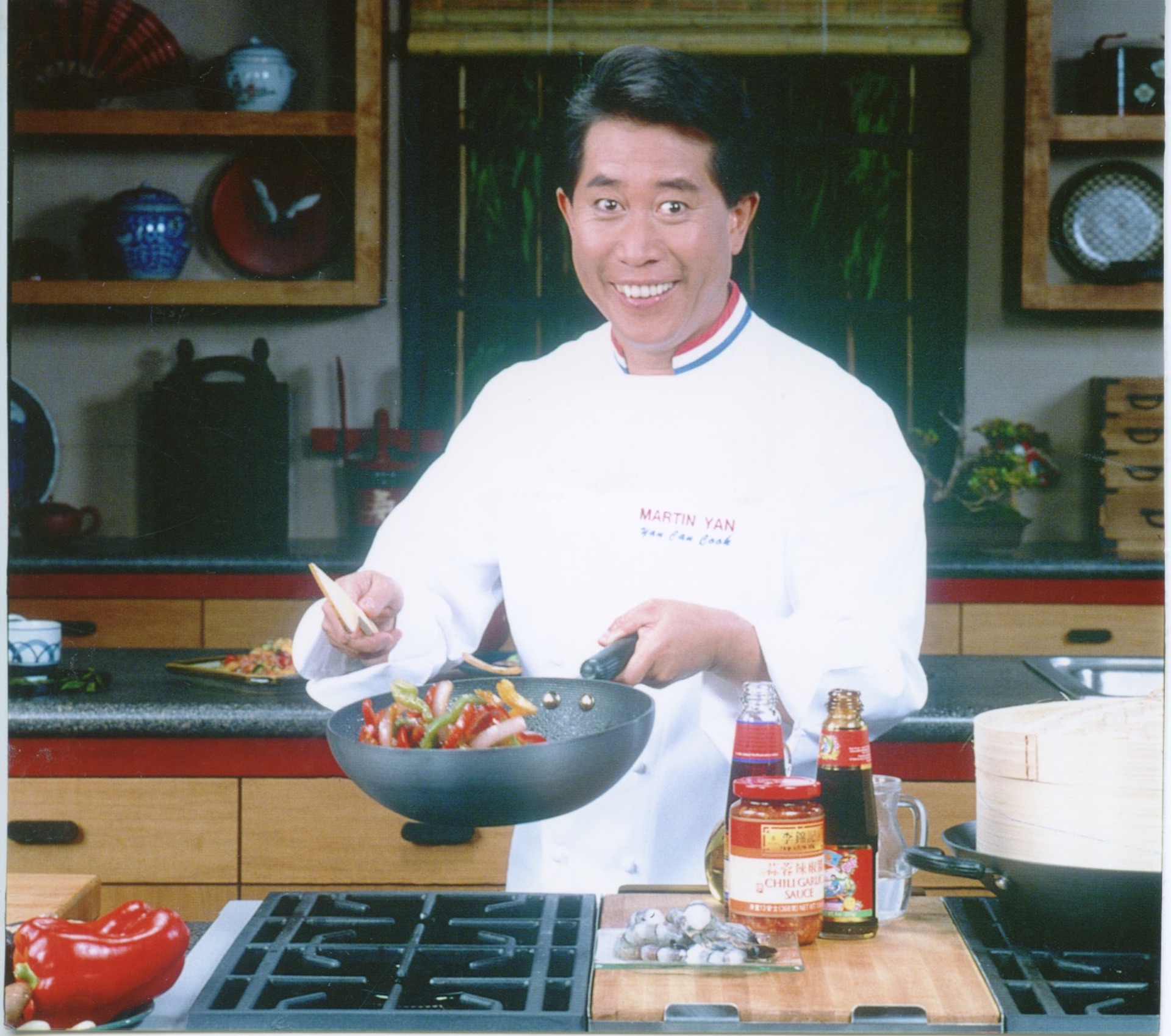
Chef Martin Yan has been entertaining audiences across the nation for nearly four decades on his program Yan Can Cook. (KQED Archives)
What does chef Yan cook at home?
In 1983, KQED broadcast the first season of Yan Can Cook (the chef appeared on a Canadian television program a few years earlier). Zany and educational, Yan’s show, which still airs new episodes, gained a following across the nation. Like public television cooking favorites Julia Child and Jacques Pepin’s shows, the success of Yan’s cooking program was driven by his personality—an indisputable expertise made accessible by his commitment to silliness.
A more singular challenge Yan faced was introducing Chinese cooking techniques to an audience whose idea of the cuisine was far less complex in 1983 than it is today. He recalls his weekly pilgrimages to San Francisco’s Chinatown to gather ingredients. “Thirty, forty years ago when we started, it was hard to find ingredients. Now there’s a whole isle of ethnic food,” he says. “A chef can go and pick up anything they want.”
These days, personality-driven cooking shows are ubiquitous on television and streaming platforms. Among those, Bon Appétit’s YouTube channel boasts over a billion views with shows focusing on the adventures and experiments of the editorial team from its bustling test kitchen. Moving away from “hands-and-pans” shots that insinuate neutral professionalism, Bon Appétit along with YouTube celebrities have placed humor and narrative at the center of their videos.
All this is something Yan has done since the beginning. “Some people do it with passion, some people do it as a job,” he says. “We have done this with passion and only when you have passion you don’t feel like you’re working.” His passion is contagious, as seen in the active comment section of fan uploads of Yan Can Cook, with people recalling watching when they stayed home from school and on weekend mornings.
Today, Yan is still cooking and touring the world with his show, exploring different regional cuisines in China and nearby nations in east Asia. He also runs the successful M.Y. China restaurant on the 4th floor of San Francisco’s Westfield Center. “I continue to believe that if I do a good job, people will come together and cook more,” he says. “So if I can do it on air, everybody can do it.”
For those of you want to relive the classic days of Yan Can Cook, KQED is releasing past episodes every Monday in 2020.