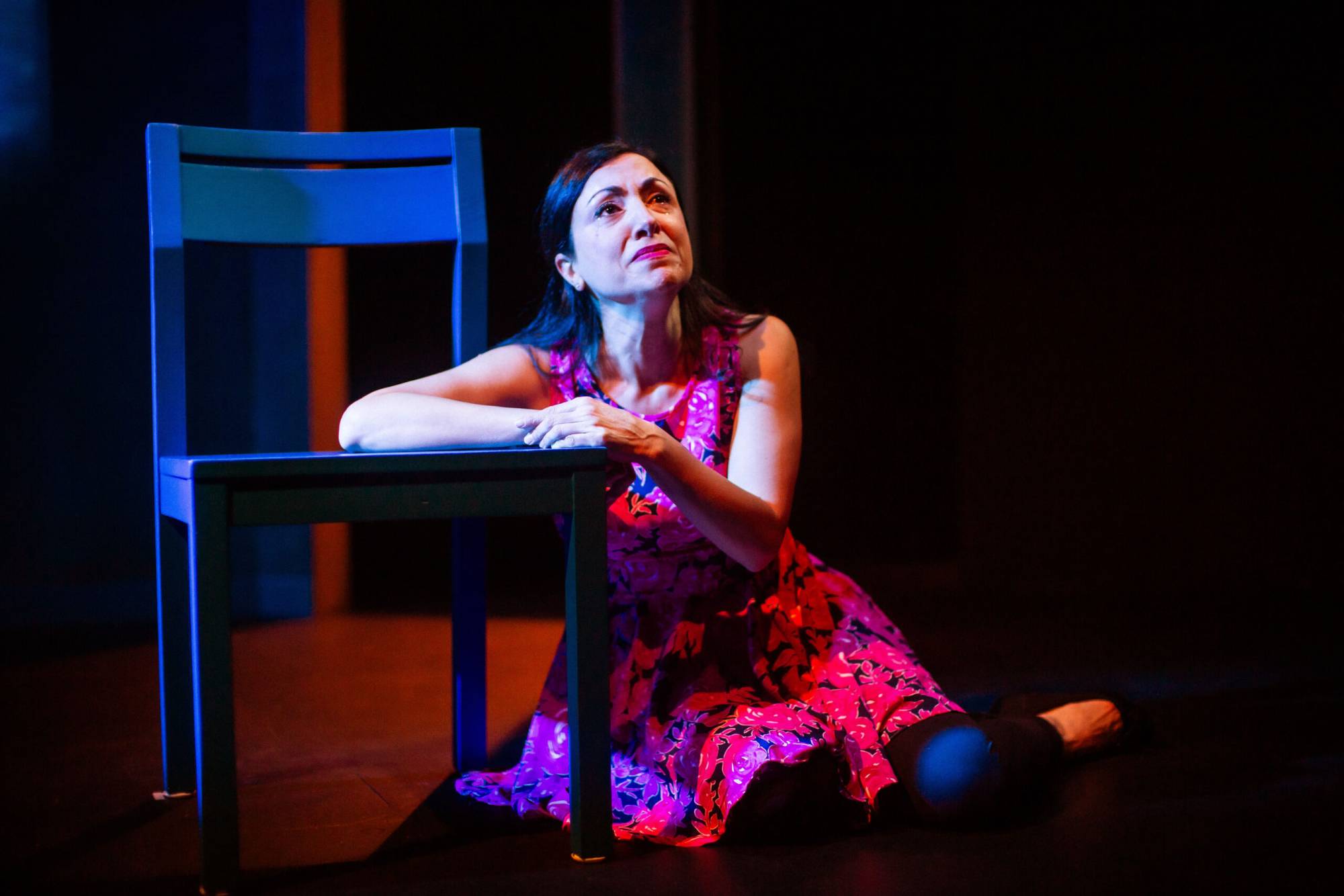
Torn Between Identities, an Israeli-Raised Palestinian Actress Searches for ‘Home’
The Best Plays and Musicals to See This Fall in the Bay Area
Betty Reid Soskin’s Incredible Life Comes to the Stage in ‘Sign My Name to Freedom’
10 Ways to Fall in Love With Bay Area Theatre and Dance
This Fall, the (Real, In-Person!) Play’s the Thing
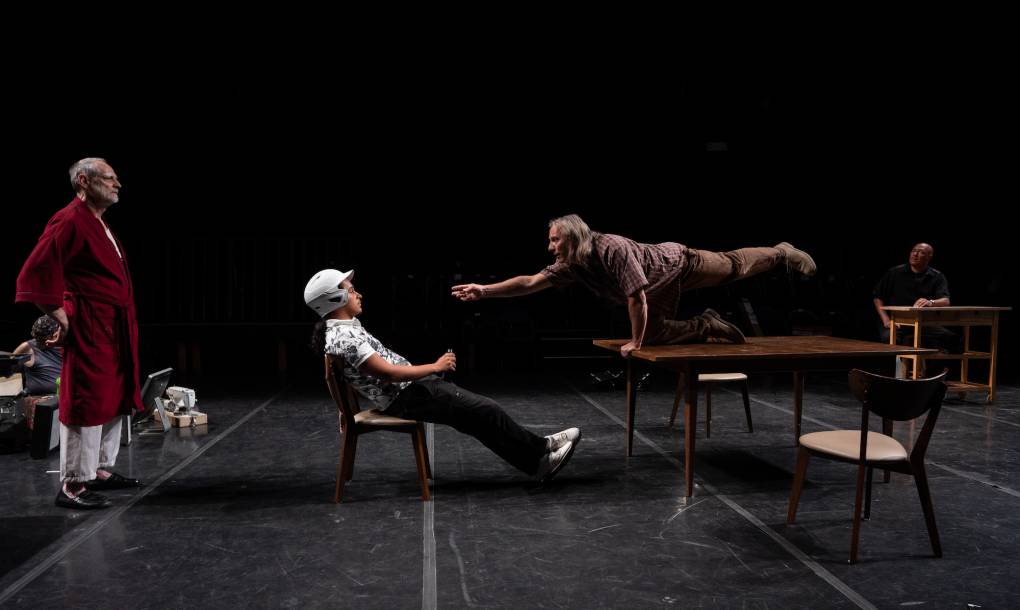
In the Imaginists' 'Someone Dies Again,' the Pain of Gun Violence is Ever-Present
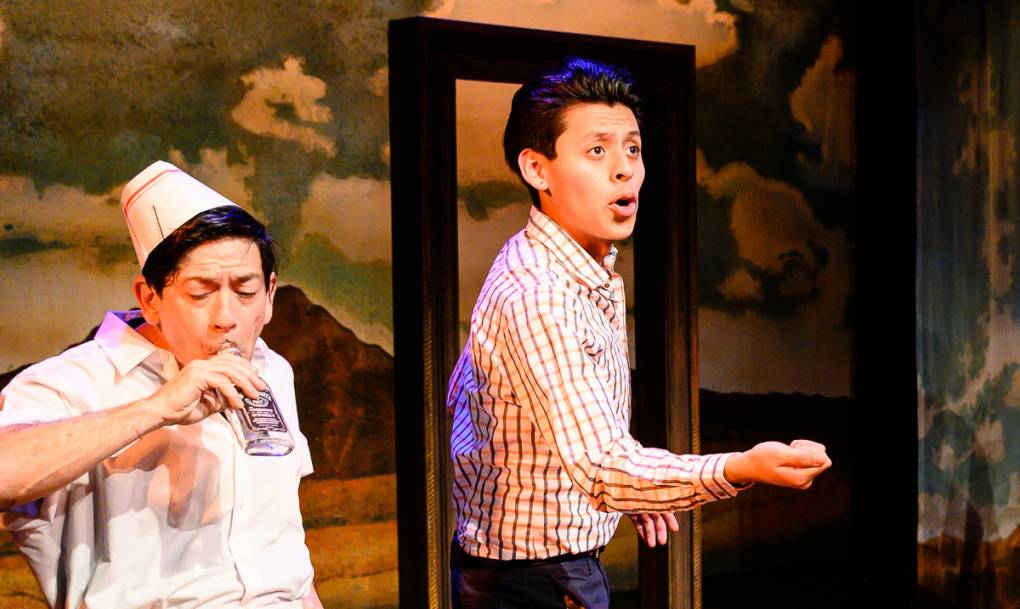
Greg Sarris' 'Citizen' a Highlight of Word for Wordcast's Adaptations of Short Fiction
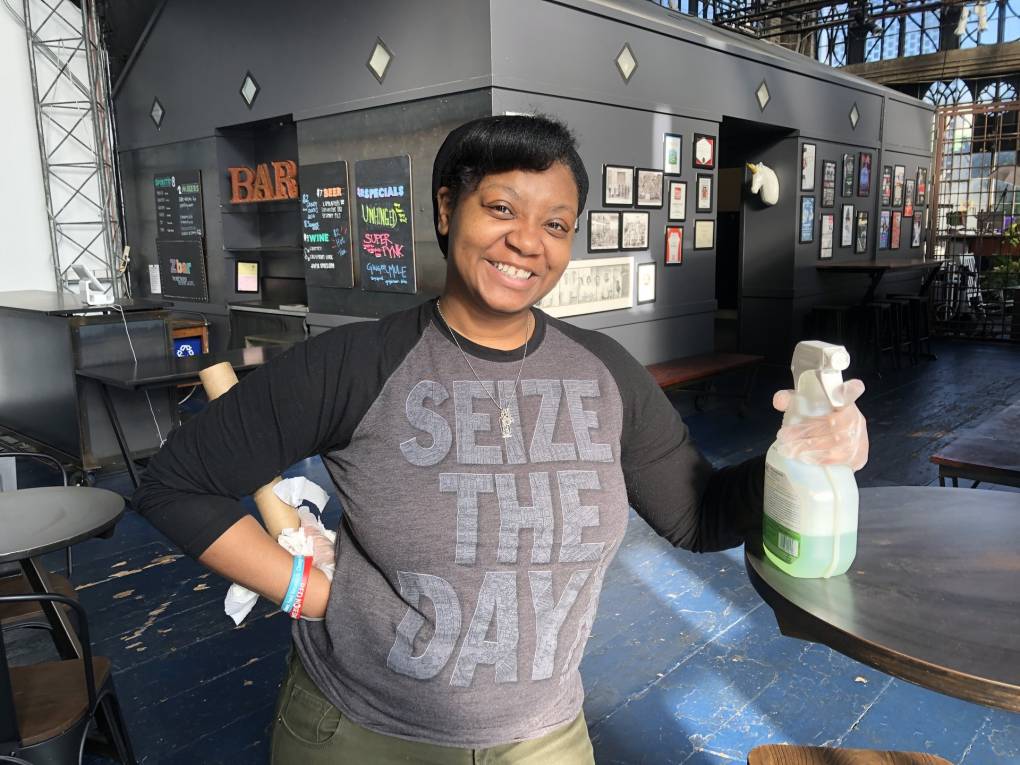
DIY Sanitizer, Cautious Plans: Bay Area Arts Groups Tackle Coronavirus Worries
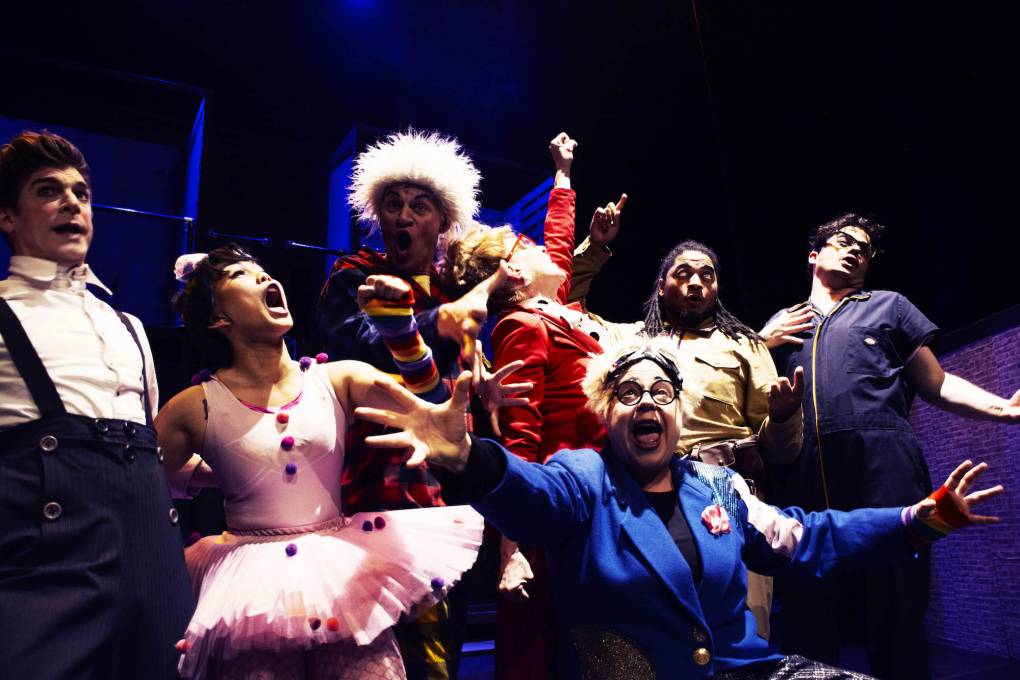
Two Otherworldly Immigrant Tales Unfold in 'The Supers' and 'Retablos' at Z Space
Sponsored
Player sponsored by
window.__IS_SSR__=true
window.__INITIAL_STATE__={
"attachmentsReducer": {
"audio_0": {
"type": "attachments",
"id": "audio_0",
"imgSizes": {
"kqedFullSize": {
"file": "https://ww2.kqed.org/news/wp-content/themes/KQED-unified/img/audio_bgs/background0.jpg"
}
}
},
"audio_1": {
"type": "attachments",
"id": "audio_1",
"imgSizes": {
"kqedFullSize": {
"file": "https://ww2.kqed.org/news/wp-content/themes/KQED-unified/img/audio_bgs/background1.jpg"
}
}
},
"audio_2": {
"type": "attachments",
"id": "audio_2",
"imgSizes": {
"kqedFullSize": {
"file": "https://ww2.kqed.org/news/wp-content/themes/KQED-unified/img/audio_bgs/background2.jpg"
}
}
},
"audio_3": {
"type": "attachments",
"id": "audio_3",
"imgSizes": {
"kqedFullSize": {
"file": "https://ww2.kqed.org/news/wp-content/themes/KQED-unified/img/audio_bgs/background3.jpg"
}
}
},
"audio_4": {
"type": "attachments",
"id": "audio_4",
"imgSizes": {
"kqedFullSize": {
"file": "https://ww2.kqed.org/news/wp-content/themes/KQED-unified/img/audio_bgs/background4.jpg"
}
}
},
"placeholder": {
"type": "attachments",
"id": "placeholder",
"imgSizes": {
"thumbnail": {
"file": "https://cdn.kqed.org/wp-content/uploads/2024/12/KQED-Default-Image-816638274-2000x1333-1-160x107.jpg",
"width": 160,
"height": 107,
"mimeType": "image/jpeg"
},
"medium": {
"file": "https://cdn.kqed.org/wp-content/uploads/2024/12/KQED-Default-Image-816638274-2000x1333-1-800x533.jpg",
"width": 800,
"height": 533,
"mimeType": "image/jpeg"
},
"medium_large": {
"file": "https://cdn.kqed.org/wp-content/uploads/2024/12/KQED-Default-Image-816638274-2000x1333-1-768x512.jpg",
"width": 768,
"height": 512,
"mimeType": "image/jpeg"
},
"large": {
"file": "https://cdn.kqed.org/wp-content/uploads/2024/12/KQED-Default-Image-816638274-2000x1333-1-1020x680.jpg",
"width": 1020,
"height": 680,
"mimeType": "image/jpeg"
},
"1536x1536": {
"file": "https://cdn.kqed.org/wp-content/uploads/2024/12/KQED-Default-Image-816638274-2000x1333-1-1536x1024.jpg",
"width": 1536,
"height": 1024,
"mimeType": "image/jpeg"
},
"fd-lrg": {
"file": "https://cdn.kqed.org/wp-content/uploads/2024/12/KQED-Default-Image-816638274-2000x1333-1-1536x1024.jpg",
"width": 1536,
"height": 1024,
"mimeType": "image/jpeg"
},
"fd-med": {
"file": "https://cdn.kqed.org/wp-content/uploads/2024/12/KQED-Default-Image-816638274-2000x1333-1-1020x680.jpg",
"width": 1020,
"height": 680,
"mimeType": "image/jpeg"
},
"fd-sm": {
"file": "https://cdn.kqed.org/wp-content/uploads/2024/12/KQED-Default-Image-816638274-2000x1333-1-800x533.jpg",
"width": 800,
"height": 533,
"mimeType": "image/jpeg"
},
"post-thumbnail": {
"file": "https://cdn.kqed.org/wp-content/uploads/2024/12/KQED-Default-Image-816638274-2000x1333-1-672x372.jpg",
"width": 672,
"height": 372,
"mimeType": "image/jpeg"
},
"twentyfourteen-full-width": {
"file": "https://cdn.kqed.org/wp-content/uploads/2024/12/KQED-Default-Image-816638274-2000x1333-1-1038x576.jpg",
"width": 1038,
"height": 576,
"mimeType": "image/jpeg"
},
"xxsmall": {
"file": "https://cdn.kqed.org/wp-content/uploads/2024/12/KQED-Default-Image-816638274-2000x1333-1-160x107.jpg",
"width": 160,
"height": 107,
"mimeType": "image/jpeg"
},
"xsmall": {
"file": "https://cdn.kqed.org/wp-content/uploads/2024/12/KQED-Default-Image-816638274-2000x1333-1-672x372.jpg",
"width": 672,
"height": 372,
"mimeType": "image/jpeg"
},
"small": {
"file": "https://cdn.kqed.org/wp-content/uploads/2024/12/KQED-Default-Image-816638274-2000x1333-1-672x372.jpg",
"width": 672,
"height": 372,
"mimeType": "image/jpeg"
},
"xlarge": {
"file": "https://cdn.kqed.org/wp-content/uploads/2024/12/KQED-Default-Image-816638274-2000x1333-1-1020x680.jpg",
"width": 1020,
"height": 680,
"mimeType": "image/jpeg"
},
"full-width": {
"file": "https://cdn.kqed.org/wp-content/uploads/2024/12/KQED-Default-Image-816638274-2000x1333-1-1920x1280.jpg",
"width": 1920,
"height": 1280,
"mimeType": "image/jpeg"
},
"guest-author-32": {
"file": "https://cdn.kqed.org/wp-content/uploads/2025/01/KQED-Default-Image-816638274-1333x1333-1-160x160.jpg",
"width": 32,
"height": 32,
"mimeType": "image/jpeg"
},
"guest-author-50": {
"file": "https://cdn.kqed.org/wp-content/uploads/2025/01/KQED-Default-Image-816638274-1333x1333-1-160x160.jpg",
"width": 50,
"height": 50,
"mimeType": "image/jpeg"
},
"guest-author-64": {
"file": "https://cdn.kqed.org/wp-content/uploads/2025/01/KQED-Default-Image-816638274-1333x1333-1-160x160.jpg",
"width": 64,
"height": 64,
"mimeType": "image/jpeg"
},
"guest-author-96": {
"file": "https://cdn.kqed.org/wp-content/uploads/2025/01/KQED-Default-Image-816638274-1333x1333-1-160x160.jpg",
"width": 96,
"height": 96,
"mimeType": "image/jpeg"
},
"guest-author-128": {
"file": "https://cdn.kqed.org/wp-content/uploads/2025/01/KQED-Default-Image-816638274-1333x1333-1-160x160.jpg",
"width": 128,
"height": 128,
"mimeType": "image/jpeg"
},
"detail": {
"file": "https://cdn.kqed.org/wp-content/uploads/2025/01/KQED-Default-Image-816638274-1333x1333-1-160x160.jpg",
"width": 160,
"height": 160,
"mimeType": "image/jpeg"
},
"kqedFullSize": {
"file": "https://cdn.kqed.org/wp-content/uploads/2024/12/KQED-Default-Image-816638274-2000x1333-1.jpg",
"width": 2000,
"height": 1333
}
}
},
"arts_13979640": {
"type": "attachments",
"id": "arts_13979640",
"meta": {
"index": "attachments_1716263798",
"site": "arts",
"id": "13979640",
"found": true
},
"title": "SF-Playhouse_Home_048A2935_Photo-Credit_Jessica_Palopoli-scaled",
"publishDate": 1754522856,
"status": "inherit",
"parent": 13979629,
"modified": 1754523410,
"caption": "Hend Ayoub recounts her journey for belonging, as a Palestinian raised in Israel, in San Francisco Playhouse's world premiere of ‘Home? A Palestinian Woman's Pursuit of Life, Liberty & Happiness,’ running through Aug. 16 at Z Below. ",
"credit": "Jessica Palopoli",
"altTag": "A woman in a pink dress sits on the floor, leaning against a chair, with tears rolling down her face.",
"description": null,
"imgSizes": {
"medium": {
"file": "https://cdn.kqed.org/wp-content/uploads/sites/2/2025/08/SF-Playhouse_Home_048A2935_Photo-Credit_Jessica_Palopoli-scaled-1-2000x1334.jpg",
"width": 2000,
"height": 1334,
"mimeType": "image/jpeg"
},
"large": {
"file": "https://cdn.kqed.org/wp-content/uploads/sites/2/2025/08/SF-Playhouse_Home_048A2935_Photo-Credit_Jessica_Palopoli-scaled-1-2000x1334.jpg",
"width": 2000,
"height": 1334,
"mimeType": "image/jpeg"
},
"thumbnail": {
"file": "https://cdn.kqed.org/wp-content/uploads/sites/2/2025/08/SF-Playhouse_Home_048A2935_Photo-Credit_Jessica_Palopoli-scaled-1-160x107.jpg",
"width": 160,
"height": 107,
"mimeType": "image/jpeg"
},
"medium_large": {
"file": "https://cdn.kqed.org/wp-content/uploads/sites/2/2025/08/SF-Playhouse_Home_048A2935_Photo-Credit_Jessica_Palopoli-scaled-1-768x512.jpg",
"width": 768,
"height": 512,
"mimeType": "image/jpeg"
},
"1536x1536": {
"file": "https://cdn.kqed.org/wp-content/uploads/sites/2/2025/08/SF-Playhouse_Home_048A2935_Photo-Credit_Jessica_Palopoli-scaled-1-1536x1024.jpg",
"width": 1536,
"height": 1024,
"mimeType": "image/jpeg"
},
"2048x2048": {
"file": "https://cdn.kqed.org/wp-content/uploads/sites/2/2025/08/SF-Playhouse_Home_048A2935_Photo-Credit_Jessica_Palopoli-scaled-1-2048x1366.jpg",
"width": 2048,
"height": 1366,
"mimeType": "image/jpeg"
},
"post-thumbnail": {
"file": "https://cdn.kqed.org/wp-content/uploads/sites/2/2025/08/SF-Playhouse_Home_048A2935_Photo-Credit_Jessica_Palopoli-scaled-1-672x372.jpg",
"width": 672,
"height": 372,
"mimeType": "image/jpeg"
},
"twentyfourteen-full-width": {
"file": "https://cdn.kqed.org/wp-content/uploads/sites/2/2025/08/SF-Playhouse_Home_048A2935_Photo-Credit_Jessica_Palopoli-scaled-1-1038x576.jpg",
"width": 1038,
"height": 576,
"mimeType": "image/jpeg"
},
"full-width": {
"file": "https://cdn.kqed.org/wp-content/uploads/sites/2/2025/08/SF-Playhouse_Home_048A2935_Photo-Credit_Jessica_Palopoli-scaled-1-2000x1334.jpg",
"width": 2000,
"height": 1334,
"mimeType": "image/jpeg"
},
"kqedFullSize": {
"file": "https://cdn.kqed.org/wp-content/uploads/sites/2/2025/08/SF-Playhouse_Home_048A2935_Photo-Credit_Jessica_Palopoli-scaled-1.jpg",
"width": 2560,
"height": 1707
}
},
"fetchFailed": false,
"isLoading": false
},
"arts_13963092": {
"type": "attachments",
"id": "arts_13963092",
"meta": {
"index": "attachments_1716263798",
"site": "arts",
"id": "13963092",
"found": true
},
"title": "Jaja",
"publishDate": 1724372173,
"status": "inherit",
"parent": 13963021,
"modified": 1724372212,
"caption": "Lakisha May and Nana Mensah in the Broadway run of ‘Jaja's African Hair Braiding.’\n",
"credit": "Matthew Murphy",
"altTag": null,
"description": null,
"imgSizes": {
"medium": {
"file": "https://cdn.kqed.org/wp-content/uploads/sites/2/2024/08/Jaja-800x600.jpg",
"width": 800,
"height": 600,
"mimeType": "image/jpeg"
},
"large": {
"file": "https://cdn.kqed.org/wp-content/uploads/sites/2/2024/08/Jaja-1020x765.jpg",
"width": 1020,
"height": 765,
"mimeType": "image/jpeg"
},
"thumbnail": {
"file": "https://cdn.kqed.org/wp-content/uploads/sites/2/2024/08/Jaja-160x120.jpg",
"width": 160,
"height": 120,
"mimeType": "image/jpeg"
},
"medium_large": {
"file": "https://cdn.kqed.org/wp-content/uploads/sites/2/2024/08/Jaja-768x576.jpg",
"width": 768,
"height": 576,
"mimeType": "image/jpeg"
},
"post-thumbnail": {
"file": "https://cdn.kqed.org/wp-content/uploads/sites/2/2024/08/Jaja-672x372.jpg",
"width": 672,
"height": 372,
"mimeType": "image/jpeg"
},
"twentyfourteen-full-width": {
"file": "https://cdn.kqed.org/wp-content/uploads/sites/2/2024/08/Jaja-1038x576.jpg",
"width": 1038,
"height": 576,
"mimeType": "image/jpeg"
},
"kqedFullSize": {
"file": "https://cdn.kqed.org/wp-content/uploads/sites/2/2024/08/Jaja.jpg",
"width": 1470,
"height": 1102
}
},
"fetchFailed": false,
"isLoading": false
},
"arts_13955116": {
"type": "attachments",
"id": "arts_13955116",
"meta": {
"index": "attachments_1716263798",
"site": "arts",
"id": "13955116",
"found": true
},
"parent": 13955108,
"imgSizes": {
"twentyfourteen-full-width": {
"file": "https://cdn.kqed.org/wp-content/uploads/sites/2/2024/04/Soskin.thumb_-1038x576.jpg",
"width": 1038,
"mimeType": "image/jpeg",
"height": 576
},
"thumbnail": {
"file": "https://cdn.kqed.org/wp-content/uploads/sites/2/2024/04/Soskin.thumb_-160x90.jpg",
"width": 160,
"mimeType": "image/jpeg",
"height": 90
},
"post-thumbnail": {
"file": "https://cdn.kqed.org/wp-content/uploads/sites/2/2024/04/Soskin.thumb_-672x372.jpg",
"width": 672,
"mimeType": "image/jpeg",
"height": 372
},
"kqedFullSize": {
"file": "https://cdn.kqed.org/wp-content/uploads/sites/2/2024/04/Soskin.thumb_.jpg",
"width": 1920,
"height": 1080
},
"large": {
"file": "https://cdn.kqed.org/wp-content/uploads/sites/2/2024/04/Soskin.thumb_-1020x574.jpg",
"width": 1020,
"mimeType": "image/jpeg",
"height": 574
},
"1536x1536": {
"file": "https://cdn.kqed.org/wp-content/uploads/sites/2/2024/04/Soskin.thumb_-1536x864.jpg",
"width": 1536,
"mimeType": "image/jpeg",
"height": 864
},
"medium": {
"file": "https://cdn.kqed.org/wp-content/uploads/sites/2/2024/04/Soskin.thumb_-800x450.jpg",
"width": 800,
"mimeType": "image/jpeg",
"height": 450
},
"medium_large": {
"file": "https://cdn.kqed.org/wp-content/uploads/sites/2/2024/04/Soskin.thumb_-768x432.jpg",
"width": 768,
"mimeType": "image/jpeg",
"height": 432
}
},
"publishDate": 1711995061,
"modified": 1711995898,
"caption": "The four Betty Reid Soskins of 'Sign My Name to Freedom' (L–R): Cathleen Riddley, Aidaa Peerzada, Lucca Troutman and Tierra Allen. ",
"description": null,
"title": "Soskin.thumb",
"credit": "Alexa 'LexMex' Treviño",
"status": "inherit",
"altTag": "Four women stand on a stage backlit by blue, looking admiringly at each other",
"fetchFailed": false,
"isLoading": false
},
"arts_13933415": {
"type": "attachments",
"id": "arts_13933415",
"meta": {
"index": "attachments_1716263798",
"site": "arts",
"id": "13933415",
"found": true
},
"parent": 13933150,
"imgSizes": {
"twentyfourteen-full-width": {
"file": "https://ww2.kqed.org/app/uploads/sites/2/2023/08/Jess-Bozzo-left-and-Bianca-Cabrera-for-SFTD-2023.-Photo-by-Amani-Wade-1038x576.jpg",
"width": 1038,
"mimeType": "image/jpeg",
"height": 576
},
"thumbnail": {
"file": "https://ww2.kqed.org/app/uploads/sites/2/2023/08/Jess-Bozzo-left-and-Bianca-Cabrera-for-SFTD-2023.-Photo-by-Amani-Wade-160x107.jpg",
"width": 160,
"mimeType": "image/jpeg",
"height": 107
},
"post-thumbnail": {
"file": "https://ww2.kqed.org/app/uploads/sites/2/2023/08/Jess-Bozzo-left-and-Bianca-Cabrera-for-SFTD-2023.-Photo-by-Amani-Wade-672x372.jpg",
"width": 672,
"mimeType": "image/jpeg",
"height": 372
},
"kqedFullSize": {
"file": "https://ww2.kqed.org/app/uploads/sites/2/2023/08/Jess-Bozzo-left-and-Bianca-Cabrera-for-SFTD-2023.-Photo-by-Amani-Wade-scaled.jpg",
"width": 2560,
"height": 1710
},
"2048x2048": {
"file": "https://ww2.kqed.org/app/uploads/sites/2/2023/08/Jess-Bozzo-left-and-Bianca-Cabrera-for-SFTD-2023.-Photo-by-Amani-Wade-2048x1368.jpg",
"width": 2048,
"mimeType": "image/jpeg",
"height": 1368
},
"large": {
"file": "https://ww2.kqed.org/app/uploads/sites/2/2023/08/Jess-Bozzo-left-and-Bianca-Cabrera-for-SFTD-2023.-Photo-by-Amani-Wade-1020x681.jpg",
"width": 1020,
"mimeType": "image/jpeg",
"height": 681
},
"1536x1536": {
"file": "https://ww2.kqed.org/app/uploads/sites/2/2023/08/Jess-Bozzo-left-and-Bianca-Cabrera-for-SFTD-2023.-Photo-by-Amani-Wade-1536x1026.jpg",
"width": 1536,
"mimeType": "image/jpeg",
"height": 1026
},
"full-width": {
"file": "https://ww2.kqed.org/app/uploads/sites/2/2023/08/Jess-Bozzo-left-and-Bianca-Cabrera-for-SFTD-2023.-Photo-by-Amani-Wade-1920x1282.jpg",
"width": 1920,
"mimeType": "image/jpeg",
"height": 1282
},
"medium": {
"file": "https://ww2.kqed.org/app/uploads/sites/2/2023/08/Jess-Bozzo-left-and-Bianca-Cabrera-for-SFTD-2023.-Photo-by-Amani-Wade-800x534.jpg",
"width": 800,
"mimeType": "image/jpeg",
"height": 534
},
"medium_large": {
"file": "https://ww2.kqed.org/app/uploads/sites/2/2023/08/Jess-Bozzo-left-and-Bianca-Cabrera-for-SFTD-2023.-Photo-by-Amani-Wade-768x513.jpg",
"width": 768,
"mimeType": "image/jpeg",
"height": 513
}
},
"publishDate": 1692311116,
"modified": 1692311266,
"caption": "Jess Bozzo and Bianca Cabrera dance in Epiphany's San Francisco Trolley Dances, an annual event that takes place along transit routes.",
"description": null,
"title": "Epiphany Dance Theater",
"credit": "Amani Wade",
"status": "inherit",
"altTag": "two dancers in pink and orange hat with pink skirts dance with their legs in the air, outside",
"fetchFailed": false,
"isLoading": false
},
"arts_13918495": {
"type": "attachments",
"id": "arts_13918495",
"meta": {
"index": "attachments_1716263798",
"site": "arts",
"id": "13918495",
"found": true
},
"parent": 13918445,
"imgSizes": {
"twentyfourteen-full-width": {
"file": "https://ww2.kqed.org/app/uploads/sites/2/2022/08/RedShades-1-1038x576.jpg",
"width": 1038,
"mimeType": "image/jpeg",
"height": 576
},
"thumbnail": {
"file": "https://ww2.kqed.org/app/uploads/sites/2/2022/08/RedShades-1-160x90.jpg",
"width": 160,
"mimeType": "image/jpeg",
"height": 90
},
"post-thumbnail": {
"file": "https://ww2.kqed.org/app/uploads/sites/2/2022/08/RedShades-1-672x372.jpg",
"width": 672,
"mimeType": "image/jpeg",
"height": 372
},
"kqedFullSize": {
"file": "https://ww2.kqed.org/app/uploads/sites/2/2022/08/RedShades-1.jpg",
"width": 1920,
"height": 1080
},
"large": {
"file": "https://ww2.kqed.org/app/uploads/sites/2/2022/08/RedShades-1-1020x574.jpg",
"width": 1020,
"mimeType": "image/jpeg",
"height": 574
},
"1536x1536": {
"file": "https://ww2.kqed.org/app/uploads/sites/2/2022/08/RedShades-1-1536x864.jpg",
"width": 1536,
"mimeType": "image/jpeg",
"height": 864
},
"medium": {
"file": "https://ww2.kqed.org/app/uploads/sites/2/2022/08/RedShades-1-800x450.jpg",
"width": 800,
"mimeType": "image/jpeg",
"height": 450
},
"medium_large": {
"file": "https://ww2.kqed.org/app/uploads/sites/2/2022/08/RedShades-1-768x432.jpg",
"width": 768,
"mimeType": "image/jpeg",
"height": 432
}
},
"publishDate": 1662008295,
"modified": 1662009215,
"caption": "Tommy Clifford-Carlos as Ida in 'The Red Shades,' in which a trans teen escapes her small town and finds herself among a gang of trans superheroes in the Tenderloin. ",
"description": null,
"title": "RedShades",
"credit": "Tristan Crane",
"status": "inherit",
"altTag": null,
"fetchFailed": false,
"isLoading": false
},
"arts_13914181": {
"type": "attachments",
"id": "arts_13914181",
"meta": {
"index": "attachments_1716263798",
"site": "arts",
"id": "13914181",
"found": true
},
"parent": 13914176,
"imgSizes": {
"twentyfourteen-full-width": {
"file": "https://ww2.kqed.org/app/uploads/sites/2/2022/05/SDA-the-Imaginists-A9_03136-1038x576.jpg",
"width": 1038,
"mimeType": "image/jpeg",
"height": 576
},
"thumbnail": {
"file": "https://ww2.kqed.org/app/uploads/sites/2/2022/05/SDA-the-Imaginists-A9_03136-160x96.jpg",
"width": 160,
"mimeType": "image/jpeg",
"height": 96
},
"post-thumbnail": {
"file": "https://ww2.kqed.org/app/uploads/sites/2/2022/05/SDA-the-Imaginists-A9_03136-672x372.jpg",
"width": 672,
"mimeType": "image/jpeg",
"height": 372
},
"kqedFullSize": {
"file": "https://ww2.kqed.org/app/uploads/sites/2/2022/05/SDA-the-Imaginists-A9_03136.jpg",
"width": 2000,
"height": 1197
},
"large": {
"file": "https://ww2.kqed.org/app/uploads/sites/2/2022/05/SDA-the-Imaginists-A9_03136-1020x610.jpg",
"width": 1020,
"mimeType": "image/jpeg",
"height": 610
},
"1536x1536": {
"file": "https://ww2.kqed.org/app/uploads/sites/2/2022/05/SDA-the-Imaginists-A9_03136-1536x919.jpg",
"width": 1536,
"mimeType": "image/jpeg",
"height": 919
},
"full-width": {
"file": "https://ww2.kqed.org/app/uploads/sites/2/2022/05/SDA-the-Imaginists-A9_03136-1920x1149.jpg",
"width": 1920,
"mimeType": "image/jpeg",
"height": 1149
},
"medium": {
"file": "https://ww2.kqed.org/app/uploads/sites/2/2022/05/SDA-the-Imaginists-A9_03136-800x479.jpg",
"width": 800,
"mimeType": "image/jpeg",
"height": 479
},
"medium_large": {
"file": "https://ww2.kqed.org/app/uploads/sites/2/2022/05/SDA-the-Imaginists-A9_03136-768x460.jpg",
"width": 768,
"mimeType": "image/jpeg",
"height": 460
}
},
"publishDate": 1653950402,
"modified": 1654023212,
"caption": "Leo (John Craven, far left) and Ken (Stephen K. Patterson, far right) watching as Marty (G. Brent Lindsay, on table) sees something familiar in Javier (Alexsandro Bravo, in chair).",
"description": "Leo (John Craven, far left) and Ken (Stephen K. Patterson, far right) watching as Marty (G. Brent Lindsay, on table) sees something familiar in Javier (Alexsandro Bravo, in chair with helmet on)",
"title": "SDA the Imaginists - A9_03136",
"credit": "Robbie Sweeny",
"status": "inherit",
"altTag": "A man on his knees on top of a table stretches his hand out towards a man sitting in a chair wearing a white sporting helmet",
"fetchFailed": false,
"isLoading": false
},
"arts_13891758": {
"type": "attachments",
"id": "arts_13891758",
"meta": {
"index": "attachments_1716263798",
"site": "arts",
"id": "13891758",
"found": true
},
"parent": 13891756,
"imgSizes": {
"twentyfourteen-full-width": {
"file": "https://ww2.kqed.org/app/uploads/sites/2/2021/01/WordForWord_GendellHingHernandez_EdieFlores_inRetablos_photocredit_LorenzoFernandez-Kopec-1038x576.jpg",
"width": 1038,
"mimeType": "image/jpeg",
"height": 576
},
"thumbnail": {
"file": "https://ww2.kqed.org/app/uploads/sites/2/2021/01/WordForWord_GendellHingHernandez_EdieFlores_inRetablos_photocredit_LorenzoFernandez-Kopec-160x96.jpg",
"width": 160,
"mimeType": "image/jpeg",
"height": 96
},
"post-thumbnail": {
"file": "https://ww2.kqed.org/app/uploads/sites/2/2021/01/WordForWord_GendellHingHernandez_EdieFlores_inRetablos_photocredit_LorenzoFernandez-Kopec-672x372.jpg",
"width": 672,
"mimeType": "image/jpeg",
"height": 372
},
"kqedFullSize": {
"file": "https://ww2.kqed.org/app/uploads/sites/2/2021/01/WordForWord_GendellHingHernandez_EdieFlores_inRetablos_photocredit_LorenzoFernandez-Kopec.jpg",
"width": 1200,
"height": 717
},
"large": {
"file": "https://ww2.kqed.org/app/uploads/sites/2/2021/01/WordForWord_GendellHingHernandez_EdieFlores_inRetablos_photocredit_LorenzoFernandez-Kopec-1020x609.jpg",
"width": 1020,
"mimeType": "image/jpeg",
"height": 609
},
"medium": {
"file": "https://ww2.kqed.org/app/uploads/sites/2/2021/01/WordForWord_GendellHingHernandez_EdieFlores_inRetablos_photocredit_LorenzoFernandez-Kopec-800x478.jpg",
"width": 800,
"mimeType": "image/jpeg",
"height": 478
},
"medium_large": {
"file": "https://ww2.kqed.org/app/uploads/sites/2/2021/01/WordForWord_GendellHingHernandez_EdieFlores_inRetablos_photocredit_LorenzoFernandez-Kopec-768x459.jpg",
"width": 768,
"mimeType": "image/jpeg",
"height": 459
}
},
"publishDate": 1611600408,
"modified": 1611702024,
"caption": "Gendell Hing-Hernández and Edie Flores from 2020's Word for Word production of 'Retablos.' Flores stars in Word for Wordcast's latest recording—Greg Sarris' 'Citizen'—with Hing-Hernández directing.",
"description": "Gendell Hing-Hernández and Edie Flores from 2020's Word for Word production of 'Retablos.' Flores stars in Word for Wordcast's latest recording—Greg Sarris' 'Citizen'—with Hing-Hernández directing.",
"title": "WordForWord_GendellHingHernandez_EdieFlores_inRetablos_photocredit_LorenzoFernandez-Kopec",
"credit": "Lorenzo Fernandez-Kopec",
"status": "inherit",
"altTag": "Gendell Hing-Hernández and Edie Flores from 2020's Word for Word production of 'Retablos.' Flores stars in Word for Wordcast's latest recording—Greg Sarris' 'Citizen'—with Hing-Hernández directing.",
"fetchFailed": false,
"isLoading": false
},
"arts_13876469": {
"type": "attachments",
"id": "arts_13876469",
"meta": {
"index": "attachments_1716263798",
"site": "arts",
"id": "13876469",
"found": true
},
"parent": 13876468,
"imgSizes": {
"twentyfourteen-full-width": {
"file": "https://ww2.kqed.org/app/uploads/sites/2/2020/03/RS41968_Jordan-Battle-qut-1038x576.jpg",
"width": 1038,
"mimeType": "image/jpeg",
"height": 576
},
"thumbnail": {
"file": "https://ww2.kqed.org/app/uploads/sites/2/2020/03/RS41968_Jordan-Battle-qut-160x120.jpg",
"width": 160,
"mimeType": "image/jpeg",
"height": 120
},
"post-thumbnail": {
"file": "https://ww2.kqed.org/app/uploads/sites/2/2020/03/RS41968_Jordan-Battle-qut-672x372.jpg",
"width": 672,
"mimeType": "image/jpeg",
"height": 372
},
"kqedFullSize": {
"file": "https://ww2.kqed.org/app/uploads/sites/2/2020/03/RS41968_Jordan-Battle-qut.jpg",
"width": 1920,
"height": 1440
},
"large": {
"file": "https://ww2.kqed.org/app/uploads/sites/2/2020/03/RS41968_Jordan-Battle-qut-1020x765.jpg",
"width": 1020,
"mimeType": "image/jpeg",
"height": 765
},
"full-width": {
"file": "https://ww2.kqed.org/app/uploads/sites/2/2020/03/RS41968_Jordan-Battle-qut-1920x1440.jpg",
"width": 1920,
"mimeType": "image/jpeg",
"height": 1440
},
"medium": {
"file": "https://ww2.kqed.org/app/uploads/sites/2/2020/03/RS41968_Jordan-Battle-qut-800x600.jpg",
"width": 800,
"mimeType": "image/jpeg",
"height": 600
},
"medium_large": {
"file": "https://ww2.kqed.org/app/uploads/sites/2/2020/03/RS41968_Jordan-Battle-qut-768x576.jpg",
"width": 768,
"mimeType": "image/jpeg",
"height": 576
}
},
"publishDate": 1583978520,
"modified": 1583978552,
"caption": "Jordan Battle cleans surfaces in the lobby at Z Space.",
"description": "Jordan Battle cleans surfaces in the lobby at Z Space.",
"title": "RS41968_Jordan Battle-qut",
"credit": "Chloe Veltman/KQED",
"status": "inherit",
"fetchFailed": false,
"isLoading": false
},
"arts_13875353": {
"type": "attachments",
"id": "arts_13875353",
"meta": {
"index": "attachments_1716263798",
"site": "arts",
"id": "13875353",
"found": true
},
"parent": 13875346,
"imgSizes": {
"twentyfourteen-full-width": {
"file": "https://ww2.kqed.org/app/uploads/sites/2/2020/02/TheSupers_ensemble_credit_FernandoGamberoni-1038x576.jpeg",
"width": 1038,
"mimeType": "image/jpeg",
"height": 576
},
"thumbnail": {
"file": "https://ww2.kqed.org/app/uploads/sites/2/2020/02/TheSupers_ensemble_credit_FernandoGamberoni-160x107.jpeg",
"width": 160,
"mimeType": "image/jpeg",
"height": 107
},
"post-thumbnail": {
"file": "https://ww2.kqed.org/app/uploads/sites/2/2020/02/TheSupers_ensemble_credit_FernandoGamberoni-672x372.jpeg",
"width": 672,
"mimeType": "image/jpeg",
"height": 372
},
"kqedFullSize": {
"file": "https://ww2.kqed.org/app/uploads/sites/2/2020/02/TheSupers_ensemble_credit_FernandoGamberoni.jpeg",
"width": 2000,
"height": 1333
},
"large": {
"file": "https://ww2.kqed.org/app/uploads/sites/2/2020/02/TheSupers_ensemble_credit_FernandoGamberoni-1020x680.jpeg",
"width": 1020,
"mimeType": "image/jpeg",
"height": 680
},
"full-width": {
"file": "https://ww2.kqed.org/app/uploads/sites/2/2020/02/TheSupers_ensemble_credit_FernandoGamberoni-1920x1280.jpeg",
"width": 1920,
"mimeType": "image/jpeg",
"height": 1280
},
"medium": {
"file": "https://ww2.kqed.org/app/uploads/sites/2/2020/02/TheSupers_ensemble_credit_FernandoGamberoni-800x533.jpeg",
"width": 800,
"mimeType": "image/jpeg",
"height": 533
},
"medium_large": {
"file": "https://ww2.kqed.org/app/uploads/sites/2/2020/02/TheSupers_ensemble_credit_FernandoGamberoni-768x512.jpeg",
"width": 768,
"mimeType": "image/jpeg",
"height": 512
}
},
"publishDate": 1582561884,
"modified": 1582562025,
"caption": "The Supers lands at Z Space with an ensemble of superlative clowns.",
"description": "The Supers lands at Z Space with an ensemble of superlative clowns.",
"title": "TheSupers_ensemble_credit_FernandoGamberoni",
"credit": "Fernando Gamberoni",
"status": "inherit",
"fetchFailed": false,
"isLoading": false
}
},
"audioPlayerReducer": {
"postId": "stream_live",
"isPaused": true,
"isPlaying": false,
"pfsActive": false,
"pledgeModalIsOpen": true,
"playerDrawerIsOpen": false
},
"authorsReducer": {
"gmeline": {
"type": "authors",
"id": "185",
"meta": {
"index": "authors_1716337520",
"id": "185",
"found": true
},
"name": "Gabe Meline",
"firstName": "Gabe",
"lastName": "Meline",
"slug": "gmeline",
"email": "gmeline@kqed.org",
"display_author_email": false,
"staff_mastheads": [
"arts"
],
"title": "Senior Editor, KQED Arts & Culture",
"bio": "Gabe Meline entered journalism at age 15 making photocopied zines, and has since earned awards from the Edward R. Murrow Awards, the Society for Professional Journalists, the Online Journalism Awards, the Association of Alternative Newsweeklies and the California Newspaper Publishers Association. Prior to KQED, he was the editor of the \u003cem>North Bay Bohemian\u003c/em> and a touring musician. He lives with his wife, his daughter, and a 1964 Volvo in his hometown of Santa Rosa, CA.",
"avatar": "https://secure.gravatar.com/avatar/80e9715844c5fc3f07edac5b08973b76?s=600&d=blank&r=g",
"twitter": null,
"facebook": null,
"instagram": "gmeline",
"linkedin": null,
"sites": [
{
"site": "",
"roles": [
"editor"
]
},
{
"site": "arts",
"roles": [
"administrator"
]
},
{
"site": "artschool",
"roles": [
"editor"
]
},
{
"site": "news",
"roles": [
"author"
]
},
{
"site": "pop",
"roles": [
"editor"
]
},
{
"site": "bayareabites",
"roles": [
"editor"
]
},
{
"site": "food",
"roles": [
"editor"
]
},
{
"site": "liveblog",
"roles": [
"editor"
]
},
{
"site": "hiphop",
"roles": [
"editor"
]
}
],
"headData": {
"title": "Gabe Meline | KQED",
"description": "Senior Editor, KQED Arts & Culture",
"ogImgSrc": "https://secure.gravatar.com/avatar/80e9715844c5fc3f07edac5b08973b76?s=600&d=blank&r=g",
"twImgSrc": "https://secure.gravatar.com/avatar/80e9715844c5fc3f07edac5b08973b76?s=600&d=blank&r=g"
},
"isLoading": false,
"link": "/author/gmeline"
},
"cveltman": {
"type": "authors",
"id": "8608",
"meta": {
"index": "authors_1716337520",
"id": "8608",
"found": true
},
"name": "Chloe Veltman",
"firstName": "Chloe",
"lastName": "Veltman",
"slug": "cveltman",
"email": "cveltman@kqed.org",
"display_author_email": true,
"staff_mastheads": [],
"title": "Arts and Culture Reporter",
"bio": "Chloe Veltman is a former arts and culture reporter for KQED. Prior to joining the organization, she launched and led the arts bureau at Colorado Public Radio, served as the Bay Area's culture columnist for the New York Times, and was the founder, host and executive producer of VoiceBox, a national award-winning weekly podcast/radio show and live events series all about the human voice. Chloe is the recipient of numerous prizes, grants and fellowships including a Webby Award for her work on interactive storytelling, both the John S Knight Journalism Fellowship and Humanities Center Fellowship at Stanford University, the Sundance Arts Writing Fellowship and a Library of Congress Research Fellowship. She is the author of the book \"On Acting\" and has appeared as a guest lecturer at Yale University and the San Francisco Conservatory of Music among other institutions. She holds a BA in english literature from King's College, Cambridge, and a Masters in Dramaturgy from the Central School of Speech and Drama/Harvard Institute for Advanced Theater Training.\r\n\u003ca href=\"https://www.chloeveltman.com\">www.chloeveltman.com\u003c/a>",
"avatar": "https://secure.gravatar.com/avatar/55403394b00a1ddab683952c2eb2cf85?s=600&d=blank&r=g",
"twitter": "chloeveltman",
"facebook": null,
"instagram": null,
"linkedin": null,
"sites": [
{
"site": "arts",
"roles": []
},
{
"site": "news",
"roles": [
"author"
]
},
{
"site": "pop",
"roles": [
"editor"
]
},
{
"site": "science",
"roles": []
}
],
"headData": {
"title": "Chloe Veltman | KQED",
"description": "Arts and Culture Reporter",
"ogImgSrc": "https://secure.gravatar.com/avatar/55403394b00a1ddab683952c2eb2cf85?s=600&d=blank&r=g",
"twImgSrc": "https://secure.gravatar.com/avatar/55403394b00a1ddab683952c2eb2cf85?s=600&d=blank&r=g"
},
"isLoading": false,
"link": "/author/cveltman"
},
"ngluckstern": {
"type": "authors",
"id": "11497",
"meta": {
"index": "authors_1716337520",
"id": "11497",
"found": true
},
"name": "Nicole Gluckstern",
"firstName": "Nicole",
"lastName": "Gluckstern",
"slug": "ngluckstern",
"email": "gluckstern.nicole@gmail.com",
"display_author_email": false,
"staff_mastheads": [],
"title": null,
"bio": null,
"avatar": "https://secure.gravatar.com/avatar/4fa7e0128404fc3d06ce5f9e27ab9e5a?s=600&d=blank&r=g",
"twitter": null,
"facebook": null,
"instagram": null,
"linkedin": null,
"sites": [
{
"site": "arts",
"roles": [
"author"
]
}
],
"headData": {
"title": "Nicole Gluckstern | KQED",
"description": null,
"ogImgSrc": "https://secure.gravatar.com/avatar/4fa7e0128404fc3d06ce5f9e27ab9e5a?s=600&d=blank&r=g",
"twImgSrc": "https://secure.gravatar.com/avatar/4fa7e0128404fc3d06ce5f9e27ab9e5a?s=600&d=blank&r=g"
},
"isLoading": false,
"link": "/author/ngluckstern"
},
"djchavez": {
"type": "authors",
"id": "11905",
"meta": {
"index": "authors_1716337520",
"id": "11905",
"found": true
},
"name": "David John Chávez",
"firstName": "David John",
"lastName": "Chávez",
"slug": "djchavez",
"email": "theatrechavez@gmail.com",
"display_author_email": false,
"staff_mastheads": [],
"title": "KQED Contributor",
"bio": "Based in San José, David is a theater critic and reporter who serves as Executive Chair of the American Theatre Critics/Journalists Association, as well as a regular theater contributor to The Mercury News, San Francisco Chronicle, American Theatre Magazine and KQED, among other publications. He is a two-time juror for the Pulitzer Prize for Drama (’22-’23) and a 2020 fellow of the Eugene O'Neill National Critics Institute.",
"avatar": "https://secure.gravatar.com/avatar/fabc2bc243ff109345d5c43867bc0b76?s=600&d=blank&r=g",
"twitter": null,
"facebook": "https://www.facebook.com/bydavidjchavez",
"instagram": "https://www.instagram.com/davidjchavez/",
"linkedin": null,
"sites": [
{
"site": "arts",
"roles": [
"author"
]
}
],
"headData": {
"title": "David John Chávez | KQED",
"description": "KQED Contributor",
"ogImgSrc": "https://secure.gravatar.com/avatar/fabc2bc243ff109345d5c43867bc0b76?s=600&d=blank&r=g",
"twImgSrc": "https://secure.gravatar.com/avatar/fabc2bc243ff109345d5c43867bc0b76?s=600&d=blank&r=g"
},
"isLoading": false,
"link": "/author/djchavez"
}
},
"breakingNewsReducer": {},
"pagesReducer": {},
"postsReducer": {
"stream_live": {
"type": "live",
"id": "stream_live",
"audioUrl": "https://streams.kqed.org/kqedradio",
"title": "Live Stream",
"excerpt": "Live Stream information currently unavailable.",
"link": "/radio",
"featImg": "",
"label": {
"name": "KQED Live",
"link": "/"
}
},
"stream_kqedNewscast": {
"type": "posts",
"id": "stream_kqedNewscast",
"audioUrl": "https://www.kqed.org/.stream/anon/radio/RDnews/newscast.mp3?_=1",
"title": "KQED Newscast",
"featImg": "",
"label": {
"name": "88.5 FM",
"link": "/"
}
},
"arts_13979629": {
"type": "posts",
"id": "arts_13979629",
"meta": {
"index": "posts_1716263798",
"site": "arts",
"id": "13979629",
"score": null,
"sort": [
1754524025000
]
},
"guestAuthors": [],
"slug": "hend-ayoub-home-review-san-francisco-playhouse-premiere",
"title": "Torn Between Identities, an Israeli-Raised Palestinian Actress Searches for ‘Home’",
"publishDate": 1754524025,
"format": "standard",
"headTitle": "Torn Between Identities, an Israeli-Raised Palestinian Actress Searches for ‘Home’ | KQED",
"labelTerm": {
"site": "arts"
},
"content": "\u003cp>One of the most heartbreaking scenes in Hend Ayoub’s solo show \u003cem>Home? A Palestinian Woman’s Pursuit of Life, Liberty and Happiness\u003c/em> comes early, when young Hend giddily attends a party to celebrate Purim. The holiday, commemorating the defeat of the plot to massacre the Jews at the hands of Haman, is expressed by Hend as “the best holiday in Israel” as the Israeli children at the party enjoy costumes, crowns and snacks.\u003c/p>\n\u003cp>There’s one major problem. Hend, who lives as a citizen of Israel, is still an outsider as a Palestinian — or, in more dismissive terms used by those around her, an Arab. At the celebration, she tries to recoup the joy she possessed just moments prior by reminding other attendees that she too has a crown, and a wand, but gives up as tears explode from her young eyes. She makes a heart-wrenching request: “I want my mama.”\u003c/p>\n\u003cp>[aside postID='arts_13978734']It’s a painful moment, and a critical piece of writing by Ayoub that sets in motion the story’s plot. \u003cem>Home\u003c/em>, a one-woman autobiographical show about trying to make it as an actress split between Israeli citizenship and Palestinian identity, is a co-production between Z Space and San Francisco Playhouse that already has people talking ahead of its \u003ca href=\"https://playbill.com/production/home-a-palestinian-womans-pursuit-of-life-liberty-happiness-off-broadway-59e59-theater-c-2025\">New York opening off Broadway in September\u003c/a>. \u003c/p>\n\u003cp>Veteran director Carey Perloff lends a smooth hand to the play’s staging, moving the action with controlled freneticism. While some of Ayoub’s characterizations lean into tropes (the old woman with the hand on her back is a tired cliché), her story of a young girl who becomes a woman while searching for a home is poignant and timely. As added weight, it’s impossible to ignore the context that surrounds the play: devastating images of war and starvation that continue to pour out of Ayoub’s native region. \u003c/p>\n\u003cfigure id=\"attachment_13979638\" class=\"wp-caption aligncenter\" style=\"max-width: 2450px\">\u003cimg loading=\"lazy\" decoding=\"async\" src=\"https://cdn.kqed.org/wp-content/uploads/sites/2/2025/08/SF-Playhouse_Home_048A2806_Photo-Credit_Jessica_Palopoli.jpg\" alt=\"\" width=\"2450\" height=\"1633\" class=\"size-full wp-image-13979638\" srcset=\"https://cdn.kqed.org/wp-content/uploads/sites/2/2025/08/SF-Playhouse_Home_048A2806_Photo-Credit_Jessica_Palopoli.jpg 2450w, https://cdn.kqed.org/wp-content/uploads/sites/2/2025/08/SF-Playhouse_Home_048A2806_Photo-Credit_Jessica_Palopoli-2000x1333.jpg 2000w, https://cdn.kqed.org/wp-content/uploads/sites/2/2025/08/SF-Playhouse_Home_048A2806_Photo-Credit_Jessica_Palopoli-160x107.jpg 160w, https://cdn.kqed.org/wp-content/uploads/sites/2/2025/08/SF-Playhouse_Home_048A2806_Photo-Credit_Jessica_Palopoli-768x512.jpg 768w, https://cdn.kqed.org/wp-content/uploads/sites/2/2025/08/SF-Playhouse_Home_048A2806_Photo-Credit_Jessica_Palopoli-1536x1024.jpg 1536w, https://cdn.kqed.org/wp-content/uploads/sites/2/2025/08/SF-Playhouse_Home_048A2806_Photo-Credit_Jessica_Palopoli-2048x1365.jpg 2048w\" sizes=\"auto, (max-width: 2450px) 100vw, 2450px\">\u003cfigcaption class=\"wp-caption-text\">Hend Ayoub reenacts a childhood party in ‘Home? A Palestinian Woman’s Pursuit of Life, Liberty & Happiness.’ \u003ccite>(Jessica Palopoli)\u003c/cite>\u003c/figcaption>\u003c/figure>\n\u003cp>Ayoub’s words spend most of their capital making the case for humanity, and her script does a stellar job of avoiding pitfalls that might have strayed from the story’s core. There’s an American-dream quality to the narrative, right down to striving for a glamorous Carrie Bradshaw existence in New York. But Carrie is white with a nice American accent, and casting directors aren’t necessarily smitten with Hend’s Hebrew mastery of Strindberg’s Miss Julie or Shakespeare’s Feste the Fool. \u003c/p>\n\u003cp>[ad fullwidth]\u003c/p>\n\u003cp>There are more immediate characters that need to be cast, anyway: Hend has her pick of Middle Eastern terrorists if she wants, with some random Iranians thrown in. A repetition of the word “next” from various casting directors invites her to strip down her dignity for each audition. For Hend, being typecast is simply another indignity along the way to fulfilling her passions.\u003c/p>\n\u003cp>[aside postID='arts_13979142']What may be Ayoub’s most powerful attribute is how she lives and plays her truth. One-person shows depend so much on characters the audience can’t see, which is where much of Ayoub’s affect resides. Her emotions are extremely rich, be they tragic, funny or charming, and ride the coattails of honesty. \u003c/p>\n\u003cp>Hend looks to Egypt, which offers new opportunities for acting. But in many ways, the same demeaning roles come calling; not untypical for a woman of color trying to move past society’s preconceived images. (This time, Hend quips that to really show her acting skills, maybe it’s time to play a prostitute.) \u003c/p>\n\u003cfigure id=\"attachment_13979637\" class=\"wp-caption aligncenter\" style=\"max-width: 2450px\">\u003cimg loading=\"lazy\" decoding=\"async\" src=\"https://cdn.kqed.org/wp-content/uploads/sites/2/2025/08/SF-Playhouse_Home_7407_Photo-Credit_Jessica_Palopoli.jpg\" alt=\"\" width=\"2450\" height=\"1630\" class=\"size-full wp-image-13979637\" srcset=\"https://cdn.kqed.org/wp-content/uploads/sites/2/2025/08/SF-Playhouse_Home_7407_Photo-Credit_Jessica_Palopoli.jpg 2450w, https://cdn.kqed.org/wp-content/uploads/sites/2/2025/08/SF-Playhouse_Home_7407_Photo-Credit_Jessica_Palopoli-2000x1331.jpg 2000w, https://cdn.kqed.org/wp-content/uploads/sites/2/2025/08/SF-Playhouse_Home_7407_Photo-Credit_Jessica_Palopoli-160x106.jpg 160w, https://cdn.kqed.org/wp-content/uploads/sites/2/2025/08/SF-Playhouse_Home_7407_Photo-Credit_Jessica_Palopoli-768x511.jpg 768w, https://cdn.kqed.org/wp-content/uploads/sites/2/2025/08/SF-Playhouse_Home_7407_Photo-Credit_Jessica_Palopoli-1536x1022.jpg 1536w, https://cdn.kqed.org/wp-content/uploads/sites/2/2025/08/SF-Playhouse_Home_7407_Photo-Credit_Jessica_Palopoli-2048x1363.jpg 2048w\" sizes=\"auto, (max-width: 2450px) 100vw, 2450px\">\u003cfigcaption class=\"wp-caption-text\">Hend Ayoub in the one-woman show ‘Home? A Palestinian Woman’s Pursuit of Life, Liberty & Happiness.’ \u003ccite>(Jessica Palopoli)\u003c/cite>\u003c/figcaption>\u003c/figure>\n\u003cp>The power that Hend begins to unearth comes in what she’s truly striving for. Hend’s family were medical professionals and pharmacists — why can’t she play those truths? Who might be willing to see her whole self? The answer comes in the form of her own words. Ayoub is an Israeli, a Palestinian, an actor, a daughter, and a friend.\u003c/p>\n\u003cp>Nowadays, Ayoub’s childhood wand and crown manifest in the words she chooses as a playwright. They present themselves in honest Arabic and Israeli accents, and in fabricated American accents, too. \u003c/p>\n\u003cp>While Ayoub spends the 90-minute play searching and exploring the concept of home, what she may come to realize is the stage that rests beneath her nimble feet might be the best kind of home anyone could ask for — the one that was hers all along. \u003c/p>\n\u003chr>\n\u003cp>\u003c/p>\n\u003cp>\u003cem>‘\u003ca href=\"https://www.sfplayhouse.org/sfph/home-hend-ayoub/\">Home? A Palestinian Woman’s Pursuit of Life, Liberty and Happiness\u003c/a>’ runs through Aug. 16 at Z Below (470 Florida St., San Francisco).\u003c/em>\u003c/p>\n\n",
"blocks": [],
"excerpt": "Hend Ayoub’s one-woman show, headed to New York this fall, is a portrait of honesty, humor and emotion.",
"status": "publish",
"parent": 0,
"modified": 1754524025,
"stats": {
"hasAudio": false,
"hasVideo": false,
"hasChartOrMap": false,
"iframeSrcs": [],
"hasGoogleForm": false,
"hasGallery": false,
"hasHearkenModule": false,
"hasPolis": false,
"paragraphCount": 14,
"wordCount": 824
},
"headData": {
"title": "Torn Between Identities, an Israeli-Raised Palestinian Actress Searches for ‘Home’ | KQED",
"description": "Hend Ayoub’s one-woman show, headed to New York this fall, is a portrait of honesty, humor and emotion.",
"ogTitle": "",
"ogDescription": "",
"ogImgId": "",
"twTitle": "",
"twDescription": "",
"twImgId": "",
"schema": {
"@context": "https://schema.org",
"@type": "Article",
"headline": "Torn Between Identities, an Israeli-Raised Palestinian Actress Searches for ‘Home’",
"datePublished": "2025-08-06T16:47:05-07:00",
"dateModified": "2025-08-06T16:47:05-07:00",
"image": "https://cdn.kqed.org/wp-content/uploads/2020/02/KQED-OG-Image@1x.png"
}
},
"primaryCategory": {
"termId": 1,
"slug": "arts",
"name": "Arts"
},
"sticky": false,
"nprStoryId": "kqed-13979629",
"templateType": "standard",
"featuredImageType": "standard",
"excludeFromSiteSearch": "Include",
"articleAge": "0",
"path": "/arts/13979629/hend-ayoub-home-review-san-francisco-playhouse-premiere",
"audioTrackLength": null,
"parsedContent": [
{
"type": "contentString",
"content": "\u003cdiv class=\"post-body\">\u003cp>\u003cp>One of the most heartbreaking scenes in Hend Ayoub’s solo show \u003cem>Home? A Palestinian Woman’s Pursuit of Life, Liberty and Happiness\u003c/em> comes early, when young Hend giddily attends a party to celebrate Purim. The holiday, commemorating the defeat of the plot to massacre the Jews at the hands of Haman, is expressed by Hend as “the best holiday in Israel” as the Israeli children at the party enjoy costumes, crowns and snacks.\u003c/p>\n\u003cp>There’s one major problem. Hend, who lives as a citizen of Israel, is still an outsider as a Palestinian — or, in more dismissive terms used by those around her, an Arab. At the celebration, she tries to recoup the joy she possessed just moments prior by reminding other attendees that she too has a crown, and a wand, but gives up as tears explode from her young eyes. She makes a heart-wrenching request: “I want my mama.”\u003c/p>\n\u003cp>\u003c/p>\u003c/div>",
"attributes": {
"named": {},
"numeric": []
}
},
{
"type": "component",
"content": "",
"name": "aside",
"attributes": {
"named": {
"postid": "arts_13978734",
"label": ""
},
"numeric": []
}
},
{
"type": "contentString",
"content": "\u003cdiv class=\"post-body\">\u003cp>It’s a painful moment, and a critical piece of writing by Ayoub that sets in motion the story’s plot. \u003cem>Home\u003c/em>, a one-woman autobiographical show about trying to make it as an actress split between Israeli citizenship and Palestinian identity, is a co-production between Z Space and San Francisco Playhouse that already has people talking ahead of its \u003ca href=\"https://playbill.com/production/home-a-palestinian-womans-pursuit-of-life-liberty-happiness-off-broadway-59e59-theater-c-2025\">New York opening off Broadway in September\u003c/a>. \u003c/p>\n\u003cp>Veteran director Carey Perloff lends a smooth hand to the play’s staging, moving the action with controlled freneticism. While some of Ayoub’s characterizations lean into tropes (the old woman with the hand on her back is a tired cliché), her story of a young girl who becomes a woman while searching for a home is poignant and timely. As added weight, it’s impossible to ignore the context that surrounds the play: devastating images of war and starvation that continue to pour out of Ayoub’s native region. \u003c/p>\n\u003cfigure id=\"attachment_13979638\" class=\"wp-caption aligncenter\" style=\"max-width: 2450px\">\u003cimg loading=\"lazy\" decoding=\"async\" src=\"https://cdn.kqed.org/wp-content/uploads/sites/2/2025/08/SF-Playhouse_Home_048A2806_Photo-Credit_Jessica_Palopoli.jpg\" alt=\"\" width=\"2450\" height=\"1633\" class=\"size-full wp-image-13979638\" srcset=\"https://cdn.kqed.org/wp-content/uploads/sites/2/2025/08/SF-Playhouse_Home_048A2806_Photo-Credit_Jessica_Palopoli.jpg 2450w, https://cdn.kqed.org/wp-content/uploads/sites/2/2025/08/SF-Playhouse_Home_048A2806_Photo-Credit_Jessica_Palopoli-2000x1333.jpg 2000w, https://cdn.kqed.org/wp-content/uploads/sites/2/2025/08/SF-Playhouse_Home_048A2806_Photo-Credit_Jessica_Palopoli-160x107.jpg 160w, https://cdn.kqed.org/wp-content/uploads/sites/2/2025/08/SF-Playhouse_Home_048A2806_Photo-Credit_Jessica_Palopoli-768x512.jpg 768w, https://cdn.kqed.org/wp-content/uploads/sites/2/2025/08/SF-Playhouse_Home_048A2806_Photo-Credit_Jessica_Palopoli-1536x1024.jpg 1536w, https://cdn.kqed.org/wp-content/uploads/sites/2/2025/08/SF-Playhouse_Home_048A2806_Photo-Credit_Jessica_Palopoli-2048x1365.jpg 2048w\" sizes=\"auto, (max-width: 2450px) 100vw, 2450px\">\u003cfigcaption class=\"wp-caption-text\">Hend Ayoub reenacts a childhood party in ‘Home? A Palestinian Woman’s Pursuit of Life, Liberty & Happiness.’ \u003ccite>(Jessica Palopoli)\u003c/cite>\u003c/figcaption>\u003c/figure>\n\u003cp>Ayoub’s words spend most of their capital making the case for humanity, and her script does a stellar job of avoiding pitfalls that might have strayed from the story’s core. There’s an American-dream quality to the narrative, right down to striving for a glamorous Carrie Bradshaw existence in New York. But Carrie is white with a nice American accent, and casting directors aren’t necessarily smitten with Hend’s Hebrew mastery of Strindberg’s Miss Julie or Shakespeare’s Feste the Fool. \u003c/p>\n\u003cp>\u003c/p>\u003c/div>",
"attributes": {
"named": {},
"numeric": []
}
},
{
"type": "component",
"content": "",
"name": "ad",
"attributes": {
"named": {
"label": "fullwidth"
},
"numeric": [
"fullwidth"
]
}
},
{
"type": "contentString",
"content": "\u003cdiv class=\"post-body\">\u003cp>\u003c/p>\n\u003cp>There are more immediate characters that need to be cast, anyway: Hend has her pick of Middle Eastern terrorists if she wants, with some random Iranians thrown in. A repetition of the word “next” from various casting directors invites her to strip down her dignity for each audition. For Hend, being typecast is simply another indignity along the way to fulfilling her passions.\u003c/p>\n\u003cp>\u003c/p>\u003c/div>",
"attributes": {
"named": {},
"numeric": []
}
},
{
"type": "component",
"content": "",
"name": "aside",
"attributes": {
"named": {
"postid": "arts_13979142",
"label": ""
},
"numeric": []
}
},
{
"type": "contentString",
"content": "\u003cdiv class=\"post-body\">\u003cp>What may be Ayoub’s most powerful attribute is how she lives and plays her truth. One-person shows depend so much on characters the audience can’t see, which is where much of Ayoub’s affect resides. Her emotions are extremely rich, be they tragic, funny or charming, and ride the coattails of honesty. \u003c/p>\n\u003cp>Hend looks to Egypt, which offers new opportunities for acting. But in many ways, the same demeaning roles come calling; not untypical for a woman of color trying to move past society’s preconceived images. (This time, Hend quips that to really show her acting skills, maybe it’s time to play a prostitute.) \u003c/p>\n\u003cfigure id=\"attachment_13979637\" class=\"wp-caption aligncenter\" style=\"max-width: 2450px\">\u003cimg loading=\"lazy\" decoding=\"async\" src=\"https://cdn.kqed.org/wp-content/uploads/sites/2/2025/08/SF-Playhouse_Home_7407_Photo-Credit_Jessica_Palopoli.jpg\" alt=\"\" width=\"2450\" height=\"1630\" class=\"size-full wp-image-13979637\" srcset=\"https://cdn.kqed.org/wp-content/uploads/sites/2/2025/08/SF-Playhouse_Home_7407_Photo-Credit_Jessica_Palopoli.jpg 2450w, https://cdn.kqed.org/wp-content/uploads/sites/2/2025/08/SF-Playhouse_Home_7407_Photo-Credit_Jessica_Palopoli-2000x1331.jpg 2000w, https://cdn.kqed.org/wp-content/uploads/sites/2/2025/08/SF-Playhouse_Home_7407_Photo-Credit_Jessica_Palopoli-160x106.jpg 160w, https://cdn.kqed.org/wp-content/uploads/sites/2/2025/08/SF-Playhouse_Home_7407_Photo-Credit_Jessica_Palopoli-768x511.jpg 768w, https://cdn.kqed.org/wp-content/uploads/sites/2/2025/08/SF-Playhouse_Home_7407_Photo-Credit_Jessica_Palopoli-1536x1022.jpg 1536w, https://cdn.kqed.org/wp-content/uploads/sites/2/2025/08/SF-Playhouse_Home_7407_Photo-Credit_Jessica_Palopoli-2048x1363.jpg 2048w\" sizes=\"auto, (max-width: 2450px) 100vw, 2450px\">\u003cfigcaption class=\"wp-caption-text\">Hend Ayoub in the one-woman show ‘Home? A Palestinian Woman’s Pursuit of Life, Liberty & Happiness.’ \u003ccite>(Jessica Palopoli)\u003c/cite>\u003c/figcaption>\u003c/figure>\n\u003cp>The power that Hend begins to unearth comes in what she’s truly striving for. Hend’s family were medical professionals and pharmacists — why can’t she play those truths? Who might be willing to see her whole self? The answer comes in the form of her own words. Ayoub is an Israeli, a Palestinian, an actor, a daughter, and a friend.\u003c/p>\n\u003cp>Nowadays, Ayoub’s childhood wand and crown manifest in the words she chooses as a playwright. They present themselves in honest Arabic and Israeli accents, and in fabricated American accents, too. \u003c/p>\n\u003cp>While Ayoub spends the 90-minute play searching and exploring the concept of home, what she may come to realize is the stage that rests beneath her nimble feet might be the best kind of home anyone could ask for — the one that was hers all along. \u003c/p>\n\u003chr>\n\u003cp>\u003c/p>\n\u003cp>\u003cem>‘\u003ca href=\"https://www.sfplayhouse.org/sfph/home-hend-ayoub/\">Home? A Palestinian Woman’s Pursuit of Life, Liberty and Happiness\u003c/a>’ runs through Aug. 16 at Z Below (470 Florida St., San Francisco).\u003c/em>\u003c/p>\n\n\u003c/div>\u003c/p>",
"attributes": {
"named": {},
"numeric": []
}
}
],
"link": "/arts/13979629/hend-ayoub-home-review-san-francisco-playhouse-premiere",
"authors": [
"11905"
],
"categories": [
"arts_1",
"arts_967"
],
"tags": [
"arts_22421",
"arts_21682",
"arts_769",
"arts_2295",
"arts_585",
"arts_1240"
],
"featImg": "arts_13979640",
"label": "arts"
},
"arts_13963021": {
"type": "posts",
"id": "arts_13963021",
"meta": {
"index": "posts_1716263798",
"site": "arts",
"id": "13963021",
"score": null,
"sort": [
1724698849000
]
},
"guestAuthors": [],
"slug": "best-plays-musicals-bay-area-fall-2024-guide",
"title": "The Best Plays and Musicals to See This Fall in the Bay Area",
"publishDate": 1724698849,
"format": "standard",
"headTitle": "The Best Plays and Musicals to See This Fall in the Bay Area | KQED",
"labelTerm": {},
"content": "\u003cp>This past July is officially on record as the hottest California month in decades. And while cooler temperatures will be ushered into the Bay Area soon, theater companies are hoping that local stages continue to stay hot well into the fall.\u003c/p>\n\u003cp>Companies are also gearing up to showcase their most artistic selves while continuing to find creative ways to achieve and maintain financial solvency. Here are 10 terrific shows from Labor Day to Thanksgiving one can start with to help support Bay Area theater companies.\u003c/p>\n\u003cfigure id=\"attachment_13963219\" class=\"wp-caption aligncenter\" style=\"max-width: 1920px\">\u003cimg loading=\"lazy\" decoding=\"async\" src=\"https://cdn.kqed.org/wp-content/uploads/sites/2/2024/08/Opt_6B5A2580_Credit-Tim-Fuller.jpg\" alt=\"\" width=\"1920\" height=\"1301\" class=\"size-full wp-image-13963219\" srcset=\"https://cdn.kqed.org/wp-content/uploads/sites/2/2024/08/Opt_6B5A2580_Credit-Tim-Fuller.jpg 1920w, https://cdn.kqed.org/wp-content/uploads/sites/2/2024/08/Opt_6B5A2580_Credit-Tim-Fuller-800x542.jpg 800w, https://cdn.kqed.org/wp-content/uploads/sites/2/2024/08/Opt_6B5A2580_Credit-Tim-Fuller-1020x691.jpg 1020w, https://cdn.kqed.org/wp-content/uploads/sites/2/2024/08/Opt_6B5A2580_Credit-Tim-Fuller-160x108.jpg 160w, https://cdn.kqed.org/wp-content/uploads/sites/2/2024/08/Opt_6B5A2580_Credit-Tim-Fuller-768x520.jpg 768w, https://cdn.kqed.org/wp-content/uploads/sites/2/2024/08/Opt_6B5A2580_Credit-Tim-Fuller-1536x1041.jpg 1536w\" sizes=\"(max-width: 1920px) 100vw, 1920px\">\u003cfigcaption class=\"wp-caption-text\">Sarita Ocón and Hugo E. Carbajal in ‘Private Lives.’ \u003ccite>(Tim Fuller)\u003c/cite>\u003c/figcaption>\u003c/figure>\n\u003ch2>‘\u003ca href=\"https://www.act-sf.org/whats-on/2024-25-season/private-lives/\">Private Lives\u003c/a>’\u003c/h2>\n\u003cp>\u003cem>Toni Rembe Theater, San Francisco\u003cbr>\nSept. 12–Oct. 6, 2024\u003c/em>\u003c/p>\n\u003cp>Loathsome couple Elyot and Amanda aren’t looking for a reunion when they embark on a French vacation with new spouses. Yet the pull of their prior passions proves to be too much to resist, and a humor-filled comedy of manners ensues, rich with Noël Coward’s exquisite use of prose. A reunion of sorts from an acclaimed bilingual production of \u003cem>Romeo and Juliet\u003c/em> at Cal Shakes in 2022, multiple cast members now move to American Conservatory Theater’s Toni Rembe Theater to be directed by KJ Sanchez. The play’s original setting of France, meanwhile, is swapped out for Argentina, where an exotic and sensual tango informs Coward’s narrative.\u003c/p>\n\u003cfigure id=\"attachment_13963072\" class=\"wp-caption aligncenter\" style=\"max-width: 1600px\">\u003cimg loading=\"lazy\" decoding=\"async\" src=\"https://cdn.kqed.org/wp-content/uploads/sites/2/2024/08/unnamed-1.jpg\" alt=\"\" width=\"1600\" height=\"1200\" class=\"size-full wp-image-13963072\" srcset=\"https://cdn.kqed.org/wp-content/uploads/sites/2/2024/08/unnamed-1.jpg 1600w, https://cdn.kqed.org/wp-content/uploads/sites/2/2024/08/unnamed-1-800x600.jpg 800w, https://cdn.kqed.org/wp-content/uploads/sites/2/2024/08/unnamed-1-1020x765.jpg 1020w, https://cdn.kqed.org/wp-content/uploads/sites/2/2024/08/unnamed-1-160x120.jpg 160w, https://cdn.kqed.org/wp-content/uploads/sites/2/2024/08/unnamed-1-768x576.jpg 768w, https://cdn.kqed.org/wp-content/uploads/sites/2/2024/08/unnamed-1-1536x1152.jpg 1536w\" sizes=\"(max-width: 1600px) 100vw, 1600px\">\u003cfigcaption class=\"wp-caption-text\">After serving as artistic director of the Peninsula’s Pear Theatre since early 2020, Sinjin Jones is entering his final season helming the company, kicking off the 2024 campaign directing the musical ‘Once on This Island.’ \u003ccite>(Courtesy Sinjin Jones)\u003c/cite>\u003c/figcaption>\u003c/figure>\n\u003ch2>‘\u003ca href=\"https://www.thepear.org/\">Once on This Island\u003c/a>’\u003c/h2>\n\u003cp>\u003cem>The Pear Theatre, Palo Alto\u003cbr>\nSept. 13–Oct. 13, 2024\u003c/em>\u003c/p>\n\u003cp>[ad fullwidth]\u003c/p>\n\u003cp>The story of a young Black peasant girl and the love she finds with a mixed-race aristocrat in Haiti is the basis for this one-act musical. While the show itself carries a history of consequential productions, its significance as the kickoff for The Pear Theatre season is tinted with an impending loss. Sinjin Jones, who took over as artistic director of the Palo Alto company in early 2020, will leave at the end of the 2025 season. Jones has played a vital role in leading the company through the pandemic, all while revitalizing the 22-year-old theater troupe by promoting diversity and equity in addition to strengthening the company’s educational and community programs.\u003c/p>\n\u003cfigure id=\"attachment_13963071\" class=\"wp-caption aligncenter\" style=\"max-width: 1600px\">\u003cimg loading=\"lazy\" decoding=\"async\" src=\"https://cdn.kqed.org/wp-content/uploads/sites/2/2024/08/unnamed-2.jpg\" alt=\"\" width=\"1600\" height=\"1103\" class=\"size-full wp-image-13963071\" srcset=\"https://cdn.kqed.org/wp-content/uploads/sites/2/2024/08/unnamed-2.jpg 1600w, https://cdn.kqed.org/wp-content/uploads/sites/2/2024/08/unnamed-2-800x552.jpg 800w, https://cdn.kqed.org/wp-content/uploads/sites/2/2024/08/unnamed-2-1020x703.jpg 1020w, https://cdn.kqed.org/wp-content/uploads/sites/2/2024/08/unnamed-2-160x110.jpg 160w, https://cdn.kqed.org/wp-content/uploads/sites/2/2024/08/unnamed-2-768x529.jpg 768w, https://cdn.kqed.org/wp-content/uploads/sites/2/2024/08/unnamed-2-1536x1059.jpg 1536w\" sizes=\"(max-width: 1600px) 100vw, 1600px\">\u003cfigcaption class=\"wp-caption-text\">Marie (Dominique Thorne) observes the wedding dress of Jaja (Somi Kakoma) in the Broadway production of ‘Jaja’s African Hair Braiding,’ heading to Berkeley this fall.\u003cbr> \u003ccite>(Matthew Murphy)\u003c/cite>\u003c/figcaption>\u003c/figure>\n\u003ch2>‘\u003ca href=\"https://www.google.com/url?q=https://www.berkeleyrep.org/shows/jaja-s-african-hair-braiding/\">Jaja’s African Hair Braiding\u003c/a>’\u003c/h2>\n\u003cp>\u003cem>Berkeley Repertory Theatre, Berkeley\u003cbr>\nNov. 8–Dec. 15, 2024\u003c/em>\u003c/p>\n\u003cp>Playwright Jocelyn Bioh is no stranger to Berkeley Rep, having premiered the musical \u003cem>Goddess\u003c/em> there in 2022. Her next visit to the East Bay is with Broadway’s sleeper hit of last fall, \u003cem>Jaja’s African Hair Braiding\u003c/em>, with Whitney White returning to the director’s chair in this co-production with Arena Stage and Chicago Shakespeare Theater. Bioh’s play is an exercise in joy with serious themes about immigration and access to the American dream, all fused with a scorching Afrobeat soundtrack of the genre’s biggest stars. The play also features one of the coolest stage effects in recent memory throughout the entire show, culminating in some true theater magic at the end.\u003c/p>\n\u003cfigure id=\"attachment_13963070\" class=\"wp-caption aligncenter\" style=\"max-width: 1600px\">\u003cimg loading=\"lazy\" decoding=\"async\" src=\"https://cdn.kqed.org/wp-content/uploads/sites/2/2024/08/unnamed-3.jpg\" alt=\"\" width=\"1600\" height=\"1065\" class=\"size-full wp-image-13963070\" srcset=\"https://cdn.kqed.org/wp-content/uploads/sites/2/2024/08/unnamed-3.jpg 1600w, https://cdn.kqed.org/wp-content/uploads/sites/2/2024/08/unnamed-3-800x533.jpg 800w, https://cdn.kqed.org/wp-content/uploads/sites/2/2024/08/unnamed-3-1020x679.jpg 1020w, https://cdn.kqed.org/wp-content/uploads/sites/2/2024/08/unnamed-3-160x107.jpg 160w, https://cdn.kqed.org/wp-content/uploads/sites/2/2024/08/unnamed-3-768x511.jpg 768w, https://cdn.kqed.org/wp-content/uploads/sites/2/2024/08/unnamed-3-1536x1022.jpg 1536w\" sizes=\"(max-width: 1600px) 100vw, 1600px\">\u003cfigcaption class=\"wp-caption-text\">TheatreWorks Silicon Valley artistic director Giovanna Sardelli and Pulitzer-finalist playwright Rajiv Joseph have developed a long collaboration over the years. Joseph’s play ‘King James’ kicks of TheatreWorks’s 54th season. \u003ccite>(Kevin Berne)\u003c/cite>\u003c/figcaption>\u003c/figure>\n\u003ch2>‘\u003ca href=\"https://www.google.com/url?q=https://theatreworks.org/mainstage/king-james/\">King James\u003c/a>’\u003c/h2>\n\u003cp>\u003cem>TheatreWorks Silicon Valley, Mountain View\u003cbr>\nOct. 9–Nov. 3, 2024\u003c/em>\u003c/p>\n\u003cp>After the rousing success of the United States men’s national basketball team, capped by a thrilling finish and a gold medal, there’s no better time to dive into this story of two friends who enter into an unexpected connection. These men, whose fortunes run through the early, prodigious career of Lebron James, are the creation of Pulitzer-finalist playwright Rajiv Joseph. TheatreWorks’ artistic director Giovanna Sardelli, a frequent collaborator of Joseph, kicks off the company’s 54th season directing this tale of hoops and hopes.\u003c/p>\n\u003cfigure id=\"attachment_13963069\" class=\"wp-caption aligncenter\" style=\"max-width: 1600px\">\u003cimg loading=\"lazy\" decoding=\"async\" src=\"https://cdn.kqed.org/wp-content/uploads/sites/2/2024/08/unnamed-4.jpg\" alt=\"\" width=\"1600\" height=\"1035\" class=\"size-full wp-image-13963069\" srcset=\"https://cdn.kqed.org/wp-content/uploads/sites/2/2024/08/unnamed-4.jpg 1600w, https://cdn.kqed.org/wp-content/uploads/sites/2/2024/08/unnamed-4-800x518.jpg 800w, https://cdn.kqed.org/wp-content/uploads/sites/2/2024/08/unnamed-4-1020x660.jpg 1020w, https://cdn.kqed.org/wp-content/uploads/sites/2/2024/08/unnamed-4-160x104.jpg 160w, https://cdn.kqed.org/wp-content/uploads/sites/2/2024/08/unnamed-4-768x497.jpg 768w, https://cdn.kqed.org/wp-content/uploads/sites/2/2024/08/unnamed-4-1536x994.jpg 1536w\" sizes=\"(max-width: 1600px) 100vw, 1600px\">\u003cfigcaption class=\"wp-caption-text\">The New Conservatory Theatre Center cast of ‘Ride the Cyclone,’ a show described as ‘weird and wondrous.’\u003cbr> \u003ccite>(New Conservatory Theatre Center)\u003c/cite>\u003c/figcaption>\u003c/figure>\n\u003ch2>‘\u003ca href=\"https://nctcsf.org/\">Ride the Cyclone\u003c/a>’\u003c/h2>\n\u003cp>\u003cem>New Conservatory Theatre Center, San Francisco\u003cbr>\nSept. 20–Oct. 20, 2024\u003c/em>\u003c/p>\n\u003cp>This grizzled and gritty musical follows a Canadian school choir group who perish on the Cyclone roller coaster — but, while in limbo, are offered a chance to return to life via a mechanical fortune teller. The piece has had a bit of a zany history since its 2008 premiere, created by Jacob Richmond and Brooke Maxwell. The musical’s success reached something of a zenith in 2022 – on TikTok, millions of Gen Z users began diving deep into \u003cem>Ride the Cyclone\u003c/em> songs, stories and lore. The musical is dark, but also quite fun, and its regional premiere gives the Bay Area a chance to see what the hype is all about.\u003c/p>\n\u003cfigure id=\"attachment_13963068\" class=\"wp-caption aligncenter\" style=\"max-width: 1020px\">\u003cimg loading=\"lazy\" decoding=\"async\" src=\"https://cdn.kqed.org/wp-content/uploads/sites/2/2024/08/unnamed-5.jpg\" alt=\"\" width=\"1020\" height=\"679\" class=\"size-full wp-image-13963068\" srcset=\"https://cdn.kqed.org/wp-content/uploads/sites/2/2024/08/unnamed-5.jpg 1020w, https://cdn.kqed.org/wp-content/uploads/sites/2/2024/08/unnamed-5-800x533.jpg 800w, https://cdn.kqed.org/wp-content/uploads/sites/2/2024/08/unnamed-5-160x107.jpg 160w, https://cdn.kqed.org/wp-content/uploads/sites/2/2024/08/unnamed-5-768x511.jpg 768w\" sizes=\"(max-width: 1020px) 100vw, 1020px\">\u003cfigcaption class=\"wp-caption-text\">Sara Porkalob, seen here during the Marin Theatre Company production of ‘Dragon Lady’ in November of 2023, weaves a captivating tale of her grandmother’s perilous journey from Manila to the United States. Porkalob’s one-person show makes a return to the Bay Area via Walnut Creek at Center Rep. \u003ccite>(Kevin Berne)\u003c/cite>\u003c/figcaption>\u003c/figure>\n\u003ch2>‘\u003ca href=\"https://www.lesherartscenter.org/programs/center-repertory-company\">Dragon Lady\u003c/a>’\u003c/h2>\n\u003cp>\u003cem>Center Repertory Company, Walnut Creek\u003cbr>\nOct. 27–Nov. 24, 2024\u003c/em>\u003c/p>\n\u003cp>Seattle’s Sara Porkalob is a piercing, shooting star, tackling the theater world on her own terms, and her trilogy of plays that chronicle the women in her life are produced all over the country. For those who missed her \u003ca href=\"https://www.kqed.org/arts/13938714/powerful-dragon-lady-weaves-tales-of-trauma-karaoke-and-a-very-memorable-matriarch\">critically acclaimed run\u003c/a> in Marin last fall of \u003cem>Dragon Lady\u003c/em>, where she morphs into multiple characters while showcasing her buttery singing voice, a second chance in Walnut Creek is a gift. Presented in association with Marin Theatre Company, Porkalob’s one-person show about her grandmother’s perilous and painful journey from Manila to the United States is a masterclass in how to command a theater space with splash and panache.\u003c/p>\n\u003cfigure id=\"attachment_13963076\" class=\"wp-caption aligncenter\" style=\"max-width: 640px\">\u003cimg loading=\"lazy\" decoding=\"async\" src=\"https://cdn.kqed.org/wp-content/uploads/sites/2/2024/08/TonyKushner.jpg\" alt=\"\" width=\"640\" height=\"360\" class=\"size-full wp-image-13963076\" srcset=\"https://cdn.kqed.org/wp-content/uploads/sites/2/2024/08/TonyKushner.jpg 640w, https://cdn.kqed.org/wp-content/uploads/sites/2/2024/08/TonyKushner-160x90.jpg 160w\" sizes=\"(max-width: 640px) 100vw, 640px\">\u003cfigcaption class=\"wp-caption-text\">Tony Kushner’s ‘Angels in America’ gets a reimagined production from the Oakland Theater Project. \u003ccite>(Maury Phillips/Getty Images)\u003c/cite>\u003c/figcaption>\u003c/figure>\n\u003ch2>‘\u003ca href=\"https://oaklandtheaterproject.org/angels\">Angels in America, Parts I and II\u003c/a>’\u003c/h2>\n\u003cp>\u003cem>Oakland Theater Project at Marin Shakespeare Company\u003cbr>\nSept. 27–Oct. 27, 2024\u003c/em>\u003c/p>\n\u003cp>For this interpretation of one of theater’s greatest achievements, Tony Kushner’s two-part opus \u003cem>Angels in America\u003c/em>, Oakland Theater Project goes on the road to San Rafael at Marin Shakespeare Company’s new indoor space. Kushner is not known for writing pieces that are slim, and over two plays, \u003cem>Angels\u003c/em> easily surpasses seven hours. But what exists within those hours is incredibly powerful, raw and utterly thrilling.\u003c/p>\n\u003cp>There are endless themes within this story about AIDS’ impact on multiple couples in 1985. The Pulitzer and Tony Award-winning play encompasses the taboo of homosexuality in the 1980s, the AIDS crisis that disproportionately impacted gay couples, and the crisis of religious faith, all intersecting with appearances by historical figures. The Bay Area is home to \u003cem>Angels in America\u003c/em> in many ways, from its initial commission at the former Eureka Theatre in San Francisco in 1990 to a hugely consequential production at Berkeley Rep in 2018. (Lisa Ramirez, featured in OTP’s production, also played The Angel in Berkeley that year.)\u003c/p>\n\u003cfigure id=\"attachment_13963077\" class=\"wp-caption aligncenter\" style=\"max-width: 1024px\">\u003cimg loading=\"lazy\" decoding=\"async\" src=\"https://cdn.kqed.org/wp-content/uploads/sites/2/2024/08/GettyImages-141199711.jpg\" alt=\"\" width=\"1024\" height=\"683\" class=\"size-full wp-image-13963077\" srcset=\"https://cdn.kqed.org/wp-content/uploads/sites/2/2024/08/GettyImages-141199711.jpg 1024w, https://cdn.kqed.org/wp-content/uploads/sites/2/2024/08/GettyImages-141199711-800x534.jpg 800w, https://cdn.kqed.org/wp-content/uploads/sites/2/2024/08/GettyImages-141199711-1020x680.jpg 1020w, https://cdn.kqed.org/wp-content/uploads/sites/2/2024/08/GettyImages-141199711-160x107.jpg 160w, https://cdn.kqed.org/wp-content/uploads/sites/2/2024/08/GettyImages-141199711-768x512.jpg 768w\" sizes=\"(max-width: 1024px) 100vw, 1024px\">\u003cfigcaption class=\"wp-caption-text\">The Lizzie Borden case is fodder for a new punk musical. \u003ccite>(Bill Greene/The Boston Globe via Getty Images)\u003c/cite>\u003c/figcaption>\u003c/figure>\n\u003ch2>‘\u003ca href=\"https://6thstreetplayhouse.com/shows/2024-25/lizzie-the-musical/\">Lizzie: The Musical\u003c/a>’\u003c/h2>\n\u003cp>\u003cem>6th Street Playhouse, Santa Rosa\u003cbr>\nOct. 4–27, 2024\u003c/em>\u003c/p>\n\u003cp>Lizzie Borden was accused of murdering her father and stepmother in 1892. In 1893, she was fully acquitted and lived the rest of her life in the same city the murders took place, Fall River, Massachusetts. And now, in Santa Rosa in 2024, her story is ready to shred at 6th Street Playhouse in the form of the 2009 rock musical. Expect all the components that make for a brutal tale of rage, sex, murder and mystery, plus power chords. \u003c/p>\n\u003cp>As a precursor to the bloody delights of the visceral musical’s sharp rock score, some gentler fare is going down at 6th Street, with the musical \u003cem>\u003ca href=\"https://6thstreetplayhouse.com/shows/2024-25/four-guys-named-jose-and-una-mujer-named-maria/\">4 Guys Named José…and Una Mujer Named María\u003c/a>\u003c/em> opening at the end of August.\u003c/p>\n\u003cfigure id=\"attachment_13963078\" class=\"wp-caption aligncenter\" style=\"max-width: 2000px\">\u003cimg loading=\"lazy\" decoding=\"async\" src=\"https://cdn.kqed.org/wp-content/uploads/sites/2/2024/08/AsYouLikeIt-1.jpg\" alt=\"\" width=\"2000\" height=\"1231\" class=\"size-full wp-image-13963078\" srcset=\"https://cdn.kqed.org/wp-content/uploads/sites/2/2024/08/AsYouLikeIt-1.jpg 2000w, https://cdn.kqed.org/wp-content/uploads/sites/2/2024/08/AsYouLikeIt-1-800x492.jpg 800w, https://cdn.kqed.org/wp-content/uploads/sites/2/2024/08/AsYouLikeIt-1-1020x628.jpg 1020w, https://cdn.kqed.org/wp-content/uploads/sites/2/2024/08/AsYouLikeIt-1-160x98.jpg 160w, https://cdn.kqed.org/wp-content/uploads/sites/2/2024/08/AsYouLikeIt-1-768x473.jpg 768w, https://cdn.kqed.org/wp-content/uploads/sites/2/2024/08/AsYouLikeIt-1-1536x945.jpg 1536w, https://cdn.kqed.org/wp-content/uploads/sites/2/2024/08/AsYouLikeIt-1-1920x1182.jpg 1920w\" sizes=\"(max-width: 2000px) 100vw, 2000px\">\u003cfigcaption class=\"wp-caption-text\">Sam Jackson, left, takes on the joyful role of Rosalind, pursuing the love of Orlando, played by Wiley Naman Strasser, in Cal Shakes’s 50th anniversary production of William Shakespeare’s ‘As You Like It’ in Orinda. \u003ccite>(Cal Shakes)\u003c/cite>\u003c/figcaption>\u003c/figure>\n\u003ch2>‘\u003ca href=\"https://calshakes.org/asyoulikeit/\">As You Like It\u003c/a>’\u003c/h2>\n\u003cp>\u003cem>Bruns Amphitheater, Orinda\u003cbr>\nSept. 12–29, 2024\u003c/em>\u003c/p>\n\u003cp>Cal Shakes faced some serious uphill battles to produce their first full production in two years, implementing a fundraising campaign that netted $365,000 — over their stated goal. While the future of the company is still fluid (the fundraiser is only supplementing the budget for this production), the company is firmly focused this 50th anniversary production of William Shakespeare’s classic at their picturesque outdoor space.\u003c/p>\n\u003cp>Elizabeth Carter directs this pastoral comedy with one of Shakespeare’s most beloved female characters, Rosalind, who flees persecution in search of safety and love in the Forest of Arden, with many colorful characters entering her world along the way.\u003c/p>\n\u003cp>\u003cimg loading=\"lazy\" decoding=\"async\" src=\"https://cdn.kqed.org/wp-content/uploads/sites/2/2024/08/Murakami.jpg\" alt=\"\" width=\"800\" height=\"501\" class=\"aligncenter size-full wp-image-13963079\" srcset=\"https://cdn.kqed.org/wp-content/uploads/sites/2/2024/08/Murakami.jpg 800w, https://cdn.kqed.org/wp-content/uploads/sites/2/2024/08/Murakami-160x100.jpg 160w, https://cdn.kqed.org/wp-content/uploads/sites/2/2024/08/Murakami-768x481.jpg 768w\" sizes=\"(max-width: 800px) 100vw, 800px\">\u003c/p>\n\u003ch2>‘\u003ca href=\"https://www.zspace.org/murakami\">Murakami: The Strange Library\u003c/a>’\u003c/h2>\n\u003cp>\u003cem>Z Space and Word for Word, San Francisco\u003cbr>\nNov. 13–Dec. 8, 2024\u003c/em>\u003c/p>\n\u003cp>[ad floatright]\u003c/p>\n\u003cp>A library best described as a nightmare is the setting for Haruki Murakami’s short novel \u003cem>The Strange Library\u003c/em>. With a lonely young boy, a mysterious girl and a tortured sheep man, the story is brought to life by Word for Word, a program of Z Space. The program has performed more than 70 stories since 1996, bringing theatrical flair to written word of all types. Lead teaching artist with the Youth Theater Project Lisa Hori-Garcia collaborates with Bay Area actor and designer Keiko Shimosato Carreiro to direct Murakami’s popular children’s story.\u003c/p>\n\n",
"blocks": [],
"excerpt": "From a Noël Coward classic to a surprise TikTok hit, Bay Area stages have something for everyone this fall.",
"status": "publish",
"parent": 0,
"modified": 1724714201,
"stats": {
"hasAudio": false,
"hasVideo": false,
"hasChartOrMap": false,
"iframeSrcs": [],
"hasGoogleForm": false,
"hasGallery": false,
"hasHearkenModule": false,
"hasPolis": false,
"paragraphCount": 28,
"wordCount": 1736
},
"headData": {
"title": "Your Guide to the Best Plays and Musicals to See This Fall | KQED",
"description": "From a Noël Coward classic to a surprise TikTok hit, Bay Area stages have something for everyone this fall.",
"ogTitle": "The Best Plays and Musicals to See This Fall in the Bay Area",
"ogDescription": "",
"ogImgId": "",
"twTitle": "The Best Plays and Musicals to See This Fall in the Bay Area",
"twDescription": "",
"twImgId": "",
"socialTitle": "Your Guide to the Best Plays and Musicals to See This Fall %%page%% %%sep%% KQED",
"schema": {
"@context": "https://schema.org",
"@type": "Article",
"headline": "The Best Plays and Musicals to See This Fall in the Bay Area",
"datePublished": "2024-08-26T12:00:49-07:00",
"dateModified": "2024-08-26T16:16:41-07:00",
"image": "https://cdn.kqed.org/wp-content/uploads/2020/02/KQED-OG-Image@1x.png"
}
},
"source": "Fall Guide 2024",
"sourceUrl": "https://www.kqed.org/arts/tag/fall-guide-2024",
"sticky": false,
"nprStoryId": "kqed-13963021",
"templateType": "standard",
"featuredImageType": "standard",
"excludeFromSiteSearch": "Include",
"articleAge": "0",
"path": "/arts/13963021/best-plays-musicals-bay-area-fall-2024-guide",
"audioTrackLength": null,
"parsedContent": [
{
"type": "contentString",
"content": "\u003cdiv class=\"post-body\">\u003cp>\u003cp>This past July is officially on record as the hottest California month in decades. And while cooler temperatures will be ushered into the Bay Area soon, theater companies are hoping that local stages continue to stay hot well into the fall.\u003c/p>\n\u003cp>Companies are also gearing up to showcase their most artistic selves while continuing to find creative ways to achieve and maintain financial solvency. Here are 10 terrific shows from Labor Day to Thanksgiving one can start with to help support Bay Area theater companies.\u003c/p>\n\u003cfigure id=\"attachment_13963219\" class=\"wp-caption aligncenter\" style=\"max-width: 1920px\">\u003cimg loading=\"lazy\" decoding=\"async\" src=\"https://cdn.kqed.org/wp-content/uploads/sites/2/2024/08/Opt_6B5A2580_Credit-Tim-Fuller.jpg\" alt=\"\" width=\"1920\" height=\"1301\" class=\"size-full wp-image-13963219\" srcset=\"https://cdn.kqed.org/wp-content/uploads/sites/2/2024/08/Opt_6B5A2580_Credit-Tim-Fuller.jpg 1920w, https://cdn.kqed.org/wp-content/uploads/sites/2/2024/08/Opt_6B5A2580_Credit-Tim-Fuller-800x542.jpg 800w, https://cdn.kqed.org/wp-content/uploads/sites/2/2024/08/Opt_6B5A2580_Credit-Tim-Fuller-1020x691.jpg 1020w, https://cdn.kqed.org/wp-content/uploads/sites/2/2024/08/Opt_6B5A2580_Credit-Tim-Fuller-160x108.jpg 160w, https://cdn.kqed.org/wp-content/uploads/sites/2/2024/08/Opt_6B5A2580_Credit-Tim-Fuller-768x520.jpg 768w, https://cdn.kqed.org/wp-content/uploads/sites/2/2024/08/Opt_6B5A2580_Credit-Tim-Fuller-1536x1041.jpg 1536w\" sizes=\"(max-width: 1920px) 100vw, 1920px\">\u003cfigcaption class=\"wp-caption-text\">Sarita Ocón and Hugo E. Carbajal in ‘Private Lives.’ \u003ccite>(Tim Fuller)\u003c/cite>\u003c/figcaption>\u003c/figure>\n\u003ch2>‘\u003ca href=\"https://www.act-sf.org/whats-on/2024-25-season/private-lives/\">Private Lives\u003c/a>’\u003c/h2>\n\u003cp>\u003cem>Toni Rembe Theater, San Francisco\u003cbr>\nSept. 12–Oct. 6, 2024\u003c/em>\u003c/p>\n\u003cp>Loathsome couple Elyot and Amanda aren’t looking for a reunion when they embark on a French vacation with new spouses. Yet the pull of their prior passions proves to be too much to resist, and a humor-filled comedy of manners ensues, rich with Noël Coward’s exquisite use of prose. A reunion of sorts from an acclaimed bilingual production of \u003cem>Romeo and Juliet\u003c/em> at Cal Shakes in 2022, multiple cast members now move to American Conservatory Theater’s Toni Rembe Theater to be directed by KJ Sanchez. The play’s original setting of France, meanwhile, is swapped out for Argentina, where an exotic and sensual tango informs Coward’s narrative.\u003c/p>\n\u003cfigure id=\"attachment_13963072\" class=\"wp-caption aligncenter\" style=\"max-width: 1600px\">\u003cimg loading=\"lazy\" decoding=\"async\" src=\"https://cdn.kqed.org/wp-content/uploads/sites/2/2024/08/unnamed-1.jpg\" alt=\"\" width=\"1600\" height=\"1200\" class=\"size-full wp-image-13963072\" srcset=\"https://cdn.kqed.org/wp-content/uploads/sites/2/2024/08/unnamed-1.jpg 1600w, https://cdn.kqed.org/wp-content/uploads/sites/2/2024/08/unnamed-1-800x600.jpg 800w, https://cdn.kqed.org/wp-content/uploads/sites/2/2024/08/unnamed-1-1020x765.jpg 1020w, https://cdn.kqed.org/wp-content/uploads/sites/2/2024/08/unnamed-1-160x120.jpg 160w, https://cdn.kqed.org/wp-content/uploads/sites/2/2024/08/unnamed-1-768x576.jpg 768w, https://cdn.kqed.org/wp-content/uploads/sites/2/2024/08/unnamed-1-1536x1152.jpg 1536w\" sizes=\"(max-width: 1600px) 100vw, 1600px\">\u003cfigcaption class=\"wp-caption-text\">After serving as artistic director of the Peninsula’s Pear Theatre since early 2020, Sinjin Jones is entering his final season helming the company, kicking off the 2024 campaign directing the musical ‘Once on This Island.’ \u003ccite>(Courtesy Sinjin Jones)\u003c/cite>\u003c/figcaption>\u003c/figure>\n\u003ch2>‘\u003ca href=\"https://www.thepear.org/\">Once on This Island\u003c/a>’\u003c/h2>\n\u003cp>\u003cem>The Pear Theatre, Palo Alto\u003cbr>\nSept. 13–Oct. 13, 2024\u003c/em>\u003c/p>\n\u003cp>\u003c/p>\u003c/div>",
"attributes": {
"named": {},
"numeric": []
}
},
{
"type": "component",
"content": "",
"name": "ad",
"attributes": {
"named": {
"label": "fullwidth"
},
"numeric": [
"fullwidth"
]
}
},
{
"type": "contentString",
"content": "\u003cdiv class=\"post-body\">\u003cp>\u003c/p>\n\u003cp>The story of a young Black peasant girl and the love she finds with a mixed-race aristocrat in Haiti is the basis for this one-act musical. While the show itself carries a history of consequential productions, its significance as the kickoff for The Pear Theatre season is tinted with an impending loss. Sinjin Jones, who took over as artistic director of the Palo Alto company in early 2020, will leave at the end of the 2025 season. Jones has played a vital role in leading the company through the pandemic, all while revitalizing the 22-year-old theater troupe by promoting diversity and equity in addition to strengthening the company’s educational and community programs.\u003c/p>\n\u003cfigure id=\"attachment_13963071\" class=\"wp-caption aligncenter\" style=\"max-width: 1600px\">\u003cimg loading=\"lazy\" decoding=\"async\" src=\"https://cdn.kqed.org/wp-content/uploads/sites/2/2024/08/unnamed-2.jpg\" alt=\"\" width=\"1600\" height=\"1103\" class=\"size-full wp-image-13963071\" srcset=\"https://cdn.kqed.org/wp-content/uploads/sites/2/2024/08/unnamed-2.jpg 1600w, https://cdn.kqed.org/wp-content/uploads/sites/2/2024/08/unnamed-2-800x552.jpg 800w, https://cdn.kqed.org/wp-content/uploads/sites/2/2024/08/unnamed-2-1020x703.jpg 1020w, https://cdn.kqed.org/wp-content/uploads/sites/2/2024/08/unnamed-2-160x110.jpg 160w, https://cdn.kqed.org/wp-content/uploads/sites/2/2024/08/unnamed-2-768x529.jpg 768w, https://cdn.kqed.org/wp-content/uploads/sites/2/2024/08/unnamed-2-1536x1059.jpg 1536w\" sizes=\"(max-width: 1600px) 100vw, 1600px\">\u003cfigcaption class=\"wp-caption-text\">Marie (Dominique Thorne) observes the wedding dress of Jaja (Somi Kakoma) in the Broadway production of ‘Jaja’s African Hair Braiding,’ heading to Berkeley this fall.\u003cbr> \u003ccite>(Matthew Murphy)\u003c/cite>\u003c/figcaption>\u003c/figure>\n\u003ch2>‘\u003ca href=\"https://www.google.com/url?q=https://www.berkeleyrep.org/shows/jaja-s-african-hair-braiding/\">Jaja’s African Hair Braiding\u003c/a>’\u003c/h2>\n\u003cp>\u003cem>Berkeley Repertory Theatre, Berkeley\u003cbr>\nNov. 8–Dec. 15, 2024\u003c/em>\u003c/p>\n\u003cp>Playwright Jocelyn Bioh is no stranger to Berkeley Rep, having premiered the musical \u003cem>Goddess\u003c/em> there in 2022. Her next visit to the East Bay is with Broadway’s sleeper hit of last fall, \u003cem>Jaja’s African Hair Braiding\u003c/em>, with Whitney White returning to the director’s chair in this co-production with Arena Stage and Chicago Shakespeare Theater. Bioh’s play is an exercise in joy with serious themes about immigration and access to the American dream, all fused with a scorching Afrobeat soundtrack of the genre’s biggest stars. The play also features one of the coolest stage effects in recent memory throughout the entire show, culminating in some true theater magic at the end.\u003c/p>\n\u003cfigure id=\"attachment_13963070\" class=\"wp-caption aligncenter\" style=\"max-width: 1600px\">\u003cimg loading=\"lazy\" decoding=\"async\" src=\"https://cdn.kqed.org/wp-content/uploads/sites/2/2024/08/unnamed-3.jpg\" alt=\"\" width=\"1600\" height=\"1065\" class=\"size-full wp-image-13963070\" srcset=\"https://cdn.kqed.org/wp-content/uploads/sites/2/2024/08/unnamed-3.jpg 1600w, https://cdn.kqed.org/wp-content/uploads/sites/2/2024/08/unnamed-3-800x533.jpg 800w, https://cdn.kqed.org/wp-content/uploads/sites/2/2024/08/unnamed-3-1020x679.jpg 1020w, https://cdn.kqed.org/wp-content/uploads/sites/2/2024/08/unnamed-3-160x107.jpg 160w, https://cdn.kqed.org/wp-content/uploads/sites/2/2024/08/unnamed-3-768x511.jpg 768w, https://cdn.kqed.org/wp-content/uploads/sites/2/2024/08/unnamed-3-1536x1022.jpg 1536w\" sizes=\"(max-width: 1600px) 100vw, 1600px\">\u003cfigcaption class=\"wp-caption-text\">TheatreWorks Silicon Valley artistic director Giovanna Sardelli and Pulitzer-finalist playwright Rajiv Joseph have developed a long collaboration over the years. Joseph’s play ‘King James’ kicks of TheatreWorks’s 54th season. \u003ccite>(Kevin Berne)\u003c/cite>\u003c/figcaption>\u003c/figure>\n\u003ch2>‘\u003ca href=\"https://www.google.com/url?q=https://theatreworks.org/mainstage/king-james/\">King James\u003c/a>’\u003c/h2>\n\u003cp>\u003cem>TheatreWorks Silicon Valley, Mountain View\u003cbr>\nOct. 9–Nov. 3, 2024\u003c/em>\u003c/p>\n\u003cp>After the rousing success of the United States men’s national basketball team, capped by a thrilling finish and a gold medal, there’s no better time to dive into this story of two friends who enter into an unexpected connection. These men, whose fortunes run through the early, prodigious career of Lebron James, are the creation of Pulitzer-finalist playwright Rajiv Joseph. TheatreWorks’ artistic director Giovanna Sardelli, a frequent collaborator of Joseph, kicks off the company’s 54th season directing this tale of hoops and hopes.\u003c/p>\n\u003cfigure id=\"attachment_13963069\" class=\"wp-caption aligncenter\" style=\"max-width: 1600px\">\u003cimg loading=\"lazy\" decoding=\"async\" src=\"https://cdn.kqed.org/wp-content/uploads/sites/2/2024/08/unnamed-4.jpg\" alt=\"\" width=\"1600\" height=\"1035\" class=\"size-full wp-image-13963069\" srcset=\"https://cdn.kqed.org/wp-content/uploads/sites/2/2024/08/unnamed-4.jpg 1600w, https://cdn.kqed.org/wp-content/uploads/sites/2/2024/08/unnamed-4-800x518.jpg 800w, https://cdn.kqed.org/wp-content/uploads/sites/2/2024/08/unnamed-4-1020x660.jpg 1020w, https://cdn.kqed.org/wp-content/uploads/sites/2/2024/08/unnamed-4-160x104.jpg 160w, https://cdn.kqed.org/wp-content/uploads/sites/2/2024/08/unnamed-4-768x497.jpg 768w, https://cdn.kqed.org/wp-content/uploads/sites/2/2024/08/unnamed-4-1536x994.jpg 1536w\" sizes=\"(max-width: 1600px) 100vw, 1600px\">\u003cfigcaption class=\"wp-caption-text\">The New Conservatory Theatre Center cast of ‘Ride the Cyclone,’ a show described as ‘weird and wondrous.’\u003cbr> \u003ccite>(New Conservatory Theatre Center)\u003c/cite>\u003c/figcaption>\u003c/figure>\n\u003ch2>‘\u003ca href=\"https://nctcsf.org/\">Ride the Cyclone\u003c/a>’\u003c/h2>\n\u003cp>\u003cem>New Conservatory Theatre Center, San Francisco\u003cbr>\nSept. 20–Oct. 20, 2024\u003c/em>\u003c/p>\n\u003cp>This grizzled and gritty musical follows a Canadian school choir group who perish on the Cyclone roller coaster — but, while in limbo, are offered a chance to return to life via a mechanical fortune teller. The piece has had a bit of a zany history since its 2008 premiere, created by Jacob Richmond and Brooke Maxwell. The musical’s success reached something of a zenith in 2022 – on TikTok, millions of Gen Z users began diving deep into \u003cem>Ride the Cyclone\u003c/em> songs, stories and lore. The musical is dark, but also quite fun, and its regional premiere gives the Bay Area a chance to see what the hype is all about.\u003c/p>\n\u003cfigure id=\"attachment_13963068\" class=\"wp-caption aligncenter\" style=\"max-width: 1020px\">\u003cimg loading=\"lazy\" decoding=\"async\" src=\"https://cdn.kqed.org/wp-content/uploads/sites/2/2024/08/unnamed-5.jpg\" alt=\"\" width=\"1020\" height=\"679\" class=\"size-full wp-image-13963068\" srcset=\"https://cdn.kqed.org/wp-content/uploads/sites/2/2024/08/unnamed-5.jpg 1020w, https://cdn.kqed.org/wp-content/uploads/sites/2/2024/08/unnamed-5-800x533.jpg 800w, https://cdn.kqed.org/wp-content/uploads/sites/2/2024/08/unnamed-5-160x107.jpg 160w, https://cdn.kqed.org/wp-content/uploads/sites/2/2024/08/unnamed-5-768x511.jpg 768w\" sizes=\"(max-width: 1020px) 100vw, 1020px\">\u003cfigcaption class=\"wp-caption-text\">Sara Porkalob, seen here during the Marin Theatre Company production of ‘Dragon Lady’ in November of 2023, weaves a captivating tale of her grandmother’s perilous journey from Manila to the United States. Porkalob’s one-person show makes a return to the Bay Area via Walnut Creek at Center Rep. \u003ccite>(Kevin Berne)\u003c/cite>\u003c/figcaption>\u003c/figure>\n\u003ch2>‘\u003ca href=\"https://www.lesherartscenter.org/programs/center-repertory-company\">Dragon Lady\u003c/a>’\u003c/h2>\n\u003cp>\u003cem>Center Repertory Company, Walnut Creek\u003cbr>\nOct. 27–Nov. 24, 2024\u003c/em>\u003c/p>\n\u003cp>Seattle’s Sara Porkalob is a piercing, shooting star, tackling the theater world on her own terms, and her trilogy of plays that chronicle the women in her life are produced all over the country. For those who missed her \u003ca href=\"https://www.kqed.org/arts/13938714/powerful-dragon-lady-weaves-tales-of-trauma-karaoke-and-a-very-memorable-matriarch\">critically acclaimed run\u003c/a> in Marin last fall of \u003cem>Dragon Lady\u003c/em>, where she morphs into multiple characters while showcasing her buttery singing voice, a second chance in Walnut Creek is a gift. Presented in association with Marin Theatre Company, Porkalob’s one-person show about her grandmother’s perilous and painful journey from Manila to the United States is a masterclass in how to command a theater space with splash and panache.\u003c/p>\n\u003cfigure id=\"attachment_13963076\" class=\"wp-caption aligncenter\" style=\"max-width: 640px\">\u003cimg loading=\"lazy\" decoding=\"async\" src=\"https://cdn.kqed.org/wp-content/uploads/sites/2/2024/08/TonyKushner.jpg\" alt=\"\" width=\"640\" height=\"360\" class=\"size-full wp-image-13963076\" srcset=\"https://cdn.kqed.org/wp-content/uploads/sites/2/2024/08/TonyKushner.jpg 640w, https://cdn.kqed.org/wp-content/uploads/sites/2/2024/08/TonyKushner-160x90.jpg 160w\" sizes=\"(max-width: 640px) 100vw, 640px\">\u003cfigcaption class=\"wp-caption-text\">Tony Kushner’s ‘Angels in America’ gets a reimagined production from the Oakland Theater Project. \u003ccite>(Maury Phillips/Getty Images)\u003c/cite>\u003c/figcaption>\u003c/figure>\n\u003ch2>‘\u003ca href=\"https://oaklandtheaterproject.org/angels\">Angels in America, Parts I and II\u003c/a>’\u003c/h2>\n\u003cp>\u003cem>Oakland Theater Project at Marin Shakespeare Company\u003cbr>\nSept. 27–Oct. 27, 2024\u003c/em>\u003c/p>\n\u003cp>For this interpretation of one of theater’s greatest achievements, Tony Kushner’s two-part opus \u003cem>Angels in America\u003c/em>, Oakland Theater Project goes on the road to San Rafael at Marin Shakespeare Company’s new indoor space. Kushner is not known for writing pieces that are slim, and over two plays, \u003cem>Angels\u003c/em> easily surpasses seven hours. But what exists within those hours is incredibly powerful, raw and utterly thrilling.\u003c/p>\n\u003cp>There are endless themes within this story about AIDS’ impact on multiple couples in 1985. The Pulitzer and Tony Award-winning play encompasses the taboo of homosexuality in the 1980s, the AIDS crisis that disproportionately impacted gay couples, and the crisis of religious faith, all intersecting with appearances by historical figures. The Bay Area is home to \u003cem>Angels in America\u003c/em> in many ways, from its initial commission at the former Eureka Theatre in San Francisco in 1990 to a hugely consequential production at Berkeley Rep in 2018. (Lisa Ramirez, featured in OTP’s production, also played The Angel in Berkeley that year.)\u003c/p>\n\u003cfigure id=\"attachment_13963077\" class=\"wp-caption aligncenter\" style=\"max-width: 1024px\">\u003cimg loading=\"lazy\" decoding=\"async\" src=\"https://cdn.kqed.org/wp-content/uploads/sites/2/2024/08/GettyImages-141199711.jpg\" alt=\"\" width=\"1024\" height=\"683\" class=\"size-full wp-image-13963077\" srcset=\"https://cdn.kqed.org/wp-content/uploads/sites/2/2024/08/GettyImages-141199711.jpg 1024w, https://cdn.kqed.org/wp-content/uploads/sites/2/2024/08/GettyImages-141199711-800x534.jpg 800w, https://cdn.kqed.org/wp-content/uploads/sites/2/2024/08/GettyImages-141199711-1020x680.jpg 1020w, https://cdn.kqed.org/wp-content/uploads/sites/2/2024/08/GettyImages-141199711-160x107.jpg 160w, https://cdn.kqed.org/wp-content/uploads/sites/2/2024/08/GettyImages-141199711-768x512.jpg 768w\" sizes=\"(max-width: 1024px) 100vw, 1024px\">\u003cfigcaption class=\"wp-caption-text\">The Lizzie Borden case is fodder for a new punk musical. \u003ccite>(Bill Greene/The Boston Globe via Getty Images)\u003c/cite>\u003c/figcaption>\u003c/figure>\n\u003ch2>‘\u003ca href=\"https://6thstreetplayhouse.com/shows/2024-25/lizzie-the-musical/\">Lizzie: The Musical\u003c/a>’\u003c/h2>\n\u003cp>\u003cem>6th Street Playhouse, Santa Rosa\u003cbr>\nOct. 4–27, 2024\u003c/em>\u003c/p>\n\u003cp>Lizzie Borden was accused of murdering her father and stepmother in 1892. In 1893, she was fully acquitted and lived the rest of her life in the same city the murders took place, Fall River, Massachusetts. And now, in Santa Rosa in 2024, her story is ready to shred at 6th Street Playhouse in the form of the 2009 rock musical. Expect all the components that make for a brutal tale of rage, sex, murder and mystery, plus power chords. \u003c/p>\n\u003cp>As a precursor to the bloody delights of the visceral musical’s sharp rock score, some gentler fare is going down at 6th Street, with the musical \u003cem>\u003ca href=\"https://6thstreetplayhouse.com/shows/2024-25/four-guys-named-jose-and-una-mujer-named-maria/\">4 Guys Named José…and Una Mujer Named María\u003c/a>\u003c/em> opening at the end of August.\u003c/p>\n\u003cfigure id=\"attachment_13963078\" class=\"wp-caption aligncenter\" style=\"max-width: 2000px\">\u003cimg loading=\"lazy\" decoding=\"async\" src=\"https://cdn.kqed.org/wp-content/uploads/sites/2/2024/08/AsYouLikeIt-1.jpg\" alt=\"\" width=\"2000\" height=\"1231\" class=\"size-full wp-image-13963078\" srcset=\"https://cdn.kqed.org/wp-content/uploads/sites/2/2024/08/AsYouLikeIt-1.jpg 2000w, https://cdn.kqed.org/wp-content/uploads/sites/2/2024/08/AsYouLikeIt-1-800x492.jpg 800w, https://cdn.kqed.org/wp-content/uploads/sites/2/2024/08/AsYouLikeIt-1-1020x628.jpg 1020w, https://cdn.kqed.org/wp-content/uploads/sites/2/2024/08/AsYouLikeIt-1-160x98.jpg 160w, https://cdn.kqed.org/wp-content/uploads/sites/2/2024/08/AsYouLikeIt-1-768x473.jpg 768w, https://cdn.kqed.org/wp-content/uploads/sites/2/2024/08/AsYouLikeIt-1-1536x945.jpg 1536w, https://cdn.kqed.org/wp-content/uploads/sites/2/2024/08/AsYouLikeIt-1-1920x1182.jpg 1920w\" sizes=\"(max-width: 2000px) 100vw, 2000px\">\u003cfigcaption class=\"wp-caption-text\">Sam Jackson, left, takes on the joyful role of Rosalind, pursuing the love of Orlando, played by Wiley Naman Strasser, in Cal Shakes’s 50th anniversary production of William Shakespeare’s ‘As You Like It’ in Orinda. \u003ccite>(Cal Shakes)\u003c/cite>\u003c/figcaption>\u003c/figure>\n\u003ch2>‘\u003ca href=\"https://calshakes.org/asyoulikeit/\">As You Like It\u003c/a>’\u003c/h2>\n\u003cp>\u003cem>Bruns Amphitheater, Orinda\u003cbr>\nSept. 12–29, 2024\u003c/em>\u003c/p>\n\u003cp>Cal Shakes faced some serious uphill battles to produce their first full production in two years, implementing a fundraising campaign that netted $365,000 — over their stated goal. While the future of the company is still fluid (the fundraiser is only supplementing the budget for this production), the company is firmly focused this 50th anniversary production of William Shakespeare’s classic at their picturesque outdoor space.\u003c/p>\n\u003cp>Elizabeth Carter directs this pastoral comedy with one of Shakespeare’s most beloved female characters, Rosalind, who flees persecution in search of safety and love in the Forest of Arden, with many colorful characters entering her world along the way.\u003c/p>\n\u003cp>\u003cimg loading=\"lazy\" decoding=\"async\" src=\"https://cdn.kqed.org/wp-content/uploads/sites/2/2024/08/Murakami.jpg\" alt=\"\" width=\"800\" height=\"501\" class=\"aligncenter size-full wp-image-13963079\" srcset=\"https://cdn.kqed.org/wp-content/uploads/sites/2/2024/08/Murakami.jpg 800w, https://cdn.kqed.org/wp-content/uploads/sites/2/2024/08/Murakami-160x100.jpg 160w, https://cdn.kqed.org/wp-content/uploads/sites/2/2024/08/Murakami-768x481.jpg 768w\" sizes=\"(max-width: 800px) 100vw, 800px\">\u003c/p>\n\u003ch2>‘\u003ca href=\"https://www.zspace.org/murakami\">Murakami: The Strange Library\u003c/a>’\u003c/h2>\n\u003cp>\u003cem>Z Space and Word for Word, San Francisco\u003cbr>\nNov. 13–Dec. 8, 2024\u003c/em>\u003c/p>\n\u003cp>\u003c/p>\u003c/div>",
"attributes": {
"named": {},
"numeric": []
}
},
{
"type": "component",
"content": "",
"name": "ad",
"attributes": {
"named": {
"label": "floatright"
},
"numeric": [
"floatright"
]
}
},
{
"type": "contentString",
"content": "\u003cdiv class=\"post-body\">\u003cp>\u003c/p>\n\u003cp>A library best described as a nightmare is the setting for Haruki Murakami’s short novel \u003cem>The Strange Library\u003c/em>. With a lonely young boy, a mysterious girl and a tortured sheep man, the story is brought to life by Word for Word, a program of Z Space. The program has performed more than 70 stories since 1996, bringing theatrical flair to written word of all types. Lead teaching artist with the Youth Theater Project Lisa Hori-Garcia collaborates with Bay Area actor and designer Keiko Shimosato Carreiro to direct Murakami’s popular children’s story.\u003c/p>\n\n\u003c/div>\u003c/p>",
"attributes": {
"named": {},
"numeric": []
}
}
],
"link": "/arts/13963021/best-plays-musicals-bay-area-fall-2024-guide",
"authors": [
"11905"
],
"programs": [
"arts_140"
],
"categories": [
"arts_1",
"arts_235",
"arts_967"
],
"tags": [
"arts_1238",
"arts_1237",
"arts_22281",
"arts_10278",
"arts_21781",
"arts_2323",
"arts_585",
"arts_1240"
],
"featImg": "arts_13963092",
"label": "source_arts_13963021"
},
"arts_13955108": {
"type": "posts",
"id": "arts_13955108",
"meta": {
"index": "posts_1716263798",
"site": "arts",
"id": "13955108",
"score": null,
"sort": [
1711997790000
]
},
"parent": 0,
"labelTerm": {
"site": "arts",
"term": 140
},
"blocks": [],
"publishDate": 1711997790,
"format": "aside",
"title": "Betty Reid Soskin’s Incredible Life Comes to the Stage in ‘Sign My Name to Freedom’",
"headTitle": "Betty Reid Soskin’s Incredible Life Comes to the Stage in ‘Sign My Name to Freedom’ | KQED",
"content": "\u003cfigure id=\"attachment_13955111\" class=\"wp-caption aligncenter\" style=\"max-width: 1920px\">\u003cimg loading=\"lazy\" decoding=\"async\" src=\"https://cdn.kqed.org/wp-content/uploads/sites/2/2024/04/SMNTF-LexMexArt-28.jpg\" alt=\"\" width=\"1920\" height=\"1280\" class=\"size-full wp-image-13955111\" srcset=\"https://cdn.kqed.org/wp-content/uploads/sites/2/2024/04/SMNTF-LexMexArt-28.jpg 1920w, https://cdn.kqed.org/wp-content/uploads/sites/2/2024/04/SMNTF-LexMexArt-28-800x533.jpg 800w, https://cdn.kqed.org/wp-content/uploads/sites/2/2024/04/SMNTF-LexMexArt-28-1020x680.jpg 1020w, https://cdn.kqed.org/wp-content/uploads/sites/2/2024/04/SMNTF-LexMexArt-28-160x107.jpg 160w, https://cdn.kqed.org/wp-content/uploads/sites/2/2024/04/SMNTF-LexMexArt-28-768x512.jpg 768w, https://cdn.kqed.org/wp-content/uploads/sites/2/2024/04/SMNTF-LexMexArt-28-1536x1024.jpg 1536w\" sizes=\"(max-width: 1920px) 100vw, 1920px\">\u003cfigcaption class=\"wp-caption-text\">The four Betty Reid Soskins of ‘Sign My Name to Freedom’ (L–R): Cathleen Riddley, Aidaa Peerzada, Lucca Troutman and Tierra Allen. \u003ccite>(Alexa 'LexMex' Treviño)\u003c/cite>\u003c/figcaption>\u003c/figure>\n\u003cp>Not one, not two, but four different Betty Reid Soskins take the stage in \u003cem>Sign My Name to Freedom\u003c/em>, the world-premiere play that opened in San Francisco Friday night. And honestly, four still seems inadequate for its fascinating, multifaceted subject.\u003c/p>\n\u003cp>As this excellent and affecting production demonstrates, \u003ca href=\"https://www.kqed.org/news/tag/betty-reid-soskin\">Betty Reid Soskin\u003c/a>, the woman best known as a \u003ca href=\"https://www.kqed.org/news/11914312/betty-reid-soskin-at-100-the-life-of-the-nations-oldest-park-ranger-in-her-own-words\">park ranger\u003c/a> at Richmond’s \u003ca href=\"https://www.nps.gov/rori/index.htm\">Rosie the Riveter National Historic Park\u003c/a>, has lived at least a dozen lives, if not more. Hers is a quintessentially Bay Area story, encompassing the Great Migration, grassroots arts and political activism, experiences of thinly veiled liberal racism, the independent hustle, the trap of the suburbs, dancing the pain away and, yes, doom-loop crime. \u003c/p>\n\u003cfigure id=\"attachment_13955110\" class=\"wp-caption aligncenter\" style=\"max-width: 1920px\">\u003cimg loading=\"lazy\" decoding=\"async\" src=\"https://cdn.kqed.org/wp-content/uploads/sites/2/2024/04/SMNTF-LexMexArt-6.jpg\" alt=\"\" width=\"1920\" height=\"1280\" class=\"size-full wp-image-13955110\" srcset=\"https://cdn.kqed.org/wp-content/uploads/sites/2/2024/04/SMNTF-LexMexArt-6.jpg 1920w, https://cdn.kqed.org/wp-content/uploads/sites/2/2024/04/SMNTF-LexMexArt-6-800x533.jpg 800w, https://cdn.kqed.org/wp-content/uploads/sites/2/2024/04/SMNTF-LexMexArt-6-1020x680.jpg 1020w, https://cdn.kqed.org/wp-content/uploads/sites/2/2024/04/SMNTF-LexMexArt-6-160x107.jpg 160w, https://cdn.kqed.org/wp-content/uploads/sites/2/2024/04/SMNTF-LexMexArt-6-768x512.jpg 768w, https://cdn.kqed.org/wp-content/uploads/sites/2/2024/04/SMNTF-LexMexArt-6-1536x1024.jpg 1536w\" sizes=\"(max-width: 1920px) 100vw, 1920px\">\u003cfigcaption class=\"wp-caption-text\">Little Betty (Tierra Allen) learns where life will take her from the 95-year-old Betty Reid Soskin (Cathleen Riddley) in ‘Sign My Name to Freedom’ at Z Space. \u003ccite>(Alexa 'LexMex' Treviño)\u003c/cite>\u003c/figcaption>\u003c/figure>\n\u003cp>The play opens with a robber breaking into the modest apartment of Soskin (Cathleen Riddley) who, at 95 years of age, adroitly fends him off. Her stocktaking of stolen items with her fellow park ranger friend Renee (Jasmine Milan Williams) turns into an inventory of her life. Soon, Little Betty (Tierra Allen) shows up for a reenactment, replete with billowy blue fabric and aerial dancers, of the hurricane of 1927 that blew Soskin’s family all the way from New Orleans to Oakland.\u003c/p>\n\u003cp>Little Betty and older Betty begin talking, in awe of each other: Little Betty for the places she’ll go, and older Betty for where she’s been. Throughout the mostly chronological telling of Soskin’s life, playing out like a beautifully written memoir on the stage, we meet two more Soskins. There’s Married Betty, who overcomes constant challenges, and, occupying much of Act Two, the songwriting, speech-delivering Revolutionary Betty. \u003c/p>\n\u003cfigure id=\"attachment_13955115\" class=\"wp-caption aligncenter\" style=\"max-width: 1920px\">\u003cimg loading=\"lazy\" decoding=\"async\" src=\"https://cdn.kqed.org/wp-content/uploads/sites/2/2024/04/SMNTF-LexMexArt-27.jpg\" alt=\"\" width=\"1920\" height=\"1280\" class=\"size-full wp-image-13955115\" srcset=\"https://cdn.kqed.org/wp-content/uploads/sites/2/2024/04/SMNTF-LexMexArt-27.jpg 1920w, https://cdn.kqed.org/wp-content/uploads/sites/2/2024/04/SMNTF-LexMexArt-27-800x533.jpg 800w, https://cdn.kqed.org/wp-content/uploads/sites/2/2024/04/SMNTF-LexMexArt-27-1020x680.jpg 1020w, https://cdn.kqed.org/wp-content/uploads/sites/2/2024/04/SMNTF-LexMexArt-27-160x107.jpg 160w, https://cdn.kqed.org/wp-content/uploads/sites/2/2024/04/SMNTF-LexMexArt-27-768x512.jpg 768w, https://cdn.kqed.org/wp-content/uploads/sites/2/2024/04/SMNTF-LexMexArt-27-1536x1024.jpg 1536w\" sizes=\"(max-width: 1920px) 100vw, 1920px\">\u003cfigcaption class=\"wp-caption-text\">(L–R) Lucca Troutman (Revolutionary Betty), Cathleen Riddley (Betty Reid Soskin), Tierra Allen (Little Betty) and Aidaa Peerzada (Married Betty) in ‘Sign My Name to Freedom’ at Z Space. \u003ccite>(Alexa 'LexMex' Treviño)\u003c/cite>\u003c/figcaption>\u003c/figure>\n\u003cp>It’s an achievement by playwright Michael Gene Sullivan and director Elizabeth Carter that this approach doesn’t get too crowded, or confuse the audience. By the end of the play, when these four Bettys have told Soskin’s remarkable story, their group conversation arrives at a mutual understanding of a life and what it’s lived for. Sullivan’s dialogue is smart but not showy, thoughtfully considered and frequently very funny. \u003c/p>\n\u003cp>[ad fullwidth]\u003c/p>\n\u003cp>[aside postID='arts_13952570']As Soskin, Riddley has her work cut out for her. Assessing her 95 years, she movingly retells prior challenges and regrets while standing strong. Allen starts out with a bit of childhood overplaying for Little Betty, but grows into the indispensable role. \u003c/p>\n\u003cp>Married Betty (Aidaa Peerzada) faces the most ups and downs, marrying music impresario Mel Reid, adopting one child and having three more, and raising them while running the family record store, \u003ca href=\"https://www.kqed.org/arts/13850266/reids-records-berkeley-gospel-mainstay-to-close-after-75-years\">Reid’s Records\u003c/a> (if you thought Too Short was the first to sell records out of the trunk, think again). Married Betty moves to Walnut Creek and fights in vain at a school board meeting to change its white supremacist culture, and eventually divorces after Mel blows their money on gambling and other women. \u003c/p>\n\u003cfigure id=\"attachment_13955117\" class=\"wp-caption aligncenter\" style=\"max-width: 1920px\">\u003cimg loading=\"lazy\" decoding=\"async\" src=\"https://cdn.kqed.org/wp-content/uploads/sites/2/2024/04/SMNTF-LexMexArt-15.jpg\" alt=\"\" width=\"1920\" height=\"1280\" class=\"size-full wp-image-13955117\" srcset=\"https://cdn.kqed.org/wp-content/uploads/sites/2/2024/04/SMNTF-LexMexArt-15.jpg 1920w, https://cdn.kqed.org/wp-content/uploads/sites/2/2024/04/SMNTF-LexMexArt-15-800x533.jpg 800w, https://cdn.kqed.org/wp-content/uploads/sites/2/2024/04/SMNTF-LexMexArt-15-1020x680.jpg 1020w, https://cdn.kqed.org/wp-content/uploads/sites/2/2024/04/SMNTF-LexMexArt-15-160x107.jpg 160w, https://cdn.kqed.org/wp-content/uploads/sites/2/2024/04/SMNTF-LexMexArt-15-768x512.jpg 768w, https://cdn.kqed.org/wp-content/uploads/sites/2/2024/04/SMNTF-LexMexArt-15-1536x1024.jpg 1536w\" sizes=\"(max-width: 1920px) 100vw, 1920px\">\u003cfigcaption class=\"wp-caption-text\">L to R: Jeremy Brooks (Dancer/Ensemble), Marc Cunanan Chappelle (Dancer/Ensemble), Veronica Blair (Aerialist/Dancer), Nina Sawant (Aerialist/Dancer), Ahja Henry (Dance Captain/Dancer/Ensemble) and Markaila Dyson (Dancer/Ensemble) dance at a house party in ‘Sign My Name to Freedom’ at Z Space. \u003ccite>(Alexa 'LexMex' Treviño)\u003c/cite>\u003c/figcaption>\u003c/figure>\n\u003cp>Enter Revolutionary Betty (Lucca Troutman), who stands on Soskin’s kitchen table to announce her new identity: folk singing Civil Rights activist. When Married Betty explains that she moved to Walnut Creek for her family, Revolutionary Betty retorts: “If you gave a damn about your family, you wouldn’t’ve moved them out here with all these threaten-to-burn-your-house-down-’cause-they’re-suburban-crackers in the first place!”\u003c/p>\n\u003cp>Soskin’s songs — \u003ca href=\"https://www.kqed.org/arts/13952570/betty-reid-soskin-music-documentary-sign-my-name-to-freedom\">recently unearthed on reel-to-reel tapes\u003c/a> stored in a box for decades — address police brutality, Black identity, and the spate of church burnings in the South, with shades of Odetta and Nina Simone. After we learn that Soskin stops writing songs amid the crack epidemic in order to save the family record store, we hear one of her most beautiful compositions, with complex jazz chords played on guitar by Troutman.\u003c/p>\n\u003cfigure id=\"attachment_13955118\" class=\"wp-caption aligncenter\" style=\"max-width: 1920px\">\u003cimg loading=\"lazy\" decoding=\"async\" src=\"https://cdn.kqed.org/wp-content/uploads/sites/2/2024/04/SMNTF-LexMexArt-19.jpg\" alt=\"\" width=\"1920\" height=\"1280\" class=\"size-full wp-image-13955118\" srcset=\"https://cdn.kqed.org/wp-content/uploads/sites/2/2024/04/SMNTF-LexMexArt-19.jpg 1920w, https://cdn.kqed.org/wp-content/uploads/sites/2/2024/04/SMNTF-LexMexArt-19-800x533.jpg 800w, https://cdn.kqed.org/wp-content/uploads/sites/2/2024/04/SMNTF-LexMexArt-19-1020x680.jpg 1020w, https://cdn.kqed.org/wp-content/uploads/sites/2/2024/04/SMNTF-LexMexArt-19-160x107.jpg 160w, https://cdn.kqed.org/wp-content/uploads/sites/2/2024/04/SMNTF-LexMexArt-19-768x512.jpg 768w, https://cdn.kqed.org/wp-content/uploads/sites/2/2024/04/SMNTF-LexMexArt-19-1536x1024.jpg 1536w\" sizes=\"(max-width: 1920px) 100vw, 1920px\">\u003cfigcaption class=\"wp-caption-text\">Lucca Troutman (Revolutionary Betty) plays and sings an original song by Betty Reid Soskin as Tierra Allen (Little Betty) listens in ‘Sign My Name to Freedom’ at Z Space. \u003ccite>(Alexa 'LexMex' Treviño)\u003c/cite>\u003c/figcaption>\u003c/figure>\n\u003cp>Additional songs by the show’s music director Daniel Savio propel scenes of tragedy and joy. A lonely saxophone soundtracks a ship explosion in \u003ca href=\"https://www.kqed.org/news/142082/how-a-deadly-explosion-70-years-ago-led-to-integrating-the-navy\">Port Chicago\u003c/a> that kills 320 people, including the predominantly Black servicemen chosen to handle dangerous ammunition and torpedoes. And an upbeat jazz number enlivens a house party that allows Laura Elaine Ellis’ choreography, and standout dancers Ahja Henry and Marc Cunanan Chappelle, to shine. \u003c/p>\n\u003cp>If anyone out there wants to throw a million dollars at this play, please do; a higher production budget could give it the polish it deserves. Mikiko Uesugi’s set design is sparse, just a bed, dresser, table and door, and the offstage band does an able job with the constraints of their size. Both should have more texture. Especially because, aside from a recurring, not-fully-fleshed-out thread involving Soskin’s son David (and a tad too much interpretive aerial dance for my personal tastes), the play itself is nearly flawless. \u003c/p>\n\u003cfigure id=\"attachment_13955114\" class=\"wp-caption aligncenter\" style=\"max-width: 1920px\">\u003cimg loading=\"lazy\" decoding=\"async\" src=\"https://cdn.kqed.org/wp-content/uploads/sites/2/2024/04/SMNTF-LexMexArt-22.jpg\" alt=\"\" width=\"1920\" height=\"1280\" class=\"size-full wp-image-13955114\" srcset=\"https://cdn.kqed.org/wp-content/uploads/sites/2/2024/04/SMNTF-LexMexArt-22.jpg 1920w, https://cdn.kqed.org/wp-content/uploads/sites/2/2024/04/SMNTF-LexMexArt-22-800x533.jpg 800w, https://cdn.kqed.org/wp-content/uploads/sites/2/2024/04/SMNTF-LexMexArt-22-1020x680.jpg 1020w, https://cdn.kqed.org/wp-content/uploads/sites/2/2024/04/SMNTF-LexMexArt-22-160x107.jpg 160w, https://cdn.kqed.org/wp-content/uploads/sites/2/2024/04/SMNTF-LexMexArt-22-768x512.jpg 768w, https://cdn.kqed.org/wp-content/uploads/sites/2/2024/04/SMNTF-LexMexArt-22-1536x1024.jpg 1536w\" sizes=\"(max-width: 1920px) 100vw, 1920px\">\u003cfigcaption class=\"wp-caption-text\">(L–R) Jeremy Brooks (Dancer/Ensemble), Ahja Henry (Dance Captain/Dancer/Ensemble), Veronica Blair (Aerialist/Dancer), Aidaa Peerzada (Married Betty), Marc Cunanan Chappelle (Dancer/Ensemble), Tierra Allen (Little Betty), William Brewton Fowler Jr. (Aerialist/Dancer), Nina Sawant (Aerialist/Dancer) and Lucca Troutman (Revolutionary Betty) in ‘Sign My Name to Freedom’ at Z Space. \u003ccite>(Alexa 'LexMex' Treviño)\u003c/cite>\u003c/figcaption>\u003c/figure>\n\u003cp>A key moment comes early, when the \u003cem>San Francisco Chronicle\u003c/em> calls the apartment, hearing of the break-in and wanting to include Soskin in a story about the uptick in Bay Area crime. “No,” Soskin says, dreaming aloud of the day the newspaper calls instead to talk about harmful toxins in Richmond’s air and water, or the income inequality between the hills and the flatlands. \u003c/p>\n\u003cp>Soskin didn’t wait for the call. She told her own story, her way. With skill and heart, \u003cem>Sign My Name to Freedom\u003c/em> brings it to a new audience that should leave the theater like I did: inspired.\u003c/p>\n\u003cp>\u003cimg loading=\"lazy\" decoding=\"async\" src=\"https://cdn.kqed.org/wp-content/uploads/sites/2/2016/09/Q.Logo_.Break_.jpg\" alt=\"\" width=\"800\" height=\"78\" class=\"aligncenter size-full wp-image-12127869\" srcset=\"https://cdn.kqed.org/wp-content/uploads/sites/2/2016/09/Q.Logo_.Break_.jpg 800w, https://cdn.kqed.org/wp-content/uploads/sites/2/2016/09/Q.Logo_.Break_-400x39.jpg 400w, https://cdn.kqed.org/wp-content/uploads/sites/2/2016/09/Q.Logo_.Break_-768x75.jpg 768w\" sizes=\"(max-width: 800px) 100vw, 800px\">\u003c/p>\n\u003cp>[ad floatright]\u003c/p>\n\u003cp>\u003cem>‘Sign My Name to Freedom’ runs at Z Space (450 Florida St., San Francisco) through April 13. Tickets and details here. \u003c/em>\u003c/p>\n\n",
"stats": {
"hasVideo": false,
"hasChartOrMap": false,
"hasAudio": false,
"hasPolis": false,
"wordCount": 1194,
"hasGoogleForm": false,
"hasGallery": false,
"hasHearkenModule": false,
"iframeSrcs": [],
"paragraphCount": 17
},
"modified": 1712078357,
"excerpt": "The tremendous new play about Richmond’s most famous park ranger doubles as a history of the Bay Area itself.",
"headData": {
"twImgId": "",
"twTitle": "",
"ogTitle": "",
"ogImgId": "",
"twDescription": "",
"description": "The tremendous new play about Richmond’s most famous park ranger doubles as a history of the Bay Area itself.",
"title": "Betty Reid Soskin’s Incredible Life Comes to the Stage in ‘Sign My Name to Freedom’ | KQED",
"ogDescription": "",
"schema": {
"@context": "https://schema.org",
"@type": "Article",
"headline": "Betty Reid Soskin’s Incredible Life Comes to the Stage in ‘Sign My Name to Freedom’",
"datePublished": "2024-04-01T11:56:30-07:00",
"dateModified": "2024-04-02T10:19:17-07:00",
"image": "https://cdn.kqed.org/wp-content/uploads/2020/02/KQED-OG-Image@1x.png"
}
},
"guestAuthors": [],
"slug": "betty-reid-soskin-stage-play-z-space-sign-my-name-to-freedom-review",
"status": "publish",
"templateType": "standard",
"excludeFromSiteSearch": "Include",
"featuredImageType": "standard",
"sticky": false,
"WpOldSlug": "betty-reid-soskins-incredible-life-story-comes-to-the-stage-in-sign-my-name-to-freedom",
"articleAge": "0",
"path": "/arts/13955108/betty-reid-soskin-stage-play-z-space-sign-my-name-to-freedom-review",
"audioTrackLength": null,
"parsedContent": [
{
"type": "contentString",
"content": "\u003cdiv class=\"post-body\">\u003cp>\u003cfigure id=\"attachment_13955111\" class=\"wp-caption aligncenter\" style=\"max-width: 1920px\">\u003cimg loading=\"lazy\" decoding=\"async\" src=\"https://cdn.kqed.org/wp-content/uploads/sites/2/2024/04/SMNTF-LexMexArt-28.jpg\" alt=\"\" width=\"1920\" height=\"1280\" class=\"size-full wp-image-13955111\" srcset=\"https://cdn.kqed.org/wp-content/uploads/sites/2/2024/04/SMNTF-LexMexArt-28.jpg 1920w, https://cdn.kqed.org/wp-content/uploads/sites/2/2024/04/SMNTF-LexMexArt-28-800x533.jpg 800w, https://cdn.kqed.org/wp-content/uploads/sites/2/2024/04/SMNTF-LexMexArt-28-1020x680.jpg 1020w, https://cdn.kqed.org/wp-content/uploads/sites/2/2024/04/SMNTF-LexMexArt-28-160x107.jpg 160w, https://cdn.kqed.org/wp-content/uploads/sites/2/2024/04/SMNTF-LexMexArt-28-768x512.jpg 768w, https://cdn.kqed.org/wp-content/uploads/sites/2/2024/04/SMNTF-LexMexArt-28-1536x1024.jpg 1536w\" sizes=\"(max-width: 1920px) 100vw, 1920px\">\u003cfigcaption class=\"wp-caption-text\">The four Betty Reid Soskins of ‘Sign My Name to Freedom’ (L–R): Cathleen Riddley, Aidaa Peerzada, Lucca Troutman and Tierra Allen. \u003ccite>(Alexa 'LexMex' Treviño)\u003c/cite>\u003c/figcaption>\u003c/figure>\n\u003cp>Not one, not two, but four different Betty Reid Soskins take the stage in \u003cem>Sign My Name to Freedom\u003c/em>, the world-premiere play that opened in San Francisco Friday night. And honestly, four still seems inadequate for its fascinating, multifaceted subject.\u003c/p>\n\u003cp>As this excellent and affecting production demonstrates, \u003ca href=\"https://www.kqed.org/news/tag/betty-reid-soskin\">Betty Reid Soskin\u003c/a>, the woman best known as a \u003ca href=\"https://www.kqed.org/news/11914312/betty-reid-soskin-at-100-the-life-of-the-nations-oldest-park-ranger-in-her-own-words\">park ranger\u003c/a> at Richmond’s \u003ca href=\"https://www.nps.gov/rori/index.htm\">Rosie the Riveter National Historic Park\u003c/a>, has lived at least a dozen lives, if not more. Hers is a quintessentially Bay Area story, encompassing the Great Migration, grassroots arts and political activism, experiences of thinly veiled liberal racism, the independent hustle, the trap of the suburbs, dancing the pain away and, yes, doom-loop crime. \u003c/p>\n\u003cfigure id=\"attachment_13955110\" class=\"wp-caption aligncenter\" style=\"max-width: 1920px\">\u003cimg loading=\"lazy\" decoding=\"async\" src=\"https://cdn.kqed.org/wp-content/uploads/sites/2/2024/04/SMNTF-LexMexArt-6.jpg\" alt=\"\" width=\"1920\" height=\"1280\" class=\"size-full wp-image-13955110\" srcset=\"https://cdn.kqed.org/wp-content/uploads/sites/2/2024/04/SMNTF-LexMexArt-6.jpg 1920w, https://cdn.kqed.org/wp-content/uploads/sites/2/2024/04/SMNTF-LexMexArt-6-800x533.jpg 800w, https://cdn.kqed.org/wp-content/uploads/sites/2/2024/04/SMNTF-LexMexArt-6-1020x680.jpg 1020w, https://cdn.kqed.org/wp-content/uploads/sites/2/2024/04/SMNTF-LexMexArt-6-160x107.jpg 160w, https://cdn.kqed.org/wp-content/uploads/sites/2/2024/04/SMNTF-LexMexArt-6-768x512.jpg 768w, https://cdn.kqed.org/wp-content/uploads/sites/2/2024/04/SMNTF-LexMexArt-6-1536x1024.jpg 1536w\" sizes=\"(max-width: 1920px) 100vw, 1920px\">\u003cfigcaption class=\"wp-caption-text\">Little Betty (Tierra Allen) learns where life will take her from the 95-year-old Betty Reid Soskin (Cathleen Riddley) in ‘Sign My Name to Freedom’ at Z Space. \u003ccite>(Alexa 'LexMex' Treviño)\u003c/cite>\u003c/figcaption>\u003c/figure>\n\u003cp>The play opens with a robber breaking into the modest apartment of Soskin (Cathleen Riddley) who, at 95 years of age, adroitly fends him off. Her stocktaking of stolen items with her fellow park ranger friend Renee (Jasmine Milan Williams) turns into an inventory of her life. Soon, Little Betty (Tierra Allen) shows up for a reenactment, replete with billowy blue fabric and aerial dancers, of the hurricane of 1927 that blew Soskin’s family all the way from New Orleans to Oakland.\u003c/p>\n\u003cp>Little Betty and older Betty begin talking, in awe of each other: Little Betty for the places she’ll go, and older Betty for where she’s been. Throughout the mostly chronological telling of Soskin’s life, playing out like a beautifully written memoir on the stage, we meet two more Soskins. There’s Married Betty, who overcomes constant challenges, and, occupying much of Act Two, the songwriting, speech-delivering Revolutionary Betty. \u003c/p>\n\u003cfigure id=\"attachment_13955115\" class=\"wp-caption aligncenter\" style=\"max-width: 1920px\">\u003cimg loading=\"lazy\" decoding=\"async\" src=\"https://cdn.kqed.org/wp-content/uploads/sites/2/2024/04/SMNTF-LexMexArt-27.jpg\" alt=\"\" width=\"1920\" height=\"1280\" class=\"size-full wp-image-13955115\" srcset=\"https://cdn.kqed.org/wp-content/uploads/sites/2/2024/04/SMNTF-LexMexArt-27.jpg 1920w, https://cdn.kqed.org/wp-content/uploads/sites/2/2024/04/SMNTF-LexMexArt-27-800x533.jpg 800w, https://cdn.kqed.org/wp-content/uploads/sites/2/2024/04/SMNTF-LexMexArt-27-1020x680.jpg 1020w, https://cdn.kqed.org/wp-content/uploads/sites/2/2024/04/SMNTF-LexMexArt-27-160x107.jpg 160w, https://cdn.kqed.org/wp-content/uploads/sites/2/2024/04/SMNTF-LexMexArt-27-768x512.jpg 768w, https://cdn.kqed.org/wp-content/uploads/sites/2/2024/04/SMNTF-LexMexArt-27-1536x1024.jpg 1536w\" sizes=\"(max-width: 1920px) 100vw, 1920px\">\u003cfigcaption class=\"wp-caption-text\">(L–R) Lucca Troutman (Revolutionary Betty), Cathleen Riddley (Betty Reid Soskin), Tierra Allen (Little Betty) and Aidaa Peerzada (Married Betty) in ‘Sign My Name to Freedom’ at Z Space. \u003ccite>(Alexa 'LexMex' Treviño)\u003c/cite>\u003c/figcaption>\u003c/figure>\n\u003cp>It’s an achievement by playwright Michael Gene Sullivan and director Elizabeth Carter that this approach doesn’t get too crowded, or confuse the audience. By the end of the play, when these four Bettys have told Soskin’s remarkable story, their group conversation arrives at a mutual understanding of a life and what it’s lived for. Sullivan’s dialogue is smart but not showy, thoughtfully considered and frequently very funny. \u003c/p>\n\u003cp>\u003c/p>\u003c/div>",
"attributes": {
"named": {},
"numeric": []
}
},
{
"type": "component",
"content": "",
"name": "ad",
"attributes": {
"named": {
"label": "fullwidth"
},
"numeric": [
"fullwidth"
]
}
},
{
"type": "contentString",
"content": "\u003cdiv class=\"post-body\">\u003cp>\u003c/p>\n\u003cp>\u003c/p>\u003c/div>",
"attributes": {
"named": {},
"numeric": []
}
},
{
"type": "component",
"content": "",
"name": "aside",
"attributes": {
"named": {
"postid": "arts_13952570",
"label": ""
},
"numeric": []
}
},
{
"type": "contentString",
"content": "\u003cdiv class=\"post-body\">\u003cp>As Soskin, Riddley has her work cut out for her. Assessing her 95 years, she movingly retells prior challenges and regrets while standing strong. Allen starts out with a bit of childhood overplaying for Little Betty, but grows into the indispensable role. \u003c/p>\n\u003cp>Married Betty (Aidaa Peerzada) faces the most ups and downs, marrying music impresario Mel Reid, adopting one child and having three more, and raising them while running the family record store, \u003ca href=\"https://www.kqed.org/arts/13850266/reids-records-berkeley-gospel-mainstay-to-close-after-75-years\">Reid’s Records\u003c/a> (if you thought Too Short was the first to sell records out of the trunk, think again). Married Betty moves to Walnut Creek and fights in vain at a school board meeting to change its white supremacist culture, and eventually divorces after Mel blows their money on gambling and other women. \u003c/p>\n\u003cfigure id=\"attachment_13955117\" class=\"wp-caption aligncenter\" style=\"max-width: 1920px\">\u003cimg loading=\"lazy\" decoding=\"async\" src=\"https://cdn.kqed.org/wp-content/uploads/sites/2/2024/04/SMNTF-LexMexArt-15.jpg\" alt=\"\" width=\"1920\" height=\"1280\" class=\"size-full wp-image-13955117\" srcset=\"https://cdn.kqed.org/wp-content/uploads/sites/2/2024/04/SMNTF-LexMexArt-15.jpg 1920w, https://cdn.kqed.org/wp-content/uploads/sites/2/2024/04/SMNTF-LexMexArt-15-800x533.jpg 800w, https://cdn.kqed.org/wp-content/uploads/sites/2/2024/04/SMNTF-LexMexArt-15-1020x680.jpg 1020w, https://cdn.kqed.org/wp-content/uploads/sites/2/2024/04/SMNTF-LexMexArt-15-160x107.jpg 160w, https://cdn.kqed.org/wp-content/uploads/sites/2/2024/04/SMNTF-LexMexArt-15-768x512.jpg 768w, https://cdn.kqed.org/wp-content/uploads/sites/2/2024/04/SMNTF-LexMexArt-15-1536x1024.jpg 1536w\" sizes=\"(max-width: 1920px) 100vw, 1920px\">\u003cfigcaption class=\"wp-caption-text\">L to R: Jeremy Brooks (Dancer/Ensemble), Marc Cunanan Chappelle (Dancer/Ensemble), Veronica Blair (Aerialist/Dancer), Nina Sawant (Aerialist/Dancer), Ahja Henry (Dance Captain/Dancer/Ensemble) and Markaila Dyson (Dancer/Ensemble) dance at a house party in ‘Sign My Name to Freedom’ at Z Space. \u003ccite>(Alexa 'LexMex' Treviño)\u003c/cite>\u003c/figcaption>\u003c/figure>\n\u003cp>Enter Revolutionary Betty (Lucca Troutman), who stands on Soskin’s kitchen table to announce her new identity: folk singing Civil Rights activist. When Married Betty explains that she moved to Walnut Creek for her family, Revolutionary Betty retorts: “If you gave a damn about your family, you wouldn’t’ve moved them out here with all these threaten-to-burn-your-house-down-’cause-they’re-suburban-crackers in the first place!”\u003c/p>\n\u003cp>Soskin’s songs — \u003ca href=\"https://www.kqed.org/arts/13952570/betty-reid-soskin-music-documentary-sign-my-name-to-freedom\">recently unearthed on reel-to-reel tapes\u003c/a> stored in a box for decades — address police brutality, Black identity, and the spate of church burnings in the South, with shades of Odetta and Nina Simone. After we learn that Soskin stops writing songs amid the crack epidemic in order to save the family record store, we hear one of her most beautiful compositions, with complex jazz chords played on guitar by Troutman.\u003c/p>\n\u003cfigure id=\"attachment_13955118\" class=\"wp-caption aligncenter\" style=\"max-width: 1920px\">\u003cimg loading=\"lazy\" decoding=\"async\" src=\"https://cdn.kqed.org/wp-content/uploads/sites/2/2024/04/SMNTF-LexMexArt-19.jpg\" alt=\"\" width=\"1920\" height=\"1280\" class=\"size-full wp-image-13955118\" srcset=\"https://cdn.kqed.org/wp-content/uploads/sites/2/2024/04/SMNTF-LexMexArt-19.jpg 1920w, https://cdn.kqed.org/wp-content/uploads/sites/2/2024/04/SMNTF-LexMexArt-19-800x533.jpg 800w, https://cdn.kqed.org/wp-content/uploads/sites/2/2024/04/SMNTF-LexMexArt-19-1020x680.jpg 1020w, https://cdn.kqed.org/wp-content/uploads/sites/2/2024/04/SMNTF-LexMexArt-19-160x107.jpg 160w, https://cdn.kqed.org/wp-content/uploads/sites/2/2024/04/SMNTF-LexMexArt-19-768x512.jpg 768w, https://cdn.kqed.org/wp-content/uploads/sites/2/2024/04/SMNTF-LexMexArt-19-1536x1024.jpg 1536w\" sizes=\"(max-width: 1920px) 100vw, 1920px\">\u003cfigcaption class=\"wp-caption-text\">Lucca Troutman (Revolutionary Betty) plays and sings an original song by Betty Reid Soskin as Tierra Allen (Little Betty) listens in ‘Sign My Name to Freedom’ at Z Space. \u003ccite>(Alexa 'LexMex' Treviño)\u003c/cite>\u003c/figcaption>\u003c/figure>\n\u003cp>Additional songs by the show’s music director Daniel Savio propel scenes of tragedy and joy. A lonely saxophone soundtracks a ship explosion in \u003ca href=\"https://www.kqed.org/news/142082/how-a-deadly-explosion-70-years-ago-led-to-integrating-the-navy\">Port Chicago\u003c/a> that kills 320 people, including the predominantly Black servicemen chosen to handle dangerous ammunition and torpedoes. And an upbeat jazz number enlivens a house party that allows Laura Elaine Ellis’ choreography, and standout dancers Ahja Henry and Marc Cunanan Chappelle, to shine. \u003c/p>\n\u003cp>If anyone out there wants to throw a million dollars at this play, please do; a higher production budget could give it the polish it deserves. Mikiko Uesugi’s set design is sparse, just a bed, dresser, table and door, and the offstage band does an able job with the constraints of their size. Both should have more texture. Especially because, aside from a recurring, not-fully-fleshed-out thread involving Soskin’s son David (and a tad too much interpretive aerial dance for my personal tastes), the play itself is nearly flawless. \u003c/p>\n\u003cfigure id=\"attachment_13955114\" class=\"wp-caption aligncenter\" style=\"max-width: 1920px\">\u003cimg loading=\"lazy\" decoding=\"async\" src=\"https://cdn.kqed.org/wp-content/uploads/sites/2/2024/04/SMNTF-LexMexArt-22.jpg\" alt=\"\" width=\"1920\" height=\"1280\" class=\"size-full wp-image-13955114\" srcset=\"https://cdn.kqed.org/wp-content/uploads/sites/2/2024/04/SMNTF-LexMexArt-22.jpg 1920w, https://cdn.kqed.org/wp-content/uploads/sites/2/2024/04/SMNTF-LexMexArt-22-800x533.jpg 800w, https://cdn.kqed.org/wp-content/uploads/sites/2/2024/04/SMNTF-LexMexArt-22-1020x680.jpg 1020w, https://cdn.kqed.org/wp-content/uploads/sites/2/2024/04/SMNTF-LexMexArt-22-160x107.jpg 160w, https://cdn.kqed.org/wp-content/uploads/sites/2/2024/04/SMNTF-LexMexArt-22-768x512.jpg 768w, https://cdn.kqed.org/wp-content/uploads/sites/2/2024/04/SMNTF-LexMexArt-22-1536x1024.jpg 1536w\" sizes=\"(max-width: 1920px) 100vw, 1920px\">\u003cfigcaption class=\"wp-caption-text\">(L–R) Jeremy Brooks (Dancer/Ensemble), Ahja Henry (Dance Captain/Dancer/Ensemble), Veronica Blair (Aerialist/Dancer), Aidaa Peerzada (Married Betty), Marc Cunanan Chappelle (Dancer/Ensemble), Tierra Allen (Little Betty), William Brewton Fowler Jr. (Aerialist/Dancer), Nina Sawant (Aerialist/Dancer) and Lucca Troutman (Revolutionary Betty) in ‘Sign My Name to Freedom’ at Z Space. \u003ccite>(Alexa 'LexMex' Treviño)\u003c/cite>\u003c/figcaption>\u003c/figure>\n\u003cp>A key moment comes early, when the \u003cem>San Francisco Chronicle\u003c/em> calls the apartment, hearing of the break-in and wanting to include Soskin in a story about the uptick in Bay Area crime. “No,” Soskin says, dreaming aloud of the day the newspaper calls instead to talk about harmful toxins in Richmond’s air and water, or the income inequality between the hills and the flatlands. \u003c/p>\n\u003cp>Soskin didn’t wait for the call. She told her own story, her way. With skill and heart, \u003cem>Sign My Name to Freedom\u003c/em> brings it to a new audience that should leave the theater like I did: inspired.\u003c/p>\n\u003cp>\u003cimg loading=\"lazy\" decoding=\"async\" src=\"https://cdn.kqed.org/wp-content/uploads/sites/2/2016/09/Q.Logo_.Break_.jpg\" alt=\"\" width=\"800\" height=\"78\" class=\"aligncenter size-full wp-image-12127869\" srcset=\"https://cdn.kqed.org/wp-content/uploads/sites/2/2016/09/Q.Logo_.Break_.jpg 800w, https://cdn.kqed.org/wp-content/uploads/sites/2/2016/09/Q.Logo_.Break_-400x39.jpg 400w, https://cdn.kqed.org/wp-content/uploads/sites/2/2016/09/Q.Logo_.Break_-768x75.jpg 768w\" sizes=\"(max-width: 800px) 100vw, 800px\">\u003c/p>\n\u003cp>\u003c/p>\u003c/div>",
"attributes": {
"named": {},
"numeric": []
}
},
{
"type": "component",
"content": "",
"name": "ad",
"attributes": {
"named": {
"label": "floatright"
},
"numeric": [
"floatright"
]
}
},
{
"type": "contentString",
"content": "\u003cdiv class=\"post-body\">\u003cp>\u003c/p>\n\u003cp>\u003cem>‘Sign My Name to Freedom’ runs at Z Space (450 Florida St., San Francisco) through April 13. Tickets and details here. \u003c/em>\u003c/p>\n\n\u003c/div>\u003c/p>",
"attributes": {
"named": {},
"numeric": []
}
}
],
"link": "/arts/13955108/betty-reid-soskin-stage-play-z-space-sign-my-name-to-freedom-review",
"authors": [
"185"
],
"programs": [
"arts_140"
],
"categories": [
"arts_1",
"arts_235",
"arts_967"
],
"tags": [
"arts_21955",
"arts_10278",
"arts_3652",
"arts_22052",
"arts_585",
"arts_1240"
],
"featImg": "arts_13955116",
"label": "arts_140"
},
"arts_13933150": {
"type": "posts",
"id": "arts_13933150",
"meta": {
"index": "posts_1716263798",
"site": "arts",
"id": "13933150",
"score": null,
"sort": [
1692724524000
]
},
"parent": 0,
"labelTerm": {},
"blocks": [],
"publishDate": 1692724524,
"format": "standard",
"title": "10 Ways to Fall in Love With Bay Area Theatre and Dance",
"headTitle": "10 Ways to Fall in Love With Bay Area Theatre and Dance | KQED",
"content": "\u003cp>\u003cstrong>\u003cem>Find more of KQED’s picks for the \u003ca href=\"https://www.kqed.org/fallguide2023\">best fall 2023 events here\u003c/a>.\u003c/em>\u003c/strong>\u003c/p>\n\u003cp>For Bay Area theatre, fall is when summer festivals wind down and new seasons of performing companies ramp up. As always, far more amazing shows open over the next few months than one roundup can contain. But here’s a sampling of the most exciting, innovative, and thought-provoking works hitting the boards this fall — from A.C.T. to Z Space.\u003c/p>\n\u003ch3>Theater\u003c/h3>\n\u003cfigure id=\"attachment_13933327\" class=\"wp-caption aligncenter\" style=\"max-width: 800px\">\u003ca href=\"https://ww2.kqed.org/app/uploads/sites/2/2023/08/Dominique-Morisseau-Ahmir-Questlove-Thompson-Camille-A.-Brown-and-Kamilah-Forbes-c-Nicola-Goode-scaled.jpg\">\u003cimg loading=\"lazy\" decoding=\"async\" class=\"size-medium wp-image-13933327\" src=\"https://ww2.kqed.org/app/uploads/sites/2/2023/08/Dominique-Morisseau-Ahmir-Questlove-Thompson-Camille-A.-Brown-and-Kamilah-Forbes-c-Nicola-Goode-800x533.jpg\" alt=\"a group photo of three young Black women and a tall Black man, the musician Questlove, in glasses \" width=\"800\" height=\"533\" srcset=\"https://cdn.kqed.org/wp-content/uploads/sites/2/2023/08/Dominique-Morisseau-Ahmir-Questlove-Thompson-Camille-A.-Brown-and-Kamilah-Forbes-c-Nicola-Goode-800x533.jpg 800w, https://cdn.kqed.org/wp-content/uploads/sites/2/2023/08/Dominique-Morisseau-Ahmir-Questlove-Thompson-Camille-A.-Brown-and-Kamilah-Forbes-c-Nicola-Goode-1020x680.jpg 1020w, https://cdn.kqed.org/wp-content/uploads/sites/2/2023/08/Dominique-Morisseau-Ahmir-Questlove-Thompson-Camille-A.-Brown-and-Kamilah-Forbes-c-Nicola-Goode-160x107.jpg 160w, https://cdn.kqed.org/wp-content/uploads/sites/2/2023/08/Dominique-Morisseau-Ahmir-Questlove-Thompson-Camille-A.-Brown-and-Kamilah-Forbes-c-Nicola-Goode-768x512.jpg 768w, https://cdn.kqed.org/wp-content/uploads/sites/2/2023/08/Dominique-Morisseau-Ahmir-Questlove-Thompson-Camille-A.-Brown-and-Kamilah-Forbes-c-Nicola-Goode-1536x1024.jpg 1536w, https://cdn.kqed.org/wp-content/uploads/sites/2/2023/08/Dominique-Morisseau-Ahmir-Questlove-Thompson-Camille-A.-Brown-and-Kamilah-Forbes-c-Nicola-Goode-2048x1365.jpg 2048w, https://cdn.kqed.org/wp-content/uploads/sites/2/2023/08/Dominique-Morisseau-Ahmir-Questlove-Thompson-Camille-A.-Brown-and-Kamilah-Forbes-c-Nicola-Goode-1920x1280.jpg 1920w\" sizes=\"(max-width: 800px) 100vw, 800px\">\u003c/a>\u003cfigcaption class=\"wp-caption-text\">Dominique Morisseau, Ahmir Questlove Thompson, Camille A. Brown and Kamilah Forbes. \u003ccite>(Nicola Goode)\u003c/cite>\u003c/figcaption>\u003c/figure>\n\u003ch2>‘\u003ca href=\"http://www.act-sf.org/whats-on/2023-24-season/soul-train/\" target=\"_blank\" rel=\"noopener\">Hippest Trip — The Soul Train Musical\u003c/a>\u003cem>’\u003c/em>\u003c/h2>\n\u003cp>\u003cem>Aug. 25–Oct. 1, 2023\u003cbr>\nA.C.T.’s Toni Rembe Theater, San Francisco\u003c/em>\u003c/p>\n\u003cp>All aboard — the Soul Train is about to leave the station! \u003cem>Hippest Trip — The Soul Train Musical\u003c/em> promises to turn A.C.T.’s Toni Rembe Theater into a celebratory dance party, as well as an homage to the talent that made \u003cem>Soul Train\u003c/em> a beloved household staple for 35 years. Spotlighting the Black music, dance and culture variety show founded by Don Cornelius in 1971, \u003cem>Hippest Trip\u003c/em> presents a powerhouse cast, playwriting by Tony Award-nominated Dominique Morisseau, direction by Kamilah Forbes and choreography by \u003cem>Toni Stone\u003c/em>’s Camille A. Brown.\u003c/p>\n\u003cfigure id=\"attachment_13933423\" class=\"wp-caption aligncenter\" style=\"max-width: 800px\">\u003ca href=\"https://ww2.kqed.org/app/uploads/sites/2/2023/08/A.DSC02067-scaled.jpg\">\u003cimg loading=\"lazy\" decoding=\"async\" class=\"size-medium wp-image-13933423\" src=\"https://ww2.kqed.org/app/uploads/sites/2/2023/08/A.DSC02067-800x533.jpg\" alt=\"a Black woman with short hair wraps her hands in tape like she's about to box next to a young Asian American man in a jean jacket with his fists up\" width=\"800\" height=\"533\" srcset=\"https://cdn.kqed.org/wp-content/uploads/sites/2/2023/08/A.DSC02067-800x533.jpg 800w, https://cdn.kqed.org/wp-content/uploads/sites/2/2023/08/A.DSC02067-1020x680.jpg 1020w, https://cdn.kqed.org/wp-content/uploads/sites/2/2023/08/A.DSC02067-160x107.jpg 160w, https://cdn.kqed.org/wp-content/uploads/sites/2/2023/08/A.DSC02067-768x512.jpg 768w, https://cdn.kqed.org/wp-content/uploads/sites/2/2023/08/A.DSC02067-1536x1024.jpg 1536w, https://cdn.kqed.org/wp-content/uploads/sites/2/2023/08/A.DSC02067-2048x1365.jpg 2048w, https://cdn.kqed.org/wp-content/uploads/sites/2/2023/08/A.DSC02067-1920x1280.jpg 1920w\" sizes=\"(max-width: 800px) 100vw, 800px\">\u003c/a>\u003cfigcaption class=\"wp-caption-text\">Gabby Momah and Mikee Loria in ‘Wolf Play.’ \u003ccite>(Robbie Sweeny)\u003c/cite>\u003c/figcaption>\u003c/figure>\n\u003ch2>‘\u003ca href=\"https://shotgunplayers.org/online/article/wolf-play\" target=\"_blank\" rel=\"noopener\">Wolf Play\u003c/a>’\u003c/h2>\n\u003cp>\u003cem>Sept. 2–Oct. 1, 2023\u003c/em>\u003cbr>\n\u003cem>Ashby Stage, Berkeley\u003c/em>\u003c/p>\n\u003cp>[ad fullwidth]\u003c/p>\n\u003cp>Tackling the morally dubious practice of adoptive parents “re-homing” their children online, Hansol Jung’s devastatingly astute \u003cem>Wolf Play\u003c/em> brings an unforgettable protagonist to life in this Elizabeth Carter-directed production. Jeenu, a 6-year old adoptee, finds refuge in the idea that he is a wolf seeking his pack. For new parents Robin and Ash, Jeenu is both a completion and a complication inside their own refuge of a chosen family. When external forces intrude in their circle, each character must learn to fight for their territory — and for each other.\u003c/p>\n\u003cfigure id=\"attachment_13933580\" class=\"wp-caption aligncenter\" style=\"max-width: 800px\">\u003cimg loading=\"lazy\" decoding=\"async\" class=\"size-medium wp-image-13933580\" src=\"https://ww2.kqed.org/app/uploads/sites/2/2023/08/Gary-800x894.jpg\" alt=\"A man in purple top and spiked headpiece, with gold sash\" width=\"800\" height=\"894\" srcset=\"https://cdn.kqed.org/wp-content/uploads/sites/2/2023/08/Gary-800x894.jpg 800w, https://cdn.kqed.org/wp-content/uploads/sites/2/2023/08/Gary-1020x1140.jpg 1020w, https://cdn.kqed.org/wp-content/uploads/sites/2/2023/08/Gary-160x179.jpg 160w, https://cdn.kqed.org/wp-content/uploads/sites/2/2023/08/Gary-768x859.jpg 768w, https://cdn.kqed.org/wp-content/uploads/sites/2/2023/08/Gary-1374x1536.jpg 1374w, https://cdn.kqed.org/wp-content/uploads/sites/2/2023/08/Gary.jpg 1592w\" sizes=\"(max-width: 800px) 100vw, 800px\">\u003cfigcaption class=\"wp-caption-text\">‘Gary: A Sequel to Titus Andronicus.’ \u003ccite>(Oakland Theater Project )\u003c/cite>\u003c/figcaption>\u003c/figure>\n\u003ch2>‘\u003ca href=\"https://oaklandtheaterproject.org/gary\">Gary: A Sequel To Titus Andronicus\u003c/a>’\u003c/h2>\n\u003cp>\u003cem>Sept. 8–Oct. 1, 2023\u003c/em>\u003cbr>\n\u003cem>Oakland Theater Project at FLAX\u003c/em>\u003c/p>\n\u003cp>One of Shakespeare’s most harrowing plays, \u003cem>Titus Andronicus\u003c/em> ends in buckets of blood and piles of bodies — a state of affairs gleefully exaggerated in Taylor Mac’s \u003cem>Gary\u003c/em>. With literal bodies stacked to the ceiling, and a pair of put-upon servants to mop up the mess the mighty have left behind, \u003cem>Gary\u003c/em> gives voice to the voiceless — albeit with fart jokes. But don’t think Mac’s foray into Theatre of the Ridiculous territory is all about the frailties of the human body. What Mac is after is examining the frailties of the systems that perpetrate cycles of violence and trauma, finding unexpected grace under unimaginable pressure.\u003c/p>\n\u003cfigure id=\"attachment_13933332\" class=\"wp-caption aligncenter\" style=\"max-width: 546px\">\u003ca href=\"https://ww2.kqed.org/app/uploads/sites/2/2023/08/Mary-Glen-Fredrick-headshot.jpg\">\u003cimg loading=\"lazy\" decoding=\"async\" class=\"size-full wp-image-13933332\" src=\"https://ww2.kqed.org/app/uploads/sites/2/2023/08/Mary-Glen-Fredrick-headshot.jpg\" alt=\"a white woman with curly hair and a green scarf looks at the camera outside\" width=\"546\" height=\"734\" srcset=\"https://cdn.kqed.org/wp-content/uploads/sites/2/2023/08/Mary-Glen-Fredrick-headshot.jpg 546w, https://cdn.kqed.org/wp-content/uploads/sites/2/2023/08/Mary-Glen-Fredrick-headshot-160x215.jpg 160w\" sizes=\"(max-width: 546px) 100vw, 546px\">\u003c/a>\u003cfigcaption class=\"wp-caption-text\">Playwright Mary Glen Fredrick. \u003ccite>(Courtesy of Mary Glen Fredrick)\u003c/cite>\u003c/figcaption>\u003c/figure>\n\u003ch2>‘\u003ca href=\"http://www.crowdedfire.org/edit-annie/\" target=\"_blank\" rel=\"noopener\">Edit Annie\u003c/a>’\u003c/h2>\n\u003cp>\u003cem>Sept. 21–Oct. 14, 2023\u003cbr>\nMagic Theatre, San Francisco\u003c/em>\u003c/p>\n\u003cp>It’s been two long years since Crowded Fire Theater presented Isaac Gómez’ terrific and terrifying \u003cem>The Displaced\u003c/em>. Their West Coast premiere of \u003cem>Edit Annie\u003c/em>, by rising New York-based playwright and video artist Mary Glen Fredrick, promises to be worth the wait. Unapologetically rooted in the technological tangles of our time, the play explores the implications and repercussions of our ability to continuously reinvent, redefine, and rewind our relationships in a heavily mediated reality. With a superlative cast, co-direction by Leigh Rondon-Davis and Nailah Unole Dida-nese’ah Harper-Malveaux, and video designed and edited by Fredrick with Lana Palmer, \u003cem>Edit Annie\u003c/em> gives the Extremely Online generation a chance to connect IRL without even having to swipe.\u003c/p>\n\u003cfigure id=\"attachment_13933398\" class=\"wp-caption aligncenter\" style=\"max-width: 800px\">\u003ca href=\"https://ww2.kqed.org/app/uploads/sites/2/2023/08/peacheschrist01_sm.jpg\">\u003cimg loading=\"lazy\" decoding=\"async\" class=\"size-medium wp-image-13933398\" src=\"https://ww2.kqed.org/app/uploads/sites/2/2023/08/peacheschrist01_sm-800x534.jpg\" alt=\"a spooky costumed drag queen against a purple background\" width=\"800\" height=\"534\" srcset=\"https://cdn.kqed.org/wp-content/uploads/sites/2/2023/08/peacheschrist01_sm-800x534.jpg 800w, https://cdn.kqed.org/wp-content/uploads/sites/2/2023/08/peacheschrist01_sm-1020x681.jpg 1020w, https://cdn.kqed.org/wp-content/uploads/sites/2/2023/08/peacheschrist01_sm-160x107.jpg 160w, https://cdn.kqed.org/wp-content/uploads/sites/2/2023/08/peacheschrist01_sm-768x513.jpg 768w, https://cdn.kqed.org/wp-content/uploads/sites/2/2023/08/peacheschrist01_sm-1536x1025.jpg 1536w, https://cdn.kqed.org/wp-content/uploads/sites/2/2023/08/peacheschrist01_sm.jpg 1766w\" sizes=\"(max-width: 800px) 100vw, 800px\">\u003c/a>\u003cfigcaption class=\"wp-caption-text\">Peaches Christ at the Terror Vault inside the San Francisco Mint. \u003ccite>(Courtesy of Terror Vault)\u003c/cite>\u003c/figcaption>\u003c/figure>\n\u003ch2>‘\u003ca href=\"https://www.tixr.com/groups/terrorvault\" target=\"_blank\" rel=\"noopener\">Terror Vault Presents: The Initiation\u003c/a>’\u003c/h2>\n\u003cp>\u003cem>Sept. 29-Oct. 31, 2023\u003cbr>\nSan Francisco Mint\u003c/em>\u003c/p>\n\u003cp>Borne from Peaches Christ’s taste for the macabre and San Francisco’s appetite for the immersive, Terror Vault is a haunted attraction that truly delivers. Appropriately ensconced in the magnificent Old Mint — a granite behemoth built in 1874 — Terror Vault makes use of its shadowy corners, vintage vaults, and disorienting floorplan to devious effect. This year’s theme —\u003cem>The Initiation \u003c/em>— delves into the Bay Area’s unsavory association with cults and their leaders, inviting audiences to attend a “seminar” for a mysterious organization called INsight. Far more involved than your typical haunted house, Terror Vault shows include fully realized world-building, humor, exhibitionists, the best horror makeup around, and consensual audience interactivity for a thrilling adventure you won’t soon forget.\u003c/p>\n\u003ch2>‘\u003ca href=\"https://cuttingball.com/tickets\" target=\"_blank\" rel=\"noopener\">Rossum’s Universal Robots\u003c/a>’\u003c/h2>\n\u003cp>\u003cem>Oct. 20–Nov. 12, 2023\u003c/em>\u003cbr>\n\u003cem>EXIT on Taylor, San Francisco\u003c/em>\u003c/p>\n\u003cp>From its inception, Cutting Ball Theater has been devoted to interrogating the present moment through revitalized classics that sidestep mundane realism in favor of fertile imagination. That makes this adaptation of proto-science fiction \u003cem>Rossum’s Universal Robots\u003c/em> completely on-brand, while still staking out some fantastical new territory for this experimental company. Written in 1920 by Czech playwright Karel Čapek, \u003cem>R.U.R.\u003c/em> examines the human condition through the eyes of its greatest imitators, and would-be inheritors. This production is helmed by Chris Steele — who recently stepped in as the company’s fourth Artistic leader operating within a newly-defined collective — and features a dynamic cast of robots who may have already taken over the world.\u003c/p>\n\u003ch2>‘\u003ca href=\"http://berkeleyrep.org/shows/bulrusher/\" target=\"_blank\" rel=\"noopener\">Bulrusher\u003c/a>’\u003c/h2>\n\u003cp>\u003cem>Oct. 27–Dec. 3, 2023\u003cbr>\nBerkeley Rep’s Peet’s Theatre\u003c/em>\u003c/p>\n\u003cp>In a highly anticipated return to Berkeley, the 2007 Pulitzer-nominated \u003cem>Bulrusher\u003c/em> is a language-driven coming-of-age story. Questions of braided identities, personal liberation and birthright combine with poetry, clairvoyance and the regionally specific Northern California dialect known as “Boontling.” Written by Bay Area-raised Eisa Davis, the niece of activist-scholar Angela Davis and an artistic multi-hyphenate in her own right, \u003cem>Bulrusher\u003c/em> asks: How do we discover who we really are in a world that constantly seeks to define us — and confine us? Nicole A. Watson directs.\u003c/p>\n\u003ch3>Dance\u003c/h3>\n\u003cfigure id=\"attachment_13933581\" class=\"wp-caption aligncenter\" style=\"max-width: 800px\">\u003cimg loading=\"lazy\" decoding=\"async\" class=\"size-medium wp-image-13933581\" src=\"https://ww2.kqed.org/app/uploads/sites/2/2023/08/NursingTheseWounds-800x562.jpg\" alt=\"A dancer in hospital patient garb leaps in the air with a nurse in the background.\" width=\"800\" height=\"562\" srcset=\"https://cdn.kqed.org/wp-content/uploads/sites/2/2023/08/NursingTheseWounds-800x562.jpg 800w, https://cdn.kqed.org/wp-content/uploads/sites/2/2023/08/NursingTheseWounds-1020x716.jpg 1020w, https://cdn.kqed.org/wp-content/uploads/sites/2/2023/08/NursingTheseWounds-160x112.jpg 160w, https://cdn.kqed.org/wp-content/uploads/sites/2/2023/08/NursingTheseWounds-768x539.jpg 768w, https://cdn.kqed.org/wp-content/uploads/sites/2/2023/08/NursingTheseWounds-1536x1078.jpg 1536w, https://cdn.kqed.org/wp-content/uploads/sites/2/2023/08/NursingTheseWounds-2048x1438.jpg 2048w, https://cdn.kqed.org/wp-content/uploads/sites/2/2023/08/NursingTheseWounds-1920x1348.jpg 1920w\" sizes=\"(max-width: 800px) 100vw, 800px\">\u003cfigcaption class=\"wp-caption-text\">‘Nursing These Wounds.’ \u003ccite>(KULARTS)\u003c/cite>\u003c/figcaption>\u003c/figure>\n\u003ch2>‘\u003ca href=\"http://www.kularts-sf.org/nursing-these-wounds\" target=\"_blank\" rel=\"noopener\">Nursing These Wounds\u003c/a>’\u003c/h2>\n\u003cp>\u003cem>Sept. 22–24, 2023\u003cbr>\nODC Theater, San Francisco\u003c/em>\u003cbr>\n\u003cem>Oct. 21–30, 2023\u003cbr>\nBrava Cabaret, San Francisco\u003c/em>\u003c/p>\n\u003cp>The COVID-19 pandemic has revealed the cracks and fissures in so many of our structures and institutions — particularly in the American health care system. So choreographer Alleluia Panis’ embodied exploration of the many faces and pathways of Pilipinix-born nurses and caregivers is as timely as it is vital. Panis, the co-founder of KULARTS, frequently wrestles with themes of migration, labor, and colonization in her work, and looks to folk dance and indigenous tradition to inform her vibrant choreography. This reprise of 2022’s world premiere offers an unflinching, sometimes harrowing, and loving tribute to an entire demographic of under-recognized, overwhelmed public health protectors.\u003c/p>\n\u003cfigure id=\"attachment_13933427\" class=\"wp-caption aligncenter\" style=\"max-width: 800px\">\u003ca href=\"https://ww2.kqed.org/app/uploads/sites/2/2023/08/SeanDorseyDance_TheLostArtOfDreaming_premiere_14_photoLydiaDaniller-1-1-scaled.jpeg\">\u003cimg loading=\"lazy\" decoding=\"async\" class=\"size-medium wp-image-13933427\" src=\"https://ww2.kqed.org/app/uploads/sites/2/2023/08/SeanDorseyDance_TheLostArtOfDreaming_premiere_14_photoLydiaDaniller-1-1-800x589.jpeg\" alt=\"a young Black man dancer poses while facing the camera as other dancers in blue dresses move behind him\" width=\"800\" height=\"589\" srcset=\"https://cdn.kqed.org/wp-content/uploads/sites/2/2023/08/SeanDorseyDance_TheLostArtOfDreaming_premiere_14_photoLydiaDaniller-1-1-800x589.jpeg 800w, https://cdn.kqed.org/wp-content/uploads/sites/2/2023/08/SeanDorseyDance_TheLostArtOfDreaming_premiere_14_photoLydiaDaniller-1-1-1020x751.jpeg 1020w, https://cdn.kqed.org/wp-content/uploads/sites/2/2023/08/SeanDorseyDance_TheLostArtOfDreaming_premiere_14_photoLydiaDaniller-1-1-160x118.jpeg 160w, https://cdn.kqed.org/wp-content/uploads/sites/2/2023/08/SeanDorseyDance_TheLostArtOfDreaming_premiere_14_photoLydiaDaniller-1-1-768x566.jpeg 768w, https://cdn.kqed.org/wp-content/uploads/sites/2/2023/08/SeanDorseyDance_TheLostArtOfDreaming_premiere_14_photoLydiaDaniller-1-1-1536x1132.jpeg 1536w, https://cdn.kqed.org/wp-content/uploads/sites/2/2023/08/SeanDorseyDance_TheLostArtOfDreaming_premiere_14_photoLydiaDaniller-1-1-2048x1509.jpeg 2048w, https://cdn.kqed.org/wp-content/uploads/sites/2/2023/08/SeanDorseyDance_TheLostArtOfDreaming_premiere_14_photoLydiaDaniller-1-1-1920x1414.jpeg 1920w\" sizes=\"(max-width: 800px) 100vw, 800px\">\u003c/a>\u003cfigcaption class=\"wp-caption-text\">Brandon Graham in ‘The Lost Art of Dreaming’ from Sean Dorsey Dance. \u003ccite>(Lydia Daniller)\u003c/cite>\u003c/figcaption>\u003c/figure>\n\u003ch2>Three at Z\u003c/h2>\n\u003cp>\u003cem>\u003ca href=\"https://www.zspace.org/orale\" target=\"_blank\" rel=\"noopener\">Òrale\u003c/a>, Sept. 7–9; \u003ca href=\"https://www.zspace.org/sdd-dreaming\">The Lost Art of Dreaming\u003c/a>, Sept. 29–Oct. 1; \u003ca href=\"https://www.queercatproductions.com/jesdeville\">Forgetting Tree\u003c/a>, Nov. 3–5\u003c/em>\u003cbr>\n\u003cem>Z Space, San Francisco\u003c/em>\u003c/p>\n\u003cp>Dance-driven, genre-exploding work comes to Z Space with a trio of radical performances. First up is \u003cem>Òrale\u003c/em>, a mini-festival of pieces directed by David Herrera Performance Company with an exciting who’s-who of nationally recognized Latinx dance-makers, with live music provided by the excellent El Vez and the Memphis Mariachis. Next, Sean Dorsey Dance encores \u003cem>The Lost Art of Dreaming \u003c/em>— a visually stunning and emotionally ecstatic work, setting its sights on a future of love and collective liberation, expressed through a choreography of queer trans and non-binary bodies. Finally, Queer Cat Productions and Openhaus Athletics install a “consent-forward” interactive and ecologically-engaged experience called \u003cem>Forgetting Tree\u003c/em> in Z Space’s spacious lobby. Curated and created by Jes DeVille, this work promises to stimulate all of the senses — most especially that of the revolutionary within.\u003c/p>\n\u003cfigure id=\"attachment_13933417\" class=\"wp-caption aligncenter\" style=\"max-width: 800px\">\u003ca href=\"https://ww2.kqed.org/app/uploads/sites/2/2023/08/Kim-Epifano-left-and-dancers-for-SFTD-2023.-Photo-by-Amani-Wade-scaled.jpg\">\u003cimg loading=\"lazy\" decoding=\"async\" class=\"size-medium wp-image-13933417\" src=\"https://ww2.kqed.org/app/uploads/sites/2/2023/08/Kim-Epifano-left-and-dancers-for-SFTD-2023.-Photo-by-Amani-Wade-800x534.jpg\" alt=\"a group of dancers in colorful clothes pose inside a trolley with green seats\" width=\"800\" height=\"534\" srcset=\"https://cdn.kqed.org/wp-content/uploads/sites/2/2023/08/Kim-Epifano-left-and-dancers-for-SFTD-2023.-Photo-by-Amani-Wade-800x534.jpg 800w, https://cdn.kqed.org/wp-content/uploads/sites/2/2023/08/Kim-Epifano-left-and-dancers-for-SFTD-2023.-Photo-by-Amani-Wade-1020x681.jpg 1020w, https://cdn.kqed.org/wp-content/uploads/sites/2/2023/08/Kim-Epifano-left-and-dancers-for-SFTD-2023.-Photo-by-Amani-Wade-160x107.jpg 160w, https://cdn.kqed.org/wp-content/uploads/sites/2/2023/08/Kim-Epifano-left-and-dancers-for-SFTD-2023.-Photo-by-Amani-Wade-768x513.jpg 768w, https://cdn.kqed.org/wp-content/uploads/sites/2/2023/08/Kim-Epifano-left-and-dancers-for-SFTD-2023.-Photo-by-Amani-Wade-1536x1026.jpg 1536w, https://cdn.kqed.org/wp-content/uploads/sites/2/2023/08/Kim-Epifano-left-and-dancers-for-SFTD-2023.-Photo-by-Amani-Wade-2048x1368.jpg 2048w, https://cdn.kqed.org/wp-content/uploads/sites/2/2023/08/Kim-Epifano-left-and-dancers-for-SFTD-2023.-Photo-by-Amani-Wade-1920x1282.jpg 1920w\" sizes=\"(max-width: 800px) 100vw, 800px\">\u003c/a>\u003cfigcaption class=\"wp-caption-text\">Kim Epifano and dancers on a trolley during the annual San Francisco Trolley Dances. \u003ccite>(Amani Wade)\u003c/cite>\u003c/figcaption>\u003c/figure>\n\u003ch2>\u003ca href=\"https://epiphanydance.org/san-francisco-trolley-dances/\" target=\"_blank\" rel=\"noopener\">San Francisco Trolley Dances: 20th Anniversary Edition\u003c/a>\u003c/h2>\n\u003cp>\u003cem>Oct. 21–22, 2023\u003c/em>\u003cbr>\n\u003cem>One Bush Plaza, various locations in San Francisco\u003c/em>\u003c/p>\n\u003cp>[ad floatright]\u003c/p>\n\u003cp>There’s simply nothing like the combination dance festival-urban exploration known as Trolley Dances. This year, the San Francisco treat returns to where it all began 20 years ago — on the iconic F-Market line. Starting at One Bush Plaza with Nava Dance Theatre, then hopping on and off the F-Market train en route to Fisherman’s Wharf, audience members will encounter such Bay Area dance luminaries as Blind Tiger Society, Jennifer Perfilio Movement Works, Kinetech Arts, Loco Bloco and artistic director Kim Epifano’s own company, Epiphany Dance. A highlight of the event will be a piece choreographed by San Diego dance legend Jean Isaacs — the originator of the Trolley Dance concept back in 1997.\u003c/p>\n\n",
"stats": {
"hasVideo": false,
"hasChartOrMap": false,
"hasAudio": false,
"hasPolis": false,
"wordCount": 1540,
"hasGoogleForm": false,
"hasGallery": false,
"hasHearkenModule": false,
"iframeSrcs": [],
"paragraphCount": 24
},
"modified": 1705005121,
"excerpt": "From Shakespeare to 'Soul Train,' here are highlights of Bay Area theatre and dance this fall.",
"headData": {
"twImgId": "",
"twTitle": "",
"ogTitle": "",
"ogImgId": "",
"twDescription": "",
"description": "From Shakespeare to 'Soul Train,' here are highlights of Bay Area theatre and dance this fall.",
"title": "10 Ways to Fall in Love With Bay Area Theatre and Dance | KQED",
"ogDescription": "",
"schema": {
"@context": "https://schema.org",
"@type": "Article",
"headline": "10 Ways to Fall in Love With Bay Area Theatre and Dance",
"datePublished": "2023-08-22T10:15:24-07:00",
"dateModified": "2024-01-11T12:32:01-08:00",
"image": "https://cdn.kqed.org/wp-content/uploads/2020/02/KQED-OG-Image@1x.png"
}
},
"guestAuthors": [],
"slug": "bay-area-theatre-dance-fall-2023",
"status": "publish",
"sourceUrl": "/fallguide2023",
"templateType": "standard",
"excludeFromSiteSearch": "Include",
"featuredImageType": "standard",
"sticky": false,
"source": "Fall Guide 2023",
"articleAge": "0",
"path": "/arts/13933150/bay-area-theatre-dance-fall-2023",
"audioTrackLength": null,
"parsedContent": [
{
"type": "contentString",
"content": "\u003cdiv class=\"post-body\">\u003cp>\u003cp>\u003cstrong>\u003cem>Find more of KQED’s picks for the \u003ca href=\"https://www.kqed.org/fallguide2023\">best fall 2023 events here\u003c/a>.\u003c/em>\u003c/strong>\u003c/p>\n\u003cp>For Bay Area theatre, fall is when summer festivals wind down and new seasons of performing companies ramp up. As always, far more amazing shows open over the next few months than one roundup can contain. But here’s a sampling of the most exciting, innovative, and thought-provoking works hitting the boards this fall — from A.C.T. to Z Space.\u003c/p>\n\u003ch3>Theater\u003c/h3>\n\u003cfigure id=\"attachment_13933327\" class=\"wp-caption aligncenter\" style=\"max-width: 800px\">\u003ca href=\"https://ww2.kqed.org/app/uploads/sites/2/2023/08/Dominique-Morisseau-Ahmir-Questlove-Thompson-Camille-A.-Brown-and-Kamilah-Forbes-c-Nicola-Goode-scaled.jpg\">\u003cimg loading=\"lazy\" decoding=\"async\" class=\"size-medium wp-image-13933327\" src=\"https://ww2.kqed.org/app/uploads/sites/2/2023/08/Dominique-Morisseau-Ahmir-Questlove-Thompson-Camille-A.-Brown-and-Kamilah-Forbes-c-Nicola-Goode-800x533.jpg\" alt=\"a group photo of three young Black women and a tall Black man, the musician Questlove, in glasses \" width=\"800\" height=\"533\" srcset=\"https://cdn.kqed.org/wp-content/uploads/sites/2/2023/08/Dominique-Morisseau-Ahmir-Questlove-Thompson-Camille-A.-Brown-and-Kamilah-Forbes-c-Nicola-Goode-800x533.jpg 800w, https://cdn.kqed.org/wp-content/uploads/sites/2/2023/08/Dominique-Morisseau-Ahmir-Questlove-Thompson-Camille-A.-Brown-and-Kamilah-Forbes-c-Nicola-Goode-1020x680.jpg 1020w, https://cdn.kqed.org/wp-content/uploads/sites/2/2023/08/Dominique-Morisseau-Ahmir-Questlove-Thompson-Camille-A.-Brown-and-Kamilah-Forbes-c-Nicola-Goode-160x107.jpg 160w, https://cdn.kqed.org/wp-content/uploads/sites/2/2023/08/Dominique-Morisseau-Ahmir-Questlove-Thompson-Camille-A.-Brown-and-Kamilah-Forbes-c-Nicola-Goode-768x512.jpg 768w, https://cdn.kqed.org/wp-content/uploads/sites/2/2023/08/Dominique-Morisseau-Ahmir-Questlove-Thompson-Camille-A.-Brown-and-Kamilah-Forbes-c-Nicola-Goode-1536x1024.jpg 1536w, https://cdn.kqed.org/wp-content/uploads/sites/2/2023/08/Dominique-Morisseau-Ahmir-Questlove-Thompson-Camille-A.-Brown-and-Kamilah-Forbes-c-Nicola-Goode-2048x1365.jpg 2048w, https://cdn.kqed.org/wp-content/uploads/sites/2/2023/08/Dominique-Morisseau-Ahmir-Questlove-Thompson-Camille-A.-Brown-and-Kamilah-Forbes-c-Nicola-Goode-1920x1280.jpg 1920w\" sizes=\"(max-width: 800px) 100vw, 800px\">\u003c/a>\u003cfigcaption class=\"wp-caption-text\">Dominique Morisseau, Ahmir Questlove Thompson, Camille A. Brown and Kamilah Forbes. \u003ccite>(Nicola Goode)\u003c/cite>\u003c/figcaption>\u003c/figure>\n\u003ch2>‘\u003ca href=\"http://www.act-sf.org/whats-on/2023-24-season/soul-train/\" target=\"_blank\" rel=\"noopener\">Hippest Trip — The Soul Train Musical\u003c/a>\u003cem>’\u003c/em>\u003c/h2>\n\u003cp>\u003cem>Aug. 25–Oct. 1, 2023\u003cbr>\nA.C.T.’s Toni Rembe Theater, San Francisco\u003c/em>\u003c/p>\n\u003cp>All aboard — the Soul Train is about to leave the station! \u003cem>Hippest Trip — The Soul Train Musical\u003c/em> promises to turn A.C.T.’s Toni Rembe Theater into a celebratory dance party, as well as an homage to the talent that made \u003cem>Soul Train\u003c/em> a beloved household staple for 35 years. Spotlighting the Black music, dance and culture variety show founded by Don Cornelius in 1971, \u003cem>Hippest Trip\u003c/em> presents a powerhouse cast, playwriting by Tony Award-nominated Dominique Morisseau, direction by Kamilah Forbes and choreography by \u003cem>Toni Stone\u003c/em>’s Camille A. Brown.\u003c/p>\n\u003cfigure id=\"attachment_13933423\" class=\"wp-caption aligncenter\" style=\"max-width: 800px\">\u003ca href=\"https://ww2.kqed.org/app/uploads/sites/2/2023/08/A.DSC02067-scaled.jpg\">\u003cimg loading=\"lazy\" decoding=\"async\" class=\"size-medium wp-image-13933423\" src=\"https://ww2.kqed.org/app/uploads/sites/2/2023/08/A.DSC02067-800x533.jpg\" alt=\"a Black woman with short hair wraps her hands in tape like she's about to box next to a young Asian American man in a jean jacket with his fists up\" width=\"800\" height=\"533\" srcset=\"https://cdn.kqed.org/wp-content/uploads/sites/2/2023/08/A.DSC02067-800x533.jpg 800w, https://cdn.kqed.org/wp-content/uploads/sites/2/2023/08/A.DSC02067-1020x680.jpg 1020w, https://cdn.kqed.org/wp-content/uploads/sites/2/2023/08/A.DSC02067-160x107.jpg 160w, https://cdn.kqed.org/wp-content/uploads/sites/2/2023/08/A.DSC02067-768x512.jpg 768w, https://cdn.kqed.org/wp-content/uploads/sites/2/2023/08/A.DSC02067-1536x1024.jpg 1536w, https://cdn.kqed.org/wp-content/uploads/sites/2/2023/08/A.DSC02067-2048x1365.jpg 2048w, https://cdn.kqed.org/wp-content/uploads/sites/2/2023/08/A.DSC02067-1920x1280.jpg 1920w\" sizes=\"(max-width: 800px) 100vw, 800px\">\u003c/a>\u003cfigcaption class=\"wp-caption-text\">Gabby Momah and Mikee Loria in ‘Wolf Play.’ \u003ccite>(Robbie Sweeny)\u003c/cite>\u003c/figcaption>\u003c/figure>\n\u003ch2>‘\u003ca href=\"https://shotgunplayers.org/online/article/wolf-play\" target=\"_blank\" rel=\"noopener\">Wolf Play\u003c/a>’\u003c/h2>\n\u003cp>\u003cem>Sept. 2–Oct. 1, 2023\u003c/em>\u003cbr>\n\u003cem>Ashby Stage, Berkeley\u003c/em>\u003c/p>\n\u003cp>\u003c/p>\u003c/div>",
"attributes": {
"named": {},
"numeric": []
}
},
{
"type": "component",
"content": "",
"name": "ad",
"attributes": {
"named": {
"label": "fullwidth"
},
"numeric": [
"fullwidth"
]
}
},
{
"type": "contentString",
"content": "\u003cdiv class=\"post-body\">\u003cp>\u003c/p>\n\u003cp>Tackling the morally dubious practice of adoptive parents “re-homing” their children online, Hansol Jung’s devastatingly astute \u003cem>Wolf Play\u003c/em> brings an unforgettable protagonist to life in this Elizabeth Carter-directed production. Jeenu, a 6-year old adoptee, finds refuge in the idea that he is a wolf seeking his pack. For new parents Robin and Ash, Jeenu is both a completion and a complication inside their own refuge of a chosen family. When external forces intrude in their circle, each character must learn to fight for their territory — and for each other.\u003c/p>\n\u003cfigure id=\"attachment_13933580\" class=\"wp-caption aligncenter\" style=\"max-width: 800px\">\u003cimg loading=\"lazy\" decoding=\"async\" class=\"size-medium wp-image-13933580\" src=\"https://ww2.kqed.org/app/uploads/sites/2/2023/08/Gary-800x894.jpg\" alt=\"A man in purple top and spiked headpiece, with gold sash\" width=\"800\" height=\"894\" srcset=\"https://cdn.kqed.org/wp-content/uploads/sites/2/2023/08/Gary-800x894.jpg 800w, https://cdn.kqed.org/wp-content/uploads/sites/2/2023/08/Gary-1020x1140.jpg 1020w, https://cdn.kqed.org/wp-content/uploads/sites/2/2023/08/Gary-160x179.jpg 160w, https://cdn.kqed.org/wp-content/uploads/sites/2/2023/08/Gary-768x859.jpg 768w, https://cdn.kqed.org/wp-content/uploads/sites/2/2023/08/Gary-1374x1536.jpg 1374w, https://cdn.kqed.org/wp-content/uploads/sites/2/2023/08/Gary.jpg 1592w\" sizes=\"(max-width: 800px) 100vw, 800px\">\u003cfigcaption class=\"wp-caption-text\">‘Gary: A Sequel to Titus Andronicus.’ \u003ccite>(Oakland Theater Project )\u003c/cite>\u003c/figcaption>\u003c/figure>\n\u003ch2>‘\u003ca href=\"https://oaklandtheaterproject.org/gary\">Gary: A Sequel To Titus Andronicus\u003c/a>’\u003c/h2>\n\u003cp>\u003cem>Sept. 8–Oct. 1, 2023\u003c/em>\u003cbr>\n\u003cem>Oakland Theater Project at FLAX\u003c/em>\u003c/p>\n\u003cp>One of Shakespeare’s most harrowing plays, \u003cem>Titus Andronicus\u003c/em> ends in buckets of blood and piles of bodies — a state of affairs gleefully exaggerated in Taylor Mac’s \u003cem>Gary\u003c/em>. With literal bodies stacked to the ceiling, and a pair of put-upon servants to mop up the mess the mighty have left behind, \u003cem>Gary\u003c/em> gives voice to the voiceless — albeit with fart jokes. But don’t think Mac’s foray into Theatre of the Ridiculous territory is all about the frailties of the human body. What Mac is after is examining the frailties of the systems that perpetrate cycles of violence and trauma, finding unexpected grace under unimaginable pressure.\u003c/p>\n\u003cfigure id=\"attachment_13933332\" class=\"wp-caption aligncenter\" style=\"max-width: 546px\">\u003ca href=\"https://ww2.kqed.org/app/uploads/sites/2/2023/08/Mary-Glen-Fredrick-headshot.jpg\">\u003cimg loading=\"lazy\" decoding=\"async\" class=\"size-full wp-image-13933332\" src=\"https://ww2.kqed.org/app/uploads/sites/2/2023/08/Mary-Glen-Fredrick-headshot.jpg\" alt=\"a white woman with curly hair and a green scarf looks at the camera outside\" width=\"546\" height=\"734\" srcset=\"https://cdn.kqed.org/wp-content/uploads/sites/2/2023/08/Mary-Glen-Fredrick-headshot.jpg 546w, https://cdn.kqed.org/wp-content/uploads/sites/2/2023/08/Mary-Glen-Fredrick-headshot-160x215.jpg 160w\" sizes=\"(max-width: 546px) 100vw, 546px\">\u003c/a>\u003cfigcaption class=\"wp-caption-text\">Playwright Mary Glen Fredrick. \u003ccite>(Courtesy of Mary Glen Fredrick)\u003c/cite>\u003c/figcaption>\u003c/figure>\n\u003ch2>‘\u003ca href=\"http://www.crowdedfire.org/edit-annie/\" target=\"_blank\" rel=\"noopener\">Edit Annie\u003c/a>’\u003c/h2>\n\u003cp>\u003cem>Sept. 21–Oct. 14, 2023\u003cbr>\nMagic Theatre, San Francisco\u003c/em>\u003c/p>\n\u003cp>It’s been two long years since Crowded Fire Theater presented Isaac Gómez’ terrific and terrifying \u003cem>The Displaced\u003c/em>. Their West Coast premiere of \u003cem>Edit Annie\u003c/em>, by rising New York-based playwright and video artist Mary Glen Fredrick, promises to be worth the wait. Unapologetically rooted in the technological tangles of our time, the play explores the implications and repercussions of our ability to continuously reinvent, redefine, and rewind our relationships in a heavily mediated reality. With a superlative cast, co-direction by Leigh Rondon-Davis and Nailah Unole Dida-nese’ah Harper-Malveaux, and video designed and edited by Fredrick with Lana Palmer, \u003cem>Edit Annie\u003c/em> gives the Extremely Online generation a chance to connect IRL without even having to swipe.\u003c/p>\n\u003cfigure id=\"attachment_13933398\" class=\"wp-caption aligncenter\" style=\"max-width: 800px\">\u003ca href=\"https://ww2.kqed.org/app/uploads/sites/2/2023/08/peacheschrist01_sm.jpg\">\u003cimg loading=\"lazy\" decoding=\"async\" class=\"size-medium wp-image-13933398\" src=\"https://ww2.kqed.org/app/uploads/sites/2/2023/08/peacheschrist01_sm-800x534.jpg\" alt=\"a spooky costumed drag queen against a purple background\" width=\"800\" height=\"534\" srcset=\"https://cdn.kqed.org/wp-content/uploads/sites/2/2023/08/peacheschrist01_sm-800x534.jpg 800w, https://cdn.kqed.org/wp-content/uploads/sites/2/2023/08/peacheschrist01_sm-1020x681.jpg 1020w, https://cdn.kqed.org/wp-content/uploads/sites/2/2023/08/peacheschrist01_sm-160x107.jpg 160w, https://cdn.kqed.org/wp-content/uploads/sites/2/2023/08/peacheschrist01_sm-768x513.jpg 768w, https://cdn.kqed.org/wp-content/uploads/sites/2/2023/08/peacheschrist01_sm-1536x1025.jpg 1536w, https://cdn.kqed.org/wp-content/uploads/sites/2/2023/08/peacheschrist01_sm.jpg 1766w\" sizes=\"(max-width: 800px) 100vw, 800px\">\u003c/a>\u003cfigcaption class=\"wp-caption-text\">Peaches Christ at the Terror Vault inside the San Francisco Mint. \u003ccite>(Courtesy of Terror Vault)\u003c/cite>\u003c/figcaption>\u003c/figure>\n\u003ch2>‘\u003ca href=\"https://www.tixr.com/groups/terrorvault\" target=\"_blank\" rel=\"noopener\">Terror Vault Presents: The Initiation\u003c/a>’\u003c/h2>\n\u003cp>\u003cem>Sept. 29-Oct. 31, 2023\u003cbr>\nSan Francisco Mint\u003c/em>\u003c/p>\n\u003cp>Borne from Peaches Christ’s taste for the macabre and San Francisco’s appetite for the immersive, Terror Vault is a haunted attraction that truly delivers. Appropriately ensconced in the magnificent Old Mint — a granite behemoth built in 1874 — Terror Vault makes use of its shadowy corners, vintage vaults, and disorienting floorplan to devious effect. This year’s theme —\u003cem>The Initiation \u003c/em>— delves into the Bay Area’s unsavory association with cults and their leaders, inviting audiences to attend a “seminar” for a mysterious organization called INsight. Far more involved than your typical haunted house, Terror Vault shows include fully realized world-building, humor, exhibitionists, the best horror makeup around, and consensual audience interactivity for a thrilling adventure you won’t soon forget.\u003c/p>\n\u003ch2>‘\u003ca href=\"https://cuttingball.com/tickets\" target=\"_blank\" rel=\"noopener\">Rossum’s Universal Robots\u003c/a>’\u003c/h2>\n\u003cp>\u003cem>Oct. 20–Nov. 12, 2023\u003c/em>\u003cbr>\n\u003cem>EXIT on Taylor, San Francisco\u003c/em>\u003c/p>\n\u003cp>From its inception, Cutting Ball Theater has been devoted to interrogating the present moment through revitalized classics that sidestep mundane realism in favor of fertile imagination. That makes this adaptation of proto-science fiction \u003cem>Rossum’s Universal Robots\u003c/em> completely on-brand, while still staking out some fantastical new territory for this experimental company. Written in 1920 by Czech playwright Karel Čapek, \u003cem>R.U.R.\u003c/em> examines the human condition through the eyes of its greatest imitators, and would-be inheritors. This production is helmed by Chris Steele — who recently stepped in as the company’s fourth Artistic leader operating within a newly-defined collective — and features a dynamic cast of robots who may have already taken over the world.\u003c/p>\n\u003ch2>‘\u003ca href=\"http://berkeleyrep.org/shows/bulrusher/\" target=\"_blank\" rel=\"noopener\">Bulrusher\u003c/a>’\u003c/h2>\n\u003cp>\u003cem>Oct. 27–Dec. 3, 2023\u003cbr>\nBerkeley Rep’s Peet’s Theatre\u003c/em>\u003c/p>\n\u003cp>In a highly anticipated return to Berkeley, the 2007 Pulitzer-nominated \u003cem>Bulrusher\u003c/em> is a language-driven coming-of-age story. Questions of braided identities, personal liberation and birthright combine with poetry, clairvoyance and the regionally specific Northern California dialect known as “Boontling.” Written by Bay Area-raised Eisa Davis, the niece of activist-scholar Angela Davis and an artistic multi-hyphenate in her own right, \u003cem>Bulrusher\u003c/em> asks: How do we discover who we really are in a world that constantly seeks to define us — and confine us? Nicole A. Watson directs.\u003c/p>\n\u003ch3>Dance\u003c/h3>\n\u003cfigure id=\"attachment_13933581\" class=\"wp-caption aligncenter\" style=\"max-width: 800px\">\u003cimg loading=\"lazy\" decoding=\"async\" class=\"size-medium wp-image-13933581\" src=\"https://ww2.kqed.org/app/uploads/sites/2/2023/08/NursingTheseWounds-800x562.jpg\" alt=\"A dancer in hospital patient garb leaps in the air with a nurse in the background.\" width=\"800\" height=\"562\" srcset=\"https://cdn.kqed.org/wp-content/uploads/sites/2/2023/08/NursingTheseWounds-800x562.jpg 800w, https://cdn.kqed.org/wp-content/uploads/sites/2/2023/08/NursingTheseWounds-1020x716.jpg 1020w, https://cdn.kqed.org/wp-content/uploads/sites/2/2023/08/NursingTheseWounds-160x112.jpg 160w, https://cdn.kqed.org/wp-content/uploads/sites/2/2023/08/NursingTheseWounds-768x539.jpg 768w, https://cdn.kqed.org/wp-content/uploads/sites/2/2023/08/NursingTheseWounds-1536x1078.jpg 1536w, https://cdn.kqed.org/wp-content/uploads/sites/2/2023/08/NursingTheseWounds-2048x1438.jpg 2048w, https://cdn.kqed.org/wp-content/uploads/sites/2/2023/08/NursingTheseWounds-1920x1348.jpg 1920w\" sizes=\"(max-width: 800px) 100vw, 800px\">\u003cfigcaption class=\"wp-caption-text\">‘Nursing These Wounds.’ \u003ccite>(KULARTS)\u003c/cite>\u003c/figcaption>\u003c/figure>\n\u003ch2>‘\u003ca href=\"http://www.kularts-sf.org/nursing-these-wounds\" target=\"_blank\" rel=\"noopener\">Nursing These Wounds\u003c/a>’\u003c/h2>\n\u003cp>\u003cem>Sept. 22–24, 2023\u003cbr>\nODC Theater, San Francisco\u003c/em>\u003cbr>\n\u003cem>Oct. 21–30, 2023\u003cbr>\nBrava Cabaret, San Francisco\u003c/em>\u003c/p>\n\u003cp>The COVID-19 pandemic has revealed the cracks and fissures in so many of our structures and institutions — particularly in the American health care system. So choreographer Alleluia Panis’ embodied exploration of the many faces and pathways of Pilipinix-born nurses and caregivers is as timely as it is vital. Panis, the co-founder of KULARTS, frequently wrestles with themes of migration, labor, and colonization in her work, and looks to folk dance and indigenous tradition to inform her vibrant choreography. This reprise of 2022’s world premiere offers an unflinching, sometimes harrowing, and loving tribute to an entire demographic of under-recognized, overwhelmed public health protectors.\u003c/p>\n\u003cfigure id=\"attachment_13933427\" class=\"wp-caption aligncenter\" style=\"max-width: 800px\">\u003ca href=\"https://ww2.kqed.org/app/uploads/sites/2/2023/08/SeanDorseyDance_TheLostArtOfDreaming_premiere_14_photoLydiaDaniller-1-1-scaled.jpeg\">\u003cimg loading=\"lazy\" decoding=\"async\" class=\"size-medium wp-image-13933427\" src=\"https://ww2.kqed.org/app/uploads/sites/2/2023/08/SeanDorseyDance_TheLostArtOfDreaming_premiere_14_photoLydiaDaniller-1-1-800x589.jpeg\" alt=\"a young Black man dancer poses while facing the camera as other dancers in blue dresses move behind him\" width=\"800\" height=\"589\" srcset=\"https://cdn.kqed.org/wp-content/uploads/sites/2/2023/08/SeanDorseyDance_TheLostArtOfDreaming_premiere_14_photoLydiaDaniller-1-1-800x589.jpeg 800w, https://cdn.kqed.org/wp-content/uploads/sites/2/2023/08/SeanDorseyDance_TheLostArtOfDreaming_premiere_14_photoLydiaDaniller-1-1-1020x751.jpeg 1020w, https://cdn.kqed.org/wp-content/uploads/sites/2/2023/08/SeanDorseyDance_TheLostArtOfDreaming_premiere_14_photoLydiaDaniller-1-1-160x118.jpeg 160w, https://cdn.kqed.org/wp-content/uploads/sites/2/2023/08/SeanDorseyDance_TheLostArtOfDreaming_premiere_14_photoLydiaDaniller-1-1-768x566.jpeg 768w, https://cdn.kqed.org/wp-content/uploads/sites/2/2023/08/SeanDorseyDance_TheLostArtOfDreaming_premiere_14_photoLydiaDaniller-1-1-1536x1132.jpeg 1536w, https://cdn.kqed.org/wp-content/uploads/sites/2/2023/08/SeanDorseyDance_TheLostArtOfDreaming_premiere_14_photoLydiaDaniller-1-1-2048x1509.jpeg 2048w, https://cdn.kqed.org/wp-content/uploads/sites/2/2023/08/SeanDorseyDance_TheLostArtOfDreaming_premiere_14_photoLydiaDaniller-1-1-1920x1414.jpeg 1920w\" sizes=\"(max-width: 800px) 100vw, 800px\">\u003c/a>\u003cfigcaption class=\"wp-caption-text\">Brandon Graham in ‘The Lost Art of Dreaming’ from Sean Dorsey Dance. \u003ccite>(Lydia Daniller)\u003c/cite>\u003c/figcaption>\u003c/figure>\n\u003ch2>Three at Z\u003c/h2>\n\u003cp>\u003cem>\u003ca href=\"https://www.zspace.org/orale\" target=\"_blank\" rel=\"noopener\">Òrale\u003c/a>, Sept. 7–9; \u003ca href=\"https://www.zspace.org/sdd-dreaming\">The Lost Art of Dreaming\u003c/a>, Sept. 29–Oct. 1; \u003ca href=\"https://www.queercatproductions.com/jesdeville\">Forgetting Tree\u003c/a>, Nov. 3–5\u003c/em>\u003cbr>\n\u003cem>Z Space, San Francisco\u003c/em>\u003c/p>\n\u003cp>Dance-driven, genre-exploding work comes to Z Space with a trio of radical performances. First up is \u003cem>Òrale\u003c/em>, a mini-festival of pieces directed by David Herrera Performance Company with an exciting who’s-who of nationally recognized Latinx dance-makers, with live music provided by the excellent El Vez and the Memphis Mariachis. Next, Sean Dorsey Dance encores \u003cem>The Lost Art of Dreaming \u003c/em>— a visually stunning and emotionally ecstatic work, setting its sights on a future of love and collective liberation, expressed through a choreography of queer trans and non-binary bodies. Finally, Queer Cat Productions and Openhaus Athletics install a “consent-forward” interactive and ecologically-engaged experience called \u003cem>Forgetting Tree\u003c/em> in Z Space’s spacious lobby. Curated and created by Jes DeVille, this work promises to stimulate all of the senses — most especially that of the revolutionary within.\u003c/p>\n\u003cfigure id=\"attachment_13933417\" class=\"wp-caption aligncenter\" style=\"max-width: 800px\">\u003ca href=\"https://ww2.kqed.org/app/uploads/sites/2/2023/08/Kim-Epifano-left-and-dancers-for-SFTD-2023.-Photo-by-Amani-Wade-scaled.jpg\">\u003cimg loading=\"lazy\" decoding=\"async\" class=\"size-medium wp-image-13933417\" src=\"https://ww2.kqed.org/app/uploads/sites/2/2023/08/Kim-Epifano-left-and-dancers-for-SFTD-2023.-Photo-by-Amani-Wade-800x534.jpg\" alt=\"a group of dancers in colorful clothes pose inside a trolley with green seats\" width=\"800\" height=\"534\" srcset=\"https://cdn.kqed.org/wp-content/uploads/sites/2/2023/08/Kim-Epifano-left-and-dancers-for-SFTD-2023.-Photo-by-Amani-Wade-800x534.jpg 800w, https://cdn.kqed.org/wp-content/uploads/sites/2/2023/08/Kim-Epifano-left-and-dancers-for-SFTD-2023.-Photo-by-Amani-Wade-1020x681.jpg 1020w, https://cdn.kqed.org/wp-content/uploads/sites/2/2023/08/Kim-Epifano-left-and-dancers-for-SFTD-2023.-Photo-by-Amani-Wade-160x107.jpg 160w, https://cdn.kqed.org/wp-content/uploads/sites/2/2023/08/Kim-Epifano-left-and-dancers-for-SFTD-2023.-Photo-by-Amani-Wade-768x513.jpg 768w, https://cdn.kqed.org/wp-content/uploads/sites/2/2023/08/Kim-Epifano-left-and-dancers-for-SFTD-2023.-Photo-by-Amani-Wade-1536x1026.jpg 1536w, https://cdn.kqed.org/wp-content/uploads/sites/2/2023/08/Kim-Epifano-left-and-dancers-for-SFTD-2023.-Photo-by-Amani-Wade-2048x1368.jpg 2048w, https://cdn.kqed.org/wp-content/uploads/sites/2/2023/08/Kim-Epifano-left-and-dancers-for-SFTD-2023.-Photo-by-Amani-Wade-1920x1282.jpg 1920w\" sizes=\"(max-width: 800px) 100vw, 800px\">\u003c/a>\u003cfigcaption class=\"wp-caption-text\">Kim Epifano and dancers on a trolley during the annual San Francisco Trolley Dances. \u003ccite>(Amani Wade)\u003c/cite>\u003c/figcaption>\u003c/figure>\n\u003ch2>\u003ca href=\"https://epiphanydance.org/san-francisco-trolley-dances/\" target=\"_blank\" rel=\"noopener\">San Francisco Trolley Dances: 20th Anniversary Edition\u003c/a>\u003c/h2>\n\u003cp>\u003cem>Oct. 21–22, 2023\u003c/em>\u003cbr>\n\u003cem>One Bush Plaza, various locations in San Francisco\u003c/em>\u003c/p>\n\u003cp>\u003c/p>\u003c/div>",
"attributes": {
"named": {},
"numeric": []
}
},
{
"type": "component",
"content": "",
"name": "ad",
"attributes": {
"named": {
"label": "floatright"
},
"numeric": [
"floatright"
]
}
},
{
"type": "contentString",
"content": "\u003cdiv class=\"post-body\">\u003cp>\u003c/p>\n\u003cp>There’s simply nothing like the combination dance festival-urban exploration known as Trolley Dances. This year, the San Francisco treat returns to where it all began 20 years ago — on the iconic F-Market line. Starting at One Bush Plaza with Nava Dance Theatre, then hopping on and off the F-Market train en route to Fisherman’s Wharf, audience members will encounter such Bay Area dance luminaries as Blind Tiger Society, Jennifer Perfilio Movement Works, Kinetech Arts, Loco Bloco and artistic director Kim Epifano’s own company, Epiphany Dance. A highlight of the event will be a piece choreographed by San Diego dance legend Jean Isaacs — the originator of the Trolley Dance concept back in 1997.\u003c/p>\n\n\u003c/div>\u003c/p>",
"attributes": {
"named": {},
"numeric": []
}
}
],
"link": "/arts/13933150/bay-area-theatre-dance-fall-2023",
"authors": [
"11497"
],
"programs": [
"arts_140"
],
"categories": [
"arts_1",
"arts_966",
"arts_967"
],
"tags": [
"arts_1238",
"arts_1237",
"arts_1414",
"arts_879",
"arts_21522",
"arts_10278",
"arts_1072",
"arts_585",
"arts_1240"
],
"featImg": "arts_13933415",
"label": "source_arts_13933150"
},
"arts_13918445": {
"type": "posts",
"id": "arts_13918445",
"meta": {
"index": "posts_1716263798",
"site": "arts",
"id": "13918445",
"score": null,
"sort": [
1662048021000
]
},
"guestAuthors": [],
"slug": "bay-area-theatre-fall-preview-2022",
"title": "This Fall, the (Real, In-Person!) Play’s the Thing",
"publishDate": 1662048021,
"format": "standard",
"headTitle": "This Fall, the (Real, In-Person!) Play’s the Thing | KQED",
"labelTerm": {},
"content": "\u003cp>\u003ca href=\"https://www.kqed.org/fallarts2022\" rel=\"noopener noreferrer\" target=\"_blank\">\u003cem>\u003cstrong>Find more of KQED’s picks for the best Fall 2022 events here\u003c/strong>\u003c/em>\u003c/a>.\u003c/p>\n\u003cp>Returning to theater regularly after the heights of the pandemic is all about getting comfortable with new normals. Showing your vax card, slapping a little sticker on your shirt as proof of checking in and masking up while taking in a staged story are all small sacrifices—ones well worth making in order to support theater companies in the Bay.\u003c/p>\n\u003cp>This fall lineup of shows has something for everyone, from intimate, narrative-driven gatherings to mammoth regional and world premieres—as well as a prodigal child triumphantly returning to the Bay Area.\u003c/p>\n\u003cp>Here are 11 shows you don’t want to miss this fall.\u003c/p>\n\u003cfigure id=\"attachment_13918390\" class=\"wp-caption aligncenter\" style=\"max-width: 800px\">\u003ca href=\"https://ww2.kqed.org/app/uploads/sites/2/2022/08/Lear.Marcus-Gardley.jpeg\">\u003cimg loading=\"lazy\" decoding=\"async\" class=\"size-medium wp-image-13918390\" src=\"https://ww2.kqed.org/app/uploads/sites/2/2022/08/Lear.Marcus-Gardley-800x534.jpeg\" alt=\"an African American man in jeans a red shirt smiles while posing in front of a wooden fence\" width=\"800\" height=\"534\" srcset=\"https://cdn.kqed.org/wp-content/uploads/sites/2/2022/08/Lear.Marcus-Gardley-800x534.jpeg 800w, https://cdn.kqed.org/wp-content/uploads/sites/2/2022/08/Lear.Marcus-Gardley-1020x681.jpeg 1020w, https://cdn.kqed.org/wp-content/uploads/sites/2/2022/08/Lear.Marcus-Gardley-160x107.jpeg 160w, https://cdn.kqed.org/wp-content/uploads/sites/2/2022/08/Lear.Marcus-Gardley-768x512.jpeg 768w, https://cdn.kqed.org/wp-content/uploads/sites/2/2022/08/Lear.Marcus-Gardley.jpeg 1280w\" sizes=\"(max-width: 800px) 100vw, 800px\">\u003c/a>\u003cfigcaption class=\"wp-caption-text\">Oakland native Marcus Gardley will debut his modern-day verse translation of William Shakespeare’s ‘King Lear’ at Cal Shakes in Orinda. \u003ccite>(Courtesy California Shakespeare Theater)\u003c/cite>\u003c/figcaption>\u003c/figure>\n\u003ch2>‘\u003ca href=\"https://calshakes.org/\">Lear\u003c/a>’\u003c/h2>\n\u003cp>\u003cem>Sept. 7-Oct. 2\u003cbr>\nBruns Amphitheater, Orinda\u003c/em>\u003c/p>\n\u003cp>Playwright and poet Marcus Gardley has achieved an impressive national profile, and is now lending his talents to constructing a modern-day verse translation of William Shakespeare’s \u003cem>King Lear\u003c/em>. The West Oakland native is part of an incredible East Bay crew crafting the show, including fellow Oaklander Dawn Monique Williams, who’s co-directing the piece with outgoing artistic director Eric Ting, departing Cal Shakes after seven years at the helm.\u003cbr>\nThe company partnered with Oakland Theater Project to tell the story of Lear, a man whose loyalties to two of his three daughters lead to his self-destruction. San Francisco-based jazz icon Marcus Shelby lends original, live compositions to the production.\u003c/p>\n\u003cfigure id=\"attachment_13918386\" class=\"wp-caption aligncenter\" style=\"max-width: 800px\">\u003ca href=\"https://ww2.kqed.org/app/uploads/sites/2/2022/08/The-Ripple-The-Wave.anderson-christina.jpg\">\u003cimg loading=\"lazy\" decoding=\"async\" class=\"size-medium wp-image-13918386\" src=\"https://ww2.kqed.org/app/uploads/sites/2/2022/08/The-Ripple-The-Wave.anderson-christina-800x500.jpg\" alt=\"An African AMerican woman in black shirt and glasses smiles in a portrait\" width=\"800\" height=\"500\" srcset=\"https://cdn.kqed.org/wp-content/uploads/sites/2/2022/08/The-Ripple-The-Wave.anderson-christina-800x500.jpg 800w, https://cdn.kqed.org/wp-content/uploads/sites/2/2022/08/The-Ripple-The-Wave.anderson-christina-1020x637.jpg 1020w, https://cdn.kqed.org/wp-content/uploads/sites/2/2022/08/The-Ripple-The-Wave.anderson-christina-160x100.jpg 160w, https://cdn.kqed.org/wp-content/uploads/sites/2/2022/08/The-Ripple-The-Wave.anderson-christina-768x480.jpg 768w, https://cdn.kqed.org/wp-content/uploads/sites/2/2022/08/The-Ripple-The-Wave.anderson-christina.jpg 1143w\" sizes=\"(max-width: 800px) 100vw, 800px\">\u003c/a>\u003cfigcaption class=\"wp-caption-text\">Playwright Christina Anderson \u003ccite>(Courtesy Berkeley Repertory Theatre)\u003c/cite>\u003c/figcaption>\u003c/figure>\n\u003ch2>‘\u003ca href=\"https://www.berkeleyrep.org/\">The Ripple, the Wave that Carried Me Home\u003c/a>’\u003c/h2>\n\u003cp>\u003cem>Sept. 9-Oct. 16\u003c/em>\u003cbr>\n\u003cem>Berkeley Repertory Theatre\u003c/em>\u003c/p>\n\u003cp>This long-anticipated world premiere was developed at Berkeley Rep’s Center for the Creation and Development of New Work, named the Ground Floor. The show, written by Tony nominee Christina Anderson and co-produced with Chicago’s Goodman Theatre, follows Janice as she wrestles with her childhood and her parents’ activism; themes include political inheritance, racial justice and family forgiveness.\u003c/p>\n\u003cfigure id=\"attachment_13918383\" class=\"wp-caption aligncenter\" style=\"max-width: 800px\">\u003ca href=\"https://ww2.kqed.org/app/uploads/sites/2/2022/08/Passengers.jpg\">\u003cimg loading=\"lazy\" decoding=\"async\" class=\"size-medium wp-image-13918383\" src=\"https://ww2.kqed.org/app/uploads/sites/2/2022/08/Passengers-800x533.jpg\" alt=\"five people in a play pretend to be on a train\" width=\"800\" height=\"533\" srcset=\"https://cdn.kqed.org/wp-content/uploads/sites/2/2022/08/Passengers-800x533.jpg 800w, https://cdn.kqed.org/wp-content/uploads/sites/2/2022/08/Passengers-1020x680.jpg 1020w, https://cdn.kqed.org/wp-content/uploads/sites/2/2022/08/Passengers-160x107.jpg 160w, https://cdn.kqed.org/wp-content/uploads/sites/2/2022/08/Passengers-768x512.jpg 768w, https://cdn.kqed.org/wp-content/uploads/sites/2/2022/08/Passengers-1536x1023.jpg 1536w, https://cdn.kqed.org/wp-content/uploads/sites/2/2022/08/Passengers.jpg 1600w\" sizes=\"(max-width: 800px) 100vw, 800px\">\u003c/a>\u003cfigcaption class=\"wp-caption-text\">The 7 Fingers Creative Collective open ‘Passengers’ at American Conservatory Theater Sept. 15. \u003ccite>(Courtesy of A.C.T.)\u003c/cite>\u003c/figcaption>\u003c/figure>\n\u003ch2>‘\u003ca href=\"https://www.act-sf.org/whats-on/202223-season/passengers/\">Passengers\u003c/a>’\u003c/h2>\n\u003cp>\u003cem>Sept. 15-Oct. 9\u003cbr>\nThe Geary Theater\u003c/em>\u003c/p>\n\u003cp>The 7 Fingers Creative Collective has made a strong footprint in the Bay Area, bringing back the legendary venue Club Fugazi with their love-letter production of \u003cem>Dear San Francisco\u003c/em>, focusing on mind-blowing circus acts and live music. Now, founding co-artistic director Shana Carroll has written, directed and choreographed the new production \u003cem>Passengers\u003c/em>, telling a story about transit in all its forms through circus arts, dance, song, acrobatics and theater.\u003c/p>\n\u003cp>[ad fullwidth]\u003c/p>\n\u003cfigure id=\"attachment_13918385\" class=\"wp-caption aligncenter\" style=\"max-width: 800px\">\u003ca href=\"https://ww2.kqed.org/app/uploads/sites/2/2022/08/Indecent.jpg\">\u003cimg loading=\"lazy\" decoding=\"async\" class=\"size-medium wp-image-13918385\" src=\"https://ww2.kqed.org/app/uploads/sites/2/2022/08/Indecent-800x533.jpg\" alt=\"two women in white outfits dance in front of a brick wall in a play\" width=\"800\" height=\"533\" srcset=\"https://cdn.kqed.org/wp-content/uploads/sites/2/2022/08/Indecent-800x533.jpg 800w, https://cdn.kqed.org/wp-content/uploads/sites/2/2022/08/Indecent-1020x680.jpg 1020w, https://cdn.kqed.org/wp-content/uploads/sites/2/2022/08/Indecent-160x107.jpg 160w, https://cdn.kqed.org/wp-content/uploads/sites/2/2022/08/Indecent-768x512.jpg 768w, https://cdn.kqed.org/wp-content/uploads/sites/2/2022/08/Indecent-1536x1024.jpg 1536w, https://cdn.kqed.org/wp-content/uploads/sites/2/2022/08/Indecent.jpg 1920w\" sizes=\"(max-width: 800px) 100vw, 800px\">\u003c/a>\u003cfigcaption class=\"wp-caption-text\">From left, Rivka Borek and Malka Wallick in ‘Indecent,’ which opens at the San Francisco Playhouse Sept. 22. \u003ccite>(Jessica Palopoli)\u003c/cite>\u003c/figcaption>\u003c/figure>\n\u003ch2>‘\u003ca href=\"https://www.sfplayhouse.org/sfph/\">Indecent\u003c/a>’\u003c/h2>\n\u003cp>\u003cem>Sept. 22-Nov. 5\u003cbr>\nSan Francisco Playhouse\u003c/em>\u003c/p>\n\u003cp>The Bay Area premiere of highly decorated and Pulitzer-winning playwright Paula Vogel (\u003cem>How I Learned to Drive\u003c/em>) explores the story of Sholem Asch and his debut of \u003cem>The God of Vengeance\u003c/em>, in 1922, which polarized Broadway, ultimately leading to the \u003ca href=\"https://web.uwm.edu/yiddish-stage/10-things-you-need-to-know-about-god-of-vengeance\">arrests of cast members and an obscenity trial\u003c/a>. The score is loaded with traditional Eastern European Jewish music, or klezmer, and is co-produced with the Bay Area’s Yiddish Theatre Ensemble.\u003c/p>\n\u003cfigure id=\"attachment_13918381\" class=\"wp-caption aligncenter\" style=\"max-width: 800px\">\u003ca href=\"https://ww2.kqed.org/app/uploads/sites/2/2022/08/LanguageofWildBerries.jpg\">\u003cimg loading=\"lazy\" decoding=\"async\" class=\"size-full wp-image-13918381\" src=\"https://ww2.kqed.org/app/uploads/sites/2/2022/08/LanguageofWildBerries.jpg\" alt=\"two women smile in side by side portraits, one in a yellow head scarf\" width=\"800\" height=\"400\" srcset=\"https://cdn.kqed.org/wp-content/uploads/sites/2/2022/08/LanguageofWildBerries.jpg 800w, https://cdn.kqed.org/wp-content/uploads/sites/2/2022/08/LanguageofWildBerries-160x80.jpg 160w, https://cdn.kqed.org/wp-content/uploads/sites/2/2022/08/LanguageofWildBerries-768x384.jpg 768w\" sizes=\"(max-width: 800px) 100vw, 800px\">\u003c/a>\u003cfigcaption class=\"wp-caption-text\">From left to right, ‘The Language of Wild Berries’ translator-director Torange Yeghiazarian and playwright Naghmeh Samini. \u003ccite>(Courtesy Golden Thread)\u003c/cite>\u003c/figcaption>\u003c/figure>\n\u003ch2>‘\u003ca href=\"https://goldenthread.org/\">The Language of Wild Berries\u003c/a>’\u003c/h2>\n\u003cp>\u003cem>Oct. 13-Nov. 6\u003cbr>\nPotrero Stage, San Francisco\u003c/em>\u003c/p>\n\u003cp>Like so many performing arts groups in March of 2020, Golden Thread was forced to rethink and ultimately postpone their upcoming production—\u003cem>The Language of Wild Berries\u003c/em> is a long time in the making. Written by Iranian playwright Naghmeh Samini and translated by Torange Yeghiazarian, the play’s plot revolves around the 10th wedding anniversary of Donya and Davood, who return to their honeymoon spot on the Caspian Sea to celebrate. But there is an eerie factor, as they are now followed by a mysterious stranger who forces the couple to deeply examine their marriage both present and past. The company’s answer two years ago was to release the show as a radio play, but Golden Thread is now ready for the in-person production in its U.S. premiere, which provides a glimpse into the lives of contemporary Iranians.\u003c/p>\n\u003cfigure id=\"attachment_13918382\" class=\"wp-caption aligncenter\" style=\"max-width: 800px\">\u003ca href=\"https://ww2.kqed.org/app/uploads/sites/2/2022/08/RedShades.jpg\">\u003cimg loading=\"lazy\" decoding=\"async\" class=\"wp-image-13918382 size-medium\" src=\"https://ww2.kqed.org/app/uploads/sites/2/2022/08/RedShades-800x533.jpg\" alt=\"\" width=\"800\" height=\"533\" srcset=\"https://cdn.kqed.org/wp-content/uploads/sites/2/2022/08/RedShades-800x533.jpg 800w, https://cdn.kqed.org/wp-content/uploads/sites/2/2022/08/RedShades-1020x680.jpg 1020w, https://cdn.kqed.org/wp-content/uploads/sites/2/2022/08/RedShades-160x107.jpg 160w, https://cdn.kqed.org/wp-content/uploads/sites/2/2022/08/RedShades-768x512.jpg 768w, https://cdn.kqed.org/wp-content/uploads/sites/2/2022/08/RedShades-1536x1024.jpg 1536w, https://cdn.kqed.org/wp-content/uploads/sites/2/2022/08/RedShades.jpg 1920w\" sizes=\"(max-width: 800px) 100vw, 800px\">\u003c/a>\u003cfigcaption class=\"wp-caption-text\">Tommy Clifford-Carlos as Ida in ‘The Red Shades,’ in which a trans teen escapes her small town and finds herself among a gang of trans superheroes in the Tenderloin. \u003ccite>(Tristan Crane)\u003c/cite>\u003c/figcaption>\u003c/figure>\n\u003ch2>‘\u003ca href=\"http://www.zspace.org/\">The Red Shades: A Trans Superhero Rock Opera\u003c/a>’\u003c/h2>\n\u003cp>\u003cem>Oct. 13-Nov. 5\u003cbr>\nZ Space, San Francisco\u003cbr>\n\u003c/em>\u003cbr>\nThe world premiere of \u003cem>The Red Shades\u003c/em> takes the thrill of musical theater and fuses it with a rock concert. The story follows transgender teen girl Ida, who escapes from her small town to a gang of trans superheroes in the Tenderloin. Leading the show are two incredible forces—the fantastic Edris Cooper-Anifowoshe co-directs with phenomenal multi-hyphenate Rotimi Agbabiaka, who is coming off performing multiple roles in a glitzy production of \u003cem>Midsummer Night’s Dream\u003c/em> in Washington, D.C.\u003c/p>\n\u003cfigure id=\"attachment_13918384\" class=\"wp-caption aligncenter\" style=\"max-width: 800px\">\u003ca href=\"https://ww2.kqed.org/app/uploads/sites/2/2022/08/Book-of-Sand.LisaRamirez.jpg\">\u003cimg loading=\"lazy\" decoding=\"async\" class=\"size-medium wp-image-13918384\" src=\"https://ww2.kqed.org/app/uploads/sites/2/2022/08/Book-of-Sand.LisaRamirez-800x552.jpg\" alt=\"a woman with dark gray hair in a gray suit poses with her chin in her hand in front of trees\" width=\"800\" height=\"552\" srcset=\"https://cdn.kqed.org/wp-content/uploads/sites/2/2022/08/Book-of-Sand.LisaRamirez-800x552.jpg 800w, https://cdn.kqed.org/wp-content/uploads/sites/2/2022/08/Book-of-Sand.LisaRamirez-1020x704.jpg 1020w, https://cdn.kqed.org/wp-content/uploads/sites/2/2022/08/Book-of-Sand.LisaRamirez-160x110.jpg 160w, https://cdn.kqed.org/wp-content/uploads/sites/2/2022/08/Book-of-Sand.LisaRamirez-768x530.jpg 768w, https://cdn.kqed.org/wp-content/uploads/sites/2/2022/08/Book-of-Sand.LisaRamirez-1536x1060.jpg 1536w, https://cdn.kqed.org/wp-content/uploads/sites/2/2022/08/Book-of-Sand.LisaRamirez.jpg 1600w\" sizes=\"(max-width: 800px) 100vw, 800px\">\u003c/a>\u003cfigcaption class=\"wp-caption-text\">Oakland Theater Project associate artistic director Lisa Ramirez’s play, ‘Book of Sand,’ is inspired by Jorge Luis Borges’ 1975 short story. \u003ccite>(Courtesy Oakland Theater Project)\u003c/cite>\u003c/figcaption>\u003c/figure>\n\u003ch2>‘\u003ca href=\"https://ci.ovationtix.com/35459/production/1092708\">Book of Sand\u003c/a>’\u003c/h2>\n\u003cp>\u003cem>Oct. 28-Nov. 20\u003cbr>\nThe Oakland Theater at Flax Art & Design\u003c/em>\u003c/p>\n\u003cp>A mysterious book, an unknown language, and an infinite number of pages are the backbone of the narrative, inspired by Argentine author Jorge Luis Borges’ short story from 1975. The piece of magical realism is the basis for the company’s wonderful associate artistic director Lisa Ramirez and her script to ask many profound questions about beginnings, endings and the journey to achieve peace.\u003c/p>\n\u003cfigure id=\"attachment_13918380\" class=\"wp-caption aligncenter\" style=\"max-width: 800px\">\u003ca href=\"https://ww2.kqed.org/app/uploads/sites/2/2022/08/River-Bride.jpg\">\u003cimg loading=\"lazy\" decoding=\"async\" class=\"size-medium wp-image-13918380\" src=\"https://ww2.kqed.org/app/uploads/sites/2/2022/08/River-Bride-800x600.jpg\" alt=\"a woman with black hair in a pink top poses in a restaurant booth\" width=\"800\" height=\"600\" srcset=\"https://cdn.kqed.org/wp-content/uploads/sites/2/2022/08/River-Bride-800x600.jpg 800w, https://cdn.kqed.org/wp-content/uploads/sites/2/2022/08/River-Bride-1020x765.jpg 1020w, https://cdn.kqed.org/wp-content/uploads/sites/2/2022/08/River-Bride-160x120.jpg 160w, https://cdn.kqed.org/wp-content/uploads/sites/2/2022/08/River-Bride-768x576.jpg 768w, https://cdn.kqed.org/wp-content/uploads/sites/2/2022/08/River-Bride-1536x1152.jpg 1536w, https://cdn.kqed.org/wp-content/uploads/sites/2/2022/08/River-Bride.jpg 1920w\" sizes=\"(max-width: 800px) 100vw, 800px\">\u003c/a>\u003cfigcaption class=\"wp-caption-text\">Marisela Treviño Orta, playwright of ‘River Bride,’ which opens at the 6th Street Playhouse in Santa Rosa Nov. 3. \u003ccite>(Courtesy Marisela Treviño Orta)\u003c/cite>\u003c/figcaption>\u003c/figure>\n\u003ch2>‘\u003ca href=\"https://6thstreetplayhouse.com/shows/2022-23/the-river-bride-la-novia-del-rio/\">The River Bride\u003c/a>’\u003c/h2>\n\u003cp>\u003cem>Nov. 3-20\u003cbr>\n6th Street Playhouse, Santa Rosa\u003c/em>\u003c/p>\n\u003cp>\u003cem>The River Bride\u003c/em> is a highly produced work by Texas native Marisela Treviño Orta, who spent many years honing her craft in the Bay Area and received her MFA at the University of San Francisco; the piece was developed in San Rafael at Alter Theater’s AlterLab in 2013 before making its world premiere at the Oregon Shakespeare Festival in 2016. Its story takes place over three days before a wedding, when a handsome man is fished from the Amazon River, forcing two sisters into potentially dangerous choices. Amazon folklore and magical realism inform this powerful tale of love and transformation.\u003c/p>\n\u003cfigure id=\"attachment_13918388\" class=\"wp-caption aligncenter\" style=\"max-width: 800px\">\u003ca href=\"https://ww2.kqed.org/app/uploads/sites/2/2022/08/Natasha.Pierre.jpg\">\u003cimg loading=\"lazy\" decoding=\"async\" class=\"size-medium wp-image-13918388\" src=\"https://ww2.kqed.org/app/uploads/sites/2/2022/08/Natasha.Pierre-800x465.jpg\" alt=\"a man in a colorful red and grey jacket and black hat stands looking defiant in a portrait\" width=\"800\" height=\"465\" srcset=\"https://cdn.kqed.org/wp-content/uploads/sites/2/2022/08/Natasha.Pierre-800x465.jpg 800w, https://cdn.kqed.org/wp-content/uploads/sites/2/2022/08/Natasha.Pierre-1020x593.jpg 1020w, https://cdn.kqed.org/wp-content/uploads/sites/2/2022/08/Natasha.Pierre-160x93.jpg 160w, https://cdn.kqed.org/wp-content/uploads/sites/2/2022/08/Natasha.Pierre-768x447.jpg 768w, https://cdn.kqed.org/wp-content/uploads/sites/2/2022/08/Natasha.Pierre.jpg 1200w\" sizes=\"(max-width: 800px) 100vw, 800px\">\u003c/a>\u003cfigcaption class=\"wp-caption-text\">Albert Hodge plays Pierre in the Shotgun Players’ production of ‘Natasha, Pierre & the Great Comet of 1812’ at the Ashby Stage in Berkeley beginning Nov. 5. \u003ccite>(Benjamin Krantz/Shotgun Players)\u003c/cite>\u003c/figcaption>\u003c/figure>\n\u003ch2>‘\u003ca href=\"https://shotgunplayers.org/Online/default.asp?doWork::WScontent::loadArticle=Load&BOparam::WScontent::loadArticle::article_id=75468815-60C2-4313-920F-CAF102016CFA&menu_id=48FA49FA-9662-4A5C-B77F-0D14F007E1A5\">Natasha, Pierre & the Great Comet of 1812\u003c/a>’\u003c/h2>\n\u003cp>\u003cem>Ashby Stage, Berkeley\u003cbr>\nNov. 5-Dec. 30\u003c/em>\u003c/p>\n\u003cp>The daring artists at Shotgun Players take on the highly acclaimed musical, which got its start in 2012 at the phenomenal Ars Nova in Lower Manhattan. A snippet of Leo Tolstoy’s epic novel \u003cem>War and Peace\u003c/em> is the basis for composer Dave Malloy’s adaptation focusing on Natasha, a young woman in search of her fiancé in 19th-century Russia, and middle-aged soul Pierre, a man awash in regrets. A standard setup in the Ashby is out the window, and in its place are cabaret tables topped with Russian vodka, and a scintillating set from designer Nina Ball.\u003c/p>\n\u003cfigure id=\"attachment_13918389\" class=\"wp-caption aligncenter\" style=\"max-width: 800px\">\u003ca href=\"https://ww2.kqed.org/app/uploads/sites/2/2022/08/ainttooproud.jpeg\">\u003cimg loading=\"lazy\" decoding=\"async\" class=\"size-medium wp-image-13918389\" src=\"https://ww2.kqed.org/app/uploads/sites/2/2022/08/ainttooproud-800x450.jpeg\" alt=\"a group of men dressed as the Motown group the Temptations stand around a piano and sing\" width=\"800\" height=\"450\" srcset=\"https://cdn.kqed.org/wp-content/uploads/sites/2/2022/08/ainttooproud-800x450.jpeg 800w, https://cdn.kqed.org/wp-content/uploads/sites/2/2022/08/ainttooproud-1020x574.jpeg 1020w, https://cdn.kqed.org/wp-content/uploads/sites/2/2022/08/ainttooproud-160x90.jpeg 160w, https://cdn.kqed.org/wp-content/uploads/sites/2/2022/08/ainttooproud-768x432.jpeg 768w, https://cdn.kqed.org/wp-content/uploads/sites/2/2022/08/ainttooproud.jpeg 1180w\" sizes=\"(max-width: 800px) 100vw, 800px\">\u003c/a>\u003cfigcaption class=\"wp-caption-text\">(L to R) Smokey Robinson (Christian Thompson), David Ruffin (Ephraim Sykes), Melvin Franklin (Jared Joseph), Otis Williams (Derrick Baskin), Eddie Kendricks (Jeremy Pope) and Paul Williams (James Harkness) build a tune in ‘Ain’t Too Proud,’ which made its world premiere at Berkeley Rep in 2017 before landing in New York City two years later. \u003ccite>(Kevin Berne)\u003c/cite>\u003c/figcaption>\u003c/figure>\n\u003ch2>‘\u003ca href=\"https://broadwaysf.com/Online/default.asp\">Ain’t Too Proud: The Life and Times of the Temptations\u003c/a>‘\u003c/h2>\n\u003cp>\u003cem>Nov. 9-Dec. 4\u003cbr>\nGolden Gate Theatre, San Francisco\u003c/em>\u003c/p>\n\u003cp>A touring show might be an odd choice for a region’s top fall theatre picks, but \u003cem>Ain’t Too Proud \u003c/em>has a rich history in the Bay Area. It made its world premiere at the Berkeley Repertory Theatre in 2017 and became the Rep’s highest grossing production before transferring to multiple cities and then Broadway. The show was nominated for 12 Tonys, but only snagged one, which honored Sergio Trujillo’s scintillating choreography. It went strong for a year in New York until COVID-19 wreaked havoc everywhere; the musical then struggled to find its footing after re-opening in October of 2021, closing for good in January. Still, a plethora of feel-good hits and some delightful insight into the story of the iconic Motown group make for a fun evening of nostalgia—and a second chance to score tickets after the Rep’s multiple sold-out extensions.\u003c/p>\n\u003cfigure id=\"attachment_13918387\" class=\"wp-caption aligncenter\" style=\"max-width: 800px\">\u003ca href=\"https://ww2.kqed.org/app/uploads/sites/2/2022/08/Thanksgiving-Play.jpg\">\u003cimg loading=\"lazy\" decoding=\"async\" class=\"size-medium wp-image-13918387\" src=\"https://ww2.kqed.org/app/uploads/sites/2/2022/08/Thanksgiving-Play-800x533.jpg\" alt=\"a woman dressed in grey sits in a folding chair outside a small trailer\" width=\"800\" height=\"533\" srcset=\"https://cdn.kqed.org/wp-content/uploads/sites/2/2022/08/Thanksgiving-Play-800x533.jpg 800w, https://cdn.kqed.org/wp-content/uploads/sites/2/2022/08/Thanksgiving-Play-1020x680.jpg 1020w, https://cdn.kqed.org/wp-content/uploads/sites/2/2022/08/Thanksgiving-Play-160x107.jpg 160w, https://cdn.kqed.org/wp-content/uploads/sites/2/2022/08/Thanksgiving-Play-768x512.jpg 768w, https://cdn.kqed.org/wp-content/uploads/sites/2/2022/08/Thanksgiving-Play-1536x1024.jpg 1536w, https://cdn.kqed.org/wp-content/uploads/sites/2/2022/08/Thanksgiving-Play.jpg 1920w\" sizes=\"(max-width: 800px) 100vw, 800px\">\u003c/a>\u003cfigcaption class=\"wp-caption-text\">Playwright Larissa Fasthorse, whose satirical ‘Thanksgiving Play’ opens Nov. 17 at the City Lights Theater Company in San Jose. \u003ccite>(John D. & Catherine T. MacArthur Foundation)\u003c/cite>\u003c/figcaption>\u003c/figure>\n\u003ch2>‘\u003ca href=\"https://cltc.org/\">The Thanksgiving Play\u003c/a>’\u003c/h2>\n\u003cp>\u003cem>Nov. 17-Dec. 18\u003cbr>\nCity Lights Theater Company, San Jose\u003c/em>\u003c/p>\n\u003cp>The venerable 40-year-old South Bay company takes on MacArthur “Genius Grant” recipient Larissa Fasthorse’s satirical send-up. The play focuses on a group of white teaching artists tasked with creating a Thanksgiving pageant. Their mission: honor both the holiday and Native American Heritage Month while displaying cultural sensitivity towards everyone and everything. The searing one-act play is slated for Broadway in the spring of 2023, produced by non-profit theater Second Stage, who stated that Fasthorse will be the first female Native American playwright to land on the Great White Way.\u003c/p>\n\u003cp>[ad floatright]\u003c/p>\n",
"blocks": [],
"excerpt": "Daring new works, a transgender rock musical, a Shakespeare adaptation and more return to the Bay Area's stages this fall.",
"status": "publish",
"parent": 0,
"modified": 1716520078,
"stats": {
"hasAudio": false,
"hasVideo": false,
"hasChartOrMap": false,
"iframeSrcs": [],
"hasGoogleForm": false,
"hasGallery": false,
"hasHearkenModule": false,
"hasPolis": false,
"paragraphCount": 27,
"wordCount": 1687
},
"headData": {
"title": "Bay Area Theatre Preview: This Fall, the (Real, In-Person!) Play's the Thing | KQED",
"description": "Daring new works, a transgender rock musical, a Shakespeare adaptation and more return to the Bay Area's stages this fall.",
"ogTitle": "",
"ogDescription": "",
"ogImgId": "",
"twTitle": "",
"twDescription": "",
"twImgId": "",
"socialTitle": "Bay Area Theatre Preview: This Fall, the (Real, In-Person!) Play's the Thing %%page%% %%sep%% KQED",
"schema": {
"@context": "https://schema.org",
"@type": "Article",
"headline": "This Fall, the (Real, In-Person!) Play’s the Thing",
"datePublished": "2022-09-01T09:00:21-07:00",
"dateModified": "2024-05-23T20:07:58-07:00",
"image": "https://cdn.kqed.org/wp-content/uploads/2020/02/KQED-OG-Image@1x.png"
}
},
"source": "Fall Arts Guide 2022",
"sourceUrl": "https://www.kqed.org/fallarts2022",
"sticky": false,
"WpOldSlug": "this-fall-the-real-in-person-plays-the-thing",
"templateType": "standard",
"featuredImageType": "standard",
"excludeFromSiteSearch": "Include",
"showOnAuthorArchivePages": "No",
"articleAge": "0",
"path": "/arts/13918445/bay-area-theatre-fall-preview-2022",
"audioTrackLength": null,
"parsedContent": [
{
"type": "contentString",
"content": "\u003cdiv class=\"post-body\">\u003cp>\u003cp>\u003ca href=\"https://www.kqed.org/fallarts2022\" rel=\"noopener noreferrer\" target=\"_blank\">\u003cem>\u003cstrong>Find more of KQED’s picks for the best Fall 2022 events here\u003c/strong>\u003c/em>\u003c/a>.\u003c/p>\n\u003cp>Returning to theater regularly after the heights of the pandemic is all about getting comfortable with new normals. Showing your vax card, slapping a little sticker on your shirt as proof of checking in and masking up while taking in a staged story are all small sacrifices—ones well worth making in order to support theater companies in the Bay.\u003c/p>\n\u003cp>This fall lineup of shows has something for everyone, from intimate, narrative-driven gatherings to mammoth regional and world premieres—as well as a prodigal child triumphantly returning to the Bay Area.\u003c/p>\n\u003cp>Here are 11 shows you don’t want to miss this fall.\u003c/p>\n\u003cfigure id=\"attachment_13918390\" class=\"wp-caption aligncenter\" style=\"max-width: 800px\">\u003ca href=\"https://ww2.kqed.org/app/uploads/sites/2/2022/08/Lear.Marcus-Gardley.jpeg\">\u003cimg loading=\"lazy\" decoding=\"async\" class=\"size-medium wp-image-13918390\" src=\"https://ww2.kqed.org/app/uploads/sites/2/2022/08/Lear.Marcus-Gardley-800x534.jpeg\" alt=\"an African American man in jeans a red shirt smiles while posing in front of a wooden fence\" width=\"800\" height=\"534\" srcset=\"https://cdn.kqed.org/wp-content/uploads/sites/2/2022/08/Lear.Marcus-Gardley-800x534.jpeg 800w, https://cdn.kqed.org/wp-content/uploads/sites/2/2022/08/Lear.Marcus-Gardley-1020x681.jpeg 1020w, https://cdn.kqed.org/wp-content/uploads/sites/2/2022/08/Lear.Marcus-Gardley-160x107.jpeg 160w, https://cdn.kqed.org/wp-content/uploads/sites/2/2022/08/Lear.Marcus-Gardley-768x512.jpeg 768w, https://cdn.kqed.org/wp-content/uploads/sites/2/2022/08/Lear.Marcus-Gardley.jpeg 1280w\" sizes=\"(max-width: 800px) 100vw, 800px\">\u003c/a>\u003cfigcaption class=\"wp-caption-text\">Oakland native Marcus Gardley will debut his modern-day verse translation of William Shakespeare’s ‘King Lear’ at Cal Shakes in Orinda. \u003ccite>(Courtesy California Shakespeare Theater)\u003c/cite>\u003c/figcaption>\u003c/figure>\n\u003ch2>‘\u003ca href=\"https://calshakes.org/\">Lear\u003c/a>’\u003c/h2>\n\u003cp>\u003cem>Sept. 7-Oct. 2\u003cbr>\nBruns Amphitheater, Orinda\u003c/em>\u003c/p>\n\u003cp>Playwright and poet Marcus Gardley has achieved an impressive national profile, and is now lending his talents to constructing a modern-day verse translation of William Shakespeare’s \u003cem>King Lear\u003c/em>. The West Oakland native is part of an incredible East Bay crew crafting the show, including fellow Oaklander Dawn Monique Williams, who’s co-directing the piece with outgoing artistic director Eric Ting, departing Cal Shakes after seven years at the helm.\u003cbr>\nThe company partnered with Oakland Theater Project to tell the story of Lear, a man whose loyalties to two of his three daughters lead to his self-destruction. San Francisco-based jazz icon Marcus Shelby lends original, live compositions to the production.\u003c/p>\n\u003cfigure id=\"attachment_13918386\" class=\"wp-caption aligncenter\" style=\"max-width: 800px\">\u003ca href=\"https://ww2.kqed.org/app/uploads/sites/2/2022/08/The-Ripple-The-Wave.anderson-christina.jpg\">\u003cimg loading=\"lazy\" decoding=\"async\" class=\"size-medium wp-image-13918386\" src=\"https://ww2.kqed.org/app/uploads/sites/2/2022/08/The-Ripple-The-Wave.anderson-christina-800x500.jpg\" alt=\"An African AMerican woman in black shirt and glasses smiles in a portrait\" width=\"800\" height=\"500\" srcset=\"https://cdn.kqed.org/wp-content/uploads/sites/2/2022/08/The-Ripple-The-Wave.anderson-christina-800x500.jpg 800w, https://cdn.kqed.org/wp-content/uploads/sites/2/2022/08/The-Ripple-The-Wave.anderson-christina-1020x637.jpg 1020w, https://cdn.kqed.org/wp-content/uploads/sites/2/2022/08/The-Ripple-The-Wave.anderson-christina-160x100.jpg 160w, https://cdn.kqed.org/wp-content/uploads/sites/2/2022/08/The-Ripple-The-Wave.anderson-christina-768x480.jpg 768w, https://cdn.kqed.org/wp-content/uploads/sites/2/2022/08/The-Ripple-The-Wave.anderson-christina.jpg 1143w\" sizes=\"(max-width: 800px) 100vw, 800px\">\u003c/a>\u003cfigcaption class=\"wp-caption-text\">Playwright Christina Anderson \u003ccite>(Courtesy Berkeley Repertory Theatre)\u003c/cite>\u003c/figcaption>\u003c/figure>\n\u003ch2>‘\u003ca href=\"https://www.berkeleyrep.org/\">The Ripple, the Wave that Carried Me Home\u003c/a>’\u003c/h2>\n\u003cp>\u003cem>Sept. 9-Oct. 16\u003c/em>\u003cbr>\n\u003cem>Berkeley Repertory Theatre\u003c/em>\u003c/p>\n\u003cp>This long-anticipated world premiere was developed at Berkeley Rep’s Center for the Creation and Development of New Work, named the Ground Floor. The show, written by Tony nominee Christina Anderson and co-produced with Chicago’s Goodman Theatre, follows Janice as she wrestles with her childhood and her parents’ activism; themes include political inheritance, racial justice and family forgiveness.\u003c/p>\n\u003cfigure id=\"attachment_13918383\" class=\"wp-caption aligncenter\" style=\"max-width: 800px\">\u003ca href=\"https://ww2.kqed.org/app/uploads/sites/2/2022/08/Passengers.jpg\">\u003cimg loading=\"lazy\" decoding=\"async\" class=\"size-medium wp-image-13918383\" src=\"https://ww2.kqed.org/app/uploads/sites/2/2022/08/Passengers-800x533.jpg\" alt=\"five people in a play pretend to be on a train\" width=\"800\" height=\"533\" srcset=\"https://cdn.kqed.org/wp-content/uploads/sites/2/2022/08/Passengers-800x533.jpg 800w, https://cdn.kqed.org/wp-content/uploads/sites/2/2022/08/Passengers-1020x680.jpg 1020w, https://cdn.kqed.org/wp-content/uploads/sites/2/2022/08/Passengers-160x107.jpg 160w, https://cdn.kqed.org/wp-content/uploads/sites/2/2022/08/Passengers-768x512.jpg 768w, https://cdn.kqed.org/wp-content/uploads/sites/2/2022/08/Passengers-1536x1023.jpg 1536w, https://cdn.kqed.org/wp-content/uploads/sites/2/2022/08/Passengers.jpg 1600w\" sizes=\"(max-width: 800px) 100vw, 800px\">\u003c/a>\u003cfigcaption class=\"wp-caption-text\">The 7 Fingers Creative Collective open ‘Passengers’ at American Conservatory Theater Sept. 15. \u003ccite>(Courtesy of A.C.T.)\u003c/cite>\u003c/figcaption>\u003c/figure>\n\u003ch2>‘\u003ca href=\"https://www.act-sf.org/whats-on/202223-season/passengers/\">Passengers\u003c/a>’\u003c/h2>\n\u003cp>\u003cem>Sept. 15-Oct. 9\u003cbr>\nThe Geary Theater\u003c/em>\u003c/p>\n\u003cp>The 7 Fingers Creative Collective has made a strong footprint in the Bay Area, bringing back the legendary venue Club Fugazi with their love-letter production of \u003cem>Dear San Francisco\u003c/em>, focusing on mind-blowing circus acts and live music. Now, founding co-artistic director Shana Carroll has written, directed and choreographed the new production \u003cem>Passengers\u003c/em>, telling a story about transit in all its forms through circus arts, dance, song, acrobatics and theater.\u003c/p>\n\u003cp>\u003c/p>\u003c/div>",
"attributes": {
"named": {},
"numeric": []
}
},
{
"type": "component",
"content": "",
"name": "ad",
"attributes": {
"named": {
"label": "fullwidth"
},
"numeric": [
"fullwidth"
]
}
},
{
"type": "contentString",
"content": "\u003cdiv class=\"post-body\">\u003cp>\u003c/p>\n\u003cfigure id=\"attachment_13918385\" class=\"wp-caption aligncenter\" style=\"max-width: 800px\">\u003ca href=\"https://ww2.kqed.org/app/uploads/sites/2/2022/08/Indecent.jpg\">\u003cimg loading=\"lazy\" decoding=\"async\" class=\"size-medium wp-image-13918385\" src=\"https://ww2.kqed.org/app/uploads/sites/2/2022/08/Indecent-800x533.jpg\" alt=\"two women in white outfits dance in front of a brick wall in a play\" width=\"800\" height=\"533\" srcset=\"https://cdn.kqed.org/wp-content/uploads/sites/2/2022/08/Indecent-800x533.jpg 800w, https://cdn.kqed.org/wp-content/uploads/sites/2/2022/08/Indecent-1020x680.jpg 1020w, https://cdn.kqed.org/wp-content/uploads/sites/2/2022/08/Indecent-160x107.jpg 160w, https://cdn.kqed.org/wp-content/uploads/sites/2/2022/08/Indecent-768x512.jpg 768w, https://cdn.kqed.org/wp-content/uploads/sites/2/2022/08/Indecent-1536x1024.jpg 1536w, https://cdn.kqed.org/wp-content/uploads/sites/2/2022/08/Indecent.jpg 1920w\" sizes=\"(max-width: 800px) 100vw, 800px\">\u003c/a>\u003cfigcaption class=\"wp-caption-text\">From left, Rivka Borek and Malka Wallick in ‘Indecent,’ which opens at the San Francisco Playhouse Sept. 22. \u003ccite>(Jessica Palopoli)\u003c/cite>\u003c/figcaption>\u003c/figure>\n\u003ch2>‘\u003ca href=\"https://www.sfplayhouse.org/sfph/\">Indecent\u003c/a>’\u003c/h2>\n\u003cp>\u003cem>Sept. 22-Nov. 5\u003cbr>\nSan Francisco Playhouse\u003c/em>\u003c/p>\n\u003cp>The Bay Area premiere of highly decorated and Pulitzer-winning playwright Paula Vogel (\u003cem>How I Learned to Drive\u003c/em>) explores the story of Sholem Asch and his debut of \u003cem>The God of Vengeance\u003c/em>, in 1922, which polarized Broadway, ultimately leading to the \u003ca href=\"https://web.uwm.edu/yiddish-stage/10-things-you-need-to-know-about-god-of-vengeance\">arrests of cast members and an obscenity trial\u003c/a>. The score is loaded with traditional Eastern European Jewish music, or klezmer, and is co-produced with the Bay Area’s Yiddish Theatre Ensemble.\u003c/p>\n\u003cfigure id=\"attachment_13918381\" class=\"wp-caption aligncenter\" style=\"max-width: 800px\">\u003ca href=\"https://ww2.kqed.org/app/uploads/sites/2/2022/08/LanguageofWildBerries.jpg\">\u003cimg loading=\"lazy\" decoding=\"async\" class=\"size-full wp-image-13918381\" src=\"https://ww2.kqed.org/app/uploads/sites/2/2022/08/LanguageofWildBerries.jpg\" alt=\"two women smile in side by side portraits, one in a yellow head scarf\" width=\"800\" height=\"400\" srcset=\"https://cdn.kqed.org/wp-content/uploads/sites/2/2022/08/LanguageofWildBerries.jpg 800w, https://cdn.kqed.org/wp-content/uploads/sites/2/2022/08/LanguageofWildBerries-160x80.jpg 160w, https://cdn.kqed.org/wp-content/uploads/sites/2/2022/08/LanguageofWildBerries-768x384.jpg 768w\" sizes=\"(max-width: 800px) 100vw, 800px\">\u003c/a>\u003cfigcaption class=\"wp-caption-text\">From left to right, ‘The Language of Wild Berries’ translator-director Torange Yeghiazarian and playwright Naghmeh Samini. \u003ccite>(Courtesy Golden Thread)\u003c/cite>\u003c/figcaption>\u003c/figure>\n\u003ch2>‘\u003ca href=\"https://goldenthread.org/\">The Language of Wild Berries\u003c/a>’\u003c/h2>\n\u003cp>\u003cem>Oct. 13-Nov. 6\u003cbr>\nPotrero Stage, San Francisco\u003c/em>\u003c/p>\n\u003cp>Like so many performing arts groups in March of 2020, Golden Thread was forced to rethink and ultimately postpone their upcoming production—\u003cem>The Language of Wild Berries\u003c/em> is a long time in the making. Written by Iranian playwright Naghmeh Samini and translated by Torange Yeghiazarian, the play’s plot revolves around the 10th wedding anniversary of Donya and Davood, who return to their honeymoon spot on the Caspian Sea to celebrate. But there is an eerie factor, as they are now followed by a mysterious stranger who forces the couple to deeply examine their marriage both present and past. The company’s answer two years ago was to release the show as a radio play, but Golden Thread is now ready for the in-person production in its U.S. premiere, which provides a glimpse into the lives of contemporary Iranians.\u003c/p>\n\u003cfigure id=\"attachment_13918382\" class=\"wp-caption aligncenter\" style=\"max-width: 800px\">\u003ca href=\"https://ww2.kqed.org/app/uploads/sites/2/2022/08/RedShades.jpg\">\u003cimg loading=\"lazy\" decoding=\"async\" class=\"wp-image-13918382 size-medium\" src=\"https://ww2.kqed.org/app/uploads/sites/2/2022/08/RedShades-800x533.jpg\" alt=\"\" width=\"800\" height=\"533\" srcset=\"https://cdn.kqed.org/wp-content/uploads/sites/2/2022/08/RedShades-800x533.jpg 800w, https://cdn.kqed.org/wp-content/uploads/sites/2/2022/08/RedShades-1020x680.jpg 1020w, https://cdn.kqed.org/wp-content/uploads/sites/2/2022/08/RedShades-160x107.jpg 160w, https://cdn.kqed.org/wp-content/uploads/sites/2/2022/08/RedShades-768x512.jpg 768w, https://cdn.kqed.org/wp-content/uploads/sites/2/2022/08/RedShades-1536x1024.jpg 1536w, https://cdn.kqed.org/wp-content/uploads/sites/2/2022/08/RedShades.jpg 1920w\" sizes=\"(max-width: 800px) 100vw, 800px\">\u003c/a>\u003cfigcaption class=\"wp-caption-text\">Tommy Clifford-Carlos as Ida in ‘The Red Shades,’ in which a trans teen escapes her small town and finds herself among a gang of trans superheroes in the Tenderloin. \u003ccite>(Tristan Crane)\u003c/cite>\u003c/figcaption>\u003c/figure>\n\u003ch2>‘\u003ca href=\"http://www.zspace.org/\">The Red Shades: A Trans Superhero Rock Opera\u003c/a>’\u003c/h2>\n\u003cp>\u003cem>Oct. 13-Nov. 5\u003cbr>\nZ Space, San Francisco\u003cbr>\n\u003c/em>\u003cbr>\nThe world premiere of \u003cem>The Red Shades\u003c/em> takes the thrill of musical theater and fuses it with a rock concert. The story follows transgender teen girl Ida, who escapes from her small town to a gang of trans superheroes in the Tenderloin. Leading the show are two incredible forces—the fantastic Edris Cooper-Anifowoshe co-directs with phenomenal multi-hyphenate Rotimi Agbabiaka, who is coming off performing multiple roles in a glitzy production of \u003cem>Midsummer Night’s Dream\u003c/em> in Washington, D.C.\u003c/p>\n\u003cfigure id=\"attachment_13918384\" class=\"wp-caption aligncenter\" style=\"max-width: 800px\">\u003ca href=\"https://ww2.kqed.org/app/uploads/sites/2/2022/08/Book-of-Sand.LisaRamirez.jpg\">\u003cimg loading=\"lazy\" decoding=\"async\" class=\"size-medium wp-image-13918384\" src=\"https://ww2.kqed.org/app/uploads/sites/2/2022/08/Book-of-Sand.LisaRamirez-800x552.jpg\" alt=\"a woman with dark gray hair in a gray suit poses with her chin in her hand in front of trees\" width=\"800\" height=\"552\" srcset=\"https://cdn.kqed.org/wp-content/uploads/sites/2/2022/08/Book-of-Sand.LisaRamirez-800x552.jpg 800w, https://cdn.kqed.org/wp-content/uploads/sites/2/2022/08/Book-of-Sand.LisaRamirez-1020x704.jpg 1020w, https://cdn.kqed.org/wp-content/uploads/sites/2/2022/08/Book-of-Sand.LisaRamirez-160x110.jpg 160w, https://cdn.kqed.org/wp-content/uploads/sites/2/2022/08/Book-of-Sand.LisaRamirez-768x530.jpg 768w, https://cdn.kqed.org/wp-content/uploads/sites/2/2022/08/Book-of-Sand.LisaRamirez-1536x1060.jpg 1536w, https://cdn.kqed.org/wp-content/uploads/sites/2/2022/08/Book-of-Sand.LisaRamirez.jpg 1600w\" sizes=\"(max-width: 800px) 100vw, 800px\">\u003c/a>\u003cfigcaption class=\"wp-caption-text\">Oakland Theater Project associate artistic director Lisa Ramirez’s play, ‘Book of Sand,’ is inspired by Jorge Luis Borges’ 1975 short story. \u003ccite>(Courtesy Oakland Theater Project)\u003c/cite>\u003c/figcaption>\u003c/figure>\n\u003ch2>‘\u003ca href=\"https://ci.ovationtix.com/35459/production/1092708\">Book of Sand\u003c/a>’\u003c/h2>\n\u003cp>\u003cem>Oct. 28-Nov. 20\u003cbr>\nThe Oakland Theater at Flax Art & Design\u003c/em>\u003c/p>\n\u003cp>A mysterious book, an unknown language, and an infinite number of pages are the backbone of the narrative, inspired by Argentine author Jorge Luis Borges’ short story from 1975. The piece of magical realism is the basis for the company’s wonderful associate artistic director Lisa Ramirez and her script to ask many profound questions about beginnings, endings and the journey to achieve peace.\u003c/p>\n\u003cfigure id=\"attachment_13918380\" class=\"wp-caption aligncenter\" style=\"max-width: 800px\">\u003ca href=\"https://ww2.kqed.org/app/uploads/sites/2/2022/08/River-Bride.jpg\">\u003cimg loading=\"lazy\" decoding=\"async\" class=\"size-medium wp-image-13918380\" src=\"https://ww2.kqed.org/app/uploads/sites/2/2022/08/River-Bride-800x600.jpg\" alt=\"a woman with black hair in a pink top poses in a restaurant booth\" width=\"800\" height=\"600\" srcset=\"https://cdn.kqed.org/wp-content/uploads/sites/2/2022/08/River-Bride-800x600.jpg 800w, https://cdn.kqed.org/wp-content/uploads/sites/2/2022/08/River-Bride-1020x765.jpg 1020w, https://cdn.kqed.org/wp-content/uploads/sites/2/2022/08/River-Bride-160x120.jpg 160w, https://cdn.kqed.org/wp-content/uploads/sites/2/2022/08/River-Bride-768x576.jpg 768w, https://cdn.kqed.org/wp-content/uploads/sites/2/2022/08/River-Bride-1536x1152.jpg 1536w, https://cdn.kqed.org/wp-content/uploads/sites/2/2022/08/River-Bride.jpg 1920w\" sizes=\"(max-width: 800px) 100vw, 800px\">\u003c/a>\u003cfigcaption class=\"wp-caption-text\">Marisela Treviño Orta, playwright of ‘River Bride,’ which opens at the 6th Street Playhouse in Santa Rosa Nov. 3. \u003ccite>(Courtesy Marisela Treviño Orta)\u003c/cite>\u003c/figcaption>\u003c/figure>\n\u003ch2>‘\u003ca href=\"https://6thstreetplayhouse.com/shows/2022-23/the-river-bride-la-novia-del-rio/\">The River Bride\u003c/a>’\u003c/h2>\n\u003cp>\u003cem>Nov. 3-20\u003cbr>\n6th Street Playhouse, Santa Rosa\u003c/em>\u003c/p>\n\u003cp>\u003cem>The River Bride\u003c/em> is a highly produced work by Texas native Marisela Treviño Orta, who spent many years honing her craft in the Bay Area and received her MFA at the University of San Francisco; the piece was developed in San Rafael at Alter Theater’s AlterLab in 2013 before making its world premiere at the Oregon Shakespeare Festival in 2016. Its story takes place over three days before a wedding, when a handsome man is fished from the Amazon River, forcing two sisters into potentially dangerous choices. Amazon folklore and magical realism inform this powerful tale of love and transformation.\u003c/p>\n\u003cfigure id=\"attachment_13918388\" class=\"wp-caption aligncenter\" style=\"max-width: 800px\">\u003ca href=\"https://ww2.kqed.org/app/uploads/sites/2/2022/08/Natasha.Pierre.jpg\">\u003cimg loading=\"lazy\" decoding=\"async\" class=\"size-medium wp-image-13918388\" src=\"https://ww2.kqed.org/app/uploads/sites/2/2022/08/Natasha.Pierre-800x465.jpg\" alt=\"a man in a colorful red and grey jacket and black hat stands looking defiant in a portrait\" width=\"800\" height=\"465\" srcset=\"https://cdn.kqed.org/wp-content/uploads/sites/2/2022/08/Natasha.Pierre-800x465.jpg 800w, https://cdn.kqed.org/wp-content/uploads/sites/2/2022/08/Natasha.Pierre-1020x593.jpg 1020w, https://cdn.kqed.org/wp-content/uploads/sites/2/2022/08/Natasha.Pierre-160x93.jpg 160w, https://cdn.kqed.org/wp-content/uploads/sites/2/2022/08/Natasha.Pierre-768x447.jpg 768w, https://cdn.kqed.org/wp-content/uploads/sites/2/2022/08/Natasha.Pierre.jpg 1200w\" sizes=\"(max-width: 800px) 100vw, 800px\">\u003c/a>\u003cfigcaption class=\"wp-caption-text\">Albert Hodge plays Pierre in the Shotgun Players’ production of ‘Natasha, Pierre & the Great Comet of 1812’ at the Ashby Stage in Berkeley beginning Nov. 5. \u003ccite>(Benjamin Krantz/Shotgun Players)\u003c/cite>\u003c/figcaption>\u003c/figure>\n\u003ch2>‘\u003ca href=\"https://shotgunplayers.org/Online/default.asp?doWork::WScontent::loadArticle=Load&BOparam::WScontent::loadArticle::article_id=75468815-60C2-4313-920F-CAF102016CFA&menu_id=48FA49FA-9662-4A5C-B77F-0D14F007E1A5\">Natasha, Pierre & the Great Comet of 1812\u003c/a>’\u003c/h2>\n\u003cp>\u003cem>Ashby Stage, Berkeley\u003cbr>\nNov. 5-Dec. 30\u003c/em>\u003c/p>\n\u003cp>The daring artists at Shotgun Players take on the highly acclaimed musical, which got its start in 2012 at the phenomenal Ars Nova in Lower Manhattan. A snippet of Leo Tolstoy’s epic novel \u003cem>War and Peace\u003c/em> is the basis for composer Dave Malloy’s adaptation focusing on Natasha, a young woman in search of her fiancé in 19th-century Russia, and middle-aged soul Pierre, a man awash in regrets. A standard setup in the Ashby is out the window, and in its place are cabaret tables topped with Russian vodka, and a scintillating set from designer Nina Ball.\u003c/p>\n\u003cfigure id=\"attachment_13918389\" class=\"wp-caption aligncenter\" style=\"max-width: 800px\">\u003ca href=\"https://ww2.kqed.org/app/uploads/sites/2/2022/08/ainttooproud.jpeg\">\u003cimg loading=\"lazy\" decoding=\"async\" class=\"size-medium wp-image-13918389\" src=\"https://ww2.kqed.org/app/uploads/sites/2/2022/08/ainttooproud-800x450.jpeg\" alt=\"a group of men dressed as the Motown group the Temptations stand around a piano and sing\" width=\"800\" height=\"450\" srcset=\"https://cdn.kqed.org/wp-content/uploads/sites/2/2022/08/ainttooproud-800x450.jpeg 800w, https://cdn.kqed.org/wp-content/uploads/sites/2/2022/08/ainttooproud-1020x574.jpeg 1020w, https://cdn.kqed.org/wp-content/uploads/sites/2/2022/08/ainttooproud-160x90.jpeg 160w, https://cdn.kqed.org/wp-content/uploads/sites/2/2022/08/ainttooproud-768x432.jpeg 768w, https://cdn.kqed.org/wp-content/uploads/sites/2/2022/08/ainttooproud.jpeg 1180w\" sizes=\"(max-width: 800px) 100vw, 800px\">\u003c/a>\u003cfigcaption class=\"wp-caption-text\">(L to R) Smokey Robinson (Christian Thompson), David Ruffin (Ephraim Sykes), Melvin Franklin (Jared Joseph), Otis Williams (Derrick Baskin), Eddie Kendricks (Jeremy Pope) and Paul Williams (James Harkness) build a tune in ‘Ain’t Too Proud,’ which made its world premiere at Berkeley Rep in 2017 before landing in New York City two years later. \u003ccite>(Kevin Berne)\u003c/cite>\u003c/figcaption>\u003c/figure>\n\u003ch2>‘\u003ca href=\"https://broadwaysf.com/Online/default.asp\">Ain’t Too Proud: The Life and Times of the Temptations\u003c/a>‘\u003c/h2>\n\u003cp>\u003cem>Nov. 9-Dec. 4\u003cbr>\nGolden Gate Theatre, San Francisco\u003c/em>\u003c/p>\n\u003cp>A touring show might be an odd choice for a region’s top fall theatre picks, but \u003cem>Ain’t Too Proud \u003c/em>has a rich history in the Bay Area. It made its world premiere at the Berkeley Repertory Theatre in 2017 and became the Rep’s highest grossing production before transferring to multiple cities and then Broadway. The show was nominated for 12 Tonys, but only snagged one, which honored Sergio Trujillo’s scintillating choreography. It went strong for a year in New York until COVID-19 wreaked havoc everywhere; the musical then struggled to find its footing after re-opening in October of 2021, closing for good in January. Still, a plethora of feel-good hits and some delightful insight into the story of the iconic Motown group make for a fun evening of nostalgia—and a second chance to score tickets after the Rep’s multiple sold-out extensions.\u003c/p>\n\u003cfigure id=\"attachment_13918387\" class=\"wp-caption aligncenter\" style=\"max-width: 800px\">\u003ca href=\"https://ww2.kqed.org/app/uploads/sites/2/2022/08/Thanksgiving-Play.jpg\">\u003cimg loading=\"lazy\" decoding=\"async\" class=\"size-medium wp-image-13918387\" src=\"https://ww2.kqed.org/app/uploads/sites/2/2022/08/Thanksgiving-Play-800x533.jpg\" alt=\"a woman dressed in grey sits in a folding chair outside a small trailer\" width=\"800\" height=\"533\" srcset=\"https://cdn.kqed.org/wp-content/uploads/sites/2/2022/08/Thanksgiving-Play-800x533.jpg 800w, https://cdn.kqed.org/wp-content/uploads/sites/2/2022/08/Thanksgiving-Play-1020x680.jpg 1020w, https://cdn.kqed.org/wp-content/uploads/sites/2/2022/08/Thanksgiving-Play-160x107.jpg 160w, https://cdn.kqed.org/wp-content/uploads/sites/2/2022/08/Thanksgiving-Play-768x512.jpg 768w, https://cdn.kqed.org/wp-content/uploads/sites/2/2022/08/Thanksgiving-Play-1536x1024.jpg 1536w, https://cdn.kqed.org/wp-content/uploads/sites/2/2022/08/Thanksgiving-Play.jpg 1920w\" sizes=\"(max-width: 800px) 100vw, 800px\">\u003c/a>\u003cfigcaption class=\"wp-caption-text\">Playwright Larissa Fasthorse, whose satirical ‘Thanksgiving Play’ opens Nov. 17 at the City Lights Theater Company in San Jose. \u003ccite>(John D. & Catherine T. MacArthur Foundation)\u003c/cite>\u003c/figcaption>\u003c/figure>\n\u003ch2>‘\u003ca href=\"https://cltc.org/\">The Thanksgiving Play\u003c/a>’\u003c/h2>\n\u003cp>\u003cem>Nov. 17-Dec. 18\u003cbr>\nCity Lights Theater Company, San Jose\u003c/em>\u003c/p>\n\u003cp>The venerable 40-year-old South Bay company takes on MacArthur “Genius Grant” recipient Larissa Fasthorse’s satirical send-up. The play focuses on a group of white teaching artists tasked with creating a Thanksgiving pageant. Their mission: honor both the holiday and Native American Heritage Month while displaying cultural sensitivity towards everyone and everything. The searing one-act play is slated for Broadway in the spring of 2023, produced by non-profit theater Second Stage, who stated that Fasthorse will be the first female Native American playwright to land on the Great White Way.\u003c/p>\n\u003cp>\u003c/p>\u003c/div>",
"attributes": {
"named": {},
"numeric": []
}
},
{
"type": "component",
"content": "",
"name": "ad",
"attributes": {
"named": {
"label": "floatright"
},
"numeric": [
"floatright"
]
}
},
{
"type": "contentString",
"content": "\u003cdiv class=\"post-body\">\u003cp>\u003c/p>\n\u003c/div>\u003c/p>",
"attributes": {
"named": {},
"numeric": []
}
}
],
"link": "/arts/13918445/bay-area-theatre-fall-preview-2022",
"authors": [
"11905"
],
"categories": [
"arts_1",
"arts_967"
],
"tags": [
"arts_4876",
"arts_1237",
"arts_3343",
"arts_18294",
"arts_18457",
"arts_10278",
"arts_1321",
"arts_2087",
"arts_1072",
"arts_585",
"arts_1240"
],
"featImg": "arts_13918495",
"label": "source_arts_13918445"
},
"arts_13914176": {
"type": "posts",
"id": "arts_13914176",
"meta": {
"index": "posts_1716263798",
"site": "arts",
"id": "13914176",
"score": null,
"sort": [
1654028598000
]
},
"parent": 0,
"labelTerm": {
"site": "arts"
},
"blocks": [],
"publishDate": 1654028598,
"format": "standard",
"title": "In the Imaginists' 'Someone Dies Again,' the Pain of Gun Violence is Ever-Present",
"headTitle": "In the Imaginists’ ‘Someone Dies Again,’ the Pain of Gun Violence is Ever-Present | KQED",
"content": "\u003cp>It was 2019 when I \u003ca href=\"https://www.theatrebayarea.org/news/435111/Keep-An-Eye-On-The-Imaginists-Find-Success-in-Embracing-the-Unknown.htm\">first covered the Imaginists’ artistic collaboration with Hungarian director Árpád Schilling\u003c/a>—a then-unwritten work examining American gun violence. \u003c/p>\n\u003cp>A lot has changed since that different, pre-COVID time. Yet as I write this review, \u003ca href=\"https://www.kqed.org/forum/2010101889325/country-grieves-for-victims-and-survivors-of-uvalde-texas-school-massacre\">in the wake of yet another mass shooting of schoolchildren\u003c/a>, the topic is as painfully timely as when the Imaginists first conceived the production. The theater company first invited Schilling to Santa Rosa in 2015, whereupon the internationally acclaimed director learned about the \u003ca href=\"https://www.kqed.org/news/116116/sonomy-county-sheriff-who-shot-andy-lopez-identified\">fatal shooting of 13-year-old Andy Lopez by a Sheriff’s deputy\u003c/a>—a devastating moment for Santa Rosa, where the Imaginists have created theater for 20 years.\u003c/p>\n\u003cfigure id=\"attachment_13914180\" class=\"wp-caption aligncenter\" style=\"max-width: 800px\">\u003cimg loading=\"lazy\" decoding=\"async\" class=\"size-medium wp-image-13914180\" src=\"https://ww2.kqed.org/app/uploads/sites/2/2022/05/SDA-the-Imaginists-A9_03158-800x533.jpg\" alt=\"To women sit on a couch facing each other, a man watches them from a table set on the other side of the stage\" width=\"800\" height=\"533\" srcset=\"https://cdn.kqed.org/wp-content/uploads/sites/2/2022/05/SDA-the-Imaginists-A9_03158-800x533.jpg 800w, https://cdn.kqed.org/wp-content/uploads/sites/2/2022/05/SDA-the-Imaginists-A9_03158-1020x680.jpg 1020w, https://cdn.kqed.org/wp-content/uploads/sites/2/2022/05/SDA-the-Imaginists-A9_03158-160x107.jpg 160w, https://cdn.kqed.org/wp-content/uploads/sites/2/2022/05/SDA-the-Imaginists-A9_03158-768x512.jpg 768w, https://cdn.kqed.org/wp-content/uploads/sites/2/2022/05/SDA-the-Imaginists-A9_03158-1536x1024.jpg 1536w, https://cdn.kqed.org/wp-content/uploads/sites/2/2022/05/SDA-the-Imaginists-A9_03158-1920x1280.jpg 1920w, https://cdn.kqed.org/wp-content/uploads/sites/2/2022/05/SDA-the-Imaginists-A9_03158.jpg 2000w\" sizes=\"(max-width: 800px) 100vw, 800px\">\u003cfigcaption class=\"wp-caption-text\">Gena (Amy Pinto, left) and Maddy (Emma Atwood) struggle to understand each other’s points of view in the Imaginists’ ‘Someone Dies Again.’ \u003ccite>(Robbie Sweeny)\u003c/cite>\u003c/figcaption>\u003c/figure>\n\u003cp>“Schilling and [his partner] Lilla Sárosdi were absolutely horrified that the police would actually use their guns against citizens,” Imaginists co-founder Amy Pinto told me in 2019. Known for co-creating generative work with a social justice component, Schilling understood that, as a European, his “outsider” approach to this quintessentially American topic would be artistically fertile and potentially revelatory.\u003c/p>\n\u003cp>The resultant production is \u003cem>Someone Dies Again\u003c/em>, which, after nearly two years of pandemic-related delays, premiered May 20 at Z Space in San Francisco, and opens a Santa Rosa run on Thursday, June 2.\u003c/p>\n\u003cp>\u003cem>Someone Dies Again\u003c/em> simmers with the effects of one real-life catastrophe after another—but after setbacks, public health crises and heartbreaks, it emerges from the wreckage filled with purpose. The production examines our fraught relationship to guns and gun ownership, along with structures of white supremacy and American exceptionalism. Infused with uncomfortable rawness, and juxtaposed against skillfully choreographed theatricality, \u003cem>Someone Dies Again\u003c/em> not only invites its audience in but bars the door behind them, underscoring societal complicity with what plays out onstage.\u003c/p>\n\u003cfigure id=\"attachment_13914178\" class=\"wp-caption aligncenter\" style=\"max-width: 800px\">\u003cimg loading=\"lazy\" decoding=\"async\" class=\"size-medium wp-image-13914178\" src=\"https://ww2.kqed.org/app/uploads/sites/2/2022/05/SDA-PHOTO-promo-B-_JSP5528-800x533.jpg\" alt=\"A man sits in a cluttered room with duct tape over his mouth\" width=\"800\" height=\"533\" srcset=\"https://cdn.kqed.org/wp-content/uploads/sites/2/2022/05/SDA-PHOTO-promo-B-_JSP5528-800x533.jpg 800w, https://cdn.kqed.org/wp-content/uploads/sites/2/2022/05/SDA-PHOTO-promo-B-_JSP5528-1020x680.jpg 1020w, https://cdn.kqed.org/wp-content/uploads/sites/2/2022/05/SDA-PHOTO-promo-B-_JSP5528-160x107.jpg 160w, https://cdn.kqed.org/wp-content/uploads/sites/2/2022/05/SDA-PHOTO-promo-B-_JSP5528-768x512.jpg 768w, https://cdn.kqed.org/wp-content/uploads/sites/2/2022/05/SDA-PHOTO-promo-B-_JSP5528.jpg 1200w\" sizes=\"(max-width: 800px) 100vw, 800px\">\u003cfigcaption class=\"wp-caption-text\">In the Imaginists’ ‘Someone Dies Again,’ Larry (David Roby) sits in his room, with his mouth taped shut, after an encounter with his brother. \u003ccite>(Tibidabo Photography)\u003c/cite>\u003c/figcaption>\u003c/figure>\n\u003cp>A gun is brought into immediate play during the first scene, when family patriarch Marty (G. Brent Lindsay) discovers it in his brother Larry’s (David Roby) possession. Larry’s been staying in the spare room ever since his trailer burned down in an electrical fire, keeping the handgun under his pillow as a good luck charm and sleeping aid. Its presence initiates an undercurrent of unease that permeates the rest of the piece. The implied threat of violence hangs over even such quotidian activities as a family birthday celebration and a trip to the grocery store.\u003c/p>\n\u003cp>[ad fullwidth]\u003c/p>\n\u003cp>This, Schilling seems to imply, is what it feels like every day in America. We go about our daily routines while somehow compartmentalizing the danger that casual access to guns poses to even the sleepiest of communities. The production leans heavily into these quiet moments, drawing them out like rubber bands that feel like they’ll snap but often don’t. Bodies curl into themselves, not in repose, but in tense stasis. Conversations circle around pain and grief without naming them out loud.\u003c/p>\n\u003cp>[aside postID='arts_10834881']The emotion that does reveal itself, early and often, is anger. Marty and Larry are angry at their deceased, vindictive father, who appears in Marty’s photography studio as a corporeal vision full of ham-fisted vitriol. Marty’s college-going daughter Maddie (Emma Attwood) is angry at his insistence on reopening old wounds, which are not his alone to bear. Marty’s wife Gena (Amy Pinto) seems hardly able to emote at all, but she, too, carries a reserve of rage that seeps out of her like toxic waste. As they roil in their discomfort, all of their palpable grief and rage obfuscates the charged reality of what’s gradually revealed: their son and brother Miles, who died six years ago, may have not been a victim at all, but an instigator.\u003c/p>\n\u003cp>This struggle between this family’s need to “know the truth” clashes with their need to be “right.” It’s a struggle that frequently manifests itself bodily. In one scene, Marty clambers onto a table and stretches outward, reaching for a memory of his son as superimposed on the body of a stranger. In another, the querulous apparition of his dead father (John Craven) crawls under the table and begins bucking it up and down like a petulant poltergeist. A lawyer (John Most) with his own agenda stands on a chair, asserting a quiet dominance. The neighborhood grocer (Yareny Fuentes) shuts down all but the most cursory of small talk, keeping her face pointedly averted, shielding herself from her customers’ desperate need for validation.\u003c/p>\n\u003cfigure id=\"attachment_13914179\" class=\"wp-caption aligncenter\" style=\"max-width: 800px\">\u003cimg loading=\"lazy\" decoding=\"async\" class=\"size-medium wp-image-13914179\" src=\"https://ww2.kqed.org/app/uploads/sites/2/2022/05/SDA-PHOTO-promo-E-_JSP5900-800x533.jpg\" alt=\"Two men, one shorter, white, with long hair, pushes the chest of the taller Black man\" width=\"800\" height=\"533\" srcset=\"https://cdn.kqed.org/wp-content/uploads/sites/2/2022/05/SDA-PHOTO-promo-E-_JSP5900-800x533.jpg 800w, https://cdn.kqed.org/wp-content/uploads/sites/2/2022/05/SDA-PHOTO-promo-E-_JSP5900-1020x680.jpg 1020w, https://cdn.kqed.org/wp-content/uploads/sites/2/2022/05/SDA-PHOTO-promo-E-_JSP5900-160x107.jpg 160w, https://cdn.kqed.org/wp-content/uploads/sites/2/2022/05/SDA-PHOTO-promo-E-_JSP5900-768x512.jpg 768w, https://cdn.kqed.org/wp-content/uploads/sites/2/2022/05/SDA-PHOTO-promo-E-_JSP5900.jpg 1200w\" sizes=\"(max-width: 800px) 100vw, 800px\">\u003cfigcaption class=\"wp-caption-text\">Marty (G. Brent Lindsay, left) pushes Ken (Stephen K. Patterson) away in the Imaginists’ ‘Someone Dies Again.’ \u003ccite>(Tibidabo Photography)\u003c/cite>\u003c/figcaption>\u003c/figure>\n\u003cp>Where the piece fumbles is in its 11th hour attempt to shoehorn cautionary commentary about social media and reality television into the already sprawling work. While it certainly fits into the characters’ positioning of themselves in the center of a narrative of which they are not the heroes, the turn feels underdeveloped—more distraction than direction. As Marty spirals out of control in a seething microcosm of what Maddy’s professor (Tessa Rissacher) might call “white supremacist delusion,” the fact that he can’t help simultaneously gloating over “likes” feels a little too on the nose.\u003c/p>\n\u003cp>The piece succeeds best by revealing the dichotomy of the “good guy with a gun/bad guy with a gun” as the banal mythology it is, leaving unanswered the inevitable question: where do we go from here?\u003c/p>\n\u003cp>\u003cimg loading=\"lazy\" decoding=\"async\" class=\"aligncenter size-medium wp-image-12127869\" src=\"https://ww2.kqed.org/app/uploads/sites/2/2016/09/Q.Logo_.Break_-800x78.jpg\" alt=\"\" width=\"800\" height=\"78\" srcset=\"https://cdn.kqed.org/wp-content/uploads/sites/2/2016/09/Q.Logo_.Break_.jpg 800w, https://cdn.kqed.org/wp-content/uploads/sites/2/2016/09/Q.Logo_.Break_-400x39.jpg 400w, https://cdn.kqed.org/wp-content/uploads/sites/2/2016/09/Q.Logo_.Break_-768x75.jpg 768w\" sizes=\"(max-width: 800px) 100vw, 800px\">\u003c/p>\n\u003cp>\u003c/p>\n\u003cp>\u003cem>‘Someone Dies Again’ runs June 2–11 at the Imaginists Theater, 461 Sebastopol Ave., Santa Rosa. \u003ca href=\"http://theimaginists.org\">Details here\u003c/a>.\u003c/em>\u003c/p>\n\n",
"stats": {
"hasVideo": false,
"hasChartOrMap": false,
"hasAudio": false,
"hasPolis": false,
"wordCount": 1004,
"hasGoogleForm": false,
"hasGallery": false,
"hasHearkenModule": false,
"iframeSrcs": [],
"paragraphCount": 15
},
"modified": 1705006782,
"excerpt": "The collaboration with Hungarian director Árpád Schilling is, sadly, more timely than ever.",
"headData": {
"twImgId": "",
"twTitle": "",
"ogTitle": "",
"ogImgId": "",
"twDescription": "",
"description": "The collaboration with Hungarian director Árpád Schilling is, sadly, more timely than ever.",
"title": "In the Imaginists' 'Someone Dies Again,' the Pain of Gun Violence is Ever-Present | KQED",
"ogDescription": "",
"schema": {
"@context": "https://schema.org",
"@type": "Article",
"headline": "In the Imaginists' 'Someone Dies Again,' the Pain of Gun Violence is Ever-Present",
"datePublished": "2022-05-31T13:23:18-07:00",
"dateModified": "2024-01-11T12:59:42-08:00",
"image": "https://cdn.kqed.org/wp-content/uploads/2020/02/KQED-OG-Image@1x.png"
}
},
"guestAuthors": [],
"slug": "the-imaginists-someone-dies-again-review",
"status": "publish",
"templateType": "standard",
"excludeFromSiteSearch": "Include",
"featuredImageType": "standard",
"sticky": false,
"subhead": "Santa Rosa theatre-makers the Imaginists explore gun violence through a European director’s eyes",
"path": "/arts/13914176/the-imaginists-someone-dies-again-review",
"audioTrackLength": null,
"parsedContent": [
{
"type": "contentString",
"content": "\u003cdiv class=\"post-body\">\u003cp>\u003cp>It was 2019 when I \u003ca href=\"https://www.theatrebayarea.org/news/435111/Keep-An-Eye-On-The-Imaginists-Find-Success-in-Embracing-the-Unknown.htm\">first covered the Imaginists’ artistic collaboration with Hungarian director Árpád Schilling\u003c/a>—a then-unwritten work examining American gun violence. \u003c/p>\n\u003cp>A lot has changed since that different, pre-COVID time. Yet as I write this review, \u003ca href=\"https://www.kqed.org/forum/2010101889325/country-grieves-for-victims-and-survivors-of-uvalde-texas-school-massacre\">in the wake of yet another mass shooting of schoolchildren\u003c/a>, the topic is as painfully timely as when the Imaginists first conceived the production. The theater company first invited Schilling to Santa Rosa in 2015, whereupon the internationally acclaimed director learned about the \u003ca href=\"https://www.kqed.org/news/116116/sonomy-county-sheriff-who-shot-andy-lopez-identified\">fatal shooting of 13-year-old Andy Lopez by a Sheriff’s deputy\u003c/a>—a devastating moment for Santa Rosa, where the Imaginists have created theater for 20 years.\u003c/p>\n\u003cfigure id=\"attachment_13914180\" class=\"wp-caption aligncenter\" style=\"max-width: 800px\">\u003cimg loading=\"lazy\" decoding=\"async\" class=\"size-medium wp-image-13914180\" src=\"https://ww2.kqed.org/app/uploads/sites/2/2022/05/SDA-the-Imaginists-A9_03158-800x533.jpg\" alt=\"To women sit on a couch facing each other, a man watches them from a table set on the other side of the stage\" width=\"800\" height=\"533\" srcset=\"https://cdn.kqed.org/wp-content/uploads/sites/2/2022/05/SDA-the-Imaginists-A9_03158-800x533.jpg 800w, https://cdn.kqed.org/wp-content/uploads/sites/2/2022/05/SDA-the-Imaginists-A9_03158-1020x680.jpg 1020w, https://cdn.kqed.org/wp-content/uploads/sites/2/2022/05/SDA-the-Imaginists-A9_03158-160x107.jpg 160w, https://cdn.kqed.org/wp-content/uploads/sites/2/2022/05/SDA-the-Imaginists-A9_03158-768x512.jpg 768w, https://cdn.kqed.org/wp-content/uploads/sites/2/2022/05/SDA-the-Imaginists-A9_03158-1536x1024.jpg 1536w, https://cdn.kqed.org/wp-content/uploads/sites/2/2022/05/SDA-the-Imaginists-A9_03158-1920x1280.jpg 1920w, https://cdn.kqed.org/wp-content/uploads/sites/2/2022/05/SDA-the-Imaginists-A9_03158.jpg 2000w\" sizes=\"(max-width: 800px) 100vw, 800px\">\u003cfigcaption class=\"wp-caption-text\">Gena (Amy Pinto, left) and Maddy (Emma Atwood) struggle to understand each other’s points of view in the Imaginists’ ‘Someone Dies Again.’ \u003ccite>(Robbie Sweeny)\u003c/cite>\u003c/figcaption>\u003c/figure>\n\u003cp>“Schilling and [his partner] Lilla Sárosdi were absolutely horrified that the police would actually use their guns against citizens,” Imaginists co-founder Amy Pinto told me in 2019. Known for co-creating generative work with a social justice component, Schilling understood that, as a European, his “outsider” approach to this quintessentially American topic would be artistically fertile and potentially revelatory.\u003c/p>\n\u003cp>The resultant production is \u003cem>Someone Dies Again\u003c/em>, which, after nearly two years of pandemic-related delays, premiered May 20 at Z Space in San Francisco, and opens a Santa Rosa run on Thursday, June 2.\u003c/p>\n\u003cp>\u003cem>Someone Dies Again\u003c/em> simmers with the effects of one real-life catastrophe after another—but after setbacks, public health crises and heartbreaks, it emerges from the wreckage filled with purpose. The production examines our fraught relationship to guns and gun ownership, along with structures of white supremacy and American exceptionalism. Infused with uncomfortable rawness, and juxtaposed against skillfully choreographed theatricality, \u003cem>Someone Dies Again\u003c/em> not only invites its audience in but bars the door behind them, underscoring societal complicity with what plays out onstage.\u003c/p>\n\u003cfigure id=\"attachment_13914178\" class=\"wp-caption aligncenter\" style=\"max-width: 800px\">\u003cimg loading=\"lazy\" decoding=\"async\" class=\"size-medium wp-image-13914178\" src=\"https://ww2.kqed.org/app/uploads/sites/2/2022/05/SDA-PHOTO-promo-B-_JSP5528-800x533.jpg\" alt=\"A man sits in a cluttered room with duct tape over his mouth\" width=\"800\" height=\"533\" srcset=\"https://cdn.kqed.org/wp-content/uploads/sites/2/2022/05/SDA-PHOTO-promo-B-_JSP5528-800x533.jpg 800w, https://cdn.kqed.org/wp-content/uploads/sites/2/2022/05/SDA-PHOTO-promo-B-_JSP5528-1020x680.jpg 1020w, https://cdn.kqed.org/wp-content/uploads/sites/2/2022/05/SDA-PHOTO-promo-B-_JSP5528-160x107.jpg 160w, https://cdn.kqed.org/wp-content/uploads/sites/2/2022/05/SDA-PHOTO-promo-B-_JSP5528-768x512.jpg 768w, https://cdn.kqed.org/wp-content/uploads/sites/2/2022/05/SDA-PHOTO-promo-B-_JSP5528.jpg 1200w\" sizes=\"(max-width: 800px) 100vw, 800px\">\u003cfigcaption class=\"wp-caption-text\">In the Imaginists’ ‘Someone Dies Again,’ Larry (David Roby) sits in his room, with his mouth taped shut, after an encounter with his brother. \u003ccite>(Tibidabo Photography)\u003c/cite>\u003c/figcaption>\u003c/figure>\n\u003cp>A gun is brought into immediate play during the first scene, when family patriarch Marty (G. Brent Lindsay) discovers it in his brother Larry’s (David Roby) possession. Larry’s been staying in the spare room ever since his trailer burned down in an electrical fire, keeping the handgun under his pillow as a good luck charm and sleeping aid. Its presence initiates an undercurrent of unease that permeates the rest of the piece. The implied threat of violence hangs over even such quotidian activities as a family birthday celebration and a trip to the grocery store.\u003c/p>\n\u003cp>\u003c/p>\u003c/div>",
"attributes": {
"named": {},
"numeric": []
}
},
{
"type": "component",
"content": "",
"name": "ad",
"attributes": {
"named": {
"label": "fullwidth"
},
"numeric": [
"fullwidth"
]
}
},
{
"type": "contentString",
"content": "\u003cdiv class=\"post-body\">\u003cp>\u003c/p>\n\u003cp>This, Schilling seems to imply, is what it feels like every day in America. We go about our daily routines while somehow compartmentalizing the danger that casual access to guns poses to even the sleepiest of communities. The production leans heavily into these quiet moments, drawing them out like rubber bands that feel like they’ll snap but often don’t. Bodies curl into themselves, not in repose, but in tense stasis. Conversations circle around pain and grief without naming them out loud.\u003c/p>\n\u003cp>\u003c/p>\u003c/div>",
"attributes": {
"named": {},
"numeric": []
}
},
{
"type": "component",
"content": "",
"name": "aside",
"attributes": {
"named": {
"postid": "arts_10834881",
"label": ""
},
"numeric": []
}
},
{
"type": "contentString",
"content": "\u003cdiv class=\"post-body\">\u003cp>The emotion that does reveal itself, early and often, is anger. Marty and Larry are angry at their deceased, vindictive father, who appears in Marty’s photography studio as a corporeal vision full of ham-fisted vitriol. Marty’s college-going daughter Maddie (Emma Attwood) is angry at his insistence on reopening old wounds, which are not his alone to bear. Marty’s wife Gena (Amy Pinto) seems hardly able to emote at all, but she, too, carries a reserve of rage that seeps out of her like toxic waste. As they roil in their discomfort, all of their palpable grief and rage obfuscates the charged reality of what’s gradually revealed: their son and brother Miles, who died six years ago, may have not been a victim at all, but an instigator.\u003c/p>\n\u003cp>This struggle between this family’s need to “know the truth” clashes with their need to be “right.” It’s a struggle that frequently manifests itself bodily. In one scene, Marty clambers onto a table and stretches outward, reaching for a memory of his son as superimposed on the body of a stranger. In another, the querulous apparition of his dead father (John Craven) crawls under the table and begins bucking it up and down like a petulant poltergeist. A lawyer (John Most) with his own agenda stands on a chair, asserting a quiet dominance. The neighborhood grocer (Yareny Fuentes) shuts down all but the most cursory of small talk, keeping her face pointedly averted, shielding herself from her customers’ desperate need for validation.\u003c/p>\n\u003cfigure id=\"attachment_13914179\" class=\"wp-caption aligncenter\" style=\"max-width: 800px\">\u003cimg loading=\"lazy\" decoding=\"async\" class=\"size-medium wp-image-13914179\" src=\"https://ww2.kqed.org/app/uploads/sites/2/2022/05/SDA-PHOTO-promo-E-_JSP5900-800x533.jpg\" alt=\"Two men, one shorter, white, with long hair, pushes the chest of the taller Black man\" width=\"800\" height=\"533\" srcset=\"https://cdn.kqed.org/wp-content/uploads/sites/2/2022/05/SDA-PHOTO-promo-E-_JSP5900-800x533.jpg 800w, https://cdn.kqed.org/wp-content/uploads/sites/2/2022/05/SDA-PHOTO-promo-E-_JSP5900-1020x680.jpg 1020w, https://cdn.kqed.org/wp-content/uploads/sites/2/2022/05/SDA-PHOTO-promo-E-_JSP5900-160x107.jpg 160w, https://cdn.kqed.org/wp-content/uploads/sites/2/2022/05/SDA-PHOTO-promo-E-_JSP5900-768x512.jpg 768w, https://cdn.kqed.org/wp-content/uploads/sites/2/2022/05/SDA-PHOTO-promo-E-_JSP5900.jpg 1200w\" sizes=\"(max-width: 800px) 100vw, 800px\">\u003cfigcaption class=\"wp-caption-text\">Marty (G. Brent Lindsay, left) pushes Ken (Stephen K. Patterson) away in the Imaginists’ ‘Someone Dies Again.’ \u003ccite>(Tibidabo Photography)\u003c/cite>\u003c/figcaption>\u003c/figure>\n\u003cp>Where the piece fumbles is in its 11th hour attempt to shoehorn cautionary commentary about social media and reality television into the already sprawling work. While it certainly fits into the characters’ positioning of themselves in the center of a narrative of which they are not the heroes, the turn feels underdeveloped—more distraction than direction. As Marty spirals out of control in a seething microcosm of what Maddy’s professor (Tessa Rissacher) might call “white supremacist delusion,” the fact that he can’t help simultaneously gloating over “likes” feels a little too on the nose.\u003c/p>\n\u003cp>The piece succeeds best by revealing the dichotomy of the “good guy with a gun/bad guy with a gun” as the banal mythology it is, leaving unanswered the inevitable question: where do we go from here?\u003c/p>\n\u003cp>\u003cimg loading=\"lazy\" decoding=\"async\" class=\"aligncenter size-medium wp-image-12127869\" src=\"https://ww2.kqed.org/app/uploads/sites/2/2016/09/Q.Logo_.Break_-800x78.jpg\" alt=\"\" width=\"800\" height=\"78\" srcset=\"https://cdn.kqed.org/wp-content/uploads/sites/2/2016/09/Q.Logo_.Break_.jpg 800w, https://cdn.kqed.org/wp-content/uploads/sites/2/2016/09/Q.Logo_.Break_-400x39.jpg 400w, https://cdn.kqed.org/wp-content/uploads/sites/2/2016/09/Q.Logo_.Break_-768x75.jpg 768w\" sizes=\"(max-width: 800px) 100vw, 800px\">\u003c/p>\n\u003cp>\u003c/p>\n\u003cp>\u003cem>‘Someone Dies Again’ runs June 2–11 at the Imaginists Theater, 461 Sebastopol Ave., Santa Rosa. \u003ca href=\"http://theimaginists.org\">Details here\u003c/a>.\u003c/em>\u003c/p>\n\n\u003c/div>\u003c/p>",
"attributes": {
"named": {},
"numeric": []
}
}
],
"link": "/arts/13914176/the-imaginists-someone-dies-again-review",
"authors": [
"11497"
],
"categories": [
"arts_1",
"arts_967"
],
"tags": [
"arts_4459",
"arts_11296",
"arts_11014",
"arts_10278",
"arts_3080",
"arts_3081",
"arts_2721",
"arts_1072",
"arts_585",
"arts_1240"
],
"featImg": "arts_13914181",
"label": "arts"
},
"arts_13891756": {
"type": "posts",
"id": "arts_13891756",
"meta": {
"index": "posts_1716263798",
"site": "arts",
"id": "13891756",
"score": null,
"sort": [
1611710373000
]
},
"parent": 0,
"labelTerm": {
"site": "arts",
"term": 140
},
"blocks": [],
"publishDate": 1611710373,
"format": "standard",
"title": "Greg Sarris' 'Citizen' a Highlight of Word for Wordcast's Adaptations of Short Fiction",
"headTitle": "Greg Sarris’ ‘Citizen’ a Highlight of Word for Wordcast’s Adaptations of Short Fiction | KQED",
"content": "\u003cp>Cars rush along River Road, past a lot where day laborers wait to be selected. A memory of a restless spirit haunts the highways. A yearning for a restless mother haunts the heart of her abandoned son. The joyful sounds of morning birdsong punctuate a narrator’s rapturous description of vineyards and purple lupine.\u003c/p>\n\u003cp>So begins the latest Word for Wordcast, a two-part narration of Greg Sarris’ \u003cem>Citizen\u003c/em>, directed by company member Gendell Hing-Hernández. In a semi-regular series of podcasts, Word for Word’s unique adaptation process is given the radio play treatment in Word for Wordcast, which began with September’s three-part production of E.M. Forster’s \u003cem>The Machine Stops\u003c/em> and continues in February with \u003cem>Books and Roses\u003c/em> by Helen Oyeyemi.\u003c/p>\n\u003cp>As with a staged Word for Word play, each word of each page is read aloud, interpreted by various cast members from the point of view of their respective characters. This gives the podcast versions the effect of an audiobook as much as of a radio play—albeit with multiple actors. While during a full Word for Word production the narrated characters stride across the stage in full regalia and three solid dimensions, in the audio version these dimensions are dependent on an individual’s ability to conjure them up at home, an exercise in focus. A workout for the imagination.\u003c/p>\n\u003cfigure id=\"attachment_13891761\" class=\"wp-caption aligncenter\" style=\"max-width: 800px\">\u003cimg loading=\"lazy\" decoding=\"async\" class=\"size-medium wp-image-13891761\" src=\"https://ww2.kqed.org/app/uploads/sites/2/2021/01/WordForWord_EdieFlores_inRetablos_photocredit_LorenzoFernandez-Kopec-800x545.jpg\" alt=\"\" width=\"800\" height=\"545\" srcset=\"https://cdn.kqed.org/wp-content/uploads/sites/2/2021/01/WordForWord_EdieFlores_inRetablos_photocredit_LorenzoFernandez-Kopec-800x545.jpg 800w, https://cdn.kqed.org/wp-content/uploads/sites/2/2021/01/WordForWord_EdieFlores_inRetablos_photocredit_LorenzoFernandez-Kopec-160x109.jpg 160w, https://cdn.kqed.org/wp-content/uploads/sites/2/2021/01/WordForWord_EdieFlores_inRetablos_photocredit_LorenzoFernandez-Kopec-768x523.jpg 768w, https://cdn.kqed.org/wp-content/uploads/sites/2/2021/01/WordForWord_EdieFlores_inRetablos_photocredit_LorenzoFernandez-Kopec.jpg 844w\" sizes=\"(max-width: 800px) 100vw, 800px\">\u003cfigcaption class=\"wp-caption-text\">Edie Flores in 2020’s Word for Word production of ‘Retablos.’ Flores stars in Word for Wordcast’s latest recording of Greg Sarris’ ‘Citizen,’ as Salvador. \u003ccite>(Lorenzo Fernandez-Kopec)\u003c/cite>\u003c/figcaption>\u003c/figure>\n\u003cp>As Salvador, the aforementioned abandoned son, Edie Flores smoothly moves the bulk of the narrative forward, his voice coloring each passage with a golden resonance. Through him we learn of Salvador’s abandonment, first by his mother, and then by his older brother. His struggles to earn money and restart his life in Santa Rosa, where he stays with his aunt Eldine (Carolyn Dunn), are warmly described by Flores in a lilting—if sometimes lulling—cadence.\u003c/p>\n\u003cp>His reliance on Eldine and her boarder Marcos (Carlos Aguirre)—who first takes Salvador to the day labor lineup to find work—encapsulates the experiences of so many new immigrants who rely on tenuous connections with distant family to establish themselves in their new home. That Salvador is U.S.-born, and therefore a returning citizen, is both a source of relief and impedance. It’s hard for him to connect with his newly found family members and unfamiliar terrain. And without English language skills, even most low-wage work is out of reach. All in all, he discovers that the holding pattern of his old life has followed him into the new, but he remains hopeful, relishing each small victory.\u003c/p>\n\u003cp>[ad fullwidth]\u003c/p>\n\u003cp>Sarris came onto the literary stage with 1994’s \u003cem>Grand Avenue\u003c/em>—an acclaimed short-story collection that was \u003ca href=\"https://www.youtube.com/watch?v=654ALPKSJcY\" rel=\"noopener noreferrer\" target=\"_blank\">adapted for the screen\u003c/a> by HBO. It, too, was set in Santa Rosa. (As the Chairman of the Federated Indians of Graton Rancheria, Sarris is now in charge of the popular Graton Rancheria Casino, just south of Santa Rosa.) Echoes of other Sarris stories are found in \u003cem>Citizen\u003c/em>‘s characters, such as Salvador’s “great-great-Grandfather Tom Duke,” an indigenous medicine man credited with creating “an earthquake that destroyed everything, even San Francisco,” in 1906.\u003c/p>\n\u003cp>In \u003cem>Citizen\u003c/em>, Tom Duke serves as a proxy for Sarris’ own ancestor and muse Tom Smith, and Salvador’s found family also feels like familiar ground for Sarris, himself an adoptee. Reuniting several key cast members from last year’s \u003cem>Retablos\u003c/em>, \u003cem>Citizen\u003c/em> creates an atmosphere of comfortable intimacy between its many voices—and as Sarris is a member of Word for Word’s Author’s Council, it marks \u003cem>Citizen\u003c/em> as a family affair.\u003c/p>\n\u003cfigure id=\"attachment_13891760\" class=\"wp-caption aligncenter\" style=\"max-width: 800px\">\u003cimg loading=\"lazy\" decoding=\"async\" class=\"size-medium wp-image-13891760\" src=\"https://ww2.kqed.org/app/uploads/sites/2/2021/01/WordForWord_castOfCitizen_courtesyofWordForWord-800x485.png\" alt=\"\" width=\"800\" height=\"485\" srcset=\"https://cdn.kqed.org/wp-content/uploads/sites/2/2021/01/WordForWord_castOfCitizen_courtesyofWordForWord-800x485.png 800w, https://cdn.kqed.org/wp-content/uploads/sites/2/2021/01/WordForWord_castOfCitizen_courtesyofWordForWord-1020x619.png 1020w, https://cdn.kqed.org/wp-content/uploads/sites/2/2021/01/WordForWord_castOfCitizen_courtesyofWordForWord-160x97.png 160w, https://cdn.kqed.org/wp-content/uploads/sites/2/2021/01/WordForWord_castOfCitizen_courtesyofWordForWord-768x466.png 768w, https://cdn.kqed.org/wp-content/uploads/sites/2/2021/01/WordForWord_castOfCitizen_courtesyofWordForWord.png 1200w\" sizes=\"(max-width: 800px) 100vw, 800px\">\u003cfigcaption class=\"wp-caption-text\">The cast of Word for Wordcast’s ‘Citizen,’ by Greg Sarris. \u003ccite>(courtesy of Word for Word)\u003c/cite>\u003c/figcaption>\u003c/figure>\n\u003cp>Sarris’ densely descriptive prose is well-suited to adapt into theater for its vivid portraiture of the everyday, yet somewhat daunting to dive into as a radio play. The plot is minimal, elongated, and with very little dialogue; stripped of the riotous highs and lows and banter that bring classic radio dramas to vivid life. On the plus side, there’s a richness to the language that imbues the aural experience of it with poetry and purpose. The overall effect of listening to both halves of \u003cem>Citizen\u003c/em> back to back is one of letting the flow of words—like the cars on River Road—rush by impressionistically. After a while, it’s less about individual scenes or voices standing out, but about the shifting moods of a Santa Rosa summer, the thrumming of human hearts in transit.\u003c/p>\n\u003cfigure id=\"attachment_13891757\" class=\"wp-caption aligncenter\" style=\"max-width: 800px\">\u003cimg loading=\"lazy\" decoding=\"async\" class=\"size-medium wp-image-13891757\" src=\"https://ww2.kqed.org/app/uploads/sites/2/2021/01/WordForWord_GregSarris_photocredit_ChrisCoughlin-800x552.jpg\" alt=\"\" width=\"800\" height=\"552\" srcset=\"https://cdn.kqed.org/wp-content/uploads/sites/2/2021/01/WordForWord_GregSarris_photocredit_ChrisCoughlin-800x552.jpg 800w, https://cdn.kqed.org/wp-content/uploads/sites/2/2021/01/WordForWord_GregSarris_photocredit_ChrisCoughlin-1020x704.jpg 1020w, https://cdn.kqed.org/wp-content/uploads/sites/2/2021/01/WordForWord_GregSarris_photocredit_ChrisCoughlin-160x110.jpg 160w, https://cdn.kqed.org/wp-content/uploads/sites/2/2021/01/WordForWord_GregSarris_photocredit_ChrisCoughlin-768x530.jpg 768w, https://cdn.kqed.org/wp-content/uploads/sites/2/2021/01/WordForWord_GregSarris_photocredit_ChrisCoughlin-1536x1060.jpg 1536w, https://cdn.kqed.org/wp-content/uploads/sites/2/2021/01/WordForWord_GregSarris_photocredit_ChrisCoughlin.jpg 1800w\" sizes=\"(max-width: 800px) 100vw, 800px\">\u003cfigcaption class=\"wp-caption-text\">Author of ‘Citizen,’ Greg Sarris. \u003ccite>(Chris Coughlin)\u003c/cite>\u003c/figcaption>\u003c/figure>\n\u003cp>What saves \u003cem>Citizen\u003c/em> from drifting totally unmoored from the physical plane is David R. Molina’s evocative soundscape. Tightly woven scraps of sound effects, strands of music and ethereal voices comprise a crucial framework that underpins the narration and colors in the blanks. A bonus feature—original music featuring Aguirre as Emcee Infinite—caps off Part 1 with a welcome, if unexpected, jolt; like that moment on the radio when the DJ ends a shift and plays a banger for you to remember them by. As an epilogue, it lacks cohesion. But as a portal back to the present moment, it’s an artful approach.\u003c/p>\n\u003cp>\u003cimg loading=\"lazy\" decoding=\"async\" src=\"https://ww2.kqed.org/app/uploads/sites/2/2016/09/Q.Logo_.Break_.jpg\" alt=\"\" width=\"800\" height=\"78\" class=\"aligncenter size-full wp-image-12127869\" srcset=\"https://cdn.kqed.org/wp-content/uploads/sites/2/2016/09/Q.Logo_.Break_.jpg 800w, https://cdn.kqed.org/wp-content/uploads/sites/2/2016/09/Q.Logo_.Break_-400x39.jpg 400w, https://cdn.kqed.org/wp-content/uploads/sites/2/2016/09/Q.Logo_.Break_-768x75.jpg 768w\" sizes=\"(max-width: 800px) 100vw, 800px\">\u003c/p>\n\u003cp>\u003c/p>\n\u003cp>\u003cem>Word for Wordcasts are \u003ca href=\"http://www.zspace.org/pod\" rel=\"noopener noreferrer\" target=\"_blank\">available online here\u003c/a> through the end of 2021, and are free to access and listen to.\u003c/em>\u003c/p>\n\n",
"stats": {
"hasVideo": false,
"hasChartOrMap": false,
"hasAudio": false,
"hasPolis": false,
"wordCount": 958,
"hasGoogleForm": false,
"hasGallery": false,
"hasHearkenModule": false,
"iframeSrcs": [],
"paragraphCount": 13
},
"modified": 1705019582,
"excerpt": "The story of an abandoned son making a new life in Santa Rosa gets a podcast treatment by Word for Word.",
"headData": {
"twImgId": "",
"twTitle": "",
"ogTitle": "",
"ogImgId": "",
"twDescription": "",
"description": "The story of an abandoned son making a new life in Santa Rosa gets a podcast treatment by Word for Word.",
"title": "Greg Sarris' 'Citizen' a Highlight of Word for Wordcast's Adaptations of Short Fiction | KQED",
"ogDescription": "",
"schema": {
"@context": "https://schema.org",
"@type": "Article",
"headline": "Greg Sarris' 'Citizen' a Highlight of Word for Wordcast's Adaptations of Short Fiction",
"datePublished": "2021-01-26T17:19:33-08:00",
"dateModified": "2024-01-11T16:33:02-08:00",
"image": "https://cdn.kqed.org/wp-content/uploads/2020/02/KQED-OG-Image@1x.png"
}
},
"guestAuthors": [],
"slug": "greg-sarris-citizen-a-highlight-of-word-for-wordcasts-adaptations-of-short-fiction",
"status": "publish",
"templateType": "standard",
"featuredImageType": "standard",
"sticky": false,
"path": "/arts/13891756/greg-sarris-citizen-a-highlight-of-word-for-wordcasts-adaptations-of-short-fiction",
"audioTrackLength": null,
"parsedContent": [
{
"type": "contentString",
"content": "\u003cdiv class=\"post-body\">\u003cp>\u003cp>Cars rush along River Road, past a lot where day laborers wait to be selected. A memory of a restless spirit haunts the highways. A yearning for a restless mother haunts the heart of her abandoned son. The joyful sounds of morning birdsong punctuate a narrator’s rapturous description of vineyards and purple lupine.\u003c/p>\n\u003cp>So begins the latest Word for Wordcast, a two-part narration of Greg Sarris’ \u003cem>Citizen\u003c/em>, directed by company member Gendell Hing-Hernández. In a semi-regular series of podcasts, Word for Word’s unique adaptation process is given the radio play treatment in Word for Wordcast, which began with September’s three-part production of E.M. Forster’s \u003cem>The Machine Stops\u003c/em> and continues in February with \u003cem>Books and Roses\u003c/em> by Helen Oyeyemi.\u003c/p>\n\u003cp>As with a staged Word for Word play, each word of each page is read aloud, interpreted by various cast members from the point of view of their respective characters. This gives the podcast versions the effect of an audiobook as much as of a radio play—albeit with multiple actors. While during a full Word for Word production the narrated characters stride across the stage in full regalia and three solid dimensions, in the audio version these dimensions are dependent on an individual’s ability to conjure them up at home, an exercise in focus. A workout for the imagination.\u003c/p>\n\u003cfigure id=\"attachment_13891761\" class=\"wp-caption aligncenter\" style=\"max-width: 800px\">\u003cimg loading=\"lazy\" decoding=\"async\" class=\"size-medium wp-image-13891761\" src=\"https://ww2.kqed.org/app/uploads/sites/2/2021/01/WordForWord_EdieFlores_inRetablos_photocredit_LorenzoFernandez-Kopec-800x545.jpg\" alt=\"\" width=\"800\" height=\"545\" srcset=\"https://cdn.kqed.org/wp-content/uploads/sites/2/2021/01/WordForWord_EdieFlores_inRetablos_photocredit_LorenzoFernandez-Kopec-800x545.jpg 800w, https://cdn.kqed.org/wp-content/uploads/sites/2/2021/01/WordForWord_EdieFlores_inRetablos_photocredit_LorenzoFernandez-Kopec-160x109.jpg 160w, https://cdn.kqed.org/wp-content/uploads/sites/2/2021/01/WordForWord_EdieFlores_inRetablos_photocredit_LorenzoFernandez-Kopec-768x523.jpg 768w, https://cdn.kqed.org/wp-content/uploads/sites/2/2021/01/WordForWord_EdieFlores_inRetablos_photocredit_LorenzoFernandez-Kopec.jpg 844w\" sizes=\"(max-width: 800px) 100vw, 800px\">\u003cfigcaption class=\"wp-caption-text\">Edie Flores in 2020’s Word for Word production of ‘Retablos.’ Flores stars in Word for Wordcast’s latest recording of Greg Sarris’ ‘Citizen,’ as Salvador. \u003ccite>(Lorenzo Fernandez-Kopec)\u003c/cite>\u003c/figcaption>\u003c/figure>\n\u003cp>As Salvador, the aforementioned abandoned son, Edie Flores smoothly moves the bulk of the narrative forward, his voice coloring each passage with a golden resonance. Through him we learn of Salvador’s abandonment, first by his mother, and then by his older brother. His struggles to earn money and restart his life in Santa Rosa, where he stays with his aunt Eldine (Carolyn Dunn), are warmly described by Flores in a lilting—if sometimes lulling—cadence.\u003c/p>\n\u003cp>His reliance on Eldine and her boarder Marcos (Carlos Aguirre)—who first takes Salvador to the day labor lineup to find work—encapsulates the experiences of so many new immigrants who rely on tenuous connections with distant family to establish themselves in their new home. That Salvador is U.S.-born, and therefore a returning citizen, is both a source of relief and impedance. It’s hard for him to connect with his newly found family members and unfamiliar terrain. And without English language skills, even most low-wage work is out of reach. All in all, he discovers that the holding pattern of his old life has followed him into the new, but he remains hopeful, relishing each small victory.\u003c/p>\n\u003cp>\u003c/p>\u003c/div>",
"attributes": {
"named": {},
"numeric": []
}
},
{
"type": "component",
"content": "",
"name": "ad",
"attributes": {
"named": {
"label": "fullwidth"
},
"numeric": [
"fullwidth"
]
}
},
{
"type": "contentString",
"content": "\u003cdiv class=\"post-body\">\u003cp>\u003c/p>\n\u003cp>Sarris came onto the literary stage with 1994’s \u003cem>Grand Avenue\u003c/em>—an acclaimed short-story collection that was \u003ca href=\"https://www.youtube.com/watch?v=654ALPKSJcY\" rel=\"noopener noreferrer\" target=\"_blank\">adapted for the screen\u003c/a> by HBO. It, too, was set in Santa Rosa. (As the Chairman of the Federated Indians of Graton Rancheria, Sarris is now in charge of the popular Graton Rancheria Casino, just south of Santa Rosa.) Echoes of other Sarris stories are found in \u003cem>Citizen\u003c/em>‘s characters, such as Salvador’s “great-great-Grandfather Tom Duke,” an indigenous medicine man credited with creating “an earthquake that destroyed everything, even San Francisco,” in 1906.\u003c/p>\n\u003cp>In \u003cem>Citizen\u003c/em>, Tom Duke serves as a proxy for Sarris’ own ancestor and muse Tom Smith, and Salvador’s found family also feels like familiar ground for Sarris, himself an adoptee. Reuniting several key cast members from last year’s \u003cem>Retablos\u003c/em>, \u003cem>Citizen\u003c/em> creates an atmosphere of comfortable intimacy between its many voices—and as Sarris is a member of Word for Word’s Author’s Council, it marks \u003cem>Citizen\u003c/em> as a family affair.\u003c/p>\n\u003cfigure id=\"attachment_13891760\" class=\"wp-caption aligncenter\" style=\"max-width: 800px\">\u003cimg loading=\"lazy\" decoding=\"async\" class=\"size-medium wp-image-13891760\" src=\"https://ww2.kqed.org/app/uploads/sites/2/2021/01/WordForWord_castOfCitizen_courtesyofWordForWord-800x485.png\" alt=\"\" width=\"800\" height=\"485\" srcset=\"https://cdn.kqed.org/wp-content/uploads/sites/2/2021/01/WordForWord_castOfCitizen_courtesyofWordForWord-800x485.png 800w, https://cdn.kqed.org/wp-content/uploads/sites/2/2021/01/WordForWord_castOfCitizen_courtesyofWordForWord-1020x619.png 1020w, https://cdn.kqed.org/wp-content/uploads/sites/2/2021/01/WordForWord_castOfCitizen_courtesyofWordForWord-160x97.png 160w, https://cdn.kqed.org/wp-content/uploads/sites/2/2021/01/WordForWord_castOfCitizen_courtesyofWordForWord-768x466.png 768w, https://cdn.kqed.org/wp-content/uploads/sites/2/2021/01/WordForWord_castOfCitizen_courtesyofWordForWord.png 1200w\" sizes=\"(max-width: 800px) 100vw, 800px\">\u003cfigcaption class=\"wp-caption-text\">The cast of Word for Wordcast’s ‘Citizen,’ by Greg Sarris. \u003ccite>(courtesy of Word for Word)\u003c/cite>\u003c/figcaption>\u003c/figure>\n\u003cp>Sarris’ densely descriptive prose is well-suited to adapt into theater for its vivid portraiture of the everyday, yet somewhat daunting to dive into as a radio play. The plot is minimal, elongated, and with very little dialogue; stripped of the riotous highs and lows and banter that bring classic radio dramas to vivid life. On the plus side, there’s a richness to the language that imbues the aural experience of it with poetry and purpose. The overall effect of listening to both halves of \u003cem>Citizen\u003c/em> back to back is one of letting the flow of words—like the cars on River Road—rush by impressionistically. After a while, it’s less about individual scenes or voices standing out, but about the shifting moods of a Santa Rosa summer, the thrumming of human hearts in transit.\u003c/p>\n\u003cfigure id=\"attachment_13891757\" class=\"wp-caption aligncenter\" style=\"max-width: 800px\">\u003cimg loading=\"lazy\" decoding=\"async\" class=\"size-medium wp-image-13891757\" src=\"https://ww2.kqed.org/app/uploads/sites/2/2021/01/WordForWord_GregSarris_photocredit_ChrisCoughlin-800x552.jpg\" alt=\"\" width=\"800\" height=\"552\" srcset=\"https://cdn.kqed.org/wp-content/uploads/sites/2/2021/01/WordForWord_GregSarris_photocredit_ChrisCoughlin-800x552.jpg 800w, https://cdn.kqed.org/wp-content/uploads/sites/2/2021/01/WordForWord_GregSarris_photocredit_ChrisCoughlin-1020x704.jpg 1020w, https://cdn.kqed.org/wp-content/uploads/sites/2/2021/01/WordForWord_GregSarris_photocredit_ChrisCoughlin-160x110.jpg 160w, https://cdn.kqed.org/wp-content/uploads/sites/2/2021/01/WordForWord_GregSarris_photocredit_ChrisCoughlin-768x530.jpg 768w, https://cdn.kqed.org/wp-content/uploads/sites/2/2021/01/WordForWord_GregSarris_photocredit_ChrisCoughlin-1536x1060.jpg 1536w, https://cdn.kqed.org/wp-content/uploads/sites/2/2021/01/WordForWord_GregSarris_photocredit_ChrisCoughlin.jpg 1800w\" sizes=\"(max-width: 800px) 100vw, 800px\">\u003cfigcaption class=\"wp-caption-text\">Author of ‘Citizen,’ Greg Sarris. \u003ccite>(Chris Coughlin)\u003c/cite>\u003c/figcaption>\u003c/figure>\n\u003cp>What saves \u003cem>Citizen\u003c/em> from drifting totally unmoored from the physical plane is David R. Molina’s evocative soundscape. Tightly woven scraps of sound effects, strands of music and ethereal voices comprise a crucial framework that underpins the narration and colors in the blanks. A bonus feature—original music featuring Aguirre as Emcee Infinite—caps off Part 1 with a welcome, if unexpected, jolt; like that moment on the radio when the DJ ends a shift and plays a banger for you to remember them by. As an epilogue, it lacks cohesion. But as a portal back to the present moment, it’s an artful approach.\u003c/p>\n\u003cp>\u003cimg loading=\"lazy\" decoding=\"async\" src=\"https://ww2.kqed.org/app/uploads/sites/2/2016/09/Q.Logo_.Break_.jpg\" alt=\"\" width=\"800\" height=\"78\" class=\"aligncenter size-full wp-image-12127869\" srcset=\"https://cdn.kqed.org/wp-content/uploads/sites/2/2016/09/Q.Logo_.Break_.jpg 800w, https://cdn.kqed.org/wp-content/uploads/sites/2/2016/09/Q.Logo_.Break_-400x39.jpg 400w, https://cdn.kqed.org/wp-content/uploads/sites/2/2016/09/Q.Logo_.Break_-768x75.jpg 768w\" sizes=\"(max-width: 800px) 100vw, 800px\">\u003c/p>\n\u003cp>\u003c/p>\n\u003cp>\u003cem>Word for Wordcasts are \u003ca href=\"http://www.zspace.org/pod\" rel=\"noopener noreferrer\" target=\"_blank\">available online here\u003c/a> through the end of 2021, and are free to access and listen to.\u003c/em>\u003c/p>\n\n\u003c/div>\u003c/p>",
"attributes": {
"named": {},
"numeric": []
}
}
],
"link": "/arts/13891756/greg-sarris-citizen-a-highlight-of-word-for-wordcasts-adaptations-of-short-fiction",
"authors": [
"11497"
],
"programs": [
"arts_140"
],
"categories": [
"arts_1",
"arts_967"
],
"tags": [
"arts_1240"
],
"featImg": "arts_13891758",
"label": "arts_140"
},
"arts_13876468": {
"type": "posts",
"id": "arts_13876468",
"meta": {
"index": "posts_1716263798",
"site": "arts",
"id": "13876468",
"score": null,
"sort": [
1584037734000
]
},
"guestAuthors": [],
"slug": "diy-sanitizer-cautious-plans-bay-area-arts-groups-tackle-coronavirus-worries",
"title": "DIY Sanitizer, Cautious Plans: Bay Area Arts Groups Tackle Coronavirus Worries",
"publishDate": 1584037734,
"format": "audio",
"headTitle": "DIY Sanitizer, Cautious Plans: Bay Area Arts Groups Tackle Coronavirus Worries | KQED",
"labelTerm": {},
"content": "\u003cp>Jordan Battle doesn’t ordinarily spend a chunk of her day spritzing and wiping down furniture at \u003ca href=\"http://www.zspace.org/\" target=\"_blank\" rel=\"noopener noreferrer\">Z Space\u003c/a>, the San Francisco performing arts venue where she serves as patron services manager.\u003c/p>\n\u003cp>“I will do the lobby, our bar, our conference room,” she says, gamely applying cleaning agent and elbow grease to the many bar tables and stools dotted across the Z Space lobby. “I wipe down the seats in the theater. We’ll do all of our doors upstairs. And then I go downstairs and do our smaller theater.”\u003c/p>\n\u003cp>With the struggle to slow the spread of COVID-19 causing many public events across the Bay Area to be postponed or canceled, ranging from \u003ca href=\"https://www.kqed.org/arts/13876404/hamilton-canceled-in-san-francisco-due-to-coronavirus\" target=\"_blank\" rel=\"noopener noreferrer\">performances in San Francisco of \u003cem>Hamilton\u003c/em>\u003c/a> to the \u003ca href=\"https://iccnc.org/events\" target=\"_blank\" rel=\"noopener noreferrer\">Islamic Cultural Center’s Nowruz Celebration in Oakland\u003c/a>, arts and culture groups like Z Space are fighting to keep up with the upheaval.\u003c/p>\n\u003cp>For now, the venue is staying open for business. And that, Battle says, means making audiences feel safe. So it’s all hands on deck with the stepped-up swabbing routine.\u003c/p>\n\u003cp>“Live theater is important,” Battle says. “Making sure that for as long as you can, you keep that accessible to people, until someone says you have to stop.”\u003c/p>\n\u003cp>[ad fullwidth]\u003c/p>\n\u003cp>The staff at \u003ca href=\"https://www.thenewparkway.com/\" target=\"_blank\" rel=\"noopener noreferrer\">The New Parkway\u003c/a> movie theater in Oakland have gotten creative when it comes to upping their hygiene standards.\u003c/p>\n\u003cp>Community outreach manager Carlos Courtade says price gouging and short supply have made it hard to get hold of hand sanitizer.\u003c/p>\n\u003cp>“So we’ve kind of had to engineer some of our own,” he says.\u003c/p>\n\u003cp>His team Googled a DIY recipe. Most YouTube videos prescribe a mixture of rubbing alcohol and aloe vera gel.\u003c/p>\n\u003cp>\u003ciframe loading=\"lazy\" title=\"DIY Hand Sanitizer\" width=\"640\" height=\"360\" src=\"https://www.youtube.com/embed/bUp-wnLT6ew?feature=oembed\" frameborder=\"0\" allow=\"accelerometer; autoplay; clipboard-write; encrypted-media; gyroscope; picture-in-picture; web-share\" referrerpolicy=\"strict-origin-when-cross-origin\" allowfullscreen>\u003c/iframe>\u003c/p>\n\u003cp>“\u003cb>\u003c/b>You go you can find everything online,” Courtade says. “We didn’t have to go to \u003ca href=\"https://en.wikipedia.org/wiki/The_Anarchist_Cookbook\" target=\"_blank\" rel=\"noopener noreferrer\">\u003cem>The Anarchist Cookbook\u003c/em>\u003c/a> for that one.\u003ci>“\u003c/i>\u003c/p>\n\u003cp>Courtade says The New Parkway is a much-needed hub for locals to get together and relax in these challenging times. It’s also a lifeline for the people who work there.\u003c/p>\n\u003cp>“A lot of us are kind of living check-to-check,” he says. “So a prolonged closure would definitely have some effects on the day-to-day lives of many of the people that work here.”\u003c/p>\n\u003cp>Faced with a great deal of unpredictability, organizations are having to remain flexible.\u003c/p>\n\u003cp>\u003ca href=\"https://museumca.org/plan-your-visit?gclid=CjwKCAjwmKLzBRBeEiwACCVihiMzLDL48_4FMWy7ZrjRiUrtpzUF-7aYHqSJhujWXtZ2BCdCAdPLJRoCQdcQAvD_BwE\" target=\"_blank\" rel=\"noopener noreferrer\">Oakland Museum of California\u003c/a> director Lori Fogarty says her museum is currently committed to staying open. But it just had to cancel upcoming special events in response to a recommendation from Alameda County officials. (\u003cem>\u003cstrong>Update\u003c/strong>: The Oakland Museum of California will be closed to the public through March 27.\u003c/em>)\u003c/p>\n\u003cp>“It’s just not knowing, that’s the greatest uncertainty,” she says. “I don’t think it’s going to be over any time in the next week or so. So that’s what we’re bracing for.”\u003c/p>\n\u003cp>The potential longer term fallout is causing major worries.\u003c/p>\n\u003cp>In San Francisco, a significant portion of arts funding comes from the city’s hotel tax fund. The recent cancelation and postponement of a slew of Moscone Center conventions as the result of the coronavirus—amounting to a total estimated loss of nearly $180 million so far according to the city’s visitors bureau, \u003ca href=\"https://www.sftravel.com/\" target=\"_blank\" rel=\"noopener noreferrer\">SFTravel\u003c/a>—is likely to have a negative effect on cultural organizations down the line.\u003c/p>\n\u003cp>\u003cspan style=\"font-weight: 400\">“The loss of revenue, whether in direct spending or hotel tax revenue, which funds Grants for the Arts, is going to be significant,” says SFTravel spokeswoman Laurie Armstrong Gossy. “It’s too early to speculate on exactly how much it will be.”\u003c/span>\u003c/p>\n\u003cp>Elsewhere around the Bay, creative groups are also bracing themselves for potential financial hardships.\u003c/p>\n\u003cp>Usha Srinivasan, the founder and president of \u003ca href=\"https://sangamarts.org/\" target=\"_blank\" rel=\"noopener noreferrer\">Sangam Arts\u003c/a>, a multicultural performing arts company based in Silicon Valley, says her group has already had to cancel a couple of grant-funded events, which could impact its relationship with funders.\u003c/p>\n\u003cp>“We may have to sit out the next grant cycle because we haven’t fulfilled our current grant obligations,” she says. “Right now, given both the stock market slump as well as the general mood and potential for a coronavirus-triggered recession, the arts are going to be impacted badly.”\u003c/p>\n\u003cp>\u003c/p>\n\u003cp> \u003c/p>\n\n",
"blocks": [],
"excerpt": "With many events postponed or canceled due to the coronavirus, arts groups fight creatively to keep up. ",
"status": "publish",
"parent": 0,
"modified": 1726764156,
"stats": {
"hasAudio": false,
"hasVideo": true,
"hasChartOrMap": false,
"iframeSrcs": [],
"hasGoogleForm": false,
"hasGallery": false,
"hasHearkenModule": false,
"hasPolis": false,
"paragraphCount": 24,
"wordCount": 744
},
"headData": {
"title": "DIY Sanitizer, Cautious Plans: Bay Area Arts Groups Tackle Coronavirus Worries | KQED",
"description": "With many events postponed or canceled due to the coronavirus, arts groups fight creatively to keep up. ",
"ogTitle": "",
"ogDescription": "",
"ogImgId": "",
"twTitle": "",
"twDescription": "",
"twImgId": "",
"schema": {
"@context": "https://schema.org",
"@type": "Article",
"headline": "DIY Sanitizer, Cautious Plans: Bay Area Arts Groups Tackle Coronavirus Worries",
"datePublished": "2020-03-12T11:28:54-07:00",
"dateModified": "2024-09-19T09:42:36-07:00",
"image": "https://cdn.kqed.org/wp-content/uploads/2020/02/KQED-OG-Image@1x.png"
}
},
"source": "Coronavirus",
"sourceUrl": "https://www.kqed.org/coronavirus",
"audioUrl": "https://www.kqed.org/.stream/anon/radio/RDnews/2020/03/VeltmanArtsCoronavirus.mp3",
"sticky": false,
"templateType": "standard",
"featuredImageType": "standard",
"path": "/arts/13876468/diy-sanitizer-cautious-plans-bay-area-arts-groups-tackle-coronavirus-worries",
"audioTrackLength": null,
"parsedContent": [
{
"type": "contentString",
"content": "\u003cdiv class=\"post-body\">\u003cp>\u003cp>Jordan Battle doesn’t ordinarily spend a chunk of her day spritzing and wiping down furniture at \u003ca href=\"http://www.zspace.org/\" target=\"_blank\" rel=\"noopener noreferrer\">Z Space\u003c/a>, the San Francisco performing arts venue where she serves as patron services manager.\u003c/p>\n\u003cp>“I will do the lobby, our bar, our conference room,” she says, gamely applying cleaning agent and elbow grease to the many bar tables and stools dotted across the Z Space lobby. “I wipe down the seats in the theater. We’ll do all of our doors upstairs. And then I go downstairs and do our smaller theater.”\u003c/p>\n\u003cp>With the struggle to slow the spread of COVID-19 causing many public events across the Bay Area to be postponed or canceled, ranging from \u003ca href=\"https://www.kqed.org/arts/13876404/hamilton-canceled-in-san-francisco-due-to-coronavirus\" target=\"_blank\" rel=\"noopener noreferrer\">performances in San Francisco of \u003cem>Hamilton\u003c/em>\u003c/a> to the \u003ca href=\"https://iccnc.org/events\" target=\"_blank\" rel=\"noopener noreferrer\">Islamic Cultural Center’s Nowruz Celebration in Oakland\u003c/a>, arts and culture groups like Z Space are fighting to keep up with the upheaval.\u003c/p>\n\u003cp>For now, the venue is staying open for business. And that, Battle says, means making audiences feel safe. So it’s all hands on deck with the stepped-up swabbing routine.\u003c/p>\n\u003cp>“Live theater is important,” Battle says. “Making sure that for as long as you can, you keep that accessible to people, until someone says you have to stop.”\u003c/p>\n\u003cp>\u003c/p>\u003c/div>",
"attributes": {
"named": {},
"numeric": []
}
},
{
"type": "component",
"content": "",
"name": "ad",
"attributes": {
"named": {
"label": "fullwidth"
},
"numeric": [
"fullwidth"
]
}
},
{
"type": "contentString",
"content": "\u003cdiv class=\"post-body\">\u003cp>\u003c/p>\n\u003cp>The staff at \u003ca href=\"https://www.thenewparkway.com/\" target=\"_blank\" rel=\"noopener noreferrer\">The New Parkway\u003c/a> movie theater in Oakland have gotten creative when it comes to upping their hygiene standards.\u003c/p>\n\u003cp>Community outreach manager Carlos Courtade says price gouging and short supply have made it hard to get hold of hand sanitizer.\u003c/p>\n\u003cp>“So we’ve kind of had to engineer some of our own,” he says.\u003c/p>\n\u003cp>His team Googled a DIY recipe. Most YouTube videos prescribe a mixture of rubbing alcohol and aloe vera gel.\u003c/p>\n\u003cp>\u003ciframe loading=\"lazy\" title=\"DIY Hand Sanitizer\" width=\"640\" height=\"360\" src=\"https://www.youtube.com/embed/bUp-wnLT6ew?feature=oembed\" frameborder=\"0\" allow=\"accelerometer; autoplay; clipboard-write; encrypted-media; gyroscope; picture-in-picture; web-share\" referrerpolicy=\"strict-origin-when-cross-origin\" allowfullscreen>\u003c/iframe>\u003c/p>\n\u003cp>“\u003cb>\u003c/b>You go you can find everything online,” Courtade says. “We didn’t have to go to \u003ca href=\"https://en.wikipedia.org/wiki/The_Anarchist_Cookbook\" target=\"_blank\" rel=\"noopener noreferrer\">\u003cem>The Anarchist Cookbook\u003c/em>\u003c/a> for that one.\u003ci>“\u003c/i>\u003c/p>\n\u003cp>Courtade says The New Parkway is a much-needed hub for locals to get together and relax in these challenging times. It’s also a lifeline for the people who work there.\u003c/p>\n\u003cp>“A lot of us are kind of living check-to-check,” he says. “So a prolonged closure would definitely have some effects on the day-to-day lives of many of the people that work here.”\u003c/p>\n\u003cp>Faced with a great deal of unpredictability, organizations are having to remain flexible.\u003c/p>\n\u003cp>\u003ca href=\"https://museumca.org/plan-your-visit?gclid=CjwKCAjwmKLzBRBeEiwACCVihiMzLDL48_4FMWy7ZrjRiUrtpzUF-7aYHqSJhujWXtZ2BCdCAdPLJRoCQdcQAvD_BwE\" target=\"_blank\" rel=\"noopener noreferrer\">Oakland Museum of California\u003c/a> director Lori Fogarty says her museum is currently committed to staying open. But it just had to cancel upcoming special events in response to a recommendation from Alameda County officials. (\u003cem>\u003cstrong>Update\u003c/strong>: The Oakland Museum of California will be closed to the public through March 27.\u003c/em>)\u003c/p>\n\u003cp>“It’s just not knowing, that’s the greatest uncertainty,” she says. “I don’t think it’s going to be over any time in the next week or so. So that’s what we’re bracing for.”\u003c/p>\n\u003cp>The potential longer term fallout is causing major worries.\u003c/p>\n\u003cp>In San Francisco, a significant portion of arts funding comes from the city’s hotel tax fund. The recent cancelation and postponement of a slew of Moscone Center conventions as the result of the coronavirus—amounting to a total estimated loss of nearly $180 million so far according to the city’s visitors bureau, \u003ca href=\"https://www.sftravel.com/\" target=\"_blank\" rel=\"noopener noreferrer\">SFTravel\u003c/a>—is likely to have a negative effect on cultural organizations down the line.\u003c/p>\n\u003cp>\u003cspan style=\"font-weight: 400\">“The loss of revenue, whether in direct spending or hotel tax revenue, which funds Grants for the Arts, is going to be significant,” says SFTravel spokeswoman Laurie Armstrong Gossy. “It’s too early to speculate on exactly how much it will be.”\u003c/span>\u003c/p>\n\u003cp>Elsewhere around the Bay, creative groups are also bracing themselves for potential financial hardships.\u003c/p>\n\u003cp>Usha Srinivasan, the founder and president of \u003ca href=\"https://sangamarts.org/\" target=\"_blank\" rel=\"noopener noreferrer\">Sangam Arts\u003c/a>, a multicultural performing arts company based in Silicon Valley, says her group has already had to cancel a couple of grant-funded events, which could impact its relationship with funders.\u003c/p>\n\u003cp>“We may have to sit out the next grant cycle because we haven’t fulfilled our current grant obligations,” she says. “Right now, given both the stock market slump as well as the general mood and potential for a coronavirus-triggered recession, the arts are going to be impacted badly.”\u003c/p>\n\u003cp>\u003c/p>\n\u003cp> \u003c/p>\n\n\u003c/div>\u003c/p>",
"attributes": {
"named": {},
"numeric": []
}
}
],
"link": "/arts/13876468/diy-sanitizer-cautious-plans-bay-area-arts-groups-tackle-coronavirus-worries",
"authors": [
"8608"
],
"categories": [
"arts_1",
"arts_235",
"arts_967"
],
"tags": [
"arts_2552",
"arts_10126",
"arts_1118",
"arts_9598",
"arts_2196",
"arts_1240"
],
"featImg": "arts_13876469",
"label": "source_arts_13876468"
},
"arts_13875346": {
"type": "posts",
"id": "arts_13875346",
"meta": {
"index": "posts_1716263798",
"site": "arts",
"id": "13875346",
"score": null,
"sort": [
1582660854000
]
},
"guestAuthors": [],
"slug": "two-otherworldly-immigrant-tales-unfold-in-the-supers-and-retablos-at-z-space",
"title": "Two Otherworldly Immigrant Tales Unfold in 'The Supers' and 'Retablos' at Z Space",
"publishDate": 1582660854,
"format": "standard",
"headTitle": "Two Otherworldly Immigrant Tales Unfold in ‘The Supers’ and ‘Retablos’ at Z Space | KQED",
"labelTerm": {
"term": 140,
"site": "arts"
},
"content": "\u003cp>Since taking over the Theatre Artaud space in 2009, Z Space has presented and produced a wide spectrum of disciplines and narrative techniques. From rock operas to lyric operas, cabaret to Kathak, innovative touring companies to local playwrights, Z Space is a place one goes to experience outside-of-the-box theatricals.\u003c/p>\n\u003cp>This past weekend, I camped out at Z Space and its companion venue, Z Below, to experience its wide variety with two world premieres that are worlds apart: \u003cem>The Supers\u003c/em>, by Sara Moore, and \u003cem>Retablos\u003c/em>, by Word for Word.\u003c/p>\n\u003cp>\u003cspan style=\"font-size: 4.6875em;float: left;line-height: 0.733em;padding: 0.05em 0.1em 0 0;font-family: times, serif, georgia\">A\u003c/span> multi-dimensional, multi-media expedition, \u003cem>The Supers\u003c/em> unfolds across a playfully conceptualized universe. Propelled by a cinematic score composed by Rob Reich, and accompanied by videos of colorful constellations designed by director Colin Johnson, a quintet of mostly non-verbal clowns hurtle through space in search of sanctuary. After losing one of their party—the presumptive hero, Jess, played by writer of the show and Director of the Clown Conservatory at Circus Center, Sara Moore—the remaining four land on Earth to start over.\u003c/p>\n\u003cfigure id=\"attachment_13875351\" class=\"wp-caption aligncenter\" style=\"max-width: 800px\">\u003cimg loading=\"lazy\" decoding=\"async\" class=\"size-medium wp-image-13875351\" src=\"https://ww2.kqed.org/app/uploads/sites/2/2020/02/TheSuper_electricity_credit_FernandoGamberoni-800x800.jpeg\" alt=\"\" width=\"800\" height=\"800\" srcset=\"https://cdn.kqed.org/wp-content/uploads/sites/2/2020/02/TheSuper_electricity_credit_FernandoGamberoni-800x800.jpeg 800w, https://cdn.kqed.org/wp-content/uploads/sites/2/2020/02/TheSuper_electricity_credit_FernandoGamberoni-160x160.jpeg 160w, https://cdn.kqed.org/wp-content/uploads/sites/2/2020/02/TheSuper_electricity_credit_FernandoGamberoni-768x768.jpeg 768w, https://cdn.kqed.org/wp-content/uploads/sites/2/2020/02/TheSuper_electricity_credit_FernandoGamberoni.jpeg 1000w\" sizes=\"(max-width: 800px) 100vw, 800px\">\u003cfigcaption class=\"wp-caption-text\">Sara Moore, Maureen McVerry, Guilhem Milhau, DeMarcello Funes and Kaylamay Paz Suarez discover electricity. \u003ccite>(Fernando Gamberoni)\u003c/cite>\u003c/figcaption>\u003c/figure>\n\u003cp>A now-leaderless collective of outcasts, each has a signature source of power. Helena (Maureen McVerry), an older spinster in power reds, displays a penchant for torch songs. The deceptively sweet Oopsy (Kaylamay Paz Suarez) packs a powerful punch and totes a marshmallow-shooting rifle. The plaid-clad Charlie (Guilhem Milhau) generates electricity from his fingertips. And the fatigue-wearing Edgar (DeMarcello Funes) has traveled the universe, gathering experiences and hoarding oranges. Though they frequently react with skittish, fearful energy at the many obstacles they encounter on their journey, they manage to stick together, and stand up for themselves when it counts.\u003c/p>\n\u003cp>Their Earthly immigrant experience begins like so many: by crowding into a rundown tenement of cramped single-occupancy rooms (courtesy of Katie Whitcraft and Jacque Bugler) run by a suspicious curmudgeon in coveralls (Adam Roy). As they figure out their daily routines, they’re spied upon, threatened, and have their possessions stolen by the increasingly paranoid “Super” whose rage contorts his body in every direction. At times he appears to be made of convulsive silly-putty, his limbs appearing to elongate and contract with his acrimony. His unfortunate companion, Waldo (Joel Baker), does his best to keep his equilibrium under the Super’s erratic onslaughts, showing off his superlative ability to keep a straight face.\u003c/p>\n\u003cp>[ad fullwidth]\u003c/p>\n\u003cp>That each character is able to convey so much of their backstory non-verbally—assisted by some key animated sequences—is \u003cem>The Supers\u003c/em> ecstatic superpower. And while it’s not always clear how each vignette connects to the next, the plucky performances occasionally becoming overwhelmed by the force of the immersive soundscape, this vibrant and colorful “human cartoon” admirably showcases its whimsical ensemble with genuine heart.\u003c/p>\n\u003cfigure id=\"attachment_13875352\" class=\"wp-caption aligncenter\" style=\"max-width: 800px\">\u003cimg loading=\"lazy\" decoding=\"async\" class=\"size-medium wp-image-13875352\" src=\"https://ww2.kqed.org/app/uploads/sites/2/2020/02/thesupers_fear_credit_FernandoGamberoni-800x800.jpeg\" alt=\"\" width=\"800\" height=\"800\" srcset=\"https://cdn.kqed.org/wp-content/uploads/sites/2/2020/02/thesupers_fear_credit_FernandoGamberoni-800x800.jpeg 800w, https://cdn.kqed.org/wp-content/uploads/sites/2/2020/02/thesupers_fear_credit_FernandoGamberoni-160x160.jpeg 160w, https://cdn.kqed.org/wp-content/uploads/sites/2/2020/02/thesupers_fear_credit_FernandoGamberoni-768x768.jpeg 768w, https://cdn.kqed.org/wp-content/uploads/sites/2/2020/02/thesupers_fear_credit_FernandoGamberoni.jpeg 1000w\" sizes=\"(max-width: 800px) 100vw, 800px\">\u003cfigcaption class=\"wp-caption-text\">Sara Moore, Maureen McVerry, Guilhem Milhau, DeMarcello Funes and Kaylamay Paz Suarez confronting a fear. \u003ccite>(Fernando Gamberoni)\u003c/cite>\u003c/figcaption>\u003c/figure>\n\u003cp>\u003cspan style=\"font-size: 4.6875em;float: left;line-height: 0.733em;padding: 0.05em 0.1em 0 0;font-family: times, serif, georgia\">A\u003c/span>n immigrant experience more rooted on Earth, though refracted through the gently blurred lens of reminiscence, is Octavio Solis’ \u003cem>Retablos\u003c/em>, a collection of short stories set in the El Paso of Solis’ childhood. Staged by Z Space’s resident theater company, Word for Word, each tale unfolds against a stunning backdrop of mountains and ominously looming clouds (set design Nina Ball, Scenic Artisan Vola Rubens) in a shimmering mélange of memories and emotion. A stooped old woman crosses the border to sweep floors and feed children who do not yet understand what she must have sacrificed to be their caretaker, a Mexican-American immigration officer terrorizes the local teenagers, a macho father struggles to apologize to his son for his missteps, a hungry child drinks a bottle of turpentine—yet lives.\u003c/p>\n\u003cfigure id=\"attachment_13875357\" class=\"wp-caption aligncenter\" style=\"max-width: 800px\">\u003cimg loading=\"lazy\" decoding=\"async\" class=\"size-medium wp-image-13875357\" src=\"https://ww2.kqed.org/app/uploads/sites/2/2020/02/Retablos_ReginaMorales_GabrielMontoya_BradyMorales-Woolery_CarlaGallardo_credit_LorenzoFernandez-Kopec-800x532.jpg\" alt=\"\" width=\"800\" height=\"532\" srcset=\"https://cdn.kqed.org/wp-content/uploads/sites/2/2020/02/Retablos_ReginaMorales_GabrielMontoya_BradyMorales-Woolery_CarlaGallardo_credit_LorenzoFernandez-Kopec-800x532.jpg 800w, https://cdn.kqed.org/wp-content/uploads/sites/2/2020/02/Retablos_ReginaMorales_GabrielMontoya_BradyMorales-Woolery_CarlaGallardo_credit_LorenzoFernandez-Kopec-160x106.jpg 160w, https://cdn.kqed.org/wp-content/uploads/sites/2/2020/02/Retablos_ReginaMorales_GabrielMontoya_BradyMorales-Woolery_CarlaGallardo_credit_LorenzoFernandez-Kopec-768x511.jpg 768w, https://cdn.kqed.org/wp-content/uploads/sites/2/2020/02/Retablos_ReginaMorales_GabrielMontoya_BradyMorales-Woolery_CarlaGallardo_credit_LorenzoFernandez-Kopec-1020x679.jpg 1020w, https://cdn.kqed.org/wp-content/uploads/sites/2/2020/02/Retablos_ReginaMorales_GabrielMontoya_BradyMorales-Woolery_CarlaGallardo_credit_LorenzoFernandez-Kopec.jpg 1500w\" sizes=\"(max-width: 800px) 100vw, 800px\">\u003cfigcaption class=\"wp-caption-text\">A family moment with Regina Morales, Gabriel Montoya, Brady Morales-Woolery and Carla Gallardo. \u003ccite>(Lorenzo Fernandez-Kopec)\u003c/cite>\u003c/figcaption>\u003c/figure>\n\u003cp>As fans of Word for Word already know, and new converts to the method via Elevator Repair Service’s \u003cem>Gatz\u003c/em> (playing at Berkeley Rep until March 1) may wish to, the stories in Solis’ poetic, episodic memoir are spoken exactly as written on the page, with every “\u003cem>dice ella\u003c/em>/she said” integrated into the actor’s lines. In rotation, the actors in Word for Word’s production enact the spoken text with measured grace, trading roles as they go. One story might be narrated by the youthful Edie Flores, whose rakish pompadour sweeps high above his perpetually startled-looking eyes. Another might issue from Gabriel Montoya, whose maturity tinges his storytelling with the inescapable weight of melancholy. Altogether, an ensemble of eight paints a portrait of as El Paso as delicate and intricate as an altar piece, or \u003cem>retablo.\u003c/em>\u003c/p>\n\u003cp>Because most of the stories take place in the past, co-directors Sheila Balter and Jim Cave use the stylistic framing of a “memory play” to bolster their directing choices. Assisted greatly by the saturated secondary colors of Jeff Rowlings’ lighting and the flowing musical interludes and key effects of David R. Molina’s sound design, Solis’ El Paso floats to the surface, as if emerging from a subterranean consciousness.\u003c/p>\n\u003cfigure id=\"attachment_13875355\" class=\"wp-caption aligncenter\" style=\"max-width: 800px\">\u003cimg loading=\"lazy\" decoding=\"async\" class=\"size-medium wp-image-13875355\" src=\"https://ww2.kqed.org/app/uploads/sites/2/2020/02/Retablos_Quincean%CC%83eraDance_credit_LorenzoFernandez-Kopec-800x640.jpg\" alt=\"\" width=\"800\" height=\"640\" srcset=\"https://cdn.kqed.org/wp-content/uploads/sites/2/2020/02/Retablos_QuinceañeraDance_credit_LorenzoFernandez-Kopec-800x640.jpg 800w, https://cdn.kqed.org/wp-content/uploads/sites/2/2020/02/Retablos_QuinceañeraDance_credit_LorenzoFernandez-Kopec-160x128.jpg 160w, https://cdn.kqed.org/wp-content/uploads/sites/2/2020/02/Retablos_QuinceañeraDance_credit_LorenzoFernandez-Kopec-768x614.jpg 768w, https://cdn.kqed.org/wp-content/uploads/sites/2/2020/02/Retablos_QuinceañeraDance_credit_LorenzoFernandez-Kopec.jpg 1000w\" sizes=\"(max-width: 800px) 100vw, 800px\">\u003cfigcaption class=\"wp-caption-text\">At the Quinceañera, with the cast of ‘Retablos’ at Z Below. \u003ccite>(Lorenzo Fernandez-Kopec)\u003c/cite>\u003c/figcaption>\u003c/figure>\n\u003cp>In an illustrative vignette, a teenager (Edie Flores) at a Quinceañera finds himself dancing, not with the girl he’d been flirting with the night before, but her sullen sister (Carla Gallardo), who’s encumbered by a leg brace. Recalling the classic Tennessee Williams “memory play,” \u003cem>The Glass Menagerie,\u003c/em> the scene spins by in a whirl of dimmed light, the lurching burden of the brace, the tender moment where Flores becomes aware of Gallardo’s breath at his shoulder. Throughout, the music takes on a muffled, distorted quality, while the LED-laden DJ Ball fills the room with prismatic flashes of light, giving the entire scene an otherworldly incandescence—until the kicker of an earthy last line.\u003c/p>\n\u003cp>Memory, like dream, is as fleeting as it is mutable. We can never be certain that our memories are completely accurate, and yet we insist on revisiting them, retelling them, and revising them in a continual compilation of our own mythology. By honoring the page as it is written, Word for Word is able to allow Solis’ singular mythology to take center stage, his lush recollections materializing briefly, one by one, only to slip away leaving the audience with an embodied experience of a singular El Paso, melding with our own unreliable remembrances in the realm of reverie.\u003c/p>\n\u003cfigure id=\"attachment_13875354\" class=\"wp-caption aligncenter\" style=\"max-width: 800px\">\u003cimg loading=\"lazy\" decoding=\"async\" class=\"size-medium wp-image-13875354\" src=\"https://ww2.kqed.org/app/uploads/sites/2/2020/02/Retablos_ReginaMorales_credit_LorenzoFernandez-Kopec-800x1000.jpg\" alt=\"\" width=\"800\" height=\"1000\" srcset=\"https://cdn.kqed.org/wp-content/uploads/sites/2/2020/02/Retablos_ReginaMorales_credit_LorenzoFernandez-Kopec.jpg 800w, https://cdn.kqed.org/wp-content/uploads/sites/2/2020/02/Retablos_ReginaMorales_credit_LorenzoFernandez-Kopec-160x200.jpg 160w, https://cdn.kqed.org/wp-content/uploads/sites/2/2020/02/Retablos_ReginaMorales_credit_LorenzoFernandez-Kopec-768x960.jpg 768w\" sizes=\"(max-width: 800px) 100vw, 800px\">\u003cfigcaption class=\"wp-caption-text\">Regina Morales as the Virgen de Guadalupe, in ‘Retablos,’ at Z Below. \u003ccite>(Lorenzo Fernandez-Kopec)\u003c/cite>\u003c/figcaption>\u003c/figure>\n\u003cp>[ad floatright]\u003c/p>\n\u003cp>\u003cem>‘The Supers’ runs at Z Space through Feb. 29; \u003ca href=\"http://www.zspace.org/supers\">details here\u003c/a>. ‘Retablos’ runs at Z Below through March 15; \u003ca href=\"http://www.zspace.org/retablos-word-for-word\">details here\u003c/a>.\u003c/em>\u003c/p>\n\n",
"blocks": [],
"excerpt": "One begins in outer space, the other in El Paso, but both plays capture something special about mythology and memory.",
"status": "publish",
"parent": 0,
"modified": 1729111955,
"stats": {
"hasAudio": false,
"hasVideo": false,
"hasChartOrMap": false,
"iframeSrcs": [],
"hasGoogleForm": false,
"hasGallery": false,
"hasHearkenModule": false,
"hasPolis": false,
"paragraphCount": 14,
"wordCount": 1166
},
"headData": {
"title": "Two Otherworldly Immigrant Tales Unfold in 'The Supers' and 'Retablos' at Z Space | KQED",
"description": "One begins in outer space, the other in El Paso, but both plays capture something special about mythology and memory.",
"ogTitle": "",
"ogDescription": "",
"ogImgId": "",
"twTitle": "",
"twDescription": "",
"twImgId": "",
"schema": {
"@context": "https://schema.org",
"@type": "Article",
"headline": "Two Otherworldly Immigrant Tales Unfold in 'The Supers' and 'Retablos' at Z Space",
"datePublished": "2020-02-25T12:00:54-08:00",
"dateModified": "2024-10-16T13:52:35-07:00",
"image": "https://cdn.kqed.org/wp-content/uploads/2020/02/KQED-OG-Image@1x.png"
}
},
"sticky": false,
"templateType": "standard",
"featuredImageType": "standard",
"startTime": 1582531200,
"endTime": 1584342000,
"startTimeString": "Through March 15, 2020",
"venueName": "Z Space / Z Below",
"venueAddress": "450 Florida St., San Francisco",
"eventLink": "http://www.zspace.org/",
"path": "/arts/13875346/two-otherworldly-immigrant-tales-unfold-in-the-supers-and-retablos-at-z-space",
"audioTrackLength": null,
"parsedContent": [
{
"type": "contentString",
"content": "\u003cdiv class=\"post-body\">\u003cp>\u003cp>Since taking over the Theatre Artaud space in 2009, Z Space has presented and produced a wide spectrum of disciplines and narrative techniques. From rock operas to lyric operas, cabaret to Kathak, innovative touring companies to local playwrights, Z Space is a place one goes to experience outside-of-the-box theatricals.\u003c/p>\n\u003cp>This past weekend, I camped out at Z Space and its companion venue, Z Below, to experience its wide variety with two world premieres that are worlds apart: \u003cem>The Supers\u003c/em>, by Sara Moore, and \u003cem>Retablos\u003c/em>, by Word for Word.\u003c/p>\n\u003cp>\u003cspan style=\"font-size: 4.6875em;float: left;line-height: 0.733em;padding: 0.05em 0.1em 0 0;font-family: times, serif, georgia\">A\u003c/span> multi-dimensional, multi-media expedition, \u003cem>The Supers\u003c/em> unfolds across a playfully conceptualized universe. Propelled by a cinematic score composed by Rob Reich, and accompanied by videos of colorful constellations designed by director Colin Johnson, a quintet of mostly non-verbal clowns hurtle through space in search of sanctuary. After losing one of their party—the presumptive hero, Jess, played by writer of the show and Director of the Clown Conservatory at Circus Center, Sara Moore—the remaining four land on Earth to start over.\u003c/p>\n\u003cfigure id=\"attachment_13875351\" class=\"wp-caption aligncenter\" style=\"max-width: 800px\">\u003cimg loading=\"lazy\" decoding=\"async\" class=\"size-medium wp-image-13875351\" src=\"https://ww2.kqed.org/app/uploads/sites/2/2020/02/TheSuper_electricity_credit_FernandoGamberoni-800x800.jpeg\" alt=\"\" width=\"800\" height=\"800\" srcset=\"https://cdn.kqed.org/wp-content/uploads/sites/2/2020/02/TheSuper_electricity_credit_FernandoGamberoni-800x800.jpeg 800w, https://cdn.kqed.org/wp-content/uploads/sites/2/2020/02/TheSuper_electricity_credit_FernandoGamberoni-160x160.jpeg 160w, https://cdn.kqed.org/wp-content/uploads/sites/2/2020/02/TheSuper_electricity_credit_FernandoGamberoni-768x768.jpeg 768w, https://cdn.kqed.org/wp-content/uploads/sites/2/2020/02/TheSuper_electricity_credit_FernandoGamberoni.jpeg 1000w\" sizes=\"(max-width: 800px) 100vw, 800px\">\u003cfigcaption class=\"wp-caption-text\">Sara Moore, Maureen McVerry, Guilhem Milhau, DeMarcello Funes and Kaylamay Paz Suarez discover electricity. \u003ccite>(Fernando Gamberoni)\u003c/cite>\u003c/figcaption>\u003c/figure>\n\u003cp>A now-leaderless collective of outcasts, each has a signature source of power. Helena (Maureen McVerry), an older spinster in power reds, displays a penchant for torch songs. The deceptively sweet Oopsy (Kaylamay Paz Suarez) packs a powerful punch and totes a marshmallow-shooting rifle. The plaid-clad Charlie (Guilhem Milhau) generates electricity from his fingertips. And the fatigue-wearing Edgar (DeMarcello Funes) has traveled the universe, gathering experiences and hoarding oranges. Though they frequently react with skittish, fearful energy at the many obstacles they encounter on their journey, they manage to stick together, and stand up for themselves when it counts.\u003c/p>\n\u003cp>Their Earthly immigrant experience begins like so many: by crowding into a rundown tenement of cramped single-occupancy rooms (courtesy of Katie Whitcraft and Jacque Bugler) run by a suspicious curmudgeon in coveralls (Adam Roy). As they figure out their daily routines, they’re spied upon, threatened, and have their possessions stolen by the increasingly paranoid “Super” whose rage contorts his body in every direction. At times he appears to be made of convulsive silly-putty, his limbs appearing to elongate and contract with his acrimony. His unfortunate companion, Waldo (Joel Baker), does his best to keep his equilibrium under the Super’s erratic onslaughts, showing off his superlative ability to keep a straight face.\u003c/p>\n\u003cp>\u003c/p>\u003c/div>",
"attributes": {
"named": {},
"numeric": []
}
},
{
"type": "component",
"content": "",
"name": "ad",
"attributes": {
"named": {
"label": "fullwidth"
},
"numeric": [
"fullwidth"
]
}
},
{
"type": "contentString",
"content": "\u003cdiv class=\"post-body\">\u003cp>\u003c/p>\n\u003cp>That each character is able to convey so much of their backstory non-verbally—assisted by some key animated sequences—is \u003cem>The Supers\u003c/em> ecstatic superpower. And while it’s not always clear how each vignette connects to the next, the plucky performances occasionally becoming overwhelmed by the force of the immersive soundscape, this vibrant and colorful “human cartoon” admirably showcases its whimsical ensemble with genuine heart.\u003c/p>\n\u003cfigure id=\"attachment_13875352\" class=\"wp-caption aligncenter\" style=\"max-width: 800px\">\u003cimg loading=\"lazy\" decoding=\"async\" class=\"size-medium wp-image-13875352\" src=\"https://ww2.kqed.org/app/uploads/sites/2/2020/02/thesupers_fear_credit_FernandoGamberoni-800x800.jpeg\" alt=\"\" width=\"800\" height=\"800\" srcset=\"https://cdn.kqed.org/wp-content/uploads/sites/2/2020/02/thesupers_fear_credit_FernandoGamberoni-800x800.jpeg 800w, https://cdn.kqed.org/wp-content/uploads/sites/2/2020/02/thesupers_fear_credit_FernandoGamberoni-160x160.jpeg 160w, https://cdn.kqed.org/wp-content/uploads/sites/2/2020/02/thesupers_fear_credit_FernandoGamberoni-768x768.jpeg 768w, https://cdn.kqed.org/wp-content/uploads/sites/2/2020/02/thesupers_fear_credit_FernandoGamberoni.jpeg 1000w\" sizes=\"(max-width: 800px) 100vw, 800px\">\u003cfigcaption class=\"wp-caption-text\">Sara Moore, Maureen McVerry, Guilhem Milhau, DeMarcello Funes and Kaylamay Paz Suarez confronting a fear. \u003ccite>(Fernando Gamberoni)\u003c/cite>\u003c/figcaption>\u003c/figure>\n\u003cp>\u003cspan style=\"font-size: 4.6875em;float: left;line-height: 0.733em;padding: 0.05em 0.1em 0 0;font-family: times, serif, georgia\">A\u003c/span>n immigrant experience more rooted on Earth, though refracted through the gently blurred lens of reminiscence, is Octavio Solis’ \u003cem>Retablos\u003c/em>, a collection of short stories set in the El Paso of Solis’ childhood. Staged by Z Space’s resident theater company, Word for Word, each tale unfolds against a stunning backdrop of mountains and ominously looming clouds (set design Nina Ball, Scenic Artisan Vola Rubens) in a shimmering mélange of memories and emotion. A stooped old woman crosses the border to sweep floors and feed children who do not yet understand what she must have sacrificed to be their caretaker, a Mexican-American immigration officer terrorizes the local teenagers, a macho father struggles to apologize to his son for his missteps, a hungry child drinks a bottle of turpentine—yet lives.\u003c/p>\n\u003cfigure id=\"attachment_13875357\" class=\"wp-caption aligncenter\" style=\"max-width: 800px\">\u003cimg loading=\"lazy\" decoding=\"async\" class=\"size-medium wp-image-13875357\" src=\"https://ww2.kqed.org/app/uploads/sites/2/2020/02/Retablos_ReginaMorales_GabrielMontoya_BradyMorales-Woolery_CarlaGallardo_credit_LorenzoFernandez-Kopec-800x532.jpg\" alt=\"\" width=\"800\" height=\"532\" srcset=\"https://cdn.kqed.org/wp-content/uploads/sites/2/2020/02/Retablos_ReginaMorales_GabrielMontoya_BradyMorales-Woolery_CarlaGallardo_credit_LorenzoFernandez-Kopec-800x532.jpg 800w, https://cdn.kqed.org/wp-content/uploads/sites/2/2020/02/Retablos_ReginaMorales_GabrielMontoya_BradyMorales-Woolery_CarlaGallardo_credit_LorenzoFernandez-Kopec-160x106.jpg 160w, https://cdn.kqed.org/wp-content/uploads/sites/2/2020/02/Retablos_ReginaMorales_GabrielMontoya_BradyMorales-Woolery_CarlaGallardo_credit_LorenzoFernandez-Kopec-768x511.jpg 768w, https://cdn.kqed.org/wp-content/uploads/sites/2/2020/02/Retablos_ReginaMorales_GabrielMontoya_BradyMorales-Woolery_CarlaGallardo_credit_LorenzoFernandez-Kopec-1020x679.jpg 1020w, https://cdn.kqed.org/wp-content/uploads/sites/2/2020/02/Retablos_ReginaMorales_GabrielMontoya_BradyMorales-Woolery_CarlaGallardo_credit_LorenzoFernandez-Kopec.jpg 1500w\" sizes=\"(max-width: 800px) 100vw, 800px\">\u003cfigcaption class=\"wp-caption-text\">A family moment with Regina Morales, Gabriel Montoya, Brady Morales-Woolery and Carla Gallardo. \u003ccite>(Lorenzo Fernandez-Kopec)\u003c/cite>\u003c/figcaption>\u003c/figure>\n\u003cp>As fans of Word for Word already know, and new converts to the method via Elevator Repair Service’s \u003cem>Gatz\u003c/em> (playing at Berkeley Rep until March 1) may wish to, the stories in Solis’ poetic, episodic memoir are spoken exactly as written on the page, with every “\u003cem>dice ella\u003c/em>/she said” integrated into the actor’s lines. In rotation, the actors in Word for Word’s production enact the spoken text with measured grace, trading roles as they go. One story might be narrated by the youthful Edie Flores, whose rakish pompadour sweeps high above his perpetually startled-looking eyes. Another might issue from Gabriel Montoya, whose maturity tinges his storytelling with the inescapable weight of melancholy. Altogether, an ensemble of eight paints a portrait of as El Paso as delicate and intricate as an altar piece, or \u003cem>retablo.\u003c/em>\u003c/p>\n\u003cp>Because most of the stories take place in the past, co-directors Sheila Balter and Jim Cave use the stylistic framing of a “memory play” to bolster their directing choices. Assisted greatly by the saturated secondary colors of Jeff Rowlings’ lighting and the flowing musical interludes and key effects of David R. Molina’s sound design, Solis’ El Paso floats to the surface, as if emerging from a subterranean consciousness.\u003c/p>\n\u003cfigure id=\"attachment_13875355\" class=\"wp-caption aligncenter\" style=\"max-width: 800px\">\u003cimg loading=\"lazy\" decoding=\"async\" class=\"size-medium wp-image-13875355\" src=\"https://ww2.kqed.org/app/uploads/sites/2/2020/02/Retablos_Quincean%CC%83eraDance_credit_LorenzoFernandez-Kopec-800x640.jpg\" alt=\"\" width=\"800\" height=\"640\" srcset=\"https://cdn.kqed.org/wp-content/uploads/sites/2/2020/02/Retablos_QuinceañeraDance_credit_LorenzoFernandez-Kopec-800x640.jpg 800w, https://cdn.kqed.org/wp-content/uploads/sites/2/2020/02/Retablos_QuinceañeraDance_credit_LorenzoFernandez-Kopec-160x128.jpg 160w, https://cdn.kqed.org/wp-content/uploads/sites/2/2020/02/Retablos_QuinceañeraDance_credit_LorenzoFernandez-Kopec-768x614.jpg 768w, https://cdn.kqed.org/wp-content/uploads/sites/2/2020/02/Retablos_QuinceañeraDance_credit_LorenzoFernandez-Kopec.jpg 1000w\" sizes=\"(max-width: 800px) 100vw, 800px\">\u003cfigcaption class=\"wp-caption-text\">At the Quinceañera, with the cast of ‘Retablos’ at Z Below. \u003ccite>(Lorenzo Fernandez-Kopec)\u003c/cite>\u003c/figcaption>\u003c/figure>\n\u003cp>In an illustrative vignette, a teenager (Edie Flores) at a Quinceañera finds himself dancing, not with the girl he’d been flirting with the night before, but her sullen sister (Carla Gallardo), who’s encumbered by a leg brace. Recalling the classic Tennessee Williams “memory play,” \u003cem>The Glass Menagerie,\u003c/em> the scene spins by in a whirl of dimmed light, the lurching burden of the brace, the tender moment where Flores becomes aware of Gallardo’s breath at his shoulder. Throughout, the music takes on a muffled, distorted quality, while the LED-laden DJ Ball fills the room with prismatic flashes of light, giving the entire scene an otherworldly incandescence—until the kicker of an earthy last line.\u003c/p>\n\u003cp>Memory, like dream, is as fleeting as it is mutable. We can never be certain that our memories are completely accurate, and yet we insist on revisiting them, retelling them, and revising them in a continual compilation of our own mythology. By honoring the page as it is written, Word for Word is able to allow Solis’ singular mythology to take center stage, his lush recollections materializing briefly, one by one, only to slip away leaving the audience with an embodied experience of a singular El Paso, melding with our own unreliable remembrances in the realm of reverie.\u003c/p>\n\u003cfigure id=\"attachment_13875354\" class=\"wp-caption aligncenter\" style=\"max-width: 800px\">\u003cimg loading=\"lazy\" decoding=\"async\" class=\"size-medium wp-image-13875354\" src=\"https://ww2.kqed.org/app/uploads/sites/2/2020/02/Retablos_ReginaMorales_credit_LorenzoFernandez-Kopec-800x1000.jpg\" alt=\"\" width=\"800\" height=\"1000\" srcset=\"https://cdn.kqed.org/wp-content/uploads/sites/2/2020/02/Retablos_ReginaMorales_credit_LorenzoFernandez-Kopec.jpg 800w, https://cdn.kqed.org/wp-content/uploads/sites/2/2020/02/Retablos_ReginaMorales_credit_LorenzoFernandez-Kopec-160x200.jpg 160w, https://cdn.kqed.org/wp-content/uploads/sites/2/2020/02/Retablos_ReginaMorales_credit_LorenzoFernandez-Kopec-768x960.jpg 768w\" sizes=\"(max-width: 800px) 100vw, 800px\">\u003cfigcaption class=\"wp-caption-text\">Regina Morales as the Virgen de Guadalupe, in ‘Retablos,’ at Z Below. \u003ccite>(Lorenzo Fernandez-Kopec)\u003c/cite>\u003c/figcaption>\u003c/figure>\n\u003cp>\u003c/p>\u003c/div>",
"attributes": {
"named": {},
"numeric": []
}
},
{
"type": "component",
"content": "",
"name": "ad",
"attributes": {
"named": {
"label": "floatright"
},
"numeric": [
"floatright"
]
}
},
{
"type": "contentString",
"content": "\u003cdiv class=\"post-body\">\u003cp>\u003c/p>\n\u003cp>\u003cem>‘The Supers’ runs at Z Space through Feb. 29; \u003ca href=\"http://www.zspace.org/supers\">details here\u003c/a>. ‘Retablos’ runs at Z Below through March 15; \u003ca href=\"http://www.zspace.org/retablos-word-for-word\">details here\u003c/a>.\u003c/em>\u003c/p>\n\n\u003c/div>\u003c/p>",
"attributes": {
"named": {},
"numeric": []
}
}
],
"link": "/arts/13875346/two-otherworldly-immigrant-tales-unfold-in-the-supers-and-retablos-at-z-space",
"authors": [
"11497"
],
"programs": [
"arts_140"
],
"categories": [
"arts_22352",
"arts_967"
],
"tags": [
"arts_1773",
"arts_769",
"arts_1146",
"arts_1240"
],
"featImg": "arts_13875353",
"label": "arts_140"
}
},
"programsReducer": {
"all-things-considered": {
"id": "all-things-considered",
"title": "All Things Considered",
"info": "Every weekday, \u003cem>All Things Considered\u003c/em> hosts Robert Siegel, Audie Cornish, Ari Shapiro, and Kelly McEvers present the program's trademark mix of news, interviews, commentaries, reviews, and offbeat features. Michel Martin hosts on the weekends.",
"airtime": "MON-FRI 1pm-2pm, 4:30pm-6:30pm\u003cbr />SAT-SUN 5pm-6pm",
"imageSrc": "https://cdn.kqed.org/wp-content/uploads/2024/04/All-Things-Considered-Podcast-Tile-360x360-1.jpg",
"officialWebsiteLink": "https://www.npr.org/programs/all-things-considered/",
"meta": {
"site": "news",
"source": "npr"
},
"link": "/radio/program/all-things-considered"
},
"american-suburb-podcast": {
"id": "american-suburb-podcast",
"title": "American Suburb: The Podcast",
"tagline": "The flip side of gentrification, told through one town",
"info": "Gentrification is changing cities across America, forcing people from neighborhoods they have long called home. Call them the displaced. Now those priced out of the Bay Area are looking for a better life in an unlikely place. American Suburb follows this migration to one California town along the Delta, 45 miles from San Francisco. But is this once sleepy suburb ready for them?",
"imageSrc": "https://cdn.kqed.org/wp-content/uploads/2024/04/American-Suburb-Podcast-Tile-703x703-1.jpg",
"officialWebsiteLink": "/news/series/american-suburb-podcast",
"meta": {
"site": "news",
"source": "kqed",
"order": 19
},
"link": "/news/series/american-suburb-podcast/",
"subscribe": {
"npr": "https://rpb3r.app.goo.gl/RBrW",
"apple": "https://itunes.apple.com/WebObjects/MZStore.woa/wa/viewPodcast?mt=2&id=1287748328",
"tuneIn": "https://tunein.com/radio/American-Suburb-p1086805/",
"rss": "https://ww2.kqed.org/news/series/american-suburb-podcast/feed/podcast",
"google": "https://podcasts.google.com/feed/aHR0cHM6Ly9mZWVkcy5tZWdhcGhvbmUuZm0vS1FJTkMzMDExODgxNjA5"
}
},
"baycurious": {
"id": "baycurious",
"title": "Bay Curious",
"tagline": "Exploring the Bay Area, one question at a time",
"info": "KQED’s new podcast, Bay Curious, gets to the bottom of the mysteries — both profound and peculiar — that give the Bay Area its unique identity. And we’ll do it with your help! You ask the questions. You decide what Bay Curious investigates. And you join us on the journey to find the answers.",
"imageSrc": "https://cdn.kqed.org/wp-content/uploads/2024/04/Bay-Curious-Podcast-Tile-703x703-1.jpg",
"imageAlt": "\"KQED Bay Curious",
"officialWebsiteLink": "/news/series/baycurious",
"meta": {
"site": "news",
"source": "kqed",
"order": 3
},
"link": "/podcasts/baycurious",
"subscribe": {
"apple": "https://podcasts.apple.com/us/podcast/bay-curious/id1172473406",
"npr": "https://www.npr.org/podcasts/500557090/bay-curious",
"rss": "https://ww2.kqed.org/news/category/bay-curious-podcast/feed/podcast",
"google": "https://podcasts.google.com/feed/aHR0cHM6Ly93dzIua3FlZC5vcmcvbmV3cy9jYXRlZ29yeS9iYXktY3VyaW91cy1wb2RjYXN0L2ZlZWQvcG9kY2FzdA",
"stitcher": "https://www.stitcher.com/podcast/kqed/bay-curious",
"spotify": "https://open.spotify.com/show/6O76IdmhixfijmhTZLIJ8k"
}
},
"bbc-world-service": {
"id": "bbc-world-service",
"title": "BBC World Service",
"info": "The day's top stories from BBC News compiled twice daily in the week, once at weekends.",
"airtime": "MON-FRI 9pm-10pm, TUE-FRI 1am-2am",
"imageSrc": "https://cdn.kqed.org/wp-content/uploads/2024/04/BBC-World-Service-Podcast-Tile-360x360-1.jpg",
"officialWebsiteLink": "https://www.bbc.co.uk/sounds/play/live:bbc_world_service",
"meta": {
"site": "news",
"source": "BBC World Service"
},
"link": "/radio/program/bbc-world-service",
"subscribe": {
"apple": "https://itunes.apple.com/us/podcast/global-news-podcast/id135067274?mt=2",
"tuneIn": "https://tunein.com/radio/BBC-World-Service-p455581/",
"rss": "https://podcasts.files.bbci.co.uk/p02nq0gn.rss"
}
},
"californiareport": {
"id": "californiareport",
"title": "The California Report",
"tagline": "California, day by day",
"info": "KQED’s statewide radio news program providing daily coverage of issues, trends and public policy decisions.",
"imageSrc": "https://cdn.kqed.org/wp-content/uploads/2024/04/The-California-Report-Podcast-Tile-703x703-1.jpg",
"imageAlt": "KQED The California Report",
"officialWebsiteLink": "/californiareport",
"meta": {
"site": "news",
"source": "kqed",
"order": 8
},
"link": "/californiareport",
"subscribe": {
"apple": "https://podcasts.apple.com/us/podcast/kqeds-the-california-report/id79681292",
"google": "https://podcasts.google.com/feed/aHR0cHM6Ly9mZWVkcy5tZWdhcGhvbmUuZm0vS1FJTkM1MDAyODE4NTgz",
"npr": "https://www.npr.org/podcasts/432285393/the-california-report",
"stitcher": "https://www.stitcher.com/podcast/kqedfm-kqeds-the-california-report-podcast-8838",
"rss": "https://ww2.kqed.org/news/tag/tcram/feed/podcast"
}
},
"californiareportmagazine": {
"id": "californiareportmagazine",
"title": "The California Report Magazine",
"tagline": "Your state, your stories",
"info": "Every week, The California Report Magazine takes you on a road trip for the ears: to visit the places and meet the people who make California unique. The in-depth storytelling podcast from the California Report.",
"airtime": "FRI 4:30pm-5pm, 6:30pm-7pm, 11pm-11:30pm",
"imageSrc": "https://cdn.kqed.org/wp-content/uploads/2024/04/The-California-Report-Magazine-Podcast-Tile-703x703-1.jpg",
"imageAlt": "KQED The California Report Magazine",
"officialWebsiteLink": "/californiareportmagazine",
"meta": {
"site": "news",
"source": "kqed",
"order": 10
},
"link": "/californiareportmagazine",
"subscribe": {
"apple": "https://podcasts.apple.com/us/podcast/the-california-report-magazine/id1314750545",
"google": "https://podcasts.google.com/feed/aHR0cHM6Ly9mZWVkcy5tZWdhcGhvbmUuZm0vS1FJTkM3NjkwNjk1OTAz",
"npr": "https://www.npr.org/podcasts/564733126/the-california-report-magazine",
"stitcher": "https://www.stitcher.com/podcast/kqed/the-california-report-magazine",
"rss": "https://ww2.kqed.org/news/tag/tcrmag/feed/podcast"
}
},
"city-arts": {
"id": "city-arts",
"title": "City Arts & Lectures",
"info": "A one-hour radio program to hear celebrated writers, artists and thinkers address contemporary ideas and values, often discussing the creative process. Please note: tapes or transcripts are not available",
"imageSrc": "https://ww2.kqed.org/radio/wp-content/uploads/sites/50/2018/05/cityartsandlecture-300x300.jpg",
"officialWebsiteLink": "https://www.cityarts.net/",
"airtime": "SUN 1pm-2pm, TUE 10pm, WED 1am",
"meta": {
"site": "news",
"source": "City Arts & Lectures"
},
"link": "https://www.cityarts.net",
"subscribe": {
"tuneIn": "https://tunein.com/radio/City-Arts-and-Lectures-p692/",
"rss": "https://www.cityarts.net/feed/"
}
},
"closealltabs": {
"id": "closealltabs",
"title": "Close All Tabs",
"tagline": "Your irreverent guide to the trends redefining our world",
"info": "Close All Tabs breaks down how digital culture shapes our world through thoughtful insights and irreverent humor.",
"imageSrc": "https://cdn.kqed.org/wp-content/uploads/2025/02/CAT_2_Tile-scaled.jpg",
"imageAlt": "\"KQED Close All Tabs",
"officialWebsiteLink": "/podcasts/closealltabs",
"meta": {
"site": "news",
"source": "kqed",
"order": 1
},
"link": "/podcasts/closealltabs",
"subscribe": {
"apple": "https://podcasts.apple.com/us/podcast/close-all-tabs/id214663465",
"rss": "https://feeds.megaphone.fm/KQINC6993880386",
"amazon": "https://music.amazon.com/podcasts/92d9d4ac-67a3-4eed-b10a-fb45d45b1ef2/close-all-tabs",
"spotify": "https://open.spotify.com/show/6LAJFHnGK1pYXYzv6SIol6?si=deb0cae19813417c"
}
},
"code-switch-life-kit": {
"id": "code-switch-life-kit",
"title": "Code Switch / Life Kit",
"info": "\u003cem>Code Switch\u003c/em>, which listeners will hear in the first part of the hour, has fearless and much-needed conversations about race. Hosted by journalists of color, the show tackles the subject of race head-on, exploring how it impacts every part of society — from politics and pop culture to history, sports and more.\u003cbr />\u003cbr />\u003cem>Life Kit\u003c/em>, which will be in the second part of the hour, guides you through spaces and feelings no one prepares you for — from finances to mental health, from workplace microaggressions to imposter syndrome, from relationships to parenting. The show features experts with real world experience and shares their knowledge. Because everyone needs a little help being human.\u003cbr />\u003cbr />\u003ca href=\"https://www.npr.org/podcasts/510312/codeswitch\">\u003cem>Code Switch\u003c/em> offical site and podcast\u003c/a>\u003cbr />\u003ca href=\"https://www.npr.org/lifekit\">\u003cem>Life Kit\u003c/em> offical site and podcast\u003c/a>\u003cbr />",
"airtime": "SUN 9pm-10pm",
"imageSrc": "https://cdn.kqed.org/wp-content/uploads/2024/04/Code-Switch-Life-Kit-Podcast-Tile-360x360-1.jpg",
"meta": {
"site": "radio",
"source": "npr"
},
"link": "/radio/program/code-switch-life-kit",
"subscribe": {
"apple": "https://podcasts.apple.com/podcast/1112190608?mt=2&at=11l79Y&ct=nprdirectory",
"google": "https://podcasts.google.com/feed/aHR0cHM6Ly93d3cubnByLm9yZy9yc3MvcG9kY2FzdC5waHA_aWQ9NTEwMzEy",
"spotify": "https://open.spotify.com/show/3bExJ9JQpkwNhoHvaIIuyV",
"rss": "https://feeds.npr.org/510312/podcast.xml"
}
},
"commonwealth-club": {
"id": "commonwealth-club",
"title": "Commonwealth Club of California Podcast",
"info": "The Commonwealth Club of California is the nation's oldest and largest public affairs forum. As a non-partisan forum, The Club brings to the public airwaves diverse viewpoints on important topics. The Club's weekly radio broadcast - the oldest in the U.S., dating back to 1924 - is carried across the nation on public radio stations and is now podcasting. Our website archive features audio of our recent programs, as well as selected speeches from our long and distinguished history. This podcast feed is usually updated twice a week and is always un-edited.",
"airtime": "THU 10pm, FRI 1am",
"imageSrc": "https://cdn.kqed.org/wp-content/uploads/2024/04/Commonwealth-Club-Podcast-Tile-360x360-1.jpg",
"officialWebsiteLink": "https://www.commonwealthclub.org/podcasts",
"meta": {
"site": "news",
"source": "Commonwealth Club of California"
},
"link": "/radio/program/commonwealth-club",
"subscribe": {
"apple": "https://itunes.apple.com/us/podcast/commonwealth-club-of-california-podcast/id976334034?mt=2",
"google": "https://podcasts.google.com/feed/aHR0cDovL3d3dy5jb21tb253ZWFsdGhjbHViLm9yZy9hdWRpby9wb2RjYXN0L3dlZWtseS54bWw",
"tuneIn": "https://tunein.com/radio/Commonwealth-Club-of-California-p1060/"
}
},
"forum": {
"id": "forum",
"title": "Forum",
"tagline": "The conversation starts here",
"info": "KQED’s live call-in program discussing local, state, national and international issues, as well as in-depth interviews.",
"airtime": "MON-FRI 9am-11am, 10pm-11pm",
"imageSrc": "https://cdn.kqed.org/wp-content/uploads/2024/04/Forum-Podcast-Tile-703x703-1.jpg",
"imageAlt": "KQED Forum with Mina Kim and Alexis Madrigal",
"officialWebsiteLink": "/forum",
"meta": {
"site": "news",
"source": "kqed",
"order": 9
},
"link": "/forum",
"subscribe": {
"apple": "https://podcasts.apple.com/us/podcast/kqeds-forum/id73329719",
"google": "https://podcasts.google.com/feed/aHR0cHM6Ly9mZWVkcy5tZWdhcGhvbmUuZm0vS1FJTkM5NTU3MzgxNjMz",
"npr": "https://www.npr.org/podcasts/432307980/forum",
"stitcher": "https://www.stitcher.com/podcast/kqedfm-kqeds-forum-podcast",
"rss": "https://feeds.megaphone.fm/KQINC9557381633"
}
},
"freakonomics-radio": {
"id": "freakonomics-radio",
"title": "Freakonomics Radio",
"info": "Freakonomics Radio is a one-hour award-winning podcast and public-radio project hosted by Stephen Dubner, with co-author Steve Levitt as a regular guest. It is produced in partnership with WNYC.",
"imageSrc": "https://ww2.kqed.org/news/wp-content/uploads/sites/10/2018/05/freakonomicsRadio.png",
"officialWebsiteLink": "http://freakonomics.com/",
"airtime": "SUN 1am-2am, SAT 3pm-4pm",
"meta": {
"site": "radio",
"source": "WNYC"
},
"link": "/radio/program/freakonomics-radio",
"subscribe": {
"npr": "https://rpb3r.app.goo.gl/4s8b",
"apple": "https://itunes.apple.com/us/podcast/freakonomics-radio/id354668519",
"tuneIn": "https://tunein.com/podcasts/WNYC-Podcasts/Freakonomics-Radio-p272293/",
"rss": "https://feeds.feedburner.com/freakonomicsradio"
}
},
"fresh-air": {
"id": "fresh-air",
"title": "Fresh Air",
"info": "Hosted by Terry Gross, \u003cem>Fresh Air from WHYY\u003c/em> is the Peabody Award-winning weekday magazine of contemporary arts and issues. One of public radio's most popular programs, Fresh Air features intimate conversations with today's biggest luminaries.",
"airtime": "MON-FRI 7pm-8pm",
"imageSrc": "https://cdn.kqed.org/wp-content/uploads/2024/04/Fresh-Air-Podcast-Tile-360x360-1.jpg",
"officialWebsiteLink": "https://www.npr.org/programs/fresh-air/",
"meta": {
"site": "radio",
"source": "npr"
},
"link": "/radio/program/fresh-air",
"subscribe": {
"npr": "https://rpb3r.app.goo.gl/4s8b",
"apple": "https://itunes.apple.com/WebObjects/MZStore.woa/wa/viewPodcast?s=143441&mt=2&id=214089682&at=11l79Y&ct=nprdirectory",
"tuneIn": "https://tunein.com/radio/Fresh-Air-p17/",
"rss": "https://feeds.npr.org/381444908/podcast.xml"
}
},
"here-and-now": {
"id": "here-and-now",
"title": "Here & Now",
"info": "A live production of NPR and WBUR Boston, in collaboration with stations across the country, Here & Now reflects the fluid world of news as it's happening in the middle of the day, with timely, in-depth news, interviews and conversation. Hosted by Robin Young, Jeremy Hobson and Tonya Mosley.",
"airtime": "MON-THU 11am-12pm",
"imageSrc": "https://cdn.kqed.org/wp-content/uploads/2024/04/Here-And-Now-Podcast-Tile-360x360-1.jpg",
"officialWebsiteLink": "http://www.wbur.org/hereandnow",
"meta": {
"site": "news",
"source": "npr"
},
"link": "/radio/program/here-and-now",
"subsdcribe": {
"apple": "https://itunes.apple.com/WebObjects/MZStore.woa/wa/viewPodcast?mt=2&id=426698661",
"tuneIn": "https://tunein.com/radio/Here--Now-p211/",
"rss": "https://feeds.npr.org/510051/podcast.xml"
}
},
"hidden-brain": {
"id": "hidden-brain",
"title": "Hidden Brain",
"info": "Shankar Vedantam uses science and storytelling to reveal the unconscious patterns that drive human behavior, shape our choices and direct our relationships.",
"imageSrc": "https://ww2.kqed.org/radio/wp-content/uploads/sites/50/2018/05/hiddenbrain.jpg",
"officialWebsiteLink": "https://www.npr.org/series/423302056/hidden-brain",
"airtime": "SUN 7pm-8pm",
"meta": {
"site": "news",
"source": "NPR"
},
"link": "/radio/program/hidden-brain",
"subscribe": {
"apple": "https://itunes.apple.com/us/podcast/hidden-brain/id1028908750?mt=2",
"tuneIn": "https://tunein.com/podcasts/Science-Podcasts/Hidden-Brain-p787503/",
"rss": "https://feeds.npr.org/510308/podcast.xml"
}
},
"how-i-built-this": {
"id": "how-i-built-this",
"title": "How I Built This with Guy Raz",
"info": "Guy Raz dives into the stories behind some of the world's best known companies. How I Built This weaves a narrative journey about innovators, entrepreneurs and idealists—and the movements they built.",
"imageSrc": "https://ww2.kqed.org/news/wp-content/uploads/sites/10/2018/05/howIBuiltThis.png",
"officialWebsiteLink": "https://www.npr.org/podcasts/510313/how-i-built-this",
"airtime": "SUN 7:30pm-8pm",
"meta": {
"site": "news",
"source": "npr"
},
"link": "/radio/program/how-i-built-this",
"subscribe": {
"npr": "https://rpb3r.app.goo.gl/3zxy",
"apple": "https://itunes.apple.com/us/podcast/how-i-built-this-with-guy-raz/id1150510297?mt=2",
"tuneIn": "https://tunein.com/podcasts/Arts--Culture-Podcasts/How-I-Built-This-p910896/",
"rss": "https://feeds.npr.org/510313/podcast.xml"
}
},
"hyphenacion": {
"id": "hyphenacion",
"title": "Hyphenación",
"tagline": "Where conversation and cultura meet",
"info": "What kind of no sabo word is Hyphenación? For us, it’s about living within a hyphenation. Like being a third-gen Mexican-American from the Texas border now living that Bay Area Chicano life. Like Xorje! Each week we bring together a couple of hyphenated Latinos to talk all about personal life choices: family, careers, relationships, belonging … everything is on the table. ",
"imageSrc": "https://cdn.kqed.org/wp-content/uploads/2025/03/Hyphenacion_FinalAssets_PodcastTile.png",
"imageAlt": "KQED Hyphenación",
"officialWebsiteLink": "/podcasts/hyphenacion",
"meta": {
"site": "news",
"source": "kqed",
"order": 15
},
"link": "/podcasts/hyphenacion",
"subscribe": {
"apple": "https://podcasts.apple.com/us/podcast/hyphenaci%C3%B3n/id1191591838",
"spotify": "https://open.spotify.com/show/2p3Fifq96nw9BPcmFdIq0o?si=39209f7b25774f38",
"youtube": "https://www.youtube.com/c/kqedarts",
"amazon": "https://music.amazon.com/podcasts/6c3dd23c-93fb-4aab-97ba-1725fa6315f1/hyphenaci%C3%B3n",
"rss": "https://feeds.megaphone.fm/KQINC2275451163"
}
},
"jerrybrown": {
"id": "jerrybrown",
"title": "The Political Mind of Jerry Brown",
"tagline": "Lessons from a lifetime in politics",
"info": "The Political Mind of Jerry Brown brings listeners the wisdom of the former Governor, Mayor, and presidential candidate. Scott Shafer interviewed Brown for more than 40 hours, covering the former governor's life and half-century in the political game – and Brown has some lessons he'd like to share. ",
"imageSrc": "https://cdn.kqed.org/wp-content/uploads/2024/04/The-Political-Mind-of-Jerry-Brown-Podcast-Tile-703x703-1.jpg",
"imageAlt": "KQED The Political Mind of Jerry Brown",
"officialWebsiteLink": "/podcasts/jerrybrown",
"meta": {
"site": "news",
"source": "kqed",
"order": 18
},
"link": "/podcasts/jerrybrown",
"subscribe": {
"npr": "https://www.npr.org/podcasts/790253322/the-political-mind-of-jerry-brown",
"apple": "https://itunes.apple.com/us/podcast/id1492194549",
"rss": "https://ww2.kqed.org/news/series/jerrybrown/feed/podcast/",
"tuneIn": "http://tun.in/pjGcK",
"stitcher": "https://www.stitcher.com/podcast/kqed/the-political-mind-of-jerry-brown",
"spotify": "https://open.spotify.com/show/54C1dmuyFyKMFttY6X2j6r?si=K8SgRCoISNK6ZbjpXrX5-w",
"google": "https://podcasts.google.com/feed/aHR0cHM6Ly93dzIua3FlZC5vcmcvbmV3cy9zZXJpZXMvamVycnlicm93bi9mZWVkL3BvZGNhc3Qv"
}
},
"latino-usa": {
"id": "latino-usa",
"title": "Latino USA",
"airtime": "MON 1am-2am, SUN 6pm-7pm",
"info": "Latino USA, the radio journal of news and culture, is the only national, English-language radio program produced from a Latino perspective.",
"imageSrc": "https://ww2.kqed.org/radio/wp-content/uploads/sites/50/2018/04/latinoUsa.jpg",
"officialWebsiteLink": "http://latinousa.org/",
"meta": {
"site": "news",
"source": "npr"
},
"link": "/radio/program/latino-usa",
"subscribe": {
"npr": "https://rpb3r.app.goo.gl/xtTd",
"apple": "https://itunes.apple.com/WebObjects/MZStore.woa/wa/viewPodcast?s=143441&mt=2&id=79681317&at=11l79Y&ct=nprdirectory",
"tuneIn": "https://tunein.com/radio/Latino-USA-p621/",
"rss": "https://feeds.npr.org/510016/podcast.xml"
}
},
"marketplace": {
"id": "marketplace",
"title": "Marketplace",
"info": "Our flagship program, helmed by Kai Ryssdal, examines what the day in money delivered, through stories, conversations, newsworthy numbers and more. Updated Monday through Friday at about 3:30 p.m. PT.",
"airtime": "MON-FRI 4pm-4:30pm, MON-WED 6:30pm-7pm",
"imageSrc": "https://cdn.kqed.org/wp-content/uploads/2024/04/Marketplace-Podcast-Tile-360x360-1.jpg",
"officialWebsiteLink": "https://www.marketplace.org/",
"meta": {
"site": "news",
"source": "American Public Media"
},
"link": "/radio/program/marketplace",
"subscribe": {
"apple": "https://itunes.apple.com/WebObjects/MZStore.woa/wa/viewPodcast?s=143441&mt=2&id=201853034&at=11l79Y&ct=nprdirectory",
"tuneIn": "https://tunein.com/radio/APM-Marketplace-p88/",
"rss": "https://feeds.publicradio.org/public_feeds/marketplace-pm/rss/rss"
}
},
"masters-of-scale": {
"id": "masters-of-scale",
"title": "Masters of Scale",
"info": "Masters of Scale is an original podcast in which LinkedIn co-founder and Greylock Partner Reid Hoffman sets out to describe and prove theories that explain how great entrepreneurs take their companies from zero to a gazillion in ingenious fashion.",
"airtime": "Every other Wednesday June 12 through October 16 at 8pm (repeats Thursdays at 2am)",
"imageSrc": "https://cdn.kqed.org/wp-content/uploads/2024/04/Masters-of-Scale-Podcast-Tile-360x360-1.jpg",
"officialWebsiteLink": "https://mastersofscale.com/",
"meta": {
"site": "radio",
"source": "WaitWhat"
},
"link": "/radio/program/masters-of-scale",
"subscribe": {
"apple": "http://mastersofscale.app.link/",
"rss": "https://rss.art19.com/masters-of-scale"
}
},
"mindshift": {
"id": "mindshift",
"title": "MindShift",
"tagline": "A podcast about the future of learning and how we raise our kids",
"info": "The MindShift podcast explores the innovations in education that are shaping how kids learn. Hosts Ki Sung and Katrina Schwartz introduce listeners to educators, researchers, parents and students who are developing effective ways to improve how kids learn. We cover topics like how fed-up administrators are developing surprising tactics to deal with classroom disruptions; how listening to podcasts are helping kids develop reading skills; the consequences of overparenting; and why interdisciplinary learning can engage students on all ends of the traditional achievement spectrum. This podcast is part of the MindShift education site, a division of KQED News. KQED is an NPR/PBS member station based in San Francisco. You can also visit the MindShift website for episodes and supplemental blog posts or tweet us \u003ca href=\"https://twitter.com/MindShiftKQED\">@MindShiftKQED\u003c/a> or visit us at \u003ca href=\"/mindshift\">MindShift.KQED.org\u003c/a>",
"imageSrc": "https://cdn.kqed.org/wp-content/uploads/2024/04/Mindshift-Podcast-Tile-703x703-1.jpg",
"imageAlt": "KQED MindShift: How We Will Learn",
"officialWebsiteLink": "/mindshift/",
"meta": {
"site": "news",
"source": "kqed",
"order": 12
},
"link": "/podcasts/mindshift",
"subscribe": {
"apple": "https://podcasts.apple.com/us/podcast/mindshift-podcast/id1078765985",
"google": "https://podcasts.google.com/feed/aHR0cHM6Ly9mZWVkcy5tZWdhcGhvbmUuZm0vS1FJTkM1NzY0NjAwNDI5",
"npr": "https://www.npr.org/podcasts/464615685/mind-shift-podcast",
"stitcher": "https://www.stitcher.com/podcast/kqed/stories-teachers-share",
"spotify": "https://open.spotify.com/show/0MxSpNYZKNprFLCl7eEtyx"
}
},
"morning-edition": {
"id": "morning-edition",
"title": "Morning Edition",
"info": "\u003cem>Morning Edition\u003c/em> takes listeners around the country and the world with multi-faceted stories and commentaries every weekday. Hosts Steve Inskeep, David Greene and Rachel Martin bring you the latest breaking news and features to prepare you for the day.",
"airtime": "MON-FRI 3am-9am",
"imageSrc": "https://cdn.kqed.org/wp-content/uploads/2024/04/Morning-Edition-Podcast-Tile-360x360-1.jpg",
"officialWebsiteLink": "https://www.npr.org/programs/morning-edition/",
"meta": {
"site": "news",
"source": "npr"
},
"link": "/radio/program/morning-edition"
},
"onourwatch": {
"id": "onourwatch",
"title": "On Our Watch",
"tagline": "Deeply-reported investigative journalism",
"info": "For decades, the process for how police police themselves has been inconsistent – if not opaque. In some states, like California, these proceedings were completely hidden. After a new police transparency law unsealed scores of internal affairs files, our reporters set out to examine these cases and the shadow world of police discipline. On Our Watch brings listeners into the rooms where officers are questioned and witnesses are interrogated to find out who this system is really protecting. Is it the officers, or the public they've sworn to serve?",
"imageSrc": "https://cdn.kqed.org/wp-content/uploads/2024/04/On-Our-Watch-Podcast-Tile-703x703-1.jpg",
"imageAlt": "On Our Watch from NPR and KQED",
"officialWebsiteLink": "/podcasts/onourwatch",
"meta": {
"site": "news",
"source": "kqed",
"order": 11
},
"link": "/podcasts/onourwatch",
"subscribe": {
"apple": "https://podcasts.apple.com/podcast/id1567098962",
"google": "https://podcasts.google.com/feed/aHR0cHM6Ly9mZWVkcy5ucHIub3JnLzUxMDM2MC9wb2RjYXN0LnhtbD9zYz1nb29nbGVwb2RjYXN0cw",
"npr": "https://rpb3r.app.goo.gl/onourwatch",
"spotify": "https://open.spotify.com/show/0OLWoyizopu6tY1XiuX70x",
"tuneIn": "https://tunein.com/radio/On-Our-Watch-p1436229/",
"stitcher": "https://www.stitcher.com/show/on-our-watch",
"rss": "https://feeds.npr.org/510360/podcast.xml"
}
},
"on-the-media": {
"id": "on-the-media",
"title": "On The Media",
"info": "Our weekly podcast explores how the media 'sausage' is made, casts an incisive eye on fluctuations in the marketplace of ideas, and examines threats to the freedom of information and expression in America and abroad. For one hour a week, the show tries to lift the veil from the process of \"making media,\" especially news media, because it's through that lens that we see the world and the world sees us",
"airtime": "SUN 2pm-3pm, MON 12am-1am",
"imageSrc": "https://ww2.kqed.org/radio/wp-content/uploads/sites/50/2018/04/onTheMedia.png",
"officialWebsiteLink": "https://www.wnycstudios.org/shows/otm",
"meta": {
"site": "news",
"source": "wnyc"
},
"link": "/radio/program/on-the-media",
"subscribe": {
"apple": "https://itunes.apple.com/us/podcast/on-the-media/id73330715?mt=2",
"tuneIn": "https://tunein.com/radio/On-the-Media-p69/",
"rss": "http://feeds.wnyc.org/onthemedia"
}
},
"pbs-newshour": {
"id": "pbs-newshour",
"title": "PBS NewsHour",
"info": "Analysis, background reports and updates from the PBS NewsHour putting today's news in context.",
"airtime": "MON-FRI 3pm-4pm",
"imageSrc": "https://cdn.kqed.org/wp-content/uploads/2024/04/PBS-News-Hour-Podcast-Tile-360x360-1.jpg",
"officialWebsiteLink": "https://www.pbs.org/newshour/",
"meta": {
"site": "news",
"source": "pbs"
},
"link": "/radio/program/pbs-newshour",
"subscribe": {
"apple": "https://itunes.apple.com/us/podcast/pbs-newshour-full-show/id394432287?mt=2",
"tuneIn": "https://tunein.com/radio/PBS-NewsHour---Full-Show-p425698/",
"rss": "https://www.pbs.org/newshour/feeds/rss/podcasts/show"
}
},
"perspectives": {
"id": "perspectives",
"title": "Perspectives",
"tagline": "KQED's series of daily listener commentaries since 1991",
"info": "KQED's series of daily listener commentaries since 1991.",
"imageSrc": "https://cdn.kqed.org/wp-content/uploads/2025/01/Perspectives_Tile_Final.jpg",
"officialWebsiteLink": "/perspectives/",
"meta": {
"site": "radio",
"source": "kqed",
"order": 14
},
"link": "/perspectives",
"subscribe": {
"apple": "https://podcasts.apple.com/us/podcast/id73801135",
"npr": "https://www.npr.org/podcasts/432309616/perspectives",
"rss": "https://ww2.kqed.org/perspectives/category/perspectives/feed/",
"google": "https://podcasts.google.com/feed/aHR0cHM6Ly93dzIua3FlZC5vcmcvcGVyc3BlY3RpdmVzL2NhdGVnb3J5L3BlcnNwZWN0aXZlcy9mZWVkLw"
}
},
"planet-money": {
"id": "planet-money",
"title": "Planet Money",
"info": "The economy explained. Imagine you could call up a friend and say, Meet me at the bar and tell me what's going on with the economy. Now imagine that's actually a fun evening.",
"airtime": "SUN 3pm-4pm",
"imageSrc": "https://ww2.kqed.org/radio/wp-content/uploads/sites/50/2018/04/planetmoney.jpg",
"officialWebsiteLink": "https://www.npr.org/sections/money/",
"meta": {
"site": "news",
"source": "npr"
},
"link": "/radio/program/planet-money",
"subscribe": {
"npr": "https://rpb3r.app.goo.gl/M4f5",
"apple": "https://itunes.apple.com/us/podcast/planet-money/id290783428?mt=2",
"tuneIn": "https://tunein.com/podcasts/Business--Economics-Podcasts/Planet-Money-p164680/",
"rss": "https://feeds.npr.org/510289/podcast.xml"
}
},
"politicalbreakdown": {
"id": "politicalbreakdown",
"title": "Political Breakdown",
"tagline": "Politics from a personal perspective",
"info": "Political Breakdown is a new series that explores the political intersection of California and the nation. Each week hosts Scott Shafer and Marisa Lagos are joined with a new special guest to unpack politics -- with personality — and offer an insider’s glimpse at how politics happens.",
"airtime": "THU 6:30pm-7pm",
"imageSrc": "https://cdn.kqed.org/wp-content/uploads/2024/04/Political-Breakdown-2024-Podcast-Tile-703x703-1.jpg",
"imageAlt": "KQED Political Breakdown",
"officialWebsiteLink": "/podcasts/politicalbreakdown",
"meta": {
"site": "radio",
"source": "kqed",
"order": 5
},
"link": "/podcasts/politicalbreakdown",
"subscribe": {
"apple": "https://podcasts.apple.com/us/podcast/political-breakdown/id1327641087",
"google": "https://podcasts.google.com/feed/aHR0cHM6Ly9mZWVkcy5tZWdhcGhvbmUuZm0vS1FJTkM5Nzk2MzI2MTEx",
"npr": "https://www.npr.org/podcasts/572155894/political-breakdown",
"stitcher": "https://www.stitcher.com/podcast/kqed/political-breakdown",
"spotify": "https://open.spotify.com/show/07RVyIjIdk2WDuVehvBMoN",
"rss": "https://ww2.kqed.org/news/tag/political-breakdown/feed/podcast"
}
},
"possible": {
"id": "possible",
"title": "Possible",
"info": "Possible is hosted by entrepreneur Reid Hoffman and writer Aria Finger. Together in Possible, Hoffman and Finger lead enlightening discussions about building a brighter collective future. The show features interviews with visionary guests like Trevor Noah, Sam Altman and Janette Sadik-Khan. Possible paints an optimistic portrait of the world we can create through science, policy, business, art and our shared humanity. It asks: What if everything goes right for once? How can we get there? Each episode also includes a short fiction story generated by advanced AI GPT-4, serving as a thought-provoking springboard to speculate how humanity could leverage technology for good.",
"airtime": "SUN 2pm",
"imageSrc": "https://cdn.kqed.org/wp-content/uploads/2024/04/Possible-Podcast-Tile-360x360-1.jpg",
"officialWebsiteLink": "https://www.possible.fm/",
"meta": {
"site": "news",
"source": "Possible"
},
"link": "/radio/program/possible",
"subscribe": {
"apple": "https://podcasts.apple.com/us/podcast/possible/id1677184070",
"spotify": "https://open.spotify.com/show/730YpdUSNlMyPQwNnyjp4k"
}
},
"pri-the-world": {
"id": "pri-the-world",
"title": "PRI's The World: Latest Edition",
"info": "Each weekday, host Marco Werman and his team of producers bring you the world's most interesting stories in an hour of radio that reminds us just how small our planet really is.",
"airtime": "MON-FRI 2pm-3pm",
"imageSrc": "https://cdn.kqed.org/wp-content/uploads/2024/04/The-World-Podcast-Tile-360x360-1.jpg",
"officialWebsiteLink": "https://www.pri.org/programs/the-world",
"meta": {
"site": "news",
"source": "PRI"
},
"link": "/radio/program/pri-the-world",
"subscribe": {
"apple": "https://itunes.apple.com/us/podcast/pris-the-world-latest-edition/id278196007?mt=2",
"tuneIn": "https://tunein.com/podcasts/News--Politics-Podcasts/PRIs-The-World-p24/",
"rss": "http://feeds.feedburner.com/pri/theworld"
}
},
"radiolab": {
"id": "radiolab",
"title": "Radiolab",
"info": "A two-time Peabody Award-winner, Radiolab is an investigation told through sounds and stories, and centered around one big idea. In the Radiolab world, information sounds like music and science and culture collide. Hosted by Jad Abumrad and Robert Krulwich, the show is designed for listeners who demand skepticism, but appreciate wonder. WNYC Studios is the producer of other leading podcasts including Freakonomics Radio, Death, Sex & Money, On the Media and many more.",
"airtime": "SUN 12am-1am, SAT 2pm-3pm",
"imageSrc": "https://ww2.kqed.org/radio/wp-content/uploads/sites/50/2018/04/radiolab1400.png",
"officialWebsiteLink": "https://www.wnycstudios.org/shows/radiolab/",
"meta": {
"site": "science",
"source": "WNYC"
},
"link": "/radio/program/radiolab",
"subscribe": {
"apple": "https://itunes.apple.com/us/podcast/radiolab/id152249110?mt=2",
"tuneIn": "https://tunein.com/radio/RadioLab-p68032/",
"rss": "https://feeds.wnyc.org/radiolab"
}
},
"reveal": {
"id": "reveal",
"title": "Reveal",
"info": "Created by The Center for Investigative Reporting and PRX, Reveal is public radios first one-hour weekly radio show and podcast dedicated to investigative reporting. Credible, fact based and without a partisan agenda, Reveal combines the power and artistry of driveway moment storytelling with data-rich reporting on critically important issues. The result is stories that inform and inspire, arming our listeners with information to right injustices, hold the powerful accountable and improve lives.Reveal is hosted by Al Letson and showcases the award-winning work of CIR and newsrooms large and small across the nation. In a radio and podcast market crowded with choices, Reveal focuses on important and often surprising stories that illuminate the world for our listeners.",
"airtime": "SAT 4pm-5pm",
"imageSrc": "https://ww2.kqed.org/radio/wp-content/uploads/sites/50/2018/04/reveal300px.png",
"officialWebsiteLink": "https://www.revealnews.org/episodes/",
"meta": {
"site": "news",
"source": "npr"
},
"link": "/radio/program/reveal",
"subscribe": {
"apple": "https://itunes.apple.com/us/podcast/reveal/id886009669",
"tuneIn": "https://tunein.com/radio/Reveal-p679597/",
"rss": "http://feeds.revealradio.org/revealpodcast"
}
},
"rightnowish": {
"id": "rightnowish",
"title": "Rightnowish",
"tagline": "Art is where you find it",
"info": "Rightnowish digs into life in the Bay Area right now… ish. Journalist Pendarvis Harshaw takes us to galleries painted on the sides of liquor stores in West Oakland. We'll dance in warehouses in the Bayview, make smoothies with kids in South Berkeley, and listen to classical music in a 1984 Cutlass Supreme in Richmond. Every week, Pen talks to movers and shakers about how the Bay Area shapes what they create, and how they shape the place we call home.",
"imageSrc": "https://cdn.kqed.org/wp-content/uploads/2024/04/Rightnowish-Podcast-Tile-500x500-1.jpg",
"imageAlt": "KQED Rightnowish with Pendarvis Harshaw",
"officialWebsiteLink": "/podcasts/rightnowish",
"meta": {
"site": "arts",
"source": "kqed",
"order": 16
},
"link": "/podcasts/rightnowish",
"subscribe": {
"npr": "https://www.npr.org/podcasts/721590300/rightnowish",
"rss": "https://ww2.kqed.org/arts/programs/rightnowish/feed/podcast",
"apple": "https://podcasts.apple.com/us/podcast/rightnowish/id1482187648",
"stitcher": "https://www.stitcher.com/podcast/kqed/rightnowish",
"google": "https://podcasts.google.com/feed/aHR0cHM6Ly9mZWVkcy5tZWdhcGhvbmUuZm0vS1FJTkMxMjU5MTY3NDc4",
"spotify": "https://open.spotify.com/show/7kEJuafTzTVan7B78ttz1I"
}
},
"science-friday": {
"id": "science-friday",
"title": "Science Friday",
"info": "Science Friday is a weekly science talk show, broadcast live over public radio stations nationwide. Each week, the show focuses on science topics that are in the news and tries to bring an educated, balanced discussion to bear on the scientific issues at hand. Panels of expert guests join host Ira Flatow, a veteran science journalist, to discuss science and to take questions from listeners during the call-in portion of the program.",
"airtime": "FRI 11am-1pm",
"imageSrc": "https://cdn.kqed.org/wp-content/uploads/2024/04/Science-Friday-Podcast-Tile-360x360-1.jpg",
"officialWebsiteLink": "https://www.wnycstudios.org/shows/science-friday",
"meta": {
"site": "news",
"source": "npr"
},
"link": "/radio/program/science-friday",
"subscribe": {
"apple": "https://itunes.apple.com/WebObjects/MZStore.woa/wa/viewPodcast?s=143441&mt=2&id=73329284&at=11l79Y&ct=nprdirectory",
"tuneIn": "https://tunein.com/radio/Science-Friday-p394/",
"rss": "http://feeds.wnyc.org/science-friday"
}
},
"snap-judgment": {
"id": "snap-judgment",
"title": "Snap Judgment",
"tagline": "Real stories with killer beats",
"info": "The Snap Judgment radio show and podcast mixes real stories with killer beats to produce cinematic, dramatic radio. Snap's musical brand of storytelling dares listeners to see the world through the eyes of another. This is storytelling... with a BEAT!! Snap first aired on public radio stations nationwide in July 2010. Today, Snap Judgment airs on over 450 public radio stations and is brought to the airwaves by KQED & PRX.",
"airtime": "SAT 1pm-2pm, 9pm-10pm",
"imageSrc": "https://cdn.kqed.org/wp-content/uploads/2024/05/Snap-Judgment-Podcast-Tile-703x703-1.jpg",
"officialWebsiteLink": "https://snapjudgment.org",
"meta": {
"site": "arts",
"source": "kqed",
"order": 4
},
"link": "https://snapjudgment.org",
"subscribe": {
"apple": "https://podcasts.apple.com/us/podcast/snap-judgment/id283657561",
"npr": "https://www.npr.org/podcasts/449018144/snap-judgment",
"stitcher": "https://www.pandora.com/podcast/snap-judgment/PC:241?source=stitcher-sunset",
"spotify": "https://open.spotify.com/show/3Cct7ZWmxHNAtLgBTqjC5v",
"rss": "https://snap.feed.snapjudgment.org/"
}
},
"soldout": {
"id": "soldout",
"title": "SOLD OUT: Rethinking Housing in America",
"tagline": "A new future for housing",
"info": "Sold Out: Rethinking Housing in America",
"imageSrc": "https://cdn.kqed.org/wp-content/uploads/2024/04/Sold-Out-Podcast-Tile-703x703-1.jpg",
"imageAlt": "KQED Sold Out: Rethinking Housing in America",
"officialWebsiteLink": "/podcasts/soldout",
"meta": {
"site": "news",
"source": "kqed",
"order": 13
},
"link": "/podcasts/soldout",
"subscribe": {
"npr": "https://www.npr.org/podcasts/911586047/s-o-l-d-o-u-t-a-new-future-for-housing",
"apple": "https://podcasts.apple.com/us/podcast/introducing-sold-out-rethinking-housing-in-america/id1531354937",
"rss": "https://feeds.megaphone.fm/soldout",
"spotify": "https://open.spotify.com/show/38dTBSk2ISFoPiyYNoKn1X",
"stitcher": "https://www.stitcher.com/podcast/kqed/sold-out-rethinking-housing-in-america",
"tunein": "https://tunein.com/radio/SOLD-OUT-Rethinking-Housing-in-America-p1365871/",
"google": "https://podcasts.google.com/feed/aHR0cHM6Ly9mZWVkcy5tZWdhcGhvbmUuZm0vc29sZG91dA"
}
},
"spooked": {
"id": "spooked",
"title": "Spooked",
"tagline": "True-life supernatural stories",
"info": "",
"imageSrc": "https://cdn.kqed.org/wp-content/uploads/2024/10/Spooked-Podcast-Tile-703x703-1.jpg",
"imageAlt": "",
"officialWebsiteLink": "https://spookedpodcast.org/",
"meta": {
"site": "news",
"source": "kqed",
"order": 7
},
"link": "https://spookedpodcast.org/",
"subscribe": {
"apple": "https://podcasts.apple.com/us/podcast/spooked/id1279361017",
"npr": "https://www.npr.org/podcasts/549547848/snap-judgment-presents-spooked",
"spotify": "https://open.spotify.com/show/76571Rfl3m7PLJQZKQIGCT",
"rss": "https://feeds.simplecast.com/TBotaapn"
}
},
"tech-nation": {
"id": "tech-nation",
"title": "Tech Nation Radio Podcast",
"info": "Tech Nation is a weekly public radio program, hosted by Dr. Moira Gunn. Founded in 1993, it has grown from a simple interview show to a multi-faceted production, featuring conversations with noted technology and science leaders, and a weekly science and technology-related commentary.",
"airtime": "FRI 10pm",
"imageSrc": "https://cdn.kqed.org/wp-content/uploads/2024/04/Tech-Nation-Radio-Podcast-Tile-360x360-1.jpg",
"officialWebsiteLink": "http://technation.podomatic.com/",
"meta": {
"site": "science",
"source": "Tech Nation Media"
},
"link": "/radio/program/tech-nation",
"subscribe": {
"rss": "https://technation.podomatic.com/rss2.xml"
}
},
"ted-radio-hour": {
"id": "ted-radio-hour",
"title": "TED Radio Hour",
"info": "The TED Radio Hour is a journey through fascinating ideas, astonishing inventions, fresh approaches to old problems, and new ways to think and create.",
"airtime": "SUN 3pm-4pm, SAT 10pm-11pm",
"imageSrc": "https://ww2.kqed.org/radio/wp-content/uploads/sites/50/2018/04/tedRadioHour.jpg",
"officialWebsiteLink": "https://www.npr.org/programs/ted-radio-hour/?showDate=2018-06-22",
"meta": {
"site": "news",
"source": "npr"
},
"link": "/radio/program/ted-radio-hour",
"subscribe": {
"npr": "https://rpb3r.app.goo.gl/8vsS",
"apple": "https://itunes.apple.com/WebObjects/MZStore.woa/wa/viewPodcast?s=143441&mt=2&id=523121474&at=11l79Y&ct=nprdirectory",
"tuneIn": "https://tunein.com/radio/TED-Radio-Hour-p418021/",
"rss": "https://feeds.npr.org/510298/podcast.xml"
}
},
"thebay": {
"id": "thebay",
"title": "The Bay",
"tagline": "Local news to keep you rooted",
"info": "Host Devin Katayama walks you through the biggest story of the day with reporters and newsmakers.",
"imageSrc": "https://cdn.kqed.org/wp-content/uploads/2024/04/The-Bay-Podcast-Tile-703x703-1.jpg",
"imageAlt": "KQED The Bay",
"officialWebsiteLink": "/podcasts/thebay",
"meta": {
"site": "radio",
"source": "kqed",
"order": 2
},
"link": "/podcasts/thebay",
"subscribe": {
"apple": "https://podcasts.apple.com/us/podcast/the-bay/id1350043452",
"google": "https://podcasts.google.com/feed/aHR0cHM6Ly9mZWVkcy5tZWdhcGhvbmUuZm0vS1FJTkM4MjU5Nzg2MzI3",
"npr": "https://www.npr.org/podcasts/586725995/the-bay",
"stitcher": "https://www.stitcher.com/podcast/kqed/the-bay",
"spotify": "https://open.spotify.com/show/4BIKBKIujizLHlIlBNaAqQ",
"rss": "https://feeds.megaphone.fm/KQINC8259786327"
}
},
"thelatest": {
"id": "thelatest",
"title": "The Latest",
"tagline": "Trusted local news in real time",
"info": "",
"imageSrc": "https://cdn.kqed.org/wp-content/uploads/2025/05/The-Latest-2025-Podcast-Tile-703x703-1.jpg",
"imageAlt": "KQED The Latest",
"officialWebsiteLink": "/thelatest",
"meta": {
"site": "news",
"source": "kqed",
"order": 6
},
"link": "/thelatest",
"subscribe": {
"apple": "https://podcasts.apple.com/us/podcast/the-latest-from-kqed/id1197721799",
"npr": "https://www.npr.org/podcasts/1257949365/the-latest-from-k-q-e-d",
"spotify": "https://open.spotify.com/show/5KIIXMgM9GTi5AepwOYvIZ?si=bd3053fec7244dba",
"rss": "https://feeds.megaphone.fm/KQINC9137121918"
}
},
"theleap": {
"id": "theleap",
"title": "The Leap",
"tagline": "What if you closed your eyes, and jumped?",
"info": "Stories about people making dramatic, risky changes, told by award-winning public radio reporter Judy Campbell.",
"imageSrc": "https://cdn.kqed.org/wp-content/uploads/2024/04/The-Leap-Podcast-Tile-703x703-1.jpg",
"imageAlt": "KQED The Leap",
"officialWebsiteLink": "/podcasts/theleap",
"meta": {
"site": "news",
"source": "kqed",
"order": 17
},
"link": "/podcasts/theleap",
"subscribe": {
"apple": "https://podcasts.apple.com/us/podcast/the-leap/id1046668171",
"google": "https://podcasts.google.com/feed/aHR0cHM6Ly9mZWVkcy5tZWdhcGhvbmUuZm0vS1FJTkM0NTcwODQ2MjY2",
"npr": "https://www.npr.org/podcasts/447248267/the-leap",
"stitcher": "https://www.stitcher.com/podcast/kqed/the-leap",
"spotify": "https://open.spotify.com/show/3sSlVHHzU0ytLwuGs1SD1U",
"rss": "https://ww2.kqed.org/news/programs/the-leap/feed/podcast"
}
},
"the-moth-radio-hour": {
"id": "the-moth-radio-hour",
"title": "The Moth Radio Hour",
"info": "Since its launch in 1997, The Moth has presented thousands of true stories, told live and without notes, to standing-room-only crowds worldwide. Moth storytellers stand alone, under a spotlight, with only a microphone and a roomful of strangers. The storyteller and the audience embark on a high-wire act of shared experience which is both terrifying and exhilarating. Since 2008, The Moth podcast has featured many of our favorite stories told live on Moth stages around the country. For information on all of our programs and live events, visit themoth.org.",
"airtime": "SAT 8pm-9pm and SUN 11am-12pm",
"imageSrc": "https://ww2.kqed.org/radio/wp-content/uploads/sites/50/2018/04/theMoth.jpg",
"officialWebsiteLink": "https://themoth.org/",
"meta": {
"site": "arts",
"source": "prx"
},
"link": "/radio/program/the-moth-radio-hour",
"subscribe": {
"apple": "https://itunes.apple.com/us/podcast/the-moth-podcast/id275699983?mt=2",
"tuneIn": "https://tunein.com/radio/The-Moth-p273888/",
"rss": "http://feeds.themoth.org/themothpodcast"
}
},
"the-new-yorker-radio-hour": {
"id": "the-new-yorker-radio-hour",
"title": "The New Yorker Radio Hour",
"info": "The New Yorker Radio Hour is a weekly program presented by the magazine's editor, David Remnick, and produced by WNYC Studios and The New Yorker. Each episode features a diverse mix of interviews, profiles, storytelling, and an occasional burst of humor inspired by the magazine, and shaped by its writers, artists, and editors. This isn't a radio version of a magazine, but something all its own, reflecting the rich possibilities of audio storytelling and conversation. Theme music for the show was composed and performed by Merrill Garbus of tUnE-YArDs.",
"airtime": "SAT 10am-11am",
"imageSrc": "https://cdn.kqed.org/wp-content/uploads/2024/04/The-New-Yorker-Podcast-Tile-360x360-1.jpg",
"officialWebsiteLink": "https://www.wnycstudios.org/shows/tnyradiohour",
"meta": {
"site": "arts",
"source": "WNYC"
},
"link": "/radio/program/the-new-yorker-radio-hour",
"subscribe": {
"apple": "https://itunes.apple.com/us/podcast/id1050430296",
"tuneIn": "https://tunein.com/podcasts/WNYC-Podcasts/New-Yorker-Radio-Hour-p803804/",
"rss": "https://feeds.feedburner.com/newyorkerradiohour"
}
},
"the-sam-sanders-show": {
"id": "the-sam-sanders-show",
"title": "The Sam Sanders Show",
"info": "One of public radio's most dynamic voices, Sam Sanders helped launch The NPR Politics Podcast and hosted NPR's hit show It's Been A Minute. Now, the award-winning host returns with something brand new, The Sam Sanders Show. Every week, Sam Sanders and friends dig into the culture that shapes our lives: what's driving the biggest trends, how artists really think, and even the memes you can't stop scrolling past. Sam is beloved for his way of unpacking the world and bringing you up close to fresh currents and engaging conversations. The Sam Sanders Show is smart, funny and always a good time.",
"airtime": "FRI 12-1pm AND SAT 11am-12pm",
"imageSrc": "https://cdn.kqed.org/wp-content/uploads/2025/11/The-Sam-Sanders-Show-Podcast-Tile-400x400-1.jpg",
"officialWebsiteLink": "https://www.kcrw.com/shows/the-sam-sanders-show/latest",
"meta": {
"site": "arts",
"source": "KCRW"
},
"link": "https://www.kcrw.com/shows/the-sam-sanders-show/latest",
"subscribe": {
"rss": "https://feed.cdnstream1.com/zjb/feed/download/ac/28/59/ac28594c-e1d0-4231-8728-61865cdc80e8.xml"
}
},
"the-splendid-table": {
"id": "the-splendid-table",
"title": "The Splendid Table",
"info": "\u003cem>The Splendid Table\u003c/em> hosts our nation's conversations about cooking, sustainability and food culture.",
"imageSrc": "https://cdn.kqed.org/wp-content/uploads/2024/04/The-Splendid-Table-Podcast-Tile-360x360-1.jpg",
"officialWebsiteLink": "https://www.splendidtable.org/",
"airtime": "SUN 10-11 pm",
"meta": {
"site": "radio",
"source": "npr"
},
"link": "/radio/program/the-splendid-table"
},
"this-american-life": {
"id": "this-american-life",
"title": "This American Life",
"info": "This American Life is a weekly public radio show, heard by 2.2 million people on more than 500 stations. Another 2.5 million people download the weekly podcast. It is hosted by Ira Glass, produced in collaboration with Chicago Public Media, delivered to stations by PRX The Public Radio Exchange, and has won all of the major broadcasting awards.",
"airtime": "SAT 12pm-1pm, 7pm-8pm",
"imageSrc": "https://ww2.kqed.org/radio/wp-content/uploads/sites/50/2018/04/thisAmericanLife.png",
"officialWebsiteLink": "https://www.thisamericanlife.org/",
"meta": {
"site": "news",
"source": "wbez"
},
"link": "/radio/program/this-american-life",
"subscribe": {
"apple": "https://itunes.apple.com/WebObjects/MZStore.woa/wa/viewPodcast?s=143441&mt=2&id=201671138&at=11l79Y&ct=nprdirectory",
"rss": "https://www.thisamericanlife.org/podcast/rss.xml"
}
},
"tinydeskradio": {
"id": "tinydeskradio",
"title": "Tiny Desk Radio",
"info": "We're bringing the best of Tiny Desk to the airwaves, only on public radio.",
"airtime": "SUN 8pm and SAT 9pm",
"imageSrc": "https://cdn.kqed.org/wp-content/uploads/2025/04/300x300-For-Member-Station-Logo-Tiny-Desk-Radio-@2x.png",
"officialWebsiteLink": "https://www.npr.org/series/g-s1-52030/tiny-desk-radio",
"meta": {
"site": "news",
"source": "npr"
},
"link": "/radio/program/tinydeskradio",
"subscribe": {
"rss": "https://feeds.npr.org/g-s1-52030/rss.xml"
}
},
"wait-wait-dont-tell-me": {
"id": "wait-wait-dont-tell-me",
"title": "Wait Wait... Don't Tell Me!",
"info": "Peter Sagal and Bill Kurtis host the weekly NPR News quiz show alongside some of the best and brightest news and entertainment personalities.",
"airtime": "SUN 10am-11am, SAT 11am-12pm, SAT 6pm-7pm",
"imageSrc": "https://cdn.kqed.org/wp-content/uploads/2024/04/Wait-Wait-Podcast-Tile-300x300-1.jpg",
"officialWebsiteLink": "https://www.npr.org/programs/wait-wait-dont-tell-me/",
"meta": {
"site": "news",
"source": "npr"
},
"link": "/radio/program/wait-wait-dont-tell-me",
"subscribe": {
"npr": "https://rpb3r.app.goo.gl/Xogv",
"apple": "https://itunes.apple.com/WebObjects/MZStore.woa/wa/viewPodcast?s=143441&mt=2&id=121493804&at=11l79Y&ct=nprdirectory",
"tuneIn": "https://tunein.com/radio/Wait-Wait-Dont-Tell-Me-p46/",
"rss": "https://feeds.npr.org/344098539/podcast.xml"
}
},
"weekend-edition-saturday": {
"id": "weekend-edition-saturday",
"title": "Weekend Edition Saturday",
"info": "Weekend Edition Saturday wraps up the week's news and offers a mix of analysis and features on a wide range of topics, including arts, sports, entertainment, and human interest stories. The two-hour program is hosted by NPR's Peabody Award-winning Scott Simon.",
"airtime": "SAT 5am-10am",
"imageSrc": "https://cdn.kqed.org/wp-content/uploads/2024/04/Weekend-Edition-Podcast-Tile-360x360-1.jpg",
"officialWebsiteLink": "https://www.npr.org/programs/weekend-edition-saturday/",
"meta": {
"site": "news",
"source": "npr"
},
"link": "/radio/program/weekend-edition-saturday"
},
"weekend-edition-sunday": {
"id": "weekend-edition-sunday",
"title": "Weekend Edition Sunday",
"info": "Weekend Edition Sunday features interviews with newsmakers, artists, scientists, politicians, musicians, writers, theologians and historians. The program has covered news events from Nelson Mandela's 1990 release from a South African prison to the capture of Saddam Hussein.",
"airtime": "SUN 5am-10am",
"imageSrc": "https://cdn.kqed.org/wp-content/uploads/2024/04/Weekend-Edition-Podcast-Tile-360x360-1.jpg",
"officialWebsiteLink": "https://www.npr.org/programs/weekend-edition-sunday/",
"meta": {
"site": "news",
"source": "npr"
},
"link": "/radio/program/weekend-edition-sunday"
}
},
"racesReducer": {},
"racesGenElectionReducer": {},
"radioSchedulesReducer": {},
"listsReducer": {
"posts/arts?tag=z-space": {
"isFetching": false,
"latestQuery": {
"from": 0,
"postsToRender": 9
},
"tag": null,
"vitalsOnly": true,
"totalRequested": 9,
"isLoading": false,
"isLoadingMore": true,
"total": {
"value": 14,
"relation": "eq"
},
"items": [
"arts_13979629",
"arts_13963021",
"arts_13955108",
"arts_13933150",
"arts_13918445",
"arts_13914176",
"arts_13891756",
"arts_13876468",
"arts_13875346"
]
}
},
"recallGuideReducer": {
"intros": {},
"policy": {},
"candidates": {}
},
"savedArticleReducer": {
"articles": [],
"status": {}
},
"pfsSessionReducer": {},
"subscriptionsReducer": {},
"termsReducer": {
"about": {
"name": "About",
"type": "terms",
"id": "about",
"slug": "about",
"link": "/about",
"taxonomy": "site"
},
"arts": {
"name": "Arts & Culture",
"grouping": [
"arts",
"pop",
"trulyca"
],
"description": "KQED Arts provides daily in-depth coverage of the Bay Area's music, art, film, performing arts, literature and arts news, as well as cultural commentary and criticism.",
"type": "terms",
"id": "arts",
"slug": "arts",
"link": "/arts",
"taxonomy": "site"
},
"artschool": {
"name": "Art School",
"parent": "arts",
"type": "terms",
"id": "artschool",
"slug": "artschool",
"link": "/artschool",
"taxonomy": "site"
},
"bayareabites": {
"name": "KQED food",
"grouping": [
"food",
"bayareabites",
"checkplease"
],
"parent": "food",
"type": "terms",
"id": "bayareabites",
"slug": "bayareabites",
"link": "/food",
"taxonomy": "site"
},
"bayareahiphop": {
"name": "Bay Area Hiphop",
"type": "terms",
"id": "bayareahiphop",
"slug": "bayareahiphop",
"link": "/bayareahiphop",
"taxonomy": "site"
},
"campaign21": {
"name": "Campaign 21",
"type": "terms",
"id": "campaign21",
"slug": "campaign21",
"link": "/campaign21",
"taxonomy": "site"
},
"checkplease": {
"name": "KQED food",
"grouping": [
"food",
"bayareabites",
"checkplease"
],
"parent": "food",
"type": "terms",
"id": "checkplease",
"slug": "checkplease",
"link": "/food",
"taxonomy": "site"
},
"education": {
"name": "Education",
"grouping": [
"education"
],
"type": "terms",
"id": "education",
"slug": "education",
"link": "/education",
"taxonomy": "site"
},
"elections": {
"name": "Elections",
"type": "terms",
"id": "elections",
"slug": "elections",
"link": "/elections",
"taxonomy": "site"
},
"events": {
"name": "Events",
"type": "terms",
"id": "events",
"slug": "events",
"link": "/events",
"taxonomy": "site"
},
"event": {
"name": "Event",
"alias": "events",
"type": "terms",
"id": "event",
"slug": "event",
"link": "/event",
"taxonomy": "site"
},
"filmschoolshorts": {
"name": "Film School Shorts",
"type": "terms",
"id": "filmschoolshorts",
"slug": "filmschoolshorts",
"link": "/filmschoolshorts",
"taxonomy": "site"
},
"food": {
"name": "KQED food",
"grouping": [
"food",
"bayareabites",
"checkplease"
],
"type": "terms",
"id": "food",
"slug": "food",
"link": "/food",
"taxonomy": "site"
},
"forum": {
"name": "Forum",
"relatedContentQuery": "posts/forum?",
"parent": "news",
"type": "terms",
"id": "forum",
"slug": "forum",
"link": "/forum",
"taxonomy": "site"
},
"futureofyou": {
"name": "Future of You",
"grouping": [
"science",
"futureofyou"
],
"parent": "science",
"type": "terms",
"id": "futureofyou",
"slug": "futureofyou",
"link": "/futureofyou",
"taxonomy": "site"
},
"jpepinheart": {
"name": "KQED food",
"relatedContentQuery": "posts/food,bayareabites,checkplease",
"parent": "food",
"type": "terms",
"id": "jpepinheart",
"slug": "jpepinheart",
"link": "/food",
"taxonomy": "site"
},
"liveblog": {
"name": "Live Blog",
"type": "terms",
"id": "liveblog",
"slug": "liveblog",
"link": "/liveblog",
"taxonomy": "site"
},
"livetv": {
"name": "Live TV",
"parent": "tv",
"type": "terms",
"id": "livetv",
"slug": "livetv",
"link": "/livetv",
"taxonomy": "site"
},
"lowdown": {
"name": "The Lowdown",
"relatedContentQuery": "posts/lowdown?",
"parent": "news",
"type": "terms",
"id": "lowdown",
"slug": "lowdown",
"link": "/lowdown",
"taxonomy": "site"
},
"mindshift": {
"name": "Mindshift",
"parent": "news",
"description": "MindShift explores the future of education by highlighting the innovative – and sometimes counterintuitive – ways educators and parents are helping all children succeed.",
"type": "terms",
"id": "mindshift",
"slug": "mindshift",
"link": "/mindshift",
"taxonomy": "site"
},
"news": {
"name": "News",
"grouping": [
"news",
"forum"
],
"type": "terms",
"id": "news",
"slug": "news",
"link": "/news",
"taxonomy": "site"
},
"perspectives": {
"name": "Perspectives",
"parent": "radio",
"type": "terms",
"id": "perspectives",
"slug": "perspectives",
"link": "/perspectives",
"taxonomy": "site"
},
"podcasts": {
"name": "Podcasts",
"type": "terms",
"id": "podcasts",
"slug": "podcasts",
"link": "/podcasts",
"taxonomy": "site"
},
"pop": {
"name": "Pop",
"parent": "arts",
"type": "terms",
"id": "pop",
"slug": "pop",
"link": "/pop",
"taxonomy": "site"
},
"pressroom": {
"name": "Pressroom",
"type": "terms",
"id": "pressroom",
"slug": "pressroom",
"link": "/pressroom",
"taxonomy": "site"
},
"quest": {
"name": "Quest",
"parent": "science",
"type": "terms",
"id": "quest",
"slug": "quest",
"link": "/quest",
"taxonomy": "site"
},
"radio": {
"name": "Radio",
"grouping": [
"forum",
"perspectives"
],
"description": "Listen to KQED Public Radio – home of Forum and The California Report – on 88.5 FM in San Francisco, 89.3 FM in Sacramento, 88.3 FM in Santa Rosa and 88.1 FM in Martinez.",
"type": "terms",
"id": "radio",
"slug": "radio",
"link": "/radio",
"taxonomy": "site"
},
"root": {
"name": "KQED",
"image": "https://ww2.kqed.org/app/uploads/2020/02/KQED-OG-Image@1x.png",
"imageWidth": 1200,
"imageHeight": 630,
"headData": {
"title": "KQED | News, Radio, Podcasts, TV | Public Media for Northern California",
"description": "KQED provides public radio, television, and independent reporting on issues that matter to the Bay Area. We’re the NPR and PBS member station for Northern California."
},
"type": "terms",
"id": "root",
"slug": "root",
"link": "/root",
"taxonomy": "site"
},
"science": {
"name": "Science",
"grouping": [
"science",
"futureofyou"
],
"description": "KQED Science brings you award-winning science and environment coverage from the Bay Area and beyond.",
"type": "terms",
"id": "science",
"slug": "science",
"link": "/science",
"taxonomy": "site"
},
"stateofhealth": {
"name": "State of Health",
"parent": "science",
"type": "terms",
"id": "stateofhealth",
"slug": "stateofhealth",
"link": "/stateofhealth",
"taxonomy": "site"
},
"support": {
"name": "Support",
"type": "terms",
"id": "support",
"slug": "support",
"link": "/support",
"taxonomy": "site"
},
"thedolist": {
"name": "The Do List",
"parent": "arts",
"type": "terms",
"id": "thedolist",
"slug": "thedolist",
"link": "/thedolist",
"taxonomy": "site"
},
"trulyca": {
"name": "Truly CA",
"grouping": [
"arts",
"pop",
"trulyca"
],
"parent": "arts",
"type": "terms",
"id": "trulyca",
"slug": "trulyca",
"link": "/trulyca",
"taxonomy": "site"
},
"tv": {
"name": "TV",
"type": "terms",
"id": "tv",
"slug": "tv",
"link": "/tv",
"taxonomy": "site"
},
"voterguide": {
"name": "Voter Guide",
"parent": "elections",
"alias": "elections",
"type": "terms",
"id": "voterguide",
"slug": "voterguide",
"link": "/voterguide",
"taxonomy": "site"
},
"guiaelectoral": {
"name": "Guia Electoral",
"parent": "elections",
"alias": "elections",
"type": "terms",
"id": "guiaelectoral",
"slug": "guiaelectoral",
"link": "/guiaelectoral",
"taxonomy": "site"
},
"arts_1240": {
"type": "terms",
"id": "arts_1240",
"meta": {
"index": "terms_1716263798",
"site": "arts",
"id": "1240",
"found": true
},
"relationships": {},
"featImg": null,
"name": "Z Space",
"description": null,
"taxonomy": "tag",
"headData": {
"twImgId": null,
"twTitle": null,
"ogTitle": null,
"ogImgId": null,
"twDescription": null,
"description": null,
"title": "Z Space Archives | KQED Arts",
"ogDescription": null,
"imageData": {
"ogImageSize": {
"file": "https://cdn.kqed.org/wp-content/uploads/2020/02/KQED-OG-Image@1x.png",
"width": 1200,
"height": 630
},
"twImageSize": {
"file": "https://cdn.kqed.org/wp-content/uploads/2020/02/KQED-OG-Image@1x.png"
},
"twitterCard": "summary_large_image"
}
},
"ttid": 1252,
"slug": "z-space",
"isLoading": false,
"link": "/arts/tag/z-space"
},
"source_arts_13963021": {
"type": "terms",
"id": "source_arts_13963021",
"meta": {
"override": true
},
"name": "Fall Guide 2024",
"link": "https://www.kqed.org/arts/tag/fall-guide-2024",
"isLoading": false
},
"source_arts_13933150": {
"type": "terms",
"id": "source_arts_13933150",
"meta": {
"override": true
},
"name": "Fall Guide 2023",
"link": "/fallguide2023",
"isLoading": false
},
"source_arts_13918445": {
"type": "terms",
"id": "source_arts_13918445",
"meta": {
"override": true
},
"name": "Fall Arts Guide 2022",
"link": "https://www.kqed.org/fallarts2022",
"isLoading": false
},
"source_arts_13876468": {
"type": "terms",
"id": "source_arts_13876468",
"meta": {
"override": true
},
"name": "Coronavirus",
"link": "https://www.kqed.org/coronavirus",
"isLoading": false
},
"arts_1": {
"type": "terms",
"id": "arts_1",
"meta": {
"index": "terms_1716263798",
"site": "arts",
"id": "1",
"found": true
},
"relationships": {},
"featImg": null,
"name": "Arts",
"description": null,
"taxonomy": "category",
"headData": {
"twImgId": null,
"twTitle": null,
"ogTitle": null,
"ogImgId": null,
"twDescription": null,
"description": null,
"title": "Arts Archives | KQED Arts",
"ogDescription": null
},
"ttid": 1,
"slug": "arts",
"isLoading": false,
"link": "/arts/category/arts"
},
"arts_967": {
"type": "terms",
"id": "arts_967",
"meta": {
"index": "terms_1716263798",
"site": "arts",
"id": "967",
"found": true
},
"relationships": {},
"featImg": null,
"name": "Theater",
"description": null,
"taxonomy": "category",
"headData": {
"twImgId": null,
"twTitle": null,
"ogTitle": null,
"ogImgId": null,
"twDescription": null,
"description": null,
"title": "Theater Archives | KQED Arts",
"ogDescription": null
},
"ttid": 985,
"slug": "theater",
"isLoading": false,
"link": "/arts/category/theater"
},
"arts_22421": {
"type": "terms",
"id": "arts_22421",
"meta": {
"index": "terms_1716263798",
"site": "arts",
"id": "22421",
"found": true
},
"relationships": {},
"name": "Israel",
"slug": "israel",
"taxonomy": "tag",
"description": null,
"featImg": null,
"headData": {
"title": "Israel | KQED Arts",
"description": null,
"ogTitle": null,
"ogDescription": null,
"ogImgId": null,
"twTitle": null,
"twDescription": null,
"twImgId": null
},
"ttid": 22433,
"isLoading": false,
"link": "/arts/tag/israel"
},
"arts_21682": {
"type": "terms",
"id": "arts_21682",
"meta": {
"index": "terms_1716263798",
"site": "arts",
"id": "21682",
"found": true
},
"relationships": {},
"featImg": null,
"name": "palestine",
"description": null,
"taxonomy": "tag",
"headData": {
"twImgId": null,
"twTitle": null,
"ogTitle": null,
"ogImgId": null,
"twDescription": null,
"description": null,
"title": "palestine Archives | KQED Arts",
"ogDescription": null
},
"ttid": 21694,
"slug": "palestine",
"isLoading": false,
"link": "/arts/tag/palestine"
},
"arts_769": {
"type": "terms",
"id": "arts_769",
"meta": {
"index": "terms_1716263798",
"site": "arts",
"id": "769",
"found": true
},
"relationships": {},
"featImg": null,
"name": "review",
"description": null,
"taxonomy": "tag",
"headData": {
"twImgId": null,
"twTitle": null,
"ogTitle": null,
"ogImgId": null,
"twDescription": null,
"description": null,
"title": "review Archives | KQED Arts",
"ogDescription": null
},
"ttid": 787,
"slug": "review",
"isLoading": false,
"link": "/arts/tag/review"
},
"arts_2295": {
"type": "terms",
"id": "arts_2295",
"meta": {
"index": "terms_1716263798",
"site": "arts",
"id": "2295",
"found": true
},
"relationships": {},
"featImg": null,
"name": "sf playhouse",
"description": null,
"taxonomy": "tag",
"headData": {
"twImgId": null,
"twTitle": null,
"ogTitle": null,
"ogImgId": null,
"twDescription": null,
"description": null,
"title": "sf playhouse Archives | KQED Arts",
"ogDescription": null
},
"ttid": 2307,
"slug": "sf-playhouse",
"isLoading": false,
"link": "/arts/tag/sf-playhouse"
},
"arts_585": {
"type": "terms",
"id": "arts_585",
"meta": {
"index": "terms_1716263798",
"site": "arts",
"id": "585",
"found": true
},
"relationships": {},
"featImg": null,
"name": "thedolist",
"description": null,
"taxonomy": "tag",
"headData": {
"twImgId": null,
"twTitle": null,
"ogTitle": null,
"ogImgId": null,
"twDescription": null,
"description": null,
"title": "thedolist Archives | KQED Arts",
"ogDescription": null
},
"ttid": 590,
"slug": "thedolist",
"isLoading": false,
"link": "/arts/tag/thedolist"
},
"arts_21866": {
"type": "terms",
"id": "arts_21866",
"meta": {
"index": "terms_1716263798",
"site": "arts",
"id": "21866",
"found": true
},
"relationships": {},
"featImg": null,
"name": "Arts and Culture",
"description": null,
"taxonomy": "interest",
"headData": {
"twImgId": null,
"twTitle": null,
"ogTitle": null,
"ogImgId": null,
"twDescription": null,
"description": null,
"title": "Arts and Culture Archives | KQED Arts",
"ogDescription": null
},
"ttid": 21878,
"slug": "arts-and-culture",
"isLoading": false,
"link": "/arts/interest/arts-and-culture"
},
"arts_21879": {
"type": "terms",
"id": "arts_21879",
"meta": {
"index": "terms_1716263798",
"site": "arts",
"id": "21879",
"found": true
},
"relationships": {},
"featImg": null,
"name": "Entertainment",
"description": null,
"taxonomy": "interest",
"headData": {
"twImgId": null,
"twTitle": null,
"ogTitle": null,
"ogImgId": null,
"twDescription": null,
"description": null,
"title": "Entertainment Archives | KQED Arts",
"ogDescription": null
},
"ttid": 21891,
"slug": "entertainment",
"isLoading": false,
"link": "/arts/interest/entertainment"
},
"arts_21859": {
"type": "terms",
"id": "arts_21859",
"meta": {
"index": "terms_1716263798",
"site": "arts",
"id": "21859",
"found": true
},
"relationships": {},
"featImg": null,
"name": "San Francisco",
"description": null,
"taxonomy": "interest",
"headData": {
"twImgId": null,
"twTitle": null,
"ogTitle": null,
"ogImgId": null,
"twDescription": null,
"description": null,
"title": "San Francisco Archives | KQED Arts",
"ogDescription": null
},
"ttid": 21871,
"slug": "san-francisco",
"isLoading": false,
"link": "/arts/interest/san-francisco"
},
"arts_140": {
"type": "terms",
"id": "arts_140",
"meta": {
"index": "terms_1716263798",
"site": "arts",
"id": "140",
"found": true
},
"relationships": {},
"name": "The Do List",
"slug": "the-do-list",
"taxonomy": "program",
"description": null,
"featImg": "https://cdn.kqed.org/wp-content/uploads/sites/2/2015/11/The-Do-LIst-logo-2014-horizontal-015.png",
"headData": {
"title": "The Do List Archives | KQED Arts",
"description": null,
"ogTitle": null,
"ogDescription": null,
"ogImgId": null,
"twTitle": null,
"twDescription": null,
"twImgId": null
},
"ttid": 141,
"isLoading": false,
"link": "/arts/program/the-do-list"
},
"arts_235": {
"type": "terms",
"id": "arts_235",
"meta": {
"index": "terms_1716263798",
"site": "arts",
"id": "235",
"found": true
},
"relationships": {},
"featImg": null,
"name": "News",
"description": null,
"taxonomy": "category",
"headData": {
"twImgId": null,
"twTitle": null,
"ogTitle": null,
"ogImgId": null,
"twDescription": null,
"description": null,
"title": "News Archives | KQED Arts",
"ogDescription": null
},
"ttid": 236,
"slug": "news",
"isLoading": false,
"link": "/arts/category/news"
},
"arts_1238": {
"type": "terms",
"id": "arts_1238",
"meta": {
"index": "terms_1716263798",
"site": "arts",
"id": "1238",
"found": true
},
"relationships": {},
"featImg": null,
"name": "ACT",
"description": null,
"taxonomy": "tag",
"headData": {
"twImgId": null,
"twTitle": null,
"ogTitle": null,
"ogImgId": null,
"twDescription": null,
"description": null,
"title": "ACT Archives | KQED Arts",
"ogDescription": null
},
"ttid": 1250,
"slug": "act",
"isLoading": false,
"link": "/arts/tag/act"
},
"arts_1237": {
"type": "terms",
"id": "arts_1237",
"meta": {
"index": "terms_1716263798",
"site": "arts",
"id": "1237",
"found": true
},
"relationships": {},
"featImg": null,
"name": "Berkeley Rep",
"description": null,
"taxonomy": "tag",
"headData": {
"twImgId": null,
"twTitle": null,
"ogTitle": null,
"ogImgId": null,
"twDescription": null,
"description": null,
"title": "Berkeley Rep Archives | KQED Arts",
"ogDescription": null
},
"ttid": 1249,
"slug": "berkeley-rep",
"isLoading": false,
"link": "/arts/tag/berkeley-rep"
},
"arts_22281": {
"type": "terms",
"id": "arts_22281",
"meta": {
"index": "terms_1716263798",
"site": "arts",
"id": "22281",
"found": true
},
"relationships": {
"ogImgId": {
"data": {
"type": "attachments",
"id": "arts_13963291"
}
},
"twImgId": {
"data": {
"type": "attachments",
"id": "arts_13963291"
}
}
},
"name": "Fall Guide 2024",
"slug": "fall-guide-2024",
"taxonomy": "tag",
"description": "Your guide to the best concerts, exhibits, plays and movies in the Bay Area this fall.",
"featImg": null,
"headData": {
"title": "Fall Guide 2024 | KQED Arts",
"description": "Your guide to the best concerts, exhibits, plays and movies in the Bay Area this fall.",
"ogTitle": null,
"ogDescription": null,
"ogImgId": "arts_13963291",
"twTitle": null,
"twDescription": null,
"twImgId": "arts_13963291"
},
"ttid": 22293,
"isLoading": false,
"link": "/arts/tag/fall-guide-2024"
},
"arts_10278": {
"type": "terms",
"id": "arts_10278",
"meta": {
"index": "terms_1716263798",
"site": "arts",
"id": "10278",
"found": true
},
"relationships": {},
"featImg": null,
"name": "featured-arts",
"description": null,
"taxonomy": "tag",
"headData": {
"twImgId": null,
"twTitle": null,
"ogTitle": null,
"ogImgId": null,
"twDescription": null,
"description": null,
"title": "featured-arts Archives | KQED Arts",
"ogDescription": null
},
"ttid": 10290,
"slug": "featured-arts",
"isLoading": false,
"link": "/arts/tag/featured-arts"
},
"arts_21781": {
"type": "terms",
"id": "arts_21781",
"meta": {
"index": "terms_1716263798",
"site": "arts",
"id": "21781",
"found": true
},
"relationships": {},
"featImg": null,
"name": "oakland theater project",
"description": null,
"taxonomy": "tag",
"headData": {
"twImgId": null,
"twTitle": null,
"ogTitle": null,
"ogImgId": null,
"twDescription": null,
"description": null,
"title": "oakland theater project Archives | KQED Arts",
"ogDescription": null
},
"ttid": 21793,
"slug": "oakland-theater-project",
"isLoading": false,
"link": "/arts/tag/oakland-theater-project"
},
"arts_2323": {
"type": "terms",
"id": "arts_2323",
"meta": {
"index": "terms_1716263798",
"site": "arts",
"id": "2323",
"found": true
},
"relationships": {},
"featImg": null,
"name": "Theatreworks",
"description": null,
"taxonomy": "tag",
"headData": {
"twImgId": null,
"twTitle": null,
"ogTitle": null,
"ogImgId": null,
"twDescription": null,
"description": null,
"title": "Theatreworks Archives | KQED Arts",
"ogDescription": null
},
"ttid": 2335,
"slug": "theatreworks",
"isLoading": false,
"link": "/arts/tag/theatreworks"
},
"arts_21872": {
"type": "terms",
"id": "arts_21872",
"meta": {
"index": "terms_1716263798",
"site": "arts",
"id": "21872",
"found": true
},
"relationships": {},
"featImg": null,
"name": "Berkeley",
"description": null,
"taxonomy": "interest",
"headData": {
"twImgId": null,
"twTitle": null,
"ogTitle": null,
"ogImgId": null,
"twDescription": null,
"description": null,
"title": "Berkeley Archives | KQED Arts",
"ogDescription": null
},
"ttid": 21884,
"slug": "berkeley",
"isLoading": false,
"link": "/arts/interest/berkeley"
},
"arts_21871": {
"type": "terms",
"id": "arts_21871",
"meta": {
"index": "terms_1716263798",
"site": "arts",
"id": "21871",
"found": true
},
"relationships": {},
"featImg": null,
"name": "East Bay",
"description": null,
"taxonomy": "interest",
"headData": {
"twImgId": null,
"twTitle": null,
"ogTitle": null,
"ogImgId": null,
"twDescription": null,
"description": null,
"title": "East Bay Archives | KQED Arts",
"ogDescription": null
},
"ttid": 21883,
"slug": "east-bay",
"isLoading": false,
"link": "/arts/interest/east-bay"
},
"arts_21870": {
"type": "terms",
"id": "arts_21870",
"meta": {
"index": "terms_1716263798",
"site": "arts",
"id": "21870",
"found": true
},
"relationships": {},
"featImg": null,
"name": "Events",
"description": null,
"taxonomy": "interest",
"headData": {
"twImgId": null,
"twTitle": null,
"ogTitle": null,
"ogImgId": null,
"twDescription": null,
"description": null,
"title": "Events Archives | KQED Arts",
"ogDescription": null
},
"ttid": 21882,
"slug": "events",
"isLoading": false,
"link": "/arts/interest/events"
},
"arts_21873": {
"type": "terms",
"id": "arts_21873",
"meta": {
"index": "terms_1716263798",
"site": "arts",
"id": "21873",
"found": true
},
"relationships": {},
"featImg": null,
"name": "North Bay",
"description": null,
"taxonomy": "interest",
"headData": {
"twImgId": null,
"twTitle": null,
"ogTitle": null,
"ogImgId": null,
"twDescription": null,
"description": null,
"title": "North Bay Archives | KQED Arts",
"ogDescription": null
},
"ttid": 21885,
"slug": "north-bay",
"isLoading": false,
"link": "/arts/interest/north-bay"
},
"arts_21860": {
"type": "terms",
"id": "arts_21860",
"meta": {
"index": "terms_1716263798",
"site": "arts",
"id": "21860",
"found": true
},
"relationships": {},
"featImg": null,
"name": "Oakland",
"description": null,
"taxonomy": "interest",
"headData": {
"twImgId": null,
"twTitle": null,
"ogTitle": null,
"ogImgId": null,
"twDescription": null,
"description": null,
"title": "Oakland Archives | KQED Arts",
"ogDescription": null
},
"ttid": 21872,
"slug": "oakland",
"isLoading": false,
"link": "/arts/interest/oakland"
},
"arts_21874": {
"type": "terms",
"id": "arts_21874",
"meta": {
"index": "terms_1716263798",
"site": "arts",
"id": "21874",
"found": true
},
"relationships": {},
"featImg": null,
"name": "Peninsula",
"description": null,
"taxonomy": "interest",
"headData": {
"twImgId": null,
"twTitle": null,
"ogTitle": null,
"ogImgId": null,
"twDescription": null,
"description": null,
"title": "Peninsula Archives | KQED Arts",
"ogDescription": null
},
"ttid": 21886,
"slug": "peninsula",
"isLoading": false,
"link": "/arts/interest/peninsula"
},
"arts_21861": {
"type": "terms",
"id": "arts_21861",
"meta": {
"index": "terms_1716263798",
"site": "arts",
"id": "21861",
"found": true
},
"relationships": {},
"featImg": null,
"name": "South Bay",
"description": null,
"taxonomy": "interest",
"headData": {
"twImgId": null,
"twTitle": null,
"ogTitle": null,
"ogImgId": null,
"twDescription": null,
"description": null,
"title": "South Bay Archives | KQED Arts",
"ogDescription": null
},
"ttid": 21873,
"slug": "south-bay",
"isLoading": false,
"link": "/arts/interest/south-bay"
},
"arts_21955": {
"type": "terms",
"id": "arts_21955",
"meta": {
"index": "terms_1716263798",
"site": "arts",
"id": "21955",
"found": true
},
"relationships": {},
"featImg": null,
"name": "Betty Reid Soskin",
"description": null,
"taxonomy": "tag",
"headData": {
"twImgId": null,
"twTitle": null,
"ogTitle": null,
"ogImgId": null,
"twDescription": null,
"description": null,
"title": "Betty Reid Soskin Archives | KQED Arts",
"ogDescription": null
},
"ttid": 21967,
"slug": "betty-reid-soskin",
"isLoading": false,
"link": "/arts/tag/betty-reid-soskin"
},
"arts_3652": {
"type": "terms",
"id": "arts_3652",
"meta": {
"index": "terms_1716263798",
"site": "arts",
"id": "3652",
"found": true
},
"relationships": {},
"featImg": null,
"name": "racism",
"description": null,
"taxonomy": "tag",
"headData": {
"twImgId": null,
"twTitle": null,
"ogTitle": null,
"ogImgId": null,
"twDescription": null,
"description": null,
"title": "racism Archives | KQED Arts",
"ogDescription": null
},
"ttid": 3664,
"slug": "racism",
"isLoading": false,
"link": "/arts/tag/racism"
},
"arts_22052": {
"type": "terms",
"id": "arts_22052",
"meta": {
"index": "terms_1716263798",
"site": "arts",
"id": "22052",
"found": true
},
"relationships": {},
"featImg": null,
"name": "sfbatco",
"description": null,
"taxonomy": "tag",
"headData": {
"twImgId": null,
"twTitle": null,
"ogTitle": null,
"ogImgId": null,
"twDescription": null,
"description": null,
"title": "sfbatco Archives | KQED Arts",
"ogDescription": null
},
"ttid": 22064,
"slug": "sfbatco",
"isLoading": false,
"link": "/arts/tag/sfbatco"
},
"arts_966": {
"type": "terms",
"id": "arts_966",
"meta": {
"index": "terms_1716263798",
"site": "arts",
"id": "966",
"found": true
},
"relationships": {},
"featImg": null,
"name": "Dance",
"description": null,
"taxonomy": "category",
"headData": {
"twImgId": null,
"twTitle": null,
"ogTitle": null,
"ogImgId": null,
"twDescription": null,
"description": null,
"title": "Dance Archives | KQED Arts",
"ogDescription": null
},
"ttid": 984,
"slug": "dance",
"isLoading": false,
"link": "/arts/category/dance"
},
"arts_1414": {
"type": "terms",
"id": "arts_1414",
"meta": {
"index": "terms_1716263798",
"site": "arts",
"id": "1414",
"found": true
},
"relationships": {},
"featImg": null,
"name": "Cutting Ball Theater",
"description": null,
"taxonomy": "tag",
"headData": {
"twImgId": null,
"twTitle": null,
"ogTitle": null,
"ogImgId": null,
"twDescription": null,
"description": null,
"title": "Cutting Ball Theater Archives | KQED Arts",
"ogDescription": null
},
"ttid": 1426,
"slug": "cutting-ball-theater",
"isLoading": false,
"link": "/arts/tag/cutting-ball-theater"
},
"arts_879": {
"type": "terms",
"id": "arts_879",
"meta": {
"index": "terms_1716263798",
"site": "arts",
"id": "879",
"found": true
},
"relationships": {},
"featImg": null,
"name": "dance",
"description": "Covering dance events in the Bay Area and more.",
"taxonomy": "tag",
"headData": {
"twImgId": null,
"twTitle": null,
"ogTitle": null,
"ogImgId": null,
"twDescription": null,
"description": "Covering dance events in the Bay Area and more.",
"title": "dance Archives | KQED Arts",
"ogDescription": null
},
"ttid": 897,
"slug": "dance",
"isLoading": false,
"link": "/arts/tag/dance"
},
"arts_21522": {
"type": "terms",
"id": "arts_21522",
"meta": {
"index": "terms_1716263798",
"site": "arts",
"id": "21522",
"found": true
},
"relationships": {},
"featImg": null,
"name": "fallguide2023",
"description": null,
"taxonomy": "tag",
"headData": {
"twImgId": null,
"twTitle": null,
"ogTitle": null,
"ogImgId": null,
"twDescription": null,
"description": null,
"title": "fallguide2023 Archives | KQED Arts",
"ogDescription": null
},
"ttid": 21534,
"slug": "fallguide2023",
"isLoading": false,
"link": "/arts/tag/fallguide2023"
},
"arts_1072": {
"type": "terms",
"id": "arts_1072",
"meta": {
"index": "terms_1716263798",
"site": "arts",
"id": "1072",
"found": true
},
"relationships": {},
"featImg": null,
"name": "theater",
"description": null,
"taxonomy": "tag",
"headData": {
"twImgId": null,
"twTitle": null,
"ogTitle": null,
"ogImgId": null,
"twDescription": null,
"description": null,
"title": "theater Archives | KQED Arts",
"ogDescription": null
},
"ttid": 1089,
"slug": "theater",
"isLoading": false,
"link": "/arts/tag/theater"
},
"arts_4876": {
"type": "terms",
"id": "arts_4876",
"meta": {
"index": "terms_1716263798",
"site": "arts",
"id": "4876",
"found": true
},
"relationships": {},
"featImg": null,
"name": "bay area theater",
"description": null,
"taxonomy": "tag",
"headData": {
"twImgId": null,
"twTitle": null,
"ogTitle": null,
"ogImgId": null,
"twDescription": null,
"description": null,
"title": "bay area theater Archives | KQED Arts",
"ogDescription": null
},
"ttid": 4888,
"slug": "bay-area-theater",
"isLoading": false,
"link": "/arts/tag/bay-area-theater"
},
"arts_3343": {
"type": "terms",
"id": "arts_3343",
"meta": {
"index": "terms_1716263798",
"site": "arts",
"id": "3343",
"found": true
},
"relationships": {},
"featImg": null,
"name": "City Lights Theater Company",
"description": null,
"taxonomy": "tag",
"headData": {
"twImgId": null,
"twTitle": null,
"ogTitle": null,
"ogImgId": null,
"twDescription": null,
"description": null,
"title": "City Lights Theater Company Archives | KQED Arts",
"ogDescription": null
},
"ttid": 3355,
"slug": "city-lights-theater-company",
"isLoading": false,
"link": "/arts/tag/city-lights-theater-company"
},
"arts_18294": {
"type": "terms",
"id": "arts_18294",
"meta": {
"index": "terms_1716263798",
"site": "arts",
"id": "18294",
"found": true
},
"relationships": {},
"featImg": null,
"name": "fall arts 2022",
"description": null,
"taxonomy": "tag",
"headData": {
"twImgId": null,
"twTitle": null,
"ogTitle": null,
"ogImgId": null,
"twDescription": null,
"description": null,
"title": "fall arts 2022 Archives | KQED Arts",
"ogDescription": null
},
"ttid": 18306,
"slug": "fall-arts-2022",
"isLoading": false,
"link": "/arts/tag/fall-arts-2022"
},
"arts_18457": {
"type": "terms",
"id": "arts_18457",
"meta": {
"index": "terms_1716263798",
"site": "arts",
"id": "18457",
"found": true
},
"relationships": {},
"featImg": null,
"name": "fallarts2022",
"description": null,
"taxonomy": "tag",
"headData": {
"twImgId": null,
"twTitle": null,
"ogTitle": null,
"ogImgId": null,
"twDescription": null,
"description": null,
"title": "fallarts2022 Archives | KQED Arts",
"ogDescription": null
},
"ttid": 18469,
"slug": "fallarts2022",
"isLoading": false,
"link": "/arts/tag/fallarts2022"
},
"arts_1321": {
"type": "terms",
"id": "arts_1321",
"meta": {
"index": "terms_1716263798",
"site": "arts",
"id": "1321",
"found": true
},
"relationships": {},
"featImg": null,
"name": "San Francisco Playhouse",
"description": null,
"taxonomy": "tag",
"headData": {
"twImgId": null,
"twTitle": null,
"ogTitle": null,
"ogImgId": null,
"twDescription": null,
"description": null,
"title": "San Francisco Playhouse Archives | KQED Arts",
"ogDescription": null
},
"ttid": 1333,
"slug": "san-francisco-playhouse",
"isLoading": false,
"link": "/arts/tag/san-francisco-playhouse"
},
"arts_2087": {
"type": "terms",
"id": "arts_2087",
"meta": {
"index": "terms_1716263798",
"site": "arts",
"id": "2087",
"found": true
},
"relationships": {},
"featImg": null,
"name": "shakespeare",
"description": null,
"taxonomy": "tag",
"headData": {
"twImgId": null,
"twTitle": null,
"ogTitle": null,
"ogImgId": null,
"twDescription": null,
"description": null,
"title": "shakespeare Archives | KQED Arts",
"ogDescription": null
},
"ttid": 2099,
"slug": "shakespeare",
"isLoading": false,
"link": "/arts/tag/shakespeare"
},
"arts_4459": {
"type": "terms",
"id": "arts_4459",
"meta": {
"index": "terms_1716263798",
"site": "arts",
"id": "4459",
"found": true
},
"relationships": {},
"featImg": null,
"name": "activism",
"description": null,
"taxonomy": "tag",
"headData": {
"twImgId": null,
"twTitle": null,
"ogTitle": null,
"ogImgId": null,
"twDescription": null,
"description": null,
"title": "activism Archives | KQED Arts",
"ogDescription": null
},
"ttid": 4471,
"slug": "activism",
"isLoading": false,
"link": "/arts/tag/activism"
},
"arts_11296": {
"type": "terms",
"id": "arts_11296",
"meta": {
"index": "terms_1716263798",
"site": "arts",
"id": "11296",
"found": true
},
"relationships": {},
"featImg": null,
"name": "andy lopez",
"description": null,
"taxonomy": "tag",
"headData": {
"twImgId": null,
"twTitle": null,
"ogTitle": null,
"ogImgId": null,
"twDescription": null,
"description": null,
"title": "andy lopez Archives | KQED Arts",
"ogDescription": null
},
"ttid": 11308,
"slug": "andy-lopez",
"isLoading": false,
"link": "/arts/tag/andy-lopez"
},
"arts_11014": {
"type": "terms",
"id": "arts_11014",
"meta": {
"index": "terms_1716263798",
"site": "arts",
"id": "11014",
"found": true
},
"relationships": {},
"featImg": null,
"name": "COVID",
"description": null,
"taxonomy": "tag",
"headData": {
"twImgId": null,
"twTitle": null,
"ogTitle": null,
"ogImgId": null,
"twDescription": null,
"description": null,
"title": "COVID Archives | KQED Arts",
"ogDescription": null
},
"ttid": 11026,
"slug": "covid",
"isLoading": false,
"link": "/arts/tag/covid"
},
"arts_3080": {
"type": "terms",
"id": "arts_3080",
"meta": {
"index": "terms_1716263798",
"site": "arts",
"id": "3080",
"found": true
},
"relationships": {},
"featImg": null,
"name": "gun control",
"description": null,
"taxonomy": "tag",
"headData": {
"twImgId": null,
"twTitle": null,
"ogTitle": null,
"ogImgId": null,
"twDescription": null,
"description": null,
"title": "gun control Archives | KQED Arts",
"ogDescription": null
},
"ttid": 3092,
"slug": "gun-control",
"isLoading": false,
"link": "/arts/tag/gun-control"
},
"arts_3081": {
"type": "terms",
"id": "arts_3081",
"meta": {
"index": "terms_1716263798",
"site": "arts",
"id": "3081",
"found": true
},
"relationships": {},
"featImg": null,
"name": "gun violence",
"description": null,
"taxonomy": "tag",
"headData": {
"twImgId": null,
"twTitle": null,
"ogTitle": null,
"ogImgId": null,
"twDescription": null,
"description": null,
"title": "gun violence Archives | KQED Arts",
"ogDescription": null
},
"ttid": 3093,
"slug": "gun-violence",
"isLoading": false,
"link": "/arts/tag/gun-violence"
},
"arts_2721": {
"type": "terms",
"id": "arts_2721",
"meta": {
"index": "terms_1716263798",
"site": "arts",
"id": "2721",
"found": true
},
"relationships": {},
"featImg": null,
"name": "Santa Rosa",
"description": null,
"taxonomy": "tag",
"headData": {
"twImgId": null,
"twTitle": null,
"ogTitle": null,
"ogImgId": null,
"twDescription": null,
"description": null,
"title": "Santa Rosa Archives | KQED Arts",
"ogDescription": null
},
"ttid": 2733,
"slug": "santa-rosa",
"isLoading": false,
"link": "/arts/tag/santa-rosa"
},
"arts_2552": {
"type": "terms",
"id": "arts_2552",
"meta": {
"index": "terms_1716263798",
"site": "arts",
"id": "2552",
"found": true
},
"relationships": {},
"featImg": null,
"name": "Arts Funding",
"description": null,
"taxonomy": "tag",
"headData": {
"twImgId": null,
"twTitle": null,
"ogTitle": null,
"ogImgId": null,
"twDescription": null,
"description": null,
"title": "Arts Funding Archives | KQED Arts",
"ogDescription": null
},
"ttid": 2564,
"slug": "arts-funding",
"isLoading": false,
"link": "/arts/tag/arts-funding"
},
"arts_10126": {
"type": "terms",
"id": "arts_10126",
"meta": {
"index": "terms_1716263798",
"site": "arts",
"id": "10126",
"found": true
},
"relationships": {},
"featImg": null,
"name": "coronavirus",
"description": null,
"taxonomy": "tag",
"headData": {
"twImgId": null,
"twTitle": null,
"ogTitle": null,
"ogImgId": null,
"twDescription": null,
"description": null,
"title": "coronavirus Archives | KQED Arts",
"ogDescription": null
},
"ttid": 10138,
"slug": "coronavirus",
"isLoading": false,
"link": "/arts/tag/coronavirus"
},
"arts_1118": {
"type": "terms",
"id": "arts_1118",
"meta": {
"index": "terms_1716263798",
"site": "arts",
"id": "1118",
"found": true
},
"relationships": {},
"featImg": null,
"name": "featured",
"description": null,
"taxonomy": "tag",
"headData": {
"twImgId": null,
"twTitle": null,
"ogTitle": null,
"ogImgId": null,
"twDescription": null,
"description": null,
"title": "featured Archives | KQED Arts",
"ogDescription": null
},
"ttid": 1135,
"slug": "featured",
"isLoading": false,
"link": "/arts/tag/featured"
},
"arts_9598": {
"type": "terms",
"id": "arts_9598",
"meta": {
"index": "terms_1716263798",
"site": "arts",
"id": "9598",
"found": true
},
"relationships": {},
"featImg": null,
"name": "health",
"description": null,
"taxonomy": "tag",
"headData": {
"twImgId": null,
"twTitle": null,
"ogTitle": null,
"ogImgId": null,
"twDescription": null,
"description": null,
"title": "health Archives | KQED Arts",
"ogDescription": null
},
"ttid": 9610,
"slug": "health",
"isLoading": false,
"link": "/arts/tag/health"
},
"arts_2196": {
"type": "terms",
"id": "arts_2196",
"meta": {
"index": "terms_1716263798",
"site": "arts",
"id": "2196",
"found": true
},
"relationships": {},
"featImg": null,
"name": "New Parkway",
"description": null,
"taxonomy": "tag",
"headData": {
"twImgId": null,
"twTitle": null,
"ogTitle": null,
"ogImgId": null,
"twDescription": null,
"description": null,
"title": "New Parkway Archives | KQED Arts",
"ogDescription": null
},
"ttid": 2208,
"slug": "new-parkway",
"isLoading": false,
"link": "/arts/tag/new-parkway"
},
"arts_22352": {
"type": "terms",
"id": "arts_22352",
"meta": {
"index": "terms_1716263798",
"site": "arts",
"id": "22352",
"found": true
},
"relationships": {},
"name": "Immigration",
"slug": "immigration",
"taxonomy": "category",
"description": null,
"featImg": null,
"headData": {
"title": "Immigration | KQED Arts",
"description": null,
"ogTitle": null,
"ogDescription": null,
"ogImgId": null,
"twTitle": null,
"twDescription": null,
"twImgId": null
},
"ttid": 22364,
"isLoading": false,
"link": "/arts/category/immigration"
},
"arts_1773": {
"type": "terms",
"id": "arts_1773",
"meta": {
"index": "terms_1716263798",
"site": "arts",
"id": "1773",
"found": true
},
"relationships": {},
"featImg": null,
"name": "immigration",
"description": null,
"taxonomy": "tag",
"headData": {
"twImgId": null,
"twTitle": null,
"ogTitle": null,
"ogImgId": null,
"twDescription": null,
"description": null,
"title": "immigration Archives | KQED Arts",
"ogDescription": null
},
"ttid": 1785,
"slug": "immigration",
"isLoading": false,
"link": "/arts/tag/immigration"
},
"arts_1146": {
"type": "terms",
"id": "arts_1146",
"meta": {
"index": "terms_1716263798",
"site": "arts",
"id": "1146",
"found": true
},
"relationships": {},
"featImg": null,
"name": "San Francisco",
"description": null,
"taxonomy": "tag",
"headData": {
"twImgId": null,
"twTitle": null,
"ogTitle": null,
"ogImgId": null,
"twDescription": null,
"description": null,
"title": "San Francisco Archives | KQED Arts",
"ogDescription": null
},
"ttid": 701,
"slug": "san-francisco",
"isLoading": false,
"link": "/arts/tag/san-francisco"
}
},
"userAgentReducer": {
"userAgent": "Mozilla/5.0 AppleWebKit/537.36 (KHTML, like Gecko; compatible; ClaudeBot/1.0; +claudebot@anthropic.com)",
"isBot": true
},
"userPermissionsReducer": {
"wpLoggedIn": false
},
"localStorageReducer": {},
"browserHistoryReducer": [],
"eventsReducer": {},
"fssReducer": {},
"tvDailyScheduleReducer": {},
"tvWeeklyScheduleReducer": {},
"tvPrimetimeScheduleReducer": {},
"tvMonthlyScheduleReducer": {},
"userAccountReducer": {
"user": {
"email": null,
"emailStatus": "EMAIL_UNVALIDATED",
"loggedStatus": "LOGGED_OUT",
"loggingChecked": false,
"articles": [],
"firstName": null,
"lastName": null,
"phoneNumber": null,
"fetchingMembership": false,
"membershipError": false,
"memberships": [
{
"id": null,
"startDate": null,
"firstName": null,
"lastName": null,
"familyNumber": null,
"memberNumber": null,
"memberSince": null,
"expirationDate": null,
"pfsEligible": false,
"isSustaining": false,
"membershipLevel": "Prospect",
"membershipStatus": "Non Member",
"lastGiftDate": null,
"renewalDate": null,
"lastDonationAmount": null
}
]
},
"authModal": {
"isOpen": false,
"view": "LANDING_VIEW"
},
"error": null
},
"youthMediaReducer": {},
"checkPleaseReducer": {
"filterData": {},
"restaurantData": []
},
"location": {
"pathname": "/arts/tag/z-space",
"previousPathname": "/"
}
}