window.__IS_SSR__=true
window.__INITIAL_STATE__={
"attachmentsReducer": {
"audio_0": {
"type": "attachments",
"id": "audio_0",
"imgSizes": {
"kqedFullSize": {
"file": "https://ww2.kqed.org/news/wp-content/themes/KQED-unified/img/audio_bgs/background0.jpg"
}
}
},
"audio_1": {
"type": "attachments",
"id": "audio_1",
"imgSizes": {
"kqedFullSize": {
"file": "https://ww2.kqed.org/news/wp-content/themes/KQED-unified/img/audio_bgs/background1.jpg"
}
}
},
"audio_2": {
"type": "attachments",
"id": "audio_2",
"imgSizes": {
"kqedFullSize": {
"file": "https://ww2.kqed.org/news/wp-content/themes/KQED-unified/img/audio_bgs/background2.jpg"
}
}
},
"audio_3": {
"type": "attachments",
"id": "audio_3",
"imgSizes": {
"kqedFullSize": {
"file": "https://ww2.kqed.org/news/wp-content/themes/KQED-unified/img/audio_bgs/background3.jpg"
}
}
},
"audio_4": {
"type": "attachments",
"id": "audio_4",
"imgSizes": {
"kqedFullSize": {
"file": "https://ww2.kqed.org/news/wp-content/themes/KQED-unified/img/audio_bgs/background4.jpg"
}
}
},
"placeholder": {
"type": "attachments",
"id": "placeholder",
"imgSizes": {
"thumbnail": {
"file": "https://cdn.kqed.org/wp-content/uploads/2024/12/KQED-Default-Image-816638274-2000x1333-1-160x107.jpg",
"width": 160,
"height": 107,
"mimeType": "image/jpeg"
},
"medium": {
"file": "https://cdn.kqed.org/wp-content/uploads/2024/12/KQED-Default-Image-816638274-2000x1333-1-800x533.jpg",
"width": 800,
"height": 533,
"mimeType": "image/jpeg"
},
"medium_large": {
"file": "https://cdn.kqed.org/wp-content/uploads/2024/12/KQED-Default-Image-816638274-2000x1333-1-768x512.jpg",
"width": 768,
"height": 512,
"mimeType": "image/jpeg"
},
"large": {
"file": "https://cdn.kqed.org/wp-content/uploads/2024/12/KQED-Default-Image-816638274-2000x1333-1-1020x680.jpg",
"width": 1020,
"height": 680,
"mimeType": "image/jpeg"
},
"1536x1536": {
"file": "https://cdn.kqed.org/wp-content/uploads/2024/12/KQED-Default-Image-816638274-2000x1333-1-1536x1024.jpg",
"width": 1536,
"height": 1024,
"mimeType": "image/jpeg"
},
"fd-lrg": {
"file": "https://cdn.kqed.org/wp-content/uploads/2024/12/KQED-Default-Image-816638274-2000x1333-1-1536x1024.jpg",
"width": 1536,
"height": 1024,
"mimeType": "image/jpeg"
},
"fd-med": {
"file": "https://cdn.kqed.org/wp-content/uploads/2024/12/KQED-Default-Image-816638274-2000x1333-1-1020x680.jpg",
"width": 1020,
"height": 680,
"mimeType": "image/jpeg"
},
"fd-sm": {
"file": "https://cdn.kqed.org/wp-content/uploads/2024/12/KQED-Default-Image-816638274-2000x1333-1-800x533.jpg",
"width": 800,
"height": 533,
"mimeType": "image/jpeg"
},
"post-thumbnail": {
"file": "https://cdn.kqed.org/wp-content/uploads/2024/12/KQED-Default-Image-816638274-2000x1333-1-672x372.jpg",
"width": 672,
"height": 372,
"mimeType": "image/jpeg"
},
"twentyfourteen-full-width": {
"file": "https://cdn.kqed.org/wp-content/uploads/2024/12/KQED-Default-Image-816638274-2000x1333-1-1038x576.jpg",
"width": 1038,
"height": 576,
"mimeType": "image/jpeg"
},
"xxsmall": {
"file": "https://cdn.kqed.org/wp-content/uploads/2024/12/KQED-Default-Image-816638274-2000x1333-1-160x107.jpg",
"width": 160,
"height": 107,
"mimeType": "image/jpeg"
},
"xsmall": {
"file": "https://cdn.kqed.org/wp-content/uploads/2024/12/KQED-Default-Image-816638274-2000x1333-1-672x372.jpg",
"width": 672,
"height": 372,
"mimeType": "image/jpeg"
},
"small": {
"file": "https://cdn.kqed.org/wp-content/uploads/2024/12/KQED-Default-Image-816638274-2000x1333-1-672x372.jpg",
"width": 672,
"height": 372,
"mimeType": "image/jpeg"
},
"xlarge": {
"file": "https://cdn.kqed.org/wp-content/uploads/2024/12/KQED-Default-Image-816638274-2000x1333-1-1020x680.jpg",
"width": 1020,
"height": 680,
"mimeType": "image/jpeg"
},
"full-width": {
"file": "https://cdn.kqed.org/wp-content/uploads/2024/12/KQED-Default-Image-816638274-2000x1333-1-1920x1280.jpg",
"width": 1920,
"height": 1280,
"mimeType": "image/jpeg"
},
"guest-author-32": {
"file": "https://cdn.kqed.org/wp-content/uploads/2025/01/KQED-Default-Image-816638274-1333x1333-1-160x160.jpg",
"width": 32,
"height": 32,
"mimeType": "image/jpeg"
},
"guest-author-50": {
"file": "https://cdn.kqed.org/wp-content/uploads/2025/01/KQED-Default-Image-816638274-1333x1333-1-160x160.jpg",
"width": 50,
"height": 50,
"mimeType": "image/jpeg"
},
"guest-author-64": {
"file": "https://cdn.kqed.org/wp-content/uploads/2025/01/KQED-Default-Image-816638274-1333x1333-1-160x160.jpg",
"width": 64,
"height": 64,
"mimeType": "image/jpeg"
},
"guest-author-96": {
"file": "https://cdn.kqed.org/wp-content/uploads/2025/01/KQED-Default-Image-816638274-1333x1333-1-160x160.jpg",
"width": 96,
"height": 96,
"mimeType": "image/jpeg"
},
"guest-author-128": {
"file": "https://cdn.kqed.org/wp-content/uploads/2025/01/KQED-Default-Image-816638274-1333x1333-1-160x160.jpg",
"width": 128,
"height": 128,
"mimeType": "image/jpeg"
},
"detail": {
"file": "https://cdn.kqed.org/wp-content/uploads/2025/01/KQED-Default-Image-816638274-1333x1333-1-160x160.jpg",
"width": 160,
"height": 160,
"mimeType": "image/jpeg"
},
"kqedFullSize": {
"file": "https://cdn.kqed.org/wp-content/uploads/2024/12/KQED-Default-Image-816638274-2000x1333-1.jpg",
"width": 2000,
"height": 1333
}
}
},
"arts_13989318": {
"type": "attachments",
"id": "arts_13989318",
"meta": {
"index": "attachments_1716263798",
"site": "arts",
"id": "13989318",
"found": true
},
"title": "liangs noodle_jan stec",
"publishDate": 1778195051,
"status": "inherit",
"parent": 13989316,
"modified": 1778195197,
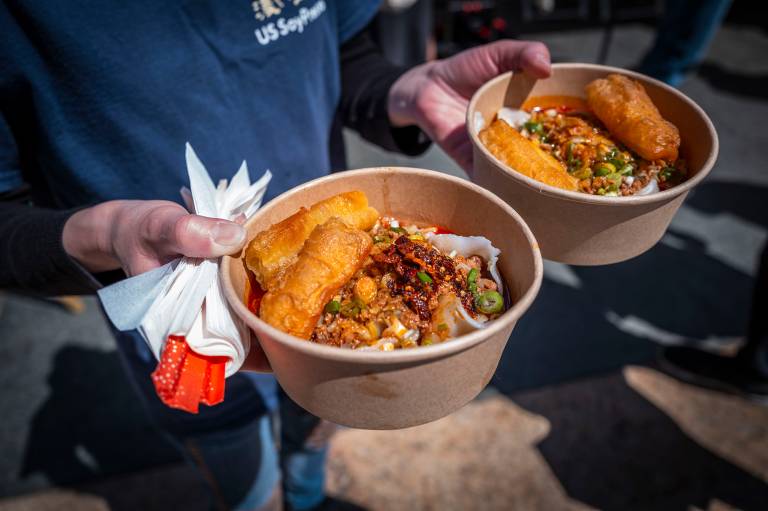
"caption": "At this year's Taiwanese American Cultural Festival, Liang's Village will once again serve its signature hand-pulled noodles with sesame-peanut sauce. The 33rd annual edition of the festival hits San Francisco's Union Square on Saturday, May 9.",
"credit": "Jan Stec, courtesy of TAP-SF",
"altTag": "A person holding a bowl of noodles in each hand.",
"description": null,
"imgSizes": {
"thumbnail": {
"file": "https://cdn.kqed.org/wp-content/uploads/sites/2/2026/05/liangs-noodle_jan-stec-160x106.jpg",
"width": 160,
"height": 106,
"mimeType": "image/jpeg"
},
"medium_large": {
"file": "https://cdn.kqed.org/wp-content/uploads/sites/2/2026/05/liangs-noodle_jan-stec-768x511.jpg",
"width": 768,
"height": 511,
"mimeType": "image/jpeg"
},
"1536x1536": {
"file": "https://cdn.kqed.org/wp-content/uploads/sites/2/2026/05/liangs-noodle_jan-stec-1536x1022.jpg",
"width": 1536,
"height": 1022,
"mimeType": "image/jpeg"
},
"post-thumbnail": {
"file": "https://cdn.kqed.org/wp-content/uploads/sites/2/2026/05/liangs-noodle_jan-stec-672x372.jpg",
"width": 672,
"height": 372,
"mimeType": "image/jpeg"
},
"twentyfourteen-full-width": {
"file": "https://cdn.kqed.org/wp-content/uploads/sites/2/2026/05/liangs-noodle_jan-stec-1038x576.jpg",
"width": 1038,
"height": 576,
"mimeType": "image/jpeg"
},
"npr-cds-wide": {
"file": "https://cdn.kqed.org/wp-content/uploads/sites/2/2026/05/liangs-noodle_jan-stec-1200x675.jpg",
"width": 1200,
"height": 675,
"mimeType": "image/jpeg"
},
"npr-cds-square": {
"file": "https://cdn.kqed.org/wp-content/uploads/sites/2/2026/05/liangs-noodle_jan-stec-600x600.jpg",
"width": 600,
"height": 600,
"mimeType": "image/jpeg"
},
"kqedFullSize": {
"file": "https://cdn.kqed.org/wp-content/uploads/sites/2/2026/05/liangs-noodle_jan-stec.jpg",
"width": 2000,
"height": 1331
}
},
"isLoading": false,
"fetchFailed": false
},
"arts_13975798": {
"type": "attachments",
"id": "arts_13975798",
"meta": {
"index": "attachments_1716263798",
"site": "arts",
"id": "13975798",
"found": true
},
"title": "minced pork rice liangs village crop",
"publishDate": 1746567053,
"status": "inherit",
"parent": 13975796,
"modified": 1746567151,
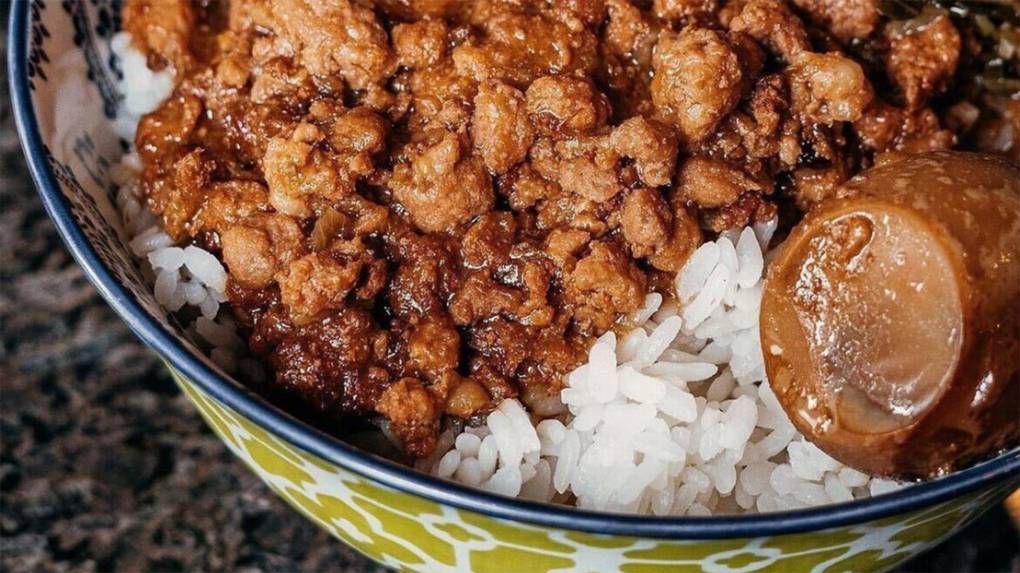
"caption": "Braised minced pork rice (aka lu rou fan) from Liang's Village, one of the anchor food vendors at this year's Taiwanese American Culture Festival. The event returns to San Francisco's Union Square on Saturday, May 10.",
"credit": "Courtesy of Liang's Village",
"altTag": "Close up of a bowl of Taiwanese braised pork rice.",
"description": null,
"imgSizes": {
"medium": {
"file": "https://cdn.kqed.org/wp-content/uploads/sites/2/2025/05/minced-pork-rice-liangs-village-crop-800x450.jpg",
"width": 800,
"height": 450,
"mimeType": "image/jpeg"
},
"large": {
"file": "https://cdn.kqed.org/wp-content/uploads/sites/2/2025/05/minced-pork-rice-liangs-village-crop-1020x573.jpg",
"width": 1020,
"height": 573,
"mimeType": "image/jpeg"
},
"thumbnail": {
"file": "https://cdn.kqed.org/wp-content/uploads/sites/2/2025/05/minced-pork-rice-liangs-village-crop-160x90.jpg",
"width": 160,
"height": 90,
"mimeType": "image/jpeg"
},
"medium_large": {
"file": "https://cdn.kqed.org/wp-content/uploads/sites/2/2025/05/minced-pork-rice-liangs-village-crop-768x432.jpg",
"width": 768,
"height": 432,
"mimeType": "image/jpeg"
},
"1536x1536": {
"file": "https://cdn.kqed.org/wp-content/uploads/sites/2/2025/05/minced-pork-rice-liangs-village-crop-1536x863.jpg",
"width": 1536,
"height": 863,
"mimeType": "image/jpeg"
},
"post-thumbnail": {
"file": "https://cdn.kqed.org/wp-content/uploads/sites/2/2025/05/minced-pork-rice-liangs-village-crop-672x372.jpg",
"width": 672,
"height": 372,
"mimeType": "image/jpeg"
},
"twentyfourteen-full-width": {
"file": "https://cdn.kqed.org/wp-content/uploads/sites/2/2025/05/minced-pork-rice-liangs-village-crop-1038x576.jpg",
"width": 1038,
"height": 576,
"mimeType": "image/jpeg"
},
"full-width": {
"file": "https://cdn.kqed.org/wp-content/uploads/sites/2/2025/05/minced-pork-rice-liangs-village-crop-1920x1079.jpg",
"width": 1920,
"height": 1079,
"mimeType": "image/jpeg"
},
"kqedFullSize": {
"file": "https://cdn.kqed.org/wp-content/uploads/sites/2/2025/05/minced-pork-rice-liangs-village-crop.jpg",
"width": 2000,
"height": 1124
}
},
"isLoading": false,
"fetchFailed": false
},
"arts_13959265": {
"type": "attachments",
"id": "arts_13959265",
"meta": {
"index": "attachments_1716263798",
"site": "arts",
"id": "13959265",
"found": true
},
"title": "Coverphotooption11_crop",
"publishDate": 1717612055,
"status": "inherit",
"parent": 13959259,
"modified": 1717612309,
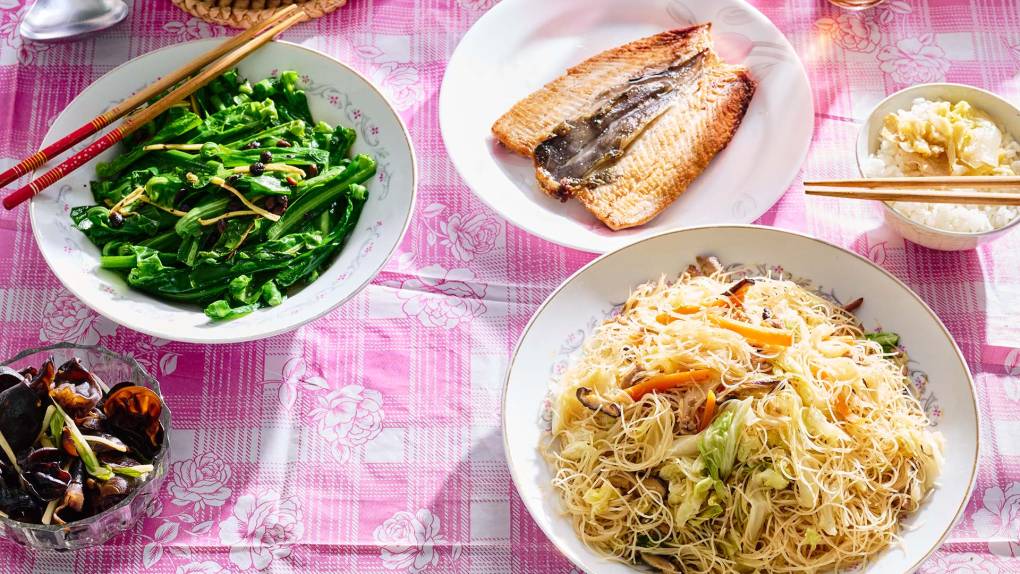
"caption": "A spread of homestyle Taiwanese dishes from Clarissa Wei's new cookbook, 'Made in Taiwan.'",
"credit": "Ryan Chen and Yen Wei",
"altTag": "A spread of homestyle Taiwanese dishes laid out on a pink and white checked tablecloth.",
"description": null,
"imgSizes": {
"medium": {
"file": "https://cdn.kqed.org/wp-content/uploads/sites/2/2024/06/Coverphotooption11_crop-800x450.jpg",
"width": 800,
"height": 450,
"mimeType": "image/jpeg"
},
"large": {
"file": "https://cdn.kqed.org/wp-content/uploads/sites/2/2024/06/Coverphotooption11_crop-1020x574.jpg",
"width": 1020,
"height": 574,
"mimeType": "image/jpeg"
},
"thumbnail": {
"file": "https://cdn.kqed.org/wp-content/uploads/sites/2/2024/06/Coverphotooption11_crop-160x90.jpg",
"width": 160,
"height": 90,
"mimeType": "image/jpeg"
},
"medium_large": {
"file": "https://cdn.kqed.org/wp-content/uploads/sites/2/2024/06/Coverphotooption11_crop-768x432.jpg",
"width": 768,
"height": 432,
"mimeType": "image/jpeg"
},
"1536x1536": {
"file": "https://cdn.kqed.org/wp-content/uploads/sites/2/2024/06/Coverphotooption11_crop-1536x864.jpg",
"width": 1536,
"height": 864,
"mimeType": "image/jpeg"
},
"post-thumbnail": {
"file": "https://cdn.kqed.org/wp-content/uploads/sites/2/2024/06/Coverphotooption11_crop-672x372.jpg",
"width": 672,
"height": 372,
"mimeType": "image/jpeg"
},
"twentyfourteen-full-width": {
"file": "https://cdn.kqed.org/wp-content/uploads/sites/2/2024/06/Coverphotooption11_crop-1038x576.jpg",
"width": 1038,
"height": 576,
"mimeType": "image/jpeg"
},
"kqedFullSize": {
"file": "https://cdn.kqed.org/wp-content/uploads/sites/2/2024/06/Coverphotooption11_crop.jpg",
"width": 1920,
"height": 1080
}
},
"isLoading": false,
"fetchFailed": false
},
"arts_13957309": {
"type": "attachments",
"id": "arts_13957309",
"meta": {
"index": "attachments_1716263798",
"site": "arts",
"id": "13957309",
"found": true
},
"parent": 13957305,
"imgSizes": {
"twentyfourteen-full-width": {
"file": "https://cdn.kqed.org/wp-content/uploads/sites/2/2024/05/liangs-beef-noodle-2022_crop-1038x576.jpg",
"width": 1038,
"mimeType": "image/jpeg",
"height": 576
},
"thumbnail": {
"file": "https://cdn.kqed.org/wp-content/uploads/sites/2/2024/05/liangs-beef-noodle-2022_crop-160x110.jpg",
"width": 160,
"mimeType": "image/jpeg",
"height": 110
},
"post-thumbnail": {
"file": "https://cdn.kqed.org/wp-content/uploads/sites/2/2024/05/liangs-beef-noodle-2022_crop-672x372.jpg",
"width": 672,
"mimeType": "image/jpeg",
"height": 372
},
"kqedFullSize": {
"file": "https://cdn.kqed.org/wp-content/uploads/sites/2/2024/05/liangs-beef-noodle-2022_crop.jpg",
"width": 1920,
"height": 1320
},
"large": {
"file": "https://cdn.kqed.org/wp-content/uploads/sites/2/2024/05/liangs-beef-noodle-2022_crop-1020x701.jpg",
"width": 1020,
"mimeType": "image/jpeg",
"height": 701
},
"1536x1536": {
"file": "https://cdn.kqed.org/wp-content/uploads/sites/2/2024/05/liangs-beef-noodle-2022_crop-1536x1056.jpg",
"width": 1536,
"mimeType": "image/jpeg",
"height": 1056
},
"medium": {
"file": "https://cdn.kqed.org/wp-content/uploads/sites/2/2024/05/liangs-beef-noodle-2022_crop-800x550.jpg",
"width": 800,
"mimeType": "image/jpeg",
"height": 550
},
"medium_large": {
"file": "https://cdn.kqed.org/wp-content/uploads/sites/2/2024/05/liangs-beef-noodle-2022_crop-768x528.jpg",
"width": 768,
"mimeType": "image/jpeg",
"height": 528
}
},
"publishDate": 1715036002,
"modified": 1715036109,
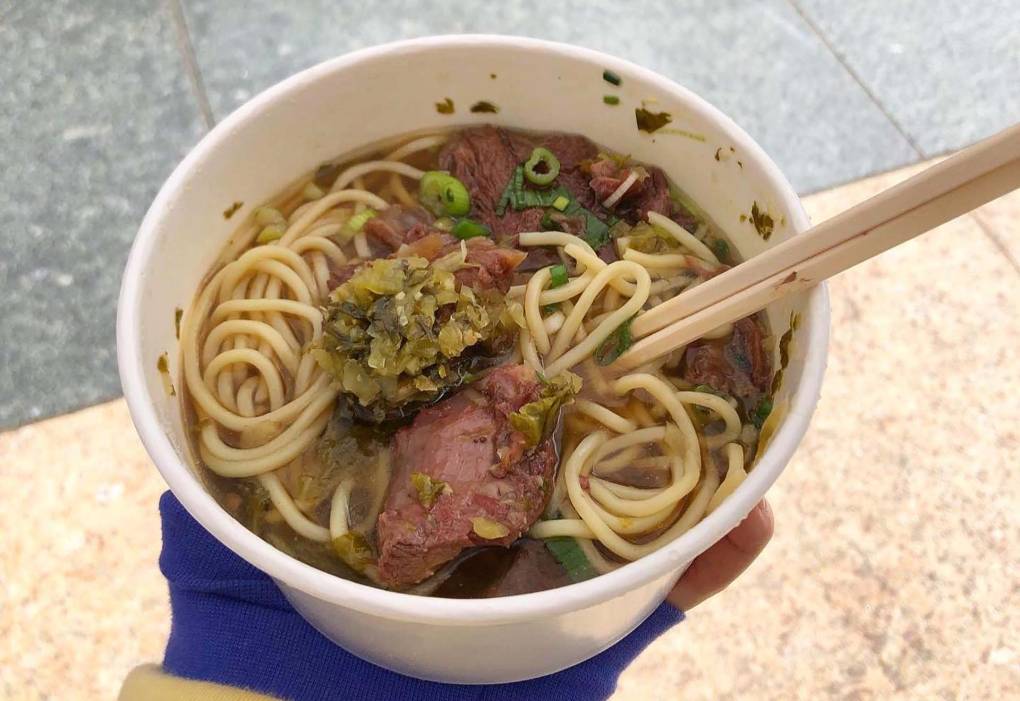
"caption": "Liang's Village's popular beef noodle soup will return to this year's Taiwanese American Cultural Festival, held in Union Square.",
"description": null,
"title": "liangs beef noodle 2022_crop",
"credit": "Courtesy of Liang's Village / Facebook",
"status": "inherit",
"altTag": "Beef noodle soup in a takeout bowl.",
"isLoading": false,
"fetchFailed": false
},
"arts_13956223": {
"type": "attachments",
"id": "arts_13956223",
"meta": {
"index": "attachments_1716263798",
"site": "arts",
"id": "13956223",
"found": true
},
"parent": 13956218,
"imgSizes": {
"twentyfourteen-full-width": {
"file": "https://cdn.kqed.org/wp-content/uploads/sites/2/2024/04/Lounge-Chinatown-crop-1038x576.jpg",
"width": 1038,
"mimeType": "image/jpeg",
"height": 576
},
"thumbnail": {
"file": "https://cdn.kqed.org/wp-content/uploads/sites/2/2024/04/Lounge-Chinatown-crop-160x90.jpg",
"width": 160,
"mimeType": "image/jpeg",
"height": 90
},
"post-thumbnail": {
"file": "https://cdn.kqed.org/wp-content/uploads/sites/2/2024/04/Lounge-Chinatown-crop-672x372.jpg",
"width": 672,
"mimeType": "image/jpeg",
"height": 372
},
"kqedFullSize": {
"file": "https://cdn.kqed.org/wp-content/uploads/sites/2/2024/04/Lounge-Chinatown-crop.jpg",
"width": 1920,
"height": 1080
},
"large": {
"file": "https://cdn.kqed.org/wp-content/uploads/sites/2/2024/04/Lounge-Chinatown-crop-1020x574.jpg",
"width": 1020,
"mimeType": "image/jpeg",
"height": 574
},
"1536x1536": {
"file": "https://cdn.kqed.org/wp-content/uploads/sites/2/2024/04/Lounge-Chinatown-crop-1536x864.jpg",
"width": 1536,
"mimeType": "image/jpeg",
"height": 864
},
"medium": {
"file": "https://cdn.kqed.org/wp-content/uploads/sites/2/2024/04/Lounge-Chinatown-crop-800x450.jpg",
"width": 800,
"mimeType": "image/jpeg",
"height": 450
},
"medium_large": {
"file": "https://cdn.kqed.org/wp-content/uploads/sites/2/2024/04/Lounge-Chinatown-crop-768x432.jpg",
"width": 768,
"mimeType": "image/jpeg",
"height": 432
}
},
"publishDate": 1713486436,
"modified": 1713486519,
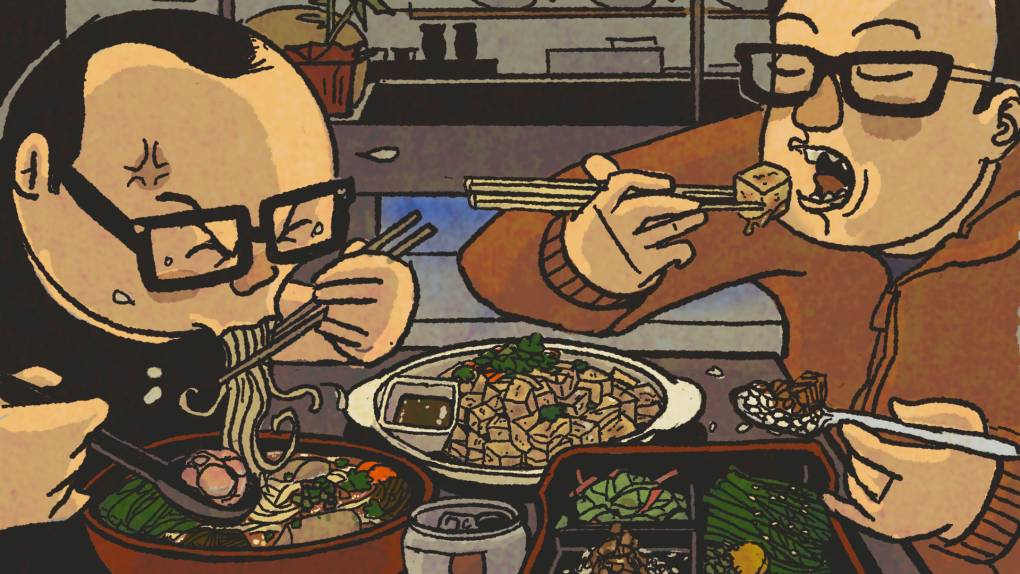
"caption": "Lounge Chinatown serves an array of Taiwanese street food classics — including stinky tofu — until 2:30 a.m. every night.",
"description": null,
"title": "Lounge Chinatown-crop",
"credit": "Thien Pham",
"status": "inherit",
"altTag": "Two men devouring a bowl of soup noodles and a plate of fried tofu, with chopsticks in their hands.",
"isLoading": false,
"fetchFailed": false
},
"arts_13897879": {
"type": "attachments",
"id": "arts_13897879",
"meta": {
"index": "attachments_1716263798",
"site": "arts",
"id": "13897879",
"found": true
},
"parent": 13897868,
"imgSizes": {
"twentyfourteen-full-width": {
"file": "https://ww2.kqed.org/app/uploads/sites/2/2021/05/CafeMei_burger-1038x576.jpg",
"width": 1038,
"mimeType": "image/jpeg",
"height": 576
},
"thumbnail": {
"file": "https://ww2.kqed.org/app/uploads/sites/2/2021/05/CafeMei_burger-160x120.jpg",
"width": 160,
"mimeType": "image/jpeg",
"height": 120
},
"post-thumbnail": {
"file": "https://ww2.kqed.org/app/uploads/sites/2/2021/05/CafeMei_burger-672x372.jpg",
"width": 672,
"mimeType": "image/jpeg",
"height": 372
},
"kqedFullSize": {
"file": "https://ww2.kqed.org/app/uploads/sites/2/2021/05/CafeMei_burger-scaled.jpg",
"width": 2560,
"height": 1920
},
"2048x2048": {
"file": "https://ww2.kqed.org/app/uploads/sites/2/2021/05/CafeMei_burger-2048x1536.jpg",
"width": 2048,
"mimeType": "image/jpeg",
"height": 1536
},
"large": {
"file": "https://ww2.kqed.org/app/uploads/sites/2/2021/05/CafeMei_burger-1020x765.jpg",
"width": 1020,
"mimeType": "image/jpeg",
"height": 765
},
"1536x1536": {
"file": "https://ww2.kqed.org/app/uploads/sites/2/2021/05/CafeMei_burger-1536x1152.jpg",
"width": 1536,
"mimeType": "image/jpeg",
"height": 1152
},
"full-width": {
"file": "https://ww2.kqed.org/app/uploads/sites/2/2021/05/CafeMei_burger-1920x1440.jpg",
"width": 1920,
"mimeType": "image/jpeg",
"height": 1440
},
"medium": {
"file": "https://ww2.kqed.org/app/uploads/sites/2/2021/05/CafeMei_burger-800x600.jpg",
"width": 800,
"mimeType": "image/jpeg",
"height": 600
},
"medium_large": {
"file": "https://ww2.kqed.org/app/uploads/sites/2/2021/05/CafeMei_burger-768x576.jpg",
"width": 768,
"mimeType": "image/jpeg",
"height": 576
}
},
"publishDate": 1622050142,
"modified": 1622050393,
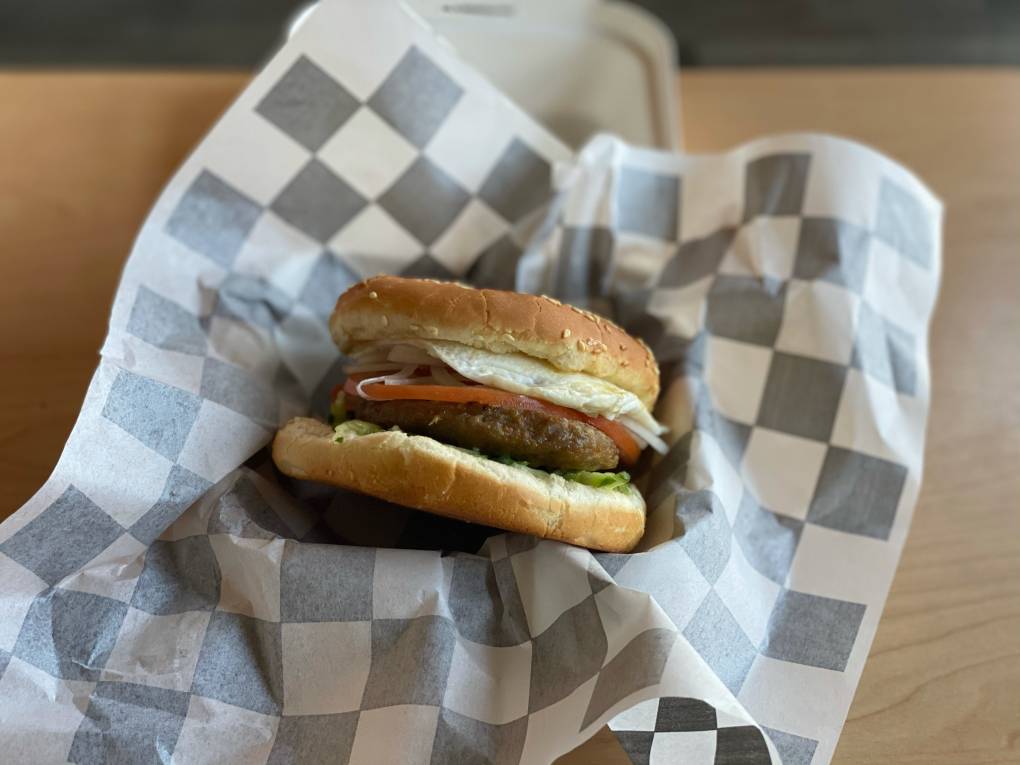
"caption": "Toppings for the Cafe Mei breakfast burger include tomato, fried egg, and thinly sliced cucumber.",
"description": "Toppings for the Cafe Mei breakfast burger include tomato, fried egg, and thinly sliced cucumber.",
"title": "CafeMei_burger",
"credit": "Luke Tsai",
"status": "inherit",
"altTag": "A Taiwanese breakfast burger, with fried egg, tomato, and cucumber garnish visible, on top of a checker-patterned sheet of wax paper.",
"isLoading": false,
"fetchFailed": false
},
"arts_13952058": {
"type": "attachments",
"id": "arts_13952058",
"meta": {
"index": "attachments_1716263798",
"site": "arts",
"id": "13952058",
"found": true
},
"parent": 13952052,
"imgSizes": {
"twentyfourteen-full-width": {
"file": "https://cdn.kqed.org/wp-content/uploads/sites/2/2024/02/3.__a_third_culture_kid_pilgrimage__shot_by__terry.thunder__creative_direction___taiwanesenoodles___bowlcutsurvivor__taken_from___itsyangsheng_crop-1038x576.jpg",
"width": 1038,
"mimeType": "image/jpeg",
"height": 576
},
"thumbnail": {
"file": "https://cdn.kqed.org/wp-content/uploads/sites/2/2024/02/3.__a_third_culture_kid_pilgrimage__shot_by__terry.thunder__creative_direction___taiwanesenoodles___bowlcutsurvivor__taken_from___itsyangsheng_crop-160x100.jpg",
"width": 160,
"mimeType": "image/jpeg",
"height": 100
},
"post-thumbnail": {
"file": "https://cdn.kqed.org/wp-content/uploads/sites/2/2024/02/3.__a_third_culture_kid_pilgrimage__shot_by__terry.thunder__creative_direction___taiwanesenoodles___bowlcutsurvivor__taken_from___itsyangsheng_crop-672x372.jpg",
"width": 672,
"mimeType": "image/jpeg",
"height": 372
},
"kqedFullSize": {
"file": "https://cdn.kqed.org/wp-content/uploads/sites/2/2024/02/3.__a_third_culture_kid_pilgrimage__shot_by__terry.thunder__creative_direction___taiwanesenoodles___bowlcutsurvivor__taken_from___itsyangsheng_crop.jpg",
"width": 1920,
"height": 1200
},
"large": {
"file": "https://cdn.kqed.org/wp-content/uploads/sites/2/2024/02/3.__a_third_culture_kid_pilgrimage__shot_by__terry.thunder__creative_direction___taiwanesenoodles___bowlcutsurvivor__taken_from___itsyangsheng_crop-1020x638.jpg",
"width": 1020,
"mimeType": "image/jpeg",
"height": 638
},
"1536x1536": {
"file": "https://cdn.kqed.org/wp-content/uploads/sites/2/2024/02/3.__a_third_culture_kid_pilgrimage__shot_by__terry.thunder__creative_direction___taiwanesenoodles___bowlcutsurvivor__taken_from___itsyangsheng_crop-1536x960.jpg",
"width": 1536,
"mimeType": "image/jpeg",
"height": 960
},
"medium": {
"file": "https://cdn.kqed.org/wp-content/uploads/sites/2/2024/02/3.__a_third_culture_kid_pilgrimage__shot_by__terry.thunder__creative_direction___taiwanesenoodles___bowlcutsurvivor__taken_from___itsyangsheng_crop-800x500.jpg",
"width": 800,
"mimeType": "image/jpeg",
"height": 500
},
"medium_large": {
"file": "https://cdn.kqed.org/wp-content/uploads/sites/2/2024/02/3.__a_third_culture_kid_pilgrimage__shot_by__terry.thunder__creative_direction___taiwanesenoodles___bowlcutsurvivor__taken_from___itsyangsheng_crop-768x480.jpg",
"width": 768,
"mimeType": "image/jpeg",
"height": 480
}
},
"publishDate": 1707524553,
"modified": 1707776022,
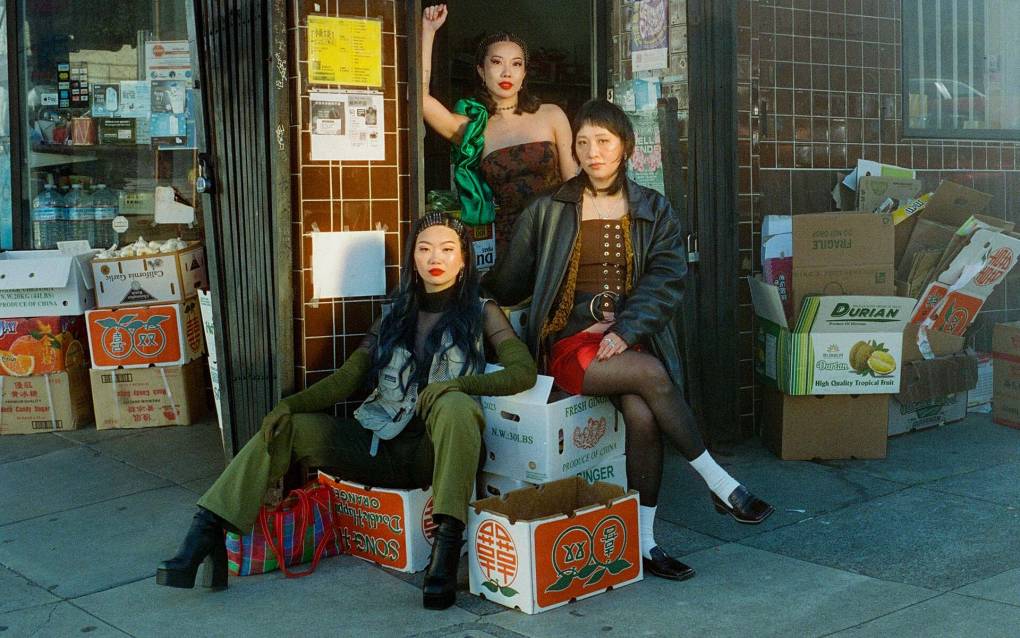
"caption": "Yăng Shēng, a multimedia project launched by Hanna Chen (left) and Steph Cai (center), aims to bring \"third culture\" children of immigrants from Asian diasporas together in the Bay Area.",
"description": null,
"title": "3.__a_third_culture_kid_pilgrimage__shot_by__terry.thunder__creative_direction___taiwanesenoodles___bowlcutsurvivor__taken_from___itsyangsheng_crop",
"credit": "Terry Thunder Tsai, courtesy of Yăng Shēng",
"status": "inherit",
"altTag": "A trio of first-generation Asian American women pose in front of a Chinatown market",
"isLoading": false,
"fetchFailed": false
},
"arts_13940135": {
"type": "attachments",
"id": "arts_13940135",
"meta": {
"index": "attachments_1716263798",
"site": "arts",
"id": "13940135",
"found": true
},
"parent": 13940133,
"imgSizes": {
"twentyfourteen-full-width": {
"file": "https://cdn.kqed.org/wp-content/uploads/sites/2/2024/01/9780593533055_Interior_Image_3_495221-1038x576.jpg",
"width": 1038,
"mimeType": "image/jpeg",
"height": 576
},
"thumbnail": {
"file": "https://cdn.kqed.org/wp-content/uploads/sites/2/2024/01/9780593533055_Interior_Image_3_495221-160x90.jpg",
"width": 160,
"mimeType": "image/jpeg",
"height": 90
},
"post-thumbnail": {
"file": "https://cdn.kqed.org/wp-content/uploads/sites/2/2024/01/9780593533055_Interior_Image_3_495221-672x372.jpg",
"width": 672,
"mimeType": "image/jpeg",
"height": 372
},
"kqedFullSize": {
"file": "https://cdn.kqed.org/wp-content/uploads/sites/2/2024/01/9780593533055_Interior_Image_3_495221.jpg",
"width": 2000,
"height": 1125
},
"large": {
"file": "https://cdn.kqed.org/wp-content/uploads/sites/2/2024/01/9780593533055_Interior_Image_3_495221-1020x574.jpg",
"width": 1020,
"mimeType": "image/jpeg",
"height": 574
},
"1536x1536": {
"file": "https://cdn.kqed.org/wp-content/uploads/sites/2/2024/01/9780593533055_Interior_Image_3_495221-1536x864.jpg",
"width": 1536,
"mimeType": "image/jpeg",
"height": 864
},
"full-width": {
"file": "https://cdn.kqed.org/wp-content/uploads/sites/2/2024/01/9780593533055_Interior_Image_3_495221-1920x1080.jpg",
"width": 1920,
"mimeType": "image/jpeg",
"height": 1080
},
"medium": {
"file": "https://cdn.kqed.org/wp-content/uploads/sites/2/2024/01/9780593533055_Interior_Image_3_495221-800x450.jpg",
"width": 800,
"mimeType": "image/jpeg",
"height": 450
},
"medium_large": {
"file": "https://cdn.kqed.org/wp-content/uploads/sites/2/2024/01/9780593533055_Interior_Image_3_495221-768x432.jpg",
"width": 768,
"mimeType": "image/jpeg",
"height": 432
}
},
"publishDate": 1704740605,
"modified": 1704740827,
"caption": "The protagonist of Ying Chang Compestine's new children's book, 'Ra Pu Zel and the Stinky Tofu,' is a spunky Chinese princess who loves eating delicious food above all else.",
"description": null,
"title": "9780593533055_Interior_Image_3_495221",
"credit": "Crystal Kung/Penguin Random House",
"status": "inherit",
"altTag": "Illustration of a Chinese princess playing with her pet dog.",
"isLoading": false,
"fetchFailed": false
},
"arts_13932057": {
"type": "attachments",
"id": "arts_13932057",
"meta": {
"index": "attachments_1716263798",
"site": "arts",
"id": "13932057",
"found": true
},
"parent": 13932035,
"imgSizes": {
"twentyfourteen-full-width": {
"file": "https://ww2.kqed.org/app/uploads/sites/2/2023/07/good-to-eat_chicken-1038x576.jpg",
"width": 1038,
"mimeType": "image/jpeg",
"height": 576
},
"thumbnail": {
"file": "https://ww2.kqed.org/app/uploads/sites/2/2023/07/good-to-eat_chicken-160x90.jpg",
"width": 160,
"mimeType": "image/jpeg",
"height": 90
},
"post-thumbnail": {
"file": "https://ww2.kqed.org/app/uploads/sites/2/2023/07/good-to-eat_chicken-672x372.jpg",
"width": 672,
"mimeType": "image/jpeg",
"height": 372
},
"kqedFullSize": {
"file": "https://ww2.kqed.org/app/uploads/sites/2/2023/07/good-to-eat_chicken.jpg",
"width": 1920,
"height": 1080
},
"large": {
"file": "https://ww2.kqed.org/app/uploads/sites/2/2023/07/good-to-eat_chicken-1020x574.jpg",
"width": 1020,
"mimeType": "image/jpeg",
"height": 574
},
"1536x1536": {
"file": "https://ww2.kqed.org/app/uploads/sites/2/2023/07/good-to-eat_chicken-1536x864.jpg",
"width": 1536,
"mimeType": "image/jpeg",
"height": 864
},
"medium": {
"file": "https://ww2.kqed.org/app/uploads/sites/2/2023/07/good-to-eat_chicken-800x450.jpg",
"width": 800,
"mimeType": "image/jpeg",
"height": 450
},
"medium_large": {
"file": "https://ww2.kqed.org/app/uploads/sites/2/2023/07/good-to-eat_chicken-768x432.jpg",
"width": 768,
"mimeType": "image/jpeg",
"height": 432
}
},
"publishDate": 1690335812,
"modified": 1690335911,
"caption": "A quintessential Taiwanese barbecue meal at Emeryville's Good to Eat Dumplings: shacha-slathered grilled chicken with a side of lu rou fan.",
"description": null,
"title": "good to eat_chicken",
"credit": "Luke Tsai",
"status": "inherit",
"altTag": "Small bowl of lu rou fan next to a plate of grilled chicken.",
"isLoading": false,
"fetchFailed": false
},
"arts_13929016": {
"type": "attachments",
"id": "arts_13929016",
"meta": {
"index": "attachments_1716263798",
"site": "arts",
"id": "13929016",
"found": true
},
"parent": 13929007,
"imgSizes": {
"twentyfourteen-full-width": {
"file": "https://ww2.kqed.org/app/uploads/sites/2/2023/05/taiwanese-american-culture-fest_liangs-1038x576.jpg",
"width": 1038,
"mimeType": "image/jpeg",
"height": 576
},
"thumbnail": {
"file": "https://ww2.kqed.org/app/uploads/sites/2/2023/05/taiwanese-american-culture-fest_liangs-160x90.jpg",
"width": 160,
"mimeType": "image/jpeg",
"height": 90
},
"post-thumbnail": {
"file": "https://ww2.kqed.org/app/uploads/sites/2/2023/05/taiwanese-american-culture-fest_liangs-672x372.jpg",
"width": 672,
"mimeType": "image/jpeg",
"height": 372
},
"kqedFullSize": {
"file": "https://ww2.kqed.org/app/uploads/sites/2/2023/05/taiwanese-american-culture-fest_liangs.jpg",
"width": 1920,
"height": 1080
},
"large": {
"file": "https://ww2.kqed.org/app/uploads/sites/2/2023/05/taiwanese-american-culture-fest_liangs-1020x574.jpg",
"width": 1020,
"mimeType": "image/jpeg",
"height": 574
},
"1536x1536": {
"file": "https://ww2.kqed.org/app/uploads/sites/2/2023/05/taiwanese-american-culture-fest_liangs-1536x864.jpg",
"width": 1536,
"mimeType": "image/jpeg",
"height": 864
},
"medium": {
"file": "https://ww2.kqed.org/app/uploads/sites/2/2023/05/taiwanese-american-culture-fest_liangs-800x450.jpg",
"width": 800,
"mimeType": "image/jpeg",
"height": 450
},
"medium_large": {
"file": "https://ww2.kqed.org/app/uploads/sites/2/2023/05/taiwanese-american-culture-fest_liangs-768x432.jpg",
"width": 768,
"mimeType": "image/jpeg",
"height": 432
}
},
"publishDate": 1683831647,
"modified": 1683833150,
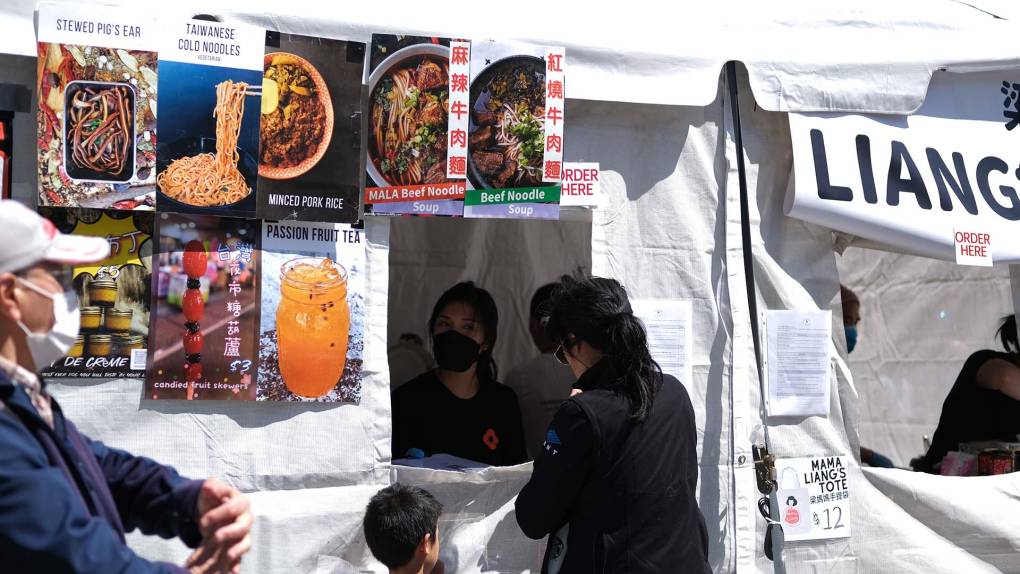
"caption": "Cupertino's Liang Village will be the main food vendor for this year's Taiwanese American Cultural Festival, which is returning to Union Square for its 30th year.",
"description": null,
"title": "taiwanese american culture fest_liangs",
"credit": "Courtesy of Taiwanese American Cultural Festival",
"status": "inherit",
"altTag": "A customer orders food from the Liang's Village food tent, which has pictures of beef noodle soup and other Taiwanese dishes displayed.",
"isLoading": false,
"fetchFailed": false
},
"arts_13918995": {
"type": "attachments",
"id": "arts_13918995",
"meta": {
"index": "attachments_1716263798",
"site": "arts",
"id": "13918995",
"found": true
},
"parent": 13918993,
"imgSizes": {
"twentyfourteen-full-width": {
"file": "https://ww2.kqed.org/app/uploads/sites/2/2022/09/dragon-gate-idiot-noodles-crop-1038x576.jpg",
"width": 1038,
"mimeType": "image/jpeg",
"height": 576
},
"thumbnail": {
"file": "https://ww2.kqed.org/app/uploads/sites/2/2022/09/dragon-gate-idiot-noodles-crop-160x90.jpg",
"width": 160,
"mimeType": "image/jpeg",
"height": 90
},
"post-thumbnail": {
"file": "https://ww2.kqed.org/app/uploads/sites/2/2022/09/dragon-gate-idiot-noodles-crop-672x372.jpg",
"width": 672,
"mimeType": "image/jpeg",
"height": 372
},
"kqedFullSize": {
"file": "https://ww2.kqed.org/app/uploads/sites/2/2022/09/dragon-gate-idiot-noodles-crop.jpg",
"width": 1280,
"height": 720
},
"large": {
"file": "https://ww2.kqed.org/app/uploads/sites/2/2022/09/dragon-gate-idiot-noodles-crop-1020x574.jpg",
"width": 1020,
"mimeType": "image/jpeg",
"height": 574
},
"medium": {
"file": "https://ww2.kqed.org/app/uploads/sites/2/2022/09/dragon-gate-idiot-noodles-crop-800x450.jpg",
"width": 800,
"mimeType": "image/jpeg",
"height": 450
},
"medium_large": {
"file": "https://ww2.kqed.org/app/uploads/sites/2/2022/09/dragon-gate-idiot-noodles-crop-768x432.jpg",
"width": 768,
"mimeType": "image/jpeg",
"height": 432
}
},
"publishDate": 1663004209,
"modified": 1663005802,
"caption": "The \"idiot noodles\" are one of the signature dishes at Dragon Gate, a popular Taiwanese restaurant reopening in Jack London Square in early 2023.",
"description": null,
"title": "dragon gate idiot noodles-crop",
"credit": "Courtesy of Dragon Gate/Visit Oakland",
"status": "inherit",
"altTag": "A bowl of noodles topped with meat sauce, slivered cucumbers and half a hard-boiled egg.",
"isLoading": false,
"fetchFailed": false
},
"arts_13916314": {
"type": "attachments",
"id": "arts_13916314",
"meta": {
"index": "attachments_1716263798",
"site": "arts",
"id": "13916314",
"found": true
},
"parent": 13916312,
"imgSizes": {
"twentyfourteen-full-width": {
"file": "https://ww2.kqed.org/app/uploads/sites/2/2022/07/054_KQEDArts_TaiwanBento_05082021-1038x576.jpg",
"width": 1038,
"mimeType": "image/jpeg",
"height": 576
},
"thumbnail": {
"file": "https://ww2.kqed.org/app/uploads/sites/2/2022/07/054_KQEDArts_TaiwanBento_05082021-160x90.jpg",
"width": 160,
"mimeType": "image/jpeg",
"height": 90
},
"post-thumbnail": {
"file": "https://ww2.kqed.org/app/uploads/sites/2/2022/07/054_KQEDArts_TaiwanBento_05082021-672x372.jpg",
"width": 672,
"mimeType": "image/jpeg",
"height": 372
},
"kqedFullSize": {
"file": "https://ww2.kqed.org/app/uploads/sites/2/2022/07/054_KQEDArts_TaiwanBento_05082021.jpg",
"width": 1981,
"height": 1115
},
"large": {
"file": "https://ww2.kqed.org/app/uploads/sites/2/2022/07/054_KQEDArts_TaiwanBento_05082021-1020x574.jpg",
"width": 1020,
"mimeType": "image/jpeg",
"height": 574
},
"1536x1536": {
"file": "https://ww2.kqed.org/app/uploads/sites/2/2022/07/054_KQEDArts_TaiwanBento_05082021-1536x865.jpg",
"width": 1536,
"mimeType": "image/jpeg",
"height": 865
},
"full-width": {
"file": "https://ww2.kqed.org/app/uploads/sites/2/2022/07/054_KQEDArts_TaiwanBento_05082021-1920x1081.jpg",
"width": 1920,
"mimeType": "image/jpeg",
"height": 1081
},
"medium": {
"file": "https://ww2.kqed.org/app/uploads/sites/2/2022/07/054_KQEDArts_TaiwanBento_05082021-800x450.jpg",
"width": 800,
"mimeType": "image/jpeg",
"height": 450
},
"medium_large": {
"file": "https://ww2.kqed.org/app/uploads/sites/2/2022/07/054_KQEDArts_TaiwanBento_05082021-768x432.jpg",
"width": 768,
"mimeType": "image/jpeg",
"height": 432
}
},
"publishDate": 1658263339,
"modified": 1658263448,
"caption": "Owners Stacy Tang (right) and Willy Wang have run Taiwan Bento in downtown Oakland since 2014. The restaurant will close on July 29, 2022.",
"description": null,
"title": "054_KQEDArts_TaiwanBento_05082021",
"credit": "Beth LaBerge/KQED",
"status": "inherit",
"altTag": "Willy Wang and Stacy Tang, both in face masks, pose inside their Oakland restaurant Taiwan Bento.",
"isLoading": false,
"fetchFailed": false
}
},
"audioPlayerReducer": {
"postId": "stream_live",
"isPaused": true,
"isPlaying": false,
"pfsActive": false,
"pledgeModalIsOpen": true,
"playerDrawerIsOpen": false,
"liveAudioPlayStartedAt": 0,
"liveAudioPlayContext": ""
},
"authorsReducer": {
"ltsai": {
"type": "authors",
"id": "11743",
"meta": {
"index": "authors_1716337520",
"id": "11743",
"found": true
},
"name": "Luke Tsai",
"firstName": "Luke",
"lastName": "Tsai",
"slug": "ltsai",
"email": "ltsai@kqed.org",
"display_author_email": true,
"staff_mastheads": [
"arts"
],
"title": "Food Editor",
"bio": "Luke Tsai is KQED's food editor and resident stinky tofu connoisseur. Prior to KQED, he was an editor at Eater SF, \u003cem>San Francisco \u003c/em>magazine, and the \u003cem>East Bay Express\u003c/em>, and his work has also appeared in TASTE, the \u003cem>San Francisco Chronicle\u003c/em>, and the \u003cem>Best Food Writing\u003c/em> anthology. When he isn't writing or editing, you'll find him eating most everything he can get his hands on.",
"avatar": "https://secure.gravatar.com/avatar/1e59b45bf191526e7339d6ba46e33a57b2030d25c27660ecc64ea3cb863e34f7?s=600&d=blank&r=g",
"twitter": "theluketsai",
"bluesky": null,
"facebook": null,
"instagram": null,
"linkedin": null,
"sites": [
{
"site": "",
"roles": [
"editor"
]
},
{
"site": "arts",
"roles": [
"administrator"
]
},
{
"site": "news",
"roles": [
"editor",
"contributor"
]
},
{
"site": "bayareabites",
"roles": [
"editor"
]
},
{
"site": "food",
"roles": [
"editor"
]
}
],
"headData": {
"title": "Luke Tsai | KQED",
"description": "Food Editor",
"ogImgSrc": "https://secure.gravatar.com/avatar/1e59b45bf191526e7339d6ba46e33a57b2030d25c27660ecc64ea3cb863e34f7?s=600&d=blank&r=g",
"twImgSrc": "https://secure.gravatar.com/avatar/1e59b45bf191526e7339d6ba46e33a57b2030d25c27660ecc64ea3cb863e34f7?s=600&d=blank&r=g"
},
"isLoading": false,
"link": "/author/ltsai"
},
"achazaro": {
"type": "authors",
"id": "11748",
"meta": {
"index": "authors_1716337520",
"id": "11748",
"found": true
},
"name": "Alan Chazaro",
"firstName": "Alan",
"lastName": "Chazaro",
"slug": "achazaro",
"email": "agchazaro@gmail.com",
"display_author_email": true,
"staff_mastheads": [],
"title": "Food Writer and Reporter",
"bio": "Alan Chazaro is the author of \u003cem>This Is Not a Frank Ocean Cover Album\u003c/em> (Black Lawrence Press, 2019), \u003cem>Piñata Theory\u003c/em> (Black Lawrence Press, 2020), and \u003cem>Notes from the Eastern Span of the Bay Bridge\u003c/em> (Ghost City Press, 2021). He is a graduate of June Jordan’s Poetry for the People program at UC Berkeley and a former Lawrence Ferlinghetti Fellow at the University of San Francisco. He writes about sports, food, art, music, education, and culture while repping the Bay on \u003ca href=\"https://twitter.com/alan_chazaro\">Twitter\u003c/a> and \u003ca href=\"https://www.instagram.com/alan_chazaro/?hl=en\">Instagram\u003c/a> at @alan_chazaro.",
"avatar": "https://secure.gravatar.com/avatar/ea8b6dd970fc5c29e7a188e7d5861df7?s=600&d=blank&r=g",
"twitter": "alan_chazaro",
"facebook": null,
"instagram": null,
"linkedin": null,
"sites": [
{
"site": "arts",
"roles": [
"contributor"
]
},
{
"site": "news",
"roles": [
"editor"
]
}
],
"headData": {
"title": "Alan Chazaro | KQED",
"description": "Food Writer and Reporter",
"ogImgSrc": "https://secure.gravatar.com/avatar/ea8b6dd970fc5c29e7a188e7d5861df7?s=600&d=blank&r=g",
"twImgSrc": "https://secure.gravatar.com/avatar/ea8b6dd970fc5c29e7a188e7d5861df7?s=600&d=blank&r=g"
},
"isLoading": false,
"link": "/author/achazaro"
},
"tpham": {
"type": "authors",
"id": "11753",
"meta": {
"index": "authors_1716337520",
"id": "11753",
"found": true
},
"name": "Thien Pham",
"firstName": "Thien",
"lastName": "Pham",
"slug": "tpham",
"email": "thiendog@gmail.com",
"display_author_email": false,
"staff_mastheads": [],
"title": "KQED Contributor",
"bio": null,
"avatar": "https://secure.gravatar.com/avatar/a5b4729969ad46d88e7b9ec9dd4f3fa6af84dd0fa8fa91f01d8d9481694999bc?s=600&d=blank&r=g",
"twitter": null,
"bluesky": null,
"facebook": null,
"instagram": null,
"linkedin": null,
"sites": [
{
"site": "arts",
"roles": [
"contributor"
]
}
],
"headData": {
"title": "Thien Pham | KQED",
"description": "KQED Contributor",
"ogImgSrc": "https://secure.gravatar.com/avatar/a5b4729969ad46d88e7b9ec9dd4f3fa6af84dd0fa8fa91f01d8d9481694999bc?s=600&d=blank&r=g",
"twImgSrc": "https://secure.gravatar.com/avatar/a5b4729969ad46d88e7b9ec9dd4f3fa6af84dd0fa8fa91f01d8d9481694999bc?s=600&d=blank&r=g"
},
"isLoading": false,
"link": "/author/tpham"
}
},
"pagesReducer": {
"arts_tag_taiwanese-food": {
"type": "terms",
"id": "arts_15151",
"meta": {
"index": "terms_1716263798",
"site": "arts",
"id": "15151",
"score": 9.893822
},
"featImg": null,
"name": "taiwanese food",
"description": null,
"taxonomy": "tag",
"headData": {
"twImgId": null,
"twTitle": null,
"ogTitle": null,
"ogImgId": null,
"twDescription": null,
"description": null,
"title": "taiwanese food Archives | KQED Arts",
"ogDescription": null
},
"ttid": 15163,
"slug": "taiwanese-food",
"isLoading": false,
"title": "taiwanese food",
"pageMeta": {
"site": "arts",
"WpPageTemplate": "page-topic-editorial",
"currentPage": 1
},
"blocks": [
{
"blockName": "kqed/post-list",
"attrs": {
"layout": "cardArticle2",
"query": "posts/arts?tag=taiwanese-food",
"seeMore": false,
"paginated": true,
"page": 1
}
},
{
"blockName": "kqed/ad"
}
]
}
},
"pfsSessionReducer": {},
"postsReducer": {
"stream_live": {
"type": "live",
"id": "stream_live",
"audioUrl": "https://streams.kqed.org/kqedradio",
"title": "Live Stream",
"excerpt": "Live Stream information currently unavailable.",
"link": "/radio",
"featImg": "",
"label": {
"name": "KQED Live",
"link": "/"
}
},
"stream_kqedNewscast": {
"type": "posts",
"id": "stream_kqedNewscast",
"audioUrl": "https://www.kqed.org/.stream/anon/radio/RDnews/newscast.mp3?_=1",
"title": "KQED Newscast",
"featImg": "",
"label": {
"name": "88.5 FM",
"link": "/"
}
},
"arts_13989316": {
"type": "posts",
"id": "arts_13989316",
"meta": {
"index": "posts_1716263798",
"site": "arts",
"id": "13989316",
"score": null,
"sort": [
1778195789000
]
},
"guestAuthors": [],
"slug": "taiwanese-cultural-festival-food-union-square-sf-2026",
"title": "This Saturday, Taiwanese Food Once Again Takes Over Union Square",
"publishDate": 1778195789,
"format": "standard",
"headTitle": "This Saturday, Taiwanese Food Once Again Takes Over Union Square | KQED",
"labelTerm": {},
"content": "\u003cp>On Saturday, tourists and locals passing through Union Square will find more than just the usual cable cars, big-box retailers and historic hotels. Instead, a huge, bustling Taiwanese market, not unlike a scene one might see in Taipei, will occupy the district’s central plaza — dozens upon dozens of vendors selling T-shirts, cute handmade stationery, artisanal soy sauce, boba drinks and, of course, a dazzling array of \u003ca href=\"https://www.kqed.org/arts/tag/taiwanese-food\">Taiwanese food\u003c/a>.\u003c/p>\n\u003cp>It’s the 33rd annual \u003ca href=\"https://www.tap-sf.org/tacf\">Taiwanese American Cultural Festival\u003c/a>, which organizers tout as the largest event of its kind on the West Coast, drawing upwards of 10,000 visitors each year. As always, the annual celebration of Taiwanese American culture will showcase local artists and designers, and feature live performances running the gamut from traditional folk dance to soft boy pop (including a set by San Francisco singer-songwriter \u003ca href=\"https://www.instagram.com/iamfedge/\">Fedge\u003c/a>).\u003c/p>\n\u003cp>More than anything, though, the event is a big coming-out day for Taiwanese food, which had long kept a relatively low profile in the Bay Area before experiencing a \u003ca href=\"https://www.kqed.org/arts/13897272/bay-area-taiwanese-food-scene-nostalgia\">real renaissance in recent years\u003c/a>. The festival’s market area will include booths selling pantry staples like soy sauce and chili oil, as well as \u003ca href=\"https://www.instagram.com/daeliciousness?igsh=NTc4MTIwNjQ2YQ%3D%3D\">multiple\u003c/a> \u003ca href=\"https://www.instagram.com/shopteappo/?hl=en\">vendors\u003c/a> selling loose-leaf oolong teas sourced from the mountains of Taiwan.\u003c/p>\n\u003cfigure id=\"attachment_13989323\" class=\"wp-caption alignnone\" style=\"max-width: 2000px\">\u003cimg loading=\"lazy\" decoding=\"async\" class=\"size-full wp-image-13989323\" src=\"https://cdn.kqed.org/wp-content/uploads/sites/2/2026/05/liangs-noodle-pull_jan-stec.jpg\" alt=\"A food vendor pulls noodles at an outdoor festival.\" width=\"2000\" height=\"2000\" srcset=\"https://cdn.kqed.org/wp-content/uploads/sites/2/2026/05/liangs-noodle-pull_jan-stec.jpg 2000w, https://cdn.kqed.org/wp-content/uploads/sites/2/2026/05/liangs-noodle-pull_jan-stec-160x160.jpg 160w, https://cdn.kqed.org/wp-content/uploads/sites/2/2026/05/liangs-noodle-pull_jan-stec-768x768.jpg 768w, https://cdn.kqed.org/wp-content/uploads/sites/2/2026/05/liangs-noodle-pull_jan-stec-1536x1536.jpg 1536w, https://cdn.kqed.org/wp-content/uploads/sites/2/2026/05/liangs-noodle-pull_jan-stec-600x600.jpg 600w\" sizes=\"auto, (max-width: 2000px) 100vw, 2000px\">\u003cfigcaption class=\"wp-caption-text\">Pulling noodles by hand at the Liang’s Village stand at the 2025 edition of the Taiwanese American Cultural Festival. \u003ccite>(Jan Stec, courtesy of TAP-SF.)\u003c/cite>\u003c/figcaption>\u003c/figure>\n\u003cp>\u003cspan style=\"color: #2b2b2b;font-weight: 400\">\u003cb>\u003cstrong>\u003cspan style=\"font-weight: 400\">[aside postID='arts_13897936,arts_13959259']\u003c/span>\u003c/strong>\u003c/b>\u003c/span>For many visitors, the biggest attraction will be the rare opportunity to sample a wide variety of the street foods normally found at Taiwanese night markets. This year’s selection is especially robust. For the first time, the stylish fusion lounge \u003ca href=\"https://www.instagram.com/pigletco.sf/\">Piglet & Co\u003c/a> will be on hand, serving their fancified (and utterly delicious) take on Taiwanese braised pork rice, aka \u003ca href=\"https://www.kqed.org/arts/13897498/mama-liu-lu-rou-fan-taiwanese-food-comic\">lu rou fan\u003c/a>. The caterer \u003ca href=\"https://www.instagram.com/bun.me.up/?hl=en\">Bun Me Up\u003c/a> will offer braised pork belly buns and other steamed bun sandwiches — essentially a modern twist on Taiwanese gua bao. And Hayward-based \u003ca href=\"https://www.instagram.com/mitk1655/\">MITK\u003c/a> will have black pepper buns — a Taipei night market classic — and the thin, soupy noodles known as mee sua.\u003c/p>\n\u003cp>Meanwhile, \u003ca href=\"https://www.kqed.org/arts/13897684/pandemic-taiwanese-food-liangs-village\">Liang’s Village\u003c/a>, one of the most popular Taiwanese restaurants in the Bay, will sell both vegan and pork-based versions of its hand-pulled noodles, served with a spicy peanut-sesame sauce and fried dough sticks.\u003c/p>\n\u003cp>[ad fullwidth]\u003c/p>\n\u003cp>For those who’ve saved room for dessert, the festival hosts a number of up-and-coming Taiwanese bakery pop-ups. Newcomers include \u003ca href=\"https://www.instagram.com/lunarbakerysf/?hl=en\">Lunar Bakery\u003c/a>, with their Taiwanese-inspired takes on pastel de nata and tres leches cake, and \u003ca href=\"https://www.instagram.com/atoibakes/?hl=en\">À Toi Bakes\u003c/a>, whose offerings will include \u003ca href=\"https://www.instagram.com/p/DWCRJb1iaOu/?hl=en\">snowflake crisps\u003c/a> — a kind of crispy-chewy nougat treat that’s especially trendy in Taiwan right now.\u003c/p>\n\u003cfigure id=\"attachment_13989320\" class=\"wp-caption alignnone\" style=\"max-width: 1500px\">\u003cimg loading=\"lazy\" decoding=\"async\" class=\"size-full wp-image-13989320\" src=\"https://cdn.kqed.org/wp-content/uploads/sites/2/2026/05/piglet-and-co_lu-rou-fan.jpg\" alt=\"An elegant bowl of braised pork over rice.\" width=\"1500\" height=\"2000\" srcset=\"https://cdn.kqed.org/wp-content/uploads/sites/2/2026/05/piglet-and-co_lu-rou-fan.jpg 1500w, https://cdn.kqed.org/wp-content/uploads/sites/2/2026/05/piglet-and-co_lu-rou-fan-160x213.jpg 160w, https://cdn.kqed.org/wp-content/uploads/sites/2/2026/05/piglet-and-co_lu-rou-fan-768x1024.jpg 768w, https://cdn.kqed.org/wp-content/uploads/sites/2/2026/05/piglet-and-co_lu-rou-fan-1152x1536.jpg 1152w\" sizes=\"auto, (max-width: 1500px) 100vw, 1500px\">\u003cfigcaption class=\"wp-caption-text\">Piglet & Co will serve its popular, upscale version of Taiwanese-style braised pork rice (lu rou fan). \u003ccite>(Courtesy of Piglet & Co)\u003c/cite>\u003c/figcaption>\u003c/figure>\n\u003chr>\n\u003cp>\u003c/p>\n\u003cp>\u003ci>The \u003c/i>\u003ca href=\"https://www.tap-sf.org/tacf\">\u003ci>Taiwanese American Cultural Festival\u003c/i>\u003c/a>\u003ci> will take place on Saturday, May 9, 10 a.m.–4 p.m. at Union Square in San Francisco. Admission is free.\u003c/i>\u003c/p>\n\n",
"blocks": [],
"excerpt": "Gua bao, lu rou fan and black pepper buns are the stars of San Francisco’s 33rd annual Taiwanese American Cultural Festival. ",
"status": "publish",
"parent": 0,
"modified": 1778199371,
"stats": {
"hasAudio": false,
"hasVideo": false,
"hasChartOrMap": false,
"iframeSrcs": [],
"hasGoogleForm": false,
"hasGallery": false,
"hasHearkenModule": false,
"hasPolis": false,
"paragraphCount": 9,
"wordCount": 517
},
"headData": {
"title": "Taiwanese Food Once Again Takes Over Union Square in SF | KQED",
"description": "Gua bao, lu rou fan and black pepper buns are the stars of San Francisco’s 33rd annual Taiwanese American Cultural Festival. ",
"ogTitle": "This Saturday, Taiwanese Food Once Again Takes Over Union Square",
"ogDescription": "",
"ogImgId": "",
"twTitle": "This Saturday, Taiwanese Food Once Again Takes Over Union Square",
"twDescription": "",
"twImgId": "",
"socialTitle": "Taiwanese Food Once Again Takes Over Union Square in SF%%page%% %%sep%% KQED",
"schema": {
"@context": "https://schema.org",
"@type": "Article",
"headline": "This Saturday, Taiwanese Food Once Again Takes Over Union Square",
"datePublished": "2026-05-07T16:16:29-07:00",
"dateModified": "2026-05-07T17:16:11-07:00",
"image": "https://cdn.kqed.org/wp-content/uploads/2020/02/KQED-OG-Image@1x.png"
}
},
"primaryCategory": {
"termId": 12276,
"slug": "food",
"name": "Food"
},
"source": "Food",
"sourceUrl": "https://www.kqed.org/food",
"sticky": false,
"nprStoryId": "kqed-13989316",
"templateType": "standard",
"featuredImageType": "standard",
"excludeFromSiteSearch": "Include",
"articleAge": "0",
"path": "/arts/13989316/taiwanese-cultural-festival-food-union-square-sf-2026",
"audioTrackLength": null,
"parsedContent": [
{
"type": "contentString",
"content": "\u003cdiv class=\"post-body\">\u003cp>\u003cp>On Saturday, tourists and locals passing through Union Square will find more than just the usual cable cars, big-box retailers and historic hotels. Instead, a huge, bustling Taiwanese market, not unlike a scene one might see in Taipei, will occupy the district’s central plaza — dozens upon dozens of vendors selling T-shirts, cute handmade stationery, artisanal soy sauce, boba drinks and, of course, a dazzling array of \u003ca href=\"https://www.kqed.org/arts/tag/taiwanese-food\">Taiwanese food\u003c/a>.\u003c/p>\n\u003cp>It’s the 33rd annual \u003ca href=\"https://www.tap-sf.org/tacf\">Taiwanese American Cultural Festival\u003c/a>, which organizers tout as the largest event of its kind on the West Coast, drawing upwards of 10,000 visitors each year. As always, the annual celebration of Taiwanese American culture will showcase local artists and designers, and feature live performances running the gamut from traditional folk dance to soft boy pop (including a set by San Francisco singer-songwriter \u003ca href=\"https://www.instagram.com/iamfedge/\">Fedge\u003c/a>).\u003c/p>\n\u003cp>More than anything, though, the event is a big coming-out day for Taiwanese food, which had long kept a relatively low profile in the Bay Area before experiencing a \u003ca href=\"https://www.kqed.org/arts/13897272/bay-area-taiwanese-food-scene-nostalgia\">real renaissance in recent years\u003c/a>. The festival’s market area will include booths selling pantry staples like soy sauce and chili oil, as well as \u003ca href=\"https://www.instagram.com/daeliciousness?igsh=NTc4MTIwNjQ2YQ%3D%3D\">multiple\u003c/a> \u003ca href=\"https://www.instagram.com/shopteappo/?hl=en\">vendors\u003c/a> selling loose-leaf oolong teas sourced from the mountains of Taiwan.\u003c/p>\n\u003cfigure id=\"attachment_13989323\" class=\"wp-caption alignnone\" style=\"max-width: 2000px\">\u003cimg loading=\"lazy\" decoding=\"async\" class=\"size-full wp-image-13989323\" src=\"https://cdn.kqed.org/wp-content/uploads/sites/2/2026/05/liangs-noodle-pull_jan-stec.jpg\" alt=\"A food vendor pulls noodles at an outdoor festival.\" width=\"2000\" height=\"2000\" srcset=\"https://cdn.kqed.org/wp-content/uploads/sites/2/2026/05/liangs-noodle-pull_jan-stec.jpg 2000w, https://cdn.kqed.org/wp-content/uploads/sites/2/2026/05/liangs-noodle-pull_jan-stec-160x160.jpg 160w, https://cdn.kqed.org/wp-content/uploads/sites/2/2026/05/liangs-noodle-pull_jan-stec-768x768.jpg 768w, https://cdn.kqed.org/wp-content/uploads/sites/2/2026/05/liangs-noodle-pull_jan-stec-1536x1536.jpg 1536w, https://cdn.kqed.org/wp-content/uploads/sites/2/2026/05/liangs-noodle-pull_jan-stec-600x600.jpg 600w\" sizes=\"auto, (max-width: 2000px) 100vw, 2000px\">\u003cfigcaption class=\"wp-caption-text\">Pulling noodles by hand at the Liang’s Village stand at the 2025 edition of the Taiwanese American Cultural Festival. \u003ccite>(Jan Stec, courtesy of TAP-SF.)\u003c/cite>\u003c/figcaption>\u003c/figure>\n\u003cp>\u003cspan style=\"color: #2b2b2b;font-weight: 400\">\u003cb>\u003cstrong>\u003cspan style=\"font-weight: 400\">\u003c/p>\u003c/div>",
"attributes": {
"named": {},
"numeric": []
}
},
{
"type": "component",
"content": "",
"name": "aside",
"attributes": {
"named": {
"postid": "arts_13897936,arts_13959259",
"label": ""
},
"numeric": []
}
},
{
"type": "contentString",
"content": "\u003cdiv class=\"post-body\">\u003cp>\u003c/span>\u003c/strong>\u003c/b>\u003c/span>For many visitors, the biggest attraction will be the rare opportunity to sample a wide variety of the street foods normally found at Taiwanese night markets. This year’s selection is especially robust. For the first time, the stylish fusion lounge \u003ca href=\"https://www.instagram.com/pigletco.sf/\">Piglet & Co\u003c/a> will be on hand, serving their fancified (and utterly delicious) take on Taiwanese braised pork rice, aka \u003ca href=\"https://www.kqed.org/arts/13897498/mama-liu-lu-rou-fan-taiwanese-food-comic\">lu rou fan\u003c/a>. The caterer \u003ca href=\"https://www.instagram.com/bun.me.up/?hl=en\">Bun Me Up\u003c/a> will offer braised pork belly buns and other steamed bun sandwiches — essentially a modern twist on Taiwanese gua bao. And Hayward-based \u003ca href=\"https://www.instagram.com/mitk1655/\">MITK\u003c/a> will have black pepper buns — a Taipei night market classic — and the thin, soupy noodles known as mee sua.\u003c/p>\n\u003cp>Meanwhile, \u003ca href=\"https://www.kqed.org/arts/13897684/pandemic-taiwanese-food-liangs-village\">Liang’s Village\u003c/a>, one of the most popular Taiwanese restaurants in the Bay, will sell both vegan and pork-based versions of its hand-pulled noodles, served with a spicy peanut-sesame sauce and fried dough sticks.\u003c/p>\n\u003cp>\u003c/p>\u003c/div>",
"attributes": {
"named": {},
"numeric": []
}
},
{
"type": "component",
"content": "",
"name": "ad",
"attributes": {
"named": {
"label": "fullwidth"
},
"numeric": [
"fullwidth"
]
}
},
{
"type": "contentString",
"content": "\u003cdiv class=\"post-body\">\u003cp>\u003c/p>\n\u003cp>For those who’ve saved room for dessert, the festival hosts a number of up-and-coming Taiwanese bakery pop-ups. Newcomers include \u003ca href=\"https://www.instagram.com/lunarbakerysf/?hl=en\">Lunar Bakery\u003c/a>, with their Taiwanese-inspired takes on pastel de nata and tres leches cake, and \u003ca href=\"https://www.instagram.com/atoibakes/?hl=en\">À Toi Bakes\u003c/a>, whose offerings will include \u003ca href=\"https://www.instagram.com/p/DWCRJb1iaOu/?hl=en\">snowflake crisps\u003c/a> — a kind of crispy-chewy nougat treat that’s especially trendy in Taiwan right now.\u003c/p>\n\u003cfigure id=\"attachment_13989320\" class=\"wp-caption alignnone\" style=\"max-width: 1500px\">\u003cimg loading=\"lazy\" decoding=\"async\" class=\"size-full wp-image-13989320\" src=\"https://cdn.kqed.org/wp-content/uploads/sites/2/2026/05/piglet-and-co_lu-rou-fan.jpg\" alt=\"An elegant bowl of braised pork over rice.\" width=\"1500\" height=\"2000\" srcset=\"https://cdn.kqed.org/wp-content/uploads/sites/2/2026/05/piglet-and-co_lu-rou-fan.jpg 1500w, https://cdn.kqed.org/wp-content/uploads/sites/2/2026/05/piglet-and-co_lu-rou-fan-160x213.jpg 160w, https://cdn.kqed.org/wp-content/uploads/sites/2/2026/05/piglet-and-co_lu-rou-fan-768x1024.jpg 768w, https://cdn.kqed.org/wp-content/uploads/sites/2/2026/05/piglet-and-co_lu-rou-fan-1152x1536.jpg 1152w\" sizes=\"auto, (max-width: 1500px) 100vw, 1500px\">\u003cfigcaption class=\"wp-caption-text\">Piglet & Co will serve its popular, upscale version of Taiwanese-style braised pork rice (lu rou fan). \u003ccite>(Courtesy of Piglet & Co)\u003c/cite>\u003c/figcaption>\u003c/figure>\n\u003chr>\n\u003cp>\u003c/p>\n\u003cp>\u003ci>The \u003c/i>\u003ca href=\"https://www.tap-sf.org/tacf\">\u003ci>Taiwanese American Cultural Festival\u003c/i>\u003c/a>\u003ci> will take place on Saturday, May 9, 10 a.m.–4 p.m. at Union Square in San Francisco. Admission is free.\u003c/i>\u003c/p>\n\n\u003c/div>\u003c/p>",
"attributes": {
"named": {},
"numeric": []
}
}
],
"link": "/arts/13989316/taiwanese-cultural-festival-food-union-square-sf-2026",
"authors": [
"11743"
],
"programs": [
"arts_140"
],
"categories": [
"arts_1",
"arts_12276"
],
"tags": [
"arts_10278",
"arts_1297",
"arts_1146",
"arts_15151",
"arts_585"
],
"featImg": "arts_13989318",
"label": "source_arts_13989316"
},
"arts_13975796": {
"type": "posts",
"id": "arts_13975796",
"meta": {
"index": "posts_1716263798",
"site": "arts",
"id": "13975796",
"score": null,
"sort": [
1746568058000
]
},
"guestAuthors": [],
"slug": "biggest-taiwanese-american-food-festival-union-square-sf-2025",
"title": "The West Coast’s Biggest Taiwanese Culture Festival Returns to Union Square",
"publishDate": 1746568058,
"format": "aside",
"headTitle": "The West Coast’s Biggest Taiwanese Culture Festival Returns to Union Square | KQED",
"labelTerm": {},
"content": "\u003cfigure id=\"attachment_13975799\" class=\"wp-caption alignnone\" style=\"max-width: 2000px\">\u003cimg loading=\"lazy\" decoding=\"async\" class=\"wp-image-13975799 size-full\" src=\"https://cdn.kqed.org/wp-content/uploads/sites/2/2025/05/minced-pork-rice_liangsvillage.jpg\" alt=\"\" width=\"2000\" height=\"2000\" srcset=\"https://cdn.kqed.org/wp-content/uploads/sites/2/2025/05/minced-pork-rice_liangsvillage.jpg 2000w, https://cdn.kqed.org/wp-content/uploads/sites/2/2025/05/minced-pork-rice_liangsvillage-800x800.jpg 800w, https://cdn.kqed.org/wp-content/uploads/sites/2/2025/05/minced-pork-rice_liangsvillage-1020x1020.jpg 1020w, https://cdn.kqed.org/wp-content/uploads/sites/2/2025/05/minced-pork-rice_liangsvillage-160x160.jpg 160w, https://cdn.kqed.org/wp-content/uploads/sites/2/2025/05/minced-pork-rice_liangsvillage-768x768.jpg 768w, https://cdn.kqed.org/wp-content/uploads/sites/2/2025/05/minced-pork-rice_liangsvillage-1536x1536.jpg 1536w, https://cdn.kqed.org/wp-content/uploads/sites/2/2025/05/minced-pork-rice_liangsvillage-1920x1920.jpg 1920w\" sizes=\"auto, (max-width: 2000px) 100vw, 2000px\">\u003cfigcaption class=\"wp-caption-text\">Braised minced pork rice (aka lu rou fan) from Liang’s Village, one of the anchor food vendors at this year’s Taiwanese American Culture Festival. The event returns to San Francisco’s Union Square on Saturday, May 10. \u003ccite>(Courtesy of Liang's Village)\u003c/cite>\u003c/figcaption>\u003c/figure>\n\u003cp>The regional cuisines of \u003ca href=\"https://www.kqed.org/arts/tag/taiwanese-food\">Taiwan\u003c/a> are vast and \u003ca href=\"https://www.kqed.org/arts/13959259/taiwanese-cookbook-clarissa-wei-interview-sf-bay-area\">endlessly diverse\u003c/a>, but any Taiwanese food festival worth its salt has to hit all the classics: beef noodle soup, fat-drenched lu rou fan and popcorn chicken bedecked with crispy basil leaves. An ice-cold \u003ca href=\"https://www.kqed.org/arts/13957666/best-boba-shops-bay-area-berkeley-cupertino-sf\">boba\u003c/a> tea to wash it all down.\u003c/p>\n\u003cp>On Saturday, May 10, San Francisco’s 32nd annual \u003ca href=\"https://www.tap-sf.org/tacf\">Taiwanese American Culture Festival\u003c/a> returns, and Union Square will be awash with all of those foundational dishes and more. The biggest event of its kind on the West Coast, the festival has steadily expanded its food offerings since returning from a pandemic-era pause a couple years ago. These days, the Union Square extravaganza boasts more hot food options, a greater mix of established restaurants and up-and-coming pop-ups and collaborations with national brands like \u003ca href=\"https://yunhai.shop/?srsltid=AfmBOopYianPsDWj8Rd9N-5OjplGot2cVCJSsdQx9ajuG6_FDZM2Jca4\">Yun Hai\u003c/a>. (The Brooklyn-based Taiwanese pantry’s sauces and dried fruit snacks are a staple for countless second-gen Taiwanese food enthusiasts.)\u003c/p>\n\u003cp>\u003cspan style=\"font-weight: 400\">\u003cspan style=\"color: #2b2b2b;font-weight: 400\">[aside postID='arts_13897936,arts_13959259']\u003c/span>\u003c/span>An ideal food tour of this year’s festival offerings might include a stop at the Liang’s Village stall for a hearty bowl of beef noodle soup and some spicy, Pingtung-style \u003ca href=\"https://www.kqed.org/arts/13897684/pandemic-taiwanese-food-liangs-village\">cold peanut noodles\u003c/a>, especially if it’s a hot day. Both Liang’s and the boba shop Mr. Green Bubble will be selling the succulent braised pork belly rice bowls known as \u003ca href=\"https://www.kqed.org/arts/13897498/mama-liu-lu-rou-fan-taiwanese-food-comic\">lu rou fan\u003c/a>, though my personal favorite is Mr. Green Bubble’s take on Taiwanese popcorn chicken — one of the best versions you’ll find at a boba shop. Meanwhile, Hayward cult favorite MITK will offer some of the most nostalgic street food dishes: oyster pancakes, black pepper buns and \u003ca href=\"https://www.kqed.org/arts/13897868/taiwanese-breakfast-bay-area\">fan tuan\u003c/a> (aka “rice burritos”).\u003c/p>\n\u003cfigure id=\"attachment_13975803\" class=\"wp-caption aligncenter\" style=\"max-width: 2000px\">\u003cimg loading=\"lazy\" decoding=\"async\" class=\"size-full wp-image-13975803\" src=\"https://cdn.kqed.org/wp-content/uploads/sites/2/2025/05/2024_09_02_HotDogBun_0159-dana-mariko-chang.jpg\" alt=\"Taiwanese-style hot dog bun on a plate, against a red backdrop.\" width=\"2000\" height=\"2500\" srcset=\"https://cdn.kqed.org/wp-content/uploads/sites/2/2025/05/2024_09_02_HotDogBun_0159-dana-mariko-chang.jpg 2000w, https://cdn.kqed.org/wp-content/uploads/sites/2/2025/05/2024_09_02_HotDogBun_0159-dana-mariko-chang-800x1000.jpg 800w, https://cdn.kqed.org/wp-content/uploads/sites/2/2025/05/2024_09_02_HotDogBun_0159-dana-mariko-chang-1020x1275.jpg 1020w, https://cdn.kqed.org/wp-content/uploads/sites/2/2025/05/2024_09_02_HotDogBun_0159-dana-mariko-chang-160x200.jpg 160w, https://cdn.kqed.org/wp-content/uploads/sites/2/2025/05/2024_09_02_HotDogBun_0159-dana-mariko-chang-768x960.jpg 768w, https://cdn.kqed.org/wp-content/uploads/sites/2/2025/05/2024_09_02_HotDogBun_0159-dana-mariko-chang-1229x1536.jpg 1229w, https://cdn.kqed.org/wp-content/uploads/sites/2/2025/05/2024_09_02_HotDogBun_0159-dana-mariko-chang-1638x2048.jpg 1638w, https://cdn.kqed.org/wp-content/uploads/sites/2/2025/05/2024_09_02_HotDogBun_0159-dana-mariko-chang-1920x2400.jpg 1920w\" sizes=\"auto, (max-width: 2000px) 100vw, 2000px\">\u003cfigcaption class=\"wp-caption-text\">A Taiwanese-style hot dog bun from Little Moon Bakehouse. \u003ccite>(Dana Mariko Chang, courtesy of Little Moon Bakehouse)\u003c/cite>\u003c/figcaption>\u003c/figure>\n\u003cp>Those with a sweet tooth can make a beeline for \u003ca href=\"https://www.instagram.com/littlemoonbakehouse/\">Little Moon Bakehouse\u003c/a> (formerly \u003ca href=\"https://www.kqed.org/arts/13908103/lunar-new-year-vegan-mooncake-biscuits-annies-t-cakes\">Annie’s T Cakes\u003c/a>) for Taiwanese-inspired buns and pastries, and \u003ca href=\"https://www.instagram.com/nekosama_ba/\">Nekosama’s\u003c/a> assortment of cute cat-shaped cookies.\u003c/p>\n\u003cp>The festival will include a \u003ca href=\"https://www.instagram.com/p/DJMzPyuP56A/\">book fair\u003c/a> highlighting Taiwanese American authors, fun merch from local artists and designers, and a robust lineup of both traditional and contemporary cultural performances (headlined by singer-songwriter \u003ca href=\"https://www.tiktok.com/@whoisnikorain/video/7433878639504248110\">Niko Rain\u003c/a>).\u003c/p>\n\u003cp>[ad fullwidth]\u003c/p>\n\u003cp>But for many visitors, checking out each year’s food lineup is the most exciting part of the festival. Who knows? Maybe next year \u003ca href=\"https://www.kqed.org/arts/13940133/stinky-tofu-childrens-book-ra-pu-zel\">stinky tofu\u003c/a> will even make an appearance.\u003c/p>\n\u003cfigure id=\"attachment_13975806\" class=\"wp-caption alignnone\" style=\"max-width: 2000px\">\u003cimg loading=\"lazy\" decoding=\"async\" class=\"size-full wp-image-13975806\" src=\"https://cdn.kqed.org/wp-content/uploads/sites/2/2025/05/mtk-at-tacf-24.jpg\" alt=\"Food stall at a food festival in Union Square, San Francisco.\" width=\"2000\" height=\"1500\" srcset=\"https://cdn.kqed.org/wp-content/uploads/sites/2/2025/05/mtk-at-tacf-24.jpg 2000w, https://cdn.kqed.org/wp-content/uploads/sites/2/2025/05/mtk-at-tacf-24-800x600.jpg 800w, https://cdn.kqed.org/wp-content/uploads/sites/2/2025/05/mtk-at-tacf-24-1020x765.jpg 1020w, https://cdn.kqed.org/wp-content/uploads/sites/2/2025/05/mtk-at-tacf-24-160x120.jpg 160w, https://cdn.kqed.org/wp-content/uploads/sites/2/2025/05/mtk-at-tacf-24-768x576.jpg 768w, https://cdn.kqed.org/wp-content/uploads/sites/2/2025/05/mtk-at-tacf-24-1536x1152.jpg 1536w, https://cdn.kqed.org/wp-content/uploads/sites/2/2025/05/mtk-at-tacf-24-1920x1440.jpg 1920w\" sizes=\"auto, (max-width: 2000px) 100vw, 2000px\">\u003cfigcaption class=\"wp-caption-text\">MITK’s stall at the 2024 edition of the festival. This year, the Hayward catering business will be selling oyster pancakes, fan tuan and more. \u003ccite>(Courtesy of MITK)\u003c/cite>\u003c/figcaption>\u003c/figure>\n\u003chr>\n\u003cp>\u003c/p>\n\u003cp>\u003ci>This year’s \u003c/i>\u003ca href=\"https://www.tap-sf.org/tacf\">\u003ci>Taiwanese American Cultural Festival\u003c/i>\u003c/a>\u003ci> will take place on Saturday, May 10, 10 a.m.–4 p.m. at Union Square in San Francisco. Admission is free.\u003c/i>\u003c/p>\n\n",
"blocks": [],
"excerpt": "Expect boba, beef noodle soup, popcorn chicken and other classics.",
"status": "publish",
"parent": 0,
"modified": 1746568058,
"stats": {
"hasAudio": false,
"hasVideo": false,
"hasChartOrMap": false,
"iframeSrcs": [],
"hasGoogleForm": false,
"hasGallery": false,
"hasHearkenModule": false,
"hasPolis": false,
"paragraphCount": 9,
"wordCount": 523
},
"headData": {
"title": "The West Coast’s Biggest Taiwanese Culture Festival Returns to Union Square | KQED",
"description": "Expect boba, beef noodle soup, popcorn chicken and other classics.",
"ogTitle": "",
"ogDescription": "",
"ogImgId": "",
"twTitle": "",
"twDescription": "",
"twImgId": "",
"schema": {
"@context": "https://schema.org",
"@type": "Article",
"headline": "The West Coast’s Biggest Taiwanese Culture Festival Returns to Union Square",
"datePublished": "2025-05-06T14:47:38-07:00",
"dateModified": "2025-05-06T14:47:38-07:00",
"image": "https://cdn.kqed.org/wp-content/uploads/2020/02/KQED-OG-Image@1x.png"
}
},
"source": "Food",
"sourceUrl": "https://www.kqed.org/food",
"sticky": false,
"nprStoryId": "kqed-13975796",
"templateType": "standard",
"featuredImageType": "standard",
"excludeFromSiteSearch": "Include",
"articleAge": "0",
"path": "/arts/13975796/biggest-taiwanese-american-food-festival-union-square-sf-2025",
"audioTrackLength": null,
"parsedContent": [
{
"type": "contentString",
"content": "\u003cdiv class=\"post-body\">\u003cp>\u003cfigure id=\"attachment_13975799\" class=\"wp-caption alignnone\" style=\"max-width: 2000px\">\u003cimg loading=\"lazy\" decoding=\"async\" class=\"wp-image-13975799 size-full\" src=\"https://cdn.kqed.org/wp-content/uploads/sites/2/2025/05/minced-pork-rice_liangsvillage.jpg\" alt=\"\" width=\"2000\" height=\"2000\" srcset=\"https://cdn.kqed.org/wp-content/uploads/sites/2/2025/05/minced-pork-rice_liangsvillage.jpg 2000w, https://cdn.kqed.org/wp-content/uploads/sites/2/2025/05/minced-pork-rice_liangsvillage-800x800.jpg 800w, https://cdn.kqed.org/wp-content/uploads/sites/2/2025/05/minced-pork-rice_liangsvillage-1020x1020.jpg 1020w, https://cdn.kqed.org/wp-content/uploads/sites/2/2025/05/minced-pork-rice_liangsvillage-160x160.jpg 160w, https://cdn.kqed.org/wp-content/uploads/sites/2/2025/05/minced-pork-rice_liangsvillage-768x768.jpg 768w, https://cdn.kqed.org/wp-content/uploads/sites/2/2025/05/minced-pork-rice_liangsvillage-1536x1536.jpg 1536w, https://cdn.kqed.org/wp-content/uploads/sites/2/2025/05/minced-pork-rice_liangsvillage-1920x1920.jpg 1920w\" sizes=\"auto, (max-width: 2000px) 100vw, 2000px\">\u003cfigcaption class=\"wp-caption-text\">Braised minced pork rice (aka lu rou fan) from Liang’s Village, one of the anchor food vendors at this year’s Taiwanese American Culture Festival. The event returns to San Francisco’s Union Square on Saturday, May 10. \u003ccite>(Courtesy of Liang's Village)\u003c/cite>\u003c/figcaption>\u003c/figure>\n\u003cp>The regional cuisines of \u003ca href=\"https://www.kqed.org/arts/tag/taiwanese-food\">Taiwan\u003c/a> are vast and \u003ca href=\"https://www.kqed.org/arts/13959259/taiwanese-cookbook-clarissa-wei-interview-sf-bay-area\">endlessly diverse\u003c/a>, but any Taiwanese food festival worth its salt has to hit all the classics: beef noodle soup, fat-drenched lu rou fan and popcorn chicken bedecked with crispy basil leaves. An ice-cold \u003ca href=\"https://www.kqed.org/arts/13957666/best-boba-shops-bay-area-berkeley-cupertino-sf\">boba\u003c/a> tea to wash it all down.\u003c/p>\n\u003cp>On Saturday, May 10, San Francisco’s 32nd annual \u003ca href=\"https://www.tap-sf.org/tacf\">Taiwanese American Culture Festival\u003c/a> returns, and Union Square will be awash with all of those foundational dishes and more. The biggest event of its kind on the West Coast, the festival has steadily expanded its food offerings since returning from a pandemic-era pause a couple years ago. These days, the Union Square extravaganza boasts more hot food options, a greater mix of established restaurants and up-and-coming pop-ups and collaborations with national brands like \u003ca href=\"https://yunhai.shop/?srsltid=AfmBOopYianPsDWj8Rd9N-5OjplGot2cVCJSsdQx9ajuG6_FDZM2Jca4\">Yun Hai\u003c/a>. (The Brooklyn-based Taiwanese pantry’s sauces and dried fruit snacks are a staple for countless second-gen Taiwanese food enthusiasts.)\u003c/p>\n\u003cp>\u003cspan style=\"font-weight: 400\">\u003cspan style=\"color: #2b2b2b;font-weight: 400\">\u003c/p>\u003c/div>",
"attributes": {
"named": {},
"numeric": []
}
},
{
"type": "component",
"content": "",
"name": "aside",
"attributes": {
"named": {
"postid": "arts_13897936,arts_13959259",
"label": ""
},
"numeric": []
}
},
{
"type": "contentString",
"content": "\u003cdiv class=\"post-body\">\u003cp>\u003c/span>\u003c/span>An ideal food tour of this year’s festival offerings might include a stop at the Liang’s Village stall for a hearty bowl of beef noodle soup and some spicy, Pingtung-style \u003ca href=\"https://www.kqed.org/arts/13897684/pandemic-taiwanese-food-liangs-village\">cold peanut noodles\u003c/a>, especially if it’s a hot day. Both Liang’s and the boba shop Mr. Green Bubble will be selling the succulent braised pork belly rice bowls known as \u003ca href=\"https://www.kqed.org/arts/13897498/mama-liu-lu-rou-fan-taiwanese-food-comic\">lu rou fan\u003c/a>, though my personal favorite is Mr. Green Bubble’s take on Taiwanese popcorn chicken — one of the best versions you’ll find at a boba shop. Meanwhile, Hayward cult favorite MITK will offer some of the most nostalgic street food dishes: oyster pancakes, black pepper buns and \u003ca href=\"https://www.kqed.org/arts/13897868/taiwanese-breakfast-bay-area\">fan tuan\u003c/a> (aka “rice burritos”).\u003c/p>\n\u003cfigure id=\"attachment_13975803\" class=\"wp-caption aligncenter\" style=\"max-width: 2000px\">\u003cimg loading=\"lazy\" decoding=\"async\" class=\"size-full wp-image-13975803\" src=\"https://cdn.kqed.org/wp-content/uploads/sites/2/2025/05/2024_09_02_HotDogBun_0159-dana-mariko-chang.jpg\" alt=\"Taiwanese-style hot dog bun on a plate, against a red backdrop.\" width=\"2000\" height=\"2500\" srcset=\"https://cdn.kqed.org/wp-content/uploads/sites/2/2025/05/2024_09_02_HotDogBun_0159-dana-mariko-chang.jpg 2000w, https://cdn.kqed.org/wp-content/uploads/sites/2/2025/05/2024_09_02_HotDogBun_0159-dana-mariko-chang-800x1000.jpg 800w, https://cdn.kqed.org/wp-content/uploads/sites/2/2025/05/2024_09_02_HotDogBun_0159-dana-mariko-chang-1020x1275.jpg 1020w, https://cdn.kqed.org/wp-content/uploads/sites/2/2025/05/2024_09_02_HotDogBun_0159-dana-mariko-chang-160x200.jpg 160w, https://cdn.kqed.org/wp-content/uploads/sites/2/2025/05/2024_09_02_HotDogBun_0159-dana-mariko-chang-768x960.jpg 768w, https://cdn.kqed.org/wp-content/uploads/sites/2/2025/05/2024_09_02_HotDogBun_0159-dana-mariko-chang-1229x1536.jpg 1229w, https://cdn.kqed.org/wp-content/uploads/sites/2/2025/05/2024_09_02_HotDogBun_0159-dana-mariko-chang-1638x2048.jpg 1638w, https://cdn.kqed.org/wp-content/uploads/sites/2/2025/05/2024_09_02_HotDogBun_0159-dana-mariko-chang-1920x2400.jpg 1920w\" sizes=\"auto, (max-width: 2000px) 100vw, 2000px\">\u003cfigcaption class=\"wp-caption-text\">A Taiwanese-style hot dog bun from Little Moon Bakehouse. \u003ccite>(Dana Mariko Chang, courtesy of Little Moon Bakehouse)\u003c/cite>\u003c/figcaption>\u003c/figure>\n\u003cp>Those with a sweet tooth can make a beeline for \u003ca href=\"https://www.instagram.com/littlemoonbakehouse/\">Little Moon Bakehouse\u003c/a> (formerly \u003ca href=\"https://www.kqed.org/arts/13908103/lunar-new-year-vegan-mooncake-biscuits-annies-t-cakes\">Annie’s T Cakes\u003c/a>) for Taiwanese-inspired buns and pastries, and \u003ca href=\"https://www.instagram.com/nekosama_ba/\">Nekosama’s\u003c/a> assortment of cute cat-shaped cookies.\u003c/p>\n\u003cp>The festival will include a \u003ca href=\"https://www.instagram.com/p/DJMzPyuP56A/\">book fair\u003c/a> highlighting Taiwanese American authors, fun merch from local artists and designers, and a robust lineup of both traditional and contemporary cultural performances (headlined by singer-songwriter \u003ca href=\"https://www.tiktok.com/@whoisnikorain/video/7433878639504248110\">Niko Rain\u003c/a>).\u003c/p>\n\u003cp>\u003c/p>\u003c/div>",
"attributes": {
"named": {},
"numeric": []
}
},
{
"type": "component",
"content": "",
"name": "ad",
"attributes": {
"named": {
"label": "fullwidth"
},
"numeric": [
"fullwidth"
]
}
},
{
"type": "contentString",
"content": "\u003cdiv class=\"post-body\">\u003cp>\u003c/p>\n\u003cp>But for many visitors, checking out each year’s food lineup is the most exciting part of the festival. Who knows? Maybe next year \u003ca href=\"https://www.kqed.org/arts/13940133/stinky-tofu-childrens-book-ra-pu-zel\">stinky tofu\u003c/a> will even make an appearance.\u003c/p>\n\u003cfigure id=\"attachment_13975806\" class=\"wp-caption alignnone\" style=\"max-width: 2000px\">\u003cimg loading=\"lazy\" decoding=\"async\" class=\"size-full wp-image-13975806\" src=\"https://cdn.kqed.org/wp-content/uploads/sites/2/2025/05/mtk-at-tacf-24.jpg\" alt=\"Food stall at a food festival in Union Square, San Francisco.\" width=\"2000\" height=\"1500\" srcset=\"https://cdn.kqed.org/wp-content/uploads/sites/2/2025/05/mtk-at-tacf-24.jpg 2000w, https://cdn.kqed.org/wp-content/uploads/sites/2/2025/05/mtk-at-tacf-24-800x600.jpg 800w, https://cdn.kqed.org/wp-content/uploads/sites/2/2025/05/mtk-at-tacf-24-1020x765.jpg 1020w, https://cdn.kqed.org/wp-content/uploads/sites/2/2025/05/mtk-at-tacf-24-160x120.jpg 160w, https://cdn.kqed.org/wp-content/uploads/sites/2/2025/05/mtk-at-tacf-24-768x576.jpg 768w, https://cdn.kqed.org/wp-content/uploads/sites/2/2025/05/mtk-at-tacf-24-1536x1152.jpg 1536w, https://cdn.kqed.org/wp-content/uploads/sites/2/2025/05/mtk-at-tacf-24-1920x1440.jpg 1920w\" sizes=\"auto, (max-width: 2000px) 100vw, 2000px\">\u003cfigcaption class=\"wp-caption-text\">MITK’s stall at the 2024 edition of the festival. This year, the Hayward catering business will be selling oyster pancakes, fan tuan and more. \u003ccite>(Courtesy of MITK)\u003c/cite>\u003c/figcaption>\u003c/figure>\n\u003chr>\n\u003cp>\u003c/p>\n\u003cp>\u003ci>This year’s \u003c/i>\u003ca href=\"https://www.tap-sf.org/tacf\">\u003ci>Taiwanese American Cultural Festival\u003c/i>\u003c/a>\u003ci> will take place on Saturday, May 10, 10 a.m.–4 p.m. at Union Square in San Francisco. Admission is free.\u003c/i>\u003c/p>\n\n\u003c/div>\u003c/p>",
"attributes": {
"named": {},
"numeric": []
}
}
],
"link": "/arts/13975796/biggest-taiwanese-american-food-festival-union-square-sf-2025",
"authors": [
"11743"
],
"programs": [
"arts_140"
],
"categories": [
"arts_1",
"arts_12276"
],
"tags": [
"arts_14125",
"arts_10278",
"arts_1297",
"arts_14398",
"arts_1146",
"arts_14396",
"arts_15151",
"arts_585"
],
"featImg": "arts_13975798",
"label": "source_arts_13975796"
},
"arts_13959259": {
"type": "posts",
"id": "arts_13959259",
"meta": {
"index": "posts_1716263798",
"site": "arts",
"id": "13959259",
"score": null,
"sort": [
1717615700000
]
},
"guestAuthors": [],
"slug": "taiwanese-cookbook-clarissa-wei-interview-sf-bay-area",
"title": "Clarissa’s Wei’s ‘Made in Taiwan’ Is the Taiwanese Cookbook I’ve Always Wanted",
"publishDate": 1717615700,
"format": "aside",
"headTitle": "Clarissa’s Wei’s ‘Made in Taiwan’ Is the Taiwanese Cookbook I’ve Always Wanted | KQED",
"labelTerm": {},
"content": "\u003cfigure id=\"attachment_13959272\" class=\"wp-caption alignnone\" style=\"max-width: 1920px\">\u003cimg loading=\"lazy\" decoding=\"async\" class=\"size-full wp-image-13959272\" src=\"https://cdn.kqed.org/wp-content/uploads/sites/2/2024/06/Coverphotooption11_16x11.jpg\" alt=\"A spread of homestyle Taiwanese dishes laid out on a pink and white checked tablecloth.\" width=\"1920\" height=\"1320\" srcset=\"https://cdn.kqed.org/wp-content/uploads/sites/2/2024/06/Coverphotooption11_16x11.jpg 1920w, https://cdn.kqed.org/wp-content/uploads/sites/2/2024/06/Coverphotooption11_16x11-800x550.jpg 800w, https://cdn.kqed.org/wp-content/uploads/sites/2/2024/06/Coverphotooption11_16x11-1020x701.jpg 1020w, https://cdn.kqed.org/wp-content/uploads/sites/2/2024/06/Coverphotooption11_16x11-160x110.jpg 160w, https://cdn.kqed.org/wp-content/uploads/sites/2/2024/06/Coverphotooption11_16x11-768x528.jpg 768w, https://cdn.kqed.org/wp-content/uploads/sites/2/2024/06/Coverphotooption11_16x11-1536x1056.jpg 1536w\" sizes=\"(max-width: 1920px) 100vw, 1920px\">\u003cfigcaption class=\"wp-caption-text\">A spread of family-style Taiwanese dishes from Clarissa Wei’s cookbook, ‘Made in Taiwan.’ \u003ccite>(Ryan Chen and Yen Wei)\u003c/cite>\u003c/figcaption>\u003c/figure>\n\u003cp>As a homesick Taiwanese American, \u003ca href=\"https://www.kqed.org/arts/13897272/bay-area-taiwanese-food-scene-nostalgia\">I spent years\u003c/a> scouring the Asian strip malls of Fremont and Milpitas for passable versions of my \u003ca href=\"https://www.kqed.org/eatingtaiwanese\">favorite Taiwanese dishes\u003c/a> — beef noodle soup and fat-slicked \u003ca href=\"https://www.kqed.org/arts/13897498/mama-liu-lu-rou-fan-taiwanese-food-comic\">lu rou fan\u003c/a> — before I came to what might seem like an obvious realization: I could just try cooking the dishes myself.\u003c/p>\n\u003cp>And in the eight months since I started cooking my way through Clarissa Wei’s wonderful, \u003ca href=\"https://www.jamesbeard.org/blog/2024-media-award-nominees\">James Beard Award–nominated\u003c/a> cookbook, \u003ca href=\"https://clarissawei.com/madeintaiwan\">\u003ci>Made in Taiwan: Recipes and Stories from the Island Nation\u003c/i>\u003c/a>, which was published this past September, I’ve been eating nostalgic dishes from my childhood more frequently than ever. Thanks to the careful and precise instruction from Wei and her co-author, the Taiwanese cooking instructor \u003ca href=\"https://kitchenivy.com/i\">Ivy Chen\u003c/a>, I’ve been frying up pork chops that taste just like the \u003ca href=\"https://www.eater.com/2019/3/6/18241749/bento-box-best-food-train-stations-taiwan\">bento boxes\u003c/a> I remember buying at the train station in Taipei. I cooked a plate of wok-kissed clams and basil that reminded me of seaside day trips on the island.\u003c/p>\n\u003cp>And in the process, I’ve learned so many things I never knew about my native country’s cuisine — about the vast differences between Chinese and Taiwanese soy sauces, and the island’s rich culture of beer-friendly outdoor “rechao” restaurants I’d always walked past but felt too out of my depth to patronize.\u003c/p>\n\u003cp>\u003cimg loading=\"lazy\" decoding=\"async\" class=\"alignright wp-image-13959274\" src=\"https://cdn.kqed.org/wp-content/uploads/sites/2/2024/06/made-in-taiwan-9781982198978_hr-1020x1268.jpg\" alt=\"The green cover of the cookbook 'Made in Taiwan,' which shows a spread of beer-friendly dishes \" width=\"430\" height=\"534\" srcset=\"https://cdn.kqed.org/wp-content/uploads/sites/2/2024/06/made-in-taiwan-9781982198978_hr-1020x1268.jpg 1020w, https://cdn.kqed.org/wp-content/uploads/sites/2/2024/06/made-in-taiwan-9781982198978_hr-800x994.jpg 800w, https://cdn.kqed.org/wp-content/uploads/sites/2/2024/06/made-in-taiwan-9781982198978_hr-160x199.jpg 160w, https://cdn.kqed.org/wp-content/uploads/sites/2/2024/06/made-in-taiwan-9781982198978_hr-768x954.jpg 768w, https://cdn.kqed.org/wp-content/uploads/sites/2/2024/06/made-in-taiwan-9781982198978_hr-1236x1536.jpg 1236w, https://cdn.kqed.org/wp-content/uploads/sites/2/2024/06/made-in-taiwan-9781982198978_hr-1648x2048.jpg 1648w, https://cdn.kqed.org/wp-content/uploads/sites/2/2024/06/made-in-taiwan-9781982198978_hr.jpg 1920w\" sizes=\"(max-width: 430px) 100vw, 430px\">This came as no surprise. Over the past decade, Wei, who grew up in Southern California’s San Gabriel Valley, has built a reputation as one of English-language media’s foremost experts on Taiwanese food — someone who, in her writing about the cuisine, has always expanded the conversation beyond the most obvious handful of dishes.\u003c/p>\n\u003cp>Since moving to Taipei in 2020, Wei says her first-hand experience with the island’s highly globalized, ever-evolving food scene has dispelled any notion she had that there’s such a thing as “authentic” Taiwanese cuisine. At the same time, \u003ci>Made in Taiwan \u003c/i>reads differently from the current wave of Asian American cookbooks that lean into a more diasporic, Americanized point of view. In addition to enlisting Chen, an ace local chef, as her co-author, Wei recruited an all-local team of Taiwanese researchers, food stylists and photographers. She often traveled to distant corners of the island to track down a chef’s authoritative, regionally specific recipe for a dish.\u003c/p>\n\u003cp>[ad fullwidth]\u003c/p>\n\u003cp>And at this political moment, when the Chinese government’s refusal to recognize Taiwanese sovereignty and cultural identity makes \u003ca href=\"https://newbloommag.net/2024/06/02/taiwanese-entertainers-post-lai/\">daily\u003c/a> \u003ca href=\"https://www.nytimes.com/2024/05/22/world/asia/china-taiwan-drills.html\">headlines\u003c/a>, \u003ci>Made in Taiwan\u003c/i> makes an eloquent \u003ca href=\"https://foreignpolicy.com/2024/05/19/taiwan-lai-ching-te-president-inauguration-banquet-food-china-culture-democracy/?tpcc=recirc_latest062921\">“soft power” argument\u003c/a> by elucidating, from cover to cover, the breadth and beauty of Taiwan’s own distinct cuisine — a cuisine shaped by centuries of colonization, migration and cultural intermingling that isn’t “just another provincial expression of Chinese food at large.”\u003c/p>\n\u003cp>“All I can do is celebrate our humanity through the lens of food,” Wei writes in the book’s introduction. “I hope the world can see Taiwan as more than just a geopolitical chess piece or a controversial island near China with great night markets.”\u003c/p>\n\u003cp>Ahead of Wei’s two in-person Bay Area appearances on June 10 and 11, in \u003ca href=\"https://www.eventbrite.com/e/liangs-village-made-in-taiwan-happy-hour-with-clarissa-wei-tickets-902012783517?aff=oddtdtcreator\">Cupertino\u003c/a> and \u003ca href=\"https://www.eventbrite.com/e/liangs-village-made-in-taiwan-happy-hour-with-clarissa-wei-tickets-902012783517?aff=oddtdtcreator\">Emeryville\u003c/a> respectively, I chatted with her about cookbook diplomacy, Taiwan’s distinct “kou wei,” and the next step in the evolution of Taiwanese restaurants in the U.S.\u003c/p>\n\u003cp>\u003ci>The following interview has been edited for length and clarity.\u003c/i>\u003c/p>\n\u003cp style=\"text-align: center\">***\u003c/p>\n\u003cp>\u003cb>Luke Tsai: It seems like something every Taiwanese cookbook for a U.S. audience needs to do is to delineate what Taiwanese food is and how it’s distinct from Chinese food. How much of a political act do you feel it is to write a book like \u003c/b>\u003cb>\u003ci>Made in Taiwan\u003c/i>\u003c/b>\u003cb> that, at this particular moment, essentially argues, “Taiwanese food is its own separate thing.”\u003c/b>\u003c/p>\n\u003cp>\u003cb>Clarissa Wei:\u003c/b> I think if one is subscribing to the China narrative, anything that talks about Taiwanese identity is inherently political. Because I had to write the book for an international audience, and because Taiwan’s standing on the international stage is murky, I have to inhabit that stance.\u003c/p>\n\u003cp>But as a Taiwanese person living here in Taiwan, talking about how these different strains or influences are what makes up Taiwanese cuisine is completely normal and not a political thing.\u003c/p>\n\u003cp>For the average person here, it’s just reality.\u003c/p>\n\u003cp>So it is kind of fascinating when I’m talking about my book to people here versus when I have to present it to the outside world. It’s a very different tone.\u003c/p>\n\u003cfigure id=\"attachment_13959302\" class=\"wp-caption alignnone\" style=\"max-width: 1920px\">\u003cimg loading=\"lazy\" decoding=\"async\" class=\"wp-image-13959302 size-full\" src=\"https://cdn.kqed.org/wp-content/uploads/sites/2/2024/06/189188230_hr_1920px.jpg\" alt=\"Headshot portrait of food writer Clarissa Wei, in her kitchen wearing a yellow apron.\" width=\"1920\" height=\"2160\" srcset=\"https://cdn.kqed.org/wp-content/uploads/sites/2/2024/06/189188230_hr_1920px.jpg 1920w, https://cdn.kqed.org/wp-content/uploads/sites/2/2024/06/189188230_hr_1920px-800x900.jpg 800w, https://cdn.kqed.org/wp-content/uploads/sites/2/2024/06/189188230_hr_1920px-1020x1148.jpg 1020w, https://cdn.kqed.org/wp-content/uploads/sites/2/2024/06/189188230_hr_1920px-160x180.jpg 160w, https://cdn.kqed.org/wp-content/uploads/sites/2/2024/06/189188230_hr_1920px-768x864.jpg 768w, https://cdn.kqed.org/wp-content/uploads/sites/2/2024/06/189188230_hr_1920px-1365x1536.jpg 1365w, https://cdn.kqed.org/wp-content/uploads/sites/2/2024/06/189188230_hr_1920px-1820x2048.jpg 1820w\" sizes=\"(max-width: 1920px) 100vw, 1920px\">\u003cfigcaption class=\"wp-caption-text\">Wei, who has lived in Taipei since 2020, wrote ‘Made in Taiwan’ in collaboration with an all-local Taiwanese team. \u003ccite>(Ryan Chen and Yen Wei)\u003c/cite>\u003c/figcaption>\u003c/figure>\n\u003cp>\u003cb>How \u003c/b>\u003cb>\u003ci>has \u003c/i>\u003c/b>\u003cb>the book been received in Taiwan?\u003c/b>\u003c/p>\n\u003cp>It has surprisingly been received really well. I didn’t think people here would read it or care because, again, this isn’t news here — and it’s obviously not written in Chinese. But there are food writers and food influencers here who will recommend it, and some restaurants will have it in their store. Anyone here who’s trying to promote Taiwanese cuisine on the international stage seems to be aware of the book.\u003c/p>\n\u003cp>I was just at the \u003ca href=\"https://foreignpolicy.com/2024/05/19/taiwan-lai-ching-te-president-inauguration-banquet-food-china-culture-democracy/?tpcc=recirc_latest062921\">Taiwanese presidential inauguration\u003c/a>, and one of the staffers for the Democratic Progressive Party [which won the presidential election] told me that the Vice President, Hsiao Bi-khim, really likes my book and that she’s been showing it to foreign dignitaries and giving it to them as a gift.\u003c/p>\n\u003cp>\u003cb>One of the big themes in your work is how there is so much more to Taiwanese food than just the most obvious things — more than beef noodle soup and boba and soymilk breakfasts. Why is that important to you, and how did that affect the way you approached the cookbook? \u003c/b>\u003c/p>\n\u003cp>I think it’s important to have the greatest hits because if I didn’t include tapioca pearls or beef noodle soup or xiaolongbao, I think the average person would be confused. But I also tried to push the conversation a little bit more by including dishes that I think are much more influential here in Taiwan. For example, I do a lot of rice-based pastries, or kueh, and the braised pork belly over rice, which I guess now that’s pretty common in the States.\u003c/p>\n\u003cp>\u003cspan style=\"color: #2b2b2b;font-weight: 400\">\u003cb>\u003cstrong>\u003cspan style=\"font-weight: 400\">[aside postID='arts_13897936,arts_13956218,arts_13897498']\u003c/span>\u003c/strong>\u003c/b>\u003c/span>One thing I didn’t include in the book is the Southeast Asian influences on modern Taiwanese cuisine, which has been prevalent since the ’90s but hasn’t made it abroad yet. Southeast Asian immigrants make up 80% of our foreign population, and they’ve opened a lot of restaurants. So there are dishes like a sweet-and-sour cold-poached chicken or a Thai-style shrimp cake that’s served at every single Thai restaurant here, but that they don’t really have in Thailand. It’s very special and just as Taiwanese as any other dish.\u003c/p>\n\u003cp>In Taiwan, people will alter their dishes so it caters to the tastes here. Things become sweeter or less spicy, or ingredients change a little bit, so everything has a Taiwan “kou wei,” or Taiwanese flavor.\u003c/p>\n\u003cp>\u003cb>How do you see the cuisine evolving in the Bay Area or more broadly in the U.S.? Are there places that are starting to serve more regional things, or things that are more in line with what’s new and popular in Taiwan right now? \u003c/b>\u003c/p>\n\u003cp>If anything, people are better at storytelling or identifying the origins of their food. \u003ca href=\"https://www.kqed.org/arts/13932035/taiwanese-barbecue-grilling-good-to-eat-dumplings-emeryville\">Good to Eat\u003c/a> in Emeryville, where I’m doing one of my events, is such a good example. It’s so fascinating how the owners moved over from Taiwan, and now they’re specializing in bando. Bando is a very niche subset of Taiwanese cuisine — a style of \u003ca href=\"https://nspp.mofa.gov.tw/nsppe/news.php?post=238127&unit=410&unitname=Stories&postname=Banquet-Time!-P%C4%81n-toh-Culture-in-Taiwan\">outdoor banquet food\u003c/a> that’s been around for hundreds of years. Chef Tony will come to Taiwan, she’ll study with these bando chefs, and then she’ll bring that spirit to the Bay Area and do these \u003ca href=\"https://www.goodtoeatdumplings.com/ja-ban-bae-tasting-menu\">tasting menus\u003c/a>.\u003c/p>\n\u003cp>So I think they’re really good at telling the story of Taiwan. Because I think when people think about Taiwanese food as a whole, they default to street food, or cheap eats, or big hearty bowls of things. But this style of bando is very refined. When people got married, they would shut down their streets and have a block party, and these banquet chefs would whip up these multicourse meals, completely outdoors. It’s so crazy to me that there’s a restaurant in the Bay Area that does this. You don’t even have restaurants in Taipei that specialize in this very esoteric but specialized type of dining.\u003c/p>\n\u003cfigure id=\"attachment_13921979\" class=\"wp-caption alignnone\" style=\"max-width: 1920px\">\u003cimg loading=\"lazy\" decoding=\"async\" class=\"size-full wp-image-13921979\" src=\"https://cdn.kqed.org/wp-content/uploads/sites/2/2022/11/good-to-eat_bbq.jpg\" alt=\"Small bowl of lu rou fan next to a plate of grilled chicken.\" width=\"1920\" height=\"1440\" srcset=\"https://cdn.kqed.org/wp-content/uploads/sites/2/2022/11/good-to-eat_bbq.jpg 1920w, https://cdn.kqed.org/wp-content/uploads/sites/2/2022/11/good-to-eat_bbq-800x600.jpg 800w, https://cdn.kqed.org/wp-content/uploads/sites/2/2022/11/good-to-eat_bbq-1020x765.jpg 1020w, https://cdn.kqed.org/wp-content/uploads/sites/2/2022/11/good-to-eat_bbq-160x120.jpg 160w, https://cdn.kqed.org/wp-content/uploads/sites/2/2022/11/good-to-eat_bbq-768x576.jpg 768w, https://cdn.kqed.org/wp-content/uploads/sites/2/2022/11/good-to-eat_bbq-1536x1152.jpg 1536w\" sizes=\"(max-width: 1920px) 100vw, 1920px\">\u003cfigcaption class=\"wp-caption-text\">Lu rou fan and Taiwanese-style grilled chicken served at a Taiwanese barbecue event on Good to Eat’s outdoor patio in Emeryville. \u003ccite>(Luke Tsai)\u003c/cite>\u003c/figcaption>\u003c/figure>\n\u003cp>In terms of storytelling, places like Liang’s Village in Cupertino, they’ve been around for a long time. But now the second generation, when they tell their story, they say, “We’re military village cuisine,” or cuisine that came over to Taiwan post-1949. Because Taiwan is a nation of immigrants, and depending on when people came over [from China], they brought very different styles of food. So Liang’s Village is talking about how their family’s food is post-1949 cuisine. No one did this when I was growing up in California.\u003c/p>\n\u003cp>In Chicago, now there’s a place that just specializes in this \u003ca href=\"https://chicago.eater.com/2024/2/28/24085676/minyoli-taiwanese-restaurant-beef-noodle-soup-juan-cun-andersonville-chicago\">military cuisine\u003c/a>. In New York, there’s \u003ca href=\"https://www.eighteightsix.com/\">886\u003c/a>, which does rechao food, which is stir-fried food that’s cooked in large woks and usually eaten outdoors.\u003c/p>\n\u003cp>The marketing for a lot of these restaurants might not outright say what they are, but if you talk to the chefs, they’re able to tell you which facet of Taiwanese cuisine they were the most inspired by. And I think that’s so special and something that’s only been apparent in the last decade.\u003c/p>\n\u003cfigure id=\"attachment_13959307\" class=\"wp-caption alignnone\" style=\"max-width: 1920px\">\u003cimg loading=\"lazy\" decoding=\"async\" class=\"wp-image-13959307 size-full\" src=\"https://cdn.kqed.org/wp-content/uploads/sites/2/2024/06/Daikon-And-Pork-Soup.jpg\" alt=\"\" width=\"1920\" height=\"2160\" srcset=\"https://cdn.kqed.org/wp-content/uploads/sites/2/2024/06/Daikon-And-Pork-Soup.jpg 1920w, https://cdn.kqed.org/wp-content/uploads/sites/2/2024/06/Daikon-And-Pork-Soup-800x900.jpg 800w, https://cdn.kqed.org/wp-content/uploads/sites/2/2024/06/Daikon-And-Pork-Soup-1020x1148.jpg 1020w, https://cdn.kqed.org/wp-content/uploads/sites/2/2024/06/Daikon-And-Pork-Soup-160x180.jpg 160w, https://cdn.kqed.org/wp-content/uploads/sites/2/2024/06/Daikon-And-Pork-Soup-768x864.jpg 768w, https://cdn.kqed.org/wp-content/uploads/sites/2/2024/06/Daikon-And-Pork-Soup-1365x1536.jpg 1365w, https://cdn.kqed.org/wp-content/uploads/sites/2/2024/06/Daikon-And-Pork-Soup-1820x2048.jpg 1820w\" sizes=\"(max-width: 1920px) 100vw, 1920px\">\u003cfigcaption class=\"wp-caption-text\">Wei’s Taiwanese-style daikon and pork soup, from ‘Made in Taiwan.’ \u003ccite>(Ryan Chen and Yen Wei)\u003c/cite>\u003c/figcaption>\u003c/figure>\n\u003cp>\u003cb>My favorite recipes in \u003c/b>\u003cb>\u003ci>Made in Taiwan\u003c/i>\u003c/b>\u003cb> that I keep coming back to all fall into the comfort food category — fried pork chops over rice, which I make along with your Taiwanese pickled cabbage. Or your daikon and pork rib soup, which got me through the winter. Do you have a favorite recipe, or a recipe that’s especially meaningful to you in the book?\u003c/b>\u003c/p>\n\u003cp>I always do the rou zao fan or lu rou fan [braised minced pork belly over rice], which is so easy to do. You can just put it in the Instant Pot. Growing up in Los Angeles, when I went to restaurants that served this dish, it seemed too complicated. People put too much stuff in it. When I was developing the recipe for the cookbook, I really wanted to channel that sort of flavor profile from the south of Taiwan, where this braise is just very simple: sugar, soy sauce, garlic, maybe a little bit of rice wine, and of course the main ingredient is pork belly. I feel like I figured it out because I went down south and found a chef that just specializes in this dish and, like, stared at him for a very long time and tried to figure out the proportions.\u003c/p>\n\u003cp>That’s a very comforting dish to me. I have really complicated recipes in the book that take a very long time or can be technically quite difficult. But I think the dishes that people will come back to are the comfort dishes their parents made for them, or their Taiwanese friend made, because that’s what you want. I just did the complicated dishes because I felt like if I didn’t document them, they might not ever be recorded in the English language.\u003c/p>\n\u003chr>\n\u003cp>[ad floatright]\u003c/p>\n\u003cp>\u003ci>Wei will host a meet-and-greet at Liang’s Village on Monday, June 10, 5:30–7:30 p.m. (A \u003c/i>\u003ca href=\"https://www.eventbrite.com/e/liangs-village-made-in-taiwan-happy-hour-with-clarissa-wei-tickets-902012783517?aff=oddtdtcreator\">\u003ci>$25 meal set inspired by ‘Made in Taiwan\u003c/i>\u003c/a>\u003ci>’ is already sold out, but the restaurant will still be open for regular dinner service.) On Tuesday, June 11, 7:30–9 p.m., Wei will participate in a free — but already fully sold out — \u003c/i>\u003ca href=\"https://www.exploretock.com/good-to-eat/event/private/efdd4ae3-1275-453b-9ae3-ccc2677e9ac0\">\u003ci>panel discussion\u003c/i>\u003c/a>\u003ci> that addresses the question, “What is Taiwanese cuisine?” at Good to Eat (1298 65th St., Emeryville). \u003c/i>\u003c/p>\n\n",
"blocks": [],
"excerpt": "The Taipei-based food writer’s book tour has two Bay Area stops.",
"status": "publish",
"parent": 0,
"modified": 1717624819,
"stats": {
"hasAudio": false,
"hasVideo": false,
"hasChartOrMap": false,
"iframeSrcs": [],
"hasGoogleForm": false,
"hasGallery": false,
"hasHearkenModule": false,
"hasPolis": false,
"paragraphCount": 33,
"wordCount": 2193
},
"headData": {
"title": "Clarissa’s Wei’s ‘Made in Taiwan’ Book Tour Comes to the Bay Area | KQED",
"description": "The Taipei-based food writer’s book tour has two Bay Area stops.",
"ogTitle": "Clarissa’s Wei’s ‘Made in Taiwan’ Is the Taiwanese Cookbook I’ve Always Wanted",
"ogDescription": "",
"ogImgId": "",
"twTitle": "Clarissa’s Wei’s ‘Made in Taiwan’ Is the Taiwanese Cookbook I’ve Always Wanted",
"twDescription": "",
"twImgId": "",
"socialTitle": "Clarissa’s Wei’s ‘Made in Taiwan’ Book Tour Comes to the Bay Area%%page%% %%sep%% KQED",
"schema": {
"@context": "https://schema.org",
"@type": "Article",
"headline": "Clarissa’s Wei’s ‘Made in Taiwan’ Is the Taiwanese Cookbook I’ve Always Wanted",
"datePublished": "2024-06-05T12:28:20-07:00",
"dateModified": "2024-06-05T15:00:19-07:00",
"image": "https://cdn.kqed.org/wp-content/uploads/2020/02/KQED-OG-Image@1x.png"
}
},
"source": "Food",
"sourceUrl": "https://www.kqed.org/food",
"sticky": false,
"nprStoryId": "kqed-13959259",
"excludeFromSiteSearch": "Include",
"articleAge": "0",
"path": "/arts/13959259/taiwanese-cookbook-clarissa-wei-interview-sf-bay-area",
"audioTrackLength": null,
"parsedContent": [
{
"type": "contentString",
"content": "\u003cdiv class=\"post-body\">\u003cp>\u003cfigure id=\"attachment_13959272\" class=\"wp-caption alignnone\" style=\"max-width: 1920px\">\u003cimg loading=\"lazy\" decoding=\"async\" class=\"size-full wp-image-13959272\" src=\"https://cdn.kqed.org/wp-content/uploads/sites/2/2024/06/Coverphotooption11_16x11.jpg\" alt=\"A spread of homestyle Taiwanese dishes laid out on a pink and white checked tablecloth.\" width=\"1920\" height=\"1320\" srcset=\"https://cdn.kqed.org/wp-content/uploads/sites/2/2024/06/Coverphotooption11_16x11.jpg 1920w, https://cdn.kqed.org/wp-content/uploads/sites/2/2024/06/Coverphotooption11_16x11-800x550.jpg 800w, https://cdn.kqed.org/wp-content/uploads/sites/2/2024/06/Coverphotooption11_16x11-1020x701.jpg 1020w, https://cdn.kqed.org/wp-content/uploads/sites/2/2024/06/Coverphotooption11_16x11-160x110.jpg 160w, https://cdn.kqed.org/wp-content/uploads/sites/2/2024/06/Coverphotooption11_16x11-768x528.jpg 768w, https://cdn.kqed.org/wp-content/uploads/sites/2/2024/06/Coverphotooption11_16x11-1536x1056.jpg 1536w\" sizes=\"(max-width: 1920px) 100vw, 1920px\">\u003cfigcaption class=\"wp-caption-text\">A spread of family-style Taiwanese dishes from Clarissa Wei’s cookbook, ‘Made in Taiwan.’ \u003ccite>(Ryan Chen and Yen Wei)\u003c/cite>\u003c/figcaption>\u003c/figure>\n\u003cp>As a homesick Taiwanese American, \u003ca href=\"https://www.kqed.org/arts/13897272/bay-area-taiwanese-food-scene-nostalgia\">I spent years\u003c/a> scouring the Asian strip malls of Fremont and Milpitas for passable versions of my \u003ca href=\"https://www.kqed.org/eatingtaiwanese\">favorite Taiwanese dishes\u003c/a> — beef noodle soup and fat-slicked \u003ca href=\"https://www.kqed.org/arts/13897498/mama-liu-lu-rou-fan-taiwanese-food-comic\">lu rou fan\u003c/a> — before I came to what might seem like an obvious realization: I could just try cooking the dishes myself.\u003c/p>\n\u003cp>And in the eight months since I started cooking my way through Clarissa Wei’s wonderful, \u003ca href=\"https://www.jamesbeard.org/blog/2024-media-award-nominees\">James Beard Award–nominated\u003c/a> cookbook, \u003ca href=\"https://clarissawei.com/madeintaiwan\">\u003ci>Made in Taiwan: Recipes and Stories from the Island Nation\u003c/i>\u003c/a>, which was published this past September, I’ve been eating nostalgic dishes from my childhood more frequently than ever. Thanks to the careful and precise instruction from Wei and her co-author, the Taiwanese cooking instructor \u003ca href=\"https://kitchenivy.com/i\">Ivy Chen\u003c/a>, I’ve been frying up pork chops that taste just like the \u003ca href=\"https://www.eater.com/2019/3/6/18241749/bento-box-best-food-train-stations-taiwan\">bento boxes\u003c/a> I remember buying at the train station in Taipei. I cooked a plate of wok-kissed clams and basil that reminded me of seaside day trips on the island.\u003c/p>\n\u003cp>And in the process, I’ve learned so many things I never knew about my native country’s cuisine — about the vast differences between Chinese and Taiwanese soy sauces, and the island’s rich culture of beer-friendly outdoor “rechao” restaurants I’d always walked past but felt too out of my depth to patronize.\u003c/p>\n\u003cp>\u003cimg loading=\"lazy\" decoding=\"async\" class=\"alignright wp-image-13959274\" src=\"https://cdn.kqed.org/wp-content/uploads/sites/2/2024/06/made-in-taiwan-9781982198978_hr-1020x1268.jpg\" alt=\"The green cover of the cookbook 'Made in Taiwan,' which shows a spread of beer-friendly dishes \" width=\"430\" height=\"534\" srcset=\"https://cdn.kqed.org/wp-content/uploads/sites/2/2024/06/made-in-taiwan-9781982198978_hr-1020x1268.jpg 1020w, https://cdn.kqed.org/wp-content/uploads/sites/2/2024/06/made-in-taiwan-9781982198978_hr-800x994.jpg 800w, https://cdn.kqed.org/wp-content/uploads/sites/2/2024/06/made-in-taiwan-9781982198978_hr-160x199.jpg 160w, https://cdn.kqed.org/wp-content/uploads/sites/2/2024/06/made-in-taiwan-9781982198978_hr-768x954.jpg 768w, https://cdn.kqed.org/wp-content/uploads/sites/2/2024/06/made-in-taiwan-9781982198978_hr-1236x1536.jpg 1236w, https://cdn.kqed.org/wp-content/uploads/sites/2/2024/06/made-in-taiwan-9781982198978_hr-1648x2048.jpg 1648w, https://cdn.kqed.org/wp-content/uploads/sites/2/2024/06/made-in-taiwan-9781982198978_hr.jpg 1920w\" sizes=\"(max-width: 430px) 100vw, 430px\">This came as no surprise. Over the past decade, Wei, who grew up in Southern California’s San Gabriel Valley, has built a reputation as one of English-language media’s foremost experts on Taiwanese food — someone who, in her writing about the cuisine, has always expanded the conversation beyond the most obvious handful of dishes.\u003c/p>\n\u003cp>Since moving to Taipei in 2020, Wei says her first-hand experience with the island’s highly globalized, ever-evolving food scene has dispelled any notion she had that there’s such a thing as “authentic” Taiwanese cuisine. At the same time, \u003ci>Made in Taiwan \u003c/i>reads differently from the current wave of Asian American cookbooks that lean into a more diasporic, Americanized point of view. In addition to enlisting Chen, an ace local chef, as her co-author, Wei recruited an all-local team of Taiwanese researchers, food stylists and photographers. She often traveled to distant corners of the island to track down a chef’s authoritative, regionally specific recipe for a dish.\u003c/p>\n\u003cp>\u003c/p>\u003c/div>",
"attributes": {
"named": {},
"numeric": []
}
},
{
"type": "component",
"content": "",
"name": "ad",
"attributes": {
"named": {
"label": "fullwidth"
},
"numeric": [
"fullwidth"
]
}
},
{
"type": "contentString",
"content": "\u003cdiv class=\"post-body\">\u003cp>\u003c/p>\n\u003cp>And at this political moment, when the Chinese government’s refusal to recognize Taiwanese sovereignty and cultural identity makes \u003ca href=\"https://newbloommag.net/2024/06/02/taiwanese-entertainers-post-lai/\">daily\u003c/a> \u003ca href=\"https://www.nytimes.com/2024/05/22/world/asia/china-taiwan-drills.html\">headlines\u003c/a>, \u003ci>Made in Taiwan\u003c/i> makes an eloquent \u003ca href=\"https://foreignpolicy.com/2024/05/19/taiwan-lai-ching-te-president-inauguration-banquet-food-china-culture-democracy/?tpcc=recirc_latest062921\">“soft power” argument\u003c/a> by elucidating, from cover to cover, the breadth and beauty of Taiwan’s own distinct cuisine — a cuisine shaped by centuries of colonization, migration and cultural intermingling that isn’t “just another provincial expression of Chinese food at large.”\u003c/p>\n\u003cp>“All I can do is celebrate our humanity through the lens of food,” Wei writes in the book’s introduction. “I hope the world can see Taiwan as more than just a geopolitical chess piece or a controversial island near China with great night markets.”\u003c/p>\n\u003cp>Ahead of Wei’s two in-person Bay Area appearances on June 10 and 11, in \u003ca href=\"https://www.eventbrite.com/e/liangs-village-made-in-taiwan-happy-hour-with-clarissa-wei-tickets-902012783517?aff=oddtdtcreator\">Cupertino\u003c/a> and \u003ca href=\"https://www.eventbrite.com/e/liangs-village-made-in-taiwan-happy-hour-with-clarissa-wei-tickets-902012783517?aff=oddtdtcreator\">Emeryville\u003c/a> respectively, I chatted with her about cookbook diplomacy, Taiwan’s distinct “kou wei,” and the next step in the evolution of Taiwanese restaurants in the U.S.\u003c/p>\n\u003cp>\u003ci>The following interview has been edited for length and clarity.\u003c/i>\u003c/p>\n\u003cp style=\"text-align: center\">***\u003c/p>\n\u003cp>\u003cb>Luke Tsai: It seems like something every Taiwanese cookbook for a U.S. audience needs to do is to delineate what Taiwanese food is and how it’s distinct from Chinese food. How much of a political act do you feel it is to write a book like \u003c/b>\u003cb>\u003ci>Made in Taiwan\u003c/i>\u003c/b>\u003cb> that, at this particular moment, essentially argues, “Taiwanese food is its own separate thing.”\u003c/b>\u003c/p>\n\u003cp>\u003cb>Clarissa Wei:\u003c/b> I think if one is subscribing to the China narrative, anything that talks about Taiwanese identity is inherently political. Because I had to write the book for an international audience, and because Taiwan’s standing on the international stage is murky, I have to inhabit that stance.\u003c/p>\n\u003cp>But as a Taiwanese person living here in Taiwan, talking about how these different strains or influences are what makes up Taiwanese cuisine is completely normal and not a political thing.\u003c/p>\n\u003cp>For the average person here, it’s just reality.\u003c/p>\n\u003cp>So it is kind of fascinating when I’m talking about my book to people here versus when I have to present it to the outside world. It’s a very different tone.\u003c/p>\n\u003cfigure id=\"attachment_13959302\" class=\"wp-caption alignnone\" style=\"max-width: 1920px\">\u003cimg loading=\"lazy\" decoding=\"async\" class=\"wp-image-13959302 size-full\" src=\"https://cdn.kqed.org/wp-content/uploads/sites/2/2024/06/189188230_hr_1920px.jpg\" alt=\"Headshot portrait of food writer Clarissa Wei, in her kitchen wearing a yellow apron.\" width=\"1920\" height=\"2160\" srcset=\"https://cdn.kqed.org/wp-content/uploads/sites/2/2024/06/189188230_hr_1920px.jpg 1920w, https://cdn.kqed.org/wp-content/uploads/sites/2/2024/06/189188230_hr_1920px-800x900.jpg 800w, https://cdn.kqed.org/wp-content/uploads/sites/2/2024/06/189188230_hr_1920px-1020x1148.jpg 1020w, https://cdn.kqed.org/wp-content/uploads/sites/2/2024/06/189188230_hr_1920px-160x180.jpg 160w, https://cdn.kqed.org/wp-content/uploads/sites/2/2024/06/189188230_hr_1920px-768x864.jpg 768w, https://cdn.kqed.org/wp-content/uploads/sites/2/2024/06/189188230_hr_1920px-1365x1536.jpg 1365w, https://cdn.kqed.org/wp-content/uploads/sites/2/2024/06/189188230_hr_1920px-1820x2048.jpg 1820w\" sizes=\"(max-width: 1920px) 100vw, 1920px\">\u003cfigcaption class=\"wp-caption-text\">Wei, who has lived in Taipei since 2020, wrote ‘Made in Taiwan’ in collaboration with an all-local Taiwanese team. \u003ccite>(Ryan Chen and Yen Wei)\u003c/cite>\u003c/figcaption>\u003c/figure>\n\u003cp>\u003cb>How \u003c/b>\u003cb>\u003ci>has \u003c/i>\u003c/b>\u003cb>the book been received in Taiwan?\u003c/b>\u003c/p>\n\u003cp>It has surprisingly been received really well. I didn’t think people here would read it or care because, again, this isn’t news here — and it’s obviously not written in Chinese. But there are food writers and food influencers here who will recommend it, and some restaurants will have it in their store. Anyone here who’s trying to promote Taiwanese cuisine on the international stage seems to be aware of the book.\u003c/p>\n\u003cp>I was just at the \u003ca href=\"https://foreignpolicy.com/2024/05/19/taiwan-lai-ching-te-president-inauguration-banquet-food-china-culture-democracy/?tpcc=recirc_latest062921\">Taiwanese presidential inauguration\u003c/a>, and one of the staffers for the Democratic Progressive Party [which won the presidential election] told me that the Vice President, Hsiao Bi-khim, really likes my book and that she’s been showing it to foreign dignitaries and giving it to them as a gift.\u003c/p>\n\u003cp>\u003cb>One of the big themes in your work is how there is so much more to Taiwanese food than just the most obvious things — more than beef noodle soup and boba and soymilk breakfasts. Why is that important to you, and how did that affect the way you approached the cookbook? \u003c/b>\u003c/p>\n\u003cp>I think it’s important to have the greatest hits because if I didn’t include tapioca pearls or beef noodle soup or xiaolongbao, I think the average person would be confused. But I also tried to push the conversation a little bit more by including dishes that I think are much more influential here in Taiwan. For example, I do a lot of rice-based pastries, or kueh, and the braised pork belly over rice, which I guess now that’s pretty common in the States.\u003c/p>\n\u003cp>\u003cspan style=\"color: #2b2b2b;font-weight: 400\">\u003cb>\u003cstrong>\u003cspan style=\"font-weight: 400\">\u003c/p>\u003c/div>",
"attributes": {
"named": {},
"numeric": []
}
},
{
"type": "component",
"content": "",
"name": "aside",
"attributes": {
"named": {
"postid": "arts_13897936,arts_13956218,arts_13897498",
"label": ""
},
"numeric": []
}
},
{
"type": "contentString",
"content": "\u003cdiv class=\"post-body\">\u003cp>\u003c/span>\u003c/strong>\u003c/b>\u003c/span>One thing I didn’t include in the book is the Southeast Asian influences on modern Taiwanese cuisine, which has been prevalent since the ’90s but hasn’t made it abroad yet. Southeast Asian immigrants make up 80% of our foreign population, and they’ve opened a lot of restaurants. So there are dishes like a sweet-and-sour cold-poached chicken or a Thai-style shrimp cake that’s served at every single Thai restaurant here, but that they don’t really have in Thailand. It’s very special and just as Taiwanese as any other dish.\u003c/p>\n\u003cp>In Taiwan, people will alter their dishes so it caters to the tastes here. Things become sweeter or less spicy, or ingredients change a little bit, so everything has a Taiwan “kou wei,” or Taiwanese flavor.\u003c/p>\n\u003cp>\u003cb>How do you see the cuisine evolving in the Bay Area or more broadly in the U.S.? Are there places that are starting to serve more regional things, or things that are more in line with what’s new and popular in Taiwan right now? \u003c/b>\u003c/p>\n\u003cp>If anything, people are better at storytelling or identifying the origins of their food. \u003ca href=\"https://www.kqed.org/arts/13932035/taiwanese-barbecue-grilling-good-to-eat-dumplings-emeryville\">Good to Eat\u003c/a> in Emeryville, where I’m doing one of my events, is such a good example. It’s so fascinating how the owners moved over from Taiwan, and now they’re specializing in bando. Bando is a very niche subset of Taiwanese cuisine — a style of \u003ca href=\"https://nspp.mofa.gov.tw/nsppe/news.php?post=238127&unit=410&unitname=Stories&postname=Banquet-Time!-P%C4%81n-toh-Culture-in-Taiwan\">outdoor banquet food\u003c/a> that’s been around for hundreds of years. Chef Tony will come to Taiwan, she’ll study with these bando chefs, and then she’ll bring that spirit to the Bay Area and do these \u003ca href=\"https://www.goodtoeatdumplings.com/ja-ban-bae-tasting-menu\">tasting menus\u003c/a>.\u003c/p>\n\u003cp>So I think they’re really good at telling the story of Taiwan. Because I think when people think about Taiwanese food as a whole, they default to street food, or cheap eats, or big hearty bowls of things. But this style of bando is very refined. When people got married, they would shut down their streets and have a block party, and these banquet chefs would whip up these multicourse meals, completely outdoors. It’s so crazy to me that there’s a restaurant in the Bay Area that does this. You don’t even have restaurants in Taipei that specialize in this very esoteric but specialized type of dining.\u003c/p>\n\u003cfigure id=\"attachment_13921979\" class=\"wp-caption alignnone\" style=\"max-width: 1920px\">\u003cimg loading=\"lazy\" decoding=\"async\" class=\"size-full wp-image-13921979\" src=\"https://cdn.kqed.org/wp-content/uploads/sites/2/2022/11/good-to-eat_bbq.jpg\" alt=\"Small bowl of lu rou fan next to a plate of grilled chicken.\" width=\"1920\" height=\"1440\" srcset=\"https://cdn.kqed.org/wp-content/uploads/sites/2/2022/11/good-to-eat_bbq.jpg 1920w, https://cdn.kqed.org/wp-content/uploads/sites/2/2022/11/good-to-eat_bbq-800x600.jpg 800w, https://cdn.kqed.org/wp-content/uploads/sites/2/2022/11/good-to-eat_bbq-1020x765.jpg 1020w, https://cdn.kqed.org/wp-content/uploads/sites/2/2022/11/good-to-eat_bbq-160x120.jpg 160w, https://cdn.kqed.org/wp-content/uploads/sites/2/2022/11/good-to-eat_bbq-768x576.jpg 768w, https://cdn.kqed.org/wp-content/uploads/sites/2/2022/11/good-to-eat_bbq-1536x1152.jpg 1536w\" sizes=\"(max-width: 1920px) 100vw, 1920px\">\u003cfigcaption class=\"wp-caption-text\">Lu rou fan and Taiwanese-style grilled chicken served at a Taiwanese barbecue event on Good to Eat’s outdoor patio in Emeryville. \u003ccite>(Luke Tsai)\u003c/cite>\u003c/figcaption>\u003c/figure>\n\u003cp>In terms of storytelling, places like Liang’s Village in Cupertino, they’ve been around for a long time. But now the second generation, when they tell their story, they say, “We’re military village cuisine,” or cuisine that came over to Taiwan post-1949. Because Taiwan is a nation of immigrants, and depending on when people came over [from China], they brought very different styles of food. So Liang’s Village is talking about how their family’s food is post-1949 cuisine. No one did this when I was growing up in California.\u003c/p>\n\u003cp>In Chicago, now there’s a place that just specializes in this \u003ca href=\"https://chicago.eater.com/2024/2/28/24085676/minyoli-taiwanese-restaurant-beef-noodle-soup-juan-cun-andersonville-chicago\">military cuisine\u003c/a>. In New York, there’s \u003ca href=\"https://www.eighteightsix.com/\">886\u003c/a>, which does rechao food, which is stir-fried food that’s cooked in large woks and usually eaten outdoors.\u003c/p>\n\u003cp>The marketing for a lot of these restaurants might not outright say what they are, but if you talk to the chefs, they’re able to tell you which facet of Taiwanese cuisine they were the most inspired by. And I think that’s so special and something that’s only been apparent in the last decade.\u003c/p>\n\u003cfigure id=\"attachment_13959307\" class=\"wp-caption alignnone\" style=\"max-width: 1920px\">\u003cimg loading=\"lazy\" decoding=\"async\" class=\"wp-image-13959307 size-full\" src=\"https://cdn.kqed.org/wp-content/uploads/sites/2/2024/06/Daikon-And-Pork-Soup.jpg\" alt=\"\" width=\"1920\" height=\"2160\" srcset=\"https://cdn.kqed.org/wp-content/uploads/sites/2/2024/06/Daikon-And-Pork-Soup.jpg 1920w, https://cdn.kqed.org/wp-content/uploads/sites/2/2024/06/Daikon-And-Pork-Soup-800x900.jpg 800w, https://cdn.kqed.org/wp-content/uploads/sites/2/2024/06/Daikon-And-Pork-Soup-1020x1148.jpg 1020w, https://cdn.kqed.org/wp-content/uploads/sites/2/2024/06/Daikon-And-Pork-Soup-160x180.jpg 160w, https://cdn.kqed.org/wp-content/uploads/sites/2/2024/06/Daikon-And-Pork-Soup-768x864.jpg 768w, https://cdn.kqed.org/wp-content/uploads/sites/2/2024/06/Daikon-And-Pork-Soup-1365x1536.jpg 1365w, https://cdn.kqed.org/wp-content/uploads/sites/2/2024/06/Daikon-And-Pork-Soup-1820x2048.jpg 1820w\" sizes=\"(max-width: 1920px) 100vw, 1920px\">\u003cfigcaption class=\"wp-caption-text\">Wei’s Taiwanese-style daikon and pork soup, from ‘Made in Taiwan.’ \u003ccite>(Ryan Chen and Yen Wei)\u003c/cite>\u003c/figcaption>\u003c/figure>\n\u003cp>\u003cb>My favorite recipes in \u003c/b>\u003cb>\u003ci>Made in Taiwan\u003c/i>\u003c/b>\u003cb> that I keep coming back to all fall into the comfort food category — fried pork chops over rice, which I make along with your Taiwanese pickled cabbage. Or your daikon and pork rib soup, which got me through the winter. Do you have a favorite recipe, or a recipe that’s especially meaningful to you in the book?\u003c/b>\u003c/p>\n\u003cp>I always do the rou zao fan or lu rou fan [braised minced pork belly over rice], which is so easy to do. You can just put it in the Instant Pot. Growing up in Los Angeles, when I went to restaurants that served this dish, it seemed too complicated. People put too much stuff in it. When I was developing the recipe for the cookbook, I really wanted to channel that sort of flavor profile from the south of Taiwan, where this braise is just very simple: sugar, soy sauce, garlic, maybe a little bit of rice wine, and of course the main ingredient is pork belly. I feel like I figured it out because I went down south and found a chef that just specializes in this dish and, like, stared at him for a very long time and tried to figure out the proportions.\u003c/p>\n\u003cp>That’s a very comforting dish to me. I have really complicated recipes in the book that take a very long time or can be technically quite difficult. But I think the dishes that people will come back to are the comfort dishes their parents made for them, or their Taiwanese friend made, because that’s what you want. I just did the complicated dishes because I felt like if I didn’t document them, they might not ever be recorded in the English language.\u003c/p>\n\u003chr>\n\u003cp>\u003c/p>\u003c/div>",
"attributes": {
"named": {},
"numeric": []
}
},
{
"type": "component",
"content": "",
"name": "ad",
"attributes": {
"named": {
"label": "floatright"
},
"numeric": [
"floatright"
]
}
},
{
"type": "contentString",
"content": "\u003cdiv class=\"post-body\">\u003cp>\u003c/p>\n\u003cp>\u003ci>Wei will host a meet-and-greet at Liang’s Village on Monday, June 10, 5:30–7:30 p.m. (A \u003c/i>\u003ca href=\"https://www.eventbrite.com/e/liangs-village-made-in-taiwan-happy-hour-with-clarissa-wei-tickets-902012783517?aff=oddtdtcreator\">\u003ci>$25 meal set inspired by ‘Made in Taiwan\u003c/i>\u003c/a>\u003ci>’ is already sold out, but the restaurant will still be open for regular dinner service.) On Tuesday, June 11, 7:30–9 p.m., Wei will participate in a free — but already fully sold out — \u003c/i>\u003ca href=\"https://www.exploretock.com/good-to-eat/event/private/efdd4ae3-1275-453b-9ae3-ccc2677e9ac0\">\u003ci>panel discussion\u003c/i>\u003c/a>\u003ci> that addresses the question, “What is Taiwanese cuisine?” at Good to Eat (1298 65th St., Emeryville). \u003c/i>\u003c/p>\n\n\u003c/div>\u003c/p>",
"attributes": {
"named": {},
"numeric": []
}
}
],
"link": "/arts/13959259/taiwanese-cookbook-clarissa-wei-interview-sf-bay-area",
"authors": [
"11743"
],
"programs": [
"arts_140"
],
"categories": [
"arts_1",
"arts_12276"
],
"tags": [
"arts_14125",
"arts_5391",
"arts_16106",
"arts_10278",
"arts_1297",
"arts_1050",
"arts_14398",
"arts_989",
"arts_11460",
"arts_14396",
"arts_15151",
"arts_585"
],
"featImg": "arts_13959265",
"label": "source_arts_13959259"
},
"arts_13957305": {
"type": "posts",
"id": "arts_13957305",
"meta": {
"index": "posts_1716263798",
"site": "arts",
"id": "13957305",
"score": null,
"sort": [
1715037453000
]
},
"parent": 0,
"labelTerm": {},
"blocks": [],
"publishDate": 1715037453,
"format": "standard",
"title": "This Year’s Taiwanese American Culture Fest Will Be Bigger Than Ever",
"headTitle": "This Year’s Taiwanese American Culture Fest Will Be Bigger Than Ever | KQED",
"content": "\u003cp>Once a year, the \u003ca href=\"https://www.kqed.org/arts/13929007/taiwanese-american-culture-festival-union-square-sf\">West Coast’s biggest Taiwanese American cultural celebration\u003c/a> takes over Union Square for a day of lion dance performances, acrobatics, live music, local art and, of course, a whole lot of delicious food. We’re talking beef noodle soup with hand-pulled noodles. Silky, sweet tofu pudding. Night market–style candied fruit skewers.\u003c/p>\n\u003cp>With all the discourse around \u003ca href=\"https://www.kqed.org/arts/13939383/downtown-san-francisco-doom-spiral-sucka-flea-market-holiday-spirit\">downtown San Francisco’s restaurant and retail apocalypse\u003c/a>, maybe \u003ci>this \u003c/i>is precisely what Union Square needs to bring some life to the neighborhood.\u003c/p>\n\u003cp>At least, that’s what Alan Ma, a co-director of this year’s \u003ca href=\"https://www.tap-sf.org/tacf\">Taiwanese American Cultural Festival\u003c/a>, is hoping. Organized by the Bay Area chapter of the nonprofit \u003ca href=\"https://tacl.org/tap1/\">Taiwanese American Professionals\u003c/a> (TAP), the festival kicks off its 31st annual edition — minus a couple years’ hiatus during the height of the pandemic — on Saturday, May 11.\u003c/p>\n\u003cp>Unlike some previous incarnations of the festival, this year’s version won’t have a specific theme. Instead, Ma explains, the focus will just be on “revitalizing traffic or noise in San Francisco, given a lot of news of people leaving.”\u003c/p>\n\u003cp>“I just want to bring back what is still here, what is still alive in San Francisco,” he says.\u003c/p>\n\u003cfigure id=\"attachment_13957310\" class=\"wp-caption alignnone\" style=\"max-width: 1920px\">\u003cimg loading=\"lazy\" decoding=\"async\" class=\"size-full wp-image-13957310\" src=\"https://cdn.kqed.org/wp-content/uploads/sites/2/2024/05/yoyo_PeterChuTACF23_39.jpg\" alt=\"Women in nostalgic period costumes perform a choreographed Chinese yo-yo dance.\" width=\"1920\" height=\"1280\" srcset=\"https://cdn.kqed.org/wp-content/uploads/sites/2/2024/05/yoyo_PeterChuTACF23_39.jpg 1920w, https://cdn.kqed.org/wp-content/uploads/sites/2/2024/05/yoyo_PeterChuTACF23_39-800x533.jpg 800w, https://cdn.kqed.org/wp-content/uploads/sites/2/2024/05/yoyo_PeterChuTACF23_39-1020x680.jpg 1020w, https://cdn.kqed.org/wp-content/uploads/sites/2/2024/05/yoyo_PeterChuTACF23_39-160x107.jpg 160w, https://cdn.kqed.org/wp-content/uploads/sites/2/2024/05/yoyo_PeterChuTACF23_39-768x512.jpg 768w, https://cdn.kqed.org/wp-content/uploads/sites/2/2024/05/yoyo_PeterChuTACF23_39-1536x1024.jpg 1536w\" sizes=\"(max-width: 1920px) 100vw, 1920px\">\u003cfigcaption class=\"wp-caption-text\">A choreographed Chinese yo-yo performance at last year’s festival. \u003ccite>(Peter Chu, courtesy of Taiwanese American Cultural Festival)\u003c/cite>\u003c/figcaption>\u003c/figure>\n\u003cp>Part of how Ma and his fellow organizers hope to generate that sense of excitement is by offering the widest variety of Taiwanese foods and beverages in the festival’s history. In recent years, the only hot food options came from the tent operated by \u003ca href=\"https://www.liangsvillage.com/\">Liang’s Village\u003c/a>, a longtime \u003ca href=\"https://www.kqed.org/arts/13897684/pandemic-taiwanese-food-liangs-village\">South Bay mainstay\u003c/a>. But as tasty as Liang’s is — and the restaurant will once again be on hand this year to sling hand-pulled beef noodle soup, lu rou fan and other classic Taiwanese dishes — there’s no way for a single vendor to capture all of the depth, breadth and overall vibrancy of the cuisine.\u003c/p>\n\u003cp>[ad fullwidth]\u003c/p>\n\u003cp>So this year Ma is pulling in a number of other big names from the local Taiwanese food scene, including the soy milk shop \u003ca href=\"https://www.facebook.com/US.Soypresso\">US Soypresso\u003c/a>, shaved snow specialist \u003ca href=\"https://www.powdershavedsnow.com/about-us\">Powder\u003c/a> and \u003ca href=\"https://www.duanchunzhen-us.com/ca/?\">Duan Chun Zhen\u003c/a> (another beef noodle soup specialist, though it’ll be serving pork belly noodle soup and a selection of lu wei, or braised items, at the festival).\u003c/p>\n\u003cfigure id=\"attachment_13957311\" class=\"wp-caption alignnone\" style=\"max-width: 1920px\">\u003cimg loading=\"lazy\" decoding=\"async\" class=\"size-full wp-image-13957311\" src=\"https://cdn.kqed.org/wp-content/uploads/sites/2/2024/05/duan-chun-zhen_fried-rice.jpg\" alt=\"A bowl of egg fried rice topped with fried chop.\" width=\"1920\" height=\"1440\" srcset=\"https://cdn.kqed.org/wp-content/uploads/sites/2/2024/05/duan-chun-zhen_fried-rice.jpg 1920w, https://cdn.kqed.org/wp-content/uploads/sites/2/2024/05/duan-chun-zhen_fried-rice-800x600.jpg 800w, https://cdn.kqed.org/wp-content/uploads/sites/2/2024/05/duan-chun-zhen_fried-rice-1020x765.jpg 1020w, https://cdn.kqed.org/wp-content/uploads/sites/2/2024/05/duan-chun-zhen_fried-rice-160x120.jpg 160w, https://cdn.kqed.org/wp-content/uploads/sites/2/2024/05/duan-chun-zhen_fried-rice-768x576.jpg 768w, https://cdn.kqed.org/wp-content/uploads/sites/2/2024/05/duan-chun-zhen_fried-rice-1536x1152.jpg 1536w\" sizes=\"(max-width: 1920px) 100vw, 1920px\">\u003cfigcaption class=\"wp-caption-text\">Duan Chun Zhen will have a booth at this year’s festival. Pictured here is the Cupertino restaurant’s fried rice with pork chop. \u003ccite>(Luke Tsai)\u003c/cite>\u003c/figcaption>\u003c/figure>\n\u003cp>Even more striking, though, is the number of smaller Taiwanese pop-ups and homegrown food businesses — which are the backbone of the Bay Area’s \u003ca href=\"https://www.kqed.org/arts/13897272/bay-area-taiwanese-food-scene-nostalgia\">recent Taiwanese food renaissance\u003c/a> — that will be joining the festival this year.\u003c/p>\n\u003cp>A few of the notable participants: \u003ca href=\"https://www.instagram.com/oramasamadumplings/?hl=en\">Oramasama Dumpling\u003c/a> will be selling the Taiwanese-style steamed rice cakes known as \u003ca href=\"https://www.instagram.com/p/C3Ere34rC5t/\">kueh\u003c/a>. Cinnamon roll pop-up sensation \u003ca href=\"https://www.instagram.com/astrandabakery/?hl=en\">Astranda Bakery\u003c/a> will offer sweet potato rolls and laminated milk bread. \u003ca href=\"https://www.instagram.com/jessicalittlefu/?hl=en\">Jessica Little Fu\u003c/a> will peddle the aforementioned tofu pudding. And \u003ca href=\"https://mitkcatering.com/\">Maxine’s Kitchen\u003c/a>, the Hayward-based cult favorite bento caterer, will be slinging some of the most nostalgic food items: the so-called “rice burritos” known as \u003ca href=\"https://www.kqed.org/arts/13897868/taiwanese-breakfast-bay-area\">fan tuan\u003c/a>, and “\u003ca href=\"https://en.wikipedia.org/wiki/Small_sausage_in_large_sausage\">little sausage wrapped inside a big sausage\u003c/a>,” a staple of every Taiwanese night market.\u003c/p>\n\u003cfigure id=\"attachment_13957319\" class=\"wp-caption alignnone\" style=\"max-width: 1920px\">\u003cimg loading=\"lazy\" decoding=\"async\" class=\"size-full wp-image-13957319\" src=\"https://cdn.kqed.org/wp-content/uploads/sites/2/2024/05/maxines-kitchen-bento_facebook.jpg\" alt=\"A red pork chop bento wit corn and egg.\" width=\"1920\" height=\"1440\" srcset=\"https://cdn.kqed.org/wp-content/uploads/sites/2/2024/05/maxines-kitchen-bento_facebook.jpg 1920w, https://cdn.kqed.org/wp-content/uploads/sites/2/2024/05/maxines-kitchen-bento_facebook-800x600.jpg 800w, https://cdn.kqed.org/wp-content/uploads/sites/2/2024/05/maxines-kitchen-bento_facebook-1020x765.jpg 1020w, https://cdn.kqed.org/wp-content/uploads/sites/2/2024/05/maxines-kitchen-bento_facebook-160x120.jpg 160w, https://cdn.kqed.org/wp-content/uploads/sites/2/2024/05/maxines-kitchen-bento_facebook-768x576.jpg 768w, https://cdn.kqed.org/wp-content/uploads/sites/2/2024/05/maxines-kitchen-bento_facebook-1536x1152.jpg 1536w\" sizes=\"(max-width: 1920px) 100vw, 1920px\">\u003cfigcaption class=\"wp-caption-text\">One of the Taiwanese-style bentos from Maxine’s Kitchen \u003ccite>(Courtesy of Maxine's Kitchen / Facebook)\u003c/cite>\u003c/figcaption>\u003c/figure>\n\u003cp>[aside postID='arts_13897936,arts_13956218,arts_13897868']According to Ma, most — but not all — of the vendors are Taiwanese Americans themselves. And in some cases, like the craft chocolate company \u003ca href=\"https://www.formosachocolates.com/\">Formosa Chocolates\u003c/a>, the Taiwanese American makers might not specialize in overtly Taiwanese foods. Taken all together, though, the festival should capture a fairly broad snapshot of the Bay Area’s current Taiwanese food scene.\u003c/p>\n\u003cp>The hope, Ma says, is that by having so many more food vendors, it’ll help mitigate some of the long lines that visitors may have experienced at last year’s festival. Even more important, though, is the way it will help promote a broader appreciation for Taiwanese food culture in the heart of downtown San Francisco.\u003c/p>\n\u003cp>“There are definitely more and more of these lesser-known and more hole-in-the-wall places that we want to showcase and give them a spotlight to the greater community of San Francisco,” Ma says.\u003c/p>\n\u003cfigure id=\"attachment_13957321\" class=\"wp-caption alignnone\" style=\"max-width: 1920px\">\u003cimg loading=\"lazy\" decoding=\"async\" class=\"size-full wp-image-13957321\" src=\"https://cdn.kqed.org/wp-content/uploads/sites/2/2024/05/Yun-Hai_JuliaYu_TACF2023-27.jpg\" alt=\"Bags of Taiwanese dried fruit snacks for sale.\" width=\"1920\" height=\"1280\" srcset=\"https://cdn.kqed.org/wp-content/uploads/sites/2/2024/05/Yun-Hai_JuliaYu_TACF2023-27.jpg 1920w, https://cdn.kqed.org/wp-content/uploads/sites/2/2024/05/Yun-Hai_JuliaYu_TACF2023-27-800x533.jpg 800w, https://cdn.kqed.org/wp-content/uploads/sites/2/2024/05/Yun-Hai_JuliaYu_TACF2023-27-1020x680.jpg 1020w, https://cdn.kqed.org/wp-content/uploads/sites/2/2024/05/Yun-Hai_JuliaYu_TACF2023-27-160x107.jpg 160w, https://cdn.kqed.org/wp-content/uploads/sites/2/2024/05/Yun-Hai_JuliaYu_TACF2023-27-768x512.jpg 768w, https://cdn.kqed.org/wp-content/uploads/sites/2/2024/05/Yun-Hai_JuliaYu_TACF2023-27-1536x1024.jpg 1536w\" sizes=\"(max-width: 1920px) 100vw, 1920px\">\u003cfigcaption class=\"wp-caption-text\">A booth selling Taiwanese-style dried fruit snacks at last year’s festival. \u003ccite>(Julia Yu, courtesy of Taiwanese American Cultural Festival)\u003c/cite>\u003c/figcaption>\u003c/figure>\n\u003chr>\n\u003cp>\u003c/p>\n\u003cp>\u003ci>The \u003c/i>\u003ca href=\"https://www.tap-sf.org/tacf\">\u003ci>Taiwanese American Cultural Festival\u003c/i>\u003c/a>\u003ci> will take place on Saturday, May 11, from 10 a.m.–4 p.m. at Union Square in San Francisco. Admission is free.\u003c/i>\u003c/p>\n\n",
"stats": {
"hasVideo": false,
"hasChartOrMap": false,
"hasAudio": false,
"hasPolis": false,
"wordCount": 805,
"hasGoogleForm": false,
"hasGallery": false,
"hasHearkenModule": false,
"iframeSrcs": [],
"paragraphCount": 15
},
"modified": 1715038154,
"excerpt": "More than a dozen Taiwanese food vendors will set up in Union Square for the day.",
"headData": {
"twImgId": "",
"twTitle": "",
"ogTitle": "",
"ogImgId": "",
"twDescription": "",
"description": "More than a dozen Taiwanese food vendors will set up in Union Square for the day.",
"title": "This Year’s Taiwanese American Culture Fest Will Be Bigger Than Ever | KQED",
"ogDescription": "",
"schema": {
"@context": "https://schema.org",
"@type": "Article",
"headline": "This Year’s Taiwanese American Culture Fest Will Be Bigger Than Ever",
"datePublished": "2024-05-06T16:17:33-07:00",
"dateModified": "2024-05-06T16:29:14-07:00",
"image": "https://cdn.kqed.org/wp-content/uploads/2020/02/KQED-OG-Image@1x.png"
}
},
"guestAuthors": [],
"slug": "taiwanese-food-taiwanese-american-cultural-festival-san-francisco-union-square-2024",
"status": "publish",
"sourceUrl": "https://www.kqed.org/food",
"excludeFromSiteSearch": "Include",
"sticky": false,
"source": "Food",
"articleAge": "0",
"nprStoryId": "kqed-13957305",
"path": "/arts/13957305/taiwanese-food-taiwanese-american-cultural-festival-san-francisco-union-square-2024",
"audioTrackLength": null,
"parsedContent": [
{
"type": "contentString",
"content": "\u003cdiv class=\"post-body\">\u003cp>\u003cp>Once a year, the \u003ca href=\"https://www.kqed.org/arts/13929007/taiwanese-american-culture-festival-union-square-sf\">West Coast’s biggest Taiwanese American cultural celebration\u003c/a> takes over Union Square for a day of lion dance performances, acrobatics, live music, local art and, of course, a whole lot of delicious food. We’re talking beef noodle soup with hand-pulled noodles. Silky, sweet tofu pudding. Night market–style candied fruit skewers.\u003c/p>\n\u003cp>With all the discourse around \u003ca href=\"https://www.kqed.org/arts/13939383/downtown-san-francisco-doom-spiral-sucka-flea-market-holiday-spirit\">downtown San Francisco’s restaurant and retail apocalypse\u003c/a>, maybe \u003ci>this \u003c/i>is precisely what Union Square needs to bring some life to the neighborhood.\u003c/p>\n\u003cp>At least, that’s what Alan Ma, a co-director of this year’s \u003ca href=\"https://www.tap-sf.org/tacf\">Taiwanese American Cultural Festival\u003c/a>, is hoping. Organized by the Bay Area chapter of the nonprofit \u003ca href=\"https://tacl.org/tap1/\">Taiwanese American Professionals\u003c/a> (TAP), the festival kicks off its 31st annual edition — minus a couple years’ hiatus during the height of the pandemic — on Saturday, May 11.\u003c/p>\n\u003cp>Unlike some previous incarnations of the festival, this year’s version won’t have a specific theme. Instead, Ma explains, the focus will just be on “revitalizing traffic or noise in San Francisco, given a lot of news of people leaving.”\u003c/p>\n\u003cp>“I just want to bring back what is still here, what is still alive in San Francisco,” he says.\u003c/p>\n\u003cfigure id=\"attachment_13957310\" class=\"wp-caption alignnone\" style=\"max-width: 1920px\">\u003cimg loading=\"lazy\" decoding=\"async\" class=\"size-full wp-image-13957310\" src=\"https://cdn.kqed.org/wp-content/uploads/sites/2/2024/05/yoyo_PeterChuTACF23_39.jpg\" alt=\"Women in nostalgic period costumes perform a choreographed Chinese yo-yo dance.\" width=\"1920\" height=\"1280\" srcset=\"https://cdn.kqed.org/wp-content/uploads/sites/2/2024/05/yoyo_PeterChuTACF23_39.jpg 1920w, https://cdn.kqed.org/wp-content/uploads/sites/2/2024/05/yoyo_PeterChuTACF23_39-800x533.jpg 800w, https://cdn.kqed.org/wp-content/uploads/sites/2/2024/05/yoyo_PeterChuTACF23_39-1020x680.jpg 1020w, https://cdn.kqed.org/wp-content/uploads/sites/2/2024/05/yoyo_PeterChuTACF23_39-160x107.jpg 160w, https://cdn.kqed.org/wp-content/uploads/sites/2/2024/05/yoyo_PeterChuTACF23_39-768x512.jpg 768w, https://cdn.kqed.org/wp-content/uploads/sites/2/2024/05/yoyo_PeterChuTACF23_39-1536x1024.jpg 1536w\" sizes=\"(max-width: 1920px) 100vw, 1920px\">\u003cfigcaption class=\"wp-caption-text\">A choreographed Chinese yo-yo performance at last year’s festival. \u003ccite>(Peter Chu, courtesy of Taiwanese American Cultural Festival)\u003c/cite>\u003c/figcaption>\u003c/figure>\n\u003cp>Part of how Ma and his fellow organizers hope to generate that sense of excitement is by offering the widest variety of Taiwanese foods and beverages in the festival’s history. In recent years, the only hot food options came from the tent operated by \u003ca href=\"https://www.liangsvillage.com/\">Liang’s Village\u003c/a>, a longtime \u003ca href=\"https://www.kqed.org/arts/13897684/pandemic-taiwanese-food-liangs-village\">South Bay mainstay\u003c/a>. But as tasty as Liang’s is — and the restaurant will once again be on hand this year to sling hand-pulled beef noodle soup, lu rou fan and other classic Taiwanese dishes — there’s no way for a single vendor to capture all of the depth, breadth and overall vibrancy of the cuisine.\u003c/p>\n\u003cp>\u003c/p>\u003c/div>",
"attributes": {
"named": {},
"numeric": []
}
},
{
"type": "component",
"content": "",
"name": "ad",
"attributes": {
"named": {
"label": "fullwidth"
},
"numeric": [
"fullwidth"
]
}
},
{
"type": "contentString",
"content": "\u003cdiv class=\"post-body\">\u003cp>\u003c/p>\n\u003cp>So this year Ma is pulling in a number of other big names from the local Taiwanese food scene, including the soy milk shop \u003ca href=\"https://www.facebook.com/US.Soypresso\">US Soypresso\u003c/a>, shaved snow specialist \u003ca href=\"https://www.powdershavedsnow.com/about-us\">Powder\u003c/a> and \u003ca href=\"https://www.duanchunzhen-us.com/ca/?\">Duan Chun Zhen\u003c/a> (another beef noodle soup specialist, though it’ll be serving pork belly noodle soup and a selection of lu wei, or braised items, at the festival).\u003c/p>\n\u003cfigure id=\"attachment_13957311\" class=\"wp-caption alignnone\" style=\"max-width: 1920px\">\u003cimg loading=\"lazy\" decoding=\"async\" class=\"size-full wp-image-13957311\" src=\"https://cdn.kqed.org/wp-content/uploads/sites/2/2024/05/duan-chun-zhen_fried-rice.jpg\" alt=\"A bowl of egg fried rice topped with fried chop.\" width=\"1920\" height=\"1440\" srcset=\"https://cdn.kqed.org/wp-content/uploads/sites/2/2024/05/duan-chun-zhen_fried-rice.jpg 1920w, https://cdn.kqed.org/wp-content/uploads/sites/2/2024/05/duan-chun-zhen_fried-rice-800x600.jpg 800w, https://cdn.kqed.org/wp-content/uploads/sites/2/2024/05/duan-chun-zhen_fried-rice-1020x765.jpg 1020w, https://cdn.kqed.org/wp-content/uploads/sites/2/2024/05/duan-chun-zhen_fried-rice-160x120.jpg 160w, https://cdn.kqed.org/wp-content/uploads/sites/2/2024/05/duan-chun-zhen_fried-rice-768x576.jpg 768w, https://cdn.kqed.org/wp-content/uploads/sites/2/2024/05/duan-chun-zhen_fried-rice-1536x1152.jpg 1536w\" sizes=\"(max-width: 1920px) 100vw, 1920px\">\u003cfigcaption class=\"wp-caption-text\">Duan Chun Zhen will have a booth at this year’s festival. Pictured here is the Cupertino restaurant’s fried rice with pork chop. \u003ccite>(Luke Tsai)\u003c/cite>\u003c/figcaption>\u003c/figure>\n\u003cp>Even more striking, though, is the number of smaller Taiwanese pop-ups and homegrown food businesses — which are the backbone of the Bay Area’s \u003ca href=\"https://www.kqed.org/arts/13897272/bay-area-taiwanese-food-scene-nostalgia\">recent Taiwanese food renaissance\u003c/a> — that will be joining the festival this year.\u003c/p>\n\u003cp>A few of the notable participants: \u003ca href=\"https://www.instagram.com/oramasamadumplings/?hl=en\">Oramasama Dumpling\u003c/a> will be selling the Taiwanese-style steamed rice cakes known as \u003ca href=\"https://www.instagram.com/p/C3Ere34rC5t/\">kueh\u003c/a>. Cinnamon roll pop-up sensation \u003ca href=\"https://www.instagram.com/astrandabakery/?hl=en\">Astranda Bakery\u003c/a> will offer sweet potato rolls and laminated milk bread. \u003ca href=\"https://www.instagram.com/jessicalittlefu/?hl=en\">Jessica Little Fu\u003c/a> will peddle the aforementioned tofu pudding. And \u003ca href=\"https://mitkcatering.com/\">Maxine’s Kitchen\u003c/a>, the Hayward-based cult favorite bento caterer, will be slinging some of the most nostalgic food items: the so-called “rice burritos” known as \u003ca href=\"https://www.kqed.org/arts/13897868/taiwanese-breakfast-bay-area\">fan tuan\u003c/a>, and “\u003ca href=\"https://en.wikipedia.org/wiki/Small_sausage_in_large_sausage\">little sausage wrapped inside a big sausage\u003c/a>,” a staple of every Taiwanese night market.\u003c/p>\n\u003cfigure id=\"attachment_13957319\" class=\"wp-caption alignnone\" style=\"max-width: 1920px\">\u003cimg loading=\"lazy\" decoding=\"async\" class=\"size-full wp-image-13957319\" src=\"https://cdn.kqed.org/wp-content/uploads/sites/2/2024/05/maxines-kitchen-bento_facebook.jpg\" alt=\"A red pork chop bento wit corn and egg.\" width=\"1920\" height=\"1440\" srcset=\"https://cdn.kqed.org/wp-content/uploads/sites/2/2024/05/maxines-kitchen-bento_facebook.jpg 1920w, https://cdn.kqed.org/wp-content/uploads/sites/2/2024/05/maxines-kitchen-bento_facebook-800x600.jpg 800w, https://cdn.kqed.org/wp-content/uploads/sites/2/2024/05/maxines-kitchen-bento_facebook-1020x765.jpg 1020w, https://cdn.kqed.org/wp-content/uploads/sites/2/2024/05/maxines-kitchen-bento_facebook-160x120.jpg 160w, https://cdn.kqed.org/wp-content/uploads/sites/2/2024/05/maxines-kitchen-bento_facebook-768x576.jpg 768w, https://cdn.kqed.org/wp-content/uploads/sites/2/2024/05/maxines-kitchen-bento_facebook-1536x1152.jpg 1536w\" sizes=\"(max-width: 1920px) 100vw, 1920px\">\u003cfigcaption class=\"wp-caption-text\">One of the Taiwanese-style bentos from Maxine’s Kitchen \u003ccite>(Courtesy of Maxine's Kitchen / Facebook)\u003c/cite>\u003c/figcaption>\u003c/figure>\n\u003cp>\u003c/p>\u003c/div>",
"attributes": {
"named": {},
"numeric": []
}
},
{
"type": "component",
"content": "",
"name": "aside",
"attributes": {
"named": {
"postid": "arts_13897936,arts_13956218,arts_13897868",
"label": ""
},
"numeric": []
}
},
{
"type": "contentString",
"content": "\u003cdiv class=\"post-body\">\u003cp>According to Ma, most — but not all — of the vendors are Taiwanese Americans themselves. And in some cases, like the craft chocolate company \u003ca href=\"https://www.formosachocolates.com/\">Formosa Chocolates\u003c/a>, the Taiwanese American makers might not specialize in overtly Taiwanese foods. Taken all together, though, the festival should capture a fairly broad snapshot of the Bay Area’s current Taiwanese food scene.\u003c/p>\n\u003cp>The hope, Ma says, is that by having so many more food vendors, it’ll help mitigate some of the long lines that visitors may have experienced at last year’s festival. Even more important, though, is the way it will help promote a broader appreciation for Taiwanese food culture in the heart of downtown San Francisco.\u003c/p>\n\u003cp>“There are definitely more and more of these lesser-known and more hole-in-the-wall places that we want to showcase and give them a spotlight to the greater community of San Francisco,” Ma says.\u003c/p>\n\u003cfigure id=\"attachment_13957321\" class=\"wp-caption alignnone\" style=\"max-width: 1920px\">\u003cimg loading=\"lazy\" decoding=\"async\" class=\"size-full wp-image-13957321\" src=\"https://cdn.kqed.org/wp-content/uploads/sites/2/2024/05/Yun-Hai_JuliaYu_TACF2023-27.jpg\" alt=\"Bags of Taiwanese dried fruit snacks for sale.\" width=\"1920\" height=\"1280\" srcset=\"https://cdn.kqed.org/wp-content/uploads/sites/2/2024/05/Yun-Hai_JuliaYu_TACF2023-27.jpg 1920w, https://cdn.kqed.org/wp-content/uploads/sites/2/2024/05/Yun-Hai_JuliaYu_TACF2023-27-800x533.jpg 800w, https://cdn.kqed.org/wp-content/uploads/sites/2/2024/05/Yun-Hai_JuliaYu_TACF2023-27-1020x680.jpg 1020w, https://cdn.kqed.org/wp-content/uploads/sites/2/2024/05/Yun-Hai_JuliaYu_TACF2023-27-160x107.jpg 160w, https://cdn.kqed.org/wp-content/uploads/sites/2/2024/05/Yun-Hai_JuliaYu_TACF2023-27-768x512.jpg 768w, https://cdn.kqed.org/wp-content/uploads/sites/2/2024/05/Yun-Hai_JuliaYu_TACF2023-27-1536x1024.jpg 1536w\" sizes=\"(max-width: 1920px) 100vw, 1920px\">\u003cfigcaption class=\"wp-caption-text\">A booth selling Taiwanese-style dried fruit snacks at last year’s festival. \u003ccite>(Julia Yu, courtesy of Taiwanese American Cultural Festival)\u003c/cite>\u003c/figcaption>\u003c/figure>\n\u003chr>\n\u003cp>\u003c/p>\n\u003cp>\u003ci>The \u003c/i>\u003ca href=\"https://www.tap-sf.org/tacf\">\u003ci>Taiwanese American Cultural Festival\u003c/i>\u003c/a>\u003ci> will take place on Saturday, May 11, from 10 a.m.–4 p.m. at Union Square in San Francisco. Admission is free.\u003c/i>\u003c/p>\n\n\u003c/div>\u003c/p>",
"attributes": {
"named": {},
"numeric": []
}
}
],
"link": "/arts/13957305/taiwanese-food-taiwanese-american-cultural-festival-san-francisco-union-square-2024",
"authors": [
"11743"
],
"programs": [
"arts_140"
],
"categories": [
"arts_1",
"arts_12276"
],
"tags": [
"arts_14125",
"arts_1297",
"arts_14398",
"arts_1146",
"arts_15151",
"arts_585"
],
"featImg": "arts_13957309",
"label": "source_arts_13957305"
},
"arts_13956218": {
"type": "posts",
"id": "arts_13956218",
"meta": {
"index": "posts_1716263798",
"site": "arts",
"id": "13956218",
"score": null,
"sort": [
1713487017000
]
},
"guestAuthors": [],
"slug": "late-night-taiwanese-beef-noodle-soup-stinky-tofu-oakland-chinatown",
"title": "This Sleek Taiwanese Street Food Lounge Serves Beef Noodle Soup Until 2:30 a.m.",
"publishDate": 1713487017,
"format": "aside",
"headTitle": "This Sleek Taiwanese Street Food Lounge Serves Beef Noodle Soup Until 2:30 a.m. | KQED",
"labelTerm": {},
"content": "\u003cfigure id=\"attachment_13956224\" class=\"wp-caption alignnone\" style=\"max-width: 1920px\">\u003cimg loading=\"lazy\" decoding=\"async\" class=\"size-full wp-image-13956224\" src=\"https://cdn.kqed.org/wp-content/uploads/sites/2/2024/04/Lounge-Chinatown.jpg\" alt=\"Two men devouring a bowl of soup noodles and a plate of fried tofu, with chopsticks in their hands.\" width=\"1920\" height=\"1920\" srcset=\"https://cdn.kqed.org/wp-content/uploads/sites/2/2024/04/Lounge-Chinatown.jpg 1920w, https://cdn.kqed.org/wp-content/uploads/sites/2/2024/04/Lounge-Chinatown-800x800.jpg 800w, https://cdn.kqed.org/wp-content/uploads/sites/2/2024/04/Lounge-Chinatown-1020x1020.jpg 1020w, https://cdn.kqed.org/wp-content/uploads/sites/2/2024/04/Lounge-Chinatown-160x160.jpg 160w, https://cdn.kqed.org/wp-content/uploads/sites/2/2024/04/Lounge-Chinatown-768x768.jpg 768w, https://cdn.kqed.org/wp-content/uploads/sites/2/2024/04/Lounge-Chinatown-1536x1536.jpg 1536w\" sizes=\"(max-width: 1920px) 100vw, 1920px\">\u003cfigcaption class=\"wp-caption-text\">Lounge Chinatown serves an array of Taiwanese street food classics — including stinky tofu — until 2:30 a.m. every night. \u003ccite>(Thien Pham)\u003c/cite>\u003c/figcaption>\u003c/figure>\n\u003cp>\u003ca href=\"https://www.kqed.org/arts/tag/the-midnight-diners\">\u003ci>\u003cspan style=\"font-weight: 400\">The Midnight Diners\u003c/span>\u003c/i>\u003c/a>\u003ci> is a regular collaboration between KQED food editor Luke Tsai and artist Thien Pham. Follow them each week as they explore the hot pot restaurants, taco carts and 24-hour casino buffets that make up the Bay Area’s after-hours dining scene.\u003c/i>\u003c/p>\n\u003cp>Much has been written about the \u003ca href=\"https://www.theatlantic.com/technology/archive/2019/02/americas-chinatowns-are-disappearing/581767/\">demise of the American Chinatown\u003c/a>, as well as the specific troubles that have plagued Oakland Chinatown in recent years — a \u003ca href=\"https://www.mercurynews.com/2022/08/01/oakland-chinatown-faces-a-dual-pandemic-of-violence-covid/\">double whammy\u003c/a> of pandemic-related doldrums and \u003ca href=\"https://oaklandside.org/2021/02/12/oakland-chinatown-policing-hate-crimes-community/\">fears about anti-Asian violence\u003c/a>. These days, the neighborhood feels like a ghost town anytime after 6 o’clock at night, to say nothing of the late-night jook and roast duck feasts I remember enjoying even just five or six years ago.\u003c/p>\n\u003cp>You’d never guess at any of this, though, if your only data point was Lounge Chinatown, a stylish Taiwanese bar and restaurant that opened in December of 2022 with the explicit intention of being a late-night destination: It serves its massive menu of Taiwanese and Chinese street food specialties until 2:30 a.m., seven days a week.\u003c/p>\n\u003cp>Run by the folks behind Dragon Gate (\u003ca href=\"https://www.kqed.org/arts/13918993/dragon-gate-oakland-taiwanese-restaurant-reopening-karaoke\">another classic Oakland night spot\u003c/a>), Lounge stands out like a gaudily neon-lit, bamboo-bedecked beacon amid the well-weathered storefronts and boarded-up windows of 8th Street, in the heart of Chinatown. At a little past 9 o’clock on a recent Thursday night, it was one of just a small handful of places in the entire neighborhood that was still open.\u003c/p>\n\u003cp>The first thing you notice about Lounge Chinatown is the decor, which is so hiply and aggressively Asia-fied in its aesthetics that 20-year-old me, at the very height of my AZN pride, would have \u003ci>eaten it up\u003c/i> — all sleek red leather booths, lucky cat figurines and sexily back-lit Taiwanese whiskey bottles. Five or six different kinds of light fixtures, all designed to resemble various paper lanterns, bask the dining room in a nightclub-like glow. Meanwhile, a mural running the length of the restaurant depicts an unidentified Asian night market scene in such a way that the night market looks like the coolest damn place in the world.\u003c/p>\n\u003cp>[ad fullwidth]\u003c/p>\n\u003cp>This is the kind of restaurant where you might imagine Jet Li — or Son Goku, at the height of his powers — strolling in for a late-night bowl of noodles. And, honest to God, even middle-aged me found the whole vibe to be pretty badass.\u003c/p>\n\u003cfigure id=\"attachment_13956225\" class=\"wp-caption alignnone\" style=\"max-width: 1920px\">\u003cimg loading=\"lazy\" decoding=\"async\" class=\"size-full wp-image-13956225\" src=\"https://cdn.kqed.org/wp-content/uploads/sites/2/2024/04/Lounge-Chinatown-2.jpg\" alt='Exterior of a restaurant on a dark street. The sign reads \"Lounge Chinatown,\" and the entrance is suffused in glowing purple light.' width=\"1920\" height=\"1920\" srcset=\"https://cdn.kqed.org/wp-content/uploads/sites/2/2024/04/Lounge-Chinatown-2.jpg 1920w, https://cdn.kqed.org/wp-content/uploads/sites/2/2024/04/Lounge-Chinatown-2-800x800.jpg 800w, https://cdn.kqed.org/wp-content/uploads/sites/2/2024/04/Lounge-Chinatown-2-1020x1020.jpg 1020w, https://cdn.kqed.org/wp-content/uploads/sites/2/2024/04/Lounge-Chinatown-2-160x160.jpg 160w, https://cdn.kqed.org/wp-content/uploads/sites/2/2024/04/Lounge-Chinatown-2-768x768.jpg 768w, https://cdn.kqed.org/wp-content/uploads/sites/2/2024/04/Lounge-Chinatown-2-1536x1536.jpg 1536w\" sizes=\"(max-width: 1920px) 100vw, 1920px\">\u003cfigcaption class=\"wp-caption-text\">The restaurant’s aggressively Asia-fied aesthetics are a whole vibe. \u003ccite>(Thien Pham)\u003c/cite>\u003c/figcaption>\u003c/figure>\n\u003cp>The main reason we’d come, however, is because I can never resist the siren call of \u003ca href=\"https://www.kqed.org/arts/13940133/stinky-tofu-childrens-book-ra-pu-zel\">stinky tofu\u003c/a> — or of \u003ca href=\"https://www.kqed.org/arts/13897272/bay-area-taiwanese-food-scene-nostalgia\">Taiwanese street food\u003c/a>, more broadly. Even more so when it’s still available hours after midnight. As it turns out, the menu covers a surprisingly (and intimidatingly) vast range of Chinese and Taiwanese food genres, running the gamut from meat skewers to hot pot and malatang. You’ll do very well for yourself if you stick to the most famous Taiwanese classics.\u003c/p>\n\u003cp>If you aren’t unnecessarily squeamish, you’ll start, as we did, with an order of the fried stinky tofu, which arrives at the table crisp-edged and deliciously pungent, served with all the standard accompaniments: pickled cabbage, soy paste dressing and a dollop of chili sauce. It’s about as tasty a version as you can find in the East Bay.\u003c/p>\n\u003cp>\u003cspan style=\"color: #2b2b2b;font-weight: 400\">\u003cb>\u003cstrong>\u003cspan style=\"font-weight: 400\">[aside postID='arts_13955884,arts_13951914,arts_13952823']\u003c/span>\u003c/strong>\u003c/b>\u003c/span>The best way to sample a bunch of things is to order one of the bento boxes, which come with a big scoop of \u003ca href=\"https://www.kqed.org/arts/13897498/mama-liu-lu-rou-fan-taiwanese-food-comic\">lu rou fan\u003c/a> (braised pork rice), pickles, sautéed greens and a marinated egg. We went with the fried pork chop — a nostalgic classic for anyone who’s ever bought a boxed lunch at a \u003ca href=\"https://www.eater.com/2019/3/6/18241749/bento-box-best-food-train-stations-taiwan\">train station in Taiwan\u003c/a>. Lounge’s version hits all the right notes: the jolt of five-spice powder on the crunchy batter, the juiciness and lavish fattiness of the thick, bone-in chop.\u003c/p>\n\u003cp>But the star of the menu has got to be the beef noodle soup, a faithful rendition of one of Taiwan’s most famous dishes. The noodles are thick and chewy. The generous chunks of beef shank and tendon are slow-cooked to a jiggly, luxurious tenderness. And the broth? Spicy and savory, heavy on the tongue-numbing Sichuan peppercorn — almost \u003ci>too \u003c/i>boldly flavorful for me to finish the entire bowl, making it perfect for sharing. It’s pure comfort food.\u003c/p>\n\u003cp>I’ll have to come back again, with more stomach space or a larger group, to try the extensive selection of lu wei, a uniquely Taiwanese genre of cold, braised street snacks.\u003c/p>\n\u003cp>My usual worry with a place like Lounge Chinatown is that it’ll be too loud or too trendy — too many weekend karaoke warriors singing badly in public. But the truth is, the restaurant was busy during our visit but not exceptionally so. The vibe was more Chill Place for Quiet Conversation than it was Loud Party Zone. Like the rest of Chinatown, it seems, the restaurant is just starting to get things rolling again. And I, for one, am ready to see what it looks like when it really hits its stride.\u003c/p>\n\u003chr>\n\u003cp>\u003c/p>\n\u003cp>\u003ci>Lounge Chinatown is open 10:30 a.m.–2:30 a.m. daily at 366 8th St. in Oakland.\u003c/i>\u003c/p>\n\n",
"blocks": [],
"excerpt": "Oakland Chinatown nightlife is alive and well — and delicious — at Lounge Chinatown. ",
"status": "publish",
"parent": 0,
"modified": 1726786343,
"stats": {
"hasAudio": false,
"hasVideo": false,
"hasChartOrMap": false,
"iframeSrcs": [],
"hasGoogleForm": false,
"hasGallery": false,
"hasHearkenModule": false,
"hasPolis": false,
"paragraphCount": 15,
"wordCount": 943
},
"headData": {
"title": "Oakland Chinatown Late-Night Restaurant Serves Taiwanese Beef Noodle Soup and Stinky Tofu | KQED",
"description": "Oakland Chinatown nightlife is alive and well — and delicious — at Lounge Chinatown. ",
"ogTitle": "This Sleek Taiwanese Street Food Lounge Serves Beef Noodle Soup Until 2:30 a.m.",
"ogDescription": "",
"ogImgId": "",
"twTitle": "This Sleek Taiwanese Street Food Lounge Serves Beef Noodle Soup Until 2:30 a.m.",
"twDescription": "",
"twImgId": "",
"socialTitle": "Oakland Chinatown Late-Night Restaurant Serves Taiwanese Beef Noodle Soup and Stinky Tofu%%page%% %%sep%% KQED",
"schema": {
"@context": "https://schema.org",
"@type": "Article",
"headline": "This Sleek Taiwanese Street Food Lounge Serves Beef Noodle Soup Until 2:30 a.m.",
"datePublished": "2024-04-18T17:36:57-07:00",
"dateModified": "2024-09-19T15:52:23-07:00",
"image": "https://cdn.kqed.org/wp-content/uploads/2020/02/KQED-OG-Image@1x.png"
}
},
"source": "The Midnight Diners",
"sourceUrl": "https://www.kqed.org/arts/tag/the-midnight-diners",
"sticky": false,
"excludeFromSiteSearch": "Include",
"articleAge": "0",
"path": "/arts/13956218/late-night-taiwanese-beef-noodle-soup-stinky-tofu-oakland-chinatown",
"audioTrackLength": null,
"parsedContent": [
{
"type": "contentString",
"content": "\u003cdiv class=\"post-body\">\u003cp>\u003cfigure id=\"attachment_13956224\" class=\"wp-caption alignnone\" style=\"max-width: 1920px\">\u003cimg loading=\"lazy\" decoding=\"async\" class=\"size-full wp-image-13956224\" src=\"https://cdn.kqed.org/wp-content/uploads/sites/2/2024/04/Lounge-Chinatown.jpg\" alt=\"Two men devouring a bowl of soup noodles and a plate of fried tofu, with chopsticks in their hands.\" width=\"1920\" height=\"1920\" srcset=\"https://cdn.kqed.org/wp-content/uploads/sites/2/2024/04/Lounge-Chinatown.jpg 1920w, https://cdn.kqed.org/wp-content/uploads/sites/2/2024/04/Lounge-Chinatown-800x800.jpg 800w, https://cdn.kqed.org/wp-content/uploads/sites/2/2024/04/Lounge-Chinatown-1020x1020.jpg 1020w, https://cdn.kqed.org/wp-content/uploads/sites/2/2024/04/Lounge-Chinatown-160x160.jpg 160w, https://cdn.kqed.org/wp-content/uploads/sites/2/2024/04/Lounge-Chinatown-768x768.jpg 768w, https://cdn.kqed.org/wp-content/uploads/sites/2/2024/04/Lounge-Chinatown-1536x1536.jpg 1536w\" sizes=\"(max-width: 1920px) 100vw, 1920px\">\u003cfigcaption class=\"wp-caption-text\">Lounge Chinatown serves an array of Taiwanese street food classics — including stinky tofu — until 2:30 a.m. every night. \u003ccite>(Thien Pham)\u003c/cite>\u003c/figcaption>\u003c/figure>\n\u003cp>\u003ca href=\"https://www.kqed.org/arts/tag/the-midnight-diners\">\u003ci>\u003cspan style=\"font-weight: 400\">The Midnight Diners\u003c/span>\u003c/i>\u003c/a>\u003ci> is a regular collaboration between KQED food editor Luke Tsai and artist Thien Pham. Follow them each week as they explore the hot pot restaurants, taco carts and 24-hour casino buffets that make up the Bay Area’s after-hours dining scene.\u003c/i>\u003c/p>\n\u003cp>Much has been written about the \u003ca href=\"https://www.theatlantic.com/technology/archive/2019/02/americas-chinatowns-are-disappearing/581767/\">demise of the American Chinatown\u003c/a>, as well as the specific troubles that have plagued Oakland Chinatown in recent years — a \u003ca href=\"https://www.mercurynews.com/2022/08/01/oakland-chinatown-faces-a-dual-pandemic-of-violence-covid/\">double whammy\u003c/a> of pandemic-related doldrums and \u003ca href=\"https://oaklandside.org/2021/02/12/oakland-chinatown-policing-hate-crimes-community/\">fears about anti-Asian violence\u003c/a>. These days, the neighborhood feels like a ghost town anytime after 6 o’clock at night, to say nothing of the late-night jook and roast duck feasts I remember enjoying even just five or six years ago.\u003c/p>\n\u003cp>You’d never guess at any of this, though, if your only data point was Lounge Chinatown, a stylish Taiwanese bar and restaurant that opened in December of 2022 with the explicit intention of being a late-night destination: It serves its massive menu of Taiwanese and Chinese street food specialties until 2:30 a.m., seven days a week.\u003c/p>\n\u003cp>Run by the folks behind Dragon Gate (\u003ca href=\"https://www.kqed.org/arts/13918993/dragon-gate-oakland-taiwanese-restaurant-reopening-karaoke\">another classic Oakland night spot\u003c/a>), Lounge stands out like a gaudily neon-lit, bamboo-bedecked beacon amid the well-weathered storefronts and boarded-up windows of 8th Street, in the heart of Chinatown. At a little past 9 o’clock on a recent Thursday night, it was one of just a small handful of places in the entire neighborhood that was still open.\u003c/p>\n\u003cp>The first thing you notice about Lounge Chinatown is the decor, which is so hiply and aggressively Asia-fied in its aesthetics that 20-year-old me, at the very height of my AZN pride, would have \u003ci>eaten it up\u003c/i> — all sleek red leather booths, lucky cat figurines and sexily back-lit Taiwanese whiskey bottles. Five or six different kinds of light fixtures, all designed to resemble various paper lanterns, bask the dining room in a nightclub-like glow. Meanwhile, a mural running the length of the restaurant depicts an unidentified Asian night market scene in such a way that the night market looks like the coolest damn place in the world.\u003c/p>\n\u003cp>\u003c/p>\u003c/div>",
"attributes": {
"named": {},
"numeric": []
}
},
{
"type": "component",
"content": "",
"name": "ad",
"attributes": {
"named": {
"label": "fullwidth"
},
"numeric": [
"fullwidth"
]
}
},
{
"type": "contentString",
"content": "\u003cdiv class=\"post-body\">\u003cp>\u003c/p>\n\u003cp>This is the kind of restaurant where you might imagine Jet Li — or Son Goku, at the height of his powers — strolling in for a late-night bowl of noodles. And, honest to God, even middle-aged me found the whole vibe to be pretty badass.\u003c/p>\n\u003cfigure id=\"attachment_13956225\" class=\"wp-caption alignnone\" style=\"max-width: 1920px\">\u003cimg loading=\"lazy\" decoding=\"async\" class=\"size-full wp-image-13956225\" src=\"https://cdn.kqed.org/wp-content/uploads/sites/2/2024/04/Lounge-Chinatown-2.jpg\" alt='Exterior of a restaurant on a dark street. The sign reads \"Lounge Chinatown,\" and the entrance is suffused in glowing purple light.' width=\"1920\" height=\"1920\" srcset=\"https://cdn.kqed.org/wp-content/uploads/sites/2/2024/04/Lounge-Chinatown-2.jpg 1920w, https://cdn.kqed.org/wp-content/uploads/sites/2/2024/04/Lounge-Chinatown-2-800x800.jpg 800w, https://cdn.kqed.org/wp-content/uploads/sites/2/2024/04/Lounge-Chinatown-2-1020x1020.jpg 1020w, https://cdn.kqed.org/wp-content/uploads/sites/2/2024/04/Lounge-Chinatown-2-160x160.jpg 160w, https://cdn.kqed.org/wp-content/uploads/sites/2/2024/04/Lounge-Chinatown-2-768x768.jpg 768w, https://cdn.kqed.org/wp-content/uploads/sites/2/2024/04/Lounge-Chinatown-2-1536x1536.jpg 1536w\" sizes=\"(max-width: 1920px) 100vw, 1920px\">\u003cfigcaption class=\"wp-caption-text\">The restaurant’s aggressively Asia-fied aesthetics are a whole vibe. \u003ccite>(Thien Pham)\u003c/cite>\u003c/figcaption>\u003c/figure>\n\u003cp>The main reason we’d come, however, is because I can never resist the siren call of \u003ca href=\"https://www.kqed.org/arts/13940133/stinky-tofu-childrens-book-ra-pu-zel\">stinky tofu\u003c/a> — or of \u003ca href=\"https://www.kqed.org/arts/13897272/bay-area-taiwanese-food-scene-nostalgia\">Taiwanese street food\u003c/a>, more broadly. Even more so when it’s still available hours after midnight. As it turns out, the menu covers a surprisingly (and intimidatingly) vast range of Chinese and Taiwanese food genres, running the gamut from meat skewers to hot pot and malatang. You’ll do very well for yourself if you stick to the most famous Taiwanese classics.\u003c/p>\n\u003cp>If you aren’t unnecessarily squeamish, you’ll start, as we did, with an order of the fried stinky tofu, which arrives at the table crisp-edged and deliciously pungent, served with all the standard accompaniments: pickled cabbage, soy paste dressing and a dollop of chili sauce. It’s about as tasty a version as you can find in the East Bay.\u003c/p>\n\u003cp>\u003cspan style=\"color: #2b2b2b;font-weight: 400\">\u003cb>\u003cstrong>\u003cspan style=\"font-weight: 400\">\u003c/p>\u003c/div>",
"attributes": {
"named": {},
"numeric": []
}
},
{
"type": "component",
"content": "",
"name": "aside",
"attributes": {
"named": {
"postid": "arts_13955884,arts_13951914,arts_13952823",
"label": ""
},
"numeric": []
}
},
{
"type": "contentString",
"content": "\u003cdiv class=\"post-body\">\u003cp>\u003c/span>\u003c/strong>\u003c/b>\u003c/span>The best way to sample a bunch of things is to order one of the bento boxes, which come with a big scoop of \u003ca href=\"https://www.kqed.org/arts/13897498/mama-liu-lu-rou-fan-taiwanese-food-comic\">lu rou fan\u003c/a> (braised pork rice), pickles, sautéed greens and a marinated egg. We went with the fried pork chop — a nostalgic classic for anyone who’s ever bought a boxed lunch at a \u003ca href=\"https://www.eater.com/2019/3/6/18241749/bento-box-best-food-train-stations-taiwan\">train station in Taiwan\u003c/a>. Lounge’s version hits all the right notes: the jolt of five-spice powder on the crunchy batter, the juiciness and lavish fattiness of the thick, bone-in chop.\u003c/p>\n\u003cp>But the star of the menu has got to be the beef noodle soup, a faithful rendition of one of Taiwan’s most famous dishes. The noodles are thick and chewy. The generous chunks of beef shank and tendon are slow-cooked to a jiggly, luxurious tenderness. And the broth? Spicy and savory, heavy on the tongue-numbing Sichuan peppercorn — almost \u003ci>too \u003c/i>boldly flavorful for me to finish the entire bowl, making it perfect for sharing. It’s pure comfort food.\u003c/p>\n\u003cp>I’ll have to come back again, with more stomach space or a larger group, to try the extensive selection of lu wei, a uniquely Taiwanese genre of cold, braised street snacks.\u003c/p>\n\u003cp>My usual worry with a place like Lounge Chinatown is that it’ll be too loud or too trendy — too many weekend karaoke warriors singing badly in public. But the truth is, the restaurant was busy during our visit but not exceptionally so. The vibe was more Chill Place for Quiet Conversation than it was Loud Party Zone. Like the rest of Chinatown, it seems, the restaurant is just starting to get things rolling again. And I, for one, am ready to see what it looks like when it really hits its stride.\u003c/p>\n\u003chr>\n\u003cp>\u003c/p>\n\u003cp>\u003ci>Lounge Chinatown is open 10:30 a.m.–2:30 a.m. daily at 366 8th St. in Oakland.\u003c/i>\u003c/p>\n\n\u003c/div>\u003c/p>",
"attributes": {
"named": {},
"numeric": []
}
}
],
"link": "/arts/13956218/late-night-taiwanese-beef-noodle-soup-stinky-tofu-oakland-chinatown",
"authors": [
"11743",
"11753"
],
"series": [
"arts_22316"
],
"categories": [
"arts_1",
"arts_12276"
],
"tags": [
"arts_2654",
"arts_21727",
"arts_10278",
"arts_1297",
"arts_8805",
"arts_1143",
"arts_14396",
"arts_15151",
"arts_21928"
],
"featImg": "arts_13956223",
"label": "source_arts_13956218"
},
"arts_13954624": {
"type": "posts",
"id": "arts_13954624",
"meta": {
"index": "posts_1716263798",
"site": "arts",
"id": "13954624",
"score": null,
"sort": [
1711140583000
]
},
"parent": 0,
"labelTerm": {},
"blocks": [],
"publishDate": 1711140583,
"format": "standard",
"title": "Yes, Fremont Also Has a Restaurant Week. Here’s What to Check Out.",
"headTitle": "Yes, Fremont Also Has a Restaurant Week. Here’s What to Check Out. | KQED",
"content": "\u003cp>It’s \u003ca href=\"https://www.kqed.org/arts/13953885/oakland-restaurant-week-2024\">restaurant week\u003c/a> season, apparently, when every \u003ca href=\"https://www.visitberkeley.com/food-drinks/restaurant-week/\">city\u003c/a> and \u003ca href=\"https://www.peninsularestaurantweek.com/\">micro-region\u003c/a> in the Bay rolls out its own lineup of prix-fixe meal deals, as if to say, “Hello! Spring is here! Wouldn’t you like to eat a juicy \u003ca href=\"https://www.fremontrestaurantweek.com/billy-roys-burger-co.html\">burger\u003c/a>?”\u003c/p>\n\u003cp>Fremont is no exception — though its second annual restaurant week, running March 22–31, might be overshadowed by splashier promotions taking place in \u003ca href=\"https://www.sfrestaurantweek.com/\">neighboring cities\u003c/a> with more famous, better-established food scenes.\u003c/p>\n\u003cp>[aside postID='arts_13952384,arts_13901063,arts_13897936']But real ones know that Fremont is one the Bay Area’s \u003ca href=\"https://www.kqed.org/arts/13904835/san-jose-immigrant-food\">great immigrant food cities\u003c/a>, due in part to its proximity to the tech hubs of Silicon Valley. As a result, Fremont has one of the densest concentrations of high-quality Indian restaurants in the Bay Area, many of which specialize in one specific item. It’s one of the best places to go if you’re looking for hard-to-find \u003ca href=\"https://www.kqed.org/arts/13897936/best-taiwanese-restaurants-sf-oakland-cupertino-bay-area\">Taiwanese\u003c/a> dishes. And the city has also long been home to one of the largest Afghan populations in the U.S. — and, with it, the best Afghan food scene.\u003c/p>\n\u003cp>All of which makes \u003ca href=\"https://www.fremontrestaurantweek.com/\">Fremont Restaurant Week\u003c/a> particularly unique. For example, among the suburb’s 45 participating restaurants is my favorite Afghan spot, \u003ca href=\"https://www.fremontrestaurantweek.com/deafghankabobhouse.html\">De Afghanan\u003c/a>, which is offering a deal on a sampler plate of their excellent kebabs during the promotion (pro tip: ask for extra green sauce). \u003ca href=\"https://www.fremontrestaurantweek.com/cafemei.html\">Cafe Mei\u003c/a>, one of the Bay Area’s most singular Taiwanese spots because of its focus on \u003ca href=\"https://www.kqed.org/arts/13901063/cafe-mei-taiwanese-breakfast-sandwich-burger-fremont\">Taiwanese breakfast sandwiches\u003c/a>, is promoting its new deluxe cheeseburger with bacon and egg.\u003c/p>\n\u003cfigure id=\"attachment_13954627\" class=\"wp-caption alignnone\" style=\"max-width: 2000px\">\u003cimg loading=\"lazy\" decoding=\"async\" class=\"size-full wp-image-13954627\" src=\"https://cdn.kqed.org/wp-content/uploads/sites/2/2024/03/YSG-halal-burger.jpg\" alt=\"Hand holding a cheeseburger over a tray of French fries.\" width=\"2000\" height=\"1500\" srcset=\"https://cdn.kqed.org/wp-content/uploads/sites/2/2024/03/YSG-halal-burger.jpg 2000w, https://cdn.kqed.org/wp-content/uploads/sites/2/2024/03/YSG-halal-burger-800x600.jpg 800w, https://cdn.kqed.org/wp-content/uploads/sites/2/2024/03/YSG-halal-burger-1020x765.jpg 1020w, https://cdn.kqed.org/wp-content/uploads/sites/2/2024/03/YSG-halal-burger-160x120.jpg 160w, https://cdn.kqed.org/wp-content/uploads/sites/2/2024/03/YSG-halal-burger-768x576.jpg 768w, https://cdn.kqed.org/wp-content/uploads/sites/2/2024/03/YSG-halal-burger-1536x1152.jpg 1536w, https://cdn.kqed.org/wp-content/uploads/sites/2/2024/03/YSG-halal-burger-1920x1440.jpg 1920w\" sizes=\"(max-width: 2000px) 100vw, 2000px\">\u003cfigcaption class=\"wp-caption-text\">YSG Halal specializes in Pakistani-style desi burgers. \u003ccite>(Luke Tsai/KQED)\u003c/cite>\u003c/figcaption>\u003c/figure>\n\u003cp>Perhaps most exciting is how extensive the South Asian options are. \u003ca href=\"https://www.fremontrestaurantweek.com/dosa-express.html\">Dosa Xpress SAB\u003c/a> is one of the most popular new South Indian dosa specialists in the area, while \u003ca href=\"https://www.fremontrestaurantweek.com/hyderabad-dum-biryani.html\">Hyderabad Dum Biriyani\u003c/a> serves one of the better versions of its namesake dish. There’s also \u003ca href=\"https://www.fremontrestaurantweek.com/mumbai-chowk.html\">Mumbai Chowk\u003c/a>, which specializes in Mumbai street foods and seafood dishes. Meanwhile, Pakistani burger spot \u003ca href=\"https://www.fremontrestaurantweek.com/ysg-halalyeeshaansgrubb.html\">YSG Halal\u003c/a> — recently featured in KQED’s \u003ca href=\"https://www.kqed.org/arts/13952384/pakistani-desi-burger-fremont-late-night\">late-night dining series\u003c/a> — is offering free milkshakes (I highly recommend the mango) with any burger combo.\u003c/p>\n\u003cp>[ad fullwidth]\u003c/p>\n\u003cp>Of course, other immigrant cuisines and local mom-and-pop shops are well represented too. It’s also worth noting that unlike other restaurant week promotions, which tend to focus mostly on two- or three-course prix-fixe meals, most of the participating Fremont restaurants are offering discounts on a handful of specific items — so it’s worth scoping out \u003ca href=\"https://www.fremontrestaurantweek.com/specials.html\">the details\u003c/a> before you make the trek.\u003c/p>\n\u003cp>\u003cimg loading=\"lazy\" decoding=\"async\" class=\"alignnone size-full wp-image-12127869\" src=\"https://cdn.kqed.org/wp-content/uploads/sites/2/2016/09/Q.Logo_.Break_.jpg\" alt=\"\" width=\"800\" height=\"78\" srcset=\"https://cdn.kqed.org/wp-content/uploads/sites/2/2016/09/Q.Logo_.Break_.jpg 800w, https://cdn.kqed.org/wp-content/uploads/sites/2/2016/09/Q.Logo_.Break_-400x39.jpg 400w, https://cdn.kqed.org/wp-content/uploads/sites/2/2016/09/Q.Logo_.Break_-768x75.jpg 768w\" sizes=\"(max-width: 800px) 100vw, 800px\">\u003c/p>\n\u003cp>\u003c/p>\n\u003cp>\u003cem>\u003ca href=\"https://www.fremontrestaurantweek.com/\">Fremont Restaurant Week\u003c/a> takes place from Friday, March 22 through Sunday, March 31. Check each \u003ca href=\"https://www.fremontrestaurantweek.com/specials.html\">specific restaurant’s listing\u003c/a> for details about its promotion.\u003c/em>\u003c/p>\n\n",
"stats": {
"hasVideo": false,
"hasChartOrMap": false,
"hasAudio": false,
"hasPolis": false,
"wordCount": 467,
"hasGoogleForm": false,
"hasGallery": false,
"hasHearkenModule": false,
"iframeSrcs": [],
"paragraphCount": 10
},
"modified": 1711140583,
"excerpt": "Score a deal on some of the Bay Area's best Indian, Afghan and Taiwanese dishes.",
"headData": {
"twImgId": "",
"twTitle": "Yes, Fremont Also Has a Restaurant Week. Here’s What to Check Out.",
"socialTitle": "Fremont Restaurant Week Features Indian, Afghan and Taiwanese Cuisines %%page%% %%sep%% KQED",
"ogTitle": "Yes, Fremont Also Has a Restaurant Week. Here’s What to Check Out.",
"ogImgId": "",
"twDescription": "",
"description": "Score a deal on some of the Bay Area's best Indian, Afghan and Taiwanese dishes.",
"title": "Fremont Restaurant Week Features Indian, Afghan and Taiwanese Cuisines | KQED",
"ogDescription": "",
"schema": {
"@context": "https://schema.org",
"@type": "Article",
"headline": "Yes, Fremont Also Has a Restaurant Week. Here’s What to Check Out.",
"datePublished": "2024-03-22T13:49:43-07:00",
"dateModified": "2024-03-22T13:49:43-07:00",
"image": "https://cdn.kqed.org/wp-content/uploads/2020/02/KQED-OG-Image@1x.png"
}
},
"guestAuthors": [],
"slug": "fremont-restaurant-week-2024-indian-afghan-taiwanese",
"status": "publish",
"sourceUrl": "https://www.kqed.org/food",
"templateType": "standard",
"excludeFromSiteSearch": "Include",
"featuredImageType": "standard",
"sticky": false,
"source": "Food",
"articleAge": "0",
"path": "/arts/13954624/fremont-restaurant-week-2024-indian-afghan-taiwanese",
"audioTrackLength": null,
"parsedContent": [
{
"type": "contentString",
"content": "\u003cdiv class=\"post-body\">\u003cp>\u003cp>It’s \u003ca href=\"https://www.kqed.org/arts/13953885/oakland-restaurant-week-2024\">restaurant week\u003c/a> season, apparently, when every \u003ca href=\"https://www.visitberkeley.com/food-drinks/restaurant-week/\">city\u003c/a> and \u003ca href=\"https://www.peninsularestaurantweek.com/\">micro-region\u003c/a> in the Bay rolls out its own lineup of prix-fixe meal deals, as if to say, “Hello! Spring is here! Wouldn’t you like to eat a juicy \u003ca href=\"https://www.fremontrestaurantweek.com/billy-roys-burger-co.html\">burger\u003c/a>?”\u003c/p>\n\u003cp>Fremont is no exception — though its second annual restaurant week, running March 22–31, might be overshadowed by splashier promotions taking place in \u003ca href=\"https://www.sfrestaurantweek.com/\">neighboring cities\u003c/a> with more famous, better-established food scenes.\u003c/p>\n\u003cp>\u003c/p>\u003c/div>",
"attributes": {
"named": {},
"numeric": []
}
},
{
"type": "component",
"content": "",
"name": "aside",
"attributes": {
"named": {
"postid": "arts_13952384,arts_13901063,arts_13897936",
"label": ""
},
"numeric": []
}
},
{
"type": "contentString",
"content": "\u003cdiv class=\"post-body\">\u003cp>But real ones know that Fremont is one the Bay Area’s \u003ca href=\"https://www.kqed.org/arts/13904835/san-jose-immigrant-food\">great immigrant food cities\u003c/a>, due in part to its proximity to the tech hubs of Silicon Valley. As a result, Fremont has one of the densest concentrations of high-quality Indian restaurants in the Bay Area, many of which specialize in one specific item. It’s one of the best places to go if you’re looking for hard-to-find \u003ca href=\"https://www.kqed.org/arts/13897936/best-taiwanese-restaurants-sf-oakland-cupertino-bay-area\">Taiwanese\u003c/a> dishes. And the city has also long been home to one of the largest Afghan populations in the U.S. — and, with it, the best Afghan food scene.\u003c/p>\n\u003cp>All of which makes \u003ca href=\"https://www.fremontrestaurantweek.com/\">Fremont Restaurant Week\u003c/a> particularly unique. For example, among the suburb’s 45 participating restaurants is my favorite Afghan spot, \u003ca href=\"https://www.fremontrestaurantweek.com/deafghankabobhouse.html\">De Afghanan\u003c/a>, which is offering a deal on a sampler plate of their excellent kebabs during the promotion (pro tip: ask for extra green sauce). \u003ca href=\"https://www.fremontrestaurantweek.com/cafemei.html\">Cafe Mei\u003c/a>, one of the Bay Area’s most singular Taiwanese spots because of its focus on \u003ca href=\"https://www.kqed.org/arts/13901063/cafe-mei-taiwanese-breakfast-sandwich-burger-fremont\">Taiwanese breakfast sandwiches\u003c/a>, is promoting its new deluxe cheeseburger with bacon and egg.\u003c/p>\n\u003cfigure id=\"attachment_13954627\" class=\"wp-caption alignnone\" style=\"max-width: 2000px\">\u003cimg loading=\"lazy\" decoding=\"async\" class=\"size-full wp-image-13954627\" src=\"https://cdn.kqed.org/wp-content/uploads/sites/2/2024/03/YSG-halal-burger.jpg\" alt=\"Hand holding a cheeseburger over a tray of French fries.\" width=\"2000\" height=\"1500\" srcset=\"https://cdn.kqed.org/wp-content/uploads/sites/2/2024/03/YSG-halal-burger.jpg 2000w, https://cdn.kqed.org/wp-content/uploads/sites/2/2024/03/YSG-halal-burger-800x600.jpg 800w, https://cdn.kqed.org/wp-content/uploads/sites/2/2024/03/YSG-halal-burger-1020x765.jpg 1020w, https://cdn.kqed.org/wp-content/uploads/sites/2/2024/03/YSG-halal-burger-160x120.jpg 160w, https://cdn.kqed.org/wp-content/uploads/sites/2/2024/03/YSG-halal-burger-768x576.jpg 768w, https://cdn.kqed.org/wp-content/uploads/sites/2/2024/03/YSG-halal-burger-1536x1152.jpg 1536w, https://cdn.kqed.org/wp-content/uploads/sites/2/2024/03/YSG-halal-burger-1920x1440.jpg 1920w\" sizes=\"(max-width: 2000px) 100vw, 2000px\">\u003cfigcaption class=\"wp-caption-text\">YSG Halal specializes in Pakistani-style desi burgers. \u003ccite>(Luke Tsai/KQED)\u003c/cite>\u003c/figcaption>\u003c/figure>\n\u003cp>Perhaps most exciting is how extensive the South Asian options are. \u003ca href=\"https://www.fremontrestaurantweek.com/dosa-express.html\">Dosa Xpress SAB\u003c/a> is one of the most popular new South Indian dosa specialists in the area, while \u003ca href=\"https://www.fremontrestaurantweek.com/hyderabad-dum-biryani.html\">Hyderabad Dum Biriyani\u003c/a> serves one of the better versions of its namesake dish. There’s also \u003ca href=\"https://www.fremontrestaurantweek.com/mumbai-chowk.html\">Mumbai Chowk\u003c/a>, which specializes in Mumbai street foods and seafood dishes. Meanwhile, Pakistani burger spot \u003ca href=\"https://www.fremontrestaurantweek.com/ysg-halalyeeshaansgrubb.html\">YSG Halal\u003c/a> — recently featured in KQED’s \u003ca href=\"https://www.kqed.org/arts/13952384/pakistani-desi-burger-fremont-late-night\">late-night dining series\u003c/a> — is offering free milkshakes (I highly recommend the mango) with any burger combo.\u003c/p>\n\u003cp>\u003c/p>\u003c/div>",
"attributes": {
"named": {},
"numeric": []
}
},
{
"type": "component",
"content": "",
"name": "ad",
"attributes": {
"named": {
"label": "fullwidth"
},
"numeric": [
"fullwidth"
]
}
},
{
"type": "contentString",
"content": "\u003cdiv class=\"post-body\">\u003cp>\u003c/p>\n\u003cp>Of course, other immigrant cuisines and local mom-and-pop shops are well represented too. It’s also worth noting that unlike other restaurant week promotions, which tend to focus mostly on two- or three-course prix-fixe meals, most of the participating Fremont restaurants are offering discounts on a handful of specific items — so it’s worth scoping out \u003ca href=\"https://www.fremontrestaurantweek.com/specials.html\">the details\u003c/a> before you make the trek.\u003c/p>\n\u003cp>\u003cimg loading=\"lazy\" decoding=\"async\" class=\"alignnone size-full wp-image-12127869\" src=\"https://cdn.kqed.org/wp-content/uploads/sites/2/2016/09/Q.Logo_.Break_.jpg\" alt=\"\" width=\"800\" height=\"78\" srcset=\"https://cdn.kqed.org/wp-content/uploads/sites/2/2016/09/Q.Logo_.Break_.jpg 800w, https://cdn.kqed.org/wp-content/uploads/sites/2/2016/09/Q.Logo_.Break_-400x39.jpg 400w, https://cdn.kqed.org/wp-content/uploads/sites/2/2016/09/Q.Logo_.Break_-768x75.jpg 768w\" sizes=\"(max-width: 800px) 100vw, 800px\">\u003c/p>\n\u003cp>\u003c/p>\n\u003cp>\u003cem>\u003ca href=\"https://www.fremontrestaurantweek.com/\">Fremont Restaurant Week\u003c/a> takes place from Friday, March 22 through Sunday, March 31. Check each \u003ca href=\"https://www.fremontrestaurantweek.com/specials.html\">specific restaurant’s listing\u003c/a> for details about its promotion.\u003c/em>\u003c/p>\n\n\u003c/div>\u003c/p>",
"attributes": {
"named": {},
"numeric": []
}
}
],
"link": "/arts/13954624/fremont-restaurant-week-2024-indian-afghan-taiwanese",
"authors": [
"11743"
],
"programs": [
"arts_140"
],
"categories": [
"arts_1",
"arts_12276"
],
"tags": [
"arts_15221",
"arts_1297",
"arts_7496",
"arts_4670",
"arts_15151",
"arts_585"
],
"featImg": "arts_13897879",
"label": "source_arts_13954624"
},
"arts_13952052": {
"type": "posts",
"id": "arts_13952052",
"meta": {
"index": "posts_1716263798",
"site": "arts",
"id": "13952052",
"score": null,
"sort": [
1707762185000
]
},
"parent": 0,
"labelTerm": {},
"blocks": [],
"publishDate": 1707762185,
"format": "standard",
"title": "A Next-Generation Lunar New Year Party in Oakland",
"headTitle": "A Next-Generation Lunar New Year Party in Oakland | KQED",
"content": "\u003cp>For Oakland small business owner Jenn Lui and San Francisco visual artist Hanna Chen, embracing the traditions of their Cantonese and Taiwanese ancestors is a kind of soul-filling nourishment. It’s an imaginative labor that allows for the multi-generational preservation of old-school memories, while forging exciting new ones.\u003c/p>\n\u003cp>The creative duo is behind an intimate Lunar New Year celebration happening on February 18 at \u003ca href=\"https://www.instagram.com/groundfloorclub/?hl=en\">Groundfloor\u003c/a> in Oakland. The get-together will honor nostalgic Asian cultural cornerstones like mahjong, holiday \u003ca href=\"https://www.kqed.org/forum/2010101904619/all-you-can-eat-ringing-in-the-lunar-new-year-with-asian-american-desserts\">desserts\u003c/a> and red envelopes. At the same time, it will also create space for modern, up-and-coming makers who are reshaping the possibilities of diasporic joy with tea-based cocktails, flash tattoos and tooth gems.\u003c/p>\n\u003cp>“We’re just reimagining [our cultures] for the current times,” says Lui, the co-founder of \u003ca href=\"https://www.instagram.com/thisisbabas.house/?hl=en\">Baba’s House\u003c/a>, a specialty Asian snack shop in downtown Oakland. “Mahjong was heavily played as a gambling game in my family, but now it’s a social community type of event. It’s about celebrating those blessings, prosperity, health, and doing it intentionally.”\u003c/p>\n\u003cp>The event will feature live DJs (\u003ca href=\"http://inachu\">Ina Chu\u003c/a>, \u003ca href=\"http://jazz.fm/\" target=\"_blank\" rel=\"noopener\" data-saferedirecturl=\"https://www.google.com/url?q=http://JAZZ.FM&source=gmail&ust=1707862337560000&usg=AOvVaw02x83AbDHbRaxDA4ztH9Ee\">JAZZ.FM\u003c/a>, \u003ca href=\"https://www.instagram.com/tomudj/\">TOMU DJ\u003c/a>), foodmakers (including \u003ca href=\"https://www.instagram.com/oramasamadumplings/\">Oramasama Dumplings\u003c/a>, \u003ca href=\"https://www.instagram.com/oaklandfortunefactory/\">Oakland Fortune Factory\u003c/a> and \u003ca href=\"https://www.instagram.com/jasonbakessf/\">Jason Bakes\u003c/a>), tattoo artists (\u003ca href=\"https://www.instagram.com/proper.tattoo/\">Proper Tattoo\u003c/a>), retail vendors (\u003ca href=\"https://www.instagram.com/twotwo.online/\">Two Two\u003c/a>, \u003ca href=\"https://www.instagram.com/jiahomeco/\">JIĀ HOME CO. \u003c/a>and more) and visual artists (\u003ca href=\"https://www.instagram.com/mag.dre/\">Mag Dre\u003c/a>, \u003ca href=\"https://www.instagram.com/chrisjcheung/\">Chris Cheung\u003c/a>). In addition, there will be snacks provided by Baba’s House, a DIY red envelope station, an altar to commemorate deceased loved ones, mahjong, raffles and “tea-tails” (alcohol optional) mixed using KACE Tea, a local \u003ca href=\"https://www.instagram.com/drinkkace/\">Taiwanese-Filipino brand\u003c/a>.\u003c/p>\n\u003cfigure id=\"attachment_13952055\" class=\"wp-caption alignnone\" style=\"max-width: 1920px\">\u003cimg loading=\"lazy\" decoding=\"async\" class=\"size-full wp-image-13952055\" src=\"https://cdn.kqed.org/wp-content/uploads/sites/2/2024/02/7._jason_bakes_2.jpg\" alt=\"a red table featuring Chinese cookies for Lunar New Year\" width=\"1920\" height=\"1536\" srcset=\"https://cdn.kqed.org/wp-content/uploads/sites/2/2024/02/7._jason_bakes_2.jpg 1920w, https://cdn.kqed.org/wp-content/uploads/sites/2/2024/02/7._jason_bakes_2-800x640.jpg 800w, https://cdn.kqed.org/wp-content/uploads/sites/2/2024/02/7._jason_bakes_2-1020x816.jpg 1020w, https://cdn.kqed.org/wp-content/uploads/sites/2/2024/02/7._jason_bakes_2-160x128.jpg 160w, https://cdn.kqed.org/wp-content/uploads/sites/2/2024/02/7._jason_bakes_2-768x614.jpg 768w, https://cdn.kqed.org/wp-content/uploads/sites/2/2024/02/7._jason_bakes_2-1536x1229.jpg 1536w\" sizes=\"(max-width: 1920px) 100vw, 1920px\">\u003cfigcaption class=\"wp-caption-text\">Taiwanese pineapple cakes from Jason Bakes will be one of the desserts served at the Lunar New Year Festival. \u003ccite>(Courtesy Jenn Lui)\u003c/cite>\u003c/figcaption>\u003c/figure>\n\u003cp>The festivities are part of \u003ca href=\"https://linktr.ee/itsyangsheng\">Yăng Shēng\u003c/a>, a multimedia project launched by Chen and Cai that highlights the evolving expressions of Asian American artists through art installations, photography and community events (a book is forthcoming in 2026). The San Francisco-raised artist says that for her, Lunar New Year has always represented a connection to her parents’ homeland. It’s about transporting herself and others abroad, without actually going very far.\u003c/p>\n\u003cp>[ad fullwidth]\u003c/p>\n\u003cp>[aside postID='arts_13951648,arts_13924997,arts_13951382']“We want to recreate the feeling of a night market and also take elements from Bay Area events: art gatherings, supper parties, bringing in that club feeling, too. We’re pulling from different pockets of the world like New York, Taipei, Hong Kong, and putting all that into one space for people who might not be able to travel,” Chen says. “This is nudging American culture to be more community-oriented.”\u003c/p>\n\u003cp>The two entrepreneurs, along with Lui’s partner, Alan Chen, are thunderously vocal when it comes to creating a safe space. It’s not something they’ve always experienced as first-generation children of Asian immigrants whose parents and relatives have sometimes questioned their artistic endeavors and cross-cultural expressions.\u003c/p>\n\u003cp>“We’re kind of reimagining everything,” Lui says. “When I told my mom about the altar, she asked why we’re doing that. I found that interesting, and I wonder if other folks from that generation don’t see what we’re doing as a positive thing.”\u003c/p>\n\u003cfigure id=\"attachment_13952059\" class=\"wp-caption alignnone\" style=\"max-width: 1920px\">\u003cimg loading=\"lazy\" decoding=\"async\" class=\"size-full wp-image-13952059\" src=\"https://cdn.kqed.org/wp-content/uploads/sites/2/2024/02/altar_shot_by_jenn____soulrealjenn.jpg\" alt=\"a table altar featuring photos of deceased family members, incense and treats\" width=\"1920\" height=\"1440\" srcset=\"https://cdn.kqed.org/wp-content/uploads/sites/2/2024/02/altar_shot_by_jenn____soulrealjenn.jpg 1920w, https://cdn.kqed.org/wp-content/uploads/sites/2/2024/02/altar_shot_by_jenn____soulrealjenn-800x600.jpg 800w, https://cdn.kqed.org/wp-content/uploads/sites/2/2024/02/altar_shot_by_jenn____soulrealjenn-1020x765.jpg 1020w, https://cdn.kqed.org/wp-content/uploads/sites/2/2024/02/altar_shot_by_jenn____soulrealjenn-160x120.jpg 160w, https://cdn.kqed.org/wp-content/uploads/sites/2/2024/02/altar_shot_by_jenn____soulrealjenn-768x576.jpg 768w, https://cdn.kqed.org/wp-content/uploads/sites/2/2024/02/altar_shot_by_jenn____soulrealjenn-1536x1152.jpg 1536w\" sizes=\"(max-width: 1920px) 100vw, 1920px\">\u003cfigcaption class=\"wp-caption-text\">An altar will be provided inside Groundfloor for attendees to honor their loved ones. \u003ccite>(Jenn Lui)\u003c/cite>\u003c/figcaption>\u003c/figure>\n\u003cp>The generational gap hasn’t stopped them, though. If anything, it encourages them to bridge the various ages and groups of Asian Americans who live here in the Bay Area. For both Lui and Chen, intergenerational reclamation and representation is essential. And doing it in a way that feels authentically curated and creatively expansive is what drives them both.\u003c/p>\n\u003cp>“Our collective experiences span across many decades,” says Chen, who is about 10 years younger than Lui. “We come from really different eras. But we’re all Asian Americans who grew up in the Bay, and I think that connection is special.”\u003c/p>\n\u003cp>“Maybe you were an outcast growing up as a person of color, but now you’re a cool kid pushing the culture.”\u003c/p>\n\u003cp>\u003cimg loading=\"lazy\" decoding=\"async\" class=\"alignnone size-full wp-image-12127869\" src=\"https://cdn.kqed.org/wp-content/uploads/sites/2/2016/09/Q.Logo_.Break_.jpg\" alt=\"\" width=\"800\" height=\"78\" srcset=\"https://cdn.kqed.org/wp-content/uploads/sites/2/2016/09/Q.Logo_.Break_.jpg 800w, https://cdn.kqed.org/wp-content/uploads/sites/2/2016/09/Q.Logo_.Break_-400x39.jpg 400w, https://cdn.kqed.org/wp-content/uploads/sites/2/2016/09/Q.Logo_.Break_-768x75.jpg 768w\" sizes=\"(max-width: 800px) 100vw, 800px\">\u003c/p>\n\u003cp>\u003c/p>\n\u003cp>\u003ci>The Lunar New Year Festival presented by \u003c/i>\u003ca href=\"https://www.instagram.com/thisisbabas.house/?hl=en\">\u003ci>Baba’s House\u003c/i>\u003c/a>\u003ci> and \u003c/i>\u003ca href=\"https://linktr.ee/itsyangsheng\">\u003ci>Yăng Shēng\u003c/i>\u003c/a>\u003ci> will take place at \u003c/i>\u003ca href=\"https://www.instagram.com/groundfloorclub/?hl=en\">\u003ci>Groundfloor\u003c/i>\u003c/a>\u003ci> (4055 Telegraph Ave., Oakland) on Feb. 18, 1–6 p.m. \u003c/i>\u003ca href=\"https://www.eventbrite.com/e/babas-house-x-yang-sheng-presents-lunar-new-year-festival-tickets-808221972677?aff=oddtdtcreator\">\u003ci>Tickets\u003c/i>\u003c/a>\u003ci> are available online for $15–$25.\u003c/i>\u003c/p>\n\n",
"stats": {
"hasVideo": false,
"hasChartOrMap": false,
"hasAudio": false,
"hasPolis": false,
"wordCount": 753,
"hasGoogleForm": false,
"hasGallery": false,
"hasHearkenModule": false,
"iframeSrcs": [],
"paragraphCount": 15
},
"modified": 1707895213,
"excerpt": "How the children of immigrants are reshaping traditions to reflect their eclectic Bay Area upbringings.\r\n",
"headData": {
"twImgId": "",
"twTitle": "",
"ogTitle": "",
"ogImgId": "",
"twDescription": "",
"description": "How the children of immigrants are reshaping traditions to reflect their eclectic Bay Area upbringings.\r\n",
"title": "A Next-Generation Lunar New Year Party in Oakland | KQED",
"ogDescription": "",
"schema": {
"@context": "https://schema.org",
"@type": "Article",
"headline": "A Next-Generation Lunar New Year Party in Oakland",
"datePublished": "2024-02-12T10:23:05-08:00",
"dateModified": "2024-02-13T23:20:13-08:00",
"image": "https://cdn.kqed.org/wp-content/uploads/2020/02/KQED-OG-Image@1x.png"
}
},
"guestAuthors": [],
"slug": "lunar-new-year-party-oakland-cantonese-taiwanese",
"status": "publish",
"sourceUrl": "https://www.kqed.org/food",
"templateType": "standard",
"excludeFromSiteSearch": "Include",
"featuredImageType": "standard",
"sticky": false,
"source": "Food",
"articleAge": "0",
"path": "/arts/13952052/lunar-new-year-party-oakland-cantonese-taiwanese",
"audioTrackLength": null,
"parsedContent": [
{
"type": "contentString",
"content": "\u003cdiv class=\"post-body\">\u003cp>\u003cp>For Oakland small business owner Jenn Lui and San Francisco visual artist Hanna Chen, embracing the traditions of their Cantonese and Taiwanese ancestors is a kind of soul-filling nourishment. It’s an imaginative labor that allows for the multi-generational preservation of old-school memories, while forging exciting new ones.\u003c/p>\n\u003cp>The creative duo is behind an intimate Lunar New Year celebration happening on February 18 at \u003ca href=\"https://www.instagram.com/groundfloorclub/?hl=en\">Groundfloor\u003c/a> in Oakland. The get-together will honor nostalgic Asian cultural cornerstones like mahjong, holiday \u003ca href=\"https://www.kqed.org/forum/2010101904619/all-you-can-eat-ringing-in-the-lunar-new-year-with-asian-american-desserts\">desserts\u003c/a> and red envelopes. At the same time, it will also create space for modern, up-and-coming makers who are reshaping the possibilities of diasporic joy with tea-based cocktails, flash tattoos and tooth gems.\u003c/p>\n\u003cp>“We’re just reimagining [our cultures] for the current times,” says Lui, the co-founder of \u003ca href=\"https://www.instagram.com/thisisbabas.house/?hl=en\">Baba’s House\u003c/a>, a specialty Asian snack shop in downtown Oakland. “Mahjong was heavily played as a gambling game in my family, but now it’s a social community type of event. It’s about celebrating those blessings, prosperity, health, and doing it intentionally.”\u003c/p>\n\u003cp>The event will feature live DJs (\u003ca href=\"http://inachu\">Ina Chu\u003c/a>, \u003ca href=\"http://jazz.fm/\" target=\"_blank\" rel=\"noopener\" data-saferedirecturl=\"https://www.google.com/url?q=http://JAZZ.FM&source=gmail&ust=1707862337560000&usg=AOvVaw02x83AbDHbRaxDA4ztH9Ee\">JAZZ.FM\u003c/a>, \u003ca href=\"https://www.instagram.com/tomudj/\">TOMU DJ\u003c/a>), foodmakers (including \u003ca href=\"https://www.instagram.com/oramasamadumplings/\">Oramasama Dumplings\u003c/a>, \u003ca href=\"https://www.instagram.com/oaklandfortunefactory/\">Oakland Fortune Factory\u003c/a> and \u003ca href=\"https://www.instagram.com/jasonbakessf/\">Jason Bakes\u003c/a>), tattoo artists (\u003ca href=\"https://www.instagram.com/proper.tattoo/\">Proper Tattoo\u003c/a>), retail vendors (\u003ca href=\"https://www.instagram.com/twotwo.online/\">Two Two\u003c/a>, \u003ca href=\"https://www.instagram.com/jiahomeco/\">JIĀ HOME CO. \u003c/a>and more) and visual artists (\u003ca href=\"https://www.instagram.com/mag.dre/\">Mag Dre\u003c/a>, \u003ca href=\"https://www.instagram.com/chrisjcheung/\">Chris Cheung\u003c/a>). In addition, there will be snacks provided by Baba’s House, a DIY red envelope station, an altar to commemorate deceased loved ones, mahjong, raffles and “tea-tails” (alcohol optional) mixed using KACE Tea, a local \u003ca href=\"https://www.instagram.com/drinkkace/\">Taiwanese-Filipino brand\u003c/a>.\u003c/p>\n\u003cfigure id=\"attachment_13952055\" class=\"wp-caption alignnone\" style=\"max-width: 1920px\">\u003cimg loading=\"lazy\" decoding=\"async\" class=\"size-full wp-image-13952055\" src=\"https://cdn.kqed.org/wp-content/uploads/sites/2/2024/02/7._jason_bakes_2.jpg\" alt=\"a red table featuring Chinese cookies for Lunar New Year\" width=\"1920\" height=\"1536\" srcset=\"https://cdn.kqed.org/wp-content/uploads/sites/2/2024/02/7._jason_bakes_2.jpg 1920w, https://cdn.kqed.org/wp-content/uploads/sites/2/2024/02/7._jason_bakes_2-800x640.jpg 800w, https://cdn.kqed.org/wp-content/uploads/sites/2/2024/02/7._jason_bakes_2-1020x816.jpg 1020w, https://cdn.kqed.org/wp-content/uploads/sites/2/2024/02/7._jason_bakes_2-160x128.jpg 160w, https://cdn.kqed.org/wp-content/uploads/sites/2/2024/02/7._jason_bakes_2-768x614.jpg 768w, https://cdn.kqed.org/wp-content/uploads/sites/2/2024/02/7._jason_bakes_2-1536x1229.jpg 1536w\" sizes=\"(max-width: 1920px) 100vw, 1920px\">\u003cfigcaption class=\"wp-caption-text\">Taiwanese pineapple cakes from Jason Bakes will be one of the desserts served at the Lunar New Year Festival. \u003ccite>(Courtesy Jenn Lui)\u003c/cite>\u003c/figcaption>\u003c/figure>\n\u003cp>The festivities are part of \u003ca href=\"https://linktr.ee/itsyangsheng\">Yăng Shēng\u003c/a>, a multimedia project launched by Chen and Cai that highlights the evolving expressions of Asian American artists through art installations, photography and community events (a book is forthcoming in 2026). The San Francisco-raised artist says that for her, Lunar New Year has always represented a connection to her parents’ homeland. It’s about transporting herself and others abroad, without actually going very far.\u003c/p>\n\u003cp>\u003c/p>\u003c/div>",
"attributes": {
"named": {},
"numeric": []
}
},
{
"type": "component",
"content": "",
"name": "ad",
"attributes": {
"named": {
"label": "fullwidth"
},
"numeric": [
"fullwidth"
]
}
},
{
"type": "contentString",
"content": "\u003cdiv class=\"post-body\">\u003cp>\u003c/p>\n\u003cp>\u003c/p>\u003c/div>",
"attributes": {
"named": {},
"numeric": []
}
},
{
"type": "component",
"content": "",
"name": "aside",
"attributes": {
"named": {
"postid": "arts_13951648,arts_13924997,arts_13951382",
"label": ""
},
"numeric": []
}
},
{
"type": "contentString",
"content": "\u003cdiv class=\"post-body\">\u003cp>“We want to recreate the feeling of a night market and also take elements from Bay Area events: art gatherings, supper parties, bringing in that club feeling, too. We’re pulling from different pockets of the world like New York, Taipei, Hong Kong, and putting all that into one space for people who might not be able to travel,” Chen says. “This is nudging American culture to be more community-oriented.”\u003c/p>\n\u003cp>The two entrepreneurs, along with Lui’s partner, Alan Chen, are thunderously vocal when it comes to creating a safe space. It’s not something they’ve always experienced as first-generation children of Asian immigrants whose parents and relatives have sometimes questioned their artistic endeavors and cross-cultural expressions.\u003c/p>\n\u003cp>“We’re kind of reimagining everything,” Lui says. “When I told my mom about the altar, she asked why we’re doing that. I found that interesting, and I wonder if other folks from that generation don’t see what we’re doing as a positive thing.”\u003c/p>\n\u003cfigure id=\"attachment_13952059\" class=\"wp-caption alignnone\" style=\"max-width: 1920px\">\u003cimg loading=\"lazy\" decoding=\"async\" class=\"size-full wp-image-13952059\" src=\"https://cdn.kqed.org/wp-content/uploads/sites/2/2024/02/altar_shot_by_jenn____soulrealjenn.jpg\" alt=\"a table altar featuring photos of deceased family members, incense and treats\" width=\"1920\" height=\"1440\" srcset=\"https://cdn.kqed.org/wp-content/uploads/sites/2/2024/02/altar_shot_by_jenn____soulrealjenn.jpg 1920w, https://cdn.kqed.org/wp-content/uploads/sites/2/2024/02/altar_shot_by_jenn____soulrealjenn-800x600.jpg 800w, https://cdn.kqed.org/wp-content/uploads/sites/2/2024/02/altar_shot_by_jenn____soulrealjenn-1020x765.jpg 1020w, https://cdn.kqed.org/wp-content/uploads/sites/2/2024/02/altar_shot_by_jenn____soulrealjenn-160x120.jpg 160w, https://cdn.kqed.org/wp-content/uploads/sites/2/2024/02/altar_shot_by_jenn____soulrealjenn-768x576.jpg 768w, https://cdn.kqed.org/wp-content/uploads/sites/2/2024/02/altar_shot_by_jenn____soulrealjenn-1536x1152.jpg 1536w\" sizes=\"(max-width: 1920px) 100vw, 1920px\">\u003cfigcaption class=\"wp-caption-text\">An altar will be provided inside Groundfloor for attendees to honor their loved ones. \u003ccite>(Jenn Lui)\u003c/cite>\u003c/figcaption>\u003c/figure>\n\u003cp>The generational gap hasn’t stopped them, though. If anything, it encourages them to bridge the various ages and groups of Asian Americans who live here in the Bay Area. For both Lui and Chen, intergenerational reclamation and representation is essential. And doing it in a way that feels authentically curated and creatively expansive is what drives them both.\u003c/p>\n\u003cp>“Our collective experiences span across many decades,” says Chen, who is about 10 years younger than Lui. “We come from really different eras. But we’re all Asian Americans who grew up in the Bay, and I think that connection is special.”\u003c/p>\n\u003cp>“Maybe you were an outcast growing up as a person of color, but now you’re a cool kid pushing the culture.”\u003c/p>\n\u003cp>\u003cimg loading=\"lazy\" decoding=\"async\" class=\"alignnone size-full wp-image-12127869\" src=\"https://cdn.kqed.org/wp-content/uploads/sites/2/2016/09/Q.Logo_.Break_.jpg\" alt=\"\" width=\"800\" height=\"78\" srcset=\"https://cdn.kqed.org/wp-content/uploads/sites/2/2016/09/Q.Logo_.Break_.jpg 800w, https://cdn.kqed.org/wp-content/uploads/sites/2/2016/09/Q.Logo_.Break_-400x39.jpg 400w, https://cdn.kqed.org/wp-content/uploads/sites/2/2016/09/Q.Logo_.Break_-768x75.jpg 768w\" sizes=\"(max-width: 800px) 100vw, 800px\">\u003c/p>\n\u003cp>\u003c/p>\n\u003cp>\u003ci>The Lunar New Year Festival presented by \u003c/i>\u003ca href=\"https://www.instagram.com/thisisbabas.house/?hl=en\">\u003ci>Baba’s House\u003c/i>\u003c/a>\u003ci> and \u003c/i>\u003ca href=\"https://linktr.ee/itsyangsheng\">\u003ci>Yăng Shēng\u003c/i>\u003c/a>\u003ci> will take place at \u003c/i>\u003ca href=\"https://www.instagram.com/groundfloorclub/?hl=en\">\u003ci>Groundfloor\u003c/i>\u003c/a>\u003ci> (4055 Telegraph Ave., Oakland) on Feb. 18, 1–6 p.m. \u003c/i>\u003ca href=\"https://www.eventbrite.com/e/babas-house-x-yang-sheng-presents-lunar-new-year-festival-tickets-808221972677?aff=oddtdtcreator\">\u003ci>Tickets\u003c/i>\u003c/a>\u003ci> are available online for $15–$25.\u003c/i>\u003c/p>\n\n\u003c/div>\u003c/p>",
"attributes": {
"named": {},
"numeric": []
}
}
],
"link": "/arts/13952052/lunar-new-year-party-oakland-cantonese-taiwanese",
"authors": [
"11748"
],
"programs": [
"arts_140"
],
"categories": [
"arts_1",
"arts_12276"
],
"tags": [
"arts_4672",
"arts_21727",
"arts_2854",
"arts_10278",
"arts_2855",
"arts_13164",
"arts_1143",
"arts_1146",
"arts_15151",
"arts_585"
],
"featImg": "arts_13952058",
"label": "source_arts_13952052"
},
"arts_13940133": {
"type": "posts",
"id": "arts_13940133",
"meta": {
"index": "posts_1716263798",
"site": "arts",
"id": "13940133",
"score": null,
"sort": [
1704741958000
]
},
"parent": 0,
"labelTerm": {},
"blocks": [],
"publishDate": 1704741958,
"format": "standard",
"title": "Stinky Tofu Is the Unlikely Star of a New Children’s Book",
"headTitle": "Stinky Tofu Is the Unlikely Star of a New Children’s Book | KQED",
"content": "\u003cp>In my years as the Bay Area’s most dedicated stinky tofu evangelist, I have preached the pungent virtues of fermented bean curd to anyone who would listen — in blog posts and glossy magazine features, on obscure internet \u003ca href=\"https://www.kqed.org/arts/13910817/chowhound-shutting-down-rip\">discussion forums\u003c/a> and \u003ca href=\"https://www.kqed.org/forum/2010101893028/all-you-can-eat-funky-foods-we-arent-supposed-to-love-but-do\">live public radio\u003c/a>. And in real life, I’ve wheedled friends, family members and random Taipei night market strangers into at least giving the dish a fair shake.\u003c/p>\n\u003cp>What I never expected, though, was for stinky tofu to be the subject — and the unlikely hero — of a children’s book published here in the United States.\u003c/p>\n\u003cp>But that’s precisely what East Bay author Ying Chang Compestine has created with \u003ca href=\"https://www.penguinrandomhouse.com/books/710497/ra-pu-zel-and-the-stinky-tofu-by-ying-chang-compestine-illustrated-by-crystal-kung/\">\u003ci>Ra Pu Zel and the Stinky Tofu\u003c/i>\u003c/a>, her new riff on the classic Rapunzel fairy tale.\u003c/p>\n\u003cfigure id=\"attachment_13940137\" class=\"wp-caption alignnone\" style=\"max-width: 2000px\">\u003cimg loading=\"lazy\" decoding=\"async\" class=\"size-full wp-image-13940137\" src=\"https://cdn.kqed.org/wp-content/uploads/sites/2/2024/01/ra-pu-zel-cover.jpg\" alt=\"Cover of the children's book 'Ra Pu Zel and the Stinky Tofu' shows a princess with a long, black braid surrounded by many bowls of Chinese food.\" width=\"2000\" height=\"1995\" srcset=\"https://cdn.kqed.org/wp-content/uploads/sites/2/2024/01/ra-pu-zel-cover.jpg 2000w, https://cdn.kqed.org/wp-content/uploads/sites/2/2024/01/ra-pu-zel-cover-800x798.jpg 800w, https://cdn.kqed.org/wp-content/uploads/sites/2/2024/01/ra-pu-zel-cover-1020x1017.jpg 1020w, https://cdn.kqed.org/wp-content/uploads/sites/2/2024/01/ra-pu-zel-cover-160x160.jpg 160w, https://cdn.kqed.org/wp-content/uploads/sites/2/2024/01/ra-pu-zel-cover-768x766.jpg 768w, https://cdn.kqed.org/wp-content/uploads/sites/2/2024/01/ra-pu-zel-cover-1536x1532.jpg 1536w, https://cdn.kqed.org/wp-content/uploads/sites/2/2024/01/ra-pu-zel-cover-1920x1915.jpg 1920w\" sizes=\"(max-width: 2000px) 100vw, 2000px\">\u003cfigcaption class=\"wp-caption-text\">Compestine’s book is a retelling of ‘Rapunzel.’ \u003ccite>(Courtesy of Penguin Random House)\u003c/cite>\u003c/figcaption>\u003c/figure>\n\u003cp>Compestine is no stranger to writing about Chinese food: She’s a seasoned cookbook author who used to be a food editor for Martha Stewart’s \u003ci>Whole Living\u003c/i>, and her more recent pivot to writing \u003ca href=\"https://www.yingc.com/picture-books.html\">stories for children\u003c/a> has been almost entirely food-centric\u003ci>.\u003c/i> And fried stinky tofu, specifically, was one of Compestine’s favorite childhood treats, sold by street vendors throughout her hometown of Wuhan, China.\u003c/p>\n\u003cp>Compestine explains that when she was growing up in Wuhan during the Cultural Revolution in the late ’60s and early ’70s, the Communist Party had banned all Western books, including fairy tales like “Rapunzel.” But Compestine and her friends would read the stories in secret, then regale each other with their own retellings. She remembers especially loving Rapunzel’s dress: “We all had to wear Mao’s uniform,” she recalls. “I never had colorful clothes or long hair.”\u003c/p>\n\u003cp>[ad fullwidth]\u003c/p>\n\u003cp>What Compestine found boring, however, even as a young girl, was the standard storyline about a princess falling for a handsome prince. In the “Rapunzel” stories that she improvised as a child, the prince was only ever able to win over his beloved through her belly, with a steady supply of candy and snacks — including, of course, stinky tofu, which remains a popular local delicacy in Wuhan.\u003c/p>\n\u003cp>“Food was on my mind at the time,” Compestine says. “I was hungry.”\u003c/p>\n\u003cp>\u003cspan style=\"font-weight: 400\">[aside postID='arts_13937806,arts_13924997,arts_13897272']\u003c/span>In many ways, then, \u003ci>Ra Pu Zel and the Stinky Tofu\u003c/i> is just a more fully realized version of those early retellings, brought to vivid life through Pixar character designer \u003ca href=\"https://www.instagram.com/crystaleatsyourbrain/?hl=en\">Crystal Kung\u003c/a>’s delightfully expressive, watercolor-like illustrations. In Compestine’s version of “Rapunzel,” Pu Zel, the princess heroine, isn’t kidnapped by an evil witch. Instead, she locks \u003ci>herself\u003c/i> in the high tower because it’s the only place where she isn’t burdened by the demands and expectations of the imperial court — and where she’s free to cook and eat what she likes.\u003c/p>\n\u003cp>As for the young street vendor who (spoiler alert) finally entices the spunky princess to come down again? Let’s just say that it’s a refreshing change from most portrayals of stinky tofu here in the West, where the pungent dish is still largely relegated to some category of extreme eating — something so gross and funky that only the most adventurous eaters would dare to give it a try.\u003c/p>\n\u003cp>But for Taiwanese Americans like myself, in particular, the night market staple is a point of national pride and, more simply, just a delicious everyday food. I often talk about what a radicalizing moment it was for me when a surprisingly \u003ca href=\"https://www.youtube.com/watch?v=XjGZg4gHOJw\">weak-sauce Andrew Zimmern\u003c/a> was so disgusted by stinky tofu on \u003ci>Bizarre Foods\u003c/i> that he couldn’t swallow a single bite.\u003c/p>\n\u003cp>What I love, then, about \u003ci>Ra Pu Zel and the Stinky Tofu \u003c/i>is how little Compestine dwells on the strangeness or stinkiness of the dish. “It smells like a sweaty ox!” exclaims one old man. But within the span of a few sentences, Pu Zel is admiring how delicious and “irresistible” the tofu is.\u003c/p>\n\u003cfigure id=\"attachment_13940138\" class=\"wp-caption alignnone\" style=\"max-width: 2000px\">\u003cimg loading=\"lazy\" decoding=\"async\" class=\"size-full wp-image-13940138\" src=\"https://cdn.kqed.org/wp-content/uploads/sites/2/2024/01/9780593533055_Interior_Image_5_495223.jpg\" alt=\"A spread from a picture book shows a young chef cooking a big pot of stinky tofu, as birds and squirrels flee from the dish's strong odor.\" width=\"2000\" height=\"1000\" srcset=\"https://cdn.kqed.org/wp-content/uploads/sites/2/2024/01/9780593533055_Interior_Image_5_495223.jpg 2000w, https://cdn.kqed.org/wp-content/uploads/sites/2/2024/01/9780593533055_Interior_Image_5_495223-800x400.jpg 800w, https://cdn.kqed.org/wp-content/uploads/sites/2/2024/01/9780593533055_Interior_Image_5_495223-1020x510.jpg 1020w, https://cdn.kqed.org/wp-content/uploads/sites/2/2024/01/9780593533055_Interior_Image_5_495223-160x80.jpg 160w, https://cdn.kqed.org/wp-content/uploads/sites/2/2024/01/9780593533055_Interior_Image_5_495223-768x384.jpg 768w, https://cdn.kqed.org/wp-content/uploads/sites/2/2024/01/9780593533055_Interior_Image_5_495223-1536x768.jpg 1536w, https://cdn.kqed.org/wp-content/uploads/sites/2/2024/01/9780593533055_Interior_Image_5_495223-1920x960.jpg 1920w\" sizes=\"(max-width: 2000px) 100vw, 2000px\">\u003cfigcaption class=\"wp-caption-text\">In the end, a delicious pot of stinky tofu is what saves the day. \u003ccite>(Courtesy of Penguin Random House)\u003c/cite>\u003c/figcaption>\u003c/figure>\n\u003cp>Ultimately, Compestine says her goal wasn’t necessarily to convince every child who reads the book to eat stinky tofu. She finished the book during the pandemic, right around the time when Wuhan was receiving so much \u003ca href=\"https://www.latimes.com/california/story/2021-03-20/hundreds-gather-in-san-francisco-for-rally-against-anti-asian-attacks-racism\">negative publicity\u003c/a> — and when there was a wave of anti-Asian sentiment here in the U.S. “Through my book, I want people to understand my hometown,” she says. “And I wanted to portray a very strong female character. I wanted to change the perception that Asians are weak.”\u003c/p>\n\u003cp>And if readers feel inspired to eat a big plate of tofu after they finish the book? There’s a (non-stinky) recipe in the back.\u003c/p>\n\u003cp>\u003cimg loading=\"lazy\" decoding=\"async\" class=\"alignnone size-full wp-image-12127869\" src=\"https://cdn.kqed.org/wp-content/uploads/sites/2/2016/09/Q.Logo_.Break_.jpg\" alt=\"\" width=\"800\" height=\"78\" srcset=\"https://cdn.kqed.org/wp-content/uploads/sites/2/2016/09/Q.Logo_.Break_.jpg 800w, https://cdn.kqed.org/wp-content/uploads/sites/2/2016/09/Q.Logo_.Break_-400x39.jpg 400w, https://cdn.kqed.org/wp-content/uploads/sites/2/2016/09/Q.Logo_.Break_-768x75.jpg 768w\" sizes=\"(max-width: 800px) 100vw, 800px\">\u003c/p>\n\u003cp>\u003c/p>\n\u003cp>\u003cem>\u003ca href=\"https://www.penguinrandomhouse.com/books/710497/ra-pu-zel-and-the-stinky-tofu-by-ying-chang-compestine-illustrated-by-crystal-kung/\">Ra Pu Zel and the Stinky Tofu\u003c/a> is available where books are sold. Compestine and Kung, the illustrator, will appear at Hicklebee’s (1378 Lincoln Ave., San José) on Saturday, Jan. 13, for storytime and a drawing demonstration.\u003c/em>\u003c/p>\n\n",
"stats": {
"hasVideo": false,
"hasChartOrMap": false,
"hasAudio": false,
"hasPolis": false,
"wordCount": 879,
"hasGoogleForm": false,
"hasGallery": false,
"hasHearkenModule": false,
"iframeSrcs": [],
"paragraphCount": 17
},
"modified": 1705002919,
"excerpt": "An East Bay author offers a delicious new spin on ‘Rapunzel.’",
"headData": {
"twImgId": "",
"twTitle": "",
"ogTitle": "",
"ogImgId": "",
"twDescription": "",
"description": "An East Bay author offers a delicious new spin on ‘Rapunzel.’",
"title": "Stinky Tofu Is the Unlikely Star of a New Children’s Book | KQED",
"ogDescription": "",
"schema": {
"@context": "https://schema.org",
"@type": "Article",
"headline": "Stinky Tofu Is the Unlikely Star of a New Children’s Book",
"datePublished": "2024-01-08T11:25:58-08:00",
"dateModified": "2024-01-11T11:55:19-08:00",
"image": "https://cdn.kqed.org/wp-content/uploads/2020/02/KQED-OG-Image@1x.png"
}
},
"guestAuthors": [],
"slug": "stinky-tofu-childrens-book-ra-pu-zel",
"status": "publish",
"sourceUrl": "https://www.kqed.org/food",
"excludeFromSiteSearch": "Include",
"sticky": false,
"source": "Food",
"articleAge": "0",
"path": "/arts/13940133/stinky-tofu-childrens-book-ra-pu-zel",
"audioTrackLength": null,
"parsedContent": [
{
"type": "contentString",
"content": "\u003cdiv class=\"post-body\">\u003cp>\u003cp>In my years as the Bay Area’s most dedicated stinky tofu evangelist, I have preached the pungent virtues of fermented bean curd to anyone who would listen — in blog posts and glossy magazine features, on obscure internet \u003ca href=\"https://www.kqed.org/arts/13910817/chowhound-shutting-down-rip\">discussion forums\u003c/a> and \u003ca href=\"https://www.kqed.org/forum/2010101893028/all-you-can-eat-funky-foods-we-arent-supposed-to-love-but-do\">live public radio\u003c/a>. And in real life, I’ve wheedled friends, family members and random Taipei night market strangers into at least giving the dish a fair shake.\u003c/p>\n\u003cp>What I never expected, though, was for stinky tofu to be the subject — and the unlikely hero — of a children’s book published here in the United States.\u003c/p>\n\u003cp>But that’s precisely what East Bay author Ying Chang Compestine has created with \u003ca href=\"https://www.penguinrandomhouse.com/books/710497/ra-pu-zel-and-the-stinky-tofu-by-ying-chang-compestine-illustrated-by-crystal-kung/\">\u003ci>Ra Pu Zel and the Stinky Tofu\u003c/i>\u003c/a>, her new riff on the classic Rapunzel fairy tale.\u003c/p>\n\u003cfigure id=\"attachment_13940137\" class=\"wp-caption alignnone\" style=\"max-width: 2000px\">\u003cimg loading=\"lazy\" decoding=\"async\" class=\"size-full wp-image-13940137\" src=\"https://cdn.kqed.org/wp-content/uploads/sites/2/2024/01/ra-pu-zel-cover.jpg\" alt=\"Cover of the children's book 'Ra Pu Zel and the Stinky Tofu' shows a princess with a long, black braid surrounded by many bowls of Chinese food.\" width=\"2000\" height=\"1995\" srcset=\"https://cdn.kqed.org/wp-content/uploads/sites/2/2024/01/ra-pu-zel-cover.jpg 2000w, https://cdn.kqed.org/wp-content/uploads/sites/2/2024/01/ra-pu-zel-cover-800x798.jpg 800w, https://cdn.kqed.org/wp-content/uploads/sites/2/2024/01/ra-pu-zel-cover-1020x1017.jpg 1020w, https://cdn.kqed.org/wp-content/uploads/sites/2/2024/01/ra-pu-zel-cover-160x160.jpg 160w, https://cdn.kqed.org/wp-content/uploads/sites/2/2024/01/ra-pu-zel-cover-768x766.jpg 768w, https://cdn.kqed.org/wp-content/uploads/sites/2/2024/01/ra-pu-zel-cover-1536x1532.jpg 1536w, https://cdn.kqed.org/wp-content/uploads/sites/2/2024/01/ra-pu-zel-cover-1920x1915.jpg 1920w\" sizes=\"(max-width: 2000px) 100vw, 2000px\">\u003cfigcaption class=\"wp-caption-text\">Compestine’s book is a retelling of ‘Rapunzel.’ \u003ccite>(Courtesy of Penguin Random House)\u003c/cite>\u003c/figcaption>\u003c/figure>\n\u003cp>Compestine is no stranger to writing about Chinese food: She’s a seasoned cookbook author who used to be a food editor for Martha Stewart’s \u003ci>Whole Living\u003c/i>, and her more recent pivot to writing \u003ca href=\"https://www.yingc.com/picture-books.html\">stories for children\u003c/a> has been almost entirely food-centric\u003ci>.\u003c/i> And fried stinky tofu, specifically, was one of Compestine’s favorite childhood treats, sold by street vendors throughout her hometown of Wuhan, China.\u003c/p>\n\u003cp>Compestine explains that when she was growing up in Wuhan during the Cultural Revolution in the late ’60s and early ’70s, the Communist Party had banned all Western books, including fairy tales like “Rapunzel.” But Compestine and her friends would read the stories in secret, then regale each other with their own retellings. She remembers especially loving Rapunzel’s dress: “We all had to wear Mao’s uniform,” she recalls. “I never had colorful clothes or long hair.”\u003c/p>\n\u003cp>\u003c/p>\u003c/div>",
"attributes": {
"named": {},
"numeric": []
}
},
{
"type": "component",
"content": "",
"name": "ad",
"attributes": {
"named": {
"label": "fullwidth"
},
"numeric": [
"fullwidth"
]
}
},
{
"type": "contentString",
"content": "\u003cdiv class=\"post-body\">\u003cp>\u003c/p>\n\u003cp>What Compestine found boring, however, even as a young girl, was the standard storyline about a princess falling for a handsome prince. In the “Rapunzel” stories that she improvised as a child, the prince was only ever able to win over his beloved through her belly, with a steady supply of candy and snacks — including, of course, stinky tofu, which remains a popular local delicacy in Wuhan.\u003c/p>\n\u003cp>“Food was on my mind at the time,” Compestine says. “I was hungry.”\u003c/p>\n\u003cp>\u003cspan style=\"font-weight: 400\">\u003c/p>\u003c/div>",
"attributes": {
"named": {},
"numeric": []
}
},
{
"type": "component",
"content": "",
"name": "aside",
"attributes": {
"named": {
"postid": "arts_13937806,arts_13924997,arts_13897272",
"label": ""
},
"numeric": []
}
},
{
"type": "contentString",
"content": "\u003cdiv class=\"post-body\">\u003cp>\u003c/span>In many ways, then, \u003ci>Ra Pu Zel and the Stinky Tofu\u003c/i> is just a more fully realized version of those early retellings, brought to vivid life through Pixar character designer \u003ca href=\"https://www.instagram.com/crystaleatsyourbrain/?hl=en\">Crystal Kung\u003c/a>’s delightfully expressive, watercolor-like illustrations. In Compestine’s version of “Rapunzel,” Pu Zel, the princess heroine, isn’t kidnapped by an evil witch. Instead, she locks \u003ci>herself\u003c/i> in the high tower because it’s the only place where she isn’t burdened by the demands and expectations of the imperial court — and where she’s free to cook and eat what she likes.\u003c/p>\n\u003cp>As for the young street vendor who (spoiler alert) finally entices the spunky princess to come down again? Let’s just say that it’s a refreshing change from most portrayals of stinky tofu here in the West, where the pungent dish is still largely relegated to some category of extreme eating — something so gross and funky that only the most adventurous eaters would dare to give it a try.\u003c/p>\n\u003cp>But for Taiwanese Americans like myself, in particular, the night market staple is a point of national pride and, more simply, just a delicious everyday food. I often talk about what a radicalizing moment it was for me when a surprisingly \u003ca href=\"https://www.youtube.com/watch?v=XjGZg4gHOJw\">weak-sauce Andrew Zimmern\u003c/a> was so disgusted by stinky tofu on \u003ci>Bizarre Foods\u003c/i> that he couldn’t swallow a single bite.\u003c/p>\n\u003cp>What I love, then, about \u003ci>Ra Pu Zel and the Stinky Tofu \u003c/i>is how little Compestine dwells on the strangeness or stinkiness of the dish. “It smells like a sweaty ox!” exclaims one old man. But within the span of a few sentences, Pu Zel is admiring how delicious and “irresistible” the tofu is.\u003c/p>\n\u003cfigure id=\"attachment_13940138\" class=\"wp-caption alignnone\" style=\"max-width: 2000px\">\u003cimg loading=\"lazy\" decoding=\"async\" class=\"size-full wp-image-13940138\" src=\"https://cdn.kqed.org/wp-content/uploads/sites/2/2024/01/9780593533055_Interior_Image_5_495223.jpg\" alt=\"A spread from a picture book shows a young chef cooking a big pot of stinky tofu, as birds and squirrels flee from the dish's strong odor.\" width=\"2000\" height=\"1000\" srcset=\"https://cdn.kqed.org/wp-content/uploads/sites/2/2024/01/9780593533055_Interior_Image_5_495223.jpg 2000w, https://cdn.kqed.org/wp-content/uploads/sites/2/2024/01/9780593533055_Interior_Image_5_495223-800x400.jpg 800w, https://cdn.kqed.org/wp-content/uploads/sites/2/2024/01/9780593533055_Interior_Image_5_495223-1020x510.jpg 1020w, https://cdn.kqed.org/wp-content/uploads/sites/2/2024/01/9780593533055_Interior_Image_5_495223-160x80.jpg 160w, https://cdn.kqed.org/wp-content/uploads/sites/2/2024/01/9780593533055_Interior_Image_5_495223-768x384.jpg 768w, https://cdn.kqed.org/wp-content/uploads/sites/2/2024/01/9780593533055_Interior_Image_5_495223-1536x768.jpg 1536w, https://cdn.kqed.org/wp-content/uploads/sites/2/2024/01/9780593533055_Interior_Image_5_495223-1920x960.jpg 1920w\" sizes=\"(max-width: 2000px) 100vw, 2000px\">\u003cfigcaption class=\"wp-caption-text\">In the end, a delicious pot of stinky tofu is what saves the day. \u003ccite>(Courtesy of Penguin Random House)\u003c/cite>\u003c/figcaption>\u003c/figure>\n\u003cp>Ultimately, Compestine says her goal wasn’t necessarily to convince every child who reads the book to eat stinky tofu. She finished the book during the pandemic, right around the time when Wuhan was receiving so much \u003ca href=\"https://www.latimes.com/california/story/2021-03-20/hundreds-gather-in-san-francisco-for-rally-against-anti-asian-attacks-racism\">negative publicity\u003c/a> — and when there was a wave of anti-Asian sentiment here in the U.S. “Through my book, I want people to understand my hometown,” she says. “And I wanted to portray a very strong female character. I wanted to change the perception that Asians are weak.”\u003c/p>\n\u003cp>And if readers feel inspired to eat a big plate of tofu after they finish the book? There’s a (non-stinky) recipe in the back.\u003c/p>\n\u003cp>\u003cimg loading=\"lazy\" decoding=\"async\" class=\"alignnone size-full wp-image-12127869\" src=\"https://cdn.kqed.org/wp-content/uploads/sites/2/2016/09/Q.Logo_.Break_.jpg\" alt=\"\" width=\"800\" height=\"78\" srcset=\"https://cdn.kqed.org/wp-content/uploads/sites/2/2016/09/Q.Logo_.Break_.jpg 800w, https://cdn.kqed.org/wp-content/uploads/sites/2/2016/09/Q.Logo_.Break_-400x39.jpg 400w, https://cdn.kqed.org/wp-content/uploads/sites/2/2016/09/Q.Logo_.Break_-768x75.jpg 768w\" sizes=\"(max-width: 800px) 100vw, 800px\">\u003c/p>\n\u003cp>\u003c/p>\n\u003cp>\u003cem>\u003ca href=\"https://www.penguinrandomhouse.com/books/710497/ra-pu-zel-and-the-stinky-tofu-by-ying-chang-compestine-illustrated-by-crystal-kung/\">Ra Pu Zel and the Stinky Tofu\u003c/a> is available where books are sold. Compestine and Kung, the illustrator, will appear at Hicklebee’s (1378 Lincoln Ave., San José) on Saturday, Jan. 13, for storytime and a drawing demonstration.\u003c/em>\u003c/p>\n\n\u003c/div>\u003c/p>",
"attributes": {
"named": {},
"numeric": []
}
}
],
"link": "/arts/13940133/stinky-tofu-childrens-book-ra-pu-zel",
"authors": [
"11743"
],
"programs": [
"arts_140"
],
"categories": [
"arts_1",
"arts_73",
"arts_12276"
],
"tags": [
"arts_4672",
"arts_7446",
"arts_1683",
"arts_21727",
"arts_10278",
"arts_1297",
"arts_15151",
"arts_585"
],
"featImg": "arts_13940135",
"label": "source_arts_13940133"
},
"arts_13932035": {
"type": "posts",
"id": "arts_13932035",
"meta": {
"index": "posts_1716263798",
"site": "arts",
"id": "13932035",
"score": null,
"sort": [
1690389926000
]
},
"parent": 0,
"labelTerm": {},
"blocks": [],
"publishDate": 1690389926,
"format": "standard",
"title": "Why Taiwanese People Love Outdoor Grilling",
"headTitle": "Why Taiwanese People Love Outdoor Grilling | KQED",
"content": "\u003cp>It was one of the most Taiwanese things I’d ever seen in the Bay: a crowd of hungry people lined up in front of a long, makeshift charcoal grill on \u003ca href=\"https://www.kqed.org/arts/13901982/good-to-eat-dumplings-new-taiwanese-restaurant-emeryville\">Good to Eat Dumplings\u003c/a>’ string light–bedecked side patio, everyone gawking at the huge-ass chicken cutlets and Taiwanese sausages charring and sizzling over the flames. More than anything, what hit me was the distinctive smell of \u003ca href=\"https://tastecooking.com/there-is-no-substitute-for-shacha-sauce/\">shacha\u003c/a>, aka Taiwanese barbecue sauce, wafting through the air, smoky and a little bit spicy, undergirded with the pungency of dried fish — a smell intimately familiar to anyone who’s ever strolled through a Taiwanese night market.\u003c/p>\n\u003cp>“We missed that shacha-filled aroma,” says Angie Lin, who runs Good to Eat Dumplings along with her wife Tony Tung, the restaurant’s chef. “It made all of us so excited.”\u003c/p>\n\u003cp>Last September’s Taiwanese-style barbecue event at Good to Eat was probably \u003ca href=\"https://www.kqed.org/arts/13921917/best-dishes-bay-area-2022\">my favorite food event of the year\u003c/a>. This weekend, the Emeryville restaurant is running it back, this time for two nights — \u003ca href=\"https://www.instagram.com/p/CvAqlQeyzLd/?img_index=1\">July 29 and 30\u003c/a> — instead of one, in hopes of satisfying what wound up being a huge demand. As it turns out, Lin and Tung weren’t the only ones nostalgic for Taiwanese barbecue.\u003c/p>\n\u003cfigure id=\"attachment_13932058\" class=\"wp-caption alignnone\" style=\"max-width: 1920px\">\u003cimg loading=\"lazy\" decoding=\"async\" class=\"size-full wp-image-13932058\" src=\"https://ww2.kqed.org/app/uploads/sites/2/2023/07/good-to-eat_line.jpg\" alt=\"A line of customers waiting in front of a charcoal grill, where various Taiwanese barbecue items are cooking.\" width=\"1920\" height=\"2560\" srcset=\"https://cdn.kqed.org/wp-content/uploads/sites/2/2023/07/good-to-eat_line.jpg 1920w, https://cdn.kqed.org/wp-content/uploads/sites/2/2023/07/good-to-eat_line-800x1067.jpg 800w, https://cdn.kqed.org/wp-content/uploads/sites/2/2023/07/good-to-eat_line-1020x1360.jpg 1020w, https://cdn.kqed.org/wp-content/uploads/sites/2/2023/07/good-to-eat_line-160x213.jpg 160w, https://cdn.kqed.org/wp-content/uploads/sites/2/2023/07/good-to-eat_line-768x1024.jpg 768w, https://cdn.kqed.org/wp-content/uploads/sites/2/2023/07/good-to-eat_line-1152x1536.jpg 1152w, https://cdn.kqed.org/wp-content/uploads/sites/2/2023/07/good-to-eat_line-1536x2048.jpg 1536w\" sizes=\"(max-width: 1920px) 100vw, 1920px\">\u003cfigcaption class=\"wp-caption-text\">The ambiance at Good to Eat’s inaugural Taiwanese BBQ event evoked a typical Taiwanese street food scene. \u003ccite>(Luke Tsai)\u003c/cite>\u003c/figcaption>\u003c/figure>\n\u003cp>The inaugural edition of the event took place during the Mid-Autumn Festival, which for Taiwanese people is probably even more closely associated with outdoor grilling than the Fourth of July is for Americans. As Lin explains it, people in Taiwan have always loved grilling outdoors, but it became codified as a national pastime of sorts in the early ’80s, when a barbecue sauce company launched a big advertising campaign during the lead-up to Mid-Autumn Festival. Lin remembers TV commercials that emphasized how nice it was to sit and chat in the park while skewers of marinated meat sizzled on the grill.\u003c/p>\n\u003cp>“For Taiwanese people, you need to get together [for Mid-Autumn Festival] anyway,” she says. “You want to stay outside to enjoy mooncake and watch the full moon. And during that whole season, the temperature in Taiwan is just right.”\u003c/p>\n\u003cp>[ad fullwidth]\u003c/p>\n\u003cp>These days, almost everyone grills for Mid-Autumn Festival — and, really, all throughout the relatively cool and comfortable fall months. But Taiwanese grilling culture is a different beast from how most Americans think of grilling. The grills are small and portable, and the cuts of meat tend to be smaller too — no one is grilling thick steaks. One of my fondest memories from living in Taiwan was when my co-workers slapped a metal grate on top of the rim of a car tire for an impromptu grilling session. Squatting on the sidewalk while you devour a fistful of shacha-slathered meat skewers: That’s the quintessential Taiwanese experience.\u003c/p>\n\u003cfigure id=\"attachment_13932059\" class=\"wp-caption alignnone\" style=\"max-width: 1920px\">\u003cimg loading=\"lazy\" decoding=\"async\" class=\"size-full wp-image-13932059\" src=\"https://ww2.kqed.org/app/uploads/sites/2/2023/07/good-to-eat_corn.jpg\" alt=\"Four ears of sauce-slathered corn cook on a grill.\" width=\"1920\" height=\"2560\" srcset=\"https://cdn.kqed.org/wp-content/uploads/sites/2/2023/07/good-to-eat_corn.jpg 1920w, https://cdn.kqed.org/wp-content/uploads/sites/2/2023/07/good-to-eat_corn-800x1067.jpg 800w, https://cdn.kqed.org/wp-content/uploads/sites/2/2023/07/good-to-eat_corn-1020x1360.jpg 1020w, https://cdn.kqed.org/wp-content/uploads/sites/2/2023/07/good-to-eat_corn-160x213.jpg 160w, https://cdn.kqed.org/wp-content/uploads/sites/2/2023/07/good-to-eat_corn-768x1024.jpg 768w, https://cdn.kqed.org/wp-content/uploads/sites/2/2023/07/good-to-eat_corn-1152x1536.jpg 1152w, https://cdn.kqed.org/wp-content/uploads/sites/2/2023/07/good-to-eat_corn-1536x2048.jpg 1536w\" sizes=\"(max-width: 1920px) 100vw, 1920px\">\u003cfigcaption class=\"wp-caption-text\">Grilled corn slathered in shacha sauce is a Taiwanese street food classic. \u003ccite>(Courtesy of Good to Eat Dumplings)\u003c/cite>\u003c/figcaption>\u003c/figure>\n\u003cp>Then, there’s the unique Taiwanese taste. For many Americans, “barbecue sauce” tends to connote a sweet and tangy tomato- or vinegar-based condiment. Taiwanese shacha, on the other hand, is soy sauce–based, seasoned with an assortment of intensely flavored spices, aromatics and, usually, dried brill fish and dried shrimp. It’s a cousin of Southeast Asian satay, Lin explains — very savory and loaded with umami.\u003c/p>\n\u003cp>\u003cspan style=\"font-weight: 400\">[aside postID='arts_13897936,arts_13901982,arts_13915306']\u003c/span>Mid-Autumn Festival falls on Sept. 29 this year, but Lin and Tung figured they’d kick off their grilling season a little bit early. So, this weekend’s event will feature several staples of Taiwanese barbecue and night market culture. There will be grilled chicken cutlets or pork chops (they’re still deciding), corn on the cob, fish balls, fish cakes, pork blood cakes and foil packets filled with vegetables and mushrooms. Most of the items will get a liberal brush of shacha before they’re thrown onto the grill.\u003c/p>\n\u003cp>Each $55 ticket will buy you six tokens that you can use at various stations at the event — two tokens for a larger main course and one token for almost everything else. The idea, Lin says, is for each ticket to provide for a full, and very filling, meal for one person: say, a big, juicy grilled chicken cutlet, a couple of side dishes, a \u003ca href=\"https://www.kqed.org/arts/13897498/mama-liu-lu-rou-fan-taiwanese-food-comic\">bowl of lu rou fan\u003c/a> and a cold beer.\u003c/p>\n\u003cp>Many of the items will be new to diners whose only exposure to Taiwanese food is boba or popcorn chicken or beef noodle soup — the handful of dishes that have \u003ca href=\"https://www.kqed.org/arts/13897272/bay-area-taiwanese-food-scene-nostalgia\">gotten mainstream exposure\u003c/a>. And, really, what sets Good to Eat apart from the bulk of the \u003ca href=\"https://www.kqed.org/arts/13897936/best-taiwanese-restaurants-sf-oakland-cupertino-bay-area\">Bay Area’s Taiwanese restaurants\u003c/a> is Lin and Tung’s commitment to sharing their love of the culture with their customers.\u003c/p>\n\u003cfigure id=\"attachment_13932060\" class=\"wp-caption alignnone\" style=\"max-width: 1920px\">\u003cimg loading=\"lazy\" decoding=\"async\" class=\"size-full wp-image-13932060\" src=\"https://ww2.kqed.org/app/uploads/sites/2/2023/07/good-to-eat_sausage.jpg\" alt=\"Skewers of zucchini and Taiwanese sausage in a metal tray.\" width=\"1920\" height=\"2560\" srcset=\"https://cdn.kqed.org/wp-content/uploads/sites/2/2023/07/good-to-eat_sausage.jpg 1920w, https://cdn.kqed.org/wp-content/uploads/sites/2/2023/07/good-to-eat_sausage-800x1067.jpg 800w, https://cdn.kqed.org/wp-content/uploads/sites/2/2023/07/good-to-eat_sausage-1020x1360.jpg 1020w, https://cdn.kqed.org/wp-content/uploads/sites/2/2023/07/good-to-eat_sausage-160x213.jpg 160w, https://cdn.kqed.org/wp-content/uploads/sites/2/2023/07/good-to-eat_sausage-768x1024.jpg 768w, https://cdn.kqed.org/wp-content/uploads/sites/2/2023/07/good-to-eat_sausage-1152x1536.jpg 1152w, https://cdn.kqed.org/wp-content/uploads/sites/2/2023/07/good-to-eat_sausage-1536x2048.jpg 1536w\" sizes=\"(max-width: 1920px) 100vw, 1920px\">\u003cfigcaption class=\"wp-caption-text\">Not only will guests be able to eat these sausages, they’ll be able to gamble for them too. \u003ccite>(Courtesy of Good to Eat Dumplings)\u003c/cite>\u003c/figcaption>\u003c/figure>\n\u003cp>Toward that end, they’ve added another fun wrinkle to this barbecue event: a Taiwanese sausage station where they’ll not only introduce diners to plump, sweet Taiwanese sausages but also to the very Taiwanese game of sausage \u003ci>gambling\u003c/i>. At every traditional sausage stand in Taiwan, Lin explains, they’ll always have a bowl with four dice and the option to bet against the sausage stand owner. If you get a lucky roll? “You can win a lot of sausages.”\u003c/p>\n\u003cp>“For us, it’s not for gambling; it’s more for fun,” Lin says. Guests at this weekend’s event are sure to walk away with full stomachs — and, if they’re lucky, they might even get three sausages for the price of one.\u003c/p>\n\u003cp>\u003cimg loading=\"lazy\" decoding=\"async\" class=\"aligncenter size-full wp-image-12127869\" src=\"https://ww2.kqed.org/app/uploads/sites/2/2016/09/Q.Logo_.Break_.jpg\" alt=\"\" width=\"800\" height=\"78\" srcset=\"https://cdn.kqed.org/wp-content/uploads/sites/2/2016/09/Q.Logo_.Break_.jpg 800w, https://cdn.kqed.org/wp-content/uploads/sites/2/2016/09/Q.Logo_.Break_-400x39.jpg 400w, https://cdn.kqed.org/wp-content/uploads/sites/2/2016/09/Q.Logo_.Break_-768x75.jpg 768w\" sizes=\"(max-width: 800px) 100vw, 800px\">\u003c/p>\n\u003cp>\u003c/p>\n\u003cp>\u003ci>Good to Eat Dumplings (1298 65th St., Emeryville) will host its Taiwanese barbecue event on Sat., July 29 and Sunday, July 30, from 4:30–9:30 p.m. \u003c/i>\u003ca href=\"https://www.goodtoeatdumplings.com/events\">\u003ci>Tickets for specific time slots are available online\u003c/i>\u003c/a>\u003ci> (and are expected to sell out early).\u003c/i>\u003c/p>\n\n",
"stats": {
"hasVideo": false,
"hasChartOrMap": false,
"hasAudio": false,
"hasPolis": false,
"wordCount": 1046,
"hasGoogleForm": false,
"hasGallery": false,
"hasHearkenModule": false,
"iframeSrcs": [],
"paragraphCount": 16
},
"modified": 1705005236,
"excerpt": "Emeryville’s Good to Eat Dumplings runs back its popular Taiwanese barbecue event.",
"headData": {
"twImgId": "",
"twTitle": "",
"ogTitle": "",
"ogImgId": "",
"twDescription": "",
"description": "Emeryville’s Good to Eat Dumplings runs back its popular Taiwanese barbecue event.",
"title": "Why Taiwanese People Love Outdoor Grilling | KQED",
"ogDescription": "",
"schema": {
"@context": "https://schema.org",
"@type": "Article",
"headline": "Why Taiwanese People Love Outdoor Grilling",
"datePublished": "2023-07-26T09:45:26-07:00",
"dateModified": "2024-01-11T12:33:56-08:00",
"image": "https://cdn.kqed.org/wp-content/uploads/2020/02/KQED-OG-Image@1x.png"
}
},
"guestAuthors": [],
"slug": "taiwanese-barbecue-grilling-good-to-eat-dumplings-emeryville",
"status": "publish",
"sourceUrl": "https://www.kqed.org/food",
"templateType": "standard",
"excludeFromSiteSearch": "Include",
"featuredImageType": "standard",
"sticky": false,
"source": "Food",
"articleAge": "0",
"path": "/arts/13932035/taiwanese-barbecue-grilling-good-to-eat-dumplings-emeryville",
"audioTrackLength": null,
"parsedContent": [
{
"type": "contentString",
"content": "\u003cdiv class=\"post-body\">\u003cp>\u003cp>It was one of the most Taiwanese things I’d ever seen in the Bay: a crowd of hungry people lined up in front of a long, makeshift charcoal grill on \u003ca href=\"https://www.kqed.org/arts/13901982/good-to-eat-dumplings-new-taiwanese-restaurant-emeryville\">Good to Eat Dumplings\u003c/a>’ string light–bedecked side patio, everyone gawking at the huge-ass chicken cutlets and Taiwanese sausages charring and sizzling over the flames. More than anything, what hit me was the distinctive smell of \u003ca href=\"https://tastecooking.com/there-is-no-substitute-for-shacha-sauce/\">shacha\u003c/a>, aka Taiwanese barbecue sauce, wafting through the air, smoky and a little bit spicy, undergirded with the pungency of dried fish — a smell intimately familiar to anyone who’s ever strolled through a Taiwanese night market.\u003c/p>\n\u003cp>“We missed that shacha-filled aroma,” says Angie Lin, who runs Good to Eat Dumplings along with her wife Tony Tung, the restaurant’s chef. “It made all of us so excited.”\u003c/p>\n\u003cp>Last September’s Taiwanese-style barbecue event at Good to Eat was probably \u003ca href=\"https://www.kqed.org/arts/13921917/best-dishes-bay-area-2022\">my favorite food event of the year\u003c/a>. This weekend, the Emeryville restaurant is running it back, this time for two nights — \u003ca href=\"https://www.instagram.com/p/CvAqlQeyzLd/?img_index=1\">July 29 and 30\u003c/a> — instead of one, in hopes of satisfying what wound up being a huge demand. As it turns out, Lin and Tung weren’t the only ones nostalgic for Taiwanese barbecue.\u003c/p>\n\u003cfigure id=\"attachment_13932058\" class=\"wp-caption alignnone\" style=\"max-width: 1920px\">\u003cimg loading=\"lazy\" decoding=\"async\" class=\"size-full wp-image-13932058\" src=\"https://ww2.kqed.org/app/uploads/sites/2/2023/07/good-to-eat_line.jpg\" alt=\"A line of customers waiting in front of a charcoal grill, where various Taiwanese barbecue items are cooking.\" width=\"1920\" height=\"2560\" srcset=\"https://cdn.kqed.org/wp-content/uploads/sites/2/2023/07/good-to-eat_line.jpg 1920w, https://cdn.kqed.org/wp-content/uploads/sites/2/2023/07/good-to-eat_line-800x1067.jpg 800w, https://cdn.kqed.org/wp-content/uploads/sites/2/2023/07/good-to-eat_line-1020x1360.jpg 1020w, https://cdn.kqed.org/wp-content/uploads/sites/2/2023/07/good-to-eat_line-160x213.jpg 160w, https://cdn.kqed.org/wp-content/uploads/sites/2/2023/07/good-to-eat_line-768x1024.jpg 768w, https://cdn.kqed.org/wp-content/uploads/sites/2/2023/07/good-to-eat_line-1152x1536.jpg 1152w, https://cdn.kqed.org/wp-content/uploads/sites/2/2023/07/good-to-eat_line-1536x2048.jpg 1536w\" sizes=\"(max-width: 1920px) 100vw, 1920px\">\u003cfigcaption class=\"wp-caption-text\">The ambiance at Good to Eat’s inaugural Taiwanese BBQ event evoked a typical Taiwanese street food scene. \u003ccite>(Luke Tsai)\u003c/cite>\u003c/figcaption>\u003c/figure>\n\u003cp>The inaugural edition of the event took place during the Mid-Autumn Festival, which for Taiwanese people is probably even more closely associated with outdoor grilling than the Fourth of July is for Americans. As Lin explains it, people in Taiwan have always loved grilling outdoors, but it became codified as a national pastime of sorts in the early ’80s, when a barbecue sauce company launched a big advertising campaign during the lead-up to Mid-Autumn Festival. Lin remembers TV commercials that emphasized how nice it was to sit and chat in the park while skewers of marinated meat sizzled on the grill.\u003c/p>\n\u003cp>“For Taiwanese people, you need to get together [for Mid-Autumn Festival] anyway,” she says. “You want to stay outside to enjoy mooncake and watch the full moon. And during that whole season, the temperature in Taiwan is just right.”\u003c/p>\n\u003cp>\u003c/p>\u003c/div>",
"attributes": {
"named": {},
"numeric": []
}
},
{
"type": "component",
"content": "",
"name": "ad",
"attributes": {
"named": {
"label": "fullwidth"
},
"numeric": [
"fullwidth"
]
}
},
{
"type": "contentString",
"content": "\u003cdiv class=\"post-body\">\u003cp>\u003c/p>\n\u003cp>These days, almost everyone grills for Mid-Autumn Festival — and, really, all throughout the relatively cool and comfortable fall months. But Taiwanese grilling culture is a different beast from how most Americans think of grilling. The grills are small and portable, and the cuts of meat tend to be smaller too — no one is grilling thick steaks. One of my fondest memories from living in Taiwan was when my co-workers slapped a metal grate on top of the rim of a car tire for an impromptu grilling session. Squatting on the sidewalk while you devour a fistful of shacha-slathered meat skewers: That’s the quintessential Taiwanese experience.\u003c/p>\n\u003cfigure id=\"attachment_13932059\" class=\"wp-caption alignnone\" style=\"max-width: 1920px\">\u003cimg loading=\"lazy\" decoding=\"async\" class=\"size-full wp-image-13932059\" src=\"https://ww2.kqed.org/app/uploads/sites/2/2023/07/good-to-eat_corn.jpg\" alt=\"Four ears of sauce-slathered corn cook on a grill.\" width=\"1920\" height=\"2560\" srcset=\"https://cdn.kqed.org/wp-content/uploads/sites/2/2023/07/good-to-eat_corn.jpg 1920w, https://cdn.kqed.org/wp-content/uploads/sites/2/2023/07/good-to-eat_corn-800x1067.jpg 800w, https://cdn.kqed.org/wp-content/uploads/sites/2/2023/07/good-to-eat_corn-1020x1360.jpg 1020w, https://cdn.kqed.org/wp-content/uploads/sites/2/2023/07/good-to-eat_corn-160x213.jpg 160w, https://cdn.kqed.org/wp-content/uploads/sites/2/2023/07/good-to-eat_corn-768x1024.jpg 768w, https://cdn.kqed.org/wp-content/uploads/sites/2/2023/07/good-to-eat_corn-1152x1536.jpg 1152w, https://cdn.kqed.org/wp-content/uploads/sites/2/2023/07/good-to-eat_corn-1536x2048.jpg 1536w\" sizes=\"(max-width: 1920px) 100vw, 1920px\">\u003cfigcaption class=\"wp-caption-text\">Grilled corn slathered in shacha sauce is a Taiwanese street food classic. \u003ccite>(Courtesy of Good to Eat Dumplings)\u003c/cite>\u003c/figcaption>\u003c/figure>\n\u003cp>Then, there’s the unique Taiwanese taste. For many Americans, “barbecue sauce” tends to connote a sweet and tangy tomato- or vinegar-based condiment. Taiwanese shacha, on the other hand, is soy sauce–based, seasoned with an assortment of intensely flavored spices, aromatics and, usually, dried brill fish and dried shrimp. It’s a cousin of Southeast Asian satay, Lin explains — very savory and loaded with umami.\u003c/p>\n\u003cp>\u003cspan style=\"font-weight: 400\">\u003c/p>\u003c/div>",
"attributes": {
"named": {},
"numeric": []
}
},
{
"type": "component",
"content": "",
"name": "aside",
"attributes": {
"named": {
"postid": "arts_13897936,arts_13901982,arts_13915306",
"label": ""
},
"numeric": []
}
},
{
"type": "contentString",
"content": "\u003cdiv class=\"post-body\">\u003cp>\u003c/span>Mid-Autumn Festival falls on Sept. 29 this year, but Lin and Tung figured they’d kick off their grilling season a little bit early. So, this weekend’s event will feature several staples of Taiwanese barbecue and night market culture. There will be grilled chicken cutlets or pork chops (they’re still deciding), corn on the cob, fish balls, fish cakes, pork blood cakes and foil packets filled with vegetables and mushrooms. Most of the items will get a liberal brush of shacha before they’re thrown onto the grill.\u003c/p>\n\u003cp>Each $55 ticket will buy you six tokens that you can use at various stations at the event — two tokens for a larger main course and one token for almost everything else. The idea, Lin says, is for each ticket to provide for a full, and very filling, meal for one person: say, a big, juicy grilled chicken cutlet, a couple of side dishes, a \u003ca href=\"https://www.kqed.org/arts/13897498/mama-liu-lu-rou-fan-taiwanese-food-comic\">bowl of lu rou fan\u003c/a> and a cold beer.\u003c/p>\n\u003cp>Many of the items will be new to diners whose only exposure to Taiwanese food is boba or popcorn chicken or beef noodle soup — the handful of dishes that have \u003ca href=\"https://www.kqed.org/arts/13897272/bay-area-taiwanese-food-scene-nostalgia\">gotten mainstream exposure\u003c/a>. And, really, what sets Good to Eat apart from the bulk of the \u003ca href=\"https://www.kqed.org/arts/13897936/best-taiwanese-restaurants-sf-oakland-cupertino-bay-area\">Bay Area’s Taiwanese restaurants\u003c/a> is Lin and Tung’s commitment to sharing their love of the culture with their customers.\u003c/p>\n\u003cfigure id=\"attachment_13932060\" class=\"wp-caption alignnone\" style=\"max-width: 1920px\">\u003cimg loading=\"lazy\" decoding=\"async\" class=\"size-full wp-image-13932060\" src=\"https://ww2.kqed.org/app/uploads/sites/2/2023/07/good-to-eat_sausage.jpg\" alt=\"Skewers of zucchini and Taiwanese sausage in a metal tray.\" width=\"1920\" height=\"2560\" srcset=\"https://cdn.kqed.org/wp-content/uploads/sites/2/2023/07/good-to-eat_sausage.jpg 1920w, https://cdn.kqed.org/wp-content/uploads/sites/2/2023/07/good-to-eat_sausage-800x1067.jpg 800w, https://cdn.kqed.org/wp-content/uploads/sites/2/2023/07/good-to-eat_sausage-1020x1360.jpg 1020w, https://cdn.kqed.org/wp-content/uploads/sites/2/2023/07/good-to-eat_sausage-160x213.jpg 160w, https://cdn.kqed.org/wp-content/uploads/sites/2/2023/07/good-to-eat_sausage-768x1024.jpg 768w, https://cdn.kqed.org/wp-content/uploads/sites/2/2023/07/good-to-eat_sausage-1152x1536.jpg 1152w, https://cdn.kqed.org/wp-content/uploads/sites/2/2023/07/good-to-eat_sausage-1536x2048.jpg 1536w\" sizes=\"(max-width: 1920px) 100vw, 1920px\">\u003cfigcaption class=\"wp-caption-text\">Not only will guests be able to eat these sausages, they’ll be able to gamble for them too. \u003ccite>(Courtesy of Good to Eat Dumplings)\u003c/cite>\u003c/figcaption>\u003c/figure>\n\u003cp>Toward that end, they’ve added another fun wrinkle to this barbecue event: a Taiwanese sausage station where they’ll not only introduce diners to plump, sweet Taiwanese sausages but also to the very Taiwanese game of sausage \u003ci>gambling\u003c/i>. At every traditional sausage stand in Taiwan, Lin explains, they’ll always have a bowl with four dice and the option to bet against the sausage stand owner. If you get a lucky roll? “You can win a lot of sausages.”\u003c/p>\n\u003cp>“For us, it’s not for gambling; it’s more for fun,” Lin says. Guests at this weekend’s event are sure to walk away with full stomachs — and, if they’re lucky, they might even get three sausages for the price of one.\u003c/p>\n\u003cp>\u003cimg loading=\"lazy\" decoding=\"async\" class=\"aligncenter size-full wp-image-12127869\" src=\"https://ww2.kqed.org/app/uploads/sites/2/2016/09/Q.Logo_.Break_.jpg\" alt=\"\" width=\"800\" height=\"78\" srcset=\"https://cdn.kqed.org/wp-content/uploads/sites/2/2016/09/Q.Logo_.Break_.jpg 800w, https://cdn.kqed.org/wp-content/uploads/sites/2/2016/09/Q.Logo_.Break_-400x39.jpg 400w, https://cdn.kqed.org/wp-content/uploads/sites/2/2016/09/Q.Logo_.Break_-768x75.jpg 768w\" sizes=\"(max-width: 800px) 100vw, 800px\">\u003c/p>\n\u003cp>\u003c/p>\n\u003cp>\u003ci>Good to Eat Dumplings (1298 65th St., Emeryville) will host its Taiwanese barbecue event on Sat., July 29 and Sunday, July 30, from 4:30–9:30 p.m. \u003c/i>\u003ca href=\"https://www.goodtoeatdumplings.com/events\">\u003ci>Tickets for specific time slots are available online\u003c/i>\u003c/a>\u003ci> (and are expected to sell out early).\u003c/i>\u003c/p>\n\n\u003c/div>\u003c/p>",
"attributes": {
"named": {},
"numeric": []
}
}
],
"link": "/arts/13932035/taiwanese-barbecue-grilling-good-to-eat-dumplings-emeryville",
"authors": [
"11743"
],
"programs": [
"arts_140"
],
"categories": [
"arts_1",
"arts_12276"
],
"tags": [
"arts_15322",
"arts_13831",
"arts_6357",
"arts_10278",
"arts_1297",
"arts_1694",
"arts_15151",
"arts_585"
],
"featImg": "arts_13932057",
"label": "source_arts_13932035"
},
"arts_13929007": {
"type": "posts",
"id": "arts_13929007",
"meta": {
"index": "posts_1716263798",
"site": "arts",
"id": "13929007",
"score": null,
"sort": [
1683833212000
]
},
"parent": 0,
"labelTerm": {},
"blocks": [],
"publishDate": 1683833212,
"format": "standard",
"title": "Taiwanese Food Is Taking Over Union Square — For One Day, Anyway",
"headTitle": "Taiwanese Food Is Taking Over Union Square — For One Day, Anyway | KQED",
"content": "\u003cp>Anyone who has ever \u003ca href=\"https://www.kqed.org/arts/13897498/mama-liu-lu-rou-fan-taiwanese-food-comic\">searched for Taiwanese food\u003c/a> in the Bay Area knows that this is mostly an exercise in wandering far-flung suburban strip malls, chasing some obscure tip about \u003ca href=\"https://www.kqed.org/arts/13897868/taiwanese-breakfast-bay-area\">savory soy milk\u003c/a> or \u003ca href=\"https://www.kqed.org/forum/2010101893028/all-you-can-eat-funky-foods-we-arent-supposed-to-love-but-do\">stinky tofu\u003c/a>. Where you don’t expect to find any noteworthy examples of the cuisine is in one of San Francisco’s most touristy neighborhoods: Union Square.\u003c/p>\n\u003cp>But at least for one day, that’s exactly what downtown San Francisco visitors will experience, as the annual \u003ca href=\"https://www.tap-sf.org/tacf\">Taiwanese American Cultural Festival\u003c/a> returns to Union Square for its 30th edition on Saturday, May 13. Organizers say it’s the largest festival of its kind on the West Coast, with upwards of 10,000 people expected to at least pass through — even if it’s just on their way to ride the cable car or browse the Apple Store.\u003c/p>\n\u003cp>And if you’re wandering through anyway, why \u003ci>wouldn’t\u003c/i> you take the opportunity to snag a plate of spicy noodles or \u003ca href=\"https://www.kqed.org/arts/13897498/mama-liu-lu-rou-fan-taiwanese-food-comic\">lu rou fan\u003c/a>?\u003c/p>\n\u003cp>That’s been the hope of the Bay Area chapter of \u003ca href=\"https://www.tap-sf.org/\">Taiwanese American Professionals\u003c/a> (TAP), the volunteer-run group that organizes the event. According to org president Jennifer Chen, one of the main functions of the festival is to raise public awareness about all aspects of Taiwanese culture — including, of course, the food. Even as \u003ca href=\"https://www.kqed.org/arts/13897272/bay-area-taiwanese-food-scene-nostalgia\">the cuisine’s profile has risen over the years\u003c/a> here on the West Coast, a lot of folks still don’t know much about it.\u003c/p>\n\u003cp>“People might only be able to think about bubble tea, and I think there’s so much more depth to that,” Chen says. “Showcasing the diverse set of food that’s related to Taiwan is really important to us.”\u003c/p>\n\u003cfigure id=\"attachment_13929017\" class=\"wp-caption alignnone\" style=\"max-width: 1920px\">\u003cimg loading=\"lazy\" decoding=\"async\" class=\"size-full wp-image-13929017\" src=\"https://ww2.kqed.org/app/uploads/sites/2/2023/05/taiwanese-american-culture-fest_eating.jpg\" alt=\"A crowd of people sit eating noodles from paper bowls on a set of stairs outside in Union Square, San Francisco.\" width=\"1920\" height=\"1280\" srcset=\"https://cdn.kqed.org/wp-content/uploads/sites/2/2023/05/taiwanese-american-culture-fest_eating.jpg 1920w, https://cdn.kqed.org/wp-content/uploads/sites/2/2023/05/taiwanese-american-culture-fest_eating-800x533.jpg 800w, https://cdn.kqed.org/wp-content/uploads/sites/2/2023/05/taiwanese-american-culture-fest_eating-1020x680.jpg 1020w, https://cdn.kqed.org/wp-content/uploads/sites/2/2023/05/taiwanese-american-culture-fest_eating-160x107.jpg 160w, https://cdn.kqed.org/wp-content/uploads/sites/2/2023/05/taiwanese-american-culture-fest_eating-768x512.jpg 768w, https://cdn.kqed.org/wp-content/uploads/sites/2/2023/05/taiwanese-american-culture-fest_eating-1536x1024.jpg 1536w\" sizes=\"(max-width: 1920px) 100vw, 1920px\">\u003cfigcaption class=\"wp-caption-text\">A scene from last year’s festival: Visitors sit and enjoy a bowl of noodles on the stairs outside in Union Square. \u003ccite>(Courtesy of Taiwanese American Cultural Festival)\u003c/cite>\u003c/figcaption>\u003c/figure>\n\u003cp>Somewhat controversially, perhaps, it turns out that bubble tea — or \u003ca href=\"https://www.youtube.com/watch?v=ip-MiwDgjCk\">boba\u003c/a>, as Californians tend to call it — will \u003ci>not\u003c/i> be part of this year’s food and beverage lineup. And because the venue doesn’t allow deep-fryers on site, classics like stinky tofu and Taiwanese popcorn chicken won’t make an appearance either.\u003c/p>\n\u003cp>[ad fullwidth]\u003c/p>\n\u003cp>But that’s not to say that there will be any shortage of deliciousness. The main food vendor will be \u003ca href=\"https://www.liangsvillage.com/\">Liang’s Village\u003c/a>, a beloved Cupertino institution currently run by three second-generation siblings who took over the business from their father, \u003ca href=\"https://www.kqed.org/arts/13897830/taiwanese-restaurants-silicon-valley-cupertino-tech\">pivoting into meal kits and frozen foods during the pandemic\u003c/a>. Their festival menu options will include spicy (and non-spicy) noodles that’ll be hand-pulled on-site, lu rou fan (aka braised pork over rice) and tanghulu — the candied fruit skewers that are ubiquitous at night markets in Taiwan.\u003c/p>\n\u003cp>Meanwhile, Hsin Tung Yang will sell its popular Taiwanese meat jerkies, and Cupertino-based wholesaler \u003ca href=\"https://shop.combo-market.com/\">Combo Market\u003c/a> will offer frozen treats. And Brooklyn’s \u003ca href=\"https://yunhai.shop/pages/yun-hai-shop-a-taiwanese-general-store\">Yun Hai\u003c/a> will be on hand to sell dried fruits and other Taiwanese pantry items, and to demonstrate its vision for what a modern day, \u003ca href=\"https://www.couriermedia.com/article/yun-hai-williamsburg-taiwanese-food/\">next-generation Taiwanese American general store\u003c/a> might look like.\u003c/p>\n\u003cp>Other aspects of the festival will present a similar juxtaposition of traditional and next-gen: There will be lion dance and Chinese yo-yo, but also performances by folks like \u003ca href=\"https://www.instagram.com/chance.s.emerson/?hl=en\">Chance Emerson\u003c/a>, a young Taiwanese American folk-rock singer-songwriter and self-described “half-Asian singin’ cowboy.”\u003c/p>\n\u003cfigure id=\"attachment_13929018\" class=\"wp-caption alignnone\" style=\"max-width: 1920px\">\u003cimg loading=\"lazy\" decoding=\"async\" class=\"size-full wp-image-13929018\" src=\"https://ww2.kqed.org/app/uploads/sites/2/2023/05/taiwanese-american-culture-fest_lion-dance.jpg\" alt=\"Three performers in colorful red and gold lion costumes perform a traditional lion dance.\" width=\"1920\" height=\"1282\" srcset=\"https://cdn.kqed.org/wp-content/uploads/sites/2/2023/05/taiwanese-american-culture-fest_lion-dance.jpg 1920w, https://cdn.kqed.org/wp-content/uploads/sites/2/2023/05/taiwanese-american-culture-fest_lion-dance-800x534.jpg 800w, https://cdn.kqed.org/wp-content/uploads/sites/2/2023/05/taiwanese-american-culture-fest_lion-dance-1020x681.jpg 1020w, https://cdn.kqed.org/wp-content/uploads/sites/2/2023/05/taiwanese-american-culture-fest_lion-dance-160x107.jpg 160w, https://cdn.kqed.org/wp-content/uploads/sites/2/2023/05/taiwanese-american-culture-fest_lion-dance-768x513.jpg 768w, https://cdn.kqed.org/wp-content/uploads/sites/2/2023/05/taiwanese-american-culture-fest_lion-dance-1536x1026.jpg 1536w\" sizes=\"(max-width: 1920px) 100vw, 1920px\">\u003cfigcaption class=\"wp-caption-text\">A traditional lion dance performance during last year’s Taiwanese American Cultural Festival. \u003ccite>(Courtesy of Taiwanese American Cultural Festival)\u003c/cite>\u003c/figcaption>\u003c/figure>\n\u003cp>“We’re trying to figure out, what does bringing the community together mean in this day and age?” explains Stephen Liu, the TAP board member tasked with curating the festival’s food offerings. “Because it’s definitely a little bit different than what it might mean for a previous generation of Taiwanese Americans.”\u003c/p>\n\u003cp>[aside postID='arts_13897936,arts_13897272,arts_13897410']The other goal is to show visitors that there’s more to Taiwan than just its capital, Taipei. Toward that end, the theme of this year’s festival is “Take Off to Taiwan,” with specific Taiwanese cities assigned to different areas of the event. The food vendor area will be designated as “Tainan,” since that’s arguably the Taiwanese city most famous for its food. The “Yilan” area, known for recreation, will be where the hands-on activities will take place; “Kaohsiung,” a famous shipping hub, will be where visitors can find local Taiwanese artists and other small business vendors.\u003c/p>\n\u003cp>In the future, Liu says, it would be great if the festival also offered specific regional dishes from those cities. “Every year we’re slowly trying to branch out,” he says.\u003c/p>\n\u003cp>\u003cimg loading=\"lazy\" decoding=\"async\" class=\"aligncenter size-full wp-image-12127869\" src=\"https://ww2.kqed.org/app/uploads/sites/2/2016/09/Q.Logo_.Break_.jpg\" alt=\"\" width=\"800\" height=\"78\" srcset=\"https://cdn.kqed.org/wp-content/uploads/sites/2/2016/09/Q.Logo_.Break_.jpg 800w, https://cdn.kqed.org/wp-content/uploads/sites/2/2016/09/Q.Logo_.Break_-400x39.jpg 400w, https://cdn.kqed.org/wp-content/uploads/sites/2/2016/09/Q.Logo_.Break_-768x75.jpg 768w\" sizes=\"(max-width: 800px) 100vw, 800px\">\u003c/p>\n\u003cp>\u003c/p>\n\u003cp>\u003ci>This year’s \u003ca href=\"https://www.tap-sf.org/tacf\">\u003ci>Taiwanese American Cultural Festival\u003c/i>\u003c/a> will take place on Saturday, May 13, 10 a.m.–4 p.m. at Union Square in San Francisco. Admission is free.\u003c/i>\u003c/p>\n\n",
"stats": {
"hasVideo": false,
"hasChartOrMap": false,
"hasAudio": false,
"hasPolis": false,
"wordCount": 859,
"hasGoogleForm": false,
"hasGallery": false,
"hasHearkenModule": false,
"iframeSrcs": [],
"paragraphCount": 16
},
"modified": 1714787879,
"excerpt": "The West Coast’s largest Taiwanese American culture fest returns for its 30th year.",
"headData": {
"twImgId": "",
"twTitle": "Taiwanese Food Is Taking Over Union Square — For One Day, Anyway",
"socialTitle": "Taiwanese Food Is Taking Over Union Square For One Day %%page%% %%sep%% KQED",
"ogTitle": "Taiwanese Food Is Taking Over Union Square — For One Day, Anyway",
"ogImgId": "",
"twDescription": "",
"description": "The West Coast’s largest Taiwanese American culture fest returns for its 30th year.",
"title": "Taiwanese Food Is Taking Over Union Square For One Day | KQED",
"ogDescription": "",
"schema": {
"@context": "https://schema.org",
"@type": "Article",
"headline": "Taiwanese Food Is Taking Over Union Square — For One Day, Anyway",
"datePublished": "2023-05-11T12:26:52-07:00",
"dateModified": "2024-05-03T18:57:59-07:00",
"image": "https://cdn.kqed.org/wp-content/uploads/2020/02/KQED-OG-Image@1x.png"
}
},
"guestAuthors": [],
"slug": "taiwanese-american-culture-festival-union-square-sf",
"status": "publish",
"sourceUrl": "https://www.kqed.org/food/",
"templateType": "standard",
"excludeFromSiteSearch": "Include",
"featuredImageType": "standard",
"sticky": false,
"source": "Food",
"articleAge": "0",
"nprStoryId": "kqed-13929007",
"path": "/arts/13929007/taiwanese-american-culture-festival-union-square-sf",
"audioTrackLength": null,
"parsedContent": [
{
"type": "contentString",
"content": "\u003cdiv class=\"post-body\">\u003cp>\u003cp>Anyone who has ever \u003ca href=\"https://www.kqed.org/arts/13897498/mama-liu-lu-rou-fan-taiwanese-food-comic\">searched for Taiwanese food\u003c/a> in the Bay Area knows that this is mostly an exercise in wandering far-flung suburban strip malls, chasing some obscure tip about \u003ca href=\"https://www.kqed.org/arts/13897868/taiwanese-breakfast-bay-area\">savory soy milk\u003c/a> or \u003ca href=\"https://www.kqed.org/forum/2010101893028/all-you-can-eat-funky-foods-we-arent-supposed-to-love-but-do\">stinky tofu\u003c/a>. Where you don’t expect to find any noteworthy examples of the cuisine is in one of San Francisco’s most touristy neighborhoods: Union Square.\u003c/p>\n\u003cp>But at least for one day, that’s exactly what downtown San Francisco visitors will experience, as the annual \u003ca href=\"https://www.tap-sf.org/tacf\">Taiwanese American Cultural Festival\u003c/a> returns to Union Square for its 30th edition on Saturday, May 13. Organizers say it’s the largest festival of its kind on the West Coast, with upwards of 10,000 people expected to at least pass through — even if it’s just on their way to ride the cable car or browse the Apple Store.\u003c/p>\n\u003cp>And if you’re wandering through anyway, why \u003ci>wouldn’t\u003c/i> you take the opportunity to snag a plate of spicy noodles or \u003ca href=\"https://www.kqed.org/arts/13897498/mama-liu-lu-rou-fan-taiwanese-food-comic\">lu rou fan\u003c/a>?\u003c/p>\n\u003cp>That’s been the hope of the Bay Area chapter of \u003ca href=\"https://www.tap-sf.org/\">Taiwanese American Professionals\u003c/a> (TAP), the volunteer-run group that organizes the event. According to org president Jennifer Chen, one of the main functions of the festival is to raise public awareness about all aspects of Taiwanese culture — including, of course, the food. Even as \u003ca href=\"https://www.kqed.org/arts/13897272/bay-area-taiwanese-food-scene-nostalgia\">the cuisine’s profile has risen over the years\u003c/a> here on the West Coast, a lot of folks still don’t know much about it.\u003c/p>\n\u003cp>“People might only be able to think about bubble tea, and I think there’s so much more depth to that,” Chen says. “Showcasing the diverse set of food that’s related to Taiwan is really important to us.”\u003c/p>\n\u003cfigure id=\"attachment_13929017\" class=\"wp-caption alignnone\" style=\"max-width: 1920px\">\u003cimg loading=\"lazy\" decoding=\"async\" class=\"size-full wp-image-13929017\" src=\"https://ww2.kqed.org/app/uploads/sites/2/2023/05/taiwanese-american-culture-fest_eating.jpg\" alt=\"A crowd of people sit eating noodles from paper bowls on a set of stairs outside in Union Square, San Francisco.\" width=\"1920\" height=\"1280\" srcset=\"https://cdn.kqed.org/wp-content/uploads/sites/2/2023/05/taiwanese-american-culture-fest_eating.jpg 1920w, https://cdn.kqed.org/wp-content/uploads/sites/2/2023/05/taiwanese-american-culture-fest_eating-800x533.jpg 800w, https://cdn.kqed.org/wp-content/uploads/sites/2/2023/05/taiwanese-american-culture-fest_eating-1020x680.jpg 1020w, https://cdn.kqed.org/wp-content/uploads/sites/2/2023/05/taiwanese-american-culture-fest_eating-160x107.jpg 160w, https://cdn.kqed.org/wp-content/uploads/sites/2/2023/05/taiwanese-american-culture-fest_eating-768x512.jpg 768w, https://cdn.kqed.org/wp-content/uploads/sites/2/2023/05/taiwanese-american-culture-fest_eating-1536x1024.jpg 1536w\" sizes=\"(max-width: 1920px) 100vw, 1920px\">\u003cfigcaption class=\"wp-caption-text\">A scene from last year’s festival: Visitors sit and enjoy a bowl of noodles on the stairs outside in Union Square. \u003ccite>(Courtesy of Taiwanese American Cultural Festival)\u003c/cite>\u003c/figcaption>\u003c/figure>\n\u003cp>Somewhat controversially, perhaps, it turns out that bubble tea — or \u003ca href=\"https://www.youtube.com/watch?v=ip-MiwDgjCk\">boba\u003c/a>, as Californians tend to call it — will \u003ci>not\u003c/i> be part of this year’s food and beverage lineup. And because the venue doesn’t allow deep-fryers on site, classics like stinky tofu and Taiwanese popcorn chicken won’t make an appearance either.\u003c/p>\n\u003cp>\u003c/p>\u003c/div>",
"attributes": {
"named": {},
"numeric": []
}
},
{
"type": "component",
"content": "",
"name": "ad",
"attributes": {
"named": {
"label": "fullwidth"
},
"numeric": [
"fullwidth"
]
}
},
{
"type": "contentString",
"content": "\u003cdiv class=\"post-body\">\u003cp>\u003c/p>\n\u003cp>But that’s not to say that there will be any shortage of deliciousness. The main food vendor will be \u003ca href=\"https://www.liangsvillage.com/\">Liang’s Village\u003c/a>, a beloved Cupertino institution currently run by three second-generation siblings who took over the business from their father, \u003ca href=\"https://www.kqed.org/arts/13897830/taiwanese-restaurants-silicon-valley-cupertino-tech\">pivoting into meal kits and frozen foods during the pandemic\u003c/a>. Their festival menu options will include spicy (and non-spicy) noodles that’ll be hand-pulled on-site, lu rou fan (aka braised pork over rice) and tanghulu — the candied fruit skewers that are ubiquitous at night markets in Taiwan.\u003c/p>\n\u003cp>Meanwhile, Hsin Tung Yang will sell its popular Taiwanese meat jerkies, and Cupertino-based wholesaler \u003ca href=\"https://shop.combo-market.com/\">Combo Market\u003c/a> will offer frozen treats. And Brooklyn’s \u003ca href=\"https://yunhai.shop/pages/yun-hai-shop-a-taiwanese-general-store\">Yun Hai\u003c/a> will be on hand to sell dried fruits and other Taiwanese pantry items, and to demonstrate its vision for what a modern day, \u003ca href=\"https://www.couriermedia.com/article/yun-hai-williamsburg-taiwanese-food/\">next-generation Taiwanese American general store\u003c/a> might look like.\u003c/p>\n\u003cp>Other aspects of the festival will present a similar juxtaposition of traditional and next-gen: There will be lion dance and Chinese yo-yo, but also performances by folks like \u003ca href=\"https://www.instagram.com/chance.s.emerson/?hl=en\">Chance Emerson\u003c/a>, a young Taiwanese American folk-rock singer-songwriter and self-described “half-Asian singin’ cowboy.”\u003c/p>\n\u003cfigure id=\"attachment_13929018\" class=\"wp-caption alignnone\" style=\"max-width: 1920px\">\u003cimg loading=\"lazy\" decoding=\"async\" class=\"size-full wp-image-13929018\" src=\"https://ww2.kqed.org/app/uploads/sites/2/2023/05/taiwanese-american-culture-fest_lion-dance.jpg\" alt=\"Three performers in colorful red and gold lion costumes perform a traditional lion dance.\" width=\"1920\" height=\"1282\" srcset=\"https://cdn.kqed.org/wp-content/uploads/sites/2/2023/05/taiwanese-american-culture-fest_lion-dance.jpg 1920w, https://cdn.kqed.org/wp-content/uploads/sites/2/2023/05/taiwanese-american-culture-fest_lion-dance-800x534.jpg 800w, https://cdn.kqed.org/wp-content/uploads/sites/2/2023/05/taiwanese-american-culture-fest_lion-dance-1020x681.jpg 1020w, https://cdn.kqed.org/wp-content/uploads/sites/2/2023/05/taiwanese-american-culture-fest_lion-dance-160x107.jpg 160w, https://cdn.kqed.org/wp-content/uploads/sites/2/2023/05/taiwanese-american-culture-fest_lion-dance-768x513.jpg 768w, https://cdn.kqed.org/wp-content/uploads/sites/2/2023/05/taiwanese-american-culture-fest_lion-dance-1536x1026.jpg 1536w\" sizes=\"(max-width: 1920px) 100vw, 1920px\">\u003cfigcaption class=\"wp-caption-text\">A traditional lion dance performance during last year’s Taiwanese American Cultural Festival. \u003ccite>(Courtesy of Taiwanese American Cultural Festival)\u003c/cite>\u003c/figcaption>\u003c/figure>\n\u003cp>“We’re trying to figure out, what does bringing the community together mean in this day and age?” explains Stephen Liu, the TAP board member tasked with curating the festival’s food offerings. “Because it’s definitely a little bit different than what it might mean for a previous generation of Taiwanese Americans.”\u003c/p>\n\u003cp>\u003c/p>\u003c/div>",
"attributes": {
"named": {},
"numeric": []
}
},
{
"type": "component",
"content": "",
"name": "aside",
"attributes": {
"named": {
"postid": "arts_13897936,arts_13897272,arts_13897410",
"label": ""
},
"numeric": []
}
},
{
"type": "contentString",
"content": "\u003cdiv class=\"post-body\">\u003cp>The other goal is to show visitors that there’s more to Taiwan than just its capital, Taipei. Toward that end, the theme of this year’s festival is “Take Off to Taiwan,” with specific Taiwanese cities assigned to different areas of the event. The food vendor area will be designated as “Tainan,” since that’s arguably the Taiwanese city most famous for its food. The “Yilan” area, known for recreation, will be where the hands-on activities will take place; “Kaohsiung,” a famous shipping hub, will be where visitors can find local Taiwanese artists and other small business vendors.\u003c/p>\n\u003cp>In the future, Liu says, it would be great if the festival also offered specific regional dishes from those cities. “Every year we’re slowly trying to branch out,” he says.\u003c/p>\n\u003cp>\u003cimg loading=\"lazy\" decoding=\"async\" class=\"aligncenter size-full wp-image-12127869\" src=\"https://ww2.kqed.org/app/uploads/sites/2/2016/09/Q.Logo_.Break_.jpg\" alt=\"\" width=\"800\" height=\"78\" srcset=\"https://cdn.kqed.org/wp-content/uploads/sites/2/2016/09/Q.Logo_.Break_.jpg 800w, https://cdn.kqed.org/wp-content/uploads/sites/2/2016/09/Q.Logo_.Break_-400x39.jpg 400w, https://cdn.kqed.org/wp-content/uploads/sites/2/2016/09/Q.Logo_.Break_-768x75.jpg 768w\" sizes=\"(max-width: 800px) 100vw, 800px\">\u003c/p>\n\u003cp>\u003c/p>\n\u003cp>\u003ci>This year’s \u003ca href=\"https://www.tap-sf.org/tacf\">\u003ci>Taiwanese American Cultural Festival\u003c/i>\u003c/a> will take place on Saturday, May 13, 10 a.m.–4 p.m. at Union Square in San Francisco. Admission is free.\u003c/i>\u003c/p>\n\n\u003c/div>\u003c/p>",
"attributes": {
"named": {},
"numeric": []
}
}
],
"link": "/arts/13929007/taiwanese-american-culture-festival-union-square-sf",
"authors": [
"11743"
],
"programs": [
"arts_140"
],
"categories": [
"arts_1",
"arts_12276"
],
"tags": [
"arts_10278",
"arts_1146",
"arts_14396",
"arts_15151",
"arts_585"
],
"featImg": "arts_13929016",
"label": "source_arts_13929007"
},
"arts_13918993": {
"type": "posts",
"id": "arts_13918993",
"meta": {
"index": "posts_1716263798",
"site": "arts",
"id": "13918993",
"score": null,
"sort": [
1663005980000
]
},
"parent": 0,
"labelTerm": {},
"blocks": [],
"publishDate": 1663005980,
"format": "standard",
"title": "One of the East Bay’s Best Taiwanese Restaurants Doubles Down on Karaoke",
"headTitle": "One of the East Bay’s Best Taiwanese Restaurants Doubles Down on Karaoke | KQED",
"content": "\u003cp>\u003cspan style=\"font-weight: 400\">In its nearly eight years of business, Dragon Gate Bar & Grille was a one-of-a-kind place in Oakland. As a restaurant, it served, hands down, some of the best Taiwanese food in the area—luxuriously tender \u003c/span>\u003ca href=\"http://www.noodles.guru/2014/06/go-for-karaoke-stay-for-taiwanese-beef.html\">\u003cspan style=\"font-weight: 400\">beef noodle soup\u003c/span>\u003c/a>\u003cspan style=\"font-weight: 400\">, stinky tofu and \u003c/span>\u003ca href=\"https://eastbayexpress.com/enter-the-dragon-1/\">\u003cspan style=\"font-weight: 400\">street-style grilled sausages\u003c/span>\u003c/a>\u003cspan style=\"font-weight: 400\"> sandwiched around slices of raw garlic. The genuine article. Then, in the back, there were the handful of private karaoke rooms where the real party happened, to the tune of \u003c/span>\u003ca href=\"https://www.yelp.com/biz_photos/dragon-gate-bar-and-grille-oakland-2?select=KaPg5y08CsezocTmBvw4Fw\">\u003cspan style=\"font-weight: 400\">$190 bottle service\u003c/span>\u003c/a>\u003cspan style=\"font-weight: 400\"> and as many Jay Chou and Jolin Tsai bangers as you cared to belt out.\u003c/span>\u003c/p>\n\u003cp>\u003cspan style=\"font-weight: 400\">Then, like so many beloved spots, the restaurant closed mid-pandemic, in January of this year, with barely a whimper and little more than an \u003c/span>\u003ca href=\"https://www.facebook.com/DragonGateOak/posts/pfbid0oKKk11hdCDhW2CmvdckebYDmRsLAvQRJ4aHNE5uYGT5ULi4fewa5gWVAgoz5Huvl\">\u003cspan style=\"font-weight: 400\">obligatory Eater obit\u003c/span>\u003c/a>\u003cspan style=\"font-weight: 400\">. \u003c/span>\u003c/p>\n\u003cp>\u003cspan style=\"font-weight: 400\">Good news, though. In a few months, Dragon Gate will rise again a few blocks away from its original 300 Broadway location at a waterfront spot in Jack London Square proper—the \u003c/span>\u003ca href=\"https://www.eastbaytimes.com/2019/10/01/oaklands-longtime-kincaids-closes-after-years-33-years/\">\u003cspan style=\"font-weight: 400\">former home of Kincaid’s\u003c/span>\u003c/a>\u003cspan style=\"font-weight: 400\">. And owner Johnny Chang is doubling down on what he believes to be the restaurant’s greatest weapon: This time, he says, there will be even more karaoke rooms, and they’ll be bigger and better than before.\u003c/span>\u003c/p>\n\u003cp>\u003cspan style=\"font-weight: 400\">News of the comeback is a welcome relief for Taiwanese food lovers. While \u003c/span>\u003ca href=\"https://www.kqed.org/arts/13897272/bay-area-taiwanese-food-scene-nostalgia\">\u003cspan style=\"font-weight: 400\">the Bay Area has seen a resurgence of the cuisine\u003c/span>\u003c/a>\u003cspan style=\"font-weight: 400\"> in the past couple of years, Oakland suffered a major setback with the loss of both Dragon Gate and, a few months later, \u003c/span>\u003ca href=\"https://www.kqed.org/arts/13916312/taiwan-bento-closing-taiwanese-restaurant-oakland\">\u003cspan style=\"font-weight: 400\">Taiwan Bento\u003c/span>\u003c/a>\u003cspan style=\"font-weight: 400\">. Chang says the restaurant faced all of the typical difficulties of these past two years, exacerbated by the amount of real estate it had dedicated to its karaoke rooms, which were unusable for almost the entirety of the pandemic. Left with only the meager income he could generate via delivery app-based takeout, Chang decided it didn’t make sense to renew the lease at Dragon Gate’s original location.\u003c/span>\u003c/p>\n\u003cp>https://www.instagram.com/p/vmhMJMgIfK/\u003c/p>\n\u003cp>[ad fullwidth]\u003c/p>\n\u003cp>\u003cspan style=\"font-weight: 400\">The success of Dragon Gate 2.0 will, of course, depend largely on whether or not the ballad-belting public is ready to return to karaoke lounges like his in the near future. Karaoke—or “KTV,” as the private-room iteration of it is known in Taiwan—is another of the niche industries that have been disproportionately impacted by COVID shutdowns and people’s shifting levels of comfort around small enclosed spaces. Many of the Bay Area’s most popular karaoke spots have reopened with various COVID safety precautions in place—reduced capacity restrictions, for instance, and \u003c/span>\u003ca href=\"https://datebook.sfchronicle.com/music/singing-along-with-full-hearts-karaoke-nights-return-to-san-francisco\">\u003cspan style=\"font-weight: 400\">little shower cap-like microphone covers\u003c/span>\u003c/a>\u003cspan style=\"font-weight: 400\">. \u003c/span>\u003c/p>\n\u003cp>\u003cspan style=\"font-weight: 400\">Others simply closed altogether. Chang knows this first hand: He used to run MoneyBox, a KTV-style karaoke spot in Richmond’s Pacific East Mall. MoneyBox closed at the start of the pandemic and just never reopened, despite the hopeful handwritten signs periodically posted in the window. Chang wound up selling the business.\u003c/span>\u003c/p>\n\u003cp>\u003cspan style=\"font-weight: 400\">[aside postID='arts_13897936,arts_13916312']Still, Chang is hopeful that customers are ready to return, especially since he plans to design the new Dragon Gate with those safety concerns in mind. “After the pandemic, I think it’s better to have more private rooms—bigger rooms—so people can get together,” Chang says. \u003c/span>\u003c/p>\n\u003cp>\u003cspan style=\"font-weight: 400\">Indeed, the new restaurant’s nearly 14,000 square feet of space (including a back patio) will allow for socially distanced crooning in karaoke rooms that are quite a bit larger than they were at the old location. Not for nothing, the rooms will be swankier too, with sweeping views of the waterfront. The idea, Chang says, is that customers might book one of these rooms for the night and enjoy a full-service dinner there as well.\u003c/span>\u003c/p>\n\u003cp>\u003cspan style=\"font-weight: 400\">“In the old style, the room is only for karaoke,” Chang says. “Now it’s different. It’s like your own suite.”\u003c/span>\u003c/p>\n\u003cp>\u003cspan style=\"font-weight: 400\">As far as the food goes, everything will remain more or less the same. Chang says that whether customers book a private room or sit down for meal in the dining room or at the bar, they should expect to be able to order all of their old favorites—the beef noodle soup, the homey dried-radish omelet and the saucy, umami-forward dish known as “\u003c/span>\u003ca href=\"https://eastbayexpress.com/enter-the-dragon-1/\">\u003cspan style=\"font-weight: 400\">idiot noodles\u003c/span>\u003c/a>\u003cspan style=\"font-weight: 400\">,” with its toppings of fish floss, ground pork and simmered pork belly.\u003c/span>\u003c/p>\n\u003cp>https://www.instagram.com/p/yBVb1rgIV5/\u003c/p>\n\u003cp>\u003cspan style=\"font-weight: 400\">It’s been a busy time for Chang, who is in full expansion mode at this late stage of the pandemic. He’s currently juggling about a half a dozen new projects, including a huge Dragon Gate outpost \u003c/span>\u003ca href=\"https://whatnowvegas.com/oakland-born-dragon-gate-bar-and-grille-coming-to-las-vegas/\">\u003cspan style=\"font-weight: 400\">opening soon in Las Vegas\u003c/span>\u003c/a>\u003cspan style=\"font-weight: 400\">, a forthcoming Oakland Chinatown pub focused on late-night Taiwanese street snacks (in the former Eden Silk Road spot), and a \u003c/span>\u003ca href=\"https://www.hotpotnationrichmond.com/\">\u003cspan style=\"font-weight: 400\">new hot pot restaurant\u003c/span>\u003c/a>\u003cspan style=\"font-weight: 400\"> in the Pacific East Mall. \u003c/span>\u003c/p>\n\u003cp>\u003cspan style=\"font-weight: 400\">The hope is to cap it all off with the return of his Oakland flagship. If all goes well, the new Dragon Gate will open in early 2023, perhaps in time to ring in the Lunar New Year.\u003c/span>\u003c/p>\n\u003cp>\u003cimg loading=\"lazy\" decoding=\"async\" class=\"aligncenter size-full wp-image-12904247\" src=\"https://ww2.kqed.org/app/uploads/sites/2/2017/03/Q.Logo_.Break_-400x39.jpg\" alt=\"\" width=\"400\" height=\"39\" srcset=\"https://cdn.kqed.org/wp-content/uploads/sites/2/2017/03/Q.Logo_.Break_-400x39.jpg 400w, https://cdn.kqed.org/wp-content/uploads/sites/2/2017/03/Q.Logo_.Break_-400x39-160x16.jpg 160w, https://cdn.kqed.org/wp-content/uploads/sites/2/2017/03/Q.Logo_.Break_-400x39-240x23.jpg 240w, https://cdn.kqed.org/wp-content/uploads/sites/2/2017/03/Q.Logo_.Break_-400x39-375x37.jpg 375w\" sizes=\"(max-width: 400px) 100vw, 400px\">\u003c/p>\n\u003cp>\u003c/p>\n\u003cp>\u003ca href=\"http://www.dragongate300.com/\">\u003ci>\u003cspan style=\"font-weight: 400\">Dragon Gate Bar & Grille\u003c/span>\u003c/i>\u003c/a>\u003ci>\u003cspan style=\"font-weight: 400\"> will open at 1 Franklin St. in Oakland in early 2023.\u003c/span>\u003c/i>\u003c/p>\n\n",
"stats": {
"hasVideo": false,
"hasChartOrMap": false,
"hasAudio": false,
"hasPolis": false,
"wordCount": 883,
"hasGoogleForm": false,
"hasGallery": false,
"hasHearkenModule": false,
"iframeSrcs": [],
"paragraphCount": 16
},
"modified": 1705006394,
"excerpt": "Dragon Gate will bring beef noodle soup and luxe private karaoke rooms to Jack London Square in early 2023.",
"headData": {
"twImgId": "",
"twTitle": "One of the East Bay’s Best Taiwanese Restaurants Doubles Down on Karaoke",
"socialTitle": "Dragon Gate in Oakland Doubles Down on Karaoke, Taiwanese Food %%page%% %%sep%% KQED",
"ogTitle": "One of the East Bay’s Best Taiwanese Restaurants Doubles Down on Karaoke",
"ogImgId": "",
"twDescription": "",
"description": "Dragon Gate will bring beef noodle soup and luxe private karaoke rooms to Jack London Square in early 2023.",
"title": "Dragon Gate in Oakland Doubles Down on Karaoke, Taiwanese Food | KQED",
"ogDescription": "",
"schema": {
"@context": "https://schema.org",
"@type": "Article",
"headline": "One of the East Bay’s Best Taiwanese Restaurants Doubles Down on Karaoke",
"datePublished": "2022-09-12T11:06:20-07:00",
"dateModified": "2024-01-11T12:53:14-08:00",
"image": "https://cdn.kqed.org/wp-content/uploads/2020/02/KQED-OG-Image@1x.png"
}
},
"guestAuthors": [],
"slug": "dragon-gate-oakland-taiwanese-restaurant-reopening-karaoke",
"status": "publish",
"sourceUrl": "/food/",
"excludeFromSiteSearch": "Include",
"sticky": false,
"source": "Food",
"path": "/arts/13918993/dragon-gate-oakland-taiwanese-restaurant-reopening-karaoke",
"audioTrackLength": null,
"parsedContent": [
{
"type": "contentString",
"content": "\u003cdiv class=\"post-body\">\u003cp>\u003cp>\u003cspan style=\"font-weight: 400\">In its nearly eight years of business, Dragon Gate Bar & Grille was a one-of-a-kind place in Oakland. As a restaurant, it served, hands down, some of the best Taiwanese food in the area—luxuriously tender \u003c/span>\u003ca href=\"http://www.noodles.guru/2014/06/go-for-karaoke-stay-for-taiwanese-beef.html\">\u003cspan style=\"font-weight: 400\">beef noodle soup\u003c/span>\u003c/a>\u003cspan style=\"font-weight: 400\">, stinky tofu and \u003c/span>\u003ca href=\"https://eastbayexpress.com/enter-the-dragon-1/\">\u003cspan style=\"font-weight: 400\">street-style grilled sausages\u003c/span>\u003c/a>\u003cspan style=\"font-weight: 400\"> sandwiched around slices of raw garlic. The genuine article. Then, in the back, there were the handful of private karaoke rooms where the real party happened, to the tune of \u003c/span>\u003ca href=\"https://www.yelp.com/biz_photos/dragon-gate-bar-and-grille-oakland-2?select=KaPg5y08CsezocTmBvw4Fw\">\u003cspan style=\"font-weight: 400\">$190 bottle service\u003c/span>\u003c/a>\u003cspan style=\"font-weight: 400\"> and as many Jay Chou and Jolin Tsai bangers as you cared to belt out.\u003c/span>\u003c/p>\n\u003cp>\u003cspan style=\"font-weight: 400\">Then, like so many beloved spots, the restaurant closed mid-pandemic, in January of this year, with barely a whimper and little more than an \u003c/span>\u003ca href=\"https://www.facebook.com/DragonGateOak/posts/pfbid0oKKk11hdCDhW2CmvdckebYDmRsLAvQRJ4aHNE5uYGT5ULi4fewa5gWVAgoz5Huvl\">\u003cspan style=\"font-weight: 400\">obligatory Eater obit\u003c/span>\u003c/a>\u003cspan style=\"font-weight: 400\">. \u003c/span>\u003c/p>\n\u003cp>\u003cspan style=\"font-weight: 400\">Good news, though. In a few months, Dragon Gate will rise again a few blocks away from its original 300 Broadway location at a waterfront spot in Jack London Square proper—the \u003c/span>\u003ca href=\"https://www.eastbaytimes.com/2019/10/01/oaklands-longtime-kincaids-closes-after-years-33-years/\">\u003cspan style=\"font-weight: 400\">former home of Kincaid’s\u003c/span>\u003c/a>\u003cspan style=\"font-weight: 400\">. And owner Johnny Chang is doubling down on what he believes to be the restaurant’s greatest weapon: This time, he says, there will be even more karaoke rooms, and they’ll be bigger and better than before.\u003c/span>\u003c/p>\n\u003cp>\u003cspan style=\"font-weight: 400\">News of the comeback is a welcome relief for Taiwanese food lovers. While \u003c/span>\u003ca href=\"https://www.kqed.org/arts/13897272/bay-area-taiwanese-food-scene-nostalgia\">\u003cspan style=\"font-weight: 400\">the Bay Area has seen a resurgence of the cuisine\u003c/span>\u003c/a>\u003cspan style=\"font-weight: 400\"> in the past couple of years, Oakland suffered a major setback with the loss of both Dragon Gate and, a few months later, \u003c/span>\u003ca href=\"https://www.kqed.org/arts/13916312/taiwan-bento-closing-taiwanese-restaurant-oakland\">\u003cspan style=\"font-weight: 400\">Taiwan Bento\u003c/span>\u003c/a>\u003cspan style=\"font-weight: 400\">. Chang says the restaurant faced all of the typical difficulties of these past two years, exacerbated by the amount of real estate it had dedicated to its karaoke rooms, which were unusable for almost the entirety of the pandemic. Left with only the meager income he could generate via delivery app-based takeout, Chang decided it didn’t make sense to renew the lease at Dragon Gate’s original location.\u003c/span>\u003c/p>\u003c/p>\u003c/div>",
"attributes": {
"named": {},
"numeric": []
}
},
{
"type": "component",
"content": "",
"name": "instagramLink",
"attributes": {
"named": {
"instagramUrl": "https://www.instagram.com/p/vmhMJMgIfK/"
},
"numeric": []
}
},
{
"type": "contentString",
"content": "\u003cdiv class=\"post-body\">\u003cp>\u003cp>\u003c/p>\u003c/div>",
"attributes": {
"named": {},
"numeric": []
}
},
{
"type": "component",
"content": "",
"name": "ad",
"attributes": {
"named": {
"label": "fullwidth"
},
"numeric": [
"fullwidth"
]
}
},
{
"type": "contentString",
"content": "\u003cdiv class=\"post-body\">\u003cp>\u003c/p>\n\u003cp>\u003cspan style=\"font-weight: 400\">The success of Dragon Gate 2.0 will, of course, depend largely on whether or not the ballad-belting public is ready to return to karaoke lounges like his in the near future. Karaoke—or “KTV,” as the private-room iteration of it is known in Taiwan—is another of the niche industries that have been disproportionately impacted by COVID shutdowns and people’s shifting levels of comfort around small enclosed spaces. Many of the Bay Area’s most popular karaoke spots have reopened with various COVID safety precautions in place—reduced capacity restrictions, for instance, and \u003c/span>\u003ca href=\"https://datebook.sfchronicle.com/music/singing-along-with-full-hearts-karaoke-nights-return-to-san-francisco\">\u003cspan style=\"font-weight: 400\">little shower cap-like microphone covers\u003c/span>\u003c/a>\u003cspan style=\"font-weight: 400\">. \u003c/span>\u003c/p>\n\u003cp>\u003cspan style=\"font-weight: 400\">Others simply closed altogether. Chang knows this first hand: He used to run MoneyBox, a KTV-style karaoke spot in Richmond’s Pacific East Mall. MoneyBox closed at the start of the pandemic and just never reopened, despite the hopeful handwritten signs periodically posted in the window. Chang wound up selling the business.\u003c/span>\u003c/p>\n\u003cp>\u003cspan style=\"font-weight: 400\">\u003c/p>\u003c/div>",
"attributes": {
"named": {},
"numeric": []
}
},
{
"type": "component",
"content": "",
"name": "aside",
"attributes": {
"named": {
"postid": "arts_13897936,arts_13916312",
"label": ""
},
"numeric": []
}
},
{
"type": "contentString",
"content": "\u003cdiv class=\"post-body\">\u003cp>Still, Chang is hopeful that customers are ready to return, especially since he plans to design the new Dragon Gate with those safety concerns in mind. “After the pandemic, I think it’s better to have more private rooms—bigger rooms—so people can get together,” Chang says. \u003c/span>\u003c/p>\n\u003cp>\u003cspan style=\"font-weight: 400\">Indeed, the new restaurant’s nearly 14,000 square feet of space (including a back patio) will allow for socially distanced crooning in karaoke rooms that are quite a bit larger than they were at the old location. Not for nothing, the rooms will be swankier too, with sweeping views of the waterfront. The idea, Chang says, is that customers might book one of these rooms for the night and enjoy a full-service dinner there as well.\u003c/span>\u003c/p>\n\u003cp>\u003cspan style=\"font-weight: 400\">“In the old style, the room is only for karaoke,” Chang says. “Now it’s different. It’s like your own suite.”\u003c/span>\u003c/p>\n\u003cp>\u003cspan style=\"font-weight: 400\">As far as the food goes, everything will remain more or less the same. Chang says that whether customers book a private room or sit down for meal in the dining room or at the bar, they should expect to be able to order all of their old favorites—the beef noodle soup, the homey dried-radish omelet and the saucy, umami-forward dish known as “\u003c/span>\u003ca href=\"https://eastbayexpress.com/enter-the-dragon-1/\">\u003cspan style=\"font-weight: 400\">idiot noodles\u003c/span>\u003c/a>\u003cspan style=\"font-weight: 400\">,” with its toppings of fish floss, ground pork and simmered pork belly.\u003c/span>\u003c/p>\u003c/p>\u003c/div>",
"attributes": {
"named": {},
"numeric": []
}
},
{
"type": "component",
"content": "",
"name": "instagramLink",
"attributes": {
"named": {
"instagramUrl": "https://www.instagram.com/p/yBVb1rgIV5/"
},
"numeric": []
}
},
{
"type": "contentString",
"content": "\u003cdiv class=\"post-body\">\u003cp>\u003cp>\u003cspan style=\"font-weight: 400\">It’s been a busy time for Chang, who is in full expansion mode at this late stage of the pandemic. He’s currently juggling about a half a dozen new projects, including a huge Dragon Gate outpost \u003c/span>\u003ca href=\"https://whatnowvegas.com/oakland-born-dragon-gate-bar-and-grille-coming-to-las-vegas/\">\u003cspan style=\"font-weight: 400\">opening soon in Las Vegas\u003c/span>\u003c/a>\u003cspan style=\"font-weight: 400\">, a forthcoming Oakland Chinatown pub focused on late-night Taiwanese street snacks (in the former Eden Silk Road spot), and a \u003c/span>\u003ca href=\"https://www.hotpotnationrichmond.com/\">\u003cspan style=\"font-weight: 400\">new hot pot restaurant\u003c/span>\u003c/a>\u003cspan style=\"font-weight: 400\"> in the Pacific East Mall. \u003c/span>\u003c/p>\n\u003cp>\u003cspan style=\"font-weight: 400\">The hope is to cap it all off with the return of his Oakland flagship. If all goes well, the new Dragon Gate will open in early 2023, perhaps in time to ring in the Lunar New Year.\u003c/span>\u003c/p>\n\u003cp>\u003cimg loading=\"lazy\" decoding=\"async\" class=\"aligncenter size-full wp-image-12904247\" src=\"https://ww2.kqed.org/app/uploads/sites/2/2017/03/Q.Logo_.Break_-400x39.jpg\" alt=\"\" width=\"400\" height=\"39\" srcset=\"https://cdn.kqed.org/wp-content/uploads/sites/2/2017/03/Q.Logo_.Break_-400x39.jpg 400w, https://cdn.kqed.org/wp-content/uploads/sites/2/2017/03/Q.Logo_.Break_-400x39-160x16.jpg 160w, https://cdn.kqed.org/wp-content/uploads/sites/2/2017/03/Q.Logo_.Break_-400x39-240x23.jpg 240w, https://cdn.kqed.org/wp-content/uploads/sites/2/2017/03/Q.Logo_.Break_-400x39-375x37.jpg 375w\" sizes=\"(max-width: 400px) 100vw, 400px\">\u003c/p>\n\u003cp>\u003c/p>\n\u003cp>\u003ca href=\"http://www.dragongate300.com/\">\u003ci>\u003cspan style=\"font-weight: 400\">Dragon Gate Bar & Grille\u003c/span>\u003c/i>\u003c/a>\u003ci>\u003cspan style=\"font-weight: 400\"> will open at 1 Franklin St. in Oakland in early 2023.\u003c/span>\u003c/i>\u003c/p>\n\n\u003c/div>\u003c/p>",
"attributes": {
"named": {},
"numeric": []
}
}
],
"link": "/arts/13918993/dragon-gate-oakland-taiwanese-restaurant-reopening-karaoke",
"authors": [
"11743"
],
"categories": [
"arts_1",
"arts_12276"
],
"tags": [
"arts_14125",
"arts_1297",
"arts_1143",
"arts_14396",
"arts_15151",
"arts_2792"
],
"featImg": "arts_13918995",
"label": "source_arts_13918993"
},
"arts_13916312": {
"type": "posts",
"id": "arts_13916312",
"meta": {
"index": "posts_1716263798",
"site": "arts",
"id": "13916312",
"score": null,
"sort": [
1658268107000
]
},
"parent": 0,
"labelTerm": {},
"blocks": [],
"publishDate": 1658268107,
"format": "standard",
"title": "Taiwan Bento, a Pioneer of the East Bay’s Taiwanese Food Scene, Is Closing",
"headTitle": "Taiwan Bento, a Pioneer of the East Bay’s Taiwanese Food Scene, Is Closing | KQED",
"content": "\u003cp>\u003cspan style=\"font-weight: 400\">When Stacy Tang first opened \u003c/span>\u003ca href=\"http://www.taiwanbento.us/\">\u003cspan style=\"font-weight: 400\">Taiwan Bento\u003c/span>\u003c/a>\u003cspan style=\"font-weight: 400\"> in downtown Oakland in 2014, customers routinely asked whether the restaurant served Thai food or Japanese takeout. No one seemed to have even heard of Taiwanese beef noodle soup, so Tang and her husband, Willy Wang, spent an inordinate amount of time each day explaining how Taiwan’s national dish differed from ramen or pho.\u003c/span>\u003c/p>\n\u003cp>\u003cspan style=\"font-weight: 400\">Eight years later, the \u003c/span>\u003ca href=\"https://www.kqed.org/arts/13897272/bay-area-taiwanese-food-scene-nostalgia\">\u003cspan style=\"font-weight: 400\">landscape of Taiwanese cuisine in the Bay Area is completely different\u003c/span>\u003c/a>\u003cspan style=\"font-weight: 400\">, thanks in part to Tang’s scrappy little restaurant, which served many local, non-Taiwanese customers their first gua bao, their first classic Taiwanese pork chop over rice. “Right now, it’s easier to be yourself,” Tang says. “Because people know more about [Taiwanese food], you don’t need a lot of explanation.”\u003c/span>\u003c/p>\n\u003cp>\u003cspan style=\"font-weight: 400\">It’s more than a little bittersweet, then, that Tang and Wang have decided to close Taiwan Bento at the end of this month, marking the end of an era for one of the real pioneers of Taiwanese food culture in the Bay Area. The restaurant’s last day of business will be Friday, July 29.\u003c/span>\u003c/p>\n\u003cfigure id=\"attachment_13897347\" class=\"wp-caption alignnone\" style=\"max-width: 1981px\">\u003cimg loading=\"lazy\" decoding=\"async\" class=\"size-full wp-image-13897347\" src=\"https://ww2.kqed.org/app/uploads/sites/2/2021/05/048_KQEDArts_TaiwanBento_05082021.jpg\" alt=\"Stacy Tang holds a steamed bun in the kitchen at her restaurant, Taiwan Bento.\" width=\"1981\" height=\"1321\" srcset=\"https://cdn.kqed.org/wp-content/uploads/sites/2/2021/05/048_KQEDArts_TaiwanBento_05082021.jpg 1981w, https://cdn.kqed.org/wp-content/uploads/sites/2/2021/05/048_KQEDArts_TaiwanBento_05082021-800x533.jpg 800w, https://cdn.kqed.org/wp-content/uploads/sites/2/2021/05/048_KQEDArts_TaiwanBento_05082021-1020x680.jpg 1020w, https://cdn.kqed.org/wp-content/uploads/sites/2/2021/05/048_KQEDArts_TaiwanBento_05082021-160x107.jpg 160w, https://cdn.kqed.org/wp-content/uploads/sites/2/2021/05/048_KQEDArts_TaiwanBento_05082021-768x512.jpg 768w, https://cdn.kqed.org/wp-content/uploads/sites/2/2021/05/048_KQEDArts_TaiwanBento_05082021-1536x1024.jpg 1536w, https://cdn.kqed.org/wp-content/uploads/sites/2/2021/05/048_KQEDArts_TaiwanBento_05082021-1920x1280.jpg 1920w\" sizes=\"(max-width: 1981px) 100vw, 1981px\">\u003cfigcaption class=\"wp-caption-text\">Stacy Tang (left) prepares some steamed bao at her Oakland restaurant, Taiwan Bento. \u003ccite>(Beth LaBerge/KQED)\u003c/cite>\u003c/figcaption>\u003c/figure>\n\u003cp>\u003cspan style=\"font-weight: 400\">According to Tang, it’s closing due to a combination of factors. Of course, the pandemic has been brutal, and Tang says Taiwan Bento is still dealing with the same COVID-related staffing shortages and financial pressures that have put so many other local restaurants through the wringer. Still, she says of the pandemic, “We actually made it through it.” \u003c/span>\u003c/p>\n\u003cp>\u003cspan style=\"font-weight: 400\">More immediately, Tang says she needs to take some time away from the industry in order to be with her family. Last year was especially tough: In Taiwan, her godfather passed away, and her mother underwent a major surgical procedure. But because of the daily pressures of running a restaurant, she never had a chance to plan a trip there. \u003c/span>\u003c/p>\n\u003cp>[ad fullwidth]\u003c/p>\n\u003cp>\u003cspan style=\"font-weight: 400\">“I wasn’t able to see my family and take care of my mom,” she says. “That time with family—if you miss it, you miss it.”\u003c/span>\u003c/p>\n\u003cp>\u003cspan style=\"font-weight: 400\">With the restaurant’s lease set to expire at the end of the month, Tang says she just couldn’t see herself committing to another five years. But looking back on it now, she says she’s proud of the business she built from the ground up. As a brand new immigrant who only moved to the United States in 2012, just two years before she opened the restaurant, she says the first few years were incredibly challenging because of how naive and inexperienced she was about running a business in the U.S. “Every day was overwhelming for me,” she says. At one point, when she was still tweaking the restaurant’s initial set of recipes, she says she became so stressed that she lost her sense of taste for nearly a month.\u003c/span>\u003c/p>\n\u003cp>\u003cspan style=\"font-weight: 400\">While the South Bay has a fairly long, \u003c/span>\u003ca href=\"https://www.kqed.org/arts/13897830/taiwanese-restaurants-silicon-valley-cupertino-tech\">\u003cspan style=\"font-weight: 400\">established history of Taiwanese restaurants\u003c/span>\u003c/a>\u003cspan style=\"font-weight: 400\">, there were almost none in the Oakland and Berkeley area back in the early and mid-2010s. Still, slowly but surely, the restaurant built up a following. It was one of the first non-boba shop businesses in the area to serve Taiwanese popcorn chicken—properly garnished, of course, with plenty of fried basil. It was one of the only East Bay restaurants where you could get Taiwanese-style beef noodle soup on a consistent basis. More recently, it became the first restaurant in Oakland that would occasionally serve \u003c/span>\u003ca href=\"https://www.kqed.org/arts/13897868/taiwanese-breakfast-bay-area\">\u003cspan style=\"font-weight: 400\">Taiwanese breakfast\u003c/span>\u003c/a>\u003cspan style=\"font-weight: 400\">.\u003c/span>\u003c/p>\n\u003cfigure id=\"attachment_13897876\" class=\"wp-caption alignnone\" style=\"max-width: 1761px\">\u003cimg loading=\"lazy\" decoding=\"async\" class=\"size-full wp-image-13897876\" src=\"https://ww2.kqed.org/app/uploads/sites/2/2021/05/005_KQEDArts_TaiwanBento_05082021.jpg\" alt=\"Overhead view of a takeout box with sticky rice rolls, scallion egg pancake, and other Taiwanese breakfast items from Taiwan Bento.\" width=\"1761\" height=\"1174\" srcset=\"https://cdn.kqed.org/wp-content/uploads/sites/2/2021/05/005_KQEDArts_TaiwanBento_05082021.jpg 1761w, https://cdn.kqed.org/wp-content/uploads/sites/2/2021/05/005_KQEDArts_TaiwanBento_05082021-800x533.jpg 800w, https://cdn.kqed.org/wp-content/uploads/sites/2/2021/05/005_KQEDArts_TaiwanBento_05082021-1020x680.jpg 1020w, https://cdn.kqed.org/wp-content/uploads/sites/2/2021/05/005_KQEDArts_TaiwanBento_05082021-160x107.jpg 160w, https://cdn.kqed.org/wp-content/uploads/sites/2/2021/05/005_KQEDArts_TaiwanBento_05082021-768x512.jpg 768w, https://cdn.kqed.org/wp-content/uploads/sites/2/2021/05/005_KQEDArts_TaiwanBento_05082021-1536x1024.jpg 1536w\" sizes=\"(max-width: 1761px) 100vw, 1761px\">\u003cfigcaption class=\"wp-caption-text\">Starting in 2021, Taiwan Bento hosted occasional Taiwanese breakfast pop-ups, where it would serve hard-to-find dishes such as fan tuan and dan bing. \u003ccite>(Beth LaBerge/KQED)\u003c/cite>\u003c/figcaption>\u003c/figure>\n\u003cp>\u003cspan style=\"font-weight: 400\">These days, Tang says, she doesn’t have to justify or explain her Taiwanese menu.\u003c/span>\u003c/p>\n\u003cp>\u003cspan style=\"font-weight: 400\">[aside postID='arts_13897272,arts_13897868,arts_13901982']“Now more and more people are coming, and they say, ‘gua bao’ or even ‘lu rou fan,’” she says, using the Mandarin names for dishes she used to have to translate using Westernized terms like “pork belly sandwich.” And after the restaurant was featured in an episode of KQED’s \u003c/span>\u003ca href=\"https://www.kqed.org/checkplease/21212/check-please-you-gotta-try-this-reviews-beef-hot-dog-best-indian-pizza-fried-pork-chop-bento\">\u003ci>\u003cspan style=\"font-weight: 400\">Check, Please! Bay Area\u003c/span>\u003c/i>\u003c/a> \u003cspan style=\"font-weight: 400\">last year, it got an influx of older customers of all races—in their 60s, 70s and even 90s—who came to the restaurant wanting to try Taiwanese food for the first time.\u003c/span>\u003c/p>\n\u003cp>\u003cspan style=\"font-weight: 400\">“Some became regulars,” Tang says. “That’s truly amazing.”\u003c/span>\u003c/p>\n\u003cp>\u003cspan style=\"font-weight: 400\">Tang and Wang say they won’t rule out the possibility of opening some new incarnation of Taiwan Bento somewhere down the line, especially if they’re able to figure out a way to do it while striking a better work-life balance. For now, however, Tang is focused on helping her staff secure new jobs, saying final farewells and closing out the restaurant’s last two weeks of service right. \u003c/span>\u003c/p>\n\u003cp>\u003cspan style=\"font-weight: 400\">After that? She’ll be buying a one-way ticket to Taiwan.\u003c/span>\u003c/p>\n\u003cp>\u003cimg loading=\"lazy\" decoding=\"async\" class=\"aligncenter size-full wp-image-12904247\" src=\"https://ww2.kqed.org/app/uploads/sites/2/2017/03/Q.Logo_.Break_-400x39.jpg\" alt=\"\" width=\"400\" height=\"39\" srcset=\"https://cdn.kqed.org/wp-content/uploads/sites/2/2017/03/Q.Logo_.Break_-400x39.jpg 400w, https://cdn.kqed.org/wp-content/uploads/sites/2/2017/03/Q.Logo_.Break_-400x39-160x16.jpg 160w, https://cdn.kqed.org/wp-content/uploads/sites/2/2017/03/Q.Logo_.Break_-400x39-240x23.jpg 240w, https://cdn.kqed.org/wp-content/uploads/sites/2/2017/03/Q.Logo_.Break_-400x39-375x37.jpg 375w\" sizes=\"(max-width: 400px) 100vw, 400px\">\u003c/p>\n\u003cp>\u003c/p>\n\u003cp>\u003ci>\u003cspan style=\"font-weight: 400\">\u003ca href=\"http://www.taiwanbento.us/\">Taiwan Bento\u003c/a> is open 11:30 am–8 pm at 412 22nd St. in Oakland. The restaurant’s last day of business will be Friday, July 29.\u003c/span>\u003c/i>\u003c/p>\n\n",
"stats": {
"hasVideo": false,
"hasChartOrMap": false,
"hasAudio": false,
"hasPolis": false,
"wordCount": 896,
"hasGoogleForm": false,
"hasGallery": false,
"hasHearkenModule": false,
"iframeSrcs": [],
"paragraphCount": 17
},
"modified": 1705006595,
"excerpt": "The Oakland restaurant will serve its last bowl of beef noodle soup on Friday, July 29.",
"headData": {
"twImgId": "",
"twTitle": "",
"ogTitle": "",
"ogImgId": "",
"twDescription": "",
"description": "The Oakland restaurant will serve its last bowl of beef noodle soup on Friday, July 29.",
"title": "Taiwan Bento, a Pioneer of the East Bay’s Taiwanese Food Scene, Is Closing | KQED",
"ogDescription": "",
"schema": {
"@context": "https://schema.org",
"@type": "Article",
"headline": "Taiwan Bento, a Pioneer of the East Bay’s Taiwanese Food Scene, Is Closing",
"datePublished": "2022-07-19T15:01:47-07:00",
"dateModified": "2024-01-11T12:56:35-08:00",
"image": "https://cdn.kqed.org/wp-content/uploads/2020/02/KQED-OG-Image@1x.png"
}
},
"guestAuthors": [],
"slug": "taiwan-bento-closing-taiwanese-restaurant-oakland",
"status": "publish",
"sourceUrl": "/food/",
"excludeFromSiteSearch": "Include",
"sticky": false,
"source": "Food",
"path": "/arts/13916312/taiwan-bento-closing-taiwanese-restaurant-oakland",
"audioTrackLength": null,
"parsedContent": [
{
"type": "contentString",
"content": "\u003cdiv class=\"post-body\">\u003cp>\u003cp>\u003cspan style=\"font-weight: 400\">When Stacy Tang first opened \u003c/span>\u003ca href=\"http://www.taiwanbento.us/\">\u003cspan style=\"font-weight: 400\">Taiwan Bento\u003c/span>\u003c/a>\u003cspan style=\"font-weight: 400\"> in downtown Oakland in 2014, customers routinely asked whether the restaurant served Thai food or Japanese takeout. No one seemed to have even heard of Taiwanese beef noodle soup, so Tang and her husband, Willy Wang, spent an inordinate amount of time each day explaining how Taiwan’s national dish differed from ramen or pho.\u003c/span>\u003c/p>\n\u003cp>\u003cspan style=\"font-weight: 400\">Eight years later, the \u003c/span>\u003ca href=\"https://www.kqed.org/arts/13897272/bay-area-taiwanese-food-scene-nostalgia\">\u003cspan style=\"font-weight: 400\">landscape of Taiwanese cuisine in the Bay Area is completely different\u003c/span>\u003c/a>\u003cspan style=\"font-weight: 400\">, thanks in part to Tang’s scrappy little restaurant, which served many local, non-Taiwanese customers their first gua bao, their first classic Taiwanese pork chop over rice. “Right now, it’s easier to be yourself,” Tang says. “Because people know more about [Taiwanese food], you don’t need a lot of explanation.”\u003c/span>\u003c/p>\n\u003cp>\u003cspan style=\"font-weight: 400\">It’s more than a little bittersweet, then, that Tang and Wang have decided to close Taiwan Bento at the end of this month, marking the end of an era for one of the real pioneers of Taiwanese food culture in the Bay Area. The restaurant’s last day of business will be Friday, July 29.\u003c/span>\u003c/p>\n\u003cfigure id=\"attachment_13897347\" class=\"wp-caption alignnone\" style=\"max-width: 1981px\">\u003cimg loading=\"lazy\" decoding=\"async\" class=\"size-full wp-image-13897347\" src=\"https://ww2.kqed.org/app/uploads/sites/2/2021/05/048_KQEDArts_TaiwanBento_05082021.jpg\" alt=\"Stacy Tang holds a steamed bun in the kitchen at her restaurant, Taiwan Bento.\" width=\"1981\" height=\"1321\" srcset=\"https://cdn.kqed.org/wp-content/uploads/sites/2/2021/05/048_KQEDArts_TaiwanBento_05082021.jpg 1981w, https://cdn.kqed.org/wp-content/uploads/sites/2/2021/05/048_KQEDArts_TaiwanBento_05082021-800x533.jpg 800w, https://cdn.kqed.org/wp-content/uploads/sites/2/2021/05/048_KQEDArts_TaiwanBento_05082021-1020x680.jpg 1020w, https://cdn.kqed.org/wp-content/uploads/sites/2/2021/05/048_KQEDArts_TaiwanBento_05082021-160x107.jpg 160w, https://cdn.kqed.org/wp-content/uploads/sites/2/2021/05/048_KQEDArts_TaiwanBento_05082021-768x512.jpg 768w, https://cdn.kqed.org/wp-content/uploads/sites/2/2021/05/048_KQEDArts_TaiwanBento_05082021-1536x1024.jpg 1536w, https://cdn.kqed.org/wp-content/uploads/sites/2/2021/05/048_KQEDArts_TaiwanBento_05082021-1920x1280.jpg 1920w\" sizes=\"(max-width: 1981px) 100vw, 1981px\">\u003cfigcaption class=\"wp-caption-text\">Stacy Tang (left) prepares some steamed bao at her Oakland restaurant, Taiwan Bento. \u003ccite>(Beth LaBerge/KQED)\u003c/cite>\u003c/figcaption>\u003c/figure>\n\u003cp>\u003cspan style=\"font-weight: 400\">According to Tang, it’s closing due to a combination of factors. Of course, the pandemic has been brutal, and Tang says Taiwan Bento is still dealing with the same COVID-related staffing shortages and financial pressures that have put so many other local restaurants through the wringer. Still, she says of the pandemic, “We actually made it through it.” \u003c/span>\u003c/p>\n\u003cp>\u003cspan style=\"font-weight: 400\">More immediately, Tang says she needs to take some time away from the industry in order to be with her family. Last year was especially tough: In Taiwan, her godfather passed away, and her mother underwent a major surgical procedure. But because of the daily pressures of running a restaurant, she never had a chance to plan a trip there. \u003c/span>\u003c/p>\n\u003cp>\u003c/p>\u003c/div>",
"attributes": {
"named": {},
"numeric": []
}
},
{
"type": "component",
"content": "",
"name": "ad",
"attributes": {
"named": {
"label": "fullwidth"
},
"numeric": [
"fullwidth"
]
}
},
{
"type": "contentString",
"content": "\u003cdiv class=\"post-body\">\u003cp>\u003c/p>\n\u003cp>\u003cspan style=\"font-weight: 400\">“I wasn’t able to see my family and take care of my mom,” she says. “That time with family—if you miss it, you miss it.”\u003c/span>\u003c/p>\n\u003cp>\u003cspan style=\"font-weight: 400\">With the restaurant’s lease set to expire at the end of the month, Tang says she just couldn’t see herself committing to another five years. But looking back on it now, she says she’s proud of the business she built from the ground up. As a brand new immigrant who only moved to the United States in 2012, just two years before she opened the restaurant, she says the first few years were incredibly challenging because of how naive and inexperienced she was about running a business in the U.S. “Every day was overwhelming for me,” she says. At one point, when she was still tweaking the restaurant’s initial set of recipes, she says she became so stressed that she lost her sense of taste for nearly a month.\u003c/span>\u003c/p>\n\u003cp>\u003cspan style=\"font-weight: 400\">While the South Bay has a fairly long, \u003c/span>\u003ca href=\"https://www.kqed.org/arts/13897830/taiwanese-restaurants-silicon-valley-cupertino-tech\">\u003cspan style=\"font-weight: 400\">established history of Taiwanese restaurants\u003c/span>\u003c/a>\u003cspan style=\"font-weight: 400\">, there were almost none in the Oakland and Berkeley area back in the early and mid-2010s. Still, slowly but surely, the restaurant built up a following. It was one of the first non-boba shop businesses in the area to serve Taiwanese popcorn chicken—properly garnished, of course, with plenty of fried basil. It was one of the only East Bay restaurants where you could get Taiwanese-style beef noodle soup on a consistent basis. More recently, it became the first restaurant in Oakland that would occasionally serve \u003c/span>\u003ca href=\"https://www.kqed.org/arts/13897868/taiwanese-breakfast-bay-area\">\u003cspan style=\"font-weight: 400\">Taiwanese breakfast\u003c/span>\u003c/a>\u003cspan style=\"font-weight: 400\">.\u003c/span>\u003c/p>\n\u003cfigure id=\"attachment_13897876\" class=\"wp-caption alignnone\" style=\"max-width: 1761px\">\u003cimg loading=\"lazy\" decoding=\"async\" class=\"size-full wp-image-13897876\" src=\"https://ww2.kqed.org/app/uploads/sites/2/2021/05/005_KQEDArts_TaiwanBento_05082021.jpg\" alt=\"Overhead view of a takeout box with sticky rice rolls, scallion egg pancake, and other Taiwanese breakfast items from Taiwan Bento.\" width=\"1761\" height=\"1174\" srcset=\"https://cdn.kqed.org/wp-content/uploads/sites/2/2021/05/005_KQEDArts_TaiwanBento_05082021.jpg 1761w, https://cdn.kqed.org/wp-content/uploads/sites/2/2021/05/005_KQEDArts_TaiwanBento_05082021-800x533.jpg 800w, https://cdn.kqed.org/wp-content/uploads/sites/2/2021/05/005_KQEDArts_TaiwanBento_05082021-1020x680.jpg 1020w, https://cdn.kqed.org/wp-content/uploads/sites/2/2021/05/005_KQEDArts_TaiwanBento_05082021-160x107.jpg 160w, https://cdn.kqed.org/wp-content/uploads/sites/2/2021/05/005_KQEDArts_TaiwanBento_05082021-768x512.jpg 768w, https://cdn.kqed.org/wp-content/uploads/sites/2/2021/05/005_KQEDArts_TaiwanBento_05082021-1536x1024.jpg 1536w\" sizes=\"(max-width: 1761px) 100vw, 1761px\">\u003cfigcaption class=\"wp-caption-text\">Starting in 2021, Taiwan Bento hosted occasional Taiwanese breakfast pop-ups, where it would serve hard-to-find dishes such as fan tuan and dan bing. \u003ccite>(Beth LaBerge/KQED)\u003c/cite>\u003c/figcaption>\u003c/figure>\n\u003cp>\u003cspan style=\"font-weight: 400\">These days, Tang says, she doesn’t have to justify or explain her Taiwanese menu.\u003c/span>\u003c/p>\n\u003cp>\u003cspan style=\"font-weight: 400\">\u003c/p>\u003c/div>",
"attributes": {
"named": {},
"numeric": []
}
},
{
"type": "component",
"content": "",
"name": "aside",
"attributes": {
"named": {
"postid": "arts_13897272,arts_13897868,arts_13901982",
"label": ""
},
"numeric": []
}
},
{
"type": "contentString",
"content": "\u003cdiv class=\"post-body\">\u003cp>“Now more and more people are coming, and they say, ‘gua bao’ or even ‘lu rou fan,’” she says, using the Mandarin names for dishes she used to have to translate using Westernized terms like “pork belly sandwich.” And after the restaurant was featured in an episode of KQED’s \u003c/span>\u003ca href=\"https://www.kqed.org/checkplease/21212/check-please-you-gotta-try-this-reviews-beef-hot-dog-best-indian-pizza-fried-pork-chop-bento\">\u003ci>\u003cspan style=\"font-weight: 400\">Check, Please! Bay Area\u003c/span>\u003c/i>\u003c/a> \u003cspan style=\"font-weight: 400\">last year, it got an influx of older customers of all races—in their 60s, 70s and even 90s—who came to the restaurant wanting to try Taiwanese food for the first time.\u003c/span>\u003c/p>\n\u003cp>\u003cspan style=\"font-weight: 400\">“Some became regulars,” Tang says. “That’s truly amazing.”\u003c/span>\u003c/p>\n\u003cp>\u003cspan style=\"font-weight: 400\">Tang and Wang say they won’t rule out the possibility of opening some new incarnation of Taiwan Bento somewhere down the line, especially if they’re able to figure out a way to do it while striking a better work-life balance. For now, however, Tang is focused on helping her staff secure new jobs, saying final farewells and closing out the restaurant’s last two weeks of service right. \u003c/span>\u003c/p>\n\u003cp>\u003cspan style=\"font-weight: 400\">After that? She’ll be buying a one-way ticket to Taiwan.\u003c/span>\u003c/p>\n\u003cp>\u003cimg loading=\"lazy\" decoding=\"async\" class=\"aligncenter size-full wp-image-12904247\" src=\"https://ww2.kqed.org/app/uploads/sites/2/2017/03/Q.Logo_.Break_-400x39.jpg\" alt=\"\" width=\"400\" height=\"39\" srcset=\"https://cdn.kqed.org/wp-content/uploads/sites/2/2017/03/Q.Logo_.Break_-400x39.jpg 400w, https://cdn.kqed.org/wp-content/uploads/sites/2/2017/03/Q.Logo_.Break_-400x39-160x16.jpg 160w, https://cdn.kqed.org/wp-content/uploads/sites/2/2017/03/Q.Logo_.Break_-400x39-240x23.jpg 240w, https://cdn.kqed.org/wp-content/uploads/sites/2/2017/03/Q.Logo_.Break_-400x39-375x37.jpg 375w\" sizes=\"(max-width: 400px) 100vw, 400px\">\u003c/p>\n\u003cp>\u003c/p>\n\u003cp>\u003ci>\u003cspan style=\"font-weight: 400\">\u003ca href=\"http://www.taiwanbento.us/\">Taiwan Bento\u003c/a> is open 11:30 am–8 pm at 412 22nd St. in Oakland. The restaurant’s last day of business will be Friday, July 29.\u003c/span>\u003c/i>\u003c/p>\n\n\u003c/div>\u003c/p>",
"attributes": {
"named": {},
"numeric": []
}
}
],
"link": "/arts/13916312/taiwan-bento-closing-taiwanese-restaurant-oakland",
"authors": [
"11743"
],
"categories": [
"arts_1",
"arts_12276"
],
"tags": [
"arts_5569",
"arts_10278",
"arts_1297",
"arts_1143",
"arts_14396",
"arts_15151"
],
"featImg": "arts_13916314",
"label": "source_arts_13916312"
}
},
"podcastsReducer": {
"isFetching": false,
"fetchFailed": false,
"hasFetched": false,
"podcasts": {}
},
"radioProgramsReducer": {
"isFetching": false,
"fetchFailed": false,
"hasFetched": false,
"radioPrograms": {}
},
"radioSearchSegmentsReducer": {},
"programsReducer": {
"all-things-considered": {
"id": "all-things-considered",
"title": "All Things Considered",
"info": "Every weekday, \u003cem>All Things Considered\u003c/em> hosts Robert Siegel, Audie Cornish, Ari Shapiro, and Kelly McEvers present the program's trademark mix of news, interviews, commentaries, reviews, and offbeat features. Michel Martin hosts on the weekends.",
"airtime": "MON-FRI 1pm-2pm, 4:30pm-6:30pm\u003cbr />SAT-SUN 5pm-6pm",
"imageSrc": "https://cdn.kqed.org/wp-content/uploads/2024/04/All-Things-Considered-Podcast-Tile-360x360-1.jpg",
"officialWebsiteLink": "https://www.npr.org/programs/all-things-considered/",
"meta": {
"site": "news",
"source": "npr"
},
"link": "/radio/program/all-things-considered"
},
"american-suburb-podcast": {
"id": "american-suburb-podcast",
"title": "American Suburb: The Podcast",
"tagline": "The flip side of gentrification, told through one town",
"info": "Gentrification is changing cities across America, forcing people from neighborhoods they have long called home. Call them the displaced. Now those priced out of the Bay Area are looking for a better life in an unlikely place. American Suburb follows this migration to one California town along the Delta, 45 miles from San Francisco. But is this once sleepy suburb ready for them?",
"imageSrc": "https://cdn.kqed.org/wp-content/uploads/2024/04/American-Suburb-Podcast-Tile-703x703-1.jpg",
"officialWebsiteLink": "/news/series/american-suburb-podcast",
"meta": {
"site": "news",
"source": "kqed",
"order": 19
},
"link": "/news/series/american-suburb-podcast/",
"subscribe": {
"npr": "https://rpb3r.app.goo.gl/RBrW",
"apple": "https://itunes.apple.com/WebObjects/MZStore.woa/wa/viewPodcast?mt=2&id=1287748328",
"tuneIn": "https://tunein.com/radio/American-Suburb-p1086805/",
"rss": "https://ww2.kqed.org/news/series/american-suburb-podcast/feed/podcast",
"google": "https://podcasts.google.com/feed/aHR0cHM6Ly9mZWVkcy5tZWdhcGhvbmUuZm0vS1FJTkMzMDExODgxNjA5"
}
},
"baycurious": {
"id": "baycurious",
"title": "Bay Curious",
"tagline": "Exploring the Bay Area, one question at a time",
"info": "KQED’s new podcast, Bay Curious, gets to the bottom of the mysteries — both profound and peculiar — that give the Bay Area its unique identity. And we’ll do it with your help! You ask the questions. You decide what Bay Curious investigates. And you join us on the journey to find the answers.",
"imageSrc": "https://cdn.kqed.org/wp-content/uploads/2024/04/Bay-Curious-Podcast-Tile-703x703-1.jpg",
"imageAlt": "KQED Bay Curious",
"officialWebsiteLink": "/news/series/baycurious",
"meta": {
"site": "news",
"source": "kqed",
"order": 3
},
"link": "/podcasts/baycurious",
"subscribe": {
"apple": "https://podcasts.apple.com/us/podcast/bay-curious/id1172473406",
"npr": "https://www.npr.org/podcasts/500557090/bay-curious",
"rss": "https://ww2.kqed.org/news/category/bay-curious-podcast/feed/podcast",
"amazon": "https://music.amazon.com/podcasts/9a90d476-aa04-455d-9a4c-0871ed6216d4/bay-curious",
"stitcher": "https://www.stitcher.com/podcast/kqed/bay-curious",
"spotify": "https://open.spotify.com/show/6O76IdmhixfijmhTZLIJ8k"
}
},
"bbc-world-service": {
"id": "bbc-world-service",
"title": "BBC World Service",
"info": "The day's top stories from BBC News compiled twice daily in the week, once at weekends.",
"airtime": "MON-FRI 9pm-10pm, TUE-FRI 1am-2am",
"imageSrc": "https://cdn.kqed.org/wp-content/uploads/2024/04/BBC-World-Service-Podcast-Tile-360x360-1.jpg",
"officialWebsiteLink": "https://www.bbc.co.uk/sounds/play/live:bbc_world_service",
"meta": {
"site": "news",
"source": "BBC World Service"
},
"link": "/radio/program/bbc-world-service",
"subscribe": {
"apple": "https://itunes.apple.com/us/podcast/global-news-podcast/id135067274?mt=2",
"tuneIn": "https://tunein.com/radio/BBC-World-Service-p455581/",
"rss": "https://podcasts.files.bbci.co.uk/p02nq0gn.rss"
}
},
"californiareport": {
"id": "californiareport",
"title": "The California Report",
"tagline": "California, day by day",
"info": "KQED’s statewide radio news program providing daily coverage of issues, trends and public policy decisions.",
"imageSrc": "https://cdn.kqed.org/wp-content/uploads/2024/04/The-California-Report-Podcast-Tile-703x703-1.jpg",
"imageAlt": "KQED The California Report",
"officialWebsiteLink": "/californiareport",
"meta": {
"site": "news",
"source": "kqed",
"order": 8
},
"link": "/californiareport",
"subscribe": {
"apple": "https://podcasts.apple.com/us/podcast/kqeds-the-california-report/id79681292",
"amazon": "https://music.amazon.com/podcasts/26099305-72af-4542-9dde-ac1807fe36d5/kqed-s-the-california-report",
"npr": "https://www.npr.org/podcasts/432285393/the-california-report",
"stitcher": "https://www.stitcher.com/podcast/kqedfm-kqeds-the-california-report-podcast-8838",
"rss": "https://ww2.kqed.org/news/tag/tcram/feed/podcast"
}
},
"californiareportmagazine": {
"id": "californiareportmagazine",
"title": "The California Report Magazine",
"tagline": "Your state, your stories",
"info": "Every week, The California Report Magazine takes you on a road trip for the ears: to visit the places and meet the people who make California unique. The in-depth storytelling podcast from the California Report.",
"airtime": "FRI 4:30pm-5pm, 6:30pm-7pm, 11pm-11:30pm",
"imageSrc": "https://cdn.kqed.org/wp-content/uploads/2024/04/The-California-Report-Magazine-Podcast-Tile-703x703-1.jpg",
"imageAlt": "KQED The California Report Magazine",
"officialWebsiteLink": "/californiareportmagazine",
"meta": {
"site": "news",
"source": "kqed",
"order": 10
},
"link": "/californiareportmagazine",
"subscribe": {
"apple": "https://podcasts.apple.com/us/podcast/the-california-report-magazine/id1314750545",
"google": "https://podcasts.google.com/feed/aHR0cHM6Ly9mZWVkcy5tZWdhcGhvbmUuZm0vS1FJTkM3NjkwNjk1OTAz",
"npr": "https://www.npr.org/podcasts/564733126/the-california-report-magazine",
"stitcher": "https://www.stitcher.com/podcast/kqed/the-california-report-magazine",
"rss": "https://ww2.kqed.org/news/tag/tcrmag/feed/podcast"
}
},
"city-arts": {
"id": "city-arts",
"title": "City Arts & Lectures",
"info": "A one-hour radio program to hear celebrated writers, artists and thinkers address contemporary ideas and values, often discussing the creative process. Please note: tapes or transcripts are not available",
"imageSrc": "https://ww2.kqed.org/radio/wp-content/uploads/sites/50/2018/05/cityartsandlecture-300x300.jpg",
"officialWebsiteLink": "https://www.cityarts.net/",
"airtime": "SUN 1pm-2pm, TUE 10pm, WED 1am",
"meta": {
"site": "news",
"source": "City Arts & Lectures"
},
"link": "https://www.cityarts.net",
"subscribe": {
"tuneIn": "https://tunein.com/radio/City-Arts-and-Lectures-p692/",
"rss": "https://www.cityarts.net/feed/"
}
},
"closealltabs": {
"id": "closealltabs",
"title": "Close All Tabs",
"tagline": "Your irreverent guide to the trends redefining our world",
"info": "Close All Tabs breaks down how digital culture shapes our world through thoughtful insights and irreverent humor.",
"imageSrc": "https://cdn.kqed.org/wp-content/uploads/2025/02/CAT_2_Tile-scaled.jpg",
"imageAlt": "KQED Close All Tabs",
"officialWebsiteLink": "/podcasts/closealltabs",
"meta": {
"site": "news",
"source": "kqed",
"order": 1
},
"link": "/podcasts/closealltabs",
"subscribe": {
"apple": "https://podcasts.apple.com/us/podcast/close-all-tabs/id214663465",
"rss": "https://feeds.megaphone.fm/KQINC6993880386",
"amazon": "https://music.amazon.com/podcasts/92d9d4ac-67a3-4eed-b10a-fb45d45b1ef2/close-all-tabs",
"spotify": "https://open.spotify.com/show/6LAJFHnGK1pYXYzv6SIol6?si=deb0cae19813417c"
}
},
"code-switch-life-kit": {
"id": "code-switch-life-kit",
"title": "Code Switch / Life Kit",
"info": "\u003cem>Code Switch\u003c/em>, which listeners will hear in the first part of the hour, has fearless and much-needed conversations about race. Hosted by journalists of color, the show tackles the subject of race head-on, exploring how it impacts every part of society — from politics and pop culture to history, sports and more.\u003cbr />\u003cbr />\u003cem>Life Kit\u003c/em>, which will be in the second part of the hour, guides you through spaces and feelings no one prepares you for — from finances to mental health, from workplace microaggressions to imposter syndrome, from relationships to parenting. The show features experts with real world experience and shares their knowledge. Because everyone needs a little help being human.\u003cbr />\u003cbr />\u003ca href=\"https://www.npr.org/podcasts/510312/codeswitch\">\u003cem>Code Switch\u003c/em> offical site and podcast\u003c/a>\u003cbr />\u003ca href=\"https://www.npr.org/lifekit\">\u003cem>Life Kit\u003c/em> offical site and podcast\u003c/a>\u003cbr />",
"airtime": "SUN 9pm-10pm",
"imageSrc": "https://cdn.kqed.org/wp-content/uploads/2024/04/Code-Switch-Life-Kit-Podcast-Tile-360x360-1.jpg",
"meta": {
"site": "radio",
"source": "npr"
},
"link": "/radio/program/code-switch-life-kit",
"subscribe": {
"apple": "https://podcasts.apple.com/podcast/1112190608?mt=2&at=11l79Y&ct=nprdirectory",
"google": "https://podcasts.google.com/feed/aHR0cHM6Ly93d3cubnByLm9yZy9yc3MvcG9kY2FzdC5waHA_aWQ9NTEwMzEy",
"spotify": "https://open.spotify.com/show/3bExJ9JQpkwNhoHvaIIuyV",
"rss": "https://feeds.npr.org/510312/podcast.xml"
}
},
"commonwealth-club": {
"id": "commonwealth-club",
"title": "Commonwealth Club of California Podcast",
"info": "The Commonwealth Club of California is the nation's oldest and largest public affairs forum. As a non-partisan forum, The Club brings to the public airwaves diverse viewpoints on important topics. The Club's weekly radio broadcast - the oldest in the U.S., dating back to 1924 - is carried across the nation on public radio stations and is now podcasting. Our website archive features audio of our recent programs, as well as selected speeches from our long and distinguished history. This podcast feed is usually updated twice a week and is always un-edited.",
"airtime": "THU 10pm, FRI 1am",
"imageSrc": "https://cdn.kqed.org/wp-content/uploads/2024/04/Commonwealth-Club-Podcast-Tile-360x360-1.jpg",
"officialWebsiteLink": "https://www.commonwealthclub.org/podcasts",
"meta": {
"site": "news",
"source": "Commonwealth Club of California"
},
"link": "/radio/program/commonwealth-club",
"subscribe": {
"apple": "https://itunes.apple.com/us/podcast/commonwealth-club-of-california-podcast/id976334034?mt=2",
"google": "https://podcasts.google.com/feed/aHR0cDovL3d3dy5jb21tb253ZWFsdGhjbHViLm9yZy9hdWRpby9wb2RjYXN0L3dlZWtseS54bWw",
"tuneIn": "https://tunein.com/radio/Commonwealth-Club-of-California-p1060/"
}
},
"forum": {
"id": "forum",
"title": "Forum",
"tagline": "The conversation starts here",
"info": "KQED’s live call-in program discussing local, state, national and international issues, as well as in-depth interviews.",
"airtime": "MON-FRI 9am-11am, 10pm-11pm",
"imageSrc": "https://cdn.kqed.org/wp-content/uploads/2024/04/Forum-Podcast-Tile-703x703-1.jpg",
"imageAlt": "KQED Forum with Mina Kim and Alexis Madrigal",
"officialWebsiteLink": "/forum",
"meta": {
"site": "news",
"source": "kqed",
"order": 9
},
"link": "/forum",
"subscribe": {
"apple": "https://podcasts.apple.com/us/podcast/kqeds-forum/id73329719",
"google": "https://podcasts.google.com/feed/aHR0cHM6Ly9mZWVkcy5tZWdhcGhvbmUuZm0vS1FJTkM5NTU3MzgxNjMz",
"npr": "https://www.npr.org/podcasts/432307980/forum",
"stitcher": "https://www.stitcher.com/podcast/kqedfm-kqeds-forum-podcast",
"rss": "https://feeds.megaphone.fm/KQINC9557381633"
}
},
"freakonomics-radio": {
"id": "freakonomics-radio",
"title": "Freakonomics Radio",
"info": "Freakonomics Radio is a one-hour award-winning podcast and public-radio project hosted by Stephen Dubner, with co-author Steve Levitt as a regular guest. It is produced in partnership with WNYC.",
"imageSrc": "https://ww2.kqed.org/news/wp-content/uploads/sites/10/2018/05/freakonomicsRadio.png",
"officialWebsiteLink": "http://freakonomics.com/",
"airtime": "SUN 1am-2am, SAT 3pm-4pm",
"meta": {
"site": "radio",
"source": "WNYC"
},
"link": "/radio/program/freakonomics-radio",
"subscribe": {
"npr": "https://rpb3r.app.goo.gl/4s8b",
"apple": "https://itunes.apple.com/us/podcast/freakonomics-radio/id354668519",
"tuneIn": "https://tunein.com/podcasts/WNYC-Podcasts/Freakonomics-Radio-p272293/",
"rss": "https://feeds.feedburner.com/freakonomicsradio"
}
},
"fresh-air": {
"id": "fresh-air",
"title": "Fresh Air",
"info": "Hosted by Terry Gross, \u003cem>Fresh Air from WHYY\u003c/em> is the Peabody Award-winning weekday magazine of contemporary arts and issues. One of public radio's most popular programs, Fresh Air features intimate conversations with today's biggest luminaries.",
"airtime": "MON-FRI 7pm-8pm",
"imageSrc": "https://cdn.kqed.org/wp-content/uploads/2024/04/Fresh-Air-Podcast-Tile-360x360-1.jpg",
"officialWebsiteLink": "https://www.npr.org/programs/fresh-air/",
"meta": {
"site": "radio",
"source": "npr"
},
"link": "/radio/program/fresh-air",
"subscribe": {
"npr": "https://rpb3r.app.goo.gl/4s8b",
"apple": "https://itunes.apple.com/WebObjects/MZStore.woa/wa/viewPodcast?s=143441&mt=2&id=214089682&at=11l79Y&ct=nprdirectory",
"tuneIn": "https://tunein.com/radio/Fresh-Air-p17/",
"rss": "https://feeds.npr.org/381444908/podcast.xml"
}
},
"here-and-now": {
"id": "here-and-now",
"title": "Here & Now",
"info": "A live production of NPR and WBUR Boston, in collaboration with stations across the country, Here & Now reflects the fluid world of news as it's happening in the middle of the day, with timely, in-depth news, interviews and conversation. Hosted by Robin Young, Jeremy Hobson and Tonya Mosley.",
"airtime": "MON-THU 11am-12pm",
"imageSrc": "https://cdn.kqed.org/wp-content/uploads/2024/04/Here-And-Now-Podcast-Tile-360x360-1.jpg",
"officialWebsiteLink": "http://www.wbur.org/hereandnow",
"meta": {
"site": "news",
"source": "npr"
},
"link": "/radio/program/here-and-now",
"subsdcribe": {
"apple": "https://itunes.apple.com/WebObjects/MZStore.woa/wa/viewPodcast?mt=2&id=426698661",
"tuneIn": "https://tunein.com/radio/Here--Now-p211/",
"rss": "https://feeds.npr.org/510051/podcast.xml"
}
},
"hidden-brain": {
"id": "hidden-brain",
"title": "Hidden Brain",
"info": "Shankar Vedantam uses science and storytelling to reveal the unconscious patterns that drive human behavior, shape our choices and direct our relationships.",
"imageSrc": "https://ww2.kqed.org/radio/wp-content/uploads/sites/50/2018/05/hiddenbrain.jpg",
"officialWebsiteLink": "https://www.npr.org/series/423302056/hidden-brain",
"airtime": "SUN 7pm-8pm",
"meta": {
"site": "news",
"source": "NPR"
},
"link": "/radio/program/hidden-brain",
"subscribe": {
"apple": "https://itunes.apple.com/us/podcast/hidden-brain/id1028908750?mt=2",
"tuneIn": "https://tunein.com/podcasts/Science-Podcasts/Hidden-Brain-p787503/",
"rss": "https://feeds.npr.org/510308/podcast.xml"
}
},
"how-i-built-this": {
"id": "how-i-built-this",
"title": "How I Built This with Guy Raz",
"info": "Guy Raz dives into the stories behind some of the world's best known companies. How I Built This weaves a narrative journey about innovators, entrepreneurs and idealists—and the movements they built.",
"imageSrc": "https://ww2.kqed.org/news/wp-content/uploads/sites/10/2018/05/howIBuiltThis.png",
"officialWebsiteLink": "https://www.npr.org/podcasts/510313/how-i-built-this",
"airtime": "SUN 7:30pm-8pm",
"meta": {
"site": "news",
"source": "npr"
},
"link": "/radio/program/how-i-built-this",
"subscribe": {
"npr": "https://rpb3r.app.goo.gl/3zxy",
"apple": "https://itunes.apple.com/us/podcast/how-i-built-this-with-guy-raz/id1150510297?mt=2",
"tuneIn": "https://tunein.com/podcasts/Arts--Culture-Podcasts/How-I-Built-This-p910896/",
"rss": "https://feeds.npr.org/510313/podcast.xml"
}
},
"hyphenacion": {
"id": "hyphenacion",
"title": "Hyphenación",
"tagline": "Where conversation and cultura meet",
"info": "What kind of no sabo word is Hyphenación? For us, it’s about living within a hyphenation. Like being a third-gen Mexican-American from the Texas border now living that Bay Area Chicano life. Like Xorje! Each week we bring together a couple of hyphenated Latinos to talk all about personal life choices: family, careers, relationships, belonging … everything is on the table. ",
"imageSrc": "https://cdn.kqed.org/wp-content/uploads/2025/03/Hyphenacion_FinalAssets_PodcastTile.png",
"imageAlt": "KQED Hyphenación",
"officialWebsiteLink": "/podcasts/hyphenacion",
"meta": {
"site": "news",
"source": "kqed",
"order": 15
},
"link": "/podcasts/hyphenacion",
"subscribe": {
"apple": "https://podcasts.apple.com/us/podcast/hyphenaci%C3%B3n/id1191591838",
"spotify": "https://open.spotify.com/show/2p3Fifq96nw9BPcmFdIq0o?si=39209f7b25774f38",
"youtube": "https://www.youtube.com/c/kqedarts",
"amazon": "https://music.amazon.com/podcasts/6c3dd23c-93fb-4aab-97ba-1725fa6315f1/hyphenaci%C3%B3n",
"rss": "https://feeds.megaphone.fm/KQINC2275451163"
}
},
"jerrybrown": {
"id": "jerrybrown",
"title": "The Political Mind of Jerry Brown",
"tagline": "Lessons from a lifetime in politics",
"info": "The Political Mind of Jerry Brown brings listeners the wisdom of the former Governor, Mayor, and presidential candidate. Scott Shafer interviewed Brown for more than 40 hours, covering the former governor's life and half-century in the political game – and Brown has some lessons he'd like to share. ",
"imageSrc": "https://cdn.kqed.org/wp-content/uploads/2024/04/The-Political-Mind-of-Jerry-Brown-Podcast-Tile-703x703-1.jpg",
"imageAlt": "KQED The Political Mind of Jerry Brown",
"officialWebsiteLink": "/podcasts/jerrybrown",
"meta": {
"site": "news",
"source": "kqed",
"order": 18
},
"link": "/podcasts/jerrybrown",
"subscribe": {
"npr": "https://www.npr.org/podcasts/790253322/the-political-mind-of-jerry-brown",
"apple": "https://itunes.apple.com/us/podcast/id1492194549",
"rss": "https://ww2.kqed.org/news/series/jerrybrown/feed/podcast/",
"tuneIn": "http://tun.in/pjGcK",
"stitcher": "https://www.stitcher.com/podcast/kqed/the-political-mind-of-jerry-brown",
"spotify": "https://open.spotify.com/show/54C1dmuyFyKMFttY6X2j6r?si=K8SgRCoISNK6ZbjpXrX5-w",
"amazon": "https://music.amazon.com/podcasts/44420f75-3b0e-4301-ab3b-16da6b09e543/the-political-mind-of-jerry-brown"
}
},
"latino-usa": {
"id": "latino-usa",
"title": "Latino USA",
"airtime": "MON 1am-2am, SUN 6pm-7pm",
"info": "Latino USA, the radio journal of news and culture, is the only national, English-language radio program produced from a Latino perspective.",
"imageSrc": "https://ww2.kqed.org/radio/wp-content/uploads/sites/50/2018/04/latinoUsa.jpg",
"officialWebsiteLink": "http://latinousa.org/",
"meta": {
"site": "news",
"source": "npr"
},
"link": "/radio/program/latino-usa",
"subscribe": {
"npr": "https://rpb3r.app.goo.gl/xtTd",
"apple": "https://itunes.apple.com/WebObjects/MZStore.woa/wa/viewPodcast?s=143441&mt=2&id=79681317&at=11l79Y&ct=nprdirectory",
"tuneIn": "https://tunein.com/radio/Latino-USA-p621/",
"rss": "https://feeds.npr.org/510016/podcast.xml"
}
},
"marketplace": {
"id": "marketplace",
"title": "Marketplace",
"info": "Our flagship program, helmed by Kai Ryssdal, examines what the day in money delivered, through stories, conversations, newsworthy numbers and more. Updated Monday through Friday at about 3:30 p.m. PT.",
"airtime": "MON-FRI 4pm-4:30pm, MON-WED 6:30pm-7pm",
"imageSrc": "https://cdn.kqed.org/wp-content/uploads/2024/04/Marketplace-Podcast-Tile-360x360-1.jpg",
"officialWebsiteLink": "https://www.marketplace.org/",
"meta": {
"site": "news",
"source": "American Public Media"
},
"link": "/radio/program/marketplace",
"subscribe": {
"apple": "https://itunes.apple.com/WebObjects/MZStore.woa/wa/viewPodcast?s=143441&mt=2&id=201853034&at=11l79Y&ct=nprdirectory",
"tuneIn": "https://tunein.com/radio/APM-Marketplace-p88/",
"rss": "https://feeds.publicradio.org/public_feeds/marketplace-pm/rss/rss"
}
},
"masters-of-scale": {
"id": "masters-of-scale",
"title": "Masters of Scale",
"info": "Masters of Scale is an original podcast in which LinkedIn co-founder and Greylock Partner Reid Hoffman sets out to describe and prove theories that explain how great entrepreneurs take their companies from zero to a gazillion in ingenious fashion.",
"airtime": "Every other Wednesday June 12 through October 16 at 8pm (repeats Thursdays at 2am)",
"imageSrc": "https://cdn.kqed.org/wp-content/uploads/2024/04/Masters-of-Scale-Podcast-Tile-360x360-1.jpg",
"officialWebsiteLink": "https://mastersofscale.com/",
"meta": {
"site": "radio",
"source": "WaitWhat"
},
"link": "/radio/program/masters-of-scale",
"subscribe": {
"apple": "http://mastersofscale.app.link/",
"rss": "https://rss.art19.com/masters-of-scale"
}
},
"mindshift": {
"id": "mindshift",
"title": "MindShift",
"tagline": "A podcast about the future of learning and how we raise our kids",
"info": "The MindShift podcast explores the innovations in education that are shaping how kids learn. Hosts Ki Sung and Katrina Schwartz introduce listeners to educators, researchers, parents and students who are developing effective ways to improve how kids learn. We cover topics like how fed-up administrators are developing surprising tactics to deal with classroom disruptions; how listening to podcasts are helping kids develop reading skills; the consequences of overparenting; and why interdisciplinary learning can engage students on all ends of the traditional achievement spectrum. This podcast is part of the MindShift education site, a division of KQED News. KQED is an NPR/PBS member station based in San Francisco. You can also visit the MindShift website for episodes and supplemental blog posts or tweet us \u003ca href=\"https://twitter.com/MindShiftKQED\">@MindShiftKQED\u003c/a> or visit us at \u003ca href=\"/mindshift\">MindShift.KQED.org\u003c/a>",
"imageSrc": "https://cdn.kqed.org/wp-content/uploads/2024/04/Mindshift-Podcast-Tile-703x703-1.jpg",
"imageAlt": "KQED MindShift: How We Will Learn",
"officialWebsiteLink": "/mindshift/",
"meta": {
"site": "news",
"source": "kqed",
"order": 12
},
"link": "/podcasts/mindshift",
"subscribe": {
"apple": "https://podcasts.apple.com/us/podcast/mindshift-podcast/id1078765985",
"google": "https://podcasts.google.com/feed/aHR0cHM6Ly9mZWVkcy5tZWdhcGhvbmUuZm0vS1FJTkM1NzY0NjAwNDI5",
"npr": "https://www.npr.org/podcasts/464615685/mind-shift-podcast",
"stitcher": "https://www.stitcher.com/podcast/kqed/stories-teachers-share",
"spotify": "https://open.spotify.com/show/0MxSpNYZKNprFLCl7eEtyx"
}
},
"morning-edition": {
"id": "morning-edition",
"title": "Morning Edition",
"info": "\u003cem>Morning Edition\u003c/em> takes listeners around the country and the world with multi-faceted stories and commentaries every weekday. Hosts Steve Inskeep, David Greene and Rachel Martin bring you the latest breaking news and features to prepare you for the day.",
"airtime": "MON-FRI 3am-9am",
"imageSrc": "https://cdn.kqed.org/wp-content/uploads/2024/04/Morning-Edition-Podcast-Tile-360x360-1.jpg",
"officialWebsiteLink": "https://www.npr.org/programs/morning-edition/",
"meta": {
"site": "news",
"source": "npr"
},
"link": "/radio/program/morning-edition"
},
"onourwatch": {
"id": "onourwatch",
"title": "On Our Watch",
"tagline": "Deeply-reported investigative journalism",
"info": "For decades, the process for how police police themselves has been inconsistent – if not opaque. In some states, like California, these proceedings were completely hidden. After a new police transparency law unsealed scores of internal affairs files, our reporters set out to examine these cases and the shadow world of police discipline. On Our Watch brings listeners into the rooms where officers are questioned and witnesses are interrogated to find out who this system is really protecting. Is it the officers, or the public they've sworn to serve?",
"imageSrc": "https://cdn.kqed.org/wp-content/uploads/2024/04/On-Our-Watch-Podcast-Tile-703x703-1.jpg",
"imageAlt": "On Our Watch from NPR and KQED",
"officialWebsiteLink": "/podcasts/onourwatch",
"meta": {
"site": "news",
"source": "kqed",
"order": 11
},
"link": "/podcasts/onourwatch",
"subscribe": {
"apple": "https://podcasts.apple.com/podcast/id1567098962",
"google": "https://podcasts.google.com/feed/aHR0cHM6Ly9mZWVkcy5ucHIub3JnLzUxMDM2MC9wb2RjYXN0LnhtbD9zYz1nb29nbGVwb2RjYXN0cw",
"npr": "https://rpb3r.app.goo.gl/onourwatch",
"spotify": "https://open.spotify.com/show/0OLWoyizopu6tY1XiuX70x",
"tuneIn": "https://tunein.com/radio/On-Our-Watch-p1436229/",
"stitcher": "https://www.stitcher.com/show/on-our-watch",
"rss": "https://feeds.npr.org/510360/podcast.xml"
}
},
"on-the-media": {
"id": "on-the-media",
"title": "On The Media",
"info": "Our weekly podcast explores how the media 'sausage' is made, casts an incisive eye on fluctuations in the marketplace of ideas, and examines threats to the freedom of information and expression in America and abroad. For one hour a week, the show tries to lift the veil from the process of \"making media,\" especially news media, because it's through that lens that we see the world and the world sees us",
"airtime": "SUN 2pm-3pm, MON 12am-1am",
"imageSrc": "https://ww2.kqed.org/radio/wp-content/uploads/sites/50/2018/04/onTheMedia.png",
"officialWebsiteLink": "https://www.wnycstudios.org/shows/otm",
"meta": {
"site": "news",
"source": "wnyc"
},
"link": "/radio/program/on-the-media",
"subscribe": {
"apple": "https://itunes.apple.com/us/podcast/on-the-media/id73330715?mt=2",
"tuneIn": "https://tunein.com/radio/On-the-Media-p69/",
"rss": "http://feeds.wnyc.org/onthemedia"
}
},
"pbs-newshour": {
"id": "pbs-newshour",
"title": "PBS NewsHour",
"info": "Analysis, background reports and updates from the PBS NewsHour putting today's news in context.",
"airtime": "MON-FRI 3pm-4pm",
"imageSrc": "https://cdn.kqed.org/wp-content/uploads/2024/04/PBS-News-Hour-Podcast-Tile-360x360-1.jpg",
"officialWebsiteLink": "https://www.pbs.org/newshour/",
"meta": {
"site": "news",
"source": "pbs"
},
"link": "/radio/program/pbs-newshour",
"subscribe": {
"apple": "https://itunes.apple.com/us/podcast/pbs-newshour-full-show/id394432287?mt=2",
"tuneIn": "https://tunein.com/radio/PBS-NewsHour---Full-Show-p425698/",
"rss": "https://www.pbs.org/newshour/feeds/rss/podcasts/show"
}
},
"perspectives": {
"id": "perspectives",
"title": "Perspectives",
"tagline": "KQED's series of daily listener commentaries since 1991",
"info": "KQED's series of daily listener commentaries since 1991.",
"imageSrc": "https://cdn.kqed.org/wp-content/uploads/2025/01/Perspectives_Tile_Final.jpg",
"imageAlt": "KQED Perspectives",
"officialWebsiteLink": "/perspectives/",
"meta": {
"site": "radio",
"source": "kqed",
"order": 14
},
"link": "/perspectives",
"subscribe": {
"apple": "https://podcasts.apple.com/us/podcast/id73801135",
"npr": "https://www.npr.org/podcasts/432309616/perspectives",
"rss": "https://ww2.kqed.org/perspectives/category/perspectives/feed/",
"google": "https://podcasts.google.com/feed/aHR0cHM6Ly93dzIua3FlZC5vcmcvcGVyc3BlY3RpdmVzL2NhdGVnb3J5L3BlcnNwZWN0aXZlcy9mZWVkLw"
}
},
"planet-money": {
"id": "planet-money",
"title": "Planet Money",
"info": "The economy explained. Imagine you could call up a friend and say, Meet me at the bar and tell me what's going on with the economy. Now imagine that's actually a fun evening.",
"airtime": "SUN 3pm-4pm",
"imageSrc": "https://ww2.kqed.org/radio/wp-content/uploads/sites/50/2018/04/planetmoney.jpg",
"officialWebsiteLink": "https://www.npr.org/sections/money/",
"meta": {
"site": "news",
"source": "npr"
},
"link": "/radio/program/planet-money",
"subscribe": {
"npr": "https://rpb3r.app.goo.gl/M4f5",
"apple": "https://itunes.apple.com/us/podcast/planet-money/id290783428?mt=2",
"tuneIn": "https://tunein.com/podcasts/Business--Economics-Podcasts/Planet-Money-p164680/",
"rss": "https://feeds.npr.org/510289/podcast.xml"
}
},
"politicalbreakdown": {
"id": "politicalbreakdown",
"title": "Political Breakdown",
"tagline": "Politics from a personal perspective",
"info": "Political Breakdown is a new series that explores the political intersection of California and the nation. Each week hosts Scott Shafer and Marisa Lagos are joined with a new special guest to unpack politics -- with personality — and offer an insider’s glimpse at how politics happens.",
"airtime": "THU 6:30pm-7pm",
"imageSrc": "https://cdn.kqed.org/wp-content/uploads/2024/04/Political-Breakdown-2024-Podcast-Tile-703x703-1.jpg",
"imageAlt": "KQED Political Breakdown",
"officialWebsiteLink": "/podcasts/politicalbreakdown",
"meta": {
"site": "radio",
"source": "kqed",
"order": 5
},
"link": "/podcasts/politicalbreakdown",
"subscribe": {
"apple": "https://podcasts.apple.com/us/podcast/political-breakdown/id1327641087",
"amazon": "https://music.amazon.com/podcasts/e0c2d153-ad36-4c8d-901d-f1da6a724824/political-breakdown",
"npr": "https://www.npr.org/podcasts/572155894/political-breakdown",
"stitcher": "https://www.stitcher.com/podcast/kqed/political-breakdown",
"spotify": "https://open.spotify.com/show/07RVyIjIdk2WDuVehvBMoN",
"rss": "https://ww2.kqed.org/news/tag/political-breakdown/feed/podcast"
}
},
"possible": {
"id": "possible",
"title": "Possible",
"info": "Possible is hosted by entrepreneur Reid Hoffman and writer Aria Finger. Together in Possible, Hoffman and Finger lead enlightening discussions about building a brighter collective future. The show features interviews with visionary guests like Trevor Noah, Sam Altman and Janette Sadik-Khan. Possible paints an optimistic portrait of the world we can create through science, policy, business, art and our shared humanity. It asks: What if everything goes right for once? How can we get there? Each episode also includes a short fiction story generated by advanced AI GPT-4, serving as a thought-provoking springboard to speculate how humanity could leverage technology for good.",
"airtime": "SUN 2pm",
"imageSrc": "https://cdn.kqed.org/wp-content/uploads/2024/04/Possible-Podcast-Tile-360x360-1.jpg",
"officialWebsiteLink": "https://www.possible.fm/",
"meta": {
"site": "news",
"source": "Possible"
},
"link": "/radio/program/possible",
"subscribe": {
"apple": "https://podcasts.apple.com/us/podcast/possible/id1677184070",
"spotify": "https://open.spotify.com/show/730YpdUSNlMyPQwNnyjp4k"
}
},
"pri-the-world": {
"id": "pri-the-world",
"title": "PRI's The World: Latest Edition",
"info": "Each weekday, host Marco Werman and his team of producers bring you the world's most interesting stories in an hour of radio that reminds us just how small our planet really is.",
"airtime": "MON-FRI 2pm-3pm",
"imageSrc": "https://cdn.kqed.org/wp-content/uploads/2024/04/The-World-Podcast-Tile-360x360-1.jpg",
"officialWebsiteLink": "https://www.pri.org/programs/the-world",
"meta": {
"site": "news",
"source": "PRI"
},
"link": "/radio/program/pri-the-world",
"subscribe": {
"apple": "https://itunes.apple.com/us/podcast/pris-the-world-latest-edition/id278196007?mt=2",
"tuneIn": "https://tunein.com/podcasts/News--Politics-Podcasts/PRIs-The-World-p24/",
"rss": "http://feeds.feedburner.com/pri/theworld"
}
},
"radiolab": {
"id": "radiolab",
"title": "Radiolab",
"info": "A two-time Peabody Award-winner, Radiolab is an investigation told through sounds and stories, and centered around one big idea. In the Radiolab world, information sounds like music and science and culture collide. Hosted by Jad Abumrad and Robert Krulwich, the show is designed for listeners who demand skepticism, but appreciate wonder. WNYC Studios is the producer of other leading podcasts including Freakonomics Radio, Death, Sex & Money, On the Media and many more.",
"airtime": "SUN 12am-1am, SAT 2pm-3pm",
"imageSrc": "https://ww2.kqed.org/radio/wp-content/uploads/sites/50/2018/04/radiolab1400.png",
"officialWebsiteLink": "https://www.wnycstudios.org/shows/radiolab/",
"meta": {
"site": "science",
"source": "WNYC"
},
"link": "/radio/program/radiolab",
"subscribe": {
"apple": "https://itunes.apple.com/us/podcast/radiolab/id152249110?mt=2",
"tuneIn": "https://tunein.com/radio/RadioLab-p68032/",
"rss": "https://feeds.wnyc.org/radiolab"
}
},
"reveal": {
"id": "reveal",
"title": "Reveal",
"info": "Created by The Center for Investigative Reporting and PRX, Reveal is public radios first one-hour weekly radio show and podcast dedicated to investigative reporting. Credible, fact based and without a partisan agenda, Reveal combines the power and artistry of driveway moment storytelling with data-rich reporting on critically important issues. The result is stories that inform and inspire, arming our listeners with information to right injustices, hold the powerful accountable and improve lives.Reveal is hosted by Al Letson and showcases the award-winning work of CIR and newsrooms large and small across the nation. In a radio and podcast market crowded with choices, Reveal focuses on important and often surprising stories that illuminate the world for our listeners.",
"airtime": "SAT 4pm-5pm",
"imageSrc": "https://ww2.kqed.org/radio/wp-content/uploads/sites/50/2018/04/reveal300px.png",
"officialWebsiteLink": "https://www.revealnews.org/episodes/",
"meta": {
"site": "news",
"source": "npr"
},
"link": "/radio/program/reveal",
"subscribe": {
"apple": "https://itunes.apple.com/us/podcast/reveal/id886009669",
"tuneIn": "https://tunein.com/radio/Reveal-p679597/",
"rss": "http://feeds.revealradio.org/revealpodcast"
}
},
"rightnowish": {
"id": "rightnowish",
"title": "Rightnowish",
"tagline": "Art is where you find it",
"info": "Rightnowish digs into life in the Bay Area right now… ish. Journalist Pendarvis Harshaw takes us to galleries painted on the sides of liquor stores in West Oakland. We'll dance in warehouses in the Bayview, make smoothies with kids in South Berkeley, and listen to classical music in a 1984 Cutlass Supreme in Richmond. Every week, Pen talks to movers and shakers about how the Bay Area shapes what they create, and how they shape the place we call home.",
"imageSrc": "https://cdn.kqed.org/wp-content/uploads/2024/04/Rightnowish-Podcast-Tile-500x500-1.jpg",
"imageAlt": "KQED Rightnowish with Pendarvis Harshaw",
"officialWebsiteLink": "/podcasts/rightnowish",
"meta": {
"site": "arts",
"source": "kqed",
"order": 16
},
"link": "/podcasts/rightnowish",
"subscribe": {
"npr": "https://www.npr.org/podcasts/721590300/rightnowish",
"rss": "https://ww2.kqed.org/arts/programs/rightnowish/feed/podcast",
"apple": "https://podcasts.apple.com/us/podcast/rightnowish/id1482187648",
"stitcher": "https://www.stitcher.com/podcast/kqed/rightnowish",
"google": "https://podcasts.google.com/feed/aHR0cHM6Ly9mZWVkcy5tZWdhcGhvbmUuZm0vS1FJTkMxMjU5MTY3NDc4",
"spotify": "https://open.spotify.com/show/7kEJuafTzTVan7B78ttz1I"
}
},
"science-friday": {
"id": "science-friday",
"title": "Science Friday",
"info": "Science Friday is a weekly science talk show, broadcast live over public radio stations nationwide. Each week, the show focuses on science topics that are in the news and tries to bring an educated, balanced discussion to bear on the scientific issues at hand. Panels of expert guests join host Ira Flatow, a veteran science journalist, to discuss science and to take questions from listeners during the call-in portion of the program.",
"airtime": "FRI 11am-1pm",
"imageSrc": "https://cdn.kqed.org/wp-content/uploads/2024/04/Science-Friday-Podcast-Tile-360x360-1.jpg",
"officialWebsiteLink": "https://www.wnycstudios.org/shows/science-friday",
"meta": {
"site": "news",
"source": "npr"
},
"link": "/radio/program/science-friday",
"subscribe": {
"apple": "https://itunes.apple.com/WebObjects/MZStore.woa/wa/viewPodcast?s=143441&mt=2&id=73329284&at=11l79Y&ct=nprdirectory",
"tuneIn": "https://tunein.com/radio/Science-Friday-p394/",
"rss": "http://feeds.wnyc.org/science-friday"
}
},
"snap-judgment": {
"id": "snap-judgment",
"title": "Snap Judgment",
"tagline": "Real stories with killer beats",
"info": "The Snap Judgment radio show and podcast mixes real stories with killer beats to produce cinematic, dramatic radio. Snap's musical brand of storytelling dares listeners to see the world through the eyes of another. This is storytelling... with a BEAT!! Snap first aired on public radio stations nationwide in July 2010. Today, Snap Judgment airs on over 450 public radio stations and is brought to the airwaves by KQED & PRX.",
"airtime": "SAT 1pm-2pm, 9pm-10pm",
"imageSrc": "https://cdn.kqed.org/wp-content/uploads/2024/05/Snap-Judgment-Podcast-Tile-703x703-1.jpg",
"imageAlt": "KQED Snap Judgment",
"officialWebsiteLink": "https://snapjudgment.org",
"meta": {
"site": "arts",
"source": "kqed",
"order": 4
},
"link": "https://snapjudgment.org",
"subscribe": {
"apple": "https://podcasts.apple.com/us/podcast/snap-judgment/id283657561",
"npr": "https://www.npr.org/podcasts/449018144/snap-judgment",
"stitcher": "https://www.pandora.com/podcast/snap-judgment/PC:241?source=stitcher-sunset",
"spotify": "https://open.spotify.com/show/3Cct7ZWmxHNAtLgBTqjC5v",
"rss": "https://snap.feed.snapjudgment.org/"
}
},
"soldout": {
"id": "soldout",
"title": "SOLD OUT: Rethinking Housing in America",
"tagline": "A new future for housing",
"info": "Sold Out: Rethinking Housing in America",
"imageSrc": "https://cdn.kqed.org/wp-content/uploads/2024/04/Sold-Out-Podcast-Tile-703x703-1.jpg",
"imageAlt": "KQED Sold Out: Rethinking Housing in America",
"officialWebsiteLink": "/podcasts/soldout",
"meta": {
"site": "news",
"source": "kqed",
"order": 13
},
"link": "/podcasts/soldout",
"subscribe": {
"npr": "https://www.npr.org/podcasts/911586047/s-o-l-d-o-u-t-a-new-future-for-housing",
"apple": "https://podcasts.apple.com/us/podcast/introducing-sold-out-rethinking-housing-in-america/id1531354937",
"rss": "https://feeds.megaphone.fm/soldout",
"spotify": "https://open.spotify.com/show/38dTBSk2ISFoPiyYNoKn1X",
"stitcher": "https://www.stitcher.com/podcast/kqed/sold-out-rethinking-housing-in-america",
"tunein": "https://tunein.com/radio/SOLD-OUT-Rethinking-Housing-in-America-p1365871/"
}
},
"spooked": {
"id": "spooked",
"title": "Spooked",
"tagline": "True-life supernatural stories",
"info": "",
"imageSrc": "https://cdn.kqed.org/wp-content/uploads/2024/10/Spooked-Podcast-Tile-703x703-1.jpg",
"imageAlt": "KQED Spooked",
"officialWebsiteLink": "https://spookedpodcast.org/",
"meta": {
"site": "news",
"source": "kqed",
"order": 7
},
"link": "https://spookedpodcast.org/",
"subscribe": {
"apple": "https://podcasts.apple.com/us/podcast/spooked/id1279361017",
"npr": "https://www.npr.org/podcasts/549547848/snap-judgment-presents-spooked",
"spotify": "https://open.spotify.com/show/76571Rfl3m7PLJQZKQIGCT",
"rss": "https://feeds.simplecast.com/TBotaapn"
}
},
"tech-nation": {
"id": "tech-nation",
"title": "Tech Nation Radio Podcast",
"info": "Tech Nation is a weekly public radio program, hosted by Dr. Moira Gunn. Founded in 1993, it has grown from a simple interview show to a multi-faceted production, featuring conversations with noted technology and science leaders, and a weekly science and technology-related commentary.",
"airtime": "FRI 10pm",
"imageSrc": "https://cdn.kqed.org/wp-content/uploads/2024/04/Tech-Nation-Radio-Podcast-Tile-360x360-1.jpg",
"officialWebsiteLink": "http://technation.podomatic.com/",
"meta": {
"site": "science",
"source": "Tech Nation Media"
},
"link": "/radio/program/tech-nation",
"subscribe": {
"rss": "https://technation.podomatic.com/rss2.xml"
}
},
"ted-radio-hour": {
"id": "ted-radio-hour",
"title": "TED Radio Hour",
"info": "The TED Radio Hour is a journey through fascinating ideas, astonishing inventions, fresh approaches to old problems, and new ways to think and create.",
"airtime": "SUN 3pm-4pm, SAT 10pm-11pm",
"imageSrc": "https://ww2.kqed.org/radio/wp-content/uploads/sites/50/2018/04/tedRadioHour.jpg",
"officialWebsiteLink": "https://www.npr.org/programs/ted-radio-hour/?showDate=2018-06-22",
"meta": {
"site": "news",
"source": "npr"
},
"link": "/radio/program/ted-radio-hour",
"subscribe": {
"npr": "https://rpb3r.app.goo.gl/8vsS",
"apple": "https://itunes.apple.com/WebObjects/MZStore.woa/wa/viewPodcast?s=143441&mt=2&id=523121474&at=11l79Y&ct=nprdirectory",
"tuneIn": "https://tunein.com/radio/TED-Radio-Hour-p418021/",
"rss": "https://feeds.npr.org/510298/podcast.xml"
}
},
"thebay": {
"id": "thebay",
"title": "The Bay",
"tagline": "Local news to keep you rooted",
"info": "Host Devin Katayama walks you through the biggest story of the day with reporters and newsmakers.",
"imageSrc": "https://cdn.kqed.org/wp-content/uploads/2024/04/The-Bay-Podcast-Tile-703x703-1.jpg",
"imageAlt": "KQED The Bay",
"officialWebsiteLink": "/podcasts/thebay",
"meta": {
"site": "radio",
"source": "kqed",
"order": 2
},
"link": "/podcasts/thebay",
"subscribe": {
"apple": "https://podcasts.apple.com/us/podcast/the-bay/id1350043452",
"amazon": "https://music.amazon.com/podcasts/d800ea4c-7a2c-42f2-b861-edaf78a5db0b/the-bay",
"npr": "https://www.npr.org/podcasts/586725995/the-bay",
"stitcher": "https://www.stitcher.com/podcast/kqed/the-bay",
"spotify": "https://open.spotify.com/show/4BIKBKIujizLHlIlBNaAqQ",
"rss": "https://feeds.megaphone.fm/KQINC8259786327"
}
},
"thelatest": {
"id": "thelatest",
"title": "The Latest",
"tagline": "Trusted local news in real time",
"info": "",
"imageSrc": "https://cdn.kqed.org/wp-content/uploads/2025/05/The-Latest-2025-Podcast-Tile-703x703-1.jpg",
"imageAlt": "KQED The Latest",
"officialWebsiteLink": "/thelatest",
"meta": {
"site": "news",
"source": "kqed",
"order": 6
},
"link": "/thelatest",
"subscribe": {
"apple": "https://podcasts.apple.com/us/podcast/the-latest-from-kqed/id1197721799",
"npr": "https://www.npr.org/podcasts/1257949365/the-latest-from-k-q-e-d",
"spotify": "https://open.spotify.com/show/5KIIXMgM9GTi5AepwOYvIZ?si=bd3053fec7244dba",
"rss": "https://feeds.megaphone.fm/KQINC9137121918"
}
},
"theleap": {
"id": "theleap",
"title": "The Leap",
"tagline": "What if you closed your eyes, and jumped?",
"info": "Stories about people making dramatic, risky changes, told by award-winning public radio reporter Judy Campbell.",
"imageSrc": "https://cdn.kqed.org/wp-content/uploads/2024/04/The-Leap-Podcast-Tile-703x703-1.jpg",
"imageAlt": "KQED The Leap",
"officialWebsiteLink": "/podcasts/theleap",
"meta": {
"site": "news",
"source": "kqed",
"order": 17
},
"link": "/podcasts/theleap",
"subscribe": {
"apple": "https://podcasts.apple.com/us/podcast/the-leap/id1046668171",
"npr": "https://www.npr.org/podcasts/447248267/the-leap",
"stitcher": "https://www.stitcher.com/podcast/kqed/the-leap",
"spotify": "https://open.spotify.com/show/3sSlVHHzU0ytLwuGs1SD1U",
"rss": "https://ww2.kqed.org/news/programs/the-leap/feed/podcast"
}
},
"the-moth-radio-hour": {
"id": "the-moth-radio-hour",
"title": "The Moth Radio Hour",
"info": "Since its launch in 1997, The Moth has presented thousands of true stories, told live and without notes, to standing-room-only crowds worldwide. Moth storytellers stand alone, under a spotlight, with only a microphone and a roomful of strangers. The storyteller and the audience embark on a high-wire act of shared experience which is both terrifying and exhilarating. Since 2008, The Moth podcast has featured many of our favorite stories told live on Moth stages around the country. For information on all of our programs and live events, visit themoth.org.",
"airtime": "SAT 8pm-9pm and SUN 11am-12pm",
"imageSrc": "https://ww2.kqed.org/radio/wp-content/uploads/sites/50/2018/04/theMoth.jpg",
"officialWebsiteLink": "https://themoth.org/",
"meta": {
"site": "arts",
"source": "prx"
},
"link": "/radio/program/the-moth-radio-hour",
"subscribe": {
"apple": "https://itunes.apple.com/us/podcast/the-moth-podcast/id275699983?mt=2",
"tuneIn": "https://tunein.com/radio/The-Moth-p273888/",
"rss": "http://feeds.themoth.org/themothpodcast"
}
},
"the-new-yorker-radio-hour": {
"id": "the-new-yorker-radio-hour",
"title": "The New Yorker Radio Hour",
"info": "The New Yorker Radio Hour is a weekly program presented by the magazine's editor, David Remnick, and produced by WNYC Studios and The New Yorker. Each episode features a diverse mix of interviews, profiles, storytelling, and an occasional burst of humor inspired by the magazine, and shaped by its writers, artists, and editors. This isn't a radio version of a magazine, but something all its own, reflecting the rich possibilities of audio storytelling and conversation. Theme music for the show was composed and performed by Merrill Garbus of tUnE-YArDs.",
"airtime": "SAT 10am-11am",
"imageSrc": "https://cdn.kqed.org/wp-content/uploads/2024/04/The-New-Yorker-Podcast-Tile-360x360-1.jpg",
"officialWebsiteLink": "https://www.wnycstudios.org/shows/tnyradiohour",
"meta": {
"site": "arts",
"source": "WNYC"
},
"link": "/radio/program/the-new-yorker-radio-hour",
"subscribe": {
"apple": "https://itunes.apple.com/us/podcast/id1050430296",
"tuneIn": "https://tunein.com/podcasts/WNYC-Podcasts/New-Yorker-Radio-Hour-p803804/",
"rss": "https://feeds.feedburner.com/newyorkerradiohour"
}
},
"the-sam-sanders-show": {
"id": "the-sam-sanders-show",
"title": "The Sam Sanders Show",
"info": "One of public radio's most dynamic voices, Sam Sanders helped launch The NPR Politics Podcast and hosted NPR's hit show It's Been A Minute. Now, the award-winning host returns with something brand new, The Sam Sanders Show. Every week, Sam Sanders and friends dig into the culture that shapes our lives: what's driving the biggest trends, how artists really think, and even the memes you can't stop scrolling past. Sam is beloved for his way of unpacking the world and bringing you up close to fresh currents and engaging conversations. The Sam Sanders Show is smart, funny and always a good time.",
"airtime": "FRI 12-1pm AND SAT 11am-12pm",
"imageSrc": "https://cdn.kqed.org/wp-content/uploads/2025/11/The-Sam-Sanders-Show-Podcast-Tile-400x400-1.jpg",
"officialWebsiteLink": "https://www.kcrw.com/shows/the-sam-sanders-show/latest",
"meta": {
"site": "arts",
"source": "KCRW"
},
"link": "https://www.kcrw.com/shows/the-sam-sanders-show/latest",
"subscribe": {
"rss": "https://feed.cdnstream1.com/zjb/feed/download/ac/28/59/ac28594c-e1d0-4231-8728-61865cdc80e8.xml"
}
},
"the-splendid-table": {
"id": "the-splendid-table",
"title": "The Splendid Table",
"info": "\u003cem>The Splendid Table\u003c/em> hosts our nation's conversations about cooking, sustainability and food culture.",
"imageSrc": "https://cdn.kqed.org/wp-content/uploads/2024/04/The-Splendid-Table-Podcast-Tile-360x360-1.jpg",
"officialWebsiteLink": "https://www.splendidtable.org/",
"airtime": "SUN 10-11 pm",
"meta": {
"site": "radio",
"source": "npr"
},
"link": "/radio/program/the-splendid-table"
},
"this-american-life": {
"id": "this-american-life",
"title": "This American Life",
"info": "This American Life is a weekly public radio show, heard by 2.2 million people on more than 500 stations. Another 2.5 million people download the weekly podcast. It is hosted by Ira Glass, produced in collaboration with Chicago Public Media, delivered to stations by PRX The Public Radio Exchange, and has won all of the major broadcasting awards.",
"airtime": "SAT 12pm-1pm, 7pm-8pm",
"imageSrc": "https://ww2.kqed.org/radio/wp-content/uploads/sites/50/2018/04/thisAmericanLife.png",
"officialWebsiteLink": "https://www.thisamericanlife.org/",
"meta": {
"site": "news",
"source": "wbez"
},
"link": "/radio/program/this-american-life",
"subscribe": {
"apple": "https://itunes.apple.com/WebObjects/MZStore.woa/wa/viewPodcast?s=143441&mt=2&id=201671138&at=11l79Y&ct=nprdirectory",
"rss": "https://www.thisamericanlife.org/podcast/rss.xml"
}
},
"tinydeskradio": {
"id": "tinydeskradio",
"title": "Tiny Desk Radio",
"info": "We're bringing the best of Tiny Desk to the airwaves, only on public radio.",
"airtime": "SUN 8pm and SAT 9pm",
"imageSrc": "https://cdn.kqed.org/wp-content/uploads/2025/04/300x300-For-Member-Station-Logo-Tiny-Desk-Radio-@2x.png",
"officialWebsiteLink": "https://www.npr.org/series/g-s1-52030/tiny-desk-radio",
"meta": {
"site": "news",
"source": "npr"
},
"link": "/radio/program/tinydeskradio",
"subscribe": {
"rss": "https://feeds.npr.org/g-s1-52030/rss.xml"
}
},
"wait-wait-dont-tell-me": {
"id": "wait-wait-dont-tell-me",
"title": "Wait Wait... Don't Tell Me!",
"info": "Peter Sagal and Bill Kurtis host the weekly NPR News quiz show alongside some of the best and brightest news and entertainment personalities.",
"airtime": "SUN 10am-11am, SAT 11am-12pm, SAT 6pm-7pm",
"imageSrc": "https://cdn.kqed.org/wp-content/uploads/2024/04/Wait-Wait-Podcast-Tile-300x300-1.jpg",
"officialWebsiteLink": "https://www.npr.org/programs/wait-wait-dont-tell-me/",
"meta": {
"site": "news",
"source": "npr"
},
"link": "/radio/program/wait-wait-dont-tell-me",
"subscribe": {
"npr": "https://rpb3r.app.goo.gl/Xogv",
"apple": "https://itunes.apple.com/WebObjects/MZStore.woa/wa/viewPodcast?s=143441&mt=2&id=121493804&at=11l79Y&ct=nprdirectory",
"tuneIn": "https://tunein.com/radio/Wait-Wait-Dont-Tell-Me-p46/",
"rss": "https://feeds.npr.org/344098539/podcast.xml"
}
},
"weekend-edition-saturday": {
"id": "weekend-edition-saturday",
"title": "Weekend Edition Saturday",
"info": "Weekend Edition Saturday wraps up the week's news and offers a mix of analysis and features on a wide range of topics, including arts, sports, entertainment, and human interest stories. The two-hour program is hosted by NPR's Peabody Award-winning Scott Simon.",
"airtime": "SAT 5am-10am",
"imageSrc": "https://cdn.kqed.org/wp-content/uploads/2024/04/Weekend-Edition-Podcast-Tile-360x360-1.jpg",
"officialWebsiteLink": "https://www.npr.org/programs/weekend-edition-saturday/",
"meta": {
"site": "news",
"source": "npr"
},
"link": "/radio/program/weekend-edition-saturday"
},
"weekend-edition-sunday": {
"id": "weekend-edition-sunday",
"title": "Weekend Edition Sunday",
"info": "Weekend Edition Sunday features interviews with newsmakers, artists, scientists, politicians, musicians, writers, theologians and historians. The program has covered news events from Nelson Mandela's 1990 release from a South African prison to the capture of Saddam Hussein.",
"airtime": "SUN 5am-10am",
"imageSrc": "https://cdn.kqed.org/wp-content/uploads/2024/04/Weekend-Edition-Podcast-Tile-360x360-1.jpg",
"officialWebsiteLink": "https://www.npr.org/programs/weekend-edition-sunday/",
"meta": {
"site": "news",
"source": "npr"
},
"link": "/radio/program/weekend-edition-sunday"
}
},
"racesReducer": {},
"racesGenElectionReducer": {},
"racesGenElection2026Reducer": {},
"racesGenElection2026PresidentialReducer": {},
"radioSchedulesReducer": {},
"listsReducer": {
"posts/arts?tag=taiwanese-food": {
"isFetching": false,
"latestQuery": {
"from": 0,
"size": 12
},
"vitalsOnly": false,
"totalRequested": 12,
"isLoading": false,
"isLoadingMore": true,
"total": {
"value": 15,
"relation": "eq"
},
"items": [
"arts_13989316",
"arts_13975796",
"arts_13959259",
"arts_13957305",
"arts_13956218",
"arts_13954624",
"arts_13952052",
"arts_13940133",
"arts_13932035",
"arts_13929007",
"arts_13918993",
"arts_13916312"
],
"complete": true
}
},
"recallGuideReducer": {
"intros": {},
"policy": {},
"candidates": {}
},
"savedArticleReducer": {
"articles": [],
"status": {}
},
"newslettersReducer": {
"isFetching": false,
"fetchFailed": false,
"hasFetched": false,
"newsletters": {},
"isSubscribing": false,
"isUnsubscribing": false,
"subscribedNewsletters": {}
},
"termsReducer": {
"about": {
"name": "About",
"type": "terms",
"id": "about",
"slug": "about",
"link": "/about",
"taxonomy": "site"
},
"arts": {
"name": "Arts & Culture",
"grouping": [
"arts",
"pop",
"trulyca"
],
"description": "KQED Arts provides daily in-depth coverage of the Bay Area's music, art, film, performing arts, literature and arts news, as well as cultural commentary and criticism.",
"type": "terms",
"id": "arts",
"slug": "arts",
"link": "/arts",
"taxonomy": "site"
},
"artschool": {
"name": "Art School",
"parent": "arts",
"type": "terms",
"id": "artschool",
"slug": "artschool",
"link": "/artschool",
"taxonomy": "site"
},
"bayareabites": {
"name": "KQED food",
"grouping": [
"food",
"bayareabites",
"checkplease"
],
"parent": "food",
"type": "terms",
"id": "bayareabites",
"slug": "bayareabites",
"link": "/food",
"taxonomy": "site"
},
"bayareahiphop": {
"name": "Bay Area Hiphop",
"type": "terms",
"id": "bayareahiphop",
"slug": "bayareahiphop",
"link": "/bayareahiphop",
"taxonomy": "site"
},
"campaign21": {
"name": "Campaign 21",
"type": "terms",
"id": "campaign21",
"slug": "campaign21",
"link": "/campaign21",
"taxonomy": "site"
},
"careers": {
"name": "Careers",
"type": "terms",
"id": "careers",
"slug": "careers",
"link": "/careers",
"taxonomy": "site"
},
"checkplease": {
"name": "KQED food",
"grouping": [
"food",
"bayareabites",
"checkplease"
],
"parent": "food",
"type": "terms",
"id": "checkplease",
"slug": "checkplease",
"link": "/food",
"taxonomy": "site"
},
"education": {
"name": "Education",
"grouping": [
"education"
],
"type": "terms",
"id": "education",
"slug": "education",
"link": "/education",
"taxonomy": "site"
},
"elections": {
"name": "Elections",
"type": "terms",
"id": "elections",
"slug": "elections",
"link": "/elections",
"taxonomy": "site"
},
"events": {
"name": "Events",
"type": "terms",
"id": "events",
"slug": "events",
"link": "/events",
"taxonomy": "site"
},
"event": {
"name": "Event",
"alias": "events",
"type": "terms",
"id": "event",
"slug": "event",
"link": "/event",
"taxonomy": "site"
},
"filmschoolshorts": {
"name": "Film School Shorts",
"type": "terms",
"id": "filmschoolshorts",
"slug": "filmschoolshorts",
"link": "/filmschoolshorts",
"taxonomy": "site"
},
"food": {
"name": "KQED food",
"grouping": [
"food",
"bayareabites",
"checkplease"
],
"type": "terms",
"id": "food",
"slug": "food",
"link": "/food",
"taxonomy": "site"
},
"forum": {
"name": "Forum",
"relatedContentQuery": "posts/forum?",
"parent": "news",
"type": "terms",
"id": "forum",
"slug": "forum",
"link": "/forum",
"taxonomy": "site"
},
"futureofyou": {
"name": "Future of You",
"grouping": [
"science",
"futureofyou"
],
"parent": "science",
"type": "terms",
"id": "futureofyou",
"slug": "futureofyou",
"link": "/futureofyou",
"taxonomy": "site"
},
"jpepinheart": {
"name": "KQED food",
"relatedContentQuery": "posts/food,bayareabites,checkplease",
"parent": "food",
"type": "terms",
"id": "jpepinheart",
"slug": "jpepinheart",
"link": "/food",
"taxonomy": "site"
},
"liveblog": {
"name": "Live Blog",
"type": "terms",
"id": "liveblog",
"slug": "liveblog",
"link": "/liveblog",
"taxonomy": "site"
},
"livetv": {
"name": "Live TV",
"parent": "tv",
"type": "terms",
"id": "livetv",
"slug": "livetv",
"link": "/livetv",
"taxonomy": "site"
},
"lowdown": {
"name": "The Lowdown",
"relatedContentQuery": "posts/lowdown?",
"parent": "news",
"type": "terms",
"id": "lowdown",
"slug": "lowdown",
"link": "/lowdown",
"taxonomy": "site"
},
"mindshift": {
"name": "Mindshift",
"parent": "news",
"description": "MindShift explores the future of education by highlighting the innovative – and sometimes counterintuitive – ways educators and parents are helping all children succeed.",
"type": "terms",
"id": "mindshift",
"slug": "mindshift",
"link": "/mindshift",
"taxonomy": "site"
},
"news": {
"name": "News",
"grouping": [
"news",
"forum"
],
"type": "terms",
"id": "news",
"slug": "news",
"link": "/news",
"taxonomy": "site"
},
"newsletters": {
"name": "newsletters",
"type": "terms",
"id": "newsletters",
"slug": "newsletters",
"link": "/newsletters",
"taxonomy": "site"
},
"perspectives": {
"name": "Perspectives",
"parent": "radio",
"type": "terms",
"id": "perspectives",
"slug": "perspectives",
"link": "/perspectives",
"taxonomy": "site"
},
"podcasts": {
"name": "Podcasts",
"type": "terms",
"id": "podcasts",
"slug": "podcasts",
"link": "/podcasts",
"taxonomy": "site"
},
"pop": {
"name": "Pop",
"parent": "arts",
"type": "terms",
"id": "pop",
"slug": "pop",
"link": "/pop",
"taxonomy": "site"
},
"pressroom": {
"name": "Pressroom",
"type": "terms",
"id": "pressroom",
"slug": "pressroom",
"link": "/pressroom",
"taxonomy": "site"
},
"quest": {
"name": "Quest",
"parent": "science",
"type": "terms",
"id": "quest",
"slug": "quest",
"link": "/quest",
"taxonomy": "site"
},
"radio": {
"name": "Radio",
"grouping": [
"forum",
"perspectives"
],
"description": "Listen to KQED Public Radio – home of Forum and The California Report – on 88.5 FM in San Francisco, 89.3 FM in Sacramento, 88.3 FM in Santa Rosa and 88.1 FM in Martinez.",
"type": "terms",
"id": "radio",
"slug": "radio",
"link": "/radio",
"taxonomy": "site"
},
"root": {
"name": "KQED",
"image": "https://ww2.kqed.org/app/uploads/2020/02/KQED-OG-Image@1x.png",
"imageWidth": 1200,
"imageHeight": 630,
"headData": {
"title": "KQED | News, Radio, Podcasts, TV | Public Media for Northern California",
"description": "KQED provides public radio, television, and independent reporting on issues that matter to the Bay Area. We’re the NPR and PBS member station for Northern California."
},
"type": "terms",
"id": "root",
"slug": "root",
"link": "/root",
"taxonomy": "site"
},
"science": {
"name": "Science",
"grouping": [
"science",
"futureofyou"
],
"description": "KQED Science brings you award-winning science and environment coverage from the Bay Area and beyond.",
"type": "terms",
"id": "science",
"slug": "science",
"link": "/science",
"taxonomy": "site"
},
"stateofhealth": {
"name": "State of Health",
"parent": "science",
"type": "terms",
"id": "stateofhealth",
"slug": "stateofhealth",
"link": "/stateofhealth",
"taxonomy": "site"
},
"support": {
"name": "Support",
"type": "terms",
"id": "support",
"slug": "support",
"link": "/support",
"taxonomy": "site"
},
"thedolist": {
"name": "The Do List",
"parent": "arts",
"type": "terms",
"id": "thedolist",
"slug": "thedolist",
"link": "/thedolist",
"taxonomy": "site"
},
"trulyca": {
"name": "Truly CA",
"grouping": [
"arts",
"pop",
"trulyca"
],
"parent": "arts",
"type": "terms",
"id": "trulyca",
"slug": "trulyca",
"link": "/trulyca",
"taxonomy": "site"
},
"tv": {
"name": "TV",
"type": "terms",
"id": "tv",
"slug": "tv",
"link": "/tv",
"taxonomy": "site"
},
"voterguide": {
"name": "Voter Guide",
"parent": "elections",
"alias": "elections",
"type": "terms",
"id": "voterguide",
"slug": "voterguide",
"link": "/voterguide",
"taxonomy": "site"
},
"guiaelectoral": {
"name": "Guia Electoral",
"parent": "elections",
"alias": "elections",
"type": "terms",
"id": "guiaelectoral",
"slug": "guiaelectoral",
"link": "/guiaelectoral",
"taxonomy": "site"
},
"arts_tag_taiwanese-food": {
"isLoading": true
},
"arts_15151": {
"type": "terms",
"id": "arts_15151",
"meta": {
"index": "terms_1716263798",
"site": "arts",
"id": "15151",
"found": true
},
"relationships": {},
"featImg": null,
"name": "taiwanese food",
"description": null,
"taxonomy": "tag",
"headData": {
"twImgId": null,
"twTitle": null,
"ogTitle": null,
"ogImgId": null,
"twDescription": null,
"description": null,
"title": "taiwanese food Archives | KQED Arts",
"ogDescription": null
},
"ttid": 15163,
"slug": "taiwanese-food",
"isLoading": false,
"link": "/arts/tag/taiwanese-food"
},
"source_arts_13989316": {
"type": "terms",
"id": "source_arts_13989316",
"meta": {
"override": true
},
"name": "Food",
"link": "https://www.kqed.org/food",
"isLoading": false
},
"source_arts_13975796": {
"type": "terms",
"id": "source_arts_13975796",
"meta": {
"override": true
},
"name": "Food",
"link": "https://www.kqed.org/food",
"isLoading": false
},
"source_arts_13959259": {
"type": "terms",
"id": "source_arts_13959259",
"meta": {
"override": true
},
"name": "Food",
"link": "https://www.kqed.org/food",
"isLoading": false
},
"source_arts_13957305": {
"type": "terms",
"id": "source_arts_13957305",
"meta": {
"override": true
},
"name": "Food",
"link": "https://www.kqed.org/food",
"isLoading": false
},
"source_arts_13956218": {
"type": "terms",
"id": "source_arts_13956218",
"meta": {
"override": true
},
"name": "The Midnight Diners",
"link": "https://www.kqed.org/arts/tag/the-midnight-diners",
"isLoading": false
},
"source_arts_13954624": {
"type": "terms",
"id": "source_arts_13954624",
"meta": {
"override": true
},
"name": "Food",
"link": "https://www.kqed.org/food",
"isLoading": false
},
"source_arts_13952052": {
"type": "terms",
"id": "source_arts_13952052",
"meta": {
"override": true
},
"name": "Food",
"link": "https://www.kqed.org/food",
"isLoading": false
},
"source_arts_13940133": {
"type": "terms",
"id": "source_arts_13940133",
"meta": {
"override": true
},
"name": "Food",
"link": "https://www.kqed.org/food",
"isLoading": false
},
"source_arts_13932035": {
"type": "terms",
"id": "source_arts_13932035",
"meta": {
"override": true
},
"name": "Food",
"link": "https://www.kqed.org/food",
"isLoading": false
},
"source_arts_13929007": {
"type": "terms",
"id": "source_arts_13929007",
"meta": {
"override": true
},
"name": "Food",
"link": "https://www.kqed.org/food/",
"isLoading": false
},
"source_arts_13918993": {
"type": "terms",
"id": "source_arts_13918993",
"meta": {
"override": true
},
"name": "Food",
"link": "/food/",
"isLoading": false
},
"source_arts_13916312": {
"type": "terms",
"id": "source_arts_13916312",
"meta": {
"override": true
},
"name": "Food",
"link": "/food/",
"isLoading": false
},
"arts_140": {
"type": "terms",
"id": "arts_140",
"meta": {
"index": "terms_1716263798",
"site": "arts",
"id": "140",
"found": true
},
"relationships": {},
"name": "The Do List",
"slug": "the-do-list",
"taxonomy": "program",
"description": null,
"featImg": "https://cdn.kqed.org/wp-content/uploads/sites/2/2015/11/The-Do-LIst-logo-2014-horizontal-015.png",
"headData": {
"title": "The Do List Archives | KQED Arts",
"description": null,
"ogTitle": null,
"ogDescription": null,
"ogImgId": null,
"twTitle": null,
"twDescription": null,
"twImgId": null
},
"ttid": 141,
"isLoading": false,
"link": "/arts/program/the-do-list"
},
"arts_1": {
"type": "terms",
"id": "arts_1",
"meta": {
"index": "terms_1716263798",
"site": "arts",
"id": "1",
"found": true
},
"relationships": {},
"featImg": null,
"name": "Arts",
"description": null,
"taxonomy": "category",
"headData": {
"twImgId": null,
"twTitle": null,
"ogTitle": null,
"ogImgId": null,
"twDescription": null,
"description": null,
"title": "Arts Archives | KQED Arts",
"ogDescription": null
},
"ttid": 1,
"slug": "arts",
"isLoading": false,
"link": "/arts/category/arts"
},
"arts_12276": {
"type": "terms",
"id": "arts_12276",
"meta": {
"index": "terms_1716263798",
"site": "arts",
"id": "12276",
"found": true
},
"relationships": {},
"featImg": null,
"name": "Food",
"description": null,
"taxonomy": "category",
"headData": {
"twImgId": null,
"twTitle": null,
"ogTitle": null,
"ogImgId": null,
"twDescription": null,
"description": "Explore the Bay Area culinary scene through KQED's food stories, recipes, dining experiences, and stories from the diverse tastemakers that define the Bay's cuisines.",
"title": "Bay Area Food Archives, Articles, News, and Reviews | KQED",
"ogDescription": null
},
"ttid": 12288,
"slug": "food",
"isLoading": false,
"link": "/arts/category/food"
},
"arts_10278": {
"type": "terms",
"id": "arts_10278",
"meta": {
"index": "terms_1716263798",
"site": "arts",
"id": "10278",
"found": true
},
"relationships": {},
"featImg": null,
"name": "featured-arts",
"description": null,
"taxonomy": "tag",
"headData": {
"twImgId": null,
"twTitle": null,
"ogTitle": null,
"ogImgId": null,
"twDescription": null,
"description": null,
"title": "featured-arts Archives | KQED Arts",
"ogDescription": null
},
"ttid": 10290,
"slug": "featured-arts",
"isLoading": false,
"link": "/arts/tag/featured-arts"
},
"arts_1297": {
"type": "terms",
"id": "arts_1297",
"meta": {
"index": "terms_1716263798",
"site": "arts",
"id": "1297",
"found": true
},
"relationships": {},
"featImg": null,
"name": "food",
"description": null,
"taxonomy": "tag",
"headData": {
"twImgId": null,
"twTitle": null,
"ogTitle": null,
"ogImgId": null,
"twDescription": null,
"description": null,
"title": "food Archives | KQED Arts",
"ogDescription": null
},
"ttid": 1309,
"slug": "food",
"isLoading": false,
"link": "/arts/tag/food"
},
"arts_1146": {
"type": "terms",
"id": "arts_1146",
"meta": {
"index": "terms_1716263798",
"site": "arts",
"id": "1146",
"found": true
},
"relationships": {},
"featImg": null,
"name": "San Francisco",
"description": null,
"taxonomy": "tag",
"headData": {
"twImgId": null,
"twTitle": null,
"ogTitle": null,
"ogImgId": null,
"twDescription": null,
"description": null,
"title": "San Francisco Archives | KQED Arts",
"ogDescription": null
},
"ttid": 701,
"slug": "san-francisco",
"isLoading": false,
"link": "/arts/tag/san-francisco"
},
"arts_585": {
"type": "terms",
"id": "arts_585",
"meta": {
"index": "terms_1716263798",
"site": "arts",
"id": "585",
"found": true
},
"relationships": {},
"featImg": null,
"name": "thedolist",
"description": null,
"taxonomy": "tag",
"headData": {
"twImgId": null,
"twTitle": null,
"ogTitle": null,
"ogImgId": null,
"twDescription": null,
"description": null,
"title": "thedolist Archives | KQED Arts",
"ogDescription": null
},
"ttid": 590,
"slug": "thedolist",
"isLoading": false,
"link": "/arts/tag/thedolist"
},
"arts_21866": {
"type": "terms",
"id": "arts_21866",
"meta": {
"index": "terms_1716263798",
"site": "arts",
"id": "21866",
"found": true
},
"relationships": {},
"featImg": null,
"name": "Arts and Culture",
"description": null,
"taxonomy": "interest",
"headData": {
"twImgId": null,
"twTitle": null,
"ogTitle": null,
"ogImgId": null,
"twDescription": null,
"description": null,
"title": "Arts and Culture Archives | KQED Arts",
"ogDescription": null
},
"ttid": 21878,
"slug": "arts-and-culture",
"isLoading": false,
"link": "/arts/interest/arts-and-culture"
},
"arts_21865": {
"type": "terms",
"id": "arts_21865",
"meta": {
"index": "terms_1716263798",
"site": "arts",
"id": "21865",
"found": true
},
"relationships": {},
"featImg": null,
"name": "Food and Drink",
"description": null,
"taxonomy": "interest",
"headData": {
"twImgId": null,
"twTitle": null,
"ogTitle": null,
"ogImgId": null,
"twDescription": null,
"description": null,
"title": "Food and Drink Archives | KQED Arts",
"ogDescription": null
},
"ttid": 21877,
"slug": "food-and-drink",
"isLoading": false,
"link": "/arts/interest/food-and-drink"
},
"arts_21859": {
"type": "terms",
"id": "arts_21859",
"meta": {
"index": "terms_1716263798",
"site": "arts",
"id": "21859",
"found": true
},
"relationships": {},
"featImg": null,
"name": "San Francisco",
"description": null,
"taxonomy": "interest",
"headData": {
"twImgId": null,
"twTitle": null,
"ogTitle": null,
"ogImgId": null,
"twDescription": null,
"description": null,
"title": "San Francisco Archives | KQED Arts",
"ogDescription": null
},
"ttid": 21871,
"slug": "san-francisco",
"isLoading": false,
"link": "/arts/interest/san-francisco"
},
"arts_14125": {
"type": "terms",
"id": "arts_14125",
"meta": {
"index": "terms_1716263798",
"site": "arts",
"id": "14125",
"found": true
},
"relationships": {},
"featImg": null,
"name": "beef noodle soup",
"description": null,
"taxonomy": "tag",
"headData": {
"twImgId": null,
"twTitle": null,
"ogTitle": null,
"ogImgId": null,
"twDescription": null,
"description": null,
"title": "beef noodle soup Archives | KQED Arts",
"ogDescription": null
},
"ttid": 14137,
"slug": "beef-noodle-soup",
"isLoading": false,
"link": "/arts/tag/beef-noodle-soup"
},
"arts_14398": {
"type": "terms",
"id": "arts_14398",
"meta": {
"index": "terms_1716263798",
"site": "arts",
"id": "14398",
"found": true
},
"relationships": {},
"featImg": null,
"name": "lu rou fan",
"description": null,
"taxonomy": "tag",
"headData": {
"twImgId": null,
"twTitle": null,
"ogTitle": null,
"ogImgId": null,
"twDescription": null,
"description": null,
"title": "lu rou fan Archives | KQED Arts",
"ogDescription": null
},
"ttid": 14410,
"slug": "lu-rou-fan",
"isLoading": false,
"link": "/arts/tag/lu-rou-fan"
},
"arts_14396": {
"type": "terms",
"id": "arts_14396",
"meta": {
"index": "terms_1716263798",
"site": "arts",
"id": "14396",
"found": true
},
"relationships": {},
"featImg": null,
"name": "taiwanese",
"description": null,
"taxonomy": "tag",
"headData": {
"twImgId": null,
"twTitle": null,
"ogTitle": null,
"ogImgId": null,
"twDescription": null,
"description": null,
"title": "taiwanese Archives | KQED Arts",
"ogDescription": null
},
"ttid": 14408,
"slug": "taiwanese",
"isLoading": false,
"link": "/arts/tag/taiwanese"
},
"arts_21870": {
"type": "terms",
"id": "arts_21870",
"meta": {
"index": "terms_1716263798",
"site": "arts",
"id": "21870",
"found": true
},
"relationships": {},
"featImg": null,
"name": "Events",
"description": null,
"taxonomy": "interest",
"headData": {
"twImgId": null,
"twTitle": null,
"ogTitle": null,
"ogImgId": null,
"twDescription": null,
"description": null,
"title": "Events Archives | KQED Arts",
"ogDescription": null
},
"ttid": 21882,
"slug": "events",
"isLoading": false,
"link": "/arts/interest/events"
},
"arts_5391": {
"type": "terms",
"id": "arts_5391",
"meta": {
"index": "terms_1716263798",
"site": "arts",
"id": "5391",
"found": true
},
"relationships": {},
"featImg": null,
"name": "china",
"description": null,
"taxonomy": "tag",
"headData": {
"twImgId": null,
"twTitle": null,
"ogTitle": null,
"ogImgId": null,
"twDescription": null,
"description": null,
"title": "china Archives | KQED Arts",
"ogDescription": null
},
"ttid": 5403,
"slug": "china",
"isLoading": false,
"link": "/arts/tag/china"
},
"arts_16106": {
"type": "terms",
"id": "arts_16106",
"meta": {
"index": "terms_1716263798",
"site": "arts",
"id": "16106",
"found": true
},
"relationships": {},
"featImg": null,
"name": "cookbook",
"description": null,
"taxonomy": "tag",
"headData": {
"twImgId": null,
"twTitle": null,
"ogTitle": null,
"ogImgId": null,
"twDescription": null,
"description": null,
"title": "cookbook Archives | KQED Arts",
"ogDescription": null
},
"ttid": 16118,
"slug": "cookbook",
"isLoading": false,
"link": "/arts/tag/cookbook"
},
"arts_1050": {
"type": "terms",
"id": "arts_1050",
"meta": {
"index": "terms_1716263798",
"site": "arts",
"id": "1050",
"found": true
},
"relationships": {},
"featImg": null,
"name": "interview",
"description": null,
"taxonomy": "tag",
"headData": {
"twImgId": null,
"twTitle": null,
"ogTitle": null,
"ogImgId": null,
"twDescription": null,
"description": null,
"title": "interview Archives | KQED Arts",
"ogDescription": null
},
"ttid": 1067,
"slug": "interview",
"isLoading": false,
"link": "/arts/tag/interview"
},
"arts_989": {
"type": "terms",
"id": "arts_989",
"meta": {
"index": "terms_1716263798",
"site": "arts",
"id": "989",
"found": true
},
"relationships": {},
"featImg": null,
"name": "Q&A",
"description": null,
"taxonomy": "tag",
"headData": {
"twImgId": null,
"twTitle": null,
"ogTitle": null,
"ogImgId": null,
"twDescription": null,
"description": null,
"title": "Q&A Archives | KQED Arts",
"ogDescription": null
},
"ttid": 1007,
"slug": "qa",
"isLoading": false,
"link": "/arts/tag/qa"
},
"arts_11460": {
"type": "terms",
"id": "arts_11460",
"meta": {
"index": "terms_1716263798",
"site": "arts",
"id": "11460",
"found": true
},
"relationships": {},
"featImg": null,
"name": "Taiwan",
"description": null,
"taxonomy": "tag",
"headData": {
"twImgId": null,
"twTitle": null,
"ogTitle": null,
"ogImgId": null,
"twDescription": null,
"description": null,
"title": "Taiwan Archives | KQED Arts",
"ogDescription": null
},
"ttid": 11472,
"slug": "taiwan",
"isLoading": false,
"link": "/arts/tag/taiwan"
},
"arts_21868": {
"type": "terms",
"id": "arts_21868",
"meta": {
"index": "terms_1716263798",
"site": "arts",
"id": "21868",
"found": true
},
"relationships": {},
"featImg": null,
"name": "California",
"description": null,
"taxonomy": "interest",
"headData": {
"twImgId": null,
"twTitle": null,
"ogTitle": null,
"ogImgId": null,
"twDescription": null,
"description": null,
"title": "California Archives | KQED Arts",
"ogDescription": null
},
"ttid": 21880,
"slug": "california",
"isLoading": false,
"link": "/arts/interest/california"
},
"arts_21871": {
"type": "terms",
"id": "arts_21871",
"meta": {
"index": "terms_1716263798",
"site": "arts",
"id": "21871",
"found": true
},
"relationships": {},
"featImg": null,
"name": "East Bay",
"description": null,
"taxonomy": "interest",
"headData": {
"twImgId": null,
"twTitle": null,
"ogTitle": null,
"ogImgId": null,
"twDescription": null,
"description": null,
"title": "East Bay Archives | KQED Arts",
"ogDescription": null
},
"ttid": 21883,
"slug": "east-bay",
"isLoading": false,
"link": "/arts/interest/east-bay"
},
"arts_21861": {
"type": "terms",
"id": "arts_21861",
"meta": {
"index": "terms_1716263798",
"site": "arts",
"id": "21861",
"found": true
},
"relationships": {},
"featImg": null,
"name": "South Bay",
"description": null,
"taxonomy": "interest",
"headData": {
"twImgId": null,
"twTitle": null,
"ogTitle": null,
"ogImgId": null,
"twDescription": null,
"description": null,
"title": "South Bay Archives | KQED Arts",
"ogDescription": null
},
"ttid": 21873,
"slug": "south-bay",
"isLoading": false,
"link": "/arts/interest/south-bay"
},
"arts_22316": {
"type": "terms",
"id": "arts_22316",
"meta": {
"index": "terms_1716263798",
"site": "arts",
"id": "22316",
"found": true
},
"relationships": {},
"name": "The Midnight Diners",
"slug": "midnight-diners",
"taxonomy": "series",
"description": null,
"featImg": null,
"headData": {
"title": "The Midnight Diners | KQED Arts",
"description": null,
"ogTitle": null,
"ogDescription": null,
"ogImgId": null,
"twTitle": null,
"twDescription": null,
"twImgId": null
},
"ttid": 22328,
"isLoading": false,
"link": "/arts/series/midnight-diners"
},
"arts_2654": {
"type": "terms",
"id": "arts_2654",
"meta": {
"index": "terms_1716263798",
"site": "arts",
"id": "2654",
"found": true
},
"relationships": {},
"featImg": null,
"name": "chinatown",
"description": null,
"taxonomy": "tag",
"headData": {
"twImgId": null,
"twTitle": null,
"ogTitle": null,
"ogImgId": null,
"twDescription": null,
"description": null,
"title": "chinatown Archives | KQED Arts",
"ogDescription": null
},
"ttid": 2666,
"slug": "chinatown",
"isLoading": false,
"link": "/arts/tag/chinatown"
},
"arts_21727": {
"type": "terms",
"id": "arts_21727",
"meta": {
"index": "terms_1716263798",
"site": "arts",
"id": "21727",
"found": true
},
"relationships": {},
"featImg": null,
"name": "chinese food",
"description": null,
"taxonomy": "tag",
"headData": {
"twImgId": null,
"twTitle": null,
"ogTitle": null,
"ogImgId": null,
"twDescription": null,
"description": null,
"title": "chinese food Archives | KQED Arts",
"ogDescription": null
},
"ttid": 21739,
"slug": "chinese-food",
"isLoading": false,
"link": "/arts/tag/chinese-food"
},
"arts_8805": {
"type": "terms",
"id": "arts_8805",
"meta": {
"index": "terms_1716263798",
"site": "arts",
"id": "8805",
"found": true
},
"relationships": {},
"featImg": null,
"name": "late night",
"description": null,
"taxonomy": "tag",
"headData": {
"twImgId": null,
"twTitle": null,
"ogTitle": null,
"ogImgId": null,
"twDescription": null,
"description": null,
"title": "late night Archives | KQED Arts",
"ogDescription": null
},
"ttid": 8817,
"slug": "late-night",
"isLoading": false,
"link": "/arts/tag/late-night"
},
"arts_1143": {
"type": "terms",
"id": "arts_1143",
"meta": {
"index": "terms_1716263798",
"site": "arts",
"id": "1143",
"found": true
},
"relationships": {},
"featImg": null,
"name": "Oakland",
"description": null,
"taxonomy": "tag",
"headData": {
"twImgId": null,
"twTitle": null,
"ogTitle": null,
"ogImgId": null,
"twDescription": null,
"description": null,
"title": "Oakland Archives | KQED Arts",
"ogDescription": null
},
"ttid": 692,
"slug": "oakland",
"isLoading": false,
"link": "/arts/tag/oakland"
},
"arts_21928": {
"type": "terms",
"id": "arts_21928",
"meta": {
"index": "terms_1716263798",
"site": "arts",
"id": "21928",
"found": true
},
"relationships": {},
"featImg": null,
"name": "The Midnight Diners",
"description": "The Midnight Diners is a regular collaboration between KQED food editor Luke Tsai and artist Thien Pham. Follow them each week as they explore the hot pot restaurants, taco carts and 24-hour casino buffets that make up the Bay Area’s after-hours dining scene.",
"taxonomy": "tag",
"headData": {
"twImgId": null,
"twTitle": null,
"ogTitle": null,
"ogImgId": null,
"twDescription": null,
"description": "The Midnight Diners is a regular collaboration between KQED food editor Luke Tsai and artist Thien Pham. Follow them each week as they explore the hot pot restaurants, taco carts and 24-hour casino buffets that make up the Bay Area’s after-hours dining scene.",
"title": "The Midnight Diners Archives | KQED Arts",
"ogDescription": null
},
"ttid": 21940,
"slug": "the-midnight-diners",
"isLoading": false,
"link": "/arts/tag/the-midnight-diners"
},
"arts_21860": {
"type": "terms",
"id": "arts_21860",
"meta": {
"index": "terms_1716263798",
"site": "arts",
"id": "21860",
"found": true
},
"relationships": {},
"featImg": null,
"name": "Oakland",
"description": null,
"taxonomy": "interest",
"headData": {
"twImgId": null,
"twTitle": null,
"ogTitle": null,
"ogImgId": null,
"twDescription": null,
"description": null,
"title": "Oakland Archives | KQED Arts",
"ogDescription": null
},
"ttid": 21872,
"slug": "oakland",
"isLoading": false,
"link": "/arts/interest/oakland"
},
"arts_15221": {
"type": "terms",
"id": "arts_15221",
"meta": {
"index": "terms_1716263798",
"site": "arts",
"id": "15221",
"found": true
},
"relationships": {},
"featImg": null,
"name": "Afghanistan",
"description": null,
"taxonomy": "tag",
"headData": {
"twImgId": null,
"twTitle": null,
"ogTitle": null,
"ogImgId": null,
"twDescription": null,
"description": null,
"title": "Afghanistan Archives | KQED Arts",
"ogDescription": null
},
"ttid": 15233,
"slug": "afghanistan",
"isLoading": false,
"link": "/arts/tag/afghanistan"
},
"arts_7496": {
"type": "terms",
"id": "arts_7496",
"meta": {
"index": "terms_1716263798",
"site": "arts",
"id": "7496",
"found": true
},
"relationships": {},
"featImg": null,
"name": "Fremont",
"description": null,
"taxonomy": "tag",
"headData": {
"twImgId": null,
"twTitle": null,
"ogTitle": null,
"ogImgId": null,
"twDescription": null,
"description": null,
"title": "Fremont Archives | KQED Arts",
"ogDescription": null
},
"ttid": 7508,
"slug": "fremont",
"isLoading": false,
"link": "/arts/tag/fremont"
},
"arts_4670": {
"type": "terms",
"id": "arts_4670",
"meta": {
"index": "terms_1716263798",
"site": "arts",
"id": "4670",
"found": true
},
"relationships": {},
"featImg": null,
"name": "Indian",
"description": null,
"taxonomy": "tag",
"headData": {
"twImgId": null,
"twTitle": null,
"ogTitle": null,
"ogImgId": null,
"twDescription": null,
"description": null,
"title": "Indian Archives | KQED Arts",
"ogDescription": null
},
"ttid": 4682,
"slug": "indian",
"isLoading": false,
"link": "/arts/tag/indian"
},
"arts_4672": {
"type": "terms",
"id": "arts_4672",
"meta": {
"index": "terms_1716263798",
"site": "arts",
"id": "4672",
"found": true
},
"relationships": {},
"featImg": null,
"name": "Asian American",
"description": null,
"taxonomy": "tag",
"headData": {
"twImgId": null,
"twTitle": null,
"ogTitle": null,
"ogImgId": null,
"twDescription": null,
"description": null,
"title": "Asian American Archives | KQED Arts",
"ogDescription": null
},
"ttid": 4684,
"slug": "asian-american",
"isLoading": false,
"link": "/arts/tag/asian-american"
},
"arts_2854": {
"type": "terms",
"id": "arts_2854",
"meta": {
"index": "terms_1716263798",
"site": "arts",
"id": "2854",
"found": true
},
"relationships": {},
"featImg": null,
"name": "daly city",
"description": null,
"taxonomy": "tag",
"headData": {
"twImgId": null,
"twTitle": null,
"ogTitle": null,
"ogImgId": null,
"twDescription": null,
"description": null,
"title": "daly city Archives | KQED Arts",
"ogDescription": null
},
"ttid": 2866,
"slug": "daly-city",
"isLoading": false,
"link": "/arts/tag/daly-city"
},
"arts_2855": {
"type": "terms",
"id": "arts_2855",
"meta": {
"index": "terms_1716263798",
"site": "arts",
"id": "2855",
"found": true
},
"relationships": {},
"featImg": null,
"name": "Filipino",
"description": null,
"taxonomy": "tag",
"headData": {
"twImgId": null,
"twTitle": null,
"ogTitle": null,
"ogImgId": null,
"twDescription": null,
"description": null,
"title": "Filipino Archives | KQED Arts",
"ogDescription": null
},
"ttid": 2867,
"slug": "filipino",
"isLoading": false,
"link": "/arts/tag/filipino"
},
"arts_13164": {
"type": "terms",
"id": "arts_13164",
"meta": {
"index": "terms_1716263798",
"site": "arts",
"id": "13164",
"found": true
},
"relationships": {},
"featImg": null,
"name": "Lunar New Year",
"description": null,
"taxonomy": "tag",
"headData": {
"twImgId": null,
"twTitle": null,
"ogTitle": null,
"ogImgId": null,
"twDescription": null,
"description": null,
"title": "Lunar New Year Archives | KQED Arts",
"ogDescription": null
},
"ttid": 13176,
"slug": "lunar-new-year",
"isLoading": false,
"link": "/arts/tag/lunar-new-year"
},
"arts_73": {
"type": "terms",
"id": "arts_73",
"meta": {
"index": "terms_1716263798",
"site": "arts",
"id": "73",
"found": true
},
"relationships": {},
"featImg": null,
"name": "Books",
"description": null,
"taxonomy": "category",
"headData": {
"twImgId": null,
"twTitle": null,
"ogTitle": null,
"ogImgId": null,
"twDescription": null,
"description": null,
"title": "Books Archives | KQED Arts",
"ogDescription": null
},
"ttid": 74,
"slug": "literature",
"isLoading": false,
"link": "/arts/category/literature"
},
"arts_7446": {
"type": "terms",
"id": "arts_7446",
"meta": {
"index": "terms_1716263798",
"site": "arts",
"id": "7446",
"found": true
},
"relationships": {},
"featImg": null,
"name": "book review",
"description": null,
"taxonomy": "tag",
"headData": {
"twImgId": null,
"twTitle": null,
"socialTitle": "Bay Area's Literary Lens: KQED Unpacks Top Reads & Hidden Gems",
"ogTitle": null,
"ogImgId": null,
"twDescription": null,
"description": "Bay Area's literary scene comes alive on KQED! Dive into reviews of local authors, uncover regional voices, and explore themes that resonate with the Bay Area.",
"metaRobotsNoIndex": "index",
"title": "Bay Area's Literary Lens: KQED Unpacks Top Reads & Hidden Gems",
"ogDescription": null
},
"ttid": 7458,
"slug": "book-review",
"isLoading": false,
"link": "/arts/tag/book-review"
},
"arts_1683": {
"type": "terms",
"id": "arts_1683",
"meta": {
"index": "terms_1716263798",
"site": "arts",
"id": "1683",
"found": true
},
"relationships": {},
"featImg": null,
"name": "childrens books",
"description": null,
"taxonomy": "tag",
"headData": {
"twImgId": null,
"twTitle": null,
"ogTitle": null,
"ogImgId": null,
"twDescription": null,
"description": null,
"title": "childrens books Archives | KQED Arts",
"ogDescription": null
},
"ttid": 1695,
"slug": "childrens-books",
"isLoading": false,
"link": "/arts/tag/childrens-books"
},
"arts_15322": {
"type": "terms",
"id": "arts_15322",
"meta": {
"index": "terms_1716263798",
"site": "arts",
"id": "15322",
"found": true
},
"relationships": {},
"featImg": null,
"name": "angie lin",
"description": null,
"taxonomy": "tag",
"headData": {
"twImgId": null,
"twTitle": null,
"ogTitle": null,
"ogImgId": null,
"twDescription": null,
"description": null,
"title": "angie lin Archives | KQED Arts",
"ogDescription": null
},
"ttid": 15334,
"slug": "angie-lin",
"isLoading": false,
"link": "/arts/tag/angie-lin"
},
"arts_13831": {
"type": "terms",
"id": "arts_13831",
"meta": {
"index": "terms_1716263798",
"site": "arts",
"id": "13831",
"found": true
},
"relationships": {},
"featImg": null,
"name": "barbecue",
"description": null,
"taxonomy": "tag",
"headData": {
"twImgId": null,
"twTitle": null,
"ogTitle": null,
"ogImgId": null,
"twDescription": null,
"description": null,
"title": "barbecue Archives | KQED Arts",
"ogDescription": null
},
"ttid": 13843,
"slug": "barbecue",
"isLoading": false,
"link": "/arts/tag/barbecue"
},
"arts_6357": {
"type": "terms",
"id": "arts_6357",
"meta": {
"index": "terms_1716263798",
"site": "arts",
"id": "6357",
"found": true
},
"relationships": {},
"featImg": null,
"name": "emeryville",
"description": null,
"taxonomy": "tag",
"headData": {
"twImgId": null,
"twTitle": null,
"ogTitle": null,
"ogImgId": null,
"twDescription": null,
"description": null,
"title": "emeryville Archives | KQED Arts",
"ogDescription": null
},
"ttid": 6369,
"slug": "emeryville",
"isLoading": false,
"link": "/arts/tag/emeryville"
},
"arts_1694": {
"type": "terms",
"id": "arts_1694",
"meta": {
"index": "terms_1716263798",
"site": "arts",
"id": "1694",
"found": true
},
"relationships": {},
"featImg": null,
"name": "music festivals",
"description": null,
"taxonomy": "tag",
"headData": {
"twImgId": null,
"twTitle": null,
"ogTitle": null,
"ogImgId": null,
"twDescription": null,
"description": null,
"title": "music festivals Archives | KQED Arts",
"ogDescription": null
},
"ttid": 1706,
"slug": "music-festivals",
"isLoading": false,
"link": "/arts/tag/music-festivals"
},
"arts_2792": {
"type": "terms",
"id": "arts_2792",
"meta": {
"index": "terms_1716263798",
"site": "arts",
"id": "2792",
"found": true
},
"relationships": {},
"featImg": null,
"name": "tv",
"description": null,
"taxonomy": "tag",
"headData": {
"twImgId": null,
"twTitle": null,
"ogTitle": null,
"ogImgId": null,
"twDescription": null,
"description": null,
"title": "tv Archives | KQED Arts",
"ogDescription": null
},
"ttid": 2804,
"slug": "tv",
"isLoading": false,
"link": "/arts/tag/tv"
},
"arts_5569": {
"type": "terms",
"id": "arts_5569",
"meta": {
"index": "terms_1716263798",
"site": "arts",
"id": "5569",
"found": true
},
"relationships": {},
"featImg": null,
"name": "east bay",
"description": null,
"taxonomy": "tag",
"headData": {
"twImgId": null,
"twTitle": null,
"ogTitle": null,
"ogImgId": null,
"twDescription": null,
"description": null,
"title": "east bay Archives | KQED Arts",
"ogDescription": null
},
"ttid": 5581,
"slug": "east-bay",
"isLoading": false,
"link": "/arts/tag/east-bay"
}
},
"userPermissionsReducer": {
"wpLoggedIn": false
},
"eventsReducer": {},
"fssReducer": {},
"tvDailyScheduleReducer": {},
"tvWeeklyScheduleReducer": {},
"tvPrimetimeScheduleReducer": {},
"tvMonthlyScheduleReducer": {},
"userAccountReducer": {
"user": {
"email": null,
"emailStatus": "EMAIL_UNVALIDATED",
"loggedStatus": "LOGGED_OUT",
"loggingChecked": false,
"articles": [],
"firstName": null,
"lastName": null,
"phoneNumber": null,
"fetchingMembership": false,
"membershipError": false,
"memberships": [
{
"id": null,
"startDate": null,
"firstName": null,
"lastName": null,
"familyNumber": null,
"memberNumber": null,
"memberSince": null,
"expirationDate": null,
"pfsEligible": false,
"isSustaining": false,
"membershipLevel": "Prospect",
"membershipStatus": "Non Member",
"lastGiftDate": null,
"renewalDate": null,
"lastDonationAmount": null
}
]
},
"authModal": {
"isOpen": false,
"view": "LANDING_VIEW"
},
"error": null
},
"youthMediaReducer": {},
"checkPleaseReducer": {
"filterData": {
"region": {
"key": "Restaurant Region",
"filters": [
"Any Region"
]
},
"cuisine": {
"key": "Restaurant Cuisine",
"filters": [
"Any Cuisine"
]
}
},
"restaurantDataById": {},
"restaurantIdsSorted": [],
"error": null
},
"userAgentReducer": {
"userAgent": "Mozilla/5.0 AppleWebKit/537.36 (KHTML, like Gecko; compatible; ClaudeBot/1.0; +claudebot@anthropic.com)",
"isBot": true
},
"requestOutcomesReducer": {
"notFound": []
}
}