TheatreWorks Silicon Valley Tackles Slings & Arrows of Childhood With ‘Oskar’
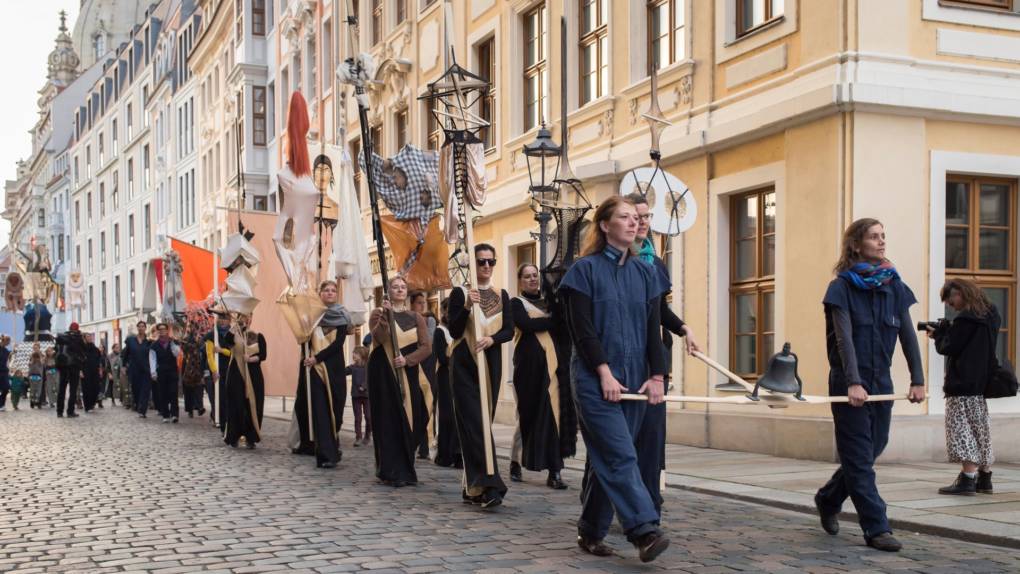
'Suffragette City' Delivers A Feminist Call to Arms in Downtown San Jose
Do You Know the Way to San Jose's Chicano Murals?
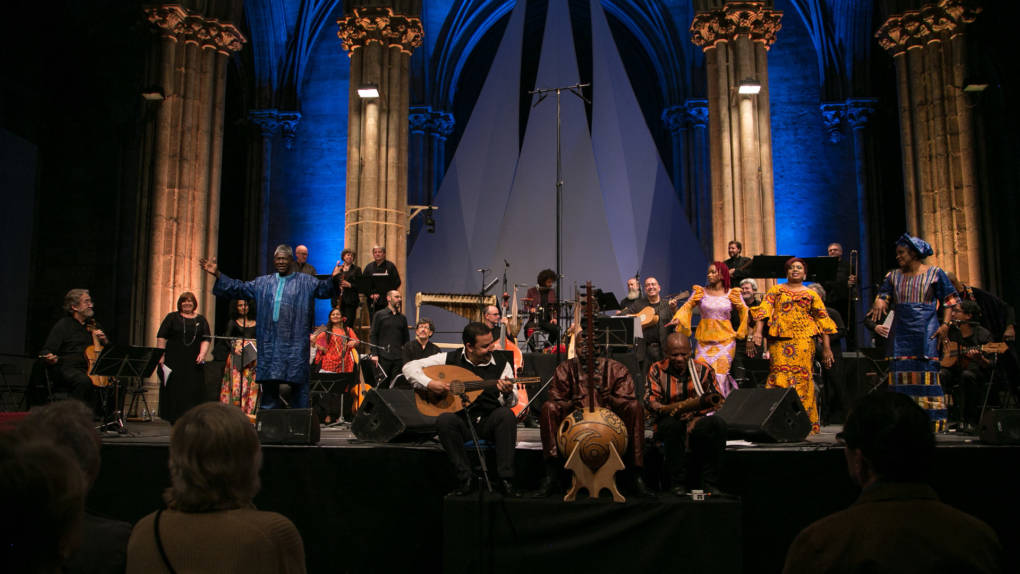
Jordi Savall Explores the Musical Legacy of 'The Routes of Slavery'
Oh, the Humanity! TwitchCon Draws Streaming Masses to San Jose
Bruce Munro's Narnian Fantasies Light Up Montalvo Arts Center
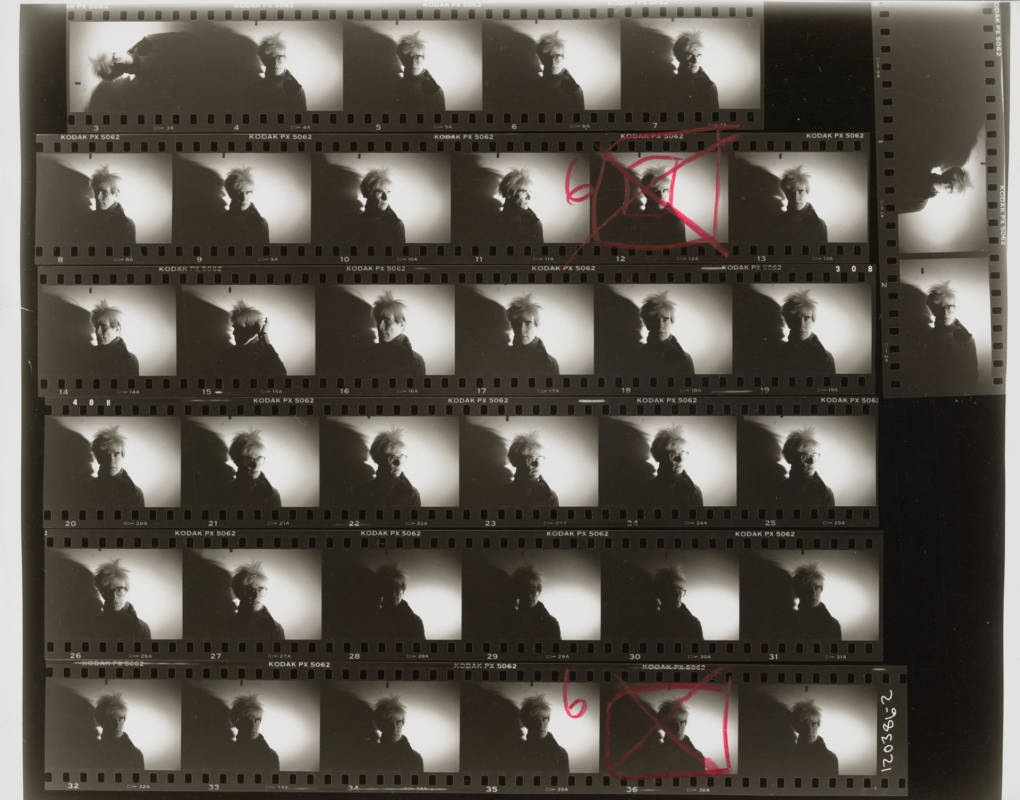
'Contact Warhol' Dives into Andy's Obsessions with Sex and Celebrity
Desi Comedy Fest Showcases Expanding Universe of South Asian American Humor
Bridging Disparate Artistic Traditions to Find What Unites People in the Bay Area
Sponsored
Player sponsored by
window.__IS_SSR__=true
window.__INITIAL_STATE__={
"attachmentsReducer": {
"audio_0": {
"type": "attachments",
"id": "audio_0",
"imgSizes": {
"kqedFullSize": {
"file": "https://ww2.kqed.org/news/wp-content/themes/KQED-unified/img/audio_bgs/background0.jpg"
}
}
},
"audio_1": {
"type": "attachments",
"id": "audio_1",
"imgSizes": {
"kqedFullSize": {
"file": "https://ww2.kqed.org/news/wp-content/themes/KQED-unified/img/audio_bgs/background1.jpg"
}
}
},
"audio_2": {
"type": "attachments",
"id": "audio_2",
"imgSizes": {
"kqedFullSize": {
"file": "https://ww2.kqed.org/news/wp-content/themes/KQED-unified/img/audio_bgs/background2.jpg"
}
}
},
"audio_3": {
"type": "attachments",
"id": "audio_3",
"imgSizes": {
"kqedFullSize": {
"file": "https://ww2.kqed.org/news/wp-content/themes/KQED-unified/img/audio_bgs/background3.jpg"
}
}
},
"audio_4": {
"type": "attachments",
"id": "audio_4",
"imgSizes": {
"kqedFullSize": {
"file": "https://ww2.kqed.org/news/wp-content/themes/KQED-unified/img/audio_bgs/background4.jpg"
}
}
},
"placeholder": {
"type": "attachments",
"id": "placeholder",
"imgSizes": {
"thumbnail": {
"file": "https://cdn.kqed.org/wp-content/uploads/2024/12/KQED-Default-Image-816638274-2000x1333-1-160x107.jpg",
"width": 160,
"height": 107,
"mimeType": "image/jpeg"
},
"medium": {
"file": "https://cdn.kqed.org/wp-content/uploads/2024/12/KQED-Default-Image-816638274-2000x1333-1-800x533.jpg",
"width": 800,
"height": 533,
"mimeType": "image/jpeg"
},
"medium_large": {
"file": "https://cdn.kqed.org/wp-content/uploads/2024/12/KQED-Default-Image-816638274-2000x1333-1-768x512.jpg",
"width": 768,
"height": 512,
"mimeType": "image/jpeg"
},
"large": {
"file": "https://cdn.kqed.org/wp-content/uploads/2024/12/KQED-Default-Image-816638274-2000x1333-1-1020x680.jpg",
"width": 1020,
"height": 680,
"mimeType": "image/jpeg"
},
"1536x1536": {
"file": "https://cdn.kqed.org/wp-content/uploads/2024/12/KQED-Default-Image-816638274-2000x1333-1-1536x1024.jpg",
"width": 1536,
"height": 1024,
"mimeType": "image/jpeg"
},
"fd-lrg": {
"file": "https://cdn.kqed.org/wp-content/uploads/2024/12/KQED-Default-Image-816638274-2000x1333-1-1536x1024.jpg",
"width": 1536,
"height": 1024,
"mimeType": "image/jpeg"
},
"fd-med": {
"file": "https://cdn.kqed.org/wp-content/uploads/2024/12/KQED-Default-Image-816638274-2000x1333-1-1020x680.jpg",
"width": 1020,
"height": 680,
"mimeType": "image/jpeg"
},
"fd-sm": {
"file": "https://cdn.kqed.org/wp-content/uploads/2024/12/KQED-Default-Image-816638274-2000x1333-1-800x533.jpg",
"width": 800,
"height": 533,
"mimeType": "image/jpeg"
},
"post-thumbnail": {
"file": "https://cdn.kqed.org/wp-content/uploads/2024/12/KQED-Default-Image-816638274-2000x1333-1-672x372.jpg",
"width": 672,
"height": 372,
"mimeType": "image/jpeg"
},
"twentyfourteen-full-width": {
"file": "https://cdn.kqed.org/wp-content/uploads/2024/12/KQED-Default-Image-816638274-2000x1333-1-1038x576.jpg",
"width": 1038,
"height": 576,
"mimeType": "image/jpeg"
},
"xxsmall": {
"file": "https://cdn.kqed.org/wp-content/uploads/2024/12/KQED-Default-Image-816638274-2000x1333-1-160x107.jpg",
"width": 160,
"height": 107,
"mimeType": "image/jpeg"
},
"xsmall": {
"file": "https://cdn.kqed.org/wp-content/uploads/2024/12/KQED-Default-Image-816638274-2000x1333-1-672x372.jpg",
"width": 672,
"height": 372,
"mimeType": "image/jpeg"
},
"small": {
"file": "https://cdn.kqed.org/wp-content/uploads/2024/12/KQED-Default-Image-816638274-2000x1333-1-672x372.jpg",
"width": 672,
"height": 372,
"mimeType": "image/jpeg"
},
"xlarge": {
"file": "https://cdn.kqed.org/wp-content/uploads/2024/12/KQED-Default-Image-816638274-2000x1333-1-1020x680.jpg",
"width": 1020,
"height": 680,
"mimeType": "image/jpeg"
},
"full-width": {
"file": "https://cdn.kqed.org/wp-content/uploads/2024/12/KQED-Default-Image-816638274-2000x1333-1-1920x1280.jpg",
"width": 1920,
"height": 1280,
"mimeType": "image/jpeg"
},
"guest-author-32": {
"file": "https://cdn.kqed.org/wp-content/uploads/2025/01/KQED-Default-Image-816638274-1333x1333-1-160x160.jpg",
"width": 32,
"height": 32,
"mimeType": "image/jpeg"
},
"guest-author-50": {
"file": "https://cdn.kqed.org/wp-content/uploads/2025/01/KQED-Default-Image-816638274-1333x1333-1-160x160.jpg",
"width": 50,
"height": 50,
"mimeType": "image/jpeg"
},
"guest-author-64": {
"file": "https://cdn.kqed.org/wp-content/uploads/2025/01/KQED-Default-Image-816638274-1333x1333-1-160x160.jpg",
"width": 64,
"height": 64,
"mimeType": "image/jpeg"
},
"guest-author-96": {
"file": "https://cdn.kqed.org/wp-content/uploads/2025/01/KQED-Default-Image-816638274-1333x1333-1-160x160.jpg",
"width": 96,
"height": 96,
"mimeType": "image/jpeg"
},
"guest-author-128": {
"file": "https://cdn.kqed.org/wp-content/uploads/2025/01/KQED-Default-Image-816638274-1333x1333-1-160x160.jpg",
"width": 128,
"height": 128,
"mimeType": "image/jpeg"
},
"detail": {
"file": "https://cdn.kqed.org/wp-content/uploads/2025/01/KQED-Default-Image-816638274-1333x1333-1-160x160.jpg",
"width": 160,
"height": 160,
"mimeType": "image/jpeg"
},
"kqedFullSize": {
"file": "https://cdn.kqed.org/wp-content/uploads/2024/12/KQED-Default-Image-816638274-2000x1333-1.jpg",
"width": 2000,
"height": 1333
}
}
},
"arts_13851815": {
"type": "attachments",
"id": "arts_13851815",
"meta": {
"index": "attachments_1716263798",
"site": "arts",
"id": "13851815",
"found": true
},
"parent": 13851676,
"imgSizes": {
"twentyfourteen-full-width": {
"file": "https://ww2.kqed.org/app/uploads/sites/2/2019/02/Oskar4_-ScottDevinePhoto-1038x576.jpg",
"width": 1038,
"mimeType": "image/jpeg",
"height": 576
},
"thumbnail": {
"file": "https://ww2.kqed.org/app/uploads/sites/2/2019/02/Oskar4_-ScottDevinePhoto-160x107.jpg",
"width": 160,
"mimeType": "image/jpeg",
"height": 107
},
"post-thumbnail": {
"file": "https://ww2.kqed.org/app/uploads/sites/2/2019/02/Oskar4_-ScottDevinePhoto-672x372.jpg",
"width": 672,
"mimeType": "image/jpeg",
"height": 372
},
"kqedFullSize": {
"file": "https://ww2.kqed.org/app/uploads/sites/2/2019/02/Oskar4_-ScottDevinePhoto.jpg",
"width": 2048,
"height": 1367
},
"large": {
"file": "https://ww2.kqed.org/app/uploads/sites/2/2019/02/Oskar4_-ScottDevinePhoto-1020x681.jpg",
"width": 1020,
"mimeType": "image/jpeg",
"height": 681
},
"complete_open_graph": {
"file": "https://ww2.kqed.org/app/uploads/sites/2/2019/02/Oskar4_-ScottDevinePhoto-1200x801.jpg",
"width": 1200,
"mimeType": "image/jpeg",
"height": 801
},
"guest-author-50": {
"file": "https://ww2.kqed.org/app/uploads/sites/2/2019/02/Oskar4_-ScottDevinePhoto-50x50.jpg",
"width": 50,
"mimeType": "image/jpeg",
"height": 50
},
"guest-author-96": {
"file": "https://ww2.kqed.org/app/uploads/sites/2/2019/02/Oskar4_-ScottDevinePhoto-96x96.jpg",
"width": 96,
"mimeType": "image/jpeg",
"height": 96
},
"medium": {
"file": "https://ww2.kqed.org/app/uploads/sites/2/2019/02/Oskar4_-ScottDevinePhoto-800x534.jpg",
"width": 800,
"mimeType": "image/jpeg",
"height": 534
},
"guest-author-64": {
"file": "https://ww2.kqed.org/app/uploads/sites/2/2019/02/Oskar4_-ScottDevinePhoto-64x64.jpg",
"width": 64,
"mimeType": "image/jpeg",
"height": 64
},
"guest-author-32": {
"file": "https://ww2.kqed.org/app/uploads/sites/2/2019/02/Oskar4_-ScottDevinePhoto-32x32.jpg",
"width": 32,
"mimeType": "image/jpeg",
"height": 32
},
"full-width": {
"file": "https://ww2.kqed.org/app/uploads/sites/2/2019/02/Oskar4_-ScottDevinePhoto-1920x1282.jpg",
"width": 1920,
"mimeType": "image/jpeg",
"height": 1282
},
"medium_large": {
"file": "https://ww2.kqed.org/app/uploads/sites/2/2019/02/Oskar4_-ScottDevinePhoto-768x513.jpg",
"width": 768,
"mimeType": "image/jpeg",
"height": 513
},
"guest-author-128": {
"file": "https://ww2.kqed.org/app/uploads/sites/2/2019/02/Oskar4_-ScottDevinePhoto-128x128.jpg",
"width": 128,
"mimeType": "image/jpeg",
"height": 128
}
},
"publishDate": 1551331510,
"modified": 1551331620,
"caption": "Jomar Martinez and Filip Hofman share a hug in “Oskar and the Big Bully Battle,” performed by TheatreWorks Silicon Valley in schools throughout the San Francisco Bay Area.",
"description": "Jomar Martinez and Filip Hofman share a hug in “Oskar and the Big Bully Battle,” performed by TheatreWorks Silicon Valley in schools throughout the San Francisco Bay Area.",
"title": "Oskar4_ ScottDevinePhoto",
"credit": "Photo: Courtesy of Scott Devine",
"status": "inherit",
"fetchFailed": false,
"isLoading": false
},
"arts_13848628": {
"type": "attachments",
"id": "arts_13848628",
"meta": {
"index": "attachments_1716263798",
"site": "arts",
"id": "13848628",
"found": true
},
"parent": 13848625,
"imgSizes": {
"twentyfourteen-full-width": {
"file": "https://ww2.kqed.org/app/uploads/sites/2/2019/01/RS34643_42386100272_6ebf2d55bc_o-qut-1038x576.jpg",
"width": 1038,
"mimeType": "image/jpeg",
"height": 576
},
"thumbnail": {
"file": "https://ww2.kqed.org/app/uploads/sites/2/2019/01/RS34643_42386100272_6ebf2d55bc_o-qut-160x90.jpg",
"width": 160,
"mimeType": "image/jpeg",
"height": 90
},
"post-thumbnail": {
"file": "https://ww2.kqed.org/app/uploads/sites/2/2019/01/RS34643_42386100272_6ebf2d55bc_o-qut-672x372.jpg",
"width": 672,
"mimeType": "image/jpeg",
"height": 372
},
"kqedFullSize": {
"file": "https://ww2.kqed.org/app/uploads/sites/2/2019/01/RS34643_42386100272_6ebf2d55bc_o-qut.jpg",
"width": 1920,
"height": 1080
},
"large": {
"file": "https://ww2.kqed.org/app/uploads/sites/2/2019/01/RS34643_42386100272_6ebf2d55bc_o-qut-1020x574.jpg",
"width": 1020,
"mimeType": "image/jpeg",
"height": 574
},
"complete_open_graph": {
"file": "https://ww2.kqed.org/app/uploads/sites/2/2019/01/RS34643_42386100272_6ebf2d55bc_o-qut-1200x675.jpg",
"width": 1200,
"mimeType": "image/jpeg",
"height": 675
},
"guest-author-50": {
"file": "https://ww2.kqed.org/app/uploads/sites/2/2019/01/RS34643_42386100272_6ebf2d55bc_o-qut-50x50.jpg",
"width": 50,
"mimeType": "image/jpeg",
"height": 50
},
"guest-author-96": {
"file": "https://ww2.kqed.org/app/uploads/sites/2/2019/01/RS34643_42386100272_6ebf2d55bc_o-qut-96x96.jpg",
"width": 96,
"mimeType": "image/jpeg",
"height": 96
},
"medium": {
"file": "https://ww2.kqed.org/app/uploads/sites/2/2019/01/RS34643_42386100272_6ebf2d55bc_o-qut-800x450.jpg",
"width": 800,
"mimeType": "image/jpeg",
"height": 450
},
"guest-author-64": {
"file": "https://ww2.kqed.org/app/uploads/sites/2/2019/01/RS34643_42386100272_6ebf2d55bc_o-qut-64x64.jpg",
"width": 64,
"mimeType": "image/jpeg",
"height": 64
},
"guest-author-32": {
"file": "https://ww2.kqed.org/app/uploads/sites/2/2019/01/RS34643_42386100272_6ebf2d55bc_o-qut-32x32.jpg",
"width": 32,
"mimeType": "image/jpeg",
"height": 32
},
"full-width": {
"file": "https://ww2.kqed.org/app/uploads/sites/2/2019/01/RS34643_42386100272_6ebf2d55bc_o-qut-1920x1080.jpg",
"width": 1920,
"mimeType": "image/jpeg",
"height": 1080
},
"detail": {
"file": "https://ww2.kqed.org/app/uploads/sites/2/2019/01/RS34643_42386100272_6ebf2d55bc_o-qut-150x150.jpg",
"width": 150,
"mimeType": "image/jpeg",
"height": 150
},
"medium_large": {
"file": "https://ww2.kqed.org/app/uploads/sites/2/2019/01/RS34643_42386100272_6ebf2d55bc_o-qut-768x432.jpg",
"width": 768,
"mimeType": "image/jpeg",
"height": 432
},
"guest-author-128": {
"file": "https://ww2.kqed.org/app/uploads/sites/2/2019/01/RS34643_42386100272_6ebf2d55bc_o-qut-128x128.jpg",
"width": 128,
"mimeType": "image/jpeg",
"height": 128
}
},
"publishDate": 1547302554,
"modified": 1547302762,
"caption": "Suffragette City, a walking art exhibit, is the brainchild of LA-based artist Lara Schnitger, who was inspired by the women's suffragette movement. Since 2015, her volunteers (the one in Dresden is shown here) have marched in cities across Europe and North America.",
"description": "Suffragette City, a walking art exhibit, is the brainchild of LA-based artist Lara Schnitger, who was inspired by the women's suffragette movement. Since 2015, her volunteers (the one in Dresden is shown here) have marched in cities across Europe and North America.",
"title": "Suffragette City, Dresden",
"credit": "Photo: Courtesy of Swen Rudolph",
"status": "inherit",
"fetchFailed": false,
"isLoading": false
},
"arts_13845969": {
"type": "attachments",
"id": "arts_13845969",
"meta": {
"index": "attachments_1716263798",
"site": "arts",
"id": "13845969",
"found": true
},
"parent": 13845793,
"imgSizes": {
"twentyfourteen-full-width": {
"file": "https://ww2.kqed.org/app/uploads/sites/2/2018/11/SanJoseChicanoMurals.MAIN_-1038x576.jpg",
"width": 1038,
"mimeType": "image/jpeg",
"height": 576
},
"thumbnail": {
"file": "https://ww2.kqed.org/app/uploads/sites/2/2018/11/SanJoseChicanoMurals.MAIN_-160x90.jpg",
"width": 160,
"mimeType": "image/jpeg",
"height": 90
},
"post-thumbnail": {
"file": "https://ww2.kqed.org/app/uploads/sites/2/2018/11/SanJoseChicanoMurals.MAIN_-672x372.jpg",
"width": 672,
"mimeType": "image/jpeg",
"height": 372
},
"kqedFullSize": {
"file": "https://ww2.kqed.org/app/uploads/sites/2/2018/11/SanJoseChicanoMurals.MAIN_.jpg",
"width": 1080,
"height": 608
},
"large": {
"file": "https://ww2.kqed.org/app/uploads/sites/2/2018/11/SanJoseChicanoMurals.MAIN_-1020x574.jpg",
"width": 1020,
"mimeType": "image/jpeg",
"height": 574
},
"guest-author-50": {
"file": "https://ww2.kqed.org/app/uploads/sites/2/2018/11/SanJoseChicanoMurals.MAIN_-50x50.jpg",
"width": 50,
"mimeType": "image/jpeg",
"height": 50
},
"guest-author-96": {
"file": "https://ww2.kqed.org/app/uploads/sites/2/2018/11/SanJoseChicanoMurals.MAIN_-96x96.jpg",
"width": 96,
"mimeType": "image/jpeg",
"height": 96
},
"medium": {
"file": "https://ww2.kqed.org/app/uploads/sites/2/2018/11/SanJoseChicanoMurals.MAIN_-800x450.jpg",
"width": 800,
"mimeType": "image/jpeg",
"height": 450
},
"guest-author-64": {
"file": "https://ww2.kqed.org/app/uploads/sites/2/2018/11/SanJoseChicanoMurals.MAIN_-64x64.jpg",
"width": 64,
"mimeType": "image/jpeg",
"height": 64
},
"guest-author-32": {
"file": "https://ww2.kqed.org/app/uploads/sites/2/2018/11/SanJoseChicanoMurals.MAIN_-32x32.jpg",
"width": 32,
"mimeType": "image/jpeg",
"height": 32
},
"detail": {
"file": "https://ww2.kqed.org/app/uploads/sites/2/2018/11/SanJoseChicanoMurals.MAIN_-150x150.jpg",
"width": 150,
"mimeType": "image/jpeg",
"height": 150
},
"medium_large": {
"file": "https://ww2.kqed.org/app/uploads/sites/2/2018/11/SanJoseChicanoMurals.MAIN_-768x432.jpg",
"width": 768,
"mimeType": "image/jpeg",
"height": 432
},
"guest-author-128": {
"file": "https://ww2.kqed.org/app/uploads/sites/2/2018/11/SanJoseChicanoMurals.MAIN_-128x128.jpg",
"width": 128,
"mimeType": "image/jpeg",
"height": 128
}
},
"publishDate": 1543481032,
"modified": 1543481071,
"caption": "Sam Rodriguez and team in the process of painting 'Here & There' on the side of Kiem Service Laundromat in San Jose's Japantown.",
"description": "Sam Rodriguez and team in the process of painting 'Here & There' on the side of Kiem Service Laundromat in San Jose's Japantown.",
"title": "SanJoseChicanoMurals.MAIN",
"credit": "Courtesy Empire Seven Studios",
"status": "inherit",
"fetchFailed": false,
"isLoading": false
},
"arts_13844118": {
"type": "attachments",
"id": "arts_13844118",
"meta": {
"index": "attachments_1716263798",
"site": "arts",
"id": "13844118",
"found": true
},
"parent": 13844099,
"imgSizes": {
"small": {
"file": "https://ww2.kqed.org/app/uploads/sites/2/2018/11/RS33607_LA20RUTA20DE20L27ESCLAVATGE_153_28c29Claire20Xavier-qut-520x293.jpg",
"width": 520,
"mimeType": "image/jpeg",
"height": 293
},
"twentyfourteen-full-width": {
"file": "https://ww2.kqed.org/app/uploads/sites/2/2018/11/RS33607_LA20RUTA20DE20L27ESCLAVATGE_153_28c29Claire20Xavier-qut-1038x576.jpg",
"width": 1038,
"mimeType": "image/jpeg",
"height": 576
},
"thumbnail": {
"file": "https://ww2.kqed.org/app/uploads/sites/2/2018/11/RS33607_LA20RUTA20DE20L27ESCLAVATGE_153_28c29Claire20Xavier-qut-160x90.jpg",
"width": 160,
"mimeType": "image/jpeg",
"height": 90
},
"fd-sm": {
"file": "https://ww2.kqed.org/app/uploads/sites/2/2018/11/RS33607_LA20RUTA20DE20L27ESCLAVATGE_153_28c29Claire20Xavier-qut-960x540.jpg",
"width": 960,
"mimeType": "image/jpeg",
"height": 540
},
"post-thumbnail": {
"file": "https://ww2.kqed.org/app/uploads/sites/2/2018/11/RS33607_LA20RUTA20DE20L27ESCLAVATGE_153_28c29Claire20Xavier-qut-672x372.jpg",
"width": 672,
"mimeType": "image/jpeg",
"height": 372
},
"xsmall": {
"file": "https://ww2.kqed.org/app/uploads/sites/2/2018/11/RS33607_LA20RUTA20DE20L27ESCLAVATGE_153_28c29Claire20Xavier-qut-375x211.jpg",
"width": 375,
"mimeType": "image/jpeg",
"height": 211
},
"kqedFullSize": {
"file": "https://ww2.kqed.org/app/uploads/sites/2/2018/11/RS33607_LA20RUTA20DE20L27ESCLAVATGE_153_28c29Claire20Xavier-qut.jpg",
"width": 1920,
"height": 1080
},
"large": {
"file": "https://ww2.kqed.org/app/uploads/sites/2/2018/11/RS33607_LA20RUTA20DE20L27ESCLAVATGE_153_28c29Claire20Xavier-qut-1020x574.jpg",
"width": 1020,
"mimeType": "image/jpeg",
"height": 574
},
"xlarge": {
"file": "https://ww2.kqed.org/app/uploads/sites/2/2018/11/RS33607_LA20RUTA20DE20L27ESCLAVATGE_153_28c29Claire20Xavier-qut-1180x664.jpg",
"width": 1180,
"mimeType": "image/jpeg",
"height": 664
},
"complete_open_graph": {
"file": "https://ww2.kqed.org/app/uploads/sites/2/2018/11/RS33607_LA20RUTA20DE20L27ESCLAVATGE_153_28c29Claire20Xavier-qut-1200x675.jpg",
"width": 1200,
"mimeType": "image/jpeg",
"height": 675
},
"guest-author-50": {
"file": "https://ww2.kqed.org/app/uploads/sites/2/2018/11/RS33607_LA20RUTA20DE20L27ESCLAVATGE_153_28c29Claire20Xavier-qut-50x50.jpg",
"width": 50,
"mimeType": "image/jpeg",
"height": 50
},
"guest-author-96": {
"file": "https://ww2.kqed.org/app/uploads/sites/2/2018/11/RS33607_LA20RUTA20DE20L27ESCLAVATGE_153_28c29Claire20Xavier-qut-96x96.jpg",
"width": 96,
"mimeType": "image/jpeg",
"height": 96
},
"medium": {
"file": "https://ww2.kqed.org/app/uploads/sites/2/2018/11/RS33607_LA20RUTA20DE20L27ESCLAVATGE_153_28c29Claire20Xavier-qut-800x450.jpg",
"width": 800,
"mimeType": "image/jpeg",
"height": 450
},
"guest-author-64": {
"file": "https://ww2.kqed.org/app/uploads/sites/2/2018/11/RS33607_LA20RUTA20DE20L27ESCLAVATGE_153_28c29Claire20Xavier-qut-64x64.jpg",
"width": 64,
"mimeType": "image/jpeg",
"height": 64
},
"guest-author-32": {
"file": "https://ww2.kqed.org/app/uploads/sites/2/2018/11/RS33607_LA20RUTA20DE20L27ESCLAVATGE_153_28c29Claire20Xavier-qut-32x32.jpg",
"width": 32,
"mimeType": "image/jpeg",
"height": 32
},
"fd-lrg": {
"file": "https://ww2.kqed.org/app/uploads/sites/2/2018/11/RS33607_LA20RUTA20DE20L27ESCLAVATGE_153_28c29Claire20Xavier-qut-1920x1080.jpg",
"width": 1920,
"mimeType": "image/jpeg",
"height": 1080
},
"fd-med": {
"file": "https://ww2.kqed.org/app/uploads/sites/2/2018/11/RS33607_LA20RUTA20DE20L27ESCLAVATGE_153_28c29Claire20Xavier-qut-1180x664.jpg",
"width": 1180,
"mimeType": "image/jpeg",
"height": 664
},
"full-width": {
"file": "https://ww2.kqed.org/app/uploads/sites/2/2018/11/RS33607_LA20RUTA20DE20L27ESCLAVATGE_153_28c29Claire20Xavier-qut-1920x1080.jpg",
"width": 1920,
"mimeType": "image/jpeg",
"height": 1080
},
"detail": {
"file": "https://ww2.kqed.org/app/uploads/sites/2/2018/11/RS33607_LA20RUTA20DE20L27ESCLAVATGE_153_28c29Claire20Xavier-qut-150x150.jpg",
"width": 150,
"mimeType": "image/jpeg",
"height": 150
},
"medium_large": {
"file": "https://ww2.kqed.org/app/uploads/sites/2/2018/11/RS33607_LA20RUTA20DE20L27ESCLAVATGE_153_28c29Claire20Xavier-qut-768x432.jpg",
"width": 768,
"mimeType": "image/jpeg",
"height": 432
},
"guest-author-128": {
"file": "https://ww2.kqed.org/app/uploads/sites/2/2018/11/RS33607_LA20RUTA20DE20L27ESCLAVATGE_153_28c29Claire20Xavier-qut-128x128.jpg",
"width": 128,
"mimeType": "image/jpeg",
"height": 128
},
"xxsmall": {
"file": "https://ww2.kqed.org/app/uploads/sites/2/2018/11/RS33607_LA20RUTA20DE20L27ESCLAVATGE_153_28c29Claire20Xavier-qut-240x135.jpg",
"width": 240,
"mimeType": "image/jpeg",
"height": 135
}
},
"publishDate": 1541216022,
"modified": 1541216055,
"caption": "Jordi Savall's \"Routes of Slavery\" features music from Brazil, Colombia, Guadeloupe, Mali, Mexico and Spain.",
"description": null,
"title": "RS33607_LARUTADELESCLAVATGE_153_cClaireXavier-qut",
"credit": "Photo: Courtesy of Claire Xavier",
"status": "inherit",
"fetchFailed": false,
"isLoading": false
},
"arts_13843650": {
"type": "attachments",
"id": "arts_13843650",
"meta": {
"index": "attachments_1716263798",
"site": "arts",
"id": "13843650",
"found": true
},
"parent": 13843649,
"imgSizes": {
"small": {
"file": "https://ww2.kqed.org/app/uploads/sites/2/2018/10/Screen-Shot-2018-10-26-at-7.35.36-PM-520x354.png",
"width": 520,
"mimeType": "image/png",
"height": 354
},
"twentyfourteen-full-width": {
"file": "https://ww2.kqed.org/app/uploads/sites/2/2018/10/Screen-Shot-2018-10-26-at-7.35.36-PM-1038x576.png",
"width": 1038,
"mimeType": "image/png",
"height": 576
},
"thumbnail": {
"file": "https://ww2.kqed.org/app/uploads/sites/2/2018/10/Screen-Shot-2018-10-26-at-7.35.36-PM-160x109.png",
"width": 160,
"mimeType": "image/png",
"height": 109
},
"fd-sm": {
"file": "https://ww2.kqed.org/app/uploads/sites/2/2018/10/Screen-Shot-2018-10-26-at-7.35.36-PM-960x654.png",
"width": 960,
"mimeType": "image/png",
"height": 654
},
"post-thumbnail": {
"file": "https://ww2.kqed.org/app/uploads/sites/2/2018/10/Screen-Shot-2018-10-26-at-7.35.36-PM-672x372.png",
"width": 672,
"mimeType": "image/png",
"height": 372
},
"xsmall": {
"file": "https://ww2.kqed.org/app/uploads/sites/2/2018/10/Screen-Shot-2018-10-26-at-7.35.36-PM-375x256.png",
"width": 375,
"mimeType": "image/png",
"height": 256
},
"kqedFullSize": {
"file": "https://ww2.kqed.org/app/uploads/sites/2/2018/10/Screen-Shot-2018-10-26-at-7.35.36-PM.png",
"width": 2048,
"height": 1396
},
"large": {
"file": "https://ww2.kqed.org/app/uploads/sites/2/2018/10/Screen-Shot-2018-10-26-at-7.35.36-PM-1020x695.png",
"width": 1020,
"mimeType": "image/png",
"height": 695
},
"xlarge": {
"file": "https://ww2.kqed.org/app/uploads/sites/2/2018/10/Screen-Shot-2018-10-26-at-7.35.36-PM-1180x804.png",
"width": 1180,
"mimeType": "image/png",
"height": 804
},
"complete_open_graph": {
"file": "https://ww2.kqed.org/app/uploads/sites/2/2018/10/Screen-Shot-2018-10-26-at-7.35.36-PM-1200x818.png",
"width": 1200,
"mimeType": "image/png",
"height": 818
},
"guest-author-50": {
"file": "https://ww2.kqed.org/app/uploads/sites/2/2018/10/Screen-Shot-2018-10-26-at-7.35.36-PM-50x50.png",
"width": 50,
"mimeType": "image/png",
"height": 50
},
"guest-author-96": {
"file": "https://ww2.kqed.org/app/uploads/sites/2/2018/10/Screen-Shot-2018-10-26-at-7.35.36-PM-96x96.png",
"width": 96,
"mimeType": "image/png",
"height": 96
},
"medium": {
"file": "https://ww2.kqed.org/app/uploads/sites/2/2018/10/Screen-Shot-2018-10-26-at-7.35.36-PM-800x545.png",
"width": 800,
"mimeType": "image/png",
"height": 545
},
"guest-author-64": {
"file": "https://ww2.kqed.org/app/uploads/sites/2/2018/10/Screen-Shot-2018-10-26-at-7.35.36-PM-64x64.png",
"width": 64,
"mimeType": "image/png",
"height": 64
},
"guest-author-32": {
"file": "https://ww2.kqed.org/app/uploads/sites/2/2018/10/Screen-Shot-2018-10-26-at-7.35.36-PM-32x32.png",
"width": 32,
"mimeType": "image/png",
"height": 32
},
"fd-lrg": {
"file": "https://ww2.kqed.org/app/uploads/sites/2/2018/10/Screen-Shot-2018-10-26-at-7.35.36-PM-1920x1308.png",
"width": 1920,
"mimeType": "image/png",
"height": 1308
},
"fd-med": {
"file": "https://ww2.kqed.org/app/uploads/sites/2/2018/10/Screen-Shot-2018-10-26-at-7.35.36-PM-1180x804.png",
"width": 1180,
"mimeType": "image/png",
"height": 804
},
"full-width": {
"file": "https://ww2.kqed.org/app/uploads/sites/2/2018/10/Screen-Shot-2018-10-26-at-7.35.36-PM-1920x1308.png",
"width": 1920,
"mimeType": "image/png",
"height": 1308
},
"detail": {
"file": "https://ww2.kqed.org/app/uploads/sites/2/2018/10/Screen-Shot-2018-10-26-at-7.35.36-PM-150x150.png",
"width": 150,
"mimeType": "image/png",
"height": 150
},
"medium_large": {
"file": "https://ww2.kqed.org/app/uploads/sites/2/2018/10/Screen-Shot-2018-10-26-at-7.35.36-PM-768x523.png",
"width": 768,
"mimeType": "image/png",
"height": 523
},
"guest-author-128": {
"file": "https://ww2.kqed.org/app/uploads/sites/2/2018/10/Screen-Shot-2018-10-26-at-7.35.36-PM-128x128.png",
"width": 128,
"mimeType": "image/png",
"height": 128
},
"xxsmall": {
"file": "https://ww2.kqed.org/app/uploads/sites/2/2018/10/Screen-Shot-2018-10-26-at-7.35.36-PM-240x164.png",
"width": 240,
"mimeType": "image/png",
"height": 164
}
},
"publishDate": 1540607948,
"modified": 1540608127,
"caption": "\"We aren't just there for the show. We are the show,\" Twitch CEO Emmett Shear said during his keynote speech at TwitchCon 2018.",
"description": "\"We aren't just there for the show. We are the show,\" Twitch CEO Emmett Shear said during his keynote speech at TwitchCon 2018.",
"title": "Screen Shot 2018-10-26 at 7.35.36 PM",
"credit": "Photo: Courtesy of Twitch",
"status": "inherit",
"fetchFailed": false,
"isLoading": false
},
"arts_13843658": {
"type": "attachments",
"id": "arts_13843658",
"meta": {
"index": "attachments_1716263798",
"site": "arts",
"id": "13843658",
"found": true
},
"parent": 13843657,
"imgSizes": {
"small": {
"file": "https://ww2.kqed.org/app/uploads/sites/2/2018/10/RS33452_Bruce-Munro-at-Montalvo_Mark-Pickthall-19-2-qut-520x347.jpg",
"width": 520,
"mimeType": "image/jpeg",
"height": 347
},
"twentyfourteen-full-width": {
"file": "https://ww2.kqed.org/app/uploads/sites/2/2018/10/RS33452_Bruce-Munro-at-Montalvo_Mark-Pickthall-19-2-qut-1038x576.jpg",
"width": 1038,
"mimeType": "image/jpeg",
"height": 576
},
"thumbnail": {
"file": "https://ww2.kqed.org/app/uploads/sites/2/2018/10/RS33452_Bruce-Munro-at-Montalvo_Mark-Pickthall-19-2-qut-160x107.jpg",
"width": 160,
"mimeType": "image/jpeg",
"height": 107
},
"fd-sm": {
"file": "https://ww2.kqed.org/app/uploads/sites/2/2018/10/RS33452_Bruce-Munro-at-Montalvo_Mark-Pickthall-19-2-qut-960x640.jpg",
"width": 960,
"mimeType": "image/jpeg",
"height": 640
},
"post-thumbnail": {
"file": "https://ww2.kqed.org/app/uploads/sites/2/2018/10/RS33452_Bruce-Munro-at-Montalvo_Mark-Pickthall-19-2-qut-672x372.jpg",
"width": 672,
"mimeType": "image/jpeg",
"height": 372
},
"xsmall": {
"file": "https://ww2.kqed.org/app/uploads/sites/2/2018/10/RS33452_Bruce-Munro-at-Montalvo_Mark-Pickthall-19-2-qut-375x250.jpg",
"width": 375,
"mimeType": "image/jpeg",
"height": 250
},
"kqedFullSize": {
"file": "https://ww2.kqed.org/app/uploads/sites/2/2018/10/RS33452_Bruce-Munro-at-Montalvo_Mark-Pickthall-19-2-qut.jpg",
"width": 1920,
"height": 1280
},
"large": {
"file": "https://ww2.kqed.org/app/uploads/sites/2/2018/10/RS33452_Bruce-Munro-at-Montalvo_Mark-Pickthall-19-2-qut-1020x680.jpg",
"width": 1020,
"mimeType": "image/jpeg",
"height": 680
},
"xlarge": {
"file": "https://ww2.kqed.org/app/uploads/sites/2/2018/10/RS33452_Bruce-Munro-at-Montalvo_Mark-Pickthall-19-2-qut-1180x787.jpg",
"width": 1180,
"mimeType": "image/jpeg",
"height": 787
},
"complete_open_graph": {
"file": "https://ww2.kqed.org/app/uploads/sites/2/2018/10/RS33452_Bruce-Munro-at-Montalvo_Mark-Pickthall-19-2-qut-1200x800.jpg",
"width": 1200,
"mimeType": "image/jpeg",
"height": 800
},
"guest-author-50": {
"file": "https://ww2.kqed.org/app/uploads/sites/2/2018/10/RS33452_Bruce-Munro-at-Montalvo_Mark-Pickthall-19-2-qut-50x50.jpg",
"width": 50,
"mimeType": "image/jpeg",
"height": 50
},
"guest-author-96": {
"file": "https://ww2.kqed.org/app/uploads/sites/2/2018/10/RS33452_Bruce-Munro-at-Montalvo_Mark-Pickthall-19-2-qut-96x96.jpg",
"width": 96,
"mimeType": "image/jpeg",
"height": 96
},
"medium": {
"file": "https://ww2.kqed.org/app/uploads/sites/2/2018/10/RS33452_Bruce-Munro-at-Montalvo_Mark-Pickthall-19-2-qut-800x533.jpg",
"width": 800,
"mimeType": "image/jpeg",
"height": 533
},
"guest-author-64": {
"file": "https://ww2.kqed.org/app/uploads/sites/2/2018/10/RS33452_Bruce-Munro-at-Montalvo_Mark-Pickthall-19-2-qut-64x64.jpg",
"width": 64,
"mimeType": "image/jpeg",
"height": 64
},
"guest-author-32": {
"file": "https://ww2.kqed.org/app/uploads/sites/2/2018/10/RS33452_Bruce-Munro-at-Montalvo_Mark-Pickthall-19-2-qut-32x32.jpg",
"width": 32,
"mimeType": "image/jpeg",
"height": 32
},
"fd-lrg": {
"file": "https://ww2.kqed.org/app/uploads/sites/2/2018/10/RS33452_Bruce-Munro-at-Montalvo_Mark-Pickthall-19-2-qut-1920x1280.jpg",
"width": 1920,
"mimeType": "image/jpeg",
"height": 1280
},
"fd-med": {
"file": "https://ww2.kqed.org/app/uploads/sites/2/2018/10/RS33452_Bruce-Munro-at-Montalvo_Mark-Pickthall-19-2-qut-1180x787.jpg",
"width": 1180,
"mimeType": "image/jpeg",
"height": 787
},
"full-width": {
"file": "https://ww2.kqed.org/app/uploads/sites/2/2018/10/RS33452_Bruce-Munro-at-Montalvo_Mark-Pickthall-19-2-qut-1920x1280.jpg",
"width": 1920,
"mimeType": "image/jpeg",
"height": 1280
},
"detail": {
"file": "https://ww2.kqed.org/app/uploads/sites/2/2018/10/RS33452_Bruce-Munro-at-Montalvo_Mark-Pickthall-19-2-qut-150x150.jpg",
"width": 150,
"mimeType": "image/jpeg",
"height": 150
},
"medium_large": {
"file": "https://ww2.kqed.org/app/uploads/sites/2/2018/10/RS33452_Bruce-Munro-at-Montalvo_Mark-Pickthall-19-2-qut-768x512.jpg",
"width": 768,
"mimeType": "image/jpeg",
"height": 512
},
"guest-author-128": {
"file": "https://ww2.kqed.org/app/uploads/sites/2/2018/10/RS33452_Bruce-Munro-at-Montalvo_Mark-Pickthall-19-2-qut-128x128.jpg",
"width": 128,
"mimeType": "image/jpeg",
"height": 128
},
"xxsmall": {
"file": "https://ww2.kqed.org/app/uploads/sites/2/2018/10/RS33452_Bruce-Munro-at-Montalvo_Mark-Pickthall-19-2-qut-240x160.jpg",
"width": 240,
"mimeType": "image/jpeg",
"height": 160
}
},
"publishDate": 1540612116,
"modified": 1540612182,
"caption": "\"Stories in Light\" includes \"Silver Sea,\" a reference to C.S. Lewis and his children's books about Narnia. Here, the white “lilies” fill the Great Lawn in front of the villa at Montalvo.",
"description": "\"Stories in Light\" includes \"Silver Sea,\" a reference to C.S. Lewis and his children's books about Narnia. Here, the white “lilies” fill the Great Lawn in front of the villa at Montalvo.",
"title": "RS33452_Bruce-Munro-at-Montalvo_Mark-Pickthall-19-2-qut",
"credit": "Photo: Courtesy of Serena Munro",
"status": "inherit",
"fetchFailed": false,
"isLoading": false
},
"arts_13841860": {
"type": "attachments",
"id": "arts_13841860",
"meta": {
"index": "attachments_1716263798",
"site": "arts",
"id": "13841860",
"found": true
},
"parent": 13841824,
"imgSizes": {
"small": {
"file": "https://ww2.kqed.org/app/uploads/sites/2/2018/09/RS32991_2-2014.43.2893_Warhol_with_shadow-qut-520x408.jpg",
"width": 520,
"mimeType": "image/jpeg",
"height": 408
},
"twentyfourteen-full-width": {
"file": "https://ww2.kqed.org/app/uploads/sites/2/2018/09/RS32991_2-2014.43.2893_Warhol_with_shadow-qut-1038x576.jpg",
"width": 1038,
"mimeType": "image/jpeg",
"height": 576
},
"thumbnail": {
"file": "https://ww2.kqed.org/app/uploads/sites/2/2018/09/RS32991_2-2014.43.2893_Warhol_with_shadow-qut-160x126.jpg",
"width": 160,
"mimeType": "image/jpeg",
"height": 126
},
"fd-sm": {
"file": "https://ww2.kqed.org/app/uploads/sites/2/2018/09/RS32991_2-2014.43.2893_Warhol_with_shadow-qut-960x753.jpg",
"width": 960,
"mimeType": "image/jpeg",
"height": 753
},
"post-thumbnail": {
"file": "https://ww2.kqed.org/app/uploads/sites/2/2018/09/RS32991_2-2014.43.2893_Warhol_with_shadow-qut-672x372.jpg",
"width": 672,
"mimeType": "image/jpeg",
"height": 372
},
"xsmall": {
"file": "https://ww2.kqed.org/app/uploads/sites/2/2018/09/RS32991_2-2014.43.2893_Warhol_with_shadow-qut-375x294.jpg",
"width": 375,
"mimeType": "image/jpeg",
"height": 294
},
"kqedFullSize": {
"file": "https://ww2.kqed.org/app/uploads/sites/2/2018/09/RS32991_2-2014.43.2893_Warhol_with_shadow-qut.jpg",
"width": 1920,
"height": 1506
},
"large": {
"file": "https://ww2.kqed.org/app/uploads/sites/2/2018/09/RS32991_2-2014.43.2893_Warhol_with_shadow-qut-1020x800.jpg",
"width": 1020,
"mimeType": "image/jpeg",
"height": 800
},
"xlarge": {
"file": "https://ww2.kqed.org/app/uploads/sites/2/2018/09/RS32991_2-2014.43.2893_Warhol_with_shadow-qut-1180x926.jpg",
"width": 1180,
"mimeType": "image/jpeg",
"height": 926
},
"complete_open_graph": {
"file": "https://ww2.kqed.org/app/uploads/sites/2/2018/09/RS32991_2-2014.43.2893_Warhol_with_shadow-qut-1200x941.jpg",
"width": 1200,
"mimeType": "image/jpeg",
"height": 941
},
"guest-author-50": {
"file": "https://ww2.kqed.org/app/uploads/sites/2/2018/09/RS32991_2-2014.43.2893_Warhol_with_shadow-qut-50x50.jpg",
"width": 50,
"mimeType": "image/jpeg",
"height": 50
},
"guest-author-96": {
"file": "https://ww2.kqed.org/app/uploads/sites/2/2018/09/RS32991_2-2014.43.2893_Warhol_with_shadow-qut-96x96.jpg",
"width": 96,
"mimeType": "image/jpeg",
"height": 96
},
"medium": {
"file": "https://ww2.kqed.org/app/uploads/sites/2/2018/09/RS32991_2-2014.43.2893_Warhol_with_shadow-qut-800x628.jpg",
"width": 800,
"mimeType": "image/jpeg",
"height": 628
},
"guest-author-64": {
"file": "https://ww2.kqed.org/app/uploads/sites/2/2018/09/RS32991_2-2014.43.2893_Warhol_with_shadow-qut-64x64.jpg",
"width": 64,
"mimeType": "image/jpeg",
"height": 64
},
"guest-author-32": {
"file": "https://ww2.kqed.org/app/uploads/sites/2/2018/09/RS32991_2-2014.43.2893_Warhol_with_shadow-qut-32x32.jpg",
"width": 32,
"mimeType": "image/jpeg",
"height": 32
},
"fd-lrg": {
"file": "https://ww2.kqed.org/app/uploads/sites/2/2018/09/RS32991_2-2014.43.2893_Warhol_with_shadow-qut-1920x1506.jpg",
"width": 1920,
"mimeType": "image/jpeg",
"height": 1506
},
"fd-med": {
"file": "https://ww2.kqed.org/app/uploads/sites/2/2018/09/RS32991_2-2014.43.2893_Warhol_with_shadow-qut-1180x926.jpg",
"width": 1180,
"mimeType": "image/jpeg",
"height": 926
},
"full-width": {
"file": "https://ww2.kqed.org/app/uploads/sites/2/2018/09/RS32991_2-2014.43.2893_Warhol_with_shadow-qut-1920x1506.jpg",
"width": 1920,
"mimeType": "image/jpeg",
"height": 1506
},
"detail": {
"file": "https://ww2.kqed.org/app/uploads/sites/2/2018/09/RS32991_2-2014.43.2893_Warhol_with_shadow-qut-150x150.jpg",
"width": 150,
"mimeType": "image/jpeg",
"height": 150
},
"medium_large": {
"file": "https://ww2.kqed.org/app/uploads/sites/2/2018/09/RS32991_2-2014.43.2893_Warhol_with_shadow-qut-768x602.jpg",
"width": 768,
"mimeType": "image/jpeg",
"height": 602
},
"guest-author-128": {
"file": "https://ww2.kqed.org/app/uploads/sites/2/2018/09/RS32991_2-2014.43.2893_Warhol_with_shadow-qut-128x128.jpg",
"width": 128,
"mimeType": "image/jpeg",
"height": 128
},
"xxsmall": {
"file": "https://ww2.kqed.org/app/uploads/sites/2/2018/09/RS32991_2-2014.43.2893_Warhol_with_shadow-qut-240x188.jpg",
"width": 240,
"mimeType": "image/jpeg",
"height": 188
}
},
"publishDate": 1538166787,
"modified": 1538166847,
"caption": "Contact Sheet featuring Andy Warhol, 1986. Gelatin silver print. ",
"description": "Contact Sheet featuring Andy Warhol, 1986. Gelatin silver print. ",
"title": "RS32991_2-2014.43.2893_Warhol_with_shadow-qut",
"credit": "Photo: Courtesy of The Andy Warhol Foundation for the Visual Arts, Inc.",
"status": "inherit",
"fetchFailed": false,
"isLoading": false
},
"arts_13838638": {
"type": "attachments",
"id": "arts_13838638",
"meta": {
"index": "attachments_1716263798",
"site": "arts",
"id": "13838638",
"found": true
},
"parent": 13838636,
"imgSizes": {
"small": {
"file": "https://ww2.kqed.org/app/uploads/sites/2/2018/08/SamsonKoletkar-stage-DesiComedyFest-2-520x304.jpg",
"width": 520,
"mimeType": "image/jpeg",
"height": 304
},
"twentyfourteen-full-width": {
"file": "https://ww2.kqed.org/app/uploads/sites/2/2018/08/SamsonKoletkar-stage-DesiComedyFest-2-1038x576.jpg",
"width": 1038,
"mimeType": "image/jpeg",
"height": 576
},
"thumbnail": {
"file": "https://ww2.kqed.org/app/uploads/sites/2/2018/08/SamsonKoletkar-stage-DesiComedyFest-2-160x94.jpg",
"width": 160,
"mimeType": "image/jpeg",
"height": 94
},
"fd-sm": {
"file": "https://ww2.kqed.org/app/uploads/sites/2/2018/08/SamsonKoletkar-stage-DesiComedyFest-2-960x562.jpg",
"width": 960,
"mimeType": "image/jpeg",
"height": 562
},
"post-thumbnail": {
"file": "https://ww2.kqed.org/app/uploads/sites/2/2018/08/SamsonKoletkar-stage-DesiComedyFest-2-672x372.jpg",
"width": 672,
"mimeType": "image/jpeg",
"height": 372
},
"xsmall": {
"file": "https://ww2.kqed.org/app/uploads/sites/2/2018/08/SamsonKoletkar-stage-DesiComedyFest-2-375x219.jpg",
"width": 375,
"mimeType": "image/jpeg",
"height": 219
},
"kqedFullSize": {
"file": "https://ww2.kqed.org/app/uploads/sites/2/2018/08/SamsonKoletkar-stage-DesiComedyFest-2-e1533946366974.jpg",
"width": 1920,
"height": 1124
},
"large": {
"file": "https://ww2.kqed.org/app/uploads/sites/2/2018/08/SamsonKoletkar-stage-DesiComedyFest-2-1020x597.jpg",
"width": 1020,
"mimeType": "image/jpeg",
"height": 597
},
"xlarge": {
"file": "https://ww2.kqed.org/app/uploads/sites/2/2018/08/SamsonKoletkar-stage-DesiComedyFest-2-1180x691.jpg",
"width": 1180,
"mimeType": "image/jpeg",
"height": 691
},
"complete_open_graph": {
"file": "https://ww2.kqed.org/app/uploads/sites/2/2018/08/SamsonKoletkar-stage-DesiComedyFest-2-1200x702.jpg",
"width": 1200,
"mimeType": "image/jpeg",
"height": 702
},
"guest-author-50": {
"file": "https://ww2.kqed.org/app/uploads/sites/2/2018/08/SamsonKoletkar-stage-DesiComedyFest-2-50x50.jpg",
"width": 50,
"mimeType": "image/jpeg",
"height": 50
},
"guest-author-96": {
"file": "https://ww2.kqed.org/app/uploads/sites/2/2018/08/SamsonKoletkar-stage-DesiComedyFest-2-96x96.jpg",
"width": 96,
"mimeType": "image/jpeg",
"height": 96
},
"medium": {
"file": "https://ww2.kqed.org/app/uploads/sites/2/2018/08/SamsonKoletkar-stage-DesiComedyFest-2-800x468.jpg",
"width": 800,
"mimeType": "image/jpeg",
"height": 468
},
"guest-author-64": {
"file": "https://ww2.kqed.org/app/uploads/sites/2/2018/08/SamsonKoletkar-stage-DesiComedyFest-2-64x64.jpg",
"width": 64,
"mimeType": "image/jpeg",
"height": 64
},
"guest-author-32": {
"file": "https://ww2.kqed.org/app/uploads/sites/2/2018/08/SamsonKoletkar-stage-DesiComedyFest-2-32x32.jpg",
"width": 32,
"mimeType": "image/jpeg",
"height": 32
},
"fd-lrg": {
"file": "https://ww2.kqed.org/app/uploads/sites/2/2018/08/SamsonKoletkar-stage-DesiComedyFest-2-1920x1124.jpg",
"width": 1920,
"mimeType": "image/jpeg",
"height": 1124
},
"fd-med": {
"file": "https://ww2.kqed.org/app/uploads/sites/2/2018/08/SamsonKoletkar-stage-DesiComedyFest-2-1180x691.jpg",
"width": 1180,
"mimeType": "image/jpeg",
"height": 691
},
"full-width": {
"file": "https://ww2.kqed.org/app/uploads/sites/2/2018/08/SamsonKoletkar-stage-DesiComedyFest-2-1920x1124.jpg",
"width": 1920,
"mimeType": "image/jpeg",
"height": 1124
},
"detail": {
"file": "https://ww2.kqed.org/app/uploads/sites/2/2018/08/SamsonKoletkar-stage-DesiComedyFest-2-150x150.jpg",
"width": 150,
"mimeType": "image/jpeg",
"height": 150
},
"medium_large": {
"file": "https://ww2.kqed.org/app/uploads/sites/2/2018/08/SamsonKoletkar-stage-DesiComedyFest-2-768x449.jpg",
"width": 768,
"mimeType": "image/jpeg",
"height": 449
},
"guest-author-128": {
"file": "https://ww2.kqed.org/app/uploads/sites/2/2018/08/SamsonKoletkar-stage-DesiComedyFest-2-128x128.jpg",
"width": 128,
"mimeType": "image/jpeg",
"height": 128
},
"xxsmall": {
"file": "https://ww2.kqed.org/app/uploads/sites/2/2018/08/SamsonKoletkar-stage-DesiComedyFest-2-240x140.jpg",
"width": 240,
"mimeType": "image/jpeg",
"height": 140
}
},
"publishDate": 1533940734,
"modified": 1533946391,
"caption": "Fremont based comedian Samson Koletkar is one of the co-founders of the Desi Comedy Fest, running August 9-19, 2018 in venues throughout the San Francisco Bay Area.",
"description": "Fremont based comedian Samson Koletkar is one of the co-founders of the Desi Comedy Fest, running August 9-19, 2018 in venues throughout the San Francisco Bay Area.",
"title": "SamsonKoletkar-stage-DesiComedyFest 2",
"credit": "Courtesy Desi Comedy Fest",
"status": "inherit",
"fetchFailed": false,
"isLoading": false
},
"arts_13837405": {
"type": "attachments",
"id": "arts_13837405",
"meta": {
"index": "attachments_1716263798",
"site": "arts",
"id": "13837405",
"found": true
},
"parent": 13837387,
"imgSizes": {
"small": {
"file": "https://ww2.kqed.org/app/uploads/sites/2/2018/07/RS31959_Shakti_01-2-qut-520x347.jpg",
"width": 520,
"mimeType": "image/jpeg",
"height": 347
},
"twentyfourteen-full-width": {
"file": "https://ww2.kqed.org/app/uploads/sites/2/2018/07/RS31959_Shakti_01-2-qut-1038x576.jpg",
"width": 1038,
"mimeType": "image/jpeg",
"height": 576
},
"thumbnail": {
"file": "https://ww2.kqed.org/app/uploads/sites/2/2018/07/RS31959_Shakti_01-2-qut-160x107.jpg",
"width": 160,
"mimeType": "image/jpeg",
"height": 107
},
"fd-sm": {
"file": "https://ww2.kqed.org/app/uploads/sites/2/2018/07/RS31959_Shakti_01-2-qut-960x640.jpg",
"width": 960,
"mimeType": "image/jpeg",
"height": 640
},
"post-thumbnail": {
"file": "https://ww2.kqed.org/app/uploads/sites/2/2018/07/RS31959_Shakti_01-2-qut-672x372.jpg",
"width": 672,
"mimeType": "image/jpeg",
"height": 372
},
"xsmall": {
"file": "https://ww2.kqed.org/app/uploads/sites/2/2018/07/RS31959_Shakti_01-2-qut-375x250.jpg",
"width": 375,
"mimeType": "image/jpeg",
"height": 250
},
"kqedFullSize": {
"file": "https://ww2.kqed.org/app/uploads/sites/2/2018/07/RS31959_Shakti_01-2-qut.jpg",
"width": 1920,
"height": 1280
},
"large": {
"file": "https://ww2.kqed.org/app/uploads/sites/2/2018/07/RS31959_Shakti_01-2-qut-1020x680.jpg",
"width": 1020,
"mimeType": "image/jpeg",
"height": 680
},
"xlarge": {
"file": "https://ww2.kqed.org/app/uploads/sites/2/2018/07/RS31959_Shakti_01-2-qut-1180x787.jpg",
"width": 1180,
"mimeType": "image/jpeg",
"height": 787
},
"complete_open_graph": {
"file": "https://ww2.kqed.org/app/uploads/sites/2/2018/07/RS31959_Shakti_01-2-qut-1200x800.jpg",
"width": 1200,
"mimeType": "image/jpeg",
"height": 800
},
"guest-author-50": {
"file": "https://ww2.kqed.org/app/uploads/sites/2/2018/07/RS31959_Shakti_01-2-qut-50x50.jpg",
"width": 50,
"mimeType": "image/jpeg",
"height": 50
},
"guest-author-96": {
"file": "https://ww2.kqed.org/app/uploads/sites/2/2018/07/RS31959_Shakti_01-2-qut-96x96.jpg",
"width": 96,
"mimeType": "image/jpeg",
"height": 96
},
"medium": {
"file": "https://ww2.kqed.org/app/uploads/sites/2/2018/07/RS31959_Shakti_01-2-qut-800x533.jpg",
"width": 800,
"mimeType": "image/jpeg",
"height": 533
},
"guest-author-64": {
"file": "https://ww2.kqed.org/app/uploads/sites/2/2018/07/RS31959_Shakti_01-2-qut-64x64.jpg",
"width": 64,
"mimeType": "image/jpeg",
"height": 64
},
"guest-author-32": {
"file": "https://ww2.kqed.org/app/uploads/sites/2/2018/07/RS31959_Shakti_01-2-qut-32x32.jpg",
"width": 32,
"mimeType": "image/jpeg",
"height": 32
},
"fd-lrg": {
"file": "https://ww2.kqed.org/app/uploads/sites/2/2018/07/RS31959_Shakti_01-2-qut-1920x1280.jpg",
"width": 1920,
"mimeType": "image/jpeg",
"height": 1280
},
"fd-med": {
"file": "https://ww2.kqed.org/app/uploads/sites/2/2018/07/RS31959_Shakti_01-2-qut-1180x787.jpg",
"width": 1180,
"mimeType": "image/jpeg",
"height": 787
},
"full-width": {
"file": "https://ww2.kqed.org/app/uploads/sites/2/2018/07/RS31959_Shakti_01-2-qut-1920x1280.jpg",
"width": 1920,
"mimeType": "image/jpeg",
"height": 1280
},
"detail": {
"file": "https://ww2.kqed.org/app/uploads/sites/2/2018/07/RS31959_Shakti_01-2-qut-150x150.jpg",
"width": 150,
"mimeType": "image/jpeg",
"height": 150
},
"medium_large": {
"file": "https://ww2.kqed.org/app/uploads/sites/2/2018/07/RS31959_Shakti_01-2-qut-768x512.jpg",
"width": 768,
"mimeType": "image/jpeg",
"height": 512
},
"guest-author-128": {
"file": "https://ww2.kqed.org/app/uploads/sites/2/2018/07/RS31959_Shakti_01-2-qut-128x128.jpg",
"width": 128,
"mimeType": "image/jpeg",
"height": 128
},
"xxsmall": {
"file": "https://ww2.kqed.org/app/uploads/sites/2/2018/07/RS31959_Shakti_01-2-qut-240x160.jpg",
"width": 240,
"mimeType": "image/jpeg",
"height": 160
}
},
"publishDate": 1532052620,
"modified": 1532052665,
"caption": "Urmila Vudali, who dances in both the Bharatanatyam and Western contemporary segments of Divine Feminine Shakti Shekinah put on by Sangam Arts, says, \"There are so many similarities [between the two forms], just by the way that we communicate rhythm and expression.\"",
"description": "Urmila Vudali, who dances in both the Bharatanatyam and Western contemporary segments of Divine Feminine Shakti Shekinah put on by Sangam Arts, says, \"There are so many similarities [between the two forms], just by the way that we communicate rhythm and expression.\"",
"title": "Urmila Vudali",
"credit": "Photo: Courtesy of Swagato Basumallick",
"status": "inherit",
"fetchFailed": false,
"isLoading": false
}
},
"audioPlayerReducer": {
"postId": "stream_live",
"isPaused": true,
"isPlaying": false,
"pfsActive": false,
"pledgeModalIsOpen": true,
"playerDrawerIsOpen": false
},
"authorsReducer": {
"rachael-myrow": {
"type": "authors",
"id": "251",
"meta": {
"index": "authors_1716337520",
"id": "251",
"found": true
},
"name": "Rachael Myrow",
"firstName": "Rachael",
"lastName": "Myrow",
"slug": "rachael-myrow",
"email": "rmyrow@kqed.org",
"display_author_email": false,
"staff_mastheads": [
"news"
],
"title": "Senior Editor of KQED's Silicon Valley News Desk",
"bio": "Rachael Myrow is Senior Editor of KQED's Silicon Valley News Desk, reporting on topics like \u003ca href=\"https://www.kqed.org/news/12023367/what-big-tech-sees-in-donald-trump\">what Big Tech sees in President Trump\u003c/a>, \u003ca href=\"https://www.kqed.org/news/12020857/california-lawmaker-ready-revive-fight-regulating-ai\">California's many, many AI bills\u003c/a>, and the \u003ca href=\"https://www.kqed.org/news/12017713/lost-sounds-of-san-francisco\">lost sounds of San Francisco\u003c/a>. You can hear her work on \u003ca href=\"https://www.npr.org/search?query=Rachael%20Myrow&page=1\">NPR\u003c/a>, \u003ca href=\"https://theworld.org/people/rachael-myrow\">The World\u003c/a>, WBUR's \u003ca href=\"https://www.wbur.org/search?q=Rachael%20Myrow\">\u003ci>Here & Now\u003c/i>\u003c/a> and the BBC. \u003c/i>She also guest hosts for KQED's \u003ci>\u003ca href=\"https://www.kqed.org/forum/tag/rachael-myrow\">Forum\u003c/a>\u003c/i>. Over the years, she's talked with Kamau Bell, David Byrne, Kamala Harris, Tony Kushner, Armistead Maupin, Van Dyke Parks, Arnold Schwarzenegger and Tommie Smith, among others.\r\n\r\nBefore all this, she hosted \u003cem>The California Report\u003c/em> for 7+ years.\r\n\r\nAwards? Sure: Peabody, Edward R. Murrow, Regional Edward R. Murrow, RTNDA, Northern California RTNDA, SPJ Northern California Chapter, LA Press Club, Golden Mic. Prior to joining KQED, Rachael worked in Los Angeles at KPCC and Marketplace. She holds degrees in English and journalism from UC Berkeley (where she got her start in public radio on KALX-FM).\r\n\r\nOutside of the studio, you'll find Rachael hiking Bay Area trails and whipping up Instagram-ready meals in her kitchen. More recently, she's taken up native-forward gardening.",
"avatar": "https://secure.gravatar.com/avatar/87bf8cb5874e045cdff430523a6d48b1?s=600&d=blank&r=g",
"twitter": "rachaelmyrow",
"facebook": null,
"instagram": null,
"linkedin": "https://www.linkedin.com/in/rachaelmyrow/",
"sites": [
{
"site": "arts",
"roles": [
"administrator"
]
},
{
"site": "news",
"roles": [
"edit_others_posts",
"editor"
]
},
{
"site": "futureofyou",
"roles": [
"editor"
]
},
{
"site": "bayareabites",
"roles": [
"editor"
]
},
{
"site": "stateofhealth",
"roles": [
"editor"
]
},
{
"site": "science",
"roles": [
"editor"
]
},
{
"site": "food",
"roles": [
"editor"
]
},
{
"site": "forum",
"roles": [
"editor"
]
},
{
"site": "liveblog",
"roles": [
"author"
]
}
],
"headData": {
"title": "Rachael Myrow | KQED",
"description": "Senior Editor of KQED's Silicon Valley News Desk",
"ogImgSrc": "https://secure.gravatar.com/avatar/87bf8cb5874e045cdff430523a6d48b1?s=600&d=blank&r=g",
"twImgSrc": "https://secure.gravatar.com/avatar/87bf8cb5874e045cdff430523a6d48b1?s=600&d=blank&r=g"
},
"isLoading": false,
"link": "/author/rachael-myrow"
}
},
"breakingNewsReducer": {},
"pagesReducer": {},
"postsReducer": {
"stream_live": {
"type": "live",
"id": "stream_live",
"audioUrl": "https://streams.kqed.org/kqedradio",
"title": "Live Stream",
"excerpt": "Live Stream information currently unavailable.",
"link": "/radio",
"featImg": "",
"label": {
"name": "KQED Live",
"link": "/"
}
},
"stream_kqedNewscast": {
"type": "posts",
"id": "stream_kqedNewscast",
"audioUrl": "https://www.kqed.org/.stream/anon/radio/RDnews/newscast.mp3?_=1",
"title": "KQED Newscast",
"featImg": "",
"label": {
"name": "88.5 FM",
"link": "/"
}
},
"arts_13851676": {
"type": "posts",
"id": "arts_13851676",
"meta": {
"index": "posts_1716263798",
"site": "arts",
"id": "13851676",
"score": null,
"sort": [
1551362426000
]
},
"guestAuthors": [],
"slug": "theatreworks-silicon-valley-tackles-slings-arrows-of-childhood-with-oskar",
"title": "TheatreWorks Silicon Valley Tackles Slings & Arrows of Childhood With ‘Oskar’",
"publishDate": 1551362426,
"format": "audio",
"headTitle": "TheatreWorks Silicon Valley Tackles Slings & Arrows of Childhood With ‘Oskar’ | KQED",
"labelTerm": {
"site": "arts"
},
"content": "\u003cp>This week marks the start of this year’s season of \u003ca href=\"https://www.theatreworks.org/education/oskar/\" target=\"_blank\" rel=\"noopener\">\u003cem>Oskar\u003c/em>\u003c/a> in schools, community centers and hospitals around the Bay Area. \u003ca href=\"https://www.theatreworks.org/\" target=\"_blank\" rel=\"noopener\">TheatreWorks Silicon Valley\u003c/a> tours with a short list of plays especially focused on the challenges of being a kid today. \u003cb>\u003c/b>\u003c/p>\n\u003cp>\u003cem>Oskar and the Last Straw\u003c/em>, for instance, is about a 10 year-old lugging around what appears to be the biggest backpack known to humankind. He’s got too much to do this week: school, soccer practice, ukulele lessons, buy a present for his friend Molly’s birthday, memorize songs for Mikey’s rock concert, and deal with the pressures of mass media. “Whatever that means!” his friends on stage yell periodically.\u003c/p>\n\u003cp>When a proverbial last straw is added to his pack, Oskar falls over and can’t get up. It may sound a little silly, but the idea behind “drama therapy” — as plays like this one are called — is to introduce coping skills to elementary school kids before they’re really overwhelmed in high school.\u003c/p>\n\u003cp>The Oskar plays — there are now \u003ca href=\"https://www.whatwouldoskardo.org/the-plays-1\" target=\"_blank\" rel=\"noopener\">five in all\u003c/a> — were originally commissioned from playwright \u003ca href=\"https://www.youtube.com/channel/UCDYP5B63aDxdrZ5gPh47Dmw\" target=\"_blank\" rel=\"noopener\">Prince Gomolvilas\u003c/a> by the Palo Alto Unified School District about a decade ago, around the time it began to struggle with teen suicide spikes.\u003c/p>\n\u003cfigure id=\"attachment_13851816\" class=\"wp-caption aligncenter\" style=\"max-width: 800px\">\u003cimg loading=\"lazy\" decoding=\"async\" class=\"size-medium wp-image-13851816\" src=\"https://ww2.kqed.org/arts/wp-content/uploads/sites/2/2019/02/Oskar5_-ScottDevinePhoto-800x757.jpeg\" alt='Jomar Martinez, Vivian Marino, and Filip Hofman perform in “Oskar and the Big Bully Battle,\" touring with TheatreWorks Silicon Valley through April 5, 2019.' width=\"800\" height=\"757\" srcset=\"https://cdn.kqed.org/wp-content/uploads/sites/2/2019/02/Oskar5_-ScottDevinePhoto-800x757.jpeg 800w, https://cdn.kqed.org/wp-content/uploads/sites/2/2019/02/Oskar5_-ScottDevinePhoto-160x151.jpeg 160w, https://cdn.kqed.org/wp-content/uploads/sites/2/2019/02/Oskar5_-ScottDevinePhoto-768x726.jpeg 768w, https://cdn.kqed.org/wp-content/uploads/sites/2/2019/02/Oskar5_-ScottDevinePhoto-1020x965.jpeg 1020w, https://cdn.kqed.org/wp-content/uploads/sites/2/2019/02/Oskar5_-ScottDevinePhoto-1200x1135.jpeg 1200w, https://cdn.kqed.org/wp-content/uploads/sites/2/2019/02/Oskar5_-ScottDevinePhoto-1920x1816.jpeg 1920w, https://cdn.kqed.org/wp-content/uploads/sites/2/2019/02/Oskar5_-ScottDevinePhoto.jpeg 2048w\" sizes=\"(max-width: 800px) 100vw, 800px\">\u003cfigcaption class=\"wp-caption-text\">Jomar Martinez, Vivian Marino, and Filip Hofman perform in “Oskar and the Big Bully Battle,” touring with TheatreWorks Silicon Valley through April 5, 2019. \u003ccite>(Photo: Courtesy of Scott Devine)\u003c/cite>\u003c/figcaption>\u003c/figure>\n\u003cp>“This was a response to community concerns,” said TheatreWorks’ Director of Education Lisa Giglio, who added the play topics come from suggestions forwarded by the schools, including embracing diversity, gender stereotypes and bullying.\u003c/p>\n\u003cp>[ad fullwidth]\u003c/p>\n\u003cp>The other play on tap this year from TheatreWorks is \u003cem>Oskar the Big Bully Battle\u003c/em>. “I think we know it in our bones, sadly, that bullying would be the number one thing that people will relate to.”\u003c/p>\n\u003cp>Or #2, according to recent research from the \u003ca href=\"http://www.pewsocialtrends.org/2019/02/20/most-u-s-teens-see-anxiety-and-depression-as-a-major-problem-among-their-peers/\" target=\"_blank\" rel=\"noopener\">Pew Research Center\u003c/a> that ranks anxiety and depression as #1. Whatever the case, there is a growing body of evidence American teenagers operate under psychological stress. So it stands to reason younger children are just a few years away from needing the tools to cope.\u003c/p>\n\u003cp>“This is happening. How do we convey it to kids that haven’t yet reached that point?” said \u003cem>Oskar\u003c/em> tour stage manager Rachel Spanner, who added the series is designed to plant the seed in children’s minds that they can turn to friends, family and educators for help in later years for “coping strategies that actually work in high school and college.”\u003c/p>\n\u003cp>The plays last a little more than a half hour, and are typically attached to lesson plans ahead of the performance and Q&As after.\u003c/p>\n\u003cp>“Hopefully these plays can provide a way for kids to deal that they either didn’t think of before or were thinking of doing but didn’t know how to approach it,” said \u003ca href=\"https://www.filiphofman.com\" target=\"_blank\" rel=\"noopener\">Filip Hofman\u003c/a>, who plays Oskar this year.\u003c/p>\n\u003cp>Sadly, grown ups are often the primary source of stress in children’s lives, and they often can’t stay off social media unless their goal is total social isolation. But if they leave \u003cem>Oskar\u003c/em> plays thinking they’re not alone, it’s a positive start in the direction of psychological health.\u003c/p>\n\u003cp>\u003cimg loading=\"lazy\" decoding=\"async\" class=\"aligncenter size-full wp-image-12127869\" src=\"https://ww2.kqed.org/arts/wp-content/uploads/sites/2/2016/09/Q.Logo_.Break_.jpg\" alt=\"\" width=\"800\" height=\"78\" srcset=\"https://cdn.kqed.org/wp-content/uploads/sites/2/2016/09/Q.Logo_.Break_.jpg 800w, https://cdn.kqed.org/wp-content/uploads/sites/2/2016/09/Q.Logo_.Break_-400x39.jpg 400w, https://cdn.kqed.org/wp-content/uploads/sites/2/2016/09/Q.Logo_.Break_-768x75.jpg 768w\" sizes=\"(max-width: 800px) 100vw, 800px\">\u003c/p>\n\u003cp>\u003c/p>\n\u003cp>\u003cstrong style=\"font-style: italic\">Oskar the Big Bully Battle\u003c/strong>\u003ci> and\u003c/i>\u003cstrong style=\"font-style: italic\"> Oskar and the Last Straw\u003c/strong>\u003ci> run through April 5, 2019, with TheatreWorks Silicon Valley performances scheduled throughout the San Francisco Bay Area. For more information, click \u003c/i>\u003cstrong style=\"font-style: italic\">\u003ca href=\"https://www.theatreworks.org/education/oskar/\" target=\"_blank\" rel=\"noopener\">here\u003c/a>\u003c/strong>\u003ci>.\u003c/i>\u003c/p>\n\n",
"blocks": [],
"excerpt": "A drama therapy series from TheatreWorks Silicon Valley spreads cheer and good mental health to children throughout the Bay Area.",
"status": "publish",
"parent": 0,
"modified": 1726767256,
"stats": {
"hasAudio": false,
"hasVideo": false,
"hasChartOrMap": false,
"iframeSrcs": [],
"hasGoogleForm": false,
"hasGallery": false,
"hasHearkenModule": false,
"hasPolis": false,
"paragraphCount": 15,
"wordCount": 617
},
"headData": {
"title": "TheatreWorks Silicon Valley Tackles Slings & Arrows of Childhood With ‘Oskar’ | KQED",
"description": "A drama therapy series from TheatreWorks Silicon Valley spreads cheer and good mental health to children throughout the Bay Area.",
"ogTitle": "",
"ogDescription": "",
"ogImgId": "",
"twTitle": "",
"twDescription": "",
"twImgId": "",
"schema": {
"@context": "https://schema.org",
"@type": "Article",
"headline": "TheatreWorks Silicon Valley Tackles Slings & Arrows of Childhood With ‘Oskar’",
"datePublished": "2019-02-28T06:00:26-08:00",
"dateModified": "2024-09-19T10:34:16-07:00",
"image": "https://cdn.kqed.org/wp-content/uploads/2020/02/KQED-OG-Image@1x.png"
}
},
"audioUrl": "https://www.kqed.org/.stream/anon/radio/tcr/2019/03/MyrowDramaTherapy.mp3",
"sticky": false,
"audioTrackLength": 123,
"path": "/arts/13851676/theatreworks-silicon-valley-tackles-slings-arrows-of-childhood-with-oskar",
"parsedContent": [
{
"type": "contentString",
"content": "\u003cdiv class=\"post-body\">\u003cp>\u003cp>This week marks the start of this year’s season of \u003ca href=\"https://www.theatreworks.org/education/oskar/\" target=\"_blank\" rel=\"noopener\">\u003cem>Oskar\u003c/em>\u003c/a> in schools, community centers and hospitals around the Bay Area. \u003ca href=\"https://www.theatreworks.org/\" target=\"_blank\" rel=\"noopener\">TheatreWorks Silicon Valley\u003c/a> tours with a short list of plays especially focused on the challenges of being a kid today. \u003cb>\u003c/b>\u003c/p>\n\u003cp>\u003cem>Oskar and the Last Straw\u003c/em>, for instance, is about a 10 year-old lugging around what appears to be the biggest backpack known to humankind. He’s got too much to do this week: school, soccer practice, ukulele lessons, buy a present for his friend Molly’s birthday, memorize songs for Mikey’s rock concert, and deal with the pressures of mass media. “Whatever that means!” his friends on stage yell periodically.\u003c/p>\n\u003cp>When a proverbial last straw is added to his pack, Oskar falls over and can’t get up. It may sound a little silly, but the idea behind “drama therapy” — as plays like this one are called — is to introduce coping skills to elementary school kids before they’re really overwhelmed in high school.\u003c/p>\n\u003cp>The Oskar plays — there are now \u003ca href=\"https://www.whatwouldoskardo.org/the-plays-1\" target=\"_blank\" rel=\"noopener\">five in all\u003c/a> — were originally commissioned from playwright \u003ca href=\"https://www.youtube.com/channel/UCDYP5B63aDxdrZ5gPh47Dmw\" target=\"_blank\" rel=\"noopener\">Prince Gomolvilas\u003c/a> by the Palo Alto Unified School District about a decade ago, around the time it began to struggle with teen suicide spikes.\u003c/p>\n\u003cfigure id=\"attachment_13851816\" class=\"wp-caption aligncenter\" style=\"max-width: 800px\">\u003cimg loading=\"lazy\" decoding=\"async\" class=\"size-medium wp-image-13851816\" src=\"https://ww2.kqed.org/arts/wp-content/uploads/sites/2/2019/02/Oskar5_-ScottDevinePhoto-800x757.jpeg\" alt='Jomar Martinez, Vivian Marino, and Filip Hofman perform in “Oskar and the Big Bully Battle,\" touring with TheatreWorks Silicon Valley through April 5, 2019.' width=\"800\" height=\"757\" srcset=\"https://cdn.kqed.org/wp-content/uploads/sites/2/2019/02/Oskar5_-ScottDevinePhoto-800x757.jpeg 800w, https://cdn.kqed.org/wp-content/uploads/sites/2/2019/02/Oskar5_-ScottDevinePhoto-160x151.jpeg 160w, https://cdn.kqed.org/wp-content/uploads/sites/2/2019/02/Oskar5_-ScottDevinePhoto-768x726.jpeg 768w, https://cdn.kqed.org/wp-content/uploads/sites/2/2019/02/Oskar5_-ScottDevinePhoto-1020x965.jpeg 1020w, https://cdn.kqed.org/wp-content/uploads/sites/2/2019/02/Oskar5_-ScottDevinePhoto-1200x1135.jpeg 1200w, https://cdn.kqed.org/wp-content/uploads/sites/2/2019/02/Oskar5_-ScottDevinePhoto-1920x1816.jpeg 1920w, https://cdn.kqed.org/wp-content/uploads/sites/2/2019/02/Oskar5_-ScottDevinePhoto.jpeg 2048w\" sizes=\"(max-width: 800px) 100vw, 800px\">\u003cfigcaption class=\"wp-caption-text\">Jomar Martinez, Vivian Marino, and Filip Hofman perform in “Oskar and the Big Bully Battle,” touring with TheatreWorks Silicon Valley through April 5, 2019. \u003ccite>(Photo: Courtesy of Scott Devine)\u003c/cite>\u003c/figcaption>\u003c/figure>\n\u003cp>“This was a response to community concerns,” said TheatreWorks’ Director of Education Lisa Giglio, who added the play topics come from suggestions forwarded by the schools, including embracing diversity, gender stereotypes and bullying.\u003c/p>\n\u003cp>\u003c/p>\u003c/div>",
"attributes": {
"named": {},
"numeric": []
}
},
{
"type": "component",
"content": "",
"name": "ad",
"attributes": {
"named": {
"label": "fullwidth"
},
"numeric": [
"fullwidth"
]
}
},
{
"type": "contentString",
"content": "\u003cdiv class=\"post-body\">\u003cp>\u003c/p>\n\u003cp>The other play on tap this year from TheatreWorks is \u003cem>Oskar the Big Bully Battle\u003c/em>. “I think we know it in our bones, sadly, that bullying would be the number one thing that people will relate to.”\u003c/p>\n\u003cp>Or #2, according to recent research from the \u003ca href=\"http://www.pewsocialtrends.org/2019/02/20/most-u-s-teens-see-anxiety-and-depression-as-a-major-problem-among-their-peers/\" target=\"_blank\" rel=\"noopener\">Pew Research Center\u003c/a> that ranks anxiety and depression as #1. Whatever the case, there is a growing body of evidence American teenagers operate under psychological stress. So it stands to reason younger children are just a few years away from needing the tools to cope.\u003c/p>\n\u003cp>“This is happening. How do we convey it to kids that haven’t yet reached that point?” said \u003cem>Oskar\u003c/em> tour stage manager Rachel Spanner, who added the series is designed to plant the seed in children’s minds that they can turn to friends, family and educators for help in later years for “coping strategies that actually work in high school and college.”\u003c/p>\n\u003cp>The plays last a little more than a half hour, and are typically attached to lesson plans ahead of the performance and Q&As after.\u003c/p>\n\u003cp>“Hopefully these plays can provide a way for kids to deal that they either didn’t think of before or were thinking of doing but didn’t know how to approach it,” said \u003ca href=\"https://www.filiphofman.com\" target=\"_blank\" rel=\"noopener\">Filip Hofman\u003c/a>, who plays Oskar this year.\u003c/p>\n\u003cp>Sadly, grown ups are often the primary source of stress in children’s lives, and they often can’t stay off social media unless their goal is total social isolation. But if they leave \u003cem>Oskar\u003c/em> plays thinking they’re not alone, it’s a positive start in the direction of psychological health.\u003c/p>\n\u003cp>\u003cimg loading=\"lazy\" decoding=\"async\" class=\"aligncenter size-full wp-image-12127869\" src=\"https://ww2.kqed.org/arts/wp-content/uploads/sites/2/2016/09/Q.Logo_.Break_.jpg\" alt=\"\" width=\"800\" height=\"78\" srcset=\"https://cdn.kqed.org/wp-content/uploads/sites/2/2016/09/Q.Logo_.Break_.jpg 800w, https://cdn.kqed.org/wp-content/uploads/sites/2/2016/09/Q.Logo_.Break_-400x39.jpg 400w, https://cdn.kqed.org/wp-content/uploads/sites/2/2016/09/Q.Logo_.Break_-768x75.jpg 768w\" sizes=\"(max-width: 800px) 100vw, 800px\">\u003c/p>\n\u003cp>\u003c/p>\n\u003cp>\u003cstrong style=\"font-style: italic\">Oskar the Big Bully Battle\u003c/strong>\u003ci> and\u003c/i>\u003cstrong style=\"font-style: italic\"> Oskar and the Last Straw\u003c/strong>\u003ci> run through April 5, 2019, with TheatreWorks Silicon Valley performances scheduled throughout the San Francisco Bay Area. For more information, click \u003c/i>\u003cstrong style=\"font-style: italic\">\u003ca href=\"https://www.theatreworks.org/education/oskar/\" target=\"_blank\" rel=\"noopener\">here\u003c/a>\u003c/strong>\u003ci>.\u003c/i>\u003c/p>\n\n\u003c/div>\u003c/p>",
"attributes": {
"named": {},
"numeric": []
}
}
],
"link": "/arts/13851676/theatreworks-silicon-valley-tackles-slings-arrows-of-childhood-with-oskar",
"authors": [
"251"
],
"categories": [
"arts_1",
"arts_235",
"arts_967"
],
"tags": [
"arts_6801",
"arts_6325",
"arts_1118",
"arts_596",
"arts_1315",
"arts_4642",
"arts_5165",
"arts_5164",
"arts_1815"
],
"featImg": "arts_13851815",
"label": "arts"
},
"arts_13848625": {
"type": "posts",
"id": "arts_13848625",
"meta": {
"index": "posts_1716263798",
"site": "arts",
"id": "13848625",
"score": null,
"sort": [
1547306415000
]
},
"guestAuthors": [],
"slug": "suffragette-city-delivers-a-feminist-call-to-arms-in-downtown-san-jose",
"title": "'Suffragette City' Delivers A Feminist Call to Arms in Downtown San Jose",
"publishDate": 1547306415,
"format": "audio",
"headTitle": "‘Suffragette City’ Delivers A Feminist Call to Arms in Downtown San Jose | KQED",
"labelTerm": {
"site": "arts"
},
"content": "\u003cp>What drives people to take to the streets? The reasons are varied and the history long. We march to protest, to celebrate, to worship. We march in large part to feel the exhilaration of common purpose and identity, and to collectively announce ourselves to the broader community.\u003c/p>\n\u003cp>Dutch-American, Los Angeles-based artist \u003ca href=\"http://www.laraschnitger.com\" target=\"_blank\" rel=\"noopener\">Lara Schnitger\u003c/a> has been fascinated for years by the potential of these ephemeral events, and eager to take her artwork out onto the streets, turning a static exhibition into a participatory experience for the marchers and those watching the march.\u003c/p>\n\u003cp>You’ll have a chance to see for yourself on January 12, 2019, when roughly 100 volunteers are expected to march through downtown San Jose as part of Schnitger’s walking art exhibit, \u003ca href=\"https://sjmusart.org/event/suffragette-city-participatory-procession-and-protest-lara-schnitger\" target=\"_blank\" rel=\"noopener\">\u003cem>Suffragette City\u003c/em>\u003c/a>.\u003c/p>\n\u003cp>They’ll be wearing fashionable floor length gowns and Rosie -the Riveter-like jump-suits. They’ll be carrying Schnitger’s textile sculptures and quilted signs bearing feminist slogans, like, “Don’t Let the Boys Win,” “All of Us,” and “A Dress is Not a Yes.”\u003c/p>\n\u003cfigure id=\"attachment_13848630\" class=\"wp-caption aligncenter\" style=\"max-width: 800px\">\u003cimg loading=\"lazy\" decoding=\"async\" class=\"size-medium wp-image-13848630\" src=\"https://ww2.kqed.org/arts/wp-content/uploads/sites/2/2019/01/Other-Walks_12-18_048-800x533.jpg\" alt=\"The props for the march/procession are the pieces from Lara Schnitger's work up in the San Jose Museum of Art.\" width=\"800\" height=\"533\" srcset=\"https://cdn.kqed.org/wp-content/uploads/sites/2/2019/01/Other-Walks_12-18_048-800x533.jpg 800w, https://cdn.kqed.org/wp-content/uploads/sites/2/2019/01/Other-Walks_12-18_048-160x107.jpg 160w, https://cdn.kqed.org/wp-content/uploads/sites/2/2019/01/Other-Walks_12-18_048-768x512.jpg 768w, https://cdn.kqed.org/wp-content/uploads/sites/2/2019/01/Other-Walks_12-18_048-1020x680.jpg 1020w, https://cdn.kqed.org/wp-content/uploads/sites/2/2019/01/Other-Walks_12-18_048-1200x800.jpg 1200w, https://cdn.kqed.org/wp-content/uploads/sites/2/2019/01/Other-Walks_12-18_048-1920x1280.jpg 1920w, https://cdn.kqed.org/wp-content/uploads/sites/2/2019/01/Other-Walks_12-18_048.jpg 2000w\" sizes=\"(max-width: 800px) 100vw, 800px\">\u003cfigcaption class=\"wp-caption-text\">The props for the march/procession are the pieces from Lara Schnitger’s work up in the San Jose Museum of Art. \u003ccite>(Photo: Courtesy of JKA Photography)\u003c/cite>\u003c/figcaption>\u003c/figure>\n\u003cp>Schnitger drew on multiple inspirations for this project, most obviously the women’s suffrage movement active around the turn of the last century. It so happens this year marks the 100th anniversary since Congress sent the 19th amendment to the states for ratification.\u003c/p>\n\u003cp>[ad fullwidth]\u003c/p>\n\u003cp>“America was one of the later countries to give the vote. And I feel there’s still so much inequality. That’s how it’s still good to keep raising our voices.”\u003c/p>\n\u003cp>Schnitger was also moved by SlutWalk — a transnational movement of scantily clad women marching against rape culture. Her work in response touches on a lot of different elements: “dress codes, what women should wear and not wear,” said Schnitger.\u003c/p>\n\u003cp>She produced a series of “slut sticks,” wood strung with the kind of fabric typically used in sexy lingerie. The effect is both humorous and pointed. “Even though the pieces are still, I look for a certain life force within them,” said Schnitger.\u003c/p>\n\u003cp>\u003ci>Suffragette City\u003c/i> has marched in Berlin, Dresden, Paris, New York, DC and LA since it debuted in 2015. Watch footage from that march in Basel, Switzerland.\u003c/p>\n\u003cp>[youtube https://www.youtube.com/watch?v=oRyYoliFVuA]\u003c/p>\n\u003cp>Here in the Bay Area, \u003ci>Suffragette City \u003c/i>is part of the San Jose Museum of Art’s show called \u003ca href=\"https://sjmusart.org/exhibition/other-walks-gabriel-orozco\" target=\"_blank\" rel=\"noopener\">\u003ci>Other Walks, Other Lines\u003c/i>\u003c/a>. The exhibition delivers a broad exploration of “pilgrimage, marches, migration, immigration, and accessibility,” said curatorial associate Kathryn Wade.\u003c/p>\n\u003cp>Some of the work is commissioned, like “City of Marches” by \u003ca href=\"https://lordyrodriguez.com/home.html\" target=\"_blank\" rel=\"noopener\">Lordy Rodriguez.\u003c/a> His map lays a number of protest marches, death marches and parades from around the world on top of each other over one city grid. Naturally, he included two significant San Jose marches: the \u003ca href=\"https://www.kqed.org/arts/12654582/at-bay-area-womens-marches-creativity-out-in-force\" target=\"_blank\" rel=\"noopener\">Women’s March \u003c/a>of 2017 and the \u003ca href=\"https://www.kqed.org/news/11657553/march-for-our-lives-protests-fill-the-streets-of-over-a-dozen-bay-area-cities\" target=\"_blank\" rel=\"noopener\">March for Our Lives\u003c/a> of 2018.\u003c/p>\n\u003cfigure id=\"attachment_13848632\" class=\"wp-caption aligncenter\" style=\"max-width: 800px\">\u003cimg loading=\"lazy\" decoding=\"async\" class=\"size-medium wp-image-13848632\" src=\"https://ww2.kqed.org/arts/wp-content/uploads/sites/2/2019/01/Other-Walks_12-18_010-800x450.jpeg\" alt=\"There's a map key to the side of Lordy Rodriguez‘s “City of Marches” that explains what famous march is what, but the piece itself lays several protest marches, death marches and parades from around the world onto the same city grid, differentiated only by color. \" width=\"800\" height=\"450\" srcset=\"https://cdn.kqed.org/wp-content/uploads/sites/2/2019/01/Other-Walks_12-18_010-800x450.jpeg 800w, https://cdn.kqed.org/wp-content/uploads/sites/2/2019/01/Other-Walks_12-18_010-160x90.jpeg 160w, https://cdn.kqed.org/wp-content/uploads/sites/2/2019/01/Other-Walks_12-18_010-768x432.jpeg 768w, https://cdn.kqed.org/wp-content/uploads/sites/2/2019/01/Other-Walks_12-18_010.jpeg 878w\" sizes=\"(max-width: 800px) 100vw, 800px\">\u003cfigcaption class=\"wp-caption-text\">There’s a map key to the side of Lordy Rodriguez‘s “City of Marches” that explains what famous march is what, but the piece itself lays several protest marches, death marches and parades from around the world onto the same city grid, differentiated only by color. \u003ccite>(Photo: Courtesy of JKA Photography)\u003c/cite>\u003c/figcaption>\u003c/figure>\n\u003cp>“Walking here is a political act,” said Wade, who’s enthusiastic about Schnitger’s ambulatory approach to art. “When all of these works exit the gallery and go on procession in the streets of downtown San Jose, we are a visual call to arms.”\u003c/p>\n\u003cp>The fact the third annual \u003ca href=\"https://www.womensmarch.com/2019/\" target=\"_blank\" rel=\"noopener\">Women’s March\u003c/a> takes place next week is just a coincidence, but you could see \u003ci>Suffragette City\u003c/i> as a warm up.\u003c/p>\n\u003cp>\u003c/p>\n\u003cp>\u003cem>\u003ca href=\"https://sjmusart.org/event/suffragette-city-participatory-procession-and-protest-lara-schnitger\" target=\"_blank\" rel=\"noopener\">\u003cstrong>Suffragette City\u003c/strong>\u003c/a> takes place January 12, 2019 from 10 am – 1 pm, starting at the San Jose Museum of Art. \u003ca href=\"https://sjmusart.org/exhibition/other-walks-gabriel-orozco\" target=\"_blank\" rel=\"noopener\">Other Walks, Other Lines\u003c/a> continues through March 10, 2019. \u003c/em>\u003c/p>\n\n",
"blocks": [],
"excerpt": "The walking art exhibit Suffragette City takes to downtown San Jose Saturday. It's the brainchild of artist Lara Schnitger, who has traveled the world with this project.",
"status": "publish",
"parent": 0,
"modified": 1726700879,
"stats": {
"hasAudio": false,
"hasVideo": true,
"hasChartOrMap": false,
"iframeSrcs": [],
"hasGoogleForm": false,
"hasGallery": false,
"hasHearkenModule": false,
"hasPolis": false,
"paragraphCount": 17,
"wordCount": 701
},
"headData": {
"title": "'Suffragette City' Delivers A Feminist Call to Arms in Downtown San Jose | KQED",
"description": "The walking art exhibit Suffragette City takes to downtown San Jose Saturday. It's the brainchild of artist Lara Schnitger, who has traveled the world with this project.",
"ogTitle": "",
"ogDescription": "",
"ogImgId": "",
"twTitle": "",
"twDescription": "",
"twImgId": "",
"schema": {
"@context": "https://schema.org",
"@type": "Article",
"headline": "'Suffragette City' Delivers A Feminist Call to Arms in Downtown San Jose",
"datePublished": "2019-01-12T07:20:15-08:00",
"dateModified": "2024-09-18T16:07:59-07:00",
"image": "https://cdn.kqed.org/wp-content/uploads/2020/02/KQED-OG-Image@1x.png"
}
},
"audioUrl": "https://www.kqed.org/.stream/anon/radio//2019/01/MyrowSuffragette.mp3",
"sticky": false,
"audioTrackLength": 93,
"path": "/arts/13848625/suffragette-city-delivers-a-feminist-call-to-arms-in-downtown-san-jose",
"parsedContent": [
{
"type": "contentString",
"content": "\u003cdiv class=\"post-body\">\u003cp>\u003cp>What drives people to take to the streets? The reasons are varied and the history long. We march to protest, to celebrate, to worship. We march in large part to feel the exhilaration of common purpose and identity, and to collectively announce ourselves to the broader community.\u003c/p>\n\u003cp>Dutch-American, Los Angeles-based artist \u003ca href=\"http://www.laraschnitger.com\" target=\"_blank\" rel=\"noopener\">Lara Schnitger\u003c/a> has been fascinated for years by the potential of these ephemeral events, and eager to take her artwork out onto the streets, turning a static exhibition into a participatory experience for the marchers and those watching the march.\u003c/p>\n\u003cp>You’ll have a chance to see for yourself on January 12, 2019, when roughly 100 volunteers are expected to march through downtown San Jose as part of Schnitger’s walking art exhibit, \u003ca href=\"https://sjmusart.org/event/suffragette-city-participatory-procession-and-protest-lara-schnitger\" target=\"_blank\" rel=\"noopener\">\u003cem>Suffragette City\u003c/em>\u003c/a>.\u003c/p>\n\u003cp>They’ll be wearing fashionable floor length gowns and Rosie -the Riveter-like jump-suits. They’ll be carrying Schnitger’s textile sculptures and quilted signs bearing feminist slogans, like, “Don’t Let the Boys Win,” “All of Us,” and “A Dress is Not a Yes.”\u003c/p>\n\u003cfigure id=\"attachment_13848630\" class=\"wp-caption aligncenter\" style=\"max-width: 800px\">\u003cimg loading=\"lazy\" decoding=\"async\" class=\"size-medium wp-image-13848630\" src=\"https://ww2.kqed.org/arts/wp-content/uploads/sites/2/2019/01/Other-Walks_12-18_048-800x533.jpg\" alt=\"The props for the march/procession are the pieces from Lara Schnitger's work up in the San Jose Museum of Art.\" width=\"800\" height=\"533\" srcset=\"https://cdn.kqed.org/wp-content/uploads/sites/2/2019/01/Other-Walks_12-18_048-800x533.jpg 800w, https://cdn.kqed.org/wp-content/uploads/sites/2/2019/01/Other-Walks_12-18_048-160x107.jpg 160w, https://cdn.kqed.org/wp-content/uploads/sites/2/2019/01/Other-Walks_12-18_048-768x512.jpg 768w, https://cdn.kqed.org/wp-content/uploads/sites/2/2019/01/Other-Walks_12-18_048-1020x680.jpg 1020w, https://cdn.kqed.org/wp-content/uploads/sites/2/2019/01/Other-Walks_12-18_048-1200x800.jpg 1200w, https://cdn.kqed.org/wp-content/uploads/sites/2/2019/01/Other-Walks_12-18_048-1920x1280.jpg 1920w, https://cdn.kqed.org/wp-content/uploads/sites/2/2019/01/Other-Walks_12-18_048.jpg 2000w\" sizes=\"(max-width: 800px) 100vw, 800px\">\u003cfigcaption class=\"wp-caption-text\">The props for the march/procession are the pieces from Lara Schnitger’s work up in the San Jose Museum of Art. \u003ccite>(Photo: Courtesy of JKA Photography)\u003c/cite>\u003c/figcaption>\u003c/figure>\n\u003cp>Schnitger drew on multiple inspirations for this project, most obviously the women’s suffrage movement active around the turn of the last century. It so happens this year marks the 100th anniversary since Congress sent the 19th amendment to the states for ratification.\u003c/p>\n\u003cp>\u003c/p>\u003c/div>",
"attributes": {
"named": {},
"numeric": []
}
},
{
"type": "component",
"content": "",
"name": "ad",
"attributes": {
"named": {
"label": "fullwidth"
},
"numeric": [
"fullwidth"
]
}
},
{
"type": "contentString",
"content": "\u003cdiv class=\"post-body\">\u003cp>\u003c/p>\n\u003cp>“America was one of the later countries to give the vote. And I feel there’s still so much inequality. That’s how it’s still good to keep raising our voices.”\u003c/p>\n\u003cp>Schnitger was also moved by SlutWalk — a transnational movement of scantily clad women marching against rape culture. Her work in response touches on a lot of different elements: “dress codes, what women should wear and not wear,” said Schnitger.\u003c/p>\n\u003cp>She produced a series of “slut sticks,” wood strung with the kind of fabric typically used in sexy lingerie. The effect is both humorous and pointed. “Even though the pieces are still, I look for a certain life force within them,” said Schnitger.\u003c/p>\n\u003cp>\u003ci>Suffragette City\u003c/i> has marched in Berlin, Dresden, Paris, New York, DC and LA since it debuted in 2015. Watch footage from that march in Basel, Switzerland.\u003c/p>\n\u003cp>\u003c/p>\u003cp>\u003cspan class='utils-parseShortcode-shortcodes-__youtubeShortcode__embedYoutube'>\n \u003cspan class='utils-parseShortcode-shortcodes-__youtubeShortcode__embedYoutubeInside'>\n \u003ciframe\n loading='lazy'\n class='utils-parseShortcode-shortcodes-__youtubeShortcode__youtubePlayer'\n type='text/html'\n src='//www.youtube.com/embed/oRyYoliFVuA'\n title='//www.youtube.com/embed/oRyYoliFVuA'\n allowfullscreen='true'\n style='border:0;'>\u003c/iframe>\n \u003c/span>\n \u003c/span>\u003c/p>\u003cp>\u003c/p>\n\u003cp>Here in the Bay Area, \u003ci>Suffragette City \u003c/i>is part of the San Jose Museum of Art’s show called \u003ca href=\"https://sjmusart.org/exhibition/other-walks-gabriel-orozco\" target=\"_blank\" rel=\"noopener\">\u003ci>Other Walks, Other Lines\u003c/i>\u003c/a>. The exhibition delivers a broad exploration of “pilgrimage, marches, migration, immigration, and accessibility,” said curatorial associate Kathryn Wade.\u003c/p>\n\u003cp>Some of the work is commissioned, like “City of Marches” by \u003ca href=\"https://lordyrodriguez.com/home.html\" target=\"_blank\" rel=\"noopener\">Lordy Rodriguez.\u003c/a> His map lays a number of protest marches, death marches and parades from around the world on top of each other over one city grid. Naturally, he included two significant San Jose marches: the \u003ca href=\"https://www.kqed.org/arts/12654582/at-bay-area-womens-marches-creativity-out-in-force\" target=\"_blank\" rel=\"noopener\">Women’s March \u003c/a>of 2017 and the \u003ca href=\"https://www.kqed.org/news/11657553/march-for-our-lives-protests-fill-the-streets-of-over-a-dozen-bay-area-cities\" target=\"_blank\" rel=\"noopener\">March for Our Lives\u003c/a> of 2018.\u003c/p>\n\u003cfigure id=\"attachment_13848632\" class=\"wp-caption aligncenter\" style=\"max-width: 800px\">\u003cimg loading=\"lazy\" decoding=\"async\" class=\"size-medium wp-image-13848632\" src=\"https://ww2.kqed.org/arts/wp-content/uploads/sites/2/2019/01/Other-Walks_12-18_010-800x450.jpeg\" alt=\"There's a map key to the side of Lordy Rodriguez‘s “City of Marches” that explains what famous march is what, but the piece itself lays several protest marches, death marches and parades from around the world onto the same city grid, differentiated only by color. \" width=\"800\" height=\"450\" srcset=\"https://cdn.kqed.org/wp-content/uploads/sites/2/2019/01/Other-Walks_12-18_010-800x450.jpeg 800w, https://cdn.kqed.org/wp-content/uploads/sites/2/2019/01/Other-Walks_12-18_010-160x90.jpeg 160w, https://cdn.kqed.org/wp-content/uploads/sites/2/2019/01/Other-Walks_12-18_010-768x432.jpeg 768w, https://cdn.kqed.org/wp-content/uploads/sites/2/2019/01/Other-Walks_12-18_010.jpeg 878w\" sizes=\"(max-width: 800px) 100vw, 800px\">\u003cfigcaption class=\"wp-caption-text\">There’s a map key to the side of Lordy Rodriguez‘s “City of Marches” that explains what famous march is what, but the piece itself lays several protest marches, death marches and parades from around the world onto the same city grid, differentiated only by color. \u003ccite>(Photo: Courtesy of JKA Photography)\u003c/cite>\u003c/figcaption>\u003c/figure>\n\u003cp>“Walking here is a political act,” said Wade, who’s enthusiastic about Schnitger’s ambulatory approach to art. “When all of these works exit the gallery and go on procession in the streets of downtown San Jose, we are a visual call to arms.”\u003c/p>\n\u003cp>The fact the third annual \u003ca href=\"https://www.womensmarch.com/2019/\" target=\"_blank\" rel=\"noopener\">Women’s March\u003c/a> takes place next week is just a coincidence, but you could see \u003ci>Suffragette City\u003c/i> as a warm up.\u003c/p>\n\u003cp>\u003c/p>\n\u003cp>\u003cem>\u003ca href=\"https://sjmusart.org/event/suffragette-city-participatory-procession-and-protest-lara-schnitger\" target=\"_blank\" rel=\"noopener\">\u003cstrong>Suffragette City\u003c/strong>\u003c/a> takes place January 12, 2019 from 10 am – 1 pm, starting at the San Jose Museum of Art. \u003ca href=\"https://sjmusart.org/exhibition/other-walks-gabriel-orozco\" target=\"_blank\" rel=\"noopener\">Other Walks, Other Lines\u003c/a> continues through March 10, 2019. \u003c/em>\u003c/p>\n\n\u003c/div>\u003c/p>",
"attributes": {
"named": {},
"numeric": []
}
}
],
"link": "/arts/13848625/suffragette-city-delivers-a-feminist-call-to-arms-in-downtown-san-jose",
"authors": [
"251"
],
"categories": [
"arts_235",
"arts_70"
],
"tags": [
"arts_1118",
"arts_1962",
"arts_596",
"arts_4642",
"arts_1084",
"arts_1187",
"arts_3001",
"arts_5165",
"arts_5618"
],
"featImg": "arts_13848628",
"label": "arts"
},
"arts_13845793": {
"type": "posts",
"id": "arts_13845793",
"meta": {
"index": "posts_1716263798",
"site": "arts",
"id": "13845793",
"score": null,
"sort": [
1543504547000
]
},
"guestAuthors": [],
"slug": "walkabout-san-joses-chicano-murals",
"title": "Do You Know the Way to San Jose's Chicano Murals?",
"publishDate": 1543504547,
"format": "audio",
"headTitle": "Do You Know the Way to San Jose’s Chicano Murals? | KQED",
"labelTerm": {
"site": "arts"
},
"content": "\u003cp>A few weeks ago, news broke about Bay Area artist Jose Meza Velasquez \u003ca href=\"https://www.mercurynews.com/2018/11/05/mysterious-removal-of-historic-san-jose-mural-sparks-5-million-lawsuit/\" target=\"_blank\" rel=\"noopener\">filing a $5 million lawsuit\u003c/a> after a real estate developer painted over his historic \u003cem>Mural de la Raza\u003c/em> in San Jose.\u003c/p>\n\u003cp>But by and large, Chicano mural art is still thriving in the South Bay—and worth a sightseeing tour on your preferred set of wheels.\u003c/p>\n\u003cp>\u003cem>Mural de la Raza\u003c/em> was not the only mural to pay homage to Chicano culture, but it was up for more than 30 years; one of a shrinking number of murals to last that long. Murals, and especially Chicano murals, function as a form of visual history for the neighborhoods in which they sit. That helps to explain the outrage when Velasquez’s work disappeared under a coat of gray paint.\u003c/p>\n\u003cp>I asked a few people in the know where to spot some of San Jose’s most impressive older murals. Jose Manuel Valle of \u003ca href=\"https://www.siliconvalleydebug.org\" target=\"_blank\" rel=\"noopener\">Silicon Valley De-Bug\u003c/a> was more than happy to oblige with a list. He’s a key figure behind El Emergency Comité for the Preservation of Chicano Arts, which sponsored an \u003ca href=\"https://www.change.org/p/restore-mural-de-la-raza-in-san-jose\" target=\"_blank\" rel=\"noopener\">online petition in support of Velasquez\u003c/a> that’s garnered more than 2,900 signatures.\u003c/p>\n\u003cp>“Right now, the most important thing is to build public interest,” Valle says.\u003c/p>\n\u003cfigure id=\"attachment_13845893\" class=\"wp-caption aligncenter\" style=\"max-width: 800px\">\u003cimg loading=\"lazy\" decoding=\"async\" class=\"size-medium wp-image-13845893\" src=\"https://ww2.kqed.org/arts/wp-content/uploads/sites/2/2018/11/RS34242_dEBsesIhcbhuqUG-800x450-noPad-qut-800x450.jpg\" alt=\"Detail of "Mural de la Raza' by Jose Meza Velasquez, Frank Torres and a local youth group. At the time, the building was a Payless Shoes store. Ahead of a recent sale of the property, a developer painted the mural over with gray paint. Velasquez is now suing.\" width=\"800\" height=\"450\" srcset=\"https://cdn.kqed.org/wp-content/uploads/sites/2/2018/11/RS34242_dEBsesIhcbhuqUG-800x450-noPad-qut.jpg 800w, https://cdn.kqed.org/wp-content/uploads/sites/2/2018/11/RS34242_dEBsesIhcbhuqUG-800x450-noPad-qut-160x90.jpg 160w, https://cdn.kqed.org/wp-content/uploads/sites/2/2018/11/RS34242_dEBsesIhcbhuqUG-800x450-noPad-qut-768x432.jpg 768w\" sizes=\"(max-width: 800px) 100vw, 800px\">\u003cfigcaption class=\"wp-caption-text\">Detail of “Mural de la Raza’ by Jose Meza Velasquez, Frank Torres and a local youth group. At the time, the building was a Payless Shoes store. Ahead of a recent sale of the property, a developer painted the mural over with gray paint. Velasquez is now suing. \u003ccite>(Photo: Courtesy of Jose Manuel Valle)\u003c/cite>\u003c/figcaption>\u003c/figure>\n\u003cp>Murals are delicate artworks, vulnerable to oblivious landlords, paint-bleaching sunshine and teenage taggers. So grab your camera and start photographing community treasures like \u003ci>La Medicina y La Comunidad\u003c/i>, by Gustavo Bernal, on the front of the \u003ca href=\"https://gardnerfamilyhealth.org\" target=\"_blank\" rel=\"noopener\">Gardner Health Center\u003c/a> on East Virginia Street.\u003c/p>\n\u003cp>[ad fullwidth]\u003c/p>\n\u003cp>Health care providers are depicted alongside Aztec and Roman Catholic icons, making doctors look like the modern-day heroes they are. \u003ci>La Medicina \u003c/i>no doubt benefits from its position above street level. (It was also retouched in 2009 by San Jose artist \u003ca href=\"http://www.pauljgonzalezartstudios.com\" target=\"_blank\" rel=\"noopener\">Paul J. Gonzalez\u003c/a>.) Valle notes that Bernal also painted a mural on the side of Miller Elementary that’s no longer there.\u003c/p>\n\u003cp>Juan Carlos Araujo was a kid growing up in San Jose when he visited this health center with his mother. Back then, he didn’t know much about the artwork he passed by, but something must have stuck.\u003c/p>\n\u003cfigure id=\"attachment_13845896\" class=\"wp-caption aligncenter\" style=\"max-width: 800px\">\u003cimg loading=\"lazy\" decoding=\"async\" class=\"size-medium wp-image-13845896\" src=\"https://ww2.kqed.org/arts/wp-content/uploads/sites/2/2018/11/RS34244_Photo-Nov-26-10-52-23-AM-qut-800x450.jpg\" alt='\"La Medicina y La Comunidad Mural\" (1990) by Gustavo Bernal, on the Gardner Health Center off of 5th and East Virginia in San Jose.' width=\"800\" height=\"450\" srcset=\"https://cdn.kqed.org/wp-content/uploads/sites/2/2018/11/RS34244_Photo-Nov-26-10-52-23-AM-qut-800x450.jpg 800w, https://cdn.kqed.org/wp-content/uploads/sites/2/2018/11/RS34244_Photo-Nov-26-10-52-23-AM-qut-160x90.jpg 160w, https://cdn.kqed.org/wp-content/uploads/sites/2/2018/11/RS34244_Photo-Nov-26-10-52-23-AM-qut-768x432.jpg 768w, https://cdn.kqed.org/wp-content/uploads/sites/2/2018/11/RS34244_Photo-Nov-26-10-52-23-AM-qut-1020x574.jpg 1020w, https://cdn.kqed.org/wp-content/uploads/sites/2/2018/11/RS34244_Photo-Nov-26-10-52-23-AM-qut-1200x675.jpg 1200w, https://cdn.kqed.org/wp-content/uploads/sites/2/2018/11/RS34244_Photo-Nov-26-10-52-23-AM-qut.jpg 1920w, https://cdn.kqed.org/wp-content/uploads/sites/2/2018/11/RS34244_Photo-Nov-26-10-52-23-AM-qut-1180x664.jpg 1180w, https://cdn.kqed.org/wp-content/uploads/sites/2/2018/11/RS34244_Photo-Nov-26-10-52-23-AM-qut-960x540.jpg 960w, https://cdn.kqed.org/wp-content/uploads/sites/2/2018/11/RS34244_Photo-Nov-26-10-52-23-AM-qut-240x135.jpg 240w, https://cdn.kqed.org/wp-content/uploads/sites/2/2018/11/RS34244_Photo-Nov-26-10-52-23-AM-qut-375x211.jpg 375w, https://cdn.kqed.org/wp-content/uploads/sites/2/2018/11/RS34244_Photo-Nov-26-10-52-23-AM-qut-520x293.jpg 520w\" sizes=\"(max-width: 800px) 100vw, 800px\">\u003cfigcaption class=\"wp-caption-text\">‘La Medicina y La Comunidad Mural’ (1990) by Gustavo Bernal, on the Gardner Health Center off of 5th and East Virginia in San Jose. \u003ccite>(Rachael Myrow/KQED)\u003c/cite>\u003c/figcaption>\u003c/figure>\n\u003cp>Today, the 36 year-old runs \u003ca href=\"https://www.empiresevenstudios.com/about-e7s-empiresevenstudios-japantown-sanjose/\" target=\"_blank\" rel=\"noopener\">Empire Seven Studios\u003c/a> along with Jennifer Ahn, helping to put up new murals by modern artists reflecting San Jose’s past, present and future.\u003c/p>\n\u003cp>“Like life itself, [murals don’t] last forever. What is important is to leave some knowledge, some history behind. You know, it’s generational,” Araujo says.\u003c/p>\n\u003cp>Next on the tour is \u003ca href=\"https://www.olgparishsj.org/index.html\" target=\"_blank\" rel=\"noopener\">Our Lady of Guadalupe Church\u003c/a> in East San Jose. Cesar Chavez attended services here, and started organizing farmworkers. McDonnell Hall, in the back of the church, is now a National Historic Landmark.\u003c/p>\n\u003cp>Technically, the church’s art isn’t a mural but a mosaic, a triptych traveling through time from the Aztecs to the 1960s. There are lots of clever touches: a toothy Quetzalcoatl on the bottom left corner, the two contrasting suns in the top corners, the labor union signs on the bottom right.\u003c/p>\n\u003cp>Katherine Oppenheimer of Sunnyvale originally created the mosaic in 1967, along with two fellow artist friends, for a planned Chicano community center that never came to be. Oppenheimer passed on about five years ago, but her son David Oppenheimer says she was “deeply inspired by the civil rights movement,” and meant the mosaic to celebrate how that movement freed so many people from colonial (and also religious) oppression.\u003c/p>\n\u003cfigure id=\"attachment_13845897\" class=\"wp-caption aligncenter\" style=\"max-width: 800px\">\u003cimg loading=\"lazy\" decoding=\"async\" class=\"size-medium wp-image-13845897\" src=\"https://ww2.kqed.org/arts/wp-content/uploads/sites/2/2018/11/RS34246_Photo-Nov-26-11-16-23-AM-qut-800x600.jpg\" alt=\""Nuestra Senora de Guadalupe" by Katherine M. Oppenheimer, Marie G. Hutton, and Lois C. Cronemiller. The mosaic is visible from the street but you'll want to walk on to the campus of Our Lady of Guadalupe Church in San Jose to get a closer look.\" width=\"800\" height=\"600\" srcset=\"https://cdn.kqed.org/wp-content/uploads/sites/2/2018/11/RS34246_Photo-Nov-26-11-16-23-AM-qut-800x600.jpg 800w, https://cdn.kqed.org/wp-content/uploads/sites/2/2018/11/RS34246_Photo-Nov-26-11-16-23-AM-qut-160x120.jpg 160w, https://cdn.kqed.org/wp-content/uploads/sites/2/2018/11/RS34246_Photo-Nov-26-11-16-23-AM-qut-768x576.jpg 768w, https://cdn.kqed.org/wp-content/uploads/sites/2/2018/11/RS34246_Photo-Nov-26-11-16-23-AM-qut-1020x765.jpg 1020w, https://cdn.kqed.org/wp-content/uploads/sites/2/2018/11/RS34246_Photo-Nov-26-11-16-23-AM-qut-1200x900.jpg 1200w, https://cdn.kqed.org/wp-content/uploads/sites/2/2018/11/RS34246_Photo-Nov-26-11-16-23-AM-qut.jpg 1920w\" sizes=\"(max-width: 800px) 100vw, 800px\">\u003cfigcaption class=\"wp-caption-text\">‘Nuestra Senora de Guadalupe’ by Katherine Oppenheimer, Marie Hutton, and Lois Cronemiller. The mosaic is visible from the street, but you’ll want to walk on to the campus of Our Lady of Guadalupe Church in San Jose to get a closer look. \u003ccite>(Photo: Rachael Myrow/KQED)\u003c/cite>\u003c/figcaption>\u003c/figure>\n\u003cp>He points out that we see a man bowing down in the left, a couple on their knees in the middle, and marchers “for the first time, standing on their feet” on the right. Ironically, a church became the caretaker for the piece after the community center fell through.\u003c/p>\n\u003cp>“It’s tradition. It’s heritage. It’s really our teachings, outside of English textbooks,” Araujo says, adding this mosaic is blessed to be on this church campus, because that means it’s not under the kind of threat those on commercial properties face. Take the mural that used to grace the Cal Foods store in the Five Wounds neighborhood: after gang members defaced large parts of it with graffiti, the property owner painted over those sections.\u003c/p>\n\u003cp>Araujo used to come to Cal Foods for the cheese burritos. “I’ve known the property owner for some time. She’s been here for over 25 years. At some point, she’s going to retire. Who am I to tell her ‘no’? So this will be another mural that will be gone.”\u003c/p>\n\u003cp>Murals are often intended to beautify the streets and alleys they’re chosen for. They may not erase the sight of homeless encampments, or empty parking lots, or other signs of urban decay. But their splashes of color and intricate storytelling brightens the neighborhood, shouting out to pedestrians passing by to stop, look and learn.\u003c/p>\n\u003cfigure id=\"attachment_13845898\" class=\"wp-caption aligncenter\" style=\"max-width: 800px\">\u003cimg loading=\"lazy\" decoding=\"async\" class=\"size-medium wp-image-13845898\" src=\"https://ww2.kqed.org/arts/wp-content/uploads/sites/2/2018/11/RS34247_Photo-Nov-26-11-39-35-AM-qut-800x1068.jpg\" alt=\"What's left of a larger mural that included the Virgen de Guadalupe by an unknown artist on the wall of Cal Foods Tienda y Carniceria in the Five Wounds neighborhood of San Jose.\" width=\"800\" height=\"1068\" srcset=\"https://cdn.kqed.org/wp-content/uploads/sites/2/2018/11/RS34247_Photo-Nov-26-11-39-35-AM-qut-800x1068.jpg 800w, https://cdn.kqed.org/wp-content/uploads/sites/2/2018/11/RS34247_Photo-Nov-26-11-39-35-AM-qut-160x214.jpg 160w, https://cdn.kqed.org/wp-content/uploads/sites/2/2018/11/RS34247_Photo-Nov-26-11-39-35-AM-qut-768x1025.jpg 768w, https://cdn.kqed.org/wp-content/uploads/sites/2/2018/11/RS34247_Photo-Nov-26-11-39-35-AM-qut-1020x1362.jpg 1020w, https://cdn.kqed.org/wp-content/uploads/sites/2/2018/11/RS34247_Photo-Nov-26-11-39-35-AM-qut-899x1200.jpg 899w, https://cdn.kqed.org/wp-content/uploads/sites/2/2018/11/RS34247_Photo-Nov-26-11-39-35-AM-qut.jpg 1534w\" sizes=\"(max-width: 800px) 100vw, 800px\">\u003cfigcaption class=\"wp-caption-text\">Part of what’s left of a larger mural that included the Virgen de Guadalupe, by an unknown artist on the wall of Cal Foods Tienda y Carniceria in the Five Wounds neighborhood of San Jose. \u003ccite>(Photo: Rachael Myrow/KQED)\u003c/cite>\u003c/figcaption>\u003c/figure>\n\u003cp>While much of the iconography in Chicano murals is familiar to anyone who grew up in California, there are personal touches from the artists, who often work as a team, sometimes including young people on court order to do community service.\u003c/p>\n\u003cp>Those kids might not be up on Spanish colonialism, or the Valley of Heart’s Delight, or the early days of Silicon Valley, but murals like the one Opski Chan painted on an old IBM building near Roosevelt Park in San Jose give a nod to all of that history.\u003c/p>\n\u003cp>Chan pulled some of his imagery and fonts from the packing boxes of the fruit orchards that once filled the Santa Clara Valley. “It’s a lot like graffiti, but used in a different way,” says Araujo, who grew up doing graffiti himself before he turned to art.\u003c/p>\n\u003cfigure id=\"attachment_13845901\" class=\"wp-caption aligncenter\" style=\"max-width: 800px\">\u003cimg loading=\"lazy\" decoding=\"async\" class=\"size-medium wp-image-13845901\" src=\"https://ww2.kqed.org/arts/wp-content/uploads/sites/2/2018/11/RS34243_IMG_9003-800x379.jpg\" alt=\"Mural by Opski Chan on the wall of what used to be an IBM building near the corner of St. John and 16th in San Jose.\" width=\"800\" height=\"379\" srcset=\"https://cdn.kqed.org/wp-content/uploads/sites/2/2018/11/RS34243_IMG_9003-800x379.jpg 800w, https://cdn.kqed.org/wp-content/uploads/sites/2/2018/11/RS34243_IMG_9003-160x76.jpg 160w, https://cdn.kqed.org/wp-content/uploads/sites/2/2018/11/RS34243_IMG_9003-768x363.jpg 768w, https://cdn.kqed.org/wp-content/uploads/sites/2/2018/11/RS34243_IMG_9003-1020x483.jpg 1020w, https://cdn.kqed.org/wp-content/uploads/sites/2/2018/11/RS34243_IMG_9003-960x454.jpg 960w, https://cdn.kqed.org/wp-content/uploads/sites/2/2018/11/RS34243_IMG_9003-240x114.jpg 240w, https://cdn.kqed.org/wp-content/uploads/sites/2/2018/11/RS34243_IMG_9003-375x177.jpg 375w, https://cdn.kqed.org/wp-content/uploads/sites/2/2018/11/RS34243_IMG_9003-520x246.jpg 520w, https://cdn.kqed.org/wp-content/uploads/sites/2/2018/11/RS34243_IMG_9003.jpg 1080w\" sizes=\"(max-width: 800px) 100vw, 800px\">\u003cfigcaption class=\"wp-caption-text\">Mural by Opski Chan on the wall of what used to be an IBM building near the corner of St. John and 16th in San Jose. \u003ccite>(Photo: Courtesy of Empire Seven Studios)\u003c/cite>\u003c/figcaption>\u003c/figure>\n\u003cp>That sensibility is evident in many of the murals Empire Seven collaborates on.\u003c/p>\n\u003cp>\u003cem>Here & There\u003c/em> by Sam Rodriguez, in San Jose’s Japantown, mashes together bits from multiple visual languages. A lotus flower floats in the same scene with Mexican bread and images from the video game Pac-Man.\u003c/p>\n\u003cp>This is San Jose’s culture, Araujo says. It’s where Rodriguez comes from. It’s where we come from.\u003c/p>\n\u003cp>“We’ve lost a lot of murals,” Araujo says, but new murals are going up, too. “It’s hard to erase people’s culture. Our culture is rooted deep here.”\u003c/p>\n\u003cfigure id=\"attachment_13845942\" class=\"wp-caption aligncenter\" style=\"max-width: 800px\">\u003cimg loading=\"lazy\" decoding=\"async\" class=\"size-medium wp-image-13845942\" src=\"https://ww2.kqed.org/arts/wp-content/uploads/sites/2/2018/11/RS34249_Photo-Nov-26-12-35-21-PM-qut-800x450.jpg\" alt=\"Detail of "Here & There" by Sam Rodriguez in San Jose's Japantown. The more you look, the more you see, like the letters "S" and "J" in Olde English font on either side of his daughter's face. You know: SJ, for San Jose.\" width=\"800\" height=\"450\" srcset=\"https://cdn.kqed.org/wp-content/uploads/sites/2/2018/11/RS34249_Photo-Nov-26-12-35-21-PM-qut-800x450.jpg 800w, https://cdn.kqed.org/wp-content/uploads/sites/2/2018/11/RS34249_Photo-Nov-26-12-35-21-PM-qut-160x90.jpg 160w, https://cdn.kqed.org/wp-content/uploads/sites/2/2018/11/RS34249_Photo-Nov-26-12-35-21-PM-qut-768x432.jpg 768w, https://cdn.kqed.org/wp-content/uploads/sites/2/2018/11/RS34249_Photo-Nov-26-12-35-21-PM-qut-1020x574.jpg 1020w, https://cdn.kqed.org/wp-content/uploads/sites/2/2018/11/RS34249_Photo-Nov-26-12-35-21-PM-qut-1200x675.jpg 1200w, https://cdn.kqed.org/wp-content/uploads/sites/2/2018/11/RS34249_Photo-Nov-26-12-35-21-PM-qut.jpg 1920w\" sizes=\"(max-width: 800px) 100vw, 800px\">\u003cfigcaption class=\"wp-caption-text\">Detail of ‘Here & There’ by Sam Rodriguez in San Jose’s Japantown. Note the letters “S” and “J” in Olde English font on either side of his daughter’s face, for San Jose. \u003ccite>(Photo: Rachael Myrow/KQED)\u003c/cite>\u003c/figcaption>\u003c/figure>\n\u003cp>\u003cimg loading=\"lazy\" decoding=\"async\" class=\"aligncenter size-medium wp-image-12127869\" src=\"https://ww2.kqed.org/arts/wp-content/uploads/sites/2/2016/09/Q.Logo_.Break_-800x78.jpg\" alt=\"\" width=\"800\" height=\"78\" srcset=\"https://cdn.kqed.org/wp-content/uploads/sites/2/2016/09/Q.Logo_.Break_.jpg 800w, https://cdn.kqed.org/wp-content/uploads/sites/2/2016/09/Q.Logo_.Break_-400x39.jpg 400w, https://cdn.kqed.org/wp-content/uploads/sites/2/2016/09/Q.Logo_.Break_-768x75.jpg 768w\" sizes=\"(max-width: 800px) 100vw, 800px\">\u003c/p>\n\u003cp>[ad floatright]\u003c/p>\n\u003cp>\u003cem>Want to go on your own Chicano mural walking tour in San Jose? In collaboration with Empire Seven, software engineer \u003ca href=\"https://www.yanyinchoy.com\" target=\"_blank\" rel=\"noopener\">Yan-Yin Choy\u003c/a> of \u003ca href=\"https://www.codeforsanjose.com\" target=\"_blank\" rel=\"noopener\">Code for San Jose\u003c/a> developed \u003ca href=\"http://www.codeforsanjose.com/heartofthevalley\" target=\"_blank\" rel=\"noopener\">\u003cem>Heart of the Valley\u003c/em>\u003c/a>, an open-source map of murals and other public art in the South Bay. \u003ca href=\"http://www.codeforsanjose.com/heartofthevalley\" target=\"_blank\" rel=\"noopener\">Check it out here\u003c/a>.\u003c/em>\u003c/p>\n\n",
"blocks": [],
"excerpt": "San Jose's Chicano murals date back to the 1970s—here's where you can find them.",
"status": "publish",
"parent": 0,
"modified": 1726770894,
"stats": {
"hasAudio": false,
"hasVideo": false,
"hasChartOrMap": false,
"iframeSrcs": [],
"hasGoogleForm": false,
"hasGallery": false,
"hasHearkenModule": false,
"hasPolis": false,
"paragraphCount": 28,
"wordCount": 1417
},
"headData": {
"title": "Do You Know the Way to San Jose's Chicano Murals? | KQED",
"description": "San Jose's Chicano murals date back to the 1970s—here's where you can find them.",
"ogTitle": "",
"ogDescription": "",
"ogImgId": "",
"twTitle": "",
"twDescription": "",
"twImgId": "",
"schema": {
"@context": "https://schema.org",
"@type": "Article",
"headline": "Do You Know the Way to San Jose's Chicano Murals?",
"datePublished": "2018-11-29T07:15:47-08:00",
"dateModified": "2024-09-19T11:34:54-07:00",
"image": "https://cdn.kqed.org/wp-content/uploads/2020/02/KQED-OG-Image@1x.png"
}
},
"audioUrl": "https://www.kqed.org/.stream/anon/radio/RDnews/2018/11/MyrowSanJoseMurals.mp3",
"sticky": false,
"audioTrackLength": 153,
"path": "/arts/13845793/walkabout-san-joses-chicano-murals",
"parsedContent": [
{
"type": "contentString",
"content": "\u003cdiv class=\"post-body\">\u003cp>\u003cp>A few weeks ago, news broke about Bay Area artist Jose Meza Velasquez \u003ca href=\"https://www.mercurynews.com/2018/11/05/mysterious-removal-of-historic-san-jose-mural-sparks-5-million-lawsuit/\" target=\"_blank\" rel=\"noopener\">filing a $5 million lawsuit\u003c/a> after a real estate developer painted over his historic \u003cem>Mural de la Raza\u003c/em> in San Jose.\u003c/p>\n\u003cp>But by and large, Chicano mural art is still thriving in the South Bay—and worth a sightseeing tour on your preferred set of wheels.\u003c/p>\n\u003cp>\u003cem>Mural de la Raza\u003c/em> was not the only mural to pay homage to Chicano culture, but it was up for more than 30 years; one of a shrinking number of murals to last that long. Murals, and especially Chicano murals, function as a form of visual history for the neighborhoods in which they sit. That helps to explain the outrage when Velasquez’s work disappeared under a coat of gray paint.\u003c/p>\n\u003cp>I asked a few people in the know where to spot some of San Jose’s most impressive older murals. Jose Manuel Valle of \u003ca href=\"https://www.siliconvalleydebug.org\" target=\"_blank\" rel=\"noopener\">Silicon Valley De-Bug\u003c/a> was more than happy to oblige with a list. He’s a key figure behind El Emergency Comité for the Preservation of Chicano Arts, which sponsored an \u003ca href=\"https://www.change.org/p/restore-mural-de-la-raza-in-san-jose\" target=\"_blank\" rel=\"noopener\">online petition in support of Velasquez\u003c/a> that’s garnered more than 2,900 signatures.\u003c/p>\n\u003cp>“Right now, the most important thing is to build public interest,” Valle says.\u003c/p>\n\u003cfigure id=\"attachment_13845893\" class=\"wp-caption aligncenter\" style=\"max-width: 800px\">\u003cimg loading=\"lazy\" decoding=\"async\" class=\"size-medium wp-image-13845893\" src=\"https://ww2.kqed.org/arts/wp-content/uploads/sites/2/2018/11/RS34242_dEBsesIhcbhuqUG-800x450-noPad-qut-800x450.jpg\" alt=\"Detail of "Mural de la Raza' by Jose Meza Velasquez, Frank Torres and a local youth group. At the time, the building was a Payless Shoes store. Ahead of a recent sale of the property, a developer painted the mural over with gray paint. Velasquez is now suing.\" width=\"800\" height=\"450\" srcset=\"https://cdn.kqed.org/wp-content/uploads/sites/2/2018/11/RS34242_dEBsesIhcbhuqUG-800x450-noPad-qut.jpg 800w, https://cdn.kqed.org/wp-content/uploads/sites/2/2018/11/RS34242_dEBsesIhcbhuqUG-800x450-noPad-qut-160x90.jpg 160w, https://cdn.kqed.org/wp-content/uploads/sites/2/2018/11/RS34242_dEBsesIhcbhuqUG-800x450-noPad-qut-768x432.jpg 768w\" sizes=\"(max-width: 800px) 100vw, 800px\">\u003cfigcaption class=\"wp-caption-text\">Detail of “Mural de la Raza’ by Jose Meza Velasquez, Frank Torres and a local youth group. At the time, the building was a Payless Shoes store. Ahead of a recent sale of the property, a developer painted the mural over with gray paint. Velasquez is now suing. \u003ccite>(Photo: Courtesy of Jose Manuel Valle)\u003c/cite>\u003c/figcaption>\u003c/figure>\n\u003cp>Murals are delicate artworks, vulnerable to oblivious landlords, paint-bleaching sunshine and teenage taggers. So grab your camera and start photographing community treasures like \u003ci>La Medicina y La Comunidad\u003c/i>, by Gustavo Bernal, on the front of the \u003ca href=\"https://gardnerfamilyhealth.org\" target=\"_blank\" rel=\"noopener\">Gardner Health Center\u003c/a> on East Virginia Street.\u003c/p>\n\u003cp>\u003c/p>\u003c/div>",
"attributes": {
"named": {},
"numeric": []
}
},
{
"type": "component",
"content": "",
"name": "ad",
"attributes": {
"named": {
"label": "fullwidth"
},
"numeric": [
"fullwidth"
]
}
},
{
"type": "contentString",
"content": "\u003cdiv class=\"post-body\">\u003cp>\u003c/p>\n\u003cp>Health care providers are depicted alongside Aztec and Roman Catholic icons, making doctors look like the modern-day heroes they are. \u003ci>La Medicina \u003c/i>no doubt benefits from its position above street level. (It was also retouched in 2009 by San Jose artist \u003ca href=\"http://www.pauljgonzalezartstudios.com\" target=\"_blank\" rel=\"noopener\">Paul J. Gonzalez\u003c/a>.) Valle notes that Bernal also painted a mural on the side of Miller Elementary that’s no longer there.\u003c/p>\n\u003cp>Juan Carlos Araujo was a kid growing up in San Jose when he visited this health center with his mother. Back then, he didn’t know much about the artwork he passed by, but something must have stuck.\u003c/p>\n\u003cfigure id=\"attachment_13845896\" class=\"wp-caption aligncenter\" style=\"max-width: 800px\">\u003cimg loading=\"lazy\" decoding=\"async\" class=\"size-medium wp-image-13845896\" src=\"https://ww2.kqed.org/arts/wp-content/uploads/sites/2/2018/11/RS34244_Photo-Nov-26-10-52-23-AM-qut-800x450.jpg\" alt='\"La Medicina y La Comunidad Mural\" (1990) by Gustavo Bernal, on the Gardner Health Center off of 5th and East Virginia in San Jose.' width=\"800\" height=\"450\" srcset=\"https://cdn.kqed.org/wp-content/uploads/sites/2/2018/11/RS34244_Photo-Nov-26-10-52-23-AM-qut-800x450.jpg 800w, https://cdn.kqed.org/wp-content/uploads/sites/2/2018/11/RS34244_Photo-Nov-26-10-52-23-AM-qut-160x90.jpg 160w, https://cdn.kqed.org/wp-content/uploads/sites/2/2018/11/RS34244_Photo-Nov-26-10-52-23-AM-qut-768x432.jpg 768w, https://cdn.kqed.org/wp-content/uploads/sites/2/2018/11/RS34244_Photo-Nov-26-10-52-23-AM-qut-1020x574.jpg 1020w, https://cdn.kqed.org/wp-content/uploads/sites/2/2018/11/RS34244_Photo-Nov-26-10-52-23-AM-qut-1200x675.jpg 1200w, https://cdn.kqed.org/wp-content/uploads/sites/2/2018/11/RS34244_Photo-Nov-26-10-52-23-AM-qut.jpg 1920w, https://cdn.kqed.org/wp-content/uploads/sites/2/2018/11/RS34244_Photo-Nov-26-10-52-23-AM-qut-1180x664.jpg 1180w, https://cdn.kqed.org/wp-content/uploads/sites/2/2018/11/RS34244_Photo-Nov-26-10-52-23-AM-qut-960x540.jpg 960w, https://cdn.kqed.org/wp-content/uploads/sites/2/2018/11/RS34244_Photo-Nov-26-10-52-23-AM-qut-240x135.jpg 240w, https://cdn.kqed.org/wp-content/uploads/sites/2/2018/11/RS34244_Photo-Nov-26-10-52-23-AM-qut-375x211.jpg 375w, https://cdn.kqed.org/wp-content/uploads/sites/2/2018/11/RS34244_Photo-Nov-26-10-52-23-AM-qut-520x293.jpg 520w\" sizes=\"(max-width: 800px) 100vw, 800px\">\u003cfigcaption class=\"wp-caption-text\">‘La Medicina y La Comunidad Mural’ (1990) by Gustavo Bernal, on the Gardner Health Center off of 5th and East Virginia in San Jose. \u003ccite>(Rachael Myrow/KQED)\u003c/cite>\u003c/figcaption>\u003c/figure>\n\u003cp>Today, the 36 year-old runs \u003ca href=\"https://www.empiresevenstudios.com/about-e7s-empiresevenstudios-japantown-sanjose/\" target=\"_blank\" rel=\"noopener\">Empire Seven Studios\u003c/a> along with Jennifer Ahn, helping to put up new murals by modern artists reflecting San Jose’s past, present and future.\u003c/p>\n\u003cp>“Like life itself, [murals don’t] last forever. What is important is to leave some knowledge, some history behind. You know, it’s generational,” Araujo says.\u003c/p>\n\u003cp>Next on the tour is \u003ca href=\"https://www.olgparishsj.org/index.html\" target=\"_blank\" rel=\"noopener\">Our Lady of Guadalupe Church\u003c/a> in East San Jose. Cesar Chavez attended services here, and started organizing farmworkers. McDonnell Hall, in the back of the church, is now a National Historic Landmark.\u003c/p>\n\u003cp>Technically, the church’s art isn’t a mural but a mosaic, a triptych traveling through time from the Aztecs to the 1960s. There are lots of clever touches: a toothy Quetzalcoatl on the bottom left corner, the two contrasting suns in the top corners, the labor union signs on the bottom right.\u003c/p>\n\u003cp>Katherine Oppenheimer of Sunnyvale originally created the mosaic in 1967, along with two fellow artist friends, for a planned Chicano community center that never came to be. Oppenheimer passed on about five years ago, but her son David Oppenheimer says she was “deeply inspired by the civil rights movement,” and meant the mosaic to celebrate how that movement freed so many people from colonial (and also religious) oppression.\u003c/p>\n\u003cfigure id=\"attachment_13845897\" class=\"wp-caption aligncenter\" style=\"max-width: 800px\">\u003cimg loading=\"lazy\" decoding=\"async\" class=\"size-medium wp-image-13845897\" src=\"https://ww2.kqed.org/arts/wp-content/uploads/sites/2/2018/11/RS34246_Photo-Nov-26-11-16-23-AM-qut-800x600.jpg\" alt=\""Nuestra Senora de Guadalupe" by Katherine M. Oppenheimer, Marie G. Hutton, and Lois C. Cronemiller. The mosaic is visible from the street but you'll want to walk on to the campus of Our Lady of Guadalupe Church in San Jose to get a closer look.\" width=\"800\" height=\"600\" srcset=\"https://cdn.kqed.org/wp-content/uploads/sites/2/2018/11/RS34246_Photo-Nov-26-11-16-23-AM-qut-800x600.jpg 800w, https://cdn.kqed.org/wp-content/uploads/sites/2/2018/11/RS34246_Photo-Nov-26-11-16-23-AM-qut-160x120.jpg 160w, https://cdn.kqed.org/wp-content/uploads/sites/2/2018/11/RS34246_Photo-Nov-26-11-16-23-AM-qut-768x576.jpg 768w, https://cdn.kqed.org/wp-content/uploads/sites/2/2018/11/RS34246_Photo-Nov-26-11-16-23-AM-qut-1020x765.jpg 1020w, https://cdn.kqed.org/wp-content/uploads/sites/2/2018/11/RS34246_Photo-Nov-26-11-16-23-AM-qut-1200x900.jpg 1200w, https://cdn.kqed.org/wp-content/uploads/sites/2/2018/11/RS34246_Photo-Nov-26-11-16-23-AM-qut.jpg 1920w\" sizes=\"(max-width: 800px) 100vw, 800px\">\u003cfigcaption class=\"wp-caption-text\">‘Nuestra Senora de Guadalupe’ by Katherine Oppenheimer, Marie Hutton, and Lois Cronemiller. The mosaic is visible from the street, but you’ll want to walk on to the campus of Our Lady of Guadalupe Church in San Jose to get a closer look. \u003ccite>(Photo: Rachael Myrow/KQED)\u003c/cite>\u003c/figcaption>\u003c/figure>\n\u003cp>He points out that we see a man bowing down in the left, a couple on their knees in the middle, and marchers “for the first time, standing on their feet” on the right. Ironically, a church became the caretaker for the piece after the community center fell through.\u003c/p>\n\u003cp>“It’s tradition. It’s heritage. It’s really our teachings, outside of English textbooks,” Araujo says, adding this mosaic is blessed to be on this church campus, because that means it’s not under the kind of threat those on commercial properties face. Take the mural that used to grace the Cal Foods store in the Five Wounds neighborhood: after gang members defaced large parts of it with graffiti, the property owner painted over those sections.\u003c/p>\n\u003cp>Araujo used to come to Cal Foods for the cheese burritos. “I’ve known the property owner for some time. She’s been here for over 25 years. At some point, she’s going to retire. Who am I to tell her ‘no’? So this will be another mural that will be gone.”\u003c/p>\n\u003cp>Murals are often intended to beautify the streets and alleys they’re chosen for. They may not erase the sight of homeless encampments, or empty parking lots, or other signs of urban decay. But their splashes of color and intricate storytelling brightens the neighborhood, shouting out to pedestrians passing by to stop, look and learn.\u003c/p>\n\u003cfigure id=\"attachment_13845898\" class=\"wp-caption aligncenter\" style=\"max-width: 800px\">\u003cimg loading=\"lazy\" decoding=\"async\" class=\"size-medium wp-image-13845898\" src=\"https://ww2.kqed.org/arts/wp-content/uploads/sites/2/2018/11/RS34247_Photo-Nov-26-11-39-35-AM-qut-800x1068.jpg\" alt=\"What's left of a larger mural that included the Virgen de Guadalupe by an unknown artist on the wall of Cal Foods Tienda y Carniceria in the Five Wounds neighborhood of San Jose.\" width=\"800\" height=\"1068\" srcset=\"https://cdn.kqed.org/wp-content/uploads/sites/2/2018/11/RS34247_Photo-Nov-26-11-39-35-AM-qut-800x1068.jpg 800w, https://cdn.kqed.org/wp-content/uploads/sites/2/2018/11/RS34247_Photo-Nov-26-11-39-35-AM-qut-160x214.jpg 160w, https://cdn.kqed.org/wp-content/uploads/sites/2/2018/11/RS34247_Photo-Nov-26-11-39-35-AM-qut-768x1025.jpg 768w, https://cdn.kqed.org/wp-content/uploads/sites/2/2018/11/RS34247_Photo-Nov-26-11-39-35-AM-qut-1020x1362.jpg 1020w, https://cdn.kqed.org/wp-content/uploads/sites/2/2018/11/RS34247_Photo-Nov-26-11-39-35-AM-qut-899x1200.jpg 899w, https://cdn.kqed.org/wp-content/uploads/sites/2/2018/11/RS34247_Photo-Nov-26-11-39-35-AM-qut.jpg 1534w\" sizes=\"(max-width: 800px) 100vw, 800px\">\u003cfigcaption class=\"wp-caption-text\">Part of what’s left of a larger mural that included the Virgen de Guadalupe, by an unknown artist on the wall of Cal Foods Tienda y Carniceria in the Five Wounds neighborhood of San Jose. \u003ccite>(Photo: Rachael Myrow/KQED)\u003c/cite>\u003c/figcaption>\u003c/figure>\n\u003cp>While much of the iconography in Chicano murals is familiar to anyone who grew up in California, there are personal touches from the artists, who often work as a team, sometimes including young people on court order to do community service.\u003c/p>\n\u003cp>Those kids might not be up on Spanish colonialism, or the Valley of Heart’s Delight, or the early days of Silicon Valley, but murals like the one Opski Chan painted on an old IBM building near Roosevelt Park in San Jose give a nod to all of that history.\u003c/p>\n\u003cp>Chan pulled some of his imagery and fonts from the packing boxes of the fruit orchards that once filled the Santa Clara Valley. “It’s a lot like graffiti, but used in a different way,” says Araujo, who grew up doing graffiti himself before he turned to art.\u003c/p>\n\u003cfigure id=\"attachment_13845901\" class=\"wp-caption aligncenter\" style=\"max-width: 800px\">\u003cimg loading=\"lazy\" decoding=\"async\" class=\"size-medium wp-image-13845901\" src=\"https://ww2.kqed.org/arts/wp-content/uploads/sites/2/2018/11/RS34243_IMG_9003-800x379.jpg\" alt=\"Mural by Opski Chan on the wall of what used to be an IBM building near the corner of St. John and 16th in San Jose.\" width=\"800\" height=\"379\" srcset=\"https://cdn.kqed.org/wp-content/uploads/sites/2/2018/11/RS34243_IMG_9003-800x379.jpg 800w, https://cdn.kqed.org/wp-content/uploads/sites/2/2018/11/RS34243_IMG_9003-160x76.jpg 160w, https://cdn.kqed.org/wp-content/uploads/sites/2/2018/11/RS34243_IMG_9003-768x363.jpg 768w, https://cdn.kqed.org/wp-content/uploads/sites/2/2018/11/RS34243_IMG_9003-1020x483.jpg 1020w, https://cdn.kqed.org/wp-content/uploads/sites/2/2018/11/RS34243_IMG_9003-960x454.jpg 960w, https://cdn.kqed.org/wp-content/uploads/sites/2/2018/11/RS34243_IMG_9003-240x114.jpg 240w, https://cdn.kqed.org/wp-content/uploads/sites/2/2018/11/RS34243_IMG_9003-375x177.jpg 375w, https://cdn.kqed.org/wp-content/uploads/sites/2/2018/11/RS34243_IMG_9003-520x246.jpg 520w, https://cdn.kqed.org/wp-content/uploads/sites/2/2018/11/RS34243_IMG_9003.jpg 1080w\" sizes=\"(max-width: 800px) 100vw, 800px\">\u003cfigcaption class=\"wp-caption-text\">Mural by Opski Chan on the wall of what used to be an IBM building near the corner of St. John and 16th in San Jose. \u003ccite>(Photo: Courtesy of Empire Seven Studios)\u003c/cite>\u003c/figcaption>\u003c/figure>\n\u003cp>That sensibility is evident in many of the murals Empire Seven collaborates on.\u003c/p>\n\u003cp>\u003cem>Here & There\u003c/em> by Sam Rodriguez, in San Jose’s Japantown, mashes together bits from multiple visual languages. A lotus flower floats in the same scene with Mexican bread and images from the video game Pac-Man.\u003c/p>\n\u003cp>This is San Jose’s culture, Araujo says. It’s where Rodriguez comes from. It’s where we come from.\u003c/p>\n\u003cp>“We’ve lost a lot of murals,” Araujo says, but new murals are going up, too. “It’s hard to erase people’s culture. Our culture is rooted deep here.”\u003c/p>\n\u003cfigure id=\"attachment_13845942\" class=\"wp-caption aligncenter\" style=\"max-width: 800px\">\u003cimg loading=\"lazy\" decoding=\"async\" class=\"size-medium wp-image-13845942\" src=\"https://ww2.kqed.org/arts/wp-content/uploads/sites/2/2018/11/RS34249_Photo-Nov-26-12-35-21-PM-qut-800x450.jpg\" alt=\"Detail of "Here & There" by Sam Rodriguez in San Jose's Japantown. The more you look, the more you see, like the letters "S" and "J" in Olde English font on either side of his daughter's face. You know: SJ, for San Jose.\" width=\"800\" height=\"450\" srcset=\"https://cdn.kqed.org/wp-content/uploads/sites/2/2018/11/RS34249_Photo-Nov-26-12-35-21-PM-qut-800x450.jpg 800w, https://cdn.kqed.org/wp-content/uploads/sites/2/2018/11/RS34249_Photo-Nov-26-12-35-21-PM-qut-160x90.jpg 160w, https://cdn.kqed.org/wp-content/uploads/sites/2/2018/11/RS34249_Photo-Nov-26-12-35-21-PM-qut-768x432.jpg 768w, https://cdn.kqed.org/wp-content/uploads/sites/2/2018/11/RS34249_Photo-Nov-26-12-35-21-PM-qut-1020x574.jpg 1020w, https://cdn.kqed.org/wp-content/uploads/sites/2/2018/11/RS34249_Photo-Nov-26-12-35-21-PM-qut-1200x675.jpg 1200w, https://cdn.kqed.org/wp-content/uploads/sites/2/2018/11/RS34249_Photo-Nov-26-12-35-21-PM-qut.jpg 1920w\" sizes=\"(max-width: 800px) 100vw, 800px\">\u003cfigcaption class=\"wp-caption-text\">Detail of ‘Here & There’ by Sam Rodriguez in San Jose’s Japantown. Note the letters “S” and “J” in Olde English font on either side of his daughter’s face, for San Jose. \u003ccite>(Photo: Rachael Myrow/KQED)\u003c/cite>\u003c/figcaption>\u003c/figure>\n\u003cp>\u003cimg loading=\"lazy\" decoding=\"async\" class=\"aligncenter size-medium wp-image-12127869\" src=\"https://ww2.kqed.org/arts/wp-content/uploads/sites/2/2016/09/Q.Logo_.Break_-800x78.jpg\" alt=\"\" width=\"800\" height=\"78\" srcset=\"https://cdn.kqed.org/wp-content/uploads/sites/2/2016/09/Q.Logo_.Break_.jpg 800w, https://cdn.kqed.org/wp-content/uploads/sites/2/2016/09/Q.Logo_.Break_-400x39.jpg 400w, https://cdn.kqed.org/wp-content/uploads/sites/2/2016/09/Q.Logo_.Break_-768x75.jpg 768w\" sizes=\"(max-width: 800px) 100vw, 800px\">\u003c/p>\n\u003cp>\u003c/p>\u003c/div>",
"attributes": {
"named": {},
"numeric": []
}
},
{
"type": "component",
"content": "",
"name": "ad",
"attributes": {
"named": {
"label": "floatright"
},
"numeric": [
"floatright"
]
}
},
{
"type": "contentString",
"content": "\u003cdiv class=\"post-body\">\u003cp>\u003c/p>\n\u003cp>\u003cem>Want to go on your own Chicano mural walking tour in San Jose? In collaboration with Empire Seven, software engineer \u003ca href=\"https://www.yanyinchoy.com\" target=\"_blank\" rel=\"noopener\">Yan-Yin Choy\u003c/a> of \u003ca href=\"https://www.codeforsanjose.com\" target=\"_blank\" rel=\"noopener\">Code for San Jose\u003c/a> developed \u003ca href=\"http://www.codeforsanjose.com/heartofthevalley\" target=\"_blank\" rel=\"noopener\">\u003cem>Heart of the Valley\u003c/em>\u003c/a>, an open-source map of murals and other public art in the South Bay. \u003ca href=\"http://www.codeforsanjose.com/heartofthevalley\" target=\"_blank\" rel=\"noopener\">Check it out here\u003c/a>.\u003c/em>\u003c/p>\n\n\u003c/div>\u003c/p>",
"attributes": {
"named": {},
"numeric": []
}
}
],
"link": "/arts/13845793/walkabout-san-joses-chicano-murals",
"authors": [
"251"
],
"categories": [
"arts_235",
"arts_70"
],
"tags": [
"arts_3419",
"arts_1118",
"arts_1737",
"arts_596",
"arts_1084",
"arts_3001",
"arts_5165"
],
"featImg": "arts_13845969",
"label": "arts"
},
"arts_13844099": {
"type": "posts",
"id": "arts_13844099",
"meta": {
"index": "posts_1716263798",
"site": "arts",
"id": "13844099",
"score": null,
"sort": [
1541250043000
]
},
"parent": 0,
"labelTerm": {
"site": "arts"
},
"blocks": [],
"publishDate": 1541250043,
"format": "audio",
"title": "Jordi Savall Explores the Musical Legacy of 'The Routes of Slavery'",
"headTitle": "Jordi Savall Explores the Musical Legacy of ‘The Routes of Slavery’ | KQED",
"content": "\u003cp>There aren’t a lot of early music historians who are also celebrities, but the Catalonian composer and musician \u003ca href=\"http://www.allianceartistmanagement.com/artist.php?id=jsavall\" target=\"_blank\" rel=\"noopener\">Jordi Savall\u003c/a> is one of them. He shot onto the international scene in 1991 with his heart-stopping viola da gamba performances in the film \u003ci>Tous les Matins du monde\u003c/i>. He has made more than 100 recordings, and his books have been published in eight languages.\u003c/p>\n\u003cp>Over the breadth of his half-century career, Savall has used his celebrity to draw crowds to hear epic musical adventures into history, sharing the stage with family and talents far beyond his home country of Spain.\u003c/p>\n\u003cp>\u003cem>With\u003c/em>\u003ca href=\"http://www.allianceartistmanagement.com/artist.php?id=jsavall&aview=prog&rid=2725\" target=\"_blank\" rel=\"noopener\">\u003cem> The Routes of Slavery\u003c/em>\u003c/a>, Savall has been touring the world with a couple dozen musicians, singers, and dancers from four continents, pairing them with local narrators and academics to cover the transatlantic slave trade. The troupe performs at \u003ca href=\"http://calperformances.org/performances/2018-19/early-music/jordi-savall-the-routes-of-slavery-1444-1888.php?fbclid=IwAR2VfpyTkokbiTJmma-noG9X-Jsu-w4BUTchzV3csFZy5_wuLnv-l2wbzCU\" target=\"_blank\" rel=\"noopener\">UC Berkeley\u003c/a> and at \u003ca href=\"https://live.stanford.edu/calendar/november-2018/routes-slavery\" target=\"_blank\" rel=\"noopener\">Stanford\u003c/a> this weekend, before heading to Seattle and then Austin.\u003c/p>\n\u003cp>For the purposes of \u003cem>Routes\u003c/em>, Savall sets his boundaries thusly: 1444, when the Portuguese began trading slaves, and 1888, when Brazil became the last Western country to abolish slavery. During that time, tens of millions of people were forcibly shipped from Africa to the Americas. (Estimates vary, depending on whether you account for those who died en route.)\u003c/p>\n\u003cfigure id=\"attachment_13844117\" class=\"wp-caption aligncenter\" style=\"max-width: 800px\">\u003cimg loading=\"lazy\" decoding=\"async\" class=\"size-medium wp-image-13844117\" src=\"https://ww2.kqed.org/arts/wp-content/uploads/sites/2/2018/11/RS33608_Press_Photo-qut-800x1200.jpg\" alt=\"The Catalan musical historian Jordi Savall collaborates with artists from around the world on a musical exploration of the transatlantic slave trade.\" width=\"800\" height=\"1200\" srcset=\"https://cdn.kqed.org/wp-content/uploads/sites/2/2018/11/RS33608_Press_Photo-qut-800x1200.jpg 800w, https://cdn.kqed.org/wp-content/uploads/sites/2/2018/11/RS33608_Press_Photo-qut-160x240.jpg 160w, https://cdn.kqed.org/wp-content/uploads/sites/2/2018/11/RS33608_Press_Photo-qut-768x1152.jpg 768w, https://cdn.kqed.org/wp-content/uploads/sites/2/2018/11/RS33608_Press_Photo-qut-1020x1530.jpg 1020w, https://cdn.kqed.org/wp-content/uploads/sites/2/2018/11/RS33608_Press_Photo-qut-1920x2880.jpg 1920w, https://cdn.kqed.org/wp-content/uploads/sites/2/2018/11/RS33608_Press_Photo-qut-1180x1770.jpg 1180w, https://cdn.kqed.org/wp-content/uploads/sites/2/2018/11/RS33608_Press_Photo-qut-960x1440.jpg 960w, https://cdn.kqed.org/wp-content/uploads/sites/2/2018/11/RS33608_Press_Photo-qut-240x360.jpg 240w, https://cdn.kqed.org/wp-content/uploads/sites/2/2018/11/RS33608_Press_Photo-qut-375x563.jpg 375w, https://cdn.kqed.org/wp-content/uploads/sites/2/2018/11/RS33608_Press_Photo-qut-520x780.jpg 520w, https://cdn.kqed.org/wp-content/uploads/sites/2/2018/11/RS33608_Press_Photo-qut.jpg 1365w\" sizes=\"(max-width: 800px) 100vw, 800px\">\u003cfigcaption class=\"wp-caption-text\">The Catalan musical historian Jordi Savall collaborates with artists from around the world on a musical exploration of the transatlantic slave trade. \u003ccite>(Photo: Courtesy of Jordi Savall)\u003c/cite>\u003c/figcaption>\u003c/figure>\n\u003cp>“This was the primary economic engine of the world economy for centuries,” says US history professor \u003ca href=\"https://history.stanford.edu/people/james-t-campbell\" target=\"_blank\" rel=\"noopener\">Jim Campbell\u003c/a>, who will be part of the pre-show talk at Bing Concert Hall on Sunday. “It’s hard to imagine any history that we in the West have managed or contrived to forget and evade more thoroughly. Most Americans have no clue of the scope, duration and historical significance of the transatlantic slave trade.”\u003c/p>\n\u003cp>[ad fullwidth]\u003c/p>\n\u003cp>Then, to emphasize his point, Campbell gets Biblical. “You know, there’s a passage from the story of Jacob where he prophesies the diaspora.”\u003c/p>\n\u003cblockquote>\u003cp>And thy seed shall be as the dust of the earth, and thou shalt spread abroad to the west, and to the east, and to the north, and to the south: and in thee and in thy seed shall all the families of the earth be blessed. – Genesis 28:14\u003c/p>\u003c/blockquote>\n\u003cp>“That grim but oddly hopeful prophecy is, to me, also the story of the transatlantic slave trade — and we here see it realized musically.”\u003c/p>\n\u003cp>The result is lush, moving and even joyful.\u003c/p>\n\u003cp>[youtube https://www.youtube.com/watch?v=MBKj_5nUXVw]\u003c/p>\n\u003cp>Campbell’s partner in the talk is \u003ca href=\"https://classics.stanford.edu/people/grant-parker\" target=\"_blank\" rel=\"noopener\">Grant Parker\u003c/a>, an associate professor of classics at Stanford who’s also involved in the university’s \u003ca href=\"https://africanstudies.stanford.edu\" target=\"_blank\" rel=\"noopener\">Center for African Studies\u003c/a>.\u003c/p>\n\u003cp>“It’s clear that Jordi Savall is very conscious of the problems of celebration in the context of such a grim history. Yet he has pulled it off with such a sensitivity, making it very clear that he’s interested in the individuals the lives involved and adding a human dimension to people that are otherwise names or perhaps not even names,” Parker says.\u003c/p>\n\u003cp>In this era when the personal narrative reigns supreme, it’s hard for many audience members to wrap their arms around a multi-century epic with so little written record from the people who were enslaved.\u003c/p>\n\u003cp>Between the music, Savall has narrators read from a variety of sources. There’s a passage from an 1855 Abraham Lincoln wrote to a friend and slave owner in Kentucky. There’s a passage from Martin Luther-King Jr’s 1963 book, \u003cem>Why We Can’t Wait. \u003c/em>Perhaps most horrifying is the first reading from the 1444 book the \u003cem>Chronicle of the Discovery and Conquest of Guinea, \u003c/em>by Gomes Eannes de Azurara.\u003c/p>\n\u003cblockquote>\u003cp>Very early in the morning because of the heat, a few Portuguese seamen unloaded their African cargo consisting of 235 slaves on the south west point of the Algarve in Portugal. This arrival of this collection of Africans was a novelty which attracted the curiosity of a number of people, including Prince Hendry of Portugal.\u003cspan class=\"Apple-converted-space\"> \u003c/span> He watched impassive on horseback and himself received 46 of the slaves present, the royal fifth.\u003c/p>\u003c/blockquote>\n\u003cp>“The fact that they’re human beings is inconsequential,” says Santa Clara University theatre professor and actor \u003ca href=\"https://www.scu.edu/theatre/faculty--staff/aldo-billingslea/\" target=\"_blank\" rel=\"noopener\">Aldo Billingslea\u003c/a>, who’s serving as the narrator for the Saturday performance at Zellerbach. “All of it speaks to me in some way. These beautiful sounds go right through your cartilage, your bone, your flesh and move your soul. It’s a spiritual event.”\u003cspan class=\"Apple-converted-space\"> \u003c/span>\u003c/p>\n\u003cp>What Savall has fixed on is that music is a form of history. Those slaves are speaking to us across the centuries about their experience.\u003cspan class=\"Apple-converted-space\"> \u003c/span>\u003c/p>\n\u003cp>\u003c/p>\n\u003cp>\u003cem>\u003cstrong>The Routes of Slavery\u003c/strong> plays Saturday November 3, 2018 at Zellerbach Hall and Sunday, November 4, 2018 at Bing Concert Hall. For more information, click \u003cstrong>\u003ca href=\"http://calperformances.org/performances/2018-19/early-music/jordi-savall-the-routes-of-slavery-1444-1888.php?fbclid=IwAR2VfpyTkokbiTJmma-noG9X-Jsu-w4BUTchzV3csFZy5_wuLnv-l2wbzCU\" target=\"_blank\" rel=\"noopener\">here\u003c/a>\u003c/strong> and \u003ca href=\"https://live.stanford.edu/calendar/november-2018/routes-slavery\" target=\"_blank\" rel=\"noopener\">\u003cstrong>here\u003c/strong>\u003c/a>.\u003c/em>\u003c/p>\n\n",
"stats": {
"hasVideo": true,
"hasChartOrMap": false,
"hasAudio": false,
"hasPolis": false,
"wordCount": 867,
"hasGoogleForm": false,
"hasGallery": false,
"hasHearkenModule": false,
"iframeSrcs": [],
"paragraphCount": 20
},
"modified": 1705027057,
"excerpt": "The Catalan musical historian Jordi Savall is collaborating with artists from around the world on an exploration of the transatlantic slave trade.",
"headData": {
"twImgId": "",
"twTitle": "",
"ogTitle": "",
"ogImgId": "",
"twDescription": "",
"description": "The Catalan musical historian Jordi Savall is collaborating with artists from around the world on an exploration of the transatlantic slave trade.",
"title": "Jordi Savall Explores the Musical Legacy of 'The Routes of Slavery' | KQED",
"ogDescription": "",
"schema": {
"@context": "https://schema.org",
"@type": "Article",
"headline": "Jordi Savall Explores the Musical Legacy of 'The Routes of Slavery'",
"datePublished": "2018-11-03T06:00:43-07:00",
"dateModified": "2024-01-11T18:37:37-08:00",
"image": "https://cdn.kqed.org/wp-content/uploads/2020/02/KQED-OG-Image@1x.png"
}
},
"guestAuthors": [],
"slug": "jordi-savall-explores-the-musical-legacy-of-the-routes-of-slavery",
"status": "publish",
"audioUrl": "https://www.kqed.org/.stream/anon/radio/RDnews/2018/11/MyrowMusic.mp3",
"sticky": false,
"path": "/arts/13844099/jordi-savall-explores-the-musical-legacy-of-the-routes-of-slavery",
"audioTrackLength": null,
"parsedContent": [
{
"type": "contentString",
"content": "\u003cdiv class=\"post-body\">\u003cp>\u003cp>There aren’t a lot of early music historians who are also celebrities, but the Catalonian composer and musician \u003ca href=\"http://www.allianceartistmanagement.com/artist.php?id=jsavall\" target=\"_blank\" rel=\"noopener\">Jordi Savall\u003c/a> is one of them. He shot onto the international scene in 1991 with his heart-stopping viola da gamba performances in the film \u003ci>Tous les Matins du monde\u003c/i>. He has made more than 100 recordings, and his books have been published in eight languages.\u003c/p>\n\u003cp>Over the breadth of his half-century career, Savall has used his celebrity to draw crowds to hear epic musical adventures into history, sharing the stage with family and talents far beyond his home country of Spain.\u003c/p>\n\u003cp>\u003cem>With\u003c/em>\u003ca href=\"http://www.allianceartistmanagement.com/artist.php?id=jsavall&aview=prog&rid=2725\" target=\"_blank\" rel=\"noopener\">\u003cem> The Routes of Slavery\u003c/em>\u003c/a>, Savall has been touring the world with a couple dozen musicians, singers, and dancers from four continents, pairing them with local narrators and academics to cover the transatlantic slave trade. The troupe performs at \u003ca href=\"http://calperformances.org/performances/2018-19/early-music/jordi-savall-the-routes-of-slavery-1444-1888.php?fbclid=IwAR2VfpyTkokbiTJmma-noG9X-Jsu-w4BUTchzV3csFZy5_wuLnv-l2wbzCU\" target=\"_blank\" rel=\"noopener\">UC Berkeley\u003c/a> and at \u003ca href=\"https://live.stanford.edu/calendar/november-2018/routes-slavery\" target=\"_blank\" rel=\"noopener\">Stanford\u003c/a> this weekend, before heading to Seattle and then Austin.\u003c/p>\n\u003cp>For the purposes of \u003cem>Routes\u003c/em>, Savall sets his boundaries thusly: 1444, when the Portuguese began trading slaves, and 1888, when Brazil became the last Western country to abolish slavery. During that time, tens of millions of people were forcibly shipped from Africa to the Americas. (Estimates vary, depending on whether you account for those who died en route.)\u003c/p>\n\u003cfigure id=\"attachment_13844117\" class=\"wp-caption aligncenter\" style=\"max-width: 800px\">\u003cimg loading=\"lazy\" decoding=\"async\" class=\"size-medium wp-image-13844117\" src=\"https://ww2.kqed.org/arts/wp-content/uploads/sites/2/2018/11/RS33608_Press_Photo-qut-800x1200.jpg\" alt=\"The Catalan musical historian Jordi Savall collaborates with artists from around the world on a musical exploration of the transatlantic slave trade.\" width=\"800\" height=\"1200\" srcset=\"https://cdn.kqed.org/wp-content/uploads/sites/2/2018/11/RS33608_Press_Photo-qut-800x1200.jpg 800w, https://cdn.kqed.org/wp-content/uploads/sites/2/2018/11/RS33608_Press_Photo-qut-160x240.jpg 160w, https://cdn.kqed.org/wp-content/uploads/sites/2/2018/11/RS33608_Press_Photo-qut-768x1152.jpg 768w, https://cdn.kqed.org/wp-content/uploads/sites/2/2018/11/RS33608_Press_Photo-qut-1020x1530.jpg 1020w, https://cdn.kqed.org/wp-content/uploads/sites/2/2018/11/RS33608_Press_Photo-qut-1920x2880.jpg 1920w, https://cdn.kqed.org/wp-content/uploads/sites/2/2018/11/RS33608_Press_Photo-qut-1180x1770.jpg 1180w, https://cdn.kqed.org/wp-content/uploads/sites/2/2018/11/RS33608_Press_Photo-qut-960x1440.jpg 960w, https://cdn.kqed.org/wp-content/uploads/sites/2/2018/11/RS33608_Press_Photo-qut-240x360.jpg 240w, https://cdn.kqed.org/wp-content/uploads/sites/2/2018/11/RS33608_Press_Photo-qut-375x563.jpg 375w, https://cdn.kqed.org/wp-content/uploads/sites/2/2018/11/RS33608_Press_Photo-qut-520x780.jpg 520w, https://cdn.kqed.org/wp-content/uploads/sites/2/2018/11/RS33608_Press_Photo-qut.jpg 1365w\" sizes=\"(max-width: 800px) 100vw, 800px\">\u003cfigcaption class=\"wp-caption-text\">The Catalan musical historian Jordi Savall collaborates with artists from around the world on a musical exploration of the transatlantic slave trade. \u003ccite>(Photo: Courtesy of Jordi Savall)\u003c/cite>\u003c/figcaption>\u003c/figure>\n\u003cp>“This was the primary economic engine of the world economy for centuries,” says US history professor \u003ca href=\"https://history.stanford.edu/people/james-t-campbell\" target=\"_blank\" rel=\"noopener\">Jim Campbell\u003c/a>, who will be part of the pre-show talk at Bing Concert Hall on Sunday. “It’s hard to imagine any history that we in the West have managed or contrived to forget and evade more thoroughly. Most Americans have no clue of the scope, duration and historical significance of the transatlantic slave trade.”\u003c/p>\n\u003cp>\u003c/p>\u003c/div>",
"attributes": {
"named": {},
"numeric": []
}
},
{
"type": "component",
"content": "",
"name": "ad",
"attributes": {
"named": {
"label": "fullwidth"
},
"numeric": [
"fullwidth"
]
}
},
{
"type": "contentString",
"content": "\u003cdiv class=\"post-body\">\u003cp>\u003c/p>\n\u003cp>Then, to emphasize his point, Campbell gets Biblical. “You know, there’s a passage from the story of Jacob where he prophesies the diaspora.”\u003c/p>\n\u003cblockquote>\u003cp>And thy seed shall be as the dust of the earth, and thou shalt spread abroad to the west, and to the east, and to the north, and to the south: and in thee and in thy seed shall all the families of the earth be blessed. – Genesis 28:14\u003c/p>\u003c/blockquote>\n\u003cp>“That grim but oddly hopeful prophecy is, to me, also the story of the transatlantic slave trade — and we here see it realized musically.”\u003c/p>\n\u003cp>The result is lush, moving and even joyful.\u003c/p>\n\u003cp>\u003c/p>\u003cp>\u003cspan class='utils-parseShortcode-shortcodes-__youtubeShortcode__embedYoutube'>\n \u003cspan class='utils-parseShortcode-shortcodes-__youtubeShortcode__embedYoutubeInside'>\n \u003ciframe\n loading='lazy'\n class='utils-parseShortcode-shortcodes-__youtubeShortcode__youtubePlayer'\n type='text/html'\n src='//www.youtube.com/embed/MBKj_5nUXVw'\n title='//www.youtube.com/embed/MBKj_5nUXVw'\n allowfullscreen='true'\n style='border:0;'>\u003c/iframe>\n \u003c/span>\n \u003c/span>\u003c/p>\u003cp>\u003c/p>\n\u003cp>Campbell’s partner in the talk is \u003ca href=\"https://classics.stanford.edu/people/grant-parker\" target=\"_blank\" rel=\"noopener\">Grant Parker\u003c/a>, an associate professor of classics at Stanford who’s also involved in the university’s \u003ca href=\"https://africanstudies.stanford.edu\" target=\"_blank\" rel=\"noopener\">Center for African Studies\u003c/a>.\u003c/p>\n\u003cp>“It’s clear that Jordi Savall is very conscious of the problems of celebration in the context of such a grim history. Yet he has pulled it off with such a sensitivity, making it very clear that he’s interested in the individuals the lives involved and adding a human dimension to people that are otherwise names or perhaps not even names,” Parker says.\u003c/p>\n\u003cp>In this era when the personal narrative reigns supreme, it’s hard for many audience members to wrap their arms around a multi-century epic with so little written record from the people who were enslaved.\u003c/p>\n\u003cp>Between the music, Savall has narrators read from a variety of sources. There’s a passage from an 1855 Abraham Lincoln wrote to a friend and slave owner in Kentucky. There’s a passage from Martin Luther-King Jr’s 1963 book, \u003cem>Why We Can’t Wait. \u003c/em>Perhaps most horrifying is the first reading from the 1444 book the \u003cem>Chronicle of the Discovery and Conquest of Guinea, \u003c/em>by Gomes Eannes de Azurara.\u003c/p>\n\u003cblockquote>\u003cp>Very early in the morning because of the heat, a few Portuguese seamen unloaded their African cargo consisting of 235 slaves on the south west point of the Algarve in Portugal. This arrival of this collection of Africans was a novelty which attracted the curiosity of a number of people, including Prince Hendry of Portugal.\u003cspan class=\"Apple-converted-space\"> \u003c/span> He watched impassive on horseback and himself received 46 of the slaves present, the royal fifth.\u003c/p>\u003c/blockquote>\n\u003cp>“The fact that they’re human beings is inconsequential,” says Santa Clara University theatre professor and actor \u003ca href=\"https://www.scu.edu/theatre/faculty--staff/aldo-billingslea/\" target=\"_blank\" rel=\"noopener\">Aldo Billingslea\u003c/a>, who’s serving as the narrator for the Saturday performance at Zellerbach. “All of it speaks to me in some way. These beautiful sounds go right through your cartilage, your bone, your flesh and move your soul. It’s a spiritual event.”\u003cspan class=\"Apple-converted-space\"> \u003c/span>\u003c/p>\n\u003cp>What Savall has fixed on is that music is a form of history. Those slaves are speaking to us across the centuries about their experience.\u003cspan class=\"Apple-converted-space\"> \u003c/span>\u003c/p>\n\u003cp>\u003c/p>\n\u003cp>\u003cem>\u003cstrong>The Routes of Slavery\u003c/strong> plays Saturday November 3, 2018 at Zellerbach Hall and Sunday, November 4, 2018 at Bing Concert Hall. For more information, click \u003cstrong>\u003ca href=\"http://calperformances.org/performances/2018-19/early-music/jordi-savall-the-routes-of-slavery-1444-1888.php?fbclid=IwAR2VfpyTkokbiTJmma-noG9X-Jsu-w4BUTchzV3csFZy5_wuLnv-l2wbzCU\" target=\"_blank\" rel=\"noopener\">here\u003c/a>\u003c/strong> and \u003ca href=\"https://live.stanford.edu/calendar/november-2018/routes-slavery\" target=\"_blank\" rel=\"noopener\">\u003cstrong>here\u003c/strong>\u003c/a>.\u003c/em>\u003c/p>\n\n\u003c/div>\u003c/p>",
"attributes": {
"named": {},
"numeric": []
}
}
],
"link": "/arts/13844099/jordi-savall-explores-the-musical-legacy-of-the-routes-of-slavery",
"authors": [
"251"
],
"categories": [
"arts_69",
"arts_235",
"arts_967"
],
"tags": [
"arts_2308",
"arts_1119",
"arts_596",
"arts_4642",
"arts_5165",
"arts_5164",
"arts_2880"
],
"featImg": "arts_13844118",
"label": "arts"
},
"arts_13843649": {
"type": "posts",
"id": "arts_13843649",
"meta": {
"index": "posts_1716263798",
"site": "arts",
"id": "13843649",
"score": null,
"sort": [
1540666814000
]
},
"guestAuthors": [],
"slug": "oh-the-humanity-twitchcon-draws-streaming-masses-to-san-jose",
"title": "Oh, the Humanity! TwitchCon Draws Streaming Masses to San Jose",
"publishDate": 1540666814,
"format": "standard",
"headTitle": "Oh, the Humanity! TwitchCon Draws Streaming Masses to San Jose | KQED",
"labelTerm": {
"site": "arts"
},
"content": "\u003cp>Tens of thousands of fans have descended from parts near and far on San Jose for \u003ca href=\"https://www.twitchcon.com/\" target=\"_blank\" rel=\"noopener\">TwitchCon 2018,\u003c/a> one giant thrill fest for those who live on the live-streaming platform.\u003c/p>\n\u003cp>During his \u003ca href=\"https://www.twitch.tv/videos/327720797?collection=QA6Amns-YRUdIA\" target=\"_blank\" rel=\"noopener\">keynote speech\u003c/a>, Twitch CEO Emmett Shear made a point of emphasizing his emphasis on community. “Today, you’re going to hear me say ‘community’ 46 times. There’s a good reason for that. Billions of them, actually.”\u003c/p>\n\u003cp>Twitch is predicated on a basic fact about humans: we like to watch other people and we like other people to watch us. TwitchCon is predicated on another basic fact about humans: we like to see the people we interact with, in person, eventually.\u003c/p>\n\u003cfigure id=\"attachment_13843653\" class=\"wp-caption aligncenter\" style=\"max-width: 800px\">\u003cimg loading=\"lazy\" decoding=\"async\" class=\"size-medium wp-image-13843653\" src=\"https://ww2.kqed.org/arts/wp-content/uploads/sites/2/2018/10/RS33450_Photo-Oct-26-12-46-59-PM-qut-800x1067.jpg\" alt='Anthony Garcia and Alma Grace of Las Vegas dressed as \"skins\" from the game Fortnite: specifically, trex and triceratops. “It’s really fun. Every year, it grows,\" says Garcia. \"Just seeing all these other streamers and the community, it’s awesome.” ' width=\"800\" height=\"1067\" srcset=\"https://cdn.kqed.org/wp-content/uploads/sites/2/2018/10/RS33450_Photo-Oct-26-12-46-59-PM-qut-800x1067.jpg 800w, https://cdn.kqed.org/wp-content/uploads/sites/2/2018/10/RS33450_Photo-Oct-26-12-46-59-PM-qut-160x213.jpg 160w, https://cdn.kqed.org/wp-content/uploads/sites/2/2018/10/RS33450_Photo-Oct-26-12-46-59-PM-qut-768x1024.jpg 768w, https://cdn.kqed.org/wp-content/uploads/sites/2/2018/10/RS33450_Photo-Oct-26-12-46-59-PM-qut-1020x1360.jpg 1020w, https://cdn.kqed.org/wp-content/uploads/sites/2/2018/10/RS33450_Photo-Oct-26-12-46-59-PM-qut-900x1200.jpg 900w, https://cdn.kqed.org/wp-content/uploads/sites/2/2018/10/RS33450_Photo-Oct-26-12-46-59-PM-qut-1920x2560.jpg 1920w, https://cdn.kqed.org/wp-content/uploads/sites/2/2018/10/RS33450_Photo-Oct-26-12-46-59-PM-qut-1180x1573.jpg 1180w, https://cdn.kqed.org/wp-content/uploads/sites/2/2018/10/RS33450_Photo-Oct-26-12-46-59-PM-qut-960x1280.jpg 960w, https://cdn.kqed.org/wp-content/uploads/sites/2/2018/10/RS33450_Photo-Oct-26-12-46-59-PM-qut-240x320.jpg 240w, https://cdn.kqed.org/wp-content/uploads/sites/2/2018/10/RS33450_Photo-Oct-26-12-46-59-PM-qut-375x500.jpg 375w, https://cdn.kqed.org/wp-content/uploads/sites/2/2018/10/RS33450_Photo-Oct-26-12-46-59-PM-qut-520x693.jpg 520w, https://cdn.kqed.org/wp-content/uploads/sites/2/2018/10/RS33450_Photo-Oct-26-12-46-59-PM-qut.jpg 1536w\" sizes=\"(max-width: 800px) 100vw, 800px\">\u003cfigcaption class=\"wp-caption-text\">Anthony Garcia and Alma Grace of Las Vegas dressed as “skins” from the game Fortnite: specifically, trex and triceratops. “It’s really fun. Every year, it grows,” says Garcia. “Just seeing all these other streamers and the community, it’s awesome.” \u003ccite>(Photo: Rachael Myrow/KQED)\u003c/cite>\u003c/figcaption>\u003c/figure>\n\u003cp>Thus, there’s a palpable thrill in the air at San Jose’s convention center, the kind of thrill that comes with viscerally sensing you are not alone in your passion for Twitch.\u003c/p>\n\u003cp>That’s the case for Marvin England, a systems engineer from Austin. “I’m here to meet other streamers I’ve only met online,” he says; especially Filipino streamers.\u003c/p>\n\u003cp>[ad fullwidth]\u003c/p>\n\u003cp>3D animator Lionel Milbourne of Baltimore was surprised by the size of this crowd after attending cons closer to home. “So far, it’s pretty lit. It’s a lot of people right here,” he says, his eyes spinning at the passing crowd.\u003c/p>\n\u003cp>Even people who work for Twitch are susceptible to the euphoria. Elena Gauvin of Sacramento, who works in trust and safety, says, “I’m excited to see my coworkers, because a lot of us are working remotely. So this might be the first time we’re meeting in person.”\u003c/p>\n\u003cfigure id=\"attachment_13843654\" class=\"wp-caption aligncenter\" style=\"max-width: 800px\">\u003cimg loading=\"lazy\" decoding=\"async\" class=\"size-medium wp-image-13843654\" src=\"https://ww2.kqed.org/arts/wp-content/uploads/sites/2/2018/10/RS33446_Photo-Oct-26-1-07-59-PM-qut-800x1067.jpg\" alt=\"Hair stylist Tara Yorence of Los Angeles offers advice to Joshua Tafur of New Jersey on how to grow his Twitch stream. (She’s got 1,600 followers.) “Don’t focus on numbers. That’s what’s going to burn you out. Just focus on having fun.” \" width=\"800\" height=\"1067\" srcset=\"https://cdn.kqed.org/wp-content/uploads/sites/2/2018/10/RS33446_Photo-Oct-26-1-07-59-PM-qut-800x1067.jpg 800w, https://cdn.kqed.org/wp-content/uploads/sites/2/2018/10/RS33446_Photo-Oct-26-1-07-59-PM-qut-160x213.jpg 160w, https://cdn.kqed.org/wp-content/uploads/sites/2/2018/10/RS33446_Photo-Oct-26-1-07-59-PM-qut-768x1024.jpg 768w, https://cdn.kqed.org/wp-content/uploads/sites/2/2018/10/RS33446_Photo-Oct-26-1-07-59-PM-qut-1020x1360.jpg 1020w, https://cdn.kqed.org/wp-content/uploads/sites/2/2018/10/RS33446_Photo-Oct-26-1-07-59-PM-qut-900x1200.jpg 900w, https://cdn.kqed.org/wp-content/uploads/sites/2/2018/10/RS33446_Photo-Oct-26-1-07-59-PM-qut-1920x2560.jpg 1920w, https://cdn.kqed.org/wp-content/uploads/sites/2/2018/10/RS33446_Photo-Oct-26-1-07-59-PM-qut-1180x1573.jpg 1180w, https://cdn.kqed.org/wp-content/uploads/sites/2/2018/10/RS33446_Photo-Oct-26-1-07-59-PM-qut-960x1280.jpg 960w, https://cdn.kqed.org/wp-content/uploads/sites/2/2018/10/RS33446_Photo-Oct-26-1-07-59-PM-qut-240x320.jpg 240w, https://cdn.kqed.org/wp-content/uploads/sites/2/2018/10/RS33446_Photo-Oct-26-1-07-59-PM-qut-375x500.jpg 375w, https://cdn.kqed.org/wp-content/uploads/sites/2/2018/10/RS33446_Photo-Oct-26-1-07-59-PM-qut-520x693.jpg 520w, https://cdn.kqed.org/wp-content/uploads/sites/2/2018/10/RS33446_Photo-Oct-26-1-07-59-PM-qut.jpg 1536w\" sizes=\"(max-width: 800px) 100vw, 800px\">\u003cfigcaption class=\"wp-caption-text\">Hair stylist Tara Yorence of Los Angeles offered advice to Joshua Tafur of New Jersey on how to grow his Twitch stream. (She’s got 1,600 followers.) “Don’t focus on numbers. That’s what’s going to burn you out. Just focus on having fun.” \u003ccite>(Photo: Rachael Myrow/KQED)\u003c/cite>\u003c/figcaption>\u003c/figure>\n\u003cp>It must also be said many Twitch streamers are interested in much more than engaging in it as a hobby. Like would-be Internet celebrities everywhere, huge numbers of streamers dream of achieving online stardom and lucrative sponsorship deals, and Twitch knows this.\u003c/p>\n\u003cp>The San Francisco-based, Amazon-owned platform has mastered the gamification of engagement with streamers. The more you stream, the more followers you have, the more support you get from Twitch building a bigger, better community.\u003c/p>\n\u003cp>If you can deliver 500 minutes of broadcast in the last 30 days with at least seven broadcasts, you can apply to be a part of a Twitch Affiliate program, where viewers can subscribe to your channel for $4.99.\u003c/p>\n\u003cp>\u003c!-- iframe plugin v.4.3 wordpress.org/plugins/iframe/ -->\u003cbr>\n\u003ciframe loading=\"lazy\" src=\"https://player.twitch.tv/?autoplay=false&video=v327720797\" frameborder=\"0\" allowfullscreen=\"true\" scrolling=\"no\" height=\"378\" width=\"620\" class=\"iframe-class\">\u003c/iframe>\u003c/p>\n\u003cp>Consistently attract 70-80 viewers per stream, and you can become a Twitch Partner. This year, Twitch says more than 235,000 streamers reached Affiliate status, and 6,800 reached Partner status.\u003c/p>\n\u003cp>Subscriptions, sponsorships, ads, direct donations from fans: is it enough to quit your day job? Maybe for superstar streamers like Ninja, who landed the platform’s biggest pop culture coup when he got to play Fortnite with rapper Drake.\u003c/p>\n\u003cp>Ninja makes more than $500,000 a month, \u003ca href=\"https://www.cnbc.com/2018/03/19/tyler-ninja-blevins-explains-how-he-makes-more-than-500000-a-month-playing-video-game-fortnite.html\">according to CNBC\u003c/a>. But that’s not going to happen for most of the more than 15 million daily visitors Twitch says it has. Still, a streamer can dream, and TwitchCon encourages that dream with celebrity panels and new feature announcements.\u003c/p>\n\u003cfigure id=\"attachment_13843655\" class=\"wp-caption aligncenter\" style=\"max-width: 800px\">\u003cimg loading=\"lazy\" decoding=\"async\" class=\"size-medium wp-image-13843655\" src=\"https://ww2.kqed.org/arts/wp-content/uploads/sites/2/2018/10/RS33448_Photo-Oct-26-12-17-08-PM-qut-800x604.jpg\" alt=\"The chalk wall at TwitchCon 2018 at the San Jose Convention Center.\" width=\"800\" height=\"604\" srcset=\"https://cdn.kqed.org/wp-content/uploads/sites/2/2018/10/RS33448_Photo-Oct-26-12-17-08-PM-qut-800x604.jpg 800w, https://cdn.kqed.org/wp-content/uploads/sites/2/2018/10/RS33448_Photo-Oct-26-12-17-08-PM-qut-160x121.jpg 160w, https://cdn.kqed.org/wp-content/uploads/sites/2/2018/10/RS33448_Photo-Oct-26-12-17-08-PM-qut-768x580.jpg 768w, https://cdn.kqed.org/wp-content/uploads/sites/2/2018/10/RS33448_Photo-Oct-26-12-17-08-PM-qut-1020x770.jpg 1020w, https://cdn.kqed.org/wp-content/uploads/sites/2/2018/10/RS33448_Photo-Oct-26-12-17-08-PM-qut-1200x906.jpg 1200w, https://cdn.kqed.org/wp-content/uploads/sites/2/2018/10/RS33448_Photo-Oct-26-12-17-08-PM-qut.jpg 1920w, https://cdn.kqed.org/wp-content/uploads/sites/2/2018/10/RS33448_Photo-Oct-26-12-17-08-PM-qut-1180x891.jpg 1180w, https://cdn.kqed.org/wp-content/uploads/sites/2/2018/10/RS33448_Photo-Oct-26-12-17-08-PM-qut-960x725.jpg 960w, https://cdn.kqed.org/wp-content/uploads/sites/2/2018/10/RS33448_Photo-Oct-26-12-17-08-PM-qut-240x181.jpg 240w, https://cdn.kqed.org/wp-content/uploads/sites/2/2018/10/RS33448_Photo-Oct-26-12-17-08-PM-qut-375x283.jpg 375w, https://cdn.kqed.org/wp-content/uploads/sites/2/2018/10/RS33448_Photo-Oct-26-12-17-08-PM-qut-520x392.jpg 520w\" sizes=\"(max-width: 800px) 100vw, 800px\">\u003cfigcaption class=\"wp-caption-text\">The chalk wall at TwitchCon 2018 at the San Jose Convention Center. \u003ccite>(Photo: Rachael Myrow/KQED)\u003c/cite>\u003c/figcaption>\u003c/figure>\n\u003cp>If anybody at TwitchCom 2018 was thinking about the two people killed and 11 injured in a mass shooting during a “Madden NFL” tournament in Jacksonville, Florida two months ago, nobody was talking about it with this reporter.\u003c/p>\n\u003cp>But they were buzzing about safety and security \u003cem>online\u003c/em>: namely, troll control. Twitch is doing better supporting civility, says Miriam Aguirre. She’s a senior VP of engineering at \u003ca href=\"http://corp.skillz.com\" target=\"_blank\" rel=\"noopener\">Skillz\u003c/a>, an mobile multiplayer competition platform.\u003c/p>\n\u003cp>Aguirre is speaking Sunday on a \u003ca href=\"https://twitchcon.com/schedule/women-in-gaming-how-to-break-the-cycle-of-underrepresentation/\" target=\"_blank\" rel=\"noopener\">panel\u003c/a> about the under-representation of women in gaming. She’s hoping people who left gaming because they felt unwelcome or unsafe in previous years consider coming back in 2018. She says the industry has grown increasingly sensitized to the need for tools like the one Twitch just unveiled, allowing streamers and moderators to see anybody’s chat rap sheet at a click.\u003c/p>\n\u003cp>\u003c/p>\n\u003cp>“A lot of these tools should have been made available early on, but I’m glad they’re finally getting around to it,” Aguirre says.\u003c/p>\n\n",
"blocks": [],
"excerpt": "Legions of Twitch streamers are gathering in San Jose this weekend to see each other in the real world.",
"status": "publish",
"parent": 0,
"modified": 1726770927,
"stats": {
"hasAudio": false,
"hasVideo": false,
"hasChartOrMap": true,
"iframeSrcs": [
"https://player.twitch.tv/"
],
"hasGoogleForm": false,
"hasGallery": false,
"hasHearkenModule": false,
"hasPolis": false,
"paragraphCount": 20,
"wordCount": 842
},
"headData": {
"title": "Oh, the Humanity! TwitchCon Draws Streaming Masses to San Jose | KQED",
"description": "Legions of Twitch streamers are gathering in San Jose this weekend to see each other in the real world.",
"ogTitle": "",
"ogDescription": "",
"ogImgId": "",
"twTitle": "",
"twDescription": "",
"twImgId": "",
"schema": {
"@context": "https://schema.org",
"@type": "Article",
"headline": "Oh, the Humanity! TwitchCon Draws Streaming Masses to San Jose",
"datePublished": "2018-10-27T12:00:14-07:00",
"dateModified": "2024-09-19T11:35:27-07:00",
"image": "https://cdn.kqed.org/wp-content/uploads/2020/02/KQED-OG-Image@1x.png"
}
},
"sticky": false,
"audioTrackLength": 75,
"path": "/arts/13843649/oh-the-humanity-twitchcon-draws-streaming-masses-to-san-jose",
"parsedContent": [
{
"type": "contentString",
"content": "\u003cdiv class=\"post-body\">\u003cp>\u003cp>Tens of thousands of fans have descended from parts near and far on San Jose for \u003ca href=\"https://www.twitchcon.com/\" target=\"_blank\" rel=\"noopener\">TwitchCon 2018,\u003c/a> one giant thrill fest for those who live on the live-streaming platform.\u003c/p>\n\u003cp>During his \u003ca href=\"https://www.twitch.tv/videos/327720797?collection=QA6Amns-YRUdIA\" target=\"_blank\" rel=\"noopener\">keynote speech\u003c/a>, Twitch CEO Emmett Shear made a point of emphasizing his emphasis on community. “Today, you’re going to hear me say ‘community’ 46 times. There’s a good reason for that. Billions of them, actually.”\u003c/p>\n\u003cp>Twitch is predicated on a basic fact about humans: we like to watch other people and we like other people to watch us. TwitchCon is predicated on another basic fact about humans: we like to see the people we interact with, in person, eventually.\u003c/p>\n\u003cfigure id=\"attachment_13843653\" class=\"wp-caption aligncenter\" style=\"max-width: 800px\">\u003cimg loading=\"lazy\" decoding=\"async\" class=\"size-medium wp-image-13843653\" src=\"https://ww2.kqed.org/arts/wp-content/uploads/sites/2/2018/10/RS33450_Photo-Oct-26-12-46-59-PM-qut-800x1067.jpg\" alt='Anthony Garcia and Alma Grace of Las Vegas dressed as \"skins\" from the game Fortnite: specifically, trex and triceratops. “It’s really fun. Every year, it grows,\" says Garcia. \"Just seeing all these other streamers and the community, it’s awesome.” ' width=\"800\" height=\"1067\" srcset=\"https://cdn.kqed.org/wp-content/uploads/sites/2/2018/10/RS33450_Photo-Oct-26-12-46-59-PM-qut-800x1067.jpg 800w, https://cdn.kqed.org/wp-content/uploads/sites/2/2018/10/RS33450_Photo-Oct-26-12-46-59-PM-qut-160x213.jpg 160w, https://cdn.kqed.org/wp-content/uploads/sites/2/2018/10/RS33450_Photo-Oct-26-12-46-59-PM-qut-768x1024.jpg 768w, https://cdn.kqed.org/wp-content/uploads/sites/2/2018/10/RS33450_Photo-Oct-26-12-46-59-PM-qut-1020x1360.jpg 1020w, https://cdn.kqed.org/wp-content/uploads/sites/2/2018/10/RS33450_Photo-Oct-26-12-46-59-PM-qut-900x1200.jpg 900w, https://cdn.kqed.org/wp-content/uploads/sites/2/2018/10/RS33450_Photo-Oct-26-12-46-59-PM-qut-1920x2560.jpg 1920w, https://cdn.kqed.org/wp-content/uploads/sites/2/2018/10/RS33450_Photo-Oct-26-12-46-59-PM-qut-1180x1573.jpg 1180w, https://cdn.kqed.org/wp-content/uploads/sites/2/2018/10/RS33450_Photo-Oct-26-12-46-59-PM-qut-960x1280.jpg 960w, https://cdn.kqed.org/wp-content/uploads/sites/2/2018/10/RS33450_Photo-Oct-26-12-46-59-PM-qut-240x320.jpg 240w, https://cdn.kqed.org/wp-content/uploads/sites/2/2018/10/RS33450_Photo-Oct-26-12-46-59-PM-qut-375x500.jpg 375w, https://cdn.kqed.org/wp-content/uploads/sites/2/2018/10/RS33450_Photo-Oct-26-12-46-59-PM-qut-520x693.jpg 520w, https://cdn.kqed.org/wp-content/uploads/sites/2/2018/10/RS33450_Photo-Oct-26-12-46-59-PM-qut.jpg 1536w\" sizes=\"(max-width: 800px) 100vw, 800px\">\u003cfigcaption class=\"wp-caption-text\">Anthony Garcia and Alma Grace of Las Vegas dressed as “skins” from the game Fortnite: specifically, trex and triceratops. “It’s really fun. Every year, it grows,” says Garcia. “Just seeing all these other streamers and the community, it’s awesome.” \u003ccite>(Photo: Rachael Myrow/KQED)\u003c/cite>\u003c/figcaption>\u003c/figure>\n\u003cp>Thus, there’s a palpable thrill in the air at San Jose’s convention center, the kind of thrill that comes with viscerally sensing you are not alone in your passion for Twitch.\u003c/p>\n\u003cp>That’s the case for Marvin England, a systems engineer from Austin. “I’m here to meet other streamers I’ve only met online,” he says; especially Filipino streamers.\u003c/p>\n\u003cp>\u003c/p>\u003c/div>",
"attributes": {
"named": {},
"numeric": []
}
},
{
"type": "component",
"content": "",
"name": "ad",
"attributes": {
"named": {
"label": "fullwidth"
},
"numeric": [
"fullwidth"
]
}
},
{
"type": "contentString",
"content": "\u003cdiv class=\"post-body\">\u003cp>\u003c/p>\n\u003cp>3D animator Lionel Milbourne of Baltimore was surprised by the size of this crowd after attending cons closer to home. “So far, it’s pretty lit. It’s a lot of people right here,” he says, his eyes spinning at the passing crowd.\u003c/p>\n\u003cp>Even people who work for Twitch are susceptible to the euphoria. Elena Gauvin of Sacramento, who works in trust and safety, says, “I’m excited to see my coworkers, because a lot of us are working remotely. So this might be the first time we’re meeting in person.”\u003c/p>\n\u003cfigure id=\"attachment_13843654\" class=\"wp-caption aligncenter\" style=\"max-width: 800px\">\u003cimg loading=\"lazy\" decoding=\"async\" class=\"size-medium wp-image-13843654\" src=\"https://ww2.kqed.org/arts/wp-content/uploads/sites/2/2018/10/RS33446_Photo-Oct-26-1-07-59-PM-qut-800x1067.jpg\" alt=\"Hair stylist Tara Yorence of Los Angeles offers advice to Joshua Tafur of New Jersey on how to grow his Twitch stream. (She’s got 1,600 followers.) “Don’t focus on numbers. That’s what’s going to burn you out. Just focus on having fun.” \" width=\"800\" height=\"1067\" srcset=\"https://cdn.kqed.org/wp-content/uploads/sites/2/2018/10/RS33446_Photo-Oct-26-1-07-59-PM-qut-800x1067.jpg 800w, https://cdn.kqed.org/wp-content/uploads/sites/2/2018/10/RS33446_Photo-Oct-26-1-07-59-PM-qut-160x213.jpg 160w, https://cdn.kqed.org/wp-content/uploads/sites/2/2018/10/RS33446_Photo-Oct-26-1-07-59-PM-qut-768x1024.jpg 768w, https://cdn.kqed.org/wp-content/uploads/sites/2/2018/10/RS33446_Photo-Oct-26-1-07-59-PM-qut-1020x1360.jpg 1020w, https://cdn.kqed.org/wp-content/uploads/sites/2/2018/10/RS33446_Photo-Oct-26-1-07-59-PM-qut-900x1200.jpg 900w, https://cdn.kqed.org/wp-content/uploads/sites/2/2018/10/RS33446_Photo-Oct-26-1-07-59-PM-qut-1920x2560.jpg 1920w, https://cdn.kqed.org/wp-content/uploads/sites/2/2018/10/RS33446_Photo-Oct-26-1-07-59-PM-qut-1180x1573.jpg 1180w, https://cdn.kqed.org/wp-content/uploads/sites/2/2018/10/RS33446_Photo-Oct-26-1-07-59-PM-qut-960x1280.jpg 960w, https://cdn.kqed.org/wp-content/uploads/sites/2/2018/10/RS33446_Photo-Oct-26-1-07-59-PM-qut-240x320.jpg 240w, https://cdn.kqed.org/wp-content/uploads/sites/2/2018/10/RS33446_Photo-Oct-26-1-07-59-PM-qut-375x500.jpg 375w, https://cdn.kqed.org/wp-content/uploads/sites/2/2018/10/RS33446_Photo-Oct-26-1-07-59-PM-qut-520x693.jpg 520w, https://cdn.kqed.org/wp-content/uploads/sites/2/2018/10/RS33446_Photo-Oct-26-1-07-59-PM-qut.jpg 1536w\" sizes=\"(max-width: 800px) 100vw, 800px\">\u003cfigcaption class=\"wp-caption-text\">Hair stylist Tara Yorence of Los Angeles offered advice to Joshua Tafur of New Jersey on how to grow his Twitch stream. (She’s got 1,600 followers.) “Don’t focus on numbers. That’s what’s going to burn you out. Just focus on having fun.” \u003ccite>(Photo: Rachael Myrow/KQED)\u003c/cite>\u003c/figcaption>\u003c/figure>\n\u003cp>It must also be said many Twitch streamers are interested in much more than engaging in it as a hobby. Like would-be Internet celebrities everywhere, huge numbers of streamers dream of achieving online stardom and lucrative sponsorship deals, and Twitch knows this.\u003c/p>\n\u003cp>The San Francisco-based, Amazon-owned platform has mastered the gamification of engagement with streamers. The more you stream, the more followers you have, the more support you get from Twitch building a bigger, better community.\u003c/p>\n\u003cp>If you can deliver 500 minutes of broadcast in the last 30 days with at least seven broadcasts, you can apply to be a part of a Twitch Affiliate program, where viewers can subscribe to your channel for $4.99.\u003c/p>\n\u003cp>\u003c!-- iframe plugin v.4.3 wordpress.org/plugins/iframe/ -->\u003cbr>\n\u003ciframe loading=\"lazy\" src=\"https://player.twitch.tv/?autoplay=false&video=v327720797\" frameborder=\"0\" allowfullscreen=\"true\" scrolling=\"no\" height=\"378\" width=\"620\" class=\"iframe-class\">\u003c/iframe>\u003c/p>\n\u003cp>Consistently attract 70-80 viewers per stream, and you can become a Twitch Partner. This year, Twitch says more than 235,000 streamers reached Affiliate status, and 6,800 reached Partner status.\u003c/p>\n\u003cp>Subscriptions, sponsorships, ads, direct donations from fans: is it enough to quit your day job? Maybe for superstar streamers like Ninja, who landed the platform’s biggest pop culture coup when he got to play Fortnite with rapper Drake.\u003c/p>\n\u003cp>Ninja makes more than $500,000 a month, \u003ca href=\"https://www.cnbc.com/2018/03/19/tyler-ninja-blevins-explains-how-he-makes-more-than-500000-a-month-playing-video-game-fortnite.html\">according to CNBC\u003c/a>. But that’s not going to happen for most of the more than 15 million daily visitors Twitch says it has. Still, a streamer can dream, and TwitchCon encourages that dream with celebrity panels and new feature announcements.\u003c/p>\n\u003cfigure id=\"attachment_13843655\" class=\"wp-caption aligncenter\" style=\"max-width: 800px\">\u003cimg loading=\"lazy\" decoding=\"async\" class=\"size-medium wp-image-13843655\" src=\"https://ww2.kqed.org/arts/wp-content/uploads/sites/2/2018/10/RS33448_Photo-Oct-26-12-17-08-PM-qut-800x604.jpg\" alt=\"The chalk wall at TwitchCon 2018 at the San Jose Convention Center.\" width=\"800\" height=\"604\" srcset=\"https://cdn.kqed.org/wp-content/uploads/sites/2/2018/10/RS33448_Photo-Oct-26-12-17-08-PM-qut-800x604.jpg 800w, https://cdn.kqed.org/wp-content/uploads/sites/2/2018/10/RS33448_Photo-Oct-26-12-17-08-PM-qut-160x121.jpg 160w, https://cdn.kqed.org/wp-content/uploads/sites/2/2018/10/RS33448_Photo-Oct-26-12-17-08-PM-qut-768x580.jpg 768w, https://cdn.kqed.org/wp-content/uploads/sites/2/2018/10/RS33448_Photo-Oct-26-12-17-08-PM-qut-1020x770.jpg 1020w, https://cdn.kqed.org/wp-content/uploads/sites/2/2018/10/RS33448_Photo-Oct-26-12-17-08-PM-qut-1200x906.jpg 1200w, https://cdn.kqed.org/wp-content/uploads/sites/2/2018/10/RS33448_Photo-Oct-26-12-17-08-PM-qut.jpg 1920w, https://cdn.kqed.org/wp-content/uploads/sites/2/2018/10/RS33448_Photo-Oct-26-12-17-08-PM-qut-1180x891.jpg 1180w, https://cdn.kqed.org/wp-content/uploads/sites/2/2018/10/RS33448_Photo-Oct-26-12-17-08-PM-qut-960x725.jpg 960w, https://cdn.kqed.org/wp-content/uploads/sites/2/2018/10/RS33448_Photo-Oct-26-12-17-08-PM-qut-240x181.jpg 240w, https://cdn.kqed.org/wp-content/uploads/sites/2/2018/10/RS33448_Photo-Oct-26-12-17-08-PM-qut-375x283.jpg 375w, https://cdn.kqed.org/wp-content/uploads/sites/2/2018/10/RS33448_Photo-Oct-26-12-17-08-PM-qut-520x392.jpg 520w\" sizes=\"(max-width: 800px) 100vw, 800px\">\u003cfigcaption class=\"wp-caption-text\">The chalk wall at TwitchCon 2018 at the San Jose Convention Center. \u003ccite>(Photo: Rachael Myrow/KQED)\u003c/cite>\u003c/figcaption>\u003c/figure>\n\u003cp>If anybody at TwitchCom 2018 was thinking about the two people killed and 11 injured in a mass shooting during a “Madden NFL” tournament in Jacksonville, Florida two months ago, nobody was talking about it with this reporter.\u003c/p>\n\u003cp>But they were buzzing about safety and security \u003cem>online\u003c/em>: namely, troll control. Twitch is doing better supporting civility, says Miriam Aguirre. She’s a senior VP of engineering at \u003ca href=\"http://corp.skillz.com\" target=\"_blank\" rel=\"noopener\">Skillz\u003c/a>, an mobile multiplayer competition platform.\u003c/p>\n\u003cp>Aguirre is speaking Sunday on a \u003ca href=\"https://twitchcon.com/schedule/women-in-gaming-how-to-break-the-cycle-of-underrepresentation/\" target=\"_blank\" rel=\"noopener\">panel\u003c/a> about the under-representation of women in gaming. She’s hoping people who left gaming because they felt unwelcome or unsafe in previous years consider coming back in 2018. She says the industry has grown increasingly sensitized to the need for tools like the one Twitch just unveiled, allowing streamers and moderators to see anybody’s chat rap sheet at a click.\u003c/p>\n\u003cp>\u003c/p>\n\u003cp>“A lot of these tools should have been made available early on, but I’m glad they’re finally getting around to it,” Aguirre says.\u003c/p>\n\n\u003c/div>\u003c/p>",
"attributes": {
"named": {},
"numeric": []
}
}
],
"link": "/arts/13843649/oh-the-humanity-twitchcon-draws-streaming-masses-to-san-jose",
"authors": [
"251"
],
"categories": [
"arts_1",
"arts_235"
],
"tags": [
"arts_1119",
"arts_10318",
"arts_596",
"arts_4642",
"arts_1084",
"arts_3001",
"arts_5165"
],
"featImg": "arts_13843650",
"label": "arts"
},
"arts_13843657": {
"type": "posts",
"id": "arts_13843657",
"meta": {
"index": "posts_1716263798",
"site": "arts",
"id": "13843657",
"score": null,
"sort": [
1540645233000
]
},
"parent": 0,
"labelTerm": {
"site": "arts"
},
"blocks": [],
"publishDate": 1540645233,
"format": "audio",
"title": "Bruce Munro's Narnian Fantasies Light Up Montalvo Arts Center",
"headTitle": "Bruce Munro’s Narnian Fantasies Light Up Montalvo Arts Center | KQED",
"content": "\u003cp>The \u003ca href=\"http://montalvoarts.org\" target=\"_blank\" rel=\"noopener\">Montalvo Arts Center\u003c/a> in Saratoga is a romantic place when the sun goes down. A warm South Bay wind blows through the towering trees. The warm burble of laughter and conversation from party goers in the villa floats in the air. Crickets chirping in tandem drown out thoughts of the outside world.\u003c/p>\n\u003cp>The British artist \u003ca href=\"http://www.brucemunro.co.uk\" target=\"_blank\" rel=\"noopener\">Bruce Munro\u003c/a> picked up on that magic when he was invited to visit this 1912 Mediterranean-style villa and its expansive grounds, once the country home of San Francisco’s mayor at the turn of the last century, James Phelan.\u003c/p>\n\u003cp>On the side of the house, Munro spotted a stained-glass window featuring Spanish explorer Juan Rodríguez Cabrillo’s galleon, the San Salvador, plying a boisterous Pacific Ocean. To Munro, the window evoked his early memories of the C.S. Lewis children’s book: \u003cem>The Voyage of the Dawn Treader, \u003c/em>fifth in the seven-novel series, \u003cem>The Chronicles of Narnia\u003c/em>.\u003c/p>\n\u003cfigure id=\"attachment_13843678\" class=\"wp-caption aligncenter\" style=\"max-width: 800px\">\u003cimg loading=\"lazy\" decoding=\"async\" class=\"size-medium wp-image-13843678\" src=\"https://ww2.kqed.org/arts/wp-content/uploads/sites/2/2018/10/RS33454_Bruce-Munro-at-Montalvo_Mark-Pickthall-14-qut-800x538.jpg\" alt=\"Stories in Light includes "Dawn Treader," the original inspiration for Bruce Munro's Narnian exploration at the Montalvo Art Center. He illuminated this 106-year-old stained glass window so as to create the illusion of movement.\" width=\"800\" height=\"538\" srcset=\"https://cdn.kqed.org/wp-content/uploads/sites/2/2018/10/RS33454_Bruce-Munro-at-Montalvo_Mark-Pickthall-14-qut-800x538.jpg 800w, https://cdn.kqed.org/wp-content/uploads/sites/2/2018/10/RS33454_Bruce-Munro-at-Montalvo_Mark-Pickthall-14-qut-160x108.jpg 160w, https://cdn.kqed.org/wp-content/uploads/sites/2/2018/10/RS33454_Bruce-Munro-at-Montalvo_Mark-Pickthall-14-qut-768x516.jpg 768w, https://cdn.kqed.org/wp-content/uploads/sites/2/2018/10/RS33454_Bruce-Munro-at-Montalvo_Mark-Pickthall-14-qut-1020x685.jpg 1020w, https://cdn.kqed.org/wp-content/uploads/sites/2/2018/10/RS33454_Bruce-Munro-at-Montalvo_Mark-Pickthall-14-qut-1200x806.jpg 1200w, https://cdn.kqed.org/wp-content/uploads/sites/2/2018/10/RS33454_Bruce-Munro-at-Montalvo_Mark-Pickthall-14-qut.jpg 1920w, https://cdn.kqed.org/wp-content/uploads/sites/2/2018/10/RS33454_Bruce-Munro-at-Montalvo_Mark-Pickthall-14-qut-1180x793.jpg 1180w, https://cdn.kqed.org/wp-content/uploads/sites/2/2018/10/RS33454_Bruce-Munro-at-Montalvo_Mark-Pickthall-14-qut-960x645.jpg 960w, https://cdn.kqed.org/wp-content/uploads/sites/2/2018/10/RS33454_Bruce-Munro-at-Montalvo_Mark-Pickthall-14-qut-240x161.jpg 240w, https://cdn.kqed.org/wp-content/uploads/sites/2/2018/10/RS33454_Bruce-Munro-at-Montalvo_Mark-Pickthall-14-qut-375x252.jpg 375w, https://cdn.kqed.org/wp-content/uploads/sites/2/2018/10/RS33454_Bruce-Munro-at-Montalvo_Mark-Pickthall-14-qut-520x349.jpg 520w\" sizes=\"(max-width: 800px) 100vw, 800px\">\u003cfigcaption class=\"wp-caption-text\">Stories in Light includes “Dawn Treader,” the original inspiration for Bruce Munro’s Narnian exploration at the Montalvo Art Center. He illuminated this 106-year-old stained glass window so as to create the illusion of movement. \u003ccite>(Photo: Courtesy of Mark Pickthall)\u003c/cite>\u003c/figcaption>\u003c/figure>\n\u003cp>“I think you should see the world as a child,” Munro says. “In fact, the less I try to overthink things, the more I think they seem to work.”\u003c/p>\n\u003cp>Two years later, \u003ci>Munro has \u003c/i>overlaid a collection of 10 Narnian dreamscapes onto Montalvo’s grounds, though you don’t have to have read the books to appreciate the pretty lights.\u003cspan class=\"Apple-converted-space\"> Munro’s trademark is the immersive light-scape, and \u003ca href=\"https://www.munromontalvo.org/multimedia.html\" target=\"_blank\" rel=\"noopener\">\u003cem>Stories in Light\u003c/em>\u003c/a> delivers on that promise in profusion.\u003c/span>\u003c/p>\n\u003cp>[ad fullwidth]\u003c/p>\n\u003cp>There’s “Silver Sea,” featuring huge clusters of long-stemmed, pulsing light bulbs; illuminated “lilies” on the grass lawn in front of the villa. It’s a concept Munro has made use of before in UK installations, but the electric sea of white and yellow seems perfectly suited to Montalvo. His dream becomes your dream.\u003c/p>\n\u003cp>In \u003cem>Dawn Treader\u003c/em>, a clutch of characters venture in a small boat through a sea of lilies. Then they reach a wall of water that crests endlessly, blending into the sky. That’s “Reepicheep’s Wave.” In Munro’s imagination, the wave is evoked with 18,000 plastic mussel shells, shimmering along translucent fiber-optic cables as a musical soundtrack endlessly rises.\u003c/p>\n\u003cfigure id=\"attachment_13843679\" class=\"wp-caption aligncenter\" style=\"max-width: 800px\">\u003cimg loading=\"lazy\" decoding=\"async\" class=\"size-medium wp-image-13843679\" src=\"https://ww2.kqed.org/arts/wp-content/uploads/sites/2/2018/10/RS33451_Bruce-Munro-at-Montalvo_Mark-Pickthall-11-qut-800x533.jpg\" alt=\""Stories in Light" includes "Reepicheep's Wave," on display in the Garden Theatre at Montalvo Arts Center. This piece features over 15,000 plastic mussel shells suspended on illuminated optical fibers.\" width=\"800\" height=\"533\" srcset=\"https://cdn.kqed.org/wp-content/uploads/sites/2/2018/10/RS33451_Bruce-Munro-at-Montalvo_Mark-Pickthall-11-qut-800x533.jpg 800w, https://cdn.kqed.org/wp-content/uploads/sites/2/2018/10/RS33451_Bruce-Munro-at-Montalvo_Mark-Pickthall-11-qut-160x107.jpg 160w, https://cdn.kqed.org/wp-content/uploads/sites/2/2018/10/RS33451_Bruce-Munro-at-Montalvo_Mark-Pickthall-11-qut-768x512.jpg 768w, https://cdn.kqed.org/wp-content/uploads/sites/2/2018/10/RS33451_Bruce-Munro-at-Montalvo_Mark-Pickthall-11-qut-1020x680.jpg 1020w, https://cdn.kqed.org/wp-content/uploads/sites/2/2018/10/RS33451_Bruce-Munro-at-Montalvo_Mark-Pickthall-11-qut-1200x800.jpg 1200w, https://cdn.kqed.org/wp-content/uploads/sites/2/2018/10/RS33451_Bruce-Munro-at-Montalvo_Mark-Pickthall-11-qut.jpg 1920w, https://cdn.kqed.org/wp-content/uploads/sites/2/2018/10/RS33451_Bruce-Munro-at-Montalvo_Mark-Pickthall-11-qut-1180x787.jpg 1180w, https://cdn.kqed.org/wp-content/uploads/sites/2/2018/10/RS33451_Bruce-Munro-at-Montalvo_Mark-Pickthall-11-qut-960x640.jpg 960w, https://cdn.kqed.org/wp-content/uploads/sites/2/2018/10/RS33451_Bruce-Munro-at-Montalvo_Mark-Pickthall-11-qut-240x160.jpg 240w, https://cdn.kqed.org/wp-content/uploads/sites/2/2018/10/RS33451_Bruce-Munro-at-Montalvo_Mark-Pickthall-11-qut-375x250.jpg 375w, https://cdn.kqed.org/wp-content/uploads/sites/2/2018/10/RS33451_Bruce-Munro-at-Montalvo_Mark-Pickthall-11-qut-520x347.jpg 520w\" sizes=\"(max-width: 800px) 100vw, 800px\">\u003cfigcaption class=\"wp-caption-text\">“Stories in Light” includes “Reepicheep’s Wave,” on display in the Garden Theatre at Montalvo Arts Center. This piece features over 15,000 plastic mussel shells suspended on illuminated optical fibers. \u003ccite>(Photo: Courtesy of Mark Pickthall)\u003c/cite>\u003c/figcaption>\u003c/figure>\n\u003cp>“I see gardens and spaces as a series of sort of outdoor rooms,” Munro says. “Part of the reason I do what I do is because I love the real experience of the world. I want to encourage people to get back out there and experience life and interact with people and landscape. We’re starting to rely too much on sitting in front of our screens and doing virtual something or other.”\u003c/p>\n\u003cp>Indeed, you could focus on taking the perfect Instagram shot at Montalvo, and each installation provides opportunities to do that. But as we so often lament, the smart phone doesn’t capture the breeze rustling against your skin, or the tingle of your childhood memories overlaying themselves against Munro’s.\u003c/p>\n\u003cp>Montalvo regularly plays host to artists from around the world in coveted residencies, and many of them come up with artistic installations that temporarily nestle within the gardens here. But \u003cem>Stories in Light\u003c/em> is the most ambitious installation yet, something the non-profit’s officials reached out for by inviting Munro here and offering him the opportunity to deliver something on a bigger scale than he usually gets to work with.\u003c/p>\n\u003cp>Munro says each piece is designed to work on its own, but the collective experience of wandering through ten of them adds up to delight.\u003c/p>\n\u003cfigure id=\"attachment_13843680\" class=\"wp-caption aligncenter\" style=\"max-width: 800px\">\u003cimg loading=\"lazy\" decoding=\"async\" class=\"size-medium wp-image-13843680\" src=\"https://ww2.kqed.org/arts/wp-content/uploads/sites/2/2018/10/RS33453_Bruce-Munro-at-Montalvo_Mark-Pickthall-6-qut-800x526.jpg\" alt=\""Light Shower," on display in the villa's Solarium, will stay on permanently at Montalvo Arts Center past the closure of "Stories in Light" in March, 2019.\" width=\"800\" height=\"526\" srcset=\"https://cdn.kqed.org/wp-content/uploads/sites/2/2018/10/RS33453_Bruce-Munro-at-Montalvo_Mark-Pickthall-6-qut-800x526.jpg 800w, https://cdn.kqed.org/wp-content/uploads/sites/2/2018/10/RS33453_Bruce-Munro-at-Montalvo_Mark-Pickthall-6-qut-160x105.jpg 160w, https://cdn.kqed.org/wp-content/uploads/sites/2/2018/10/RS33453_Bruce-Munro-at-Montalvo_Mark-Pickthall-6-qut-768x505.jpg 768w, https://cdn.kqed.org/wp-content/uploads/sites/2/2018/10/RS33453_Bruce-Munro-at-Montalvo_Mark-Pickthall-6-qut-1020x671.jpg 1020w, https://cdn.kqed.org/wp-content/uploads/sites/2/2018/10/RS33453_Bruce-Munro-at-Montalvo_Mark-Pickthall-6-qut-1200x789.jpg 1200w, https://cdn.kqed.org/wp-content/uploads/sites/2/2018/10/RS33453_Bruce-Munro-at-Montalvo_Mark-Pickthall-6-qut.jpg 1920w, https://cdn.kqed.org/wp-content/uploads/sites/2/2018/10/RS33453_Bruce-Munro-at-Montalvo_Mark-Pickthall-6-qut-1180x776.jpg 1180w, https://cdn.kqed.org/wp-content/uploads/sites/2/2018/10/RS33453_Bruce-Munro-at-Montalvo_Mark-Pickthall-6-qut-960x632.jpg 960w, https://cdn.kqed.org/wp-content/uploads/sites/2/2018/10/RS33453_Bruce-Munro-at-Montalvo_Mark-Pickthall-6-qut-240x158.jpg 240w, https://cdn.kqed.org/wp-content/uploads/sites/2/2018/10/RS33453_Bruce-Munro-at-Montalvo_Mark-Pickthall-6-qut-375x247.jpg 375w, https://cdn.kqed.org/wp-content/uploads/sites/2/2018/10/RS33453_Bruce-Munro-at-Montalvo_Mark-Pickthall-6-qut-520x342.jpg 520w\" sizes=\"(max-width: 800px) 100vw, 800px\">\u003cfigcaption class=\"wp-caption-text\">“Light Shower,” on display in the villa’s Solarium, will stay on permanently at Montalvo Arts Center past the closure of “Stories in Light” in March, 2019. \u003ccite>(Photo: Courtesy of Mark Pickthall)\u003c/cite>\u003c/figcaption>\u003c/figure>\n\u003cp>This is Munro’s ninth large scale solo exhibition in the US, but it’s his first on the West Coast, comprised of the largest number of his works ever displayed together.\u003c/p>\n\u003cp>A recent press preview was as much a celebration of the work Montalvo’s staff engaged in to bring this together. All of the materials were made by Munro and his team at his studio in England. Then, the elements were shipped to California, where hundreds of volunteers joined those team members to put everything together in recent weeks. The charmingly self-effacing artist is quick to credit his team whenever fans gush in front of him, and it’s fair to say Montalvo’s staff and volunteers are fans.\u003c/p>\n\u003cp>If you plan to go, be aware you have to park at West Valley College and take a shuttle, because there’s no driving on the grounds. Right? That would ruin the magical effect of the lights at night.\u003c/p>\n\u003cp>\u003c/p>\n\u003cp>\u003cstrong>\u003cem>Stories in Light runs \u003c/em>\u003c/strong>October 28, 2018 – March 17, 2019 at the Montalvo Arts Center in Saratoga. For more information, click \u003ca href=\"http://montalvoarts.org/\" target=\"_blank\" rel=\"noopener\">\u003cstrong>here\u003c/strong>\u003c/a>.\u003c/p>\n\n",
"stats": {
"hasVideo": false,
"hasChartOrMap": false,
"hasAudio": false,
"hasPolis": false,
"wordCount": 931,
"hasGoogleForm": false,
"hasGallery": false,
"hasHearkenModule": false,
"iframeSrcs": [],
"paragraphCount": 17
},
"modified": 1705027085,
"excerpt": "The Montalvo Arts Center invited artist Bruce Munro to cover its grounds with 10 light installations.",
"headData": {
"twImgId": "",
"twTitle": "",
"ogTitle": "",
"ogImgId": "",
"twDescription": "",
"description": "The Montalvo Arts Center invited artist Bruce Munro to cover its grounds with 10 light installations.",
"title": "Bruce Munro's Narnian Fantasies Light Up Montalvo Arts Center | KQED",
"ogDescription": "",
"schema": {
"@context": "https://schema.org",
"@type": "Article",
"headline": "Bruce Munro's Narnian Fantasies Light Up Montalvo Arts Center",
"datePublished": "2018-10-27T06:00:33-07:00",
"dateModified": "2024-01-11T18:38:05-08:00",
"image": "https://cdn.kqed.org/wp-content/uploads/2020/02/KQED-OG-Image@1x.png"
}
},
"guestAuthors": [],
"slug": "bruce-munros-narnian-fantasies-light-up-montalvo-arts-center",
"status": "publish",
"audioUrl": "https://www.kqed.org/.stream/anon/radio//2018/10/Montalvo2.mp3",
"sticky": false,
"audioTrackLength": 99,
"path": "/arts/13843657/bruce-munros-narnian-fantasies-light-up-montalvo-arts-center",
"parsedContent": [
{
"type": "contentString",
"content": "\u003cdiv class=\"post-body\">\u003cp>\u003cp>The \u003ca href=\"http://montalvoarts.org\" target=\"_blank\" rel=\"noopener\">Montalvo Arts Center\u003c/a> in Saratoga is a romantic place when the sun goes down. A warm South Bay wind blows through the towering trees. The warm burble of laughter and conversation from party goers in the villa floats in the air. Crickets chirping in tandem drown out thoughts of the outside world.\u003c/p>\n\u003cp>The British artist \u003ca href=\"http://www.brucemunro.co.uk\" target=\"_blank\" rel=\"noopener\">Bruce Munro\u003c/a> picked up on that magic when he was invited to visit this 1912 Mediterranean-style villa and its expansive grounds, once the country home of San Francisco’s mayor at the turn of the last century, James Phelan.\u003c/p>\n\u003cp>On the side of the house, Munro spotted a stained-glass window featuring Spanish explorer Juan Rodríguez Cabrillo’s galleon, the San Salvador, plying a boisterous Pacific Ocean. To Munro, the window evoked his early memories of the C.S. Lewis children’s book: \u003cem>The Voyage of the Dawn Treader, \u003c/em>fifth in the seven-novel series, \u003cem>The Chronicles of Narnia\u003c/em>.\u003c/p>\n\u003cfigure id=\"attachment_13843678\" class=\"wp-caption aligncenter\" style=\"max-width: 800px\">\u003cimg loading=\"lazy\" decoding=\"async\" class=\"size-medium wp-image-13843678\" src=\"https://ww2.kqed.org/arts/wp-content/uploads/sites/2/2018/10/RS33454_Bruce-Munro-at-Montalvo_Mark-Pickthall-14-qut-800x538.jpg\" alt=\"Stories in Light includes "Dawn Treader," the original inspiration for Bruce Munro's Narnian exploration at the Montalvo Art Center. He illuminated this 106-year-old stained glass window so as to create the illusion of movement.\" width=\"800\" height=\"538\" srcset=\"https://cdn.kqed.org/wp-content/uploads/sites/2/2018/10/RS33454_Bruce-Munro-at-Montalvo_Mark-Pickthall-14-qut-800x538.jpg 800w, https://cdn.kqed.org/wp-content/uploads/sites/2/2018/10/RS33454_Bruce-Munro-at-Montalvo_Mark-Pickthall-14-qut-160x108.jpg 160w, https://cdn.kqed.org/wp-content/uploads/sites/2/2018/10/RS33454_Bruce-Munro-at-Montalvo_Mark-Pickthall-14-qut-768x516.jpg 768w, https://cdn.kqed.org/wp-content/uploads/sites/2/2018/10/RS33454_Bruce-Munro-at-Montalvo_Mark-Pickthall-14-qut-1020x685.jpg 1020w, https://cdn.kqed.org/wp-content/uploads/sites/2/2018/10/RS33454_Bruce-Munro-at-Montalvo_Mark-Pickthall-14-qut-1200x806.jpg 1200w, https://cdn.kqed.org/wp-content/uploads/sites/2/2018/10/RS33454_Bruce-Munro-at-Montalvo_Mark-Pickthall-14-qut.jpg 1920w, https://cdn.kqed.org/wp-content/uploads/sites/2/2018/10/RS33454_Bruce-Munro-at-Montalvo_Mark-Pickthall-14-qut-1180x793.jpg 1180w, https://cdn.kqed.org/wp-content/uploads/sites/2/2018/10/RS33454_Bruce-Munro-at-Montalvo_Mark-Pickthall-14-qut-960x645.jpg 960w, https://cdn.kqed.org/wp-content/uploads/sites/2/2018/10/RS33454_Bruce-Munro-at-Montalvo_Mark-Pickthall-14-qut-240x161.jpg 240w, https://cdn.kqed.org/wp-content/uploads/sites/2/2018/10/RS33454_Bruce-Munro-at-Montalvo_Mark-Pickthall-14-qut-375x252.jpg 375w, https://cdn.kqed.org/wp-content/uploads/sites/2/2018/10/RS33454_Bruce-Munro-at-Montalvo_Mark-Pickthall-14-qut-520x349.jpg 520w\" sizes=\"(max-width: 800px) 100vw, 800px\">\u003cfigcaption class=\"wp-caption-text\">Stories in Light includes “Dawn Treader,” the original inspiration for Bruce Munro’s Narnian exploration at the Montalvo Art Center. He illuminated this 106-year-old stained glass window so as to create the illusion of movement. \u003ccite>(Photo: Courtesy of Mark Pickthall)\u003c/cite>\u003c/figcaption>\u003c/figure>\n\u003cp>“I think you should see the world as a child,” Munro says. “In fact, the less I try to overthink things, the more I think they seem to work.”\u003c/p>\n\u003cp>Two years later, \u003ci>Munro has \u003c/i>overlaid a collection of 10 Narnian dreamscapes onto Montalvo’s grounds, though you don’t have to have read the books to appreciate the pretty lights.\u003cspan class=\"Apple-converted-space\"> Munro’s trademark is the immersive light-scape, and \u003ca href=\"https://www.munromontalvo.org/multimedia.html\" target=\"_blank\" rel=\"noopener\">\u003cem>Stories in Light\u003c/em>\u003c/a> delivers on that promise in profusion.\u003c/span>\u003c/p>\n\u003cp>\u003c/p>\u003c/div>",
"attributes": {
"named": {},
"numeric": []
}
},
{
"type": "component",
"content": "",
"name": "ad",
"attributes": {
"named": {
"label": "fullwidth"
},
"numeric": [
"fullwidth"
]
}
},
{
"type": "contentString",
"content": "\u003cdiv class=\"post-body\">\u003cp>\u003c/p>\n\u003cp>There’s “Silver Sea,” featuring huge clusters of long-stemmed, pulsing light bulbs; illuminated “lilies” on the grass lawn in front of the villa. It’s a concept Munro has made use of before in UK installations, but the electric sea of white and yellow seems perfectly suited to Montalvo. His dream becomes your dream.\u003c/p>\n\u003cp>In \u003cem>Dawn Treader\u003c/em>, a clutch of characters venture in a small boat through a sea of lilies. Then they reach a wall of water that crests endlessly, blending into the sky. That’s “Reepicheep’s Wave.” In Munro’s imagination, the wave is evoked with 18,000 plastic mussel shells, shimmering along translucent fiber-optic cables as a musical soundtrack endlessly rises.\u003c/p>\n\u003cfigure id=\"attachment_13843679\" class=\"wp-caption aligncenter\" style=\"max-width: 800px\">\u003cimg loading=\"lazy\" decoding=\"async\" class=\"size-medium wp-image-13843679\" src=\"https://ww2.kqed.org/arts/wp-content/uploads/sites/2/2018/10/RS33451_Bruce-Munro-at-Montalvo_Mark-Pickthall-11-qut-800x533.jpg\" alt=\""Stories in Light" includes "Reepicheep's Wave," on display in the Garden Theatre at Montalvo Arts Center. This piece features over 15,000 plastic mussel shells suspended on illuminated optical fibers.\" width=\"800\" height=\"533\" srcset=\"https://cdn.kqed.org/wp-content/uploads/sites/2/2018/10/RS33451_Bruce-Munro-at-Montalvo_Mark-Pickthall-11-qut-800x533.jpg 800w, https://cdn.kqed.org/wp-content/uploads/sites/2/2018/10/RS33451_Bruce-Munro-at-Montalvo_Mark-Pickthall-11-qut-160x107.jpg 160w, https://cdn.kqed.org/wp-content/uploads/sites/2/2018/10/RS33451_Bruce-Munro-at-Montalvo_Mark-Pickthall-11-qut-768x512.jpg 768w, https://cdn.kqed.org/wp-content/uploads/sites/2/2018/10/RS33451_Bruce-Munro-at-Montalvo_Mark-Pickthall-11-qut-1020x680.jpg 1020w, https://cdn.kqed.org/wp-content/uploads/sites/2/2018/10/RS33451_Bruce-Munro-at-Montalvo_Mark-Pickthall-11-qut-1200x800.jpg 1200w, https://cdn.kqed.org/wp-content/uploads/sites/2/2018/10/RS33451_Bruce-Munro-at-Montalvo_Mark-Pickthall-11-qut.jpg 1920w, https://cdn.kqed.org/wp-content/uploads/sites/2/2018/10/RS33451_Bruce-Munro-at-Montalvo_Mark-Pickthall-11-qut-1180x787.jpg 1180w, https://cdn.kqed.org/wp-content/uploads/sites/2/2018/10/RS33451_Bruce-Munro-at-Montalvo_Mark-Pickthall-11-qut-960x640.jpg 960w, https://cdn.kqed.org/wp-content/uploads/sites/2/2018/10/RS33451_Bruce-Munro-at-Montalvo_Mark-Pickthall-11-qut-240x160.jpg 240w, https://cdn.kqed.org/wp-content/uploads/sites/2/2018/10/RS33451_Bruce-Munro-at-Montalvo_Mark-Pickthall-11-qut-375x250.jpg 375w, https://cdn.kqed.org/wp-content/uploads/sites/2/2018/10/RS33451_Bruce-Munro-at-Montalvo_Mark-Pickthall-11-qut-520x347.jpg 520w\" sizes=\"(max-width: 800px) 100vw, 800px\">\u003cfigcaption class=\"wp-caption-text\">“Stories in Light” includes “Reepicheep’s Wave,” on display in the Garden Theatre at Montalvo Arts Center. This piece features over 15,000 plastic mussel shells suspended on illuminated optical fibers. \u003ccite>(Photo: Courtesy of Mark Pickthall)\u003c/cite>\u003c/figcaption>\u003c/figure>\n\u003cp>“I see gardens and spaces as a series of sort of outdoor rooms,” Munro says. “Part of the reason I do what I do is because I love the real experience of the world. I want to encourage people to get back out there and experience life and interact with people and landscape. We’re starting to rely too much on sitting in front of our screens and doing virtual something or other.”\u003c/p>\n\u003cp>Indeed, you could focus on taking the perfect Instagram shot at Montalvo, and each installation provides opportunities to do that. But as we so often lament, the smart phone doesn’t capture the breeze rustling against your skin, or the tingle of your childhood memories overlaying themselves against Munro’s.\u003c/p>\n\u003cp>Montalvo regularly plays host to artists from around the world in coveted residencies, and many of them come up with artistic installations that temporarily nestle within the gardens here. But \u003cem>Stories in Light\u003c/em> is the most ambitious installation yet, something the non-profit’s officials reached out for by inviting Munro here and offering him the opportunity to deliver something on a bigger scale than he usually gets to work with.\u003c/p>\n\u003cp>Munro says each piece is designed to work on its own, but the collective experience of wandering through ten of them adds up to delight.\u003c/p>\n\u003cfigure id=\"attachment_13843680\" class=\"wp-caption aligncenter\" style=\"max-width: 800px\">\u003cimg loading=\"lazy\" decoding=\"async\" class=\"size-medium wp-image-13843680\" src=\"https://ww2.kqed.org/arts/wp-content/uploads/sites/2/2018/10/RS33453_Bruce-Munro-at-Montalvo_Mark-Pickthall-6-qut-800x526.jpg\" alt=\""Light Shower," on display in the villa's Solarium, will stay on permanently at Montalvo Arts Center past the closure of "Stories in Light" in March, 2019.\" width=\"800\" height=\"526\" srcset=\"https://cdn.kqed.org/wp-content/uploads/sites/2/2018/10/RS33453_Bruce-Munro-at-Montalvo_Mark-Pickthall-6-qut-800x526.jpg 800w, https://cdn.kqed.org/wp-content/uploads/sites/2/2018/10/RS33453_Bruce-Munro-at-Montalvo_Mark-Pickthall-6-qut-160x105.jpg 160w, https://cdn.kqed.org/wp-content/uploads/sites/2/2018/10/RS33453_Bruce-Munro-at-Montalvo_Mark-Pickthall-6-qut-768x505.jpg 768w, https://cdn.kqed.org/wp-content/uploads/sites/2/2018/10/RS33453_Bruce-Munro-at-Montalvo_Mark-Pickthall-6-qut-1020x671.jpg 1020w, https://cdn.kqed.org/wp-content/uploads/sites/2/2018/10/RS33453_Bruce-Munro-at-Montalvo_Mark-Pickthall-6-qut-1200x789.jpg 1200w, https://cdn.kqed.org/wp-content/uploads/sites/2/2018/10/RS33453_Bruce-Munro-at-Montalvo_Mark-Pickthall-6-qut.jpg 1920w, https://cdn.kqed.org/wp-content/uploads/sites/2/2018/10/RS33453_Bruce-Munro-at-Montalvo_Mark-Pickthall-6-qut-1180x776.jpg 1180w, https://cdn.kqed.org/wp-content/uploads/sites/2/2018/10/RS33453_Bruce-Munro-at-Montalvo_Mark-Pickthall-6-qut-960x632.jpg 960w, https://cdn.kqed.org/wp-content/uploads/sites/2/2018/10/RS33453_Bruce-Munro-at-Montalvo_Mark-Pickthall-6-qut-240x158.jpg 240w, https://cdn.kqed.org/wp-content/uploads/sites/2/2018/10/RS33453_Bruce-Munro-at-Montalvo_Mark-Pickthall-6-qut-375x247.jpg 375w, https://cdn.kqed.org/wp-content/uploads/sites/2/2018/10/RS33453_Bruce-Munro-at-Montalvo_Mark-Pickthall-6-qut-520x342.jpg 520w\" sizes=\"(max-width: 800px) 100vw, 800px\">\u003cfigcaption class=\"wp-caption-text\">“Light Shower,” on display in the villa’s Solarium, will stay on permanently at Montalvo Arts Center past the closure of “Stories in Light” in March, 2019. \u003ccite>(Photo: Courtesy of Mark Pickthall)\u003c/cite>\u003c/figcaption>\u003c/figure>\n\u003cp>This is Munro’s ninth large scale solo exhibition in the US, but it’s his first on the West Coast, comprised of the largest number of his works ever displayed together.\u003c/p>\n\u003cp>A recent press preview was as much a celebration of the work Montalvo’s staff engaged in to bring this together. All of the materials were made by Munro and his team at his studio in England. Then, the elements were shipped to California, where hundreds of volunteers joined those team members to put everything together in recent weeks. The charmingly self-effacing artist is quick to credit his team whenever fans gush in front of him, and it’s fair to say Montalvo’s staff and volunteers are fans.\u003c/p>\n\u003cp>If you plan to go, be aware you have to park at West Valley College and take a shuttle, because there’s no driving on the grounds. Right? That would ruin the magical effect of the lights at night.\u003c/p>\n\u003cp>\u003c/p>\n\u003cp>\u003cstrong>\u003cem>Stories in Light runs \u003c/em>\u003c/strong>October 28, 2018 – March 17, 2019 at the Montalvo Arts Center in Saratoga. For more information, click \u003ca href=\"http://montalvoarts.org/\" target=\"_blank\" rel=\"noopener\">\u003cstrong>here\u003c/strong>\u003c/a>.\u003c/p>\n\n\u003c/div>\u003c/p>",
"attributes": {
"named": {},
"numeric": []
}
}
],
"link": "/arts/13843657/bruce-munros-narnian-fantasies-light-up-montalvo-arts-center",
"authors": [
"251"
],
"categories": [
"arts_1",
"arts_235",
"arts_70"
],
"tags": [
"arts_1118",
"arts_596",
"arts_4642",
"arts_3001",
"arts_5165"
],
"featImg": "arts_13843658",
"label": "arts"
},
"arts_13841824": {
"type": "posts",
"id": "arts_13841824",
"meta": {
"index": "posts_1716263798",
"site": "arts",
"id": "13841824",
"score": null,
"sort": [
1538226001000
]
},
"guestAuthors": [],
"slug": "contact-warhol-dives-into-andys-obsessions-with-sex-and-celebrity",
"title": "'Contact Warhol' Dives into Andy's Obsessions with Sex and Celebrity",
"publishDate": 1538226001,
"format": "audio",
"headTitle": "‘Contact Warhol’ Dives into Andy’s Obsessions with Sex and Celebrity | KQED",
"labelTerm": {
"site": "arts"
},
"content": "\u003cp>Before there was Instagram and Snapchat, there was Andy Warhol.\u003c/p>\n\u003cp>He anticipated the way we would come to openly acknowledge and then celebrate our fascination with pop culture and, really, ourselves.\u003c/p>\n\u003cp>The visual documentation of that life, 1976-1987, is now on view at the \u003ca class=\"profileLink\" href=\"https://www.facebook.com/CantorArtsCenter/?__tn__=K-R-R&eid=ARDBufKIVySDCrgm1CKcVwR5swFlcpRJ_eXA_mxTdI7LfBeIGnp_LeK5a1FQLRQ-QCvdf1EkyBp5zqKo&fref=mentions&__xts__%5B0%5D=68.ARBfSpOt5PqWlm-x9rcXM2KGDtfRn5kYHDlkL-_JT-qPmXDLmWFcmNbZL3wh-fp7UGlvio2k0eC8eHajg4uNE831QsHDGbibGAEys2SFQ9_akn0DlYWeEaW618tOCSbrFNmXEsDgVTUcn6uCSqRYDs55jYD66Bj67xw_r3WO9tN7RiVpEGpBj7c\">Cantor Arts Center at Stanford University\u003c/a> with \u003ca href=\"https://museum.stanford.edu/exhibitions/contact-warhol-photography-without-end\">\u003ci>Contact Warhol: Photography Without End\u003c/i>\u003c/a>, celebrating the digitization of a huge collection of Warhol’s photographs, the vast majority of which have never been available to the public before.\u003c/p>\n\u003cp>It’s part of a deal with \u003ca href=\"https://warholfoundation.org\" target=\"_blank\" rel=\"noopener\">The Andy Warhol Foundation for the Visual Arts\u003c/a> in New York. To land this prize, Stanford digitized the images that expose Warhol’s artistic process.\u003c/p>\n\u003cfigure id=\"attachment_13841852\" class=\"wp-caption aligncenter\" style=\"max-width: 800px\">\u003cimg loading=\"lazy\" decoding=\"async\" class=\"size-medium wp-image-13841852\" src=\"https://ww2.kqed.org/arts/wp-content/uploads/sites/2/2018/09/1-2014.43.2893_detail_Warhol_with_shadow-800x257.jpg\" alt=\"Detail from a contact sheet of Andy Warhol, 1986.\" width=\"800\" height=\"257\" srcset=\"https://cdn.kqed.org/wp-content/uploads/sites/2/2018/09/1-2014.43.2893_detail_Warhol_with_shadow-800x257.jpg 800w, https://cdn.kqed.org/wp-content/uploads/sites/2/2018/09/1-2014.43.2893_detail_Warhol_with_shadow-160x51.jpg 160w, https://cdn.kqed.org/wp-content/uploads/sites/2/2018/09/1-2014.43.2893_detail_Warhol_with_shadow-768x247.jpg 768w, https://cdn.kqed.org/wp-content/uploads/sites/2/2018/09/1-2014.43.2893_detail_Warhol_with_shadow-1020x328.jpg 1020w, https://cdn.kqed.org/wp-content/uploads/sites/2/2018/09/1-2014.43.2893_detail_Warhol_with_shadow-1200x385.jpg 1200w, https://cdn.kqed.org/wp-content/uploads/sites/2/2018/09/1-2014.43.2893_detail_Warhol_with_shadow-1920x617.jpg 1920w, https://cdn.kqed.org/wp-content/uploads/sites/2/2018/09/1-2014.43.2893_detail_Warhol_with_shadow-1180x379.jpg 1180w, https://cdn.kqed.org/wp-content/uploads/sites/2/2018/09/1-2014.43.2893_detail_Warhol_with_shadow-960x308.jpg 960w, https://cdn.kqed.org/wp-content/uploads/sites/2/2018/09/1-2014.43.2893_detail_Warhol_with_shadow-240x77.jpg 240w, https://cdn.kqed.org/wp-content/uploads/sites/2/2018/09/1-2014.43.2893_detail_Warhol_with_shadow-375x120.jpg 375w, https://cdn.kqed.org/wp-content/uploads/sites/2/2018/09/1-2014.43.2893_detail_Warhol_with_shadow-520x167.jpg 520w, https://cdn.kqed.org/wp-content/uploads/sites/2/2018/09/1-2014.43.2893_detail_Warhol_with_shadow.jpg 2048w\" sizes=\"(max-width: 800px) 100vw, 800px\">\u003cfigcaption class=\"wp-caption-text\">Detail from a contact sheet of Andy Warhol, 1986. \u003ccite>(Photo: Courtesy of The Andy Warhol Foundation for the Visual Arts, Inc.)\u003c/cite>\u003c/figcaption>\u003c/figure>\n\u003cp>Reared on the flat, iconic paintings of the Byzantine Catholic church he grew up in, Warhol was quick to identify what and how we worship in the modern era — and then capitalize on that.\u003c/p>\n\u003cp>[ad fullwidth]\u003c/p>\n\u003cp>By the late 1970s, the nation’s premier pop artist was a celebrity himself, cashing in on the appetite he created for iconic portraits of the rich and famous. By night, he was also holding court with his posse, a coterie of hot young men and artists in pre-AIDS Manhattan.\u003c/p>\n\u003cp>“The big revelation for me was how good Warhol was as a director, and indeed, as a performer. What matters isn’t actually the end result, but rather the act of shooting,” says co-curator \u003ca href=\"https://english.stanford.edu/people/peggy-phelan\" target=\"_blank\" rel=\"noopener\">Peggy Phelan\u003c/a>, who directs Stanford’s \u003ca href=\"https://arts.stanford.edu/arts-institute/\" target=\"_blank\" rel=\"noopener\">Arts Institute\u003c/a>.\u003c/p>\n\u003cp>Her co-curator is \u003ca href=\"https://art.stanford.edu/people/richard-meyer\" target=\"_blank\" rel=\"noopener\">Richard Meyer\u003c/a> of Stanford’s School of Humanities and Sciences. “This is an exhibition based on an extraordinary collection of 3,600 contact sheets. Not the Polaroids, but every other single photograph that Warhol took from 1976, the year he bought a Minox — his first camera he had that wasn’t a Polaroid — to his unexpected death in 1987,” Meyer says.\u003c/p>\n\u003cfigure id=\"attachment_13841862\" class=\"wp-caption aligncenter\" style=\"max-width: 730px\">\u003cimg loading=\"lazy\" decoding=\"async\" class=\"size-full wp-image-13841862\" src=\"https://ww2.kqed.org/arts/wp-content/uploads/sites/2/2018/09/4_2014.43.1547_detail_Basquiat_digital.jpg\" alt=\"Detail from Contact Sheet [Jean-Michel Basquiat photo shoot for Polaroid portrait; Andy Warhol, Bruno Bischofberger], 1982. Gelatin silver print. \" width=\"730\" height=\"800\" srcset=\"https://cdn.kqed.org/wp-content/uploads/sites/2/2018/09/4_2014.43.1547_detail_Basquiat_digital.jpg 730w, https://cdn.kqed.org/wp-content/uploads/sites/2/2018/09/4_2014.43.1547_detail_Basquiat_digital-160x175.jpg 160w, https://cdn.kqed.org/wp-content/uploads/sites/2/2018/09/4_2014.43.1547_detail_Basquiat_digital-240x263.jpg 240w, https://cdn.kqed.org/wp-content/uploads/sites/2/2018/09/4_2014.43.1547_detail_Basquiat_digital-375x411.jpg 375w, https://cdn.kqed.org/wp-content/uploads/sites/2/2018/09/4_2014.43.1547_detail_Basquiat_digital-520x570.jpg 520w\" sizes=\"(max-width: 730px) 100vw, 730px\">\u003cfigcaption class=\"wp-caption-text\">Detail from Contact Sheet [Jean-Michel Basquiat photo shoot for Polaroid portrait; Andy Warhol, Bruno Bischofberger], 1982. Gelatin silver print. \u003ccite>(Photo: Courtesy of The Andy Warhol Foundation for the Visual Arts, Inc.)\u003c/cite>\u003c/figcaption>\u003c/figure>\n\u003cp>Phelan says Warhol understood that the back story to his public paintings was something interesting in itself. That’s something we can appreciate in 2018 in way we might not have fully grasped in 1978. “He is anticipating our own habit with our cell phone photographs,” she says.\u003c/p>\n\u003cp>In one gallery suite, you can see the process that went into Warhol’s silkscreen of Liza Minnelli.\u003c/p>\n\u003cp>“Warhol is photographing Liza with a Polaroid camera because Polaroids were the sources of the big paintings that we have,” Phelan explains. “But he made sure that someone with a 35 millimeter camera — his 35 millimeter camera — was photographing him. And in this case, he made sure that there was someone filming both the 35 millimeter camera photographing him and him photographing Liza.”\u003c/p>\n\u003cp>Hinting at the size of the collection, blow-ups of the contact sheets ring the rooms on the walls at knee level. Tables waist-high feature samples of the actual contact sheets under plexiglas.\u003c/p>\n\u003cp>Then, mirroring the kind of work done at the \u003ca href=\"http://library.stanford.edu/rumsey\" target=\"_blank\" rel=\"noopener\">David Rumsey Map Center\u003c/a> at Stanford, there’s an interactive table, allowing you to look at anything in the archive digitized over two-and-a-half years by Cantor archivists.\u003c/p>\n\u003cp>[soundcloud url=”https://api.soundcloud.com/tracks/506663418″ params=”color=#ff5500&auto_play=false&hide_related=false&show_comments=true&show_user=true&show_reposts=false&show_teaser=true&visual=true” width=”100%” height=”300″ iframe=”true” /]\u003c/p>\n\u003cp>“You can zoom in on one contact sheet, and then one frame within that contact sheet, and that zooming in will then be projected on the screen in the middle of the gallery,” Phelan says.\u003c/p>\n\u003cp>So, a warning here to think about who else is in the gallery with you before you zoom in on any of the sexually explicit photos of Warhol’s friends.\u003c/p>\n\u003cp>These photographs document a now lost world of gay culture in the 1970s and ’80s. We see, for example, many shots of Victor Hugo, the window dresser and boyfriend of fashion designer Roy Halston Frowicknot, having sex with different men. Warhol used those images for a series called \u003cem>Sex Parts\u003c/em>.\u003c/p>\n\u003cp>In a nod to modern sensitivities about sexual exploitation, Phelan says she and Meyer chose to crop the heads off of explicit images. “We were quite conscious of the risks of showing the faces of men who were engaged in sex acts 35 years ago who may or may not want to be identified now,” Phelan says.\u003c/p>\n\u003cfigure id=\"attachment_13841865\" class=\"wp-caption aligncenter\" style=\"max-width: 800px\">\u003cimg loading=\"lazy\" decoding=\"async\" class=\"size-medium wp-image-13841865\" src=\"https://ww2.kqed.org/arts/wp-content/uploads/sites/2/2018/09/6-2014.43.688_D_Harry_digital-800x705.jpg\" alt=\"Contact Sheet [Debbie Harry portrait photo shoot, Chris Stein; Victor Hugo, Bianca Jagger, others in club; Dog; Bianca in a kitchen], 1980. Gelatin silver print.\" width=\"800\" height=\"705\" srcset=\"https://cdn.kqed.org/wp-content/uploads/sites/2/2018/09/6-2014.43.688_D_Harry_digital.jpg 800w, https://cdn.kqed.org/wp-content/uploads/sites/2/2018/09/6-2014.43.688_D_Harry_digital-160x141.jpg 160w, https://cdn.kqed.org/wp-content/uploads/sites/2/2018/09/6-2014.43.688_D_Harry_digital-768x677.jpg 768w, https://cdn.kqed.org/wp-content/uploads/sites/2/2018/09/6-2014.43.688_D_Harry_digital-240x212.jpg 240w, https://cdn.kqed.org/wp-content/uploads/sites/2/2018/09/6-2014.43.688_D_Harry_digital-375x330.jpg 375w, https://cdn.kqed.org/wp-content/uploads/sites/2/2018/09/6-2014.43.688_D_Harry_digital-520x458.jpg 520w\" sizes=\"(max-width: 800px) 100vw, 800px\">\u003cfigcaption class=\"wp-caption-text\">Contact Sheet [Debbie Harry portrait photo shoot, Chris Stein; Victor Hugo, Bianca Jagger, others in club; Dog; Bianca in a kitchen], 1980. Gelatin silver print. \u003ccite>(Photo: Courtesy of The Andy Warhol Foundation for the Visual Arts, Inc.)\u003c/cite>\u003c/figcaption>\u003c/figure>\n\u003cp>Those, she means, who are still alive today. “Looking at it in 2018, you can’t but see the kind of sexual freedom and almost jubilation,” Meyer says, before adding “Not Warhol. He’s not jubilant. He very rarely smiles!”\u003c/p>\n\u003cp>Meyer adds something that might not seem obvious in this age: “These were not selfies,” Meyers says. “He was not holding the camera out in front of him. He passed the camera to assistants to other people at the dinner parties, at Studio 54, at the discotheque. But every photograph taken by his camera is considered a Warhol.\u003c/p>\n\u003cp>“Warhol is the most pictured person in the contact sheets, and his boyfriend, John Gould, who was his last boyfriend, [was] the second most photographed.”\u003c/p>\n\u003cp>Gould died of HIV/AIDS-related complications in 1986, a year before Warhol’s death after gallbladder surgery.\u003c/p>\n\u003cp>“He took his tape recorder and his pocket-sized camera with him every night when he went out, and he was very proud of going out every night,” Meyer says.\u003c/p>\n\u003cfigure id=\"attachment_13841864\" class=\"wp-caption aligncenter\" style=\"max-width: 800px\">\u003cimg loading=\"lazy\" decoding=\"async\" class=\"wp-image-13841864 size-medium\" src=\"https://ww2.kqed.org/arts/wp-content/uploads/sites/2/2018/09/RS32998_L.3.56.2018_Basquiat_painting-qut-800x818.jpg\" alt=\"Jean-Michel Basquiat, ca. 1982. Acrylic, silkscreen ink, and urine on canvas. \" width=\"800\" height=\"818\" srcset=\"https://cdn.kqed.org/wp-content/uploads/sites/2/2018/09/RS32998_L.3.56.2018_Basquiat_painting-qut-800x818.jpg 800w, https://cdn.kqed.org/wp-content/uploads/sites/2/2018/09/RS32998_L.3.56.2018_Basquiat_painting-qut-160x164.jpg 160w, https://cdn.kqed.org/wp-content/uploads/sites/2/2018/09/RS32998_L.3.56.2018_Basquiat_painting-qut-768x785.jpg 768w, https://cdn.kqed.org/wp-content/uploads/sites/2/2018/09/RS32998_L.3.56.2018_Basquiat_painting-qut-1020x1042.jpg 1020w, https://cdn.kqed.org/wp-content/uploads/sites/2/2018/09/RS32998_L.3.56.2018_Basquiat_painting-qut-1174x1200.jpg 1174w, https://cdn.kqed.org/wp-content/uploads/sites/2/2018/09/RS32998_L.3.56.2018_Basquiat_painting-qut.jpg 1920w, https://cdn.kqed.org/wp-content/uploads/sites/2/2018/09/RS32998_L.3.56.2018_Basquiat_painting-qut-1180x1206.jpg 1180w, https://cdn.kqed.org/wp-content/uploads/sites/2/2018/09/RS32998_L.3.56.2018_Basquiat_painting-qut-960x981.jpg 960w, https://cdn.kqed.org/wp-content/uploads/sites/2/2018/09/RS32998_L.3.56.2018_Basquiat_painting-qut-240x245.jpg 240w, https://cdn.kqed.org/wp-content/uploads/sites/2/2018/09/RS32998_L.3.56.2018_Basquiat_painting-qut-375x383.jpg 375w, https://cdn.kqed.org/wp-content/uploads/sites/2/2018/09/RS32998_L.3.56.2018_Basquiat_painting-qut-520x531.jpg 520w, https://cdn.kqed.org/wp-content/uploads/sites/2/2018/09/RS32998_L.3.56.2018_Basquiat_painting-qut-32x32.jpg 32w, https://cdn.kqed.org/wp-content/uploads/sites/2/2018/09/RS32998_L.3.56.2018_Basquiat_painting-qut-50x50.jpg 50w, https://cdn.kqed.org/wp-content/uploads/sites/2/2018/09/RS32998_L.3.56.2018_Basquiat_painting-qut-64x64.jpg 64w\" sizes=\"(max-width: 800px) 100vw, 800px\">\u003cfigcaption class=\"wp-caption-text\">Jean-Michel Basquiat, ca. 1982. Acrylic, silkscreen ink, and urine on canvas. \u003ccite>(Photo: Courtesy of The Andy Warhol Foundation for the Visual Arts, Inc.)\u003c/cite>\u003c/figcaption>\u003c/figure>\n\u003cp>Altogether, the exhibition documents a point in time when superstars of that era wanted to be photographed by Warhol, or with him: Debbie Harry, Michael Jackson, John Lennon, Dolly Parton, Keith Haring, Jean-Michel Basquiat, Nancy Reagan, Maria Shriver and Arnold Schwarzenegger, to name a few.\u003c/p>\n\u003cp>They understood instinctively what Warhol was doing, and they wanted to bask in the refracted light of his vision.\u003c/p>\n\u003cp>[ad floatright]\u003c/p>\n\u003cp>\u003cstrong style=\"font-style: italic\">Contact Warhol: Photography Without End \u003c/strong>r\u003ci>uns September 29, 2018 through January 6, 2019 at the Cantor Arts Center on the Stanford campus in Palo Alto. For more information, click \u003ca href=\"https://museum.stanford.edu/exhibitions/contact-warhol-photography-without-end\" target=\"_blank\" rel=\"noopener\">\u003cstrong>here\u003c/strong>\u003c/a>.\u003c/i>\u003c/p>\n\n",
"blocks": [],
"excerpt": "All of the photographs documenting Andy Warhol's last decade are on display at the Cantor Arts Center.",
"status": "publish",
"parent": 0,
"modified": 1726770953,
"stats": {
"hasAudio": false,
"hasVideo": false,
"hasChartOrMap": false,
"iframeSrcs": [],
"hasGoogleForm": false,
"hasGallery": false,
"hasHearkenModule": false,
"hasPolis": false,
"paragraphCount": 28,
"wordCount": 1170
},
"headData": {
"title": "'Contact Warhol' Dives into Andy's Obsessions with Sex and Celebrity | KQED",
"description": "All of the photographs documenting Andy Warhol's last decade are on display at the Cantor Arts Center.",
"ogTitle": "",
"ogDescription": "",
"ogImgId": "",
"twTitle": "",
"twDescription": "",
"twImgId": "",
"schema": {
"@context": "https://schema.org",
"@type": "Article",
"headline": "'Contact Warhol' Dives into Andy's Obsessions with Sex and Celebrity",
"datePublished": "2018-09-29T06:00:01-07:00",
"dateModified": "2024-09-19T11:35:53-07:00",
"image": "https://cdn.kqed.org/wp-content/uploads/2020/02/KQED-OG-Image@1x.png"
}
},
"audioUrl": "https://www.kqed.org/.stream/anon/radio/RDnews/2018/09/MyrowWarhol.mp3",
"sticky": false,
"audioTrackLength": 114,
"path": "/arts/13841824/contact-warhol-dives-into-andys-obsessions-with-sex-and-celebrity",
"parsedContent": [
{
"type": "contentString",
"content": "\u003cdiv class=\"post-body\">\u003cp>\u003cp>Before there was Instagram and Snapchat, there was Andy Warhol.\u003c/p>\n\u003cp>He anticipated the way we would come to openly acknowledge and then celebrate our fascination with pop culture and, really, ourselves.\u003c/p>\n\u003cp>The visual documentation of that life, 1976-1987, is now on view at the \u003ca class=\"profileLink\" href=\"https://www.facebook.com/CantorArtsCenter/?__tn__=K-R-R&eid=ARDBufKIVySDCrgm1CKcVwR5swFlcpRJ_eXA_mxTdI7LfBeIGnp_LeK5a1FQLRQ-QCvdf1EkyBp5zqKo&fref=mentions&__xts__%5B0%5D=68.ARBfSpOt5PqWlm-x9rcXM2KGDtfRn5kYHDlkL-_JT-qPmXDLmWFcmNbZL3wh-fp7UGlvio2k0eC8eHajg4uNE831QsHDGbibGAEys2SFQ9_akn0DlYWeEaW618tOCSbrFNmXEsDgVTUcn6uCSqRYDs55jYD66Bj67xw_r3WO9tN7RiVpEGpBj7c\">Cantor Arts Center at Stanford University\u003c/a> with \u003ca href=\"https://museum.stanford.edu/exhibitions/contact-warhol-photography-without-end\">\u003ci>Contact Warhol: Photography Without End\u003c/i>\u003c/a>, celebrating the digitization of a huge collection of Warhol’s photographs, the vast majority of which have never been available to the public before.\u003c/p>\n\u003cp>It’s part of a deal with \u003ca href=\"https://warholfoundation.org\" target=\"_blank\" rel=\"noopener\">The Andy Warhol Foundation for the Visual Arts\u003c/a> in New York. To land this prize, Stanford digitized the images that expose Warhol’s artistic process.\u003c/p>\n\u003cfigure id=\"attachment_13841852\" class=\"wp-caption aligncenter\" style=\"max-width: 800px\">\u003cimg loading=\"lazy\" decoding=\"async\" class=\"size-medium wp-image-13841852\" src=\"https://ww2.kqed.org/arts/wp-content/uploads/sites/2/2018/09/1-2014.43.2893_detail_Warhol_with_shadow-800x257.jpg\" alt=\"Detail from a contact sheet of Andy Warhol, 1986.\" width=\"800\" height=\"257\" srcset=\"https://cdn.kqed.org/wp-content/uploads/sites/2/2018/09/1-2014.43.2893_detail_Warhol_with_shadow-800x257.jpg 800w, https://cdn.kqed.org/wp-content/uploads/sites/2/2018/09/1-2014.43.2893_detail_Warhol_with_shadow-160x51.jpg 160w, https://cdn.kqed.org/wp-content/uploads/sites/2/2018/09/1-2014.43.2893_detail_Warhol_with_shadow-768x247.jpg 768w, https://cdn.kqed.org/wp-content/uploads/sites/2/2018/09/1-2014.43.2893_detail_Warhol_with_shadow-1020x328.jpg 1020w, https://cdn.kqed.org/wp-content/uploads/sites/2/2018/09/1-2014.43.2893_detail_Warhol_with_shadow-1200x385.jpg 1200w, https://cdn.kqed.org/wp-content/uploads/sites/2/2018/09/1-2014.43.2893_detail_Warhol_with_shadow-1920x617.jpg 1920w, https://cdn.kqed.org/wp-content/uploads/sites/2/2018/09/1-2014.43.2893_detail_Warhol_with_shadow-1180x379.jpg 1180w, https://cdn.kqed.org/wp-content/uploads/sites/2/2018/09/1-2014.43.2893_detail_Warhol_with_shadow-960x308.jpg 960w, https://cdn.kqed.org/wp-content/uploads/sites/2/2018/09/1-2014.43.2893_detail_Warhol_with_shadow-240x77.jpg 240w, https://cdn.kqed.org/wp-content/uploads/sites/2/2018/09/1-2014.43.2893_detail_Warhol_with_shadow-375x120.jpg 375w, https://cdn.kqed.org/wp-content/uploads/sites/2/2018/09/1-2014.43.2893_detail_Warhol_with_shadow-520x167.jpg 520w, https://cdn.kqed.org/wp-content/uploads/sites/2/2018/09/1-2014.43.2893_detail_Warhol_with_shadow.jpg 2048w\" sizes=\"(max-width: 800px) 100vw, 800px\">\u003cfigcaption class=\"wp-caption-text\">Detail from a contact sheet of Andy Warhol, 1986. \u003ccite>(Photo: Courtesy of The Andy Warhol Foundation for the Visual Arts, Inc.)\u003c/cite>\u003c/figcaption>\u003c/figure>\n\u003cp>Reared on the flat, iconic paintings of the Byzantine Catholic church he grew up in, Warhol was quick to identify what and how we worship in the modern era — and then capitalize on that.\u003c/p>\n\u003cp>\u003c/p>\u003c/div>",
"attributes": {
"named": {},
"numeric": []
}
},
{
"type": "component",
"content": "",
"name": "ad",
"attributes": {
"named": {
"label": "fullwidth"
},
"numeric": [
"fullwidth"
]
}
},
{
"type": "contentString",
"content": "\u003cdiv class=\"post-body\">\u003cp>\u003c/p>\n\u003cp>By the late 1970s, the nation’s premier pop artist was a celebrity himself, cashing in on the appetite he created for iconic portraits of the rich and famous. By night, he was also holding court with his posse, a coterie of hot young men and artists in pre-AIDS Manhattan.\u003c/p>\n\u003cp>“The big revelation for me was how good Warhol was as a director, and indeed, as a performer. What matters isn’t actually the end result, but rather the act of shooting,” says co-curator \u003ca href=\"https://english.stanford.edu/people/peggy-phelan\" target=\"_blank\" rel=\"noopener\">Peggy Phelan\u003c/a>, who directs Stanford’s \u003ca href=\"https://arts.stanford.edu/arts-institute/\" target=\"_blank\" rel=\"noopener\">Arts Institute\u003c/a>.\u003c/p>\n\u003cp>Her co-curator is \u003ca href=\"https://art.stanford.edu/people/richard-meyer\" target=\"_blank\" rel=\"noopener\">Richard Meyer\u003c/a> of Stanford’s School of Humanities and Sciences. “This is an exhibition based on an extraordinary collection of 3,600 contact sheets. Not the Polaroids, but every other single photograph that Warhol took from 1976, the year he bought a Minox — his first camera he had that wasn’t a Polaroid — to his unexpected death in 1987,” Meyer says.\u003c/p>\n\u003cfigure id=\"attachment_13841862\" class=\"wp-caption aligncenter\" style=\"max-width: 730px\">\u003cimg loading=\"lazy\" decoding=\"async\" class=\"size-full wp-image-13841862\" src=\"https://ww2.kqed.org/arts/wp-content/uploads/sites/2/2018/09/4_2014.43.1547_detail_Basquiat_digital.jpg\" alt=\"Detail from Contact Sheet [Jean-Michel Basquiat photo shoot for Polaroid portrait; Andy Warhol, Bruno Bischofberger], 1982. Gelatin silver print. \" width=\"730\" height=\"800\" srcset=\"https://cdn.kqed.org/wp-content/uploads/sites/2/2018/09/4_2014.43.1547_detail_Basquiat_digital.jpg 730w, https://cdn.kqed.org/wp-content/uploads/sites/2/2018/09/4_2014.43.1547_detail_Basquiat_digital-160x175.jpg 160w, https://cdn.kqed.org/wp-content/uploads/sites/2/2018/09/4_2014.43.1547_detail_Basquiat_digital-240x263.jpg 240w, https://cdn.kqed.org/wp-content/uploads/sites/2/2018/09/4_2014.43.1547_detail_Basquiat_digital-375x411.jpg 375w, https://cdn.kqed.org/wp-content/uploads/sites/2/2018/09/4_2014.43.1547_detail_Basquiat_digital-520x570.jpg 520w\" sizes=\"(max-width: 730px) 100vw, 730px\">\u003cfigcaption class=\"wp-caption-text\">Detail from Contact Sheet [Jean-Michel Basquiat photo shoot for Polaroid portrait; Andy Warhol, Bruno Bischofberger], 1982. Gelatin silver print. \u003ccite>(Photo: Courtesy of The Andy Warhol Foundation for the Visual Arts, Inc.)\u003c/cite>\u003c/figcaption>\u003c/figure>\n\u003cp>Phelan says Warhol understood that the back story to his public paintings was something interesting in itself. That’s something we can appreciate in 2018 in way we might not have fully grasped in 1978. “He is anticipating our own habit with our cell phone photographs,” she says.\u003c/p>\n\u003cp>In one gallery suite, you can see the process that went into Warhol’s silkscreen of Liza Minnelli.\u003c/p>\n\u003cp>“Warhol is photographing Liza with a Polaroid camera because Polaroids were the sources of the big paintings that we have,” Phelan explains. “But he made sure that someone with a 35 millimeter camera — his 35 millimeter camera — was photographing him. And in this case, he made sure that there was someone filming both the 35 millimeter camera photographing him and him photographing Liza.”\u003c/p>\n\u003cp>Hinting at the size of the collection, blow-ups of the contact sheets ring the rooms on the walls at knee level. Tables waist-high feature samples of the actual contact sheets under plexiglas.\u003c/p>\n\u003cp>Then, mirroring the kind of work done at the \u003ca href=\"http://library.stanford.edu/rumsey\" target=\"_blank\" rel=\"noopener\">David Rumsey Map Center\u003c/a> at Stanford, there’s an interactive table, allowing you to look at anything in the archive digitized over two-and-a-half years by Cantor archivists.\u003c/p>\n\u003cp>\u003c/p>\u003cp>\u003cdiv class='utils-parseShortcode-shortcodes-__shortcodes__shortcodeWrapper'>\n \u003ciframe width='”100%”' height='”300″'\n scrolling='no' frameborder='no'\n src='https://w.soundcloud.com/player/?url=”https://api.soundcloud.com/tracks/506663418″&visual=true&”color=#ff5500&auto_play=false&hide_related=false&show_comments=true&show_user=true&show_reposts=false&show_teaser=true&visual=true”'\n title='”https://api.soundcloud.com/tracks/506663418″'>\n \u003c/iframe>\n \u003c/div>\u003c/p>\u003cp>\u003c/p>\n\u003cp>“You can zoom in on one contact sheet, and then one frame within that contact sheet, and that zooming in will then be projected on the screen in the middle of the gallery,” Phelan says.\u003c/p>\n\u003cp>So, a warning here to think about who else is in the gallery with you before you zoom in on any of the sexually explicit photos of Warhol’s friends.\u003c/p>\n\u003cp>These photographs document a now lost world of gay culture in the 1970s and ’80s. We see, for example, many shots of Victor Hugo, the window dresser and boyfriend of fashion designer Roy Halston Frowicknot, having sex with different men. Warhol used those images for a series called \u003cem>Sex Parts\u003c/em>.\u003c/p>\n\u003cp>In a nod to modern sensitivities about sexual exploitation, Phelan says she and Meyer chose to crop the heads off of explicit images. “We were quite conscious of the risks of showing the faces of men who were engaged in sex acts 35 years ago who may or may not want to be identified now,” Phelan says.\u003c/p>\n\u003cfigure id=\"attachment_13841865\" class=\"wp-caption aligncenter\" style=\"max-width: 800px\">\u003cimg loading=\"lazy\" decoding=\"async\" class=\"size-medium wp-image-13841865\" src=\"https://ww2.kqed.org/arts/wp-content/uploads/sites/2/2018/09/6-2014.43.688_D_Harry_digital-800x705.jpg\" alt=\"Contact Sheet [Debbie Harry portrait photo shoot, Chris Stein; Victor Hugo, Bianca Jagger, others in club; Dog; Bianca in a kitchen], 1980. Gelatin silver print.\" width=\"800\" height=\"705\" srcset=\"https://cdn.kqed.org/wp-content/uploads/sites/2/2018/09/6-2014.43.688_D_Harry_digital.jpg 800w, https://cdn.kqed.org/wp-content/uploads/sites/2/2018/09/6-2014.43.688_D_Harry_digital-160x141.jpg 160w, https://cdn.kqed.org/wp-content/uploads/sites/2/2018/09/6-2014.43.688_D_Harry_digital-768x677.jpg 768w, https://cdn.kqed.org/wp-content/uploads/sites/2/2018/09/6-2014.43.688_D_Harry_digital-240x212.jpg 240w, https://cdn.kqed.org/wp-content/uploads/sites/2/2018/09/6-2014.43.688_D_Harry_digital-375x330.jpg 375w, https://cdn.kqed.org/wp-content/uploads/sites/2/2018/09/6-2014.43.688_D_Harry_digital-520x458.jpg 520w\" sizes=\"(max-width: 800px) 100vw, 800px\">\u003cfigcaption class=\"wp-caption-text\">Contact Sheet [Debbie Harry portrait photo shoot, Chris Stein; Victor Hugo, Bianca Jagger, others in club; Dog; Bianca in a kitchen], 1980. Gelatin silver print. \u003ccite>(Photo: Courtesy of The Andy Warhol Foundation for the Visual Arts, Inc.)\u003c/cite>\u003c/figcaption>\u003c/figure>\n\u003cp>Those, she means, who are still alive today. “Looking at it in 2018, you can’t but see the kind of sexual freedom and almost jubilation,” Meyer says, before adding “Not Warhol. He’s not jubilant. He very rarely smiles!”\u003c/p>\n\u003cp>Meyer adds something that might not seem obvious in this age: “These were not selfies,” Meyers says. “He was not holding the camera out in front of him. He passed the camera to assistants to other people at the dinner parties, at Studio 54, at the discotheque. But every photograph taken by his camera is considered a Warhol.\u003c/p>\n\u003cp>“Warhol is the most pictured person in the contact sheets, and his boyfriend, John Gould, who was his last boyfriend, [was] the second most photographed.”\u003c/p>\n\u003cp>Gould died of HIV/AIDS-related complications in 1986, a year before Warhol’s death after gallbladder surgery.\u003c/p>\n\u003cp>“He took his tape recorder and his pocket-sized camera with him every night when he went out, and he was very proud of going out every night,” Meyer says.\u003c/p>\n\u003cfigure id=\"attachment_13841864\" class=\"wp-caption aligncenter\" style=\"max-width: 800px\">\u003cimg loading=\"lazy\" decoding=\"async\" class=\"wp-image-13841864 size-medium\" src=\"https://ww2.kqed.org/arts/wp-content/uploads/sites/2/2018/09/RS32998_L.3.56.2018_Basquiat_painting-qut-800x818.jpg\" alt=\"Jean-Michel Basquiat, ca. 1982. Acrylic, silkscreen ink, and urine on canvas. \" width=\"800\" height=\"818\" srcset=\"https://cdn.kqed.org/wp-content/uploads/sites/2/2018/09/RS32998_L.3.56.2018_Basquiat_painting-qut-800x818.jpg 800w, https://cdn.kqed.org/wp-content/uploads/sites/2/2018/09/RS32998_L.3.56.2018_Basquiat_painting-qut-160x164.jpg 160w, https://cdn.kqed.org/wp-content/uploads/sites/2/2018/09/RS32998_L.3.56.2018_Basquiat_painting-qut-768x785.jpg 768w, https://cdn.kqed.org/wp-content/uploads/sites/2/2018/09/RS32998_L.3.56.2018_Basquiat_painting-qut-1020x1042.jpg 1020w, https://cdn.kqed.org/wp-content/uploads/sites/2/2018/09/RS32998_L.3.56.2018_Basquiat_painting-qut-1174x1200.jpg 1174w, https://cdn.kqed.org/wp-content/uploads/sites/2/2018/09/RS32998_L.3.56.2018_Basquiat_painting-qut.jpg 1920w, https://cdn.kqed.org/wp-content/uploads/sites/2/2018/09/RS32998_L.3.56.2018_Basquiat_painting-qut-1180x1206.jpg 1180w, https://cdn.kqed.org/wp-content/uploads/sites/2/2018/09/RS32998_L.3.56.2018_Basquiat_painting-qut-960x981.jpg 960w, https://cdn.kqed.org/wp-content/uploads/sites/2/2018/09/RS32998_L.3.56.2018_Basquiat_painting-qut-240x245.jpg 240w, https://cdn.kqed.org/wp-content/uploads/sites/2/2018/09/RS32998_L.3.56.2018_Basquiat_painting-qut-375x383.jpg 375w, https://cdn.kqed.org/wp-content/uploads/sites/2/2018/09/RS32998_L.3.56.2018_Basquiat_painting-qut-520x531.jpg 520w, https://cdn.kqed.org/wp-content/uploads/sites/2/2018/09/RS32998_L.3.56.2018_Basquiat_painting-qut-32x32.jpg 32w, https://cdn.kqed.org/wp-content/uploads/sites/2/2018/09/RS32998_L.3.56.2018_Basquiat_painting-qut-50x50.jpg 50w, https://cdn.kqed.org/wp-content/uploads/sites/2/2018/09/RS32998_L.3.56.2018_Basquiat_painting-qut-64x64.jpg 64w\" sizes=\"(max-width: 800px) 100vw, 800px\">\u003cfigcaption class=\"wp-caption-text\">Jean-Michel Basquiat, ca. 1982. Acrylic, silkscreen ink, and urine on canvas. \u003ccite>(Photo: Courtesy of The Andy Warhol Foundation for the Visual Arts, Inc.)\u003c/cite>\u003c/figcaption>\u003c/figure>\n\u003cp>Altogether, the exhibition documents a point in time when superstars of that era wanted to be photographed by Warhol, or with him: Debbie Harry, Michael Jackson, John Lennon, Dolly Parton, Keith Haring, Jean-Michel Basquiat, Nancy Reagan, Maria Shriver and Arnold Schwarzenegger, to name a few.\u003c/p>\n\u003cp>They understood instinctively what Warhol was doing, and they wanted to bask in the refracted light of his vision.\u003c/p>\n\u003cp>\u003c/p>\u003c/div>",
"attributes": {
"named": {},
"numeric": []
}
},
{
"type": "component",
"content": "",
"name": "ad",
"attributes": {
"named": {
"label": "floatright"
},
"numeric": [
"floatright"
]
}
},
{
"type": "contentString",
"content": "\u003cdiv class=\"post-body\">\u003cp>\u003c/p>\n\u003cp>\u003cstrong style=\"font-style: italic\">Contact Warhol: Photography Without End \u003c/strong>r\u003ci>uns September 29, 2018 through January 6, 2019 at the Cantor Arts Center on the Stanford campus in Palo Alto. For more information, click \u003ca href=\"https://museum.stanford.edu/exhibitions/contact-warhol-photography-without-end\" target=\"_blank\" rel=\"noopener\">\u003cstrong>here\u003c/strong>\u003c/a>.\u003c/i>\u003c/p>\n\n\u003c/div>\u003c/p>",
"attributes": {
"named": {},
"numeric": []
}
}
],
"link": "/arts/13841824/contact-warhol-dives-into-andys-obsessions-with-sex-and-celebrity",
"authors": [
"251"
],
"categories": [
"arts_1",
"arts_235",
"arts_70"
],
"tags": [
"arts_3752",
"arts_3935",
"arts_1255",
"arts_1315",
"arts_5612",
"arts_4642",
"arts_3001",
"arts_2309",
"arts_5165",
"arts_5164"
],
"featImg": "arts_13841860",
"label": "arts"
},
"arts_13838636": {
"type": "posts",
"id": "arts_13838636",
"meta": {
"index": "posts_1716263798",
"site": "arts",
"id": "13838636",
"score": null,
"sort": [
1533992420000
]
},
"guestAuthors": [],
"slug": "desi-comedy-fest-showcases-expanding-universe-of-south-asian-american-humor",
"title": "Desi Comedy Fest Showcases Expanding Universe of South Asian American Humor",
"publishDate": 1533992420,
"format": "audio",
"headTitle": "Desi Comedy Fest Showcases Expanding Universe of South Asian American Humor | KQED",
"labelTerm": {
"site": "arts"
},
"content": "\u003cp>The \u003ca href=\"http://www.desicomedyfest.com\" target=\"_blank\" rel=\"noopener noreferrer\">Desi Comedy Fest\u003c/a> has grown in recent years to become one of the biggest annual comedy events in the San Francisco Bay Area, featuring 32 comics in 11 shows region-wide.\u003c/p>\n\u003cp>Desi Comedy Fest co-founder \u003ca href=\"http://www.mahatma-moses.com\" target=\"_blank\" rel=\"noopener noreferrer\">Samson Koletkar\u003c/a> says this all started nearly ten years ago in the aftermath of “26/11,” a coordinated series of terrorist attacks across Mumbai in 2008.\u003cspan class=\"Apple-converted-space\"> \u003c/span>\u003c/p>\n\u003cp>\u003cspan class=\"Apple-converted-space\">Koletkar grew up in \u003c/span>Mumbai, and although he long ago moved to the Bay Area, he kept asking himself what he could do to make the world a better place. “What am I going to do as a comedian? The least I can do is get Indians and Pakistanis in the same room and make them laugh.”\u003cspan class=\"Apple-converted-space\"> He staged a couple of shows here that did just that.\u003c/span>\u003c/p>\n\u003cp>Thus began his third career, after comedy and computer software, staging live entertainment. Then in 2014, along with fellow Indian-born comic \u003ca href=\"http://www.desicomedyfest.com/abhay-nadkarni/\" target=\"_blank\" rel=\"noopener noreferrer\">Abhay Nadkarni\u003c/a>, Koletkar launched the Desi Comedy Fest to create a showcase for South Asian talent.\u003c/p>\n\u003cp>It started small: four shows and a handful of comedians he knew, including a KQED Art’s \u003ca href=\"https://www.kqed.org/arts/11484833/women-to-watch-dhaya-lakshminarayanan\" target=\"_blank\" rel=\"noopener noreferrer\">Woman to Watch\u003c/a> and self-described nerd, \u003ca href=\"http://dhayacomedy.com\" target=\"_blank\" rel=\"noopener noreferrer\">Dhaya Lakshminarayanan\u003c/a>.\u003c/p>\n\u003cp>[ad fullwidth]\u003c/p>\n\u003cp>[youtube https://www.youtube.com/watch?v=rKKXfrH_6pU]\u003c/p>\n\u003cp>Over the past five years, the Desi Comedy Fest has grown in terms of audience size and the roster of talent onstage. In 2014, roughly 700 people attended. This year, Koletkar and Nadkarni are expecting something more like 4,000, in variety of venues from Mill Valley south to Santa Cruz.\u003c/p>\n\u003cp>There have been as many as 54 comedians featured, but the festival has downsized to 32, finding that the magic number to allow each enough time onstage and reduce the number of logistical nightmares required every year.\u003c/p>\n\u003cp>Koletkar, who bills himself as “the world’s only Indian Jewish stand up comedian,” thrills at the diversity of South Asian talent he’s able to book, in terms of geography, religion, language and personal experience.\u003c/p>\n\u003cp>He adds that he sees a sea change away from thickly accented impressions of family members, essentially getting a laugh at their expense. That’s grown stale for many first-generation fans, a large part of any Bay Area audience, especially in Silicon Valley. “They’ll come up to me and go, ‘You don’t do the same old stereotypically stupid jokes. So refreshing,'” Koletkar says.\u003c/p>\n\u003cp>The festival also pulls in talent now from across North America, like \u003ca href=\"http://azhar.com\" target=\"_blank\" rel=\"noopener noreferrer\">Azhar Usman\u003c/a>, a burly, bearded Muslim Indian-American from Chicago who uses all of that in his act.\u003c/p>\n\u003cp>[youtube https://www.youtube.com/watch?v=gz4WrCQuNVI]\u003c/p>\n\u003cp>Given the Trump Administration’s travel ban, you won’t be surprised to hear the majority of comics are American-born, and all reside in the United States. But increasingly, the Desi Comedy Fest is not limiting itself to South Asian performers. This year’s program also includes Filipino, Iranian, Japanese, Libyan and Syrian-Mexican stand-up artists.\u003c/p>\n\u003cp>Nadkarni, “the only Konkani [from the Indian region of Goa] comedian in this festival,” adds there’s similar diversity in the audiences as well, and he’s not just talking about heavy South Asian representation in the South Bay. “In San Francisco, I’ve met white people with Indian names. It’s the funniest thing!” He’s referring to the children of hippies who converted to Hinduism.\u003c/p>\n\u003cp>What’s on tap for the future? The co-founders say they’d be game to expand to the point where they invite white comedians, perhaps even John Stewart and Stephen Colbert. Already, Nadkarni has joined LA-based comedian \u003ca href=\"http://www.rsarvate.com\" target=\"_blank\" rel=\"noopener noreferrer\">Richard Sarvate\u003c/a> to spoof Jerry Seinfeld’s series, \u003cem>\u003ca href=\"http://comediansincarsgettingcoffee.com\" target=\"_blank\" rel=\"noopener noreferrer\">Comedians in Cars Getting Coffee\u003c/a>. \u003c/em>The spoof is called \u003cem>\u003ca href=\"https://youtu.be/l8YQWmY3r7U\">Comedians in Rickshaws Getting Chai\u003c/a>. \u003c/em>\u003c/p>\n\u003cp>The first episode was shot in India, but Nadkarni would like to try filming the second in the US. “If anyone has a rickshaw and they want to show it off, that’d be great.”\u003c/p>\n\u003cfigure id=\"attachment_13838647\" class=\"wp-caption aligncenter\" style=\"max-width: 800px\">\u003cimg loading=\"lazy\" decoding=\"async\" class=\"size-medium wp-image-13838647\" src=\"https://ww2.kqed.org/arts/wp-content/uploads/sites/2/2018/08/AbhayNadkarni-crowd-DCF202017_MtnView-hi-res-800x494.jpg\" alt=\"Abhay Nadkarni entertains a crowd in Mountain View during Desi Comedy Fest 2017.\" width=\"800\" height=\"494\" srcset=\"https://cdn.kqed.org/wp-content/uploads/sites/2/2018/08/AbhayNadkarni-crowd-DCF202017_MtnView-hi-res-800x494.jpg 800w, https://cdn.kqed.org/wp-content/uploads/sites/2/2018/08/AbhayNadkarni-crowd-DCF202017_MtnView-hi-res-160x99.jpg 160w, https://cdn.kqed.org/wp-content/uploads/sites/2/2018/08/AbhayNadkarni-crowd-DCF202017_MtnView-hi-res-768x474.jpg 768w, https://cdn.kqed.org/wp-content/uploads/sites/2/2018/08/AbhayNadkarni-crowd-DCF202017_MtnView-hi-res-1020x629.jpg 1020w, https://cdn.kqed.org/wp-content/uploads/sites/2/2018/08/AbhayNadkarni-crowd-DCF202017_MtnView-hi-res-1200x741.jpg 1200w, https://cdn.kqed.org/wp-content/uploads/sites/2/2018/08/AbhayNadkarni-crowd-DCF202017_MtnView-hi-res-1920x1185.jpg 1920w, https://cdn.kqed.org/wp-content/uploads/sites/2/2018/08/AbhayNadkarni-crowd-DCF202017_MtnView-hi-res-1180x728.jpg 1180w, https://cdn.kqed.org/wp-content/uploads/sites/2/2018/08/AbhayNadkarni-crowd-DCF202017_MtnView-hi-res-960x592.jpg 960w, https://cdn.kqed.org/wp-content/uploads/sites/2/2018/08/AbhayNadkarni-crowd-DCF202017_MtnView-hi-res-240x148.jpg 240w, https://cdn.kqed.org/wp-content/uploads/sites/2/2018/08/AbhayNadkarni-crowd-DCF202017_MtnView-hi-res-375x231.jpg 375w, https://cdn.kqed.org/wp-content/uploads/sites/2/2018/08/AbhayNadkarni-crowd-DCF202017_MtnView-hi-res-520x321.jpg 520w, https://cdn.kqed.org/wp-content/uploads/sites/2/2018/08/AbhayNadkarni-crowd-DCF202017_MtnView-hi-res.jpg 2048w\" sizes=\"(max-width: 800px) 100vw, 800px\">\u003cfigcaption class=\"wp-caption-text\">Abhay Nadkarni entertains a crowd in Mountain View during Desi Comedy Fest 2017. \u003ccite>(Photo: Courtesy of Desi Comedy Fest)\u003c/cite>\u003c/figcaption>\u003c/figure>\n\u003cp>\u003c/p>\n\u003cp>\u003cem>Desi Comedy Fest 2018 continues through August 19 at multiple venues. For more information, click \u003ca href=\"http://www.desicomedyfest.com/\" target=\"_blank\" rel=\"noopener noreferrer\">\u003cstrong>here\u003c/strong>\u003c/a>. \u003c/em>\u003c/p>\n\n",
"blocks": [],
"excerpt": "The Desi Comedy Fest, running August 9-19, 2018 in venues throughout the San Francisco Bay Area, showcases South Asian comedians.",
"status": "publish",
"parent": 0,
"modified": 1726771009,
"stats": {
"hasAudio": false,
"hasVideo": true,
"hasChartOrMap": false,
"iframeSrcs": [],
"hasGoogleForm": false,
"hasGallery": false,
"hasHearkenModule": false,
"hasPolis": false,
"paragraphCount": 19,
"wordCount": 745
},
"headData": {
"title": "Desi Comedy Fest Showcases Expanding Universe of South Asian American Humor | KQED",
"description": "The Desi Comedy Fest, running August 9-19, 2018 in venues throughout the San Francisco Bay Area, showcases South Asian comedians.",
"ogTitle": "",
"ogDescription": "",
"ogImgId": "",
"twTitle": "",
"twDescription": "",
"twImgId": "",
"schema": {
"@context": "https://schema.org",
"@type": "Article",
"headline": "Desi Comedy Fest Showcases Expanding Universe of South Asian American Humor",
"datePublished": "2018-08-11T06:00:20-07:00",
"dateModified": "2024-09-19T11:36:49-07:00",
"image": "https://cdn.kqed.org/wp-content/uploads/2020/02/KQED-OG-Image@1x.png"
}
},
"audioUrl": "https://www.kqed.org/.stream/anon/radio/RDnews/2018/08/MyrowDesi.mp3",
"sticky": false,
"audioTrackLength": 116,
"path": "/arts/13838636/desi-comedy-fest-showcases-expanding-universe-of-south-asian-american-humor",
"parsedContent": [
{
"type": "contentString",
"content": "\u003cdiv class=\"post-body\">\u003cp>\u003cp>The \u003ca href=\"http://www.desicomedyfest.com\" target=\"_blank\" rel=\"noopener noreferrer\">Desi Comedy Fest\u003c/a> has grown in recent years to become one of the biggest annual comedy events in the San Francisco Bay Area, featuring 32 comics in 11 shows region-wide.\u003c/p>\n\u003cp>Desi Comedy Fest co-founder \u003ca href=\"http://www.mahatma-moses.com\" target=\"_blank\" rel=\"noopener noreferrer\">Samson Koletkar\u003c/a> says this all started nearly ten years ago in the aftermath of “26/11,” a coordinated series of terrorist attacks across Mumbai in 2008.\u003cspan class=\"Apple-converted-space\"> \u003c/span>\u003c/p>\n\u003cp>\u003cspan class=\"Apple-converted-space\">Koletkar grew up in \u003c/span>Mumbai, and although he long ago moved to the Bay Area, he kept asking himself what he could do to make the world a better place. “What am I going to do as a comedian? The least I can do is get Indians and Pakistanis in the same room and make them laugh.”\u003cspan class=\"Apple-converted-space\"> He staged a couple of shows here that did just that.\u003c/span>\u003c/p>\n\u003cp>Thus began his third career, after comedy and computer software, staging live entertainment. Then in 2014, along with fellow Indian-born comic \u003ca href=\"http://www.desicomedyfest.com/abhay-nadkarni/\" target=\"_blank\" rel=\"noopener noreferrer\">Abhay Nadkarni\u003c/a>, Koletkar launched the Desi Comedy Fest to create a showcase for South Asian talent.\u003c/p>\n\u003cp>It started small: four shows and a handful of comedians he knew, including a KQED Art’s \u003ca href=\"https://www.kqed.org/arts/11484833/women-to-watch-dhaya-lakshminarayanan\" target=\"_blank\" rel=\"noopener noreferrer\">Woman to Watch\u003c/a> and self-described nerd, \u003ca href=\"http://dhayacomedy.com\" target=\"_blank\" rel=\"noopener noreferrer\">Dhaya Lakshminarayanan\u003c/a>.\u003c/p>\n\u003cp>\u003c/p>\u003c/div>",
"attributes": {
"named": {},
"numeric": []
}
},
{
"type": "component",
"content": "",
"name": "ad",
"attributes": {
"named": {
"label": "fullwidth"
},
"numeric": [
"fullwidth"
]
}
},
{
"type": "contentString",
"content": "\u003cdiv class=\"post-body\">\u003cp>\u003c/p>\n\u003cp>\u003c/p>\u003cp>\u003cspan class='utils-parseShortcode-shortcodes-__youtubeShortcode__embedYoutube'>\n \u003cspan class='utils-parseShortcode-shortcodes-__youtubeShortcode__embedYoutubeInside'>\n \u003ciframe\n loading='lazy'\n class='utils-parseShortcode-shortcodes-__youtubeShortcode__youtubePlayer'\n type='text/html'\n src='//www.youtube.com/embed/rKKXfrH_6pU'\n title='//www.youtube.com/embed/rKKXfrH_6pU'\n allowfullscreen='true'\n style='border:0;'>\u003c/iframe>\n \u003c/span>\n \u003c/span>\u003c/p>\u003cp>\u003c/p>\n\u003cp>Over the past five years, the Desi Comedy Fest has grown in terms of audience size and the roster of talent onstage. In 2014, roughly 700 people attended. This year, Koletkar and Nadkarni are expecting something more like 4,000, in variety of venues from Mill Valley south to Santa Cruz.\u003c/p>\n\u003cp>There have been as many as 54 comedians featured, but the festival has downsized to 32, finding that the magic number to allow each enough time onstage and reduce the number of logistical nightmares required every year.\u003c/p>\n\u003cp>Koletkar, who bills himself as “the world’s only Indian Jewish stand up comedian,” thrills at the diversity of South Asian talent he’s able to book, in terms of geography, religion, language and personal experience.\u003c/p>\n\u003cp>He adds that he sees a sea change away from thickly accented impressions of family members, essentially getting a laugh at their expense. That’s grown stale for many first-generation fans, a large part of any Bay Area audience, especially in Silicon Valley. “They’ll come up to me and go, ‘You don’t do the same old stereotypically stupid jokes. So refreshing,'” Koletkar says.\u003c/p>\n\u003cp>The festival also pulls in talent now from across North America, like \u003ca href=\"http://azhar.com\" target=\"_blank\" rel=\"noopener noreferrer\">Azhar Usman\u003c/a>, a burly, bearded Muslim Indian-American from Chicago who uses all of that in his act.\u003c/p>\n\u003cp>\u003c/p>\u003cp>\u003cspan class='utils-parseShortcode-shortcodes-__youtubeShortcode__embedYoutube'>\n \u003cspan class='utils-parseShortcode-shortcodes-__youtubeShortcode__embedYoutubeInside'>\n \u003ciframe\n loading='lazy'\n class='utils-parseShortcode-shortcodes-__youtubeShortcode__youtubePlayer'\n type='text/html'\n src='//www.youtube.com/embed/gz4WrCQuNVI'\n title='//www.youtube.com/embed/gz4WrCQuNVI'\n allowfullscreen='true'\n style='border:0;'>\u003c/iframe>\n \u003c/span>\n \u003c/span>\u003c/p>\u003cp>\u003c/p>\n\u003cp>Given the Trump Administration’s travel ban, you won’t be surprised to hear the majority of comics are American-born, and all reside in the United States. But increasingly, the Desi Comedy Fest is not limiting itself to South Asian performers. This year’s program also includes Filipino, Iranian, Japanese, Libyan and Syrian-Mexican stand-up artists.\u003c/p>\n\u003cp>Nadkarni, “the only Konkani [from the Indian region of Goa] comedian in this festival,” adds there’s similar diversity in the audiences as well, and he’s not just talking about heavy South Asian representation in the South Bay. “In San Francisco, I’ve met white people with Indian names. It’s the funniest thing!” He’s referring to the children of hippies who converted to Hinduism.\u003c/p>\n\u003cp>What’s on tap for the future? The co-founders say they’d be game to expand to the point where they invite white comedians, perhaps even John Stewart and Stephen Colbert. Already, Nadkarni has joined LA-based comedian \u003ca href=\"http://www.rsarvate.com\" target=\"_blank\" rel=\"noopener noreferrer\">Richard Sarvate\u003c/a> to spoof Jerry Seinfeld’s series, \u003cem>\u003ca href=\"http://comediansincarsgettingcoffee.com\" target=\"_blank\" rel=\"noopener noreferrer\">Comedians in Cars Getting Coffee\u003c/a>. \u003c/em>The spoof is called \u003cem>\u003ca href=\"https://youtu.be/l8YQWmY3r7U\">Comedians in Rickshaws Getting Chai\u003c/a>. \u003c/em>\u003c/p>\n\u003cp>The first episode was shot in India, but Nadkarni would like to try filming the second in the US. “If anyone has a rickshaw and they want to show it off, that’d be great.”\u003c/p>\n\u003cfigure id=\"attachment_13838647\" class=\"wp-caption aligncenter\" style=\"max-width: 800px\">\u003cimg loading=\"lazy\" decoding=\"async\" class=\"size-medium wp-image-13838647\" src=\"https://ww2.kqed.org/arts/wp-content/uploads/sites/2/2018/08/AbhayNadkarni-crowd-DCF202017_MtnView-hi-res-800x494.jpg\" alt=\"Abhay Nadkarni entertains a crowd in Mountain View during Desi Comedy Fest 2017.\" width=\"800\" height=\"494\" srcset=\"https://cdn.kqed.org/wp-content/uploads/sites/2/2018/08/AbhayNadkarni-crowd-DCF202017_MtnView-hi-res-800x494.jpg 800w, https://cdn.kqed.org/wp-content/uploads/sites/2/2018/08/AbhayNadkarni-crowd-DCF202017_MtnView-hi-res-160x99.jpg 160w, https://cdn.kqed.org/wp-content/uploads/sites/2/2018/08/AbhayNadkarni-crowd-DCF202017_MtnView-hi-res-768x474.jpg 768w, https://cdn.kqed.org/wp-content/uploads/sites/2/2018/08/AbhayNadkarni-crowd-DCF202017_MtnView-hi-res-1020x629.jpg 1020w, https://cdn.kqed.org/wp-content/uploads/sites/2/2018/08/AbhayNadkarni-crowd-DCF202017_MtnView-hi-res-1200x741.jpg 1200w, https://cdn.kqed.org/wp-content/uploads/sites/2/2018/08/AbhayNadkarni-crowd-DCF202017_MtnView-hi-res-1920x1185.jpg 1920w, https://cdn.kqed.org/wp-content/uploads/sites/2/2018/08/AbhayNadkarni-crowd-DCF202017_MtnView-hi-res-1180x728.jpg 1180w, https://cdn.kqed.org/wp-content/uploads/sites/2/2018/08/AbhayNadkarni-crowd-DCF202017_MtnView-hi-res-960x592.jpg 960w, https://cdn.kqed.org/wp-content/uploads/sites/2/2018/08/AbhayNadkarni-crowd-DCF202017_MtnView-hi-res-240x148.jpg 240w, https://cdn.kqed.org/wp-content/uploads/sites/2/2018/08/AbhayNadkarni-crowd-DCF202017_MtnView-hi-res-375x231.jpg 375w, https://cdn.kqed.org/wp-content/uploads/sites/2/2018/08/AbhayNadkarni-crowd-DCF202017_MtnView-hi-res-520x321.jpg 520w, https://cdn.kqed.org/wp-content/uploads/sites/2/2018/08/AbhayNadkarni-crowd-DCF202017_MtnView-hi-res.jpg 2048w\" sizes=\"(max-width: 800px) 100vw, 800px\">\u003cfigcaption class=\"wp-caption-text\">Abhay Nadkarni entertains a crowd in Mountain View during Desi Comedy Fest 2017. \u003ccite>(Photo: Courtesy of Desi Comedy Fest)\u003c/cite>\u003c/figcaption>\u003c/figure>\n\u003cp>\u003c/p>\n\u003cp>\u003cem>Desi Comedy Fest 2018 continues through August 19 at multiple venues. For more information, click \u003ca href=\"http://www.desicomedyfest.com/\" target=\"_blank\" rel=\"noopener noreferrer\">\u003cstrong>here\u003c/strong>\u003c/a>. \u003c/em>\u003c/p>\n\n\u003c/div>\u003c/p>",
"attributes": {
"named": {},
"numeric": []
}
}
],
"link": "/arts/13838636/desi-comedy-fest-showcases-expanding-universe-of-south-asian-american-humor",
"authors": [
"251"
],
"categories": [
"arts_1",
"arts_968",
"arts_235"
],
"tags": [
"arts_549",
"arts_1118",
"arts_596",
"arts_4642",
"arts_3001",
"arts_1871",
"arts_5165",
"arts_5164"
],
"featImg": "arts_13838638",
"label": "arts"
},
"arts_13837387": {
"type": "posts",
"id": "arts_13837387",
"meta": {
"index": "posts_1716263798",
"site": "arts",
"id": "13837387",
"score": null,
"sort": [
1532178019000
]
},
"guestAuthors": [],
"slug": "bridging-disparate-artistic-traditions-to-find-what-unites-people-in-the-bay-area",
"title": "Bridging Disparate Artistic Traditions to Find What Unites People in the Bay Area",
"publishDate": 1532178019,
"format": "audio",
"headTitle": "Bridging Disparate Artistic Traditions to Find What Unites People in the Bay Area | KQED",
"labelTerm": {
"term": 140,
"site": "arts"
},
"content": "\u003cp>Perhaps you’ve noticed this attending cultural events in the San Francisco Bay Area: a lack of diversity in the audience. You go to the opera, and you see mostly white people. You go a South Asian concert, and you see mostly South Asian people. And so on and so on.\u003c/p>\n\u003cp>For the last five years, \u003ca href=\"http://sangamarts.net\" target=\"_blank\" rel=\"noopener\">Sangam Arts\u003c/a> has brought artists together from wildly different artistic traditions to co-create. “America is not a melting pot but a mosaic,” says co-founder Usha Srinivasan.\u003c/p>\n\u003cp>“You know, as the Bay Area area gets more diverse, ironically, we are all less integrated because we all tend to live, eat, pray, you know, celebrate within communities that look just like us.” She wants to break down the silos that separate us. “\u003cb>\u003c/b>Peel back the superficial differences that we fixate on and we see that there’s a lot more that we have in common, even as, at the same time, we celebrate our differences,” Srinivasan says.\u003c/p>\n\u003cp>The results can be surprisingly delightful. Watch this performance of an Arabic song, \u003ci>The Flower Seller\u003c/i>, sung by by Hannah Doughri with Lee Dynes on the oud and accompanied by Bharatanatyam dancer Urmila Vudali.\u003c/p>\n\u003cp>[youtube https://www.youtube.com/watch?v=koLJAbv-mIs]\u003c/p>\n\u003cp>Srinivasan says she’s aware cultural fusions don’t always work well. “We don’t want this to be a cultural safari where it’s like international day at school and people are saying ‘Now we have India, and next up, China!'”\u003c/p>\n\u003cp>[ad fullwidth]\u003c/p>\n\u003cp>She explains, “We’re looking for artists who are also cultural ambassadors, who have a very deep understanding of their own traditions but are also liberal in their outlook towards other cultures.”\u003c/p>\n\u003cp>Co-founder Priya Das also hopes to foster meaningful artistic collaborations with careful curation. “So\u003cb>\u003c/b>\u003cem> \u003c/em>I begin with the question of what is it that is common [between cultures]. The David and Goliath story that you tell your child when she or he goes to bed has a twin in Asia, right? The guitar has its origins elsewhere. Why do people get together? To celebrate? A call for the divine?”\u003c/p>\n\u003cp>Take the upcoming dance concert later this month, focused on the “divine feminine.” Half of the show features the classical South Indian dance form known as Bharatanatyam, courtesy of choreographer and dance teacher \u003ca href=\"http://www.navianatarajan.com\" target=\"_blank\" rel=\"noopener\">Navia Natarajan\u003c/a>, who splits her time between Santa Clara and India.\u003c/p>\n\u003cp>\u003cimg loading=\"lazy\" decoding=\"async\" class=\"aligncenter size-full wp-image-13837411\" src=\"https://ww2.kqed.org/arts/wp-content/uploads/sites/2/2018/07/Shekinah_55.jpg\" alt=\"\" width=\"637\" height=\"825\" srcset=\"https://cdn.kqed.org/wp-content/uploads/sites/2/2018/07/Shekinah_55.jpg 637w, https://cdn.kqed.org/wp-content/uploads/sites/2/2018/07/Shekinah_55-160x207.jpg 160w, https://cdn.kqed.org/wp-content/uploads/sites/2/2018/07/Shekinah_55-240x311.jpg 240w, https://cdn.kqed.org/wp-content/uploads/sites/2/2018/07/Shekinah_55-375x486.jpg 375w, https://cdn.kqed.org/wp-content/uploads/sites/2/2018/07/Shekinah_55-520x673.jpg 520w\" sizes=\"(max-width: 637px) 100vw, 637px\">Bharatanatyam has traditionally expressed spiritual themes and it lends itself to modern explorations with ease. Natarajan says the dance \u003cem>Shakti\u003c/em> she’s developed for this event considers the way we externalize what we should consider internal energies, whether it’s the divine feminine or personal demons.\u003c/p>\n\u003cp>The other half of the show comes courtesy of the contemporary, San Mateo-based \u003ca href=\"https://www.artsunitymovement.com\" target=\"_blank\" rel=\"noopener\">Newground Theatre Dance\u003c/a>. Artistic director Coleen Lorenz created a 40-minute dance story called \u003cem>Shekinah\u003c/em> that considers the way “the system” can throw us off balance. “It can fragment us, and it can move us into episodic moments of rage and misunderstanding.” The main character in the dance moves through that experience to rediscover “the unifying force that’s within each of us.”\u003c/p>\n\u003cp>“Our world gets so compartmentalized and that divine feminine essence is really about seeing underneath that, and what brings us together,” Lorenz adds.\u003c/p>\n\u003cp>Natarajan adds, “What I’ve absorbed from Coleen’s work is that the body conveys so much. When you start working with other art forms, you get influenced by the way they perform it, the way they think.\u003ci>“\u003c/i>\u003c/p>\n\u003cp>\u003cb>\u003c/b>Srinivasan and Das hope that proves true for the audience, too.\u003c/p>\n\u003cp>\u003c/p>\n\u003cp>\u003cem>\u003cstrong>Divine Feminine Shakti Shekinah\u003c/strong> will be performed on July 29th at De Anza VPAC in Cupertino. For more information, click \u003ca href=\"http://sangamarts.net/event/divine-feminine-shakti-shekinah/\" target=\"_blank\" rel=\"noopener\">\u003cstrong>here\u003c/strong>\u003c/a>.\u003c/em>\u003c/p>\n\n",
"blocks": [],
"excerpt": "Sangam Arts creates platforms for artists to collaborate on works that encourage audiences to see \"our common humanity.\"\r\n",
"status": "publish",
"parent": 0,
"modified": 1726771026,
"stats": {
"hasAudio": false,
"hasVideo": true,
"hasChartOrMap": false,
"iframeSrcs": [],
"hasGoogleForm": false,
"hasGallery": false,
"hasHearkenModule": false,
"hasPolis": false,
"paragraphCount": 17,
"wordCount": 657
},
"headData": {
"title": "Bridging Disparate Artistic Traditions to Find What Unites People in the Bay Area | KQED",
"description": "Sangam Arts creates platforms for artists to collaborate on works that encourage audiences to see "our common humanity."\r\n",
"ogTitle": "",
"ogDescription": "",
"ogImgId": "",
"twTitle": "",
"twDescription": "",
"twImgId": "",
"schema": {
"@context": "https://schema.org",
"@type": "Article",
"headline": "Bridging Disparate Artistic Traditions to Find What Unites People in the Bay Area",
"datePublished": "2018-07-21T06:00:19-07:00",
"dateModified": "2024-09-19T11:37:06-07:00",
"image": "https://cdn.kqed.org/wp-content/uploads/2020/02/KQED-OG-Image@1x.png"
}
},
"audioUrl": "https://www.kqed.org/.stream/anon/radio/RDnews/2018/07/MyrowPerformancesMulti.mp3",
"sticky": false,
"path": "/arts/13837387/bridging-disparate-artistic-traditions-to-find-what-unites-people-in-the-bay-area",
"audioTrackLength": null,
"parsedContent": [
{
"type": "contentString",
"content": "\u003cdiv class=\"post-body\">\u003cp>\u003cp>Perhaps you’ve noticed this attending cultural events in the San Francisco Bay Area: a lack of diversity in the audience. You go to the opera, and you see mostly white people. You go a South Asian concert, and you see mostly South Asian people. And so on and so on.\u003c/p>\n\u003cp>For the last five years, \u003ca href=\"http://sangamarts.net\" target=\"_blank\" rel=\"noopener\">Sangam Arts\u003c/a> has brought artists together from wildly different artistic traditions to co-create. “America is not a melting pot but a mosaic,” says co-founder Usha Srinivasan.\u003c/p>\n\u003cp>“You know, as the Bay Area area gets more diverse, ironically, we are all less integrated because we all tend to live, eat, pray, you know, celebrate within communities that look just like us.” She wants to break down the silos that separate us. “\u003cb>\u003c/b>Peel back the superficial differences that we fixate on and we see that there’s a lot more that we have in common, even as, at the same time, we celebrate our differences,” Srinivasan says.\u003c/p>\n\u003cp>The results can be surprisingly delightful. Watch this performance of an Arabic song, \u003ci>The Flower Seller\u003c/i>, sung by by Hannah Doughri with Lee Dynes on the oud and accompanied by Bharatanatyam dancer Urmila Vudali.\u003c/p>\n\u003cp>\u003c/p>\u003cp>\u003cspan class='utils-parseShortcode-shortcodes-__youtubeShortcode__embedYoutube'>\n \u003cspan class='utils-parseShortcode-shortcodes-__youtubeShortcode__embedYoutubeInside'>\n \u003ciframe\n loading='lazy'\n class='utils-parseShortcode-shortcodes-__youtubeShortcode__youtubePlayer'\n type='text/html'\n src='//www.youtube.com/embed/koLJAbv-mIs'\n title='//www.youtube.com/embed/koLJAbv-mIs'\n allowfullscreen='true'\n style='border:0;'>\u003c/iframe>\n \u003c/span>\n \u003c/span>\u003c/p>\u003cp>\u003c/p>\n\u003cp>Srinivasan says she’s aware cultural fusions don’t always work well. “We don’t want this to be a cultural safari where it’s like international day at school and people are saying ‘Now we have India, and next up, China!'”\u003c/p>\n\u003cp>\u003c/p>\u003c/div>",
"attributes": {
"named": {},
"numeric": []
}
},
{
"type": "component",
"content": "",
"name": "ad",
"attributes": {
"named": {
"label": "fullwidth"
},
"numeric": [
"fullwidth"
]
}
},
{
"type": "contentString",
"content": "\u003cdiv class=\"post-body\">\u003cp>\u003c/p>\n\u003cp>She explains, “We’re looking for artists who are also cultural ambassadors, who have a very deep understanding of their own traditions but are also liberal in their outlook towards other cultures.”\u003c/p>\n\u003cp>Co-founder Priya Das also hopes to foster meaningful artistic collaborations with careful curation. “So\u003cb>\u003c/b>\u003cem> \u003c/em>I begin with the question of what is it that is common [between cultures]. The David and Goliath story that you tell your child when she or he goes to bed has a twin in Asia, right? The guitar has its origins elsewhere. Why do people get together? To celebrate? A call for the divine?”\u003c/p>\n\u003cp>Take the upcoming dance concert later this month, focused on the “divine feminine.” Half of the show features the classical South Indian dance form known as Bharatanatyam, courtesy of choreographer and dance teacher \u003ca href=\"http://www.navianatarajan.com\" target=\"_blank\" rel=\"noopener\">Navia Natarajan\u003c/a>, who splits her time between Santa Clara and India.\u003c/p>\n\u003cp>\u003cimg loading=\"lazy\" decoding=\"async\" class=\"aligncenter size-full wp-image-13837411\" src=\"https://ww2.kqed.org/arts/wp-content/uploads/sites/2/2018/07/Shekinah_55.jpg\" alt=\"\" width=\"637\" height=\"825\" srcset=\"https://cdn.kqed.org/wp-content/uploads/sites/2/2018/07/Shekinah_55.jpg 637w, https://cdn.kqed.org/wp-content/uploads/sites/2/2018/07/Shekinah_55-160x207.jpg 160w, https://cdn.kqed.org/wp-content/uploads/sites/2/2018/07/Shekinah_55-240x311.jpg 240w, https://cdn.kqed.org/wp-content/uploads/sites/2/2018/07/Shekinah_55-375x486.jpg 375w, https://cdn.kqed.org/wp-content/uploads/sites/2/2018/07/Shekinah_55-520x673.jpg 520w\" sizes=\"(max-width: 637px) 100vw, 637px\">Bharatanatyam has traditionally expressed spiritual themes and it lends itself to modern explorations with ease. Natarajan says the dance \u003cem>Shakti\u003c/em> she’s developed for this event considers the way we externalize what we should consider internal energies, whether it’s the divine feminine or personal demons.\u003c/p>\n\u003cp>The other half of the show comes courtesy of the contemporary, San Mateo-based \u003ca href=\"https://www.artsunitymovement.com\" target=\"_blank\" rel=\"noopener\">Newground Theatre Dance\u003c/a>. Artistic director Coleen Lorenz created a 40-minute dance story called \u003cem>Shekinah\u003c/em> that considers the way “the system” can throw us off balance. “It can fragment us, and it can move us into episodic moments of rage and misunderstanding.” The main character in the dance moves through that experience to rediscover “the unifying force that’s within each of us.”\u003c/p>\n\u003cp>“Our world gets so compartmentalized and that divine feminine essence is really about seeing underneath that, and what brings us together,” Lorenz adds.\u003c/p>\n\u003cp>Natarajan adds, “What I’ve absorbed from Coleen’s work is that the body conveys so much. When you start working with other art forms, you get influenced by the way they perform it, the way they think.\u003ci>“\u003c/i>\u003c/p>\n\u003cp>\u003cb>\u003c/b>Srinivasan and Das hope that proves true for the audience, too.\u003c/p>\n\u003cp>\u003c/p>\n\u003cp>\u003cem>\u003cstrong>Divine Feminine Shakti Shekinah\u003c/strong> will be performed on July 29th at De Anza VPAC in Cupertino. For more information, click \u003ca href=\"http://sangamarts.net/event/divine-feminine-shakti-shekinah/\" target=\"_blank\" rel=\"noopener\">\u003cstrong>here\u003c/strong>\u003c/a>.\u003c/em>\u003c/p>\n\n\u003c/div>\u003c/p>",
"attributes": {
"named": {},
"numeric": []
}
}
],
"link": "/arts/13837387/bridging-disparate-artistic-traditions-to-find-what-unites-people-in-the-bay-area",
"authors": [
"251"
],
"programs": [
"arts_140"
],
"categories": [
"arts_1",
"arts_966",
"arts_235"
],
"tags": [
"arts_879",
"arts_1118",
"arts_596",
"arts_4642",
"arts_3001",
"arts_5166",
"arts_5165",
"arts_5164"
],
"featImg": "arts_13837405",
"label": "arts_140"
}
},
"programsReducer": {
"all-things-considered": {
"id": "all-things-considered",
"title": "All Things Considered",
"info": "Every weekday, \u003cem>All Things Considered\u003c/em> hosts Robert Siegel, Audie Cornish, Ari Shapiro, and Kelly McEvers present the program's trademark mix of news, interviews, commentaries, reviews, and offbeat features. Michel Martin hosts on the weekends.",
"airtime": "MON-FRI 1pm-2pm, 4:30pm-6:30pm\u003cbr />SAT-SUN 5pm-6pm",
"imageSrc": "https://cdn.kqed.org/wp-content/uploads/2024/04/All-Things-Considered-Podcast-Tile-360x360-1.jpg",
"officialWebsiteLink": "https://www.npr.org/programs/all-things-considered/",
"meta": {
"site": "news",
"source": "npr"
},
"link": "/radio/program/all-things-considered"
},
"american-suburb-podcast": {
"id": "american-suburb-podcast",
"title": "American Suburb: The Podcast",
"tagline": "The flip side of gentrification, told through one town",
"info": "Gentrification is changing cities across America, forcing people from neighborhoods they have long called home. Call them the displaced. Now those priced out of the Bay Area are looking for a better life in an unlikely place. American Suburb follows this migration to one California town along the Delta, 45 miles from San Francisco. But is this once sleepy suburb ready for them?",
"imageSrc": "https://cdn.kqed.org/wp-content/uploads/2024/04/American-Suburb-Podcast-Tile-703x703-1.jpg",
"officialWebsiteLink": "/news/series/american-suburb-podcast",
"meta": {
"site": "news",
"source": "kqed",
"order": 19
},
"link": "/news/series/american-suburb-podcast/",
"subscribe": {
"npr": "https://rpb3r.app.goo.gl/RBrW",
"apple": "https://itunes.apple.com/WebObjects/MZStore.woa/wa/viewPodcast?mt=2&id=1287748328",
"tuneIn": "https://tunein.com/radio/American-Suburb-p1086805/",
"rss": "https://ww2.kqed.org/news/series/american-suburb-podcast/feed/podcast",
"google": "https://podcasts.google.com/feed/aHR0cHM6Ly9mZWVkcy5tZWdhcGhvbmUuZm0vS1FJTkMzMDExODgxNjA5"
}
},
"baycurious": {
"id": "baycurious",
"title": "Bay Curious",
"tagline": "Exploring the Bay Area, one question at a time",
"info": "KQED’s new podcast, Bay Curious, gets to the bottom of the mysteries — both profound and peculiar — that give the Bay Area its unique identity. And we’ll do it with your help! You ask the questions. You decide what Bay Curious investigates. And you join us on the journey to find the answers.",
"imageSrc": "https://cdn.kqed.org/wp-content/uploads/2024/04/Bay-Curious-Podcast-Tile-703x703-1.jpg",
"imageAlt": "\"KQED Bay Curious",
"officialWebsiteLink": "/news/series/baycurious",
"meta": {
"site": "news",
"source": "kqed",
"order": 3
},
"link": "/podcasts/baycurious",
"subscribe": {
"apple": "https://podcasts.apple.com/us/podcast/bay-curious/id1172473406",
"npr": "https://www.npr.org/podcasts/500557090/bay-curious",
"rss": "https://ww2.kqed.org/news/category/bay-curious-podcast/feed/podcast",
"google": "https://podcasts.google.com/feed/aHR0cHM6Ly93dzIua3FlZC5vcmcvbmV3cy9jYXRlZ29yeS9iYXktY3VyaW91cy1wb2RjYXN0L2ZlZWQvcG9kY2FzdA",
"stitcher": "https://www.stitcher.com/podcast/kqed/bay-curious",
"spotify": "https://open.spotify.com/show/6O76IdmhixfijmhTZLIJ8k"
}
},
"bbc-world-service": {
"id": "bbc-world-service",
"title": "BBC World Service",
"info": "The day's top stories from BBC News compiled twice daily in the week, once at weekends.",
"airtime": "MON-FRI 9pm-10pm, TUE-FRI 1am-2am",
"imageSrc": "https://cdn.kqed.org/wp-content/uploads/2024/04/BBC-World-Service-Podcast-Tile-360x360-1.jpg",
"officialWebsiteLink": "https://www.bbc.co.uk/sounds/play/live:bbc_world_service",
"meta": {
"site": "news",
"source": "BBC World Service"
},
"link": "/radio/program/bbc-world-service",
"subscribe": {
"apple": "https://itunes.apple.com/us/podcast/global-news-podcast/id135067274?mt=2",
"tuneIn": "https://tunein.com/radio/BBC-World-Service-p455581/",
"rss": "https://podcasts.files.bbci.co.uk/p02nq0gn.rss"
}
},
"californiareport": {
"id": "californiareport",
"title": "The California Report",
"tagline": "California, day by day",
"info": "KQED’s statewide radio news program providing daily coverage of issues, trends and public policy decisions.",
"imageSrc": "https://cdn.kqed.org/wp-content/uploads/2024/04/The-California-Report-Podcast-Tile-703x703-1.jpg",
"imageAlt": "KQED The California Report",
"officialWebsiteLink": "/californiareport",
"meta": {
"site": "news",
"source": "kqed",
"order": 8
},
"link": "/californiareport",
"subscribe": {
"apple": "https://podcasts.apple.com/us/podcast/kqeds-the-california-report/id79681292",
"google": "https://podcasts.google.com/feed/aHR0cHM6Ly9mZWVkcy5tZWdhcGhvbmUuZm0vS1FJTkM1MDAyODE4NTgz",
"npr": "https://www.npr.org/podcasts/432285393/the-california-report",
"stitcher": "https://www.stitcher.com/podcast/kqedfm-kqeds-the-california-report-podcast-8838",
"rss": "https://ww2.kqed.org/news/tag/tcram/feed/podcast"
}
},
"californiareportmagazine": {
"id": "californiareportmagazine",
"title": "The California Report Magazine",
"tagline": "Your state, your stories",
"info": "Every week, The California Report Magazine takes you on a road trip for the ears: to visit the places and meet the people who make California unique. The in-depth storytelling podcast from the California Report.",
"airtime": "FRI 4:30pm-5pm, 6:30pm-7pm, 11pm-11:30pm",
"imageSrc": "https://cdn.kqed.org/wp-content/uploads/2024/04/The-California-Report-Magazine-Podcast-Tile-703x703-1.jpg",
"imageAlt": "KQED The California Report Magazine",
"officialWebsiteLink": "/californiareportmagazine",
"meta": {
"site": "news",
"source": "kqed",
"order": 10
},
"link": "/californiareportmagazine",
"subscribe": {
"apple": "https://podcasts.apple.com/us/podcast/the-california-report-magazine/id1314750545",
"google": "https://podcasts.google.com/feed/aHR0cHM6Ly9mZWVkcy5tZWdhcGhvbmUuZm0vS1FJTkM3NjkwNjk1OTAz",
"npr": "https://www.npr.org/podcasts/564733126/the-california-report-magazine",
"stitcher": "https://www.stitcher.com/podcast/kqed/the-california-report-magazine",
"rss": "https://ww2.kqed.org/news/tag/tcrmag/feed/podcast"
}
},
"city-arts": {
"id": "city-arts",
"title": "City Arts & Lectures",
"info": "A one-hour radio program to hear celebrated writers, artists and thinkers address contemporary ideas and values, often discussing the creative process. Please note: tapes or transcripts are not available",
"imageSrc": "https://ww2.kqed.org/radio/wp-content/uploads/sites/50/2018/05/cityartsandlecture-300x300.jpg",
"officialWebsiteLink": "https://www.cityarts.net/",
"airtime": "SUN 1pm-2pm, TUE 10pm, WED 1am",
"meta": {
"site": "news",
"source": "City Arts & Lectures"
},
"link": "https://www.cityarts.net",
"subscribe": {
"tuneIn": "https://tunein.com/radio/City-Arts-and-Lectures-p692/",
"rss": "https://www.cityarts.net/feed/"
}
},
"closealltabs": {
"id": "closealltabs",
"title": "Close All Tabs",
"tagline": "Your irreverent guide to the trends redefining our world",
"info": "Close All Tabs breaks down how digital culture shapes our world through thoughtful insights and irreverent humor.",
"imageSrc": "https://cdn.kqed.org/wp-content/uploads/2025/02/CAT_2_Tile-scaled.jpg",
"imageAlt": "\"KQED Close All Tabs",
"officialWebsiteLink": "/podcasts/closealltabs",
"meta": {
"site": "news",
"source": "kqed",
"order": 1
},
"link": "/podcasts/closealltabs",
"subscribe": {
"apple": "https://podcasts.apple.com/us/podcast/close-all-tabs/id214663465",
"rss": "https://feeds.megaphone.fm/KQINC6993880386",
"amazon": "https://music.amazon.com/podcasts/92d9d4ac-67a3-4eed-b10a-fb45d45b1ef2/close-all-tabs",
"spotify": "https://open.spotify.com/show/6LAJFHnGK1pYXYzv6SIol6?si=deb0cae19813417c"
}
},
"code-switch-life-kit": {
"id": "code-switch-life-kit",
"title": "Code Switch / Life Kit",
"info": "\u003cem>Code Switch\u003c/em>, which listeners will hear in the first part of the hour, has fearless and much-needed conversations about race. Hosted by journalists of color, the show tackles the subject of race head-on, exploring how it impacts every part of society — from politics and pop culture to history, sports and more.\u003cbr />\u003cbr />\u003cem>Life Kit\u003c/em>, which will be in the second part of the hour, guides you through spaces and feelings no one prepares you for — from finances to mental health, from workplace microaggressions to imposter syndrome, from relationships to parenting. The show features experts with real world experience and shares their knowledge. Because everyone needs a little help being human.\u003cbr />\u003cbr />\u003ca href=\"https://www.npr.org/podcasts/510312/codeswitch\">\u003cem>Code Switch\u003c/em> offical site and podcast\u003c/a>\u003cbr />\u003ca href=\"https://www.npr.org/lifekit\">\u003cem>Life Kit\u003c/em> offical site and podcast\u003c/a>\u003cbr />",
"airtime": "SUN 9pm-10pm",
"imageSrc": "https://cdn.kqed.org/wp-content/uploads/2024/04/Code-Switch-Life-Kit-Podcast-Tile-360x360-1.jpg",
"meta": {
"site": "radio",
"source": "npr"
},
"link": "/radio/program/code-switch-life-kit",
"subscribe": {
"apple": "https://podcasts.apple.com/podcast/1112190608?mt=2&at=11l79Y&ct=nprdirectory",
"google": "https://podcasts.google.com/feed/aHR0cHM6Ly93d3cubnByLm9yZy9yc3MvcG9kY2FzdC5waHA_aWQ9NTEwMzEy",
"spotify": "https://open.spotify.com/show/3bExJ9JQpkwNhoHvaIIuyV",
"rss": "https://feeds.npr.org/510312/podcast.xml"
}
},
"commonwealth-club": {
"id": "commonwealth-club",
"title": "Commonwealth Club of California Podcast",
"info": "The Commonwealth Club of California is the nation's oldest and largest public affairs forum. As a non-partisan forum, The Club brings to the public airwaves diverse viewpoints on important topics. The Club's weekly radio broadcast - the oldest in the U.S., dating back to 1924 - is carried across the nation on public radio stations and is now podcasting. Our website archive features audio of our recent programs, as well as selected speeches from our long and distinguished history. This podcast feed is usually updated twice a week and is always un-edited.",
"airtime": "THU 10pm, FRI 1am",
"imageSrc": "https://cdn.kqed.org/wp-content/uploads/2024/04/Commonwealth-Club-Podcast-Tile-360x360-1.jpg",
"officialWebsiteLink": "https://www.commonwealthclub.org/podcasts",
"meta": {
"site": "news",
"source": "Commonwealth Club of California"
},
"link": "/radio/program/commonwealth-club",
"subscribe": {
"apple": "https://itunes.apple.com/us/podcast/commonwealth-club-of-california-podcast/id976334034?mt=2",
"google": "https://podcasts.google.com/feed/aHR0cDovL3d3dy5jb21tb253ZWFsdGhjbHViLm9yZy9hdWRpby9wb2RjYXN0L3dlZWtseS54bWw",
"tuneIn": "https://tunein.com/radio/Commonwealth-Club-of-California-p1060/"
}
},
"forum": {
"id": "forum",
"title": "Forum",
"tagline": "The conversation starts here",
"info": "KQED’s live call-in program discussing local, state, national and international issues, as well as in-depth interviews.",
"airtime": "MON-FRI 9am-11am, 10pm-11pm",
"imageSrc": "https://cdn.kqed.org/wp-content/uploads/2024/04/Forum-Podcast-Tile-703x703-1.jpg",
"imageAlt": "KQED Forum with Mina Kim and Alexis Madrigal",
"officialWebsiteLink": "/forum",
"meta": {
"site": "news",
"source": "kqed",
"order": 9
},
"link": "/forum",
"subscribe": {
"apple": "https://podcasts.apple.com/us/podcast/kqeds-forum/id73329719",
"google": "https://podcasts.google.com/feed/aHR0cHM6Ly9mZWVkcy5tZWdhcGhvbmUuZm0vS1FJTkM5NTU3MzgxNjMz",
"npr": "https://www.npr.org/podcasts/432307980/forum",
"stitcher": "https://www.stitcher.com/podcast/kqedfm-kqeds-forum-podcast",
"rss": "https://feeds.megaphone.fm/KQINC9557381633"
}
},
"freakonomics-radio": {
"id": "freakonomics-radio",
"title": "Freakonomics Radio",
"info": "Freakonomics Radio is a one-hour award-winning podcast and public-radio project hosted by Stephen Dubner, with co-author Steve Levitt as a regular guest. It is produced in partnership with WNYC.",
"imageSrc": "https://ww2.kqed.org/news/wp-content/uploads/sites/10/2018/05/freakonomicsRadio.png",
"officialWebsiteLink": "http://freakonomics.com/",
"airtime": "SUN 1am-2am, SAT 3pm-4pm",
"meta": {
"site": "radio",
"source": "WNYC"
},
"link": "/radio/program/freakonomics-radio",
"subscribe": {
"npr": "https://rpb3r.app.goo.gl/4s8b",
"apple": "https://itunes.apple.com/us/podcast/freakonomics-radio/id354668519",
"tuneIn": "https://tunein.com/podcasts/WNYC-Podcasts/Freakonomics-Radio-p272293/",
"rss": "https://feeds.feedburner.com/freakonomicsradio"
}
},
"fresh-air": {
"id": "fresh-air",
"title": "Fresh Air",
"info": "Hosted by Terry Gross, \u003cem>Fresh Air from WHYY\u003c/em> is the Peabody Award-winning weekday magazine of contemporary arts and issues. One of public radio's most popular programs, Fresh Air features intimate conversations with today's biggest luminaries.",
"airtime": "MON-FRI 7pm-8pm",
"imageSrc": "https://cdn.kqed.org/wp-content/uploads/2024/04/Fresh-Air-Podcast-Tile-360x360-1.jpg",
"officialWebsiteLink": "https://www.npr.org/programs/fresh-air/",
"meta": {
"site": "radio",
"source": "npr"
},
"link": "/radio/program/fresh-air",
"subscribe": {
"npr": "https://rpb3r.app.goo.gl/4s8b",
"apple": "https://itunes.apple.com/WebObjects/MZStore.woa/wa/viewPodcast?s=143441&mt=2&id=214089682&at=11l79Y&ct=nprdirectory",
"tuneIn": "https://tunein.com/radio/Fresh-Air-p17/",
"rss": "https://feeds.npr.org/381444908/podcast.xml"
}
},
"here-and-now": {
"id": "here-and-now",
"title": "Here & Now",
"info": "A live production of NPR and WBUR Boston, in collaboration with stations across the country, Here & Now reflects the fluid world of news as it's happening in the middle of the day, with timely, in-depth news, interviews and conversation. Hosted by Robin Young, Jeremy Hobson and Tonya Mosley.",
"airtime": "MON-THU 11am-12pm",
"imageSrc": "https://cdn.kqed.org/wp-content/uploads/2024/04/Here-And-Now-Podcast-Tile-360x360-1.jpg",
"officialWebsiteLink": "http://www.wbur.org/hereandnow",
"meta": {
"site": "news",
"source": "npr"
},
"link": "/radio/program/here-and-now",
"subsdcribe": {
"apple": "https://itunes.apple.com/WebObjects/MZStore.woa/wa/viewPodcast?mt=2&id=426698661",
"tuneIn": "https://tunein.com/radio/Here--Now-p211/",
"rss": "https://feeds.npr.org/510051/podcast.xml"
}
},
"hidden-brain": {
"id": "hidden-brain",
"title": "Hidden Brain",
"info": "Shankar Vedantam uses science and storytelling to reveal the unconscious patterns that drive human behavior, shape our choices and direct our relationships.",
"imageSrc": "https://ww2.kqed.org/radio/wp-content/uploads/sites/50/2018/05/hiddenbrain.jpg",
"officialWebsiteLink": "https://www.npr.org/series/423302056/hidden-brain",
"airtime": "SUN 7pm-8pm",
"meta": {
"site": "news",
"source": "NPR"
},
"link": "/radio/program/hidden-brain",
"subscribe": {
"apple": "https://itunes.apple.com/us/podcast/hidden-brain/id1028908750?mt=2",
"tuneIn": "https://tunein.com/podcasts/Science-Podcasts/Hidden-Brain-p787503/",
"rss": "https://feeds.npr.org/510308/podcast.xml"
}
},
"how-i-built-this": {
"id": "how-i-built-this",
"title": "How I Built This with Guy Raz",
"info": "Guy Raz dives into the stories behind some of the world's best known companies. How I Built This weaves a narrative journey about innovators, entrepreneurs and idealists—and the movements they built.",
"imageSrc": "https://ww2.kqed.org/news/wp-content/uploads/sites/10/2018/05/howIBuiltThis.png",
"officialWebsiteLink": "https://www.npr.org/podcasts/510313/how-i-built-this",
"airtime": "SUN 7:30pm-8pm",
"meta": {
"site": "news",
"source": "npr"
},
"link": "/radio/program/how-i-built-this",
"subscribe": {
"npr": "https://rpb3r.app.goo.gl/3zxy",
"apple": "https://itunes.apple.com/us/podcast/how-i-built-this-with-guy-raz/id1150510297?mt=2",
"tuneIn": "https://tunein.com/podcasts/Arts--Culture-Podcasts/How-I-Built-This-p910896/",
"rss": "https://feeds.npr.org/510313/podcast.xml"
}
},
"hyphenacion": {
"id": "hyphenacion",
"title": "Hyphenación",
"tagline": "Where conversation and cultura meet",
"info": "What kind of no sabo word is Hyphenación? For us, it’s about living within a hyphenation. Like being a third-gen Mexican-American from the Texas border now living that Bay Area Chicano life. Like Xorje! Each week we bring together a couple of hyphenated Latinos to talk all about personal life choices: family, careers, relationships, belonging … everything is on the table. ",
"imageSrc": "https://cdn.kqed.org/wp-content/uploads/2025/03/Hyphenacion_FinalAssets_PodcastTile.png",
"imageAlt": "KQED Hyphenación",
"officialWebsiteLink": "/podcasts/hyphenacion",
"meta": {
"site": "news",
"source": "kqed",
"order": 15
},
"link": "/podcasts/hyphenacion",
"subscribe": {
"apple": "https://podcasts.apple.com/us/podcast/hyphenaci%C3%B3n/id1191591838",
"spotify": "https://open.spotify.com/show/2p3Fifq96nw9BPcmFdIq0o?si=39209f7b25774f38",
"youtube": "https://www.youtube.com/c/kqedarts",
"amazon": "https://music.amazon.com/podcasts/6c3dd23c-93fb-4aab-97ba-1725fa6315f1/hyphenaci%C3%B3n",
"rss": "https://feeds.megaphone.fm/KQINC2275451163"
}
},
"jerrybrown": {
"id": "jerrybrown",
"title": "The Political Mind of Jerry Brown",
"tagline": "Lessons from a lifetime in politics",
"info": "The Political Mind of Jerry Brown brings listeners the wisdom of the former Governor, Mayor, and presidential candidate. Scott Shafer interviewed Brown for more than 40 hours, covering the former governor's life and half-century in the political game – and Brown has some lessons he'd like to share. ",
"imageSrc": "https://cdn.kqed.org/wp-content/uploads/2024/04/The-Political-Mind-of-Jerry-Brown-Podcast-Tile-703x703-1.jpg",
"imageAlt": "KQED The Political Mind of Jerry Brown",
"officialWebsiteLink": "/podcasts/jerrybrown",
"meta": {
"site": "news",
"source": "kqed",
"order": 18
},
"link": "/podcasts/jerrybrown",
"subscribe": {
"npr": "https://www.npr.org/podcasts/790253322/the-political-mind-of-jerry-brown",
"apple": "https://itunes.apple.com/us/podcast/id1492194549",
"rss": "https://ww2.kqed.org/news/series/jerrybrown/feed/podcast/",
"tuneIn": "http://tun.in/pjGcK",
"stitcher": "https://www.stitcher.com/podcast/kqed/the-political-mind-of-jerry-brown",
"spotify": "https://open.spotify.com/show/54C1dmuyFyKMFttY6X2j6r?si=K8SgRCoISNK6ZbjpXrX5-w",
"google": "https://podcasts.google.com/feed/aHR0cHM6Ly93dzIua3FlZC5vcmcvbmV3cy9zZXJpZXMvamVycnlicm93bi9mZWVkL3BvZGNhc3Qv"
}
},
"latino-usa": {
"id": "latino-usa",
"title": "Latino USA",
"airtime": "MON 1am-2am, SUN 6pm-7pm",
"info": "Latino USA, the radio journal of news and culture, is the only national, English-language radio program produced from a Latino perspective.",
"imageSrc": "https://ww2.kqed.org/radio/wp-content/uploads/sites/50/2018/04/latinoUsa.jpg",
"officialWebsiteLink": "http://latinousa.org/",
"meta": {
"site": "news",
"source": "npr"
},
"link": "/radio/program/latino-usa",
"subscribe": {
"npr": "https://rpb3r.app.goo.gl/xtTd",
"apple": "https://itunes.apple.com/WebObjects/MZStore.woa/wa/viewPodcast?s=143441&mt=2&id=79681317&at=11l79Y&ct=nprdirectory",
"tuneIn": "https://tunein.com/radio/Latino-USA-p621/",
"rss": "https://feeds.npr.org/510016/podcast.xml"
}
},
"marketplace": {
"id": "marketplace",
"title": "Marketplace",
"info": "Our flagship program, helmed by Kai Ryssdal, examines what the day in money delivered, through stories, conversations, newsworthy numbers and more. Updated Monday through Friday at about 3:30 p.m. PT.",
"airtime": "MON-FRI 4pm-4:30pm, MON-WED 6:30pm-7pm",
"imageSrc": "https://cdn.kqed.org/wp-content/uploads/2024/04/Marketplace-Podcast-Tile-360x360-1.jpg",
"officialWebsiteLink": "https://www.marketplace.org/",
"meta": {
"site": "news",
"source": "American Public Media"
},
"link": "/radio/program/marketplace",
"subscribe": {
"apple": "https://itunes.apple.com/WebObjects/MZStore.woa/wa/viewPodcast?s=143441&mt=2&id=201853034&at=11l79Y&ct=nprdirectory",
"tuneIn": "https://tunein.com/radio/APM-Marketplace-p88/",
"rss": "https://feeds.publicradio.org/public_feeds/marketplace-pm/rss/rss"
}
},
"masters-of-scale": {
"id": "masters-of-scale",
"title": "Masters of Scale",
"info": "Masters of Scale is an original podcast in which LinkedIn co-founder and Greylock Partner Reid Hoffman sets out to describe and prove theories that explain how great entrepreneurs take their companies from zero to a gazillion in ingenious fashion.",
"airtime": "Every other Wednesday June 12 through October 16 at 8pm (repeats Thursdays at 2am)",
"imageSrc": "https://cdn.kqed.org/wp-content/uploads/2024/04/Masters-of-Scale-Podcast-Tile-360x360-1.jpg",
"officialWebsiteLink": "https://mastersofscale.com/",
"meta": {
"site": "radio",
"source": "WaitWhat"
},
"link": "/radio/program/masters-of-scale",
"subscribe": {
"apple": "http://mastersofscale.app.link/",
"rss": "https://rss.art19.com/masters-of-scale"
}
},
"mindshift": {
"id": "mindshift",
"title": "MindShift",
"tagline": "A podcast about the future of learning and how we raise our kids",
"info": "The MindShift podcast explores the innovations in education that are shaping how kids learn. Hosts Ki Sung and Katrina Schwartz introduce listeners to educators, researchers, parents and students who are developing effective ways to improve how kids learn. We cover topics like how fed-up administrators are developing surprising tactics to deal with classroom disruptions; how listening to podcasts are helping kids develop reading skills; the consequences of overparenting; and why interdisciplinary learning can engage students on all ends of the traditional achievement spectrum. This podcast is part of the MindShift education site, a division of KQED News. KQED is an NPR/PBS member station based in San Francisco. You can also visit the MindShift website for episodes and supplemental blog posts or tweet us \u003ca href=\"https://twitter.com/MindShiftKQED\">@MindShiftKQED\u003c/a> or visit us at \u003ca href=\"/mindshift\">MindShift.KQED.org\u003c/a>",
"imageSrc": "https://cdn.kqed.org/wp-content/uploads/2024/04/Mindshift-Podcast-Tile-703x703-1.jpg",
"imageAlt": "KQED MindShift: How We Will Learn",
"officialWebsiteLink": "/mindshift/",
"meta": {
"site": "news",
"source": "kqed",
"order": 12
},
"link": "/podcasts/mindshift",
"subscribe": {
"apple": "https://podcasts.apple.com/us/podcast/mindshift-podcast/id1078765985",
"google": "https://podcasts.google.com/feed/aHR0cHM6Ly9mZWVkcy5tZWdhcGhvbmUuZm0vS1FJTkM1NzY0NjAwNDI5",
"npr": "https://www.npr.org/podcasts/464615685/mind-shift-podcast",
"stitcher": "https://www.stitcher.com/podcast/kqed/stories-teachers-share",
"spotify": "https://open.spotify.com/show/0MxSpNYZKNprFLCl7eEtyx"
}
},
"morning-edition": {
"id": "morning-edition",
"title": "Morning Edition",
"info": "\u003cem>Morning Edition\u003c/em> takes listeners around the country and the world with multi-faceted stories and commentaries every weekday. Hosts Steve Inskeep, David Greene and Rachel Martin bring you the latest breaking news and features to prepare you for the day.",
"airtime": "MON-FRI 3am-9am",
"imageSrc": "https://cdn.kqed.org/wp-content/uploads/2024/04/Morning-Edition-Podcast-Tile-360x360-1.jpg",
"officialWebsiteLink": "https://www.npr.org/programs/morning-edition/",
"meta": {
"site": "news",
"source": "npr"
},
"link": "/radio/program/morning-edition"
},
"onourwatch": {
"id": "onourwatch",
"title": "On Our Watch",
"tagline": "Deeply-reported investigative journalism",
"info": "For decades, the process for how police police themselves has been inconsistent – if not opaque. In some states, like California, these proceedings were completely hidden. After a new police transparency law unsealed scores of internal affairs files, our reporters set out to examine these cases and the shadow world of police discipline. On Our Watch brings listeners into the rooms where officers are questioned and witnesses are interrogated to find out who this system is really protecting. Is it the officers, or the public they've sworn to serve?",
"imageSrc": "https://cdn.kqed.org/wp-content/uploads/2024/04/On-Our-Watch-Podcast-Tile-703x703-1.jpg",
"imageAlt": "On Our Watch from NPR and KQED",
"officialWebsiteLink": "/podcasts/onourwatch",
"meta": {
"site": "news",
"source": "kqed",
"order": 11
},
"link": "/podcasts/onourwatch",
"subscribe": {
"apple": "https://podcasts.apple.com/podcast/id1567098962",
"google": "https://podcasts.google.com/feed/aHR0cHM6Ly9mZWVkcy5ucHIub3JnLzUxMDM2MC9wb2RjYXN0LnhtbD9zYz1nb29nbGVwb2RjYXN0cw",
"npr": "https://rpb3r.app.goo.gl/onourwatch",
"spotify": "https://open.spotify.com/show/0OLWoyizopu6tY1XiuX70x",
"tuneIn": "https://tunein.com/radio/On-Our-Watch-p1436229/",
"stitcher": "https://www.stitcher.com/show/on-our-watch",
"rss": "https://feeds.npr.org/510360/podcast.xml"
}
},
"on-the-media": {
"id": "on-the-media",
"title": "On The Media",
"info": "Our weekly podcast explores how the media 'sausage' is made, casts an incisive eye on fluctuations in the marketplace of ideas, and examines threats to the freedom of information and expression in America and abroad. For one hour a week, the show tries to lift the veil from the process of \"making media,\" especially news media, because it's through that lens that we see the world and the world sees us",
"airtime": "SUN 2pm-3pm, MON 12am-1am",
"imageSrc": "https://ww2.kqed.org/radio/wp-content/uploads/sites/50/2018/04/onTheMedia.png",
"officialWebsiteLink": "https://www.wnycstudios.org/shows/otm",
"meta": {
"site": "news",
"source": "wnyc"
},
"link": "/radio/program/on-the-media",
"subscribe": {
"apple": "https://itunes.apple.com/us/podcast/on-the-media/id73330715?mt=2",
"tuneIn": "https://tunein.com/radio/On-the-Media-p69/",
"rss": "http://feeds.wnyc.org/onthemedia"
}
},
"pbs-newshour": {
"id": "pbs-newshour",
"title": "PBS NewsHour",
"info": "Analysis, background reports and updates from the PBS NewsHour putting today's news in context.",
"airtime": "MON-FRI 3pm-4pm",
"imageSrc": "https://cdn.kqed.org/wp-content/uploads/2024/04/PBS-News-Hour-Podcast-Tile-360x360-1.jpg",
"officialWebsiteLink": "https://www.pbs.org/newshour/",
"meta": {
"site": "news",
"source": "pbs"
},
"link": "/radio/program/pbs-newshour",
"subscribe": {
"apple": "https://itunes.apple.com/us/podcast/pbs-newshour-full-show/id394432287?mt=2",
"tuneIn": "https://tunein.com/radio/PBS-NewsHour---Full-Show-p425698/",
"rss": "https://www.pbs.org/newshour/feeds/rss/podcasts/show"
}
},
"perspectives": {
"id": "perspectives",
"title": "Perspectives",
"tagline": "KQED's series of daily listener commentaries since 1991",
"info": "KQED's series of daily listener commentaries since 1991.",
"imageSrc": "https://cdn.kqed.org/wp-content/uploads/2025/01/Perspectives_Tile_Final.jpg",
"officialWebsiteLink": "/perspectives/",
"meta": {
"site": "radio",
"source": "kqed",
"order": 14
},
"link": "/perspectives",
"subscribe": {
"apple": "https://podcasts.apple.com/us/podcast/id73801135",
"npr": "https://www.npr.org/podcasts/432309616/perspectives",
"rss": "https://ww2.kqed.org/perspectives/category/perspectives/feed/",
"google": "https://podcasts.google.com/feed/aHR0cHM6Ly93dzIua3FlZC5vcmcvcGVyc3BlY3RpdmVzL2NhdGVnb3J5L3BlcnNwZWN0aXZlcy9mZWVkLw"
}
},
"planet-money": {
"id": "planet-money",
"title": "Planet Money",
"info": "The economy explained. Imagine you could call up a friend and say, Meet me at the bar and tell me what's going on with the economy. Now imagine that's actually a fun evening.",
"airtime": "SUN 3pm-4pm",
"imageSrc": "https://ww2.kqed.org/radio/wp-content/uploads/sites/50/2018/04/planetmoney.jpg",
"officialWebsiteLink": "https://www.npr.org/sections/money/",
"meta": {
"site": "news",
"source": "npr"
},
"link": "/radio/program/planet-money",
"subscribe": {
"npr": "https://rpb3r.app.goo.gl/M4f5",
"apple": "https://itunes.apple.com/us/podcast/planet-money/id290783428?mt=2",
"tuneIn": "https://tunein.com/podcasts/Business--Economics-Podcasts/Planet-Money-p164680/",
"rss": "https://feeds.npr.org/510289/podcast.xml"
}
},
"politicalbreakdown": {
"id": "politicalbreakdown",
"title": "Political Breakdown",
"tagline": "Politics from a personal perspective",
"info": "Political Breakdown is a new series that explores the political intersection of California and the nation. Each week hosts Scott Shafer and Marisa Lagos are joined with a new special guest to unpack politics -- with personality — and offer an insider’s glimpse at how politics happens.",
"airtime": "THU 6:30pm-7pm",
"imageSrc": "https://cdn.kqed.org/wp-content/uploads/2024/04/Political-Breakdown-2024-Podcast-Tile-703x703-1.jpg",
"imageAlt": "KQED Political Breakdown",
"officialWebsiteLink": "/podcasts/politicalbreakdown",
"meta": {
"site": "radio",
"source": "kqed",
"order": 5
},
"link": "/podcasts/politicalbreakdown",
"subscribe": {
"apple": "https://podcasts.apple.com/us/podcast/political-breakdown/id1327641087",
"google": "https://podcasts.google.com/feed/aHR0cHM6Ly9mZWVkcy5tZWdhcGhvbmUuZm0vS1FJTkM5Nzk2MzI2MTEx",
"npr": "https://www.npr.org/podcasts/572155894/political-breakdown",
"stitcher": "https://www.stitcher.com/podcast/kqed/political-breakdown",
"spotify": "https://open.spotify.com/show/07RVyIjIdk2WDuVehvBMoN",
"rss": "https://ww2.kqed.org/news/tag/political-breakdown/feed/podcast"
}
},
"possible": {
"id": "possible",
"title": "Possible",
"info": "Possible is hosted by entrepreneur Reid Hoffman and writer Aria Finger. Together in Possible, Hoffman and Finger lead enlightening discussions about building a brighter collective future. The show features interviews with visionary guests like Trevor Noah, Sam Altman and Janette Sadik-Khan. Possible paints an optimistic portrait of the world we can create through science, policy, business, art and our shared humanity. It asks: What if everything goes right for once? How can we get there? Each episode also includes a short fiction story generated by advanced AI GPT-4, serving as a thought-provoking springboard to speculate how humanity could leverage technology for good.",
"airtime": "SUN 2pm",
"imageSrc": "https://cdn.kqed.org/wp-content/uploads/2024/04/Possible-Podcast-Tile-360x360-1.jpg",
"officialWebsiteLink": "https://www.possible.fm/",
"meta": {
"site": "news",
"source": "Possible"
},
"link": "/radio/program/possible",
"subscribe": {
"apple": "https://podcasts.apple.com/us/podcast/possible/id1677184070",
"spotify": "https://open.spotify.com/show/730YpdUSNlMyPQwNnyjp4k"
}
},
"pri-the-world": {
"id": "pri-the-world",
"title": "PRI's The World: Latest Edition",
"info": "Each weekday, host Marco Werman and his team of producers bring you the world's most interesting stories in an hour of radio that reminds us just how small our planet really is.",
"airtime": "MON-FRI 2pm-3pm",
"imageSrc": "https://cdn.kqed.org/wp-content/uploads/2024/04/The-World-Podcast-Tile-360x360-1.jpg",
"officialWebsiteLink": "https://www.pri.org/programs/the-world",
"meta": {
"site": "news",
"source": "PRI"
},
"link": "/radio/program/pri-the-world",
"subscribe": {
"apple": "https://itunes.apple.com/us/podcast/pris-the-world-latest-edition/id278196007?mt=2",
"tuneIn": "https://tunein.com/podcasts/News--Politics-Podcasts/PRIs-The-World-p24/",
"rss": "http://feeds.feedburner.com/pri/theworld"
}
},
"radiolab": {
"id": "radiolab",
"title": "Radiolab",
"info": "A two-time Peabody Award-winner, Radiolab is an investigation told through sounds and stories, and centered around one big idea. In the Radiolab world, information sounds like music and science and culture collide. Hosted by Jad Abumrad and Robert Krulwich, the show is designed for listeners who demand skepticism, but appreciate wonder. WNYC Studios is the producer of other leading podcasts including Freakonomics Radio, Death, Sex & Money, On the Media and many more.",
"airtime": "SUN 12am-1am, SAT 2pm-3pm",
"imageSrc": "https://ww2.kqed.org/radio/wp-content/uploads/sites/50/2018/04/radiolab1400.png",
"officialWebsiteLink": "https://www.wnycstudios.org/shows/radiolab/",
"meta": {
"site": "science",
"source": "WNYC"
},
"link": "/radio/program/radiolab",
"subscribe": {
"apple": "https://itunes.apple.com/us/podcast/radiolab/id152249110?mt=2",
"tuneIn": "https://tunein.com/radio/RadioLab-p68032/",
"rss": "https://feeds.wnyc.org/radiolab"
}
},
"reveal": {
"id": "reveal",
"title": "Reveal",
"info": "Created by The Center for Investigative Reporting and PRX, Reveal is public radios first one-hour weekly radio show and podcast dedicated to investigative reporting. Credible, fact based and without a partisan agenda, Reveal combines the power and artistry of driveway moment storytelling with data-rich reporting on critically important issues. The result is stories that inform and inspire, arming our listeners with information to right injustices, hold the powerful accountable and improve lives.Reveal is hosted by Al Letson and showcases the award-winning work of CIR and newsrooms large and small across the nation. In a radio and podcast market crowded with choices, Reveal focuses on important and often surprising stories that illuminate the world for our listeners.",
"airtime": "SAT 4pm-5pm",
"imageSrc": "https://ww2.kqed.org/radio/wp-content/uploads/sites/50/2018/04/reveal300px.png",
"officialWebsiteLink": "https://www.revealnews.org/episodes/",
"meta": {
"site": "news",
"source": "npr"
},
"link": "/radio/program/reveal",
"subscribe": {
"apple": "https://itunes.apple.com/us/podcast/reveal/id886009669",
"tuneIn": "https://tunein.com/radio/Reveal-p679597/",
"rss": "http://feeds.revealradio.org/revealpodcast"
}
},
"rightnowish": {
"id": "rightnowish",
"title": "Rightnowish",
"tagline": "Art is where you find it",
"info": "Rightnowish digs into life in the Bay Area right now… ish. Journalist Pendarvis Harshaw takes us to galleries painted on the sides of liquor stores in West Oakland. We'll dance in warehouses in the Bayview, make smoothies with kids in South Berkeley, and listen to classical music in a 1984 Cutlass Supreme in Richmond. Every week, Pen talks to movers and shakers about how the Bay Area shapes what they create, and how they shape the place we call home.",
"imageSrc": "https://cdn.kqed.org/wp-content/uploads/2024/04/Rightnowish-Podcast-Tile-500x500-1.jpg",
"imageAlt": "KQED Rightnowish with Pendarvis Harshaw",
"officialWebsiteLink": "/podcasts/rightnowish",
"meta": {
"site": "arts",
"source": "kqed",
"order": 16
},
"link": "/podcasts/rightnowish",
"subscribe": {
"npr": "https://www.npr.org/podcasts/721590300/rightnowish",
"rss": "https://ww2.kqed.org/arts/programs/rightnowish/feed/podcast",
"apple": "https://podcasts.apple.com/us/podcast/rightnowish/id1482187648",
"stitcher": "https://www.stitcher.com/podcast/kqed/rightnowish",
"google": "https://podcasts.google.com/feed/aHR0cHM6Ly9mZWVkcy5tZWdhcGhvbmUuZm0vS1FJTkMxMjU5MTY3NDc4",
"spotify": "https://open.spotify.com/show/7kEJuafTzTVan7B78ttz1I"
}
},
"science-friday": {
"id": "science-friday",
"title": "Science Friday",
"info": "Science Friday is a weekly science talk show, broadcast live over public radio stations nationwide. Each week, the show focuses on science topics that are in the news and tries to bring an educated, balanced discussion to bear on the scientific issues at hand. Panels of expert guests join host Ira Flatow, a veteran science journalist, to discuss science and to take questions from listeners during the call-in portion of the program.",
"airtime": "FRI 11am-1pm",
"imageSrc": "https://cdn.kqed.org/wp-content/uploads/2024/04/Science-Friday-Podcast-Tile-360x360-1.jpg",
"officialWebsiteLink": "https://www.wnycstudios.org/shows/science-friday",
"meta": {
"site": "news",
"source": "npr"
},
"link": "/radio/program/science-friday",
"subscribe": {
"apple": "https://itunes.apple.com/WebObjects/MZStore.woa/wa/viewPodcast?s=143441&mt=2&id=73329284&at=11l79Y&ct=nprdirectory",
"tuneIn": "https://tunein.com/radio/Science-Friday-p394/",
"rss": "http://feeds.wnyc.org/science-friday"
}
},
"snap-judgment": {
"id": "snap-judgment",
"title": "Snap Judgment",
"tagline": "Real stories with killer beats",
"info": "The Snap Judgment radio show and podcast mixes real stories with killer beats to produce cinematic, dramatic radio. Snap's musical brand of storytelling dares listeners to see the world through the eyes of another. This is storytelling... with a BEAT!! Snap first aired on public radio stations nationwide in July 2010. Today, Snap Judgment airs on over 450 public radio stations and is brought to the airwaves by KQED & PRX.",
"airtime": "SAT 1pm-2pm, 9pm-10pm",
"imageSrc": "https://cdn.kqed.org/wp-content/uploads/2024/05/Snap-Judgment-Podcast-Tile-703x703-1.jpg",
"officialWebsiteLink": "https://snapjudgment.org",
"meta": {
"site": "arts",
"source": "kqed",
"order": 4
},
"link": "https://snapjudgment.org",
"subscribe": {
"apple": "https://podcasts.apple.com/us/podcast/snap-judgment/id283657561",
"npr": "https://www.npr.org/podcasts/449018144/snap-judgment",
"stitcher": "https://www.pandora.com/podcast/snap-judgment/PC:241?source=stitcher-sunset",
"spotify": "https://open.spotify.com/show/3Cct7ZWmxHNAtLgBTqjC5v",
"rss": "https://snap.feed.snapjudgment.org/"
}
},
"soldout": {
"id": "soldout",
"title": "SOLD OUT: Rethinking Housing in America",
"tagline": "A new future for housing",
"info": "Sold Out: Rethinking Housing in America",
"imageSrc": "https://cdn.kqed.org/wp-content/uploads/2024/04/Sold-Out-Podcast-Tile-703x703-1.jpg",
"imageAlt": "KQED Sold Out: Rethinking Housing in America",
"officialWebsiteLink": "/podcasts/soldout",
"meta": {
"site": "news",
"source": "kqed",
"order": 13
},
"link": "/podcasts/soldout",
"subscribe": {
"npr": "https://www.npr.org/podcasts/911586047/s-o-l-d-o-u-t-a-new-future-for-housing",
"apple": "https://podcasts.apple.com/us/podcast/introducing-sold-out-rethinking-housing-in-america/id1531354937",
"rss": "https://feeds.megaphone.fm/soldout",
"spotify": "https://open.spotify.com/show/38dTBSk2ISFoPiyYNoKn1X",
"stitcher": "https://www.stitcher.com/podcast/kqed/sold-out-rethinking-housing-in-america",
"tunein": "https://tunein.com/radio/SOLD-OUT-Rethinking-Housing-in-America-p1365871/",
"google": "https://podcasts.google.com/feed/aHR0cHM6Ly9mZWVkcy5tZWdhcGhvbmUuZm0vc29sZG91dA"
}
},
"spooked": {
"id": "spooked",
"title": "Spooked",
"tagline": "True-life supernatural stories",
"info": "",
"imageSrc": "https://cdn.kqed.org/wp-content/uploads/2024/10/Spooked-Podcast-Tile-703x703-1.jpg",
"imageAlt": "",
"officialWebsiteLink": "https://spookedpodcast.org/",
"meta": {
"site": "news",
"source": "kqed",
"order": 7
},
"link": "https://spookedpodcast.org/",
"subscribe": {
"apple": "https://podcasts.apple.com/us/podcast/spooked/id1279361017",
"npr": "https://www.npr.org/podcasts/549547848/snap-judgment-presents-spooked",
"spotify": "https://open.spotify.com/show/76571Rfl3m7PLJQZKQIGCT",
"rss": "https://feeds.simplecast.com/TBotaapn"
}
},
"tech-nation": {
"id": "tech-nation",
"title": "Tech Nation Radio Podcast",
"info": "Tech Nation is a weekly public radio program, hosted by Dr. Moira Gunn. Founded in 1993, it has grown from a simple interview show to a multi-faceted production, featuring conversations with noted technology and science leaders, and a weekly science and technology-related commentary.",
"airtime": "FRI 10pm",
"imageSrc": "https://cdn.kqed.org/wp-content/uploads/2024/04/Tech-Nation-Radio-Podcast-Tile-360x360-1.jpg",
"officialWebsiteLink": "http://technation.podomatic.com/",
"meta": {
"site": "science",
"source": "Tech Nation Media"
},
"link": "/radio/program/tech-nation",
"subscribe": {
"rss": "https://technation.podomatic.com/rss2.xml"
}
},
"ted-radio-hour": {
"id": "ted-radio-hour",
"title": "TED Radio Hour",
"info": "The TED Radio Hour is a journey through fascinating ideas, astonishing inventions, fresh approaches to old problems, and new ways to think and create.",
"airtime": "SUN 3pm-4pm, SAT 10pm-11pm",
"imageSrc": "https://ww2.kqed.org/radio/wp-content/uploads/sites/50/2018/04/tedRadioHour.jpg",
"officialWebsiteLink": "https://www.npr.org/programs/ted-radio-hour/?showDate=2018-06-22",
"meta": {
"site": "news",
"source": "npr"
},
"link": "/radio/program/ted-radio-hour",
"subscribe": {
"npr": "https://rpb3r.app.goo.gl/8vsS",
"apple": "https://itunes.apple.com/WebObjects/MZStore.woa/wa/viewPodcast?s=143441&mt=2&id=523121474&at=11l79Y&ct=nprdirectory",
"tuneIn": "https://tunein.com/radio/TED-Radio-Hour-p418021/",
"rss": "https://feeds.npr.org/510298/podcast.xml"
}
},
"thebay": {
"id": "thebay",
"title": "The Bay",
"tagline": "Local news to keep you rooted",
"info": "Host Devin Katayama walks you through the biggest story of the day with reporters and newsmakers.",
"imageSrc": "https://cdn.kqed.org/wp-content/uploads/2024/04/The-Bay-Podcast-Tile-703x703-1.jpg",
"imageAlt": "KQED The Bay",
"officialWebsiteLink": "/podcasts/thebay",
"meta": {
"site": "radio",
"source": "kqed",
"order": 2
},
"link": "/podcasts/thebay",
"subscribe": {
"apple": "https://podcasts.apple.com/us/podcast/the-bay/id1350043452",
"google": "https://podcasts.google.com/feed/aHR0cHM6Ly9mZWVkcy5tZWdhcGhvbmUuZm0vS1FJTkM4MjU5Nzg2MzI3",
"npr": "https://www.npr.org/podcasts/586725995/the-bay",
"stitcher": "https://www.stitcher.com/podcast/kqed/the-bay",
"spotify": "https://open.spotify.com/show/4BIKBKIujizLHlIlBNaAqQ",
"rss": "https://feeds.megaphone.fm/KQINC8259786327"
}
},
"thelatest": {
"id": "thelatest",
"title": "The Latest",
"tagline": "Trusted local news in real time",
"info": "",
"imageSrc": "https://cdn.kqed.org/wp-content/uploads/2025/05/The-Latest-2025-Podcast-Tile-703x703-1.jpg",
"imageAlt": "KQED The Latest",
"officialWebsiteLink": "/thelatest",
"meta": {
"site": "news",
"source": "kqed",
"order": 6
},
"link": "/thelatest",
"subscribe": {
"apple": "https://podcasts.apple.com/us/podcast/the-latest-from-kqed/id1197721799",
"npr": "https://www.npr.org/podcasts/1257949365/the-latest-from-k-q-e-d",
"spotify": "https://open.spotify.com/show/5KIIXMgM9GTi5AepwOYvIZ?si=bd3053fec7244dba",
"rss": "https://feeds.megaphone.fm/KQINC9137121918"
}
},
"theleap": {
"id": "theleap",
"title": "The Leap",
"tagline": "What if you closed your eyes, and jumped?",
"info": "Stories about people making dramatic, risky changes, told by award-winning public radio reporter Judy Campbell.",
"imageSrc": "https://cdn.kqed.org/wp-content/uploads/2024/04/The-Leap-Podcast-Tile-703x703-1.jpg",
"imageAlt": "KQED The Leap",
"officialWebsiteLink": "/podcasts/theleap",
"meta": {
"site": "news",
"source": "kqed",
"order": 17
},
"link": "/podcasts/theleap",
"subscribe": {
"apple": "https://podcasts.apple.com/us/podcast/the-leap/id1046668171",
"google": "https://podcasts.google.com/feed/aHR0cHM6Ly9mZWVkcy5tZWdhcGhvbmUuZm0vS1FJTkM0NTcwODQ2MjY2",
"npr": "https://www.npr.org/podcasts/447248267/the-leap",
"stitcher": "https://www.stitcher.com/podcast/kqed/the-leap",
"spotify": "https://open.spotify.com/show/3sSlVHHzU0ytLwuGs1SD1U",
"rss": "https://ww2.kqed.org/news/programs/the-leap/feed/podcast"
}
},
"the-moth-radio-hour": {
"id": "the-moth-radio-hour",
"title": "The Moth Radio Hour",
"info": "Since its launch in 1997, The Moth has presented thousands of true stories, told live and without notes, to standing-room-only crowds worldwide. Moth storytellers stand alone, under a spotlight, with only a microphone and a roomful of strangers. The storyteller and the audience embark on a high-wire act of shared experience which is both terrifying and exhilarating. Since 2008, The Moth podcast has featured many of our favorite stories told live on Moth stages around the country. For information on all of our programs and live events, visit themoth.org.",
"airtime": "SAT 8pm-9pm and SUN 11am-12pm",
"imageSrc": "https://ww2.kqed.org/radio/wp-content/uploads/sites/50/2018/04/theMoth.jpg",
"officialWebsiteLink": "https://themoth.org/",
"meta": {
"site": "arts",
"source": "prx"
},
"link": "/radio/program/the-moth-radio-hour",
"subscribe": {
"apple": "https://itunes.apple.com/us/podcast/the-moth-podcast/id275699983?mt=2",
"tuneIn": "https://tunein.com/radio/The-Moth-p273888/",
"rss": "http://feeds.themoth.org/themothpodcast"
}
},
"the-new-yorker-radio-hour": {
"id": "the-new-yorker-radio-hour",
"title": "The New Yorker Radio Hour",
"info": "The New Yorker Radio Hour is a weekly program presented by the magazine's editor, David Remnick, and produced by WNYC Studios and The New Yorker. Each episode features a diverse mix of interviews, profiles, storytelling, and an occasional burst of humor inspired by the magazine, and shaped by its writers, artists, and editors. This isn't a radio version of a magazine, but something all its own, reflecting the rich possibilities of audio storytelling and conversation. Theme music for the show was composed and performed by Merrill Garbus of tUnE-YArDs.",
"airtime": "SAT 10am-11am",
"imageSrc": "https://cdn.kqed.org/wp-content/uploads/2024/04/The-New-Yorker-Podcast-Tile-360x360-1.jpg",
"officialWebsiteLink": "https://www.wnycstudios.org/shows/tnyradiohour",
"meta": {
"site": "arts",
"source": "WNYC"
},
"link": "/radio/program/the-new-yorker-radio-hour",
"subscribe": {
"apple": "https://itunes.apple.com/us/podcast/id1050430296",
"tuneIn": "https://tunein.com/podcasts/WNYC-Podcasts/New-Yorker-Radio-Hour-p803804/",
"rss": "https://feeds.feedburner.com/newyorkerradiohour"
}
},
"the-sam-sanders-show": {
"id": "the-sam-sanders-show",
"title": "The Sam Sanders Show",
"info": "One of public radio's most dynamic voices, Sam Sanders helped launch The NPR Politics Podcast and hosted NPR's hit show It's Been A Minute. Now, the award-winning host returns with something brand new, The Sam Sanders Show. Every week, Sam Sanders and friends dig into the culture that shapes our lives: what's driving the biggest trends, how artists really think, and even the memes you can't stop scrolling past. Sam is beloved for his way of unpacking the world and bringing you up close to fresh currents and engaging conversations. The Sam Sanders Show is smart, funny and always a good time.",
"airtime": "FRI 12-1pm AND SAT 11am-12pm",
"imageSrc": "https://cdn.kqed.org/wp-content/uploads/2025/11/The-Sam-Sanders-Show-Podcast-Tile-400x400-1.jpg",
"officialWebsiteLink": "https://www.kcrw.com/shows/the-sam-sanders-show/latest",
"meta": {
"site": "arts",
"source": "KCRW"
},
"link": "https://www.kcrw.com/shows/the-sam-sanders-show/latest",
"subscribe": {
"rss": "https://feed.cdnstream1.com/zjb/feed/download/ac/28/59/ac28594c-e1d0-4231-8728-61865cdc80e8.xml"
}
},
"the-splendid-table": {
"id": "the-splendid-table",
"title": "The Splendid Table",
"info": "\u003cem>The Splendid Table\u003c/em> hosts our nation's conversations about cooking, sustainability and food culture.",
"imageSrc": "https://cdn.kqed.org/wp-content/uploads/2024/04/The-Splendid-Table-Podcast-Tile-360x360-1.jpg",
"officialWebsiteLink": "https://www.splendidtable.org/",
"airtime": "SUN 10-11 pm",
"meta": {
"site": "radio",
"source": "npr"
},
"link": "/radio/program/the-splendid-table"
},
"this-american-life": {
"id": "this-american-life",
"title": "This American Life",
"info": "This American Life is a weekly public radio show, heard by 2.2 million people on more than 500 stations. Another 2.5 million people download the weekly podcast. It is hosted by Ira Glass, produced in collaboration with Chicago Public Media, delivered to stations by PRX The Public Radio Exchange, and has won all of the major broadcasting awards.",
"airtime": "SAT 12pm-1pm, 7pm-8pm",
"imageSrc": "https://ww2.kqed.org/radio/wp-content/uploads/sites/50/2018/04/thisAmericanLife.png",
"officialWebsiteLink": "https://www.thisamericanlife.org/",
"meta": {
"site": "news",
"source": "wbez"
},
"link": "/radio/program/this-american-life",
"subscribe": {
"apple": "https://itunes.apple.com/WebObjects/MZStore.woa/wa/viewPodcast?s=143441&mt=2&id=201671138&at=11l79Y&ct=nprdirectory",
"rss": "https://www.thisamericanlife.org/podcast/rss.xml"
}
},
"tinydeskradio": {
"id": "tinydeskradio",
"title": "Tiny Desk Radio",
"info": "We're bringing the best of Tiny Desk to the airwaves, only on public radio.",
"airtime": "SUN 8pm and SAT 9pm",
"imageSrc": "https://cdn.kqed.org/wp-content/uploads/2025/04/300x300-For-Member-Station-Logo-Tiny-Desk-Radio-@2x.png",
"officialWebsiteLink": "https://www.npr.org/series/g-s1-52030/tiny-desk-radio",
"meta": {
"site": "news",
"source": "npr"
},
"link": "/radio/program/tinydeskradio",
"subscribe": {
"rss": "https://feeds.npr.org/g-s1-52030/rss.xml"
}
},
"wait-wait-dont-tell-me": {
"id": "wait-wait-dont-tell-me",
"title": "Wait Wait... Don't Tell Me!",
"info": "Peter Sagal and Bill Kurtis host the weekly NPR News quiz show alongside some of the best and brightest news and entertainment personalities.",
"airtime": "SUN 10am-11am, SAT 11am-12pm, SAT 6pm-7pm",
"imageSrc": "https://cdn.kqed.org/wp-content/uploads/2024/04/Wait-Wait-Podcast-Tile-300x300-1.jpg",
"officialWebsiteLink": "https://www.npr.org/programs/wait-wait-dont-tell-me/",
"meta": {
"site": "news",
"source": "npr"
},
"link": "/radio/program/wait-wait-dont-tell-me",
"subscribe": {
"npr": "https://rpb3r.app.goo.gl/Xogv",
"apple": "https://itunes.apple.com/WebObjects/MZStore.woa/wa/viewPodcast?s=143441&mt=2&id=121493804&at=11l79Y&ct=nprdirectory",
"tuneIn": "https://tunein.com/radio/Wait-Wait-Dont-Tell-Me-p46/",
"rss": "https://feeds.npr.org/344098539/podcast.xml"
}
},
"weekend-edition-saturday": {
"id": "weekend-edition-saturday",
"title": "Weekend Edition Saturday",
"info": "Weekend Edition Saturday wraps up the week's news and offers a mix of analysis and features on a wide range of topics, including arts, sports, entertainment, and human interest stories. The two-hour program is hosted by NPR's Peabody Award-winning Scott Simon.",
"airtime": "SAT 5am-10am",
"imageSrc": "https://cdn.kqed.org/wp-content/uploads/2024/04/Weekend-Edition-Podcast-Tile-360x360-1.jpg",
"officialWebsiteLink": "https://www.npr.org/programs/weekend-edition-saturday/",
"meta": {
"site": "news",
"source": "npr"
},
"link": "/radio/program/weekend-edition-saturday"
},
"weekend-edition-sunday": {
"id": "weekend-edition-sunday",
"title": "Weekend Edition Sunday",
"info": "Weekend Edition Sunday features interviews with newsmakers, artists, scientists, politicians, musicians, writers, theologians and historians. The program has covered news events from Nelson Mandela's 1990 release from a South African prison to the capture of Saddam Hussein.",
"airtime": "SUN 5am-10am",
"imageSrc": "https://cdn.kqed.org/wp-content/uploads/2024/04/Weekend-Edition-Podcast-Tile-360x360-1.jpg",
"officialWebsiteLink": "https://www.npr.org/programs/weekend-edition-sunday/",
"meta": {
"site": "news",
"source": "npr"
},
"link": "/radio/program/weekend-edition-sunday"
}
},
"racesReducer": {},
"racesGenElectionReducer": {},
"radioSchedulesReducer": {},
"listsReducer": {
"posts/arts?tag=sv-feature": {
"isFetching": false,
"latestQuery": {
"from": 0,
"postsToRender": 9
},
"tag": null,
"vitalsOnly": true,
"totalRequested": 9,
"isLoading": false,
"isLoadingMore": true,
"total": {
"value": 16,
"relation": "eq"
},
"items": [
"arts_13851676",
"arts_13848625",
"arts_13845793",
"arts_13844099",
"arts_13843649",
"arts_13843657",
"arts_13841824",
"arts_13838636",
"arts_13837387"
]
}
},
"recallGuideReducer": {
"intros": {},
"policy": {},
"candidates": {}
},
"savedArticleReducer": {
"articles": [],
"status": {}
},
"pfsSessionReducer": {},
"subscriptionsReducer": {},
"termsReducer": {
"about": {
"name": "About",
"type": "terms",
"id": "about",
"slug": "about",
"link": "/about",
"taxonomy": "site"
},
"arts": {
"name": "Arts & Culture",
"grouping": [
"arts",
"pop",
"trulyca"
],
"description": "KQED Arts provides daily in-depth coverage of the Bay Area's music, art, film, performing arts, literature and arts news, as well as cultural commentary and criticism.",
"type": "terms",
"id": "arts",
"slug": "arts",
"link": "/arts",
"taxonomy": "site"
},
"artschool": {
"name": "Art School",
"parent": "arts",
"type": "terms",
"id": "artschool",
"slug": "artschool",
"link": "/artschool",
"taxonomy": "site"
},
"bayareabites": {
"name": "KQED food",
"grouping": [
"food",
"bayareabites",
"checkplease"
],
"parent": "food",
"type": "terms",
"id": "bayareabites",
"slug": "bayareabites",
"link": "/food",
"taxonomy": "site"
},
"bayareahiphop": {
"name": "Bay Area Hiphop",
"type": "terms",
"id": "bayareahiphop",
"slug": "bayareahiphop",
"link": "/bayareahiphop",
"taxonomy": "site"
},
"campaign21": {
"name": "Campaign 21",
"type": "terms",
"id": "campaign21",
"slug": "campaign21",
"link": "/campaign21",
"taxonomy": "site"
},
"checkplease": {
"name": "KQED food",
"grouping": [
"food",
"bayareabites",
"checkplease"
],
"parent": "food",
"type": "terms",
"id": "checkplease",
"slug": "checkplease",
"link": "/food",
"taxonomy": "site"
},
"education": {
"name": "Education",
"grouping": [
"education"
],
"type": "terms",
"id": "education",
"slug": "education",
"link": "/education",
"taxonomy": "site"
},
"elections": {
"name": "Elections",
"type": "terms",
"id": "elections",
"slug": "elections",
"link": "/elections",
"taxonomy": "site"
},
"events": {
"name": "Events",
"type": "terms",
"id": "events",
"slug": "events",
"link": "/events",
"taxonomy": "site"
},
"event": {
"name": "Event",
"alias": "events",
"type": "terms",
"id": "event",
"slug": "event",
"link": "/event",
"taxonomy": "site"
},
"filmschoolshorts": {
"name": "Film School Shorts",
"type": "terms",
"id": "filmschoolshorts",
"slug": "filmschoolshorts",
"link": "/filmschoolshorts",
"taxonomy": "site"
},
"food": {
"name": "KQED food",
"grouping": [
"food",
"bayareabites",
"checkplease"
],
"type": "terms",
"id": "food",
"slug": "food",
"link": "/food",
"taxonomy": "site"
},
"forum": {
"name": "Forum",
"relatedContentQuery": "posts/forum?",
"parent": "news",
"type": "terms",
"id": "forum",
"slug": "forum",
"link": "/forum",
"taxonomy": "site"
},
"futureofyou": {
"name": "Future of You",
"grouping": [
"science",
"futureofyou"
],
"parent": "science",
"type": "terms",
"id": "futureofyou",
"slug": "futureofyou",
"link": "/futureofyou",
"taxonomy": "site"
},
"jpepinheart": {
"name": "KQED food",
"relatedContentQuery": "posts/food,bayareabites,checkplease",
"parent": "food",
"type": "terms",
"id": "jpepinheart",
"slug": "jpepinheart",
"link": "/food",
"taxonomy": "site"
},
"liveblog": {
"name": "Live Blog",
"type": "terms",
"id": "liveblog",
"slug": "liveblog",
"link": "/liveblog",
"taxonomy": "site"
},
"livetv": {
"name": "Live TV",
"parent": "tv",
"type": "terms",
"id": "livetv",
"slug": "livetv",
"link": "/livetv",
"taxonomy": "site"
},
"lowdown": {
"name": "The Lowdown",
"relatedContentQuery": "posts/lowdown?",
"parent": "news",
"type": "terms",
"id": "lowdown",
"slug": "lowdown",
"link": "/lowdown",
"taxonomy": "site"
},
"mindshift": {
"name": "Mindshift",
"parent": "news",
"description": "MindShift explores the future of education by highlighting the innovative – and sometimes counterintuitive – ways educators and parents are helping all children succeed.",
"type": "terms",
"id": "mindshift",
"slug": "mindshift",
"link": "/mindshift",
"taxonomy": "site"
},
"news": {
"name": "News",
"grouping": [
"news",
"forum"
],
"type": "terms",
"id": "news",
"slug": "news",
"link": "/news",
"taxonomy": "site"
},
"perspectives": {
"name": "Perspectives",
"parent": "radio",
"type": "terms",
"id": "perspectives",
"slug": "perspectives",
"link": "/perspectives",
"taxonomy": "site"
},
"podcasts": {
"name": "Podcasts",
"type": "terms",
"id": "podcasts",
"slug": "podcasts",
"link": "/podcasts",
"taxonomy": "site"
},
"pop": {
"name": "Pop",
"parent": "arts",
"type": "terms",
"id": "pop",
"slug": "pop",
"link": "/pop",
"taxonomy": "site"
},
"pressroom": {
"name": "Pressroom",
"type": "terms",
"id": "pressroom",
"slug": "pressroom",
"link": "/pressroom",
"taxonomy": "site"
},
"quest": {
"name": "Quest",
"parent": "science",
"type": "terms",
"id": "quest",
"slug": "quest",
"link": "/quest",
"taxonomy": "site"
},
"radio": {
"name": "Radio",
"grouping": [
"forum",
"perspectives"
],
"description": "Listen to KQED Public Radio – home of Forum and The California Report – on 88.5 FM in San Francisco, 89.3 FM in Sacramento, 88.3 FM in Santa Rosa and 88.1 FM in Martinez.",
"type": "terms",
"id": "radio",
"slug": "radio",
"link": "/radio",
"taxonomy": "site"
},
"root": {
"name": "KQED",
"image": "https://ww2.kqed.org/app/uploads/2020/02/KQED-OG-Image@1x.png",
"imageWidth": 1200,
"imageHeight": 630,
"headData": {
"title": "KQED | News, Radio, Podcasts, TV | Public Media for Northern California",
"description": "KQED provides public radio, television, and independent reporting on issues that matter to the Bay Area. We’re the NPR and PBS member station for Northern California."
},
"type": "terms",
"id": "root",
"slug": "root",
"link": "/root",
"taxonomy": "site"
},
"science": {
"name": "Science",
"grouping": [
"science",
"futureofyou"
],
"description": "KQED Science brings you award-winning science and environment coverage from the Bay Area and beyond.",
"type": "terms",
"id": "science",
"slug": "science",
"link": "/science",
"taxonomy": "site"
},
"stateofhealth": {
"name": "State of Health",
"parent": "science",
"type": "terms",
"id": "stateofhealth",
"slug": "stateofhealth",
"link": "/stateofhealth",
"taxonomy": "site"
},
"support": {
"name": "Support",
"type": "terms",
"id": "support",
"slug": "support",
"link": "/support",
"taxonomy": "site"
},
"thedolist": {
"name": "The Do List",
"parent": "arts",
"type": "terms",
"id": "thedolist",
"slug": "thedolist",
"link": "/thedolist",
"taxonomy": "site"
},
"trulyca": {
"name": "Truly CA",
"grouping": [
"arts",
"pop",
"trulyca"
],
"parent": "arts",
"type": "terms",
"id": "trulyca",
"slug": "trulyca",
"link": "/trulyca",
"taxonomy": "site"
},
"tv": {
"name": "TV",
"type": "terms",
"id": "tv",
"slug": "tv",
"link": "/tv",
"taxonomy": "site"
},
"voterguide": {
"name": "Voter Guide",
"parent": "elections",
"alias": "elections",
"type": "terms",
"id": "voterguide",
"slug": "voterguide",
"link": "/voterguide",
"taxonomy": "site"
},
"guiaelectoral": {
"name": "Guia Electoral",
"parent": "elections",
"alias": "elections",
"type": "terms",
"id": "guiaelectoral",
"slug": "guiaelectoral",
"link": "/guiaelectoral",
"taxonomy": "site"
},
"arts_5165": {
"type": "terms",
"id": "arts_5165",
"meta": {
"index": "terms_1716263798",
"site": "arts",
"id": "5165",
"found": true
},
"relationships": {},
"featImg": null,
"name": "SV Feature",
"description": null,
"taxonomy": "tag",
"headData": {
"twImgId": null,
"twTitle": null,
"ogTitle": null,
"ogImgId": null,
"twDescription": null,
"description": null,
"title": "SV Feature Archives | KQED Arts",
"ogDescription": null,
"imageData": {
"ogImageSize": {
"file": "https://cdn.kqed.org/wp-content/uploads/2020/02/KQED-OG-Image@1x.png",
"width": 1200,
"height": 630
},
"twImageSize": {
"file": "https://cdn.kqed.org/wp-content/uploads/2020/02/KQED-OG-Image@1x.png"
},
"twitterCard": "summary_large_image"
}
},
"ttid": 5177,
"slug": "sv-feature",
"isLoading": false,
"link": "/arts/tag/sv-feature"
},
"arts_1": {
"type": "terms",
"id": "arts_1",
"meta": {
"index": "terms_1716263798",
"site": "arts",
"id": "1",
"found": true
},
"relationships": {},
"featImg": null,
"name": "Arts",
"description": null,
"taxonomy": "category",
"headData": {
"twImgId": null,
"twTitle": null,
"ogTitle": null,
"ogImgId": null,
"twDescription": null,
"description": null,
"title": "Arts Archives | KQED Arts",
"ogDescription": null
},
"ttid": 1,
"slug": "arts",
"isLoading": false,
"link": "/arts/category/arts"
},
"arts_235": {
"type": "terms",
"id": "arts_235",
"meta": {
"index": "terms_1716263798",
"site": "arts",
"id": "235",
"found": true
},
"relationships": {},
"featImg": null,
"name": "News",
"description": null,
"taxonomy": "category",
"headData": {
"twImgId": null,
"twTitle": null,
"ogTitle": null,
"ogImgId": null,
"twDescription": null,
"description": null,
"title": "News Archives | KQED Arts",
"ogDescription": null
},
"ttid": 236,
"slug": "news",
"isLoading": false,
"link": "/arts/category/news"
},
"arts_967": {
"type": "terms",
"id": "arts_967",
"meta": {
"index": "terms_1716263798",
"site": "arts",
"id": "967",
"found": true
},
"relationships": {},
"featImg": null,
"name": "Theater",
"description": null,
"taxonomy": "category",
"headData": {
"twImgId": null,
"twTitle": null,
"ogTitle": null,
"ogImgId": null,
"twDescription": null,
"description": null,
"title": "Theater Archives | KQED Arts",
"ogDescription": null
},
"ttid": 985,
"slug": "theater",
"isLoading": false,
"link": "/arts/category/theater"
},
"arts_6801": {
"type": "terms",
"id": "arts_6801",
"meta": {
"index": "terms_1716263798",
"site": "arts",
"id": "6801",
"found": true
},
"relationships": {},
"featImg": null,
"name": "anxiety",
"description": null,
"taxonomy": "tag",
"headData": {
"twImgId": null,
"twTitle": null,
"ogTitle": null,
"ogImgId": null,
"twDescription": null,
"description": null,
"title": "anxiety Archives | KQED Arts",
"ogDescription": null
},
"ttid": 6813,
"slug": "anxiety",
"isLoading": false,
"link": "/arts/tag/anxiety"
},
"arts_6325": {
"type": "terms",
"id": "arts_6325",
"meta": {
"index": "terms_1716263798",
"site": "arts",
"id": "6325",
"found": true
},
"relationships": {},
"featImg": null,
"name": "depression",
"description": null,
"taxonomy": "tag",
"headData": {
"twImgId": null,
"twTitle": null,
"ogTitle": null,
"ogImgId": null,
"twDescription": null,
"description": null,
"title": "depression Archives | KQED Arts",
"ogDescription": null
},
"ttid": 6337,
"slug": "depression",
"isLoading": false,
"link": "/arts/tag/depression"
},
"arts_1118": {
"type": "terms",
"id": "arts_1118",
"meta": {
"index": "terms_1716263798",
"site": "arts",
"id": "1118",
"found": true
},
"relationships": {},
"featImg": null,
"name": "featured",
"description": null,
"taxonomy": "tag",
"headData": {
"twImgId": null,
"twTitle": null,
"ogTitle": null,
"ogImgId": null,
"twDescription": null,
"description": null,
"title": "featured Archives | KQED Arts",
"ogDescription": null
},
"ttid": 1135,
"slug": "featured",
"isLoading": false,
"link": "/arts/tag/featured"
},
"arts_596": {
"type": "terms",
"id": "arts_596",
"meta": {
"index": "terms_1716263798",
"site": "arts",
"id": "596",
"found": true
},
"relationships": {},
"featImg": null,
"name": "ntv",
"description": null,
"taxonomy": "tag",
"headData": {
"twImgId": null,
"twTitle": null,
"ogTitle": null,
"ogImgId": null,
"twDescription": null,
"description": null,
"title": "ntv Archives | KQED Arts",
"ogDescription": null
},
"ttid": 602,
"slug": "ntv",
"isLoading": false,
"link": "/arts/tag/ntv"
},
"arts_1315": {
"type": "terms",
"id": "arts_1315",
"meta": {
"index": "terms_1716263798",
"site": "arts",
"id": "1315",
"found": true
},
"relationships": {},
"featImg": null,
"name": "Palo Alto",
"description": null,
"taxonomy": "tag",
"headData": {
"twImgId": null,
"twTitle": null,
"ogTitle": null,
"ogImgId": null,
"twDescription": null,
"description": null,
"title": "Palo Alto Archives | KQED Arts",
"ogDescription": null
},
"ttid": 1327,
"slug": "palo-alto",
"isLoading": false,
"link": "/arts/tag/palo-alto"
},
"arts_4642": {
"type": "terms",
"id": "arts_4642",
"meta": {
"index": "terms_1716263798",
"site": "arts",
"id": "4642",
"found": true
},
"relationships": {},
"featImg": null,
"name": "Rachael Myrow",
"description": null,
"taxonomy": "tag",
"headData": {
"twImgId": null,
"twTitle": null,
"ogTitle": null,
"ogImgId": null,
"twDescription": null,
"description": null,
"title": "Rachael Myrow Archives | KQED Arts",
"ogDescription": null
},
"ttid": 4654,
"slug": "rachael-myrow",
"isLoading": false,
"link": "/arts/tag/rachael-myrow"
},
"arts_5164": {
"type": "terms",
"id": "arts_5164",
"meta": {
"index": "terms_1716263798",
"site": "arts",
"id": "5164",
"found": true
},
"relationships": {},
"featImg": null,
"name": "SVCulture",
"description": null,
"taxonomy": "tag",
"headData": {
"twImgId": null,
"twTitle": null,
"ogTitle": null,
"ogImgId": null,
"twDescription": null,
"description": null,
"title": "SVCulture Archives | KQED Arts",
"ogDescription": null
},
"ttid": 5176,
"slug": "svculture",
"isLoading": false,
"link": "/arts/tag/svculture"
},
"arts_1815": {
"type": "terms",
"id": "arts_1815",
"meta": {
"index": "terms_1716263798",
"site": "arts",
"id": "1815",
"found": true
},
"relationships": {},
"featImg": null,
"name": "theatreworks silicon valley",
"description": null,
"taxonomy": "tag",
"headData": {
"twImgId": null,
"twTitle": null,
"ogTitle": null,
"ogImgId": null,
"twDescription": null,
"description": null,
"title": "theatreworks silicon valley Archives | KQED Arts",
"ogDescription": null
},
"ttid": 1827,
"slug": "theatreworks-silicon-valley",
"isLoading": false,
"link": "/arts/tag/theatreworks-silicon-valley"
},
"arts_70": {
"type": "terms",
"id": "arts_70",
"meta": {
"index": "terms_1716263798",
"site": "arts",
"id": "70",
"found": true
},
"relationships": {},
"featImg": null,
"name": "Visual Arts",
"description": null,
"taxonomy": "category",
"headData": {
"twImgId": null,
"twTitle": null,
"ogTitle": null,
"ogImgId": null,
"twDescription": null,
"description": null,
"title": "Visual Arts Archives | KQED Arts",
"ogDescription": null
},
"ttid": 71,
"slug": "visualarts",
"isLoading": false,
"link": "/arts/category/visualarts"
},
"arts_1962": {
"type": "terms",
"id": "arts_1962",
"meta": {
"index": "terms_1716263798",
"site": "arts",
"id": "1962",
"found": true
},
"relationships": {},
"featImg": null,
"name": "feminism",
"description": null,
"taxonomy": "tag",
"headData": {
"twImgId": null,
"twTitle": null,
"ogTitle": null,
"ogImgId": null,
"twDescription": null,
"description": null,
"title": "feminism Archives | KQED Arts",
"ogDescription": null
},
"ttid": 1974,
"slug": "feminism",
"isLoading": false,
"link": "/arts/tag/feminism"
},
"arts_1084": {
"type": "terms",
"id": "arts_1084",
"meta": {
"index": "terms_1716263798",
"site": "arts",
"id": "1084",
"found": true
},
"relationships": {},
"featImg": null,
"name": "San Jose",
"description": null,
"taxonomy": "tag",
"headData": {
"twImgId": null,
"twTitle": null,
"ogTitle": null,
"ogImgId": null,
"twDescription": null,
"description": null,
"title": "San Jose Archives | KQED Arts",
"ogDescription": null
},
"ttid": 1101,
"slug": "san-jose",
"isLoading": false,
"link": "/arts/tag/san-jose"
},
"arts_1187": {
"type": "terms",
"id": "arts_1187",
"meta": {
"index": "terms_1716263798",
"site": "arts",
"id": "1187",
"found": true
},
"relationships": {},
"name": "San José Museum of Art",
"slug": "san-jose-museum-of-art",
"taxonomy": "tag",
"description": null,
"featImg": null,
"headData": {
"title": "San José Museum of Art | KQED Arts",
"description": null,
"ogTitle": null,
"ogDescription": null,
"ogImgId": null,
"twTitle": null,
"twDescription": null,
"twImgId": null
},
"ttid": 1199,
"isLoading": false,
"link": "/arts/tag/san-jose-museum-of-art"
},
"arts_3001": {
"type": "terms",
"id": "arts_3001",
"meta": {
"index": "terms_1716263798",
"site": "arts",
"id": "3001",
"found": true
},
"relationships": {},
"featImg": null,
"name": "silicon valley",
"description": null,
"taxonomy": "tag",
"headData": {
"twImgId": null,
"twTitle": null,
"ogTitle": null,
"ogImgId": null,
"twDescription": null,
"description": null,
"title": "silicon valley Archives | KQED Arts",
"ogDescription": null
},
"ttid": 3013,
"slug": "silicon-valley",
"isLoading": false,
"link": "/arts/tag/silicon-valley"
},
"arts_5618": {
"type": "terms",
"id": "arts_5618",
"meta": {
"index": "terms_1716263798",
"site": "arts",
"id": "5618",
"found": true
},
"relationships": {},
"featImg": null,
"name": "SVfeature",
"description": null,
"taxonomy": "tag",
"headData": {
"twImgId": null,
"twTitle": null,
"ogTitle": null,
"ogImgId": null,
"twDescription": null,
"description": null,
"title": "SVfeature Archives | KQED Arts",
"ogDescription": null
},
"ttid": 5630,
"slug": "svfeature",
"isLoading": false,
"link": "/arts/tag/svfeature"
},
"arts_3419": {
"type": "terms",
"id": "arts_3419",
"meta": {
"index": "terms_1716263798",
"site": "arts",
"id": "3419",
"found": true
},
"relationships": {},
"featImg": null,
"name": "Chicano",
"description": null,
"taxonomy": "tag",
"headData": {
"twImgId": null,
"twTitle": null,
"ogTitle": null,
"ogImgId": null,
"twDescription": null,
"description": null,
"title": "Chicano Archives | KQED Arts",
"ogDescription": null
},
"ttid": 3431,
"slug": "chicano",
"isLoading": false,
"link": "/arts/tag/chicano"
},
"arts_1737": {
"type": "terms",
"id": "arts_1737",
"meta": {
"index": "terms_1716263798",
"site": "arts",
"id": "1737",
"found": true
},
"relationships": {},
"featImg": null,
"name": "murals",
"description": null,
"taxonomy": "tag",
"headData": {
"twImgId": null,
"twTitle": null,
"ogTitle": null,
"ogImgId": null,
"twDescription": null,
"description": null,
"title": "murals Archives | KQED Arts",
"ogDescription": null
},
"ttid": 1749,
"slug": "murals",
"isLoading": false,
"link": "/arts/tag/murals"
},
"arts_69": {
"type": "terms",
"id": "arts_69",
"meta": {
"index": "terms_1716263798",
"site": "arts",
"id": "69",
"found": true
},
"relationships": {},
"featImg": null,
"name": "Music",
"description": null,
"taxonomy": "category",
"headData": {
"twImgId": null,
"twTitle": null,
"ogTitle": null,
"ogImgId": null,
"twDescription": null,
"description": null,
"title": "Music Archives | KQED Arts",
"ogDescription": null
},
"ttid": 70,
"slug": "music",
"isLoading": false,
"link": "/arts/category/music"
},
"arts_2308": {
"type": "terms",
"id": "arts_2308",
"meta": {
"index": "terms_1716263798",
"site": "arts",
"id": "2308",
"found": true
},
"relationships": {},
"featImg": null,
"name": "Bing Concert Hall",
"description": null,
"taxonomy": "tag",
"headData": {
"twImgId": null,
"twTitle": null,
"ogTitle": null,
"ogImgId": null,
"twDescription": null,
"description": null,
"title": "Bing Concert Hall Archives | KQED Arts",
"ogDescription": null
},
"ttid": 2320,
"slug": "bing-concert-hall",
"isLoading": false,
"link": "/arts/tag/bing-concert-hall"
},
"arts_1119": {
"type": "terms",
"id": "arts_1119",
"meta": {
"index": "terms_1716263798",
"site": "arts",
"id": "1119",
"found": true
},
"relationships": {},
"featImg": null,
"name": "feature",
"description": null,
"taxonomy": "tag",
"headData": {
"twImgId": null,
"twTitle": null,
"ogTitle": null,
"ogImgId": null,
"twDescription": null,
"description": null,
"title": "feature Archives | KQED Arts",
"ogDescription": null
},
"ttid": 1136,
"slug": "feature",
"isLoading": false,
"link": "/arts/tag/feature"
},
"arts_2880": {
"type": "terms",
"id": "arts_2880",
"meta": {
"index": "terms_1716263798",
"site": "arts",
"id": "2880",
"found": true
},
"relationships": {},
"featImg": null,
"name": "Zellerbach Hall",
"description": null,
"taxonomy": "tag",
"headData": {
"twImgId": null,
"twTitle": null,
"ogTitle": null,
"ogImgId": null,
"twDescription": null,
"description": null,
"title": "Zellerbach Hall Archives | KQED Arts",
"ogDescription": null
},
"ttid": 2892,
"slug": "zellerbach-hall",
"isLoading": false,
"link": "/arts/tag/zellerbach-hall"
},
"arts_10318": {
"type": "terms",
"id": "arts_10318",
"meta": {
"index": "terms_1716263798",
"site": "arts",
"id": "10318",
"found": true
},
"relationships": {},
"featImg": null,
"name": "livestreaming",
"description": null,
"taxonomy": "tag",
"headData": {
"twImgId": null,
"twTitle": null,
"ogTitle": null,
"ogImgId": null,
"twDescription": null,
"description": null,
"title": "livestreaming Archives | KQED Arts",
"ogDescription": null
},
"ttid": 10330,
"slug": "livestreaming",
"isLoading": false,
"link": "/arts/tag/livestreaming"
},
"arts_3752": {
"type": "terms",
"id": "arts_3752",
"meta": {
"index": "terms_1716263798",
"site": "arts",
"id": "3752",
"found": true
},
"relationships": {},
"featImg": null,
"name": "Andy Warhol",
"description": null,
"taxonomy": "tag",
"headData": {
"twImgId": null,
"twTitle": null,
"ogTitle": null,
"ogImgId": null,
"twDescription": null,
"description": null,
"title": "Andy Warhol Archives | KQED Arts",
"ogDescription": null
},
"ttid": 3764,
"slug": "andy-warhol",
"isLoading": false,
"link": "/arts/tag/andy-warhol"
},
"arts_3935": {
"type": "terms",
"id": "arts_3935",
"meta": {
"index": "terms_1716263798",
"site": "arts",
"id": "3935",
"found": true
},
"relationships": {},
"featImg": null,
"name": "cantor arts center",
"description": null,
"taxonomy": "tag",
"headData": {
"twImgId": null,
"twTitle": null,
"ogTitle": null,
"ogImgId": null,
"twDescription": null,
"description": null,
"title": "cantor arts center Archives | KQED Arts",
"ogDescription": null
},
"ttid": 3947,
"slug": "cantor-arts-center",
"isLoading": false,
"link": "/arts/tag/cantor-arts-center"
},
"arts_1255": {
"type": "terms",
"id": "arts_1255",
"meta": {
"index": "terms_1716263798",
"site": "arts",
"id": "1255",
"found": true
},
"relationships": {},
"featImg": null,
"name": "feature ntv",
"description": null,
"taxonomy": "tag",
"headData": {
"twImgId": null,
"twTitle": null,
"ogTitle": null,
"ogImgId": null,
"twDescription": null,
"description": null,
"title": "feature ntv Archives | KQED Arts",
"ogDescription": null
},
"ttid": 1267,
"slug": "feature-ntv",
"isLoading": false,
"link": "/arts/tag/feature-ntv"
},
"arts_5612": {
"type": "terms",
"id": "arts_5612",
"meta": {
"index": "terms_1716263798",
"site": "arts",
"id": "5612",
"found": true
},
"relationships": {},
"featImg": null,
"name": "pop culture",
"description": null,
"taxonomy": "tag",
"headData": {
"twImgId": null,
"twTitle": null,
"ogTitle": null,
"ogImgId": null,
"twDescription": null,
"description": null,
"title": "pop culture Archives | KQED Arts",
"ogDescription": null
},
"ttid": 5624,
"slug": "pop-culture",
"isLoading": false,
"link": "/arts/tag/pop-culture"
},
"arts_2309": {
"type": "terms",
"id": "arts_2309",
"meta": {
"index": "terms_1716263798",
"site": "arts",
"id": "2309",
"found": true
},
"relationships": {},
"featImg": null,
"name": "Stanford",
"description": null,
"taxonomy": "tag",
"headData": {
"twImgId": null,
"twTitle": null,
"ogTitle": null,
"ogImgId": null,
"twDescription": null,
"description": null,
"title": "Stanford Archives | KQED Arts",
"ogDescription": null
},
"ttid": 2321,
"slug": "stanford",
"isLoading": false,
"link": "/arts/tag/stanford"
},
"arts_968": {
"type": "terms",
"id": "arts_968",
"meta": {
"index": "terms_1716263798",
"site": "arts",
"id": "968",
"found": true
},
"relationships": {},
"featImg": null,
"name": "Comedy",
"description": null,
"taxonomy": "category",
"headData": {
"twImgId": null,
"twTitle": null,
"ogTitle": null,
"ogImgId": null,
"twDescription": null,
"description": null,
"title": "Comedy Archives | KQED Arts",
"ogDescription": null
},
"ttid": 986,
"slug": "comedy",
"isLoading": false,
"link": "/arts/category/comedy"
},
"arts_549": {
"type": "terms",
"id": "arts_549",
"meta": {
"index": "terms_1716263798",
"site": "arts",
"id": "549",
"found": true
},
"relationships": {},
"featImg": null,
"name": "comedy",
"description": null,
"taxonomy": "tag",
"headData": {
"twImgId": null,
"twTitle": null,
"ogTitle": null,
"ogImgId": null,
"twDescription": null,
"description": null,
"title": "comedy Archives | KQED Arts",
"ogDescription": null
},
"ttid": 550,
"slug": "comedy",
"isLoading": false,
"link": "/arts/tag/comedy"
},
"arts_1871": {
"type": "terms",
"id": "arts_1871",
"meta": {
"index": "terms_1716263798",
"site": "arts",
"id": "1871",
"found": true
},
"relationships": {},
"featImg": null,
"name": "standup comedy",
"description": null,
"taxonomy": "tag",
"headData": {
"twImgId": null,
"twTitle": null,
"ogTitle": null,
"ogImgId": null,
"twDescription": null,
"description": null,
"title": "standup comedy Archives | KQED Arts",
"ogDescription": null
},
"ttid": 1883,
"slug": "standup-comedy",
"isLoading": false,
"link": "/arts/tag/standup-comedy"
},
"arts_140": {
"type": "terms",
"id": "arts_140",
"meta": {
"index": "terms_1716263798",
"site": "arts",
"id": "140",
"found": true
},
"relationships": {},
"name": "The Do List",
"slug": "the-do-list",
"taxonomy": "program",
"description": null,
"featImg": "https://cdn.kqed.org/wp-content/uploads/sites/2/2015/11/The-Do-LIst-logo-2014-horizontal-015.png",
"headData": {
"title": "The Do List Archives | KQED Arts",
"description": null,
"ogTitle": null,
"ogDescription": null,
"ogImgId": null,
"twTitle": null,
"twDescription": null,
"twImgId": null
},
"ttid": 141,
"isLoading": false,
"link": "/arts/program/the-do-list"
},
"arts_966": {
"type": "terms",
"id": "arts_966",
"meta": {
"index": "terms_1716263798",
"site": "arts",
"id": "966",
"found": true
},
"relationships": {},
"featImg": null,
"name": "Dance",
"description": null,
"taxonomy": "category",
"headData": {
"twImgId": null,
"twTitle": null,
"ogTitle": null,
"ogImgId": null,
"twDescription": null,
"description": null,
"title": "Dance Archives | KQED Arts",
"ogDescription": null
},
"ttid": 984,
"slug": "dance",
"isLoading": false,
"link": "/arts/category/dance"
},
"arts_879": {
"type": "terms",
"id": "arts_879",
"meta": {
"index": "terms_1716263798",
"site": "arts",
"id": "879",
"found": true
},
"relationships": {},
"featImg": null,
"name": "dance",
"description": "Covering dance events in the Bay Area and more.",
"taxonomy": "tag",
"headData": {
"twImgId": null,
"twTitle": null,
"ogTitle": null,
"ogImgId": null,
"twDescription": null,
"description": "Covering dance events in the Bay Area and more.",
"title": "dance Archives | KQED Arts",
"ogDescription": null
},
"ttid": 897,
"slug": "dance",
"isLoading": false,
"link": "/arts/tag/dance"
},
"arts_5166": {
"type": "terms",
"id": "arts_5166",
"meta": {
"index": "terms_1716263798",
"site": "arts",
"id": "5166",
"found": true
},
"relationships": {},
"featImg": null,
"name": "SiliconValley",
"description": null,
"taxonomy": "tag",
"headData": {
"twImgId": null,
"twTitle": null,
"ogTitle": null,
"ogImgId": null,
"twDescription": null,
"description": null,
"title": "SiliconValley Archives | KQED Arts",
"ogDescription": null
},
"ttid": 5178,
"slug": "siliconvalley",
"isLoading": false,
"link": "/arts/tag/siliconvalley"
}
},
"userAgentReducer": {
"userAgent": "Mozilla/5.0 AppleWebKit/537.36 (KHTML, like Gecko; compatible; ClaudeBot/1.0; +claudebot@anthropic.com)",
"isBot": true
},
"userPermissionsReducer": {
"wpLoggedIn": false
},
"localStorageReducer": {},
"browserHistoryReducer": [],
"eventsReducer": {},
"fssReducer": {},
"tvDailyScheduleReducer": {},
"tvWeeklyScheduleReducer": {},
"tvPrimetimeScheduleReducer": {},
"tvMonthlyScheduleReducer": {},
"userAccountReducer": {
"user": {
"email": null,
"emailStatus": "EMAIL_UNVALIDATED",
"loggedStatus": "LOGGED_OUT",
"loggingChecked": false,
"articles": [],
"firstName": null,
"lastName": null,
"phoneNumber": null,
"fetchingMembership": false,
"membershipError": false,
"memberships": [
{
"id": null,
"startDate": null,
"firstName": null,
"lastName": null,
"familyNumber": null,
"memberNumber": null,
"memberSince": null,
"expirationDate": null,
"pfsEligible": false,
"isSustaining": false,
"membershipLevel": "Prospect",
"membershipStatus": "Non Member",
"lastGiftDate": null,
"renewalDate": null,
"lastDonationAmount": null
}
]
},
"authModal": {
"isOpen": false,
"view": "LANDING_VIEW"
},
"error": null
},
"youthMediaReducer": {},
"checkPleaseReducer": {
"filterData": {},
"restaurantData": []
},
"location": {
"pathname": "/arts/tag/sv-feature",
"previousPathname": "/"
}
}