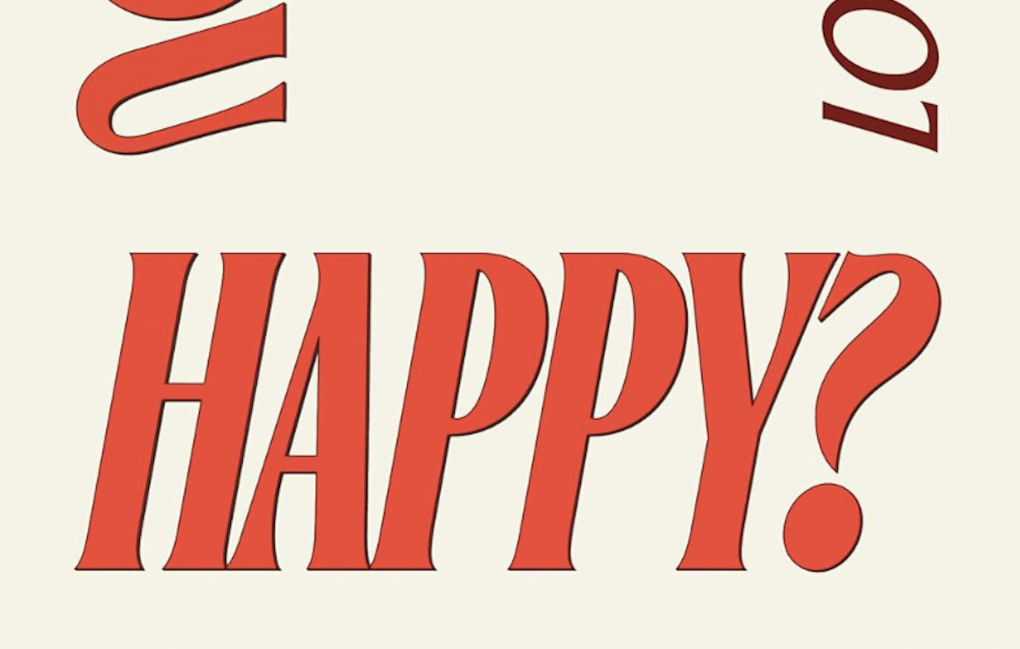
‘Are You Happy?’ Is a Darkly Claustrophic Journey Into Small-Town America
Naomi Wood Is Out With an Astonishingly Good Short Story Collection
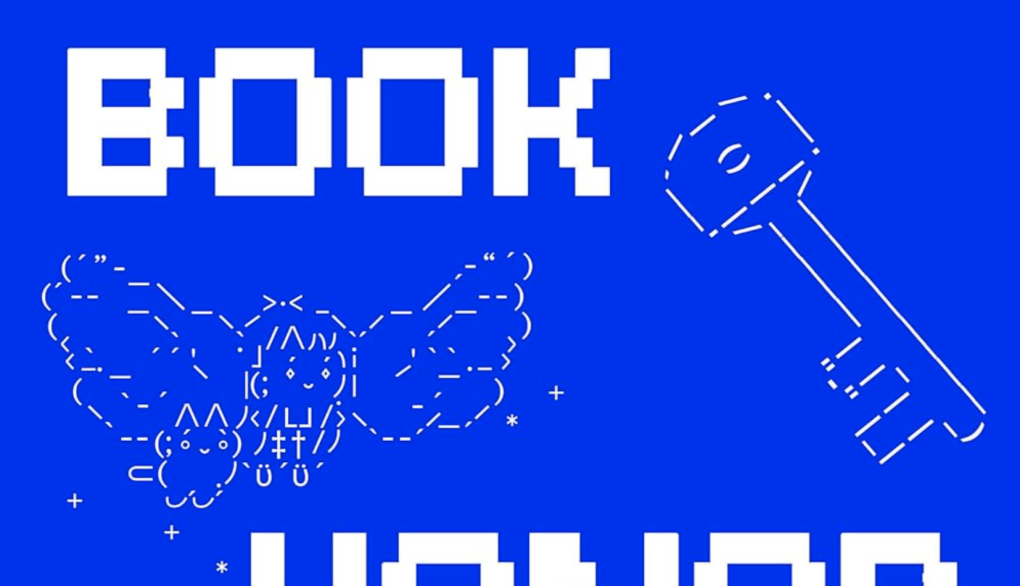
What are ‘the Kids’ Thinking These Days? Honor Levy Aims to Tell in ‘My First Book’
Short Story Anthology ‘The Black Girl Survives in This One’ Challenges the Horror Canon
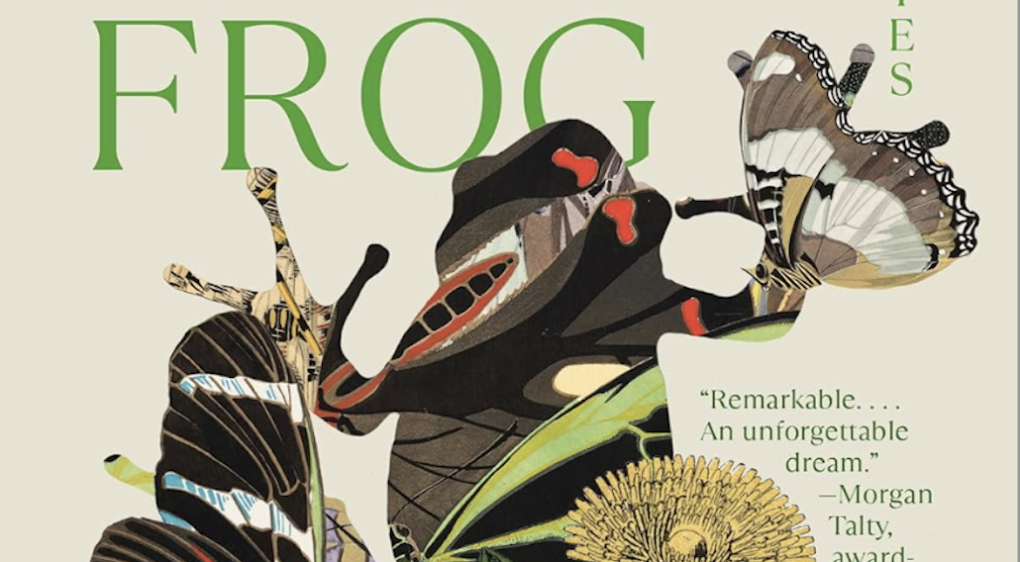
The Stories in ‘Green Frog’ Are Wildly Entertaining and Wonderfully Diverse
Player sponsored by
window.__IS_SSR__=true
window.__INITIAL_STATE__={
"attachmentsReducer": {
"audio_0": {
"type": "attachments",
"id": "audio_0",
"imgSizes": {
"kqedFullSize": {
"file": "https://ww2.kqed.org/news/wp-content/themes/KQED-unified/img/audio_bgs/background0.jpg"
}
}
},
"audio_1": {
"type": "attachments",
"id": "audio_1",
"imgSizes": {
"kqedFullSize": {
"file": "https://ww2.kqed.org/news/wp-content/themes/KQED-unified/img/audio_bgs/background1.jpg"
}
}
},
"audio_2": {
"type": "attachments",
"id": "audio_2",
"imgSizes": {
"kqedFullSize": {
"file": "https://ww2.kqed.org/news/wp-content/themes/KQED-unified/img/audio_bgs/background2.jpg"
}
}
},
"audio_3": {
"type": "attachments",
"id": "audio_3",
"imgSizes": {
"kqedFullSize": {
"file": "https://ww2.kqed.org/news/wp-content/themes/KQED-unified/img/audio_bgs/background3.jpg"
}
}
},
"audio_4": {
"type": "attachments",
"id": "audio_4",
"imgSizes": {
"kqedFullSize": {
"file": "https://ww2.kqed.org/news/wp-content/themes/KQED-unified/img/audio_bgs/background4.jpg"
}
}
},
"placeholder": {
"type": "attachments",
"id": "placeholder",
"imgSizes": {
"thumbnail": {
"file": "https://cdn.kqed.org/wp-content/uploads/2024/12/KQED-Default-Image-816638274-2000x1333-1-160x107.jpg",
"width": 160,
"height": 107,
"mimeType": "image/jpeg"
},
"medium": {
"file": "https://cdn.kqed.org/wp-content/uploads/2024/12/KQED-Default-Image-816638274-2000x1333-1-800x533.jpg",
"width": 800,
"height": 533,
"mimeType": "image/jpeg"
},
"medium_large": {
"file": "https://cdn.kqed.org/wp-content/uploads/2024/12/KQED-Default-Image-816638274-2000x1333-1-768x512.jpg",
"width": 768,
"height": 512,
"mimeType": "image/jpeg"
},
"large": {
"file": "https://cdn.kqed.org/wp-content/uploads/2024/12/KQED-Default-Image-816638274-2000x1333-1-1020x680.jpg",
"width": 1020,
"height": 680,
"mimeType": "image/jpeg"
},
"1536x1536": {
"file": "https://cdn.kqed.org/wp-content/uploads/2024/12/KQED-Default-Image-816638274-2000x1333-1-1536x1024.jpg",
"width": 1536,
"height": 1024,
"mimeType": "image/jpeg"
},
"fd-lrg": {
"file": "https://cdn.kqed.org/wp-content/uploads/2024/12/KQED-Default-Image-816638274-2000x1333-1-1536x1024.jpg",
"width": 1536,
"height": 1024,
"mimeType": "image/jpeg"
},
"fd-med": {
"file": "https://cdn.kqed.org/wp-content/uploads/2024/12/KQED-Default-Image-816638274-2000x1333-1-1020x680.jpg",
"width": 1020,
"height": 680,
"mimeType": "image/jpeg"
},
"fd-sm": {
"file": "https://cdn.kqed.org/wp-content/uploads/2024/12/KQED-Default-Image-816638274-2000x1333-1-800x533.jpg",
"width": 800,
"height": 533,
"mimeType": "image/jpeg"
},
"post-thumbnail": {
"file": "https://cdn.kqed.org/wp-content/uploads/2024/12/KQED-Default-Image-816638274-2000x1333-1-672x372.jpg",
"width": 672,
"height": 372,
"mimeType": "image/jpeg"
},
"twentyfourteen-full-width": {
"file": "https://cdn.kqed.org/wp-content/uploads/2024/12/KQED-Default-Image-816638274-2000x1333-1-1038x576.jpg",
"width": 1038,
"height": 576,
"mimeType": "image/jpeg"
},
"xxsmall": {
"file": "https://cdn.kqed.org/wp-content/uploads/2024/12/KQED-Default-Image-816638274-2000x1333-1-160x107.jpg",
"width": 160,
"height": 107,
"mimeType": "image/jpeg"
},
"xsmall": {
"file": "https://cdn.kqed.org/wp-content/uploads/2024/12/KQED-Default-Image-816638274-2000x1333-1-672x372.jpg",
"width": 672,
"height": 372,
"mimeType": "image/jpeg"
},
"small": {
"file": "https://cdn.kqed.org/wp-content/uploads/2024/12/KQED-Default-Image-816638274-2000x1333-1-672x372.jpg",
"width": 672,
"height": 372,
"mimeType": "image/jpeg"
},
"xlarge": {
"file": "https://cdn.kqed.org/wp-content/uploads/2024/12/KQED-Default-Image-816638274-2000x1333-1-1020x680.jpg",
"width": 1020,
"height": 680,
"mimeType": "image/jpeg"
},
"full-width": {
"file": "https://cdn.kqed.org/wp-content/uploads/2024/12/KQED-Default-Image-816638274-2000x1333-1-1920x1280.jpg",
"width": 1920,
"height": 1280,
"mimeType": "image/jpeg"
},
"guest-author-32": {
"file": "https://cdn.kqed.org/wp-content/uploads/2025/01/KQED-Default-Image-816638274-1333x1333-1-160x160.jpg",
"width": 32,
"height": 32,
"mimeType": "image/jpeg"
},
"guest-author-50": {
"file": "https://cdn.kqed.org/wp-content/uploads/2025/01/KQED-Default-Image-816638274-1333x1333-1-160x160.jpg",
"width": 50,
"height": 50,
"mimeType": "image/jpeg"
},
"guest-author-64": {
"file": "https://cdn.kqed.org/wp-content/uploads/2025/01/KQED-Default-Image-816638274-1333x1333-1-160x160.jpg",
"width": 64,
"height": 64,
"mimeType": "image/jpeg"
},
"guest-author-96": {
"file": "https://cdn.kqed.org/wp-content/uploads/2025/01/KQED-Default-Image-816638274-1333x1333-1-160x160.jpg",
"width": 96,
"height": 96,
"mimeType": "image/jpeg"
},
"guest-author-128": {
"file": "https://cdn.kqed.org/wp-content/uploads/2025/01/KQED-Default-Image-816638274-1333x1333-1-160x160.jpg",
"width": 128,
"height": 128,
"mimeType": "image/jpeg"
},
"detail": {
"file": "https://cdn.kqed.org/wp-content/uploads/2025/01/KQED-Default-Image-816638274-1333x1333-1-160x160.jpg",
"width": 160,
"height": 160,
"mimeType": "image/jpeg"
},
"kqedFullSize": {
"file": "https://cdn.kqed.org/wp-content/uploads/2024/12/KQED-Default-Image-816638274-2000x1333-1.jpg",
"width": 2000,
"height": 1333
}
}
},
"arts_13975775": {
"type": "attachments",
"id": "arts_13975775",
"meta": {
"index": "attachments_1716263798",
"site": "arts",
"id": "13975775",
"found": true
},
"title": "are you happy",
"publishDate": 1746554067,
"status": "inherit",
"parent": 13975773,
"modified": 1746554116,
"caption": "‘Are You Happy?’ by Lori Ostlund. ",
"credit": "Astra House",
"altTag": "A cream-colored book cover with red writing on it.",
"description": null,
"imgSizes": {
"medium": {
"file": "https://cdn.kqed.org/wp-content/uploads/sites/2/2025/05/are-you-happy-800x509.png",
"width": 800,
"height": 509,
"mimeType": "image/png"
},
"large": {
"file": "https://cdn.kqed.org/wp-content/uploads/sites/2/2025/05/are-you-happy-1020x649.png",
"width": 1020,
"height": 649,
"mimeType": "image/png"
},
"thumbnail": {
"file": "https://cdn.kqed.org/wp-content/uploads/sites/2/2025/05/are-you-happy-160x102.png",
"width": 160,
"height": 102,
"mimeType": "image/png"
},
"medium_large": {
"file": "https://cdn.kqed.org/wp-content/uploads/sites/2/2025/05/are-you-happy-768x489.png",
"width": 768,
"height": 489,
"mimeType": "image/png"
},
"1536x1536": {
"file": "https://cdn.kqed.org/wp-content/uploads/sites/2/2025/05/are-you-happy-1536x978.png",
"width": 1536,
"height": 978,
"mimeType": "image/png"
},
"post-thumbnail": {
"file": "https://cdn.kqed.org/wp-content/uploads/sites/2/2025/05/are-you-happy-672x372.png",
"width": 672,
"height": 372,
"mimeType": "image/png"
},
"twentyfourteen-full-width": {
"file": "https://cdn.kqed.org/wp-content/uploads/sites/2/2025/05/are-you-happy-1038x576.png",
"width": 1038,
"height": 576,
"mimeType": "image/png"
},
"full-width": {
"file": "https://cdn.kqed.org/wp-content/uploads/sites/2/2025/05/are-you-happy-1920x1222.png",
"width": 1920,
"height": 1222,
"mimeType": "image/png"
},
"kqedFullSize": {
"file": "https://cdn.kqed.org/wp-content/uploads/sites/2/2025/05/are-you-happy.png",
"width": 2000,
"height": 1273
}
},
"fetchFailed": false,
"isLoading": false
},
"arts_13968659": {
"type": "attachments",
"id": "arts_13968659",
"meta": {
"index": "attachments_1716263798",
"site": "arts",
"id": "13968659",
"found": true
},
"title": "naomi wood",
"publishDate": 1732648702,
"status": "inherit",
"parent": 13968657,
"modified": 1732648755,
"caption": "‘This Is Why We Can’t Have Nice Things’ by Naomi Wood.",
"credit": "Phoenix",
"altTag": "A book cover showing an illustration of a woman's face upside down. Only the nose, mouth and neck are visible.",
"description": null,
"imgSizes": {
"medium": {
"file": "https://cdn.kqed.org/wp-content/uploads/sites/2/2024/11/Screenshot-2024-11-26-at-11.15.03 AM-1-800x470.png",
"width": 800,
"height": 470,
"mimeType": "image/png"
},
"large": {
"file": "https://cdn.kqed.org/wp-content/uploads/sites/2/2024/11/Screenshot-2024-11-26-at-11.15.03 AM-1-1020x599.png",
"width": 1020,
"height": 599,
"mimeType": "image/png"
},
"thumbnail": {
"file": "https://cdn.kqed.org/wp-content/uploads/sites/2/2024/11/Screenshot-2024-11-26-at-11.15.03 AM-1-160x94.png",
"width": 160,
"height": 94,
"mimeType": "image/png"
},
"medium_large": {
"file": "https://cdn.kqed.org/wp-content/uploads/sites/2/2024/11/Screenshot-2024-11-26-at-11.15.03 AM-1-768x451.png",
"width": 768,
"height": 451,
"mimeType": "image/png"
},
"1536x1536": {
"file": "https://cdn.kqed.org/wp-content/uploads/sites/2/2024/11/Screenshot-2024-11-26-at-11.15.03 AM-1-1536x902.png",
"width": 1536,
"height": 902,
"mimeType": "image/png"
},
"post-thumbnail": {
"file": "https://cdn.kqed.org/wp-content/uploads/sites/2/2024/11/Screenshot-2024-11-26-at-11.15.03 AM-1-672x372.png",
"width": 672,
"height": 372,
"mimeType": "image/png"
},
"twentyfourteen-full-width": {
"file": "https://cdn.kqed.org/wp-content/uploads/sites/2/2024/11/Screenshot-2024-11-26-at-11.15.03 AM-1-1038x576.png",
"width": 1038,
"height": 576,
"mimeType": "image/png"
},
"full-width": {
"file": "https://cdn.kqed.org/wp-content/uploads/sites/2/2024/11/Screenshot-2024-11-26-at-11.15.03 AM-1-1920x1127.png",
"width": 1920,
"height": 1127,
"mimeType": "image/png"
},
"kqedFullSize": {
"file": "https://cdn.kqed.org/wp-content/uploads/sites/2/2024/11/Screenshot-2024-11-26-at-11.15.03 AM-1.png",
"width": 2000,
"height": 1174
}
},
"fetchFailed": false,
"isLoading": false
},
"arts_13957824": {
"type": "attachments",
"id": "arts_13957824",
"meta": {
"index": "attachments_1716263798",
"site": "arts",
"id": "13957824",
"found": true
},
"parent": 13957814,
"imgSizes": {
"twentyfourteen-full-width": {
"file": "https://cdn.kqed.org/wp-content/uploads/sites/2/2024/05/Screen-Shot-2024-05-14-at-2.25.00-PM-1038x576.png",
"width": 1038,
"mimeType": "image/png",
"height": 576
},
"thumbnail": {
"file": "https://cdn.kqed.org/wp-content/uploads/sites/2/2024/05/Screen-Shot-2024-05-14-at-2.25.00-PM-160x92.png",
"width": 160,
"mimeType": "image/png",
"height": 92
},
"post-thumbnail": {
"file": "https://cdn.kqed.org/wp-content/uploads/sites/2/2024/05/Screen-Shot-2024-05-14-at-2.25.00-PM-672x372.png",
"width": 672,
"mimeType": "image/png",
"height": 372
},
"kqedFullSize": {
"file": "https://cdn.kqed.org/wp-content/uploads/sites/2/2024/05/Screen-Shot-2024-05-14-at-2.25.00-PM.png",
"width": 1654,
"height": 950
},
"large": {
"file": "https://cdn.kqed.org/wp-content/uploads/sites/2/2024/05/Screen-Shot-2024-05-14-at-2.25.00-PM-1020x586.png",
"width": 1020,
"mimeType": "image/png",
"height": 586
},
"1536x1536": {
"file": "https://cdn.kqed.org/wp-content/uploads/sites/2/2024/05/Screen-Shot-2024-05-14-at-2.25.00-PM-1536x882.png",
"width": 1536,
"mimeType": "image/png",
"height": 882
},
"medium": {
"file": "https://cdn.kqed.org/wp-content/uploads/sites/2/2024/05/Screen-Shot-2024-05-14-at-2.25.00-PM-800x459.png",
"width": 800,
"mimeType": "image/png",
"height": 459
},
"medium_large": {
"file": "https://cdn.kqed.org/wp-content/uploads/sites/2/2024/05/Screen-Shot-2024-05-14-at-2.25.00-PM-768x441.png",
"width": 768,
"mimeType": "image/png",
"height": 441
}
},
"publishDate": 1715721919,
"modified": 1715721966,
"caption": "‘My First Book’ by Honor Levy.",
"description": null,
"title": "‘My First Book’ by Honor Levy.",
"credit": "Penguin Press",
"status": "inherit",
"altTag": "A blue book cover with pixelated lettering like an old-fashioned computer.",
"fetchFailed": false,
"isLoading": false
},
"arts_13955158": {
"type": "attachments",
"id": "arts_13955158",
"meta": {
"index": "attachments_1716263798",
"site": "arts",
"id": "13955158",
"found": true
},
"parent": 13955156,
"imgSizes": {
"twentyfourteen-full-width": {
"file": "https://cdn.kqed.org/wp-content/uploads/sites/2/2024/04/Screen-Shot-2024-04-01-at-2.43.31-PM-816x576.png",
"width": 816,
"mimeType": "image/png",
"height": 576
},
"thumbnail": {
"file": "https://cdn.kqed.org/wp-content/uploads/sites/2/2024/04/Screen-Shot-2024-04-01-at-2.43.31-PM-160x115.png",
"width": 160,
"mimeType": "image/png",
"height": 115
},
"post-thumbnail": {
"file": "https://cdn.kqed.org/wp-content/uploads/sites/2/2024/04/Screen-Shot-2024-04-01-at-2.43.31-PM-672x372.png",
"width": 672,
"mimeType": "image/png",
"height": 372
},
"kqedFullSize": {
"file": "https://cdn.kqed.org/wp-content/uploads/sites/2/2024/04/Screen-Shot-2024-04-01-at-2.43.31-PM.png",
"width": 816,
"height": 588
},
"medium": {
"file": "https://cdn.kqed.org/wp-content/uploads/sites/2/2024/04/Screen-Shot-2024-04-01-at-2.43.31-PM-800x576.png",
"width": 800,
"mimeType": "image/png",
"height": 576
},
"medium_large": {
"file": "https://cdn.kqed.org/wp-content/uploads/sites/2/2024/04/Screen-Shot-2024-04-01-at-2.43.31-PM-768x553.png",
"width": 768,
"mimeType": "image/png",
"height": 553
}
},
"publishDate": 1712008002,
"modified": 1712008042,
"caption": "‘The Black Girl Survives in This One’ by Desiree S. Evans and Saraciea J. Fennell.",
"description": null,
"title": "‘The Black Girl Survives in This One’ by Desiree S. Evans and Saraciea J. Fennell.",
"credit": "Flatiron Books",
"status": "inherit",
"altTag": "An illustration of a young Black woman with long braids holding her manicured hands up to her mouth in horror.",
"fetchFailed": false,
"isLoading": false
},
"arts_13954172": {
"type": "attachments",
"id": "arts_13954172",
"meta": {
"index": "attachments_1716263798",
"site": "arts",
"id": "13954172",
"found": true
},
"parent": 13954168,
"imgSizes": {
"thumbnail": {
"file": "https://cdn.kqed.org/wp-content/uploads/sites/2/2024/03/Screen-Shot-2024-03-14-at-5.37.50-PM-160x88.png",
"width": 160,
"mimeType": "image/png",
"height": 88
},
"post-thumbnail": {
"file": "https://cdn.kqed.org/wp-content/uploads/sites/2/2024/03/Screen-Shot-2024-03-14-at-5.37.50-PM-672x372.png",
"width": 672,
"mimeType": "image/png",
"height": 372
},
"kqedFullSize": {
"file": "https://cdn.kqed.org/wp-content/uploads/sites/2/2024/03/Screen-Shot-2024-03-14-at-5.37.50-PM.png",
"width": 1030,
"height": 568
},
"large": {
"file": "https://cdn.kqed.org/wp-content/uploads/sites/2/2024/03/Screen-Shot-2024-03-14-at-5.37.50-PM-1020x562.png",
"width": 1020,
"mimeType": "image/png",
"height": 562
},
"medium": {
"file": "https://cdn.kqed.org/wp-content/uploads/sites/2/2024/03/Screen-Shot-2024-03-14-at-5.37.50-PM-800x441.png",
"width": 800,
"mimeType": "image/png",
"height": 441
},
"medium_large": {
"file": "https://cdn.kqed.org/wp-content/uploads/sites/2/2024/03/Screen-Shot-2024-03-14-at-5.37.50-PM-768x424.png",
"width": 768,
"mimeType": "image/png",
"height": 424
}
},
"publishDate": 1710463096,
"modified": 1710463168,
"caption": "‘Green Frog: Stories’ by Gina Chung.",
"description": null,
"title": "‘Green Frog: Stories’ by Gina Chung.",
"credit": "Vintage",
"status": "inherit",
"altTag": "Detail of a book cover that includes an abstract, patchwork illustration of a frog and flowers.",
"fetchFailed": false,
"isLoading": false
}
},
"audioPlayerReducer": {
"postId": "stream_live",
"isPaused": true,
"isPlaying": false,
"pfsActive": false,
"pledgeModalIsOpen": true,
"playerDrawerIsOpen": false
},
"authorsReducer": {
"byline_arts_13968657": {
"type": "authors",
"id": "byline_arts_13968657",
"meta": {
"override": true
},
"slug": "byline_arts_13968657",
"name": "Ann Levin, Associated Press",
"isLoading": false
},
"byline_arts_13957814": {
"type": "authors",
"id": "byline_arts_13957814",
"meta": {
"override": true
},
"slug": "byline_arts_13957814",
"name": "Leland Cheuk, NPR",
"isLoading": false
},
"byline_arts_13955156": {
"type": "authors",
"id": "byline_arts_13955156",
"meta": {
"override": true
},
"slug": "byline_arts_13955156",
"name": "Donna Edwards, Associated Press",
"isLoading": false
},
"byline_arts_13954168": {
"type": "authors",
"id": "byline_arts_13954168",
"meta": {
"override": true
},
"slug": "byline_arts_13954168",
"name": "Gabino Iglesias",
"isLoading": false
},
"ralexandra": {
"type": "authors",
"id": "11242",
"meta": {
"index": "authors_1716337520",
"id": "11242",
"found": true
},
"name": "Rae Alexandra",
"firstName": "Rae",
"lastName": "Alexandra",
"slug": "ralexandra",
"email": "ralexandra@kqed.org",
"display_author_email": true,
"staff_mastheads": [
"arts"
],
"title": "Reporter/Producer",
"bio": "Rae Alexandra is a Reporter/Producer for KQED Arts & Culture, and the creator/author of the \u003ca href=\"https://www.kqed.org/arts/program/rebel-girls-from-bay-area-history\">Rebel Girls From Bay Area History\u003c/a> and \u003ca href=\"https://www.kqed.org/bizarrebayarea\">Bizarre Bay Area\u003c/a> series. Her debut book, \u003ca href=\"https://citylights.com/politics-current-events-history/unsung-heroines35-women-who-changed/\">Unsung Heroines: 35 Women Who Changed the Bay Area\u003c/a> was published by City Lights in March 2026. In 2023, Rae was awarded an SPJ Excellence in Journalism Award for Arts & Culture. Rae was born and raised in Wales and subsequently — even after two decades in Northern California — still uses phrases that regularly baffle her coworkers.",
"avatar": "https://secure.gravatar.com/avatar/d5ef3d663d9adae1345d06932a3951de?s=600&d=blank&r=g",
"twitter": null,
"bluesky": null,
"facebook": null,
"instagram": null,
"linkedin": null,
"sites": [
{
"site": "arts",
"roles": [
"editor"
]
},
{
"site": "news",
"roles": [
"editor"
]
},
{
"site": "pop",
"roles": [
"editor"
]
},
{
"site": "bayareabites",
"roles": [
"editor"
]
},
{
"site": "science",
"roles": [
"editor"
]
}
],
"headData": {
"title": "Rae Alexandra | KQED",
"description": "Reporter/Producer",
"ogImgSrc": "https://secure.gravatar.com/avatar/d5ef3d663d9adae1345d06932a3951de?s=600&d=blank&r=g",
"twImgSrc": "https://secure.gravatar.com/avatar/d5ef3d663d9adae1345d06932a3951de?s=600&d=blank&r=g"
},
"isLoading": false,
"link": "/author/ralexandra"
}
},
"breakingNewsReducer": {},
"pagesReducer": {},
"postsReducer": {
"stream_live": {
"type": "live",
"id": "stream_live",
"audioUrl": "https://streams.kqed.org/kqedradio",
"title": "Live Stream",
"excerpt": "Live Stream information currently unavailable.",
"link": "/radio",
"featImg": "",
"label": {
"name": "KQED Live",
"link": "/"
}
},
"stream_kqedNewscast": {
"type": "posts",
"id": "stream_kqedNewscast",
"audioUrl": "https://www.kqed.org/.stream/anon/radio/RDnews/newscast.mp3?_=1",
"title": "KQED Newscast",
"featImg": "",
"label": {
"name": "88.5 FM",
"link": "/"
}
},
"arts_13975773": {
"type": "posts",
"id": "arts_13975773",
"meta": {
"index": "posts_1716263798",
"site": "arts",
"id": "13975773",
"score": null,
"sort": [
1746558397000
]
},
"guestAuthors": [],
"slug": "are-you-happy-book-review-lori-ostlund-best-short-stories",
"title": "‘Are You Happy?’ Is a Darkly Claustrophic Journey Into Small-Town America",
"publishDate": 1746558397,
"format": "aside",
"headTitle": "‘Are You Happy?’ Is a Darkly Claustrophic Journey Into Small-Town America | KQED",
"labelTerm": {},
"content": "\u003cfigure id=\"attachment_13975776\" class=\"wp-caption aligncenter\" style=\"max-width: 1401px\">\u003cimg loading=\"lazy\" decoding=\"async\" class=\"size-full wp-image-13975776\" src=\"https://cdn.kqed.org/wp-content/uploads/sites/2/2025/05/lori-o.png\" alt=\"A cream-colored book cover with red writing on it.\" width=\"1401\" height=\"2000\" srcset=\"https://cdn.kqed.org/wp-content/uploads/sites/2/2025/05/lori-o.png 1401w, https://cdn.kqed.org/wp-content/uploads/sites/2/2025/05/lori-o-800x1142.png 800w, https://cdn.kqed.org/wp-content/uploads/sites/2/2025/05/lori-o-1020x1456.png 1020w, https://cdn.kqed.org/wp-content/uploads/sites/2/2025/05/lori-o-160x228.png 160w, https://cdn.kqed.org/wp-content/uploads/sites/2/2025/05/lori-o-768x1096.png 768w, https://cdn.kqed.org/wp-content/uploads/sites/2/2025/05/lori-o-1076x1536.png 1076w\" sizes=\"auto, (max-width: 1401px) 100vw, 1401px\">\u003cfigcaption class=\"wp-caption-text\">‘Are You Happy?’ by Lori Ostlund. \u003ccite>(Astra House)\u003c/cite>\u003c/figcaption>\u003c/figure>\n\u003cp>Lori Ostlund might be a San Francisco-based author now, but don’t expect her characters to always inhabit the Golden State.\u003c/p>\n\u003cp>In Ostlund’s new short story collection \u003cem>Are You Happy?\u003c/em>, we instead meet characters from Minnesota and New Mexico, with only the occasional fleeting glance toward San Francisco or New York City. The reason becomes clear as her stories unfurl: Ostlund’s writing is most at home in small schools, small towns and small dive bars, all of them imbued with a permanent sense of enclosure, claustrophobia and unease. Major cities loom on the horizon only as escape hatches.\u003c/p>\n\u003cp>[aside postid='arts_13975742']Other themes weave throughout these nine stories. Grief, for lives lost too soon, or for lives thrown away at the local bar. Being LGBTQ+, usually in places where it isn’t altogether safe. The constant threat of violence that permeates American culture and, in particular, women’s psyches.\u003c/p>\n\u003cp>Ostlund herself — a teacher of 25 years, and a lesbian — grew up in small-town Minnesota. Because she writes about what she most intimately knows, her stories are consistently immersive.\u003c/p>\n\u003cp>One of the most impactful stories in \u003cem>Are You Happy?\u003c/em> is “The Stalker,” about a female teacher grappling with a sinister, potentially dangerous student. Ostlund juxtaposes the coziness of the teacher’s quiet home life, complete with wife and cat, with the cold, exposed feeling of fending for herself in night classes with a former soldier who may or may not want to hurt her.\u003c/p>\n\u003cp>[ad fullwidth]\u003c/p>\n\u003cp>While “The Stalker” is ultimately about the many ways women are forced to move through the world differently than men, elsewhere in the collection — in a story called “Clear as Cake” — a male teacher contends with a troublesome, frustrating group of students. Ostlund’s writings about school settings have a visceral edge clearly born from life experience rather than imagination. After reading her stories, you’ll wonder why she hasn’t quit teaching yet.\u003c/p>\n\u003cp>[aside postid='arts_13975692']\u003cem>Are You Happy?\u003c/em> is bookended with stories about women who’ve outgrown their unhappy upbringings, but are forced to temporarily return to and grapple with them. “The Bus Driver” and novella “Just Another Family” both leave readers with the sense that, no matter how far we go or how much we grow, it’s our formative years that matter.\u003c/p>\n\u003cp>In Lori Ostlund’s case, her real-life roots are wrapped around each and every one of her stories. Reading them can’t help but force you to face your own.\u003c/p>\n\u003chr>\n\u003cp>\u003cem>\u003ca href=\"https://astrapublishinghouse.com/?s=lori+ostlund\">‘Are You Happy?’ by Lori Ostlund\u003c/a> is out on May 6, 2025, via Astra House.\u003c/em>\u003c/p>\n\u003cp>\u003c/p>\n\u003cp>\u003cem>Ostlund appears Tuesday, May 6 at \u003ca href=\"https://greenapplebooks.com/events/2025/05\">Green Apple Books on the Park\u003c/a> in San Francisco with Oscar Villalon, and Thursday, May 8 at \u003ca href=\"https://www.eventbrite.com/e/lori-ostlunds-are-you-happy-in-store-presentation-and-book-signing-tickets-1273806011069?aff=oddtdtcreator\">Mrs. Dalloway’s\u003c/a> in Berkeley with Alec Scott. \u003c/em>\u003c/p>\n\n",
"blocks": [],
"excerpt": "Author Lori Ostlund lives in San Francisco, but her characters usually inhabit small communities in New Mexico and Minnesota. ",
"status": "publish",
"parent": 0,
"modified": 1746570922,
"stats": {
"hasAudio": false,
"hasVideo": false,
"hasChartOrMap": false,
"iframeSrcs": [],
"hasGoogleForm": false,
"hasGallery": false,
"hasHearkenModule": false,
"hasPolis": false,
"paragraphCount": 12,
"wordCount": 503
},
"headData": {
"title": "Book Review: ‘Are You Happy?’ by Lori Ostlund | KQED",
"description": "Author Lori Ostlund lives in San Francisco, but her characters usually inhabit small communities in New Mexico and Minnesota. ",
"ogTitle": "‘Are You Happy?’ Is a Darkly Immersive Journey Into Small-Town America",
"ogDescription": "",
"ogImgId": "",
"twTitle": "‘Are You Happy?’ Is a Darkly Immersive Journey Into Small-Town America",
"twDescription": "",
"twImgId": "",
"socialTitle": "Book Review: ‘Are You Happy?’ by Lori Ostlund %%page%% %%sep%% KQED",
"schema": {
"@context": "https://schema.org",
"@type": "Article",
"headline": "‘Are You Happy?’ Is a Darkly Claustrophic Journey Into Small-Town America",
"datePublished": "2025-05-06T12:06:37-07:00",
"dateModified": "2025-05-06T15:35:22-07:00",
"image": "https://cdn.kqed.org/wp-content/uploads/2020/02/KQED-OG-Image@1x.png"
}
},
"source": "The Do List",
"sourceUrl": "https://www.kqed.org/thedolist",
"sticky": false,
"nprStoryId": "kqed-13975773",
"templateType": "standard",
"featuredImageType": "standard",
"excludeFromSiteSearch": "Include",
"articleAge": "0",
"path": "/arts/13975773/are-you-happy-book-review-lori-ostlund-best-short-stories",
"audioTrackLength": null,
"parsedContent": [
{
"type": "contentString",
"content": "\u003cdiv class=\"post-body\">\u003cp>\u003cfigure id=\"attachment_13975776\" class=\"wp-caption aligncenter\" style=\"max-width: 1401px\">\u003cimg loading=\"lazy\" decoding=\"async\" class=\"size-full wp-image-13975776\" src=\"https://cdn.kqed.org/wp-content/uploads/sites/2/2025/05/lori-o.png\" alt=\"A cream-colored book cover with red writing on it.\" width=\"1401\" height=\"2000\" srcset=\"https://cdn.kqed.org/wp-content/uploads/sites/2/2025/05/lori-o.png 1401w, https://cdn.kqed.org/wp-content/uploads/sites/2/2025/05/lori-o-800x1142.png 800w, https://cdn.kqed.org/wp-content/uploads/sites/2/2025/05/lori-o-1020x1456.png 1020w, https://cdn.kqed.org/wp-content/uploads/sites/2/2025/05/lori-o-160x228.png 160w, https://cdn.kqed.org/wp-content/uploads/sites/2/2025/05/lori-o-768x1096.png 768w, https://cdn.kqed.org/wp-content/uploads/sites/2/2025/05/lori-o-1076x1536.png 1076w\" sizes=\"auto, (max-width: 1401px) 100vw, 1401px\">\u003cfigcaption class=\"wp-caption-text\">‘Are You Happy?’ by Lori Ostlund. \u003ccite>(Astra House)\u003c/cite>\u003c/figcaption>\u003c/figure>\n\u003cp>Lori Ostlund might be a San Francisco-based author now, but don’t expect her characters to always inhabit the Golden State.\u003c/p>\n\u003cp>In Ostlund’s new short story collection \u003cem>Are You Happy?\u003c/em>, we instead meet characters from Minnesota and New Mexico, with only the occasional fleeting glance toward San Francisco or New York City. The reason becomes clear as her stories unfurl: Ostlund’s writing is most at home in small schools, small towns and small dive bars, all of them imbued with a permanent sense of enclosure, claustrophobia and unease. Major cities loom on the horizon only as escape hatches.\u003c/p>\n\u003cp>\u003c/p>\u003c/div>",
"attributes": {
"named": {},
"numeric": []
}
},
{
"type": "component",
"content": "",
"name": "aside",
"attributes": {
"named": {
"postid": "arts_13975742",
"label": ""
},
"numeric": []
}
},
{
"type": "contentString",
"content": "\u003cdiv class=\"post-body\">\u003cp>Other themes weave throughout these nine stories. Grief, for lives lost too soon, or for lives thrown away at the local bar. Being LGBTQ+, usually in places where it isn’t altogether safe. The constant threat of violence that permeates American culture and, in particular, women’s psyches.\u003c/p>\n\u003cp>Ostlund herself — a teacher of 25 years, and a lesbian — grew up in small-town Minnesota. Because she writes about what she most intimately knows, her stories are consistently immersive.\u003c/p>\n\u003cp>One of the most impactful stories in \u003cem>Are You Happy?\u003c/em> is “The Stalker,” about a female teacher grappling with a sinister, potentially dangerous student. Ostlund juxtaposes the coziness of the teacher’s quiet home life, complete with wife and cat, with the cold, exposed feeling of fending for herself in night classes with a former soldier who may or may not want to hurt her.\u003c/p>\n\u003cp>\u003c/p>\u003c/div>",
"attributes": {
"named": {},
"numeric": []
}
},
{
"type": "component",
"content": "",
"name": "ad",
"attributes": {
"named": {
"label": "fullwidth"
},
"numeric": [
"fullwidth"
]
}
},
{
"type": "contentString",
"content": "\u003cdiv class=\"post-body\">\u003cp>\u003c/p>\n\u003cp>While “The Stalker” is ultimately about the many ways women are forced to move through the world differently than men, elsewhere in the collection — in a story called “Clear as Cake” — a male teacher contends with a troublesome, frustrating group of students. Ostlund’s writings about school settings have a visceral edge clearly born from life experience rather than imagination. After reading her stories, you’ll wonder why she hasn’t quit teaching yet.\u003c/p>\n\u003cp>\u003c/p>\u003c/div>",
"attributes": {
"named": {},
"numeric": []
}
},
{
"type": "component",
"content": "",
"name": "aside",
"attributes": {
"named": {
"postid": "arts_13975692",
"label": ""
},
"numeric": []
}
},
{
"type": "contentString",
"content": "\u003cdiv class=\"post-body\">\u003cp>\u003cem>Are You Happy?\u003c/em> is bookended with stories about women who’ve outgrown their unhappy upbringings, but are forced to temporarily return to and grapple with them. “The Bus Driver” and novella “Just Another Family” both leave readers with the sense that, no matter how far we go or how much we grow, it’s our formative years that matter.\u003c/p>\n\u003cp>In Lori Ostlund’s case, her real-life roots are wrapped around each and every one of her stories. Reading them can’t help but force you to face your own.\u003c/p>\n\u003chr>\n\u003cp>\u003cem>\u003ca href=\"https://astrapublishinghouse.com/?s=lori+ostlund\">‘Are You Happy?’ by Lori Ostlund\u003c/a> is out on May 6, 2025, via Astra House.\u003c/em>\u003c/p>\n\u003cp>\u003c/p>\n\u003cp>\u003cem>Ostlund appears Tuesday, May 6 at \u003ca href=\"https://greenapplebooks.com/events/2025/05\">Green Apple Books on the Park\u003c/a> in San Francisco with Oscar Villalon, and Thursday, May 8 at \u003ca href=\"https://www.eventbrite.com/e/lori-ostlunds-are-you-happy-in-store-presentation-and-book-signing-tickets-1273806011069?aff=oddtdtcreator\">Mrs. Dalloway’s\u003c/a> in Berkeley with Alec Scott. \u003c/em>\u003c/p>\n\n\u003c/div>\u003c/p>",
"attributes": {
"named": {},
"numeric": []
}
}
],
"link": "/arts/13975773/are-you-happy-book-review-lori-ostlund-best-short-stories",
"authors": [
"11242"
],
"programs": [
"arts_140"
],
"categories": [
"arts_1",
"arts_73",
"arts_22313"
],
"tags": [
"arts_5221",
"arts_22017",
"arts_585"
],
"featImg": "arts_13975775",
"label": "source_arts_13975773"
},
"arts_13968657": {
"type": "posts",
"id": "arts_13968657",
"meta": {
"index": "posts_1716263798",
"site": "arts",
"id": "13968657",
"score": null,
"sort": [
1732649128000
]
},
"guestAuthors": [],
"slug": "naomi-wood-short-story-collection-book-review-this-is-why-we-cant-have-nice-things",
"title": "Naomi Wood Is Out With an Astonishingly Good Short Story Collection",
"publishDate": 1732649128,
"format": "aside",
"headTitle": "Naomi Wood Is Out With an Astonishingly Good Short Story Collection | KQED",
"labelTerm": {
"term": 140,
"site": "arts"
},
"content": "\u003cfigure id=\"attachment_13968658\" class=\"wp-caption aligncenter\" style=\"max-width: 752px\">\u003cimg loading=\"lazy\" decoding=\"async\" class=\"size-full wp-image-13968658\" src=\"https://cdn.kqed.org/wp-content/uploads/sites/2/2024/11/Screenshot-2024-11-26-at-11.15.03%E2%80%AFAM.png\" alt=\"A book cover showing an illustration of a woman's face upside down. Only the nose, mouth and neck are visible.\" width=\"752\" height=\"1132\" srcset=\"https://cdn.kqed.org/wp-content/uploads/sites/2/2024/11/Screenshot-2024-11-26-at-11.15.03 AM.png 752w, https://cdn.kqed.org/wp-content/uploads/sites/2/2024/11/Screenshot-2024-11-26-at-11.15.03 AM-160x241.png 160w\" sizes=\"(max-width: 752px) 100vw, 752px\">\u003cfigcaption class=\"wp-caption-text\">‘This Is Why We Can’t Have Nice Things’ by Naomi Wood. \u003ccite>(Phoenix)\u003c/cite>\u003c/figcaption>\u003c/figure>\n\u003cp>Naomi Wood, an English author not yet well known in the U.S., has written three historical novels, including the well-regarded \u003cem>Mrs. Hemingway\u003c/em>, about the four wives of Ernest Hemingway. During the Covid lockdowns, when her kids were confined at home and she had less time to herself, she turned to the short story form. The result, \u003cem>This Is Why We Can’t Have Nice Things\u003c/em>, is an astonishingly good debut collection that often incorporates the bizarre, life-altering reality of the pandemic into the plots.\u003c/p>\n\u003cp>[aside postid='arts_13968593']The main characters tend to be 30-something women trying to have it all. Kids, relationships, satisfying careers — the “seductive slipstream of productivity.” They also strive to be good citizens of an ailing planet and have sex with their partners more than once in a blue moon.\u003c/p>\n\u003cp>In “Comorbidities,” which won the 2023 BBC National Short Story Award, a couple with young children tries to spice up their marriage by making a sex tape. In an abundance of caution, the man pauses the action to read up on digital security and adjust his devices. Hours later, when the glow has worn off, the woman has a panic attack, worrying it might somehow end up in the “deadly slime of the internet.”\u003c/p>\n\u003cp>Her female protagonists happen to be a lusty bunch, enjoying sex in flavors that some might consider kinky. But once the little ones arrive, everything changes. Fathers might leave, but these mothers wouldn’t dream of it. “They’re the grand love affair, in the end. The kids. No one else,” says a character in the story “A/A/A/A.”\u003c/p>\n\u003cp>But don’t think for a minute that they’re selfless or saintly. Feminism has freed them to enter the 21st century labor market and take on high-powered jobs, where they prove to be just as scheming, selfish and manipulative as the men.\u003c/p>\n\u003cp>[ad fullwidth]\u003c/p>\n\u003cp>“Recently, I had started to notice my bad energy, and I began to follow it, wondering where it would take me,” says the main character in “Wedding Day.” And where was that? To a scheme to disrupt her ex-boyfriend’s wedding by insisting he leave the party early to bring their daughter home for her bedtime. But revenge is bittersweet because once he is back in the apartment they used to share, she is overcome with painful memories of their powerful erotic attraction.\u003c/p>\n\u003cp>[aside postid='arts_13968272']For all their flaws — and they have lots of them — the women in these delectable stories are insanely fun to be with because they are so fully imagined and true to the way we live now.\u003c/p>\n\u003chr>\n\u003cp>\u003c/p>\n\u003cp>\u003cem>This Is Why We Can’t Have Nice Things by Naomi Wood is out now, via Phoenix.\u003c/em>\u003c/p>\n\n",
"blocks": [],
"excerpt": "Wood's stories often brilliantly incorporate the bizarre, life-altering reality of the pandemic into the plots.",
"status": "publish",
"parent": 0,
"modified": 1732649128,
"stats": {
"hasAudio": false,
"hasVideo": false,
"hasChartOrMap": false,
"iframeSrcs": [],
"hasGoogleForm": false,
"hasGallery": false,
"hasHearkenModule": false,
"hasPolis": false,
"paragraphCount": 10,
"wordCount": 498
},
"headData": {
"title": "Book Review: ‘This Is Why We Can’t Have Nice Things’ | KQED",
"description": "Wood's stories often brilliantly incorporate the bizarre, life-altering reality of the pandemic into the plots.",
"ogTitle": "Naomi Wood Is Out With an Astonishingly Good Short Story Collection",
"ogDescription": "",
"ogImgId": "",
"twTitle": "Naomi Wood Is Out With an Astonishingly Good Short Story Collection",
"twDescription": "",
"twImgId": "",
"socialTitle": "Book Review: ‘This Is Why We Can’t Have Nice Things’ %%page%% %%sep%% KQED",
"schema": {
"@context": "https://schema.org",
"@type": "Article",
"headline": "Naomi Wood Is Out With an Astonishingly Good Short Story Collection",
"datePublished": "2024-11-26T11:25:28-08:00",
"dateModified": "2024-11-26T11:25:28-08:00",
"image": "https://cdn.kqed.org/wp-content/uploads/2020/02/KQED-OG-Image@1x.png"
}
},
"sticky": false,
"nprByline": "Ann Levin, Associated Press",
"nprStoryId": "kqed-13968657",
"templateType": "standard",
"featuredImageType": "standard",
"excludeFromSiteSearch": "Include",
"showOnAuthorArchivePages": "No",
"articleAge": "0",
"path": "/arts/13968657/naomi-wood-short-story-collection-book-review-this-is-why-we-cant-have-nice-things",
"audioTrackLength": null,
"parsedContent": [
{
"type": "contentString",
"content": "\u003cdiv class=\"post-body\">\u003cp>\u003cfigure id=\"attachment_13968658\" class=\"wp-caption aligncenter\" style=\"max-width: 752px\">\u003cimg loading=\"lazy\" decoding=\"async\" class=\"size-full wp-image-13968658\" src=\"https://cdn.kqed.org/wp-content/uploads/sites/2/2024/11/Screenshot-2024-11-26-at-11.15.03%E2%80%AFAM.png\" alt=\"A book cover showing an illustration of a woman's face upside down. Only the nose, mouth and neck are visible.\" width=\"752\" height=\"1132\" srcset=\"https://cdn.kqed.org/wp-content/uploads/sites/2/2024/11/Screenshot-2024-11-26-at-11.15.03 AM.png 752w, https://cdn.kqed.org/wp-content/uploads/sites/2/2024/11/Screenshot-2024-11-26-at-11.15.03 AM-160x241.png 160w\" sizes=\"(max-width: 752px) 100vw, 752px\">\u003cfigcaption class=\"wp-caption-text\">‘This Is Why We Can’t Have Nice Things’ by Naomi Wood. \u003ccite>(Phoenix)\u003c/cite>\u003c/figcaption>\u003c/figure>\n\u003cp>Naomi Wood, an English author not yet well known in the U.S., has written three historical novels, including the well-regarded \u003cem>Mrs. Hemingway\u003c/em>, about the four wives of Ernest Hemingway. During the Covid lockdowns, when her kids were confined at home and she had less time to herself, she turned to the short story form. The result, \u003cem>This Is Why We Can’t Have Nice Things\u003c/em>, is an astonishingly good debut collection that often incorporates the bizarre, life-altering reality of the pandemic into the plots.\u003c/p>\n\u003cp>\u003c/p>\u003c/div>",
"attributes": {
"named": {},
"numeric": []
}
},
{
"type": "component",
"content": "",
"name": "aside",
"attributes": {
"named": {
"postid": "arts_13968593",
"label": ""
},
"numeric": []
}
},
{
"type": "contentString",
"content": "\u003cdiv class=\"post-body\">\u003cp>The main characters tend to be 30-something women trying to have it all. Kids, relationships, satisfying careers — the “seductive slipstream of productivity.” They also strive to be good citizens of an ailing planet and have sex with their partners more than once in a blue moon.\u003c/p>\n\u003cp>In “Comorbidities,” which won the 2023 BBC National Short Story Award, a couple with young children tries to spice up their marriage by making a sex tape. In an abundance of caution, the man pauses the action to read up on digital security and adjust his devices. Hours later, when the glow has worn off, the woman has a panic attack, worrying it might somehow end up in the “deadly slime of the internet.”\u003c/p>\n\u003cp>Her female protagonists happen to be a lusty bunch, enjoying sex in flavors that some might consider kinky. But once the little ones arrive, everything changes. Fathers might leave, but these mothers wouldn’t dream of it. “They’re the grand love affair, in the end. The kids. No one else,” says a character in the story “A/A/A/A.”\u003c/p>\n\u003cp>But don’t think for a minute that they’re selfless or saintly. Feminism has freed them to enter the 21st century labor market and take on high-powered jobs, where they prove to be just as scheming, selfish and manipulative as the men.\u003c/p>\n\u003cp>\u003c/p>\u003c/div>",
"attributes": {
"named": {},
"numeric": []
}
},
{
"type": "component",
"content": "",
"name": "ad",
"attributes": {
"named": {
"label": "fullwidth"
},
"numeric": [
"fullwidth"
]
}
},
{
"type": "contentString",
"content": "\u003cdiv class=\"post-body\">\u003cp>\u003c/p>\n\u003cp>“Recently, I had started to notice my bad energy, and I began to follow it, wondering where it would take me,” says the main character in “Wedding Day.” And where was that? To a scheme to disrupt her ex-boyfriend’s wedding by insisting he leave the party early to bring their daughter home for her bedtime. But revenge is bittersweet because once he is back in the apartment they used to share, she is overcome with painful memories of their powerful erotic attraction.\u003c/p>\n\u003cp>\u003c/p>\u003c/div>",
"attributes": {
"named": {},
"numeric": []
}
},
{
"type": "component",
"content": "",
"name": "aside",
"attributes": {
"named": {
"postid": "arts_13968272",
"label": ""
},
"numeric": []
}
},
{
"type": "contentString",
"content": "\u003cdiv class=\"post-body\">\u003cp>For all their flaws — and they have lots of them — the women in these delectable stories are insanely fun to be with because they are so fully imagined and true to the way we live now.\u003c/p>\n\u003chr>\n\u003cp>\u003c/p>\n\u003cp>\u003cem>This Is Why We Can’t Have Nice Things by Naomi Wood is out now, via Phoenix.\u003c/em>\u003c/p>\n\n\u003c/div>\u003c/p>",
"attributes": {
"named": {},
"numeric": []
}
}
],
"link": "/arts/13968657/naomi-wood-short-story-collection-book-review-this-is-why-we-cant-have-nice-things",
"authors": [
"byline_arts_13968657"
],
"programs": [
"arts_140"
],
"categories": [
"arts_1",
"arts_73",
"arts_75",
"arts_22313"
],
"tags": [
"arts_5221",
"arts_769",
"arts_22017",
"arts_585"
],
"featImg": "arts_13968659",
"label": "arts_140"
},
"arts_13957814": {
"type": "posts",
"id": "arts_13957814",
"meta": {
"index": "posts_1716263798",
"site": "arts",
"id": "13957814",
"score": null,
"sort": [
1715722144000
]
},
"guestAuthors": [],
"slug": "what-are-the-kids-thinking-these-days-honor-levy-aims-to-tell-in-my-first-book",
"title": "What are ‘the Kids’ Thinking These Days? Honor Levy Aims to Tell in ‘My First Book’",
"publishDate": 1715722144,
"format": "aside",
"headTitle": "What are ‘the Kids’ Thinking These Days? Honor Levy Aims to Tell in ‘My First Book’ | KQED",
"labelTerm": {
"term": 140,
"site": "arts"
},
"content": "\u003cfigure class=\"wp-block-image size-large\">\u003c/figure>\n\u003cfigure id=\"attachment_13957815\" class=\"wp-caption aligncenter\" style=\"max-width: 664px\">\u003cimg loading=\"lazy\" decoding=\"async\" class=\"size-full wp-image-13957815\" src=\"https://cdn.kqed.org/wp-content/uploads/sites/2/2024/05/untitled-design-65-_custom-909b15798ce00e75e98663799b30b07ff3b82b6c.jpg\" alt=\"A blue book cover with pixelated lettering like an old-fashioned computer.\" width=\"664\" height=\"948\" srcset=\"https://cdn.kqed.org/wp-content/uploads/sites/2/2024/05/untitled-design-65-_custom-909b15798ce00e75e98663799b30b07ff3b82b6c.jpg 664w, https://cdn.kqed.org/wp-content/uploads/sites/2/2024/05/untitled-design-65-_custom-909b15798ce00e75e98663799b30b07ff3b82b6c-160x228.jpg 160w\" sizes=\"(max-width: 664px) 100vw, 664px\">\u003cfigcaption class=\"wp-caption-text\">‘My First Book’ by Honor Levy. \u003ccite>(Penguin Press)\u003c/cite>\u003c/figcaption>\u003c/figure>\n\u003cp>What are the kids thinking these days? That seems be to the question behind the publication of \u003cem>My First Book\u003c/em>, the buzzy debut story collection by Honor Levy.\u003c/p>\n\u003cp>The 26-year-old writer was the subject of \u003ca href=\"https://www.thecut.com/article/honor-levy-my-first-book-dimes-square-interview.html\">a viral profile in \u003cem>The Cut\u003c/em>\u003c/a> earlier this month, in which she described the praise she received for \u003ca href=\"https://www.newyorker.com/books/flash-fiction/good-boys\">her story “Good Boys”\u003c/a> on \u003cem>The New Yorker\u003c/em> website as “not undeserved” and demurred when asked whether she’s the voice of her generation. Social media discourse and the inevitable backlash aside, Levy’s first book is an amusing, if uneven, take on growing up white, privileged and Gen Z, the first generation to completely be born after the existence of the internet.\u003c/p>\n\u003cp>[aside postid='arts_13957749']Readers won’t find meticulously plotted story arcs, fleshed-out characters, emotional epiphanies, or any other earmarks of conventional literary fiction. Most of Levy’s stories run fewer than 12 pages and feel like very long flash fiction, written in a voice dense with the chaotic patois of the internet. In her strongest stories, Levy channels the blitzkrieg of contradictory micro-observations we absorb from social media, video games, and doomscrolling to create the absurd, incomprehensible cacophony that anyone born after 1997 had to grow up enduring. These stories seem to ask: How can anyone expect a well-adjusted adult to rise from all this noise?\u003c/p>\n\u003cp>In “Internet Girl,” the main character is 11 and very online, and Levy’s portrayal of her narrator’s interiority is both compellingly satirical and frighteningly plausible. She writes:\u003c/p>\n\u003cblockquote>\u003cp>It’s 2008, and my dad gets laid off and everything is happening all at once. All at once, there are two girls and one cup and planes hitting towers and a webcam looking at me and me smiling into it and a man and a boy and a love and a stranger on the other end. All at once, there are a million videos to watch and a million more to make. All at once it’s all at once. It’s beginning and ending all at once all the time. I’m twenty-one. I’m eleven. I’m on the internet. I’m twenty-one.\u003c/p>\u003c/blockquote>\n\u003cp>Another strong piece is “Love Story,” the collection’s opener, which is about a boy and a girl having an online relationship that seems to consist entirely of texting and sending pics of their bodies to each other. Levy poignantly captures the girl’s vulnerability. “Little girl lost can’t even find herself,” Levy writes. “Pictures of her naked body are out there everywhere, in the cloud floating, and under the sea, coursing through cables in the dark. It’s so dark.”\u003c/p>\n\u003cp>[ad fullwidth]\u003c/p>\n\u003cp>Levy smartly skewers late capitalism in “Halloween Forever,” about a young woman trying to survive a surreal and drug-filled Halloween night in Brooklyn. She meets a “boy from Stanford dressed as a cowboy,” who, when sufficiently coked-up, muses about the romance of the Wild West and how “The West was freedom … just like the internet originally was!” The narrator is skeptical:\u003c/p>\n\u003cblockquote>\u003cp>Freedom is the stuff of dreams and nightmares only and our free market doesn’t make us free people, but the cowboy doesn’t care. Silicon Valley must have burrowed itself deep into his brain underneath that hat. He is probably afraid of blood, or social media, or something stupid. My drink is seventeen dollars.\u003c/p>\u003c/blockquote>\n\u003cp>As the collection progresses, the unique blend of the satirical and the poignant gives way to a more essayistic approach to storytelling. In “Cancel Me,” which is about cancel culture, the characters — a young woman and two “Ivy League boys with kitten-sharp teeth and Accutane-skin,” all of whom have experienced cancellation for murky reasons — gradually fade into a series of observations about wokeness that aren’t much different or more insightful than what one might find on X or Reddit.\u003c/p>\n\u003cp>[aside postid='arts_13957276']“Z Was For Zoomer,” which runs more than 50 pages, seems to be a continuation of “Cancel Me,” except the two male “edgelords” — someone on an internet forum who deliberately posts about controversial or taboo topics to appear edgy — are named Gideon and Ivan instead of Jack and Roger. Just as in “Cancel Me,” the narrator’s relationship with the men is never defined and doesn’t progress. Character-driven narrative takes a back seat to dashed-off, inch-deep lines like “Identity is a Swedish prison, comfortable but you still can’t leave.”\u003c/p>\n\u003cp>It should also be mentioned that these stories won’t pass the most permissive of racial Bechdel tests. The number of non-white references in this 200-page book won’t go past one hand, unless you count the few references to anime and the rapper formerly known as Kanye West. The milieu of Honor Levy’s fiction is undeniably white and privileged, but her best stories exaggerate that milieu to great satirical effect. Perhaps her second book will contain more of them.\u003c/p>\n\u003cp>\u003cem>Leland Cheuk is an award-winning author of three books of fiction, including the latest “No Good Very Bad Asian.’ His writing has appeared in ‘The Washington Post,’ ‘The Boston Globe,’ ‘San Francisco Chronicle,’ and ‘Salon,’ among other outlets.\u003c/em>\u003c/p>\n\u003chr>\n\u003cp>\u003c/p>\n\u003cp>\u003cem>‘My First Book’ by Honor Levy (Penguin Press) is out on May 14, 2014.\u003c/em>\u003c/p>\n\n",
"blocks": [],
"excerpt": "Social media discourse and inevitable backlash aside, the 26-year-old's first book is an amusing take on growing up Gen Z.",
"status": "publish",
"parent": 0,
"modified": 1726701527,
"stats": {
"hasAudio": false,
"hasVideo": false,
"hasChartOrMap": false,
"iframeSrcs": [],
"hasGoogleForm": false,
"hasGallery": false,
"hasHearkenModule": false,
"hasPolis": false,
"paragraphCount": 15,
"wordCount": 967
},
"headData": {
"title": "‘My First Book’ Review: Honor Levy's Short Stories for Gen Z | KQED",
"description": "Social media discourse and inevitable backlash aside, the 26-year-old's first book is an amusing take on growing up Gen Z.",
"ogTitle": "What are ‘the Kids’ Thinking These Days? Honor Levy Aims to Tell in ‘My First Book’",
"ogDescription": "",
"ogImgId": "",
"twTitle": "What are ‘the Kids’ Thinking These Days? Honor Levy Aims to Tell in ‘My First Book’",
"twDescription": "",
"twImgId": "",
"socialTitle": "‘My First Book’ Review: Honor Levy's Short Stories for Gen Z %%page%% %%sep%% KQED",
"schema": {
"@context": "https://schema.org",
"@type": "Article",
"headline": "What are ‘the Kids’ Thinking These Days? Honor Levy Aims to Tell in ‘My First Book’",
"datePublished": "2024-05-14T14:29:04-07:00",
"dateModified": "2024-09-18T16:18:47-07:00",
"image": "https://cdn.kqed.org/wp-content/uploads/2020/02/KQED-OG-Image@1x.png"
}
},
"sticky": false,
"nprByline": "Leland Cheuk, NPR",
"nprStoryId": "1250912188",
"nprHtmlLink": "https://www.npr.org/2024/05/14/1250912188/honor-levy-my-first-book-short-stories-review",
"nprRetrievedStory": "1",
"nprPubDate": "2024-05-14T06:00:06-04:00",
"nprStoryDate": "2024-05-14T06:00:06-04:00",
"nprLastModifiedDate": "2024-05-14T06:00:06-04:00",
"templateType": "standard",
"featuredImageType": "standard",
"excludeFromSiteSearch": "Include",
"showOnAuthorArchivePages": "No",
"articleAge": "0",
"path": "/arts/13957814/what-are-the-kids-thinking-these-days-honor-levy-aims-to-tell-in-my-first-book",
"audioTrackLength": null,
"parsedContent": [
{
"type": "contentString",
"content": "\u003cdiv class=\"post-body\">\u003cp>\u003cfigure class=\"wp-block-image size-large\">\u003c/figure>\n\u003cfigure id=\"attachment_13957815\" class=\"wp-caption aligncenter\" style=\"max-width: 664px\">\u003cimg loading=\"lazy\" decoding=\"async\" class=\"size-full wp-image-13957815\" src=\"https://cdn.kqed.org/wp-content/uploads/sites/2/2024/05/untitled-design-65-_custom-909b15798ce00e75e98663799b30b07ff3b82b6c.jpg\" alt=\"A blue book cover with pixelated lettering like an old-fashioned computer.\" width=\"664\" height=\"948\" srcset=\"https://cdn.kqed.org/wp-content/uploads/sites/2/2024/05/untitled-design-65-_custom-909b15798ce00e75e98663799b30b07ff3b82b6c.jpg 664w, https://cdn.kqed.org/wp-content/uploads/sites/2/2024/05/untitled-design-65-_custom-909b15798ce00e75e98663799b30b07ff3b82b6c-160x228.jpg 160w\" sizes=\"(max-width: 664px) 100vw, 664px\">\u003cfigcaption class=\"wp-caption-text\">‘My First Book’ by Honor Levy. \u003ccite>(Penguin Press)\u003c/cite>\u003c/figcaption>\u003c/figure>\n\u003cp>What are the kids thinking these days? That seems be to the question behind the publication of \u003cem>My First Book\u003c/em>, the buzzy debut story collection by Honor Levy.\u003c/p>\n\u003cp>The 26-year-old writer was the subject of \u003ca href=\"https://www.thecut.com/article/honor-levy-my-first-book-dimes-square-interview.html\">a viral profile in \u003cem>The Cut\u003c/em>\u003c/a> earlier this month, in which she described the praise she received for \u003ca href=\"https://www.newyorker.com/books/flash-fiction/good-boys\">her story “Good Boys”\u003c/a> on \u003cem>The New Yorker\u003c/em> website as “not undeserved” and demurred when asked whether she’s the voice of her generation. Social media discourse and the inevitable backlash aside, Levy’s first book is an amusing, if uneven, take on growing up white, privileged and Gen Z, the first generation to completely be born after the existence of the internet.\u003c/p>\n\u003cp>\u003c/p>\u003c/div>",
"attributes": {
"named": {},
"numeric": []
}
},
{
"type": "component",
"content": "",
"name": "aside",
"attributes": {
"named": {
"postid": "arts_13957749",
"label": ""
},
"numeric": []
}
},
{
"type": "contentString",
"content": "\u003cdiv class=\"post-body\">\u003cp>Readers won’t find meticulously plotted story arcs, fleshed-out characters, emotional epiphanies, or any other earmarks of conventional literary fiction. Most of Levy’s stories run fewer than 12 pages and feel like very long flash fiction, written in a voice dense with the chaotic patois of the internet. In her strongest stories, Levy channels the blitzkrieg of contradictory micro-observations we absorb from social media, video games, and doomscrolling to create the absurd, incomprehensible cacophony that anyone born after 1997 had to grow up enduring. These stories seem to ask: How can anyone expect a well-adjusted adult to rise from all this noise?\u003c/p>\n\u003cp>In “Internet Girl,” the main character is 11 and very online, and Levy’s portrayal of her narrator’s interiority is both compellingly satirical and frighteningly plausible. She writes:\u003c/p>\n\u003cblockquote>\u003cp>It’s 2008, and my dad gets laid off and everything is happening all at once. All at once, there are two girls and one cup and planes hitting towers and a webcam looking at me and me smiling into it and a man and a boy and a love and a stranger on the other end. All at once, there are a million videos to watch and a million more to make. All at once it’s all at once. It’s beginning and ending all at once all the time. I’m twenty-one. I’m eleven. I’m on the internet. I’m twenty-one.\u003c/p>\u003c/blockquote>\n\u003cp>Another strong piece is “Love Story,” the collection’s opener, which is about a boy and a girl having an online relationship that seems to consist entirely of texting and sending pics of their bodies to each other. Levy poignantly captures the girl’s vulnerability. “Little girl lost can’t even find herself,” Levy writes. “Pictures of her naked body are out there everywhere, in the cloud floating, and under the sea, coursing through cables in the dark. It’s so dark.”\u003c/p>\n\u003cp>\u003c/p>\u003c/div>",
"attributes": {
"named": {},
"numeric": []
}
},
{
"type": "component",
"content": "",
"name": "ad",
"attributes": {
"named": {
"label": "fullwidth"
},
"numeric": [
"fullwidth"
]
}
},
{
"type": "contentString",
"content": "\u003cdiv class=\"post-body\">\u003cp>\u003c/p>\n\u003cp>Levy smartly skewers late capitalism in “Halloween Forever,” about a young woman trying to survive a surreal and drug-filled Halloween night in Brooklyn. She meets a “boy from Stanford dressed as a cowboy,” who, when sufficiently coked-up, muses about the romance of the Wild West and how “The West was freedom … just like the internet originally was!” The narrator is skeptical:\u003c/p>\n\u003cblockquote>\u003cp>Freedom is the stuff of dreams and nightmares only and our free market doesn’t make us free people, but the cowboy doesn’t care. Silicon Valley must have burrowed itself deep into his brain underneath that hat. He is probably afraid of blood, or social media, or something stupid. My drink is seventeen dollars.\u003c/p>\u003c/blockquote>\n\u003cp>As the collection progresses, the unique blend of the satirical and the poignant gives way to a more essayistic approach to storytelling. In “Cancel Me,” which is about cancel culture, the characters — a young woman and two “Ivy League boys with kitten-sharp teeth and Accutane-skin,” all of whom have experienced cancellation for murky reasons — gradually fade into a series of observations about wokeness that aren’t much different or more insightful than what one might find on X or Reddit.\u003c/p>\n\u003cp>\u003c/p>\u003c/div>",
"attributes": {
"named": {},
"numeric": []
}
},
{
"type": "component",
"content": "",
"name": "aside",
"attributes": {
"named": {
"postid": "arts_13957276",
"label": ""
},
"numeric": []
}
},
{
"type": "contentString",
"content": "\u003cdiv class=\"post-body\">\u003cp>“Z Was For Zoomer,” which runs more than 50 pages, seems to be a continuation of “Cancel Me,” except the two male “edgelords” — someone on an internet forum who deliberately posts about controversial or taboo topics to appear edgy — are named Gideon and Ivan instead of Jack and Roger. Just as in “Cancel Me,” the narrator’s relationship with the men is never defined and doesn’t progress. Character-driven narrative takes a back seat to dashed-off, inch-deep lines like “Identity is a Swedish prison, comfortable but you still can’t leave.”\u003c/p>\n\u003cp>It should also be mentioned that these stories won’t pass the most permissive of racial Bechdel tests. The number of non-white references in this 200-page book won’t go past one hand, unless you count the few references to anime and the rapper formerly known as Kanye West. The milieu of Honor Levy’s fiction is undeniably white and privileged, but her best stories exaggerate that milieu to great satirical effect. Perhaps her second book will contain more of them.\u003c/p>\n\u003cp>\u003cem>Leland Cheuk is an award-winning author of three books of fiction, including the latest “No Good Very Bad Asian.’ His writing has appeared in ‘The Washington Post,’ ‘The Boston Globe,’ ‘San Francisco Chronicle,’ and ‘Salon,’ among other outlets.\u003c/em>\u003c/p>\n\u003chr>\n\u003cp>\u003c/p>\n\u003cp>\u003cem>‘My First Book’ by Honor Levy (Penguin Press) is out on May 14, 2014.\u003c/em>\u003c/p>\n\n\u003c/div>\u003c/p>",
"attributes": {
"named": {},
"numeric": []
}
}
],
"link": "/arts/13957814/what-are-the-kids-thinking-these-days-honor-levy-aims-to-tell-in-my-first-book",
"authors": [
"byline_arts_13957814"
],
"programs": [
"arts_140"
],
"categories": [
"arts_1",
"arts_73",
"arts_75"
],
"tags": [
"arts_5221",
"arts_769",
"arts_22017",
"arts_585"
],
"affiliates": [
"arts_137"
],
"featImg": "arts_13957824",
"label": "arts_140"
},
"arts_13955156": {
"type": "posts",
"id": "arts_13955156",
"meta": {
"index": "posts_1716263798",
"site": "arts",
"id": "13955156",
"score": null,
"sort": [
1712008687000
]
},
"parent": 0,
"labelTerm": {
"site": "arts",
"term": 140
},
"blocks": [],
"publishDate": 1712008687,
"format": "aside",
"title": "Short Story Anthology ‘The Black Girl Survives in This One’ Challenges the Horror Canon",
"headTitle": "Short Story Anthology ‘The Black Girl Survives in This One’ Challenges the Horror Canon | KQED",
"content": "\u003cfigure id=\"attachment_13955157\" class=\"wp-caption aligncenter\" style=\"max-width: 818px\">\u003cimg loading=\"lazy\" decoding=\"async\" class=\"size-full wp-image-13955157\" src=\"https://cdn.kqed.org/wp-content/uploads/sites/2/2024/04/Screen-Shot-2024-04-01-at-2.40.29-PM.png\" alt=\"A book cover featuring an illustration of a young Black woman with long braids holding her manicured hands up to her mouth in horror.\" width=\"818\" height=\"1214\" srcset=\"https://cdn.kqed.org/wp-content/uploads/sites/2/2024/04/Screen-Shot-2024-04-01-at-2.40.29-PM.png 818w, https://cdn.kqed.org/wp-content/uploads/sites/2/2024/04/Screen-Shot-2024-04-01-at-2.40.29-PM-800x1187.png 800w, https://cdn.kqed.org/wp-content/uploads/sites/2/2024/04/Screen-Shot-2024-04-01-at-2.40.29-PM-160x237.png 160w, https://cdn.kqed.org/wp-content/uploads/sites/2/2024/04/Screen-Shot-2024-04-01-at-2.40.29-PM-768x1140.png 768w\" sizes=\"(max-width: 818px) 100vw, 818px\">\u003cfigcaption class=\"wp-caption-text\">‘The Black Girl Survives in This One’ by Desiree S. Evans and Saraciea J. Fennell. \u003ccite>(Flatiron Books)\u003c/cite>\u003c/figcaption>\u003c/figure>\n\u003cp>Ahh, the Final Girl — a point of pride, a point of contention. Too often, the white, virginal, Western ideal. But not this time.\u003c/p>\n\u003cp>\u003cem>The Black Girl Survives in This One\u003c/em>, a short story anthology edited by Saraciea J. Fennell and Desiree S. Evans, is changing the literary horror canon. As self-proclaimed fans of \u003cem>Scary Stories to Tell in the Dark\u003c/em> and \u003cem>Goosebumps\u003c/em>, the editors have upped the ante with a new collection spotlighting Black women and girls, defying the old tropes that would box Black people in as support characters or victims.\u003c/p>\n\u003cp>[aside postid='arts_13954709']The 15 stories are introduced with an excellent forward by Tananarive Due laying out the groundwork with a brief history of Black women in horror films and literature, and of her own experiences. She argues with an infallible persuasiveness that survival is the thread that connects Black women and the genre that has largely shunned them for so long.\u003c/p>\n\u003cp>These are the kind of stories that stick with you long after you’ve read them.\u003c/p>\n\u003cp>“Queeniums for Greenium!” by Brittney Morris features a cult-ish smoothie MLM with a deadly level of blind faith that had my heart pounding and my eyes watering with laughter at intervals. And “The Skittering Thing” by Monica Brashears captures the sheer panic of being hunted in the dark, with some quirky twists.\u003c/p>\n\u003cp>[ad fullwidth]\u003c/p>\n\u003cp>Many of the stories are set in the most terrifying real-life place there is: high school. As such, there are teen crushes and romance aplenty, as well as timely slang that’s probably already outdated.\u003c/p>\n\u003cp>Honestly, this was one of the best parts: seeing 15 different authors’ takes on a late-teens Black girl. How does she wear her hair, who are her friends, is she religious, where does she live, does she like boys or girls or no one at all? Is she a bratty teen or a goody-two-shoes or a bookworm or just doing her best to get through it? Each protagonist is totally unique and the overall cast of both characters and writers diverse.\u003c/p>\n\u003cp>[aside postid='arts_13953731']And even though we know the Black girl survives, the end is still a shock, because the real question is how.\u003c/p>\n\u003cp>The anthology has something for everyone, from a classic zombie horror in “Cemetery Dance Party” by Saraciea J. Fennell to a spooky twist on Afrofuturism in “Welcome Back to The Cosmos” by Kortney Nash. Two of the stories have major \u003cem>Get Out\u003c/em> vibes that fans of Jordan Peele will appreciate (“Black Girl Nature Group” by Maika Moulite and Maritza Moulite and “Foxhunt” by Charlotte Nicole Davies). If your flavor is throwbacks and cryptids, Justina Ireland’s “Black Pride” has you covered. Or if you like slow-burn psychological thrillers and smart protagonists, “TMI” by Zakiya Delila Harris.\u003c/p>\n\u003cp>Overall, it’s a bit long and the anthology could stand to drop a couple of the weaker stories. But it’s well worth adding to any scary book collection, and horror fans are sure to find some new favorites.\u003c/p>\n\u003cp>\u003cimg loading=\"lazy\" decoding=\"async\" class=\"aligncenter size-medium wp-image-12127869\" src=\"https://ww2.kqed.org/arts/wp-content/uploads/sites/2/2016/09/Q.Logo_.Break_-800x78.jpg\" alt=\"\" width=\"800\" height=\"78\" srcset=\"https://cdn.kqed.org/wp-content/uploads/sites/2/2016/09/Q.Logo_.Break_.jpg 800w, https://cdn.kqed.org/wp-content/uploads/sites/2/2016/09/Q.Logo_.Break_-400x39.jpg 400w, https://cdn.kqed.org/wp-content/uploads/sites/2/2016/09/Q.Logo_.Break_-768x75.jpg 768w\" sizes=\"(max-width: 800px) 100vw, 800px\">\u003c/p>\n\u003cp>\u003c/p>\n\u003cp>\u003cem>‘The Black Girl Survives in This One’ is released on April 2, 2024, via Flatiron Books.\u003c/em>\u003c/p>\n\n",
"stats": {
"hasVideo": false,
"hasChartOrMap": false,
"hasAudio": false,
"hasPolis": false,
"wordCount": 567,
"hasGoogleForm": false,
"hasGallery": false,
"hasHearkenModule": false,
"iframeSrcs": [],
"paragraphCount": 14
},
"modified": 1712008687,
"excerpt": "These 15 new stories spotlighting Black women and girls are perfect for horror-loving teens.",
"headData": {
"twImgId": "",
"twTitle": "Short Story Anthology ‘The Black Girl Survives in This One’ Challenges the Horror Canon",
"socialTitle": "Book Review: ‘The Black Girl Survives in This One’ %%page%% %%sep%% KQED",
"ogTitle": "Short Story Anthology ‘The Black Girl Survives in This One’ Challenges the Horror Canon",
"ogImgId": "",
"twDescription": "",
"description": "These 15 new stories spotlighting Black women and girls are perfect for horror-loving teens.",
"title": "Book Review: ‘The Black Girl Survives in This One’ | KQED",
"ogDescription": "",
"schema": {
"@context": "https://schema.org",
"@type": "Article",
"headline": "Short Story Anthology ‘The Black Girl Survives in This One’ Challenges the Horror Canon",
"datePublished": "2024-04-01T14:58:07-07:00",
"dateModified": "2024-04-01T14:58:07-07:00",
"image": "https://cdn.kqed.org/wp-content/uploads/2020/02/KQED-OG-Image@1x.png"
}
},
"guestAuthors": [],
"slug": "the-black-girl-survives-in-this-one-horror-anthology-review-evans-fennell",
"status": "publish",
"templateType": "standard",
"nprByline": "Donna Edwards, Associated Press",
"excludeFromSiteSearch": "Include",
"featuredImageType": "standard",
"sticky": false,
"showOnAuthorArchivePages": "No",
"articleAge": "0",
"path": "/arts/13955156/the-black-girl-survives-in-this-one-horror-anthology-review-evans-fennell",
"audioTrackLength": null,
"parsedContent": [
{
"type": "contentString",
"content": "\u003cdiv class=\"post-body\">\u003cp>\u003cfigure id=\"attachment_13955157\" class=\"wp-caption aligncenter\" style=\"max-width: 818px\">\u003cimg loading=\"lazy\" decoding=\"async\" class=\"size-full wp-image-13955157\" src=\"https://cdn.kqed.org/wp-content/uploads/sites/2/2024/04/Screen-Shot-2024-04-01-at-2.40.29-PM.png\" alt=\"A book cover featuring an illustration of a young Black woman with long braids holding her manicured hands up to her mouth in horror.\" width=\"818\" height=\"1214\" srcset=\"https://cdn.kqed.org/wp-content/uploads/sites/2/2024/04/Screen-Shot-2024-04-01-at-2.40.29-PM.png 818w, https://cdn.kqed.org/wp-content/uploads/sites/2/2024/04/Screen-Shot-2024-04-01-at-2.40.29-PM-800x1187.png 800w, https://cdn.kqed.org/wp-content/uploads/sites/2/2024/04/Screen-Shot-2024-04-01-at-2.40.29-PM-160x237.png 160w, https://cdn.kqed.org/wp-content/uploads/sites/2/2024/04/Screen-Shot-2024-04-01-at-2.40.29-PM-768x1140.png 768w\" sizes=\"(max-width: 818px) 100vw, 818px\">\u003cfigcaption class=\"wp-caption-text\">‘The Black Girl Survives in This One’ by Desiree S. Evans and Saraciea J. Fennell. \u003ccite>(Flatiron Books)\u003c/cite>\u003c/figcaption>\u003c/figure>\n\u003cp>Ahh, the Final Girl — a point of pride, a point of contention. Too often, the white, virginal, Western ideal. But not this time.\u003c/p>\n\u003cp>\u003cem>The Black Girl Survives in This One\u003c/em>, a short story anthology edited by Saraciea J. Fennell and Desiree S. Evans, is changing the literary horror canon. As self-proclaimed fans of \u003cem>Scary Stories to Tell in the Dark\u003c/em> and \u003cem>Goosebumps\u003c/em>, the editors have upped the ante with a new collection spotlighting Black women and girls, defying the old tropes that would box Black people in as support characters or victims.\u003c/p>\n\u003cp>\u003c/p>\u003c/div>",
"attributes": {
"named": {},
"numeric": []
}
},
{
"type": "component",
"content": "",
"name": "aside",
"attributes": {
"named": {
"postid": "arts_13954709",
"label": ""
},
"numeric": []
}
},
{
"type": "contentString",
"content": "\u003cdiv class=\"post-body\">\u003cp>The 15 stories are introduced with an excellent forward by Tananarive Due laying out the groundwork with a brief history of Black women in horror films and literature, and of her own experiences. She argues with an infallible persuasiveness that survival is the thread that connects Black women and the genre that has largely shunned them for so long.\u003c/p>\n\u003cp>These are the kind of stories that stick with you long after you’ve read them.\u003c/p>\n\u003cp>“Queeniums for Greenium!” by Brittney Morris features a cult-ish smoothie MLM with a deadly level of blind faith that had my heart pounding and my eyes watering with laughter at intervals. And “The Skittering Thing” by Monica Brashears captures the sheer panic of being hunted in the dark, with some quirky twists.\u003c/p>\n\u003cp>\u003c/p>\u003c/div>",
"attributes": {
"named": {},
"numeric": []
}
},
{
"type": "component",
"content": "",
"name": "ad",
"attributes": {
"named": {
"label": "fullwidth"
},
"numeric": [
"fullwidth"
]
}
},
{
"type": "contentString",
"content": "\u003cdiv class=\"post-body\">\u003cp>\u003c/p>\n\u003cp>Many of the stories are set in the most terrifying real-life place there is: high school. As such, there are teen crushes and romance aplenty, as well as timely slang that’s probably already outdated.\u003c/p>\n\u003cp>Honestly, this was one of the best parts: seeing 15 different authors’ takes on a late-teens Black girl. How does she wear her hair, who are her friends, is she religious, where does she live, does she like boys or girls or no one at all? Is she a bratty teen or a goody-two-shoes or a bookworm or just doing her best to get through it? Each protagonist is totally unique and the overall cast of both characters and writers diverse.\u003c/p>\n\u003cp>\u003c/p>\u003c/div>",
"attributes": {
"named": {},
"numeric": []
}
},
{
"type": "component",
"content": "",
"name": "aside",
"attributes": {
"named": {
"postid": "arts_13953731",
"label": ""
},
"numeric": []
}
},
{
"type": "contentString",
"content": "\u003cdiv class=\"post-body\">\u003cp>And even though we know the Black girl survives, the end is still a shock, because the real question is how.\u003c/p>\n\u003cp>The anthology has something for everyone, from a classic zombie horror in “Cemetery Dance Party” by Saraciea J. Fennell to a spooky twist on Afrofuturism in “Welcome Back to The Cosmos” by Kortney Nash. Two of the stories have major \u003cem>Get Out\u003c/em> vibes that fans of Jordan Peele will appreciate (“Black Girl Nature Group” by Maika Moulite and Maritza Moulite and “Foxhunt” by Charlotte Nicole Davies). If your flavor is throwbacks and cryptids, Justina Ireland’s “Black Pride” has you covered. Or if you like slow-burn psychological thrillers and smart protagonists, “TMI” by Zakiya Delila Harris.\u003c/p>\n\u003cp>Overall, it’s a bit long and the anthology could stand to drop a couple of the weaker stories. But it’s well worth adding to any scary book collection, and horror fans are sure to find some new favorites.\u003c/p>\n\u003cp>\u003cimg loading=\"lazy\" decoding=\"async\" class=\"aligncenter size-medium wp-image-12127869\" src=\"https://ww2.kqed.org/arts/wp-content/uploads/sites/2/2016/09/Q.Logo_.Break_-800x78.jpg\" alt=\"\" width=\"800\" height=\"78\" srcset=\"https://cdn.kqed.org/wp-content/uploads/sites/2/2016/09/Q.Logo_.Break_.jpg 800w, https://cdn.kqed.org/wp-content/uploads/sites/2/2016/09/Q.Logo_.Break_-400x39.jpg 400w, https://cdn.kqed.org/wp-content/uploads/sites/2/2016/09/Q.Logo_.Break_-768x75.jpg 768w\" sizes=\"(max-width: 800px) 100vw, 800px\">\u003c/p>\n\u003cp>\u003c/p>\n\u003cp>\u003cem>‘The Black Girl Survives in This One’ is released on April 2, 2024, via Flatiron Books.\u003c/em>\u003c/p>\n\n\u003c/div>\u003c/p>",
"attributes": {
"named": {},
"numeric": []
}
}
],
"link": "/arts/13955156/the-black-girl-survives-in-this-one-horror-anthology-review-evans-fennell",
"authors": [
"byline_arts_13955156"
],
"programs": [
"arts_140"
],
"categories": [
"arts_1",
"arts_73",
"arts_75"
],
"tags": [
"arts_5087",
"arts_22017",
"arts_931",
"arts_585"
],
"featImg": "arts_13955158",
"label": "arts_140"
},
"arts_13954168": {
"type": "posts",
"id": "arts_13954168",
"meta": {
"index": "posts_1716263798",
"site": "arts",
"id": "13954168",
"score": null,
"sort": [
1710514394000
]
},
"parent": 0,
"labelTerm": {
"site": "arts",
"term": 140
},
"blocks": [],
"publishDate": 1710514394,
"format": "aside",
"title": "The Stories in ‘Green Frog’ Are Wildly Entertaining and Wonderfully Diverse",
"headTitle": "The Stories in ‘Green Frog’ Are Wildly Entertaining and Wonderfully Diverse | KQED",
"content": "\u003cfigure id=\"attachment_13954169\" class=\"wp-caption aligncenter\" style=\"max-width: 969px\">\u003cimg loading=\"lazy\" decoding=\"async\" class=\"size-full wp-image-13954169\" src=\"https://cdn.kqed.org/wp-content/uploads/sites/2/2024/03/green_custom-95072e96db57d962e46105ff4e064633e2d6495f.jpg\" alt=\"Book cover that includes an abstract, patchwork illustration of a frog and flowers.\" width=\"969\" height=\"1500\" srcset=\"https://cdn.kqed.org/wp-content/uploads/sites/2/2024/03/green_custom-95072e96db57d962e46105ff4e064633e2d6495f.jpg 969w, https://cdn.kqed.org/wp-content/uploads/sites/2/2024/03/green_custom-95072e96db57d962e46105ff4e064633e2d6495f-800x1238.jpg 800w, https://cdn.kqed.org/wp-content/uploads/sites/2/2024/03/green_custom-95072e96db57d962e46105ff4e064633e2d6495f-160x248.jpg 160w, https://cdn.kqed.org/wp-content/uploads/sites/2/2024/03/green_custom-95072e96db57d962e46105ff4e064633e2d6495f-768x1189.jpg 768w\" sizes=\"(max-width: 969px) 100vw, 969px\">\u003cfigcaption class=\"wp-caption-text\">‘Green Frog: Stories’ by Gina Chung. \u003ccite>(Vintage)\u003c/cite>\u003c/figcaption>\u003c/figure>\n\u003cp>Gina Chung’s \u003cem>Green Frog\u003c/em> is a fantastic medley of short stories that dance between literary fiction, fable, Korean folklore, and science fiction.\u003c/p>\n\u003cp>Wildly entertaining, wonderfully diverse, and always delivered with a superb understanding of pacing and economy of language, the stories in this collection are full of emotional intelligence but also prove Chung isn’t afraid to explore what genre mixing can do for short narratives.\u003c/p>\n\u003cp>[aside postid='arts_13953754']Writing about collections is always tricky because not every story can fit into a review. In the case of \u003cem>Green Frog\u003c/em>, where none of the 15 stories are mediocre, it’s even more difficult. Thankfully, there are some tales that demand individual attention. “How to Eat Your Own Heart,” which kicks off the collection, offers a set of instructions to cut your heart out of your chest, prepare it, and eat in a way that will lead to its regrowth. Strangely funny and a tad unsettling, this one establishes the tone for the stories that follow.\u003c/p>\n\u003cp>In “After the Party,” a woman contemplates marriage and the universe, while feeling the weight of things that could happen, or that never did. “Rabbit Heart,” which condenses a woman’s long-distance relationship with her grandmother and their reunion right before the elderly woman’s death, is the first of a few tales that explore otherness and dig deep into the experiences of the Korean diaspora.\u003c/p>\n\u003cp>“Presence,” one of the crowning jewels of this book, is a unique science-fiction narrative about the power of memories that also contains elements of horror. A woman who helped develop a way of storing away bad memories — something she and her husband, who was also her boss, always thought of as helpful — is haunted by a dark presence. After visiting a retreat, she understands the way in which we are the sum of all our memories.\u003c/p>\n\u003cp>[ad fullwidth]\u003c/p>\n\u003cp>Some of the same elements are present in “Attachment Processes,” a story about a couple who acquire a robot with the personality and memories of the teenage daughter they lost in a car accident. The young girl isn’t their daughter; she’s a product they purchase from a company that aims “to reconstruct the deceased using the most sophisticated artificial-intelligence and consciousness-upload techniques.” However, she looks exactly like their dead daughter when she was younger and eventually becomes a vessel that can hold the love they have to give as well as a constant reminder that death is the end of life but not the end of our feelings. These two stories, which seem to be in conversation with each other, are only two of many that do the same, which gives the collection a wonderful sense of cohesion.\u003c/p>\n\u003cp>[aside postid='arts_13953731']Many stories in \u003cem>Green Frog\u003c/em> feature Koreans or Korean Americans and talk about Korean food or how learning the language is important, and sometimes a challenge, for those not living in Korea. In “Human Hearts,” Chung goes deep into Korean folktale territory to deliver a story about a kumiho — a shapeshifting creature also known as the nine-tailed fox — that’s tasked with avenging her own sister and learns to step away from her mother’s shadow in the process.\u003c/p>\n\u003cp>Some of the same elements — growing up, finding your own way in life, and the effects of offspring being forced to scrutinize their relationship to their parents — are also present in “The Sound of Water,” which follows a young man still living at home who has convinced himself that his life is the way it is because his parents need him, gets to the core of small-town life through a Korean lens and even touches on anti-Asian sentiment.\u003c/p>\n\u003cp>Mixed in with these longer, more multilayered stories are shorter ones that are also memorable because of their topic or main character. “Mantis,” for example, is about the love life of the insect that gives the story its title. Another standout is “The Arrow,” which explores the way we can learn to understand our parents only after life has put us in a bad place. Lastly, in “You’ll Never Know How Much I Loved You,” another story that focuses on a grandmother-granddaughter relationship, Chung looks at how it’s easier to dish out advice than to apply it to ourselves.\u003c/p>\n\u003cp>[aside postid='arts_13952713']Chung is a keen observer of the human condition who is unafraid to tackle difficult themes like growing up, abandoning our dreams and settling, grief, being an outsider, and the complexities of multiculturalism and its impact on those who are caught between two cultures and thus never feel like they fully belong to either. However, she’s also a talented storyteller who can easily take her deep messages and wrap them in entertaining, emotionally resonant short fiction. The fabulist takes and great writing make \u003cem>Green Frog\u003c/em> an excellent collection, but the way Chung works feminism and otherness, while almost always centering Korean or Korean American woman, is what makes this a must read.\u003c/p>\n\u003cp>\u003c/p>\n\u003cp>\u003cem>Gabino Iglesias is an author, book reviewer and professor living in Austin, Texas. Find him on X, formerly Twitter, at\u003c/em> \u003ca href=\"https://twitter.com/Gabino_Iglesias\">@Gabino_Iglesias\u003c/a>.\u003c/p>\n\u003cdiv class=\"fullattribution\">\u003cem>Copyright 2024 NPR. To see more, \u003ca href=\"https://www.npr.org\">visit NPR\u003c/a>.\u003cimg decoding=\"async\" src=\"https://www.google-analytics.com/__utm.gif?utmac=UA-5828686-4&utmdt=The+stories+in+%27Green+Frog%27+are+wildly+entertaining+and+wonderfully+diverse&utme=8(APIKey)9(MDAxOTAwOTE4MDEyMTkxMDAzNjczZDljZA004)\">\u003c/em>\u003c/div>\n\n",
"stats": {
"hasVideo": false,
"hasChartOrMap": false,
"hasAudio": false,
"hasPolis": false,
"wordCount": 913,
"hasGoogleForm": false,
"hasGallery": false,
"hasHearkenModule": false,
"iframeSrcs": [],
"paragraphCount": 13
},
"modified": 1710464200,
"excerpt": "Gina Chung’s collection is a medley of short stories that dance between fiction, fable, Korean folklore, and science fiction.",
"headData": {
"twImgId": "",
"twTitle": "",
"ogTitle": "",
"ogImgId": "",
"twDescription": "",
"description": "Gina Chung’s collection is a medley of short stories that dance between fiction, fable, Korean folklore, and science fiction.",
"title": "The Stories in ‘Green Frog’ Are Wildly Entertaining and Wonderfully Diverse | KQED",
"ogDescription": "",
"schema": {
"@context": "https://schema.org",
"@type": "Article",
"headline": "The Stories in ‘Green Frog’ Are Wildly Entertaining and Wonderfully Diverse",
"datePublished": "2024-03-15T07:53:14-07:00",
"dateModified": "2024-03-14T17:56:40-07:00",
"image": "https://cdn.kqed.org/wp-content/uploads/2020/02/KQED-OG-Image@1x.png"
}
},
"guestAuthors": [],
"slug": "the-stories-in-green-frog-are-wildly-entertaining-and-wonderfully-diverse",
"status": "publish",
"nprApiLink": "http://api.npr.org/query?id=1237941835&apiKey=MDAxOTAwOTE4MDEyMTkxMDAzNjczZDljZA004",
"templateType": "standard",
"nprStoryDate": "Thu, 14 Mar 2024 06:00:04 -0400",
"excludeFromSiteSearch": "Include",
"nprLastModifiedDate": "Thu, 14 Mar 2024 06:00:04 -0400",
"featuredImageType": "standard",
"nprHtmlLink": "https://www.npr.org/2024/03/14/1237941835/gina-chung-short-story-collection-green-frog-book-review?ft=nprml&f=1237941835",
"nprImageAgency": "Vintage",
"nprStoryId": "1237941835",
"nprByline": "Gabino Iglesias",
"sticky": false,
"showOnAuthorArchivePages": "No",
"articleAge": "0",
"nprRetrievedStory": "1",
"nprPubDate": "Thu, 14 Mar 2024 06:00:00 -0400",
"path": "/arts/13954168/the-stories-in-green-frog-are-wildly-entertaining-and-wonderfully-diverse",
"audioTrackLength": null,
"parsedContent": [
{
"type": "contentString",
"content": "\u003cdiv class=\"post-body\">\u003cp>\u003cfigure id=\"attachment_13954169\" class=\"wp-caption aligncenter\" style=\"max-width: 969px\">\u003cimg loading=\"lazy\" decoding=\"async\" class=\"size-full wp-image-13954169\" src=\"https://cdn.kqed.org/wp-content/uploads/sites/2/2024/03/green_custom-95072e96db57d962e46105ff4e064633e2d6495f.jpg\" alt=\"Book cover that includes an abstract, patchwork illustration of a frog and flowers.\" width=\"969\" height=\"1500\" srcset=\"https://cdn.kqed.org/wp-content/uploads/sites/2/2024/03/green_custom-95072e96db57d962e46105ff4e064633e2d6495f.jpg 969w, https://cdn.kqed.org/wp-content/uploads/sites/2/2024/03/green_custom-95072e96db57d962e46105ff4e064633e2d6495f-800x1238.jpg 800w, https://cdn.kqed.org/wp-content/uploads/sites/2/2024/03/green_custom-95072e96db57d962e46105ff4e064633e2d6495f-160x248.jpg 160w, https://cdn.kqed.org/wp-content/uploads/sites/2/2024/03/green_custom-95072e96db57d962e46105ff4e064633e2d6495f-768x1189.jpg 768w\" sizes=\"(max-width: 969px) 100vw, 969px\">\u003cfigcaption class=\"wp-caption-text\">‘Green Frog: Stories’ by Gina Chung. \u003ccite>(Vintage)\u003c/cite>\u003c/figcaption>\u003c/figure>\n\u003cp>Gina Chung’s \u003cem>Green Frog\u003c/em> is a fantastic medley of short stories that dance between literary fiction, fable, Korean folklore, and science fiction.\u003c/p>\n\u003cp>Wildly entertaining, wonderfully diverse, and always delivered with a superb understanding of pacing and economy of language, the stories in this collection are full of emotional intelligence but also prove Chung isn’t afraid to explore what genre mixing can do for short narratives.\u003c/p>\n\u003cp>\u003c/p>\u003c/div>",
"attributes": {
"named": {},
"numeric": []
}
},
{
"type": "component",
"content": "",
"name": "aside",
"attributes": {
"named": {
"postid": "arts_13953754",
"label": ""
},
"numeric": []
}
},
{
"type": "contentString",
"content": "\u003cdiv class=\"post-body\">\u003cp>Writing about collections is always tricky because not every story can fit into a review. In the case of \u003cem>Green Frog\u003c/em>, where none of the 15 stories are mediocre, it’s even more difficult. Thankfully, there are some tales that demand individual attention. “How to Eat Your Own Heart,” which kicks off the collection, offers a set of instructions to cut your heart out of your chest, prepare it, and eat in a way that will lead to its regrowth. Strangely funny and a tad unsettling, this one establishes the tone for the stories that follow.\u003c/p>\n\u003cp>In “After the Party,” a woman contemplates marriage and the universe, while feeling the weight of things that could happen, or that never did. “Rabbit Heart,” which condenses a woman’s long-distance relationship with her grandmother and their reunion right before the elderly woman’s death, is the first of a few tales that explore otherness and dig deep into the experiences of the Korean diaspora.\u003c/p>\n\u003cp>“Presence,” one of the crowning jewels of this book, is a unique science-fiction narrative about the power of memories that also contains elements of horror. A woman who helped develop a way of storing away bad memories — something she and her husband, who was also her boss, always thought of as helpful — is haunted by a dark presence. After visiting a retreat, she understands the way in which we are the sum of all our memories.\u003c/p>\n\u003cp>\u003c/p>\u003c/div>",
"attributes": {
"named": {},
"numeric": []
}
},
{
"type": "component",
"content": "",
"name": "ad",
"attributes": {
"named": {
"label": "fullwidth"
},
"numeric": [
"fullwidth"
]
}
},
{
"type": "contentString",
"content": "\u003cdiv class=\"post-body\">\u003cp>\u003c/p>\n\u003cp>Some of the same elements are present in “Attachment Processes,” a story about a couple who acquire a robot with the personality and memories of the teenage daughter they lost in a car accident. The young girl isn’t their daughter; she’s a product they purchase from a company that aims “to reconstruct the deceased using the most sophisticated artificial-intelligence and consciousness-upload techniques.” However, she looks exactly like their dead daughter when she was younger and eventually becomes a vessel that can hold the love they have to give as well as a constant reminder that death is the end of life but not the end of our feelings. These two stories, which seem to be in conversation with each other, are only two of many that do the same, which gives the collection a wonderful sense of cohesion.\u003c/p>\n\u003cp>\u003c/p>\u003c/div>",
"attributes": {
"named": {},
"numeric": []
}
},
{
"type": "component",
"content": "",
"name": "aside",
"attributes": {
"named": {
"postid": "arts_13953731",
"label": ""
},
"numeric": []
}
},
{
"type": "contentString",
"content": "\u003cdiv class=\"post-body\">\u003cp>Many stories in \u003cem>Green Frog\u003c/em> feature Koreans or Korean Americans and talk about Korean food or how learning the language is important, and sometimes a challenge, for those not living in Korea. In “Human Hearts,” Chung goes deep into Korean folktale territory to deliver a story about a kumiho — a shapeshifting creature also known as the nine-tailed fox — that’s tasked with avenging her own sister and learns to step away from her mother’s shadow in the process.\u003c/p>\n\u003cp>Some of the same elements — growing up, finding your own way in life, and the effects of offspring being forced to scrutinize their relationship to their parents — are also present in “The Sound of Water,” which follows a young man still living at home who has convinced himself that his life is the way it is because his parents need him, gets to the core of small-town life through a Korean lens and even touches on anti-Asian sentiment.\u003c/p>\n\u003cp>Mixed in with these longer, more multilayered stories are shorter ones that are also memorable because of their topic or main character. “Mantis,” for example, is about the love life of the insect that gives the story its title. Another standout is “The Arrow,” which explores the way we can learn to understand our parents only after life has put us in a bad place. Lastly, in “You’ll Never Know How Much I Loved You,” another story that focuses on a grandmother-granddaughter relationship, Chung looks at how it’s easier to dish out advice than to apply it to ourselves.\u003c/p>\n\u003cp>\u003c/p>\u003c/div>",
"attributes": {
"named": {},
"numeric": []
}
},
{
"type": "component",
"content": "",
"name": "aside",
"attributes": {
"named": {
"postid": "arts_13952713",
"label": ""
},
"numeric": []
}
},
{
"type": "contentString",
"content": "\u003cdiv class=\"post-body\">\u003cp>Chung is a keen observer of the human condition who is unafraid to tackle difficult themes like growing up, abandoning our dreams and settling, grief, being an outsider, and the complexities of multiculturalism and its impact on those who are caught between two cultures and thus never feel like they fully belong to either. However, she’s also a talented storyteller who can easily take her deep messages and wrap them in entertaining, emotionally resonant short fiction. The fabulist takes and great writing make \u003cem>Green Frog\u003c/em> an excellent collection, but the way Chung works feminism and otherness, while almost always centering Korean or Korean American woman, is what makes this a must read.\u003c/p>\n\u003cp>\u003c/p>\n\u003cp>\u003cem>Gabino Iglesias is an author, book reviewer and professor living in Austin, Texas. Find him on X, formerly Twitter, at\u003c/em> \u003ca href=\"https://twitter.com/Gabino_Iglesias\">@Gabino_Iglesias\u003c/a>.\u003c/p>\n\u003cdiv class=\"fullattribution\">\u003cem>Copyright 2024 NPR. To see more, \u003ca href=\"https://www.npr.org\">visit NPR\u003c/a>.\u003cimg decoding=\"async\" src=\"https://www.google-analytics.com/__utm.gif?utmac=UA-5828686-4&utmdt=The+stories+in+%27Green+Frog%27+are+wildly+entertaining+and+wonderfully+diverse&utme=8(APIKey)9(MDAxOTAwOTE4MDEyMTkxMDAzNjczZDljZA004)\">\u003c/em>\u003c/div>\n\n\u003c/div>\u003c/p>",
"attributes": {
"named": {},
"numeric": []
}
}
],
"link": "/arts/13954168/the-stories-in-green-frog-are-wildly-entertaining-and-wonderfully-diverse",
"authors": [
"byline_arts_13954168"
],
"programs": [
"arts_140"
],
"categories": [
"arts_1",
"arts_73",
"arts_75"
],
"tags": [
"arts_22016",
"arts_22017",
"arts_585"
],
"affiliates": [
"arts_137"
],
"featImg": "arts_13954172",
"label": "arts_140"
}
},
"programsReducer": {
"all-things-considered": {
"id": "all-things-considered",
"title": "All Things Considered",
"info": "Every weekday, \u003cem>All Things Considered\u003c/em> hosts Robert Siegel, Audie Cornish, Ari Shapiro, and Kelly McEvers present the program's trademark mix of news, interviews, commentaries, reviews, and offbeat features. Michel Martin hosts on the weekends.",
"airtime": "MON-FRI 1pm-2pm, 4:30pm-6:30pm\u003cbr />SAT-SUN 5pm-6pm",
"imageSrc": "https://cdn.kqed.org/wp-content/uploads/2024/04/All-Things-Considered-Podcast-Tile-360x360-1.jpg",
"officialWebsiteLink": "https://www.npr.org/programs/all-things-considered/",
"meta": {
"site": "news",
"source": "npr"
},
"link": "/radio/program/all-things-considered"
},
"american-suburb-podcast": {
"id": "american-suburb-podcast",
"title": "American Suburb: The Podcast",
"tagline": "The flip side of gentrification, told through one town",
"info": "Gentrification is changing cities across America, forcing people from neighborhoods they have long called home. Call them the displaced. Now those priced out of the Bay Area are looking for a better life in an unlikely place. American Suburb follows this migration to one California town along the Delta, 45 miles from San Francisco. But is this once sleepy suburb ready for them?",
"imageSrc": "https://cdn.kqed.org/wp-content/uploads/2024/04/American-Suburb-Podcast-Tile-703x703-1.jpg",
"officialWebsiteLink": "/news/series/american-suburb-podcast",
"meta": {
"site": "news",
"source": "kqed",
"order": 19
},
"link": "/news/series/american-suburb-podcast/",
"subscribe": {
"npr": "https://rpb3r.app.goo.gl/RBrW",
"apple": "https://itunes.apple.com/WebObjects/MZStore.woa/wa/viewPodcast?mt=2&id=1287748328",
"tuneIn": "https://tunein.com/radio/American-Suburb-p1086805/",
"rss": "https://ww2.kqed.org/news/series/american-suburb-podcast/feed/podcast",
"google": "https://podcasts.google.com/feed/aHR0cHM6Ly9mZWVkcy5tZWdhcGhvbmUuZm0vS1FJTkMzMDExODgxNjA5"
}
},
"baycurious": {
"id": "baycurious",
"title": "Bay Curious",
"tagline": "Exploring the Bay Area, one question at a time",
"info": "KQED’s new podcast, Bay Curious, gets to the bottom of the mysteries — both profound and peculiar — that give the Bay Area its unique identity. And we’ll do it with your help! You ask the questions. You decide what Bay Curious investigates. And you join us on the journey to find the answers.",
"imageSrc": "https://cdn.kqed.org/wp-content/uploads/2024/04/Bay-Curious-Podcast-Tile-703x703-1.jpg",
"imageAlt": "KQED Bay Curious",
"officialWebsiteLink": "/news/series/baycurious",
"meta": {
"site": "news",
"source": "kqed",
"order": 3
},
"link": "/podcasts/baycurious",
"subscribe": {
"apple": "https://podcasts.apple.com/us/podcast/bay-curious/id1172473406",
"npr": "https://www.npr.org/podcasts/500557090/bay-curious",
"rss": "https://ww2.kqed.org/news/category/bay-curious-podcast/feed/podcast",
"amazon": "https://music.amazon.com/podcasts/9a90d476-aa04-455d-9a4c-0871ed6216d4/bay-curious",
"stitcher": "https://www.stitcher.com/podcast/kqed/bay-curious",
"spotify": "https://open.spotify.com/show/6O76IdmhixfijmhTZLIJ8k"
}
},
"bbc-world-service": {
"id": "bbc-world-service",
"title": "BBC World Service",
"info": "The day's top stories from BBC News compiled twice daily in the week, once at weekends.",
"airtime": "MON-FRI 9pm-10pm, TUE-FRI 1am-2am",
"imageSrc": "https://cdn.kqed.org/wp-content/uploads/2024/04/BBC-World-Service-Podcast-Tile-360x360-1.jpg",
"officialWebsiteLink": "https://www.bbc.co.uk/sounds/play/live:bbc_world_service",
"meta": {
"site": "news",
"source": "BBC World Service"
},
"link": "/radio/program/bbc-world-service",
"subscribe": {
"apple": "https://itunes.apple.com/us/podcast/global-news-podcast/id135067274?mt=2",
"tuneIn": "https://tunein.com/radio/BBC-World-Service-p455581/",
"rss": "https://podcasts.files.bbci.co.uk/p02nq0gn.rss"
}
},
"californiareport": {
"id": "californiareport",
"title": "The California Report",
"tagline": "California, day by day",
"info": "KQED’s statewide radio news program providing daily coverage of issues, trends and public policy decisions.",
"imageSrc": "https://cdn.kqed.org/wp-content/uploads/2024/04/The-California-Report-Podcast-Tile-703x703-1.jpg",
"imageAlt": "KQED The California Report",
"officialWebsiteLink": "/californiareport",
"meta": {
"site": "news",
"source": "kqed",
"order": 8
},
"link": "/californiareport",
"subscribe": {
"apple": "https://podcasts.apple.com/us/podcast/kqeds-the-california-report/id79681292",
"google": "https://podcasts.google.com/feed/aHR0cHM6Ly9mZWVkcy5tZWdhcGhvbmUuZm0vS1FJTkM1MDAyODE4NTgz",
"npr": "https://www.npr.org/podcasts/432285393/the-california-report",
"stitcher": "https://www.stitcher.com/podcast/kqedfm-kqeds-the-california-report-podcast-8838",
"rss": "https://ww2.kqed.org/news/tag/tcram/feed/podcast"
}
},
"californiareportmagazine": {
"id": "californiareportmagazine",
"title": "The California Report Magazine",
"tagline": "Your state, your stories",
"info": "Every week, The California Report Magazine takes you on a road trip for the ears: to visit the places and meet the people who make California unique. The in-depth storytelling podcast from the California Report.",
"airtime": "FRI 4:30pm-5pm, 6:30pm-7pm, 11pm-11:30pm",
"imageSrc": "https://cdn.kqed.org/wp-content/uploads/2024/04/The-California-Report-Magazine-Podcast-Tile-703x703-1.jpg",
"imageAlt": "KQED The California Report Magazine",
"officialWebsiteLink": "/californiareportmagazine",
"meta": {
"site": "news",
"source": "kqed",
"order": 10
},
"link": "/californiareportmagazine",
"subscribe": {
"apple": "https://podcasts.apple.com/us/podcast/the-california-report-magazine/id1314750545",
"google": "https://podcasts.google.com/feed/aHR0cHM6Ly9mZWVkcy5tZWdhcGhvbmUuZm0vS1FJTkM3NjkwNjk1OTAz",
"npr": "https://www.npr.org/podcasts/564733126/the-california-report-magazine",
"stitcher": "https://www.stitcher.com/podcast/kqed/the-california-report-magazine",
"rss": "https://ww2.kqed.org/news/tag/tcrmag/feed/podcast"
}
},
"city-arts": {
"id": "city-arts",
"title": "City Arts & Lectures",
"info": "A one-hour radio program to hear celebrated writers, artists and thinkers address contemporary ideas and values, often discussing the creative process. Please note: tapes or transcripts are not available",
"imageSrc": "https://ww2.kqed.org/radio/wp-content/uploads/sites/50/2018/05/cityartsandlecture-300x300.jpg",
"officialWebsiteLink": "https://www.cityarts.net/",
"airtime": "SUN 1pm-2pm, TUE 10pm, WED 1am",
"meta": {
"site": "news",
"source": "City Arts & Lectures"
},
"link": "https://www.cityarts.net",
"subscribe": {
"tuneIn": "https://tunein.com/radio/City-Arts-and-Lectures-p692/",
"rss": "https://www.cityarts.net/feed/"
}
},
"closealltabs": {
"id": "closealltabs",
"title": "Close All Tabs",
"tagline": "Your irreverent guide to the trends redefining our world",
"info": "Close All Tabs breaks down how digital culture shapes our world through thoughtful insights and irreverent humor.",
"imageSrc": "https://cdn.kqed.org/wp-content/uploads/2025/02/CAT_2_Tile-scaled.jpg",
"imageAlt": "KQED Close All Tabs",
"officialWebsiteLink": "/podcasts/closealltabs",
"meta": {
"site": "news",
"source": "kqed",
"order": 1
},
"link": "/podcasts/closealltabs",
"subscribe": {
"apple": "https://podcasts.apple.com/us/podcast/close-all-tabs/id214663465",
"rss": "https://feeds.megaphone.fm/KQINC6993880386",
"amazon": "https://music.amazon.com/podcasts/92d9d4ac-67a3-4eed-b10a-fb45d45b1ef2/close-all-tabs",
"spotify": "https://open.spotify.com/show/6LAJFHnGK1pYXYzv6SIol6?si=deb0cae19813417c"
}
},
"code-switch-life-kit": {
"id": "code-switch-life-kit",
"title": "Code Switch / Life Kit",
"info": "\u003cem>Code Switch\u003c/em>, which listeners will hear in the first part of the hour, has fearless and much-needed conversations about race. Hosted by journalists of color, the show tackles the subject of race head-on, exploring how it impacts every part of society — from politics and pop culture to history, sports and more.\u003cbr />\u003cbr />\u003cem>Life Kit\u003c/em>, which will be in the second part of the hour, guides you through spaces and feelings no one prepares you for — from finances to mental health, from workplace microaggressions to imposter syndrome, from relationships to parenting. The show features experts with real world experience and shares their knowledge. Because everyone needs a little help being human.\u003cbr />\u003cbr />\u003ca href=\"https://www.npr.org/podcasts/510312/codeswitch\">\u003cem>Code Switch\u003c/em> offical site and podcast\u003c/a>\u003cbr />\u003ca href=\"https://www.npr.org/lifekit\">\u003cem>Life Kit\u003c/em> offical site and podcast\u003c/a>\u003cbr />",
"airtime": "SUN 9pm-10pm",
"imageSrc": "https://cdn.kqed.org/wp-content/uploads/2024/04/Code-Switch-Life-Kit-Podcast-Tile-360x360-1.jpg",
"meta": {
"site": "radio",
"source": "npr"
},
"link": "/radio/program/code-switch-life-kit",
"subscribe": {
"apple": "https://podcasts.apple.com/podcast/1112190608?mt=2&at=11l79Y&ct=nprdirectory",
"google": "https://podcasts.google.com/feed/aHR0cHM6Ly93d3cubnByLm9yZy9yc3MvcG9kY2FzdC5waHA_aWQ9NTEwMzEy",
"spotify": "https://open.spotify.com/show/3bExJ9JQpkwNhoHvaIIuyV",
"rss": "https://feeds.npr.org/510312/podcast.xml"
}
},
"commonwealth-club": {
"id": "commonwealth-club",
"title": "Commonwealth Club of California Podcast",
"info": "The Commonwealth Club of California is the nation's oldest and largest public affairs forum. As a non-partisan forum, The Club brings to the public airwaves diverse viewpoints on important topics. The Club's weekly radio broadcast - the oldest in the U.S., dating back to 1924 - is carried across the nation on public radio stations and is now podcasting. Our website archive features audio of our recent programs, as well as selected speeches from our long and distinguished history. This podcast feed is usually updated twice a week and is always un-edited.",
"airtime": "THU 10pm, FRI 1am",
"imageSrc": "https://cdn.kqed.org/wp-content/uploads/2024/04/Commonwealth-Club-Podcast-Tile-360x360-1.jpg",
"officialWebsiteLink": "https://www.commonwealthclub.org/podcasts",
"meta": {
"site": "news",
"source": "Commonwealth Club of California"
},
"link": "/radio/program/commonwealth-club",
"subscribe": {
"apple": "https://itunes.apple.com/us/podcast/commonwealth-club-of-california-podcast/id976334034?mt=2",
"google": "https://podcasts.google.com/feed/aHR0cDovL3d3dy5jb21tb253ZWFsdGhjbHViLm9yZy9hdWRpby9wb2RjYXN0L3dlZWtseS54bWw",
"tuneIn": "https://tunein.com/radio/Commonwealth-Club-of-California-p1060/"
}
},
"forum": {
"id": "forum",
"title": "Forum",
"tagline": "The conversation starts here",
"info": "KQED’s live call-in program discussing local, state, national and international issues, as well as in-depth interviews.",
"airtime": "MON-FRI 9am-11am, 10pm-11pm",
"imageSrc": "https://cdn.kqed.org/wp-content/uploads/2024/04/Forum-Podcast-Tile-703x703-1.jpg",
"imageAlt": "KQED Forum with Mina Kim and Alexis Madrigal",
"officialWebsiteLink": "/forum",
"meta": {
"site": "news",
"source": "kqed",
"order": 9
},
"link": "/forum",
"subscribe": {
"apple": "https://podcasts.apple.com/us/podcast/kqeds-forum/id73329719",
"google": "https://podcasts.google.com/feed/aHR0cHM6Ly9mZWVkcy5tZWdhcGhvbmUuZm0vS1FJTkM5NTU3MzgxNjMz",
"npr": "https://www.npr.org/podcasts/432307980/forum",
"stitcher": "https://www.stitcher.com/podcast/kqedfm-kqeds-forum-podcast",
"rss": "https://feeds.megaphone.fm/KQINC9557381633"
}
},
"freakonomics-radio": {
"id": "freakonomics-radio",
"title": "Freakonomics Radio",
"info": "Freakonomics Radio is a one-hour award-winning podcast and public-radio project hosted by Stephen Dubner, with co-author Steve Levitt as a regular guest. It is produced in partnership with WNYC.",
"imageSrc": "https://ww2.kqed.org/news/wp-content/uploads/sites/10/2018/05/freakonomicsRadio.png",
"officialWebsiteLink": "http://freakonomics.com/",
"airtime": "SUN 1am-2am, SAT 3pm-4pm",
"meta": {
"site": "radio",
"source": "WNYC"
},
"link": "/radio/program/freakonomics-radio",
"subscribe": {
"npr": "https://rpb3r.app.goo.gl/4s8b",
"apple": "https://itunes.apple.com/us/podcast/freakonomics-radio/id354668519",
"tuneIn": "https://tunein.com/podcasts/WNYC-Podcasts/Freakonomics-Radio-p272293/",
"rss": "https://feeds.feedburner.com/freakonomicsradio"
}
},
"fresh-air": {
"id": "fresh-air",
"title": "Fresh Air",
"info": "Hosted by Terry Gross, \u003cem>Fresh Air from WHYY\u003c/em> is the Peabody Award-winning weekday magazine of contemporary arts and issues. One of public radio's most popular programs, Fresh Air features intimate conversations with today's biggest luminaries.",
"airtime": "MON-FRI 7pm-8pm",
"imageSrc": "https://cdn.kqed.org/wp-content/uploads/2024/04/Fresh-Air-Podcast-Tile-360x360-1.jpg",
"officialWebsiteLink": "https://www.npr.org/programs/fresh-air/",
"meta": {
"site": "radio",
"source": "npr"
},
"link": "/radio/program/fresh-air",
"subscribe": {
"npr": "https://rpb3r.app.goo.gl/4s8b",
"apple": "https://itunes.apple.com/WebObjects/MZStore.woa/wa/viewPodcast?s=143441&mt=2&id=214089682&at=11l79Y&ct=nprdirectory",
"tuneIn": "https://tunein.com/radio/Fresh-Air-p17/",
"rss": "https://feeds.npr.org/381444908/podcast.xml"
}
},
"here-and-now": {
"id": "here-and-now",
"title": "Here & Now",
"info": "A live production of NPR and WBUR Boston, in collaboration with stations across the country, Here & Now reflects the fluid world of news as it's happening in the middle of the day, with timely, in-depth news, interviews and conversation. Hosted by Robin Young, Jeremy Hobson and Tonya Mosley.",
"airtime": "MON-THU 11am-12pm",
"imageSrc": "https://cdn.kqed.org/wp-content/uploads/2024/04/Here-And-Now-Podcast-Tile-360x360-1.jpg",
"officialWebsiteLink": "http://www.wbur.org/hereandnow",
"meta": {
"site": "news",
"source": "npr"
},
"link": "/radio/program/here-and-now",
"subsdcribe": {
"apple": "https://itunes.apple.com/WebObjects/MZStore.woa/wa/viewPodcast?mt=2&id=426698661",
"tuneIn": "https://tunein.com/radio/Here--Now-p211/",
"rss": "https://feeds.npr.org/510051/podcast.xml"
}
},
"hidden-brain": {
"id": "hidden-brain",
"title": "Hidden Brain",
"info": "Shankar Vedantam uses science and storytelling to reveal the unconscious patterns that drive human behavior, shape our choices and direct our relationships.",
"imageSrc": "https://ww2.kqed.org/radio/wp-content/uploads/sites/50/2018/05/hiddenbrain.jpg",
"officialWebsiteLink": "https://www.npr.org/series/423302056/hidden-brain",
"airtime": "SUN 7pm-8pm",
"meta": {
"site": "news",
"source": "NPR"
},
"link": "/radio/program/hidden-brain",
"subscribe": {
"apple": "https://itunes.apple.com/us/podcast/hidden-brain/id1028908750?mt=2",
"tuneIn": "https://tunein.com/podcasts/Science-Podcasts/Hidden-Brain-p787503/",
"rss": "https://feeds.npr.org/510308/podcast.xml"
}
},
"how-i-built-this": {
"id": "how-i-built-this",
"title": "How I Built This with Guy Raz",
"info": "Guy Raz dives into the stories behind some of the world's best known companies. How I Built This weaves a narrative journey about innovators, entrepreneurs and idealists—and the movements they built.",
"imageSrc": "https://ww2.kqed.org/news/wp-content/uploads/sites/10/2018/05/howIBuiltThis.png",
"officialWebsiteLink": "https://www.npr.org/podcasts/510313/how-i-built-this",
"airtime": "SUN 7:30pm-8pm",
"meta": {
"site": "news",
"source": "npr"
},
"link": "/radio/program/how-i-built-this",
"subscribe": {
"npr": "https://rpb3r.app.goo.gl/3zxy",
"apple": "https://itunes.apple.com/us/podcast/how-i-built-this-with-guy-raz/id1150510297?mt=2",
"tuneIn": "https://tunein.com/podcasts/Arts--Culture-Podcasts/How-I-Built-This-p910896/",
"rss": "https://feeds.npr.org/510313/podcast.xml"
}
},
"hyphenacion": {
"id": "hyphenacion",
"title": "Hyphenación",
"tagline": "Where conversation and cultura meet",
"info": "What kind of no sabo word is Hyphenación? For us, it’s about living within a hyphenation. Like being a third-gen Mexican-American from the Texas border now living that Bay Area Chicano life. Like Xorje! Each week we bring together a couple of hyphenated Latinos to talk all about personal life choices: family, careers, relationships, belonging … everything is on the table. ",
"imageSrc": "https://cdn.kqed.org/wp-content/uploads/2025/03/Hyphenacion_FinalAssets_PodcastTile.png",
"imageAlt": "KQED Hyphenación",
"officialWebsiteLink": "/podcasts/hyphenacion",
"meta": {
"site": "news",
"source": "kqed",
"order": 15
},
"link": "/podcasts/hyphenacion",
"subscribe": {
"apple": "https://podcasts.apple.com/us/podcast/hyphenaci%C3%B3n/id1191591838",
"spotify": "https://open.spotify.com/show/2p3Fifq96nw9BPcmFdIq0o?si=39209f7b25774f38",
"youtube": "https://www.youtube.com/c/kqedarts",
"amazon": "https://music.amazon.com/podcasts/6c3dd23c-93fb-4aab-97ba-1725fa6315f1/hyphenaci%C3%B3n",
"rss": "https://feeds.megaphone.fm/KQINC2275451163"
}
},
"jerrybrown": {
"id": "jerrybrown",
"title": "The Political Mind of Jerry Brown",
"tagline": "Lessons from a lifetime in politics",
"info": "The Political Mind of Jerry Brown brings listeners the wisdom of the former Governor, Mayor, and presidential candidate. Scott Shafer interviewed Brown for more than 40 hours, covering the former governor's life and half-century in the political game – and Brown has some lessons he'd like to share. ",
"imageSrc": "https://cdn.kqed.org/wp-content/uploads/2024/04/The-Political-Mind-of-Jerry-Brown-Podcast-Tile-703x703-1.jpg",
"imageAlt": "KQED The Political Mind of Jerry Brown",
"officialWebsiteLink": "/podcasts/jerrybrown",
"meta": {
"site": "news",
"source": "kqed",
"order": 18
},
"link": "/podcasts/jerrybrown",
"subscribe": {
"npr": "https://www.npr.org/podcasts/790253322/the-political-mind-of-jerry-brown",
"apple": "https://itunes.apple.com/us/podcast/id1492194549",
"rss": "https://ww2.kqed.org/news/series/jerrybrown/feed/podcast/",
"tuneIn": "http://tun.in/pjGcK",
"stitcher": "https://www.stitcher.com/podcast/kqed/the-political-mind-of-jerry-brown",
"spotify": "https://open.spotify.com/show/54C1dmuyFyKMFttY6X2j6r?si=K8SgRCoISNK6ZbjpXrX5-w",
"google": "https://podcasts.google.com/feed/aHR0cHM6Ly93dzIua3FlZC5vcmcvbmV3cy9zZXJpZXMvamVycnlicm93bi9mZWVkL3BvZGNhc3Qv"
}
},
"latino-usa": {
"id": "latino-usa",
"title": "Latino USA",
"airtime": "MON 1am-2am, SUN 6pm-7pm",
"info": "Latino USA, the radio journal of news and culture, is the only national, English-language radio program produced from a Latino perspective.",
"imageSrc": "https://ww2.kqed.org/radio/wp-content/uploads/sites/50/2018/04/latinoUsa.jpg",
"officialWebsiteLink": "http://latinousa.org/",
"meta": {
"site": "news",
"source": "npr"
},
"link": "/radio/program/latino-usa",
"subscribe": {
"npr": "https://rpb3r.app.goo.gl/xtTd",
"apple": "https://itunes.apple.com/WebObjects/MZStore.woa/wa/viewPodcast?s=143441&mt=2&id=79681317&at=11l79Y&ct=nprdirectory",
"tuneIn": "https://tunein.com/radio/Latino-USA-p621/",
"rss": "https://feeds.npr.org/510016/podcast.xml"
}
},
"marketplace": {
"id": "marketplace",
"title": "Marketplace",
"info": "Our flagship program, helmed by Kai Ryssdal, examines what the day in money delivered, through stories, conversations, newsworthy numbers and more. Updated Monday through Friday at about 3:30 p.m. PT.",
"airtime": "MON-FRI 4pm-4:30pm, MON-WED 6:30pm-7pm",
"imageSrc": "https://cdn.kqed.org/wp-content/uploads/2024/04/Marketplace-Podcast-Tile-360x360-1.jpg",
"officialWebsiteLink": "https://www.marketplace.org/",
"meta": {
"site": "news",
"source": "American Public Media"
},
"link": "/radio/program/marketplace",
"subscribe": {
"apple": "https://itunes.apple.com/WebObjects/MZStore.woa/wa/viewPodcast?s=143441&mt=2&id=201853034&at=11l79Y&ct=nprdirectory",
"tuneIn": "https://tunein.com/radio/APM-Marketplace-p88/",
"rss": "https://feeds.publicradio.org/public_feeds/marketplace-pm/rss/rss"
}
},
"masters-of-scale": {
"id": "masters-of-scale",
"title": "Masters of Scale",
"info": "Masters of Scale is an original podcast in which LinkedIn co-founder and Greylock Partner Reid Hoffman sets out to describe and prove theories that explain how great entrepreneurs take their companies from zero to a gazillion in ingenious fashion.",
"airtime": "Every other Wednesday June 12 through October 16 at 8pm (repeats Thursdays at 2am)",
"imageSrc": "https://cdn.kqed.org/wp-content/uploads/2024/04/Masters-of-Scale-Podcast-Tile-360x360-1.jpg",
"officialWebsiteLink": "https://mastersofscale.com/",
"meta": {
"site": "radio",
"source": "WaitWhat"
},
"link": "/radio/program/masters-of-scale",
"subscribe": {
"apple": "http://mastersofscale.app.link/",
"rss": "https://rss.art19.com/masters-of-scale"
}
},
"mindshift": {
"id": "mindshift",
"title": "MindShift",
"tagline": "A podcast about the future of learning and how we raise our kids",
"info": "The MindShift podcast explores the innovations in education that are shaping how kids learn. Hosts Ki Sung and Katrina Schwartz introduce listeners to educators, researchers, parents and students who are developing effective ways to improve how kids learn. We cover topics like how fed-up administrators are developing surprising tactics to deal with classroom disruptions; how listening to podcasts are helping kids develop reading skills; the consequences of overparenting; and why interdisciplinary learning can engage students on all ends of the traditional achievement spectrum. This podcast is part of the MindShift education site, a division of KQED News. KQED is an NPR/PBS member station based in San Francisco. You can also visit the MindShift website for episodes and supplemental blog posts or tweet us \u003ca href=\"https://twitter.com/MindShiftKQED\">@MindShiftKQED\u003c/a> or visit us at \u003ca href=\"/mindshift\">MindShift.KQED.org\u003c/a>",
"imageSrc": "https://cdn.kqed.org/wp-content/uploads/2024/04/Mindshift-Podcast-Tile-703x703-1.jpg",
"imageAlt": "KQED MindShift: How We Will Learn",
"officialWebsiteLink": "/mindshift/",
"meta": {
"site": "news",
"source": "kqed",
"order": 12
},
"link": "/podcasts/mindshift",
"subscribe": {
"apple": "https://podcasts.apple.com/us/podcast/mindshift-podcast/id1078765985",
"google": "https://podcasts.google.com/feed/aHR0cHM6Ly9mZWVkcy5tZWdhcGhvbmUuZm0vS1FJTkM1NzY0NjAwNDI5",
"npr": "https://www.npr.org/podcasts/464615685/mind-shift-podcast",
"stitcher": "https://www.stitcher.com/podcast/kqed/stories-teachers-share",
"spotify": "https://open.spotify.com/show/0MxSpNYZKNprFLCl7eEtyx"
}
},
"morning-edition": {
"id": "morning-edition",
"title": "Morning Edition",
"info": "\u003cem>Morning Edition\u003c/em> takes listeners around the country and the world with multi-faceted stories and commentaries every weekday. Hosts Steve Inskeep, David Greene and Rachel Martin bring you the latest breaking news and features to prepare you for the day.",
"airtime": "MON-FRI 3am-9am",
"imageSrc": "https://cdn.kqed.org/wp-content/uploads/2024/04/Morning-Edition-Podcast-Tile-360x360-1.jpg",
"officialWebsiteLink": "https://www.npr.org/programs/morning-edition/",
"meta": {
"site": "news",
"source": "npr"
},
"link": "/radio/program/morning-edition"
},
"onourwatch": {
"id": "onourwatch",
"title": "On Our Watch",
"tagline": "Deeply-reported investigative journalism",
"info": "For decades, the process for how police police themselves has been inconsistent – if not opaque. In some states, like California, these proceedings were completely hidden. After a new police transparency law unsealed scores of internal affairs files, our reporters set out to examine these cases and the shadow world of police discipline. On Our Watch brings listeners into the rooms where officers are questioned and witnesses are interrogated to find out who this system is really protecting. Is it the officers, or the public they've sworn to serve?",
"imageSrc": "https://cdn.kqed.org/wp-content/uploads/2024/04/On-Our-Watch-Podcast-Tile-703x703-1.jpg",
"imageAlt": "On Our Watch from NPR and KQED",
"officialWebsiteLink": "/podcasts/onourwatch",
"meta": {
"site": "news",
"source": "kqed",
"order": 11
},
"link": "/podcasts/onourwatch",
"subscribe": {
"apple": "https://podcasts.apple.com/podcast/id1567098962",
"google": "https://podcasts.google.com/feed/aHR0cHM6Ly9mZWVkcy5ucHIub3JnLzUxMDM2MC9wb2RjYXN0LnhtbD9zYz1nb29nbGVwb2RjYXN0cw",
"npr": "https://rpb3r.app.goo.gl/onourwatch",
"spotify": "https://open.spotify.com/show/0OLWoyizopu6tY1XiuX70x",
"tuneIn": "https://tunein.com/radio/On-Our-Watch-p1436229/",
"stitcher": "https://www.stitcher.com/show/on-our-watch",
"rss": "https://feeds.npr.org/510360/podcast.xml"
}
},
"on-the-media": {
"id": "on-the-media",
"title": "On The Media",
"info": "Our weekly podcast explores how the media 'sausage' is made, casts an incisive eye on fluctuations in the marketplace of ideas, and examines threats to the freedom of information and expression in America and abroad. For one hour a week, the show tries to lift the veil from the process of \"making media,\" especially news media, because it's through that lens that we see the world and the world sees us",
"airtime": "SUN 2pm-3pm, MON 12am-1am",
"imageSrc": "https://ww2.kqed.org/radio/wp-content/uploads/sites/50/2018/04/onTheMedia.png",
"officialWebsiteLink": "https://www.wnycstudios.org/shows/otm",
"meta": {
"site": "news",
"source": "wnyc"
},
"link": "/radio/program/on-the-media",
"subscribe": {
"apple": "https://itunes.apple.com/us/podcast/on-the-media/id73330715?mt=2",
"tuneIn": "https://tunein.com/radio/On-the-Media-p69/",
"rss": "http://feeds.wnyc.org/onthemedia"
}
},
"pbs-newshour": {
"id": "pbs-newshour",
"title": "PBS NewsHour",
"info": "Analysis, background reports and updates from the PBS NewsHour putting today's news in context.",
"airtime": "MON-FRI 3pm-4pm",
"imageSrc": "https://cdn.kqed.org/wp-content/uploads/2024/04/PBS-News-Hour-Podcast-Tile-360x360-1.jpg",
"officialWebsiteLink": "https://www.pbs.org/newshour/",
"meta": {
"site": "news",
"source": "pbs"
},
"link": "/radio/program/pbs-newshour",
"subscribe": {
"apple": "https://itunes.apple.com/us/podcast/pbs-newshour-full-show/id394432287?mt=2",
"tuneIn": "https://tunein.com/radio/PBS-NewsHour---Full-Show-p425698/",
"rss": "https://www.pbs.org/newshour/feeds/rss/podcasts/show"
}
},
"perspectives": {
"id": "perspectives",
"title": "Perspectives",
"tagline": "KQED's series of daily listener commentaries since 1991",
"info": "KQED's series of daily listener commentaries since 1991.",
"imageSrc": "https://cdn.kqed.org/wp-content/uploads/2025/01/Perspectives_Tile_Final.jpg",
"imageAlt": "KQED Perspectives",
"officialWebsiteLink": "/perspectives/",
"meta": {
"site": "radio",
"source": "kqed",
"order": 14
},
"link": "/perspectives",
"subscribe": {
"apple": "https://podcasts.apple.com/us/podcast/id73801135",
"npr": "https://www.npr.org/podcasts/432309616/perspectives",
"rss": "https://ww2.kqed.org/perspectives/category/perspectives/feed/",
"google": "https://podcasts.google.com/feed/aHR0cHM6Ly93dzIua3FlZC5vcmcvcGVyc3BlY3RpdmVzL2NhdGVnb3J5L3BlcnNwZWN0aXZlcy9mZWVkLw"
}
},
"planet-money": {
"id": "planet-money",
"title": "Planet Money",
"info": "The economy explained. Imagine you could call up a friend and say, Meet me at the bar and tell me what's going on with the economy. Now imagine that's actually a fun evening.",
"airtime": "SUN 3pm-4pm",
"imageSrc": "https://ww2.kqed.org/radio/wp-content/uploads/sites/50/2018/04/planetmoney.jpg",
"officialWebsiteLink": "https://www.npr.org/sections/money/",
"meta": {
"site": "news",
"source": "npr"
},
"link": "/radio/program/planet-money",
"subscribe": {
"npr": "https://rpb3r.app.goo.gl/M4f5",
"apple": "https://itunes.apple.com/us/podcast/planet-money/id290783428?mt=2",
"tuneIn": "https://tunein.com/podcasts/Business--Economics-Podcasts/Planet-Money-p164680/",
"rss": "https://feeds.npr.org/510289/podcast.xml"
}
},
"politicalbreakdown": {
"id": "politicalbreakdown",
"title": "Political Breakdown",
"tagline": "Politics from a personal perspective",
"info": "Political Breakdown is a new series that explores the political intersection of California and the nation. Each week hosts Scott Shafer and Marisa Lagos are joined with a new special guest to unpack politics -- with personality — and offer an insider’s glimpse at how politics happens.",
"airtime": "THU 6:30pm-7pm",
"imageSrc": "https://cdn.kqed.org/wp-content/uploads/2024/04/Political-Breakdown-2024-Podcast-Tile-703x703-1.jpg",
"imageAlt": "KQED Political Breakdown",
"officialWebsiteLink": "/podcasts/politicalbreakdown",
"meta": {
"site": "radio",
"source": "kqed",
"order": 5
},
"link": "/podcasts/politicalbreakdown",
"subscribe": {
"apple": "https://podcasts.apple.com/us/podcast/political-breakdown/id1327641087",
"google": "https://podcasts.google.com/feed/aHR0cHM6Ly9mZWVkcy5tZWdhcGhvbmUuZm0vS1FJTkM5Nzk2MzI2MTEx",
"npr": "https://www.npr.org/podcasts/572155894/political-breakdown",
"stitcher": "https://www.stitcher.com/podcast/kqed/political-breakdown",
"spotify": "https://open.spotify.com/show/07RVyIjIdk2WDuVehvBMoN",
"rss": "https://ww2.kqed.org/news/tag/political-breakdown/feed/podcast"
}
},
"possible": {
"id": "possible",
"title": "Possible",
"info": "Possible is hosted by entrepreneur Reid Hoffman and writer Aria Finger. Together in Possible, Hoffman and Finger lead enlightening discussions about building a brighter collective future. The show features interviews with visionary guests like Trevor Noah, Sam Altman and Janette Sadik-Khan. Possible paints an optimistic portrait of the world we can create through science, policy, business, art and our shared humanity. It asks: What if everything goes right for once? How can we get there? Each episode also includes a short fiction story generated by advanced AI GPT-4, serving as a thought-provoking springboard to speculate how humanity could leverage technology for good.",
"airtime": "SUN 2pm",
"imageSrc": "https://cdn.kqed.org/wp-content/uploads/2024/04/Possible-Podcast-Tile-360x360-1.jpg",
"officialWebsiteLink": "https://www.possible.fm/",
"meta": {
"site": "news",
"source": "Possible"
},
"link": "/radio/program/possible",
"subscribe": {
"apple": "https://podcasts.apple.com/us/podcast/possible/id1677184070",
"spotify": "https://open.spotify.com/show/730YpdUSNlMyPQwNnyjp4k"
}
},
"pri-the-world": {
"id": "pri-the-world",
"title": "PRI's The World: Latest Edition",
"info": "Each weekday, host Marco Werman and his team of producers bring you the world's most interesting stories in an hour of radio that reminds us just how small our planet really is.",
"airtime": "MON-FRI 2pm-3pm",
"imageSrc": "https://cdn.kqed.org/wp-content/uploads/2024/04/The-World-Podcast-Tile-360x360-1.jpg",
"officialWebsiteLink": "https://www.pri.org/programs/the-world",
"meta": {
"site": "news",
"source": "PRI"
},
"link": "/radio/program/pri-the-world",
"subscribe": {
"apple": "https://itunes.apple.com/us/podcast/pris-the-world-latest-edition/id278196007?mt=2",
"tuneIn": "https://tunein.com/podcasts/News--Politics-Podcasts/PRIs-The-World-p24/",
"rss": "http://feeds.feedburner.com/pri/theworld"
}
},
"radiolab": {
"id": "radiolab",
"title": "Radiolab",
"info": "A two-time Peabody Award-winner, Radiolab is an investigation told through sounds and stories, and centered around one big idea. In the Radiolab world, information sounds like music and science and culture collide. Hosted by Jad Abumrad and Robert Krulwich, the show is designed for listeners who demand skepticism, but appreciate wonder. WNYC Studios is the producer of other leading podcasts including Freakonomics Radio, Death, Sex & Money, On the Media and many more.",
"airtime": "SUN 12am-1am, SAT 2pm-3pm",
"imageSrc": "https://ww2.kqed.org/radio/wp-content/uploads/sites/50/2018/04/radiolab1400.png",
"officialWebsiteLink": "https://www.wnycstudios.org/shows/radiolab/",
"meta": {
"site": "science",
"source": "WNYC"
},
"link": "/radio/program/radiolab",
"subscribe": {
"apple": "https://itunes.apple.com/us/podcast/radiolab/id152249110?mt=2",
"tuneIn": "https://tunein.com/radio/RadioLab-p68032/",
"rss": "https://feeds.wnyc.org/radiolab"
}
},
"reveal": {
"id": "reveal",
"title": "Reveal",
"info": "Created by The Center for Investigative Reporting and PRX, Reveal is public radios first one-hour weekly radio show and podcast dedicated to investigative reporting. Credible, fact based and without a partisan agenda, Reveal combines the power and artistry of driveway moment storytelling with data-rich reporting on critically important issues. The result is stories that inform and inspire, arming our listeners with information to right injustices, hold the powerful accountable and improve lives.Reveal is hosted by Al Letson and showcases the award-winning work of CIR and newsrooms large and small across the nation. In a radio and podcast market crowded with choices, Reveal focuses on important and often surprising stories that illuminate the world for our listeners.",
"airtime": "SAT 4pm-5pm",
"imageSrc": "https://ww2.kqed.org/radio/wp-content/uploads/sites/50/2018/04/reveal300px.png",
"officialWebsiteLink": "https://www.revealnews.org/episodes/",
"meta": {
"site": "news",
"source": "npr"
},
"link": "/radio/program/reveal",
"subscribe": {
"apple": "https://itunes.apple.com/us/podcast/reveal/id886009669",
"tuneIn": "https://tunein.com/radio/Reveal-p679597/",
"rss": "http://feeds.revealradio.org/revealpodcast"
}
},
"rightnowish": {
"id": "rightnowish",
"title": "Rightnowish",
"tagline": "Art is where you find it",
"info": "Rightnowish digs into life in the Bay Area right now… ish. Journalist Pendarvis Harshaw takes us to galleries painted on the sides of liquor stores in West Oakland. We'll dance in warehouses in the Bayview, make smoothies with kids in South Berkeley, and listen to classical music in a 1984 Cutlass Supreme in Richmond. Every week, Pen talks to movers and shakers about how the Bay Area shapes what they create, and how they shape the place we call home.",
"imageSrc": "https://cdn.kqed.org/wp-content/uploads/2024/04/Rightnowish-Podcast-Tile-500x500-1.jpg",
"imageAlt": "KQED Rightnowish with Pendarvis Harshaw",
"officialWebsiteLink": "/podcasts/rightnowish",
"meta": {
"site": "arts",
"source": "kqed",
"order": 16
},
"link": "/podcasts/rightnowish",
"subscribe": {
"npr": "https://www.npr.org/podcasts/721590300/rightnowish",
"rss": "https://ww2.kqed.org/arts/programs/rightnowish/feed/podcast",
"apple": "https://podcasts.apple.com/us/podcast/rightnowish/id1482187648",
"stitcher": "https://www.stitcher.com/podcast/kqed/rightnowish",
"google": "https://podcasts.google.com/feed/aHR0cHM6Ly9mZWVkcy5tZWdhcGhvbmUuZm0vS1FJTkMxMjU5MTY3NDc4",
"spotify": "https://open.spotify.com/show/7kEJuafTzTVan7B78ttz1I"
}
},
"science-friday": {
"id": "science-friday",
"title": "Science Friday",
"info": "Science Friday is a weekly science talk show, broadcast live over public radio stations nationwide. Each week, the show focuses on science topics that are in the news and tries to bring an educated, balanced discussion to bear on the scientific issues at hand. Panels of expert guests join host Ira Flatow, a veteran science journalist, to discuss science and to take questions from listeners during the call-in portion of the program.",
"airtime": "FRI 11am-1pm",
"imageSrc": "https://cdn.kqed.org/wp-content/uploads/2024/04/Science-Friday-Podcast-Tile-360x360-1.jpg",
"officialWebsiteLink": "https://www.wnycstudios.org/shows/science-friday",
"meta": {
"site": "news",
"source": "npr"
},
"link": "/radio/program/science-friday",
"subscribe": {
"apple": "https://itunes.apple.com/WebObjects/MZStore.woa/wa/viewPodcast?s=143441&mt=2&id=73329284&at=11l79Y&ct=nprdirectory",
"tuneIn": "https://tunein.com/radio/Science-Friday-p394/",
"rss": "http://feeds.wnyc.org/science-friday"
}
},
"snap-judgment": {
"id": "snap-judgment",
"title": "Snap Judgment",
"tagline": "Real stories with killer beats",
"info": "The Snap Judgment radio show and podcast mixes real stories with killer beats to produce cinematic, dramatic radio. Snap's musical brand of storytelling dares listeners to see the world through the eyes of another. This is storytelling... with a BEAT!! Snap first aired on public radio stations nationwide in July 2010. Today, Snap Judgment airs on over 450 public radio stations and is brought to the airwaves by KQED & PRX.",
"airtime": "SAT 1pm-2pm, 9pm-10pm",
"imageSrc": "https://cdn.kqed.org/wp-content/uploads/2024/05/Snap-Judgment-Podcast-Tile-703x703-1.jpg",
"imageAlt": "KQED Snap Judgment",
"officialWebsiteLink": "https://snapjudgment.org",
"meta": {
"site": "arts",
"source": "kqed",
"order": 4
},
"link": "https://snapjudgment.org",
"subscribe": {
"apple": "https://podcasts.apple.com/us/podcast/snap-judgment/id283657561",
"npr": "https://www.npr.org/podcasts/449018144/snap-judgment",
"stitcher": "https://www.pandora.com/podcast/snap-judgment/PC:241?source=stitcher-sunset",
"spotify": "https://open.spotify.com/show/3Cct7ZWmxHNAtLgBTqjC5v",
"rss": "https://snap.feed.snapjudgment.org/"
}
},
"soldout": {
"id": "soldout",
"title": "SOLD OUT: Rethinking Housing in America",
"tagline": "A new future for housing",
"info": "Sold Out: Rethinking Housing in America",
"imageSrc": "https://cdn.kqed.org/wp-content/uploads/2024/04/Sold-Out-Podcast-Tile-703x703-1.jpg",
"imageAlt": "KQED Sold Out: Rethinking Housing in America",
"officialWebsiteLink": "/podcasts/soldout",
"meta": {
"site": "news",
"source": "kqed",
"order": 13
},
"link": "/podcasts/soldout",
"subscribe": {
"npr": "https://www.npr.org/podcasts/911586047/s-o-l-d-o-u-t-a-new-future-for-housing",
"apple": "https://podcasts.apple.com/us/podcast/introducing-sold-out-rethinking-housing-in-america/id1531354937",
"rss": "https://feeds.megaphone.fm/soldout",
"spotify": "https://open.spotify.com/show/38dTBSk2ISFoPiyYNoKn1X",
"stitcher": "https://www.stitcher.com/podcast/kqed/sold-out-rethinking-housing-in-america",
"tunein": "https://tunein.com/radio/SOLD-OUT-Rethinking-Housing-in-America-p1365871/",
"google": "https://podcasts.google.com/feed/aHR0cHM6Ly9mZWVkcy5tZWdhcGhvbmUuZm0vc29sZG91dA"
}
},
"spooked": {
"id": "spooked",
"title": "Spooked",
"tagline": "True-life supernatural stories",
"info": "",
"imageSrc": "https://cdn.kqed.org/wp-content/uploads/2024/10/Spooked-Podcast-Tile-703x703-1.jpg",
"imageAlt": "KQED Spooked",
"officialWebsiteLink": "https://spookedpodcast.org/",
"meta": {
"site": "news",
"source": "kqed",
"order": 7
},
"link": "https://spookedpodcast.org/",
"subscribe": {
"apple": "https://podcasts.apple.com/us/podcast/spooked/id1279361017",
"npr": "https://www.npr.org/podcasts/549547848/snap-judgment-presents-spooked",
"spotify": "https://open.spotify.com/show/76571Rfl3m7PLJQZKQIGCT",
"rss": "https://feeds.simplecast.com/TBotaapn"
}
},
"tech-nation": {
"id": "tech-nation",
"title": "Tech Nation Radio Podcast",
"info": "Tech Nation is a weekly public radio program, hosted by Dr. Moira Gunn. Founded in 1993, it has grown from a simple interview show to a multi-faceted production, featuring conversations with noted technology and science leaders, and a weekly science and technology-related commentary.",
"airtime": "FRI 10pm",
"imageSrc": "https://cdn.kqed.org/wp-content/uploads/2024/04/Tech-Nation-Radio-Podcast-Tile-360x360-1.jpg",
"officialWebsiteLink": "http://technation.podomatic.com/",
"meta": {
"site": "science",
"source": "Tech Nation Media"
},
"link": "/radio/program/tech-nation",
"subscribe": {
"rss": "https://technation.podomatic.com/rss2.xml"
}
},
"ted-radio-hour": {
"id": "ted-radio-hour",
"title": "TED Radio Hour",
"info": "The TED Radio Hour is a journey through fascinating ideas, astonishing inventions, fresh approaches to old problems, and new ways to think and create.",
"airtime": "SUN 3pm-4pm, SAT 10pm-11pm",
"imageSrc": "https://ww2.kqed.org/radio/wp-content/uploads/sites/50/2018/04/tedRadioHour.jpg",
"officialWebsiteLink": "https://www.npr.org/programs/ted-radio-hour/?showDate=2018-06-22",
"meta": {
"site": "news",
"source": "npr"
},
"link": "/radio/program/ted-radio-hour",
"subscribe": {
"npr": "https://rpb3r.app.goo.gl/8vsS",
"apple": "https://itunes.apple.com/WebObjects/MZStore.woa/wa/viewPodcast?s=143441&mt=2&id=523121474&at=11l79Y&ct=nprdirectory",
"tuneIn": "https://tunein.com/radio/TED-Radio-Hour-p418021/",
"rss": "https://feeds.npr.org/510298/podcast.xml"
}
},
"thebay": {
"id": "thebay",
"title": "The Bay",
"tagline": "Local news to keep you rooted",
"info": "Host Devin Katayama walks you through the biggest story of the day with reporters and newsmakers.",
"imageSrc": "https://cdn.kqed.org/wp-content/uploads/2024/04/The-Bay-Podcast-Tile-703x703-1.jpg",
"imageAlt": "KQED The Bay",
"officialWebsiteLink": "/podcasts/thebay",
"meta": {
"site": "radio",
"source": "kqed",
"order": 2
},
"link": "/podcasts/thebay",
"subscribe": {
"apple": "https://podcasts.apple.com/us/podcast/the-bay/id1350043452",
"google": "https://podcasts.google.com/feed/aHR0cHM6Ly9mZWVkcy5tZWdhcGhvbmUuZm0vS1FJTkM4MjU5Nzg2MzI3",
"npr": "https://www.npr.org/podcasts/586725995/the-bay",
"stitcher": "https://www.stitcher.com/podcast/kqed/the-bay",
"spotify": "https://open.spotify.com/show/4BIKBKIujizLHlIlBNaAqQ",
"rss": "https://feeds.megaphone.fm/KQINC8259786327"
}
},
"thelatest": {
"id": "thelatest",
"title": "The Latest",
"tagline": "Trusted local news in real time",
"info": "",
"imageSrc": "https://cdn.kqed.org/wp-content/uploads/2025/05/The-Latest-2025-Podcast-Tile-703x703-1.jpg",
"imageAlt": "KQED The Latest",
"officialWebsiteLink": "/thelatest",
"meta": {
"site": "news",
"source": "kqed",
"order": 6
},
"link": "/thelatest",
"subscribe": {
"apple": "https://podcasts.apple.com/us/podcast/the-latest-from-kqed/id1197721799",
"npr": "https://www.npr.org/podcasts/1257949365/the-latest-from-k-q-e-d",
"spotify": "https://open.spotify.com/show/5KIIXMgM9GTi5AepwOYvIZ?si=bd3053fec7244dba",
"rss": "https://feeds.megaphone.fm/KQINC9137121918"
}
},
"theleap": {
"id": "theleap",
"title": "The Leap",
"tagline": "What if you closed your eyes, and jumped?",
"info": "Stories about people making dramatic, risky changes, told by award-winning public radio reporter Judy Campbell.",
"imageSrc": "https://cdn.kqed.org/wp-content/uploads/2024/04/The-Leap-Podcast-Tile-703x703-1.jpg",
"imageAlt": "KQED The Leap",
"officialWebsiteLink": "/podcasts/theleap",
"meta": {
"site": "news",
"source": "kqed",
"order": 17
},
"link": "/podcasts/theleap",
"subscribe": {
"apple": "https://podcasts.apple.com/us/podcast/the-leap/id1046668171",
"google": "https://podcasts.google.com/feed/aHR0cHM6Ly9mZWVkcy5tZWdhcGhvbmUuZm0vS1FJTkM0NTcwODQ2MjY2",
"npr": "https://www.npr.org/podcasts/447248267/the-leap",
"stitcher": "https://www.stitcher.com/podcast/kqed/the-leap",
"spotify": "https://open.spotify.com/show/3sSlVHHzU0ytLwuGs1SD1U",
"rss": "https://ww2.kqed.org/news/programs/the-leap/feed/podcast"
}
},
"the-moth-radio-hour": {
"id": "the-moth-radio-hour",
"title": "The Moth Radio Hour",
"info": "Since its launch in 1997, The Moth has presented thousands of true stories, told live and without notes, to standing-room-only crowds worldwide. Moth storytellers stand alone, under a spotlight, with only a microphone and a roomful of strangers. The storyteller and the audience embark on a high-wire act of shared experience which is both terrifying and exhilarating. Since 2008, The Moth podcast has featured many of our favorite stories told live on Moth stages around the country. For information on all of our programs and live events, visit themoth.org.",
"airtime": "SAT 8pm-9pm and SUN 11am-12pm",
"imageSrc": "https://ww2.kqed.org/radio/wp-content/uploads/sites/50/2018/04/theMoth.jpg",
"officialWebsiteLink": "https://themoth.org/",
"meta": {
"site": "arts",
"source": "prx"
},
"link": "/radio/program/the-moth-radio-hour",
"subscribe": {
"apple": "https://itunes.apple.com/us/podcast/the-moth-podcast/id275699983?mt=2",
"tuneIn": "https://tunein.com/radio/The-Moth-p273888/",
"rss": "http://feeds.themoth.org/themothpodcast"
}
},
"the-new-yorker-radio-hour": {
"id": "the-new-yorker-radio-hour",
"title": "The New Yorker Radio Hour",
"info": "The New Yorker Radio Hour is a weekly program presented by the magazine's editor, David Remnick, and produced by WNYC Studios and The New Yorker. Each episode features a diverse mix of interviews, profiles, storytelling, and an occasional burst of humor inspired by the magazine, and shaped by its writers, artists, and editors. This isn't a radio version of a magazine, but something all its own, reflecting the rich possibilities of audio storytelling and conversation. Theme music for the show was composed and performed by Merrill Garbus of tUnE-YArDs.",
"airtime": "SAT 10am-11am",
"imageSrc": "https://cdn.kqed.org/wp-content/uploads/2024/04/The-New-Yorker-Podcast-Tile-360x360-1.jpg",
"officialWebsiteLink": "https://www.wnycstudios.org/shows/tnyradiohour",
"meta": {
"site": "arts",
"source": "WNYC"
},
"link": "/radio/program/the-new-yorker-radio-hour",
"subscribe": {
"apple": "https://itunes.apple.com/us/podcast/id1050430296",
"tuneIn": "https://tunein.com/podcasts/WNYC-Podcasts/New-Yorker-Radio-Hour-p803804/",
"rss": "https://feeds.feedburner.com/newyorkerradiohour"
}
},
"the-sam-sanders-show": {
"id": "the-sam-sanders-show",
"title": "The Sam Sanders Show",
"info": "One of public radio's most dynamic voices, Sam Sanders helped launch The NPR Politics Podcast and hosted NPR's hit show It's Been A Minute. Now, the award-winning host returns with something brand new, The Sam Sanders Show. Every week, Sam Sanders and friends dig into the culture that shapes our lives: what's driving the biggest trends, how artists really think, and even the memes you can't stop scrolling past. Sam is beloved for his way of unpacking the world and bringing you up close to fresh currents and engaging conversations. The Sam Sanders Show is smart, funny and always a good time.",
"airtime": "FRI 12-1pm AND SAT 11am-12pm",
"imageSrc": "https://cdn.kqed.org/wp-content/uploads/2025/11/The-Sam-Sanders-Show-Podcast-Tile-400x400-1.jpg",
"officialWebsiteLink": "https://www.kcrw.com/shows/the-sam-sanders-show/latest",
"meta": {
"site": "arts",
"source": "KCRW"
},
"link": "https://www.kcrw.com/shows/the-sam-sanders-show/latest",
"subscribe": {
"rss": "https://feed.cdnstream1.com/zjb/feed/download/ac/28/59/ac28594c-e1d0-4231-8728-61865cdc80e8.xml"
}
},
"the-splendid-table": {
"id": "the-splendid-table",
"title": "The Splendid Table",
"info": "\u003cem>The Splendid Table\u003c/em> hosts our nation's conversations about cooking, sustainability and food culture.",
"imageSrc": "https://cdn.kqed.org/wp-content/uploads/2024/04/The-Splendid-Table-Podcast-Tile-360x360-1.jpg",
"officialWebsiteLink": "https://www.splendidtable.org/",
"airtime": "SUN 10-11 pm",
"meta": {
"site": "radio",
"source": "npr"
},
"link": "/radio/program/the-splendid-table"
},
"this-american-life": {
"id": "this-american-life",
"title": "This American Life",
"info": "This American Life is a weekly public radio show, heard by 2.2 million people on more than 500 stations. Another 2.5 million people download the weekly podcast. It is hosted by Ira Glass, produced in collaboration with Chicago Public Media, delivered to stations by PRX The Public Radio Exchange, and has won all of the major broadcasting awards.",
"airtime": "SAT 12pm-1pm, 7pm-8pm",
"imageSrc": "https://ww2.kqed.org/radio/wp-content/uploads/sites/50/2018/04/thisAmericanLife.png",
"officialWebsiteLink": "https://www.thisamericanlife.org/",
"meta": {
"site": "news",
"source": "wbez"
},
"link": "/radio/program/this-american-life",
"subscribe": {
"apple": "https://itunes.apple.com/WebObjects/MZStore.woa/wa/viewPodcast?s=143441&mt=2&id=201671138&at=11l79Y&ct=nprdirectory",
"rss": "https://www.thisamericanlife.org/podcast/rss.xml"
}
},
"tinydeskradio": {
"id": "tinydeskradio",
"title": "Tiny Desk Radio",
"info": "We're bringing the best of Tiny Desk to the airwaves, only on public radio.",
"airtime": "SUN 8pm and SAT 9pm",
"imageSrc": "https://cdn.kqed.org/wp-content/uploads/2025/04/300x300-For-Member-Station-Logo-Tiny-Desk-Radio-@2x.png",
"officialWebsiteLink": "https://www.npr.org/series/g-s1-52030/tiny-desk-radio",
"meta": {
"site": "news",
"source": "npr"
},
"link": "/radio/program/tinydeskradio",
"subscribe": {
"rss": "https://feeds.npr.org/g-s1-52030/rss.xml"
}
},
"wait-wait-dont-tell-me": {
"id": "wait-wait-dont-tell-me",
"title": "Wait Wait... Don't Tell Me!",
"info": "Peter Sagal and Bill Kurtis host the weekly NPR News quiz show alongside some of the best and brightest news and entertainment personalities.",
"airtime": "SUN 10am-11am, SAT 11am-12pm, SAT 6pm-7pm",
"imageSrc": "https://cdn.kqed.org/wp-content/uploads/2024/04/Wait-Wait-Podcast-Tile-300x300-1.jpg",
"officialWebsiteLink": "https://www.npr.org/programs/wait-wait-dont-tell-me/",
"meta": {
"site": "news",
"source": "npr"
},
"link": "/radio/program/wait-wait-dont-tell-me",
"subscribe": {
"npr": "https://rpb3r.app.goo.gl/Xogv",
"apple": "https://itunes.apple.com/WebObjects/MZStore.woa/wa/viewPodcast?s=143441&mt=2&id=121493804&at=11l79Y&ct=nprdirectory",
"tuneIn": "https://tunein.com/radio/Wait-Wait-Dont-Tell-Me-p46/",
"rss": "https://feeds.npr.org/344098539/podcast.xml"
}
},
"weekend-edition-saturday": {
"id": "weekend-edition-saturday",
"title": "Weekend Edition Saturday",
"info": "Weekend Edition Saturday wraps up the week's news and offers a mix of analysis and features on a wide range of topics, including arts, sports, entertainment, and human interest stories. The two-hour program is hosted by NPR's Peabody Award-winning Scott Simon.",
"airtime": "SAT 5am-10am",
"imageSrc": "https://cdn.kqed.org/wp-content/uploads/2024/04/Weekend-Edition-Podcast-Tile-360x360-1.jpg",
"officialWebsiteLink": "https://www.npr.org/programs/weekend-edition-saturday/",
"meta": {
"site": "news",
"source": "npr"
},
"link": "/radio/program/weekend-edition-saturday"
},
"weekend-edition-sunday": {
"id": "weekend-edition-sunday",
"title": "Weekend Edition Sunday",
"info": "Weekend Edition Sunday features interviews with newsmakers, artists, scientists, politicians, musicians, writers, theologians and historians. The program has covered news events from Nelson Mandela's 1990 release from a South African prison to the capture of Saddam Hussein.",
"airtime": "SUN 5am-10am",
"imageSrc": "https://cdn.kqed.org/wp-content/uploads/2024/04/Weekend-Edition-Podcast-Tile-360x360-1.jpg",
"officialWebsiteLink": "https://www.npr.org/programs/weekend-edition-sunday/",
"meta": {
"site": "news",
"source": "npr"
},
"link": "/radio/program/weekend-edition-sunday"
}
},
"racesReducer": {},
"racesGenElectionReducer": {},
"radioSchedulesReducer": {},
"listsReducer": {
"posts/arts?tag=short-stories": {
"isFetching": false,
"latestQuery": {
"from": 0,
"postsToRender": 9
},
"tag": null,
"vitalsOnly": true,
"totalRequested": 5,
"isLoading": false,
"isLoadingMore": true,
"total": {
"value": 5,
"relation": "eq"
},
"items": [
"arts_13975773",
"arts_13968657",
"arts_13957814",
"arts_13955156",
"arts_13954168"
]
}
},
"recallGuideReducer": {
"intros": {},
"policy": {},
"candidates": {}
},
"savedArticleReducer": {
"articles": [],
"status": {}
},
"pfsSessionReducer": {},
"subscriptionsReducer": {},
"termsReducer": {
"about": {
"name": "About",
"type": "terms",
"id": "about",
"slug": "about",
"link": "/about",
"taxonomy": "site"
},
"arts": {
"name": "Arts & Culture",
"grouping": [
"arts",
"pop",
"trulyca"
],
"description": "KQED Arts provides daily in-depth coverage of the Bay Area's music, art, film, performing arts, literature and arts news, as well as cultural commentary and criticism.",
"type": "terms",
"id": "arts",
"slug": "arts",
"link": "/arts",
"taxonomy": "site"
},
"artschool": {
"name": "Art School",
"parent": "arts",
"type": "terms",
"id": "artschool",
"slug": "artschool",
"link": "/artschool",
"taxonomy": "site"
},
"bayareabites": {
"name": "KQED food",
"grouping": [
"food",
"bayareabites",
"checkplease"
],
"parent": "food",
"type": "terms",
"id": "bayareabites",
"slug": "bayareabites",
"link": "/food",
"taxonomy": "site"
},
"bayareahiphop": {
"name": "Bay Area Hiphop",
"type": "terms",
"id": "bayareahiphop",
"slug": "bayareahiphop",
"link": "/bayareahiphop",
"taxonomy": "site"
},
"campaign21": {
"name": "Campaign 21",
"type": "terms",
"id": "campaign21",
"slug": "campaign21",
"link": "/campaign21",
"taxonomy": "site"
},
"checkplease": {
"name": "KQED food",
"grouping": [
"food",
"bayareabites",
"checkplease"
],
"parent": "food",
"type": "terms",
"id": "checkplease",
"slug": "checkplease",
"link": "/food",
"taxonomy": "site"
},
"education": {
"name": "Education",
"grouping": [
"education"
],
"type": "terms",
"id": "education",
"slug": "education",
"link": "/education",
"taxonomy": "site"
},
"elections": {
"name": "Elections",
"type": "terms",
"id": "elections",
"slug": "elections",
"link": "/elections",
"taxonomy": "site"
},
"events": {
"name": "Events",
"type": "terms",
"id": "events",
"slug": "events",
"link": "/events",
"taxonomy": "site"
},
"event": {
"name": "Event",
"alias": "events",
"type": "terms",
"id": "event",
"slug": "event",
"link": "/event",
"taxonomy": "site"
},
"filmschoolshorts": {
"name": "Film School Shorts",
"type": "terms",
"id": "filmschoolshorts",
"slug": "filmschoolshorts",
"link": "/filmschoolshorts",
"taxonomy": "site"
},
"food": {
"name": "KQED food",
"grouping": [
"food",
"bayareabites",
"checkplease"
],
"type": "terms",
"id": "food",
"slug": "food",
"link": "/food",
"taxonomy": "site"
},
"forum": {
"name": "Forum",
"relatedContentQuery": "posts/forum?",
"parent": "news",
"type": "terms",
"id": "forum",
"slug": "forum",
"link": "/forum",
"taxonomy": "site"
},
"futureofyou": {
"name": "Future of You",
"grouping": [
"science",
"futureofyou"
],
"parent": "science",
"type": "terms",
"id": "futureofyou",
"slug": "futureofyou",
"link": "/futureofyou",
"taxonomy": "site"
},
"jpepinheart": {
"name": "KQED food",
"relatedContentQuery": "posts/food,bayareabites,checkplease",
"parent": "food",
"type": "terms",
"id": "jpepinheart",
"slug": "jpepinheart",
"link": "/food",
"taxonomy": "site"
},
"liveblog": {
"name": "Live Blog",
"type": "terms",
"id": "liveblog",
"slug": "liveblog",
"link": "/liveblog",
"taxonomy": "site"
},
"livetv": {
"name": "Live TV",
"parent": "tv",
"type": "terms",
"id": "livetv",
"slug": "livetv",
"link": "/livetv",
"taxonomy": "site"
},
"lowdown": {
"name": "The Lowdown",
"relatedContentQuery": "posts/lowdown?",
"parent": "news",
"type": "terms",
"id": "lowdown",
"slug": "lowdown",
"link": "/lowdown",
"taxonomy": "site"
},
"mindshift": {
"name": "Mindshift",
"parent": "news",
"description": "MindShift explores the future of education by highlighting the innovative – and sometimes counterintuitive – ways educators and parents are helping all children succeed.",
"type": "terms",
"id": "mindshift",
"slug": "mindshift",
"link": "/mindshift",
"taxonomy": "site"
},
"news": {
"name": "News",
"grouping": [
"news",
"forum"
],
"type": "terms",
"id": "news",
"slug": "news",
"link": "/news",
"taxonomy": "site"
},
"perspectives": {
"name": "Perspectives",
"parent": "radio",
"type": "terms",
"id": "perspectives",
"slug": "perspectives",
"link": "/perspectives",
"taxonomy": "site"
},
"podcasts": {
"name": "Podcasts",
"type": "terms",
"id": "podcasts",
"slug": "podcasts",
"link": "/podcasts",
"taxonomy": "site"
},
"pop": {
"name": "Pop",
"parent": "arts",
"type": "terms",
"id": "pop",
"slug": "pop",
"link": "/pop",
"taxonomy": "site"
},
"pressroom": {
"name": "Pressroom",
"type": "terms",
"id": "pressroom",
"slug": "pressroom",
"link": "/pressroom",
"taxonomy": "site"
},
"quest": {
"name": "Quest",
"parent": "science",
"type": "terms",
"id": "quest",
"slug": "quest",
"link": "/quest",
"taxonomy": "site"
},
"radio": {
"name": "Radio",
"grouping": [
"forum",
"perspectives"
],
"description": "Listen to KQED Public Radio – home of Forum and The California Report – on 88.5 FM in San Francisco, 89.3 FM in Sacramento, 88.3 FM in Santa Rosa and 88.1 FM in Martinez.",
"type": "terms",
"id": "radio",
"slug": "radio",
"link": "/radio",
"taxonomy": "site"
},
"root": {
"name": "KQED",
"image": "https://ww2.kqed.org/app/uploads/2020/02/KQED-OG-Image@1x.png",
"imageWidth": 1200,
"imageHeight": 630,
"headData": {
"title": "KQED | News, Radio, Podcasts, TV | Public Media for Northern California",
"description": "KQED provides public radio, television, and independent reporting on issues that matter to the Bay Area. We’re the NPR and PBS member station for Northern California."
},
"type": "terms",
"id": "root",
"slug": "root",
"link": "/root",
"taxonomy": "site"
},
"science": {
"name": "Science",
"grouping": [
"science",
"futureofyou"
],
"description": "KQED Science brings you award-winning science and environment coverage from the Bay Area and beyond.",
"type": "terms",
"id": "science",
"slug": "science",
"link": "/science",
"taxonomy": "site"
},
"stateofhealth": {
"name": "State of Health",
"parent": "science",
"type": "terms",
"id": "stateofhealth",
"slug": "stateofhealth",
"link": "/stateofhealth",
"taxonomy": "site"
},
"support": {
"name": "Support",
"type": "terms",
"id": "support",
"slug": "support",
"link": "/support",
"taxonomy": "site"
},
"thedolist": {
"name": "The Do List",
"parent": "arts",
"type": "terms",
"id": "thedolist",
"slug": "thedolist",
"link": "/thedolist",
"taxonomy": "site"
},
"trulyca": {
"name": "Truly CA",
"grouping": [
"arts",
"pop",
"trulyca"
],
"parent": "arts",
"type": "terms",
"id": "trulyca",
"slug": "trulyca",
"link": "/trulyca",
"taxonomy": "site"
},
"tv": {
"name": "TV",
"type": "terms",
"id": "tv",
"slug": "tv",
"link": "/tv",
"taxonomy": "site"
},
"voterguide": {
"name": "Voter Guide",
"parent": "elections",
"alias": "elections",
"type": "terms",
"id": "voterguide",
"slug": "voterguide",
"link": "/voterguide",
"taxonomy": "site"
},
"guiaelectoral": {
"name": "Guia Electoral",
"parent": "elections",
"alias": "elections",
"type": "terms",
"id": "guiaelectoral",
"slug": "guiaelectoral",
"link": "/guiaelectoral",
"taxonomy": "site"
},
"arts_22017": {
"type": "terms",
"id": "arts_22017",
"meta": {
"index": "terms_1716263798",
"site": "arts",
"id": "22017",
"found": true
},
"relationships": {},
"featImg": null,
"name": "short stories",
"description": null,
"taxonomy": "tag",
"headData": {
"twImgId": null,
"twTitle": null,
"ogTitle": null,
"ogImgId": null,
"twDescription": null,
"description": null,
"title": "short stories Archives | KQED Arts",
"ogDescription": null,
"imageData": {
"ogImageSize": {
"file": "https://cdn.kqed.org/wp-content/uploads/2020/02/KQED-OG-Image@1x.png",
"width": 1200,
"height": 630
},
"twImageSize": {
"file": "https://cdn.kqed.org/wp-content/uploads/2020/02/KQED-OG-Image@1x.png"
},
"twitterCard": "summary_large_image"
}
},
"ttid": 22029,
"slug": "short-stories",
"isLoading": false,
"link": "/arts/tag/short-stories"
},
"source_arts_13975773": {
"type": "terms",
"id": "source_arts_13975773",
"meta": {
"override": true
},
"name": "The Do List",
"link": "https://www.kqed.org/thedolist",
"isLoading": false
},
"arts_140": {
"type": "terms",
"id": "arts_140",
"meta": {
"index": "terms_1716263798",
"site": "arts",
"id": "140",
"found": true
},
"relationships": {},
"name": "The Do List",
"slug": "the-do-list",
"taxonomy": "program",
"description": null,
"featImg": "https://cdn.kqed.org/wp-content/uploads/sites/2/2015/11/The-Do-LIst-logo-2014-horizontal-015.png",
"headData": {
"title": "The Do List Archives | KQED Arts",
"description": null,
"ogTitle": null,
"ogDescription": null,
"ogImgId": null,
"twTitle": null,
"twDescription": null,
"twImgId": null
},
"ttid": 141,
"isLoading": false,
"link": "/arts/program/the-do-list"
},
"arts_1": {
"type": "terms",
"id": "arts_1",
"meta": {
"index": "terms_1716263798",
"site": "arts",
"id": "1",
"found": true
},
"relationships": {},
"featImg": null,
"name": "Arts",
"description": null,
"taxonomy": "category",
"headData": {
"twImgId": null,
"twTitle": null,
"ogTitle": null,
"ogImgId": null,
"twDescription": null,
"description": null,
"title": "Arts Archives | KQED Arts",
"ogDescription": null
},
"ttid": 1,
"slug": "arts",
"isLoading": false,
"link": "/arts/category/arts"
},
"arts_73": {
"type": "terms",
"id": "arts_73",
"meta": {
"index": "terms_1716263798",
"site": "arts",
"id": "73",
"found": true
},
"relationships": {},
"featImg": null,
"name": "Books",
"description": null,
"taxonomy": "category",
"headData": {
"twImgId": null,
"twTitle": null,
"ogTitle": null,
"ogImgId": null,
"twDescription": null,
"description": null,
"title": "Books Archives | KQED Arts",
"ogDescription": null
},
"ttid": 74,
"slug": "literature",
"isLoading": false,
"link": "/arts/category/literature"
},
"arts_22313": {
"type": "terms",
"id": "arts_22313",
"meta": {
"index": "terms_1716263798",
"site": "arts",
"id": "22313",
"found": true
},
"relationships": {},
"name": "The Do List",
"slug": "the-do-list",
"taxonomy": "category",
"description": null,
"featImg": null,
"headData": {
"title": "The Do List | KQED Arts",
"description": null,
"ogTitle": null,
"ogDescription": null,
"ogImgId": null,
"twTitle": null,
"twDescription": null,
"twImgId": null
},
"ttid": 22325,
"isLoading": false,
"link": "/arts/category/the-do-list"
},
"arts_5221": {
"type": "terms",
"id": "arts_5221",
"meta": {
"index": "terms_1716263798",
"site": "arts",
"id": "5221",
"found": true
},
"relationships": {},
"featImg": null,
"name": "fiction",
"description": null,
"taxonomy": "tag",
"headData": {
"twImgId": null,
"twTitle": null,
"ogTitle": null,
"ogImgId": null,
"twDescription": null,
"description": null,
"title": "fiction Archives | KQED Arts",
"ogDescription": null
},
"ttid": 5233,
"slug": "fiction",
"isLoading": false,
"link": "/arts/tag/fiction"
},
"arts_585": {
"type": "terms",
"id": "arts_585",
"meta": {
"index": "terms_1716263798",
"site": "arts",
"id": "585",
"found": true
},
"relationships": {},
"featImg": null,
"name": "thedolist",
"description": null,
"taxonomy": "tag",
"headData": {
"twImgId": null,
"twTitle": null,
"ogTitle": null,
"ogImgId": null,
"twDescription": null,
"description": null,
"title": "thedolist Archives | KQED Arts",
"ogDescription": null
},
"ttid": 590,
"slug": "thedolist",
"isLoading": false,
"link": "/arts/tag/thedolist"
},
"arts_21866": {
"type": "terms",
"id": "arts_21866",
"meta": {
"index": "terms_1716263798",
"site": "arts",
"id": "21866",
"found": true
},
"relationships": {},
"featImg": null,
"name": "Arts and Culture",
"description": null,
"taxonomy": "interest",
"headData": {
"twImgId": null,
"twTitle": null,
"ogTitle": null,
"ogImgId": null,
"twDescription": null,
"description": null,
"title": "Arts and Culture Archives | KQED Arts",
"ogDescription": null
},
"ttid": 21878,
"slug": "arts-and-culture",
"isLoading": false,
"link": "/arts/interest/arts-and-culture"
},
"arts_21879": {
"type": "terms",
"id": "arts_21879",
"meta": {
"index": "terms_1716263798",
"site": "arts",
"id": "21879",
"found": true
},
"relationships": {},
"featImg": null,
"name": "Entertainment",
"description": null,
"taxonomy": "interest",
"headData": {
"twImgId": null,
"twTitle": null,
"ogTitle": null,
"ogImgId": null,
"twDescription": null,
"description": null,
"title": "Entertainment Archives | KQED Arts",
"ogDescription": null
},
"ttid": 21891,
"slug": "entertainment",
"isLoading": false,
"link": "/arts/interest/entertainment"
},
"arts_21859": {
"type": "terms",
"id": "arts_21859",
"meta": {
"index": "terms_1716263798",
"site": "arts",
"id": "21859",
"found": true
},
"relationships": {},
"featImg": null,
"name": "San Francisco",
"description": null,
"taxonomy": "interest",
"headData": {
"twImgId": null,
"twTitle": null,
"ogTitle": null,
"ogImgId": null,
"twDescription": null,
"description": null,
"title": "San Francisco Archives | KQED Arts",
"ogDescription": null
},
"ttid": 21871,
"slug": "san-francisco",
"isLoading": false,
"link": "/arts/interest/san-francisco"
},
"arts_75": {
"type": "terms",
"id": "arts_75",
"meta": {
"index": "terms_1716263798",
"site": "arts",
"id": "75",
"found": true
},
"relationships": {},
"featImg": null,
"name": "Pop Culture",
"description": null,
"taxonomy": "category",
"headData": {
"twImgId": null,
"twTitle": null,
"ogTitle": null,
"ogImgId": null,
"twDescription": null,
"description": null,
"title": "Pop Culture Archives | KQED Arts",
"ogDescription": null
},
"ttid": 76,
"slug": "popculture",
"isLoading": false,
"link": "/arts/category/popculture"
},
"arts_769": {
"type": "terms",
"id": "arts_769",
"meta": {
"index": "terms_1716263798",
"site": "arts",
"id": "769",
"found": true
},
"relationships": {},
"featImg": null,
"name": "review",
"description": null,
"taxonomy": "tag",
"headData": {
"twImgId": null,
"twTitle": null,
"ogTitle": null,
"ogImgId": null,
"twDescription": null,
"description": null,
"title": "review Archives | KQED Arts",
"ogDescription": null
},
"ttid": 787,
"slug": "review",
"isLoading": false,
"link": "/arts/tag/review"
},
"arts_137": {
"type": "terms",
"id": "arts_137",
"meta": {
"index": "terms_1716263798",
"site": "arts",
"id": "137",
"found": true
},
"relationships": {},
"featImg": "https://ww2.kqed.org/app/uploads/sites/2/2014/04/logo-npr-lg1.png",
"name": "NPR",
"description": null,
"taxonomy": "affiliate",
"headData": {
"twImgId": null,
"twTitle": null,
"ogTitle": null,
"ogImgId": null,
"twDescription": null,
"description": null,
"title": "NPR Archives | KQED Arts",
"ogDescription": null
},
"ttid": 138,
"slug": "npr",
"isLoading": false,
"link": "/arts/affiliate/npr"
},
"arts_5087": {
"type": "terms",
"id": "arts_5087",
"meta": {
"index": "terms_1716263798",
"site": "arts",
"id": "5087",
"found": true
},
"relationships": {},
"featImg": null,
"name": "horror",
"description": null,
"taxonomy": "tag",
"headData": {
"twImgId": null,
"twTitle": null,
"ogTitle": null,
"ogImgId": null,
"twDescription": null,
"description": null,
"title": "horror Archives | KQED Arts",
"ogDescription": null
},
"ttid": 5099,
"slug": "horror",
"isLoading": false,
"link": "/arts/tag/horror"
},
"arts_931": {
"type": "terms",
"id": "arts_931",
"meta": {
"index": "terms_1716263798",
"site": "arts",
"id": "931",
"found": true
},
"relationships": {},
"featImg": null,
"name": "teens",
"description": null,
"taxonomy": "tag",
"headData": {
"twImgId": null,
"twTitle": null,
"ogTitle": null,
"ogImgId": null,
"twDescription": null,
"description": null,
"title": "teens Archives | KQED Arts",
"ogDescription": null
},
"ttid": 949,
"slug": "teens",
"isLoading": false,
"link": "/arts/tag/teens"
},
"arts_22016": {
"type": "terms",
"id": "arts_22016",
"meta": {
"index": "terms_1716263798",
"site": "arts",
"id": "22016",
"found": true
},
"relationships": {},
"featImg": null,
"name": "Korea",
"description": null,
"taxonomy": "tag",
"headData": {
"twImgId": null,
"twTitle": null,
"ogTitle": null,
"ogImgId": null,
"twDescription": null,
"description": null,
"title": "Korea Archives | KQED Arts",
"ogDescription": null
},
"ttid": 22028,
"slug": "korea",
"isLoading": false,
"link": "/arts/tag/korea"
}
},
"userAgentReducer": {
"userAgent": "Mozilla/5.0 AppleWebKit/537.36 (KHTML, like Gecko; compatible; ClaudeBot/1.0; +claudebot@anthropic.com)",
"isBot": true
},
"userPermissionsReducer": {
"wpLoggedIn": false
},
"localStorageReducer": {},
"browserHistoryReducer": [],
"eventsReducer": {},
"fssReducer": {},
"tvDailyScheduleReducer": {},
"tvWeeklyScheduleReducer": {},
"tvPrimetimeScheduleReducer": {},
"tvMonthlyScheduleReducer": {},
"userAccountReducer": {
"user": {
"email": null,
"emailStatus": "EMAIL_UNVALIDATED",
"loggedStatus": "LOGGED_OUT",
"loggingChecked": false,
"articles": [],
"firstName": null,
"lastName": null,
"phoneNumber": null,
"fetchingMembership": false,
"membershipError": false,
"memberships": [
{
"id": null,
"startDate": null,
"firstName": null,
"lastName": null,
"familyNumber": null,
"memberNumber": null,
"memberSince": null,
"expirationDate": null,
"pfsEligible": false,
"isSustaining": false,
"membershipLevel": "Prospect",
"membershipStatus": "Non Member",
"lastGiftDate": null,
"renewalDate": null,
"lastDonationAmount": null
}
]
},
"authModal": {
"isOpen": false,
"view": "LANDING_VIEW"
},
"error": null
},
"youthMediaReducer": {},
"checkPleaseReducer": {
"filterData": {
"region": {
"key": "Restaurant Region",
"filters": [
"Any Region"
]
},
"cuisine": {
"key": "Restaurant Cuisine",
"filters": [
"Any Cuisine"
]
}
},
"restaurantDataById": {},
"restaurantIdsSorted": [],
"error": null
},
"location": {
"pathname": "/arts/tag/short-stories",
"previousPathname": "/"
}
}