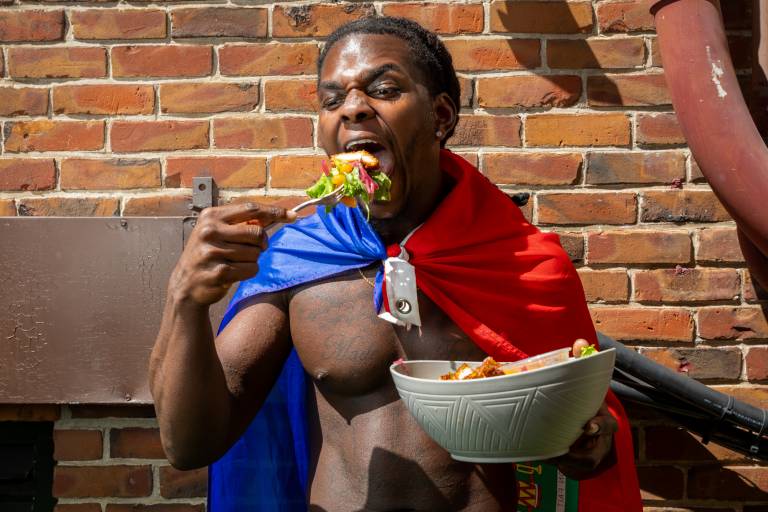
Meet the Bay Area Rappers Who Want You to Eat a Salad
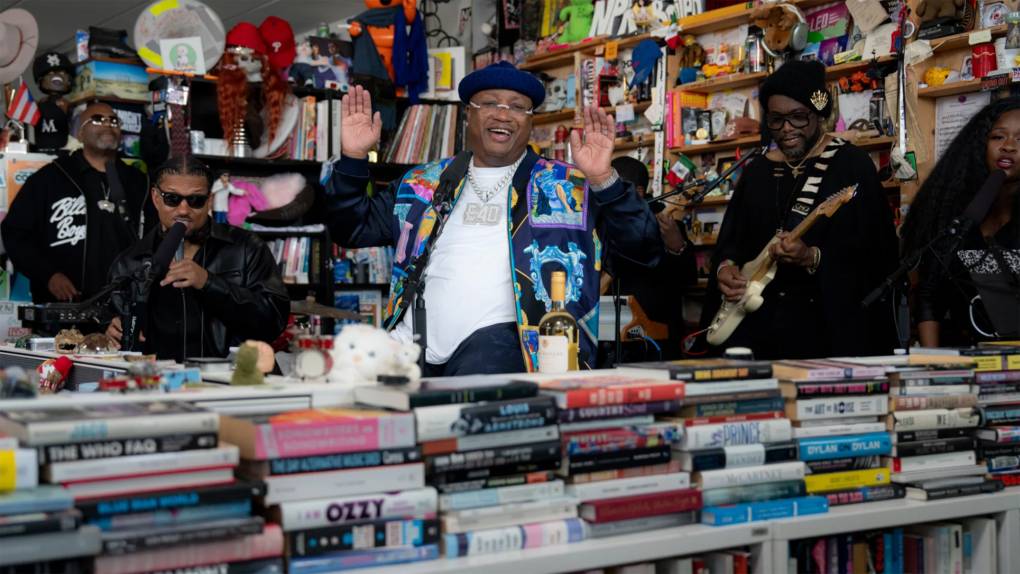
E-40’s Tiny Desk Concert Is Here
The Bay Area’s Own Ruby Ibarra Is the Winner of NPR’s Tiny Desk Contest
After 100 Episodes, ‘History of the Bay’ Expands Its Horizons
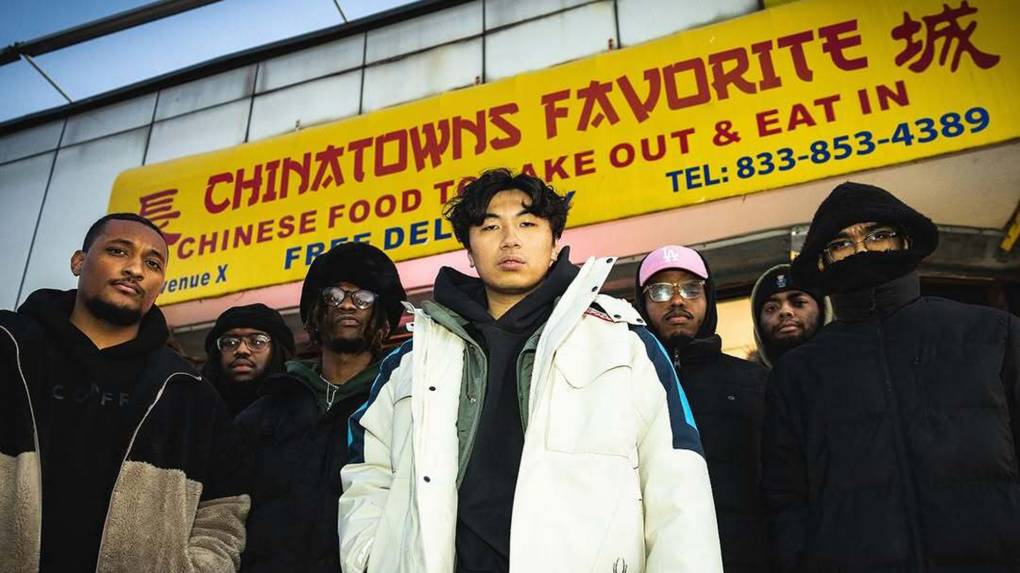
Khantrast, the Internet-Famous Asian American Rapper, Kicks off Tour in SF
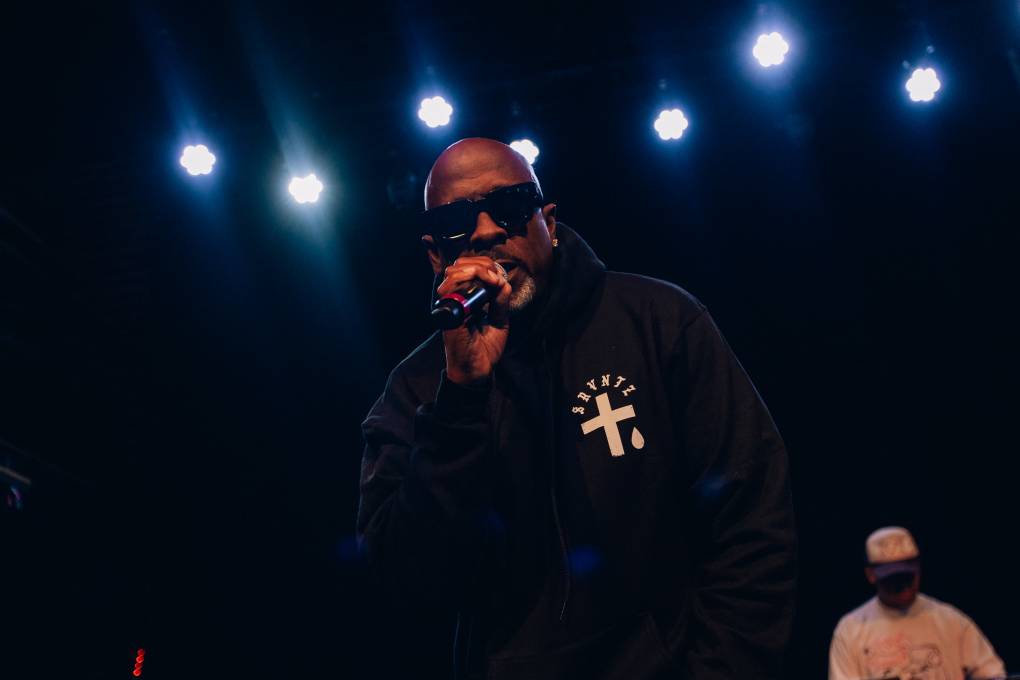
With Casual’s ‘Starduster,’ a Rap Legend Reaches New Heights
‘Never Underestimate the OG’: Richie Rich's Second Act
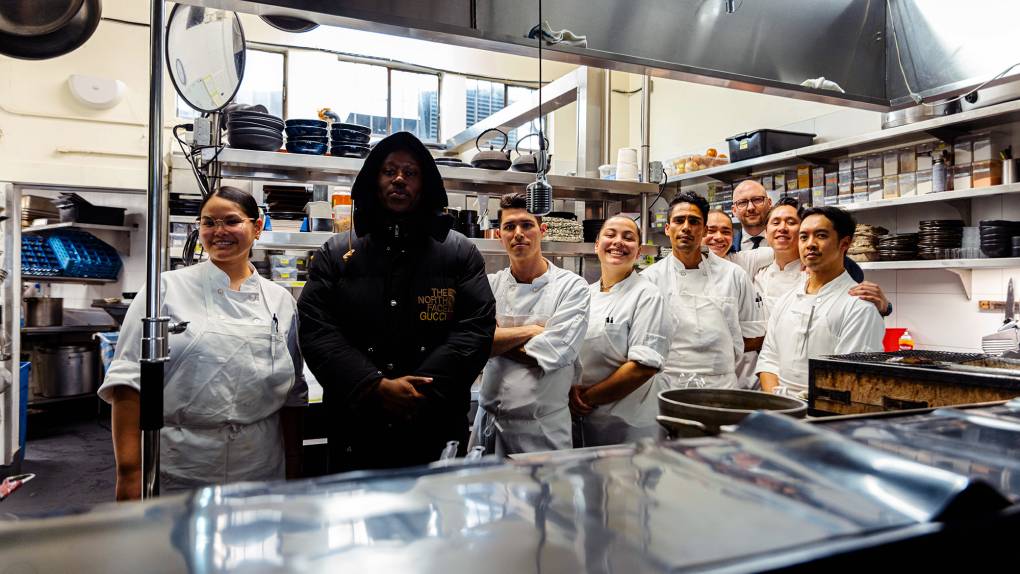
Blvck Svm’s ‘michelinman’ Might Be Hip-Hop’s First Fine-Dining Concept Album
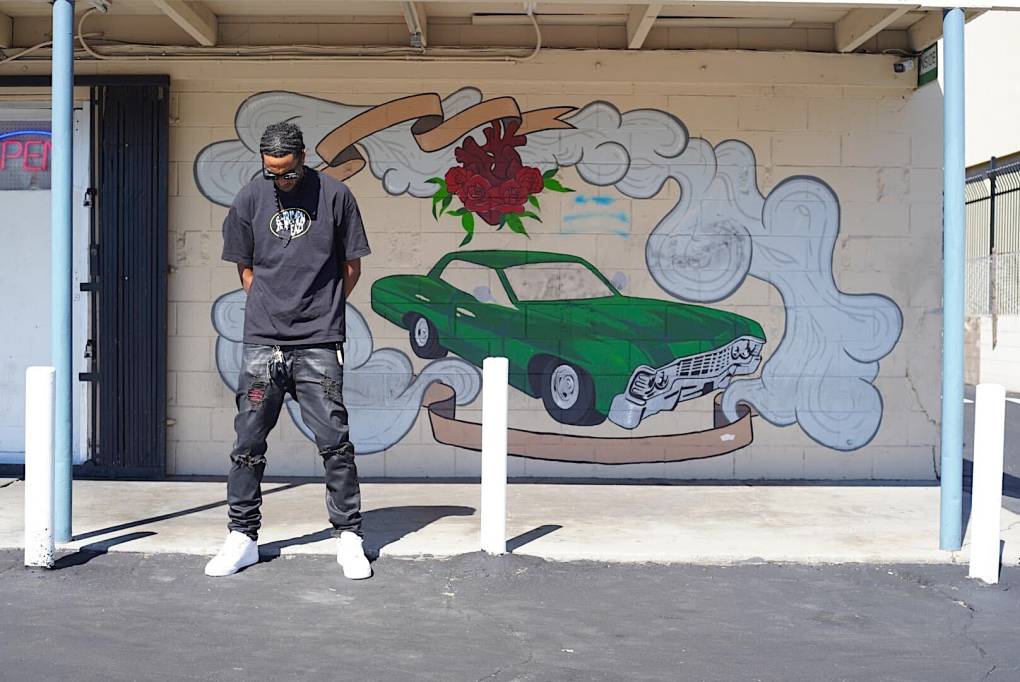
Illicon Valley: Inside East Side San Jose's Rap Hustle
Player sponsored by
window.__IS_SSR__=true
window.__INITIAL_STATE__={
"attachmentsReducer": {
"audio_0": {
"type": "attachments",
"id": "audio_0",
"imgSizes": {
"kqedFullSize": {
"file": "https://ww2.kqed.org/news/wp-content/themes/KQED-unified/img/audio_bgs/background0.jpg"
}
}
},
"audio_1": {
"type": "attachments",
"id": "audio_1",
"imgSizes": {
"kqedFullSize": {
"file": "https://ww2.kqed.org/news/wp-content/themes/KQED-unified/img/audio_bgs/background1.jpg"
}
}
},
"audio_2": {
"type": "attachments",
"id": "audio_2",
"imgSizes": {
"kqedFullSize": {
"file": "https://ww2.kqed.org/news/wp-content/themes/KQED-unified/img/audio_bgs/background2.jpg"
}
}
},
"audio_3": {
"type": "attachments",
"id": "audio_3",
"imgSizes": {
"kqedFullSize": {
"file": "https://ww2.kqed.org/news/wp-content/themes/KQED-unified/img/audio_bgs/background3.jpg"
}
}
},
"audio_4": {
"type": "attachments",
"id": "audio_4",
"imgSizes": {
"kqedFullSize": {
"file": "https://ww2.kqed.org/news/wp-content/themes/KQED-unified/img/audio_bgs/background4.jpg"
}
}
},
"placeholder": {
"type": "attachments",
"id": "placeholder",
"imgSizes": {
"thumbnail": {
"file": "https://cdn.kqed.org/wp-content/uploads/2024/12/KQED-Default-Image-816638274-2000x1333-1-160x107.jpg",
"width": 160,
"height": 107,
"mimeType": "image/jpeg"
},
"medium": {
"file": "https://cdn.kqed.org/wp-content/uploads/2024/12/KQED-Default-Image-816638274-2000x1333-1-800x533.jpg",
"width": 800,
"height": 533,
"mimeType": "image/jpeg"
},
"medium_large": {
"file": "https://cdn.kqed.org/wp-content/uploads/2024/12/KQED-Default-Image-816638274-2000x1333-1-768x512.jpg",
"width": 768,
"height": 512,
"mimeType": "image/jpeg"
},
"large": {
"file": "https://cdn.kqed.org/wp-content/uploads/2024/12/KQED-Default-Image-816638274-2000x1333-1-1020x680.jpg",
"width": 1020,
"height": 680,
"mimeType": "image/jpeg"
},
"1536x1536": {
"file": "https://cdn.kqed.org/wp-content/uploads/2024/12/KQED-Default-Image-816638274-2000x1333-1-1536x1024.jpg",
"width": 1536,
"height": 1024,
"mimeType": "image/jpeg"
},
"fd-lrg": {
"file": "https://cdn.kqed.org/wp-content/uploads/2024/12/KQED-Default-Image-816638274-2000x1333-1-1536x1024.jpg",
"width": 1536,
"height": 1024,
"mimeType": "image/jpeg"
},
"fd-med": {
"file": "https://cdn.kqed.org/wp-content/uploads/2024/12/KQED-Default-Image-816638274-2000x1333-1-1020x680.jpg",
"width": 1020,
"height": 680,
"mimeType": "image/jpeg"
},
"fd-sm": {
"file": "https://cdn.kqed.org/wp-content/uploads/2024/12/KQED-Default-Image-816638274-2000x1333-1-800x533.jpg",
"width": 800,
"height": 533,
"mimeType": "image/jpeg"
},
"post-thumbnail": {
"file": "https://cdn.kqed.org/wp-content/uploads/2024/12/KQED-Default-Image-816638274-2000x1333-1-672x372.jpg",
"width": 672,
"height": 372,
"mimeType": "image/jpeg"
},
"twentyfourteen-full-width": {
"file": "https://cdn.kqed.org/wp-content/uploads/2024/12/KQED-Default-Image-816638274-2000x1333-1-1038x576.jpg",
"width": 1038,
"height": 576,
"mimeType": "image/jpeg"
},
"xxsmall": {
"file": "https://cdn.kqed.org/wp-content/uploads/2024/12/KQED-Default-Image-816638274-2000x1333-1-160x107.jpg",
"width": 160,
"height": 107,
"mimeType": "image/jpeg"
},
"xsmall": {
"file": "https://cdn.kqed.org/wp-content/uploads/2024/12/KQED-Default-Image-816638274-2000x1333-1-672x372.jpg",
"width": 672,
"height": 372,
"mimeType": "image/jpeg"
},
"small": {
"file": "https://cdn.kqed.org/wp-content/uploads/2024/12/KQED-Default-Image-816638274-2000x1333-1-672x372.jpg",
"width": 672,
"height": 372,
"mimeType": "image/jpeg"
},
"xlarge": {
"file": "https://cdn.kqed.org/wp-content/uploads/2024/12/KQED-Default-Image-816638274-2000x1333-1-1020x680.jpg",
"width": 1020,
"height": 680,
"mimeType": "image/jpeg"
},
"full-width": {
"file": "https://cdn.kqed.org/wp-content/uploads/2024/12/KQED-Default-Image-816638274-2000x1333-1-1920x1280.jpg",
"width": 1920,
"height": 1280,
"mimeType": "image/jpeg"
},
"guest-author-32": {
"file": "https://cdn.kqed.org/wp-content/uploads/2025/01/KQED-Default-Image-816638274-1333x1333-1-160x160.jpg",
"width": 32,
"height": 32,
"mimeType": "image/jpeg"
},
"guest-author-50": {
"file": "https://cdn.kqed.org/wp-content/uploads/2025/01/KQED-Default-Image-816638274-1333x1333-1-160x160.jpg",
"width": 50,
"height": 50,
"mimeType": "image/jpeg"
},
"guest-author-64": {
"file": "https://cdn.kqed.org/wp-content/uploads/2025/01/KQED-Default-Image-816638274-1333x1333-1-160x160.jpg",
"width": 64,
"height": 64,
"mimeType": "image/jpeg"
},
"guest-author-96": {
"file": "https://cdn.kqed.org/wp-content/uploads/2025/01/KQED-Default-Image-816638274-1333x1333-1-160x160.jpg",
"width": 96,
"height": 96,
"mimeType": "image/jpeg"
},
"guest-author-128": {
"file": "https://cdn.kqed.org/wp-content/uploads/2025/01/KQED-Default-Image-816638274-1333x1333-1-160x160.jpg",
"width": 128,
"height": 128,
"mimeType": "image/jpeg"
},
"detail": {
"file": "https://cdn.kqed.org/wp-content/uploads/2025/01/KQED-Default-Image-816638274-1333x1333-1-160x160.jpg",
"width": 160,
"height": 160,
"mimeType": "image/jpeg"
},
"kqedFullSize": {
"file": "https://cdn.kqed.org/wp-content/uploads/2024/12/KQED-Default-Image-816638274-2000x1333-1.jpg",
"width": 2000,
"height": 1333
}
}
},
"arts_13980884": {
"type": "attachments",
"id": "arts_13980884",
"meta": {
"index": "attachments_1716263798",
"site": "arts",
"id": "13980884",
"found": true
},
"title": "250822_STUNNAMAN02_ 0002_GH-KQED",
"publishDate": 1756830161,
"status": "inherit",
"parent": 0,
"modified": 1761255559,
"caption": "Stunnaman02, a San Francisco rapper and entrepreneur, takes a bite of his signature salad at Cali’s Sports Bar in Berkeley on August 22, 2025.",
"credit": "Gustavo Hernandez/KQED",
"altTag": "Man wearing a blue and red cap, like a superhero, eats a large forkful of salad.",
"description": null,
"imgSizes": {
"thumbnail": {
"file": "https://cdn.kqed.org/wp-content/uploads/sites/2/2025/09/250822_STUNNAMAN02_-0002_GH-KQED-160x107.jpg",
"width": 160,
"height": 107,
"mimeType": "image/jpeg"
},
"medium_large": {
"file": "https://cdn.kqed.org/wp-content/uploads/sites/2/2025/09/250822_STUNNAMAN02_-0002_GH-KQED-768x512.jpg",
"width": 768,
"height": 512,
"mimeType": "image/jpeg"
},
"1536x1536": {
"file": "https://cdn.kqed.org/wp-content/uploads/sites/2/2025/09/250822_STUNNAMAN02_-0002_GH-KQED-1536x1024.jpg",
"width": 1536,
"height": 1024,
"mimeType": "image/jpeg"
},
"post-thumbnail": {
"file": "https://cdn.kqed.org/wp-content/uploads/sites/2/2025/09/250822_STUNNAMAN02_-0002_GH-KQED-672x372.jpg",
"width": 672,
"height": 372,
"mimeType": "image/jpeg"
},
"twentyfourteen-full-width": {
"file": "https://cdn.kqed.org/wp-content/uploads/sites/2/2025/09/250822_STUNNAMAN02_-0002_GH-KQED-1038x576.jpg",
"width": 1038,
"height": 576,
"mimeType": "image/jpeg"
},
"kqedFullSize": {
"file": "https://cdn.kqed.org/wp-content/uploads/sites/2/2025/09/250822_STUNNAMAN02_-0002_GH-KQED.jpg",
"width": 2000,
"height": 1333
}
},
"fetchFailed": false,
"isLoading": false
},
"arts_13976929": {
"type": "attachments",
"id": "arts_13976929",
"meta": {
"index": "attachments_1716263798",
"site": "arts",
"id": "13976929",
"found": true
},
"title": "E40.TinyDesk",
"publishDate": 1748875017,
"status": "inherit",
"parent": 13976928,
"modified": 1748875104,
"caption": "E-40 performs at NPR's Tiny Desk in Washington, D.C.",
"credit": "Zayrha Rodriguez",
"altTag": "A Black man in glasses and a roll-up beanie smiles and gestures in front of a cluttered bookshelf",
"description": null,
"imgSizes": {
"medium": {
"file": "https://cdn.kqed.org/wp-content/uploads/sites/2/2025/06/E40.TinyDesk-800x450.jpg",
"width": 800,
"height": 450,
"mimeType": "image/jpeg"
},
"large": {
"file": "https://cdn.kqed.org/wp-content/uploads/sites/2/2025/06/E40.TinyDesk-1020x574.jpg",
"width": 1020,
"height": 574,
"mimeType": "image/jpeg"
},
"thumbnail": {
"file": "https://cdn.kqed.org/wp-content/uploads/sites/2/2025/06/E40.TinyDesk-160x90.jpg",
"width": 160,
"height": 90,
"mimeType": "image/jpeg"
},
"medium_large": {
"file": "https://cdn.kqed.org/wp-content/uploads/sites/2/2025/06/E40.TinyDesk-768x432.jpg",
"width": 768,
"height": 432,
"mimeType": "image/jpeg"
},
"1536x1536": {
"file": "https://cdn.kqed.org/wp-content/uploads/sites/2/2025/06/E40.TinyDesk-1536x864.jpg",
"width": 1536,
"height": 864,
"mimeType": "image/jpeg"
},
"post-thumbnail": {
"file": "https://cdn.kqed.org/wp-content/uploads/sites/2/2025/06/E40.TinyDesk-672x372.jpg",
"width": 672,
"height": 372,
"mimeType": "image/jpeg"
},
"twentyfourteen-full-width": {
"file": "https://cdn.kqed.org/wp-content/uploads/sites/2/2025/06/E40.TinyDesk-1038x576.jpg",
"width": 1038,
"height": 576,
"mimeType": "image/jpeg"
},
"full-width": {
"file": "https://cdn.kqed.org/wp-content/uploads/sites/2/2025/06/E40.TinyDesk-1920x1080.jpg",
"width": 1920,
"height": 1080,
"mimeType": "image/jpeg"
},
"kqedFullSize": {
"file": "https://cdn.kqed.org/wp-content/uploads/sites/2/2025/06/E40.TinyDesk.jpg",
"width": 2000,
"height": 1125
}
},
"fetchFailed": false,
"isLoading": false
},
"arts_13976106": {
"type": "attachments",
"id": "arts_13976106",
"meta": {
"index": "attachments_1716263798",
"site": "arts",
"id": "13976106",
"found": true
},
"title": "Ruby.16x9.GinoLucas",
"publishDate": 1747115178,
"status": "inherit",
"parent": 13976039,
"modified": 1747115621,
"caption": "Growing up in San Lorenzo, Ruby Ibarra was raised on Bay Area rap artists like E-40 and Hieroglyphics. ",
"credit": "Gino Lucas",
"altTag": null,
"description": null,
"imgSizes": {
"medium": {
"file": "https://cdn.kqed.org/wp-content/uploads/sites/2/2025/05/Ruby.16x9.GinoLucas-800x450.jpg",
"width": 800,
"height": 450,
"mimeType": "image/jpeg"
},
"large": {
"file": "https://cdn.kqed.org/wp-content/uploads/sites/2/2025/05/Ruby.16x9.GinoLucas-1020x574.jpg",
"width": 1020,
"height": 574,
"mimeType": "image/jpeg"
},
"thumbnail": {
"file": "https://cdn.kqed.org/wp-content/uploads/sites/2/2025/05/Ruby.16x9.GinoLucas-160x90.jpg",
"width": 160,
"height": 90,
"mimeType": "image/jpeg"
},
"medium_large": {
"file": "https://cdn.kqed.org/wp-content/uploads/sites/2/2025/05/Ruby.16x9.GinoLucas-768x432.jpg",
"width": 768,
"height": 432,
"mimeType": "image/jpeg"
},
"1536x1536": {
"file": "https://cdn.kqed.org/wp-content/uploads/sites/2/2025/05/Ruby.16x9.GinoLucas-1536x864.jpg",
"width": 1536,
"height": 864,
"mimeType": "image/jpeg"
},
"post-thumbnail": {
"file": "https://cdn.kqed.org/wp-content/uploads/sites/2/2025/05/Ruby.16x9.GinoLucas-672x372.jpg",
"width": 672,
"height": 372,
"mimeType": "image/jpeg"
},
"twentyfourteen-full-width": {
"file": "https://cdn.kqed.org/wp-content/uploads/sites/2/2025/05/Ruby.16x9.GinoLucas-1038x576.jpg",
"width": 1038,
"height": 576,
"mimeType": "image/jpeg"
},
"full-width": {
"file": "https://cdn.kqed.org/wp-content/uploads/sites/2/2025/05/Ruby.16x9.GinoLucas-1920x1080.jpg",
"width": 1920,
"height": 1080,
"mimeType": "image/jpeg"
},
"kqedFullSize": {
"file": "https://cdn.kqed.org/wp-content/uploads/sites/2/2025/05/Ruby.16x9.GinoLucas.jpg",
"width": 2000,
"height": 1125
}
},
"fetchFailed": false,
"isLoading": false
},
"arts_13975005": {
"type": "attachments",
"id": "arts_13975005",
"meta": {
"index": "attachments_1716263798",
"site": "arts",
"id": "13975005",
"found": true
},
"title": "Screenshot-2025-04-21-at-4.07.56 PM",
"publishDate": 1745277211,
"status": "inherit",
"parent": 13974977,
"modified": 1745277264,
"caption": "‘History of the Bay’ host Dregs One interviews Bay Area rap icon Too Short for the podcast's 100th episode. ",
"credit": "History of the Bay/EMPIRE",
"altTag": null,
"description": null,
"imgSizes": {
"medium": {
"file": "https://cdn.kqed.org/wp-content/uploads/sites/2/2025/04/Screenshot-2025-04-21-at-4.07.56 PM-800x450.jpg",
"width": 800,
"height": 450,
"mimeType": "image/jpeg"
},
"large": {
"file": "https://cdn.kqed.org/wp-content/uploads/sites/2/2025/04/Screenshot-2025-04-21-at-4.07.56 PM-1020x574.jpg",
"width": 1020,
"height": 574,
"mimeType": "image/jpeg"
},
"thumbnail": {
"file": "https://cdn.kqed.org/wp-content/uploads/sites/2/2025/04/Screenshot-2025-04-21-at-4.07.56 PM-160x90.jpg",
"width": 160,
"height": 90,
"mimeType": "image/jpeg"
},
"medium_large": {
"file": "https://cdn.kqed.org/wp-content/uploads/sites/2/2025/04/Screenshot-2025-04-21-at-4.07.56 PM-768x432.jpg",
"width": 768,
"height": 432,
"mimeType": "image/jpeg"
},
"1536x1536": {
"file": "https://cdn.kqed.org/wp-content/uploads/sites/2/2025/04/Screenshot-2025-04-21-at-4.07.56 PM-1536x864.jpg",
"width": 1536,
"height": 864,
"mimeType": "image/jpeg"
},
"post-thumbnail": {
"file": "https://cdn.kqed.org/wp-content/uploads/sites/2/2025/04/Screenshot-2025-04-21-at-4.07.56 PM-672x372.jpg",
"width": 672,
"height": 372,
"mimeType": "image/jpeg"
},
"twentyfourteen-full-width": {
"file": "https://cdn.kqed.org/wp-content/uploads/sites/2/2025/04/Screenshot-2025-04-21-at-4.07.56 PM-1038x576.jpg",
"width": 1038,
"height": 576,
"mimeType": "image/jpeg"
},
"full-width": {
"file": "https://cdn.kqed.org/wp-content/uploads/sites/2/2025/04/Screenshot-2025-04-21-at-4.07.56 PM-1920x1080.jpg",
"width": 1920,
"height": 1080,
"mimeType": "image/jpeg"
},
"kqedFullSize": {
"file": "https://cdn.kqed.org/wp-content/uploads/sites/2/2025/04/Screenshot-2025-04-21-at-4.07.56 PM.jpg",
"width": 2000,
"height": 1125
}
},
"fetchFailed": false,
"isLoading": false
},
"arts_13973951": {
"type": "attachments",
"id": "arts_13973951",
"meta": {
"index": "attachments_1716263798",
"site": "arts",
"id": "13973951",
"found": true
},
"title": "khantrast-crop",
"publishDate": 1743551276,
"status": "inherit",
"parent": 13973938,
"modified": 1743551419,
"caption": "'Chinatown's Favorite' is Khantrast's first full-length album. The Brooklyn rapper will perform at San Francisco's Brick and Mortar Music Hall on April 26.",
"credit": "Courtesy of New 11",
"altTag": "An Asian man and his friends stand in front of a Chinese restaurant. The sign reads, \"Chinatown's Favorite.\"",
"description": null,
"imgSizes": {
"medium": {
"file": "https://cdn.kqed.org/wp-content/uploads/sites/2/2025/04/khantrast-crop-800x450.jpg",
"width": 800,
"height": 450,
"mimeType": "image/jpeg"
},
"large": {
"file": "https://cdn.kqed.org/wp-content/uploads/sites/2/2025/04/khantrast-crop-1020x573.jpg",
"width": 1020,
"height": 573,
"mimeType": "image/jpeg"
},
"thumbnail": {
"file": "https://cdn.kqed.org/wp-content/uploads/sites/2/2025/04/khantrast-crop-160x90.jpg",
"width": 160,
"height": 90,
"mimeType": "image/jpeg"
},
"medium_large": {
"file": "https://cdn.kqed.org/wp-content/uploads/sites/2/2025/04/khantrast-crop-768x432.jpg",
"width": 768,
"height": 432,
"mimeType": "image/jpeg"
},
"1536x1536": {
"file": "https://cdn.kqed.org/wp-content/uploads/sites/2/2025/04/khantrast-crop-1536x863.jpg",
"width": 1536,
"height": 863,
"mimeType": "image/jpeg"
},
"post-thumbnail": {
"file": "https://cdn.kqed.org/wp-content/uploads/sites/2/2025/04/khantrast-crop-672x372.jpg",
"width": 672,
"height": 372,
"mimeType": "image/jpeg"
},
"twentyfourteen-full-width": {
"file": "https://cdn.kqed.org/wp-content/uploads/sites/2/2025/04/khantrast-crop-1038x576.jpg",
"width": 1038,
"height": 576,
"mimeType": "image/jpeg"
},
"full-width": {
"file": "https://cdn.kqed.org/wp-content/uploads/sites/2/2025/04/khantrast-crop-1920x1079.jpg",
"width": 1920,
"height": 1079,
"mimeType": "image/jpeg"
},
"kqedFullSize": {
"file": "https://cdn.kqed.org/wp-content/uploads/sites/2/2025/04/khantrast-crop.jpg",
"width": 2000,
"height": 1124
}
},
"fetchFailed": false,
"isLoading": false
},
"arts_13970343": {
"type": "attachments",
"id": "arts_13970343",
"meta": {
"index": "attachments_1716263798",
"site": "arts",
"id": "13970343",
"found": true
},
"title": "Casual.Rap",
"publishDate": 1736969535,
"status": "inherit",
"parent": 13970340,
"modified": 1736969564,
"caption": "Casual's new EP shows him in top form. ",
"credit": "Courtesy Needle to the Groove",
"altTag": null,
"description": null,
"imgSizes": {
"medium": {
"file": "https://cdn.kqed.org/wp-content/uploads/sites/2/2025/01/Casual.Rap_-800x450.png",
"width": 800,
"height": 450,
"mimeType": "image/png"
},
"large": {
"file": "https://cdn.kqed.org/wp-content/uploads/sites/2/2025/01/Casual.Rap_-1020x574.png",
"width": 1020,
"height": 574,
"mimeType": "image/png"
},
"thumbnail": {
"file": "https://cdn.kqed.org/wp-content/uploads/sites/2/2025/01/Casual.Rap_-160x90.png",
"width": 160,
"height": 90,
"mimeType": "image/png"
},
"medium_large": {
"file": "https://cdn.kqed.org/wp-content/uploads/sites/2/2025/01/Casual.Rap_-768x432.png",
"width": 768,
"height": 432,
"mimeType": "image/png"
},
"post-thumbnail": {
"file": "https://cdn.kqed.org/wp-content/uploads/sites/2/2025/01/Casual.Rap_-672x372.png",
"width": 672,
"height": 372,
"mimeType": "image/png"
},
"twentyfourteen-full-width": {
"file": "https://cdn.kqed.org/wp-content/uploads/sites/2/2025/01/Casual.Rap_-1038x576.png",
"width": 1038,
"height": 576,
"mimeType": "image/png"
},
"kqedFullSize": {
"file": "https://cdn.kqed.org/wp-content/uploads/sites/2/2025/01/Casual.Rap_.png",
"width": 1488,
"height": 837
}
},
"fetchFailed": false,
"isLoading": false
},
"arts_13968023": {
"type": "attachments",
"id": "arts_13968023",
"meta": {
"index": "attachments_1716263798",
"site": "arts",
"id": "13968023",
"found": true
},
"title": "LaRussell x Richie Rich - New Parish - Richie Rich - 111024-19",
"publishDate": 1731529688,
"status": "inherit",
"parent": 13967973,
"modified": 1731612755,
"caption": "After an onstage fall, 56-year-old Oakland rap legend Richie Rich is proving he's still got plenty of gas in the tank.",
"credit": "Jason Hayes / \u003ca href=\"https://www.instagram.com/j.castae/?hl=en\" target=\"_blank\">J.Castae\u003c/a>",
"altTag": "Richard Serrell, better known as Richie Rich.",
"description": null,
"imgSizes": {
"medium": {
"file": "https://cdn.kqed.org/wp-content/uploads/sites/2/2024/11/LaRussell-x-Richie-Rich-New-Parish-Richie-Rich-111024-19-800x533.jpeg",
"width": 800,
"height": 533,
"mimeType": "image/jpeg"
},
"large": {
"file": "https://cdn.kqed.org/wp-content/uploads/sites/2/2024/11/LaRussell-x-Richie-Rich-New-Parish-Richie-Rich-111024-19-1020x680.jpeg",
"width": 1020,
"height": 680,
"mimeType": "image/jpeg"
},
"thumbnail": {
"file": "https://cdn.kqed.org/wp-content/uploads/sites/2/2024/11/LaRussell-x-Richie-Rich-New-Parish-Richie-Rich-111024-19-160x107.jpeg",
"width": 160,
"height": 107,
"mimeType": "image/jpeg"
},
"medium_large": {
"file": "https://cdn.kqed.org/wp-content/uploads/sites/2/2024/11/LaRussell-x-Richie-Rich-New-Parish-Richie-Rich-111024-19-768x512.jpeg",
"width": 768,
"height": 512,
"mimeType": "image/jpeg"
},
"1536x1536": {
"file": "https://cdn.kqed.org/wp-content/uploads/sites/2/2024/11/LaRussell-x-Richie-Rich-New-Parish-Richie-Rich-111024-19-1536x1024.jpeg",
"width": 1536,
"height": 1024,
"mimeType": "image/jpeg"
},
"2048x2048": {
"file": "https://cdn.kqed.org/wp-content/uploads/sites/2/2024/11/LaRussell-x-Richie-Rich-New-Parish-Richie-Rich-111024-19-2048x1365.jpeg",
"width": 2048,
"height": 1365,
"mimeType": "image/jpeg"
},
"post-thumbnail": {
"file": "https://cdn.kqed.org/wp-content/uploads/sites/2/2024/11/LaRussell-x-Richie-Rich-New-Parish-Richie-Rich-111024-19-672x372.jpeg",
"width": 672,
"height": 372,
"mimeType": "image/jpeg"
},
"twentyfourteen-full-width": {
"file": "https://cdn.kqed.org/wp-content/uploads/sites/2/2024/11/LaRussell-x-Richie-Rich-New-Parish-Richie-Rich-111024-19-1038x576.jpeg",
"width": 1038,
"height": 576,
"mimeType": "image/jpeg"
},
"full-width": {
"file": "https://cdn.kqed.org/wp-content/uploads/sites/2/2024/11/LaRussell-x-Richie-Rich-New-Parish-Richie-Rich-111024-19-1920x1280.jpeg",
"width": 1920,
"height": 1280,
"mimeType": "image/jpeg"
},
"kqedFullSize": {
"file": "https://cdn.kqed.org/wp-content/uploads/sites/2/2024/11/LaRussell-x-Richie-Rich-New-Parish-Richie-Rich-111024-19-scaled.jpeg",
"width": 2560,
"height": 1706
}
},
"fetchFailed": false,
"isLoading": false
},
"arts_13967667": {
"type": "attachments",
"id": "arts_13967667",
"meta": {
"index": "attachments_1716263798",
"site": "arts",
"id": "13967667",
"found": true
},
"title": "blvck svm nisei",
"publishDate": 1730750052,
"status": "inherit",
"parent": 13967652,
"modified": 1730756339,
"caption": "Benjamin Glover, a.k.a. Blvck Svm, poses with the kitchen staff at San Francisco fine dining restaurant Nisei. Glover filmed a music video at Nisei for one of the songs on his new concept album, 'michelinman.'",
"credit": "Courtesy of Blvck Svm",
"altTag": "Rapper Blvck Svm, in a black puffy jacket, poses in the kitchen with the chefs of a fine dining restaurant, all wearing their white chef's jackets.",
"description": null,
"imgSizes": {
"medium": {
"file": "https://cdn.kqed.org/wp-content/uploads/sites/2/2024/11/blck-svm-nisei-800x450.jpg",
"width": 800,
"height": 450,
"mimeType": "image/jpeg"
},
"large": {
"file": "https://cdn.kqed.org/wp-content/uploads/sites/2/2024/11/blck-svm-nisei-1020x574.jpg",
"width": 1020,
"height": 574,
"mimeType": "image/jpeg"
},
"thumbnail": {
"file": "https://cdn.kqed.org/wp-content/uploads/sites/2/2024/11/blck-svm-nisei-160x90.jpg",
"width": 160,
"height": 90,
"mimeType": "image/jpeg"
},
"medium_large": {
"file": "https://cdn.kqed.org/wp-content/uploads/sites/2/2024/11/blck-svm-nisei-768x432.jpg",
"width": 768,
"height": 432,
"mimeType": "image/jpeg"
},
"1536x1536": {
"file": "https://cdn.kqed.org/wp-content/uploads/sites/2/2024/11/blck-svm-nisei-1536x864.jpg",
"width": 1536,
"height": 864,
"mimeType": "image/jpeg"
},
"post-thumbnail": {
"file": "https://cdn.kqed.org/wp-content/uploads/sites/2/2024/11/blck-svm-nisei-672x372.jpg",
"width": 672,
"height": 372,
"mimeType": "image/jpeg"
},
"twentyfourteen-full-width": {
"file": "https://cdn.kqed.org/wp-content/uploads/sites/2/2024/11/blck-svm-nisei-1038x576.jpg",
"width": 1038,
"height": 576,
"mimeType": "image/jpeg"
},
"full-width": {
"file": "https://cdn.kqed.org/wp-content/uploads/sites/2/2024/11/blck-svm-nisei-1920x1080.jpg",
"width": 1920,
"height": 1080,
"mimeType": "image/jpeg"
},
"kqedFullSize": {
"file": "https://cdn.kqed.org/wp-content/uploads/sites/2/2024/11/blck-svm-nisei.jpg",
"width": 2000,
"height": 1125
}
},
"fetchFailed": false,
"isLoading": false
},
"arts_13965428": {
"type": "attachments",
"id": "arts_13965428",
"meta": {
"index": "attachments_1716263798",
"site": "arts",
"id": "13965428",
"found": true
},
"title": "DSC08937",
"publishDate": 1727140409,
"status": "inherit",
"parent": 13965374,
"modified": 1727201915,
"caption": "ProTribe Stretch posts in front of Tak Food & Liquor in East Side San Jose.",
"credit": "Pendarvis Harshaw/KQED",
"altTag": null,
"description": null,
"imgSizes": {
"medium": {
"file": "https://cdn.kqed.org/wp-content/uploads/sites/2/2024/09/DSC08937-800x535.jpg",
"width": 800,
"height": 535,
"mimeType": "image/jpeg"
},
"large": {
"file": "https://cdn.kqed.org/wp-content/uploads/sites/2/2024/09/DSC08937-1020x682.jpg",
"width": 1020,
"height": 682,
"mimeType": "image/jpeg"
},
"thumbnail": {
"file": "https://cdn.kqed.org/wp-content/uploads/sites/2/2024/09/DSC08937-160x107.jpg",
"width": 160,
"height": 107,
"mimeType": "image/jpeg"
},
"medium_large": {
"file": "https://cdn.kqed.org/wp-content/uploads/sites/2/2024/09/DSC08937-768x513.jpg",
"width": 768,
"height": 513,
"mimeType": "image/jpeg"
},
"1536x1536": {
"file": "https://cdn.kqed.org/wp-content/uploads/sites/2/2024/09/DSC08937-1536x1027.jpg",
"width": 1536,
"height": 1027,
"mimeType": "image/jpeg"
},
"post-thumbnail": {
"file": "https://cdn.kqed.org/wp-content/uploads/sites/2/2024/09/DSC08937-672x372.jpg",
"width": 672,
"height": 372,
"mimeType": "image/jpeg"
},
"twentyfourteen-full-width": {
"file": "https://cdn.kqed.org/wp-content/uploads/sites/2/2024/09/DSC08937-1038x576.jpg",
"width": 1038,
"height": 576,
"mimeType": "image/jpeg"
},
"kqedFullSize": {
"file": "https://cdn.kqed.org/wp-content/uploads/sites/2/2024/09/DSC08937.jpg",
"width": 1616,
"height": 1080
}
},
"fetchFailed": false,
"isLoading": false
}
},
"audioPlayerReducer": {
"postId": "stream_live",
"isPaused": true,
"isPlaying": false,
"pfsActive": false,
"pledgeModalIsOpen": true,
"playerDrawerIsOpen": false
},
"authorsReducer": {
"gmeline": {
"type": "authors",
"id": "185",
"meta": {
"index": "authors_1716337520",
"id": "185",
"found": true
},
"name": "Gabe Meline",
"firstName": "Gabe",
"lastName": "Meline",
"slug": "gmeline",
"email": "gmeline@kqed.org",
"display_author_email": true,
"staff_mastheads": [
"arts"
],
"title": "Senior Editor, KQED Arts & Culture",
"bio": "Gabe Meline entered journalism at age 15 making photocopied zines, and has since earned awards from the Edward R. Murrow Awards, the Society for Professional Journalists, the Online Journalism Awards, the Association of Alternative Newsweeklies and the California Newspaper Publishers Association. Prior to KQED, he was the editor of the \u003cem>North Bay Bohemian\u003c/em> and a touring musician. He lives with his wife and daughter in his hometown of Santa Rosa, CA.",
"avatar": "https://secure.gravatar.com/avatar/80e9715844c5fc3f07edac5b08973b76?s=600&d=mm&r=g",
"twitter": null,
"bluesky": null,
"facebook": null,
"instagram": null,
"linkedin": null,
"sites": [
{
"site": "",
"roles": [
"editor"
]
},
{
"site": "arts",
"roles": [
"administrator"
]
},
{
"site": "artschool",
"roles": [
"editor"
]
},
{
"site": "news",
"roles": [
"author"
]
},
{
"site": "pop",
"roles": [
"editor"
]
},
{
"site": "bayareabites",
"roles": [
"editor"
]
},
{
"site": "food",
"roles": [
"editor"
]
},
{
"site": "liveblog",
"roles": [
"editor"
]
},
{
"site": "hiphop",
"roles": [
"editor"
]
}
],
"headData": {
"title": "Gabe Meline | KQED",
"description": "Senior Editor, KQED Arts & Culture",
"ogImgSrc": "https://secure.gravatar.com/avatar/80e9715844c5fc3f07edac5b08973b76?s=600&d=mm&r=g",
"twImgSrc": "https://secure.gravatar.com/avatar/80e9715844c5fc3f07edac5b08973b76?s=600&d=mm&r=g"
},
"isLoading": false,
"link": "/author/gmeline"
},
"ogpenn": {
"type": "authors",
"id": "11491",
"meta": {
"index": "authors_1716337520",
"id": "11491",
"found": true
},
"name": "Pendarvis Harshaw",
"firstName": "Pendarvis",
"lastName": "Harshaw",
"slug": "ogpenn",
"email": "ogpenn@gmail.com",
"display_author_email": false,
"staff_mastheads": [
"arts"
],
"title": "Community Engagement Reporter",
"bio": "Pendarvis Harshaw is an educator, host and writer with KQED Arts.",
"avatar": "https://secure.gravatar.com/avatar/093d33baff5354890e29ad83d58d2c49?s=600&d=blank&r=g",
"twitter": null,
"facebook": null,
"instagram": "ogpenn",
"linkedin": null,
"sites": [
{
"site": "arts",
"roles": [
"editor"
]
},
{
"site": "news",
"roles": [
"editor"
]
},
{
"site": "bayareabites",
"roles": [
"author"
]
},
{
"site": "hiphop",
"roles": [
"editor"
]
}
],
"headData": {
"title": "Pendarvis Harshaw | KQED",
"description": "Community Engagement Reporter",
"ogImgSrc": "https://secure.gravatar.com/avatar/093d33baff5354890e29ad83d58d2c49?s=600&d=blank&r=g",
"twImgSrc": "https://secure.gravatar.com/avatar/093d33baff5354890e29ad83d58d2c49?s=600&d=blank&r=g"
},
"isLoading": false,
"link": "/author/ogpenn"
},
"ltsai": {
"type": "authors",
"id": "11743",
"meta": {
"index": "authors_1716337520",
"id": "11743",
"found": true
},
"name": "Luke Tsai",
"firstName": "Luke",
"lastName": "Tsai",
"slug": "ltsai",
"email": "ltsai@kqed.org",
"display_author_email": true,
"staff_mastheads": [
"arts"
],
"title": "Food Editor",
"bio": "Luke Tsai is KQED's food editor and resident stinky tofu connoisseur. Prior to KQED, he was an editor at Eater SF, \u003cem>San Francisco \u003c/em>magazine, and the \u003cem>East Bay Express\u003c/em>, and his work has also appeared in TASTE, the \u003cem>San Francisco Chronicle\u003c/em>, and the \u003cem>Best Food Writing\u003c/em> anthology. When he isn't writing or editing, you'll find him eating most everything he can get his hands on.",
"avatar": "https://secure.gravatar.com/avatar/d1ff591a3047b143a0e23cf7f28fcac0?s=600&d=blank&r=g",
"twitter": "theluketsai",
"facebook": null,
"instagram": null,
"linkedin": null,
"sites": [
{
"site": "",
"roles": [
"editor"
]
},
{
"site": "arts",
"roles": [
"administrator"
]
},
{
"site": "bayareabites",
"roles": [
"editor"
]
},
{
"site": "food",
"roles": [
"editor"
]
}
],
"headData": {
"title": "Luke Tsai | KQED",
"description": "Food Editor",
"ogImgSrc": "https://secure.gravatar.com/avatar/d1ff591a3047b143a0e23cf7f28fcac0?s=600&d=blank&r=g",
"twImgSrc": "https://secure.gravatar.com/avatar/d1ff591a3047b143a0e23cf7f28fcac0?s=600&d=blank&r=g"
},
"isLoading": false,
"link": "/author/ltsai"
},
"rockyrivera": {
"type": "authors",
"id": "11846",
"meta": {
"index": "authors_1716337520",
"id": "11846",
"found": true
},
"name": "Rocky Rivera",
"firstName": "Rocky",
"lastName": "Rivera",
"slug": "rockyrivera",
"email": "ms.rocky.rivera@gmail.com",
"display_author_email": false,
"staff_mastheads": [],
"title": "KQED Contributor",
"bio": "Rocky Rivera is a journalist, emcee, author and activist from San Francisco. She has released four albums through her label, Beatrock Music, and a ten-volume mixtape series with DJ Roza. She released her first book in 2021, entitled \u003cem>Snakeskin: Essays by Rocky Rivera\u003c/em>. Her latest album dropped in September 2024 and is called \"Long Kiss Goodnight\" with emcee/producer Otayo Dubb. She currently writes the Frisco Foodies column as a love letter to her hometown.",
"avatar": "https://secure.gravatar.com/avatar/946241ee2c59e6040607dfc75240d91b?s=600&d=blank&r=g",
"twitter": null,
"facebook": "https://m.facebook.com/rockyriveramusic",
"instagram": "https://instagram.com/rockyrivera",
"linkedin": "https://www.linkedin.com/in/krishtinedeleon/",
"sites": [
{
"site": "arts",
"roles": [
"author"
]
}
],
"headData": {
"title": "Rocky Rivera | KQED",
"description": "KQED Contributor",
"ogImgSrc": "https://secure.gravatar.com/avatar/946241ee2c59e6040607dfc75240d91b?s=600&d=blank&r=g",
"twImgSrc": "https://secure.gravatar.com/avatar/946241ee2c59e6040607dfc75240d91b?s=600&d=blank&r=g"
},
"isLoading": false,
"link": "/author/rockyrivera"
},
"pbicchieri": {
"type": "authors",
"id": "11932",
"meta": {
"index": "authors_1716337520",
"id": "11932",
"found": true
},
"name": "Paolo Bicchieri",
"firstName": "Paolo",
"lastName": "Bicchieri",
"slug": "pbicchieri",
"email": "paolobicchieri1306@gmail.com",
"display_author_email": false,
"staff_mastheads": [],
"title": "KQED Contributor",
"bio": null,
"avatar": "https://secure.gravatar.com/avatar/becbc05ff49115d4a6aabb839979fd66?s=600&d=blank&r=g",
"twitter": null,
"facebook": null,
"instagram": null,
"linkedin": null,
"sites": [
{
"site": "arts",
"roles": [
"author"
]
}
],
"headData": {
"title": "Paolo Bicchieri | KQED",
"description": "KQED Contributor",
"ogImgSrc": "https://secure.gravatar.com/avatar/becbc05ff49115d4a6aabb839979fd66?s=600&d=blank&r=g",
"twImgSrc": "https://secure.gravatar.com/avatar/becbc05ff49115d4a6aabb839979fd66?s=600&d=blank&r=g"
},
"isLoading": false,
"link": "/author/pbicchieri"
}
},
"breakingNewsReducer": {},
"pagesReducer": {},
"postsReducer": {
"stream_live": {
"type": "live",
"id": "stream_live",
"audioUrl": "https://streams.kqed.org/kqedradio",
"title": "Live Stream",
"excerpt": "Live Stream information currently unavailable.",
"link": "/radio",
"featImg": "",
"label": {
"name": "KQED Live",
"link": "/"
}
},
"stream_kqedNewscast": {
"type": "posts",
"id": "stream_kqedNewscast",
"audioUrl": "https://www.kqed.org/.stream/anon/radio/RDnews/newscast.mp3?_=1",
"title": "KQED Newscast",
"featImg": "",
"label": {
"name": "88.5 FM",
"link": "/"
}
},
"arts_13982793": {
"type": "posts",
"id": "arts_13982793",
"meta": {
"index": "posts_1716263798",
"site": "arts",
"id": "13982793",
"score": null,
"sort": [
1761258895000
]
},
"guestAuthors": [],
"slug": "bay-area-healthy-rap-stunnaman02-larry-june-eat-a-salad",
"title": "Meet the Bay Area Rappers Who Want You to Eat a Salad",
"publishDate": 1761258895,
"format": "standard",
"headTitle": "Meet the Bay Area Rappers Who Want You to Eat a Salad | KQED",
"labelTerm": {},
"content": "\u003cp>[dropcap]A[/dropcap]sk any San Francisco teenager from my generation what they did after school in the ’90s and it would most likely go something like this: bumming a cig off campus, splitting a super suiza from El Farolito with friends, and turning on \u003ca href=\"https://www.kqed.org/arts/13933590/california-music-channel-hip-hop-friday-andy-kawanami-chuy-gomez\">California Music Channel\u003c/a> to watch videos from local rap stars who never got love from MTV.\u003c/p>\n\u003cp>I felt proud of hometown heroes like RBL Posse, Messy Marv and San Quinn, who sold cassette tapes out of the trunk of their cars, making a name for themselves — and Frisco — without the backing of major record labels. Back then, much of Bay Area rap reflected the violence of the drug trade and the values of exploitative capitalism. If the music was inspirational, it was about how to be a gangster or a successful drug lord. And if someone rapped about food, it was largely as a way to woo women. “You wanna eat \u003ca href=\"https://www.kqed.org/arts/13958926/nations-burgers-pies-late-night-diner-san-pablo\">Nation’s\u003c/a>? Crab at \u003ca href=\"https://www.kqed.org/arts/13900855/garlic-noodles-sf-bay-area-iconic-foods-thanh-long-smellys\">Crustacean’s\u003c/a>?” Quinn raps on “Wassup.” “Tiger prawns, butterflied shrimp, it must be nice living like this.”\u003c/p>\n\u003cp>These days, however, there’s a new wave of Bay Area rappers pushing a different kind of aspirational lifestyle — one that’s focused on açaí bowls, organic vegetables and physical fitness rather than a life of crime. Frisco rapper Larry June was the first to double down on this new brand of wellness hip-hop, with song lyrics that reference his own self-imposed health regimen: daily fasting until 1 p.m. followed by fresh-squeezed orange juice (made from \u003ca href=\"https://www.grammy.com/news/rapper-larry-june-interview-alchemist-the-great-escape-new-album\">35 oranges\u003c/a>, to be exact) that he might savor at a crib in \u003ca href=\"https://www.youtube.com/watch?v=pRkKo0HhWcY\">Sausalito\u003c/a> with exquisite views and “\u003ca href=\"https://www.youtube.com/watch?v=ZaOtLwOkRow\">expensive couches\u003c/a>.” In “Dear Winter,” he raps, “Eat some blueberries in the mornin’, a little raw spinach / If you don’t know nun’ about me, you know I’m gon’ get it…move like a beast do / pulp in my orange juice.”\u003c/p>\n\u003cp>Indeed, Larry June may be the first rapper to make “\u003ca href=\"https://www.instagram.com/midnightorganicbrand/?hl=en\">Healthy & Organic\u003c/a>” his personal brand.\u003c/p>\n\u003cfigure id=\"attachment_13929276\" class=\"wp-caption alignnone\" style=\"max-width: 1024px\">\u003cimg loading=\"lazy\" decoding=\"async\" class=\"size-full wp-image-13929276\" src=\"https://cdn.kqed.org/wp-content/uploads/sites/2/2023/05/GettyImages-1471382956.jpg\" alt=\"Larry June raps into the microphone on a big festival stage. He's wearing a bucket hat, designer sunglasses and a bandana and is smiling.\" width=\"1024\" height=\"683\" srcset=\"https://cdn.kqed.org/wp-content/uploads/sites/2/2023/05/GettyImages-1471382956.jpg 1024w, https://cdn.kqed.org/wp-content/uploads/sites/2/2023/05/GettyImages-1471382956-800x534.jpg 800w, https://cdn.kqed.org/wp-content/uploads/sites/2/2023/05/GettyImages-1471382956-1020x680.jpg 1020w, https://cdn.kqed.org/wp-content/uploads/sites/2/2023/05/GettyImages-1471382956-160x107.jpg 160w, https://cdn.kqed.org/wp-content/uploads/sites/2/2023/05/GettyImages-1471382956-768x512.jpg 768w\" sizes=\"auto, (max-width: 1024px) 100vw, 1024px\">\u003cfigcaption class=\"wp-caption-text\">Larry June performs at 2023 Rolling Loud Los Angeles at Hollywood Park Grounds on March 4, 2023, in Inglewood, California. \u003ccite>(Photo by Timothy Norris/WireImage)\u003c/cite>\u003c/figcaption>\u003c/figure>\n\u003cp>But June isn’t the only Bay Area rapper advocating a healthy lifestyle. About eight years ago, “Don Toriano” Gordon of Fully Loaded decided to go vegan after \u003ca href=\"https://sf.eater.com/2023/11/27/23943793/vegan-mob-san-francisco-black-owned\">a health scare\u003c/a> related to his previous street lifestyle. Eventually, Gordon launched Vegan Mob, a plant-based soul food and barbecue food truck that quickly emerged as \u003ca href=\"https://www.kqed.org/arts/13895209/vegan-mob-oakland-mission-sf-expansion-food-truck-toriano-gordon-senor-sisig-vegano\">one of the most popular Black-owned vegan businesses\u003c/a> in the Bay. Now, he’s writing songs about his new diet, too. “I don’t want that shit if it ain’t plant-based,” he \u003ca href=\"https://www.youtube.com/watch?v=vXLo889RZnE\">raps\u003c/a> in “Vegan Mob.” “See you gnaw that pork and steak / Wonder why you ain’t in shape.”\u003c/p>\n\u003cp>[ad fullwidth]\u003c/p>\n\u003cp>Maybe the most outspoken member of this new wave is Jordan Gomes, aka Stunnaman02. Though Stunnaman had already had certified hits like “Big Steppin’” (which even has an official 49ers’ remix), his catchy 2024 ode to his love of leafy greens, “Eat a Salad,” is what put him in the pantheon of health-conscious Frisco rappers. In the song, Stunnaman extols the nutritious properties of fresh ingredients like “lemon, lime, honey … agave if you’re vegan.” To promote the single, he posted videos of himself performing custom verses that were essentially recipes for different salads he would prepare on camera — Asian chicken, watermelon and Tajin, and even a \u003ca href=\"https://www.instagram.com/p/C5m343ILmGW/\">quinoa salad \u003c/a>\u003ci>soup\u003c/i>.\u003c/p>\n\u003cp>Then, last month, Stunnaman released another healthy slap, “Veggies,” and shot the music video inside L.A. grocery stores, where he goes through the produce aisles naming the benefits of various fruits, vegetables and spices: “If I need the antioxidants, I nibble on cacao / Turmeric with the ginger it could really cleanse your bowels.”\u003c/p>\n\u003cfigure id=\"attachment_13980887\" class=\"wp-caption alignnone\" style=\"max-width: 2000px\">\u003cimg loading=\"lazy\" decoding=\"async\" class=\"size-full wp-image-13980887\" src=\"https://cdn.kqed.org/wp-content/uploads/sites/2/2025/09/250829_HEALTHYEATS_GH-8-KQED.jpg\" alt=\"College students walk on the sidewalk in front of Cali's Sports Bar.\" width=\"2000\" height=\"1333\" srcset=\"https://cdn.kqed.org/wp-content/uploads/sites/2/2025/09/250829_HEALTHYEATS_GH-8-KQED.jpg 2000w, https://cdn.kqed.org/wp-content/uploads/sites/2/2025/09/250829_HEALTHYEATS_GH-8-KQED-160x107.jpg 160w, https://cdn.kqed.org/wp-content/uploads/sites/2/2025/09/250829_HEALTHYEATS_GH-8-KQED-768x512.jpg 768w, https://cdn.kqed.org/wp-content/uploads/sites/2/2025/09/250829_HEALTHYEATS_GH-8-KQED-1536x1024.jpg 1536w\" sizes=\"auto, (max-width: 2000px) 100vw, 2000px\">\u003cfigcaption class=\"wp-caption-text\">The entrance to Cali’s Sports Bar & Kitchen in Berkeley, which features Stunnaman02’s signature salad and dressing on its menu. \u003ccite>(Gustavo Hernandez/KQED)\u003c/cite>\u003c/figcaption>\u003c/figure>\n\u003cp>Now, Stunnaman has parlayed his newfound status as a hip-hop health influencer into a burgeoning side hustle. In August, he created his own signature salad at Cali’s Sports Bar in Berkeley, in collaboration with owner Wilson Wong. Made with ingredients that don’t trigger the rapper’s eczema, the salad features a choice of grilled or fried chicken, a bed of romaine lettuce and arugula, sliced onions, a custom lemon-pepper hot honey vinaigrette and a side of vegan ranch, which he loves to drizzle on top with the dressing. Stunnaman also has his own \u003ca href=\"https://www.instagram.com/big02juice/\">juice brand\u003c/a>. And he collaborates with local restaurants like Square Pie Guys, which recently released a Stunnaman-inspired “\u003ca href=\"https://www.instagram.com/reel/DQDmVVgkX5q/\">salad pizza\u003c/a>.”\u003c/p>\n\u003cp>With his black mock neck polo and pulled-back dreads, Stunnaman has the energy of a celebrity trainer, complete with the catchy mantra (“We Still Winnin’!”). He says he’s been paying attention to nutrition since he was a kid — a response to struggles with his eczema and his weight. And as the first and last person in his family to be born and raised in San Francisco, he pushes more than just healthy living. He was raised to prize “knowledge of self,” one of the seven principles of Kwanzaa and a focus of John Muir Elementary’s African cultural enrichment program.\u003c/p>\n\u003cp>“All the children my age [who went to John Muir], majority melanated children, we’re learning about not just the knowledge of self, but the history of Africa. We had to call all our elders ‘auntie’ or ‘uncle,’” he recalls.\u003c/p>\n\u003cp>While attending St. Mary’s College, he traced his genealogy four generations back on his mother’s side, finding Narragansett Native American ancestry as well as Angolan by way of Cape Verde. After seeing a picture of his Native maternal great-grandfather, Stunnaman was pleased to find his ancestor was also Black, just like him. He credits his mother and grandmother for instilling that pride in him, breathing affirmations into his everyday life that he now pays forward in his raps.\u003c/p>\n\u003cp>In fact, Stunnaman believes he’s been “sent here from another dimension to restore the collective equilibrium through holistic methods,” as he puts it in the intro to “Eat a Salad.” Having been raised Christian, he also credits God.\u003c/p>\n\u003cfigure id=\"attachment_13980885\" class=\"wp-caption alignnone\" style=\"max-width: 2000px\">\u003cimg loading=\"lazy\" decoding=\"async\" class=\"size-full wp-image-13980885\" src=\"https://cdn.kqed.org/wp-content/uploads/sites/2/2025/09/250822_STUNNAMAN02_-0016_GH-KQED.jpg\" alt=\"A fried chicken salad and a tray of chicken wings displayed on a counter.\" width=\"2000\" height=\"1333\" srcset=\"https://cdn.kqed.org/wp-content/uploads/sites/2/2025/09/250822_STUNNAMAN02_-0016_GH-KQED.jpg 2000w, https://cdn.kqed.org/wp-content/uploads/sites/2/2025/09/250822_STUNNAMAN02_-0016_GH-KQED-160x107.jpg 160w, https://cdn.kqed.org/wp-content/uploads/sites/2/2025/09/250822_STUNNAMAN02_-0016_GH-KQED-768x512.jpg 768w, https://cdn.kqed.org/wp-content/uploads/sites/2/2025/09/250822_STUNNAMAN02_-0016_GH-KQED-1536x1024.jpg 1536w\" sizes=\"auto, (max-width: 2000px) 100vw, 2000px\">\u003cfigcaption class=\"wp-caption-text\">The “Stunna Salad” and “Winnin Wings” are both part of a menu collaboration between Stunnaman02 and Cali’s Sports Bar. \u003ccite>(Gustavo Hernandez/KQED)\u003c/cite>\u003c/figcaption>\u003c/figure>\n\u003cp>You might think that with its farmers market ethos, the Bay Area would have a long history of vegetable-themed rap. But prior to the recent trend, the last time I remember hearing a rap song about salad was Dead Prez’s 2001 anthem “Be Healthy,” which, somewhat cringily, rhymed “crouton” and “futon.” Before that, “healthy rap” mostly existed in the lines of rappers who claimed the Five Percent Nation and were taught to “\u003ca href=\"https://en.wikipedia.org/wiki/How_to_Eat_to_Live\">eat to live\u003c/a>” by Elijah Muhammad’s book series of the same name, which promotes vegetarianism and avoiding pork and processed foods. These teachings deeply influenced rappers like KRS-One, Rakim and Poor Righteous Teachers. In the ’90s, A Tribe Called Quest’s “Ham n Eggs” rails about the high-cholesterol soul food diets their grannies raised them on, and how difficult it was to make better food choices. It was my first time seeing that kind of health-focused pushback in hip-hop lyrics. But this was mostly all on the East Coast.\u003c/p>\n\u003cp>\u003cspan style=\"font-weight: 400\">[aside postID='arts_13955802,arts_13907726,arts_13921079']\u003c/span>Meanwhile, Berkeley and San Francisco were at the forefront of the natural food movement, going back to the hippie counterculture and “back to the land” movements of the ’70s. When Alice Waters opened Chez Panisse in Berkeley in 1971, it helped kick off a national farm-to-table movement that crowned Northern California the mecca of healthy food. Eating organic, biking and yoga all became part of the region’s political and moral identity. And the Black Panthers’ \u003ca href=\"https://www.kqed.org/arts/13867337/the-black-panther-partys-free-breakfast-program-a-50-year-old-blueprint\">Free Breakfast Program\u003c/a> emphasized the importance of children eating a healthy breakfast — especially if they lived in a low-income neighborhood. For whatever reason, though, not much of these food politics were reflected in the early years of Bay Area hip-hop.\u003c/p>\n\u003cp>In any case, Stunnaman, who’s 31, admits that he didn’t listen to much rap during its “Golden Age.” “No shade to no Frisco rappers, but I ain’t really listen to rap music until I was like eight or nine,” he says. Instead, he’d request the Disney Channel or Michael Jackson whenever he had the chance.\u003c/p>\n\u003cp>Still, he pays homage: “If it wasn’t for RBL Posse, it wasn’t for Cellski, there would be no ‘Big Steppin’.’ What’s reflected in Stunnaman’s music, then, is a rich tapestry of his experience, and a community-minded focus. He really does want his people to eat healthier and take better care of themselves.\u003c/p>\n\u003cp>Slowly but surely, his message seems to be making a difference. On the day of our meeting, Stunnaman was getting ready to shoot a collab video with the popular food influencer Michael Torres, aka GrubwithMike.\u003c/p>\n\u003cp>“When his song ‘Eat a Salad’ came out, I thought [Stunnaman] was talking to me,” Torres says, explaining how he’d struggled with his weight — and how Stunnaman’s music helped inspire him to change his diet. Now, he says, “If I wasn’t doing foodie stuff, I’d damn near be a vegan. Like, I’d be super healthy, bro.”\u003c/p>\n\u003cfigure id=\"attachment_13980883\" class=\"wp-caption alignnone\" style=\"max-width: 2000px\">\u003cimg loading=\"lazy\" decoding=\"async\" class=\"size-full wp-image-13980883\" src=\"https://cdn.kqed.org/wp-content/uploads/sites/2/2025/09/250822_STUNNAMAN02_-0001_GH-KQED.jpg\" alt=\"A Black man, shirtless besides a blue and red superhero cape, poses with a fierce expression while holding a bowl of salad.\" width=\"2000\" height=\"1333\" srcset=\"https://cdn.kqed.org/wp-content/uploads/sites/2/2025/09/250822_STUNNAMAN02_-0001_GH-KQED.jpg 2000w, https://cdn.kqed.org/wp-content/uploads/sites/2/2025/09/250822_STUNNAMAN02_-0001_GH-KQED-160x107.jpg 160w, https://cdn.kqed.org/wp-content/uploads/sites/2/2025/09/250822_STUNNAMAN02_-0001_GH-KQED-768x512.jpg 768w, https://cdn.kqed.org/wp-content/uploads/sites/2/2025/09/250822_STUNNAMAN02_-0001_GH-KQED-1536x1024.jpg 1536w\" sizes=\"auto, (max-width: 2000px) 100vw, 2000px\">\u003cfigcaption class=\"wp-caption-text\">Stunnaman02 has made salad and personal fitness his personal brand — and a big part of his community-minded message. \u003ccite>(Gustavo Hernandez/KQED)\u003c/cite>\u003c/figcaption>\u003c/figure>\n\u003cp>“The OGs are either locked up or they are unfortunately on drugs. With that being the case, we’ve got to help them,” Stunnaman says, pointing out the consequences of poor lifestyle decisions by some elders in the Black community. “That’s why we got Larry June. Because we’ve seen what it was. We’ve seen the product of when you don’t have any discipline with the intake of your vices.”\u003c/p>\n\u003cp>Speaking of vices, when I finally sat down to try Stunnaman’s signature salad, I opted for the grilled chicken instead of the fried cutlets or wing combo I typically order, inspired by our conversation about making better choices. I poured the tangy, caper-flecked dressing all over my lettuce, dabbing a little ranch on there like Stunnaman suggested. With all that good health advice, it didn’t hurt to make it taste good too. Sometimes the medicine goes down better with a little song and dance on the side.\u003c/p>\n\u003chr>\n\u003cp>[ad floatright]\u003c/p>\n\u003cp>\u003cem>Rocky Rivera is a journalist, emcee, author and activist from San Francisco. She has released four albums through her label, Beatrock Music, and a ten-volume mixtape series with DJ Roza — her most recent album, \u003c/em>Long Kiss Goodnight\u003cem>, dropped in Sept. 2024. She released her first book, entitled \u003c/em>Snakeskin: Essays by Rocky Rivera\u003cem>, in 2021.\u003c/em>\u003c/p>\n\n",
"blocks": [],
"excerpt": "Some of the most popular rappers in the Bay are building their personal brand around orange juice, turmeric and leafy greens.",
"status": "publish",
"parent": 0,
"modified": 1761278053,
"stats": {
"hasAudio": false,
"hasVideo": false,
"hasChartOrMap": false,
"iframeSrcs": [],
"hasGoogleForm": false,
"hasGallery": false,
"hasHearkenModule": false,
"hasPolis": false,
"paragraphCount": 23,
"wordCount": 1963
},
"headData": {
"title": "The Bay Area Rappers Who Love Salad and Healthy Eating | KQED",
"description": "Some of the most popular rappers in the Bay are building their personal brand around orange juice, turmeric and leafy greens.",
"ogTitle": "Meet the Bay Area Rappers Who Want You to Eat a Salad",
"ogDescription": "",
"ogImgId": "",
"twTitle": "Meet the Bay Area Rappers Who Want You to Eat a Salad",
"twDescription": "",
"twImgId": "",
"socialTitle": "The Bay Area Rappers Who Love Salad and Healthy Eating %%page%% %%sep%% KQED",
"schema": {
"@context": "https://schema.org",
"@type": "Article",
"headline": "Meet the Bay Area Rappers Who Want You to Eat a Salad",
"datePublished": "2025-10-23T15:34:55-07:00",
"dateModified": "2025-10-23T20:54:13-07:00",
"image": "https://cdn.kqed.org/wp-content/uploads/2020/02/KQED-OG-Image@1x.png"
}
},
"primaryCategory": {
"termId": 12276,
"slug": "food",
"name": "Food"
},
"source": "Frisco Foodies",
"sourceUrl": "https://www.kqed.org/arts/tag/frisco-foodies",
"sticky": false,
"nprStoryId": "kqed-13982793",
"templateType": "standard",
"featuredImageType": "standard",
"excludeFromSiteSearch": "Include",
"articleAge": "0",
"path": "/arts/13982793/bay-area-healthy-rap-stunnaman02-larry-june-eat-a-salad",
"audioTrackLength": null,
"parsedContent": [
{
"type": "contentString",
"content": "\u003cdiv class=\"post-body\">\u003cp>\u003cp>\u003c/p>\u003cp>\u003cspan class=\"utils-parseShortcode-shortcodes-__dropcapShortcode__dropcap\">A\u003c/span>\u003c/p>\u003cp>sk any San Francisco teenager from my generation what they did after school in the ’90s and it would most likely go something like this: bumming a cig off campus, splitting a super suiza from El Farolito with friends, and turning on \u003ca href=\"https://www.kqed.org/arts/13933590/california-music-channel-hip-hop-friday-andy-kawanami-chuy-gomez\">California Music Channel\u003c/a> to watch videos from local rap stars who never got love from MTV.\u003c/p>\n\u003cp>I felt proud of hometown heroes like RBL Posse, Messy Marv and San Quinn, who sold cassette tapes out of the trunk of their cars, making a name for themselves — and Frisco — without the backing of major record labels. Back then, much of Bay Area rap reflected the violence of the drug trade and the values of exploitative capitalism. If the music was inspirational, it was about how to be a gangster or a successful drug lord. And if someone rapped about food, it was largely as a way to woo women. “You wanna eat \u003ca href=\"https://www.kqed.org/arts/13958926/nations-burgers-pies-late-night-diner-san-pablo\">Nation’s\u003c/a>? Crab at \u003ca href=\"https://www.kqed.org/arts/13900855/garlic-noodles-sf-bay-area-iconic-foods-thanh-long-smellys\">Crustacean’s\u003c/a>?” Quinn raps on “Wassup.” “Tiger prawns, butterflied shrimp, it must be nice living like this.”\u003c/p>\n\u003cp>These days, however, there’s a new wave of Bay Area rappers pushing a different kind of aspirational lifestyle — one that’s focused on açaí bowls, organic vegetables and physical fitness rather than a life of crime. Frisco rapper Larry June was the first to double down on this new brand of wellness hip-hop, with song lyrics that reference his own self-imposed health regimen: daily fasting until 1 p.m. followed by fresh-squeezed orange juice (made from \u003ca href=\"https://www.grammy.com/news/rapper-larry-june-interview-alchemist-the-great-escape-new-album\">35 oranges\u003c/a>, to be exact) that he might savor at a crib in \u003ca href=\"https://www.youtube.com/watch?v=pRkKo0HhWcY\">Sausalito\u003c/a> with exquisite views and “\u003ca href=\"https://www.youtube.com/watch?v=ZaOtLwOkRow\">expensive couches\u003c/a>.” In “Dear Winter,” he raps, “Eat some blueberries in the mornin’, a little raw spinach / If you don’t know nun’ about me, you know I’m gon’ get it…move like a beast do / pulp in my orange juice.”\u003c/p>\n\u003cp>Indeed, Larry June may be the first rapper to make “\u003ca href=\"https://www.instagram.com/midnightorganicbrand/?hl=en\">Healthy & Organic\u003c/a>” his personal brand.\u003c/p>\n\u003cfigure id=\"attachment_13929276\" class=\"wp-caption alignnone\" style=\"max-width: 1024px\">\u003cimg loading=\"lazy\" decoding=\"async\" class=\"size-full wp-image-13929276\" src=\"https://cdn.kqed.org/wp-content/uploads/sites/2/2023/05/GettyImages-1471382956.jpg\" alt=\"Larry June raps into the microphone on a big festival stage. He's wearing a bucket hat, designer sunglasses and a bandana and is smiling.\" width=\"1024\" height=\"683\" srcset=\"https://cdn.kqed.org/wp-content/uploads/sites/2/2023/05/GettyImages-1471382956.jpg 1024w, https://cdn.kqed.org/wp-content/uploads/sites/2/2023/05/GettyImages-1471382956-800x534.jpg 800w, https://cdn.kqed.org/wp-content/uploads/sites/2/2023/05/GettyImages-1471382956-1020x680.jpg 1020w, https://cdn.kqed.org/wp-content/uploads/sites/2/2023/05/GettyImages-1471382956-160x107.jpg 160w, https://cdn.kqed.org/wp-content/uploads/sites/2/2023/05/GettyImages-1471382956-768x512.jpg 768w\" sizes=\"auto, (max-width: 1024px) 100vw, 1024px\">\u003cfigcaption class=\"wp-caption-text\">Larry June performs at 2023 Rolling Loud Los Angeles at Hollywood Park Grounds on March 4, 2023, in Inglewood, California. \u003ccite>(Photo by Timothy Norris/WireImage)\u003c/cite>\u003c/figcaption>\u003c/figure>\n\u003cp>But June isn’t the only Bay Area rapper advocating a healthy lifestyle. About eight years ago, “Don Toriano” Gordon of Fully Loaded decided to go vegan after \u003ca href=\"https://sf.eater.com/2023/11/27/23943793/vegan-mob-san-francisco-black-owned\">a health scare\u003c/a> related to his previous street lifestyle. Eventually, Gordon launched Vegan Mob, a plant-based soul food and barbecue food truck that quickly emerged as \u003ca href=\"https://www.kqed.org/arts/13895209/vegan-mob-oakland-mission-sf-expansion-food-truck-toriano-gordon-senor-sisig-vegano\">one of the most popular Black-owned vegan businesses\u003c/a> in the Bay. Now, he’s writing songs about his new diet, too. “I don’t want that shit if it ain’t plant-based,” he \u003ca href=\"https://www.youtube.com/watch?v=vXLo889RZnE\">raps\u003c/a> in “Vegan Mob.” “See you gnaw that pork and steak / Wonder why you ain’t in shape.”\u003c/p>\n\u003cp>\u003c/p>\u003c/div>",
"attributes": {
"named": {},
"numeric": []
}
},
{
"type": "component",
"content": "",
"name": "ad",
"attributes": {
"named": {
"label": "fullwidth"
},
"numeric": [
"fullwidth"
]
}
},
{
"type": "contentString",
"content": "\u003cdiv class=\"post-body\">\u003cp>\u003c/p>\n\u003cp>Maybe the most outspoken member of this new wave is Jordan Gomes, aka Stunnaman02. Though Stunnaman had already had certified hits like “Big Steppin’” (which even has an official 49ers’ remix), his catchy 2024 ode to his love of leafy greens, “Eat a Salad,” is what put him in the pantheon of health-conscious Frisco rappers. In the song, Stunnaman extols the nutritious properties of fresh ingredients like “lemon, lime, honey … agave if you’re vegan.” To promote the single, he posted videos of himself performing custom verses that were essentially recipes for different salads he would prepare on camera — Asian chicken, watermelon and Tajin, and even a \u003ca href=\"https://www.instagram.com/p/C5m343ILmGW/\">quinoa salad \u003c/a>\u003ci>soup\u003c/i>.\u003c/p>\n\u003cp>Then, last month, Stunnaman released another healthy slap, “Veggies,” and shot the music video inside L.A. grocery stores, where he goes through the produce aisles naming the benefits of various fruits, vegetables and spices: “If I need the antioxidants, I nibble on cacao / Turmeric with the ginger it could really cleanse your bowels.”\u003c/p>\n\u003cfigure id=\"attachment_13980887\" class=\"wp-caption alignnone\" style=\"max-width: 2000px\">\u003cimg loading=\"lazy\" decoding=\"async\" class=\"size-full wp-image-13980887\" src=\"https://cdn.kqed.org/wp-content/uploads/sites/2/2025/09/250829_HEALTHYEATS_GH-8-KQED.jpg\" alt=\"College students walk on the sidewalk in front of Cali's Sports Bar.\" width=\"2000\" height=\"1333\" srcset=\"https://cdn.kqed.org/wp-content/uploads/sites/2/2025/09/250829_HEALTHYEATS_GH-8-KQED.jpg 2000w, https://cdn.kqed.org/wp-content/uploads/sites/2/2025/09/250829_HEALTHYEATS_GH-8-KQED-160x107.jpg 160w, https://cdn.kqed.org/wp-content/uploads/sites/2/2025/09/250829_HEALTHYEATS_GH-8-KQED-768x512.jpg 768w, https://cdn.kqed.org/wp-content/uploads/sites/2/2025/09/250829_HEALTHYEATS_GH-8-KQED-1536x1024.jpg 1536w\" sizes=\"auto, (max-width: 2000px) 100vw, 2000px\">\u003cfigcaption class=\"wp-caption-text\">The entrance to Cali’s Sports Bar & Kitchen in Berkeley, which features Stunnaman02’s signature salad and dressing on its menu. \u003ccite>(Gustavo Hernandez/KQED)\u003c/cite>\u003c/figcaption>\u003c/figure>\n\u003cp>Now, Stunnaman has parlayed his newfound status as a hip-hop health influencer into a burgeoning side hustle. In August, he created his own signature salad at Cali’s Sports Bar in Berkeley, in collaboration with owner Wilson Wong. Made with ingredients that don’t trigger the rapper’s eczema, the salad features a choice of grilled or fried chicken, a bed of romaine lettuce and arugula, sliced onions, a custom lemon-pepper hot honey vinaigrette and a side of vegan ranch, which he loves to drizzle on top with the dressing. Stunnaman also has his own \u003ca href=\"https://www.instagram.com/big02juice/\">juice brand\u003c/a>. And he collaborates with local restaurants like Square Pie Guys, which recently released a Stunnaman-inspired “\u003ca href=\"https://www.instagram.com/reel/DQDmVVgkX5q/\">salad pizza\u003c/a>.”\u003c/p>\n\u003cp>With his black mock neck polo and pulled-back dreads, Stunnaman has the energy of a celebrity trainer, complete with the catchy mantra (“We Still Winnin’!”). He says he’s been paying attention to nutrition since he was a kid — a response to struggles with his eczema and his weight. And as the first and last person in his family to be born and raised in San Francisco, he pushes more than just healthy living. He was raised to prize “knowledge of self,” one of the seven principles of Kwanzaa and a focus of John Muir Elementary’s African cultural enrichment program.\u003c/p>\n\u003cp>“All the children my age [who went to John Muir], majority melanated children, we’re learning about not just the knowledge of self, but the history of Africa. We had to call all our elders ‘auntie’ or ‘uncle,’” he recalls.\u003c/p>\n\u003cp>While attending St. Mary’s College, he traced his genealogy four generations back on his mother’s side, finding Narragansett Native American ancestry as well as Angolan by way of Cape Verde. After seeing a picture of his Native maternal great-grandfather, Stunnaman was pleased to find his ancestor was also Black, just like him. He credits his mother and grandmother for instilling that pride in him, breathing affirmations into his everyday life that he now pays forward in his raps.\u003c/p>\n\u003cp>In fact, Stunnaman believes he’s been “sent here from another dimension to restore the collective equilibrium through holistic methods,” as he puts it in the intro to “Eat a Salad.” Having been raised Christian, he also credits God.\u003c/p>\n\u003cfigure id=\"attachment_13980885\" class=\"wp-caption alignnone\" style=\"max-width: 2000px\">\u003cimg loading=\"lazy\" decoding=\"async\" class=\"size-full wp-image-13980885\" src=\"https://cdn.kqed.org/wp-content/uploads/sites/2/2025/09/250822_STUNNAMAN02_-0016_GH-KQED.jpg\" alt=\"A fried chicken salad and a tray of chicken wings displayed on a counter.\" width=\"2000\" height=\"1333\" srcset=\"https://cdn.kqed.org/wp-content/uploads/sites/2/2025/09/250822_STUNNAMAN02_-0016_GH-KQED.jpg 2000w, https://cdn.kqed.org/wp-content/uploads/sites/2/2025/09/250822_STUNNAMAN02_-0016_GH-KQED-160x107.jpg 160w, https://cdn.kqed.org/wp-content/uploads/sites/2/2025/09/250822_STUNNAMAN02_-0016_GH-KQED-768x512.jpg 768w, https://cdn.kqed.org/wp-content/uploads/sites/2/2025/09/250822_STUNNAMAN02_-0016_GH-KQED-1536x1024.jpg 1536w\" sizes=\"auto, (max-width: 2000px) 100vw, 2000px\">\u003cfigcaption class=\"wp-caption-text\">The “Stunna Salad” and “Winnin Wings” are both part of a menu collaboration between Stunnaman02 and Cali’s Sports Bar. \u003ccite>(Gustavo Hernandez/KQED)\u003c/cite>\u003c/figcaption>\u003c/figure>\n\u003cp>You might think that with its farmers market ethos, the Bay Area would have a long history of vegetable-themed rap. But prior to the recent trend, the last time I remember hearing a rap song about salad was Dead Prez’s 2001 anthem “Be Healthy,” which, somewhat cringily, rhymed “crouton” and “futon.” Before that, “healthy rap” mostly existed in the lines of rappers who claimed the Five Percent Nation and were taught to “\u003ca href=\"https://en.wikipedia.org/wiki/How_to_Eat_to_Live\">eat to live\u003c/a>” by Elijah Muhammad’s book series of the same name, which promotes vegetarianism and avoiding pork and processed foods. These teachings deeply influenced rappers like KRS-One, Rakim and Poor Righteous Teachers. In the ’90s, A Tribe Called Quest’s “Ham n Eggs” rails about the high-cholesterol soul food diets their grannies raised them on, and how difficult it was to make better food choices. It was my first time seeing that kind of health-focused pushback in hip-hop lyrics. But this was mostly all on the East Coast.\u003c/p>\n\u003cp>\u003cspan style=\"font-weight: 400\">\u003c/p>\u003c/div>",
"attributes": {
"named": {},
"numeric": []
}
},
{
"type": "component",
"content": "",
"name": "aside",
"attributes": {
"named": {
"postid": "arts_13955802,arts_13907726,arts_13921079",
"label": ""
},
"numeric": []
}
},
{
"type": "contentString",
"content": "\u003cdiv class=\"post-body\">\u003cp>\u003c/span>Meanwhile, Berkeley and San Francisco were at the forefront of the natural food movement, going back to the hippie counterculture and “back to the land” movements of the ’70s. When Alice Waters opened Chez Panisse in Berkeley in 1971, it helped kick off a national farm-to-table movement that crowned Northern California the mecca of healthy food. Eating organic, biking and yoga all became part of the region’s political and moral identity. And the Black Panthers’ \u003ca href=\"https://www.kqed.org/arts/13867337/the-black-panther-partys-free-breakfast-program-a-50-year-old-blueprint\">Free Breakfast Program\u003c/a> emphasized the importance of children eating a healthy breakfast — especially if they lived in a low-income neighborhood. For whatever reason, though, not much of these food politics were reflected in the early years of Bay Area hip-hop.\u003c/p>\n\u003cp>In any case, Stunnaman, who’s 31, admits that he didn’t listen to much rap during its “Golden Age.” “No shade to no Frisco rappers, but I ain’t really listen to rap music until I was like eight or nine,” he says. Instead, he’d request the Disney Channel or Michael Jackson whenever he had the chance.\u003c/p>\n\u003cp>Still, he pays homage: “If it wasn’t for RBL Posse, it wasn’t for Cellski, there would be no ‘Big Steppin’.’ What’s reflected in Stunnaman’s music, then, is a rich tapestry of his experience, and a community-minded focus. He really does want his people to eat healthier and take better care of themselves.\u003c/p>\n\u003cp>Slowly but surely, his message seems to be making a difference. On the day of our meeting, Stunnaman was getting ready to shoot a collab video with the popular food influencer Michael Torres, aka GrubwithMike.\u003c/p>\n\u003cp>“When his song ‘Eat a Salad’ came out, I thought [Stunnaman] was talking to me,” Torres says, explaining how he’d struggled with his weight — and how Stunnaman’s music helped inspire him to change his diet. Now, he says, “If I wasn’t doing foodie stuff, I’d damn near be a vegan. Like, I’d be super healthy, bro.”\u003c/p>\n\u003cfigure id=\"attachment_13980883\" class=\"wp-caption alignnone\" style=\"max-width: 2000px\">\u003cimg loading=\"lazy\" decoding=\"async\" class=\"size-full wp-image-13980883\" src=\"https://cdn.kqed.org/wp-content/uploads/sites/2/2025/09/250822_STUNNAMAN02_-0001_GH-KQED.jpg\" alt=\"A Black man, shirtless besides a blue and red superhero cape, poses with a fierce expression while holding a bowl of salad.\" width=\"2000\" height=\"1333\" srcset=\"https://cdn.kqed.org/wp-content/uploads/sites/2/2025/09/250822_STUNNAMAN02_-0001_GH-KQED.jpg 2000w, https://cdn.kqed.org/wp-content/uploads/sites/2/2025/09/250822_STUNNAMAN02_-0001_GH-KQED-160x107.jpg 160w, https://cdn.kqed.org/wp-content/uploads/sites/2/2025/09/250822_STUNNAMAN02_-0001_GH-KQED-768x512.jpg 768w, https://cdn.kqed.org/wp-content/uploads/sites/2/2025/09/250822_STUNNAMAN02_-0001_GH-KQED-1536x1024.jpg 1536w\" sizes=\"auto, (max-width: 2000px) 100vw, 2000px\">\u003cfigcaption class=\"wp-caption-text\">Stunnaman02 has made salad and personal fitness his personal brand — and a big part of his community-minded message. \u003ccite>(Gustavo Hernandez/KQED)\u003c/cite>\u003c/figcaption>\u003c/figure>\n\u003cp>“The OGs are either locked up or they are unfortunately on drugs. With that being the case, we’ve got to help them,” Stunnaman says, pointing out the consequences of poor lifestyle decisions by some elders in the Black community. “That’s why we got Larry June. Because we’ve seen what it was. We’ve seen the product of when you don’t have any discipline with the intake of your vices.”\u003c/p>\n\u003cp>Speaking of vices, when I finally sat down to try Stunnaman’s signature salad, I opted for the grilled chicken instead of the fried cutlets or wing combo I typically order, inspired by our conversation about making better choices. I poured the tangy, caper-flecked dressing all over my lettuce, dabbing a little ranch on there like Stunnaman suggested. With all that good health advice, it didn’t hurt to make it taste good too. Sometimes the medicine goes down better with a little song and dance on the side.\u003c/p>\n\u003chr>\n\u003cp>\u003c/p>\u003c/div>",
"attributes": {
"named": {},
"numeric": []
}
},
{
"type": "component",
"content": "",
"name": "ad",
"attributes": {
"named": {
"label": "floatright"
},
"numeric": [
"floatright"
]
}
},
{
"type": "contentString",
"content": "\u003cdiv class=\"post-body\">\u003cp>\u003c/p>\n\u003cp>\u003cem>Rocky Rivera is a journalist, emcee, author and activist from San Francisco. She has released four albums through her label, Beatrock Music, and a ten-volume mixtape series with DJ Roza — her most recent album, \u003c/em>Long Kiss Goodnight\u003cem>, dropped in Sept. 2024. She released her first book, entitled \u003c/em>Snakeskin: Essays by Rocky Rivera\u003cem>, in 2021.\u003c/em>\u003c/p>\n\n\u003c/div>\u003c/p>",
"attributes": {
"named": {},
"numeric": []
}
}
],
"link": "/arts/13982793/bay-area-healthy-rap-stunnaman02-larry-june-eat-a-salad",
"authors": [
"11846"
],
"categories": [
"arts_1",
"arts_12276",
"arts_69",
"arts_235"
],
"tags": [
"arts_8505",
"arts_1270",
"arts_10278",
"arts_1297",
"arts_18971",
"arts_9337",
"arts_974",
"arts_1146",
"arts_16222",
"arts_14087"
],
"featImg": "arts_13980884",
"label": "source_arts_13982793"
},
"arts_13976928": {
"type": "posts",
"id": "arts_13976928",
"meta": {
"index": "posts_1716263798",
"site": "arts",
"id": "13976928",
"score": null,
"sort": [
1748875352000
]
},
"guestAuthors": [],
"slug": "e-40s-tiny-desk-concert-is-here",
"title": "E-40’s Tiny Desk Concert Is Here",
"publishDate": 1748875352,
"format": "video",
"headTitle": "E-40’s Tiny Desk Concert Is Here | KQED",
"labelTerm": {
"site": "arts"
},
"content": "\u003cp>\u003ca href=\"https://www.kqed.org/arts/tag/e-40\">E-40\u003c/a> recently stopped by NPR’s Tiny Desk for an 11-song set celebrating 37 years in the game — and the Bay Area hip-hop icon brought the heat.\u003c/p>\n\u003cp>The NPR concert simultaneously marks the 30-year anniversary of E-40’s 1995 album \u003cem>In a Major Way\u003c/em>, an album almost unfathomably stacked with regional talent. So it’s fitting that for his Tiny Desk set, 40 Water brought along a live band of today’s Bay Area heavy hitters, led by Kev Choice and including Howard Wiley, Marcus Phillips, Dame Drummer, Martin Luther, Silk-E and others. \u003c/p>\n\u003cp>[aside postID='arts_13976039']Smooth as ever and tightly rehearsed, watch E-40 and his live band in action above. \u003c/p>\n\u003cp>[ad fullwidth]\u003c/p>\u003cp>\u003c/p>\n",
"blocks": [],
"excerpt": "With an eight-piece live band, the Bay ambassador dropped by NPR for a tightly rehearsed 11-song set.",
"status": "publish",
"parent": 0,
"modified": 1748963211,
"stats": {
"hasAudio": false,
"hasVideo": false,
"hasChartOrMap": false,
"iframeSrcs": [],
"hasGoogleForm": false,
"hasGallery": false,
"hasHearkenModule": false,
"hasPolis": false,
"paragraphCount": 5,
"wordCount": 125
},
"headData": {
"title": "E-40’s Tiny Desk Concert Is Here | KQED",
"description": "With an eight-piece live band, the Bay ambassador dropped by NPR for a tightly rehearsed 11-song set.",
"ogTitle": "",
"ogDescription": "",
"ogImgId": "",
"twTitle": "",
"twDescription": "",
"twImgId": "",
"schema": {
"@context": "https://schema.org",
"@type": "Article",
"headline": "E-40’s Tiny Desk Concert Is Here",
"datePublished": "2025-06-02T07:42:32-07:00",
"dateModified": "2025-06-03T08:06:51-07:00",
"image": "https://cdn.kqed.org/wp-content/uploads/2020/02/KQED-OG-Image@1x.png"
}
},
"videoEmbed": "https://www.youtube.com/watch?v=59eBs8iiLU0",
"sticky": false,
"nprStoryId": "kqed-13976928",
"templateType": "standard",
"featuredImageType": "standard",
"excludeFromSiteSearch": "Include",
"articleAge": "0",
"path": "/arts/13976928/e-40s-tiny-desk-concert-is-here",
"audioTrackLength": null,
"parsedContent": [
{
"type": "contentString",
"content": "\u003cdiv class=\"post-body\">\u003cp>\u003cp>\u003ca href=\"https://www.kqed.org/arts/tag/e-40\">E-40\u003c/a> recently stopped by NPR’s Tiny Desk for an 11-song set celebrating 37 years in the game — and the Bay Area hip-hop icon brought the heat.\u003c/p>\n\u003cp>The NPR concert simultaneously marks the 30-year anniversary of E-40’s 1995 album \u003cem>In a Major Way\u003c/em>, an album almost unfathomably stacked with regional talent. So it’s fitting that for his Tiny Desk set, 40 Water brought along a live band of today’s Bay Area heavy hitters, led by Kev Choice and including Howard Wiley, Marcus Phillips, Dame Drummer, Martin Luther, Silk-E and others. \u003c/p>\n\u003cp>\u003c/p>\u003c/div>",
"attributes": {
"named": {},
"numeric": []
}
},
{
"type": "component",
"content": "",
"name": "aside",
"attributes": {
"named": {
"postid": "arts_13976039",
"label": ""
},
"numeric": []
}
},
{
"type": "contentString",
"content": "\u003cdiv class=\"post-body\">\u003cp>Smooth as ever and tightly rehearsed, watch E-40 and his live band in action above. \u003c/p>\n\u003cp>\u003c/p>\u003c/div>",
"attributes": {
"named": {},
"numeric": []
}
},
{
"type": "component",
"content": "",
"name": "ad",
"attributes": {
"named": {
"label": "fullwidth"
},
"numeric": [
"fullwidth"
]
}
},
{
"type": "contentString",
"content": "\u003cdiv class=\"post-body\">\u003cp>\u003c/p>\u003cp>\u003c/p>\n\u003c/div>\u003c/p>",
"attributes": {
"named": {},
"numeric": []
}
}
],
"link": "/arts/13976928/e-40s-tiny-desk-concert-is-here",
"authors": [
"185"
],
"categories": [
"arts_1",
"arts_69"
],
"tags": [
"arts_1601",
"arts_10278",
"arts_831",
"arts_974",
"arts_6554",
"arts_19347"
],
"featImg": "arts_13976929",
"label": "arts"
},
"arts_13976039": {
"type": "posts",
"id": "arts_13976039",
"meta": {
"index": "posts_1716263798",
"site": "arts",
"id": "13976039",
"score": null,
"sort": [
1747134051000
]
},
"guestAuthors": [],
"slug": "ruby-ibarra-npr-tiny-desk-contest-winner-bay-area",
"title": "The Bay Area’s Own Ruby Ibarra Is the Winner of NPR’s Tiny Desk Contest",
"publishDate": 1747134051,
"format": "aside",
"headTitle": "The Bay Area’s Own Ruby Ibarra Is the Winner of NPR’s Tiny Desk Contest | KQED",
"labelTerm": {
"site": "arts"
},
"content": "\u003cfigure id=\"attachment_13976107\" class=\"wp-caption aligncenter\" style=\"max-width: 2000px\">\u003cimg loading=\"lazy\" decoding=\"async\" class=\"size-full wp-image-13976107\" src=\"https://cdn.kqed.org/wp-content/uploads/sites/2/2025/05/rubyv1-Gino-Lucas.jpg\" alt=\"A young Filipina woman in a silver top leans over a shiny green surface, her reflection visible\" width=\"2000\" height=\"2000\" srcset=\"https://cdn.kqed.org/wp-content/uploads/sites/2/2025/05/rubyv1-Gino-Lucas.jpg 2000w, https://cdn.kqed.org/wp-content/uploads/sites/2/2025/05/rubyv1-Gino-Lucas-800x800.jpg 800w, https://cdn.kqed.org/wp-content/uploads/sites/2/2025/05/rubyv1-Gino-Lucas-1020x1020.jpg 1020w, https://cdn.kqed.org/wp-content/uploads/sites/2/2025/05/rubyv1-Gino-Lucas-160x160.jpg 160w, https://cdn.kqed.org/wp-content/uploads/sites/2/2025/05/rubyv1-Gino-Lucas-768x768.jpg 768w, https://cdn.kqed.org/wp-content/uploads/sites/2/2025/05/rubyv1-Gino-Lucas-1536x1536.jpg 1536w, https://cdn.kqed.org/wp-content/uploads/sites/2/2025/05/rubyv1-Gino-Lucas-1920x1920.jpg 1920w\" sizes=\"auto, (max-width: 2000px) 100vw, 2000px\">\u003cfigcaption class=\"wp-caption-text\">Growing up in San Lorenzo, 2025 Tiny Desk Contest winner Ruby Ibarra was exposed to a steady stream of Bay Area rap from artists like E-40 and Hieroglyphics. \u003ccite>(Gino Lucas)\u003c/cite>\u003c/figcaption>\u003c/figure>\n\u003cp>The winner of NPR’s 2025 Tiny Desk Contest is the Bay Area’s own \u003ca href=\"https://www.kqed.org/arts/tag/ruby-ibarra\" target=\"_blank\" rel=\"noopener\">Ruby Ibarra\u003c/a>.\u003c/p>\n\u003cp>A \u003ca href=\"https://www.kqed.org/arts/13887169/whats-on-your-ballot-ruby-ibarra-rapper-and-scientist\">research scientist\u003c/a> and fiercely poetic lyricist raised in San Lorenzo, Ibarra raps in English alongside the Filipino languages of Tagalog and Bisaya. Her Tiny Desk Contest-winning track, “\u003ca href=\"https://www.youtube.com/watch?v=IBOPNgYJ9_w\">Bakunawa\u003c/a>,” was inspired by the dragon-like serpent of Philippine mythology.\u003c/p>\n\u003cp>https://www.youtube.com/watch?v=IBOPNgYJ9_w\u003c/p>\n\u003cp>Ibarra sees the Bakunawa and its \u003ca href=\"https://en.wikipedia.org/wiki/Bakunawa\">banishment from society\u003c/a> as a metaphor for the way that Filipino history, art and culture as a whole is often shunned and cast aside by the mainstream.\u003c/p>\n\u003cp>“I just wanted to flip that story,” Ibarra tells KQED. “And this time around, with this song, I wanted to embody the Bakunawa itself.”\u003c/p>\n\u003cp>[ad fullwidth]\u003c/p>\n\u003cp>[aside postID='arts_13887169']The track’s guest artists \u003ca href=\"https://www.instagram.com/sfduchess/\" target=\"_blank\" rel=\"noopener\">Ouida\u003c/a>, \u003ca href=\"https://www.instagram.com/indayhan/\" target=\"_blank\" rel=\"noopener\">Han Han\u003c/a> and \u003ca href=\"https://www.instagram.com/manilajune/\" target=\"_blank\" rel=\"noopener\">June Millington\u003c/a> (of the pioneering all-female rock band \u003ca href=\"https://www.kqed.org/news/11949142/buried-without-a-trace-the-all-female-rock-group-youve-probably-never-heard\">Fanny\u003c/a>) tap into their own inner mythological creature, expressing their powers through musicianship.\u003c/p>\n\u003cp>Behind the scenes, Ibarra was pregnant while filming the music video for “Bakunawa.” She gave birth to her first child in 2024, the Year of the Dragon. “My daughter,” Ibarra says, “she is my baby dragon, she is my revolution, she is my power.”\u003c/p>\n\u003cp>“Bakunawa” anchors Ibarra’s upcoming album, the release of which will coincide with a 10-show tour. But first, she has to go to Washington D.C. to perform at NPR’s Tiny Desk.\u003c/p>\n\u003cfigure id=\"attachment_13976112\" class=\"wp-caption aligncenter\" style=\"max-width: 1600px\">\u003cimg loading=\"lazy\" decoding=\"async\" class=\"size-full wp-image-13976112\" src=\"https://cdn.kqed.org/wp-content/uploads/sites/2/2025/05/ruby-1-2-Gino-Lucas.jpg\" alt=\"\" width=\"1600\" height=\"2000\" srcset=\"https://cdn.kqed.org/wp-content/uploads/sites/2/2025/05/ruby-1-2-Gino-Lucas.jpg 1600w, https://cdn.kqed.org/wp-content/uploads/sites/2/2025/05/ruby-1-2-Gino-Lucas-800x1000.jpg 800w, https://cdn.kqed.org/wp-content/uploads/sites/2/2025/05/ruby-1-2-Gino-Lucas-1020x1275.jpg 1020w, https://cdn.kqed.org/wp-content/uploads/sites/2/2025/05/ruby-1-2-Gino-Lucas-160x200.jpg 160w, https://cdn.kqed.org/wp-content/uploads/sites/2/2025/05/ruby-1-2-Gino-Lucas-768x960.jpg 768w, https://cdn.kqed.org/wp-content/uploads/sites/2/2025/05/ruby-1-2-Gino-Lucas-1229x1536.jpg 1229w\" sizes=\"auto, (max-width: 1600px) 100vw, 1600px\">\u003cfigcaption class=\"wp-caption-text\">Ruby Ibarra. \u003ccite>(Gino Lucas)\u003c/cite>\u003c/figcaption>\u003c/figure>\n\u003ch2>‘Giving me goosebumps’\u003c/h2>\n\u003cp>When she learned that she won this year’s contest, Ibarra was so surprised that she started crying and her hands started shaking.\u003c/p>\n\u003cp>“I will say, that typically does not happen to me,” Ibarra says, adding that she’s usually calm and composed. “I think that alone really tells you how much excitement and joy it brought to me.”\u003c/p>\n\u003cp>[aside postID='arts_13905208']Born in the Philippines and raised in the East Bay, Ibarra has been around hip-hop for as long as she can remember. E-40, Hieroglyphics, Lauryn Hill and the late Filipino rapper Francis Magalona were all influences on Ibarra, who started rapping professionally in 2016. She dropped her first album \u003cem>Circa ’91\u003c/em> a year later, and entered the Tiny Desk Contest in 2019 with \u003ca href=\"https://www.kqed.org/arts/13860137/this-tiny-desk-contestant-rapped-a-love-letter-to-her-immigrant-mother\">an attention-grabbing ode to her immigrant mother\u003c/a>.\u003c/p>\n\u003cp>In 2021, she stepped away from her career as \u003ca href=\"https://www.today.com/tmrw/vaccine-scientist-day-rapper-night-how-ruby-ibarra-defying-stereotypes-t218167\" target=\"_blank\" rel=\"noopener\">a research scientist\u003c/a> to pursue music full-time. In 2023, along with Ouida, she \u003ca href=\"https://www.kqed.org/arts/13938866/ruby-ibarras-new-record-label-comes-out-swinging\">cofounded\u003c/a> a Bay Area-based indie collective, \u003ca href=\"https://www.bolomusicgroup.com/\" target=\"_blank\" rel=\"noopener\">BOLO Music Group\u003c/a>.\u003c/p>\n\u003cp>Her music has appeared on Fox’s \u003cem>The Cleaning Lady\u003c/em> as well as the soundtracks for the NBA2K23 and NBA2K24 video games.\u003c/p>\n\u003cfigure id=\"attachment_13976005\" class=\"wp-caption aligncenter\" style=\"max-width: 2000px\">\u003cimg loading=\"lazy\" decoding=\"async\" class=\"size-full wp-image-13976005\" src=\"https://cdn.kqed.org/wp-content/uploads/sites/2/2025/05/GettyImages-2059247696.jpg\" alt=\"A young FIlipina woman in a beanie and mesh top holds a microphone at a custom-lit party\" width=\"2000\" height=\"1333\" srcset=\"https://cdn.kqed.org/wp-content/uploads/sites/2/2025/05/GettyImages-2059247696.jpg 2000w, https://cdn.kqed.org/wp-content/uploads/sites/2/2025/05/GettyImages-2059247696-800x533.jpg 800w, https://cdn.kqed.org/wp-content/uploads/sites/2/2025/05/GettyImages-2059247696-1020x680.jpg 1020w, https://cdn.kqed.org/wp-content/uploads/sites/2/2025/05/GettyImages-2059247696-160x107.jpg 160w, https://cdn.kqed.org/wp-content/uploads/sites/2/2025/05/GettyImages-2059247696-768x512.jpg 768w, https://cdn.kqed.org/wp-content/uploads/sites/2/2025/05/GettyImages-2059247696-1536x1024.jpg 1536w, https://cdn.kqed.org/wp-content/uploads/sites/2/2025/05/GettyImages-2059247696-1920x1280.jpg 1920w\" sizes=\"auto, (max-width: 2000px) 100vw, 2000px\">\u003cfigcaption class=\"wp-caption-text\">Ruby Ibarra guest stars in ‘The Cleaning Lady’ during a March 12, 2024 episode, rapping “Pilipino ako sa gawa, Pilipino sa mga mata (I am Filipino by action, Filipino in the eyes).” \u003ccite>(FOX via Getty Images)\u003c/cite>\u003c/figcaption>\u003c/figure>\n\u003cp>Now, with this opportunity to bring her art, Filipina heritage and Bay Area culture to the world via NPR’s Tiny Desk, Ibarra joins a long list of legendary artists with humility and appreciation.\u003c/p>\n\u003cp>“To be there in a few weeks,” she says, “it’s giving me goosebumps.”\u003c/p>\n\u003cp>Ultimately, she sees it as another way to showcase the diverse culture and creativity that emanated from the Bay Area.\u003c/p>\n\u003cp>“There’s so much talent here,” she says. “I’m just excited to put on for the Bay.”\u003c/p>\n\u003chr>\n\u003cp>\u003cem>Ruby Ibarra headlines NPR’s ‘Tiny Desk on the Road’ tour with \u003ca href=\"https://www.eventbrite.com/e/npr-music-presents-tiny-desk-contest-on-the-road-lagunitas-petaluma-tickets-1325707941139?aff=oddtdtcreator\">a Bay Area show on June 13 at Lagunitas Brewing Co.\u003c/a> in Petaluma. \u003ca href=\"https://tinydeskcontest.npr.org/2025/tour-page/\">Details here\u003c/a>. \u003c/em>\u003c/p>\n\u003cp>\u003c/p>\n\u003cp>\u003cem>Learn more about Ruby Ibarra at \u003ca href=\"https://www.rubyibarra.com/\">her official website\u003c/a> and \u003ca href=\"https://www.kqed.org/arts/tag/ruby-ibarra\">in KQED’s own archives\u003c/a>.\u003c/em>\u003c/p>\n\n",
"blocks": [],
"excerpt": "The San Lorenzo-raised rapper won over the Tiny Desk judges with her song ‘Bakunawa.’ ",
"status": "publish",
"parent": 0,
"modified": 1747150484,
"stats": {
"hasAudio": false,
"hasVideo": true,
"hasChartOrMap": false,
"iframeSrcs": [],
"hasGoogleForm": false,
"hasGallery": false,
"hasHearkenModule": false,
"hasPolis": false,
"paragraphCount": 20,
"wordCount": 676
},
"headData": {
"title": "Ruby Ibarra Is the Winner of NPR’s Tiny Desk Contest | KQED",
"description": "The San Lorenzo-raised rapper won over the Tiny Desk judges with her song ‘Bakunawa.’ ",
"ogTitle": "The Bay Area’s Own Ruby Ibarra Is the Winner of NPR’s Tiny Desk Contest",
"ogDescription": "",
"ogImgId": "",
"twTitle": "The Bay Area’s Own Ruby Ibarra Is the Winner of NPR’s Tiny Desk Contest",
"twDescription": "",
"twImgId": "",
"socialTitle": "Ruby Ibarra Is the Winner of NPR’s Tiny Desk Contest %%page%% %%sep%% KQED",
"schema": {
"@context": "https://schema.org",
"@type": "Article",
"headline": "The Bay Area’s Own Ruby Ibarra Is the Winner of NPR’s Tiny Desk Contest",
"datePublished": "2025-05-13T04:00:51-07:00",
"dateModified": "2025-05-13T08:34:44-07:00",
"image": "https://cdn.kqed.org/wp-content/uploads/2020/02/KQED-OG-Image@1x.png"
}
},
"sticky": false,
"nprStoryId": "kqed-13976039",
"templateType": "standard",
"featuredImageType": "standard",
"excludeFromSiteSearch": "Include",
"articleAge": "0",
"path": "/arts/13976039/ruby-ibarra-npr-tiny-desk-contest-winner-bay-area",
"audioTrackLength": null,
"parsedContent": [
{
"type": "contentString",
"content": "\u003cdiv class=\"post-body\">\u003cp>\u003cfigure id=\"attachment_13976107\" class=\"wp-caption aligncenter\" style=\"max-width: 2000px\">\u003cimg loading=\"lazy\" decoding=\"async\" class=\"size-full wp-image-13976107\" src=\"https://cdn.kqed.org/wp-content/uploads/sites/2/2025/05/rubyv1-Gino-Lucas.jpg\" alt=\"A young Filipina woman in a silver top leans over a shiny green surface, her reflection visible\" width=\"2000\" height=\"2000\" srcset=\"https://cdn.kqed.org/wp-content/uploads/sites/2/2025/05/rubyv1-Gino-Lucas.jpg 2000w, https://cdn.kqed.org/wp-content/uploads/sites/2/2025/05/rubyv1-Gino-Lucas-800x800.jpg 800w, https://cdn.kqed.org/wp-content/uploads/sites/2/2025/05/rubyv1-Gino-Lucas-1020x1020.jpg 1020w, https://cdn.kqed.org/wp-content/uploads/sites/2/2025/05/rubyv1-Gino-Lucas-160x160.jpg 160w, https://cdn.kqed.org/wp-content/uploads/sites/2/2025/05/rubyv1-Gino-Lucas-768x768.jpg 768w, https://cdn.kqed.org/wp-content/uploads/sites/2/2025/05/rubyv1-Gino-Lucas-1536x1536.jpg 1536w, https://cdn.kqed.org/wp-content/uploads/sites/2/2025/05/rubyv1-Gino-Lucas-1920x1920.jpg 1920w\" sizes=\"auto, (max-width: 2000px) 100vw, 2000px\">\u003cfigcaption class=\"wp-caption-text\">Growing up in San Lorenzo, 2025 Tiny Desk Contest winner Ruby Ibarra was exposed to a steady stream of Bay Area rap from artists like E-40 and Hieroglyphics. \u003ccite>(Gino Lucas)\u003c/cite>\u003c/figcaption>\u003c/figure>\n\u003cp>The winner of NPR’s 2025 Tiny Desk Contest is the Bay Area’s own \u003ca href=\"https://www.kqed.org/arts/tag/ruby-ibarra\" target=\"_blank\" rel=\"noopener\">Ruby Ibarra\u003c/a>.\u003c/p>\n\u003cp>A \u003ca href=\"https://www.kqed.org/arts/13887169/whats-on-your-ballot-ruby-ibarra-rapper-and-scientist\">research scientist\u003c/a> and fiercely poetic lyricist raised in San Lorenzo, Ibarra raps in English alongside the Filipino languages of Tagalog and Bisaya. Her Tiny Desk Contest-winning track, “\u003ca href=\"https://www.youtube.com/watch?v=IBOPNgYJ9_w\">Bakunawa\u003c/a>,” was inspired by the dragon-like serpent of Philippine mythology.\u003c/p>\u003c/p>\u003cp>\u003cspan class='utils-parseShortcode-shortcodes-__youtubeShortcode__embedYoutube'>\n \u003cspan class='utils-parseShortcode-shortcodes-__youtubeShortcode__embedYoutubeInside'>\n \u003ciframe\n loading='lazy'\n class='utils-parseShortcode-shortcodes-__youtubeShortcode__youtubePlayer'\n type='text/html'\n src='//www.youtube.com/embed/IBOPNgYJ9_w'\n title='//www.youtube.com/embed/IBOPNgYJ9_w'\n allowfullscreen='true'\n style='border:0;'>\u003c/iframe>\n \u003c/span>\n \u003c/span>\u003c/p>\u003cp>\u003cp>Ibarra sees the Bakunawa and its \u003ca href=\"https://en.wikipedia.org/wiki/Bakunawa\">banishment from society\u003c/a> as a metaphor for the way that Filipino history, art and culture as a whole is often shunned and cast aside by the mainstream.\u003c/p>\n\u003cp>“I just wanted to flip that story,” Ibarra tells KQED. “And this time around, with this song, I wanted to embody the Bakunawa itself.”\u003c/p>\n\u003cp>\u003c/p>\u003c/div>",
"attributes": {
"named": {},
"numeric": []
}
},
{
"type": "component",
"content": "",
"name": "ad",
"attributes": {
"named": {
"label": "fullwidth"
},
"numeric": [
"fullwidth"
]
}
},
{
"type": "contentString",
"content": "\u003cdiv class=\"post-body\">\u003cp>\u003c/p>\n\u003cp>\u003c/p>\u003c/div>",
"attributes": {
"named": {},
"numeric": []
}
},
{
"type": "component",
"content": "",
"name": "aside",
"attributes": {
"named": {
"postid": "arts_13887169",
"label": ""
},
"numeric": []
}
},
{
"type": "contentString",
"content": "\u003cdiv class=\"post-body\">\u003cp>The track’s guest artists \u003ca href=\"https://www.instagram.com/sfduchess/\" target=\"_blank\" rel=\"noopener\">Ouida\u003c/a>, \u003ca href=\"https://www.instagram.com/indayhan/\" target=\"_blank\" rel=\"noopener\">Han Han\u003c/a> and \u003ca href=\"https://www.instagram.com/manilajune/\" target=\"_blank\" rel=\"noopener\">June Millington\u003c/a> (of the pioneering all-female rock band \u003ca href=\"https://www.kqed.org/news/11949142/buried-without-a-trace-the-all-female-rock-group-youve-probably-never-heard\">Fanny\u003c/a>) tap into their own inner mythological creature, expressing their powers through musicianship.\u003c/p>\n\u003cp>Behind the scenes, Ibarra was pregnant while filming the music video for “Bakunawa.” She gave birth to her first child in 2024, the Year of the Dragon. “My daughter,” Ibarra says, “she is my baby dragon, she is my revolution, she is my power.”\u003c/p>\n\u003cp>“Bakunawa” anchors Ibarra’s upcoming album, the release of which will coincide with a 10-show tour. But first, she has to go to Washington D.C. to perform at NPR’s Tiny Desk.\u003c/p>\n\u003cfigure id=\"attachment_13976112\" class=\"wp-caption aligncenter\" style=\"max-width: 1600px\">\u003cimg loading=\"lazy\" decoding=\"async\" class=\"size-full wp-image-13976112\" src=\"https://cdn.kqed.org/wp-content/uploads/sites/2/2025/05/ruby-1-2-Gino-Lucas.jpg\" alt=\"\" width=\"1600\" height=\"2000\" srcset=\"https://cdn.kqed.org/wp-content/uploads/sites/2/2025/05/ruby-1-2-Gino-Lucas.jpg 1600w, https://cdn.kqed.org/wp-content/uploads/sites/2/2025/05/ruby-1-2-Gino-Lucas-800x1000.jpg 800w, https://cdn.kqed.org/wp-content/uploads/sites/2/2025/05/ruby-1-2-Gino-Lucas-1020x1275.jpg 1020w, https://cdn.kqed.org/wp-content/uploads/sites/2/2025/05/ruby-1-2-Gino-Lucas-160x200.jpg 160w, https://cdn.kqed.org/wp-content/uploads/sites/2/2025/05/ruby-1-2-Gino-Lucas-768x960.jpg 768w, https://cdn.kqed.org/wp-content/uploads/sites/2/2025/05/ruby-1-2-Gino-Lucas-1229x1536.jpg 1229w\" sizes=\"auto, (max-width: 1600px) 100vw, 1600px\">\u003cfigcaption class=\"wp-caption-text\">Ruby Ibarra. \u003ccite>(Gino Lucas)\u003c/cite>\u003c/figcaption>\u003c/figure>\n\u003ch2>‘Giving me goosebumps’\u003c/h2>\n\u003cp>When she learned that she won this year’s contest, Ibarra was so surprised that she started crying and her hands started shaking.\u003c/p>\n\u003cp>“I will say, that typically does not happen to me,” Ibarra says, adding that she’s usually calm and composed. “I think that alone really tells you how much excitement and joy it brought to me.”\u003c/p>\n\u003cp>\u003c/p>\u003c/div>",
"attributes": {
"named": {},
"numeric": []
}
},
{
"type": "component",
"content": "",
"name": "aside",
"attributes": {
"named": {
"postid": "arts_13905208",
"label": ""
},
"numeric": []
}
},
{
"type": "contentString",
"content": "\u003cdiv class=\"post-body\">\u003cp>Born in the Philippines and raised in the East Bay, Ibarra has been around hip-hop for as long as she can remember. E-40, Hieroglyphics, Lauryn Hill and the late Filipino rapper Francis Magalona were all influences on Ibarra, who started rapping professionally in 2016. She dropped her first album \u003cem>Circa ’91\u003c/em> a year later, and entered the Tiny Desk Contest in 2019 with \u003ca href=\"https://www.kqed.org/arts/13860137/this-tiny-desk-contestant-rapped-a-love-letter-to-her-immigrant-mother\">an attention-grabbing ode to her immigrant mother\u003c/a>.\u003c/p>\n\u003cp>In 2021, she stepped away from her career as \u003ca href=\"https://www.today.com/tmrw/vaccine-scientist-day-rapper-night-how-ruby-ibarra-defying-stereotypes-t218167\" target=\"_blank\" rel=\"noopener\">a research scientist\u003c/a> to pursue music full-time. In 2023, along with Ouida, she \u003ca href=\"https://www.kqed.org/arts/13938866/ruby-ibarras-new-record-label-comes-out-swinging\">cofounded\u003c/a> a Bay Area-based indie collective, \u003ca href=\"https://www.bolomusicgroup.com/\" target=\"_blank\" rel=\"noopener\">BOLO Music Group\u003c/a>.\u003c/p>\n\u003cp>Her music has appeared on Fox’s \u003cem>The Cleaning Lady\u003c/em> as well as the soundtracks for the NBA2K23 and NBA2K24 video games.\u003c/p>\n\u003cfigure id=\"attachment_13976005\" class=\"wp-caption aligncenter\" style=\"max-width: 2000px\">\u003cimg loading=\"lazy\" decoding=\"async\" class=\"size-full wp-image-13976005\" src=\"https://cdn.kqed.org/wp-content/uploads/sites/2/2025/05/GettyImages-2059247696.jpg\" alt=\"A young FIlipina woman in a beanie and mesh top holds a microphone at a custom-lit party\" width=\"2000\" height=\"1333\" srcset=\"https://cdn.kqed.org/wp-content/uploads/sites/2/2025/05/GettyImages-2059247696.jpg 2000w, https://cdn.kqed.org/wp-content/uploads/sites/2/2025/05/GettyImages-2059247696-800x533.jpg 800w, https://cdn.kqed.org/wp-content/uploads/sites/2/2025/05/GettyImages-2059247696-1020x680.jpg 1020w, https://cdn.kqed.org/wp-content/uploads/sites/2/2025/05/GettyImages-2059247696-160x107.jpg 160w, https://cdn.kqed.org/wp-content/uploads/sites/2/2025/05/GettyImages-2059247696-768x512.jpg 768w, https://cdn.kqed.org/wp-content/uploads/sites/2/2025/05/GettyImages-2059247696-1536x1024.jpg 1536w, https://cdn.kqed.org/wp-content/uploads/sites/2/2025/05/GettyImages-2059247696-1920x1280.jpg 1920w\" sizes=\"auto, (max-width: 2000px) 100vw, 2000px\">\u003cfigcaption class=\"wp-caption-text\">Ruby Ibarra guest stars in ‘The Cleaning Lady’ during a March 12, 2024 episode, rapping “Pilipino ako sa gawa, Pilipino sa mga mata (I am Filipino by action, Filipino in the eyes).” \u003ccite>(FOX via Getty Images)\u003c/cite>\u003c/figcaption>\u003c/figure>\n\u003cp>Now, with this opportunity to bring her art, Filipina heritage and Bay Area culture to the world via NPR’s Tiny Desk, Ibarra joins a long list of legendary artists with humility and appreciation.\u003c/p>\n\u003cp>“To be there in a few weeks,” she says, “it’s giving me goosebumps.”\u003c/p>\n\u003cp>Ultimately, she sees it as another way to showcase the diverse culture and creativity that emanated from the Bay Area.\u003c/p>\n\u003cp>“There’s so much talent here,” she says. “I’m just excited to put on for the Bay.”\u003c/p>\n\u003chr>\n\u003cp>\u003cem>Ruby Ibarra headlines NPR’s ‘Tiny Desk on the Road’ tour with \u003ca href=\"https://www.eventbrite.com/e/npr-music-presents-tiny-desk-contest-on-the-road-lagunitas-petaluma-tickets-1325707941139?aff=oddtdtcreator\">a Bay Area show on June 13 at Lagunitas Brewing Co.\u003c/a> in Petaluma. \u003ca href=\"https://tinydeskcontest.npr.org/2025/tour-page/\">Details here\u003c/a>. \u003c/em>\u003c/p>\n\u003cp>\u003c/p>\n\u003cp>\u003cem>Learn more about Ruby Ibarra at \u003ca href=\"https://www.rubyibarra.com/\">her official website\u003c/a> and \u003ca href=\"https://www.kqed.org/arts/tag/ruby-ibarra\">in KQED’s own archives\u003c/a>.\u003c/em>\u003c/p>\n\n\u003c/div>\u003c/p>",
"attributes": {
"named": {},
"numeric": []
}
}
],
"link": "/arts/13976039/ruby-ibarra-npr-tiny-desk-contest-winner-bay-area",
"authors": [
"11491"
],
"categories": [
"arts_1",
"arts_22352",
"arts_69",
"arts_235"
],
"tags": [
"arts_8505",
"arts_10342",
"arts_10278",
"arts_10422",
"arts_2855",
"arts_831",
"arts_974",
"arts_8924",
"arts_6554"
],
"featImg": "arts_13976106",
"label": "arts"
},
"arts_13974977": {
"type": "posts",
"id": "arts_13974977",
"meta": {
"index": "posts_1716263798",
"site": "arts",
"id": "13974977",
"score": null,
"sort": [
1745278905000
]
},
"guestAuthors": [],
"slug": "history-of-the-bay-podcast-100-episodes-too-short-bay-area",
"title": "After 100 Episodes, ‘History of the Bay’ Expands Its Horizons",
"publishDate": 1745278905,
"format": "standard",
"headTitle": "After 100 Episodes, ‘History of the Bay’ Expands Its Horizons | KQED",
"labelTerm": {
"site": "arts"
},
"content": "\u003cp>When \u003ca href=\"https://www.kqed.org/arts/13916721/sucka-free-history-with-dregs-one\">Dregs One\u003c/a> finally met \u003ca href=\"https://www.kqed.org/arts/tag/too-short\">Too Short\u003c/a> face-to-face this past February, during NBA All-Star weekend in San Francisco, the two weren’t exactly strangers. Short, of course, is a Bay Area rap icon, now 22 albums deep in the game — and he’d definitely noticed Dregs’ work to tell the stories of the region’s hip-hop producers, graffiti artists and rap pioneers on his \u003cem>\u003ca href=\"https://creators.spotify.com/pod/profile/historyofthebay/\">History of the Bay\u003c/a>\u003c/em> podcast.\u003c/p>\n\u003cp>It was only fitting, then, that Too Short be the guest on the landmark 100th episode of \u003cem>History of the Bay\u003c/em> — an appearance that Dregs tells KQED has been a longtime goal. Short’s been “very supportive since the beginning, in terms of commenting, sharing and engaging on social media,” allowing for what’s usually an hour- or hour-and-a-half-long conversation on the podcast to last for more than two hours.\u003c/p>\n\u003cp>[aside postID='arts_13916721']It’s the culmination of a long road for \u003cem>History of the Bay\u003c/em>, which began in early 2022 as short TikToks. Onscreen, Dregs would summarize entire careers or scenes in in 60 seconds or less. (The first two? Graffiti spot Psycho City and Tupac Shakur.) Some blew up with as many as half a million views, and six months later, the podcast was born — a way to stretch out beyond TikTok’s time limitations and hear from the artists themselves.\u003c/p>\n\u003cp>Now, Dregs is expanding yet again. Episode No. 101 will feature actor Danny Glover, and Dregs wants to host more actors, activists, journalists and musicians of different genres on \u003cem>History of the Bay\u003c/em>.\u003c/p>\n\u003cp>“I’d actually be interested in like, regular people. School teachers!” Dregs says. “I want to get this podcast to where it doesn’t really matter who I have on, the audience is strong enough to trust me to know that whatever story gets told will be interesting.”\u003c/p>\n\u003cp>[ad fullwidth]\u003c/p>\n\u003cp>[aside postID='arts_13973907']It’s also been a time of literal expansion for the podcast, which recently moved to the office of record label EMPIRE, whose sponsorship comes with a small production team, including videographer Trevor Potter and production manager Jazmin Ontiveros. Having the support of EMPIRE’s CEO Ghazi Shami “really means a lot to me,” Dregs says. “This culture is important to him.”\u003c/p>\n\u003cp>And while reporting on said culture can involve egos, beef and grudges, Dregs has enough street knowledge to sidestep them (“it’s really served me well by going out of my way to not be messy,” he says). He intersperses interviews of rappers like Philthy Rich, Messy Marv and LaRussell with graphic designers like \u003ca href=\"https://www.youtube.com/watch?v=ZErUFFA8SR0\">Shemp\u003c/a> or personal injury billboard queen \u003ca href=\"https://www.youtube.com/watch?v=xc531VHZUN4\">Anh Phoong\u003c/a>. And, for October, he’s already planning a return of the \u003ca href=\"https://www.kqed.org/arts/13931387/photos-history-of-the-bay-day-party-dregs-one-review\">\u003cem>History of the Bay\u003c/em> live event\u003c/a> at the Midway in San Francisco.\u003c/p>\n\u003cp>As for what the podcast might look like another 100 episodes from now, Dregs says he just wants to continue pushing Bay Area culture to an international audience, “so they learn about the Bay and start appreciating it more.”\u003c/p>\n\u003chr>\n\u003cp>\u003c/p>\n\u003cp>\u003cem>‘History of the Bay’ drops new episodes weekly, and can be found on \u003ca href=\"https://creators.spotify.com/pod/profile/historyofthebay/\">podcast platforms\u003c/a> and \u003ca href=\"https://www.youtube.com/playlist?list=PLrcnRVZo1Y9S-8xIlv8knxRcYwCqsu1OC\">YouTube\u003c/a>.\u003c/em>\u003c/p>\n\n",
"blocks": [],
"excerpt": "With a new studio and broader focus, Dregs One is committed to bringing Bay Area street culture to the world.",
"status": "publish",
"parent": 0,
"modified": 1745278975,
"stats": {
"hasAudio": false,
"hasVideo": false,
"hasChartOrMap": false,
"iframeSrcs": [],
"hasGoogleForm": false,
"hasGallery": false,
"hasHearkenModule": false,
"hasPolis": false,
"paragraphCount": 11,
"wordCount": 552
},
"headData": {
"title": "After 100 Episodes, ‘History of the Bay’ Expands Its Horizons | KQED",
"description": "With a new studio and broader focus, Dregs One is committed to bringing Bay Area street culture to the world.",
"ogTitle": "",
"ogDescription": "",
"ogImgId": "",
"twTitle": "",
"twDescription": "",
"twImgId": "",
"schema": {
"@context": "https://schema.org",
"@type": "Article",
"headline": "After 100 Episodes, ‘History of the Bay’ Expands Its Horizons",
"datePublished": "2025-04-21T16:41:45-07:00",
"dateModified": "2025-04-21T16:42:55-07:00",
"image": "https://cdn.kqed.org/wp-content/uploads/2020/02/KQED-OG-Image@1x.png"
}
},
"sticky": false,
"nprStoryId": "kqed-13974977",
"templateType": "standard",
"featuredImageType": "standard",
"excludeFromSiteSearch": "Include",
"articleAge": "0",
"path": "/arts/13974977/history-of-the-bay-podcast-100-episodes-too-short-bay-area",
"audioTrackLength": null,
"parsedContent": [
{
"type": "contentString",
"content": "\u003cdiv class=\"post-body\">\u003cp>\u003cp>When \u003ca href=\"https://www.kqed.org/arts/13916721/sucka-free-history-with-dregs-one\">Dregs One\u003c/a> finally met \u003ca href=\"https://www.kqed.org/arts/tag/too-short\">Too Short\u003c/a> face-to-face this past February, during NBA All-Star weekend in San Francisco, the two weren’t exactly strangers. Short, of course, is a Bay Area rap icon, now 22 albums deep in the game — and he’d definitely noticed Dregs’ work to tell the stories of the region’s hip-hop producers, graffiti artists and rap pioneers on his \u003cem>\u003ca href=\"https://creators.spotify.com/pod/profile/historyofthebay/\">History of the Bay\u003c/a>\u003c/em> podcast.\u003c/p>\n\u003cp>It was only fitting, then, that Too Short be the guest on the landmark 100th episode of \u003cem>History of the Bay\u003c/em> — an appearance that Dregs tells KQED has been a longtime goal. Short’s been “very supportive since the beginning, in terms of commenting, sharing and engaging on social media,” allowing for what’s usually an hour- or hour-and-a-half-long conversation on the podcast to last for more than two hours.\u003c/p>\n\u003cp>\u003c/p>\u003c/div>",
"attributes": {
"named": {},
"numeric": []
}
},
{
"type": "component",
"content": "",
"name": "aside",
"attributes": {
"named": {
"postid": "arts_13916721",
"label": ""
},
"numeric": []
}
},
{
"type": "contentString",
"content": "\u003cdiv class=\"post-body\">\u003cp>It’s the culmination of a long road for \u003cem>History of the Bay\u003c/em>, which began in early 2022 as short TikToks. Onscreen, Dregs would summarize entire careers or scenes in in 60 seconds or less. (The first two? Graffiti spot Psycho City and Tupac Shakur.) Some blew up with as many as half a million views, and six months later, the podcast was born — a way to stretch out beyond TikTok’s time limitations and hear from the artists themselves.\u003c/p>\n\u003cp>Now, Dregs is expanding yet again. Episode No. 101 will feature actor Danny Glover, and Dregs wants to host more actors, activists, journalists and musicians of different genres on \u003cem>History of the Bay\u003c/em>.\u003c/p>\n\u003cp>“I’d actually be interested in like, regular people. School teachers!” Dregs says. “I want to get this podcast to where it doesn’t really matter who I have on, the audience is strong enough to trust me to know that whatever story gets told will be interesting.”\u003c/p>\n\u003cp>\u003c/p>\u003c/div>",
"attributes": {
"named": {},
"numeric": []
}
},
{
"type": "component",
"content": "",
"name": "ad",
"attributes": {
"named": {
"label": "fullwidth"
},
"numeric": [
"fullwidth"
]
}
},
{
"type": "contentString",
"content": "\u003cdiv class=\"post-body\">\u003cp>\u003c/p>\n\u003cp>\u003c/p>\u003c/div>",
"attributes": {
"named": {},
"numeric": []
}
},
{
"type": "component",
"content": "",
"name": "aside",
"attributes": {
"named": {
"postid": "arts_13973907",
"label": ""
},
"numeric": []
}
},
{
"type": "contentString",
"content": "\u003cdiv class=\"post-body\">\u003cp>It’s also been a time of literal expansion for the podcast, which recently moved to the office of record label EMPIRE, whose sponsorship comes with a small production team, including videographer Trevor Potter and production manager Jazmin Ontiveros. Having the support of EMPIRE’s CEO Ghazi Shami “really means a lot to me,” Dregs says. “This culture is important to him.”\u003c/p>\n\u003cp>And while reporting on said culture can involve egos, beef and grudges, Dregs has enough street knowledge to sidestep them (“it’s really served me well by going out of my way to not be messy,” he says). He intersperses interviews of rappers like Philthy Rich, Messy Marv and LaRussell with graphic designers like \u003ca href=\"https://www.youtube.com/watch?v=ZErUFFA8SR0\">Shemp\u003c/a> or personal injury billboard queen \u003ca href=\"https://www.youtube.com/watch?v=xc531VHZUN4\">Anh Phoong\u003c/a>. And, for October, he’s already planning a return of the \u003ca href=\"https://www.kqed.org/arts/13931387/photos-history-of-the-bay-day-party-dregs-one-review\">\u003cem>History of the Bay\u003c/em> live event\u003c/a> at the Midway in San Francisco.\u003c/p>\n\u003cp>As for what the podcast might look like another 100 episodes from now, Dregs says he just wants to continue pushing Bay Area culture to an international audience, “so they learn about the Bay and start appreciating it more.”\u003c/p>\n\u003chr>\n\u003cp>\u003c/p>\n\u003cp>\u003cem>‘History of the Bay’ drops new episodes weekly, and can be found on \u003ca href=\"https://creators.spotify.com/pod/profile/historyofthebay/\">podcast platforms\u003c/a> and \u003ca href=\"https://www.youtube.com/playlist?list=PLrcnRVZo1Y9S-8xIlv8knxRcYwCqsu1OC\">YouTube\u003c/a>.\u003c/em>\u003c/p>\n\n\u003c/div>\u003c/p>",
"attributes": {
"named": {},
"numeric": []
}
}
],
"link": "/arts/13974977/history-of-the-bay-podcast-100-episodes-too-short-bay-area",
"authors": [
"185"
],
"categories": [
"arts_1",
"arts_76",
"arts_7862",
"arts_69"
],
"tags": [
"arts_2457",
"arts_831",
"arts_3837",
"arts_974",
"arts_1146",
"arts_19347",
"arts_3478"
],
"featImg": "arts_13975005",
"label": "arts"
},
"arts_13973938": {
"type": "posts",
"id": "arts_13973938",
"meta": {
"index": "posts_1716263798",
"site": "arts",
"id": "13973938",
"score": null,
"sort": [
1743551954000
]
},
"guestAuthors": [],
"slug": "khantrast-asian-american-rapper-landed-in-brooklyn-tour-san-francisco-ticket-alert",
"title": "Khantrast, the Internet-Famous Asian American Rapper, Kicks off Tour in SF",
"publishDate": 1743551954,
"format": "aside",
"headTitle": "Khantrast, the Internet-Famous Asian American Rapper, Kicks off Tour in SF | KQED",
"labelTerm": {},
"content": "\u003cfigure id=\"attachment_13973952\" class=\"wp-caption alignnone\" style=\"max-width: 2000px\">\u003cimg loading=\"lazy\" decoding=\"async\" class=\"size-full wp-image-13973952\" src=\"https://cdn.kqed.org/wp-content/uploads/sites/2/2025/04/khantrast-album-cover.jpg\" alt=\"An Asian man and his friends stand in front of a Chinese restaurant. The sign reads, "Chinatown's Favorite."\" width=\"2000\" height=\"2000\" srcset=\"https://cdn.kqed.org/wp-content/uploads/sites/2/2025/04/khantrast-album-cover.jpg 2000w, https://cdn.kqed.org/wp-content/uploads/sites/2/2025/04/khantrast-album-cover-800x800.jpg 800w, https://cdn.kqed.org/wp-content/uploads/sites/2/2025/04/khantrast-album-cover-1020x1020.jpg 1020w, https://cdn.kqed.org/wp-content/uploads/sites/2/2025/04/khantrast-album-cover-160x160.jpg 160w, https://cdn.kqed.org/wp-content/uploads/sites/2/2025/04/khantrast-album-cover-768x768.jpg 768w, https://cdn.kqed.org/wp-content/uploads/sites/2/2025/04/khantrast-album-cover-1536x1536.jpg 1536w, https://cdn.kqed.org/wp-content/uploads/sites/2/2025/04/khantrast-album-cover-1920x1920.jpg 1920w\" sizes=\"auto, (max-width: 2000px) 100vw, 2000px\">\u003cfigcaption class=\"wp-caption-text\">‘Chinatown’s Favorite’ is Khantrast’s first full-length album. The Brooklyn rapper will perform at San Francisco’s Brick and Mortar Music Hall on April 26. \u003ccite>(Courtesy of New 11)\u003c/cite>\u003c/figcaption>\u003c/figure>\n\u003cp>The conversation about the “next great \u003ca href=\"https://www.kqed.org/arts/tag/asian-american\">Asian American\u003c/a> rapper” is one that’s been hashed and rehashed dozens of times since the heyday of \u003ca href=\"https://www.nbcnews.com/news/asian-america/return-mc-jin-n324236\">MC Jin\u003c/a>, the Chinese American battle rapper whose \u003ca href=\"https://freedarko.blogspot.com/2010/01/lives-of-others.html\">Jeremy Lin–like ascension\u003c/a> became an object of obsession for Asian American hip-hop heads in the early aughts. And, in truth, that framing doesn’t do justice to the seemingly bottomless well of talent we have even just here \u003ca href=\"https://www.kqed.org/arts/13957194/seiji-oda-bay-area-rap-lo-fi-minimalist-hyphy\">in the Bay\u003c/a> \u003ca href=\"https://www.kqed.org/arts/13905208/a-new-generation-of-filipino-hip-hop-builds-on-a-deep-bay-area-legacy\">Area rap\u003c/a> \u003ca href=\"https://www.kqed.org/arts/13938479/p-lo-filipino-food-bay-area-hella-hungry\">scene alone\u003c/a>.\u003c/p>\n\u003cp>But when a young Chinese American rapper from New York named \u003ca href=\"https://www.instagram.com/khantrast/?hl=en\">Khantrast\u003c/a>, aka Anthony Zhang, dropped the video for his single “Landed in Brooklyn” last July, at the very least it made hip-hop fans sit up and pay attention.\u003c/p>\n\u003cp>https://www.youtube.com/watch?v=Hre1L9hFDvg\u003c/p>\n\u003cp>With a plate of chicken wings in one hand and a pair of chopsticks in the other, Khantrast drops braggadocious bars about “oolong and liquor” and immigrant hustle — all with a growly, infectious drill-rap flow. “… And I could bet I’m the only ch-nk that could say / This for the homies I broke bread with, split a fifty when we was still on EBT,” he raps. “I’m tryna move the whole gang out the hood. / ‘Til the family good, whole team gon’ eat.”\u003c/p>\n\u003cp>“Landed in Brooklyn” propelled the 26-year-old to instant viral fame, booked him an appearance on the popular music video platform \u003ca href=\"https://www.instagram.com/ontheradarradio/reel/DBe1X4oxJyh/?hl=en\">On the Radar\u003c/a>, and grew his already burgeoning online cult following. For a certain segment of Instagram rap fans, it was the song of the summer.\u003c/p>\n\u003cp>[ad fullwidth]\u003c/p>\n\u003cp>Now, fresh off the release of his first full album, \u003ca href=\"https://open.spotify.com/album/5g2AwtqtS6U6ZgHzRuRr2d\">\u003ci>Chinatown’s Favorite\u003c/i>\u003c/a>, Khantrast is going on his first tour — a four-city swing that kicks off in San Francisco with an \u003ca href=\"https://www.brickandmortarmusic.com/tm-event/khantrast/\">April 26 show\u003c/a> at Brick and Mortar Music Hall.\u003c/p>\n\u003cp>The tour is something of a coming out party for Khantrast, who up until last year was mainly known for his reference-laden anime freestyles and videos inspired by \u003ca href=\"https://www.youtube.com/watch?v=HTtIN8zP8Bg\">\u003ci>Naruto\u003c/i>\u003c/a> and \u003cem>\u003ca href=\"https://www.youtube.com/watch?v=r5AmHfCcUM4\">Kakegurui\u003c/a>.\u003c/em>\u003c/p>\n\u003cp>\u003cspan style=\"font-weight: 400\">[aside postID='arts_13934248,arts_13957194,arts_13952322']\u003c/span>His recent rise hasn’t come without its share of detractors, though. In a provocatively titled podcast video, “\u003ca href=\"https://youtu.be/_IoYf9sH8JU?t=952\">Why the Clickbait Asian Rapper Trend Needs to Stop\u003c/a>,” the Korean American rapper Dumbfoundead, an elder of the Asian American hip-hop scene, took a not-so-subtle \u003ca href=\"https://liftedasia.com/article/is-asian-hip-hop-becoming-a-caricature-of-itself\">swipe\u003c/a> at Khantrast and his ilk, noting how every young Asian rapper posting videos on social media these days seems to use multiple Asian “props” (a samurai sword, a straw hat, a bowl of noodles) and drop the word “ch-nk” or “g–k” in every other bar. “I feel like we’re taking one step forward — because these are talented individuals — and two steps back because of how much they’re doubling down on these Asian stereotypes,” he said.\u003c/p>\n\u003cp>Khantrast doubles down on this kind of imagery more than most. He wears a straw rice-paddy hat in several of his videos, including one where he, for some reason, \u003ca href=\"https://www.instagram.com/p/C_BTpVhOGeS/?hl=en\">feeds a herd of small goats\u003c/a>. In another, he drizzles oyster sauce on a \u003ca href=\"https://www.instagram.com/p/DCr-zeAScbJ/?hl=en\">plate of stir-fried pea sprouts\u003c/a>.\u003c/p>\n\u003cp>https://www.youtube.com/watch?v=ZSQzldfVaxM\u003c/p>\n\u003cp>For Khantrast, though, all of the tropes seem to come from a place of pride. In “Valedictorian,” for instance, he doesn’t just brag about being high school valedictorian (“whole class had a pass ‘cause of me”), he also boasts about his bilingual skills — then proceeds to rap an \u003ca href=\"https://www.instagram.com/p/CzoeZk2MFhK/?hl=en\">entire verse in Mandarin\u003c/a>, dropping references to oral sex AND \u003ca href=\"https://en.wikipedia.org/wiki/Journey_to_the_West\">\u003ci>Journey to the West\u003c/i>\u003c/a> in one breath.\u003c/p>\n\u003cp>It remains to be seen, then, whether Khantrast will be the next Asian American rap star to achieve mainstream crossover success, but his sense of swagger is tremendously appealing. And just as immigrant kids felt an exquisite thrill when Jin won \u003ca href=\"https://www.youtube.com/watch?v=GRIX1AcCckY\">seven weeks in a row on \u003ci>106 & Park\u003c/i>\u003c/a> back in the day, you can be certain the next generation of young Asian American rap fans will come out in force this spring to watch Khantrast do his thing.\u003c/p>\n\u003chr>\n\u003cp>\u003c/p>\n\u003cp>\u003ci>Khantrast’s \u003c/i>Chinatown’s Favorite \u003ci>tour will open at Brick and Mortar Music Hall (1710 Mission St., San Francisco) on Saturday, April 26, at 9 p.m. \u003c/i>\u003ca href=\"https://www.brickandmortarmusic.com/tm-event/khantrast/\">\u003ci>Tickets\u003c/i>\u003c/a>\u003ci> for the all-ages show are $20 plus fees, with an additional $5 charge at the door for anyone under 21.\u003c/i>\u003c/p>\n\n",
"blocks": [],
"excerpt": "The rapper behind viral sensation 'Landed in Brooklyn' will play the Brick and Mortar Music Hall on April 26.",
"status": "publish",
"parent": 0,
"modified": 1744675241,
"stats": {
"hasAudio": false,
"hasVideo": true,
"hasChartOrMap": false,
"iframeSrcs": [],
"hasGoogleForm": false,
"hasGallery": false,
"hasHearkenModule": false,
"hasPolis": false,
"paragraphCount": 13,
"wordCount": 802
},
"headData": {
"title": "Khantrast, the Internet-Famous Asian American Rapper, Kicks off Tour in SF | KQED",
"description": "The rapper behind viral sensation 'Landed in Brooklyn' will play the Brick and Mortar Music Hall on April 26.",
"ogTitle": "",
"ogDescription": "",
"ogImgId": "",
"twTitle": "",
"twDescription": "",
"twImgId": "",
"schema": {
"@context": "https://schema.org",
"@type": "Article",
"headline": "Khantrast, the Internet-Famous Asian American Rapper, Kicks off Tour in SF",
"datePublished": "2025-04-01T16:59:14-07:00",
"dateModified": "2025-04-14T17:00:41-07:00",
"image": "https://cdn.kqed.org/wp-content/uploads/2020/02/KQED-OG-Image@1x.png"
}
},
"source": "The Do List",
"sourceUrl": "https://www.kqed.org/thedolist",
"audioUrl": "https://traffic.omny.fm/d/clips/0af137ef-751e-4b19-a055-aaef00d2d578/ffca7e9f-6831-41c5-bcaf-aaef00f5a073/05deb492-4479-49ca-9040-b2b4015e5f9a/audio.mp3",
"sticky": false,
"nprStoryId": "kqed-13973938",
"templateType": "standard",
"featuredImageType": "standard",
"excludeFromSiteSearch": "Include",
"articleAge": "0",
"path": "/arts/13973938/khantrast-asian-american-rapper-landed-in-brooklyn-tour-san-francisco-ticket-alert",
"audioTrackLength": null,
"parsedContent": [
{
"type": "contentString",
"content": "\u003cdiv class=\"post-body\">\u003cp>\u003cfigure id=\"attachment_13973952\" class=\"wp-caption alignnone\" style=\"max-width: 2000px\">\u003cimg loading=\"lazy\" decoding=\"async\" class=\"size-full wp-image-13973952\" src=\"https://cdn.kqed.org/wp-content/uploads/sites/2/2025/04/khantrast-album-cover.jpg\" alt=\"An Asian man and his friends stand in front of a Chinese restaurant. The sign reads, "Chinatown's Favorite."\" width=\"2000\" height=\"2000\" srcset=\"https://cdn.kqed.org/wp-content/uploads/sites/2/2025/04/khantrast-album-cover.jpg 2000w, https://cdn.kqed.org/wp-content/uploads/sites/2/2025/04/khantrast-album-cover-800x800.jpg 800w, https://cdn.kqed.org/wp-content/uploads/sites/2/2025/04/khantrast-album-cover-1020x1020.jpg 1020w, https://cdn.kqed.org/wp-content/uploads/sites/2/2025/04/khantrast-album-cover-160x160.jpg 160w, https://cdn.kqed.org/wp-content/uploads/sites/2/2025/04/khantrast-album-cover-768x768.jpg 768w, https://cdn.kqed.org/wp-content/uploads/sites/2/2025/04/khantrast-album-cover-1536x1536.jpg 1536w, https://cdn.kqed.org/wp-content/uploads/sites/2/2025/04/khantrast-album-cover-1920x1920.jpg 1920w\" sizes=\"auto, (max-width: 2000px) 100vw, 2000px\">\u003cfigcaption class=\"wp-caption-text\">‘Chinatown’s Favorite’ is Khantrast’s first full-length album. The Brooklyn rapper will perform at San Francisco’s Brick and Mortar Music Hall on April 26. \u003ccite>(Courtesy of New 11)\u003c/cite>\u003c/figcaption>\u003c/figure>\n\u003cp>The conversation about the “next great \u003ca href=\"https://www.kqed.org/arts/tag/asian-american\">Asian American\u003c/a> rapper” is one that’s been hashed and rehashed dozens of times since the heyday of \u003ca href=\"https://www.nbcnews.com/news/asian-america/return-mc-jin-n324236\">MC Jin\u003c/a>, the Chinese American battle rapper whose \u003ca href=\"https://freedarko.blogspot.com/2010/01/lives-of-others.html\">Jeremy Lin–like ascension\u003c/a> became an object of obsession for Asian American hip-hop heads in the early aughts. And, in truth, that framing doesn’t do justice to the seemingly bottomless well of talent we have even just here \u003ca href=\"https://www.kqed.org/arts/13957194/seiji-oda-bay-area-rap-lo-fi-minimalist-hyphy\">in the Bay\u003c/a> \u003ca href=\"https://www.kqed.org/arts/13905208/a-new-generation-of-filipino-hip-hop-builds-on-a-deep-bay-area-legacy\">Area rap\u003c/a> \u003ca href=\"https://www.kqed.org/arts/13938479/p-lo-filipino-food-bay-area-hella-hungry\">scene alone\u003c/a>.\u003c/p>\n\u003cp>But when a young Chinese American rapper from New York named \u003ca href=\"https://www.instagram.com/khantrast/?hl=en\">Khantrast\u003c/a>, aka Anthony Zhang, dropped the video for his single “Landed in Brooklyn” last July, at the very least it made hip-hop fans sit up and pay attention.\u003c/p>\u003c/p>\u003cp>\u003cspan class='utils-parseShortcode-shortcodes-__youtubeShortcode__embedYoutube'>\n \u003cspan class='utils-parseShortcode-shortcodes-__youtubeShortcode__embedYoutubeInside'>\n \u003ciframe\n loading='lazy'\n class='utils-parseShortcode-shortcodes-__youtubeShortcode__youtubePlayer'\n type='text/html'\n src='//www.youtube.com/embed/Hre1L9hFDvg'\n title='//www.youtube.com/embed/Hre1L9hFDvg'\n allowfullscreen='true'\n style='border:0;'>\u003c/iframe>\n \u003c/span>\n \u003c/span>\u003c/p>\u003cp>\u003cp>With a plate of chicken wings in one hand and a pair of chopsticks in the other, Khantrast drops braggadocious bars about “oolong and liquor” and immigrant hustle — all with a growly, infectious drill-rap flow. “… And I could bet I’m the only ch-nk that could say / This for the homies I broke bread with, split a fifty when we was still on EBT,” he raps. “I’m tryna move the whole gang out the hood. / ‘Til the family good, whole team gon’ eat.”\u003c/p>\n\u003cp>“Landed in Brooklyn” propelled the 26-year-old to instant viral fame, booked him an appearance on the popular music video platform \u003ca href=\"https://www.instagram.com/ontheradarradio/reel/DBe1X4oxJyh/?hl=en\">On the Radar\u003c/a>, and grew his already burgeoning online cult following. For a certain segment of Instagram rap fans, it was the song of the summer.\u003c/p>\n\u003cp>\u003c/p>\u003c/div>",
"attributes": {
"named": {},
"numeric": []
}
},
{
"type": "component",
"content": "",
"name": "ad",
"attributes": {
"named": {
"label": "fullwidth"
},
"numeric": [
"fullwidth"
]
}
},
{
"type": "contentString",
"content": "\u003cdiv class=\"post-body\">\u003cp>\u003c/p>\n\u003cp>Now, fresh off the release of his first full album, \u003ca href=\"https://open.spotify.com/album/5g2AwtqtS6U6ZgHzRuRr2d\">\u003ci>Chinatown’s Favorite\u003c/i>\u003c/a>, Khantrast is going on his first tour — a four-city swing that kicks off in San Francisco with an \u003ca href=\"https://www.brickandmortarmusic.com/tm-event/khantrast/\">April 26 show\u003c/a> at Brick and Mortar Music Hall.\u003c/p>\n\u003cp>The tour is something of a coming out party for Khantrast, who up until last year was mainly known for his reference-laden anime freestyles and videos inspired by \u003ca href=\"https://www.youtube.com/watch?v=HTtIN8zP8Bg\">\u003ci>Naruto\u003c/i>\u003c/a> and \u003cem>\u003ca href=\"https://www.youtube.com/watch?v=r5AmHfCcUM4\">Kakegurui\u003c/a>.\u003c/em>\u003c/p>\n\u003cp>\u003cspan style=\"font-weight: 400\">\u003c/p>\u003c/div>",
"attributes": {
"named": {},
"numeric": []
}
},
{
"type": "component",
"content": "",
"name": "aside",
"attributes": {
"named": {
"postid": "arts_13934248,arts_13957194,arts_13952322",
"label": ""
},
"numeric": []
}
},
{
"type": "contentString",
"content": "\u003cdiv class=\"post-body\">\u003cp>\u003c/span>His recent rise hasn’t come without its share of detractors, though. In a provocatively titled podcast video, “\u003ca href=\"https://youtu.be/_IoYf9sH8JU?t=952\">Why the Clickbait Asian Rapper Trend Needs to Stop\u003c/a>,” the Korean American rapper Dumbfoundead, an elder of the Asian American hip-hop scene, took a not-so-subtle \u003ca href=\"https://liftedasia.com/article/is-asian-hip-hop-becoming-a-caricature-of-itself\">swipe\u003c/a> at Khantrast and his ilk, noting how every young Asian rapper posting videos on social media these days seems to use multiple Asian “props” (a samurai sword, a straw hat, a bowl of noodles) and drop the word “ch-nk” or “g–k” in every other bar. “I feel like we’re taking one step forward — because these are talented individuals — and two steps back because of how much they’re doubling down on these Asian stereotypes,” he said.\u003c/p>\n\u003cp>Khantrast doubles down on this kind of imagery more than most. He wears a straw rice-paddy hat in several of his videos, including one where he, for some reason, \u003ca href=\"https://www.instagram.com/p/C_BTpVhOGeS/?hl=en\">feeds a herd of small goats\u003c/a>. In another, he drizzles oyster sauce on a \u003ca href=\"https://www.instagram.com/p/DCr-zeAScbJ/?hl=en\">plate of stir-fried pea sprouts\u003c/a>.\u003c/p>\u003c/p>\u003cp>\u003cspan class='utils-parseShortcode-shortcodes-__youtubeShortcode__embedYoutube'>\n \u003cspan class='utils-parseShortcode-shortcodes-__youtubeShortcode__embedYoutubeInside'>\n \u003ciframe\n loading='lazy'\n class='utils-parseShortcode-shortcodes-__youtubeShortcode__youtubePlayer'\n type='text/html'\n src='//www.youtube.com/embed/ZSQzldfVaxM'\n title='//www.youtube.com/embed/ZSQzldfVaxM'\n allowfullscreen='true'\n style='border:0;'>\u003c/iframe>\n \u003c/span>\n \u003c/span>\u003c/p>\u003cp>\u003cp>For Khantrast, though, all of the tropes seem to come from a place of pride. In “Valedictorian,” for instance, he doesn’t just brag about being high school valedictorian (“whole class had a pass ‘cause of me”), he also boasts about his bilingual skills — then proceeds to rap an \u003ca href=\"https://www.instagram.com/p/CzoeZk2MFhK/?hl=en\">entire verse in Mandarin\u003c/a>, dropping references to oral sex AND \u003ca href=\"https://en.wikipedia.org/wiki/Journey_to_the_West\">\u003ci>Journey to the West\u003c/i>\u003c/a> in one breath.\u003c/p>\n\u003cp>It remains to be seen, then, whether Khantrast will be the next Asian American rap star to achieve mainstream crossover success, but his sense of swagger is tremendously appealing. And just as immigrant kids felt an exquisite thrill when Jin won \u003ca href=\"https://www.youtube.com/watch?v=GRIX1AcCckY\">seven weeks in a row on \u003ci>106 & Park\u003c/i>\u003c/a> back in the day, you can be certain the next generation of young Asian American rap fans will come out in force this spring to watch Khantrast do his thing.\u003c/p>\n\u003chr>\n\u003cp>\u003c/p>\n\u003cp>\u003ci>Khantrast’s \u003c/i>Chinatown’s Favorite \u003ci>tour will open at Brick and Mortar Music Hall (1710 Mission St., San Francisco) on Saturday, April 26, at 9 p.m. \u003c/i>\u003ca href=\"https://www.brickandmortarmusic.com/tm-event/khantrast/\">\u003ci>Tickets\u003c/i>\u003c/a>\u003ci> for the all-ages show are $20 plus fees, with an additional $5 charge at the door for anyone under 21.\u003c/i>\u003c/p>\n\n\u003c/div>\u003c/p>",
"attributes": {
"named": {},
"numeric": []
}
}
],
"link": "/arts/13973938/khantrast-asian-american-rapper-landed-in-brooklyn-tour-san-francisco-ticket-alert",
"authors": [
"11743"
],
"programs": [
"arts_140"
],
"categories": [
"arts_1",
"arts_69",
"arts_22313"
],
"tags": [
"arts_4672",
"arts_10278",
"arts_974",
"arts_1146",
"arts_585",
"arts_700"
],
"featImg": "arts_13973951",
"label": "source_arts_13973938"
},
"arts_13970340": {
"type": "posts",
"id": "arts_13970340",
"meta": {
"index": "posts_1716263798",
"site": "arts",
"id": "13970340",
"score": null,
"sort": [
1736970100000
]
},
"guestAuthors": [],
"slug": "casual-starduster-rap-oakland",
"title": "With Casual’s ‘Starduster,’ a Rap Legend Reaches New Heights",
"publishDate": 1736970100,
"format": "standard",
"headTitle": "With Casual’s ‘Starduster,’ a Rap Legend Reaches New Heights | KQED",
"labelTerm": {
"term": 140,
"site": "arts"
},
"content": "\u003cp>Despite being part of a legendary crew, releasing a classic major label debut, and participating in one of the world’s most famous rap battles, the rapper \u003ca href=\"https://www.instagram.com/casualrapgod/?hl=en\">Casual\u003c/a> has always felt a bit underrated.\u003c/p>\n\u003cp>Maybe it’s because his style sits at the center of so many overlapping circles in the Venn diagram of Bay Area rap: streetwise, intelligent, angular. Maybe it’s because his bars are tightly composed instead of elastic and pliable. None of these are impediments to quality, but in a trend-centered rap landscape, they \u003cem>can\u003c/em> cause a fickle public to overlook a simple fact: Casual never fell off.\u003c/p>\n\u003cp>For proof, look no further than \u003cem>\u003ca href=\"https://casual1.bandcamp.com/album/starduster\">Starduster\u003c/a>\u003c/em>, a five-song EP released last November that shows the Hieroglyphics rapper in his most solid form. With sharp, inventive production by Albert Jenkins and a renewed fire in his pen, Casual isn’t stuck in the past. Over Jenkins’ futuristic production, he opens the EP with “The Design,” acknowledging modern concerns like commenting and blocking: “Rappers follow me ’cause rhymes from my catalog read like an intergalactic battle log,” he spits.\u003c/p>\n\u003cp>[aside postID='arts_13924170']Guitarists talk incessantly about tone; rappers don’t, enough. But Casual’s tone carries multitudes. See “Belly (Remix),” which, after some nasally bars with more internal rhyming than Dr. Seuss, slowly pivots to a voice full of defiance and grit. There’s a street scene, a shady character on the corner, an errant tattoo gun. Casual wraps it up declaring: “Imma keep puttin’ rhymes on the gram ’til you silly motherfuckers realize who I am.”\u003c/p>\n\u003cp>\u003cem>Starduster\u003c/em> is released by Needle to the Groove Records, a record store with locations in Fremont and San Jose. But ever since his 1993 debut \u003cem>Fear Itself\u003c/em>, Casual’s been inextricably linked with Oakland, making this week’s record-release show in the Town a homecoming not to miss. Supporting DJs Domino and Platurn need no introduction among hip-hop heads, and Psalm One and Fatboy Sharif, from Chicago and New Jersey, are set to fly out for the occasion. Needle to the Groove’s own David Ma and \u003cem>Starduster\u003c/em> producer Jenkins will also man the decks.\u003c/p>\n\u003cp>[ad fullwidth]\u003c/p>\n\u003cp>It’s hard to talk about this EP without acknowledging Casual’s one-time battle opponent \u003ca href=\"https://www.kqed.org/arts/13968340/saafir-dead-oakland-rapper-dies-at-54\">Saafir\u003c/a>, the immensely gifted rapper who died just days after \u003cem>Starduster\u003c/em>’s release. Both Casual and Saafir moved on from their \u003ca href=\"https://www.kqed.org/arts/13924170/hieroglyphics-hobo-junction-battle-documentary\">legendary 1994 on-air battle\u003c/a> with an eventual \u003ca href=\"https://youtu.be/E8a2coZvmpE?feature=shared&t=780\">mutual respect\u003c/a>; even today, Casual can \u003ca href=\"https://www.youtube.com/live/2NQW6x8JMec?feature=shared&t=6030\">rap along to parts of Saafir’s verses\u003c/a>.\u003c/p>\n\u003cp>Rap battles often propel both contenders to new heights. With \u003cem>Starduster\u003c/em>, Casual proves he’s still ascending, higher and higher.\u003c/p>\n\u003chr>\n\u003cp>\u003c/p>\n\u003cp>\u003cem>Casual headlines a record-release show for ‘Starduster’ on Thursday, Jan. 16, at Crybaby in Oakland. \u003ca href=\"https://crybaby.live/tm-event/the-return-casual-from-the-legendary-hieroglyphics-crew-live/\">Details here\u003c/a>. \u003c/em>\u003c/p>\n\n",
"blocks": [],
"excerpt": "The Heiroglyphics rapper celebrates his new EP with a release party at Oakland’s Crybaby.",
"status": "publish",
"parent": 0,
"modified": 1736970417,
"stats": {
"hasAudio": false,
"hasVideo": false,
"hasChartOrMap": false,
"iframeSrcs": [],
"hasGoogleForm": false,
"hasGallery": false,
"hasHearkenModule": false,
"hasPolis": false,
"paragraphCount": 10,
"wordCount": 485
},
"headData": {
"title": "With Casual’s ‘Starduster,’ a Rap Legend Reaches New Heights | KQED",
"description": "The Heiroglyphics rapper celebrates his new EP with a release party at Oakland’s Crybaby.",
"ogTitle": "",
"ogDescription": "",
"ogImgId": "",
"twTitle": "",
"twDescription": "",
"twImgId": "",
"schema": {
"@context": "https://schema.org",
"@type": "Article",
"headline": "With Casual’s ‘Starduster,’ a Rap Legend Reaches New Heights",
"datePublished": "2025-01-15T11:41:40-08:00",
"dateModified": "2025-01-15T11:46:57-08:00",
"image": "https://cdn.kqed.org/wp-content/uploads/2020/02/KQED-OG-Image@1x.png"
}
},
"sticky": false,
"nprStoryId": "kqed-13970340",
"templateType": "standard",
"featuredImageType": "standard",
"excludeFromSiteSearch": "Include",
"articleAge": "0",
"path": "/arts/13970340/casual-starduster-rap-oakland",
"audioTrackLength": null,
"parsedContent": [
{
"type": "contentString",
"content": "\u003cdiv class=\"post-body\">\u003cp>\u003cp>Despite being part of a legendary crew, releasing a classic major label debut, and participating in one of the world’s most famous rap battles, the rapper \u003ca href=\"https://www.instagram.com/casualrapgod/?hl=en\">Casual\u003c/a> has always felt a bit underrated.\u003c/p>\n\u003cp>Maybe it’s because his style sits at the center of so many overlapping circles in the Venn diagram of Bay Area rap: streetwise, intelligent, angular. Maybe it’s because his bars are tightly composed instead of elastic and pliable. None of these are impediments to quality, but in a trend-centered rap landscape, they \u003cem>can\u003c/em> cause a fickle public to overlook a simple fact: Casual never fell off.\u003c/p>\n\u003cp>For proof, look no further than \u003cem>\u003ca href=\"https://casual1.bandcamp.com/album/starduster\">Starduster\u003c/a>\u003c/em>, a five-song EP released last November that shows the Hieroglyphics rapper in his most solid form. With sharp, inventive production by Albert Jenkins and a renewed fire in his pen, Casual isn’t stuck in the past. Over Jenkins’ futuristic production, he opens the EP with “The Design,” acknowledging modern concerns like commenting and blocking: “Rappers follow me ’cause rhymes from my catalog read like an intergalactic battle log,” he spits.\u003c/p>\n\u003cp>\u003c/p>\u003c/div>",
"attributes": {
"named": {},
"numeric": []
}
},
{
"type": "component",
"content": "",
"name": "aside",
"attributes": {
"named": {
"postid": "arts_13924170",
"label": ""
},
"numeric": []
}
},
{
"type": "contentString",
"content": "\u003cdiv class=\"post-body\">\u003cp>Guitarists talk incessantly about tone; rappers don’t, enough. But Casual’s tone carries multitudes. See “Belly (Remix),” which, after some nasally bars with more internal rhyming than Dr. Seuss, slowly pivots to a voice full of defiance and grit. There’s a street scene, a shady character on the corner, an errant tattoo gun. Casual wraps it up declaring: “Imma keep puttin’ rhymes on the gram ’til you silly motherfuckers realize who I am.”\u003c/p>\n\u003cp>\u003cem>Starduster\u003c/em> is released by Needle to the Groove Records, a record store with locations in Fremont and San Jose. But ever since his 1993 debut \u003cem>Fear Itself\u003c/em>, Casual’s been inextricably linked with Oakland, making this week’s record-release show in the Town a homecoming not to miss. Supporting DJs Domino and Platurn need no introduction among hip-hop heads, and Psalm One and Fatboy Sharif, from Chicago and New Jersey, are set to fly out for the occasion. Needle to the Groove’s own David Ma and \u003cem>Starduster\u003c/em> producer Jenkins will also man the decks.\u003c/p>\n\u003cp>\u003c/p>\u003c/div>",
"attributes": {
"named": {},
"numeric": []
}
},
{
"type": "component",
"content": "",
"name": "ad",
"attributes": {
"named": {
"label": "fullwidth"
},
"numeric": [
"fullwidth"
]
}
},
{
"type": "contentString",
"content": "\u003cdiv class=\"post-body\">\u003cp>\u003c/p>\n\u003cp>It’s hard to talk about this EP without acknowledging Casual’s one-time battle opponent \u003ca href=\"https://www.kqed.org/arts/13968340/saafir-dead-oakland-rapper-dies-at-54\">Saafir\u003c/a>, the immensely gifted rapper who died just days after \u003cem>Starduster\u003c/em>’s release. Both Casual and Saafir moved on from their \u003ca href=\"https://www.kqed.org/arts/13924170/hieroglyphics-hobo-junction-battle-documentary\">legendary 1994 on-air battle\u003c/a> with an eventual \u003ca href=\"https://youtu.be/E8a2coZvmpE?feature=shared&t=780\">mutual respect\u003c/a>; even today, Casual can \u003ca href=\"https://www.youtube.com/live/2NQW6x8JMec?feature=shared&t=6030\">rap along to parts of Saafir’s verses\u003c/a>.\u003c/p>\n\u003cp>Rap battles often propel both contenders to new heights. With \u003cem>Starduster\u003c/em>, Casual proves he’s still ascending, higher and higher.\u003c/p>\n\u003chr>\n\u003cp>\u003c/p>\n\u003cp>\u003cem>Casual headlines a record-release show for ‘Starduster’ on Thursday, Jan. 16, at Crybaby in Oakland. \u003ca href=\"https://crybaby.live/tm-event/the-return-casual-from-the-legendary-hieroglyphics-crew-live/\">Details here\u003c/a>. \u003c/em>\u003c/p>\n\n\u003c/div>\u003c/p>",
"attributes": {
"named": {},
"numeric": []
}
}
],
"link": "/arts/13970340/casual-starduster-rap-oakland",
"authors": [
"185"
],
"programs": [
"arts_140"
],
"categories": [
"arts_1",
"arts_69",
"arts_22313"
],
"tags": [
"arts_8505",
"arts_2284",
"arts_831",
"arts_1143",
"arts_974",
"arts_9186",
"arts_585",
"arts_19347"
],
"featImg": "arts_13970343",
"label": "arts_140"
},
"arts_13967973": {
"type": "posts",
"id": "arts_13967973",
"meta": {
"index": "posts_1716263798",
"site": "arts",
"id": "13967973",
"score": null,
"sort": [
1731616116000
]
},
"guestAuthors": [],
"slug": "richie-rich-oakland-rap-larussell-second-act",
"title": "‘Never Underestimate the OG’: Richie Rich's Second Act",
"publishDate": 1731616116,
"format": "standard",
"headTitle": "‘Never Underestimate the OG’: Richie Rich’s Second Act | KQED",
"labelTerm": {
"site": "arts"
},
"content": "\u003cp>[dropcap]O[/dropcap]n a Sunday afternoon in mid-November, \u003ca href=\"https://www.instagram.com/larussell/?hl=en\" target=\"_blank\" rel=\"noopener\">LaRussell\u003c/a> is onstage at The New Parish in Oakland, energetically hurling rhyme pyrotechnics, just days after the premiere of \u003ca href=\"https://www.youtube.com/watch?v=w40XbPyotj8\" target=\"_blank\" rel=\"noopener\">his NPR \u003cem>Tiny Desk\u003c/em> concert\u003c/a>.\u003c/p>\n\u003cp>Known for his clever lyrics, charismatic personality and nonstop production, LaRussell has \u003ca href=\"https://www.kqed.org/arts/13937331/larussell-vallejo-def-jam-record-deal\">refused to sign with a major label\u003c/a>. He hosts sold-out shows at a small venue, The Pergola, built in his backyard. Staunchly independent, he’s paved his own lane in the rap game by investing in himself, his community and his culture.\u003c/p>\n\u003cp>His latest investment: the reintroduction of \u003ca href=\"https://www.instagram.com/tharealrichierich/\" target=\"_blank\" rel=\"noopener\">Richie Rich\u003c/a>.\u003c/p>\n\u003cfigure id=\"attachment_13968024\" class=\"wp-caption aligncenter\" style=\"max-width: 2560px\">\u003cimg loading=\"lazy\" decoding=\"async\" class=\"size-full wp-image-13968024\" src=\"https://cdn.kqed.org/wp-content/uploads/sites/2/2024/11/LaRussell-x-Richie-Rich-New-Parish-Richie-Rich-111024-66-scaled.jpeg\" alt='While on stage with rising Vallejo rap star LaRussell at the New Parish in Oakland, veteran rapper Richie Rich tells the crowd that \"Double R\" now stands for LaRussell and Rich.' width=\"2560\" height=\"1707\" srcset=\"https://cdn.kqed.org/wp-content/uploads/sites/2/2024/11/LaRussell-x-Richie-Rich-New-Parish-Richie-Rich-111024-66-scaled.jpeg 2560w, https://cdn.kqed.org/wp-content/uploads/sites/2/2024/11/LaRussell-x-Richie-Rich-New-Parish-Richie-Rich-111024-66-800x533.jpeg 800w, https://cdn.kqed.org/wp-content/uploads/sites/2/2024/11/LaRussell-x-Richie-Rich-New-Parish-Richie-Rich-111024-66-1020x680.jpeg 1020w, https://cdn.kqed.org/wp-content/uploads/sites/2/2024/11/LaRussell-x-Richie-Rich-New-Parish-Richie-Rich-111024-66-160x107.jpeg 160w, https://cdn.kqed.org/wp-content/uploads/sites/2/2024/11/LaRussell-x-Richie-Rich-New-Parish-Richie-Rich-111024-66-768x512.jpeg 768w, https://cdn.kqed.org/wp-content/uploads/sites/2/2024/11/LaRussell-x-Richie-Rich-New-Parish-Richie-Rich-111024-66-1536x1024.jpeg 1536w, https://cdn.kqed.org/wp-content/uploads/sites/2/2024/11/LaRussell-x-Richie-Rich-New-Parish-Richie-Rich-111024-66-2048x1365.jpeg 2048w, https://cdn.kqed.org/wp-content/uploads/sites/2/2024/11/LaRussell-x-Richie-Rich-New-Parish-Richie-Rich-111024-66-1920x1280.jpeg 1920w\" sizes=\"(max-width: 2560px) 100vw, 2560px\">\u003cfigcaption class=\"wp-caption-text\">At the New Parish in Oakland on Nov. 10, 2024, veteran rapper Richie Rich tells the crowd that “Double R” now stands for LaRussell and Rich. \u003ccite>(Jason Hayes / \u003ca href=\"https://www.instagram.com/j.castae/?hl=en\" target=\"_blank\">J.Castae\u003c/a>)\u003c/cite>\u003c/figcaption>\u003c/figure>\n\u003cp>Minutes into Sunday’s show, after LaRussell warms up the crowd with violinist \u003ca href=\"https://www.instagram.com/michaelprinceviolin/?hl=en\" target=\"_blank\" rel=\"noopener\">Michael Prince\u003c/a> and vocalist \u003ca href=\"https://www.instagram.com/shante_music/\" target=\"_blank\" rel=\"noopener\">Shanté\u003c/a>, Rich walks out on stage.\u003c/p>\n\u003cp>Richie Rich’s pedigree is \u003cem>deep\u003c/em>. He’s a former Def Jam signee who influenced Snoop Dogg and was friends with Tupac. He had songs on \u003ca href=\"https://www.youtube.com/watch?v=YC_RQEby1JQ\" target=\"_blank\" rel=\"noopener\">\u003cem>The Nutty Professor\u003c/em>\u003c/a> and \u003ca href=\"https://open.spotify.com/track/3EcVo3nMBveyqGi7MzTZdM\" target=\"_blank\" rel=\"noopener\">\u003cem>How To Be A Player\u003c/em>\u003c/a> soundtracks. His 1996 album \u003cem>Seasoned Veteran\u003c/em> spawned two singles on the Billboard Top 100. And his verse on \u003ca href=\"http://www.kqed.org/bayareahiphop/timeline#i-got-5-on-it-remix-a-meeting-of-greats-recorded-in-alameda\">the remix to the Luniz’ anthem “I Got 5 On It”\u003c/a> provided the Town with the classic line: “Where you from? Oakland. Smokin’.”\u003c/p>\n\u003cp>[ad fullwidth]\u003c/p>\n\u003cp>Fittingly, at the New Parish, the artist who founded the pioneering rap group 415 enters to the beat of one of his group’s best-known songs, 1990’s “\u003ca href=\"https://www.youtube.com/watch?v=UsOeXoZoYPo\" target=\"_blank\" rel=\"noopener\">Side Show\u003c/a>.”\u003c/p>\n\u003cp>https://www.youtube.com/watch?v=SQGqYHg-uyI\u003c/p>\n\u003cp>Over a stripped-down instrumental on live keyboard, Rich raps bar-for-bar in his raspy, laid-back flow, crisp and clear, without any background vocals. When the chorus hits, LaRussell steps in and remixes it, pulling from \u003ca href=\"https://www.youtube.com/watch?v=h4d7UwaNrIQ\" target=\"_blank\" rel=\"noopener\">the 2006 remake, “The Sideshow,”\u003c/a> by the late Traxamillion, Too Short and Mistah FAB.\u003c/p>\n\u003cp>It becomes clear: this isn’t just a guest appearance of Richie Rich at a LaRussell show. No, this is two emcees, with an age gap of over 20 years, trading bars, innovating on stage and moving the crowd.\u003c/p>\n\u003cp>As the audience recites the lyrics, the energy builds. LaRussell and \u003ca href=\"https://www.instagram.com/splashthakidd/\" target=\"_blank\" rel=\"noopener\">Splash Tha Kidd\u003c/a> are on stage giggin’, jumping as they dance. After the second verse, the crowd is turned up.\u003c/p>\n\u003cp>Richie Rich, grounded, laughs and calmly says, “Na… that’s how you got me last time.”\u003c/p>\n\u003cp>https://www.youtube.com/watch?v=s3TM5WSCvZs\u003c/p>\n\u003cp>[dropcap]F[/dropcap]our months prior in LaRussell’s backyard, onstage at the Pergola, the energy got the best of Rich.\u003c/p>\n\u003cp>During a performance of the song “What We Doin!?” which features Richie Rich alongside LaRussell and \u003ca href=\"https://www.instagram.com/mal4chii/\" target=\"_blank\" rel=\"noopener\">an 18 year-old MC named MALACHI,\u003c/a> Rich was in go mode. The P-Lo–produced track, full of high energy, is the type of song that makes one jump on stage — even if they know damn well they shouldn’t.\u003c/p>\n\u003cp>Under the scorching August sun, Rich was a few bars into his verse when the 56-year-old rapper, bouncing alongside the crowd, turned to his left. Suddenly, his knee popped. Falling to the ground, he kept rapping without missing a beat, freestyling new lyrics to communicate what’d just happened to his leg — “blew my knee actin’ out my age” — and even diagnosing it as a torn lower patella.\u003c/p>\n\u003cp>https://www.youtube.com/watch?v=YGqKGhZkuug\u003c/p>\n\u003cp>All of this could’ve easily become a huge setback. Instead, in a world where the elements of hip-hop have expanded to include viral moments and social media influence, the widely viewed footage of Richie Rich kicking culture while sustaining a painful injury only helped reestablish his footprint in the rap game.\u003c/p>\n\u003cp>I recently caught up with Rich for a long conversation at his home in the East Bay, his leg in a brace as he sat across from me. Rich is a mild-mannered person who was raised by well-to-do parents, but despite his upbringing — and lifelong issues with his knees — he ran the streets.\u003c/p>\n\u003cfigure id=\"attachment_13968025\" class=\"wp-caption aligncenter\" style=\"max-width: 1180px\">\u003cimg loading=\"lazy\" decoding=\"async\" class=\"size-full wp-image-13968025\" src=\"https://cdn.kqed.org/wp-content/uploads/sites/2/2024/11/IMG_6004-e1731530175543.jpg\" alt=\"With a scar on one knee and the other in a brace, you can tell that Richie Rich has had some conversations with his knees-- and they've done most of the talking.\" width=\"1180\" height=\"1554\" srcset=\"https://cdn.kqed.org/wp-content/uploads/sites/2/2024/11/IMG_6004-e1731530175543.jpg 1180w, https://cdn.kqed.org/wp-content/uploads/sites/2/2024/11/IMG_6004-e1731530175543-800x1054.jpg 800w, https://cdn.kqed.org/wp-content/uploads/sites/2/2024/11/IMG_6004-e1731530175543-1020x1343.jpg 1020w, https://cdn.kqed.org/wp-content/uploads/sites/2/2024/11/IMG_6004-e1731530175543-160x211.jpg 160w, https://cdn.kqed.org/wp-content/uploads/sites/2/2024/11/IMG_6004-e1731530175543-768x1011.jpg 768w, https://cdn.kqed.org/wp-content/uploads/sites/2/2024/11/IMG_6004-e1731530175543-1166x1536.jpg 1166w\" sizes=\"(max-width: 1180px) 100vw, 1180px\">\u003cfigcaption class=\"wp-caption-text\">With a scar on one knee and the other in a brace, it’s clear Richie Rich has had some conversations with his knees — and they’ve done most of the talking. \u003ccite>(Courtesy of Richie Rich)\u003c/cite>\u003c/figcaption>\u003c/figure>\n\u003cp>“I’m from up the hill, I’m not even from the flats,” says Rich, explaining his childhood and the topography of Deep East Oakland in one statement. “I went down the hill, and that shit changed me, bro,” he says.\u003c/p>\n\u003cp>“Them spokes that you see on that car out here?” Rich says, pointing to the gold rims of his cognac-colored 1972 Cutlass Oldsmobile. He first saw them, he explains, on a Falcon when he was 12. Little Rich ran to tell the driver how clean they were, but the light turned green and the driver pulled off. A few weeks later, Rich caught the driver at a red light and properly complemented him. The driver thanked him, and suggested he could one day have a car like that, too, before tapping the gas pedal and leaving tire treads in the intersection.\u003c/p>\n\u003cp>“If I live to be 90,” says Rich, fully committed to his cars, “I’ma have some gold ones and Vogues, you better know.”\u003c/p>\n\u003cfigure id=\"attachment_13968026\" class=\"wp-caption aligncenter\" style=\"max-width: 2560px\">\u003cimg loading=\"lazy\" decoding=\"async\" class=\"size-full wp-image-13968026\" src=\"https://cdn.kqed.org/wp-content/uploads/sites/2/2024/11/IMG_6682-scaled.jpg\" alt=\"Rapper Richie Rich poses in a Raiders Bo Jackson jersey, while standing in front of his Cutlass Oldsmobile.\" width=\"2560\" height=\"1920\" srcset=\"https://cdn.kqed.org/wp-content/uploads/sites/2/2024/11/IMG_6682-scaled.jpg 2560w, https://cdn.kqed.org/wp-content/uploads/sites/2/2024/11/IMG_6682-800x600.jpg 800w, https://cdn.kqed.org/wp-content/uploads/sites/2/2024/11/IMG_6682-1020x765.jpg 1020w, https://cdn.kqed.org/wp-content/uploads/sites/2/2024/11/IMG_6682-160x120.jpg 160w, https://cdn.kqed.org/wp-content/uploads/sites/2/2024/11/IMG_6682-768x576.jpg 768w, https://cdn.kqed.org/wp-content/uploads/sites/2/2024/11/IMG_6682-1536x1152.jpg 1536w, https://cdn.kqed.org/wp-content/uploads/sites/2/2024/11/IMG_6682-2048x1536.jpg 2048w, https://cdn.kqed.org/wp-content/uploads/sites/2/2024/11/IMG_6682-1920x1440.jpg 1920w\" sizes=\"(max-width: 2560px) 100vw, 2560px\">\u003cfigcaption class=\"wp-caption-text\">In a Raiders Bo Jackson jersey, Richie Rich poses with his 1972 Oldsmobile Cutlass Supreme. \u003ccite>(Courtesy of Richie Rich)\u003c/cite>\u003c/figcaption>\u003c/figure>\n\u003cp>Rich’s street life and hillside upbringing brought about different perspectives. He had run-ins with the law, though he often evaded them. But the culture had a grip on him.\u003c/p>\n\u003cp>“I was two people,” says Rich, from behind dark sunglasses. “I was Richie Rich and I was Double R.”\u003c/p>\n\u003cp>He elaborates: “Double R was the dude who went down the hill, Richie Rich was the dude who lived up the hill. So Richie Rich wrote ‘Do G’s Get to Go to Heaven,’” he says. “Double R wrote ‘Side Show’ and ‘Snitches and Bitches.'”\u003c/p>\n\u003cp>There’s always been a tug-of-war between these two sides, he says. Fortunately his dad gave him constant reassurance, and his mom gave him spiritual guidance, even if it came in the form of heavy-handed discipline.\u003c/p>\n\u003cp>“My mom was so strict,” Rich reflects, “that when I got caught stealing at Longs Drugs and they told me they was going to call my mom, I said, ‘Na, call the police. Don’t call my momma!'”\u003c/p>\n\u003cp>Once his mother found the Lord, “she brought that spirituality to us and locked us in with it,” says Rich. A sweet woman who was very hard to impress, Rich says he’d get good grades and his mother would remark, “Want to impress me? Show me that you can fly.”\u003c/p>\n\u003cp>When Rich signed with Def Jam, the label sent a car to take him to the airport. Misty-eyed, he reflects on his mother’s reaction. “She knocked on my door, and said, ‘There’s a limousine out front, Richie.’” Fanning out, she asked, “Can I go outside and see?”\u003c/p>\n\u003cp>Rich recalls her floating out the door in her trademark blue robe, sitting in the stretch limo, finally understanding that her son had made something of himself.\u003c/p>\n\u003cfigure id=\"attachment_13968116\" class=\"wp-caption aligncenter\" style=\"max-width: 2000px\">\u003cimg loading=\"lazy\" decoding=\"async\" class=\"size-full wp-image-13968116\" src=\"https://cdn.kqed.org/wp-content/uploads/sites/2/2024/11/GettyImages-1293520518.jpg\" alt=\"\" width=\"2000\" height=\"1353\" srcset=\"https://cdn.kqed.org/wp-content/uploads/sites/2/2024/11/GettyImages-1293520518.jpg 2000w, https://cdn.kqed.org/wp-content/uploads/sites/2/2024/11/GettyImages-1293520518-800x541.jpg 800w, https://cdn.kqed.org/wp-content/uploads/sites/2/2024/11/GettyImages-1293520518-1020x690.jpg 1020w, https://cdn.kqed.org/wp-content/uploads/sites/2/2024/11/GettyImages-1293520518-160x108.jpg 160w, https://cdn.kqed.org/wp-content/uploads/sites/2/2024/11/GettyImages-1293520518-768x520.jpg 768w, https://cdn.kqed.org/wp-content/uploads/sites/2/2024/11/GettyImages-1293520518-1536x1039.jpg 1536w, https://cdn.kqed.org/wp-content/uploads/sites/2/2024/11/GettyImages-1293520518-1920x1299.jpg 1920w\" sizes=\"(max-width: 2000px) 100vw, 2000px\">\u003cfigcaption class=\"wp-caption-text\">Richie Rich pictured in New York City on Aug. 10, 1996, the day he signed with Def Jam Records. \u003ccite>(Al Pereira/Getty Images/Michael Ochs Archives)\u003c/cite>\u003c/figcaption>\u003c/figure>\n\u003cp>[dropcap]R[/dropcap]ich had a conversation with his knees when he was a kid. They told him, “We’re gonna hold you down if the red and blue lights get behind you, or the dogs get to chasing you. Outside of that, don’t be attending those softball games and don’t play no three-on-threes,” he recalls.\u003c/p>\n\u003cp>Years later, Rich still has trouble walking in his own legacy. Almost 35 years since his 1990 debut solo album, \u003cem>Don’t Do It\u003c/em>, he’s on the verge of dropping a new project titled \u003cem>Richard\u003c/em>.\u003c/p>\n\u003cp>The album, set to release on the platform \u003ca href=\"https://get.even.biz/\" target=\"_blank\" rel=\"noopener\">Even\u003c/a> next month and then to all streaming services in January, features \u003ca href=\"https://www.instagram.com/larryjunetfm/?hl=en\" target=\"_blank\" rel=\"noopener\">Larry June\u003c/a>, \u003ca href=\"https://www.instagram.com/youngjr/?hl=en\" target=\"_blank\" rel=\"noopener\">Young JR\u003c/a>, \u003ca href=\"https://www.instagram.com/msjanehandcock/?hl=en\" target=\"_blank\" rel=\"noopener\">Jane Handcock\u003c/a>, \u003ca href=\"https://www.kqed.org/arts/tag/e-40\">E-40\u003c/a> and \u003ca href=\"https://www.instagram.com/thedelinquents86/?hl=en\">V. White of The Delinquents\u003c/a>. There’s a track where Rich pays homage to the slick players who came before him, as well as one with open critiques of current Oakland culture.\u003c/p>\n\u003cfigure id=\"attachment_13968027\" class=\"wp-caption aligncenter\" style=\"max-width: 1920px\">\u003cimg loading=\"lazy\" decoding=\"async\" class=\"size-full wp-image-13968027\" src=\"https://cdn.kqed.org/wp-content/uploads/sites/2/2024/11/IMG_6378-scaled.jpg\" alt='\"Top of the Rolex, top of the Rolex,\" Richie says as he addresses people during his regular social media video check-ins.' width=\"1920\" height=\"2560\" srcset=\"https://cdn.kqed.org/wp-content/uploads/sites/2/2024/11/IMG_6378-scaled.jpg 1920w, https://cdn.kqed.org/wp-content/uploads/sites/2/2024/11/IMG_6378-800x1067.jpg 800w, https://cdn.kqed.org/wp-content/uploads/sites/2/2024/11/IMG_6378-1020x1360.jpg 1020w, https://cdn.kqed.org/wp-content/uploads/sites/2/2024/11/IMG_6378-160x213.jpg 160w, https://cdn.kqed.org/wp-content/uploads/sites/2/2024/11/IMG_6378-768x1024.jpg 768w, https://cdn.kqed.org/wp-content/uploads/sites/2/2024/11/IMG_6378-1152x1536.jpg 1152w, https://cdn.kqed.org/wp-content/uploads/sites/2/2024/11/IMG_6378-1536x2048.jpg 1536w\" sizes=\"(max-width: 1920px) 100vw, 1920px\">\u003cfigcaption class=\"wp-caption-text\">‘Top of the Rolex, top of the Rolex,’ Richie says as he addresses people during regular social media video check-ins. \u003ccite>(Richie Rich)\u003c/cite>\u003c/figcaption>\u003c/figure>\n\u003cp>Rich has been open about his issues with the place that raised him. In January of this year the rapper made headlines for \u003ca href=\"https://www.tmz.com/watch/2024-01-19-011924-richie-rich-1761556-305/\" target=\"_blank\" rel=\"noopener\">a rant he posted on social media\u003c/a>, proclaiming that he was leaving California. “The cost of living here is going up, but the chances of living is going down,” he says in the video.\u003c/p>\n\u003cp>Today, he explains that Oakland losing its pro sports teams and his favorite restaurants hurts. He adds that it’s very clear that the chasm between classes is growing, and when the haves and have-nots are at odds it makes it hard to own nice things without becoming a target. (And being a known rapper from that place adds another layer.)\u003c/p>\n\u003cp>He stands by many of the things he said in the post, but given time to reflect, he says it’s more about where he’s at this point in life than the Golden State. “I think it’s the invisibility that I’m chasing, not so much a disdain for California,” he says.\u003c/p>\n\u003cp>Rich’s California love is motivated by his ties to the people, from family members to world renowned artists.\u003c/p>\n\u003cfigure id=\"attachment_13968115\" class=\"wp-caption aligncenter\" style=\"max-width: 2000px\">\u003cimg loading=\"lazy\" decoding=\"async\" class=\"size-full wp-image-13968115\" src=\"https://cdn.kqed.org/wp-content/uploads/sites/2/2024/11/screenshot_2024-11-13_at_12.52.25___pm.jpg\" alt=\"\" width=\"2000\" height=\"1499\" srcset=\"https://cdn.kqed.org/wp-content/uploads/sites/2/2024/11/screenshot_2024-11-13_at_12.52.25___pm.jpg 2000w, https://cdn.kqed.org/wp-content/uploads/sites/2/2024/11/screenshot_2024-11-13_at_12.52.25___pm-800x600.jpg 800w, https://cdn.kqed.org/wp-content/uploads/sites/2/2024/11/screenshot_2024-11-13_at_12.52.25___pm-1020x764.jpg 1020w, https://cdn.kqed.org/wp-content/uploads/sites/2/2024/11/screenshot_2024-11-13_at_12.52.25___pm-160x120.jpg 160w, https://cdn.kqed.org/wp-content/uploads/sites/2/2024/11/screenshot_2024-11-13_at_12.52.25___pm-768x576.jpg 768w, https://cdn.kqed.org/wp-content/uploads/sites/2/2024/11/screenshot_2024-11-13_at_12.52.25___pm-1536x1151.jpg 1536w, https://cdn.kqed.org/wp-content/uploads/sites/2/2024/11/screenshot_2024-11-13_at_12.52.25___pm-1920x1439.jpg 1920w\" sizes=\"(max-width: 2000px) 100vw, 2000px\">\u003cfigcaption class=\"wp-caption-text\">Richie Rich’s motorcycle, Makaveli, bears a portrait tribute to his late friend, Tupac Shakur. \u003ccite>(Courtesy of Richie Rich )\u003c/cite>\u003c/figcaption>\u003c/figure>\n\u003cp>He says he’s appreciative that his friend, the late Tupac Shakur, has \u003ca href=\"https://www.kqed.org/arts/13929233/tupac-shakur-street-oakland-tupac-shakur-way\" target=\"_blank\" rel=\"noopener\">a street named in his honor\u003c/a> and that there’s been \u003ca href=\"https://www.npr.org/2023/09/29/1202754616/suspect-in-tupac-shakur-murder-arrested\" target=\"_blank\" rel=\"noopener\">an arrest in connection to his murder\u003c/a>. But Rich would prefer to see Pac alive now, enjoying all he accomplished.\u003c/p>\n\u003cp>Rich and Pac met around ’91 through a common friend, and became homies; not making music, just hanging out. As Rich’s career was in full swing and Shakur’s was just getting off the ground, Pac asked to be on a track with Rich. “Na, we’re doing gangsta music,” the rapper from the Rolling Hundreds told the young MC from Marin. “You on that Black Power shit.”\u003c/p>\n\u003cp>[aside postID='arts_13927810']The two stayed in contact, though, and Rich watched Tupac’s career explode. When Pac was incarcerated, they exchanged letters; mail that Rich wishes he would’ve kept. With a custom Harley motorcycle parked behind him, painted with Tupac’s face on it, Rich says, “When it’s your homeboy, you not planning on him dying and being one of the most famous people in the world.”\u003c/p>\n\u003cp>Before his death, Rich saw visible changes in Tupac. “He was moving too fast,” says Rich, who urged him to lead a more private life. But that didn’t happen. Rich had to accept that “my little homie became my big homie,” as he says. So Rich did his best to look out for him in life, and continues to represent for him after his death.\u003c/p>\n\u003cp>In addition to the customized motorcycle — named Makaveli — Rich has photos, a framed plaque of albums commemorating the songs they recorded together, and a set of coat hangers in the form of middle fingers. (Tupac loved flipping people off.) Rich also has a handwritten contract ensuring songwriting royalties for his contribution to the song “Heavy in the Game,” framed and mounted on the wall in his house — signed by Tupac and his late mother, Afeni Shakur, just months before Tupac’s death.\u003c/p>\n\u003cfigure id=\"attachment_13968028\" class=\"wp-caption aligncenter\" style=\"max-width: 1800px\">\u003cimg loading=\"lazy\" decoding=\"async\" class=\"size-full wp-image-13968028\" src=\"https://cdn.kqed.org/wp-content/uploads/sites/2/2024/11/IMG_7651-scaled-e1731531563979.jpg\" alt=\"A handwritten contract by Tupac Shakur, ensuring Richie Rich gets royalties for their work together; written just months before Tupac's death.\" width=\"1800\" height=\"1510\" srcset=\"https://cdn.kqed.org/wp-content/uploads/sites/2/2024/11/IMG_7651-scaled-e1731531563979.jpg 1800w, https://cdn.kqed.org/wp-content/uploads/sites/2/2024/11/IMG_7651-scaled-e1731531563979-800x671.jpg 800w, https://cdn.kqed.org/wp-content/uploads/sites/2/2024/11/IMG_7651-scaled-e1731531563979-1020x856.jpg 1020w, https://cdn.kqed.org/wp-content/uploads/sites/2/2024/11/IMG_7651-scaled-e1731531563979-160x134.jpg 160w, https://cdn.kqed.org/wp-content/uploads/sites/2/2024/11/IMG_7651-scaled-e1731531563979-768x644.jpg 768w, https://cdn.kqed.org/wp-content/uploads/sites/2/2024/11/IMG_7651-scaled-e1731531563979-1536x1289.jpg 1536w\" sizes=\"(max-width: 1800px) 100vw, 1800px\">\u003cfigcaption class=\"wp-caption-text\">A handwritten contract by Tupac Shakur, ensuring that Richie Rich received royalties for their work together, written just months before Tupac’s death. \u003ccite>(Pendarvis Harshaw/KQED)\u003c/cite>\u003c/figcaption>\u003c/figure>\n\u003cp>[dropcap]A[/dropcap]ll of the art in Rich’s house is properly positioned. His crib is well-kept and organized. His cars are pristine and his head is shaved clean. It’s all a reflection of who he is, and an extension of the discipline his mother instilled in him.\u003c/p>\n\u003cp>But there are still times when everything isn’t all put together. Instances when the unpredictable happens, like when he hits the stage and literally breaks a leg. That’s when the cool, calm, collected Rich takes a backseat, and Double R comes out.\u003c/p>\n\u003cp>“I know what happened that day,” says Rich, reflecting on the day he fell at the Pergola. He suspects that someone else showed up inside of him — someone he’s known for a while.\u003c/p>\n\u003cp>“He always shows up when I’m in distress,” says Rich. The persona never stays there long enough to introduce himself, but Rich brags, “He’s raw. He knows how to rap, how to ride motorcycles, he knows how to drive cars. Yeah, he’s good at a lot of things.”\u003c/p>\n\u003cfigure id=\"attachment_13968029\" class=\"wp-caption aligncenter\" style=\"max-width: 2560px\">\u003cimg loading=\"lazy\" decoding=\"async\" class=\"size-full wp-image-13968029\" src=\"https://cdn.kqed.org/wp-content/uploads/sites/2/2024/11/LaRussell-x-Richie-Rich-New-Parish-Richie-Rich-111024-74-scaled.jpeg\" alt=\"LaRussell, excited to see Richie Rich perform again, says this show was extra-special for his mother and father who were in the audience at The New Parish during the show.\" width=\"2560\" height=\"1707\" srcset=\"https://cdn.kqed.org/wp-content/uploads/sites/2/2024/11/LaRussell-x-Richie-Rich-New-Parish-Richie-Rich-111024-74-scaled.jpeg 2560w, https://cdn.kqed.org/wp-content/uploads/sites/2/2024/11/LaRussell-x-Richie-Rich-New-Parish-Richie-Rich-111024-74-800x533.jpeg 800w, https://cdn.kqed.org/wp-content/uploads/sites/2/2024/11/LaRussell-x-Richie-Rich-New-Parish-Richie-Rich-111024-74-1020x680.jpeg 1020w, https://cdn.kqed.org/wp-content/uploads/sites/2/2024/11/LaRussell-x-Richie-Rich-New-Parish-Richie-Rich-111024-74-160x107.jpeg 160w, https://cdn.kqed.org/wp-content/uploads/sites/2/2024/11/LaRussell-x-Richie-Rich-New-Parish-Richie-Rich-111024-74-768x512.jpeg 768w, https://cdn.kqed.org/wp-content/uploads/sites/2/2024/11/LaRussell-x-Richie-Rich-New-Parish-Richie-Rich-111024-74-1536x1024.jpeg 1536w, https://cdn.kqed.org/wp-content/uploads/sites/2/2024/11/LaRussell-x-Richie-Rich-New-Parish-Richie-Rich-111024-74-2048x1365.jpeg 2048w, https://cdn.kqed.org/wp-content/uploads/sites/2/2024/11/LaRussell-x-Richie-Rich-New-Parish-Richie-Rich-111024-74-1920x1280.jpeg 1920w\" sizes=\"(max-width: 2560px) 100vw, 2560px\">\u003cfigcaption class=\"wp-caption-text\">LaRussell, excited to see Richie Rich perform again, says the New Parish show was extra-special for his mother and father, who were in the audience. \u003ccite>(Jason Hayes / \u003ca href=\"https://www.instagram.com/j.castae/?hl=en\" target=\"_blank\">J.Castae\u003c/a>)\u003c/cite>\u003c/figcaption>\u003c/figure>\n\u003cp>The song that started all of this, “What We Doin!?,” was released in June 2024 — with some subtly prophetic lines. On the first verse, recorded weeks before Rich injured his leg while performing the song, LaRussell says “Broke a leg, re-learned how to stand.” In the third verse, Rich advises: “If you know me, never underestimate the OG.” Doctors told him it would take eight months to heal. Four months later he was back on stage.\u003c/p>\n\u003cp>At The New Parish on that Sunday afternoon in Oakland, Rich was sharp throughout the hour-long performance. A few weeks before the show, LaRussell had pulled some of his favorite Richie Rich tracks and asked if he could add them to the setlist. And though they didn’t rehearse beforehand, the two didn’t miss a beat, going through hit after hit, like Rich’s 2000 track “Playboy” and LaRussell’s 2021 song “GT Coupe.” They reimagined songs in never-before-heard iterations, spanning generations.\u003c/p>\n\u003cp>The following day, Rich tells me his leg is doing fine. Talking just after getting off the phone with LaRussell, he adds that the younger rapper discussed future collaborations and offered continued encouragement to the rapper who, nearly 30 years after his Def Jam debut, has more than earned the title \u003cem>Seasoned Veteran\u003c/em>.\u003c/p>\n\u003cp>[ad floatright]\u003c/p>\n\u003cp>“I didn’t know you was a dog like that, Double,” LaRussell told him. “A unc, you still got it.”\u003c/p>\n\n",
"blocks": [],
"excerpt": "After an onstage fall, the 56-year-old Oakland rap legend is proving he's still got plenty of gas in the tank.",
"status": "publish",
"parent": 0,
"modified": 1731623652,
"stats": {
"hasAudio": false,
"hasVideo": true,
"hasChartOrMap": false,
"iframeSrcs": [],
"hasGoogleForm": false,
"hasGallery": false,
"hasHearkenModule": false,
"hasPolis": false,
"paragraphCount": 48,
"wordCount": 2597
},
"headData": {
"title": "How Oakland's Richie Rich Got Back in the Rap Game | KQED",
"description": "After an onstage fall, the 56-year-old legend is proving he's still got plenty of gas left in the tank.",
"ogTitle": "How Oakland's Richie Rich Got Back in the Rap Game",
"ogDescription": "After an onstage fall, the 56-year-old Oakland rap legend is proving he's still got plenty of gas in the tank.",
"ogImgId": "",
"twTitle": "‘Never Underestimate the OG’: Richie Rich's Second Act",
"twDescription": "After an onstage fall, the 56-year-old Oakland rap legend is proving he's still got plenty of gas in the tank.",
"twImgId": "",
"socialTitle": "How Oakland's Richie Rich Got Back in the Rap Game %%page%% %%sep%% KQED",
"socialDescription": "After an onstage fall, the 56-year-old legend is proving he's still got plenty of gas left in the tank.",
"schema": {
"@context": "https://schema.org",
"@type": "Article",
"headline": "‘Never Underestimate the OG’: Richie Rich's Second Act",
"datePublished": "2024-11-14T12:28:36-08:00",
"dateModified": "2024-11-14T14:34:12-08:00",
"image": "https://cdn.kqed.org/wp-content/uploads/2020/02/KQED-OG-Image@1x.png"
}
},
"sticky": false,
"nprStoryId": "kqed-13967973",
"templateType": "standard",
"featuredImageType": "standard",
"excludeFromSiteSearch": "Include",
"articleAge": "0",
"path": "/arts/13967973/richie-rich-oakland-rap-larussell-second-act",
"audioTrackLength": null,
"parsedContent": [
{
"type": "contentString",
"content": "\u003cdiv class=\"post-body\">\u003cp>\u003cp>\u003c/p>\u003cp>\u003cspan class=\"utils-parseShortcode-shortcodes-__dropcapShortcode__dropcap\">O\u003c/span>\u003c/p>\u003cp>n a Sunday afternoon in mid-November, \u003ca href=\"https://www.instagram.com/larussell/?hl=en\" target=\"_blank\" rel=\"noopener\">LaRussell\u003c/a> is onstage at The New Parish in Oakland, energetically hurling rhyme pyrotechnics, just days after the premiere of \u003ca href=\"https://www.youtube.com/watch?v=w40XbPyotj8\" target=\"_blank\" rel=\"noopener\">his NPR \u003cem>Tiny Desk\u003c/em> concert\u003c/a>.\u003c/p>\n\u003cp>Known for his clever lyrics, charismatic personality and nonstop production, LaRussell has \u003ca href=\"https://www.kqed.org/arts/13937331/larussell-vallejo-def-jam-record-deal\">refused to sign with a major label\u003c/a>. He hosts sold-out shows at a small venue, The Pergola, built in his backyard. Staunchly independent, he’s paved his own lane in the rap game by investing in himself, his community and his culture.\u003c/p>\n\u003cp>His latest investment: the reintroduction of \u003ca href=\"https://www.instagram.com/tharealrichierich/\" target=\"_blank\" rel=\"noopener\">Richie Rich\u003c/a>.\u003c/p>\n\u003cfigure id=\"attachment_13968024\" class=\"wp-caption aligncenter\" style=\"max-width: 2560px\">\u003cimg loading=\"lazy\" decoding=\"async\" class=\"size-full wp-image-13968024\" src=\"https://cdn.kqed.org/wp-content/uploads/sites/2/2024/11/LaRussell-x-Richie-Rich-New-Parish-Richie-Rich-111024-66-scaled.jpeg\" alt='While on stage with rising Vallejo rap star LaRussell at the New Parish in Oakland, veteran rapper Richie Rich tells the crowd that \"Double R\" now stands for LaRussell and Rich.' width=\"2560\" height=\"1707\" srcset=\"https://cdn.kqed.org/wp-content/uploads/sites/2/2024/11/LaRussell-x-Richie-Rich-New-Parish-Richie-Rich-111024-66-scaled.jpeg 2560w, https://cdn.kqed.org/wp-content/uploads/sites/2/2024/11/LaRussell-x-Richie-Rich-New-Parish-Richie-Rich-111024-66-800x533.jpeg 800w, https://cdn.kqed.org/wp-content/uploads/sites/2/2024/11/LaRussell-x-Richie-Rich-New-Parish-Richie-Rich-111024-66-1020x680.jpeg 1020w, https://cdn.kqed.org/wp-content/uploads/sites/2/2024/11/LaRussell-x-Richie-Rich-New-Parish-Richie-Rich-111024-66-160x107.jpeg 160w, https://cdn.kqed.org/wp-content/uploads/sites/2/2024/11/LaRussell-x-Richie-Rich-New-Parish-Richie-Rich-111024-66-768x512.jpeg 768w, https://cdn.kqed.org/wp-content/uploads/sites/2/2024/11/LaRussell-x-Richie-Rich-New-Parish-Richie-Rich-111024-66-1536x1024.jpeg 1536w, https://cdn.kqed.org/wp-content/uploads/sites/2/2024/11/LaRussell-x-Richie-Rich-New-Parish-Richie-Rich-111024-66-2048x1365.jpeg 2048w, https://cdn.kqed.org/wp-content/uploads/sites/2/2024/11/LaRussell-x-Richie-Rich-New-Parish-Richie-Rich-111024-66-1920x1280.jpeg 1920w\" sizes=\"(max-width: 2560px) 100vw, 2560px\">\u003cfigcaption class=\"wp-caption-text\">At the New Parish in Oakland on Nov. 10, 2024, veteran rapper Richie Rich tells the crowd that “Double R” now stands for LaRussell and Rich. \u003ccite>(Jason Hayes / \u003ca href=\"https://www.instagram.com/j.castae/?hl=en\" target=\"_blank\">J.Castae\u003c/a>)\u003c/cite>\u003c/figcaption>\u003c/figure>\n\u003cp>Minutes into Sunday’s show, after LaRussell warms up the crowd with violinist \u003ca href=\"https://www.instagram.com/michaelprinceviolin/?hl=en\" target=\"_blank\" rel=\"noopener\">Michael Prince\u003c/a> and vocalist \u003ca href=\"https://www.instagram.com/shante_music/\" target=\"_blank\" rel=\"noopener\">Shanté\u003c/a>, Rich walks out on stage.\u003c/p>\n\u003cp>Richie Rich’s pedigree is \u003cem>deep\u003c/em>. He’s a former Def Jam signee who influenced Snoop Dogg and was friends with Tupac. He had songs on \u003ca href=\"https://www.youtube.com/watch?v=YC_RQEby1JQ\" target=\"_blank\" rel=\"noopener\">\u003cem>The Nutty Professor\u003c/em>\u003c/a> and \u003ca href=\"https://open.spotify.com/track/3EcVo3nMBveyqGi7MzTZdM\" target=\"_blank\" rel=\"noopener\">\u003cem>How To Be A Player\u003c/em>\u003c/a> soundtracks. His 1996 album \u003cem>Seasoned Veteran\u003c/em> spawned two singles on the Billboard Top 100. And his verse on \u003ca href=\"http://www.kqed.org/bayareahiphop/timeline#i-got-5-on-it-remix-a-meeting-of-greats-recorded-in-alameda\">the remix to the Luniz’ anthem “I Got 5 On It”\u003c/a> provided the Town with the classic line: “Where you from? Oakland. Smokin’.”\u003c/p>\n\u003cp>\u003c/p>\u003c/div>",
"attributes": {
"named": {},
"numeric": []
}
},
{
"type": "component",
"content": "",
"name": "ad",
"attributes": {
"named": {
"label": "fullwidth"
},
"numeric": [
"fullwidth"
]
}
},
{
"type": "contentString",
"content": "\u003cdiv class=\"post-body\">\u003cp>\u003c/p>\n\u003cp>Fittingly, at the New Parish, the artist who founded the pioneering rap group 415 enters to the beat of one of his group’s best-known songs, 1990’s “\u003ca href=\"https://www.youtube.com/watch?v=UsOeXoZoYPo\" target=\"_blank\" rel=\"noopener\">Side Show\u003c/a>.”\u003c/p>\u003c/p>\u003cp>\u003cspan class='utils-parseShortcode-shortcodes-__youtubeShortcode__embedYoutube'>\n \u003cspan class='utils-parseShortcode-shortcodes-__youtubeShortcode__embedYoutubeInside'>\n \u003ciframe\n loading='lazy'\n class='utils-parseShortcode-shortcodes-__youtubeShortcode__youtubePlayer'\n type='text/html'\n src='//www.youtube.com/embed/SQGqYHg-uyI'\n title='//www.youtube.com/embed/SQGqYHg-uyI'\n allowfullscreen='true'\n style='border:0;'>\u003c/iframe>\n \u003c/span>\n \u003c/span>\u003c/p>\u003cp>\u003cp>Over a stripped-down instrumental on live keyboard, Rich raps bar-for-bar in his raspy, laid-back flow, crisp and clear, without any background vocals. When the chorus hits, LaRussell steps in and remixes it, pulling from \u003ca href=\"https://www.youtube.com/watch?v=h4d7UwaNrIQ\" target=\"_blank\" rel=\"noopener\">the 2006 remake, “The Sideshow,”\u003c/a> by the late Traxamillion, Too Short and Mistah FAB.\u003c/p>\n\u003cp>It becomes clear: this isn’t just a guest appearance of Richie Rich at a LaRussell show. No, this is two emcees, with an age gap of over 20 years, trading bars, innovating on stage and moving the crowd.\u003c/p>\n\u003cp>As the audience recites the lyrics, the energy builds. LaRussell and \u003ca href=\"https://www.instagram.com/splashthakidd/\" target=\"_blank\" rel=\"noopener\">Splash Tha Kidd\u003c/a> are on stage giggin’, jumping as they dance. After the second verse, the crowd is turned up.\u003c/p>\n\u003cp>Richie Rich, grounded, laughs and calmly says, “Na… that’s how you got me last time.”\u003c/p>\u003c/p>\u003cp>\u003cspan class='utils-parseShortcode-shortcodes-__youtubeShortcode__embedYoutube'>\n \u003cspan class='utils-parseShortcode-shortcodes-__youtubeShortcode__embedYoutubeInside'>\n \u003ciframe\n loading='lazy'\n class='utils-parseShortcode-shortcodes-__youtubeShortcode__youtubePlayer'\n type='text/html'\n src='//www.youtube.com/embed/s3TM5WSCvZs'\n title='//www.youtube.com/embed/s3TM5WSCvZs'\n allowfullscreen='true'\n style='border:0;'>\u003c/iframe>\n \u003c/span>\n \u003c/span>\u003c/p>\u003cp>\u003cp>\u003c/p>\u003cp>\u003cspan class=\"utils-parseShortcode-shortcodes-__dropcapShortcode__dropcap\">F\u003c/span>\u003c/p>\u003cp>our months prior in LaRussell’s backyard, onstage at the Pergola, the energy got the best of Rich.\u003c/p>\n\u003cp>During a performance of the song “What We Doin!?” which features Richie Rich alongside LaRussell and \u003ca href=\"https://www.instagram.com/mal4chii/\" target=\"_blank\" rel=\"noopener\">an 18 year-old MC named MALACHI,\u003c/a> Rich was in go mode. The P-Lo–produced track, full of high energy, is the type of song that makes one jump on stage — even if they know damn well they shouldn’t.\u003c/p>\n\u003cp>Under the scorching August sun, Rich was a few bars into his verse when the 56-year-old rapper, bouncing alongside the crowd, turned to his left. Suddenly, his knee popped. Falling to the ground, he kept rapping without missing a beat, freestyling new lyrics to communicate what’d just happened to his leg — “blew my knee actin’ out my age” — and even diagnosing it as a torn lower patella.\u003c/p>\u003c/p>\u003cp>\u003cspan class='utils-parseShortcode-shortcodes-__youtubeShortcode__embedYoutube'>\n \u003cspan class='utils-parseShortcode-shortcodes-__youtubeShortcode__embedYoutubeInside'>\n \u003ciframe\n loading='lazy'\n class='utils-parseShortcode-shortcodes-__youtubeShortcode__youtubePlayer'\n type='text/html'\n src='//www.youtube.com/embed/YGqKGhZkuug'\n title='//www.youtube.com/embed/YGqKGhZkuug'\n allowfullscreen='true'\n style='border:0;'>\u003c/iframe>\n \u003c/span>\n \u003c/span>\u003c/p>\u003cp>\u003cp>All of this could’ve easily become a huge setback. Instead, in a world where the elements of hip-hop have expanded to include viral moments and social media influence, the widely viewed footage of Richie Rich kicking culture while sustaining a painful injury only helped reestablish his footprint in the rap game.\u003c/p>\n\u003cp>I recently caught up with Rich for a long conversation at his home in the East Bay, his leg in a brace as he sat across from me. Rich is a mild-mannered person who was raised by well-to-do parents, but despite his upbringing — and lifelong issues with his knees — he ran the streets.\u003c/p>\n\u003cfigure id=\"attachment_13968025\" class=\"wp-caption aligncenter\" style=\"max-width: 1180px\">\u003cimg loading=\"lazy\" decoding=\"async\" class=\"size-full wp-image-13968025\" src=\"https://cdn.kqed.org/wp-content/uploads/sites/2/2024/11/IMG_6004-e1731530175543.jpg\" alt=\"With a scar on one knee and the other in a brace, you can tell that Richie Rich has had some conversations with his knees-- and they've done most of the talking.\" width=\"1180\" height=\"1554\" srcset=\"https://cdn.kqed.org/wp-content/uploads/sites/2/2024/11/IMG_6004-e1731530175543.jpg 1180w, https://cdn.kqed.org/wp-content/uploads/sites/2/2024/11/IMG_6004-e1731530175543-800x1054.jpg 800w, https://cdn.kqed.org/wp-content/uploads/sites/2/2024/11/IMG_6004-e1731530175543-1020x1343.jpg 1020w, https://cdn.kqed.org/wp-content/uploads/sites/2/2024/11/IMG_6004-e1731530175543-160x211.jpg 160w, https://cdn.kqed.org/wp-content/uploads/sites/2/2024/11/IMG_6004-e1731530175543-768x1011.jpg 768w, https://cdn.kqed.org/wp-content/uploads/sites/2/2024/11/IMG_6004-e1731530175543-1166x1536.jpg 1166w\" sizes=\"(max-width: 1180px) 100vw, 1180px\">\u003cfigcaption class=\"wp-caption-text\">With a scar on one knee and the other in a brace, it’s clear Richie Rich has had some conversations with his knees — and they’ve done most of the talking. \u003ccite>(Courtesy of Richie Rich)\u003c/cite>\u003c/figcaption>\u003c/figure>\n\u003cp>“I’m from up the hill, I’m not even from the flats,” says Rich, explaining his childhood and the topography of Deep East Oakland in one statement. “I went down the hill, and that shit changed me, bro,” he says.\u003c/p>\n\u003cp>“Them spokes that you see on that car out here?” Rich says, pointing to the gold rims of his cognac-colored 1972 Cutlass Oldsmobile. He first saw them, he explains, on a Falcon when he was 12. Little Rich ran to tell the driver how clean they were, but the light turned green and the driver pulled off. A few weeks later, Rich caught the driver at a red light and properly complemented him. The driver thanked him, and suggested he could one day have a car like that, too, before tapping the gas pedal and leaving tire treads in the intersection.\u003c/p>\n\u003cp>“If I live to be 90,” says Rich, fully committed to his cars, “I’ma have some gold ones and Vogues, you better know.”\u003c/p>\n\u003cfigure id=\"attachment_13968026\" class=\"wp-caption aligncenter\" style=\"max-width: 2560px\">\u003cimg loading=\"lazy\" decoding=\"async\" class=\"size-full wp-image-13968026\" src=\"https://cdn.kqed.org/wp-content/uploads/sites/2/2024/11/IMG_6682-scaled.jpg\" alt=\"Rapper Richie Rich poses in a Raiders Bo Jackson jersey, while standing in front of his Cutlass Oldsmobile.\" width=\"2560\" height=\"1920\" srcset=\"https://cdn.kqed.org/wp-content/uploads/sites/2/2024/11/IMG_6682-scaled.jpg 2560w, https://cdn.kqed.org/wp-content/uploads/sites/2/2024/11/IMG_6682-800x600.jpg 800w, https://cdn.kqed.org/wp-content/uploads/sites/2/2024/11/IMG_6682-1020x765.jpg 1020w, https://cdn.kqed.org/wp-content/uploads/sites/2/2024/11/IMG_6682-160x120.jpg 160w, https://cdn.kqed.org/wp-content/uploads/sites/2/2024/11/IMG_6682-768x576.jpg 768w, https://cdn.kqed.org/wp-content/uploads/sites/2/2024/11/IMG_6682-1536x1152.jpg 1536w, https://cdn.kqed.org/wp-content/uploads/sites/2/2024/11/IMG_6682-2048x1536.jpg 2048w, https://cdn.kqed.org/wp-content/uploads/sites/2/2024/11/IMG_6682-1920x1440.jpg 1920w\" sizes=\"(max-width: 2560px) 100vw, 2560px\">\u003cfigcaption class=\"wp-caption-text\">In a Raiders Bo Jackson jersey, Richie Rich poses with his 1972 Oldsmobile Cutlass Supreme. \u003ccite>(Courtesy of Richie Rich)\u003c/cite>\u003c/figcaption>\u003c/figure>\n\u003cp>Rich’s street life and hillside upbringing brought about different perspectives. He had run-ins with the law, though he often evaded them. But the culture had a grip on him.\u003c/p>\n\u003cp>“I was two people,” says Rich, from behind dark sunglasses. “I was Richie Rich and I was Double R.”\u003c/p>\n\u003cp>He elaborates: “Double R was the dude who went down the hill, Richie Rich was the dude who lived up the hill. So Richie Rich wrote ‘Do G’s Get to Go to Heaven,’” he says. “Double R wrote ‘Side Show’ and ‘Snitches and Bitches.'”\u003c/p>\n\u003cp>There’s always been a tug-of-war between these two sides, he says. Fortunately his dad gave him constant reassurance, and his mom gave him spiritual guidance, even if it came in the form of heavy-handed discipline.\u003c/p>\n\u003cp>“My mom was so strict,” Rich reflects, “that when I got caught stealing at Longs Drugs and they told me they was going to call my mom, I said, ‘Na, call the police. Don’t call my momma!'”\u003c/p>\n\u003cp>Once his mother found the Lord, “she brought that spirituality to us and locked us in with it,” says Rich. A sweet woman who was very hard to impress, Rich says he’d get good grades and his mother would remark, “Want to impress me? Show me that you can fly.”\u003c/p>\n\u003cp>When Rich signed with Def Jam, the label sent a car to take him to the airport. Misty-eyed, he reflects on his mother’s reaction. “She knocked on my door, and said, ‘There’s a limousine out front, Richie.’” Fanning out, she asked, “Can I go outside and see?”\u003c/p>\n\u003cp>Rich recalls her floating out the door in her trademark blue robe, sitting in the stretch limo, finally understanding that her son had made something of himself.\u003c/p>\n\u003cfigure id=\"attachment_13968116\" class=\"wp-caption aligncenter\" style=\"max-width: 2000px\">\u003cimg loading=\"lazy\" decoding=\"async\" class=\"size-full wp-image-13968116\" src=\"https://cdn.kqed.org/wp-content/uploads/sites/2/2024/11/GettyImages-1293520518.jpg\" alt=\"\" width=\"2000\" height=\"1353\" srcset=\"https://cdn.kqed.org/wp-content/uploads/sites/2/2024/11/GettyImages-1293520518.jpg 2000w, https://cdn.kqed.org/wp-content/uploads/sites/2/2024/11/GettyImages-1293520518-800x541.jpg 800w, https://cdn.kqed.org/wp-content/uploads/sites/2/2024/11/GettyImages-1293520518-1020x690.jpg 1020w, https://cdn.kqed.org/wp-content/uploads/sites/2/2024/11/GettyImages-1293520518-160x108.jpg 160w, https://cdn.kqed.org/wp-content/uploads/sites/2/2024/11/GettyImages-1293520518-768x520.jpg 768w, https://cdn.kqed.org/wp-content/uploads/sites/2/2024/11/GettyImages-1293520518-1536x1039.jpg 1536w, https://cdn.kqed.org/wp-content/uploads/sites/2/2024/11/GettyImages-1293520518-1920x1299.jpg 1920w\" sizes=\"(max-width: 2000px) 100vw, 2000px\">\u003cfigcaption class=\"wp-caption-text\">Richie Rich pictured in New York City on Aug. 10, 1996, the day he signed with Def Jam Records. \u003ccite>(Al Pereira/Getty Images/Michael Ochs Archives)\u003c/cite>\u003c/figcaption>\u003c/figure>\n\u003cp>\u003c/p>\u003cp>\u003cspan class=\"utils-parseShortcode-shortcodes-__dropcapShortcode__dropcap\">R\u003c/span>\u003c/p>\u003cp>ich had a conversation with his knees when he was a kid. They told him, “We’re gonna hold you down if the red and blue lights get behind you, or the dogs get to chasing you. Outside of that, don’t be attending those softball games and don’t play no three-on-threes,” he recalls.\u003c/p>\n\u003cp>Years later, Rich still has trouble walking in his own legacy. Almost 35 years since his 1990 debut solo album, \u003cem>Don’t Do It\u003c/em>, he’s on the verge of dropping a new project titled \u003cem>Richard\u003c/em>.\u003c/p>\n\u003cp>The album, set to release on the platform \u003ca href=\"https://get.even.biz/\" target=\"_blank\" rel=\"noopener\">Even\u003c/a> next month and then to all streaming services in January, features \u003ca href=\"https://www.instagram.com/larryjunetfm/?hl=en\" target=\"_blank\" rel=\"noopener\">Larry June\u003c/a>, \u003ca href=\"https://www.instagram.com/youngjr/?hl=en\" target=\"_blank\" rel=\"noopener\">Young JR\u003c/a>, \u003ca href=\"https://www.instagram.com/msjanehandcock/?hl=en\" target=\"_blank\" rel=\"noopener\">Jane Handcock\u003c/a>, \u003ca href=\"https://www.kqed.org/arts/tag/e-40\">E-40\u003c/a> and \u003ca href=\"https://www.instagram.com/thedelinquents86/?hl=en\">V. White of The Delinquents\u003c/a>. There’s a track where Rich pays homage to the slick players who came before him, as well as one with open critiques of current Oakland culture.\u003c/p>\n\u003cfigure id=\"attachment_13968027\" class=\"wp-caption aligncenter\" style=\"max-width: 1920px\">\u003cimg loading=\"lazy\" decoding=\"async\" class=\"size-full wp-image-13968027\" src=\"https://cdn.kqed.org/wp-content/uploads/sites/2/2024/11/IMG_6378-scaled.jpg\" alt='\"Top of the Rolex, top of the Rolex,\" Richie says as he addresses people during his regular social media video check-ins.' width=\"1920\" height=\"2560\" srcset=\"https://cdn.kqed.org/wp-content/uploads/sites/2/2024/11/IMG_6378-scaled.jpg 1920w, https://cdn.kqed.org/wp-content/uploads/sites/2/2024/11/IMG_6378-800x1067.jpg 800w, https://cdn.kqed.org/wp-content/uploads/sites/2/2024/11/IMG_6378-1020x1360.jpg 1020w, https://cdn.kqed.org/wp-content/uploads/sites/2/2024/11/IMG_6378-160x213.jpg 160w, https://cdn.kqed.org/wp-content/uploads/sites/2/2024/11/IMG_6378-768x1024.jpg 768w, https://cdn.kqed.org/wp-content/uploads/sites/2/2024/11/IMG_6378-1152x1536.jpg 1152w, https://cdn.kqed.org/wp-content/uploads/sites/2/2024/11/IMG_6378-1536x2048.jpg 1536w\" sizes=\"(max-width: 1920px) 100vw, 1920px\">\u003cfigcaption class=\"wp-caption-text\">‘Top of the Rolex, top of the Rolex,’ Richie says as he addresses people during regular social media video check-ins. \u003ccite>(Richie Rich)\u003c/cite>\u003c/figcaption>\u003c/figure>\n\u003cp>Rich has been open about his issues with the place that raised him. In January of this year the rapper made headlines for \u003ca href=\"https://www.tmz.com/watch/2024-01-19-011924-richie-rich-1761556-305/\" target=\"_blank\" rel=\"noopener\">a rant he posted on social media\u003c/a>, proclaiming that he was leaving California. “The cost of living here is going up, but the chances of living is going down,” he says in the video.\u003c/p>\n\u003cp>Today, he explains that Oakland losing its pro sports teams and his favorite restaurants hurts. He adds that it’s very clear that the chasm between classes is growing, and when the haves and have-nots are at odds it makes it hard to own nice things without becoming a target. (And being a known rapper from that place adds another layer.)\u003c/p>\n\u003cp>He stands by many of the things he said in the post, but given time to reflect, he says it’s more about where he’s at this point in life than the Golden State. “I think it’s the invisibility that I’m chasing, not so much a disdain for California,” he says.\u003c/p>\n\u003cp>Rich’s California love is motivated by his ties to the people, from family members to world renowned artists.\u003c/p>\n\u003cfigure id=\"attachment_13968115\" class=\"wp-caption aligncenter\" style=\"max-width: 2000px\">\u003cimg loading=\"lazy\" decoding=\"async\" class=\"size-full wp-image-13968115\" src=\"https://cdn.kqed.org/wp-content/uploads/sites/2/2024/11/screenshot_2024-11-13_at_12.52.25___pm.jpg\" alt=\"\" width=\"2000\" height=\"1499\" srcset=\"https://cdn.kqed.org/wp-content/uploads/sites/2/2024/11/screenshot_2024-11-13_at_12.52.25___pm.jpg 2000w, https://cdn.kqed.org/wp-content/uploads/sites/2/2024/11/screenshot_2024-11-13_at_12.52.25___pm-800x600.jpg 800w, https://cdn.kqed.org/wp-content/uploads/sites/2/2024/11/screenshot_2024-11-13_at_12.52.25___pm-1020x764.jpg 1020w, https://cdn.kqed.org/wp-content/uploads/sites/2/2024/11/screenshot_2024-11-13_at_12.52.25___pm-160x120.jpg 160w, https://cdn.kqed.org/wp-content/uploads/sites/2/2024/11/screenshot_2024-11-13_at_12.52.25___pm-768x576.jpg 768w, https://cdn.kqed.org/wp-content/uploads/sites/2/2024/11/screenshot_2024-11-13_at_12.52.25___pm-1536x1151.jpg 1536w, https://cdn.kqed.org/wp-content/uploads/sites/2/2024/11/screenshot_2024-11-13_at_12.52.25___pm-1920x1439.jpg 1920w\" sizes=\"(max-width: 2000px) 100vw, 2000px\">\u003cfigcaption class=\"wp-caption-text\">Richie Rich’s motorcycle, Makaveli, bears a portrait tribute to his late friend, Tupac Shakur. \u003ccite>(Courtesy of Richie Rich )\u003c/cite>\u003c/figcaption>\u003c/figure>\n\u003cp>He says he’s appreciative that his friend, the late Tupac Shakur, has \u003ca href=\"https://www.kqed.org/arts/13929233/tupac-shakur-street-oakland-tupac-shakur-way\" target=\"_blank\" rel=\"noopener\">a street named in his honor\u003c/a> and that there’s been \u003ca href=\"https://www.npr.org/2023/09/29/1202754616/suspect-in-tupac-shakur-murder-arrested\" target=\"_blank\" rel=\"noopener\">an arrest in connection to his murder\u003c/a>. But Rich would prefer to see Pac alive now, enjoying all he accomplished.\u003c/p>\n\u003cp>Rich and Pac met around ’91 through a common friend, and became homies; not making music, just hanging out. As Rich’s career was in full swing and Shakur’s was just getting off the ground, Pac asked to be on a track with Rich. “Na, we’re doing gangsta music,” the rapper from the Rolling Hundreds told the young MC from Marin. “You on that Black Power shit.”\u003c/p>\n\u003cp>\u003c/p>\u003c/div>",
"attributes": {
"named": {},
"numeric": []
}
},
{
"type": "component",
"content": "",
"name": "aside",
"attributes": {
"named": {
"postid": "arts_13927810",
"label": ""
},
"numeric": []
}
},
{
"type": "contentString",
"content": "\u003cdiv class=\"post-body\">\u003cp>The two stayed in contact, though, and Rich watched Tupac’s career explode. When Pac was incarcerated, they exchanged letters; mail that Rich wishes he would’ve kept. With a custom Harley motorcycle parked behind him, painted with Tupac’s face on it, Rich says, “When it’s your homeboy, you not planning on him dying and being one of the most famous people in the world.”\u003c/p>\n\u003cp>Before his death, Rich saw visible changes in Tupac. “He was moving too fast,” says Rich, who urged him to lead a more private life. But that didn’t happen. Rich had to accept that “my little homie became my big homie,” as he says. So Rich did his best to look out for him in life, and continues to represent for him after his death.\u003c/p>\n\u003cp>In addition to the customized motorcycle — named Makaveli — Rich has photos, a framed plaque of albums commemorating the songs they recorded together, and a set of coat hangers in the form of middle fingers. (Tupac loved flipping people off.) Rich also has a handwritten contract ensuring songwriting royalties for his contribution to the song “Heavy in the Game,” framed and mounted on the wall in his house — signed by Tupac and his late mother, Afeni Shakur, just months before Tupac’s death.\u003c/p>\n\u003cfigure id=\"attachment_13968028\" class=\"wp-caption aligncenter\" style=\"max-width: 1800px\">\u003cimg loading=\"lazy\" decoding=\"async\" class=\"size-full wp-image-13968028\" src=\"https://cdn.kqed.org/wp-content/uploads/sites/2/2024/11/IMG_7651-scaled-e1731531563979.jpg\" alt=\"A handwritten contract by Tupac Shakur, ensuring Richie Rich gets royalties for their work together; written just months before Tupac's death.\" width=\"1800\" height=\"1510\" srcset=\"https://cdn.kqed.org/wp-content/uploads/sites/2/2024/11/IMG_7651-scaled-e1731531563979.jpg 1800w, https://cdn.kqed.org/wp-content/uploads/sites/2/2024/11/IMG_7651-scaled-e1731531563979-800x671.jpg 800w, https://cdn.kqed.org/wp-content/uploads/sites/2/2024/11/IMG_7651-scaled-e1731531563979-1020x856.jpg 1020w, https://cdn.kqed.org/wp-content/uploads/sites/2/2024/11/IMG_7651-scaled-e1731531563979-160x134.jpg 160w, https://cdn.kqed.org/wp-content/uploads/sites/2/2024/11/IMG_7651-scaled-e1731531563979-768x644.jpg 768w, https://cdn.kqed.org/wp-content/uploads/sites/2/2024/11/IMG_7651-scaled-e1731531563979-1536x1289.jpg 1536w\" sizes=\"(max-width: 1800px) 100vw, 1800px\">\u003cfigcaption class=\"wp-caption-text\">A handwritten contract by Tupac Shakur, ensuring that Richie Rich received royalties for their work together, written just months before Tupac’s death. \u003ccite>(Pendarvis Harshaw/KQED)\u003c/cite>\u003c/figcaption>\u003c/figure>\n\u003cp>\u003c/p>\u003cp>\u003cspan class=\"utils-parseShortcode-shortcodes-__dropcapShortcode__dropcap\">A\u003c/span>\u003c/p>\u003cp>ll of the art in Rich’s house is properly positioned. His crib is well-kept and organized. His cars are pristine and his head is shaved clean. It’s all a reflection of who he is, and an extension of the discipline his mother instilled in him.\u003c/p>\n\u003cp>But there are still times when everything isn’t all put together. Instances when the unpredictable happens, like when he hits the stage and literally breaks a leg. That’s when the cool, calm, collected Rich takes a backseat, and Double R comes out.\u003c/p>\n\u003cp>“I know what happened that day,” says Rich, reflecting on the day he fell at the Pergola. He suspects that someone else showed up inside of him — someone he’s known for a while.\u003c/p>\n\u003cp>“He always shows up when I’m in distress,” says Rich. The persona never stays there long enough to introduce himself, but Rich brags, “He’s raw. He knows how to rap, how to ride motorcycles, he knows how to drive cars. Yeah, he’s good at a lot of things.”\u003c/p>\n\u003cfigure id=\"attachment_13968029\" class=\"wp-caption aligncenter\" style=\"max-width: 2560px\">\u003cimg loading=\"lazy\" decoding=\"async\" class=\"size-full wp-image-13968029\" src=\"https://cdn.kqed.org/wp-content/uploads/sites/2/2024/11/LaRussell-x-Richie-Rich-New-Parish-Richie-Rich-111024-74-scaled.jpeg\" alt=\"LaRussell, excited to see Richie Rich perform again, says this show was extra-special for his mother and father who were in the audience at The New Parish during the show.\" width=\"2560\" height=\"1707\" srcset=\"https://cdn.kqed.org/wp-content/uploads/sites/2/2024/11/LaRussell-x-Richie-Rich-New-Parish-Richie-Rich-111024-74-scaled.jpeg 2560w, https://cdn.kqed.org/wp-content/uploads/sites/2/2024/11/LaRussell-x-Richie-Rich-New-Parish-Richie-Rich-111024-74-800x533.jpeg 800w, https://cdn.kqed.org/wp-content/uploads/sites/2/2024/11/LaRussell-x-Richie-Rich-New-Parish-Richie-Rich-111024-74-1020x680.jpeg 1020w, https://cdn.kqed.org/wp-content/uploads/sites/2/2024/11/LaRussell-x-Richie-Rich-New-Parish-Richie-Rich-111024-74-160x107.jpeg 160w, https://cdn.kqed.org/wp-content/uploads/sites/2/2024/11/LaRussell-x-Richie-Rich-New-Parish-Richie-Rich-111024-74-768x512.jpeg 768w, https://cdn.kqed.org/wp-content/uploads/sites/2/2024/11/LaRussell-x-Richie-Rich-New-Parish-Richie-Rich-111024-74-1536x1024.jpeg 1536w, https://cdn.kqed.org/wp-content/uploads/sites/2/2024/11/LaRussell-x-Richie-Rich-New-Parish-Richie-Rich-111024-74-2048x1365.jpeg 2048w, https://cdn.kqed.org/wp-content/uploads/sites/2/2024/11/LaRussell-x-Richie-Rich-New-Parish-Richie-Rich-111024-74-1920x1280.jpeg 1920w\" sizes=\"(max-width: 2560px) 100vw, 2560px\">\u003cfigcaption class=\"wp-caption-text\">LaRussell, excited to see Richie Rich perform again, says the New Parish show was extra-special for his mother and father, who were in the audience. \u003ccite>(Jason Hayes / \u003ca href=\"https://www.instagram.com/j.castae/?hl=en\" target=\"_blank\">J.Castae\u003c/a>)\u003c/cite>\u003c/figcaption>\u003c/figure>\n\u003cp>The song that started all of this, “What We Doin!?,” was released in June 2024 — with some subtly prophetic lines. On the first verse, recorded weeks before Rich injured his leg while performing the song, LaRussell says “Broke a leg, re-learned how to stand.” In the third verse, Rich advises: “If you know me, never underestimate the OG.” Doctors told him it would take eight months to heal. Four months later he was back on stage.\u003c/p>\n\u003cp>At The New Parish on that Sunday afternoon in Oakland, Rich was sharp throughout the hour-long performance. A few weeks before the show, LaRussell had pulled some of his favorite Richie Rich tracks and asked if he could add them to the setlist. And though they didn’t rehearse beforehand, the two didn’t miss a beat, going through hit after hit, like Rich’s 2000 track “Playboy” and LaRussell’s 2021 song “GT Coupe.” They reimagined songs in never-before-heard iterations, spanning generations.\u003c/p>\n\u003cp>The following day, Rich tells me his leg is doing fine. Talking just after getting off the phone with LaRussell, he adds that the younger rapper discussed future collaborations and offered continued encouragement to the rapper who, nearly 30 years after his Def Jam debut, has more than earned the title \u003cem>Seasoned Veteran\u003c/em>.\u003c/p>\n\u003cp>\u003c/p>\u003c/div>",
"attributes": {
"named": {},
"numeric": []
}
},
{
"type": "component",
"content": "",
"name": "ad",
"attributes": {
"named": {
"label": "floatright"
},
"numeric": [
"floatright"
]
}
},
{
"type": "contentString",
"content": "\u003cdiv class=\"post-body\">\u003cp>\u003c/p>\n\u003cp>“I didn’t know you was a dog like that, Double,” LaRussell told him. “A unc, you still got it.”\u003c/p>\n\n\u003c/div>\u003c/p>",
"attributes": {
"named": {},
"numeric": []
}
}
],
"link": "/arts/13967973/richie-rich-oakland-rap-larussell-second-act",
"authors": [
"11491"
],
"categories": [
"arts_1",
"arts_69"
],
"tags": [
"arts_10342",
"arts_10278",
"arts_831",
"arts_13246",
"arts_1143",
"arts_974",
"arts_19347",
"arts_4269",
"arts_3800"
],
"featImg": "arts_13968023",
"label": "arts"
},
"arts_13967652": {
"type": "posts",
"id": "arts_13967652",
"meta": {
"index": "posts_1716263798",
"site": "arts",
"id": "13967652",
"score": null,
"sort": [
1730751992000
]
},
"guestAuthors": [],
"slug": "blvck-svm-fine-dining-rapper-nisei-michelinman-sf",
"title": "Blvck Svm’s ‘michelinman’ Might Be Hip-Hop’s First Fine-Dining Concept Album",
"publishDate": 1730751992,
"format": "standard",
"headTitle": "Blvck Svm’s ‘michelinman’ Might Be Hip-Hop’s First Fine-Dining Concept Album | KQED",
"labelTerm": {},
"content": "\u003cp>[dropcap]W[/dropcap]hen Benjamin Glover visited Chicago’s \u003ca href=\"https://www.atelier-chicago.com/\">Atelier\u003c/a> at the end of 2023, he didn’t know what to expect. He left a changed man.\u003c/p>\n\u003cp>Never having experienced a fine dining tasting menu before, Glover figured he would have to get McDonald’s on the way home — there was no way those tiny plates would do the trick. But over the course of the meal, his mind was fully blown, his spirit stimulated alongside his stomach’s satiation. The thoughtful sequencing of dishes conjured to mind music. “It was like eating my way through an album,” Glover says. “I wanted to make an album that sounded like a tasting menu.”\u003c/p>\n\u003cp>That’s because when Glover is not eating gourmet dinners, he performs as the rapper \u003ca href=\"https://www.instagram.com/blvcksvm/?hl=en\">Blvck Svm\u003c/a>. And he really did wind up creating an entire album that’s inspired by fine dining. It’s called \u003ci>michelinman\u003c/i>, and it drops on Nov. 11. In keeping with the theme, Glover shot the music videos for the album in upscale kitchens around the country, milling between sauciers and line cooks while he raps into a mic that drapes down from the ceiling.\u003c/p>\n\u003cp>Given Northern California’s fine-dining bona fides, it should come as no surprise that the project has strong Bay Area connections: Glover himself is based in Chicago, but one of the album’s main producers is from the East Bay. San Francisco fine dining restaurant \u003ca href=\"https://www.restaurantnisei.com/\">Nisei\u003c/a> gets a name drop on \u003ci>michelinman\u003c/i>’s first track, “greymatter,” and its kitchen — and kitchen team — is featured in the music video for the song.\u003c/p>\n\u003cp>The songs on \u003ci>michelinman\u003c/i> weave a concentric circle between high-level rapping and high-level cooking, bouncing between basketball references and tuna belly with ease. Tracks are riddled with samples from cooking shows and chefs pleading with diners to pay attention to their palate. On “irongate” Glover details the camel bone spoon he’ll use for Beluga caviar before comparing his duffel bag to a “Twix sans nougat.” On “mikealstott,” he raps in a near-whisper about how he will “trim the fat and drop it on the heat like a Pat Riley contract” — a reference to how the Miami Heat executive was notorious for monitoring his players’ body fat percentage.\u003c/p>\n\u003cp>[ad fullwidth]\u003c/p>\n\u003cp>https://www.youtube.com/watch?v=FAjb2ruk1SM\u003c/p>\n\u003cp>The songs are both about fine dining and not, shifting between instructions for searing meat and processing grief with ease. Through the 13-song, nearly 40-minute album, Glover’s flow is a low-rolling storm, breathless and quiet as each song’s larger picture emerges minute by minute.\u003c/p>\n\u003cp>Glover wrote the album between April and September of this year and shot the music videos in the same timeframe. Inspired by \u003ca href=\"https://www.instagram.com/fromtheblockperformance/\">From the Block Performance’s\u003c/a> viral outdoor rap videos, the music videos for \u003ci>michelinman \u003c/i>have a certain Humans of New York feeling to them, as strangers peel around the artist while he raps in public — in this case, inside prominent fine dining kitchens including Oklahoma City’s \u003ca href=\"https://www.nonesuchokc.com/\">NONESUCH\u003c/a> and \u003ca href=\"https://www.thebutcheryyeg.ca/\">The Butchery by RGE RD\u003c/a> in Alberta, Canada.\u003c/p>\n\u003cp>In the videos, Glover plays the part of an interloper praising the work he sees around him. In the one for “greymatter,” shot at Nisei in black and white, the kitchen crew makes quick work of several whole fish, slicing and deboning behind Glover in his puffy jacket. Over a tinkling piano loop, Glover waxes poetic about the Russian Hill restaurant’s raw fish preparations: “I ran out of excuses, I had to make something happen / Break a backend at Nisei or Momotaro / Sashimi otoro, chutoro, cleansing all of my sorrows / Soy sauce only an option if flavor need to be borrowed.” There’s a noir ambiance to the scene, Glover barely visible, the mic hanging in front of him an anchor through the rushing energy of the Nisei kitchen staff.\u003c/p>\n\u003cp>https://www.youtube.com/watch?v=488DcyAaXV4\u003c/p>\n\u003cp>Glover has been chasing his rap dreams since he was a kid in Pembroke Pines, Florida. Back then, he modeled himself after the Southern icon Lil Wayne — but that was just for fun during lunch. It was while he was a student at the University of Chicago, shaking like a leaf during his first performances, that he finally rapped in front of an actual audience. His handle’s changed over the years, finally landing on Blvck Svm as a nod to Cartoon Network’s \u003ci>Samurai Jack\u003c/i>. It’s also an homage to Yasuke, the \u003ca href=\"https://www.smithsonianmag.com/history/who-was-yasuke-japans-first-black-samurai-180981416/\">first Black samurai\u003c/a>.\u003c/p>\n\u003cp>\u003cspan style=\"font-weight: 400\">\u003cspan style=\"color: #2b2b2b;font-weight: 400\">[aside postID='arts_13907726']\u003c/span>\u003c/span>During the pandemic, Glover lost his day job as an assistant manager at the university’s gym just before his rap career started to go big: His 2020 single “\u003ca href=\"https://blvcksvm.bandcamp.com/track/bleach\">bleach\u003c/a>,” a brief, lyrically dense track, now has millions of streams.\u003c/p>\n\u003cp>For \u003ci>michelinman\u003c/i>, Glover linked up with Los Angeles–based producer MIKE SUMMERS, but he tapped Fremont musician Max He for sample interpolation. He has been working with Glover for about a year and says that while the Bay Area’s music scene is vast, not a lot of action happens in \u003ca href=\"https://www.kqed.org/arts/13965193/fremont-immigrant-suburb-idealism-my-hometown\">Fremont\u003c/a> — so he was starstruck, for instance, to be working on the same project as Terrace Martin, who plays sax on the album’s outro. “[Blvck Svm’s] music is about redefining luxury into something accessible,” He says, “not something reserved just for the upper class. He talks about the waiter sprinkling lemon pepper on his wings at Wing Stop in the same way he does about sashimi from Nisei.”\u003c/p>\n\u003cfigure id=\"attachment_13967664\" class=\"wp-caption alignnone\" style=\"max-width: 2000px\">\u003cimg loading=\"lazy\" decoding=\"async\" class=\"size-full wp-image-13967664\" src=\"https://cdn.kqed.org/wp-content/uploads/sites/2/2024/11/blck-svm-nisei-chef.jpg\" alt=\"A rapper in a black puffy jacket poses with a chef in the kitchen of a fine dining restaurant.\" width=\"2000\" height=\"1334\" srcset=\"https://cdn.kqed.org/wp-content/uploads/sites/2/2024/11/blck-svm-nisei-chef.jpg 2000w, https://cdn.kqed.org/wp-content/uploads/sites/2/2024/11/blck-svm-nisei-chef-800x534.jpg 800w, https://cdn.kqed.org/wp-content/uploads/sites/2/2024/11/blck-svm-nisei-chef-1020x680.jpg 1020w, https://cdn.kqed.org/wp-content/uploads/sites/2/2024/11/blck-svm-nisei-chef-160x107.jpg 160w, https://cdn.kqed.org/wp-content/uploads/sites/2/2024/11/blck-svm-nisei-chef-768x512.jpg 768w, https://cdn.kqed.org/wp-content/uploads/sites/2/2024/11/blck-svm-nisei-chef-1536x1025.jpg 1536w, https://cdn.kqed.org/wp-content/uploads/sites/2/2024/11/blck-svm-nisei-chef-1920x1281.jpg 1920w\" sizes=\"(max-width: 2000px) 100vw, 2000px\">\u003cfigcaption class=\"wp-caption-text\">Glover poses with Nisei chef-owner David Yoshimura. \u003ccite>(Courtesy of Blvck Svm)\u003c/cite>\u003c/figcaption>\u003c/figure>\n\u003cp>For David Yoshimura, Nisei’s chef-owner, it was wonderful to be involved in the album at all. Nisei is a fitting restaurant to highlight on the topic of “accessible luxury” — after all, not many other San Francisco restaurants pair \u003ca href=\"https://sf.eater.com/2024/5/2/24133340/savory-mochi-san-francisco-restaurants\">caviar with mochi\u003c/a>. Glover had reached out to the \u003ca href=\"https://guide.michelin.com/us/en/california/san-francisco/restaurant/nisei\">Michelin-starred restaurant\u003c/a> directly via Instagram, and while a lot of people hit him up with offers to collaborate, Yoshimura was struck by the rapper’s politeness and professionalism. The shoot itself was an easy affair. There’s not usually much yelling in Nisei’s kitchen, he says, so they amped up the energy for the video.\u003c/p>\n\u003cp>Afterwards, Glover and He came in for dinner, and both of them raved about the mochi caviar course and the miso soup. “They were the nicest guests,” Yoshimura says. “And I think his album is going to be the first of its kind.”\u003c/p>\n\u003cfigure id=\"attachment_13967673\" class=\"wp-caption alignnone\" style=\"max-width: 2000px\">\u003cimg loading=\"lazy\" decoding=\"async\" class=\"size-full wp-image-13967673\" src=\"https://cdn.kqed.org/wp-content/uploads/sites/2/2024/11/blck-svm-waterfront.jpg\" alt='A man in a red baseball cap and white \"A Timeless Ape\" T-shirt poses in front of the Chicago waterfront.' width=\"2000\" height=\"2500\" srcset=\"https://cdn.kqed.org/wp-content/uploads/sites/2/2024/11/blck-svm-waterfront.jpg 2000w, https://cdn.kqed.org/wp-content/uploads/sites/2/2024/11/blck-svm-waterfront-800x1000.jpg 800w, https://cdn.kqed.org/wp-content/uploads/sites/2/2024/11/blck-svm-waterfront-1020x1275.jpg 1020w, https://cdn.kqed.org/wp-content/uploads/sites/2/2024/11/blck-svm-waterfront-160x200.jpg 160w, https://cdn.kqed.org/wp-content/uploads/sites/2/2024/11/blck-svm-waterfront-768x960.jpg 768w, https://cdn.kqed.org/wp-content/uploads/sites/2/2024/11/blck-svm-waterfront-1229x1536.jpg 1229w, https://cdn.kqed.org/wp-content/uploads/sites/2/2024/11/blck-svm-waterfront-1638x2048.jpg 1638w, https://cdn.kqed.org/wp-content/uploads/sites/2/2024/11/blck-svm-waterfront-1920x2400.jpg 1920w\" sizes=\"(max-width: 2000px) 100vw, 2000px\">\u003cfigcaption class=\"wp-caption-text\">Glover in front of the Chicago waterfront. \u003ccite>(Michael Tinley, courtesy of Blvck Svm)\u003c/cite>\u003c/figcaption>\u003c/figure>\n\u003cp>Of course, Glover is hardly the\u003ca href=\"https://www.kqed.org/arts/13955802/bay-area-rappers-food-lyrics-illustrations-e-40-larry-june\"> first rapper to consider food\u003c/a>. The late great MF Doom was famous for his lyrical odes to “Doritos, Cheetos or Fritos.” Earlier this fall, New York experimental rappers Phiik and Lungs put out a dense project called \u003ca href=\"https://pitchfork.com/reviews/albums/phiik-lungs-carrot-season/\">\u003ci>Carrot Season\u003c/i>\u003c/a> that includes a track about psychedelic herbal tea. And the Bay’s own Larry June raps about health food and orange juice, and even \u003ca href=\"https://brokeassstuart.com/2023/04/24/larry-june-and-the-alchemists-love-letter-to-the-bay-area-is-a-delight/\">owns a boba shop\u003c/a> in San Francisco.\u003c/p>\n\u003cp>\u003cspan style=\"font-weight: 400\">\u003cspan style=\"color: #2b2b2b;font-weight: 400\">[aside postID='arts_13955802,arts_13934248']\u003c/span>\u003c/span>But Glover hopes to be the first full bridge between the mediums — like a fan of flex rap finding a track that gets them deeper into hip-hop, or a diner who heads to Benu for the Instagram pic but leaves weeping like Keanu Reeves in \u003ci>Always Be My Maybe\u003c/i>. His inspirations include MF DOOM and the Griselda hip-hop collective (Boldy James is featured on the album). He cites Action Bronson as another muse, in the way he de-escalates luxurious experiences through irreverent, abstract bars.\u003c/p>\n\u003cp>Glover’s training to get to that level is, fittingly, spent at the chef’s table.\u003c/p>\n\u003cp>“All those things people see as art in food are also in rap. So I spend my time watching how they move through the space,” he says. “The timing, the precision.”\u003c/p>\n\u003chr>\n\u003cp>[ad floatright]\u003c/p>\n\u003cp>\u003ci>\u003ca href=\"https://too.fm/michelinman?fbclid=PAZXh0bgNhZW0CMTEAAaZwbE2w0QgkWzig03KGJJwvFGQh60VyVR65a7G7W0ZLRC1uzS1H7buao00_aem_JNNYZ0-t6kek9RcG8zCqtg\">michelinman\u003c/a> will be available to stream on all platforms on Nov. 11. \u003c/i>\u003c/p>\n\n",
"blocks": [],
"excerpt": "The music videos take us inside some of the top fine dining kitchens in America — including Nisei in SF.",
"status": "publish",
"parent": 0,
"modified": 1730825659,
"stats": {
"hasAudio": false,
"hasVideo": true,
"hasChartOrMap": false,
"iframeSrcs": [],
"hasGoogleForm": false,
"hasGallery": false,
"hasHearkenModule": false,
"hasPolis": false,
"paragraphCount": 20,
"wordCount": 1391
},
"headData": {
"title": "Blvck Svm’s ‘michelinman’ Might Be Hip-Hop’s First Fine-Dining Concept Album | KQED",
"description": "The music videos take us inside some of the top fine dining kitchens in America — including Nisei in SF.",
"ogTitle": "",
"ogDescription": "",
"ogImgId": "",
"twTitle": "",
"twDescription": "",
"twImgId": "",
"schema": {
"@context": "https://schema.org",
"@type": "Article",
"headline": "Blvck Svm’s ‘michelinman’ Might Be Hip-Hop’s First Fine-Dining Concept Album",
"datePublished": "2024-11-04T12:26:32-08:00",
"dateModified": "2024-11-05T08:54:19-08:00",
"image": "https://cdn.kqed.org/wp-content/uploads/2020/02/KQED-OG-Image@1x.png"
}
},
"source": "Food",
"sourceUrl": "https://www.kqed.org/food",
"sticky": false,
"WpOldSlug": "blck-svm-fine-dining-rapper-nisei-michelinman-sf",
"nprStoryId": "kqed-13967652",
"templateType": "standard",
"featuredImageType": "standard",
"excludeFromSiteSearch": "Include",
"showOnAuthorArchivePages": "No",
"articleAge": "0",
"path": "/arts/13967652/blvck-svm-fine-dining-rapper-nisei-michelinman-sf",
"audioTrackLength": null,
"parsedContent": [
{
"type": "contentString",
"content": "\u003cdiv class=\"post-body\">\u003cp>\u003cp>\u003c/p>\u003cp>\u003cspan class=\"utils-parseShortcode-shortcodes-__dropcapShortcode__dropcap\">W\u003c/span>\u003c/p>\u003cp>hen Benjamin Glover visited Chicago’s \u003ca href=\"https://www.atelier-chicago.com/\">Atelier\u003c/a> at the end of 2023, he didn’t know what to expect. He left a changed man.\u003c/p>\n\u003cp>Never having experienced a fine dining tasting menu before, Glover figured he would have to get McDonald’s on the way home — there was no way those tiny plates would do the trick. But over the course of the meal, his mind was fully blown, his spirit stimulated alongside his stomach’s satiation. The thoughtful sequencing of dishes conjured to mind music. “It was like eating my way through an album,” Glover says. “I wanted to make an album that sounded like a tasting menu.”\u003c/p>\n\u003cp>That’s because when Glover is not eating gourmet dinners, he performs as the rapper \u003ca href=\"https://www.instagram.com/blvcksvm/?hl=en\">Blvck Svm\u003c/a>. And he really did wind up creating an entire album that’s inspired by fine dining. It’s called \u003ci>michelinman\u003c/i>, and it drops on Nov. 11. In keeping with the theme, Glover shot the music videos for the album in upscale kitchens around the country, milling between sauciers and line cooks while he raps into a mic that drapes down from the ceiling.\u003c/p>\n\u003cp>Given Northern California’s fine-dining bona fides, it should come as no surprise that the project has strong Bay Area connections: Glover himself is based in Chicago, but one of the album’s main producers is from the East Bay. San Francisco fine dining restaurant \u003ca href=\"https://www.restaurantnisei.com/\">Nisei\u003c/a> gets a name drop on \u003ci>michelinman\u003c/i>’s first track, “greymatter,” and its kitchen — and kitchen team — is featured in the music video for the song.\u003c/p>\n\u003cp>The songs on \u003ci>michelinman\u003c/i> weave a concentric circle between high-level rapping and high-level cooking, bouncing between basketball references and tuna belly with ease. Tracks are riddled with samples from cooking shows and chefs pleading with diners to pay attention to their palate. On “irongate” Glover details the camel bone spoon he’ll use for Beluga caviar before comparing his duffel bag to a “Twix sans nougat.” On “mikealstott,” he raps in a near-whisper about how he will “trim the fat and drop it on the heat like a Pat Riley contract” — a reference to how the Miami Heat executive was notorious for monitoring his players’ body fat percentage.\u003c/p>\n\u003cp>\u003c/p>\u003c/div>",
"attributes": {
"named": {},
"numeric": []
}
},
{
"type": "component",
"content": "",
"name": "ad",
"attributes": {
"named": {
"label": "fullwidth"
},
"numeric": [
"fullwidth"
]
}
},
{
"type": "contentString",
"content": "\u003cdiv class=\"post-body\">\u003cp>\u003c/p>\u003c/p>\u003cp>\u003cspan class='utils-parseShortcode-shortcodes-__youtubeShortcode__embedYoutube'>\n \u003cspan class='utils-parseShortcode-shortcodes-__youtubeShortcode__embedYoutubeInside'>\n \u003ciframe\n loading='lazy'\n class='utils-parseShortcode-shortcodes-__youtubeShortcode__youtubePlayer'\n type='text/html'\n src='//www.youtube.com/embed/FAjb2ruk1SM'\n title='//www.youtube.com/embed/FAjb2ruk1SM'\n allowfullscreen='true'\n style='border:0;'>\u003c/iframe>\n \u003c/span>\n \u003c/span>\u003c/p>\u003cp>\u003cp>The songs are both about fine dining and not, shifting between instructions for searing meat and processing grief with ease. Through the 13-song, nearly 40-minute album, Glover’s flow is a low-rolling storm, breathless and quiet as each song’s larger picture emerges minute by minute.\u003c/p>\n\u003cp>Glover wrote the album between April and September of this year and shot the music videos in the same timeframe. Inspired by \u003ca href=\"https://www.instagram.com/fromtheblockperformance/\">From the Block Performance’s\u003c/a> viral outdoor rap videos, the music videos for \u003ci>michelinman \u003c/i>have a certain Humans of New York feeling to them, as strangers peel around the artist while he raps in public — in this case, inside prominent fine dining kitchens including Oklahoma City’s \u003ca href=\"https://www.nonesuchokc.com/\">NONESUCH\u003c/a> and \u003ca href=\"https://www.thebutcheryyeg.ca/\">The Butchery by RGE RD\u003c/a> in Alberta, Canada.\u003c/p>\n\u003cp>In the videos, Glover plays the part of an interloper praising the work he sees around him. In the one for “greymatter,” shot at Nisei in black and white, the kitchen crew makes quick work of several whole fish, slicing and deboning behind Glover in his puffy jacket. Over a tinkling piano loop, Glover waxes poetic about the Russian Hill restaurant’s raw fish preparations: “I ran out of excuses, I had to make something happen / Break a backend at Nisei or Momotaro / Sashimi otoro, chutoro, cleansing all of my sorrows / Soy sauce only an option if flavor need to be borrowed.” There’s a noir ambiance to the scene, Glover barely visible, the mic hanging in front of him an anchor through the rushing energy of the Nisei kitchen staff.\u003c/p>\u003c/p>\u003cp>\u003cspan class='utils-parseShortcode-shortcodes-__youtubeShortcode__embedYoutube'>\n \u003cspan class='utils-parseShortcode-shortcodes-__youtubeShortcode__embedYoutubeInside'>\n \u003ciframe\n loading='lazy'\n class='utils-parseShortcode-shortcodes-__youtubeShortcode__youtubePlayer'\n type='text/html'\n src='//www.youtube.com/embed/488DcyAaXV4'\n title='//www.youtube.com/embed/488DcyAaXV4'\n allowfullscreen='true'\n style='border:0;'>\u003c/iframe>\n \u003c/span>\n \u003c/span>\u003c/p>\u003cp>\u003cp>Glover has been chasing his rap dreams since he was a kid in Pembroke Pines, Florida. Back then, he modeled himself after the Southern icon Lil Wayne — but that was just for fun during lunch. It was while he was a student at the University of Chicago, shaking like a leaf during his first performances, that he finally rapped in front of an actual audience. His handle’s changed over the years, finally landing on Blvck Svm as a nod to Cartoon Network’s \u003ci>Samurai Jack\u003c/i>. It’s also an homage to Yasuke, the \u003ca href=\"https://www.smithsonianmag.com/history/who-was-yasuke-japans-first-black-samurai-180981416/\">first Black samurai\u003c/a>.\u003c/p>\n\u003cp>\u003cspan style=\"font-weight: 400\">\u003cspan style=\"color: #2b2b2b;font-weight: 400\">\u003c/p>\u003c/div>",
"attributes": {
"named": {},
"numeric": []
}
},
{
"type": "component",
"content": "",
"name": "aside",
"attributes": {
"named": {
"postid": "arts_13907726",
"label": ""
},
"numeric": []
}
},
{
"type": "contentString",
"content": "\u003cdiv class=\"post-body\">\u003cp>\u003c/span>\u003c/span>During the pandemic, Glover lost his day job as an assistant manager at the university’s gym just before his rap career started to go big: His 2020 single “\u003ca href=\"https://blvcksvm.bandcamp.com/track/bleach\">bleach\u003c/a>,” a brief, lyrically dense track, now has millions of streams.\u003c/p>\n\u003cp>For \u003ci>michelinman\u003c/i>, Glover linked up with Los Angeles–based producer MIKE SUMMERS, but he tapped Fremont musician Max He for sample interpolation. He has been working with Glover for about a year and says that while the Bay Area’s music scene is vast, not a lot of action happens in \u003ca href=\"https://www.kqed.org/arts/13965193/fremont-immigrant-suburb-idealism-my-hometown\">Fremont\u003c/a> — so he was starstruck, for instance, to be working on the same project as Terrace Martin, who plays sax on the album’s outro. “[Blvck Svm’s] music is about redefining luxury into something accessible,” He says, “not something reserved just for the upper class. He talks about the waiter sprinkling lemon pepper on his wings at Wing Stop in the same way he does about sashimi from Nisei.”\u003c/p>\n\u003cfigure id=\"attachment_13967664\" class=\"wp-caption alignnone\" style=\"max-width: 2000px\">\u003cimg loading=\"lazy\" decoding=\"async\" class=\"size-full wp-image-13967664\" src=\"https://cdn.kqed.org/wp-content/uploads/sites/2/2024/11/blck-svm-nisei-chef.jpg\" alt=\"A rapper in a black puffy jacket poses with a chef in the kitchen of a fine dining restaurant.\" width=\"2000\" height=\"1334\" srcset=\"https://cdn.kqed.org/wp-content/uploads/sites/2/2024/11/blck-svm-nisei-chef.jpg 2000w, https://cdn.kqed.org/wp-content/uploads/sites/2/2024/11/blck-svm-nisei-chef-800x534.jpg 800w, https://cdn.kqed.org/wp-content/uploads/sites/2/2024/11/blck-svm-nisei-chef-1020x680.jpg 1020w, https://cdn.kqed.org/wp-content/uploads/sites/2/2024/11/blck-svm-nisei-chef-160x107.jpg 160w, https://cdn.kqed.org/wp-content/uploads/sites/2/2024/11/blck-svm-nisei-chef-768x512.jpg 768w, https://cdn.kqed.org/wp-content/uploads/sites/2/2024/11/blck-svm-nisei-chef-1536x1025.jpg 1536w, https://cdn.kqed.org/wp-content/uploads/sites/2/2024/11/blck-svm-nisei-chef-1920x1281.jpg 1920w\" sizes=\"(max-width: 2000px) 100vw, 2000px\">\u003cfigcaption class=\"wp-caption-text\">Glover poses with Nisei chef-owner David Yoshimura. \u003ccite>(Courtesy of Blvck Svm)\u003c/cite>\u003c/figcaption>\u003c/figure>\n\u003cp>For David Yoshimura, Nisei’s chef-owner, it was wonderful to be involved in the album at all. Nisei is a fitting restaurant to highlight on the topic of “accessible luxury” — after all, not many other San Francisco restaurants pair \u003ca href=\"https://sf.eater.com/2024/5/2/24133340/savory-mochi-san-francisco-restaurants\">caviar with mochi\u003c/a>. Glover had reached out to the \u003ca href=\"https://guide.michelin.com/us/en/california/san-francisco/restaurant/nisei\">Michelin-starred restaurant\u003c/a> directly via Instagram, and while a lot of people hit him up with offers to collaborate, Yoshimura was struck by the rapper’s politeness and professionalism. The shoot itself was an easy affair. There’s not usually much yelling in Nisei’s kitchen, he says, so they amped up the energy for the video.\u003c/p>\n\u003cp>Afterwards, Glover and He came in for dinner, and both of them raved about the mochi caviar course and the miso soup. “They were the nicest guests,” Yoshimura says. “And I think his album is going to be the first of its kind.”\u003c/p>\n\u003cfigure id=\"attachment_13967673\" class=\"wp-caption alignnone\" style=\"max-width: 2000px\">\u003cimg loading=\"lazy\" decoding=\"async\" class=\"size-full wp-image-13967673\" src=\"https://cdn.kqed.org/wp-content/uploads/sites/2/2024/11/blck-svm-waterfront.jpg\" alt='A man in a red baseball cap and white \"A Timeless Ape\" T-shirt poses in front of the Chicago waterfront.' width=\"2000\" height=\"2500\" srcset=\"https://cdn.kqed.org/wp-content/uploads/sites/2/2024/11/blck-svm-waterfront.jpg 2000w, https://cdn.kqed.org/wp-content/uploads/sites/2/2024/11/blck-svm-waterfront-800x1000.jpg 800w, https://cdn.kqed.org/wp-content/uploads/sites/2/2024/11/blck-svm-waterfront-1020x1275.jpg 1020w, https://cdn.kqed.org/wp-content/uploads/sites/2/2024/11/blck-svm-waterfront-160x200.jpg 160w, https://cdn.kqed.org/wp-content/uploads/sites/2/2024/11/blck-svm-waterfront-768x960.jpg 768w, https://cdn.kqed.org/wp-content/uploads/sites/2/2024/11/blck-svm-waterfront-1229x1536.jpg 1229w, https://cdn.kqed.org/wp-content/uploads/sites/2/2024/11/blck-svm-waterfront-1638x2048.jpg 1638w, https://cdn.kqed.org/wp-content/uploads/sites/2/2024/11/blck-svm-waterfront-1920x2400.jpg 1920w\" sizes=\"(max-width: 2000px) 100vw, 2000px\">\u003cfigcaption class=\"wp-caption-text\">Glover in front of the Chicago waterfront. \u003ccite>(Michael Tinley, courtesy of Blvck Svm)\u003c/cite>\u003c/figcaption>\u003c/figure>\n\u003cp>Of course, Glover is hardly the\u003ca href=\"https://www.kqed.org/arts/13955802/bay-area-rappers-food-lyrics-illustrations-e-40-larry-june\"> first rapper to consider food\u003c/a>. The late great MF Doom was famous for his lyrical odes to “Doritos, Cheetos or Fritos.” Earlier this fall, New York experimental rappers Phiik and Lungs put out a dense project called \u003ca href=\"https://pitchfork.com/reviews/albums/phiik-lungs-carrot-season/\">\u003ci>Carrot Season\u003c/i>\u003c/a> that includes a track about psychedelic herbal tea. And the Bay’s own Larry June raps about health food and orange juice, and even \u003ca href=\"https://brokeassstuart.com/2023/04/24/larry-june-and-the-alchemists-love-letter-to-the-bay-area-is-a-delight/\">owns a boba shop\u003c/a> in San Francisco.\u003c/p>\n\u003cp>\u003cspan style=\"font-weight: 400\">\u003cspan style=\"color: #2b2b2b;font-weight: 400\">\u003c/p>\u003c/div>",
"attributes": {
"named": {},
"numeric": []
}
},
{
"type": "component",
"content": "",
"name": "aside",
"attributes": {
"named": {
"postid": "arts_13955802,arts_13934248",
"label": ""
},
"numeric": []
}
},
{
"type": "contentString",
"content": "\u003cdiv class=\"post-body\">\u003cp>\u003c/span>\u003c/span>But Glover hopes to be the first full bridge between the mediums — like a fan of flex rap finding a track that gets them deeper into hip-hop, or a diner who heads to Benu for the Instagram pic but leaves weeping like Keanu Reeves in \u003ci>Always Be My Maybe\u003c/i>. His inspirations include MF DOOM and the Griselda hip-hop collective (Boldy James is featured on the album). He cites Action Bronson as another muse, in the way he de-escalates luxurious experiences through irreverent, abstract bars.\u003c/p>\n\u003cp>Glover’s training to get to that level is, fittingly, spent at the chef’s table.\u003c/p>\n\u003cp>“All those things people see as art in food are also in rap. So I spend my time watching how they move through the space,” he says. “The timing, the precision.”\u003c/p>\n\u003chr>\n\u003cp>\u003c/p>\u003c/div>",
"attributes": {
"named": {},
"numeric": []
}
},
{
"type": "component",
"content": "",
"name": "ad",
"attributes": {
"named": {
"label": "floatright"
},
"numeric": [
"floatright"
]
}
},
{
"type": "contentString",
"content": "\u003cdiv class=\"post-body\">\u003cp>\u003c/p>\n\u003cp>\u003ci>\u003ca href=\"https://too.fm/michelinman?fbclid=PAZXh0bgNhZW0CMTEAAaZwbE2w0QgkWzig03KGJJwvFGQh60VyVR65a7G7W0ZLRC1uzS1H7buao00_aem_JNNYZ0-t6kek9RcG8zCqtg\">michelinman\u003c/a> will be available to stream on all platforms on Nov. 11. \u003c/i>\u003c/p>\n\n\u003c/div>\u003c/p>",
"attributes": {
"named": {},
"numeric": []
}
}
],
"link": "/arts/13967652/blvck-svm-fine-dining-rapper-nisei-michelinman-sf",
"authors": [
"11932"
],
"programs": [
"arts_140"
],
"categories": [
"arts_1",
"arts_12276",
"arts_69"
],
"tags": [
"arts_6535",
"arts_10278",
"arts_1297",
"arts_831",
"arts_974",
"arts_1146",
"arts_18250",
"arts_585"
],
"featImg": "arts_13967667",
"label": "source_arts_13967652"
},
"arts_13965374": {
"type": "posts",
"id": "arts_13965374",
"meta": {
"index": "posts_1716263798",
"site": "arts",
"id": "13965374",
"score": null,
"sort": [
1727208033000
]
},
"guestAuthors": [],
"slug": "east-side-san-jose-rap-hustle",
"title": "Illicon Valley: Inside East Side San Jose's Rap Hustle",
"publishDate": 1727208033,
"format": "standard",
"headTitle": "Illicon Valley: Inside East Side San Jose’s Rap Hustle | KQED",
"labelTerm": {},
"content": "\u003cp>\u003cem>KQED’s \u003ca href=\"https://www.kqed.org/arts/series/silicon-valley-unseen\">Silicon Valley Unseen\u003c/a> is a series of photo essays, original reporting and underreported histories that survey the tech capital’s overlooked communities and subcultures from a local perspective.\u003c/em>\u003c/p>\n\u003cp>[dropcap]P[/dropcap]roTribe Stretch takes a pull from his Black & Mild as he stands under the blazing summer sun in the Tak Food & Liquor parking lot in East Side San Jose.\u003c/p>\n\u003cp>A tall, thin brown-skinned Eritrean brother in sunglasses and a black shirt, Stretch’s hair is cut short with deep waves, except for the back where a long patch will soon become a set of ducktails. As he moves through the cutty parking lot, he talks about his neighborhood with reverence, noting the sites of music videos and childhood football games.\u003c/p>\n\u003cp>[aside postID='arts_13964538']Stretch is a proud representative of East Side San Jose, an active but often overlooked pocket of the Bay Area. Geographically, it’s near the sprawling campuses that make up Silicon Valley, but culturally it’s closer to parts of the soil that raised me — East Oakland.\u003c/p>\n\u003cp>It’s a multicultural working-class enclave full of families and small businesses, religious centers and corner stores. It’s over-policed and under-resourced, facing an inflated cost of living and the constant threat of redevelopment.\u003c/p>\n\u003cp>[ad fullwidth]\u003c/p>\n\u003cp>Rightfully, East Side San Jose should be mentioned in the same breath as other Bay Area cultural hubs known for their grit and resilience, like Hunters Point, North Vallejo and Central Richmond. But for many, the idea of Silicon Valley overshadows East Side San Jose. Existing in that shadow keeps local artists from shining, and leaves many outsiders in the dark about the city within the Bay Area’s largest city.\u003c/p>\n\u003cfigure id=\"attachment_13965429\" class=\"wp-caption aligncenter\" style=\"max-width: 1616px\">\u003cimg loading=\"lazy\" decoding=\"async\" class=\"size-full wp-image-13965429\" src=\"https://cdn.kqed.org/wp-content/uploads/sites/2/2024/09/DSC08947.jpg\" alt=\"\" width=\"1616\" height=\"1080\" srcset=\"https://cdn.kqed.org/wp-content/uploads/sites/2/2024/09/DSC08947.jpg 1616w, https://cdn.kqed.org/wp-content/uploads/sites/2/2024/09/DSC08947-800x535.jpg 800w, https://cdn.kqed.org/wp-content/uploads/sites/2/2024/09/DSC08947-1020x682.jpg 1020w, https://cdn.kqed.org/wp-content/uploads/sites/2/2024/09/DSC08947-160x107.jpg 160w, https://cdn.kqed.org/wp-content/uploads/sites/2/2024/09/DSC08947-768x513.jpg 768w, https://cdn.kqed.org/wp-content/uploads/sites/2/2024/09/DSC08947-1536x1027.jpg 1536w\" sizes=\"(max-width: 1616px) 100vw, 1616px\">\u003cfigcaption class=\"wp-caption-text\">ProTribe Stretch says what his neighborhood lacks in resources, it makes up for in culture. \u003ccite>(Pendarvis Harshaw/KQED)\u003c/cite>\u003c/figcaption>\u003c/figure>\n\u003cp>Stretch puts out the lit cherry of his cigar before going to work on a plate of beef tacos from Cali Spartan Mexican Kitchen, simultaneously explaining his connection to this part of San Jose and its community.\u003c/p>\n\u003cp>Members of Stretch’s family first immigrated from Eritrea to San Jose in the 1970s. By the end of the 1980s, the extended family owned multiple houses in the cul-de-sac just a block away from the liquor store parking lot. The street’s name is Luke Court. But Stretch calls it “Little Eritrea.”\u003c/p>\n\u003cp>Born in San Jose in 1991, the year Eritrea won its independence from Ethiopia, Stretch is proud of his heritage. And though he’s clear on the importance of history, and the cause of conflicts in the East African region, he’s just as versed in the conflicts happening in San Jose right now.\u003c/p>\n\u003cp>[aside postID='arts_13964439']He knows the turf wars and longstanding beefs. He speaks from experience when discussing the ever-present tension between law enforcement and Black and Brown folks in the South Bay — and America, for that matter. He’s opinionated about the lack of resources in local schools and the region’s high housing costs.\u003c/p>\n\u003cp>But it’s this one conflict Stretch tells me about that causes my ears to perk up: San Jose’s East Side existing at odds with the concept of “Silicon Valley.”\u003c/p>\n\u003cp>San Jose is the tech capital of the world. Its suburbs and surrounding cities are home to some of the world’s wealthiest people. Fortune 500 companies dot the southern tip and western peninsula of The Bay. The cost of living is astronomical, and plenty have no issue paying it.\u003c/p>\n\u003cp>That Silicon Valley brand doesn’t apply to Stretch’s neighborhood. And it hasn’t since the term was first coined in the ’70s.\u003c/p>\n\u003cfigure id=\"attachment_13965422\" class=\"wp-caption aligncenter\" style=\"max-width: 1616px\">\u003cimg loading=\"lazy\" decoding=\"async\" class=\"size-full wp-image-13965422\" src=\"https://cdn.kqed.org/wp-content/uploads/sites/2/2024/09/DSC07708.jpg\" alt=\"\" width=\"1616\" height=\"1080\" srcset=\"https://cdn.kqed.org/wp-content/uploads/sites/2/2024/09/DSC07708.jpg 1616w, https://cdn.kqed.org/wp-content/uploads/sites/2/2024/09/DSC07708-800x535.jpg 800w, https://cdn.kqed.org/wp-content/uploads/sites/2/2024/09/DSC07708-1020x682.jpg 1020w, https://cdn.kqed.org/wp-content/uploads/sites/2/2024/09/DSC07708-160x107.jpg 160w, https://cdn.kqed.org/wp-content/uploads/sites/2/2024/09/DSC07708-768x513.jpg 768w, https://cdn.kqed.org/wp-content/uploads/sites/2/2024/09/DSC07708-1536x1027.jpg 1536w\" sizes=\"(max-width: 1616px) 100vw, 1616px\">\u003cfigcaption class=\"wp-caption-text\">San Jose, known locally as Shark City, hasn’t always gotten the same cultural recognition as its neighboring cities. But as the Bay Area’s largest city in both size and population, it’s home to plenty of aspiring artists and hustlers. \u003ccite>(Pendarvis Harshaw)\u003c/cite>\u003c/figcaption>\u003c/figure>\n\u003cp>“We weren’t going to Mountain View or other parts of San Jose,” says Stretch when asked about his teenage years, which coincided with the dot-com boom of the late ’90s and early 2000s.\u003c/p>\n\u003cp>“A lot of us on this side feel like we got robbed of those opportunities,” Stretch laments. “They’re flying people in from all around the world to come and do these tech jobs, when they really should’ve had us doing them.”\u003c/p>\n\u003cp>Instead of learning to code as a teen, Stretch played basketball. He hustled. He bumped his head and got into legal trouble. He depended on friends for inspiration and family for finances. He started rapping and his mom invested in his plans to sell merch. He created a group called \u003ca href=\"https://www.instagram.com/pro_tribe/\">ProTribe\u003c/a>, a nod to the diverse community of Filipino, Vietnamese, Mexican and Somali folks he grew up amongst. And he started building with his people.\u003c/p>\n\u003cp>[aside postID='arts_13951001']Rhyming over mobbish, synth-laced beats, Stretch expresses himself through expletives, drug references and poetry about escaping oppression. He only has one full solo album, but a gang of singles and features. He’s done shows all around the Bay, and has worked with some top-tier names, including opening for the most famous Eritrean rapper ever, the late Nipsey Hussle.\u003c/p>\n\u003cp>He’s done a lot of work in his neighborhood, an area he didn’t leave much as a kid. “We were always in the East,” says Stretch. “Right off King and Story.”\u003c/p>\n\u003cp>That’s the heart of the East Side, not too far from where I first met him six months ago.\u003c/p>\n\u003cp>\u003cimg loading=\"lazy\" decoding=\"async\" class=\"alignnone size-full wp-image-13965311\" src=\"https://cdn.kqed.org/wp-content/uploads/sites/2/2024/09/SVU.LogoBreak.computer.jpg\" alt=\"\" width=\"800\" height=\"78\" srcset=\"https://cdn.kqed.org/wp-content/uploads/sites/2/2024/09/SVU.LogoBreak.computer.jpg 800w, https://cdn.kqed.org/wp-content/uploads/sites/2/2024/09/SVU.LogoBreak.computer-160x16.jpg 160w, https://cdn.kqed.org/wp-content/uploads/sites/2/2024/09/SVU.LogoBreak.computer-768x75.jpg 768w\" sizes=\"(max-width: 800px) 100vw, 800px\">\u003c/p>\n\u003cp>As a light February rain comes down on the Mt. Pleasant Shopping Center on Story and White, a group of men stand in the parking lot outside \u003ca href=\"https://www.instagram.com/jeanspalaceinc/?hl=en\">San Jose Blue Jeans\u003c/a>.\u003c/p>\n\u003cp>The store is a community staple, where schoolkids buy uniforms and homies from around the way buy rags to rep their set. Displayed inside is a piece of artwork that shows the names of prominent local street signs all mounted together.\u003c/p>\n\u003cfigure id=\"attachment_13965424\" class=\"wp-caption aligncenter\" style=\"max-width: 1616px\">\u003cimg loading=\"lazy\" decoding=\"async\" class=\"size-full wp-image-13965424\" src=\"https://cdn.kqed.org/wp-content/uploads/sites/2/2024/09/DSC07727.jpg\" alt=\"\" width=\"1616\" height=\"1080\" srcset=\"https://cdn.kqed.org/wp-content/uploads/sites/2/2024/09/DSC07727.jpg 1616w, https://cdn.kqed.org/wp-content/uploads/sites/2/2024/09/DSC07727-800x535.jpg 800w, https://cdn.kqed.org/wp-content/uploads/sites/2/2024/09/DSC07727-1020x682.jpg 1020w, https://cdn.kqed.org/wp-content/uploads/sites/2/2024/09/DSC07727-160x107.jpg 160w, https://cdn.kqed.org/wp-content/uploads/sites/2/2024/09/DSC07727-768x513.jpg 768w, https://cdn.kqed.org/wp-content/uploads/sites/2/2024/09/DSC07727-1536x1027.jpg 1536w\" sizes=\"(max-width: 1616px) 100vw, 1616px\">\u003cfigcaption class=\"wp-caption-text\">A man in the Mt. Pleasant Shopping Center parking lot stops to show me a tattoo of his late daughter. \u003ccite>(Pendarvis Harshaw)\u003c/cite>\u003c/figcaption>\u003c/figure>\n\u003cp>Last year, the shopping center where the business is located \u003ca href=\"https://www.siliconvalley.com/2023/02/03/san-jose-retail-center-develop-build-buy-sell-restaurant-real-estate/\">was purchased by a new owner\u003c/a>. Like many things in Silicon Valley, it’s now scheduled for redevelopment.\u003c/p>\n\u003cp>But on this late winter Sunday afternoon, the store’s parking lot is the site of a memorial. A bunch of tattooed guys ranging from their 20s to late 40s stand outside smoking and drinking, paying homage to a fallen friend.\u003c/p>\n\u003cp>“We go through everything that every other trench goes through,” says \u003ca href=\"https://www.instagram.com/amoneymuzic/\">Amoneymuzic\u003c/a>, a Latino rapper who’s worked with ProTribe Stretch. Raised in East Side San Jose, and sporting an olive green windbreaker and a black backwards baseball hat, Amoneymuzic talks candidly about the streets: police brutality, fentanyl deaths, homicides.\u003c/p>\n\u003cp>It’s not the side of Silicon Valley that many see. Unless you grew up in it.\u003c/p>\n\u003cfigure id=\"attachment_13965423\" class=\"wp-caption aligncenter\" style=\"max-width: 1616px\">\u003cimg loading=\"lazy\" decoding=\"async\" class=\"size-full wp-image-13965423\" src=\"https://cdn.kqed.org/wp-content/uploads/sites/2/2024/09/DSC07719.jpg\" alt=\"\" width=\"1616\" height=\"1080\" srcset=\"https://cdn.kqed.org/wp-content/uploads/sites/2/2024/09/DSC07719.jpg 1616w, https://cdn.kqed.org/wp-content/uploads/sites/2/2024/09/DSC07719-800x535.jpg 800w, https://cdn.kqed.org/wp-content/uploads/sites/2/2024/09/DSC07719-1020x682.jpg 1020w, https://cdn.kqed.org/wp-content/uploads/sites/2/2024/09/DSC07719-160x107.jpg 160w, https://cdn.kqed.org/wp-content/uploads/sites/2/2024/09/DSC07719-768x513.jpg 768w, https://cdn.kqed.org/wp-content/uploads/sites/2/2024/09/DSC07719-1536x1027.jpg 1536w\" sizes=\"(max-width: 1616px) 100vw, 1616px\">\u003cfigcaption class=\"wp-caption-text\">Amoneymuzic, in a green jacket and hat, stands alongside two others gathered to mourn the passing of a friend. \u003ccite>(Pendarvis Harshaw)\u003c/cite>\u003c/figcaption>\u003c/figure>\n\u003cp>He notes that while the vast sprawl of San Jose has a population of over a million people, \u003ca href=\"https://www.eastside-fund.org/east_side_alliance\">the concentrated East Side alone has around 300,000 residents\u003c/a>. That population density creates a world unto itself: “A city within a city,” as Amoneymuzic says.\u003c/p>\n\u003cp>San Jose is layered. It’s\u003ca href=\"https://censusreporter.org/profiles/16000US0668000-san-jose-ca/\"> one of the most diverse places in the U.S\u003c/a>., with a population of nearly 40% Asian, 30% Latino and over 20% white. But African Americans account for just about 2% of the city’s residents. The city’s median income is over $130,000, but it’s also \u003ca href=\"https://www.huduser.gov/portal/sites/default/files/pdf/2023-AHAR-Part-1.pdf\">home to one of the largest populations of unsheltered people\u003c/a> in the nation. With \u003ca href=\"https://www.sfgate.com/news/bayarea/article/mayor-says-san-jose-is-safest-bay-area-city-18665432.php\">one of the smallest police forces for a city its size\u003c/a> and only a handful of homicides this year, San Jose was recently \u003ca href=\"https://www.forbes.com/sites/laurabegleybloom/2023/01/31/report-ranks-americas-15-safest-and-most-dangerous-cities-for-2023/\">named by Forbes\u003c/a> as one of the safest major cities in the U.S.; the same article listed the city as one of the most likely for a mass shooting.\u003c/p>\n\u003cp>The East Side, a community of hardworking people, a world removed from the headquarters of Intel, Apple and Google, catches a lot of the negative attributions.\u003c/p>\n\u003cp>[aside postID='news_12000464']To fully understand the inner workings of this community, Amoneymuzic says you have to “push up here” to see it. That’s why there’s a misconception about it, he says: “People don’t come through here.”\u003c/p>\n\u003cp>Having grown up in Oakland, I know where Amoneymuzic is coming from. Outsiders didn’t understand the story of my hometown, so I took it upon myself to show them the nuances of the soil through photos, written pieces and more.\u003c/p>\n\u003cp>Local artists and storytellers are important. People from places that are historically overlooked and underreported have a story to tell — one with more layers than are easily found on the internet.\u003c/p>\n\u003cp>When you type the words “East San Jose” into the Google search tab, the words that autofill are “shooting” and “ghetto.” Just like when you search for “East Oakland.”\u003c/p>\n\u003cp>That’s when I knew I had to push up and see it for myself.\u003c/p>\n\u003cfigure id=\"attachment_13965421\" class=\"wp-caption aligncenter\" style=\"max-width: 1616px\">\u003cimg loading=\"lazy\" decoding=\"async\" class=\"wp-image-13965421 size-full\" src=\"https://cdn.kqed.org/wp-content/uploads/sites/2/2024/09/DSC07695.jpg\" alt=\"\" width=\"1616\" height=\"1080\" srcset=\"https://cdn.kqed.org/wp-content/uploads/sites/2/2024/09/DSC07695.jpg 1616w, https://cdn.kqed.org/wp-content/uploads/sites/2/2024/09/DSC07695-800x535.jpg 800w, https://cdn.kqed.org/wp-content/uploads/sites/2/2024/09/DSC07695-1020x682.jpg 1020w, https://cdn.kqed.org/wp-content/uploads/sites/2/2024/09/DSC07695-160x107.jpg 160w, https://cdn.kqed.org/wp-content/uploads/sites/2/2024/09/DSC07695-768x513.jpg 768w, https://cdn.kqed.org/wp-content/uploads/sites/2/2024/09/DSC07695-1536x1027.jpg 1536w\" sizes=\"(max-width: 1616px) 100vw, 1616px\">\u003cfigcaption class=\"wp-caption-text\">Justin Engel, Joe Fresco, San Jose Blue Jeans store owner Sam Masoud, and Jamori ‘Laze’ Ringold at San Jose Blue Jeans. \u003ccite>(Pendarvis Harshaw/KQED)\u003c/cite>\u003c/figcaption>\u003c/figure>\n\u003cp>That afternoon I rode along with \u003ca href=\"https://linktr.ee/Joefresco\">Joe Fresco\u003c/a>, Jamori “Laze” Ringold, and Justin Engel — a collage of musicians, rappers and producers who grew up on San Jose’s East Side.\u003c/p>\n\u003cp>We bent corners in an SUV, driving down King Road and under the 680 overpass, where it’s customary for drivers to honk their horns as they go by. While passing Eastridge Mall, the trio of Black men shared stories about their teenage years. They pointed toward places in East Side San Jose where their families once lived before being priced out and relocating to Sacramento, Las Vegas and other places.\u003c/p>\n\u003cp>Joe Fresco is a bigger dude who wears fly chains, a gold watch, and a two-finger ring. As a rapper, his music is all about player-isms delivered over ’90s-style West Coast synthesizers and heavy bass, full of references to Zapco boards and Daytons. Over the past two years he’s dropped multiple albums, including two duo projects with \u003ca href=\"https://www.kqed.org/arts/13923766/rbl-posse-a-lesson-to-be-learned-album-cover\">RBL Posse’s Black C\u003c/a>.\u003c/p>\n\u003cp>[aside postID='arts_13939767']Fresco says that outside of \u003ca href=\"https://www.kqed.org/arts/13939767/peanut-butter-wolf-san-jose-hip-hop-1980s-1990s\">Peanut Butter Wolf\u003c/a>, and later, \u003ca href=\"https://www.kqed.org/arts/13907735/remembering-traxamillion-whose-beats-defined-the-bay-area-sound\">Traxamillion\u003c/a>, San Jose didn’t have much of a national footprint when it came to hip-hop. He had to choose between being a gangsta rapper like NWA, a backpacker like Hieroglyphics or a player like Too $hort. He went with $hort. It was his way of telling the story of what he witnessed happening in San Jose.\u003c/p>\n\u003cp>As was the case for Black folks in many major U.S. cities in the 1980s, the crack cocaine epidemic hit Fresco’s family hard. His father, a former serviceman who’d been stationed nearby at Moffett Field in Mountain View, became addicted once he left the service.\u003c/p>\n\u003cp>“My dad was so strung out on crack that he sold everything in the house,” reflects Fresco. “My mom had to go and collect everything from people around the apartments.”\u003c/p>\n\u003cfigure id=\"attachment_13965426\" class=\"wp-caption aligncenter\" style=\"max-width: 1616px\">\u003cimg loading=\"lazy\" decoding=\"async\" class=\"size-full wp-image-13965426\" src=\"https://cdn.kqed.org/wp-content/uploads/sites/2/2024/09/DSC07755.jpg\" alt=\"\" width=\"1616\" height=\"1080\" srcset=\"https://cdn.kqed.org/wp-content/uploads/sites/2/2024/09/DSC07755.jpg 1616w, https://cdn.kqed.org/wp-content/uploads/sites/2/2024/09/DSC07755-800x535.jpg 800w, https://cdn.kqed.org/wp-content/uploads/sites/2/2024/09/DSC07755-1020x682.jpg 1020w, https://cdn.kqed.org/wp-content/uploads/sites/2/2024/09/DSC07755-160x107.jpg 160w, https://cdn.kqed.org/wp-content/uploads/sites/2/2024/09/DSC07755-768x513.jpg 768w, https://cdn.kqed.org/wp-content/uploads/sites/2/2024/09/DSC07755-1536x1027.jpg 1536w\" sizes=\"(max-width: 1616px) 100vw, 1616px\">\u003cfigcaption class=\"wp-caption-text\">Joe Fresco with the fresh two-finger ring. \u003ccite>(Pendarvis Harshaw)\u003c/cite>\u003c/figcaption>\u003c/figure>\n\u003cp>As a youngster, Fresco also learned that East Side San Jose was “political.” Southern California gang culture hit San Jose like no other city in the Bay, where gang colors have never been as critical an issue as in Los Angeles. But in San Jose, particularly throughout the massive East Side, colors mattered. “If you ain’t bangin’, you ain’t hangin’” was the saying back then, says Fresco.\u003c/p>\n\u003cp>“We had to survive in East Side culture, which is gang culture,” says Justin Engel, from the back seat of the car. “It’s only so many times you’re gonna get punked on the 71 [bus] before you clique up. And then you have to protect your section.”\u003c/p>\n\u003cp>The “protection” wasn’t just from people in their own area. It also came from people in neighboring turfs — most notably East Palo Alto, which was dubbed \u003ca href=\"https://www.kqed.org/news/11610493/murder-rate-in-east-palo-alto-so-far-this-year-zero\">the “murder capital” of the United States in 1992\u003c/a>.\u003c/p>\n\u003cp>“People think San Jose is a suburb,” says Laze from the back seat, adding the nickname of “Scrill-a-con Valley.” He theorizes that’s why some violent conflicts and robberies that happen in the community don’t hit the news: “They want to protect the tech companies.”\u003c/p>\n\u003cp>And it’s not just the tech companies, but the entire San Jose brand — and the investment in major construction projects and sprawling new neighborhoods instead of the neglected East Side.\u003c/p>\n\u003cfigure id=\"attachment_13965430\" class=\"wp-caption aligncenter\" style=\"max-width: 800px\">\u003cimg loading=\"lazy\" decoding=\"async\" class=\"wp-image-13965430 size-medium\" src=\"https://cdn.kqed.org/wp-content/uploads/sites/2/2024/09/Screenshot-2024-09-17-at-7.14.38%E2%80%AFAM-800x959.png\" alt=\"\" width=\"800\" height=\"959\" srcset=\"https://cdn.kqed.org/wp-content/uploads/sites/2/2024/09/Screenshot-2024-09-17-at-7.14.38 AM-800x959.png 800w, https://cdn.kqed.org/wp-content/uploads/sites/2/2024/09/Screenshot-2024-09-17-at-7.14.38 AM-1020x1223.png 1020w, https://cdn.kqed.org/wp-content/uploads/sites/2/2024/09/Screenshot-2024-09-17-at-7.14.38 AM-160x192.png 160w, https://cdn.kqed.org/wp-content/uploads/sites/2/2024/09/Screenshot-2024-09-17-at-7.14.38 AM-768x921.png 768w, https://cdn.kqed.org/wp-content/uploads/sites/2/2024/09/Screenshot-2024-09-17-at-7.14.38 AM-1281x1536.png 1281w, https://cdn.kqed.org/wp-content/uploads/sites/2/2024/09/Screenshot-2024-09-17-at-7.14.38 AM.png 1416w\" sizes=\"(max-width: 800px) 100vw, 800px\">\u003cfigcaption class=\"wp-caption-text\">A makeshift street sign inside San Jose Blue Jeans displays prominent intersections and neighborhoods from San Jose’s unseen sides. \u003ccite>(Pendarvis Harshaw)\u003c/cite>\u003c/figcaption>\u003c/figure>\n\u003cp>Just outside the north side of the city is Levi’s Stadium, home to the 49ers, and the upcoming 2026 Super Bowl – its second Super Bowl since it opened 10 years ago. A multi-billion dollar investment in the future of the region, it also hosts concerts by stars like Beyoncé and Taylor Swift, and is a future site for the World Cup. The San Jose metro area is \u003ca href=\"https://www.macrotrends.net/global-metrics/cities/23131/san-jose/population#google_vignette\">growing by about 10,000 people per year\u003c/a>, and with that growth comes change. New buildings — often without the history or connection to what existed before it — have replaced old community fabrics.\u003c/p>\n\u003cp>“The kids are growing up in a different San Jose than we grew up in,” says Joe Fresco.\u003c/p>\n\u003cp>Along the ride, the guys point to spots where shops used to be. They talk about who passed, and who moved away. All are reasons they cling even harder to what’s left.\u003c/p>\n\u003cp>For now, the hub of the East Side is still Mt. Pleasant Shopping Center, anchored by San Jose Blue Jeans. That’s where the guys bump into old classmates, and reminisce about the grocery store back in the day.\u003c/p>\n\u003cfigure id=\"attachment_13965425\" class=\"wp-caption aligncenter\" style=\"max-width: 1616px\">\u003cimg loading=\"lazy\" decoding=\"async\" class=\"size-full wp-image-13965425\" src=\"https://cdn.kqed.org/wp-content/uploads/sites/2/2024/09/DSC07739.jpg\" alt=\"\" width=\"1616\" height=\"1080\" srcset=\"https://cdn.kqed.org/wp-content/uploads/sites/2/2024/09/DSC07739.jpg 1616w, https://cdn.kqed.org/wp-content/uploads/sites/2/2024/09/DSC07739-800x535.jpg 800w, https://cdn.kqed.org/wp-content/uploads/sites/2/2024/09/DSC07739-1020x682.jpg 1020w, https://cdn.kqed.org/wp-content/uploads/sites/2/2024/09/DSC07739-160x107.jpg 160w, https://cdn.kqed.org/wp-content/uploads/sites/2/2024/09/DSC07739-768x513.jpg 768w, https://cdn.kqed.org/wp-content/uploads/sites/2/2024/09/DSC07739-1536x1027.jpg 1536w\" sizes=\"(max-width: 1616px) 100vw, 1616px\">\u003cfigcaption class=\"wp-caption-text\">Getting sideways in San Jose on a Sunday. \u003ccite>(Pendarvis Harshaw)\u003c/cite>\u003c/figcaption>\u003c/figure>\n\u003cp>All conversation stops when a Mustang 5.0 starts to swing donuts during the memorial. As the car dances in the light rain, the men with tattoos and 49ers gear take their phones out and record as the screeching tires send smoke skyward.\u003c/p>\n\u003cp>Moments later, police sirens approach. We assume it’s in response to the car swinging donuts, but it turns out to be for an unhoused person in the alley next to the FoodMaxx.\u003c/p>\n\u003cp>People pivot their phones from the sideshow activity and start documenting a short-lived police foot pursuit that results in the unhoused person being forcibly apprehended. Joe Fresco and company decide to get out of there — their East Side senses kicking in.\u003c/p>\n\u003cp>Their decision proves to be wise. Later that evening, Joe Fresco texts me to say that multiple people were shot near that same parking lot, and one of them passed.\u003c/p>\n\u003cp>\u003cimg loading=\"lazy\" decoding=\"async\" class=\"alignnone size-full wp-image-13965311\" src=\"https://cdn.kqed.org/wp-content/uploads/sites/2/2024/09/SVU.LogoBreak.computer.jpg\" alt=\"\" width=\"800\" height=\"78\" srcset=\"https://cdn.kqed.org/wp-content/uploads/sites/2/2024/09/SVU.LogoBreak.computer.jpg 800w, https://cdn.kqed.org/wp-content/uploads/sites/2/2024/09/SVU.LogoBreak.computer-160x16.jpg 160w, https://cdn.kqed.org/wp-content/uploads/sites/2/2024/09/SVU.LogoBreak.computer-768x75.jpg 768w\" sizes=\"(max-width: 800px) 100vw, 800px\">\u003c/p>\n\u003cp>“It takes a lot to survive over here, bruh.”\u003c/p>\n\u003cp>So says Stretch in the summer of 2024, six months after we’d first met in a parking lot on a drizzling day. He’s parked in front of his brother-in-law’s business, Pro Styles Barbershop on the West Side of the sprawling town. Before going into the shop to get a quick lineup, Stretch lists all the hurdles he faces as an artist — and as a working adult — trying to stay above water in San Jose. “You need a job to fund the art, and to live,” he says. He uses his fingers to count on the steering wheel: “The cameraman, the producer, the studio time, all that shit costs. It takes a lot financially and mentally. It’s draining.”\u003c/p>\n\u003cfigure id=\"attachment_13965427\" class=\"wp-caption aligncenter\" style=\"max-width: 1616px\">\u003cimg loading=\"lazy\" decoding=\"async\" class=\"size-full wp-image-13965427\" src=\"https://cdn.kqed.org/wp-content/uploads/sites/2/2024/09/DSC08905.jpg\" alt=\"\" width=\"1616\" height=\"1080\" srcset=\"https://cdn.kqed.org/wp-content/uploads/sites/2/2024/09/DSC08905.jpg 1616w, https://cdn.kqed.org/wp-content/uploads/sites/2/2024/09/DSC08905-800x535.jpg 800w, https://cdn.kqed.org/wp-content/uploads/sites/2/2024/09/DSC08905-1020x682.jpg 1020w, https://cdn.kqed.org/wp-content/uploads/sites/2/2024/09/DSC08905-160x107.jpg 160w, https://cdn.kqed.org/wp-content/uploads/sites/2/2024/09/DSC08905-768x513.jpg 768w, https://cdn.kqed.org/wp-content/uploads/sites/2/2024/09/DSC08905-1536x1027.jpg 1536w\" sizes=\"(max-width: 1616px) 100vw, 1616px\">\u003cfigcaption class=\"wp-caption-text\">ProTribe Stretch sitting in the chair at Pro Styles Barbershop in San Jose. \u003ccite>(Pendarvis Harshaw/KQED)\u003c/cite>\u003c/figcaption>\u003c/figure>\n\u003cp>On top of the cost of living, it’s hard for a rapper to get a foothold out of the shark tank. In a region of millions, home to major video and music tech companies, plus some of the Bay Area’s largest live music venues, only a few artists have achieved national recognition. Why?\u003c/p>\n\u003cp>“Consistency,” Stretch says.\u003c/p>\n\u003cp>He adds that over-saturation of MCs is an issue — too many people want to be the star — and there’s a lack of connection to the rest of the Bay, both geographically and culturally. Plus, the brand of “Silicon Valley” doesn’t exactly play well for gangsta rappers.\u003c/p>\n\u003cp>Stretch takes accountability for where his own career is. He’s got one foot in music and the other pounding the pavement to make sure his bills are paid. There’s a real reason for the inconsistencies.\u003c/p>\n\u003cp>Deeper than that is the mindset he’s ascribed from living in East Side San Jose.\u003c/p>\n\u003cp>“I grew up where niggas was supposed to be under; we were trying to blend in,” says Stretch.\u003c/p>\n\u003cp>“[But] you can’t blend in if you’re trying to rap.”\u003c/p>\n\u003cp>Listen to the stories in his music, and you’ll understand why he wanted to be under. Take a drive through his neighborhood, and you’ll understand just how far it is from Silicon Valley.\u003c/p>\n\u003cp>[ad floatright]\u003c/p>\n\u003cp>“Majority of the time when people visit, they be like, ‘I didn’t know San Jose get down like this.’” says Stretch. “That’s why I tell people to come pay a visit.”\u003c/p>\n\n",
"blocks": [],
"excerpt": "Pendarvis Harshaw visits the overlooked enclave where aspiring rappers face twin obstacles of tech and neglect.",
"status": "publish",
"parent": 0,
"modified": 1727368761,
"stats": {
"hasAudio": false,
"hasVideo": false,
"hasChartOrMap": false,
"iframeSrcs": [],
"hasGoogleForm": false,
"hasGallery": false,
"hasHearkenModule": false,
"hasPolis": false,
"paragraphCount": 67,
"wordCount": 3065
},
"headData": {
"title": "Illicon Valley: Inside East Side San Jose's Rap Hustle | KQED",
"description": "Pendarvis Harshaw visits the overlooked enclave where aspiring rappers face twin obstacles of tech and neglect.",
"ogTitle": "",
"ogDescription": "",
"ogImgId": "",
"twTitle": "",
"twDescription": "",
"twImgId": "",
"schema": {
"@context": "https://schema.org",
"@type": "Article",
"headline": "Illicon Valley: Inside East Side San Jose's Rap Hustle",
"datePublished": "2024-09-24T13:00:33-07:00",
"dateModified": "2024-09-26T09:39:21-07:00",
"image": "https://cdn.kqed.org/wp-content/uploads/2020/02/KQED-OG-Image@1x.png"
}
},
"source": "Silicon Valley Unseen",
"sourceUrl": "https://www.kqed.org/siliconvalleyunseen/",
"sticky": false,
"nprStoryId": "kqed-13965374",
"templateType": "standard",
"featuredImageType": "standard",
"excludeFromSiteSearch": "Include",
"articleAge": "0",
"path": "/arts/13965374/east-side-san-jose-rap-hustle",
"audioTrackLength": null,
"parsedContent": [
{
"type": "contentString",
"content": "\u003cdiv class=\"post-body\">\u003cp>\u003cp>\u003cem>KQED’s \u003ca href=\"https://www.kqed.org/arts/series/silicon-valley-unseen\">Silicon Valley Unseen\u003c/a> is a series of photo essays, original reporting and underreported histories that survey the tech capital’s overlooked communities and subcultures from a local perspective.\u003c/em>\u003c/p>\n\u003cp>\u003c/p>\u003cp>\u003cspan class=\"utils-parseShortcode-shortcodes-__dropcapShortcode__dropcap\">P\u003c/span>\u003c/p>\u003cp>roTribe Stretch takes a pull from his Black & Mild as he stands under the blazing summer sun in the Tak Food & Liquor parking lot in East Side San Jose.\u003c/p>\n\u003cp>A tall, thin brown-skinned Eritrean brother in sunglasses and a black shirt, Stretch’s hair is cut short with deep waves, except for the back where a long patch will soon become a set of ducktails. As he moves through the cutty parking lot, he talks about his neighborhood with reverence, noting the sites of music videos and childhood football games.\u003c/p>\n\u003cp>\u003c/p>\u003c/div>",
"attributes": {
"named": {},
"numeric": []
}
},
{
"type": "component",
"content": "",
"name": "aside",
"attributes": {
"named": {
"postid": "arts_13964538",
"label": ""
},
"numeric": []
}
},
{
"type": "contentString",
"content": "\u003cdiv class=\"post-body\">\u003cp>Stretch is a proud representative of East Side San Jose, an active but often overlooked pocket of the Bay Area. Geographically, it’s near the sprawling campuses that make up Silicon Valley, but culturally it’s closer to parts of the soil that raised me — East Oakland.\u003c/p>\n\u003cp>It’s a multicultural working-class enclave full of families and small businesses, religious centers and corner stores. It’s over-policed and under-resourced, facing an inflated cost of living and the constant threat of redevelopment.\u003c/p>\n\u003cp>\u003c/p>\u003c/div>",
"attributes": {
"named": {},
"numeric": []
}
},
{
"type": "component",
"content": "",
"name": "ad",
"attributes": {
"named": {
"label": "fullwidth"
},
"numeric": [
"fullwidth"
]
}
},
{
"type": "contentString",
"content": "\u003cdiv class=\"post-body\">\u003cp>\u003c/p>\n\u003cp>Rightfully, East Side San Jose should be mentioned in the same breath as other Bay Area cultural hubs known for their grit and resilience, like Hunters Point, North Vallejo and Central Richmond. But for many, the idea of Silicon Valley overshadows East Side San Jose. Existing in that shadow keeps local artists from shining, and leaves many outsiders in the dark about the city within the Bay Area’s largest city.\u003c/p>\n\u003cfigure id=\"attachment_13965429\" class=\"wp-caption aligncenter\" style=\"max-width: 1616px\">\u003cimg loading=\"lazy\" decoding=\"async\" class=\"size-full wp-image-13965429\" src=\"https://cdn.kqed.org/wp-content/uploads/sites/2/2024/09/DSC08947.jpg\" alt=\"\" width=\"1616\" height=\"1080\" srcset=\"https://cdn.kqed.org/wp-content/uploads/sites/2/2024/09/DSC08947.jpg 1616w, https://cdn.kqed.org/wp-content/uploads/sites/2/2024/09/DSC08947-800x535.jpg 800w, https://cdn.kqed.org/wp-content/uploads/sites/2/2024/09/DSC08947-1020x682.jpg 1020w, https://cdn.kqed.org/wp-content/uploads/sites/2/2024/09/DSC08947-160x107.jpg 160w, https://cdn.kqed.org/wp-content/uploads/sites/2/2024/09/DSC08947-768x513.jpg 768w, https://cdn.kqed.org/wp-content/uploads/sites/2/2024/09/DSC08947-1536x1027.jpg 1536w\" sizes=\"(max-width: 1616px) 100vw, 1616px\">\u003cfigcaption class=\"wp-caption-text\">ProTribe Stretch says what his neighborhood lacks in resources, it makes up for in culture. \u003ccite>(Pendarvis Harshaw/KQED)\u003c/cite>\u003c/figcaption>\u003c/figure>\n\u003cp>Stretch puts out the lit cherry of his cigar before going to work on a plate of beef tacos from Cali Spartan Mexican Kitchen, simultaneously explaining his connection to this part of San Jose and its community.\u003c/p>\n\u003cp>Members of Stretch’s family first immigrated from Eritrea to San Jose in the 1970s. By the end of the 1980s, the extended family owned multiple houses in the cul-de-sac just a block away from the liquor store parking lot. The street’s name is Luke Court. But Stretch calls it “Little Eritrea.”\u003c/p>\n\u003cp>Born in San Jose in 1991, the year Eritrea won its independence from Ethiopia, Stretch is proud of his heritage. And though he’s clear on the importance of history, and the cause of conflicts in the East African region, he’s just as versed in the conflicts happening in San Jose right now.\u003c/p>\n\u003cp>\u003c/p>\u003c/div>",
"attributes": {
"named": {},
"numeric": []
}
},
{
"type": "component",
"content": "",
"name": "aside",
"attributes": {
"named": {
"postid": "arts_13964439",
"label": ""
},
"numeric": []
}
},
{
"type": "contentString",
"content": "\u003cdiv class=\"post-body\">\u003cp>He knows the turf wars and longstanding beefs. He speaks from experience when discussing the ever-present tension between law enforcement and Black and Brown folks in the South Bay — and America, for that matter. He’s opinionated about the lack of resources in local schools and the region’s high housing costs.\u003c/p>\n\u003cp>But it’s this one conflict Stretch tells me about that causes my ears to perk up: San Jose’s East Side existing at odds with the concept of “Silicon Valley.”\u003c/p>\n\u003cp>San Jose is the tech capital of the world. Its suburbs and surrounding cities are home to some of the world’s wealthiest people. Fortune 500 companies dot the southern tip and western peninsula of The Bay. The cost of living is astronomical, and plenty have no issue paying it.\u003c/p>\n\u003cp>That Silicon Valley brand doesn’t apply to Stretch’s neighborhood. And it hasn’t since the term was first coined in the ’70s.\u003c/p>\n\u003cfigure id=\"attachment_13965422\" class=\"wp-caption aligncenter\" style=\"max-width: 1616px\">\u003cimg loading=\"lazy\" decoding=\"async\" class=\"size-full wp-image-13965422\" src=\"https://cdn.kqed.org/wp-content/uploads/sites/2/2024/09/DSC07708.jpg\" alt=\"\" width=\"1616\" height=\"1080\" srcset=\"https://cdn.kqed.org/wp-content/uploads/sites/2/2024/09/DSC07708.jpg 1616w, https://cdn.kqed.org/wp-content/uploads/sites/2/2024/09/DSC07708-800x535.jpg 800w, https://cdn.kqed.org/wp-content/uploads/sites/2/2024/09/DSC07708-1020x682.jpg 1020w, https://cdn.kqed.org/wp-content/uploads/sites/2/2024/09/DSC07708-160x107.jpg 160w, https://cdn.kqed.org/wp-content/uploads/sites/2/2024/09/DSC07708-768x513.jpg 768w, https://cdn.kqed.org/wp-content/uploads/sites/2/2024/09/DSC07708-1536x1027.jpg 1536w\" sizes=\"(max-width: 1616px) 100vw, 1616px\">\u003cfigcaption class=\"wp-caption-text\">San Jose, known locally as Shark City, hasn’t always gotten the same cultural recognition as its neighboring cities. But as the Bay Area’s largest city in both size and population, it’s home to plenty of aspiring artists and hustlers. \u003ccite>(Pendarvis Harshaw)\u003c/cite>\u003c/figcaption>\u003c/figure>\n\u003cp>“We weren’t going to Mountain View or other parts of San Jose,” says Stretch when asked about his teenage years, which coincided with the dot-com boom of the late ’90s and early 2000s.\u003c/p>\n\u003cp>“A lot of us on this side feel like we got robbed of those opportunities,” Stretch laments. “They’re flying people in from all around the world to come and do these tech jobs, when they really should’ve had us doing them.”\u003c/p>\n\u003cp>Instead of learning to code as a teen, Stretch played basketball. He hustled. He bumped his head and got into legal trouble. He depended on friends for inspiration and family for finances. He started rapping and his mom invested in his plans to sell merch. He created a group called \u003ca href=\"https://www.instagram.com/pro_tribe/\">ProTribe\u003c/a>, a nod to the diverse community of Filipino, Vietnamese, Mexican and Somali folks he grew up amongst. And he started building with his people.\u003c/p>\n\u003cp>\u003c/p>\u003c/div>",
"attributes": {
"named": {},
"numeric": []
}
},
{
"type": "component",
"content": "",
"name": "aside",
"attributes": {
"named": {
"postid": "arts_13951001",
"label": ""
},
"numeric": []
}
},
{
"type": "contentString",
"content": "\u003cdiv class=\"post-body\">\u003cp>Rhyming over mobbish, synth-laced beats, Stretch expresses himself through expletives, drug references and poetry about escaping oppression. He only has one full solo album, but a gang of singles and features. He’s done shows all around the Bay, and has worked with some top-tier names, including opening for the most famous Eritrean rapper ever, the late Nipsey Hussle.\u003c/p>\n\u003cp>He’s done a lot of work in his neighborhood, an area he didn’t leave much as a kid. “We were always in the East,” says Stretch. “Right off King and Story.”\u003c/p>\n\u003cp>That’s the heart of the East Side, not too far from where I first met him six months ago.\u003c/p>\n\u003cp>\u003cimg loading=\"lazy\" decoding=\"async\" class=\"alignnone size-full wp-image-13965311\" src=\"https://cdn.kqed.org/wp-content/uploads/sites/2/2024/09/SVU.LogoBreak.computer.jpg\" alt=\"\" width=\"800\" height=\"78\" srcset=\"https://cdn.kqed.org/wp-content/uploads/sites/2/2024/09/SVU.LogoBreak.computer.jpg 800w, https://cdn.kqed.org/wp-content/uploads/sites/2/2024/09/SVU.LogoBreak.computer-160x16.jpg 160w, https://cdn.kqed.org/wp-content/uploads/sites/2/2024/09/SVU.LogoBreak.computer-768x75.jpg 768w\" sizes=\"(max-width: 800px) 100vw, 800px\">\u003c/p>\n\u003cp>As a light February rain comes down on the Mt. Pleasant Shopping Center on Story and White, a group of men stand in the parking lot outside \u003ca href=\"https://www.instagram.com/jeanspalaceinc/?hl=en\">San Jose Blue Jeans\u003c/a>.\u003c/p>\n\u003cp>The store is a community staple, where schoolkids buy uniforms and homies from around the way buy rags to rep their set. Displayed inside is a piece of artwork that shows the names of prominent local street signs all mounted together.\u003c/p>\n\u003cfigure id=\"attachment_13965424\" class=\"wp-caption aligncenter\" style=\"max-width: 1616px\">\u003cimg loading=\"lazy\" decoding=\"async\" class=\"size-full wp-image-13965424\" src=\"https://cdn.kqed.org/wp-content/uploads/sites/2/2024/09/DSC07727.jpg\" alt=\"\" width=\"1616\" height=\"1080\" srcset=\"https://cdn.kqed.org/wp-content/uploads/sites/2/2024/09/DSC07727.jpg 1616w, https://cdn.kqed.org/wp-content/uploads/sites/2/2024/09/DSC07727-800x535.jpg 800w, https://cdn.kqed.org/wp-content/uploads/sites/2/2024/09/DSC07727-1020x682.jpg 1020w, https://cdn.kqed.org/wp-content/uploads/sites/2/2024/09/DSC07727-160x107.jpg 160w, https://cdn.kqed.org/wp-content/uploads/sites/2/2024/09/DSC07727-768x513.jpg 768w, https://cdn.kqed.org/wp-content/uploads/sites/2/2024/09/DSC07727-1536x1027.jpg 1536w\" sizes=\"(max-width: 1616px) 100vw, 1616px\">\u003cfigcaption class=\"wp-caption-text\">A man in the Mt. Pleasant Shopping Center parking lot stops to show me a tattoo of his late daughter. \u003ccite>(Pendarvis Harshaw)\u003c/cite>\u003c/figcaption>\u003c/figure>\n\u003cp>Last year, the shopping center where the business is located \u003ca href=\"https://www.siliconvalley.com/2023/02/03/san-jose-retail-center-develop-build-buy-sell-restaurant-real-estate/\">was purchased by a new owner\u003c/a>. Like many things in Silicon Valley, it’s now scheduled for redevelopment.\u003c/p>\n\u003cp>But on this late winter Sunday afternoon, the store’s parking lot is the site of a memorial. A bunch of tattooed guys ranging from their 20s to late 40s stand outside smoking and drinking, paying homage to a fallen friend.\u003c/p>\n\u003cp>“We go through everything that every other trench goes through,” says \u003ca href=\"https://www.instagram.com/amoneymuzic/\">Amoneymuzic\u003c/a>, a Latino rapper who’s worked with ProTribe Stretch. Raised in East Side San Jose, and sporting an olive green windbreaker and a black backwards baseball hat, Amoneymuzic talks candidly about the streets: police brutality, fentanyl deaths, homicides.\u003c/p>\n\u003cp>It’s not the side of Silicon Valley that many see. Unless you grew up in it.\u003c/p>\n\u003cfigure id=\"attachment_13965423\" class=\"wp-caption aligncenter\" style=\"max-width: 1616px\">\u003cimg loading=\"lazy\" decoding=\"async\" class=\"size-full wp-image-13965423\" src=\"https://cdn.kqed.org/wp-content/uploads/sites/2/2024/09/DSC07719.jpg\" alt=\"\" width=\"1616\" height=\"1080\" srcset=\"https://cdn.kqed.org/wp-content/uploads/sites/2/2024/09/DSC07719.jpg 1616w, https://cdn.kqed.org/wp-content/uploads/sites/2/2024/09/DSC07719-800x535.jpg 800w, https://cdn.kqed.org/wp-content/uploads/sites/2/2024/09/DSC07719-1020x682.jpg 1020w, https://cdn.kqed.org/wp-content/uploads/sites/2/2024/09/DSC07719-160x107.jpg 160w, https://cdn.kqed.org/wp-content/uploads/sites/2/2024/09/DSC07719-768x513.jpg 768w, https://cdn.kqed.org/wp-content/uploads/sites/2/2024/09/DSC07719-1536x1027.jpg 1536w\" sizes=\"(max-width: 1616px) 100vw, 1616px\">\u003cfigcaption class=\"wp-caption-text\">Amoneymuzic, in a green jacket and hat, stands alongside two others gathered to mourn the passing of a friend. \u003ccite>(Pendarvis Harshaw)\u003c/cite>\u003c/figcaption>\u003c/figure>\n\u003cp>He notes that while the vast sprawl of San Jose has a population of over a million people, \u003ca href=\"https://www.eastside-fund.org/east_side_alliance\">the concentrated East Side alone has around 300,000 residents\u003c/a>. That population density creates a world unto itself: “A city within a city,” as Amoneymuzic says.\u003c/p>\n\u003cp>San Jose is layered. It’s\u003ca href=\"https://censusreporter.org/profiles/16000US0668000-san-jose-ca/\"> one of the most diverse places in the U.S\u003c/a>., with a population of nearly 40% Asian, 30% Latino and over 20% white. But African Americans account for just about 2% of the city’s residents. The city’s median income is over $130,000, but it’s also \u003ca href=\"https://www.huduser.gov/portal/sites/default/files/pdf/2023-AHAR-Part-1.pdf\">home to one of the largest populations of unsheltered people\u003c/a> in the nation. With \u003ca href=\"https://www.sfgate.com/news/bayarea/article/mayor-says-san-jose-is-safest-bay-area-city-18665432.php\">one of the smallest police forces for a city its size\u003c/a> and only a handful of homicides this year, San Jose was recently \u003ca href=\"https://www.forbes.com/sites/laurabegleybloom/2023/01/31/report-ranks-americas-15-safest-and-most-dangerous-cities-for-2023/\">named by Forbes\u003c/a> as one of the safest major cities in the U.S.; the same article listed the city as one of the most likely for a mass shooting.\u003c/p>\n\u003cp>The East Side, a community of hardworking people, a world removed from the headquarters of Intel, Apple and Google, catches a lot of the negative attributions.\u003c/p>\n\u003cp>\u003c/p>\u003c/div>",
"attributes": {
"named": {},
"numeric": []
}
},
{
"type": "component",
"content": "",
"name": "aside",
"attributes": {
"named": {
"postid": "news_12000464",
"label": ""
},
"numeric": []
}
},
{
"type": "contentString",
"content": "\u003cdiv class=\"post-body\">\u003cp>To fully understand the inner workings of this community, Amoneymuzic says you have to “push up here” to see it. That’s why there’s a misconception about it, he says: “People don’t come through here.”\u003c/p>\n\u003cp>Having grown up in Oakland, I know where Amoneymuzic is coming from. Outsiders didn’t understand the story of my hometown, so I took it upon myself to show them the nuances of the soil through photos, written pieces and more.\u003c/p>\n\u003cp>Local artists and storytellers are important. People from places that are historically overlooked and underreported have a story to tell — one with more layers than are easily found on the internet.\u003c/p>\n\u003cp>When you type the words “East San Jose” into the Google search tab, the words that autofill are “shooting” and “ghetto.” Just like when you search for “East Oakland.”\u003c/p>\n\u003cp>That’s when I knew I had to push up and see it for myself.\u003c/p>\n\u003cfigure id=\"attachment_13965421\" class=\"wp-caption aligncenter\" style=\"max-width: 1616px\">\u003cimg loading=\"lazy\" decoding=\"async\" class=\"wp-image-13965421 size-full\" src=\"https://cdn.kqed.org/wp-content/uploads/sites/2/2024/09/DSC07695.jpg\" alt=\"\" width=\"1616\" height=\"1080\" srcset=\"https://cdn.kqed.org/wp-content/uploads/sites/2/2024/09/DSC07695.jpg 1616w, https://cdn.kqed.org/wp-content/uploads/sites/2/2024/09/DSC07695-800x535.jpg 800w, https://cdn.kqed.org/wp-content/uploads/sites/2/2024/09/DSC07695-1020x682.jpg 1020w, https://cdn.kqed.org/wp-content/uploads/sites/2/2024/09/DSC07695-160x107.jpg 160w, https://cdn.kqed.org/wp-content/uploads/sites/2/2024/09/DSC07695-768x513.jpg 768w, https://cdn.kqed.org/wp-content/uploads/sites/2/2024/09/DSC07695-1536x1027.jpg 1536w\" sizes=\"(max-width: 1616px) 100vw, 1616px\">\u003cfigcaption class=\"wp-caption-text\">Justin Engel, Joe Fresco, San Jose Blue Jeans store owner Sam Masoud, and Jamori ‘Laze’ Ringold at San Jose Blue Jeans. \u003ccite>(Pendarvis Harshaw/KQED)\u003c/cite>\u003c/figcaption>\u003c/figure>\n\u003cp>That afternoon I rode along with \u003ca href=\"https://linktr.ee/Joefresco\">Joe Fresco\u003c/a>, Jamori “Laze” Ringold, and Justin Engel — a collage of musicians, rappers and producers who grew up on San Jose’s East Side.\u003c/p>\n\u003cp>We bent corners in an SUV, driving down King Road and under the 680 overpass, where it’s customary for drivers to honk their horns as they go by. While passing Eastridge Mall, the trio of Black men shared stories about their teenage years. They pointed toward places in East Side San Jose where their families once lived before being priced out and relocating to Sacramento, Las Vegas and other places.\u003c/p>\n\u003cp>Joe Fresco is a bigger dude who wears fly chains, a gold watch, and a two-finger ring. As a rapper, his music is all about player-isms delivered over ’90s-style West Coast synthesizers and heavy bass, full of references to Zapco boards and Daytons. Over the past two years he’s dropped multiple albums, including two duo projects with \u003ca href=\"https://www.kqed.org/arts/13923766/rbl-posse-a-lesson-to-be-learned-album-cover\">RBL Posse’s Black C\u003c/a>.\u003c/p>\n\u003cp>\u003c/p>\u003c/div>",
"attributes": {
"named": {},
"numeric": []
}
},
{
"type": "component",
"content": "",
"name": "aside",
"attributes": {
"named": {
"postid": "arts_13939767",
"label": ""
},
"numeric": []
}
},
{
"type": "contentString",
"content": "\u003cdiv class=\"post-body\">\u003cp>Fresco says that outside of \u003ca href=\"https://www.kqed.org/arts/13939767/peanut-butter-wolf-san-jose-hip-hop-1980s-1990s\">Peanut Butter Wolf\u003c/a>, and later, \u003ca href=\"https://www.kqed.org/arts/13907735/remembering-traxamillion-whose-beats-defined-the-bay-area-sound\">Traxamillion\u003c/a>, San Jose didn’t have much of a national footprint when it came to hip-hop. He had to choose between being a gangsta rapper like NWA, a backpacker like Hieroglyphics or a player like Too $hort. He went with $hort. It was his way of telling the story of what he witnessed happening in San Jose.\u003c/p>\n\u003cp>As was the case for Black folks in many major U.S. cities in the 1980s, the crack cocaine epidemic hit Fresco’s family hard. His father, a former serviceman who’d been stationed nearby at Moffett Field in Mountain View, became addicted once he left the service.\u003c/p>\n\u003cp>“My dad was so strung out on crack that he sold everything in the house,” reflects Fresco. “My mom had to go and collect everything from people around the apartments.”\u003c/p>\n\u003cfigure id=\"attachment_13965426\" class=\"wp-caption aligncenter\" style=\"max-width: 1616px\">\u003cimg loading=\"lazy\" decoding=\"async\" class=\"size-full wp-image-13965426\" src=\"https://cdn.kqed.org/wp-content/uploads/sites/2/2024/09/DSC07755.jpg\" alt=\"\" width=\"1616\" height=\"1080\" srcset=\"https://cdn.kqed.org/wp-content/uploads/sites/2/2024/09/DSC07755.jpg 1616w, https://cdn.kqed.org/wp-content/uploads/sites/2/2024/09/DSC07755-800x535.jpg 800w, https://cdn.kqed.org/wp-content/uploads/sites/2/2024/09/DSC07755-1020x682.jpg 1020w, https://cdn.kqed.org/wp-content/uploads/sites/2/2024/09/DSC07755-160x107.jpg 160w, https://cdn.kqed.org/wp-content/uploads/sites/2/2024/09/DSC07755-768x513.jpg 768w, https://cdn.kqed.org/wp-content/uploads/sites/2/2024/09/DSC07755-1536x1027.jpg 1536w\" sizes=\"(max-width: 1616px) 100vw, 1616px\">\u003cfigcaption class=\"wp-caption-text\">Joe Fresco with the fresh two-finger ring. \u003ccite>(Pendarvis Harshaw)\u003c/cite>\u003c/figcaption>\u003c/figure>\n\u003cp>As a youngster, Fresco also learned that East Side San Jose was “political.” Southern California gang culture hit San Jose like no other city in the Bay, where gang colors have never been as critical an issue as in Los Angeles. But in San Jose, particularly throughout the massive East Side, colors mattered. “If you ain’t bangin’, you ain’t hangin’” was the saying back then, says Fresco.\u003c/p>\n\u003cp>“We had to survive in East Side culture, which is gang culture,” says Justin Engel, from the back seat of the car. “It’s only so many times you’re gonna get punked on the 71 [bus] before you clique up. And then you have to protect your section.”\u003c/p>\n\u003cp>The “protection” wasn’t just from people in their own area. It also came from people in neighboring turfs — most notably East Palo Alto, which was dubbed \u003ca href=\"https://www.kqed.org/news/11610493/murder-rate-in-east-palo-alto-so-far-this-year-zero\">the “murder capital” of the United States in 1992\u003c/a>.\u003c/p>\n\u003cp>“People think San Jose is a suburb,” says Laze from the back seat, adding the nickname of “Scrill-a-con Valley.” He theorizes that’s why some violent conflicts and robberies that happen in the community don’t hit the news: “They want to protect the tech companies.”\u003c/p>\n\u003cp>And it’s not just the tech companies, but the entire San Jose brand — and the investment in major construction projects and sprawling new neighborhoods instead of the neglected East Side.\u003c/p>\n\u003cfigure id=\"attachment_13965430\" class=\"wp-caption aligncenter\" style=\"max-width: 800px\">\u003cimg loading=\"lazy\" decoding=\"async\" class=\"wp-image-13965430 size-medium\" src=\"https://cdn.kqed.org/wp-content/uploads/sites/2/2024/09/Screenshot-2024-09-17-at-7.14.38%E2%80%AFAM-800x959.png\" alt=\"\" width=\"800\" height=\"959\" srcset=\"https://cdn.kqed.org/wp-content/uploads/sites/2/2024/09/Screenshot-2024-09-17-at-7.14.38 AM-800x959.png 800w, https://cdn.kqed.org/wp-content/uploads/sites/2/2024/09/Screenshot-2024-09-17-at-7.14.38 AM-1020x1223.png 1020w, https://cdn.kqed.org/wp-content/uploads/sites/2/2024/09/Screenshot-2024-09-17-at-7.14.38 AM-160x192.png 160w, https://cdn.kqed.org/wp-content/uploads/sites/2/2024/09/Screenshot-2024-09-17-at-7.14.38 AM-768x921.png 768w, https://cdn.kqed.org/wp-content/uploads/sites/2/2024/09/Screenshot-2024-09-17-at-7.14.38 AM-1281x1536.png 1281w, https://cdn.kqed.org/wp-content/uploads/sites/2/2024/09/Screenshot-2024-09-17-at-7.14.38 AM.png 1416w\" sizes=\"(max-width: 800px) 100vw, 800px\">\u003cfigcaption class=\"wp-caption-text\">A makeshift street sign inside San Jose Blue Jeans displays prominent intersections and neighborhoods from San Jose’s unseen sides. \u003ccite>(Pendarvis Harshaw)\u003c/cite>\u003c/figcaption>\u003c/figure>\n\u003cp>Just outside the north side of the city is Levi’s Stadium, home to the 49ers, and the upcoming 2026 Super Bowl – its second Super Bowl since it opened 10 years ago. A multi-billion dollar investment in the future of the region, it also hosts concerts by stars like Beyoncé and Taylor Swift, and is a future site for the World Cup. The San Jose metro area is \u003ca href=\"https://www.macrotrends.net/global-metrics/cities/23131/san-jose/population#google_vignette\">growing by about 10,000 people per year\u003c/a>, and with that growth comes change. New buildings — often without the history or connection to what existed before it — have replaced old community fabrics.\u003c/p>\n\u003cp>“The kids are growing up in a different San Jose than we grew up in,” says Joe Fresco.\u003c/p>\n\u003cp>Along the ride, the guys point to spots where shops used to be. They talk about who passed, and who moved away. All are reasons they cling even harder to what’s left.\u003c/p>\n\u003cp>For now, the hub of the East Side is still Mt. Pleasant Shopping Center, anchored by San Jose Blue Jeans. That’s where the guys bump into old classmates, and reminisce about the grocery store back in the day.\u003c/p>\n\u003cfigure id=\"attachment_13965425\" class=\"wp-caption aligncenter\" style=\"max-width: 1616px\">\u003cimg loading=\"lazy\" decoding=\"async\" class=\"size-full wp-image-13965425\" src=\"https://cdn.kqed.org/wp-content/uploads/sites/2/2024/09/DSC07739.jpg\" alt=\"\" width=\"1616\" height=\"1080\" srcset=\"https://cdn.kqed.org/wp-content/uploads/sites/2/2024/09/DSC07739.jpg 1616w, https://cdn.kqed.org/wp-content/uploads/sites/2/2024/09/DSC07739-800x535.jpg 800w, https://cdn.kqed.org/wp-content/uploads/sites/2/2024/09/DSC07739-1020x682.jpg 1020w, https://cdn.kqed.org/wp-content/uploads/sites/2/2024/09/DSC07739-160x107.jpg 160w, https://cdn.kqed.org/wp-content/uploads/sites/2/2024/09/DSC07739-768x513.jpg 768w, https://cdn.kqed.org/wp-content/uploads/sites/2/2024/09/DSC07739-1536x1027.jpg 1536w\" sizes=\"(max-width: 1616px) 100vw, 1616px\">\u003cfigcaption class=\"wp-caption-text\">Getting sideways in San Jose on a Sunday. \u003ccite>(Pendarvis Harshaw)\u003c/cite>\u003c/figcaption>\u003c/figure>\n\u003cp>All conversation stops when a Mustang 5.0 starts to swing donuts during the memorial. As the car dances in the light rain, the men with tattoos and 49ers gear take their phones out and record as the screeching tires send smoke skyward.\u003c/p>\n\u003cp>Moments later, police sirens approach. We assume it’s in response to the car swinging donuts, but it turns out to be for an unhoused person in the alley next to the FoodMaxx.\u003c/p>\n\u003cp>People pivot their phones from the sideshow activity and start documenting a short-lived police foot pursuit that results in the unhoused person being forcibly apprehended. Joe Fresco and company decide to get out of there — their East Side senses kicking in.\u003c/p>\n\u003cp>Their decision proves to be wise. Later that evening, Joe Fresco texts me to say that multiple people were shot near that same parking lot, and one of them passed.\u003c/p>\n\u003cp>\u003cimg loading=\"lazy\" decoding=\"async\" class=\"alignnone size-full wp-image-13965311\" src=\"https://cdn.kqed.org/wp-content/uploads/sites/2/2024/09/SVU.LogoBreak.computer.jpg\" alt=\"\" width=\"800\" height=\"78\" srcset=\"https://cdn.kqed.org/wp-content/uploads/sites/2/2024/09/SVU.LogoBreak.computer.jpg 800w, https://cdn.kqed.org/wp-content/uploads/sites/2/2024/09/SVU.LogoBreak.computer-160x16.jpg 160w, https://cdn.kqed.org/wp-content/uploads/sites/2/2024/09/SVU.LogoBreak.computer-768x75.jpg 768w\" sizes=\"(max-width: 800px) 100vw, 800px\">\u003c/p>\n\u003cp>“It takes a lot to survive over here, bruh.”\u003c/p>\n\u003cp>So says Stretch in the summer of 2024, six months after we’d first met in a parking lot on a drizzling day. He’s parked in front of his brother-in-law’s business, Pro Styles Barbershop on the West Side of the sprawling town. Before going into the shop to get a quick lineup, Stretch lists all the hurdles he faces as an artist — and as a working adult — trying to stay above water in San Jose. “You need a job to fund the art, and to live,” he says. He uses his fingers to count on the steering wheel: “The cameraman, the producer, the studio time, all that shit costs. It takes a lot financially and mentally. It’s draining.”\u003c/p>\n\u003cfigure id=\"attachment_13965427\" class=\"wp-caption aligncenter\" style=\"max-width: 1616px\">\u003cimg loading=\"lazy\" decoding=\"async\" class=\"size-full wp-image-13965427\" src=\"https://cdn.kqed.org/wp-content/uploads/sites/2/2024/09/DSC08905.jpg\" alt=\"\" width=\"1616\" height=\"1080\" srcset=\"https://cdn.kqed.org/wp-content/uploads/sites/2/2024/09/DSC08905.jpg 1616w, https://cdn.kqed.org/wp-content/uploads/sites/2/2024/09/DSC08905-800x535.jpg 800w, https://cdn.kqed.org/wp-content/uploads/sites/2/2024/09/DSC08905-1020x682.jpg 1020w, https://cdn.kqed.org/wp-content/uploads/sites/2/2024/09/DSC08905-160x107.jpg 160w, https://cdn.kqed.org/wp-content/uploads/sites/2/2024/09/DSC08905-768x513.jpg 768w, https://cdn.kqed.org/wp-content/uploads/sites/2/2024/09/DSC08905-1536x1027.jpg 1536w\" sizes=\"(max-width: 1616px) 100vw, 1616px\">\u003cfigcaption class=\"wp-caption-text\">ProTribe Stretch sitting in the chair at Pro Styles Barbershop in San Jose. \u003ccite>(Pendarvis Harshaw/KQED)\u003c/cite>\u003c/figcaption>\u003c/figure>\n\u003cp>On top of the cost of living, it’s hard for a rapper to get a foothold out of the shark tank. In a region of millions, home to major video and music tech companies, plus some of the Bay Area’s largest live music venues, only a few artists have achieved national recognition. Why?\u003c/p>\n\u003cp>“Consistency,” Stretch says.\u003c/p>\n\u003cp>He adds that over-saturation of MCs is an issue — too many people want to be the star — and there’s a lack of connection to the rest of the Bay, both geographically and culturally. Plus, the brand of “Silicon Valley” doesn’t exactly play well for gangsta rappers.\u003c/p>\n\u003cp>Stretch takes accountability for where his own career is. He’s got one foot in music and the other pounding the pavement to make sure his bills are paid. There’s a real reason for the inconsistencies.\u003c/p>\n\u003cp>Deeper than that is the mindset he’s ascribed from living in East Side San Jose.\u003c/p>\n\u003cp>“I grew up where niggas was supposed to be under; we were trying to blend in,” says Stretch.\u003c/p>\n\u003cp>“[But] you can’t blend in if you’re trying to rap.”\u003c/p>\n\u003cp>Listen to the stories in his music, and you’ll understand why he wanted to be under. Take a drive through his neighborhood, and you’ll understand just how far it is from Silicon Valley.\u003c/p>\n\u003cp>\u003c/p>\u003c/div>",
"attributes": {
"named": {},
"numeric": []
}
},
{
"type": "component",
"content": "",
"name": "ad",
"attributes": {
"named": {
"label": "floatright"
},
"numeric": [
"floatright"
]
}
},
{
"type": "contentString",
"content": "\u003cdiv class=\"post-body\">\u003cp>\u003c/p>\n\u003cp>“Majority of the time when people visit, they be like, ‘I didn’t know San Jose get down like this.’” says Stretch. “That’s why I tell people to come pay a visit.”\u003c/p>\n\n\u003c/div>\u003c/p>",
"attributes": {
"named": {},
"numeric": []
}
}
],
"link": "/arts/13965374/east-side-san-jose-rap-hustle",
"authors": [
"11491"
],
"series": [
"arts_22322"
],
"categories": [
"arts_1",
"arts_76",
"arts_69"
],
"tags": [
"arts_10342",
"arts_10278",
"arts_831",
"arts_974",
"arts_1084",
"arts_3001",
"arts_2475"
],
"featImg": "arts_13965428",
"label": "source_arts_13965374"
}
},
"programsReducer": {
"all-things-considered": {
"id": "all-things-considered",
"title": "All Things Considered",
"info": "Every weekday, \u003cem>All Things Considered\u003c/em> hosts Robert Siegel, Audie Cornish, Ari Shapiro, and Kelly McEvers present the program's trademark mix of news, interviews, commentaries, reviews, and offbeat features. Michel Martin hosts on the weekends.",
"airtime": "MON-FRI 1pm-2pm, 4:30pm-6:30pm\u003cbr />SAT-SUN 5pm-6pm",
"imageSrc": "https://cdn.kqed.org/wp-content/uploads/2024/04/All-Things-Considered-Podcast-Tile-360x360-1.jpg",
"officialWebsiteLink": "https://www.npr.org/programs/all-things-considered/",
"meta": {
"site": "news",
"source": "npr"
},
"link": "/radio/program/all-things-considered"
},
"american-suburb-podcast": {
"id": "american-suburb-podcast",
"title": "American Suburb: The Podcast",
"tagline": "The flip side of gentrification, told through one town",
"info": "Gentrification is changing cities across America, forcing people from neighborhoods they have long called home. Call them the displaced. Now those priced out of the Bay Area are looking for a better life in an unlikely place. American Suburb follows this migration to one California town along the Delta, 45 miles from San Francisco. But is this once sleepy suburb ready for them?",
"imageSrc": "https://cdn.kqed.org/wp-content/uploads/2024/04/American-Suburb-Podcast-Tile-703x703-1.jpg",
"officialWebsiteLink": "/news/series/american-suburb-podcast",
"meta": {
"site": "news",
"source": "kqed",
"order": 19
},
"link": "/news/series/american-suburb-podcast/",
"subscribe": {
"npr": "https://rpb3r.app.goo.gl/RBrW",
"apple": "https://itunes.apple.com/WebObjects/MZStore.woa/wa/viewPodcast?mt=2&id=1287748328",
"tuneIn": "https://tunein.com/radio/American-Suburb-p1086805/",
"rss": "https://ww2.kqed.org/news/series/american-suburb-podcast/feed/podcast",
"google": "https://podcasts.google.com/feed/aHR0cHM6Ly9mZWVkcy5tZWdhcGhvbmUuZm0vS1FJTkMzMDExODgxNjA5"
}
},
"baycurious": {
"id": "baycurious",
"title": "Bay Curious",
"tagline": "Exploring the Bay Area, one question at a time",
"info": "KQED’s new podcast, Bay Curious, gets to the bottom of the mysteries — both profound and peculiar — that give the Bay Area its unique identity. And we’ll do it with your help! You ask the questions. You decide what Bay Curious investigates. And you join us on the journey to find the answers.",
"imageSrc": "https://cdn.kqed.org/wp-content/uploads/2024/04/Bay-Curious-Podcast-Tile-703x703-1.jpg",
"imageAlt": "KQED Bay Curious",
"officialWebsiteLink": "/news/series/baycurious",
"meta": {
"site": "news",
"source": "kqed",
"order": 3
},
"link": "/podcasts/baycurious",
"subscribe": {
"apple": "https://podcasts.apple.com/us/podcast/bay-curious/id1172473406",
"npr": "https://www.npr.org/podcasts/500557090/bay-curious",
"rss": "https://ww2.kqed.org/news/category/bay-curious-podcast/feed/podcast",
"amazon": "https://music.amazon.com/podcasts/9a90d476-aa04-455d-9a4c-0871ed6216d4/bay-curious",
"stitcher": "https://www.stitcher.com/podcast/kqed/bay-curious",
"spotify": "https://open.spotify.com/show/6O76IdmhixfijmhTZLIJ8k"
}
},
"bbc-world-service": {
"id": "bbc-world-service",
"title": "BBC World Service",
"info": "The day's top stories from BBC News compiled twice daily in the week, once at weekends.",
"airtime": "MON-FRI 9pm-10pm, TUE-FRI 1am-2am",
"imageSrc": "https://cdn.kqed.org/wp-content/uploads/2024/04/BBC-World-Service-Podcast-Tile-360x360-1.jpg",
"officialWebsiteLink": "https://www.bbc.co.uk/sounds/play/live:bbc_world_service",
"meta": {
"site": "news",
"source": "BBC World Service"
},
"link": "/radio/program/bbc-world-service",
"subscribe": {
"apple": "https://itunes.apple.com/us/podcast/global-news-podcast/id135067274?mt=2",
"tuneIn": "https://tunein.com/radio/BBC-World-Service-p455581/",
"rss": "https://podcasts.files.bbci.co.uk/p02nq0gn.rss"
}
},
"californiareport": {
"id": "californiareport",
"title": "The California Report",
"tagline": "California, day by day",
"info": "KQED’s statewide radio news program providing daily coverage of issues, trends and public policy decisions.",
"imageSrc": "https://cdn.kqed.org/wp-content/uploads/2024/04/The-California-Report-Podcast-Tile-703x703-1.jpg",
"imageAlt": "KQED The California Report",
"officialWebsiteLink": "/californiareport",
"meta": {
"site": "news",
"source": "kqed",
"order": 8
},
"link": "/californiareport",
"subscribe": {
"apple": "https://podcasts.apple.com/us/podcast/kqeds-the-california-report/id79681292",
"amazon": "https://music.amazon.com/podcasts/26099305-72af-4542-9dde-ac1807fe36d5/kqed-s-the-california-report",
"npr": "https://www.npr.org/podcasts/432285393/the-california-report",
"stitcher": "https://www.stitcher.com/podcast/kqedfm-kqeds-the-california-report-podcast-8838",
"rss": "https://ww2.kqed.org/news/tag/tcram/feed/podcast"
}
},
"californiareportmagazine": {
"id": "californiareportmagazine",
"title": "The California Report Magazine",
"tagline": "Your state, your stories",
"info": "Every week, The California Report Magazine takes you on a road trip for the ears: to visit the places and meet the people who make California unique. The in-depth storytelling podcast from the California Report.",
"airtime": "FRI 4:30pm-5pm, 6:30pm-7pm, 11pm-11:30pm",
"imageSrc": "https://cdn.kqed.org/wp-content/uploads/2024/04/The-California-Report-Magazine-Podcast-Tile-703x703-1.jpg",
"imageAlt": "KQED The California Report Magazine",
"officialWebsiteLink": "/californiareportmagazine",
"meta": {
"site": "news",
"source": "kqed",
"order": 10
},
"link": "/californiareportmagazine",
"subscribe": {
"apple": "https://podcasts.apple.com/us/podcast/the-california-report-magazine/id1314750545",
"google": "https://podcasts.google.com/feed/aHR0cHM6Ly9mZWVkcy5tZWdhcGhvbmUuZm0vS1FJTkM3NjkwNjk1OTAz",
"npr": "https://www.npr.org/podcasts/564733126/the-california-report-magazine",
"stitcher": "https://www.stitcher.com/podcast/kqed/the-california-report-magazine",
"rss": "https://ww2.kqed.org/news/tag/tcrmag/feed/podcast"
}
},
"city-arts": {
"id": "city-arts",
"title": "City Arts & Lectures",
"info": "A one-hour radio program to hear celebrated writers, artists and thinkers address contemporary ideas and values, often discussing the creative process. Please note: tapes or transcripts are not available",
"imageSrc": "https://ww2.kqed.org/radio/wp-content/uploads/sites/50/2018/05/cityartsandlecture-300x300.jpg",
"officialWebsiteLink": "https://www.cityarts.net/",
"airtime": "SUN 1pm-2pm, TUE 10pm, WED 1am",
"meta": {
"site": "news",
"source": "City Arts & Lectures"
},
"link": "https://www.cityarts.net",
"subscribe": {
"tuneIn": "https://tunein.com/radio/City-Arts-and-Lectures-p692/",
"rss": "https://www.cityarts.net/feed/"
}
},
"closealltabs": {
"id": "closealltabs",
"title": "Close All Tabs",
"tagline": "Your irreverent guide to the trends redefining our world",
"info": "Close All Tabs breaks down how digital culture shapes our world through thoughtful insights and irreverent humor.",
"imageSrc": "https://cdn.kqed.org/wp-content/uploads/2025/02/CAT_2_Tile-scaled.jpg",
"imageAlt": "KQED Close All Tabs",
"officialWebsiteLink": "/podcasts/closealltabs",
"meta": {
"site": "news",
"source": "kqed",
"order": 1
},
"link": "/podcasts/closealltabs",
"subscribe": {
"apple": "https://podcasts.apple.com/us/podcast/close-all-tabs/id214663465",
"rss": "https://feeds.megaphone.fm/KQINC6993880386",
"amazon": "https://music.amazon.com/podcasts/92d9d4ac-67a3-4eed-b10a-fb45d45b1ef2/close-all-tabs",
"spotify": "https://open.spotify.com/show/6LAJFHnGK1pYXYzv6SIol6?si=deb0cae19813417c"
}
},
"code-switch-life-kit": {
"id": "code-switch-life-kit",
"title": "Code Switch / Life Kit",
"info": "\u003cem>Code Switch\u003c/em>, which listeners will hear in the first part of the hour, has fearless and much-needed conversations about race. Hosted by journalists of color, the show tackles the subject of race head-on, exploring how it impacts every part of society — from politics and pop culture to history, sports and more.\u003cbr />\u003cbr />\u003cem>Life Kit\u003c/em>, which will be in the second part of the hour, guides you through spaces and feelings no one prepares you for — from finances to mental health, from workplace microaggressions to imposter syndrome, from relationships to parenting. The show features experts with real world experience and shares their knowledge. Because everyone needs a little help being human.\u003cbr />\u003cbr />\u003ca href=\"https://www.npr.org/podcasts/510312/codeswitch\">\u003cem>Code Switch\u003c/em> offical site and podcast\u003c/a>\u003cbr />\u003ca href=\"https://www.npr.org/lifekit\">\u003cem>Life Kit\u003c/em> offical site and podcast\u003c/a>\u003cbr />",
"airtime": "SUN 9pm-10pm",
"imageSrc": "https://cdn.kqed.org/wp-content/uploads/2024/04/Code-Switch-Life-Kit-Podcast-Tile-360x360-1.jpg",
"meta": {
"site": "radio",
"source": "npr"
},
"link": "/radio/program/code-switch-life-kit",
"subscribe": {
"apple": "https://podcasts.apple.com/podcast/1112190608?mt=2&at=11l79Y&ct=nprdirectory",
"google": "https://podcasts.google.com/feed/aHR0cHM6Ly93d3cubnByLm9yZy9yc3MvcG9kY2FzdC5waHA_aWQ9NTEwMzEy",
"spotify": "https://open.spotify.com/show/3bExJ9JQpkwNhoHvaIIuyV",
"rss": "https://feeds.npr.org/510312/podcast.xml"
}
},
"commonwealth-club": {
"id": "commonwealth-club",
"title": "Commonwealth Club of California Podcast",
"info": "The Commonwealth Club of California is the nation's oldest and largest public affairs forum. As a non-partisan forum, The Club brings to the public airwaves diverse viewpoints on important topics. The Club's weekly radio broadcast - the oldest in the U.S., dating back to 1924 - is carried across the nation on public radio stations and is now podcasting. Our website archive features audio of our recent programs, as well as selected speeches from our long and distinguished history. This podcast feed is usually updated twice a week and is always un-edited.",
"airtime": "THU 10pm, FRI 1am",
"imageSrc": "https://cdn.kqed.org/wp-content/uploads/2024/04/Commonwealth-Club-Podcast-Tile-360x360-1.jpg",
"officialWebsiteLink": "https://www.commonwealthclub.org/podcasts",
"meta": {
"site": "news",
"source": "Commonwealth Club of California"
},
"link": "/radio/program/commonwealth-club",
"subscribe": {
"apple": "https://itunes.apple.com/us/podcast/commonwealth-club-of-california-podcast/id976334034?mt=2",
"google": "https://podcasts.google.com/feed/aHR0cDovL3d3dy5jb21tb253ZWFsdGhjbHViLm9yZy9hdWRpby9wb2RjYXN0L3dlZWtseS54bWw",
"tuneIn": "https://tunein.com/radio/Commonwealth-Club-of-California-p1060/"
}
},
"forum": {
"id": "forum",
"title": "Forum",
"tagline": "The conversation starts here",
"info": "KQED’s live call-in program discussing local, state, national and international issues, as well as in-depth interviews.",
"airtime": "MON-FRI 9am-11am, 10pm-11pm",
"imageSrc": "https://cdn.kqed.org/wp-content/uploads/2024/04/Forum-Podcast-Tile-703x703-1.jpg",
"imageAlt": "KQED Forum with Mina Kim and Alexis Madrigal",
"officialWebsiteLink": "/forum",
"meta": {
"site": "news",
"source": "kqed",
"order": 9
},
"link": "/forum",
"subscribe": {
"apple": "https://podcasts.apple.com/us/podcast/kqeds-forum/id73329719",
"google": "https://podcasts.google.com/feed/aHR0cHM6Ly9mZWVkcy5tZWdhcGhvbmUuZm0vS1FJTkM5NTU3MzgxNjMz",
"npr": "https://www.npr.org/podcasts/432307980/forum",
"stitcher": "https://www.stitcher.com/podcast/kqedfm-kqeds-forum-podcast",
"rss": "https://feeds.megaphone.fm/KQINC9557381633"
}
},
"freakonomics-radio": {
"id": "freakonomics-radio",
"title": "Freakonomics Radio",
"info": "Freakonomics Radio is a one-hour award-winning podcast and public-radio project hosted by Stephen Dubner, with co-author Steve Levitt as a regular guest. It is produced in partnership with WNYC.",
"imageSrc": "https://ww2.kqed.org/news/wp-content/uploads/sites/10/2018/05/freakonomicsRadio.png",
"officialWebsiteLink": "http://freakonomics.com/",
"airtime": "SUN 1am-2am, SAT 3pm-4pm",
"meta": {
"site": "radio",
"source": "WNYC"
},
"link": "/radio/program/freakonomics-radio",
"subscribe": {
"npr": "https://rpb3r.app.goo.gl/4s8b",
"apple": "https://itunes.apple.com/us/podcast/freakonomics-radio/id354668519",
"tuneIn": "https://tunein.com/podcasts/WNYC-Podcasts/Freakonomics-Radio-p272293/",
"rss": "https://feeds.feedburner.com/freakonomicsradio"
}
},
"fresh-air": {
"id": "fresh-air",
"title": "Fresh Air",
"info": "Hosted by Terry Gross, \u003cem>Fresh Air from WHYY\u003c/em> is the Peabody Award-winning weekday magazine of contemporary arts and issues. One of public radio's most popular programs, Fresh Air features intimate conversations with today's biggest luminaries.",
"airtime": "MON-FRI 7pm-8pm",
"imageSrc": "https://cdn.kqed.org/wp-content/uploads/2024/04/Fresh-Air-Podcast-Tile-360x360-1.jpg",
"officialWebsiteLink": "https://www.npr.org/programs/fresh-air/",
"meta": {
"site": "radio",
"source": "npr"
},
"link": "/radio/program/fresh-air",
"subscribe": {
"npr": "https://rpb3r.app.goo.gl/4s8b",
"apple": "https://itunes.apple.com/WebObjects/MZStore.woa/wa/viewPodcast?s=143441&mt=2&id=214089682&at=11l79Y&ct=nprdirectory",
"tuneIn": "https://tunein.com/radio/Fresh-Air-p17/",
"rss": "https://feeds.npr.org/381444908/podcast.xml"
}
},
"here-and-now": {
"id": "here-and-now",
"title": "Here & Now",
"info": "A live production of NPR and WBUR Boston, in collaboration with stations across the country, Here & Now reflects the fluid world of news as it's happening in the middle of the day, with timely, in-depth news, interviews and conversation. Hosted by Robin Young, Jeremy Hobson and Tonya Mosley.",
"airtime": "MON-THU 11am-12pm",
"imageSrc": "https://cdn.kqed.org/wp-content/uploads/2024/04/Here-And-Now-Podcast-Tile-360x360-1.jpg",
"officialWebsiteLink": "http://www.wbur.org/hereandnow",
"meta": {
"site": "news",
"source": "npr"
},
"link": "/radio/program/here-and-now",
"subsdcribe": {
"apple": "https://itunes.apple.com/WebObjects/MZStore.woa/wa/viewPodcast?mt=2&id=426698661",
"tuneIn": "https://tunein.com/radio/Here--Now-p211/",
"rss": "https://feeds.npr.org/510051/podcast.xml"
}
},
"hidden-brain": {
"id": "hidden-brain",
"title": "Hidden Brain",
"info": "Shankar Vedantam uses science and storytelling to reveal the unconscious patterns that drive human behavior, shape our choices and direct our relationships.",
"imageSrc": "https://ww2.kqed.org/radio/wp-content/uploads/sites/50/2018/05/hiddenbrain.jpg",
"officialWebsiteLink": "https://www.npr.org/series/423302056/hidden-brain",
"airtime": "SUN 7pm-8pm",
"meta": {
"site": "news",
"source": "NPR"
},
"link": "/radio/program/hidden-brain",
"subscribe": {
"apple": "https://itunes.apple.com/us/podcast/hidden-brain/id1028908750?mt=2",
"tuneIn": "https://tunein.com/podcasts/Science-Podcasts/Hidden-Brain-p787503/",
"rss": "https://feeds.npr.org/510308/podcast.xml"
}
},
"how-i-built-this": {
"id": "how-i-built-this",
"title": "How I Built This with Guy Raz",
"info": "Guy Raz dives into the stories behind some of the world's best known companies. How I Built This weaves a narrative journey about innovators, entrepreneurs and idealists—and the movements they built.",
"imageSrc": "https://ww2.kqed.org/news/wp-content/uploads/sites/10/2018/05/howIBuiltThis.png",
"officialWebsiteLink": "https://www.npr.org/podcasts/510313/how-i-built-this",
"airtime": "SUN 7:30pm-8pm",
"meta": {
"site": "news",
"source": "npr"
},
"link": "/radio/program/how-i-built-this",
"subscribe": {
"npr": "https://rpb3r.app.goo.gl/3zxy",
"apple": "https://itunes.apple.com/us/podcast/how-i-built-this-with-guy-raz/id1150510297?mt=2",
"tuneIn": "https://tunein.com/podcasts/Arts--Culture-Podcasts/How-I-Built-This-p910896/",
"rss": "https://feeds.npr.org/510313/podcast.xml"
}
},
"hyphenacion": {
"id": "hyphenacion",
"title": "Hyphenación",
"tagline": "Where conversation and cultura meet",
"info": "What kind of no sabo word is Hyphenación? For us, it’s about living within a hyphenation. Like being a third-gen Mexican-American from the Texas border now living that Bay Area Chicano life. Like Xorje! Each week we bring together a couple of hyphenated Latinos to talk all about personal life choices: family, careers, relationships, belonging … everything is on the table. ",
"imageSrc": "https://cdn.kqed.org/wp-content/uploads/2025/03/Hyphenacion_FinalAssets_PodcastTile.png",
"imageAlt": "KQED Hyphenación",
"officialWebsiteLink": "/podcasts/hyphenacion",
"meta": {
"site": "news",
"source": "kqed",
"order": 15
},
"link": "/podcasts/hyphenacion",
"subscribe": {
"apple": "https://podcasts.apple.com/us/podcast/hyphenaci%C3%B3n/id1191591838",
"spotify": "https://open.spotify.com/show/2p3Fifq96nw9BPcmFdIq0o?si=39209f7b25774f38",
"youtube": "https://www.youtube.com/c/kqedarts",
"amazon": "https://music.amazon.com/podcasts/6c3dd23c-93fb-4aab-97ba-1725fa6315f1/hyphenaci%C3%B3n",
"rss": "https://feeds.megaphone.fm/KQINC2275451163"
}
},
"jerrybrown": {
"id": "jerrybrown",
"title": "The Political Mind of Jerry Brown",
"tagline": "Lessons from a lifetime in politics",
"info": "The Political Mind of Jerry Brown brings listeners the wisdom of the former Governor, Mayor, and presidential candidate. Scott Shafer interviewed Brown for more than 40 hours, covering the former governor's life and half-century in the political game – and Brown has some lessons he'd like to share. ",
"imageSrc": "https://cdn.kqed.org/wp-content/uploads/2024/04/The-Political-Mind-of-Jerry-Brown-Podcast-Tile-703x703-1.jpg",
"imageAlt": "KQED The Political Mind of Jerry Brown",
"officialWebsiteLink": "/podcasts/jerrybrown",
"meta": {
"site": "news",
"source": "kqed",
"order": 18
},
"link": "/podcasts/jerrybrown",
"subscribe": {
"npr": "https://www.npr.org/podcasts/790253322/the-political-mind-of-jerry-brown",
"apple": "https://itunes.apple.com/us/podcast/id1492194549",
"rss": "https://ww2.kqed.org/news/series/jerrybrown/feed/podcast/",
"tuneIn": "http://tun.in/pjGcK",
"stitcher": "https://www.stitcher.com/podcast/kqed/the-political-mind-of-jerry-brown",
"spotify": "https://open.spotify.com/show/54C1dmuyFyKMFttY6X2j6r?si=K8SgRCoISNK6ZbjpXrX5-w",
"amazon": "https://music.amazon.com/podcasts/44420f75-3b0e-4301-ab3b-16da6b09e543/the-political-mind-of-jerry-brown"
}
},
"latino-usa": {
"id": "latino-usa",
"title": "Latino USA",
"airtime": "MON 1am-2am, SUN 6pm-7pm",
"info": "Latino USA, the radio journal of news and culture, is the only national, English-language radio program produced from a Latino perspective.",
"imageSrc": "https://ww2.kqed.org/radio/wp-content/uploads/sites/50/2018/04/latinoUsa.jpg",
"officialWebsiteLink": "http://latinousa.org/",
"meta": {
"site": "news",
"source": "npr"
},
"link": "/radio/program/latino-usa",
"subscribe": {
"npr": "https://rpb3r.app.goo.gl/xtTd",
"apple": "https://itunes.apple.com/WebObjects/MZStore.woa/wa/viewPodcast?s=143441&mt=2&id=79681317&at=11l79Y&ct=nprdirectory",
"tuneIn": "https://tunein.com/radio/Latino-USA-p621/",
"rss": "https://feeds.npr.org/510016/podcast.xml"
}
},
"marketplace": {
"id": "marketplace",
"title": "Marketplace",
"info": "Our flagship program, helmed by Kai Ryssdal, examines what the day in money delivered, through stories, conversations, newsworthy numbers and more. Updated Monday through Friday at about 3:30 p.m. PT.",
"airtime": "MON-FRI 4pm-4:30pm, MON-WED 6:30pm-7pm",
"imageSrc": "https://cdn.kqed.org/wp-content/uploads/2024/04/Marketplace-Podcast-Tile-360x360-1.jpg",
"officialWebsiteLink": "https://www.marketplace.org/",
"meta": {
"site": "news",
"source": "American Public Media"
},
"link": "/radio/program/marketplace",
"subscribe": {
"apple": "https://itunes.apple.com/WebObjects/MZStore.woa/wa/viewPodcast?s=143441&mt=2&id=201853034&at=11l79Y&ct=nprdirectory",
"tuneIn": "https://tunein.com/radio/APM-Marketplace-p88/",
"rss": "https://feeds.publicradio.org/public_feeds/marketplace-pm/rss/rss"
}
},
"masters-of-scale": {
"id": "masters-of-scale",
"title": "Masters of Scale",
"info": "Masters of Scale is an original podcast in which LinkedIn co-founder and Greylock Partner Reid Hoffman sets out to describe and prove theories that explain how great entrepreneurs take their companies from zero to a gazillion in ingenious fashion.",
"airtime": "Every other Wednesday June 12 through October 16 at 8pm (repeats Thursdays at 2am)",
"imageSrc": "https://cdn.kqed.org/wp-content/uploads/2024/04/Masters-of-Scale-Podcast-Tile-360x360-1.jpg",
"officialWebsiteLink": "https://mastersofscale.com/",
"meta": {
"site": "radio",
"source": "WaitWhat"
},
"link": "/radio/program/masters-of-scale",
"subscribe": {
"apple": "http://mastersofscale.app.link/",
"rss": "https://rss.art19.com/masters-of-scale"
}
},
"mindshift": {
"id": "mindshift",
"title": "MindShift",
"tagline": "A podcast about the future of learning and how we raise our kids",
"info": "The MindShift podcast explores the innovations in education that are shaping how kids learn. Hosts Ki Sung and Katrina Schwartz introduce listeners to educators, researchers, parents and students who are developing effective ways to improve how kids learn. We cover topics like how fed-up administrators are developing surprising tactics to deal with classroom disruptions; how listening to podcasts are helping kids develop reading skills; the consequences of overparenting; and why interdisciplinary learning can engage students on all ends of the traditional achievement spectrum. This podcast is part of the MindShift education site, a division of KQED News. KQED is an NPR/PBS member station based in San Francisco. You can also visit the MindShift website for episodes and supplemental blog posts or tweet us \u003ca href=\"https://twitter.com/MindShiftKQED\">@MindShiftKQED\u003c/a> or visit us at \u003ca href=\"/mindshift\">MindShift.KQED.org\u003c/a>",
"imageSrc": "https://cdn.kqed.org/wp-content/uploads/2024/04/Mindshift-Podcast-Tile-703x703-1.jpg",
"imageAlt": "KQED MindShift: How We Will Learn",
"officialWebsiteLink": "/mindshift/",
"meta": {
"site": "news",
"source": "kqed",
"order": 12
},
"link": "/podcasts/mindshift",
"subscribe": {
"apple": "https://podcasts.apple.com/us/podcast/mindshift-podcast/id1078765985",
"google": "https://podcasts.google.com/feed/aHR0cHM6Ly9mZWVkcy5tZWdhcGhvbmUuZm0vS1FJTkM1NzY0NjAwNDI5",
"npr": "https://www.npr.org/podcasts/464615685/mind-shift-podcast",
"stitcher": "https://www.stitcher.com/podcast/kqed/stories-teachers-share",
"spotify": "https://open.spotify.com/show/0MxSpNYZKNprFLCl7eEtyx"
}
},
"morning-edition": {
"id": "morning-edition",
"title": "Morning Edition",
"info": "\u003cem>Morning Edition\u003c/em> takes listeners around the country and the world with multi-faceted stories and commentaries every weekday. Hosts Steve Inskeep, David Greene and Rachel Martin bring you the latest breaking news and features to prepare you for the day.",
"airtime": "MON-FRI 3am-9am",
"imageSrc": "https://cdn.kqed.org/wp-content/uploads/2024/04/Morning-Edition-Podcast-Tile-360x360-1.jpg",
"officialWebsiteLink": "https://www.npr.org/programs/morning-edition/",
"meta": {
"site": "news",
"source": "npr"
},
"link": "/radio/program/morning-edition"
},
"onourwatch": {
"id": "onourwatch",
"title": "On Our Watch",
"tagline": "Deeply-reported investigative journalism",
"info": "For decades, the process for how police police themselves has been inconsistent – if not opaque. In some states, like California, these proceedings were completely hidden. After a new police transparency law unsealed scores of internal affairs files, our reporters set out to examine these cases and the shadow world of police discipline. On Our Watch brings listeners into the rooms where officers are questioned and witnesses are interrogated to find out who this system is really protecting. Is it the officers, or the public they've sworn to serve?",
"imageSrc": "https://cdn.kqed.org/wp-content/uploads/2024/04/On-Our-Watch-Podcast-Tile-703x703-1.jpg",
"imageAlt": "On Our Watch from NPR and KQED",
"officialWebsiteLink": "/podcasts/onourwatch",
"meta": {
"site": "news",
"source": "kqed",
"order": 11
},
"link": "/podcasts/onourwatch",
"subscribe": {
"apple": "https://podcasts.apple.com/podcast/id1567098962",
"google": "https://podcasts.google.com/feed/aHR0cHM6Ly9mZWVkcy5ucHIub3JnLzUxMDM2MC9wb2RjYXN0LnhtbD9zYz1nb29nbGVwb2RjYXN0cw",
"npr": "https://rpb3r.app.goo.gl/onourwatch",
"spotify": "https://open.spotify.com/show/0OLWoyizopu6tY1XiuX70x",
"tuneIn": "https://tunein.com/radio/On-Our-Watch-p1436229/",
"stitcher": "https://www.stitcher.com/show/on-our-watch",
"rss": "https://feeds.npr.org/510360/podcast.xml"
}
},
"on-the-media": {
"id": "on-the-media",
"title": "On The Media",
"info": "Our weekly podcast explores how the media 'sausage' is made, casts an incisive eye on fluctuations in the marketplace of ideas, and examines threats to the freedom of information and expression in America and abroad. For one hour a week, the show tries to lift the veil from the process of \"making media,\" especially news media, because it's through that lens that we see the world and the world sees us",
"airtime": "SUN 2pm-3pm, MON 12am-1am",
"imageSrc": "https://ww2.kqed.org/radio/wp-content/uploads/sites/50/2018/04/onTheMedia.png",
"officialWebsiteLink": "https://www.wnycstudios.org/shows/otm",
"meta": {
"site": "news",
"source": "wnyc"
},
"link": "/radio/program/on-the-media",
"subscribe": {
"apple": "https://itunes.apple.com/us/podcast/on-the-media/id73330715?mt=2",
"tuneIn": "https://tunein.com/radio/On-the-Media-p69/",
"rss": "http://feeds.wnyc.org/onthemedia"
}
},
"pbs-newshour": {
"id": "pbs-newshour",
"title": "PBS NewsHour",
"info": "Analysis, background reports and updates from the PBS NewsHour putting today's news in context.",
"airtime": "MON-FRI 3pm-4pm",
"imageSrc": "https://cdn.kqed.org/wp-content/uploads/2024/04/PBS-News-Hour-Podcast-Tile-360x360-1.jpg",
"officialWebsiteLink": "https://www.pbs.org/newshour/",
"meta": {
"site": "news",
"source": "pbs"
},
"link": "/radio/program/pbs-newshour",
"subscribe": {
"apple": "https://itunes.apple.com/us/podcast/pbs-newshour-full-show/id394432287?mt=2",
"tuneIn": "https://tunein.com/radio/PBS-NewsHour---Full-Show-p425698/",
"rss": "https://www.pbs.org/newshour/feeds/rss/podcasts/show"
}
},
"perspectives": {
"id": "perspectives",
"title": "Perspectives",
"tagline": "KQED's series of daily listener commentaries since 1991",
"info": "KQED's series of daily listener commentaries since 1991.",
"imageSrc": "https://cdn.kqed.org/wp-content/uploads/2025/01/Perspectives_Tile_Final.jpg",
"imageAlt": "KQED Perspectives",
"officialWebsiteLink": "/perspectives/",
"meta": {
"site": "radio",
"source": "kqed",
"order": 14
},
"link": "/perspectives",
"subscribe": {
"apple": "https://podcasts.apple.com/us/podcast/id73801135",
"npr": "https://www.npr.org/podcasts/432309616/perspectives",
"rss": "https://ww2.kqed.org/perspectives/category/perspectives/feed/",
"google": "https://podcasts.google.com/feed/aHR0cHM6Ly93dzIua3FlZC5vcmcvcGVyc3BlY3RpdmVzL2NhdGVnb3J5L3BlcnNwZWN0aXZlcy9mZWVkLw"
}
},
"planet-money": {
"id": "planet-money",
"title": "Planet Money",
"info": "The economy explained. Imagine you could call up a friend and say, Meet me at the bar and tell me what's going on with the economy. Now imagine that's actually a fun evening.",
"airtime": "SUN 3pm-4pm",
"imageSrc": "https://ww2.kqed.org/radio/wp-content/uploads/sites/50/2018/04/planetmoney.jpg",
"officialWebsiteLink": "https://www.npr.org/sections/money/",
"meta": {
"site": "news",
"source": "npr"
},
"link": "/radio/program/planet-money",
"subscribe": {
"npr": "https://rpb3r.app.goo.gl/M4f5",
"apple": "https://itunes.apple.com/us/podcast/planet-money/id290783428?mt=2",
"tuneIn": "https://tunein.com/podcasts/Business--Economics-Podcasts/Planet-Money-p164680/",
"rss": "https://feeds.npr.org/510289/podcast.xml"
}
},
"politicalbreakdown": {
"id": "politicalbreakdown",
"title": "Political Breakdown",
"tagline": "Politics from a personal perspective",
"info": "Political Breakdown is a new series that explores the political intersection of California and the nation. Each week hosts Scott Shafer and Marisa Lagos are joined with a new special guest to unpack politics -- with personality — and offer an insider’s glimpse at how politics happens.",
"airtime": "THU 6:30pm-7pm",
"imageSrc": "https://cdn.kqed.org/wp-content/uploads/2024/04/Political-Breakdown-2024-Podcast-Tile-703x703-1.jpg",
"imageAlt": "KQED Political Breakdown",
"officialWebsiteLink": "/podcasts/politicalbreakdown",
"meta": {
"site": "radio",
"source": "kqed",
"order": 5
},
"link": "/podcasts/politicalbreakdown",
"subscribe": {
"apple": "https://podcasts.apple.com/us/podcast/political-breakdown/id1327641087",
"amazon": "https://music.amazon.com/podcasts/e0c2d153-ad36-4c8d-901d-f1da6a724824/political-breakdown",
"npr": "https://www.npr.org/podcasts/572155894/political-breakdown",
"stitcher": "https://www.stitcher.com/podcast/kqed/political-breakdown",
"spotify": "https://open.spotify.com/show/07RVyIjIdk2WDuVehvBMoN",
"rss": "https://ww2.kqed.org/news/tag/political-breakdown/feed/podcast"
}
},
"possible": {
"id": "possible",
"title": "Possible",
"info": "Possible is hosted by entrepreneur Reid Hoffman and writer Aria Finger. Together in Possible, Hoffman and Finger lead enlightening discussions about building a brighter collective future. The show features interviews with visionary guests like Trevor Noah, Sam Altman and Janette Sadik-Khan. Possible paints an optimistic portrait of the world we can create through science, policy, business, art and our shared humanity. It asks: What if everything goes right for once? How can we get there? Each episode also includes a short fiction story generated by advanced AI GPT-4, serving as a thought-provoking springboard to speculate how humanity could leverage technology for good.",
"airtime": "SUN 2pm",
"imageSrc": "https://cdn.kqed.org/wp-content/uploads/2024/04/Possible-Podcast-Tile-360x360-1.jpg",
"officialWebsiteLink": "https://www.possible.fm/",
"meta": {
"site": "news",
"source": "Possible"
},
"link": "/radio/program/possible",
"subscribe": {
"apple": "https://podcasts.apple.com/us/podcast/possible/id1677184070",
"spotify": "https://open.spotify.com/show/730YpdUSNlMyPQwNnyjp4k"
}
},
"pri-the-world": {
"id": "pri-the-world",
"title": "PRI's The World: Latest Edition",
"info": "Each weekday, host Marco Werman and his team of producers bring you the world's most interesting stories in an hour of radio that reminds us just how small our planet really is.",
"airtime": "MON-FRI 2pm-3pm",
"imageSrc": "https://cdn.kqed.org/wp-content/uploads/2024/04/The-World-Podcast-Tile-360x360-1.jpg",
"officialWebsiteLink": "https://www.pri.org/programs/the-world",
"meta": {
"site": "news",
"source": "PRI"
},
"link": "/radio/program/pri-the-world",
"subscribe": {
"apple": "https://itunes.apple.com/us/podcast/pris-the-world-latest-edition/id278196007?mt=2",
"tuneIn": "https://tunein.com/podcasts/News--Politics-Podcasts/PRIs-The-World-p24/",
"rss": "http://feeds.feedburner.com/pri/theworld"
}
},
"radiolab": {
"id": "radiolab",
"title": "Radiolab",
"info": "A two-time Peabody Award-winner, Radiolab is an investigation told through sounds and stories, and centered around one big idea. In the Radiolab world, information sounds like music and science and culture collide. Hosted by Jad Abumrad and Robert Krulwich, the show is designed for listeners who demand skepticism, but appreciate wonder. WNYC Studios is the producer of other leading podcasts including Freakonomics Radio, Death, Sex & Money, On the Media and many more.",
"airtime": "SUN 12am-1am, SAT 2pm-3pm",
"imageSrc": "https://ww2.kqed.org/radio/wp-content/uploads/sites/50/2018/04/radiolab1400.png",
"officialWebsiteLink": "https://www.wnycstudios.org/shows/radiolab/",
"meta": {
"site": "science",
"source": "WNYC"
},
"link": "/radio/program/radiolab",
"subscribe": {
"apple": "https://itunes.apple.com/us/podcast/radiolab/id152249110?mt=2",
"tuneIn": "https://tunein.com/radio/RadioLab-p68032/",
"rss": "https://feeds.wnyc.org/radiolab"
}
},
"reveal": {
"id": "reveal",
"title": "Reveal",
"info": "Created by The Center for Investigative Reporting and PRX, Reveal is public radios first one-hour weekly radio show and podcast dedicated to investigative reporting. Credible, fact based and without a partisan agenda, Reveal combines the power and artistry of driveway moment storytelling with data-rich reporting on critically important issues. The result is stories that inform and inspire, arming our listeners with information to right injustices, hold the powerful accountable and improve lives.Reveal is hosted by Al Letson and showcases the award-winning work of CIR and newsrooms large and small across the nation. In a radio and podcast market crowded with choices, Reveal focuses on important and often surprising stories that illuminate the world for our listeners.",
"airtime": "SAT 4pm-5pm",
"imageSrc": "https://ww2.kqed.org/radio/wp-content/uploads/sites/50/2018/04/reveal300px.png",
"officialWebsiteLink": "https://www.revealnews.org/episodes/",
"meta": {
"site": "news",
"source": "npr"
},
"link": "/radio/program/reveal",
"subscribe": {
"apple": "https://itunes.apple.com/us/podcast/reveal/id886009669",
"tuneIn": "https://tunein.com/radio/Reveal-p679597/",
"rss": "http://feeds.revealradio.org/revealpodcast"
}
},
"rightnowish": {
"id": "rightnowish",
"title": "Rightnowish",
"tagline": "Art is where you find it",
"info": "Rightnowish digs into life in the Bay Area right now… ish. Journalist Pendarvis Harshaw takes us to galleries painted on the sides of liquor stores in West Oakland. We'll dance in warehouses in the Bayview, make smoothies with kids in South Berkeley, and listen to classical music in a 1984 Cutlass Supreme in Richmond. Every week, Pen talks to movers and shakers about how the Bay Area shapes what they create, and how they shape the place we call home.",
"imageSrc": "https://cdn.kqed.org/wp-content/uploads/2024/04/Rightnowish-Podcast-Tile-500x500-1.jpg",
"imageAlt": "KQED Rightnowish with Pendarvis Harshaw",
"officialWebsiteLink": "/podcasts/rightnowish",
"meta": {
"site": "arts",
"source": "kqed",
"order": 16
},
"link": "/podcasts/rightnowish",
"subscribe": {
"npr": "https://www.npr.org/podcasts/721590300/rightnowish",
"rss": "https://ww2.kqed.org/arts/programs/rightnowish/feed/podcast",
"apple": "https://podcasts.apple.com/us/podcast/rightnowish/id1482187648",
"stitcher": "https://www.stitcher.com/podcast/kqed/rightnowish",
"google": "https://podcasts.google.com/feed/aHR0cHM6Ly9mZWVkcy5tZWdhcGhvbmUuZm0vS1FJTkMxMjU5MTY3NDc4",
"spotify": "https://open.spotify.com/show/7kEJuafTzTVan7B78ttz1I"
}
},
"science-friday": {
"id": "science-friday",
"title": "Science Friday",
"info": "Science Friday is a weekly science talk show, broadcast live over public radio stations nationwide. Each week, the show focuses on science topics that are in the news and tries to bring an educated, balanced discussion to bear on the scientific issues at hand. Panels of expert guests join host Ira Flatow, a veteran science journalist, to discuss science and to take questions from listeners during the call-in portion of the program.",
"airtime": "FRI 11am-1pm",
"imageSrc": "https://cdn.kqed.org/wp-content/uploads/2024/04/Science-Friday-Podcast-Tile-360x360-1.jpg",
"officialWebsiteLink": "https://www.wnycstudios.org/shows/science-friday",
"meta": {
"site": "news",
"source": "npr"
},
"link": "/radio/program/science-friday",
"subscribe": {
"apple": "https://itunes.apple.com/WebObjects/MZStore.woa/wa/viewPodcast?s=143441&mt=2&id=73329284&at=11l79Y&ct=nprdirectory",
"tuneIn": "https://tunein.com/radio/Science-Friday-p394/",
"rss": "http://feeds.wnyc.org/science-friday"
}
},
"snap-judgment": {
"id": "snap-judgment",
"title": "Snap Judgment",
"tagline": "Real stories with killer beats",
"info": "The Snap Judgment radio show and podcast mixes real stories with killer beats to produce cinematic, dramatic radio. Snap's musical brand of storytelling dares listeners to see the world through the eyes of another. This is storytelling... with a BEAT!! Snap first aired on public radio stations nationwide in July 2010. Today, Snap Judgment airs on over 450 public radio stations and is brought to the airwaves by KQED & PRX.",
"airtime": "SAT 1pm-2pm, 9pm-10pm",
"imageSrc": "https://cdn.kqed.org/wp-content/uploads/2024/05/Snap-Judgment-Podcast-Tile-703x703-1.jpg",
"imageAlt": "KQED Snap Judgment",
"officialWebsiteLink": "https://snapjudgment.org",
"meta": {
"site": "arts",
"source": "kqed",
"order": 4
},
"link": "https://snapjudgment.org",
"subscribe": {
"apple": "https://podcasts.apple.com/us/podcast/snap-judgment/id283657561",
"npr": "https://www.npr.org/podcasts/449018144/snap-judgment",
"stitcher": "https://www.pandora.com/podcast/snap-judgment/PC:241?source=stitcher-sunset",
"spotify": "https://open.spotify.com/show/3Cct7ZWmxHNAtLgBTqjC5v",
"rss": "https://snap.feed.snapjudgment.org/"
}
},
"soldout": {
"id": "soldout",
"title": "SOLD OUT: Rethinking Housing in America",
"tagline": "A new future for housing",
"info": "Sold Out: Rethinking Housing in America",
"imageSrc": "https://cdn.kqed.org/wp-content/uploads/2024/04/Sold-Out-Podcast-Tile-703x703-1.jpg",
"imageAlt": "KQED Sold Out: Rethinking Housing in America",
"officialWebsiteLink": "/podcasts/soldout",
"meta": {
"site": "news",
"source": "kqed",
"order": 13
},
"link": "/podcasts/soldout",
"subscribe": {
"npr": "https://www.npr.org/podcasts/911586047/s-o-l-d-o-u-t-a-new-future-for-housing",
"apple": "https://podcasts.apple.com/us/podcast/introducing-sold-out-rethinking-housing-in-america/id1531354937",
"rss": "https://feeds.megaphone.fm/soldout",
"spotify": "https://open.spotify.com/show/38dTBSk2ISFoPiyYNoKn1X",
"stitcher": "https://www.stitcher.com/podcast/kqed/sold-out-rethinking-housing-in-america",
"tunein": "https://tunein.com/radio/SOLD-OUT-Rethinking-Housing-in-America-p1365871/"
}
},
"spooked": {
"id": "spooked",
"title": "Spooked",
"tagline": "True-life supernatural stories",
"info": "",
"imageSrc": "https://cdn.kqed.org/wp-content/uploads/2024/10/Spooked-Podcast-Tile-703x703-1.jpg",
"imageAlt": "KQED Spooked",
"officialWebsiteLink": "https://spookedpodcast.org/",
"meta": {
"site": "news",
"source": "kqed",
"order": 7
},
"link": "https://spookedpodcast.org/",
"subscribe": {
"apple": "https://podcasts.apple.com/us/podcast/spooked/id1279361017",
"npr": "https://www.npr.org/podcasts/549547848/snap-judgment-presents-spooked",
"spotify": "https://open.spotify.com/show/76571Rfl3m7PLJQZKQIGCT",
"rss": "https://feeds.simplecast.com/TBotaapn"
}
},
"tech-nation": {
"id": "tech-nation",
"title": "Tech Nation Radio Podcast",
"info": "Tech Nation is a weekly public radio program, hosted by Dr. Moira Gunn. Founded in 1993, it has grown from a simple interview show to a multi-faceted production, featuring conversations with noted technology and science leaders, and a weekly science and technology-related commentary.",
"airtime": "FRI 10pm",
"imageSrc": "https://cdn.kqed.org/wp-content/uploads/2024/04/Tech-Nation-Radio-Podcast-Tile-360x360-1.jpg",
"officialWebsiteLink": "http://technation.podomatic.com/",
"meta": {
"site": "science",
"source": "Tech Nation Media"
},
"link": "/radio/program/tech-nation",
"subscribe": {
"rss": "https://technation.podomatic.com/rss2.xml"
}
},
"ted-radio-hour": {
"id": "ted-radio-hour",
"title": "TED Radio Hour",
"info": "The TED Radio Hour is a journey through fascinating ideas, astonishing inventions, fresh approaches to old problems, and new ways to think and create.",
"airtime": "SUN 3pm-4pm, SAT 10pm-11pm",
"imageSrc": "https://ww2.kqed.org/radio/wp-content/uploads/sites/50/2018/04/tedRadioHour.jpg",
"officialWebsiteLink": "https://www.npr.org/programs/ted-radio-hour/?showDate=2018-06-22",
"meta": {
"site": "news",
"source": "npr"
},
"link": "/radio/program/ted-radio-hour",
"subscribe": {
"npr": "https://rpb3r.app.goo.gl/8vsS",
"apple": "https://itunes.apple.com/WebObjects/MZStore.woa/wa/viewPodcast?s=143441&mt=2&id=523121474&at=11l79Y&ct=nprdirectory",
"tuneIn": "https://tunein.com/radio/TED-Radio-Hour-p418021/",
"rss": "https://feeds.npr.org/510298/podcast.xml"
}
},
"thebay": {
"id": "thebay",
"title": "The Bay",
"tagline": "Local news to keep you rooted",
"info": "Host Devin Katayama walks you through the biggest story of the day with reporters and newsmakers.",
"imageSrc": "https://cdn.kqed.org/wp-content/uploads/2024/04/The-Bay-Podcast-Tile-703x703-1.jpg",
"imageAlt": "KQED The Bay",
"officialWebsiteLink": "/podcasts/thebay",
"meta": {
"site": "radio",
"source": "kqed",
"order": 2
},
"link": "/podcasts/thebay",
"subscribe": {
"apple": "https://podcasts.apple.com/us/podcast/the-bay/id1350043452",
"amazon": "https://music.amazon.com/podcasts/d800ea4c-7a2c-42f2-b861-edaf78a5db0b/the-bay",
"npr": "https://www.npr.org/podcasts/586725995/the-bay",
"stitcher": "https://www.stitcher.com/podcast/kqed/the-bay",
"spotify": "https://open.spotify.com/show/4BIKBKIujizLHlIlBNaAqQ",
"rss": "https://feeds.megaphone.fm/KQINC8259786327"
}
},
"thelatest": {
"id": "thelatest",
"title": "The Latest",
"tagline": "Trusted local news in real time",
"info": "",
"imageSrc": "https://cdn.kqed.org/wp-content/uploads/2025/05/The-Latest-2025-Podcast-Tile-703x703-1.jpg",
"imageAlt": "KQED The Latest",
"officialWebsiteLink": "/thelatest",
"meta": {
"site": "news",
"source": "kqed",
"order": 6
},
"link": "/thelatest",
"subscribe": {
"apple": "https://podcasts.apple.com/us/podcast/the-latest-from-kqed/id1197721799",
"npr": "https://www.npr.org/podcasts/1257949365/the-latest-from-k-q-e-d",
"spotify": "https://open.spotify.com/show/5KIIXMgM9GTi5AepwOYvIZ?si=bd3053fec7244dba",
"rss": "https://feeds.megaphone.fm/KQINC9137121918"
}
},
"theleap": {
"id": "theleap",
"title": "The Leap",
"tagline": "What if you closed your eyes, and jumped?",
"info": "Stories about people making dramatic, risky changes, told by award-winning public radio reporter Judy Campbell.",
"imageSrc": "https://cdn.kqed.org/wp-content/uploads/2024/04/The-Leap-Podcast-Tile-703x703-1.jpg",
"imageAlt": "KQED The Leap",
"officialWebsiteLink": "/podcasts/theleap",
"meta": {
"site": "news",
"source": "kqed",
"order": 17
},
"link": "/podcasts/theleap",
"subscribe": {
"apple": "https://podcasts.apple.com/us/podcast/the-leap/id1046668171",
"npr": "https://www.npr.org/podcasts/447248267/the-leap",
"stitcher": "https://www.stitcher.com/podcast/kqed/the-leap",
"spotify": "https://open.spotify.com/show/3sSlVHHzU0ytLwuGs1SD1U",
"rss": "https://ww2.kqed.org/news/programs/the-leap/feed/podcast"
}
},
"the-moth-radio-hour": {
"id": "the-moth-radio-hour",
"title": "The Moth Radio Hour",
"info": "Since its launch in 1997, The Moth has presented thousands of true stories, told live and without notes, to standing-room-only crowds worldwide. Moth storytellers stand alone, under a spotlight, with only a microphone and a roomful of strangers. The storyteller and the audience embark on a high-wire act of shared experience which is both terrifying and exhilarating. Since 2008, The Moth podcast has featured many of our favorite stories told live on Moth stages around the country. For information on all of our programs and live events, visit themoth.org.",
"airtime": "SAT 8pm-9pm and SUN 11am-12pm",
"imageSrc": "https://ww2.kqed.org/radio/wp-content/uploads/sites/50/2018/04/theMoth.jpg",
"officialWebsiteLink": "https://themoth.org/",
"meta": {
"site": "arts",
"source": "prx"
},
"link": "/radio/program/the-moth-radio-hour",
"subscribe": {
"apple": "https://itunes.apple.com/us/podcast/the-moth-podcast/id275699983?mt=2",
"tuneIn": "https://tunein.com/radio/The-Moth-p273888/",
"rss": "http://feeds.themoth.org/themothpodcast"
}
},
"the-new-yorker-radio-hour": {
"id": "the-new-yorker-radio-hour",
"title": "The New Yorker Radio Hour",
"info": "The New Yorker Radio Hour is a weekly program presented by the magazine's editor, David Remnick, and produced by WNYC Studios and The New Yorker. Each episode features a diverse mix of interviews, profiles, storytelling, and an occasional burst of humor inspired by the magazine, and shaped by its writers, artists, and editors. This isn't a radio version of a magazine, but something all its own, reflecting the rich possibilities of audio storytelling and conversation. Theme music for the show was composed and performed by Merrill Garbus of tUnE-YArDs.",
"airtime": "SAT 10am-11am",
"imageSrc": "https://cdn.kqed.org/wp-content/uploads/2024/04/The-New-Yorker-Podcast-Tile-360x360-1.jpg",
"officialWebsiteLink": "https://www.wnycstudios.org/shows/tnyradiohour",
"meta": {
"site": "arts",
"source": "WNYC"
},
"link": "/radio/program/the-new-yorker-radio-hour",
"subscribe": {
"apple": "https://itunes.apple.com/us/podcast/id1050430296",
"tuneIn": "https://tunein.com/podcasts/WNYC-Podcasts/New-Yorker-Radio-Hour-p803804/",
"rss": "https://feeds.feedburner.com/newyorkerradiohour"
}
},
"the-sam-sanders-show": {
"id": "the-sam-sanders-show",
"title": "The Sam Sanders Show",
"info": "One of public radio's most dynamic voices, Sam Sanders helped launch The NPR Politics Podcast and hosted NPR's hit show It's Been A Minute. Now, the award-winning host returns with something brand new, The Sam Sanders Show. Every week, Sam Sanders and friends dig into the culture that shapes our lives: what's driving the biggest trends, how artists really think, and even the memes you can't stop scrolling past. Sam is beloved for his way of unpacking the world and bringing you up close to fresh currents and engaging conversations. The Sam Sanders Show is smart, funny and always a good time.",
"airtime": "FRI 12-1pm AND SAT 11am-12pm",
"imageSrc": "https://cdn.kqed.org/wp-content/uploads/2025/11/The-Sam-Sanders-Show-Podcast-Tile-400x400-1.jpg",
"officialWebsiteLink": "https://www.kcrw.com/shows/the-sam-sanders-show/latest",
"meta": {
"site": "arts",
"source": "KCRW"
},
"link": "https://www.kcrw.com/shows/the-sam-sanders-show/latest",
"subscribe": {
"rss": "https://feed.cdnstream1.com/zjb/feed/download/ac/28/59/ac28594c-e1d0-4231-8728-61865cdc80e8.xml"
}
},
"the-splendid-table": {
"id": "the-splendid-table",
"title": "The Splendid Table",
"info": "\u003cem>The Splendid Table\u003c/em> hosts our nation's conversations about cooking, sustainability and food culture.",
"imageSrc": "https://cdn.kqed.org/wp-content/uploads/2024/04/The-Splendid-Table-Podcast-Tile-360x360-1.jpg",
"officialWebsiteLink": "https://www.splendidtable.org/",
"airtime": "SUN 10-11 pm",
"meta": {
"site": "radio",
"source": "npr"
},
"link": "/radio/program/the-splendid-table"
},
"this-american-life": {
"id": "this-american-life",
"title": "This American Life",
"info": "This American Life is a weekly public radio show, heard by 2.2 million people on more than 500 stations. Another 2.5 million people download the weekly podcast. It is hosted by Ira Glass, produced in collaboration with Chicago Public Media, delivered to stations by PRX The Public Radio Exchange, and has won all of the major broadcasting awards.",
"airtime": "SAT 12pm-1pm, 7pm-8pm",
"imageSrc": "https://ww2.kqed.org/radio/wp-content/uploads/sites/50/2018/04/thisAmericanLife.png",
"officialWebsiteLink": "https://www.thisamericanlife.org/",
"meta": {
"site": "news",
"source": "wbez"
},
"link": "/radio/program/this-american-life",
"subscribe": {
"apple": "https://itunes.apple.com/WebObjects/MZStore.woa/wa/viewPodcast?s=143441&mt=2&id=201671138&at=11l79Y&ct=nprdirectory",
"rss": "https://www.thisamericanlife.org/podcast/rss.xml"
}
},
"tinydeskradio": {
"id": "tinydeskradio",
"title": "Tiny Desk Radio",
"info": "We're bringing the best of Tiny Desk to the airwaves, only on public radio.",
"airtime": "SUN 8pm and SAT 9pm",
"imageSrc": "https://cdn.kqed.org/wp-content/uploads/2025/04/300x300-For-Member-Station-Logo-Tiny-Desk-Radio-@2x.png",
"officialWebsiteLink": "https://www.npr.org/series/g-s1-52030/tiny-desk-radio",
"meta": {
"site": "news",
"source": "npr"
},
"link": "/radio/program/tinydeskradio",
"subscribe": {
"rss": "https://feeds.npr.org/g-s1-52030/rss.xml"
}
},
"wait-wait-dont-tell-me": {
"id": "wait-wait-dont-tell-me",
"title": "Wait Wait... Don't Tell Me!",
"info": "Peter Sagal and Bill Kurtis host the weekly NPR News quiz show alongside some of the best and brightest news and entertainment personalities.",
"airtime": "SUN 10am-11am, SAT 11am-12pm, SAT 6pm-7pm",
"imageSrc": "https://cdn.kqed.org/wp-content/uploads/2024/04/Wait-Wait-Podcast-Tile-300x300-1.jpg",
"officialWebsiteLink": "https://www.npr.org/programs/wait-wait-dont-tell-me/",
"meta": {
"site": "news",
"source": "npr"
},
"link": "/radio/program/wait-wait-dont-tell-me",
"subscribe": {
"npr": "https://rpb3r.app.goo.gl/Xogv",
"apple": "https://itunes.apple.com/WebObjects/MZStore.woa/wa/viewPodcast?s=143441&mt=2&id=121493804&at=11l79Y&ct=nprdirectory",
"tuneIn": "https://tunein.com/radio/Wait-Wait-Dont-Tell-Me-p46/",
"rss": "https://feeds.npr.org/344098539/podcast.xml"
}
},
"weekend-edition-saturday": {
"id": "weekend-edition-saturday",
"title": "Weekend Edition Saturday",
"info": "Weekend Edition Saturday wraps up the week's news and offers a mix of analysis and features on a wide range of topics, including arts, sports, entertainment, and human interest stories. The two-hour program is hosted by NPR's Peabody Award-winning Scott Simon.",
"airtime": "SAT 5am-10am",
"imageSrc": "https://cdn.kqed.org/wp-content/uploads/2024/04/Weekend-Edition-Podcast-Tile-360x360-1.jpg",
"officialWebsiteLink": "https://www.npr.org/programs/weekend-edition-saturday/",
"meta": {
"site": "news",
"source": "npr"
},
"link": "/radio/program/weekend-edition-saturday"
},
"weekend-edition-sunday": {
"id": "weekend-edition-sunday",
"title": "Weekend Edition Sunday",
"info": "Weekend Edition Sunday features interviews with newsmakers, artists, scientists, politicians, musicians, writers, theologians and historians. The program has covered news events from Nelson Mandela's 1990 release from a South African prison to the capture of Saddam Hussein.",
"airtime": "SUN 5am-10am",
"imageSrc": "https://cdn.kqed.org/wp-content/uploads/2024/04/Weekend-Edition-Podcast-Tile-360x360-1.jpg",
"officialWebsiteLink": "https://www.npr.org/programs/weekend-edition-sunday/",
"meta": {
"site": "news",
"source": "npr"
},
"link": "/radio/program/weekend-edition-sunday"
}
},
"racesReducer": {},
"racesGenElectionReducer": {},
"radioSchedulesReducer": {},
"listsReducer": {
"posts/arts?tag=rap": {
"isFetching": false,
"latestQuery": {
"from": 0,
"postsToRender": 9
},
"tag": null,
"vitalsOnly": true,
"totalRequested": 9,
"isLoading": false,
"isLoadingMore": true,
"total": {
"value": 84,
"relation": "eq"
},
"items": [
"arts_13982793",
"arts_13976928",
"arts_13976039",
"arts_13974977",
"arts_13973938",
"arts_13970340",
"arts_13967973",
"arts_13967652",
"arts_13965374"
]
}
},
"recallGuideReducer": {
"intros": {},
"policy": {},
"candidates": {}
},
"savedArticleReducer": {
"articles": [],
"status": {}
},
"pfsSessionReducer": {},
"subscriptionsReducer": {},
"termsReducer": {
"about": {
"name": "About",
"type": "terms",
"id": "about",
"slug": "about",
"link": "/about",
"taxonomy": "site"
},
"arts": {
"name": "Arts & Culture",
"grouping": [
"arts",
"pop",
"trulyca"
],
"description": "KQED Arts provides daily in-depth coverage of the Bay Area's music, art, film, performing arts, literature and arts news, as well as cultural commentary and criticism.",
"type": "terms",
"id": "arts",
"slug": "arts",
"link": "/arts",
"taxonomy": "site"
},
"artschool": {
"name": "Art School",
"parent": "arts",
"type": "terms",
"id": "artschool",
"slug": "artschool",
"link": "/artschool",
"taxonomy": "site"
},
"bayareabites": {
"name": "KQED food",
"grouping": [
"food",
"bayareabites",
"checkplease"
],
"parent": "food",
"type": "terms",
"id": "bayareabites",
"slug": "bayareabites",
"link": "/food",
"taxonomy": "site"
},
"bayareahiphop": {
"name": "Bay Area Hiphop",
"type": "terms",
"id": "bayareahiphop",
"slug": "bayareahiphop",
"link": "/bayareahiphop",
"taxonomy": "site"
},
"campaign21": {
"name": "Campaign 21",
"type": "terms",
"id": "campaign21",
"slug": "campaign21",
"link": "/campaign21",
"taxonomy": "site"
},
"checkplease": {
"name": "KQED food",
"grouping": [
"food",
"bayareabites",
"checkplease"
],
"parent": "food",
"type": "terms",
"id": "checkplease",
"slug": "checkplease",
"link": "/food",
"taxonomy": "site"
},
"education": {
"name": "Education",
"grouping": [
"education"
],
"type": "terms",
"id": "education",
"slug": "education",
"link": "/education",
"taxonomy": "site"
},
"elections": {
"name": "Elections",
"type": "terms",
"id": "elections",
"slug": "elections",
"link": "/elections",
"taxonomy": "site"
},
"events": {
"name": "Events",
"type": "terms",
"id": "events",
"slug": "events",
"link": "/events",
"taxonomy": "site"
},
"event": {
"name": "Event",
"alias": "events",
"type": "terms",
"id": "event",
"slug": "event",
"link": "/event",
"taxonomy": "site"
},
"filmschoolshorts": {
"name": "Film School Shorts",
"type": "terms",
"id": "filmschoolshorts",
"slug": "filmschoolshorts",
"link": "/filmschoolshorts",
"taxonomy": "site"
},
"food": {
"name": "KQED food",
"grouping": [
"food",
"bayareabites",
"checkplease"
],
"type": "terms",
"id": "food",
"slug": "food",
"link": "/food",
"taxonomy": "site"
},
"forum": {
"name": "Forum",
"relatedContentQuery": "posts/forum?",
"parent": "news",
"type": "terms",
"id": "forum",
"slug": "forum",
"link": "/forum",
"taxonomy": "site"
},
"futureofyou": {
"name": "Future of You",
"grouping": [
"science",
"futureofyou"
],
"parent": "science",
"type": "terms",
"id": "futureofyou",
"slug": "futureofyou",
"link": "/futureofyou",
"taxonomy": "site"
},
"jpepinheart": {
"name": "KQED food",
"relatedContentQuery": "posts/food,bayareabites,checkplease",
"parent": "food",
"type": "terms",
"id": "jpepinheart",
"slug": "jpepinheart",
"link": "/food",
"taxonomy": "site"
},
"liveblog": {
"name": "Live Blog",
"type": "terms",
"id": "liveblog",
"slug": "liveblog",
"link": "/liveblog",
"taxonomy": "site"
},
"livetv": {
"name": "Live TV",
"parent": "tv",
"type": "terms",
"id": "livetv",
"slug": "livetv",
"link": "/livetv",
"taxonomy": "site"
},
"lowdown": {
"name": "The Lowdown",
"relatedContentQuery": "posts/lowdown?",
"parent": "news",
"type": "terms",
"id": "lowdown",
"slug": "lowdown",
"link": "/lowdown",
"taxonomy": "site"
},
"mindshift": {
"name": "Mindshift",
"parent": "news",
"description": "MindShift explores the future of education by highlighting the innovative – and sometimes counterintuitive – ways educators and parents are helping all children succeed.",
"type": "terms",
"id": "mindshift",
"slug": "mindshift",
"link": "/mindshift",
"taxonomy": "site"
},
"news": {
"name": "News",
"grouping": [
"news",
"forum"
],
"type": "terms",
"id": "news",
"slug": "news",
"link": "/news",
"taxonomy": "site"
},
"perspectives": {
"name": "Perspectives",
"parent": "radio",
"type": "terms",
"id": "perspectives",
"slug": "perspectives",
"link": "/perspectives",
"taxonomy": "site"
},
"podcasts": {
"name": "Podcasts",
"type": "terms",
"id": "podcasts",
"slug": "podcasts",
"link": "/podcasts",
"taxonomy": "site"
},
"pop": {
"name": "Pop",
"parent": "arts",
"type": "terms",
"id": "pop",
"slug": "pop",
"link": "/pop",
"taxonomy": "site"
},
"pressroom": {
"name": "Pressroom",
"type": "terms",
"id": "pressroom",
"slug": "pressroom",
"link": "/pressroom",
"taxonomy": "site"
},
"quest": {
"name": "Quest",
"parent": "science",
"type": "terms",
"id": "quest",
"slug": "quest",
"link": "/quest",
"taxonomy": "site"
},
"radio": {
"name": "Radio",
"grouping": [
"forum",
"perspectives"
],
"description": "Listen to KQED Public Radio – home of Forum and The California Report – on 88.5 FM in San Francisco, 89.3 FM in Sacramento, 88.3 FM in Santa Rosa and 88.1 FM in Martinez.",
"type": "terms",
"id": "radio",
"slug": "radio",
"link": "/radio",
"taxonomy": "site"
},
"root": {
"name": "KQED",
"image": "https://ww2.kqed.org/app/uploads/2020/02/KQED-OG-Image@1x.png",
"imageWidth": 1200,
"imageHeight": 630,
"headData": {
"title": "KQED | News, Radio, Podcasts, TV | Public Media for Northern California",
"description": "KQED provides public radio, television, and independent reporting on issues that matter to the Bay Area. We’re the NPR and PBS member station for Northern California."
},
"type": "terms",
"id": "root",
"slug": "root",
"link": "/root",
"taxonomy": "site"
},
"science": {
"name": "Science",
"grouping": [
"science",
"futureofyou"
],
"description": "KQED Science brings you award-winning science and environment coverage from the Bay Area and beyond.",
"type": "terms",
"id": "science",
"slug": "science",
"link": "/science",
"taxonomy": "site"
},
"stateofhealth": {
"name": "State of Health",
"parent": "science",
"type": "terms",
"id": "stateofhealth",
"slug": "stateofhealth",
"link": "/stateofhealth",
"taxonomy": "site"
},
"support": {
"name": "Support",
"type": "terms",
"id": "support",
"slug": "support",
"link": "/support",
"taxonomy": "site"
},
"thedolist": {
"name": "The Do List",
"parent": "arts",
"type": "terms",
"id": "thedolist",
"slug": "thedolist",
"link": "/thedolist",
"taxonomy": "site"
},
"trulyca": {
"name": "Truly CA",
"grouping": [
"arts",
"pop",
"trulyca"
],
"parent": "arts",
"type": "terms",
"id": "trulyca",
"slug": "trulyca",
"link": "/trulyca",
"taxonomy": "site"
},
"tv": {
"name": "TV",
"type": "terms",
"id": "tv",
"slug": "tv",
"link": "/tv",
"taxonomy": "site"
},
"voterguide": {
"name": "Voter Guide",
"parent": "elections",
"alias": "elections",
"type": "terms",
"id": "voterguide",
"slug": "voterguide",
"link": "/voterguide",
"taxonomy": "site"
},
"guiaelectoral": {
"name": "Guia Electoral",
"parent": "elections",
"alias": "elections",
"type": "terms",
"id": "guiaelectoral",
"slug": "guiaelectoral",
"link": "/guiaelectoral",
"taxonomy": "site"
},
"arts_974": {
"type": "terms",
"id": "arts_974",
"meta": {
"index": "terms_1716263798",
"site": "arts",
"id": "974",
"found": true
},
"relationships": {},
"featImg": null,
"name": "rap",
"description": null,
"taxonomy": "tag",
"headData": {
"twImgId": null,
"twTitle": null,
"ogTitle": null,
"ogImgId": null,
"twDescription": null,
"description": null,
"title": "rap Archives | KQED Arts",
"ogDescription": null,
"imageData": {
"ogImageSize": {
"file": "https://cdn.kqed.org/wp-content/uploads/2020/02/KQED-OG-Image@1x.png",
"width": 1200,
"height": 630
},
"twImageSize": {
"file": "https://cdn.kqed.org/wp-content/uploads/2020/02/KQED-OG-Image@1x.png"
},
"twitterCard": "summary_large_image"
}
},
"ttid": 992,
"slug": "rap",
"isLoading": false,
"link": "/arts/tag/rap"
},
"source_arts_13982793": {
"type": "terms",
"id": "source_arts_13982793",
"meta": {
"override": true
},
"name": "Frisco Foodies",
"link": "https://www.kqed.org/arts/tag/frisco-foodies",
"isLoading": false
},
"source_arts_13973938": {
"type": "terms",
"id": "source_arts_13973938",
"meta": {
"override": true
},
"name": "The Do List",
"link": "https://www.kqed.org/thedolist",
"isLoading": false
},
"source_arts_13967652": {
"type": "terms",
"id": "source_arts_13967652",
"meta": {
"override": true
},
"name": "Food",
"link": "https://www.kqed.org/food",
"isLoading": false
},
"source_arts_13965374": {
"type": "terms",
"id": "source_arts_13965374",
"meta": {
"override": true
},
"name": "Silicon Valley Unseen",
"link": "https://www.kqed.org/siliconvalleyunseen/",
"isLoading": false
},
"arts_1": {
"type": "terms",
"id": "arts_1",
"meta": {
"index": "terms_1716263798",
"site": "arts",
"id": "1",
"found": true
},
"relationships": {},
"featImg": null,
"name": "Arts",
"description": null,
"taxonomy": "category",
"headData": {
"twImgId": null,
"twTitle": null,
"ogTitle": null,
"ogImgId": null,
"twDescription": null,
"description": null,
"title": "Arts Archives | KQED Arts",
"ogDescription": null
},
"ttid": 1,
"slug": "arts",
"isLoading": false,
"link": "/arts/category/arts"
},
"arts_12276": {
"type": "terms",
"id": "arts_12276",
"meta": {
"index": "terms_1716263798",
"site": "arts",
"id": "12276",
"found": true
},
"relationships": {},
"featImg": null,
"name": "Food",
"description": null,
"taxonomy": "category",
"headData": {
"twImgId": null,
"twTitle": null,
"ogTitle": null,
"ogImgId": null,
"twDescription": null,
"description": "Explore the Bay Area culinary scene through KQED's food stories, recipes, dining experiences, and stories from the diverse tastemakers that define the Bay's cuisines.",
"title": "Bay Area Food Archives, Articles, News, and Reviews | KQED",
"ogDescription": null
},
"ttid": 12288,
"slug": "food",
"isLoading": false,
"link": "/arts/category/food"
},
"arts_69": {
"type": "terms",
"id": "arts_69",
"meta": {
"index": "terms_1716263798",
"site": "arts",
"id": "69",
"found": true
},
"relationships": {},
"featImg": null,
"name": "Music",
"description": null,
"taxonomy": "category",
"headData": {
"twImgId": null,
"twTitle": null,
"ogTitle": null,
"ogImgId": null,
"twDescription": null,
"description": null,
"title": "Music Archives | KQED Arts",
"ogDescription": null
},
"ttid": 70,
"slug": "music",
"isLoading": false,
"link": "/arts/category/music"
},
"arts_235": {
"type": "terms",
"id": "arts_235",
"meta": {
"index": "terms_1716263798",
"site": "arts",
"id": "235",
"found": true
},
"relationships": {},
"featImg": null,
"name": "News",
"description": null,
"taxonomy": "category",
"headData": {
"twImgId": null,
"twTitle": null,
"ogTitle": null,
"ogImgId": null,
"twDescription": null,
"description": null,
"title": "News Archives | KQED Arts",
"ogDescription": null
},
"ttid": 236,
"slug": "news",
"isLoading": false,
"link": "/arts/category/news"
},
"arts_8505": {
"type": "terms",
"id": "arts_8505",
"meta": {
"index": "terms_1716263798",
"site": "arts",
"id": "8505",
"found": true
},
"relationships": {},
"featImg": null,
"name": "bay area hip-hop",
"description": null,
"taxonomy": "tag",
"headData": {
"twImgId": null,
"twTitle": null,
"ogTitle": null,
"ogImgId": null,
"twDescription": null,
"description": null,
"title": "bay area hip-hop Archives | KQED Arts",
"ogDescription": null
},
"ttid": 8517,
"slug": "bay-area-hip-hop",
"isLoading": false,
"link": "/arts/tag/bay-area-hip-hop"
},
"arts_1270": {
"type": "terms",
"id": "arts_1270",
"meta": {
"index": "terms_1716263798",
"site": "arts",
"id": "1270",
"found": true
},
"relationships": {},
"featImg": null,
"name": "Berkeley",
"description": null,
"taxonomy": "tag",
"headData": {
"twImgId": null,
"twTitle": null,
"ogTitle": null,
"ogImgId": null,
"twDescription": null,
"description": null,
"title": "Berkeley Archives | KQED Arts",
"ogDescription": null
},
"ttid": 1282,
"slug": "berkeley",
"isLoading": false,
"link": "/arts/tag/berkeley"
},
"arts_10278": {
"type": "terms",
"id": "arts_10278",
"meta": {
"index": "terms_1716263798",
"site": "arts",
"id": "10278",
"found": true
},
"relationships": {},
"featImg": null,
"name": "featured-arts",
"description": null,
"taxonomy": "tag",
"headData": {
"twImgId": null,
"twTitle": null,
"ogTitle": null,
"ogImgId": null,
"twDescription": null,
"description": null,
"title": "featured-arts Archives | KQED Arts",
"ogDescription": null
},
"ttid": 10290,
"slug": "featured-arts",
"isLoading": false,
"link": "/arts/tag/featured-arts"
},
"arts_1297": {
"type": "terms",
"id": "arts_1297",
"meta": {
"index": "terms_1716263798",
"site": "arts",
"id": "1297",
"found": true
},
"relationships": {},
"featImg": null,
"name": "food",
"description": null,
"taxonomy": "tag",
"headData": {
"twImgId": null,
"twTitle": null,
"ogTitle": null,
"ogImgId": null,
"twDescription": null,
"description": null,
"title": "food Archives | KQED Arts",
"ogDescription": null
},
"ttid": 1309,
"slug": "food",
"isLoading": false,
"link": "/arts/tag/food"
},
"arts_18971": {
"type": "terms",
"id": "arts_18971",
"meta": {
"index": "terms_1716263798",
"site": "arts",
"id": "18971",
"found": true
},
"relationships": {},
"featImg": null,
"name": "frisco foodies",
"description": null,
"taxonomy": "tag",
"headData": {
"twImgId": null,
"twTitle": null,
"ogTitle": null,
"ogImgId": null,
"twDescription": null,
"description": null,
"title": "frisco foodies Archives | KQED Arts",
"ogDescription": null
},
"ttid": 18983,
"slug": "frisco-foodies",
"isLoading": false,
"link": "/arts/tag/frisco-foodies"
},
"arts_9337": {
"type": "terms",
"id": "arts_9337",
"meta": {
"index": "terms_1716263798",
"site": "arts",
"id": "9337",
"found": true
},
"relationships": {},
"featImg": null,
"name": "larry june",
"description": null,
"taxonomy": "tag",
"headData": {
"twImgId": null,
"twTitle": null,
"ogTitle": null,
"ogImgId": null,
"twDescription": null,
"description": null,
"title": "larry june Archives | KQED Arts",
"ogDescription": null
},
"ttid": 9349,
"slug": "larry-june",
"isLoading": false,
"link": "/arts/tag/larry-june"
},
"arts_1146": {
"type": "terms",
"id": "arts_1146",
"meta": {
"index": "terms_1716263798",
"site": "arts",
"id": "1146",
"found": true
},
"relationships": {},
"featImg": null,
"name": "San Francisco",
"description": null,
"taxonomy": "tag",
"headData": {
"twImgId": null,
"twTitle": null,
"ogTitle": null,
"ogImgId": null,
"twDescription": null,
"description": null,
"title": "San Francisco Archives | KQED Arts",
"ogDescription": null
},
"ttid": 701,
"slug": "san-francisco",
"isLoading": false,
"link": "/arts/tag/san-francisco"
},
"arts_16222": {
"type": "terms",
"id": "arts_16222",
"meta": {
"index": "terms_1716263798",
"site": "arts",
"id": "16222",
"found": true
},
"relationships": {},
"featImg": null,
"name": "Stunnaman02",
"description": null,
"taxonomy": "tag",
"headData": {
"twImgId": null,
"twTitle": null,
"ogTitle": null,
"ogImgId": null,
"twDescription": null,
"description": null,
"title": "Stunnaman02 Archives | KQED Arts",
"ogDescription": null
},
"ttid": 16234,
"slug": "stunnaman02",
"isLoading": false,
"link": "/arts/tag/stunnaman02"
},
"arts_14087": {
"type": "terms",
"id": "arts_14087",
"meta": {
"index": "terms_1716263798",
"site": "arts",
"id": "14087",
"found": true
},
"relationships": {},
"featImg": null,
"name": "vegan",
"description": null,
"taxonomy": "tag",
"headData": {
"twImgId": null,
"twTitle": null,
"ogTitle": null,
"ogImgId": null,
"twDescription": null,
"description": null,
"title": "vegan Archives | KQED Arts",
"ogDescription": null
},
"ttid": 14099,
"slug": "vegan",
"isLoading": false,
"link": "/arts/tag/vegan"
},
"arts_21866": {
"type": "terms",
"id": "arts_21866",
"meta": {
"index": "terms_1716263798",
"site": "arts",
"id": "21866",
"found": true
},
"relationships": {},
"featImg": null,
"name": "Arts and Culture",
"description": null,
"taxonomy": "interest",
"headData": {
"twImgId": null,
"twTitle": null,
"ogTitle": null,
"ogImgId": null,
"twDescription": null,
"description": null,
"title": "Arts and Culture Archives | KQED Arts",
"ogDescription": null
},
"ttid": 21878,
"slug": "arts-and-culture",
"isLoading": false,
"link": "/arts/interest/arts-and-culture"
},
"arts_21872": {
"type": "terms",
"id": "arts_21872",
"meta": {
"index": "terms_1716263798",
"site": "arts",
"id": "21872",
"found": true
},
"relationships": {},
"featImg": null,
"name": "Berkeley",
"description": null,
"taxonomy": "interest",
"headData": {
"twImgId": null,
"twTitle": null,
"ogTitle": null,
"ogImgId": null,
"twDescription": null,
"description": null,
"title": "Berkeley Archives | KQED Arts",
"ogDescription": null
},
"ttid": 21884,
"slug": "berkeley",
"isLoading": false,
"link": "/arts/interest/berkeley"
},
"arts_21879": {
"type": "terms",
"id": "arts_21879",
"meta": {
"index": "terms_1716263798",
"site": "arts",
"id": "21879",
"found": true
},
"relationships": {},
"featImg": null,
"name": "Entertainment",
"description": null,
"taxonomy": "interest",
"headData": {
"twImgId": null,
"twTitle": null,
"ogTitle": null,
"ogImgId": null,
"twDescription": null,
"description": null,
"title": "Entertainment Archives | KQED Arts",
"ogDescription": null
},
"ttid": 21891,
"slug": "entertainment",
"isLoading": false,
"link": "/arts/interest/entertainment"
},
"arts_21865": {
"type": "terms",
"id": "arts_21865",
"meta": {
"index": "terms_1716263798",
"site": "arts",
"id": "21865",
"found": true
},
"relationships": {},
"featImg": null,
"name": "Food and Drink",
"description": null,
"taxonomy": "interest",
"headData": {
"twImgId": null,
"twTitle": null,
"ogTitle": null,
"ogImgId": null,
"twDescription": null,
"description": null,
"title": "Food and Drink Archives | KQED Arts",
"ogDescription": null
},
"ttid": 21877,
"slug": "food-and-drink",
"isLoading": false,
"link": "/arts/interest/food-and-drink"
},
"arts_21859": {
"type": "terms",
"id": "arts_21859",
"meta": {
"index": "terms_1716263798",
"site": "arts",
"id": "21859",
"found": true
},
"relationships": {},
"featImg": null,
"name": "San Francisco",
"description": null,
"taxonomy": "interest",
"headData": {
"twImgId": null,
"twTitle": null,
"ogTitle": null,
"ogImgId": null,
"twDescription": null,
"description": null,
"title": "San Francisco Archives | KQED Arts",
"ogDescription": null
},
"ttid": 21871,
"slug": "san-francisco",
"isLoading": false,
"link": "/arts/interest/san-francisco"
},
"arts_1601": {
"type": "terms",
"id": "arts_1601",
"meta": {
"index": "terms_1716263798",
"site": "arts",
"id": "1601",
"found": true
},
"relationships": {},
"featImg": null,
"name": "E-40",
"description": null,
"taxonomy": "tag",
"headData": {
"twImgId": null,
"twTitle": null,
"ogTitle": null,
"ogImgId": null,
"twDescription": null,
"description": null,
"title": "E-40 Archives | KQED Arts",
"ogDescription": null
},
"ttid": 1613,
"slug": "e-40",
"isLoading": false,
"link": "/arts/tag/e-40"
},
"arts_831": {
"type": "terms",
"id": "arts_831",
"meta": {
"index": "terms_1716263798",
"site": "arts",
"id": "831",
"found": true
},
"relationships": {},
"featImg": null,
"name": "Hip Hop",
"description": null,
"taxonomy": "tag",
"headData": {
"twImgId": null,
"twTitle": null,
"socialTitle": "Fresh Off the Streets: Get Amped by the Bay's Hottest Hip-Hop Stories",
"ogTitle": null,
"ogImgId": null,
"twDescription": null,
"description": "Discover rising stars, hidden gems, and live events that'll keep your head nodding. Find your next favorite local hip hop artist right here.",
"metaRobotsNoIndex": "index",
"title": "Fresh Off the Streets: Get Amped by the Bay's Hottest Hip-Hop Stories",
"ogDescription": null
},
"ttid": 849,
"slug": "hip-hop",
"isLoading": false,
"link": "/arts/tag/hip-hop"
},
"arts_6554": {
"type": "terms",
"id": "arts_6554",
"meta": {
"index": "terms_1716263798",
"site": "arts",
"id": "6554",
"found": true
},
"relationships": {},
"featImg": null,
"name": "tiny desk",
"description": null,
"taxonomy": "tag",
"headData": {
"twImgId": null,
"twTitle": null,
"ogTitle": null,
"ogImgId": null,
"twDescription": null,
"description": null,
"title": "tiny desk Archives | KQED Arts",
"ogDescription": null
},
"ttid": 6566,
"slug": "tiny-desk",
"isLoading": false,
"link": "/arts/tag/tiny-desk"
},
"arts_19347": {
"type": "terms",
"id": "arts_19347",
"meta": {
"index": "terms_1716263798",
"site": "arts",
"id": "19347",
"found": true
},
"relationships": {},
"featImg": null,
"name": "tmw-latest",
"description": null,
"taxonomy": "tag",
"headData": {
"twImgId": null,
"twTitle": null,
"ogTitle": null,
"ogImgId": null,
"twDescription": null,
"description": null,
"title": "tmw-latest Archives | KQED Arts",
"ogDescription": null
},
"ttid": 19359,
"slug": "tmw-latest",
"isLoading": false,
"link": "/arts/tag/tmw-latest"
},
"arts_22352": {
"type": "terms",
"id": "arts_22352",
"meta": {
"index": "terms_1716263798",
"site": "arts",
"id": "22352",
"found": true
},
"relationships": {},
"name": "Immigration",
"slug": "immigration",
"taxonomy": "category",
"description": null,
"featImg": null,
"headData": {
"title": "Immigration | KQED Arts",
"description": null,
"ogTitle": null,
"ogDescription": null,
"ogImgId": null,
"twTitle": null,
"twDescription": null,
"twImgId": null
},
"ttid": 22364,
"isLoading": false,
"link": "/arts/category/immigration"
},
"arts_10342": {
"type": "terms",
"id": "arts_10342",
"meta": {
"index": "terms_1716263798",
"site": "arts",
"id": "10342",
"found": true
},
"relationships": {},
"featImg": null,
"name": "editorspick",
"description": null,
"taxonomy": "tag",
"headData": {
"twImgId": null,
"twTitle": null,
"ogTitle": null,
"ogImgId": null,
"twDescription": null,
"description": null,
"title": "editorspick Archives | KQED Arts",
"ogDescription": null
},
"ttid": 10354,
"slug": "editorspick",
"isLoading": false,
"link": "/arts/tag/editorspick"
},
"arts_10422": {
"type": "terms",
"id": "arts_10422",
"meta": {
"index": "terms_1716263798",
"site": "arts",
"id": "10422",
"found": true
},
"relationships": {},
"featImg": null,
"name": "featured-news",
"description": null,
"taxonomy": "tag",
"headData": {
"twImgId": null,
"twTitle": null,
"ogTitle": null,
"ogImgId": null,
"twDescription": null,
"description": null,
"title": "featured-news Archives | KQED Arts",
"ogDescription": null
},
"ttid": 10434,
"slug": "featured-news",
"isLoading": false,
"link": "/arts/tag/featured-news"
},
"arts_2855": {
"type": "terms",
"id": "arts_2855",
"meta": {
"index": "terms_1716263798",
"site": "arts",
"id": "2855",
"found": true
},
"relationships": {},
"featImg": null,
"name": "Filipino",
"description": null,
"taxonomy": "tag",
"headData": {
"twImgId": null,
"twTitle": null,
"ogTitle": null,
"ogImgId": null,
"twDescription": null,
"description": null,
"title": "Filipino Archives | KQED Arts",
"ogDescription": null
},
"ttid": 2867,
"slug": "filipino",
"isLoading": false,
"link": "/arts/tag/filipino"
},
"arts_8924": {
"type": "terms",
"id": "arts_8924",
"meta": {
"index": "terms_1716263798",
"site": "arts",
"id": "8924",
"found": true
},
"relationships": {},
"featImg": null,
"name": "Ruby Ibarra",
"description": null,
"taxonomy": "tag",
"headData": {
"twImgId": null,
"twTitle": null,
"ogTitle": null,
"ogImgId": null,
"twDescription": null,
"description": null,
"title": "Ruby Ibarra Archives | KQED Arts",
"ogDescription": null
},
"ttid": 8936,
"slug": "ruby-ibarra",
"isLoading": false,
"link": "/arts/tag/ruby-ibarra"
},
"arts_21871": {
"type": "terms",
"id": "arts_21871",
"meta": {
"index": "terms_1716263798",
"site": "arts",
"id": "21871",
"found": true
},
"relationships": {},
"featImg": null,
"name": "East Bay",
"description": null,
"taxonomy": "interest",
"headData": {
"twImgId": null,
"twTitle": null,
"ogTitle": null,
"ogImgId": null,
"twDescription": null,
"description": null,
"title": "East Bay Archives | KQED Arts",
"ogDescription": null
},
"ttid": 21883,
"slug": "east-bay",
"isLoading": false,
"link": "/arts/interest/east-bay"
},
"arts_21860": {
"type": "terms",
"id": "arts_21860",
"meta": {
"index": "terms_1716263798",
"site": "arts",
"id": "21860",
"found": true
},
"relationships": {},
"featImg": null,
"name": "Oakland",
"description": null,
"taxonomy": "interest",
"headData": {
"twImgId": null,
"twTitle": null,
"ogTitle": null,
"ogImgId": null,
"twDescription": null,
"description": null,
"title": "Oakland Archives | KQED Arts",
"ogDescription": null
},
"ttid": 21872,
"slug": "oakland",
"isLoading": false,
"link": "/arts/interest/oakland"
},
"arts_76": {
"type": "terms",
"id": "arts_76",
"meta": {
"index": "terms_1716263798",
"site": "arts",
"id": "76",
"found": true
},
"relationships": {},
"featImg": null,
"name": "Fashion/Design",
"description": null,
"taxonomy": "category",
"headData": {
"twImgId": null,
"twTitle": null,
"ogTitle": null,
"ogImgId": null,
"twDescription": null,
"description": null,
"title": "Fashion/Design Archives | KQED Arts",
"ogDescription": null
},
"ttid": 77,
"slug": "design",
"isLoading": false,
"link": "/arts/category/design"
},
"arts_7862": {
"type": "terms",
"id": "arts_7862",
"meta": {
"index": "terms_1716263798",
"site": "arts",
"id": "7862",
"found": true
},
"relationships": {},
"featImg": null,
"name": "History",
"description": null,
"taxonomy": "category",
"headData": {
"twImgId": null,
"twTitle": null,
"ogTitle": null,
"ogImgId": null,
"twDescription": null,
"description": null,
"title": "History Archives | KQED Arts",
"ogDescription": null
},
"ttid": 7874,
"slug": "history",
"isLoading": false,
"link": "/arts/category/history"
},
"arts_2457": {
"type": "terms",
"id": "arts_2457",
"meta": {
"index": "terms_1716263798",
"site": "arts",
"id": "2457",
"found": true
},
"relationships": {},
"featImg": null,
"name": "Empire",
"description": null,
"taxonomy": "tag",
"headData": {
"twImgId": null,
"twTitle": null,
"ogTitle": null,
"ogImgId": null,
"twDescription": null,
"description": null,
"title": "Empire Archives | KQED Arts",
"ogDescription": null
},
"ttid": 2469,
"slug": "empire",
"isLoading": false,
"link": "/arts/tag/empire"
},
"arts_3837": {
"type": "terms",
"id": "arts_3837",
"meta": {
"index": "terms_1716263798",
"site": "arts",
"id": "3837",
"found": true
},
"relationships": {},
"featImg": null,
"name": "podcasts",
"description": null,
"taxonomy": "tag",
"headData": {
"twImgId": null,
"twTitle": null,
"ogTitle": null,
"ogImgId": null,
"twDescription": null,
"description": null,
"title": "podcasts Archives | KQED Arts",
"ogDescription": null
},
"ttid": 3849,
"slug": "podcasts",
"isLoading": false,
"link": "/arts/tag/podcasts"
},
"arts_3478": {
"type": "terms",
"id": "arts_3478",
"meta": {
"index": "terms_1716263798",
"site": "arts",
"id": "3478",
"found": true
},
"relationships": {},
"featImg": null,
"name": "Too Short",
"description": null,
"taxonomy": "tag",
"headData": {
"twImgId": null,
"twTitle": null,
"ogTitle": null,
"ogImgId": null,
"twDescription": null,
"description": null,
"title": "Too Short Archives | KQED Arts",
"ogDescription": null
},
"ttid": 3490,
"slug": "too-short",
"isLoading": false,
"link": "/arts/tag/too-short"
},
"arts_140": {
"type": "terms",
"id": "arts_140",
"meta": {
"index": "terms_1716263798",
"site": "arts",
"id": "140",
"found": true
},
"relationships": {},
"name": "The Do List",
"slug": "the-do-list",
"taxonomy": "program",
"description": null,
"featImg": "https://cdn.kqed.org/wp-content/uploads/sites/2/2015/11/The-Do-LIst-logo-2014-horizontal-015.png",
"headData": {
"title": "The Do List Archives | KQED Arts",
"description": null,
"ogTitle": null,
"ogDescription": null,
"ogImgId": null,
"twTitle": null,
"twDescription": null,
"twImgId": null
},
"ttid": 141,
"isLoading": false,
"link": "/arts/program/the-do-list"
},
"arts_22313": {
"type": "terms",
"id": "arts_22313",
"meta": {
"index": "terms_1716263798",
"site": "arts",
"id": "22313",
"found": true
},
"relationships": {},
"name": "The Do List",
"slug": "the-do-list",
"taxonomy": "category",
"description": null,
"featImg": null,
"headData": {
"title": "The Do List | KQED Arts",
"description": null,
"ogTitle": null,
"ogDescription": null,
"ogImgId": null,
"twTitle": null,
"twDescription": null,
"twImgId": null
},
"ttid": 22325,
"isLoading": false,
"link": "/arts/category/the-do-list"
},
"arts_4672": {
"type": "terms",
"id": "arts_4672",
"meta": {
"index": "terms_1716263798",
"site": "arts",
"id": "4672",
"found": true
},
"relationships": {},
"featImg": null,
"name": "Asian American",
"description": null,
"taxonomy": "tag",
"headData": {
"twImgId": null,
"twTitle": null,
"ogTitle": null,
"ogImgId": null,
"twDescription": null,
"description": null,
"title": "Asian American Archives | KQED Arts",
"ogDescription": null
},
"ttid": 4684,
"slug": "asian-american",
"isLoading": false,
"link": "/arts/tag/asian-american"
},
"arts_585": {
"type": "terms",
"id": "arts_585",
"meta": {
"index": "terms_1716263798",
"site": "arts",
"id": "585",
"found": true
},
"relationships": {},
"featImg": null,
"name": "thedolist",
"description": null,
"taxonomy": "tag",
"headData": {
"twImgId": null,
"twTitle": null,
"ogTitle": null,
"ogImgId": null,
"twDescription": null,
"description": null,
"title": "thedolist Archives | KQED Arts",
"ogDescription": null
},
"ttid": 590,
"slug": "thedolist",
"isLoading": false,
"link": "/arts/tag/thedolist"
},
"arts_700": {
"type": "terms",
"id": "arts_700",
"meta": {
"index": "terms_1716263798",
"site": "arts",
"id": "700",
"found": true
},
"relationships": {},
"featImg": null,
"name": "ticket alert",
"description": null,
"taxonomy": "tag",
"headData": {
"twImgId": null,
"twTitle": null,
"ogTitle": null,
"ogImgId": null,
"twDescription": null,
"description": null,
"title": "ticket alert Archives | KQED Arts",
"ogDescription": null
},
"ttid": 711,
"slug": "ticket-alert",
"isLoading": false,
"link": "/arts/tag/ticket-alert"
},
"arts_21870": {
"type": "terms",
"id": "arts_21870",
"meta": {
"index": "terms_1716263798",
"site": "arts",
"id": "21870",
"found": true
},
"relationships": {},
"featImg": null,
"name": "Events",
"description": null,
"taxonomy": "interest",
"headData": {
"twImgId": null,
"twTitle": null,
"ogTitle": null,
"ogImgId": null,
"twDescription": null,
"description": null,
"title": "Events Archives | KQED Arts",
"ogDescription": null
},
"ttid": 21882,
"slug": "events",
"isLoading": false,
"link": "/arts/interest/events"
},
"arts_2284": {
"type": "terms",
"id": "arts_2284",
"meta": {
"index": "terms_1716263798",
"site": "arts",
"id": "2284",
"found": true
},
"relationships": {},
"featImg": null,
"name": "Hieroglyphics",
"description": null,
"taxonomy": "tag",
"headData": {
"twImgId": null,
"twTitle": null,
"ogTitle": null,
"ogImgId": null,
"twDescription": null,
"description": null,
"title": "Hieroglyphics Archives | KQED Arts",
"ogDescription": null
},
"ttid": 2296,
"slug": "hieroglyphics",
"isLoading": false,
"link": "/arts/tag/hieroglyphics"
},
"arts_1143": {
"type": "terms",
"id": "arts_1143",
"meta": {
"index": "terms_1716263798",
"site": "arts",
"id": "1143",
"found": true
},
"relationships": {},
"featImg": null,
"name": "Oakland",
"description": null,
"taxonomy": "tag",
"headData": {
"twImgId": null,
"twTitle": null,
"ogTitle": null,
"ogImgId": null,
"twDescription": null,
"description": null,
"title": "Oakland Archives | KQED Arts",
"ogDescription": null
},
"ttid": 692,
"slug": "oakland",
"isLoading": false,
"link": "/arts/tag/oakland"
},
"arts_9186": {
"type": "terms",
"id": "arts_9186",
"meta": {
"index": "terms_1716263798",
"site": "arts",
"id": "9186",
"found": true
},
"relationships": {},
"featImg": null,
"name": "record stores",
"description": null,
"taxonomy": "tag",
"headData": {
"twImgId": null,
"twTitle": null,
"ogTitle": null,
"ogImgId": null,
"twDescription": null,
"description": null,
"title": "record stores Archives | KQED Arts",
"ogDescription": null
},
"ttid": 9198,
"slug": "record-stores",
"isLoading": false,
"link": "/arts/tag/record-stores"
},
"arts_13246": {
"type": "terms",
"id": "arts_13246",
"meta": {
"index": "terms_1716263798",
"site": "arts",
"id": "13246",
"found": true
},
"relationships": {},
"featImg": null,
"name": "LaRussell",
"description": null,
"taxonomy": "tag",
"headData": {
"twImgId": null,
"twTitle": null,
"ogTitle": null,
"ogImgId": null,
"twDescription": null,
"description": null,
"title": "LaRussell Archives | KQED Arts",
"ogDescription": null
},
"ttid": 13258,
"slug": "larussell",
"isLoading": false,
"link": "/arts/tag/larussell"
},
"arts_4269": {
"type": "terms",
"id": "arts_4269",
"meta": {
"index": "terms_1716263798",
"site": "arts",
"id": "4269",
"found": true
},
"relationships": {},
"featImg": null,
"name": "tupac shakur",
"description": null,
"taxonomy": "tag",
"headData": {
"twImgId": null,
"twTitle": null,
"ogTitle": null,
"ogImgId": null,
"twDescription": null,
"description": null,
"title": "tupac shakur Archives | KQED Arts",
"ogDescription": null
},
"ttid": 4281,
"slug": "tupac-shakur",
"isLoading": false,
"link": "/arts/tag/tupac-shakur"
},
"arts_3800": {
"type": "terms",
"id": "arts_3800",
"meta": {
"index": "terms_1716263798",
"site": "arts",
"id": "3800",
"found": true
},
"relationships": {},
"featImg": null,
"name": "vallejo",
"description": null,
"taxonomy": "tag",
"headData": {
"twImgId": null,
"twTitle": null,
"ogTitle": null,
"ogImgId": null,
"twDescription": null,
"description": null,
"title": "vallejo Archives | KQED Arts",
"ogDescription": null
},
"ttid": 3812,
"slug": "vallejo",
"isLoading": false,
"link": "/arts/tag/vallejo"
},
"arts_6535": {
"type": "terms",
"id": "arts_6535",
"meta": {
"index": "terms_1716263798",
"site": "arts",
"id": "6535",
"found": true
},
"relationships": {},
"featImg": null,
"name": "chicago",
"description": null,
"taxonomy": "tag",
"headData": {
"twImgId": null,
"twTitle": null,
"ogTitle": null,
"ogImgId": null,
"twDescription": null,
"description": null,
"title": "chicago Archives | KQED Arts",
"ogDescription": null
},
"ttid": 6547,
"slug": "chicago",
"isLoading": false,
"link": "/arts/tag/chicago"
},
"arts_18250": {
"type": "terms",
"id": "arts_18250",
"meta": {
"index": "terms_1716263798",
"site": "arts",
"id": "18250",
"found": true
},
"relationships": {},
"featImg": null,
"name": "tasting menu",
"description": null,
"taxonomy": "tag",
"headData": {
"twImgId": null,
"twTitle": null,
"ogTitle": null,
"ogImgId": null,
"twDescription": null,
"description": null,
"title": "tasting menu Archives | KQED Arts",
"ogDescription": null
},
"ttid": 18262,
"slug": "tasting-menu",
"isLoading": false,
"link": "/arts/tag/tasting-menu"
},
"arts_21868": {
"type": "terms",
"id": "arts_21868",
"meta": {
"index": "terms_1716263798",
"site": "arts",
"id": "21868",
"found": true
},
"relationships": {},
"featImg": null,
"name": "California",
"description": null,
"taxonomy": "interest",
"headData": {
"twImgId": null,
"twTitle": null,
"ogTitle": null,
"ogImgId": null,
"twDescription": null,
"description": null,
"title": "California Archives | KQED Arts",
"ogDescription": null
},
"ttid": 21880,
"slug": "california",
"isLoading": false,
"link": "/arts/interest/california"
},
"arts_22322": {
"type": "terms",
"id": "arts_22322",
"meta": {
"index": "terms_1716263798",
"site": "arts",
"id": "22322",
"found": true
},
"relationships": {},
"name": "Silicon Valley Unseen",
"slug": "silicon-valley-unseen",
"taxonomy": "series",
"description": null,
"featImg": null,
"headData": {
"title": "Silicon Valley Unseen | KQED Arts",
"description": null,
"ogTitle": null,
"ogDescription": null,
"ogImgId": null,
"twTitle": null,
"twDescription": null,
"twImgId": null
},
"ttid": 22334,
"isLoading": false,
"link": "/arts/series/silicon-valley-unseen"
},
"arts_1084": {
"type": "terms",
"id": "arts_1084",
"meta": {
"index": "terms_1716263798",
"site": "arts",
"id": "1084",
"found": true
},
"relationships": {},
"featImg": null,
"name": "San Jose",
"description": null,
"taxonomy": "tag",
"headData": {
"twImgId": null,
"twTitle": null,
"ogTitle": null,
"ogImgId": null,
"twDescription": null,
"description": null,
"title": "San Jose Archives | KQED Arts",
"ogDescription": null
},
"ttid": 1101,
"slug": "san-jose",
"isLoading": false,
"link": "/arts/tag/san-jose"
},
"arts_3001": {
"type": "terms",
"id": "arts_3001",
"meta": {
"index": "terms_1716263798",
"site": "arts",
"id": "3001",
"found": true
},
"relationships": {},
"featImg": null,
"name": "silicon valley",
"description": null,
"taxonomy": "tag",
"headData": {
"twImgId": null,
"twTitle": null,
"ogTitle": null,
"ogImgId": null,
"twDescription": null,
"description": null,
"title": "silicon valley Archives | KQED Arts",
"ogDescription": null
},
"ttid": 3013,
"slug": "silicon-valley",
"isLoading": false,
"link": "/arts/tag/silicon-valley"
},
"arts_2475": {
"type": "terms",
"id": "arts_2475",
"meta": {
"index": "terms_1716263798",
"site": "arts",
"id": "2475",
"found": true
},
"relationships": {},
"featImg": null,
"name": "South Bay",
"description": null,
"taxonomy": "tag",
"headData": {
"twImgId": null,
"twTitle": null,
"ogTitle": null,
"ogImgId": null,
"twDescription": null,
"description": null,
"title": "South Bay Archives | KQED Arts",
"ogDescription": null
},
"ttid": 2487,
"slug": "south-bay",
"isLoading": false,
"link": "/arts/tag/south-bay"
},
"arts_21861": {
"type": "terms",
"id": "arts_21861",
"meta": {
"index": "terms_1716263798",
"site": "arts",
"id": "21861",
"found": true
},
"relationships": {},
"featImg": null,
"name": "South Bay",
"description": null,
"taxonomy": "interest",
"headData": {
"twImgId": null,
"twTitle": null,
"ogTitle": null,
"ogImgId": null,
"twDescription": null,
"description": null,
"title": "South Bay Archives | KQED Arts",
"ogDescription": null
},
"ttid": 21873,
"slug": "south-bay",
"isLoading": false,
"link": "/arts/interest/south-bay"
}
},
"userAgentReducer": {
"userAgent": "Mozilla/5.0 AppleWebKit/537.36 (KHTML, like Gecko; compatible; ClaudeBot/1.0; +claudebot@anthropic.com)",
"isBot": true
},
"userPermissionsReducer": {
"wpLoggedIn": false
},
"localStorageReducer": {},
"browserHistoryReducer": [],
"eventsReducer": {},
"fssReducer": {},
"tvDailyScheduleReducer": {},
"tvWeeklyScheduleReducer": {},
"tvPrimetimeScheduleReducer": {},
"tvMonthlyScheduleReducer": {},
"userAccountReducer": {
"user": {
"email": null,
"emailStatus": "EMAIL_UNVALIDATED",
"loggedStatus": "LOGGED_OUT",
"loggingChecked": false,
"articles": [],
"firstName": null,
"lastName": null,
"phoneNumber": null,
"fetchingMembership": false,
"membershipError": false,
"memberships": [
{
"id": null,
"startDate": null,
"firstName": null,
"lastName": null,
"familyNumber": null,
"memberNumber": null,
"memberSince": null,
"expirationDate": null,
"pfsEligible": false,
"isSustaining": false,
"membershipLevel": "Prospect",
"membershipStatus": "Non Member",
"lastGiftDate": null,
"renewalDate": null,
"lastDonationAmount": null
}
]
},
"authModal": {
"isOpen": false,
"view": "LANDING_VIEW"
},
"error": null
},
"youthMediaReducer": {},
"checkPleaseReducer": {
"filterData": {
"region": {
"key": "Restaurant Region",
"filters": [
"Any Region"
]
},
"cuisine": {
"key": "Restaurant Cuisine",
"filters": [
"Any Cuisine"
]
}
},
"restaurantDataById": {},
"restaurantIdsSorted": [],
"error": null
},
"location": {
"pathname": "/arts/tag/rap",
"previousPathname": "/"
}
}