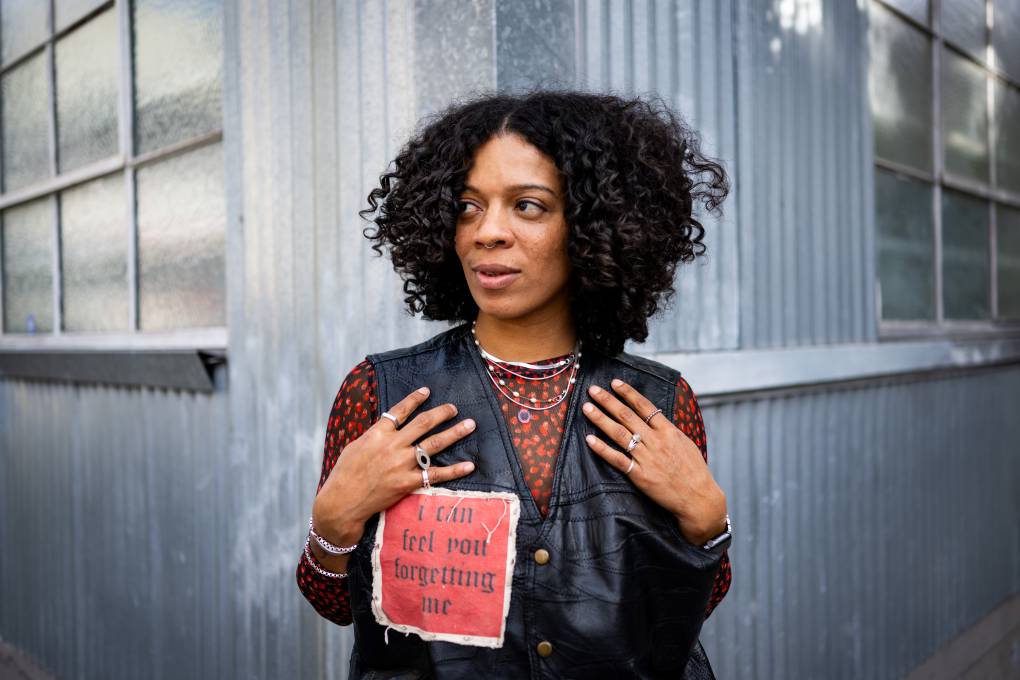
How One Outfit Changed the Life of a Former Berkeley High Teacher
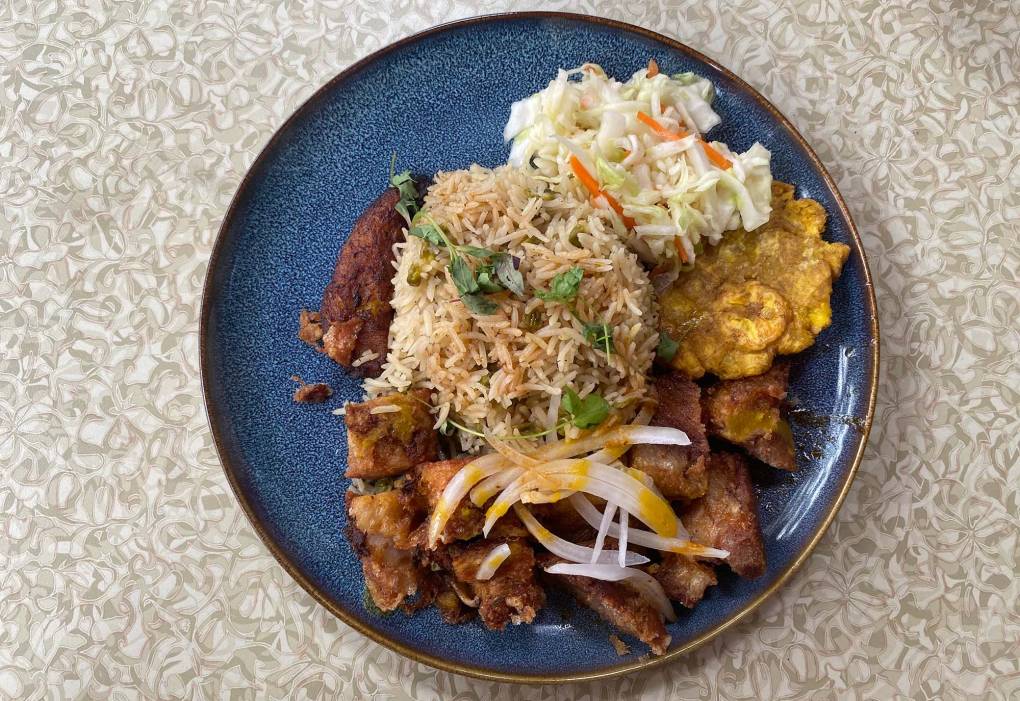
Oakland’s First and Only Haitian Restaurant Is a Knockout
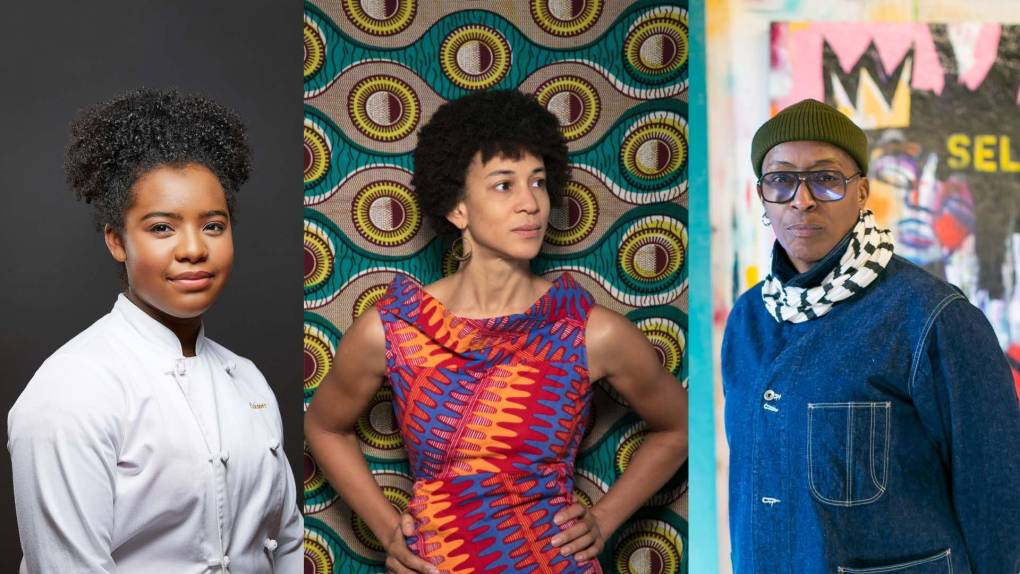
The Bay Area’s Black Women Chefs Are All About Intergenerational Uplift
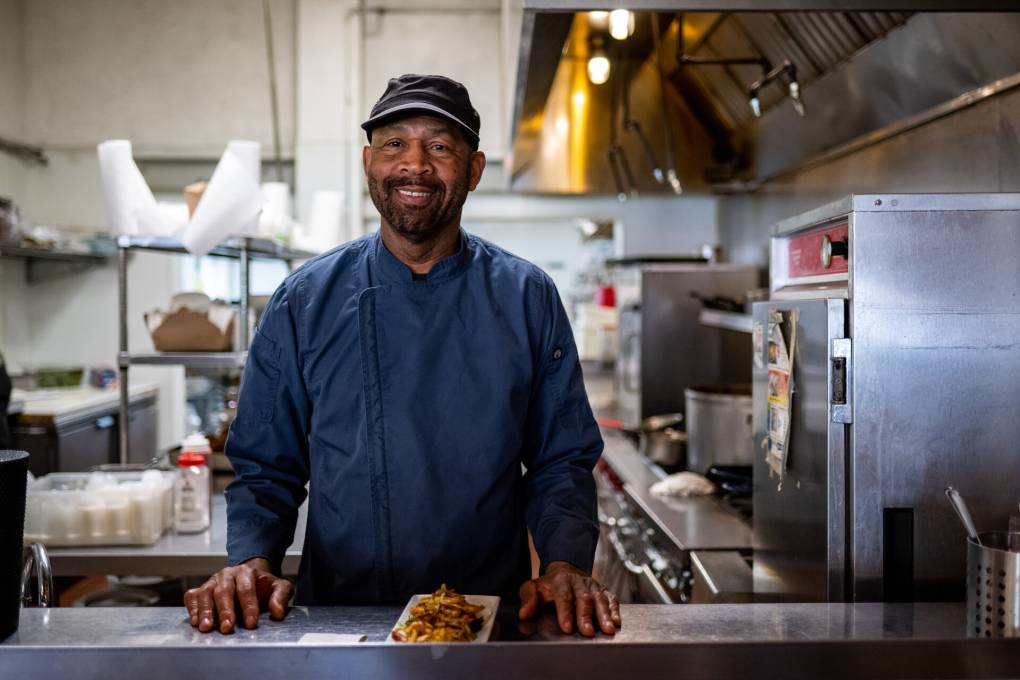
Kingston 11’s Closure Is a Reminder To Not Take Beloved Black-Owned Businesses for Granted
Miss Ollie’s Will Reopen as a Takeout Window in Uptown Oakland
Miss Ollie's Closes: The End of an Era for Oakland's Black and Brown Communities
Sponsored
Player sponsored by
window.__IS_SSR__=true
window.__INITIAL_STATE__={
"attachmentsReducer": {
"audio_0": {
"type": "attachments",
"id": "audio_0",
"imgSizes": {
"kqedFullSize": {
"file": "https://ww2.kqed.org/news/wp-content/themes/KQED-unified/img/audio_bgs/background0.jpg"
}
}
},
"audio_1": {
"type": "attachments",
"id": "audio_1",
"imgSizes": {
"kqedFullSize": {
"file": "https://ww2.kqed.org/news/wp-content/themes/KQED-unified/img/audio_bgs/background1.jpg"
}
}
},
"audio_2": {
"type": "attachments",
"id": "audio_2",
"imgSizes": {
"kqedFullSize": {
"file": "https://ww2.kqed.org/news/wp-content/themes/KQED-unified/img/audio_bgs/background2.jpg"
}
}
},
"audio_3": {
"type": "attachments",
"id": "audio_3",
"imgSizes": {
"kqedFullSize": {
"file": "https://ww2.kqed.org/news/wp-content/themes/KQED-unified/img/audio_bgs/background3.jpg"
}
}
},
"audio_4": {
"type": "attachments",
"id": "audio_4",
"imgSizes": {
"kqedFullSize": {
"file": "https://ww2.kqed.org/news/wp-content/themes/KQED-unified/img/audio_bgs/background4.jpg"
}
}
},
"placeholder": {
"type": "attachments",
"id": "placeholder",
"imgSizes": {
"thumbnail": {
"file": "https://cdn.kqed.org/wp-content/uploads/2024/12/KQED-Default-Image-816638274-2000x1333-1-160x107.jpg",
"width": 160,
"height": 107,
"mimeType": "image/jpeg"
},
"medium": {
"file": "https://cdn.kqed.org/wp-content/uploads/2024/12/KQED-Default-Image-816638274-2000x1333-1-800x533.jpg",
"width": 800,
"height": 533,
"mimeType": "image/jpeg"
},
"medium_large": {
"file": "https://cdn.kqed.org/wp-content/uploads/2024/12/KQED-Default-Image-816638274-2000x1333-1-768x512.jpg",
"width": 768,
"height": 512,
"mimeType": "image/jpeg"
},
"large": {
"file": "https://cdn.kqed.org/wp-content/uploads/2024/12/KQED-Default-Image-816638274-2000x1333-1-1020x680.jpg",
"width": 1020,
"height": 680,
"mimeType": "image/jpeg"
},
"1536x1536": {
"file": "https://cdn.kqed.org/wp-content/uploads/2024/12/KQED-Default-Image-816638274-2000x1333-1-1536x1024.jpg",
"width": 1536,
"height": 1024,
"mimeType": "image/jpeg"
},
"fd-lrg": {
"file": "https://cdn.kqed.org/wp-content/uploads/2024/12/KQED-Default-Image-816638274-2000x1333-1-1536x1024.jpg",
"width": 1536,
"height": 1024,
"mimeType": "image/jpeg"
},
"fd-med": {
"file": "https://cdn.kqed.org/wp-content/uploads/2024/12/KQED-Default-Image-816638274-2000x1333-1-1020x680.jpg",
"width": 1020,
"height": 680,
"mimeType": "image/jpeg"
},
"fd-sm": {
"file": "https://cdn.kqed.org/wp-content/uploads/2024/12/KQED-Default-Image-816638274-2000x1333-1-800x533.jpg",
"width": 800,
"height": 533,
"mimeType": "image/jpeg"
},
"post-thumbnail": {
"file": "https://cdn.kqed.org/wp-content/uploads/2024/12/KQED-Default-Image-816638274-2000x1333-1-672x372.jpg",
"width": 672,
"height": 372,
"mimeType": "image/jpeg"
},
"twentyfourteen-full-width": {
"file": "https://cdn.kqed.org/wp-content/uploads/2024/12/KQED-Default-Image-816638274-2000x1333-1-1038x576.jpg",
"width": 1038,
"height": 576,
"mimeType": "image/jpeg"
},
"xxsmall": {
"file": "https://cdn.kqed.org/wp-content/uploads/2024/12/KQED-Default-Image-816638274-2000x1333-1-160x107.jpg",
"width": 160,
"height": 107,
"mimeType": "image/jpeg"
},
"xsmall": {
"file": "https://cdn.kqed.org/wp-content/uploads/2024/12/KQED-Default-Image-816638274-2000x1333-1-672x372.jpg",
"width": 672,
"height": 372,
"mimeType": "image/jpeg"
},
"small": {
"file": "https://cdn.kqed.org/wp-content/uploads/2024/12/KQED-Default-Image-816638274-2000x1333-1-672x372.jpg",
"width": 672,
"height": 372,
"mimeType": "image/jpeg"
},
"xlarge": {
"file": "https://cdn.kqed.org/wp-content/uploads/2024/12/KQED-Default-Image-816638274-2000x1333-1-1020x680.jpg",
"width": 1020,
"height": 680,
"mimeType": "image/jpeg"
},
"full-width": {
"file": "https://cdn.kqed.org/wp-content/uploads/2024/12/KQED-Default-Image-816638274-2000x1333-1-1920x1280.jpg",
"width": 1920,
"height": 1280,
"mimeType": "image/jpeg"
},
"guest-author-32": {
"file": "https://cdn.kqed.org/wp-content/uploads/2025/01/KQED-Default-Image-816638274-1333x1333-1-160x160.jpg",
"width": 32,
"height": 32,
"mimeType": "image/jpeg"
},
"guest-author-50": {
"file": "https://cdn.kqed.org/wp-content/uploads/2025/01/KQED-Default-Image-816638274-1333x1333-1-160x160.jpg",
"width": 50,
"height": 50,
"mimeType": "image/jpeg"
},
"guest-author-64": {
"file": "https://cdn.kqed.org/wp-content/uploads/2025/01/KQED-Default-Image-816638274-1333x1333-1-160x160.jpg",
"width": 64,
"height": 64,
"mimeType": "image/jpeg"
},
"guest-author-96": {
"file": "https://cdn.kqed.org/wp-content/uploads/2025/01/KQED-Default-Image-816638274-1333x1333-1-160x160.jpg",
"width": 96,
"height": 96,
"mimeType": "image/jpeg"
},
"guest-author-128": {
"file": "https://cdn.kqed.org/wp-content/uploads/2025/01/KQED-Default-Image-816638274-1333x1333-1-160x160.jpg",
"width": 128,
"height": 128,
"mimeType": "image/jpeg"
},
"detail": {
"file": "https://cdn.kqed.org/wp-content/uploads/2025/01/KQED-Default-Image-816638274-1333x1333-1-160x160.jpg",
"width": 160,
"height": 160,
"mimeType": "image/jpeg"
},
"kqedFullSize": {
"file": "https://cdn.kqed.org/wp-content/uploads/2024/12/KQED-Default-Image-816638274-2000x1333-1.jpg",
"width": 2000,
"height": 1333
}
}
},
"arts_13952571": {
"type": "attachments",
"id": "arts_13952571",
"meta": {
"index": "attachments_1716263798",
"site": "arts",
"id": "13952571",
"found": true
},
"parent": 13952566,
"imgSizes": {
"twentyfourteen-full-width": {
"file": "https://cdn.kqed.org/wp-content/uploads/sites/2/2024/02/231215-BayAreaStyleZakiya-26-BL-1038x576.jpg",
"width": 1038,
"mimeType": "image/jpeg",
"height": 576
},
"thumbnail": {
"file": "https://cdn.kqed.org/wp-content/uploads/sites/2/2024/02/231215-BayAreaStyleZakiya-26-BL-160x107.jpg",
"width": 160,
"mimeType": "image/jpeg",
"height": 107
},
"post-thumbnail": {
"file": "https://cdn.kqed.org/wp-content/uploads/sites/2/2024/02/231215-BayAreaStyleZakiya-26-BL-672x372.jpg",
"width": 672,
"mimeType": "image/jpeg",
"height": 372
},
"kqedFullSize": {
"file": "https://cdn.kqed.org/wp-content/uploads/sites/2/2024/02/231215-BayAreaStyleZakiya-26-BL-scaled.jpg",
"width": 2560,
"height": 1707
},
"2048x2048": {
"file": "https://cdn.kqed.org/wp-content/uploads/sites/2/2024/02/231215-BayAreaStyleZakiya-26-BL-2048x1365.jpg",
"width": 2048,
"mimeType": "image/jpeg",
"height": 1365
},
"large": {
"file": "https://cdn.kqed.org/wp-content/uploads/sites/2/2024/02/231215-BayAreaStyleZakiya-26-BL-1020x680.jpg",
"width": 1020,
"mimeType": "image/jpeg",
"height": 680
},
"1536x1536": {
"file": "https://cdn.kqed.org/wp-content/uploads/sites/2/2024/02/231215-BayAreaStyleZakiya-26-BL-1536x1024.jpg",
"width": 1536,
"mimeType": "image/jpeg",
"height": 1024
},
"full-width": {
"file": "https://cdn.kqed.org/wp-content/uploads/sites/2/2024/02/231215-BayAreaStyleZakiya-26-BL-1920x1280.jpg",
"width": 1920,
"mimeType": "image/jpeg",
"height": 1280
},
"medium": {
"file": "https://cdn.kqed.org/wp-content/uploads/sites/2/2024/02/231215-BayAreaStyleZakiya-26-BL-800x533.jpg",
"width": 800,
"mimeType": "image/jpeg",
"height": 533
},
"medium_large": {
"file": "https://cdn.kqed.org/wp-content/uploads/sites/2/2024/02/231215-BayAreaStyleZakiya-26-BL-768x512.jpg",
"width": 768,
"mimeType": "image/jpeg",
"height": 512
}
},
"publishDate": 1708450925,
"modified": 1708464110,
"caption": "'Even people who are not necessarily into fashion see my outfits, and they're just like, ‘There's something about your outfit that makes me happy,’' says Zakiya Zazaboi, pictured in San Francisco on Dec. 15, 2023.",
"description": null,
"title": "Zakiya Zazaboi poses for a portrait in San Francisco on Dec. 15, 2023.",
"credit": "Beth LaBerge/KQED",
"status": "inherit",
"altTag": null,
"fetchFailed": false,
"isLoading": false
},
"arts_13936339": {
"type": "attachments",
"id": "arts_13936339",
"meta": {
"index": "attachments_1716263798",
"site": "arts",
"id": "13936339",
"found": true
},
"parent": 13936332,
"imgSizes": {
"twentyfourteen-full-width": {
"file": "https://ww2.kqed.org/app/uploads/sites/2/2023/10/tchaka_griot-1038x576.jpg",
"width": 1038,
"mimeType": "image/jpeg",
"height": 576
},
"thumbnail": {
"file": "https://ww2.kqed.org/app/uploads/sites/2/2023/10/tchaka_griot-160x110.jpg",
"width": 160,
"mimeType": "image/jpeg",
"height": 110
},
"post-thumbnail": {
"file": "https://ww2.kqed.org/app/uploads/sites/2/2023/10/tchaka_griot-672x372.jpg",
"width": 672,
"mimeType": "image/jpeg",
"height": 372
},
"kqedFullSize": {
"file": "https://ww2.kqed.org/app/uploads/sites/2/2023/10/tchaka_griot.jpg",
"width": 2000,
"height": 1375
},
"large": {
"file": "https://ww2.kqed.org/app/uploads/sites/2/2023/10/tchaka_griot-1020x701.jpg",
"width": 1020,
"mimeType": "image/jpeg",
"height": 701
},
"1536x1536": {
"file": "https://ww2.kqed.org/app/uploads/sites/2/2023/10/tchaka_griot-1536x1056.jpg",
"width": 1536,
"mimeType": "image/jpeg",
"height": 1056
},
"full-width": {
"file": "https://ww2.kqed.org/app/uploads/sites/2/2023/10/tchaka_griot-1920x1320.jpg",
"width": 1920,
"mimeType": "image/jpeg",
"height": 1320
},
"medium": {
"file": "https://ww2.kqed.org/app/uploads/sites/2/2023/10/tchaka_griot-800x550.jpg",
"width": 800,
"mimeType": "image/jpeg",
"height": 550
},
"medium_large": {
"file": "https://ww2.kqed.org/app/uploads/sites/2/2023/10/tchaka_griot-768x528.jpg",
"width": 768,
"mimeType": "image/jpeg",
"height": 528
}
},
"publishDate": 1697136077,
"modified": 1697136195,
"caption": "Griot, a citrus-marinated fried pork dish, is one of the Haitian specialties served at T'chaka in Old Oakland.",
"description": null,
"title": "tchaka_griot",
"credit": "Luke Tsai/KQED",
"status": "inherit",
"altTag": "Fried pork, rice, plantains and pikliz (pickled cabbage and carrots) on a dark blue plate.",
"fetchFailed": false,
"isLoading": false
},
"arts_13930019": {
"type": "attachments",
"id": "arts_13930019",
"meta": {
"index": "attachments_1716263798",
"site": "arts",
"id": "13930019",
"found": true
},
"parent": 13930013,
"imgSizes": {
"twentyfourteen-full-width": {
"file": "https://ww2.kqed.org/app/uploads/sites/2/2023/06/diaspora-dinner-lineup_main-1038x576.jpg",
"width": 1038,
"mimeType": "image/jpeg",
"height": 576
},
"thumbnail": {
"file": "https://ww2.kqed.org/app/uploads/sites/2/2023/06/diaspora-dinner-lineup_main-160x90.jpg",
"width": 160,
"mimeType": "image/jpeg",
"height": 90
},
"post-thumbnail": {
"file": "https://ww2.kqed.org/app/uploads/sites/2/2023/06/diaspora-dinner-lineup_main-672x372.jpg",
"width": 672,
"mimeType": "image/jpeg",
"height": 372
},
"kqedFullSize": {
"file": "https://ww2.kqed.org/app/uploads/sites/2/2023/06/diaspora-dinner-lineup_main.jpg",
"width": 1920,
"height": 1080
},
"large": {
"file": "https://ww2.kqed.org/app/uploads/sites/2/2023/06/diaspora-dinner-lineup_main-1020x574.jpg",
"width": 1020,
"mimeType": "image/jpeg",
"height": 574
},
"1536x1536": {
"file": "https://ww2.kqed.org/app/uploads/sites/2/2023/06/diaspora-dinner-lineup_main-1536x864.jpg",
"width": 1536,
"mimeType": "image/jpeg",
"height": 864
},
"medium": {
"file": "https://ww2.kqed.org/app/uploads/sites/2/2023/06/diaspora-dinner-lineup_main-800x450.jpg",
"width": 800,
"mimeType": "image/jpeg",
"height": 450
},
"medium_large": {
"file": "https://ww2.kqed.org/app/uploads/sites/2/2023/06/diaspora-dinner-lineup_main-768x432.jpg",
"width": 768,
"mimeType": "image/jpeg",
"height": 432
}
},
"publishDate": 1685732380,
"modified": 1685733761,
"caption": "MoAD's Diaspora Dinner is headlined by multiple generations of Black women chefs in the Bay Area. From left to right: Rahanna Bisseret Martinez, Jocelyn Jackson and Sarah Kirnon.",
"description": null,
"title": "diaspora dinner lineup_main",
"credit": null,
"status": "inherit",
"altTag": "Headshots of three Black women chefs lined up side by side.",
"fetchFailed": false,
"isLoading": false
},
"arts_13926846": {
"type": "attachments",
"id": "arts_13926846",
"meta": {
"index": "attachments_1716263798",
"site": "arts",
"id": "13926846",
"found": true
},
"parent": 0,
"imgSizes": {
"twentyfourteen-full-width": {
"file": "https://ww2.kqed.org/app/uploads/sites/2/2023/03/RS63771_013_KQEDArts_Kingston11Restaurant_03222023-qut-1038x576.jpg",
"width": 1038,
"mimeType": "image/jpeg",
"height": 576
},
"thumbnail": {
"file": "https://ww2.kqed.org/app/uploads/sites/2/2023/03/RS63771_013_KQEDArts_Kingston11Restaurant_03222023-qut-160x107.jpg",
"width": 160,
"mimeType": "image/jpeg",
"height": 107
},
"post-thumbnail": {
"file": "https://ww2.kqed.org/app/uploads/sites/2/2023/03/RS63771_013_KQEDArts_Kingston11Restaurant_03222023-qut-672x372.jpg",
"width": 672,
"mimeType": "image/jpeg",
"height": 372
},
"kqedFullSize": {
"file": "https://ww2.kqed.org/app/uploads/sites/2/2023/03/RS63771_013_KQEDArts_Kingston11Restaurant_03222023-qut.jpg",
"width": 1920,
"height": 1280
},
"large": {
"file": "https://ww2.kqed.org/app/uploads/sites/2/2023/03/RS63771_013_KQEDArts_Kingston11Restaurant_03222023-qut-1020x680.jpg",
"width": 1020,
"mimeType": "image/jpeg",
"height": 680
},
"1536x1536": {
"file": "https://ww2.kqed.org/app/uploads/sites/2/2023/03/RS63771_013_KQEDArts_Kingston11Restaurant_03222023-qut-1536x1024.jpg",
"width": 1536,
"mimeType": "image/jpeg",
"height": 1024
},
"medium": {
"file": "https://ww2.kqed.org/app/uploads/sites/2/2023/03/RS63771_013_KQEDArts_Kingston11Restaurant_03222023-qut-800x533.jpg",
"width": 800,
"mimeType": "image/jpeg",
"height": 533
},
"medium_large": {
"file": "https://ww2.kqed.org/app/uploads/sites/2/2023/03/RS63771_013_KQEDArts_Kingston11Restaurant_03222023-qut-768x512.jpg",
"width": 768,
"mimeType": "image/jpeg",
"height": 512
}
},
"publishDate": 1679601273,
"modified": 1679610119,
"caption": "Chef Nigel Jones has served classic Jamaican dishes at his Oakland restaurant, Kingston 11, for the past 10 years. The restaurant's last day of business will be on Saturday, March 25.",
"description": null,
"title": "Chef Nigel Jones at his restaurant Kingston 11 in Oakland on March 22, 2023.",
"credit": "Beth LaBerge/KQED",
"status": "inherit",
"altTag": "A chef in blue chef's coat smiles inside a restaurant kitchen, a plate of Jamaican food in front of him on the counter.",
"fetchFailed": false,
"isLoading": false
},
"arts_13910460": {
"type": "attachments",
"id": "arts_13910460",
"meta": {
"index": "attachments_1716263798",
"site": "arts",
"id": "13910460",
"found": true
},
"parent": 13910410,
"imgSizes": {
"twentyfourteen-full-width": {
"file": "https://ww2.kqed.org/app/uploads/sites/2/2022/03/015_KQEDArts_MissOllies_03042022-1038x576.jpg",
"width": 1038,
"mimeType": "image/jpeg",
"height": 576
},
"thumbnail": {
"file": "https://ww2.kqed.org/app/uploads/sites/2/2022/03/015_KQEDArts_MissOllies_03042022-160x107.jpg",
"width": 160,
"mimeType": "image/jpeg",
"height": 107
},
"post-thumbnail": {
"file": "https://ww2.kqed.org/app/uploads/sites/2/2022/03/015_KQEDArts_MissOllies_03042022-672x372.jpg",
"width": 672,
"mimeType": "image/jpeg",
"height": 372
},
"kqedFullSize": {
"file": "https://ww2.kqed.org/app/uploads/sites/2/2022/03/015_KQEDArts_MissOllies_03042022.jpg",
"width": 1920,
"height": 1280
},
"large": {
"file": "https://ww2.kqed.org/app/uploads/sites/2/2022/03/015_KQEDArts_MissOllies_03042022-1020x680.jpg",
"width": 1020,
"mimeType": "image/jpeg",
"height": 680
},
"1536x1536": {
"file": "https://ww2.kqed.org/app/uploads/sites/2/2022/03/015_KQEDArts_MissOllies_03042022-1536x1024.jpg",
"width": 1536,
"mimeType": "image/jpeg",
"height": 1024
},
"medium": {
"file": "https://ww2.kqed.org/app/uploads/sites/2/2022/03/015_KQEDArts_MissOllies_03042022-800x533.jpg",
"width": 800,
"mimeType": "image/jpeg",
"height": 533
},
"medium_large": {
"file": "https://ww2.kqed.org/app/uploads/sites/2/2022/03/015_KQEDArts_MissOllies_03042022-768x512.jpg",
"width": 768,
"mimeType": "image/jpeg",
"height": 512
}
},
"publishDate": 1647031177,
"modified": 1650410314,
"caption": "Fans of Sarah Kirnon's Bajan-style fried chicken will now be able to satisfy their craving at the new takeout window outpost of Miss Ollie's.",
"description": null,
"title": "015_KQEDArts_MissOllies_03042022",
"credit": "Beth LaBerge/KQED",
"status": "inherit",
"altTag": "Wearing a face mask, chef Sarah Kirnon holds a plate of fried chicken at Miss Ollie's, her Old Oakland restaurant.",
"fetchFailed": false,
"isLoading": false
},
"arts_13910448": {
"type": "attachments",
"id": "arts_13910448",
"meta": {
"index": "attachments_1716263798",
"site": "arts",
"id": "13910448",
"found": true
},
"parent": 13910410,
"imgSizes": {
"twentyfourteen-full-width": {
"file": "https://ww2.kqed.org/app/uploads/sites/2/2022/03/MissOllies-1038x576.jpg",
"width": 1038,
"mimeType": "image/jpeg",
"height": 576
},
"thumbnail": {
"file": "https://ww2.kqed.org/app/uploads/sites/2/2022/03/MissOllies-160x107.jpg",
"width": 160,
"mimeType": "image/jpeg",
"height": 107
},
"post-thumbnail": {
"file": "https://ww2.kqed.org/app/uploads/sites/2/2022/03/MissOllies-672x372.jpg",
"width": 672,
"mimeType": "image/jpeg",
"height": 372
},
"kqedFullSize": {
"file": "https://ww2.kqed.org/app/uploads/sites/2/2022/03/MissOllies.jpg",
"width": 1920,
"height": 1280
},
"large": {
"file": "https://ww2.kqed.org/app/uploads/sites/2/2022/03/MissOllies-1020x680.jpg",
"width": 1020,
"mimeType": "image/jpeg",
"height": 680
},
"1536x1536": {
"file": "https://ww2.kqed.org/app/uploads/sites/2/2022/03/MissOllies-1536x1024.jpg",
"width": 1536,
"mimeType": "image/jpeg",
"height": 1024
},
"medium": {
"file": "https://ww2.kqed.org/app/uploads/sites/2/2022/03/MissOllies-800x533.jpg",
"width": 800,
"mimeType": "image/jpeg",
"height": 533
},
"medium_large": {
"file": "https://ww2.kqed.org/app/uploads/sites/2/2022/03/MissOllies-768x512.jpg",
"width": 768,
"mimeType": "image/jpeg",
"height": 512
}
},
"publishDate": 1647029650,
"modified": 1647031244,
"caption": "Miss Ollie's owner Sarah Kirnon will close her landmark restaurant at the end of March.",
"description": null,
"title": "MissOllies",
"credit": "Beth LaBerge/KQED",
"status": "inherit",
"altTag": "A Black woman pours sauce into a ramekin behind a crowded bar at a restaurant",
"fetchFailed": false,
"isLoading": false
}
},
"audioPlayerReducer": {
"postId": "stream_live",
"isPaused": true,
"isPlaying": false,
"pfsActive": false,
"pledgeModalIsOpen": true,
"playerDrawerIsOpen": false
},
"authorsReducer": {
"ltsai": {
"type": "authors",
"id": "11743",
"meta": {
"index": "authors_1716337520",
"id": "11743",
"found": true
},
"name": "Luke Tsai",
"firstName": "Luke",
"lastName": "Tsai",
"slug": "ltsai",
"email": "ltsai@kqed.org",
"display_author_email": true,
"staff_mastheads": [
"arts"
],
"title": "Food Editor",
"bio": "Luke Tsai is KQED's food editor and resident stinky tofu connoisseur. Prior to KQED, he was an editor at Eater SF, \u003cem>San Francisco \u003c/em>magazine, and the \u003cem>East Bay Express\u003c/em>, and his work has also appeared in TASTE, the \u003cem>San Francisco Chronicle\u003c/em>, and the \u003cem>Best Food Writing\u003c/em> anthology. When he isn't writing or editing, you'll find him eating most everything he can get his hands on.",
"avatar": "https://secure.gravatar.com/avatar/d1ff591a3047b143a0e23cf7f28fcac0?s=600&d=blank&r=g",
"twitter": "theluketsai",
"facebook": null,
"instagram": null,
"linkedin": null,
"sites": [
{
"site": "",
"roles": [
"editor"
]
},
{
"site": "arts",
"roles": [
"administrator"
]
},
{
"site": "bayareabites",
"roles": [
"editor"
]
},
{
"site": "food",
"roles": [
"editor"
]
}
],
"headData": {
"title": "Luke Tsai | KQED",
"description": "Food Editor",
"ogImgSrc": "https://secure.gravatar.com/avatar/d1ff591a3047b143a0e23cf7f28fcac0?s=600&d=blank&r=g",
"twImgSrc": "https://secure.gravatar.com/avatar/d1ff591a3047b143a0e23cf7f28fcac0?s=600&d=blank&r=g"
},
"isLoading": false,
"link": "/author/ltsai"
},
"omayeda": {
"type": "authors",
"id": "11872",
"meta": {
"index": "authors_1716337520",
"id": "11872",
"found": true
},
"name": "Olivia Cruz Mayeda",
"firstName": "Olivia Cruz",
"lastName": "Mayeda",
"slug": "omayeda",
"email": "omayeda@kqed.org",
"display_author_email": false,
"staff_mastheads": [],
"title": "Reporter",
"bio": "Olivia Cruz Mayeda is a journalist covering style, culture and reparations in the Bay Area, a place that has been home to her family for over 100 years. Her writing has also appeared in the \u003cem>San Francisco Chronicle\u003c/em> and \u003cem>El Tecolote\u003c/em>.",
"avatar": "https://secure.gravatar.com/avatar/a8c0baa30219ce1071a9474f4c14141f?s=600&d=blank&r=g",
"twitter": null,
"facebook": null,
"instagram": null,
"linkedin": null,
"sites": [
{
"site": "arts",
"roles": [
"contributor"
]
}
],
"headData": {
"title": "Olivia Cruz Mayeda | KQED",
"description": "Reporter",
"ogImgSrc": "https://secure.gravatar.com/avatar/a8c0baa30219ce1071a9474f4c14141f?s=600&d=blank&r=g",
"twImgSrc": "https://secure.gravatar.com/avatar/a8c0baa30219ce1071a9474f4c14141f?s=600&d=blank&r=g"
},
"isLoading": false,
"link": "/author/omayeda"
}
},
"breakingNewsReducer": {},
"pagesReducer": {},
"postsReducer": {
"stream_live": {
"type": "live",
"id": "stream_live",
"audioUrl": "https://streams.kqed.org/kqedradio",
"title": "Live Stream",
"excerpt": "Live Stream information currently unavailable.",
"link": "/radio",
"featImg": "",
"label": {
"name": "KQED Live",
"link": "/"
}
},
"stream_kqedNewscast": {
"type": "posts",
"id": "stream_kqedNewscast",
"audioUrl": "https://www.kqed.org/.stream/anon/radio/RDnews/newscast.mp3?_=1",
"title": "KQED Newscast",
"featImg": "",
"label": {
"name": "88.5 FM",
"link": "/"
}
},
"arts_13952566": {
"type": "posts",
"id": "arts_13952566",
"meta": {
"index": "posts_1716263798",
"site": "arts",
"id": "13952566",
"score": null,
"sort": [
1708455444000
]
},
"parent": 0,
"labelTerm": {},
"blocks": [],
"publishDate": 1708455444,
"format": "standard",
"title": "How One Outfit Changed the Life of a Former Berkeley High Teacher",
"headTitle": "How One Outfit Changed the Life of a Former Berkeley High Teacher | KQED",
"content": "\u003cp>\u003cem>\u003cstrong>Editor’s Note:\u003c/strong> Fit Check is a series about style and personal expression in the Bay Area. See other installments \u003ca href=\"https://www.kqed.org/arts/tag/fit-check\">here\u003c/a>.\u003c/em>\u003c/p>\n\u003cp>One summer night three years ago, \u003ca href=\"https://www.instagram.com/the.daily.zazz/\">Zakiya Zazaboi\u003c/a>’s outfit changed her life.\u003c/p>\n\u003cp>At the time, Zazaboi was a history teacher at Berkeley High School, and her students used to tell her that she was too cool for school — literally. “‘It’s honestly really sad seeing you here,’” Zazaboi remembers a student telling her, with brutal teenage conviction.\u003c/p>\n\u003cp>[aside postID='arts_13951605']Zazaboi waved off her students’ suggestions that she should quit to do something “cooler.” But a party at Miss Ollie’s in Oakland had other plans. That night in May 2021, at a long dining table in Oakland lined with saltfish, jerk chicken and artists of all kinds, Zazaboi met fashion stylist Mai-lei Pecorari.\u003c/p>\n\u003cp>Zazaboi had shown up in cerulean vintage bell bottoms, a Danish knit sweater with enormous silver clasps, oversized white glasses and white cowboy boots. Pecorari, who’s styled the likes of NBA player Draymond Green and DJ Honey Dijon, looked Zazaboi up and down and asked her about her outfit.\u003c/p>\n\u003cp>[ad fullwidth]\u003c/p>\n\u003cp>“‘Do you just do this as a passion project, or professionally?’” Zazaboi remembers Pecorari asking her.\u003c/p>\n\u003cfigure id=\"attachment_13939663\" class=\"wp-caption aligncenter\" style=\"max-width: 2000px\">\u003cimg loading=\"lazy\" decoding=\"async\" class=\"size-full wp-image-13939663\" src=\"https://cdn.kqed.org/wp-content/uploads/sites/2/2023/12/231215-BayAreaStyleZakiya-09-BL-KQED.jpg\" alt=\"A person with a leather jacket holds a circular necklace.\" width=\"2000\" height=\"1333\" srcset=\"https://cdn.kqed.org/wp-content/uploads/sites/2/2023/12/231215-BayAreaStyleZakiya-09-BL-KQED.jpg 2000w, https://cdn.kqed.org/wp-content/uploads/sites/2/2023/12/231215-BayAreaStyleZakiya-09-BL-KQED-800x533.jpg 800w, https://cdn.kqed.org/wp-content/uploads/sites/2/2023/12/231215-BayAreaStyleZakiya-09-BL-KQED-1020x680.jpg 1020w, https://cdn.kqed.org/wp-content/uploads/sites/2/2023/12/231215-BayAreaStyleZakiya-09-BL-KQED-160x107.jpg 160w, https://cdn.kqed.org/wp-content/uploads/sites/2/2023/12/231215-BayAreaStyleZakiya-09-BL-KQED-768x512.jpg 768w, https://cdn.kqed.org/wp-content/uploads/sites/2/2023/12/231215-BayAreaStyleZakiya-09-BL-KQED-1536x1024.jpg 1536w, https://cdn.kqed.org/wp-content/uploads/sites/2/2023/12/231215-BayAreaStyleZakiya-09-BL-KQED-1920x1280.jpg 1920w\" sizes=\"(max-width: 2000px) 100vw, 2000px\">\u003cfigcaption class=\"wp-caption-text\">Zakiya Zazaboi shows off her collection of silver jewelry, including a necklace engraved with her late mother’s thumbprint. \u003ccite>(Beth LaBerge/KQED)\u003c/cite>\u003c/figcaption>\u003c/figure>\n\u003cp>And then Pecorari just sort of whisked her off into the world of fashion, Zazaboi says. Just a few months later, she got a call from Pecorari about a styling job at a photoshoot, and then another, and another.\u003c/p>\n\u003cp>“I began making more than I was as a public school teacher,” she says.\u003c/p>\n\u003cp>Zazaboi has been a stylist ever since.\u003c/p>\n\u003ch2>‘It’s Very Political’\u003c/h2>\n\u003cp>Zazaboi, who was born in Daly City but now lives between Oakland and L.A., describes the style sensibility that transformed her career as bright and emotional. “It’s very queer, too, just because of the ways that I play around with my own masculine energy,” she says. “And it’s very political.”\u003c/p>\n\u003cfigure id=\"attachment_13939662\" class=\"wp-caption aligncenter\" style=\"max-width: 2000px\">\u003cimg loading=\"lazy\" decoding=\"async\" class=\"size-full wp-image-13939662\" src=\"https://cdn.kqed.org/wp-content/uploads/sites/2/2023/12/231215-BayAreaStyleZakiya-03-BL-KQED.jpg\" alt=\"A person dressed in black poses for a photo.\" width=\"2000\" height=\"1333\" srcset=\"https://cdn.kqed.org/wp-content/uploads/sites/2/2023/12/231215-BayAreaStyleZakiya-03-BL-KQED.jpg 2000w, https://cdn.kqed.org/wp-content/uploads/sites/2/2023/12/231215-BayAreaStyleZakiya-03-BL-KQED-800x533.jpg 800w, https://cdn.kqed.org/wp-content/uploads/sites/2/2023/12/231215-BayAreaStyleZakiya-03-BL-KQED-1020x680.jpg 1020w, https://cdn.kqed.org/wp-content/uploads/sites/2/2023/12/231215-BayAreaStyleZakiya-03-BL-KQED-160x107.jpg 160w, https://cdn.kqed.org/wp-content/uploads/sites/2/2023/12/231215-BayAreaStyleZakiya-03-BL-KQED-768x512.jpg 768w, https://cdn.kqed.org/wp-content/uploads/sites/2/2023/12/231215-BayAreaStyleZakiya-03-BL-KQED-1536x1024.jpg 1536w, https://cdn.kqed.org/wp-content/uploads/sites/2/2023/12/231215-BayAreaStyleZakiya-03-BL-KQED-1920x1280.jpg 1920w\" sizes=\"(max-width: 2000px) 100vw, 2000px\">\u003cfigcaption class=\"wp-caption-text\">Zakiya Zazaboi sports a leather jacket from San Francisco vintage shop Wasteland and a skirt from Goodwill. \u003ccite>(Beth LaBerge/KQED)\u003c/cite>\u003c/figcaption>\u003c/figure>\n\u003cp>It’s a sunny December day in San Francsico when I catch up with Zazaboi at a warehouse building in SOMA. Working a photoshoot for Banana Republic, she wears speed-bump yellow boots, red shorts and a leather vest with two patches — one on the front and one on the back.\u003c/p>\n\u003cp>“I tend to put a lot of different patches on my outfits to reflect things that are going on politically,” she says, her neck, wrists and fingers glimmering with a constellation of silver jewelry. “I like to keep it very pro African, a lot of poetry.”\u003c/p>\n\u003cp>Zazaboi had also printed a photo she found on Tumblr of a group of young Black boys onto a large piece of canvas. Sewn into her vest, the image is stunning and conspicuous, stretching across the length and width of Zazaboi’s back.\u003c/p>\n\u003cp>“It’s a pretty punk thing to do, very gritty DIY,” she says.\u003c/p>\n\u003cp>The front panel of the vest bears the words “I can feel you forgetting me” in medieval script, backdropped by red. (“I definitely have a bit of a sad bone to me because of my Cancer side,” she explains.)\u003c/p>\n\u003cfigure id=\"attachment_13939665\" class=\"wp-caption aligncenter\" style=\"max-width: 2000px\">\u003cimg loading=\"lazy\" decoding=\"async\" class=\"size-full wp-image-13939665\" src=\"https://cdn.kqed.org/wp-content/uploads/sites/2/2023/12/231215-BayAreaStyleZakiya-28-BL-KQED.jpg\" alt=\"A person long hair poses for a photo with an old photo stitched to the back of their leather vest.\" width=\"2000\" height=\"1333\" srcset=\"https://cdn.kqed.org/wp-content/uploads/sites/2/2023/12/231215-BayAreaStyleZakiya-28-BL-KQED.jpg 2000w, https://cdn.kqed.org/wp-content/uploads/sites/2/2023/12/231215-BayAreaStyleZakiya-28-BL-KQED-800x533.jpg 800w, https://cdn.kqed.org/wp-content/uploads/sites/2/2023/12/231215-BayAreaStyleZakiya-28-BL-KQED-1020x680.jpg 1020w, https://cdn.kqed.org/wp-content/uploads/sites/2/2023/12/231215-BayAreaStyleZakiya-28-BL-KQED-160x107.jpg 160w, https://cdn.kqed.org/wp-content/uploads/sites/2/2023/12/231215-BayAreaStyleZakiya-28-BL-KQED-768x512.jpg 768w, https://cdn.kqed.org/wp-content/uploads/sites/2/2023/12/231215-BayAreaStyleZakiya-28-BL-KQED-1536x1024.jpg 1536w, https://cdn.kqed.org/wp-content/uploads/sites/2/2023/12/231215-BayAreaStyleZakiya-28-BL-KQED-1920x1280.jpg 1920w\" sizes=\"(max-width: 2000px) 100vw, 2000px\">\u003cfigcaption class=\"wp-caption-text\">Zakiya Zazaboi adorns her outwear with custom patches using images that speak to her. \u003ccite>(Beth LaBerge/KQED)\u003c/cite>\u003c/figcaption>\u003c/figure>\n\u003cp>At Berkeley High, a fellow teacher let Zazaboi experiment with her garment printer, and she soon started installing patches on her clothes. They now ornament Zazaboi’s collection of outerwear and add dimension to an already distinct wardrobe.\u003c/p>\n\u003cp>She also credits her former students at Berkeley High for their influence. “They have some of the best outfits out here, and they’re very trendy and on it,” she says, “It’s probably the one thing I miss the most about teaching — I’m not constantly being inspired by a lot of our younger generations’ outfits.”\u003c/p>\n\u003cp>On the long San Francisco street outside the Banana Republic photoshoot, Zazaboi clicks the heels of her bright yellow boots — a beam of sunshine in a field of concrete.\u003c/p>\n\u003cp>“I grew up around Filipinos, and their shoe game was on top of it,” she says. “I learned a lot about shoes in Daly City.”\u003c/p>\n\u003cfigure id=\"attachment_13939666\" class=\"wp-caption aligncenter\" style=\"max-width: 1333px\">\u003cimg loading=\"lazy\" decoding=\"async\" class=\"size-full wp-image-13939666\" src=\"https://cdn.kqed.org/wp-content/uploads/sites/2/2023/12/231215-BayAreaStyleZakiya-37-BL-KQED.jpg\" alt=\"A person long hair and red shorts is photographed.\" width=\"1333\" height=\"2000\" srcset=\"https://cdn.kqed.org/wp-content/uploads/sites/2/2023/12/231215-BayAreaStyleZakiya-37-BL-KQED.jpg 1333w, https://cdn.kqed.org/wp-content/uploads/sites/2/2023/12/231215-BayAreaStyleZakiya-37-BL-KQED-800x1200.jpg 800w, https://cdn.kqed.org/wp-content/uploads/sites/2/2023/12/231215-BayAreaStyleZakiya-37-BL-KQED-1020x1530.jpg 1020w, https://cdn.kqed.org/wp-content/uploads/sites/2/2023/12/231215-BayAreaStyleZakiya-37-BL-KQED-160x240.jpg 160w, https://cdn.kqed.org/wp-content/uploads/sites/2/2023/12/231215-BayAreaStyleZakiya-37-BL-KQED-768x1152.jpg 768w, https://cdn.kqed.org/wp-content/uploads/sites/2/2023/12/231215-BayAreaStyleZakiya-37-BL-KQED-1024x1536.jpg 1024w\" sizes=\"(max-width: 1333px) 100vw, 1333px\">\u003cfigcaption class=\"wp-caption-text\">Color and texture are big considerations for Zakiya Zazaboi when putting together her looks. \u003ccite>(Beth LaBerge/KQED)\u003c/cite>\u003c/figcaption>\u003c/figure>\n\u003ch2>Keeping It Attainable\u003c/h2>\n\u003cp>Zazaboi also learned about how to budget her money for clothes, and has advice for the rest of us.\u003c/p>\n\u003cp>“I definitely look at a lot of high-end fashion all the time, but babe, I don’t have high fashion money,” she says, “So I’m always keeping in mind longevity, and ‘How’s this gonna look when it’s dirty and beat up? Will it still look good?’”\u003c/p>\n\u003cp>More than anything, she wants fashion to be attainable.\u003c/p>\n\u003cp>“I know that people are going to ask me where I got my outfit from, and I’m not the type of babe that’s gonna be like ‘Valentino’ or ‘Gucci,’” she says.\u003c/p>\n\u003cp>For Zazaboi, there’s something much more valuable and lasting than access to brand names. It helps her find gems in the most random piles of clothes, and it’s accessible to others too.\u003c/p>\n\u003cp>“I just have an eye for things,” she says.\u003c/p>\n\u003cp>\u003c/p>\n\u003cp>\u003cimg loading=\"lazy\" decoding=\"async\" class=\"aligncenter size-full wp-image-12127869\" src=\"https://cdn.kqed.org/wp-content/uploads/sites/2/2016/09/Q.Logo_.Break_.jpg\" alt=\"\" width=\"800\" height=\"78\" srcset=\"https://cdn.kqed.org/wp-content/uploads/sites/2/2016/09/Q.Logo_.Break_.jpg 800w, https://cdn.kqed.org/wp-content/uploads/sites/2/2016/09/Q.Logo_.Break_-400x39.jpg 400w, https://cdn.kqed.org/wp-content/uploads/sites/2/2016/09/Q.Logo_.Break_-768x75.jpg 768w\" sizes=\"(max-width: 800px) 100vw, 800px\">\u003c/p>\n\n",
"stats": {
"hasVideo": false,
"hasChartOrMap": false,
"hasAudio": false,
"hasPolis": false,
"wordCount": 976,
"hasGoogleForm": false,
"hasGallery": false,
"hasHearkenModule": false,
"iframeSrcs": [],
"paragraphCount": 28
},
"modified": 1715272684,
"excerpt": "Zakiya Zazaboi’s ‘gritty DIY’ fashion is informed by her former students, her zodiac sign and Daly City.",
"headData": {
"twImgId": "",
"twTitle": "",
"ogTitle": "",
"ogImgId": "",
"twDescription": "",
"description": "Zakiya Zazaboi’s ‘gritty DIY’ fashion is informed by her former students, her zodiac sign and Daly City.",
"title": "How One Outfit Changed the Life of a Former Berkeley High Teacher | KQED",
"ogDescription": "",
"schema": {
"@context": "https://schema.org",
"@type": "Article",
"headline": "How One Outfit Changed the Life of a Former Berkeley High Teacher",
"datePublished": "2024-02-20T10:57:24-08:00",
"dateModified": "2024-05-09T09:38:04-07:00",
"image": "https://cdn.kqed.org/wp-content/uploads/2020/02/KQED-OG-Image@1x.png"
}
},
"guestAuthors": [],
"slug": "fit-check-berkeley-high-teacher-zakiya-zazaboi",
"status": "publish",
"sourceUrl": "https://www.kqed.org/arts/tag/fit-check",
"templateType": "standard",
"excludeFromSiteSearch": "Include",
"featuredImageType": "standard",
"sticky": false,
"source": "Fit Check ",
"articleAge": "0",
"nprStoryId": "kqed-13952566",
"path": "/arts/13952566/fit-check-berkeley-high-teacher-zakiya-zazaboi",
"audioTrackLength": null,
"parsedContent": [
{
"type": "contentString",
"content": "\u003cdiv class=\"post-body\">\u003cp>\u003cp>\u003cem>\u003cstrong>Editor’s Note:\u003c/strong> Fit Check is a series about style and personal expression in the Bay Area. See other installments \u003ca href=\"https://www.kqed.org/arts/tag/fit-check\">here\u003c/a>.\u003c/em>\u003c/p>\n\u003cp>One summer night three years ago, \u003ca href=\"https://www.instagram.com/the.daily.zazz/\">Zakiya Zazaboi\u003c/a>’s outfit changed her life.\u003c/p>\n\u003cp>At the time, Zazaboi was a history teacher at Berkeley High School, and her students used to tell her that she was too cool for school — literally. “‘It’s honestly really sad seeing you here,’” Zazaboi remembers a student telling her, with brutal teenage conviction.\u003c/p>\n\u003cp>\u003c/p>\u003c/div>",
"attributes": {
"named": {},
"numeric": []
}
},
{
"type": "component",
"content": "",
"name": "aside",
"attributes": {
"named": {
"postid": "arts_13951605",
"label": ""
},
"numeric": []
}
},
{
"type": "contentString",
"content": "\u003cdiv class=\"post-body\">\u003cp>Zazaboi waved off her students’ suggestions that she should quit to do something “cooler.” But a party at Miss Ollie’s in Oakland had other plans. That night in May 2021, at a long dining table in Oakland lined with saltfish, jerk chicken and artists of all kinds, Zazaboi met fashion stylist Mai-lei Pecorari.\u003c/p>\n\u003cp>Zazaboi had shown up in cerulean vintage bell bottoms, a Danish knit sweater with enormous silver clasps, oversized white glasses and white cowboy boots. Pecorari, who’s styled the likes of NBA player Draymond Green and DJ Honey Dijon, looked Zazaboi up and down and asked her about her outfit.\u003c/p>\n\u003cp>\u003c/p>\u003c/div>",
"attributes": {
"named": {},
"numeric": []
}
},
{
"type": "component",
"content": "",
"name": "ad",
"attributes": {
"named": {
"label": "fullwidth"
},
"numeric": [
"fullwidth"
]
}
},
{
"type": "contentString",
"content": "\u003cdiv class=\"post-body\">\u003cp>\u003c/p>\n\u003cp>“‘Do you just do this as a passion project, or professionally?’” Zazaboi remembers Pecorari asking her.\u003c/p>\n\u003cfigure id=\"attachment_13939663\" class=\"wp-caption aligncenter\" style=\"max-width: 2000px\">\u003cimg loading=\"lazy\" decoding=\"async\" class=\"size-full wp-image-13939663\" src=\"https://cdn.kqed.org/wp-content/uploads/sites/2/2023/12/231215-BayAreaStyleZakiya-09-BL-KQED.jpg\" alt=\"A person with a leather jacket holds a circular necklace.\" width=\"2000\" height=\"1333\" srcset=\"https://cdn.kqed.org/wp-content/uploads/sites/2/2023/12/231215-BayAreaStyleZakiya-09-BL-KQED.jpg 2000w, https://cdn.kqed.org/wp-content/uploads/sites/2/2023/12/231215-BayAreaStyleZakiya-09-BL-KQED-800x533.jpg 800w, https://cdn.kqed.org/wp-content/uploads/sites/2/2023/12/231215-BayAreaStyleZakiya-09-BL-KQED-1020x680.jpg 1020w, https://cdn.kqed.org/wp-content/uploads/sites/2/2023/12/231215-BayAreaStyleZakiya-09-BL-KQED-160x107.jpg 160w, https://cdn.kqed.org/wp-content/uploads/sites/2/2023/12/231215-BayAreaStyleZakiya-09-BL-KQED-768x512.jpg 768w, https://cdn.kqed.org/wp-content/uploads/sites/2/2023/12/231215-BayAreaStyleZakiya-09-BL-KQED-1536x1024.jpg 1536w, https://cdn.kqed.org/wp-content/uploads/sites/2/2023/12/231215-BayAreaStyleZakiya-09-BL-KQED-1920x1280.jpg 1920w\" sizes=\"(max-width: 2000px) 100vw, 2000px\">\u003cfigcaption class=\"wp-caption-text\">Zakiya Zazaboi shows off her collection of silver jewelry, including a necklace engraved with her late mother’s thumbprint. \u003ccite>(Beth LaBerge/KQED)\u003c/cite>\u003c/figcaption>\u003c/figure>\n\u003cp>And then Pecorari just sort of whisked her off into the world of fashion, Zazaboi says. Just a few months later, she got a call from Pecorari about a styling job at a photoshoot, and then another, and another.\u003c/p>\n\u003cp>“I began making more than I was as a public school teacher,” she says.\u003c/p>\n\u003cp>Zazaboi has been a stylist ever since.\u003c/p>\n\u003ch2>‘It’s Very Political’\u003c/h2>\n\u003cp>Zazaboi, who was born in Daly City but now lives between Oakland and L.A., describes the style sensibility that transformed her career as bright and emotional. “It’s very queer, too, just because of the ways that I play around with my own masculine energy,” she says. “And it’s very political.”\u003c/p>\n\u003cfigure id=\"attachment_13939662\" class=\"wp-caption aligncenter\" style=\"max-width: 2000px\">\u003cimg loading=\"lazy\" decoding=\"async\" class=\"size-full wp-image-13939662\" src=\"https://cdn.kqed.org/wp-content/uploads/sites/2/2023/12/231215-BayAreaStyleZakiya-03-BL-KQED.jpg\" alt=\"A person dressed in black poses for a photo.\" width=\"2000\" height=\"1333\" srcset=\"https://cdn.kqed.org/wp-content/uploads/sites/2/2023/12/231215-BayAreaStyleZakiya-03-BL-KQED.jpg 2000w, https://cdn.kqed.org/wp-content/uploads/sites/2/2023/12/231215-BayAreaStyleZakiya-03-BL-KQED-800x533.jpg 800w, https://cdn.kqed.org/wp-content/uploads/sites/2/2023/12/231215-BayAreaStyleZakiya-03-BL-KQED-1020x680.jpg 1020w, https://cdn.kqed.org/wp-content/uploads/sites/2/2023/12/231215-BayAreaStyleZakiya-03-BL-KQED-160x107.jpg 160w, https://cdn.kqed.org/wp-content/uploads/sites/2/2023/12/231215-BayAreaStyleZakiya-03-BL-KQED-768x512.jpg 768w, https://cdn.kqed.org/wp-content/uploads/sites/2/2023/12/231215-BayAreaStyleZakiya-03-BL-KQED-1536x1024.jpg 1536w, https://cdn.kqed.org/wp-content/uploads/sites/2/2023/12/231215-BayAreaStyleZakiya-03-BL-KQED-1920x1280.jpg 1920w\" sizes=\"(max-width: 2000px) 100vw, 2000px\">\u003cfigcaption class=\"wp-caption-text\">Zakiya Zazaboi sports a leather jacket from San Francisco vintage shop Wasteland and a skirt from Goodwill. \u003ccite>(Beth LaBerge/KQED)\u003c/cite>\u003c/figcaption>\u003c/figure>\n\u003cp>It’s a sunny December day in San Francsico when I catch up with Zazaboi at a warehouse building in SOMA. Working a photoshoot for Banana Republic, she wears speed-bump yellow boots, red shorts and a leather vest with two patches — one on the front and one on the back.\u003c/p>\n\u003cp>“I tend to put a lot of different patches on my outfits to reflect things that are going on politically,” she says, her neck, wrists and fingers glimmering with a constellation of silver jewelry. “I like to keep it very pro African, a lot of poetry.”\u003c/p>\n\u003cp>Zazaboi had also printed a photo she found on Tumblr of a group of young Black boys onto a large piece of canvas. Sewn into her vest, the image is stunning and conspicuous, stretching across the length and width of Zazaboi’s back.\u003c/p>\n\u003cp>“It’s a pretty punk thing to do, very gritty DIY,” she says.\u003c/p>\n\u003cp>The front panel of the vest bears the words “I can feel you forgetting me” in medieval script, backdropped by red. (“I definitely have a bit of a sad bone to me because of my Cancer side,” she explains.)\u003c/p>\n\u003cfigure id=\"attachment_13939665\" class=\"wp-caption aligncenter\" style=\"max-width: 2000px\">\u003cimg loading=\"lazy\" decoding=\"async\" class=\"size-full wp-image-13939665\" src=\"https://cdn.kqed.org/wp-content/uploads/sites/2/2023/12/231215-BayAreaStyleZakiya-28-BL-KQED.jpg\" alt=\"A person long hair poses for a photo with an old photo stitched to the back of their leather vest.\" width=\"2000\" height=\"1333\" srcset=\"https://cdn.kqed.org/wp-content/uploads/sites/2/2023/12/231215-BayAreaStyleZakiya-28-BL-KQED.jpg 2000w, https://cdn.kqed.org/wp-content/uploads/sites/2/2023/12/231215-BayAreaStyleZakiya-28-BL-KQED-800x533.jpg 800w, https://cdn.kqed.org/wp-content/uploads/sites/2/2023/12/231215-BayAreaStyleZakiya-28-BL-KQED-1020x680.jpg 1020w, https://cdn.kqed.org/wp-content/uploads/sites/2/2023/12/231215-BayAreaStyleZakiya-28-BL-KQED-160x107.jpg 160w, https://cdn.kqed.org/wp-content/uploads/sites/2/2023/12/231215-BayAreaStyleZakiya-28-BL-KQED-768x512.jpg 768w, https://cdn.kqed.org/wp-content/uploads/sites/2/2023/12/231215-BayAreaStyleZakiya-28-BL-KQED-1536x1024.jpg 1536w, https://cdn.kqed.org/wp-content/uploads/sites/2/2023/12/231215-BayAreaStyleZakiya-28-BL-KQED-1920x1280.jpg 1920w\" sizes=\"(max-width: 2000px) 100vw, 2000px\">\u003cfigcaption class=\"wp-caption-text\">Zakiya Zazaboi adorns her outwear with custom patches using images that speak to her. \u003ccite>(Beth LaBerge/KQED)\u003c/cite>\u003c/figcaption>\u003c/figure>\n\u003cp>At Berkeley High, a fellow teacher let Zazaboi experiment with her garment printer, and she soon started installing patches on her clothes. They now ornament Zazaboi’s collection of outerwear and add dimension to an already distinct wardrobe.\u003c/p>\n\u003cp>She also credits her former students at Berkeley High for their influence. “They have some of the best outfits out here, and they’re very trendy and on it,” she says, “It’s probably the one thing I miss the most about teaching — I’m not constantly being inspired by a lot of our younger generations’ outfits.”\u003c/p>\n\u003cp>On the long San Francisco street outside the Banana Republic photoshoot, Zazaboi clicks the heels of her bright yellow boots — a beam of sunshine in a field of concrete.\u003c/p>\n\u003cp>“I grew up around Filipinos, and their shoe game was on top of it,” she says. “I learned a lot about shoes in Daly City.”\u003c/p>\n\u003cfigure id=\"attachment_13939666\" class=\"wp-caption aligncenter\" style=\"max-width: 1333px\">\u003cimg loading=\"lazy\" decoding=\"async\" class=\"size-full wp-image-13939666\" src=\"https://cdn.kqed.org/wp-content/uploads/sites/2/2023/12/231215-BayAreaStyleZakiya-37-BL-KQED.jpg\" alt=\"A person long hair and red shorts is photographed.\" width=\"1333\" height=\"2000\" srcset=\"https://cdn.kqed.org/wp-content/uploads/sites/2/2023/12/231215-BayAreaStyleZakiya-37-BL-KQED.jpg 1333w, https://cdn.kqed.org/wp-content/uploads/sites/2/2023/12/231215-BayAreaStyleZakiya-37-BL-KQED-800x1200.jpg 800w, https://cdn.kqed.org/wp-content/uploads/sites/2/2023/12/231215-BayAreaStyleZakiya-37-BL-KQED-1020x1530.jpg 1020w, https://cdn.kqed.org/wp-content/uploads/sites/2/2023/12/231215-BayAreaStyleZakiya-37-BL-KQED-160x240.jpg 160w, https://cdn.kqed.org/wp-content/uploads/sites/2/2023/12/231215-BayAreaStyleZakiya-37-BL-KQED-768x1152.jpg 768w, https://cdn.kqed.org/wp-content/uploads/sites/2/2023/12/231215-BayAreaStyleZakiya-37-BL-KQED-1024x1536.jpg 1024w\" sizes=\"(max-width: 1333px) 100vw, 1333px\">\u003cfigcaption class=\"wp-caption-text\">Color and texture are big considerations for Zakiya Zazaboi when putting together her looks. \u003ccite>(Beth LaBerge/KQED)\u003c/cite>\u003c/figcaption>\u003c/figure>\n\u003ch2>Keeping It Attainable\u003c/h2>\n\u003cp>Zazaboi also learned about how to budget her money for clothes, and has advice for the rest of us.\u003c/p>\n\u003cp>“I definitely look at a lot of high-end fashion all the time, but babe, I don’t have high fashion money,” she says, “So I’m always keeping in mind longevity, and ‘How’s this gonna look when it’s dirty and beat up? Will it still look good?’”\u003c/p>\n\u003cp>More than anything, she wants fashion to be attainable.\u003c/p>\n\u003cp>“I know that people are going to ask me where I got my outfit from, and I’m not the type of babe that’s gonna be like ‘Valentino’ or ‘Gucci,’” she says.\u003c/p>\n\u003cp>For Zazaboi, there’s something much more valuable and lasting than access to brand names. It helps her find gems in the most random piles of clothes, and it’s accessible to others too.\u003c/p>\n\u003cp>“I just have an eye for things,” she says.\u003c/p>\n\u003cp>\u003c/p>\n\u003cp>\u003cimg loading=\"lazy\" decoding=\"async\" class=\"aligncenter size-full wp-image-12127869\" src=\"https://cdn.kqed.org/wp-content/uploads/sites/2/2016/09/Q.Logo_.Break_.jpg\" alt=\"\" width=\"800\" height=\"78\" srcset=\"https://cdn.kqed.org/wp-content/uploads/sites/2/2016/09/Q.Logo_.Break_.jpg 800w, https://cdn.kqed.org/wp-content/uploads/sites/2/2016/09/Q.Logo_.Break_-400x39.jpg 400w, https://cdn.kqed.org/wp-content/uploads/sites/2/2016/09/Q.Logo_.Break_-768x75.jpg 768w\" sizes=\"(max-width: 800px) 100vw, 800px\">\u003c/p>\n\n\u003c/div>\u003c/p>",
"attributes": {
"named": {},
"numeric": []
}
}
],
"link": "/arts/13952566/fit-check-berkeley-high-teacher-zakiya-zazaboi",
"authors": [
"11872"
],
"categories": [
"arts_1",
"arts_76",
"arts_235"
],
"tags": [
"arts_1270",
"arts_10342",
"arts_1696",
"arts_10278",
"arts_10422",
"arts_21953",
"arts_16934",
"arts_822",
"arts_1146"
],
"featImg": "arts_13952571",
"label": "source_arts_13952566"
},
"arts_13936332": {
"type": "posts",
"id": "arts_13936332",
"meta": {
"index": "posts_1716263798",
"site": "arts",
"id": "13936332",
"score": null,
"sort": [
1697137205000
]
},
"parent": 0,
"labelTerm": {},
"blocks": [],
"publishDate": 1697137205,
"format": "standard",
"title": "Oakland’s First and Only Haitian Restaurant Is a Knockout",
"headTitle": "Oakland’s First and Only Haitian Restaurant Is a Knockout | KQED",
"content": "\u003cp>Frantz Felix was tired of how the only time Americans ever seemed to talk about Haiti was in connection to some humanitarian disaster: a massive earthquake or mind-boggling act of government malfeasance. He wanted to show another side to his country of birth — the richness of its culture, the deliciousness of its foodways.\u003c/p>\n\u003cp>Last month, Felix opened \u003ca href=\"https://www.tchaka.online/\">T’chaka\u003c/a>, Oakland’s first and only Haitian restaurant, in the former \u003ca href=\"https://www.kqed.org/arts/13910410/miss-ollies-oakland-closing\">Miss Ollie\u003c/a>’s location in Old Oakland. And it only took one bite into a single dish — the unspeakably succulent chunks of fried, citrus-marinated pork known as griot (aka griyo) — for me to fully embrace what appears to be the restaurant’s central thesis: that Haitian food is freaking amazing.\u003c/p>\n\u003cp>For Felix, the path toward opening one of the Bay Area’s most exciting new restaurants started when he was a seven-year-old learning how to cook in his mother’s kitchen in Haiti. For the first 10 years after he relocated to the Bay Area, Felix was the kind of enthusiastic home cook that friends and family were always encouraging to open a restaurant — until finally, in 2009, he started selling Haitian food on weekends on the local festival circuit. Eventually, he parlayed that business into a food truck called Caribbean Spices, and then in 2019, seven months before the COVID lockdown hit, he opened a \u003ca href=\"https://caribbeanspicessanrafael.com/\">restaurant in San Rafael by the same name\u003c/a>.\u003c/p>\n\u003cp>T’chaka, on the other hand, is Felix’s most ambitious project yet. One of the reasons the new restaurant’s arrival is so heartening is because of its specific location: T’chaka’s predecessor at this corner spot at Swan’s Market was Miss Ollie’s, \u003ca href=\"https://www.kqed.org/arts/13910410/miss-ollies-oakland-closing\">a beacon for Afro-Caribbean cooking\u003c/a> until it closed last year. For more than 10 years, Miss Ollie’s was a destination restaurant for Caribbean folks from all over the Bay Area, including Felix, who says he always appreciated the love that the chef, Sarah Kirnon, \u003ca href=\"https://www.splendidtable.org/story/2019/07/24/food-spirituality-and-healing-chef-sarah-kirnons-personal-connection-to-haiti\">showed for Haitian cuisine\u003c/a> in particular.\u003c/p>\n\u003cp>“She’s like a pioneer to us,” he says, noting how few Caribbean restaurants existed locally when Miss Ollie’s first opened 11 years ago. “I take it as an honor to be in that location.”\u003c/p>\n\u003cp>[ad fullwidth]\u003c/p>\n\u003cp>There’s a kind of poetry to the city’s only Haitian restaurant taking up that mantle, but it’d all be for naught if the food didn’t actually hit. And hit it does, again and again. The aforementioned griot is essentially a flawless dish — deeply flavorful, juicy and tender with charred, crispy edges. I consider myself something of a pork connoisseur, and I’d easily put the dish at the very top of the top tier, especially once you factor in the A+ accompaniments. There were excellent rice and peas, sweet and savory plantains, the bright and tangy slaw known as pikliz and a punchy, mustard-hued house-made scotch bonnet hot sauce so delicious you’ll want to drizzle it on everything (and then buy a bottle to bring home).\u003c/p>\n\u003cp>Plainly stated, the dish is a knockout. It’s easy to see why it’s the national dish in Haiti — the first thing they’ll serve you after you get off the plane.\u003c/p>\n\u003cfigure id=\"attachment_13936341\" class=\"wp-caption alignnone\" style=\"max-width: 1920px\">\u003cimg loading=\"lazy\" decoding=\"async\" class=\"size-full wp-image-13936341\" src=\"https://ww2.kqed.org/app/uploads/sites/2/2023/10/tchaka_ackee.jpg\" alt=\"Saltfish and ackee: a scramble of ackee fruit (which looks like scrambled eggs) served on a blue plate with white rice, plantains and pikliz.\" width=\"1920\" height=\"1440\" srcset=\"https://cdn.kqed.org/wp-content/uploads/sites/2/2023/10/tchaka_ackee.jpg 1920w, https://cdn.kqed.org/wp-content/uploads/sites/2/2023/10/tchaka_ackee-800x600.jpg 800w, https://cdn.kqed.org/wp-content/uploads/sites/2/2023/10/tchaka_ackee-1020x765.jpg 1020w, https://cdn.kqed.org/wp-content/uploads/sites/2/2023/10/tchaka_ackee-160x120.jpg 160w, https://cdn.kqed.org/wp-content/uploads/sites/2/2023/10/tchaka_ackee-768x576.jpg 768w, https://cdn.kqed.org/wp-content/uploads/sites/2/2023/10/tchaka_ackee-1536x1152.jpg 1536w\" sizes=\"(max-width: 1920px) 100vw, 1920px\">\u003cfigcaption class=\"wp-caption-text\">Saltfish and ackee, a classic Caribbean brunch staple. \u003ccite>(Luke Tsai/KQED)\u003c/cite>\u003c/figcaption>\u003c/figure>\n\u003cp>For first-timers to the cuisine, Felix explains that all of the Caribbean islands use more or less the same ingredients and spices, but what sets Haitian cooking apart is the marination of the meats and the particulars of the cooking process — which, in Felix’s view, yields a particularly succulent take on jerk chicken and a lighter, more toothsome version of rice and peas.\u003c/p>\n\u003cp>“I’m not going to say the other islands don’t cook well,” he says. “But for sure, Haitian food is one of the best foods in the world.”\u003c/p>\n\u003cp>I wouldn’t even consider wading into the dangerous waters of adjudicating whether Haitian jerk chicken is better than the Jamaican version, or measuring how Haitian curry goat stacks up to its Bajan or Trinidadian counterparts. Suffice it to say that even though the griot ranks up there with the best things I’ve eaten this year, it might not have even been my favorite dish at T’chaka. That honor goes to the braised oxtails, a dish I’ll order anytime I see it on a menu, and this was as good as it gets — meaty beyond expectation, with all of the soft, gelatinous bits cooked to such a state of jiggly lusciousness that sucking on the bones was pure pleasure.\u003c/p>\n\u003cfigure id=\"attachment_13936342\" class=\"wp-caption alignnone\" style=\"max-width: 1920px\">\u003cimg loading=\"lazy\" decoding=\"async\" class=\"size-full wp-image-13936342\" src=\"https://ww2.kqed.org/app/uploads/sites/2/2023/10/tchaka_oxtails.jpg\" alt=\"A plate of Haitian-style braised oxtails, served with a mound of rice and peas, tostones and pikliz.\" width=\"1920\" height=\"1440\" srcset=\"https://cdn.kqed.org/wp-content/uploads/sites/2/2023/10/tchaka_oxtails.jpg 1920w, https://cdn.kqed.org/wp-content/uploads/sites/2/2023/10/tchaka_oxtails-800x600.jpg 800w, https://cdn.kqed.org/wp-content/uploads/sites/2/2023/10/tchaka_oxtails-1020x765.jpg 1020w, https://cdn.kqed.org/wp-content/uploads/sites/2/2023/10/tchaka_oxtails-160x120.jpg 160w, https://cdn.kqed.org/wp-content/uploads/sites/2/2023/10/tchaka_oxtails-768x576.jpg 768w, https://cdn.kqed.org/wp-content/uploads/sites/2/2023/10/tchaka_oxtails-1536x1152.jpg 1536w\" sizes=\"(max-width: 1920px) 100vw, 1920px\">\u003cfigcaption class=\"wp-caption-text\">T’chaka’s take on Caribbean braised oxtails is as good as it gets. \u003ccite>(Luke Tsai/KQED)\u003c/cite>\u003c/figcaption>\u003c/figure>\n\u003cp>There were also piping-hot fritters called akra, which imbued grated taro root with all the comforting qualities of a fast-food hash brown patty, but with no hint of grease. On the Sunday brunch menu, there was the Haitian version of saltfish and ackee, a fruit with the acidity of a tomato and the texture and appearance of scrambled eggs — delicious over plain white rice.\u003c/p>\n\u003cp>\u003cspan style=\"font-weight: 400\">[aside postID='arts_13910410,arts_13931303,arts_13931115']\u003c/span>All that and I haven’t even yet had a chance to try some of the more uniquely Haitian dishes on the menu — the crispy fried goat served on the bone, or the weekend-only t’chaka, the restaurant’s namesake dish, a soup made with beans, corn and salted pork. Felix chose the name to honor his mother, who passed away earlier this year. “My mom taught me pretty much everything,” he says. T’chaka was her favorite dish.\u003c/p>\n\u003cp>As delicious as the food at T’chaka is, Felix says his ambitions go even deeper than that. Every week, he says, it seems like there’s another negative news story about Haiti, and he wants his restaurant’s sun-dappled patio to be an antidote to all of that — a chance for diners in Oakland to get a taste of Haiti’s beautiful culture and amazing history of \u003ca href=\"https://www.newyorker.com/culture/culture-desk/the-haitian-revolution-and-the-hole-in-french-high-school-history\">anti-colonial resistance\u003c/a>.\u003c/p>\n\u003cp>“I consider myself an ambassador for Haiti,” Felix says. “I want to prove to them that Haiti is one of the best countries in the world.”\u003c/p>\n\u003cp>\u003cimg loading=\"lazy\" decoding=\"async\" class=\"alignnone size-full wp-image-12127869\" src=\"https://ww2.kqed.org/app/uploads/sites/2/2016/09/Q.Logo_.Break_.jpg\" alt=\"\" width=\"800\" height=\"78\" srcset=\"https://cdn.kqed.org/wp-content/uploads/sites/2/2016/09/Q.Logo_.Break_.jpg 800w, https://cdn.kqed.org/wp-content/uploads/sites/2/2016/09/Q.Logo_.Break_-400x39.jpg 400w, https://cdn.kqed.org/wp-content/uploads/sites/2/2016/09/Q.Logo_.Break_-768x75.jpg 768w\" sizes=\"(max-width: 800px) 100vw, 800px\">\u003c/p>\n\u003cp>[ad floatright]\u003c/p>\n\u003cp>\u003cem>\u003ca href=\"https://www.tchaka.online/\">T’chaka\u003c/a> is open Wed. through Sat. for lunch and dinner (11 a.m.–3 p.m. and 5–9 p.m.) and Sun. for all-day brunch (11 a.m.–6 p.m.). It’s located at Swan’s Market, 901 Washington St. in Oakland.\u003c/em>\u003c/p>\n\n",
"stats": {
"hasVideo": false,
"hasChartOrMap": false,
"hasAudio": false,
"hasPolis": false,
"wordCount": 1154,
"hasGoogleForm": false,
"hasGallery": false,
"hasHearkenModule": false,
"iframeSrcs": [],
"paragraphCount": 18
},
"modified": 1705003239,
"excerpt": "T’chaka brings soulful oxtails, griots and Caribbean spice to the old Miss Ollie’s location.",
"headData": {
"twImgId": "",
"twTitle": "Oakland’s First and Only Haitian Restaurant Is a Knockout",
"socialTitle": "T'chaka Is Oakland’s First and Only Haitian Restaurant %%page%% %%sep%% KQED",
"ogTitle": "Oakland’s First and Only Haitian Restaurant Is a Knockout",
"ogImgId": "",
"twDescription": "",
"description": "T’chaka brings soulful oxtails, griots and Caribbean spice to the old Miss Ollie’s location.",
"title": "T'chaka Is Oakland’s First and Only Haitian Restaurant | KQED",
"ogDescription": "",
"schema": {
"@context": "https://schema.org",
"@type": "Article",
"headline": "Oakland’s First and Only Haitian Restaurant Is a Knockout",
"datePublished": "2023-10-12T12:00:05-07:00",
"dateModified": "2024-01-11T12:00:39-08:00",
"image": "https://cdn.kqed.org/wp-content/uploads/2020/02/KQED-OG-Image@1x.png"
}
},
"guestAuthors": [],
"slug": "tchaka-haitian-restaurant-oakland",
"status": "publish",
"sourceUrl": "https://www.kqed.org/food",
"excludeFromSiteSearch": "Include",
"sticky": false,
"source": "Food",
"articleAge": "0",
"path": "/arts/13936332/tchaka-haitian-restaurant-oakland",
"audioTrackLength": null,
"parsedContent": [
{
"type": "contentString",
"content": "\u003cdiv class=\"post-body\">\u003cp>\u003cp>Frantz Felix was tired of how the only time Americans ever seemed to talk about Haiti was in connection to some humanitarian disaster: a massive earthquake or mind-boggling act of government malfeasance. He wanted to show another side to his country of birth — the richness of its culture, the deliciousness of its foodways.\u003c/p>\n\u003cp>Last month, Felix opened \u003ca href=\"https://www.tchaka.online/\">T’chaka\u003c/a>, Oakland’s first and only Haitian restaurant, in the former \u003ca href=\"https://www.kqed.org/arts/13910410/miss-ollies-oakland-closing\">Miss Ollie\u003c/a>’s location in Old Oakland. And it only took one bite into a single dish — the unspeakably succulent chunks of fried, citrus-marinated pork known as griot (aka griyo) — for me to fully embrace what appears to be the restaurant’s central thesis: that Haitian food is freaking amazing.\u003c/p>\n\u003cp>For Felix, the path toward opening one of the Bay Area’s most exciting new restaurants started when he was a seven-year-old learning how to cook in his mother’s kitchen in Haiti. For the first 10 years after he relocated to the Bay Area, Felix was the kind of enthusiastic home cook that friends and family were always encouraging to open a restaurant — until finally, in 2009, he started selling Haitian food on weekends on the local festival circuit. Eventually, he parlayed that business into a food truck called Caribbean Spices, and then in 2019, seven months before the COVID lockdown hit, he opened a \u003ca href=\"https://caribbeanspicessanrafael.com/\">restaurant in San Rafael by the same name\u003c/a>.\u003c/p>\n\u003cp>T’chaka, on the other hand, is Felix’s most ambitious project yet. One of the reasons the new restaurant’s arrival is so heartening is because of its specific location: T’chaka’s predecessor at this corner spot at Swan’s Market was Miss Ollie’s, \u003ca href=\"https://www.kqed.org/arts/13910410/miss-ollies-oakland-closing\">a beacon for Afro-Caribbean cooking\u003c/a> until it closed last year. For more than 10 years, Miss Ollie’s was a destination restaurant for Caribbean folks from all over the Bay Area, including Felix, who says he always appreciated the love that the chef, Sarah Kirnon, \u003ca href=\"https://www.splendidtable.org/story/2019/07/24/food-spirituality-and-healing-chef-sarah-kirnons-personal-connection-to-haiti\">showed for Haitian cuisine\u003c/a> in particular.\u003c/p>\n\u003cp>“She’s like a pioneer to us,” he says, noting how few Caribbean restaurants existed locally when Miss Ollie’s first opened 11 years ago. “I take it as an honor to be in that location.”\u003c/p>\n\u003cp>\u003c/p>\u003c/div>",
"attributes": {
"named": {},
"numeric": []
}
},
{
"type": "component",
"content": "",
"name": "ad",
"attributes": {
"named": {
"label": "fullwidth"
},
"numeric": [
"fullwidth"
]
}
},
{
"type": "contentString",
"content": "\u003cdiv class=\"post-body\">\u003cp>\u003c/p>\n\u003cp>There’s a kind of poetry to the city’s only Haitian restaurant taking up that mantle, but it’d all be for naught if the food didn’t actually hit. And hit it does, again and again. The aforementioned griot is essentially a flawless dish — deeply flavorful, juicy and tender with charred, crispy edges. I consider myself something of a pork connoisseur, and I’d easily put the dish at the very top of the top tier, especially once you factor in the A+ accompaniments. There were excellent rice and peas, sweet and savory plantains, the bright and tangy slaw known as pikliz and a punchy, mustard-hued house-made scotch bonnet hot sauce so delicious you’ll want to drizzle it on everything (and then buy a bottle to bring home).\u003c/p>\n\u003cp>Plainly stated, the dish is a knockout. It’s easy to see why it’s the national dish in Haiti — the first thing they’ll serve you after you get off the plane.\u003c/p>\n\u003cfigure id=\"attachment_13936341\" class=\"wp-caption alignnone\" style=\"max-width: 1920px\">\u003cimg loading=\"lazy\" decoding=\"async\" class=\"size-full wp-image-13936341\" src=\"https://ww2.kqed.org/app/uploads/sites/2/2023/10/tchaka_ackee.jpg\" alt=\"Saltfish and ackee: a scramble of ackee fruit (which looks like scrambled eggs) served on a blue plate with white rice, plantains and pikliz.\" width=\"1920\" height=\"1440\" srcset=\"https://cdn.kqed.org/wp-content/uploads/sites/2/2023/10/tchaka_ackee.jpg 1920w, https://cdn.kqed.org/wp-content/uploads/sites/2/2023/10/tchaka_ackee-800x600.jpg 800w, https://cdn.kqed.org/wp-content/uploads/sites/2/2023/10/tchaka_ackee-1020x765.jpg 1020w, https://cdn.kqed.org/wp-content/uploads/sites/2/2023/10/tchaka_ackee-160x120.jpg 160w, https://cdn.kqed.org/wp-content/uploads/sites/2/2023/10/tchaka_ackee-768x576.jpg 768w, https://cdn.kqed.org/wp-content/uploads/sites/2/2023/10/tchaka_ackee-1536x1152.jpg 1536w\" sizes=\"(max-width: 1920px) 100vw, 1920px\">\u003cfigcaption class=\"wp-caption-text\">Saltfish and ackee, a classic Caribbean brunch staple. \u003ccite>(Luke Tsai/KQED)\u003c/cite>\u003c/figcaption>\u003c/figure>\n\u003cp>For first-timers to the cuisine, Felix explains that all of the Caribbean islands use more or less the same ingredients and spices, but what sets Haitian cooking apart is the marination of the meats and the particulars of the cooking process — which, in Felix’s view, yields a particularly succulent take on jerk chicken and a lighter, more toothsome version of rice and peas.\u003c/p>\n\u003cp>“I’m not going to say the other islands don’t cook well,” he says. “But for sure, Haitian food is one of the best foods in the world.”\u003c/p>\n\u003cp>I wouldn’t even consider wading into the dangerous waters of adjudicating whether Haitian jerk chicken is better than the Jamaican version, or measuring how Haitian curry goat stacks up to its Bajan or Trinidadian counterparts. Suffice it to say that even though the griot ranks up there with the best things I’ve eaten this year, it might not have even been my favorite dish at T’chaka. That honor goes to the braised oxtails, a dish I’ll order anytime I see it on a menu, and this was as good as it gets — meaty beyond expectation, with all of the soft, gelatinous bits cooked to such a state of jiggly lusciousness that sucking on the bones was pure pleasure.\u003c/p>\n\u003cfigure id=\"attachment_13936342\" class=\"wp-caption alignnone\" style=\"max-width: 1920px\">\u003cimg loading=\"lazy\" decoding=\"async\" class=\"size-full wp-image-13936342\" src=\"https://ww2.kqed.org/app/uploads/sites/2/2023/10/tchaka_oxtails.jpg\" alt=\"A plate of Haitian-style braised oxtails, served with a mound of rice and peas, tostones and pikliz.\" width=\"1920\" height=\"1440\" srcset=\"https://cdn.kqed.org/wp-content/uploads/sites/2/2023/10/tchaka_oxtails.jpg 1920w, https://cdn.kqed.org/wp-content/uploads/sites/2/2023/10/tchaka_oxtails-800x600.jpg 800w, https://cdn.kqed.org/wp-content/uploads/sites/2/2023/10/tchaka_oxtails-1020x765.jpg 1020w, https://cdn.kqed.org/wp-content/uploads/sites/2/2023/10/tchaka_oxtails-160x120.jpg 160w, https://cdn.kqed.org/wp-content/uploads/sites/2/2023/10/tchaka_oxtails-768x576.jpg 768w, https://cdn.kqed.org/wp-content/uploads/sites/2/2023/10/tchaka_oxtails-1536x1152.jpg 1536w\" sizes=\"(max-width: 1920px) 100vw, 1920px\">\u003cfigcaption class=\"wp-caption-text\">T’chaka’s take on Caribbean braised oxtails is as good as it gets. \u003ccite>(Luke Tsai/KQED)\u003c/cite>\u003c/figcaption>\u003c/figure>\n\u003cp>There were also piping-hot fritters called akra, which imbued grated taro root with all the comforting qualities of a fast-food hash brown patty, but with no hint of grease. On the Sunday brunch menu, there was the Haitian version of saltfish and ackee, a fruit with the acidity of a tomato and the texture and appearance of scrambled eggs — delicious over plain white rice.\u003c/p>\n\u003cp>\u003cspan style=\"font-weight: 400\">\u003c/p>\u003c/div>",
"attributes": {
"named": {},
"numeric": []
}
},
{
"type": "component",
"content": "",
"name": "aside",
"attributes": {
"named": {
"postid": "arts_13910410,arts_13931303,arts_13931115",
"label": ""
},
"numeric": []
}
},
{
"type": "contentString",
"content": "\u003cdiv class=\"post-body\">\u003cp>\u003c/span>All that and I haven’t even yet had a chance to try some of the more uniquely Haitian dishes on the menu — the crispy fried goat served on the bone, or the weekend-only t’chaka, the restaurant’s namesake dish, a soup made with beans, corn and salted pork. Felix chose the name to honor his mother, who passed away earlier this year. “My mom taught me pretty much everything,” he says. T’chaka was her favorite dish.\u003c/p>\n\u003cp>As delicious as the food at T’chaka is, Felix says his ambitions go even deeper than that. Every week, he says, it seems like there’s another negative news story about Haiti, and he wants his restaurant’s sun-dappled patio to be an antidote to all of that — a chance for diners in Oakland to get a taste of Haiti’s beautiful culture and amazing history of \u003ca href=\"https://www.newyorker.com/culture/culture-desk/the-haitian-revolution-and-the-hole-in-french-high-school-history\">anti-colonial resistance\u003c/a>.\u003c/p>\n\u003cp>“I consider myself an ambassador for Haiti,” Felix says. “I want to prove to them that Haiti is one of the best countries in the world.”\u003c/p>\n\u003cp>\u003cimg loading=\"lazy\" decoding=\"async\" class=\"alignnone size-full wp-image-12127869\" src=\"https://ww2.kqed.org/app/uploads/sites/2/2016/09/Q.Logo_.Break_.jpg\" alt=\"\" width=\"800\" height=\"78\" srcset=\"https://cdn.kqed.org/wp-content/uploads/sites/2/2016/09/Q.Logo_.Break_.jpg 800w, https://cdn.kqed.org/wp-content/uploads/sites/2/2016/09/Q.Logo_.Break_-400x39.jpg 400w, https://cdn.kqed.org/wp-content/uploads/sites/2/2016/09/Q.Logo_.Break_-768x75.jpg 768w\" sizes=\"(max-width: 800px) 100vw, 800px\">\u003c/p>\n\u003cp>\u003c/p>\u003c/div>",
"attributes": {
"named": {},
"numeric": []
}
},
{
"type": "component",
"content": "",
"name": "ad",
"attributes": {
"named": {
"label": "floatright"
},
"numeric": [
"floatright"
]
}
},
{
"type": "contentString",
"content": "\u003cdiv class=\"post-body\">\u003cp>\u003c/p>\n\u003cp>\u003cem>\u003ca href=\"https://www.tchaka.online/\">T’chaka\u003c/a> is open Wed. through Sat. for lunch and dinner (11 a.m.–3 p.m. and 5–9 p.m.) and Sun. for all-day brunch (11 a.m.–6 p.m.). It’s located at Swan’s Market, 901 Washington St. in Oakland.\u003c/em>\u003c/p>\n\n\u003c/div>\u003c/p>",
"attributes": {
"named": {},
"numeric": []
}
}
],
"link": "/arts/13936332/tchaka-haitian-restaurant-oakland",
"authors": [
"11743"
],
"categories": [
"arts_1",
"arts_12276"
],
"tags": [
"arts_21619",
"arts_10278",
"arts_1297",
"arts_14354",
"arts_16934",
"arts_1143",
"arts_15755",
"arts_20105",
"arts_3595",
"arts_15752"
],
"featImg": "arts_13936339",
"label": "source_arts_13936332"
},
"arts_13930013": {
"type": "posts",
"id": "arts_13930013",
"meta": {
"index": "posts_1716263798",
"site": "arts",
"id": "13930013",
"score": null,
"sort": [
1685733495000
]
},
"parent": 0,
"labelTerm": {},
"blocks": [],
"publishDate": 1685733495,
"format": "standard",
"title": "The Bay Area’s Black Women Chefs Are All About Intergenerational Uplift",
"headTitle": "The Bay Area’s Black Women Chefs Are All About Intergenerational Uplift | KQED",
"content": "\u003cp>The food industry isn’t always known for being the most collegial or supportive place — not in this era of \u003ca href=\"https://www.sfchronicle.com/restaurants/article/Oakland-chef-Charlie-Hallowell-steps-away-from-12458550.php\">#MeToo\u003c/a> and the \u003ca href=\"https://www.grubstreet.com/article/horses-restaurant-la-will-aghajanian-elizabeth-johnson-chef.html\">toxic\u003c/a>, \u003ca href=\"https://www.bonappetit.com/story/the-bear-hulu-toxic-restaurant-culture\">cutthroat\u003c/a> kitchen cultures that undergird some of our most \u003ca href=\"https://www.nytimes.com/2021/04/27/dining/blaine-wetzel-willows-inn-lummi-island-abuse.html\">highly regarded restaurants\u003c/a>. With a double whammy of misogyny and institutional racism, \u003ca href=\"https://sf.eater.com/21372187/bay-area-fine-dining-restaurants-racism-as-a-black-chef\">Black women chefs\u003c/a> often find themselves in an especially vulnerable position.\u003c/p>\n\u003cp>But a handful of the Bay Area’s most prominent Black women chefs are trying to flip the script on that narrative. Toward that end, they’ll come together in San Francisco’s Bayview neighborhood on Wednesday, June 7, for the \u003ca href=\"https://www.moadsf.org/\">Museum of the African Diaspora’s\u003c/a> annual “\u003ca href=\"https://www.moadsf.org/event/moad-chef-in-residence-jocelyn-jackson-presents-diaspora-dinner\">Diaspora Dinner\u003c/a>” — a blowout meal that celebrates Black women, foods from across the African diaspora and, especially, a spirit of intergenerational mentorship and collaboration.\u003c/p>\n\u003cp>Curated by \u003ca href=\"https://www.kqed.org/arts/13923936/moad-new-chef-in-residence-jocelyn-jackson-peoples-kitchen-collective\">MoAD chef-in-residence Jocelyn Jackson\u003c/a>, the dinner will showcase that spirit through about as star-studded a lineup of culinary heavy hitters as you’re likely to find at any Bay Area food event. Representing Gen Z is \u003ca href=\"https://www.instagram.com/rahanna.bisseret.martinez/?hl=en\">Rahanna Bisseret Martinez\u003c/a>, the young Oakland chef whose recently released debut cookbook, \u003ca href=\"https://www.penguinrandomhouse.com/books/688139/flavorus-by-rahanna-bisseret-martinez/\">\u003ci>Flavor + Us\u003c/i>\u003c/a>, is the main occasion for the gathering. At just 19 years old, Bisseret Martinez, who came to prominence as a finalist on the first season of \u003ci>Top Chef Junior\u003c/i>, has interned at some of the world’s most celebrated restaurants, including Bay Area spots like Chez Panisse, Reem’s and Mister Jiu’s.\u003c/p>\n\u003cp>The rest of the event lineup consists of veteran chefs that Bisseret Martinez herself has looked up to as mentors in the food industry. She’ll be joined on the stage by \u003ca href=\"https://carlahall.com/\">Carla Hall\u003c/a>, one of \u003ci>Top Chef’s\u003c/i> most beloved contestants, for a conversation that will include reflections on their shared experiences in the world of televised cooking competitions — a genre that \u003ca href=\"https://www.kqed.org/arts/13928792/no-immigrants-no-spice-barbecue-yakitori-kebab-lechon-oakland\">hasn’t always treated its non-white contestants very kindly\u003c/a>.\u003c/p>\n\u003cfigure id=\"attachment_13930017\" class=\"wp-caption alignnone\" style=\"max-width: 1920px\">\u003cimg loading=\"lazy\" decoding=\"async\" class=\"size-full wp-image-13930017\" src=\"https://ww2.kqed.org/app/uploads/sites/2/2023/06/FlavorUs-food4.jpg\" alt=\"Hand pies displayed on a wooden board.\" width=\"1920\" height=\"1280\" srcset=\"https://cdn.kqed.org/wp-content/uploads/sites/2/2023/06/FlavorUs-food4.jpg 1920w, https://cdn.kqed.org/wp-content/uploads/sites/2/2023/06/FlavorUs-food4-800x533.jpg 800w, https://cdn.kqed.org/wp-content/uploads/sites/2/2023/06/FlavorUs-food4-1020x680.jpg 1020w, https://cdn.kqed.org/wp-content/uploads/sites/2/2023/06/FlavorUs-food4-160x107.jpg 160w, https://cdn.kqed.org/wp-content/uploads/sites/2/2023/06/FlavorUs-food4-768x512.jpg 768w, https://cdn.kqed.org/wp-content/uploads/sites/2/2023/06/FlavorUs-food4-1536x1024.jpg 1536w\" sizes=\"(max-width: 1920px) 100vw, 1920px\">\u003cfigcaption class=\"wp-caption-text\">Savory hand pies from Bisseret Martinez’s new cookbook, ‘Flavor + Us.’ \u003ccite>(Courtesy of Penguin Random House)\u003c/cite>\u003c/figcaption>\u003c/figure>\n\u003cp>Meanwhile, the meal itself will be prepared by Sarah Kirnon, who, as chef of the now-shuttered Afro-Caribbean restaurant \u003ca href=\"https://www.kqed.org/arts/13910410/miss-ollies-oakland-closing\">Miss Ollie’s\u003c/a>, is a legendary figure in the Oakland food scene — an “icon,” as Bisseret Martinez puts it. Kirnon will cook a multi-course meal of Black diasporic dishes inspired by recipes from \u003ci>Flavor + Us\u003c/i>. Think roast lemon pepper chicken, jerk eggplant, sweet plantains, hibiscus punch and strawberry tres leches cake.\u003c/p>\n\u003cp>[ad fullwidth]\u003c/p>\n\u003cp>Jackson, the evening’s host, has herself been \u003ca href=\"https://www.kqed.org/arts/13923936/moad-new-chef-in-residence-jocelyn-jackson-peoples-kitchen-collective\">deeply involved in the Bay Area food scene\u003c/a> — and food activism — for many, many years.\u003c/p>\n\u003cp>“It really does feel like a foundational part of the Black community is a support across generations. There’s a real awareness that none of us do anything alone,” Jackson says. “We learn from the generation ahead of us — not only things about the world and how to navigate it, but also about how to flavor our foods. There are standards!”\u003c/p>\n\u003cp>\u003cspan style=\"font-weight: 400\">[aside postID='arts_13923936,arts_13910410,arts_13900311']\u003c/span>That kind of intergenerational support is one of the central themes of Bisseret Martinez’s cookbook, which documents the recipes and flavors that the young chef learned from the folks who came before her, whether it be her grandmother’s favorite way to prepare rice or a steaming technique that she picked up at Mister Jiu’s.\u003c/p>\n\u003cp>In fact, she says, she owes much of her career to events like the Diaspora Dinner. Years ago, she first met Bryant Terry, MoAD’s first chef-in-residence, at an earlier iteration of the event. He wound up becoming her mentor and published \u003ci>Flavor + Us \u003c/i>under his \u003ca href=\"https://www.kqed.org/arts/13900311/bryant-terry-four-color-books-imprint-food-media-diversity\">BIPOC-focused imprint\u003c/a>.\u003c/p>\n\u003cp>“That’s something I can never repay,” Bisseret Martinez says. “If those events hadn’t happened, I’d be in a very different situation right now.”\u003c/p>\n\u003cp>\u003cimg loading=\"lazy\" decoding=\"async\" class=\"aligncenter size-full wp-image-12127869\" src=\"https://ww2.kqed.org/app/uploads/sites/2/2016/09/Q.Logo_.Break_.jpg\" alt=\"\" width=\"800\" height=\"78\" srcset=\"https://cdn.kqed.org/wp-content/uploads/sites/2/2016/09/Q.Logo_.Break_.jpg 800w, https://cdn.kqed.org/wp-content/uploads/sites/2/2016/09/Q.Logo_.Break_-400x39.jpg 400w, https://cdn.kqed.org/wp-content/uploads/sites/2/2016/09/Q.Logo_.Break_-768x75.jpg 768w\" sizes=\"(max-width: 800px) 100vw, 800px\">\u003c/p>\n\u003cp>\u003c/p>\n\u003cp>\u003ci>The Diaspora Dinner will be held at the Bayview neighborhood’s new \u003c/i>\u003ca href=\"https://sfpuc.org/learning/come-visit/southeast-community-center\">\u003ci>Southeast Community Center\u003c/i>\u003c/a>\u003ci> on Wednesday, June 7, from 6–9 p.m. \u003ca href=\"https://www.moadsf.org/event/moad-chef-in-residence-jocelyn-jackson-presents-diaspora-dinner\">Tickets\u003c/a> are $325 for MoAD members (for the general public, a $400 ticket price includes MoAD membership). COVID safety protocols will be in place: Guests will be asked to wear masks when not eating or drinking.\u003c/i>\u003c/p>\n\n",
"stats": {
"hasVideo": false,
"hasChartOrMap": false,
"hasAudio": false,
"hasPolis": false,
"wordCount": 728,
"hasGoogleForm": false,
"hasGallery": false,
"hasHearkenModule": false,
"iframeSrcs": [],
"paragraphCount": 14
},
"modified": 1705005422,
"excerpt": "Top chefs Rahanna Bisseret Martinez and Sarah Kirnon headline MoAD’s star-studded dinner.",
"headData": {
"twImgId": "",
"twTitle": "The Bay Area’s Black Women Chefs Are All About Intergenerational Uplift",
"socialTitle": "Top Black Women Chefs Collaborate for SF MoAD Dinner %%page%% %%sep%% KQED",
"ogTitle": "The Bay Area’s Black Women Chefs Are All About Intergenerational Uplift",
"ogImgId": "",
"twDescription": "",
"description": "Top chefs Rahanna Bisseret Martinez and Sarah Kirnon headline MoAD’s star-studded dinner.",
"title": "Top Black Women Chefs Collaborate for SF MoAD Dinner | KQED",
"ogDescription": "",
"schema": {
"@context": "https://schema.org",
"@type": "Article",
"headline": "The Bay Area’s Black Women Chefs Are All About Intergenerational Uplift",
"datePublished": "2023-06-02T12:18:15-07:00",
"dateModified": "2024-01-11T12:37:02-08:00",
"image": "https://cdn.kqed.org/wp-content/uploads/2020/02/KQED-OG-Image@1x.png"
}
},
"guestAuthors": [],
"slug": "moad-diaspora-dinner-bay-area-black-women-chefs-intergenerational-sf-bayview",
"status": "publish",
"sourceUrl": "/food/",
"excludeFromSiteSearch": "Include",
"sticky": false,
"source": "Food",
"articleAge": "0",
"path": "/arts/13930013/moad-diaspora-dinner-bay-area-black-women-chefs-intergenerational-sf-bayview",
"audioTrackLength": null,
"parsedContent": [
{
"type": "contentString",
"content": "\u003cdiv class=\"post-body\">\u003cp>\u003cp>The food industry isn’t always known for being the most collegial or supportive place — not in this era of \u003ca href=\"https://www.sfchronicle.com/restaurants/article/Oakland-chef-Charlie-Hallowell-steps-away-from-12458550.php\">#MeToo\u003c/a> and the \u003ca href=\"https://www.grubstreet.com/article/horses-restaurant-la-will-aghajanian-elizabeth-johnson-chef.html\">toxic\u003c/a>, \u003ca href=\"https://www.bonappetit.com/story/the-bear-hulu-toxic-restaurant-culture\">cutthroat\u003c/a> kitchen cultures that undergird some of our most \u003ca href=\"https://www.nytimes.com/2021/04/27/dining/blaine-wetzel-willows-inn-lummi-island-abuse.html\">highly regarded restaurants\u003c/a>. With a double whammy of misogyny and institutional racism, \u003ca href=\"https://sf.eater.com/21372187/bay-area-fine-dining-restaurants-racism-as-a-black-chef\">Black women chefs\u003c/a> often find themselves in an especially vulnerable position.\u003c/p>\n\u003cp>But a handful of the Bay Area’s most prominent Black women chefs are trying to flip the script on that narrative. Toward that end, they’ll come together in San Francisco’s Bayview neighborhood on Wednesday, June 7, for the \u003ca href=\"https://www.moadsf.org/\">Museum of the African Diaspora’s\u003c/a> annual “\u003ca href=\"https://www.moadsf.org/event/moad-chef-in-residence-jocelyn-jackson-presents-diaspora-dinner\">Diaspora Dinner\u003c/a>” — a blowout meal that celebrates Black women, foods from across the African diaspora and, especially, a spirit of intergenerational mentorship and collaboration.\u003c/p>\n\u003cp>Curated by \u003ca href=\"https://www.kqed.org/arts/13923936/moad-new-chef-in-residence-jocelyn-jackson-peoples-kitchen-collective\">MoAD chef-in-residence Jocelyn Jackson\u003c/a>, the dinner will showcase that spirit through about as star-studded a lineup of culinary heavy hitters as you’re likely to find at any Bay Area food event. Representing Gen Z is \u003ca href=\"https://www.instagram.com/rahanna.bisseret.martinez/?hl=en\">Rahanna Bisseret Martinez\u003c/a>, the young Oakland chef whose recently released debut cookbook, \u003ca href=\"https://www.penguinrandomhouse.com/books/688139/flavorus-by-rahanna-bisseret-martinez/\">\u003ci>Flavor + Us\u003c/i>\u003c/a>, is the main occasion for the gathering. At just 19 years old, Bisseret Martinez, who came to prominence as a finalist on the first season of \u003ci>Top Chef Junior\u003c/i>, has interned at some of the world’s most celebrated restaurants, including Bay Area spots like Chez Panisse, Reem’s and Mister Jiu’s.\u003c/p>\n\u003cp>The rest of the event lineup consists of veteran chefs that Bisseret Martinez herself has looked up to as mentors in the food industry. She’ll be joined on the stage by \u003ca href=\"https://carlahall.com/\">Carla Hall\u003c/a>, one of \u003ci>Top Chef’s\u003c/i> most beloved contestants, for a conversation that will include reflections on their shared experiences in the world of televised cooking competitions — a genre that \u003ca href=\"https://www.kqed.org/arts/13928792/no-immigrants-no-spice-barbecue-yakitori-kebab-lechon-oakland\">hasn’t always treated its non-white contestants very kindly\u003c/a>.\u003c/p>\n\u003cfigure id=\"attachment_13930017\" class=\"wp-caption alignnone\" style=\"max-width: 1920px\">\u003cimg loading=\"lazy\" decoding=\"async\" class=\"size-full wp-image-13930017\" src=\"https://ww2.kqed.org/app/uploads/sites/2/2023/06/FlavorUs-food4.jpg\" alt=\"Hand pies displayed on a wooden board.\" width=\"1920\" height=\"1280\" srcset=\"https://cdn.kqed.org/wp-content/uploads/sites/2/2023/06/FlavorUs-food4.jpg 1920w, https://cdn.kqed.org/wp-content/uploads/sites/2/2023/06/FlavorUs-food4-800x533.jpg 800w, https://cdn.kqed.org/wp-content/uploads/sites/2/2023/06/FlavorUs-food4-1020x680.jpg 1020w, https://cdn.kqed.org/wp-content/uploads/sites/2/2023/06/FlavorUs-food4-160x107.jpg 160w, https://cdn.kqed.org/wp-content/uploads/sites/2/2023/06/FlavorUs-food4-768x512.jpg 768w, https://cdn.kqed.org/wp-content/uploads/sites/2/2023/06/FlavorUs-food4-1536x1024.jpg 1536w\" sizes=\"(max-width: 1920px) 100vw, 1920px\">\u003cfigcaption class=\"wp-caption-text\">Savory hand pies from Bisseret Martinez’s new cookbook, ‘Flavor + Us.’ \u003ccite>(Courtesy of Penguin Random House)\u003c/cite>\u003c/figcaption>\u003c/figure>\n\u003cp>Meanwhile, the meal itself will be prepared by Sarah Kirnon, who, as chef of the now-shuttered Afro-Caribbean restaurant \u003ca href=\"https://www.kqed.org/arts/13910410/miss-ollies-oakland-closing\">Miss Ollie’s\u003c/a>, is a legendary figure in the Oakland food scene — an “icon,” as Bisseret Martinez puts it. Kirnon will cook a multi-course meal of Black diasporic dishes inspired by recipes from \u003ci>Flavor + Us\u003c/i>. Think roast lemon pepper chicken, jerk eggplant, sweet plantains, hibiscus punch and strawberry tres leches cake.\u003c/p>\n\u003cp>\u003c/p>\u003c/div>",
"attributes": {
"named": {},
"numeric": []
}
},
{
"type": "component",
"content": "",
"name": "ad",
"attributes": {
"named": {
"label": "fullwidth"
},
"numeric": [
"fullwidth"
]
}
},
{
"type": "contentString",
"content": "\u003cdiv class=\"post-body\">\u003cp>\u003c/p>\n\u003cp>Jackson, the evening’s host, has herself been \u003ca href=\"https://www.kqed.org/arts/13923936/moad-new-chef-in-residence-jocelyn-jackson-peoples-kitchen-collective\">deeply involved in the Bay Area food scene\u003c/a> — and food activism — for many, many years.\u003c/p>\n\u003cp>“It really does feel like a foundational part of the Black community is a support across generations. There’s a real awareness that none of us do anything alone,” Jackson says. “We learn from the generation ahead of us — not only things about the world and how to navigate it, but also about how to flavor our foods. There are standards!”\u003c/p>\n\u003cp>\u003cspan style=\"font-weight: 400\">\u003c/p>\u003c/div>",
"attributes": {
"named": {},
"numeric": []
}
},
{
"type": "component",
"content": "",
"name": "aside",
"attributes": {
"named": {
"postid": "arts_13923936,arts_13910410,arts_13900311",
"label": ""
},
"numeric": []
}
},
{
"type": "contentString",
"content": "\u003cdiv class=\"post-body\">\u003cp>\u003c/span>That kind of intergenerational support is one of the central themes of Bisseret Martinez’s cookbook, which documents the recipes and flavors that the young chef learned from the folks who came before her, whether it be her grandmother’s favorite way to prepare rice or a steaming technique that she picked up at Mister Jiu’s.\u003c/p>\n\u003cp>In fact, she says, she owes much of her career to events like the Diaspora Dinner. Years ago, she first met Bryant Terry, MoAD’s first chef-in-residence, at an earlier iteration of the event. He wound up becoming her mentor and published \u003ci>Flavor + Us \u003c/i>under his \u003ca href=\"https://www.kqed.org/arts/13900311/bryant-terry-four-color-books-imprint-food-media-diversity\">BIPOC-focused imprint\u003c/a>.\u003c/p>\n\u003cp>“That’s something I can never repay,” Bisseret Martinez says. “If those events hadn’t happened, I’d be in a very different situation right now.”\u003c/p>\n\u003cp>\u003cimg loading=\"lazy\" decoding=\"async\" class=\"aligncenter size-full wp-image-12127869\" src=\"https://ww2.kqed.org/app/uploads/sites/2/2016/09/Q.Logo_.Break_.jpg\" alt=\"\" width=\"800\" height=\"78\" srcset=\"https://cdn.kqed.org/wp-content/uploads/sites/2/2016/09/Q.Logo_.Break_.jpg 800w, https://cdn.kqed.org/wp-content/uploads/sites/2/2016/09/Q.Logo_.Break_-400x39.jpg 400w, https://cdn.kqed.org/wp-content/uploads/sites/2/2016/09/Q.Logo_.Break_-768x75.jpg 768w\" sizes=\"(max-width: 800px) 100vw, 800px\">\u003c/p>\n\u003cp>\u003c/p>\n\u003cp>\u003ci>The Diaspora Dinner will be held at the Bayview neighborhood’s new \u003c/i>\u003ca href=\"https://sfpuc.org/learning/come-visit/southeast-community-center\">\u003ci>Southeast Community Center\u003c/i>\u003c/a>\u003ci> on Wednesday, June 7, from 6–9 p.m. \u003ca href=\"https://www.moadsf.org/event/moad-chef-in-residence-jocelyn-jackson-presents-diaspora-dinner\">Tickets\u003c/a> are $325 for MoAD members (for the general public, a $400 ticket price includes MoAD membership). COVID safety protocols will be in place: Guests will be asked to wear masks when not eating or drinking.\u003c/i>\u003c/p>\n\n\u003c/div>\u003c/p>",
"attributes": {
"named": {},
"numeric": []
}
}
],
"link": "/arts/13930013/moad-diaspora-dinner-bay-area-black-women-chefs-intergenerational-sf-bayview",
"authors": [
"11743"
],
"programs": [
"arts_140"
],
"categories": [
"arts_1",
"arts_12276"
],
"tags": [
"arts_10278",
"arts_1297",
"arts_16934",
"arts_1987",
"arts_5422"
],
"featImg": "arts_13930019",
"label": "source_arts_13930013"
},
"arts_13926878": {
"type": "posts",
"id": "arts_13926878",
"meta": {
"index": "posts_1716263798",
"site": "arts",
"id": "13926878",
"score": null,
"sort": [
1679611132000
]
},
"parent": 0,
"labelTerm": {},
"blocks": [],
"publishDate": 1679611132,
"format": "standard",
"title": "Kingston 11’s Closure Is a Reminder To Not Take Beloved Black-Owned Businesses for Granted",
"headTitle": "Kingston 11’s Closure Is a Reminder To Not Take Beloved Black-Owned Businesses for Granted | KQED",
"content": "\u003cp>For 10 years now, the Jamaican oxtail stew at Oakland’s \u003ca href=\"https://www.instagram.com/_kingston11/\">Kingston 11\u003c/a> has been one of my go-to comfort meals — a dish whose soupy, tenderly slow-braised succulence I could always rely on to pick me up on the dreariest of days. During that timespan, the restaurant itself has been an anchor at the corner of the Telegraph and West Grand, even as the surrounding neighborhood has undergone so much change. And it has been a vibrant gathering place, from day one, for Oakland’s Black and brown communities.\u003c/p>\n\u003cp>“At a certain point, it starts to feel like a cliché to talk about the diversity of Oakland’s dining scene and how much more ‘real’ its restaurants are compared to those in other cities,” I wrote when I \u003ca href=\"https://eastbayexpress.com/straight-outta-kingston-1/\">reviewed the restaurant\u003c/a> a few months after it opened in 2013. “But at Kingston 11, where people of color make up the majority of both the staff and the customers, and the crowd is a reasonable facsimile of Oakland itself, the point rings true.”\u003c/p>\n\u003cp>It was a gut punch, then, when chef-owner Nigel Jones \u003ca href=\"https://sf.eater.com/2023/3/9/23632640/kingston-11-oakland-restaurant-closing\">announced last week\u003c/a> the Jamaican standby’s last day of service as a dine-in restaurant will be Saturday, March 25. The business and brand won’t cease to exist altogether: Its most popular dishes, like those oxtails and the wonderfully smoky jerk chicken, will still be available at its more casual sister restaurant and marketplace, \u003ca href=\"https://www.instagram.com/calabasheats/\">Calabash\u003c/a>, which opened in December. And Jones will keep the Kingston 11 space itself as a home base for the restaurant’s catering operations.\u003c/p>\n\u003cfigure id=\"attachment_13926859\" class=\"wp-caption alignnone\" style=\"max-width: 1920px\">\u003cimg loading=\"lazy\" decoding=\"async\" class=\"size-full wp-image-13926859\" src=\"https://ww2.kqed.org/app/uploads/sites/2/2023/03/RS63784_024_KQEDArts_Kingston11Restaurant_03222023-qut.jpg\" alt=\"A plate of Jamaican-style vegetable curry, served over rice and peas, on a wooden tabletop. \" width=\"1920\" height=\"1280\" srcset=\"https://cdn.kqed.org/wp-content/uploads/sites/2/2023/03/RS63784_024_KQEDArts_Kingston11Restaurant_03222023-qut.jpg 1920w, https://cdn.kqed.org/wp-content/uploads/sites/2/2023/03/RS63784_024_KQEDArts_Kingston11Restaurant_03222023-qut-800x533.jpg 800w, https://cdn.kqed.org/wp-content/uploads/sites/2/2023/03/RS63784_024_KQEDArts_Kingston11Restaurant_03222023-qut-1020x680.jpg 1020w, https://cdn.kqed.org/wp-content/uploads/sites/2/2023/03/RS63784_024_KQEDArts_Kingston11Restaurant_03222023-qut-160x107.jpg 160w, https://cdn.kqed.org/wp-content/uploads/sites/2/2023/03/RS63784_024_KQEDArts_Kingston11Restaurant_03222023-qut-768x512.jpg 768w, https://cdn.kqed.org/wp-content/uploads/sites/2/2023/03/RS63784_024_KQEDArts_Kingston11Restaurant_03222023-qut-1536x1024.jpg 1536w\" sizes=\"(max-width: 1920px) 100vw, 1920px\">\u003cfigcaption class=\"wp-caption-text\">A curry vegetable dish served over rice and peas. \u003ccite>(Beth LaBerge/KQED)\u003c/cite>\u003c/figcaption>\u003c/figure>\n\u003cp>But for the foreseeable future, diners will no longer be able to come in and sit down for a meal — a huge loss for a city that has already experienced the loss of so many Black-centered spaces. Miss Ollie’s, the beloved Afro-Caribbean spot, \u003ca href=\"https://www.kqed.org/arts/13910410/miss-ollies-oakland-closing\">closed this past year\u003c/a>. So did \u003ca href=\"https://www.berkeleyside.org/2022/01/11/brown-sugar-kitchen-tanya-holland-closed\">Brown Sugar Kitchen\u003c/a>.\u003c/p>\n\u003cp>When reached by phone, Jones told me that he has been keenly aware of that loss. In the week since he first announced the news, a steady stream of longtime customers has reached out to him to express their grief — to lament yet another Black-owned restaurant in Oakland going under.\u003c/p>\n\u003cp>[ad fullwidth]\u003c/p>\n\u003cp>In Jones’ view, the closure of Kingston 11 and these other restaurants should serve as a reminder of how important it is for Black folks and other people of color to support local businesses that reflect their culture and roots. And while he doesn’t believe that Black-owned businesses should “get a pass” just because of the identity of their proprietors, it strikes him that there isn’t more of a concerted effort to support them — especially within communities of color.\u003c/p>\n\u003cp>[pullquote size=\"large\" align=\"right\" citation=\"Nigel Jones\"]“It’s important that folks recognize that there’s a role that they can play if they want to see a community that reflects them back.”[/pullquote]“On the surface, it looks like Black-owned businesses are thriving,” he says. “But most of us don’t have money in our pocket. I don’t have Wall Street or Silicon Valley friends who can front me $300,000.” A rainy day — or a series of rainy days like the ones we’ve had in February and March — could be enough to put a business under.\u003c/p>\n\u003cfigure id=\"attachment_13926853\" class=\"wp-caption alignnone\" style=\"max-width: 1920px\">\u003cimg loading=\"lazy\" decoding=\"async\" class=\"size-full wp-image-13926853\" src=\"https://ww2.kqed.org/app/uploads/sites/2/2023/03/RS63778_019_KQEDArts_Kingston11Restaurant_03222023-qut.jpg\" alt=\"\" width=\"1920\" height=\"1280\" srcset=\"https://cdn.kqed.org/wp-content/uploads/sites/2/2023/03/RS63778_019_KQEDArts_Kingston11Restaurant_03222023-qut.jpg 1920w, https://cdn.kqed.org/wp-content/uploads/sites/2/2023/03/RS63778_019_KQEDArts_Kingston11Restaurant_03222023-qut-800x533.jpg 800w, https://cdn.kqed.org/wp-content/uploads/sites/2/2023/03/RS63778_019_KQEDArts_Kingston11Restaurant_03222023-qut-1020x680.jpg 1020w, https://cdn.kqed.org/wp-content/uploads/sites/2/2023/03/RS63778_019_KQEDArts_Kingston11Restaurant_03222023-qut-160x107.jpg 160w, https://cdn.kqed.org/wp-content/uploads/sites/2/2023/03/RS63778_019_KQEDArts_Kingston11Restaurant_03222023-qut-768x512.jpg 768w, https://cdn.kqed.org/wp-content/uploads/sites/2/2023/03/RS63778_019_KQEDArts_Kingston11Restaurant_03222023-qut-1536x1024.jpg 1536w\" sizes=\"(max-width: 1920px) 100vw, 1920px\">\u003cfigcaption class=\"wp-caption-text\">Kendretta Rogers talks with her nephew Deandre while waiting for an order at Kingston 11. The restaurant has long been a popular gathering space for Oakland’s Black and brown communities. \u003ccite>(Beth LaBerge/KQED)\u003c/cite>\u003c/figcaption>\u003c/figure>\n\u003cp>Ultimately, Jones says, “It’s important that folks recognize that there’s a role that they can play if they want to see a community that reflects them back. So they can see Asian, brown and Black people in the front of the house, in the kitchen and behind the bar — not just washing dishes but running shit. We want to reflect to a young person who walks in the door, ‘Oh shit, there’s someone who looks like me. Maybe someday I can own my own restaurant.’”\u003c/p>\n\u003cp>Still, Jones stresses that he sees this not as the end of the Kingston 11 story but rather a new beginning. Like \u003ca href=\"https://www.kqed.org/arts/13910410/miss-ollies-oakland-closing\">many\u003c/a>, \u003ca href=\"https://sf.eater.com/2020/5/11/21255078/reems-oakland-coronavirus-fruitvale-commissary-kitchen\">many\u003c/a> other restaurant owners during this pandemic, he decided that using the space as a commissary kitchen to do some combination of catering and private events would be a more sustainable business model than trying to operate as a sit-down restaurant. Front-of-house staffing, in particular, has been a challenge during this late stage of the pandemic, when so many of his longtime servers felt burned out and decided to leave the restaurant industry altogether.\u003c/p>\n\u003cfigure id=\"attachment_13926849\" class=\"wp-caption alignnone\" style=\"max-width: 1920px\">\u003cimg loading=\"lazy\" decoding=\"async\" class=\"size-full wp-image-13926849\" src=\"https://ww2.kqed.org/app/uploads/sites/2/2023/03/RS63774_012_KQEDArts_Kingston11Restaurant_03222023-qut.jpg\" alt=\"A chef, dressed in a blue chef's coat and black baseball cap, carefully plates an order of curry shrimp.\" width=\"1920\" height=\"1280\" srcset=\"https://cdn.kqed.org/wp-content/uploads/sites/2/2023/03/RS63774_012_KQEDArts_Kingston11Restaurant_03222023-qut.jpg 1920w, https://cdn.kqed.org/wp-content/uploads/sites/2/2023/03/RS63774_012_KQEDArts_Kingston11Restaurant_03222023-qut-800x533.jpg 800w, https://cdn.kqed.org/wp-content/uploads/sites/2/2023/03/RS63774_012_KQEDArts_Kingston11Restaurant_03222023-qut-1020x680.jpg 1020w, https://cdn.kqed.org/wp-content/uploads/sites/2/2023/03/RS63774_012_KQEDArts_Kingston11Restaurant_03222023-qut-160x107.jpg 160w, https://cdn.kqed.org/wp-content/uploads/sites/2/2023/03/RS63774_012_KQEDArts_Kingston11Restaurant_03222023-qut-768x512.jpg 768w, https://cdn.kqed.org/wp-content/uploads/sites/2/2023/03/RS63774_012_KQEDArts_Kingston11Restaurant_03222023-qut-1536x1024.jpg 1536w\" sizes=\"(max-width: 1920px) 100vw, 1920px\">\u003cfigcaption class=\"wp-caption-text\">Jones prepares an order of curry shrimp. \u003ccite>(Beth LaBerge/KQED)\u003c/cite>\u003c/figcaption>\u003c/figure>\n\u003cp>Moving forward, Jones says, the restaurant will look to expand its existing roster of corporate lunches and assorted UC Berkeley faculty and grad student events — Kingston 11’s food is especially popular among the university’s students of color, he says. If you’re planning an oxtails-and-jerk-chicken kind of wedding reception in the near future, Jones is eager to work with you (and hopefully my invitation is in the mail).\u003c/p>\n\u003cp>Beyond that, Jones says he’d like to bring Kingston 11’s food into more nontraditional dining settings — say, a senior citizens’ home or an elementary school. What would it look like for a school lunch program to replace its chicken nuggets and microwavable pizza with a Kingston 11–run menu?\u003c/p>\n\u003cfigure id=\"attachment_13926862\" class=\"wp-caption alignnone\" style=\"max-width: 1920px\">\u003cimg loading=\"lazy\" decoding=\"async\" class=\"size-full wp-image-13926862\" src=\"https://ww2.kqed.org/app/uploads/sites/2/2023/03/RS63787_028_KQEDArts_Kingston11Restaurant_03222023-qut.jpg\" alt=\"A plate of jerk chicken, served with plantains and rice and peas. \" width=\"1920\" height=\"1280\" srcset=\"https://cdn.kqed.org/wp-content/uploads/sites/2/2023/03/RS63787_028_KQEDArts_Kingston11Restaurant_03222023-qut.jpg 1920w, https://cdn.kqed.org/wp-content/uploads/sites/2/2023/03/RS63787_028_KQEDArts_Kingston11Restaurant_03222023-qut-800x533.jpg 800w, https://cdn.kqed.org/wp-content/uploads/sites/2/2023/03/RS63787_028_KQEDArts_Kingston11Restaurant_03222023-qut-1020x680.jpg 1020w, https://cdn.kqed.org/wp-content/uploads/sites/2/2023/03/RS63787_028_KQEDArts_Kingston11Restaurant_03222023-qut-160x107.jpg 160w, https://cdn.kqed.org/wp-content/uploads/sites/2/2023/03/RS63787_028_KQEDArts_Kingston11Restaurant_03222023-qut-768x512.jpg 768w, https://cdn.kqed.org/wp-content/uploads/sites/2/2023/03/RS63787_028_KQEDArts_Kingston11Restaurant_03222023-qut-1536x1024.jpg 1536w\" sizes=\"(max-width: 1920px) 100vw, 1920px\">\u003cfigcaption class=\"wp-caption-text\">The jerk chicken — a Kingston 11 classic — will still be available at Jones’ other restaurant, Calabash. If Jones has his way, it might even make an appearance on school lunch menus. \u003ccite>(Beth LaBerge/KQED)\u003c/cite>\u003c/figcaption>\u003c/figure>\n\u003cp>“[In this country] we invest very little in education. They don’t even want to talk about the true history of the country, much less feeding the kids — they’re too busy playing political games,” Jones says. “So how do I show up?”\u003c/p>\n\u003cp>[pullquote size=\"large\" align=\"right\" citation=\"Nigel Jones\"]“Like they say, a house is not a home until someone is living there. A restaurant is not a community restaurant until the community shows up.”[/pullquote]The final days of Kingston 11 as a restaurant space will be business as usual, but perhaps with a few special touches. Of note, DJ Carlos — the restaurant’s longtime DJ who turned every Friday night at Kingston 11 into a reggae dance party, but has since moved to Sacramento — will be back on the decks for that final Saturday. “We’re going to have a good old-fashioned Jamaican street party, indoors,” Jones says.\u003c/p>\n\u003cp>\u003cspan style=\"font-weight: 400\">[aside postID='arts_13910410,arts_13923936,arts_13916312']\u003c/span>As for those who are worried about the loss of Black spaces in Oakland, Jones hopes to create the same welcoming vibe at his new restaurant, Calabash, which is just a few blocks away from Kingston 11. Just this past weekend, he says, he walked into the new space and was struck by how everyone there was Black, brown or Asian. Kids were running around, and everyone just looked so comfortable, like they were hanging out in their own living room. Seeing that, Jones says, “I felt so good in my heart.”\u003c/p>\n\u003cp>“Like they say, a house is not a home until someone is living there,” he says. “A restaurant is not a community restaurant until the community shows up.”\u003c/p>\n\u003cfigure id=\"attachment_13926860\" class=\"wp-caption alignnone\" style=\"max-width: 1920px\">\u003cimg loading=\"lazy\" decoding=\"async\" class=\"size-full wp-image-13926860\" src=\"https://ww2.kqed.org/app/uploads/sites/2/2023/03/RS63785_023_KQEDArts_Kingston11Restaurant_03222023-qut.jpg\" alt='Green restaurant facade with a sign that reads, \"Kingston 11.\"' width=\"1920\" height=\"1280\" srcset=\"https://cdn.kqed.org/wp-content/uploads/sites/2/2023/03/RS63785_023_KQEDArts_Kingston11Restaurant_03222023-qut.jpg 1920w, https://cdn.kqed.org/wp-content/uploads/sites/2/2023/03/RS63785_023_KQEDArts_Kingston11Restaurant_03222023-qut-800x533.jpg 800w, https://cdn.kqed.org/wp-content/uploads/sites/2/2023/03/RS63785_023_KQEDArts_Kingston11Restaurant_03222023-qut-1020x680.jpg 1020w, https://cdn.kqed.org/wp-content/uploads/sites/2/2023/03/RS63785_023_KQEDArts_Kingston11Restaurant_03222023-qut-160x107.jpg 160w, https://cdn.kqed.org/wp-content/uploads/sites/2/2023/03/RS63785_023_KQEDArts_Kingston11Restaurant_03222023-qut-768x512.jpg 768w, https://cdn.kqed.org/wp-content/uploads/sites/2/2023/03/RS63785_023_KQEDArts_Kingston11Restaurant_03222023-qut-1536x1024.jpg 1536w\" sizes=\"(max-width: 1920px) 100vw, 1920px\">\u003cfigcaption class=\"wp-caption-text\">The restaurant’s colorful exterior has been a easily recognizable fixture in Uptown Oakland. \u003ccite>(Beth LaBerge/KQED)\u003c/cite>\u003c/figcaption>\u003c/figure>\n\u003cp>\u003cimg loading=\"lazy\" decoding=\"async\" class=\"aligncenter size-full wp-image-12904247\" src=\"https://ww2.kqed.org/app/uploads/sites/2/2017/03/Q.Logo_.Break_-400x39.jpg\" alt=\"\" width=\"400\" height=\"39\" srcset=\"https://cdn.kqed.org/wp-content/uploads/sites/2/2017/03/Q.Logo_.Break_-400x39.jpg 400w, https://cdn.kqed.org/wp-content/uploads/sites/2/2017/03/Q.Logo_.Break_-400x39-160x16.jpg 160w, https://cdn.kqed.org/wp-content/uploads/sites/2/2017/03/Q.Logo_.Break_-400x39-240x23.jpg 240w, https://cdn.kqed.org/wp-content/uploads/sites/2/2017/03/Q.Logo_.Break_-400x39-375x37.jpg 375w\" sizes=\"(max-width: 400px) 100vw, 400px\">\u003c/p>\n\u003cp>[ad floatright]\u003c/p>\n\u003cp>\u003ci>Kingston 11’s last day of business will be on Sat., March 25, when it will be open noon–9 p.m. at its original location at 2270 Telegraph Ave. The restaurant’s longtime DJ, DJ Carlos, will be back on the decks for one night only.\u003c/i>\u003c/p>\n\n",
"stats": {
"hasVideo": false,
"hasChartOrMap": false,
"hasAudio": false,
"hasPolis": false,
"wordCount": 1385,
"hasGoogleForm": false,
"hasGallery": false,
"hasHearkenModule": false,
"iframeSrcs": [],
"paragraphCount": 19
},
"modified": 1705005707,
"excerpt": "The Oakland staple will close on March 25, but its Jamaican classics will live on at its sister restaurant, Calabash.",
"headData": {
"twImgId": "",
"twTitle": "Kingston 11’s Closure Is a Reminder To Not Take Beloved Black-Owned Businesses for Granted",
"socialTitle": "Kingston 11’s Closure in Oakland Is a Reminder To Not Take Black-Owned Restaurants for Granted %%page%% %%sep%% KQED",
"ogTitle": "Kingston 11’s Closure Is a Reminder To Not Take Beloved Black-Owned Businesses for Granted",
"ogImgId": "",
"twDescription": "",
"description": "The Oakland staple will close on March 25, but its Jamaican classics will live on at its sister restaurant, Calabash.",
"title": "Kingston 11’s Closure in Oakland Is a Reminder To Not Take Black-Owned Restaurants for Granted | KQED",
"ogDescription": "",
"schema": {
"@context": "https://schema.org",
"@type": "Article",
"headline": "Kingston 11’s Closure Is a Reminder To Not Take Beloved Black-Owned Businesses for Granted",
"datePublished": "2023-03-23T15:38:52-07:00",
"dateModified": "2024-01-11T12:41:47-08:00",
"image": "https://cdn.kqed.org/wp-content/uploads/2020/02/KQED-OG-Image@1x.png"
}
},
"guestAuthors": [],
"slug": "kingston-11-jamaican-restaurant-closing-oakland-black-owned-business",
"status": "publish",
"sourceUrl": "/food/",
"excludeFromSiteSearch": "Include",
"sticky": false,
"source": "Food",
"articleAge": "0",
"path": "/arts/13926878/kingston-11-jamaican-restaurant-closing-oakland-black-owned-business",
"audioTrackLength": null,
"parsedContent": [
{
"type": "contentString",
"content": "\u003cdiv class=\"post-body\">\u003cp>\u003cp>For 10 years now, the Jamaican oxtail stew at Oakland’s \u003ca href=\"https://www.instagram.com/_kingston11/\">Kingston 11\u003c/a> has been one of my go-to comfort meals — a dish whose soupy, tenderly slow-braised succulence I could always rely on to pick me up on the dreariest of days. During that timespan, the restaurant itself has been an anchor at the corner of the Telegraph and West Grand, even as the surrounding neighborhood has undergone so much change. And it has been a vibrant gathering place, from day one, for Oakland’s Black and brown communities.\u003c/p>\n\u003cp>“At a certain point, it starts to feel like a cliché to talk about the diversity of Oakland’s dining scene and how much more ‘real’ its restaurants are compared to those in other cities,” I wrote when I \u003ca href=\"https://eastbayexpress.com/straight-outta-kingston-1/\">reviewed the restaurant\u003c/a> a few months after it opened in 2013. “But at Kingston 11, where people of color make up the majority of both the staff and the customers, and the crowd is a reasonable facsimile of Oakland itself, the point rings true.”\u003c/p>\n\u003cp>It was a gut punch, then, when chef-owner Nigel Jones \u003ca href=\"https://sf.eater.com/2023/3/9/23632640/kingston-11-oakland-restaurant-closing\">announced last week\u003c/a> the Jamaican standby’s last day of service as a dine-in restaurant will be Saturday, March 25. The business and brand won’t cease to exist altogether: Its most popular dishes, like those oxtails and the wonderfully smoky jerk chicken, will still be available at its more casual sister restaurant and marketplace, \u003ca href=\"https://www.instagram.com/calabasheats/\">Calabash\u003c/a>, which opened in December. And Jones will keep the Kingston 11 space itself as a home base for the restaurant’s catering operations.\u003c/p>\n\u003cfigure id=\"attachment_13926859\" class=\"wp-caption alignnone\" style=\"max-width: 1920px\">\u003cimg loading=\"lazy\" decoding=\"async\" class=\"size-full wp-image-13926859\" src=\"https://ww2.kqed.org/app/uploads/sites/2/2023/03/RS63784_024_KQEDArts_Kingston11Restaurant_03222023-qut.jpg\" alt=\"A plate of Jamaican-style vegetable curry, served over rice and peas, on a wooden tabletop. \" width=\"1920\" height=\"1280\" srcset=\"https://cdn.kqed.org/wp-content/uploads/sites/2/2023/03/RS63784_024_KQEDArts_Kingston11Restaurant_03222023-qut.jpg 1920w, https://cdn.kqed.org/wp-content/uploads/sites/2/2023/03/RS63784_024_KQEDArts_Kingston11Restaurant_03222023-qut-800x533.jpg 800w, https://cdn.kqed.org/wp-content/uploads/sites/2/2023/03/RS63784_024_KQEDArts_Kingston11Restaurant_03222023-qut-1020x680.jpg 1020w, https://cdn.kqed.org/wp-content/uploads/sites/2/2023/03/RS63784_024_KQEDArts_Kingston11Restaurant_03222023-qut-160x107.jpg 160w, https://cdn.kqed.org/wp-content/uploads/sites/2/2023/03/RS63784_024_KQEDArts_Kingston11Restaurant_03222023-qut-768x512.jpg 768w, https://cdn.kqed.org/wp-content/uploads/sites/2/2023/03/RS63784_024_KQEDArts_Kingston11Restaurant_03222023-qut-1536x1024.jpg 1536w\" sizes=\"(max-width: 1920px) 100vw, 1920px\">\u003cfigcaption class=\"wp-caption-text\">A curry vegetable dish served over rice and peas. \u003ccite>(Beth LaBerge/KQED)\u003c/cite>\u003c/figcaption>\u003c/figure>\n\u003cp>But for the foreseeable future, diners will no longer be able to come in and sit down for a meal — a huge loss for a city that has already experienced the loss of so many Black-centered spaces. Miss Ollie’s, the beloved Afro-Caribbean spot, \u003ca href=\"https://www.kqed.org/arts/13910410/miss-ollies-oakland-closing\">closed this past year\u003c/a>. So did \u003ca href=\"https://www.berkeleyside.org/2022/01/11/brown-sugar-kitchen-tanya-holland-closed\">Brown Sugar Kitchen\u003c/a>.\u003c/p>\n\u003cp>When reached by phone, Jones told me that he has been keenly aware of that loss. In the week since he first announced the news, a steady stream of longtime customers has reached out to him to express their grief — to lament yet another Black-owned restaurant in Oakland going under.\u003c/p>\n\u003cp>\u003c/p>\u003c/div>",
"attributes": {
"named": {},
"numeric": []
}
},
{
"type": "component",
"content": "",
"name": "ad",
"attributes": {
"named": {
"label": "fullwidth"
},
"numeric": [
"fullwidth"
]
}
},
{
"type": "contentString",
"content": "\u003cdiv class=\"post-body\">\u003cp>\u003c/p>\n\u003cp>In Jones’ view, the closure of Kingston 11 and these other restaurants should serve as a reminder of how important it is for Black folks and other people of color to support local businesses that reflect their culture and roots. And while he doesn’t believe that Black-owned businesses should “get a pass” just because of the identity of their proprietors, it strikes him that there isn’t more of a concerted effort to support them — especially within communities of color.\u003c/p>\n\u003cp>\u003c/p>\u003c/div>",
"attributes": {
"named": {},
"numeric": []
}
},
{
"type": "component",
"content": "“It’s important that folks recognize that there’s a role that they can play if they want to see a community that reflects them back.”",
"name": "pullquote",
"attributes": {
"named": {
"size": "large",
"align": "right",
"citation": "Nigel Jones",
"label": ""
},
"numeric": []
}
},
{
"type": "contentString",
"content": "\u003cdiv class=\"post-body\">\u003cp>“On the surface, it looks like Black-owned businesses are thriving,” he says. “But most of us don’t have money in our pocket. I don’t have Wall Street or Silicon Valley friends who can front me $300,000.” A rainy day — or a series of rainy days like the ones we’ve had in February and March — could be enough to put a business under.\u003c/p>\n\u003cfigure id=\"attachment_13926853\" class=\"wp-caption alignnone\" style=\"max-width: 1920px\">\u003cimg loading=\"lazy\" decoding=\"async\" class=\"size-full wp-image-13926853\" src=\"https://ww2.kqed.org/app/uploads/sites/2/2023/03/RS63778_019_KQEDArts_Kingston11Restaurant_03222023-qut.jpg\" alt=\"\" width=\"1920\" height=\"1280\" srcset=\"https://cdn.kqed.org/wp-content/uploads/sites/2/2023/03/RS63778_019_KQEDArts_Kingston11Restaurant_03222023-qut.jpg 1920w, https://cdn.kqed.org/wp-content/uploads/sites/2/2023/03/RS63778_019_KQEDArts_Kingston11Restaurant_03222023-qut-800x533.jpg 800w, https://cdn.kqed.org/wp-content/uploads/sites/2/2023/03/RS63778_019_KQEDArts_Kingston11Restaurant_03222023-qut-1020x680.jpg 1020w, https://cdn.kqed.org/wp-content/uploads/sites/2/2023/03/RS63778_019_KQEDArts_Kingston11Restaurant_03222023-qut-160x107.jpg 160w, https://cdn.kqed.org/wp-content/uploads/sites/2/2023/03/RS63778_019_KQEDArts_Kingston11Restaurant_03222023-qut-768x512.jpg 768w, https://cdn.kqed.org/wp-content/uploads/sites/2/2023/03/RS63778_019_KQEDArts_Kingston11Restaurant_03222023-qut-1536x1024.jpg 1536w\" sizes=\"(max-width: 1920px) 100vw, 1920px\">\u003cfigcaption class=\"wp-caption-text\">Kendretta Rogers talks with her nephew Deandre while waiting for an order at Kingston 11. The restaurant has long been a popular gathering space for Oakland’s Black and brown communities. \u003ccite>(Beth LaBerge/KQED)\u003c/cite>\u003c/figcaption>\u003c/figure>\n\u003cp>Ultimately, Jones says, “It’s important that folks recognize that there’s a role that they can play if they want to see a community that reflects them back. So they can see Asian, brown and Black people in the front of the house, in the kitchen and behind the bar — not just washing dishes but running shit. We want to reflect to a young person who walks in the door, ‘Oh shit, there’s someone who looks like me. Maybe someday I can own my own restaurant.’”\u003c/p>\n\u003cp>Still, Jones stresses that he sees this not as the end of the Kingston 11 story but rather a new beginning. Like \u003ca href=\"https://www.kqed.org/arts/13910410/miss-ollies-oakland-closing\">many\u003c/a>, \u003ca href=\"https://sf.eater.com/2020/5/11/21255078/reems-oakland-coronavirus-fruitvale-commissary-kitchen\">many\u003c/a> other restaurant owners during this pandemic, he decided that using the space as a commissary kitchen to do some combination of catering and private events would be a more sustainable business model than trying to operate as a sit-down restaurant. Front-of-house staffing, in particular, has been a challenge during this late stage of the pandemic, when so many of his longtime servers felt burned out and decided to leave the restaurant industry altogether.\u003c/p>\n\u003cfigure id=\"attachment_13926849\" class=\"wp-caption alignnone\" style=\"max-width: 1920px\">\u003cimg loading=\"lazy\" decoding=\"async\" class=\"size-full wp-image-13926849\" src=\"https://ww2.kqed.org/app/uploads/sites/2/2023/03/RS63774_012_KQEDArts_Kingston11Restaurant_03222023-qut.jpg\" alt=\"A chef, dressed in a blue chef's coat and black baseball cap, carefully plates an order of curry shrimp.\" width=\"1920\" height=\"1280\" srcset=\"https://cdn.kqed.org/wp-content/uploads/sites/2/2023/03/RS63774_012_KQEDArts_Kingston11Restaurant_03222023-qut.jpg 1920w, https://cdn.kqed.org/wp-content/uploads/sites/2/2023/03/RS63774_012_KQEDArts_Kingston11Restaurant_03222023-qut-800x533.jpg 800w, https://cdn.kqed.org/wp-content/uploads/sites/2/2023/03/RS63774_012_KQEDArts_Kingston11Restaurant_03222023-qut-1020x680.jpg 1020w, https://cdn.kqed.org/wp-content/uploads/sites/2/2023/03/RS63774_012_KQEDArts_Kingston11Restaurant_03222023-qut-160x107.jpg 160w, https://cdn.kqed.org/wp-content/uploads/sites/2/2023/03/RS63774_012_KQEDArts_Kingston11Restaurant_03222023-qut-768x512.jpg 768w, https://cdn.kqed.org/wp-content/uploads/sites/2/2023/03/RS63774_012_KQEDArts_Kingston11Restaurant_03222023-qut-1536x1024.jpg 1536w\" sizes=\"(max-width: 1920px) 100vw, 1920px\">\u003cfigcaption class=\"wp-caption-text\">Jones prepares an order of curry shrimp. \u003ccite>(Beth LaBerge/KQED)\u003c/cite>\u003c/figcaption>\u003c/figure>\n\u003cp>Moving forward, Jones says, the restaurant will look to expand its existing roster of corporate lunches and assorted UC Berkeley faculty and grad student events — Kingston 11’s food is especially popular among the university’s students of color, he says. If you’re planning an oxtails-and-jerk-chicken kind of wedding reception in the near future, Jones is eager to work with you (and hopefully my invitation is in the mail).\u003c/p>\n\u003cp>Beyond that, Jones says he’d like to bring Kingston 11’s food into more nontraditional dining settings — say, a senior citizens’ home or an elementary school. What would it look like for a school lunch program to replace its chicken nuggets and microwavable pizza with a Kingston 11–run menu?\u003c/p>\n\u003cfigure id=\"attachment_13926862\" class=\"wp-caption alignnone\" style=\"max-width: 1920px\">\u003cimg loading=\"lazy\" decoding=\"async\" class=\"size-full wp-image-13926862\" src=\"https://ww2.kqed.org/app/uploads/sites/2/2023/03/RS63787_028_KQEDArts_Kingston11Restaurant_03222023-qut.jpg\" alt=\"A plate of jerk chicken, served with plantains and rice and peas. \" width=\"1920\" height=\"1280\" srcset=\"https://cdn.kqed.org/wp-content/uploads/sites/2/2023/03/RS63787_028_KQEDArts_Kingston11Restaurant_03222023-qut.jpg 1920w, https://cdn.kqed.org/wp-content/uploads/sites/2/2023/03/RS63787_028_KQEDArts_Kingston11Restaurant_03222023-qut-800x533.jpg 800w, https://cdn.kqed.org/wp-content/uploads/sites/2/2023/03/RS63787_028_KQEDArts_Kingston11Restaurant_03222023-qut-1020x680.jpg 1020w, https://cdn.kqed.org/wp-content/uploads/sites/2/2023/03/RS63787_028_KQEDArts_Kingston11Restaurant_03222023-qut-160x107.jpg 160w, https://cdn.kqed.org/wp-content/uploads/sites/2/2023/03/RS63787_028_KQEDArts_Kingston11Restaurant_03222023-qut-768x512.jpg 768w, https://cdn.kqed.org/wp-content/uploads/sites/2/2023/03/RS63787_028_KQEDArts_Kingston11Restaurant_03222023-qut-1536x1024.jpg 1536w\" sizes=\"(max-width: 1920px) 100vw, 1920px\">\u003cfigcaption class=\"wp-caption-text\">The jerk chicken — a Kingston 11 classic — will still be available at Jones’ other restaurant, Calabash. If Jones has his way, it might even make an appearance on school lunch menus. \u003ccite>(Beth LaBerge/KQED)\u003c/cite>\u003c/figcaption>\u003c/figure>\n\u003cp>“[In this country] we invest very little in education. They don’t even want to talk about the true history of the country, much less feeding the kids — they’re too busy playing political games,” Jones says. “So how do I show up?”\u003c/p>\n\u003cp>\u003c/p>\u003c/div>",
"attributes": {
"named": {},
"numeric": []
}
},
{
"type": "component",
"content": "“Like they say, a house is not a home until someone is living there. A restaurant is not a community restaurant until the community shows up.”",
"name": "pullquote",
"attributes": {
"named": {
"size": "large",
"align": "right",
"citation": "Nigel Jones",
"label": ""
},
"numeric": []
}
},
{
"type": "contentString",
"content": "\u003cdiv class=\"post-body\">\u003cp>The final days of Kingston 11 as a restaurant space will be business as usual, but perhaps with a few special touches. Of note, DJ Carlos — the restaurant’s longtime DJ who turned every Friday night at Kingston 11 into a reggae dance party, but has since moved to Sacramento — will be back on the decks for that final Saturday. “We’re going to have a good old-fashioned Jamaican street party, indoors,” Jones says.\u003c/p>\n\u003cp>\u003cspan style=\"font-weight: 400\">\u003c/p>\u003c/div>",
"attributes": {
"named": {},
"numeric": []
}
},
{
"type": "component",
"content": "",
"name": "aside",
"attributes": {
"named": {
"postid": "arts_13910410,arts_13923936,arts_13916312",
"label": ""
},
"numeric": []
}
},
{
"type": "contentString",
"content": "\u003cdiv class=\"post-body\">\u003cp>\u003c/span>As for those who are worried about the loss of Black spaces in Oakland, Jones hopes to create the same welcoming vibe at his new restaurant, Calabash, which is just a few blocks away from Kingston 11. Just this past weekend, he says, he walked into the new space and was struck by how everyone there was Black, brown or Asian. Kids were running around, and everyone just looked so comfortable, like they were hanging out in their own living room. Seeing that, Jones says, “I felt so good in my heart.”\u003c/p>\n\u003cp>“Like they say, a house is not a home until someone is living there,” he says. “A restaurant is not a community restaurant until the community shows up.”\u003c/p>\n\u003cfigure id=\"attachment_13926860\" class=\"wp-caption alignnone\" style=\"max-width: 1920px\">\u003cimg loading=\"lazy\" decoding=\"async\" class=\"size-full wp-image-13926860\" src=\"https://ww2.kqed.org/app/uploads/sites/2/2023/03/RS63785_023_KQEDArts_Kingston11Restaurant_03222023-qut.jpg\" alt='Green restaurant facade with a sign that reads, \"Kingston 11.\"' width=\"1920\" height=\"1280\" srcset=\"https://cdn.kqed.org/wp-content/uploads/sites/2/2023/03/RS63785_023_KQEDArts_Kingston11Restaurant_03222023-qut.jpg 1920w, https://cdn.kqed.org/wp-content/uploads/sites/2/2023/03/RS63785_023_KQEDArts_Kingston11Restaurant_03222023-qut-800x533.jpg 800w, https://cdn.kqed.org/wp-content/uploads/sites/2/2023/03/RS63785_023_KQEDArts_Kingston11Restaurant_03222023-qut-1020x680.jpg 1020w, https://cdn.kqed.org/wp-content/uploads/sites/2/2023/03/RS63785_023_KQEDArts_Kingston11Restaurant_03222023-qut-160x107.jpg 160w, https://cdn.kqed.org/wp-content/uploads/sites/2/2023/03/RS63785_023_KQEDArts_Kingston11Restaurant_03222023-qut-768x512.jpg 768w, https://cdn.kqed.org/wp-content/uploads/sites/2/2023/03/RS63785_023_KQEDArts_Kingston11Restaurant_03222023-qut-1536x1024.jpg 1536w\" sizes=\"(max-width: 1920px) 100vw, 1920px\">\u003cfigcaption class=\"wp-caption-text\">The restaurant’s colorful exterior has been a easily recognizable fixture in Uptown Oakland. \u003ccite>(Beth LaBerge/KQED)\u003c/cite>\u003c/figcaption>\u003c/figure>\n\u003cp>\u003cimg loading=\"lazy\" decoding=\"async\" class=\"aligncenter size-full wp-image-12904247\" src=\"https://ww2.kqed.org/app/uploads/sites/2/2017/03/Q.Logo_.Break_-400x39.jpg\" alt=\"\" width=\"400\" height=\"39\" srcset=\"https://cdn.kqed.org/wp-content/uploads/sites/2/2017/03/Q.Logo_.Break_-400x39.jpg 400w, https://cdn.kqed.org/wp-content/uploads/sites/2/2017/03/Q.Logo_.Break_-400x39-160x16.jpg 160w, https://cdn.kqed.org/wp-content/uploads/sites/2/2017/03/Q.Logo_.Break_-400x39-240x23.jpg 240w, https://cdn.kqed.org/wp-content/uploads/sites/2/2017/03/Q.Logo_.Break_-400x39-375x37.jpg 375w\" sizes=\"(max-width: 400px) 100vw, 400px\">\u003c/p>\n\u003cp>\u003c/p>\u003c/div>",
"attributes": {
"named": {},
"numeric": []
}
},
{
"type": "component",
"content": "",
"name": "ad",
"attributes": {
"named": {
"label": "floatright"
},
"numeric": [
"floatright"
]
}
},
{
"type": "contentString",
"content": "\u003cdiv class=\"post-body\">\u003cp>\u003c/p>\n\u003cp>\u003ci>Kingston 11’s last day of business will be on Sat., March 25, when it will be open noon–9 p.m. at its original location at 2270 Telegraph Ave. The restaurant’s longtime DJ, DJ Carlos, will be back on the decks for one night only.\u003c/i>\u003c/p>\n\n\u003c/div>\u003c/p>",
"attributes": {
"named": {},
"numeric": []
}
}
],
"link": "/arts/13926878/kingston-11-jamaican-restaurant-closing-oakland-black-owned-business",
"authors": [
"11743"
],
"programs": [
"arts_140"
],
"categories": [
"arts_1",
"arts_12276"
],
"tags": [
"arts_10278",
"arts_1297",
"arts_16934",
"arts_1143",
"arts_20105"
],
"featImg": "arts_13926846",
"label": "source_arts_13926878"
},
"arts_13912151": {
"type": "posts",
"id": "arts_13912151",
"meta": {
"index": "posts_1716263798",
"site": "arts",
"id": "13912151",
"score": null,
"sort": [
1650410821000
]
},
"parent": 0,
"labelTerm": {},
"blocks": [],
"publishDate": 1650410821,
"format": "standard",
"title": "Miss Ollie’s Will Reopen as a Takeout Window in Uptown Oakland",
"headTitle": "Miss Ollie’s Will Reopen as a Takeout Window in Uptown Oakland | KQED",
"content": "\u003cp>\u003cspan style=\"font-weight: 400\">On its last day of business, longtime customers lined up outside Miss Ollie’s to put in one last order of Bajan-style fried chicken, drink one final rum punch and pay their respects to a restaurant that has been a haven for Afro-Caribbean food lovers in Oakland for the past 10 years—\u003c/span>\u003ca href=\"https://www.kqed.org/arts/13910410/miss-ollies-oakland-closing\">\u003cspan style=\"font-weight: 400\">especially for the city’s Black, brown and queer communities\u003c/span>\u003c/a>\u003cspan style=\"font-weight: 400\">.\u003c/span>\u003c/p>\n\u003cp>\u003cspan style=\"font-weight: 400\">Thankfully, chef-owner Sarah Kirnon made it clear that this wouldn’t be the end of the road for Miss Ollie’s. Though it has been less than a week since she \u003c/span>\u003ca href=\"https://www.instagram.com/p/CcT1R1BoHn4/\">\u003cspan style=\"font-weight: 400\">finished clearing out\u003c/span>\u003c/a>\u003cspan style=\"font-weight: 400\"> the old dining room, Kirnon is already moving on to the next iteration of her business: a takeout window that’ll be run out of a commissary kitchen in Uptown Oakland. \u003c/span>\u003c/p>\n\u003cp>\u003cspan style=\"font-weight: 400\">Once the lease is finalized, Kirnon will announce the exact location, but she says it’s already a “done deal.” The as-yet-unnamed outpost won’t be called Miss Ollie’s—for now, Kirnon is reserving that name for the catering component of her business. But starting in June, the new takeout spot will serve a short, rotating menu of Miss Ollie’s favorites on a to-go basis. Which means devotees of Kirnon’s oxtails and fried chicken will still have a place where they can go to satisfy their craving.\u003c/span>\u003c/p>\n\u003cp>\u003cspan style=\"font-weight: 400\">“People still want Miss Ollie’s in their homes,” Kirnon says. “It’s hard to lay her to rest.” \u003c/span>\u003c/p>\n\u003cfigure id=\"attachment_13912155\" class=\"wp-caption alignnone\" style=\"max-width: 1920px\">\u003cimg loading=\"lazy\" decoding=\"async\" class=\"size-full wp-image-13912155\" src=\"https://ww2.kqed.org/app/uploads/sites/2/2022/04/004_KQEDArts_MissOllies_03042022.jpg\" alt=\"Woman in a face mask takes an order from customers at the bar counter of a restaurant.\" width=\"1920\" height=\"1280\" srcset=\"https://cdn.kqed.org/wp-content/uploads/sites/2/2022/04/004_KQEDArts_MissOllies_03042022.jpg 1920w, https://cdn.kqed.org/wp-content/uploads/sites/2/2022/04/004_KQEDArts_MissOllies_03042022-800x533.jpg 800w, https://cdn.kqed.org/wp-content/uploads/sites/2/2022/04/004_KQEDArts_MissOllies_03042022-1020x680.jpg 1020w, https://cdn.kqed.org/wp-content/uploads/sites/2/2022/04/004_KQEDArts_MissOllies_03042022-160x107.jpg 160w, https://cdn.kqed.org/wp-content/uploads/sites/2/2022/04/004_KQEDArts_MissOllies_03042022-768x512.jpg 768w, https://cdn.kqed.org/wp-content/uploads/sites/2/2022/04/004_KQEDArts_MissOllies_03042022-1536x1024.jpg 1536w\" sizes=\"(max-width: 1920px) 100vw, 1920px\">\u003cfigcaption class=\"wp-caption-text\">Chef Sarah Kirnon takes an order at her Old Oakland restaurant Miss Ollie’s a few weeks before it closed. \u003ccite>(Beth LaBerge/KQED)\u003c/cite>\u003c/figcaption>\u003c/figure>\n\u003cp>\u003cspan style=\"font-weight: 400\">Reached by phone while on vacation in Barbados, Kirnon says one of the lessons she took away from the pandemic is that the sit-down restaurant model in the U.S. is fundamentally broken. She now wants to shift toward “micro spaces” that offer a more sustainable business model. The new takeout spot won’t have dine-in service at all, though it will set up some tables outside on weekends. It’ll open at 11am each morning and close whenever everything sells out. And the menu will be simple and concise—just a daily special plus one or two additional staples. The idea is for customers to be able to swing by on a certain day of the week for saltfish and ackee, and a different day if they want to snag a bucket of fried chicken.\u003c/span>\u003c/p>\n\u003cp>[ad fullwidth]\u003c/p>\n\u003cp>\u003cspan style=\"font-weight: 400\">“What we did for the last 10 years, these are the top dishes that worked for us, and we’re going to showcase them on a daily basis,” Kirnon says.\u003c/span>\u003c/p>\n\u003cp>\u003cspan style=\"font-weight: 400\">For customers who do want more of the intimate, communal experience that Miss Ollie’s used to provide in Old Oakland, Kirnon plans on hosting a chef’s table once a month. For that one night only, the restaurant will open for in-person dining, and Kirnon will put together a tasting menu of, as she puts it, all the “weird Caribbean food” that she was never able to offer on a regular basis—dishes like the sea urchin and Dungeness crab porridge she used to serve when Miss Ollie’s first opened. \u003c/span>\u003c/p>\n\u003cfigure id=\"attachment_13910462\" class=\"wp-caption alignnone\" style=\"max-width: 1920px\">\u003cimg loading=\"lazy\" decoding=\"async\" class=\"size-full wp-image-13910462\" src=\"https://ww2.kqed.org/app/uploads/sites/2/2022/03/002_KQEDArts_MissOllies_03042022.jpg\" alt=\"Chef Sarah Kirnon holds a plate of Caribbean patties.\" width=\"1920\" height=\"1280\" srcset=\"https://cdn.kqed.org/wp-content/uploads/sites/2/2022/03/002_KQEDArts_MissOllies_03042022.jpg 1920w, https://cdn.kqed.org/wp-content/uploads/sites/2/2022/03/002_KQEDArts_MissOllies_03042022-800x533.jpg 800w, https://cdn.kqed.org/wp-content/uploads/sites/2/2022/03/002_KQEDArts_MissOllies_03042022-1020x680.jpg 1020w, https://cdn.kqed.org/wp-content/uploads/sites/2/2022/03/002_KQEDArts_MissOllies_03042022-160x107.jpg 160w, https://cdn.kqed.org/wp-content/uploads/sites/2/2022/03/002_KQEDArts_MissOllies_03042022-768x512.jpg 768w, https://cdn.kqed.org/wp-content/uploads/sites/2/2022/03/002_KQEDArts_MissOllies_03042022-1536x1024.jpg 1536w\" sizes=\"(max-width: 1920px) 100vw, 1920px\">\u003cfigcaption class=\"wp-caption-text\">A new coffee shop would provide a showcase for Miss Ollie’s popular Caribbean patties. \u003ccite>(Beth LaBerge/KQED)\u003c/cite>\u003c/figcaption>\u003c/figure>\n\u003cp>\u003cspan style=\"font-weight: 400\">As challenging as the past three years have been, Kirnon expects the new takeout window to be a big success. There was such an outpouring of support in the weeks after she announced that the restaurant would be closing, Kirnon says, that she already has six big catering gigs lined up. And she feels ready now to explore new ways of creating community that aren’t your traditional full-service restaurant.\u003c/span>\u003c/p>\n\u003cp>\u003cspan style=\"font-weight: 400\">One of those new ventures will be a Caribbean patty and coffee shop that she hopes to open in downtown Oakland, not far from the old Miss Ollie’s location. (She has signed a letter of intent on a space and is now waiting for a response.) The idea, Kirnon says, will be to provide a showcase for her popular Caribbean patties. She’ll also sell her Creole doughnuts and coffee sourced from a company in Haiti—just drip coffee with condensed milk, Kirnon says. (“We’re not trying to do lattes.”) And there will be Caribbean drinks—sorrel, sea moss, tamarind juice and ginger beer—made and bottled at the Uptown commissary kitchen.\u003c/span>\u003c/p>\n\u003cp>\u003cspan style=\"font-weight: 400\">[aside postID='arts_13910410,arts_13904416']The cafe will also offer a selection of the kinds of traditional Caribbean sweet cakes and other sweets that Kirnon’s great-grandmother and grandmother (the original “Miss Ollie”) used to make in Barbados: dense coconut bread sweetened with brown sugar; black cake marinated in rum and molasses to be served during Christmastime; and conkies, a tamale-like steamed sweet made with pumpkin, cassava, yucca and sweet potato.\u003c/span>\u003c/p>\n\u003cp>\u003cspan style=\"font-weight: 400\">Both locations will also sell bottles of Kirnon’s fiery pepper sauce and the green Bajan “seasoning” she uses for her fried chicken.\u003c/span>\u003c/p>\n\u003cp>\u003cspan style=\"font-weight: 400\">Kirnon says the cafe could be ready to open as early as later this summer if she’s able to secure a space for it. But the takeout window should be ready to start slinging fried chicken and oxtails by the beginning of June.\u003c/span>\u003c/p>\n\u003cp>\u003cspan style=\"font-weight: 400\">“We’ll throw a big party for Juneteenth,” Kirnon says.\u003c/span>\u003c/p>\n\u003cp>\u003cimg loading=\"lazy\" decoding=\"async\" class=\"aligncenter size-full wp-image-12904247\" src=\"https://ww2.kqed.org/app/uploads/sites/2/2017/03/Q.Logo_.Break_-400x39.jpg\" alt=\"\" width=\"400\" height=\"39\" srcset=\"https://cdn.kqed.org/wp-content/uploads/sites/2/2017/03/Q.Logo_.Break_-400x39.jpg 400w, https://cdn.kqed.org/wp-content/uploads/sites/2/2017/03/Q.Logo_.Break_-400x39-160x16.jpg 160w, https://cdn.kqed.org/wp-content/uploads/sites/2/2017/03/Q.Logo_.Break_-400x39-240x23.jpg 240w, https://cdn.kqed.org/wp-content/uploads/sites/2/2017/03/Q.Logo_.Break_-400x39-375x37.jpg 375w\" sizes=\"(max-width: 400px) 100vw, 400px\">\u003c/p>\n\u003cp>\u003c/p>\n\u003cp>\u003cem>For updates on both the cafe and takeout window openings, follow Miss Ollie’s on \u003ca href=\"https://www.instagram.com/missolliesoakland/\">Instagram\u003c/a>.\u003c/em>\u003c/p>\n\n",
"stats": {
"hasVideo": false,
"hasChartOrMap": false,
"hasAudio": false,
"hasPolis": false,
"wordCount": 955,
"hasGoogleForm": false,
"hasGallery": false,
"hasHearkenModule": false,
"iframeSrcs": [],
"paragraphCount": 17
},
"modified": 1705006957,
"excerpt": "Sarah Kirnon brings back her famous fried chicken—and plans to open a Caribbean-style coffee and patty shop too.",
"headData": {
"twImgId": "",
"twTitle": "",
"ogTitle": "",
"ogImgId": "",
"twDescription": "",
"description": "Sarah Kirnon brings back her famous fried chicken—and plans to open a Caribbean-style coffee and patty shop too.",
"title": "Miss Ollie’s Will Reopen as a Takeout Window in Uptown Oakland | KQED",
"ogDescription": "",
"schema": {
"@context": "https://schema.org",
"@type": "Article",
"headline": "Miss Ollie’s Will Reopen as a Takeout Window in Uptown Oakland",
"datePublished": "2022-04-19T16:27:01-07:00",
"dateModified": "2024-01-11T13:02:37-08:00",
"image": "https://cdn.kqed.org/wp-content/uploads/2020/02/KQED-OG-Image@1x.png"
}
},
"guestAuthors": [],
"slug": "miss-ollies-reopening-takeout-window-patties-coffee-shop-uptown-oakland",
"status": "publish",
"sourceUrl": "https://www.kqed.org/food/",
"excludeFromSiteSearch": "Include",
"sticky": false,
"source": "Food",
"articleAge": "0",
"path": "/arts/13912151/miss-ollies-reopening-takeout-window-patties-coffee-shop-uptown-oakland",
"audioTrackLength": null,
"parsedContent": [
{
"type": "contentString",
"content": "\u003cdiv class=\"post-body\">\u003cp>\u003cp>\u003cspan style=\"font-weight: 400\">On its last day of business, longtime customers lined up outside Miss Ollie’s to put in one last order of Bajan-style fried chicken, drink one final rum punch and pay their respects to a restaurant that has been a haven for Afro-Caribbean food lovers in Oakland for the past 10 years—\u003c/span>\u003ca href=\"https://www.kqed.org/arts/13910410/miss-ollies-oakland-closing\">\u003cspan style=\"font-weight: 400\">especially for the city’s Black, brown and queer communities\u003c/span>\u003c/a>\u003cspan style=\"font-weight: 400\">.\u003c/span>\u003c/p>\n\u003cp>\u003cspan style=\"font-weight: 400\">Thankfully, chef-owner Sarah Kirnon made it clear that this wouldn’t be the end of the road for Miss Ollie’s. Though it has been less than a week since she \u003c/span>\u003ca href=\"https://www.instagram.com/p/CcT1R1BoHn4/\">\u003cspan style=\"font-weight: 400\">finished clearing out\u003c/span>\u003c/a>\u003cspan style=\"font-weight: 400\"> the old dining room, Kirnon is already moving on to the next iteration of her business: a takeout window that’ll be run out of a commissary kitchen in Uptown Oakland. \u003c/span>\u003c/p>\n\u003cp>\u003cspan style=\"font-weight: 400\">Once the lease is finalized, Kirnon will announce the exact location, but she says it’s already a “done deal.” The as-yet-unnamed outpost won’t be called Miss Ollie’s—for now, Kirnon is reserving that name for the catering component of her business. But starting in June, the new takeout spot will serve a short, rotating menu of Miss Ollie’s favorites on a to-go basis. Which means devotees of Kirnon’s oxtails and fried chicken will still have a place where they can go to satisfy their craving.\u003c/span>\u003c/p>\n\u003cp>\u003cspan style=\"font-weight: 400\">“People still want Miss Ollie’s in their homes,” Kirnon says. “It’s hard to lay her to rest.” \u003c/span>\u003c/p>\n\u003cfigure id=\"attachment_13912155\" class=\"wp-caption alignnone\" style=\"max-width: 1920px\">\u003cimg loading=\"lazy\" decoding=\"async\" class=\"size-full wp-image-13912155\" src=\"https://ww2.kqed.org/app/uploads/sites/2/2022/04/004_KQEDArts_MissOllies_03042022.jpg\" alt=\"Woman in a face mask takes an order from customers at the bar counter of a restaurant.\" width=\"1920\" height=\"1280\" srcset=\"https://cdn.kqed.org/wp-content/uploads/sites/2/2022/04/004_KQEDArts_MissOllies_03042022.jpg 1920w, https://cdn.kqed.org/wp-content/uploads/sites/2/2022/04/004_KQEDArts_MissOllies_03042022-800x533.jpg 800w, https://cdn.kqed.org/wp-content/uploads/sites/2/2022/04/004_KQEDArts_MissOllies_03042022-1020x680.jpg 1020w, https://cdn.kqed.org/wp-content/uploads/sites/2/2022/04/004_KQEDArts_MissOllies_03042022-160x107.jpg 160w, https://cdn.kqed.org/wp-content/uploads/sites/2/2022/04/004_KQEDArts_MissOllies_03042022-768x512.jpg 768w, https://cdn.kqed.org/wp-content/uploads/sites/2/2022/04/004_KQEDArts_MissOllies_03042022-1536x1024.jpg 1536w\" sizes=\"(max-width: 1920px) 100vw, 1920px\">\u003cfigcaption class=\"wp-caption-text\">Chef Sarah Kirnon takes an order at her Old Oakland restaurant Miss Ollie’s a few weeks before it closed. \u003ccite>(Beth LaBerge/KQED)\u003c/cite>\u003c/figcaption>\u003c/figure>\n\u003cp>\u003cspan style=\"font-weight: 400\">Reached by phone while on vacation in Barbados, Kirnon says one of the lessons she took away from the pandemic is that the sit-down restaurant model in the U.S. is fundamentally broken. She now wants to shift toward “micro spaces” that offer a more sustainable business model. The new takeout spot won’t have dine-in service at all, though it will set up some tables outside on weekends. It’ll open at 11am each morning and close whenever everything sells out. And the menu will be simple and concise—just a daily special plus one or two additional staples. The idea is for customers to be able to swing by on a certain day of the week for saltfish and ackee, and a different day if they want to snag a bucket of fried chicken.\u003c/span>\u003c/p>\n\u003cp>\u003c/p>\u003c/div>",
"attributes": {
"named": {},
"numeric": []
}
},
{
"type": "component",
"content": "",
"name": "ad",
"attributes": {
"named": {
"label": "fullwidth"
},
"numeric": [
"fullwidth"
]
}
},
{
"type": "contentString",
"content": "\u003cdiv class=\"post-body\">\u003cp>\u003c/p>\n\u003cp>\u003cspan style=\"font-weight: 400\">“What we did for the last 10 years, these are the top dishes that worked for us, and we’re going to showcase them on a daily basis,” Kirnon says.\u003c/span>\u003c/p>\n\u003cp>\u003cspan style=\"font-weight: 400\">For customers who do want more of the intimate, communal experience that Miss Ollie’s used to provide in Old Oakland, Kirnon plans on hosting a chef’s table once a month. For that one night only, the restaurant will open for in-person dining, and Kirnon will put together a tasting menu of, as she puts it, all the “weird Caribbean food” that she was never able to offer on a regular basis—dishes like the sea urchin and Dungeness crab porridge she used to serve when Miss Ollie’s first opened. \u003c/span>\u003c/p>\n\u003cfigure id=\"attachment_13910462\" class=\"wp-caption alignnone\" style=\"max-width: 1920px\">\u003cimg loading=\"lazy\" decoding=\"async\" class=\"size-full wp-image-13910462\" src=\"https://ww2.kqed.org/app/uploads/sites/2/2022/03/002_KQEDArts_MissOllies_03042022.jpg\" alt=\"Chef Sarah Kirnon holds a plate of Caribbean patties.\" width=\"1920\" height=\"1280\" srcset=\"https://cdn.kqed.org/wp-content/uploads/sites/2/2022/03/002_KQEDArts_MissOllies_03042022.jpg 1920w, https://cdn.kqed.org/wp-content/uploads/sites/2/2022/03/002_KQEDArts_MissOllies_03042022-800x533.jpg 800w, https://cdn.kqed.org/wp-content/uploads/sites/2/2022/03/002_KQEDArts_MissOllies_03042022-1020x680.jpg 1020w, https://cdn.kqed.org/wp-content/uploads/sites/2/2022/03/002_KQEDArts_MissOllies_03042022-160x107.jpg 160w, https://cdn.kqed.org/wp-content/uploads/sites/2/2022/03/002_KQEDArts_MissOllies_03042022-768x512.jpg 768w, https://cdn.kqed.org/wp-content/uploads/sites/2/2022/03/002_KQEDArts_MissOllies_03042022-1536x1024.jpg 1536w\" sizes=\"(max-width: 1920px) 100vw, 1920px\">\u003cfigcaption class=\"wp-caption-text\">A new coffee shop would provide a showcase for Miss Ollie’s popular Caribbean patties. \u003ccite>(Beth LaBerge/KQED)\u003c/cite>\u003c/figcaption>\u003c/figure>\n\u003cp>\u003cspan style=\"font-weight: 400\">As challenging as the past three years have been, Kirnon expects the new takeout window to be a big success. There was such an outpouring of support in the weeks after she announced that the restaurant would be closing, Kirnon says, that she already has six big catering gigs lined up. And she feels ready now to explore new ways of creating community that aren’t your traditional full-service restaurant.\u003c/span>\u003c/p>\n\u003cp>\u003cspan style=\"font-weight: 400\">One of those new ventures will be a Caribbean patty and coffee shop that she hopes to open in downtown Oakland, not far from the old Miss Ollie’s location. (She has signed a letter of intent on a space and is now waiting for a response.) The idea, Kirnon says, will be to provide a showcase for her popular Caribbean patties. She’ll also sell her Creole doughnuts and coffee sourced from a company in Haiti—just drip coffee with condensed milk, Kirnon says. (“We’re not trying to do lattes.”) And there will be Caribbean drinks—sorrel, sea moss, tamarind juice and ginger beer—made and bottled at the Uptown commissary kitchen.\u003c/span>\u003c/p>\n\u003cp>\u003cspan style=\"font-weight: 400\">\u003c/p>\u003c/div>",
"attributes": {
"named": {},
"numeric": []
}
},
{
"type": "component",
"content": "",
"name": "aside",
"attributes": {
"named": {
"postid": "arts_13910410,arts_13904416",
"label": ""
},
"numeric": []
}
},
{
"type": "contentString",
"content": "\u003cdiv class=\"post-body\">\u003cp>The cafe will also offer a selection of the kinds of traditional Caribbean sweet cakes and other sweets that Kirnon’s great-grandmother and grandmother (the original “Miss Ollie”) used to make in Barbados: dense coconut bread sweetened with brown sugar; black cake marinated in rum and molasses to be served during Christmastime; and conkies, a tamale-like steamed sweet made with pumpkin, cassava, yucca and sweet potato.\u003c/span>\u003c/p>\n\u003cp>\u003cspan style=\"font-weight: 400\">Both locations will also sell bottles of Kirnon’s fiery pepper sauce and the green Bajan “seasoning” she uses for her fried chicken.\u003c/span>\u003c/p>\n\u003cp>\u003cspan style=\"font-weight: 400\">Kirnon says the cafe could be ready to open as early as later this summer if she’s able to secure a space for it. But the takeout window should be ready to start slinging fried chicken and oxtails by the beginning of June.\u003c/span>\u003c/p>\n\u003cp>\u003cspan style=\"font-weight: 400\">“We’ll throw a big party for Juneteenth,” Kirnon says.\u003c/span>\u003c/p>\n\u003cp>\u003cimg loading=\"lazy\" decoding=\"async\" class=\"aligncenter size-full wp-image-12904247\" src=\"https://ww2.kqed.org/app/uploads/sites/2/2017/03/Q.Logo_.Break_-400x39.jpg\" alt=\"\" width=\"400\" height=\"39\" srcset=\"https://cdn.kqed.org/wp-content/uploads/sites/2/2017/03/Q.Logo_.Break_-400x39.jpg 400w, https://cdn.kqed.org/wp-content/uploads/sites/2/2017/03/Q.Logo_.Break_-400x39-160x16.jpg 160w, https://cdn.kqed.org/wp-content/uploads/sites/2/2017/03/Q.Logo_.Break_-400x39-240x23.jpg 240w, https://cdn.kqed.org/wp-content/uploads/sites/2/2017/03/Q.Logo_.Break_-400x39-375x37.jpg 375w\" sizes=\"(max-width: 400px) 100vw, 400px\">\u003c/p>\n\u003cp>\u003c/p>\n\u003cp>\u003cem>For updates on both the cafe and takeout window openings, follow Miss Ollie’s on \u003ca href=\"https://www.instagram.com/missolliesoakland/\">Instagram\u003c/a>.\u003c/em>\u003c/p>\n\n\u003c/div>\u003c/p>",
"attributes": {
"named": {},
"numeric": []
}
}
],
"link": "/arts/13912151/miss-ollies-reopening-takeout-window-patties-coffee-shop-uptown-oakland",
"authors": [
"11743"
],
"categories": [
"arts_1",
"arts_12276"
],
"tags": [
"arts_21619",
"arts_10278",
"arts_16934",
"arts_1143",
"arts_15755"
],
"featImg": "arts_13910460",
"label": "source_arts_13912151"
},
"arts_13910410": {
"type": "posts",
"id": "arts_13910410",
"meta": {
"index": "posts_1716263798",
"site": "arts",
"id": "13910410",
"score": null,
"sort": [
1647031899000
]
},
"parent": 0,
"labelTerm": {},
"blocks": [],
"publishDate": 1647031899,
"format": "standard",
"title": "Miss Ollie's Closes: The End of an Era for Oakland's Black and Brown Communities",
"headTitle": "Miss Ollie’s Closes: The End of an Era for Oakland’s Black and Brown Communities | KQED",
"content": "\u003cp>\u003cspan style=\"font-weight: 400\">For the past 10 years, Miss Ollie’s has been a fixture in Oakland’s celebrated restaurant scene—a delicious beacon of fiery pepper sauce, pholourie and the best damn skillet-fried chicken in all the land. Even more than that, the restaurant has been a vital gathering place for Oakland’s Black, brown and queer communities. \u003c/span>\u003c/p>\n\u003cp>\u003cspan style=\"font-weight: 400\">Now, much to the sadness of longtime customers, the beloved Afro-Caribbean spot will close, serving its last rum cocktail and its final plate of fried chicken out of 901 Washington St. at the end of this month.\u003c/span>\u003c/p>\n\u003cp>\u003cspan style=\"font-weight: 400\">The news shouldn’t come as a complete shock: \u003c/span>\u003ca href=\"https://sf.eater.com/22179428/oakland-restaurant-miss-ollies-turning-into-nonprofit-sanctuary\">\u003cspan style=\"font-weight: 400\">A little over a year ago\u003c/span>\u003c/a>\u003cspan style=\"font-weight: 400\">, chef and owner Sarah Kirnon announced her intention to close the restaurant with an eye toward transforming it into a nonprofit called Sanctuary, which would host sprawling outdoor events centered on Oakland’s Black and brown communities—a kind of cross between a food festival, an art gallery and the longstanding Caribbean tradition of Carnival. \u003c/span>\u003c/p>\n\u003cp>\u003cspan style=\"font-weight: 400\">Kirnon wound up working out an arrangement with her landlord that enabled the restaurant to stay open for another year. In the end, Kirnon says, the economics of trying to keep a restaurant alive during the pandemic took too much of a toll—and that, really, even pre-COVID, the numbers had not been adding up for quite some time. \u003c/span>\u003c/p>\n\u003cp>\u003cspan style=\"font-weight: 400\">“Bars are doing well because people like to drink and forget. Restaurants are for joy and celebration. We’ve not had much of that lately.” Kirnon says. “We don’t see it as a sadness. For us, it’s a smart move to make.”\u003c/span>\u003c/p>\n\u003cp>[ad fullwidth]\u003c/p>\n\u003cp>\u003cspan style=\"font-weight: 400\">With that in mind, Kirnon stresses that Miss Ollie’s will, in fact, live on in some form, likely as a small takeout window and catering operation based out of a to-be-determined new location in Oakland. And the nonprofit project is still very much in the works. But the physical restaurant that customers have come to know and love over the past 10 years will cease to exist.\u003c/span>\u003c/p>\n\u003cfigure id=\"attachment_13910460\" class=\"wp-caption alignnone\" style=\"max-width: 1920px\">\u003cimg loading=\"lazy\" decoding=\"async\" class=\"size-full wp-image-13910460\" src=\"https://ww2.kqed.org/app/uploads/sites/2/2022/03/015_KQEDArts_MissOllies_03042022.jpg\" alt=\"Wearing a face mask, chef Sarah Kirnon holds a plate of fried chicken at Miss Ollie's, her Old Oakland restaurant.\" width=\"1920\" height=\"1280\" srcset=\"https://cdn.kqed.org/wp-content/uploads/sites/2/2022/03/015_KQEDArts_MissOllies_03042022.jpg 1920w, https://cdn.kqed.org/wp-content/uploads/sites/2/2022/03/015_KQEDArts_MissOllies_03042022-800x533.jpg 800w, https://cdn.kqed.org/wp-content/uploads/sites/2/2022/03/015_KQEDArts_MissOllies_03042022-1020x680.jpg 1020w, https://cdn.kqed.org/wp-content/uploads/sites/2/2022/03/015_KQEDArts_MissOllies_03042022-160x107.jpg 160w, https://cdn.kqed.org/wp-content/uploads/sites/2/2022/03/015_KQEDArts_MissOllies_03042022-768x512.jpg 768w, https://cdn.kqed.org/wp-content/uploads/sites/2/2022/03/015_KQEDArts_MissOllies_03042022-1536x1024.jpg 1536w\" sizes=\"(max-width: 1920px) 100vw, 1920px\">\u003cfigcaption class=\"wp-caption-text\">Chef Sarah Kirnon’s most famous dish is her skillet-fried chicken, a staple at her restaurant Miss Ollie’s, in Oakland. \u003ccite>(Beth LaBerge/KQED)\u003c/cite>\u003c/figcaption>\u003c/figure>\n\u003cp>\u003cspan style=\"font-weight: 400\">The decision marks the end of a chapter for a restaurant that was, very quietly, one of the most exciting places to eat in the entire Bay Area. Along with neighbors such as Cosecha, Miss Ollie’s helped revitalize Swan’s Market, turning Old Oakland into one of the Bay Area’s most dynamic, and \u003c/span>\u003ca href=\"https://www.kqed.org/arts/13904416/old-oakland-block-party-international-food-swans-market\">\u003cspan style=\"font-weight: 400\">most international\u003c/span>\u003c/a>\u003cspan style=\"font-weight: 400\">, dining districts. \u003c/span>\u003c/p>\n\u003ch2>End of a Golden Age\u003c/h2>\n\u003cp>\u003cspan style=\"font-weight: 400\">In many ways, Miss Ollie’s departure also marks the end of a very specific golden age for restaurants in Oakland. The late 2000s and early 2010s were when Oakland first came to national prominence as a notable food city—when publications like the \u003c/span>\u003ci>\u003cspan style=\"font-weight: 400\">New York Times \u003c/span>\u003c/i>\u003cspan style=\"font-weight: 400\">started parachuting writers into Temescal and Piedmont Avenue to \u003ca href=\"https://www.nytimes.com/2009/05/03/travel/03hours.html\">document the burgeoning scene\u003c/a>. What struck me at the time was that the buzziest restaurants all seemed to be helmed by folks of color—women of color, in particular. \u003c/span>\u003c/p>\n\u003cfigure id=\"attachment_13910459\" class=\"wp-caption alignnone\" style=\"max-width: 1920px\">\u003cimg loading=\"lazy\" decoding=\"async\" class=\"size-full wp-image-13910459\" src=\"https://ww2.kqed.org/app/uploads/sites/2/2022/03/005_KQEDArts_MissOllies_03042022.jpg\" alt=\"Customers look at the menu at the bar counter; the sign for "Miss Ollie's" is visible in the mirror's reflection..\" width=\"1920\" height=\"1280\" srcset=\"https://cdn.kqed.org/wp-content/uploads/sites/2/2022/03/005_KQEDArts_MissOllies_03042022.jpg 1920w, https://cdn.kqed.org/wp-content/uploads/sites/2/2022/03/005_KQEDArts_MissOllies_03042022-800x533.jpg 800w, https://cdn.kqed.org/wp-content/uploads/sites/2/2022/03/005_KQEDArts_MissOllies_03042022-1020x680.jpg 1020w, https://cdn.kqed.org/wp-content/uploads/sites/2/2022/03/005_KQEDArts_MissOllies_03042022-160x107.jpg 160w, https://cdn.kqed.org/wp-content/uploads/sites/2/2022/03/005_KQEDArts_MissOllies_03042022-768x512.jpg 768w, https://cdn.kqed.org/wp-content/uploads/sites/2/2022/03/005_KQEDArts_MissOllies_03042022-1536x1024.jpg 1536w\" sizes=\"(max-width: 1920px) 100vw, 1920px\">\u003cfigcaption class=\"wp-caption-text\">In its prime, the dining room at Miss Ollie’s was packed every night—in particular with the Bay Area’s Black, brown and queer communities. \u003ccite>(Beth LaBerge/KQED)\u003c/cite>\u003c/figcaption>\u003c/figure>\n\u003cp>\u003ca href=\"https://eastbayexpress.com/sarah-kirnons-revolutionary-new-restaurant-in-old-oakland-1/\">\u003cspan style=\"font-weight: 400\">Born at the start of this era\u003c/span>\u003c/a>\u003cspan style=\"font-weight: 400\">, Miss Ollie’s was \u003c/span>\u003ci>\u003cspan style=\"font-weight: 400\">the\u003c/span>\u003c/i> \u003ca href=\"https://eastbayexpress.com/ten-quintessential-oakland-restaurants-1/\">\u003cspan style=\"font-weight: 400\">quintessential Oakland restaurant\u003c/span>\u003c/a>\u003cspan style=\"font-weight: 400\">—the kind of place I would bring out-of-town visitors to when I wanted to show off the city. As I wrote in 2015, restaurants like Miss Ollie’s “crackled with electricity even on a random weeknight,” had food that was delicious enough to stop you in your tracks, and were reasonably affordable to boot. They were run by charismatic chefs who were cooking food that was deeply personal, reflecting the cultures that shaped their identities—Afro-Caribbean, Mexican, Korean, Lao. And, perhaps most striking, their dining rooms were some of the most diverse I’ve ever encountered.\u003c/span>\u003c/p>\n\u003cp>\u003cspan style=\"font-weight: 400\">“It was Oakland at its finest,” Kirnon says. “Black and brown, people of color, queer folks, elders—we were cross-generational. And I’ve seen kids go off to college. We’ve done funerals. We were a neighborhood restaurant.”\u003c/span>\u003c/p>\n\u003cp>\u003cspan style=\"font-weight: 400\">One by one, however, the restaurants I associate with that era have mostly all closed, many of them even before the pandemic hit. \u003c/span>\u003ca href=\"https://oaklandside.org/2022/01/11/brown-sugar-kitchen-tanya-holland-closed/\">\u003cspan style=\"font-weight: 400\">Brown Sugar Kitchen is gone\u003c/span>\u003c/a>\u003cspan style=\"font-weight: 400\">. So is Juhu Beach Club, FuseBOX (\u003c/span>\u003ca href=\"https://eastbayexpress.com/fusebox-serves-food-for-the-people-1/\">\u003cspan style=\"font-weight: 400\">remember FuseBOX\u003c/span>\u003c/a>\u003cspan style=\"font-weight: 400\">?) and the original Hawker Fare. \u003c/span>\u003c/p>\n\u003cfigure id=\"attachment_13910458\" class=\"wp-caption alignnone\" style=\"max-width: 1920px\">\u003cimg loading=\"lazy\" decoding=\"async\" class=\"size-full wp-image-13910458\" src=\"https://ww2.kqed.org/app/uploads/sites/2/2022/03/001_KQEDArts_MissOllies_03042022.jpg\" alt=\"A shrine with black-and-white photos of chef Sarah Kirnon's grandmother, Miss Ollie, sits on a shelf.\" width=\"1920\" height=\"1280\" srcset=\"https://cdn.kqed.org/wp-content/uploads/sites/2/2022/03/001_KQEDArts_MissOllies_03042022.jpg 1920w, https://cdn.kqed.org/wp-content/uploads/sites/2/2022/03/001_KQEDArts_MissOllies_03042022-800x533.jpg 800w, https://cdn.kqed.org/wp-content/uploads/sites/2/2022/03/001_KQEDArts_MissOllies_03042022-1020x680.jpg 1020w, https://cdn.kqed.org/wp-content/uploads/sites/2/2022/03/001_KQEDArts_MissOllies_03042022-160x107.jpg 160w, https://cdn.kqed.org/wp-content/uploads/sites/2/2022/03/001_KQEDArts_MissOllies_03042022-768x512.jpg 768w, https://cdn.kqed.org/wp-content/uploads/sites/2/2022/03/001_KQEDArts_MissOllies_03042022-1536x1024.jpg 1536w\" sizes=\"(max-width: 1920px) 100vw, 1920px\">\u003cfigcaption class=\"wp-caption-text\">A shrine with photos of chef Sarah Kirnon’s grandmother, Miss Ollie, is one of the restaurant’s many personal touches. \u003ccite>(Beth LaBerge/KQED)\u003c/cite>\u003c/figcaption>\u003c/figure>\n\u003cp>\u003cspan style=\"font-weight: 400\">Among their many virtues, all of those restaurants were known for serving delicious, ambitious food made with high-quality ingredients, but at a lower, still-accessible price point. \u003c/span>\u003c/p>\n\u003cp>\u003cspan style=\"font-weight: 400\">“How do you survive in that mid-range place in this economy?” says Preeti Mistry, the chef and founder of Juhu Beach Club. “Those types of restaurants are becoming an endangered species.” \u003c/span>\u003c/p>\n\u003cp>\u003cspan style=\"font-weight: 400\">Mistry still remembers how blown away they were by Kirnon’s fried chicken the first time they ate at Miss Ollie’s—and Kirnon’s matter-of-fact response when asked what she had put in that chicken to make it taste so good: “seasoning.”\u003c/span>\u003c/p>\n\u003cp>\u003cspan style=\"font-weight: 400\">For Mistry, what really set the restaurant apart was how personal everything felt, from the shrine set up for Kirnon’s grandmother—the original Miss Ollie—to the brightly colored vintage enamel plateware to the food itself. A hopeful energy marked so many of the restaurants run by women of color during that era, Mistry says. \u003c/span>\u003c/p>\n\u003cfigure id=\"attachment_13910461\" class=\"wp-caption alignnone\" style=\"max-width: 1920px\">\u003cimg loading=\"lazy\" decoding=\"async\" class=\"size-full wp-image-13910461\" src=\"https://ww2.kqed.org/app/uploads/sites/2/2022/03/016_KQEDArts_MissOllies_03042022.jpg\" alt=\"A piece of fried chicken on blue-and-white checkered paper.\" width=\"1920\" height=\"1280\" srcset=\"https://cdn.kqed.org/wp-content/uploads/sites/2/2022/03/016_KQEDArts_MissOllies_03042022.jpg 1920w, https://cdn.kqed.org/wp-content/uploads/sites/2/2022/03/016_KQEDArts_MissOllies_03042022-800x533.jpg 800w, https://cdn.kqed.org/wp-content/uploads/sites/2/2022/03/016_KQEDArts_MissOllies_03042022-1020x680.jpg 1020w, https://cdn.kqed.org/wp-content/uploads/sites/2/2022/03/016_KQEDArts_MissOllies_03042022-160x107.jpg 160w, https://cdn.kqed.org/wp-content/uploads/sites/2/2022/03/016_KQEDArts_MissOllies_03042022-768x512.jpg 768w, https://cdn.kqed.org/wp-content/uploads/sites/2/2022/03/016_KQEDArts_MissOllies_03042022-1536x1024.jpg 1536w\" sizes=\"(max-width: 1920px) 100vw, 1920px\">\u003cfigcaption class=\"wp-caption-text\">The secret to the fried chicken at Miss Ollie’s is “seasoning.” \u003ccite>(Beth LaBerge/KQED)\u003c/cite>\u003c/figcaption>\u003c/figure>\n\u003cp>\u003cspan style=\"font-weight: 400\">“The earlier generation it was mostly cis white men and some women [who were running restaurants]. This was a whole new generation,” Mistry says. “Everyone was not staying in the lines; there was a lot of experimentation. It was a way of not giving a fuck.”\u003c/span>\u003c/p>\n\u003ch2>A Deep Soul Connection\u003c/h2>\n\u003cp>\u003cspan style=\"font-weight: 400\">Ellen Sebastian Chang, the co-owner and general manager of FuseBOX, a Korean fusion restaurant that opened in West Oakland a few months earlier than Miss Ollie’s, says the thing that always struck her about Kirnon’s food was the “deep soul connection” that you felt when you were eating it. You could tell, Sebastian Chang says, that the food had been cooked with soul—that someone had put their “life force” into it, that sense of\u003c/span> \u003cspan style=\"font-weight: 400\">“if I don’t do it right, the ancestors in my family are going to haunt me in my dreams.”\u003c/span>\u003c/p>\n\u003cp>\u003cspan style=\"font-weight: 400\">Sebastian Chang struck up a friendship with Kirnon, and she remembers that when FuseBOX closed, Kirnon bought up all of the remaining house-made pickles that the restaurant had in stock and featured them in a special menu that she put together for Miss Ollie’s. “To me, that really speaks to respectful relationships,” Sebastian Chang says. “I see you. You see me. We’re not competing. We’re actually a long-distance collaboration.”\u003c/span>\u003c/p>\n\u003cp>\u003cspan style=\"font-weight: 400\">Somehow, despite how much of a community fixture the restaurant became, Miss Ollie’s always felt a little bit underrated, even in its prime. Kirnon wasn’t feted with national awards the way that some of her peers in Oakland were. And local food media rarely credited the place for being what it was: one of the very best restaurants in the Bay Area.\u003c/span>\u003c/p>\n\u003cfigure id=\"attachment_13910462\" class=\"wp-caption alignnone\" style=\"max-width: 1920px\">\u003cimg loading=\"lazy\" decoding=\"async\" class=\"size-full wp-image-13910462\" src=\"https://ww2.kqed.org/app/uploads/sites/2/2022/03/002_KQEDArts_MissOllies_03042022.jpg\" alt=\"Chef Sarah Kirnon holds a plate of Caribbean patties.\" width=\"1920\" height=\"1280\" srcset=\"https://cdn.kqed.org/wp-content/uploads/sites/2/2022/03/002_KQEDArts_MissOllies_03042022.jpg 1920w, https://cdn.kqed.org/wp-content/uploads/sites/2/2022/03/002_KQEDArts_MissOllies_03042022-800x533.jpg 800w, https://cdn.kqed.org/wp-content/uploads/sites/2/2022/03/002_KQEDArts_MissOllies_03042022-1020x680.jpg 1020w, https://cdn.kqed.org/wp-content/uploads/sites/2/2022/03/002_KQEDArts_MissOllies_03042022-160x107.jpg 160w, https://cdn.kqed.org/wp-content/uploads/sites/2/2022/03/002_KQEDArts_MissOllies_03042022-768x512.jpg 768w, https://cdn.kqed.org/wp-content/uploads/sites/2/2022/03/002_KQEDArts_MissOllies_03042022-1536x1024.jpg 1536w\" sizes=\"(max-width: 1920px) 100vw, 1920px\">\u003cfigcaption class=\"wp-caption-text\">Caribbean beef patties were one of the many Afro-Caribbean dishes served at Miss Ollie’s that were hard to find elsewhere in the Bay Area. \u003ccite>(Beth LaBerge/KQED)\u003c/cite>\u003c/figcaption>\u003c/figure>\n\u003cp>\u003cspan style=\"font-weight: 400\">Vinny Eng recalls that he met Kirnon when he was the wine director for Bar Tartine and she was the chef at Front Porch, on the other side of the Mission. According to Eng, what Kirnon doesn’t get enough credit for is how much of a mentor she has been to the chefs who worked in her kitchen and then went on further successes—what he calls a “quiet lineage of cooks” that she has trained. Miss Ollie’s was one of a relatively small number of kitchens that felt like they were safe havens for young, queer Black and brown chefs, in particular. And that sense of safety and community extended to the rest of the restaurant.\u003c/span>\u003c/p>\n\u003cp>\u003cspan style=\"font-weight: 400\">[aside postID='arts_13904416,arts_13895067']“Community activists and community organizers were always in that space,” Eng says. “More than just functioning as a place where people ate, this was a place where people \u003c/span>\u003ci>\u003cspan style=\"font-weight: 400\">convened\u003c/span>\u003c/i>\u003cspan style=\"font-weight: 400\">.”\u003c/span>\u003c/p>\n\u003ch2>Filling the Void\u003c/h2>\n\u003cp>\u003cspan style=\"font-weight: 400\">As time went on, however, Kirnon says demographic changes within Oakland wound up taking the restaurant’s core communities away even as the city became oversaturated with restaurants. “We lost lots of Black and brown people who moved out of the Bay Area,” she says, noting how a number of her longtime customers might only visit once every couple of months now because they had to move to Stockton or Sacramento. “We were really responding to a particular crowd of folks. And it feels like that doesn’t exist anymore.”\u003c/span>\u003c/p>\n\u003cp>\u003cspan style=\"font-weight: 400\">What Kirnon fears is that the departure of Miss Ollie’s brick-and-mortar space will leave even more of a gap in the community of places where Black and brown folks can congregate. What, then, can she do, other than try to create something new to fill the void?\u003c/span>\u003c/p>\n\u003cfigure id=\"attachment_13910463\" class=\"wp-caption alignnone\" style=\"max-width: 1920px\">\u003cimg loading=\"lazy\" decoding=\"async\" class=\"size-full wp-image-13910463\" src=\"https://ww2.kqed.org/app/uploads/sites/2/2022/03/013_KQEDArts_MissOllies_03042022.jpg\" alt=\"Two customers sit at a wooden table outside of Miss Ollie's in Old Oakland.\" width=\"1920\" height=\"1280\" srcset=\"https://cdn.kqed.org/wp-content/uploads/sites/2/2022/03/013_KQEDArts_MissOllies_03042022.jpg 1920w, https://cdn.kqed.org/wp-content/uploads/sites/2/2022/03/013_KQEDArts_MissOllies_03042022-800x533.jpg 800w, https://cdn.kqed.org/wp-content/uploads/sites/2/2022/03/013_KQEDArts_MissOllies_03042022-1020x680.jpg 1020w, https://cdn.kqed.org/wp-content/uploads/sites/2/2022/03/013_KQEDArts_MissOllies_03042022-160x107.jpg 160w, https://cdn.kqed.org/wp-content/uploads/sites/2/2022/03/013_KQEDArts_MissOllies_03042022-768x512.jpg 768w, https://cdn.kqed.org/wp-content/uploads/sites/2/2022/03/013_KQEDArts_MissOllies_03042022-1536x1024.jpg 1536w\" sizes=\"(max-width: 1920px) 100vw, 1920px\">\u003cfigcaption class=\"wp-caption-text\">Wesley and Antoinettemarie Williams made sure to eat at Miss Ollie’s while visiting from out of state. \u003ccite>(Beth LaBerge/KQED)\u003c/cite>\u003c/figcaption>\u003c/figure>\n\u003cp>\u003cspan style=\"font-weight: 400\">That’s the idea behind the nonprofit Sanctuary, which Kirnon says she’s hoping to move into a temporary location in Oakland. Initially, she hopes to run it as a kind of food hub, not entirely dissimilar to \u003ca href=\"https://www.kqed.org/arts/13895067/la-cocina-municipal-marketplace-food-hall-opening-tenderloin\">La Cocina’s Marketplace\u003c/a> in the Tenderloin, where multiple vendors will be able to host pop-ups and build new food businesses. It will function as a sort of “think tank,” Kirnon says.\u003c/span>\u003c/p>\n\u003cp>\u003cspan style=\"font-weight: 400\">And for those who will specifically miss the food at Miss Ollie’s, there’s some good news as well. Kirnon says she’s in the process of finding a new location in Oakland to house Miss Ollie’s, not as a proper restaurant, but at least as a takeout window where people can pick up food, order delivery via apps and get food catered for their companies or events.\u003c/span>\u003c/p>\n\u003cp>[ad floatright]\u003c/p>\n\u003cp>\u003cspan style=\"font-weight: 400\">As for the original Miss Ollie’s, the restaurant will host a number of farewell events in the coming weeks—keep an eye on \u003ca href=\"https://www.instagram.com/missolliesoakland/?hl=en\" target=\"_blank\" rel=\"noopener noreferrer\">their Instagram\u003c/a>. While the current plan is to stay open until the end of the month, Kirnon says longtime customers should come by in the next week or two the ensure a chance to say their final goodbyes. \u003c/span>\u003c/p>\n\n",
"stats": {
"hasVideo": false,
"hasChartOrMap": false,
"hasAudio": false,
"hasPolis": false,
"wordCount": 1895,
"hasGoogleForm": false,
"hasGallery": false,
"hasHearkenModule": false,
"iframeSrcs": [],
"paragraphCount": 28
},
"modified": 1705007099,
"excerpt": "Opening in the early 2010s, Miss Ollie's quickly became a landmark for a golden age of restaurants in Oakland.",
"headData": {
"twImgId": "",
"twTitle": "",
"ogTitle": "",
"ogImgId": "",
"twDescription": "",
"description": "Opening in the early 2010s, Miss Ollie's quickly became a landmark for a golden age of restaurants in Oakland.",
"title": "Miss Ollie's Closes: The End of an Era for Oakland's Black and Brown Communities | KQED",
"ogDescription": "",
"schema": {
"@context": "https://schema.org",
"@type": "Article",
"headline": "Miss Ollie's Closes: The End of an Era for Oakland's Black and Brown Communities",
"datePublished": "2022-03-11T12:51:39-08:00",
"dateModified": "2024-01-11T13:04:59-08:00",
"image": "https://cdn.kqed.org/wp-content/uploads/2020/02/KQED-OG-Image@1x.png"
}
},
"guestAuthors": [],
"slug": "miss-ollies-oakland-closing",
"status": "publish",
"sourceUrl": "https://www.kqed.org/food/",
"templateType": "standard",
"excludeFromSiteSearch": "Include",
"featuredImageType": "standard",
"sticky": false,
"source": "Food",
"articleAge": "0",
"path": "/arts/13910410/miss-ollies-oakland-closing",
"audioTrackLength": null,
"parsedContent": [
{
"type": "contentString",
"content": "\u003cdiv class=\"post-body\">\u003cp>\u003cp>\u003cspan style=\"font-weight: 400\">For the past 10 years, Miss Ollie’s has been a fixture in Oakland’s celebrated restaurant scene—a delicious beacon of fiery pepper sauce, pholourie and the best damn skillet-fried chicken in all the land. Even more than that, the restaurant has been a vital gathering place for Oakland’s Black, brown and queer communities. \u003c/span>\u003c/p>\n\u003cp>\u003cspan style=\"font-weight: 400\">Now, much to the sadness of longtime customers, the beloved Afro-Caribbean spot will close, serving its last rum cocktail and its final plate of fried chicken out of 901 Washington St. at the end of this month.\u003c/span>\u003c/p>\n\u003cp>\u003cspan style=\"font-weight: 400\">The news shouldn’t come as a complete shock: \u003c/span>\u003ca href=\"https://sf.eater.com/22179428/oakland-restaurant-miss-ollies-turning-into-nonprofit-sanctuary\">\u003cspan style=\"font-weight: 400\">A little over a year ago\u003c/span>\u003c/a>\u003cspan style=\"font-weight: 400\">, chef and owner Sarah Kirnon announced her intention to close the restaurant with an eye toward transforming it into a nonprofit called Sanctuary, which would host sprawling outdoor events centered on Oakland’s Black and brown communities—a kind of cross between a food festival, an art gallery and the longstanding Caribbean tradition of Carnival. \u003c/span>\u003c/p>\n\u003cp>\u003cspan style=\"font-weight: 400\">Kirnon wound up working out an arrangement with her landlord that enabled the restaurant to stay open for another year. In the end, Kirnon says, the economics of trying to keep a restaurant alive during the pandemic took too much of a toll—and that, really, even pre-COVID, the numbers had not been adding up for quite some time. \u003c/span>\u003c/p>\n\u003cp>\u003cspan style=\"font-weight: 400\">“Bars are doing well because people like to drink and forget. Restaurants are for joy and celebration. We’ve not had much of that lately.” Kirnon says. “We don’t see it as a sadness. For us, it’s a smart move to make.”\u003c/span>\u003c/p>\n\u003cp>\u003c/p>\u003c/div>",
"attributes": {
"named": {},
"numeric": []
}
},
{
"type": "component",
"content": "",
"name": "ad",
"attributes": {
"named": {
"label": "fullwidth"
},
"numeric": [
"fullwidth"
]
}
},
{
"type": "contentString",
"content": "\u003cdiv class=\"post-body\">\u003cp>\u003c/p>\n\u003cp>\u003cspan style=\"font-weight: 400\">With that in mind, Kirnon stresses that Miss Ollie’s will, in fact, live on in some form, likely as a small takeout window and catering operation based out of a to-be-determined new location in Oakland. And the nonprofit project is still very much in the works. But the physical restaurant that customers have come to know and love over the past 10 years will cease to exist.\u003c/span>\u003c/p>\n\u003cfigure id=\"attachment_13910460\" class=\"wp-caption alignnone\" style=\"max-width: 1920px\">\u003cimg loading=\"lazy\" decoding=\"async\" class=\"size-full wp-image-13910460\" src=\"https://ww2.kqed.org/app/uploads/sites/2/2022/03/015_KQEDArts_MissOllies_03042022.jpg\" alt=\"Wearing a face mask, chef Sarah Kirnon holds a plate of fried chicken at Miss Ollie's, her Old Oakland restaurant.\" width=\"1920\" height=\"1280\" srcset=\"https://cdn.kqed.org/wp-content/uploads/sites/2/2022/03/015_KQEDArts_MissOllies_03042022.jpg 1920w, https://cdn.kqed.org/wp-content/uploads/sites/2/2022/03/015_KQEDArts_MissOllies_03042022-800x533.jpg 800w, https://cdn.kqed.org/wp-content/uploads/sites/2/2022/03/015_KQEDArts_MissOllies_03042022-1020x680.jpg 1020w, https://cdn.kqed.org/wp-content/uploads/sites/2/2022/03/015_KQEDArts_MissOllies_03042022-160x107.jpg 160w, https://cdn.kqed.org/wp-content/uploads/sites/2/2022/03/015_KQEDArts_MissOllies_03042022-768x512.jpg 768w, https://cdn.kqed.org/wp-content/uploads/sites/2/2022/03/015_KQEDArts_MissOllies_03042022-1536x1024.jpg 1536w\" sizes=\"(max-width: 1920px) 100vw, 1920px\">\u003cfigcaption class=\"wp-caption-text\">Chef Sarah Kirnon’s most famous dish is her skillet-fried chicken, a staple at her restaurant Miss Ollie’s, in Oakland. \u003ccite>(Beth LaBerge/KQED)\u003c/cite>\u003c/figcaption>\u003c/figure>\n\u003cp>\u003cspan style=\"font-weight: 400\">The decision marks the end of a chapter for a restaurant that was, very quietly, one of the most exciting places to eat in the entire Bay Area. Along with neighbors such as Cosecha, Miss Ollie’s helped revitalize Swan’s Market, turning Old Oakland into one of the Bay Area’s most dynamic, and \u003c/span>\u003ca href=\"https://www.kqed.org/arts/13904416/old-oakland-block-party-international-food-swans-market\">\u003cspan style=\"font-weight: 400\">most international\u003c/span>\u003c/a>\u003cspan style=\"font-weight: 400\">, dining districts. \u003c/span>\u003c/p>\n\u003ch2>End of a Golden Age\u003c/h2>\n\u003cp>\u003cspan style=\"font-weight: 400\">In many ways, Miss Ollie’s departure also marks the end of a very specific golden age for restaurants in Oakland. The late 2000s and early 2010s were when Oakland first came to national prominence as a notable food city—when publications like the \u003c/span>\u003ci>\u003cspan style=\"font-weight: 400\">New York Times \u003c/span>\u003c/i>\u003cspan style=\"font-weight: 400\">started parachuting writers into Temescal and Piedmont Avenue to \u003ca href=\"https://www.nytimes.com/2009/05/03/travel/03hours.html\">document the burgeoning scene\u003c/a>. What struck me at the time was that the buzziest restaurants all seemed to be helmed by folks of color—women of color, in particular. \u003c/span>\u003c/p>\n\u003cfigure id=\"attachment_13910459\" class=\"wp-caption alignnone\" style=\"max-width: 1920px\">\u003cimg loading=\"lazy\" decoding=\"async\" class=\"size-full wp-image-13910459\" src=\"https://ww2.kqed.org/app/uploads/sites/2/2022/03/005_KQEDArts_MissOllies_03042022.jpg\" alt=\"Customers look at the menu at the bar counter; the sign for "Miss Ollie's" is visible in the mirror's reflection..\" width=\"1920\" height=\"1280\" srcset=\"https://cdn.kqed.org/wp-content/uploads/sites/2/2022/03/005_KQEDArts_MissOllies_03042022.jpg 1920w, https://cdn.kqed.org/wp-content/uploads/sites/2/2022/03/005_KQEDArts_MissOllies_03042022-800x533.jpg 800w, https://cdn.kqed.org/wp-content/uploads/sites/2/2022/03/005_KQEDArts_MissOllies_03042022-1020x680.jpg 1020w, https://cdn.kqed.org/wp-content/uploads/sites/2/2022/03/005_KQEDArts_MissOllies_03042022-160x107.jpg 160w, https://cdn.kqed.org/wp-content/uploads/sites/2/2022/03/005_KQEDArts_MissOllies_03042022-768x512.jpg 768w, https://cdn.kqed.org/wp-content/uploads/sites/2/2022/03/005_KQEDArts_MissOllies_03042022-1536x1024.jpg 1536w\" sizes=\"(max-width: 1920px) 100vw, 1920px\">\u003cfigcaption class=\"wp-caption-text\">In its prime, the dining room at Miss Ollie’s was packed every night—in particular with the Bay Area’s Black, brown and queer communities. \u003ccite>(Beth LaBerge/KQED)\u003c/cite>\u003c/figcaption>\u003c/figure>\n\u003cp>\u003ca href=\"https://eastbayexpress.com/sarah-kirnons-revolutionary-new-restaurant-in-old-oakland-1/\">\u003cspan style=\"font-weight: 400\">Born at the start of this era\u003c/span>\u003c/a>\u003cspan style=\"font-weight: 400\">, Miss Ollie’s was \u003c/span>\u003ci>\u003cspan style=\"font-weight: 400\">the\u003c/span>\u003c/i> \u003ca href=\"https://eastbayexpress.com/ten-quintessential-oakland-restaurants-1/\">\u003cspan style=\"font-weight: 400\">quintessential Oakland restaurant\u003c/span>\u003c/a>\u003cspan style=\"font-weight: 400\">—the kind of place I would bring out-of-town visitors to when I wanted to show off the city. As I wrote in 2015, restaurants like Miss Ollie’s “crackled with electricity even on a random weeknight,” had food that was delicious enough to stop you in your tracks, and were reasonably affordable to boot. They were run by charismatic chefs who were cooking food that was deeply personal, reflecting the cultures that shaped their identities—Afro-Caribbean, Mexican, Korean, Lao. And, perhaps most striking, their dining rooms were some of the most diverse I’ve ever encountered.\u003c/span>\u003c/p>\n\u003cp>\u003cspan style=\"font-weight: 400\">“It was Oakland at its finest,” Kirnon says. “Black and brown, people of color, queer folks, elders—we were cross-generational. And I’ve seen kids go off to college. We’ve done funerals. We were a neighborhood restaurant.”\u003c/span>\u003c/p>\n\u003cp>\u003cspan style=\"font-weight: 400\">One by one, however, the restaurants I associate with that era have mostly all closed, many of them even before the pandemic hit. \u003c/span>\u003ca href=\"https://oaklandside.org/2022/01/11/brown-sugar-kitchen-tanya-holland-closed/\">\u003cspan style=\"font-weight: 400\">Brown Sugar Kitchen is gone\u003c/span>\u003c/a>\u003cspan style=\"font-weight: 400\">. So is Juhu Beach Club, FuseBOX (\u003c/span>\u003ca href=\"https://eastbayexpress.com/fusebox-serves-food-for-the-people-1/\">\u003cspan style=\"font-weight: 400\">remember FuseBOX\u003c/span>\u003c/a>\u003cspan style=\"font-weight: 400\">?) and the original Hawker Fare. \u003c/span>\u003c/p>\n\u003cfigure id=\"attachment_13910458\" class=\"wp-caption alignnone\" style=\"max-width: 1920px\">\u003cimg loading=\"lazy\" decoding=\"async\" class=\"size-full wp-image-13910458\" src=\"https://ww2.kqed.org/app/uploads/sites/2/2022/03/001_KQEDArts_MissOllies_03042022.jpg\" alt=\"A shrine with black-and-white photos of chef Sarah Kirnon's grandmother, Miss Ollie, sits on a shelf.\" width=\"1920\" height=\"1280\" srcset=\"https://cdn.kqed.org/wp-content/uploads/sites/2/2022/03/001_KQEDArts_MissOllies_03042022.jpg 1920w, https://cdn.kqed.org/wp-content/uploads/sites/2/2022/03/001_KQEDArts_MissOllies_03042022-800x533.jpg 800w, https://cdn.kqed.org/wp-content/uploads/sites/2/2022/03/001_KQEDArts_MissOllies_03042022-1020x680.jpg 1020w, https://cdn.kqed.org/wp-content/uploads/sites/2/2022/03/001_KQEDArts_MissOllies_03042022-160x107.jpg 160w, https://cdn.kqed.org/wp-content/uploads/sites/2/2022/03/001_KQEDArts_MissOllies_03042022-768x512.jpg 768w, https://cdn.kqed.org/wp-content/uploads/sites/2/2022/03/001_KQEDArts_MissOllies_03042022-1536x1024.jpg 1536w\" sizes=\"(max-width: 1920px) 100vw, 1920px\">\u003cfigcaption class=\"wp-caption-text\">A shrine with photos of chef Sarah Kirnon’s grandmother, Miss Ollie, is one of the restaurant’s many personal touches. \u003ccite>(Beth LaBerge/KQED)\u003c/cite>\u003c/figcaption>\u003c/figure>\n\u003cp>\u003cspan style=\"font-weight: 400\">Among their many virtues, all of those restaurants were known for serving delicious, ambitious food made with high-quality ingredients, but at a lower, still-accessible price point. \u003c/span>\u003c/p>\n\u003cp>\u003cspan style=\"font-weight: 400\">“How do you survive in that mid-range place in this economy?” says Preeti Mistry, the chef and founder of Juhu Beach Club. “Those types of restaurants are becoming an endangered species.” \u003c/span>\u003c/p>\n\u003cp>\u003cspan style=\"font-weight: 400\">Mistry still remembers how blown away they were by Kirnon’s fried chicken the first time they ate at Miss Ollie’s—and Kirnon’s matter-of-fact response when asked what she had put in that chicken to make it taste so good: “seasoning.”\u003c/span>\u003c/p>\n\u003cp>\u003cspan style=\"font-weight: 400\">For Mistry, what really set the restaurant apart was how personal everything felt, from the shrine set up for Kirnon’s grandmother—the original Miss Ollie—to the brightly colored vintage enamel plateware to the food itself. A hopeful energy marked so many of the restaurants run by women of color during that era, Mistry says. \u003c/span>\u003c/p>\n\u003cfigure id=\"attachment_13910461\" class=\"wp-caption alignnone\" style=\"max-width: 1920px\">\u003cimg loading=\"lazy\" decoding=\"async\" class=\"size-full wp-image-13910461\" src=\"https://ww2.kqed.org/app/uploads/sites/2/2022/03/016_KQEDArts_MissOllies_03042022.jpg\" alt=\"A piece of fried chicken on blue-and-white checkered paper.\" width=\"1920\" height=\"1280\" srcset=\"https://cdn.kqed.org/wp-content/uploads/sites/2/2022/03/016_KQEDArts_MissOllies_03042022.jpg 1920w, https://cdn.kqed.org/wp-content/uploads/sites/2/2022/03/016_KQEDArts_MissOllies_03042022-800x533.jpg 800w, https://cdn.kqed.org/wp-content/uploads/sites/2/2022/03/016_KQEDArts_MissOllies_03042022-1020x680.jpg 1020w, https://cdn.kqed.org/wp-content/uploads/sites/2/2022/03/016_KQEDArts_MissOllies_03042022-160x107.jpg 160w, https://cdn.kqed.org/wp-content/uploads/sites/2/2022/03/016_KQEDArts_MissOllies_03042022-768x512.jpg 768w, https://cdn.kqed.org/wp-content/uploads/sites/2/2022/03/016_KQEDArts_MissOllies_03042022-1536x1024.jpg 1536w\" sizes=\"(max-width: 1920px) 100vw, 1920px\">\u003cfigcaption class=\"wp-caption-text\">The secret to the fried chicken at Miss Ollie’s is “seasoning.” \u003ccite>(Beth LaBerge/KQED)\u003c/cite>\u003c/figcaption>\u003c/figure>\n\u003cp>\u003cspan style=\"font-weight: 400\">“The earlier generation it was mostly cis white men and some women [who were running restaurants]. This was a whole new generation,” Mistry says. “Everyone was not staying in the lines; there was a lot of experimentation. It was a way of not giving a fuck.”\u003c/span>\u003c/p>\n\u003ch2>A Deep Soul Connection\u003c/h2>\n\u003cp>\u003cspan style=\"font-weight: 400\">Ellen Sebastian Chang, the co-owner and general manager of FuseBOX, a Korean fusion restaurant that opened in West Oakland a few months earlier than Miss Ollie’s, says the thing that always struck her about Kirnon’s food was the “deep soul connection” that you felt when you were eating it. You could tell, Sebastian Chang says, that the food had been cooked with soul—that someone had put their “life force” into it, that sense of\u003c/span> \u003cspan style=\"font-weight: 400\">“if I don’t do it right, the ancestors in my family are going to haunt me in my dreams.”\u003c/span>\u003c/p>\n\u003cp>\u003cspan style=\"font-weight: 400\">Sebastian Chang struck up a friendship with Kirnon, and she remembers that when FuseBOX closed, Kirnon bought up all of the remaining house-made pickles that the restaurant had in stock and featured them in a special menu that she put together for Miss Ollie’s. “To me, that really speaks to respectful relationships,” Sebastian Chang says. “I see you. You see me. We’re not competing. We’re actually a long-distance collaboration.”\u003c/span>\u003c/p>\n\u003cp>\u003cspan style=\"font-weight: 400\">Somehow, despite how much of a community fixture the restaurant became, Miss Ollie’s always felt a little bit underrated, even in its prime. Kirnon wasn’t feted with national awards the way that some of her peers in Oakland were. And local food media rarely credited the place for being what it was: one of the very best restaurants in the Bay Area.\u003c/span>\u003c/p>\n\u003cfigure id=\"attachment_13910462\" class=\"wp-caption alignnone\" style=\"max-width: 1920px\">\u003cimg loading=\"lazy\" decoding=\"async\" class=\"size-full wp-image-13910462\" src=\"https://ww2.kqed.org/app/uploads/sites/2/2022/03/002_KQEDArts_MissOllies_03042022.jpg\" alt=\"Chef Sarah Kirnon holds a plate of Caribbean patties.\" width=\"1920\" height=\"1280\" srcset=\"https://cdn.kqed.org/wp-content/uploads/sites/2/2022/03/002_KQEDArts_MissOllies_03042022.jpg 1920w, https://cdn.kqed.org/wp-content/uploads/sites/2/2022/03/002_KQEDArts_MissOllies_03042022-800x533.jpg 800w, https://cdn.kqed.org/wp-content/uploads/sites/2/2022/03/002_KQEDArts_MissOllies_03042022-1020x680.jpg 1020w, https://cdn.kqed.org/wp-content/uploads/sites/2/2022/03/002_KQEDArts_MissOllies_03042022-160x107.jpg 160w, https://cdn.kqed.org/wp-content/uploads/sites/2/2022/03/002_KQEDArts_MissOllies_03042022-768x512.jpg 768w, https://cdn.kqed.org/wp-content/uploads/sites/2/2022/03/002_KQEDArts_MissOllies_03042022-1536x1024.jpg 1536w\" sizes=\"(max-width: 1920px) 100vw, 1920px\">\u003cfigcaption class=\"wp-caption-text\">Caribbean beef patties were one of the many Afro-Caribbean dishes served at Miss Ollie’s that were hard to find elsewhere in the Bay Area. \u003ccite>(Beth LaBerge/KQED)\u003c/cite>\u003c/figcaption>\u003c/figure>\n\u003cp>\u003cspan style=\"font-weight: 400\">Vinny Eng recalls that he met Kirnon when he was the wine director for Bar Tartine and she was the chef at Front Porch, on the other side of the Mission. According to Eng, what Kirnon doesn’t get enough credit for is how much of a mentor she has been to the chefs who worked in her kitchen and then went on further successes—what he calls a “quiet lineage of cooks” that she has trained. Miss Ollie’s was one of a relatively small number of kitchens that felt like they were safe havens for young, queer Black and brown chefs, in particular. And that sense of safety and community extended to the rest of the restaurant.\u003c/span>\u003c/p>\n\u003cp>\u003cspan style=\"font-weight: 400\">\u003c/p>\u003c/div>",
"attributes": {
"named": {},
"numeric": []
}
},
{
"type": "component",
"content": "",
"name": "aside",
"attributes": {
"named": {
"postid": "arts_13904416,arts_13895067",
"label": ""
},
"numeric": []
}
},
{
"type": "contentString",
"content": "\u003cdiv class=\"post-body\">\u003cp>“Community activists and community organizers were always in that space,” Eng says. “More than just functioning as a place where people ate, this was a place where people \u003c/span>\u003ci>\u003cspan style=\"font-weight: 400\">convened\u003c/span>\u003c/i>\u003cspan style=\"font-weight: 400\">.”\u003c/span>\u003c/p>\n\u003ch2>Filling the Void\u003c/h2>\n\u003cp>\u003cspan style=\"font-weight: 400\">As time went on, however, Kirnon says demographic changes within Oakland wound up taking the restaurant’s core communities away even as the city became oversaturated with restaurants. “We lost lots of Black and brown people who moved out of the Bay Area,” she says, noting how a number of her longtime customers might only visit once every couple of months now because they had to move to Stockton or Sacramento. “We were really responding to a particular crowd of folks. And it feels like that doesn’t exist anymore.”\u003c/span>\u003c/p>\n\u003cp>\u003cspan style=\"font-weight: 400\">What Kirnon fears is that the departure of Miss Ollie’s brick-and-mortar space will leave even more of a gap in the community of places where Black and brown folks can congregate. What, then, can she do, other than try to create something new to fill the void?\u003c/span>\u003c/p>\n\u003cfigure id=\"attachment_13910463\" class=\"wp-caption alignnone\" style=\"max-width: 1920px\">\u003cimg loading=\"lazy\" decoding=\"async\" class=\"size-full wp-image-13910463\" src=\"https://ww2.kqed.org/app/uploads/sites/2/2022/03/013_KQEDArts_MissOllies_03042022.jpg\" alt=\"Two customers sit at a wooden table outside of Miss Ollie's in Old Oakland.\" width=\"1920\" height=\"1280\" srcset=\"https://cdn.kqed.org/wp-content/uploads/sites/2/2022/03/013_KQEDArts_MissOllies_03042022.jpg 1920w, https://cdn.kqed.org/wp-content/uploads/sites/2/2022/03/013_KQEDArts_MissOllies_03042022-800x533.jpg 800w, https://cdn.kqed.org/wp-content/uploads/sites/2/2022/03/013_KQEDArts_MissOllies_03042022-1020x680.jpg 1020w, https://cdn.kqed.org/wp-content/uploads/sites/2/2022/03/013_KQEDArts_MissOllies_03042022-160x107.jpg 160w, https://cdn.kqed.org/wp-content/uploads/sites/2/2022/03/013_KQEDArts_MissOllies_03042022-768x512.jpg 768w, https://cdn.kqed.org/wp-content/uploads/sites/2/2022/03/013_KQEDArts_MissOllies_03042022-1536x1024.jpg 1536w\" sizes=\"(max-width: 1920px) 100vw, 1920px\">\u003cfigcaption class=\"wp-caption-text\">Wesley and Antoinettemarie Williams made sure to eat at Miss Ollie’s while visiting from out of state. \u003ccite>(Beth LaBerge/KQED)\u003c/cite>\u003c/figcaption>\u003c/figure>\n\u003cp>\u003cspan style=\"font-weight: 400\">That’s the idea behind the nonprofit Sanctuary, which Kirnon says she’s hoping to move into a temporary location in Oakland. Initially, she hopes to run it as a kind of food hub, not entirely dissimilar to \u003ca href=\"https://www.kqed.org/arts/13895067/la-cocina-municipal-marketplace-food-hall-opening-tenderloin\">La Cocina’s Marketplace\u003c/a> in the Tenderloin, where multiple vendors will be able to host pop-ups and build new food businesses. It will function as a sort of “think tank,” Kirnon says.\u003c/span>\u003c/p>\n\u003cp>\u003cspan style=\"font-weight: 400\">And for those who will specifically miss the food at Miss Ollie’s, there’s some good news as well. Kirnon says she’s in the process of finding a new location in Oakland to house Miss Ollie’s, not as a proper restaurant, but at least as a takeout window where people can pick up food, order delivery via apps and get food catered for their companies or events.\u003c/span>\u003c/p>\n\u003cp>\u003c/p>\u003c/div>",
"attributes": {
"named": {},
"numeric": []
}
},
{
"type": "component",
"content": "",
"name": "ad",
"attributes": {
"named": {
"label": "floatright"
},
"numeric": [
"floatright"
]
}
},
{
"type": "contentString",
"content": "\u003cdiv class=\"post-body\">\u003cp>\u003c/p>\n\u003cp>\u003cspan style=\"font-weight: 400\">As for the original Miss Ollie’s, the restaurant will host a number of farewell events in the coming weeks—keep an eye on \u003ca href=\"https://www.instagram.com/missolliesoakland/?hl=en\" target=\"_blank\" rel=\"noopener noreferrer\">their Instagram\u003c/a>. While the current plan is to stay open until the end of the month, Kirnon says longtime customers should come by in the next week or two the ensure a chance to say their final goodbyes. \u003c/span>\u003c/p>\n\n\u003c/div>\u003c/p>",
"attributes": {
"named": {},
"numeric": []
}
}
],
"link": "/arts/13910410/miss-ollies-oakland-closing",
"authors": [
"11743"
],
"categories": [
"arts_1",
"arts_12276"
],
"tags": [
"arts_21619",
"arts_10342",
"arts_2991",
"arts_10278",
"arts_1297",
"arts_16934",
"arts_1143"
],
"featImg": "arts_13910448",
"label": "source_arts_13910410"
}
},
"programsReducer": {
"all-things-considered": {
"id": "all-things-considered",
"title": "All Things Considered",
"info": "Every weekday, \u003cem>All Things Considered\u003c/em> hosts Robert Siegel, Audie Cornish, Ari Shapiro, and Kelly McEvers present the program's trademark mix of news, interviews, commentaries, reviews, and offbeat features. Michel Martin hosts on the weekends.",
"airtime": "MON-FRI 1pm-2pm, 4:30pm-6:30pm\u003cbr />SAT-SUN 5pm-6pm",
"imageSrc": "https://cdn.kqed.org/wp-content/uploads/2024/04/All-Things-Considered-Podcast-Tile-360x360-1.jpg",
"officialWebsiteLink": "https://www.npr.org/programs/all-things-considered/",
"meta": {
"site": "news",
"source": "npr"
},
"link": "/radio/program/all-things-considered"
},
"american-suburb-podcast": {
"id": "american-suburb-podcast",
"title": "American Suburb: The Podcast",
"tagline": "The flip side of gentrification, told through one town",
"info": "Gentrification is changing cities across America, forcing people from neighborhoods they have long called home. Call them the displaced. Now those priced out of the Bay Area are looking for a better life in an unlikely place. American Suburb follows this migration to one California town along the Delta, 45 miles from San Francisco. But is this once sleepy suburb ready for them?",
"imageSrc": "https://cdn.kqed.org/wp-content/uploads/2024/04/American-Suburb-Podcast-Tile-703x703-1.jpg",
"officialWebsiteLink": "/news/series/american-suburb-podcast",
"meta": {
"site": "news",
"source": "kqed",
"order": 19
},
"link": "/news/series/american-suburb-podcast/",
"subscribe": {
"npr": "https://rpb3r.app.goo.gl/RBrW",
"apple": "https://itunes.apple.com/WebObjects/MZStore.woa/wa/viewPodcast?mt=2&id=1287748328",
"tuneIn": "https://tunein.com/radio/American-Suburb-p1086805/",
"rss": "https://ww2.kqed.org/news/series/american-suburb-podcast/feed/podcast",
"google": "https://podcasts.google.com/feed/aHR0cHM6Ly9mZWVkcy5tZWdhcGhvbmUuZm0vS1FJTkMzMDExODgxNjA5"
}
},
"baycurious": {
"id": "baycurious",
"title": "Bay Curious",
"tagline": "Exploring the Bay Area, one question at a time",
"info": "KQED’s new podcast, Bay Curious, gets to the bottom of the mysteries — both profound and peculiar — that give the Bay Area its unique identity. And we’ll do it with your help! You ask the questions. You decide what Bay Curious investigates. And you join us on the journey to find the answers.",
"imageSrc": "https://cdn.kqed.org/wp-content/uploads/2024/04/Bay-Curious-Podcast-Tile-703x703-1.jpg",
"imageAlt": "\"KQED Bay Curious",
"officialWebsiteLink": "/news/series/baycurious",
"meta": {
"site": "news",
"source": "kqed",
"order": 3
},
"link": "/podcasts/baycurious",
"subscribe": {
"apple": "https://podcasts.apple.com/us/podcast/bay-curious/id1172473406",
"npr": "https://www.npr.org/podcasts/500557090/bay-curious",
"rss": "https://ww2.kqed.org/news/category/bay-curious-podcast/feed/podcast",
"google": "https://podcasts.google.com/feed/aHR0cHM6Ly93dzIua3FlZC5vcmcvbmV3cy9jYXRlZ29yeS9iYXktY3VyaW91cy1wb2RjYXN0L2ZlZWQvcG9kY2FzdA",
"stitcher": "https://www.stitcher.com/podcast/kqed/bay-curious",
"spotify": "https://open.spotify.com/show/6O76IdmhixfijmhTZLIJ8k"
}
},
"bbc-world-service": {
"id": "bbc-world-service",
"title": "BBC World Service",
"info": "The day's top stories from BBC News compiled twice daily in the week, once at weekends.",
"airtime": "MON-FRI 9pm-10pm, TUE-FRI 1am-2am",
"imageSrc": "https://cdn.kqed.org/wp-content/uploads/2024/04/BBC-World-Service-Podcast-Tile-360x360-1.jpg",
"officialWebsiteLink": "https://www.bbc.co.uk/sounds/play/live:bbc_world_service",
"meta": {
"site": "news",
"source": "BBC World Service"
},
"link": "/radio/program/bbc-world-service",
"subscribe": {
"apple": "https://itunes.apple.com/us/podcast/global-news-podcast/id135067274?mt=2",
"tuneIn": "https://tunein.com/radio/BBC-World-Service-p455581/",
"rss": "https://podcasts.files.bbci.co.uk/p02nq0gn.rss"
}
},
"californiareport": {
"id": "californiareport",
"title": "The California Report",
"tagline": "California, day by day",
"info": "KQED’s statewide radio news program providing daily coverage of issues, trends and public policy decisions.",
"imageSrc": "https://cdn.kqed.org/wp-content/uploads/2024/04/The-California-Report-Podcast-Tile-703x703-1.jpg",
"imageAlt": "KQED The California Report",
"officialWebsiteLink": "/californiareport",
"meta": {
"site": "news",
"source": "kqed",
"order": 8
},
"link": "/californiareport",
"subscribe": {
"apple": "https://podcasts.apple.com/us/podcast/kqeds-the-california-report/id79681292",
"google": "https://podcasts.google.com/feed/aHR0cHM6Ly9mZWVkcy5tZWdhcGhvbmUuZm0vS1FJTkM1MDAyODE4NTgz",
"npr": "https://www.npr.org/podcasts/432285393/the-california-report",
"stitcher": "https://www.stitcher.com/podcast/kqedfm-kqeds-the-california-report-podcast-8838",
"rss": "https://ww2.kqed.org/news/tag/tcram/feed/podcast"
}
},
"californiareportmagazine": {
"id": "californiareportmagazine",
"title": "The California Report Magazine",
"tagline": "Your state, your stories",
"info": "Every week, The California Report Magazine takes you on a road trip for the ears: to visit the places and meet the people who make California unique. The in-depth storytelling podcast from the California Report.",
"airtime": "FRI 4:30pm-5pm, 6:30pm-7pm, 11pm-11:30pm",
"imageSrc": "https://cdn.kqed.org/wp-content/uploads/2024/04/The-California-Report-Magazine-Podcast-Tile-703x703-1.jpg",
"imageAlt": "KQED The California Report Magazine",
"officialWebsiteLink": "/californiareportmagazine",
"meta": {
"site": "news",
"source": "kqed",
"order": 10
},
"link": "/californiareportmagazine",
"subscribe": {
"apple": "https://podcasts.apple.com/us/podcast/the-california-report-magazine/id1314750545",
"google": "https://podcasts.google.com/feed/aHR0cHM6Ly9mZWVkcy5tZWdhcGhvbmUuZm0vS1FJTkM3NjkwNjk1OTAz",
"npr": "https://www.npr.org/podcasts/564733126/the-california-report-magazine",
"stitcher": "https://www.stitcher.com/podcast/kqed/the-california-report-magazine",
"rss": "https://ww2.kqed.org/news/tag/tcrmag/feed/podcast"
}
},
"city-arts": {
"id": "city-arts",
"title": "City Arts & Lectures",
"info": "A one-hour radio program to hear celebrated writers, artists and thinkers address contemporary ideas and values, often discussing the creative process. Please note: tapes or transcripts are not available",
"imageSrc": "https://ww2.kqed.org/radio/wp-content/uploads/sites/50/2018/05/cityartsandlecture-300x300.jpg",
"officialWebsiteLink": "https://www.cityarts.net/",
"airtime": "SUN 1pm-2pm, TUE 10pm, WED 1am",
"meta": {
"site": "news",
"source": "City Arts & Lectures"
},
"link": "https://www.cityarts.net",
"subscribe": {
"tuneIn": "https://tunein.com/radio/City-Arts-and-Lectures-p692/",
"rss": "https://www.cityarts.net/feed/"
}
},
"closealltabs": {
"id": "closealltabs",
"title": "Close All Tabs",
"tagline": "Your irreverent guide to the trends redefining our world",
"info": "Close All Tabs breaks down how digital culture shapes our world through thoughtful insights and irreverent humor.",
"imageSrc": "https://cdn.kqed.org/wp-content/uploads/2025/02/CAT_2_Tile-scaled.jpg",
"imageAlt": "\"KQED Close All Tabs",
"officialWebsiteLink": "/podcasts/closealltabs",
"meta": {
"site": "news",
"source": "kqed",
"order": 1
},
"link": "/podcasts/closealltabs",
"subscribe": {
"apple": "https://podcasts.apple.com/us/podcast/close-all-tabs/id214663465",
"rss": "https://feeds.megaphone.fm/KQINC6993880386",
"amazon": "https://music.amazon.com/podcasts/92d9d4ac-67a3-4eed-b10a-fb45d45b1ef2/close-all-tabs",
"spotify": "https://open.spotify.com/show/6LAJFHnGK1pYXYzv6SIol6?si=deb0cae19813417c"
}
},
"code-switch-life-kit": {
"id": "code-switch-life-kit",
"title": "Code Switch / Life Kit",
"info": "\u003cem>Code Switch\u003c/em>, which listeners will hear in the first part of the hour, has fearless and much-needed conversations about race. Hosted by journalists of color, the show tackles the subject of race head-on, exploring how it impacts every part of society — from politics and pop culture to history, sports and more.\u003cbr />\u003cbr />\u003cem>Life Kit\u003c/em>, which will be in the second part of the hour, guides you through spaces and feelings no one prepares you for — from finances to mental health, from workplace microaggressions to imposter syndrome, from relationships to parenting. The show features experts with real world experience and shares their knowledge. Because everyone needs a little help being human.\u003cbr />\u003cbr />\u003ca href=\"https://www.npr.org/podcasts/510312/codeswitch\">\u003cem>Code Switch\u003c/em> offical site and podcast\u003c/a>\u003cbr />\u003ca href=\"https://www.npr.org/lifekit\">\u003cem>Life Kit\u003c/em> offical site and podcast\u003c/a>\u003cbr />",
"airtime": "SUN 9pm-10pm",
"imageSrc": "https://cdn.kqed.org/wp-content/uploads/2024/04/Code-Switch-Life-Kit-Podcast-Tile-360x360-1.jpg",
"meta": {
"site": "radio",
"source": "npr"
},
"link": "/radio/program/code-switch-life-kit",
"subscribe": {
"apple": "https://podcasts.apple.com/podcast/1112190608?mt=2&at=11l79Y&ct=nprdirectory",
"google": "https://podcasts.google.com/feed/aHR0cHM6Ly93d3cubnByLm9yZy9yc3MvcG9kY2FzdC5waHA_aWQ9NTEwMzEy",
"spotify": "https://open.spotify.com/show/3bExJ9JQpkwNhoHvaIIuyV",
"rss": "https://feeds.npr.org/510312/podcast.xml"
}
},
"commonwealth-club": {
"id": "commonwealth-club",
"title": "Commonwealth Club of California Podcast",
"info": "The Commonwealth Club of California is the nation's oldest and largest public affairs forum. As a non-partisan forum, The Club brings to the public airwaves diverse viewpoints on important topics. The Club's weekly radio broadcast - the oldest in the U.S., dating back to 1924 - is carried across the nation on public radio stations and is now podcasting. Our website archive features audio of our recent programs, as well as selected speeches from our long and distinguished history. This podcast feed is usually updated twice a week and is always un-edited.",
"airtime": "THU 10pm, FRI 1am",
"imageSrc": "https://cdn.kqed.org/wp-content/uploads/2024/04/Commonwealth-Club-Podcast-Tile-360x360-1.jpg",
"officialWebsiteLink": "https://www.commonwealthclub.org/podcasts",
"meta": {
"site": "news",
"source": "Commonwealth Club of California"
},
"link": "/radio/program/commonwealth-club",
"subscribe": {
"apple": "https://itunes.apple.com/us/podcast/commonwealth-club-of-california-podcast/id976334034?mt=2",
"google": "https://podcasts.google.com/feed/aHR0cDovL3d3dy5jb21tb253ZWFsdGhjbHViLm9yZy9hdWRpby9wb2RjYXN0L3dlZWtseS54bWw",
"tuneIn": "https://tunein.com/radio/Commonwealth-Club-of-California-p1060/"
}
},
"forum": {
"id": "forum",
"title": "Forum",
"tagline": "The conversation starts here",
"info": "KQED’s live call-in program discussing local, state, national and international issues, as well as in-depth interviews.",
"airtime": "MON-FRI 9am-11am, 10pm-11pm",
"imageSrc": "https://cdn.kqed.org/wp-content/uploads/2024/04/Forum-Podcast-Tile-703x703-1.jpg",
"imageAlt": "KQED Forum with Mina Kim and Alexis Madrigal",
"officialWebsiteLink": "/forum",
"meta": {
"site": "news",
"source": "kqed",
"order": 9
},
"link": "/forum",
"subscribe": {
"apple": "https://podcasts.apple.com/us/podcast/kqeds-forum/id73329719",
"google": "https://podcasts.google.com/feed/aHR0cHM6Ly9mZWVkcy5tZWdhcGhvbmUuZm0vS1FJTkM5NTU3MzgxNjMz",
"npr": "https://www.npr.org/podcasts/432307980/forum",
"stitcher": "https://www.stitcher.com/podcast/kqedfm-kqeds-forum-podcast",
"rss": "https://feeds.megaphone.fm/KQINC9557381633"
}
},
"freakonomics-radio": {
"id": "freakonomics-radio",
"title": "Freakonomics Radio",
"info": "Freakonomics Radio is a one-hour award-winning podcast and public-radio project hosted by Stephen Dubner, with co-author Steve Levitt as a regular guest. It is produced in partnership with WNYC.",
"imageSrc": "https://ww2.kqed.org/news/wp-content/uploads/sites/10/2018/05/freakonomicsRadio.png",
"officialWebsiteLink": "http://freakonomics.com/",
"airtime": "SUN 1am-2am, SAT 3pm-4pm",
"meta": {
"site": "radio",
"source": "WNYC"
},
"link": "/radio/program/freakonomics-radio",
"subscribe": {
"npr": "https://rpb3r.app.goo.gl/4s8b",
"apple": "https://itunes.apple.com/us/podcast/freakonomics-radio/id354668519",
"tuneIn": "https://tunein.com/podcasts/WNYC-Podcasts/Freakonomics-Radio-p272293/",
"rss": "https://feeds.feedburner.com/freakonomicsradio"
}
},
"fresh-air": {
"id": "fresh-air",
"title": "Fresh Air",
"info": "Hosted by Terry Gross, \u003cem>Fresh Air from WHYY\u003c/em> is the Peabody Award-winning weekday magazine of contemporary arts and issues. One of public radio's most popular programs, Fresh Air features intimate conversations with today's biggest luminaries.",
"airtime": "MON-FRI 7pm-8pm",
"imageSrc": "https://cdn.kqed.org/wp-content/uploads/2024/04/Fresh-Air-Podcast-Tile-360x360-1.jpg",
"officialWebsiteLink": "https://www.npr.org/programs/fresh-air/",
"meta": {
"site": "radio",
"source": "npr"
},
"link": "/radio/program/fresh-air",
"subscribe": {
"npr": "https://rpb3r.app.goo.gl/4s8b",
"apple": "https://itunes.apple.com/WebObjects/MZStore.woa/wa/viewPodcast?s=143441&mt=2&id=214089682&at=11l79Y&ct=nprdirectory",
"tuneIn": "https://tunein.com/radio/Fresh-Air-p17/",
"rss": "https://feeds.npr.org/381444908/podcast.xml"
}
},
"here-and-now": {
"id": "here-and-now",
"title": "Here & Now",
"info": "A live production of NPR and WBUR Boston, in collaboration with stations across the country, Here & Now reflects the fluid world of news as it's happening in the middle of the day, with timely, in-depth news, interviews and conversation. Hosted by Robin Young, Jeremy Hobson and Tonya Mosley.",
"airtime": "MON-THU 11am-12pm",
"imageSrc": "https://cdn.kqed.org/wp-content/uploads/2024/04/Here-And-Now-Podcast-Tile-360x360-1.jpg",
"officialWebsiteLink": "http://www.wbur.org/hereandnow",
"meta": {
"site": "news",
"source": "npr"
},
"link": "/radio/program/here-and-now",
"subsdcribe": {
"apple": "https://itunes.apple.com/WebObjects/MZStore.woa/wa/viewPodcast?mt=2&id=426698661",
"tuneIn": "https://tunein.com/radio/Here--Now-p211/",
"rss": "https://feeds.npr.org/510051/podcast.xml"
}
},
"hidden-brain": {
"id": "hidden-brain",
"title": "Hidden Brain",
"info": "Shankar Vedantam uses science and storytelling to reveal the unconscious patterns that drive human behavior, shape our choices and direct our relationships.",
"imageSrc": "https://ww2.kqed.org/radio/wp-content/uploads/sites/50/2018/05/hiddenbrain.jpg",
"officialWebsiteLink": "https://www.npr.org/series/423302056/hidden-brain",
"airtime": "SUN 7pm-8pm",
"meta": {
"site": "news",
"source": "NPR"
},
"link": "/radio/program/hidden-brain",
"subscribe": {
"apple": "https://itunes.apple.com/us/podcast/hidden-brain/id1028908750?mt=2",
"tuneIn": "https://tunein.com/podcasts/Science-Podcasts/Hidden-Brain-p787503/",
"rss": "https://feeds.npr.org/510308/podcast.xml"
}
},
"how-i-built-this": {
"id": "how-i-built-this",
"title": "How I Built This with Guy Raz",
"info": "Guy Raz dives into the stories behind some of the world's best known companies. How I Built This weaves a narrative journey about innovators, entrepreneurs and idealists—and the movements they built.",
"imageSrc": "https://ww2.kqed.org/news/wp-content/uploads/sites/10/2018/05/howIBuiltThis.png",
"officialWebsiteLink": "https://www.npr.org/podcasts/510313/how-i-built-this",
"airtime": "SUN 7:30pm-8pm",
"meta": {
"site": "news",
"source": "npr"
},
"link": "/radio/program/how-i-built-this",
"subscribe": {
"npr": "https://rpb3r.app.goo.gl/3zxy",
"apple": "https://itunes.apple.com/us/podcast/how-i-built-this-with-guy-raz/id1150510297?mt=2",
"tuneIn": "https://tunein.com/podcasts/Arts--Culture-Podcasts/How-I-Built-This-p910896/",
"rss": "https://feeds.npr.org/510313/podcast.xml"
}
},
"hyphenacion": {
"id": "hyphenacion",
"title": "Hyphenación",
"tagline": "Where conversation and cultura meet",
"info": "What kind of no sabo word is Hyphenación? For us, it’s about living within a hyphenation. Like being a third-gen Mexican-American from the Texas border now living that Bay Area Chicano life. Like Xorje! Each week we bring together a couple of hyphenated Latinos to talk all about personal life choices: family, careers, relationships, belonging … everything is on the table. ",
"imageSrc": "https://cdn.kqed.org/wp-content/uploads/2025/03/Hyphenacion_FinalAssets_PodcastTile.png",
"imageAlt": "KQED Hyphenación",
"officialWebsiteLink": "/podcasts/hyphenacion",
"meta": {
"site": "news",
"source": "kqed",
"order": 15
},
"link": "/podcasts/hyphenacion",
"subscribe": {
"apple": "https://podcasts.apple.com/us/podcast/hyphenaci%C3%B3n/id1191591838",
"spotify": "https://open.spotify.com/show/2p3Fifq96nw9BPcmFdIq0o?si=39209f7b25774f38",
"youtube": "https://www.youtube.com/c/kqedarts",
"amazon": "https://music.amazon.com/podcasts/6c3dd23c-93fb-4aab-97ba-1725fa6315f1/hyphenaci%C3%B3n",
"rss": "https://feeds.megaphone.fm/KQINC2275451163"
}
},
"jerrybrown": {
"id": "jerrybrown",
"title": "The Political Mind of Jerry Brown",
"tagline": "Lessons from a lifetime in politics",
"info": "The Political Mind of Jerry Brown brings listeners the wisdom of the former Governor, Mayor, and presidential candidate. Scott Shafer interviewed Brown for more than 40 hours, covering the former governor's life and half-century in the political game – and Brown has some lessons he'd like to share. ",
"imageSrc": "https://cdn.kqed.org/wp-content/uploads/2024/04/The-Political-Mind-of-Jerry-Brown-Podcast-Tile-703x703-1.jpg",
"imageAlt": "KQED The Political Mind of Jerry Brown",
"officialWebsiteLink": "/podcasts/jerrybrown",
"meta": {
"site": "news",
"source": "kqed",
"order": 18
},
"link": "/podcasts/jerrybrown",
"subscribe": {
"npr": "https://www.npr.org/podcasts/790253322/the-political-mind-of-jerry-brown",
"apple": "https://itunes.apple.com/us/podcast/id1492194549",
"rss": "https://ww2.kqed.org/news/series/jerrybrown/feed/podcast/",
"tuneIn": "http://tun.in/pjGcK",
"stitcher": "https://www.stitcher.com/podcast/kqed/the-political-mind-of-jerry-brown",
"spotify": "https://open.spotify.com/show/54C1dmuyFyKMFttY6X2j6r?si=K8SgRCoISNK6ZbjpXrX5-w",
"google": "https://podcasts.google.com/feed/aHR0cHM6Ly93dzIua3FlZC5vcmcvbmV3cy9zZXJpZXMvamVycnlicm93bi9mZWVkL3BvZGNhc3Qv"
}
},
"latino-usa": {
"id": "latino-usa",
"title": "Latino USA",
"airtime": "MON 1am-2am, SUN 6pm-7pm",
"info": "Latino USA, the radio journal of news and culture, is the only national, English-language radio program produced from a Latino perspective.",
"imageSrc": "https://ww2.kqed.org/radio/wp-content/uploads/sites/50/2018/04/latinoUsa.jpg",
"officialWebsiteLink": "http://latinousa.org/",
"meta": {
"site": "news",
"source": "npr"
},
"link": "/radio/program/latino-usa",
"subscribe": {
"npr": "https://rpb3r.app.goo.gl/xtTd",
"apple": "https://itunes.apple.com/WebObjects/MZStore.woa/wa/viewPodcast?s=143441&mt=2&id=79681317&at=11l79Y&ct=nprdirectory",
"tuneIn": "https://tunein.com/radio/Latino-USA-p621/",
"rss": "https://feeds.npr.org/510016/podcast.xml"
}
},
"marketplace": {
"id": "marketplace",
"title": "Marketplace",
"info": "Our flagship program, helmed by Kai Ryssdal, examines what the day in money delivered, through stories, conversations, newsworthy numbers and more. Updated Monday through Friday at about 3:30 p.m. PT.",
"airtime": "MON-FRI 4pm-4:30pm, MON-WED 6:30pm-7pm",
"imageSrc": "https://cdn.kqed.org/wp-content/uploads/2024/04/Marketplace-Podcast-Tile-360x360-1.jpg",
"officialWebsiteLink": "https://www.marketplace.org/",
"meta": {
"site": "news",
"source": "American Public Media"
},
"link": "/radio/program/marketplace",
"subscribe": {
"apple": "https://itunes.apple.com/WebObjects/MZStore.woa/wa/viewPodcast?s=143441&mt=2&id=201853034&at=11l79Y&ct=nprdirectory",
"tuneIn": "https://tunein.com/radio/APM-Marketplace-p88/",
"rss": "https://feeds.publicradio.org/public_feeds/marketplace-pm/rss/rss"
}
},
"masters-of-scale": {
"id": "masters-of-scale",
"title": "Masters of Scale",
"info": "Masters of Scale is an original podcast in which LinkedIn co-founder and Greylock Partner Reid Hoffman sets out to describe and prove theories that explain how great entrepreneurs take their companies from zero to a gazillion in ingenious fashion.",
"airtime": "Every other Wednesday June 12 through October 16 at 8pm (repeats Thursdays at 2am)",
"imageSrc": "https://cdn.kqed.org/wp-content/uploads/2024/04/Masters-of-Scale-Podcast-Tile-360x360-1.jpg",
"officialWebsiteLink": "https://mastersofscale.com/",
"meta": {
"site": "radio",
"source": "WaitWhat"
},
"link": "/radio/program/masters-of-scale",
"subscribe": {
"apple": "http://mastersofscale.app.link/",
"rss": "https://rss.art19.com/masters-of-scale"
}
},
"mindshift": {
"id": "mindshift",
"title": "MindShift",
"tagline": "A podcast about the future of learning and how we raise our kids",
"info": "The MindShift podcast explores the innovations in education that are shaping how kids learn. Hosts Ki Sung and Katrina Schwartz introduce listeners to educators, researchers, parents and students who are developing effective ways to improve how kids learn. We cover topics like how fed-up administrators are developing surprising tactics to deal with classroom disruptions; how listening to podcasts are helping kids develop reading skills; the consequences of overparenting; and why interdisciplinary learning can engage students on all ends of the traditional achievement spectrum. This podcast is part of the MindShift education site, a division of KQED News. KQED is an NPR/PBS member station based in San Francisco. You can also visit the MindShift website for episodes and supplemental blog posts or tweet us \u003ca href=\"https://twitter.com/MindShiftKQED\">@MindShiftKQED\u003c/a> or visit us at \u003ca href=\"/mindshift\">MindShift.KQED.org\u003c/a>",
"imageSrc": "https://cdn.kqed.org/wp-content/uploads/2024/04/Mindshift-Podcast-Tile-703x703-1.jpg",
"imageAlt": "KQED MindShift: How We Will Learn",
"officialWebsiteLink": "/mindshift/",
"meta": {
"site": "news",
"source": "kqed",
"order": 12
},
"link": "/podcasts/mindshift",
"subscribe": {
"apple": "https://podcasts.apple.com/us/podcast/mindshift-podcast/id1078765985",
"google": "https://podcasts.google.com/feed/aHR0cHM6Ly9mZWVkcy5tZWdhcGhvbmUuZm0vS1FJTkM1NzY0NjAwNDI5",
"npr": "https://www.npr.org/podcasts/464615685/mind-shift-podcast",
"stitcher": "https://www.stitcher.com/podcast/kqed/stories-teachers-share",
"spotify": "https://open.spotify.com/show/0MxSpNYZKNprFLCl7eEtyx"
}
},
"morning-edition": {
"id": "morning-edition",
"title": "Morning Edition",
"info": "\u003cem>Morning Edition\u003c/em> takes listeners around the country and the world with multi-faceted stories and commentaries every weekday. Hosts Steve Inskeep, David Greene and Rachel Martin bring you the latest breaking news and features to prepare you for the day.",
"airtime": "MON-FRI 3am-9am",
"imageSrc": "https://cdn.kqed.org/wp-content/uploads/2024/04/Morning-Edition-Podcast-Tile-360x360-1.jpg",
"officialWebsiteLink": "https://www.npr.org/programs/morning-edition/",
"meta": {
"site": "news",
"source": "npr"
},
"link": "/radio/program/morning-edition"
},
"onourwatch": {
"id": "onourwatch",
"title": "On Our Watch",
"tagline": "Deeply-reported investigative journalism",
"info": "For decades, the process for how police police themselves has been inconsistent – if not opaque. In some states, like California, these proceedings were completely hidden. After a new police transparency law unsealed scores of internal affairs files, our reporters set out to examine these cases and the shadow world of police discipline. On Our Watch brings listeners into the rooms where officers are questioned and witnesses are interrogated to find out who this system is really protecting. Is it the officers, or the public they've sworn to serve?",
"imageSrc": "https://cdn.kqed.org/wp-content/uploads/2024/04/On-Our-Watch-Podcast-Tile-703x703-1.jpg",
"imageAlt": "On Our Watch from NPR and KQED",
"officialWebsiteLink": "/podcasts/onourwatch",
"meta": {
"site": "news",
"source": "kqed",
"order": 11
},
"link": "/podcasts/onourwatch",
"subscribe": {
"apple": "https://podcasts.apple.com/podcast/id1567098962",
"google": "https://podcasts.google.com/feed/aHR0cHM6Ly9mZWVkcy5ucHIub3JnLzUxMDM2MC9wb2RjYXN0LnhtbD9zYz1nb29nbGVwb2RjYXN0cw",
"npr": "https://rpb3r.app.goo.gl/onourwatch",
"spotify": "https://open.spotify.com/show/0OLWoyizopu6tY1XiuX70x",
"tuneIn": "https://tunein.com/radio/On-Our-Watch-p1436229/",
"stitcher": "https://www.stitcher.com/show/on-our-watch",
"rss": "https://feeds.npr.org/510360/podcast.xml"
}
},
"on-the-media": {
"id": "on-the-media",
"title": "On The Media",
"info": "Our weekly podcast explores how the media 'sausage' is made, casts an incisive eye on fluctuations in the marketplace of ideas, and examines threats to the freedom of information and expression in America and abroad. For one hour a week, the show tries to lift the veil from the process of \"making media,\" especially news media, because it's through that lens that we see the world and the world sees us",
"airtime": "SUN 2pm-3pm, MON 12am-1am",
"imageSrc": "https://ww2.kqed.org/radio/wp-content/uploads/sites/50/2018/04/onTheMedia.png",
"officialWebsiteLink": "https://www.wnycstudios.org/shows/otm",
"meta": {
"site": "news",
"source": "wnyc"
},
"link": "/radio/program/on-the-media",
"subscribe": {
"apple": "https://itunes.apple.com/us/podcast/on-the-media/id73330715?mt=2",
"tuneIn": "https://tunein.com/radio/On-the-Media-p69/",
"rss": "http://feeds.wnyc.org/onthemedia"
}
},
"pbs-newshour": {
"id": "pbs-newshour",
"title": "PBS NewsHour",
"info": "Analysis, background reports and updates from the PBS NewsHour putting today's news in context.",
"airtime": "MON-FRI 3pm-4pm",
"imageSrc": "https://cdn.kqed.org/wp-content/uploads/2024/04/PBS-News-Hour-Podcast-Tile-360x360-1.jpg",
"officialWebsiteLink": "https://www.pbs.org/newshour/",
"meta": {
"site": "news",
"source": "pbs"
},
"link": "/radio/program/pbs-newshour",
"subscribe": {
"apple": "https://itunes.apple.com/us/podcast/pbs-newshour-full-show/id394432287?mt=2",
"tuneIn": "https://tunein.com/radio/PBS-NewsHour---Full-Show-p425698/",
"rss": "https://www.pbs.org/newshour/feeds/rss/podcasts/show"
}
},
"perspectives": {
"id": "perspectives",
"title": "Perspectives",
"tagline": "KQED's series of daily listener commentaries since 1991",
"info": "KQED's series of daily listener commentaries since 1991.",
"imageSrc": "https://cdn.kqed.org/wp-content/uploads/2025/01/Perspectives_Tile_Final.jpg",
"officialWebsiteLink": "/perspectives/",
"meta": {
"site": "radio",
"source": "kqed",
"order": 14
},
"link": "/perspectives",
"subscribe": {
"apple": "https://podcasts.apple.com/us/podcast/id73801135",
"npr": "https://www.npr.org/podcasts/432309616/perspectives",
"rss": "https://ww2.kqed.org/perspectives/category/perspectives/feed/",
"google": "https://podcasts.google.com/feed/aHR0cHM6Ly93dzIua3FlZC5vcmcvcGVyc3BlY3RpdmVzL2NhdGVnb3J5L3BlcnNwZWN0aXZlcy9mZWVkLw"
}
},
"planet-money": {
"id": "planet-money",
"title": "Planet Money",
"info": "The economy explained. Imagine you could call up a friend and say, Meet me at the bar and tell me what's going on with the economy. Now imagine that's actually a fun evening.",
"airtime": "SUN 3pm-4pm",
"imageSrc": "https://ww2.kqed.org/radio/wp-content/uploads/sites/50/2018/04/planetmoney.jpg",
"officialWebsiteLink": "https://www.npr.org/sections/money/",
"meta": {
"site": "news",
"source": "npr"
},
"link": "/radio/program/planet-money",
"subscribe": {
"npr": "https://rpb3r.app.goo.gl/M4f5",
"apple": "https://itunes.apple.com/us/podcast/planet-money/id290783428?mt=2",
"tuneIn": "https://tunein.com/podcasts/Business--Economics-Podcasts/Planet-Money-p164680/",
"rss": "https://feeds.npr.org/510289/podcast.xml"
}
},
"politicalbreakdown": {
"id": "politicalbreakdown",
"title": "Political Breakdown",
"tagline": "Politics from a personal perspective",
"info": "Political Breakdown is a new series that explores the political intersection of California and the nation. Each week hosts Scott Shafer and Marisa Lagos are joined with a new special guest to unpack politics -- with personality — and offer an insider’s glimpse at how politics happens.",
"airtime": "THU 6:30pm-7pm",
"imageSrc": "https://cdn.kqed.org/wp-content/uploads/2024/04/Political-Breakdown-2024-Podcast-Tile-703x703-1.jpg",
"imageAlt": "KQED Political Breakdown",
"officialWebsiteLink": "/podcasts/politicalbreakdown",
"meta": {
"site": "radio",
"source": "kqed",
"order": 5
},
"link": "/podcasts/politicalbreakdown",
"subscribe": {
"apple": "https://podcasts.apple.com/us/podcast/political-breakdown/id1327641087",
"google": "https://podcasts.google.com/feed/aHR0cHM6Ly9mZWVkcy5tZWdhcGhvbmUuZm0vS1FJTkM5Nzk2MzI2MTEx",
"npr": "https://www.npr.org/podcasts/572155894/political-breakdown",
"stitcher": "https://www.stitcher.com/podcast/kqed/political-breakdown",
"spotify": "https://open.spotify.com/show/07RVyIjIdk2WDuVehvBMoN",
"rss": "https://ww2.kqed.org/news/tag/political-breakdown/feed/podcast"
}
},
"possible": {
"id": "possible",
"title": "Possible",
"info": "Possible is hosted by entrepreneur Reid Hoffman and writer Aria Finger. Together in Possible, Hoffman and Finger lead enlightening discussions about building a brighter collective future. The show features interviews with visionary guests like Trevor Noah, Sam Altman and Janette Sadik-Khan. Possible paints an optimistic portrait of the world we can create through science, policy, business, art and our shared humanity. It asks: What if everything goes right for once? How can we get there? Each episode also includes a short fiction story generated by advanced AI GPT-4, serving as a thought-provoking springboard to speculate how humanity could leverage technology for good.",
"airtime": "SUN 2pm",
"imageSrc": "https://cdn.kqed.org/wp-content/uploads/2024/04/Possible-Podcast-Tile-360x360-1.jpg",
"officialWebsiteLink": "https://www.possible.fm/",
"meta": {
"site": "news",
"source": "Possible"
},
"link": "/radio/program/possible",
"subscribe": {
"apple": "https://podcasts.apple.com/us/podcast/possible/id1677184070",
"spotify": "https://open.spotify.com/show/730YpdUSNlMyPQwNnyjp4k"
}
},
"pri-the-world": {
"id": "pri-the-world",
"title": "PRI's The World: Latest Edition",
"info": "Each weekday, host Marco Werman and his team of producers bring you the world's most interesting stories in an hour of radio that reminds us just how small our planet really is.",
"airtime": "MON-FRI 2pm-3pm",
"imageSrc": "https://cdn.kqed.org/wp-content/uploads/2024/04/The-World-Podcast-Tile-360x360-1.jpg",
"officialWebsiteLink": "https://www.pri.org/programs/the-world",
"meta": {
"site": "news",
"source": "PRI"
},
"link": "/radio/program/pri-the-world",
"subscribe": {
"apple": "https://itunes.apple.com/us/podcast/pris-the-world-latest-edition/id278196007?mt=2",
"tuneIn": "https://tunein.com/podcasts/News--Politics-Podcasts/PRIs-The-World-p24/",
"rss": "http://feeds.feedburner.com/pri/theworld"
}
},
"radiolab": {
"id": "radiolab",
"title": "Radiolab",
"info": "A two-time Peabody Award-winner, Radiolab is an investigation told through sounds and stories, and centered around one big idea. In the Radiolab world, information sounds like music and science and culture collide. Hosted by Jad Abumrad and Robert Krulwich, the show is designed for listeners who demand skepticism, but appreciate wonder. WNYC Studios is the producer of other leading podcasts including Freakonomics Radio, Death, Sex & Money, On the Media and many more.",
"airtime": "SUN 12am-1am, SAT 2pm-3pm",
"imageSrc": "https://ww2.kqed.org/radio/wp-content/uploads/sites/50/2018/04/radiolab1400.png",
"officialWebsiteLink": "https://www.wnycstudios.org/shows/radiolab/",
"meta": {
"site": "science",
"source": "WNYC"
},
"link": "/radio/program/radiolab",
"subscribe": {
"apple": "https://itunes.apple.com/us/podcast/radiolab/id152249110?mt=2",
"tuneIn": "https://tunein.com/radio/RadioLab-p68032/",
"rss": "https://feeds.wnyc.org/radiolab"
}
},
"reveal": {
"id": "reveal",
"title": "Reveal",
"info": "Created by The Center for Investigative Reporting and PRX, Reveal is public radios first one-hour weekly radio show and podcast dedicated to investigative reporting. Credible, fact based and without a partisan agenda, Reveal combines the power and artistry of driveway moment storytelling with data-rich reporting on critically important issues. The result is stories that inform and inspire, arming our listeners with information to right injustices, hold the powerful accountable and improve lives.Reveal is hosted by Al Letson and showcases the award-winning work of CIR and newsrooms large and small across the nation. In a radio and podcast market crowded with choices, Reveal focuses on important and often surprising stories that illuminate the world for our listeners.",
"airtime": "SAT 4pm-5pm",
"imageSrc": "https://ww2.kqed.org/radio/wp-content/uploads/sites/50/2018/04/reveal300px.png",
"officialWebsiteLink": "https://www.revealnews.org/episodes/",
"meta": {
"site": "news",
"source": "npr"
},
"link": "/radio/program/reveal",
"subscribe": {
"apple": "https://itunes.apple.com/us/podcast/reveal/id886009669",
"tuneIn": "https://tunein.com/radio/Reveal-p679597/",
"rss": "http://feeds.revealradio.org/revealpodcast"
}
},
"rightnowish": {
"id": "rightnowish",
"title": "Rightnowish",
"tagline": "Art is where you find it",
"info": "Rightnowish digs into life in the Bay Area right now… ish. Journalist Pendarvis Harshaw takes us to galleries painted on the sides of liquor stores in West Oakland. We'll dance in warehouses in the Bayview, make smoothies with kids in South Berkeley, and listen to classical music in a 1984 Cutlass Supreme in Richmond. Every week, Pen talks to movers and shakers about how the Bay Area shapes what they create, and how they shape the place we call home.",
"imageSrc": "https://cdn.kqed.org/wp-content/uploads/2024/04/Rightnowish-Podcast-Tile-500x500-1.jpg",
"imageAlt": "KQED Rightnowish with Pendarvis Harshaw",
"officialWebsiteLink": "/podcasts/rightnowish",
"meta": {
"site": "arts",
"source": "kqed",
"order": 16
},
"link": "/podcasts/rightnowish",
"subscribe": {
"npr": "https://www.npr.org/podcasts/721590300/rightnowish",
"rss": "https://ww2.kqed.org/arts/programs/rightnowish/feed/podcast",
"apple": "https://podcasts.apple.com/us/podcast/rightnowish/id1482187648",
"stitcher": "https://www.stitcher.com/podcast/kqed/rightnowish",
"google": "https://podcasts.google.com/feed/aHR0cHM6Ly9mZWVkcy5tZWdhcGhvbmUuZm0vS1FJTkMxMjU5MTY3NDc4",
"spotify": "https://open.spotify.com/show/7kEJuafTzTVan7B78ttz1I"
}
},
"science-friday": {
"id": "science-friday",
"title": "Science Friday",
"info": "Science Friday is a weekly science talk show, broadcast live over public radio stations nationwide. Each week, the show focuses on science topics that are in the news and tries to bring an educated, balanced discussion to bear on the scientific issues at hand. Panels of expert guests join host Ira Flatow, a veteran science journalist, to discuss science and to take questions from listeners during the call-in portion of the program.",
"airtime": "FRI 11am-1pm",
"imageSrc": "https://cdn.kqed.org/wp-content/uploads/2024/04/Science-Friday-Podcast-Tile-360x360-1.jpg",
"officialWebsiteLink": "https://www.wnycstudios.org/shows/science-friday",
"meta": {
"site": "news",
"source": "npr"
},
"link": "/radio/program/science-friday",
"subscribe": {
"apple": "https://itunes.apple.com/WebObjects/MZStore.woa/wa/viewPodcast?s=143441&mt=2&id=73329284&at=11l79Y&ct=nprdirectory",
"tuneIn": "https://tunein.com/radio/Science-Friday-p394/",
"rss": "http://feeds.wnyc.org/science-friday"
}
},
"snap-judgment": {
"id": "snap-judgment",
"title": "Snap Judgment",
"tagline": "Real stories with killer beats",
"info": "The Snap Judgment radio show and podcast mixes real stories with killer beats to produce cinematic, dramatic radio. Snap's musical brand of storytelling dares listeners to see the world through the eyes of another. This is storytelling... with a BEAT!! Snap first aired on public radio stations nationwide in July 2010. Today, Snap Judgment airs on over 450 public radio stations and is brought to the airwaves by KQED & PRX.",
"airtime": "SAT 1pm-2pm, 9pm-10pm",
"imageSrc": "https://cdn.kqed.org/wp-content/uploads/2024/05/Snap-Judgment-Podcast-Tile-703x703-1.jpg",
"officialWebsiteLink": "https://snapjudgment.org",
"meta": {
"site": "arts",
"source": "kqed",
"order": 4
},
"link": "https://snapjudgment.org",
"subscribe": {
"apple": "https://podcasts.apple.com/us/podcast/snap-judgment/id283657561",
"npr": "https://www.npr.org/podcasts/449018144/snap-judgment",
"stitcher": "https://www.pandora.com/podcast/snap-judgment/PC:241?source=stitcher-sunset",
"spotify": "https://open.spotify.com/show/3Cct7ZWmxHNAtLgBTqjC5v",
"rss": "https://snap.feed.snapjudgment.org/"
}
},
"soldout": {
"id": "soldout",
"title": "SOLD OUT: Rethinking Housing in America",
"tagline": "A new future for housing",
"info": "Sold Out: Rethinking Housing in America",
"imageSrc": "https://cdn.kqed.org/wp-content/uploads/2024/04/Sold-Out-Podcast-Tile-703x703-1.jpg",
"imageAlt": "KQED Sold Out: Rethinking Housing in America",
"officialWebsiteLink": "/podcasts/soldout",
"meta": {
"site": "news",
"source": "kqed",
"order": 13
},
"link": "/podcasts/soldout",
"subscribe": {
"npr": "https://www.npr.org/podcasts/911586047/s-o-l-d-o-u-t-a-new-future-for-housing",
"apple": "https://podcasts.apple.com/us/podcast/introducing-sold-out-rethinking-housing-in-america/id1531354937",
"rss": "https://feeds.megaphone.fm/soldout",
"spotify": "https://open.spotify.com/show/38dTBSk2ISFoPiyYNoKn1X",
"stitcher": "https://www.stitcher.com/podcast/kqed/sold-out-rethinking-housing-in-america",
"tunein": "https://tunein.com/radio/SOLD-OUT-Rethinking-Housing-in-America-p1365871/",
"google": "https://podcasts.google.com/feed/aHR0cHM6Ly9mZWVkcy5tZWdhcGhvbmUuZm0vc29sZG91dA"
}
},
"spooked": {
"id": "spooked",
"title": "Spooked",
"tagline": "True-life supernatural stories",
"info": "",
"imageSrc": "https://cdn.kqed.org/wp-content/uploads/2024/10/Spooked-Podcast-Tile-703x703-1.jpg",
"imageAlt": "",
"officialWebsiteLink": "https://spookedpodcast.org/",
"meta": {
"site": "news",
"source": "kqed",
"order": 7
},
"link": "https://spookedpodcast.org/",
"subscribe": {
"apple": "https://podcasts.apple.com/us/podcast/spooked/id1279361017",
"npr": "https://www.npr.org/podcasts/549547848/snap-judgment-presents-spooked",
"spotify": "https://open.spotify.com/show/76571Rfl3m7PLJQZKQIGCT",
"rss": "https://feeds.simplecast.com/TBotaapn"
}
},
"tech-nation": {
"id": "tech-nation",
"title": "Tech Nation Radio Podcast",
"info": "Tech Nation is a weekly public radio program, hosted by Dr. Moira Gunn. Founded in 1993, it has grown from a simple interview show to a multi-faceted production, featuring conversations with noted technology and science leaders, and a weekly science and technology-related commentary.",
"airtime": "FRI 10pm",
"imageSrc": "https://cdn.kqed.org/wp-content/uploads/2024/04/Tech-Nation-Radio-Podcast-Tile-360x360-1.jpg",
"officialWebsiteLink": "http://technation.podomatic.com/",
"meta": {
"site": "science",
"source": "Tech Nation Media"
},
"link": "/radio/program/tech-nation",
"subscribe": {
"rss": "https://technation.podomatic.com/rss2.xml"
}
},
"ted-radio-hour": {
"id": "ted-radio-hour",
"title": "TED Radio Hour",
"info": "The TED Radio Hour is a journey through fascinating ideas, astonishing inventions, fresh approaches to old problems, and new ways to think and create.",
"airtime": "SUN 3pm-4pm, SAT 10pm-11pm",
"imageSrc": "https://ww2.kqed.org/radio/wp-content/uploads/sites/50/2018/04/tedRadioHour.jpg",
"officialWebsiteLink": "https://www.npr.org/programs/ted-radio-hour/?showDate=2018-06-22",
"meta": {
"site": "news",
"source": "npr"
},
"link": "/radio/program/ted-radio-hour",
"subscribe": {
"npr": "https://rpb3r.app.goo.gl/8vsS",
"apple": "https://itunes.apple.com/WebObjects/MZStore.woa/wa/viewPodcast?s=143441&mt=2&id=523121474&at=11l79Y&ct=nprdirectory",
"tuneIn": "https://tunein.com/radio/TED-Radio-Hour-p418021/",
"rss": "https://feeds.npr.org/510298/podcast.xml"
}
},
"thebay": {
"id": "thebay",
"title": "The Bay",
"tagline": "Local news to keep you rooted",
"info": "Host Devin Katayama walks you through the biggest story of the day with reporters and newsmakers.",
"imageSrc": "https://cdn.kqed.org/wp-content/uploads/2024/04/The-Bay-Podcast-Tile-703x703-1.jpg",
"imageAlt": "KQED The Bay",
"officialWebsiteLink": "/podcasts/thebay",
"meta": {
"site": "radio",
"source": "kqed",
"order": 2
},
"link": "/podcasts/thebay",
"subscribe": {
"apple": "https://podcasts.apple.com/us/podcast/the-bay/id1350043452",
"google": "https://podcasts.google.com/feed/aHR0cHM6Ly9mZWVkcy5tZWdhcGhvbmUuZm0vS1FJTkM4MjU5Nzg2MzI3",
"npr": "https://www.npr.org/podcasts/586725995/the-bay",
"stitcher": "https://www.stitcher.com/podcast/kqed/the-bay",
"spotify": "https://open.spotify.com/show/4BIKBKIujizLHlIlBNaAqQ",
"rss": "https://feeds.megaphone.fm/KQINC8259786327"
}
},
"thelatest": {
"id": "thelatest",
"title": "The Latest",
"tagline": "Trusted local news in real time",
"info": "",
"imageSrc": "https://cdn.kqed.org/wp-content/uploads/2025/05/The-Latest-2025-Podcast-Tile-703x703-1.jpg",
"imageAlt": "KQED The Latest",
"officialWebsiteLink": "/thelatest",
"meta": {
"site": "news",
"source": "kqed",
"order": 6
},
"link": "/thelatest",
"subscribe": {
"apple": "https://podcasts.apple.com/us/podcast/the-latest-from-kqed/id1197721799",
"npr": "https://www.npr.org/podcasts/1257949365/the-latest-from-k-q-e-d",
"spotify": "https://open.spotify.com/show/5KIIXMgM9GTi5AepwOYvIZ?si=bd3053fec7244dba",
"rss": "https://feeds.megaphone.fm/KQINC9137121918"
}
},
"theleap": {
"id": "theleap",
"title": "The Leap",
"tagline": "What if you closed your eyes, and jumped?",
"info": "Stories about people making dramatic, risky changes, told by award-winning public radio reporter Judy Campbell.",
"imageSrc": "https://cdn.kqed.org/wp-content/uploads/2024/04/The-Leap-Podcast-Tile-703x703-1.jpg",
"imageAlt": "KQED The Leap",
"officialWebsiteLink": "/podcasts/theleap",
"meta": {
"site": "news",
"source": "kqed",
"order": 17
},
"link": "/podcasts/theleap",
"subscribe": {
"apple": "https://podcasts.apple.com/us/podcast/the-leap/id1046668171",
"google": "https://podcasts.google.com/feed/aHR0cHM6Ly9mZWVkcy5tZWdhcGhvbmUuZm0vS1FJTkM0NTcwODQ2MjY2",
"npr": "https://www.npr.org/podcasts/447248267/the-leap",
"stitcher": "https://www.stitcher.com/podcast/kqed/the-leap",
"spotify": "https://open.spotify.com/show/3sSlVHHzU0ytLwuGs1SD1U",
"rss": "https://ww2.kqed.org/news/programs/the-leap/feed/podcast"
}
},
"the-moth-radio-hour": {
"id": "the-moth-radio-hour",
"title": "The Moth Radio Hour",
"info": "Since its launch in 1997, The Moth has presented thousands of true stories, told live and without notes, to standing-room-only crowds worldwide. Moth storytellers stand alone, under a spotlight, with only a microphone and a roomful of strangers. The storyteller and the audience embark on a high-wire act of shared experience which is both terrifying and exhilarating. Since 2008, The Moth podcast has featured many of our favorite stories told live on Moth stages around the country. For information on all of our programs and live events, visit themoth.org.",
"airtime": "SAT 8pm-9pm and SUN 11am-12pm",
"imageSrc": "https://ww2.kqed.org/radio/wp-content/uploads/sites/50/2018/04/theMoth.jpg",
"officialWebsiteLink": "https://themoth.org/",
"meta": {
"site": "arts",
"source": "prx"
},
"link": "/radio/program/the-moth-radio-hour",
"subscribe": {
"apple": "https://itunes.apple.com/us/podcast/the-moth-podcast/id275699983?mt=2",
"tuneIn": "https://tunein.com/radio/The-Moth-p273888/",
"rss": "http://feeds.themoth.org/themothpodcast"
}
},
"the-new-yorker-radio-hour": {
"id": "the-new-yorker-radio-hour",
"title": "The New Yorker Radio Hour",
"info": "The New Yorker Radio Hour is a weekly program presented by the magazine's editor, David Remnick, and produced by WNYC Studios and The New Yorker. Each episode features a diverse mix of interviews, profiles, storytelling, and an occasional burst of humor inspired by the magazine, and shaped by its writers, artists, and editors. This isn't a radio version of a magazine, but something all its own, reflecting the rich possibilities of audio storytelling and conversation. Theme music for the show was composed and performed by Merrill Garbus of tUnE-YArDs.",
"airtime": "SAT 10am-11am",
"imageSrc": "https://cdn.kqed.org/wp-content/uploads/2024/04/The-New-Yorker-Podcast-Tile-360x360-1.jpg",
"officialWebsiteLink": "https://www.wnycstudios.org/shows/tnyradiohour",
"meta": {
"site": "arts",
"source": "WNYC"
},
"link": "/radio/program/the-new-yorker-radio-hour",
"subscribe": {
"apple": "https://itunes.apple.com/us/podcast/id1050430296",
"tuneIn": "https://tunein.com/podcasts/WNYC-Podcasts/New-Yorker-Radio-Hour-p803804/",
"rss": "https://feeds.feedburner.com/newyorkerradiohour"
}
},
"the-sam-sanders-show": {
"id": "the-sam-sanders-show",
"title": "The Sam Sanders Show",
"info": "One of public radio's most dynamic voices, Sam Sanders helped launch The NPR Politics Podcast and hosted NPR's hit show It's Been A Minute. Now, the award-winning host returns with something brand new, The Sam Sanders Show. Every week, Sam Sanders and friends dig into the culture that shapes our lives: what's driving the biggest trends, how artists really think, and even the memes you can't stop scrolling past. Sam is beloved for his way of unpacking the world and bringing you up close to fresh currents and engaging conversations. The Sam Sanders Show is smart, funny and always a good time.",
"airtime": "FRI 12-1pm AND SAT 11am-12pm",
"imageSrc": "https://cdn.kqed.org/wp-content/uploads/2025/11/The-Sam-Sanders-Show-Podcast-Tile-400x400-1.jpg",
"officialWebsiteLink": "https://www.kcrw.com/shows/the-sam-sanders-show/latest",
"meta": {
"site": "arts",
"source": "KCRW"
},
"link": "https://www.kcrw.com/shows/the-sam-sanders-show/latest",
"subscribe": {
"rss": "https://feed.cdnstream1.com/zjb/feed/download/ac/28/59/ac28594c-e1d0-4231-8728-61865cdc80e8.xml"
}
},
"the-splendid-table": {
"id": "the-splendid-table",
"title": "The Splendid Table",
"info": "\u003cem>The Splendid Table\u003c/em> hosts our nation's conversations about cooking, sustainability and food culture.",
"imageSrc": "https://cdn.kqed.org/wp-content/uploads/2024/04/The-Splendid-Table-Podcast-Tile-360x360-1.jpg",
"officialWebsiteLink": "https://www.splendidtable.org/",
"airtime": "SUN 10-11 pm",
"meta": {
"site": "radio",
"source": "npr"
},
"link": "/radio/program/the-splendid-table"
},
"this-american-life": {
"id": "this-american-life",
"title": "This American Life",
"info": "This American Life is a weekly public radio show, heard by 2.2 million people on more than 500 stations. Another 2.5 million people download the weekly podcast. It is hosted by Ira Glass, produced in collaboration with Chicago Public Media, delivered to stations by PRX The Public Radio Exchange, and has won all of the major broadcasting awards.",
"airtime": "SAT 12pm-1pm, 7pm-8pm",
"imageSrc": "https://ww2.kqed.org/radio/wp-content/uploads/sites/50/2018/04/thisAmericanLife.png",
"officialWebsiteLink": "https://www.thisamericanlife.org/",
"meta": {
"site": "news",
"source": "wbez"
},
"link": "/radio/program/this-american-life",
"subscribe": {
"apple": "https://itunes.apple.com/WebObjects/MZStore.woa/wa/viewPodcast?s=143441&mt=2&id=201671138&at=11l79Y&ct=nprdirectory",
"rss": "https://www.thisamericanlife.org/podcast/rss.xml"
}
},
"tinydeskradio": {
"id": "tinydeskradio",
"title": "Tiny Desk Radio",
"info": "We're bringing the best of Tiny Desk to the airwaves, only on public radio.",
"airtime": "SUN 8pm and SAT 9pm",
"imageSrc": "https://cdn.kqed.org/wp-content/uploads/2025/04/300x300-For-Member-Station-Logo-Tiny-Desk-Radio-@2x.png",
"officialWebsiteLink": "https://www.npr.org/series/g-s1-52030/tiny-desk-radio",
"meta": {
"site": "news",
"source": "npr"
},
"link": "/radio/program/tinydeskradio",
"subscribe": {
"rss": "https://feeds.npr.org/g-s1-52030/rss.xml"
}
},
"wait-wait-dont-tell-me": {
"id": "wait-wait-dont-tell-me",
"title": "Wait Wait... Don't Tell Me!",
"info": "Peter Sagal and Bill Kurtis host the weekly NPR News quiz show alongside some of the best and brightest news and entertainment personalities.",
"airtime": "SUN 10am-11am, SAT 11am-12pm, SAT 6pm-7pm",
"imageSrc": "https://cdn.kqed.org/wp-content/uploads/2024/04/Wait-Wait-Podcast-Tile-300x300-1.jpg",
"officialWebsiteLink": "https://www.npr.org/programs/wait-wait-dont-tell-me/",
"meta": {
"site": "news",
"source": "npr"
},
"link": "/radio/program/wait-wait-dont-tell-me",
"subscribe": {
"npr": "https://rpb3r.app.goo.gl/Xogv",
"apple": "https://itunes.apple.com/WebObjects/MZStore.woa/wa/viewPodcast?s=143441&mt=2&id=121493804&at=11l79Y&ct=nprdirectory",
"tuneIn": "https://tunein.com/radio/Wait-Wait-Dont-Tell-Me-p46/",
"rss": "https://feeds.npr.org/344098539/podcast.xml"
}
},
"weekend-edition-saturday": {
"id": "weekend-edition-saturday",
"title": "Weekend Edition Saturday",
"info": "Weekend Edition Saturday wraps up the week's news and offers a mix of analysis and features on a wide range of topics, including arts, sports, entertainment, and human interest stories. The two-hour program is hosted by NPR's Peabody Award-winning Scott Simon.",
"airtime": "SAT 5am-10am",
"imageSrc": "https://cdn.kqed.org/wp-content/uploads/2024/04/Weekend-Edition-Podcast-Tile-360x360-1.jpg",
"officialWebsiteLink": "https://www.npr.org/programs/weekend-edition-saturday/",
"meta": {
"site": "news",
"source": "npr"
},
"link": "/radio/program/weekend-edition-saturday"
},
"weekend-edition-sunday": {
"id": "weekend-edition-sunday",
"title": "Weekend Edition Sunday",
"info": "Weekend Edition Sunday features interviews with newsmakers, artists, scientists, politicians, musicians, writers, theologians and historians. The program has covered news events from Nelson Mandela's 1990 release from a South African prison to the capture of Saddam Hussein.",
"airtime": "SUN 5am-10am",
"imageSrc": "https://cdn.kqed.org/wp-content/uploads/2024/04/Weekend-Edition-Podcast-Tile-360x360-1.jpg",
"officialWebsiteLink": "https://www.npr.org/programs/weekend-edition-sunday/",
"meta": {
"site": "news",
"source": "npr"
},
"link": "/radio/program/weekend-edition-sunday"
}
},
"racesReducer": {},
"racesGenElectionReducer": {},
"radioSchedulesReducer": {},
"listsReducer": {
"posts/arts?tag=miss-ollies": {
"isFetching": false,
"latestQuery": {
"from": 0,
"postsToRender": 9
},
"tag": null,
"vitalsOnly": true,
"totalRequested": 6,
"isLoading": false,
"isLoadingMore": true,
"total": {
"value": 6,
"relation": "eq"
},
"items": [
"arts_13952566",
"arts_13936332",
"arts_13930013",
"arts_13926878",
"arts_13912151",
"arts_13910410"
]
}
},
"recallGuideReducer": {
"intros": {},
"policy": {},
"candidates": {}
},
"savedArticleReducer": {
"articles": [],
"status": {}
},
"pfsSessionReducer": {},
"subscriptionsReducer": {},
"termsReducer": {
"about": {
"name": "About",
"type": "terms",
"id": "about",
"slug": "about",
"link": "/about",
"taxonomy": "site"
},
"arts": {
"name": "Arts & Culture",
"grouping": [
"arts",
"pop",
"trulyca"
],
"description": "KQED Arts provides daily in-depth coverage of the Bay Area's music, art, film, performing arts, literature and arts news, as well as cultural commentary and criticism.",
"type": "terms",
"id": "arts",
"slug": "arts",
"link": "/arts",
"taxonomy": "site"
},
"artschool": {
"name": "Art School",
"parent": "arts",
"type": "terms",
"id": "artschool",
"slug": "artschool",
"link": "/artschool",
"taxonomy": "site"
},
"bayareabites": {
"name": "KQED food",
"grouping": [
"food",
"bayareabites",
"checkplease"
],
"parent": "food",
"type": "terms",
"id": "bayareabites",
"slug": "bayareabites",
"link": "/food",
"taxonomy": "site"
},
"bayareahiphop": {
"name": "Bay Area Hiphop",
"type": "terms",
"id": "bayareahiphop",
"slug": "bayareahiphop",
"link": "/bayareahiphop",
"taxonomy": "site"
},
"campaign21": {
"name": "Campaign 21",
"type": "terms",
"id": "campaign21",
"slug": "campaign21",
"link": "/campaign21",
"taxonomy": "site"
},
"checkplease": {
"name": "KQED food",
"grouping": [
"food",
"bayareabites",
"checkplease"
],
"parent": "food",
"type": "terms",
"id": "checkplease",
"slug": "checkplease",
"link": "/food",
"taxonomy": "site"
},
"education": {
"name": "Education",
"grouping": [
"education"
],
"type": "terms",
"id": "education",
"slug": "education",
"link": "/education",
"taxonomy": "site"
},
"elections": {
"name": "Elections",
"type": "terms",
"id": "elections",
"slug": "elections",
"link": "/elections",
"taxonomy": "site"
},
"events": {
"name": "Events",
"type": "terms",
"id": "events",
"slug": "events",
"link": "/events",
"taxonomy": "site"
},
"event": {
"name": "Event",
"alias": "events",
"type": "terms",
"id": "event",
"slug": "event",
"link": "/event",
"taxonomy": "site"
},
"filmschoolshorts": {
"name": "Film School Shorts",
"type": "terms",
"id": "filmschoolshorts",
"slug": "filmschoolshorts",
"link": "/filmschoolshorts",
"taxonomy": "site"
},
"food": {
"name": "KQED food",
"grouping": [
"food",
"bayareabites",
"checkplease"
],
"type": "terms",
"id": "food",
"slug": "food",
"link": "/food",
"taxonomy": "site"
},
"forum": {
"name": "Forum",
"relatedContentQuery": "posts/forum?",
"parent": "news",
"type": "terms",
"id": "forum",
"slug": "forum",
"link": "/forum",
"taxonomy": "site"
},
"futureofyou": {
"name": "Future of You",
"grouping": [
"science",
"futureofyou"
],
"parent": "science",
"type": "terms",
"id": "futureofyou",
"slug": "futureofyou",
"link": "/futureofyou",
"taxonomy": "site"
},
"jpepinheart": {
"name": "KQED food",
"relatedContentQuery": "posts/food,bayareabites,checkplease",
"parent": "food",
"type": "terms",
"id": "jpepinheart",
"slug": "jpepinheart",
"link": "/food",
"taxonomy": "site"
},
"liveblog": {
"name": "Live Blog",
"type": "terms",
"id": "liveblog",
"slug": "liveblog",
"link": "/liveblog",
"taxonomy": "site"
},
"livetv": {
"name": "Live TV",
"parent": "tv",
"type": "terms",
"id": "livetv",
"slug": "livetv",
"link": "/livetv",
"taxonomy": "site"
},
"lowdown": {
"name": "The Lowdown",
"relatedContentQuery": "posts/lowdown?",
"parent": "news",
"type": "terms",
"id": "lowdown",
"slug": "lowdown",
"link": "/lowdown",
"taxonomy": "site"
},
"mindshift": {
"name": "Mindshift",
"parent": "news",
"description": "MindShift explores the future of education by highlighting the innovative – and sometimes counterintuitive – ways educators and parents are helping all children succeed.",
"type": "terms",
"id": "mindshift",
"slug": "mindshift",
"link": "/mindshift",
"taxonomy": "site"
},
"news": {
"name": "News",
"grouping": [
"news",
"forum"
],
"type": "terms",
"id": "news",
"slug": "news",
"link": "/news",
"taxonomy": "site"
},
"perspectives": {
"name": "Perspectives",
"parent": "radio",
"type": "terms",
"id": "perspectives",
"slug": "perspectives",
"link": "/perspectives",
"taxonomy": "site"
},
"podcasts": {
"name": "Podcasts",
"type": "terms",
"id": "podcasts",
"slug": "podcasts",
"link": "/podcasts",
"taxonomy": "site"
},
"pop": {
"name": "Pop",
"parent": "arts",
"type": "terms",
"id": "pop",
"slug": "pop",
"link": "/pop",
"taxonomy": "site"
},
"pressroom": {
"name": "Pressroom",
"type": "terms",
"id": "pressroom",
"slug": "pressroom",
"link": "/pressroom",
"taxonomy": "site"
},
"quest": {
"name": "Quest",
"parent": "science",
"type": "terms",
"id": "quest",
"slug": "quest",
"link": "/quest",
"taxonomy": "site"
},
"radio": {
"name": "Radio",
"grouping": [
"forum",
"perspectives"
],
"description": "Listen to KQED Public Radio – home of Forum and The California Report – on 88.5 FM in San Francisco, 89.3 FM in Sacramento, 88.3 FM in Santa Rosa and 88.1 FM in Martinez.",
"type": "terms",
"id": "radio",
"slug": "radio",
"link": "/radio",
"taxonomy": "site"
},
"root": {
"name": "KQED",
"image": "https://ww2.kqed.org/app/uploads/2020/02/KQED-OG-Image@1x.png",
"imageWidth": 1200,
"imageHeight": 630,
"headData": {
"title": "KQED | News, Radio, Podcasts, TV | Public Media for Northern California",
"description": "KQED provides public radio, television, and independent reporting on issues that matter to the Bay Area. We’re the NPR and PBS member station for Northern California."
},
"type": "terms",
"id": "root",
"slug": "root",
"link": "/root",
"taxonomy": "site"
},
"science": {
"name": "Science",
"grouping": [
"science",
"futureofyou"
],
"description": "KQED Science brings you award-winning science and environment coverage from the Bay Area and beyond.",
"type": "terms",
"id": "science",
"slug": "science",
"link": "/science",
"taxonomy": "site"
},
"stateofhealth": {
"name": "State of Health",
"parent": "science",
"type": "terms",
"id": "stateofhealth",
"slug": "stateofhealth",
"link": "/stateofhealth",
"taxonomy": "site"
},
"support": {
"name": "Support",
"type": "terms",
"id": "support",
"slug": "support",
"link": "/support",
"taxonomy": "site"
},
"thedolist": {
"name": "The Do List",
"parent": "arts",
"type": "terms",
"id": "thedolist",
"slug": "thedolist",
"link": "/thedolist",
"taxonomy": "site"
},
"trulyca": {
"name": "Truly CA",
"grouping": [
"arts",
"pop",
"trulyca"
],
"parent": "arts",
"type": "terms",
"id": "trulyca",
"slug": "trulyca",
"link": "/trulyca",
"taxonomy": "site"
},
"tv": {
"name": "TV",
"type": "terms",
"id": "tv",
"slug": "tv",
"link": "/tv",
"taxonomy": "site"
},
"voterguide": {
"name": "Voter Guide",
"parent": "elections",
"alias": "elections",
"type": "terms",
"id": "voterguide",
"slug": "voterguide",
"link": "/voterguide",
"taxonomy": "site"
},
"guiaelectoral": {
"name": "Guia Electoral",
"parent": "elections",
"alias": "elections",
"type": "terms",
"id": "guiaelectoral",
"slug": "guiaelectoral",
"link": "/guiaelectoral",
"taxonomy": "site"
},
"arts_16934": {
"type": "terms",
"id": "arts_16934",
"meta": {
"index": "terms_1716263798",
"site": "arts",
"id": "16934",
"found": true
},
"relationships": {},
"featImg": null,
"name": "miss ollie's",
"description": null,
"taxonomy": "tag",
"headData": {
"twImgId": null,
"twTitle": null,
"ogTitle": null,
"ogImgId": null,
"twDescription": null,
"description": null,
"title": "miss ollie's Archives | KQED Arts",
"ogDescription": null,
"imageData": {
"ogImageSize": {
"file": "https://cdn.kqed.org/wp-content/uploads/2020/02/KQED-OG-Image@1x.png",
"width": 1200,
"height": 630
},
"twImageSize": {
"file": "https://cdn.kqed.org/wp-content/uploads/2020/02/KQED-OG-Image@1x.png"
},
"twitterCard": "summary_large_image"
}
},
"ttid": 16946,
"slug": "miss-ollies",
"isLoading": false,
"link": "/arts/tag/miss-ollies"
},
"source_arts_13952566": {
"type": "terms",
"id": "source_arts_13952566",
"meta": {
"override": true
},
"name": "Fit Check ",
"link": "https://www.kqed.org/arts/tag/fit-check",
"isLoading": false
},
"source_arts_13936332": {
"type": "terms",
"id": "source_arts_13936332",
"meta": {
"override": true
},
"name": "Food",
"link": "https://www.kqed.org/food",
"isLoading": false
},
"source_arts_13930013": {
"type": "terms",
"id": "source_arts_13930013",
"meta": {
"override": true
},
"name": "Food",
"link": "/food/",
"isLoading": false
},
"source_arts_13926878": {
"type": "terms",
"id": "source_arts_13926878",
"meta": {
"override": true
},
"name": "Food",
"link": "/food/",
"isLoading": false
},
"source_arts_13912151": {
"type": "terms",
"id": "source_arts_13912151",
"meta": {
"override": true
},
"name": "Food",
"link": "https://www.kqed.org/food/",
"isLoading": false
},
"source_arts_13910410": {
"type": "terms",
"id": "source_arts_13910410",
"meta": {
"override": true
},
"name": "Food",
"link": "https://www.kqed.org/food/",
"isLoading": false
},
"arts_1": {
"type": "terms",
"id": "arts_1",
"meta": {
"index": "terms_1716263798",
"site": "arts",
"id": "1",
"found": true
},
"relationships": {},
"featImg": null,
"name": "Arts",
"description": null,
"taxonomy": "category",
"headData": {
"twImgId": null,
"twTitle": null,
"ogTitle": null,
"ogImgId": null,
"twDescription": null,
"description": null,
"title": "Arts Archives | KQED Arts",
"ogDescription": null
},
"ttid": 1,
"slug": "arts",
"isLoading": false,
"link": "/arts/category/arts"
},
"arts_76": {
"type": "terms",
"id": "arts_76",
"meta": {
"index": "terms_1716263798",
"site": "arts",
"id": "76",
"found": true
},
"relationships": {},
"featImg": null,
"name": "Fashion/Design",
"description": null,
"taxonomy": "category",
"headData": {
"twImgId": null,
"twTitle": null,
"ogTitle": null,
"ogImgId": null,
"twDescription": null,
"description": null,
"title": "Fashion/Design Archives | KQED Arts",
"ogDescription": null
},
"ttid": 77,
"slug": "design",
"isLoading": false,
"link": "/arts/category/design"
},
"arts_235": {
"type": "terms",
"id": "arts_235",
"meta": {
"index": "terms_1716263798",
"site": "arts",
"id": "235",
"found": true
},
"relationships": {},
"featImg": null,
"name": "News",
"description": null,
"taxonomy": "category",
"headData": {
"twImgId": null,
"twTitle": null,
"ogTitle": null,
"ogImgId": null,
"twDescription": null,
"description": null,
"title": "News Archives | KQED Arts",
"ogDescription": null
},
"ttid": 236,
"slug": "news",
"isLoading": false,
"link": "/arts/category/news"
},
"arts_1270": {
"type": "terms",
"id": "arts_1270",
"meta": {
"index": "terms_1716263798",
"site": "arts",
"id": "1270",
"found": true
},
"relationships": {},
"featImg": null,
"name": "Berkeley",
"description": null,
"taxonomy": "tag",
"headData": {
"twImgId": null,
"twTitle": null,
"ogTitle": null,
"ogImgId": null,
"twDescription": null,
"description": null,
"title": "Berkeley Archives | KQED Arts",
"ogDescription": null
},
"ttid": 1282,
"slug": "berkeley",
"isLoading": false,
"link": "/arts/tag/berkeley"
},
"arts_10342": {
"type": "terms",
"id": "arts_10342",
"meta": {
"index": "terms_1716263798",
"site": "arts",
"id": "10342",
"found": true
},
"relationships": {},
"featImg": null,
"name": "editorspick",
"description": null,
"taxonomy": "tag",
"headData": {
"twImgId": null,
"twTitle": null,
"ogTitle": null,
"ogImgId": null,
"twDescription": null,
"description": null,
"title": "editorspick Archives | KQED Arts",
"ogDescription": null
},
"ttid": 10354,
"slug": "editorspick",
"isLoading": false,
"link": "/arts/tag/editorspick"
},
"arts_1696": {
"type": "terms",
"id": "arts_1696",
"meta": {
"index": "terms_1716263798",
"site": "arts",
"id": "1696",
"found": true
},
"relationships": {},
"featImg": null,
"name": "fashion",
"description": null,
"taxonomy": "tag",
"headData": {
"twImgId": null,
"twTitle": null,
"ogTitle": null,
"ogImgId": null,
"twDescription": null,
"description": null,
"title": "fashion Archives | KQED Arts",
"ogDescription": null
},
"ttid": 1708,
"slug": "fashion",
"isLoading": false,
"link": "/arts/tag/fashion"
},
"arts_10278": {
"type": "terms",
"id": "arts_10278",
"meta": {
"index": "terms_1716263798",
"site": "arts",
"id": "10278",
"found": true
},
"relationships": {},
"featImg": null,
"name": "featured-arts",
"description": null,
"taxonomy": "tag",
"headData": {
"twImgId": null,
"twTitle": null,
"ogTitle": null,
"ogImgId": null,
"twDescription": null,
"description": null,
"title": "featured-arts Archives | KQED Arts",
"ogDescription": null
},
"ttid": 10290,
"slug": "featured-arts",
"isLoading": false,
"link": "/arts/tag/featured-arts"
},
"arts_10422": {
"type": "terms",
"id": "arts_10422",
"meta": {
"index": "terms_1716263798",
"site": "arts",
"id": "10422",
"found": true
},
"relationships": {},
"featImg": null,
"name": "featured-news",
"description": null,
"taxonomy": "tag",
"headData": {
"twImgId": null,
"twTitle": null,
"ogTitle": null,
"ogImgId": null,
"twDescription": null,
"description": null,
"title": "featured-news Archives | KQED Arts",
"ogDescription": null
},
"ttid": 10434,
"slug": "featured-news",
"isLoading": false,
"link": "/arts/tag/featured-news"
},
"arts_21953": {
"type": "terms",
"id": "arts_21953",
"meta": {
"index": "terms_1716263798",
"site": "arts",
"id": "21953",
"found": true
},
"relationships": {},
"featImg": null,
"name": "Fit Check",
"description": null,
"taxonomy": "tag",
"headData": {
"twImgId": null,
"twTitle": null,
"ogTitle": null,
"ogImgId": null,
"twDescription": null,
"description": null,
"title": "Fit Check Archives | KQED Arts",
"ogDescription": null
},
"ttid": 21965,
"slug": "fit-check",
"isLoading": false,
"link": "/arts/tag/fit-check"
},
"arts_822": {
"type": "terms",
"id": "arts_822",
"meta": {
"index": "terms_1716263798",
"site": "arts",
"id": "822",
"found": true
},
"relationships": {},
"featImg": null,
"name": "photography",
"description": null,
"taxonomy": "tag",
"headData": {
"twImgId": null,
"twTitle": null,
"ogTitle": null,
"ogImgId": null,
"twDescription": null,
"description": null,
"title": "photography Archives | KQED Arts",
"ogDescription": null
},
"ttid": 840,
"slug": "photography",
"isLoading": false,
"link": "/arts/tag/photography"
},
"arts_1146": {
"type": "terms",
"id": "arts_1146",
"meta": {
"index": "terms_1716263798",
"site": "arts",
"id": "1146",
"found": true
},
"relationships": {},
"featImg": null,
"name": "San Francisco",
"description": null,
"taxonomy": "tag",
"headData": {
"twImgId": null,
"twTitle": null,
"ogTitle": null,
"ogImgId": null,
"twDescription": null,
"description": null,
"title": "San Francisco Archives | KQED Arts",
"ogDescription": null
},
"ttid": 701,
"slug": "san-francisco",
"isLoading": false,
"link": "/arts/tag/san-francisco"
},
"arts_12276": {
"type": "terms",
"id": "arts_12276",
"meta": {
"index": "terms_1716263798",
"site": "arts",
"id": "12276",
"found": true
},
"relationships": {},
"featImg": null,
"name": "Food",
"description": null,
"taxonomy": "category",
"headData": {
"twImgId": null,
"twTitle": null,
"ogTitle": null,
"ogImgId": null,
"twDescription": null,
"description": "Explore the Bay Area culinary scene through KQED's food stories, recipes, dining experiences, and stories from the diverse tastemakers that define the Bay's cuisines.",
"title": "Bay Area Food Archives, Articles, News, and Reviews | KQED",
"ogDescription": null
},
"ttid": 12288,
"slug": "food",
"isLoading": false,
"link": "/arts/category/food"
},
"arts_21619": {
"type": "terms",
"id": "arts_21619",
"meta": {
"index": "terms_1716263798",
"site": "arts",
"id": "21619",
"found": true
},
"relationships": {},
"featImg": null,
"name": "caribbean food",
"description": null,
"taxonomy": "tag",
"headData": {
"twImgId": null,
"twTitle": null,
"ogTitle": null,
"ogImgId": null,
"twDescription": null,
"description": null,
"title": "caribbean food Archives | KQED Arts",
"ogDescription": null
},
"ttid": 21631,
"slug": "caribbean-food",
"isLoading": false,
"link": "/arts/tag/caribbean-food"
},
"arts_1297": {
"type": "terms",
"id": "arts_1297",
"meta": {
"index": "terms_1716263798",
"site": "arts",
"id": "1297",
"found": true
},
"relationships": {},
"featImg": null,
"name": "food",
"description": null,
"taxonomy": "tag",
"headData": {
"twImgId": null,
"twTitle": null,
"ogTitle": null,
"ogImgId": null,
"twDescription": null,
"description": null,
"title": "food Archives | KQED Arts",
"ogDescription": null
},
"ttid": 1309,
"slug": "food",
"isLoading": false,
"link": "/arts/tag/food"
},
"arts_14354": {
"type": "terms",
"id": "arts_14354",
"meta": {
"index": "terms_1716263798",
"site": "arts",
"id": "14354",
"found": true
},
"relationships": {},
"featImg": null,
"name": "haiti",
"description": null,
"taxonomy": "tag",
"headData": {
"twImgId": null,
"twTitle": null,
"ogTitle": null,
"ogImgId": null,
"twDescription": null,
"description": null,
"title": "haiti Archives | KQED Arts",
"ogDescription": null
},
"ttid": 14366,
"slug": "haiti",
"isLoading": false,
"link": "/arts/tag/haiti"
},
"arts_1143": {
"type": "terms",
"id": "arts_1143",
"meta": {
"index": "terms_1716263798",
"site": "arts",
"id": "1143",
"found": true
},
"relationships": {},
"featImg": null,
"name": "Oakland",
"description": null,
"taxonomy": "tag",
"headData": {
"twImgId": null,
"twTitle": null,
"ogTitle": null,
"ogImgId": null,
"twDescription": null,
"description": null,
"title": "Oakland Archives | KQED Arts",
"ogDescription": null
},
"ttid": 692,
"slug": "oakland",
"isLoading": false,
"link": "/arts/tag/oakland"
},
"arts_15755": {
"type": "terms",
"id": "arts_15755",
"meta": {
"index": "terms_1716263798",
"site": "arts",
"id": "15755",
"found": true
},
"relationships": {},
"featImg": null,
"name": "Old Oakland",
"description": null,
"taxonomy": "tag",
"headData": {
"twImgId": null,
"twTitle": null,
"ogTitle": null,
"ogImgId": null,
"twDescription": null,
"description": null,
"title": "Old Oakland Archives | KQED Arts",
"ogDescription": null
},
"ttid": 15767,
"slug": "old-oakland",
"isLoading": false,
"link": "/arts/tag/old-oakland"
},
"arts_20105": {
"type": "terms",
"id": "arts_20105",
"meta": {
"index": "terms_1716263798",
"site": "arts",
"id": "20105",
"found": true
},
"relationships": {},
"featImg": null,
"name": "oxtails",
"description": null,
"taxonomy": "tag",
"headData": {
"twImgId": null,
"twTitle": null,
"ogTitle": null,
"ogImgId": null,
"twDescription": null,
"description": null,
"title": "oxtails Archives | KQED Arts",
"ogDescription": null
},
"ttid": 20117,
"slug": "oxtails",
"isLoading": false,
"link": "/arts/tag/oxtails"
},
"arts_3595": {
"type": "terms",
"id": "arts_3595",
"meta": {
"index": "terms_1716263798",
"site": "arts",
"id": "3595",
"found": true
},
"relationships": {},
"featImg": null,
"name": "san rafael",
"description": null,
"taxonomy": "tag",
"headData": {
"twImgId": null,
"twTitle": null,
"ogTitle": null,
"ogImgId": null,
"twDescription": null,
"description": null,
"title": "san rafael Archives | KQED Arts",
"ogDescription": null
},
"ttid": 3607,
"slug": "san-rafael",
"isLoading": false,
"link": "/arts/tag/san-rafael"
},
"arts_15752": {
"type": "terms",
"id": "arts_15752",
"meta": {
"index": "terms_1716263798",
"site": "arts",
"id": "15752",
"found": true
},
"relationships": {},
"featImg": null,
"name": "Swan's Market",
"description": null,
"taxonomy": "tag",
"headData": {
"twImgId": null,
"twTitle": null,
"ogTitle": null,
"ogImgId": null,
"twDescription": null,
"description": null,
"title": "Swan's Market Archives | KQED Arts",
"ogDescription": null
},
"ttid": 15764,
"slug": "swans-market",
"isLoading": false,
"link": "/arts/tag/swans-market"
},
"arts_140": {
"type": "terms",
"id": "arts_140",
"meta": {
"index": "terms_1716263798",
"site": "arts",
"id": "140",
"found": true
},
"relationships": {},
"name": "The Do List",
"slug": "the-do-list",
"taxonomy": "program",
"description": null,
"featImg": "https://cdn.kqed.org/wp-content/uploads/sites/2/2015/11/The-Do-LIst-logo-2014-horizontal-015.png",
"headData": {
"title": "The Do List Archives | KQED Arts",
"description": null,
"ogTitle": null,
"ogDescription": null,
"ogImgId": null,
"twTitle": null,
"twDescription": null,
"twImgId": null
},
"ttid": 141,
"isLoading": false,
"link": "/arts/program/the-do-list"
},
"arts_1987": {
"type": "terms",
"id": "arts_1987",
"meta": {
"index": "terms_1716263798",
"site": "arts",
"id": "1987",
"found": true
},
"relationships": {},
"featImg": null,
"name": "Museum of the African Diaspora",
"description": null,
"taxonomy": "tag",
"headData": {
"twImgId": null,
"twTitle": null,
"ogTitle": null,
"ogImgId": null,
"twDescription": null,
"description": null,
"title": "Museum of the African Diaspora Archives | KQED Arts",
"ogDescription": null
},
"ttid": 1999,
"slug": "museum-of-the-african-diaspora",
"isLoading": false,
"link": "/arts/tag/museum-of-the-african-diaspora"
},
"arts_5422": {
"type": "terms",
"id": "arts_5422",
"meta": {
"index": "terms_1716263798",
"site": "arts",
"id": "5422",
"found": true
},
"relationships": {},
"featImg": null,
"name": "television",
"description": null,
"taxonomy": "tag",
"headData": {
"twImgId": null,
"twTitle": null,
"ogTitle": null,
"ogImgId": null,
"twDescription": null,
"description": null,
"title": "television Archives | KQED Arts",
"ogDescription": null
},
"ttid": 5434,
"slug": "television",
"isLoading": false,
"link": "/arts/tag/television"
},
"arts_2991": {
"type": "terms",
"id": "arts_2991",
"meta": {
"index": "terms_1716263798",
"site": "arts",
"id": "2991",
"found": true
},
"relationships": {},
"featImg": null,
"name": "Ellen Sebastian Chang",
"description": null,
"taxonomy": "tag",
"headData": {
"twImgId": null,
"twTitle": null,
"ogTitle": null,
"ogImgId": null,
"twDescription": null,
"description": null,
"title": "Ellen Sebastian Chang Archives | KQED Arts",
"ogDescription": null
},
"ttid": 3003,
"slug": "ellen-sebastian-chang",
"isLoading": false,
"link": "/arts/tag/ellen-sebastian-chang"
}
},
"userAgentReducer": {
"userAgent": "Mozilla/5.0 AppleWebKit/537.36 (KHTML, like Gecko; compatible; ClaudeBot/1.0; +claudebot@anthropic.com)",
"isBot": true
},
"userPermissionsReducer": {
"wpLoggedIn": false
},
"localStorageReducer": {},
"browserHistoryReducer": [],
"eventsReducer": {},
"fssReducer": {},
"tvDailyScheduleReducer": {},
"tvWeeklyScheduleReducer": {},
"tvPrimetimeScheduleReducer": {},
"tvMonthlyScheduleReducer": {},
"userAccountReducer": {
"user": {
"email": null,
"emailStatus": "EMAIL_UNVALIDATED",
"loggedStatus": "LOGGED_OUT",
"loggingChecked": false,
"articles": [],
"firstName": null,
"lastName": null,
"phoneNumber": null,
"fetchingMembership": false,
"membershipError": false,
"memberships": [
{
"id": null,
"startDate": null,
"firstName": null,
"lastName": null,
"familyNumber": null,
"memberNumber": null,
"memberSince": null,
"expirationDate": null,
"pfsEligible": false,
"isSustaining": false,
"membershipLevel": "Prospect",
"membershipStatus": "Non Member",
"lastGiftDate": null,
"renewalDate": null,
"lastDonationAmount": null
}
]
},
"authModal": {
"isOpen": false,
"view": "LANDING_VIEW"
},
"error": null
},
"youthMediaReducer": {},
"checkPleaseReducer": {
"filterData": {},
"restaurantData": []
},
"location": {
"pathname": "/arts/tag/miss-ollies",
"previousPathname": "/"
}
}