window.__IS_SSR__=true
window.__INITIAL_STATE__={
"attachmentsReducer": {
"audio_0": {
"type": "attachments",
"id": "audio_0",
"imgSizes": {
"kqedFullSize": {
"file": "https://ww2.kqed.org/news/wp-content/themes/KQED-unified/img/audio_bgs/background0.jpg"
}
}
},
"audio_1": {
"type": "attachments",
"id": "audio_1",
"imgSizes": {
"kqedFullSize": {
"file": "https://ww2.kqed.org/news/wp-content/themes/KQED-unified/img/audio_bgs/background1.jpg"
}
}
},
"audio_2": {
"type": "attachments",
"id": "audio_2",
"imgSizes": {
"kqedFullSize": {
"file": "https://ww2.kqed.org/news/wp-content/themes/KQED-unified/img/audio_bgs/background2.jpg"
}
}
},
"audio_3": {
"type": "attachments",
"id": "audio_3",
"imgSizes": {
"kqedFullSize": {
"file": "https://ww2.kqed.org/news/wp-content/themes/KQED-unified/img/audio_bgs/background3.jpg"
}
}
},
"audio_4": {
"type": "attachments",
"id": "audio_4",
"imgSizes": {
"kqedFullSize": {
"file": "https://ww2.kqed.org/news/wp-content/themes/KQED-unified/img/audio_bgs/background4.jpg"
}
}
},
"placeholder": {
"type": "attachments",
"id": "placeholder",
"imgSizes": {
"thumbnail": {
"file": "https://cdn.kqed.org/wp-content/uploads/2024/12/KQED-Default-Image-816638274-2000x1333-1-160x107.jpg",
"width": 160,
"height": 107,
"mimeType": "image/jpeg"
},
"medium": {
"file": "https://cdn.kqed.org/wp-content/uploads/2024/12/KQED-Default-Image-816638274-2000x1333-1-800x533.jpg",
"width": 800,
"height": 533,
"mimeType": "image/jpeg"
},
"medium_large": {
"file": "https://cdn.kqed.org/wp-content/uploads/2024/12/KQED-Default-Image-816638274-2000x1333-1-768x512.jpg",
"width": 768,
"height": 512,
"mimeType": "image/jpeg"
},
"large": {
"file": "https://cdn.kqed.org/wp-content/uploads/2024/12/KQED-Default-Image-816638274-2000x1333-1-1020x680.jpg",
"width": 1020,
"height": 680,
"mimeType": "image/jpeg"
},
"1536x1536": {
"file": "https://cdn.kqed.org/wp-content/uploads/2024/12/KQED-Default-Image-816638274-2000x1333-1-1536x1024.jpg",
"width": 1536,
"height": 1024,
"mimeType": "image/jpeg"
},
"fd-lrg": {
"file": "https://cdn.kqed.org/wp-content/uploads/2024/12/KQED-Default-Image-816638274-2000x1333-1-1536x1024.jpg",
"width": 1536,
"height": 1024,
"mimeType": "image/jpeg"
},
"fd-med": {
"file": "https://cdn.kqed.org/wp-content/uploads/2024/12/KQED-Default-Image-816638274-2000x1333-1-1020x680.jpg",
"width": 1020,
"height": 680,
"mimeType": "image/jpeg"
},
"fd-sm": {
"file": "https://cdn.kqed.org/wp-content/uploads/2024/12/KQED-Default-Image-816638274-2000x1333-1-800x533.jpg",
"width": 800,
"height": 533,
"mimeType": "image/jpeg"
},
"post-thumbnail": {
"file": "https://cdn.kqed.org/wp-content/uploads/2024/12/KQED-Default-Image-816638274-2000x1333-1-672x372.jpg",
"width": 672,
"height": 372,
"mimeType": "image/jpeg"
},
"twentyfourteen-full-width": {
"file": "https://cdn.kqed.org/wp-content/uploads/2024/12/KQED-Default-Image-816638274-2000x1333-1-1038x576.jpg",
"width": 1038,
"height": 576,
"mimeType": "image/jpeg"
},
"xxsmall": {
"file": "https://cdn.kqed.org/wp-content/uploads/2024/12/KQED-Default-Image-816638274-2000x1333-1-160x107.jpg",
"width": 160,
"height": 107,
"mimeType": "image/jpeg"
},
"xsmall": {
"file": "https://cdn.kqed.org/wp-content/uploads/2024/12/KQED-Default-Image-816638274-2000x1333-1-672x372.jpg",
"width": 672,
"height": 372,
"mimeType": "image/jpeg"
},
"small": {
"file": "https://cdn.kqed.org/wp-content/uploads/2024/12/KQED-Default-Image-816638274-2000x1333-1-672x372.jpg",
"width": 672,
"height": 372,
"mimeType": "image/jpeg"
},
"xlarge": {
"file": "https://cdn.kqed.org/wp-content/uploads/2024/12/KQED-Default-Image-816638274-2000x1333-1-1020x680.jpg",
"width": 1020,
"height": 680,
"mimeType": "image/jpeg"
},
"full-width": {
"file": "https://cdn.kqed.org/wp-content/uploads/2024/12/KQED-Default-Image-816638274-2000x1333-1-1920x1280.jpg",
"width": 1920,
"height": 1280,
"mimeType": "image/jpeg"
},
"guest-author-32": {
"file": "https://cdn.kqed.org/wp-content/uploads/2025/01/KQED-Default-Image-816638274-1333x1333-1-160x160.jpg",
"width": 32,
"height": 32,
"mimeType": "image/jpeg"
},
"guest-author-50": {
"file": "https://cdn.kqed.org/wp-content/uploads/2025/01/KQED-Default-Image-816638274-1333x1333-1-160x160.jpg",
"width": 50,
"height": 50,
"mimeType": "image/jpeg"
},
"guest-author-64": {
"file": "https://cdn.kqed.org/wp-content/uploads/2025/01/KQED-Default-Image-816638274-1333x1333-1-160x160.jpg",
"width": 64,
"height": 64,
"mimeType": "image/jpeg"
},
"guest-author-96": {
"file": "https://cdn.kqed.org/wp-content/uploads/2025/01/KQED-Default-Image-816638274-1333x1333-1-160x160.jpg",
"width": 96,
"height": 96,
"mimeType": "image/jpeg"
},
"guest-author-128": {
"file": "https://cdn.kqed.org/wp-content/uploads/2025/01/KQED-Default-Image-816638274-1333x1333-1-160x160.jpg",
"width": 128,
"height": 128,
"mimeType": "image/jpeg"
},
"detail": {
"file": "https://cdn.kqed.org/wp-content/uploads/2025/01/KQED-Default-Image-816638274-1333x1333-1-160x160.jpg",
"width": 160,
"height": 160,
"mimeType": "image/jpeg"
},
"kqedFullSize": {
"file": "https://cdn.kqed.org/wp-content/uploads/2024/12/KQED-Default-Image-816638274-2000x1333-1.jpg",
"width": 2000,
"height": 1333
}
}
},
"arts_13988851": {
"type": "attachments",
"id": "arts_13988851",
"meta": {
"index": "attachments_1716263798",
"site": "arts",
"id": "13988851",
"found": true
},
"title": "el tucan crop",
"publishDate": 1777050459,
"status": "inherit",
"parent": 0,
"modified": 1777051177,
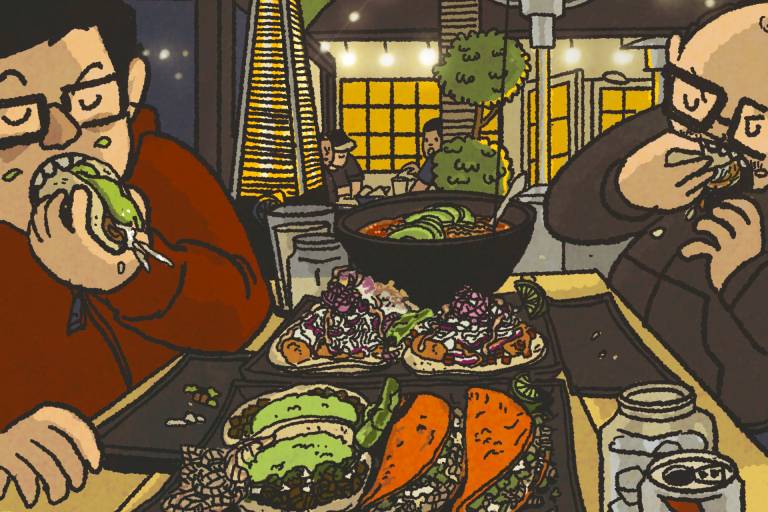
"caption": "El Tucán's new location in San Rafael has an outdoor patio that looks out over the waterfront and a new menu addition: Baja-style fried fish and fried shrimp tacos.",
"credit": "Thien Pham",
"altTag": "Illustration: Two men devouring a large amount of tacos while seated at a picnic table. In back, string lights and heat lamps are visible.",
"description": null,
"imgSizes": {
"thumbnail": {
"file": "https://cdn.kqed.org/wp-content/uploads/sites/2/2026/04/el-tucan-crop-160x107.jpg",
"width": 160,
"height": 107,
"mimeType": "image/jpeg"
},
"medium_large": {
"file": "https://cdn.kqed.org/wp-content/uploads/sites/2/2026/04/el-tucan-crop-768x512.jpg",
"width": 768,
"height": 512,
"mimeType": "image/jpeg"
},
"1536x1536": {
"file": "https://cdn.kqed.org/wp-content/uploads/sites/2/2026/04/el-tucan-crop-1536x1024.jpg",
"width": 1536,
"height": 1024,
"mimeType": "image/jpeg"
},
"post-thumbnail": {
"file": "https://cdn.kqed.org/wp-content/uploads/sites/2/2026/04/el-tucan-crop-672x372.jpg",
"width": 672,
"height": 372,
"mimeType": "image/jpeg"
},
"twentyfourteen-full-width": {
"file": "https://cdn.kqed.org/wp-content/uploads/sites/2/2026/04/el-tucan-crop-1038x576.jpg",
"width": 1038,
"height": 576,
"mimeType": "image/jpeg"
},
"npr-cds-wide": {
"file": "https://cdn.kqed.org/wp-content/uploads/sites/2/2026/04/el-tucan-crop-1200x675.jpg",
"width": 1200,
"height": 675,
"mimeType": "image/jpeg"
},
"npr-cds-square": {
"file": "https://cdn.kqed.org/wp-content/uploads/sites/2/2026/04/el-tucan-crop-600x600.jpg",
"width": 600,
"height": 600,
"mimeType": "image/jpeg"
},
"kqedFullSize": {
"file": "https://cdn.kqed.org/wp-content/uploads/sites/2/2026/04/el-tucan-crop.jpg",
"width": 1920,
"height": 1280
}
},
"isLoading": false,
"fetchFailed": false
},
"arts_13988695": {
"type": "attachments",
"id": "arts_13988695",
"meta": {
"index": "attachments_1716263798",
"site": "arts",
"id": "13988695",
"found": true
},
"title": "Chipotle shrimp burrito",
"publishDate": 1776719086,
"status": "inherit",
"parent": 13988689,
"modified": 1776719253,
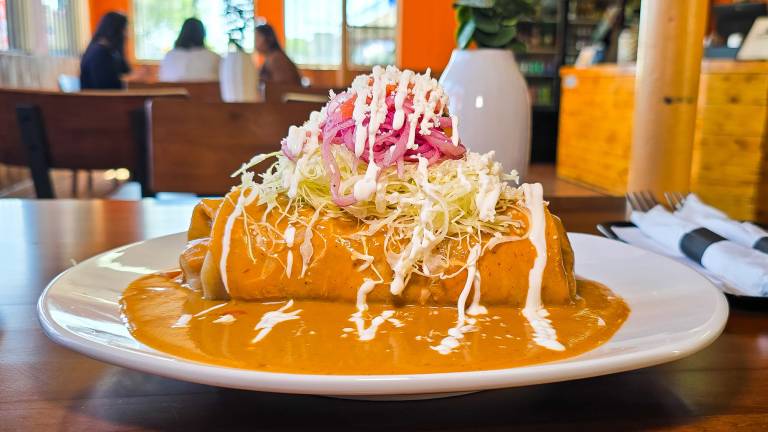
"caption": "The chipotle shrimp burrito is one of more than 14 specialty burrito styles offered at Cuco's Burritos. Based originally in Redwood City, the restaurant opened a new location in San José in March 2026.",
"credit": "Octavio Peña",
"altTag": "Burrito smothered in orange sauce on a plate.",
"description": null,
"imgSizes": {
"thumbnail": {
"file": "https://cdn.kqed.org/wp-content/uploads/sites/2/2026/04/Chipotle-shrimp-burrito-160x90.jpg",
"width": 160,
"height": 90,
"mimeType": "image/jpeg"
},
"medium_large": {
"file": "https://cdn.kqed.org/wp-content/uploads/sites/2/2026/04/Chipotle-shrimp-burrito-768x432.jpg",
"width": 768,
"height": 432,
"mimeType": "image/jpeg"
},
"1536x1536": {
"file": "https://cdn.kqed.org/wp-content/uploads/sites/2/2026/04/Chipotle-shrimp-burrito-1536x864.jpg",
"width": 1536,
"height": 864,
"mimeType": "image/jpeg"
},
"post-thumbnail": {
"file": "https://cdn.kqed.org/wp-content/uploads/sites/2/2026/04/Chipotle-shrimp-burrito-672x372.jpg",
"width": 672,
"height": 372,
"mimeType": "image/jpeg"
},
"twentyfourteen-full-width": {
"file": "https://cdn.kqed.org/wp-content/uploads/sites/2/2026/04/Chipotle-shrimp-burrito-1038x576.jpg",
"width": 1038,
"height": 576,
"mimeType": "image/jpeg"
},
"npr-cds-wide": {
"file": "https://cdn.kqed.org/wp-content/uploads/sites/2/2026/04/Chipotle-shrimp-burrito-1200x675.jpg",
"width": 1200,
"height": 675,
"mimeType": "image/jpeg"
},
"npr-cds-square": {
"file": "https://cdn.kqed.org/wp-content/uploads/sites/2/2026/04/Chipotle-shrimp-burrito-600x600.jpg",
"width": 600,
"height": 600,
"mimeType": "image/jpeg"
},
"kqedFullSize": {
"file": "https://cdn.kqed.org/wp-content/uploads/sites/2/2026/04/Chipotle-shrimp-burrito.jpg",
"width": 2000,
"height": 1125
}
},
"isLoading": false,
"fetchFailed": false
},
"arts_13987862": {
"type": "attachments",
"id": "arts_13987862",
"meta": {
"index": "attachments_1716263798",
"site": "arts",
"id": "13987862",
"found": true
},
"title": "8_PhotoCredit Sana Javeri Kadri",
"publishDate": 1774298986,
"status": "inherit",
"parent": 13987839,
"modified": 1774314163,
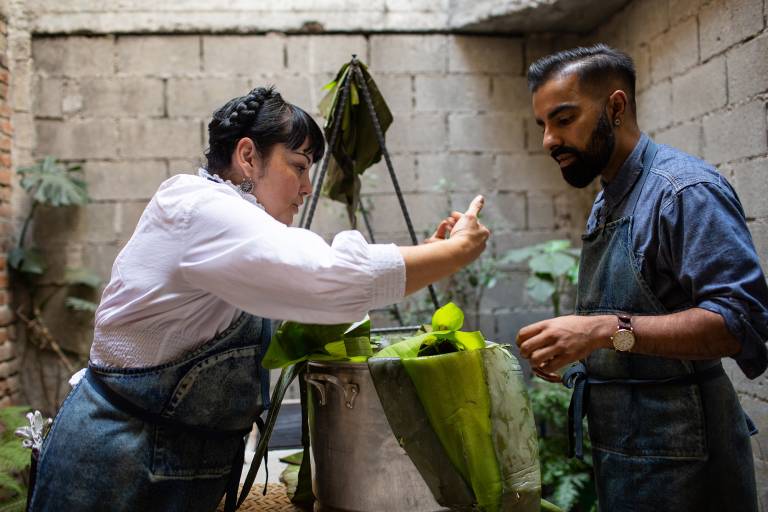
"caption": "Though Norma Listman and Saqib Keval met in Oakland in the late aughts, the couple didn't formally begin cooking together until they arrived in Mexico City, circa 2017. Here they are making tamales rancheros with banana leaves at the inaugural iteration of their restaurant, Masala y Maiz, in the San Miguel Chapultepec district.",
"credit": "Sana Javeri Kadri, courtesy of Masala y Maiz",
"altTag": "In an outdoor courtyard, a man and woman in blue aprons prepare banana-leaf tamales in a large pot.",
"description": null,
"imgSizes": {
"thumbnail": {
"file": "https://cdn.kqed.org/wp-content/uploads/sites/2/2026/03/8_PhotoCredit-Sana-Javeri-Kadri-160x107.jpg",
"width": 160,
"height": 107,
"mimeType": "image/jpeg"
},
"medium_large": {
"file": "https://cdn.kqed.org/wp-content/uploads/sites/2/2026/03/8_PhotoCredit-Sana-Javeri-Kadri-768x512.jpg",
"width": 768,
"height": 512,
"mimeType": "image/jpeg"
},
"1536x1536": {
"file": "https://cdn.kqed.org/wp-content/uploads/sites/2/2026/03/8_PhotoCredit-Sana-Javeri-Kadri-1536x1024.jpg",
"width": 1536,
"height": 1024,
"mimeType": "image/jpeg"
},
"post-thumbnail": {
"file": "https://cdn.kqed.org/wp-content/uploads/sites/2/2026/03/8_PhotoCredit-Sana-Javeri-Kadri-672x372.jpg",
"width": 672,
"height": 372,
"mimeType": "image/jpeg"
},
"twentyfourteen-full-width": {
"file": "https://cdn.kqed.org/wp-content/uploads/sites/2/2026/03/8_PhotoCredit-Sana-Javeri-Kadri-1038x576.jpg",
"width": 1038,
"height": 576,
"mimeType": "image/jpeg"
},
"npr-cds-wide": {
"file": "https://cdn.kqed.org/wp-content/uploads/sites/2/2026/03/8_PhotoCredit-Sana-Javeri-Kadri-1200x675.jpg",
"width": 1200,
"height": 675,
"mimeType": "image/jpeg"
},
"kqedFullSize": {
"file": "https://cdn.kqed.org/wp-content/uploads/sites/2/2026/03/8_PhotoCredit-Sana-Javeri-Kadri.jpg",
"width": 2000,
"height": 1333
}
},
"isLoading": false,
"fetchFailed": false
},
"arts_13979654": {
"type": "attachments",
"id": "arts_13979654",
"meta": {
"index": "attachments_1716263798",
"site": "arts",
"id": "13979654",
"found": true
},
"title": "Beef Shawarma Tostadita",
"publishDate": 1754524806,
"status": "inherit",
"parent": 13979641,
"modified": 1754524982,
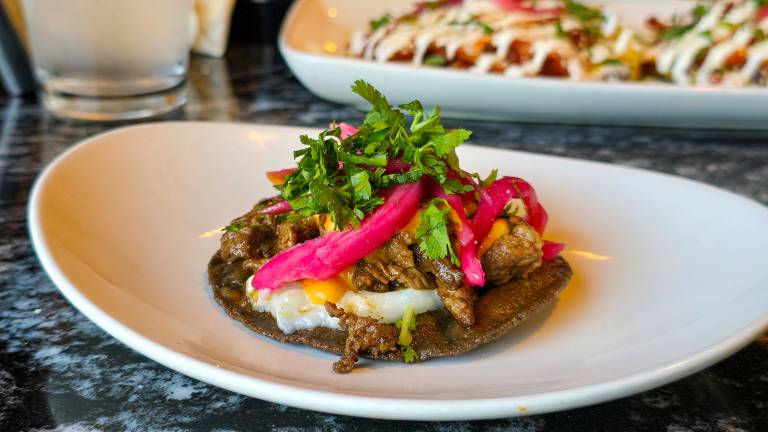
"caption": "The beef shawarma tostadita is one of several dishes at San Jose's Así Mexican Fusion Bistro that combine Mexican and Middle Eastern influences. ",
"credit": "Octavio Peña",
"altTag": "Beef shawarma and pickled red onion, serve on a blue corn tostada.",
"description": null,
"imgSizes": {
"thumbnail": {
"file": "https://cdn.kqed.org/wp-content/uploads/sites/2/2025/08/Beef-Shawarma-Tostadita-160x90.jpg",
"width": 160,
"height": 90,
"mimeType": "image/jpeg"
},
"medium_large": {
"file": "https://cdn.kqed.org/wp-content/uploads/sites/2/2025/08/Beef-Shawarma-Tostadita-768x432.jpg",
"width": 768,
"height": 432,
"mimeType": "image/jpeg"
},
"1536x1536": {
"file": "https://cdn.kqed.org/wp-content/uploads/sites/2/2025/08/Beef-Shawarma-Tostadita-1536x865.jpg",
"width": 1536,
"height": 865,
"mimeType": "image/jpeg"
},
"post-thumbnail": {
"file": "https://cdn.kqed.org/wp-content/uploads/sites/2/2025/08/Beef-Shawarma-Tostadita-672x372.jpg",
"width": 672,
"height": 372,
"mimeType": "image/jpeg"
},
"twentyfourteen-full-width": {
"file": "https://cdn.kqed.org/wp-content/uploads/sites/2/2025/08/Beef-Shawarma-Tostadita-1038x576.jpg",
"width": 1038,
"height": 576,
"mimeType": "image/jpeg"
},
"kqedFullSize": {
"file": "https://cdn.kqed.org/wp-content/uploads/sites/2/2025/08/Beef-Shawarma-Tostadita.jpg",
"width": 2000,
"height": 1126
}
},
"isLoading": false,
"fetchFailed": false
},
"arts_13971785": {
"type": "attachments",
"id": "arts_13971785",
"meta": {
"index": "attachments_1716263798",
"site": "arts",
"id": "13971785",
"found": true
},
"title": "20250205_MexiHibachi_GC-35_qed",
"publishDate": 1739394133,
"status": "inherit",
"parent": 13971770,
"modified": 1739394259,
"caption": "The fried rice plate with New York steak and shrimp, one of the dishes served at MexiHibachi in Pinole on Feb. 5, 2025.",
"credit": "Gina Castro/KQED",
"altTag": "A plate of fried rice, steak, shrimp and grilled vegetables.",
"description": null,
"imgSizes": {
"medium": {
"file": "https://cdn.kqed.org/wp-content/uploads/sites/2/2025/02/20250205_MexiHibachi_GC-35_qed-800x525.jpg",
"width": 800,
"height": 525,
"mimeType": "image/jpeg"
},
"large": {
"file": "https://cdn.kqed.org/wp-content/uploads/sites/2/2025/02/20250205_MexiHibachi_GC-35_qed-1020x669.jpg",
"width": 1020,
"height": 669,
"mimeType": "image/jpeg"
},
"thumbnail": {
"file": "https://cdn.kqed.org/wp-content/uploads/sites/2/2025/02/20250205_MexiHibachi_GC-35_qed-160x105.jpg",
"width": 160,
"height": 105,
"mimeType": "image/jpeg"
},
"medium_large": {
"file": "https://cdn.kqed.org/wp-content/uploads/sites/2/2025/02/20250205_MexiHibachi_GC-35_qed-768x504.jpg",
"width": 768,
"height": 504,
"mimeType": "image/jpeg"
},
"1536x1536": {
"file": "https://cdn.kqed.org/wp-content/uploads/sites/2/2025/02/20250205_MexiHibachi_GC-35_qed-1536x1008.jpg",
"width": 1536,
"height": 1008,
"mimeType": "image/jpeg"
},
"post-thumbnail": {
"file": "https://cdn.kqed.org/wp-content/uploads/sites/2/2025/02/20250205_MexiHibachi_GC-35_qed-672x372.jpg",
"width": 672,
"height": 372,
"mimeType": "image/jpeg"
},
"twentyfourteen-full-width": {
"file": "https://cdn.kqed.org/wp-content/uploads/sites/2/2025/02/20250205_MexiHibachi_GC-35_qed-1038x576.jpg",
"width": 1038,
"height": 576,
"mimeType": "image/jpeg"
},
"full-width": {
"file": "https://cdn.kqed.org/wp-content/uploads/sites/2/2025/02/20250205_MexiHibachi_GC-35_qed-1920x1260.jpg",
"width": 1920,
"height": 1260,
"mimeType": "image/jpeg"
},
"kqedFullSize": {
"file": "https://cdn.kqed.org/wp-content/uploads/sites/2/2025/02/20250205_MexiHibachi_GC-35_qed.jpg",
"width": 2000,
"height": 1312
}
},
"isLoading": false,
"fetchFailed": false
},
"arts_13971296": {
"type": "attachments",
"id": "arts_13971296",
"meta": {
"index": "attachments_1716263798",
"site": "arts",
"id": "13971296",
"found": true
},
"title": "Level 9 Aguachile Tostada",
"publishDate": 1738695701,
"status": "inherit",
"parent": 13971280,
"modified": 1738695883,
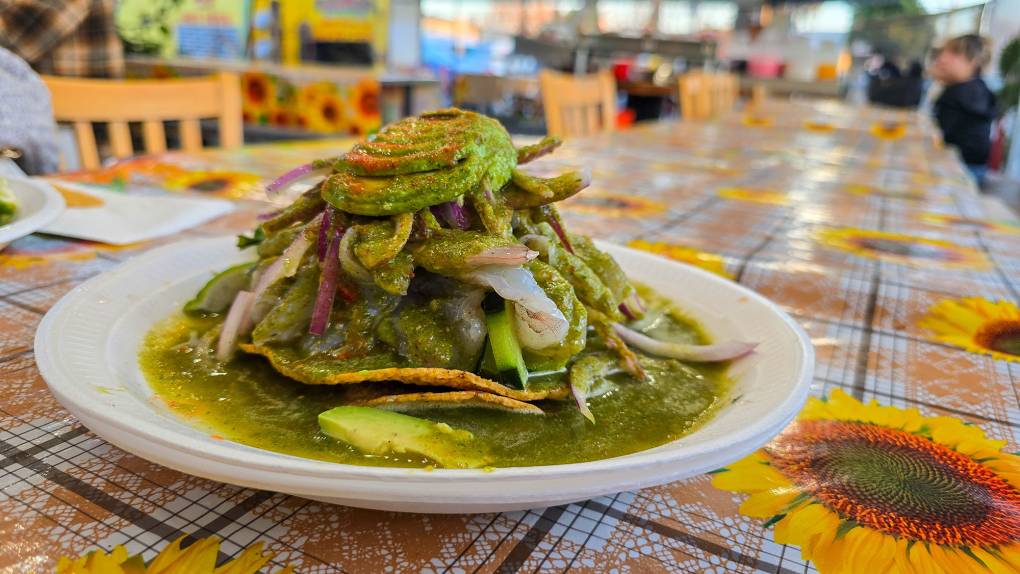
"caption": "Even the level 9 aguachile verde tostada at Mariscos El Aguachiles 8 was almost too spicy to endure. The San Jose food truck serves some of the Bay Area's spiciest dishes.",
"credit": "Octavio Peña",
"altTag": "Raw shrimp, avocado and onion layered on top of a tostada and drenched in green sauce.",
"description": null,
"imgSizes": {
"medium": {
"file": "https://cdn.kqed.org/wp-content/uploads/sites/2/2025/02/Level-9-Aguachile-Tostada-800x450.jpg",
"width": 800,
"height": 450,
"mimeType": "image/jpeg"
},
"large": {
"file": "https://cdn.kqed.org/wp-content/uploads/sites/2/2025/02/Level-9-Aguachile-Tostada-1020x574.jpg",
"width": 1020,
"height": 574,
"mimeType": "image/jpeg"
},
"thumbnail": {
"file": "https://cdn.kqed.org/wp-content/uploads/sites/2/2025/02/Level-9-Aguachile-Tostada-160x90.jpg",
"width": 160,
"height": 90,
"mimeType": "image/jpeg"
},
"medium_large": {
"file": "https://cdn.kqed.org/wp-content/uploads/sites/2/2025/02/Level-9-Aguachile-Tostada-768x432.jpg",
"width": 768,
"height": 432,
"mimeType": "image/jpeg"
},
"1536x1536": {
"file": "https://cdn.kqed.org/wp-content/uploads/sites/2/2025/02/Level-9-Aguachile-Tostada-1536x865.jpg",
"width": 1536,
"height": 865,
"mimeType": "image/jpeg"
},
"post-thumbnail": {
"file": "https://cdn.kqed.org/wp-content/uploads/sites/2/2025/02/Level-9-Aguachile-Tostada-672x372.jpg",
"width": 672,
"height": 372,
"mimeType": "image/jpeg"
},
"twentyfourteen-full-width": {
"file": "https://cdn.kqed.org/wp-content/uploads/sites/2/2025/02/Level-9-Aguachile-Tostada-1038x576.jpg",
"width": 1038,
"height": 576,
"mimeType": "image/jpeg"
},
"full-width": {
"file": "https://cdn.kqed.org/wp-content/uploads/sites/2/2025/02/Level-9-Aguachile-Tostada-1920x1081.jpg",
"width": 1920,
"height": 1081,
"mimeType": "image/jpeg"
},
"kqedFullSize": {
"file": "https://cdn.kqed.org/wp-content/uploads/sites/2/2025/02/Level-9-Aguachile-Tostada.jpg",
"width": 2000,
"height": 1126
}
},
"isLoading": false,
"fetchFailed": false
},
"arts_13963835": {
"type": "attachments",
"id": "arts_13963835",
"meta": {
"index": "attachments_1716263798",
"site": "arts",
"id": "13963835",
"found": true
},
"title": "El Rulas-crop",
"publishDate": 1725647352,
"status": "inherit",
"parent": 13963832,
"modified": 1725647447,
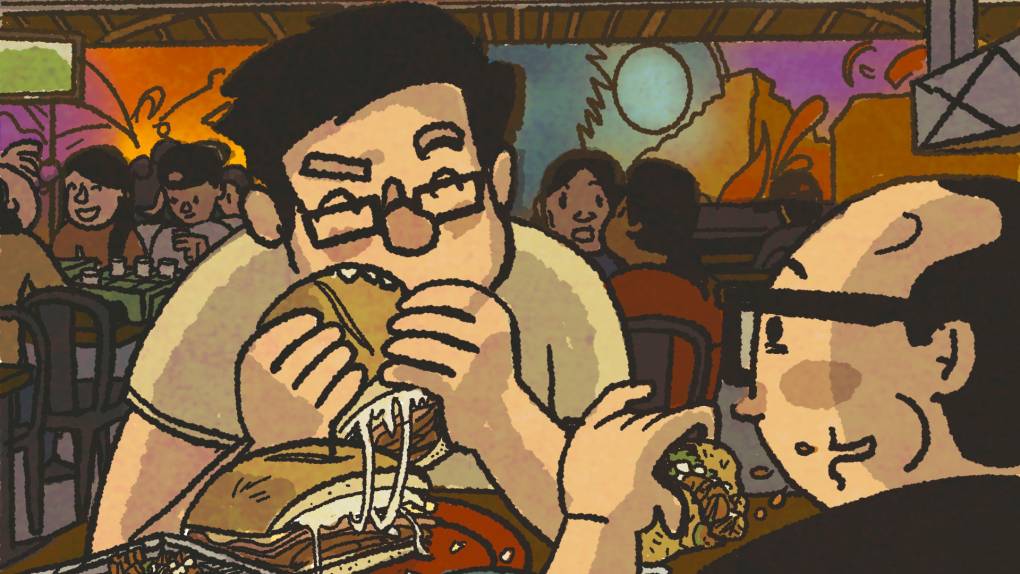
"caption": "At Tacos El Rulas' new brick-and-mortar taqueria, everything — from the tortas to the dining room — is uncommonly big.",
"credit": "Thien Pham",
"altTag": "Illustration: Two men eating tacos and tortas inside a dimly lit restaurant.",
"description": null,
"imgSizes": {
"medium": {
"file": "https://cdn.kqed.org/wp-content/uploads/sites/2/2024/09/El-Rulas-crop-800x450.jpg",
"width": 800,
"height": 450,
"mimeType": "image/jpeg"
},
"large": {
"file": "https://cdn.kqed.org/wp-content/uploads/sites/2/2024/09/El-Rulas-crop-1020x574.jpg",
"width": 1020,
"height": 574,
"mimeType": "image/jpeg"
},
"thumbnail": {
"file": "https://cdn.kqed.org/wp-content/uploads/sites/2/2024/09/El-Rulas-crop-160x90.jpg",
"width": 160,
"height": 90,
"mimeType": "image/jpeg"
},
"medium_large": {
"file": "https://cdn.kqed.org/wp-content/uploads/sites/2/2024/09/El-Rulas-crop-768x432.jpg",
"width": 768,
"height": 432,
"mimeType": "image/jpeg"
},
"1536x1536": {
"file": "https://cdn.kqed.org/wp-content/uploads/sites/2/2024/09/El-Rulas-crop-1536x864.jpg",
"width": 1536,
"height": 864,
"mimeType": "image/jpeg"
},
"post-thumbnail": {
"file": "https://cdn.kqed.org/wp-content/uploads/sites/2/2024/09/El-Rulas-crop-672x372.jpg",
"width": 672,
"height": 372,
"mimeType": "image/jpeg"
},
"twentyfourteen-full-width": {
"file": "https://cdn.kqed.org/wp-content/uploads/sites/2/2024/09/El-Rulas-crop-1038x576.jpg",
"width": 1038,
"height": 576,
"mimeType": "image/jpeg"
},
"kqedFullSize": {
"file": "https://cdn.kqed.org/wp-content/uploads/sites/2/2024/09/El-Rulas-crop.jpg",
"width": 1920,
"height": 1080
}
},
"isLoading": false,
"fetchFailed": false
},
"arts_13961222": {
"type": "attachments",
"id": "arts_13961222",
"meta": {
"index": "attachments_1716263798",
"site": "arts",
"id": "13961222",
"found": true
},
"title": "mirandas tortillas - featured",
"publishDate": 1721159280,
"status": "inherit",
"parent": 13961214,
"modified": 1721161811,
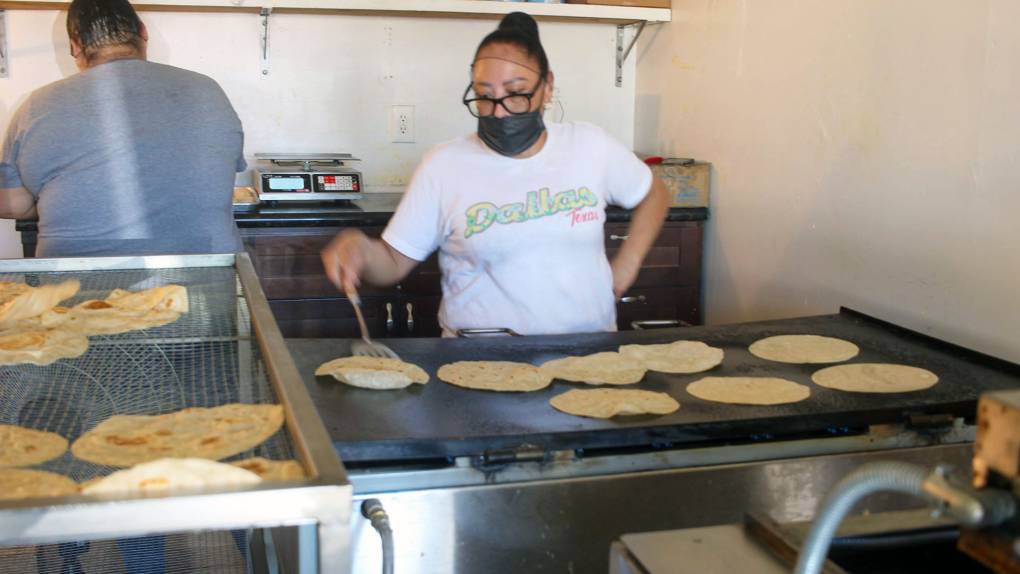
"caption": "An employee at Miranda's Tortillas flips a fresh batch of flour tortillas on the comal. The tortilleria specializes in Sonoran-style flour tortillas.",
"credit": "Octavio Peña",
"altTag": "A woman in a black face mask flips flour tortillas cooking on a griddle.",
"description": null,
"imgSizes": {
"medium": {
"file": "https://cdn.kqed.org/wp-content/uploads/sites/2/2024/07/mirandas-tortillas-featured-800x450.jpg",
"width": 800,
"height": 450,
"mimeType": "image/jpeg"
},
"large": {
"file": "https://cdn.kqed.org/wp-content/uploads/sites/2/2024/07/mirandas-tortillas-featured-1020x574.jpg",
"width": 1020,
"height": 574,
"mimeType": "image/jpeg"
},
"thumbnail": {
"file": "https://cdn.kqed.org/wp-content/uploads/sites/2/2024/07/mirandas-tortillas-featured-160x90.jpg",
"width": 160,
"height": 90,
"mimeType": "image/jpeg"
},
"medium_large": {
"file": "https://cdn.kqed.org/wp-content/uploads/sites/2/2024/07/mirandas-tortillas-featured-768x432.jpg",
"width": 768,
"height": 432,
"mimeType": "image/jpeg"
},
"1536x1536": {
"file": "https://cdn.kqed.org/wp-content/uploads/sites/2/2024/07/mirandas-tortillas-featured-1536x864.jpg",
"width": 1536,
"height": 864,
"mimeType": "image/jpeg"
},
"post-thumbnail": {
"file": "https://cdn.kqed.org/wp-content/uploads/sites/2/2024/07/mirandas-tortillas-featured-672x372.jpg",
"width": 672,
"height": 372,
"mimeType": "image/jpeg"
},
"twentyfourteen-full-width": {
"file": "https://cdn.kqed.org/wp-content/uploads/sites/2/2024/07/mirandas-tortillas-featured-1038x576.jpg",
"width": 1038,
"height": 576,
"mimeType": "image/jpeg"
},
"full-width": {
"file": "https://cdn.kqed.org/wp-content/uploads/sites/2/2024/07/mirandas-tortillas-featured-1920x1080.jpg",
"width": 1920,
"height": 1080,
"mimeType": "image/jpeg"
},
"kqedFullSize": {
"file": "https://cdn.kqed.org/wp-content/uploads/sites/2/2024/07/mirandas-tortillas-featured.jpg",
"width": 2000,
"height": 1125
}
},
"isLoading": false,
"fetchFailed": false
},
"arts_13960396": {
"type": "attachments",
"id": "arts_13960396",
"meta": {
"index": "attachments_1716263798",
"site": "arts",
"id": "13960396",
"found": true
},
"title": "DSCF4271",
"publishDate": 1719519051,
"status": "inherit",
"parent": 13960139,
"modified": 1719519274,
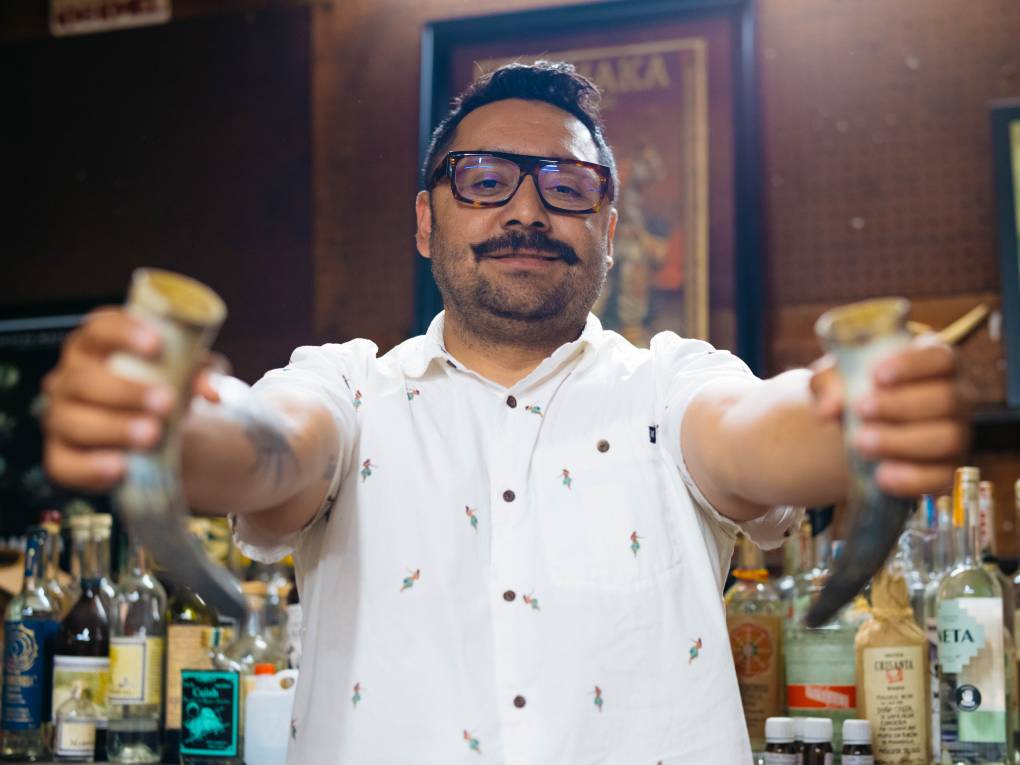
"caption": "Hugo Gonzales went from working in construction to curating rare mezcal in the Bay Area.",
"credit": "Darius Riley",
"altTag": "a man holds up two shots of mezcal inside a garage",
"description": null,
"imgSizes": {
"medium": {
"file": "https://cdn.kqed.org/wp-content/uploads/sites/2/2024/06/DSCF4271-800x600.jpg",
"width": 800,
"height": 600,
"mimeType": "image/jpeg"
},
"large": {
"file": "https://cdn.kqed.org/wp-content/uploads/sites/2/2024/06/DSCF4271-1020x765.jpg",
"width": 1020,
"height": 765,
"mimeType": "image/jpeg"
},
"thumbnail": {
"file": "https://cdn.kqed.org/wp-content/uploads/sites/2/2024/06/DSCF4271-160x120.jpg",
"width": 160,
"height": 120,
"mimeType": "image/jpeg"
},
"medium_large": {
"file": "https://cdn.kqed.org/wp-content/uploads/sites/2/2024/06/DSCF4271-768x576.jpg",
"width": 768,
"height": 576,
"mimeType": "image/jpeg"
},
"1536x1536": {
"file": "https://cdn.kqed.org/wp-content/uploads/sites/2/2024/06/DSCF4271-1536x1152.jpg",
"width": 1536,
"height": 1152,
"mimeType": "image/jpeg"
},
"2048x2048": {
"file": "https://cdn.kqed.org/wp-content/uploads/sites/2/2024/06/DSCF4271-2048x1536.jpg",
"width": 2048,
"height": 1536,
"mimeType": "image/jpeg"
},
"post-thumbnail": {
"file": "https://cdn.kqed.org/wp-content/uploads/sites/2/2024/06/DSCF4271-672x372.jpg",
"width": 672,
"height": 372,
"mimeType": "image/jpeg"
},
"twentyfourteen-full-width": {
"file": "https://cdn.kqed.org/wp-content/uploads/sites/2/2024/06/DSCF4271-1038x576.jpg",
"width": 1038,
"height": 576,
"mimeType": "image/jpeg"
},
"full-width": {
"file": "https://cdn.kqed.org/wp-content/uploads/sites/2/2024/06/DSCF4271-1920x1440.jpg",
"width": 1920,
"height": 1440,
"mimeType": "image/jpeg"
},
"kqedFullSize": {
"file": "https://cdn.kqed.org/wp-content/uploads/sites/2/2024/06/DSCF4271-scaled.jpg",
"width": 2560,
"height": 1920
}
},
"isLoading": false,
"fetchFailed": false
},
"arts_13958859": {
"type": "attachments",
"id": "arts_13958859",
"meta": {
"index": "attachments_1716263798",
"site": "arts",
"id": "13958859",
"found": true
},
"title": "Hella Hungry — Feature Image (1920x1080)",
"publishDate": 1717089400,
"status": "inherit",
"parent": 13958713,
"modified": 1717089481,
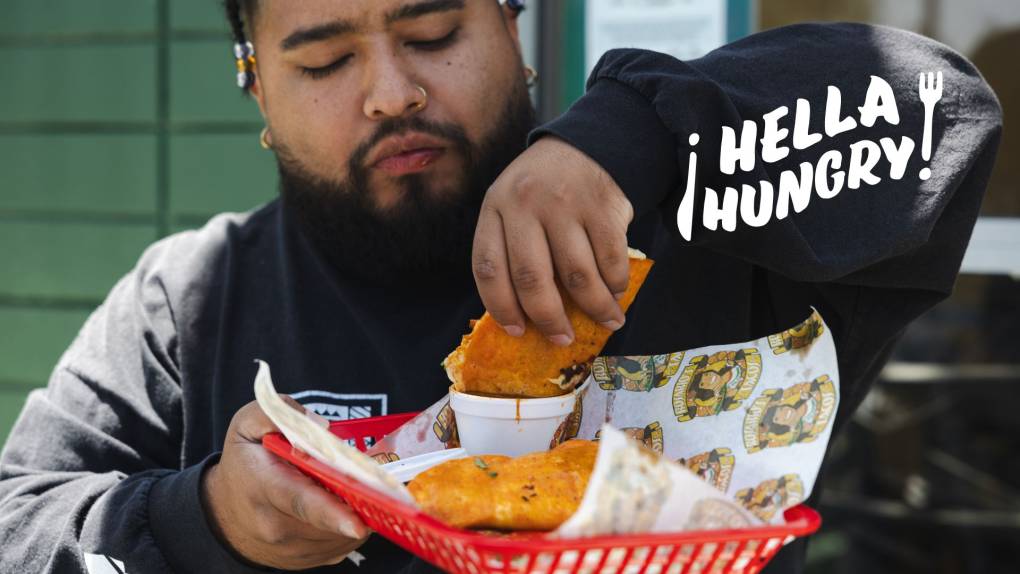
"caption": "Chris Villa of San Jose Foos was proudly born and raised in the city, and is a longtime fan of Rosario's Tacos.",
"credit": "@alexknowbody",
"altTag": "a Latino man prepares to eat a taco in front of a taqueria",
"description": null,
"imgSizes": {
"medium": {
"file": "https://cdn.kqed.org/wp-content/uploads/sites/2/2024/05/Hella-Hungry-—-Feature-Image-1920x1080-1-800x450.jpg",
"width": 800,
"height": 450,
"mimeType": "image/jpeg"
},
"large": {
"file": "https://cdn.kqed.org/wp-content/uploads/sites/2/2024/05/Hella-Hungry-—-Feature-Image-1920x1080-1-1020x574.jpg",
"width": 1020,
"height": 574,
"mimeType": "image/jpeg"
},
"thumbnail": {
"file": "https://cdn.kqed.org/wp-content/uploads/sites/2/2024/05/Hella-Hungry-—-Feature-Image-1920x1080-1-160x90.jpg",
"width": 160,
"height": 90,
"mimeType": "image/jpeg"
},
"medium_large": {
"file": "https://cdn.kqed.org/wp-content/uploads/sites/2/2024/05/Hella-Hungry-—-Feature-Image-1920x1080-1-768x432.jpg",
"width": 768,
"height": 432,
"mimeType": "image/jpeg"
},
"1536x1536": {
"file": "https://cdn.kqed.org/wp-content/uploads/sites/2/2024/05/Hella-Hungry-—-Feature-Image-1920x1080-1-1536x864.jpg",
"width": 1536,
"height": 864,
"mimeType": "image/jpeg"
},
"post-thumbnail": {
"file": "https://cdn.kqed.org/wp-content/uploads/sites/2/2024/05/Hella-Hungry-—-Feature-Image-1920x1080-1-672x372.jpg",
"width": 672,
"height": 372,
"mimeType": "image/jpeg"
},
"twentyfourteen-full-width": {
"file": "https://cdn.kqed.org/wp-content/uploads/sites/2/2024/05/Hella-Hungry-—-Feature-Image-1920x1080-1-1038x576.jpg",
"width": 1038,
"height": 576,
"mimeType": "image/jpeg"
},
"kqedFullSize": {
"file": "https://cdn.kqed.org/wp-content/uploads/sites/2/2024/05/Hella-Hungry-—-Feature-Image-1920x1080-1.jpg",
"width": 1920,
"height": 1080
}
},
"isLoading": false,
"fetchFailed": false
},
"arts_13958472": {
"type": "attachments",
"id": "arts_13958472",
"meta": {
"index": "attachments_1716263798",
"site": "arts",
"id": "13958472",
"found": true
},
"title": "Lavics_crop",
"publishDate": 1716509939,
"status": "inherit",
"parent": 13958466,
"modified": 1716510104,
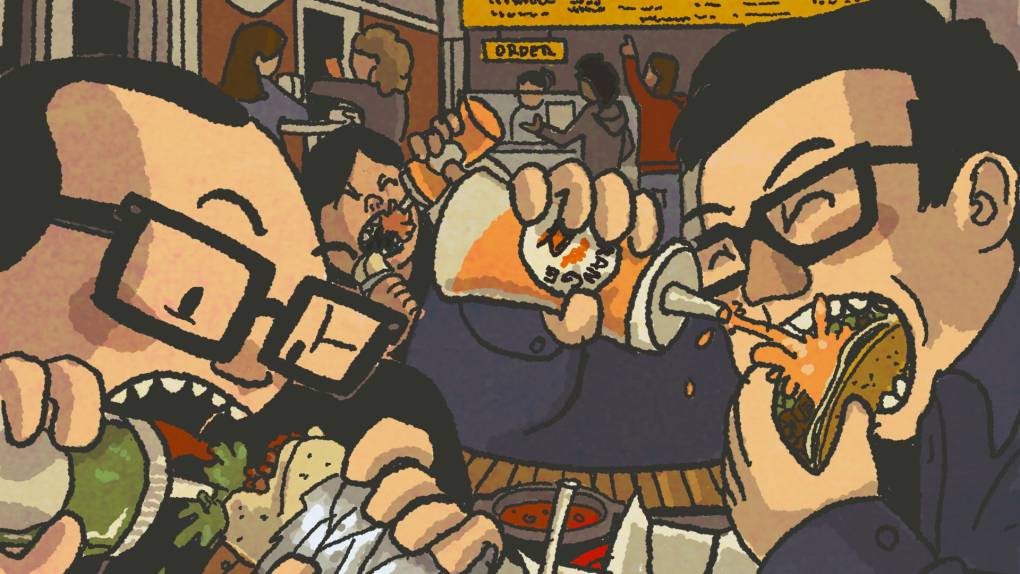
"caption": "San Jose's La Victoria Taqueria (aka La Vic's), is famous for its orange sauce — and for feeding hungry college students until 3 a.m.",
"credit": "Thien Pham",
"altTag": "Illustration: Two men devour tacos and burritos while pouring hot sauce from squeeze bottles directly into their mouths.",
"description": null,
"imgSizes": {
"medium": {
"file": "https://cdn.kqed.org/wp-content/uploads/sites/2/2024/05/Lavics_crop-800x450.jpg",
"width": 800,
"height": 450,
"mimeType": "image/jpeg"
},
"large": {
"file": "https://cdn.kqed.org/wp-content/uploads/sites/2/2024/05/Lavics_crop-1020x574.jpg",
"width": 1020,
"height": 574,
"mimeType": "image/jpeg"
},
"thumbnail": {
"file": "https://cdn.kqed.org/wp-content/uploads/sites/2/2024/05/Lavics_crop-160x90.jpg",
"width": 160,
"height": 90,
"mimeType": "image/jpeg"
},
"medium_large": {
"file": "https://cdn.kqed.org/wp-content/uploads/sites/2/2024/05/Lavics_crop-768x432.jpg",
"width": 768,
"height": 432,
"mimeType": "image/jpeg"
},
"1536x1536": {
"file": "https://cdn.kqed.org/wp-content/uploads/sites/2/2024/05/Lavics_crop-1536x864.jpg",
"width": 1536,
"height": 864,
"mimeType": "image/jpeg"
},
"post-thumbnail": {
"file": "https://cdn.kqed.org/wp-content/uploads/sites/2/2024/05/Lavics_crop-672x372.jpg",
"width": 672,
"height": 372,
"mimeType": "image/jpeg"
},
"twentyfourteen-full-width": {
"file": "https://cdn.kqed.org/wp-content/uploads/sites/2/2024/05/Lavics_crop-1038x576.jpg",
"width": 1038,
"height": 576,
"mimeType": "image/jpeg"
},
"kqedFullSize": {
"file": "https://cdn.kqed.org/wp-content/uploads/sites/2/2024/05/Lavics_crop.jpg",
"width": 1920,
"height": 1080
}
},
"isLoading": false,
"fetchFailed": false
},
"arts_13958232": {
"type": "attachments",
"id": "arts_13958232",
"meta": {
"index": "attachments_1716263798",
"site": "arts",
"id": "13958232",
"found": true
},
"title": "Cinco de Mayo paletas",
"publishDate": 1716314721,
"status": "inherit",
"parent": 13958172,
"modified": 1716314853,
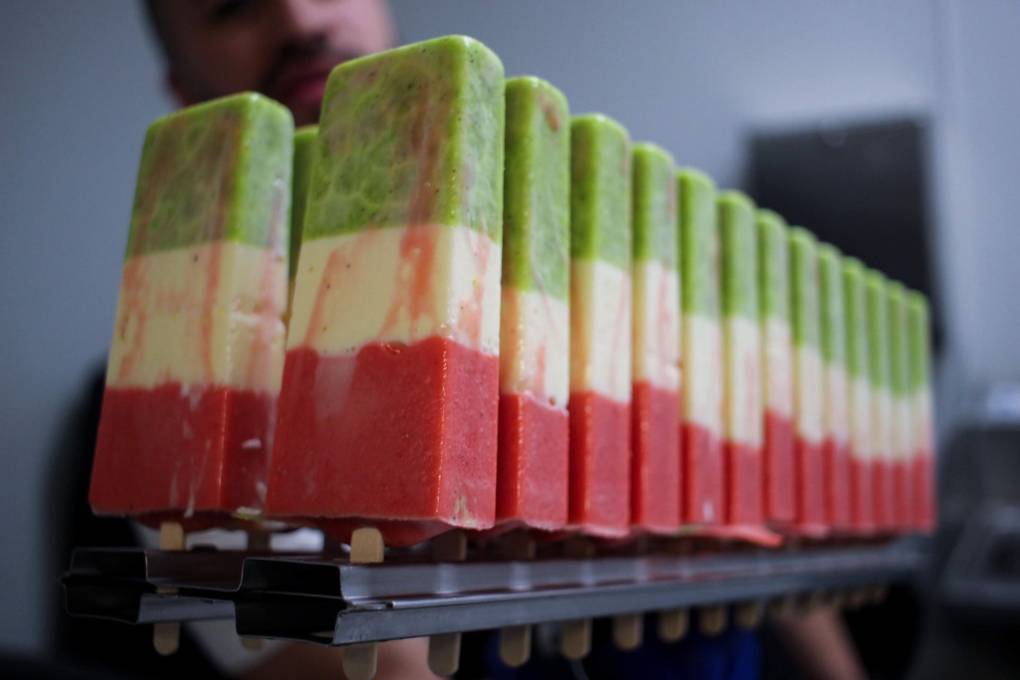
"caption": "A batch of Cinco de Mayo–themed paletas from Paleta Planeta. The popular San Jose paleta cart will soon open a brick-and-mortar shop.",
"credit": "Octavio Peña",
"altTag": "A batch of paletas featuring the green, white and red tricolor pattern of the Mexican flag.",
"description": null,
"imgSizes": {
"medium": {
"file": "https://cdn.kqed.org/wp-content/uploads/sites/2/2024/05/Cinco-de-Mayo-paletas-800x533.jpg",
"width": 800,
"height": 533,
"mimeType": "image/jpeg"
},
"large": {
"file": "https://cdn.kqed.org/wp-content/uploads/sites/2/2024/05/Cinco-de-Mayo-paletas-1020x680.jpg",
"width": 1020,
"height": 680,
"mimeType": "image/jpeg"
},
"thumbnail": {
"file": "https://cdn.kqed.org/wp-content/uploads/sites/2/2024/05/Cinco-de-Mayo-paletas-160x107.jpg",
"width": 160,
"height": 107,
"mimeType": "image/jpeg"
},
"medium_large": {
"file": "https://cdn.kqed.org/wp-content/uploads/sites/2/2024/05/Cinco-de-Mayo-paletas-768x512.jpg",
"width": 768,
"height": 512,
"mimeType": "image/jpeg"
},
"1536x1536": {
"file": "https://cdn.kqed.org/wp-content/uploads/sites/2/2024/05/Cinco-de-Mayo-paletas-1536x1024.jpg",
"width": 1536,
"height": 1024,
"mimeType": "image/jpeg"
},
"post-thumbnail": {
"file": "https://cdn.kqed.org/wp-content/uploads/sites/2/2024/05/Cinco-de-Mayo-paletas-672x372.jpg",
"width": 672,
"height": 372,
"mimeType": "image/jpeg"
},
"twentyfourteen-full-width": {
"file": "https://cdn.kqed.org/wp-content/uploads/sites/2/2024/05/Cinco-de-Mayo-paletas-1038x576.jpg",
"width": 1038,
"height": 576,
"mimeType": "image/jpeg"
},
"kqedFullSize": {
"file": "https://cdn.kqed.org/wp-content/uploads/sites/2/2024/05/Cinco-de-Mayo-paletas.jpg",
"width": 1920,
"height": 1280
}
},
"isLoading": false,
"fetchFailed": false
}
},
"audioPlayerReducer": {
"postId": "stream_live",
"isPaused": true,
"isPlaying": false,
"pfsActive": false,
"pledgeModalIsOpen": true,
"playerDrawerIsOpen": false,
"liveAudioPlayStartedAt": 0,
"liveAudioPlayContext": ""
},
"authorsReducer": {
"ltsai": {
"type": "authors",
"id": "11743",
"meta": {
"index": "authors_1716337520",
"id": "11743",
"found": true
},
"name": "Luke Tsai",
"firstName": "Luke",
"lastName": "Tsai",
"slug": "ltsai",
"email": "ltsai@kqed.org",
"display_author_email": true,
"staff_mastheads": [
"arts"
],
"title": "Food Editor",
"bio": "Luke Tsai is KQED's food editor and resident stinky tofu connoisseur. Prior to KQED, he was an editor at Eater SF, \u003cem>San Francisco \u003c/em>magazine, and the \u003cem>East Bay Express\u003c/em>, and his work has also appeared in TASTE, the \u003cem>San Francisco Chronicle\u003c/em>, and the \u003cem>Best Food Writing\u003c/em> anthology. When he isn't writing or editing, you'll find him eating most everything he can get his hands on.",
"avatar": "https://secure.gravatar.com/avatar/1e59b45bf191526e7339d6ba46e33a57b2030d25c27660ecc64ea3cb863e34f7?s=600&d=blank&r=g",
"twitter": "theluketsai",
"bluesky": null,
"facebook": null,
"instagram": null,
"linkedin": null,
"sites": [
{
"site": "",
"roles": [
"editor"
]
},
{
"site": "arts",
"roles": [
"administrator"
]
},
{
"site": "news",
"roles": [
"editor",
"contributor"
]
},
{
"site": "bayareabites",
"roles": [
"editor"
]
},
{
"site": "food",
"roles": [
"editor"
]
}
],
"headData": {
"title": "Luke Tsai | KQED",
"description": "Food Editor",
"ogImgSrc": "https://secure.gravatar.com/avatar/1e59b45bf191526e7339d6ba46e33a57b2030d25c27660ecc64ea3cb863e34f7?s=600&d=blank&r=g",
"twImgSrc": "https://secure.gravatar.com/avatar/1e59b45bf191526e7339d6ba46e33a57b2030d25c27660ecc64ea3cb863e34f7?s=600&d=blank&r=g"
},
"isLoading": false,
"link": "/author/ltsai"
},
"achazaro": {
"type": "authors",
"id": "11748",
"meta": {
"index": "authors_1716337520",
"id": "11748",
"found": true
},
"name": "Alan Chazaro",
"firstName": "Alan",
"lastName": "Chazaro",
"slug": "achazaro",
"email": "agchazaro@gmail.com",
"display_author_email": true,
"staff_mastheads": [],
"title": "Food Writer and Reporter",
"bio": "Alan Chazaro is the author of \u003cem>This Is Not a Frank Ocean Cover Album\u003c/em> (Black Lawrence Press, 2019), \u003cem>Piñata Theory\u003c/em> (Black Lawrence Press, 2020), and \u003cem>Notes from the Eastern Span of the Bay Bridge\u003c/em> (Ghost City Press, 2021). He is a graduate of June Jordan’s Poetry for the People program at UC Berkeley and a former Lawrence Ferlinghetti Fellow at the University of San Francisco. He writes about sports, food, art, music, education, and culture while repping the Bay on \u003ca href=\"https://twitter.com/alan_chazaro\">Twitter\u003c/a> and \u003ca href=\"https://www.instagram.com/alan_chazaro/?hl=en\">Instagram\u003c/a> at @alan_chazaro.",
"avatar": "https://secure.gravatar.com/avatar/ea8b6dd970fc5c29e7a188e7d5861df7?s=600&d=blank&r=g",
"twitter": "alan_chazaro",
"facebook": null,
"instagram": null,
"linkedin": null,
"sites": [
{
"site": "arts",
"roles": [
"contributor"
]
},
{
"site": "news",
"roles": [
"editor"
]
}
],
"headData": {
"title": "Alan Chazaro | KQED",
"description": "Food Writer and Reporter",
"ogImgSrc": "https://secure.gravatar.com/avatar/ea8b6dd970fc5c29e7a188e7d5861df7?s=600&d=blank&r=g",
"twImgSrc": "https://secure.gravatar.com/avatar/ea8b6dd970fc5c29e7a188e7d5861df7?s=600&d=blank&r=g"
},
"isLoading": false,
"link": "/author/achazaro"
},
"tpham": {
"type": "authors",
"id": "11753",
"meta": {
"index": "authors_1716337520",
"id": "11753",
"found": true
},
"name": "Thien Pham",
"firstName": "Thien",
"lastName": "Pham",
"slug": "tpham",
"email": "thiendog@gmail.com",
"display_author_email": false,
"staff_mastheads": [],
"title": "KQED Contributor",
"bio": null,
"avatar": "https://secure.gravatar.com/avatar/a5b4729969ad46d88e7b9ec9dd4f3fa6af84dd0fa8fa91f01d8d9481694999bc?s=600&d=blank&r=g",
"twitter": null,
"bluesky": null,
"facebook": null,
"instagram": null,
"linkedin": null,
"sites": [
{
"site": "arts",
"roles": [
"contributor"
]
}
],
"headData": {
"title": "Thien Pham | KQED",
"description": "KQED Contributor",
"ogImgSrc": "https://secure.gravatar.com/avatar/a5b4729969ad46d88e7b9ec9dd4f3fa6af84dd0fa8fa91f01d8d9481694999bc?s=600&d=blank&r=g",
"twImgSrc": "https://secure.gravatar.com/avatar/a5b4729969ad46d88e7b9ec9dd4f3fa6af84dd0fa8fa91f01d8d9481694999bc?s=600&d=blank&r=g"
},
"isLoading": false,
"link": "/author/tpham"
},
"opena": {
"type": "authors",
"id": "11903",
"meta": {
"index": "authors_1716337520",
"id": "11903",
"found": true
},
"name": "Octavio Peña",
"firstName": "Octavio",
"lastName": "Peña",
"slug": "opena",
"email": "octaviopenagutierrez@gmail.com",
"display_author_email": false,
"staff_mastheads": [],
"title": "KQED Contributor",
"bio": null,
"avatar": "https://secure.gravatar.com/avatar/62850791380238ea3945ee72a3d56056477904792b41daaf11effa8780bab75d?s=600&d=blank&r=g",
"twitter": null,
"bluesky": null,
"facebook": null,
"instagram": null,
"linkedin": null,
"sites": [
{
"site": "arts",
"roles": [
"contributor"
]
}
],
"headData": {
"title": "Octavio Peña | KQED",
"description": "KQED Contributor",
"ogImgSrc": "https://secure.gravatar.com/avatar/62850791380238ea3945ee72a3d56056477904792b41daaf11effa8780bab75d?s=600&d=blank&r=g",
"twImgSrc": "https://secure.gravatar.com/avatar/62850791380238ea3945ee72a3d56056477904792b41daaf11effa8780bab75d?s=600&d=blank&r=g"
},
"isLoading": false,
"link": "/author/opena"
}
},
"pagesReducer": {
"arts_tag_mexican-food": {
"type": "terms",
"id": "arts_14985",
"meta": {
"index": "terms_1716263798",
"site": "arts",
"id": "14985",
"score": 9.55733
},
"featImg": null,
"name": "mexican food",
"description": null,
"taxonomy": "tag",
"headData": {
"twImgId": null,
"twTitle": null,
"ogTitle": null,
"ogImgId": null,
"twDescription": null,
"description": null,
"title": "mexican food Archives | KQED Arts",
"ogDescription": null
},
"ttid": 14997,
"slug": "mexican-food",
"isLoading": false,
"title": "mexican food",
"pageMeta": {
"site": "arts",
"WpPageTemplate": "page-topic-editorial",
"currentPage": 1
},
"blocks": [
{
"blockName": "kqed/post-list",
"attrs": {
"layout": "cardArticle2",
"query": "posts/arts?tag=mexican-food",
"seeMore": false,
"paginated": true,
"page": 1
}
},
{
"blockName": "kqed/ad"
}
]
}
},
"pfsSessionReducer": {},
"postsReducer": {
"stream_live": {
"type": "live",
"id": "stream_live",
"audioUrl": "https://streams.kqed.org/kqedradio",
"title": "Live Stream",
"excerpt": "Live Stream information currently unavailable.",
"link": "/radio",
"featImg": "",
"label": {
"name": "KQED Live",
"link": "/"
}
},
"stream_kqedNewscast": {
"type": "posts",
"id": "stream_kqedNewscast",
"audioUrl": "https://www.kqed.org/.stream/anon/radio/RDnews/newscast.mp3?_=1",
"title": "KQED Newscast",
"featImg": "",
"label": {
"name": "88.5 FM",
"link": "/"
}
},
"arts_13988856": {
"type": "posts",
"id": "arts_13988856",
"meta": {
"index": "posts_1716263798",
"site": "arts",
"id": "13988856",
"score": null,
"sort": [
1777053452000
]
},
"guestAuthors": [],
"slug": "el-tucan-baja-fish-tacos-san-rafael-marin-county-tijuana-late-night",
"title": "This North Bay Taqueria Is Your New Destination for Late-Night Fried Fish Tacos",
"publishDate": 1777053452,
"format": "aside",
"headTitle": "This North Bay Taqueria Is Your New Destination for Late-Night Fried Fish Tacos | KQED",
"labelTerm": {},
"content": "\u003cfigure id=\"attachment_13988853\" class=\"wp-caption alignnone\" style=\"max-width: 1920px\">\u003cimg loading=\"lazy\" decoding=\"async\" class=\"size-full wp-image-13988853\" src=\"https://cdn.kqed.org/wp-content/uploads/sites/2/2026/04/el-tucan.jpg\" alt=\"Illustration: Two men devouring a large amount of tacos while seated at a picnic table. In back, string lights and heat lamps are visible.\" width=\"1920\" height=\"1920\" srcset=\"https://cdn.kqed.org/wp-content/uploads/sites/2/2026/04/el-tucan.jpg 1920w, https://cdn.kqed.org/wp-content/uploads/sites/2/2026/04/el-tucan-160x160.jpg 160w, https://cdn.kqed.org/wp-content/uploads/sites/2/2026/04/el-tucan-768x768.jpg 768w, https://cdn.kqed.org/wp-content/uploads/sites/2/2026/04/el-tucan-1536x1536.jpg 1536w, https://cdn.kqed.org/wp-content/uploads/sites/2/2026/04/el-tucan-600x600.jpg 600w\" sizes=\"auto, (max-width: 1920px) 100vw, 1920px\" />\u003cfigcaption class=\"wp-caption-text\">El Tucán’s new location in San Rafael has an outdoor patio that looks out over the waterfront and a new menu addition: Baja-style fried fish and fried shrimp tacos. \u003ccite>(Thien Pham)\u003c/cite>\u003c/figcaption>\u003c/figure>\n\u003cp>\u003ca href=\"https://www.kqed.org/arts/tag/the-midnight-diners\">\u003ci>The Midnight Diners\u003c/i>\u003c/a>\u003ci> is a regular collaboration between KQED food editor Luke Tsai and graphic novelist \u003c/i>\u003ca href=\"https://www.instagram.com/thiendog/?hl=en\">\u003ci>Thien Pham\u003c/i>\u003c/a>\u003ci>. Follow them each week as they explore the hot pot restaurants, taco carts and 24-hour casino buffets that make up the Bay Area’s after-hours dining scene. \u003c/i>\u003c/p>\n\u003cp>The best tacos I’ve ever eaten in \u003ca href=\"https://www.kqed.org/arts/tag/marin-county\">Marin County\u003c/a> are tucked away in the warren of warehouses and car dealerships that populate the eastern end of San Rafael. We pulled into the neighborhood at a little past 9 o’clock on a recent Friday night because we’d heard that one of our favorite taquerias, El Tucán, had finally opened its long-awaited location here — an outpost the owners had initially planned to debut \u003ca href=\"https://www.kqed.org/arts/13903359/el-tucan-tijuana-tacos-quesabirria-san-rafael\">all the way back in 2021\u003c/a>.\u003c/p>\n\u003cp>\u003ca href=\"https://www.instagram.com/tucantacosandbeer/\">El Tucán Tacos & Beer\u003c/a> is meant to be a swankier, sit-down version of the original taqueria in Richmond. Importantly for our purposes, it stays open until 11 p.m. on weekends.\u003c/p>\n\u003cp>Technically speaking, both the Richmond taqueria and the even newer El Tucán location \u003ca href=\"https://www.tacoseltucan.com/sf-info.html\">in San Francisco\u003c/a> are more prototypical late-night spots, slinging tacos until 2 a.m. on Fridays and Saturdays. Here in the North Bay, however, the new El Tucán is \u003ca href=\"https://www.kqed.org/arts/13953224/best-late-night-prime-rib-marin-petes-881-club-poker-room\">one of the very few places in town\u003c/a> that stays open late at all. In this particular semi-industrial corner of San Rafael, it was the only restaurant of any kind, open or closed, we saw for blocks.\u003c/p>\n\u003cp>As regulars at the original El Tucán, we came with the expectation that we’d be eating some of the tastiest carne asada in the Bay. What we didn’t expect was that the new restaurant would \u003ci>also \u003c/i>fry up the best Baja fish tacos we’ve eaten in a long, long time.\u003c/p>\n\u003cp>The restaurant is bigger and fancier than it looks from the outside, with a long, gleamingly back-lit bar; trendy wicker light fixtures; and multiple flat-screen TVs for sports-watching. Along one wall there’s one of those cursive neon signs: “You are the salsa to my tacos.” On another, a colorful, very geometric mural of the restaurant’s namesake toucan. Not for nothing in Marin County, every other customer on this busy Friday night appeared to be Latino — a mix of twentysomethings sipping on gaudy, fluorescent-hued margaritas and older gentlemen in work boots. (El Tucán is located in San Rafael’s Canal District, where a dense cluster of apartment complexes houses the bulk of Marin County’s working class Latino population.)\u003c/p>\n\u003cfigure id=\"attachment_13988852\" class=\"wp-caption alignnone\" style=\"max-width: 1920px\">\u003cimg loading=\"lazy\" decoding=\"async\" class=\"size-full wp-image-13988852\" src=\"https://cdn.kqed.org/wp-content/uploads/sites/2/2026/04/eltucan2.jpg\" alt=\"Illustration: a boxy, fairly nondescript-looking restaurant lit up at night. The neon sign reads, "El Tucán Tacos & Beer," with a drawing of a toucan as its logo.\" width=\"1920\" height=\"1920\" srcset=\"https://cdn.kqed.org/wp-content/uploads/sites/2/2026/04/eltucan2.jpg 1920w, https://cdn.kqed.org/wp-content/uploads/sites/2/2026/04/eltucan2-160x160.jpg 160w, https://cdn.kqed.org/wp-content/uploads/sites/2/2026/04/eltucan2-768x768.jpg 768w, https://cdn.kqed.org/wp-content/uploads/sites/2/2026/04/eltucan2-1536x1536.jpg 1536w, https://cdn.kqed.org/wp-content/uploads/sites/2/2026/04/eltucan2-600x600.jpg 600w\" sizes=\"auto, (max-width: 1920px) 100vw, 1920px\" />\u003cfigcaption class=\"wp-caption-text\">Marin County doesn’t have a lot of notable late-night dining options, but El Tucán is open until 11 p.m. on weekends. \u003ccite>(Thien Pham)\u003c/cite>\u003c/figcaption>\u003c/figure>\n\u003cp>The nicest part of the restaurant is the big, expansive deck in the back, adorned with string lights and a flotilla of heat lamps, that faces out toward the San Rafael Creek waterfront. We parked ourselves at one of the sturdy wooden picnic tables and proceeded to order about twice as many tacos as we had any business eating.\u003c/p>\n\u003cp>El Tucán’s claim to fame is that it was one of the first taquerias to bring \u003ca href=\"https://sf.eater.com/2019/12/5/20994943/tacos-el-tucan-tijuana-carne-asada-quesatacos-richmond\">Tijuana-style tacos\u003c/a> to the Bay Area, with its emphasis on meats grilled over fire (instead of on a flat-top), supple handmade tortillas, and the dollop of guacamole that comes on every taco by default. Arguably, the restaurant’s calling card is its quesatacos, which come laced with a thin layer of extremely crispy cheese. What experience has taught me, though, is that those cheesy tacos are too heavy for me to eat more than two or three in one sitting.\u003c/p>\n\u003cp>So for our first meal in San Rafael, we instead started with a round of the standard (cheeseless) asada tacos, which were as phenomenal as we remembered; the steak was chopped finer, and came out so much juicier and more tender, than at your typical taco shop. Topped with a tangle of grilled onions and that big scoop of guacamole, the taco felt luxurious to eat, like a full meal in and of itself.\u003c/p>\n\u003cp>\u003cspan style=\"font-weight: 400\">\u003cspan style=\"color: #2b2b2b;font-weight: 400\">[aside postID='arts_13988444,arts_13953224,arts_13963832']\u003c/span>\u003c/span>Diners who want to splurge a bit can try one of the premium ($9) specialty tacos, like the arrachera (skirt steak) taco, which puts an entire mini steak on top of a tortilla. We loved how pleasantly chewy and crisp-edged the steak was — though we probably would have been even happier trading it for two more asada tacos.\u003c/p>\n\u003cp>The real highlight of the restaurant, however, was another exemplar of Baja California cuisine: Baja-style fried fish tacos and shrimp tacos, which are only available at the San Rafael location.\u003c/p>\n\u003cp>One of my controversial food opinions is that Baja fish tacos are the \u003ci>only\u003c/i> good fish tacos — you can keep your fussy little grilled fish tacos. But I also rarely order them in the Bay Area. There are so few places here that do them well (hello, \u003ca href=\"https://eastbayexpress.com/cholita-linda-to-bring-fish-tacos-and-eclectic-latin-to-temescal-1/\">Cholita Linda\u003c/a>!), and you wind up paying twice as much for a taco that’s only half as good as what you can get at, say, any random spot in San Diego.\u003c/p>\n\u003cp>I’m happy to report, then, that the fish tacos at El Tucán are spectacular. They’re pricey, yes, at $8 a pop. But they’re also \u003ci>huge\u003c/i>, with one plump, impeccably fried fillet that’s moist and tender, with an airy-light batter. There’s also limey chipotle crema and a tangle of delicately sliced cabbage and pickled onions. Taken all together, it makes for a flawlessly balanced bite. The Baja shrimp taco, which combines all of the same components with a pile of batter-fried shrimp, is just as good.\u003c/p>\n\u003cp>Like every other trend-hopping taqueria in the Bay, El Tucán has jumped on the \u003ca href=\"https://sf.eater.com/2019/11/21/20937687/el-garage-quesabirria-birria-taco-richmond-instagram\">quesabirria hype train\u003c/a>, with an assortment of birria-centric menu items that run the gamut from standard quesabirria tacos and consomé-dipped “red tacos” to super-sized birria “pizza.” We tried one of the red tacos with adobada (Tijuana-style al pastor) and found it tasty enough, if a little too heavy and cheesy for how stuffed we already felt at that stage in the meal. What we did enjoy, however, is El Tucán’s take on birria ramen — a rather elegant, stewy version, served with sliced avocado on top. It had a homey warmth to it that was especially nice on a chilly night.\u003c/p>\n\u003cp>In the end, there was a part of us that still preferred the old El Tucán in Richmond, where you stand in line, shoulder to shoulder with strangers, grab a plastic stool on the patio and wolf your food down in the semi-darkness. Certainly, it’s more chaotic, with a certain kind of romance. But if you’ve come with a group of friends and want to kick it for a while, that big deck overlooking the boats on the water is tough to beat. Especially with ice-cold Pacifica on draft and a couple of fish tacos in your belly.\u003c/p>\n\u003chr />\n\u003cp>\u003ca href=\"https://www.instagram.com/tucantacosandbeer/\">\u003ci>El Tucán Tacos & Beer\u003c/i>\u003c/a>\u003ci> is open Sunday and Tuesday through Thursday 11 a.m.–9 p.m., and Friday and Saturday 11 a.m.–11 p.m. at 15 Harbor St. in San Rafael.\u003c/i>\u003c/p>\n",
"blocks": [],
"excerpt": "El Tucán’s new San Rafael restaurant serves up Baja-style tacos and breezy waterfront vibes.",
"status": "publish",
"parent": 0,
"modified": 1791242225,
"stats": {
"hasAudio": false,
"hasVideo": false,
"hasChartOrMap": false,
"iframeSrcs": [],
"hasGoogleForm": false,
"hasGallery": false,
"hasHearkenModule": false,
"hasPolis": false,
"paragraphCount": 16,
"wordCount": 1249
},
"headData": {
"title": "Late-Night Fish Tacos at El Tucán's New San Rafael Restaurant | KQED",
"description": "El Tucán’s new San Rafael restaurant serves up Baja-style tacos and breezy waterfront vibes.",
"ogTitle": "This North Bay Taqueria Is Your New Destination for Late-Night Fried Fish Tacos",
"ogDescription": "",
"ogImgId": "",
"twTitle": "This North Bay Taqueria Is Your New Destination for Late-Night Fried Fish Tacos",
"twDescription": "",
"twImgId": "",
"socialTitle": "Late-Night Fish Tacos at El Tucán's New San Rafael Restaurant %%page%% %%sep%% KQED",
"schema": {
"@context": "https://schema.org",
"@type": "Article",
"headline": "This North Bay Taqueria Is Your New Destination for Late-Night Fried Fish Tacos",
"datePublished": "2026-04-24T10:57:32-07:00",
"dateModified": "2026-10-05T16:17:05-07:00",
"image": "https://cdn.kqed.org/wp-content/uploads/2020/02/KQED-OG-Image@1x.png"
}
},
"primaryCategory": {
"termId": 12276,
"slug": "food",
"name": "Food"
},
"source": "The Midnight Diners",
"sourceUrl": "https://www.kqed.org/arts/tag/the-midnight-diners",
"sticky": false,
"nprStoryId": "kqed-13988856",
"templateType": "standard",
"featuredImageType": "standard",
"excludeFromSiteSearch": "Include",
"articleAge": "0",
"path": "/arts/13988856/el-tucan-baja-fish-tacos-san-rafael-marin-county-tijuana-late-night",
"audioTrackLength": null,
"parsedContent": [
{
"type": "contentString",
"content": "\u003cdiv class=\"post-body\">\u003cp>\u003cfigure id=\"attachment_13988853\" class=\"wp-caption alignnone\" style=\"max-width: 1920px\">\u003cimg loading=\"lazy\" decoding=\"async\" class=\"size-full wp-image-13988853\" src=\"https://cdn.kqed.org/wp-content/uploads/sites/2/2026/04/el-tucan.jpg\" alt=\"Illustration: Two men devouring a large amount of tacos while seated at a picnic table. In back, string lights and heat lamps are visible.\" width=\"1920\" height=\"1920\" srcset=\"https://cdn.kqed.org/wp-content/uploads/sites/2/2026/04/el-tucan.jpg 1920w, https://cdn.kqed.org/wp-content/uploads/sites/2/2026/04/el-tucan-160x160.jpg 160w, https://cdn.kqed.org/wp-content/uploads/sites/2/2026/04/el-tucan-768x768.jpg 768w, https://cdn.kqed.org/wp-content/uploads/sites/2/2026/04/el-tucan-1536x1536.jpg 1536w, https://cdn.kqed.org/wp-content/uploads/sites/2/2026/04/el-tucan-600x600.jpg 600w\" sizes=\"auto, (max-width: 1920px) 100vw, 1920px\" />\u003cfigcaption class=\"wp-caption-text\">El Tucán’s new location in San Rafael has an outdoor patio that looks out over the waterfront and a new menu addition: Baja-style fried fish and fried shrimp tacos. \u003ccite>(Thien Pham)\u003c/cite>\u003c/figcaption>\u003c/figure>\n\u003cp>\u003ca href=\"https://www.kqed.org/arts/tag/the-midnight-diners\">\u003ci>The Midnight Diners\u003c/i>\u003c/a>\u003ci> is a regular collaboration between KQED food editor Luke Tsai and graphic novelist \u003c/i>\u003ca href=\"https://www.instagram.com/thiendog/?hl=en\">\u003ci>Thien Pham\u003c/i>\u003c/a>\u003ci>. Follow them each week as they explore the hot pot restaurants, taco carts and 24-hour casino buffets that make up the Bay Area’s after-hours dining scene. \u003c/i>\u003c/p>\n\u003cp>The best tacos I’ve ever eaten in \u003ca href=\"https://www.kqed.org/arts/tag/marin-county\">Marin County\u003c/a> are tucked away in the warren of warehouses and car dealerships that populate the eastern end of San Rafael. We pulled into the neighborhood at a little past 9 o’clock on a recent Friday night because we’d heard that one of our favorite taquerias, El Tucán, had finally opened its long-awaited location here — an outpost the owners had initially planned to debut \u003ca href=\"https://www.kqed.org/arts/13903359/el-tucan-tijuana-tacos-quesabirria-san-rafael\">all the way back in 2021\u003c/a>.\u003c/p>\n\u003cp>\u003ca href=\"https://www.instagram.com/tucantacosandbeer/\">El Tucán Tacos & Beer\u003c/a> is meant to be a swankier, sit-down version of the original taqueria in Richmond. Importantly for our purposes, it stays open until 11 p.m. on weekends.\u003c/p>\n\u003cp>Technically speaking, both the Richmond taqueria and the even newer El Tucán location \u003ca href=\"https://www.tacoseltucan.com/sf-info.html\">in San Francisco\u003c/a> are more prototypical late-night spots, slinging tacos until 2 a.m. on Fridays and Saturdays. Here in the North Bay, however, the new El Tucán is \u003ca href=\"https://www.kqed.org/arts/13953224/best-late-night-prime-rib-marin-petes-881-club-poker-room\">one of the very few places in town\u003c/a> that stays open late at all. In this particular semi-industrial corner of San Rafael, it was the only restaurant of any kind, open or closed, we saw for blocks.\u003c/p>\n\u003cp>As regulars at the original El Tucán, we came with the expectation that we’d be eating some of the tastiest carne asada in the Bay. What we didn’t expect was that the new restaurant would \u003ci>also \u003c/i>fry up the best Baja fish tacos we’ve eaten in a long, long time.\u003c/p>\n\u003cp>The restaurant is bigger and fancier than it looks from the outside, with a long, gleamingly back-lit bar; trendy wicker light fixtures; and multiple flat-screen TVs for sports-watching. Along one wall there’s one of those cursive neon signs: “You are the salsa to my tacos.” On another, a colorful, very geometric mural of the restaurant’s namesake toucan. Not for nothing in Marin County, every other customer on this busy Friday night appeared to be Latino — a mix of twentysomethings sipping on gaudy, fluorescent-hued margaritas and older gentlemen in work boots. (El Tucán is located in San Rafael’s Canal District, where a dense cluster of apartment complexes houses the bulk of Marin County’s working class Latino population.)\u003c/p>\n\u003cfigure id=\"attachment_13988852\" class=\"wp-caption alignnone\" style=\"max-width: 1920px\">\u003cimg loading=\"lazy\" decoding=\"async\" class=\"size-full wp-image-13988852\" src=\"https://cdn.kqed.org/wp-content/uploads/sites/2/2026/04/eltucan2.jpg\" alt=\"Illustration: a boxy, fairly nondescript-looking restaurant lit up at night. The neon sign reads, "El Tucán Tacos & Beer," with a drawing of a toucan as its logo.\" width=\"1920\" height=\"1920\" srcset=\"https://cdn.kqed.org/wp-content/uploads/sites/2/2026/04/eltucan2.jpg 1920w, https://cdn.kqed.org/wp-content/uploads/sites/2/2026/04/eltucan2-160x160.jpg 160w, https://cdn.kqed.org/wp-content/uploads/sites/2/2026/04/eltucan2-768x768.jpg 768w, https://cdn.kqed.org/wp-content/uploads/sites/2/2026/04/eltucan2-1536x1536.jpg 1536w, https://cdn.kqed.org/wp-content/uploads/sites/2/2026/04/eltucan2-600x600.jpg 600w\" sizes=\"auto, (max-width: 1920px) 100vw, 1920px\" />\u003cfigcaption class=\"wp-caption-text\">Marin County doesn’t have a lot of notable late-night dining options, but El Tucán is open until 11 p.m. on weekends. \u003ccite>(Thien Pham)\u003c/cite>\u003c/figcaption>\u003c/figure>\n\u003cp>The nicest part of the restaurant is the big, expansive deck in the back, adorned with string lights and a flotilla of heat lamps, that faces out toward the San Rafael Creek waterfront. We parked ourselves at one of the sturdy wooden picnic tables and proceeded to order about twice as many tacos as we had any business eating.\u003c/p>\n\u003cp>El Tucán’s claim to fame is that it was one of the first taquerias to bring \u003ca href=\"https://sf.eater.com/2019/12/5/20994943/tacos-el-tucan-tijuana-carne-asada-quesatacos-richmond\">Tijuana-style tacos\u003c/a> to the Bay Area, with its emphasis on meats grilled over fire (instead of on a flat-top), supple handmade tortillas, and the dollop of guacamole that comes on every taco by default. Arguably, the restaurant’s calling card is its quesatacos, which come laced with a thin layer of extremely crispy cheese. What experience has taught me, though, is that those cheesy tacos are too heavy for me to eat more than two or three in one sitting.\u003c/p>\n\u003cp>So for our first meal in San Rafael, we instead started with a round of the standard (cheeseless) asada tacos, which were as phenomenal as we remembered; the steak was chopped finer, and came out so much juicier and more tender, than at your typical taco shop. Topped with a tangle of grilled onions and that big scoop of guacamole, the taco felt luxurious to eat, like a full meal in and of itself.\u003c/p>\n\u003cp>\u003cspan style=\"font-weight: 400\">\u003cspan style=\"color: #2b2b2b;font-weight: 400\">\u003c/p>\u003c/div>",
"attributes": {
"named": {},
"numeric": []
}
},
{
"type": "component",
"content": "",
"name": "aside",
"attributes": {
"named": {
"postid": "arts_13988444,arts_13953224,arts_13963832",
"label": ""
},
"numeric": []
}
},
{
"type": "contentString",
"content": "\u003cdiv class=\"post-body\">\u003cp>\u003c/span>\u003c/span>Diners who want to splurge a bit can try one of the premium ($9) specialty tacos, like the arrachera (skirt steak) taco, which puts an entire mini steak on top of a tortilla. We loved how pleasantly chewy and crisp-edged the steak was — though we probably would have been even happier trading it for two more asada tacos.\u003c/p>\n\u003cp>The real highlight of the restaurant, however, was another exemplar of Baja California cuisine: Baja-style fried fish tacos and shrimp tacos, which are only available at the San Rafael location.\u003c/p>\n\u003cp>One of my controversial food opinions is that Baja fish tacos are the \u003ci>only\u003c/i> good fish tacos — you can keep your fussy little grilled fish tacos. But I also rarely order them in the Bay Area. There are so few places here that do them well (hello, \u003ca href=\"https://eastbayexpress.com/cholita-linda-to-bring-fish-tacos-and-eclectic-latin-to-temescal-1/\">Cholita Linda\u003c/a>!), and you wind up paying twice as much for a taco that’s only half as good as what you can get at, say, any random spot in San Diego.\u003c/p>\n\u003cp>I’m happy to report, then, that the fish tacos at El Tucán are spectacular. They’re pricey, yes, at $8 a pop. But they’re also \u003ci>huge\u003c/i>, with one plump, impeccably fried fillet that’s moist and tender, with an airy-light batter. There’s also limey chipotle crema and a tangle of delicately sliced cabbage and pickled onions. Taken all together, it makes for a flawlessly balanced bite. The Baja shrimp taco, which combines all of the same components with a pile of batter-fried shrimp, is just as good.\u003c/p>\n\u003cp>Like every other trend-hopping taqueria in the Bay, El Tucán has jumped on the \u003ca href=\"https://sf.eater.com/2019/11/21/20937687/el-garage-quesabirria-birria-taco-richmond-instagram\">quesabirria hype train\u003c/a>, with an assortment of birria-centric menu items that run the gamut from standard quesabirria tacos and consomé-dipped “red tacos” to super-sized birria “pizza.” We tried one of the red tacos with adobada (Tijuana-style al pastor) and found it tasty enough, if a little too heavy and cheesy for how stuffed we already felt at that stage in the meal. What we did enjoy, however, is El Tucán’s take on birria ramen — a rather elegant, stewy version, served with sliced avocado on top. It had a homey warmth to it that was especially nice on a chilly night.\u003c/p>\n\u003cp>In the end, there was a part of us that still preferred the old El Tucán in Richmond, where you stand in line, shoulder to shoulder with strangers, grab a plastic stool on the patio and wolf your food down in the semi-darkness. Certainly, it’s more chaotic, with a certain kind of romance. But if you’ve come with a group of friends and want to kick it for a while, that big deck overlooking the boats on the water is tough to beat. Especially with ice-cold Pacifica on draft and a couple of fish tacos in your belly.\u003c/p>\n\u003chr />\n\u003cp>\u003ca href=\"https://www.instagram.com/tucantacosandbeer/\">\u003ci>El Tucán Tacos & Beer\u003c/i>\u003c/a>\u003ci> is open Sunday and Tuesday through Thursday 11 a.m.–9 p.m., and Friday and Saturday 11 a.m.–11 p.m. at 15 Harbor St. in San Rafael.\u003c/i>\u003c/p>\n\u003c/div>\u003c/p>",
"attributes": {
"named": {},
"numeric": []
}
}
],
"link": "/arts/13988856/el-tucan-baja-fish-tacos-san-rafael-marin-county-tijuana-late-night",
"authors": [
"11743",
"11753"
],
"series": [
"arts_22316"
],
"categories": [
"arts_1",
"arts_12276",
"arts_235"
],
"tags": [
"arts_10278",
"arts_1297",
"arts_8805",
"arts_11661",
"arts_14985",
"arts_14062",
"arts_3595",
"arts_14984",
"arts_21928"
],
"featImg": "arts_13988851",
"label": "source_arts_13988856"
},
"arts_13988689": {
"type": "posts",
"id": "arts_13988689",
"meta": {
"index": "posts_1716263798",
"site": "arts",
"id": "13988689",
"score": null,
"sort": [
1776720097000
]
},
"guestAuthors": [],
"slug": "best-burritos-variety-cucos-san-jose-redwood-city",
"title": "A New San José Restaurant Offers the Largest Variety of Burritos in the Bay",
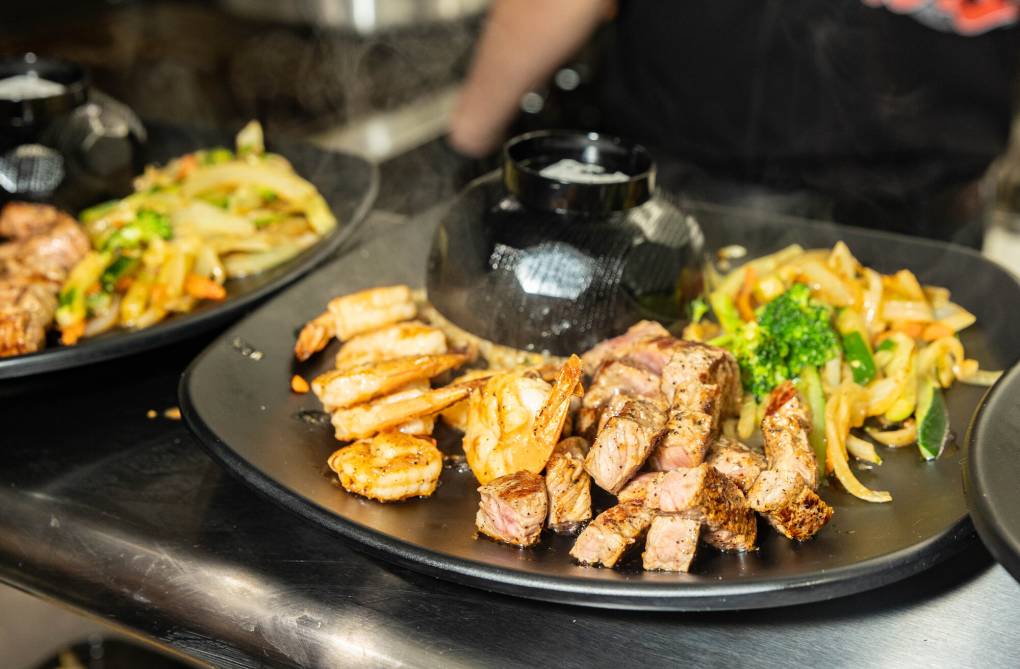
"publishDate": 1776720097,
"format": "standard",
"headTitle": "A New San José Restaurant Offers the Largest Variety of Burritos in the Bay | KQED",
"labelTerm": {},
"content": "\u003cp>If \u003ca href=\"https://www.kqed.org/arts/tag/burrito\">burrito\u003c/a> eating were a professional sport, I would probably be one of the highest-ranked players in the league. I’ve eaten hundreds of burritos across the Bay Area, usually sitting in my car with salsas spread across the dash. But even a pro eater might be intimidated by the staggering selection at \u003ca href=\"https://www.instagram.com/cucosburritos/\">Cuco’s Burritos\u003c/a>, which offers more than 14 different specialty styles — the most I’ve ever encountered in the Bay.\u003c/p>\n\u003cp>On my first visit to the restaurant’s brand new location in \u003ca href=\"https://www.kqed.org/sanjosefood\">San José\u003c/a>, I couldn’t decide between a wet burrito drenched in mole and another that was smothered in bright green tomatillo salsa. I went for both and added a secret menu option I’d heard about for good measure — a burrito stuffed with smoky al pastor and a whole chile relleno oozing molten cheese.\u003c/p>\n\u003cp>The dining room was a lot nicer than the interior of my Civic, with homey tile flooring and sleek wooden tables that quickly filled up with an entire fleet of burritos drizzled with vibrant salsas and zigzagging crema. Each burrito was both absolutely packed and perfectly balanced; no single ingredient outshined the rest.\u003c/p>\n\u003cfigure id=\"attachment_13988696\" class=\"wp-caption alignnone\" style=\"max-width: 2000px\">\u003cimg loading=\"lazy\" decoding=\"async\" class=\"size-full wp-image-13988696\" src=\"https://cdn.kqed.org/wp-content/uploads/sites/2/2026/04/Top-to-bottom_-Asada-fries-suiza-burrito-chile-relleno-al-pastor-burrito-and-chipotle-shrimp-burrito.jpg\" alt=\"Overhead view of a spread of burritos and carne asada fries.\" width=\"2000\" height=\"1125\" srcset=\"https://cdn.kqed.org/wp-content/uploads/sites/2/2026/04/Top-to-bottom_-Asada-fries-suiza-burrito-chile-relleno-al-pastor-burrito-and-chipotle-shrimp-burrito.jpg 2000w, https://cdn.kqed.org/wp-content/uploads/sites/2/2026/04/Top-to-bottom_-Asada-fries-suiza-burrito-chile-relleno-al-pastor-burrito-and-chipotle-shrimp-burrito-160x90.jpg 160w, https://cdn.kqed.org/wp-content/uploads/sites/2/2026/04/Top-to-bottom_-Asada-fries-suiza-burrito-chile-relleno-al-pastor-burrito-and-chipotle-shrimp-burrito-768x432.jpg 768w, https://cdn.kqed.org/wp-content/uploads/sites/2/2026/04/Top-to-bottom_-Asada-fries-suiza-burrito-chile-relleno-al-pastor-burrito-and-chipotle-shrimp-burrito-1536x864.jpg 1536w, https://cdn.kqed.org/wp-content/uploads/sites/2/2026/04/Top-to-bottom_-Asada-fries-suiza-burrito-chile-relleno-al-pastor-burrito-and-chipotle-shrimp-burrito-1200x675.jpg 1200w\" sizes=\"auto, (max-width: 2000px) 100vw, 2000px\">\u003cfigcaption class=\"wp-caption-text\">A massive burrito feast at the new Cuco’s Burritos in San José. Pictured from left to right: carne asada fries, suiza burrito, chile relleno–al pastor burrito and chipotle shrimp burrito. \u003ccite>(Octavio Peña)\u003c/cite>\u003c/figcaption>\u003c/figure>\n\u003cp>Owner Mariela Peralta was practically raised in a restaurant kitchen. Her parents opened their first food truck in Redwood City in 1988, when she was an infant. By age 12, she was buttering bread and passing out sodas. When she was 18, her father gave her a food truck of her own. She ran it for five years before quitting to try out careers in the medical field and bridal makeup. Ultimately, she found that her true passion was food and returned to manage her parents’ four trucks and two restaurants.\u003c/p>\n\u003cp>Peralta collaborated with her father, Don Cuco, to open the original Cuco’s location in Redwood City in 2019. She named the restaurant after him, and in return he shared his recipes and helped her remodel the space before he passed away in 2023. Open for about a month now, the new San José location replaced Tacos El Rancherito, a restaurant that her mother, Doña Lupe, ran for 25 years before deciding to retire.\u003c/p>\n\u003cp>[ad fullwidth]\u003c/p>\n\u003cp>\u003cspan style=\"font-weight: 400\">\u003cspan style=\"color: #2b2b2b;font-weight: 400\">[aside postID='arts_13979641,arts_13958466,arts_13904835']\u003c/span>\u003c/span>Of course, the Bay Area has no shortage of burrito restaurants, but Peralta decided to distinguish her business from established taquerias by doubling down on burritos even more — by offering a more extensive selection than anyone else. Many of Cuco’s wet burritos, in particular, are inspired by regional Mexican dishes like \u003ca href=\"https://www.sfchronicle.com/food/restaurants/article/tortas-ahogadas-oakland-san-jose-21122878.php\">tortas ahogadas\u003c/a> from Jalisco, enchiladas suizas from Mexico City, aporreadillo from Michoacan and mole from Oaxaca. The restaurant also serves regional styles popular in other parts of the United States, like San Diego’s California burrito, which comes stuffed with fries, or Arizona’s deep-fried burrito (aka a chimichanga). There’s also some influence from our own region’s massive \u003ca href=\"https://www.kqed.org/forum/2010101910084/why-the-mission-style-burrito-defines-the-bay-area\">Mission burritos\u003c/a> — although Peralta says she’s never eaten a burrito in the Mission herself.\u003c/p>\n\u003cfigure id=\"attachment_13988697\" class=\"wp-caption alignnone\" style=\"max-width: 2000px\">\u003cimg loading=\"lazy\" decoding=\"async\" class=\"size-full wp-image-13988697\" src=\"https://cdn.kqed.org/wp-content/uploads/sites/2/2026/04/Angel-Peralta-left-and-Mariela-Peralta-right.jpg\" alt=\"A man and woman pose for a portrait inside a restaurant.\" width=\"2000\" height=\"1333\" srcset=\"https://cdn.kqed.org/wp-content/uploads/sites/2/2026/04/Angel-Peralta-left-and-Mariela-Peralta-right.jpg 2000w, https://cdn.kqed.org/wp-content/uploads/sites/2/2026/04/Angel-Peralta-left-and-Mariela-Peralta-right-160x107.jpg 160w, https://cdn.kqed.org/wp-content/uploads/sites/2/2026/04/Angel-Peralta-left-and-Mariela-Peralta-right-768x512.jpg 768w, https://cdn.kqed.org/wp-content/uploads/sites/2/2026/04/Angel-Peralta-left-and-Mariela-Peralta-right-1536x1024.jpg 1536w\" sizes=\"auto, (max-width: 2000px) 100vw, 2000px\">\u003cfigcaption class=\"wp-caption-text\">Mariela Peralta (right) is the owner of Cuco’s Burritos. She runs the new San José shop along with her brother, Angel (left). \u003ccite>(Octavio Peña)\u003c/cite>\u003c/figcaption>\u003c/figure>\n\u003cp>The large variety of burrito styles — including six different breakfast burritos — has earned the restaurant a cult following and \u003ca href=\"https://www.sfchronicle.com/projects/2025/best-burrito-sf-bay-area/\">critical acclaim\u003c/a>. The hyperfocus on burritos doesn’t come across as a gimmick, though. Instead, it has simply given Peralta a new way of highlighting family recipes that have been popular for over 40 years. In fact, Peralta says her burrito fillings are all dishes she grew up eating at home. The moles, for example, were handed down through multiple generations of women in her family going back to her great-grandmother.\u003c/p>\n\u003cp>“I want to continue the legacy that my parents started so many years ago,” Peralta says. “It’s my mission to see the restaurant flourish and have more people try my family’s recipes.”\u003c/p>\n\u003cp>In some cases, Peralta adds her own flourish to her family’s recipes — by creating vegetarian versions of al pastor and chorizo that combine tofu with her dad’s adobo, as well as a vegetarian mole burrito.\u003c/p>\n\u003cfigure id=\"attachment_13988694\" class=\"wp-caption alignnone\" style=\"max-width: 2000px\">\u003cimg loading=\"lazy\" decoding=\"async\" class=\"size-full wp-image-13988694\" src=\"https://cdn.kqed.org/wp-content/uploads/sites/2/2026/04/Chile-Relleno-Al-Pastor-Burrito.jpg\" alt=\"A woman in a pink cardigan holds a burrito in her hand, ready to take a bite.\" width=\"2000\" height=\"1334\" srcset=\"https://cdn.kqed.org/wp-content/uploads/sites/2/2026/04/Chile-Relleno-Al-Pastor-Burrito.jpg 2000w, https://cdn.kqed.org/wp-content/uploads/sites/2/2026/04/Chile-Relleno-Al-Pastor-Burrito-160x107.jpg 160w, https://cdn.kqed.org/wp-content/uploads/sites/2/2026/04/Chile-Relleno-Al-Pastor-Burrito-768x512.jpg 768w, https://cdn.kqed.org/wp-content/uploads/sites/2/2026/04/Chile-Relleno-Al-Pastor-Burrito-1536x1025.jpg 1536w\" sizes=\"auto, (max-width: 2000px) 100vw, 2000px\">\u003cfigcaption class=\"wp-caption-text\">This off-menu “secret” burrito features smoky al pastor and a whole chile relleno. \u003ccite>(Octavio Peña)\u003c/cite>\u003c/figcaption>\u003c/figure>\n\u003cp>Many of the customers at the San José Cuco’s are familiar with the original restaurant in Redwood City. The menus at both locations are largely the same, but Peralta says she does have some San Jose exclusives in the works, like tacos dorados and carne asada fries, both developed by her brother, Angel Peralta. She’s also considering adding seasonal burritos like one inspired by chile en nogada, a stuffed poblano drowned in a creamy walnut sauce that’s typically served around Mexican Independence Day.\u003c/p>\n\u003cp>Although she has a head chef who does most of the day-to-day cooking at the two restaurants, Peralta herself frequently steps into all the roles, including cashier, cook and server. Although she’s already thinking about her next move, she doesn’t have any grand ambitions to turn Cuco’s into a giant chain.\u003c/p>\n\u003cp>“I don’t know how much of me I can pour into more locations,” she says. “Maybe one more and all done.”\u003c/p>\n\u003chr>\n\u003cp>\u003c/p>\n\u003cp>\u003ca href=\"https://www.instagram.com/cucosburritos/\">\u003ci>Cuco’s Burritos\u003c/i>\u003c/a>\u003ci> (1729 McKee Rd., San José) is open Monday through Saturday 11 a.m.–6 p.m. \u003c/i>\u003c/p>\n\n",
"blocks": [],
"excerpt": "Cuco's Burritos serves more than 14 different specialty burritos inspired by regional Mexican cuisine.",
"status": "publish",
"parent": 0,
"modified": 1776722577,
"stats": {
"hasAudio": false,
"hasVideo": false,
"hasChartOrMap": false,
"iframeSrcs": [],
"hasGoogleForm": false,
"hasGallery": false,
"hasHearkenModule": false,
"hasPolis": false,
"paragraphCount": 15,
"wordCount": 976
},
"headData": {
"title": "Cuco's Sells the Biggest Variety of Burritos in San José | KQED",
"description": "Cuco's Burritos serves more than 14 different specialty burritos inspired by regional Mexican cuisine.",
"ogTitle": "A New San José Restaurant Offers the Largest Variety of Burritos in the Bay",
"ogDescription": "",
"ogImgId": "",
"twTitle": "A New San José Restaurant Offers the Largest Variety of Burritos in the Bay",
"twDescription": "",
"twImgId": "",
"socialTitle": "Cuco's Sells the Biggest Variety of Burritos in San José %%page%% %%sep%% KQED",
"schema": {
"@context": "https://schema.org",
"@type": "Article",
"headline": "A New San José Restaurant Offers the Largest Variety of Burritos in the Bay",
"datePublished": "2026-04-20T14:21:37-07:00",
"dateModified": "2026-04-20T15:02:57-07:00",
"image": "https://cdn.kqed.org/wp-content/uploads/2020/02/KQED-OG-Image@1x.png"
}
},
"primaryCategory": {
"termId": 12276,
"slug": "food",
"name": "Food"
},
"source": "Food",
"sourceUrl": "https://www.kqed.org/food",
"sticky": false,
"nprStoryId": "kqed-13988689",
"templateType": "standard",
"featuredImageType": "standard",
"excludeFromSiteSearch": "Include",
"articleAge": "0",
"path": "/arts/13988689/best-burritos-variety-cucos-san-jose-redwood-city",
"audioTrackLength": null,
"parsedContent": [
{
"type": "contentString",
"content": "\u003cdiv class=\"post-body\">\u003cp>\u003cp>If \u003ca href=\"https://www.kqed.org/arts/tag/burrito\">burrito\u003c/a> eating were a professional sport, I would probably be one of the highest-ranked players in the league. I’ve eaten hundreds of burritos across the Bay Area, usually sitting in my car with salsas spread across the dash. But even a pro eater might be intimidated by the staggering selection at \u003ca href=\"https://www.instagram.com/cucosburritos/\">Cuco’s Burritos\u003c/a>, which offers more than 14 different specialty styles — the most I’ve ever encountered in the Bay.\u003c/p>\n\u003cp>On my first visit to the restaurant’s brand new location in \u003ca href=\"https://www.kqed.org/sanjosefood\">San José\u003c/a>, I couldn’t decide between a wet burrito drenched in mole and another that was smothered in bright green tomatillo salsa. I went for both and added a secret menu option I’d heard about for good measure — a burrito stuffed with smoky al pastor and a whole chile relleno oozing molten cheese.\u003c/p>\n\u003cp>The dining room was a lot nicer than the interior of my Civic, with homey tile flooring and sleek wooden tables that quickly filled up with an entire fleet of burritos drizzled with vibrant salsas and zigzagging crema. Each burrito was both absolutely packed and perfectly balanced; no single ingredient outshined the rest.\u003c/p>\n\u003cfigure id=\"attachment_13988696\" class=\"wp-caption alignnone\" style=\"max-width: 2000px\">\u003cimg loading=\"lazy\" decoding=\"async\" class=\"size-full wp-image-13988696\" src=\"https://cdn.kqed.org/wp-content/uploads/sites/2/2026/04/Top-to-bottom_-Asada-fries-suiza-burrito-chile-relleno-al-pastor-burrito-and-chipotle-shrimp-burrito.jpg\" alt=\"Overhead view of a spread of burritos and carne asada fries.\" width=\"2000\" height=\"1125\" srcset=\"https://cdn.kqed.org/wp-content/uploads/sites/2/2026/04/Top-to-bottom_-Asada-fries-suiza-burrito-chile-relleno-al-pastor-burrito-and-chipotle-shrimp-burrito.jpg 2000w, https://cdn.kqed.org/wp-content/uploads/sites/2/2026/04/Top-to-bottom_-Asada-fries-suiza-burrito-chile-relleno-al-pastor-burrito-and-chipotle-shrimp-burrito-160x90.jpg 160w, https://cdn.kqed.org/wp-content/uploads/sites/2/2026/04/Top-to-bottom_-Asada-fries-suiza-burrito-chile-relleno-al-pastor-burrito-and-chipotle-shrimp-burrito-768x432.jpg 768w, https://cdn.kqed.org/wp-content/uploads/sites/2/2026/04/Top-to-bottom_-Asada-fries-suiza-burrito-chile-relleno-al-pastor-burrito-and-chipotle-shrimp-burrito-1536x864.jpg 1536w, https://cdn.kqed.org/wp-content/uploads/sites/2/2026/04/Top-to-bottom_-Asada-fries-suiza-burrito-chile-relleno-al-pastor-burrito-and-chipotle-shrimp-burrito-1200x675.jpg 1200w\" sizes=\"auto, (max-width: 2000px) 100vw, 2000px\">\u003cfigcaption class=\"wp-caption-text\">A massive burrito feast at the new Cuco’s Burritos in San José. Pictured from left to right: carne asada fries, suiza burrito, chile relleno–al pastor burrito and chipotle shrimp burrito. \u003ccite>(Octavio Peña)\u003c/cite>\u003c/figcaption>\u003c/figure>\n\u003cp>Owner Mariela Peralta was practically raised in a restaurant kitchen. Her parents opened their first food truck in Redwood City in 1988, when she was an infant. By age 12, she was buttering bread and passing out sodas. When she was 18, her father gave her a food truck of her own. She ran it for five years before quitting to try out careers in the medical field and bridal makeup. Ultimately, she found that her true passion was food and returned to manage her parents’ four trucks and two restaurants.\u003c/p>\n\u003cp>Peralta collaborated with her father, Don Cuco, to open the original Cuco’s location in Redwood City in 2019. She named the restaurant after him, and in return he shared his recipes and helped her remodel the space before he passed away in 2023. Open for about a month now, the new San José location replaced Tacos El Rancherito, a restaurant that her mother, Doña Lupe, ran for 25 years before deciding to retire.\u003c/p>\n\u003cp>\u003c/p>\u003c/div>",
"attributes": {
"named": {},
"numeric": []
}
},
{
"type": "component",
"content": "",
"name": "ad",
"attributes": {
"named": {
"label": "fullwidth"
},
"numeric": [
"fullwidth"
]
}
},
{
"type": "contentString",
"content": "\u003cdiv class=\"post-body\">\u003cp>\u003c/p>\n\u003cp>\u003cspan style=\"font-weight: 400\">\u003cspan style=\"color: #2b2b2b;font-weight: 400\">\u003c/p>\u003c/div>",
"attributes": {
"named": {},
"numeric": []
}
},
{
"type": "component",
"content": "",
"name": "aside",
"attributes": {
"named": {
"postid": "arts_13979641,arts_13958466,arts_13904835",
"label": ""
},
"numeric": []
}
},
{
"type": "contentString",
"content": "\u003cdiv class=\"post-body\">\u003cp>\u003c/span>\u003c/span>Of course, the Bay Area has no shortage of burrito restaurants, but Peralta decided to distinguish her business from established taquerias by doubling down on burritos even more — by offering a more extensive selection than anyone else. Many of Cuco’s wet burritos, in particular, are inspired by regional Mexican dishes like \u003ca href=\"https://www.sfchronicle.com/food/restaurants/article/tortas-ahogadas-oakland-san-jose-21122878.php\">tortas ahogadas\u003c/a> from Jalisco, enchiladas suizas from Mexico City, aporreadillo from Michoacan and mole from Oaxaca. The restaurant also serves regional styles popular in other parts of the United States, like San Diego’s California burrito, which comes stuffed with fries, or Arizona’s deep-fried burrito (aka a chimichanga). There’s also some influence from our own region’s massive \u003ca href=\"https://www.kqed.org/forum/2010101910084/why-the-mission-style-burrito-defines-the-bay-area\">Mission burritos\u003c/a> — although Peralta says she’s never eaten a burrito in the Mission herself.\u003c/p>\n\u003cfigure id=\"attachment_13988697\" class=\"wp-caption alignnone\" style=\"max-width: 2000px\">\u003cimg loading=\"lazy\" decoding=\"async\" class=\"size-full wp-image-13988697\" src=\"https://cdn.kqed.org/wp-content/uploads/sites/2/2026/04/Angel-Peralta-left-and-Mariela-Peralta-right.jpg\" alt=\"A man and woman pose for a portrait inside a restaurant.\" width=\"2000\" height=\"1333\" srcset=\"https://cdn.kqed.org/wp-content/uploads/sites/2/2026/04/Angel-Peralta-left-and-Mariela-Peralta-right.jpg 2000w, https://cdn.kqed.org/wp-content/uploads/sites/2/2026/04/Angel-Peralta-left-and-Mariela-Peralta-right-160x107.jpg 160w, https://cdn.kqed.org/wp-content/uploads/sites/2/2026/04/Angel-Peralta-left-and-Mariela-Peralta-right-768x512.jpg 768w, https://cdn.kqed.org/wp-content/uploads/sites/2/2026/04/Angel-Peralta-left-and-Mariela-Peralta-right-1536x1024.jpg 1536w\" sizes=\"auto, (max-width: 2000px) 100vw, 2000px\">\u003cfigcaption class=\"wp-caption-text\">Mariela Peralta (right) is the owner of Cuco’s Burritos. She runs the new San José shop along with her brother, Angel (left). \u003ccite>(Octavio Peña)\u003c/cite>\u003c/figcaption>\u003c/figure>\n\u003cp>The large variety of burrito styles — including six different breakfast burritos — has earned the restaurant a cult following and \u003ca href=\"https://www.sfchronicle.com/projects/2025/best-burrito-sf-bay-area/\">critical acclaim\u003c/a>. The hyperfocus on burritos doesn’t come across as a gimmick, though. Instead, it has simply given Peralta a new way of highlighting family recipes that have been popular for over 40 years. In fact, Peralta says her burrito fillings are all dishes she grew up eating at home. The moles, for example, were handed down through multiple generations of women in her family going back to her great-grandmother.\u003c/p>\n\u003cp>“I want to continue the legacy that my parents started so many years ago,” Peralta says. “It’s my mission to see the restaurant flourish and have more people try my family’s recipes.”\u003c/p>\n\u003cp>In some cases, Peralta adds her own flourish to her family’s recipes — by creating vegetarian versions of al pastor and chorizo that combine tofu with her dad’s adobo, as well as a vegetarian mole burrito.\u003c/p>\n\u003cfigure id=\"attachment_13988694\" class=\"wp-caption alignnone\" style=\"max-width: 2000px\">\u003cimg loading=\"lazy\" decoding=\"async\" class=\"size-full wp-image-13988694\" src=\"https://cdn.kqed.org/wp-content/uploads/sites/2/2026/04/Chile-Relleno-Al-Pastor-Burrito.jpg\" alt=\"A woman in a pink cardigan holds a burrito in her hand, ready to take a bite.\" width=\"2000\" height=\"1334\" srcset=\"https://cdn.kqed.org/wp-content/uploads/sites/2/2026/04/Chile-Relleno-Al-Pastor-Burrito.jpg 2000w, https://cdn.kqed.org/wp-content/uploads/sites/2/2026/04/Chile-Relleno-Al-Pastor-Burrito-160x107.jpg 160w, https://cdn.kqed.org/wp-content/uploads/sites/2/2026/04/Chile-Relleno-Al-Pastor-Burrito-768x512.jpg 768w, https://cdn.kqed.org/wp-content/uploads/sites/2/2026/04/Chile-Relleno-Al-Pastor-Burrito-1536x1025.jpg 1536w\" sizes=\"auto, (max-width: 2000px) 100vw, 2000px\">\u003cfigcaption class=\"wp-caption-text\">This off-menu “secret” burrito features smoky al pastor and a whole chile relleno. \u003ccite>(Octavio Peña)\u003c/cite>\u003c/figcaption>\u003c/figure>\n\u003cp>Many of the customers at the San José Cuco’s are familiar with the original restaurant in Redwood City. The menus at both locations are largely the same, but Peralta says she does have some San Jose exclusives in the works, like tacos dorados and carne asada fries, both developed by her brother, Angel Peralta. She’s also considering adding seasonal burritos like one inspired by chile en nogada, a stuffed poblano drowned in a creamy walnut sauce that’s typically served around Mexican Independence Day.\u003c/p>\n\u003cp>Although she has a head chef who does most of the day-to-day cooking at the two restaurants, Peralta herself frequently steps into all the roles, including cashier, cook and server. Although she’s already thinking about her next move, she doesn’t have any grand ambitions to turn Cuco’s into a giant chain.\u003c/p>\n\u003cp>“I don’t know how much of me I can pour into more locations,” she says. “Maybe one more and all done.”\u003c/p>\n\u003chr>\n\u003cp>\u003c/p>\n\u003cp>\u003ca href=\"https://www.instagram.com/cucosburritos/\">\u003ci>Cuco’s Burritos\u003c/i>\u003c/a>\u003ci> (1729 McKee Rd., San José) is open Monday through Saturday 11 a.m.–6 p.m. \u003c/i>\u003c/p>\n\n\u003c/div>\u003c/p>",
"attributes": {
"named": {},
"numeric": []
}
}
],
"link": "/arts/13988689/best-burritos-variety-cucos-san-jose-redwood-city",
"authors": [
"11903"
],
"categories": [
"arts_1",
"arts_12276"
],
"tags": [
"arts_21731",
"arts_10278",
"arts_1297",
"arts_14985",
"arts_4076",
"arts_1084"
],
"featImg": "arts_13988695",
"label": "source_arts_13988689"
},
"arts_13987839": {
"type": "posts",
"id": "arts_13987839",
"meta": {
"index": "posts_1716263798",
"site": "arts",
"id": "13987839",
"score": null,
"sort": [
1774377154000
]
},
"guestAuthors": [],
"slug": "masala-y-maiz-mexico-city-restaurant-oakland-bay-area-roots",
"title": "How One of Mexico City’s Most Acclaimed Restaurants Began in Oakland",
"publishDate": 1774377154,
"format": "standard",
"headTitle": "How One of Mexico City’s Most Acclaimed Restaurants Began in Oakland | KQED",
"labelTerm": {},
"content": "\u003cp>[dropcap]W[/dropcap]hen you first enter Masala y Maiz — a Michelin-starred renegade of a restaurant in Mexico City that has been profiled on Netflix’s “Chef’s Table” — you wouldn’t necessarily know that Oakland is at the heart of its soulful appeal. The concrete, brutalist design of the space denotes an air of Mexican modernism that’s unlike anything you’d find in the Bay Area.\u003c/p>\n\u003cp>Yet according to chef and co-owner Saqib Keval, a Northern California–raised son of Ethiopian and Kenyan immigrants of Indian descent, Oakland is central to the restaurant’s ethos.\u003c/p>\n\u003cp>“The restaurant feels like an extension of Oakland at times, in terms of the music, politics, culture, vibe,” says Keval, who opened Masala y Maiz with his wife Norma Listman in 2017. “It feels like an embassy. Oakland is a place we miss.”\u003c/p>\n\u003cp>Bay Area activists may remember Keval as one of the co-founders of the \u003ca href=\"https://www.instagram.com/peopleskitchencollective/\">People’s Kitchen Collective\u003c/a> (PKC), among Oakland’s most prominent food justice organizations. Listman, meanwhile, was born and raised in Texcoco, Mexico, before she migrated to the Bay in the ’90s to work as a multidisciplinary artist and, eventually, a chef, cutting her teeth at esteemed Oakland restaurants like Tamarindo, Bay Wolf and Camino.\u003c/p>\n\u003cfigure id=\"attachment_13987860\" class=\"wp-caption alignnone\" style=\"max-width: 2000px\">\u003cimg loading=\"lazy\" decoding=\"async\" class=\"size-full wp-image-13987860\" src=\"https://cdn.kqed.org/wp-content/uploads/sites/2/2026/03/Credit_Ana-Lorenzana_OutsideRestaurant.jpg\" alt=\"Two chefs in blue aprons pose in front a restaurant, underneath massive cement columns.\" width=\"2000\" height=\"1333\" srcset=\"https://cdn.kqed.org/wp-content/uploads/sites/2/2026/03/Credit_Ana-Lorenzana_OutsideRestaurant.jpg 2000w, https://cdn.kqed.org/wp-content/uploads/sites/2/2026/03/Credit_Ana-Lorenzana_OutsideRestaurant-160x107.jpg 160w, https://cdn.kqed.org/wp-content/uploads/sites/2/2026/03/Credit_Ana-Lorenzana_OutsideRestaurant-768x512.jpg 768w, https://cdn.kqed.org/wp-content/uploads/sites/2/2026/03/Credit_Ana-Lorenzana_OutsideRestaurant-1536x1024.jpg 1536w\" sizes=\"auto, (max-width: 2000px) 100vw, 2000px\">\u003cfigcaption class=\"wp-caption-text\">Keval and Listman stand in front of the current iteration of Masala y Maiz in Mexico City’s historic centro, where the restaurant relocated in 2024. \u003ccite>(Ana Lorenzana, courtesy of Masala y Maiz)\u003c/cite>\u003c/figcaption>\u003c/figure>\n\u003cp>“I have Oakland tattooed on my leg,” she says. “We hold a romantic idea of the Bay, of Oakland, when we lived there. I was in the Bay for 18 years. I was there during the dot-com boom in ’99. A lot of our communities left because it was impossible to keep going. The restaurants we worked at closed because it wasn’t sustainable. [But] my mentors are still there, and that’s where I came into food.”\u003c/p>\n\u003cp>[ad fullwidth]\u003c/p>\n\u003cp>Oakland’s grassroots influences, along with Listman’s leftist upbringing in Mexico and Keval’s anti-colonial literary acumen from his days at Humboldt State University, are unmistakably baked into Masala y Maiz’s philosophies of collectivism, equity and universal workers rights. A few times a year, the restaurant hosts an “Eat What You Want, Pay What You Can” day, inviting anyone — particularly locals combating the rising cost of living in \u003ca href=\"https://www.cntraveler.com/story/how-gentrification-continues-to-change-mexico-city\">a gentrified Mexico City\u003c/a> — to enjoy a Michelin-starred meal, even if all they can afford to pay for it with is \u003ca href=\"https://www.bbc.com/travel/article/20250825-pay-what-you-can-for-a-michelin-starred-meal\">a piece of original artwork\u003c/a>. The restaurant’s regular menus often feature large, bilingual phrases (“white supremacy is terrorism”; “que vive la lucha femenista”) based on current events.\u003c/p>\n\u003cfigure id=\"attachment_13987864\" class=\"wp-caption alignnone\" style=\"max-width: 1333px\">\u003cimg loading=\"lazy\" decoding=\"async\" class=\"size-full wp-image-13987864\" src=\"https://cdn.kqed.org/wp-content/uploads/sites/2/2026/03/Credit_Ana-Lorenzana_TableSpread.jpg\" alt=\"A spread of dishes on a black tabletop — included is a fried whole fish, head-on shrimp, and salad.\" width=\"1333\" height=\"2000\" srcset=\"https://cdn.kqed.org/wp-content/uploads/sites/2/2026/03/Credit_Ana-Lorenzana_TableSpread.jpg 1333w, https://cdn.kqed.org/wp-content/uploads/sites/2/2026/03/Credit_Ana-Lorenzana_TableSpread-160x240.jpg 160w, https://cdn.kqed.org/wp-content/uploads/sites/2/2026/03/Credit_Ana-Lorenzana_TableSpread-768x1152.jpg 768w, https://cdn.kqed.org/wp-content/uploads/sites/2/2026/03/Credit_Ana-Lorenzana_TableSpread-1024x1536.jpg 1024w\" sizes=\"auto, (max-width: 1333px) 100vw, 1333px\">\u003cfigcaption class=\"wp-caption-text\">An impressive spread of dishes at Masa y Maiz. \u003ccite>(Ana Lorenzana, courtesy of Masala y Maiz)\u003c/cite>\u003c/figcaption>\u003c/figure>\n\u003cp>The messaging isn’t only for show. In 2018, the restaurant boldly \u003ca href=\"https://www.latimes.com/world/la-fg-mexico-city-restaurant-20180512-story.html\">challenged Mexico City’s government officials, citing corruption and bribery\u003c/a> — and somehow came out unscathed. Then, in 2021, the couple rejected a nomination from The World’s 50 Best Restaurants, calling out the foundation’s culture of exploitation and sexism. On Instagram, Masala y Maiz expressed gratitude for the recognition but didn’t yield, sharing a graphic of their invitation with a simple declaration overlaid above it: “\u003ca href=\"https://www.instagram.com/p/CVfYu1rL7oT/?utm_source=ig_embed&ig_rid=128bcd38-88bd-4ee8-a174-fd802ac4baae\">Gracias, no gracias\u003c/a>.”\u003c/p>\n\u003cp>The restaurant has also proven to be far more transcendentally savory than any political statement could ever be on its own. That is to say, the food at Masala y Maiz reflects Oakland’s famously eclectic flavors, too, in its borderless mezcla of dishes: an edible tapestry of Mexican, Indian and East African ingredients. The paratha quesadilla, which uses Indian flatbread in place of traditional corn tortillas, is gooed together with a blend of Oaxacan and mountain cheeses, and served with a side of salsa machaar and herb salad. For the uttapam gordita, a thick South Indian dosa is topped with shredded barbacoa, butternut squash, asparagus and housemade salsa verde. And the esquites makai pakka is a Kenyan remix of Mexico’s beloved street corn dish — a stir of corn kernels, coconut milk, East African masala, in-house mayo and crumbled cotija cheese.\u003c/p>\n\u003cfigure id=\"attachment_13987857\" class=\"wp-caption alignnone\" style=\"max-width: 2000px\">\u003cimg loading=\"lazy\" decoding=\"async\" class=\"size-full wp-image-13987857\" src=\"https://cdn.kqed.org/wp-content/uploads/sites/2/2026/03/36_PhotoCredit-Sana-Javeri-Kadri.jpg\" alt='Jars of spices labeled with blue tape, including dried guajillo chiles, gunpowder pudi, \"Black Power cardamom,\" methi, and maiz morado.' width=\"2000\" height=\"1333\" srcset=\"https://cdn.kqed.org/wp-content/uploads/sites/2/2026/03/36_PhotoCredit-Sana-Javeri-Kadri.jpg 2000w, https://cdn.kqed.org/wp-content/uploads/sites/2/2026/03/36_PhotoCredit-Sana-Javeri-Kadri-160x107.jpg 160w, https://cdn.kqed.org/wp-content/uploads/sites/2/2026/03/36_PhotoCredit-Sana-Javeri-Kadri-768x512.jpg 768w, https://cdn.kqed.org/wp-content/uploads/sites/2/2026/03/36_PhotoCredit-Sana-Javeri-Kadri-1536x1024.jpg 1536w\" sizes=\"auto, (max-width: 2000px) 100vw, 2000px\">\u003cfigcaption class=\"wp-caption-text\">Masala y Maiz is a reflection of the commonalities that can be found across different parts the Global South. Here, a medley of Indian and East African spices sit beside Mexican ingredients like corn and guajillo peppers. \u003ccite>(Sana Javeri Kadri, courtesy of Masala y Maiz)\u003c/cite>\u003c/figcaption>\u003c/figure>\n\u003cp>Now, Oakland’s past is reuniting with the restaurant’s present. This month, the duo is hosting a series of guest chefs from all over the map in honor of International Women’s Month. The series concludes on March 25 with a collaborative dinner featuring the Bay Area’s own Reem Assil and Nite Yun, who both got their starts cooking in Oakland. Yun is the Cambodian American chef behind \u003ca href=\"https://www.instagram.com/lunette_cambodia/?hl=en\">Lunette\u003c/a>, a Khmer gem inside San Francisco’s Ferry Building; Assil is the Palestinian-Syrian culinary icon of \u003ca href=\"https://www.instagram.com/reemscalifornia/?hl=en\">Reem’s California\u003c/a> fame. The Bay Area chefs will join Listman and Keval to create a one-night-only menu centered on their Cambodian, Palestinian, Indian and Mexican backgrounds.\u003c/p>\n\u003cp>But how, exactly, did this internationally renowned hot spot make it all the way down from the East Bay’s shores to the pedestrian-flooded Centro Historico of Mexico’s trending capital to begin with? As it turns out, it all originated as an Oakland love story.\u003c/p>\n\u003ch2>\u003cb>‘Ghetto Gourmet’ and PKC — that’s Oakland, baby\u003c/b>\u003c/h2>\n\u003cp>Before landing in the Bay, Listman had already established herself in the Mexico City art scene. When she came to Oakland in the ’90s, she quickly felt aligned with the city’s unsugared realness, laissez-faire freedoms and artistic energy.\u003c/p>\n\u003cp>“The art scene in Mexico City was very avant garde, very international; it was exhilarating. I felt the same way about Oakland,” she says. “I fell in love with the Bay because of that similarity.”\u003c/p>\n\u003cfigure id=\"attachment_13987856\" class=\"wp-caption alignnone\" style=\"max-width: 2000px\">\u003cimg loading=\"lazy\" decoding=\"async\" class=\"size-full wp-image-13987856\" src=\"https://cdn.kqed.org/wp-content/uploads/sites/2/2026/03/MX14-700-preview.jpg\" alt=\"In a backyard garden setting, a woman holds out a glass while a bottle wine is poured.\" width=\"2000\" height=\"1333\" srcset=\"https://cdn.kqed.org/wp-content/uploads/sites/2/2026/03/MX14-700-preview.jpg 2000w, https://cdn.kqed.org/wp-content/uploads/sites/2/2026/03/MX14-700-preview-160x107.jpg 160w, https://cdn.kqed.org/wp-content/uploads/sites/2/2026/03/MX14-700-preview-768x512.jpg 768w, https://cdn.kqed.org/wp-content/uploads/sites/2/2026/03/MX14-700-preview-1536x1024.jpg 1536w\" sizes=\"auto, (max-width: 2000px) 100vw, 2000px\">\u003cfigcaption class=\"wp-caption-text\">During her time in the Bay Area, Listman brought her expertise and insights as a Mexican-born artist and foodmaker, helping to introduce mezcal to the region when it was relatively unknown. Alice Waters (right), the founder of Berkeley’s Chez Panisse, attended one of her many events. \u003ccite>(Courtesy of Norma Listman)\u003c/cite>\u003c/figcaption>\u003c/figure>\n\u003cp>The Oakland of then was far from the Oakland it would later become. In the mid-to-late aughts, Listman was among the first in the Town to purvey artisanal mezcals, when the libation was more mystery than mainstream. She was invested in fashion, design and art. In 2007, she began working front of house in various Oakland restaurants, eventually finding her way into the kitchen. She independently experimented with food as “a medium to tell a larger story” with a project she titled The Salon Dinners. Listman recalls those times fondly, before tech billionaires and real estate conglomerates completely uprooted artists and storytellers in the region, leaving a profit-driven void in their wake.\u003c/p>\n\u003cp>“In Oakland, there was something called ‘Ghetto Gourmet,’” she says, describing an underground community of Oakland home chefs at the time, not to be confused with the \u003ca href=\"https://www.kqed.org/news/11777049/why-berkeleys-gourmet-ghetto-is-a-problem-for-some\">Berkeley neighborhood nickname\u003c/a>. “People turned their houses into restaurants and began cooking their own food, and it was a really cool time in the Bay to have those experiences and to be experimental. I started doing some of that,” she says. “Where I grew up in Mexico, it’s common that some homes and garages and family dining rooms become restaurants to serve pozole or some other dish that the family matriarch does well. [My dinners] felt like a blend of that, in terms of food, but it was shot down by the health department. It lasted about a year and a half, and it was so cool.”\u003c/p>\n\u003cp>For Listman, these kinds of secretive, word-of-mouth happenings gave Oakland a certain magic in that era: “Everything felt more hidden. Back in the day, nothing was exposed, but if you knocked on a door, it would open, and then another door would appear behind that, and you’d find another world inside.”\u003c/p>\n\u003cfigure id=\"attachment_13987852\" class=\"wp-caption alignnone\" style=\"max-width: 2000px\">\u003cimg loading=\"lazy\" decoding=\"async\" class=\"size-full wp-image-13987852\" src=\"https://cdn.kqed.org/wp-content/uploads/sites/2/2026/03/pkc-founders.jpg\" alt=\"Three smiling people posing for a portrait in front of some kitchen cabinets\" width=\"2000\" height=\"2000\" srcset=\"https://cdn.kqed.org/wp-content/uploads/sites/2/2026/03/pkc-founders.jpg 2000w, https://cdn.kqed.org/wp-content/uploads/sites/2/2026/03/pkc-founders-160x160.jpg 160w, https://cdn.kqed.org/wp-content/uploads/sites/2/2026/03/pkc-founders-768x768.jpg 768w, https://cdn.kqed.org/wp-content/uploads/sites/2/2026/03/pkc-founders-1536x1536.jpg 1536w\" sizes=\"auto, (max-width: 2000px) 100vw, 2000px\">\u003cfigcaption class=\"wp-caption-text\">From left: Keval, Sita Kuratomi Bhaumik and Jocelyn Jackson. The trio co-founded the People’s Kitchen Collective in 2007. \u003ccite>(Courtesy of Saqib Keval)\u003c/cite>\u003c/figcaption>\u003c/figure>\n\u003cp>During that same span, \u003ca href=\"https://edibleeastbay.com/2013/08/15/it-takes-a-grandmother/\">Keval was steadily building up PKC\u003c/a>, a political food program he co-founded in 2007, along with \u003ca href=\"https://www.kqed.org/arts/13923936/moad-new-chef-in-residence-jocelyn-jackson-peoples-kitchen-collective\">Jocelyn Jackson\u003c/a> and Sita Kuratomi Bhaumik, in West Oakland. Keval’s evolving vision for the group was inspired by his involvement in Bay Area restaurants and food nonprofits like Restaurant Opportunities Center of the Bay Area and West Oakland’s People’s Grocery, where he helped start the \u003ca href=\"https://growingjusticeinstitute.wordpress.com/about/\">Growing Justice Institute\u003c/a>, an urban agriculture project.\u003c/p>\n\u003cp>During Keval’s time at PKC, the group held large-scale public meals at Lil Bobby Hutton Park and at urban farms. Keval developed connections with Black Panther Party elders and collaborated with the likes of \u003ca href=\"https://www.kqed.org/arts/13986932/emory-douglas-black-panthers-interview-aaacc-san-francisco\">Emory Douglas\u003c/a>, who created the fliers for the Panthers’ Free Breakfast Program. “It was formative for me as an activist to understand the Black and Brown and South Asian history in the Bay. That was vital,” Keval says of those years.\u003c/p>\n\u003cp>Soon, his path would serendipitously intertwine with Listman’s.\u003c/p>\n\u003cfigure id=\"attachment_13987854\" class=\"wp-caption alignnone\" style=\"max-width: 2000px\">\u003cimg loading=\"lazy\" decoding=\"async\" class=\"size-full wp-image-13987854\" src=\"https://cdn.kqed.org/wp-content/uploads/sites/2/2026/03/kaval-pkc.jpg\" alt=\"A South Asian man holds a microphone as he addresses a gathering. His apron reads, "The People's Kitchen, OAKLAND."\" width=\"2000\" height=\"1336\" srcset=\"https://cdn.kqed.org/wp-content/uploads/sites/2/2026/03/kaval-pkc.jpg 2000w, https://cdn.kqed.org/wp-content/uploads/sites/2/2026/03/kaval-pkc-160x107.jpg 160w, https://cdn.kqed.org/wp-content/uploads/sites/2/2026/03/kaval-pkc-768x513.jpg 768w, https://cdn.kqed.org/wp-content/uploads/sites/2/2026/03/kaval-pkc-1536x1026.jpg 1536w\" sizes=\"auto, (max-width: 2000px) 100vw, 2000px\">\u003cfigcaption class=\"wp-caption-text\">In the late aughts, Keval rallied communities in Oakland and beyond around issues of food justice. \u003ccite>(Courtesy of Saqib Keval)\u003c/cite>\u003c/figcaption>\u003c/figure>\n\u003ch2>\u003cb>The road to Mexico City goes through Old Oakland\u003c/b>\u003c/h2>\n\u003cp>Maybe no neighborhood in Oakland has retained as much of the clandestine enchantment that Listman recalls from the aughts as Old Oakland. In particular, the historic downtown neighborhood — crammed into a quaint, relatively sleepy four-block nook bordered by Highway 880, Broadway and West Oakland — has long been an overlooked bastion of delicious eats.\u003c/p>\n\u003cp>In prior years, you’d find beloved gems like \u003ca href=\"https://www.kqed.org/arts/13910410/miss-ollies-oakland-closing\">Miss Ollie’s\u003c/a>, the Afro-Caribbean staple with out-the-door lines, where Keval once worked. Today, the neighborhood is home to chef Anthony Salguero’s Popoca, a Salvadoran American powerhouse slanging woodfired pupusas, and \u003ca href=\"https://www.kqed.org/arts/13936332/tchaka-haitian-restaurant-oakland\">T’chaka\u003c/a>, Oakland’s first and only Haitian joint (which, poetically, exists in the former Miss Ollie’s space). But arguably no other restaurant in Old Oakland has left more of an imprint than Cosecha. Until it shuttered in 2021, the Mexican eatery inside of Swan Market was one of the most influential restaurants in the Bay Area’s culinary landscape.\u003c/p>\n\u003cp>Coincidentally, Cosecha is also where Listman and Keval first met, around 2013. At that time, Listman was working with the restaurant to host mezcal tastings and community art events; Keval and PKC used Cosecha as a space to provide meals and build a shared foundation.\u003c/p>\n\u003cfigure id=\"attachment_13987858\" class=\"wp-caption alignnone\" style=\"max-width: 2000px\">\u003cimg loading=\"lazy\" decoding=\"async\" class=\"size-full wp-image-13987858\" src=\"https://cdn.kqed.org/wp-content/uploads/sites/2/2026/03/pkc-at-cosecha.jpg\" alt=\"Crowded communal tables inside a food hall.\" width=\"2000\" height=\"1333\" srcset=\"https://cdn.kqed.org/wp-content/uploads/sites/2/2026/03/pkc-at-cosecha.jpg 2000w, https://cdn.kqed.org/wp-content/uploads/sites/2/2026/03/pkc-at-cosecha-160x107.jpg 160w, https://cdn.kqed.org/wp-content/uploads/sites/2/2026/03/pkc-at-cosecha-768x512.jpg 768w, https://cdn.kqed.org/wp-content/uploads/sites/2/2026/03/pkc-at-cosecha-1536x1024.jpg 1536w\" sizes=\"auto, (max-width: 2000px) 100vw, 2000px\">\u003cfigcaption class=\"wp-caption-text\">Old Oakland’s now-shuttered Cosecha was an instrumental space for Keval and Listman, who used it as a venue to build community and inspire change. For a time, the restaurant hosted many of the People’s Kitchen Collective’s pay-what-you-can meals. \u003ccite>(Courtesy of Saqib Keval/People's Kitchen Collective)\u003c/cite>\u003c/figcaption>\u003c/figure>\n\u003cp>In terms of how they started dating? Listman tells it straight: “We never really engaged that much. We were busy in our own worlds.” That changed when the Museum of the African Diaspora in San Francisco began a new residency program and recruited both Listman and PKC to collaborate. Listman smiles: “We worked together on that event, and since then we’ve never stopped working together.”\u003c/p>\n\u003cp>Dominica Rice-Cisneros, Cosecha’s Mexican American chef-owner who currently runs Bombera in the Dimond District, knew the couple long before they were star chefs. Since hosting them in her own restaurant, Rice-Cisneros has gone on to eat at every version of Masala y Maiz (the restaurant has had different locations in Mexico City over the years).\u003c/p>\n\u003cp>“I consider Masala y Maiz to be a Bay Area restaurant, even though they’re in Mexico City. They are an Oakland restaurant, to be exact. True Oakland,” says Rice-Cisneros. “It’s definitely international and could do well everywhere, but first and foremost, it’s Oakland.”\u003c/p>\n\u003cfigure id=\"attachment_13987859\" class=\"wp-caption alignnone\" style=\"max-width: 2000px\">\u003cimg loading=\"lazy\" decoding=\"async\" class=\"size-full wp-image-13987859\" src=\"https://cdn.kqed.org/wp-content/uploads/sites/2/2026/03/PKC25.jpg\" alt=\"A man in a blue apron looking down in front of a restaurant kitchen, where a woman is prepping food.\" width=\"2000\" height=\"1333\" srcset=\"https://cdn.kqed.org/wp-content/uploads/sites/2/2026/03/PKC25.jpg 2000w, https://cdn.kqed.org/wp-content/uploads/sites/2/2026/03/PKC25-160x107.jpg 160w, https://cdn.kqed.org/wp-content/uploads/sites/2/2026/03/PKC25-768x512.jpg 768w, https://cdn.kqed.org/wp-content/uploads/sites/2/2026/03/PKC25-1536x1024.jpg 1536w\" sizes=\"auto, (max-width: 2000px) 100vw, 2000px\">\u003cfigcaption class=\"wp-caption-text\">Keval drew inspiration from Bay Area restaurants like Cosecha, where he is pictured in this photo during his People’s Kitchen Collective years. Behind him, Cosecha chef Dominica Rice-Cisneros prepares a dish. \u003ccite>(Courtesy of Saqib Keval)\u003c/cite>\u003c/figcaption>\u003c/figure>\n\u003cp>This week, Rice-Cisneros will be flying out to attend the International Women’s Month dinner that Listman is hosting along with Assil and Yun. It doesn’t get more Bay Area — in Mexico City — than that.\u003c/p>\n\u003cp>While Rice-Cisneros doesn’t take any credit for uniting Listman and Keval, the couple is quick to point out Cosecha’s importance in their lives. “Masala y Maiz exists because of Dominica. We exist [as a couple] because of PKC,” Keval says.\u003c/p>\n\u003cp>In 2017, Listman moved back to Mexico to research corn foodways. Unexpectedly, she was offered an on-the-spot chance to take over a dining space in the San Miguel Chapultepec neighborhood of Mexico City. She took the risk and invited Keval to join her. The result was Masala y Maiz: a combination of their families’ migratory lineages told through recipes. In that way, the restaurant is an expression of all of the parallels that Listman and Keval have found between the cuisines and cultures across Mexico, India, Kenya and the Global South at large.\u003c/p>\n\u003cfigure id=\"attachment_13987855\" class=\"wp-caption alignnone\" style=\"max-width: 2000px\">\u003cimg loading=\"lazy\" decoding=\"async\" class=\"size-full wp-image-13987855\" src=\"https://cdn.kqed.org/wp-content/uploads/sites/2/2026/03/norma-and-saqib.jpg\" alt=\"A man and a woman, both in sunglasses, sit close together while the woman takes a selfie of the two of them with her phone.\" width=\"2000\" height=\"1337\" srcset=\"https://cdn.kqed.org/wp-content/uploads/sites/2/2026/03/norma-and-saqib.jpg 2000w, https://cdn.kqed.org/wp-content/uploads/sites/2/2026/03/norma-and-saqib-160x107.jpg 160w, https://cdn.kqed.org/wp-content/uploads/sites/2/2026/03/norma-and-saqib-768x513.jpg 768w, https://cdn.kqed.org/wp-content/uploads/sites/2/2026/03/norma-and-saqib-1536x1027.jpg 1536w\" sizes=\"auto, (max-width: 2000px) 100vw, 2000px\">\u003cfigcaption class=\"wp-caption-text\">In 2017, Listman and Keval left the Bay Area, where they had met and began dating, with the shared vision of changing the restaurant industry together. \u003ccite>(Courtesy of Saqib Keval)\u003c/cite>\u003c/figcaption>\u003c/figure>\n\u003cp>The restaurant’s stature has only grown over the years as it moved into larger spaces and solidified itself as a culinary destination and activist force in Mexico City. But even as the couple was building out their restaurant, the Bay Area was always close to their hearts — and the Bay hadn’t forgotten about them, either. Listman notes that her former mentor, the legendary Slanted Door chef Charles Phan (who \u003ca href=\"https://www.kqed.org/arts/13970535/charles-phan-the-innovative-chef-of-sfs-slanted-door-has-died\">passed away last year\u003c/a>), supplied Masala y Maiz with its inaugural set of silverware. Eight years later, it’s still the crown jewel of the restaurant’s collection.\u003c/p>\n\u003cp>\u003cspan style=\"font-weight: 400;\">\u003cspan style=\"color: #2b2b2b; font-weight: 400;\">[aside postID='arts_13960139,arts_13932089,arts_13912706']\u003c/span>\u003c/span>For Listman, the Bay resonates in their work — but it’s not the only factor. “The Bay Area is a very revolutionary place with incredible political movements,” she says. “But it’s not the only thing. A lot of the movements in Mexico and in different communities inform what we do.”\u003c/p>\n\u003cp>Keval is even more effusive in his praise of the Bay. “The thing about the restaurants in the Bay we worked at was that they showed us the possibilities of what a restaurant can be, and the authenticity of each person expressing who they are in their own way,” he says. “We learned what it means to do right by your employees and your team. We worked with chefs who cared, who worked alongside everyone else. That helped me form this idea of what a restaurant could be and how to critique patriarchy, capitalism and so forth. Oakland gave me space to try that out and tweak it and work on service and hospitality from a different point of view, one that was community-based and centered on dignity.”\u003c/p>\n\u003cfigure id=\"attachment_13987861\" class=\"wp-caption alignnone\" style=\"max-width: 1333px\">\u003cimg loading=\"lazy\" decoding=\"async\" class=\"size-full wp-image-13987861\" src=\"https://cdn.kqed.org/wp-content/uploads/sites/2/2026/03/9_PhotoCredit-Sana-Javeri-Kadri.jpg\" alt=\"Two pairs of hands pressing down on banana leaves in a large pot.\" width=\"1333\" height=\"2000\" srcset=\"https://cdn.kqed.org/wp-content/uploads/sites/2/2026/03/9_PhotoCredit-Sana-Javeri-Kadri.jpg 1333w, https://cdn.kqed.org/wp-content/uploads/sites/2/2026/03/9_PhotoCredit-Sana-Javeri-Kadri-160x240.jpg 160w, https://cdn.kqed.org/wp-content/uploads/sites/2/2026/03/9_PhotoCredit-Sana-Javeri-Kadri-768x1152.jpg 768w, https://cdn.kqed.org/wp-content/uploads/sites/2/2026/03/9_PhotoCredit-Sana-Javeri-Kadri-1024x1536.jpg 1024w\" sizes=\"auto, (max-width: 1333px) 100vw, 1333px\">\u003cfigcaption class=\"wp-caption-text\">At Masala y Maiz, Listman and Keval combine culinary traditions from their respective backgrounds. \u003ccite>(Sana Javeri Kadri, courtesy of Masala y Maiz)\u003c/cite>\u003c/figcaption>\u003c/figure>\n\u003cp>In a fine dining industry where headlines about \u003ca href=\"https://www.nytimes.com/2026/03/07/dining/rene-redzepi-noma-abuse-allegations.html\">institutions abusing their workers\u003c/a> are not uncommon, and in which high-end establishments have a reputation of being financially inaccessible to the working class, Masala y Maiz’s egalitarian for-the-people, by-the-people mantras are far from the norm. But they’re deeply rooted in the Bay’s insurgent ecosystem, where Listman and Keval were shaped and influenced for years while also carving out space for themselves, long before Masala y Maiz’s opened its proverbial doors to would-be diners.\u003c/p>\n\u003cp>As Keval puts it, “That’s who we are, and that’s a direct line to the Bay. That won’t ever stop being home.”\u003c/p>\n\u003cp>After all, is there anything more truly Oakland than feeding revolutions, building cross-communal solidarity, and inviting everyone to share in discourse amid today’s hetero-capitalist dystopia — all while eating some of the best meals of your life?\u003c/p>\n\u003cp>\u003cem>Correction: An earlier version of this article credited chef Anthony Strong with providing Masala y Maiz’s first set of silverware. Strong was also a mentor to Listman, but Charles Phan of Slanted Door was the one who gifted them the silverware.\u003c/em>\u003c/p>\n\u003chr>\n\u003cp>[ad floatright]\u003c/p>\n\u003cp>\u003ca href=\"https://www.instagram.com/masalaymaiz/\">\u003ci>Masala y Maiz\u003c/i>\u003c/a>\u003ci> (116 C. Artículo 123, Edificio Humboldt, Mexico City) is open every day from noon to 6 p.m., except on Tuesdays. On Wednesday, March 25 at 7:30 p.m., the restaurant will host its final International Women’s Month series dinner with chefs Reem Assil and Nite Yun. The communal meal will include a six-course collaborative tasting, with a welcome drink and tip included for $2,200 MXN, or roughly $115 USD, per person. \u003c/i>\u003ca href=\"https://www.exploretock.com/masala-y-maiz-mexico-city/event/595460\">\u003ci>Tickets here\u003c/i>\u003c/a>\u003ci>.\u003c/i>\u003c/p>\n\n",
"blocks": [],
"excerpt": "Masala y Maiz is the loving result of two founding chefs who met, and started reimagining the food industry together, in Old Oakland.",
"status": "publish",
"parent": 0,
"modified": 1774377146,
"stats": {
"hasAudio": false,
"hasVideo": false,
"hasChartOrMap": false,
"iframeSrcs": [],
"hasGoogleForm": false,
"hasGallery": false,
"hasHearkenModule": false,
"hasPolis": false,
"paragraphCount": 37,
"wordCount": 2964
},
"headData": {
"title": "One of Mexico City’s Best Restaurants Began in Oakland | KQED",
"description": "Masala y Maiz is the loving result of two founding chefs who met, and started reimagining the food industry together, in Old Oakland.",
"ogTitle": "How One of Mexico City’s Most Acclaimed Restaurants Began in Oakland",
"ogDescription": "",
"ogImgId": "",
"twTitle": "How One of Mexico City’s Most Acclaimed Restaurants Began in Oakland",
"twDescription": "",
"twImgId": "",
"socialTitle": "One of Mexico City’s Best Restaurants Began in Oakland %%page%% %%sep%% KQED",
"schema": {
"@context": "https://schema.org",
"@type": "Article",
"headline": "How One of Mexico City’s Most Acclaimed Restaurants Began in Oakland",
"datePublished": "2026-03-24T11:32:34-07:00",
"dateModified": "2026-03-24T11:32:26-07:00",
"image": "https://cdn.kqed.org/wp-content/uploads/2020/02/KQED-OG-Image@1x.png"
}
},
"primaryCategory": {
"termId": 12276,
"slug": "food",
"name": "Food"
},
"source": "Food",
"sourceUrl": "https://www.kqed.org/food",
"sticky": false,
"nprStoryId": "kqed-13987839",
"templateType": "standard",
"featuredImageType": "standard",
"excludeFromSiteSearch": "Include",
"articleAge": "0",
"path": "/arts/13987839/masala-y-maiz-mexico-city-restaurant-oakland-bay-area-roots",
"audioTrackLength": null,
"parsedContent": [
{
"type": "contentString",
"content": "\u003cdiv class=\"post-body\">\u003cp>\u003cp>\u003c/p>\u003cp>\u003cspan class=\"utils-parseShortcode-shortcodes-__dropcapShortcode__dropcap\">W\u003c/span>\u003c/p>\u003cp>hen you first enter Masala y Maiz — a Michelin-starred renegade of a restaurant in Mexico City that has been profiled on Netflix’s “Chef’s Table” — you wouldn’t necessarily know that Oakland is at the heart of its soulful appeal. The concrete, brutalist design of the space denotes an air of Mexican modernism that’s unlike anything you’d find in the Bay Area.\u003c/p>\n\u003cp>Yet according to chef and co-owner Saqib Keval, a Northern California–raised son of Ethiopian and Kenyan immigrants of Indian descent, Oakland is central to the restaurant’s ethos.\u003c/p>\n\u003cp>“The restaurant feels like an extension of Oakland at times, in terms of the music, politics, culture, vibe,” says Keval, who opened Masala y Maiz with his wife Norma Listman in 2017. “It feels like an embassy. Oakland is a place we miss.”\u003c/p>\n\u003cp>Bay Area activists may remember Keval as one of the co-founders of the \u003ca href=\"https://www.instagram.com/peopleskitchencollective/\">People’s Kitchen Collective\u003c/a> (PKC), among Oakland’s most prominent food justice organizations. Listman, meanwhile, was born and raised in Texcoco, Mexico, before she migrated to the Bay in the ’90s to work as a multidisciplinary artist and, eventually, a chef, cutting her teeth at esteemed Oakland restaurants like Tamarindo, Bay Wolf and Camino.\u003c/p>\n\u003cfigure id=\"attachment_13987860\" class=\"wp-caption alignnone\" style=\"max-width: 2000px\">\u003cimg loading=\"lazy\" decoding=\"async\" class=\"size-full wp-image-13987860\" src=\"https://cdn.kqed.org/wp-content/uploads/sites/2/2026/03/Credit_Ana-Lorenzana_OutsideRestaurant.jpg\" alt=\"Two chefs in blue aprons pose in front a restaurant, underneath massive cement columns.\" width=\"2000\" height=\"1333\" srcset=\"https://cdn.kqed.org/wp-content/uploads/sites/2/2026/03/Credit_Ana-Lorenzana_OutsideRestaurant.jpg 2000w, https://cdn.kqed.org/wp-content/uploads/sites/2/2026/03/Credit_Ana-Lorenzana_OutsideRestaurant-160x107.jpg 160w, https://cdn.kqed.org/wp-content/uploads/sites/2/2026/03/Credit_Ana-Lorenzana_OutsideRestaurant-768x512.jpg 768w, https://cdn.kqed.org/wp-content/uploads/sites/2/2026/03/Credit_Ana-Lorenzana_OutsideRestaurant-1536x1024.jpg 1536w\" sizes=\"auto, (max-width: 2000px) 100vw, 2000px\">\u003cfigcaption class=\"wp-caption-text\">Keval and Listman stand in front of the current iteration of Masala y Maiz in Mexico City’s historic centro, where the restaurant relocated in 2024. \u003ccite>(Ana Lorenzana, courtesy of Masala y Maiz)\u003c/cite>\u003c/figcaption>\u003c/figure>\n\u003cp>“I have Oakland tattooed on my leg,” she says. “We hold a romantic idea of the Bay, of Oakland, when we lived there. I was in the Bay for 18 years. I was there during the dot-com boom in ’99. A lot of our communities left because it was impossible to keep going. The restaurants we worked at closed because it wasn’t sustainable. [But] my mentors are still there, and that’s where I came into food.”\u003c/p>\n\u003cp>\u003c/p>\u003c/div>",
"attributes": {
"named": {},
"numeric": []
}
},
{
"type": "component",
"content": "",
"name": "ad",
"attributes": {
"named": {
"label": "fullwidth"
},
"numeric": [
"fullwidth"
]
}
},
{
"type": "contentString",
"content": "\u003cdiv class=\"post-body\">\u003cp>\u003c/p>\n\u003cp>Oakland’s grassroots influences, along with Listman’s leftist upbringing in Mexico and Keval’s anti-colonial literary acumen from his days at Humboldt State University, are unmistakably baked into Masala y Maiz’s philosophies of collectivism, equity and universal workers rights. A few times a year, the restaurant hosts an “Eat What You Want, Pay What You Can” day, inviting anyone — particularly locals combating the rising cost of living in \u003ca href=\"https://www.cntraveler.com/story/how-gentrification-continues-to-change-mexico-city\">a gentrified Mexico City\u003c/a> — to enjoy a Michelin-starred meal, even if all they can afford to pay for it with is \u003ca href=\"https://www.bbc.com/travel/article/20250825-pay-what-you-can-for-a-michelin-starred-meal\">a piece of original artwork\u003c/a>. The restaurant’s regular menus often feature large, bilingual phrases (“white supremacy is terrorism”; “que vive la lucha femenista”) based on current events.\u003c/p>\n\u003cfigure id=\"attachment_13987864\" class=\"wp-caption alignnone\" style=\"max-width: 1333px\">\u003cimg loading=\"lazy\" decoding=\"async\" class=\"size-full wp-image-13987864\" src=\"https://cdn.kqed.org/wp-content/uploads/sites/2/2026/03/Credit_Ana-Lorenzana_TableSpread.jpg\" alt=\"A spread of dishes on a black tabletop — included is a fried whole fish, head-on shrimp, and salad.\" width=\"1333\" height=\"2000\" srcset=\"https://cdn.kqed.org/wp-content/uploads/sites/2/2026/03/Credit_Ana-Lorenzana_TableSpread.jpg 1333w, https://cdn.kqed.org/wp-content/uploads/sites/2/2026/03/Credit_Ana-Lorenzana_TableSpread-160x240.jpg 160w, https://cdn.kqed.org/wp-content/uploads/sites/2/2026/03/Credit_Ana-Lorenzana_TableSpread-768x1152.jpg 768w, https://cdn.kqed.org/wp-content/uploads/sites/2/2026/03/Credit_Ana-Lorenzana_TableSpread-1024x1536.jpg 1024w\" sizes=\"auto, (max-width: 1333px) 100vw, 1333px\">\u003cfigcaption class=\"wp-caption-text\">An impressive spread of dishes at Masa y Maiz. \u003ccite>(Ana Lorenzana, courtesy of Masala y Maiz)\u003c/cite>\u003c/figcaption>\u003c/figure>\n\u003cp>The messaging isn’t only for show. In 2018, the restaurant boldly \u003ca href=\"https://www.latimes.com/world/la-fg-mexico-city-restaurant-20180512-story.html\">challenged Mexico City’s government officials, citing corruption and bribery\u003c/a> — and somehow came out unscathed. Then, in 2021, the couple rejected a nomination from The World’s 50 Best Restaurants, calling out the foundation’s culture of exploitation and sexism. On Instagram, Masala y Maiz expressed gratitude for the recognition but didn’t yield, sharing a graphic of their invitation with a simple declaration overlaid above it: “\u003ca href=\"https://www.instagram.com/p/CVfYu1rL7oT/?utm_source=ig_embed&ig_rid=128bcd38-88bd-4ee8-a174-fd802ac4baae\">Gracias, no gracias\u003c/a>.”\u003c/p>\n\u003cp>The restaurant has also proven to be far more transcendentally savory than any political statement could ever be on its own. That is to say, the food at Masala y Maiz reflects Oakland’s famously eclectic flavors, too, in its borderless mezcla of dishes: an edible tapestry of Mexican, Indian and East African ingredients. The paratha quesadilla, which uses Indian flatbread in place of traditional corn tortillas, is gooed together with a blend of Oaxacan and mountain cheeses, and served with a side of salsa machaar and herb salad. For the uttapam gordita, a thick South Indian dosa is topped with shredded barbacoa, butternut squash, asparagus and housemade salsa verde. And the esquites makai pakka is a Kenyan remix of Mexico’s beloved street corn dish — a stir of corn kernels, coconut milk, East African masala, in-house mayo and crumbled cotija cheese.\u003c/p>\n\u003cfigure id=\"attachment_13987857\" class=\"wp-caption alignnone\" style=\"max-width: 2000px\">\u003cimg loading=\"lazy\" decoding=\"async\" class=\"size-full wp-image-13987857\" src=\"https://cdn.kqed.org/wp-content/uploads/sites/2/2026/03/36_PhotoCredit-Sana-Javeri-Kadri.jpg\" alt='Jars of spices labeled with blue tape, including dried guajillo chiles, gunpowder pudi, \"Black Power cardamom,\" methi, and maiz morado.' width=\"2000\" height=\"1333\" srcset=\"https://cdn.kqed.org/wp-content/uploads/sites/2/2026/03/36_PhotoCredit-Sana-Javeri-Kadri.jpg 2000w, https://cdn.kqed.org/wp-content/uploads/sites/2/2026/03/36_PhotoCredit-Sana-Javeri-Kadri-160x107.jpg 160w, https://cdn.kqed.org/wp-content/uploads/sites/2/2026/03/36_PhotoCredit-Sana-Javeri-Kadri-768x512.jpg 768w, https://cdn.kqed.org/wp-content/uploads/sites/2/2026/03/36_PhotoCredit-Sana-Javeri-Kadri-1536x1024.jpg 1536w\" sizes=\"auto, (max-width: 2000px) 100vw, 2000px\">\u003cfigcaption class=\"wp-caption-text\">Masala y Maiz is a reflection of the commonalities that can be found across different parts the Global South. Here, a medley of Indian and East African spices sit beside Mexican ingredients like corn and guajillo peppers. \u003ccite>(Sana Javeri Kadri, courtesy of Masala y Maiz)\u003c/cite>\u003c/figcaption>\u003c/figure>\n\u003cp>Now, Oakland’s past is reuniting with the restaurant’s present. This month, the duo is hosting a series of guest chefs from all over the map in honor of International Women’s Month. The series concludes on March 25 with a collaborative dinner featuring the Bay Area’s own Reem Assil and Nite Yun, who both got their starts cooking in Oakland. Yun is the Cambodian American chef behind \u003ca href=\"https://www.instagram.com/lunette_cambodia/?hl=en\">Lunette\u003c/a>, a Khmer gem inside San Francisco’s Ferry Building; Assil is the Palestinian-Syrian culinary icon of \u003ca href=\"https://www.instagram.com/reemscalifornia/?hl=en\">Reem’s California\u003c/a> fame. The Bay Area chefs will join Listman and Keval to create a one-night-only menu centered on their Cambodian, Palestinian, Indian and Mexican backgrounds.\u003c/p>\n\u003cp>But how, exactly, did this internationally renowned hot spot make it all the way down from the East Bay’s shores to the pedestrian-flooded Centro Historico of Mexico’s trending capital to begin with? As it turns out, it all originated as an Oakland love story.\u003c/p>\n\u003ch2>\u003cb>‘Ghetto Gourmet’ and PKC — that’s Oakland, baby\u003c/b>\u003c/h2>\n\u003cp>Before landing in the Bay, Listman had already established herself in the Mexico City art scene. When she came to Oakland in the ’90s, she quickly felt aligned with the city’s unsugared realness, laissez-faire freedoms and artistic energy.\u003c/p>\n\u003cp>“The art scene in Mexico City was very avant garde, very international; it was exhilarating. I felt the same way about Oakland,” she says. “I fell in love with the Bay because of that similarity.”\u003c/p>\n\u003cfigure id=\"attachment_13987856\" class=\"wp-caption alignnone\" style=\"max-width: 2000px\">\u003cimg loading=\"lazy\" decoding=\"async\" class=\"size-full wp-image-13987856\" src=\"https://cdn.kqed.org/wp-content/uploads/sites/2/2026/03/MX14-700-preview.jpg\" alt=\"In a backyard garden setting, a woman holds out a glass while a bottle wine is poured.\" width=\"2000\" height=\"1333\" srcset=\"https://cdn.kqed.org/wp-content/uploads/sites/2/2026/03/MX14-700-preview.jpg 2000w, https://cdn.kqed.org/wp-content/uploads/sites/2/2026/03/MX14-700-preview-160x107.jpg 160w, https://cdn.kqed.org/wp-content/uploads/sites/2/2026/03/MX14-700-preview-768x512.jpg 768w, https://cdn.kqed.org/wp-content/uploads/sites/2/2026/03/MX14-700-preview-1536x1024.jpg 1536w\" sizes=\"auto, (max-width: 2000px) 100vw, 2000px\">\u003cfigcaption class=\"wp-caption-text\">During her time in the Bay Area, Listman brought her expertise and insights as a Mexican-born artist and foodmaker, helping to introduce mezcal to the region when it was relatively unknown. Alice Waters (right), the founder of Berkeley’s Chez Panisse, attended one of her many events. \u003ccite>(Courtesy of Norma Listman)\u003c/cite>\u003c/figcaption>\u003c/figure>\n\u003cp>The Oakland of then was far from the Oakland it would later become. In the mid-to-late aughts, Listman was among the first in the Town to purvey artisanal mezcals, when the libation was more mystery than mainstream. She was invested in fashion, design and art. In 2007, she began working front of house in various Oakland restaurants, eventually finding her way into the kitchen. She independently experimented with food as “a medium to tell a larger story” with a project she titled The Salon Dinners. Listman recalls those times fondly, before tech billionaires and real estate conglomerates completely uprooted artists and storytellers in the region, leaving a profit-driven void in their wake.\u003c/p>\n\u003cp>“In Oakland, there was something called ‘Ghetto Gourmet,’” she says, describing an underground community of Oakland home chefs at the time, not to be confused with the \u003ca href=\"https://www.kqed.org/news/11777049/why-berkeleys-gourmet-ghetto-is-a-problem-for-some\">Berkeley neighborhood nickname\u003c/a>. “People turned their houses into restaurants and began cooking their own food, and it was a really cool time in the Bay to have those experiences and to be experimental. I started doing some of that,” she says. “Where I grew up in Mexico, it’s common that some homes and garages and family dining rooms become restaurants to serve pozole or some other dish that the family matriarch does well. [My dinners] felt like a blend of that, in terms of food, but it was shot down by the health department. It lasted about a year and a half, and it was so cool.”\u003c/p>\n\u003cp>For Listman, these kinds of secretive, word-of-mouth happenings gave Oakland a certain magic in that era: “Everything felt more hidden. Back in the day, nothing was exposed, but if you knocked on a door, it would open, and then another door would appear behind that, and you’d find another world inside.”\u003c/p>\n\u003cfigure id=\"attachment_13987852\" class=\"wp-caption alignnone\" style=\"max-width: 2000px\">\u003cimg loading=\"lazy\" decoding=\"async\" class=\"size-full wp-image-13987852\" src=\"https://cdn.kqed.org/wp-content/uploads/sites/2/2026/03/pkc-founders.jpg\" alt=\"Three smiling people posing for a portrait in front of some kitchen cabinets\" width=\"2000\" height=\"2000\" srcset=\"https://cdn.kqed.org/wp-content/uploads/sites/2/2026/03/pkc-founders.jpg 2000w, https://cdn.kqed.org/wp-content/uploads/sites/2/2026/03/pkc-founders-160x160.jpg 160w, https://cdn.kqed.org/wp-content/uploads/sites/2/2026/03/pkc-founders-768x768.jpg 768w, https://cdn.kqed.org/wp-content/uploads/sites/2/2026/03/pkc-founders-1536x1536.jpg 1536w\" sizes=\"auto, (max-width: 2000px) 100vw, 2000px\">\u003cfigcaption class=\"wp-caption-text\">From left: Keval, Sita Kuratomi Bhaumik and Jocelyn Jackson. The trio co-founded the People’s Kitchen Collective in 2007. \u003ccite>(Courtesy of Saqib Keval)\u003c/cite>\u003c/figcaption>\u003c/figure>\n\u003cp>During that same span, \u003ca href=\"https://edibleeastbay.com/2013/08/15/it-takes-a-grandmother/\">Keval was steadily building up PKC\u003c/a>, a political food program he co-founded in 2007, along with \u003ca href=\"https://www.kqed.org/arts/13923936/moad-new-chef-in-residence-jocelyn-jackson-peoples-kitchen-collective\">Jocelyn Jackson\u003c/a> and Sita Kuratomi Bhaumik, in West Oakland. Keval’s evolving vision for the group was inspired by his involvement in Bay Area restaurants and food nonprofits like Restaurant Opportunities Center of the Bay Area and West Oakland’s People’s Grocery, where he helped start the \u003ca href=\"https://growingjusticeinstitute.wordpress.com/about/\">Growing Justice Institute\u003c/a>, an urban agriculture project.\u003c/p>\n\u003cp>During Keval’s time at PKC, the group held large-scale public meals at Lil Bobby Hutton Park and at urban farms. Keval developed connections with Black Panther Party elders and collaborated with the likes of \u003ca href=\"https://www.kqed.org/arts/13986932/emory-douglas-black-panthers-interview-aaacc-san-francisco\">Emory Douglas\u003c/a>, who created the fliers for the Panthers’ Free Breakfast Program. “It was formative for me as an activist to understand the Black and Brown and South Asian history in the Bay. That was vital,” Keval says of those years.\u003c/p>\n\u003cp>Soon, his path would serendipitously intertwine with Listman’s.\u003c/p>\n\u003cfigure id=\"attachment_13987854\" class=\"wp-caption alignnone\" style=\"max-width: 2000px\">\u003cimg loading=\"lazy\" decoding=\"async\" class=\"size-full wp-image-13987854\" src=\"https://cdn.kqed.org/wp-content/uploads/sites/2/2026/03/kaval-pkc.jpg\" alt=\"A South Asian man holds a microphone as he addresses a gathering. His apron reads, "The People's Kitchen, OAKLAND."\" width=\"2000\" height=\"1336\" srcset=\"https://cdn.kqed.org/wp-content/uploads/sites/2/2026/03/kaval-pkc.jpg 2000w, https://cdn.kqed.org/wp-content/uploads/sites/2/2026/03/kaval-pkc-160x107.jpg 160w, https://cdn.kqed.org/wp-content/uploads/sites/2/2026/03/kaval-pkc-768x513.jpg 768w, https://cdn.kqed.org/wp-content/uploads/sites/2/2026/03/kaval-pkc-1536x1026.jpg 1536w\" sizes=\"auto, (max-width: 2000px) 100vw, 2000px\">\u003cfigcaption class=\"wp-caption-text\">In the late aughts, Keval rallied communities in Oakland and beyond around issues of food justice. \u003ccite>(Courtesy of Saqib Keval)\u003c/cite>\u003c/figcaption>\u003c/figure>\n\u003ch2>\u003cb>The road to Mexico City goes through Old Oakland\u003c/b>\u003c/h2>\n\u003cp>Maybe no neighborhood in Oakland has retained as much of the clandestine enchantment that Listman recalls from the aughts as Old Oakland. In particular, the historic downtown neighborhood — crammed into a quaint, relatively sleepy four-block nook bordered by Highway 880, Broadway and West Oakland — has long been an overlooked bastion of delicious eats.\u003c/p>\n\u003cp>In prior years, you’d find beloved gems like \u003ca href=\"https://www.kqed.org/arts/13910410/miss-ollies-oakland-closing\">Miss Ollie’s\u003c/a>, the Afro-Caribbean staple with out-the-door lines, where Keval once worked. Today, the neighborhood is home to chef Anthony Salguero’s Popoca, a Salvadoran American powerhouse slanging woodfired pupusas, and \u003ca href=\"https://www.kqed.org/arts/13936332/tchaka-haitian-restaurant-oakland\">T’chaka\u003c/a>, Oakland’s first and only Haitian joint (which, poetically, exists in the former Miss Ollie’s space). But arguably no other restaurant in Old Oakland has left more of an imprint than Cosecha. Until it shuttered in 2021, the Mexican eatery inside of Swan Market was one of the most influential restaurants in the Bay Area’s culinary landscape.\u003c/p>\n\u003cp>Coincidentally, Cosecha is also where Listman and Keval first met, around 2013. At that time, Listman was working with the restaurant to host mezcal tastings and community art events; Keval and PKC used Cosecha as a space to provide meals and build a shared foundation.\u003c/p>\n\u003cfigure id=\"attachment_13987858\" class=\"wp-caption alignnone\" style=\"max-width: 2000px\">\u003cimg loading=\"lazy\" decoding=\"async\" class=\"size-full wp-image-13987858\" src=\"https://cdn.kqed.org/wp-content/uploads/sites/2/2026/03/pkc-at-cosecha.jpg\" alt=\"Crowded communal tables inside a food hall.\" width=\"2000\" height=\"1333\" srcset=\"https://cdn.kqed.org/wp-content/uploads/sites/2/2026/03/pkc-at-cosecha.jpg 2000w, https://cdn.kqed.org/wp-content/uploads/sites/2/2026/03/pkc-at-cosecha-160x107.jpg 160w, https://cdn.kqed.org/wp-content/uploads/sites/2/2026/03/pkc-at-cosecha-768x512.jpg 768w, https://cdn.kqed.org/wp-content/uploads/sites/2/2026/03/pkc-at-cosecha-1536x1024.jpg 1536w\" sizes=\"auto, (max-width: 2000px) 100vw, 2000px\">\u003cfigcaption class=\"wp-caption-text\">Old Oakland’s now-shuttered Cosecha was an instrumental space for Keval and Listman, who used it as a venue to build community and inspire change. For a time, the restaurant hosted many of the People’s Kitchen Collective’s pay-what-you-can meals. \u003ccite>(Courtesy of Saqib Keval/People's Kitchen Collective)\u003c/cite>\u003c/figcaption>\u003c/figure>\n\u003cp>In terms of how they started dating? Listman tells it straight: “We never really engaged that much. We were busy in our own worlds.” That changed when the Museum of the African Diaspora in San Francisco began a new residency program and recruited both Listman and PKC to collaborate. Listman smiles: “We worked together on that event, and since then we’ve never stopped working together.”\u003c/p>\n\u003cp>Dominica Rice-Cisneros, Cosecha’s Mexican American chef-owner who currently runs Bombera in the Dimond District, knew the couple long before they were star chefs. Since hosting them in her own restaurant, Rice-Cisneros has gone on to eat at every version of Masala y Maiz (the restaurant has had different locations in Mexico City over the years).\u003c/p>\n\u003cp>“I consider Masala y Maiz to be a Bay Area restaurant, even though they’re in Mexico City. They are an Oakland restaurant, to be exact. True Oakland,” says Rice-Cisneros. “It’s definitely international and could do well everywhere, but first and foremost, it’s Oakland.”\u003c/p>\n\u003cfigure id=\"attachment_13987859\" class=\"wp-caption alignnone\" style=\"max-width: 2000px\">\u003cimg loading=\"lazy\" decoding=\"async\" class=\"size-full wp-image-13987859\" src=\"https://cdn.kqed.org/wp-content/uploads/sites/2/2026/03/PKC25.jpg\" alt=\"A man in a blue apron looking down in front of a restaurant kitchen, where a woman is prepping food.\" width=\"2000\" height=\"1333\" srcset=\"https://cdn.kqed.org/wp-content/uploads/sites/2/2026/03/PKC25.jpg 2000w, https://cdn.kqed.org/wp-content/uploads/sites/2/2026/03/PKC25-160x107.jpg 160w, https://cdn.kqed.org/wp-content/uploads/sites/2/2026/03/PKC25-768x512.jpg 768w, https://cdn.kqed.org/wp-content/uploads/sites/2/2026/03/PKC25-1536x1024.jpg 1536w\" sizes=\"auto, (max-width: 2000px) 100vw, 2000px\">\u003cfigcaption class=\"wp-caption-text\">Keval drew inspiration from Bay Area restaurants like Cosecha, where he is pictured in this photo during his People’s Kitchen Collective years. Behind him, Cosecha chef Dominica Rice-Cisneros prepares a dish. \u003ccite>(Courtesy of Saqib Keval)\u003c/cite>\u003c/figcaption>\u003c/figure>\n\u003cp>This week, Rice-Cisneros will be flying out to attend the International Women’s Month dinner that Listman is hosting along with Assil and Yun. It doesn’t get more Bay Area — in Mexico City — than that.\u003c/p>\n\u003cp>While Rice-Cisneros doesn’t take any credit for uniting Listman and Keval, the couple is quick to point out Cosecha’s importance in their lives. “Masala y Maiz exists because of Dominica. We exist [as a couple] because of PKC,” Keval says.\u003c/p>\n\u003cp>In 2017, Listman moved back to Mexico to research corn foodways. Unexpectedly, she was offered an on-the-spot chance to take over a dining space in the San Miguel Chapultepec neighborhood of Mexico City. She took the risk and invited Keval to join her. The result was Masala y Maiz: a combination of their families’ migratory lineages told through recipes. In that way, the restaurant is an expression of all of the parallels that Listman and Keval have found between the cuisines and cultures across Mexico, India, Kenya and the Global South at large.\u003c/p>\n\u003cfigure id=\"attachment_13987855\" class=\"wp-caption alignnone\" style=\"max-width: 2000px\">\u003cimg loading=\"lazy\" decoding=\"async\" class=\"size-full wp-image-13987855\" src=\"https://cdn.kqed.org/wp-content/uploads/sites/2/2026/03/norma-and-saqib.jpg\" alt=\"A man and a woman, both in sunglasses, sit close together while the woman takes a selfie of the two of them with her phone.\" width=\"2000\" height=\"1337\" srcset=\"https://cdn.kqed.org/wp-content/uploads/sites/2/2026/03/norma-and-saqib.jpg 2000w, https://cdn.kqed.org/wp-content/uploads/sites/2/2026/03/norma-and-saqib-160x107.jpg 160w, https://cdn.kqed.org/wp-content/uploads/sites/2/2026/03/norma-and-saqib-768x513.jpg 768w, https://cdn.kqed.org/wp-content/uploads/sites/2/2026/03/norma-and-saqib-1536x1027.jpg 1536w\" sizes=\"auto, (max-width: 2000px) 100vw, 2000px\">\u003cfigcaption class=\"wp-caption-text\">In 2017, Listman and Keval left the Bay Area, where they had met and began dating, with the shared vision of changing the restaurant industry together. \u003ccite>(Courtesy of Saqib Keval)\u003c/cite>\u003c/figcaption>\u003c/figure>\n\u003cp>The restaurant’s stature has only grown over the years as it moved into larger spaces and solidified itself as a culinary destination and activist force in Mexico City. But even as the couple was building out their restaurant, the Bay Area was always close to their hearts — and the Bay hadn’t forgotten about them, either. Listman notes that her former mentor, the legendary Slanted Door chef Charles Phan (who \u003ca href=\"https://www.kqed.org/arts/13970535/charles-phan-the-innovative-chef-of-sfs-slanted-door-has-died\">passed away last year\u003c/a>), supplied Masala y Maiz with its inaugural set of silverware. Eight years later, it’s still the crown jewel of the restaurant’s collection.\u003c/p>\n\u003cp>\u003cspan style=\"font-weight: 400;\">\u003cspan style=\"color: #2b2b2b; font-weight: 400;\">\u003c/p>\u003c/div>",
"attributes": {
"named": {},
"numeric": []
}
},
{
"type": "component",
"content": "",
"name": "aside",
"attributes": {
"named": {
"postid": "arts_13960139,arts_13932089,arts_13912706",
"label": ""
},
"numeric": []
}
},
{
"type": "contentString",
"content": "\u003cdiv class=\"post-body\">\u003cp>\u003c/span>\u003c/span>For Listman, the Bay resonates in their work — but it’s not the only factor. “The Bay Area is a very revolutionary place with incredible political movements,” she says. “But it’s not the only thing. A lot of the movements in Mexico and in different communities inform what we do.”\u003c/p>\n\u003cp>Keval is even more effusive in his praise of the Bay. “The thing about the restaurants in the Bay we worked at was that they showed us the possibilities of what a restaurant can be, and the authenticity of each person expressing who they are in their own way,” he says. “We learned what it means to do right by your employees and your team. We worked with chefs who cared, who worked alongside everyone else. That helped me form this idea of what a restaurant could be and how to critique patriarchy, capitalism and so forth. Oakland gave me space to try that out and tweak it and work on service and hospitality from a different point of view, one that was community-based and centered on dignity.”\u003c/p>\n\u003cfigure id=\"attachment_13987861\" class=\"wp-caption alignnone\" style=\"max-width: 1333px\">\u003cimg loading=\"lazy\" decoding=\"async\" class=\"size-full wp-image-13987861\" src=\"https://cdn.kqed.org/wp-content/uploads/sites/2/2026/03/9_PhotoCredit-Sana-Javeri-Kadri.jpg\" alt=\"Two pairs of hands pressing down on banana leaves in a large pot.\" width=\"1333\" height=\"2000\" srcset=\"https://cdn.kqed.org/wp-content/uploads/sites/2/2026/03/9_PhotoCredit-Sana-Javeri-Kadri.jpg 1333w, https://cdn.kqed.org/wp-content/uploads/sites/2/2026/03/9_PhotoCredit-Sana-Javeri-Kadri-160x240.jpg 160w, https://cdn.kqed.org/wp-content/uploads/sites/2/2026/03/9_PhotoCredit-Sana-Javeri-Kadri-768x1152.jpg 768w, https://cdn.kqed.org/wp-content/uploads/sites/2/2026/03/9_PhotoCredit-Sana-Javeri-Kadri-1024x1536.jpg 1024w\" sizes=\"auto, (max-width: 1333px) 100vw, 1333px\">\u003cfigcaption class=\"wp-caption-text\">At Masala y Maiz, Listman and Keval combine culinary traditions from their respective backgrounds. \u003ccite>(Sana Javeri Kadri, courtesy of Masala y Maiz)\u003c/cite>\u003c/figcaption>\u003c/figure>\n\u003cp>In a fine dining industry where headlines about \u003ca href=\"https://www.nytimes.com/2026/03/07/dining/rene-redzepi-noma-abuse-allegations.html\">institutions abusing their workers\u003c/a> are not uncommon, and in which high-end establishments have a reputation of being financially inaccessible to the working class, Masala y Maiz’s egalitarian for-the-people, by-the-people mantras are far from the norm. But they’re deeply rooted in the Bay’s insurgent ecosystem, where Listman and Keval were shaped and influenced for years while also carving out space for themselves, long before Masala y Maiz’s opened its proverbial doors to would-be diners.\u003c/p>\n\u003cp>As Keval puts it, “That’s who we are, and that’s a direct line to the Bay. That won’t ever stop being home.”\u003c/p>\n\u003cp>After all, is there anything more truly Oakland than feeding revolutions, building cross-communal solidarity, and inviting everyone to share in discourse amid today’s hetero-capitalist dystopia — all while eating some of the best meals of your life?\u003c/p>\n\u003cp>\u003cem>Correction: An earlier version of this article credited chef Anthony Strong with providing Masala y Maiz’s first set of silverware. Strong was also a mentor to Listman, but Charles Phan of Slanted Door was the one who gifted them the silverware.\u003c/em>\u003c/p>\n\u003chr>\n\u003cp>\u003c/p>\u003c/div>",
"attributes": {
"named": {},
"numeric": []
}
},
{
"type": "component",
"content": "",
"name": "ad",
"attributes": {
"named": {
"label": "floatright"
},
"numeric": [
"floatright"
]
}
},
{
"type": "contentString",
"content": "\u003cdiv class=\"post-body\">\u003cp>\u003c/p>\n\u003cp>\u003ca href=\"https://www.instagram.com/masalaymaiz/\">\u003ci>Masala y Maiz\u003c/i>\u003c/a>\u003ci> (116 C. Artículo 123, Edificio Humboldt, Mexico City) is open every day from noon to 6 p.m., except on Tuesdays. On Wednesday, March 25 at 7:30 p.m., the restaurant will host its final International Women’s Month series dinner with chefs Reem Assil and Nite Yun. The communal meal will include a six-course collaborative tasting, with a welcome drink and tip included for $2,200 MXN, or roughly $115 USD, per person. \u003c/i>\u003ca href=\"https://www.exploretock.com/masala-y-maiz-mexico-city/event/595460\">\u003ci>Tickets here\u003c/i>\u003c/a>\u003ci>.\u003c/i>\u003c/p>\n\n\u003c/div>\u003c/p>",
"attributes": {
"named": {},
"numeric": []
}
}
],
"link": "/arts/13987839/masala-y-maiz-mexico-city-restaurant-oakland-bay-area-roots",
"authors": [
"11748"
],
"programs": [
"arts_140"
],
"categories": [
"arts_1",
"arts_12276",
"arts_235"
],
"tags": [
"arts_4459",
"arts_10278",
"arts_10422",
"arts_1297",
"arts_14985",
"arts_5573",
"arts_1143",
"arts_15755",
"arts_5264",
"arts_585"
],
"featImg": "arts_13987862",
"label": "source_arts_13987839"
},
"arts_13979641": {
"type": "posts",
"id": "arts_13979641",
"meta": {
"index": "posts_1716263798",
"site": "arts",
"id": "13979641",
"score": null,
"sort": [
1754578800000
]
},
"guestAuthors": [],
"slug": "asi-mexican-middle-eastern-fusion-restaurant-san-jose-halal",
"title": "At This San Jose Fusion Restaurant, Mexican and Jordanian Flavors Collide",
"publishDate": 1754578800,
"format": "standard",
"headTitle": "At This San Jose Fusion Restaurant, Mexican and Jordanian Flavors Collide | KQED",
"labelTerm": {},
"content": "\u003cp>Located on a quiet corner of South \u003ca href=\"https://www.kqed.org/arts/tag/san-jose\">San Jose\u003c/a>, \u003ca href=\"https://www.instagram.com/asimexicanfusion/?hl=en\">Así Mexican Fusion Bistro\u003c/a> would be easy to miss if it weren’t for the vibrant butterfly mural on the wall — one of the butterfly’s wings is a Mexican flag, and the other is a Jordanian flag. Inside, where customers sip on micheladas and catch sports on the TV, the restaurant feels like a standard Mexican spot until the basket of pita chips and tortilla chips arrives at the table: Instead of guacamole, you dip the chips in hummus topped with salsa macha.\u003c/p>\n\u003cp>The dip is typical of Así’s hybrid approach, which supplements the restaurant’s traditional Mexican menu with dishes that incorporate Middle Eastern ingredients in surprisingly delicious ways. Mini blue tostadas come topped with ribbons of beef shawarma, toum (garlic sauce) and sumac pickled onions. The shakshuka a la Mexicana, meanwhile, is a cross between traditional shakshuka and huevos rancheros, combining eggs, salty cheese, cilantro and a sumac-spiced tomato sauce — again, all on top of a tostada.\u003c/p>\n\u003cp>Owner Lourdes Barraza quit her job as a Group Supervisor at Santa Cruz Juvenile Hall to start a taco catering business in August 2018. “I’m a mom of three girls,” says Barraza, noting that catering allowed her to keep a flexible schedule. “For me, having my career was important, but being a mom was always number one.” Six years later, in January 2024, Barraza opened Así Mexican Fusion Bistro along with her eldest daughter, Isabella Astorga, who manages the restaurant.\u003c/p>\n\u003cfigure id=\"attachment_13979657\" class=\"wp-caption alignnone\" style=\"max-width: 2000px\">\u003cimg loading=\"lazy\" decoding=\"async\" class=\"size-full wp-image-13979657\" src=\"https://cdn.kqed.org/wp-content/uploads/sites/2/2025/08/Lourdes-Barraza-Isabella-Astorga-Ana-Colin-and-Sophia-Gallo%CC%81n-Left-to-right.jpg\" alt=\"Four women pose for a portrait in front of a mural.\" width=\"2000\" height=\"1125\" srcset=\"https://cdn.kqed.org/wp-content/uploads/sites/2/2025/08/Lourdes-Barraza-Isabella-Astorga-Ana-Colin-and-Sophia-Gallón-Left-to-right.jpg 2000w, https://cdn.kqed.org/wp-content/uploads/sites/2/2025/08/Lourdes-Barraza-Isabella-Astorga-Ana-Colin-and-Sophia-Gallón-Left-to-right-160x90.jpg 160w, https://cdn.kqed.org/wp-content/uploads/sites/2/2025/08/Lourdes-Barraza-Isabella-Astorga-Ana-Colin-and-Sophia-Gallón-Left-to-right-768x432.jpg 768w, https://cdn.kqed.org/wp-content/uploads/sites/2/2025/08/Lourdes-Barraza-Isabella-Astorga-Ana-Colin-and-Sophia-Gallón-Left-to-right-1536x864.jpg 1536w\" sizes=\"auto, (max-width: 2000px) 100vw, 2000px\">\u003cfigcaption class=\"wp-caption-text\">From left to right: Lourdes Barraza and her daughters Isabella Astorga, Sophia Gallón and Ana Colin. \u003ccite>(Courtesy of Así Mexican Fusion Bistro)\u003c/cite>\u003c/figcaption>\u003c/figure>\n\u003cp>For the brick-and-mortar, the mother and daughter wanted to go beyond traditional Mexican food. “We thought, ‘Let’s do Middle Eastern fusion,’” says Barraza. As it turns out, Astorga’s partner is from Jordan, and as she became more familiar with that country’s cuisine, she was intrigued by how similar it was to Mexican food — and how well the two cuisines’ spices and cooking techniques blended together. The fusion dishes at Así don’t come across as a gimmick, then, but rather a love letter to both cultures.\u003c/p>\n\u003cp>They’re also a lot of fun. Some of the restaurant’s most creative fusion creations include a falafel-stuffed burrito and fries loaded with chicken shawarma, black beans, feta and pickled turnips.\u003c/p>\n\u003cp>[ad fullwidth]\u003c/p>\n\u003cp>Recipe development starts by breaking dishes down into their components and examining potential twists. For example, if a Mexican dish has oregano, the chefs consider fortifying that earthy flavor by adding Middle Eastern spices like za’atar or sumac. “It’s trial and error,” says Barraza. “As we go, we make changes we feel necessary. It seems to be working, people seem to love it.” One of their greatest hits is the tahini-chipotle crema, which serves as a nutty, smoky complement to grilled meats.\u003c/p>\n\u003cfigure id=\"attachment_13979658\" class=\"wp-caption alignnone\" style=\"max-width: 2000px\">\u003cimg loading=\"lazy\" decoding=\"async\" class=\"size-full wp-image-13979658\" src=\"https://cdn.kqed.org/wp-content/uploads/sites/2/2025/08/Pollo-Al-Pastor-Kebab-Plate.jpg\" alt=\"Chicken kebab, grilled tomatoes, cucumber salad and various sauces on a plate.\" width=\"2000\" height=\"1126\" srcset=\"https://cdn.kqed.org/wp-content/uploads/sites/2/2025/08/Pollo-Al-Pastor-Kebab-Plate.jpg 2000w, https://cdn.kqed.org/wp-content/uploads/sites/2/2025/08/Pollo-Al-Pastor-Kebab-Plate-160x90.jpg 160w, https://cdn.kqed.org/wp-content/uploads/sites/2/2025/08/Pollo-Al-Pastor-Kebab-Plate-768x432.jpg 768w, https://cdn.kqed.org/wp-content/uploads/sites/2/2025/08/Pollo-Al-Pastor-Kebab-Plate-1536x865.jpg 1536w\" sizes=\"auto, (max-width: 2000px) 100vw, 2000px\">\u003cfigcaption class=\"wp-caption-text\">Así’s take on al pastor is like a deconstructed chicken kebab skewer. \u003ccite>(Octavio Peña)\u003c/cite>\u003c/figcaption>\u003c/figure>\n\u003cp>It’s worth noting that there’s a long history of Mediterranean and Mexican fusion. Al pastor was created thanks to Lebanese immigrants who \u003ca href=\"https://www.npr.org/sections/thesalt/2018/02/08/584057034/building-a-latino-muslim-coalition-with-tacotrucksateverymosque\">introduced spit-roasted meat to Mexico in the 1930s\u003c/a>. Así shakes things up a bit by serving both chicken shawarma (cooked on a traditional vertical spit) and a pollo al pastor plate that’s essentially a deconstructed kebab: big, kebab-like chunks of spiced chicken paired with charred tomatoes, onion and a heaping pile of cucumber salad. The experience of loading up a freshly made corn tortilla with chicken kebab, tzatziki, toum and salsa verde is something you’re unlikely to find anywhere else in the Bay Area.\u003c/p>\n\u003cp>\u003cspan style=\"font-weight: 400\">\u003cspan style=\"color: #2b2b2b;font-weight: 400\">[aside postID='arts_13977033,arts_13971280,arts_13976236']\u003c/span>\u003c/span>Así is also a fusion of the family’s experiences and skills. Barraza brings her cooking experience as well as knowledge of family recipes — Así’s salsas are the same ones her father served at his taqueria in Southern California. Meanwhile, Astorga puts her communications degree to use by running an efficient floor and creating a strong sense of community with customers. Barraza’s youngest daughter helps out as a server and makes \u003ca href=\"https://www.instagram.com/p/DAl2EuYSxlV/?hl=en\">social media videos\u003c/a> for the restaurant.\u003c/p>\n\u003cp>Although Así is relatively new, it has already earned a dedicated following, with some customers stopping in as many as five times a week. “We’ve become a pillar in the short time we’ve been in the community,” Astorga says.\u003c/p>\n\u003cfigure id=\"attachment_13979656\" class=\"wp-caption alignnone\" style=\"max-width: 2000px\">\u003cimg loading=\"lazy\" decoding=\"async\" class=\"size-full wp-image-13979656\" src=\"https://cdn.kqed.org/wp-content/uploads/sites/2/2025/08/Shakshuka-a-la-Mexicana-tostada.jpg\" alt=\"Tostada topped with egg cooked in tomato sauce.\" width=\"2000\" height=\"1126\" srcset=\"https://cdn.kqed.org/wp-content/uploads/sites/2/2025/08/Shakshuka-a-la-Mexicana-tostada.jpg 2000w, https://cdn.kqed.org/wp-content/uploads/sites/2/2025/08/Shakshuka-a-la-Mexicana-tostada-160x90.jpg 160w, https://cdn.kqed.org/wp-content/uploads/sites/2/2025/08/Shakshuka-a-la-Mexicana-tostada-768x432.jpg 768w, https://cdn.kqed.org/wp-content/uploads/sites/2/2025/08/Shakshuka-a-la-Mexicana-tostada-1536x865.jpg 1536w\" sizes=\"auto, (max-width: 2000px) 100vw, 2000px\">\u003cfigcaption class=\"wp-caption-text\">‘Shakshuka a la Mexicana’ is a cross between traditional shakshuka and huevos rancheros. \u003ccite>(Octavio Peña)\u003c/cite>\u003c/figcaption>\u003c/figure>\n\u003cp>The success can be attributed in part to Barraza’s willingness to adapt. When she noticed that a majority of Así’s customers were Muslims who had concerns about cross-contamination from pork, she decided to remove it from the menu. Now, all of the food they serve is halal. Meanwhile, Barraza says many Latino customers have been hesitant to try the restaurant’s Middle Eastern–influenced dishes. She hopes to entice them by pairing those items with more familiar Mexican dishes.\u003c/p>\n\u003cp>The family has bright hopes for the restaurant’s future, with plans to eventually open a nicer sit-down location with full table service. However, they’re in no rush to expand.\u003c/p>\n\u003cp>“The restaurant is in its toddler stages,” Barraza says. “Before we open another location, I need it walking on its own.”\u003c/p>\n\u003chr>\n\u003cp>\u003c/p>\n\u003cp>\u003ca href=\"https://www.instagram.com/asimexicanfusion/?hl=en\">\u003ci>Así Mexican Fusion Bistro\u003c/i>\u003c/a>\u003ci> is located at 6239 Santa Teresa Blvd. in San Jose.\u003c/i>\u003c/p>\n\n",
"blocks": [],
"excerpt": "Así Mexican Fusion Bistro serves beef shawarma tostadas and al pastor chicken kebabs.",
"status": "publish",
"parent": 0,
"modified": 1754585564,
"stats": {
"hasAudio": false,
"hasVideo": false,
"hasChartOrMap": false,
"iframeSrcs": [],
"hasGoogleForm": false,
"hasGallery": false,
"hasHearkenModule": false,
"hasPolis": false,
"paragraphCount": 15,
"wordCount": 973
},
"headData": {
"title": "A Mexican-Jordanian Fusion Restaurant Opens in San Jose | KQED",
"description": "Así Mexican Fusion Bistro serves beef shawarma tostadas and al pastor chicken kebabs.",
"ogTitle": "At This San Jose Fusion Restaurant, Mexican and Jordanian Flavors Collide",
"ogDescription": "",
"ogImgId": "",
"twTitle": "At This San Jose Fusion Restaurant, Mexican and Jordanian Flavors Collide",
"twDescription": "",
"twImgId": "",
"socialTitle": "A Mexican-Jordanian Fusion Restaurant Opens in San Jose%%page%% %%sep%% KQED",
"schema": {
"@context": "https://schema.org",
"@type": "Article",
"headline": "At This San Jose Fusion Restaurant, Mexican and Jordanian Flavors Collide",
"datePublished": "2025-08-07T08:00:00-07:00",
"dateModified": "2025-08-07T09:52:44-07:00",
"image": "https://cdn.kqed.org/wp-content/uploads/2020/02/KQED-OG-Image@1x.png"
}
},
"primaryCategory": {
"termId": 12276,
"slug": "food",
"name": "Food"
},
"source": "Food",
"sourceUrl": "https://www.kqed.org/food",
"sticky": false,
"nprStoryId": "kqed-13979641",
"templateType": "standard",
"featuredImageType": "standard",
"excludeFromSiteSearch": "Include",
"articleAge": "0",
"path": "/arts/13979641/asi-mexican-middle-eastern-fusion-restaurant-san-jose-halal",
"audioTrackLength": null,
"parsedContent": [
{
"type": "contentString",
"content": "\u003cdiv class=\"post-body\">\u003cp>\u003cp>Located on a quiet corner of South \u003ca href=\"https://www.kqed.org/arts/tag/san-jose\">San Jose\u003c/a>, \u003ca href=\"https://www.instagram.com/asimexicanfusion/?hl=en\">Así Mexican Fusion Bistro\u003c/a> would be easy to miss if it weren’t for the vibrant butterfly mural on the wall — one of the butterfly’s wings is a Mexican flag, and the other is a Jordanian flag. Inside, where customers sip on micheladas and catch sports on the TV, the restaurant feels like a standard Mexican spot until the basket of pita chips and tortilla chips arrives at the table: Instead of guacamole, you dip the chips in hummus topped with salsa macha.\u003c/p>\n\u003cp>The dip is typical of Así’s hybrid approach, which supplements the restaurant’s traditional Mexican menu with dishes that incorporate Middle Eastern ingredients in surprisingly delicious ways. Mini blue tostadas come topped with ribbons of beef shawarma, toum (garlic sauce) and sumac pickled onions. The shakshuka a la Mexicana, meanwhile, is a cross between traditional shakshuka and huevos rancheros, combining eggs, salty cheese, cilantro and a sumac-spiced tomato sauce — again, all on top of a tostada.\u003c/p>\n\u003cp>Owner Lourdes Barraza quit her job as a Group Supervisor at Santa Cruz Juvenile Hall to start a taco catering business in August 2018. “I’m a mom of three girls,” says Barraza, noting that catering allowed her to keep a flexible schedule. “For me, having my career was important, but being a mom was always number one.” Six years later, in January 2024, Barraza opened Así Mexican Fusion Bistro along with her eldest daughter, Isabella Astorga, who manages the restaurant.\u003c/p>\n\u003cfigure id=\"attachment_13979657\" class=\"wp-caption alignnone\" style=\"max-width: 2000px\">\u003cimg loading=\"lazy\" decoding=\"async\" class=\"size-full wp-image-13979657\" src=\"https://cdn.kqed.org/wp-content/uploads/sites/2/2025/08/Lourdes-Barraza-Isabella-Astorga-Ana-Colin-and-Sophia-Gallo%CC%81n-Left-to-right.jpg\" alt=\"Four women pose for a portrait in front of a mural.\" width=\"2000\" height=\"1125\" srcset=\"https://cdn.kqed.org/wp-content/uploads/sites/2/2025/08/Lourdes-Barraza-Isabella-Astorga-Ana-Colin-and-Sophia-Gallón-Left-to-right.jpg 2000w, https://cdn.kqed.org/wp-content/uploads/sites/2/2025/08/Lourdes-Barraza-Isabella-Astorga-Ana-Colin-and-Sophia-Gallón-Left-to-right-160x90.jpg 160w, https://cdn.kqed.org/wp-content/uploads/sites/2/2025/08/Lourdes-Barraza-Isabella-Astorga-Ana-Colin-and-Sophia-Gallón-Left-to-right-768x432.jpg 768w, https://cdn.kqed.org/wp-content/uploads/sites/2/2025/08/Lourdes-Barraza-Isabella-Astorga-Ana-Colin-and-Sophia-Gallón-Left-to-right-1536x864.jpg 1536w\" sizes=\"auto, (max-width: 2000px) 100vw, 2000px\">\u003cfigcaption class=\"wp-caption-text\">From left to right: Lourdes Barraza and her daughters Isabella Astorga, Sophia Gallón and Ana Colin. \u003ccite>(Courtesy of Así Mexican Fusion Bistro)\u003c/cite>\u003c/figcaption>\u003c/figure>\n\u003cp>For the brick-and-mortar, the mother and daughter wanted to go beyond traditional Mexican food. “We thought, ‘Let’s do Middle Eastern fusion,’” says Barraza. As it turns out, Astorga’s partner is from Jordan, and as she became more familiar with that country’s cuisine, she was intrigued by how similar it was to Mexican food — and how well the two cuisines’ spices and cooking techniques blended together. The fusion dishes at Así don’t come across as a gimmick, then, but rather a love letter to both cultures.\u003c/p>\n\u003cp>They’re also a lot of fun. Some of the restaurant’s most creative fusion creations include a falafel-stuffed burrito and fries loaded with chicken shawarma, black beans, feta and pickled turnips.\u003c/p>\n\u003cp>\u003c/p>\u003c/div>",
"attributes": {
"named": {},
"numeric": []
}
},
{
"type": "component",
"content": "",
"name": "ad",
"attributes": {
"named": {
"label": "fullwidth"
},
"numeric": [
"fullwidth"
]
}
},
{
"type": "contentString",
"content": "\u003cdiv class=\"post-body\">\u003cp>\u003c/p>\n\u003cp>Recipe development starts by breaking dishes down into their components and examining potential twists. For example, if a Mexican dish has oregano, the chefs consider fortifying that earthy flavor by adding Middle Eastern spices like za’atar or sumac. “It’s trial and error,” says Barraza. “As we go, we make changes we feel necessary. It seems to be working, people seem to love it.” One of their greatest hits is the tahini-chipotle crema, which serves as a nutty, smoky complement to grilled meats.\u003c/p>\n\u003cfigure id=\"attachment_13979658\" class=\"wp-caption alignnone\" style=\"max-width: 2000px\">\u003cimg loading=\"lazy\" decoding=\"async\" class=\"size-full wp-image-13979658\" src=\"https://cdn.kqed.org/wp-content/uploads/sites/2/2025/08/Pollo-Al-Pastor-Kebab-Plate.jpg\" alt=\"Chicken kebab, grilled tomatoes, cucumber salad and various sauces on a plate.\" width=\"2000\" height=\"1126\" srcset=\"https://cdn.kqed.org/wp-content/uploads/sites/2/2025/08/Pollo-Al-Pastor-Kebab-Plate.jpg 2000w, https://cdn.kqed.org/wp-content/uploads/sites/2/2025/08/Pollo-Al-Pastor-Kebab-Plate-160x90.jpg 160w, https://cdn.kqed.org/wp-content/uploads/sites/2/2025/08/Pollo-Al-Pastor-Kebab-Plate-768x432.jpg 768w, https://cdn.kqed.org/wp-content/uploads/sites/2/2025/08/Pollo-Al-Pastor-Kebab-Plate-1536x865.jpg 1536w\" sizes=\"auto, (max-width: 2000px) 100vw, 2000px\">\u003cfigcaption class=\"wp-caption-text\">Así’s take on al pastor is like a deconstructed chicken kebab skewer. \u003ccite>(Octavio Peña)\u003c/cite>\u003c/figcaption>\u003c/figure>\n\u003cp>It’s worth noting that there’s a long history of Mediterranean and Mexican fusion. Al pastor was created thanks to Lebanese immigrants who \u003ca href=\"https://www.npr.org/sections/thesalt/2018/02/08/584057034/building-a-latino-muslim-coalition-with-tacotrucksateverymosque\">introduced spit-roasted meat to Mexico in the 1930s\u003c/a>. Así shakes things up a bit by serving both chicken shawarma (cooked on a traditional vertical spit) and a pollo al pastor plate that’s essentially a deconstructed kebab: big, kebab-like chunks of spiced chicken paired with charred tomatoes, onion and a heaping pile of cucumber salad. The experience of loading up a freshly made corn tortilla with chicken kebab, tzatziki, toum and salsa verde is something you’re unlikely to find anywhere else in the Bay Area.\u003c/p>\n\u003cp>\u003cspan style=\"font-weight: 400\">\u003cspan style=\"color: #2b2b2b;font-weight: 400\">\u003c/p>\u003c/div>",
"attributes": {
"named": {},
"numeric": []
}
},
{
"type": "component",
"content": "",
"name": "aside",
"attributes": {
"named": {
"postid": "arts_13977033,arts_13971280,arts_13976236",
"label": ""
},
"numeric": []
}
},
{
"type": "contentString",
"content": "\u003cdiv class=\"post-body\">\u003cp>\u003c/span>\u003c/span>Así is also a fusion of the family’s experiences and skills. Barraza brings her cooking experience as well as knowledge of family recipes — Así’s salsas are the same ones her father served at his taqueria in Southern California. Meanwhile, Astorga puts her communications degree to use by running an efficient floor and creating a strong sense of community with customers. Barraza’s youngest daughter helps out as a server and makes \u003ca href=\"https://www.instagram.com/p/DAl2EuYSxlV/?hl=en\">social media videos\u003c/a> for the restaurant.\u003c/p>\n\u003cp>Although Así is relatively new, it has already earned a dedicated following, with some customers stopping in as many as five times a week. “We’ve become a pillar in the short time we’ve been in the community,” Astorga says.\u003c/p>\n\u003cfigure id=\"attachment_13979656\" class=\"wp-caption alignnone\" style=\"max-width: 2000px\">\u003cimg loading=\"lazy\" decoding=\"async\" class=\"size-full wp-image-13979656\" src=\"https://cdn.kqed.org/wp-content/uploads/sites/2/2025/08/Shakshuka-a-la-Mexicana-tostada.jpg\" alt=\"Tostada topped with egg cooked in tomato sauce.\" width=\"2000\" height=\"1126\" srcset=\"https://cdn.kqed.org/wp-content/uploads/sites/2/2025/08/Shakshuka-a-la-Mexicana-tostada.jpg 2000w, https://cdn.kqed.org/wp-content/uploads/sites/2/2025/08/Shakshuka-a-la-Mexicana-tostada-160x90.jpg 160w, https://cdn.kqed.org/wp-content/uploads/sites/2/2025/08/Shakshuka-a-la-Mexicana-tostada-768x432.jpg 768w, https://cdn.kqed.org/wp-content/uploads/sites/2/2025/08/Shakshuka-a-la-Mexicana-tostada-1536x865.jpg 1536w\" sizes=\"auto, (max-width: 2000px) 100vw, 2000px\">\u003cfigcaption class=\"wp-caption-text\">‘Shakshuka a la Mexicana’ is a cross between traditional shakshuka and huevos rancheros. \u003ccite>(Octavio Peña)\u003c/cite>\u003c/figcaption>\u003c/figure>\n\u003cp>The success can be attributed in part to Barraza’s willingness to adapt. When she noticed that a majority of Así’s customers were Muslims who had concerns about cross-contamination from pork, she decided to remove it from the menu. Now, all of the food they serve is halal. Meanwhile, Barraza says many Latino customers have been hesitant to try the restaurant’s Middle Eastern–influenced dishes. She hopes to entice them by pairing those items with more familiar Mexican dishes.\u003c/p>\n\u003cp>The family has bright hopes for the restaurant’s future, with plans to eventually open a nicer sit-down location with full table service. However, they’re in no rush to expand.\u003c/p>\n\u003cp>“The restaurant is in its toddler stages,” Barraza says. “Before we open another location, I need it walking on its own.”\u003c/p>\n\u003chr>\n\u003cp>\u003c/p>\n\u003cp>\u003ca href=\"https://www.instagram.com/asimexicanfusion/?hl=en\">\u003ci>Así Mexican Fusion Bistro\u003c/i>\u003c/a>\u003ci> is located at 6239 Santa Teresa Blvd. in San Jose.\u003c/i>\u003c/p>\n\n\u003c/div>\u003c/p>",
"attributes": {
"named": {},
"numeric": []
}
}
],
"link": "/arts/13979641/asi-mexican-middle-eastern-fusion-restaurant-san-jose-halal",
"authors": [
"11903"
],
"categories": [
"arts_1",
"arts_12276"
],
"tags": [
"arts_10278",
"arts_1297",
"arts_15129",
"arts_14985",
"arts_1084"
],
"featImg": "arts_13979654",
"label": "source_arts_13979641"
},
"arts_13971770": {
"type": "posts",
"id": "arts_13971770",
"meta": {
"index": "posts_1716263798",
"site": "arts",
"id": "13971770",
"score": null,
"sort": [
1739394900000
]
},
"guestAuthors": [],
"slug": "mexican-hibachi-fusion-burrito-benihana-bay-area-pinole",
"title": "Mexican Hibachi Is the Bay Area’s Next Great Fusion Cuisine",
"publishDate": 1739394900,
"format": "standard",
"headTitle": "Mexican Hibachi Is the Bay Area’s Next Great Fusion Cuisine | KQED",
"labelTerm": {},
"content": "\u003cp>[dropcap]W[/dropcap]hen you walk into \u003ca href=\"https://www.instagram.com/mexihibachi/\">MexiHibachi\u003c/a>, a new \u003ca href=\"https://www.kqed.org/arts/tag/mexican-food\">Mexican\u003c/a>-Japanese fusion restaurant in Pinole, the first thing you notice is the giant mural on the wall: a stylized image of a samurai — full armor, katana held upright — facing off against an Aztec warrior.\u003c/p>\n\u003cp>That’s just the first of many cultural collisions that grab the diner’s attention. There’s the endless loop of Karol G reggaeton music videos juxtaposed with traditional Japanese decor elements like red paper lanterns. There’s the name of the restaurant, “MexiHibachi,” painted in bold letters in the tricolor of the Mexican flag across the body of a flying dragon. And there are the smells — a potent mix of garlic butter, taco sauce and teriyaki that’s meant to get your mouth watering.\u003c/p>\n\u003cp>This is, after all, a restaurant that specializes in Benihana-style Japanese hibachi with a Mexican twist: big plates of steak and shrimp served over fried rice or garlic noodles, everything cooked on a flat-top grill — and also stuffed, sometimes, into a burrito or a quesadilla, and drizzled with the kind of creamy orange hot sauce you might find at your favorite taqueria.\u003c/p>\n\u003cp>That unique combination of flavors and cross-cultural influences has made MexiHibachi one of the hottest new restaurants in Contra Costa County since it opened in January.\u003c/p>\n\u003cfigure id=\"attachment_13971776\" class=\"wp-caption alignnone\" style=\"max-width: 2000px\">\u003cimg loading=\"lazy\" decoding=\"async\" class=\"size-full wp-image-13971776\" src=\"https://cdn.kqed.org/wp-content/uploads/sites/2/2025/02/20250205_MexiHibachi_GC-20_qed.jpg\" alt=\"A restaurant employee brings two plates of food out to customers.\" width=\"2000\" height=\"1333\" srcset=\"https://cdn.kqed.org/wp-content/uploads/sites/2/2025/02/20250205_MexiHibachi_GC-20_qed.jpg 2000w, https://cdn.kqed.org/wp-content/uploads/sites/2/2025/02/20250205_MexiHibachi_GC-20_qed-800x533.jpg 800w, https://cdn.kqed.org/wp-content/uploads/sites/2/2025/02/20250205_MexiHibachi_GC-20_qed-1020x680.jpg 1020w, https://cdn.kqed.org/wp-content/uploads/sites/2/2025/02/20250205_MexiHibachi_GC-20_qed-160x107.jpg 160w, https://cdn.kqed.org/wp-content/uploads/sites/2/2025/02/20250205_MexiHibachi_GC-20_qed-768x512.jpg 768w, https://cdn.kqed.org/wp-content/uploads/sites/2/2025/02/20250205_MexiHibachi_GC-20_qed-1536x1024.jpg 1536w, https://cdn.kqed.org/wp-content/uploads/sites/2/2025/02/20250205_MexiHibachi_GC-20_qed-1920x1280.jpg 1920w\" sizes=\"auto, (max-width: 2000px) 100vw, 2000px\">\u003cfigcaption class=\"wp-caption-text\">MexiHibachi employee Jocelyn Valadez brings out customers’ orders. \u003ccite>(Gina Castro/KQED)\u003c/cite>\u003c/figcaption>\u003c/figure>\n\u003cp>The brainchild of chef Francisco Arce and his wife Silvia Cortes, the business started during the pandemic-spurred economic downturn of 2022, when Arce’s day job as a union painter had slowed to a standstill. With medical bills piling up for their young daughter, who needed eye surgery, the couple decided to supplement their income by starting a home-based catering operation. At first they mostly sold quesabirria, but at that point \u003ci>everyone \u003c/i>was doing quesabirria. Meanwhile, Arce had picked up tens of thousands of followers on his \u003ca href=\"https://www.tiktok.com/@chefblackstone\">TikTok cooking channel\u003c/a>, where, among other recipes, he showed off the Benihana-style hibachi skills he’d learned working at a teppanyaki restaurant in Alameda. “Everyone was like, ‘Where can I get my hands on a plate?’” Cortes recalls.\u003c/p>\n\u003cp>[ad fullwidth]\u003c/p>\n\u003cp>So they decided to give it a shot. The first MexiHibachi pop-ups featured a portable flat-top grill that they set up in a 10-by-10-foot tent in front of their house in Richmond. Eventually, as word got out, they started booking big backyard quinceañera and anniversary parties, where Arce entertained guests by \u003ca href=\"https://www.tiktok.com/@mexihibachi/video/7219617566027779370\">flipping shrimp directly into their mouths\u003c/a> and casually lighting up the grill so the whole thing burst into flames.\u003c/p>\n\u003cp>At one of those pop-ups, MexiHibachi caught the attention of their current business partner, Juan Nuñez, a local entrepreneur and tattoo artist. He set Arce and Cortes up in their first brick-and-mortar kitchen space, a little takeout shop attached to Nuñez’s \u003ca href=\"https://www.instagram.com/juannuneztattoo/?hl=en\">tattoo shop\u003c/a> on San Pablo Avenue in Richmond. Business was brisk, and before long, they’d outgrown that kitchen as well. With Nuñez’s help, they found their current space, in a Pinole strip mall, last April and renovated the space themselves. (Nuñez, with his tattoo art background, did all the murals.)\u003c/p>\n\u003cfigure id=\"attachment_13971460\" class=\"wp-caption alignnone\" style=\"max-width: 2000px\">\u003cimg loading=\"lazy\" decoding=\"async\" class=\"size-full wp-image-13971460\" src=\"https://cdn.kqed.org/wp-content/uploads/sites/2/2025/02/20250205_MexiHibachi_GC-29.jpg\" alt=\"A man and woman pose for a portrait seated inside a restaurant, in front of a mural of a samurai fighting an Aztec warrior.\" width=\"2000\" height=\"1333\" srcset=\"https://cdn.kqed.org/wp-content/uploads/sites/2/2025/02/20250205_MexiHibachi_GC-29.jpg 2000w, https://cdn.kqed.org/wp-content/uploads/sites/2/2025/02/20250205_MexiHibachi_GC-29-800x533.jpg 800w, https://cdn.kqed.org/wp-content/uploads/sites/2/2025/02/20250205_MexiHibachi_GC-29-1020x680.jpg 1020w, https://cdn.kqed.org/wp-content/uploads/sites/2/2025/02/20250205_MexiHibachi_GC-29-160x107.jpg 160w, https://cdn.kqed.org/wp-content/uploads/sites/2/2025/02/20250205_MexiHibachi_GC-29-768x512.jpg 768w, https://cdn.kqed.org/wp-content/uploads/sites/2/2025/02/20250205_MexiHibachi_GC-29-1536x1024.jpg 1536w, https://cdn.kqed.org/wp-content/uploads/sites/2/2025/02/20250205_MexiHibachi_GC-29-1920x1280.jpg 1920w\" sizes=\"auto, (max-width: 2000px) 100vw, 2000px\">\u003cfigcaption class=\"wp-caption-text\">Silvia Cortes (left) and Francisco Arce, owners of MexiHibachi, pose for a photo at their newly-opened teppanyaki restaurant. \u003ccite>(Gina Castro/KQED)\u003c/cite>\u003c/figcaption>\u003c/figure>\n\u003cp>On a surface level, MexiHibachi’s take on teppanyaki doesn’t look \u003ci>so \u003c/i>different from what you might find at a regular old Benihana. Its staple dishes are the combo plates — your choice of proteins (steak, shrimp, chicken, salmon or scallops) served over a bed of garlicky, buttery fried rice; spicy udon noodles; or, my favorite, an excellent, extra-savory version of \u003ca href=\"https://www.kqed.org/arts/13900855/garlic-noodles-sf-bay-area-iconic-foods-thanh-long-smellys\">garlic noodles\u003c/a>. But then in addition to your standard hibachi shop “yum yum” sauce (a creamy, slightly tangy aioli) and ginger soy sauce, customers also have the option to drench their meal in MexiHibachi’s fiery housemade diablo sauce (again, something akin to a taqueria \u003ca href=\"https://www.kqed.org/arts/13958466/la-vics-orange-sauce-la-victoria-taqueria-late-night-san-jose\">orange sauce\u003c/a>). Even more fusion-minded customers have the option to pack the whole meal inside the confines of a cheesy quesadilla or a burrito — with or without the addition of \u003ca href=\"https://www.kqed.org/arts/13913985/hot-cheeto-burrito-taqueria-el-mezcal-richard-montanez-san-pablo\">Hot Cheetos\u003c/a>.\u003c/p>\n\u003cp>In the coming weeks, Arce plans to introduce more new dishes that play with the restaurant’s Mexican and Japanese influences. There will be a Baja-style fried fish taco, topped with both the red diablo sauce and the white yum yum sauce, for a subtle Japanese touch. They’ll also serve a version of spicy Mexican caldo de siete mares that has elements of an Asian seafood noodle soup.\u003c/p>\n\u003cfigure id=\"attachment_13971784\" class=\"wp-caption alignnone\" style=\"max-width: 2000px\">\u003cimg loading=\"lazy\" decoding=\"async\" class=\"size-full wp-image-13971784\" src=\"https://cdn.kqed.org/wp-content/uploads/sites/2/2025/02/20250205_MexiHibachi_GC-48_qed.jpg\" alt=\"A burrito cut in half to reveal steak, Hot Cheetos and fried rice on the inside.\" width=\"2000\" height=\"1296\" srcset=\"https://cdn.kqed.org/wp-content/uploads/sites/2/2025/02/20250205_MexiHibachi_GC-48_qed.jpg 2000w, https://cdn.kqed.org/wp-content/uploads/sites/2/2025/02/20250205_MexiHibachi_GC-48_qed-800x518.jpg 800w, https://cdn.kqed.org/wp-content/uploads/sites/2/2025/02/20250205_MexiHibachi_GC-48_qed-1020x661.jpg 1020w, https://cdn.kqed.org/wp-content/uploads/sites/2/2025/02/20250205_MexiHibachi_GC-48_qed-160x104.jpg 160w, https://cdn.kqed.org/wp-content/uploads/sites/2/2025/02/20250205_MexiHibachi_GC-48_qed-768x498.jpg 768w, https://cdn.kqed.org/wp-content/uploads/sites/2/2025/02/20250205_MexiHibachi_GC-48_qed-1536x995.jpg 1536w, https://cdn.kqed.org/wp-content/uploads/sites/2/2025/02/20250205_MexiHibachi_GC-48_qed-1920x1244.jpg 1920w\" sizes=\"auto, (max-width: 2000px) 100vw, 2000px\">\u003cfigcaption class=\"wp-caption-text\">A steak hibachi wrap with Hot Cheetos, one of the restaurant’s Mexican-Japanese fusion dishes. \u003ccite>(Gina Castro/KQED)\u003c/cite>\u003c/figcaption>\u003c/figure>\n\u003cp>Arce and Cortes didn’t invent the “Benihana-but-make-it-Mexican” food genre, but the trend seems to be fairly new, picking up steam in the early 2020s. A handful of other \u003ca href=\"https://www.instagram.com/losgallosxezbachi/\">restaurants\u003c/a> and \u003ca href=\"https://www.instagram.com/hibachiteppanyaki90/\">food trucks\u003c/a> with similar menus opened in the Bay Area in the past couple of years. There are even more of them in Southern California, where at least one popular chain — \u003ca href=\"https://www.instagram.com/mexihanashibachigrill/?hl=en\">Mexihanas\u003c/a> — has been around since 2020.\u003c/p>\n\u003cp>\u003cspan style=\"font-weight: 400\">\u003cspan style=\"color: #2b2b2b;font-weight: 400\">[aside postID='arts_13900855,arts_13913985,arts_13963832']\u003c/span>\u003c/span>One might assume that the trend stems from some deep, abiding love that Mexican Americans have for Benihana and its offshoots, but Cortes says that hasn’t been her experience. While some of MexiHibachi’s younger Mexican American customers might have eaten at a Japanese teppanyaki spot like Benihana at some point, most of the older Latino customers have no idea what to make of the restaurant the first time they come. At first, she says, “we were being compared to Panda Express.”\u003c/p>\n\u003cp>“A lot of our clientele at the beginning were more African American than anything,” Cortes recalls. But as word about MexiHibachi spread, Latino customers started to familiarize themselves with the pleasures of a steak-and-shrimp combo plate and griddle-top garlic fried rice. “Now they know what hibachi is.”\u003c/p>\n\u003cfigure id=\"attachment_13971461\" class=\"wp-caption alignnone\" style=\"max-width: 2000px\">\u003cimg loading=\"lazy\" decoding=\"async\" class=\"size-full wp-image-13971461\" src=\"https://cdn.kqed.org/wp-content/uploads/sites/2/2025/02/20250205_MexiHibachi_GC-47.jpg\" alt=\"Stir-fried udon with shrimp, beef and broccoli.\" width=\"2000\" height=\"1333\" srcset=\"https://cdn.kqed.org/wp-content/uploads/sites/2/2025/02/20250205_MexiHibachi_GC-47.jpg 2000w, https://cdn.kqed.org/wp-content/uploads/sites/2/2025/02/20250205_MexiHibachi_GC-47-800x533.jpg 800w, https://cdn.kqed.org/wp-content/uploads/sites/2/2025/02/20250205_MexiHibachi_GC-47-1020x680.jpg 1020w, https://cdn.kqed.org/wp-content/uploads/sites/2/2025/02/20250205_MexiHibachi_GC-47-160x107.jpg 160w, https://cdn.kqed.org/wp-content/uploads/sites/2/2025/02/20250205_MexiHibachi_GC-47-768x512.jpg 768w, https://cdn.kqed.org/wp-content/uploads/sites/2/2025/02/20250205_MexiHibachi_GC-47-1536x1024.jpg 1536w, https://cdn.kqed.org/wp-content/uploads/sites/2/2025/02/20250205_MexiHibachi_GC-47-1920x1280.jpg 1920w\" sizes=\"auto, (max-width: 2000px) 100vw, 2000px\">\u003cfigcaption class=\"wp-caption-text\">The New York steak, chicken and shrimp spicy stir-fry udon plate. \u003ccite>(Gina Castro/KQED)\u003c/cite>\u003c/figcaption>\u003c/figure>\n\u003cp>Given that most Mexican American diners don’t have a long history with Japanese teppanyaki, the origin of the Mexican hibachi trend is probably even more obvious and mundane: As Nuñez notes, if you walk into any Benihana-style restaurant in the Bay Area these days, the vast majority of the chefs doing the fancy tricks on the grill will be Latino. (Arce himself learned his craft at one of those spots, after all.) It only makes sense, then, that some of those cooks would eventually open their own hibachi businesses and put their cultural stamp on the cuisine. It’s the same reason we’ve seen an infusion of ambitious Mexican-owned \u003ca href=\"https://www.instagram.com/hakashisushibar/?hl=en\">sushi restaurants\u003c/a> and \u003ca href=\"https://www.kqed.org/arts/13917556/davids-pastas-pizzas-richmond-red-sauce-italian-tortas\">red-sauce pasta joints\u003c/a>.\u003c/p>\n\u003cp>Of course even more than the food itself, Benihanas are famous for their \u003ca href=\"https://www.eater.com/23737639/benihana-be-the-chef-onion-volcano-shrimp-tails-performance-anxiety\">bag of tricks\u003c/a> — the juggling of spatulas, the shrimp tails flipped into the chef’s hat, the eggs that magically multiply underneath a bowl. And, as it turns out, MexiHibachi’s kitchen crew all trained in this dinner-and-a-show approach to teppanyaki; they’re fully conversant in the language of \u003ca href=\"https://www.youtube.com/shorts/kDxl_eiYycM\">flaming onion volcanos\u003c/a>. Arce has been honing his repertoire of crowd-pleasing stunts for years — one of his most popular moves, he says, is when he makes the steaks dance on the plancha to the tune of “I Like to Move It.”\u003c/p>\n\u003cfigure id=\"attachment_13971777\" class=\"wp-caption alignnone\" style=\"max-width: 2000px\">\u003cimg loading=\"lazy\" decoding=\"async\" class=\"size-full wp-image-13971777\" src=\"https://cdn.kqed.org/wp-content/uploads/sites/2/2025/02/20250205_MexiHibachi_GC-25_qed.jpg\" alt=\"A chef in a black baseball cap lights his grill on fire.\" width=\"2000\" height=\"1333\" srcset=\"https://cdn.kqed.org/wp-content/uploads/sites/2/2025/02/20250205_MexiHibachi_GC-25_qed.jpg 2000w, https://cdn.kqed.org/wp-content/uploads/sites/2/2025/02/20250205_MexiHibachi_GC-25_qed-800x533.jpg 800w, https://cdn.kqed.org/wp-content/uploads/sites/2/2025/02/20250205_MexiHibachi_GC-25_qed-1020x680.jpg 1020w, https://cdn.kqed.org/wp-content/uploads/sites/2/2025/02/20250205_MexiHibachi_GC-25_qed-160x107.jpg 160w, https://cdn.kqed.org/wp-content/uploads/sites/2/2025/02/20250205_MexiHibachi_GC-25_qed-768x512.jpg 768w, https://cdn.kqed.org/wp-content/uploads/sites/2/2025/02/20250205_MexiHibachi_GC-25_qed-1536x1024.jpg 1536w, https://cdn.kqed.org/wp-content/uploads/sites/2/2025/02/20250205_MexiHibachi_GC-25_qed-1920x1280.jpg 1920w\" sizes=\"auto, (max-width: 2000px) 100vw, 2000px\">\u003cfigcaption class=\"wp-caption-text\">Chef Arce sets the grill aflame. \u003ccite>(Gina Castro/KQED)\u003c/cite>\u003c/figcaption>\u003c/figure>\n\u003cp>For now, Cortes says, only customers who book MexiHibachi for private catering events will get a whole show with their meal. Their current space in Pinole isn’t big enough for the chefs to do tableside grilling, and the kitchen is set up, conventionally, in the back. A big chunk of the restaurant’s business is just takeout orders.\u003c/p>\n\u003cp>“But,” Cortes says, “it’s definitely our goal and dream to open a fancy restaurant like that, like a Benihana, in the future.” There’s no precedent for that kind of grand, showy Mexican fusion teppanyaki restaurant in the Bay Area, and even L.A.’s more established Mexican hibachi scene mostly consists of food trucks and small takeout shops. But Arce and Cortes don’t think the idea is all that far-fetched — not when their business has already grown so much in the span of just a couple of years.\u003c/p>\n\u003cp>“I definitely see it happening,” she says.\u003c/p>\n\u003chr>\n\u003cp>[ad floatright]\u003c/p>\n\u003cp>\u003ca href=\"https://www.instagram.com/mexihibachi/\">\u003ci>MexiHibachi\u003c/i>\u003c/a>\u003ci> is open Wednesday to Thursday noon–9 p.m., Friday to Saturday noon–10 p.m. and Sunday noon–8 p.m. at 1578 Fitzgerald Dr. in Pinole.\u003c/i>\u003c/p>\n\n",
"blocks": [],
"excerpt": "A new Pinole restaurant packs Benihana-style teppanyaki into a burrito, with a hit of diablo sauce.",
"status": "publish",
"parent": 0,
"modified": 1739408388,
"stats": {
"hasAudio": false,
"hasVideo": false,
"hasChartOrMap": false,
"iframeSrcs": [],
"hasGoogleForm": false,
"hasGallery": false,
"hasHearkenModule": false,
"hasPolis": false,
"paragraphCount": 20,
"wordCount": 1517
},
"headData": {
"title": "Mexican Hibachi Is the Bay Area’s Next Great Fusion Cuisine | KQED",
"description": "A new Pinole restaurant packs Benihana-style teppanyaki into a burrito, with a hit of diablo sauce.",
"ogTitle": "",
"ogDescription": "",
"ogImgId": "",
"twTitle": "",
"twDescription": "",
"twImgId": "",
"socialTitle": "Mexican Hibachi Is the Bay Area’s Next Great Fusion Cuisine %%page%% %%sep%% KQED",
"schema": {
"@context": "https://schema.org",
"@type": "Article",
"headline": "Mexican Hibachi Is the Bay Area’s Next Great Fusion Cuisine",
"datePublished": "2025-02-12T13:15:00-08:00",
"dateModified": "2025-02-12T16:59:48-08:00",
"image": "https://cdn.kqed.org/wp-content/uploads/2020/02/KQED-OG-Image@1x.png"
}
},
"source": "Food",
"sourceUrl": "https://www.kqed.org/food",
"sticky": false,
"nprStoryId": "kqed-13971770",
"excludeFromSiteSearch": "Include",
"articleAge": "0",
"path": "/arts/13971770/mexican-hibachi-fusion-burrito-benihana-bay-area-pinole",
"audioTrackLength": null,
"parsedContent": [
{
"type": "contentString",
"content": "\u003cdiv class=\"post-body\">\u003cp>\u003cp>\u003c/p>\u003cp>\u003cspan class=\"utils-parseShortcode-shortcodes-__dropcapShortcode__dropcap\">W\u003c/span>\u003c/p>\u003cp>hen you walk into \u003ca href=\"https://www.instagram.com/mexihibachi/\">MexiHibachi\u003c/a>, a new \u003ca href=\"https://www.kqed.org/arts/tag/mexican-food\">Mexican\u003c/a>-Japanese fusion restaurant in Pinole, the first thing you notice is the giant mural on the wall: a stylized image of a samurai — full armor, katana held upright — facing off against an Aztec warrior.\u003c/p>\n\u003cp>That’s just the first of many cultural collisions that grab the diner’s attention. There’s the endless loop of Karol G reggaeton music videos juxtaposed with traditional Japanese decor elements like red paper lanterns. There’s the name of the restaurant, “MexiHibachi,” painted in bold letters in the tricolor of the Mexican flag across the body of a flying dragon. And there are the smells — a potent mix of garlic butter, taco sauce and teriyaki that’s meant to get your mouth watering.\u003c/p>\n\u003cp>This is, after all, a restaurant that specializes in Benihana-style Japanese hibachi with a Mexican twist: big plates of steak and shrimp served over fried rice or garlic noodles, everything cooked on a flat-top grill — and also stuffed, sometimes, into a burrito or a quesadilla, and drizzled with the kind of creamy orange hot sauce you might find at your favorite taqueria.\u003c/p>\n\u003cp>That unique combination of flavors and cross-cultural influences has made MexiHibachi one of the hottest new restaurants in Contra Costa County since it opened in January.\u003c/p>\n\u003cfigure id=\"attachment_13971776\" class=\"wp-caption alignnone\" style=\"max-width: 2000px\">\u003cimg loading=\"lazy\" decoding=\"async\" class=\"size-full wp-image-13971776\" src=\"https://cdn.kqed.org/wp-content/uploads/sites/2/2025/02/20250205_MexiHibachi_GC-20_qed.jpg\" alt=\"A restaurant employee brings two plates of food out to customers.\" width=\"2000\" height=\"1333\" srcset=\"https://cdn.kqed.org/wp-content/uploads/sites/2/2025/02/20250205_MexiHibachi_GC-20_qed.jpg 2000w, https://cdn.kqed.org/wp-content/uploads/sites/2/2025/02/20250205_MexiHibachi_GC-20_qed-800x533.jpg 800w, https://cdn.kqed.org/wp-content/uploads/sites/2/2025/02/20250205_MexiHibachi_GC-20_qed-1020x680.jpg 1020w, https://cdn.kqed.org/wp-content/uploads/sites/2/2025/02/20250205_MexiHibachi_GC-20_qed-160x107.jpg 160w, https://cdn.kqed.org/wp-content/uploads/sites/2/2025/02/20250205_MexiHibachi_GC-20_qed-768x512.jpg 768w, https://cdn.kqed.org/wp-content/uploads/sites/2/2025/02/20250205_MexiHibachi_GC-20_qed-1536x1024.jpg 1536w, https://cdn.kqed.org/wp-content/uploads/sites/2/2025/02/20250205_MexiHibachi_GC-20_qed-1920x1280.jpg 1920w\" sizes=\"auto, (max-width: 2000px) 100vw, 2000px\">\u003cfigcaption class=\"wp-caption-text\">MexiHibachi employee Jocelyn Valadez brings out customers’ orders. \u003ccite>(Gina Castro/KQED)\u003c/cite>\u003c/figcaption>\u003c/figure>\n\u003cp>The brainchild of chef Francisco Arce and his wife Silvia Cortes, the business started during the pandemic-spurred economic downturn of 2022, when Arce’s day job as a union painter had slowed to a standstill. With medical bills piling up for their young daughter, who needed eye surgery, the couple decided to supplement their income by starting a home-based catering operation. At first they mostly sold quesabirria, but at that point \u003ci>everyone \u003c/i>was doing quesabirria. Meanwhile, Arce had picked up tens of thousands of followers on his \u003ca href=\"https://www.tiktok.com/@chefblackstone\">TikTok cooking channel\u003c/a>, where, among other recipes, he showed off the Benihana-style hibachi skills he’d learned working at a teppanyaki restaurant in Alameda. “Everyone was like, ‘Where can I get my hands on a plate?’” Cortes recalls.\u003c/p>\n\u003cp>\u003c/p>\u003c/div>",
"attributes": {
"named": {},
"numeric": []
}
},
{
"type": "component",
"content": "",
"name": "ad",
"attributes": {
"named": {
"label": "fullwidth"
},
"numeric": [
"fullwidth"
]
}
},
{
"type": "contentString",
"content": "\u003cdiv class=\"post-body\">\u003cp>\u003c/p>\n\u003cp>So they decided to give it a shot. The first MexiHibachi pop-ups featured a portable flat-top grill that they set up in a 10-by-10-foot tent in front of their house in Richmond. Eventually, as word got out, they started booking big backyard quinceañera and anniversary parties, where Arce entertained guests by \u003ca href=\"https://www.tiktok.com/@mexihibachi/video/7219617566027779370\">flipping shrimp directly into their mouths\u003c/a> and casually lighting up the grill so the whole thing burst into flames.\u003c/p>\n\u003cp>At one of those pop-ups, MexiHibachi caught the attention of their current business partner, Juan Nuñez, a local entrepreneur and tattoo artist. He set Arce and Cortes up in their first brick-and-mortar kitchen space, a little takeout shop attached to Nuñez’s \u003ca href=\"https://www.instagram.com/juannuneztattoo/?hl=en\">tattoo shop\u003c/a> on San Pablo Avenue in Richmond. Business was brisk, and before long, they’d outgrown that kitchen as well. With Nuñez’s help, they found their current space, in a Pinole strip mall, last April and renovated the space themselves. (Nuñez, with his tattoo art background, did all the murals.)\u003c/p>\n\u003cfigure id=\"attachment_13971460\" class=\"wp-caption alignnone\" style=\"max-width: 2000px\">\u003cimg loading=\"lazy\" decoding=\"async\" class=\"size-full wp-image-13971460\" src=\"https://cdn.kqed.org/wp-content/uploads/sites/2/2025/02/20250205_MexiHibachi_GC-29.jpg\" alt=\"A man and woman pose for a portrait seated inside a restaurant, in front of a mural of a samurai fighting an Aztec warrior.\" width=\"2000\" height=\"1333\" srcset=\"https://cdn.kqed.org/wp-content/uploads/sites/2/2025/02/20250205_MexiHibachi_GC-29.jpg 2000w, https://cdn.kqed.org/wp-content/uploads/sites/2/2025/02/20250205_MexiHibachi_GC-29-800x533.jpg 800w, https://cdn.kqed.org/wp-content/uploads/sites/2/2025/02/20250205_MexiHibachi_GC-29-1020x680.jpg 1020w, https://cdn.kqed.org/wp-content/uploads/sites/2/2025/02/20250205_MexiHibachi_GC-29-160x107.jpg 160w, https://cdn.kqed.org/wp-content/uploads/sites/2/2025/02/20250205_MexiHibachi_GC-29-768x512.jpg 768w, https://cdn.kqed.org/wp-content/uploads/sites/2/2025/02/20250205_MexiHibachi_GC-29-1536x1024.jpg 1536w, https://cdn.kqed.org/wp-content/uploads/sites/2/2025/02/20250205_MexiHibachi_GC-29-1920x1280.jpg 1920w\" sizes=\"auto, (max-width: 2000px) 100vw, 2000px\">\u003cfigcaption class=\"wp-caption-text\">Silvia Cortes (left) and Francisco Arce, owners of MexiHibachi, pose for a photo at their newly-opened teppanyaki restaurant. \u003ccite>(Gina Castro/KQED)\u003c/cite>\u003c/figcaption>\u003c/figure>\n\u003cp>On a surface level, MexiHibachi’s take on teppanyaki doesn’t look \u003ci>so \u003c/i>different from what you might find at a regular old Benihana. Its staple dishes are the combo plates — your choice of proteins (steak, shrimp, chicken, salmon or scallops) served over a bed of garlicky, buttery fried rice; spicy udon noodles; or, my favorite, an excellent, extra-savory version of \u003ca href=\"https://www.kqed.org/arts/13900855/garlic-noodles-sf-bay-area-iconic-foods-thanh-long-smellys\">garlic noodles\u003c/a>. But then in addition to your standard hibachi shop “yum yum” sauce (a creamy, slightly tangy aioli) and ginger soy sauce, customers also have the option to drench their meal in MexiHibachi’s fiery housemade diablo sauce (again, something akin to a taqueria \u003ca href=\"https://www.kqed.org/arts/13958466/la-vics-orange-sauce-la-victoria-taqueria-late-night-san-jose\">orange sauce\u003c/a>). Even more fusion-minded customers have the option to pack the whole meal inside the confines of a cheesy quesadilla or a burrito — with or without the addition of \u003ca href=\"https://www.kqed.org/arts/13913985/hot-cheeto-burrito-taqueria-el-mezcal-richard-montanez-san-pablo\">Hot Cheetos\u003c/a>.\u003c/p>\n\u003cp>In the coming weeks, Arce plans to introduce more new dishes that play with the restaurant’s Mexican and Japanese influences. There will be a Baja-style fried fish taco, topped with both the red diablo sauce and the white yum yum sauce, for a subtle Japanese touch. They’ll also serve a version of spicy Mexican caldo de siete mares that has elements of an Asian seafood noodle soup.\u003c/p>\n\u003cfigure id=\"attachment_13971784\" class=\"wp-caption alignnone\" style=\"max-width: 2000px\">\u003cimg loading=\"lazy\" decoding=\"async\" class=\"size-full wp-image-13971784\" src=\"https://cdn.kqed.org/wp-content/uploads/sites/2/2025/02/20250205_MexiHibachi_GC-48_qed.jpg\" alt=\"A burrito cut in half to reveal steak, Hot Cheetos and fried rice on the inside.\" width=\"2000\" height=\"1296\" srcset=\"https://cdn.kqed.org/wp-content/uploads/sites/2/2025/02/20250205_MexiHibachi_GC-48_qed.jpg 2000w, https://cdn.kqed.org/wp-content/uploads/sites/2/2025/02/20250205_MexiHibachi_GC-48_qed-800x518.jpg 800w, https://cdn.kqed.org/wp-content/uploads/sites/2/2025/02/20250205_MexiHibachi_GC-48_qed-1020x661.jpg 1020w, https://cdn.kqed.org/wp-content/uploads/sites/2/2025/02/20250205_MexiHibachi_GC-48_qed-160x104.jpg 160w, https://cdn.kqed.org/wp-content/uploads/sites/2/2025/02/20250205_MexiHibachi_GC-48_qed-768x498.jpg 768w, https://cdn.kqed.org/wp-content/uploads/sites/2/2025/02/20250205_MexiHibachi_GC-48_qed-1536x995.jpg 1536w, https://cdn.kqed.org/wp-content/uploads/sites/2/2025/02/20250205_MexiHibachi_GC-48_qed-1920x1244.jpg 1920w\" sizes=\"auto, (max-width: 2000px) 100vw, 2000px\">\u003cfigcaption class=\"wp-caption-text\">A steak hibachi wrap with Hot Cheetos, one of the restaurant’s Mexican-Japanese fusion dishes. \u003ccite>(Gina Castro/KQED)\u003c/cite>\u003c/figcaption>\u003c/figure>\n\u003cp>Arce and Cortes didn’t invent the “Benihana-but-make-it-Mexican” food genre, but the trend seems to be fairly new, picking up steam in the early 2020s. A handful of other \u003ca href=\"https://www.instagram.com/losgallosxezbachi/\">restaurants\u003c/a> and \u003ca href=\"https://www.instagram.com/hibachiteppanyaki90/\">food trucks\u003c/a> with similar menus opened in the Bay Area in the past couple of years. There are even more of them in Southern California, where at least one popular chain — \u003ca href=\"https://www.instagram.com/mexihanashibachigrill/?hl=en\">Mexihanas\u003c/a> — has been around since 2020.\u003c/p>\n\u003cp>\u003cspan style=\"font-weight: 400\">\u003cspan style=\"color: #2b2b2b;font-weight: 400\">\u003c/p>\u003c/div>",
"attributes": {
"named": {},
"numeric": []
}
},
{
"type": "component",
"content": "",
"name": "aside",
"attributes": {
"named": {
"postid": "arts_13900855,arts_13913985,arts_13963832",
"label": ""
},
"numeric": []
}
},
{
"type": "contentString",
"content": "\u003cdiv class=\"post-body\">\u003cp>\u003c/span>\u003c/span>One might assume that the trend stems from some deep, abiding love that Mexican Americans have for Benihana and its offshoots, but Cortes says that hasn’t been her experience. While some of MexiHibachi’s younger Mexican American customers might have eaten at a Japanese teppanyaki spot like Benihana at some point, most of the older Latino customers have no idea what to make of the restaurant the first time they come. At first, she says, “we were being compared to Panda Express.”\u003c/p>\n\u003cp>“A lot of our clientele at the beginning were more African American than anything,” Cortes recalls. But as word about MexiHibachi spread, Latino customers started to familiarize themselves with the pleasures of a steak-and-shrimp combo plate and griddle-top garlic fried rice. “Now they know what hibachi is.”\u003c/p>\n\u003cfigure id=\"attachment_13971461\" class=\"wp-caption alignnone\" style=\"max-width: 2000px\">\u003cimg loading=\"lazy\" decoding=\"async\" class=\"size-full wp-image-13971461\" src=\"https://cdn.kqed.org/wp-content/uploads/sites/2/2025/02/20250205_MexiHibachi_GC-47.jpg\" alt=\"Stir-fried udon with shrimp, beef and broccoli.\" width=\"2000\" height=\"1333\" srcset=\"https://cdn.kqed.org/wp-content/uploads/sites/2/2025/02/20250205_MexiHibachi_GC-47.jpg 2000w, https://cdn.kqed.org/wp-content/uploads/sites/2/2025/02/20250205_MexiHibachi_GC-47-800x533.jpg 800w, https://cdn.kqed.org/wp-content/uploads/sites/2/2025/02/20250205_MexiHibachi_GC-47-1020x680.jpg 1020w, https://cdn.kqed.org/wp-content/uploads/sites/2/2025/02/20250205_MexiHibachi_GC-47-160x107.jpg 160w, https://cdn.kqed.org/wp-content/uploads/sites/2/2025/02/20250205_MexiHibachi_GC-47-768x512.jpg 768w, https://cdn.kqed.org/wp-content/uploads/sites/2/2025/02/20250205_MexiHibachi_GC-47-1536x1024.jpg 1536w, https://cdn.kqed.org/wp-content/uploads/sites/2/2025/02/20250205_MexiHibachi_GC-47-1920x1280.jpg 1920w\" sizes=\"auto, (max-width: 2000px) 100vw, 2000px\">\u003cfigcaption class=\"wp-caption-text\">The New York steak, chicken and shrimp spicy stir-fry udon plate. \u003ccite>(Gina Castro/KQED)\u003c/cite>\u003c/figcaption>\u003c/figure>\n\u003cp>Given that most Mexican American diners don’t have a long history with Japanese teppanyaki, the origin of the Mexican hibachi trend is probably even more obvious and mundane: As Nuñez notes, if you walk into any Benihana-style restaurant in the Bay Area these days, the vast majority of the chefs doing the fancy tricks on the grill will be Latino. (Arce himself learned his craft at one of those spots, after all.) It only makes sense, then, that some of those cooks would eventually open their own hibachi businesses and put their cultural stamp on the cuisine. It’s the same reason we’ve seen an infusion of ambitious Mexican-owned \u003ca href=\"https://www.instagram.com/hakashisushibar/?hl=en\">sushi restaurants\u003c/a> and \u003ca href=\"https://www.kqed.org/arts/13917556/davids-pastas-pizzas-richmond-red-sauce-italian-tortas\">red-sauce pasta joints\u003c/a>.\u003c/p>\n\u003cp>Of course even more than the food itself, Benihanas are famous for their \u003ca href=\"https://www.eater.com/23737639/benihana-be-the-chef-onion-volcano-shrimp-tails-performance-anxiety\">bag of tricks\u003c/a> — the juggling of spatulas, the shrimp tails flipped into the chef’s hat, the eggs that magically multiply underneath a bowl. And, as it turns out, MexiHibachi’s kitchen crew all trained in this dinner-and-a-show approach to teppanyaki; they’re fully conversant in the language of \u003ca href=\"https://www.youtube.com/shorts/kDxl_eiYycM\">flaming onion volcanos\u003c/a>. Arce has been honing his repertoire of crowd-pleasing stunts for years — one of his most popular moves, he says, is when he makes the steaks dance on the plancha to the tune of “I Like to Move It.”\u003c/p>\n\u003cfigure id=\"attachment_13971777\" class=\"wp-caption alignnone\" style=\"max-width: 2000px\">\u003cimg loading=\"lazy\" decoding=\"async\" class=\"size-full wp-image-13971777\" src=\"https://cdn.kqed.org/wp-content/uploads/sites/2/2025/02/20250205_MexiHibachi_GC-25_qed.jpg\" alt=\"A chef in a black baseball cap lights his grill on fire.\" width=\"2000\" height=\"1333\" srcset=\"https://cdn.kqed.org/wp-content/uploads/sites/2/2025/02/20250205_MexiHibachi_GC-25_qed.jpg 2000w, https://cdn.kqed.org/wp-content/uploads/sites/2/2025/02/20250205_MexiHibachi_GC-25_qed-800x533.jpg 800w, https://cdn.kqed.org/wp-content/uploads/sites/2/2025/02/20250205_MexiHibachi_GC-25_qed-1020x680.jpg 1020w, https://cdn.kqed.org/wp-content/uploads/sites/2/2025/02/20250205_MexiHibachi_GC-25_qed-160x107.jpg 160w, https://cdn.kqed.org/wp-content/uploads/sites/2/2025/02/20250205_MexiHibachi_GC-25_qed-768x512.jpg 768w, https://cdn.kqed.org/wp-content/uploads/sites/2/2025/02/20250205_MexiHibachi_GC-25_qed-1536x1024.jpg 1536w, https://cdn.kqed.org/wp-content/uploads/sites/2/2025/02/20250205_MexiHibachi_GC-25_qed-1920x1280.jpg 1920w\" sizes=\"auto, (max-width: 2000px) 100vw, 2000px\">\u003cfigcaption class=\"wp-caption-text\">Chef Arce sets the grill aflame. \u003ccite>(Gina Castro/KQED)\u003c/cite>\u003c/figcaption>\u003c/figure>\n\u003cp>For now, Cortes says, only customers who book MexiHibachi for private catering events will get a whole show with their meal. Their current space in Pinole isn’t big enough for the chefs to do tableside grilling, and the kitchen is set up, conventionally, in the back. A big chunk of the restaurant’s business is just takeout orders.\u003c/p>\n\u003cp>“But,” Cortes says, “it’s definitely our goal and dream to open a fancy restaurant like that, like a Benihana, in the future.” There’s no precedent for that kind of grand, showy Mexican fusion teppanyaki restaurant in the Bay Area, and even L.A.’s more established Mexican hibachi scene mostly consists of food trucks and small takeout shops. But Arce and Cortes don’t think the idea is all that far-fetched — not when their business has already grown so much in the span of just a couple of years.\u003c/p>\n\u003cp>“I definitely see it happening,” she says.\u003c/p>\n\u003chr>\n\u003cp>\u003c/p>\u003c/div>",
"attributes": {
"named": {},
"numeric": []
}
},
{
"type": "component",
"content": "",
"name": "ad",
"attributes": {
"named": {
"label": "floatright"
},
"numeric": [
"floatright"
]
}
},
{
"type": "contentString",
"content": "\u003cdiv class=\"post-body\">\u003cp>\u003c/p>\n\u003cp>\u003ca href=\"https://www.instagram.com/mexihibachi/\">\u003ci>MexiHibachi\u003c/i>\u003c/a>\u003ci> is open Wednesday to Thursday noon–9 p.m., Friday to Saturday noon–10 p.m. and Sunday noon–8 p.m. at 1578 Fitzgerald Dr. in Pinole.\u003c/i>\u003c/p>\n\n\u003c/div>\u003c/p>",
"attributes": {
"named": {},
"numeric": []
}
}
],
"link": "/arts/13971770/mexican-hibachi-fusion-burrito-benihana-bay-area-pinole",
"authors": [
"11743"
],
"categories": [
"arts_1",
"arts_12276"
],
"tags": [
"arts_21731",
"arts_5569",
"arts_10278",
"arts_1297",
"arts_21732",
"arts_877",
"arts_14985",
"arts_22414",
"arts_2479"
],
"featImg": "arts_13971785",
"label": "source_arts_13971770"
},
"arts_13971280": {
"type": "posts",
"id": "arts_13971280",
"meta": {
"index": "posts_1716263798",
"site": "arts",
"id": "13971280",
"score": null,
"sort": [
1738697118000
]
},
"guestAuthors": [],
"slug": "aguachiles-8-spiciest-mariscos-food-truck-san-jose",
"title": "This San Jose Seafood Truck Serves One of the Spiciest Dishes in the Bay Area",
"publishDate": 1738697118,
"format": "standard",
"headTitle": "This San Jose Seafood Truck Serves One of the Spiciest Dishes in the Bay Area | KQED",
"labelTerm": {},
"content": "\u003cp>Mariscos El Aguachiles 8 is a seafood trailer wrapped in a giant, chile-red octopus tucked away in a small, bustling Mexican neighborhood a few minutes from Downtown \u003ca href=\"https://www.kqed.org/arts/tag/san-jose\">San Jose\u003c/a>. Its main attraction? Aguachile served in 12 heat levels — ranging from tickle-in-the-back-of-your-throat to capsaicin-induced hysteria — that might be the single spiciest dish in the entire Bay Area.\u003c/p>\n\u003cp>Even if you’re not a heat seeker, the business has become a community hub for all seafood lovers. During my visit on a cold Sunday morning, a couple huddled up in front of a bowl of soup swimming with mussels, crawfish and shrimp. Meanwhile, a group of rowdy friends passed around a glass chalice overflowing with octopus, shrimp and pata de mula to treat their hangovers. Meanwhile, the owner, Jose “Pepe” Rodriguez, made the rounds, giving customers tips on how to best enjoy their meal — like spooning the spicy aguachile liquid onto their \u003ca href=\"https://www.kqed.org/arts/tag/oysters\">oysters\u003c/a> — and bantering with the ones panting and sweating from the chile heat.\u003c/p>\n\u003cp>Rodriguez started selling mariscos from his San Jose home in 2018. His recipes are inspired by his grandmother, who taught him to make traditional seafood dishes like ceviche and Mexican-style shrimp cocktail when he was growing up on the coast of Michoacán. The decision to actually sell his food came after years of family and friends hyping Rodriguez up during the weekly aguachile feasts he hosted in his backyard. “I started with five pounds of shrimp,” he recalls of the early days of his home business. “And I didn’t sell them.”\u003c/p>\n\u003cfigure id=\"attachment_13971298\" class=\"wp-caption alignnone\" style=\"max-width: 2000px\">\u003cimg loading=\"lazy\" decoding=\"async\" class=\"size-full wp-image-13971298\" src=\"https://cdn.kqed.org/wp-content/uploads/sites/2/2025/02/Oyster-and-Clam-plate.jpg\" alt=\"Overhead view of a large platter of clams and oysters topped with shrimp, with lime wedges all around the perimeter of the plate.\" width=\"2000\" height=\"1375\" srcset=\"https://cdn.kqed.org/wp-content/uploads/sites/2/2025/02/Oyster-and-Clam-plate.jpg 2000w, https://cdn.kqed.org/wp-content/uploads/sites/2/2025/02/Oyster-and-Clam-plate-800x550.jpg 800w, https://cdn.kqed.org/wp-content/uploads/sites/2/2025/02/Oyster-and-Clam-plate-1020x701.jpg 1020w, https://cdn.kqed.org/wp-content/uploads/sites/2/2025/02/Oyster-and-Clam-plate-160x110.jpg 160w, https://cdn.kqed.org/wp-content/uploads/sites/2/2025/02/Oyster-and-Clam-plate-768x528.jpg 768w, https://cdn.kqed.org/wp-content/uploads/sites/2/2025/02/Oyster-and-Clam-plate-1536x1056.jpg 1536w, https://cdn.kqed.org/wp-content/uploads/sites/2/2025/02/Oyster-and-Clam-plate-1920x1320.jpg 1920w\" sizes=\"auto, (max-width: 2000px) 100vw, 2000px\">\u003cfigcaption class=\"wp-caption-text\">An oyster and clam plate. \u003ccite>(Octavio Peña)\u003c/cite>\u003c/figcaption>\u003c/figure>\n\u003cp>But business wasn’t slow for long. Rodriguez became known for his fresh, flavorful aguachiles — a raw seafood dish made by marinating shrimp in chiles and lime juice. By 2023, he’d built up a large enough customer base that he invested in a food trailer and started selling 300 to 400 pounds of seafood every weekend. At the end of last year, he moved to his current location, which has a tented outdoor dining area, and started opening on weekdays too. Even as he’s gotten more successful, the food truck still feels like an extension of those early, informal backyard seafood bashes. Rodriguez often sits down to chat with his regulars while they eat as if they were guests at his home.\u003c/p>\n\u003cp>The growth of the business can be attributed in part to Aguachiles 8’s reputation as the \u003ca href=\"https://www.sfchronicle.com/food/restaurants/article/best-ceviche-bay-area-18150070.php\">spiciest aguachiles spot in all of San Jose\u003c/a>. But those 12 heat levels are more than just a clever marketing hook. They also help create a lively sense of camaraderie among the customers, who tend to come together in groups to share a spicy dish, poking fun at each other’s reactions to the heat. The option to tweak the spice level is also what keeps many regulars coming back for a new experience on each visit. For the more mild versions, the marinade is made with serranos and chiles de árbol, while the highest levels are laced with a frightening amount of ghost peppers and Carolina Reapers.\u003c/p>\n\u003cfigure id=\"attachment_13971301\" class=\"wp-caption alignnone\" style=\"max-width: 2000px\">\u003cimg loading=\"lazy\" decoding=\"async\" class=\"size-full wp-image-13971301\" src=\"https://cdn.kqed.org/wp-content/uploads/sites/2/2025/02/Campechana.jpg\" alt=\"A glass chalice overflowing with shrimp and other seafood.\" width=\"2000\" height=\"1375\" srcset=\"https://cdn.kqed.org/wp-content/uploads/sites/2/2025/02/Campechana.jpg 2000w, https://cdn.kqed.org/wp-content/uploads/sites/2/2025/02/Campechana-800x550.jpg 800w, https://cdn.kqed.org/wp-content/uploads/sites/2/2025/02/Campechana-1020x701.jpg 1020w, https://cdn.kqed.org/wp-content/uploads/sites/2/2025/02/Campechana-160x110.jpg 160w, https://cdn.kqed.org/wp-content/uploads/sites/2/2025/02/Campechana-768x528.jpg 768w, https://cdn.kqed.org/wp-content/uploads/sites/2/2025/02/Campechana-1536x1056.jpg 1536w, https://cdn.kqed.org/wp-content/uploads/sites/2/2025/02/Campechana-1920x1320.jpg 1920w\" sizes=\"auto, (max-width: 2000px) 100vw, 2000px\">\u003cfigcaption class=\"wp-caption-text\">Aguachiles 8’s campechana is overflowing with seafood. The dish is a famous hangover cure. \u003ccite>(Octavio Peña)\u003c/cite>\u003c/figcaption>\u003c/figure>\n\u003cp>Rodriguez says one customer even worked his way up through the ranks to complete all 12 levels. Anyone who dares take on that final level 12 challenge does so to both chuckling onlookers and, usually, an audience on Instagram Live.\u003c/p>\n\u003cp>[ad fullwidth]\u003c/p>\n\u003cp>“It’s not something I would recommend to you,” says Rodriguez. “It hurts your stomach. I’ve sent people to the hospital.”\u003c/p>\n\u003cp>\u003cspan style=\"font-weight: 400\">\u003cspan style=\"color: #2b2b2b;font-weight: 400\">[aside postID='arts_13961214,arts_13969477,arts_13954983']\u003c/span>\u003c/span>A lot of people want to look good for the camera but can’t deal with the consequences, Rodriguez explains. Whenever he spots anyone in the dining area with a runny nose or teary eyes, he shakes them by the shoulders and says, “estás enchilado!” (“you’re spiced out!”), loudly announcing their defeat. During one visit, I saw a man hiding from his friends as he coughed it out in a corner of the parking lot. I wish I could say I ignored Rodriguez’s stern warning and finished the level 12 aguachile without breaking a sweat, but he ultimately talked me down to a level nine.\u003c/p>\n\u003cp>I have a decent heat tolerance. I always opt for the spiciest option on the menu, and I’ve even nibbled on Carolina Reapers just for fun. Yet, my tostada de aguachile verde left me with red swollen lips and a lava pit deep in my stomach. The tostada came stacked with raw shrimp, onions, cucumber and avocado slices speckled with chiltepin. I’ll admit I dug in too confidently, and by the time I started feeling it, my tongue was numb and the heat was creeping into my ears.\u003c/p>\n\u003cp>The rest of the morning was a blur that ended with a pile of sauce-stained napkins and an empty 32-ounce water bottle. Thankfully, I brought a designated driver — my fiancé — to get me home safely while I burrowed my tongue in an ice cream cone.\u003c/p>\n\u003cfigure id=\"attachment_13971303\" class=\"wp-caption alignnone\" style=\"max-width: 2000px\">\u003cimg loading=\"lazy\" decoding=\"async\" class=\"size-full wp-image-13971303\" src=\"https://cdn.kqed.org/wp-content/uploads/sites/2/2025/02/Mariscos-Soup.jpg\" alt=\"A bowl of soup filled with large shrimp, garnished with chopped onion and cilantro.\" width=\"2000\" height=\"1375\" srcset=\"https://cdn.kqed.org/wp-content/uploads/sites/2/2025/02/Mariscos-Soup.jpg 2000w, https://cdn.kqed.org/wp-content/uploads/sites/2/2025/02/Mariscos-Soup-800x550.jpg 800w, https://cdn.kqed.org/wp-content/uploads/sites/2/2025/02/Mariscos-Soup-1020x701.jpg 1020w, https://cdn.kqed.org/wp-content/uploads/sites/2/2025/02/Mariscos-Soup-160x110.jpg 160w, https://cdn.kqed.org/wp-content/uploads/sites/2/2025/02/Mariscos-Soup-768x528.jpg 768w, https://cdn.kqed.org/wp-content/uploads/sites/2/2025/02/Mariscos-Soup-1536x1056.jpg 1536w, https://cdn.kqed.org/wp-content/uploads/sites/2/2025/02/Mariscos-Soup-1920x1320.jpg 1920w\" sizes=\"auto, (max-width: 2000px) 100vw, 2000px\">\u003cfigcaption class=\"wp-caption-text\">A bowl of mariscos soup, one of a handful of hot dishes that rotate through the menu. \u003ccite>(Octavio Peña)\u003c/cite>\u003c/figcaption>\u003c/figure>\n\u003cp>Rodriguez’s food isn’t all about overpowering heat, though. His aguachile marinade stands apart for its extreme acidity and the complex flavor that comes from his use of multiple chiles. On a previous visit, I’d enjoyed the (still very spicy) level four, which showed off the aguachile’s more subtle flavors of avocado and mango. Even the overwhelming level nine was still delicious because of the contrast between the crunchy tostada, tender shrimp, and snappy cucumber and onion.\u003c/p>\n\u003cp>Besides the aguachiles, Rodriguez offers more than 85 rotating dishes that vary based on what seafood or vegetables are in season. “I’m very particular. I’ll complain to my seafood or vegetable vendors if they bring me something I don’t like,” he says. Most of the dishes are cold, but he sometimes also serves hot dishes like catfish soup or spicy octopus tacos.\u003c/p>\n\u003cp>When demand for his spiciest aguachiles went up, Rodriguez even started growing his own chiles at home, and his cousin grows an additional 200 pounds of ghost peppers and Carolina Reapers for him at his farm in Petaluma.\u003c/p>\n\u003cfigure id=\"attachment_13971304\" class=\"wp-caption alignnone\" style=\"max-width: 2000px\">\u003cimg loading=\"lazy\" decoding=\"async\" class=\"size-full wp-image-13971304\" src=\"https://cdn.kqed.org/wp-content/uploads/sites/2/2025/02/Anthony-and-Pepe-Rodriguez.jpg\" alt='Two men pose for a portrait in front of their food truck. The painted lettering on the truck reads, \"Mariscos El Aguachiles 8.\"' width=\"2000\" height=\"2000\" srcset=\"https://cdn.kqed.org/wp-content/uploads/sites/2/2025/02/Anthony-and-Pepe-Rodriguez.jpg 2000w, https://cdn.kqed.org/wp-content/uploads/sites/2/2025/02/Anthony-and-Pepe-Rodriguez-800x800.jpg 800w, https://cdn.kqed.org/wp-content/uploads/sites/2/2025/02/Anthony-and-Pepe-Rodriguez-1020x1020.jpg 1020w, https://cdn.kqed.org/wp-content/uploads/sites/2/2025/02/Anthony-and-Pepe-Rodriguez-160x160.jpg 160w, https://cdn.kqed.org/wp-content/uploads/sites/2/2025/02/Anthony-and-Pepe-Rodriguez-768x768.jpg 768w, https://cdn.kqed.org/wp-content/uploads/sites/2/2025/02/Anthony-and-Pepe-Rodriguez-1536x1536.jpg 1536w, https://cdn.kqed.org/wp-content/uploads/sites/2/2025/02/Anthony-and-Pepe-Rodriguez-1920x1920.jpg 1920w\" sizes=\"auto, (max-width: 2000px) 100vw, 2000px\">\u003cfigcaption class=\"wp-caption-text\">Owner Jose “Pepe” Rodriguez (right) and his son Anthony pose for a portrait in front of their mariscos truck. \u003ccite>(Courtesy of Mariscos El Aguachiles 8)\u003c/cite>\u003c/figcaption>\u003c/figure>\n\u003cp>Rodriguez hopes to eventually turn Aguachiles 8 into a full-fledged restaurant. These days, while he works in construction during the week, his 19-year-old son, Anthony, runs the trailer. “I told my son, ‘I’m only in this life for a limited time. This business is for you,’” says Rodriguez. He encourages his son to experiment in the kitchen, and if he likes his creations, they get added to the menu. “I’m really proud of what he’s doing.”\u003c/p>\n\u003cp>Recently, Anthony has stepped up to command the ship more and more of the time — but on weekends, he still needs the final thumbs up from his dad for anyone seeking higher than a level eight.\u003c/p>\n\u003chr>\n\u003cp>[ad floatright]\u003c/p>\n\u003cp>\u003ci>\u003ca href=\"https://www.instagram.com/mariscos_elaguachiles8/?hl=en\">Mariscos El Aguachiles 8\u003c/a> is open Tue. to Sun. 11 a.m.–5 p.m. at 199 Willow St., San Jose. Cash only.\u003c/i>\u003c/p>\n\n",
"blocks": [],
"excerpt": "Mariscos El Aguachiles 8's twelve heat levels will take down even the proudest chile head.",
"status": "publish",
"parent": 0,
"modified": 1738707268,
"stats": {
"hasAudio": false,
"hasVideo": false,
"hasChartOrMap": false,
"iframeSrcs": [],
"hasGoogleForm": false,
"hasGallery": false,
"hasHearkenModule": false,
"hasPolis": false,
"paragraphCount": 18,
"wordCount": 1290
},
"headData": {
"title": "This San Jose Food Truck Serves the Spiciest Dish in the Bay Area | KQED",
"description": "Mariscos El Aguachiles 8's twelve heat levels will take down even the proudest chile head.",
"ogTitle": "This San Jose Seafood Truck Serves One of the Spiciest Dishes in the Bay Area",
"ogDescription": "",
"ogImgId": "",
"twTitle": "This San Jose Seafood Truck Serves One of the Spiciest Dishes in the Bay Area",
"twDescription": "",
"twImgId": "",
"socialTitle": "This San Jose Food Truck Serves the Spiciest Dish in the Bay Area %%page%% %%sep%% KQED",
"schema": {
"@context": "https://schema.org",
"@type": "Article",
"headline": "This San Jose Seafood Truck Serves One of the Spiciest Dishes in the Bay Area",
"datePublished": "2025-02-04T11:25:18-08:00",
"dateModified": "2025-02-04T14:14:28-08:00",
"image": "https://cdn.kqed.org/wp-content/uploads/2020/02/KQED-OG-Image@1x.png"
}
},
"source": "Food",
"sourceUrl": "https://www.kqed.org/food",
"sticky": false,
"nprStoryId": "kqed-13971280",
"excludeFromSiteSearch": "Include",
"articleAge": "0",
"path": "/arts/13971280/aguachiles-8-spiciest-mariscos-food-truck-san-jose",
"audioTrackLength": null,
"parsedContent": [
{
"type": "contentString",
"content": "\u003cdiv class=\"post-body\">\u003cp>\u003cp>Mariscos El Aguachiles 8 is a seafood trailer wrapped in a giant, chile-red octopus tucked away in a small, bustling Mexican neighborhood a few minutes from Downtown \u003ca href=\"https://www.kqed.org/arts/tag/san-jose\">San Jose\u003c/a>. Its main attraction? Aguachile served in 12 heat levels — ranging from tickle-in-the-back-of-your-throat to capsaicin-induced hysteria — that might be the single spiciest dish in the entire Bay Area.\u003c/p>\n\u003cp>Even if you’re not a heat seeker, the business has become a community hub for all seafood lovers. During my visit on a cold Sunday morning, a couple huddled up in front of a bowl of soup swimming with mussels, crawfish and shrimp. Meanwhile, a group of rowdy friends passed around a glass chalice overflowing with octopus, shrimp and pata de mula to treat their hangovers. Meanwhile, the owner, Jose “Pepe” Rodriguez, made the rounds, giving customers tips on how to best enjoy their meal — like spooning the spicy aguachile liquid onto their \u003ca href=\"https://www.kqed.org/arts/tag/oysters\">oysters\u003c/a> — and bantering with the ones panting and sweating from the chile heat.\u003c/p>\n\u003cp>Rodriguez started selling mariscos from his San Jose home in 2018. His recipes are inspired by his grandmother, who taught him to make traditional seafood dishes like ceviche and Mexican-style shrimp cocktail when he was growing up on the coast of Michoacán. The decision to actually sell his food came after years of family and friends hyping Rodriguez up during the weekly aguachile feasts he hosted in his backyard. “I started with five pounds of shrimp,” he recalls of the early days of his home business. “And I didn’t sell them.”\u003c/p>\n\u003cfigure id=\"attachment_13971298\" class=\"wp-caption alignnone\" style=\"max-width: 2000px\">\u003cimg loading=\"lazy\" decoding=\"async\" class=\"size-full wp-image-13971298\" src=\"https://cdn.kqed.org/wp-content/uploads/sites/2/2025/02/Oyster-and-Clam-plate.jpg\" alt=\"Overhead view of a large platter of clams and oysters topped with shrimp, with lime wedges all around the perimeter of the plate.\" width=\"2000\" height=\"1375\" srcset=\"https://cdn.kqed.org/wp-content/uploads/sites/2/2025/02/Oyster-and-Clam-plate.jpg 2000w, https://cdn.kqed.org/wp-content/uploads/sites/2/2025/02/Oyster-and-Clam-plate-800x550.jpg 800w, https://cdn.kqed.org/wp-content/uploads/sites/2/2025/02/Oyster-and-Clam-plate-1020x701.jpg 1020w, https://cdn.kqed.org/wp-content/uploads/sites/2/2025/02/Oyster-and-Clam-plate-160x110.jpg 160w, https://cdn.kqed.org/wp-content/uploads/sites/2/2025/02/Oyster-and-Clam-plate-768x528.jpg 768w, https://cdn.kqed.org/wp-content/uploads/sites/2/2025/02/Oyster-and-Clam-plate-1536x1056.jpg 1536w, https://cdn.kqed.org/wp-content/uploads/sites/2/2025/02/Oyster-and-Clam-plate-1920x1320.jpg 1920w\" sizes=\"auto, (max-width: 2000px) 100vw, 2000px\">\u003cfigcaption class=\"wp-caption-text\">An oyster and clam plate. \u003ccite>(Octavio Peña)\u003c/cite>\u003c/figcaption>\u003c/figure>\n\u003cp>But business wasn’t slow for long. Rodriguez became known for his fresh, flavorful aguachiles — a raw seafood dish made by marinating shrimp in chiles and lime juice. By 2023, he’d built up a large enough customer base that he invested in a food trailer and started selling 300 to 400 pounds of seafood every weekend. At the end of last year, he moved to his current location, which has a tented outdoor dining area, and started opening on weekdays too. Even as he’s gotten more successful, the food truck still feels like an extension of those early, informal backyard seafood bashes. Rodriguez often sits down to chat with his regulars while they eat as if they were guests at his home.\u003c/p>\n\u003cp>The growth of the business can be attributed in part to Aguachiles 8’s reputation as the \u003ca href=\"https://www.sfchronicle.com/food/restaurants/article/best-ceviche-bay-area-18150070.php\">spiciest aguachiles spot in all of San Jose\u003c/a>. But those 12 heat levels are more than just a clever marketing hook. They also help create a lively sense of camaraderie among the customers, who tend to come together in groups to share a spicy dish, poking fun at each other’s reactions to the heat. The option to tweak the spice level is also what keeps many regulars coming back for a new experience on each visit. For the more mild versions, the marinade is made with serranos and chiles de árbol, while the highest levels are laced with a frightening amount of ghost peppers and Carolina Reapers.\u003c/p>\n\u003cfigure id=\"attachment_13971301\" class=\"wp-caption alignnone\" style=\"max-width: 2000px\">\u003cimg loading=\"lazy\" decoding=\"async\" class=\"size-full wp-image-13971301\" src=\"https://cdn.kqed.org/wp-content/uploads/sites/2/2025/02/Campechana.jpg\" alt=\"A glass chalice overflowing with shrimp and other seafood.\" width=\"2000\" height=\"1375\" srcset=\"https://cdn.kqed.org/wp-content/uploads/sites/2/2025/02/Campechana.jpg 2000w, https://cdn.kqed.org/wp-content/uploads/sites/2/2025/02/Campechana-800x550.jpg 800w, https://cdn.kqed.org/wp-content/uploads/sites/2/2025/02/Campechana-1020x701.jpg 1020w, https://cdn.kqed.org/wp-content/uploads/sites/2/2025/02/Campechana-160x110.jpg 160w, https://cdn.kqed.org/wp-content/uploads/sites/2/2025/02/Campechana-768x528.jpg 768w, https://cdn.kqed.org/wp-content/uploads/sites/2/2025/02/Campechana-1536x1056.jpg 1536w, https://cdn.kqed.org/wp-content/uploads/sites/2/2025/02/Campechana-1920x1320.jpg 1920w\" sizes=\"auto, (max-width: 2000px) 100vw, 2000px\">\u003cfigcaption class=\"wp-caption-text\">Aguachiles 8’s campechana is overflowing with seafood. The dish is a famous hangover cure. \u003ccite>(Octavio Peña)\u003c/cite>\u003c/figcaption>\u003c/figure>\n\u003cp>Rodriguez says one customer even worked his way up through the ranks to complete all 12 levels. Anyone who dares take on that final level 12 challenge does so to both chuckling onlookers and, usually, an audience on Instagram Live.\u003c/p>\n\u003cp>\u003c/p>\u003c/div>",
"attributes": {
"named": {},
"numeric": []
}
},
{
"type": "component",
"content": "",
"name": "ad",
"attributes": {
"named": {
"label": "fullwidth"
},
"numeric": [
"fullwidth"
]
}
},
{
"type": "contentString",
"content": "\u003cdiv class=\"post-body\">\u003cp>\u003c/p>\n\u003cp>“It’s not something I would recommend to you,” says Rodriguez. “It hurts your stomach. I’ve sent people to the hospital.”\u003c/p>\n\u003cp>\u003cspan style=\"font-weight: 400\">\u003cspan style=\"color: #2b2b2b;font-weight: 400\">\u003c/p>\u003c/div>",
"attributes": {
"named": {},
"numeric": []
}
},
{
"type": "component",
"content": "",
"name": "aside",
"attributes": {
"named": {
"postid": "arts_13961214,arts_13969477,arts_13954983",
"label": ""
},
"numeric": []
}
},
{
"type": "contentString",
"content": "\u003cdiv class=\"post-body\">\u003cp>\u003c/span>\u003c/span>A lot of people want to look good for the camera but can’t deal with the consequences, Rodriguez explains. Whenever he spots anyone in the dining area with a runny nose or teary eyes, he shakes them by the shoulders and says, “estás enchilado!” (“you’re spiced out!”), loudly announcing their defeat. During one visit, I saw a man hiding from his friends as he coughed it out in a corner of the parking lot. I wish I could say I ignored Rodriguez’s stern warning and finished the level 12 aguachile without breaking a sweat, but he ultimately talked me down to a level nine.\u003c/p>\n\u003cp>I have a decent heat tolerance. I always opt for the spiciest option on the menu, and I’ve even nibbled on Carolina Reapers just for fun. Yet, my tostada de aguachile verde left me with red swollen lips and a lava pit deep in my stomach. The tostada came stacked with raw shrimp, onions, cucumber and avocado slices speckled with chiltepin. I’ll admit I dug in too confidently, and by the time I started feeling it, my tongue was numb and the heat was creeping into my ears.\u003c/p>\n\u003cp>The rest of the morning was a blur that ended with a pile of sauce-stained napkins and an empty 32-ounce water bottle. Thankfully, I brought a designated driver — my fiancé — to get me home safely while I burrowed my tongue in an ice cream cone.\u003c/p>\n\u003cfigure id=\"attachment_13971303\" class=\"wp-caption alignnone\" style=\"max-width: 2000px\">\u003cimg loading=\"lazy\" decoding=\"async\" class=\"size-full wp-image-13971303\" src=\"https://cdn.kqed.org/wp-content/uploads/sites/2/2025/02/Mariscos-Soup.jpg\" alt=\"A bowl of soup filled with large shrimp, garnished with chopped onion and cilantro.\" width=\"2000\" height=\"1375\" srcset=\"https://cdn.kqed.org/wp-content/uploads/sites/2/2025/02/Mariscos-Soup.jpg 2000w, https://cdn.kqed.org/wp-content/uploads/sites/2/2025/02/Mariscos-Soup-800x550.jpg 800w, https://cdn.kqed.org/wp-content/uploads/sites/2/2025/02/Mariscos-Soup-1020x701.jpg 1020w, https://cdn.kqed.org/wp-content/uploads/sites/2/2025/02/Mariscos-Soup-160x110.jpg 160w, https://cdn.kqed.org/wp-content/uploads/sites/2/2025/02/Mariscos-Soup-768x528.jpg 768w, https://cdn.kqed.org/wp-content/uploads/sites/2/2025/02/Mariscos-Soup-1536x1056.jpg 1536w, https://cdn.kqed.org/wp-content/uploads/sites/2/2025/02/Mariscos-Soup-1920x1320.jpg 1920w\" sizes=\"auto, (max-width: 2000px) 100vw, 2000px\">\u003cfigcaption class=\"wp-caption-text\">A bowl of mariscos soup, one of a handful of hot dishes that rotate through the menu. \u003ccite>(Octavio Peña)\u003c/cite>\u003c/figcaption>\u003c/figure>\n\u003cp>Rodriguez’s food isn’t all about overpowering heat, though. His aguachile marinade stands apart for its extreme acidity and the complex flavor that comes from his use of multiple chiles. On a previous visit, I’d enjoyed the (still very spicy) level four, which showed off the aguachile’s more subtle flavors of avocado and mango. Even the overwhelming level nine was still delicious because of the contrast between the crunchy tostada, tender shrimp, and snappy cucumber and onion.\u003c/p>\n\u003cp>Besides the aguachiles, Rodriguez offers more than 85 rotating dishes that vary based on what seafood or vegetables are in season. “I’m very particular. I’ll complain to my seafood or vegetable vendors if they bring me something I don’t like,” he says. Most of the dishes are cold, but he sometimes also serves hot dishes like catfish soup or spicy octopus tacos.\u003c/p>\n\u003cp>When demand for his spiciest aguachiles went up, Rodriguez even started growing his own chiles at home, and his cousin grows an additional 200 pounds of ghost peppers and Carolina Reapers for him at his farm in Petaluma.\u003c/p>\n\u003cfigure id=\"attachment_13971304\" class=\"wp-caption alignnone\" style=\"max-width: 2000px\">\u003cimg loading=\"lazy\" decoding=\"async\" class=\"size-full wp-image-13971304\" src=\"https://cdn.kqed.org/wp-content/uploads/sites/2/2025/02/Anthony-and-Pepe-Rodriguez.jpg\" alt='Two men pose for a portrait in front of their food truck. The painted lettering on the truck reads, \"Mariscos El Aguachiles 8.\"' width=\"2000\" height=\"2000\" srcset=\"https://cdn.kqed.org/wp-content/uploads/sites/2/2025/02/Anthony-and-Pepe-Rodriguez.jpg 2000w, https://cdn.kqed.org/wp-content/uploads/sites/2/2025/02/Anthony-and-Pepe-Rodriguez-800x800.jpg 800w, https://cdn.kqed.org/wp-content/uploads/sites/2/2025/02/Anthony-and-Pepe-Rodriguez-1020x1020.jpg 1020w, https://cdn.kqed.org/wp-content/uploads/sites/2/2025/02/Anthony-and-Pepe-Rodriguez-160x160.jpg 160w, https://cdn.kqed.org/wp-content/uploads/sites/2/2025/02/Anthony-and-Pepe-Rodriguez-768x768.jpg 768w, https://cdn.kqed.org/wp-content/uploads/sites/2/2025/02/Anthony-and-Pepe-Rodriguez-1536x1536.jpg 1536w, https://cdn.kqed.org/wp-content/uploads/sites/2/2025/02/Anthony-and-Pepe-Rodriguez-1920x1920.jpg 1920w\" sizes=\"auto, (max-width: 2000px) 100vw, 2000px\">\u003cfigcaption class=\"wp-caption-text\">Owner Jose “Pepe” Rodriguez (right) and his son Anthony pose for a portrait in front of their mariscos truck. \u003ccite>(Courtesy of Mariscos El Aguachiles 8)\u003c/cite>\u003c/figcaption>\u003c/figure>\n\u003cp>Rodriguez hopes to eventually turn Aguachiles 8 into a full-fledged restaurant. These days, while he works in construction during the week, his 19-year-old son, Anthony, runs the trailer. “I told my son, ‘I’m only in this life for a limited time. This business is for you,’” says Rodriguez. He encourages his son to experiment in the kitchen, and if he likes his creations, they get added to the menu. “I’m really proud of what he’s doing.”\u003c/p>\n\u003cp>Recently, Anthony has stepped up to command the ship more and more of the time — but on weekends, he still needs the final thumbs up from his dad for anyone seeking higher than a level eight.\u003c/p>\n\u003chr>\n\u003cp>\u003c/p>\u003c/div>",
"attributes": {
"named": {},
"numeric": []
}
},
{
"type": "component",
"content": "",
"name": "ad",
"attributes": {
"named": {
"label": "floatright"
},
"numeric": [
"floatright"
]
}
},
{
"type": "contentString",
"content": "\u003cdiv class=\"post-body\">\u003cp>\u003c/p>\n\u003cp>\u003ci>\u003ca href=\"https://www.instagram.com/mariscos_elaguachiles8/?hl=en\">Mariscos El Aguachiles 8\u003c/a> is open Tue. to Sun. 11 a.m.–5 p.m. at 199 Willow St., San Jose. Cash only.\u003c/i>\u003c/p>\n\n\u003c/div>\u003c/p>",
"attributes": {
"named": {},
"numeric": []
}
}
],
"link": "/arts/13971280/aguachiles-8-spiciest-mariscos-food-truck-san-jose",
"authors": [
"11903"
],
"categories": [
"arts_1",
"arts_12276"
],
"tags": [
"arts_10278",
"arts_1297",
"arts_22196",
"arts_14985",
"arts_1084"
],
"featImg": "arts_13971296",
"label": "source_arts_13971280"
},
"arts_13963832": {
"type": "posts",
"id": "arts_13963832",
"meta": {
"index": "posts_1716263798",
"site": "arts",
"id": "13963832",
"score": null,
"sort": [
1725648022000
]
},
"guestAuthors": [],
"slug": "tacos-el-rulas-richmond-late-night-taqueria-midnight-diners",
"title": "Richmond’s New Late-Night Taqueria Goes Big",
"publishDate": 1725648022,
"format": "aside",
"headTitle": "Richmond’s New Late-Night Taqueria Goes Big | KQED",
"labelTerm": {},
"content": "\u003cfigure id=\"attachment_13963836\" class=\"wp-caption alignnone\" style=\"max-width: 1920px\">\u003cimg loading=\"lazy\" decoding=\"async\" class=\"size-full wp-image-13963836\" src=\"https://cdn.kqed.org/wp-content/uploads/sites/2/2024/09/El-Rulas.jpg\" alt=\"Illustration: Two men eating tacos and tortas inside a dimly lit restaurant.\" width=\"1920\" height=\"1920\" srcset=\"https://cdn.kqed.org/wp-content/uploads/sites/2/2024/09/El-Rulas.jpg 1920w, https://cdn.kqed.org/wp-content/uploads/sites/2/2024/09/El-Rulas-800x800.jpg 800w, https://cdn.kqed.org/wp-content/uploads/sites/2/2024/09/El-Rulas-1020x1020.jpg 1020w, https://cdn.kqed.org/wp-content/uploads/sites/2/2024/09/El-Rulas-160x160.jpg 160w, https://cdn.kqed.org/wp-content/uploads/sites/2/2024/09/El-Rulas-768x768.jpg 768w, https://cdn.kqed.org/wp-content/uploads/sites/2/2024/09/El-Rulas-1536x1536.jpg 1536w\" sizes=\"(max-width: 1920px) 100vw, 1920px\">\u003cfigcaption class=\"wp-caption-text\">At Tacos El Rulas’ new brick-and-mortar taqueria, everything — from the tortas to the dining room — is uncommonly big. \u003ccite>(Thien Pham)\u003c/cite>\u003c/figcaption>\u003c/figure>\n\u003cp>\u003ca href=\"https://www.kqed.org/arts/tag/the-midnight-diners\">\u003ci>The Midnight Diners\u003c/i>\u003c/a>\u003ci> is a regular collaboration between KQED food editor Luke Tsai and graphic novelist \u003c/i>\u003ca href=\"https://www.instagram.com/thiendog/?hl=en\">\u003ci>Thien Pham\u003c/i>\u003c/a>\u003ci>. Follow them each week as they explore the hot pot restaurants, taco carts and 24-hour casino buffets that make up the Bay Area’s after-hours dining scene.\u003c/i>\u003c/p>\n\u003cp>The thing to know about Richmond’s newest late-night taqueria, \u003ca href=\"https://www.instagram.com/tacoselrulas/?hl=en\">Tacos El Rulas\u003c/a>, is that everything about it is big.\u003c/p>\n\u003cp>Start with the space itself, which is, in a word, cavernous. Located on the southern edge of Richmond’s \u003ca href=\"https://eastbayexpress.com/a-richmond-taco-crawl-2-1/\">23rd Street taco corridor\u003c/a>, it’s a high-ceilinged barn of a building that used to house a Mexican grocery store. Every square inch of wall space is covered with colorful blinking lights, neon signs (“Save Water, Drink Micheladas”), Mexican flags and larger-than-life murals depicting Selena, Jenni Rivera and other Mexican American musical icons. At around 9:30 on a Wednesday night, Colombian salsa music was blasting over the speakers while a group of coworkers threw back a $100 round of tequila shots served atop a \u003ca href=\"https://www.instagram.com/p/C_bc6q4yf6D/?hl=en\">miniature combi bus lit up with sparklers\u003c/a>. The overall vibe was somewhere between rowdy cafeteria and cool, dimly neon-lit nightclub.\u003c/p>\n\u003cp>In short, it might not be the best place to visit if you’re trying to avoid overstimulation.\u003c/p>\n\u003cp>Veteran East Bay taco eaters may recall that El Rulas \u003ca href=\"https://www.kqed.org/arts/13931115/tacos-el-rulas-richmond-taco-truck-alambre-papa-loca-instagram-food-influencer\">started out as a taco truck\u003c/a> — which currently sits idle in its old spot in the restaurant’s parking lot. The truck was popular in part because of its block-party-meets-backyard-barbecue atmosphere, perfuming the neighborhood with the smell of charred meat late into the night. Its success was also largely a product of social media: Every item on the menu seemed specifically engineered to go viral on Instagram, from the red-tinged, dripping-wet quesabirria tacos to the monstrous (and since discontinued) three-foot-long burritos.\u003c/p>\n\u003cp>[ad fullwidth]\u003c/p>\n\u003cp>At the new brick-and-mortar Tacos El Rulas, too, much of the food is comically oversized — and all of it is available until midnight every night. We started with one of the restaurant’s Instagram hits, the papas locas, a.k.a. the Mexican American answer to a loaded baked potato, except that El Rulas’ version comes pre-smashed, sans skin, in an aluminum tray. It comes topped with your choice of protein (I recommend the supremely well-seasoned al pastor), butter, bacon, more butter, two big dollops of guacamole and a metric ton of stretchy melted cheese. Order this with a side of handmade tortillas to scoop it all up, and the dish is hearty enough to feed two or three hungry diners all by itself.\u003c/p>\n\u003cfigure id=\"attachment_13963838\" class=\"wp-caption alignnone\" style=\"max-width: 1920px\">\u003cimg loading=\"lazy\" decoding=\"async\" class=\"size-full wp-image-13963838\" src=\"https://cdn.kqed.org/wp-content/uploads/sites/2/2024/09/El-Rulas2.jpg\" alt='Exterior of a restaurant bathed in neon light at nighttime. The sign above reads, \"Tacos El Rulas.\"' width=\"1920\" height=\"1920\" srcset=\"https://cdn.kqed.org/wp-content/uploads/sites/2/2024/09/El-Rulas2.jpg 1920w, https://cdn.kqed.org/wp-content/uploads/sites/2/2024/09/El-Rulas2-800x800.jpg 800w, https://cdn.kqed.org/wp-content/uploads/sites/2/2024/09/El-Rulas2-1020x1020.jpg 1020w, https://cdn.kqed.org/wp-content/uploads/sites/2/2024/09/El-Rulas2-160x160.jpg 160w, https://cdn.kqed.org/wp-content/uploads/sites/2/2024/09/El-Rulas2-768x768.jpg 768w, https://cdn.kqed.org/wp-content/uploads/sites/2/2024/09/El-Rulas2-1536x1536.jpg 1536w\" sizes=\"(max-width: 1920px) 100vw, 1920px\">\u003cfigcaption class=\"wp-caption-text\">The longtime taco truck has taken over a cavernous space on the southern edge of Richmond’s 23rd Street taco corridor. \u003ccite>(Thien Pham)\u003c/cite>\u003c/figcaption>\u003c/figure>\n\u003cp>The El Rulas taco truck’s \u003ca href=\"https://sf.eater.com/2021/2/11/22275500/tacos-el-rulas-truck-berkeley-quesabirria-torta-cubana-handmade-tortillas\">first claim to fame\u003c/a>, long before it became a darling of Bay Area food influencers, was that it sold some of the biggest and tastiest tortas in our region. The restaurant makes a whopping 18 different varieties. And to this day, one of the most delicious things on the menu, pound for pound, is the torta Cubana. This is a sandwich the literal size of a football, layered so thick with meat that we practically had to unhinge our jaws in order to take a bite. The funny thing about El Rulas’ Cubana is that they seem to make it a little bit differently every time I order it, depending on what they have available in the kitchen. The most recent edition was crammed to overflowing with ham, four or five fried beef cutlets, a fried egg and stretchy mozzarella cheese — and no detectable vegetable matter whatsoever. (Other times, the sandwich has included some combination of lettuce, ham, chorizo and queso fresco.) Regardless: It’s a spectacular sandwich, especially after we doused it with some red salsa from the self-serve salsa station. And we still couldn’t finish even half.\u003c/p>\n\u003cp>\u003cspan style=\"font-weight: 400\">\u003cspan style=\"color: #2b2b2b;font-weight: 400\">[aside postID='arts_13963437,arts_13958926,arts_13958466']\u003c/span>\u003c/span>The closest thing to a normally-portioned dish that we ordered was the ribeye tacos. Reasonable people might quibble over whether they’re worth the $6-a-taco price tag, but the thick cubes of steak were as buttery and tender as we could have hoped.\u003c/p>\n\u003cp>If there’s a downside to Tacos El Rulas, it’s that the place has been so infected by the social media brain worm that some of the offerings veer a little bit too close to \u003ca href=\"https://www.kqed.org/arts/13936325/social-media-biggest-pupusas-burritos-instagram-tiktok-latinextravagant-bay-area\">stunt food territory\u003c/a>. The menu is loaded with luxe upgrades that aren’t really necessary for you to have a good experience — though I’ll admit that ribeye papas locas \u003ci>do \u003c/i>sound pretty great.\u003c/p>\n\u003cp>My advice? Come with a group that likes to share, because you’re going to want to sample a few items. A solo diner can really only handle one of El Rulas’ special, over-the-top creations — and then you’re going to be eating one dish for a solid 40 minutes, and you still probably won’t finish.\u003c/p>\n\u003cp>On weekend nights, the restaurant tends to fill up with the party crowd. The lines get long, and things can get a little bit chaotic. Late on a random weeknight, though? It’s a lot of families with kids, and coworkers stopping by for a drink and a meal at the end of their shift. Neon lights, gargantuan sandwiches and sensory overload notwithstanding, it’s actually a pretty chill place to grab a bite.\u003c/p>\n\u003chr>\n\u003cp>\u003c/p>\n\u003cp>\u003ca href=\"https://www.instagram.com/tacoselrulas/?hl=en\">\u003ci>Tacos El Rulas\u003c/i>\u003c/a>\u003ci> is open 11 a.m.–midnight daily at 232 23rd St. in Richmond. \u003c/i>\u003c/p>\n\n",
"blocks": [],
"excerpt": "Tacos El Rulas serves the East Bay’s largest tortas and most decadent loaded baked potatoes. ",
"status": "publish",
"parent": 0,
"modified": 1726786273,
"stats": {
"hasAudio": false,
"hasVideo": false,
"hasChartOrMap": false,
"iframeSrcs": [],
"hasGoogleForm": false,
"hasGallery": false,
"hasHearkenModule": false,
"hasPolis": false,
"paragraphCount": 14,
"wordCount": 990
},
"headData": {
"title": "Tacos El Rulas Is Richmond’s New Late-Night Taqueria | KQED",
"description": "Tacos El Rulas serves the East Bay’s largest tortas and most decadent loaded baked potatoes. ",
"ogTitle": "Richmond’s New Late-Night Taqueria Goes Big",
"ogDescription": "",
"ogImgId": "",
"twTitle": "Richmond’s New Late-Night Taqueria Goes Big",
"twDescription": "",
"twImgId": "",
"socialTitle": "Tacos El Rulas Is Richmond’s New Late-Night Taqueria %%page%% %%sep%% KQED",
"schema": {
"@context": "https://schema.org",
"@type": "Article",
"headline": "Richmond’s New Late-Night Taqueria Goes Big",
"datePublished": "2024-09-06T11:40:22-07:00",
"dateModified": "2024-09-19T15:51:13-07:00",
"image": "https://cdn.kqed.org/wp-content/uploads/2020/02/KQED-OG-Image@1x.png"
}
},
"source": "The Midnight Diners",
"sourceUrl": "https://www.kqed.org/arts/tag/the-midnight-diners",
"sticky": false,
"nprStoryId": "kqed-13963832",
"excludeFromSiteSearch": "Include",
"articleAge": "0",
"path": "/arts/13963832/tacos-el-rulas-richmond-late-night-taqueria-midnight-diners",
"audioTrackLength": null,
"parsedContent": [
{
"type": "contentString",
"content": "\u003cdiv class=\"post-body\">\u003cp>\u003cfigure id=\"attachment_13963836\" class=\"wp-caption alignnone\" style=\"max-width: 1920px\">\u003cimg loading=\"lazy\" decoding=\"async\" class=\"size-full wp-image-13963836\" src=\"https://cdn.kqed.org/wp-content/uploads/sites/2/2024/09/El-Rulas.jpg\" alt=\"Illustration: Two men eating tacos and tortas inside a dimly lit restaurant.\" width=\"1920\" height=\"1920\" srcset=\"https://cdn.kqed.org/wp-content/uploads/sites/2/2024/09/El-Rulas.jpg 1920w, https://cdn.kqed.org/wp-content/uploads/sites/2/2024/09/El-Rulas-800x800.jpg 800w, https://cdn.kqed.org/wp-content/uploads/sites/2/2024/09/El-Rulas-1020x1020.jpg 1020w, https://cdn.kqed.org/wp-content/uploads/sites/2/2024/09/El-Rulas-160x160.jpg 160w, https://cdn.kqed.org/wp-content/uploads/sites/2/2024/09/El-Rulas-768x768.jpg 768w, https://cdn.kqed.org/wp-content/uploads/sites/2/2024/09/El-Rulas-1536x1536.jpg 1536w\" sizes=\"(max-width: 1920px) 100vw, 1920px\">\u003cfigcaption class=\"wp-caption-text\">At Tacos El Rulas’ new brick-and-mortar taqueria, everything — from the tortas to the dining room — is uncommonly big. \u003ccite>(Thien Pham)\u003c/cite>\u003c/figcaption>\u003c/figure>\n\u003cp>\u003ca href=\"https://www.kqed.org/arts/tag/the-midnight-diners\">\u003ci>The Midnight Diners\u003c/i>\u003c/a>\u003ci> is a regular collaboration between KQED food editor Luke Tsai and graphic novelist \u003c/i>\u003ca href=\"https://www.instagram.com/thiendog/?hl=en\">\u003ci>Thien Pham\u003c/i>\u003c/a>\u003ci>. Follow them each week as they explore the hot pot restaurants, taco carts and 24-hour casino buffets that make up the Bay Area’s after-hours dining scene.\u003c/i>\u003c/p>\n\u003cp>The thing to know about Richmond’s newest late-night taqueria, \u003ca href=\"https://www.instagram.com/tacoselrulas/?hl=en\">Tacos El Rulas\u003c/a>, is that everything about it is big.\u003c/p>\n\u003cp>Start with the space itself, which is, in a word, cavernous. Located on the southern edge of Richmond’s \u003ca href=\"https://eastbayexpress.com/a-richmond-taco-crawl-2-1/\">23rd Street taco corridor\u003c/a>, it’s a high-ceilinged barn of a building that used to house a Mexican grocery store. Every square inch of wall space is covered with colorful blinking lights, neon signs (“Save Water, Drink Micheladas”), Mexican flags and larger-than-life murals depicting Selena, Jenni Rivera and other Mexican American musical icons. At around 9:30 on a Wednesday night, Colombian salsa music was blasting over the speakers while a group of coworkers threw back a $100 round of tequila shots served atop a \u003ca href=\"https://www.instagram.com/p/C_bc6q4yf6D/?hl=en\">miniature combi bus lit up with sparklers\u003c/a>. The overall vibe was somewhere between rowdy cafeteria and cool, dimly neon-lit nightclub.\u003c/p>\n\u003cp>In short, it might not be the best place to visit if you’re trying to avoid overstimulation.\u003c/p>\n\u003cp>Veteran East Bay taco eaters may recall that El Rulas \u003ca href=\"https://www.kqed.org/arts/13931115/tacos-el-rulas-richmond-taco-truck-alambre-papa-loca-instagram-food-influencer\">started out as a taco truck\u003c/a> — which currently sits idle in its old spot in the restaurant’s parking lot. The truck was popular in part because of its block-party-meets-backyard-barbecue atmosphere, perfuming the neighborhood with the smell of charred meat late into the night. Its success was also largely a product of social media: Every item on the menu seemed specifically engineered to go viral on Instagram, from the red-tinged, dripping-wet quesabirria tacos to the monstrous (and since discontinued) three-foot-long burritos.\u003c/p>\n\u003cp>\u003c/p>\u003c/div>",
"attributes": {
"named": {},
"numeric": []
}
},
{
"type": "component",
"content": "",
"name": "ad",
"attributes": {
"named": {
"label": "fullwidth"
},
"numeric": [
"fullwidth"
]
}
},
{
"type": "contentString",
"content": "\u003cdiv class=\"post-body\">\u003cp>\u003c/p>\n\u003cp>At the new brick-and-mortar Tacos El Rulas, too, much of the food is comically oversized — and all of it is available until midnight every night. We started with one of the restaurant’s Instagram hits, the papas locas, a.k.a. the Mexican American answer to a loaded baked potato, except that El Rulas’ version comes pre-smashed, sans skin, in an aluminum tray. It comes topped with your choice of protein (I recommend the supremely well-seasoned al pastor), butter, bacon, more butter, two big dollops of guacamole and a metric ton of stretchy melted cheese. Order this with a side of handmade tortillas to scoop it all up, and the dish is hearty enough to feed two or three hungry diners all by itself.\u003c/p>\n\u003cfigure id=\"attachment_13963838\" class=\"wp-caption alignnone\" style=\"max-width: 1920px\">\u003cimg loading=\"lazy\" decoding=\"async\" class=\"size-full wp-image-13963838\" src=\"https://cdn.kqed.org/wp-content/uploads/sites/2/2024/09/El-Rulas2.jpg\" alt='Exterior of a restaurant bathed in neon light at nighttime. The sign above reads, \"Tacos El Rulas.\"' width=\"1920\" height=\"1920\" srcset=\"https://cdn.kqed.org/wp-content/uploads/sites/2/2024/09/El-Rulas2.jpg 1920w, https://cdn.kqed.org/wp-content/uploads/sites/2/2024/09/El-Rulas2-800x800.jpg 800w, https://cdn.kqed.org/wp-content/uploads/sites/2/2024/09/El-Rulas2-1020x1020.jpg 1020w, https://cdn.kqed.org/wp-content/uploads/sites/2/2024/09/El-Rulas2-160x160.jpg 160w, https://cdn.kqed.org/wp-content/uploads/sites/2/2024/09/El-Rulas2-768x768.jpg 768w, https://cdn.kqed.org/wp-content/uploads/sites/2/2024/09/El-Rulas2-1536x1536.jpg 1536w\" sizes=\"(max-width: 1920px) 100vw, 1920px\">\u003cfigcaption class=\"wp-caption-text\">The longtime taco truck has taken over a cavernous space on the southern edge of Richmond’s 23rd Street taco corridor. \u003ccite>(Thien Pham)\u003c/cite>\u003c/figcaption>\u003c/figure>\n\u003cp>The El Rulas taco truck’s \u003ca href=\"https://sf.eater.com/2021/2/11/22275500/tacos-el-rulas-truck-berkeley-quesabirria-torta-cubana-handmade-tortillas\">first claim to fame\u003c/a>, long before it became a darling of Bay Area food influencers, was that it sold some of the biggest and tastiest tortas in our region. The restaurant makes a whopping 18 different varieties. And to this day, one of the most delicious things on the menu, pound for pound, is the torta Cubana. This is a sandwich the literal size of a football, layered so thick with meat that we practically had to unhinge our jaws in order to take a bite. The funny thing about El Rulas’ Cubana is that they seem to make it a little bit differently every time I order it, depending on what they have available in the kitchen. The most recent edition was crammed to overflowing with ham, four or five fried beef cutlets, a fried egg and stretchy mozzarella cheese — and no detectable vegetable matter whatsoever. (Other times, the sandwich has included some combination of lettuce, ham, chorizo and queso fresco.) Regardless: It’s a spectacular sandwich, especially after we doused it with some red salsa from the self-serve salsa station. And we still couldn’t finish even half.\u003c/p>\n\u003cp>\u003cspan style=\"font-weight: 400\">\u003cspan style=\"color: #2b2b2b;font-weight: 400\">\u003c/p>\u003c/div>",
"attributes": {
"named": {},
"numeric": []
}
},
{
"type": "component",
"content": "",
"name": "aside",
"attributes": {
"named": {
"postid": "arts_13963437,arts_13958926,arts_13958466",
"label": ""
},
"numeric": []
}
},
{
"type": "contentString",
"content": "\u003cdiv class=\"post-body\">\u003cp>\u003c/span>\u003c/span>The closest thing to a normally-portioned dish that we ordered was the ribeye tacos. Reasonable people might quibble over whether they’re worth the $6-a-taco price tag, but the thick cubes of steak were as buttery and tender as we could have hoped.\u003c/p>\n\u003cp>If there’s a downside to Tacos El Rulas, it’s that the place has been so infected by the social media brain worm that some of the offerings veer a little bit too close to \u003ca href=\"https://www.kqed.org/arts/13936325/social-media-biggest-pupusas-burritos-instagram-tiktok-latinextravagant-bay-area\">stunt food territory\u003c/a>. The menu is loaded with luxe upgrades that aren’t really necessary for you to have a good experience — though I’ll admit that ribeye papas locas \u003ci>do \u003c/i>sound pretty great.\u003c/p>\n\u003cp>My advice? Come with a group that likes to share, because you’re going to want to sample a few items. A solo diner can really only handle one of El Rulas’ special, over-the-top creations — and then you’re going to be eating one dish for a solid 40 minutes, and you still probably won’t finish.\u003c/p>\n\u003cp>On weekend nights, the restaurant tends to fill up with the party crowd. The lines get long, and things can get a little bit chaotic. Late on a random weeknight, though? It’s a lot of families with kids, and coworkers stopping by for a drink and a meal at the end of their shift. Neon lights, gargantuan sandwiches and sensory overload notwithstanding, it’s actually a pretty chill place to grab a bite.\u003c/p>\n\u003chr>\n\u003cp>\u003c/p>\n\u003cp>\u003ca href=\"https://www.instagram.com/tacoselrulas/?hl=en\">\u003ci>Tacos El Rulas\u003c/i>\u003c/a>\u003ci> is open 11 a.m.–midnight daily at 232 23rd St. in Richmond. \u003c/i>\u003c/p>\n\n\u003c/div>\u003c/p>",
"attributes": {
"named": {},
"numeric": []
}
}
],
"link": "/arts/13963832/tacos-el-rulas-richmond-late-night-taqueria-midnight-diners",
"authors": [
"11743",
"11753"
],
"series": [
"arts_22316"
],
"categories": [
"arts_1",
"arts_12276"
],
"tags": [
"arts_10278",
"arts_1297",
"arts_8805",
"arts_14985",
"arts_2479",
"arts_2137",
"arts_14984",
"arts_21928"
],
"featImg": "arts_13963835",
"label": "source_arts_13963832"
},
"arts_13961214": {
"type": "posts",
"id": "arts_13961214",
"meta": {
"index": "posts_1716263798",
"site": "arts",
"id": "13961214",
"score": null,
"sort": [
1721160305000
]
},
"guestAuthors": [],
"slug": "sonoran-flour-tortillas-san-jose-mirandas",
"title": "This San Jose Tortilleria Makes the Best Sonoran Flour Tortillas in the South Bay",
"publishDate": 1721160305,
"format": "standard",
"headTitle": "This San Jose Tortilleria Makes the Best Sonoran Flour Tortillas in the South Bay | KQED",
"labelTerm": {},
"content": "\u003cp>In the United States, many Mexican food enthusiasts don’t consider flour tortillas to be as “authentic” as corn tortillas, \u003ca href=\"https://www.splendidtable.org/story/2018/04/19/in-defense-of-flour-tortillas-an-origin-story-with-gustavo-arellano\">arguing that they’re not a real part of the cuisine\u003c/a>. And it’s true that the mass-produced flour tortillas you find in a Crunchwrap Supreme or packaged at the grocery store tend to compromise everything in favor of shelf stability. They have the same texture and flavor profile as a sheet of paper.\u003c/p>\n\u003cp>But in the state of Sonora, in northern Mexico, flour tortillas are a centuries-long tradition. These handmade tortillas are both chewy and delicate, and they take on the subtle flavor of the fat used to make them.\u003c/p>\n\u003cp>When Diana Miranda Benitez moved from Ciudad Obregón, Sonora, to San Jose, she grew frustrated with the poor imitations sold at the local markets. “I couldn’t find a quality flour tortilla in the U.S.,” she says, “and I always had this idea of starting a tortilleria.” At the time, Benitez worked at a Jack in the Box while doing housekeeping gigs on the side. She learned how to make tortillas from her sister-in-law, who also introduced her to a man in the mechanical tortilla press industry. After some hesitation, she purchased an industrial-grade tortilla press from Sonora and started her business — \u003ca href=\"https://www.instagram.com/mirandas_tortillas_/\">Miranda’s Tortillas\u003c/a> — in 2022.\u003c/p>\n\u003cp>These days, Benitez and her team produce roughly 200 eight-inch tortillas per hour in assembly-line fashion. Benitez dances along to the rhythm of the machine, quickly swapping each newly flattened tortilla with a pre-portioned ball of dough. The raw tortilla is transferred to a hot comal and cooked on both sides until it’s covered in brown spots. Once it puffs up, it’s placed on a wire rack to cool. Miranda’s sells tortillas by the dozen, producing a minimum of 35 packs a day.\u003c/p>\n\u003cfigure id=\"attachment_13961225\" class=\"wp-caption alignnone\" style=\"max-width: 2000px\">\u003cimg loading=\"lazy\" decoding=\"async\" class=\"size-full wp-image-13961225\" src=\"https://cdn.kqed.org/wp-content/uploads/sites/2/2024/07/Flour-Tortillas.jpg\" alt=\"A stack of flour tortillas, blistered in spots.\" width=\"2000\" height=\"1333\" srcset=\"https://cdn.kqed.org/wp-content/uploads/sites/2/2024/07/Flour-Tortillas.jpg 2000w, https://cdn.kqed.org/wp-content/uploads/sites/2/2024/07/Flour-Tortillas-800x533.jpg 800w, https://cdn.kqed.org/wp-content/uploads/sites/2/2024/07/Flour-Tortillas-1020x680.jpg 1020w, https://cdn.kqed.org/wp-content/uploads/sites/2/2024/07/Flour-Tortillas-160x107.jpg 160w, https://cdn.kqed.org/wp-content/uploads/sites/2/2024/07/Flour-Tortillas-768x512.jpg 768w, https://cdn.kqed.org/wp-content/uploads/sites/2/2024/07/Flour-Tortillas-1536x1024.jpg 1536w, https://cdn.kqed.org/wp-content/uploads/sites/2/2024/07/Flour-Tortillas-1920x1280.jpg 1920w\" sizes=\"(max-width: 2000px) 100vw, 2000px\">\u003cfigcaption class=\"wp-caption-text\">A stack of Miranda’s fresh flour tortillas, which are chewy and delicate, with a rich flavor from the addition of butter and shortening. \u003ccite>(Octavio Peña)\u003c/cite>\u003c/figcaption>\u003c/figure>\n\u003cp>Every week, new customers find Benitez through Instagram and word of mouth. Her reputation? That she makes the best flour tortillas in the San Jose area.\u003c/p>\n\u003cp>[ad fullwidth]\u003c/p>\n\u003cp>Benitez is proud of her tortillas’ texture and their ability to maintain their quality over time. “Flour tortillas don’t get hard, and when you warm them up, it’s as if they’re freshly cooked,” she says. The tortillas are rich from the inclusion of both vegetable shortening and butter. They’re also pliable, so you can use them to make a burrito with a double scoop of rice and beans without worrying about tearing. To truly savor the tortillas’ flavor, gently reheat one on a comal — or in a nonstick pan — and enjoy it with some melted butter and a pinch of salt.\u003c/p>\n\u003cp>\u003cspan style=\"font-weight: 400\">\u003cspan style=\"color: #2b2b2b;font-weight: 400\">[aside postID='arts_13960139,arts_13958466,arts_13958172']\u003c/span>\u003c/span>For now, Benitez only sells the one size and style of flour tortilla. But she also provides a direct link to the flavors of Sonora in other ways. She sells ingredients imported from the region like machaca, a dehydrated shredded meat popular in the region. And she keeps a stock of what is considered to be the mother of all chiles — \u003ca href=\"https://www.bonappetit.com/story/what-are-chiltepin-chiles\">chiltepín\u003c/a>. The chiles are worth picking up because they’re rare in California, and they’re great for making a salsa to pair with those flour tortillas.\u003c/p>\n\u003cp>For Mexican food lovers accustomed to only eating corn tortillas, these homemade flour tortillas offer an entirely different taste experience: They’re larger and chewier, and have an extra richness thanks to the addition of fat. In many ways, flour tortillas in the Bay Area are now following a similar path that corn tortillas did during their renaissance, in the 2010s, when the improving quality of the masa available here made the way for tortillas that taste closer to the ones you find in Mexico.\u003c/p>\n\u003cfigure id=\"attachment_13961226\" class=\"wp-caption alignnone\" style=\"max-width: 2000px\">\u003cimg loading=\"lazy\" decoding=\"async\" class=\"size-full wp-image-13961226\" src=\"https://cdn.kqed.org/wp-content/uploads/sites/2/2024/07/Tortilla-Press.jpg\" alt=\"Flattened tortilla dough on an industrial tortilla press.\" width=\"2000\" height=\"1333\" srcset=\"https://cdn.kqed.org/wp-content/uploads/sites/2/2024/07/Tortilla-Press.jpg 2000w, https://cdn.kqed.org/wp-content/uploads/sites/2/2024/07/Tortilla-Press-800x533.jpg 800w, https://cdn.kqed.org/wp-content/uploads/sites/2/2024/07/Tortilla-Press-1020x680.jpg 1020w, https://cdn.kqed.org/wp-content/uploads/sites/2/2024/07/Tortilla-Press-160x107.jpg 160w, https://cdn.kqed.org/wp-content/uploads/sites/2/2024/07/Tortilla-Press-768x512.jpg 768w, https://cdn.kqed.org/wp-content/uploads/sites/2/2024/07/Tortilla-Press-1536x1024.jpg 1536w, https://cdn.kqed.org/wp-content/uploads/sites/2/2024/07/Tortilla-Press-1920x1280.jpg 1920w\" sizes=\"(max-width: 2000px) 100vw, 2000px\">\u003cfigcaption class=\"wp-caption-text\">Diana Miranda Benitez and her team can make about 200 tortillas in an hour, assembly line–style. \u003ccite>(Octavio Peña)\u003c/cite>\u003c/figcaption>\u003c/figure>\n\u003cp>In the same way, the Bay Area’s emerging \u003ca href=\"https://www.sfchronicle.com/food/restaurants/article/flour-tortillas-bay-area-xulo-semilla-mamacuca-17001425.php\">artisanal flour tortilla\u003c/a> scene is also driven by experimentation and the desire to recreate a taste of home. \u003ca href=\"https://sf.eater.com/2020/12/16/22177318/xulo-flour-tortillas-berkeley-pop-up-michael-de-la-torre\">Xulo\u003c/a> — a Berkeley-born pop-up whose flour tortillas are now sold at mainstream grocery stores like Berkeley Bowl— offers tortillas made with traditional manteca (pork fat), but also versions that swap it out for olive oil, duck fat and grass-fed butter. At East Oakland’s \u003ca href=\"https://www.sfchronicle.com/food/restaurants/article/tacos-mama-cuca-oakland-19379525.php\">Tacos Mama Cuca\u003c/a>, the flour tortillas the chef uses to make her Sonoran-style tacos are a tether to her home and family.\u003c/p>\n\u003cp>Meanwhile, Miranda’s Tortillas appears to be the first business to bring these high-quality Sonoran flour tortillas to San Jose.\u003c/p>\n\u003cp>Many of Benitez’s customers are Sonoran immigrants who couldn’t find the tortillas they were used to back home. But the buzz around Miranda’s isn’t limited to people looking for a taste of nostalgia. “A lot of people who buy my tortillas are from Sonora,” says Benitez, “but I also get customers who are from other parts of Mexico and even other countries.” Local taquerias have also started buying her tortillas to use in their burritos.\u003c/p>\n\u003cp>Eventually, Benitez hopes to put a flour tortilla on everyone’s table. “I’m working on getting a trailer,” Benitez says. “In the future, I’d like for my tortillas to be sold in grocery stores.”\u003c/p>\n\u003chr>\n\u003cp>\u003c/p>\n\u003cp>\u003ci>Miranda’s Tortillas is open Tuesday–Saturday from 10 a.m. to 7 p.m. Text 408-690-6565 or send a message on \u003c/i>\u003ca href=\"https://www.instagram.com/mirandas_tortillas_/\">\u003ci>Instagram\u003c/i>\u003c/a> t\u003ci>o place an order (and for the exact pickup location in San Jose)\u003c/i>\u003ci>. Tortillas are $8 per dozen.\u003c/i>\u003c/p>\n\n",
"blocks": [],
"excerpt": "Miranda's Tortillas is part of a growing movement of artisanal flour tortilla makers in the Bay Area.",
"status": "publish",
"parent": 0,
"modified": 1721161837,
"stats": {
"hasAudio": false,
"hasVideo": false,
"hasChartOrMap": false,
"iframeSrcs": [],
"hasGoogleForm": false,
"hasGallery": false,
"hasHearkenModule": false,
"hasPolis": false,
"paragraphCount": 15,
"wordCount": 1007
},
"headData": {
"title": "Where to Get the Best Sonoran Flour Tortillas in San Jose | KQED",
"description": "Miranda's Tortillas is part of a growing movement of artisanal flour tortilla makers in the Bay Area.",
"ogTitle": "This San Jose Tortilleria Makes the Best Sonoran Flour Tortillas in the South Bay",
"ogDescription": "",
"ogImgId": "",
"twTitle": "This San Jose Tortilleria Makes the Best Sonoran Flour Tortillas in the South Bay",
"twDescription": "",
"twImgId": "",
"socialTitle": "Where to Get the Best Sonoran Flour Tortillas in San Jose %%page%% %%sep%% KQED",
"schema": {
"@context": "https://schema.org",
"@type": "Article",
"headline": "This San Jose Tortilleria Makes the Best Sonoran Flour Tortillas in the South Bay",
"datePublished": "2024-07-16T13:05:05-07:00",
"dateModified": "2024-07-16T13:30:37-07:00",
"image": "https://cdn.kqed.org/wp-content/uploads/2020/02/KQED-OG-Image@1x.png"
}
},
"source": "Food",
"sourceUrl": "https://www.kqed.org/food",
"sticky": false,
"nprStoryId": "kqed-13961214",
"excludeFromSiteSearch": "Include",
"articleAge": "0",
"path": "/arts/13961214/sonoran-flour-tortillas-san-jose-mirandas",
"audioTrackLength": null,
"parsedContent": [
{
"type": "contentString",
"content": "\u003cdiv class=\"post-body\">\u003cp>\u003cp>In the United States, many Mexican food enthusiasts don’t consider flour tortillas to be as “authentic” as corn tortillas, \u003ca href=\"https://www.splendidtable.org/story/2018/04/19/in-defense-of-flour-tortillas-an-origin-story-with-gustavo-arellano\">arguing that they’re not a real part of the cuisine\u003c/a>. And it’s true that the mass-produced flour tortillas you find in a Crunchwrap Supreme or packaged at the grocery store tend to compromise everything in favor of shelf stability. They have the same texture and flavor profile as a sheet of paper.\u003c/p>\n\u003cp>But in the state of Sonora, in northern Mexico, flour tortillas are a centuries-long tradition. These handmade tortillas are both chewy and delicate, and they take on the subtle flavor of the fat used to make them.\u003c/p>\n\u003cp>When Diana Miranda Benitez moved from Ciudad Obregón, Sonora, to San Jose, she grew frustrated with the poor imitations sold at the local markets. “I couldn’t find a quality flour tortilla in the U.S.,” she says, “and I always had this idea of starting a tortilleria.” At the time, Benitez worked at a Jack in the Box while doing housekeeping gigs on the side. She learned how to make tortillas from her sister-in-law, who also introduced her to a man in the mechanical tortilla press industry. After some hesitation, she purchased an industrial-grade tortilla press from Sonora and started her business — \u003ca href=\"https://www.instagram.com/mirandas_tortillas_/\">Miranda’s Tortillas\u003c/a> — in 2022.\u003c/p>\n\u003cp>These days, Benitez and her team produce roughly 200 eight-inch tortillas per hour in assembly-line fashion. Benitez dances along to the rhythm of the machine, quickly swapping each newly flattened tortilla with a pre-portioned ball of dough. The raw tortilla is transferred to a hot comal and cooked on both sides until it’s covered in brown spots. Once it puffs up, it’s placed on a wire rack to cool. Miranda’s sells tortillas by the dozen, producing a minimum of 35 packs a day.\u003c/p>\n\u003cfigure id=\"attachment_13961225\" class=\"wp-caption alignnone\" style=\"max-width: 2000px\">\u003cimg loading=\"lazy\" decoding=\"async\" class=\"size-full wp-image-13961225\" src=\"https://cdn.kqed.org/wp-content/uploads/sites/2/2024/07/Flour-Tortillas.jpg\" alt=\"A stack of flour tortillas, blistered in spots.\" width=\"2000\" height=\"1333\" srcset=\"https://cdn.kqed.org/wp-content/uploads/sites/2/2024/07/Flour-Tortillas.jpg 2000w, https://cdn.kqed.org/wp-content/uploads/sites/2/2024/07/Flour-Tortillas-800x533.jpg 800w, https://cdn.kqed.org/wp-content/uploads/sites/2/2024/07/Flour-Tortillas-1020x680.jpg 1020w, https://cdn.kqed.org/wp-content/uploads/sites/2/2024/07/Flour-Tortillas-160x107.jpg 160w, https://cdn.kqed.org/wp-content/uploads/sites/2/2024/07/Flour-Tortillas-768x512.jpg 768w, https://cdn.kqed.org/wp-content/uploads/sites/2/2024/07/Flour-Tortillas-1536x1024.jpg 1536w, https://cdn.kqed.org/wp-content/uploads/sites/2/2024/07/Flour-Tortillas-1920x1280.jpg 1920w\" sizes=\"(max-width: 2000px) 100vw, 2000px\">\u003cfigcaption class=\"wp-caption-text\">A stack of Miranda’s fresh flour tortillas, which are chewy and delicate, with a rich flavor from the addition of butter and shortening. \u003ccite>(Octavio Peña)\u003c/cite>\u003c/figcaption>\u003c/figure>\n\u003cp>Every week, new customers find Benitez through Instagram and word of mouth. Her reputation? That she makes the best flour tortillas in the San Jose area.\u003c/p>\n\u003cp>\u003c/p>\u003c/div>",
"attributes": {
"named": {},
"numeric": []
}
},
{
"type": "component",
"content": "",
"name": "ad",
"attributes": {
"named": {
"label": "fullwidth"
},
"numeric": [
"fullwidth"
]
}
},
{
"type": "contentString",
"content": "\u003cdiv class=\"post-body\">\u003cp>\u003c/p>\n\u003cp>Benitez is proud of her tortillas’ texture and their ability to maintain their quality over time. “Flour tortillas don’t get hard, and when you warm them up, it’s as if they’re freshly cooked,” she says. The tortillas are rich from the inclusion of both vegetable shortening and butter. They’re also pliable, so you can use them to make a burrito with a double scoop of rice and beans without worrying about tearing. To truly savor the tortillas’ flavor, gently reheat one on a comal — or in a nonstick pan — and enjoy it with some melted butter and a pinch of salt.\u003c/p>\n\u003cp>\u003cspan style=\"font-weight: 400\">\u003cspan style=\"color: #2b2b2b;font-weight: 400\">\u003c/p>\u003c/div>",
"attributes": {
"named": {},
"numeric": []
}
},
{
"type": "component",
"content": "",
"name": "aside",
"attributes": {
"named": {
"postid": "arts_13960139,arts_13958466,arts_13958172",
"label": ""
},
"numeric": []
}
},
{
"type": "contentString",
"content": "\u003cdiv class=\"post-body\">\u003cp>\u003c/span>\u003c/span>For now, Benitez only sells the one size and style of flour tortilla. But she also provides a direct link to the flavors of Sonora in other ways. She sells ingredients imported from the region like machaca, a dehydrated shredded meat popular in the region. And she keeps a stock of what is considered to be the mother of all chiles — \u003ca href=\"https://www.bonappetit.com/story/what-are-chiltepin-chiles\">chiltepín\u003c/a>. The chiles are worth picking up because they’re rare in California, and they’re great for making a salsa to pair with those flour tortillas.\u003c/p>\n\u003cp>For Mexican food lovers accustomed to only eating corn tortillas, these homemade flour tortillas offer an entirely different taste experience: They’re larger and chewier, and have an extra richness thanks to the addition of fat. In many ways, flour tortillas in the Bay Area are now following a similar path that corn tortillas did during their renaissance, in the 2010s, when the improving quality of the masa available here made the way for tortillas that taste closer to the ones you find in Mexico.\u003c/p>\n\u003cfigure id=\"attachment_13961226\" class=\"wp-caption alignnone\" style=\"max-width: 2000px\">\u003cimg loading=\"lazy\" decoding=\"async\" class=\"size-full wp-image-13961226\" src=\"https://cdn.kqed.org/wp-content/uploads/sites/2/2024/07/Tortilla-Press.jpg\" alt=\"Flattened tortilla dough on an industrial tortilla press.\" width=\"2000\" height=\"1333\" srcset=\"https://cdn.kqed.org/wp-content/uploads/sites/2/2024/07/Tortilla-Press.jpg 2000w, https://cdn.kqed.org/wp-content/uploads/sites/2/2024/07/Tortilla-Press-800x533.jpg 800w, https://cdn.kqed.org/wp-content/uploads/sites/2/2024/07/Tortilla-Press-1020x680.jpg 1020w, https://cdn.kqed.org/wp-content/uploads/sites/2/2024/07/Tortilla-Press-160x107.jpg 160w, https://cdn.kqed.org/wp-content/uploads/sites/2/2024/07/Tortilla-Press-768x512.jpg 768w, https://cdn.kqed.org/wp-content/uploads/sites/2/2024/07/Tortilla-Press-1536x1024.jpg 1536w, https://cdn.kqed.org/wp-content/uploads/sites/2/2024/07/Tortilla-Press-1920x1280.jpg 1920w\" sizes=\"(max-width: 2000px) 100vw, 2000px\">\u003cfigcaption class=\"wp-caption-text\">Diana Miranda Benitez and her team can make about 200 tortillas in an hour, assembly line–style. \u003ccite>(Octavio Peña)\u003c/cite>\u003c/figcaption>\u003c/figure>\n\u003cp>In the same way, the Bay Area’s emerging \u003ca href=\"https://www.sfchronicle.com/food/restaurants/article/flour-tortillas-bay-area-xulo-semilla-mamacuca-17001425.php\">artisanal flour tortilla\u003c/a> scene is also driven by experimentation and the desire to recreate a taste of home. \u003ca href=\"https://sf.eater.com/2020/12/16/22177318/xulo-flour-tortillas-berkeley-pop-up-michael-de-la-torre\">Xulo\u003c/a> — a Berkeley-born pop-up whose flour tortillas are now sold at mainstream grocery stores like Berkeley Bowl— offers tortillas made with traditional manteca (pork fat), but also versions that swap it out for olive oil, duck fat and grass-fed butter. At East Oakland’s \u003ca href=\"https://www.sfchronicle.com/food/restaurants/article/tacos-mama-cuca-oakland-19379525.php\">Tacos Mama Cuca\u003c/a>, the flour tortillas the chef uses to make her Sonoran-style tacos are a tether to her home and family.\u003c/p>\n\u003cp>Meanwhile, Miranda’s Tortillas appears to be the first business to bring these high-quality Sonoran flour tortillas to San Jose.\u003c/p>\n\u003cp>Many of Benitez’s customers are Sonoran immigrants who couldn’t find the tortillas they were used to back home. But the buzz around Miranda’s isn’t limited to people looking for a taste of nostalgia. “A lot of people who buy my tortillas are from Sonora,” says Benitez, “but I also get customers who are from other parts of Mexico and even other countries.” Local taquerias have also started buying her tortillas to use in their burritos.\u003c/p>\n\u003cp>Eventually, Benitez hopes to put a flour tortilla on everyone’s table. “I’m working on getting a trailer,” Benitez says. “In the future, I’d like for my tortillas to be sold in grocery stores.”\u003c/p>\n\u003chr>\n\u003cp>\u003c/p>\n\u003cp>\u003ci>Miranda’s Tortillas is open Tuesday–Saturday from 10 a.m. to 7 p.m. Text 408-690-6565 or send a message on \u003c/i>\u003ca href=\"https://www.instagram.com/mirandas_tortillas_/\">\u003ci>Instagram\u003c/i>\u003c/a> t\u003ci>o place an order (and for the exact pickup location in San Jose)\u003c/i>\u003ci>. Tortillas are $8 per dozen.\u003c/i>\u003c/p>\n\n\u003c/div>\u003c/p>",
"attributes": {
"named": {},
"numeric": []
}
}
],
"link": "/arts/13961214/sonoran-flour-tortillas-san-jose-mirandas",
"authors": [
"11903"
],
"categories": [
"arts_1",
"arts_12276"
],
"tags": [
"arts_10278",
"arts_1297",
"arts_14985",
"arts_1084"
],
"featImg": "arts_13961222",
"label": "source_arts_13961214"
},
"arts_13960139": {
"type": "posts",
"id": "arts_13960139",
"meta": {
"index": "posts_1716263798",
"site": "arts",
"id": "13960139",
"score": null,
"sort": [
1719846040000
]
},
"guestAuthors": [],
"slug": "mezcal-tastings-hugo-gonzales-east-oakland-garage",
"title": "This Rare-Bottle Mezcal Collector Offers Unique Tastings in Oakland",
"publishDate": 1719846040,
"format": "standard",
"headTitle": "This Rare-Bottle Mezcal Collector Offers Unique Tastings in Oakland | KQED",
"labelTerm": {},
"content": "\u003cp>Behind a Victorian house near High Street in East Oakland — in a residential neighborhood where adults and kids playfully linger outside after dark, and rubber tire marks etch the concrete like scriptures from a history of sideshows — the Bay Area’s most off-the-radar mezcal session awaits.\u003c/p>\n\u003cp>It’s where \u003ca href=\"https://www.instagram.com/agavesanto/?locale=en-GB\">Hugo Gonzalez\u003c/a>, a self-described mezcal storyteller, invited me for a private crash course on the smoky Mexican spirit.\u003c/p>\n\u003cp>Our night began by picking up an order of tacos from nearby \u003ca href=\"https://www.visitoakland.com/listing/taquer%C3%ADa-el-paisa/2949/\">El Paisa\u003c/a>, which should be on every short list of the Bay Area’s most fire taquerias. We took our loot back to a nondescript garage, where Gonzalez proceeded to deliver the most elevated and quirkily passionate mezcal tasting I’ve ever had.\u003c/p>\n\u003cp>With over 100 rare bottles of regionally diverse Mexican spirits in his personal stash to go along with a bookshelf of related texts, mezcal production maps, vintage mezcal paraphernalia and a “tasting wheel” — a large set of concentric circles with a dictionary’s worth of vocab to precisely pinpoint flavor profiles ranging from cinnamon to shrimp — Gonzalez is more than qualified to teach others about Mexico’s ancient relationship with the agave distillate.\u003c/p>\n\u003cfigure id=\"attachment_13960405\" class=\"wp-caption alignnone\" style=\"max-width: 2560px\">\u003cimg loading=\"lazy\" decoding=\"async\" class=\"size-full wp-image-13960405\" src=\"https://cdn.kqed.org/wp-content/uploads/sites/2/2024/06/DSCF3860-scaled.jpg\" alt=\"a mezcal expert explains his favorite mezcal options to a journalist sitting at the same table\" width=\"2560\" height=\"1920\" srcset=\"https://cdn.kqed.org/wp-content/uploads/sites/2/2024/06/DSCF3860-scaled.jpg 2560w, https://cdn.kqed.org/wp-content/uploads/sites/2/2024/06/DSCF3860-800x600.jpg 800w, https://cdn.kqed.org/wp-content/uploads/sites/2/2024/06/DSCF3860-1020x765.jpg 1020w, https://cdn.kqed.org/wp-content/uploads/sites/2/2024/06/DSCF3860-160x120.jpg 160w, https://cdn.kqed.org/wp-content/uploads/sites/2/2024/06/DSCF3860-768x576.jpg 768w, https://cdn.kqed.org/wp-content/uploads/sites/2/2024/06/DSCF3860-1536x1152.jpg 1536w, https://cdn.kqed.org/wp-content/uploads/sites/2/2024/06/DSCF3860-2048x1536.jpg 2048w, https://cdn.kqed.org/wp-content/uploads/sites/2/2024/06/DSCF3860-1920x1440.jpg 1920w\" sizes=\"(max-width: 2560px) 100vw, 2560px\">\u003cfigcaption class=\"wp-caption-text\">Gonzalez (right) teaches KQED journalist Alan Chazaro about the various nuances of mezcal. \u003ccite>(Darius Riley)\u003c/cite>\u003c/figcaption>\u003c/figure>\n\u003cp>His journey and approach are unorthodox. Having grown up in the Xochimilco neighborhood of Mexico City, Gonzalez was once a lawyer and a government employee before marrying a U.S. citizen and moving to Cambodia for environmental work. Eventually, his wife — a first-generation Hungarian American who was raised in the Bay Area — convinced him to move here in 2013.\u003c/p>\n\u003cp>[ad fullwidth]\u003c/p>\n\u003cp>Upon arriving, he worked in construction for five years. Despite being good with his hands, the physical demands and constant overtime shifts led him to seek another, more inspiring career path based on his heritage.\u003c/p>\n\u003cp>“In Mexico, we have something called ‘saboreada’ (tastings),” he says while pouring me a splash of micro-batch, Oaxacan mezcal. “I decided to start doing that here. I don’t want to go back to construction.”\u003c/p>\n\u003cp>Gonzalez didn’t bluff. For the past six years, he has plunged himself deep into the mezcal multiverse. The devoted connoisseur regularly visits Mexico’s palenques (old-world mezcal distilleries) and occasionally treks into the Mexican hillsides for days on end to accompany the maestros as they concoct tiny 40-liter batches from start to finish. He then returns to the Bay Area and disseminates what he’s learned.\u003c/p>\n\u003cfigure id=\"attachment_13960402\" class=\"wp-caption alignnone\" style=\"max-width: 2560px\">\u003cimg loading=\"lazy\" decoding=\"async\" class=\"size-full wp-image-13960402\" src=\"https://cdn.kqed.org/wp-content/uploads/sites/2/2024/06/DSCF3800-scaled.jpg\" alt=\"a map of Mexico showing where agaves are from\" width=\"2560\" height=\"1920\" srcset=\"https://cdn.kqed.org/wp-content/uploads/sites/2/2024/06/DSCF3800-scaled.jpg 2560w, https://cdn.kqed.org/wp-content/uploads/sites/2/2024/06/DSCF3800-800x600.jpg 800w, https://cdn.kqed.org/wp-content/uploads/sites/2/2024/06/DSCF3800-1020x765.jpg 1020w, https://cdn.kqed.org/wp-content/uploads/sites/2/2024/06/DSCF3800-160x120.jpg 160w, https://cdn.kqed.org/wp-content/uploads/sites/2/2024/06/DSCF3800-768x576.jpg 768w, https://cdn.kqed.org/wp-content/uploads/sites/2/2024/06/DSCF3800-1536x1152.jpg 1536w, https://cdn.kqed.org/wp-content/uploads/sites/2/2024/06/DSCF3800-2048x1536.jpg 2048w, https://cdn.kqed.org/wp-content/uploads/sites/2/2024/06/DSCF3800-1920x1440.jpg 1920w\" sizes=\"(max-width: 2560px) 100vw, 2560px\">\u003cfigcaption class=\"wp-caption-text\">There are roughly 200 agave species in Mexico. Gonzalez identifies which regions produce the best kinds for distinct variations of mezcal. \u003ccite>(Darius Riley)\u003c/cite>\u003c/figcaption>\u003c/figure>\n\u003cp>Gonzalez, who once preferred to drink pulque, a fermented beverage that is nearly impossible to find outside of Mexico, slowly became a fan of mezcal while living in California, where he gained a newfound appreciation for the distilled spirit’s Mexican tradition.\u003c/p>\n\u003cp>Currently, Gonzalez works part-time as a mezcal consultant at \u003ca href=\"https://www.instagram.com/odin.oakland/?hl=en\">Odin Mezcaleria\u003c/a>, a Mexican restaurant in Oakland’s Jack London Square that serves the best variations of mezcal cocktails I’ve encountered in the Bay. He’s also a member of \u003ca href=\"https://maestrosdelmezcal.com/\">Maestros del Mezcal\u003c/a>, a non-profit that supports the artisanal traditions of non-corporatized mezcal producers in Mexico, which he sometimes gives public talks about (including at a recent \u003ca href=\"https://www.kqed.org/event/4143\">KQED Live event\u003c/a>). He’s also is a brand ambassador for a handful of mezcals that have entered the U.S. market in recent years.\u003c/p>\n\u003cp>\u003cspan style=\"font-weight: 400\">\u003cspan style=\"color: #2b2b2b;font-weight: 400\">[aside postID='arts_13917398,arts_13920076,arts_13899700']\u003c/span>\u003c/span>Like mezcal itself, Gonzalez is somewhat roguish — a Mexican immigrant who simply loves the beverage and genuinely wants to inform others about how, where and why it’s produced. He’s especially mindful of the maestros, too.\u003c/p>\n\u003cp>“It’s important to talk about small productions of small [scale] mezcaleros,” he tells me. “[It’s] one of the most important things. Transparency.”\u003c/p>\n\u003cp>During my visit, he makes a point to name every maestro when holding up each bottle. (Most small-batch productions show the region where the mezcal comes from, the genus of agave, any materials and processes used, and who made it by first and last name.) Throughout the night Gonzalez riffs like a freewheeling jazz musician, improvising with personal anecdotes and backstories about each mezcal and its maestro. It’s not just a flamboyant show of bravado; Gonzalez also drops bountiful knowledge.\u003c/p>\n\u003cfigure id=\"attachment_13960399\" class=\"wp-caption alignnone\" style=\"max-width: 2560px\">\u003cimg loading=\"lazy\" decoding=\"async\" class=\"size-full wp-image-13960399\" src=\"https://cdn.kqed.org/wp-content/uploads/sites/2/2024/06/DSCF4161-scaled.jpg\" alt=\"four bottles of mezcal from Mexico displayed on a table\" width=\"2560\" height=\"1920\" srcset=\"https://cdn.kqed.org/wp-content/uploads/sites/2/2024/06/DSCF4161-scaled.jpg 2560w, https://cdn.kqed.org/wp-content/uploads/sites/2/2024/06/DSCF4161-800x600.jpg 800w, https://cdn.kqed.org/wp-content/uploads/sites/2/2024/06/DSCF4161-1020x765.jpg 1020w, https://cdn.kqed.org/wp-content/uploads/sites/2/2024/06/DSCF4161-160x120.jpg 160w, https://cdn.kqed.org/wp-content/uploads/sites/2/2024/06/DSCF4161-768x576.jpg 768w, https://cdn.kqed.org/wp-content/uploads/sites/2/2024/06/DSCF4161-1536x1152.jpg 1536w, https://cdn.kqed.org/wp-content/uploads/sites/2/2024/06/DSCF4161-2048x1536.jpg 2048w, https://cdn.kqed.org/wp-content/uploads/sites/2/2024/06/DSCF4161-1920x1440.jpg 1920w\" sizes=\"(max-width: 2560px) 100vw, 2560px\">\u003cfigcaption class=\"wp-caption-text\">Gonzalez has a penchant for small-batch mezcal that can only be found in Mexico. \u003ccite>(Darius Riley)\u003c/cite>\u003c/figcaption>\u003c/figure>\n\u003cp>One of the main points he drives home is simple: Each mezcal is extremely nuanced in process, craft and result, differing from maestro to maestro, pueblo to pueblo. Mezcal is extremely varied and comes from multiple sources (Mexico has over 300 agave species that vary across the changing climates of the country’s 32 states). Though largely associated with \u003ca href=\"https://atmos.earth/mezcal-oaxaca-environmental-impact/\">Oaxaca — which admittedly accounts for over 90% of mezcal production in the world and has grown in demand at an alarming rate\u003c/a> — mezcal is cultivated in ten disparate regions of Mexico. Oaxaca’s biodiversity certainly allows for an ideal proliferation of the agave-based drink, but as my time with Gonzalez progressed, he went deeper into his metaphorical bag to reveal some of the rarest mezcals I’ve ever tasted, spanning from areas in Guerrero, Chihuahua, Zacatecas and Tamaulipas. He effectively took me on a tour of Mexico with each quarter-shot of mezcal while connecting the dots on his agave map.\u003c/p>\n\u003cp>One shot of mezcal might yield a zing of gun metal. Another could evoke strawberries. The next? Maybe copper. One mezcal I tasted even had notes of salt and seafood.\u003c/p>\n\u003cfigure id=\"attachment_13960397\" class=\"wp-caption alignright\" style=\"max-width: 1920px\">\u003cimg loading=\"lazy\" decoding=\"async\" class=\"size-full wp-image-13960397\" src=\"https://cdn.kqed.org/wp-content/uploads/sites/2/2024/06/DSCF4264-scaled.jpg\" alt=\"a digitized photo of an indigenous Mexican man wearing a cowboy hat\" width=\"1920\" height=\"2560\" srcset=\"https://cdn.kqed.org/wp-content/uploads/sites/2/2024/06/DSCF4264-scaled.jpg 1920w, https://cdn.kqed.org/wp-content/uploads/sites/2/2024/06/DSCF4264-800x1067.jpg 800w, https://cdn.kqed.org/wp-content/uploads/sites/2/2024/06/DSCF4264-1020x1360.jpg 1020w, https://cdn.kqed.org/wp-content/uploads/sites/2/2024/06/DSCF4264-160x213.jpg 160w, https://cdn.kqed.org/wp-content/uploads/sites/2/2024/06/DSCF4264-768x1024.jpg 768w, https://cdn.kqed.org/wp-content/uploads/sites/2/2024/06/DSCF4264-1152x1536.jpg 1152w, https://cdn.kqed.org/wp-content/uploads/sites/2/2024/06/DSCF4264-1536x2048.jpg 1536w\" sizes=\"(max-width: 1920px) 100vw, 1920px\">\u003cfigcaption class=\"wp-caption-text\">Throughout the year, Gonzalez visits Mexico to spend time with maestros and learn about mezcal from the source. \u003ccite>(Darius Riley)\u003c/cite>\u003c/figcaption>\u003c/figure>\n\u003cp>In explaining each pour, Gonzalez is more of a professor than he is a bartender, more poet than salesman. As a former construction worker who knows what it means to use his hands as a means to make ends meet, he has a kindred gratitude for the type of corporeal rigor that mezcal-making demands of its maestros. This isn’t a big-corporate industry, after all; mezcal is still largely homegrown and handmade, demanding a kind of slow-burning discipline of bygone techniques that reflect the slow burn that follows each sip.\u003c/p>\n\u003cp>Coyote-, armadillo- and turkey-distilled mezcals (made with \u003ca href=\"https://www.eater.com/drinks/2016/2/9/10939962/what-is-mezcal-de-pechuga\">a redistillation process\u003c/a> wherein the animal’s carcass is hung over the still)? He’s got that. Unlabeled stashes straight from the pit-fired earth? Yep, it’s a casual part of his rotation. But more than the sipping and smoke blowing, it’s about the context — the magical surrealism that is inherent in Mexico that Gonzalez so effortlessly summons on this side of the border. In the broadest sense, to learn about and better understand mezcal — its permutations, its origins, its peculiarities — is to learn about and better understand Mexico. (“Not all of it is smoky,” Gonzalez says of mezcal, but his aphorism can be applied to the negative perceptions surrounding Mexico as well.)\u003c/p>\n\u003cp>To be clear, I’ve had my fair share of mezcal dalliances; I once found myself drinking mezcal with the governor of Michoacan at a family dinner on a bull ranch. I’ve also sipped it with my uncles and cousins in Veracruz, and enjoyed it at family parties in the States. But an evening with East Oakland’s underground mezcal king is unlike any bar stool I’ve sat on or any drinking tour I’ve attended. For some, \u003ca href=\"https://www.bonappetit.com/story/mezcal-with-yola-jimenez?_sp=f2f2c4d6-bf70-4f1a-9418-23351d1500d7.1718083917830\">mezcal is seen as a spiritual aid\u003c/a>, and it is with this kind of deep reverence that Gonzalez handles the holy beverage.\u003c/p>\n\u003cfigure id=\"attachment_13960400\" class=\"wp-caption alignnone\" style=\"max-width: 2560px\">\u003cimg loading=\"lazy\" decoding=\"async\" class=\"size-full wp-image-13960400\" src=\"https://cdn.kqed.org/wp-content/uploads/sites/2/2024/06/DSCF4148-scaled.jpg\" alt=\"a mezcal expert points to a circular graph on a table to explain the flavor profiles of mezcal\" width=\"2560\" height=\"1920\" srcset=\"https://cdn.kqed.org/wp-content/uploads/sites/2/2024/06/DSCF4148-scaled.jpg 2560w, https://cdn.kqed.org/wp-content/uploads/sites/2/2024/06/DSCF4148-800x600.jpg 800w, https://cdn.kqed.org/wp-content/uploads/sites/2/2024/06/DSCF4148-1020x765.jpg 1020w, https://cdn.kqed.org/wp-content/uploads/sites/2/2024/06/DSCF4148-160x120.jpg 160w, https://cdn.kqed.org/wp-content/uploads/sites/2/2024/06/DSCF4148-768x576.jpg 768w, https://cdn.kqed.org/wp-content/uploads/sites/2/2024/06/DSCF4148-1536x1152.jpg 1536w, https://cdn.kqed.org/wp-content/uploads/sites/2/2024/06/DSCF4148-2048x1536.jpg 2048w, https://cdn.kqed.org/wp-content/uploads/sites/2/2024/06/DSCF4148-1920x1440.jpg 1920w\" sizes=\"(max-width: 2560px) 100vw, 2560px\">\u003cfigcaption class=\"wp-caption-text\">The tasting wheel allows Gonzalez, and his guests, to pinpoint the various textures and complexities of mezcal’s many flavors. \u003ccite>(Darius Riley)\u003c/cite>\u003c/figcaption>\u003c/figure>\n\u003cp>Mezcal in the Bay Area is usually associated with high-end cocktails, which tend to dilute the spirit. It’s rarely consumed in the same way bar-goers might ask for a shot of tequila or a glass of whiskey on the rocks. Though mezcal has entered the mainstream’s vocabulary in recent years, it remains far behind tequila and Corona in terms of its market size and popularity. Part of the reason is that mezcal simply requires a Herculean effort — along with a deep, intimate knowledge — to produce. It lacks the kind of celebrity investment, distribution and brand power of other, more popular Mexican alcoholic beverages. Mezcal is more esoteric, and \u003ca href=\"https://www.bonappetit.com/story/what-is-mezcal\">the Mexican government has sometimes even struggled with enforcing the “quasi-illegal shenanigans” surrounding it\u003c/a>. A\u003ca href=\"https://agaveroadtrip.com/episodes/s2e116-why-lou-says-agave-spirits-instead-of-mezcal\"> Mexican law enacted in 1994 “stole” the word mezcal\u003c/a> from artisanal makers and “laid claim” to it. An \u003cem>Eater\u003c/em> article, appropriately titled “\u003ca href=\"https://www.eater.com/22929882/mezcal-destilado-de-agave-distilling-indigenous-culture-oaxaca\">The Great Mezcal Heist\u003c/a>,” goes into depth on it all.\u003c/p>\n\u003cp>For Gonzalez, those misunderstandings are part of what attracts him to the beverage. Like the rest of us, he’s learning as he goes, and he aims to bring clarity and focus to those layers. Sitting inside a clandestine garage with a belly full of suadero and a few pours of rare mezcal, I’m happy to be along for the liquid ride.\u003c/p>\n\u003cp>“People ask me, ‘Are you a sommelier for mezcal, a mezcalier?’ No, I am not,” he says. “I am not an expert. Actually, every time I start to read more about it or try to study it too hard, I get more confused. So the only thing I can do is go to Mexico to explore, to make connections with the people and master distillers, to get the most direct knowledge I can. Then I share the best that I can with you. I am just a storyteller.”\u003c/p>\n\u003chr>\n\u003cp>[ad floatright]\u003c/p>\n\u003cp>\u003cem>Hugo Gonzalez is available for private tastings and educational mezcal sessions. Contact him on Instagram (\u003c/em>\u003cem>\u003ca href=\"https://www.instagram.com/agavesanto/?locale=en-GB\">@agavesanto\u003c/a>) for more details.\u003c/em>\u003c/p>\n\n",
"blocks": [],
"excerpt": "How a former construction worker from Mexico turned himself into the Bay Area's underground mezcal king.",
"status": "publish",
"parent": 0,
"modified": 1726701080,
"stats": {
"hasAudio": false,
"hasVideo": false,
"hasChartOrMap": false,
"iframeSrcs": [],
"hasGoogleForm": false,
"hasGallery": false,
"hasHearkenModule": false,
"hasPolis": false,
"paragraphCount": 24,
"wordCount": 1703
},
"headData": {
"title": "Hugo Gonzalez Is East Oakland's Underground Mezcal King | KQED",
"description": "How a former construction worker from Mexico turned himself into the Bay Area's underground mezcal king.",
"ogTitle": "This Rare-Bottle Mezcal Collector Offers Unique Tastings in an East Oakland Garage",
"ogDescription": "",
"ogImgId": "",
"twTitle": "This Rare-Bottle Mezcal Collector Offers Unique Tastings in an East Oakland Garage",
"twDescription": "",
"twImgId": "",
"socialTitle": "Hugo Gonzalez Is East Oakland's Underground Mezcal King %%page%% %%sep%% KQED",
"schema": {
"@context": "https://schema.org",
"@type": "Article",
"headline": "This Rare-Bottle Mezcal Collector Offers Unique Tastings in Oakland",
"datePublished": "2024-07-01T08:00:40-07:00",
"dateModified": "2024-09-18T16:11:20-07:00",
"image": "https://cdn.kqed.org/wp-content/uploads/2020/02/KQED-OG-Image@1x.png"
}
},
"source": "Food",
"sourceUrl": "https://www.kqed.org/food",
"sticky": false,
"nprStoryId": "kqed-13960139",
"excludeFromSiteSearch": "Include",
"articleAge": "0",
"path": "/arts/13960139/mezcal-tastings-hugo-gonzales-east-oakland-garage",
"audioTrackLength": null,
"parsedContent": [
{
"type": "contentString",
"content": "\u003cdiv class=\"post-body\">\u003cp>\u003cp>Behind a Victorian house near High Street in East Oakland — in a residential neighborhood where adults and kids playfully linger outside after dark, and rubber tire marks etch the concrete like scriptures from a history of sideshows — the Bay Area’s most off-the-radar mezcal session awaits.\u003c/p>\n\u003cp>It’s where \u003ca href=\"https://www.instagram.com/agavesanto/?locale=en-GB\">Hugo Gonzalez\u003c/a>, a self-described mezcal storyteller, invited me for a private crash course on the smoky Mexican spirit.\u003c/p>\n\u003cp>Our night began by picking up an order of tacos from nearby \u003ca href=\"https://www.visitoakland.com/listing/taquer%C3%ADa-el-paisa/2949/\">El Paisa\u003c/a>, which should be on every short list of the Bay Area’s most fire taquerias. We took our loot back to a nondescript garage, where Gonzalez proceeded to deliver the most elevated and quirkily passionate mezcal tasting I’ve ever had.\u003c/p>\n\u003cp>With over 100 rare bottles of regionally diverse Mexican spirits in his personal stash to go along with a bookshelf of related texts, mezcal production maps, vintage mezcal paraphernalia and a “tasting wheel” — a large set of concentric circles with a dictionary’s worth of vocab to precisely pinpoint flavor profiles ranging from cinnamon to shrimp — Gonzalez is more than qualified to teach others about Mexico’s ancient relationship with the agave distillate.\u003c/p>\n\u003cfigure id=\"attachment_13960405\" class=\"wp-caption alignnone\" style=\"max-width: 2560px\">\u003cimg loading=\"lazy\" decoding=\"async\" class=\"size-full wp-image-13960405\" src=\"https://cdn.kqed.org/wp-content/uploads/sites/2/2024/06/DSCF3860-scaled.jpg\" alt=\"a mezcal expert explains his favorite mezcal options to a journalist sitting at the same table\" width=\"2560\" height=\"1920\" srcset=\"https://cdn.kqed.org/wp-content/uploads/sites/2/2024/06/DSCF3860-scaled.jpg 2560w, https://cdn.kqed.org/wp-content/uploads/sites/2/2024/06/DSCF3860-800x600.jpg 800w, https://cdn.kqed.org/wp-content/uploads/sites/2/2024/06/DSCF3860-1020x765.jpg 1020w, https://cdn.kqed.org/wp-content/uploads/sites/2/2024/06/DSCF3860-160x120.jpg 160w, https://cdn.kqed.org/wp-content/uploads/sites/2/2024/06/DSCF3860-768x576.jpg 768w, https://cdn.kqed.org/wp-content/uploads/sites/2/2024/06/DSCF3860-1536x1152.jpg 1536w, https://cdn.kqed.org/wp-content/uploads/sites/2/2024/06/DSCF3860-2048x1536.jpg 2048w, https://cdn.kqed.org/wp-content/uploads/sites/2/2024/06/DSCF3860-1920x1440.jpg 1920w\" sizes=\"(max-width: 2560px) 100vw, 2560px\">\u003cfigcaption class=\"wp-caption-text\">Gonzalez (right) teaches KQED journalist Alan Chazaro about the various nuances of mezcal. \u003ccite>(Darius Riley)\u003c/cite>\u003c/figcaption>\u003c/figure>\n\u003cp>His journey and approach are unorthodox. Having grown up in the Xochimilco neighborhood of Mexico City, Gonzalez was once a lawyer and a government employee before marrying a U.S. citizen and moving to Cambodia for environmental work. Eventually, his wife — a first-generation Hungarian American who was raised in the Bay Area — convinced him to move here in 2013.\u003c/p>\n\u003cp>\u003c/p>\u003c/div>",
"attributes": {
"named": {},
"numeric": []
}
},
{
"type": "component",
"content": "",
"name": "ad",
"attributes": {
"named": {
"label": "fullwidth"
},
"numeric": [
"fullwidth"
]
}
},
{
"type": "contentString",
"content": "\u003cdiv class=\"post-body\">\u003cp>\u003c/p>\n\u003cp>Upon arriving, he worked in construction for five years. Despite being good with his hands, the physical demands and constant overtime shifts led him to seek another, more inspiring career path based on his heritage.\u003c/p>\n\u003cp>“In Mexico, we have something called ‘saboreada’ (tastings),” he says while pouring me a splash of micro-batch, Oaxacan mezcal. “I decided to start doing that here. I don’t want to go back to construction.”\u003c/p>\n\u003cp>Gonzalez didn’t bluff. For the past six years, he has plunged himself deep into the mezcal multiverse. The devoted connoisseur regularly visits Mexico’s palenques (old-world mezcal distilleries) and occasionally treks into the Mexican hillsides for days on end to accompany the maestros as they concoct tiny 40-liter batches from start to finish. He then returns to the Bay Area and disseminates what he’s learned.\u003c/p>\n\u003cfigure id=\"attachment_13960402\" class=\"wp-caption alignnone\" style=\"max-width: 2560px\">\u003cimg loading=\"lazy\" decoding=\"async\" class=\"size-full wp-image-13960402\" src=\"https://cdn.kqed.org/wp-content/uploads/sites/2/2024/06/DSCF3800-scaled.jpg\" alt=\"a map of Mexico showing where agaves are from\" width=\"2560\" height=\"1920\" srcset=\"https://cdn.kqed.org/wp-content/uploads/sites/2/2024/06/DSCF3800-scaled.jpg 2560w, https://cdn.kqed.org/wp-content/uploads/sites/2/2024/06/DSCF3800-800x600.jpg 800w, https://cdn.kqed.org/wp-content/uploads/sites/2/2024/06/DSCF3800-1020x765.jpg 1020w, https://cdn.kqed.org/wp-content/uploads/sites/2/2024/06/DSCF3800-160x120.jpg 160w, https://cdn.kqed.org/wp-content/uploads/sites/2/2024/06/DSCF3800-768x576.jpg 768w, https://cdn.kqed.org/wp-content/uploads/sites/2/2024/06/DSCF3800-1536x1152.jpg 1536w, https://cdn.kqed.org/wp-content/uploads/sites/2/2024/06/DSCF3800-2048x1536.jpg 2048w, https://cdn.kqed.org/wp-content/uploads/sites/2/2024/06/DSCF3800-1920x1440.jpg 1920w\" sizes=\"(max-width: 2560px) 100vw, 2560px\">\u003cfigcaption class=\"wp-caption-text\">There are roughly 200 agave species in Mexico. Gonzalez identifies which regions produce the best kinds for distinct variations of mezcal. \u003ccite>(Darius Riley)\u003c/cite>\u003c/figcaption>\u003c/figure>\n\u003cp>Gonzalez, who once preferred to drink pulque, a fermented beverage that is nearly impossible to find outside of Mexico, slowly became a fan of mezcal while living in California, where he gained a newfound appreciation for the distilled spirit’s Mexican tradition.\u003c/p>\n\u003cp>Currently, Gonzalez works part-time as a mezcal consultant at \u003ca href=\"https://www.instagram.com/odin.oakland/?hl=en\">Odin Mezcaleria\u003c/a>, a Mexican restaurant in Oakland’s Jack London Square that serves the best variations of mezcal cocktails I’ve encountered in the Bay. He’s also a member of \u003ca href=\"https://maestrosdelmezcal.com/\">Maestros del Mezcal\u003c/a>, a non-profit that supports the artisanal traditions of non-corporatized mezcal producers in Mexico, which he sometimes gives public talks about (including at a recent \u003ca href=\"https://www.kqed.org/event/4143\">KQED Live event\u003c/a>). He’s also is a brand ambassador for a handful of mezcals that have entered the U.S. market in recent years.\u003c/p>\n\u003cp>\u003cspan style=\"font-weight: 400\">\u003cspan style=\"color: #2b2b2b;font-weight: 400\">\u003c/p>\u003c/div>",
"attributes": {
"named": {},
"numeric": []
}
},
{
"type": "component",
"content": "",
"name": "aside",
"attributes": {
"named": {
"postid": "arts_13917398,arts_13920076,arts_13899700",
"label": ""
},
"numeric": []
}
},
{
"type": "contentString",
"content": "\u003cdiv class=\"post-body\">\u003cp>\u003c/span>\u003c/span>Like mezcal itself, Gonzalez is somewhat roguish — a Mexican immigrant who simply loves the beverage and genuinely wants to inform others about how, where and why it’s produced. He’s especially mindful of the maestros, too.\u003c/p>\n\u003cp>“It’s important to talk about small productions of small [scale] mezcaleros,” he tells me. “[It’s] one of the most important things. Transparency.”\u003c/p>\n\u003cp>During my visit, he makes a point to name every maestro when holding up each bottle. (Most small-batch productions show the region where the mezcal comes from, the genus of agave, any materials and processes used, and who made it by first and last name.) Throughout the night Gonzalez riffs like a freewheeling jazz musician, improvising with personal anecdotes and backstories about each mezcal and its maestro. It’s not just a flamboyant show of bravado; Gonzalez also drops bountiful knowledge.\u003c/p>\n\u003cfigure id=\"attachment_13960399\" class=\"wp-caption alignnone\" style=\"max-width: 2560px\">\u003cimg loading=\"lazy\" decoding=\"async\" class=\"size-full wp-image-13960399\" src=\"https://cdn.kqed.org/wp-content/uploads/sites/2/2024/06/DSCF4161-scaled.jpg\" alt=\"four bottles of mezcal from Mexico displayed on a table\" width=\"2560\" height=\"1920\" srcset=\"https://cdn.kqed.org/wp-content/uploads/sites/2/2024/06/DSCF4161-scaled.jpg 2560w, https://cdn.kqed.org/wp-content/uploads/sites/2/2024/06/DSCF4161-800x600.jpg 800w, https://cdn.kqed.org/wp-content/uploads/sites/2/2024/06/DSCF4161-1020x765.jpg 1020w, https://cdn.kqed.org/wp-content/uploads/sites/2/2024/06/DSCF4161-160x120.jpg 160w, https://cdn.kqed.org/wp-content/uploads/sites/2/2024/06/DSCF4161-768x576.jpg 768w, https://cdn.kqed.org/wp-content/uploads/sites/2/2024/06/DSCF4161-1536x1152.jpg 1536w, https://cdn.kqed.org/wp-content/uploads/sites/2/2024/06/DSCF4161-2048x1536.jpg 2048w, https://cdn.kqed.org/wp-content/uploads/sites/2/2024/06/DSCF4161-1920x1440.jpg 1920w\" sizes=\"(max-width: 2560px) 100vw, 2560px\">\u003cfigcaption class=\"wp-caption-text\">Gonzalez has a penchant for small-batch mezcal that can only be found in Mexico. \u003ccite>(Darius Riley)\u003c/cite>\u003c/figcaption>\u003c/figure>\n\u003cp>One of the main points he drives home is simple: Each mezcal is extremely nuanced in process, craft and result, differing from maestro to maestro, pueblo to pueblo. Mezcal is extremely varied and comes from multiple sources (Mexico has over 300 agave species that vary across the changing climates of the country’s 32 states). Though largely associated with \u003ca href=\"https://atmos.earth/mezcal-oaxaca-environmental-impact/\">Oaxaca — which admittedly accounts for over 90% of mezcal production in the world and has grown in demand at an alarming rate\u003c/a> — mezcal is cultivated in ten disparate regions of Mexico. Oaxaca’s biodiversity certainly allows for an ideal proliferation of the agave-based drink, but as my time with Gonzalez progressed, he went deeper into his metaphorical bag to reveal some of the rarest mezcals I’ve ever tasted, spanning from areas in Guerrero, Chihuahua, Zacatecas and Tamaulipas. He effectively took me on a tour of Mexico with each quarter-shot of mezcal while connecting the dots on his agave map.\u003c/p>\n\u003cp>One shot of mezcal might yield a zing of gun metal. Another could evoke strawberries. The next? Maybe copper. One mezcal I tasted even had notes of salt and seafood.\u003c/p>\n\u003cfigure id=\"attachment_13960397\" class=\"wp-caption alignright\" style=\"max-width: 1920px\">\u003cimg loading=\"lazy\" decoding=\"async\" class=\"size-full wp-image-13960397\" src=\"https://cdn.kqed.org/wp-content/uploads/sites/2/2024/06/DSCF4264-scaled.jpg\" alt=\"a digitized photo of an indigenous Mexican man wearing a cowboy hat\" width=\"1920\" height=\"2560\" srcset=\"https://cdn.kqed.org/wp-content/uploads/sites/2/2024/06/DSCF4264-scaled.jpg 1920w, https://cdn.kqed.org/wp-content/uploads/sites/2/2024/06/DSCF4264-800x1067.jpg 800w, https://cdn.kqed.org/wp-content/uploads/sites/2/2024/06/DSCF4264-1020x1360.jpg 1020w, https://cdn.kqed.org/wp-content/uploads/sites/2/2024/06/DSCF4264-160x213.jpg 160w, https://cdn.kqed.org/wp-content/uploads/sites/2/2024/06/DSCF4264-768x1024.jpg 768w, https://cdn.kqed.org/wp-content/uploads/sites/2/2024/06/DSCF4264-1152x1536.jpg 1152w, https://cdn.kqed.org/wp-content/uploads/sites/2/2024/06/DSCF4264-1536x2048.jpg 1536w\" sizes=\"(max-width: 1920px) 100vw, 1920px\">\u003cfigcaption class=\"wp-caption-text\">Throughout the year, Gonzalez visits Mexico to spend time with maestros and learn about mezcal from the source. \u003ccite>(Darius Riley)\u003c/cite>\u003c/figcaption>\u003c/figure>\n\u003cp>In explaining each pour, Gonzalez is more of a professor than he is a bartender, more poet than salesman. As a former construction worker who knows what it means to use his hands as a means to make ends meet, he has a kindred gratitude for the type of corporeal rigor that mezcal-making demands of its maestros. This isn’t a big-corporate industry, after all; mezcal is still largely homegrown and handmade, demanding a kind of slow-burning discipline of bygone techniques that reflect the slow burn that follows each sip.\u003c/p>\n\u003cp>Coyote-, armadillo- and turkey-distilled mezcals (made with \u003ca href=\"https://www.eater.com/drinks/2016/2/9/10939962/what-is-mezcal-de-pechuga\">a redistillation process\u003c/a> wherein the animal’s carcass is hung over the still)? He’s got that. Unlabeled stashes straight from the pit-fired earth? Yep, it’s a casual part of his rotation. But more than the sipping and smoke blowing, it’s about the context — the magical surrealism that is inherent in Mexico that Gonzalez so effortlessly summons on this side of the border. In the broadest sense, to learn about and better understand mezcal — its permutations, its origins, its peculiarities — is to learn about and better understand Mexico. (“Not all of it is smoky,” Gonzalez says of mezcal, but his aphorism can be applied to the negative perceptions surrounding Mexico as well.)\u003c/p>\n\u003cp>To be clear, I’ve had my fair share of mezcal dalliances; I once found myself drinking mezcal with the governor of Michoacan at a family dinner on a bull ranch. I’ve also sipped it with my uncles and cousins in Veracruz, and enjoyed it at family parties in the States. But an evening with East Oakland’s underground mezcal king is unlike any bar stool I’ve sat on or any drinking tour I’ve attended. For some, \u003ca href=\"https://www.bonappetit.com/story/mezcal-with-yola-jimenez?_sp=f2f2c4d6-bf70-4f1a-9418-23351d1500d7.1718083917830\">mezcal is seen as a spiritual aid\u003c/a>, and it is with this kind of deep reverence that Gonzalez handles the holy beverage.\u003c/p>\n\u003cfigure id=\"attachment_13960400\" class=\"wp-caption alignnone\" style=\"max-width: 2560px\">\u003cimg loading=\"lazy\" decoding=\"async\" class=\"size-full wp-image-13960400\" src=\"https://cdn.kqed.org/wp-content/uploads/sites/2/2024/06/DSCF4148-scaled.jpg\" alt=\"a mezcal expert points to a circular graph on a table to explain the flavor profiles of mezcal\" width=\"2560\" height=\"1920\" srcset=\"https://cdn.kqed.org/wp-content/uploads/sites/2/2024/06/DSCF4148-scaled.jpg 2560w, https://cdn.kqed.org/wp-content/uploads/sites/2/2024/06/DSCF4148-800x600.jpg 800w, https://cdn.kqed.org/wp-content/uploads/sites/2/2024/06/DSCF4148-1020x765.jpg 1020w, https://cdn.kqed.org/wp-content/uploads/sites/2/2024/06/DSCF4148-160x120.jpg 160w, https://cdn.kqed.org/wp-content/uploads/sites/2/2024/06/DSCF4148-768x576.jpg 768w, https://cdn.kqed.org/wp-content/uploads/sites/2/2024/06/DSCF4148-1536x1152.jpg 1536w, https://cdn.kqed.org/wp-content/uploads/sites/2/2024/06/DSCF4148-2048x1536.jpg 2048w, https://cdn.kqed.org/wp-content/uploads/sites/2/2024/06/DSCF4148-1920x1440.jpg 1920w\" sizes=\"(max-width: 2560px) 100vw, 2560px\">\u003cfigcaption class=\"wp-caption-text\">The tasting wheel allows Gonzalez, and his guests, to pinpoint the various textures and complexities of mezcal’s many flavors. \u003ccite>(Darius Riley)\u003c/cite>\u003c/figcaption>\u003c/figure>\n\u003cp>Mezcal in the Bay Area is usually associated with high-end cocktails, which tend to dilute the spirit. It’s rarely consumed in the same way bar-goers might ask for a shot of tequila or a glass of whiskey on the rocks. Though mezcal has entered the mainstream’s vocabulary in recent years, it remains far behind tequila and Corona in terms of its market size and popularity. Part of the reason is that mezcal simply requires a Herculean effort — along with a deep, intimate knowledge — to produce. It lacks the kind of celebrity investment, distribution and brand power of other, more popular Mexican alcoholic beverages. Mezcal is more esoteric, and \u003ca href=\"https://www.bonappetit.com/story/what-is-mezcal\">the Mexican government has sometimes even struggled with enforcing the “quasi-illegal shenanigans” surrounding it\u003c/a>. A\u003ca href=\"https://agaveroadtrip.com/episodes/s2e116-why-lou-says-agave-spirits-instead-of-mezcal\"> Mexican law enacted in 1994 “stole” the word mezcal\u003c/a> from artisanal makers and “laid claim” to it. An \u003cem>Eater\u003c/em> article, appropriately titled “\u003ca href=\"https://www.eater.com/22929882/mezcal-destilado-de-agave-distilling-indigenous-culture-oaxaca\">The Great Mezcal Heist\u003c/a>,” goes into depth on it all.\u003c/p>\n\u003cp>For Gonzalez, those misunderstandings are part of what attracts him to the beverage. Like the rest of us, he’s learning as he goes, and he aims to bring clarity and focus to those layers. Sitting inside a clandestine garage with a belly full of suadero and a few pours of rare mezcal, I’m happy to be along for the liquid ride.\u003c/p>\n\u003cp>“People ask me, ‘Are you a sommelier for mezcal, a mezcalier?’ No, I am not,” he says. “I am not an expert. Actually, every time I start to read more about it or try to study it too hard, I get more confused. So the only thing I can do is go to Mexico to explore, to make connections with the people and master distillers, to get the most direct knowledge I can. Then I share the best that I can with you. I am just a storyteller.”\u003c/p>\n\u003chr>\n\u003cp>\u003c/p>\u003c/div>",
"attributes": {
"named": {},
"numeric": []
}
},
{
"type": "component",
"content": "",
"name": "ad",
"attributes": {
"named": {
"label": "floatright"
},
"numeric": [
"floatright"
]
}
},
{
"type": "contentString",
"content": "\u003cdiv class=\"post-body\">\u003cp>\u003c/p>\n\u003cp>\u003cem>Hugo Gonzalez is available for private tastings and educational mezcal sessions. Contact him on Instagram (\u003c/em>\u003cem>\u003ca href=\"https://www.instagram.com/agavesanto/?locale=en-GB\">@agavesanto\u003c/a>) for more details.\u003c/em>\u003c/p>\n\n\u003c/div>\u003c/p>",
"attributes": {
"named": {},
"numeric": []
}
}
],
"link": "/arts/13960139/mezcal-tastings-hugo-gonzales-east-oakland-garage",
"authors": [
"11748"
],
"categories": [
"arts_1",
"arts_12276"
],
"tags": [
"arts_5016",
"arts_10278",
"arts_14985",
"arts_7234",
"arts_5573",
"arts_1143"
],
"featImg": "arts_13960396",
"label": "source_arts_13960139"
},
"arts_13958713": {
"type": "posts",
"id": "arts_13958713",
"meta": {
"index": "posts_1716263798",
"site": "arts",
"id": "13958713",
"score": null,
"sort": [
1717513227000
]
},
"guestAuthors": [],
"slug": "san-jose-foos-chris-villa-tacos-music-festival",
"title": "This Wildly Popular IG Account Is Throwing a Huge Latin Music Festival in San Jose",
"publishDate": 1717513227,
"format": "standard",
"headTitle": "This Wildly Popular IG Account Is Throwing a Huge Latin Music Festival in San Jose | KQED",
"labelTerm": {},
"content": "\u003cp>\u003cstrong>\u003ci>\u003ca href=\"https://www.kqed.org/hellahungry\">¡Hella Hungry!\u003c/a> is a series of interviews with Bay Area foodmakers exploring the region’s culinary innovations through the mouth of a first-generation local.\u003c/i>\u003c/strong>\u003c/p>\n\u003cp>South Almaden Avenue is a long stretch of pavement that runs through a scrappy, historic neighborhood on the southern edge of San Jose’s downtown. It’s the kind of barrio you can visit at any hour to find some of the Bay Area’s most homey tacos while vatos circle the block on bicycles and inside minivans. It’s also where you’ll find\u003ca href=\"https://www.instagram.com/rosarios_tacos/?hl=en\"> Rosario’s Tacos\u003c/a>, a no-frills taqueria that started inside a garage before moving to its current brick-and-mortar location in 2022.\u003c/p>\n\u003cp>The gregarious owner, Joe, is an embodiment of San Jose’s low-riding Chicano spirit — a proud father with a full-bellied laugh and cynical sense of humor who refuses to give up on his community. The restaurant is named after his late mother, Rosario, whose recipes Joe has adapted to create the restaurant’s beloved quesabirria — a red-drenched behemoth of a taco, dripping with consomme, birria, cheese and (if desired) plump, succulent shrimp.\u003c/p>\n\u003cp>Rosario’s generous portion sizes and undiluted hometown pride are what attract one of Shark City’s biggest foodies:\u003ca href=\"https://www.instagram.com/chrisillmatic/?hl=en\"> Chris Villa\u003c/a>. As the face of\u003ca href=\"https://www.instagram.com/sanjosefoos/?hl=en\"> San Jose Foos\u003c/a> — the 408’s most culturally influential social media empire, with over 226,000 followers on Instagram — Villa has been going to Rosario’s for years and chose it as our rendezvous point on a sunny South Bay afternoon.\u003c/p>\n\u003cfigure id=\"attachment_13958803\" class=\"wp-caption alignnone\" style=\"max-width: 2560px\">\u003cimg loading=\"lazy\" decoding=\"async\" class=\"size-full wp-image-13958803\" src=\"https://cdn.kqed.org/wp-content/uploads/sites/2/2024/05/TacoTalkWAlanChris-35-scaled.jpg\" alt=\"a table of tacos and flyers for a music festival\" width=\"2560\" height=\"1707\" srcset=\"https://cdn.kqed.org/wp-content/uploads/sites/2/2024/05/TacoTalkWAlanChris-35-scaled.jpg 2560w, https://cdn.kqed.org/wp-content/uploads/sites/2/2024/05/TacoTalkWAlanChris-35-800x533.jpg 800w, https://cdn.kqed.org/wp-content/uploads/sites/2/2024/05/TacoTalkWAlanChris-35-1020x680.jpg 1020w, https://cdn.kqed.org/wp-content/uploads/sites/2/2024/05/TacoTalkWAlanChris-35-160x107.jpg 160w, https://cdn.kqed.org/wp-content/uploads/sites/2/2024/05/TacoTalkWAlanChris-35-768x512.jpg 768w, https://cdn.kqed.org/wp-content/uploads/sites/2/2024/05/TacoTalkWAlanChris-35-1536x1024.jpg 1536w, https://cdn.kqed.org/wp-content/uploads/sites/2/2024/05/TacoTalkWAlanChris-35-2048x1365.jpg 2048w, https://cdn.kqed.org/wp-content/uploads/sites/2/2024/05/TacoTalkWAlanChris-35-1920x1280.jpg 1920w\" sizes=\"(max-width: 2560px) 100vw, 2560px\">\u003cfigcaption class=\"wp-caption-text\">San Jose Foos is helping to coordinate the city’s first-ever Latin house music festival at Discovery Meadow Park on June 15. \u003ccite>(@alexknowbody)\u003c/cite>\u003c/figcaption>\u003c/figure>\n\u003cp>Though not food-specific, the page — which Villa co-facilitates with \u003ca href=\"https://www.metrosiliconvalley.com/san-jose-foos-become-a-much-needed-voice-for-san-jose-culture/\">San Jose Foos founder, Jorge Anthony Gomez\u003c/a> — uplifts a variety of San Jose-owned businesses like Rosario’s. Their popular, insider-y memes and videos highlight small, family-run, genuinely under-appreciated and off-the-radar locales that otherwise go unnoticed by the Bay Area mainstream. Villa has been involved with the account for four years and recently left his job at Apple to pursue his creativity full-time.\u003c/p>\n\u003cp>[ad fullwidth]\u003c/p>\n\u003cp>In their biggest effort to continue building the city’s cultural profile, San Jose Foos are launching a new music festival: \u003ca href=\"https://www.instagram.com/p/C7AhHO0Pucw/?hl=en\">Taraka\u003c/a>. Headlined by\u003ca href=\"https://www.instagram.com/gordoszn/?hl=en\"> Nicaraguan super producer and DJ, Gordo\u003c/a>, and featuring a cast of eleven Latin American house music DJs, the festival will be the only one of its kind in the region (\u003ca href=\"https://www.kqed.org/arts/13865311/how-sonido-clash-music-fest-became-a-hub-for-forward-thinking-latinx-sounds\">Sonido Clash, the alternative Latinx music festival\u003c/a> that was once held in San Jose, has been discontinued since the pandemic).\u003c/p>\n\u003cp>After ordering close to 20 tacos — which we divvied up, each taking home leftovers — Villa and I ate ourselves into a peaceful state of higher consciousness while chatting about Silicon Valley’s joys, complexities and upcoming food and music takeover.\u003c/p>\n\u003cp>\u003ci>This interview has been edited for length and clarity.\u003c/i>\u003c/p>\n\u003cp style=\"text-align: center\">\u003ci>********\u003c/i>\u003c/p>\n\u003cfigure id=\"attachment_13958806\" class=\"wp-caption alignnone\" style=\"max-width: 2560px\">\u003cimg loading=\"lazy\" decoding=\"async\" class=\"size-full wp-image-13958806\" src=\"https://cdn.kqed.org/wp-content/uploads/sites/2/2024/05/TacoTalkWAlanChris-14-scaled.jpg\" alt=\"birria tacos on a grill at a taqueria\" width=\"2560\" height=\"1707\" srcset=\"https://cdn.kqed.org/wp-content/uploads/sites/2/2024/05/TacoTalkWAlanChris-14-scaled.jpg 2560w, https://cdn.kqed.org/wp-content/uploads/sites/2/2024/05/TacoTalkWAlanChris-14-800x533.jpg 800w, https://cdn.kqed.org/wp-content/uploads/sites/2/2024/05/TacoTalkWAlanChris-14-1020x680.jpg 1020w, https://cdn.kqed.org/wp-content/uploads/sites/2/2024/05/TacoTalkWAlanChris-14-160x107.jpg 160w, https://cdn.kqed.org/wp-content/uploads/sites/2/2024/05/TacoTalkWAlanChris-14-768x512.jpg 768w, https://cdn.kqed.org/wp-content/uploads/sites/2/2024/05/TacoTalkWAlanChris-14-1536x1024.jpg 1536w, https://cdn.kqed.org/wp-content/uploads/sites/2/2024/05/TacoTalkWAlanChris-14-2048x1365.jpg 2048w, https://cdn.kqed.org/wp-content/uploads/sites/2/2024/05/TacoTalkWAlanChris-14-1920x1280.jpg 1920w\" sizes=\"(max-width: 2560px) 100vw, 2560px\">\u003cfigcaption class=\"wp-caption-text\">The quesabirria tacos are a main attraction at Rosario’s. \u003ccite>(@alexknowbody)\u003c/cite>\u003c/figcaption>\u003c/figure>\n\u003cp>\u003cb>Alan Chazaro: You chose this spot as our meeting point. What does Rosario’s Tacos mean to you? [mariachi music blares in the background]\u003c/b>\u003c/p>\n\u003cp>\u003cb>Chris Villa: \u003c/b>I’ve known about this spot for the longest. It’s a San Jose staple. It’s one of those spots that everyone in San Jose goes to. I’ve built a rapport with Joe [the owner] because of what he does and what he has contributed to the community. He has a presence here. And the food is delicious. This isn’t a gentrified spot, but you’ll still see every culture here. A group of Indian foodies recently made a video. That’s really cool to see. And Joe doesn’t want to go anywhere. He wants to stay right here in San Jose. That gives people a sense of pride. You can’t hate on that, you know?\u003c/p>\n\u003cp>\u003cb>I feel that. Have you eaten the Godzilla Taco here? The menu says it’s a 14-inch quesabirria taco. It crossed my mind.\u003c/b>\u003c/p>\n\u003cp>Yeah, I have. I can’t finish it [laughs].\u003c/p>\n\u003cfigure id=\"attachment_13958804\" class=\"wp-caption alignnone\" style=\"max-width: 2560px\">\u003cimg loading=\"lazy\" decoding=\"async\" class=\"size-full wp-image-13958804\" src=\"https://cdn.kqed.org/wp-content/uploads/sites/2/2024/05/TacoTalkWAlanChris-4-scaled.jpg\" alt=\"a kitchen cook prepares meat for birria tacos\" width=\"2560\" height=\"1707\" srcset=\"https://cdn.kqed.org/wp-content/uploads/sites/2/2024/05/TacoTalkWAlanChris-4-scaled.jpg 2560w, https://cdn.kqed.org/wp-content/uploads/sites/2/2024/05/TacoTalkWAlanChris-4-800x533.jpg 800w, https://cdn.kqed.org/wp-content/uploads/sites/2/2024/05/TacoTalkWAlanChris-4-1020x680.jpg 1020w, https://cdn.kqed.org/wp-content/uploads/sites/2/2024/05/TacoTalkWAlanChris-4-160x107.jpg 160w, https://cdn.kqed.org/wp-content/uploads/sites/2/2024/05/TacoTalkWAlanChris-4-768x512.jpg 768w, https://cdn.kqed.org/wp-content/uploads/sites/2/2024/05/TacoTalkWAlanChris-4-1536x1024.jpg 1536w, https://cdn.kqed.org/wp-content/uploads/sites/2/2024/05/TacoTalkWAlanChris-4-2048x1365.jpg 2048w, https://cdn.kqed.org/wp-content/uploads/sites/2/2024/05/TacoTalkWAlanChris-4-1920x1280.jpg 1920w\" sizes=\"(max-width: 2560px) 100vw, 2560px\">\u003cfigcaption class=\"wp-caption-text\">Rosario’s Tacos uses family recipes from the owner’s late mother, Rosario, to make some of the best quesabirria in San Jose. \u003ccite>(@alexknowbody)\u003c/cite>\u003c/figcaption>\u003c/figure>\n\u003cp>\u003cb>There are a lot of solid taquerias in this area. I remember eating around here when I was a teenager, and a group of gang members got out of their car and approached the people I was with because of some of the colors they were wearing. But the tacos were so damn good that I kept coming back. Did you grow up in this part of the city?\u003c/b>\u003c/p>\n\u003cp>\u003cspan style=\"font-weight: 400\">[aside postID='arts_13958336,arts_13958466,arts_13920483']\u003c/span>I grew up on the south side of San Jose. We used to stay away from this area growing up because of what it is, you know [laughs]. Where I lived was like the opposite gang, but I wasn’t affiliated or anything like that. Before all the Instagram stuff, I’ve always been cool with everyone. Just going out and saying what’s up to all the homies. That’s just the Bay.\u003c/p>\n\u003cp>\u003cb>How did you start working with San Jose Foos, and what’s your involvement?\u003c/b>\u003c/p>\n\u003cp>I partnered with my homie, Anthony [Gomez]. He’s the one who started it; I’m considered the face of it, and I’m in some of the videos. I also help with scheduling, shooting, editing and stuff like that as much as needed. I started a few years ago right after COVID [emerged] in 2020. After all that was going on, that’s when I jumped on board, and I was like, hey, you know, it’s a lot of fighting hate with hate. We wanted to make it a love thing. Support our community. Support local businesses however we can. We were at maybe 10,000 followers at the time, and it still made a difference. And from then it blew up from just telling people to check out this spot, go look at this artist, sharing San Jose staples that you got to know. It became more about that. Local history, culture.\u003c/p>\n\u003cfigure id=\"attachment_13958805\" class=\"wp-caption alignnone\" style=\"max-width: 2560px\">\u003cimg loading=\"lazy\" decoding=\"async\" class=\"size-full wp-image-13958805\" src=\"https://cdn.kqed.org/wp-content/uploads/sites/2/2024/05/TacoTalkWAlanChris-2-scaled.jpg\" alt=\"a mural that reads "Rosario's Tacos San Jose" inside a taqueria\" width=\"2560\" height=\"1707\" srcset=\"https://cdn.kqed.org/wp-content/uploads/sites/2/2024/05/TacoTalkWAlanChris-2-scaled.jpg 2560w, https://cdn.kqed.org/wp-content/uploads/sites/2/2024/05/TacoTalkWAlanChris-2-800x533.jpg 800w, https://cdn.kqed.org/wp-content/uploads/sites/2/2024/05/TacoTalkWAlanChris-2-1020x680.jpg 1020w, https://cdn.kqed.org/wp-content/uploads/sites/2/2024/05/TacoTalkWAlanChris-2-160x107.jpg 160w, https://cdn.kqed.org/wp-content/uploads/sites/2/2024/05/TacoTalkWAlanChris-2-768x512.jpg 768w, https://cdn.kqed.org/wp-content/uploads/sites/2/2024/05/TacoTalkWAlanChris-2-1536x1024.jpg 1536w, https://cdn.kqed.org/wp-content/uploads/sites/2/2024/05/TacoTalkWAlanChris-2-2048x1365.jpg 2048w, https://cdn.kqed.org/wp-content/uploads/sites/2/2024/05/TacoTalkWAlanChris-2-1920x1280.jpg 1920w\" sizes=\"(max-width: 2560px) 100vw, 2560px\">\u003cfigcaption class=\"wp-caption-text\">A mural inside the taqueria reflects the owner’s hometown Chicano pride. \u003ccite>(@alexknowbody)\u003c/cite>\u003c/figcaption>\u003c/figure>\n\u003cp>\u003cb>Is that cultural representation something you think San Jose was lacking at the time — or is maybe still lacking?\u003c/b>\u003c/p>\n\u003cp>It was missing for the longest. San Jose hasn’t always been shown the same love as San Francisco and Oakland. We wanted to pivot and put San Jose on the map in different ways. That was the goal. We want to make people laugh, too [laughs]. This is my favorite horchata in San Jose, by the way [sips horchata].\u003c/p>\n\u003cp>\u003cb>You’re helping launch a new festival in San Jose. That’s a big deal. How’s that going?\u003c/b>\u003c/p>\n\u003cp>It’s huge. The first of its kind here in San Jose. They’re going to start building the stage. We’ve always wanted to do something big, festival wise. We’ve been mapping things out. Gordo is a dope artist. I’ve always been a fan of his, so when I heard we’re bringing him out I was like yo, that’s crazy.\u003c/p>\n\u003cfigure id=\"attachment_13958808\" class=\"wp-caption alignnone\" style=\"max-width: 2560px\">\u003cimg loading=\"lazy\" decoding=\"async\" class=\"size-full wp-image-13958808\" src=\"https://cdn.kqed.org/wp-content/uploads/sites/2/2024/05/TacoTalkWAlanChris-26-scaled.jpg\" alt=\"a journalist eating a taco\" width=\"2560\" height=\"1707\" srcset=\"https://cdn.kqed.org/wp-content/uploads/sites/2/2024/05/TacoTalkWAlanChris-26-scaled.jpg 2560w, https://cdn.kqed.org/wp-content/uploads/sites/2/2024/05/TacoTalkWAlanChris-26-800x533.jpg 800w, https://cdn.kqed.org/wp-content/uploads/sites/2/2024/05/TacoTalkWAlanChris-26-1020x680.jpg 1020w, https://cdn.kqed.org/wp-content/uploads/sites/2/2024/05/TacoTalkWAlanChris-26-160x107.jpg 160w, https://cdn.kqed.org/wp-content/uploads/sites/2/2024/05/TacoTalkWAlanChris-26-768x512.jpg 768w, https://cdn.kqed.org/wp-content/uploads/sites/2/2024/05/TacoTalkWAlanChris-26-1536x1024.jpg 1536w, https://cdn.kqed.org/wp-content/uploads/sites/2/2024/05/TacoTalkWAlanChris-26-2048x1365.jpg 2048w, https://cdn.kqed.org/wp-content/uploads/sites/2/2024/05/TacoTalkWAlanChris-26-1920x1280.jpg 1920w\" sizes=\"(max-width: 2560px) 100vw, 2560px\">\u003cfigcaption class=\"wp-caption-text\">KQED food journalist Alan Chazaro listens in as Chris Villa talks about San Jose’s cultural riches. \u003ccite>(@alexknowbody)\u003c/cite>\u003c/figcaption>\u003c/figure>\n\u003cp>\u003cb>What’s your role in the festival?\u003c/b>\u003c/p>\n\u003cp>I’m helping facilitate, mainly with the vendors. Making sure everyone’s good. I’ve been running around, wearing a few hats. It’ll all be at Discovery Meadows [the park outside the Children’s Discovery Museum of San Jose]. We have a friend who organizes events, and they’re really good at putting things together and getting the permits and things like that, so they took care of all that. We’ve done events before, but not this size. It’s gonna be good. It’s a large event being held in San Jose at a venue that not many people know about. The last big event that happened there was with Logic. He held a free event there. Hella random.\u003c/p>\n\u003cp>\u003cb>Who’s going to be there?\u003c/b>\u003c/p>\n\u003cp>Live DJs will be going on from 2 to 9 on one stage. Gordo, Lee Foss, Malóne, Maneki. Nico Crespo from San Jose. He’s actually my best friend’s cousin and he’s been doing it big in the house and techno scene. It’s 11 Latin American house music DJs in total.\u003ca href=\"https://www.instagram.com/brownnproudla/?hl=en\"> Brown N Proud\u003c/a> LA is doing an SJ collab. He’s a clothing guy; [the clothing brand] Foos Gone Wild has partnered up with him before. But it’s mostly San Jose people:\u003ca href=\"https://www.instagram.com/shrimpn_aint_eazy/?hl=en\"> Shrimpin Ain’t Eazy\u003c/a>, \u003ca href=\"https://www.instagram.com/popupsj/?hl=en\">Pop Up SJ\u003c/a>, \u003ca href=\"https://www.instagram.com/mrshrimpsj/\">Mr. Shrimp\u003c/a>. Food trucks, thrifters, clothing brands. Our own stuff.\u003c/p>\n\u003cfigure id=\"attachment_13958809\" class=\"wp-caption alignnone\" style=\"max-width: 2560px\">\u003cimg loading=\"lazy\" decoding=\"async\" class=\"size-full wp-image-13958809\" src=\"https://cdn.kqed.org/wp-content/uploads/sites/2/2024/05/TacoTalkWAlanChris-37-scaled.jpg\" alt=\"three people sit in front of a taqueria during lunch\" width=\"2560\" height=\"1707\" srcset=\"https://cdn.kqed.org/wp-content/uploads/sites/2/2024/05/TacoTalkWAlanChris-37-scaled.jpg 2560w, https://cdn.kqed.org/wp-content/uploads/sites/2/2024/05/TacoTalkWAlanChris-37-800x533.jpg 800w, https://cdn.kqed.org/wp-content/uploads/sites/2/2024/05/TacoTalkWAlanChris-37-1020x680.jpg 1020w, https://cdn.kqed.org/wp-content/uploads/sites/2/2024/05/TacoTalkWAlanChris-37-160x107.jpg 160w, https://cdn.kqed.org/wp-content/uploads/sites/2/2024/05/TacoTalkWAlanChris-37-768x512.jpg 768w, https://cdn.kqed.org/wp-content/uploads/sites/2/2024/05/TacoTalkWAlanChris-37-1536x1024.jpg 1536w, https://cdn.kqed.org/wp-content/uploads/sites/2/2024/05/TacoTalkWAlanChris-37-2048x1365.jpg 2048w, https://cdn.kqed.org/wp-content/uploads/sites/2/2024/05/TacoTalkWAlanChris-37-1920x1280.jpg 1920w\" sizes=\"(max-width: 2560px) 100vw, 2560px\">\u003cfigcaption class=\"wp-caption-text\">Chris Vilal (left), Alan Chazaro (center) and Rosario’s Tacos owner, Joe (right), discuss San Jose’s artistic community. \u003ccite>(@alexknowbody)\u003c/cite>\u003c/figcaption>\u003c/figure>\n\u003cp>\u003cb>What’s your philosophy on what San Jose could be doing better moving forward?\u003c/b>\u003c/p>\n\u003cp>The biggest thing I see in San Jose is people fighting against each other, making everything a competition. [San Jose Foos] never saw it that way. We want to partner up with whoever wants to make a difference, big or small. Artists, photographers, any of that. One of the organizations we help out is\u003ca href=\"https://www.instagram.com/adopt_my_block/?hl=en\"> Adopt My Block\u003c/a>. They’re about adopting dogs, sheltering dogs. We reached out to them. It’s run by\u003ca href=\"https://www.kqed.org/arts/13839650/on-3rtys-veteran-san-jose-battle-rapper-dirtbag-dan-reveals-his-introspective-side\"> Dirtbag Dan\u003c/a>, one of [San Jose’s] old school battle rappers. We want to show that love to our city.\u003c/p>\n\u003chr>\n\u003cp>[ad floatright]\u003c/p>\n\u003cp>\u003cem>‘Taraka with Gordo’ will take place at Discovery Meadow Park (180 Woz Way, San Jose) on Sat., June 15 from 2 to 9 p.m. Tickets available \u003ca href=\"https://www.eventbrite.com/e/taraka-san-jose-w-gordo-more-tba-tickets-891379388747?aff=aff0bandsintown&comeFrom=2500&artist_event_id=1031776474&bit_userid=%24%7Buser_id%7D&appId=onaqfvagbja_jro\">here\u003c/a>. \u003c/em>\u003c/p>\n\n",
"blocks": [],
"excerpt": "San Jose Foos’ Chris Villa breaks down Silicon Valley’s upcoming Latin American electronic music festival and where he goes to get his favorite tacos.\r\n",
"status": "publish",
"parent": 0,
"modified": 1727131748,
"stats": {
"hasAudio": false,
"hasVideo": false,
"hasChartOrMap": false,
"iframeSrcs": [],
"hasGoogleForm": false,
"hasGallery": false,
"hasHearkenModule": false,
"hasPolis": false,
"paragraphCount": 29,
"wordCount": 1698
},
"headData": {
"title": "San Jose Foos Is Throwing a Huge New Latin Music Festival | KQED",
"description": "San Jose Foos’ Chris Villa breaks down Silicon Valley’s upcoming Latin American electronic music festival and where he goes to get his favorite tacos.\r\n",
"ogTitle": "This Wildly Popular IG Account Is Throwing a Huge Latin Music Festival in San Jose",
"ogDescription": "",
"ogImgId": "",
"twTitle": "This Wildly Popular IG Account Is Throwing a Huge Latin Music Festival in San Jose",
"twDescription": "",
"twImgId": "",
"socialTitle": "San Jose Foos Is Throwing a Huge New Latin Music Festival %%page%% %%sep%% KQED",
"schema": {
"@context": "https://schema.org",
"@type": "Article",
"headline": "This Wildly Popular IG Account Is Throwing a Huge Latin Music Festival in San Jose",
"datePublished": "2024-06-04T08:00:27-07:00",
"dateModified": "2024-09-23T15:49:08-07:00",
"image": "https://cdn.kqed.org/wp-content/uploads/2020/02/KQED-OG-Image@1x.png"
}
},
"source": "Food",
"sourceUrl": "https://www.kqed.org/food",
"sticky": false,
"nprStoryId": "kqed-13958713",
"excludeFromSiteSearch": "Include",
"articleAge": "0",
"path": "/arts/13958713/san-jose-foos-chris-villa-tacos-music-festival",
"audioTrackLength": null,
"parsedContent": [
{
"type": "contentString",
"content": "\u003cdiv class=\"post-body\">\u003cp>\u003cp>\u003cstrong>\u003ci>\u003ca href=\"https://www.kqed.org/hellahungry\">¡Hella Hungry!\u003c/a> is a series of interviews with Bay Area foodmakers exploring the region’s culinary innovations through the mouth of a first-generation local.\u003c/i>\u003c/strong>\u003c/p>\n\u003cp>South Almaden Avenue is a long stretch of pavement that runs through a scrappy, historic neighborhood on the southern edge of San Jose’s downtown. It’s the kind of barrio you can visit at any hour to find some of the Bay Area’s most homey tacos while vatos circle the block on bicycles and inside minivans. It’s also where you’ll find\u003ca href=\"https://www.instagram.com/rosarios_tacos/?hl=en\"> Rosario’s Tacos\u003c/a>, a no-frills taqueria that started inside a garage before moving to its current brick-and-mortar location in 2022.\u003c/p>\n\u003cp>The gregarious owner, Joe, is an embodiment of San Jose’s low-riding Chicano spirit — a proud father with a full-bellied laugh and cynical sense of humor who refuses to give up on his community. The restaurant is named after his late mother, Rosario, whose recipes Joe has adapted to create the restaurant’s beloved quesabirria — a red-drenched behemoth of a taco, dripping with consomme, birria, cheese and (if desired) plump, succulent shrimp.\u003c/p>\n\u003cp>Rosario’s generous portion sizes and undiluted hometown pride are what attract one of Shark City’s biggest foodies:\u003ca href=\"https://www.instagram.com/chrisillmatic/?hl=en\"> Chris Villa\u003c/a>. As the face of\u003ca href=\"https://www.instagram.com/sanjosefoos/?hl=en\"> San Jose Foos\u003c/a> — the 408’s most culturally influential social media empire, with over 226,000 followers on Instagram — Villa has been going to Rosario’s for years and chose it as our rendezvous point on a sunny South Bay afternoon.\u003c/p>\n\u003cfigure id=\"attachment_13958803\" class=\"wp-caption alignnone\" style=\"max-width: 2560px\">\u003cimg loading=\"lazy\" decoding=\"async\" class=\"size-full wp-image-13958803\" src=\"https://cdn.kqed.org/wp-content/uploads/sites/2/2024/05/TacoTalkWAlanChris-35-scaled.jpg\" alt=\"a table of tacos and flyers for a music festival\" width=\"2560\" height=\"1707\" srcset=\"https://cdn.kqed.org/wp-content/uploads/sites/2/2024/05/TacoTalkWAlanChris-35-scaled.jpg 2560w, https://cdn.kqed.org/wp-content/uploads/sites/2/2024/05/TacoTalkWAlanChris-35-800x533.jpg 800w, https://cdn.kqed.org/wp-content/uploads/sites/2/2024/05/TacoTalkWAlanChris-35-1020x680.jpg 1020w, https://cdn.kqed.org/wp-content/uploads/sites/2/2024/05/TacoTalkWAlanChris-35-160x107.jpg 160w, https://cdn.kqed.org/wp-content/uploads/sites/2/2024/05/TacoTalkWAlanChris-35-768x512.jpg 768w, https://cdn.kqed.org/wp-content/uploads/sites/2/2024/05/TacoTalkWAlanChris-35-1536x1024.jpg 1536w, https://cdn.kqed.org/wp-content/uploads/sites/2/2024/05/TacoTalkWAlanChris-35-2048x1365.jpg 2048w, https://cdn.kqed.org/wp-content/uploads/sites/2/2024/05/TacoTalkWAlanChris-35-1920x1280.jpg 1920w\" sizes=\"(max-width: 2560px) 100vw, 2560px\">\u003cfigcaption class=\"wp-caption-text\">San Jose Foos is helping to coordinate the city’s first-ever Latin house music festival at Discovery Meadow Park on June 15. \u003ccite>(@alexknowbody)\u003c/cite>\u003c/figcaption>\u003c/figure>\n\u003cp>Though not food-specific, the page — which Villa co-facilitates with \u003ca href=\"https://www.metrosiliconvalley.com/san-jose-foos-become-a-much-needed-voice-for-san-jose-culture/\">San Jose Foos founder, Jorge Anthony Gomez\u003c/a> — uplifts a variety of San Jose-owned businesses like Rosario’s. Their popular, insider-y memes and videos highlight small, family-run, genuinely under-appreciated and off-the-radar locales that otherwise go unnoticed by the Bay Area mainstream. Villa has been involved with the account for four years and recently left his job at Apple to pursue his creativity full-time.\u003c/p>\n\u003cp>\u003c/p>\u003c/div>",
"attributes": {
"named": {},
"numeric": []
}
},
{
"type": "component",
"content": "",
"name": "ad",
"attributes": {
"named": {
"label": "fullwidth"
},
"numeric": [
"fullwidth"
]
}
},
{
"type": "contentString",
"content": "\u003cdiv class=\"post-body\">\u003cp>\u003c/p>\n\u003cp>In their biggest effort to continue building the city’s cultural profile, San Jose Foos are launching a new music festival: \u003ca href=\"https://www.instagram.com/p/C7AhHO0Pucw/?hl=en\">Taraka\u003c/a>. Headlined by\u003ca href=\"https://www.instagram.com/gordoszn/?hl=en\"> Nicaraguan super producer and DJ, Gordo\u003c/a>, and featuring a cast of eleven Latin American house music DJs, the festival will be the only one of its kind in the region (\u003ca href=\"https://www.kqed.org/arts/13865311/how-sonido-clash-music-fest-became-a-hub-for-forward-thinking-latinx-sounds\">Sonido Clash, the alternative Latinx music festival\u003c/a> that was once held in San Jose, has been discontinued since the pandemic).\u003c/p>\n\u003cp>After ordering close to 20 tacos — which we divvied up, each taking home leftovers — Villa and I ate ourselves into a peaceful state of higher consciousness while chatting about Silicon Valley’s joys, complexities and upcoming food and music takeover.\u003c/p>\n\u003cp>\u003ci>This interview has been edited for length and clarity.\u003c/i>\u003c/p>\n\u003cp style=\"text-align: center\">\u003ci>********\u003c/i>\u003c/p>\n\u003cfigure id=\"attachment_13958806\" class=\"wp-caption alignnone\" style=\"max-width: 2560px\">\u003cimg loading=\"lazy\" decoding=\"async\" class=\"size-full wp-image-13958806\" src=\"https://cdn.kqed.org/wp-content/uploads/sites/2/2024/05/TacoTalkWAlanChris-14-scaled.jpg\" alt=\"birria tacos on a grill at a taqueria\" width=\"2560\" height=\"1707\" srcset=\"https://cdn.kqed.org/wp-content/uploads/sites/2/2024/05/TacoTalkWAlanChris-14-scaled.jpg 2560w, https://cdn.kqed.org/wp-content/uploads/sites/2/2024/05/TacoTalkWAlanChris-14-800x533.jpg 800w, https://cdn.kqed.org/wp-content/uploads/sites/2/2024/05/TacoTalkWAlanChris-14-1020x680.jpg 1020w, https://cdn.kqed.org/wp-content/uploads/sites/2/2024/05/TacoTalkWAlanChris-14-160x107.jpg 160w, https://cdn.kqed.org/wp-content/uploads/sites/2/2024/05/TacoTalkWAlanChris-14-768x512.jpg 768w, https://cdn.kqed.org/wp-content/uploads/sites/2/2024/05/TacoTalkWAlanChris-14-1536x1024.jpg 1536w, https://cdn.kqed.org/wp-content/uploads/sites/2/2024/05/TacoTalkWAlanChris-14-2048x1365.jpg 2048w, https://cdn.kqed.org/wp-content/uploads/sites/2/2024/05/TacoTalkWAlanChris-14-1920x1280.jpg 1920w\" sizes=\"(max-width: 2560px) 100vw, 2560px\">\u003cfigcaption class=\"wp-caption-text\">The quesabirria tacos are a main attraction at Rosario’s. \u003ccite>(@alexknowbody)\u003c/cite>\u003c/figcaption>\u003c/figure>\n\u003cp>\u003cb>Alan Chazaro: You chose this spot as our meeting point. What does Rosario’s Tacos mean to you? [mariachi music blares in the background]\u003c/b>\u003c/p>\n\u003cp>\u003cb>Chris Villa: \u003c/b>I’ve known about this spot for the longest. It’s a San Jose staple. It’s one of those spots that everyone in San Jose goes to. I’ve built a rapport with Joe [the owner] because of what he does and what he has contributed to the community. He has a presence here. And the food is delicious. This isn’t a gentrified spot, but you’ll still see every culture here. A group of Indian foodies recently made a video. That’s really cool to see. And Joe doesn’t want to go anywhere. He wants to stay right here in San Jose. That gives people a sense of pride. You can’t hate on that, you know?\u003c/p>\n\u003cp>\u003cb>I feel that. Have you eaten the Godzilla Taco here? The menu says it’s a 14-inch quesabirria taco. It crossed my mind.\u003c/b>\u003c/p>\n\u003cp>Yeah, I have. I can’t finish it [laughs].\u003c/p>\n\u003cfigure id=\"attachment_13958804\" class=\"wp-caption alignnone\" style=\"max-width: 2560px\">\u003cimg loading=\"lazy\" decoding=\"async\" class=\"size-full wp-image-13958804\" src=\"https://cdn.kqed.org/wp-content/uploads/sites/2/2024/05/TacoTalkWAlanChris-4-scaled.jpg\" alt=\"a kitchen cook prepares meat for birria tacos\" width=\"2560\" height=\"1707\" srcset=\"https://cdn.kqed.org/wp-content/uploads/sites/2/2024/05/TacoTalkWAlanChris-4-scaled.jpg 2560w, https://cdn.kqed.org/wp-content/uploads/sites/2/2024/05/TacoTalkWAlanChris-4-800x533.jpg 800w, https://cdn.kqed.org/wp-content/uploads/sites/2/2024/05/TacoTalkWAlanChris-4-1020x680.jpg 1020w, https://cdn.kqed.org/wp-content/uploads/sites/2/2024/05/TacoTalkWAlanChris-4-160x107.jpg 160w, https://cdn.kqed.org/wp-content/uploads/sites/2/2024/05/TacoTalkWAlanChris-4-768x512.jpg 768w, https://cdn.kqed.org/wp-content/uploads/sites/2/2024/05/TacoTalkWAlanChris-4-1536x1024.jpg 1536w, https://cdn.kqed.org/wp-content/uploads/sites/2/2024/05/TacoTalkWAlanChris-4-2048x1365.jpg 2048w, https://cdn.kqed.org/wp-content/uploads/sites/2/2024/05/TacoTalkWAlanChris-4-1920x1280.jpg 1920w\" sizes=\"(max-width: 2560px) 100vw, 2560px\">\u003cfigcaption class=\"wp-caption-text\">Rosario’s Tacos uses family recipes from the owner’s late mother, Rosario, to make some of the best quesabirria in San Jose. \u003ccite>(@alexknowbody)\u003c/cite>\u003c/figcaption>\u003c/figure>\n\u003cp>\u003cb>There are a lot of solid taquerias in this area. I remember eating around here when I was a teenager, and a group of gang members got out of their car and approached the people I was with because of some of the colors they were wearing. But the tacos were so damn good that I kept coming back. Did you grow up in this part of the city?\u003c/b>\u003c/p>\n\u003cp>\u003cspan style=\"font-weight: 400\">\u003c/p>\u003c/div>",
"attributes": {
"named": {},
"numeric": []
}
},
{
"type": "component",
"content": "",
"name": "aside",
"attributes": {
"named": {
"postid": "arts_13958336,arts_13958466,arts_13920483",
"label": ""
},
"numeric": []
}
},
{
"type": "contentString",
"content": "\u003cdiv class=\"post-body\">\u003cp>\u003c/span>I grew up on the south side of San Jose. We used to stay away from this area growing up because of what it is, you know [laughs]. Where I lived was like the opposite gang, but I wasn’t affiliated or anything like that. Before all the Instagram stuff, I’ve always been cool with everyone. Just going out and saying what’s up to all the homies. That’s just the Bay.\u003c/p>\n\u003cp>\u003cb>How did you start working with San Jose Foos, and what’s your involvement?\u003c/b>\u003c/p>\n\u003cp>I partnered with my homie, Anthony [Gomez]. He’s the one who started it; I’m considered the face of it, and I’m in some of the videos. I also help with scheduling, shooting, editing and stuff like that as much as needed. I started a few years ago right after COVID [emerged] in 2020. After all that was going on, that’s when I jumped on board, and I was like, hey, you know, it’s a lot of fighting hate with hate. We wanted to make it a love thing. Support our community. Support local businesses however we can. We were at maybe 10,000 followers at the time, and it still made a difference. And from then it blew up from just telling people to check out this spot, go look at this artist, sharing San Jose staples that you got to know. It became more about that. Local history, culture.\u003c/p>\n\u003cfigure id=\"attachment_13958805\" class=\"wp-caption alignnone\" style=\"max-width: 2560px\">\u003cimg loading=\"lazy\" decoding=\"async\" class=\"size-full wp-image-13958805\" src=\"https://cdn.kqed.org/wp-content/uploads/sites/2/2024/05/TacoTalkWAlanChris-2-scaled.jpg\" alt=\"a mural that reads "Rosario's Tacos San Jose" inside a taqueria\" width=\"2560\" height=\"1707\" srcset=\"https://cdn.kqed.org/wp-content/uploads/sites/2/2024/05/TacoTalkWAlanChris-2-scaled.jpg 2560w, https://cdn.kqed.org/wp-content/uploads/sites/2/2024/05/TacoTalkWAlanChris-2-800x533.jpg 800w, https://cdn.kqed.org/wp-content/uploads/sites/2/2024/05/TacoTalkWAlanChris-2-1020x680.jpg 1020w, https://cdn.kqed.org/wp-content/uploads/sites/2/2024/05/TacoTalkWAlanChris-2-160x107.jpg 160w, https://cdn.kqed.org/wp-content/uploads/sites/2/2024/05/TacoTalkWAlanChris-2-768x512.jpg 768w, https://cdn.kqed.org/wp-content/uploads/sites/2/2024/05/TacoTalkWAlanChris-2-1536x1024.jpg 1536w, https://cdn.kqed.org/wp-content/uploads/sites/2/2024/05/TacoTalkWAlanChris-2-2048x1365.jpg 2048w, https://cdn.kqed.org/wp-content/uploads/sites/2/2024/05/TacoTalkWAlanChris-2-1920x1280.jpg 1920w\" sizes=\"(max-width: 2560px) 100vw, 2560px\">\u003cfigcaption class=\"wp-caption-text\">A mural inside the taqueria reflects the owner’s hometown Chicano pride. \u003ccite>(@alexknowbody)\u003c/cite>\u003c/figcaption>\u003c/figure>\n\u003cp>\u003cb>Is that cultural representation something you think San Jose was lacking at the time — or is maybe still lacking?\u003c/b>\u003c/p>\n\u003cp>It was missing for the longest. San Jose hasn’t always been shown the same love as San Francisco and Oakland. We wanted to pivot and put San Jose on the map in different ways. That was the goal. We want to make people laugh, too [laughs]. This is my favorite horchata in San Jose, by the way [sips horchata].\u003c/p>\n\u003cp>\u003cb>You’re helping launch a new festival in San Jose. That’s a big deal. How’s that going?\u003c/b>\u003c/p>\n\u003cp>It’s huge. The first of its kind here in San Jose. They’re going to start building the stage. We’ve always wanted to do something big, festival wise. We’ve been mapping things out. Gordo is a dope artist. I’ve always been a fan of his, so when I heard we’re bringing him out I was like yo, that’s crazy.\u003c/p>\n\u003cfigure id=\"attachment_13958808\" class=\"wp-caption alignnone\" style=\"max-width: 2560px\">\u003cimg loading=\"lazy\" decoding=\"async\" class=\"size-full wp-image-13958808\" src=\"https://cdn.kqed.org/wp-content/uploads/sites/2/2024/05/TacoTalkWAlanChris-26-scaled.jpg\" alt=\"a journalist eating a taco\" width=\"2560\" height=\"1707\" srcset=\"https://cdn.kqed.org/wp-content/uploads/sites/2/2024/05/TacoTalkWAlanChris-26-scaled.jpg 2560w, https://cdn.kqed.org/wp-content/uploads/sites/2/2024/05/TacoTalkWAlanChris-26-800x533.jpg 800w, https://cdn.kqed.org/wp-content/uploads/sites/2/2024/05/TacoTalkWAlanChris-26-1020x680.jpg 1020w, https://cdn.kqed.org/wp-content/uploads/sites/2/2024/05/TacoTalkWAlanChris-26-160x107.jpg 160w, https://cdn.kqed.org/wp-content/uploads/sites/2/2024/05/TacoTalkWAlanChris-26-768x512.jpg 768w, https://cdn.kqed.org/wp-content/uploads/sites/2/2024/05/TacoTalkWAlanChris-26-1536x1024.jpg 1536w, https://cdn.kqed.org/wp-content/uploads/sites/2/2024/05/TacoTalkWAlanChris-26-2048x1365.jpg 2048w, https://cdn.kqed.org/wp-content/uploads/sites/2/2024/05/TacoTalkWAlanChris-26-1920x1280.jpg 1920w\" sizes=\"(max-width: 2560px) 100vw, 2560px\">\u003cfigcaption class=\"wp-caption-text\">KQED food journalist Alan Chazaro listens in as Chris Villa talks about San Jose’s cultural riches. \u003ccite>(@alexknowbody)\u003c/cite>\u003c/figcaption>\u003c/figure>\n\u003cp>\u003cb>What’s your role in the festival?\u003c/b>\u003c/p>\n\u003cp>I’m helping facilitate, mainly with the vendors. Making sure everyone’s good. I’ve been running around, wearing a few hats. It’ll all be at Discovery Meadows [the park outside the Children’s Discovery Museum of San Jose]. We have a friend who organizes events, and they’re really good at putting things together and getting the permits and things like that, so they took care of all that. We’ve done events before, but not this size. It’s gonna be good. It’s a large event being held in San Jose at a venue that not many people know about. The last big event that happened there was with Logic. He held a free event there. Hella random.\u003c/p>\n\u003cp>\u003cb>Who’s going to be there?\u003c/b>\u003c/p>\n\u003cp>Live DJs will be going on from 2 to 9 on one stage. Gordo, Lee Foss, Malóne, Maneki. Nico Crespo from San Jose. He’s actually my best friend’s cousin and he’s been doing it big in the house and techno scene. It’s 11 Latin American house music DJs in total.\u003ca href=\"https://www.instagram.com/brownnproudla/?hl=en\"> Brown N Proud\u003c/a> LA is doing an SJ collab. He’s a clothing guy; [the clothing brand] Foos Gone Wild has partnered up with him before. But it’s mostly San Jose people:\u003ca href=\"https://www.instagram.com/shrimpn_aint_eazy/?hl=en\"> Shrimpin Ain’t Eazy\u003c/a>, \u003ca href=\"https://www.instagram.com/popupsj/?hl=en\">Pop Up SJ\u003c/a>, \u003ca href=\"https://www.instagram.com/mrshrimpsj/\">Mr. Shrimp\u003c/a>. Food trucks, thrifters, clothing brands. Our own stuff.\u003c/p>\n\u003cfigure id=\"attachment_13958809\" class=\"wp-caption alignnone\" style=\"max-width: 2560px\">\u003cimg loading=\"lazy\" decoding=\"async\" class=\"size-full wp-image-13958809\" src=\"https://cdn.kqed.org/wp-content/uploads/sites/2/2024/05/TacoTalkWAlanChris-37-scaled.jpg\" alt=\"three people sit in front of a taqueria during lunch\" width=\"2560\" height=\"1707\" srcset=\"https://cdn.kqed.org/wp-content/uploads/sites/2/2024/05/TacoTalkWAlanChris-37-scaled.jpg 2560w, https://cdn.kqed.org/wp-content/uploads/sites/2/2024/05/TacoTalkWAlanChris-37-800x533.jpg 800w, https://cdn.kqed.org/wp-content/uploads/sites/2/2024/05/TacoTalkWAlanChris-37-1020x680.jpg 1020w, https://cdn.kqed.org/wp-content/uploads/sites/2/2024/05/TacoTalkWAlanChris-37-160x107.jpg 160w, https://cdn.kqed.org/wp-content/uploads/sites/2/2024/05/TacoTalkWAlanChris-37-768x512.jpg 768w, https://cdn.kqed.org/wp-content/uploads/sites/2/2024/05/TacoTalkWAlanChris-37-1536x1024.jpg 1536w, https://cdn.kqed.org/wp-content/uploads/sites/2/2024/05/TacoTalkWAlanChris-37-2048x1365.jpg 2048w, https://cdn.kqed.org/wp-content/uploads/sites/2/2024/05/TacoTalkWAlanChris-37-1920x1280.jpg 1920w\" sizes=\"(max-width: 2560px) 100vw, 2560px\">\u003cfigcaption class=\"wp-caption-text\">Chris Vilal (left), Alan Chazaro (center) and Rosario’s Tacos owner, Joe (right), discuss San Jose’s artistic community. \u003ccite>(@alexknowbody)\u003c/cite>\u003c/figcaption>\u003c/figure>\n\u003cp>\u003cb>What’s your philosophy on what San Jose could be doing better moving forward?\u003c/b>\u003c/p>\n\u003cp>The biggest thing I see in San Jose is people fighting against each other, making everything a competition. [San Jose Foos] never saw it that way. We want to partner up with whoever wants to make a difference, big or small. Artists, photographers, any of that. One of the organizations we help out is\u003ca href=\"https://www.instagram.com/adopt_my_block/?hl=en\"> Adopt My Block\u003c/a>. They’re about adopting dogs, sheltering dogs. We reached out to them. It’s run by\u003ca href=\"https://www.kqed.org/arts/13839650/on-3rtys-veteran-san-jose-battle-rapper-dirtbag-dan-reveals-his-introspective-side\"> Dirtbag Dan\u003c/a>, one of [San Jose’s] old school battle rappers. We want to show that love to our city.\u003c/p>\n\u003chr>\n\u003cp>\u003c/p>\u003c/div>",
"attributes": {
"named": {},
"numeric": []
}
},
{
"type": "component",
"content": "",
"name": "ad",
"attributes": {
"named": {
"label": "floatright"
},
"numeric": [
"floatright"
]
}
},
{
"type": "contentString",
"content": "\u003cdiv class=\"post-body\">\u003cp>\u003c/p>\n\u003cp>\u003cem>‘Taraka with Gordo’ will take place at Discovery Meadow Park (180 Woz Way, San Jose) on Sat., June 15 from 2 to 9 p.m. Tickets available \u003ca href=\"https://www.eventbrite.com/e/taraka-san-jose-w-gordo-more-tba-tickets-891379388747?aff=aff0bandsintown&comeFrom=2500&artist_event_id=1031776474&bit_userid=%24%7Buser_id%7D&appId=onaqfvagbja_jro\">here\u003c/a>. \u003c/em>\u003c/p>\n\n\u003c/div>\u003c/p>",
"attributes": {
"named": {},
"numeric": []
}
}
],
"link": "/arts/13958713/san-jose-foos-chris-villa-tacos-music-festival",
"authors": [
"11748"
],
"series": [
"arts_22307"
],
"categories": [
"arts_1",
"arts_12276",
"arts_69"
],
"tags": [
"arts_10278",
"arts_17573",
"arts_14985",
"arts_1694",
"arts_14062",
"arts_1084",
"arts_3001",
"arts_2137",
"arts_14984"
],
"featImg": "arts_13958859",
"label": "source_arts_13958713"
},
"arts_13958466": {
"type": "posts",
"id": "arts_13958466",
"meta": {
"index": "posts_1716263798",
"site": "arts",
"id": "13958466",
"score": null,
"sort": [
1716510433000
]
},
"guestAuthors": [],
"slug": "la-vics-orange-sauce-la-victoria-taqueria-late-night-san-jose",
"title": "Taquerias Come and Go, but La Vic’s Orange Sauce Is Forever",
"publishDate": 1716510433,
"format": "aside",
"headTitle": "Taquerias Come and Go, but La Vic’s Orange Sauce Is Forever | KQED",
"labelTerm": {},
"content": "\u003cfigure id=\"attachment_13958470\" class=\"wp-caption alignnone\" style=\"max-width: 1920px\">\u003cimg loading=\"lazy\" decoding=\"async\" class=\"size-full wp-image-13958470\" src=\"https://cdn.kqed.org/wp-content/uploads/sites/2/2024/05/Lavics.jpg\" alt=\"Illustration: Two men devour tacos and burritos while pouring hot sauce from squeeze bottles directly into their mouths.\" width=\"1920\" height=\"1920\" srcset=\"https://cdn.kqed.org/wp-content/uploads/sites/2/2024/05/Lavics.jpg 1920w, https://cdn.kqed.org/wp-content/uploads/sites/2/2024/05/Lavics-800x800.jpg 800w, https://cdn.kqed.org/wp-content/uploads/sites/2/2024/05/Lavics-1020x1020.jpg 1020w, https://cdn.kqed.org/wp-content/uploads/sites/2/2024/05/Lavics-160x160.jpg 160w, https://cdn.kqed.org/wp-content/uploads/sites/2/2024/05/Lavics-768x768.jpg 768w, https://cdn.kqed.org/wp-content/uploads/sites/2/2024/05/Lavics-1536x1536.jpg 1536w\" sizes=\"(max-width: 1920px) 100vw, 1920px\">\u003cfigcaption class=\"wp-caption-text\">San Jose’s La Victoria Taqueria (aka La Vic’s), is famous for its orange sauce — and for feeding hungry college students until 3 a.m. \u003ccite>(Thien Pham)\u003c/cite>\u003c/figcaption>\u003c/figure>\n\u003cp>\u003ca href=\"https://www.kqed.org/arts/tag/the-midnight-diners\">\u003ci>The Midnight Diners\u003c/i>\u003c/a>\u003ci> is a regular collaboration between KQED food editor Luke Tsai and graphic novelist \u003c/i>\u003ca href=\"https://www.instagram.com/thiendog/?hl=en\">\u003ci>Thien Pham\u003c/i>\u003c/a>\u003ci>. Follow them each week as they explore the hot pot restaurants, taco carts and 24-hour casino buffets that make up the Bay Area’s after-hours dining scene.\u003c/i>\u003c/p>\n\u003cp>I’ve never stumbled into \u003ca href=\"https://www.lavicsj.com/\">La Victoria Taqueria\u003c/a> at 2 o’clock in the morning, bleary-eyed and half-starving midway through a six-hour cram session during finals week at San Jose State. Never crushed a plate of carne asada fries, half-drunk, after a night of dancing at Agenda or SJ Live back in the day.\u003c/p>\n\u003cp>So my devotion to La Vic’s legendary orange sauce — the creamy, chile-flecked condiment that spawned a hundred imitators — is merely practical rather than religious. I just think it’s one of the most delicious hot sauces in the Bay Area. Almost certainly the most delicious you can get your hands on at 3 a.m.\u003c/p>\n\u003cp>And after our recent late-night visit, I think I understand the hype.\u003c/p>\n\u003cp>Open since 1998, the original San Carlos Street location of La Vic’s sits kitty-corner to SJSU’s main campus, inside a cheery, slightly ramshackle old house — like a cartoon Victorian where a child detective goes mystery hunting. The family-owned taqueria offers a very standard college town burrito shop menu: enormously overstuffed tacos and burritos, quesadillas and loaded nachos and fries.\u003c/p>\n\u003cp>[ad fullwidth]\u003c/p>\n\u003cp>The only difference is that everywhere you look, there’s orange sauce. Twelve-ounce squeeze bottles on every table, and lined up in the fridge case behind the counter. Multiple orange sauce posters on the walls. College kids — so many college kids, in gym shorts or decked out for a night at the club — ordering extra tubs of orange sauce to go with their takeout burritos. Even the cup for our agua fresca was decorated with a picture of a bottle of orange sauce. (“Orange you glad you tried,” reads the tagline.)\u003c/p>\n\u003cfigure id=\"attachment_13958473\" class=\"wp-caption alignnone\" style=\"max-width: 1920px\">\u003cimg loading=\"lazy\" decoding=\"async\" class=\"size-full wp-image-13958473\" src=\"https://cdn.kqed.org/wp-content/uploads/sites/2/2024/05/Lavics2.jpg\" alt=\"Illustration: Exterior of La Victoria Taqueria, in an old Victorian house, lit up at night.\" width=\"1920\" height=\"1920\" srcset=\"https://cdn.kqed.org/wp-content/uploads/sites/2/2024/05/Lavics2.jpg 1920w, https://cdn.kqed.org/wp-content/uploads/sites/2/2024/05/Lavics2-800x800.jpg 800w, https://cdn.kqed.org/wp-content/uploads/sites/2/2024/05/Lavics2-1020x1020.jpg 1020w, https://cdn.kqed.org/wp-content/uploads/sites/2/2024/05/Lavics2-160x160.jpg 160w, https://cdn.kqed.org/wp-content/uploads/sites/2/2024/05/Lavics2-768x768.jpg 768w, https://cdn.kqed.org/wp-content/uploads/sites/2/2024/05/Lavics2-1536x1536.jpg 1536w\" sizes=\"(max-width: 1920px) 100vw, 1920px\">\u003cfigcaption class=\"wp-caption-text\">The original La Vic’s is located in downtown San Jose, right across the street from San Jose State University. \u003ccite>(Thien Pham)\u003c/cite>\u003c/figcaption>\u003c/figure>\n\u003cp>Look, if we’re being strictly honest, there are plenty of taquerias in San Jose — and all around the Bay — where you can get a tastier, more well-constructed burrito than the ones La Vic’s is rolling out these days. You can find more flavorful carnitas and juicier, less gristly carne asada. There are other restaurants that do a better job of piling meat and cheese on top of French fries.\u003c/p>\n\u003cp>But man does that orange sauce paper over a thousand sins.\u003c/p>\n\u003cp>Like any well-guarded family recipe, the actual contents of the sauce are shrouded in secrecy and wild speculation. In \u003ca href=\"https://www.mercurynews.com/2022/07/07/san-jose-orange-sauce-taco-burrito-la-victoria-recipe/\">public interviews\u003c/a>, La Vic’s owners have only revealed a handful of obvious ingredients: garlic, onions, tomatoes, dried red chiles. Meanwhile, orange-sauce conspiracy theorists have long debated the source of the sauce’s telltale creaminess, which has been rumored to come from crushed-up crackers, mayonnaise and even leftover chorizo grease (!). The restaurant, for its part, stresses that the sauce has always been \u003ca href=\"https://www.sfgate.com/food/article/La-Victoria-orange-sauce-is-secret-17081821.php\">100% vegan\u003c/a>. (I, and most \u003ca href=\"https://www.reddit.com/r/SalsaSnobs/comments/191wyaw/update_la_victorias_orange_sauce_aka_san_jose/\">copycat recipes\u003c/a>, suspect the creaminess just comes from emulsified vegetable oil.)\u003c/p>\n\u003cp>\u003cspan style=\"font-weight: 400\">\u003cspan style=\"color: #2b2b2b;font-weight: 400\">[aside postID='arts_13958041,arts_13955884,arts_13954983']\u003c/span>\u003c/span>Whatever the secret, La Vic’s orange sauce is delicious. It has a bright, garlicky heat that immediately perks up the palate and a tanginess that keeps it from being overly heavy, making it a natural foil to salty grilled meats. And we loved how the sauce’s slightly dense, creamy texture allows it to cling to surfaces instead of making the food soggy like your typical watery salsa.\u003c/p>\n\u003cp>We also figured out how, if you order smartly, you can put together a legitimately solid meal at La Vic’s, even apart from squirting orange sauce onto every bite. First pro tip: It’s the super tacos, not the burritos, that are the star of the menu, especially if you order them with lengua, which is the tastiest and most tender of the meat options. The super tacos feature thick, double-stacked tortillas that the taqueros will crisp up on request, and they’re loaded with guacamole and sour cream, which provide a refreshing tang.\u003c/p>\n\u003cp>Second tip: Don’t sleep on the zippy and criminally underrated green sauce, which some La Vic’s loyalists like even better than the orange sauce.\u003c/p>\n\u003cp>Third: It’s true that the carne asada fries, which come loaded with steak, nacho cheese, sour cream and guac, are the ideal drunk food. But the fries here aren’t especially crispy, and it’s only a matter of minutes before the whole thing turns into a soggy mess. Consider instead the nachos. They have a much more resilient crunch and are, in my view, the perfect vessel for orange sauce.\u003c/p>\n\u003cp>Unless you count my own cooking, that is. Like so many other La Vic’s initiates, I dropped $8 on a bottle of the sauce to bring home — to test if it does, in fact, taste amazing on everything, like so many of the glowing reviews I’d read. For the past couple of weeks, I’ve been putting it on scrambled eggs and homemade carnitas, stirring it into bowls of rice and beans. And it really is true: I haven’t been disappointed yet.\u003c/p>\n\u003chr>\n\u003cp>\u003c/p>\n\u003cp>\u003ca href=\"https://www.lavicsj.com/\">\u003ci>La Victoria Taqueria\u003c/i>\u003c/a>\u003ci> has six Bay Area locations, mostly in San Jose. The original location at 140 E. San Carlos St. is open from 7 a.m.–3 a.m. daily.\u003c/i>\u003c/p>\n\n",
"blocks": [],
"excerpt": "The San Jose institution has fed hungry college students late into the night for more than 25 years.",
"status": "publish",
"parent": 0,
"modified": 1726786324,
"stats": {
"hasAudio": false,
"hasVideo": false,
"hasChartOrMap": false,
"iframeSrcs": [],
"hasGoogleForm": false,
"hasGallery": false,
"hasHearkenModule": false,
"hasPolis": false,
"paragraphCount": 17,
"wordCount": 990
},
"headData": {
"title": "La Victoria’s Orange Sauce Is a Late-Night Legend in San Jose | KQED",
"description": "The San Jose institution has fed hungry college students late into the night for more than 25 years.",
"ogTitle": "Taquerias Come and Go, but La Vic’s Orange Sauce Is Forever",
"ogDescription": "",
"ogImgId": "",
"twTitle": "Taquerias Come and Go, but La Vic’s Orange Sauce Is Forever",
"twDescription": "",
"twImgId": "",
"socialTitle": "La Victoria’s Orange Sauce Is a Late-Night Legend in San Jose %%page%% %%sep%% KQED",
"schema": {
"@context": "https://schema.org",
"@type": "Article",
"headline": "Taquerias Come and Go, but La Vic’s Orange Sauce Is Forever",
"datePublished": "2024-05-23T17:27:13-07:00",
"dateModified": "2024-09-19T15:52:04-07:00",
"image": "https://cdn.kqed.org/wp-content/uploads/2020/02/KQED-OG-Image@1x.png"
}
},
"source": "The Midnight Diners",
"sourceUrl": "https://www.kqed.org/arts/tag/the-midnight-diners",
"sticky": false,
"nprStoryId": "kqed-13958466",
"excludeFromSiteSearch": "Include",
"articleAge": "0",
"path": "/arts/13958466/la-vics-orange-sauce-la-victoria-taqueria-late-night-san-jose",
"audioTrackLength": null,
"parsedContent": [
{
"type": "contentString",
"content": "\u003cdiv class=\"post-body\">\u003cp>\u003cfigure id=\"attachment_13958470\" class=\"wp-caption alignnone\" style=\"max-width: 1920px\">\u003cimg loading=\"lazy\" decoding=\"async\" class=\"size-full wp-image-13958470\" src=\"https://cdn.kqed.org/wp-content/uploads/sites/2/2024/05/Lavics.jpg\" alt=\"Illustration: Two men devour tacos and burritos while pouring hot sauce from squeeze bottles directly into their mouths.\" width=\"1920\" height=\"1920\" srcset=\"https://cdn.kqed.org/wp-content/uploads/sites/2/2024/05/Lavics.jpg 1920w, https://cdn.kqed.org/wp-content/uploads/sites/2/2024/05/Lavics-800x800.jpg 800w, https://cdn.kqed.org/wp-content/uploads/sites/2/2024/05/Lavics-1020x1020.jpg 1020w, https://cdn.kqed.org/wp-content/uploads/sites/2/2024/05/Lavics-160x160.jpg 160w, https://cdn.kqed.org/wp-content/uploads/sites/2/2024/05/Lavics-768x768.jpg 768w, https://cdn.kqed.org/wp-content/uploads/sites/2/2024/05/Lavics-1536x1536.jpg 1536w\" sizes=\"(max-width: 1920px) 100vw, 1920px\">\u003cfigcaption class=\"wp-caption-text\">San Jose’s La Victoria Taqueria (aka La Vic’s), is famous for its orange sauce — and for feeding hungry college students until 3 a.m. \u003ccite>(Thien Pham)\u003c/cite>\u003c/figcaption>\u003c/figure>\n\u003cp>\u003ca href=\"https://www.kqed.org/arts/tag/the-midnight-diners\">\u003ci>The Midnight Diners\u003c/i>\u003c/a>\u003ci> is a regular collaboration between KQED food editor Luke Tsai and graphic novelist \u003c/i>\u003ca href=\"https://www.instagram.com/thiendog/?hl=en\">\u003ci>Thien Pham\u003c/i>\u003c/a>\u003ci>. Follow them each week as they explore the hot pot restaurants, taco carts and 24-hour casino buffets that make up the Bay Area’s after-hours dining scene.\u003c/i>\u003c/p>\n\u003cp>I’ve never stumbled into \u003ca href=\"https://www.lavicsj.com/\">La Victoria Taqueria\u003c/a> at 2 o’clock in the morning, bleary-eyed and half-starving midway through a six-hour cram session during finals week at San Jose State. Never crushed a plate of carne asada fries, half-drunk, after a night of dancing at Agenda or SJ Live back in the day.\u003c/p>\n\u003cp>So my devotion to La Vic’s legendary orange sauce — the creamy, chile-flecked condiment that spawned a hundred imitators — is merely practical rather than religious. I just think it’s one of the most delicious hot sauces in the Bay Area. Almost certainly the most delicious you can get your hands on at 3 a.m.\u003c/p>\n\u003cp>And after our recent late-night visit, I think I understand the hype.\u003c/p>\n\u003cp>Open since 1998, the original San Carlos Street location of La Vic’s sits kitty-corner to SJSU’s main campus, inside a cheery, slightly ramshackle old house — like a cartoon Victorian where a child detective goes mystery hunting. The family-owned taqueria offers a very standard college town burrito shop menu: enormously overstuffed tacos and burritos, quesadillas and loaded nachos and fries.\u003c/p>\n\u003cp>\u003c/p>\u003c/div>",
"attributes": {
"named": {},
"numeric": []
}
},
{
"type": "component",
"content": "",
"name": "ad",
"attributes": {
"named": {
"label": "fullwidth"
},
"numeric": [
"fullwidth"
]
}
},
{
"type": "contentString",
"content": "\u003cdiv class=\"post-body\">\u003cp>\u003c/p>\n\u003cp>The only difference is that everywhere you look, there’s orange sauce. Twelve-ounce squeeze bottles on every table, and lined up in the fridge case behind the counter. Multiple orange sauce posters on the walls. College kids — so many college kids, in gym shorts or decked out for a night at the club — ordering extra tubs of orange sauce to go with their takeout burritos. Even the cup for our agua fresca was decorated with a picture of a bottle of orange sauce. (“Orange you glad you tried,” reads the tagline.)\u003c/p>\n\u003cfigure id=\"attachment_13958473\" class=\"wp-caption alignnone\" style=\"max-width: 1920px\">\u003cimg loading=\"lazy\" decoding=\"async\" class=\"size-full wp-image-13958473\" src=\"https://cdn.kqed.org/wp-content/uploads/sites/2/2024/05/Lavics2.jpg\" alt=\"Illustration: Exterior of La Victoria Taqueria, in an old Victorian house, lit up at night.\" width=\"1920\" height=\"1920\" srcset=\"https://cdn.kqed.org/wp-content/uploads/sites/2/2024/05/Lavics2.jpg 1920w, https://cdn.kqed.org/wp-content/uploads/sites/2/2024/05/Lavics2-800x800.jpg 800w, https://cdn.kqed.org/wp-content/uploads/sites/2/2024/05/Lavics2-1020x1020.jpg 1020w, https://cdn.kqed.org/wp-content/uploads/sites/2/2024/05/Lavics2-160x160.jpg 160w, https://cdn.kqed.org/wp-content/uploads/sites/2/2024/05/Lavics2-768x768.jpg 768w, https://cdn.kqed.org/wp-content/uploads/sites/2/2024/05/Lavics2-1536x1536.jpg 1536w\" sizes=\"(max-width: 1920px) 100vw, 1920px\">\u003cfigcaption class=\"wp-caption-text\">The original La Vic’s is located in downtown San Jose, right across the street from San Jose State University. \u003ccite>(Thien Pham)\u003c/cite>\u003c/figcaption>\u003c/figure>\n\u003cp>Look, if we’re being strictly honest, there are plenty of taquerias in San Jose — and all around the Bay — where you can get a tastier, more well-constructed burrito than the ones La Vic’s is rolling out these days. You can find more flavorful carnitas and juicier, less gristly carne asada. There are other restaurants that do a better job of piling meat and cheese on top of French fries.\u003c/p>\n\u003cp>But man does that orange sauce paper over a thousand sins.\u003c/p>\n\u003cp>Like any well-guarded family recipe, the actual contents of the sauce are shrouded in secrecy and wild speculation. In \u003ca href=\"https://www.mercurynews.com/2022/07/07/san-jose-orange-sauce-taco-burrito-la-victoria-recipe/\">public interviews\u003c/a>, La Vic’s owners have only revealed a handful of obvious ingredients: garlic, onions, tomatoes, dried red chiles. Meanwhile, orange-sauce conspiracy theorists have long debated the source of the sauce’s telltale creaminess, which has been rumored to come from crushed-up crackers, mayonnaise and even leftover chorizo grease (!). The restaurant, for its part, stresses that the sauce has always been \u003ca href=\"https://www.sfgate.com/food/article/La-Victoria-orange-sauce-is-secret-17081821.php\">100% vegan\u003c/a>. (I, and most \u003ca href=\"https://www.reddit.com/r/SalsaSnobs/comments/191wyaw/update_la_victorias_orange_sauce_aka_san_jose/\">copycat recipes\u003c/a>, suspect the creaminess just comes from emulsified vegetable oil.)\u003c/p>\n\u003cp>\u003cspan style=\"font-weight: 400\">\u003cspan style=\"color: #2b2b2b;font-weight: 400\">\u003c/p>\u003c/div>",
"attributes": {
"named": {},
"numeric": []
}
},
{
"type": "component",
"content": "",
"name": "aside",
"attributes": {
"named": {
"postid": "arts_13958041,arts_13955884,arts_13954983",
"label": ""
},
"numeric": []
}
},
{
"type": "contentString",
"content": "\u003cdiv class=\"post-body\">\u003cp>\u003c/span>\u003c/span>Whatever the secret, La Vic’s orange sauce is delicious. It has a bright, garlicky heat that immediately perks up the palate and a tanginess that keeps it from being overly heavy, making it a natural foil to salty grilled meats. And we loved how the sauce’s slightly dense, creamy texture allows it to cling to surfaces instead of making the food soggy like your typical watery salsa.\u003c/p>\n\u003cp>We also figured out how, if you order smartly, you can put together a legitimately solid meal at La Vic’s, even apart from squirting orange sauce onto every bite. First pro tip: It’s the super tacos, not the burritos, that are the star of the menu, especially if you order them with lengua, which is the tastiest and most tender of the meat options. The super tacos feature thick, double-stacked tortillas that the taqueros will crisp up on request, and they’re loaded with guacamole and sour cream, which provide a refreshing tang.\u003c/p>\n\u003cp>Second tip: Don’t sleep on the zippy and criminally underrated green sauce, which some La Vic’s loyalists like even better than the orange sauce.\u003c/p>\n\u003cp>Third: It’s true that the carne asada fries, which come loaded with steak, nacho cheese, sour cream and guac, are the ideal drunk food. But the fries here aren’t especially crispy, and it’s only a matter of minutes before the whole thing turns into a soggy mess. Consider instead the nachos. They have a much more resilient crunch and are, in my view, the perfect vessel for orange sauce.\u003c/p>\n\u003cp>Unless you count my own cooking, that is. Like so many other La Vic’s initiates, I dropped $8 on a bottle of the sauce to bring home — to test if it does, in fact, taste amazing on everything, like so many of the glowing reviews I’d read. For the past couple of weeks, I’ve been putting it on scrambled eggs and homemade carnitas, stirring it into bowls of rice and beans. And it really is true: I haven’t been disappointed yet.\u003c/p>\n\u003chr>\n\u003cp>\u003c/p>\n\u003cp>\u003ca href=\"https://www.lavicsj.com/\">\u003ci>La Victoria Taqueria\u003c/i>\u003c/a>\u003ci> has six Bay Area locations, mostly in San Jose. The original location at 140 E. San Carlos St. is open from 7 a.m.–3 a.m. daily.\u003c/i>\u003c/p>\n\n\u003c/div>\u003c/p>",
"attributes": {
"named": {},
"numeric": []
}
}
],
"link": "/arts/13958466/la-vics-orange-sauce-la-victoria-taqueria-late-night-san-jose",
"authors": [
"11743",
"11753"
],
"series": [
"arts_22316"
],
"categories": [
"arts_1",
"arts_12276"
],
"tags": [
"arts_21731",
"arts_10278",
"arts_1297",
"arts_8805",
"arts_14985",
"arts_1084",
"arts_14984",
"arts_21928"
],
"featImg": "arts_13958472",
"label": "source_arts_13958466"
},
"arts_13958172": {
"type": "posts",
"id": "arts_13958172",
"meta": {
"index": "posts_1716263798",
"site": "arts",
"id": "13958172",
"score": null,
"sort": [
1716317353000
]
},
"guestAuthors": [],
"slug": "paleta-planeta-san-jose-mexican-popsicles",
"title": "San Jose’s Most Creative Paleta Cart Is Leveling Up the Mexican Ice Pop",
"publishDate": 1716317353,
"format": "standard",
"headTitle": "San Jose’s Most Creative Paleta Cart Is Leveling Up the Mexican Ice Pop | KQED",
"labelTerm": {},
"content": "\u003cp>On a hot summer day, the sound of a paleta cart’s bells usually signals the arrival of bright red paletas de fresa, ice cream sandwiches and gumball-eyed Spider-Man popsicles.\u003c/p>\n\u003cp>But the ice pops inside \u003ca href=\"https://www.instagram.com/paletaplaneta/\">Paleta Planeta’s\u003c/a> galaxy-wrapped cart in San Jose are different. While the cart does sell some traditional Mexican fruit paletas, it also offers an ever-rotating selection of hybrid flavors like taro Oreo and avocado chocolate. Other flavors aren’t particularly Mexican, or what you’d think to put in a popsicle, at all — pumpkin pie, for instance.\u003c/p>\n\u003cp>The experimental approach has earned Paleta Planeta a cult following across the South Bay.\u003c/p>\n\u003cp>“Our paletas have traditional Mexican roots,” co-founder Mauricio Salazar says. “But we blend them with flavors from other cultures.”\u003c/p>\n\u003cp>Mauricio and his brother Luis Salazar started selling paletas from their parents’ garage in October 2021. They wanted to start their own business due to the uncertainty of the pandemic’s layoffs, and their cousins — third-generation paleteros in Texas — offered to teach them the basics. Now, the Salazars manufacture and sell their ice pops from a kitchen in the back of Zuñigas Restaurant in San Jose. While recipe development is a joint effort, Luis is the one who makes the paletas. Mauricio primarily handles events and social media. And Gabriel, their younger brother, helps with bookkeeping and invoicing.\u003c/p>\n\u003cp>[ad fullwidth]\u003c/p>\n\u003cp>“We grew up playing competitive soccer,” Mauricio says. “We understand the importance of having a team.”\u003c/p>\n\u003cfigure id=\"attachment_13958233\" class=\"wp-caption alignnone\" style=\"max-width: 1920px\">\u003cimg loading=\"lazy\" decoding=\"async\" class=\"size-full wp-image-13958233\" src=\"https://cdn.kqed.org/wp-content/uploads/sites/2/2024/05/Mauricio-Left-and-Luis-Right.jpg\" alt=\"Two men in rubber gloves hold up popsicles.\" width=\"1920\" height=\"1280\" srcset=\"https://cdn.kqed.org/wp-content/uploads/sites/2/2024/05/Mauricio-Left-and-Luis-Right.jpg 1920w, https://cdn.kqed.org/wp-content/uploads/sites/2/2024/05/Mauricio-Left-and-Luis-Right-800x533.jpg 800w, https://cdn.kqed.org/wp-content/uploads/sites/2/2024/05/Mauricio-Left-and-Luis-Right-1020x680.jpg 1020w, https://cdn.kqed.org/wp-content/uploads/sites/2/2024/05/Mauricio-Left-and-Luis-Right-160x107.jpg 160w, https://cdn.kqed.org/wp-content/uploads/sites/2/2024/05/Mauricio-Left-and-Luis-Right-768x512.jpg 768w, https://cdn.kqed.org/wp-content/uploads/sites/2/2024/05/Mauricio-Left-and-Luis-Right-1536x1024.jpg 1536w\" sizes=\"(max-width: 1920px) 100vw, 1920px\">\u003cfigcaption class=\"wp-caption-text\">Brothers Mauricio (left) and Luis Salazar started their paleta business in 2021. \u003ccite>(Octavio Peña)\u003c/cite>\u003c/figcaption>\u003c/figure>\n\u003cp>As a team of two, Mauricio and Luis are able to produce and package a few hundred paletas per day with the use of a flash freezer. They fill metal paleta molds with fresh fruit purées and dunk them into a water-glycol bath, which freezes a batch within minutes. This is faster than waiting for paletas to solidify in a traditional freezer, and more importantly, it produces paletas that are light and airy.\u003c/p>\n\u003cp>The brothers take their craft seriously and have even traveled to the \u003ca href=\"https://es-us.noticias.yahoo.com/reposteros-espa%C3%B1oles-mexicanos-innovan-ser-223100688.html\">international paleta convention\u003c/a> in Mexico City to learn the flavors and techniques being used by new-wave paleteros. Indeed, what sets Planeta Paletas apart is the brothers’ creativity and dedication to offering unique flavor combinations.\u003c/p>\n\u003cfigure id=\"attachment_13958230\" class=\"wp-caption alignnone\" style=\"max-width: 1920px\">\u003cimg loading=\"lazy\" decoding=\"async\" class=\"size-full wp-image-13958230\" src=\"https://cdn.kqed.org/wp-content/uploads/sites/2/2024/05/Vibras-Mix-Chile-Cucumber-Strawberry-Cheesecake.jpg\" alt=\"Three colorful Mexican popsicles on top of a tray of ice.\" width=\"1920\" height=\"1200\" srcset=\"https://cdn.kqed.org/wp-content/uploads/sites/2/2024/05/Vibras-Mix-Chile-Cucumber-Strawberry-Cheesecake.jpg 1920w, https://cdn.kqed.org/wp-content/uploads/sites/2/2024/05/Vibras-Mix-Chile-Cucumber-Strawberry-Cheesecake-800x500.jpg 800w, https://cdn.kqed.org/wp-content/uploads/sites/2/2024/05/Vibras-Mix-Chile-Cucumber-Strawberry-Cheesecake-1020x638.jpg 1020w, https://cdn.kqed.org/wp-content/uploads/sites/2/2024/05/Vibras-Mix-Chile-Cucumber-Strawberry-Cheesecake-160x100.jpg 160w, https://cdn.kqed.org/wp-content/uploads/sites/2/2024/05/Vibras-Mix-Chile-Cucumber-Strawberry-Cheesecake-768x480.jpg 768w, https://cdn.kqed.org/wp-content/uploads/sites/2/2024/05/Vibras-Mix-Chile-Cucumber-Strawberry-Cheesecake-1536x960.jpg 1536w\" sizes=\"(max-width: 1920px) 100vw, 1920px\">\u003cfigcaption class=\"wp-caption-text\">A trio of colorful paletas. \u003ccite>(Octavio Peña)\u003c/cite>\u003c/figcaption>\u003c/figure>\n\u003cp>“Sometimes I go to the bar for inspiration,” says Luis. “If flavors work in a drink, they work in a paleta.” (A mojito inspired him to pair mint with fruit flavors like strawberry, pineapple and mango.) Mauricio keeps an eye out for potential ideas by keeping track of what fruits are in season and perusing boba shop menus.\u003c/p>\n\u003cp>\u003cspan style=\"color: #2b2b2b;font-weight: 400\">\u003cb>\u003cstrong>\u003cspan style=\"font-weight: 400\">[aside postID='arts_13958114,arts_13953266,arts_13957666']\u003c/span>\u003c/strong>\u003c/b>\u003c/span>Their flavor combinations aren’t thoughtless mishmashes of trendy ingredients. The matcha horchata, for example, pairs a drink popular in Japan with one popular in Mexico highlighting the subtle nuttiness of each. It’s herbal, sweet, and, for anyone that’s a fan of both drinks, provides simultaneous flashes of the sophistication of sitting down for a cup of hot tea and the cooling-off effect of a refreshing agua fresca.\u003c/p>\n\u003cp>The Salazar brothers use mostly seasonal fruits for two reasons: Because they’re more flavorful, they require less additional sugar, and they present the opportunity to experiment with ingredients the Salazars wouldn’t typically consider. Luis is especially proud of a creation he made by pairing mamey sapote, a Mexican fruit that has notes of pumpkin and apricot, with mango, which brightens the earthiness of the sapote.\u003c/p>\n\u003cfigure id=\"attachment_13958237\" class=\"wp-caption alignnone\" style=\"max-width: 1920px\">\u003cimg loading=\"lazy\" decoding=\"async\" class=\"size-full wp-image-13958237\" src=\"https://cdn.kqed.org/wp-content/uploads/sites/2/2024/05/Cooler.jpg\" alt=\"Ube brownie, mango maracuya lechera, mazapán paletas in a cooler.\" width=\"1920\" height=\"1280\" srcset=\"https://cdn.kqed.org/wp-content/uploads/sites/2/2024/05/Cooler.jpg 1920w, https://cdn.kqed.org/wp-content/uploads/sites/2/2024/05/Cooler-800x533.jpg 800w, https://cdn.kqed.org/wp-content/uploads/sites/2/2024/05/Cooler-1020x680.jpg 1020w, https://cdn.kqed.org/wp-content/uploads/sites/2/2024/05/Cooler-160x107.jpg 160w, https://cdn.kqed.org/wp-content/uploads/sites/2/2024/05/Cooler-768x512.jpg 768w, https://cdn.kqed.org/wp-content/uploads/sites/2/2024/05/Cooler-1536x1024.jpg 1536w\" sizes=\"(max-width: 1920px) 100vw, 1920px\">\u003cfigcaption class=\"wp-caption-text\">Planeta Paleta is known for its creative, non-traditional flavors, and its use of seasonal ingredients. \u003ccite>(Octavio Peña)\u003c/cite>\u003c/figcaption>\u003c/figure>\n\u003cp>My favorite is Planeta’s take on an orange cream pop. The paleta’s shattering exterior is made with mango and passionfruit which maintains the original creation’s tropical flavor while introducing a musky complexity. The interior swaps cream for lechera (i.e., Latin American condensed milk), which is sweeter and denser, balancing out the acidity of the fruits.\u003c/p>\n\u003cp>Other Paleta Planeta flavors are fun reinventions of Mexican classics. Candies like gansito and mazapan are suspended in ice to create a refreshing version of the treats. Abuelita brand Mexican hot chocolate is typically reserved for winter nights, but in ice pop form, you can bring it along for a beach day.\u003c/p>\n\u003cfigure id=\"attachment_13958238\" class=\"wp-caption alignnone\" style=\"max-width: 1920px\">\u003cimg loading=\"lazy\" decoding=\"async\" class=\"size-full wp-image-13958238\" src=\"https://cdn.kqed.org/wp-content/uploads/sites/2/2024/05/Cart.jpg\" alt='A purple, galaxy-themed paleta cart with the name of the business, \"Paleta Planeta,\" in a space-age font. ' width=\"1920\" height=\"1280\" srcset=\"https://cdn.kqed.org/wp-content/uploads/sites/2/2024/05/Cart.jpg 1920w, https://cdn.kqed.org/wp-content/uploads/sites/2/2024/05/Cart-800x533.jpg 800w, https://cdn.kqed.org/wp-content/uploads/sites/2/2024/05/Cart-1020x680.jpg 1020w, https://cdn.kqed.org/wp-content/uploads/sites/2/2024/05/Cart-160x107.jpg 160w, https://cdn.kqed.org/wp-content/uploads/sites/2/2024/05/Cart-768x512.jpg 768w, https://cdn.kqed.org/wp-content/uploads/sites/2/2024/05/Cart-1536x1024.jpg 1536w\" sizes=\"(max-width: 1920px) 100vw, 1920px\">\u003cfigcaption class=\"wp-caption-text\">The cart makes frequent appearances at a variety of South Bay events. \u003ccite>(Octavio Peña)\u003c/cite>\u003c/figcaption>\u003c/figure>\n\u003cp>After years of hard work, the brothers are ready to take their business to the next step: a brick-and-mortar location in downtown San Jose, in the former 4th Street Pizza building across from City Hall. New additions include a system that will allow customers to customize their paletas with a variety of toppings. The Salazars expect to open their doors by July.\u003c/p>\n\u003cp>“We’re born and raised in Eastside San Jose,” Mauricio says, “so we’re excited to be a part of the city’s new wave of flourishing businesses.”\u003c/p>\n\u003chr>\n\u003cp>\u003c/p>\n\u003cp>\u003ca href=\"https://www.paletaplaneta.com/\">\u003ci>Paleta Planeta\u003c/i>\u003c/a>\u003ci> is currently located inside of Zuñiga’s Restaurant at 1783 Alum Rock Ave. Unit 20 in San Jose. When it opens, the new brick-and-mortar shop will be located at 150 E. Santa Clara St. For weekly hours and events, check their \u003c/i>\u003ca href=\"https://www.instagram.com/paletaplaneta/\">\u003ci>Instagram account.\u003c/i>\u003c/a>\u003c/p>\n\n",
"blocks": [],
"excerpt": "Planeta Paletas will open a brick-and-mortar shop in San Jose later this summer.",
"status": "publish",
"parent": 0,
"modified": 1716317353,
"stats": {
"hasAudio": false,
"hasVideo": false,
"hasChartOrMap": false,
"iframeSrcs": [],
"hasGoogleForm": false,
"hasGallery": false,
"hasHearkenModule": false,
"hasPolis": false,
"paragraphCount": 18,
"wordCount": 924
},
"headData": {
"title": "Paleta Planeta Is San Jose’s Most Creative Mexican Popsicle Cart | KQED",
"description": "Planeta Paletas will open a brick-and-mortar shop in San Jose later this summer.",
"ogTitle": "San Jose’s Most Creative Paleta Cart Is Leveling Up the Mexican Ice Pop",
"ogDescription": "",
"ogImgId": "",
"twTitle": "San Jose’s Most Creative Paleta Cart Is Leveling Up the Mexican Ice Pop",
"twDescription": "",
"twImgId": "",
"socialTitle": "Paleta Planeta Is San Jose’s Most Creative Mexican Popsicle Cart %%page%% %%sep%% KQED",
"schema": {
"@context": "https://schema.org",
"@type": "Article",
"headline": "San Jose’s Most Creative Paleta Cart Is Leveling Up the Mexican Ice Pop",
"datePublished": "2024-05-21T11:49:13-07:00",
"dateModified": "2024-05-21T11:49:13-07:00",
"image": "https://cdn.kqed.org/wp-content/uploads/2020/02/KQED-OG-Image@1x.png"
}
},
"source": "Food",
"sourceUrl": "https://www.kqed.org/food",
"sticky": false,
"nprStoryId": "kqed-13958172",
"excludeFromSiteSearch": "Include",
"articleAge": "0",
"path": "/arts/13958172/paleta-planeta-san-jose-mexican-popsicles",
"audioTrackLength": null,
"parsedContent": [
{
"type": "contentString",
"content": "\u003cdiv class=\"post-body\">\u003cp>\u003cp>On a hot summer day, the sound of a paleta cart’s bells usually signals the arrival of bright red paletas de fresa, ice cream sandwiches and gumball-eyed Spider-Man popsicles.\u003c/p>\n\u003cp>But the ice pops inside \u003ca href=\"https://www.instagram.com/paletaplaneta/\">Paleta Planeta’s\u003c/a> galaxy-wrapped cart in San Jose are different. While the cart does sell some traditional Mexican fruit paletas, it also offers an ever-rotating selection of hybrid flavors like taro Oreo and avocado chocolate. Other flavors aren’t particularly Mexican, or what you’d think to put in a popsicle, at all — pumpkin pie, for instance.\u003c/p>\n\u003cp>The experimental approach has earned Paleta Planeta a cult following across the South Bay.\u003c/p>\n\u003cp>“Our paletas have traditional Mexican roots,” co-founder Mauricio Salazar says. “But we blend them with flavors from other cultures.”\u003c/p>\n\u003cp>Mauricio and his brother Luis Salazar started selling paletas from their parents’ garage in October 2021. They wanted to start their own business due to the uncertainty of the pandemic’s layoffs, and their cousins — third-generation paleteros in Texas — offered to teach them the basics. Now, the Salazars manufacture and sell their ice pops from a kitchen in the back of Zuñigas Restaurant in San Jose. While recipe development is a joint effort, Luis is the one who makes the paletas. Mauricio primarily handles events and social media. And Gabriel, their younger brother, helps with bookkeeping and invoicing.\u003c/p>\n\u003cp>\u003c/p>\u003c/div>",
"attributes": {
"named": {},
"numeric": []
}
},
{
"type": "component",
"content": "",
"name": "ad",
"attributes": {
"named": {
"label": "fullwidth"
},
"numeric": [
"fullwidth"
]
}
},
{
"type": "contentString",
"content": "\u003cdiv class=\"post-body\">\u003cp>\u003c/p>\n\u003cp>“We grew up playing competitive soccer,” Mauricio says. “We understand the importance of having a team.”\u003c/p>\n\u003cfigure id=\"attachment_13958233\" class=\"wp-caption alignnone\" style=\"max-width: 1920px\">\u003cimg loading=\"lazy\" decoding=\"async\" class=\"size-full wp-image-13958233\" src=\"https://cdn.kqed.org/wp-content/uploads/sites/2/2024/05/Mauricio-Left-and-Luis-Right.jpg\" alt=\"Two men in rubber gloves hold up popsicles.\" width=\"1920\" height=\"1280\" srcset=\"https://cdn.kqed.org/wp-content/uploads/sites/2/2024/05/Mauricio-Left-and-Luis-Right.jpg 1920w, https://cdn.kqed.org/wp-content/uploads/sites/2/2024/05/Mauricio-Left-and-Luis-Right-800x533.jpg 800w, https://cdn.kqed.org/wp-content/uploads/sites/2/2024/05/Mauricio-Left-and-Luis-Right-1020x680.jpg 1020w, https://cdn.kqed.org/wp-content/uploads/sites/2/2024/05/Mauricio-Left-and-Luis-Right-160x107.jpg 160w, https://cdn.kqed.org/wp-content/uploads/sites/2/2024/05/Mauricio-Left-and-Luis-Right-768x512.jpg 768w, https://cdn.kqed.org/wp-content/uploads/sites/2/2024/05/Mauricio-Left-and-Luis-Right-1536x1024.jpg 1536w\" sizes=\"(max-width: 1920px) 100vw, 1920px\">\u003cfigcaption class=\"wp-caption-text\">Brothers Mauricio (left) and Luis Salazar started their paleta business in 2021. \u003ccite>(Octavio Peña)\u003c/cite>\u003c/figcaption>\u003c/figure>\n\u003cp>As a team of two, Mauricio and Luis are able to produce and package a few hundred paletas per day with the use of a flash freezer. They fill metal paleta molds with fresh fruit purées and dunk them into a water-glycol bath, which freezes a batch within minutes. This is faster than waiting for paletas to solidify in a traditional freezer, and more importantly, it produces paletas that are light and airy.\u003c/p>\n\u003cp>The brothers take their craft seriously and have even traveled to the \u003ca href=\"https://es-us.noticias.yahoo.com/reposteros-espa%C3%B1oles-mexicanos-innovan-ser-223100688.html\">international paleta convention\u003c/a> in Mexico City to learn the flavors and techniques being used by new-wave paleteros. Indeed, what sets Planeta Paletas apart is the brothers’ creativity and dedication to offering unique flavor combinations.\u003c/p>\n\u003cfigure id=\"attachment_13958230\" class=\"wp-caption alignnone\" style=\"max-width: 1920px\">\u003cimg loading=\"lazy\" decoding=\"async\" class=\"size-full wp-image-13958230\" src=\"https://cdn.kqed.org/wp-content/uploads/sites/2/2024/05/Vibras-Mix-Chile-Cucumber-Strawberry-Cheesecake.jpg\" alt=\"Three colorful Mexican popsicles on top of a tray of ice.\" width=\"1920\" height=\"1200\" srcset=\"https://cdn.kqed.org/wp-content/uploads/sites/2/2024/05/Vibras-Mix-Chile-Cucumber-Strawberry-Cheesecake.jpg 1920w, https://cdn.kqed.org/wp-content/uploads/sites/2/2024/05/Vibras-Mix-Chile-Cucumber-Strawberry-Cheesecake-800x500.jpg 800w, https://cdn.kqed.org/wp-content/uploads/sites/2/2024/05/Vibras-Mix-Chile-Cucumber-Strawberry-Cheesecake-1020x638.jpg 1020w, https://cdn.kqed.org/wp-content/uploads/sites/2/2024/05/Vibras-Mix-Chile-Cucumber-Strawberry-Cheesecake-160x100.jpg 160w, https://cdn.kqed.org/wp-content/uploads/sites/2/2024/05/Vibras-Mix-Chile-Cucumber-Strawberry-Cheesecake-768x480.jpg 768w, https://cdn.kqed.org/wp-content/uploads/sites/2/2024/05/Vibras-Mix-Chile-Cucumber-Strawberry-Cheesecake-1536x960.jpg 1536w\" sizes=\"(max-width: 1920px) 100vw, 1920px\">\u003cfigcaption class=\"wp-caption-text\">A trio of colorful paletas. \u003ccite>(Octavio Peña)\u003c/cite>\u003c/figcaption>\u003c/figure>\n\u003cp>“Sometimes I go to the bar for inspiration,” says Luis. “If flavors work in a drink, they work in a paleta.” (A mojito inspired him to pair mint with fruit flavors like strawberry, pineapple and mango.) Mauricio keeps an eye out for potential ideas by keeping track of what fruits are in season and perusing boba shop menus.\u003c/p>\n\u003cp>\u003cspan style=\"color: #2b2b2b;font-weight: 400\">\u003cb>\u003cstrong>\u003cspan style=\"font-weight: 400\">\u003c/p>\u003c/div>",
"attributes": {
"named": {},
"numeric": []
}
},
{
"type": "component",
"content": "",
"name": "aside",
"attributes": {
"named": {
"postid": "arts_13958114,arts_13953266,arts_13957666",
"label": ""
},
"numeric": []
}
},
{
"type": "contentString",
"content": "\u003cdiv class=\"post-body\">\u003cp>\u003c/span>\u003c/strong>\u003c/b>\u003c/span>Their flavor combinations aren’t thoughtless mishmashes of trendy ingredients. The matcha horchata, for example, pairs a drink popular in Japan with one popular in Mexico highlighting the subtle nuttiness of each. It’s herbal, sweet, and, for anyone that’s a fan of both drinks, provides simultaneous flashes of the sophistication of sitting down for a cup of hot tea and the cooling-off effect of a refreshing agua fresca.\u003c/p>\n\u003cp>The Salazar brothers use mostly seasonal fruits for two reasons: Because they’re more flavorful, they require less additional sugar, and they present the opportunity to experiment with ingredients the Salazars wouldn’t typically consider. Luis is especially proud of a creation he made by pairing mamey sapote, a Mexican fruit that has notes of pumpkin and apricot, with mango, which brightens the earthiness of the sapote.\u003c/p>\n\u003cfigure id=\"attachment_13958237\" class=\"wp-caption alignnone\" style=\"max-width: 1920px\">\u003cimg loading=\"lazy\" decoding=\"async\" class=\"size-full wp-image-13958237\" src=\"https://cdn.kqed.org/wp-content/uploads/sites/2/2024/05/Cooler.jpg\" alt=\"Ube brownie, mango maracuya lechera, mazapán paletas in a cooler.\" width=\"1920\" height=\"1280\" srcset=\"https://cdn.kqed.org/wp-content/uploads/sites/2/2024/05/Cooler.jpg 1920w, https://cdn.kqed.org/wp-content/uploads/sites/2/2024/05/Cooler-800x533.jpg 800w, https://cdn.kqed.org/wp-content/uploads/sites/2/2024/05/Cooler-1020x680.jpg 1020w, https://cdn.kqed.org/wp-content/uploads/sites/2/2024/05/Cooler-160x107.jpg 160w, https://cdn.kqed.org/wp-content/uploads/sites/2/2024/05/Cooler-768x512.jpg 768w, https://cdn.kqed.org/wp-content/uploads/sites/2/2024/05/Cooler-1536x1024.jpg 1536w\" sizes=\"(max-width: 1920px) 100vw, 1920px\">\u003cfigcaption class=\"wp-caption-text\">Planeta Paleta is known for its creative, non-traditional flavors, and its use of seasonal ingredients. \u003ccite>(Octavio Peña)\u003c/cite>\u003c/figcaption>\u003c/figure>\n\u003cp>My favorite is Planeta’s take on an orange cream pop. The paleta’s shattering exterior is made with mango and passionfruit which maintains the original creation’s tropical flavor while introducing a musky complexity. The interior swaps cream for lechera (i.e., Latin American condensed milk), which is sweeter and denser, balancing out the acidity of the fruits.\u003c/p>\n\u003cp>Other Paleta Planeta flavors are fun reinventions of Mexican classics. Candies like gansito and mazapan are suspended in ice to create a refreshing version of the treats. Abuelita brand Mexican hot chocolate is typically reserved for winter nights, but in ice pop form, you can bring it along for a beach day.\u003c/p>\n\u003cfigure id=\"attachment_13958238\" class=\"wp-caption alignnone\" style=\"max-width: 1920px\">\u003cimg loading=\"lazy\" decoding=\"async\" class=\"size-full wp-image-13958238\" src=\"https://cdn.kqed.org/wp-content/uploads/sites/2/2024/05/Cart.jpg\" alt='A purple, galaxy-themed paleta cart with the name of the business, \"Paleta Planeta,\" in a space-age font. ' width=\"1920\" height=\"1280\" srcset=\"https://cdn.kqed.org/wp-content/uploads/sites/2/2024/05/Cart.jpg 1920w, https://cdn.kqed.org/wp-content/uploads/sites/2/2024/05/Cart-800x533.jpg 800w, https://cdn.kqed.org/wp-content/uploads/sites/2/2024/05/Cart-1020x680.jpg 1020w, https://cdn.kqed.org/wp-content/uploads/sites/2/2024/05/Cart-160x107.jpg 160w, https://cdn.kqed.org/wp-content/uploads/sites/2/2024/05/Cart-768x512.jpg 768w, https://cdn.kqed.org/wp-content/uploads/sites/2/2024/05/Cart-1536x1024.jpg 1536w\" sizes=\"(max-width: 1920px) 100vw, 1920px\">\u003cfigcaption class=\"wp-caption-text\">The cart makes frequent appearances at a variety of South Bay events. \u003ccite>(Octavio Peña)\u003c/cite>\u003c/figcaption>\u003c/figure>\n\u003cp>After years of hard work, the brothers are ready to take their business to the next step: a brick-and-mortar location in downtown San Jose, in the former 4th Street Pizza building across from City Hall. New additions include a system that will allow customers to customize their paletas with a variety of toppings. The Salazars expect to open their doors by July.\u003c/p>\n\u003cp>“We’re born and raised in Eastside San Jose,” Mauricio says, “so we’re excited to be a part of the city’s new wave of flourishing businesses.”\u003c/p>\n\u003chr>\n\u003cp>\u003c/p>\n\u003cp>\u003ca href=\"https://www.paletaplaneta.com/\">\u003ci>Paleta Planeta\u003c/i>\u003c/a>\u003ci> is currently located inside of Zuñiga’s Restaurant at 1783 Alum Rock Ave. Unit 20 in San Jose. When it opens, the new brick-and-mortar shop will be located at 150 E. Santa Clara St. For weekly hours and events, check their \u003c/i>\u003ca href=\"https://www.instagram.com/paletaplaneta/\">\u003ci>Instagram account.\u003c/i>\u003c/a>\u003c/p>\n\n\u003c/div>\u003c/p>",
"attributes": {
"named": {},
"numeric": []
}
}
],
"link": "/arts/13958172/paleta-planeta-san-jose-mexican-popsicles",
"authors": [
"11903"
],
"categories": [
"arts_1",
"arts_12276"
],
"tags": [
"arts_22144",
"arts_10278",
"arts_1297",
"arts_22078",
"arts_14985",
"arts_14089",
"arts_1084"
],
"featImg": "arts_13958232",
"label": "source_arts_13958172"
}
},
"podcastsReducer": {
"isFetching": false,
"fetchFailed": false,
"hasFetched": false,
"podcasts": {}
},
"radioProgramsReducer": {
"isFetching": false,
"fetchFailed": false,
"hasFetched": false,
"radioPrograms": {}
},
"radioSearchSegmentsReducer": {},
"programsReducer": {
"all-things-considered": {
"id": "all-things-considered",
"title": "All Things Considered",
"info": "Every weekday, \u003cem>All Things Considered\u003c/em> hosts Robert Siegel, Audie Cornish, Ari Shapiro, and Kelly McEvers present the program's trademark mix of news, interviews, commentaries, reviews, and offbeat features. Michel Martin hosts on the weekends.",
"airtime": "MON-FRI 1pm-2pm, 4:30pm-6:30pm\u003cbr />SAT-SUN 5pm-6pm",
"imageSrc": "https://cdn.kqed.org/wp-content/uploads/2024/04/All-Things-Considered-Podcast-Tile-360x360-1.jpg",
"officialWebsiteLink": "https://www.npr.org/programs/all-things-considered/",
"meta": {
"site": "news",
"source": "npr"
},
"link": "/radio/program/all-things-considered"
},
"american-suburb-podcast": {
"id": "american-suburb-podcast",
"title": "American Suburb: The Podcast",
"tagline": "The flip side of gentrification, told through one town",
"info": "Gentrification is changing cities across America, forcing people from neighborhoods they have long called home. Call them the displaced. Now those priced out of the Bay Area are looking for a better life in an unlikely place. American Suburb follows this migration to one California town along the Delta, 45 miles from San Francisco. But is this once sleepy suburb ready for them?",
"imageSrc": "https://cdn.kqed.org/wp-content/uploads/2024/04/American-Suburb-Podcast-Tile-703x703-1.jpg",
"officialWebsiteLink": "/news/series/american-suburb-podcast",
"meta": {
"site": "news",
"source": "kqed",
"order": 19
},
"link": "/news/series/american-suburb-podcast/",
"subscribe": {
"npr": "https://rpb3r.app.goo.gl/RBrW",
"apple": "https://itunes.apple.com/WebObjects/MZStore.woa/wa/viewPodcast?mt=2&id=1287748328",
"tuneIn": "https://tunein.com/radio/American-Suburb-p1086805/",
"rss": "https://ww2.kqed.org/news/series/american-suburb-podcast/feed/podcast",
"google": "https://podcasts.google.com/feed/aHR0cHM6Ly9mZWVkcy5tZWdhcGhvbmUuZm0vS1FJTkMzMDExODgxNjA5"
}
},
"baycurious": {
"id": "baycurious",
"title": "Bay Curious",
"tagline": "Exploring the Bay Area, one question at a time",
"info": "KQED’s new podcast, Bay Curious, gets to the bottom of the mysteries — both profound and peculiar — that give the Bay Area its unique identity. And we’ll do it with your help! You ask the questions. You decide what Bay Curious investigates. And you join us on the journey to find the answers.",
"imageSrc": "https://cdn.kqed.org/wp-content/uploads/2024/04/Bay-Curious-Podcast-Tile-703x703-1.jpg",
"imageAlt": "KQED Bay Curious",
"officialWebsiteLink": "/news/series/baycurious",
"meta": {
"site": "news",
"source": "kqed",
"order": 3
},
"link": "/podcasts/baycurious",
"subscribe": {
"apple": "https://podcasts.apple.com/us/podcast/bay-curious/id1172473406",
"npr": "https://www.npr.org/podcasts/500557090/bay-curious",
"rss": "https://ww2.kqed.org/news/category/bay-curious-podcast/feed/podcast",
"amazon": "https://music.amazon.com/podcasts/9a90d476-aa04-455d-9a4c-0871ed6216d4/bay-curious",
"stitcher": "https://www.stitcher.com/podcast/kqed/bay-curious",
"spotify": "https://open.spotify.com/show/6O76IdmhixfijmhTZLIJ8k"
}
},
"bbc-world-service": {
"id": "bbc-world-service",
"title": "BBC World Service",
"info": "The day's top stories from BBC News compiled twice daily in the week, once at weekends.",
"airtime": "MON-FRI 9pm-10pm, TUE-FRI 1am-2am",
"imageSrc": "https://cdn.kqed.org/wp-content/uploads/2024/04/BBC-World-Service-Podcast-Tile-360x360-1.jpg",
"officialWebsiteLink": "https://www.bbc.co.uk/sounds/play/live:bbc_world_service",
"meta": {
"site": "news",
"source": "BBC World Service"
},
"link": "/radio/program/bbc-world-service",
"subscribe": {
"apple": "https://itunes.apple.com/us/podcast/global-news-podcast/id135067274?mt=2",
"tuneIn": "https://tunein.com/radio/BBC-World-Service-p455581/",
"rss": "https://podcasts.files.bbci.co.uk/p02nq0gn.rss"
}
},
"californiareport": {
"id": "californiareport",
"title": "The California Report",
"tagline": "California, day by day",
"info": "KQED’s statewide radio news program providing daily coverage of issues, trends and public policy decisions.",
"imageSrc": "https://cdn.kqed.org/wp-content/uploads/2024/04/The-California-Report-Podcast-Tile-703x703-1.jpg",
"imageAlt": "KQED The California Report",
"officialWebsiteLink": "/californiareport",
"meta": {
"site": "news",
"source": "kqed",
"order": 8
},
"link": "/californiareport",
"subscribe": {
"apple": "https://podcasts.apple.com/us/podcast/kqeds-the-california-report/id79681292",
"amazon": "https://music.amazon.com/podcasts/26099305-72af-4542-9dde-ac1807fe36d5/kqed-s-the-california-report",
"npr": "https://www.npr.org/podcasts/432285393/the-california-report",
"stitcher": "https://www.stitcher.com/podcast/kqedfm-kqeds-the-california-report-podcast-8838",
"rss": "https://ww2.kqed.org/news/tag/tcram/feed/podcast"
}
},
"californiareportmagazine": {
"id": "californiareportmagazine",
"title": "The California Report Magazine",
"tagline": "Your state, your stories",
"info": "Every week, The California Report Magazine takes you on a road trip for the ears: to visit the places and meet the people who make California unique. The in-depth storytelling podcast from the California Report.",
"airtime": "FRI 4:30pm-5pm, 6:30pm-7pm, 11pm-11:30pm",
"imageSrc": "https://cdn.kqed.org/wp-content/uploads/2024/04/The-California-Report-Magazine-Podcast-Tile-703x703-1.jpg",
"imageAlt": "KQED The California Report Magazine",
"officialWebsiteLink": "/californiareportmagazine",
"meta": {
"site": "news",
"source": "kqed",
"order": 10
},
"link": "/californiareportmagazine",
"subscribe": {
"apple": "https://podcasts.apple.com/us/podcast/the-california-report-magazine/id1314750545",
"google": "https://podcasts.google.com/feed/aHR0cHM6Ly9mZWVkcy5tZWdhcGhvbmUuZm0vS1FJTkM3NjkwNjk1OTAz",
"npr": "https://www.npr.org/podcasts/564733126/the-california-report-magazine",
"stitcher": "https://www.stitcher.com/podcast/kqed/the-california-report-magazine",
"rss": "https://ww2.kqed.org/news/tag/tcrmag/feed/podcast"
}
},
"city-arts": {
"id": "city-arts",
"title": "City Arts & Lectures",
"info": "A one-hour radio program to hear celebrated writers, artists and thinkers address contemporary ideas and values, often discussing the creative process. Please note: tapes or transcripts are not available",
"imageSrc": "https://ww2.kqed.org/radio/wp-content/uploads/sites/50/2018/05/cityartsandlecture-300x300.jpg",
"officialWebsiteLink": "https://www.cityarts.net/",
"airtime": "SUN 1pm-2pm, TUE 10pm, WED 1am",
"meta": {
"site": "news",
"source": "City Arts & Lectures"
},
"link": "https://www.cityarts.net",
"subscribe": {
"tuneIn": "https://tunein.com/radio/City-Arts-and-Lectures-p692/",
"rss": "https://www.cityarts.net/feed/"
}
},
"closealltabs": {
"id": "closealltabs",
"title": "Close All Tabs",
"tagline": "Your irreverent guide to the trends redefining our world",
"info": "Close All Tabs breaks down how digital culture shapes our world through thoughtful insights and irreverent humor.",
"imageSrc": "https://cdn.kqed.org/wp-content/uploads/2025/02/CAT_2_Tile-scaled.jpg",
"imageAlt": "KQED Close All Tabs",
"officialWebsiteLink": "/podcasts/closealltabs",
"meta": {
"site": "news",
"source": "kqed",
"order": 1
},
"link": "/podcasts/closealltabs",
"subscribe": {
"apple": "https://podcasts.apple.com/us/podcast/close-all-tabs/id214663465",
"rss": "https://feeds.megaphone.fm/KQINC6993880386",
"amazon": "https://music.amazon.com/podcasts/92d9d4ac-67a3-4eed-b10a-fb45d45b1ef2/close-all-tabs",
"spotify": "https://open.spotify.com/show/6LAJFHnGK1pYXYzv6SIol6?si=deb0cae19813417c"
}
},
"code-switch-life-kit": {
"id": "code-switch-life-kit",
"title": "Code Switch / Life Kit",
"info": "\u003cem>Code Switch\u003c/em>, which listeners will hear in the first part of the hour, has fearless and much-needed conversations about race. Hosted by journalists of color, the show tackles the subject of race head-on, exploring how it impacts every part of society — from politics and pop culture to history, sports and more.\u003cbr />\u003cbr />\u003cem>Life Kit\u003c/em>, which will be in the second part of the hour, guides you through spaces and feelings no one prepares you for — from finances to mental health, from workplace microaggressions to imposter syndrome, from relationships to parenting. The show features experts with real world experience and shares their knowledge. Because everyone needs a little help being human.\u003cbr />\u003cbr />\u003ca href=\"https://www.npr.org/podcasts/510312/codeswitch\">\u003cem>Code Switch\u003c/em> offical site and podcast\u003c/a>\u003cbr />\u003ca href=\"https://www.npr.org/lifekit\">\u003cem>Life Kit\u003c/em> offical site and podcast\u003c/a>\u003cbr />",
"airtime": "SUN 9pm-10pm",
"imageSrc": "https://cdn.kqed.org/wp-content/uploads/2024/04/Code-Switch-Life-Kit-Podcast-Tile-360x360-1.jpg",
"meta": {
"site": "radio",
"source": "npr"
},
"link": "/radio/program/code-switch-life-kit",
"subscribe": {
"apple": "https://podcasts.apple.com/podcast/1112190608?mt=2&at=11l79Y&ct=nprdirectory",
"google": "https://podcasts.google.com/feed/aHR0cHM6Ly93d3cubnByLm9yZy9yc3MvcG9kY2FzdC5waHA_aWQ9NTEwMzEy",
"spotify": "https://open.spotify.com/show/3bExJ9JQpkwNhoHvaIIuyV",
"rss": "https://feeds.npr.org/510312/podcast.xml"
}
},
"commonwealth-club": {
"id": "commonwealth-club",
"title": "Commonwealth Club of California Podcast",
"info": "The Commonwealth Club of California is the nation's oldest and largest public affairs forum. As a non-partisan forum, The Club brings to the public airwaves diverse viewpoints on important topics. The Club's weekly radio broadcast - the oldest in the U.S., dating back to 1924 - is carried across the nation on public radio stations and is now podcasting. Our website archive features audio of our recent programs, as well as selected speeches from our long and distinguished history. This podcast feed is usually updated twice a week and is always un-edited.",
"airtime": "THU 10pm, FRI 1am",
"imageSrc": "https://cdn.kqed.org/wp-content/uploads/2024/04/Commonwealth-Club-Podcast-Tile-360x360-1.jpg",
"officialWebsiteLink": "https://www.commonwealthclub.org/podcasts",
"meta": {
"site": "news",
"source": "Commonwealth Club of California"
},
"link": "/radio/program/commonwealth-club",
"subscribe": {
"apple": "https://itunes.apple.com/us/podcast/commonwealth-club-of-california-podcast/id976334034?mt=2",
"google": "https://podcasts.google.com/feed/aHR0cDovL3d3dy5jb21tb253ZWFsdGhjbHViLm9yZy9hdWRpby9wb2RjYXN0L3dlZWtseS54bWw",
"tuneIn": "https://tunein.com/radio/Commonwealth-Club-of-California-p1060/"
}
},
"forum": {
"id": "forum",
"title": "Forum",
"tagline": "The conversation starts here",
"info": "KQED’s live call-in program discussing local, state, national and international issues, as well as in-depth interviews.",
"airtime": "MON-FRI 9am-11am, 10pm-11pm",
"imageSrc": "https://cdn.kqed.org/wp-content/uploads/2024/04/Forum-Podcast-Tile-703x703-1.jpg",
"imageAlt": "KQED Forum with Mina Kim and Alexis Madrigal",
"officialWebsiteLink": "/forum",
"meta": {
"site": "news",
"source": "kqed",
"order": 9
},
"link": "/forum",
"subscribe": {
"apple": "https://podcasts.apple.com/us/podcast/kqeds-forum/id73329719",
"google": "https://podcasts.google.com/feed/aHR0cHM6Ly9mZWVkcy5tZWdhcGhvbmUuZm0vS1FJTkM5NTU3MzgxNjMz",
"npr": "https://www.npr.org/podcasts/432307980/forum",
"stitcher": "https://www.stitcher.com/podcast/kqedfm-kqeds-forum-podcast",
"rss": "https://feeds.megaphone.fm/KQINC9557381633"
}
},
"freakonomics-radio": {
"id": "freakonomics-radio",
"title": "Freakonomics Radio",
"info": "Freakonomics Radio is a one-hour award-winning podcast and public-radio project hosted by Stephen Dubner, with co-author Steve Levitt as a regular guest. It is produced in partnership with WNYC.",
"imageSrc": "https://ww2.kqed.org/news/wp-content/uploads/sites/10/2018/05/freakonomicsRadio.png",
"officialWebsiteLink": "http://freakonomics.com/",
"airtime": "SUN 1am-2am, SAT 3pm-4pm",
"meta": {
"site": "radio",
"source": "WNYC"
},
"link": "/radio/program/freakonomics-radio",
"subscribe": {
"npr": "https://rpb3r.app.goo.gl/4s8b",
"apple": "https://itunes.apple.com/us/podcast/freakonomics-radio/id354668519",
"tuneIn": "https://tunein.com/podcasts/WNYC-Podcasts/Freakonomics-Radio-p272293/",
"rss": "https://feeds.feedburner.com/freakonomicsradio"
}
},
"fresh-air": {
"id": "fresh-air",
"title": "Fresh Air",
"info": "Hosted by Terry Gross, \u003cem>Fresh Air from WHYY\u003c/em> is the Peabody Award-winning weekday magazine of contemporary arts and issues. One of public radio's most popular programs, Fresh Air features intimate conversations with today's biggest luminaries.",
"airtime": "MON-FRI 7pm-8pm",
"imageSrc": "https://cdn.kqed.org/wp-content/uploads/2024/04/Fresh-Air-Podcast-Tile-360x360-1.jpg",
"officialWebsiteLink": "https://www.npr.org/programs/fresh-air/",
"meta": {
"site": "radio",
"source": "npr"
},
"link": "/radio/program/fresh-air",
"subscribe": {
"npr": "https://rpb3r.app.goo.gl/4s8b",
"apple": "https://itunes.apple.com/WebObjects/MZStore.woa/wa/viewPodcast?s=143441&mt=2&id=214089682&at=11l79Y&ct=nprdirectory",
"tuneIn": "https://tunein.com/radio/Fresh-Air-p17/",
"rss": "https://feeds.npr.org/381444908/podcast.xml"
}
},
"here-and-now": {
"id": "here-and-now",
"title": "Here & Now",
"info": "A live production of NPR and WBUR Boston, in collaboration with stations across the country, Here & Now reflects the fluid world of news as it's happening in the middle of the day, with timely, in-depth news, interviews and conversation. Hosted by Robin Young, Jeremy Hobson and Tonya Mosley.",
"airtime": "MON-THU 11am-12pm",
"imageSrc": "https://cdn.kqed.org/wp-content/uploads/2024/04/Here-And-Now-Podcast-Tile-360x360-1.jpg",
"officialWebsiteLink": "http://www.wbur.org/hereandnow",
"meta": {
"site": "news",
"source": "npr"
},
"link": "/radio/program/here-and-now",
"subsdcribe": {
"apple": "https://itunes.apple.com/WebObjects/MZStore.woa/wa/viewPodcast?mt=2&id=426698661",
"tuneIn": "https://tunein.com/radio/Here--Now-p211/",
"rss": "https://feeds.npr.org/510051/podcast.xml"
}
},
"hidden-brain": {
"id": "hidden-brain",
"title": "Hidden Brain",
"info": "Shankar Vedantam uses science and storytelling to reveal the unconscious patterns that drive human behavior, shape our choices and direct our relationships.",
"imageSrc": "https://ww2.kqed.org/radio/wp-content/uploads/sites/50/2018/05/hiddenbrain.jpg",
"officialWebsiteLink": "https://www.npr.org/series/423302056/hidden-brain",
"airtime": "SUN 7pm-8pm",
"meta": {
"site": "news",
"source": "NPR"
},
"link": "/radio/program/hidden-brain",
"subscribe": {
"apple": "https://itunes.apple.com/us/podcast/hidden-brain/id1028908750?mt=2",
"tuneIn": "https://tunein.com/podcasts/Science-Podcasts/Hidden-Brain-p787503/",
"rss": "https://feeds.npr.org/510308/podcast.xml"
}
},
"how-i-built-this": {
"id": "how-i-built-this",
"title": "How I Built This with Guy Raz",
"info": "Guy Raz dives into the stories behind some of the world's best known companies. How I Built This weaves a narrative journey about innovators, entrepreneurs and idealists—and the movements they built.",
"imageSrc": "https://ww2.kqed.org/news/wp-content/uploads/sites/10/2018/05/howIBuiltThis.png",
"officialWebsiteLink": "https://www.npr.org/podcasts/510313/how-i-built-this",
"airtime": "SUN 7:30pm-8pm",
"meta": {
"site": "news",
"source": "npr"
},
"link": "/radio/program/how-i-built-this",
"subscribe": {
"npr": "https://rpb3r.app.goo.gl/3zxy",
"apple": "https://itunes.apple.com/us/podcast/how-i-built-this-with-guy-raz/id1150510297?mt=2",
"tuneIn": "https://tunein.com/podcasts/Arts--Culture-Podcasts/How-I-Built-This-p910896/",
"rss": "https://feeds.npr.org/510313/podcast.xml"
}
},
"hyphenacion": {
"id": "hyphenacion",
"title": "Hyphenación",
"tagline": "Where conversation and cultura meet",
"info": "What kind of no sabo word is Hyphenación? For us, it’s about living within a hyphenation. Like being a third-gen Mexican-American from the Texas border now living that Bay Area Chicano life. Like Xorje! Each week we bring together a couple of hyphenated Latinos to talk all about personal life choices: family, careers, relationships, belonging … everything is on the table. ",
"imageSrc": "https://cdn.kqed.org/wp-content/uploads/2025/03/Hyphenacion_FinalAssets_PodcastTile.png",
"imageAlt": "KQED Hyphenación",
"officialWebsiteLink": "/podcasts/hyphenacion",
"meta": {
"site": "news",
"source": "kqed",
"order": 15
},
"link": "/podcasts/hyphenacion",
"subscribe": {
"apple": "https://podcasts.apple.com/us/podcast/hyphenaci%C3%B3n/id1191591838",
"spotify": "https://open.spotify.com/show/2p3Fifq96nw9BPcmFdIq0o?si=39209f7b25774f38",
"youtube": "https://www.youtube.com/c/kqedarts",
"amazon": "https://music.amazon.com/podcasts/6c3dd23c-93fb-4aab-97ba-1725fa6315f1/hyphenaci%C3%B3n",
"rss": "https://feeds.megaphone.fm/KQINC2275451163"
}
},
"jerrybrown": {
"id": "jerrybrown",
"title": "The Political Mind of Jerry Brown",
"tagline": "Lessons from a lifetime in politics",
"info": "The Political Mind of Jerry Brown brings listeners the wisdom of the former Governor, Mayor, and presidential candidate. Scott Shafer interviewed Brown for more than 40 hours, covering the former governor's life and half-century in the political game – and Brown has some lessons he'd like to share. ",
"imageSrc": "https://cdn.kqed.org/wp-content/uploads/2024/04/The-Political-Mind-of-Jerry-Brown-Podcast-Tile-703x703-1.jpg",
"imageAlt": "KQED The Political Mind of Jerry Brown",
"officialWebsiteLink": "/podcasts/jerrybrown",
"meta": {
"site": "news",
"source": "kqed",
"order": 18
},
"link": "/podcasts/jerrybrown",
"subscribe": {
"npr": "https://www.npr.org/podcasts/790253322/the-political-mind-of-jerry-brown",
"apple": "https://itunes.apple.com/us/podcast/id1492194549",
"rss": "https://ww2.kqed.org/news/series/jerrybrown/feed/podcast/",
"tuneIn": "http://tun.in/pjGcK",
"stitcher": "https://www.stitcher.com/podcast/kqed/the-political-mind-of-jerry-brown",
"spotify": "https://open.spotify.com/show/54C1dmuyFyKMFttY6X2j6r?si=K8SgRCoISNK6ZbjpXrX5-w",
"amazon": "https://music.amazon.com/podcasts/44420f75-3b0e-4301-ab3b-16da6b09e543/the-political-mind-of-jerry-brown"
}
},
"latino-usa": {
"id": "latino-usa",
"title": "Latino USA",
"airtime": "MON 1am-2am, SUN 6pm-7pm",
"info": "Latino USA, the radio journal of news and culture, is the only national, English-language radio program produced from a Latino perspective.",
"imageSrc": "https://ww2.kqed.org/radio/wp-content/uploads/sites/50/2018/04/latinoUsa.jpg",
"officialWebsiteLink": "http://latinousa.org/",
"meta": {
"site": "news",
"source": "npr"
},
"link": "/radio/program/latino-usa",
"subscribe": {
"npr": "https://rpb3r.app.goo.gl/xtTd",
"apple": "https://itunes.apple.com/WebObjects/MZStore.woa/wa/viewPodcast?s=143441&mt=2&id=79681317&at=11l79Y&ct=nprdirectory",
"tuneIn": "https://tunein.com/radio/Latino-USA-p621/",
"rss": "https://feeds.npr.org/510016/podcast.xml"
}
},
"marketplace": {
"id": "marketplace",
"title": "Marketplace",
"info": "Our flagship program, helmed by Kai Ryssdal, examines what the day in money delivered, through stories, conversations, newsworthy numbers and more. Updated Monday through Friday at about 3:30 p.m. PT.",
"airtime": "MON-FRI 4pm-4:30pm, MON-WED 6:30pm-7pm",
"imageSrc": "https://cdn.kqed.org/wp-content/uploads/2024/04/Marketplace-Podcast-Tile-360x360-1.jpg",
"officialWebsiteLink": "https://www.marketplace.org/",
"meta": {
"site": "news",
"source": "American Public Media"
},
"link": "/radio/program/marketplace",
"subscribe": {
"apple": "https://itunes.apple.com/WebObjects/MZStore.woa/wa/viewPodcast?s=143441&mt=2&id=201853034&at=11l79Y&ct=nprdirectory",
"tuneIn": "https://tunein.com/radio/APM-Marketplace-p88/",
"rss": "https://feeds.publicradio.org/public_feeds/marketplace-pm/rss/rss"
}
},
"masters-of-scale": {
"id": "masters-of-scale",
"title": "Masters of Scale",
"info": "Masters of Scale is an original podcast in which LinkedIn co-founder and Greylock Partner Reid Hoffman sets out to describe and prove theories that explain how great entrepreneurs take their companies from zero to a gazillion in ingenious fashion.",
"airtime": "Every other Wednesday June 12 through October 16 at 8pm (repeats Thursdays at 2am)",
"imageSrc": "https://cdn.kqed.org/wp-content/uploads/2024/04/Masters-of-Scale-Podcast-Tile-360x360-1.jpg",
"officialWebsiteLink": "https://mastersofscale.com/",
"meta": {
"site": "radio",
"source": "WaitWhat"
},
"link": "/radio/program/masters-of-scale",
"subscribe": {
"apple": "http://mastersofscale.app.link/",
"rss": "https://rss.art19.com/masters-of-scale"
}
},
"mindshift": {
"id": "mindshift",
"title": "MindShift",
"tagline": "A podcast about the future of learning and how we raise our kids",
"info": "The MindShift podcast explores the innovations in education that are shaping how kids learn. Hosts Ki Sung and Katrina Schwartz introduce listeners to educators, researchers, parents and students who are developing effective ways to improve how kids learn. We cover topics like how fed-up administrators are developing surprising tactics to deal with classroom disruptions; how listening to podcasts are helping kids develop reading skills; the consequences of overparenting; and why interdisciplinary learning can engage students on all ends of the traditional achievement spectrum. This podcast is part of the MindShift education site, a division of KQED News. KQED is an NPR/PBS member station based in San Francisco. You can also visit the MindShift website for episodes and supplemental blog posts or tweet us \u003ca href=\"https://twitter.com/MindShiftKQED\">@MindShiftKQED\u003c/a> or visit us at \u003ca href=\"/mindshift\">MindShift.KQED.org\u003c/a>",
"imageSrc": "https://cdn.kqed.org/wp-content/uploads/2024/04/Mindshift-Podcast-Tile-703x703-1.jpg",
"imageAlt": "KQED MindShift: How We Will Learn",
"officialWebsiteLink": "/mindshift/",
"meta": {
"site": "news",
"source": "kqed",
"order": 12
},
"link": "/podcasts/mindshift",
"subscribe": {
"apple": "https://podcasts.apple.com/us/podcast/mindshift-podcast/id1078765985",
"google": "https://podcasts.google.com/feed/aHR0cHM6Ly9mZWVkcy5tZWdhcGhvbmUuZm0vS1FJTkM1NzY0NjAwNDI5",
"npr": "https://www.npr.org/podcasts/464615685/mind-shift-podcast",
"stitcher": "https://www.stitcher.com/podcast/kqed/stories-teachers-share",
"spotify": "https://open.spotify.com/show/0MxSpNYZKNprFLCl7eEtyx"
}
},
"morning-edition": {
"id": "morning-edition",
"title": "Morning Edition",
"info": "\u003cem>Morning Edition\u003c/em> takes listeners around the country and the world with multi-faceted stories and commentaries every weekday. Hosts Steve Inskeep, David Greene and Rachel Martin bring you the latest breaking news and features to prepare you for the day.",
"airtime": "MON-FRI 3am-9am",
"imageSrc": "https://cdn.kqed.org/wp-content/uploads/2024/04/Morning-Edition-Podcast-Tile-360x360-1.jpg",
"officialWebsiteLink": "https://www.npr.org/programs/morning-edition/",
"meta": {
"site": "news",
"source": "npr"
},
"link": "/radio/program/morning-edition"
},
"onourwatch": {
"id": "onourwatch",
"title": "On Our Watch",
"tagline": "Deeply-reported investigative journalism",
"info": "For decades, the process for how police police themselves has been inconsistent – if not opaque. In some states, like California, these proceedings were completely hidden. After a new police transparency law unsealed scores of internal affairs files, our reporters set out to examine these cases and the shadow world of police discipline. On Our Watch brings listeners into the rooms where officers are questioned and witnesses are interrogated to find out who this system is really protecting. Is it the officers, or the public they've sworn to serve?",
"imageSrc": "https://cdn.kqed.org/wp-content/uploads/2024/04/On-Our-Watch-Podcast-Tile-703x703-1.jpg",
"imageAlt": "On Our Watch from NPR and KQED",
"officialWebsiteLink": "/podcasts/onourwatch",
"meta": {
"site": "news",
"source": "kqed",
"order": 11
},
"link": "/podcasts/onourwatch",
"subscribe": {
"apple": "https://podcasts.apple.com/podcast/id1567098962",
"google": "https://podcasts.google.com/feed/aHR0cHM6Ly9mZWVkcy5ucHIub3JnLzUxMDM2MC9wb2RjYXN0LnhtbD9zYz1nb29nbGVwb2RjYXN0cw",
"npr": "https://rpb3r.app.goo.gl/onourwatch",
"spotify": "https://open.spotify.com/show/0OLWoyizopu6tY1XiuX70x",
"tuneIn": "https://tunein.com/radio/On-Our-Watch-p1436229/",
"stitcher": "https://www.stitcher.com/show/on-our-watch",
"rss": "https://feeds.npr.org/510360/podcast.xml"
}
},
"on-the-media": {
"id": "on-the-media",
"title": "On The Media",
"info": "Our weekly podcast explores how the media 'sausage' is made, casts an incisive eye on fluctuations in the marketplace of ideas, and examines threats to the freedom of information and expression in America and abroad. For one hour a week, the show tries to lift the veil from the process of \"making media,\" especially news media, because it's through that lens that we see the world and the world sees us",
"airtime": "SUN 2pm-3pm, MON 12am-1am",
"imageSrc": "https://ww2.kqed.org/radio/wp-content/uploads/sites/50/2018/04/onTheMedia.png",
"officialWebsiteLink": "https://www.wnycstudios.org/shows/otm",
"meta": {
"site": "news",
"source": "wnyc"
},
"link": "/radio/program/on-the-media",
"subscribe": {
"apple": "https://itunes.apple.com/us/podcast/on-the-media/id73330715?mt=2",
"tuneIn": "https://tunein.com/radio/On-the-Media-p69/",
"rss": "http://feeds.wnyc.org/onthemedia"
}
},
"pbs-newshour": {
"id": "pbs-newshour",
"title": "PBS NewsHour",
"info": "Analysis, background reports and updates from the PBS NewsHour putting today's news in context.",
"airtime": "MON-FRI 3pm-4pm",
"imageSrc": "https://cdn.kqed.org/wp-content/uploads/2024/04/PBS-News-Hour-Podcast-Tile-360x360-1.jpg",
"officialWebsiteLink": "https://www.pbs.org/newshour/",
"meta": {
"site": "news",
"source": "pbs"
},
"link": "/radio/program/pbs-newshour",
"subscribe": {
"apple": "https://itunes.apple.com/us/podcast/pbs-newshour-full-show/id394432287?mt=2",
"tuneIn": "https://tunein.com/radio/PBS-NewsHour---Full-Show-p425698/",
"rss": "https://www.pbs.org/newshour/feeds/rss/podcasts/show"
}
},
"perspectives": {
"id": "perspectives",
"title": "Perspectives",
"tagline": "KQED's series of daily listener commentaries since 1991",
"info": "KQED's series of daily listener commentaries since 1991.",
"imageSrc": "https://cdn.kqed.org/wp-content/uploads/2025/01/Perspectives_Tile_Final.jpg",
"imageAlt": "KQED Perspectives",
"officialWebsiteLink": "/perspectives/",
"meta": {
"site": "radio",
"source": "kqed",
"order": 14
},
"link": "/perspectives",
"subscribe": {
"apple": "https://podcasts.apple.com/us/podcast/id73801135",
"npr": "https://www.npr.org/podcasts/432309616/perspectives",
"rss": "https://ww2.kqed.org/perspectives/category/perspectives/feed/",
"google": "https://podcasts.google.com/feed/aHR0cHM6Ly93dzIua3FlZC5vcmcvcGVyc3BlY3RpdmVzL2NhdGVnb3J5L3BlcnNwZWN0aXZlcy9mZWVkLw"
}
},
"planet-money": {
"id": "planet-money",
"title": "Planet Money",
"info": "The economy explained. Imagine you could call up a friend and say, Meet me at the bar and tell me what's going on with the economy. Now imagine that's actually a fun evening.",
"airtime": "SUN 3pm-4pm",
"imageSrc": "https://ww2.kqed.org/radio/wp-content/uploads/sites/50/2018/04/planetmoney.jpg",
"officialWebsiteLink": "https://www.npr.org/sections/money/",
"meta": {
"site": "news",
"source": "npr"
},
"link": "/radio/program/planet-money",
"subscribe": {
"npr": "https://rpb3r.app.goo.gl/M4f5",
"apple": "https://itunes.apple.com/us/podcast/planet-money/id290783428?mt=2",
"tuneIn": "https://tunein.com/podcasts/Business--Economics-Podcasts/Planet-Money-p164680/",
"rss": "https://feeds.npr.org/510289/podcast.xml"
}
},
"politicalbreakdown": {
"id": "politicalbreakdown",
"title": "Political Breakdown",
"tagline": "Politics from a personal perspective",
"info": "Political Breakdown is a new series that explores the political intersection of California and the nation. Each week hosts Scott Shafer and Marisa Lagos are joined with a new special guest to unpack politics -- with personality — and offer an insider’s glimpse at how politics happens.",
"airtime": "THU 6:30pm-7pm",
"imageSrc": "https://cdn.kqed.org/wp-content/uploads/2024/04/Political-Breakdown-2024-Podcast-Tile-703x703-1.jpg",
"imageAlt": "KQED Political Breakdown",
"officialWebsiteLink": "/podcasts/politicalbreakdown",
"meta": {
"site": "radio",
"source": "kqed",
"order": 5
},
"link": "/podcasts/politicalbreakdown",
"subscribe": {
"apple": "https://podcasts.apple.com/us/podcast/political-breakdown/id1327641087",
"amazon": "https://music.amazon.com/podcasts/e0c2d153-ad36-4c8d-901d-f1da6a724824/political-breakdown",
"npr": "https://www.npr.org/podcasts/572155894/political-breakdown",
"stitcher": "https://www.stitcher.com/podcast/kqed/political-breakdown",
"spotify": "https://open.spotify.com/show/07RVyIjIdk2WDuVehvBMoN",
"rss": "https://ww2.kqed.org/news/tag/political-breakdown/feed/podcast"
}
},
"possible": {
"id": "possible",
"title": "Possible",
"info": "Possible is hosted by entrepreneur Reid Hoffman and writer Aria Finger. Together in Possible, Hoffman and Finger lead enlightening discussions about building a brighter collective future. The show features interviews with visionary guests like Trevor Noah, Sam Altman and Janette Sadik-Khan. Possible paints an optimistic portrait of the world we can create through science, policy, business, art and our shared humanity. It asks: What if everything goes right for once? How can we get there? Each episode also includes a short fiction story generated by advanced AI GPT-4, serving as a thought-provoking springboard to speculate how humanity could leverage technology for good.",
"airtime": "SUN 2pm",
"imageSrc": "https://cdn.kqed.org/wp-content/uploads/2024/04/Possible-Podcast-Tile-360x360-1.jpg",
"officialWebsiteLink": "https://www.possible.fm/",
"meta": {
"site": "news",
"source": "Possible"
},
"link": "/radio/program/possible",
"subscribe": {
"apple": "https://podcasts.apple.com/us/podcast/possible/id1677184070",
"spotify": "https://open.spotify.com/show/730YpdUSNlMyPQwNnyjp4k"
}
},
"pri-the-world": {
"id": "pri-the-world",
"title": "PRI's The World: Latest Edition",
"info": "Each weekday, host Marco Werman and his team of producers bring you the world's most interesting stories in an hour of radio that reminds us just how small our planet really is.",
"airtime": "MON-FRI 2pm-3pm",
"imageSrc": "https://cdn.kqed.org/wp-content/uploads/2024/04/The-World-Podcast-Tile-360x360-1.jpg",
"officialWebsiteLink": "https://www.pri.org/programs/the-world",
"meta": {
"site": "news",
"source": "PRI"
},
"link": "/radio/program/pri-the-world",
"subscribe": {
"apple": "https://itunes.apple.com/us/podcast/pris-the-world-latest-edition/id278196007?mt=2",
"tuneIn": "https://tunein.com/podcasts/News--Politics-Podcasts/PRIs-The-World-p24/",
"rss": "http://feeds.feedburner.com/pri/theworld"
}
},
"radiolab": {
"id": "radiolab",
"title": "Radiolab",
"info": "A two-time Peabody Award-winner, Radiolab is an investigation told through sounds and stories, and centered around one big idea. In the Radiolab world, information sounds like music and science and culture collide. Hosted by Jad Abumrad and Robert Krulwich, the show is designed for listeners who demand skepticism, but appreciate wonder. WNYC Studios is the producer of other leading podcasts including Freakonomics Radio, Death, Sex & Money, On the Media and many more.",
"airtime": "SUN 12am-1am, SAT 2pm-3pm",
"imageSrc": "https://ww2.kqed.org/radio/wp-content/uploads/sites/50/2018/04/radiolab1400.png",
"officialWebsiteLink": "https://www.wnycstudios.org/shows/radiolab/",
"meta": {
"site": "science",
"source": "WNYC"
},
"link": "/radio/program/radiolab",
"subscribe": {
"apple": "https://itunes.apple.com/us/podcast/radiolab/id152249110?mt=2",
"tuneIn": "https://tunein.com/radio/RadioLab-p68032/",
"rss": "https://feeds.wnyc.org/radiolab"
}
},
"reveal": {
"id": "reveal",
"title": "Reveal",
"info": "Created by The Center for Investigative Reporting and PRX, Reveal is public radios first one-hour weekly radio show and podcast dedicated to investigative reporting. Credible, fact based and without a partisan agenda, Reveal combines the power and artistry of driveway moment storytelling with data-rich reporting on critically important issues. The result is stories that inform and inspire, arming our listeners with information to right injustices, hold the powerful accountable and improve lives.Reveal is hosted by Al Letson and showcases the award-winning work of CIR and newsrooms large and small across the nation. In a radio and podcast market crowded with choices, Reveal focuses on important and often surprising stories that illuminate the world for our listeners.",
"airtime": "SAT 4pm-5pm",
"imageSrc": "https://ww2.kqed.org/radio/wp-content/uploads/sites/50/2018/04/reveal300px.png",
"officialWebsiteLink": "https://www.revealnews.org/episodes/",
"meta": {
"site": "news",
"source": "npr"
},
"link": "/radio/program/reveal",
"subscribe": {
"apple": "https://itunes.apple.com/us/podcast/reveal/id886009669",
"tuneIn": "https://tunein.com/radio/Reveal-p679597/",
"rss": "http://feeds.revealradio.org/revealpodcast"
}
},
"rightnowish": {
"id": "rightnowish",
"title": "Rightnowish",
"tagline": "Art is where you find it",
"info": "Rightnowish digs into life in the Bay Area right now… ish. Journalist Pendarvis Harshaw takes us to galleries painted on the sides of liquor stores in West Oakland. We'll dance in warehouses in the Bayview, make smoothies with kids in South Berkeley, and listen to classical music in a 1984 Cutlass Supreme in Richmond. Every week, Pen talks to movers and shakers about how the Bay Area shapes what they create, and how they shape the place we call home.",
"imageSrc": "https://cdn.kqed.org/wp-content/uploads/2024/04/Rightnowish-Podcast-Tile-500x500-1.jpg",
"imageAlt": "KQED Rightnowish with Pendarvis Harshaw",
"officialWebsiteLink": "/podcasts/rightnowish",
"meta": {
"site": "arts",
"source": "kqed",
"order": 16
},
"link": "/podcasts/rightnowish",
"subscribe": {
"npr": "https://www.npr.org/podcasts/721590300/rightnowish",
"rss": "https://ww2.kqed.org/arts/programs/rightnowish/feed/podcast",
"apple": "https://podcasts.apple.com/us/podcast/rightnowish/id1482187648",
"stitcher": "https://www.stitcher.com/podcast/kqed/rightnowish",
"google": "https://podcasts.google.com/feed/aHR0cHM6Ly9mZWVkcy5tZWdhcGhvbmUuZm0vS1FJTkMxMjU5MTY3NDc4",
"spotify": "https://open.spotify.com/show/7kEJuafTzTVan7B78ttz1I"
}
},
"science-friday": {
"id": "science-friday",
"title": "Science Friday",
"info": "Science Friday is a weekly science talk show, broadcast live over public radio stations nationwide. Each week, the show focuses on science topics that are in the news and tries to bring an educated, balanced discussion to bear on the scientific issues at hand. Panels of expert guests join host Ira Flatow, a veteran science journalist, to discuss science and to take questions from listeners during the call-in portion of the program.",
"airtime": "FRI 11am-1pm",
"imageSrc": "https://cdn.kqed.org/wp-content/uploads/2024/04/Science-Friday-Podcast-Tile-360x360-1.jpg",
"officialWebsiteLink": "https://www.wnycstudios.org/shows/science-friday",
"meta": {
"site": "news",
"source": "npr"
},
"link": "/radio/program/science-friday",
"subscribe": {
"apple": "https://itunes.apple.com/WebObjects/MZStore.woa/wa/viewPodcast?s=143441&mt=2&id=73329284&at=11l79Y&ct=nprdirectory",
"tuneIn": "https://tunein.com/radio/Science-Friday-p394/",
"rss": "http://feeds.wnyc.org/science-friday"
}
},
"snap-judgment": {
"id": "snap-judgment",
"title": "Snap Judgment",
"tagline": "Real stories with killer beats",
"info": "The Snap Judgment radio show and podcast mixes real stories with killer beats to produce cinematic, dramatic radio. Snap's musical brand of storytelling dares listeners to see the world through the eyes of another. This is storytelling... with a BEAT!! Snap first aired on public radio stations nationwide in July 2010. Today, Snap Judgment airs on over 450 public radio stations and is brought to the airwaves by KQED & PRX.",
"airtime": "SAT 1pm-2pm, 9pm-10pm",
"imageSrc": "https://cdn.kqed.org/wp-content/uploads/2024/05/Snap-Judgment-Podcast-Tile-703x703-1.jpg",
"imageAlt": "KQED Snap Judgment",
"officialWebsiteLink": "https://snapjudgment.org",
"meta": {
"site": "arts",
"source": "kqed",
"order": 4
},
"link": "https://snapjudgment.org",
"subscribe": {
"apple": "https://podcasts.apple.com/us/podcast/snap-judgment/id283657561",
"npr": "https://www.npr.org/podcasts/449018144/snap-judgment",
"stitcher": "https://www.pandora.com/podcast/snap-judgment/PC:241?source=stitcher-sunset",
"spotify": "https://open.spotify.com/show/3Cct7ZWmxHNAtLgBTqjC5v",
"rss": "https://snap.feed.snapjudgment.org/"
}
},
"soldout": {
"id": "soldout",
"title": "SOLD OUT: Rethinking Housing in America",
"tagline": "A new future for housing",
"info": "Sold Out: Rethinking Housing in America",
"imageSrc": "https://cdn.kqed.org/wp-content/uploads/2024/04/Sold-Out-Podcast-Tile-703x703-1.jpg",
"imageAlt": "KQED Sold Out: Rethinking Housing in America",
"officialWebsiteLink": "/podcasts/soldout",
"meta": {
"site": "news",
"source": "kqed",
"order": 13
},
"link": "/podcasts/soldout",
"subscribe": {
"npr": "https://www.npr.org/podcasts/911586047/s-o-l-d-o-u-t-a-new-future-for-housing",
"apple": "https://podcasts.apple.com/us/podcast/introducing-sold-out-rethinking-housing-in-america/id1531354937",
"rss": "https://feeds.megaphone.fm/soldout",
"spotify": "https://open.spotify.com/show/38dTBSk2ISFoPiyYNoKn1X",
"stitcher": "https://www.stitcher.com/podcast/kqed/sold-out-rethinking-housing-in-america",
"tunein": "https://tunein.com/radio/SOLD-OUT-Rethinking-Housing-in-America-p1365871/"
}
},
"spooked": {
"id": "spooked",
"title": "Spooked",
"tagline": "True-life supernatural stories",
"info": "",
"imageSrc": "https://cdn.kqed.org/wp-content/uploads/2024/10/Spooked-Podcast-Tile-703x703-1.jpg",
"imageAlt": "KQED Spooked",
"officialWebsiteLink": "https://spookedpodcast.org/",
"meta": {
"site": "news",
"source": "kqed",
"order": 7
},
"link": "https://spookedpodcast.org/",
"subscribe": {
"apple": "https://podcasts.apple.com/us/podcast/spooked/id1279361017",
"npr": "https://www.npr.org/podcasts/549547848/snap-judgment-presents-spooked",
"spotify": "https://open.spotify.com/show/76571Rfl3m7PLJQZKQIGCT",
"rss": "https://feeds.simplecast.com/TBotaapn"
}
},
"tech-nation": {
"id": "tech-nation",
"title": "Tech Nation Radio Podcast",
"info": "Tech Nation is a weekly public radio program, hosted by Dr. Moira Gunn. Founded in 1993, it has grown from a simple interview show to a multi-faceted production, featuring conversations with noted technology and science leaders, and a weekly science and technology-related commentary.",
"airtime": "FRI 10pm",
"imageSrc": "https://cdn.kqed.org/wp-content/uploads/2024/04/Tech-Nation-Radio-Podcast-Tile-360x360-1.jpg",
"officialWebsiteLink": "http://technation.podomatic.com/",
"meta": {
"site": "science",
"source": "Tech Nation Media"
},
"link": "/radio/program/tech-nation",
"subscribe": {
"rss": "https://technation.podomatic.com/rss2.xml"
}
},
"ted-radio-hour": {
"id": "ted-radio-hour",
"title": "TED Radio Hour",
"info": "The TED Radio Hour is a journey through fascinating ideas, astonishing inventions, fresh approaches to old problems, and new ways to think and create.",
"airtime": "SUN 3pm-4pm, SAT 10pm-11pm",
"imageSrc": "https://ww2.kqed.org/radio/wp-content/uploads/sites/50/2018/04/tedRadioHour.jpg",
"officialWebsiteLink": "https://www.npr.org/programs/ted-radio-hour/?showDate=2018-06-22",
"meta": {
"site": "news",
"source": "npr"
},
"link": "/radio/program/ted-radio-hour",
"subscribe": {
"npr": "https://rpb3r.app.goo.gl/8vsS",
"apple": "https://itunes.apple.com/WebObjects/MZStore.woa/wa/viewPodcast?s=143441&mt=2&id=523121474&at=11l79Y&ct=nprdirectory",
"tuneIn": "https://tunein.com/radio/TED-Radio-Hour-p418021/",
"rss": "https://feeds.npr.org/510298/podcast.xml"
}
},
"thebay": {
"id": "thebay",
"title": "The Bay",
"tagline": "Local news to keep you rooted",
"info": "Host Devin Katayama walks you through the biggest story of the day with reporters and newsmakers.",
"imageSrc": "https://cdn.kqed.org/wp-content/uploads/2024/04/The-Bay-Podcast-Tile-703x703-1.jpg",
"imageAlt": "KQED The Bay",
"officialWebsiteLink": "/podcasts/thebay",
"meta": {
"site": "radio",
"source": "kqed",
"order": 2
},
"link": "/podcasts/thebay",
"subscribe": {
"apple": "https://podcasts.apple.com/us/podcast/the-bay/id1350043452",
"amazon": "https://music.amazon.com/podcasts/d800ea4c-7a2c-42f2-b861-edaf78a5db0b/the-bay",
"npr": "https://www.npr.org/podcasts/586725995/the-bay",
"stitcher": "https://www.stitcher.com/podcast/kqed/the-bay",
"spotify": "https://open.spotify.com/show/4BIKBKIujizLHlIlBNaAqQ",
"rss": "https://feeds.megaphone.fm/KQINC8259786327"
}
},
"thelatest": {
"id": "thelatest",
"title": "The Latest",
"tagline": "Trusted local news in real time",
"info": "",
"imageSrc": "https://cdn.kqed.org/wp-content/uploads/2025/05/The-Latest-2025-Podcast-Tile-703x703-1.jpg",
"imageAlt": "KQED The Latest",
"officialWebsiteLink": "/thelatest",
"meta": {
"site": "news",
"source": "kqed",
"order": 6
},
"link": "/thelatest",
"subscribe": {
"apple": "https://podcasts.apple.com/us/podcast/the-latest-from-kqed/id1197721799",
"npr": "https://www.npr.org/podcasts/1257949365/the-latest-from-k-q-e-d",
"spotify": "https://open.spotify.com/show/5KIIXMgM9GTi5AepwOYvIZ?si=bd3053fec7244dba",
"rss": "https://feeds.megaphone.fm/KQINC9137121918"
}
},
"theleap": {
"id": "theleap",
"title": "The Leap",
"tagline": "What if you closed your eyes, and jumped?",
"info": "Stories about people making dramatic, risky changes, told by award-winning public radio reporter Judy Campbell.",
"imageSrc": "https://cdn.kqed.org/wp-content/uploads/2024/04/The-Leap-Podcast-Tile-703x703-1.jpg",
"imageAlt": "KQED The Leap",
"officialWebsiteLink": "/podcasts/theleap",
"meta": {
"site": "news",
"source": "kqed",
"order": 17
},
"link": "/podcasts/theleap",
"subscribe": {
"apple": "https://podcasts.apple.com/us/podcast/the-leap/id1046668171",
"npr": "https://www.npr.org/podcasts/447248267/the-leap",
"stitcher": "https://www.stitcher.com/podcast/kqed/the-leap",
"spotify": "https://open.spotify.com/show/3sSlVHHzU0ytLwuGs1SD1U",
"rss": "https://ww2.kqed.org/news/programs/the-leap/feed/podcast"
}
},
"the-moth-radio-hour": {
"id": "the-moth-radio-hour",
"title": "The Moth Radio Hour",
"info": "Since its launch in 1997, The Moth has presented thousands of true stories, told live and without notes, to standing-room-only crowds worldwide. Moth storytellers stand alone, under a spotlight, with only a microphone and a roomful of strangers. The storyteller and the audience embark on a high-wire act of shared experience which is both terrifying and exhilarating. Since 2008, The Moth podcast has featured many of our favorite stories told live on Moth stages around the country. For information on all of our programs and live events, visit themoth.org.",
"airtime": "SAT 8pm-9pm and SUN 11am-12pm",
"imageSrc": "https://ww2.kqed.org/radio/wp-content/uploads/sites/50/2018/04/theMoth.jpg",
"officialWebsiteLink": "https://themoth.org/",
"meta": {
"site": "arts",
"source": "prx"
},
"link": "/radio/program/the-moth-radio-hour",
"subscribe": {
"apple": "https://itunes.apple.com/us/podcast/the-moth-podcast/id275699983?mt=2",
"tuneIn": "https://tunein.com/radio/The-Moth-p273888/",
"rss": "http://feeds.themoth.org/themothpodcast"
}
},
"the-new-yorker-radio-hour": {
"id": "the-new-yorker-radio-hour",
"title": "The New Yorker Radio Hour",
"info": "The New Yorker Radio Hour is a weekly program presented by the magazine's editor, David Remnick, and produced by WNYC Studios and The New Yorker. Each episode features a diverse mix of interviews, profiles, storytelling, and an occasional burst of humor inspired by the magazine, and shaped by its writers, artists, and editors. This isn't a radio version of a magazine, but something all its own, reflecting the rich possibilities of audio storytelling and conversation. Theme music for the show was composed and performed by Merrill Garbus of tUnE-YArDs.",
"airtime": "SAT 10am-11am",
"imageSrc": "https://cdn.kqed.org/wp-content/uploads/2024/04/The-New-Yorker-Podcast-Tile-360x360-1.jpg",
"officialWebsiteLink": "https://www.wnycstudios.org/shows/tnyradiohour",
"meta": {
"site": "arts",
"source": "WNYC"
},
"link": "/radio/program/the-new-yorker-radio-hour",
"subscribe": {
"apple": "https://itunes.apple.com/us/podcast/id1050430296",
"tuneIn": "https://tunein.com/podcasts/WNYC-Podcasts/New-Yorker-Radio-Hour-p803804/",
"rss": "https://feeds.feedburner.com/newyorkerradiohour"
}
},
"the-sam-sanders-show": {
"id": "the-sam-sanders-show",
"title": "The Sam Sanders Show",
"info": "One of public radio's most dynamic voices, Sam Sanders helped launch The NPR Politics Podcast and hosted NPR's hit show It's Been A Minute. Now, the award-winning host returns with something brand new, The Sam Sanders Show. Every week, Sam Sanders and friends dig into the culture that shapes our lives: what's driving the biggest trends, how artists really think, and even the memes you can't stop scrolling past. Sam is beloved for his way of unpacking the world and bringing you up close to fresh currents and engaging conversations. The Sam Sanders Show is smart, funny and always a good time.",
"airtime": "FRI 12-1pm AND SAT 11am-12pm",
"imageSrc": "https://cdn.kqed.org/wp-content/uploads/2025/11/The-Sam-Sanders-Show-Podcast-Tile-400x400-1.jpg",
"officialWebsiteLink": "https://www.kcrw.com/shows/the-sam-sanders-show/latest",
"meta": {
"site": "arts",
"source": "KCRW"
},
"link": "https://www.kcrw.com/shows/the-sam-sanders-show/latest",
"subscribe": {
"rss": "https://feed.cdnstream1.com/zjb/feed/download/ac/28/59/ac28594c-e1d0-4231-8728-61865cdc80e8.xml"
}
},
"the-splendid-table": {
"id": "the-splendid-table",
"title": "The Splendid Table",
"info": "\u003cem>The Splendid Table\u003c/em> hosts our nation's conversations about cooking, sustainability and food culture.",
"imageSrc": "https://cdn.kqed.org/wp-content/uploads/2024/04/The-Splendid-Table-Podcast-Tile-360x360-1.jpg",
"officialWebsiteLink": "https://www.splendidtable.org/",
"airtime": "SUN 10-11 pm",
"meta": {
"site": "radio",
"source": "npr"
},
"link": "/radio/program/the-splendid-table"
},
"this-american-life": {
"id": "this-american-life",
"title": "This American Life",
"info": "This American Life is a weekly public radio show, heard by 2.2 million people on more than 500 stations. Another 2.5 million people download the weekly podcast. It is hosted by Ira Glass, produced in collaboration with Chicago Public Media, delivered to stations by PRX The Public Radio Exchange, and has won all of the major broadcasting awards.",
"airtime": "SAT 12pm-1pm, 7pm-8pm",
"imageSrc": "https://ww2.kqed.org/radio/wp-content/uploads/sites/50/2018/04/thisAmericanLife.png",
"officialWebsiteLink": "https://www.thisamericanlife.org/",
"meta": {
"site": "news",
"source": "wbez"
},
"link": "/radio/program/this-american-life",
"subscribe": {
"apple": "https://itunes.apple.com/WebObjects/MZStore.woa/wa/viewPodcast?s=143441&mt=2&id=201671138&at=11l79Y&ct=nprdirectory",
"rss": "https://www.thisamericanlife.org/podcast/rss.xml"
}
},
"tinydeskradio": {
"id": "tinydeskradio",
"title": "Tiny Desk Radio",
"info": "We're bringing the best of Tiny Desk to the airwaves, only on public radio.",
"airtime": "SUN 8pm and SAT 9pm",
"imageSrc": "https://cdn.kqed.org/wp-content/uploads/2025/04/300x300-For-Member-Station-Logo-Tiny-Desk-Radio-@2x.png",
"officialWebsiteLink": "https://www.npr.org/series/g-s1-52030/tiny-desk-radio",
"meta": {
"site": "news",
"source": "npr"
},
"link": "/radio/program/tinydeskradio",
"subscribe": {
"rss": "https://feeds.npr.org/g-s1-52030/rss.xml"
}
},
"wait-wait-dont-tell-me": {
"id": "wait-wait-dont-tell-me",
"title": "Wait Wait... Don't Tell Me!",
"info": "Peter Sagal and Bill Kurtis host the weekly NPR News quiz show alongside some of the best and brightest news and entertainment personalities.",
"airtime": "SUN 10am-11am, SAT 11am-12pm, SAT 6pm-7pm",
"imageSrc": "https://cdn.kqed.org/wp-content/uploads/2024/04/Wait-Wait-Podcast-Tile-300x300-1.jpg",
"officialWebsiteLink": "https://www.npr.org/programs/wait-wait-dont-tell-me/",
"meta": {
"site": "news",
"source": "npr"
},
"link": "/radio/program/wait-wait-dont-tell-me",
"subscribe": {
"npr": "https://rpb3r.app.goo.gl/Xogv",
"apple": "https://itunes.apple.com/WebObjects/MZStore.woa/wa/viewPodcast?s=143441&mt=2&id=121493804&at=11l79Y&ct=nprdirectory",
"tuneIn": "https://tunein.com/radio/Wait-Wait-Dont-Tell-Me-p46/",
"rss": "https://feeds.npr.org/344098539/podcast.xml"
}
},
"weekend-edition-saturday": {
"id": "weekend-edition-saturday",
"title": "Weekend Edition Saturday",
"info": "Weekend Edition Saturday wraps up the week's news and offers a mix of analysis and features on a wide range of topics, including arts, sports, entertainment, and human interest stories. The two-hour program is hosted by NPR's Peabody Award-winning Scott Simon.",
"airtime": "SAT 5am-10am",
"imageSrc": "https://cdn.kqed.org/wp-content/uploads/2024/04/Weekend-Edition-Podcast-Tile-360x360-1.jpg",
"officialWebsiteLink": "https://www.npr.org/programs/weekend-edition-saturday/",
"meta": {
"site": "news",
"source": "npr"
},
"link": "/radio/program/weekend-edition-saturday"
},
"weekend-edition-sunday": {
"id": "weekend-edition-sunday",
"title": "Weekend Edition Sunday",
"info": "Weekend Edition Sunday features interviews with newsmakers, artists, scientists, politicians, musicians, writers, theologians and historians. The program has covered news events from Nelson Mandela's 1990 release from a South African prison to the capture of Saddam Hussein.",
"airtime": "SUN 5am-10am",
"imageSrc": "https://cdn.kqed.org/wp-content/uploads/2024/04/Weekend-Edition-Podcast-Tile-360x360-1.jpg",
"officialWebsiteLink": "https://www.npr.org/programs/weekend-edition-sunday/",
"meta": {
"site": "news",
"source": "npr"
},
"link": "/radio/program/weekend-edition-sunday"
}
},
"racesReducer": {},
"racesGenElectionReducer": {},
"racesGenElection2026Reducer": {},
"racesGenElection2026PresidentialReducer": {},
"radioSchedulesReducer": {},
"listsReducer": {
"posts/arts?tag=mexican-food": {
"isFetching": false,
"latestQuery": {
"from": 0,
"size": 12
},
"vitalsOnly": false,
"totalRequested": 12,
"isLoading": false,
"isLoadingMore": true,
"total": {
"value": 36,
"relation": "eq"
},
"items": [
"arts_13988856",
"arts_13988689",
"arts_13987839",
"arts_13979641",
"arts_13971770",
"arts_13971280",
"arts_13963832",
"arts_13961214",
"arts_13960139",
"arts_13958713",
"arts_13958466",
"arts_13958172"
],
"complete": true
}
},
"recallGuideReducer": {
"intros": {},
"policy": {},
"candidates": {}
},
"savedArticleReducer": {
"articles": [],
"status": {}
},
"newslettersReducer": {
"isFetching": false,
"fetchFailed": false,
"hasFetched": false,
"newsletters": {},
"isSubscribing": false,
"isUnsubscribing": false,
"subscribedNewsletters": {}
},
"termsReducer": {
"about": {
"name": "About",
"type": "terms",
"id": "about",
"slug": "about",
"link": "/about",
"taxonomy": "site"
},
"arts": {
"name": "Arts & Culture",
"grouping": [
"arts",
"pop",
"trulyca"
],
"description": "KQED Arts provides daily in-depth coverage of the Bay Area's music, art, film, performing arts, literature and arts news, as well as cultural commentary and criticism.",
"type": "terms",
"id": "arts",
"slug": "arts",
"link": "/arts",
"taxonomy": "site"
},
"artschool": {
"name": "Art School",
"parent": "arts",
"type": "terms",
"id": "artschool",
"slug": "artschool",
"link": "/artschool",
"taxonomy": "site"
},
"bayareabites": {
"name": "KQED food",
"grouping": [
"food",
"bayareabites",
"checkplease"
],
"parent": "food",
"type": "terms",
"id": "bayareabites",
"slug": "bayareabites",
"link": "/food",
"taxonomy": "site"
},
"bayareahiphop": {
"name": "Bay Area Hiphop",
"type": "terms",
"id": "bayareahiphop",
"slug": "bayareahiphop",
"link": "/bayareahiphop",
"taxonomy": "site"
},
"campaign21": {
"name": "Campaign 21",
"type": "terms",
"id": "campaign21",
"slug": "campaign21",
"link": "/campaign21",
"taxonomy": "site"
},
"careers": {
"name": "Careers",
"type": "terms",
"id": "careers",
"slug": "careers",
"link": "/careers",
"taxonomy": "site"
},
"checkplease": {
"name": "KQED food",
"grouping": [
"food",
"bayareabites",
"checkplease"
],
"parent": "food",
"type": "terms",
"id": "checkplease",
"slug": "checkplease",
"link": "/food",
"taxonomy": "site"
},
"education": {
"name": "Education",
"grouping": [
"education"
],
"type": "terms",
"id": "education",
"slug": "education",
"link": "/education",
"taxonomy": "site"
},
"elections": {
"name": "Elections",
"type": "terms",
"id": "elections",
"slug": "elections",
"link": "/elections",
"taxonomy": "site"
},
"events": {
"name": "Events",
"type": "terms",
"id": "events",
"slug": "events",
"link": "/events",
"taxonomy": "site"
},
"event": {
"name": "Event",
"alias": "events",
"type": "terms",
"id": "event",
"slug": "event",
"link": "/event",
"taxonomy": "site"
},
"filmschoolshorts": {
"name": "Film School Shorts",
"type": "terms",
"id": "filmschoolshorts",
"slug": "filmschoolshorts",
"link": "/filmschoolshorts",
"taxonomy": "site"
},
"food": {
"name": "KQED food",
"grouping": [
"food",
"bayareabites",
"checkplease"
],
"type": "terms",
"id": "food",
"slug": "food",
"link": "/food",
"taxonomy": "site"
},
"forum": {
"name": "Forum",
"relatedContentQuery": "posts/forum?",
"parent": "news",
"type": "terms",
"id": "forum",
"slug": "forum",
"link": "/forum",
"taxonomy": "site"
},
"futureofyou": {
"name": "Future of You",
"grouping": [
"science",
"futureofyou"
],
"parent": "science",
"type": "terms",
"id": "futureofyou",
"slug": "futureofyou",
"link": "/futureofyou",
"taxonomy": "site"
},
"jpepinheart": {
"name": "KQED food",
"relatedContentQuery": "posts/food,bayareabites,checkplease",
"parent": "food",
"type": "terms",
"id": "jpepinheart",
"slug": "jpepinheart",
"link": "/food",
"taxonomy": "site"
},
"liveblog": {
"name": "Live Blog",
"type": "terms",
"id": "liveblog",
"slug": "liveblog",
"link": "/liveblog",
"taxonomy": "site"
},
"livetv": {
"name": "Live TV",
"parent": "tv",
"type": "terms",
"id": "livetv",
"slug": "livetv",
"link": "/livetv",
"taxonomy": "site"
},
"lowdown": {
"name": "The Lowdown",
"relatedContentQuery": "posts/lowdown?",
"parent": "news",
"type": "terms",
"id": "lowdown",
"slug": "lowdown",
"link": "/lowdown",
"taxonomy": "site"
},
"mindshift": {
"name": "Mindshift",
"parent": "news",
"description": "MindShift explores the future of education by highlighting the innovative – and sometimes counterintuitive – ways educators and parents are helping all children succeed.",
"type": "terms",
"id": "mindshift",
"slug": "mindshift",
"link": "/mindshift",
"taxonomy": "site"
},
"news": {
"name": "News",
"grouping": [
"news",
"forum"
],
"type": "terms",
"id": "news",
"slug": "news",
"link": "/news",
"taxonomy": "site"
},
"newsletters": {
"name": "newsletters",
"type": "terms",
"id": "newsletters",
"slug": "newsletters",
"link": "/newsletters",
"taxonomy": "site"
},
"perspectives": {
"name": "Perspectives",
"parent": "radio",
"type": "terms",
"id": "perspectives",
"slug": "perspectives",
"link": "/perspectives",
"taxonomy": "site"
},
"podcasts": {
"name": "Podcasts",
"type": "terms",
"id": "podcasts",
"slug": "podcasts",
"link": "/podcasts",
"taxonomy": "site"
},
"pop": {
"name": "Pop",
"parent": "arts",
"type": "terms",
"id": "pop",
"slug": "pop",
"link": "/pop",
"taxonomy": "site"
},
"pressroom": {
"name": "Pressroom",
"type": "terms",
"id": "pressroom",
"slug": "pressroom",
"link": "/pressroom",
"taxonomy": "site"
},
"quest": {
"name": "Quest",
"parent": "science",
"type": "terms",
"id": "quest",
"slug": "quest",
"link": "/quest",
"taxonomy": "site"
},
"radio": {
"name": "Radio",
"grouping": [
"forum",
"perspectives"
],
"description": "Listen to KQED Public Radio – home of Forum and The California Report – on 88.5 FM in San Francisco, 89.3 FM in Sacramento, 88.3 FM in Santa Rosa and 88.1 FM in Martinez.",
"type": "terms",
"id": "radio",
"slug": "radio",
"link": "/radio",
"taxonomy": "site"
},
"root": {
"name": "KQED",
"image": "https://ww2.kqed.org/app/uploads/2020/02/KQED-OG-Image@1x.png",
"imageWidth": 1200,
"imageHeight": 630,
"headData": {
"title": "KQED | News, Radio, Podcasts, TV | Public Media for Northern California",
"description": "KQED provides public radio, television, and independent reporting on issues that matter to the Bay Area. We’re the NPR and PBS member station for Northern California."
},
"type": "terms",
"id": "root",
"slug": "root",
"link": "/root",
"taxonomy": "site"
},
"science": {
"name": "Science",
"grouping": [
"science",
"futureofyou"
],
"description": "KQED Science brings you award-winning science and environment coverage from the Bay Area and beyond.",
"type": "terms",
"id": "science",
"slug": "science",
"link": "/science",
"taxonomy": "site"
},
"stateofhealth": {
"name": "State of Health",
"parent": "science",
"type": "terms",
"id": "stateofhealth",
"slug": "stateofhealth",
"link": "/stateofhealth",
"taxonomy": "site"
},
"support": {
"name": "Support",
"type": "terms",
"id": "support",
"slug": "support",
"link": "/support",
"taxonomy": "site"
},
"thedolist": {
"name": "The Do List",
"parent": "arts",
"type": "terms",
"id": "thedolist",
"slug": "thedolist",
"link": "/thedolist",
"taxonomy": "site"
},
"trulyca": {
"name": "Truly CA",
"grouping": [
"arts",
"pop",
"trulyca"
],
"parent": "arts",
"type": "terms",
"id": "trulyca",
"slug": "trulyca",
"link": "/trulyca",
"taxonomy": "site"
},
"tv": {
"name": "TV",
"type": "terms",
"id": "tv",
"slug": "tv",
"link": "/tv",
"taxonomy": "site"
},
"voterguide": {
"name": "Voter Guide",
"parent": "elections",
"alias": "elections",
"type": "terms",
"id": "voterguide",
"slug": "voterguide",
"link": "/voterguide",
"taxonomy": "site"
},
"guiaelectoral": {
"name": "Guia Electoral",
"parent": "elections",
"alias": "elections",
"type": "terms",
"id": "guiaelectoral",
"slug": "guiaelectoral",
"link": "/guiaelectoral",
"taxonomy": "site"
},
"arts_tag_mexican-food": {
"isLoading": true
},
"arts_14985": {
"type": "terms",
"id": "arts_14985",
"meta": {
"index": "terms_1716263798",
"site": "arts",
"id": "14985",
"found": true
},
"relationships": {},
"featImg": null,
"name": "mexican food",
"description": null,
"taxonomy": "tag",
"headData": {
"twImgId": null,
"twTitle": null,
"ogTitle": null,
"ogImgId": null,
"twDescription": null,
"description": null,
"title": "mexican food Archives | KQED Arts",
"ogDescription": null
},
"ttid": 14997,
"slug": "mexican-food",
"isLoading": false,
"link": "/arts/tag/mexican-food"
},
"source_arts_13988856": {
"type": "terms",
"id": "source_arts_13988856",
"meta": {
"override": true
},
"name": "The Midnight Diners",
"link": "https://www.kqed.org/arts/tag/the-midnight-diners",
"isLoading": false
},
"source_arts_13988689": {
"type": "terms",
"id": "source_arts_13988689",
"meta": {
"override": true
},
"name": "Food",
"link": "https://www.kqed.org/food",
"isLoading": false
},
"source_arts_13987839": {
"type": "terms",
"id": "source_arts_13987839",
"meta": {
"override": true
},
"name": "Food",
"link": "https://www.kqed.org/food",
"isLoading": false
},
"source_arts_13979641": {
"type": "terms",
"id": "source_arts_13979641",
"meta": {
"override": true
},
"name": "Food",
"link": "https://www.kqed.org/food",
"isLoading": false
},
"source_arts_13971770": {
"type": "terms",
"id": "source_arts_13971770",
"meta": {
"override": true
},
"name": "Food",
"link": "https://www.kqed.org/food",
"isLoading": false
},
"source_arts_13971280": {
"type": "terms",
"id": "source_arts_13971280",
"meta": {
"override": true
},
"name": "Food",
"link": "https://www.kqed.org/food",
"isLoading": false
},
"source_arts_13963832": {
"type": "terms",
"id": "source_arts_13963832",
"meta": {
"override": true
},
"name": "The Midnight Diners",
"link": "https://www.kqed.org/arts/tag/the-midnight-diners",
"isLoading": false
},
"source_arts_13961214": {
"type": "terms",
"id": "source_arts_13961214",
"meta": {
"override": true
},
"name": "Food",
"link": "https://www.kqed.org/food",
"isLoading": false
},
"source_arts_13960139": {
"type": "terms",
"id": "source_arts_13960139",
"meta": {
"override": true
},
"name": "Food",
"link": "https://www.kqed.org/food",
"isLoading": false
},
"source_arts_13958713": {
"type": "terms",
"id": "source_arts_13958713",
"meta": {
"override": true
},
"name": "Food",
"link": "https://www.kqed.org/food",
"isLoading": false
},
"source_arts_13958466": {
"type": "terms",
"id": "source_arts_13958466",
"meta": {
"override": true
},
"name": "The Midnight Diners",
"link": "https://www.kqed.org/arts/tag/the-midnight-diners",
"isLoading": false
},
"source_arts_13958172": {
"type": "terms",
"id": "source_arts_13958172",
"meta": {
"override": true
},
"name": "Food",
"link": "https://www.kqed.org/food",
"isLoading": false
},
"arts_22316": {
"type": "terms",
"id": "arts_22316",
"meta": {
"index": "terms_1716263798",
"site": "arts",
"id": "22316",
"found": true
},
"relationships": {},
"name": "The Midnight Diners",
"slug": "midnight-diners",
"taxonomy": "series",
"description": null,
"featImg": null,
"headData": {
"title": "The Midnight Diners | KQED Arts",
"description": null,
"ogTitle": null,
"ogDescription": null,
"ogImgId": null,
"twTitle": null,
"twDescription": null,
"twImgId": null
},
"ttid": 22328,
"isLoading": false,
"link": "/arts/series/midnight-diners"
},
"arts_1": {
"type": "terms",
"id": "arts_1",
"meta": {
"index": "terms_1716263798",
"site": "arts",
"id": "1",
"found": true
},
"relationships": {},
"featImg": null,
"name": "Arts",
"description": null,
"taxonomy": "category",
"headData": {
"twImgId": null,
"twTitle": null,
"ogTitle": null,
"ogImgId": null,
"twDescription": null,
"description": null,
"title": "Arts Archives | KQED Arts",
"ogDescription": null
},
"ttid": 1,
"slug": "arts",
"isLoading": false,
"link": "/arts/category/arts"
},
"arts_12276": {
"type": "terms",
"id": "arts_12276",
"meta": {
"index": "terms_1716263798",
"site": "arts",
"id": "12276",
"found": true
},
"relationships": {},
"featImg": null,
"name": "Food",
"description": null,
"taxonomy": "category",
"headData": {
"twImgId": null,
"twTitle": null,
"ogTitle": null,
"ogImgId": null,
"twDescription": null,
"description": "Explore the Bay Area culinary scene through KQED's food stories, recipes, dining experiences, and stories from the diverse tastemakers that define the Bay's cuisines.",
"title": "Bay Area Food Archives, Articles, News, and Reviews | KQED",
"ogDescription": null
},
"ttid": 12288,
"slug": "food",
"isLoading": false,
"link": "/arts/category/food"
},
"arts_235": {
"type": "terms",
"id": "arts_235",
"meta": {
"index": "terms_1716263798",
"site": "arts",
"id": "235",
"found": true
},
"relationships": {},
"featImg": null,
"name": "News",
"description": null,
"taxonomy": "category",
"headData": {
"twImgId": null,
"twTitle": null,
"ogTitle": null,
"ogImgId": null,
"twDescription": null,
"description": null,
"title": "News Archives | KQED Arts",
"ogDescription": null
},
"ttid": 236,
"slug": "news",
"isLoading": false,
"link": "/arts/category/news"
},
"arts_10278": {
"type": "terms",
"id": "arts_10278",
"meta": {
"index": "terms_1716263798",
"site": "arts",
"id": "10278",
"found": true
},
"relationships": {},
"featImg": null,
"name": "featured-arts",
"description": null,
"taxonomy": "tag",
"headData": {
"twImgId": null,
"twTitle": null,
"ogTitle": null,
"ogImgId": null,
"twDescription": null,
"description": null,
"title": "featured-arts Archives | KQED Arts",
"ogDescription": null
},
"ttid": 10290,
"slug": "featured-arts",
"isLoading": false,
"link": "/arts/tag/featured-arts"
},
"arts_1297": {
"type": "terms",
"id": "arts_1297",
"meta": {
"index": "terms_1716263798",
"site": "arts",
"id": "1297",
"found": true
},
"relationships": {},
"featImg": null,
"name": "food",
"description": null,
"taxonomy": "tag",
"headData": {
"twImgId": null,
"twTitle": null,
"ogTitle": null,
"ogImgId": null,
"twDescription": null,
"description": null,
"title": "food Archives | KQED Arts",
"ogDescription": null
},
"ttid": 1309,
"slug": "food",
"isLoading": false,
"link": "/arts/tag/food"
},
"arts_8805": {
"type": "terms",
"id": "arts_8805",
"meta": {
"index": "terms_1716263798",
"site": "arts",
"id": "8805",
"found": true
},
"relationships": {},
"featImg": null,
"name": "late night",
"description": null,
"taxonomy": "tag",
"headData": {
"twImgId": null,
"twTitle": null,
"ogTitle": null,
"ogImgId": null,
"twDescription": null,
"description": null,
"title": "late night Archives | KQED Arts",
"ogDescription": null
},
"ttid": 8817,
"slug": "late-night",
"isLoading": false,
"link": "/arts/tag/late-night"
},
"arts_11661": {
"type": "terms",
"id": "arts_11661",
"meta": {
"index": "terms_1716263798",
"site": "arts",
"id": "11661",
"found": true
},
"relationships": {},
"featImg": null,
"name": "marin county",
"description": null,
"taxonomy": "tag",
"headData": {
"twImgId": null,
"twTitle": null,
"ogTitle": null,
"ogImgId": null,
"twDescription": null,
"description": null,
"title": "marin county Archives | KQED Arts",
"ogDescription": null
},
"ttid": 11673,
"slug": "marin-county",
"isLoading": false,
"link": "/arts/tag/marin-county"
},
"arts_14062": {
"type": "terms",
"id": "arts_14062",
"meta": {
"index": "terms_1716263798",
"site": "arts",
"id": "14062",
"found": true
},
"relationships": {},
"featImg": null,
"name": "quesabirria",
"description": null,
"taxonomy": "tag",
"headData": {
"twImgId": null,
"twTitle": null,
"ogTitle": null,
"ogImgId": null,
"twDescription": null,
"description": null,
"title": "quesabirria Archives | KQED Arts",
"ogDescription": null
},
"ttid": 14074,
"slug": "quesabirria",
"isLoading": false,
"link": "/arts/tag/quesabirria"
},
"arts_3595": {
"type": "terms",
"id": "arts_3595",
"meta": {
"index": "terms_1716263798",
"site": "arts",
"id": "3595",
"found": true
},
"relationships": {},
"featImg": null,
"name": "san rafael",
"description": null,
"taxonomy": "tag",
"headData": {
"twImgId": null,
"twTitle": null,
"ogTitle": null,
"ogImgId": null,
"twDescription": null,
"description": null,
"title": "san rafael Archives | KQED Arts",
"ogDescription": null
},
"ttid": 3607,
"slug": "san-rafael",
"isLoading": false,
"link": "/arts/tag/san-rafael"
},
"arts_14984": {
"type": "terms",
"id": "arts_14984",
"meta": {
"index": "terms_1716263798",
"site": "arts",
"id": "14984",
"found": true
},
"relationships": {},
"featImg": null,
"name": "tacos",
"description": null,
"taxonomy": "tag",
"headData": {
"twImgId": null,
"twTitle": null,
"ogTitle": null,
"ogImgId": null,
"twDescription": null,
"description": null,
"title": "tacos Archives | KQED Arts",
"ogDescription": null
},
"ttid": 14996,
"slug": "tacos",
"isLoading": false,
"link": "/arts/tag/tacos"
},
"arts_21928": {
"type": "terms",
"id": "arts_21928",
"meta": {
"index": "terms_1716263798",
"site": "arts",
"id": "21928",
"found": true
},
"relationships": {},
"featImg": null,
"name": "The Midnight Diners",
"description": "The Midnight Diners is a regular collaboration between KQED food editor Luke Tsai and artist Thien Pham. Follow them each week as they explore the hot pot restaurants, taco carts and 24-hour casino buffets that make up the Bay Area’s after-hours dining scene.",
"taxonomy": "tag",
"headData": {
"twImgId": null,
"twTitle": null,
"ogTitle": null,
"ogImgId": null,
"twDescription": null,
"description": "The Midnight Diners is a regular collaboration between KQED food editor Luke Tsai and artist Thien Pham. Follow them each week as they explore the hot pot restaurants, taco carts and 24-hour casino buffets that make up the Bay Area’s after-hours dining scene.",
"title": "The Midnight Diners Archives | KQED Arts",
"ogDescription": null
},
"ttid": 21940,
"slug": "the-midnight-diners",
"isLoading": false,
"link": "/arts/tag/the-midnight-diners"
},
"arts_21866": {
"type": "terms",
"id": "arts_21866",
"meta": {
"index": "terms_1716263798",
"site": "arts",
"id": "21866",
"found": true
},
"relationships": {},
"featImg": null,
"name": "Arts and Culture",
"description": null,
"taxonomy": "interest",
"headData": {
"twImgId": null,
"twTitle": null,
"ogTitle": null,
"ogImgId": null,
"twDescription": null,
"description": null,
"title": "Arts and Culture Archives | KQED Arts",
"ogDescription": null
},
"ttid": 21878,
"slug": "arts-and-culture",
"isLoading": false,
"link": "/arts/interest/arts-and-culture"
},
"arts_21865": {
"type": "terms",
"id": "arts_21865",
"meta": {
"index": "terms_1716263798",
"site": "arts",
"id": "21865",
"found": true
},
"relationships": {},
"featImg": null,
"name": "Food and Drink",
"description": null,
"taxonomy": "interest",
"headData": {
"twImgId": null,
"twTitle": null,
"ogTitle": null,
"ogImgId": null,
"twDescription": null,
"description": null,
"title": "Food and Drink Archives | KQED Arts",
"ogDescription": null
},
"ttid": 21877,
"slug": "food-and-drink",
"isLoading": false,
"link": "/arts/interest/food-and-drink"
},
"arts_21873": {
"type": "terms",
"id": "arts_21873",
"meta": {
"index": "terms_1716263798",
"site": "arts",
"id": "21873",
"found": true
},
"relationships": {},
"featImg": null,
"name": "North Bay",
"description": null,
"taxonomy": "interest",
"headData": {
"twImgId": null,
"twTitle": null,
"ogTitle": null,
"ogImgId": null,
"twDescription": null,
"description": null,
"title": "North Bay Archives | KQED Arts",
"ogDescription": null
},
"ttid": 21885,
"slug": "north-bay",
"isLoading": false,
"link": "/arts/interest/north-bay"
},
"arts_21731": {
"type": "terms",
"id": "arts_21731",
"meta": {
"index": "terms_1716263798",
"site": "arts",
"id": "21731",
"found": true
},
"relationships": {},
"featImg": null,
"name": "burrito",
"description": null,
"taxonomy": "tag",
"headData": {
"twImgId": null,
"twTitle": null,
"ogTitle": null,
"ogImgId": null,
"twDescription": null,
"description": null,
"title": "burrito Archives | KQED Arts",
"ogDescription": null
},
"ttid": 21743,
"slug": "burrito",
"isLoading": false,
"link": "/arts/tag/burrito"
},
"arts_4076": {
"type": "terms",
"id": "arts_4076",
"meta": {
"index": "terms_1716263798",
"site": "arts",
"id": "4076",
"found": true
},
"relationships": {},
"featImg": null,
"name": "Redwood City",
"description": null,
"taxonomy": "tag",
"headData": {
"twImgId": null,
"twTitle": null,
"ogTitle": null,
"ogImgId": null,
"twDescription": null,
"description": null,
"title": "Redwood City Archives | KQED Arts",
"ogDescription": null
},
"ttid": 4088,
"slug": "redwood-city",
"isLoading": false,
"link": "/arts/tag/redwood-city"
},
"arts_1084": {
"type": "terms",
"id": "arts_1084",
"meta": {
"index": "terms_1716263798",
"site": "arts",
"id": "1084",
"found": true
},
"relationships": {},
"featImg": null,
"name": "San Jose",
"description": null,
"taxonomy": "tag",
"headData": {
"twImgId": null,
"twTitle": null,
"ogTitle": null,
"ogImgId": null,
"twDescription": null,
"description": null,
"title": "San Jose Archives | KQED Arts",
"ogDescription": null
},
"ttid": 1101,
"slug": "san-jose",
"isLoading": false,
"link": "/arts/tag/san-jose"
},
"arts_21874": {
"type": "terms",
"id": "arts_21874",
"meta": {
"index": "terms_1716263798",
"site": "arts",
"id": "21874",
"found": true
},
"relationships": {},
"featImg": null,
"name": "Peninsula",
"description": null,
"taxonomy": "interest",
"headData": {
"twImgId": null,
"twTitle": null,
"ogTitle": null,
"ogImgId": null,
"twDescription": null,
"description": null,
"title": "Peninsula Archives | KQED Arts",
"ogDescription": null
},
"ttid": 21886,
"slug": "peninsula",
"isLoading": false,
"link": "/arts/interest/peninsula"
},
"arts_21861": {
"type": "terms",
"id": "arts_21861",
"meta": {
"index": "terms_1716263798",
"site": "arts",
"id": "21861",
"found": true
},
"relationships": {},
"featImg": null,
"name": "South Bay",
"description": null,
"taxonomy": "interest",
"headData": {
"twImgId": null,
"twTitle": null,
"ogTitle": null,
"ogImgId": null,
"twDescription": null,
"description": null,
"title": "South Bay Archives | KQED Arts",
"ogDescription": null
},
"ttid": 21873,
"slug": "south-bay",
"isLoading": false,
"link": "/arts/interest/south-bay"
},
"arts_140": {
"type": "terms",
"id": "arts_140",
"meta": {
"index": "terms_1716263798",
"site": "arts",
"id": "140",
"found": true
},
"relationships": {},
"name": "The Do List",
"slug": "the-do-list",
"taxonomy": "program",
"description": null,
"featImg": "https://cdn.kqed.org/wp-content/uploads/sites/2/2015/11/The-Do-LIst-logo-2014-horizontal-015.png",
"headData": {
"title": "The Do List Archives | KQED Arts",
"description": null,
"ogTitle": null,
"ogDescription": null,
"ogImgId": null,
"twTitle": null,
"twDescription": null,
"twImgId": null
},
"ttid": 141,
"isLoading": false,
"link": "/arts/program/the-do-list"
},
"arts_4459": {
"type": "terms",
"id": "arts_4459",
"meta": {
"index": "terms_1716263798",
"site": "arts",
"id": "4459",
"found": true
},
"relationships": {},
"featImg": null,
"name": "activism",
"description": null,
"taxonomy": "tag",
"headData": {
"twImgId": null,
"twTitle": null,
"ogTitle": null,
"ogImgId": null,
"twDescription": null,
"description": null,
"title": "activism Archives | KQED Arts",
"ogDescription": null
},
"ttid": 4471,
"slug": "activism",
"isLoading": false,
"link": "/arts/tag/activism"
},
"arts_10422": {
"type": "terms",
"id": "arts_10422",
"meta": {
"index": "terms_1716263798",
"site": "arts",
"id": "10422",
"found": true
},
"relationships": {},
"featImg": null,
"name": "featured-news",
"description": null,
"taxonomy": "tag",
"headData": {
"twImgId": null,
"twTitle": null,
"ogTitle": null,
"ogImgId": null,
"twDescription": null,
"description": null,
"title": "featured-news Archives | KQED Arts",
"ogDescription": null
},
"ttid": 10434,
"slug": "featured-news",
"isLoading": false,
"link": "/arts/tag/featured-news"
},
"arts_5573": {
"type": "terms",
"id": "arts_5573",
"meta": {
"index": "terms_1716263798",
"site": "arts",
"id": "5573",
"found": true
},
"relationships": {},
"featImg": null,
"name": "mexico",
"description": null,
"taxonomy": "tag",
"headData": {
"twImgId": null,
"twTitle": null,
"ogTitle": null,
"ogImgId": null,
"twDescription": null,
"description": null,
"title": "mexico Archives | KQED Arts",
"ogDescription": null
},
"ttid": 5585,
"slug": "mexico",
"isLoading": false,
"link": "/arts/tag/mexico"
},
"arts_1143": {
"type": "terms",
"id": "arts_1143",
"meta": {
"index": "terms_1716263798",
"site": "arts",
"id": "1143",
"found": true
},
"relationships": {},
"featImg": null,
"name": "Oakland",
"description": null,
"taxonomy": "tag",
"headData": {
"twImgId": null,
"twTitle": null,
"ogTitle": null,
"ogImgId": null,
"twDescription": null,
"description": null,
"title": "Oakland Archives | KQED Arts",
"ogDescription": null
},
"ttid": 692,
"slug": "oakland",
"isLoading": false,
"link": "/arts/tag/oakland"
},
"arts_15755": {
"type": "terms",
"id": "arts_15755",
"meta": {
"index": "terms_1716263798",
"site": "arts",
"id": "15755",
"found": true
},
"relationships": {},
"featImg": null,
"name": "Old Oakland",
"description": null,
"taxonomy": "tag",
"headData": {
"twImgId": null,
"twTitle": null,
"ogTitle": null,
"ogImgId": null,
"twDescription": null,
"description": null,
"title": "Old Oakland Archives | KQED Arts",
"ogDescription": null
},
"ttid": 15767,
"slug": "old-oakland",
"isLoading": false,
"link": "/arts/tag/old-oakland"
},
"arts_5264": {
"type": "terms",
"id": "arts_5264",
"meta": {
"index": "terms_1716263798",
"site": "arts",
"id": "5264",
"found": true
},
"relationships": {},
"featImg": null,
"name": "People's Kitchen Collective",
"description": null,
"taxonomy": "tag",
"headData": {
"twImgId": null,
"twTitle": null,
"ogTitle": null,
"ogImgId": null,
"twDescription": null,
"description": null,
"title": "People's Kitchen Collective Archives | KQED Arts",
"ogDescription": null
},
"ttid": 5276,
"slug": "peoples-kitchen-collective",
"isLoading": false,
"link": "/arts/tag/peoples-kitchen-collective"
},
"arts_585": {
"type": "terms",
"id": "arts_585",
"meta": {
"index": "terms_1716263798",
"site": "arts",
"id": "585",
"found": true
},
"relationships": {},
"featImg": null,
"name": "thedolist",
"description": null,
"taxonomy": "tag",
"headData": {
"twImgId": null,
"twTitle": null,
"ogTitle": null,
"ogImgId": null,
"twDescription": null,
"description": null,
"title": "thedolist Archives | KQED Arts",
"ogDescription": null
},
"ttid": 590,
"slug": "thedolist",
"isLoading": false,
"link": "/arts/tag/thedolist"
},
"arts_21860": {
"type": "terms",
"id": "arts_21860",
"meta": {
"index": "terms_1716263798",
"site": "arts",
"id": "21860",
"found": true
},
"relationships": {},
"featImg": null,
"name": "Oakland",
"description": null,
"taxonomy": "interest",
"headData": {
"twImgId": null,
"twTitle": null,
"ogTitle": null,
"ogImgId": null,
"twDescription": null,
"description": null,
"title": "Oakland Archives | KQED Arts",
"ogDescription": null
},
"ttid": 21872,
"slug": "oakland",
"isLoading": false,
"link": "/arts/interest/oakland"
},
"arts_15129": {
"type": "terms",
"id": "arts_15129",
"meta": {
"index": "terms_1716263798",
"site": "arts",
"id": "15129",
"found": true
},
"relationships": {},
"featImg": null,
"name": "fusion",
"description": null,
"taxonomy": "tag",
"headData": {
"twImgId": null,
"twTitle": null,
"ogTitle": null,
"ogImgId": null,
"twDescription": null,
"description": null,
"title": "fusion Archives | KQED Arts",
"ogDescription": null
},
"ttid": 15141,
"slug": "fusion",
"isLoading": false,
"link": "/arts/tag/fusion"
},
"arts_5569": {
"type": "terms",
"id": "arts_5569",
"meta": {
"index": "terms_1716263798",
"site": "arts",
"id": "5569",
"found": true
},
"relationships": {},
"featImg": null,
"name": "east bay",
"description": null,
"taxonomy": "tag",
"headData": {
"twImgId": null,
"twTitle": null,
"ogTitle": null,
"ogImgId": null,
"twDescription": null,
"description": null,
"title": "east bay Archives | KQED Arts",
"ogDescription": null
},
"ttid": 5581,
"slug": "east-bay",
"isLoading": false,
"link": "/arts/tag/east-bay"
},
"arts_21732": {
"type": "terms",
"id": "arts_21732",
"meta": {
"index": "terms_1716263798",
"site": "arts",
"id": "21732",
"found": true
},
"relationships": {},
"featImg": null,
"name": "japanese food",
"description": null,
"taxonomy": "tag",
"headData": {
"twImgId": null,
"twTitle": null,
"ogTitle": null,
"ogImgId": null,
"twDescription": null,
"description": null,
"title": "japanese food Archives | KQED Arts",
"ogDescription": null
},
"ttid": 21744,
"slug": "japanese-food",
"isLoading": false,
"link": "/arts/tag/japanese-food"
},
"arts_877": {
"type": "terms",
"id": "arts_877",
"meta": {
"index": "terms_1716263798",
"site": "arts",
"id": "877",
"found": true
},
"relationships": {},
"featImg": null,
"name": "Mexican American",
"description": null,
"taxonomy": "tag",
"headData": {
"twImgId": null,
"twTitle": null,
"ogTitle": null,
"ogImgId": null,
"twDescription": null,
"description": null,
"title": "Mexican American Archives | KQED Arts",
"ogDescription": null
},
"ttid": 895,
"slug": "mexican-american",
"isLoading": false,
"link": "/arts/tag/mexican-american"
},
"arts_22414": {
"type": "terms",
"id": "arts_22414",
"meta": {
"index": "terms_1716263798",
"site": "arts",
"id": "22414",
"found": true
},
"relationships": {},
"name": "Pinole",
"slug": "pinole",
"taxonomy": "tag",
"description": null,
"featImg": null,
"headData": {
"title": "Pinole | KQED Arts",
"description": null,
"ogTitle": null,
"ogDescription": null,
"ogImgId": null,
"twTitle": null,
"twDescription": null,
"twImgId": null
},
"ttid": 22426,
"isLoading": false,
"link": "/arts/tag/pinole"
},
"arts_2479": {
"type": "terms",
"id": "arts_2479",
"meta": {
"index": "terms_1716263798",
"site": "arts",
"id": "2479",
"found": true
},
"relationships": {},
"featImg": null,
"name": "Richmond",
"description": null,
"taxonomy": "tag",
"headData": {
"twImgId": null,
"twTitle": null,
"ogTitle": null,
"ogImgId": null,
"twDescription": null,
"description": null,
"title": "Richmond Archives | KQED Arts",
"ogDescription": null
},
"ttid": 2491,
"slug": "richmond",
"isLoading": false,
"link": "/arts/tag/richmond"
},
"arts_21871": {
"type": "terms",
"id": "arts_21871",
"meta": {
"index": "terms_1716263798",
"site": "arts",
"id": "21871",
"found": true
},
"relationships": {},
"featImg": null,
"name": "East Bay",
"description": null,
"taxonomy": "interest",
"headData": {
"twImgId": null,
"twTitle": null,
"ogTitle": null,
"ogImgId": null,
"twDescription": null,
"description": null,
"title": "East Bay Archives | KQED Arts",
"ogDescription": null
},
"ttid": 21883,
"slug": "east-bay",
"isLoading": false,
"link": "/arts/interest/east-bay"
},
"arts_21879": {
"type": "terms",
"id": "arts_21879",
"meta": {
"index": "terms_1716263798",
"site": "arts",
"id": "21879",
"found": true
},
"relationships": {},
"featImg": null,
"name": "Entertainment",
"description": null,
"taxonomy": "interest",
"headData": {
"twImgId": null,
"twTitle": null,
"ogTitle": null,
"ogImgId": null,
"twDescription": null,
"description": null,
"title": "Entertainment Archives | KQED Arts",
"ogDescription": null
},
"ttid": 21891,
"slug": "entertainment",
"isLoading": false,
"link": "/arts/interest/entertainment"
},
"arts_22196": {
"type": "terms",
"id": "arts_22196",
"meta": {
"index": "terms_1716263798",
"site": "arts",
"id": "22196",
"found": true
},
"relationships": {},
"name": "food truck",
"slug": "food-truck",
"taxonomy": "tag",
"description": null,
"featImg": null,
"headData": {
"title": "food truck Archives | KQED Arts",
"description": null,
"ogTitle": null,
"ogDescription": null,
"ogImgId": null,
"twTitle": null,
"twDescription": null,
"twImgId": null
},
"ttid": 22208,
"isLoading": false,
"link": "/arts/tag/food-truck"
},
"arts_2137": {
"type": "terms",
"id": "arts_2137",
"meta": {
"index": "terms_1716263798",
"site": "arts",
"id": "2137",
"found": true
},
"relationships": {},
"featImg": null,
"name": "social media",
"description": null,
"taxonomy": "tag",
"headData": {
"twImgId": null,
"twTitle": null,
"ogTitle": null,
"ogImgId": null,
"twDescription": null,
"description": null,
"title": "social media Archives | KQED Arts",
"ogDescription": null
},
"ttid": 2149,
"slug": "social-media",
"isLoading": false,
"link": "/arts/tag/social-media"
},
"arts_21868": {
"type": "terms",
"id": "arts_21868",
"meta": {
"index": "terms_1716263798",
"site": "arts",
"id": "21868",
"found": true
},
"relationships": {},
"featImg": null,
"name": "California",
"description": null,
"taxonomy": "interest",
"headData": {
"twImgId": null,
"twTitle": null,
"ogTitle": null,
"ogImgId": null,
"twDescription": null,
"description": null,
"title": "California Archives | KQED Arts",
"ogDescription": null
},
"ttid": 21880,
"slug": "california",
"isLoading": false,
"link": "/arts/interest/california"
},
"arts_5016": {
"type": "terms",
"id": "arts_5016",
"meta": {
"index": "terms_1716263798",
"site": "arts",
"id": "5016",
"found": true
},
"relationships": {},
"featImg": null,
"name": "east oakland",
"description": null,
"taxonomy": "tag",
"headData": {
"twImgId": null,
"twTitle": null,
"ogTitle": null,
"ogImgId": null,
"twDescription": null,
"description": null,
"title": "east oakland Archives | KQED Arts",
"ogDescription": null
},
"ttid": 5028,
"slug": "east-oakland",
"isLoading": false,
"link": "/arts/tag/east-oakland"
},
"arts_7234": {
"type": "terms",
"id": "arts_7234",
"meta": {
"index": "terms_1716263798",
"site": "arts",
"id": "7234",
"found": true
},
"relationships": {},
"featImg": null,
"name": "Mexican traditions",
"description": null,
"taxonomy": "tag",
"headData": {
"twImgId": null,
"twTitle": null,
"ogTitle": null,
"ogImgId": null,
"twDescription": null,
"description": null,
"title": "Mexican traditions Archives | KQED Arts",
"ogDescription": null
},
"ttid": 7246,
"slug": "mexican-traditions",
"isLoading": false,
"link": "/arts/tag/mexican-traditions"
},
"arts_22307": {
"type": "terms",
"id": "arts_22307",
"meta": {
"index": "terms_1716263798",
"site": "arts",
"id": "22307",
"found": true
},
"relationships": {},
"name": "¡Hella Hungry!",
"slug": "hella-hungry",
"taxonomy": "series",
"description": null,
"featImg": null,
"headData": {
"title": "¡Hella Hungry! | KQED Arts",
"description": null,
"ogTitle": null,
"ogDescription": null,
"ogImgId": null,
"twTitle": null,
"twDescription": null,
"twImgId": null
},
"ttid": 22319,
"isLoading": false,
"link": "/arts/series/hella-hungry"
},
"arts_69": {
"type": "terms",
"id": "arts_69",
"meta": {
"index": "terms_1716263798",
"site": "arts",
"id": "69",
"found": true
},
"relationships": {},
"featImg": null,
"name": "Music",
"description": null,
"taxonomy": "category",
"headData": {
"twImgId": null,
"twTitle": null,
"ogTitle": null,
"ogImgId": null,
"twDescription": null,
"description": null,
"title": "Music Archives | KQED Arts",
"ogDescription": null
},
"ttid": 70,
"slug": "music",
"isLoading": false,
"link": "/arts/category/music"
},
"arts_17573": {
"type": "terms",
"id": "arts_17573",
"meta": {
"index": "terms_1716263798",
"site": "arts",
"id": "17573",
"found": true
},
"relationships": {},
"featImg": null,
"name": "hella hungry",
"description": null,
"taxonomy": "tag",
"headData": {
"twImgId": null,
"twTitle": null,
"socialTitle": "From Tamales to Trendy Toasts: Hella Hungry Tours Bay Area Flavors",
"ogTitle": null,
"ogImgId": null,
"twDescription": null,
"description": "KQED's food blog, Hella Hungry, dives into the Bay Area's diverse culinary scene. Discover hidden gems, meet passionate chefs, and explore the stories behind the flavors.",
"metaRobotsNoIndex": "index",
"title": "From Tamales to Trendy Toasts: Hella Hungry Tours Bay Area Flavors",
"ogDescription": null
},
"ttid": 17585,
"slug": "hella-hungry",
"isLoading": false,
"link": "/arts/tag/hella-hungry"
},
"arts_1694": {
"type": "terms",
"id": "arts_1694",
"meta": {
"index": "terms_1716263798",
"site": "arts",
"id": "1694",
"found": true
},
"relationships": {},
"featImg": null,
"name": "music festivals",
"description": null,
"taxonomy": "tag",
"headData": {
"twImgId": null,
"twTitle": null,
"ogTitle": null,
"ogImgId": null,
"twDescription": null,
"description": null,
"title": "music festivals Archives | KQED Arts",
"ogDescription": null
},
"ttid": 1706,
"slug": "music-festivals",
"isLoading": false,
"link": "/arts/tag/music-festivals"
},
"arts_3001": {
"type": "terms",
"id": "arts_3001",
"meta": {
"index": "terms_1716263798",
"site": "arts",
"id": "3001",
"found": true
},
"relationships": {},
"featImg": null,
"name": "silicon valley",
"description": null,
"taxonomy": "tag",
"headData": {
"twImgId": null,
"twTitle": null,
"ogTitle": null,
"ogImgId": null,
"twDescription": null,
"description": null,
"title": "silicon valley Archives | KQED Arts",
"ogDescription": null
},
"ttid": 3013,
"slug": "silicon-valley",
"isLoading": false,
"link": "/arts/tag/silicon-valley"
},
"arts_21870": {
"type": "terms",
"id": "arts_21870",
"meta": {
"index": "terms_1716263798",
"site": "arts",
"id": "21870",
"found": true
},
"relationships": {},
"featImg": null,
"name": "Events",
"description": null,
"taxonomy": "interest",
"headData": {
"twImgId": null,
"twTitle": null,
"ogTitle": null,
"ogImgId": null,
"twDescription": null,
"description": null,
"title": "Events Archives | KQED Arts",
"ogDescription": null
},
"ttid": 21882,
"slug": "events",
"isLoading": false,
"link": "/arts/interest/events"
},
"arts_22144": {
"type": "terms",
"id": "arts_22144",
"meta": {
"index": "terms_1716263798",
"site": "arts",
"id": "22144",
"found": true
},
"relationships": {},
"featImg": null,
"name": "dessert",
"description": null,
"taxonomy": "tag",
"headData": {
"twImgId": null,
"twTitle": null,
"ogTitle": null,
"ogImgId": null,
"twDescription": null,
"description": null,
"title": "dessert Archives | KQED Arts",
"ogDescription": null
},
"ttid": 22156,
"slug": "dessert",
"isLoading": false,
"link": "/arts/tag/dessert"
},
"arts_22078": {
"type": "terms",
"id": "arts_22078",
"meta": {
"index": "terms_1716263798",
"site": "arts",
"id": "22078",
"found": true
},
"relationships": {},
"featImg": null,
"name": "ice cream",
"description": null,
"taxonomy": "tag",
"headData": {
"twImgId": null,
"twTitle": null,
"ogTitle": null,
"ogImgId": null,
"twDescription": null,
"description": null,
"title": "ice cream Archives | KQED Arts",
"ogDescription": null
},
"ttid": 22090,
"slug": "ice-cream",
"isLoading": false,
"link": "/arts/tag/ice-cream"
},
"arts_14089": {
"type": "terms",
"id": "arts_14089",
"meta": {
"index": "terms_1716263798",
"site": "arts",
"id": "14089",
"found": true
},
"relationships": {},
"featImg": null,
"name": "pop-up",
"description": null,
"taxonomy": "tag",
"headData": {
"twImgId": null,
"twTitle": null,
"ogTitle": null,
"ogImgId": null,
"twDescription": null,
"description": null,
"title": "pop-up Archives | KQED Arts",
"ogDescription": null
},
"ttid": 14101,
"slug": "pop-up",
"isLoading": false,
"link": "/arts/tag/pop-up"
}
},
"userPermissionsReducer": {
"wpLoggedIn": false
},
"eventsReducer": {},
"fssReducer": {},
"tvDailyScheduleReducer": {},
"tvWeeklyScheduleReducer": {},
"tvPrimetimeScheduleReducer": {},
"tvMonthlyScheduleReducer": {},
"userAccountReducer": {
"user": {
"email": null,
"emailStatus": "EMAIL_UNVALIDATED",
"loggedStatus": "LOGGED_OUT",
"loggingChecked": false,
"articles": [],
"firstName": null,
"lastName": null,
"phoneNumber": null,
"fetchingMembership": false,
"membershipError": false,
"memberships": [
{
"id": null,
"startDate": null,
"firstName": null,
"lastName": null,
"familyNumber": null,
"memberNumber": null,
"memberSince": null,
"expirationDate": null,
"pfsEligible": false,
"isSustaining": false,
"membershipLevel": "Prospect",
"membershipStatus": "Non Member",
"lastGiftDate": null,
"renewalDate": null,
"lastDonationAmount": null
}
]
},
"authModal": {
"isOpen": false,
"view": "LANDING_VIEW"
},
"error": null
},
"youthMediaReducer": {},
"checkPleaseReducer": {
"filterData": {
"region": {
"key": "Restaurant Region",
"filters": [
"Any Region"
]
},
"cuisine": {
"key": "Restaurant Cuisine",
"filters": [
"Any Cuisine"
]
}
},
"restaurantDataById": {},
"restaurantIdsSorted": [],
"error": null
},
"userAgentReducer": {
"userAgent": "Mozilla/5.0 AppleWebKit/537.36 (KHTML, like Gecko; compatible; ClaudeBot/1.0; +claudebot@anthropic.com)",
"isBot": true
},
"requestOutcomesReducer": {
"notFound": []
}
}