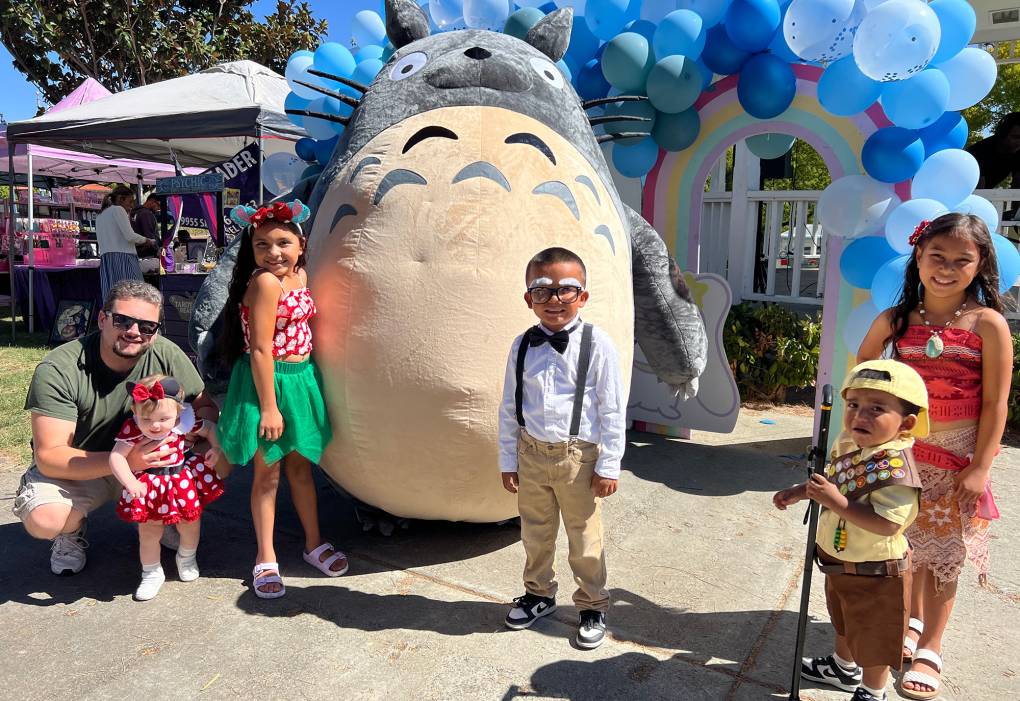
The Bay Area’s Cutest Food Festival Is Throwing a Lumpia Party
SF's Mestiza Returns With 13-Inch Lumpia and Vegan Filipino Bites
Do You Know the Way to the South Bay's Only Lumpia Eating Contest?
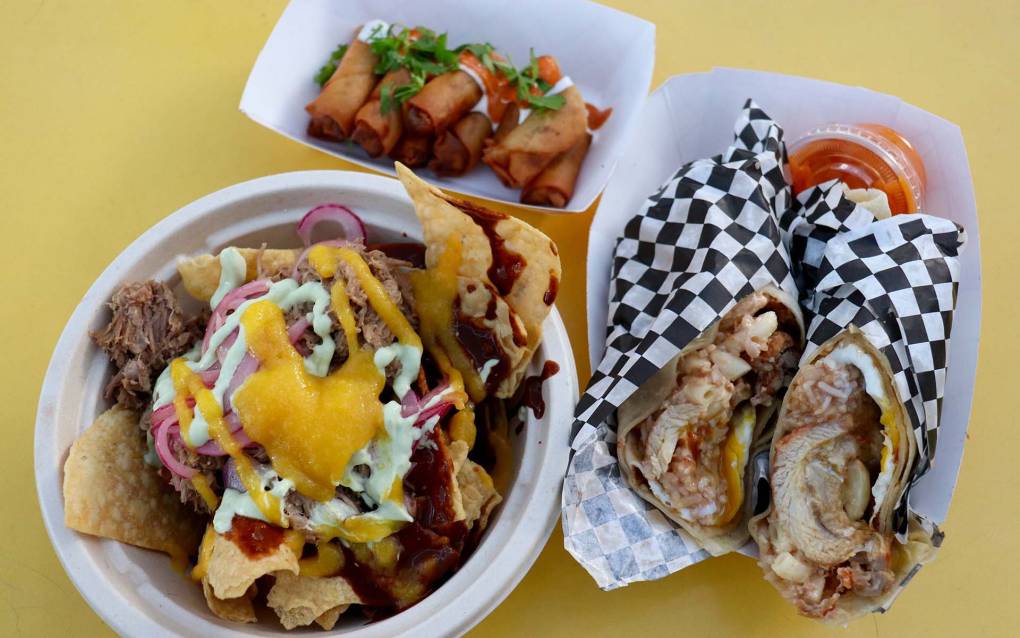
A New San Jose Food Truck Fuses Filipino, Mexican and Hawaiian Flavors
Player sponsored by
window.__IS_SSR__=true
window.__INITIAL_STATE__={
"attachmentsReducer": {
"audio_0": {
"type": "attachments",
"id": "audio_0",
"imgSizes": {
"kqedFullSize": {
"file": "https://ww2.kqed.org/news/wp-content/themes/KQED-unified/img/audio_bgs/background0.jpg"
}
}
},
"audio_1": {
"type": "attachments",
"id": "audio_1",
"imgSizes": {
"kqedFullSize": {
"file": "https://ww2.kqed.org/news/wp-content/themes/KQED-unified/img/audio_bgs/background1.jpg"
}
}
},
"audio_2": {
"type": "attachments",
"id": "audio_2",
"imgSizes": {
"kqedFullSize": {
"file": "https://ww2.kqed.org/news/wp-content/themes/KQED-unified/img/audio_bgs/background2.jpg"
}
}
},
"audio_3": {
"type": "attachments",
"id": "audio_3",
"imgSizes": {
"kqedFullSize": {
"file": "https://ww2.kqed.org/news/wp-content/themes/KQED-unified/img/audio_bgs/background3.jpg"
}
}
},
"audio_4": {
"type": "attachments",
"id": "audio_4",
"imgSizes": {
"kqedFullSize": {
"file": "https://ww2.kqed.org/news/wp-content/themes/KQED-unified/img/audio_bgs/background4.jpg"
}
}
},
"placeholder": {
"type": "attachments",
"id": "placeholder",
"imgSizes": {
"thumbnail": {
"file": "https://cdn.kqed.org/wp-content/uploads/2024/12/KQED-Default-Image-816638274-2000x1333-1-160x107.jpg",
"width": 160,
"height": 107,
"mimeType": "image/jpeg"
},
"medium": {
"file": "https://cdn.kqed.org/wp-content/uploads/2024/12/KQED-Default-Image-816638274-2000x1333-1-800x533.jpg",
"width": 800,
"height": 533,
"mimeType": "image/jpeg"
},
"medium_large": {
"file": "https://cdn.kqed.org/wp-content/uploads/2024/12/KQED-Default-Image-816638274-2000x1333-1-768x512.jpg",
"width": 768,
"height": 512,
"mimeType": "image/jpeg"
},
"large": {
"file": "https://cdn.kqed.org/wp-content/uploads/2024/12/KQED-Default-Image-816638274-2000x1333-1-1020x680.jpg",
"width": 1020,
"height": 680,
"mimeType": "image/jpeg"
},
"1536x1536": {
"file": "https://cdn.kqed.org/wp-content/uploads/2024/12/KQED-Default-Image-816638274-2000x1333-1-1536x1024.jpg",
"width": 1536,
"height": 1024,
"mimeType": "image/jpeg"
},
"fd-lrg": {
"file": "https://cdn.kqed.org/wp-content/uploads/2024/12/KQED-Default-Image-816638274-2000x1333-1-1536x1024.jpg",
"width": 1536,
"height": 1024,
"mimeType": "image/jpeg"
},
"fd-med": {
"file": "https://cdn.kqed.org/wp-content/uploads/2024/12/KQED-Default-Image-816638274-2000x1333-1-1020x680.jpg",
"width": 1020,
"height": 680,
"mimeType": "image/jpeg"
},
"fd-sm": {
"file": "https://cdn.kqed.org/wp-content/uploads/2024/12/KQED-Default-Image-816638274-2000x1333-1-800x533.jpg",
"width": 800,
"height": 533,
"mimeType": "image/jpeg"
},
"post-thumbnail": {
"file": "https://cdn.kqed.org/wp-content/uploads/2024/12/KQED-Default-Image-816638274-2000x1333-1-672x372.jpg",
"width": 672,
"height": 372,
"mimeType": "image/jpeg"
},
"twentyfourteen-full-width": {
"file": "https://cdn.kqed.org/wp-content/uploads/2024/12/KQED-Default-Image-816638274-2000x1333-1-1038x576.jpg",
"width": 1038,
"height": 576,
"mimeType": "image/jpeg"
},
"xxsmall": {
"file": "https://cdn.kqed.org/wp-content/uploads/2024/12/KQED-Default-Image-816638274-2000x1333-1-160x107.jpg",
"width": 160,
"height": 107,
"mimeType": "image/jpeg"
},
"xsmall": {
"file": "https://cdn.kqed.org/wp-content/uploads/2024/12/KQED-Default-Image-816638274-2000x1333-1-672x372.jpg",
"width": 672,
"height": 372,
"mimeType": "image/jpeg"
},
"small": {
"file": "https://cdn.kqed.org/wp-content/uploads/2024/12/KQED-Default-Image-816638274-2000x1333-1-672x372.jpg",
"width": 672,
"height": 372,
"mimeType": "image/jpeg"
},
"xlarge": {
"file": "https://cdn.kqed.org/wp-content/uploads/2024/12/KQED-Default-Image-816638274-2000x1333-1-1020x680.jpg",
"width": 1020,
"height": 680,
"mimeType": "image/jpeg"
},
"full-width": {
"file": "https://cdn.kqed.org/wp-content/uploads/2024/12/KQED-Default-Image-816638274-2000x1333-1-1920x1280.jpg",
"width": 1920,
"height": 1280,
"mimeType": "image/jpeg"
},
"guest-author-32": {
"file": "https://cdn.kqed.org/wp-content/uploads/2025/01/KQED-Default-Image-816638274-1333x1333-1-160x160.jpg",
"width": 32,
"height": 32,
"mimeType": "image/jpeg"
},
"guest-author-50": {
"file": "https://cdn.kqed.org/wp-content/uploads/2025/01/KQED-Default-Image-816638274-1333x1333-1-160x160.jpg",
"width": 50,
"height": 50,
"mimeType": "image/jpeg"
},
"guest-author-64": {
"file": "https://cdn.kqed.org/wp-content/uploads/2025/01/KQED-Default-Image-816638274-1333x1333-1-160x160.jpg",
"width": 64,
"height": 64,
"mimeType": "image/jpeg"
},
"guest-author-96": {
"file": "https://cdn.kqed.org/wp-content/uploads/2025/01/KQED-Default-Image-816638274-1333x1333-1-160x160.jpg",
"width": 96,
"height": 96,
"mimeType": "image/jpeg"
},
"guest-author-128": {
"file": "https://cdn.kqed.org/wp-content/uploads/2025/01/KQED-Default-Image-816638274-1333x1333-1-160x160.jpg",
"width": 128,
"height": 128,
"mimeType": "image/jpeg"
},
"detail": {
"file": "https://cdn.kqed.org/wp-content/uploads/2025/01/KQED-Default-Image-816638274-1333x1333-1-160x160.jpg",
"width": 160,
"height": 160,
"mimeType": "image/jpeg"
},
"kqedFullSize": {
"file": "https://cdn.kqed.org/wp-content/uploads/2024/12/KQED-Default-Image-816638274-2000x1333-1.jpg",
"width": 2000,
"height": 1333
}
}
},
"arts_13970238": {
"type": "attachments",
"id": "arts_13970238",
"meta": {
"index": "attachments_1716263798",
"site": "arts",
"id": "13970238",
"found": true
},
"title": "harajuku totoro",
"publishDate": 1736820343,
"status": "inherit",
"parent": 13970225,
"modified": 1736820577,
"caption": "Kids dressed as Disney/Pixar characters pose for a picture with Totoro at a past Harajuku Foodie Fest event. The Benicia-based festival series combines anime, kawaii culture and local street food vendors.",
"credit": "Courtesy of Harajuku Marketplace",
"altTag": "Children dressed up as Pixar and Disney characters pose in front of a giant stuffed Totoro.",
"description": null,
"imgSizes": {
"medium": {
"file": "https://cdn.kqed.org/wp-content/uploads/sites/2/2025/01/harajuku-totoro-800x550.jpg",
"width": 800,
"height": 550,
"mimeType": "image/jpeg"
},
"large": {
"file": "https://cdn.kqed.org/wp-content/uploads/sites/2/2025/01/harajuku-totoro-1020x701.jpg",
"width": 1020,
"height": 701,
"mimeType": "image/jpeg"
},
"thumbnail": {
"file": "https://cdn.kqed.org/wp-content/uploads/sites/2/2025/01/harajuku-totoro-160x110.jpg",
"width": 160,
"height": 110,
"mimeType": "image/jpeg"
},
"medium_large": {
"file": "https://cdn.kqed.org/wp-content/uploads/sites/2/2025/01/harajuku-totoro-768x528.jpg",
"width": 768,
"height": 528,
"mimeType": "image/jpeg"
},
"1536x1536": {
"file": "https://cdn.kqed.org/wp-content/uploads/sites/2/2025/01/harajuku-totoro-1536x1056.jpg",
"width": 1536,
"height": 1056,
"mimeType": "image/jpeg"
},
"post-thumbnail": {
"file": "https://cdn.kqed.org/wp-content/uploads/sites/2/2025/01/harajuku-totoro-672x372.jpg",
"width": 672,
"height": 372,
"mimeType": "image/jpeg"
},
"twentyfourteen-full-width": {
"file": "https://cdn.kqed.org/wp-content/uploads/sites/2/2025/01/harajuku-totoro-1038x576.jpg",
"width": 1038,
"height": 576,
"mimeType": "image/jpeg"
},
"full-width": {
"file": "https://cdn.kqed.org/wp-content/uploads/sites/2/2025/01/harajuku-totoro-1920x1320.jpg",
"width": 1920,
"height": 1320,
"mimeType": "image/jpeg"
},
"kqedFullSize": {
"file": "https://cdn.kqed.org/wp-content/uploads/sites/2/2025/01/harajuku-totoro.jpg",
"width": 2000,
"height": 1375
}
},
"isLoading": false,
"fetchFailed": false
},
"arts_13961870": {
"type": "attachments",
"id": "arts_13961870",
"meta": {
"index": "attachments_1716263798",
"site": "arts",
"id": "13961870",
"found": true
},
"title": "2",
"publishDate": 1722460637,
"status": "inherit",
"parent": 13961696,
"modified": 1722461712,
"caption": "Mestiza, the newly reopened Filipino restaurant in San Francisco's SoMa district, features fresh, plant-leaning dishes like a calabasa coconut curry (pictured on the right).",
"credit": "Beth LaBerge/KQED",
"altTag": "A chef holding two Filipino dishes, including a coconut curry topped with bok choy.",
"description": null,
"imgSizes": {
"medium": {
"file": "https://cdn.kqed.org/wp-content/uploads/sites/2/2024/07/2-800x450.png",
"width": 800,
"height": 450,
"mimeType": "image/png"
},
"large": {
"file": "https://cdn.kqed.org/wp-content/uploads/sites/2/2024/07/2-1020x574.png",
"width": 1020,
"height": 574,
"mimeType": "image/png"
},
"thumbnail": {
"file": "https://cdn.kqed.org/wp-content/uploads/sites/2/2024/07/2-160x90.png",
"width": 160,
"height": 90,
"mimeType": "image/png"
},
"medium_large": {
"file": "https://cdn.kqed.org/wp-content/uploads/sites/2/2024/07/2-768x432.png",
"width": 768,
"height": 432,
"mimeType": "image/png"
},
"1536x1536": {
"file": "https://cdn.kqed.org/wp-content/uploads/sites/2/2024/07/2-1536x864.png",
"width": 1536,
"height": 864,
"mimeType": "image/png"
},
"post-thumbnail": {
"file": "https://cdn.kqed.org/wp-content/uploads/sites/2/2024/07/2-672x372.png",
"width": 672,
"height": 372,
"mimeType": "image/png"
},
"twentyfourteen-full-width": {
"file": "https://cdn.kqed.org/wp-content/uploads/sites/2/2024/07/2-1038x576.png",
"width": 1038,
"height": 576,
"mimeType": "image/png"
},
"kqedFullSize": {
"file": "https://cdn.kqed.org/wp-content/uploads/sites/2/2024/07/2.png",
"width": 1920,
"height": 1080
}
},
"isLoading": false,
"fetchFailed": false
},
"arts_13954688": {
"type": "attachments",
"id": "arts_13954688",
"meta": {
"index": "attachments_1716263798",
"site": "arts",
"id": "13954688",
"found": true
},
"parent": 13954682,
"imgSizes": {
"twentyfourteen-full-width": {
"file": "https://cdn.kqed.org/wp-content/uploads/sites/2/2024/03/lumpia_crop-1038x576.jpg",
"width": 1038,
"mimeType": "image/jpeg",
"height": 576
},
"thumbnail": {
"file": "https://cdn.kqed.org/wp-content/uploads/sites/2/2024/03/lumpia_crop-160x90.jpg",
"width": 160,
"mimeType": "image/jpeg",
"height": 90
},
"post-thumbnail": {
"file": "https://cdn.kqed.org/wp-content/uploads/sites/2/2024/03/lumpia_crop-672x372.jpg",
"width": 672,
"mimeType": "image/jpeg",
"height": 372
},
"kqedFullSize": {
"file": "https://cdn.kqed.org/wp-content/uploads/sites/2/2024/03/lumpia_crop.jpg",
"width": 2000,
"height": 1125
},
"large": {
"file": "https://cdn.kqed.org/wp-content/uploads/sites/2/2024/03/lumpia_crop-1020x574.jpg",
"width": 1020,
"mimeType": "image/jpeg",
"height": 574
},
"1536x1536": {
"file": "https://cdn.kqed.org/wp-content/uploads/sites/2/2024/03/lumpia_crop-1536x864.jpg",
"width": 1536,
"mimeType": "image/jpeg",
"height": 864
},
"full-width": {
"file": "https://cdn.kqed.org/wp-content/uploads/sites/2/2024/03/lumpia_crop-1920x1080.jpg",
"width": 1920,
"mimeType": "image/jpeg",
"height": 1080
},
"medium": {
"file": "https://cdn.kqed.org/wp-content/uploads/sites/2/2024/03/lumpia_crop-800x450.jpg",
"width": 800,
"mimeType": "image/jpeg",
"height": 450
},
"medium_large": {
"file": "https://cdn.kqed.org/wp-content/uploads/sites/2/2024/03/lumpia_crop-768x432.jpg",
"width": 768,
"mimeType": "image/jpeg",
"height": 432
}
},
"publishDate": 1711395675,
"modified": 1711407960,
"caption": "How many lumpia can you eat in five minutes? A contestant at last year's inaugural lumpia eating contest in San Jose shows how it's done.",
"description": null,
"title": "lumpia_crop",
"credit": "Courtesy of Mestizo",
"status": "inherit",
"altTag": "a man shoves four lumpia rolls into his mouth during an eating contest",
"isLoading": false,
"fetchFailed": false
},
"arts_13932744": {
"type": "attachments",
"id": "arts_13932744",
"meta": {
"index": "attachments_1716263798",
"site": "arts",
"id": "13932744",
"found": true
},
"parent": 13932574,
"imgSizes": {
"twentyfourteen-full-width": {
"file": "https://ww2.kqed.org/app/uploads/sites/2/2023/08/mestizo_threedishes-crop-1038x576.jpg",
"width": 1038,
"mimeType": "image/jpeg",
"height": 576
},
"thumbnail": {
"file": "https://ww2.kqed.org/app/uploads/sites/2/2023/08/mestizo_threedishes-crop-160x100.jpg",
"width": 160,
"mimeType": "image/jpeg",
"height": 100
},
"post-thumbnail": {
"file": "https://ww2.kqed.org/app/uploads/sites/2/2023/08/mestizo_threedishes-crop-672x372.jpg",
"width": 672,
"mimeType": "image/jpeg",
"height": 372
},
"kqedFullSize": {
"file": "https://ww2.kqed.org/app/uploads/sites/2/2023/08/mestizo_threedishes-crop.jpg",
"width": 1920,
"height": 1200
},
"large": {
"file": "https://ww2.kqed.org/app/uploads/sites/2/2023/08/mestizo_threedishes-crop-1020x638.jpg",
"width": 1020,
"mimeType": "image/jpeg",
"height": 638
},
"1536x1536": {
"file": "https://ww2.kqed.org/app/uploads/sites/2/2023/08/mestizo_threedishes-crop-1536x960.jpg",
"width": 1536,
"mimeType": "image/jpeg",
"height": 960
},
"medium": {
"file": "https://ww2.kqed.org/app/uploads/sites/2/2023/08/mestizo_threedishes-crop-800x500.jpg",
"width": 800,
"mimeType": "image/jpeg",
"height": 500
},
"medium_large": {
"file": "https://ww2.kqed.org/app/uploads/sites/2/2023/08/mestizo_threedishes-crop-768x480.jpg",
"width": 768,
"mimeType": "image/jpeg",
"height": 480
}
},
"publishDate": 1691430790,
"modified": 1691431062,
"caption": "Three dishes from Mestizo showcase the food truck's many cultural influences: Filipino lumpia; a Mexican burrito with fried chicken, gravy and mac salad; and chilaquiles topped with Hawaiian kalua pork.",
"description": null,
"title": "mestizo_threedishes-crop",
"credit": "Alan Chazaro",
"status": "inherit",
"altTag": "a burrito, chilaquiles, and lumpia are showcased on a yellow table outdoors",
"isLoading": false,
"fetchFailed": false
}
},
"audioPlayerReducer": {
"postId": "stream_live",
"isPaused": true,
"isPlaying": false,
"pfsActive": false,
"pledgeModalIsOpen": true,
"playerDrawerIsOpen": false,
"liveAudioPlayStartedAt": 0,
"liveAudioPlayContext": ""
},
"authorsReducer": {
"ltsai": {
"type": "authors",
"id": "11743",
"meta": {
"index": "authors_1716337520",
"id": "11743",
"found": true
},
"name": "Luke Tsai",
"firstName": "Luke",
"lastName": "Tsai",
"slug": "ltsai",
"email": "ltsai@kqed.org",
"display_author_email": true,
"staff_mastheads": [
"arts"
],
"title": "Food Editor",
"bio": "Luke Tsai is KQED's food editor and resident stinky tofu connoisseur. Prior to KQED, he was an editor at Eater SF, \u003cem>San Francisco \u003c/em>magazine, and the \u003cem>East Bay Express\u003c/em>, and his work has also appeared in TASTE, the \u003cem>San Francisco Chronicle\u003c/em>, and the \u003cem>Best Food Writing\u003c/em> anthology. When he isn't writing or editing, you'll find him eating most everything he can get his hands on.",
"avatar": "https://secure.gravatar.com/avatar/1e59b45bf191526e7339d6ba46e33a57b2030d25c27660ecc64ea3cb863e34f7?s=600&d=blank&r=g",
"twitter": "theluketsai",
"bluesky": null,
"facebook": null,
"instagram": null,
"linkedin": null,
"sites": [
{
"site": "",
"roles": [
"editor"
]
},
{
"site": "arts",
"roles": [
"administrator"
]
},
{
"site": "news",
"roles": [
"editor",
"contributor"
]
},
{
"site": "bayareabites",
"roles": [
"editor"
]
},
{
"site": "food",
"roles": [
"editor"
]
}
],
"headData": {
"title": "Luke Tsai | KQED",
"description": "Food Editor",
"ogImgSrc": "https://secure.gravatar.com/avatar/1e59b45bf191526e7339d6ba46e33a57b2030d25c27660ecc64ea3cb863e34f7?s=600&d=blank&r=g",
"twImgSrc": "https://secure.gravatar.com/avatar/1e59b45bf191526e7339d6ba46e33a57b2030d25c27660ecc64ea3cb863e34f7?s=600&d=blank&r=g"
},
"isLoading": false,
"link": "/author/ltsai"
},
"achazaro": {
"type": "authors",
"id": "11748",
"meta": {
"index": "authors_1716337520",
"id": "11748",
"found": true
},
"name": "Alan Chazaro",
"firstName": "Alan",
"lastName": "Chazaro",
"slug": "achazaro",
"email": "agchazaro@gmail.com",
"display_author_email": true,
"staff_mastheads": [],
"title": "Food Writer and Reporter",
"bio": "Alan Chazaro is the author of \u003cem>This Is Not a Frank Ocean Cover Album\u003c/em> (Black Lawrence Press, 2019), \u003cem>Piñata Theory\u003c/em> (Black Lawrence Press, 2020), and \u003cem>Notes from the Eastern Span of the Bay Bridge\u003c/em> (Ghost City Press, 2021). He is a graduate of June Jordan’s Poetry for the People program at UC Berkeley and a former Lawrence Ferlinghetti Fellow at the University of San Francisco. He writes about sports, food, art, music, education, and culture while repping the Bay on \u003ca href=\"https://twitter.com/alan_chazaro\">Twitter\u003c/a> and \u003ca href=\"https://www.instagram.com/alan_chazaro/?hl=en\">Instagram\u003c/a> at @alan_chazaro.",
"avatar": "https://secure.gravatar.com/avatar/ea8b6dd970fc5c29e7a188e7d5861df7?s=600&d=blank&r=g",
"twitter": "alan_chazaro",
"facebook": null,
"instagram": null,
"linkedin": null,
"sites": [
{
"site": "arts",
"roles": [
"contributor"
]
},
{
"site": "news",
"roles": [
"editor"
]
}
],
"headData": {
"title": "Alan Chazaro | KQED",
"description": "Food Writer and Reporter",
"ogImgSrc": "https://secure.gravatar.com/avatar/ea8b6dd970fc5c29e7a188e7d5861df7?s=600&d=blank&r=g",
"twImgSrc": "https://secure.gravatar.com/avatar/ea8b6dd970fc5c29e7a188e7d5861df7?s=600&d=blank&r=g"
},
"isLoading": false,
"link": "/author/achazaro"
}
},
"pagesReducer": {
"arts_tag_lumpia": {
"type": "terms",
"id": "arts_15892",
"meta": {
"index": "terms_1716263798",
"site": "arts",
"id": "15892",
"score": 9.55733
},
"featImg": null,
"name": "lumpia",
"description": null,
"taxonomy": "tag",
"headData": {
"twImgId": null,
"twTitle": null,
"ogTitle": null,
"ogImgId": null,
"twDescription": null,
"description": null,
"title": "lumpia Archives | KQED Arts",
"ogDescription": null
},
"ttid": 15904,
"slug": "lumpia",
"isLoading": false,
"title": "lumpia",
"pageMeta": {
"site": "arts",
"WpPageTemplate": "page-topic-editorial",
"currentPage": 1
},
"blocks": [
{
"blockName": "kqed/post-list",
"attrs": {
"layout": "cardArticle2",
"query": "posts/arts?tag=lumpia",
"seeMore": false,
"paginated": true,
"page": 1
}
},
{
"blockName": "kqed/ad"
}
]
}
},
"pfsSessionReducer": {},
"postsReducer": {
"stream_live": {
"type": "live",
"id": "stream_live",
"audioUrl": "https://streams.kqed.org/kqedradio",
"title": "Live Stream",
"excerpt": "Live Stream information currently unavailable.",
"link": "/radio",
"featImg": "",
"label": {
"name": "KQED Live",
"link": "/"
}
},
"stream_kqedNewscast": {
"type": "posts",
"id": "stream_kqedNewscast",
"audioUrl": "https://www.kqed.org/.stream/anon/radio/RDnews/newscast.mp3?_=1",
"title": "KQED Newscast",
"featImg": "",
"label": {
"name": "88.5 FM",
"link": "/"
}
},
"arts_13970225": {
"type": "posts",
"id": "arts_13970225",
"meta": {
"index": "posts_1716263798",
"site": "arts",
"id": "13970225",
"score": null,
"sort": [
1736874052000
]
},
"guestAuthors": [],
"slug": "the-bay-areas-cutest-food-festival-is-throwing-a-lumpia-party",
"title": "The Bay Area’s Cutest Food Festival Is Throwing a Lumpia Party",
"publishDate": 1736874052,
"format": "standard",
"headTitle": "The Bay Area’s Cutest Food Festival Is Throwing a Lumpia Party | KQED",
"labelTerm": {},
"content": "\u003cp>Samantha Larot’s idea for the \u003ca href=\"https://www.instagram.com/harajukumarketplace/?hl=en%5C\">Harajuku Foodie Fest\u003c/a> was a simple one: By the summer of 2023, she’d been throwing successful food and craft pop-ups for much of the pandemic, starting with a handful of vendors outside her \u003ca href=\"https://aquarianplants.com/\">plant shop in Benicia\u003c/a> and eventually moving to the nearby City Park when she outgrew that space. She’d also been a lifelong lover of \u003ca href=\"https://www.kqed.org/arts/tag/anime\">anime\u003c/a>, Japanese art and “kawaii” culture — everything cute and pastel pink.\u003c/p>\n\u003cp>Why not combine the two?\u003c/p>\n\u003cp>So was born the first Harajuku Marketplace, in August of 2023, and it drew such a huge, enthusiastic crowd — more than 13,000 attendees from all over Northern California — that Larot knew she had to do it again. (“It was meant to be a one-off,” she says.) Now, Larot hosts the self-described “cutest foodie marketplace” in the Bay two to three times a month, both in Benicia and beyond, catering to the (very large) subset of Bay Area food lovers who also dabble in cosplay and Hello Kitty merch.\u003c/p>\n\u003cp>\u003cspan style=\"font-weight: 400\">[aside postID='arts_13935285,arts_13932574']\u003c/span>“They’re nostalgic characters for our [generation],” Larot says. “A lot of our parents who grew up in the ’90s bring their kids, so it’s fun for them too.”\u003c/p>\n\u003cp>The \u003ca href=\"https://www.eventbrite.com/e/lumpia-fest-tickets-1013205513967\">latest iteration of the festival\u003c/a>, which will be held at Daly City’s Cow Palace on Saturday, Jan. 18, will have an additional theme: It will double as a \u003ca href=\"https://www.kqed.org/arts/tag/lumpia\">lumpia\u003c/a> party. As Larot notes, one of the main differences between the Harajuku festival and other Bay Area manga or anime events is its emphasis on local street food vendors — 30 in all for Saturday’s event. It’s at least as much a food festival as it is an anime marketplace. As for the lumpia theme, Larot explains, “I’m Filipino. And I wanted to start including some of my culture.”\u003c/p>\n\u003cfigure id=\"attachment_13970239\" class=\"wp-caption alignnone\" style=\"max-width: 2000px\">\u003cimg loading=\"lazy\" decoding=\"async\" class=\"size-full wp-image-13970239\" src=\"https://cdn.kqed.org/wp-content/uploads/sites/2/2025/01/harajuku-composite.jpg\" alt=\"Left: a food vendor shows off a box of lumpia. Right: a festival attendee dressed as a character from 'One Piece' holds a tray of skewered meats.\" width=\"2000\" height=\"1500\" srcset=\"https://cdn.kqed.org/wp-content/uploads/sites/2/2025/01/harajuku-composite.jpg 2000w, https://cdn.kqed.org/wp-content/uploads/sites/2/2025/01/harajuku-composite-800x600.jpg 800w, https://cdn.kqed.org/wp-content/uploads/sites/2/2025/01/harajuku-composite-1020x765.jpg 1020w, https://cdn.kqed.org/wp-content/uploads/sites/2/2025/01/harajuku-composite-160x120.jpg 160w, https://cdn.kqed.org/wp-content/uploads/sites/2/2025/01/harajuku-composite-768x576.jpg 768w, https://cdn.kqed.org/wp-content/uploads/sites/2/2025/01/harajuku-composite-1536x1152.jpg 1536w, https://cdn.kqed.org/wp-content/uploads/sites/2/2025/01/harajuku-composite-1920x1440.jpg 1920w\" sizes=\"auto, (max-width: 2000px) 100vw, 2000px\">\u003cfigcaption class=\"wp-caption-text\">Left: A vendor at a past edition of Harajuku Lumpia Fest. Right: A festival attendee dressed as Monkey D. Luffy from ‘One Piece.’ \u003ccite>(Courtesy of Harajuku Marketplace)\u003c/cite>\u003c/figcaption>\u003c/figure>\n\u003cp>For Harajuku Lumpia Fest, that means a whole host of Filipino food vendors, running the gamut from \u003ca href=\"https://www.instagram.com/lasangpinoy_tusoktusok/\">Lasang Pinoy\u003c/a>, a traditional street food vendor hawking meat skewers and classic lumpia Shanghai, to \u003ca href=\"https://www.instagram.com/lumpiabucket/\">Lumpia Bucket\u003c/a>, which is known for selling massive buckets of lumpia either layered with chicharon or overloaded, Jack in the Box–style, with \u003ca href=\"https://www.instagram.com/p/C-wfIqvRwnL/\">lettuce, sour cream and cheese\u003c/a>. Plenty of non-Filipino vendors, including longtime Harajuku favorites like Vallejo’s \u003ca href=\"https://www.instagram.com/sushiobsessionvallejo/?hl=en\">Sushi Obsession\u003c/a> (known for its “sushi nachos”), will also be in attendance.\u003c/p>\n\u003cp>[ad fullwidth]\u003c/p>\n\u003cp>And since this \u003ci>is\u003c/i>, at the end of the day, an event focused on cute merch, the first 500 attendees will receive a free lumpia-themed tote bag, and the first 150 will receive a Lumpia Fest T-shirt.\u003c/p>\n\u003cp>On the art side of things, Larot says the Harajuku events are also much more locally focused than most anime conventions. “Some vendors will have \u003ci>Pokémon\u003c/i>, \u003ci>Sailor Moon\u003c/i> and Studio Ghibli,” she says. “But we also have local artists creating original artwork that you’re not going to find anywhere else.”\u003c/p>\n\u003cfigure id=\"attachment_13970240\" class=\"wp-caption alignnone\" style=\"max-width: 1707px\">\u003cimg loading=\"lazy\" decoding=\"async\" class=\"size-full wp-image-13970240\" src=\"https://cdn.kqed.org/wp-content/uploads/sites/2/2025/01/harajuku-cosplay-scaled.jpg\" alt=\"Two festival attendees dressed like anime characters.\" width=\"1707\" height=\"2560\" srcset=\"https://cdn.kqed.org/wp-content/uploads/sites/2/2025/01/harajuku-cosplay-scaled.jpg 1707w, https://cdn.kqed.org/wp-content/uploads/sites/2/2025/01/harajuku-cosplay-800x1200.jpg 800w, https://cdn.kqed.org/wp-content/uploads/sites/2/2025/01/harajuku-cosplay-1020x1530.jpg 1020w, https://cdn.kqed.org/wp-content/uploads/sites/2/2025/01/harajuku-cosplay-160x240.jpg 160w, https://cdn.kqed.org/wp-content/uploads/sites/2/2025/01/harajuku-cosplay-768x1152.jpg 768w, https://cdn.kqed.org/wp-content/uploads/sites/2/2025/01/harajuku-cosplay-1024x1536.jpg 1024w, https://cdn.kqed.org/wp-content/uploads/sites/2/2025/01/harajuku-cosplay-1365x2048.jpg 1365w, https://cdn.kqed.org/wp-content/uploads/sites/2/2025/01/harajuku-cosplay-1920x2880.jpg 1920w\" sizes=\"auto, (max-width: 1707px) 100vw, 1707px\">\u003cfigcaption class=\"wp-caption-text\">Festival attendees are encouraged to come decked out in their most ‘kawaii’ outfits. \u003ccite>(Courtesy of Harajuku Marketplace)\u003c/cite>\u003c/figcaption>\u003c/figure>\n\u003cp>The Jan. 18 festival is actually a makeup rain date after the original event was washed out by the spate of wet weather in mid-December (though the Cow Palace is an indoor space, many of the food vendors set up outside). Given the catastrophic wildfires that have swept through Los Angeles in the interim, the festival is also offering tickets that include a “The Bay Loves L.A.” fundraiser tote bag, with proceeds going toward fire relief.\u003c/p>\n\u003chr>\n\u003cp>\u003c/p>\n\u003cp>\u003ci>Harajuku Lumpia Fest takes place on Saturday, Jan. 18, 10 a.m.–5 p.m., at Cow Palace (2600 Geneva Ave.) in Daly City. \u003c/i>\u003ca href=\"https://www.eventbrite.com/e/lumpia-fest-tickets-1013205513967\">\u003ci>Tickets\u003c/i>\u003c/a>\u003ci> start at $5 with online early registration.\u003c/i>\u003c/p>\n\n",
"blocks": [],
"excerpt": "Harajuku Foodie Fest comes to the Cow Palace in Daly City.",
"status": "publish",
"parent": 0,
"modified": 1736821263,
"stats": {
"hasAudio": false,
"hasVideo": false,
"hasChartOrMap": false,
"iframeSrcs": [],
"hasGoogleForm": false,
"hasGallery": false,
"hasHearkenModule": false,
"hasPolis": false,
"paragraphCount": 12,
"wordCount": 683
},
"headData": {
"title": "The Bay Area’s Cutest Food Festival Is Throwing a Lumpia Party | KQED",
"description": "Harajuku Foodie Fest comes to the Cow Palace in Daly City.",
"ogTitle": "",
"ogDescription": "",
"ogImgId": "",
"twTitle": "",
"twDescription": "",
"twImgId": "",
"schema": {
"@context": "https://schema.org",
"@type": "Article",
"headline": "The Bay Area’s Cutest Food Festival Is Throwing a Lumpia Party",
"datePublished": "2025-01-14T09:00:52-08:00",
"dateModified": "2025-01-13T18:21:03-08:00",
"image": "https://cdn.kqed.org/wp-content/uploads/2020/02/KQED-OG-Image@1x.png"
}
},
"source": "Food",
"sourceUrl": "https://www.kqed.org/food",
"sticky": false,
"excludeFromSiteSearch": "Include",
"articleAge": "0",
"path": "/arts/13970225/the-bay-areas-cutest-food-festival-is-throwing-a-lumpia-party",
"audioTrackLength": null,
"parsedContent": [
{
"type": "contentString",
"content": "\u003cdiv class=\"post-body\">\u003cp>\u003cp>Samantha Larot’s idea for the \u003ca href=\"https://www.instagram.com/harajukumarketplace/?hl=en%5C\">Harajuku Foodie Fest\u003c/a> was a simple one: By the summer of 2023, she’d been throwing successful food and craft pop-ups for much of the pandemic, starting with a handful of vendors outside her \u003ca href=\"https://aquarianplants.com/\">plant shop in Benicia\u003c/a> and eventually moving to the nearby City Park when she outgrew that space. She’d also been a lifelong lover of \u003ca href=\"https://www.kqed.org/arts/tag/anime\">anime\u003c/a>, Japanese art and “kawaii” culture — everything cute and pastel pink.\u003c/p>\n\u003cp>Why not combine the two?\u003c/p>\n\u003cp>So was born the first Harajuku Marketplace, in August of 2023, and it drew such a huge, enthusiastic crowd — more than 13,000 attendees from all over Northern California — that Larot knew she had to do it again. (“It was meant to be a one-off,” she says.) Now, Larot hosts the self-described “cutest foodie marketplace” in the Bay two to three times a month, both in Benicia and beyond, catering to the (very large) subset of Bay Area food lovers who also dabble in cosplay and Hello Kitty merch.\u003c/p>\n\u003cp>\u003cspan style=\"font-weight: 400\">\u003c/p>\u003c/div>",
"attributes": {
"named": {},
"numeric": []
}
},
{
"type": "component",
"content": "",
"name": "aside",
"attributes": {
"named": {
"postid": "arts_13935285,arts_13932574",
"label": ""
},
"numeric": []
}
},
{
"type": "contentString",
"content": "\u003cdiv class=\"post-body\">\u003cp>\u003c/span>“They’re nostalgic characters for our [generation],” Larot says. “A lot of our parents who grew up in the ’90s bring their kids, so it’s fun for them too.”\u003c/p>\n\u003cp>The \u003ca href=\"https://www.eventbrite.com/e/lumpia-fest-tickets-1013205513967\">latest iteration of the festival\u003c/a>, which will be held at Daly City’s Cow Palace on Saturday, Jan. 18, will have an additional theme: It will double as a \u003ca href=\"https://www.kqed.org/arts/tag/lumpia\">lumpia\u003c/a> party. As Larot notes, one of the main differences between the Harajuku festival and other Bay Area manga or anime events is its emphasis on local street food vendors — 30 in all for Saturday’s event. It’s at least as much a food festival as it is an anime marketplace. As for the lumpia theme, Larot explains, “I’m Filipino. And I wanted to start including some of my culture.”\u003c/p>\n\u003cfigure id=\"attachment_13970239\" class=\"wp-caption alignnone\" style=\"max-width: 2000px\">\u003cimg loading=\"lazy\" decoding=\"async\" class=\"size-full wp-image-13970239\" src=\"https://cdn.kqed.org/wp-content/uploads/sites/2/2025/01/harajuku-composite.jpg\" alt=\"Left: a food vendor shows off a box of lumpia. Right: a festival attendee dressed as a character from 'One Piece' holds a tray of skewered meats.\" width=\"2000\" height=\"1500\" srcset=\"https://cdn.kqed.org/wp-content/uploads/sites/2/2025/01/harajuku-composite.jpg 2000w, https://cdn.kqed.org/wp-content/uploads/sites/2/2025/01/harajuku-composite-800x600.jpg 800w, https://cdn.kqed.org/wp-content/uploads/sites/2/2025/01/harajuku-composite-1020x765.jpg 1020w, https://cdn.kqed.org/wp-content/uploads/sites/2/2025/01/harajuku-composite-160x120.jpg 160w, https://cdn.kqed.org/wp-content/uploads/sites/2/2025/01/harajuku-composite-768x576.jpg 768w, https://cdn.kqed.org/wp-content/uploads/sites/2/2025/01/harajuku-composite-1536x1152.jpg 1536w, https://cdn.kqed.org/wp-content/uploads/sites/2/2025/01/harajuku-composite-1920x1440.jpg 1920w\" sizes=\"auto, (max-width: 2000px) 100vw, 2000px\">\u003cfigcaption class=\"wp-caption-text\">Left: A vendor at a past edition of Harajuku Lumpia Fest. Right: A festival attendee dressed as Monkey D. Luffy from ‘One Piece.’ \u003ccite>(Courtesy of Harajuku Marketplace)\u003c/cite>\u003c/figcaption>\u003c/figure>\n\u003cp>For Harajuku Lumpia Fest, that means a whole host of Filipino food vendors, running the gamut from \u003ca href=\"https://www.instagram.com/lasangpinoy_tusoktusok/\">Lasang Pinoy\u003c/a>, a traditional street food vendor hawking meat skewers and classic lumpia Shanghai, to \u003ca href=\"https://www.instagram.com/lumpiabucket/\">Lumpia Bucket\u003c/a>, which is known for selling massive buckets of lumpia either layered with chicharon or overloaded, Jack in the Box–style, with \u003ca href=\"https://www.instagram.com/p/C-wfIqvRwnL/\">lettuce, sour cream and cheese\u003c/a>. Plenty of non-Filipino vendors, including longtime Harajuku favorites like Vallejo’s \u003ca href=\"https://www.instagram.com/sushiobsessionvallejo/?hl=en\">Sushi Obsession\u003c/a> (known for its “sushi nachos”), will also be in attendance.\u003c/p>\n\u003cp>\u003c/p>\u003c/div>",
"attributes": {
"named": {},
"numeric": []
}
},
{
"type": "component",
"content": "",
"name": "ad",
"attributes": {
"named": {
"label": "fullwidth"
},
"numeric": [
"fullwidth"
]
}
},
{
"type": "contentString",
"content": "\u003cdiv class=\"post-body\">\u003cp>\u003c/p>\n\u003cp>And since this \u003ci>is\u003c/i>, at the end of the day, an event focused on cute merch, the first 500 attendees will receive a free lumpia-themed tote bag, and the first 150 will receive a Lumpia Fest T-shirt.\u003c/p>\n\u003cp>On the art side of things, Larot says the Harajuku events are also much more locally focused than most anime conventions. “Some vendors will have \u003ci>Pokémon\u003c/i>, \u003ci>Sailor Moon\u003c/i> and Studio Ghibli,” she says. “But we also have local artists creating original artwork that you’re not going to find anywhere else.”\u003c/p>\n\u003cfigure id=\"attachment_13970240\" class=\"wp-caption alignnone\" style=\"max-width: 1707px\">\u003cimg loading=\"lazy\" decoding=\"async\" class=\"size-full wp-image-13970240\" src=\"https://cdn.kqed.org/wp-content/uploads/sites/2/2025/01/harajuku-cosplay-scaled.jpg\" alt=\"Two festival attendees dressed like anime characters.\" width=\"1707\" height=\"2560\" srcset=\"https://cdn.kqed.org/wp-content/uploads/sites/2/2025/01/harajuku-cosplay-scaled.jpg 1707w, https://cdn.kqed.org/wp-content/uploads/sites/2/2025/01/harajuku-cosplay-800x1200.jpg 800w, https://cdn.kqed.org/wp-content/uploads/sites/2/2025/01/harajuku-cosplay-1020x1530.jpg 1020w, https://cdn.kqed.org/wp-content/uploads/sites/2/2025/01/harajuku-cosplay-160x240.jpg 160w, https://cdn.kqed.org/wp-content/uploads/sites/2/2025/01/harajuku-cosplay-768x1152.jpg 768w, https://cdn.kqed.org/wp-content/uploads/sites/2/2025/01/harajuku-cosplay-1024x1536.jpg 1024w, https://cdn.kqed.org/wp-content/uploads/sites/2/2025/01/harajuku-cosplay-1365x2048.jpg 1365w, https://cdn.kqed.org/wp-content/uploads/sites/2/2025/01/harajuku-cosplay-1920x2880.jpg 1920w\" sizes=\"auto, (max-width: 1707px) 100vw, 1707px\">\u003cfigcaption class=\"wp-caption-text\">Festival attendees are encouraged to come decked out in their most ‘kawaii’ outfits. \u003ccite>(Courtesy of Harajuku Marketplace)\u003c/cite>\u003c/figcaption>\u003c/figure>\n\u003cp>The Jan. 18 festival is actually a makeup rain date after the original event was washed out by the spate of wet weather in mid-December (though the Cow Palace is an indoor space, many of the food vendors set up outside). Given the catastrophic wildfires that have swept through Los Angeles in the interim, the festival is also offering tickets that include a “The Bay Loves L.A.” fundraiser tote bag, with proceeds going toward fire relief.\u003c/p>\n\u003chr>\n\u003cp>\u003c/p>\n\u003cp>\u003ci>Harajuku Lumpia Fest takes place on Saturday, Jan. 18, 10 a.m.–5 p.m., at Cow Palace (2600 Geneva Ave.) in Daly City. \u003c/i>\u003ca href=\"https://www.eventbrite.com/e/lumpia-fest-tickets-1013205513967\">\u003ci>Tickets\u003c/i>\u003c/a>\u003ci> start at $5 with online early registration.\u003c/i>\u003c/p>\n\n\u003c/div>\u003c/p>",
"attributes": {
"named": {},
"numeric": []
}
}
],
"link": "/arts/13970225/the-bay-areas-cutest-food-festival-is-throwing-a-lumpia-party",
"authors": [
"11743"
],
"programs": [
"arts_140"
],
"categories": [
"arts_1",
"arts_12276",
"arts_22313"
],
"tags": [
"arts_22013",
"arts_18849",
"arts_2854",
"arts_10278",
"arts_22068",
"arts_14183",
"arts_1297",
"arts_15892",
"arts_585"
],
"featImg": "arts_13970238",
"label": "source_arts_13970225"
},
"arts_13961696": {
"type": "posts",
"id": "arts_13961696",
"meta": {
"index": "posts_1716263798",
"site": "arts",
"id": "13961696",
"score": null,
"sort": [
1722610802000
]
},
"guestAuthors": [],
"slug": "mestiza-filipino-vegan-restaurant-kamayan-soma-sf",
"title": "SF's Mestiza Returns With 13-Inch Lumpia and Vegan Filipino Bites",
"publishDate": 1722610802,
"format": "standard",
"headTitle": "SF’s Mestiza Returns With 13-Inch Lumpia and Vegan Filipino Bites | KQED",
"labelTerm": {},
"content": "\u003cp>\u003cstrong>\u003ca href=\"https://www.kqed.org/hellahungry\">\u003ci>¡Hella Hungry!\u003c/i>\u003c/a>\u003ci> is a series of interviews with Bay Area foodmakers exploring the region’s culinary innovations through the mouth of a first-generation local.\u003c/i>\u003c/strong>\u003c/p>\n\u003cp>[dropcap]O[/dropcap]perating a restaurant in San Francisco isn’t for the faint-hearted.\u003c/p>\n\u003cp>In a \u003ci>San Francisco Chronicle\u003c/i> column published earlier this year, former restaurant \u003ca href=\"https://www.sfchronicle.com/opinion/article/san-francisco-restaurant-small-business-18494773.php\">critic Soleil Ho outlined the debilitating costs of running a food business in a city\u003c/a> where even the most heralded institutions straddle a precarious tightrope “between stability and destitution.” In Ho’s eyes, the American notion of getting rewarded for hard work is merely a “fairy tale” — and that’s especially apparent in \u003ca href=\"https://www.sfchronicle.com/food/restaurants/article/sales-revenue-san-francisco-18659409.php\">the local restaurant industry’s recent struggles\u003c/a>.\u003c/p>\n\u003cp>Don’t tell Deanna Sison, though. As a savvy Filipina American hustler who operates a chicken-and-waffles spot (\u003ca href=\"https://www.instagram.com/littleskilletsf/?hl=en\">Little Skillet\u003c/a>) inside a cocktail bar (\u003ca href=\"https://www.instagram.com/victoryhallsf/?hl=en\">Victory Hall\u003c/a>) in Frisco’s SoMa district, Sison is far from feeble-spirited.\u003c/p>\n\u003cp>Now, she’s doubling — tripling? — down on her vision by re-launching Mestiza, the fast-casual Filipino noshery she opened in 2016. After the restaurant shuttered in 2020 due to the pandemic, most people would have just walked away. Not Sison.\u003c/p>\n\u003cfigure id=\"attachment_13961825\" class=\"wp-caption alignnone\" style=\"max-width: 2000px\">\u003cimg loading=\"lazy\" decoding=\"async\" class=\"size-full wp-image-13961825\" src=\"https://cdn.kqed.org/wp-content/uploads/sites/2/2024/07/240730-MESTIZA-07-BL-KQED.jpg\" alt=\"\" width=\"2000\" height=\"1333\" srcset=\"https://cdn.kqed.org/wp-content/uploads/sites/2/2024/07/240730-MESTIZA-07-BL-KQED.jpg 2000w, https://cdn.kqed.org/wp-content/uploads/sites/2/2024/07/240730-MESTIZA-07-BL-KQED-800x533.jpg 800w, https://cdn.kqed.org/wp-content/uploads/sites/2/2024/07/240730-MESTIZA-07-BL-KQED-1020x680.jpg 1020w, https://cdn.kqed.org/wp-content/uploads/sites/2/2024/07/240730-MESTIZA-07-BL-KQED-160x107.jpg 160w, https://cdn.kqed.org/wp-content/uploads/sites/2/2024/07/240730-MESTIZA-07-BL-KQED-768x512.jpg 768w, https://cdn.kqed.org/wp-content/uploads/sites/2/2024/07/240730-MESTIZA-07-BL-KQED-1536x1024.jpg 1536w, https://cdn.kqed.org/wp-content/uploads/sites/2/2024/07/240730-MESTIZA-07-BL-KQED-1920x1280.jpg 1920w\" sizes=\"(max-width: 2000px) 100vw, 2000px\">\u003cfigcaption class=\"wp-caption-text\">Deanna Sison poses for a portrait at her restaurant Mestiza, which reopened at a new location in SoMa in April 2024. \u003ccite>(Beth LaBerge/KQED)\u003c/cite>\u003c/figcaption>\u003c/figure>\n\u003cp>Open since April, Mestiza blooms again in a fresh, open-air venue with a vegetarian-friendly twist that isn’t usually at the forefront of Filipino cuisine. The revamped menu features a 13-inch lumpia roll stuffed with sweet potato, shaved Brussels sprouts and water chestnuts, served with pineapple-chili dipping sauce; flamed kofta skewers made from mashed chickpeas; crunchy quinoa-and-mint salad tossed with spicy mango-jalapeño slaw and tamarind vinaigrette; and for those with a sweet tooth, oat milk vanilla soft-serve doused with chili crisps.\u003c/p>\n\u003cp>[ad fullwidth]\u003c/p>\n\u003cp>The restaurant additionally offers a bold kamayan dinner meant to be eaten with one’s bare hands: an island-style platter for large groups served on giant banana leaves piled high with fish, fruit, vegetables and lumpia.\u003c/p>\n\u003cp>The vegan-leaning offerings are at once succulent, tropical and abundant — a reflection of both Sison’s health-conscious dietary shifts and chef Syl Mislang’s heritage as a Filipina Mexican. There’s also a hefty dose of savory proteins like pork adobo, grilled shrimp and cured pork belly.\u003c/p>\n\u003cp>When I visited Sison at the new location, I could see why she refused to let it all go. A sense of place (there’s a vibrant \u003ca href=\"https://www.instagram.com/indiangiver\">Cheyenne Randall\u003c/a> mural on the back wall) and family (Sison’s mother regularly visits to water the patio plants) was palpable.\u003c/p>\n\u003cp>For Sison, who has worked in SoMa since arriving in the Bay Area from Florida in 1999, Mestiza is about more than her culinary ambitions. It’s also a reflection of everything she has risked in pursuit of a fuller identity. She came to the Bay Area as a film student eager to build community, particularly among Pinoys, a group she admits was scarce in the American South of the ’80s. Decades later, in Sison’s homebase of San Francisco’s Filipino Cultural District, she hasn’t backed down from her original intentions.\u003c/p>\n\u003cfigure id=\"attachment_13961823\" class=\"wp-caption alignnone\" style=\"max-width: 2000px\">\u003cimg loading=\"lazy\" decoding=\"async\" class=\"size-full wp-image-13961823\" src=\"https://cdn.kqed.org/wp-content/uploads/sites/2/2024/07/240730-MESTIZA-02-BL-KQED.jpg\" alt=\"\" width=\"2000\" height=\"1333\" srcset=\"https://cdn.kqed.org/wp-content/uploads/sites/2/2024/07/240730-MESTIZA-02-BL-KQED.jpg 2000w, https://cdn.kqed.org/wp-content/uploads/sites/2/2024/07/240730-MESTIZA-02-BL-KQED-800x533.jpg 800w, https://cdn.kqed.org/wp-content/uploads/sites/2/2024/07/240730-MESTIZA-02-BL-KQED-1020x680.jpg 1020w, https://cdn.kqed.org/wp-content/uploads/sites/2/2024/07/240730-MESTIZA-02-BL-KQED-160x107.jpg 160w, https://cdn.kqed.org/wp-content/uploads/sites/2/2024/07/240730-MESTIZA-02-BL-KQED-768x512.jpg 768w, https://cdn.kqed.org/wp-content/uploads/sites/2/2024/07/240730-MESTIZA-02-BL-KQED-1536x1024.jpg 1536w, https://cdn.kqed.org/wp-content/uploads/sites/2/2024/07/240730-MESTIZA-02-BL-KQED-1920x1280.jpg 1920w\" sizes=\"(max-width: 2000px) 100vw, 2000px\">\u003cfigcaption class=\"wp-caption-text\">A mural by artist Cheyenne Randall titled ‘Vanilla Sky’ covers the back wall of the restaurant. The mural depicts the Filipina singer Grace Nono. \u003ccite>(Beth LaBerge/KQED)\u003c/cite>\u003c/figcaption>\u003c/figure>\n\u003cp>In its most elemental nature, Mestiza reminds us that, no matter the setbacks, our hunger should never go unattended — especially when that hunger feeds a sense of self.\u003c/p>\n\u003cp>\u003ci>This interview has been edited for length and clarity.\u003c/i>\u003c/p>\n\u003cp style=\"text-align: center\">********\u003c/p>\n\u003cp>\u003cb>Alan Chazaro: What’s your connection to SoMa? I know you’re proud of your roots here.\u003c/b>\u003c/p>\n\u003cp>\u003cb>Deanna Sison:\u003c/b> I was born in Florida, then moved to Germany when I was 10. I moved back to the U.S. when I went to college in Florida, but was always drawn to San Francisco. When I finished school, my one focus was to make it west: to go to San Francisco. The appeal was mainly around the diversity, but also the food culture. I came here in 1999 after college and have been here ever since. My first job was on Natoma Street. I had a Bachelor of Arts in film, and this neighborhood was a hub for independent filmmakers.\u003c/p>\n\u003cp>\u003cb>Whoa, I was not expecting that. What have been the biggest changes in the area since then?\u003c/b>\u003c/p>\n\u003cp>I’ve seen the whole neighborhood evolve and go through multiple changes. There are still some remnants from that time, but there was something about SoMa that used to feel very industrial and creative, filled with artists, working-class people. It had an edginess. Through the years it has turned into mostly a tech neighborhood with echoes of that gritty, innovative atmosphere.\u003c/p>\n\u003cp>To be here and have my own roots feels just as important because of Filipino Americans and their history in this neighborhood. I came to this city to connect with my Filipino roots. When the neighborhood was designated as the Filipino Cultural District in 2017, it was a reawakening for me. It actually coincided with the opening of the previous Mestiza. I had been open for a year and a half before that. It was a big moment of discovery, a journey to reconnect with what it meant to be Filipino American. To be in this neighborhood. To continue that legacy that preceded my time here. It was important for me to stay in this neighborhood for those cultural and practical reasons.\u003c/p>\n\u003cfigure id=\"attachment_13961824\" class=\"wp-caption alignnone\" style=\"max-width: 2000px\">\u003cimg loading=\"lazy\" decoding=\"async\" class=\"size-full wp-image-13961824\" src=\"https://cdn.kqed.org/wp-content/uploads/sites/2/2024/07/240730-MESTIZA-04-BL-KQED.jpg\" alt=\"\" width=\"2000\" height=\"1333\" srcset=\"https://cdn.kqed.org/wp-content/uploads/sites/2/2024/07/240730-MESTIZA-04-BL-KQED.jpg 2000w, https://cdn.kqed.org/wp-content/uploads/sites/2/2024/07/240730-MESTIZA-04-BL-KQED-800x533.jpg 800w, https://cdn.kqed.org/wp-content/uploads/sites/2/2024/07/240730-MESTIZA-04-BL-KQED-1020x680.jpg 1020w, https://cdn.kqed.org/wp-content/uploads/sites/2/2024/07/240730-MESTIZA-04-BL-KQED-160x107.jpg 160w, https://cdn.kqed.org/wp-content/uploads/sites/2/2024/07/240730-MESTIZA-04-BL-KQED-768x512.jpg 768w, https://cdn.kqed.org/wp-content/uploads/sites/2/2024/07/240730-MESTIZA-04-BL-KQED-1536x1024.jpg 1536w, https://cdn.kqed.org/wp-content/uploads/sites/2/2024/07/240730-MESTIZA-04-BL-KQED-1920x1280.jpg 1920w\" sizes=\"(max-width: 2000px) 100vw, 2000px\">\u003cfigcaption class=\"wp-caption-text\">Sison sits with her mother, who is a frequent presence at the restaurant. \u003ccite>(Beth LaBerge/KQED)\u003c/cite>\u003c/figcaption>\u003c/figure>\n\u003cp>\u003cb>I imagine Filipinos in Florida weren’t extremely visible back then. Or were they?\u003c/b>\u003c/p>\n\u003cp>It didn’t feel huge. In my younger years, the Filipinos would sometimes get together. It didn’t feel like I was hanging out with Filipinos a lot though. Only during family gatherings in the community. Maybe once a month at a local park. For important celebrations. But in my school there were only one or two others. It didn’t feel as prevalent [as it does in the Bay Area].\u003c/p>\n\u003cp>\u003cb>Your mom was watering the plants when I visited. She told me she grew up in the Philippines as one out of nine children. What’s her connection to this area?\u003c/b>\u003c/p>\n\u003cp>My mom was born in San Francisco and moved back to the Philippines and was raised there. But she came back to San Francisco eventually. There was just something in the ether about coming back here. It’s the only place I would choose to live anywhere in the country. Not LA. Not New York City. I actually did New York for a while. San Francisco is geographically my home.\u003c/p>\n\u003cp>\u003cb>Have you ever been to the Philippines? \u003c/b>\u003c/p>\n\u003cp>I’ve only been twice in my life. The first time I was seven years old. It was eye-opening. The role that food plays in everyday life is extremely important. It’s the connector between everyone. There was never a table that didn’t have food on it. As a kid, being at my aunt’s house, they’d go out and kill a chicken to put on the table that night. They made fresh coconut milk. All of the activities of making food: preparing it, serving it, enjoying it. Food is just such a big part of your daily experience. When I went back in my 20s, I basically went from one meal to the next. Big tables laden with food. Maybe coffee in between. Food is just a magnet to come and gather and connect. I remember that clearly. Memories are captured in the taste, flavors, smells of food. Sometimes no one even had to speak. We had food.\u003c/p>\n\u003cp>\u003cb>What’s your background in the culinary world? When did you get into the food industry?\u003c/b>\u003c/p>\n\u003cp>I always had second and third jobs in food service throughout my life. My first job was at Burger King. I worked in fast food, cocktailing, bussing, baking. On and on. I’ve had every role in a restaurant. Even when I was taking up jobs in film, I had a second or third job at a restaurant or bar. I found the perfect job on Craigslist working for an indie production company that created cooking shows. It was a PBS show. That was my favorite. I just wanted to watch those PBS cooking shows as a kid (laughs). Not cartoons.\u003c/p>\n\u003cp>The producer was at KQED, and she started \u003ca href=\"https://www.kqed.org/jacquespepin\">Jacques Pépin\u003c/a> and a few other series. They branched off to producing their own shows and distribution. They needed a production assistant. I ended up getting the job, and she was amazed at what I knew about cooking shows. I was there for five, six years. That was eye-opening for not just food and restaurants, but food culture. In that role I was able to go and read cookbooks, meet authors, professors, teachers. Cooking techniques. We were filming, but we had to prep a lot of food that would be aired on segments. I learned a lot that way.\u003c/p>\n\u003cfigure id=\"attachment_13961829\" class=\"wp-caption alignnone\" style=\"max-width: 2000px\">\u003cimg loading=\"lazy\" decoding=\"async\" class=\"size-full wp-image-13961829\" src=\"https://cdn.kqed.org/wp-content/uploads/sites/2/2024/07/240730-MESTIZA-16-BL-KQED.jpg\" alt=\"\" width=\"2000\" height=\"1333\" srcset=\"https://cdn.kqed.org/wp-content/uploads/sites/2/2024/07/240730-MESTIZA-16-BL-KQED.jpg 2000w, https://cdn.kqed.org/wp-content/uploads/sites/2/2024/07/240730-MESTIZA-16-BL-KQED-800x533.jpg 800w, https://cdn.kqed.org/wp-content/uploads/sites/2/2024/07/240730-MESTIZA-16-BL-KQED-1020x680.jpg 1020w, https://cdn.kqed.org/wp-content/uploads/sites/2/2024/07/240730-MESTIZA-16-BL-KQED-160x107.jpg 160w, https://cdn.kqed.org/wp-content/uploads/sites/2/2024/07/240730-MESTIZA-16-BL-KQED-768x512.jpg 768w, https://cdn.kqed.org/wp-content/uploads/sites/2/2024/07/240730-MESTIZA-16-BL-KQED-1536x1024.jpg 1536w, https://cdn.kqed.org/wp-content/uploads/sites/2/2024/07/240730-MESTIZA-16-BL-KQED-1920x1280.jpg 1920w\" sizes=\"(max-width: 2000px) 100vw, 2000px\">\u003cfigcaption class=\"wp-caption-text\">Chef Syl Mislang prepares an order of calabasa coconut curry. \u003ccite>(Beth LaBerge/KQED)\u003c/cite>\u003c/figcaption>\u003c/figure>\n\u003cp>\u003cb>How has the concept of Mestiza evolved over time, especially since closing in 2020? You took four years to re-open it.\u003c/b>\u003c/p>\n\u003cp>When I first opened, the space I took over was a taqueria that I knew from my time working in SoMa. I wanted to preserve that concept of a taqueria. Having experienced it in the neighborhood, I felt it was an important thing. But I wanted to bring my own heritage to the mix. That was the original Mestiza. It was a celebration of the Mexican and Filipino connection. There was a trade route for 200 years between Manila and Mexico, and we were both colonized by the Spaniards. We share a lot of cultural aspects. Catholicism. Holidays. Our names. Ingredients. So we made the menu around that fusion. Then we closed in 2020 because of the pandemic. We flirted with staying partially open, but it just didn’t work.\u003c/p>\n\u003cp>Until about 2022, I had been thinking about it but not really planning on reopening it. Some developers approached me to bring the concept to certain locations. It never felt right. Then, this spot around the corner from Little Skillet and Victory Hall opened up. I remember it from my 20s, a little Caribbean lunch spot with sangrias all day long that I enjoyed. It felt like it could be the perfect place for a new iteration of Mestiza.\u003c/p>\n\u003cp>\u003cb>Where did the idea of doing more plant-forward dishes originate? What are the joys and challenges with that — especially since Filipino food can be very meat-heavy?\u003c/b>\u003c/p>\n\u003cp>\u003cspan style=\"font-weight: 400\">[aside postID='arts_13938479,arts_13959765,arts_13956683']\u003c/span>That was a long process. COVID definitely was the only opportunity that I had to really evaluate my habits, our behaviors as a society. What do we put into our bodies? How important is our health? My dad had gout and high cholesterol and died of a heart attack. I have cousins with diabetes. So many of our illnesses are related to our diets. During COVID I experimented with all kinds of diets. Gluten-free. Plant-only. Plant-forward. Exercising. It had a profound impact on how I felt, my energy. Knowing I felt healthier during that scary time of sickness made me realize we should be healthier and better to ourselves. That informed my decision.\u003c/p>\n\u003cp>I thought about doing fully plant-based, but I felt, personally, that my body needs different kinds of protein. It doesn’t have to be such a drastic change in your diet. It can be incremental. It’s healthy for us, and the planet, to have choices. Being plant-forward means focusing on plants and minimizing the amount of meats we use, but it doesn’t completely exclude meat. I don’t know that going strictly plant based is 100% healthy for everyone’s body. But it’s lighter, easier to digest, and even more nurturing in some ways, with other nutritious vitamins and minerals.\u003c/p>\n\u003cfigure id=\"attachment_13961831\" class=\"wp-caption alignnone\" style=\"max-width: 2000px\">\u003cimg loading=\"lazy\" decoding=\"async\" class=\"size-full wp-image-13961831\" src=\"https://cdn.kqed.org/wp-content/uploads/sites/2/2024/07/240730-MESTIZA-29-BL-KQED.jpg\" alt=\"\" width=\"2000\" height=\"1333\" srcset=\"https://cdn.kqed.org/wp-content/uploads/sites/2/2024/07/240730-MESTIZA-29-BL-KQED.jpg 2000w, https://cdn.kqed.org/wp-content/uploads/sites/2/2024/07/240730-MESTIZA-29-BL-KQED-800x533.jpg 800w, https://cdn.kqed.org/wp-content/uploads/sites/2/2024/07/240730-MESTIZA-29-BL-KQED-1020x680.jpg 1020w, https://cdn.kqed.org/wp-content/uploads/sites/2/2024/07/240730-MESTIZA-29-BL-KQED-160x107.jpg 160w, https://cdn.kqed.org/wp-content/uploads/sites/2/2024/07/240730-MESTIZA-29-BL-KQED-768x512.jpg 768w, https://cdn.kqed.org/wp-content/uploads/sites/2/2024/07/240730-MESTIZA-29-BL-KQED-1536x1024.jpg 1536w, https://cdn.kqed.org/wp-content/uploads/sites/2/2024/07/240730-MESTIZA-29-BL-KQED-1920x1280.jpg 1920w\" sizes=\"(max-width: 2000px) 100vw, 2000px\">\u003cfigcaption class=\"wp-caption-text\">An abundant spread of pulled pork adobo and shrimp gambas. \u003ccite>(Beth LaBerge/KQED)\u003c/cite>\u003c/figcaption>\u003c/figure>\n\u003cp>\u003cb>Who else is doing plant-based Filipino cuisine around here?\u003c/b>\u003c/p>\n\u003cp>Reina [Montenegro] helped me in the beginning to go plant-based. \u003ca href=\"https://www.instagram.com/chef.reina/?hl=en\">Chef Reina\u003c/a> has a spot in Brisbane. It’s vegan Filipino. She helped me a lot in my exploration of that idea. Just trying to extract the best flavors and texture from Filipino food. Shout out Chef Reina.\u003c/p>\n\u003cp>\u003cb>What are your favorite places to get Filipino food in the Bay?\u003c/b>\u003c/p>\n\u003cp>There is a strong community of Filipino and Filipino Americans doing work right now in the Bay Area. We’re all pretty tight and encourage each other. Sarap Shop. Ox and Tiger. Abaca. That’s top-notch fine dining Filipino. It’s kind of its own genre. Chef Harold Villarosa helped me out; he has spots all over the country. Tselogs, a super solid restaurant with great food. I’m just impressed by the community we have in general. Everyone is super dope. [Chef Alex Retodo from] Lumpia Company has partnered with E-40, I love them. [They] bring so much of that Bay Area culture, and I respect them as business owners. Señor Sisig, with chefs Evan and Gil. Oh, and there was this one kamayan restaurant in SoMa. About six years ago, we took our whole staff there and it was a great experience that we still talk about.\u003c/p>\n\u003cp>\u003cb>Can you tell me more about the kamayan feast you host?\u003c/b>\u003c/p>\n\u003cp>Kamayan feast is offered any night of the week for a minimum reservation of four people or more. We used to only do it twice a week, but it’s so heavily requested now. It comes from the idea of hands, eating with your hands. The experience incorporates all of your senses. Seeing something gorgeous, touching it, tasting it, smelling it. It’s tactile. It’s communal and meant to be shared with others. It’s similar to sitting at my grandmother’s table. There’s something fulfilling when you share an experience full of joy with others. That creates memories, and it becomes an indelible memory when you use all of your sense. That’s what resonates. We love seeing people’s reactions when we bring a board to the table. We’re here in service of our community.\u003c/p>\n\u003cfigure id=\"attachment_13961827\" class=\"wp-caption alignnone\" style=\"max-width: 2000px\">\u003cimg loading=\"lazy\" decoding=\"async\" class=\"size-full wp-image-13961827\" src=\"https://cdn.kqed.org/wp-content/uploads/sites/2/2024/07/240730-MESTIZA-14-BL-KQED.jpg\" alt=\"\" width=\"2000\" height=\"1333\" srcset=\"https://cdn.kqed.org/wp-content/uploads/sites/2/2024/07/240730-MESTIZA-14-BL-KQED.jpg 2000w, https://cdn.kqed.org/wp-content/uploads/sites/2/2024/07/240730-MESTIZA-14-BL-KQED-800x533.jpg 800w, https://cdn.kqed.org/wp-content/uploads/sites/2/2024/07/240730-MESTIZA-14-BL-KQED-1020x680.jpg 1020w, https://cdn.kqed.org/wp-content/uploads/sites/2/2024/07/240730-MESTIZA-14-BL-KQED-160x107.jpg 160w, https://cdn.kqed.org/wp-content/uploads/sites/2/2024/07/240730-MESTIZA-14-BL-KQED-768x512.jpg 768w, https://cdn.kqed.org/wp-content/uploads/sites/2/2024/07/240730-MESTIZA-14-BL-KQED-1536x1024.jpg 1536w, https://cdn.kqed.org/wp-content/uploads/sites/2/2024/07/240730-MESTIZA-14-BL-KQED-1920x1280.jpg 1920w\" sizes=\"(max-width: 2000px) 100vw, 2000px\">\u003cfigcaption class=\"wp-caption-text\">The lumpia at Mestiza measure 13 inches long. \u003ccite>(Beth LaBerge/KQED)\u003c/cite>\u003c/figcaption>\u003c/figure>\n\u003cp>\u003cb>Very important question: How long is the lumpia at Mestiza? I’ve honestly never seen one that length. What’s your secret?\u003c/b>\u003c/p>\n\u003cp>Ummmm (laughs). I think it’s 13 inches. We just leave our ends open. I like those crispy ends. You have to get the filling to a right consistency so it doesn’t fall out. Roll it open ended. Frozen. And fried. I love it.\u003c/p>\n\u003chr>\n\u003cp>[ad floatright]\u003c/p>\n\u003cp>\u003ca href=\"https://www.instagram.com/mestizasf/?hl=en\">\u003ci>Mestiza\u003c/i>\u003c/a>\u003ci> (214 Townsend St., San Francisco) is open Tues. through Sat. from 11:30 a.m. to 7:30 p.m.\u003c/i>\u003c/p>\n\n",
"blocks": [],
"excerpt": "The restaurant has a new focus on plant-forward dining, kamayan feasts and devilishly appetizing desserts.",
"status": "publish",
"parent": 0,
"modified": 1727131743,
"stats": {
"hasAudio": false,
"hasVideo": false,
"hasChartOrMap": false,
"iframeSrcs": [],
"hasGoogleForm": false,
"hasGallery": false,
"hasHearkenModule": false,
"hasPolis": false,
"paragraphCount": 43,
"wordCount": 2580
},
"headData": {
"title": "SF's Mestiza Returns With 13-Inch Lumpia and Vegan Filipino Bites | KQED",
"description": "The restaurant has a new focus on plant-forward dining, kamayan feasts and devilishly appetizing desserts.",
"ogTitle": "",
"ogDescription": "",
"ogImgId": "",
"twTitle": "",
"twDescription": "",
"twImgId": "",
"schema": {
"@context": "https://schema.org",
"@type": "Article",
"headline": "SF's Mestiza Returns With 13-Inch Lumpia and Vegan Filipino Bites",
"datePublished": "2024-08-02T08:00:02-07:00",
"dateModified": "2024-09-23T15:49:03-07:00",
"image": "https://cdn.kqed.org/wp-content/uploads/2020/02/KQED-OG-Image@1x.png"
}
},
"source": "Food",
"sourceUrl": "https://www.kqed.org/food",
"sticky": false,
"nprStoryId": "kqed-13961696",
"excludeFromSiteSearch": "Include",
"articleAge": "0",
"path": "/arts/13961696/mestiza-filipino-vegan-restaurant-kamayan-soma-sf",
"audioTrackLength": null,
"parsedContent": [
{
"type": "contentString",
"content": "\u003cdiv class=\"post-body\">\u003cp>\u003cp>\u003cstrong>\u003ca href=\"https://www.kqed.org/hellahungry\">\u003ci>¡Hella Hungry!\u003c/i>\u003c/a>\u003ci> is a series of interviews with Bay Area foodmakers exploring the region’s culinary innovations through the mouth of a first-generation local.\u003c/i>\u003c/strong>\u003c/p>\n\u003cp>\u003c/p>\u003cp>\u003cspan class=\"utils-parseShortcode-shortcodes-__dropcapShortcode__dropcap\">O\u003c/span>\u003c/p>\u003cp>perating a restaurant in San Francisco isn’t for the faint-hearted.\u003c/p>\n\u003cp>In a \u003ci>San Francisco Chronicle\u003c/i> column published earlier this year, former restaurant \u003ca href=\"https://www.sfchronicle.com/opinion/article/san-francisco-restaurant-small-business-18494773.php\">critic Soleil Ho outlined the debilitating costs of running a food business in a city\u003c/a> where even the most heralded institutions straddle a precarious tightrope “between stability and destitution.” In Ho’s eyes, the American notion of getting rewarded for hard work is merely a “fairy tale” — and that’s especially apparent in \u003ca href=\"https://www.sfchronicle.com/food/restaurants/article/sales-revenue-san-francisco-18659409.php\">the local restaurant industry’s recent struggles\u003c/a>.\u003c/p>\n\u003cp>Don’t tell Deanna Sison, though. As a savvy Filipina American hustler who operates a chicken-and-waffles spot (\u003ca href=\"https://www.instagram.com/littleskilletsf/?hl=en\">Little Skillet\u003c/a>) inside a cocktail bar (\u003ca href=\"https://www.instagram.com/victoryhallsf/?hl=en\">Victory Hall\u003c/a>) in Frisco’s SoMa district, Sison is far from feeble-spirited.\u003c/p>\n\u003cp>Now, she’s doubling — tripling? — down on her vision by re-launching Mestiza, the fast-casual Filipino noshery she opened in 2016. After the restaurant shuttered in 2020 due to the pandemic, most people would have just walked away. Not Sison.\u003c/p>\n\u003cfigure id=\"attachment_13961825\" class=\"wp-caption alignnone\" style=\"max-width: 2000px\">\u003cimg loading=\"lazy\" decoding=\"async\" class=\"size-full wp-image-13961825\" src=\"https://cdn.kqed.org/wp-content/uploads/sites/2/2024/07/240730-MESTIZA-07-BL-KQED.jpg\" alt=\"\" width=\"2000\" height=\"1333\" srcset=\"https://cdn.kqed.org/wp-content/uploads/sites/2/2024/07/240730-MESTIZA-07-BL-KQED.jpg 2000w, https://cdn.kqed.org/wp-content/uploads/sites/2/2024/07/240730-MESTIZA-07-BL-KQED-800x533.jpg 800w, https://cdn.kqed.org/wp-content/uploads/sites/2/2024/07/240730-MESTIZA-07-BL-KQED-1020x680.jpg 1020w, https://cdn.kqed.org/wp-content/uploads/sites/2/2024/07/240730-MESTIZA-07-BL-KQED-160x107.jpg 160w, https://cdn.kqed.org/wp-content/uploads/sites/2/2024/07/240730-MESTIZA-07-BL-KQED-768x512.jpg 768w, https://cdn.kqed.org/wp-content/uploads/sites/2/2024/07/240730-MESTIZA-07-BL-KQED-1536x1024.jpg 1536w, https://cdn.kqed.org/wp-content/uploads/sites/2/2024/07/240730-MESTIZA-07-BL-KQED-1920x1280.jpg 1920w\" sizes=\"(max-width: 2000px) 100vw, 2000px\">\u003cfigcaption class=\"wp-caption-text\">Deanna Sison poses for a portrait at her restaurant Mestiza, which reopened at a new location in SoMa in April 2024. \u003ccite>(Beth LaBerge/KQED)\u003c/cite>\u003c/figcaption>\u003c/figure>\n\u003cp>Open since April, Mestiza blooms again in a fresh, open-air venue with a vegetarian-friendly twist that isn’t usually at the forefront of Filipino cuisine. The revamped menu features a 13-inch lumpia roll stuffed with sweet potato, shaved Brussels sprouts and water chestnuts, served with pineapple-chili dipping sauce; flamed kofta skewers made from mashed chickpeas; crunchy quinoa-and-mint salad tossed with spicy mango-jalapeño slaw and tamarind vinaigrette; and for those with a sweet tooth, oat milk vanilla soft-serve doused with chili crisps.\u003c/p>\n\u003cp>\u003c/p>\u003c/div>",
"attributes": {
"named": {},
"numeric": []
}
},
{
"type": "component",
"content": "",
"name": "ad",
"attributes": {
"named": {
"label": "fullwidth"
},
"numeric": [
"fullwidth"
]
}
},
{
"type": "contentString",
"content": "\u003cdiv class=\"post-body\">\u003cp>\u003c/p>\n\u003cp>The restaurant additionally offers a bold kamayan dinner meant to be eaten with one’s bare hands: an island-style platter for large groups served on giant banana leaves piled high with fish, fruit, vegetables and lumpia.\u003c/p>\n\u003cp>The vegan-leaning offerings are at once succulent, tropical and abundant — a reflection of both Sison’s health-conscious dietary shifts and chef Syl Mislang’s heritage as a Filipina Mexican. There’s also a hefty dose of savory proteins like pork adobo, grilled shrimp and cured pork belly.\u003c/p>\n\u003cp>When I visited Sison at the new location, I could see why she refused to let it all go. A sense of place (there’s a vibrant \u003ca href=\"https://www.instagram.com/indiangiver\">Cheyenne Randall\u003c/a> mural on the back wall) and family (Sison’s mother regularly visits to water the patio plants) was palpable.\u003c/p>\n\u003cp>For Sison, who has worked in SoMa since arriving in the Bay Area from Florida in 1999, Mestiza is about more than her culinary ambitions. It’s also a reflection of everything she has risked in pursuit of a fuller identity. She came to the Bay Area as a film student eager to build community, particularly among Pinoys, a group she admits was scarce in the American South of the ’80s. Decades later, in Sison’s homebase of San Francisco’s Filipino Cultural District, she hasn’t backed down from her original intentions.\u003c/p>\n\u003cfigure id=\"attachment_13961823\" class=\"wp-caption alignnone\" style=\"max-width: 2000px\">\u003cimg loading=\"lazy\" decoding=\"async\" class=\"size-full wp-image-13961823\" src=\"https://cdn.kqed.org/wp-content/uploads/sites/2/2024/07/240730-MESTIZA-02-BL-KQED.jpg\" alt=\"\" width=\"2000\" height=\"1333\" srcset=\"https://cdn.kqed.org/wp-content/uploads/sites/2/2024/07/240730-MESTIZA-02-BL-KQED.jpg 2000w, https://cdn.kqed.org/wp-content/uploads/sites/2/2024/07/240730-MESTIZA-02-BL-KQED-800x533.jpg 800w, https://cdn.kqed.org/wp-content/uploads/sites/2/2024/07/240730-MESTIZA-02-BL-KQED-1020x680.jpg 1020w, https://cdn.kqed.org/wp-content/uploads/sites/2/2024/07/240730-MESTIZA-02-BL-KQED-160x107.jpg 160w, https://cdn.kqed.org/wp-content/uploads/sites/2/2024/07/240730-MESTIZA-02-BL-KQED-768x512.jpg 768w, https://cdn.kqed.org/wp-content/uploads/sites/2/2024/07/240730-MESTIZA-02-BL-KQED-1536x1024.jpg 1536w, https://cdn.kqed.org/wp-content/uploads/sites/2/2024/07/240730-MESTIZA-02-BL-KQED-1920x1280.jpg 1920w\" sizes=\"(max-width: 2000px) 100vw, 2000px\">\u003cfigcaption class=\"wp-caption-text\">A mural by artist Cheyenne Randall titled ‘Vanilla Sky’ covers the back wall of the restaurant. The mural depicts the Filipina singer Grace Nono. \u003ccite>(Beth LaBerge/KQED)\u003c/cite>\u003c/figcaption>\u003c/figure>\n\u003cp>In its most elemental nature, Mestiza reminds us that, no matter the setbacks, our hunger should never go unattended — especially when that hunger feeds a sense of self.\u003c/p>\n\u003cp>\u003ci>This interview has been edited for length and clarity.\u003c/i>\u003c/p>\n\u003cp style=\"text-align: center\">********\u003c/p>\n\u003cp>\u003cb>Alan Chazaro: What’s your connection to SoMa? I know you’re proud of your roots here.\u003c/b>\u003c/p>\n\u003cp>\u003cb>Deanna Sison:\u003c/b> I was born in Florida, then moved to Germany when I was 10. I moved back to the U.S. when I went to college in Florida, but was always drawn to San Francisco. When I finished school, my one focus was to make it west: to go to San Francisco. The appeal was mainly around the diversity, but also the food culture. I came here in 1999 after college and have been here ever since. My first job was on Natoma Street. I had a Bachelor of Arts in film, and this neighborhood was a hub for independent filmmakers.\u003c/p>\n\u003cp>\u003cb>Whoa, I was not expecting that. What have been the biggest changes in the area since then?\u003c/b>\u003c/p>\n\u003cp>I’ve seen the whole neighborhood evolve and go through multiple changes. There are still some remnants from that time, but there was something about SoMa that used to feel very industrial and creative, filled with artists, working-class people. It had an edginess. Through the years it has turned into mostly a tech neighborhood with echoes of that gritty, innovative atmosphere.\u003c/p>\n\u003cp>To be here and have my own roots feels just as important because of Filipino Americans and their history in this neighborhood. I came to this city to connect with my Filipino roots. When the neighborhood was designated as the Filipino Cultural District in 2017, it was a reawakening for me. It actually coincided with the opening of the previous Mestiza. I had been open for a year and a half before that. It was a big moment of discovery, a journey to reconnect with what it meant to be Filipino American. To be in this neighborhood. To continue that legacy that preceded my time here. It was important for me to stay in this neighborhood for those cultural and practical reasons.\u003c/p>\n\u003cfigure id=\"attachment_13961824\" class=\"wp-caption alignnone\" style=\"max-width: 2000px\">\u003cimg loading=\"lazy\" decoding=\"async\" class=\"size-full wp-image-13961824\" src=\"https://cdn.kqed.org/wp-content/uploads/sites/2/2024/07/240730-MESTIZA-04-BL-KQED.jpg\" alt=\"\" width=\"2000\" height=\"1333\" srcset=\"https://cdn.kqed.org/wp-content/uploads/sites/2/2024/07/240730-MESTIZA-04-BL-KQED.jpg 2000w, https://cdn.kqed.org/wp-content/uploads/sites/2/2024/07/240730-MESTIZA-04-BL-KQED-800x533.jpg 800w, https://cdn.kqed.org/wp-content/uploads/sites/2/2024/07/240730-MESTIZA-04-BL-KQED-1020x680.jpg 1020w, https://cdn.kqed.org/wp-content/uploads/sites/2/2024/07/240730-MESTIZA-04-BL-KQED-160x107.jpg 160w, https://cdn.kqed.org/wp-content/uploads/sites/2/2024/07/240730-MESTIZA-04-BL-KQED-768x512.jpg 768w, https://cdn.kqed.org/wp-content/uploads/sites/2/2024/07/240730-MESTIZA-04-BL-KQED-1536x1024.jpg 1536w, https://cdn.kqed.org/wp-content/uploads/sites/2/2024/07/240730-MESTIZA-04-BL-KQED-1920x1280.jpg 1920w\" sizes=\"(max-width: 2000px) 100vw, 2000px\">\u003cfigcaption class=\"wp-caption-text\">Sison sits with her mother, who is a frequent presence at the restaurant. \u003ccite>(Beth LaBerge/KQED)\u003c/cite>\u003c/figcaption>\u003c/figure>\n\u003cp>\u003cb>I imagine Filipinos in Florida weren’t extremely visible back then. Or were they?\u003c/b>\u003c/p>\n\u003cp>It didn’t feel huge. In my younger years, the Filipinos would sometimes get together. It didn’t feel like I was hanging out with Filipinos a lot though. Only during family gatherings in the community. Maybe once a month at a local park. For important celebrations. But in my school there were only one or two others. It didn’t feel as prevalent [as it does in the Bay Area].\u003c/p>\n\u003cp>\u003cb>Your mom was watering the plants when I visited. She told me she grew up in the Philippines as one out of nine children. What’s her connection to this area?\u003c/b>\u003c/p>\n\u003cp>My mom was born in San Francisco and moved back to the Philippines and was raised there. But she came back to San Francisco eventually. There was just something in the ether about coming back here. It’s the only place I would choose to live anywhere in the country. Not LA. Not New York City. I actually did New York for a while. San Francisco is geographically my home.\u003c/p>\n\u003cp>\u003cb>Have you ever been to the Philippines? \u003c/b>\u003c/p>\n\u003cp>I’ve only been twice in my life. The first time I was seven years old. It was eye-opening. The role that food plays in everyday life is extremely important. It’s the connector between everyone. There was never a table that didn’t have food on it. As a kid, being at my aunt’s house, they’d go out and kill a chicken to put on the table that night. They made fresh coconut milk. All of the activities of making food: preparing it, serving it, enjoying it. Food is just such a big part of your daily experience. When I went back in my 20s, I basically went from one meal to the next. Big tables laden with food. Maybe coffee in between. Food is just a magnet to come and gather and connect. I remember that clearly. Memories are captured in the taste, flavors, smells of food. Sometimes no one even had to speak. We had food.\u003c/p>\n\u003cp>\u003cb>What’s your background in the culinary world? When did you get into the food industry?\u003c/b>\u003c/p>\n\u003cp>I always had second and third jobs in food service throughout my life. My first job was at Burger King. I worked in fast food, cocktailing, bussing, baking. On and on. I’ve had every role in a restaurant. Even when I was taking up jobs in film, I had a second or third job at a restaurant or bar. I found the perfect job on Craigslist working for an indie production company that created cooking shows. It was a PBS show. That was my favorite. I just wanted to watch those PBS cooking shows as a kid (laughs). Not cartoons.\u003c/p>\n\u003cp>The producer was at KQED, and she started \u003ca href=\"https://www.kqed.org/jacquespepin\">Jacques Pépin\u003c/a> and a few other series. They branched off to producing their own shows and distribution. They needed a production assistant. I ended up getting the job, and she was amazed at what I knew about cooking shows. I was there for five, six years. That was eye-opening for not just food and restaurants, but food culture. In that role I was able to go and read cookbooks, meet authors, professors, teachers. Cooking techniques. We were filming, but we had to prep a lot of food that would be aired on segments. I learned a lot that way.\u003c/p>\n\u003cfigure id=\"attachment_13961829\" class=\"wp-caption alignnone\" style=\"max-width: 2000px\">\u003cimg loading=\"lazy\" decoding=\"async\" class=\"size-full wp-image-13961829\" src=\"https://cdn.kqed.org/wp-content/uploads/sites/2/2024/07/240730-MESTIZA-16-BL-KQED.jpg\" alt=\"\" width=\"2000\" height=\"1333\" srcset=\"https://cdn.kqed.org/wp-content/uploads/sites/2/2024/07/240730-MESTIZA-16-BL-KQED.jpg 2000w, https://cdn.kqed.org/wp-content/uploads/sites/2/2024/07/240730-MESTIZA-16-BL-KQED-800x533.jpg 800w, https://cdn.kqed.org/wp-content/uploads/sites/2/2024/07/240730-MESTIZA-16-BL-KQED-1020x680.jpg 1020w, https://cdn.kqed.org/wp-content/uploads/sites/2/2024/07/240730-MESTIZA-16-BL-KQED-160x107.jpg 160w, https://cdn.kqed.org/wp-content/uploads/sites/2/2024/07/240730-MESTIZA-16-BL-KQED-768x512.jpg 768w, https://cdn.kqed.org/wp-content/uploads/sites/2/2024/07/240730-MESTIZA-16-BL-KQED-1536x1024.jpg 1536w, https://cdn.kqed.org/wp-content/uploads/sites/2/2024/07/240730-MESTIZA-16-BL-KQED-1920x1280.jpg 1920w\" sizes=\"(max-width: 2000px) 100vw, 2000px\">\u003cfigcaption class=\"wp-caption-text\">Chef Syl Mislang prepares an order of calabasa coconut curry. \u003ccite>(Beth LaBerge/KQED)\u003c/cite>\u003c/figcaption>\u003c/figure>\n\u003cp>\u003cb>How has the concept of Mestiza evolved over time, especially since closing in 2020? You took four years to re-open it.\u003c/b>\u003c/p>\n\u003cp>When I first opened, the space I took over was a taqueria that I knew from my time working in SoMa. I wanted to preserve that concept of a taqueria. Having experienced it in the neighborhood, I felt it was an important thing. But I wanted to bring my own heritage to the mix. That was the original Mestiza. It was a celebration of the Mexican and Filipino connection. There was a trade route for 200 years between Manila and Mexico, and we were both colonized by the Spaniards. We share a lot of cultural aspects. Catholicism. Holidays. Our names. Ingredients. So we made the menu around that fusion. Then we closed in 2020 because of the pandemic. We flirted with staying partially open, but it just didn’t work.\u003c/p>\n\u003cp>Until about 2022, I had been thinking about it but not really planning on reopening it. Some developers approached me to bring the concept to certain locations. It never felt right. Then, this spot around the corner from Little Skillet and Victory Hall opened up. I remember it from my 20s, a little Caribbean lunch spot with sangrias all day long that I enjoyed. It felt like it could be the perfect place for a new iteration of Mestiza.\u003c/p>\n\u003cp>\u003cb>Where did the idea of doing more plant-forward dishes originate? What are the joys and challenges with that — especially since Filipino food can be very meat-heavy?\u003c/b>\u003c/p>\n\u003cp>\u003cspan style=\"font-weight: 400\">\u003c/p>\u003c/div>",
"attributes": {
"named": {},
"numeric": []
}
},
{
"type": "component",
"content": "",
"name": "aside",
"attributes": {
"named": {
"postid": "arts_13938479,arts_13959765,arts_13956683",
"label": ""
},
"numeric": []
}
},
{
"type": "contentString",
"content": "\u003cdiv class=\"post-body\">\u003cp>\u003c/span>That was a long process. COVID definitely was the only opportunity that I had to really evaluate my habits, our behaviors as a society. What do we put into our bodies? How important is our health? My dad had gout and high cholesterol and died of a heart attack. I have cousins with diabetes. So many of our illnesses are related to our diets. During COVID I experimented with all kinds of diets. Gluten-free. Plant-only. Plant-forward. Exercising. It had a profound impact on how I felt, my energy. Knowing I felt healthier during that scary time of sickness made me realize we should be healthier and better to ourselves. That informed my decision.\u003c/p>\n\u003cp>I thought about doing fully plant-based, but I felt, personally, that my body needs different kinds of protein. It doesn’t have to be such a drastic change in your diet. It can be incremental. It’s healthy for us, and the planet, to have choices. Being plant-forward means focusing on plants and minimizing the amount of meats we use, but it doesn’t completely exclude meat. I don’t know that going strictly plant based is 100% healthy for everyone’s body. But it’s lighter, easier to digest, and even more nurturing in some ways, with other nutritious vitamins and minerals.\u003c/p>\n\u003cfigure id=\"attachment_13961831\" class=\"wp-caption alignnone\" style=\"max-width: 2000px\">\u003cimg loading=\"lazy\" decoding=\"async\" class=\"size-full wp-image-13961831\" src=\"https://cdn.kqed.org/wp-content/uploads/sites/2/2024/07/240730-MESTIZA-29-BL-KQED.jpg\" alt=\"\" width=\"2000\" height=\"1333\" srcset=\"https://cdn.kqed.org/wp-content/uploads/sites/2/2024/07/240730-MESTIZA-29-BL-KQED.jpg 2000w, https://cdn.kqed.org/wp-content/uploads/sites/2/2024/07/240730-MESTIZA-29-BL-KQED-800x533.jpg 800w, https://cdn.kqed.org/wp-content/uploads/sites/2/2024/07/240730-MESTIZA-29-BL-KQED-1020x680.jpg 1020w, https://cdn.kqed.org/wp-content/uploads/sites/2/2024/07/240730-MESTIZA-29-BL-KQED-160x107.jpg 160w, https://cdn.kqed.org/wp-content/uploads/sites/2/2024/07/240730-MESTIZA-29-BL-KQED-768x512.jpg 768w, https://cdn.kqed.org/wp-content/uploads/sites/2/2024/07/240730-MESTIZA-29-BL-KQED-1536x1024.jpg 1536w, https://cdn.kqed.org/wp-content/uploads/sites/2/2024/07/240730-MESTIZA-29-BL-KQED-1920x1280.jpg 1920w\" sizes=\"(max-width: 2000px) 100vw, 2000px\">\u003cfigcaption class=\"wp-caption-text\">An abundant spread of pulled pork adobo and shrimp gambas. \u003ccite>(Beth LaBerge/KQED)\u003c/cite>\u003c/figcaption>\u003c/figure>\n\u003cp>\u003cb>Who else is doing plant-based Filipino cuisine around here?\u003c/b>\u003c/p>\n\u003cp>Reina [Montenegro] helped me in the beginning to go plant-based. \u003ca href=\"https://www.instagram.com/chef.reina/?hl=en\">Chef Reina\u003c/a> has a spot in Brisbane. It’s vegan Filipino. She helped me a lot in my exploration of that idea. Just trying to extract the best flavors and texture from Filipino food. Shout out Chef Reina.\u003c/p>\n\u003cp>\u003cb>What are your favorite places to get Filipino food in the Bay?\u003c/b>\u003c/p>\n\u003cp>There is a strong community of Filipino and Filipino Americans doing work right now in the Bay Area. We’re all pretty tight and encourage each other. Sarap Shop. Ox and Tiger. Abaca. That’s top-notch fine dining Filipino. It’s kind of its own genre. Chef Harold Villarosa helped me out; he has spots all over the country. Tselogs, a super solid restaurant with great food. I’m just impressed by the community we have in general. Everyone is super dope. [Chef Alex Retodo from] Lumpia Company has partnered with E-40, I love them. [They] bring so much of that Bay Area culture, and I respect them as business owners. Señor Sisig, with chefs Evan and Gil. Oh, and there was this one kamayan restaurant in SoMa. About six years ago, we took our whole staff there and it was a great experience that we still talk about.\u003c/p>\n\u003cp>\u003cb>Can you tell me more about the kamayan feast you host?\u003c/b>\u003c/p>\n\u003cp>Kamayan feast is offered any night of the week for a minimum reservation of four people or more. We used to only do it twice a week, but it’s so heavily requested now. It comes from the idea of hands, eating with your hands. The experience incorporates all of your senses. Seeing something gorgeous, touching it, tasting it, smelling it. It’s tactile. It’s communal and meant to be shared with others. It’s similar to sitting at my grandmother’s table. There’s something fulfilling when you share an experience full of joy with others. That creates memories, and it becomes an indelible memory when you use all of your sense. That’s what resonates. We love seeing people’s reactions when we bring a board to the table. We’re here in service of our community.\u003c/p>\n\u003cfigure id=\"attachment_13961827\" class=\"wp-caption alignnone\" style=\"max-width: 2000px\">\u003cimg loading=\"lazy\" decoding=\"async\" class=\"size-full wp-image-13961827\" src=\"https://cdn.kqed.org/wp-content/uploads/sites/2/2024/07/240730-MESTIZA-14-BL-KQED.jpg\" alt=\"\" width=\"2000\" height=\"1333\" srcset=\"https://cdn.kqed.org/wp-content/uploads/sites/2/2024/07/240730-MESTIZA-14-BL-KQED.jpg 2000w, https://cdn.kqed.org/wp-content/uploads/sites/2/2024/07/240730-MESTIZA-14-BL-KQED-800x533.jpg 800w, https://cdn.kqed.org/wp-content/uploads/sites/2/2024/07/240730-MESTIZA-14-BL-KQED-1020x680.jpg 1020w, https://cdn.kqed.org/wp-content/uploads/sites/2/2024/07/240730-MESTIZA-14-BL-KQED-160x107.jpg 160w, https://cdn.kqed.org/wp-content/uploads/sites/2/2024/07/240730-MESTIZA-14-BL-KQED-768x512.jpg 768w, https://cdn.kqed.org/wp-content/uploads/sites/2/2024/07/240730-MESTIZA-14-BL-KQED-1536x1024.jpg 1536w, https://cdn.kqed.org/wp-content/uploads/sites/2/2024/07/240730-MESTIZA-14-BL-KQED-1920x1280.jpg 1920w\" sizes=\"(max-width: 2000px) 100vw, 2000px\">\u003cfigcaption class=\"wp-caption-text\">The lumpia at Mestiza measure 13 inches long. \u003ccite>(Beth LaBerge/KQED)\u003c/cite>\u003c/figcaption>\u003c/figure>\n\u003cp>\u003cb>Very important question: How long is the lumpia at Mestiza? I’ve honestly never seen one that length. What’s your secret?\u003c/b>\u003c/p>\n\u003cp>Ummmm (laughs). I think it’s 13 inches. We just leave our ends open. I like those crispy ends. You have to get the filling to a right consistency so it doesn’t fall out. Roll it open ended. Frozen. And fried. I love it.\u003c/p>\n\u003chr>\n\u003cp>\u003c/p>\u003c/div>",
"attributes": {
"named": {},
"numeric": []
}
},
{
"type": "component",
"content": "",
"name": "ad",
"attributes": {
"named": {
"label": "floatright"
},
"numeric": [
"floatright"
]
}
},
{
"type": "contentString",
"content": "\u003cdiv class=\"post-body\">\u003cp>\u003c/p>\n\u003cp>\u003ca href=\"https://www.instagram.com/mestizasf/?hl=en\">\u003ci>Mestiza\u003c/i>\u003c/a>\u003ci> (214 Townsend St., San Francisco) is open Tues. through Sat. from 11:30 a.m. to 7:30 p.m.\u003c/i>\u003c/p>\n\n\u003c/div>\u003c/p>",
"attributes": {
"named": {},
"numeric": []
}
}
],
"link": "/arts/13961696/mestiza-filipino-vegan-restaurant-kamayan-soma-sf",
"authors": [
"11748"
],
"series": [
"arts_22307"
],
"categories": [
"arts_1",
"arts_12276"
],
"tags": [
"arts_10278",
"arts_2855",
"arts_14183",
"arts_1176",
"arts_1297",
"arts_17573",
"arts_15892",
"arts_16375",
"arts_1146",
"arts_4903",
"arts_8836",
"arts_14087",
"arts_22075"
],
"featImg": "arts_13961870",
"label": "source_arts_13961696"
},
"arts_13954682": {
"type": "posts",
"id": "arts_13954682",
"meta": {
"index": "posts_1716263798",
"site": "arts",
"id": "13954682",
"score": null,
"sort": [
1711473545000
]
},
"parent": 0,
"labelTerm": {},
"blocks": [],
"publishDate": 1711473545,
"format": "standard",
"title": "Do You Know the Way to the South Bay's Only Lumpia Eating Contest?",
"headTitle": "Do You Know the Way to the South Bay’s Only Lumpia Eating Contest? | KQED",
"content": "\u003cp>What’s the most lumpia you’ve ever eaten in one sitting? How fast did you consume the savory, starchy rolls of meat and cabbage? Do you think you could eat more than the stranger standing beside you?\u003c/p>\n\u003cp>These are questions you can answer at the South Bay’s \u003ca href=\"https://www.instagram.com/p/C4yzF0jP5KG/?img_index=1\">2nd Annual Lumpia Eating Contest\u003c/a>, set to take place in Milpitas on Saturday, March 30.\u003c/p>\n\u003cp>[aside postID='arts_13932574,arts_13954112,arts_13953330']The food extravaganza was originally conceived by three childhood friends — Keith Canda, Chris Zamora, and Anthony Cruzet — who run a San Jose food truck called \u003ca href=\"https://www.kqed.org/arts/13932574/mestizo-san-jose-filipino-food-truck-la-pulga-mexican-hawaiian\">Mestizo\u003c/a>.\u003c/p>\n\u003cp>“It was talked about throughout the Bay Area, and it’s never happened in [the San Jose area] before. It came together from just us sharing our ideas and getting the community involved,” Zamora says.\u003c/p>\n\u003cp>Largely considered to be \u003ca href=\"https://www.kqed.org/sanjosefood\">the Bay Area’s sprawling mecca for immigrant foods\u003c/a>, San Jose’s culinary scene often gets overshadowed by the trendier, more bustling and outwardly attractive scenes in nearby San Francisco, Oakland and Berkeley. But as homegrown locals, the Mestizo boys know better. Last year, they aspired to showcase San Jose’s food offerings by throwing their inaugural Lumpia Eating Contest in San Jose’s Japantown . And it was a hit.\u003c/p>\n\u003cfigure id=\"attachment_13954686\" class=\"wp-caption alignnone\" style=\"max-width: 1920px\">\u003cimg loading=\"lazy\" decoding=\"async\" class=\"size-full wp-image-13954686\" src=\"https://cdn.kqed.org/wp-content/uploads/sites/2/2024/03/93289d82-940a-4e01-9507-de24952a4e63.jpg\" alt=\"a custom-made award trophy for the winner of the lumpia eating contest in San Jose\" width=\"1920\" height=\"1920\" srcset=\"https://cdn.kqed.org/wp-content/uploads/sites/2/2024/03/93289d82-940a-4e01-9507-de24952a4e63.jpg 1920w, https://cdn.kqed.org/wp-content/uploads/sites/2/2024/03/93289d82-940a-4e01-9507-de24952a4e63-800x800.jpg 800w, https://cdn.kqed.org/wp-content/uploads/sites/2/2024/03/93289d82-940a-4e01-9507-de24952a4e63-1020x1020.jpg 1020w, https://cdn.kqed.org/wp-content/uploads/sites/2/2024/03/93289d82-940a-4e01-9507-de24952a4e63-160x160.jpg 160w, https://cdn.kqed.org/wp-content/uploads/sites/2/2024/03/93289d82-940a-4e01-9507-de24952a4e63-768x768.jpg 768w, https://cdn.kqed.org/wp-content/uploads/sites/2/2024/03/93289d82-940a-4e01-9507-de24952a4e63-1536x1536.jpg 1536w\" sizes=\"(max-width: 1920px) 100vw, 1920px\">\u003cfigcaption class=\"wp-caption-text\">The winner of the competition receives lifelong bragging rights and a custom award, in addition to a gift card, store credits and free merch. \u003ccite>(Courtesy Mestizo)\u003c/cite>\u003c/figcaption>\u003c/figure>\n\u003cp>Organized in collaboration with the legendary streetwear brand \u003ca href=\"https://www.instagram.com/cukui/\">Cukui\u003c/a>, as well as \u003ca href=\"https://www.instagram.com/krucialprinting/\">Krucial Printing\u003c/a>, the lumpia-inhaling spectacle drew a block’s worth of onlookers and two tables of hungry eaters who were determined to be crowned the Bay Area’s king (or queen) of lumpia. \u003ca href=\"https://www.instagram.com/lifeof3hunnid/\">The winner\u003c/a> devoured 30 rolls in under five minutes.\u003c/p>\n\u003cp>[ad fullwidth]\u003c/p>\n\u003cp>“You do the math and you’re like, ‘Man, eating that much lumpia? We can do that,’” Zamora \u003ca href=\"https://www.kqed.org/arts/13932574/mestizo-san-jose-filipino-food-truck-la-pulga-mexican-hawaiian\">told KQED\u003c/a> last year about that first lumpia-eating contest. “But then you see it, and it’s actually kind of hard to do.”\u003c/p>\n\u003cp>This year’s event will take place at Krucial Printing’s studio in Milpitas, which will offer more space for family entertainment, spectators and — of course — lumpia lovers. The menu will only consist of pork lumpia, and the rules are simple: Stomach as many of the golden-fried Filipino appetizers as digestively possible within five minutes, or be the fastest to finish the entire platter of 30 before the buzzer sounds.\u003c/p>\n\u003cfigure id=\"attachment_13954687\" class=\"wp-caption alignnone\" style=\"max-width: 1920px\">\u003cimg loading=\"lazy\" decoding=\"async\" class=\"size-full wp-image-13954687\" src=\"https://cdn.kqed.org/wp-content/uploads/sites/2/2024/03/b7bda3ab-cc68-4529-8f35-9c5be81b89ec.jpg\" alt=\"a paper tray of lumpia rolls are served during an eating competition\" width=\"1920\" height=\"1920\" srcset=\"https://cdn.kqed.org/wp-content/uploads/sites/2/2024/03/b7bda3ab-cc68-4529-8f35-9c5be81b89ec.jpg 1920w, https://cdn.kqed.org/wp-content/uploads/sites/2/2024/03/b7bda3ab-cc68-4529-8f35-9c5be81b89ec-800x800.jpg 800w, https://cdn.kqed.org/wp-content/uploads/sites/2/2024/03/b7bda3ab-cc68-4529-8f35-9c5be81b89ec-1020x1020.jpg 1020w, https://cdn.kqed.org/wp-content/uploads/sites/2/2024/03/b7bda3ab-cc68-4529-8f35-9c5be81b89ec-160x160.jpg 160w, https://cdn.kqed.org/wp-content/uploads/sites/2/2024/03/b7bda3ab-cc68-4529-8f35-9c5be81b89ec-768x768.jpg 768w, https://cdn.kqed.org/wp-content/uploads/sites/2/2024/03/b7bda3ab-cc68-4529-8f35-9c5be81b89ec-1536x1536.jpg 1536w\" sizes=\"(max-width: 1920px) 100vw, 1920px\">\u003cfigcaption class=\"wp-caption-text\">Contestants must eat 30 lumpia rolls in under five minutes. \u003ccite>(Courtesy Mestizo)\u003c/cite>\u003c/figcaption>\u003c/figure>\n\u003cp>One of the organizers, Cruzet, admits that the lack of vegetarian options can be “limiting,” and Mestizo hopes to offer more variety for future editions of the contest. They also dream of teaming up with \u003ca href=\"https://www.kqed.org/arts/13907726/e-40-goon-with-the-spoon-bay-area-rappers-food-entrepreneurs-hustle\">Lumpia Company, E-40’s Filipino food enterprise\u003c/a>.\u003c/p>\n\u003cp>Until then, Bay Area lumpia enthusiasts can rejoice in seeing a group of adults racing their way through a table’s worth of the crispy spring rolls, or maybe even take a bite out of the competition themselves.\u003c/p>\n\u003cp>\u003cimg loading=\"lazy\" decoding=\"async\" class=\"alignnone size-full wp-image-12127869\" src=\"https://cdn.kqed.org/wp-content/uploads/sites/2/2016/09/Q.Logo_.Break_.jpg\" alt=\"\" width=\"800\" height=\"78\" srcset=\"https://cdn.kqed.org/wp-content/uploads/sites/2/2016/09/Q.Logo_.Break_.jpg 800w, https://cdn.kqed.org/wp-content/uploads/sites/2/2016/09/Q.Logo_.Break_-400x39.jpg 400w, https://cdn.kqed.org/wp-content/uploads/sites/2/2016/09/Q.Logo_.Break_-768x75.jpg 768w\" sizes=\"(max-width: 800px) 100vw, 800px\">\u003c/p>\n\u003cp>\u003c/p>\n\u003cp>\u003cem>The South Bay’s\u003c/em> \u003ca href=\"https://www.instagram.com/p/C4yzF0jP5KG/?img_index=1\">\u003ci>2nd Annual Lumpia Eating Contest\u003c/i>\u003c/a>\u003ci> will take place on Saturday, March 30 from 11 a.m. to 3 p.m. at Krucial Printing (821 Houret Ct., Milpitas). The event is family friendly and will include local food vendors and merchandise. Contact \u003c/i>\u003ca href=\"https://www.instagram.com/westaymixin/\">\u003ci>Mestizo\u003c/i>\u003c/a>\u003ci> for more details or questions about entry.\u003c/i>\u003c/p>\n\n",
"stats": {
"hasVideo": false,
"hasChartOrMap": false,
"hasAudio": false,
"hasPolis": false,
"wordCount": 577,
"hasGoogleForm": false,
"hasGallery": false,
"hasHearkenModule": false,
"iframeSrcs": [],
"paragraphCount": 14
},
"modified": 1711473598,
"excerpt": "The Mestizo Filipino food truck brings back its popular competitive eating event.",
"headData": {
"twImgId": "",
"twTitle": "Do You Know the Way to the South Bay's Only Lumpia Eating Contest?",
"socialTitle": "Filipino Food Truck Throws Lumpia Eating Contest in Milpitas %%page%% %%sep%% KQED",
"ogTitle": "Do You Know the Way to the South Bay's Only Lumpia Eating Contest?",
"ogImgId": "",
"twDescription": "",
"description": "The Mestizo Filipino food truck brings back its popular competitive eating event.",
"title": "Filipino Food Truck Throws Lumpia Eating Contest in Milpitas | KQED",
"ogDescription": "",
"schema": {
"@context": "https://schema.org",
"@type": "Article",
"headline": "Do You Know the Way to the South Bay's Only Lumpia Eating Contest?",
"datePublished": "2024-03-26T10:19:05-07:00",
"dateModified": "2024-03-26T10:19:58-07:00",
"image": "https://cdn.kqed.org/wp-content/uploads/2020/02/KQED-OG-Image@1x.png"
}
},
"guestAuthors": [],
"slug": "lumpia-eating-contest-san-jose-milpitas-mestizo-cukui",
"status": "publish",
"sourceUrl": "https://www.kqed.org/food",
"excludeFromSiteSearch": "Include",
"sticky": false,
"source": "Food",
"WpOldSlug": "lumpia-eating-contest-san-jose-mestizo-cukui",
"articleAge": "0",
"path": "/arts/13954682/lumpia-eating-contest-san-jose-milpitas-mestizo-cukui",
"audioTrackLength": null,
"parsedContent": [
{
"type": "contentString",
"content": "\u003cdiv class=\"post-body\">\u003cp>\u003cp>What’s the most lumpia you’ve ever eaten in one sitting? How fast did you consume the savory, starchy rolls of meat and cabbage? Do you think you could eat more than the stranger standing beside you?\u003c/p>\n\u003cp>These are questions you can answer at the South Bay’s \u003ca href=\"https://www.instagram.com/p/C4yzF0jP5KG/?img_index=1\">2nd Annual Lumpia Eating Contest\u003c/a>, set to take place in Milpitas on Saturday, March 30.\u003c/p>\n\u003cp>\u003c/p>\u003c/div>",
"attributes": {
"named": {},
"numeric": []
}
},
{
"type": "component",
"content": "",
"name": "aside",
"attributes": {
"named": {
"postid": "arts_13932574,arts_13954112,arts_13953330",
"label": ""
},
"numeric": []
}
},
{
"type": "contentString",
"content": "\u003cdiv class=\"post-body\">\u003cp>The food extravaganza was originally conceived by three childhood friends — Keith Canda, Chris Zamora, and Anthony Cruzet — who run a San Jose food truck called \u003ca href=\"https://www.kqed.org/arts/13932574/mestizo-san-jose-filipino-food-truck-la-pulga-mexican-hawaiian\">Mestizo\u003c/a>.\u003c/p>\n\u003cp>“It was talked about throughout the Bay Area, and it’s never happened in [the San Jose area] before. It came together from just us sharing our ideas and getting the community involved,” Zamora says.\u003c/p>\n\u003cp>Largely considered to be \u003ca href=\"https://www.kqed.org/sanjosefood\">the Bay Area’s sprawling mecca for immigrant foods\u003c/a>, San Jose’s culinary scene often gets overshadowed by the trendier, more bustling and outwardly attractive scenes in nearby San Francisco, Oakland and Berkeley. But as homegrown locals, the Mestizo boys know better. Last year, they aspired to showcase San Jose’s food offerings by throwing their inaugural Lumpia Eating Contest in San Jose’s Japantown . And it was a hit.\u003c/p>\n\u003cfigure id=\"attachment_13954686\" class=\"wp-caption alignnone\" style=\"max-width: 1920px\">\u003cimg loading=\"lazy\" decoding=\"async\" class=\"size-full wp-image-13954686\" src=\"https://cdn.kqed.org/wp-content/uploads/sites/2/2024/03/93289d82-940a-4e01-9507-de24952a4e63.jpg\" alt=\"a custom-made award trophy for the winner of the lumpia eating contest in San Jose\" width=\"1920\" height=\"1920\" srcset=\"https://cdn.kqed.org/wp-content/uploads/sites/2/2024/03/93289d82-940a-4e01-9507-de24952a4e63.jpg 1920w, https://cdn.kqed.org/wp-content/uploads/sites/2/2024/03/93289d82-940a-4e01-9507-de24952a4e63-800x800.jpg 800w, https://cdn.kqed.org/wp-content/uploads/sites/2/2024/03/93289d82-940a-4e01-9507-de24952a4e63-1020x1020.jpg 1020w, https://cdn.kqed.org/wp-content/uploads/sites/2/2024/03/93289d82-940a-4e01-9507-de24952a4e63-160x160.jpg 160w, https://cdn.kqed.org/wp-content/uploads/sites/2/2024/03/93289d82-940a-4e01-9507-de24952a4e63-768x768.jpg 768w, https://cdn.kqed.org/wp-content/uploads/sites/2/2024/03/93289d82-940a-4e01-9507-de24952a4e63-1536x1536.jpg 1536w\" sizes=\"(max-width: 1920px) 100vw, 1920px\">\u003cfigcaption class=\"wp-caption-text\">The winner of the competition receives lifelong bragging rights and a custom award, in addition to a gift card, store credits and free merch. \u003ccite>(Courtesy Mestizo)\u003c/cite>\u003c/figcaption>\u003c/figure>\n\u003cp>Organized in collaboration with the legendary streetwear brand \u003ca href=\"https://www.instagram.com/cukui/\">Cukui\u003c/a>, as well as \u003ca href=\"https://www.instagram.com/krucialprinting/\">Krucial Printing\u003c/a>, the lumpia-inhaling spectacle drew a block’s worth of onlookers and two tables of hungry eaters who were determined to be crowned the Bay Area’s king (or queen) of lumpia. \u003ca href=\"https://www.instagram.com/lifeof3hunnid/\">The winner\u003c/a> devoured 30 rolls in under five minutes.\u003c/p>\n\u003cp>\u003c/p>\u003c/div>",
"attributes": {
"named": {},
"numeric": []
}
},
{
"type": "component",
"content": "",
"name": "ad",
"attributes": {
"named": {
"label": "fullwidth"
},
"numeric": [
"fullwidth"
]
}
},
{
"type": "contentString",
"content": "\u003cdiv class=\"post-body\">\u003cp>\u003c/p>\n\u003cp>“You do the math and you’re like, ‘Man, eating that much lumpia? We can do that,’” Zamora \u003ca href=\"https://www.kqed.org/arts/13932574/mestizo-san-jose-filipino-food-truck-la-pulga-mexican-hawaiian\">told KQED\u003c/a> last year about that first lumpia-eating contest. “But then you see it, and it’s actually kind of hard to do.”\u003c/p>\n\u003cp>This year’s event will take place at Krucial Printing’s studio in Milpitas, which will offer more space for family entertainment, spectators and — of course — lumpia lovers. The menu will only consist of pork lumpia, and the rules are simple: Stomach as many of the golden-fried Filipino appetizers as digestively possible within five minutes, or be the fastest to finish the entire platter of 30 before the buzzer sounds.\u003c/p>\n\u003cfigure id=\"attachment_13954687\" class=\"wp-caption alignnone\" style=\"max-width: 1920px\">\u003cimg loading=\"lazy\" decoding=\"async\" class=\"size-full wp-image-13954687\" src=\"https://cdn.kqed.org/wp-content/uploads/sites/2/2024/03/b7bda3ab-cc68-4529-8f35-9c5be81b89ec.jpg\" alt=\"a paper tray of lumpia rolls are served during an eating competition\" width=\"1920\" height=\"1920\" srcset=\"https://cdn.kqed.org/wp-content/uploads/sites/2/2024/03/b7bda3ab-cc68-4529-8f35-9c5be81b89ec.jpg 1920w, https://cdn.kqed.org/wp-content/uploads/sites/2/2024/03/b7bda3ab-cc68-4529-8f35-9c5be81b89ec-800x800.jpg 800w, https://cdn.kqed.org/wp-content/uploads/sites/2/2024/03/b7bda3ab-cc68-4529-8f35-9c5be81b89ec-1020x1020.jpg 1020w, https://cdn.kqed.org/wp-content/uploads/sites/2/2024/03/b7bda3ab-cc68-4529-8f35-9c5be81b89ec-160x160.jpg 160w, https://cdn.kqed.org/wp-content/uploads/sites/2/2024/03/b7bda3ab-cc68-4529-8f35-9c5be81b89ec-768x768.jpg 768w, https://cdn.kqed.org/wp-content/uploads/sites/2/2024/03/b7bda3ab-cc68-4529-8f35-9c5be81b89ec-1536x1536.jpg 1536w\" sizes=\"(max-width: 1920px) 100vw, 1920px\">\u003cfigcaption class=\"wp-caption-text\">Contestants must eat 30 lumpia rolls in under five minutes. \u003ccite>(Courtesy Mestizo)\u003c/cite>\u003c/figcaption>\u003c/figure>\n\u003cp>One of the organizers, Cruzet, admits that the lack of vegetarian options can be “limiting,” and Mestizo hopes to offer more variety for future editions of the contest. They also dream of teaming up with \u003ca href=\"https://www.kqed.org/arts/13907726/e-40-goon-with-the-spoon-bay-area-rappers-food-entrepreneurs-hustle\">Lumpia Company, E-40’s Filipino food enterprise\u003c/a>.\u003c/p>\n\u003cp>Until then, Bay Area lumpia enthusiasts can rejoice in seeing a group of adults racing their way through a table’s worth of the crispy spring rolls, or maybe even take a bite out of the competition themselves.\u003c/p>\n\u003cp>\u003cimg loading=\"lazy\" decoding=\"async\" class=\"alignnone size-full wp-image-12127869\" src=\"https://cdn.kqed.org/wp-content/uploads/sites/2/2016/09/Q.Logo_.Break_.jpg\" alt=\"\" width=\"800\" height=\"78\" srcset=\"https://cdn.kqed.org/wp-content/uploads/sites/2/2016/09/Q.Logo_.Break_.jpg 800w, https://cdn.kqed.org/wp-content/uploads/sites/2/2016/09/Q.Logo_.Break_-400x39.jpg 400w, https://cdn.kqed.org/wp-content/uploads/sites/2/2016/09/Q.Logo_.Break_-768x75.jpg 768w\" sizes=\"(max-width: 800px) 100vw, 800px\">\u003c/p>\n\u003cp>\u003c/p>\n\u003cp>\u003cem>The South Bay’s\u003c/em> \u003ca href=\"https://www.instagram.com/p/C4yzF0jP5KG/?img_index=1\">\u003ci>2nd Annual Lumpia Eating Contest\u003c/i>\u003c/a>\u003ci> will take place on Saturday, March 30 from 11 a.m. to 3 p.m. at Krucial Printing (821 Houret Ct., Milpitas). The event is family friendly and will include local food vendors and merchandise. Contact \u003c/i>\u003ca href=\"https://www.instagram.com/westaymixin/\">\u003ci>Mestizo\u003c/i>\u003c/a>\u003ci> for more details or questions about entry.\u003c/i>\u003c/p>\n\n\u003c/div>\u003c/p>",
"attributes": {
"named": {},
"numeric": []
}
}
],
"link": "/arts/13954682/lumpia-eating-contest-san-jose-milpitas-mestizo-cukui",
"authors": [
"11748"
],
"programs": [
"arts_140"
],
"categories": [
"arts_1",
"arts_12276"
],
"tags": [
"arts_10278",
"arts_2855",
"arts_1297",
"arts_15892",
"arts_1084",
"arts_3001",
"arts_585"
],
"featImg": "arts_13954688",
"label": "source_arts_13954682"
},
"arts_13932574": {
"type": "posts",
"id": "arts_13932574",
"meta": {
"index": "posts_1716263798",
"site": "arts",
"id": "13932574",
"score": null,
"sort": [
1691431891000
]
},
"guestAuthors": [],
"slug": "mestizo-san-jose-filipino-food-truck-la-pulga-mexican-hawaiian",
"title": "A New San Jose Food Truck Fuses Filipino, Mexican and Hawaiian Flavors",
"publishDate": 1691431891,
"format": "standard",
"headTitle": "A New San Jose Food Truck Fuses Filipino, Mexican and Hawaiian Flavors | KQED",
"labelTerm": {},
"content": "\u003cp>\u003cb>\u003ci>¡Hella Hungry! is a column about Bay Area foodmakers, exploring the region’s culinary cultures through the mouth of a first-generation local.\u003c/i>\u003c/b>\u003c/p>\n\u003cp>\u003cspan style=\"font-weight: 400\">For anyone with childhood memories of growing up in the South Bay, San Jose’s Berryessa Flea Market — or “\u003c/span>\u003ca href=\"https://www.kqed.org/arts/13905374/la-pulga-san-jose-flea-market-redevelopment-eulogy\">\u003cspan style=\"font-weight: 400\">La Pulga\u003c/span>\u003c/a>\u003cspan style=\"font-weight: 400\">,” as it’s endearingly known — has long been a haven of joy, particularly for immigrant families. \u003c/span>\u003cspan style=\"font-weight: 400\">La Pulga truly had it all. \u003c/span>\u003c/p>\n\u003cp>\u003cspan style=\"font-weight: 400\">For as long as I can remember, the flea market has always been a humble space for entrepreneurial beginnings. At one point, my mom even ran her own stand selling used clothes there. \u003c/span>\u003c/p>\n\u003cp>\u003cspan style=\"font-weight: 400\">More recently, though, the historic flea market, like much of the region, has undergone seismic redevelopments. There’s now a BART station within walking distance, adding metropolitan accessibility to the formerly industrial area — but also \u003c/span>\u003ca href=\"https://www.kalw.org/economy-business-labor/2023-02-27/a-family-at-the-berryessa-flea-market-fights-to-stay\">\u003cspan style=\"font-weight: 400\">displacing many longtime, predominantly Latinx vendors\u003c/span>\u003c/a>\u003cspan style=\"font-weight: 400\">. Across the street, there’s a glamorous new condominium complex where a dusty parking lot used to be. It all underscores the ongoing contradictions of a region that is \u003c/span>\u003ca href=\"https://www.archpaper.com/2021/07/san-jose-berryessa-flea-market-replaced-by-sprawling-mixed-use-development/\">\u003cspan style=\"font-weight: 400\">yearning to grow\u003c/span>\u003c/a>\u003cspan style=\"font-weight: 400\"> while simultaneously introducing a new set of \u003c/span>\u003ca href=\"https://sanjosespotlight.com/san-jose-berryessa-flea-market-changes-prove-costly-for-vendors/\">\u003cspan style=\"font-weight: 400\">costly challenges for longtime community members\u003c/span>\u003c/a>\u003cspan style=\"font-weight: 400\">.\u003c/span>\u003c/p>\n\u003cp>\u003cspan style=\"font-weight: 400\">Despite its struggles and the ensuing public backlash, the Berryessa Flea Market — which is still among the largest open-air markets in the United States — remains vibrant in a different kind of way. There’s a funky beer garden with live music and a weekly Friday night market. The reimagined space has allowed emerging food makers to gain visibility by introducing an assortment of new cuisines and experiences.\u003c/span>\u003c/p>\n\u003cfigure id=\"attachment_13932716\" class=\"wp-caption alignnone\" style=\"max-width: 800px\">\u003cimg loading=\"lazy\" decoding=\"async\" class=\"size-medium wp-image-13932716\" src=\"https://ww2.kqed.org/app/uploads/sites/2/2023/08/mestizo_truck-800x533.jpg\" alt=\"a crowd gathers in front of a food truck in San Jose\" width=\"800\" height=\"533\" srcset=\"https://cdn.kqed.org/wp-content/uploads/sites/2/2023/08/mestizo_truck-800x533.jpg 800w, https://cdn.kqed.org/wp-content/uploads/sites/2/2023/08/mestizo_truck-1020x680.jpg 1020w, https://cdn.kqed.org/wp-content/uploads/sites/2/2023/08/mestizo_truck-160x107.jpg 160w, https://cdn.kqed.org/wp-content/uploads/sites/2/2023/08/mestizo_truck-768x512.jpg 768w, https://cdn.kqed.org/wp-content/uploads/sites/2/2023/08/mestizo_truck-1536x1024.jpg 1536w, https://cdn.kqed.org/wp-content/uploads/sites/2/2023/08/mestizo_truck.jpg 1920w\" sizes=\"(max-width: 800px) 100vw, 800px\">\u003cfigcaption class=\"wp-caption-text\">Mestizo is building a loyal following in the South Bay with appearances at La Pulga in San Jose. \u003ccite>(Alan Chazaro)\u003c/cite>\u003c/figcaption>\u003c/figure>\n\u003cp>\u003cspan style=\"font-weight: 400\">That new wave includes \u003c/span>\u003ca href=\"https://www.instagram.com/westaymixin/\">\u003cspan style=\"font-weight: 400\">Mestizo\u003c/span>\u003c/a>\u003cspan style=\"font-weight: 400\">, a homegrown trio of Filipino Americans who roll around the 408 in their food truck (not to be confused with San Francisco’s Yucatan-inspired food truck that has the same name). Childhood friends Keith Canda, Chris Zamora and Anthony Cruzet are dishing out fire meals of Filipino, Mexican and Hawaiian eats, including fried chicken mac salad burritos, tempura salmon tacos and “KaluaQuiles” — mole-bathed chilaquiles with fresh mango sauce and kalua pork. They also organized \u003c/span>\u003ca href=\"https://www.instagram.com/p/CtIC0ivL_DR/\">\u003cspan style=\"font-weight: 400\">San Jose’s first-ever lumpia eating contest\u003c/span>\u003c/a>\u003cspan style=\"font-weight: 400\"> and frequently collaborate with popular San Jose streetwear brands like \u003c/span>\u003ca href=\"https://www.instagram.com/cukui/\">\u003cspan style=\"font-weight: 400\">Cukui\u003c/span>\u003c/a>\u003cspan style=\"font-weight: 400\">, as well as a variety of local organizations — everything from low-rider bike clubs to \u003c/span>\u003ca href=\"https://www.kqed.org/arts/13930207/the-simpsons-flash-tattoo-party-parallax-art-studio-milpitas\">\u003cspan style=\"font-weight: 400\">tattoo shops\u003c/span>\u003c/a>\u003cspan style=\"font-weight: 400\">. \u003c/span>\u003c/p>\n\u003cp>[ad fullwidth]\u003c/p>\n\u003cp>\u003cspan style=\"font-weight: 400\">I swung by with my older brother and dad on a busy night earlier this summer to meet Mestizo’s crew and soak up some nostalgic vibes. It was the first time my family had been back to La Pulga together in decades.\u003c/span>\u003c/p>\n\u003cp>\u003ci>\u003cspan style=\"font-weight: 400\">This interview has been edited for length and clarity.\u003c/span>\u003c/i>\u003c/p>\n\u003cp style=\"text-align: center\">\u003cspan style=\"font-weight: 400\">********\u003c/span>\u003c/p>\n\u003cp>\u003cb>ALAN CHAZARO: When and how did you all launch your Mestizo food truck together?\u003c/b>\u003c/p>\n\u003cp>\u003cb>CHRIS ZAMORA:\u003c/b>\u003cspan style=\"font-weight: 400\"> We just started the truck this year. We wanted to come in and take it slow, but we’ve realized it’s all happening so quickly, especially this summer. It’s a culmination of our friendship over 20 years. We’ve always tried to find a project to work on together. We’re in three different industries as professionals, and we’ve never been able to officially collaborate on anything. This is that pinnacle for us. It’s not just getting together and partying like we did in our 20s. This has a deeper purpose.\u003c/span>\u003c/p>\n\u003cp>\u003cb>ANTHONY CRUZET:\u003c/b>\u003cspan style=\"font-weight: 400\"> We decided on a food truck because Keith already had a food truck from a business he was doing with his cousins in the past. He was thinking of selling it, and Chris looked at me and asked if we should just try to run our own food truck. It was literally that easy. Why not? It fell into place, and we’re figuring it out as we go.\u003c/span>\u003c/p>\n\u003cfigure id=\"attachment_13932710\" class=\"wp-caption alignnone\" style=\"max-width: 800px\">\u003cimg loading=\"lazy\" decoding=\"async\" class=\"size-medium wp-image-13932710\" src=\"https://ww2.kqed.org/app/uploads/sites/2/2023/08/mestizo_group_photo-800x533.jpg\" alt=\"a group of three friends stand in front of their new food truck in San Jose\" width=\"800\" height=\"533\" srcset=\"https://cdn.kqed.org/wp-content/uploads/sites/2/2023/08/mestizo_group_photo-800x533.jpg 800w, https://cdn.kqed.org/wp-content/uploads/sites/2/2023/08/mestizo_group_photo-1020x680.jpg 1020w, https://cdn.kqed.org/wp-content/uploads/sites/2/2023/08/mestizo_group_photo-160x107.jpg 160w, https://cdn.kqed.org/wp-content/uploads/sites/2/2023/08/mestizo_group_photo-768x512.jpg 768w, https://cdn.kqed.org/wp-content/uploads/sites/2/2023/08/mestizo_group_photo-1536x1024.jpg 1536w, https://cdn.kqed.org/wp-content/uploads/sites/2/2023/08/mestizo_group_photo.jpg 1920w\" sizes=\"(max-width: 800px) 100vw, 800px\">\u003cfigcaption class=\"wp-caption-text\">Mestizo owners Chris Zamora (left), Anthony Cruzet (center) and Keith Canda (right) have known each other since grade school. \u003ccite>(Alan Chazaro)\u003c/cite>\u003c/figcaption>\u003c/figure>\n\u003cp>\u003cb>Talk to me about the name and concept of Mestizo. Where does that come from, and what does it represent for you all as mixed Filipinos?\u003c/b>\u003c/p>\n\u003cp>\u003cb>ANTHONY:\u003c/b>\u003cspan style=\"font-weight: 400\"> In coming up with our name, we discussed the different kinds of foods we could do. It’s fusion, mixed. The definition of “mestizo” is being mixed race. We want our own version of that. I’m literally mestizo — half Filipino, half Mexican. So it’s a representation of myself. That’s connected with the foods we want to do, being Filipino-rooted with other influences.\u003c/span>\u003c/p>\n\u003cp>\u003cb>CHRIS: \u003c/b>\u003cspan style=\"font-weight: 400\">We also wanted flexibility with our menu. Some places only do Filipino food, but we wanted versatility to evolve our dishes over time. We’re all in different stages in our lives right now. Me and Ant just got back from Thailand, so we’re coming back with new flavors, new concepts. We want that evolutionary kind of experience to provide our community. Yes, we’re known for our fried-chicken-and-gravy burrito and our KaluaQuiles, but we can imagine new things, too.\u003c/span>\u003c/p>\n\u003cp>\u003cb>KEITH CANDA:\u003c/b>\u003cspan style=\"font-weight: 400\"> For me, Mestizo is a combination of a few things. All of us coming together is a mix of what we believe in, outside of food. We’re all mixed: We have different ideas, different goals, different careers. Then we put the food truck into play. Chris’s expertise in the kitchen. Ant in marketing and sales. And my little experience with running a food truck in the past. We stand by Mestizo because we believe in not just cultural fusion – Filipino, Hawaiian, Mexican – but in coming together as people with different skills.\u003c/span>\u003c/p>\n\u003cp>\u003cb>Describe your food. What’s an example of a popular dish on your menu? What makes Mestizo unique?\u003c/b>\u003c/p>\n\u003cp>\u003cb>CHRIS:\u003c/b>\u003cspan style=\"font-weight: 400\"> The “Stay Rooted” burrito has fried chicken, which comes from one of us tasting chicken karaage in Japan. The mac salad in the burrito is from another one of us who took a trip to Hawaii. And then the gravy rice is from my memory of KFC gravy as a kid. There’s no rice at KFC, but I’ve always wanted to put that gravy on rice. So that’s all of us in one dish, literally. \u003c/span>\u003c/p>\n\u003cfigure id=\"attachment_13932707\" class=\"wp-caption alignnone\" style=\"max-width: 800px\">\u003cimg loading=\"lazy\" decoding=\"async\" class=\"size-medium wp-image-13932707\" src=\"https://ww2.kqed.org/app/uploads/sites/2/2023/08/mestizo_burrito-800x533.jpg\" alt=\"a fried chicken burrito with Hawaiian mac salad is on display\" width=\"800\" height=\"533\" srcset=\"https://cdn.kqed.org/wp-content/uploads/sites/2/2023/08/mestizo_burrito-800x533.jpg 800w, https://cdn.kqed.org/wp-content/uploads/sites/2/2023/08/mestizo_burrito-1020x680.jpg 1020w, https://cdn.kqed.org/wp-content/uploads/sites/2/2023/08/mestizo_burrito-160x107.jpg 160w, https://cdn.kqed.org/wp-content/uploads/sites/2/2023/08/mestizo_burrito-768x512.jpg 768w, https://cdn.kqed.org/wp-content/uploads/sites/2/2023/08/mestizo_burrito-1536x1024.jpg 1536w, https://cdn.kqed.org/wp-content/uploads/sites/2/2023/08/mestizo_burrito.jpg 1920w\" sizes=\"(max-width: 800px) 100vw, 800px\">\u003cfigcaption class=\"wp-caption-text\">The “Stay Rooted” burrito, which features fried chicken, Hawaiian mac salad and gravy, inspired an accompanying T-shirt made in collaboration with Cukui Clothing. \u003ccite>(Alan Chazaro)\u003c/cite>\u003c/figcaption>\u003c/figure>\n\u003cp>\u003cspan style=\"font-weight: 400\">From a menu-building standpoint, what I think is unique about us is that it’s really just all of us and our wives literally putting ideas together from scratch. One time, Ant sent us a video of an ube grilled cheese sandwich using ube jam. The text messages just started going off after that, and I showed my wife, who had some of her own thoughts to add, and we just combined all of that into our own idea. So the concepts just build from there within our own little community. It comes from our travels, our experiences, our families.\u003c/span>\u003c/p>\n\u003cp>\u003cb>KEITH: \u003c/b>\u003cspan style=\"font-weight: 400\">Having a collaboration with Cukui with the Stay Rooted burrito adds another layer of community, too. We share a goal to bring the community together and collaborate, to give whatever we can offer. I work at a print shop that makes shirts for Cukui, and our businesses have grown up hand in hand because we’ve been printing for them for years. I just had the idea to offer a \u003c/span>\u003ca href=\"https://cukui.com/collections/mens/products/mestizo-x-cukui-lowrider-tee-cream\">\u003cspan style=\"font-weight: 400\">collaborative T-shirt\u003c/span>\u003c/a>\u003cspan style=\"font-weight: 400\"> as part of our menu. That’s the vibe we wanted. We bring those creative juices, our designs, the hype. Cukui has a super big following as it is. So having them to work with is huge.\u003c/span>\u003c/p>\n\u003cp>\u003cspan style=\"font-weight: 400\">And we [co-hosted] a lowrider bike anniversary event at History Park in San Jose with our T-shirts and food, so it’s a cross-pollination of businesses and representation. For the event, we partnered with \u003c/span>\u003ca href=\"https://www.instagram.com/shinysideupshow/?hl=en\">\u003cspan style=\"font-weight: 400\">Shiny Side Up\u003c/span>\u003c/a>\u003cspan style=\"font-weight: 400\"> from San Jose to design original shirts. That kind of community interaction is a staple for Mestizo.\u003c/span>\u003c/p>\n\u003cfigure id=\"attachment_13932714\" class=\"wp-caption alignleft\" style=\"max-width: 800px\">\u003cimg loading=\"lazy\" decoding=\"async\" class=\"size-medium wp-image-13932714\" src=\"https://ww2.kqed.org/app/uploads/sites/2/2023/08/mestizo_menushirts-800x1200.jpg\" alt=\"a food truck displays their food menu, along with custom t-shirts and basketball shorts\" width=\"800\" height=\"1200\" srcset=\"https://cdn.kqed.org/wp-content/uploads/sites/2/2023/08/mestizo_menushirts-800x1200.jpg 800w, https://cdn.kqed.org/wp-content/uploads/sites/2/2023/08/mestizo_menushirts-1020x1530.jpg 1020w, https://cdn.kqed.org/wp-content/uploads/sites/2/2023/08/mestizo_menushirts-160x240.jpg 160w, https://cdn.kqed.org/wp-content/uploads/sites/2/2023/08/mestizo_menushirts-768x1152.jpg 768w, https://cdn.kqed.org/wp-content/uploads/sites/2/2023/08/mestizo_menushirts-1024x1536.jpg 1024w, https://cdn.kqed.org/wp-content/uploads/sites/2/2023/08/mestizo_menushirts-1365x2048.jpg 1365w, https://cdn.kqed.org/wp-content/uploads/sites/2/2023/08/mestizo_menushirts-scaled.jpg 1707w\" sizes=\"(max-width: 800px) 100vw, 800px\">\u003cfigcaption class=\"wp-caption-text\">Mestizo regularly collaborates with boutique streetwear makers around the Bay Area for custom apparel at their events. \u003ccite>(Alan Chazaro)\u003c/cite>\u003c/figcaption>\u003c/figure>\n\u003cp>\u003cb>CHRIS:\u003c/b>\u003cspan style=\"font-weight: 400\"> It’s also with \u003c/span>\u003ca href=\"https://www.instagram.com/thecruisershop/\">\u003cspan style=\"font-weight: 400\">Cruiser Shop\u003c/span>\u003c/a>\u003cspan style=\"font-weight: 400\">, a custom bicycle shop [in Campbell]. It’s like a car show for bicycles. With food and custom clothing.\u003c/span>\u003c/p>\n\u003cp>\u003cb>You seem very rooted in San Jose and the South Bay. What’s your connection to the culture there?\u003c/b>\u003c/p>\n\u003cp>\u003cb>CHRIS:\u003c/b>\u003cspan style=\"font-weight: 400\"> We’re all born and raised in either Milpitas or San Jose. Ant and I went to kindergarten together, and we met Keith as teenagers. We all had Mustangs growing up and cruised together. That’s where it all kind of sparked from. I still have my ’73 Mach 1.\u003c/span>\u003c/p>\n\u003cp>\u003cb>ANTHONY:\u003c/b>\u003cspan style=\"font-weight: 400\"> Keith has a ’67. I got a ’70 fastback. \u003c/span>\u003c/p>\n\u003cp>\u003cb>KEITH:\u003c/b>\u003cspan style=\"font-weight: 400\"> Mine has a 298 engine with a cam, nothing too crazy. \u003c/span>\u003c/p>\n\u003cp>\u003cb>CHRIS:\u003c/b>\u003cspan style=\"font-weight: 400\"> Keith has a solid connection and foundation to San Jose and the brands and people here. I live in Milpitas now, but my cousins and I grew up in the Alum Rock area of East San Jose. That’s a whole thing to unravel in itself. There’s so much variety of cooking and food. Everyone has a favorite taco spot or torta spot, but there are so many to choose from that I think everyone finds their own way to stand out. It has influenced me and the way I cook and how we build menus by just taking the same simple ingredients to make our own magic. \u003c/span>\u003c/p>\n\u003cp>\u003cb>ANTHONY:\u003c/b>\u003cspan style=\"font-weight: 400\"> Keith is Mr. San Jose.\u003c/span>\u003c/p>\n\u003cp>\u003cb>What does “Mr. San Jose” have to say about the city’s food and culture?\u003c/b>\u003c/p>\n\u003cp>\u003cb>KEITH: \u003c/b>\u003cspan style=\"font-weight: 400\">San Jose has a huge reputation for great Mexican food. But once you cross into Milpitas, there are a few great Filipino spots for such a small city. We wanted to bring that together since we are accustomed to growing up eating at Jaliscos and off of Alum Rock. Without growing up in San Jose and tasting the different spices and recipes of authentic immigrant foods, we wouldn’t be doing this. We’re coming together collectively and putting that all on one plate. We’re strongly rooted in that.\u003c/span>\u003c/p>\n\u003cp>\u003cb>ANTHONY:\u003c/b>\u003cspan style=\"font-weight: 400\"> The South Bay is such a big melting pot. Our palates were forced to get accustomed to all these different flavors. Indian food with Vietnamese food across the street and Chinese food next door. That’s the whole idea of Mestizo. We don’t want to be in a box. We want to open our menu to anything we grew up eating around the South Bay. Maybe we’ll do Filipino and Indian. We can do that. We know those flavors. Let’s see what we can create and who we might collaborate with for that.\u003c/span>\u003c/p>\n\u003cp>\u003cb>What do you think of Filipino food in the Bay Area? Besides your own kitchens, where do you go for the best Filipino dishes and how does it compare to your experiences in the Philippines?\u003c/b>\u003c/p>\n\u003cp>\u003cb>CHRIS:\u003c/b>\u003cspan style=\"font-weight: 400\"> Around here, there’s \u003c/span>\u003ca href=\"http://www.mykalesa.com/\">\u003cspan style=\"font-weight: 400\">Kalesa\u003c/span>\u003c/a>\u003cspan style=\"font-weight: 400\">. That’s a sit-down. \u003c/span>\u003ca href=\"https://www.maxsrestaurantna.com/daly-city\">\u003cspan style=\"font-weight: 400\">Max’s\u003c/span>\u003c/a>\u003cspan style=\"font-weight: 400\">, even though it’s a global chain. But I think Filipino food is actually underrepresented overall. We’re seeing it a lot more now on food shows and the cooking channels of the world, but it’s still underrepresented. For a long time, it’s been represented to us as “turo turo.” That means “point point.” If you go to \u003c/span>\u003ca href=\"https://www.instagram.com/goldilocksph/?hl=en\">\u003cspan style=\"font-weight: 400\">Goldilocks\u003c/span>\u003c/a>\u003cspan style=\"font-weight: 400\">, you point at what you want to get. That’s what we were used to seeing growing up. But there’s a lot of space to explore where Filipino food is in the Bay Area right now and where it can be. \u003c/span>\u003c/p>\n\u003cfigure id=\"attachment_13932713\" class=\"wp-caption alignnone\" style=\"max-width: 800px\">\u003cimg loading=\"lazy\" decoding=\"async\" class=\"size-medium wp-image-13932713\" src=\"https://ww2.kqed.org/app/uploads/sites/2/2023/08/mestizo_lumpia-800x533.jpg\" alt=\"a plate of lumpia with orange sauce on display\" width=\"800\" height=\"533\" srcset=\"https://cdn.kqed.org/wp-content/uploads/sites/2/2023/08/mestizo_lumpia-800x533.jpg 800w, https://cdn.kqed.org/wp-content/uploads/sites/2/2023/08/mestizo_lumpia-1020x680.jpg 1020w, https://cdn.kqed.org/wp-content/uploads/sites/2/2023/08/mestizo_lumpia-160x107.jpg 160w, https://cdn.kqed.org/wp-content/uploads/sites/2/2023/08/mestizo_lumpia-768x512.jpg 768w, https://cdn.kqed.org/wp-content/uploads/sites/2/2023/08/mestizo_lumpia-1536x1024.jpg 1536w, https://cdn.kqed.org/wp-content/uploads/sites/2/2023/08/mestizo_lumpia.jpg 1920w\" sizes=\"(max-width: 800px) 100vw, 800px\">\u003cfigcaption class=\"wp-caption-text\">Pounds of “Mestizo Lumpia” were served in San Jose’s first ever lumpia eating contest earlier this year. \u003ccite>(Alan Chazaro)\u003c/cite>\u003c/figcaption>\u003c/figure>\n\u003cp>\u003cspan style=\"font-weight: 400\">We just got back from the Philippines recently. But even there, it’s not always represented well because the food is so connected to the U.S. nowadays. Burgers, fried chicken, hot dogs. You’ll find more of that than traditional Filipino food sometimes. For middle- and upper-class people, they don’t go out to eat Filipino food. Over there, there are thousands of islands, so there’s a thousand ways to make adobo, lumpia, all of it, and people do that at home. There’s this one dish I love with fish balls on a wooden stick. It’s barbecued street food from the Philippines. We want to do that kind of stuff.\u003c/span>\u003c/p>\n\u003cp>\u003cspan style=\"font-weight: 400\">[aside postID='arts_13928804,arts_13919707,arts_13905374']There’s also kamayan [a traditional Filipino method of eating with your bare hands]. Back in the day, during war times, the military was figuring out a way for generals and privates to share a table together. Typically, the tables were set up in ranks and separated. But they wanted a collaborative meal. So they laid out banana leaves on a big table and put rice and different proteins out for everyone to share. It’s called \u003c/span>\u003ca href=\"https://www.hungryhuy.com/kamayan-feast/\">\u003cspan style=\"font-weight: 400\">a “boodle fight,” a shared meal together\u003c/span>\u003c/a>\u003cspan style=\"font-weight: 400\">. No utensils, just hands. It’s an interesting way of eating, since it’s very primal, but also offers space for a different kind of connection. That’s something I’d like to experiment with but not with the food truck. Our vision with that is to set up an event at a park and essentially put the banana leaves out, the decor, and do private events for small groups of friends. It could be weird if you do that with a complete stranger. \u003c/span>\u003c/p>\n\u003cp>\u003cb>That sounds amazing. You also recently hosted San Jose’s first lumpia eating contest. Is there any chance we’ll see that again?\u003c/b>\u003c/p>\n\u003cp>\u003cb>CHRIS:\u003c/b>\u003cspan style=\"font-weight: 400\"> I’m the one who wants to do it every week [laughs]. We want to bring it back. My idea is to do a “champions league” lumpia eating contest. Champions from different events, from different parts of San Jose. But that’s still a dream in the conceptual stage. You do the math and you’re like, man, eating that much lumpia? We can do that. But then you see it, and it’s actually kind of hard to do.\u003c/span>\u003c/p>\n\u003cp>\u003cb>ANTHONY:\u003c/b>\u003cspan style=\"font-weight: 400\"> We’ve talked about doing it again. But with more than just pork lumpia, since that’s limiting for some people’s diet. We want to try to do something with \u003c/span>\u003ca href=\"https://www.kqed.org/arts/13907726/e-40-goon-with-the-spoon-bay-area-rappers-food-entrepreneurs-hustle\">\u003cspan style=\"font-weight: 400\">E-40’s Lumpia Company\u003c/span>\u003c/a>\u003cspan style=\"font-weight: 400\">. That would be dope to do something bigger featuring their lumpia and hosted by us. That’s just me putting that out into the universe.\u003c/span>\u003c/p>\n\u003cp>\u003cimg loading=\"lazy\" decoding=\"async\" class=\"alignnone size-medium wp-image-12127869\" src=\"https://ww2.kqed.org/app/uploads/sites/2/2016/09/Q.Logo_.Break_-800x78.jpg\" alt=\"\" width=\"800\" height=\"78\" srcset=\"https://cdn.kqed.org/wp-content/uploads/sites/2/2016/09/Q.Logo_.Break_.jpg 800w, https://cdn.kqed.org/wp-content/uploads/sites/2/2016/09/Q.Logo_.Break_-400x39.jpg 400w, https://cdn.kqed.org/wp-content/uploads/sites/2/2016/09/Q.Logo_.Break_-768x75.jpg 768w\" sizes=\"(max-width: 800px) 100vw, 800px\">\u003c/p>\n\u003cp>[ad floatright]\u003c/p>\n\u003cp>\u003ci>\u003cspan style=\"font-weight: 400\">The Mestizo food truck pops up at various events around the South Bay. Their next appearance at La Pulga (1590 Berryessa Rd., San Jose) will be for the flea market’s \u003c/span>\u003c/i>\u003ca href=\"https://gardenattheflea.com/event/bnm-taco-night-of-innovation/\">\u003ci>\u003cspan style=\"font-weight: 400\">Taco Night of Innovation\u003c/span>\u003c/i>\u003c/a>\u003ci>\u003cspan style=\"font-weight: 400\"> on Fri., Aug. 18. For updates, follow Mestizo \u003c/span>\u003c/i>\u003ca href=\"https://www.instagram.com/westaymixin/\">\u003ci>\u003cspan style=\"font-weight: 400\">on Instagram\u003c/span>\u003c/i>\u003c/a>\u003ci>\u003cspan style=\"font-weight: 400\">.\u003c/span>\u003c/i>\u003c/p>\n\n",
"blocks": [],
"excerpt": "Mestizo is making a name for itself in the South Bay's underground street food scene.",
"status": "publish",
"parent": 0,
"modified": 1727131836,
"stats": {
"hasAudio": false,
"hasVideo": false,
"hasChartOrMap": false,
"iframeSrcs": [],
"hasGoogleForm": false,
"hasGallery": false,
"hasHearkenModule": false,
"hasPolis": false,
"paragraphCount": 41,
"wordCount": 2566
},
"headData": {
"title": "Mestizo Food Truck in San Jose Fuses Filipino, Mexican and Hawaiian Flavors | KQED",
"description": "Mestizo is making a name for itself in the South Bay's underground street food scene.",
"ogTitle": "A New San Jose Food Truck Fuses Filipino, Mexican and Hawaiian Flavors",
"ogDescription": "",
"ogImgId": "",
"twTitle": "A New San Jose Food Truck Fuses Filipino, Mexican and Hawaiian Flavors",
"twDescription": "",
"twImgId": "",
"socialTitle": "Mestizo Food Truck in San Jose Fuses Filipino, Mexican and Hawaiian Flavors %%page%% %%sep%% KQED",
"schema": {
"@context": "https://schema.org",
"@type": "Article",
"headline": "A New San Jose Food Truck Fuses Filipino, Mexican and Hawaiian Flavors",
"datePublished": "2023-08-07T11:11:31-07:00",
"dateModified": "2024-09-23T15:50:36-07:00",
"image": "https://cdn.kqed.org/wp-content/uploads/2020/02/KQED-OG-Image@1x.png"
}
},
"source": "Food",
"sourceUrl": "https://www.kqed.org/food",
"sticky": false,
"excludeFromSiteSearch": "Include",
"articleAge": "0",
"path": "/arts/13932574/mestizo-san-jose-filipino-food-truck-la-pulga-mexican-hawaiian",
"audioTrackLength": null,
"parsedContent": [
{
"type": "contentString",
"content": "\u003cdiv class=\"post-body\">\u003cp>\u003cp>\u003cb>\u003ci>¡Hella Hungry! is a column about Bay Area foodmakers, exploring the region’s culinary cultures through the mouth of a first-generation local.\u003c/i>\u003c/b>\u003c/p>\n\u003cp>\u003cspan style=\"font-weight: 400\">For anyone with childhood memories of growing up in the South Bay, San Jose’s Berryessa Flea Market — or “\u003c/span>\u003ca href=\"https://www.kqed.org/arts/13905374/la-pulga-san-jose-flea-market-redevelopment-eulogy\">\u003cspan style=\"font-weight: 400\">La Pulga\u003c/span>\u003c/a>\u003cspan style=\"font-weight: 400\">,” as it’s endearingly known — has long been a haven of joy, particularly for immigrant families. \u003c/span>\u003cspan style=\"font-weight: 400\">La Pulga truly had it all. \u003c/span>\u003c/p>\n\u003cp>\u003cspan style=\"font-weight: 400\">For as long as I can remember, the flea market has always been a humble space for entrepreneurial beginnings. At one point, my mom even ran her own stand selling used clothes there. \u003c/span>\u003c/p>\n\u003cp>\u003cspan style=\"font-weight: 400\">More recently, though, the historic flea market, like much of the region, has undergone seismic redevelopments. There’s now a BART station within walking distance, adding metropolitan accessibility to the formerly industrial area — but also \u003c/span>\u003ca href=\"https://www.kalw.org/economy-business-labor/2023-02-27/a-family-at-the-berryessa-flea-market-fights-to-stay\">\u003cspan style=\"font-weight: 400\">displacing many longtime, predominantly Latinx vendors\u003c/span>\u003c/a>\u003cspan style=\"font-weight: 400\">. Across the street, there’s a glamorous new condominium complex where a dusty parking lot used to be. It all underscores the ongoing contradictions of a region that is \u003c/span>\u003ca href=\"https://www.archpaper.com/2021/07/san-jose-berryessa-flea-market-replaced-by-sprawling-mixed-use-development/\">\u003cspan style=\"font-weight: 400\">yearning to grow\u003c/span>\u003c/a>\u003cspan style=\"font-weight: 400\"> while simultaneously introducing a new set of \u003c/span>\u003ca href=\"https://sanjosespotlight.com/san-jose-berryessa-flea-market-changes-prove-costly-for-vendors/\">\u003cspan style=\"font-weight: 400\">costly challenges for longtime community members\u003c/span>\u003c/a>\u003cspan style=\"font-weight: 400\">.\u003c/span>\u003c/p>\n\u003cp>\u003cspan style=\"font-weight: 400\">Despite its struggles and the ensuing public backlash, the Berryessa Flea Market — which is still among the largest open-air markets in the United States — remains vibrant in a different kind of way. There’s a funky beer garden with live music and a weekly Friday night market. The reimagined space has allowed emerging food makers to gain visibility by introducing an assortment of new cuisines and experiences.\u003c/span>\u003c/p>\n\u003cfigure id=\"attachment_13932716\" class=\"wp-caption alignnone\" style=\"max-width: 800px\">\u003cimg loading=\"lazy\" decoding=\"async\" class=\"size-medium wp-image-13932716\" src=\"https://ww2.kqed.org/app/uploads/sites/2/2023/08/mestizo_truck-800x533.jpg\" alt=\"a crowd gathers in front of a food truck in San Jose\" width=\"800\" height=\"533\" srcset=\"https://cdn.kqed.org/wp-content/uploads/sites/2/2023/08/mestizo_truck-800x533.jpg 800w, https://cdn.kqed.org/wp-content/uploads/sites/2/2023/08/mestizo_truck-1020x680.jpg 1020w, https://cdn.kqed.org/wp-content/uploads/sites/2/2023/08/mestizo_truck-160x107.jpg 160w, https://cdn.kqed.org/wp-content/uploads/sites/2/2023/08/mestizo_truck-768x512.jpg 768w, https://cdn.kqed.org/wp-content/uploads/sites/2/2023/08/mestizo_truck-1536x1024.jpg 1536w, https://cdn.kqed.org/wp-content/uploads/sites/2/2023/08/mestizo_truck.jpg 1920w\" sizes=\"(max-width: 800px) 100vw, 800px\">\u003cfigcaption class=\"wp-caption-text\">Mestizo is building a loyal following in the South Bay with appearances at La Pulga in San Jose. \u003ccite>(Alan Chazaro)\u003c/cite>\u003c/figcaption>\u003c/figure>\n\u003cp>\u003cspan style=\"font-weight: 400\">That new wave includes \u003c/span>\u003ca href=\"https://www.instagram.com/westaymixin/\">\u003cspan style=\"font-weight: 400\">Mestizo\u003c/span>\u003c/a>\u003cspan style=\"font-weight: 400\">, a homegrown trio of Filipino Americans who roll around the 408 in their food truck (not to be confused with San Francisco’s Yucatan-inspired food truck that has the same name). Childhood friends Keith Canda, Chris Zamora and Anthony Cruzet are dishing out fire meals of Filipino, Mexican and Hawaiian eats, including fried chicken mac salad burritos, tempura salmon tacos and “KaluaQuiles” — mole-bathed chilaquiles with fresh mango sauce and kalua pork. They also organized \u003c/span>\u003ca href=\"https://www.instagram.com/p/CtIC0ivL_DR/\">\u003cspan style=\"font-weight: 400\">San Jose’s first-ever lumpia eating contest\u003c/span>\u003c/a>\u003cspan style=\"font-weight: 400\"> and frequently collaborate with popular San Jose streetwear brands like \u003c/span>\u003ca href=\"https://www.instagram.com/cukui/\">\u003cspan style=\"font-weight: 400\">Cukui\u003c/span>\u003c/a>\u003cspan style=\"font-weight: 400\">, as well as a variety of local organizations — everything from low-rider bike clubs to \u003c/span>\u003ca href=\"https://www.kqed.org/arts/13930207/the-simpsons-flash-tattoo-party-parallax-art-studio-milpitas\">\u003cspan style=\"font-weight: 400\">tattoo shops\u003c/span>\u003c/a>\u003cspan style=\"font-weight: 400\">. \u003c/span>\u003c/p>\n\u003cp>\u003c/p>\u003c/div>",
"attributes": {
"named": {},
"numeric": []
}
},
{
"type": "component",
"content": "",
"name": "ad",
"attributes": {
"named": {
"label": "fullwidth"
},
"numeric": [
"fullwidth"
]
}
},
{
"type": "contentString",
"content": "\u003cdiv class=\"post-body\">\u003cp>\u003c/p>\n\u003cp>\u003cspan style=\"font-weight: 400\">I swung by with my older brother and dad on a busy night earlier this summer to meet Mestizo’s crew and soak up some nostalgic vibes. It was the first time my family had been back to La Pulga together in decades.\u003c/span>\u003c/p>\n\u003cp>\u003ci>\u003cspan style=\"font-weight: 400\">This interview has been edited for length and clarity.\u003c/span>\u003c/i>\u003c/p>\n\u003cp style=\"text-align: center\">\u003cspan style=\"font-weight: 400\">********\u003c/span>\u003c/p>\n\u003cp>\u003cb>ALAN CHAZARO: When and how did you all launch your Mestizo food truck together?\u003c/b>\u003c/p>\n\u003cp>\u003cb>CHRIS ZAMORA:\u003c/b>\u003cspan style=\"font-weight: 400\"> We just started the truck this year. We wanted to come in and take it slow, but we’ve realized it’s all happening so quickly, especially this summer. It’s a culmination of our friendship over 20 years. We’ve always tried to find a project to work on together. We’re in three different industries as professionals, and we’ve never been able to officially collaborate on anything. This is that pinnacle for us. It’s not just getting together and partying like we did in our 20s. This has a deeper purpose.\u003c/span>\u003c/p>\n\u003cp>\u003cb>ANTHONY CRUZET:\u003c/b>\u003cspan style=\"font-weight: 400\"> We decided on a food truck because Keith already had a food truck from a business he was doing with his cousins in the past. He was thinking of selling it, and Chris looked at me and asked if we should just try to run our own food truck. It was literally that easy. Why not? It fell into place, and we’re figuring it out as we go.\u003c/span>\u003c/p>\n\u003cfigure id=\"attachment_13932710\" class=\"wp-caption alignnone\" style=\"max-width: 800px\">\u003cimg loading=\"lazy\" decoding=\"async\" class=\"size-medium wp-image-13932710\" src=\"https://ww2.kqed.org/app/uploads/sites/2/2023/08/mestizo_group_photo-800x533.jpg\" alt=\"a group of three friends stand in front of their new food truck in San Jose\" width=\"800\" height=\"533\" srcset=\"https://cdn.kqed.org/wp-content/uploads/sites/2/2023/08/mestizo_group_photo-800x533.jpg 800w, https://cdn.kqed.org/wp-content/uploads/sites/2/2023/08/mestizo_group_photo-1020x680.jpg 1020w, https://cdn.kqed.org/wp-content/uploads/sites/2/2023/08/mestizo_group_photo-160x107.jpg 160w, https://cdn.kqed.org/wp-content/uploads/sites/2/2023/08/mestizo_group_photo-768x512.jpg 768w, https://cdn.kqed.org/wp-content/uploads/sites/2/2023/08/mestizo_group_photo-1536x1024.jpg 1536w, https://cdn.kqed.org/wp-content/uploads/sites/2/2023/08/mestizo_group_photo.jpg 1920w\" sizes=\"(max-width: 800px) 100vw, 800px\">\u003cfigcaption class=\"wp-caption-text\">Mestizo owners Chris Zamora (left), Anthony Cruzet (center) and Keith Canda (right) have known each other since grade school. \u003ccite>(Alan Chazaro)\u003c/cite>\u003c/figcaption>\u003c/figure>\n\u003cp>\u003cb>Talk to me about the name and concept of Mestizo. Where does that come from, and what does it represent for you all as mixed Filipinos?\u003c/b>\u003c/p>\n\u003cp>\u003cb>ANTHONY:\u003c/b>\u003cspan style=\"font-weight: 400\"> In coming up with our name, we discussed the different kinds of foods we could do. It’s fusion, mixed. The definition of “mestizo” is being mixed race. We want our own version of that. I’m literally mestizo — half Filipino, half Mexican. So it’s a representation of myself. That’s connected with the foods we want to do, being Filipino-rooted with other influences.\u003c/span>\u003c/p>\n\u003cp>\u003cb>CHRIS: \u003c/b>\u003cspan style=\"font-weight: 400\">We also wanted flexibility with our menu. Some places only do Filipino food, but we wanted versatility to evolve our dishes over time. We’re all in different stages in our lives right now. Me and Ant just got back from Thailand, so we’re coming back with new flavors, new concepts. We want that evolutionary kind of experience to provide our community. Yes, we’re known for our fried-chicken-and-gravy burrito and our KaluaQuiles, but we can imagine new things, too.\u003c/span>\u003c/p>\n\u003cp>\u003cb>KEITH CANDA:\u003c/b>\u003cspan style=\"font-weight: 400\"> For me, Mestizo is a combination of a few things. All of us coming together is a mix of what we believe in, outside of food. We’re all mixed: We have different ideas, different goals, different careers. Then we put the food truck into play. Chris’s expertise in the kitchen. Ant in marketing and sales. And my little experience with running a food truck in the past. We stand by Mestizo because we believe in not just cultural fusion – Filipino, Hawaiian, Mexican – but in coming together as people with different skills.\u003c/span>\u003c/p>\n\u003cp>\u003cb>Describe your food. What’s an example of a popular dish on your menu? What makes Mestizo unique?\u003c/b>\u003c/p>\n\u003cp>\u003cb>CHRIS:\u003c/b>\u003cspan style=\"font-weight: 400\"> The “Stay Rooted” burrito has fried chicken, which comes from one of us tasting chicken karaage in Japan. The mac salad in the burrito is from another one of us who took a trip to Hawaii. And then the gravy rice is from my memory of KFC gravy as a kid. There’s no rice at KFC, but I’ve always wanted to put that gravy on rice. So that’s all of us in one dish, literally. \u003c/span>\u003c/p>\n\u003cfigure id=\"attachment_13932707\" class=\"wp-caption alignnone\" style=\"max-width: 800px\">\u003cimg loading=\"lazy\" decoding=\"async\" class=\"size-medium wp-image-13932707\" src=\"https://ww2.kqed.org/app/uploads/sites/2/2023/08/mestizo_burrito-800x533.jpg\" alt=\"a fried chicken burrito with Hawaiian mac salad is on display\" width=\"800\" height=\"533\" srcset=\"https://cdn.kqed.org/wp-content/uploads/sites/2/2023/08/mestizo_burrito-800x533.jpg 800w, https://cdn.kqed.org/wp-content/uploads/sites/2/2023/08/mestizo_burrito-1020x680.jpg 1020w, https://cdn.kqed.org/wp-content/uploads/sites/2/2023/08/mestizo_burrito-160x107.jpg 160w, https://cdn.kqed.org/wp-content/uploads/sites/2/2023/08/mestizo_burrito-768x512.jpg 768w, https://cdn.kqed.org/wp-content/uploads/sites/2/2023/08/mestizo_burrito-1536x1024.jpg 1536w, https://cdn.kqed.org/wp-content/uploads/sites/2/2023/08/mestizo_burrito.jpg 1920w\" sizes=\"(max-width: 800px) 100vw, 800px\">\u003cfigcaption class=\"wp-caption-text\">The “Stay Rooted” burrito, which features fried chicken, Hawaiian mac salad and gravy, inspired an accompanying T-shirt made in collaboration with Cukui Clothing. \u003ccite>(Alan Chazaro)\u003c/cite>\u003c/figcaption>\u003c/figure>\n\u003cp>\u003cspan style=\"font-weight: 400\">From a menu-building standpoint, what I think is unique about us is that it’s really just all of us and our wives literally putting ideas together from scratch. One time, Ant sent us a video of an ube grilled cheese sandwich using ube jam. The text messages just started going off after that, and I showed my wife, who had some of her own thoughts to add, and we just combined all of that into our own idea. So the concepts just build from there within our own little community. It comes from our travels, our experiences, our families.\u003c/span>\u003c/p>\n\u003cp>\u003cb>KEITH: \u003c/b>\u003cspan style=\"font-weight: 400\">Having a collaboration with Cukui with the Stay Rooted burrito adds another layer of community, too. We share a goal to bring the community together and collaborate, to give whatever we can offer. I work at a print shop that makes shirts for Cukui, and our businesses have grown up hand in hand because we’ve been printing for them for years. I just had the idea to offer a \u003c/span>\u003ca href=\"https://cukui.com/collections/mens/products/mestizo-x-cukui-lowrider-tee-cream\">\u003cspan style=\"font-weight: 400\">collaborative T-shirt\u003c/span>\u003c/a>\u003cspan style=\"font-weight: 400\"> as part of our menu. That’s the vibe we wanted. We bring those creative juices, our designs, the hype. Cukui has a super big following as it is. So having them to work with is huge.\u003c/span>\u003c/p>\n\u003cp>\u003cspan style=\"font-weight: 400\">And we [co-hosted] a lowrider bike anniversary event at History Park in San Jose with our T-shirts and food, so it’s a cross-pollination of businesses and representation. For the event, we partnered with \u003c/span>\u003ca href=\"https://www.instagram.com/shinysideupshow/?hl=en\">\u003cspan style=\"font-weight: 400\">Shiny Side Up\u003c/span>\u003c/a>\u003cspan style=\"font-weight: 400\"> from San Jose to design original shirts. That kind of community interaction is a staple for Mestizo.\u003c/span>\u003c/p>\n\u003cfigure id=\"attachment_13932714\" class=\"wp-caption alignleft\" style=\"max-width: 800px\">\u003cimg loading=\"lazy\" decoding=\"async\" class=\"size-medium wp-image-13932714\" src=\"https://ww2.kqed.org/app/uploads/sites/2/2023/08/mestizo_menushirts-800x1200.jpg\" alt=\"a food truck displays their food menu, along with custom t-shirts and basketball shorts\" width=\"800\" height=\"1200\" srcset=\"https://cdn.kqed.org/wp-content/uploads/sites/2/2023/08/mestizo_menushirts-800x1200.jpg 800w, https://cdn.kqed.org/wp-content/uploads/sites/2/2023/08/mestizo_menushirts-1020x1530.jpg 1020w, https://cdn.kqed.org/wp-content/uploads/sites/2/2023/08/mestizo_menushirts-160x240.jpg 160w, https://cdn.kqed.org/wp-content/uploads/sites/2/2023/08/mestizo_menushirts-768x1152.jpg 768w, https://cdn.kqed.org/wp-content/uploads/sites/2/2023/08/mestizo_menushirts-1024x1536.jpg 1024w, https://cdn.kqed.org/wp-content/uploads/sites/2/2023/08/mestizo_menushirts-1365x2048.jpg 1365w, https://cdn.kqed.org/wp-content/uploads/sites/2/2023/08/mestizo_menushirts-scaled.jpg 1707w\" sizes=\"(max-width: 800px) 100vw, 800px\">\u003cfigcaption class=\"wp-caption-text\">Mestizo regularly collaborates with boutique streetwear makers around the Bay Area for custom apparel at their events. \u003ccite>(Alan Chazaro)\u003c/cite>\u003c/figcaption>\u003c/figure>\n\u003cp>\u003cb>CHRIS:\u003c/b>\u003cspan style=\"font-weight: 400\"> It’s also with \u003c/span>\u003ca href=\"https://www.instagram.com/thecruisershop/\">\u003cspan style=\"font-weight: 400\">Cruiser Shop\u003c/span>\u003c/a>\u003cspan style=\"font-weight: 400\">, a custom bicycle shop [in Campbell]. It’s like a car show for bicycles. With food and custom clothing.\u003c/span>\u003c/p>\n\u003cp>\u003cb>You seem very rooted in San Jose and the South Bay. What’s your connection to the culture there?\u003c/b>\u003c/p>\n\u003cp>\u003cb>CHRIS:\u003c/b>\u003cspan style=\"font-weight: 400\"> We’re all born and raised in either Milpitas or San Jose. Ant and I went to kindergarten together, and we met Keith as teenagers. We all had Mustangs growing up and cruised together. That’s where it all kind of sparked from. I still have my ’73 Mach 1.\u003c/span>\u003c/p>\n\u003cp>\u003cb>ANTHONY:\u003c/b>\u003cspan style=\"font-weight: 400\"> Keith has a ’67. I got a ’70 fastback. \u003c/span>\u003c/p>\n\u003cp>\u003cb>KEITH:\u003c/b>\u003cspan style=\"font-weight: 400\"> Mine has a 298 engine with a cam, nothing too crazy. \u003c/span>\u003c/p>\n\u003cp>\u003cb>CHRIS:\u003c/b>\u003cspan style=\"font-weight: 400\"> Keith has a solid connection and foundation to San Jose and the brands and people here. I live in Milpitas now, but my cousins and I grew up in the Alum Rock area of East San Jose. That’s a whole thing to unravel in itself. There’s so much variety of cooking and food. Everyone has a favorite taco spot or torta spot, but there are so many to choose from that I think everyone finds their own way to stand out. It has influenced me and the way I cook and how we build menus by just taking the same simple ingredients to make our own magic. \u003c/span>\u003c/p>\n\u003cp>\u003cb>ANTHONY:\u003c/b>\u003cspan style=\"font-weight: 400\"> Keith is Mr. San Jose.\u003c/span>\u003c/p>\n\u003cp>\u003cb>What does “Mr. San Jose” have to say about the city’s food and culture?\u003c/b>\u003c/p>\n\u003cp>\u003cb>KEITH: \u003c/b>\u003cspan style=\"font-weight: 400\">San Jose has a huge reputation for great Mexican food. But once you cross into Milpitas, there are a few great Filipino spots for such a small city. We wanted to bring that together since we are accustomed to growing up eating at Jaliscos and off of Alum Rock. Without growing up in San Jose and tasting the different spices and recipes of authentic immigrant foods, we wouldn’t be doing this. We’re coming together collectively and putting that all on one plate. We’re strongly rooted in that.\u003c/span>\u003c/p>\n\u003cp>\u003cb>ANTHONY:\u003c/b>\u003cspan style=\"font-weight: 400\"> The South Bay is such a big melting pot. Our palates were forced to get accustomed to all these different flavors. Indian food with Vietnamese food across the street and Chinese food next door. That’s the whole idea of Mestizo. We don’t want to be in a box. We want to open our menu to anything we grew up eating around the South Bay. Maybe we’ll do Filipino and Indian. We can do that. We know those flavors. Let’s see what we can create and who we might collaborate with for that.\u003c/span>\u003c/p>\n\u003cp>\u003cb>What do you think of Filipino food in the Bay Area? Besides your own kitchens, where do you go for the best Filipino dishes and how does it compare to your experiences in the Philippines?\u003c/b>\u003c/p>\n\u003cp>\u003cb>CHRIS:\u003c/b>\u003cspan style=\"font-weight: 400\"> Around here, there’s \u003c/span>\u003ca href=\"http://www.mykalesa.com/\">\u003cspan style=\"font-weight: 400\">Kalesa\u003c/span>\u003c/a>\u003cspan style=\"font-weight: 400\">. That’s a sit-down. \u003c/span>\u003ca href=\"https://www.maxsrestaurantna.com/daly-city\">\u003cspan style=\"font-weight: 400\">Max’s\u003c/span>\u003c/a>\u003cspan style=\"font-weight: 400\">, even though it’s a global chain. But I think Filipino food is actually underrepresented overall. We’re seeing it a lot more now on food shows and the cooking channels of the world, but it’s still underrepresented. For a long time, it’s been represented to us as “turo turo.” That means “point point.” If you go to \u003c/span>\u003ca href=\"https://www.instagram.com/goldilocksph/?hl=en\">\u003cspan style=\"font-weight: 400\">Goldilocks\u003c/span>\u003c/a>\u003cspan style=\"font-weight: 400\">, you point at what you want to get. That’s what we were used to seeing growing up. But there’s a lot of space to explore where Filipino food is in the Bay Area right now and where it can be. \u003c/span>\u003c/p>\n\u003cfigure id=\"attachment_13932713\" class=\"wp-caption alignnone\" style=\"max-width: 800px\">\u003cimg loading=\"lazy\" decoding=\"async\" class=\"size-medium wp-image-13932713\" src=\"https://ww2.kqed.org/app/uploads/sites/2/2023/08/mestizo_lumpia-800x533.jpg\" alt=\"a plate of lumpia with orange sauce on display\" width=\"800\" height=\"533\" srcset=\"https://cdn.kqed.org/wp-content/uploads/sites/2/2023/08/mestizo_lumpia-800x533.jpg 800w, https://cdn.kqed.org/wp-content/uploads/sites/2/2023/08/mestizo_lumpia-1020x680.jpg 1020w, https://cdn.kqed.org/wp-content/uploads/sites/2/2023/08/mestizo_lumpia-160x107.jpg 160w, https://cdn.kqed.org/wp-content/uploads/sites/2/2023/08/mestizo_lumpia-768x512.jpg 768w, https://cdn.kqed.org/wp-content/uploads/sites/2/2023/08/mestizo_lumpia-1536x1024.jpg 1536w, https://cdn.kqed.org/wp-content/uploads/sites/2/2023/08/mestizo_lumpia.jpg 1920w\" sizes=\"(max-width: 800px) 100vw, 800px\">\u003cfigcaption class=\"wp-caption-text\">Pounds of “Mestizo Lumpia” were served in San Jose’s first ever lumpia eating contest earlier this year. \u003ccite>(Alan Chazaro)\u003c/cite>\u003c/figcaption>\u003c/figure>\n\u003cp>\u003cspan style=\"font-weight: 400\">We just got back from the Philippines recently. But even there, it’s not always represented well because the food is so connected to the U.S. nowadays. Burgers, fried chicken, hot dogs. You’ll find more of that than traditional Filipino food sometimes. For middle- and upper-class people, they don’t go out to eat Filipino food. Over there, there are thousands of islands, so there’s a thousand ways to make adobo, lumpia, all of it, and people do that at home. There’s this one dish I love with fish balls on a wooden stick. It’s barbecued street food from the Philippines. We want to do that kind of stuff.\u003c/span>\u003c/p>\n\u003cp>\u003cspan style=\"font-weight: 400\">\u003c/p>\u003c/div>",
"attributes": {
"named": {},
"numeric": []
}
},
{
"type": "component",
"content": "",
"name": "aside",
"attributes": {
"named": {
"postid": "arts_13928804,arts_13919707,arts_13905374",
"label": ""
},
"numeric": []
}
},
{
"type": "contentString",
"content": "\u003cdiv class=\"post-body\">\u003cp>There’s also kamayan [a traditional Filipino method of eating with your bare hands]. Back in the day, during war times, the military was figuring out a way for generals and privates to share a table together. Typically, the tables were set up in ranks and separated. But they wanted a collaborative meal. So they laid out banana leaves on a big table and put rice and different proteins out for everyone to share. It’s called \u003c/span>\u003ca href=\"https://www.hungryhuy.com/kamayan-feast/\">\u003cspan style=\"font-weight: 400\">a “boodle fight,” a shared meal together\u003c/span>\u003c/a>\u003cspan style=\"font-weight: 400\">. No utensils, just hands. It’s an interesting way of eating, since it’s very primal, but also offers space for a different kind of connection. That’s something I’d like to experiment with but not with the food truck. Our vision with that is to set up an event at a park and essentially put the banana leaves out, the decor, and do private events for small groups of friends. It could be weird if you do that with a complete stranger. \u003c/span>\u003c/p>\n\u003cp>\u003cb>That sounds amazing. You also recently hosted San Jose’s first lumpia eating contest. Is there any chance we’ll see that again?\u003c/b>\u003c/p>\n\u003cp>\u003cb>CHRIS:\u003c/b>\u003cspan style=\"font-weight: 400\"> I’m the one who wants to do it every week [laughs]. We want to bring it back. My idea is to do a “champions league” lumpia eating contest. Champions from different events, from different parts of San Jose. But that’s still a dream in the conceptual stage. You do the math and you’re like, man, eating that much lumpia? We can do that. But then you see it, and it’s actually kind of hard to do.\u003c/span>\u003c/p>\n\u003cp>\u003cb>ANTHONY:\u003c/b>\u003cspan style=\"font-weight: 400\"> We’ve talked about doing it again. But with more than just pork lumpia, since that’s limiting for some people’s diet. We want to try to do something with \u003c/span>\u003ca href=\"https://www.kqed.org/arts/13907726/e-40-goon-with-the-spoon-bay-area-rappers-food-entrepreneurs-hustle\">\u003cspan style=\"font-weight: 400\">E-40’s Lumpia Company\u003c/span>\u003c/a>\u003cspan style=\"font-weight: 400\">. That would be dope to do something bigger featuring their lumpia and hosted by us. That’s just me putting that out into the universe.\u003c/span>\u003c/p>\n\u003cp>\u003cimg loading=\"lazy\" decoding=\"async\" class=\"alignnone size-medium wp-image-12127869\" src=\"https://ww2.kqed.org/app/uploads/sites/2/2016/09/Q.Logo_.Break_-800x78.jpg\" alt=\"\" width=\"800\" height=\"78\" srcset=\"https://cdn.kqed.org/wp-content/uploads/sites/2/2016/09/Q.Logo_.Break_.jpg 800w, https://cdn.kqed.org/wp-content/uploads/sites/2/2016/09/Q.Logo_.Break_-400x39.jpg 400w, https://cdn.kqed.org/wp-content/uploads/sites/2/2016/09/Q.Logo_.Break_-768x75.jpg 768w\" sizes=\"(max-width: 800px) 100vw, 800px\">\u003c/p>\n\u003cp>\u003c/p>\u003c/div>",
"attributes": {
"named": {},
"numeric": []
}
},
{
"type": "component",
"content": "",
"name": "ad",
"attributes": {
"named": {
"label": "floatright"
},
"numeric": [
"floatright"
]
}
},
{
"type": "contentString",
"content": "\u003cdiv class=\"post-body\">\u003cp>\u003c/p>\n\u003cp>\u003ci>\u003cspan style=\"font-weight: 400\">The Mestizo food truck pops up at various events around the South Bay. Their next appearance at La Pulga (1590 Berryessa Rd., San Jose) will be for the flea market’s \u003c/span>\u003c/i>\u003ca href=\"https://gardenattheflea.com/event/bnm-taco-night-of-innovation/\">\u003ci>\u003cspan style=\"font-weight: 400\">Taco Night of Innovation\u003c/span>\u003c/i>\u003c/a>\u003ci>\u003cspan style=\"font-weight: 400\"> on Fri., Aug. 18. For updates, follow Mestizo \u003c/span>\u003c/i>\u003ca href=\"https://www.instagram.com/westaymixin/\">\u003ci>\u003cspan style=\"font-weight: 400\">on Instagram\u003c/span>\u003c/i>\u003c/a>\u003ci>\u003cspan style=\"font-weight: 400\">.\u003c/span>\u003c/i>\u003c/p>\n\n\u003c/div>\u003c/p>",
"attributes": {
"named": {},
"numeric": []
}
}
],
"link": "/arts/13932574/mestizo-san-jose-filipino-food-truck-la-pulga-mexican-hawaiian",
"authors": [
"11748"
],
"programs": [
"arts_140"
],
"series": [
"arts_22307"
],
"categories": [
"arts_1",
"arts_12276"
],
"tags": [
"arts_15945",
"arts_21731",
"arts_3419",
"arts_10278",
"arts_2855",
"arts_14183",
"arts_19125",
"arts_1297",
"arts_17573",
"arts_15942",
"arts_15892",
"arts_14985",
"arts_1084",
"arts_585"
],
"featImg": "arts_13932744",
"label": "source_arts_13932574"
}
},
"podcastsReducer": {
"isFetching": false,
"fetchFailed": false,
"hasFetched": false,
"podcasts": {}
},
"radioProgramsReducer": {
"isFetching": false,
"fetchFailed": false,
"hasFetched": false,
"radioPrograms": {}
},
"radioSearchSegmentsReducer": {},
"programsReducer": {
"all-things-considered": {
"id": "all-things-considered",
"title": "All Things Considered",
"info": "Every weekday, \u003cem>All Things Considered\u003c/em> hosts Robert Siegel, Audie Cornish, Ari Shapiro, and Kelly McEvers present the program's trademark mix of news, interviews, commentaries, reviews, and offbeat features. Michel Martin hosts on the weekends.",
"airtime": "MON-FRI 1pm-2pm, 4:30pm-6:30pm\u003cbr />SAT-SUN 5pm-6pm",
"imageSrc": "https://cdn.kqed.org/wp-content/uploads/2024/04/All-Things-Considered-Podcast-Tile-360x360-1.jpg",
"officialWebsiteLink": "https://www.npr.org/programs/all-things-considered/",
"meta": {
"site": "news",
"source": "npr"
},
"link": "/radio/program/all-things-considered"
},
"american-suburb-podcast": {
"id": "american-suburb-podcast",
"title": "American Suburb: The Podcast",
"tagline": "The flip side of gentrification, told through one town",
"info": "Gentrification is changing cities across America, forcing people from neighborhoods they have long called home. Call them the displaced. Now those priced out of the Bay Area are looking for a better life in an unlikely place. American Suburb follows this migration to one California town along the Delta, 45 miles from San Francisco. But is this once sleepy suburb ready for them?",
"imageSrc": "https://cdn.kqed.org/wp-content/uploads/2024/04/American-Suburb-Podcast-Tile-703x703-1.jpg",
"officialWebsiteLink": "/news/series/american-suburb-podcast",
"meta": {
"site": "news",
"source": "kqed",
"order": 19
},
"link": "/news/series/american-suburb-podcast/",
"subscribe": {
"npr": "https://rpb3r.app.goo.gl/RBrW",
"apple": "https://itunes.apple.com/WebObjects/MZStore.woa/wa/viewPodcast?mt=2&id=1287748328",
"tuneIn": "https://tunein.com/radio/American-Suburb-p1086805/",
"rss": "https://ww2.kqed.org/news/series/american-suburb-podcast/feed/podcast",
"google": "https://podcasts.google.com/feed/aHR0cHM6Ly9mZWVkcy5tZWdhcGhvbmUuZm0vS1FJTkMzMDExODgxNjA5"
}
},
"baycurious": {
"id": "baycurious",
"title": "Bay Curious",
"tagline": "Exploring the Bay Area, one question at a time",
"info": "KQED’s new podcast, Bay Curious, gets to the bottom of the mysteries — both profound and peculiar — that give the Bay Area its unique identity. And we’ll do it with your help! You ask the questions. You decide what Bay Curious investigates. And you join us on the journey to find the answers.",
"imageSrc": "https://cdn.kqed.org/wp-content/uploads/2024/04/Bay-Curious-Podcast-Tile-703x703-1.jpg",
"imageAlt": "KQED Bay Curious",
"officialWebsiteLink": "/news/series/baycurious",
"meta": {
"site": "news",
"source": "kqed",
"order": 3
},
"link": "/podcasts/baycurious",
"subscribe": {
"apple": "https://podcasts.apple.com/us/podcast/bay-curious/id1172473406",
"npr": "https://www.npr.org/podcasts/500557090/bay-curious",
"rss": "https://ww2.kqed.org/news/category/bay-curious-podcast/feed/podcast",
"amazon": "https://music.amazon.com/podcasts/9a90d476-aa04-455d-9a4c-0871ed6216d4/bay-curious",
"stitcher": "https://www.stitcher.com/podcast/kqed/bay-curious",
"spotify": "https://open.spotify.com/show/6O76IdmhixfijmhTZLIJ8k"
}
},
"bbc-world-service": {
"id": "bbc-world-service",
"title": "BBC World Service",
"info": "The day's top stories from BBC News compiled twice daily in the week, once at weekends.",
"airtime": "MON-FRI 9pm-10pm, TUE-FRI 1am-2am",
"imageSrc": "https://cdn.kqed.org/wp-content/uploads/2024/04/BBC-World-Service-Podcast-Tile-360x360-1.jpg",
"officialWebsiteLink": "https://www.bbc.co.uk/sounds/play/live:bbc_world_service",
"meta": {
"site": "news",
"source": "BBC World Service"
},
"link": "/radio/program/bbc-world-service",
"subscribe": {
"apple": "https://itunes.apple.com/us/podcast/global-news-podcast/id135067274?mt=2",
"tuneIn": "https://tunein.com/radio/BBC-World-Service-p455581/",
"rss": "https://podcasts.files.bbci.co.uk/p02nq0gn.rss"
}
},
"californiareport": {
"id": "californiareport",
"title": "The California Report",
"tagline": "California, day by day",
"info": "KQED’s statewide radio news program providing daily coverage of issues, trends and public policy decisions.",
"imageSrc": "https://cdn.kqed.org/wp-content/uploads/2024/04/The-California-Report-Podcast-Tile-703x703-1.jpg",
"imageAlt": "KQED The California Report",
"officialWebsiteLink": "/californiareport",
"meta": {
"site": "news",
"source": "kqed",
"order": 8
},
"link": "/californiareport",
"subscribe": {
"apple": "https://podcasts.apple.com/us/podcast/kqeds-the-california-report/id79681292",
"amazon": "https://music.amazon.com/podcasts/26099305-72af-4542-9dde-ac1807fe36d5/kqed-s-the-california-report",
"npr": "https://www.npr.org/podcasts/432285393/the-california-report",
"stitcher": "https://www.stitcher.com/podcast/kqedfm-kqeds-the-california-report-podcast-8838",
"rss": "https://ww2.kqed.org/news/tag/tcram/feed/podcast"
}
},
"californiareportmagazine": {
"id": "californiareportmagazine",
"title": "The California Report Magazine",
"tagline": "Your state, your stories",
"info": "Every week, The California Report Magazine takes you on a road trip for the ears: to visit the places and meet the people who make California unique. The in-depth storytelling podcast from the California Report.",
"airtime": "FRI 4:30pm-5pm, 6:30pm-7pm, 11pm-11:30pm",
"imageSrc": "https://cdn.kqed.org/wp-content/uploads/2024/04/The-California-Report-Magazine-Podcast-Tile-703x703-1.jpg",
"imageAlt": "KQED The California Report Magazine",
"officialWebsiteLink": "/californiareportmagazine",
"meta": {
"site": "news",
"source": "kqed",
"order": 10
},
"link": "/californiareportmagazine",
"subscribe": {
"apple": "https://podcasts.apple.com/us/podcast/the-california-report-magazine/id1314750545",
"google": "https://podcasts.google.com/feed/aHR0cHM6Ly9mZWVkcy5tZWdhcGhvbmUuZm0vS1FJTkM3NjkwNjk1OTAz",
"npr": "https://www.npr.org/podcasts/564733126/the-california-report-magazine",
"stitcher": "https://www.stitcher.com/podcast/kqed/the-california-report-magazine",
"rss": "https://ww2.kqed.org/news/tag/tcrmag/feed/podcast"
}
},
"city-arts": {
"id": "city-arts",
"title": "City Arts & Lectures",
"info": "A one-hour radio program to hear celebrated writers, artists and thinkers address contemporary ideas and values, often discussing the creative process. Please note: tapes or transcripts are not available",
"imageSrc": "https://ww2.kqed.org/radio/wp-content/uploads/sites/50/2018/05/cityartsandlecture-300x300.jpg",
"officialWebsiteLink": "https://www.cityarts.net/",
"airtime": "SUN 1pm-2pm, TUE 10pm, WED 1am",
"meta": {
"site": "news",
"source": "City Arts & Lectures"
},
"link": "https://www.cityarts.net",
"subscribe": {
"tuneIn": "https://tunein.com/radio/City-Arts-and-Lectures-p692/",
"rss": "https://www.cityarts.net/feed/"
}
},
"closealltabs": {
"id": "closealltabs",
"title": "Close All Tabs",
"tagline": "Your irreverent guide to the trends redefining our world",
"info": "Close All Tabs breaks down how digital culture shapes our world through thoughtful insights and irreverent humor.",
"imageSrc": "https://cdn.kqed.org/wp-content/uploads/2025/02/CAT_2_Tile-scaled.jpg",
"imageAlt": "KQED Close All Tabs",
"officialWebsiteLink": "/podcasts/closealltabs",
"meta": {
"site": "news",
"source": "kqed",
"order": 1
},
"link": "/podcasts/closealltabs",
"subscribe": {
"apple": "https://podcasts.apple.com/us/podcast/close-all-tabs/id214663465",
"rss": "https://feeds.megaphone.fm/KQINC6993880386",
"amazon": "https://music.amazon.com/podcasts/92d9d4ac-67a3-4eed-b10a-fb45d45b1ef2/close-all-tabs",
"spotify": "https://open.spotify.com/show/6LAJFHnGK1pYXYzv6SIol6?si=deb0cae19813417c"
}
},
"code-switch-life-kit": {
"id": "code-switch-life-kit",
"title": "Code Switch / Life Kit",
"info": "\u003cem>Code Switch\u003c/em>, which listeners will hear in the first part of the hour, has fearless and much-needed conversations about race. Hosted by journalists of color, the show tackles the subject of race head-on, exploring how it impacts every part of society — from politics and pop culture to history, sports and more.\u003cbr />\u003cbr />\u003cem>Life Kit\u003c/em>, which will be in the second part of the hour, guides you through spaces and feelings no one prepares you for — from finances to mental health, from workplace microaggressions to imposter syndrome, from relationships to parenting. The show features experts with real world experience and shares their knowledge. Because everyone needs a little help being human.\u003cbr />\u003cbr />\u003ca href=\"https://www.npr.org/podcasts/510312/codeswitch\">\u003cem>Code Switch\u003c/em> offical site and podcast\u003c/a>\u003cbr />\u003ca href=\"https://www.npr.org/lifekit\">\u003cem>Life Kit\u003c/em> offical site and podcast\u003c/a>\u003cbr />",
"airtime": "SUN 9pm-10pm",
"imageSrc": "https://cdn.kqed.org/wp-content/uploads/2024/04/Code-Switch-Life-Kit-Podcast-Tile-360x360-1.jpg",
"meta": {
"site": "radio",
"source": "npr"
},
"link": "/radio/program/code-switch-life-kit",
"subscribe": {
"apple": "https://podcasts.apple.com/podcast/1112190608?mt=2&at=11l79Y&ct=nprdirectory",
"google": "https://podcasts.google.com/feed/aHR0cHM6Ly93d3cubnByLm9yZy9yc3MvcG9kY2FzdC5waHA_aWQ9NTEwMzEy",
"spotify": "https://open.spotify.com/show/3bExJ9JQpkwNhoHvaIIuyV",
"rss": "https://feeds.npr.org/510312/podcast.xml"
}
},
"commonwealth-club": {
"id": "commonwealth-club",
"title": "Commonwealth Club of California Podcast",
"info": "The Commonwealth Club of California is the nation's oldest and largest public affairs forum. As a non-partisan forum, The Club brings to the public airwaves diverse viewpoints on important topics. The Club's weekly radio broadcast - the oldest in the U.S., dating back to 1924 - is carried across the nation on public radio stations and is now podcasting. Our website archive features audio of our recent programs, as well as selected speeches from our long and distinguished history. This podcast feed is usually updated twice a week and is always un-edited.",
"airtime": "THU 10pm, FRI 1am",
"imageSrc": "https://cdn.kqed.org/wp-content/uploads/2024/04/Commonwealth-Club-Podcast-Tile-360x360-1.jpg",
"officialWebsiteLink": "https://www.commonwealthclub.org/podcasts",
"meta": {
"site": "news",
"source": "Commonwealth Club of California"
},
"link": "/radio/program/commonwealth-club",
"subscribe": {
"apple": "https://itunes.apple.com/us/podcast/commonwealth-club-of-california-podcast/id976334034?mt=2",
"google": "https://podcasts.google.com/feed/aHR0cDovL3d3dy5jb21tb253ZWFsdGhjbHViLm9yZy9hdWRpby9wb2RjYXN0L3dlZWtseS54bWw",
"tuneIn": "https://tunein.com/radio/Commonwealth-Club-of-California-p1060/"
}
},
"forum": {
"id": "forum",
"title": "Forum",
"tagline": "The conversation starts here",
"info": "KQED’s live call-in program discussing local, state, national and international issues, as well as in-depth interviews.",
"airtime": "MON-FRI 9am-11am, 10pm-11pm",
"imageSrc": "https://cdn.kqed.org/wp-content/uploads/2024/04/Forum-Podcast-Tile-703x703-1.jpg",
"imageAlt": "KQED Forum with Mina Kim and Alexis Madrigal",
"officialWebsiteLink": "/forum",
"meta": {
"site": "news",
"source": "kqed",
"order": 9
},
"link": "/forum",
"subscribe": {
"apple": "https://podcasts.apple.com/us/podcast/kqeds-forum/id73329719",
"google": "https://podcasts.google.com/feed/aHR0cHM6Ly9mZWVkcy5tZWdhcGhvbmUuZm0vS1FJTkM5NTU3MzgxNjMz",
"npr": "https://www.npr.org/podcasts/432307980/forum",
"stitcher": "https://www.stitcher.com/podcast/kqedfm-kqeds-forum-podcast",
"rss": "https://feeds.megaphone.fm/KQINC9557381633"
}
},
"freakonomics-radio": {
"id": "freakonomics-radio",
"title": "Freakonomics Radio",
"info": "Freakonomics Radio is a one-hour award-winning podcast and public-radio project hosted by Stephen Dubner, with co-author Steve Levitt as a regular guest. It is produced in partnership with WNYC.",
"imageSrc": "https://ww2.kqed.org/news/wp-content/uploads/sites/10/2018/05/freakonomicsRadio.png",
"officialWebsiteLink": "http://freakonomics.com/",
"airtime": "SUN 1am-2am, SAT 3pm-4pm",
"meta": {
"site": "radio",
"source": "WNYC"
},
"link": "/radio/program/freakonomics-radio",
"subscribe": {
"npr": "https://rpb3r.app.goo.gl/4s8b",
"apple": "https://itunes.apple.com/us/podcast/freakonomics-radio/id354668519",
"tuneIn": "https://tunein.com/podcasts/WNYC-Podcasts/Freakonomics-Radio-p272293/",
"rss": "https://feeds.feedburner.com/freakonomicsradio"
}
},
"fresh-air": {
"id": "fresh-air",
"title": "Fresh Air",
"info": "Hosted by Terry Gross, \u003cem>Fresh Air from WHYY\u003c/em> is the Peabody Award-winning weekday magazine of contemporary arts and issues. One of public radio's most popular programs, Fresh Air features intimate conversations with today's biggest luminaries.",
"airtime": "MON-FRI 7pm-8pm",
"imageSrc": "https://cdn.kqed.org/wp-content/uploads/2024/04/Fresh-Air-Podcast-Tile-360x360-1.jpg",
"officialWebsiteLink": "https://www.npr.org/programs/fresh-air/",
"meta": {
"site": "radio",
"source": "npr"
},
"link": "/radio/program/fresh-air",
"subscribe": {
"npr": "https://rpb3r.app.goo.gl/4s8b",
"apple": "https://itunes.apple.com/WebObjects/MZStore.woa/wa/viewPodcast?s=143441&mt=2&id=214089682&at=11l79Y&ct=nprdirectory",
"tuneIn": "https://tunein.com/radio/Fresh-Air-p17/",
"rss": "https://feeds.npr.org/381444908/podcast.xml"
}
},
"here-and-now": {
"id": "here-and-now",
"title": "Here & Now",
"info": "A live production of NPR and WBUR Boston, in collaboration with stations across the country, Here & Now reflects the fluid world of news as it's happening in the middle of the day, with timely, in-depth news, interviews and conversation. Hosted by Robin Young, Jeremy Hobson and Tonya Mosley.",
"airtime": "MON-THU 11am-12pm",
"imageSrc": "https://cdn.kqed.org/wp-content/uploads/2024/04/Here-And-Now-Podcast-Tile-360x360-1.jpg",
"officialWebsiteLink": "http://www.wbur.org/hereandnow",
"meta": {
"site": "news",
"source": "npr"
},
"link": "/radio/program/here-and-now",
"subsdcribe": {
"apple": "https://itunes.apple.com/WebObjects/MZStore.woa/wa/viewPodcast?mt=2&id=426698661",
"tuneIn": "https://tunein.com/radio/Here--Now-p211/",
"rss": "https://feeds.npr.org/510051/podcast.xml"
}
},
"hidden-brain": {
"id": "hidden-brain",
"title": "Hidden Brain",
"info": "Shankar Vedantam uses science and storytelling to reveal the unconscious patterns that drive human behavior, shape our choices and direct our relationships.",
"imageSrc": "https://ww2.kqed.org/radio/wp-content/uploads/sites/50/2018/05/hiddenbrain.jpg",
"officialWebsiteLink": "https://www.npr.org/series/423302056/hidden-brain",
"airtime": "SUN 7pm-8pm",
"meta": {
"site": "news",
"source": "NPR"
},
"link": "/radio/program/hidden-brain",
"subscribe": {
"apple": "https://itunes.apple.com/us/podcast/hidden-brain/id1028908750?mt=2",
"tuneIn": "https://tunein.com/podcasts/Science-Podcasts/Hidden-Brain-p787503/",
"rss": "https://feeds.npr.org/510308/podcast.xml"
}
},
"how-i-built-this": {
"id": "how-i-built-this",
"title": "How I Built This with Guy Raz",
"info": "Guy Raz dives into the stories behind some of the world's best known companies. How I Built This weaves a narrative journey about innovators, entrepreneurs and idealists—and the movements they built.",
"imageSrc": "https://ww2.kqed.org/news/wp-content/uploads/sites/10/2018/05/howIBuiltThis.png",
"officialWebsiteLink": "https://www.npr.org/podcasts/510313/how-i-built-this",
"airtime": "SUN 7:30pm-8pm",
"meta": {
"site": "news",
"source": "npr"
},
"link": "/radio/program/how-i-built-this",
"subscribe": {
"npr": "https://rpb3r.app.goo.gl/3zxy",
"apple": "https://itunes.apple.com/us/podcast/how-i-built-this-with-guy-raz/id1150510297?mt=2",
"tuneIn": "https://tunein.com/podcasts/Arts--Culture-Podcasts/How-I-Built-This-p910896/",
"rss": "https://feeds.npr.org/510313/podcast.xml"
}
},
"hyphenacion": {
"id": "hyphenacion",
"title": "Hyphenación",
"tagline": "Where conversation and cultura meet",
"info": "What kind of no sabo word is Hyphenación? For us, it’s about living within a hyphenation. Like being a third-gen Mexican-American from the Texas border now living that Bay Area Chicano life. Like Xorje! Each week we bring together a couple of hyphenated Latinos to talk all about personal life choices: family, careers, relationships, belonging … everything is on the table. ",
"imageSrc": "https://cdn.kqed.org/wp-content/uploads/2025/03/Hyphenacion_FinalAssets_PodcastTile.png",
"imageAlt": "KQED Hyphenación",
"officialWebsiteLink": "/podcasts/hyphenacion",
"meta": {
"site": "news",
"source": "kqed",
"order": 15
},
"link": "/podcasts/hyphenacion",
"subscribe": {
"apple": "https://podcasts.apple.com/us/podcast/hyphenaci%C3%B3n/id1191591838",
"spotify": "https://open.spotify.com/show/2p3Fifq96nw9BPcmFdIq0o?si=39209f7b25774f38",
"youtube": "https://www.youtube.com/c/kqedarts",
"amazon": "https://music.amazon.com/podcasts/6c3dd23c-93fb-4aab-97ba-1725fa6315f1/hyphenaci%C3%B3n",
"rss": "https://feeds.megaphone.fm/KQINC2275451163"
}
},
"jerrybrown": {
"id": "jerrybrown",
"title": "The Political Mind of Jerry Brown",
"tagline": "Lessons from a lifetime in politics",
"info": "The Political Mind of Jerry Brown brings listeners the wisdom of the former Governor, Mayor, and presidential candidate. Scott Shafer interviewed Brown for more than 40 hours, covering the former governor's life and half-century in the political game – and Brown has some lessons he'd like to share. ",
"imageSrc": "https://cdn.kqed.org/wp-content/uploads/2024/04/The-Political-Mind-of-Jerry-Brown-Podcast-Tile-703x703-1.jpg",
"imageAlt": "KQED The Political Mind of Jerry Brown",
"officialWebsiteLink": "/podcasts/jerrybrown",
"meta": {
"site": "news",
"source": "kqed",
"order": 18
},
"link": "/podcasts/jerrybrown",
"subscribe": {
"npr": "https://www.npr.org/podcasts/790253322/the-political-mind-of-jerry-brown",
"apple": "https://itunes.apple.com/us/podcast/id1492194549",
"rss": "https://ww2.kqed.org/news/series/jerrybrown/feed/podcast/",
"tuneIn": "http://tun.in/pjGcK",
"stitcher": "https://www.stitcher.com/podcast/kqed/the-political-mind-of-jerry-brown",
"spotify": "https://open.spotify.com/show/54C1dmuyFyKMFttY6X2j6r?si=K8SgRCoISNK6ZbjpXrX5-w",
"amazon": "https://music.amazon.com/podcasts/44420f75-3b0e-4301-ab3b-16da6b09e543/the-political-mind-of-jerry-brown"
}
},
"latino-usa": {
"id": "latino-usa",
"title": "Latino USA",
"airtime": "MON 1am-2am, SUN 6pm-7pm",
"info": "Latino USA, the radio journal of news and culture, is the only national, English-language radio program produced from a Latino perspective.",
"imageSrc": "https://ww2.kqed.org/radio/wp-content/uploads/sites/50/2018/04/latinoUsa.jpg",
"officialWebsiteLink": "http://latinousa.org/",
"meta": {
"site": "news",
"source": "npr"
},
"link": "/radio/program/latino-usa",
"subscribe": {
"npr": "https://rpb3r.app.goo.gl/xtTd",
"apple": "https://itunes.apple.com/WebObjects/MZStore.woa/wa/viewPodcast?s=143441&mt=2&id=79681317&at=11l79Y&ct=nprdirectory",
"tuneIn": "https://tunein.com/radio/Latino-USA-p621/",
"rss": "https://feeds.npr.org/510016/podcast.xml"
}
},
"marketplace": {
"id": "marketplace",
"title": "Marketplace",
"info": "Our flagship program, helmed by Kai Ryssdal, examines what the day in money delivered, through stories, conversations, newsworthy numbers and more. Updated Monday through Friday at about 3:30 p.m. PT.",
"airtime": "MON-FRI 4pm-4:30pm, MON-WED 6:30pm-7pm",
"imageSrc": "https://cdn.kqed.org/wp-content/uploads/2024/04/Marketplace-Podcast-Tile-360x360-1.jpg",
"officialWebsiteLink": "https://www.marketplace.org/",
"meta": {
"site": "news",
"source": "American Public Media"
},
"link": "/radio/program/marketplace",
"subscribe": {
"apple": "https://itunes.apple.com/WebObjects/MZStore.woa/wa/viewPodcast?s=143441&mt=2&id=201853034&at=11l79Y&ct=nprdirectory",
"tuneIn": "https://tunein.com/radio/APM-Marketplace-p88/",
"rss": "https://feeds.publicradio.org/public_feeds/marketplace-pm/rss/rss"
}
},
"masters-of-scale": {
"id": "masters-of-scale",
"title": "Masters of Scale",
"info": "Masters of Scale is an original podcast in which LinkedIn co-founder and Greylock Partner Reid Hoffman sets out to describe and prove theories that explain how great entrepreneurs take their companies from zero to a gazillion in ingenious fashion.",
"airtime": "Every other Wednesday June 12 through October 16 at 8pm (repeats Thursdays at 2am)",
"imageSrc": "https://cdn.kqed.org/wp-content/uploads/2024/04/Masters-of-Scale-Podcast-Tile-360x360-1.jpg",
"officialWebsiteLink": "https://mastersofscale.com/",
"meta": {
"site": "radio",
"source": "WaitWhat"
},
"link": "/radio/program/masters-of-scale",
"subscribe": {
"apple": "http://mastersofscale.app.link/",
"rss": "https://rss.art19.com/masters-of-scale"
}
},
"mindshift": {
"id": "mindshift",
"title": "MindShift",
"tagline": "A podcast about the future of learning and how we raise our kids",
"info": "The MindShift podcast explores the innovations in education that are shaping how kids learn. Hosts Ki Sung and Katrina Schwartz introduce listeners to educators, researchers, parents and students who are developing effective ways to improve how kids learn. We cover topics like how fed-up administrators are developing surprising tactics to deal with classroom disruptions; how listening to podcasts are helping kids develop reading skills; the consequences of overparenting; and why interdisciplinary learning can engage students on all ends of the traditional achievement spectrum. This podcast is part of the MindShift education site, a division of KQED News. KQED is an NPR/PBS member station based in San Francisco. You can also visit the MindShift website for episodes and supplemental blog posts or tweet us \u003ca href=\"https://twitter.com/MindShiftKQED\">@MindShiftKQED\u003c/a> or visit us at \u003ca href=\"/mindshift\">MindShift.KQED.org\u003c/a>",
"imageSrc": "https://cdn.kqed.org/wp-content/uploads/2024/04/Mindshift-Podcast-Tile-703x703-1.jpg",
"imageAlt": "KQED MindShift: How We Will Learn",
"officialWebsiteLink": "/mindshift/",
"meta": {
"site": "news",
"source": "kqed",
"order": 12
},
"link": "/podcasts/mindshift",
"subscribe": {
"apple": "https://podcasts.apple.com/us/podcast/mindshift-podcast/id1078765985",
"google": "https://podcasts.google.com/feed/aHR0cHM6Ly9mZWVkcy5tZWdhcGhvbmUuZm0vS1FJTkM1NzY0NjAwNDI5",
"npr": "https://www.npr.org/podcasts/464615685/mind-shift-podcast",
"stitcher": "https://www.stitcher.com/podcast/kqed/stories-teachers-share",
"spotify": "https://open.spotify.com/show/0MxSpNYZKNprFLCl7eEtyx"
}
},
"morning-edition": {
"id": "morning-edition",
"title": "Morning Edition",
"info": "\u003cem>Morning Edition\u003c/em> takes listeners around the country and the world with multi-faceted stories and commentaries every weekday. Hosts Steve Inskeep, David Greene and Rachel Martin bring you the latest breaking news and features to prepare you for the day.",
"airtime": "MON-FRI 3am-9am",
"imageSrc": "https://cdn.kqed.org/wp-content/uploads/2024/04/Morning-Edition-Podcast-Tile-360x360-1.jpg",
"officialWebsiteLink": "https://www.npr.org/programs/morning-edition/",
"meta": {
"site": "news",
"source": "npr"
},
"link": "/radio/program/morning-edition"
},
"onourwatch": {
"id": "onourwatch",
"title": "On Our Watch",
"tagline": "Deeply-reported investigative journalism",
"info": "For decades, the process for how police police themselves has been inconsistent – if not opaque. In some states, like California, these proceedings were completely hidden. After a new police transparency law unsealed scores of internal affairs files, our reporters set out to examine these cases and the shadow world of police discipline. On Our Watch brings listeners into the rooms where officers are questioned and witnesses are interrogated to find out who this system is really protecting. Is it the officers, or the public they've sworn to serve?",
"imageSrc": "https://cdn.kqed.org/wp-content/uploads/2024/04/On-Our-Watch-Podcast-Tile-703x703-1.jpg",
"imageAlt": "On Our Watch from NPR and KQED",
"officialWebsiteLink": "/podcasts/onourwatch",
"meta": {
"site": "news",
"source": "kqed",
"order": 11
},
"link": "/podcasts/onourwatch",
"subscribe": {
"apple": "https://podcasts.apple.com/podcast/id1567098962",
"google": "https://podcasts.google.com/feed/aHR0cHM6Ly9mZWVkcy5ucHIub3JnLzUxMDM2MC9wb2RjYXN0LnhtbD9zYz1nb29nbGVwb2RjYXN0cw",
"npr": "https://rpb3r.app.goo.gl/onourwatch",
"spotify": "https://open.spotify.com/show/0OLWoyizopu6tY1XiuX70x",
"tuneIn": "https://tunein.com/radio/On-Our-Watch-p1436229/",
"stitcher": "https://www.stitcher.com/show/on-our-watch",
"rss": "https://feeds.npr.org/510360/podcast.xml"
}
},
"on-the-media": {
"id": "on-the-media",
"title": "On The Media",
"info": "Our weekly podcast explores how the media 'sausage' is made, casts an incisive eye on fluctuations in the marketplace of ideas, and examines threats to the freedom of information and expression in America and abroad. For one hour a week, the show tries to lift the veil from the process of \"making media,\" especially news media, because it's through that lens that we see the world and the world sees us",
"airtime": "SUN 2pm-3pm, MON 12am-1am",
"imageSrc": "https://ww2.kqed.org/radio/wp-content/uploads/sites/50/2018/04/onTheMedia.png",
"officialWebsiteLink": "https://www.wnycstudios.org/shows/otm",
"meta": {
"site": "news",
"source": "wnyc"
},
"link": "/radio/program/on-the-media",
"subscribe": {
"apple": "https://itunes.apple.com/us/podcast/on-the-media/id73330715?mt=2",
"tuneIn": "https://tunein.com/radio/On-the-Media-p69/",
"rss": "http://feeds.wnyc.org/onthemedia"
}
},
"pbs-newshour": {
"id": "pbs-newshour",
"title": "PBS NewsHour",
"info": "Analysis, background reports and updates from the PBS NewsHour putting today's news in context.",
"airtime": "MON-FRI 3pm-4pm",
"imageSrc": "https://cdn.kqed.org/wp-content/uploads/2024/04/PBS-News-Hour-Podcast-Tile-360x360-1.jpg",
"officialWebsiteLink": "https://www.pbs.org/newshour/",
"meta": {
"site": "news",
"source": "pbs"
},
"link": "/radio/program/pbs-newshour",
"subscribe": {
"apple": "https://itunes.apple.com/us/podcast/pbs-newshour-full-show/id394432287?mt=2",
"tuneIn": "https://tunein.com/radio/PBS-NewsHour---Full-Show-p425698/",
"rss": "https://www.pbs.org/newshour/feeds/rss/podcasts/show"
}
},
"perspectives": {
"id": "perspectives",
"title": "Perspectives",
"tagline": "KQED's series of daily listener commentaries since 1991",
"info": "KQED's series of daily listener commentaries since 1991.",
"imageSrc": "https://cdn.kqed.org/wp-content/uploads/2025/01/Perspectives_Tile_Final.jpg",
"imageAlt": "KQED Perspectives",
"officialWebsiteLink": "/perspectives/",
"meta": {
"site": "radio",
"source": "kqed",
"order": 14
},
"link": "/perspectives",
"subscribe": {
"apple": "https://podcasts.apple.com/us/podcast/id73801135",
"npr": "https://www.npr.org/podcasts/432309616/perspectives",
"rss": "https://ww2.kqed.org/perspectives/category/perspectives/feed/",
"google": "https://podcasts.google.com/feed/aHR0cHM6Ly93dzIua3FlZC5vcmcvcGVyc3BlY3RpdmVzL2NhdGVnb3J5L3BlcnNwZWN0aXZlcy9mZWVkLw"
}
},
"planet-money": {
"id": "planet-money",
"title": "Planet Money",
"info": "The economy explained. Imagine you could call up a friend and say, Meet me at the bar and tell me what's going on with the economy. Now imagine that's actually a fun evening.",
"airtime": "SUN 3pm-4pm",
"imageSrc": "https://ww2.kqed.org/radio/wp-content/uploads/sites/50/2018/04/planetmoney.jpg",
"officialWebsiteLink": "https://www.npr.org/sections/money/",
"meta": {
"site": "news",
"source": "npr"
},
"link": "/radio/program/planet-money",
"subscribe": {
"npr": "https://rpb3r.app.goo.gl/M4f5",
"apple": "https://itunes.apple.com/us/podcast/planet-money/id290783428?mt=2",
"tuneIn": "https://tunein.com/podcasts/Business--Economics-Podcasts/Planet-Money-p164680/",
"rss": "https://feeds.npr.org/510289/podcast.xml"
}
},
"politicalbreakdown": {
"id": "politicalbreakdown",
"title": "Political Breakdown",
"tagline": "Politics from a personal perspective",
"info": "Political Breakdown is a new series that explores the political intersection of California and the nation. Each week hosts Scott Shafer and Marisa Lagos are joined with a new special guest to unpack politics -- with personality — and offer an insider’s glimpse at how politics happens.",
"airtime": "THU 6:30pm-7pm",
"imageSrc": "https://cdn.kqed.org/wp-content/uploads/2024/04/Political-Breakdown-2024-Podcast-Tile-703x703-1.jpg",
"imageAlt": "KQED Political Breakdown",
"officialWebsiteLink": "/podcasts/politicalbreakdown",
"meta": {
"site": "radio",
"source": "kqed",
"order": 5
},
"link": "/podcasts/politicalbreakdown",
"subscribe": {
"apple": "https://podcasts.apple.com/us/podcast/political-breakdown/id1327641087",
"amazon": "https://music.amazon.com/podcasts/e0c2d153-ad36-4c8d-901d-f1da6a724824/political-breakdown",
"npr": "https://www.npr.org/podcasts/572155894/political-breakdown",
"stitcher": "https://www.stitcher.com/podcast/kqed/political-breakdown",
"spotify": "https://open.spotify.com/show/07RVyIjIdk2WDuVehvBMoN",
"rss": "https://ww2.kqed.org/news/tag/political-breakdown/feed/podcast"
}
},
"possible": {
"id": "possible",
"title": "Possible",
"info": "Possible is hosted by entrepreneur Reid Hoffman and writer Aria Finger. Together in Possible, Hoffman and Finger lead enlightening discussions about building a brighter collective future. The show features interviews with visionary guests like Trevor Noah, Sam Altman and Janette Sadik-Khan. Possible paints an optimistic portrait of the world we can create through science, policy, business, art and our shared humanity. It asks: What if everything goes right for once? How can we get there? Each episode also includes a short fiction story generated by advanced AI GPT-4, serving as a thought-provoking springboard to speculate how humanity could leverage technology for good.",
"airtime": "SUN 2pm",
"imageSrc": "https://cdn.kqed.org/wp-content/uploads/2024/04/Possible-Podcast-Tile-360x360-1.jpg",
"officialWebsiteLink": "https://www.possible.fm/",
"meta": {
"site": "news",
"source": "Possible"
},
"link": "/radio/program/possible",
"subscribe": {
"apple": "https://podcasts.apple.com/us/podcast/possible/id1677184070",
"spotify": "https://open.spotify.com/show/730YpdUSNlMyPQwNnyjp4k"
}
},
"pri-the-world": {
"id": "pri-the-world",
"title": "PRI's The World: Latest Edition",
"info": "Each weekday, host Marco Werman and his team of producers bring you the world's most interesting stories in an hour of radio that reminds us just how small our planet really is.",
"airtime": "MON-FRI 2pm-3pm",
"imageSrc": "https://cdn.kqed.org/wp-content/uploads/2024/04/The-World-Podcast-Tile-360x360-1.jpg",
"officialWebsiteLink": "https://www.pri.org/programs/the-world",
"meta": {
"site": "news",
"source": "PRI"
},
"link": "/radio/program/pri-the-world",
"subscribe": {
"apple": "https://itunes.apple.com/us/podcast/pris-the-world-latest-edition/id278196007?mt=2",
"tuneIn": "https://tunein.com/podcasts/News--Politics-Podcasts/PRIs-The-World-p24/",
"rss": "http://feeds.feedburner.com/pri/theworld"
}
},
"radiolab": {
"id": "radiolab",
"title": "Radiolab",
"info": "A two-time Peabody Award-winner, Radiolab is an investigation told through sounds and stories, and centered around one big idea. In the Radiolab world, information sounds like music and science and culture collide. Hosted by Jad Abumrad and Robert Krulwich, the show is designed for listeners who demand skepticism, but appreciate wonder. WNYC Studios is the producer of other leading podcasts including Freakonomics Radio, Death, Sex & Money, On the Media and many more.",
"airtime": "SUN 12am-1am, SAT 2pm-3pm",
"imageSrc": "https://ww2.kqed.org/radio/wp-content/uploads/sites/50/2018/04/radiolab1400.png",
"officialWebsiteLink": "https://www.wnycstudios.org/shows/radiolab/",
"meta": {
"site": "science",
"source": "WNYC"
},
"link": "/radio/program/radiolab",
"subscribe": {
"apple": "https://itunes.apple.com/us/podcast/radiolab/id152249110?mt=2",
"tuneIn": "https://tunein.com/radio/RadioLab-p68032/",
"rss": "https://feeds.wnyc.org/radiolab"
}
},
"reveal": {
"id": "reveal",
"title": "Reveal",
"info": "Created by The Center for Investigative Reporting and PRX, Reveal is public radios first one-hour weekly radio show and podcast dedicated to investigative reporting. Credible, fact based and without a partisan agenda, Reveal combines the power and artistry of driveway moment storytelling with data-rich reporting on critically important issues. The result is stories that inform and inspire, arming our listeners with information to right injustices, hold the powerful accountable and improve lives.Reveal is hosted by Al Letson and showcases the award-winning work of CIR and newsrooms large and small across the nation. In a radio and podcast market crowded with choices, Reveal focuses on important and often surprising stories that illuminate the world for our listeners.",
"airtime": "SAT 4pm-5pm",
"imageSrc": "https://ww2.kqed.org/radio/wp-content/uploads/sites/50/2018/04/reveal300px.png",
"officialWebsiteLink": "https://www.revealnews.org/episodes/",
"meta": {
"site": "news",
"source": "npr"
},
"link": "/radio/program/reveal",
"subscribe": {
"apple": "https://itunes.apple.com/us/podcast/reveal/id886009669",
"tuneIn": "https://tunein.com/radio/Reveal-p679597/",
"rss": "http://feeds.revealradio.org/revealpodcast"
}
},
"rightnowish": {
"id": "rightnowish",
"title": "Rightnowish",
"tagline": "Art is where you find it",
"info": "Rightnowish digs into life in the Bay Area right now… ish. Journalist Pendarvis Harshaw takes us to galleries painted on the sides of liquor stores in West Oakland. We'll dance in warehouses in the Bayview, make smoothies with kids in South Berkeley, and listen to classical music in a 1984 Cutlass Supreme in Richmond. Every week, Pen talks to movers and shakers about how the Bay Area shapes what they create, and how they shape the place we call home.",
"imageSrc": "https://cdn.kqed.org/wp-content/uploads/2024/04/Rightnowish-Podcast-Tile-500x500-1.jpg",
"imageAlt": "KQED Rightnowish with Pendarvis Harshaw",
"officialWebsiteLink": "/podcasts/rightnowish",
"meta": {
"site": "arts",
"source": "kqed",
"order": 16
},
"link": "/podcasts/rightnowish",
"subscribe": {
"npr": "https://www.npr.org/podcasts/721590300/rightnowish",
"rss": "https://ww2.kqed.org/arts/programs/rightnowish/feed/podcast",
"apple": "https://podcasts.apple.com/us/podcast/rightnowish/id1482187648",
"stitcher": "https://www.stitcher.com/podcast/kqed/rightnowish",
"google": "https://podcasts.google.com/feed/aHR0cHM6Ly9mZWVkcy5tZWdhcGhvbmUuZm0vS1FJTkMxMjU5MTY3NDc4",
"spotify": "https://open.spotify.com/show/7kEJuafTzTVan7B78ttz1I"
}
},
"science-friday": {
"id": "science-friday",
"title": "Science Friday",
"info": "Science Friday is a weekly science talk show, broadcast live over public radio stations nationwide. Each week, the show focuses on science topics that are in the news and tries to bring an educated, balanced discussion to bear on the scientific issues at hand. Panels of expert guests join host Ira Flatow, a veteran science journalist, to discuss science and to take questions from listeners during the call-in portion of the program.",
"airtime": "FRI 11am-1pm",
"imageSrc": "https://cdn.kqed.org/wp-content/uploads/2024/04/Science-Friday-Podcast-Tile-360x360-1.jpg",
"officialWebsiteLink": "https://www.wnycstudios.org/shows/science-friday",
"meta": {
"site": "news",
"source": "npr"
},
"link": "/radio/program/science-friday",
"subscribe": {
"apple": "https://itunes.apple.com/WebObjects/MZStore.woa/wa/viewPodcast?s=143441&mt=2&id=73329284&at=11l79Y&ct=nprdirectory",
"tuneIn": "https://tunein.com/radio/Science-Friday-p394/",
"rss": "http://feeds.wnyc.org/science-friday"
}
},
"snap-judgment": {
"id": "snap-judgment",
"title": "Snap Judgment",
"tagline": "Real stories with killer beats",
"info": "The Snap Judgment radio show and podcast mixes real stories with killer beats to produce cinematic, dramatic radio. Snap's musical brand of storytelling dares listeners to see the world through the eyes of another. This is storytelling... with a BEAT!! Snap first aired on public radio stations nationwide in July 2010. Today, Snap Judgment airs on over 450 public radio stations and is brought to the airwaves by KQED & PRX.",
"airtime": "SAT 1pm-2pm, 9pm-10pm",
"imageSrc": "https://cdn.kqed.org/wp-content/uploads/2024/05/Snap-Judgment-Podcast-Tile-703x703-1.jpg",
"imageAlt": "KQED Snap Judgment",
"officialWebsiteLink": "https://snapjudgment.org",
"meta": {
"site": "arts",
"source": "kqed",
"order": 4
},
"link": "https://snapjudgment.org",
"subscribe": {
"apple": "https://podcasts.apple.com/us/podcast/snap-judgment/id283657561",
"npr": "https://www.npr.org/podcasts/449018144/snap-judgment",
"stitcher": "https://www.pandora.com/podcast/snap-judgment/PC:241?source=stitcher-sunset",
"spotify": "https://open.spotify.com/show/3Cct7ZWmxHNAtLgBTqjC5v",
"rss": "https://snap.feed.snapjudgment.org/"
}
},
"soldout": {
"id": "soldout",
"title": "SOLD OUT: Rethinking Housing in America",
"tagline": "A new future for housing",
"info": "Sold Out: Rethinking Housing in America",
"imageSrc": "https://cdn.kqed.org/wp-content/uploads/2024/04/Sold-Out-Podcast-Tile-703x703-1.jpg",
"imageAlt": "KQED Sold Out: Rethinking Housing in America",
"officialWebsiteLink": "/podcasts/soldout",
"meta": {
"site": "news",
"source": "kqed",
"order": 13
},
"link": "/podcasts/soldout",
"subscribe": {
"npr": "https://www.npr.org/podcasts/911586047/s-o-l-d-o-u-t-a-new-future-for-housing",
"apple": "https://podcasts.apple.com/us/podcast/introducing-sold-out-rethinking-housing-in-america/id1531354937",
"rss": "https://feeds.megaphone.fm/soldout",
"spotify": "https://open.spotify.com/show/38dTBSk2ISFoPiyYNoKn1X",
"stitcher": "https://www.stitcher.com/podcast/kqed/sold-out-rethinking-housing-in-america",
"tunein": "https://tunein.com/radio/SOLD-OUT-Rethinking-Housing-in-America-p1365871/"
}
},
"spooked": {
"id": "spooked",
"title": "Spooked",
"tagline": "True-life supernatural stories",
"info": "",
"imageSrc": "https://cdn.kqed.org/wp-content/uploads/2024/10/Spooked-Podcast-Tile-703x703-1.jpg",
"imageAlt": "KQED Spooked",
"officialWebsiteLink": "https://spookedpodcast.org/",
"meta": {
"site": "news",
"source": "kqed",
"order": 7
},
"link": "https://spookedpodcast.org/",
"subscribe": {
"apple": "https://podcasts.apple.com/us/podcast/spooked/id1279361017",
"npr": "https://www.npr.org/podcasts/549547848/snap-judgment-presents-spooked",
"spotify": "https://open.spotify.com/show/76571Rfl3m7PLJQZKQIGCT",
"rss": "https://feeds.simplecast.com/TBotaapn"
}
},
"tech-nation": {
"id": "tech-nation",
"title": "Tech Nation Radio Podcast",
"info": "Tech Nation is a weekly public radio program, hosted by Dr. Moira Gunn. Founded in 1993, it has grown from a simple interview show to a multi-faceted production, featuring conversations with noted technology and science leaders, and a weekly science and technology-related commentary.",
"airtime": "FRI 10pm",
"imageSrc": "https://cdn.kqed.org/wp-content/uploads/2024/04/Tech-Nation-Radio-Podcast-Tile-360x360-1.jpg",
"officialWebsiteLink": "http://technation.podomatic.com/",
"meta": {
"site": "science",
"source": "Tech Nation Media"
},
"link": "/radio/program/tech-nation",
"subscribe": {
"rss": "https://technation.podomatic.com/rss2.xml"
}
},
"ted-radio-hour": {
"id": "ted-radio-hour",
"title": "TED Radio Hour",
"info": "The TED Radio Hour is a journey through fascinating ideas, astonishing inventions, fresh approaches to old problems, and new ways to think and create.",
"airtime": "SUN 3pm-4pm, SAT 10pm-11pm",
"imageSrc": "https://ww2.kqed.org/radio/wp-content/uploads/sites/50/2018/04/tedRadioHour.jpg",
"officialWebsiteLink": "https://www.npr.org/programs/ted-radio-hour/?showDate=2018-06-22",
"meta": {
"site": "news",
"source": "npr"
},
"link": "/radio/program/ted-radio-hour",
"subscribe": {
"npr": "https://rpb3r.app.goo.gl/8vsS",
"apple": "https://itunes.apple.com/WebObjects/MZStore.woa/wa/viewPodcast?s=143441&mt=2&id=523121474&at=11l79Y&ct=nprdirectory",
"tuneIn": "https://tunein.com/radio/TED-Radio-Hour-p418021/",
"rss": "https://feeds.npr.org/510298/podcast.xml"
}
},
"thebay": {
"id": "thebay",
"title": "The Bay",
"tagline": "Local news to keep you rooted",
"info": "Host Devin Katayama walks you through the biggest story of the day with reporters and newsmakers.",
"imageSrc": "https://cdn.kqed.org/wp-content/uploads/2024/04/The-Bay-Podcast-Tile-703x703-1.jpg",
"imageAlt": "KQED The Bay",
"officialWebsiteLink": "/podcasts/thebay",
"meta": {
"site": "radio",
"source": "kqed",
"order": 2
},
"link": "/podcasts/thebay",
"subscribe": {
"apple": "https://podcasts.apple.com/us/podcast/the-bay/id1350043452",
"amazon": "https://music.amazon.com/podcasts/d800ea4c-7a2c-42f2-b861-edaf78a5db0b/the-bay",
"npr": "https://www.npr.org/podcasts/586725995/the-bay",
"stitcher": "https://www.stitcher.com/podcast/kqed/the-bay",
"spotify": "https://open.spotify.com/show/4BIKBKIujizLHlIlBNaAqQ",
"rss": "https://feeds.megaphone.fm/KQINC8259786327"
}
},
"thelatest": {
"id": "thelatest",
"title": "The Latest",
"tagline": "Trusted local news in real time",
"info": "",
"imageSrc": "https://cdn.kqed.org/wp-content/uploads/2025/05/The-Latest-2025-Podcast-Tile-703x703-1.jpg",
"imageAlt": "KQED The Latest",
"officialWebsiteLink": "/thelatest",
"meta": {
"site": "news",
"source": "kqed",
"order": 6
},
"link": "/thelatest",
"subscribe": {
"apple": "https://podcasts.apple.com/us/podcast/the-latest-from-kqed/id1197721799",
"npr": "https://www.npr.org/podcasts/1257949365/the-latest-from-k-q-e-d",
"spotify": "https://open.spotify.com/show/5KIIXMgM9GTi5AepwOYvIZ?si=bd3053fec7244dba",
"rss": "https://feeds.megaphone.fm/KQINC9137121918"
}
},
"theleap": {
"id": "theleap",
"title": "The Leap",
"tagline": "What if you closed your eyes, and jumped?",
"info": "Stories about people making dramatic, risky changes, told by award-winning public radio reporter Judy Campbell.",
"imageSrc": "https://cdn.kqed.org/wp-content/uploads/2024/04/The-Leap-Podcast-Tile-703x703-1.jpg",
"imageAlt": "KQED The Leap",
"officialWebsiteLink": "/podcasts/theleap",
"meta": {
"site": "news",
"source": "kqed",
"order": 17
},
"link": "/podcasts/theleap",
"subscribe": {
"apple": "https://podcasts.apple.com/us/podcast/the-leap/id1046668171",
"npr": "https://www.npr.org/podcasts/447248267/the-leap",
"stitcher": "https://www.stitcher.com/podcast/kqed/the-leap",
"spotify": "https://open.spotify.com/show/3sSlVHHzU0ytLwuGs1SD1U",
"rss": "https://ww2.kqed.org/news/programs/the-leap/feed/podcast"
}
},
"the-moth-radio-hour": {
"id": "the-moth-radio-hour",
"title": "The Moth Radio Hour",
"info": "Since its launch in 1997, The Moth has presented thousands of true stories, told live and without notes, to standing-room-only crowds worldwide. Moth storytellers stand alone, under a spotlight, with only a microphone and a roomful of strangers. The storyteller and the audience embark on a high-wire act of shared experience which is both terrifying and exhilarating. Since 2008, The Moth podcast has featured many of our favorite stories told live on Moth stages around the country. For information on all of our programs and live events, visit themoth.org.",
"airtime": "SAT 8pm-9pm and SUN 11am-12pm",
"imageSrc": "https://ww2.kqed.org/radio/wp-content/uploads/sites/50/2018/04/theMoth.jpg",
"officialWebsiteLink": "https://themoth.org/",
"meta": {
"site": "arts",
"source": "prx"
},
"link": "/radio/program/the-moth-radio-hour",
"subscribe": {
"apple": "https://itunes.apple.com/us/podcast/the-moth-podcast/id275699983?mt=2",
"tuneIn": "https://tunein.com/radio/The-Moth-p273888/",
"rss": "http://feeds.themoth.org/themothpodcast"
}
},
"the-new-yorker-radio-hour": {
"id": "the-new-yorker-radio-hour",
"title": "The New Yorker Radio Hour",
"info": "The New Yorker Radio Hour is a weekly program presented by the magazine's editor, David Remnick, and produced by WNYC Studios and The New Yorker. Each episode features a diverse mix of interviews, profiles, storytelling, and an occasional burst of humor inspired by the magazine, and shaped by its writers, artists, and editors. This isn't a radio version of a magazine, but something all its own, reflecting the rich possibilities of audio storytelling and conversation. Theme music for the show was composed and performed by Merrill Garbus of tUnE-YArDs.",
"airtime": "SAT 10am-11am",
"imageSrc": "https://cdn.kqed.org/wp-content/uploads/2024/04/The-New-Yorker-Podcast-Tile-360x360-1.jpg",
"officialWebsiteLink": "https://www.wnycstudios.org/shows/tnyradiohour",
"meta": {
"site": "arts",
"source": "WNYC"
},
"link": "/radio/program/the-new-yorker-radio-hour",
"subscribe": {
"apple": "https://itunes.apple.com/us/podcast/id1050430296",
"tuneIn": "https://tunein.com/podcasts/WNYC-Podcasts/New-Yorker-Radio-Hour-p803804/",
"rss": "https://feeds.feedburner.com/newyorkerradiohour"
}
},
"the-sam-sanders-show": {
"id": "the-sam-sanders-show",
"title": "The Sam Sanders Show",
"info": "One of public radio's most dynamic voices, Sam Sanders helped launch The NPR Politics Podcast and hosted NPR's hit show It's Been A Minute. Now, the award-winning host returns with something brand new, The Sam Sanders Show. Every week, Sam Sanders and friends dig into the culture that shapes our lives: what's driving the biggest trends, how artists really think, and even the memes you can't stop scrolling past. Sam is beloved for his way of unpacking the world and bringing you up close to fresh currents and engaging conversations. The Sam Sanders Show is smart, funny and always a good time.",
"airtime": "FRI 12-1pm AND SAT 11am-12pm",
"imageSrc": "https://cdn.kqed.org/wp-content/uploads/2025/11/The-Sam-Sanders-Show-Podcast-Tile-400x400-1.jpg",
"officialWebsiteLink": "https://www.kcrw.com/shows/the-sam-sanders-show/latest",
"meta": {
"site": "arts",
"source": "KCRW"
},
"link": "https://www.kcrw.com/shows/the-sam-sanders-show/latest",
"subscribe": {
"rss": "https://feed.cdnstream1.com/zjb/feed/download/ac/28/59/ac28594c-e1d0-4231-8728-61865cdc80e8.xml"
}
},
"the-splendid-table": {
"id": "the-splendid-table",
"title": "The Splendid Table",
"info": "\u003cem>The Splendid Table\u003c/em> hosts our nation's conversations about cooking, sustainability and food culture.",
"imageSrc": "https://cdn.kqed.org/wp-content/uploads/2024/04/The-Splendid-Table-Podcast-Tile-360x360-1.jpg",
"officialWebsiteLink": "https://www.splendidtable.org/",
"airtime": "SUN 10-11 pm",
"meta": {
"site": "radio",
"source": "npr"
},
"link": "/radio/program/the-splendid-table"
},
"this-american-life": {
"id": "this-american-life",
"title": "This American Life",
"info": "This American Life is a weekly public radio show, heard by 2.2 million people on more than 500 stations. Another 2.5 million people download the weekly podcast. It is hosted by Ira Glass, produced in collaboration with Chicago Public Media, delivered to stations by PRX The Public Radio Exchange, and has won all of the major broadcasting awards.",
"airtime": "SAT 12pm-1pm, 7pm-8pm",
"imageSrc": "https://ww2.kqed.org/radio/wp-content/uploads/sites/50/2018/04/thisAmericanLife.png",
"officialWebsiteLink": "https://www.thisamericanlife.org/",
"meta": {
"site": "news",
"source": "wbez"
},
"link": "/radio/program/this-american-life",
"subscribe": {
"apple": "https://itunes.apple.com/WebObjects/MZStore.woa/wa/viewPodcast?s=143441&mt=2&id=201671138&at=11l79Y&ct=nprdirectory",
"rss": "https://www.thisamericanlife.org/podcast/rss.xml"
}
},
"tinydeskradio": {
"id": "tinydeskradio",
"title": "Tiny Desk Radio",
"info": "We're bringing the best of Tiny Desk to the airwaves, only on public radio.",
"airtime": "SUN 8pm and SAT 9pm",
"imageSrc": "https://cdn.kqed.org/wp-content/uploads/2025/04/300x300-For-Member-Station-Logo-Tiny-Desk-Radio-@2x.png",
"officialWebsiteLink": "https://www.npr.org/series/g-s1-52030/tiny-desk-radio",
"meta": {
"site": "news",
"source": "npr"
},
"link": "/radio/program/tinydeskradio",
"subscribe": {
"rss": "https://feeds.npr.org/g-s1-52030/rss.xml"
}
},
"wait-wait-dont-tell-me": {
"id": "wait-wait-dont-tell-me",
"title": "Wait Wait... Don't Tell Me!",
"info": "Peter Sagal and Bill Kurtis host the weekly NPR News quiz show alongside some of the best and brightest news and entertainment personalities.",
"airtime": "SUN 10am-11am, SAT 11am-12pm, SAT 6pm-7pm",
"imageSrc": "https://cdn.kqed.org/wp-content/uploads/2024/04/Wait-Wait-Podcast-Tile-300x300-1.jpg",
"officialWebsiteLink": "https://www.npr.org/programs/wait-wait-dont-tell-me/",
"meta": {
"site": "news",
"source": "npr"
},
"link": "/radio/program/wait-wait-dont-tell-me",
"subscribe": {
"npr": "https://rpb3r.app.goo.gl/Xogv",
"apple": "https://itunes.apple.com/WebObjects/MZStore.woa/wa/viewPodcast?s=143441&mt=2&id=121493804&at=11l79Y&ct=nprdirectory",
"tuneIn": "https://tunein.com/radio/Wait-Wait-Dont-Tell-Me-p46/",
"rss": "https://feeds.npr.org/344098539/podcast.xml"
}
},
"weekend-edition-saturday": {
"id": "weekend-edition-saturday",
"title": "Weekend Edition Saturday",
"info": "Weekend Edition Saturday wraps up the week's news and offers a mix of analysis and features on a wide range of topics, including arts, sports, entertainment, and human interest stories. The two-hour program is hosted by NPR's Peabody Award-winning Scott Simon.",
"airtime": "SAT 5am-10am",
"imageSrc": "https://cdn.kqed.org/wp-content/uploads/2024/04/Weekend-Edition-Podcast-Tile-360x360-1.jpg",
"officialWebsiteLink": "https://www.npr.org/programs/weekend-edition-saturday/",
"meta": {
"site": "news",
"source": "npr"
},
"link": "/radio/program/weekend-edition-saturday"
},
"weekend-edition-sunday": {
"id": "weekend-edition-sunday",
"title": "Weekend Edition Sunday",
"info": "Weekend Edition Sunday features interviews with newsmakers, artists, scientists, politicians, musicians, writers, theologians and historians. The program has covered news events from Nelson Mandela's 1990 release from a South African prison to the capture of Saddam Hussein.",
"airtime": "SUN 5am-10am",
"imageSrc": "https://cdn.kqed.org/wp-content/uploads/2024/04/Weekend-Edition-Podcast-Tile-360x360-1.jpg",
"officialWebsiteLink": "https://www.npr.org/programs/weekend-edition-sunday/",
"meta": {
"site": "news",
"source": "npr"
},
"link": "/radio/program/weekend-edition-sunday"
}
},
"racesReducer": {},
"racesGenElectionReducer": {},
"racesGenElection2026Reducer": {},
"racesGenElection2026PresidentialReducer": {},
"radioSchedulesReducer": {},
"listsReducer": {
"posts/arts?tag=lumpia": {
"isFetching": false,
"latestQuery": {
"from": 0,
"size": 12
},
"vitalsOnly": false,
"totalRequested": 4,
"isLoading": false,
"isLoadingMore": true,
"total": {
"value": 4,
"relation": "eq"
},
"items": [
"arts_13970225",
"arts_13961696",
"arts_13954682",
"arts_13932574"
],
"complete": true
}
},
"recallGuideReducer": {
"intros": {},
"policy": {},
"candidates": {}
},
"savedArticleReducer": {
"articles": [],
"status": {}
},
"newslettersReducer": {
"isFetching": false,
"fetchFailed": false,
"hasFetched": false,
"newsletters": {},
"isSubscribing": false,
"isUnsubscribing": false,
"subscribedNewsletters": {}
},
"termsReducer": {
"about": {
"name": "About",
"type": "terms",
"id": "about",
"slug": "about",
"link": "/about",
"taxonomy": "site"
},
"arts": {
"name": "Arts & Culture",
"grouping": [
"arts",
"pop",
"trulyca"
],
"description": "KQED Arts provides daily in-depth coverage of the Bay Area's music, art, film, performing arts, literature and arts news, as well as cultural commentary and criticism.",
"type": "terms",
"id": "arts",
"slug": "arts",
"link": "/arts",
"taxonomy": "site"
},
"artschool": {
"name": "Art School",
"parent": "arts",
"type": "terms",
"id": "artschool",
"slug": "artschool",
"link": "/artschool",
"taxonomy": "site"
},
"bayareabites": {
"name": "KQED food",
"grouping": [
"food",
"bayareabites",
"checkplease"
],
"parent": "food",
"type": "terms",
"id": "bayareabites",
"slug": "bayareabites",
"link": "/food",
"taxonomy": "site"
},
"bayareahiphop": {
"name": "Bay Area Hiphop",
"type": "terms",
"id": "bayareahiphop",
"slug": "bayareahiphop",
"link": "/bayareahiphop",
"taxonomy": "site"
},
"campaign21": {
"name": "Campaign 21",
"type": "terms",
"id": "campaign21",
"slug": "campaign21",
"link": "/campaign21",
"taxonomy": "site"
},
"careers": {
"name": "Careers",
"type": "terms",
"id": "careers",
"slug": "careers",
"link": "/careers",
"taxonomy": "site"
},
"checkplease": {
"name": "KQED food",
"grouping": [
"food",
"bayareabites",
"checkplease"
],
"parent": "food",
"type": "terms",
"id": "checkplease",
"slug": "checkplease",
"link": "/food",
"taxonomy": "site"
},
"education": {
"name": "Education",
"grouping": [
"education"
],
"type": "terms",
"id": "education",
"slug": "education",
"link": "/education",
"taxonomy": "site"
},
"elections": {
"name": "Elections",
"type": "terms",
"id": "elections",
"slug": "elections",
"link": "/elections",
"taxonomy": "site"
},
"events": {
"name": "Events",
"type": "terms",
"id": "events",
"slug": "events",
"link": "/events",
"taxonomy": "site"
},
"event": {
"name": "Event",
"alias": "events",
"type": "terms",
"id": "event",
"slug": "event",
"link": "/event",
"taxonomy": "site"
},
"filmschoolshorts": {
"name": "Film School Shorts",
"type": "terms",
"id": "filmschoolshorts",
"slug": "filmschoolshorts",
"link": "/filmschoolshorts",
"taxonomy": "site"
},
"food": {
"name": "KQED food",
"grouping": [
"food",
"bayareabites",
"checkplease"
],
"type": "terms",
"id": "food",
"slug": "food",
"link": "/food",
"taxonomy": "site"
},
"forum": {
"name": "Forum",
"relatedContentQuery": "posts/forum?",
"parent": "news",
"type": "terms",
"id": "forum",
"slug": "forum",
"link": "/forum",
"taxonomy": "site"
},
"futureofyou": {
"name": "Future of You",
"grouping": [
"science",
"futureofyou"
],
"parent": "science",
"type": "terms",
"id": "futureofyou",
"slug": "futureofyou",
"link": "/futureofyou",
"taxonomy": "site"
},
"jpepinheart": {
"name": "KQED food",
"relatedContentQuery": "posts/food,bayareabites,checkplease",
"parent": "food",
"type": "terms",
"id": "jpepinheart",
"slug": "jpepinheart",
"link": "/food",
"taxonomy": "site"
},
"liveblog": {
"name": "Live Blog",
"type": "terms",
"id": "liveblog",
"slug": "liveblog",
"link": "/liveblog",
"taxonomy": "site"
},
"livetv": {
"name": "Live TV",
"parent": "tv",
"type": "terms",
"id": "livetv",
"slug": "livetv",
"link": "/livetv",
"taxonomy": "site"
},
"lowdown": {
"name": "The Lowdown",
"relatedContentQuery": "posts/lowdown?",
"parent": "news",
"type": "terms",
"id": "lowdown",
"slug": "lowdown",
"link": "/lowdown",
"taxonomy": "site"
},
"mindshift": {
"name": "Mindshift",
"parent": "news",
"description": "MindShift explores the future of education by highlighting the innovative – and sometimes counterintuitive – ways educators and parents are helping all children succeed.",
"type": "terms",
"id": "mindshift",
"slug": "mindshift",
"link": "/mindshift",
"taxonomy": "site"
},
"news": {
"name": "News",
"grouping": [
"news",
"forum"
],
"type": "terms",
"id": "news",
"slug": "news",
"link": "/news",
"taxonomy": "site"
},
"newsletters": {
"name": "newsletters",
"type": "terms",
"id": "newsletters",
"slug": "newsletters",
"link": "/newsletters",
"taxonomy": "site"
},
"perspectives": {
"name": "Perspectives",
"parent": "radio",
"type": "terms",
"id": "perspectives",
"slug": "perspectives",
"link": "/perspectives",
"taxonomy": "site"
},
"podcasts": {
"name": "Podcasts",
"type": "terms",
"id": "podcasts",
"slug": "podcasts",
"link": "/podcasts",
"taxonomy": "site"
},
"pop": {
"name": "Pop",
"parent": "arts",
"type": "terms",
"id": "pop",
"slug": "pop",
"link": "/pop",
"taxonomy": "site"
},
"pressroom": {
"name": "Pressroom",
"type": "terms",
"id": "pressroom",
"slug": "pressroom",
"link": "/pressroom",
"taxonomy": "site"
},
"quest": {
"name": "Quest",
"parent": "science",
"type": "terms",
"id": "quest",
"slug": "quest",
"link": "/quest",
"taxonomy": "site"
},
"radio": {
"name": "Radio",
"grouping": [
"forum",
"perspectives"
],
"description": "Listen to KQED Public Radio – home of Forum and The California Report – on 88.5 FM in San Francisco, 89.3 FM in Sacramento, 88.3 FM in Santa Rosa and 88.1 FM in Martinez.",
"type": "terms",
"id": "radio",
"slug": "radio",
"link": "/radio",
"taxonomy": "site"
},
"root": {
"name": "KQED",
"image": "https://ww2.kqed.org/app/uploads/2020/02/KQED-OG-Image@1x.png",
"imageWidth": 1200,
"imageHeight": 630,
"headData": {
"title": "KQED | News, Radio, Podcasts, TV | Public Media for Northern California",
"description": "KQED provides public radio, television, and independent reporting on issues that matter to the Bay Area. We’re the NPR and PBS member station for Northern California."
},
"type": "terms",
"id": "root",
"slug": "root",
"link": "/root",
"taxonomy": "site"
},
"science": {
"name": "Science",
"grouping": [
"science",
"futureofyou"
],
"description": "KQED Science brings you award-winning science and environment coverage from the Bay Area and beyond.",
"type": "terms",
"id": "science",
"slug": "science",
"link": "/science",
"taxonomy": "site"
},
"stateofhealth": {
"name": "State of Health",
"parent": "science",
"type": "terms",
"id": "stateofhealth",
"slug": "stateofhealth",
"link": "/stateofhealth",
"taxonomy": "site"
},
"support": {
"name": "Support",
"type": "terms",
"id": "support",
"slug": "support",
"link": "/support",
"taxonomy": "site"
},
"thedolist": {
"name": "The Do List",
"parent": "arts",
"type": "terms",
"id": "thedolist",
"slug": "thedolist",
"link": "/thedolist",
"taxonomy": "site"
},
"trulyca": {
"name": "Truly CA",
"grouping": [
"arts",
"pop",
"trulyca"
],
"parent": "arts",
"type": "terms",
"id": "trulyca",
"slug": "trulyca",
"link": "/trulyca",
"taxonomy": "site"
},
"tv": {
"name": "TV",
"type": "terms",
"id": "tv",
"slug": "tv",
"link": "/tv",
"taxonomy": "site"
},
"voterguide": {
"name": "Voter Guide",
"parent": "elections",
"alias": "elections",
"type": "terms",
"id": "voterguide",
"slug": "voterguide",
"link": "/voterguide",
"taxonomy": "site"
},
"guiaelectoral": {
"name": "Guia Electoral",
"parent": "elections",
"alias": "elections",
"type": "terms",
"id": "guiaelectoral",
"slug": "guiaelectoral",
"link": "/guiaelectoral",
"taxonomy": "site"
},
"arts_tag_lumpia": {
"isLoading": true
},
"arts_15892": {
"type": "terms",
"id": "arts_15892",
"meta": {
"index": "terms_1716263798",
"site": "arts",
"id": "15892",
"found": true
},
"relationships": {},
"featImg": null,
"name": "lumpia",
"description": null,
"taxonomy": "tag",
"headData": {
"twImgId": null,
"twTitle": null,
"ogTitle": null,
"ogImgId": null,
"twDescription": null,
"description": null,
"title": "lumpia Archives | KQED Arts",
"ogDescription": null
},
"ttid": 15904,
"slug": "lumpia",
"isLoading": false,
"link": "/arts/tag/lumpia"
},
"source_arts_13970225": {
"type": "terms",
"id": "source_arts_13970225",
"meta": {
"override": true
},
"name": "Food",
"link": "https://www.kqed.org/food",
"isLoading": false
},
"source_arts_13961696": {
"type": "terms",
"id": "source_arts_13961696",
"meta": {
"override": true
},
"name": "Food",
"link": "https://www.kqed.org/food",
"isLoading": false
},
"source_arts_13954682": {
"type": "terms",
"id": "source_arts_13954682",
"meta": {
"override": true
},
"name": "Food",
"link": "https://www.kqed.org/food",
"isLoading": false
},
"source_arts_13932574": {
"type": "terms",
"id": "source_arts_13932574",
"meta": {
"override": true
},
"name": "Food",
"link": "https://www.kqed.org/food",
"isLoading": false
},
"arts_140": {
"type": "terms",
"id": "arts_140",
"meta": {
"index": "terms_1716263798",
"site": "arts",
"id": "140",
"found": true
},
"relationships": {},
"name": "The Do List",
"slug": "the-do-list",
"taxonomy": "program",
"description": null,
"featImg": "https://cdn.kqed.org/wp-content/uploads/sites/2/2015/11/The-Do-LIst-logo-2014-horizontal-015.png",
"headData": {
"title": "The Do List Archives | KQED Arts",
"description": null,
"ogTitle": null,
"ogDescription": null,
"ogImgId": null,
"twTitle": null,
"twDescription": null,
"twImgId": null
},
"ttid": 141,
"isLoading": false,
"link": "/arts/program/the-do-list"
},
"arts_1": {
"type": "terms",
"id": "arts_1",
"meta": {
"index": "terms_1716263798",
"site": "arts",
"id": "1",
"found": true
},
"relationships": {},
"featImg": null,
"name": "Arts",
"description": null,
"taxonomy": "category",
"headData": {
"twImgId": null,
"twTitle": null,
"ogTitle": null,
"ogImgId": null,
"twDescription": null,
"description": null,
"title": "Arts Archives | KQED Arts",
"ogDescription": null
},
"ttid": 1,
"slug": "arts",
"isLoading": false,
"link": "/arts/category/arts"
},
"arts_12276": {
"type": "terms",
"id": "arts_12276",
"meta": {
"index": "terms_1716263798",
"site": "arts",
"id": "12276",
"found": true
},
"relationships": {},
"featImg": null,
"name": "Food",
"description": null,
"taxonomy": "category",
"headData": {
"twImgId": null,
"twTitle": null,
"ogTitle": null,
"ogImgId": null,
"twDescription": null,
"description": "Explore the Bay Area culinary scene through KQED's food stories, recipes, dining experiences, and stories from the diverse tastemakers that define the Bay's cuisines.",
"title": "Bay Area Food Archives, Articles, News, and Reviews | KQED",
"ogDescription": null
},
"ttid": 12288,
"slug": "food",
"isLoading": false,
"link": "/arts/category/food"
},
"arts_22313": {
"type": "terms",
"id": "arts_22313",
"meta": {
"index": "terms_1716263798",
"site": "arts",
"id": "22313",
"found": true
},
"relationships": {},
"name": "The Do List",
"slug": "the-do-list",
"taxonomy": "category",
"description": null,
"featImg": null,
"headData": {
"title": "The Do List | KQED Arts",
"description": null,
"ogTitle": null,
"ogDescription": null,
"ogImgId": null,
"twTitle": null,
"twDescription": null,
"twImgId": null
},
"ttid": 22325,
"isLoading": false,
"link": "/arts/category/the-do-list"
},
"arts_22013": {
"type": "terms",
"id": "arts_22013",
"meta": {
"index": "terms_1716263798",
"site": "arts",
"id": "22013",
"found": true
},
"relationships": {},
"featImg": null,
"name": "anime",
"description": null,
"taxonomy": "tag",
"headData": {
"twImgId": null,
"twTitle": null,
"ogTitle": null,
"ogImgId": null,
"twDescription": null,
"description": null,
"title": "anime Archives | KQED Arts",
"ogDescription": null
},
"ttid": 22025,
"slug": "anime",
"isLoading": false,
"link": "/arts/tag/anime"
},
"arts_18849": {
"type": "terms",
"id": "arts_18849",
"meta": {
"index": "terms_1716263798",
"site": "arts",
"id": "18849",
"found": true
},
"relationships": {},
"featImg": null,
"name": "Benicia",
"description": null,
"taxonomy": "tag",
"headData": {
"twImgId": null,
"twTitle": null,
"ogTitle": null,
"ogImgId": null,
"twDescription": null,
"description": null,
"title": "Benicia Archives | KQED Arts",
"ogDescription": null
},
"ttid": 18861,
"slug": "benicia",
"isLoading": false,
"link": "/arts/tag/benicia"
},
"arts_2854": {
"type": "terms",
"id": "arts_2854",
"meta": {
"index": "terms_1716263798",
"site": "arts",
"id": "2854",
"found": true
},
"relationships": {},
"featImg": null,
"name": "daly city",
"description": null,
"taxonomy": "tag",
"headData": {
"twImgId": null,
"twTitle": null,
"ogTitle": null,
"ogImgId": null,
"twDescription": null,
"description": null,
"title": "daly city Archives | KQED Arts",
"ogDescription": null
},
"ttid": 2866,
"slug": "daly-city",
"isLoading": false,
"link": "/arts/tag/daly-city"
},
"arts_10278": {
"type": "terms",
"id": "arts_10278",
"meta": {
"index": "terms_1716263798",
"site": "arts",
"id": "10278",
"found": true
},
"relationships": {},
"featImg": null,
"name": "featured-arts",
"description": null,
"taxonomy": "tag",
"headData": {
"twImgId": null,
"twTitle": null,
"ogTitle": null,
"ogImgId": null,
"twDescription": null,
"description": null,
"title": "featured-arts Archives | KQED Arts",
"ogDescription": null
},
"ttid": 10290,
"slug": "featured-arts",
"isLoading": false,
"link": "/arts/tag/featured-arts"
},
"arts_22068": {
"type": "terms",
"id": "arts_22068",
"meta": {
"index": "terms_1716263798",
"site": "arts",
"id": "22068",
"found": true
},
"relationships": {},
"featImg": null,
"name": "festivals",
"description": null,
"taxonomy": "tag",
"headData": {
"twImgId": null,
"twTitle": null,
"ogTitle": null,
"ogImgId": null,
"twDescription": null,
"description": null,
"title": "festivals Archives | KQED Arts",
"ogDescription": null
},
"ttid": 22080,
"slug": "festivals",
"isLoading": false,
"link": "/arts/tag/festivals"
},
"arts_14183": {
"type": "terms",
"id": "arts_14183",
"meta": {
"index": "terms_1716263798",
"site": "arts",
"id": "14183",
"found": true
},
"relationships": {},
"featImg": null,
"name": "Filipino food",
"description": null,
"taxonomy": "tag",
"headData": {
"twImgId": null,
"twTitle": null,
"ogTitle": null,
"ogImgId": null,
"twDescription": null,
"description": null,
"title": "Filipino food Archives | KQED Arts",
"ogDescription": null
},
"ttid": 14195,
"slug": "filipino-food",
"isLoading": false,
"link": "/arts/tag/filipino-food"
},
"arts_1297": {
"type": "terms",
"id": "arts_1297",
"meta": {
"index": "terms_1716263798",
"site": "arts",
"id": "1297",
"found": true
},
"relationships": {},
"featImg": null,
"name": "food",
"description": null,
"taxonomy": "tag",
"headData": {
"twImgId": null,
"twTitle": null,
"ogTitle": null,
"ogImgId": null,
"twDescription": null,
"description": null,
"title": "food Archives | KQED Arts",
"ogDescription": null
},
"ttid": 1309,
"slug": "food",
"isLoading": false,
"link": "/arts/tag/food"
},
"arts_585": {
"type": "terms",
"id": "arts_585",
"meta": {
"index": "terms_1716263798",
"site": "arts",
"id": "585",
"found": true
},
"relationships": {},
"featImg": null,
"name": "thedolist",
"description": null,
"taxonomy": "tag",
"headData": {
"twImgId": null,
"twTitle": null,
"ogTitle": null,
"ogImgId": null,
"twDescription": null,
"description": null,
"title": "thedolist Archives | KQED Arts",
"ogDescription": null
},
"ttid": 590,
"slug": "thedolist",
"isLoading": false,
"link": "/arts/tag/thedolist"
},
"arts_21866": {
"type": "terms",
"id": "arts_21866",
"meta": {
"index": "terms_1716263798",
"site": "arts",
"id": "21866",
"found": true
},
"relationships": {},
"featImg": null,
"name": "Arts and Culture",
"description": null,
"taxonomy": "interest",
"headData": {
"twImgId": null,
"twTitle": null,
"ogTitle": null,
"ogImgId": null,
"twDescription": null,
"description": null,
"title": "Arts and Culture Archives | KQED Arts",
"ogDescription": null
},
"ttid": 21878,
"slug": "arts-and-culture",
"isLoading": false,
"link": "/arts/interest/arts-and-culture"
},
"arts_21868": {
"type": "terms",
"id": "arts_21868",
"meta": {
"index": "terms_1716263798",
"site": "arts",
"id": "21868",
"found": true
},
"relationships": {},
"featImg": null,
"name": "California",
"description": null,
"taxonomy": "interest",
"headData": {
"twImgId": null,
"twTitle": null,
"ogTitle": null,
"ogImgId": null,
"twDescription": null,
"description": null,
"title": "California Archives | KQED Arts",
"ogDescription": null
},
"ttid": 21880,
"slug": "california",
"isLoading": false,
"link": "/arts/interest/california"
},
"arts_21879": {
"type": "terms",
"id": "arts_21879",
"meta": {
"index": "terms_1716263798",
"site": "arts",
"id": "21879",
"found": true
},
"relationships": {},
"featImg": null,
"name": "Entertainment",
"description": null,
"taxonomy": "interest",
"headData": {
"twImgId": null,
"twTitle": null,
"ogTitle": null,
"ogImgId": null,
"twDescription": null,
"description": null,
"title": "Entertainment Archives | KQED Arts",
"ogDescription": null
},
"ttid": 21891,
"slug": "entertainment",
"isLoading": false,
"link": "/arts/interest/entertainment"
},
"arts_21870": {
"type": "terms",
"id": "arts_21870",
"meta": {
"index": "terms_1716263798",
"site": "arts",
"id": "21870",
"found": true
},
"relationships": {},
"featImg": null,
"name": "Events",
"description": null,
"taxonomy": "interest",
"headData": {
"twImgId": null,
"twTitle": null,
"ogTitle": null,
"ogImgId": null,
"twDescription": null,
"description": null,
"title": "Events Archives | KQED Arts",
"ogDescription": null
},
"ttid": 21882,
"slug": "events",
"isLoading": false,
"link": "/arts/interest/events"
},
"arts_21865": {
"type": "terms",
"id": "arts_21865",
"meta": {
"index": "terms_1716263798",
"site": "arts",
"id": "21865",
"found": true
},
"relationships": {},
"featImg": null,
"name": "Food and Drink",
"description": null,
"taxonomy": "interest",
"headData": {
"twImgId": null,
"twTitle": null,
"ogTitle": null,
"ogImgId": null,
"twDescription": null,
"description": null,
"title": "Food and Drink Archives | KQED Arts",
"ogDescription": null
},
"ttid": 21877,
"slug": "food-and-drink",
"isLoading": false,
"link": "/arts/interest/food-and-drink"
},
"arts_21873": {
"type": "terms",
"id": "arts_21873",
"meta": {
"index": "terms_1716263798",
"site": "arts",
"id": "21873",
"found": true
},
"relationships": {},
"featImg": null,
"name": "North Bay",
"description": null,
"taxonomy": "interest",
"headData": {
"twImgId": null,
"twTitle": null,
"ogTitle": null,
"ogImgId": null,
"twDescription": null,
"description": null,
"title": "North Bay Archives | KQED Arts",
"ogDescription": null
},
"ttid": 21885,
"slug": "north-bay",
"isLoading": false,
"link": "/arts/interest/north-bay"
},
"arts_21874": {
"type": "terms",
"id": "arts_21874",
"meta": {
"index": "terms_1716263798",
"site": "arts",
"id": "21874",
"found": true
},
"relationships": {},
"featImg": null,
"name": "Peninsula",
"description": null,
"taxonomy": "interest",
"headData": {
"twImgId": null,
"twTitle": null,
"ogTitle": null,
"ogImgId": null,
"twDescription": null,
"description": null,
"title": "Peninsula Archives | KQED Arts",
"ogDescription": null
},
"ttid": 21886,
"slug": "peninsula",
"isLoading": false,
"link": "/arts/interest/peninsula"
},
"arts_22307": {
"type": "terms",
"id": "arts_22307",
"meta": {
"index": "terms_1716263798",
"site": "arts",
"id": "22307",
"found": true
},
"relationships": {},
"name": "¡Hella Hungry!",
"slug": "hella-hungry",
"taxonomy": "series",
"description": null,
"featImg": null,
"headData": {
"title": "¡Hella Hungry! | KQED Arts",
"description": null,
"ogTitle": null,
"ogDescription": null,
"ogImgId": null,
"twTitle": null,
"twDescription": null,
"twImgId": null
},
"ttid": 22319,
"isLoading": false,
"link": "/arts/series/hella-hungry"
},
"arts_2855": {
"type": "terms",
"id": "arts_2855",
"meta": {
"index": "terms_1716263798",
"site": "arts",
"id": "2855",
"found": true
},
"relationships": {},
"featImg": null,
"name": "Filipino",
"description": null,
"taxonomy": "tag",
"headData": {
"twImgId": null,
"twTitle": null,
"ogTitle": null,
"ogImgId": null,
"twDescription": null,
"description": null,
"title": "Filipino Archives | KQED Arts",
"ogDescription": null
},
"ttid": 2867,
"slug": "filipino",
"isLoading": false,
"link": "/arts/tag/filipino"
},
"arts_1176": {
"type": "terms",
"id": "arts_1176",
"meta": {
"index": "terms_1716263798",
"site": "arts",
"id": "1176",
"found": true
},
"relationships": {},
"featImg": null,
"name": "Filipino-American",
"description": null,
"taxonomy": "tag",
"headData": {
"twImgId": null,
"twTitle": null,
"ogTitle": null,
"ogImgId": null,
"twDescription": null,
"description": null,
"title": "Filipino-American Archives | KQED Arts",
"ogDescription": null
},
"ttid": 1188,
"slug": "filipino-american",
"isLoading": false,
"link": "/arts/tag/filipino-american"
},
"arts_17573": {
"type": "terms",
"id": "arts_17573",
"meta": {
"index": "terms_1716263798",
"site": "arts",
"id": "17573",
"found": true
},
"relationships": {},
"featImg": null,
"name": "hella hungry",
"description": null,
"taxonomy": "tag",
"headData": {
"twImgId": null,
"twTitle": null,
"socialTitle": "From Tamales to Trendy Toasts: Hella Hungry Tours Bay Area Flavors",
"ogTitle": null,
"ogImgId": null,
"twDescription": null,
"description": "KQED's food blog, Hella Hungry, dives into the Bay Area's diverse culinary scene. Discover hidden gems, meet passionate chefs, and explore the stories behind the flavors.",
"metaRobotsNoIndex": "index",
"title": "From Tamales to Trendy Toasts: Hella Hungry Tours Bay Area Flavors",
"ogDescription": null
},
"ttid": 17585,
"slug": "hella-hungry",
"isLoading": false,
"link": "/arts/tag/hella-hungry"
},
"arts_16375": {
"type": "terms",
"id": "arts_16375",
"meta": {
"index": "terms_1716263798",
"site": "arts",
"id": "16375",
"found": true
},
"relationships": {},
"featImg": null,
"name": "lumpia company",
"description": null,
"taxonomy": "tag",
"headData": {
"twImgId": null,
"twTitle": null,
"ogTitle": null,
"ogImgId": null,
"twDescription": null,
"description": null,
"title": "lumpia company Archives | KQED Arts",
"ogDescription": null
},
"ttid": 16387,
"slug": "lumpia-company",
"isLoading": false,
"link": "/arts/tag/lumpia-company"
},
"arts_1146": {
"type": "terms",
"id": "arts_1146",
"meta": {
"index": "terms_1716263798",
"site": "arts",
"id": "1146",
"found": true
},
"relationships": {},
"featImg": null,
"name": "San Francisco",
"description": null,
"taxonomy": "tag",
"headData": {
"twImgId": null,
"twTitle": null,
"ogTitle": null,
"ogImgId": null,
"twDescription": null,
"description": null,
"title": "San Francisco Archives | KQED Arts",
"ogDescription": null
},
"ttid": 701,
"slug": "san-francisco",
"isLoading": false,
"link": "/arts/tag/san-francisco"
},
"arts_4903": {
"type": "terms",
"id": "arts_4903",
"meta": {
"index": "terms_1716263798",
"site": "arts",
"id": "4903",
"found": true
},
"relationships": {},
"featImg": null,
"name": "soma",
"description": null,
"taxonomy": "tag",
"headData": {
"twImgId": null,
"twTitle": null,
"ogTitle": null,
"ogImgId": null,
"twDescription": null,
"description": null,
"title": "soma Archives | KQED Arts",
"ogDescription": null
},
"ttid": 4915,
"slug": "soma",
"isLoading": false,
"link": "/arts/tag/soma"
},
"arts_8836": {
"type": "terms",
"id": "arts_8836",
"meta": {
"index": "terms_1716263798",
"site": "arts",
"id": "8836",
"found": true
},
"relationships": {},
"featImg": null,
"name": "SOMA Pilipinas",
"description": null,
"taxonomy": "tag",
"headData": {
"twImgId": null,
"twTitle": null,
"ogTitle": null,
"ogImgId": null,
"twDescription": null,
"description": null,
"title": "SOMA Pilipinas Archives | KQED Arts",
"ogDescription": null
},
"ttid": 8848,
"slug": "soma-pilipinas",
"isLoading": false,
"link": "/arts/tag/soma-pilipinas"
},
"arts_14087": {
"type": "terms",
"id": "arts_14087",
"meta": {
"index": "terms_1716263798",
"site": "arts",
"id": "14087",
"found": true
},
"relationships": {},
"featImg": null,
"name": "vegan",
"description": null,
"taxonomy": "tag",
"headData": {
"twImgId": null,
"twTitle": null,
"ogTitle": null,
"ogImgId": null,
"twDescription": null,
"description": null,
"title": "vegan Archives | KQED Arts",
"ogDescription": null
},
"ttid": 14099,
"slug": "vegan",
"isLoading": false,
"link": "/arts/tag/vegan"
},
"arts_22075": {
"type": "terms",
"id": "arts_22075",
"meta": {
"index": "terms_1716263798",
"site": "arts",
"id": "22075",
"found": true
},
"relationships": {},
"featImg": null,
"name": "vegetarian",
"description": null,
"taxonomy": "tag",
"headData": {
"twImgId": null,
"twTitle": null,
"ogTitle": null,
"ogImgId": null,
"twDescription": null,
"description": null,
"title": "vegetarian Archives | KQED Arts",
"ogDescription": null
},
"ttid": 22087,
"slug": "vegetarian",
"isLoading": false,
"link": "/arts/tag/vegetarian"
},
"arts_21859": {
"type": "terms",
"id": "arts_21859",
"meta": {
"index": "terms_1716263798",
"site": "arts",
"id": "21859",
"found": true
},
"relationships": {},
"featImg": null,
"name": "San Francisco",
"description": null,
"taxonomy": "interest",
"headData": {
"twImgId": null,
"twTitle": null,
"ogTitle": null,
"ogImgId": null,
"twDescription": null,
"description": null,
"title": "San Francisco Archives | KQED Arts",
"ogDescription": null
},
"ttid": 21871,
"slug": "san-francisco",
"isLoading": false,
"link": "/arts/interest/san-francisco"
},
"arts_1084": {
"type": "terms",
"id": "arts_1084",
"meta": {
"index": "terms_1716263798",
"site": "arts",
"id": "1084",
"found": true
},
"relationships": {},
"featImg": null,
"name": "San Jose",
"description": null,
"taxonomy": "tag",
"headData": {
"twImgId": null,
"twTitle": null,
"ogTitle": null,
"ogImgId": null,
"twDescription": null,
"description": null,
"title": "San Jose Archives | KQED Arts",
"ogDescription": null
},
"ttid": 1101,
"slug": "san-jose",
"isLoading": false,
"link": "/arts/tag/san-jose"
},
"arts_3001": {
"type": "terms",
"id": "arts_3001",
"meta": {
"index": "terms_1716263798",
"site": "arts",
"id": "3001",
"found": true
},
"relationships": {},
"featImg": null,
"name": "silicon valley",
"description": null,
"taxonomy": "tag",
"headData": {
"twImgId": null,
"twTitle": null,
"ogTitle": null,
"ogImgId": null,
"twDescription": null,
"description": null,
"title": "silicon valley Archives | KQED Arts",
"ogDescription": null
},
"ttid": 3013,
"slug": "silicon-valley",
"isLoading": false,
"link": "/arts/tag/silicon-valley"
},
"arts_21861": {
"type": "terms",
"id": "arts_21861",
"meta": {
"index": "terms_1716263798",
"site": "arts",
"id": "21861",
"found": true
},
"relationships": {},
"featImg": null,
"name": "South Bay",
"description": null,
"taxonomy": "interest",
"headData": {
"twImgId": null,
"twTitle": null,
"ogTitle": null,
"ogImgId": null,
"twDescription": null,
"description": null,
"title": "South Bay Archives | KQED Arts",
"ogDescription": null
},
"ttid": 21873,
"slug": "south-bay",
"isLoading": false,
"link": "/arts/interest/south-bay"
},
"arts_15945": {
"type": "terms",
"id": "arts_15945",
"meta": {
"index": "terms_1716263798",
"site": "arts",
"id": "15945",
"found": true
},
"relationships": {},
"featImg": null,
"name": "Berryessa BART Urban Village",
"description": null,
"taxonomy": "tag",
"headData": {
"twImgId": null,
"twTitle": null,
"ogTitle": null,
"ogImgId": null,
"twDescription": null,
"description": null,
"title": "Berryessa BART Urban Village Archives | KQED Arts",
"ogDescription": null
},
"ttid": 15957,
"slug": "berryessa-bart-urban-village",
"isLoading": false,
"link": "/arts/tag/berryessa-bart-urban-village"
},
"arts_21731": {
"type": "terms",
"id": "arts_21731",
"meta": {
"index": "terms_1716263798",
"site": "arts",
"id": "21731",
"found": true
},
"relationships": {},
"featImg": null,
"name": "burrito",
"description": null,
"taxonomy": "tag",
"headData": {
"twImgId": null,
"twTitle": null,
"ogTitle": null,
"ogImgId": null,
"twDescription": null,
"description": null,
"title": "burrito Archives | KQED Arts",
"ogDescription": null
},
"ttid": 21743,
"slug": "burrito",
"isLoading": false,
"link": "/arts/tag/burrito"
},
"arts_3419": {
"type": "terms",
"id": "arts_3419",
"meta": {
"index": "terms_1716263798",
"site": "arts",
"id": "3419",
"found": true
},
"relationships": {},
"featImg": null,
"name": "Chicano",
"description": null,
"taxonomy": "tag",
"headData": {
"twImgId": null,
"twTitle": null,
"ogTitle": null,
"ogImgId": null,
"twDescription": null,
"description": null,
"title": "Chicano Archives | KQED Arts",
"ogDescription": null
},
"ttid": 3431,
"slug": "chicano",
"isLoading": false,
"link": "/arts/tag/chicano"
},
"arts_19125": {
"type": "terms",
"id": "arts_19125",
"meta": {
"index": "terms_1716263798",
"site": "arts",
"id": "19125",
"found": true
},
"relationships": {},
"featImg": null,
"name": "flea markets",
"description": null,
"taxonomy": "tag",
"headData": {
"twImgId": null,
"twTitle": null,
"ogTitle": null,
"ogImgId": null,
"twDescription": null,
"description": null,
"title": "flea markets Archives | KQED Arts",
"ogDescription": null
},
"ttid": 19137,
"slug": "flea-markets",
"isLoading": false,
"link": "/arts/tag/flea-markets"
},
"arts_15942": {
"type": "terms",
"id": "arts_15942",
"meta": {
"index": "terms_1716263798",
"site": "arts",
"id": "15942",
"found": true
},
"relationships": {},
"featImg": null,
"name": "la pulga",
"description": null,
"taxonomy": "tag",
"headData": {
"twImgId": null,
"twTitle": null,
"ogTitle": null,
"ogImgId": null,
"twDescription": null,
"description": null,
"title": "la pulga Archives | KQED Arts",
"ogDescription": null
},
"ttid": 15954,
"slug": "la-pulga",
"isLoading": false,
"link": "/arts/tag/la-pulga"
},
"arts_14985": {
"type": "terms",
"id": "arts_14985",
"meta": {
"index": "terms_1716263798",
"site": "arts",
"id": "14985",
"found": true
},
"relationships": {},
"featImg": null,
"name": "mexican food",
"description": null,
"taxonomy": "tag",
"headData": {
"twImgId": null,
"twTitle": null,
"ogTitle": null,
"ogImgId": null,
"twDescription": null,
"description": null,
"title": "mexican food Archives | KQED Arts",
"ogDescription": null
},
"ttid": 14997,
"slug": "mexican-food",
"isLoading": false,
"link": "/arts/tag/mexican-food"
}
},
"userPermissionsReducer": {
"wpLoggedIn": false
},
"eventsReducer": {},
"fssReducer": {},
"tvDailyScheduleReducer": {},
"tvWeeklyScheduleReducer": {},
"tvPrimetimeScheduleReducer": {},
"tvMonthlyScheduleReducer": {},
"userAccountReducer": {
"user": {
"email": null,
"emailStatus": "EMAIL_UNVALIDATED",
"loggedStatus": "LOGGED_OUT",
"loggingChecked": false,
"articles": [],
"firstName": null,
"lastName": null,
"phoneNumber": null,
"fetchingMembership": false,
"membershipError": false,
"memberships": [
{
"id": null,
"startDate": null,
"firstName": null,
"lastName": null,
"familyNumber": null,
"memberNumber": null,
"memberSince": null,
"expirationDate": null,
"pfsEligible": false,
"isSustaining": false,
"membershipLevel": "Prospect",
"membershipStatus": "Non Member",
"lastGiftDate": null,
"renewalDate": null,
"lastDonationAmount": null
}
]
},
"authModal": {
"isOpen": false,
"view": "LANDING_VIEW"
},
"error": null
},
"youthMediaReducer": {},
"checkPleaseReducer": {
"filterData": {
"region": {
"key": "Restaurant Region",
"filters": [
"Any Region"
]
},
"cuisine": {
"key": "Restaurant Cuisine",
"filters": [
"Any Cuisine"
]
}
},
"restaurantDataById": {},
"restaurantIdsSorted": [],
"error": null
},
"userAgentReducer": {
"userAgent": "Mozilla/5.0 AppleWebKit/537.36 (KHTML, like Gecko; compatible; ClaudeBot/1.0; +claudebot@anthropic.com)",
"isBot": true
},
"requestOutcomesReducer": {
"notFound": []
}
}