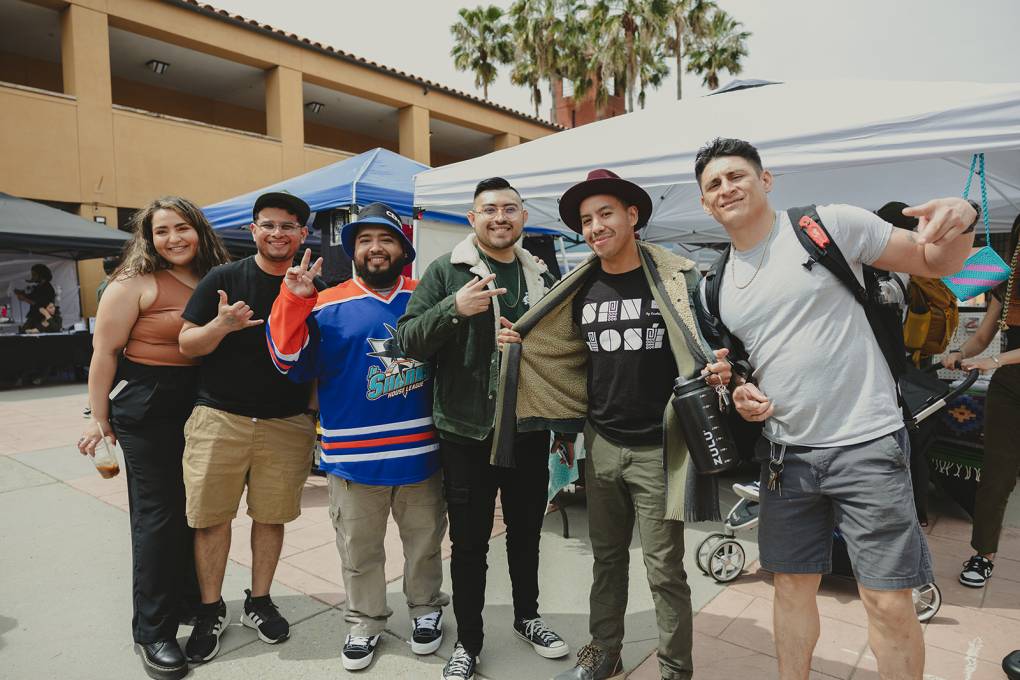
San Jose Day Returns to Celebrate the 408 in Japantown
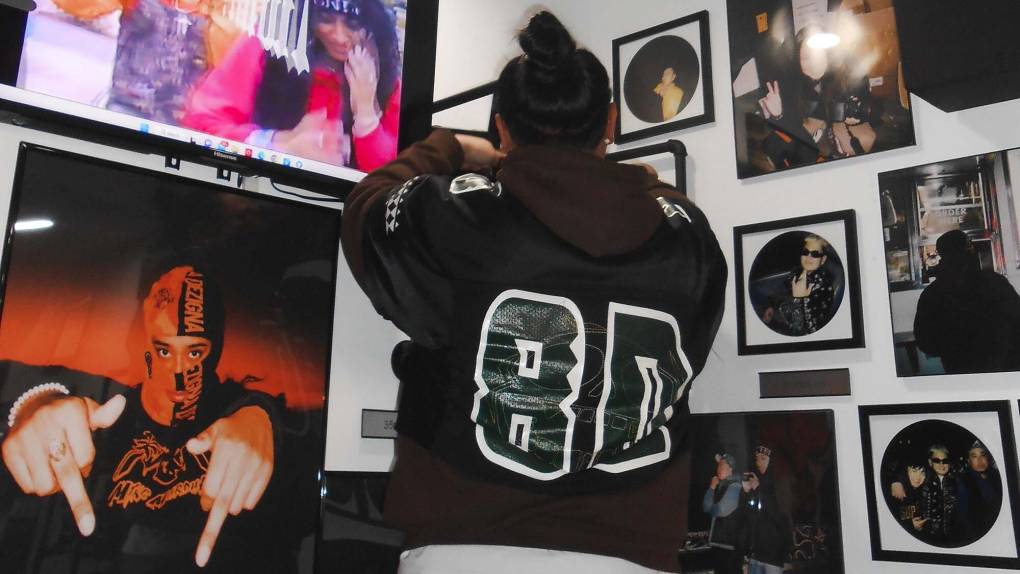
San Jose's Japantown Highlights Underground Scene With 'Photo Night'
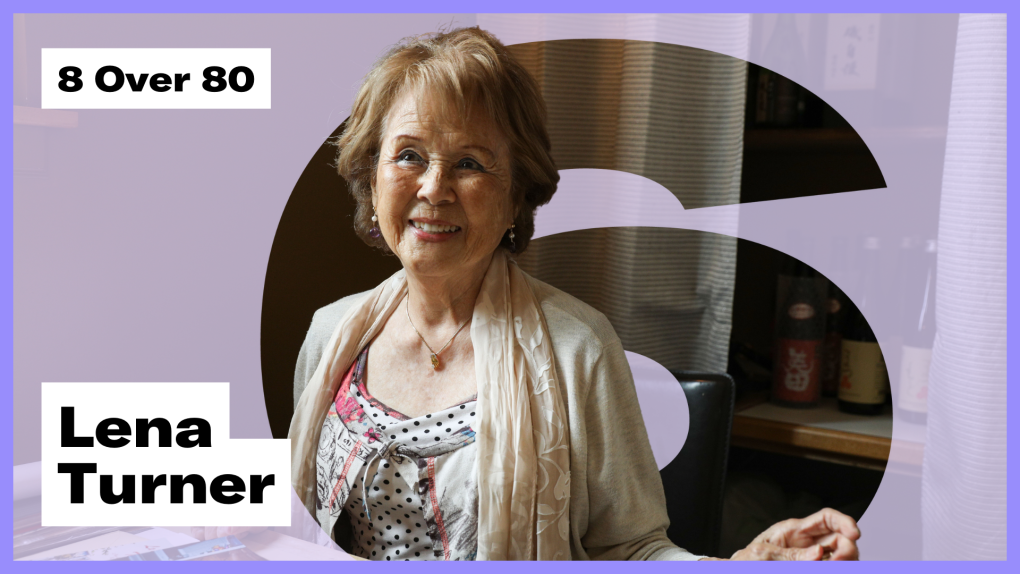
How Lena Turner, a 93-Year-Old Japantown Legend, Brought Ramen to San Francisco
An Ancestral Celebration in Japantown — With a Twist
Seiji Oda Celebrates the Lunar New Year With a Ride Through Japantown
As Rent Nearly Triples, San Francisco Taiko Dojo Searches for Hope—and New Space
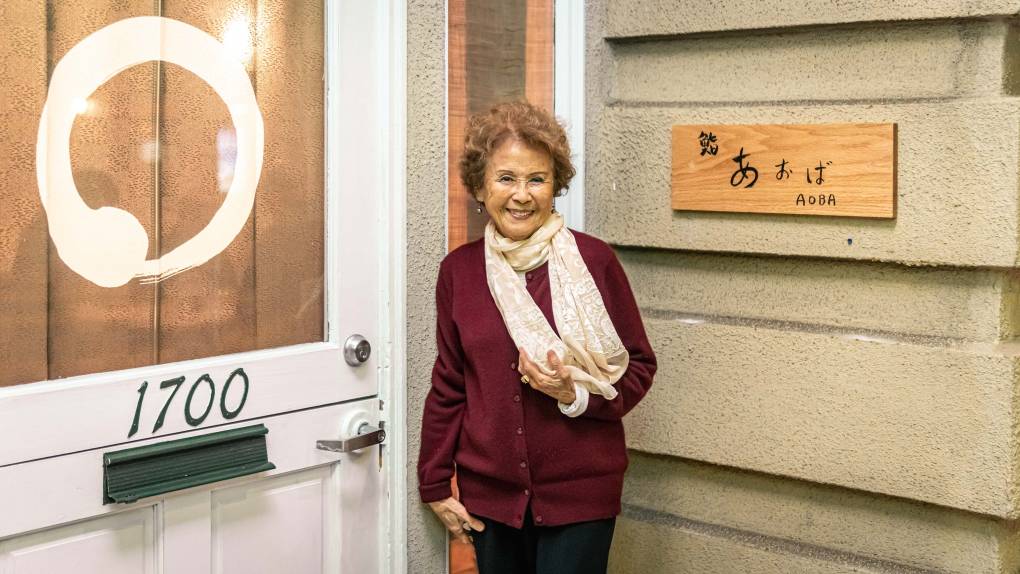
This 91-Year-Old Japantown Legend Has One More Restaurant Up Her Sleeve
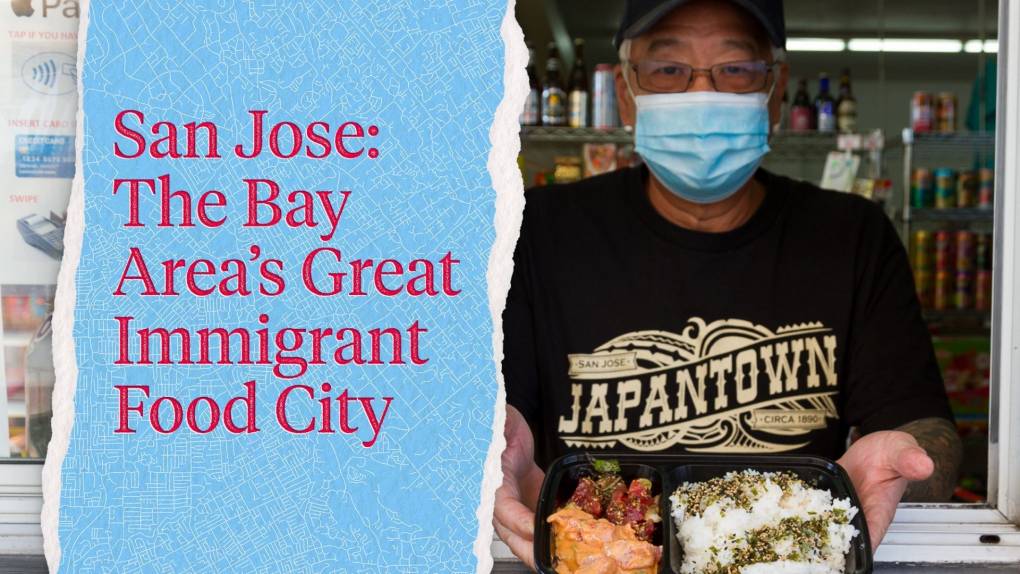
San Jose's Japantown Stayed the Same for More Than 70 Years. Now, Change Is Coming.
Japantown’s New Korean-Inspired Bakery Is Spreading the Gospel of Kalbijjim Croissants
Sponsored
Player sponsored by
window.__IS_SSR__=true
window.__INITIAL_STATE__={
"attachmentsReducer": {
"audio_0": {
"type": "attachments",
"id": "audio_0",
"imgSizes": {
"kqedFullSize": {
"file": "https://ww2.kqed.org/news/wp-content/themes/KQED-unified/img/audio_bgs/background0.jpg"
}
}
},
"audio_1": {
"type": "attachments",
"id": "audio_1",
"imgSizes": {
"kqedFullSize": {
"file": "https://ww2.kqed.org/news/wp-content/themes/KQED-unified/img/audio_bgs/background1.jpg"
}
}
},
"audio_2": {
"type": "attachments",
"id": "audio_2",
"imgSizes": {
"kqedFullSize": {
"file": "https://ww2.kqed.org/news/wp-content/themes/KQED-unified/img/audio_bgs/background2.jpg"
}
}
},
"audio_3": {
"type": "attachments",
"id": "audio_3",
"imgSizes": {
"kqedFullSize": {
"file": "https://ww2.kqed.org/news/wp-content/themes/KQED-unified/img/audio_bgs/background3.jpg"
}
}
},
"audio_4": {
"type": "attachments",
"id": "audio_4",
"imgSizes": {
"kqedFullSize": {
"file": "https://ww2.kqed.org/news/wp-content/themes/KQED-unified/img/audio_bgs/background4.jpg"
}
}
},
"placeholder": {
"type": "attachments",
"id": "placeholder",
"imgSizes": {
"thumbnail": {
"file": "https://cdn.kqed.org/wp-content/uploads/2024/12/KQED-Default-Image-816638274-2000x1333-1-160x107.jpg",
"width": 160,
"height": 107,
"mimeType": "image/jpeg"
},
"medium": {
"file": "https://cdn.kqed.org/wp-content/uploads/2024/12/KQED-Default-Image-816638274-2000x1333-1-800x533.jpg",
"width": 800,
"height": 533,
"mimeType": "image/jpeg"
},
"medium_large": {
"file": "https://cdn.kqed.org/wp-content/uploads/2024/12/KQED-Default-Image-816638274-2000x1333-1-768x512.jpg",
"width": 768,
"height": 512,
"mimeType": "image/jpeg"
},
"large": {
"file": "https://cdn.kqed.org/wp-content/uploads/2024/12/KQED-Default-Image-816638274-2000x1333-1-1020x680.jpg",
"width": 1020,
"height": 680,
"mimeType": "image/jpeg"
},
"1536x1536": {
"file": "https://cdn.kqed.org/wp-content/uploads/2024/12/KQED-Default-Image-816638274-2000x1333-1-1536x1024.jpg",
"width": 1536,
"height": 1024,
"mimeType": "image/jpeg"
},
"fd-lrg": {
"file": "https://cdn.kqed.org/wp-content/uploads/2024/12/KQED-Default-Image-816638274-2000x1333-1-1536x1024.jpg",
"width": 1536,
"height": 1024,
"mimeType": "image/jpeg"
},
"fd-med": {
"file": "https://cdn.kqed.org/wp-content/uploads/2024/12/KQED-Default-Image-816638274-2000x1333-1-1020x680.jpg",
"width": 1020,
"height": 680,
"mimeType": "image/jpeg"
},
"fd-sm": {
"file": "https://cdn.kqed.org/wp-content/uploads/2024/12/KQED-Default-Image-816638274-2000x1333-1-800x533.jpg",
"width": 800,
"height": 533,
"mimeType": "image/jpeg"
},
"post-thumbnail": {
"file": "https://cdn.kqed.org/wp-content/uploads/2024/12/KQED-Default-Image-816638274-2000x1333-1-672x372.jpg",
"width": 672,
"height": 372,
"mimeType": "image/jpeg"
},
"twentyfourteen-full-width": {
"file": "https://cdn.kqed.org/wp-content/uploads/2024/12/KQED-Default-Image-816638274-2000x1333-1-1038x576.jpg",
"width": 1038,
"height": 576,
"mimeType": "image/jpeg"
},
"xxsmall": {
"file": "https://cdn.kqed.org/wp-content/uploads/2024/12/KQED-Default-Image-816638274-2000x1333-1-160x107.jpg",
"width": 160,
"height": 107,
"mimeType": "image/jpeg"
},
"xsmall": {
"file": "https://cdn.kqed.org/wp-content/uploads/2024/12/KQED-Default-Image-816638274-2000x1333-1-672x372.jpg",
"width": 672,
"height": 372,
"mimeType": "image/jpeg"
},
"small": {
"file": "https://cdn.kqed.org/wp-content/uploads/2024/12/KQED-Default-Image-816638274-2000x1333-1-672x372.jpg",
"width": 672,
"height": 372,
"mimeType": "image/jpeg"
},
"xlarge": {
"file": "https://cdn.kqed.org/wp-content/uploads/2024/12/KQED-Default-Image-816638274-2000x1333-1-1020x680.jpg",
"width": 1020,
"height": 680,
"mimeType": "image/jpeg"
},
"full-width": {
"file": "https://cdn.kqed.org/wp-content/uploads/2024/12/KQED-Default-Image-816638274-2000x1333-1-1920x1280.jpg",
"width": 1920,
"height": 1280,
"mimeType": "image/jpeg"
},
"guest-author-32": {
"file": "https://cdn.kqed.org/wp-content/uploads/2025/01/KQED-Default-Image-816638274-1333x1333-1-160x160.jpg",
"width": 32,
"height": 32,
"mimeType": "image/jpeg"
},
"guest-author-50": {
"file": "https://cdn.kqed.org/wp-content/uploads/2025/01/KQED-Default-Image-816638274-1333x1333-1-160x160.jpg",
"width": 50,
"height": 50,
"mimeType": "image/jpeg"
},
"guest-author-64": {
"file": "https://cdn.kqed.org/wp-content/uploads/2025/01/KQED-Default-Image-816638274-1333x1333-1-160x160.jpg",
"width": 64,
"height": 64,
"mimeType": "image/jpeg"
},
"guest-author-96": {
"file": "https://cdn.kqed.org/wp-content/uploads/2025/01/KQED-Default-Image-816638274-1333x1333-1-160x160.jpg",
"width": 96,
"height": 96,
"mimeType": "image/jpeg"
},
"guest-author-128": {
"file": "https://cdn.kqed.org/wp-content/uploads/2025/01/KQED-Default-Image-816638274-1333x1333-1-160x160.jpg",
"width": 128,
"height": 128,
"mimeType": "image/jpeg"
},
"detail": {
"file": "https://cdn.kqed.org/wp-content/uploads/2025/01/KQED-Default-Image-816638274-1333x1333-1-160x160.jpg",
"width": 160,
"height": 160,
"mimeType": "image/jpeg"
},
"kqedFullSize": {
"file": "https://cdn.kqed.org/wp-content/uploads/2024/12/KQED-Default-Image-816638274-2000x1333-1.jpg",
"width": 2000,
"height": 1333
}
}
},
"arts_13954721": {
"type": "attachments",
"id": "arts_13954721",
"meta": {
"index": "attachments_1716263798",
"site": "arts",
"id": "13954721",
"found": true
},
"parent": 13954716,
"imgSizes": {
"twentyfourteen-full-width": {
"file": "https://cdn.kqed.org/wp-content/uploads/sites/2/2024/03/SJD2023_FullSet-178_websize-1038x576.jpg",
"width": 1038,
"mimeType": "image/jpeg",
"height": 576
},
"thumbnail": {
"file": "https://cdn.kqed.org/wp-content/uploads/sites/2/2024/03/SJD2023_FullSet-178_websize-160x107.jpg",
"width": 160,
"mimeType": "image/jpeg",
"height": 107
},
"post-thumbnail": {
"file": "https://cdn.kqed.org/wp-content/uploads/sites/2/2024/03/SJD2023_FullSet-178_websize-672x372.jpg",
"width": 672,
"mimeType": "image/jpeg",
"height": 372
},
"kqedFullSize": {
"file": "https://cdn.kqed.org/wp-content/uploads/sites/2/2024/03/SJD2023_FullSet-178_websize.jpg",
"width": 1600,
"height": 1067
},
"large": {
"file": "https://cdn.kqed.org/wp-content/uploads/sites/2/2024/03/SJD2023_FullSet-178_websize-1020x680.jpg",
"width": 1020,
"mimeType": "image/jpeg",
"height": 680
},
"1536x1536": {
"file": "https://cdn.kqed.org/wp-content/uploads/sites/2/2024/03/SJD2023_FullSet-178_websize-1536x1024.jpg",
"width": 1536,
"mimeType": "image/jpeg",
"height": 1024
},
"medium": {
"file": "https://cdn.kqed.org/wp-content/uploads/sites/2/2024/03/SJD2023_FullSet-178_websize-800x534.jpg",
"width": 800,
"mimeType": "image/jpeg",
"height": 534
},
"medium_large": {
"file": "https://cdn.kqed.org/wp-content/uploads/sites/2/2024/03/SJD2023_FullSet-178_websize-768x512.jpg",
"width": 768,
"mimeType": "image/jpeg",
"height": 512
}
},
"publishDate": 1711409032,
"modified": 1711476904,
"caption": "A group of San Jose activists, artists and organizers gather for San Jose Day in 2023. ",
"description": null,
"title": "San Jose Day 2023",
"credit": "Alex Knowbody",
"status": "inherit",
"altTag": "a group of San Jose residents stand outside during a festival in their city",
"fetchFailed": false,
"isLoading": false
},
"arts_13953108": {
"type": "attachments",
"id": "arts_13953108",
"meta": {
"index": "attachments_1716263798",
"site": "arts",
"id": "13953108",
"found": true
},
"parent": 13952476,
"imgSizes": {
"twentyfourteen-full-width": {
"file": "https://cdn.kqed.org/wp-content/uploads/sites/2/2024/02/img_0390-crop-1038x576.jpg",
"width": 1038,
"mimeType": "image/jpeg",
"height": 576
},
"thumbnail": {
"file": "https://cdn.kqed.org/wp-content/uploads/sites/2/2024/02/img_0390-crop-160x90.jpg",
"width": 160,
"mimeType": "image/jpeg",
"height": 90
},
"post-thumbnail": {
"file": "https://cdn.kqed.org/wp-content/uploads/sites/2/2024/02/img_0390-crop-672x372.jpg",
"width": 672,
"mimeType": "image/jpeg",
"height": 372
},
"kqedFullSize": {
"file": "https://cdn.kqed.org/wp-content/uploads/sites/2/2024/02/img_0390-crop.jpg",
"width": 2000,
"height": 1125
},
"large": {
"file": "https://cdn.kqed.org/wp-content/uploads/sites/2/2024/02/img_0390-crop-1020x574.jpg",
"width": 1020,
"mimeType": "image/jpeg",
"height": 574
},
"1536x1536": {
"file": "https://cdn.kqed.org/wp-content/uploads/sites/2/2024/02/img_0390-crop-1536x864.jpg",
"width": 1536,
"mimeType": "image/jpeg",
"height": 864
},
"full-width": {
"file": "https://cdn.kqed.org/wp-content/uploads/sites/2/2024/02/img_0390-crop-1920x1080.jpg",
"width": 1920,
"mimeType": "image/jpeg",
"height": 1080
},
"medium": {
"file": "https://cdn.kqed.org/wp-content/uploads/sites/2/2024/02/img_0390-crop-800x450.jpg",
"width": 800,
"mimeType": "image/jpeg",
"height": 450
},
"medium_large": {
"file": "https://cdn.kqed.org/wp-content/uploads/sites/2/2024/02/img_0390-crop-768x432.jpg",
"width": 768,
"mimeType": "image/jpeg",
"height": 432
}
},
"publishDate": 1709068359,
"modified": 1709080129,
"caption": "MadeByRila, a San Jose designer who co-owns Coldwater Clothing, helped set up last year's edition of 'A Photo Night in Japantown.'",
"description": null,
"title": "img_0390-crop",
"credit": "Alex Knowbody",
"status": "inherit",
"altTag": "an artist puts photographs up on a studio wall before an exhibition",
"fetchFailed": false,
"isLoading": false
},
"arts_13934892": {
"type": "attachments",
"id": "arts_13934892",
"meta": {
"index": "attachments_1716263798",
"site": "arts",
"id": "13934892",
"found": true
},
"parent": 13934852,
"imgSizes": {
"twentyfourteen-full-width": {
"file": "https://ww2.kqed.org/app/uploads/sites/2/2023/09/8-Over-80-—-Thumbnail-1920-x-1080-2-1-1038x576.png",
"width": 1038,
"mimeType": "image/png",
"height": 576
},
"thumbnail": {
"file": "https://ww2.kqed.org/app/uploads/sites/2/2023/09/8-Over-80-—-Thumbnail-1920-x-1080-2-1-160x90.png",
"width": 160,
"mimeType": "image/png",
"height": 90
},
"post-thumbnail": {
"file": "https://ww2.kqed.org/app/uploads/sites/2/2023/09/8-Over-80-—-Thumbnail-1920-x-1080-2-1-672x372.png",
"width": 672,
"mimeType": "image/png",
"height": 372
},
"kqedFullSize": {
"file": "https://ww2.kqed.org/app/uploads/sites/2/2023/09/8-Over-80-—-Thumbnail-1920-x-1080-2-1.png",
"width": 1920,
"height": 1080
},
"large": {
"file": "https://ww2.kqed.org/app/uploads/sites/2/2023/09/8-Over-80-—-Thumbnail-1920-x-1080-2-1-1020x574.png",
"width": 1020,
"mimeType": "image/png",
"height": 574
},
"1536x1536": {
"file": "https://ww2.kqed.org/app/uploads/sites/2/2023/09/8-Over-80-—-Thumbnail-1920-x-1080-2-1-1536x864.png",
"width": 1536,
"mimeType": "image/png",
"height": 864
},
"medium": {
"file": "https://ww2.kqed.org/app/uploads/sites/2/2023/09/8-Over-80-—-Thumbnail-1920-x-1080-2-1-800x450.png",
"width": 800,
"mimeType": "image/png",
"height": 450
},
"medium_large": {
"file": "https://ww2.kqed.org/app/uploads/sites/2/2023/09/8-Over-80-—-Thumbnail-1920-x-1080-2-1-768x432.png",
"width": 768,
"mimeType": "image/png",
"height": 432
}
},
"publishDate": 1695062508,
"modified": 1695069280,
"caption": "Lena Turner, 93, sits for a portrait in her now-closed restaurant, Chika and Sake. Turner has been a restauranteur in San Francisco's Japantown for almost five decades now.",
"description": null,
"title": "8 Over 80 — Thumbnail (1920 x 1080) (2)",
"credit": "Juliana Yamada/KQED",
"status": "inherit",
"altTag": "An older woman smiles while sitting at a table, the text \"8 Over 80\" and \"Lena Turner\" is overlaid",
"fetchFailed": false,
"isLoading": false
},
"arts_13934930": {
"type": "attachments",
"id": "arts_13934930",
"meta": {
"index": "attachments_1716263798",
"site": "arts",
"id": "13934930",
"found": true
},
"parent": 13934852,
"imgSizes": {
"twentyfourteen-full-width": {
"file": "https://ww2.kqed.org/app/uploads/sites/2/2023/09/20230727-LenaTurner-26-JY-qut-1038x576.jpg",
"width": 1038,
"mimeType": "image/jpeg",
"height": 576
},
"thumbnail": {
"file": "https://ww2.kqed.org/app/uploads/sites/2/2023/09/20230727-LenaTurner-26-JY-qut-160x107.jpg",
"width": 160,
"mimeType": "image/jpeg",
"height": 107
},
"post-thumbnail": {
"file": "https://ww2.kqed.org/app/uploads/sites/2/2023/09/20230727-LenaTurner-26-JY-qut-672x372.jpg",
"width": 672,
"mimeType": "image/jpeg",
"height": 372
},
"kqedFullSize": {
"file": "https://ww2.kqed.org/app/uploads/sites/2/2023/09/20230727-LenaTurner-26-JY-qut.jpg",
"width": 1920,
"height": 1280
},
"large": {
"file": "https://ww2.kqed.org/app/uploads/sites/2/2023/09/20230727-LenaTurner-26-JY-qut-1020x680.jpg",
"width": 1020,
"mimeType": "image/jpeg",
"height": 680
},
"1536x1536": {
"file": "https://ww2.kqed.org/app/uploads/sites/2/2023/09/20230727-LenaTurner-26-JY-qut-1536x1024.jpg",
"width": 1536,
"mimeType": "image/jpeg",
"height": 1024
},
"medium": {
"file": "https://ww2.kqed.org/app/uploads/sites/2/2023/09/20230727-LenaTurner-26-JY-qut-800x533.jpg",
"width": 800,
"mimeType": "image/jpeg",
"height": 533
},
"medium_large": {
"file": "https://ww2.kqed.org/app/uploads/sites/2/2023/09/20230727-LenaTurner-26-JY-qut-768x512.jpg",
"width": 768,
"mimeType": "image/jpeg",
"height": 512
}
},
"publishDate": 1695078885,
"modified": 1695079537,
"caption": "Lena Turner, 93, sits inside her now-closed restaurant, Chika & Sake. Turner has been a restauranteur in San Francisco’s Japantown for almost five decades.",
"description": null,
"title": "20230727-LenaTurner-26-JY-qut",
"credit": "Juliana Yamada/KQED",
"status": "inherit",
"altTag": "An older woman in a white shawl smiles while seated in front of a stack of old photos.",
"fetchFailed": false,
"isLoading": false
},
"arts_13933952": {
"type": "attachments",
"id": "arts_13933952",
"meta": {
"index": "attachments_1716263798",
"site": "arts",
"id": "13933952",
"found": true
},
"parent": 0,
"imgSizes": {
"twentyfourteen-full-width": {
"file": "https://ww2.kqed.org/app/uploads/sites/2/2023/08/RS68310_20230826-BonPop-01-JY-1-KQED-1038x576.jpg",
"width": 1038,
"mimeType": "image/jpeg",
"height": 576
},
"thumbnail": {
"file": "https://ww2.kqed.org/app/uploads/sites/2/2023/08/RS68310_20230826-BonPop-01-JY-1-KQED-160x107.jpg",
"width": 160,
"mimeType": "image/jpeg",
"height": 107
},
"post-thumbnail": {
"file": "https://ww2.kqed.org/app/uploads/sites/2/2023/08/RS68310_20230826-BonPop-01-JY-1-KQED-672x372.jpg",
"width": 672,
"mimeType": "image/jpeg",
"height": 372
},
"kqedFullSize": {
"file": "https://ww2.kqed.org/app/uploads/sites/2/2023/08/RS68310_20230826-BonPop-01-JY-1-KQED.jpg",
"width": 2000,
"height": 1333
},
"large": {
"file": "https://ww2.kqed.org/app/uploads/sites/2/2023/08/RS68310_20230826-BonPop-01-JY-1-KQED-1020x680.jpg",
"width": 1020,
"mimeType": "image/jpeg",
"height": 680
},
"1536x1536": {
"file": "https://ww2.kqed.org/app/uploads/sites/2/2023/08/RS68310_20230826-BonPop-01-JY-1-KQED-1536x1024.jpg",
"width": 1536,
"mimeType": "image/jpeg",
"height": 1024
},
"full-width": {
"file": "https://ww2.kqed.org/app/uploads/sites/2/2023/08/RS68310_20230826-BonPop-01-JY-1-KQED-1920x1280.jpg",
"width": 1920,
"mimeType": "image/jpeg",
"height": 1280
},
"medium": {
"file": "https://ww2.kqed.org/app/uploads/sites/2/2023/08/RS68310_20230826-BonPop-01-JY-1-KQED-800x533.jpg",
"width": 800,
"mimeType": "image/jpeg",
"height": 533
},
"medium_large": {
"file": "https://ww2.kqed.org/app/uploads/sites/2/2023/08/RS68310_20230826-BonPop-01-JY-1-KQED-768x512.jpg",
"width": 768,
"mimeType": "image/jpeg",
"height": 512
}
},
"publishDate": 1693147254,
"modified": 1693147591,
"caption": "Linus Lancaster (left) and Mari Lancaster (center) dance at KOHO’s BonPop Obon in the Japantown Peace Plaza in San Francisco on Saturday, August 26, 2023. The Lancasters are frequent Obon participants.",
"description": null,
"title": "RS68310_20230826-BonPop-01-JY-1-KQED",
"credit": "Juliana Yamada/KQED",
"status": "inherit",
"altTag": "Linus Lancaster (left) and Mari Lancaster (center) dance at KOHO’s BonPop Obon in the Japantown Peace Plaza in San Francisco on Saturday, August 26, 2023. The Lancasters are frequent Obon participants.",
"fetchFailed": false,
"isLoading": false
},
"arts_13924049": {
"type": "attachments",
"id": "arts_13924049",
"meta": {
"index": "attachments_1716263798",
"site": "arts",
"id": "13924049",
"found": true
},
"parent": 13924014,
"imgSizes": {
"twentyfourteen-full-width": {
"file": "https://ww2.kqed.org/app/uploads/sites/2/2023/01/46-1038x576.png",
"width": 1038,
"mimeType": "image/png",
"height": 576
},
"thumbnail": {
"file": "https://ww2.kqed.org/app/uploads/sites/2/2023/01/46-160x90.png",
"width": 160,
"mimeType": "image/png",
"height": 90
},
"post-thumbnail": {
"file": "https://ww2.kqed.org/app/uploads/sites/2/2023/01/46-672x372.png",
"width": 672,
"mimeType": "image/png",
"height": 372
},
"kqedFullSize": {
"file": "https://ww2.kqed.org/app/uploads/sites/2/2023/01/46.png",
"width": 1920,
"height": 1080
},
"large": {
"file": "https://ww2.kqed.org/app/uploads/sites/2/2023/01/46-1020x574.png",
"width": 1020,
"mimeType": "image/png",
"height": 574
},
"1536x1536": {
"file": "https://ww2.kqed.org/app/uploads/sites/2/2023/01/46-1536x864.png",
"width": 1536,
"mimeType": "image/png",
"height": 864
},
"medium": {
"file": "https://ww2.kqed.org/app/uploads/sites/2/2023/01/46-800x450.png",
"width": 800,
"mimeType": "image/png",
"height": 450
},
"medium_large": {
"file": "https://ww2.kqed.org/app/uploads/sites/2/2023/01/46-768x432.png",
"width": 768,
"mimeType": "image/png",
"height": 432
}
},
"publishDate": 1674518887,
"modified": 1674519816,
"caption": "Seiji Oda is proud to represent a fusion of influences in his music.",
"description": null,
"title": "46",
"credit": "theclaydoe / Instagram",
"status": "inherit",
"altTag": "a young Asian-American presenting man in a yellow shirt and brown pants poses against a wall",
"fetchFailed": false,
"isLoading": false
},
"arts_13917792": {
"type": "attachments",
"id": "arts_13917792",
"meta": {
"index": "attachments_1716263798",
"site": "arts",
"id": "13917792",
"found": true
},
"parent": 13917790,
"imgSizes": {
"twentyfourteen-full-width": {
"file": "https://ww2.kqed.org/app/uploads/sites/2/2022/08/Taiko.MAIN_-1038x576.jpg",
"width": 1038,
"mimeType": "image/jpeg",
"height": 576
},
"thumbnail": {
"file": "https://ww2.kqed.org/app/uploads/sites/2/2022/08/Taiko.MAIN_-160x90.jpg",
"width": 160,
"mimeType": "image/jpeg",
"height": 90
},
"post-thumbnail": {
"file": "https://ww2.kqed.org/app/uploads/sites/2/2022/08/Taiko.MAIN_-672x372.jpg",
"width": 672,
"mimeType": "image/jpeg",
"height": 372
},
"kqedFullSize": {
"file": "https://ww2.kqed.org/app/uploads/sites/2/2022/08/Taiko.MAIN_.jpg",
"width": 1570,
"height": 883
},
"large": {
"file": "https://ww2.kqed.org/app/uploads/sites/2/2022/08/Taiko.MAIN_-1020x574.jpg",
"width": 1020,
"mimeType": "image/jpeg",
"height": 574
},
"1536x1536": {
"file": "https://ww2.kqed.org/app/uploads/sites/2/2022/08/Taiko.MAIN_-1536x864.jpg",
"width": 1536,
"mimeType": "image/jpeg",
"height": 864
},
"medium": {
"file": "https://ww2.kqed.org/app/uploads/sites/2/2022/08/Taiko.MAIN_-800x450.jpg",
"width": 800,
"mimeType": "image/jpeg",
"height": 450
},
"medium_large": {
"file": "https://ww2.kqed.org/app/uploads/sites/2/2022/08/Taiko.MAIN_-768x432.jpg",
"width": 768,
"mimeType": "image/jpeg",
"height": 432
}
},
"publishDate": 1660844749,
"modified": 1660844853,
"caption": "A 2017 San Francisco Taiko Dojo performance in Colorado.\n",
"description": null,
"title": "Taiko.MAIN",
"credit": "San Francisco Taiko Dojo",
"status": "inherit",
"altTag": "Multiple drummers and large drums on stage",
"fetchFailed": false,
"isLoading": false
},
"arts_13906465": {
"type": "attachments",
"id": "arts_13906465",
"meta": {
"index": "attachments_1716263798",
"site": "arts",
"id": "13906465",
"found": true
},
"parent": 13906456,
"imgSizes": {
"twentyfourteen-full-width": {
"file": "https://ww2.kqed.org/app/uploads/sites/2/2021/11/Aoba_lena_alex-zhu-1038x576.jpg",
"width": 1038,
"mimeType": "image/jpeg",
"height": 576
},
"thumbnail": {
"file": "https://ww2.kqed.org/app/uploads/sites/2/2021/11/Aoba_lena_alex-zhu-160x90.jpg",
"width": 160,
"mimeType": "image/jpeg",
"height": 90
},
"post-thumbnail": {
"file": "https://ww2.kqed.org/app/uploads/sites/2/2021/11/Aoba_lena_alex-zhu-672x372.jpg",
"width": 672,
"mimeType": "image/jpeg",
"height": 372
},
"kqedFullSize": {
"file": "https://ww2.kqed.org/app/uploads/sites/2/2021/11/Aoba_lena_alex-zhu-scaled.jpg",
"width": 2560,
"height": 1440
},
"2048x2048": {
"file": "https://ww2.kqed.org/app/uploads/sites/2/2021/11/Aoba_lena_alex-zhu-2048x1152.jpg",
"width": 2048,
"mimeType": "image/jpeg",
"height": 1152
},
"large": {
"file": "https://ww2.kqed.org/app/uploads/sites/2/2021/11/Aoba_lena_alex-zhu-1020x574.jpg",
"width": 1020,
"mimeType": "image/jpeg",
"height": 574
},
"1536x1536": {
"file": "https://ww2.kqed.org/app/uploads/sites/2/2021/11/Aoba_lena_alex-zhu-1536x864.jpg",
"width": 1536,
"mimeType": "image/jpeg",
"height": 864
},
"full-width": {
"file": "https://ww2.kqed.org/app/uploads/sites/2/2021/11/Aoba_lena_alex-zhu-1920x1080.jpg",
"width": 1920,
"mimeType": "image/jpeg",
"height": 1080
},
"medium": {
"file": "https://ww2.kqed.org/app/uploads/sites/2/2021/11/Aoba_lena_alex-zhu-800x450.jpg",
"width": 800,
"mimeType": "image/jpeg",
"height": 450
},
"medium_large": {
"file": "https://ww2.kqed.org/app/uploads/sites/2/2021/11/Aoba_lena_alex-zhu-768x432.jpg",
"width": 768,
"mimeType": "image/jpeg",
"height": 432
}
},
"publishDate": 1637713653,
"modified": 1637713733,
"caption": "Even at 91 years old, Aoba owner Lena Turner doesn't feel close to ready to retire.",
"description": null,
"title": "Aoba_lena_alex zhu",
"credit": "Alex Zhu",
"status": "inherit",
"altTag": "An older woman in a white scarf stands next to the entrance to Aoba restaurant.",
"fetchFailed": false,
"isLoading": false
},
"arts_13905098": {
"type": "attachments",
"id": "arts_13905098",
"meta": {
"index": "attachments_1716263798",
"site": "arts",
"id": "13905098",
"found": true
},
"parent": 13904788,
"imgSizes": {
"twentyfourteen-full-width": {
"file": "https://ww2.kqed.org/app/uploads/sites/2/2021/10/ThumbnailFeature-Image-San-Jose-Food-Project-2-1038x576.jpg",
"width": 1038,
"mimeType": "image/jpeg",
"height": 576
},
"thumbnail": {
"file": "https://ww2.kqed.org/app/uploads/sites/2/2021/10/ThumbnailFeature-Image-San-Jose-Food-Project-2-160x90.jpg",
"width": 160,
"mimeType": "image/jpeg",
"height": 90
},
"post-thumbnail": {
"file": "https://ww2.kqed.org/app/uploads/sites/2/2021/10/ThumbnailFeature-Image-San-Jose-Food-Project-2-672x372.jpg",
"width": 672,
"mimeType": "image/jpeg",
"height": 372
},
"kqedFullSize": {
"file": "https://ww2.kqed.org/app/uploads/sites/2/2021/10/ThumbnailFeature-Image-San-Jose-Food-Project-2.jpg",
"width": 1920,
"height": 1080
},
"large": {
"file": "https://ww2.kqed.org/app/uploads/sites/2/2021/10/ThumbnailFeature-Image-San-Jose-Food-Project-2-1020x574.jpg",
"width": 1020,
"mimeType": "image/jpeg",
"height": 574
},
"1536x1536": {
"file": "https://ww2.kqed.org/app/uploads/sites/2/2021/10/ThumbnailFeature-Image-San-Jose-Food-Project-2-1536x864.jpg",
"width": 1536,
"mimeType": "image/jpeg",
"height": 864
},
"medium": {
"file": "https://ww2.kqed.org/app/uploads/sites/2/2021/10/ThumbnailFeature-Image-San-Jose-Food-Project-2-800x450.jpg",
"width": 800,
"mimeType": "image/jpeg",
"height": 450
},
"medium_large": {
"file": "https://ww2.kqed.org/app/uploads/sites/2/2021/10/ThumbnailFeature-Image-San-Jose-Food-Project-2-768x432.jpg",
"width": 768,
"mimeType": "image/jpeg",
"height": 432
}
},
"publishDate": 1634933044,
"modified": 1634933296,
"caption": "(Photo by Grace Hwang Lynch)",
"description": null,
"title": "{ThumbnailFeature Image} San Jose Food Project (2)",
"credit": null,
"status": "inherit",
"altTag": "A man in a \"Japantown\" T-shirt holds a tray of poke; the text to the left reads, \"San Jose: The Bay Area's Great Immigrant Food City.\"",
"fetchFailed": false,
"isLoading": false
},
"arts_13905100": {
"type": "attachments",
"id": "arts_13905100",
"meta": {
"index": "attachments_1716263798",
"site": "arts",
"id": "13905100",
"found": true
},
"parent": 13904788,
"imgSizes": {
"twentyfourteen-full-width": {
"file": "https://ww2.kqed.org/app/uploads/sites/2/2021/10/San-Jose-Japantown-17-1038x576.jpg",
"width": 1038,
"mimeType": "image/jpeg",
"height": 576
},
"thumbnail": {
"file": "https://ww2.kqed.org/app/uploads/sites/2/2021/10/San-Jose-Japantown-17-160x107.jpg",
"width": 160,
"mimeType": "image/jpeg",
"height": 107
},
"post-thumbnail": {
"file": "https://ww2.kqed.org/app/uploads/sites/2/2021/10/San-Jose-Japantown-17-672x372.jpg",
"width": 672,
"mimeType": "image/jpeg",
"height": 372
},
"kqedFullSize": {
"file": "https://ww2.kqed.org/app/uploads/sites/2/2021/10/San-Jose-Japantown-17.jpg",
"width": 1800,
"height": 1200
},
"large": {
"file": "https://ww2.kqed.org/app/uploads/sites/2/2021/10/San-Jose-Japantown-17-1020x680.jpg",
"width": 1020,
"mimeType": "image/jpeg",
"height": 680
},
"1536x1536": {
"file": "https://ww2.kqed.org/app/uploads/sites/2/2021/10/San-Jose-Japantown-17-1536x1024.jpg",
"width": 1536,
"mimeType": "image/jpeg",
"height": 1024
},
"medium": {
"file": "https://ww2.kqed.org/app/uploads/sites/2/2021/10/San-Jose-Japantown-17-800x533.jpg",
"width": 800,
"mimeType": "image/jpeg",
"height": 533
},
"medium_large": {
"file": "https://ww2.kqed.org/app/uploads/sites/2/2021/10/San-Jose-Japantown-17-768x512.jpg",
"width": 768,
"mimeType": "image/jpeg",
"height": 512
}
},
"publishDate": 1634933373,
"modified": 1634933971,
"caption": "During the pandemic, Mark Santo started serving poke bowls at his 75-year-old Japantown grocery store, Santo Market. ",
"description": null,
"title": "San Jose Japantown-17",
"credit": "Grace Hwang Lynch",
"status": "inherit",
"altTag": "A man in a \"Japantown\" shirt holds out a tray of poke from the window of a Japanese market.",
"fetchFailed": false,
"isLoading": false
},
"arts_13902816": {
"type": "attachments",
"id": "arts_13902816",
"meta": {
"index": "attachments_1716263798",
"site": "arts",
"id": "13902816",
"found": true
},
"parent": 13902814,
"imgSizes": {
"twentyfourteen-full-width": {
"file": "https://ww2.kqed.org/app/uploads/sites/2/2021/09/jinabakes_kalbijjim-1038x576.jpg",
"width": 1038,
"mimeType": "image/jpeg",
"height": 576
},
"thumbnail": {
"file": "https://ww2.kqed.org/app/uploads/sites/2/2021/09/jinabakes_kalbijjim-160x110.jpg",
"width": 160,
"mimeType": "image/jpeg",
"height": 110
},
"post-thumbnail": {
"file": "https://ww2.kqed.org/app/uploads/sites/2/2021/09/jinabakes_kalbijjim-672x372.jpg",
"width": 672,
"mimeType": "image/jpeg",
"height": 372
},
"kqedFullSize": {
"file": "https://ww2.kqed.org/app/uploads/sites/2/2021/09/jinabakes_kalbijjim-scaled.jpg",
"width": 2560,
"height": 1760
},
"2048x2048": {
"file": "https://ww2.kqed.org/app/uploads/sites/2/2021/09/jinabakes_kalbijjim-2048x1408.jpg",
"width": 2048,
"mimeType": "image/jpeg",
"height": 1408
},
"large": {
"file": "https://ww2.kqed.org/app/uploads/sites/2/2021/09/jinabakes_kalbijjim-1020x701.jpg",
"width": 1020,
"mimeType": "image/jpeg",
"height": 701
},
"1536x1536": {
"file": "https://ww2.kqed.org/app/uploads/sites/2/2021/09/jinabakes_kalbijjim-1536x1056.jpg",
"width": 1536,
"mimeType": "image/jpeg",
"height": 1056
},
"full-width": {
"file": "https://ww2.kqed.org/app/uploads/sites/2/2021/09/jinabakes_kalbijjim-1920x1320.jpg",
"width": 1920,
"mimeType": "image/jpeg",
"height": 1320
},
"medium": {
"file": "https://ww2.kqed.org/app/uploads/sites/2/2021/09/jinabakes_kalbijjim-800x550.jpg",
"width": 800,
"mimeType": "image/jpeg",
"height": 550
},
"medium_large": {
"file": "https://ww2.kqed.org/app/uploads/sites/2/2021/09/jinabakes_kalbijjim-768x528.jpg",
"width": 768,
"mimeType": "image/jpeg",
"height": 528
}
},
"publishDate": 1631220789,
"modified": 1631220863,
"caption": "Jina Bakes' most famous item is its Korean-inspired kalbijjim croissant.",
"description": null,
"title": "jinabakes_kalbijjim",
"credit": "Jina Bakes",
"status": "inherit",
"altTag": "A square croissant topped with meat and charred, melted cheese.",
"fetchFailed": false,
"isLoading": false
}
},
"audioPlayerReducer": {
"postId": "stream_live",
"isPaused": true,
"isPlaying": false,
"pfsActive": false,
"pledgeModalIsOpen": true,
"playerDrawerIsOpen": false
},
"authorsReducer": {
"gracehwanglynch": {
"type": "authors",
"id": "11713",
"meta": {
"index": "authors_1716337520",
"id": "11713",
"found": true
},
"name": "Grace Hwang Lynch",
"firstName": "Grace Hwang",
"lastName": "Lynch",
"slug": "gracehwanglynch",
"email": "gracehwanglynch@gmail.com",
"display_author_email": false,
"staff_mastheads": [],
"title": "KQED Contributor",
"bio": null,
"avatar": "https://secure.gravatar.com/avatar/38dcd6e42a6261e8ebe2bcbb96e58f63?s=600&d=blank&r=g",
"twitter": null,
"facebook": null,
"instagram": null,
"linkedin": null,
"sites": [
{
"site": "arts",
"roles": [
"contributor"
]
},
{
"site": "bayareabites",
"roles": [
"contributor"
]
}
],
"headData": {
"title": "Grace Hwang Lynch | KQED",
"description": "KQED Contributor",
"ogImgSrc": "https://secure.gravatar.com/avatar/38dcd6e42a6261e8ebe2bcbb96e58f63?s=600&d=blank&r=g",
"twImgSrc": "https://secure.gravatar.com/avatar/38dcd6e42a6261e8ebe2bcbb96e58f63?s=600&d=blank&r=g"
},
"isLoading": false,
"link": "/author/gracehwanglynch"
},
"ltsai": {
"type": "authors",
"id": "11743",
"meta": {
"index": "authors_1716337520",
"id": "11743",
"found": true
},
"name": "Luke Tsai",
"firstName": "Luke",
"lastName": "Tsai",
"slug": "ltsai",
"email": "ltsai@kqed.org",
"display_author_email": true,
"staff_mastheads": [
"arts"
],
"title": "Food Editor",
"bio": "Luke Tsai is KQED's food editor and resident stinky tofu connoisseur. Prior to KQED, he was an editor at Eater SF, \u003cem>San Francisco \u003c/em>magazine, and the \u003cem>East Bay Express\u003c/em>, and his work has also appeared in TASTE, the \u003cem>San Francisco Chronicle\u003c/em>, and the \u003cem>Best Food Writing\u003c/em> anthology. When he isn't writing or editing, you'll find him eating most everything he can get his hands on.",
"avatar": "https://secure.gravatar.com/avatar/d1ff591a3047b143a0e23cf7f28fcac0?s=600&d=blank&r=g",
"twitter": "theluketsai",
"facebook": null,
"instagram": null,
"linkedin": null,
"sites": [
{
"site": "",
"roles": [
"editor"
]
},
{
"site": "arts",
"roles": [
"administrator"
]
},
{
"site": "bayareabites",
"roles": [
"editor"
]
},
{
"site": "food",
"roles": [
"editor"
]
}
],
"headData": {
"title": "Luke Tsai | KQED",
"description": "Food Editor",
"ogImgSrc": "https://secure.gravatar.com/avatar/d1ff591a3047b143a0e23cf7f28fcac0?s=600&d=blank&r=g",
"twImgSrc": "https://secure.gravatar.com/avatar/d1ff591a3047b143a0e23cf7f28fcac0?s=600&d=blank&r=g"
},
"isLoading": false,
"link": "/author/ltsai"
},
"achazaro": {
"type": "authors",
"id": "11748",
"meta": {
"index": "authors_1716337520",
"id": "11748",
"found": true
},
"name": "Alan Chazaro",
"firstName": "Alan",
"lastName": "Chazaro",
"slug": "achazaro",
"email": "agchazaro@gmail.com",
"display_author_email": true,
"staff_mastheads": [],
"title": "Food Writer and Reporter",
"bio": "Alan Chazaro is the author of \u003cem>This Is Not a Frank Ocean Cover Album\u003c/em> (Black Lawrence Press, 2019), \u003cem>Piñata Theory\u003c/em> (Black Lawrence Press, 2020), and \u003cem>Notes from the Eastern Span of the Bay Bridge\u003c/em> (Ghost City Press, 2021). He is a graduate of June Jordan’s Poetry for the People program at UC Berkeley and a former Lawrence Ferlinghetti Fellow at the University of San Francisco. He writes about sports, food, art, music, education, and culture while repping the Bay on \u003ca href=\"https://twitter.com/alan_chazaro\">Twitter\u003c/a> and \u003ca href=\"https://www.instagram.com/alan_chazaro/?hl=en\">Instagram\u003c/a> at @alan_chazaro.",
"avatar": "https://secure.gravatar.com/avatar/ea8b6dd970fc5c29e7a188e7d5861df7?s=600&d=blank&r=g",
"twitter": "alan_chazaro",
"facebook": null,
"instagram": null,
"linkedin": null,
"sites": [
{
"site": "arts",
"roles": [
"contributor"
]
},
{
"site": "news",
"roles": [
"editor"
]
}
],
"headData": {
"title": "Alan Chazaro | KQED",
"description": "Food Writer and Reporter",
"ogImgSrc": "https://secure.gravatar.com/avatar/ea8b6dd970fc5c29e7a188e7d5861df7?s=600&d=blank&r=g",
"twImgSrc": "https://secure.gravatar.com/avatar/ea8b6dd970fc5c29e7a188e7d5861df7?s=600&d=blank&r=g"
},
"isLoading": false,
"link": "/author/achazaro"
},
"ksong": {
"type": "authors",
"id": "11813",
"meta": {
"index": "authors_1716337520",
"id": "11813",
"found": true
},
"name": "Kristie Song",
"firstName": "Kristie",
"lastName": "Song",
"slug": "ksong",
"email": "ksong@kqed.org",
"display_author_email": false,
"staff_mastheads": [],
"title": "Editorial Intern ",
"bio": "Kristie Song is an Arts & Culture Intern at KQED. She is currently a graduate student at UC Berkeley, where she studies audio and multimedia journalism. Previously, she covered the local community for Oakland North, produced episodes for The Science of Happiness, and served as news director for KUCI, UC Irvine’s radio station. Outside of reporting, she likes drawing comics, listening to angsty rock, and practicing the guitar.",
"avatar": "https://secure.gravatar.com/avatar/c1149e78c3c44f92d4945a8ab0711af6?s=600&d=blank&r=g",
"twitter": null,
"facebook": null,
"instagram": null,
"linkedin": null,
"sites": [
{
"site": "arts",
"roles": [
"editor"
]
}
],
"headData": {
"title": "Kristie Song | KQED",
"description": "Editorial Intern ",
"ogImgSrc": "https://secure.gravatar.com/avatar/c1149e78c3c44f92d4945a8ab0711af6?s=600&d=blank&r=g",
"twImgSrc": "https://secure.gravatar.com/avatar/c1149e78c3c44f92d4945a8ab0711af6?s=600&d=blank&r=g"
},
"isLoading": false,
"link": "/author/ksong"
},
"omayeda": {
"type": "authors",
"id": "11872",
"meta": {
"index": "authors_1716337520",
"id": "11872",
"found": true
},
"name": "Olivia Cruz Mayeda",
"firstName": "Olivia Cruz",
"lastName": "Mayeda",
"slug": "omayeda",
"email": "omayeda@kqed.org",
"display_author_email": false,
"staff_mastheads": [],
"title": "Reporter",
"bio": "Olivia Cruz Mayeda is a journalist covering style, culture and reparations in the Bay Area, a place that has been home to her family for over 100 years. Her writing has also appeared in the \u003cem>San Francisco Chronicle\u003c/em> and \u003cem>El Tecolote\u003c/em>.",
"avatar": "https://secure.gravatar.com/avatar/a8c0baa30219ce1071a9474f4c14141f?s=600&d=blank&r=g",
"twitter": null,
"facebook": null,
"instagram": null,
"linkedin": null,
"sites": [
{
"site": "arts",
"roles": [
"contributor"
]
}
],
"headData": {
"title": "Olivia Cruz Mayeda | KQED",
"description": "Reporter",
"ogImgSrc": "https://secure.gravatar.com/avatar/a8c0baa30219ce1071a9474f4c14141f?s=600&d=blank&r=g",
"twImgSrc": "https://secure.gravatar.com/avatar/a8c0baa30219ce1071a9474f4c14141f?s=600&d=blank&r=g"
},
"isLoading": false,
"link": "/author/omayeda"
}
},
"breakingNewsReducer": {},
"pagesReducer": {},
"postsReducer": {
"stream_live": {
"type": "live",
"id": "stream_live",
"audioUrl": "https://streams.kqed.org/kqedradio",
"title": "Live Stream",
"excerpt": "Live Stream information currently unavailable.",
"link": "/radio",
"featImg": "",
"label": {
"name": "KQED Live",
"link": "/"
}
},
"stream_kqedNewscast": {
"type": "posts",
"id": "stream_kqedNewscast",
"audioUrl": "https://www.kqed.org/.stream/anon/radio/RDnews/newscast.mp3?_=1",
"title": "KQED Newscast",
"featImg": "",
"label": {
"name": "88.5 FM",
"link": "/"
}
},
"arts_13954716": {
"type": "posts",
"id": "arts_13954716",
"meta": {
"index": "posts_1716263798",
"site": "arts",
"id": "13954716",
"score": null,
"sort": [
1711986334000
]
},
"guestAuthors": [],
"slug": "san-jose-day-returns-to-celebrate-the-408",
"title": "San Jose Day Returns to Celebrate the 408 in Japantown",
"publishDate": 1711986334,
"format": "standard",
"headTitle": "San Jose Day Returns to Celebrate the 408 in Japantown | KQED",
"labelTerm": {
"term": 140,
"site": "arts"
},
"content": "\u003cp>When Haley Cardamon interviewed \u003ca href=\"https://www.kqed.org/arts/13950855/underground-rap-playa-sht-political-joints-equipto-has-bars\">rapper and activist Equipto\u003c/a> in 2016, she was inspired by how hard he repped his hometown of San Francisco.\u003c/p>\n\u003cp>Cardamon — at the time a community college student running a local arts publication, \u003ca href=\"https://www.awesomefoundation.org/en/projects/80940-bay-area-creatives-klub-magazine\">\u003ci>B.A.C.K Magazine\u003c/i>\u003c/a> — learned from the Filipino lyricist about \u003ca href=\"https://www.kqed.org/arts/13895377/rightnowish-baghead-cerealforthekids\">415 Day\u003c/a>, a celebratory gathering for San Franciscans to uplift one another. The event officially debuted that same year at Dolores Park.\u003c/p>\n\u003cp>As someone born and raised in San Jose’s East Side and downtown neighborhoods, Cardamon realized the hometown she loved didn’t have any equivalent. “Girl, you could do it,” Cardamon recalls Equipto telling her.\u003c/p>\n\u003cp>That’s how San Jose Day, formerly known as 408 Day, was born, with its first iteration held downtown in 2017. It gained traction and continued annually until 2020, when the event was shut down by the pandemic. It made its return in 2023.\u003c/p>\n\u003cp>https://www.youtube.com/watch?v=j793qAWhjqA\u003c/p>\n\u003cp>[ad fullwidth]\u003c/p>\n\u003cp> \u003c/p>\n\u003cp>This year, the event is back and bigger than ever. Feeling reinvigorated, Cardamon believes San Jose is primed for a cultural renaissance.\u003c/p>\n\u003cp>“I’ll be honest, I don’t have a big interest in going to San Francisco and Oakland,” Cardamon says. “San Jose has so much going on. It’s very creative, and our culture has blossomed and grown in a way where people are collaborative and respectful of each other’s lanes. We survive in one of the toughest cities to make a living, and we hustle for each other.”\u003c/p>\n\u003cp>The 6th Annual San Jose Day will include live music, food vendors, Aztec and folklórico dancers, educational awareness groups, gallery artists and more. Among them, Cardamon is especially proud of the \u003ca href=\"https://siliconvalleydownsyndromenetwork.wildapricot.org/\">Silicon Valley Down Syndrome Network\u003c/a>, which is hosting a Japanese Taiko performance.\u003c/p>\n\u003cp>“I’m excited about that; I’ve never seen a festival host a special needs group of youth doing a performance,” says Cardamon. “And everyone’s getting paid. That’s special to me.”\u003c/p>\n\u003cfigure id=\"attachment_13954723\" class=\"wp-caption alignnone\" style=\"max-width: 1600px\">\u003cimg loading=\"lazy\" decoding=\"async\" class=\"size-full wp-image-13954723\" src=\"https://cdn.kqed.org/wp-content/uploads/sites/2/2024/03/SJD2023_FullSet-340_websize.jpg\" alt=\"a musical performer is on stage in front of a large audience in San Jose\" width=\"1600\" height=\"900\" srcset=\"https://cdn.kqed.org/wp-content/uploads/sites/2/2024/03/SJD2023_FullSet-340_websize.jpg 1600w, https://cdn.kqed.org/wp-content/uploads/sites/2/2024/03/SJD2023_FullSet-340_websize-800x450.jpg 800w, https://cdn.kqed.org/wp-content/uploads/sites/2/2024/03/SJD2023_FullSet-340_websize-1020x574.jpg 1020w, https://cdn.kqed.org/wp-content/uploads/sites/2/2024/03/SJD2023_FullSet-340_websize-160x90.jpg 160w, https://cdn.kqed.org/wp-content/uploads/sites/2/2024/03/SJD2023_FullSet-340_websize-768x432.jpg 768w, https://cdn.kqed.org/wp-content/uploads/sites/2/2024/03/SJD2023_FullSet-340_websize-1536x864.jpg 1536w\" sizes=\"(max-width: 1600px) 100vw, 1600px\">\u003cfigcaption class=\"wp-caption-text\">A San Jose performer captivates the crowd during San Jose Day in 2023. \u003ccite>(Alex Knowbody)\u003c/cite>\u003c/figcaption>\u003c/figure>\n\u003cp>Cardamon is a San Jose ride-or-die advocate. Having experienced housing insecurity during the 2008 recession in the city as a youth, she’s intimately familiar with the region’s struggles and the often inaccessible pathways for artists to thrive. That’s especially true in Silicon Valley, where tech innovation frequently eclipses the work of art innovators — both economically and culturally.\u003c/p>\n\u003cp>Like Cardamon herself, the event has roamed around San Jose’s diverse communities. It’s been held in the Gordon Biersch lot in downtown San Jose as well as the famed Mexican Heritage Plaza on Alum Rock Avenue. On April 6, \u003ca href=\"https://www.instagram.com/empire7studios/?hl=en\">Empire Seven Studios\u003c/a> in Japantown — \u003ca href=\"https://www.kqed.org/arts/13952476/san-jose-japantown-photo-night-cukui\">which has a bubbling creative scene\u003c/a> — hosts this year’s edition.\u003c/p>\n\u003cp>Having brought in more than 7,500 attendees last year, Cardamon feels a surging momentum in her city.\u003c/p>\n\u003cp>https://www.youtube.com/watch?v=X9cSIPpBz9Q\u003c/p>\n\u003cp> \u003c/p>\n\u003cp>“The energy was vividly euphoric and positive, so much love,” says Cardamon of last year’s festivities. “It was a pivotal moment for our event to know, and people were like ‘Oh shit, we’ve never heard of it before.’ We had over 98 artists involved. That made me realize I could do this. I want to give more of myself to this.”\u003c/p>\n\u003cp>Cardamon is in the process of finalizing her 501(c)(3) status as a nonprofit, and has also developed an arts and culture board to review applications for participating artists, vendors and community members.\u003c/p>\n\u003cp>Though not quite yet at the level of recognition as 415 Day or 510 Day, San Jose Day — in the hub of the Bay Area’s most populous county — is bound to keep growing. And as it does, Cardamon will be at the center, waving her San Jose flag.\u003c/p>\n\u003cp>\u003cimg loading=\"lazy\" decoding=\"async\" class=\"alignnone size-full wp-image-12127869\" src=\"https://cdn.kqed.org/wp-content/uploads/sites/2/2016/09/Q.Logo_.Break_.jpg\" alt=\"\" width=\"800\" height=\"78\" srcset=\"https://cdn.kqed.org/wp-content/uploads/sites/2/2016/09/Q.Logo_.Break_.jpg 800w, https://cdn.kqed.org/wp-content/uploads/sites/2/2016/09/Q.Logo_.Break_-400x39.jpg 400w, https://cdn.kqed.org/wp-content/uploads/sites/2/2016/09/Q.Logo_.Break_-768x75.jpg 768w\" sizes=\"(max-width: 800px) 100vw, 800px\">\u003c/p>\n\u003cp>\u003c/p>\n\u003cp>\u003ci>\u003ca href=\"https://www.sanjoseday.org/sjd2024\">San Jose Day\u003c/a> takes place on Saturday, April 6, from noon–6 p.m., at 525 N. 7th St., San Jose. Entry is free. \u003ca href=\"https://www.sanjoseday.org/sjd2024\">Details here\u003c/a>.\u003c/i>\u003c/p>\n\n",
"blocks": [],
"excerpt": "This year’s edition of the cultural festival takes place in San Jose’s thriving Japantown.",
"status": "publish",
"parent": 0,
"modified": 1726701788,
"stats": {
"hasAudio": false,
"hasVideo": true,
"hasChartOrMap": false,
"iframeSrcs": [],
"hasGoogleForm": false,
"hasGallery": false,
"hasHearkenModule": false,
"hasPolis": false,
"paragraphCount": 18,
"wordCount": 704
},
"headData": {
"title": "San Jose Day Returns to Celebrate the 408 in Japantown | KQED",
"description": "This year’s edition of the cultural festival takes place in San Jose’s thriving Japantown.",
"ogTitle": "",
"ogDescription": "",
"ogImgId": "",
"twTitle": "",
"twDescription": "",
"twImgId": "",
"schema": {
"@context": "https://schema.org",
"@type": "Article",
"headline": "San Jose Day Returns to Celebrate the 408 in Japantown",
"datePublished": "2024-04-01T08:45:34-07:00",
"dateModified": "2024-09-18T16:23:08-07:00",
"image": "https://cdn.kqed.org/wp-content/uploads/2020/02/KQED-OG-Image@1x.png"
}
},
"sticky": false,
"templateType": "standard",
"featuredImageType": "standard",
"excludeFromSiteSearch": "Include",
"articleAge": "0",
"path": "/arts/13954716/san-jose-day-returns-to-celebrate-the-408",
"audioTrackLength": null,
"parsedContent": [
{
"type": "contentString",
"content": "\u003cdiv class=\"post-body\">\u003cp>\u003cp>When Haley Cardamon interviewed \u003ca href=\"https://www.kqed.org/arts/13950855/underground-rap-playa-sht-political-joints-equipto-has-bars\">rapper and activist Equipto\u003c/a> in 2016, she was inspired by how hard he repped his hometown of San Francisco.\u003c/p>\n\u003cp>Cardamon — at the time a community college student running a local arts publication, \u003ca href=\"https://www.awesomefoundation.org/en/projects/80940-bay-area-creatives-klub-magazine\">\u003ci>B.A.C.K Magazine\u003c/i>\u003c/a> — learned from the Filipino lyricist about \u003ca href=\"https://www.kqed.org/arts/13895377/rightnowish-baghead-cerealforthekids\">415 Day\u003c/a>, a celebratory gathering for San Franciscans to uplift one another. The event officially debuted that same year at Dolores Park.\u003c/p>\n\u003cp>As someone born and raised in San Jose’s East Side and downtown neighborhoods, Cardamon realized the hometown she loved didn’t have any equivalent. “Girl, you could do it,” Cardamon recalls Equipto telling her.\u003c/p>\n\u003cp>That’s how San Jose Day, formerly known as 408 Day, was born, with its first iteration held downtown in 2017. It gained traction and continued annually until 2020, when the event was shut down by the pandemic. It made its return in 2023.\u003c/p>\u003c/p>\u003cp>\u003cspan class='utils-parseShortcode-shortcodes-__youtubeShortcode__embedYoutube'>\n \u003cspan class='utils-parseShortcode-shortcodes-__youtubeShortcode__embedYoutubeInside'>\n \u003ciframe\n loading='lazy'\n class='utils-parseShortcode-shortcodes-__youtubeShortcode__youtubePlayer'\n type='text/html'\n src='//www.youtube.com/embed/j793qAWhjqA'\n title='//www.youtube.com/embed/j793qAWhjqA'\n allowfullscreen='true'\n style='border:0;'>\u003c/iframe>\n \u003c/span>\n \u003c/span>\u003c/p>\u003cp>\u003cp>\u003c/p>\u003c/div>",
"attributes": {
"named": {},
"numeric": []
}
},
{
"type": "component",
"content": "",
"name": "ad",
"attributes": {
"named": {
"label": "fullwidth"
},
"numeric": [
"fullwidth"
]
}
},
{
"type": "contentString",
"content": "\u003cdiv class=\"post-body\">\u003cp>\u003c/p>\n\u003cp> \u003c/p>\n\u003cp>This year, the event is back and bigger than ever. Feeling reinvigorated, Cardamon believes San Jose is primed for a cultural renaissance.\u003c/p>\n\u003cp>“I’ll be honest, I don’t have a big interest in going to San Francisco and Oakland,” Cardamon says. “San Jose has so much going on. It’s very creative, and our culture has blossomed and grown in a way where people are collaborative and respectful of each other’s lanes. We survive in one of the toughest cities to make a living, and we hustle for each other.”\u003c/p>\n\u003cp>The 6th Annual San Jose Day will include live music, food vendors, Aztec and folklórico dancers, educational awareness groups, gallery artists and more. Among them, Cardamon is especially proud of the \u003ca href=\"https://siliconvalleydownsyndromenetwork.wildapricot.org/\">Silicon Valley Down Syndrome Network\u003c/a>, which is hosting a Japanese Taiko performance.\u003c/p>\n\u003cp>“I’m excited about that; I’ve never seen a festival host a special needs group of youth doing a performance,” says Cardamon. “And everyone’s getting paid. That’s special to me.”\u003c/p>\n\u003cfigure id=\"attachment_13954723\" class=\"wp-caption alignnone\" style=\"max-width: 1600px\">\u003cimg loading=\"lazy\" decoding=\"async\" class=\"size-full wp-image-13954723\" src=\"https://cdn.kqed.org/wp-content/uploads/sites/2/2024/03/SJD2023_FullSet-340_websize.jpg\" alt=\"a musical performer is on stage in front of a large audience in San Jose\" width=\"1600\" height=\"900\" srcset=\"https://cdn.kqed.org/wp-content/uploads/sites/2/2024/03/SJD2023_FullSet-340_websize.jpg 1600w, https://cdn.kqed.org/wp-content/uploads/sites/2/2024/03/SJD2023_FullSet-340_websize-800x450.jpg 800w, https://cdn.kqed.org/wp-content/uploads/sites/2/2024/03/SJD2023_FullSet-340_websize-1020x574.jpg 1020w, https://cdn.kqed.org/wp-content/uploads/sites/2/2024/03/SJD2023_FullSet-340_websize-160x90.jpg 160w, https://cdn.kqed.org/wp-content/uploads/sites/2/2024/03/SJD2023_FullSet-340_websize-768x432.jpg 768w, https://cdn.kqed.org/wp-content/uploads/sites/2/2024/03/SJD2023_FullSet-340_websize-1536x864.jpg 1536w\" sizes=\"(max-width: 1600px) 100vw, 1600px\">\u003cfigcaption class=\"wp-caption-text\">A San Jose performer captivates the crowd during San Jose Day in 2023. \u003ccite>(Alex Knowbody)\u003c/cite>\u003c/figcaption>\u003c/figure>\n\u003cp>Cardamon is a San Jose ride-or-die advocate. Having experienced housing insecurity during the 2008 recession in the city as a youth, she’s intimately familiar with the region’s struggles and the often inaccessible pathways for artists to thrive. That’s especially true in Silicon Valley, where tech innovation frequently eclipses the work of art innovators — both economically and culturally.\u003c/p>\n\u003cp>Like Cardamon herself, the event has roamed around San Jose’s diverse communities. It’s been held in the Gordon Biersch lot in downtown San Jose as well as the famed Mexican Heritage Plaza on Alum Rock Avenue. On April 6, \u003ca href=\"https://www.instagram.com/empire7studios/?hl=en\">Empire Seven Studios\u003c/a> in Japantown — \u003ca href=\"https://www.kqed.org/arts/13952476/san-jose-japantown-photo-night-cukui\">which has a bubbling creative scene\u003c/a> — hosts this year’s edition.\u003c/p>\n\u003cp>Having brought in more than 7,500 attendees last year, Cardamon feels a surging momentum in her city.\u003c/p>\u003c/p>\u003cp>\u003cspan class='utils-parseShortcode-shortcodes-__youtubeShortcode__embedYoutube'>\n \u003cspan class='utils-parseShortcode-shortcodes-__youtubeShortcode__embedYoutubeInside'>\n \u003ciframe\n loading='lazy'\n class='utils-parseShortcode-shortcodes-__youtubeShortcode__youtubePlayer'\n type='text/html'\n src='//www.youtube.com/embed/X9cSIPpBz9Q'\n title='//www.youtube.com/embed/X9cSIPpBz9Q'\n allowfullscreen='true'\n style='border:0;'>\u003c/iframe>\n \u003c/span>\n \u003c/span>\u003c/p>\u003cp>\u003cp> \u003c/p>\n\u003cp>“The energy was vividly euphoric and positive, so much love,” says Cardamon of last year’s festivities. “It was a pivotal moment for our event to know, and people were like ‘Oh shit, we’ve never heard of it before.’ We had over 98 artists involved. That made me realize I could do this. I want to give more of myself to this.”\u003c/p>\n\u003cp>Cardamon is in the process of finalizing her 501(c)(3) status as a nonprofit, and has also developed an arts and culture board to review applications for participating artists, vendors and community members.\u003c/p>\n\u003cp>Though not quite yet at the level of recognition as 415 Day or 510 Day, San Jose Day — in the hub of the Bay Area’s most populous county — is bound to keep growing. And as it does, Cardamon will be at the center, waving her San Jose flag.\u003c/p>\n\u003cp>\u003cimg loading=\"lazy\" decoding=\"async\" class=\"alignnone size-full wp-image-12127869\" src=\"https://cdn.kqed.org/wp-content/uploads/sites/2/2016/09/Q.Logo_.Break_.jpg\" alt=\"\" width=\"800\" height=\"78\" srcset=\"https://cdn.kqed.org/wp-content/uploads/sites/2/2016/09/Q.Logo_.Break_.jpg 800w, https://cdn.kqed.org/wp-content/uploads/sites/2/2016/09/Q.Logo_.Break_-400x39.jpg 400w, https://cdn.kqed.org/wp-content/uploads/sites/2/2016/09/Q.Logo_.Break_-768x75.jpg 768w\" sizes=\"(max-width: 800px) 100vw, 800px\">\u003c/p>\n\u003cp>\u003c/p>\n\u003cp>\u003ci>\u003ca href=\"https://www.sanjoseday.org/sjd2024\">San Jose Day\u003c/a> takes place on Saturday, April 6, from noon–6 p.m., at 525 N. 7th St., San Jose. Entry is free. \u003ca href=\"https://www.sanjoseday.org/sjd2024\">Details here\u003c/a>.\u003c/i>\u003c/p>\n\n\u003c/div>\u003c/p>",
"attributes": {
"named": {},
"numeric": []
}
}
],
"link": "/arts/13954716/san-jose-day-returns-to-celebrate-the-408",
"authors": [
"11748"
],
"programs": [
"arts_140"
],
"categories": [
"arts_1",
"arts_966",
"arts_69"
],
"tags": [
"arts_8167",
"arts_5684",
"arts_879",
"arts_14294",
"arts_1084",
"arts_3001",
"arts_2475",
"arts_585"
],
"featImg": "arts_13954721",
"label": "arts_140"
},
"arts_13952476": {
"type": "posts",
"id": "arts_13952476",
"meta": {
"index": "posts_1716263798",
"site": "arts",
"id": "13952476",
"score": null,
"sort": [
1709077668000
]
},
"guestAuthors": [],
"slug": "san-jose-japantown-photo-night-cukui",
"title": "San Jose's Japantown Highlights Underground Scene With 'Photo Night'",
"publishDate": 1709077668,
"format": "standard",
"headTitle": "San Jose’s Japantown Highlights Underground Scene With ‘Photo Night’ | KQED",
"labelTerm": {},
"content": "\u003cp>San Jose’s Japantown is small but mighty — a few blocks’ stretch of small businesses that are often overlooked. But they never underdeliver.\u003c/p>\n\u003cp>\u003ca href=\"https://www.jtown.org/history\">Dating back to the early 20th century\u003c/a>, the neighborhood has long been a \u003ca href=\"https://www.kqed.org/arts/13904788/san-jose-japantown-changes-minato-gombei-shuei-do-santo-market\">hub of commerce and community\u003c/a> for Japanese Americans. Over the years, the core of Japantown has also diversified. It’s become a notable intersection for \u003ca href=\"https://www.kqed.org/sanjosefood\">San Jose’s richly vibrant food offerings \u003c/a>while also incubating one of the South Bay’s best underground scenes.\u003c/p>\n\u003cp>Currently, there’s a tiki lounge, a hidden shop up a narrow flight of stairs that stashes hard-to-find anime DVDs, sushi bars, hot pot restaurants, a slick barbershop, a recording studio, streetwear boutiques, art galleries and more. There are young artists, veteran designers, amateur photographers and general creatives kicking it and cross-pollinating their ideas.\u003c/p>\n\u003cfigure id=\"attachment_13952506\" class=\"wp-caption alignnone\" style=\"max-width: 1920px\">\u003cimg loading=\"lazy\" decoding=\"async\" class=\"wp-image-13952506 size-full\" src=\"https://cdn.kqed.org/wp-content/uploads/sites/2/2024/02/AKCUKILaLuchaSigueRecap-36-scaled-e1708993242591.jpg\" alt=\"Two people wearing colorful clothing wave at the camera while posing in front of an art exhibit.\" width=\"1920\" height=\"1693\" srcset=\"https://cdn.kqed.org/wp-content/uploads/sites/2/2024/02/AKCUKILaLuchaSigueRecap-36-scaled-e1708993242591.jpg 1920w, https://cdn.kqed.org/wp-content/uploads/sites/2/2024/02/AKCUKILaLuchaSigueRecap-36-scaled-e1708993242591-800x705.jpg 800w, https://cdn.kqed.org/wp-content/uploads/sites/2/2024/02/AKCUKILaLuchaSigueRecap-36-scaled-e1708993242591-1020x899.jpg 1020w, https://cdn.kqed.org/wp-content/uploads/sites/2/2024/02/AKCUKILaLuchaSigueRecap-36-scaled-e1708993242591-160x141.jpg 160w, https://cdn.kqed.org/wp-content/uploads/sites/2/2024/02/AKCUKILaLuchaSigueRecap-36-scaled-e1708993242591-768x677.jpg 768w, https://cdn.kqed.org/wp-content/uploads/sites/2/2024/02/AKCUKILaLuchaSigueRecap-36-scaled-e1708993242591-1536x1354.jpg 1536w\" sizes=\"(max-width: 1920px) 100vw, 1920px\">\u003cfigcaption class=\"wp-caption-text\">Shalomy The Homie (left) and Vicky Quach show love at Alex Knowbody’s photo exhibit, titled “La Lucha Sigue,” displayed inside Cukui during last year’s “A Photo Night in Japantown.” \u003ccite>(Alex Knowbody)\u003c/cite>\u003c/figcaption>\u003c/figure>\n\u003cp>Among them, \u003ca href=\"https://www.instagram.com/cukui/\">Cukui\u003c/a> has been an anchoring presence since 2008. Built from the post–dot com imagination of Silicon Valley millennials, the clothing shop has survived gentrification for nearly two decades and continues to amplify Shark City’s unique offerings with streetwear rooted in Latinx, Asian and Polynesian cultures and tattoo aesthetics.\u003c/p>\n\u003cp>This is the legendary OG shop where \u003ca href=\"https://www.instagram.com/alexknowbody/?hl=en\">Alex Knowbody\u003c/a> — a Mexican American documentarian from East Side San Jose — got his jumpstart as an intern.\u003c/p>\n\u003cp>[ad fullwidth]\u003c/p>\n\u003cp>On Saturday, March 9, Knowbody will co-facilitate the second annual “A Photo Night in Japantown” at Cukui and seven other businesses on Jackson Street. The event will be an organic, interconnected affair, featuring photography that aims to shine a light on San Jose’s subcultures and bring people together.\u003c/p>\n\u003cfigure id=\"attachment_13952504\" class=\"wp-caption alignnone\" style=\"max-width: 2560px\">\u003cimg loading=\"lazy\" decoding=\"async\" class=\"size-full wp-image-13952504\" src=\"https://cdn.kqed.org/wp-content/uploads/sites/2/2024/02/AKCUKILaLuchaSigueRecap-40-scaled.jpg\" alt=\"\" width=\"2560\" height=\"1920\" srcset=\"https://cdn.kqed.org/wp-content/uploads/sites/2/2024/02/AKCUKILaLuchaSigueRecap-40-scaled.jpg 2560w, https://cdn.kqed.org/wp-content/uploads/sites/2/2024/02/AKCUKILaLuchaSigueRecap-40-800x600.jpg 800w, https://cdn.kqed.org/wp-content/uploads/sites/2/2024/02/AKCUKILaLuchaSigueRecap-40-1020x765.jpg 1020w, https://cdn.kqed.org/wp-content/uploads/sites/2/2024/02/AKCUKILaLuchaSigueRecap-40-160x120.jpg 160w, https://cdn.kqed.org/wp-content/uploads/sites/2/2024/02/AKCUKILaLuchaSigueRecap-40-768x576.jpg 768w, https://cdn.kqed.org/wp-content/uploads/sites/2/2024/02/AKCUKILaLuchaSigueRecap-40-1536x1152.jpg 1536w, https://cdn.kqed.org/wp-content/uploads/sites/2/2024/02/AKCUKILaLuchaSigueRecap-40-2048x1536.jpg 2048w, https://cdn.kqed.org/wp-content/uploads/sites/2/2024/02/AKCUKILaLuchaSigueRecap-40-1920x1440.jpg 1920w\" sizes=\"(max-width: 2560px) 100vw, 2560px\">\u003cfigcaption class=\"wp-caption-text\">Los Jefes de 408 perform a live outdoor set at last year’s inaugural event. \u003ccite>(Alex Knowbody)\u003c/cite>\u003c/figcaption>\u003c/figure>\n\u003cp>“It’s cool to see certain spots like Cukui where it feels like Silicon Valley [tech culture] hasn’t taken over,” Knowbody says of the streetwear brand, which hosts a range of collaborative projects with local culture-pushers from all over the South Bay, including rappers like \u003ca href=\"https://www.instagram.com/reyresurreccion/\">Rey Resurreccion\u003c/a> and \u003ca href=\"https://www.instagram.com/ljames408\">LJames408\u003c/a>, and the air-freshener maker \u003ca href=\"https://www.fuchilafresheners.com/airfresheners/fuckice\">Fúchila\u003c/a>.\u003c/p>\n\u003cp>\u003cb>\u003cstrong>\u003cspan style=\"font-weight: 400\">[aside postID='arts_13936639,arts_13904788']\u003c/span>\u003c/strong>\u003c/b>“Japantown is a big part of that,” he says. “There are big high-rise apartments around now, but we’re trying to keep the culture alive, not gentrified. We’re some like-minded folks with pure passion. I just want to get something going on in my city.”\u003c/p>\n\u003cp>In addition to Cukui, Empire Seven, Headliners, No Future Gallery, LNP Gallery, The Coterie Den, Paradox and Coldwater will also open their doors for Photo Night. The loosely themed exhibition will showcase the work of photographers like Knowbody and his main co-conspirators, \u003ca href=\"https://www.instagram.com/gooseneckmagazine/\">Gooseneck\u003c/a> and \u003ca href=\"https://www.instagram.com/doyouknowtheway/\">Abraham Menor\u003c/a>. It originally started as a simple idea to display each other’s photos and grew into the informal collective’s first-ever showing in 2023.\u003c/p>\n\u003cfigure id=\"attachment_13952505\" class=\"wp-caption alignnone\" style=\"max-width: 1920px\">\u003cimg loading=\"lazy\" decoding=\"async\" class=\"wp-image-13952505 size-full\" src=\"https://cdn.kqed.org/wp-content/uploads/sites/2/2024/02/AKCUKILaLuchaSigueRecap-46-scaled.jpg\" alt=\"\" width=\"1920\" height=\"2560\" srcset=\"https://cdn.kqed.org/wp-content/uploads/sites/2/2024/02/AKCUKILaLuchaSigueRecap-46-scaled.jpg 1920w, https://cdn.kqed.org/wp-content/uploads/sites/2/2024/02/AKCUKILaLuchaSigueRecap-46-800x1067.jpg 800w, https://cdn.kqed.org/wp-content/uploads/sites/2/2024/02/AKCUKILaLuchaSigueRecap-46-1020x1360.jpg 1020w, https://cdn.kqed.org/wp-content/uploads/sites/2/2024/02/AKCUKILaLuchaSigueRecap-46-160x213.jpg 160w, https://cdn.kqed.org/wp-content/uploads/sites/2/2024/02/AKCUKILaLuchaSigueRecap-46-768x1024.jpg 768w, https://cdn.kqed.org/wp-content/uploads/sites/2/2024/02/AKCUKILaLuchaSigueRecap-46-1152x1536.jpg 1152w, https://cdn.kqed.org/wp-content/uploads/sites/2/2024/02/AKCUKILaLuchaSigueRecap-46-1536x2048.jpg 1536w\" sizes=\"(max-width: 1920px) 100vw, 1920px\">\u003cfigcaption class=\"wp-caption-text\">A series of photos are displayed inside Coldwater, one of Japantown’s streetwear boutiques that is often at the center of the local arts community. \u003ccite>(Alex Knowbody)\u003c/cite>\u003c/figcaption>\u003c/figure>\n\u003cp>For his part, Knowbody will be setting up a live photo space inside Coldwater, a shop owned by \u003ca href=\"https://www.kqed.org/arts/13936639/jubo-iguanas-filipino-burrito-juborrito-collaboration-san-jose\">three Filipino brothers known around town for inventing a Spam-and-garlic-tot burrito\u003c/a>. Their custom-apparel clothing store will transform into a makeshift studio space with a backdrop where visitors can get professional portraits taken. Meanwhile, another exhibit next door will feature Gooseneck’s photographs of San Jose’s low riders.\u003c/p>\n\u003cp>“Last year, [Menor] called me and wanted to have a show and get the block activated, and he asked me If I was down,” recalls Knowbody. “I technically had my first-ever solo show at Cukui, so it made sense. Now I’m super stoked to be a part of this and see Japantown be culturally represented for the whole city.”\u003c/p>\n\u003cp>\u003cimg loading=\"lazy\" decoding=\"async\" class=\"alignnone size-full wp-image-12127869\" src=\"https://cdn.kqed.org/wp-content/uploads/sites/2/2016/09/Q.Logo_.Break_.jpg\" alt=\"\" width=\"800\" height=\"78\" srcset=\"https://cdn.kqed.org/wp-content/uploads/sites/2/2016/09/Q.Logo_.Break_.jpg 800w, https://cdn.kqed.org/wp-content/uploads/sites/2/2016/09/Q.Logo_.Break_-400x39.jpg 400w, https://cdn.kqed.org/wp-content/uploads/sites/2/2016/09/Q.Logo_.Break_-768x75.jpg 768w\" sizes=\"(max-width: 800px) 100vw, 800px\">\u003c/p>\n\u003cp>\u003c/p>\n\u003cp>\u003ci>‘A Photo Night in Japantown’ will happen on Saturday, March 9, along Jackson Street in San Jose’s Japantown, from 4 to 7 p.m. Attendance is free.\u003c/i>\u003c/p>\n\n",
"blocks": [],
"excerpt": "The second annual event brings the city's photographers together for a neighborhood celebration.",
"status": "publish",
"parent": 0,
"modified": 1726701913,
"stats": {
"hasAudio": false,
"hasVideo": false,
"hasChartOrMap": false,
"iframeSrcs": [],
"hasGoogleForm": false,
"hasGallery": false,
"hasHearkenModule": false,
"hasPolis": false,
"paragraphCount": 15,
"wordCount": 728
},
"headData": {
"title": "San Jose's Japantown Highlights Underground Scene With 'Photo Night' | KQED",
"description": "The second annual event brings the city's photographers together for a neighborhood celebration.",
"ogTitle": "",
"ogDescription": "",
"ogImgId": "",
"twTitle": "",
"twDescription": "",
"twImgId": "",
"schema": {
"@context": "https://schema.org",
"@type": "Article",
"headline": "San Jose's Japantown Highlights Underground Scene With 'Photo Night'",
"datePublished": "2024-02-27T15:47:48-08:00",
"dateModified": "2024-09-18T16:25:13-07:00",
"image": "https://cdn.kqed.org/wp-content/uploads/2020/02/KQED-OG-Image@1x.png"
}
},
"source": "Arts & Culture",
"sourceUrl": "https://www.kqed.org/arts",
"sticky": false,
"excludeFromSiteSearch": "Include",
"articleAge": "0",
"path": "/arts/13952476/san-jose-japantown-photo-night-cukui",
"audioTrackLength": null,
"parsedContent": [
{
"type": "contentString",
"content": "\u003cdiv class=\"post-body\">\u003cp>\u003cp>San Jose’s Japantown is small but mighty — a few blocks’ stretch of small businesses that are often overlooked. But they never underdeliver.\u003c/p>\n\u003cp>\u003ca href=\"https://www.jtown.org/history\">Dating back to the early 20th century\u003c/a>, the neighborhood has long been a \u003ca href=\"https://www.kqed.org/arts/13904788/san-jose-japantown-changes-minato-gombei-shuei-do-santo-market\">hub of commerce and community\u003c/a> for Japanese Americans. Over the years, the core of Japantown has also diversified. It’s become a notable intersection for \u003ca href=\"https://www.kqed.org/sanjosefood\">San Jose’s richly vibrant food offerings \u003c/a>while also incubating one of the South Bay’s best underground scenes.\u003c/p>\n\u003cp>Currently, there’s a tiki lounge, a hidden shop up a narrow flight of stairs that stashes hard-to-find anime DVDs, sushi bars, hot pot restaurants, a slick barbershop, a recording studio, streetwear boutiques, art galleries and more. There are young artists, veteran designers, amateur photographers and general creatives kicking it and cross-pollinating their ideas.\u003c/p>\n\u003cfigure id=\"attachment_13952506\" class=\"wp-caption alignnone\" style=\"max-width: 1920px\">\u003cimg loading=\"lazy\" decoding=\"async\" class=\"wp-image-13952506 size-full\" src=\"https://cdn.kqed.org/wp-content/uploads/sites/2/2024/02/AKCUKILaLuchaSigueRecap-36-scaled-e1708993242591.jpg\" alt=\"Two people wearing colorful clothing wave at the camera while posing in front of an art exhibit.\" width=\"1920\" height=\"1693\" srcset=\"https://cdn.kqed.org/wp-content/uploads/sites/2/2024/02/AKCUKILaLuchaSigueRecap-36-scaled-e1708993242591.jpg 1920w, https://cdn.kqed.org/wp-content/uploads/sites/2/2024/02/AKCUKILaLuchaSigueRecap-36-scaled-e1708993242591-800x705.jpg 800w, https://cdn.kqed.org/wp-content/uploads/sites/2/2024/02/AKCUKILaLuchaSigueRecap-36-scaled-e1708993242591-1020x899.jpg 1020w, https://cdn.kqed.org/wp-content/uploads/sites/2/2024/02/AKCUKILaLuchaSigueRecap-36-scaled-e1708993242591-160x141.jpg 160w, https://cdn.kqed.org/wp-content/uploads/sites/2/2024/02/AKCUKILaLuchaSigueRecap-36-scaled-e1708993242591-768x677.jpg 768w, https://cdn.kqed.org/wp-content/uploads/sites/2/2024/02/AKCUKILaLuchaSigueRecap-36-scaled-e1708993242591-1536x1354.jpg 1536w\" sizes=\"(max-width: 1920px) 100vw, 1920px\">\u003cfigcaption class=\"wp-caption-text\">Shalomy The Homie (left) and Vicky Quach show love at Alex Knowbody’s photo exhibit, titled “La Lucha Sigue,” displayed inside Cukui during last year’s “A Photo Night in Japantown.” \u003ccite>(Alex Knowbody)\u003c/cite>\u003c/figcaption>\u003c/figure>\n\u003cp>Among them, \u003ca href=\"https://www.instagram.com/cukui/\">Cukui\u003c/a> has been an anchoring presence since 2008. Built from the post–dot com imagination of Silicon Valley millennials, the clothing shop has survived gentrification for nearly two decades and continues to amplify Shark City’s unique offerings with streetwear rooted in Latinx, Asian and Polynesian cultures and tattoo aesthetics.\u003c/p>\n\u003cp>This is the legendary OG shop where \u003ca href=\"https://www.instagram.com/alexknowbody/?hl=en\">Alex Knowbody\u003c/a> — a Mexican American documentarian from East Side San Jose — got his jumpstart as an intern.\u003c/p>\n\u003cp>\u003c/p>\u003c/div>",
"attributes": {
"named": {},
"numeric": []
}
},
{
"type": "component",
"content": "",
"name": "ad",
"attributes": {
"named": {
"label": "fullwidth"
},
"numeric": [
"fullwidth"
]
}
},
{
"type": "contentString",
"content": "\u003cdiv class=\"post-body\">\u003cp>\u003c/p>\n\u003cp>On Saturday, March 9, Knowbody will co-facilitate the second annual “A Photo Night in Japantown” at Cukui and seven other businesses on Jackson Street. The event will be an organic, interconnected affair, featuring photography that aims to shine a light on San Jose’s subcultures and bring people together.\u003c/p>\n\u003cfigure id=\"attachment_13952504\" class=\"wp-caption alignnone\" style=\"max-width: 2560px\">\u003cimg loading=\"lazy\" decoding=\"async\" class=\"size-full wp-image-13952504\" src=\"https://cdn.kqed.org/wp-content/uploads/sites/2/2024/02/AKCUKILaLuchaSigueRecap-40-scaled.jpg\" alt=\"\" width=\"2560\" height=\"1920\" srcset=\"https://cdn.kqed.org/wp-content/uploads/sites/2/2024/02/AKCUKILaLuchaSigueRecap-40-scaled.jpg 2560w, https://cdn.kqed.org/wp-content/uploads/sites/2/2024/02/AKCUKILaLuchaSigueRecap-40-800x600.jpg 800w, https://cdn.kqed.org/wp-content/uploads/sites/2/2024/02/AKCUKILaLuchaSigueRecap-40-1020x765.jpg 1020w, https://cdn.kqed.org/wp-content/uploads/sites/2/2024/02/AKCUKILaLuchaSigueRecap-40-160x120.jpg 160w, https://cdn.kqed.org/wp-content/uploads/sites/2/2024/02/AKCUKILaLuchaSigueRecap-40-768x576.jpg 768w, https://cdn.kqed.org/wp-content/uploads/sites/2/2024/02/AKCUKILaLuchaSigueRecap-40-1536x1152.jpg 1536w, https://cdn.kqed.org/wp-content/uploads/sites/2/2024/02/AKCUKILaLuchaSigueRecap-40-2048x1536.jpg 2048w, https://cdn.kqed.org/wp-content/uploads/sites/2/2024/02/AKCUKILaLuchaSigueRecap-40-1920x1440.jpg 1920w\" sizes=\"(max-width: 2560px) 100vw, 2560px\">\u003cfigcaption class=\"wp-caption-text\">Los Jefes de 408 perform a live outdoor set at last year’s inaugural event. \u003ccite>(Alex Knowbody)\u003c/cite>\u003c/figcaption>\u003c/figure>\n\u003cp>“It’s cool to see certain spots like Cukui where it feels like Silicon Valley [tech culture] hasn’t taken over,” Knowbody says of the streetwear brand, which hosts a range of collaborative projects with local culture-pushers from all over the South Bay, including rappers like \u003ca href=\"https://www.instagram.com/reyresurreccion/\">Rey Resurreccion\u003c/a> and \u003ca href=\"https://www.instagram.com/ljames408\">LJames408\u003c/a>, and the air-freshener maker \u003ca href=\"https://www.fuchilafresheners.com/airfresheners/fuckice\">Fúchila\u003c/a>.\u003c/p>\n\u003cp>\u003cb>\u003cstrong>\u003cspan style=\"font-weight: 400\">\u003c/p>\u003c/div>",
"attributes": {
"named": {},
"numeric": []
}
},
{
"type": "component",
"content": "",
"name": "aside",
"attributes": {
"named": {
"postid": "arts_13936639,arts_13904788",
"label": ""
},
"numeric": []
}
},
{
"type": "contentString",
"content": "\u003cdiv class=\"post-body\">\u003cp>\u003c/span>\u003c/strong>\u003c/b>“Japantown is a big part of that,” he says. “There are big high-rise apartments around now, but we’re trying to keep the culture alive, not gentrified. We’re some like-minded folks with pure passion. I just want to get something going on in my city.”\u003c/p>\n\u003cp>In addition to Cukui, Empire Seven, Headliners, No Future Gallery, LNP Gallery, The Coterie Den, Paradox and Coldwater will also open their doors for Photo Night. The loosely themed exhibition will showcase the work of photographers like Knowbody and his main co-conspirators, \u003ca href=\"https://www.instagram.com/gooseneckmagazine/\">Gooseneck\u003c/a> and \u003ca href=\"https://www.instagram.com/doyouknowtheway/\">Abraham Menor\u003c/a>. It originally started as a simple idea to display each other’s photos and grew into the informal collective’s first-ever showing in 2023.\u003c/p>\n\u003cfigure id=\"attachment_13952505\" class=\"wp-caption alignnone\" style=\"max-width: 1920px\">\u003cimg loading=\"lazy\" decoding=\"async\" class=\"wp-image-13952505 size-full\" src=\"https://cdn.kqed.org/wp-content/uploads/sites/2/2024/02/AKCUKILaLuchaSigueRecap-46-scaled.jpg\" alt=\"\" width=\"1920\" height=\"2560\" srcset=\"https://cdn.kqed.org/wp-content/uploads/sites/2/2024/02/AKCUKILaLuchaSigueRecap-46-scaled.jpg 1920w, https://cdn.kqed.org/wp-content/uploads/sites/2/2024/02/AKCUKILaLuchaSigueRecap-46-800x1067.jpg 800w, https://cdn.kqed.org/wp-content/uploads/sites/2/2024/02/AKCUKILaLuchaSigueRecap-46-1020x1360.jpg 1020w, https://cdn.kqed.org/wp-content/uploads/sites/2/2024/02/AKCUKILaLuchaSigueRecap-46-160x213.jpg 160w, https://cdn.kqed.org/wp-content/uploads/sites/2/2024/02/AKCUKILaLuchaSigueRecap-46-768x1024.jpg 768w, https://cdn.kqed.org/wp-content/uploads/sites/2/2024/02/AKCUKILaLuchaSigueRecap-46-1152x1536.jpg 1152w, https://cdn.kqed.org/wp-content/uploads/sites/2/2024/02/AKCUKILaLuchaSigueRecap-46-1536x2048.jpg 1536w\" sizes=\"(max-width: 1920px) 100vw, 1920px\">\u003cfigcaption class=\"wp-caption-text\">A series of photos are displayed inside Coldwater, one of Japantown’s streetwear boutiques that is often at the center of the local arts community. \u003ccite>(Alex Knowbody)\u003c/cite>\u003c/figcaption>\u003c/figure>\n\u003cp>For his part, Knowbody will be setting up a live photo space inside Coldwater, a shop owned by \u003ca href=\"https://www.kqed.org/arts/13936639/jubo-iguanas-filipino-burrito-juborrito-collaboration-san-jose\">three Filipino brothers known around town for inventing a Spam-and-garlic-tot burrito\u003c/a>. Their custom-apparel clothing store will transform into a makeshift studio space with a backdrop where visitors can get professional portraits taken. Meanwhile, another exhibit next door will feature Gooseneck’s photographs of San Jose’s low riders.\u003c/p>\n\u003cp>“Last year, [Menor] called me and wanted to have a show and get the block activated, and he asked me If I was down,” recalls Knowbody. “I technically had my first-ever solo show at Cukui, so it made sense. Now I’m super stoked to be a part of this and see Japantown be culturally represented for the whole city.”\u003c/p>\n\u003cp>\u003cimg loading=\"lazy\" decoding=\"async\" class=\"alignnone size-full wp-image-12127869\" src=\"https://cdn.kqed.org/wp-content/uploads/sites/2/2016/09/Q.Logo_.Break_.jpg\" alt=\"\" width=\"800\" height=\"78\" srcset=\"https://cdn.kqed.org/wp-content/uploads/sites/2/2016/09/Q.Logo_.Break_.jpg 800w, https://cdn.kqed.org/wp-content/uploads/sites/2/2016/09/Q.Logo_.Break_-400x39.jpg 400w, https://cdn.kqed.org/wp-content/uploads/sites/2/2016/09/Q.Logo_.Break_-768x75.jpg 768w\" sizes=\"(max-width: 800px) 100vw, 800px\">\u003c/p>\n\u003cp>\u003c/p>\n\u003cp>\u003ci>‘A Photo Night in Japantown’ will happen on Saturday, March 9, along Jackson Street in San Jose’s Japantown, from 4 to 7 p.m. Attendance is free.\u003c/i>\u003c/p>\n\n\u003c/div>\u003c/p>",
"attributes": {
"named": {},
"numeric": []
}
}
],
"link": "/arts/13952476/san-jose-japantown-photo-night-cukui",
"authors": [
"11748"
],
"programs": [
"arts_140"
],
"categories": [
"arts_1"
],
"tags": [
"arts_11007",
"arts_14294",
"arts_1256",
"arts_822",
"arts_1084",
"arts_3001",
"arts_585"
],
"featImg": "arts_13953108",
"label": "source_arts_13952476"
},
"arts_13934852": {
"type": "posts",
"id": "arts_13934852",
"meta": {
"index": "posts_1716263798",
"site": "arts",
"id": "13934852",
"score": null,
"sort": [
1695132020000
]
},
"guestAuthors": [],
"slug": "8-over-80-lena-turner",
"title": "How Lena Turner, a 93-Year-Old Japantown Legend, Brought Ramen to San Francisco",
"publishDate": 1695132020,
"format": "aside",
"headTitle": "How Lena Turner, a 93-Year-Old Japantown Legend, Brought Ramen to San Francisco | KQED",
"labelTerm": {},
"content": "\u003cfigure id=\"attachment_13934930\" class=\"wp-caption alignnone\" style=\"max-width: 1920px\">\u003cimg loading=\"lazy\" decoding=\"async\" class=\"size-full wp-image-13934930\" src=\"https://ww2.kqed.org/app/uploads/sites/2/2023/09/20230727-LenaTurner-26-JY-qut.jpg\" alt=\"An older woman in a white shawl smiles while seated in front of a stack of old photos.\" width=\"1920\" height=\"1280\" srcset=\"https://cdn.kqed.org/wp-content/uploads/sites/2/2023/09/20230727-LenaTurner-26-JY-qut.jpg 1920w, https://cdn.kqed.org/wp-content/uploads/sites/2/2023/09/20230727-LenaTurner-26-JY-qut-800x533.jpg 800w, https://cdn.kqed.org/wp-content/uploads/sites/2/2023/09/20230727-LenaTurner-26-JY-qut-1020x680.jpg 1020w, https://cdn.kqed.org/wp-content/uploads/sites/2/2023/09/20230727-LenaTurner-26-JY-qut-160x107.jpg 160w, https://cdn.kqed.org/wp-content/uploads/sites/2/2023/09/20230727-LenaTurner-26-JY-qut-768x512.jpg 768w, https://cdn.kqed.org/wp-content/uploads/sites/2/2023/09/20230727-LenaTurner-26-JY-qut-1536x1024.jpg 1536w\" sizes=\"(max-width: 1920px) 100vw, 1920px\">\u003cfigcaption class=\"wp-caption-text\">Lena Turner, 93, sits inside her now-closed restaurant, Chika & Sake. Turner has been a restauranteur in San Francisco’s Japantown for almost five decades. \u003ccite>(Juliana Yamada/KQED)\u003c/cite>\u003c/figcaption>\u003c/figure>\n\u003cp>\u003ci>This story is part of the series \u003ca href=\"http://kqed.org/8over80\">8 Over 80\u003c/a>, celebrating artists and cultural figures over the age of 80 who continue to shape the greater Bay Area.\u003c/i>\u003c/p>\n\u003cp>[dropcap]O[/dropcap]f all the ways to sum up the remarkable life of legendary San Francisco Japantown restaurateur Lena Turner, perhaps the simplest one is this: She was born to do business.\u003c/p>\n\u003cp>Still spry and active at the age of 93, Turner has been a Japantown fixture for nearly 50 years. She’s best known for opening Sapporo-ya, almost certainly San Francisco’s first ramen shop, in 1976. At the time, it was one of just a handful of restaurants in the U.S. specializing in what was, for most Americans, an obscure noodle dish. Sapporo-ya was also the first restaurant to open in Japantown’s shiny new Japan Center mall, helping lay the foundation for the neighborhood’s vibrant Japanese food scene of today.\u003c/p>\n\u003cp>In the decades since, Turner has opened and closed at least a half a dozen other restaurants, mostly in Japantown — the last one, \u003ca href=\"https://sf.eater.com/2022/11/10/23451369/new-sake-koryori-bar-san-francisco-japantown-chika\">Chika & Sake\u003c/a>, closed earlier this year. Even well into her 90s, she’d show up for work every day, taste the food, make small talk with the regulars. Anyone who’s done business in Japantown for more than a minute knows her by name.\u003c/p>\n\u003cp>Over lunch at Sanraku, a quiet sushi restaurant on the edge of Union Square, Turner worries over me like I’m her own kin. The tonkatsu is quite good, she tells me — and, after we both order it, insists on trading to give me the larger portion.\u003c/p>\n\u003cp>[ad fullwidth]\u003c/p>\n\u003cp>“I like business,” Turner says. “I don’t like depending on someone else’s money.”\u003c/p>\n\u003cp>Even when she was a young girl growing up in World War II–era Japan, she was already showing signs of that entrepreneurial, can-do spirit: As American fire bombs rained down on Tokyo, Turner was the one who, at just 13 or 14 years old, dodged strafing bullets, scoured the black market and bartered with local farmers — all to secure food for her family.\u003c/p>\n\u003cfigure id=\"attachment_13934865\" class=\"wp-caption alignnone\" style=\"max-width: 1920px\">\u003cimg loading=\"lazy\" decoding=\"async\" class=\"size-full wp-image-13934865\" src=\"https://ww2.kqed.org/app/uploads/sites/2/2023/09/20230727-LenaTurner-14-JY-qut.jpg\" alt=\"An older woman looks off into the distance while standing in the doorway of a restaurant.\" width=\"1920\" height=\"1280\" srcset=\"https://cdn.kqed.org/wp-content/uploads/sites/2/2023/09/20230727-LenaTurner-14-JY-qut.jpg 1920w, https://cdn.kqed.org/wp-content/uploads/sites/2/2023/09/20230727-LenaTurner-14-JY-qut-800x533.jpg 800w, https://cdn.kqed.org/wp-content/uploads/sites/2/2023/09/20230727-LenaTurner-14-JY-qut-1020x680.jpg 1020w, https://cdn.kqed.org/wp-content/uploads/sites/2/2023/09/20230727-LenaTurner-14-JY-qut-160x107.jpg 160w, https://cdn.kqed.org/wp-content/uploads/sites/2/2023/09/20230727-LenaTurner-14-JY-qut-768x512.jpg 768w, https://cdn.kqed.org/wp-content/uploads/sites/2/2023/09/20230727-LenaTurner-14-JY-qut-1536x1024.jpg 1536w\" sizes=\"(max-width: 1920px) 100vw, 1920px\">\u003cfigcaption class=\"wp-caption-text\">Turner opened and closed at least a half a dozen restaurants over the course of her career, the most famous of which was Sapporo-ya, likely San Francisco’s first ramen shop. \u003ccite>(Juliana Yamada/KQED)\u003c/cite>\u003c/figcaption>\u003c/figure>\n\u003cp>Outside of Japantown, not very many people know Turner’s name. But it’s for good reason that so many within the community look to her as a role model and an inspiration — and it isn’t \u003ci>just \u003c/i>because of her sharp business sense.\u003c/p>\n\u003cp>As her son, Eric Turner, told me again and again when asked to describe his mother: “She was fearless.”\u003c/p>\n\u003ch2>The smell of war\u003c/h2>\n\u003cp>Born in 1930, Turner (birth name Kamata Aoba) was the youngest daughter of a wealthy family in Tokyo’s Kojimachi district. Turner’s father, a professor, died when she was quite young, so by the time Japan entered World War II, her mother was teaching flower arrangement classes to support her three children.\u003c/p>\n\u003cp>Around that time, Hideki Tojo, Japan’s ultranationalist military leader (and, later, convicted war criminal) visited Turner’s junior high school, which his daughter also attended. His message to the teachers there? No more English was to be spoken or taught. And so, Turner says, “I could smell the war starting.”\u003c/p>\n\u003cp>[aside tag='8over80' label='More 8 Over 80']Before long, the American firebombing raids in Tokyo started in earnest. “Planes would come,” Turner recalls. “The sky is all red — everything burning, burning.” Soon, the family was forced to evacuate to an uncle’s house in the countryside.\u003c/p>\n\u003cp>Those two years Turner spent on the outskirts of Tokyo were a precursor to her long and distinguished career. Her brother had been drafted into the military, and her older sister, Midori, was very shy. But the family needed food to survive, so Turner — barely a teenager at the time — volunteered to travel back into the city to procure kimonos and other valuables from their home, jumping off the train before it reached the station so she could reuse the same ticket. These were dangerous excursions: Sometimes she’d dive onto the ground to avoid machine gun fire from war planes flying overhead.\u003c/p>\n\u003cp>Back in the countryside, Turner began to hone her business acumen, trading her cargo with local farmers in exchange for food and other necessities. It made sense, then, that after the war ended, Turner also became the family emissary to the black markets that many Japanese depended on for survival during those lean post-war years.\u003c/p>\n\u003cp>About a decade later, in 1956, Turner parlayed those early connections to buy up a large supply of mahjong dice and other trinkets and transported them to Brazil, where her brother had opened a Japanese souvenir shop — her first time dabbling in a big business venture.\u003c/p>\n\u003cfigure id=\"attachment_13934868\" class=\"wp-caption alignnone\" style=\"max-width: 1920px\">\u003cimg loading=\"lazy\" decoding=\"async\" class=\"size-full wp-image-13934868\" src=\"https://ww2.kqed.org/app/uploads/sites/2/2023/09/20230727-LenaTurner-29-JY-qut.jpg\" alt=\"Inside an album of old photos, a black-and-white photo of an Asian woman with tousled curls and hoop earrings.\" width=\"1920\" height=\"1280\" srcset=\"https://cdn.kqed.org/wp-content/uploads/sites/2/2023/09/20230727-LenaTurner-29-JY-qut.jpg 1920w, https://cdn.kqed.org/wp-content/uploads/sites/2/2023/09/20230727-LenaTurner-29-JY-qut-800x533.jpg 800w, https://cdn.kqed.org/wp-content/uploads/sites/2/2023/09/20230727-LenaTurner-29-JY-qut-1020x680.jpg 1020w, https://cdn.kqed.org/wp-content/uploads/sites/2/2023/09/20230727-LenaTurner-29-JY-qut-160x107.jpg 160w, https://cdn.kqed.org/wp-content/uploads/sites/2/2023/09/20230727-LenaTurner-29-JY-qut-768x512.jpg 768w, https://cdn.kqed.org/wp-content/uploads/sites/2/2023/09/20230727-LenaTurner-29-JY-qut-1536x1024.jpg 1536w\" sizes=\"(max-width: 1920px) 100vw, 1920px\">\u003cfigcaption class=\"wp-caption-text\">A photo of a young, glamorous Lena Turner, from when she worked as a model in her 20s. \u003ccite>(Juliana Yamada/KQED)\u003c/cite>\u003c/figcaption>\u003c/figure>\n\u003ch2>A legacy of love\u003c/h2>\n\u003cp>It would be another 20 years before she started her restaurant career in San Francisco — and in that time Turner lived a whole other life. In Tokyo in her 20s, she was a striking beauty who took on modeling jobs and went out dancing all the time. In photos from back then, she looks like a movie star — big, flashy hoop earrings, hair done up in stylishly tousled curls.\u003c/p>\n\u003cp>Naturally, all of the men in her life were in love with her. And so when Turner talks about those years now, she talks about a series of grand romances. There was the Russian, Alex, who would later go on to work for the KGB, and whom she credits for helping her to escape from her first, ill-fated marriage to an abusive Japanese man. She turned down Alex’s own proposal; a marriage would have included a move to the Soviet Union. (“I cannot stay in that cold place,” she remembers telling him.)\u003c/p>\n\u003cp>There was the handsome American Air Force pilot she met at a nightclub, whom she still talks about as her “best boyfriend,” with a dreamy look in her eye. And then there was Martin — poor Martin — the young Dutchman she fell in love with on the way to Brazil. He was working as an engineer on the boat, and by the end of the 42-day voyage, the two had gotten engaged. (“Every day I snuck into his room.”) Turner went back to Japan to wait for him, but right before he was supposed to visit, she got word that he had died in a tragic accident — hit by a car in Rotterdam. He was only 21.\u003c/p>\n\u003cp>It’s no wonder, then, that when I ask Turner what she hopes her lasting legacy will be, she doesn’t say anything about her restaurant empire or the various businesses that she has opened and closed. “Love,” she says instead. “And joy. That’s the best life I had. I’ve met very nice people.”\u003c/p>\n\u003cfigure id=\"attachment_13932218\" class=\"wp-caption alignnone\" style=\"max-width: 2000px\">\u003cimg loading=\"lazy\" decoding=\"async\" class=\"size-full wp-image-13932218\" src=\"https://ww2.kqed.org/app/uploads/sites/2/2023/07/RS67321_20230727-LenaTurner-18-JY-KQED.jpg\" alt=\"A photo of a young woman wearing a dress and a swimsuit in a photo album.\" width=\"2000\" height=\"1333\" srcset=\"https://cdn.kqed.org/wp-content/uploads/sites/2/2023/07/RS67321_20230727-LenaTurner-18-JY-KQED.jpg 2000w, https://cdn.kqed.org/wp-content/uploads/sites/2/2023/07/RS67321_20230727-LenaTurner-18-JY-KQED-800x533.jpg 800w, https://cdn.kqed.org/wp-content/uploads/sites/2/2023/07/RS67321_20230727-LenaTurner-18-JY-KQED-1020x680.jpg 1020w, https://cdn.kqed.org/wp-content/uploads/sites/2/2023/07/RS67321_20230727-LenaTurner-18-JY-KQED-160x107.jpg 160w, https://cdn.kqed.org/wp-content/uploads/sites/2/2023/07/RS67321_20230727-LenaTurner-18-JY-KQED-768x512.jpg 768w, https://cdn.kqed.org/wp-content/uploads/sites/2/2023/07/RS67321_20230727-LenaTurner-18-JY-KQED-1536x1024.jpg 1536w, https://cdn.kqed.org/wp-content/uploads/sites/2/2023/07/RS67321_20230727-LenaTurner-18-JY-KQED-1920x1280.jpg 1920w\" sizes=\"(max-width: 2000px) 100vw, 2000px\">\u003cfigcaption class=\"wp-caption-text\">By the time she opened her first restaurant in San Francisco, Turner had lived a whole other life that was full of romance. \u003ccite>(Juliana Yamada/KQED)\u003c/cite>\u003c/figcaption>\u003c/figure>\n\u003ch2>The accidental restaurateur\u003c/h2>\n\u003cp>It was love, finally, that brought Turner to the Bay Area in the early ’60s. She met her last husband, Jack Turner, an English jazz drummer, while she was helping her brother-in-law run a nightclub in Tokyo. The couple bounced around Oakland, Santa Monica and San José for a few years before Turner decided she would try to apply her business savvy in San Francisco’s Japantown.\u003c/p>\n\u003cp>“I didn’t have any money because musicians don’t make money,” she says. “My husband — you know, he’s an artist.”\u003c/p>\n\u003cp>[pullquote size='large']“I’m very good at sales. Anything I sell, everybody buys from me.”[/pullquote]It largely fell on Turner, then, to support her family. In Japantown, her first job was as a salesgirl selling reclining massage chairs, and she immediately found that all those years she’d spent negotiating with vendors on Tokyo’s black market had served her well. “I’m very good at sales,” she says. “Anything I sell, everybody buys from me. I sold \u003ci>a lot \u003c/i>of massage chairs.” For each one sold, she would get a $100 cash commission.\u003c/p>\n\u003cp>Encouraged by that success, Turner opened the first business of her own in 1969 — Kamata Pearls, a pearl oyster shop on Fisherman’s Wharf. Tourists would pay a couple bucks for an oyster from the tanks to see how many pearls were inside. Then, Turner would work her sales magic, convincing customers to turn their treasure into custom pendants or rings.\u003c/p>\n\u003cp>The business was so lucrative that copycats sprung up all along the Wharf and Pier 39, so, after a few years, Turner started looking for other opportunities. One of her jewelry contacts recommended her to Gido Shibata, the founder of the original Sapporo-ya in Los Angeles, likely the \u003ca href=\"https://www.sgvtribune.com/2016/07/25/where-restaurants-and-la-history-meet-at-delicious-little-tokyo/\">first ramen restaurant in America\u003c/a>. He was looking to expand to San Francisco and wanted Turner to partner with him.\u003c/p>\n\u003cp>It was a risky proposition. “I had never been a waitress,” Turner recalls. “I didn’t know anything about the restaurant business.” And ramen, specifically, was still an unknown quantity to American customers.\u003c/p>\n\u003cfigure id=\"attachment_13934871\" class=\"wp-caption alignnone\" style=\"max-width: 1920px\">\u003cimg loading=\"lazy\" decoding=\"async\" class=\"size-full wp-image-13934871\" src=\"https://ww2.kqed.org/app/uploads/sites/2/2023/09/20230727-LenaTurner-25-JY-qut.jpg\" alt=\"An older woman, seated, gestures with her hands as she tells a story. In front of her on the table is a stack of old photographs.\" width=\"1920\" height=\"1280\" srcset=\"https://cdn.kqed.org/wp-content/uploads/sites/2/2023/09/20230727-LenaTurner-25-JY-qut.jpg 1920w, https://cdn.kqed.org/wp-content/uploads/sites/2/2023/09/20230727-LenaTurner-25-JY-qut-800x533.jpg 800w, https://cdn.kqed.org/wp-content/uploads/sites/2/2023/09/20230727-LenaTurner-25-JY-qut-1020x680.jpg 1020w, https://cdn.kqed.org/wp-content/uploads/sites/2/2023/09/20230727-LenaTurner-25-JY-qut-160x107.jpg 160w, https://cdn.kqed.org/wp-content/uploads/sites/2/2023/09/20230727-LenaTurner-25-JY-qut-768x512.jpg 768w, https://cdn.kqed.org/wp-content/uploads/sites/2/2023/09/20230727-LenaTurner-25-JY-qut-1536x1024.jpg 1536w\" sizes=\"(max-width: 1920px) 100vw, 1920px\">\u003cfigcaption class=\"wp-caption-text\">With a stack of old photos in front of her, Turner reminisces about her early years in Japan. \u003ccite>(Juliana Yamada/KQED)\u003c/cite>\u003c/figcaption>\u003c/figure>\n\u003cp>Turner, forever undaunted, decided to give it a go. In the still-nascent Japan Center mall, she found a space that had previously been a training center for the Kikkoman soy sauce company. She brought in a ramen machine from Japan and set it up right next to the front window so passersby could see the noodles being made fresh every morning. Shibata sent a talented, hard-working chef, Yoshiaki, who got along with Turner so well that he wound up staying at the restaurant until she sold it in 2014. (“Forty years and we never got in a fight!” she exclaims.)\u003c/p>\n\u003cp>These days, there are at least six ramen shops within a one-block radius of the Japantown Peace Plaza. But when Sapporo-ya opened in 1976, it was the only one — and, as Turner recalls, the restaurant quickly became something of a sensation, with customers lining up outside before it opened each morning. At Sapporo-ya, the \u003ci>San Francisco Examiner \u003c/i>food critic Patricia Unterman wrote in her \u003ca href=\"https://www.newspapers.com/image/460907356/\">1983 review\u003c/a> of the restaurant, “the Japanese version of noodles and soup reaches new heights.” The dining room stayed busy late into the night — until 2 a.m. in those early years.\u003c/p>\n\u003cp>The restaurant’s success also helped mark a turning point for Japantown as a whole, on the heels of a \u003ca href=\"https://scholarworks.calstate.edu/downloads/dr26xz18v\">contentious redevelopment project\u003c/a>. When it first opened, the Japan Center mall had a decidedly corporate vibe, with much of its square footage dedicated to showrooms for big Japanese conglomerates like Hitachi and Mitsubishi. But with the advent of restaurants like Sapporo-ya and other small retail stores in the mid-’70s, the mall gradually shifted its focus to what we see today: mostly small local businesses rooted in Japanese and Japanese American cultural products.\u003c/p>\n\u003cfigure id=\"attachment_13934896\" class=\"wp-caption aligncenter\" style=\"max-width: 2000px\">\u003cimg loading=\"lazy\" decoding=\"async\" class=\"size-full wp-image-13934896\" src=\"https://ww2.kqed.org/app/uploads/sites/2/2023/09/PostWebster_Restaurants.jpg\" alt=\"Color photograph of long two-story white building with dark trim and cars parked along curb\" width=\"2000\" height=\"1359\" srcset=\"https://cdn.kqed.org/wp-content/uploads/sites/2/2023/09/PostWebster_Restaurants.jpg 2000w, https://cdn.kqed.org/wp-content/uploads/sites/2/2023/09/PostWebster_Restaurants-800x544.jpg 800w, https://cdn.kqed.org/wp-content/uploads/sites/2/2023/09/PostWebster_Restaurants-1020x693.jpg 1020w, https://cdn.kqed.org/wp-content/uploads/sites/2/2023/09/PostWebster_Restaurants-160x109.jpg 160w, https://cdn.kqed.org/wp-content/uploads/sites/2/2023/09/PostWebster_Restaurants-768x522.jpg 768w, https://cdn.kqed.org/wp-content/uploads/sites/2/2023/09/PostWebster_Restaurants-1536x1044.jpg 1536w, https://cdn.kqed.org/wp-content/uploads/sites/2/2023/09/PostWebster_Restaurants-1920x1305.jpg 1920w\" sizes=\"(max-width: 2000px) 100vw, 2000px\">\u003cfigcaption class=\"wp-caption-text\">The view southwest from Post and Webster Streets circa 1978. A sign for Fuku-Sushi and Sopporo-ya hangs near the entrance to the Japan Center mall. \u003ccite>(\u003ca href=\"https://digitalsf.org/islandora/object/islandora%3A202581?solr_nav%5Bid%5D=8729f00417c1be1bd5b7&solr_nav%5Bpage%5D=9&solr_nav%5Boffset%5D=6\">San Francisco History Center, San Francisco Public Library\u003c/a>)\u003c/cite>\u003c/figcaption>\u003c/figure>\n\u003cp>For Turner, the ramen shop was just the beginning. Within a couple of years, she’d opened a sushi restaurant called Fuku-Sushi in the same building, and then a bar and restaurant called Momiji. (By this point, the \u003ci>Examiner \u003c/i>was calling her “Japantown’s queen of sushi bars.”) For a while, she also had a fur coat business in the Japan Center, an outpost of her pearl shop in Redondo Beach, in Southern California, and another sushi restaurant, Nobuyuki, in the Outer Richmond. The Turner restaurant that recent Japantown visitors are probably most familiar with is \u003ca href=\"https://sf.eater.com/2020/10/23/21530789/takara-japantown-nari-japanese-comfort-food-outdoor-seating\">Takara\u003c/a>, a longtime Japan Center favorite for lunch bentos, which she bought a couple of years before the pandemic.\u003c/p>\n\u003cp>The glory years, though, were when Sapporo-ya and Fuku-Sushi were at the peak of their popularity, in the ’70s, ’80s and ’90s. Fuku, in particular, was a magnet for celebrities: Robin Williams, Keanu Reeves, Tony Curtis and Francis Ford Coppola all ate there. But while Turner collected their autographed photos to display, she was never especially starstruck. One time, she recalls, she came back to close the restaurant after having gone out dancing at the Tonga Room and her staff told her that Yoko Ono had stopped by — she’d requested a tatami room and walked into the restaurant barefoot. The time Keanu visited, Turner remembers one of her servers was so happy she burst into tears.\u003c/p>\n\u003cp>“I didn’t care,” Turner says. “I talked about the menu. I took his order.”\u003c/p>\n\u003cfigure id=\"attachment_13934949\" class=\"wp-caption alignnone\" style=\"max-width: 1707px\">\u003cimg loading=\"lazy\" decoding=\"async\" class=\"size-full wp-image-13934949\" src=\"https://ww2.kqed.org/app/uploads/sites/2/2023/09/20230727-LenaTurner-49-JY-qut-scaled.jpg\" alt=\"A black-and-white photo in an old photo album shows a young chef in a headband straining noodles over a big pot.\" width=\"1707\" height=\"2560\" srcset=\"https://cdn.kqed.org/wp-content/uploads/sites/2/2023/09/20230727-LenaTurner-49-JY-qut-scaled.jpg 1707w, https://cdn.kqed.org/wp-content/uploads/sites/2/2023/09/20230727-LenaTurner-49-JY-qut-800x1200.jpg 800w, https://cdn.kqed.org/wp-content/uploads/sites/2/2023/09/20230727-LenaTurner-49-JY-qut-1020x1530.jpg 1020w, https://cdn.kqed.org/wp-content/uploads/sites/2/2023/09/20230727-LenaTurner-49-JY-qut-160x240.jpg 160w, https://cdn.kqed.org/wp-content/uploads/sites/2/2023/09/20230727-LenaTurner-49-JY-qut-768x1152.jpg 768w, https://cdn.kqed.org/wp-content/uploads/sites/2/2023/09/20230727-LenaTurner-49-JY-qut-1024x1536.jpg 1024w, https://cdn.kqed.org/wp-content/uploads/sites/2/2023/09/20230727-LenaTurner-49-JY-qut-1365x2048.jpg 1365w\" sizes=\"(max-width: 1707px) 100vw, 1707px\">\u003cfigcaption class=\"wp-caption-text\">A photo of Yoshiaki, the ramen chef at Lena Turner’s restaurant Sapporo-ya, straining a batch of noodles during the restaurant’s early days. He and Turner worked together for nearly 40 years. \u003ccite>(Juliana Yamada/KQED)\u003c/cite>\u003c/figcaption>\u003c/figure>\n\u003cp>Mostly, Turner is just happy that she was able to provide a good life for her two children. She says it as though that were an easy thing. But her son, Eric, a real estate agent in San Francisco, remembers his mother being a superhero-like figure. He was about 11 years old when she opened Sapporo-ya, and the family was living in San Rafael at the time. Turner would get up early in the morning to fry fresh chicken for sandwiches — to, as Eric puts it, “send us off to school with the best meal she could give us.” Then she would drive back and forth between San Rafael and the city, often twice a day, so that she could spend time with the kids when they got home from school before heading back to the restaurant at night.\u003c/p>\n\u003cp>“She never complained,” Eric recalls. “There was no hesitation.”\u003c/p>\n\u003cp>Mostly, Eric says, he’s inspired by how strong his mother has always been. Even starting in a new industry that she’d never had any experience with, she moved forward with complete confidence.\u003c/p>\n\u003cp>“I look back on her legacy as someone who had no fear,” Eric says. “She was all of five foot tall, 100 pounds — no worries. She was all guts.”\u003c/p>\n\u003cfigure id=\"attachment_13932219\" class=\"wp-caption alignnone\" style=\"max-width: 2000px\">\u003cimg loading=\"lazy\" decoding=\"async\" class=\"size-full wp-image-13932219\" src=\"https://ww2.kqed.org/app/uploads/sites/2/2023/07/RS67327_20230727-LenaTurner-23-JY-KQED.jpg\" alt=\"Bottles and posters sit on shelves along a wall.\" width=\"2000\" height=\"1333\" srcset=\"https://cdn.kqed.org/wp-content/uploads/sites/2/2023/07/RS67327_20230727-LenaTurner-23-JY-KQED.jpg 2000w, https://cdn.kqed.org/wp-content/uploads/sites/2/2023/07/RS67327_20230727-LenaTurner-23-JY-KQED-800x533.jpg 800w, https://cdn.kqed.org/wp-content/uploads/sites/2/2023/07/RS67327_20230727-LenaTurner-23-JY-KQED-1020x680.jpg 1020w, https://cdn.kqed.org/wp-content/uploads/sites/2/2023/07/RS67327_20230727-LenaTurner-23-JY-KQED-160x107.jpg 160w, https://cdn.kqed.org/wp-content/uploads/sites/2/2023/07/RS67327_20230727-LenaTurner-23-JY-KQED-768x512.jpg 768w, https://cdn.kqed.org/wp-content/uploads/sites/2/2023/07/RS67327_20230727-LenaTurner-23-JY-KQED-1536x1024.jpg 1536w, https://cdn.kqed.org/wp-content/uploads/sites/2/2023/07/RS67327_20230727-LenaTurner-23-JY-KQED-1920x1280.jpg 1920w\" sizes=\"(max-width: 2000px) 100vw, 2000px\">\u003cfigcaption class=\"wp-caption-text\">Bottles of sake decorate the interior of the now-closed Chika & Sake, Turner’s final restaurant — at least for now. \u003ccite>(Juliana Yamada/KQED)\u003c/cite>\u003c/figcaption>\u003c/figure>\n\u003ch2>The next chapter\u003c/h2>\n\u003cp>In recent years, the difficulties of the pandemic have soured Turner on the restaurant industry. At the height of lockdown, she and the other tenants of Japan Center West were entangled in \u003ca href=\"https://sf.eater.com/21524071/japantown-japan-center-restaurants-sf-rent-negotiations-takara-kui-shin-bo\">prolonged dispute with their landlord\u003c/a>, a Beverly Hills–based developer that refused to give tenants any discount on back rent or maintenance fees, demanding the full amount — close to $20,000 a month for Takara — even when businesses in the mall weren’t allowed to open. The situation was so grim that when I spoke to Turner at the time, she essentially pronounced the neighborhood dead. “\u003ca href=\"https://sf.eater.com/21524071/japantown-japan-center-restaurants-sf-rent-negotiations-takara-kui-shin-bo\">I think Japantown is no more\u003c/a>,” she told me.\u003c/p>\n\u003cp>In the end, she wound up \u003ca href=\"https://sf.eater.com/2021/1/29/22254711/takara-sf-japantown-permanent-closure-japan-center-kiss-seafood\">closing Takara\u003c/a>. She opened a new restaurant, \u003ca href=\"https://www.kqed.org/arts/13906456/aoba-japantown-japanese-restaurant-lena-turner-takara\">Sushi Aoba\u003c/a>, a few blocks away on Laguna Street, then later rebranded it as \u003ca href=\"https://sf.eater.com/2022/11/10/23451369/new-sake-koryori-bar-san-francisco-japantown-chika\">Chika & Sake\u003c/a>, partnering with a local sake expert. But neither project worked out the way that Turner had hoped, and by this past spring she’d shuttered the space altogether.\u003c/p>\n\u003cp>Still, even at 93, Turner shows no signs of wanting to retire. Over the course of the many weeks we communicated for this story, she spoke constantly about wanting to find some new project. She says she’s sworn off restaurants for good — that there’s no way to make any money doing it. The young people she sees crowding into Japantown every weekend? “They have ice cream — they don’t eat food, young people.”\u003c/p>\n\u003cp>Eric, her son, wouldn’t rule anything out. Who’s to say she won’t get the itch a few months from now to bring San Francisco some new dish the city has never seen? Or that she won’t dive head-first into a completely different business?\u003c/p>\n\u003cp>“I always want to do different things,” she says. “Nobody was doing ramen. Nobody was doing jewelry shops. So I want to do it.”\u003c/p>\n\u003cfigure id=\"attachment_13932215\" class=\"wp-caption alignnone\" style=\"max-width: 2000px\">\u003cimg loading=\"lazy\" decoding=\"async\" class=\"size-full wp-image-13932215\" src=\"https://ww2.kqed.org/app/uploads/sites/2/2023/07/RS67307_20230727-LenaTurner-05-JY-KQED.jpg\" alt=\"An older person sits at counter indoors with posters hung on the wall behind them.\" width=\"2000\" height=\"1333\" srcset=\"https://cdn.kqed.org/wp-content/uploads/sites/2/2023/07/RS67307_20230727-LenaTurner-05-JY-KQED.jpg 2000w, https://cdn.kqed.org/wp-content/uploads/sites/2/2023/07/RS67307_20230727-LenaTurner-05-JY-KQED-800x533.jpg 800w, https://cdn.kqed.org/wp-content/uploads/sites/2/2023/07/RS67307_20230727-LenaTurner-05-JY-KQED-1020x680.jpg 1020w, https://cdn.kqed.org/wp-content/uploads/sites/2/2023/07/RS67307_20230727-LenaTurner-05-JY-KQED-160x107.jpg 160w, https://cdn.kqed.org/wp-content/uploads/sites/2/2023/07/RS67307_20230727-LenaTurner-05-JY-KQED-768x512.jpg 768w, https://cdn.kqed.org/wp-content/uploads/sites/2/2023/07/RS67307_20230727-LenaTurner-05-JY-KQED-1536x1024.jpg 1536w, https://cdn.kqed.org/wp-content/uploads/sites/2/2023/07/RS67307_20230727-LenaTurner-05-JY-KQED-1920x1280.jpg 1920w\" sizes=\"(max-width: 2000px) 100vw, 2000px\">\u003cfigcaption class=\"wp-caption-text\">Turner sits for a portrait in her now-closed Japantown restaurant, Chika and Sake. Even at 93, she’s still contemplating her next business move. \u003ccite>(Juliana Yamada/KQED)\u003c/cite>\u003c/figcaption>\u003c/figure>\n\u003cp>Mostly, she says, she feels gratitude for the amazing life that she has led — for all the people who have loved her, for this country that she now calls home. “When I hear the American national anthem, I am like this,” Turner says, clenching her fist on her chest. “This country raised me, not Japan.”\u003c/p>\n\u003cp>[ad floatright]\u003c/p>\n\u003cp>When she talks, it’s easy to see the young girl who bravely dodged bullets and jumped off moving trains to provide for her family — who never turned down an adventure. That willingness to try new things has made her a bedrock of the neighborhood. Turner still walks down to the Japan Center every day from her home on Van Ness. Every day, she’ll run into someone she knows — someone who’ll call out, “Lena! Lena!” and have a piece of gossip to share. Every day, she has a new story to tell.\u003c/p>\n\n",
"blocks": [],
"excerpt": "With a business sense honed in post-WWII black markets, she’s run restaurants in Japantown for nearly 50 years.",
"status": "publish",
"parent": 0,
"modified": 1726767280,
"stats": {
"hasAudio": false,
"hasVideo": false,
"hasChartOrMap": false,
"iframeSrcs": [],
"hasGoogleForm": false,
"hasGallery": false,
"hasHearkenModule": false,
"hasPolis": false,
"paragraphCount": 44,
"wordCount": 3113
},
"headData": {
"title": "How Lena Turner Brought Ramen to San Francisco | KQED",
"description": "With a business sense honed in post-WWII black markets, she’s run restaurants in Japantown for nearly 50 years.",
"ogTitle": "How Lena Turner, a 93-Year-Old Japantown Legend, Brought Ramen to San Francisco",
"ogDescription": "",
"ogImgId": "arts_13934930",
"twTitle": "How Lena Turner, a 93-Year-Old Japantown Legend, Brought Ramen to San Francisco",
"twDescription": "",
"twImgId": "arts_13934930",
"socialTitle": "How Lena Turner Brought Ramen to San Francisco %%page%% %%sep%% KQED",
"schema": {
"@context": "https://schema.org",
"@type": "Article",
"headline": "How Lena Turner, a 93-Year-Old Japantown Legend, Brought Ramen to San Francisco",
"datePublished": "2023-09-19T07:00:20-07:00",
"dateModified": "2024-09-19T10:34:40-07:00",
"image": "https://cdn.kqed.org/wp-content/uploads/2020/02/KQED-OG-Image@1x.png"
}
},
"source": "8 Over 80",
"sourceUrl": "https://www.kqed.org/8over80",
"sticky": false,
"templateType": "standard",
"featuredImageType": "standard",
"excludeFromSiteSearch": "Include",
"articleAge": "0",
"path": "/arts/13934852/8-over-80-lena-turner",
"audioTrackLength": null,
"parsedContent": [
{
"type": "contentString",
"content": "\u003cdiv class=\"post-body\">\u003cp>\u003cfigure id=\"attachment_13934930\" class=\"wp-caption alignnone\" style=\"max-width: 1920px\">\u003cimg loading=\"lazy\" decoding=\"async\" class=\"size-full wp-image-13934930\" src=\"https://ww2.kqed.org/app/uploads/sites/2/2023/09/20230727-LenaTurner-26-JY-qut.jpg\" alt=\"An older woman in a white shawl smiles while seated in front of a stack of old photos.\" width=\"1920\" height=\"1280\" srcset=\"https://cdn.kqed.org/wp-content/uploads/sites/2/2023/09/20230727-LenaTurner-26-JY-qut.jpg 1920w, https://cdn.kqed.org/wp-content/uploads/sites/2/2023/09/20230727-LenaTurner-26-JY-qut-800x533.jpg 800w, https://cdn.kqed.org/wp-content/uploads/sites/2/2023/09/20230727-LenaTurner-26-JY-qut-1020x680.jpg 1020w, https://cdn.kqed.org/wp-content/uploads/sites/2/2023/09/20230727-LenaTurner-26-JY-qut-160x107.jpg 160w, https://cdn.kqed.org/wp-content/uploads/sites/2/2023/09/20230727-LenaTurner-26-JY-qut-768x512.jpg 768w, https://cdn.kqed.org/wp-content/uploads/sites/2/2023/09/20230727-LenaTurner-26-JY-qut-1536x1024.jpg 1536w\" sizes=\"(max-width: 1920px) 100vw, 1920px\">\u003cfigcaption class=\"wp-caption-text\">Lena Turner, 93, sits inside her now-closed restaurant, Chika & Sake. Turner has been a restauranteur in San Francisco’s Japantown for almost five decades. \u003ccite>(Juliana Yamada/KQED)\u003c/cite>\u003c/figcaption>\u003c/figure>\n\u003cp>\u003ci>This story is part of the series \u003ca href=\"http://kqed.org/8over80\">8 Over 80\u003c/a>, celebrating artists and cultural figures over the age of 80 who continue to shape the greater Bay Area.\u003c/i>\u003c/p>\n\u003cp>\u003c/p>\u003cp>\u003cspan class=\"utils-parseShortcode-shortcodes-__dropcapShortcode__dropcap\">O\u003c/span>\u003c/p>\u003cp>f all the ways to sum up the remarkable life of legendary San Francisco Japantown restaurateur Lena Turner, perhaps the simplest one is this: She was born to do business.\u003c/p>\n\u003cp>Still spry and active at the age of 93, Turner has been a Japantown fixture for nearly 50 years. She’s best known for opening Sapporo-ya, almost certainly San Francisco’s first ramen shop, in 1976. At the time, it was one of just a handful of restaurants in the U.S. specializing in what was, for most Americans, an obscure noodle dish. Sapporo-ya was also the first restaurant to open in Japantown’s shiny new Japan Center mall, helping lay the foundation for the neighborhood’s vibrant Japanese food scene of today.\u003c/p>\n\u003cp>In the decades since, Turner has opened and closed at least a half a dozen other restaurants, mostly in Japantown — the last one, \u003ca href=\"https://sf.eater.com/2022/11/10/23451369/new-sake-koryori-bar-san-francisco-japantown-chika\">Chika & Sake\u003c/a>, closed earlier this year. Even well into her 90s, she’d show up for work every day, taste the food, make small talk with the regulars. Anyone who’s done business in Japantown for more than a minute knows her by name.\u003c/p>\n\u003cp>Over lunch at Sanraku, a quiet sushi restaurant on the edge of Union Square, Turner worries over me like I’m her own kin. The tonkatsu is quite good, she tells me — and, after we both order it, insists on trading to give me the larger portion.\u003c/p>\n\u003cp>\u003c/p>\u003c/div>",
"attributes": {
"named": {},
"numeric": []
}
},
{
"type": "component",
"content": "",
"name": "ad",
"attributes": {
"named": {
"label": "fullwidth"
},
"numeric": [
"fullwidth"
]
}
},
{
"type": "contentString",
"content": "\u003cdiv class=\"post-body\">\u003cp>\u003c/p>\n\u003cp>“I like business,” Turner says. “I don’t like depending on someone else’s money.”\u003c/p>\n\u003cp>Even when she was a young girl growing up in World War II–era Japan, she was already showing signs of that entrepreneurial, can-do spirit: As American fire bombs rained down on Tokyo, Turner was the one who, at just 13 or 14 years old, dodged strafing bullets, scoured the black market and bartered with local farmers — all to secure food for her family.\u003c/p>\n\u003cfigure id=\"attachment_13934865\" class=\"wp-caption alignnone\" style=\"max-width: 1920px\">\u003cimg loading=\"lazy\" decoding=\"async\" class=\"size-full wp-image-13934865\" src=\"https://ww2.kqed.org/app/uploads/sites/2/2023/09/20230727-LenaTurner-14-JY-qut.jpg\" alt=\"An older woman looks off into the distance while standing in the doorway of a restaurant.\" width=\"1920\" height=\"1280\" srcset=\"https://cdn.kqed.org/wp-content/uploads/sites/2/2023/09/20230727-LenaTurner-14-JY-qut.jpg 1920w, https://cdn.kqed.org/wp-content/uploads/sites/2/2023/09/20230727-LenaTurner-14-JY-qut-800x533.jpg 800w, https://cdn.kqed.org/wp-content/uploads/sites/2/2023/09/20230727-LenaTurner-14-JY-qut-1020x680.jpg 1020w, https://cdn.kqed.org/wp-content/uploads/sites/2/2023/09/20230727-LenaTurner-14-JY-qut-160x107.jpg 160w, https://cdn.kqed.org/wp-content/uploads/sites/2/2023/09/20230727-LenaTurner-14-JY-qut-768x512.jpg 768w, https://cdn.kqed.org/wp-content/uploads/sites/2/2023/09/20230727-LenaTurner-14-JY-qut-1536x1024.jpg 1536w\" sizes=\"(max-width: 1920px) 100vw, 1920px\">\u003cfigcaption class=\"wp-caption-text\">Turner opened and closed at least a half a dozen restaurants over the course of her career, the most famous of which was Sapporo-ya, likely San Francisco’s first ramen shop. \u003ccite>(Juliana Yamada/KQED)\u003c/cite>\u003c/figcaption>\u003c/figure>\n\u003cp>Outside of Japantown, not very many people know Turner’s name. But it’s for good reason that so many within the community look to her as a role model and an inspiration — and it isn’t \u003ci>just \u003c/i>because of her sharp business sense.\u003c/p>\n\u003cp>As her son, Eric Turner, told me again and again when asked to describe his mother: “She was fearless.”\u003c/p>\n\u003ch2>The smell of war\u003c/h2>\n\u003cp>Born in 1930, Turner (birth name Kamata Aoba) was the youngest daughter of a wealthy family in Tokyo’s Kojimachi district. Turner’s father, a professor, died when she was quite young, so by the time Japan entered World War II, her mother was teaching flower arrangement classes to support her three children.\u003c/p>\n\u003cp>Around that time, Hideki Tojo, Japan’s ultranationalist military leader (and, later, convicted war criminal) visited Turner’s junior high school, which his daughter also attended. His message to the teachers there? No more English was to be spoken or taught. And so, Turner says, “I could smell the war starting.”\u003c/p>\n\u003cp>\u003c/p>\u003c/div>",
"attributes": {
"named": {},
"numeric": []
}
},
{
"type": "component",
"content": "",
"name": "aside",
"attributes": {
"named": {
"tag": "8over80",
"label": "More 8 Over 80 "
},
"numeric": []
}
},
{
"type": "contentString",
"content": "\u003cdiv class=\"post-body\">\u003cp>Before long, the American firebombing raids in Tokyo started in earnest. “Planes would come,” Turner recalls. “The sky is all red — everything burning, burning.” Soon, the family was forced to evacuate to an uncle’s house in the countryside.\u003c/p>\n\u003cp>Those two years Turner spent on the outskirts of Tokyo were a precursor to her long and distinguished career. Her brother had been drafted into the military, and her older sister, Midori, was very shy. But the family needed food to survive, so Turner — barely a teenager at the time — volunteered to travel back into the city to procure kimonos and other valuables from their home, jumping off the train before it reached the station so she could reuse the same ticket. These were dangerous excursions: Sometimes she’d dive onto the ground to avoid machine gun fire from war planes flying overhead.\u003c/p>\n\u003cp>Back in the countryside, Turner began to hone her business acumen, trading her cargo with local farmers in exchange for food and other necessities. It made sense, then, that after the war ended, Turner also became the family emissary to the black markets that many Japanese depended on for survival during those lean post-war years.\u003c/p>\n\u003cp>About a decade later, in 1956, Turner parlayed those early connections to buy up a large supply of mahjong dice and other trinkets and transported them to Brazil, where her brother had opened a Japanese souvenir shop — her first time dabbling in a big business venture.\u003c/p>\n\u003cfigure id=\"attachment_13934868\" class=\"wp-caption alignnone\" style=\"max-width: 1920px\">\u003cimg loading=\"lazy\" decoding=\"async\" class=\"size-full wp-image-13934868\" src=\"https://ww2.kqed.org/app/uploads/sites/2/2023/09/20230727-LenaTurner-29-JY-qut.jpg\" alt=\"Inside an album of old photos, a black-and-white photo of an Asian woman with tousled curls and hoop earrings.\" width=\"1920\" height=\"1280\" srcset=\"https://cdn.kqed.org/wp-content/uploads/sites/2/2023/09/20230727-LenaTurner-29-JY-qut.jpg 1920w, https://cdn.kqed.org/wp-content/uploads/sites/2/2023/09/20230727-LenaTurner-29-JY-qut-800x533.jpg 800w, https://cdn.kqed.org/wp-content/uploads/sites/2/2023/09/20230727-LenaTurner-29-JY-qut-1020x680.jpg 1020w, https://cdn.kqed.org/wp-content/uploads/sites/2/2023/09/20230727-LenaTurner-29-JY-qut-160x107.jpg 160w, https://cdn.kqed.org/wp-content/uploads/sites/2/2023/09/20230727-LenaTurner-29-JY-qut-768x512.jpg 768w, https://cdn.kqed.org/wp-content/uploads/sites/2/2023/09/20230727-LenaTurner-29-JY-qut-1536x1024.jpg 1536w\" sizes=\"(max-width: 1920px) 100vw, 1920px\">\u003cfigcaption class=\"wp-caption-text\">A photo of a young, glamorous Lena Turner, from when she worked as a model in her 20s. \u003ccite>(Juliana Yamada/KQED)\u003c/cite>\u003c/figcaption>\u003c/figure>\n\u003ch2>A legacy of love\u003c/h2>\n\u003cp>It would be another 20 years before she started her restaurant career in San Francisco — and in that time Turner lived a whole other life. In Tokyo in her 20s, she was a striking beauty who took on modeling jobs and went out dancing all the time. In photos from back then, she looks like a movie star — big, flashy hoop earrings, hair done up in stylishly tousled curls.\u003c/p>\n\u003cp>Naturally, all of the men in her life were in love with her. And so when Turner talks about those years now, she talks about a series of grand romances. There was the Russian, Alex, who would later go on to work for the KGB, and whom she credits for helping her to escape from her first, ill-fated marriage to an abusive Japanese man. She turned down Alex’s own proposal; a marriage would have included a move to the Soviet Union. (“I cannot stay in that cold place,” she remembers telling him.)\u003c/p>\n\u003cp>There was the handsome American Air Force pilot she met at a nightclub, whom she still talks about as her “best boyfriend,” with a dreamy look in her eye. And then there was Martin — poor Martin — the young Dutchman she fell in love with on the way to Brazil. He was working as an engineer on the boat, and by the end of the 42-day voyage, the two had gotten engaged. (“Every day I snuck into his room.”) Turner went back to Japan to wait for him, but right before he was supposed to visit, she got word that he had died in a tragic accident — hit by a car in Rotterdam. He was only 21.\u003c/p>\n\u003cp>It’s no wonder, then, that when I ask Turner what she hopes her lasting legacy will be, she doesn’t say anything about her restaurant empire or the various businesses that she has opened and closed. “Love,” she says instead. “And joy. That’s the best life I had. I’ve met very nice people.”\u003c/p>\n\u003cfigure id=\"attachment_13932218\" class=\"wp-caption alignnone\" style=\"max-width: 2000px\">\u003cimg loading=\"lazy\" decoding=\"async\" class=\"size-full wp-image-13932218\" src=\"https://ww2.kqed.org/app/uploads/sites/2/2023/07/RS67321_20230727-LenaTurner-18-JY-KQED.jpg\" alt=\"A photo of a young woman wearing a dress and a swimsuit in a photo album.\" width=\"2000\" height=\"1333\" srcset=\"https://cdn.kqed.org/wp-content/uploads/sites/2/2023/07/RS67321_20230727-LenaTurner-18-JY-KQED.jpg 2000w, https://cdn.kqed.org/wp-content/uploads/sites/2/2023/07/RS67321_20230727-LenaTurner-18-JY-KQED-800x533.jpg 800w, https://cdn.kqed.org/wp-content/uploads/sites/2/2023/07/RS67321_20230727-LenaTurner-18-JY-KQED-1020x680.jpg 1020w, https://cdn.kqed.org/wp-content/uploads/sites/2/2023/07/RS67321_20230727-LenaTurner-18-JY-KQED-160x107.jpg 160w, https://cdn.kqed.org/wp-content/uploads/sites/2/2023/07/RS67321_20230727-LenaTurner-18-JY-KQED-768x512.jpg 768w, https://cdn.kqed.org/wp-content/uploads/sites/2/2023/07/RS67321_20230727-LenaTurner-18-JY-KQED-1536x1024.jpg 1536w, https://cdn.kqed.org/wp-content/uploads/sites/2/2023/07/RS67321_20230727-LenaTurner-18-JY-KQED-1920x1280.jpg 1920w\" sizes=\"(max-width: 2000px) 100vw, 2000px\">\u003cfigcaption class=\"wp-caption-text\">By the time she opened her first restaurant in San Francisco, Turner had lived a whole other life that was full of romance. \u003ccite>(Juliana Yamada/KQED)\u003c/cite>\u003c/figcaption>\u003c/figure>\n\u003ch2>The accidental restaurateur\u003c/h2>\n\u003cp>It was love, finally, that brought Turner to the Bay Area in the early ’60s. She met her last husband, Jack Turner, an English jazz drummer, while she was helping her brother-in-law run a nightclub in Tokyo. The couple bounced around Oakland, Santa Monica and San José for a few years before Turner decided she would try to apply her business savvy in San Francisco’s Japantown.\u003c/p>\n\u003cp>“I didn’t have any money because musicians don’t make money,” she says. “My husband — you know, he’s an artist.”\u003c/p>\n\u003cp>\u003c/p>\u003c/div>",
"attributes": {
"named": {},
"numeric": []
}
},
{
"type": "component",
"content": "“I’m very good at sales. Anything I sell, everybody buys from me.”",
"name": "pullquote",
"attributes": {
"named": {
"size": "large",
"label": ""
},
"numeric": []
}
},
{
"type": "contentString",
"content": "\u003cdiv class=\"post-body\">\u003cp>It largely fell on Turner, then, to support her family. In Japantown, her first job was as a salesgirl selling reclining massage chairs, and she immediately found that all those years she’d spent negotiating with vendors on Tokyo’s black market had served her well. “I’m very good at sales,” she says. “Anything I sell, everybody buys from me. I sold \u003ci>a lot \u003c/i>of massage chairs.” For each one sold, she would get a $100 cash commission.\u003c/p>\n\u003cp>Encouraged by that success, Turner opened the first business of her own in 1969 — Kamata Pearls, a pearl oyster shop on Fisherman’s Wharf. Tourists would pay a couple bucks for an oyster from the tanks to see how many pearls were inside. Then, Turner would work her sales magic, convincing customers to turn their treasure into custom pendants or rings.\u003c/p>\n\u003cp>The business was so lucrative that copycats sprung up all along the Wharf and Pier 39, so, after a few years, Turner started looking for other opportunities. One of her jewelry contacts recommended her to Gido Shibata, the founder of the original Sapporo-ya in Los Angeles, likely the \u003ca href=\"https://www.sgvtribune.com/2016/07/25/where-restaurants-and-la-history-meet-at-delicious-little-tokyo/\">first ramen restaurant in America\u003c/a>. He was looking to expand to San Francisco and wanted Turner to partner with him.\u003c/p>\n\u003cp>It was a risky proposition. “I had never been a waitress,” Turner recalls. “I didn’t know anything about the restaurant business.” And ramen, specifically, was still an unknown quantity to American customers.\u003c/p>\n\u003cfigure id=\"attachment_13934871\" class=\"wp-caption alignnone\" style=\"max-width: 1920px\">\u003cimg loading=\"lazy\" decoding=\"async\" class=\"size-full wp-image-13934871\" src=\"https://ww2.kqed.org/app/uploads/sites/2/2023/09/20230727-LenaTurner-25-JY-qut.jpg\" alt=\"An older woman, seated, gestures with her hands as she tells a story. In front of her on the table is a stack of old photographs.\" width=\"1920\" height=\"1280\" srcset=\"https://cdn.kqed.org/wp-content/uploads/sites/2/2023/09/20230727-LenaTurner-25-JY-qut.jpg 1920w, https://cdn.kqed.org/wp-content/uploads/sites/2/2023/09/20230727-LenaTurner-25-JY-qut-800x533.jpg 800w, https://cdn.kqed.org/wp-content/uploads/sites/2/2023/09/20230727-LenaTurner-25-JY-qut-1020x680.jpg 1020w, https://cdn.kqed.org/wp-content/uploads/sites/2/2023/09/20230727-LenaTurner-25-JY-qut-160x107.jpg 160w, https://cdn.kqed.org/wp-content/uploads/sites/2/2023/09/20230727-LenaTurner-25-JY-qut-768x512.jpg 768w, https://cdn.kqed.org/wp-content/uploads/sites/2/2023/09/20230727-LenaTurner-25-JY-qut-1536x1024.jpg 1536w\" sizes=\"(max-width: 1920px) 100vw, 1920px\">\u003cfigcaption class=\"wp-caption-text\">With a stack of old photos in front of her, Turner reminisces about her early years in Japan. \u003ccite>(Juliana Yamada/KQED)\u003c/cite>\u003c/figcaption>\u003c/figure>\n\u003cp>Turner, forever undaunted, decided to give it a go. In the still-nascent Japan Center mall, she found a space that had previously been a training center for the Kikkoman soy sauce company. She brought in a ramen machine from Japan and set it up right next to the front window so passersby could see the noodles being made fresh every morning. Shibata sent a talented, hard-working chef, Yoshiaki, who got along with Turner so well that he wound up staying at the restaurant until she sold it in 2014. (“Forty years and we never got in a fight!” she exclaims.)\u003c/p>\n\u003cp>These days, there are at least six ramen shops within a one-block radius of the Japantown Peace Plaza. But when Sapporo-ya opened in 1976, it was the only one — and, as Turner recalls, the restaurant quickly became something of a sensation, with customers lining up outside before it opened each morning. At Sapporo-ya, the \u003ci>San Francisco Examiner \u003c/i>food critic Patricia Unterman wrote in her \u003ca href=\"https://www.newspapers.com/image/460907356/\">1983 review\u003c/a> of the restaurant, “the Japanese version of noodles and soup reaches new heights.” The dining room stayed busy late into the night — until 2 a.m. in those early years.\u003c/p>\n\u003cp>The restaurant’s success also helped mark a turning point for Japantown as a whole, on the heels of a \u003ca href=\"https://scholarworks.calstate.edu/downloads/dr26xz18v\">contentious redevelopment project\u003c/a>. When it first opened, the Japan Center mall had a decidedly corporate vibe, with much of its square footage dedicated to showrooms for big Japanese conglomerates like Hitachi and Mitsubishi. But with the advent of restaurants like Sapporo-ya and other small retail stores in the mid-’70s, the mall gradually shifted its focus to what we see today: mostly small local businesses rooted in Japanese and Japanese American cultural products.\u003c/p>\n\u003cfigure id=\"attachment_13934896\" class=\"wp-caption aligncenter\" style=\"max-width: 2000px\">\u003cimg loading=\"lazy\" decoding=\"async\" class=\"size-full wp-image-13934896\" src=\"https://ww2.kqed.org/app/uploads/sites/2/2023/09/PostWebster_Restaurants.jpg\" alt=\"Color photograph of long two-story white building with dark trim and cars parked along curb\" width=\"2000\" height=\"1359\" srcset=\"https://cdn.kqed.org/wp-content/uploads/sites/2/2023/09/PostWebster_Restaurants.jpg 2000w, https://cdn.kqed.org/wp-content/uploads/sites/2/2023/09/PostWebster_Restaurants-800x544.jpg 800w, https://cdn.kqed.org/wp-content/uploads/sites/2/2023/09/PostWebster_Restaurants-1020x693.jpg 1020w, https://cdn.kqed.org/wp-content/uploads/sites/2/2023/09/PostWebster_Restaurants-160x109.jpg 160w, https://cdn.kqed.org/wp-content/uploads/sites/2/2023/09/PostWebster_Restaurants-768x522.jpg 768w, https://cdn.kqed.org/wp-content/uploads/sites/2/2023/09/PostWebster_Restaurants-1536x1044.jpg 1536w, https://cdn.kqed.org/wp-content/uploads/sites/2/2023/09/PostWebster_Restaurants-1920x1305.jpg 1920w\" sizes=\"(max-width: 2000px) 100vw, 2000px\">\u003cfigcaption class=\"wp-caption-text\">The view southwest from Post and Webster Streets circa 1978. A sign for Fuku-Sushi and Sopporo-ya hangs near the entrance to the Japan Center mall. \u003ccite>(\u003ca href=\"https://digitalsf.org/islandora/object/islandora%3A202581?solr_nav%5Bid%5D=8729f00417c1be1bd5b7&solr_nav%5Bpage%5D=9&solr_nav%5Boffset%5D=6\">San Francisco History Center, San Francisco Public Library\u003c/a>)\u003c/cite>\u003c/figcaption>\u003c/figure>\n\u003cp>For Turner, the ramen shop was just the beginning. Within a couple of years, she’d opened a sushi restaurant called Fuku-Sushi in the same building, and then a bar and restaurant called Momiji. (By this point, the \u003ci>Examiner \u003c/i>was calling her “Japantown’s queen of sushi bars.”) For a while, she also had a fur coat business in the Japan Center, an outpost of her pearl shop in Redondo Beach, in Southern California, and another sushi restaurant, Nobuyuki, in the Outer Richmond. The Turner restaurant that recent Japantown visitors are probably most familiar with is \u003ca href=\"https://sf.eater.com/2020/10/23/21530789/takara-japantown-nari-japanese-comfort-food-outdoor-seating\">Takara\u003c/a>, a longtime Japan Center favorite for lunch bentos, which she bought a couple of years before the pandemic.\u003c/p>\n\u003cp>The glory years, though, were when Sapporo-ya and Fuku-Sushi were at the peak of their popularity, in the ’70s, ’80s and ’90s. Fuku, in particular, was a magnet for celebrities: Robin Williams, Keanu Reeves, Tony Curtis and Francis Ford Coppola all ate there. But while Turner collected their autographed photos to display, she was never especially starstruck. One time, she recalls, she came back to close the restaurant after having gone out dancing at the Tonga Room and her staff told her that Yoko Ono had stopped by — she’d requested a tatami room and walked into the restaurant barefoot. The time Keanu visited, Turner remembers one of her servers was so happy she burst into tears.\u003c/p>\n\u003cp>“I didn’t care,” Turner says. “I talked about the menu. I took his order.”\u003c/p>\n\u003cfigure id=\"attachment_13934949\" class=\"wp-caption alignnone\" style=\"max-width: 1707px\">\u003cimg loading=\"lazy\" decoding=\"async\" class=\"size-full wp-image-13934949\" src=\"https://ww2.kqed.org/app/uploads/sites/2/2023/09/20230727-LenaTurner-49-JY-qut-scaled.jpg\" alt=\"A black-and-white photo in an old photo album shows a young chef in a headband straining noodles over a big pot.\" width=\"1707\" height=\"2560\" srcset=\"https://cdn.kqed.org/wp-content/uploads/sites/2/2023/09/20230727-LenaTurner-49-JY-qut-scaled.jpg 1707w, https://cdn.kqed.org/wp-content/uploads/sites/2/2023/09/20230727-LenaTurner-49-JY-qut-800x1200.jpg 800w, https://cdn.kqed.org/wp-content/uploads/sites/2/2023/09/20230727-LenaTurner-49-JY-qut-1020x1530.jpg 1020w, https://cdn.kqed.org/wp-content/uploads/sites/2/2023/09/20230727-LenaTurner-49-JY-qut-160x240.jpg 160w, https://cdn.kqed.org/wp-content/uploads/sites/2/2023/09/20230727-LenaTurner-49-JY-qut-768x1152.jpg 768w, https://cdn.kqed.org/wp-content/uploads/sites/2/2023/09/20230727-LenaTurner-49-JY-qut-1024x1536.jpg 1024w, https://cdn.kqed.org/wp-content/uploads/sites/2/2023/09/20230727-LenaTurner-49-JY-qut-1365x2048.jpg 1365w\" sizes=\"(max-width: 1707px) 100vw, 1707px\">\u003cfigcaption class=\"wp-caption-text\">A photo of Yoshiaki, the ramen chef at Lena Turner’s restaurant Sapporo-ya, straining a batch of noodles during the restaurant’s early days. He and Turner worked together for nearly 40 years. \u003ccite>(Juliana Yamada/KQED)\u003c/cite>\u003c/figcaption>\u003c/figure>\n\u003cp>Mostly, Turner is just happy that she was able to provide a good life for her two children. She says it as though that were an easy thing. But her son, Eric, a real estate agent in San Francisco, remembers his mother being a superhero-like figure. He was about 11 years old when she opened Sapporo-ya, and the family was living in San Rafael at the time. Turner would get up early in the morning to fry fresh chicken for sandwiches — to, as Eric puts it, “send us off to school with the best meal she could give us.” Then she would drive back and forth between San Rafael and the city, often twice a day, so that she could spend time with the kids when they got home from school before heading back to the restaurant at night.\u003c/p>\n\u003cp>“She never complained,” Eric recalls. “There was no hesitation.”\u003c/p>\n\u003cp>Mostly, Eric says, he’s inspired by how strong his mother has always been. Even starting in a new industry that she’d never had any experience with, she moved forward with complete confidence.\u003c/p>\n\u003cp>“I look back on her legacy as someone who had no fear,” Eric says. “She was all of five foot tall, 100 pounds — no worries. She was all guts.”\u003c/p>\n\u003cfigure id=\"attachment_13932219\" class=\"wp-caption alignnone\" style=\"max-width: 2000px\">\u003cimg loading=\"lazy\" decoding=\"async\" class=\"size-full wp-image-13932219\" src=\"https://ww2.kqed.org/app/uploads/sites/2/2023/07/RS67327_20230727-LenaTurner-23-JY-KQED.jpg\" alt=\"Bottles and posters sit on shelves along a wall.\" width=\"2000\" height=\"1333\" srcset=\"https://cdn.kqed.org/wp-content/uploads/sites/2/2023/07/RS67327_20230727-LenaTurner-23-JY-KQED.jpg 2000w, https://cdn.kqed.org/wp-content/uploads/sites/2/2023/07/RS67327_20230727-LenaTurner-23-JY-KQED-800x533.jpg 800w, https://cdn.kqed.org/wp-content/uploads/sites/2/2023/07/RS67327_20230727-LenaTurner-23-JY-KQED-1020x680.jpg 1020w, https://cdn.kqed.org/wp-content/uploads/sites/2/2023/07/RS67327_20230727-LenaTurner-23-JY-KQED-160x107.jpg 160w, https://cdn.kqed.org/wp-content/uploads/sites/2/2023/07/RS67327_20230727-LenaTurner-23-JY-KQED-768x512.jpg 768w, https://cdn.kqed.org/wp-content/uploads/sites/2/2023/07/RS67327_20230727-LenaTurner-23-JY-KQED-1536x1024.jpg 1536w, https://cdn.kqed.org/wp-content/uploads/sites/2/2023/07/RS67327_20230727-LenaTurner-23-JY-KQED-1920x1280.jpg 1920w\" sizes=\"(max-width: 2000px) 100vw, 2000px\">\u003cfigcaption class=\"wp-caption-text\">Bottles of sake decorate the interior of the now-closed Chika & Sake, Turner’s final restaurant — at least for now. \u003ccite>(Juliana Yamada/KQED)\u003c/cite>\u003c/figcaption>\u003c/figure>\n\u003ch2>The next chapter\u003c/h2>\n\u003cp>In recent years, the difficulties of the pandemic have soured Turner on the restaurant industry. At the height of lockdown, she and the other tenants of Japan Center West were entangled in \u003ca href=\"https://sf.eater.com/21524071/japantown-japan-center-restaurants-sf-rent-negotiations-takara-kui-shin-bo\">prolonged dispute with their landlord\u003c/a>, a Beverly Hills–based developer that refused to give tenants any discount on back rent or maintenance fees, demanding the full amount — close to $20,000 a month for Takara — even when businesses in the mall weren’t allowed to open. The situation was so grim that when I spoke to Turner at the time, she essentially pronounced the neighborhood dead. “\u003ca href=\"https://sf.eater.com/21524071/japantown-japan-center-restaurants-sf-rent-negotiations-takara-kui-shin-bo\">I think Japantown is no more\u003c/a>,” she told me.\u003c/p>\n\u003cp>In the end, she wound up \u003ca href=\"https://sf.eater.com/2021/1/29/22254711/takara-sf-japantown-permanent-closure-japan-center-kiss-seafood\">closing Takara\u003c/a>. She opened a new restaurant, \u003ca href=\"https://www.kqed.org/arts/13906456/aoba-japantown-japanese-restaurant-lena-turner-takara\">Sushi Aoba\u003c/a>, a few blocks away on Laguna Street, then later rebranded it as \u003ca href=\"https://sf.eater.com/2022/11/10/23451369/new-sake-koryori-bar-san-francisco-japantown-chika\">Chika & Sake\u003c/a>, partnering with a local sake expert. But neither project worked out the way that Turner had hoped, and by this past spring she’d shuttered the space altogether.\u003c/p>\n\u003cp>Still, even at 93, Turner shows no signs of wanting to retire. Over the course of the many weeks we communicated for this story, she spoke constantly about wanting to find some new project. She says she’s sworn off restaurants for good — that there’s no way to make any money doing it. The young people she sees crowding into Japantown every weekend? “They have ice cream — they don’t eat food, young people.”\u003c/p>\n\u003cp>Eric, her son, wouldn’t rule anything out. Who’s to say she won’t get the itch a few months from now to bring San Francisco some new dish the city has never seen? Or that she won’t dive head-first into a completely different business?\u003c/p>\n\u003cp>“I always want to do different things,” she says. “Nobody was doing ramen. Nobody was doing jewelry shops. So I want to do it.”\u003c/p>\n\u003cfigure id=\"attachment_13932215\" class=\"wp-caption alignnone\" style=\"max-width: 2000px\">\u003cimg loading=\"lazy\" decoding=\"async\" class=\"size-full wp-image-13932215\" src=\"https://ww2.kqed.org/app/uploads/sites/2/2023/07/RS67307_20230727-LenaTurner-05-JY-KQED.jpg\" alt=\"An older person sits at counter indoors with posters hung on the wall behind them.\" width=\"2000\" height=\"1333\" srcset=\"https://cdn.kqed.org/wp-content/uploads/sites/2/2023/07/RS67307_20230727-LenaTurner-05-JY-KQED.jpg 2000w, https://cdn.kqed.org/wp-content/uploads/sites/2/2023/07/RS67307_20230727-LenaTurner-05-JY-KQED-800x533.jpg 800w, https://cdn.kqed.org/wp-content/uploads/sites/2/2023/07/RS67307_20230727-LenaTurner-05-JY-KQED-1020x680.jpg 1020w, https://cdn.kqed.org/wp-content/uploads/sites/2/2023/07/RS67307_20230727-LenaTurner-05-JY-KQED-160x107.jpg 160w, https://cdn.kqed.org/wp-content/uploads/sites/2/2023/07/RS67307_20230727-LenaTurner-05-JY-KQED-768x512.jpg 768w, https://cdn.kqed.org/wp-content/uploads/sites/2/2023/07/RS67307_20230727-LenaTurner-05-JY-KQED-1536x1024.jpg 1536w, https://cdn.kqed.org/wp-content/uploads/sites/2/2023/07/RS67307_20230727-LenaTurner-05-JY-KQED-1920x1280.jpg 1920w\" sizes=\"(max-width: 2000px) 100vw, 2000px\">\u003cfigcaption class=\"wp-caption-text\">Turner sits for a portrait in her now-closed Japantown restaurant, Chika and Sake. Even at 93, she’s still contemplating her next business move. \u003ccite>(Juliana Yamada/KQED)\u003c/cite>\u003c/figcaption>\u003c/figure>\n\u003cp>Mostly, she says, she feels gratitude for the amazing life that she has led — for all the people who have loved her, for this country that she now calls home. “When I hear the American national anthem, I am like this,” Turner says, clenching her fist on her chest. “This country raised me, not Japan.”\u003c/p>\n\u003cp>\u003c/p>\u003c/div>",
"attributes": {
"named": {},
"numeric": []
}
},
{
"type": "component",
"content": "",
"name": "ad",
"attributes": {
"named": {
"label": "floatright"
},
"numeric": [
"floatright"
]
}
},
{
"type": "contentString",
"content": "\u003cdiv class=\"post-body\">\u003cp>\u003c/p>\n\u003cp>When she talks, it’s easy to see the young girl who bravely dodged bullets and jumped off moving trains to provide for her family — who never turned down an adventure. That willingness to try new things has made her a bedrock of the neighborhood. Turner still walks down to the Japan Center every day from her home on Van Ness. Every day, she’ll run into someone she knows — someone who’ll call out, “Lena! Lena!” and have a piece of gossip to share. Every day, she has a new story to tell.\u003c/p>\n\n\u003c/div>\u003c/p>",
"attributes": {
"named": {},
"numeric": []
}
}
],
"link": "/arts/13934852/8-over-80-lena-turner",
"authors": [
"11743"
],
"series": [
"arts_22317"
],
"categories": [
"arts_1",
"arts_12276",
"arts_235"
],
"tags": [
"arts_21553",
"arts_10278",
"arts_1297",
"arts_21732",
"arts_14294",
"arts_16173",
"arts_13915",
"arts_1146"
],
"featImg": "arts_13934892",
"label": "source_arts_13934852"
},
"arts_13933965": {
"type": "posts",
"id": "arts_13933965",
"meta": {
"index": "posts_1716263798",
"site": "arts",
"id": "13933965",
"score": null,
"sort": [
1693157219000
]
},
"guestAuthors": [],
"slug": "obon-japantown-bonpop-koho-san-francisco",
"title": "An Ancestral Celebration in Japantown — With a Twist",
"publishDate": 1693157219,
"format": "standard",
"headTitle": "An Ancestral Celebration in Japantown — With a Twist | KQED",
"labelTerm": {
"site": "arts"
},
"content": "\u003cp>As a child, Laura Miyano celebrated Obon with her family in Sacramento County by wearing a pink kimono with red and black stripes, passed down by her mother. There were prayers, traditional songs, rehearsed dances and great uncles who drank whiskey and smoked cigars. \u003c/p>\n\u003cp>On Saturday, Miyano’s 12-year-old daughter Maile wore the same kimono, albeit at a slightly different Obon celebration in San Francisco’s Japantown known as BonPOP, which Miyano helped organize. \u003c/p>\n\u003cfigure id=\"attachment_13933957\" class=\"wp-caption aligncenter\" style=\"max-width: 2000px\">\u003cimg loading=\"lazy\" decoding=\"async\" src=\"https://ww2.kqed.org/app/uploads/sites/2/2023/08/RS68331_20230826-BonPop-26-JY-10-KQED.jpg\" alt=\"Buddhist Church members Chiemi Silver and her mom Nanayo Silver help 11-year-old Maile Bellet dress in her grandmother’s kimono before KOHO’s BonPop Obon Festival in the Japantown East Mall in San Francisco on Saturday, August 26, 2023.\" width=\"2000\" height=\"1333\" class=\"size-full wp-image-13933957\" srcset=\"https://cdn.kqed.org/wp-content/uploads/sites/2/2023/08/RS68331_20230826-BonPop-26-JY-10-KQED.jpg 2000w, https://cdn.kqed.org/wp-content/uploads/sites/2/2023/08/RS68331_20230826-BonPop-26-JY-10-KQED-800x533.jpg 800w, https://cdn.kqed.org/wp-content/uploads/sites/2/2023/08/RS68331_20230826-BonPop-26-JY-10-KQED-1020x680.jpg 1020w, https://cdn.kqed.org/wp-content/uploads/sites/2/2023/08/RS68331_20230826-BonPop-26-JY-10-KQED-160x107.jpg 160w, https://cdn.kqed.org/wp-content/uploads/sites/2/2023/08/RS68331_20230826-BonPop-26-JY-10-KQED-768x512.jpg 768w, https://cdn.kqed.org/wp-content/uploads/sites/2/2023/08/RS68331_20230826-BonPop-26-JY-10-KQED-1536x1024.jpg 1536w, https://cdn.kqed.org/wp-content/uploads/sites/2/2023/08/RS68331_20230826-BonPop-26-JY-10-KQED-1920x1280.jpg 1920w\" sizes=\"(max-width: 2000px) 100vw, 2000px\">\u003cfigcaption class=\"wp-caption-text\">Buddhist Church members Chiemi Silver and her mom Nanayo Silver help 11-year-old Maile Bellet dress in her grandmother’s kimono before KOHO’s BonPop Obon Festival in the Japantown East Mall in San Francisco on Saturday, August 26, 2023. \u003ccite>(Juliana Yamada/KQED)\u003c/cite>\u003c/figcaption>\u003c/figure>\n\u003cp>“Our Obon reminds me of the one from when I was a kid, but, you know, it’s a bunch of aunties,” Miyano laughed. “We were like, ‘Let’s get everyone involved and make it fun!’”\u003c/p>\n\u003cp>Under Japantown’s Peace Pagoda and a setting sun, Miyano, her family and a large crowd of community members honored the ancestors with dancing and singing, but also pop songs and a fashion contest that “remixed” traditional Japanese yukata with contemporary pieces like sneakers.\u003c/p>\n\u003cp>“We want young people to learn traditional dances and the meaning of Obon, but to put their own spin on it,” she said.\u003c/p>\n\u003cfigure id=\"attachment_13933964\" class=\"wp-caption aligncenter\" style=\"max-width: 2000px\">\u003cimg loading=\"lazy\" decoding=\"async\" src=\"https://ww2.kqed.org/app/uploads/sites/2/2023/08/RS68372_20230826-BonPop-69-JY-2-KQED.jpg\" alt=\"KOHO founder Susie Kagami speaks on stage during KOHO’s BonPop Obon in the Japantown Peace Plaza in San Francisco on Saturday, August 26, 2023. This is KOHO’s second year holding Obon in Japantown, a traditional Japanese holiday that honors one’s ancestors.\" width=\"2000\" height=\"1333\" class=\"size-full wp-image-13933964\" srcset=\"https://cdn.kqed.org/wp-content/uploads/sites/2/2023/08/RS68372_20230826-BonPop-69-JY-2-KQED.jpg 2000w, https://cdn.kqed.org/wp-content/uploads/sites/2/2023/08/RS68372_20230826-BonPop-69-JY-2-KQED-800x533.jpg 800w, https://cdn.kqed.org/wp-content/uploads/sites/2/2023/08/RS68372_20230826-BonPop-69-JY-2-KQED-1020x680.jpg 1020w, https://cdn.kqed.org/wp-content/uploads/sites/2/2023/08/RS68372_20230826-BonPop-69-JY-2-KQED-160x107.jpg 160w, https://cdn.kqed.org/wp-content/uploads/sites/2/2023/08/RS68372_20230826-BonPop-69-JY-2-KQED-768x512.jpg 768w, https://cdn.kqed.org/wp-content/uploads/sites/2/2023/08/RS68372_20230826-BonPop-69-JY-2-KQED-1536x1024.jpg 1536w, https://cdn.kqed.org/wp-content/uploads/sites/2/2023/08/RS68372_20230826-BonPop-69-JY-2-KQED-1920x1280.jpg 1920w\" sizes=\"(max-width: 2000px) 100vw, 2000px\">\u003cfigcaption class=\"wp-caption-text\">KOHO founder Susie Kagami speaks on stage during KOHO’s BonPop Obon in the Japantown Peace Plaza in San Francisco on Saturday, August 26, 2023. This is KOHO’s second year holding Obon in Japantown, a traditional Japanese holiday that honors one’s ancestors. \u003ccite>(Juliana Yamada/KQED)\u003c/cite>\u003c/figcaption>\u003c/figure>\n\u003cp>Under the stewardship of Susie Kagami, the Executive Director of KOHO SF, BonPOP aims to put a modern twist on the over 500-year-old Japanese holiday, when people all over Japan return to their familial villages to honor their ancestors. The hope is to reconnect young people with their culture by welcoming creative expression into an age-old tradition, says Kagami, who wore a floral yukata gathered above her knees — leather cowboy boots on full display.\u003c/p>\n\u003cp>[ad fullwidth]\u003c/p>\n\u003cp>“A lot of folks in the younger generation are starting to question their roots, and we should have a place for them to do that,” Kagami said.\u003c/p>\n\u003cfigure id=\"attachment_13933962\" class=\"wp-caption aligncenter\" style=\"max-width: 2000px\">\u003cimg loading=\"lazy\" decoding=\"async\" src=\"https://ww2.kqed.org/app/uploads/sites/2/2023/08/RS68361_20230826-BonPop-60-JY-7-KQED.jpg\" alt=\"Japantown Task Force intern Kanata Chatana dances at KOHO’s BonPop Obon in the Japantown Peace Plaza in San Francisco on Saturday, August 26, 2023.\" width=\"2000\" height=\"1333\" class=\"size-full wp-image-13933962\" srcset=\"https://cdn.kqed.org/wp-content/uploads/sites/2/2023/08/RS68361_20230826-BonPop-60-JY-7-KQED.jpg 2000w, https://cdn.kqed.org/wp-content/uploads/sites/2/2023/08/RS68361_20230826-BonPop-60-JY-7-KQED-800x533.jpg 800w, https://cdn.kqed.org/wp-content/uploads/sites/2/2023/08/RS68361_20230826-BonPop-60-JY-7-KQED-1020x680.jpg 1020w, https://cdn.kqed.org/wp-content/uploads/sites/2/2023/08/RS68361_20230826-BonPop-60-JY-7-KQED-160x107.jpg 160w, https://cdn.kqed.org/wp-content/uploads/sites/2/2023/08/RS68361_20230826-BonPop-60-JY-7-KQED-768x512.jpg 768w, https://cdn.kqed.org/wp-content/uploads/sites/2/2023/08/RS68361_20230826-BonPop-60-JY-7-KQED-1536x1024.jpg 1536w, https://cdn.kqed.org/wp-content/uploads/sites/2/2023/08/RS68361_20230826-BonPop-60-JY-7-KQED-1920x1280.jpg 1920w\" sizes=\"(max-width: 2000px) 100vw, 2000px\">\u003cfigcaption class=\"wp-caption-text\">Japantown Task Force intern Kanata Chatana dances at KOHO’s BonPop Obon in the Japantown Peace Plaza in San Francisco on Saturday, August 26, 2023. \u003ccite>(Juliana Yamada/KQED)\u003c/cite>\u003c/figcaption>\u003c/figure>\n\u003cp>As dancers and elders got dressed in their yukatas, Eryn Kimura, a KOHO advisory board member alongside Miyano, reflected on how a history of displacement has weighed heavily on the Bay Area’s Japanese American community.\u003c/p>\n\u003cp>“That piece is always going to be looming, that lack of self-determination and ownership over your own space,” Kimura said. “And there’s also joy and something special about folks coming together and having these cultural events to anchor and soundboard their identity.”\u003c/p>\n\u003cfigure id=\"attachment_13933955\" class=\"wp-caption aligncenter\" style=\"max-width: 2000px\">\u003cimg loading=\"lazy\" decoding=\"async\" src=\"https://ww2.kqed.org/app/uploads/sites/2/2023/08/RS68317_20230826-BonPop-12-JY-9-KQED.jpg\" alt=\"Karen Kai (left) and Keyana Stevens (right) stand on stage after winning the Yukata remix contest at KOHO’s BonPop Obon in the Japantown Peace Plaza in San Francisco on Saturday, August 26, 2023. Stevens created her outfit herself upon learning about the contest.\" width=\"2000\" height=\"1333\" class=\"size-full wp-image-13933955\" srcset=\"https://cdn.kqed.org/wp-content/uploads/sites/2/2023/08/RS68317_20230826-BonPop-12-JY-9-KQED.jpg 2000w, https://cdn.kqed.org/wp-content/uploads/sites/2/2023/08/RS68317_20230826-BonPop-12-JY-9-KQED-800x533.jpg 800w, https://cdn.kqed.org/wp-content/uploads/sites/2/2023/08/RS68317_20230826-BonPop-12-JY-9-KQED-1020x680.jpg 1020w, https://cdn.kqed.org/wp-content/uploads/sites/2/2023/08/RS68317_20230826-BonPop-12-JY-9-KQED-160x107.jpg 160w, https://cdn.kqed.org/wp-content/uploads/sites/2/2023/08/RS68317_20230826-BonPop-12-JY-9-KQED-768x512.jpg 768w, https://cdn.kqed.org/wp-content/uploads/sites/2/2023/08/RS68317_20230826-BonPop-12-JY-9-KQED-1536x1024.jpg 1536w, https://cdn.kqed.org/wp-content/uploads/sites/2/2023/08/RS68317_20230826-BonPop-12-JY-9-KQED-1920x1280.jpg 1920w\" sizes=\"(max-width: 2000px) 100vw, 2000px\">\u003cfigcaption class=\"wp-caption-text\">Karen Kai (left) and Keyana Stevens (right) stand on stage after winning the Yukata remix contest at KOHO’s BonPop Obon in the Japantown Peace Plaza in San Francisco on Saturday, August 26, 2023. Stevens created her outfit herself upon learning about the contest. \u003ccite>(Juliana Yamada/KQED)\u003c/cite>\u003c/figcaption>\u003c/figure>\n\u003cp>Born and raised in San Francisco, Kenny Okakagi, 27, got involved with BonPOP through his clothing boutique shop in the Japantown mall called Chameleon Vintage.\u003c/p>\n\u003cp>“With Japanese Incarceration and Urban Renewal, not a lot of us live in Japantown anymore,” said Okagaki, who now lives in Oakland. “This event that brings people back to Japantown — and brings in new people, too — is a really beautiful thing.” \u003c/p>\n\u003cp>\u003c/p>\n\u003cp>\u003cstrong>\u003cem>More photos below.\u003c/em> \u003c/strong>\u003c/p>\n\u003chr>\n\u003cfigure id=\"attachment_13933953\" class=\"wp-caption aligncenter\" style=\"max-width: 2000px\">\u003cimg loading=\"lazy\" decoding=\"async\" src=\"https://ww2.kqed.org/app/uploads/sites/2/2023/08/RS68313_20230826-BonPop-08-JY-3-KQED.jpg\" alt=\"Buddhist Church member Aaron Lum carries his 7-year-old son Kazuhito Jue on his shoulders while dancing during KOHO’s BonPop Obon in the Japantown Peace Plaza in San Francisco on Saturday, August 26, 2023.\" width=\"2000\" height=\"1333\" class=\"size-full wp-image-13933953\" srcset=\"https://cdn.kqed.org/wp-content/uploads/sites/2/2023/08/RS68313_20230826-BonPop-08-JY-3-KQED.jpg 2000w, https://cdn.kqed.org/wp-content/uploads/sites/2/2023/08/RS68313_20230826-BonPop-08-JY-3-KQED-800x533.jpg 800w, https://cdn.kqed.org/wp-content/uploads/sites/2/2023/08/RS68313_20230826-BonPop-08-JY-3-KQED-1020x680.jpg 1020w, https://cdn.kqed.org/wp-content/uploads/sites/2/2023/08/RS68313_20230826-BonPop-08-JY-3-KQED-160x107.jpg 160w, https://cdn.kqed.org/wp-content/uploads/sites/2/2023/08/RS68313_20230826-BonPop-08-JY-3-KQED-768x512.jpg 768w, https://cdn.kqed.org/wp-content/uploads/sites/2/2023/08/RS68313_20230826-BonPop-08-JY-3-KQED-1536x1024.jpg 1536w, https://cdn.kqed.org/wp-content/uploads/sites/2/2023/08/RS68313_20230826-BonPop-08-JY-3-KQED-1920x1280.jpg 1920w\" sizes=\"(max-width: 2000px) 100vw, 2000px\">\u003cfigcaption class=\"wp-caption-text\">Buddhist Church member Aaron Lum carries his 7-year-old son Kazuhito Jue on his shoulders while dancing during KOHO’s BonPop Obon in the Japantown Peace Plaza in San Francisco on Saturday, August 26, 2023. \u003ccite>(Juliana Yamada/KQED)\u003c/cite>\u003c/figcaption>\u003c/figure>\n\u003cfigure id=\"attachment_13933963\" class=\"wp-caption aligncenter\" style=\"max-width: 2000px\">\u003cimg loading=\"lazy\" decoding=\"async\" src=\"https://ww2.kqed.org/app/uploads/sites/2/2023/08/RS68367_20230826-BonPop-66-JY-5-KQED.jpg\" alt=\"KOHO volunteers Eli Pehwan (left) and Khan Chu (right) hang memorial lanterns in the Japantown Peace Plaza during KOHO’s BonPop Obon in San Francisco on Saturday, August 26, 2023. This is KOHO’s second year holding Obon in Japantown, a traditional Japanese holiday that honors one’s ancestors.\" width=\"2000\" height=\"1333\" class=\"size-full wp-image-13933963\" srcset=\"https://cdn.kqed.org/wp-content/uploads/sites/2/2023/08/RS68367_20230826-BonPop-66-JY-5-KQED.jpg 2000w, https://cdn.kqed.org/wp-content/uploads/sites/2/2023/08/RS68367_20230826-BonPop-66-JY-5-KQED-800x533.jpg 800w, https://cdn.kqed.org/wp-content/uploads/sites/2/2023/08/RS68367_20230826-BonPop-66-JY-5-KQED-1020x680.jpg 1020w, https://cdn.kqed.org/wp-content/uploads/sites/2/2023/08/RS68367_20230826-BonPop-66-JY-5-KQED-160x107.jpg 160w, https://cdn.kqed.org/wp-content/uploads/sites/2/2023/08/RS68367_20230826-BonPop-66-JY-5-KQED-768x512.jpg 768w, https://cdn.kqed.org/wp-content/uploads/sites/2/2023/08/RS68367_20230826-BonPop-66-JY-5-KQED-1536x1024.jpg 1536w, https://cdn.kqed.org/wp-content/uploads/sites/2/2023/08/RS68367_20230826-BonPop-66-JY-5-KQED-1920x1280.jpg 1920w\" sizes=\"(max-width: 2000px) 100vw, 2000px\">\u003cfigcaption class=\"wp-caption-text\">KOHO volunteers Eli Pehwan (left) and Khan Chu (right) hang memorial lanterns in the Japantown Peace Plaza during KOHO’s BonPop Obon in San Francisco on Saturday, August 26, 2023. This is KOHO’s second year holding Obon in Japantown, a traditional Japanese holiday that honors one’s ancestors. \u003ccite>(Juliana Yamada/KQED)\u003c/cite>\u003c/figcaption>\u003c/figure>\n\u003cfigure id=\"attachment_13933954\" class=\"wp-caption aligncenter\" style=\"max-width: 2000px\">\u003cimg loading=\"lazy\" decoding=\"async\" src=\"https://ww2.kqed.org/app/uploads/sites/2/2023/08/RS68314_20230826-BonPop-09-JY-8-KQED.jpg\" alt=\"Buddhist Church dance leader Karen Kai demonstrates an Obon dance at KOHO’s BonPop Obon in the Japantown Peace Plaza in San Francisco on Saturday, August 26, 2023.\" width=\"2000\" height=\"1333\" class=\"size-full wp-image-13933954\" srcset=\"https://cdn.kqed.org/wp-content/uploads/sites/2/2023/08/RS68314_20230826-BonPop-09-JY-8-KQED.jpg 2000w, https://cdn.kqed.org/wp-content/uploads/sites/2/2023/08/RS68314_20230826-BonPop-09-JY-8-KQED-800x533.jpg 800w, https://cdn.kqed.org/wp-content/uploads/sites/2/2023/08/RS68314_20230826-BonPop-09-JY-8-KQED-1020x680.jpg 1020w, https://cdn.kqed.org/wp-content/uploads/sites/2/2023/08/RS68314_20230826-BonPop-09-JY-8-KQED-160x107.jpg 160w, https://cdn.kqed.org/wp-content/uploads/sites/2/2023/08/RS68314_20230826-BonPop-09-JY-8-KQED-768x512.jpg 768w, https://cdn.kqed.org/wp-content/uploads/sites/2/2023/08/RS68314_20230826-BonPop-09-JY-8-KQED-1536x1024.jpg 1536w, https://cdn.kqed.org/wp-content/uploads/sites/2/2023/08/RS68314_20230826-BonPop-09-JY-8-KQED-1920x1280.jpg 1920w\" sizes=\"(max-width: 2000px) 100vw, 2000px\">\u003cfigcaption class=\"wp-caption-text\">Buddhist Church dance leader Karen Kai demonstrates an Obon dance at KOHO’s BonPop Obon in the Japantown Peace Plaza in San Francisco on Saturday, August 26, 2023. \u003ccite>(Juliana Yamada/KQED)\u003c/cite>\u003c/figcaption>\u003c/figure>\n\u003cfigure id=\"attachment_13933959\" class=\"wp-caption aligncenter\" style=\"max-width: 2000px\">\u003cimg loading=\"lazy\" decoding=\"async\" src=\"https://ww2.kqed.org/app/uploads/sites/2/2023/08/RS68343_20230826-BonPop-44-JY-4-KQED.jpg\" alt=\"Spectators watch Obon dancing at KOHO’s BonPop Obon in the Japantown Peace Plaza in San Francisco on Saturday, August 26, 2023. This is KOHO’s second year holding Obon in Japantown, a traditional Japanese holiday that honors one’s ancestors.\" width=\"2000\" height=\"1333\" class=\"size-full wp-image-13933959\" srcset=\"https://cdn.kqed.org/wp-content/uploads/sites/2/2023/08/RS68343_20230826-BonPop-44-JY-4-KQED.jpg 2000w, https://cdn.kqed.org/wp-content/uploads/sites/2/2023/08/RS68343_20230826-BonPop-44-JY-4-KQED-800x533.jpg 800w, https://cdn.kqed.org/wp-content/uploads/sites/2/2023/08/RS68343_20230826-BonPop-44-JY-4-KQED-1020x680.jpg 1020w, https://cdn.kqed.org/wp-content/uploads/sites/2/2023/08/RS68343_20230826-BonPop-44-JY-4-KQED-160x107.jpg 160w, https://cdn.kqed.org/wp-content/uploads/sites/2/2023/08/RS68343_20230826-BonPop-44-JY-4-KQED-768x512.jpg 768w, https://cdn.kqed.org/wp-content/uploads/sites/2/2023/08/RS68343_20230826-BonPop-44-JY-4-KQED-1536x1024.jpg 1536w, https://cdn.kqed.org/wp-content/uploads/sites/2/2023/08/RS68343_20230826-BonPop-44-JY-4-KQED-1920x1280.jpg 1920w\" sizes=\"(max-width: 2000px) 100vw, 2000px\">\u003cfigcaption class=\"wp-caption-text\">Spectators watch Obon dancing at KOHO’s BonPop Obon in the Japantown Peace Plaza in San Francisco on Saturday, August 26, 2023. This is KOHO’s second year holding Obon in Japantown, a traditional Japanese holiday that honors one’s ancestors. \u003ccite>(Juliana Yamada/KQED)\u003c/cite>\u003c/figcaption>\u003c/figure>\n\u003cfigure id=\"attachment_13933961\" class=\"wp-caption aligncenter\" style=\"max-width: 2000px\">\u003cimg loading=\"lazy\" decoding=\"async\" src=\"https://ww2.kqed.org/app/uploads/sites/2/2023/08/RS68353_20230826-BonPop-50-JY-6-KQED.jpg\" alt=\"GenRyu Arts founder Melody Takata plays taiko during KOHO’s BonPop Obon in the Japantown Peace Plaza in San Francisco on Saturday, August 26, 2023. This is KOHO’s second year holding Obon in Japantown, a traditional Japanese holiday that honors one’s ancestors.\" width=\"2000\" height=\"1333\" class=\"size-full wp-image-13933961\" srcset=\"https://cdn.kqed.org/wp-content/uploads/sites/2/2023/08/RS68353_20230826-BonPop-50-JY-6-KQED.jpg 2000w, https://cdn.kqed.org/wp-content/uploads/sites/2/2023/08/RS68353_20230826-BonPop-50-JY-6-KQED-800x533.jpg 800w, https://cdn.kqed.org/wp-content/uploads/sites/2/2023/08/RS68353_20230826-BonPop-50-JY-6-KQED-1020x680.jpg 1020w, https://cdn.kqed.org/wp-content/uploads/sites/2/2023/08/RS68353_20230826-BonPop-50-JY-6-KQED-160x107.jpg 160w, https://cdn.kqed.org/wp-content/uploads/sites/2/2023/08/RS68353_20230826-BonPop-50-JY-6-KQED-768x512.jpg 768w, https://cdn.kqed.org/wp-content/uploads/sites/2/2023/08/RS68353_20230826-BonPop-50-JY-6-KQED-1536x1024.jpg 1536w, https://cdn.kqed.org/wp-content/uploads/sites/2/2023/08/RS68353_20230826-BonPop-50-JY-6-KQED-1920x1280.jpg 1920w\" sizes=\"(max-width: 2000px) 100vw, 2000px\">\u003cfigcaption class=\"wp-caption-text\">GenRyu Arts founder Melody Takata plays taiko during KOHO’s BonPop Obon in the Japantown Peace Plaza in San Francisco on Saturday, August 26, 2023. This is KOHO’s second year holding Obon in Japantown, a traditional Japanese holiday that honors one’s ancestors. \u003ccite>(Juliana Yamada/KQED)\u003c/cite>\u003c/figcaption>\u003c/figure>\n\u003cfigure id=\"attachment_13933958\" class=\"wp-caption aligncenter\" style=\"max-width: 2000px\">\u003cimg loading=\"lazy\" decoding=\"async\" src=\"https://ww2.kqed.org/app/uploads/sites/2/2023/08/RS68341_20230826-BonPop-36-JY-11-KQED.jpg\" alt=\"People dance in KOHO’s BonPop Obon in the Japantown Peace Plaza in San Francisco on Saturday, August 26, 2023. This is KOHO’s second year holding Obon in Japantown, a traditional Japanese holiday that honors one’s ancestors.\" width=\"2000\" height=\"1333\" class=\"size-full wp-image-13933958\" srcset=\"https://cdn.kqed.org/wp-content/uploads/sites/2/2023/08/RS68341_20230826-BonPop-36-JY-11-KQED.jpg 2000w, https://cdn.kqed.org/wp-content/uploads/sites/2/2023/08/RS68341_20230826-BonPop-36-JY-11-KQED-800x533.jpg 800w, https://cdn.kqed.org/wp-content/uploads/sites/2/2023/08/RS68341_20230826-BonPop-36-JY-11-KQED-1020x680.jpg 1020w, https://cdn.kqed.org/wp-content/uploads/sites/2/2023/08/RS68341_20230826-BonPop-36-JY-11-KQED-160x107.jpg 160w, https://cdn.kqed.org/wp-content/uploads/sites/2/2023/08/RS68341_20230826-BonPop-36-JY-11-KQED-768x512.jpg 768w, https://cdn.kqed.org/wp-content/uploads/sites/2/2023/08/RS68341_20230826-BonPop-36-JY-11-KQED-1536x1024.jpg 1536w, https://cdn.kqed.org/wp-content/uploads/sites/2/2023/08/RS68341_20230826-BonPop-36-JY-11-KQED-1920x1280.jpg 1920w\" sizes=\"(max-width: 2000px) 100vw, 2000px\">\u003cfigcaption class=\"wp-caption-text\">People dance in KOHO’s BonPop Obon in the Japantown Peace Plaza in San Francisco on Saturday, August 26, 2023. This is KOHO’s second year holding Obon in Japantown, a traditional Japanese holiday that honors one’s ancestors. \u003ccite>(Juliana Yamada/KQED)\u003c/cite>\u003c/figcaption>\u003c/figure>\n\u003cfigure id=\"attachment_13933960\" class=\"wp-caption aligncenter\" style=\"max-width: 2000px\">\u003cimg loading=\"lazy\" decoding=\"async\" src=\"https://ww2.kqed.org/app/uploads/sites/2/2023/08/RS68348_20230826-BonPop-45-JY-13-KQED.jpg\" alt=\"People dance in KOHO’s BonPop Obon in the Japantown Peace Plaza in San Francisco on Saturday, August 26, 2023. This is KOHO’s second year holding Obon in Japantown, a traditional Japanese holiday that honors one’s ancestors.\" width=\"2000\" height=\"1333\" class=\"size-full wp-image-13933960\" srcset=\"https://cdn.kqed.org/wp-content/uploads/sites/2/2023/08/RS68348_20230826-BonPop-45-JY-13-KQED.jpg 2000w, https://cdn.kqed.org/wp-content/uploads/sites/2/2023/08/RS68348_20230826-BonPop-45-JY-13-KQED-800x533.jpg 800w, https://cdn.kqed.org/wp-content/uploads/sites/2/2023/08/RS68348_20230826-BonPop-45-JY-13-KQED-1020x680.jpg 1020w, https://cdn.kqed.org/wp-content/uploads/sites/2/2023/08/RS68348_20230826-BonPop-45-JY-13-KQED-160x107.jpg 160w, https://cdn.kqed.org/wp-content/uploads/sites/2/2023/08/RS68348_20230826-BonPop-45-JY-13-KQED-768x512.jpg 768w, https://cdn.kqed.org/wp-content/uploads/sites/2/2023/08/RS68348_20230826-BonPop-45-JY-13-KQED-1536x1024.jpg 1536w, https://cdn.kqed.org/wp-content/uploads/sites/2/2023/08/RS68348_20230826-BonPop-45-JY-13-KQED-1920x1280.jpg 1920w\" sizes=\"(max-width: 2000px) 100vw, 2000px\">\u003cfigcaption class=\"wp-caption-text\">People dance in KOHO’s BonPop Obon in the Japantown Peace Plaza in San Francisco on Saturday, August 26, 2023. This is KOHO’s second year holding Obon in Japantown, a traditional Japanese holiday that honors one’s ancestors. \u003ccite>(Juliana Yamada/KQED)\u003c/cite>\u003c/figcaption>\u003c/figure>\n\u003cfigure id=\"attachment_13933956\" class=\"wp-caption aligncenter\" style=\"max-width: 2000px\">\u003cimg loading=\"lazy\" decoding=\"async\" src=\"https://ww2.kqed.org/app/uploads/sites/2/2023/08/RS68320_20230826-BonPop-15-JY-12-KQED.jpg\" alt=\"Buddhist Church dance leader Talia Low (center) demonstrates an Obon dance at KOHO’s BonPop Obon in the Japantown Peace Plaza in San Francisco on Saturday, August 26, 2023.\" width=\"2000\" height=\"1333\" class=\"size-full wp-image-13933956\" srcset=\"https://cdn.kqed.org/wp-content/uploads/sites/2/2023/08/RS68320_20230826-BonPop-15-JY-12-KQED.jpg 2000w, https://cdn.kqed.org/wp-content/uploads/sites/2/2023/08/RS68320_20230826-BonPop-15-JY-12-KQED-800x533.jpg 800w, https://cdn.kqed.org/wp-content/uploads/sites/2/2023/08/RS68320_20230826-BonPop-15-JY-12-KQED-1020x680.jpg 1020w, https://cdn.kqed.org/wp-content/uploads/sites/2/2023/08/RS68320_20230826-BonPop-15-JY-12-KQED-160x107.jpg 160w, https://cdn.kqed.org/wp-content/uploads/sites/2/2023/08/RS68320_20230826-BonPop-15-JY-12-KQED-768x512.jpg 768w, https://cdn.kqed.org/wp-content/uploads/sites/2/2023/08/RS68320_20230826-BonPop-15-JY-12-KQED-1536x1024.jpg 1536w, https://cdn.kqed.org/wp-content/uploads/sites/2/2023/08/RS68320_20230826-BonPop-15-JY-12-KQED-1920x1280.jpg 1920w\" sizes=\"(max-width: 2000px) 100vw, 2000px\">\u003cfigcaption class=\"wp-caption-text\">Buddhist Church dance leader Talia Low (center) demonstrates an Obon dance at KOHO’s BonPop Obon in the Japantown Peace Plaza in San Francisco on Saturday, August 26, 2023. \u003ccite>(Juliana Yamada/KQED)\u003c/cite>\u003c/figcaption>\u003c/figure>\n\n",
"blocks": [],
"excerpt": "As Japanese Americans celebrate Obon in the Bay Area, one J-Town organization invites change. ",
"status": "publish",
"parent": 0,
"modified": 1726757849,
"stats": {
"hasAudio": false,
"hasVideo": false,
"hasChartOrMap": false,
"iframeSrcs": [],
"hasGoogleForm": false,
"hasGallery": false,
"hasHearkenModule": false,
"hasPolis": false,
"paragraphCount": 14,
"wordCount": 984
},
"headData": {
"title": "PHOTOS: BonPOP Obon Celebration, Japantown San Francisco | KQED",
"description": "As Japanese Americans celebrate Obon in the Bay Area, KOHO SF invites change to the ancestral celebration.",
"ogTitle": "An Ancestral Celebration in Japantown — With a Twist",
"ogDescription": "As Japanese Americans celebrate Obon in the Bay Area, one J-Town organization invites change.",
"ogImgId": "",
"twTitle": "An Ancestral Celebration in Japantown — With a Twist",
"twDescription": "As Japanese Americans celebrate Obon in the Bay Area, one J-Town organization invites change.",
"twImgId": "",
"socialTitle": "PHOTOS: BonPOP Obon Celebration, Japantown San Francisco%%page%% %%sep%% KQED",
"socialDescription": "As Japanese Americans celebrate Obon in the Bay Area, KOHO SF invites change to the ancestral celebration.",
"schema": {
"@context": "https://schema.org",
"@type": "Article",
"headline": "An Ancestral Celebration in Japantown — With a Twist",
"datePublished": "2023-08-27T10:26:59-07:00",
"dateModified": "2024-09-19T07:57:29-07:00",
"image": "https://cdn.kqed.org/wp-content/uploads/2020/02/KQED-OG-Image@1x.png"
}
},
"sticky": false,
"templateType": "standard",
"featuredImageType": "standard",
"excludeFromSiteSearch": "Include",
"articleAge": "0",
"path": "/arts/13933965/obon-japantown-bonpop-koho-san-francisco",
"audioTrackLength": null,
"parsedContent": [
{
"type": "contentString",
"content": "\u003cdiv class=\"post-body\">\u003cp>\u003cp>As a child, Laura Miyano celebrated Obon with her family in Sacramento County by wearing a pink kimono with red and black stripes, passed down by her mother. There were prayers, traditional songs, rehearsed dances and great uncles who drank whiskey and smoked cigars. \u003c/p>\n\u003cp>On Saturday, Miyano’s 12-year-old daughter Maile wore the same kimono, albeit at a slightly different Obon celebration in San Francisco’s Japantown known as BonPOP, which Miyano helped organize. \u003c/p>\n\u003cfigure id=\"attachment_13933957\" class=\"wp-caption aligncenter\" style=\"max-width: 2000px\">\u003cimg loading=\"lazy\" decoding=\"async\" src=\"https://ww2.kqed.org/app/uploads/sites/2/2023/08/RS68331_20230826-BonPop-26-JY-10-KQED.jpg\" alt=\"Buddhist Church members Chiemi Silver and her mom Nanayo Silver help 11-year-old Maile Bellet dress in her grandmother’s kimono before KOHO’s BonPop Obon Festival in the Japantown East Mall in San Francisco on Saturday, August 26, 2023.\" width=\"2000\" height=\"1333\" class=\"size-full wp-image-13933957\" srcset=\"https://cdn.kqed.org/wp-content/uploads/sites/2/2023/08/RS68331_20230826-BonPop-26-JY-10-KQED.jpg 2000w, https://cdn.kqed.org/wp-content/uploads/sites/2/2023/08/RS68331_20230826-BonPop-26-JY-10-KQED-800x533.jpg 800w, https://cdn.kqed.org/wp-content/uploads/sites/2/2023/08/RS68331_20230826-BonPop-26-JY-10-KQED-1020x680.jpg 1020w, https://cdn.kqed.org/wp-content/uploads/sites/2/2023/08/RS68331_20230826-BonPop-26-JY-10-KQED-160x107.jpg 160w, https://cdn.kqed.org/wp-content/uploads/sites/2/2023/08/RS68331_20230826-BonPop-26-JY-10-KQED-768x512.jpg 768w, https://cdn.kqed.org/wp-content/uploads/sites/2/2023/08/RS68331_20230826-BonPop-26-JY-10-KQED-1536x1024.jpg 1536w, https://cdn.kqed.org/wp-content/uploads/sites/2/2023/08/RS68331_20230826-BonPop-26-JY-10-KQED-1920x1280.jpg 1920w\" sizes=\"(max-width: 2000px) 100vw, 2000px\">\u003cfigcaption class=\"wp-caption-text\">Buddhist Church members Chiemi Silver and her mom Nanayo Silver help 11-year-old Maile Bellet dress in her grandmother’s kimono before KOHO’s BonPop Obon Festival in the Japantown East Mall in San Francisco on Saturday, August 26, 2023. \u003ccite>(Juliana Yamada/KQED)\u003c/cite>\u003c/figcaption>\u003c/figure>\n\u003cp>“Our Obon reminds me of the one from when I was a kid, but, you know, it’s a bunch of aunties,” Miyano laughed. “We were like, ‘Let’s get everyone involved and make it fun!’”\u003c/p>\n\u003cp>Under Japantown’s Peace Pagoda and a setting sun, Miyano, her family and a large crowd of community members honored the ancestors with dancing and singing, but also pop songs and a fashion contest that “remixed” traditional Japanese yukata with contemporary pieces like sneakers.\u003c/p>\n\u003cp>“We want young people to learn traditional dances and the meaning of Obon, but to put their own spin on it,” she said.\u003c/p>\n\u003cfigure id=\"attachment_13933964\" class=\"wp-caption aligncenter\" style=\"max-width: 2000px\">\u003cimg loading=\"lazy\" decoding=\"async\" src=\"https://ww2.kqed.org/app/uploads/sites/2/2023/08/RS68372_20230826-BonPop-69-JY-2-KQED.jpg\" alt=\"KOHO founder Susie Kagami speaks on stage during KOHO’s BonPop Obon in the Japantown Peace Plaza in San Francisco on Saturday, August 26, 2023. This is KOHO’s second year holding Obon in Japantown, a traditional Japanese holiday that honors one’s ancestors.\" width=\"2000\" height=\"1333\" class=\"size-full wp-image-13933964\" srcset=\"https://cdn.kqed.org/wp-content/uploads/sites/2/2023/08/RS68372_20230826-BonPop-69-JY-2-KQED.jpg 2000w, https://cdn.kqed.org/wp-content/uploads/sites/2/2023/08/RS68372_20230826-BonPop-69-JY-2-KQED-800x533.jpg 800w, https://cdn.kqed.org/wp-content/uploads/sites/2/2023/08/RS68372_20230826-BonPop-69-JY-2-KQED-1020x680.jpg 1020w, https://cdn.kqed.org/wp-content/uploads/sites/2/2023/08/RS68372_20230826-BonPop-69-JY-2-KQED-160x107.jpg 160w, https://cdn.kqed.org/wp-content/uploads/sites/2/2023/08/RS68372_20230826-BonPop-69-JY-2-KQED-768x512.jpg 768w, https://cdn.kqed.org/wp-content/uploads/sites/2/2023/08/RS68372_20230826-BonPop-69-JY-2-KQED-1536x1024.jpg 1536w, https://cdn.kqed.org/wp-content/uploads/sites/2/2023/08/RS68372_20230826-BonPop-69-JY-2-KQED-1920x1280.jpg 1920w\" sizes=\"(max-width: 2000px) 100vw, 2000px\">\u003cfigcaption class=\"wp-caption-text\">KOHO founder Susie Kagami speaks on stage during KOHO’s BonPop Obon in the Japantown Peace Plaza in San Francisco on Saturday, August 26, 2023. This is KOHO’s second year holding Obon in Japantown, a traditional Japanese holiday that honors one’s ancestors. \u003ccite>(Juliana Yamada/KQED)\u003c/cite>\u003c/figcaption>\u003c/figure>\n\u003cp>Under the stewardship of Susie Kagami, the Executive Director of KOHO SF, BonPOP aims to put a modern twist on the over 500-year-old Japanese holiday, when people all over Japan return to their familial villages to honor their ancestors. The hope is to reconnect young people with their culture by welcoming creative expression into an age-old tradition, says Kagami, who wore a floral yukata gathered above her knees — leather cowboy boots on full display.\u003c/p>\n\u003cp>\u003c/p>\u003c/div>",
"attributes": {
"named": {},
"numeric": []
}
},
{
"type": "component",
"content": "",
"name": "ad",
"attributes": {
"named": {
"label": "fullwidth"
},
"numeric": [
"fullwidth"
]
}
},
{
"type": "contentString",
"content": "\u003cdiv class=\"post-body\">\u003cp>\u003c/p>\n\u003cp>“A lot of folks in the younger generation are starting to question their roots, and we should have a place for them to do that,” Kagami said.\u003c/p>\n\u003cfigure id=\"attachment_13933962\" class=\"wp-caption aligncenter\" style=\"max-width: 2000px\">\u003cimg loading=\"lazy\" decoding=\"async\" src=\"https://ww2.kqed.org/app/uploads/sites/2/2023/08/RS68361_20230826-BonPop-60-JY-7-KQED.jpg\" alt=\"Japantown Task Force intern Kanata Chatana dances at KOHO’s BonPop Obon in the Japantown Peace Plaza in San Francisco on Saturday, August 26, 2023.\" width=\"2000\" height=\"1333\" class=\"size-full wp-image-13933962\" srcset=\"https://cdn.kqed.org/wp-content/uploads/sites/2/2023/08/RS68361_20230826-BonPop-60-JY-7-KQED.jpg 2000w, https://cdn.kqed.org/wp-content/uploads/sites/2/2023/08/RS68361_20230826-BonPop-60-JY-7-KQED-800x533.jpg 800w, https://cdn.kqed.org/wp-content/uploads/sites/2/2023/08/RS68361_20230826-BonPop-60-JY-7-KQED-1020x680.jpg 1020w, https://cdn.kqed.org/wp-content/uploads/sites/2/2023/08/RS68361_20230826-BonPop-60-JY-7-KQED-160x107.jpg 160w, https://cdn.kqed.org/wp-content/uploads/sites/2/2023/08/RS68361_20230826-BonPop-60-JY-7-KQED-768x512.jpg 768w, https://cdn.kqed.org/wp-content/uploads/sites/2/2023/08/RS68361_20230826-BonPop-60-JY-7-KQED-1536x1024.jpg 1536w, https://cdn.kqed.org/wp-content/uploads/sites/2/2023/08/RS68361_20230826-BonPop-60-JY-7-KQED-1920x1280.jpg 1920w\" sizes=\"(max-width: 2000px) 100vw, 2000px\">\u003cfigcaption class=\"wp-caption-text\">Japantown Task Force intern Kanata Chatana dances at KOHO’s BonPop Obon in the Japantown Peace Plaza in San Francisco on Saturday, August 26, 2023. \u003ccite>(Juliana Yamada/KQED)\u003c/cite>\u003c/figcaption>\u003c/figure>\n\u003cp>As dancers and elders got dressed in their yukatas, Eryn Kimura, a KOHO advisory board member alongside Miyano, reflected on how a history of displacement has weighed heavily on the Bay Area’s Japanese American community.\u003c/p>\n\u003cp>“That piece is always going to be looming, that lack of self-determination and ownership over your own space,” Kimura said. “And there’s also joy and something special about folks coming together and having these cultural events to anchor and soundboard their identity.”\u003c/p>\n\u003cfigure id=\"attachment_13933955\" class=\"wp-caption aligncenter\" style=\"max-width: 2000px\">\u003cimg loading=\"lazy\" decoding=\"async\" src=\"https://ww2.kqed.org/app/uploads/sites/2/2023/08/RS68317_20230826-BonPop-12-JY-9-KQED.jpg\" alt=\"Karen Kai (left) and Keyana Stevens (right) stand on stage after winning the Yukata remix contest at KOHO’s BonPop Obon in the Japantown Peace Plaza in San Francisco on Saturday, August 26, 2023. Stevens created her outfit herself upon learning about the contest.\" width=\"2000\" height=\"1333\" class=\"size-full wp-image-13933955\" srcset=\"https://cdn.kqed.org/wp-content/uploads/sites/2/2023/08/RS68317_20230826-BonPop-12-JY-9-KQED.jpg 2000w, https://cdn.kqed.org/wp-content/uploads/sites/2/2023/08/RS68317_20230826-BonPop-12-JY-9-KQED-800x533.jpg 800w, https://cdn.kqed.org/wp-content/uploads/sites/2/2023/08/RS68317_20230826-BonPop-12-JY-9-KQED-1020x680.jpg 1020w, https://cdn.kqed.org/wp-content/uploads/sites/2/2023/08/RS68317_20230826-BonPop-12-JY-9-KQED-160x107.jpg 160w, https://cdn.kqed.org/wp-content/uploads/sites/2/2023/08/RS68317_20230826-BonPop-12-JY-9-KQED-768x512.jpg 768w, https://cdn.kqed.org/wp-content/uploads/sites/2/2023/08/RS68317_20230826-BonPop-12-JY-9-KQED-1536x1024.jpg 1536w, https://cdn.kqed.org/wp-content/uploads/sites/2/2023/08/RS68317_20230826-BonPop-12-JY-9-KQED-1920x1280.jpg 1920w\" sizes=\"(max-width: 2000px) 100vw, 2000px\">\u003cfigcaption class=\"wp-caption-text\">Karen Kai (left) and Keyana Stevens (right) stand on stage after winning the Yukata remix contest at KOHO’s BonPop Obon in the Japantown Peace Plaza in San Francisco on Saturday, August 26, 2023. Stevens created her outfit herself upon learning about the contest. \u003ccite>(Juliana Yamada/KQED)\u003c/cite>\u003c/figcaption>\u003c/figure>\n\u003cp>Born and raised in San Francisco, Kenny Okakagi, 27, got involved with BonPOP through his clothing boutique shop in the Japantown mall called Chameleon Vintage.\u003c/p>\n\u003cp>“With Japanese Incarceration and Urban Renewal, not a lot of us live in Japantown anymore,” said Okagaki, who now lives in Oakland. “This event that brings people back to Japantown — and brings in new people, too — is a really beautiful thing.” \u003c/p>\n\u003cp>\u003c/p>\n\u003cp>\u003cstrong>\u003cem>More photos below.\u003c/em> \u003c/strong>\u003c/p>\n\u003chr>\n\u003cfigure id=\"attachment_13933953\" class=\"wp-caption aligncenter\" style=\"max-width: 2000px\">\u003cimg loading=\"lazy\" decoding=\"async\" src=\"https://ww2.kqed.org/app/uploads/sites/2/2023/08/RS68313_20230826-BonPop-08-JY-3-KQED.jpg\" alt=\"Buddhist Church member Aaron Lum carries his 7-year-old son Kazuhito Jue on his shoulders while dancing during KOHO’s BonPop Obon in the Japantown Peace Plaza in San Francisco on Saturday, August 26, 2023.\" width=\"2000\" height=\"1333\" class=\"size-full wp-image-13933953\" srcset=\"https://cdn.kqed.org/wp-content/uploads/sites/2/2023/08/RS68313_20230826-BonPop-08-JY-3-KQED.jpg 2000w, https://cdn.kqed.org/wp-content/uploads/sites/2/2023/08/RS68313_20230826-BonPop-08-JY-3-KQED-800x533.jpg 800w, https://cdn.kqed.org/wp-content/uploads/sites/2/2023/08/RS68313_20230826-BonPop-08-JY-3-KQED-1020x680.jpg 1020w, https://cdn.kqed.org/wp-content/uploads/sites/2/2023/08/RS68313_20230826-BonPop-08-JY-3-KQED-160x107.jpg 160w, https://cdn.kqed.org/wp-content/uploads/sites/2/2023/08/RS68313_20230826-BonPop-08-JY-3-KQED-768x512.jpg 768w, https://cdn.kqed.org/wp-content/uploads/sites/2/2023/08/RS68313_20230826-BonPop-08-JY-3-KQED-1536x1024.jpg 1536w, https://cdn.kqed.org/wp-content/uploads/sites/2/2023/08/RS68313_20230826-BonPop-08-JY-3-KQED-1920x1280.jpg 1920w\" sizes=\"(max-width: 2000px) 100vw, 2000px\">\u003cfigcaption class=\"wp-caption-text\">Buddhist Church member Aaron Lum carries his 7-year-old son Kazuhito Jue on his shoulders while dancing during KOHO’s BonPop Obon in the Japantown Peace Plaza in San Francisco on Saturday, August 26, 2023. \u003ccite>(Juliana Yamada/KQED)\u003c/cite>\u003c/figcaption>\u003c/figure>\n\u003cfigure id=\"attachment_13933963\" class=\"wp-caption aligncenter\" style=\"max-width: 2000px\">\u003cimg loading=\"lazy\" decoding=\"async\" src=\"https://ww2.kqed.org/app/uploads/sites/2/2023/08/RS68367_20230826-BonPop-66-JY-5-KQED.jpg\" alt=\"KOHO volunteers Eli Pehwan (left) and Khan Chu (right) hang memorial lanterns in the Japantown Peace Plaza during KOHO’s BonPop Obon in San Francisco on Saturday, August 26, 2023. This is KOHO’s second year holding Obon in Japantown, a traditional Japanese holiday that honors one’s ancestors.\" width=\"2000\" height=\"1333\" class=\"size-full wp-image-13933963\" srcset=\"https://cdn.kqed.org/wp-content/uploads/sites/2/2023/08/RS68367_20230826-BonPop-66-JY-5-KQED.jpg 2000w, https://cdn.kqed.org/wp-content/uploads/sites/2/2023/08/RS68367_20230826-BonPop-66-JY-5-KQED-800x533.jpg 800w, https://cdn.kqed.org/wp-content/uploads/sites/2/2023/08/RS68367_20230826-BonPop-66-JY-5-KQED-1020x680.jpg 1020w, https://cdn.kqed.org/wp-content/uploads/sites/2/2023/08/RS68367_20230826-BonPop-66-JY-5-KQED-160x107.jpg 160w, https://cdn.kqed.org/wp-content/uploads/sites/2/2023/08/RS68367_20230826-BonPop-66-JY-5-KQED-768x512.jpg 768w, https://cdn.kqed.org/wp-content/uploads/sites/2/2023/08/RS68367_20230826-BonPop-66-JY-5-KQED-1536x1024.jpg 1536w, https://cdn.kqed.org/wp-content/uploads/sites/2/2023/08/RS68367_20230826-BonPop-66-JY-5-KQED-1920x1280.jpg 1920w\" sizes=\"(max-width: 2000px) 100vw, 2000px\">\u003cfigcaption class=\"wp-caption-text\">KOHO volunteers Eli Pehwan (left) and Khan Chu (right) hang memorial lanterns in the Japantown Peace Plaza during KOHO’s BonPop Obon in San Francisco on Saturday, August 26, 2023. This is KOHO’s second year holding Obon in Japantown, a traditional Japanese holiday that honors one’s ancestors. \u003ccite>(Juliana Yamada/KQED)\u003c/cite>\u003c/figcaption>\u003c/figure>\n\u003cfigure id=\"attachment_13933954\" class=\"wp-caption aligncenter\" style=\"max-width: 2000px\">\u003cimg loading=\"lazy\" decoding=\"async\" src=\"https://ww2.kqed.org/app/uploads/sites/2/2023/08/RS68314_20230826-BonPop-09-JY-8-KQED.jpg\" alt=\"Buddhist Church dance leader Karen Kai demonstrates an Obon dance at KOHO’s BonPop Obon in the Japantown Peace Plaza in San Francisco on Saturday, August 26, 2023.\" width=\"2000\" height=\"1333\" class=\"size-full wp-image-13933954\" srcset=\"https://cdn.kqed.org/wp-content/uploads/sites/2/2023/08/RS68314_20230826-BonPop-09-JY-8-KQED.jpg 2000w, https://cdn.kqed.org/wp-content/uploads/sites/2/2023/08/RS68314_20230826-BonPop-09-JY-8-KQED-800x533.jpg 800w, https://cdn.kqed.org/wp-content/uploads/sites/2/2023/08/RS68314_20230826-BonPop-09-JY-8-KQED-1020x680.jpg 1020w, https://cdn.kqed.org/wp-content/uploads/sites/2/2023/08/RS68314_20230826-BonPop-09-JY-8-KQED-160x107.jpg 160w, https://cdn.kqed.org/wp-content/uploads/sites/2/2023/08/RS68314_20230826-BonPop-09-JY-8-KQED-768x512.jpg 768w, https://cdn.kqed.org/wp-content/uploads/sites/2/2023/08/RS68314_20230826-BonPop-09-JY-8-KQED-1536x1024.jpg 1536w, https://cdn.kqed.org/wp-content/uploads/sites/2/2023/08/RS68314_20230826-BonPop-09-JY-8-KQED-1920x1280.jpg 1920w\" sizes=\"(max-width: 2000px) 100vw, 2000px\">\u003cfigcaption class=\"wp-caption-text\">Buddhist Church dance leader Karen Kai demonstrates an Obon dance at KOHO’s BonPop Obon in the Japantown Peace Plaza in San Francisco on Saturday, August 26, 2023. \u003ccite>(Juliana Yamada/KQED)\u003c/cite>\u003c/figcaption>\u003c/figure>\n\u003cfigure id=\"attachment_13933959\" class=\"wp-caption aligncenter\" style=\"max-width: 2000px\">\u003cimg loading=\"lazy\" decoding=\"async\" src=\"https://ww2.kqed.org/app/uploads/sites/2/2023/08/RS68343_20230826-BonPop-44-JY-4-KQED.jpg\" alt=\"Spectators watch Obon dancing at KOHO’s BonPop Obon in the Japantown Peace Plaza in San Francisco on Saturday, August 26, 2023. This is KOHO’s second year holding Obon in Japantown, a traditional Japanese holiday that honors one’s ancestors.\" width=\"2000\" height=\"1333\" class=\"size-full wp-image-13933959\" srcset=\"https://cdn.kqed.org/wp-content/uploads/sites/2/2023/08/RS68343_20230826-BonPop-44-JY-4-KQED.jpg 2000w, https://cdn.kqed.org/wp-content/uploads/sites/2/2023/08/RS68343_20230826-BonPop-44-JY-4-KQED-800x533.jpg 800w, https://cdn.kqed.org/wp-content/uploads/sites/2/2023/08/RS68343_20230826-BonPop-44-JY-4-KQED-1020x680.jpg 1020w, https://cdn.kqed.org/wp-content/uploads/sites/2/2023/08/RS68343_20230826-BonPop-44-JY-4-KQED-160x107.jpg 160w, https://cdn.kqed.org/wp-content/uploads/sites/2/2023/08/RS68343_20230826-BonPop-44-JY-4-KQED-768x512.jpg 768w, https://cdn.kqed.org/wp-content/uploads/sites/2/2023/08/RS68343_20230826-BonPop-44-JY-4-KQED-1536x1024.jpg 1536w, https://cdn.kqed.org/wp-content/uploads/sites/2/2023/08/RS68343_20230826-BonPop-44-JY-4-KQED-1920x1280.jpg 1920w\" sizes=\"(max-width: 2000px) 100vw, 2000px\">\u003cfigcaption class=\"wp-caption-text\">Spectators watch Obon dancing at KOHO’s BonPop Obon in the Japantown Peace Plaza in San Francisco on Saturday, August 26, 2023. This is KOHO’s second year holding Obon in Japantown, a traditional Japanese holiday that honors one’s ancestors. \u003ccite>(Juliana Yamada/KQED)\u003c/cite>\u003c/figcaption>\u003c/figure>\n\u003cfigure id=\"attachment_13933961\" class=\"wp-caption aligncenter\" style=\"max-width: 2000px\">\u003cimg loading=\"lazy\" decoding=\"async\" src=\"https://ww2.kqed.org/app/uploads/sites/2/2023/08/RS68353_20230826-BonPop-50-JY-6-KQED.jpg\" alt=\"GenRyu Arts founder Melody Takata plays taiko during KOHO’s BonPop Obon in the Japantown Peace Plaza in San Francisco on Saturday, August 26, 2023. This is KOHO’s second year holding Obon in Japantown, a traditional Japanese holiday that honors one’s ancestors.\" width=\"2000\" height=\"1333\" class=\"size-full wp-image-13933961\" srcset=\"https://cdn.kqed.org/wp-content/uploads/sites/2/2023/08/RS68353_20230826-BonPop-50-JY-6-KQED.jpg 2000w, https://cdn.kqed.org/wp-content/uploads/sites/2/2023/08/RS68353_20230826-BonPop-50-JY-6-KQED-800x533.jpg 800w, https://cdn.kqed.org/wp-content/uploads/sites/2/2023/08/RS68353_20230826-BonPop-50-JY-6-KQED-1020x680.jpg 1020w, https://cdn.kqed.org/wp-content/uploads/sites/2/2023/08/RS68353_20230826-BonPop-50-JY-6-KQED-160x107.jpg 160w, https://cdn.kqed.org/wp-content/uploads/sites/2/2023/08/RS68353_20230826-BonPop-50-JY-6-KQED-768x512.jpg 768w, https://cdn.kqed.org/wp-content/uploads/sites/2/2023/08/RS68353_20230826-BonPop-50-JY-6-KQED-1536x1024.jpg 1536w, https://cdn.kqed.org/wp-content/uploads/sites/2/2023/08/RS68353_20230826-BonPop-50-JY-6-KQED-1920x1280.jpg 1920w\" sizes=\"(max-width: 2000px) 100vw, 2000px\">\u003cfigcaption class=\"wp-caption-text\">GenRyu Arts founder Melody Takata plays taiko during KOHO’s BonPop Obon in the Japantown Peace Plaza in San Francisco on Saturday, August 26, 2023. This is KOHO’s second year holding Obon in Japantown, a traditional Japanese holiday that honors one’s ancestors. \u003ccite>(Juliana Yamada/KQED)\u003c/cite>\u003c/figcaption>\u003c/figure>\n\u003cfigure id=\"attachment_13933958\" class=\"wp-caption aligncenter\" style=\"max-width: 2000px\">\u003cimg loading=\"lazy\" decoding=\"async\" src=\"https://ww2.kqed.org/app/uploads/sites/2/2023/08/RS68341_20230826-BonPop-36-JY-11-KQED.jpg\" alt=\"People dance in KOHO’s BonPop Obon in the Japantown Peace Plaza in San Francisco on Saturday, August 26, 2023. This is KOHO’s second year holding Obon in Japantown, a traditional Japanese holiday that honors one’s ancestors.\" width=\"2000\" height=\"1333\" class=\"size-full wp-image-13933958\" srcset=\"https://cdn.kqed.org/wp-content/uploads/sites/2/2023/08/RS68341_20230826-BonPop-36-JY-11-KQED.jpg 2000w, https://cdn.kqed.org/wp-content/uploads/sites/2/2023/08/RS68341_20230826-BonPop-36-JY-11-KQED-800x533.jpg 800w, https://cdn.kqed.org/wp-content/uploads/sites/2/2023/08/RS68341_20230826-BonPop-36-JY-11-KQED-1020x680.jpg 1020w, https://cdn.kqed.org/wp-content/uploads/sites/2/2023/08/RS68341_20230826-BonPop-36-JY-11-KQED-160x107.jpg 160w, https://cdn.kqed.org/wp-content/uploads/sites/2/2023/08/RS68341_20230826-BonPop-36-JY-11-KQED-768x512.jpg 768w, https://cdn.kqed.org/wp-content/uploads/sites/2/2023/08/RS68341_20230826-BonPop-36-JY-11-KQED-1536x1024.jpg 1536w, https://cdn.kqed.org/wp-content/uploads/sites/2/2023/08/RS68341_20230826-BonPop-36-JY-11-KQED-1920x1280.jpg 1920w\" sizes=\"(max-width: 2000px) 100vw, 2000px\">\u003cfigcaption class=\"wp-caption-text\">People dance in KOHO’s BonPop Obon in the Japantown Peace Plaza in San Francisco on Saturday, August 26, 2023. This is KOHO’s second year holding Obon in Japantown, a traditional Japanese holiday that honors one’s ancestors. \u003ccite>(Juliana Yamada/KQED)\u003c/cite>\u003c/figcaption>\u003c/figure>\n\u003cfigure id=\"attachment_13933960\" class=\"wp-caption aligncenter\" style=\"max-width: 2000px\">\u003cimg loading=\"lazy\" decoding=\"async\" src=\"https://ww2.kqed.org/app/uploads/sites/2/2023/08/RS68348_20230826-BonPop-45-JY-13-KQED.jpg\" alt=\"People dance in KOHO’s BonPop Obon in the Japantown Peace Plaza in San Francisco on Saturday, August 26, 2023. This is KOHO’s second year holding Obon in Japantown, a traditional Japanese holiday that honors one’s ancestors.\" width=\"2000\" height=\"1333\" class=\"size-full wp-image-13933960\" srcset=\"https://cdn.kqed.org/wp-content/uploads/sites/2/2023/08/RS68348_20230826-BonPop-45-JY-13-KQED.jpg 2000w, https://cdn.kqed.org/wp-content/uploads/sites/2/2023/08/RS68348_20230826-BonPop-45-JY-13-KQED-800x533.jpg 800w, https://cdn.kqed.org/wp-content/uploads/sites/2/2023/08/RS68348_20230826-BonPop-45-JY-13-KQED-1020x680.jpg 1020w, https://cdn.kqed.org/wp-content/uploads/sites/2/2023/08/RS68348_20230826-BonPop-45-JY-13-KQED-160x107.jpg 160w, https://cdn.kqed.org/wp-content/uploads/sites/2/2023/08/RS68348_20230826-BonPop-45-JY-13-KQED-768x512.jpg 768w, https://cdn.kqed.org/wp-content/uploads/sites/2/2023/08/RS68348_20230826-BonPop-45-JY-13-KQED-1536x1024.jpg 1536w, https://cdn.kqed.org/wp-content/uploads/sites/2/2023/08/RS68348_20230826-BonPop-45-JY-13-KQED-1920x1280.jpg 1920w\" sizes=\"(max-width: 2000px) 100vw, 2000px\">\u003cfigcaption class=\"wp-caption-text\">People dance in KOHO’s BonPop Obon in the Japantown Peace Plaza in San Francisco on Saturday, August 26, 2023. This is KOHO’s second year holding Obon in Japantown, a traditional Japanese holiday that honors one’s ancestors. \u003ccite>(Juliana Yamada/KQED)\u003c/cite>\u003c/figcaption>\u003c/figure>\n\u003cfigure id=\"attachment_13933956\" class=\"wp-caption aligncenter\" style=\"max-width: 2000px\">\u003cimg loading=\"lazy\" decoding=\"async\" src=\"https://ww2.kqed.org/app/uploads/sites/2/2023/08/RS68320_20230826-BonPop-15-JY-12-KQED.jpg\" alt=\"Buddhist Church dance leader Talia Low (center) demonstrates an Obon dance at KOHO’s BonPop Obon in the Japantown Peace Plaza in San Francisco on Saturday, August 26, 2023.\" width=\"2000\" height=\"1333\" class=\"size-full wp-image-13933956\" srcset=\"https://cdn.kqed.org/wp-content/uploads/sites/2/2023/08/RS68320_20230826-BonPop-15-JY-12-KQED.jpg 2000w, https://cdn.kqed.org/wp-content/uploads/sites/2/2023/08/RS68320_20230826-BonPop-15-JY-12-KQED-800x533.jpg 800w, https://cdn.kqed.org/wp-content/uploads/sites/2/2023/08/RS68320_20230826-BonPop-15-JY-12-KQED-1020x680.jpg 1020w, https://cdn.kqed.org/wp-content/uploads/sites/2/2023/08/RS68320_20230826-BonPop-15-JY-12-KQED-160x107.jpg 160w, https://cdn.kqed.org/wp-content/uploads/sites/2/2023/08/RS68320_20230826-BonPop-15-JY-12-KQED-768x512.jpg 768w, https://cdn.kqed.org/wp-content/uploads/sites/2/2023/08/RS68320_20230826-BonPop-15-JY-12-KQED-1536x1024.jpg 1536w, https://cdn.kqed.org/wp-content/uploads/sites/2/2023/08/RS68320_20230826-BonPop-15-JY-12-KQED-1920x1280.jpg 1920w\" sizes=\"(max-width: 2000px) 100vw, 2000px\">\u003cfigcaption class=\"wp-caption-text\">Buddhist Church dance leader Talia Low (center) demonstrates an Obon dance at KOHO’s BonPop Obon in the Japantown Peace Plaza in San Francisco on Saturday, August 26, 2023. \u003ccite>(Juliana Yamada/KQED)\u003c/cite>\u003c/figcaption>\u003c/figure>\n\n\u003c/div>\u003c/p>",
"attributes": {
"named": {},
"numeric": []
}
}
],
"link": "/arts/13933965/obon-japantown-bonpop-koho-san-francisco",
"authors": [
"11872"
],
"categories": [
"arts_1",
"arts_76",
"arts_235"
],
"tags": [
"arts_10278",
"arts_14294",
"arts_1146"
],
"featImg": "arts_13933952",
"label": "arts"
},
"arts_13924014": {
"type": "posts",
"id": "arts_13924014",
"meta": {
"index": "posts_1716263798",
"site": "arts",
"id": "13924014",
"score": null,
"sort": [
1674576035000
]
},
"guestAuthors": [],
"slug": "seiji-odas-anri-city-pop-003-celebrates-lunar-new-year-with-a-ride-through-japantown",
"title": "Seiji Oda Celebrates the Lunar New Year With a Ride Through Japantown",
"publishDate": 1674576035,
"format": "standard",
"headTitle": "Seiji Oda Celebrates the Lunar New Year With a Ride Through Japantown | KQED",
"labelTerm": {},
"content": "\u003cp>\u003cem>Welcome to Pass the Aux, where KQED Arts & Culture brings you our favorite new tracks by Bay Area artists. \u003ca href=\"https://www.kqed.org/arts/tag/pass-the-aux\" target=\"_blank\" rel=\"noopener noreferrer\">Check out past entries and submit a song for future coverage\u003c/a>.\u003c/em>\u003c/p>\n\u003cp>Of all the music genres associated with the Bay Area, \u003ca href=\"https://pitchfork.com/features/article/the-endless-life-cycle-of-japanese-city-pop/\">Japanese “city pop” might not be one that comes to mind for most. \u003c/a>Yet for Oakland rapper \u003ca href=\"https://www.instagram.com/seijioda/?hl=en\">Seiji Oda\u003c/a>, the internet-influenced style was the driving inspiration for his latest single, “ANRI (city pop 003).”\u003c/p>\n\u003cp>“The reason I started including [the city pop label] in my music was because I got into it and I loved it, and I wanted to share that with others,” he says. “City pop sounds to me like a combination of Bay slaps and tempo with an anime vibe.”\u003c/p>\n\u003cp>The emerging artist released his newest track — which pays homage to Anri, a Japanese vocalist whom he credits with introducing him to the genre — on Lunar New Year. Oda says he chose the day of Asian American celebration because it represents the heritage and traditions that have allowed him to become the artist he is today.\u003c/p>\n\u003cp>“It’s a way for me to show my appreciation for the culture, really,” he says. “Without that, I don’t have shit.”\u003c/p>\n\u003cp>https://youtu.be/v7h_QDXezKM\u003c/p>\n\u003cp>Having grown up reading manga and watching animes like \u003ci>Samurai Champloo\u003c/i> — \u003ca href=\"https://www.youtube.com/watch?v=Eq6EYcpWB_c\">famous for its Nujuabes-produced score\u003c/a> — Oda makes music with a soundscape that is at once familiar and fresh. His exposure to a variety of influences and flavors emerges naturally on the upbeat single, with references that range from Vietnamese sandwiches to Japanese singers from the ’80s: “Yeah I need my bread, baby, bánh mì, sliding through Japantown slappin’ Anri.”\u003c/p>\n\u003cp>Filmed in San Francisco’s Japantown, the video features Oda rocking an A’s dad hat while wandering around clothing shops like \u003ca href=\"https://www.instagram.com/chameleonvtg/?hl=en\">Chameleon Vintage\u003c/a>, dapping up his folks and rap-singing about childhood summers, family and remaining true to his roots: “I always do my own thing I never assimilate… I’m from the soil so you know I gotta innovate.”\u003c/p>\n\u003cp>The catchy hook, melodic delivery and hints of Japanese pop mixed with sprinkles of Bay Area funk are trademark textures for Oda, whose recent projects include \u003ca href=\"https://www.youtube.com/watch?v=yBJkcxcKYkM\">\u003ci>lofi // HYPHY\u003c/i>\u003c/a>. Oda credits local influences like P-Lo, HBK’s \u003ca href=\"https://www.instagram.com/azuresworld/?hl=en\">Azure\u003c/a>, \u003ca href=\"https://www.instagram.com/hokagesimon/?hl=en\">Hokage Simon\u003c/a> and \u003ca href=\"https://www.instagram.com/_futurejames/?hl=en\">Future James as multi-talented artists who are shaping the scene.\u003c/a>\u003c/p>\n\u003cp>“Asian Americans aren’t always seen as creative people. But it’s important for us to see we are setting that example and being outside the box and just doing what we want to do,” he says. “I’m also not trying to be anything other than myself. I’m just showing the regular-ness of my life.”\u003c/p>\n\u003cp>\u003cimg loading=\"lazy\" decoding=\"async\" class=\"aligncenter size-full wp-image-12127869\" src=\"https://ww2.kqed.org/app/uploads/sites/2/2016/09/Q.Logo_.Break_.jpg\" alt=\"\" width=\"800\" height=\"78\" srcset=\"https://cdn.kqed.org/wp-content/uploads/sites/2/2016/09/Q.Logo_.Break_.jpg 800w, https://cdn.kqed.org/wp-content/uploads/sites/2/2016/09/Q.Logo_.Break_-400x39.jpg 400w, https://cdn.kqed.org/wp-content/uploads/sites/2/2016/09/Q.Logo_.Break_-768x75.jpg 768w\" sizes=\"(max-width: 800px) 100vw, 800px\">\u003c/p>\n\u003cp>\u003cem>Seiji Oda’s EP ‘wading in shallow water’ is\u003c/em> \u003ca href=\"https://seijioda.bandcamp.com/album/wading-in-shallow-water\">\u003ci>available now\u003c/i>\u003c/a>\u003ci>. You can also catch him giving \u003c/i>\u003ca href=\"https://www.youtube.com/watch?v=sPkgBf6Mk8Y\">\u003ci>ramen tutorials on YouTube\u003c/i>\u003c/a>\u003ci>. For information about upcoming Lunar New Year events and resources for addressing anti-Asian hate, visit the \u003c/i>\u003ca href=\"https://ccsjsf.org/\">\u003ci>Coalition for Community Safety and Justice\u003c/i>\u003c/a>.\u003c/p>\n\u003cp>[ad fullwidth]\u003c/p>\n\u003cp>\u003c/p>\n",
"blocks": [],
"excerpt": "'It’s a way for me to show my appreciation for the culture,' says the Oakland artist of his latest single.",
"status": "publish",
"parent": 0,
"modified": 1726759103,
"stats": {
"hasAudio": false,
"hasVideo": false,
"hasChartOrMap": false,
"iframeSrcs": [],
"hasGoogleForm": false,
"hasGallery": false,
"hasHearkenModule": false,
"hasPolis": false,
"paragraphCount": 13,
"wordCount": 541
},
"headData": {
"title": "Seiji Oda Celebrates the Lunar New Year With a Ride Through Japantown | KQED",
"description": "'It’s a way for me to show my appreciation for the culture,' says the Oakland artist of his latest single.",
"ogTitle": "",
"ogDescription": "",
"ogImgId": "",
"twTitle": "",
"twDescription": "",
"twImgId": "",
"schema": {
"@context": "https://schema.org",
"@type": "Article",
"headline": "Seiji Oda Celebrates the Lunar New Year With a Ride Through Japantown",
"datePublished": "2023-01-24T08:00:35-08:00",
"dateModified": "2024-09-19T08:18:23-07:00",
"image": "https://cdn.kqed.org/wp-content/uploads/2020/02/KQED-OG-Image@1x.png"
}
},
"source": "Pass the Aux",
"sourceUrl": "https://www.kqed.org/passtheaux",
"sticky": false,
"excludeFromSiteSearch": "Include",
"articleAge": "0",
"path": "/arts/13924014/seiji-odas-anri-city-pop-003-celebrates-lunar-new-year-with-a-ride-through-japantown",
"audioTrackLength": null,
"parsedContent": [
{
"type": "contentString",
"content": "\u003cdiv class=\"post-body\">\u003cp>\u003cp>\u003cem>Welcome to Pass the Aux, where KQED Arts & Culture brings you our favorite new tracks by Bay Area artists. \u003ca href=\"https://www.kqed.org/arts/tag/pass-the-aux\" target=\"_blank\" rel=\"noopener noreferrer\">Check out past entries and submit a song for future coverage\u003c/a>.\u003c/em>\u003c/p>\n\u003cp>Of all the music genres associated with the Bay Area, \u003ca href=\"https://pitchfork.com/features/article/the-endless-life-cycle-of-japanese-city-pop/\">Japanese “city pop” might not be one that comes to mind for most. \u003c/a>Yet for Oakland rapper \u003ca href=\"https://www.instagram.com/seijioda/?hl=en\">Seiji Oda\u003c/a>, the internet-influenced style was the driving inspiration for his latest single, “ANRI (city pop 003).”\u003c/p>\n\u003cp>“The reason I started including [the city pop label] in my music was because I got into it and I loved it, and I wanted to share that with others,” he says. “City pop sounds to me like a combination of Bay slaps and tempo with an anime vibe.”\u003c/p>\n\u003cp>The emerging artist released his newest track — which pays homage to Anri, a Japanese vocalist whom he credits with introducing him to the genre — on Lunar New Year. Oda says he chose the day of Asian American celebration because it represents the heritage and traditions that have allowed him to become the artist he is today.\u003c/p>\n\u003cp>“It’s a way for me to show my appreciation for the culture, really,” he says. “Without that, I don’t have shit.”\u003c/p>\u003c/p>\u003cp>\u003cspan class='utils-parseShortcode-shortcodes-__youtubeShortcode__embedYoutube'>\n \u003cspan class='utils-parseShortcode-shortcodes-__youtubeShortcode__embedYoutubeInside'>\n \u003ciframe\n loading='lazy'\n class='utils-parseShortcode-shortcodes-__youtubeShortcode__youtubePlayer'\n type='text/html'\n src='//www.youtube.com/embed/v7h_QDXezKM'\n title='//www.youtube.com/embed/v7h_QDXezKM'\n allowfullscreen='true'\n style='border:0;'>\u003c/iframe>\n \u003c/span>\n \u003c/span>\u003c/p>\u003cp>\u003cp>Having grown up reading manga and watching animes like \u003ci>Samurai Champloo\u003c/i> — \u003ca href=\"https://www.youtube.com/watch?v=Eq6EYcpWB_c\">famous for its Nujuabes-produced score\u003c/a> — Oda makes music with a soundscape that is at once familiar and fresh. His exposure to a variety of influences and flavors emerges naturally on the upbeat single, with references that range from Vietnamese sandwiches to Japanese singers from the ’80s: “Yeah I need my bread, baby, bánh mì, sliding through Japantown slappin’ Anri.”\u003c/p>\n\u003cp>Filmed in San Francisco’s Japantown, the video features Oda rocking an A’s dad hat while wandering around clothing shops like \u003ca href=\"https://www.instagram.com/chameleonvtg/?hl=en\">Chameleon Vintage\u003c/a>, dapping up his folks and rap-singing about childhood summers, family and remaining true to his roots: “I always do my own thing I never assimilate… I’m from the soil so you know I gotta innovate.”\u003c/p>\n\u003cp>The catchy hook, melodic delivery and hints of Japanese pop mixed with sprinkles of Bay Area funk are trademark textures for Oda, whose recent projects include \u003ca href=\"https://www.youtube.com/watch?v=yBJkcxcKYkM\">\u003ci>lofi // HYPHY\u003c/i>\u003c/a>. Oda credits local influences like P-Lo, HBK’s \u003ca href=\"https://www.instagram.com/azuresworld/?hl=en\">Azure\u003c/a>, \u003ca href=\"https://www.instagram.com/hokagesimon/?hl=en\">Hokage Simon\u003c/a> and \u003ca href=\"https://www.instagram.com/_futurejames/?hl=en\">Future James as multi-talented artists who are shaping the scene.\u003c/a>\u003c/p>\n\u003cp>“Asian Americans aren’t always seen as creative people. But it’s important for us to see we are setting that example and being outside the box and just doing what we want to do,” he says. “I’m also not trying to be anything other than myself. I’m just showing the regular-ness of my life.”\u003c/p>\n\u003cp>\u003cimg loading=\"lazy\" decoding=\"async\" class=\"aligncenter size-full wp-image-12127869\" src=\"https://ww2.kqed.org/app/uploads/sites/2/2016/09/Q.Logo_.Break_.jpg\" alt=\"\" width=\"800\" height=\"78\" srcset=\"https://cdn.kqed.org/wp-content/uploads/sites/2/2016/09/Q.Logo_.Break_.jpg 800w, https://cdn.kqed.org/wp-content/uploads/sites/2/2016/09/Q.Logo_.Break_-400x39.jpg 400w, https://cdn.kqed.org/wp-content/uploads/sites/2/2016/09/Q.Logo_.Break_-768x75.jpg 768w\" sizes=\"(max-width: 800px) 100vw, 800px\">\u003c/p>\n\u003cp>\u003cem>Seiji Oda’s EP ‘wading in shallow water’ is\u003c/em> \u003ca href=\"https://seijioda.bandcamp.com/album/wading-in-shallow-water\">\u003ci>available now\u003c/i>\u003c/a>\u003ci>. You can also catch him giving \u003c/i>\u003ca href=\"https://www.youtube.com/watch?v=sPkgBf6Mk8Y\">\u003ci>ramen tutorials on YouTube\u003c/i>\u003c/a>\u003ci>. For information about upcoming Lunar New Year events and resources for addressing anti-Asian hate, visit the \u003c/i>\u003ca href=\"https://ccsjsf.org/\">\u003ci>Coalition for Community Safety and Justice\u003c/i>\u003c/a>.\u003c/p>\n\u003cp>\u003c/p>\u003c/div>",
"attributes": {
"named": {},
"numeric": []
}
},
{
"type": "component",
"content": "",
"name": "ad",
"attributes": {
"named": {
"label": "fullwidth"
},
"numeric": [
"fullwidth"
]
}
},
{
"type": "contentString",
"content": "\u003cdiv class=\"post-body\">\u003cp>\u003c/p>\n\u003cp>\u003c/p>\n\u003c/div>\u003c/p>",
"attributes": {
"named": {},
"numeric": []
}
}
],
"link": "/arts/13924014/seiji-odas-anri-city-pop-003-celebrates-lunar-new-year-with-a-ride-through-japantown",
"authors": [
"11748"
],
"categories": [
"arts_1",
"arts_69"
],
"tags": [
"arts_11374",
"arts_10278",
"arts_831",
"arts_6975",
"arts_2627",
"arts_14294",
"arts_13164",
"arts_2624",
"arts_1143",
"arts_13240"
],
"featImg": "arts_13924049",
"label": "source_arts_13924014"
},
"arts_13917790": {
"type": "posts",
"id": "arts_13917790",
"meta": {
"index": "posts_1716263798",
"site": "arts",
"id": "13917790",
"score": null,
"sort": [
1660847464000
]
},
"guestAuthors": [],
"slug": "san-francisco-taiko-dojo-rent-increase",
"title": "As Rent Nearly Triples, San Francisco Taiko Dojo Searches for Hope—and New Space",
"publishDate": 1660847464,
"format": "standard",
"headTitle": "As Rent Nearly Triples, San Francisco Taiko Dojo Searches for Hope—and New Space | KQED",
"labelTerm": {
"site": "arts"
},
"content": "\u003cp>For over 50 years, San Francisco Taiko Dojo has nurtured a love and appreciation for the traditional Japanese art form in the heart of the city’s Japantown district. But now, the dojo founded in 1968 by Grandmaster Seiichi Tanaka faces an uncertain future as new landlords have issued a steep rent increase that’s nearly triple the current studio rent, according to the dojo’s manager.\u003c/p>\n\u003cp>Once echoing with the strong rhythmic pounding of drums, San Francisco Taiko Dojo’s studio space now sits silent, its walls turning barren as members struggle to pack up years of equipment, including a collection of over 100 drums of varying sizes.\u003c/p>\n\u003cp>“I mean, we moved a lot of stuff and it’s barely made a dent,” says Ryuma Tanaka, Grandmaster Tanaka’s son and the dojo’s general manager.\u003c/p>\n\u003cp>As the first taiko group established in the United States, San Francisco Taiko Dojo was also the first to allow women to drum alongside men, and to admit non-Japanese members. Its traditional drum performances are a standby of festivals in Japantown and the performing arts in the Bay Area.\u003c/p>\n\u003cfigure id=\"attachment_13917791\" class=\"wp-caption aligncenter\" style=\"max-width: 800px\">\u003cimg loading=\"lazy\" decoding=\"async\" class=\"size-medium wp-image-13917791\" src=\"https://ww2.kqed.org/app/uploads/sites/2/2022/08/Taiko.embed_-800x569.jpg\" alt=\"\" width=\"800\" height=\"569\" srcset=\"https://cdn.kqed.org/wp-content/uploads/sites/2/2022/08/Taiko.embed_-800x569.jpg 800w, https://cdn.kqed.org/wp-content/uploads/sites/2/2022/08/Taiko.embed_-1020x725.jpg 1020w, https://cdn.kqed.org/wp-content/uploads/sites/2/2022/08/Taiko.embed_-160x114.jpg 160w, https://cdn.kqed.org/wp-content/uploads/sites/2/2022/08/Taiko.embed_-768x546.jpg 768w, https://cdn.kqed.org/wp-content/uploads/sites/2/2022/08/Taiko.embed_-1536x1092.jpg 1536w, https://cdn.kqed.org/wp-content/uploads/sites/2/2022/08/Taiko.embed_.jpg 1592w\" sizes=\"(max-width: 800px) 100vw, 800px\">\u003cfigcaption class=\"wp-caption-text\">A San Francisco Taiko Dojo performance in 1985. \u003ccite>(San Francisco Taiko Dojo)\u003c/cite>\u003c/figcaption>\u003c/figure>\n\u003cp>When Ryuma received a letter about the rent increase in May, he initially kept the news a secret from his father and other dojo members. He ‘fought really hard’ for the lease to be extended until August to allow for dojo members to practice for an upcoming memorial concert in Los Angeles’ Little Tokyo. Thinking it might be the group’s last performance, Ryuma stayed quiet about the rent increase, hoping members would be able to fully showcase their passion and skills to a larger audience outside of the Bay Area.\u003c/p>\n\u003cp>[ad fullwidth]\u003c/p>\n\u003cp>“I wanted them to see San Francisco Taiko Dojo at its best,” says Ryuma, who worried that the news “would just destroy everyone’s spirit, everyone’s morale.”\u003c/p>\n\u003cp>A day after the show, Ryuma broke the news to his dojo members and father. While the conversations were difficult, they were not altogether new. In the past two years, the dojo had already faced several threats of closure due to the pandemic. While each incident presented new struggles, they were able to remain afloat each time. This time, however, the dojo must relocate or shut down permanently.\u003c/p>\n\u003cp>[aside postID='arts_13911290']These days, Ryuma is frantically searching for a new space for the dojo to relocate to. He’s looked into spaces in Hunters Point, Richmond, Vallejo and ‘the whole San Mateo County.’ Storage space isn’t the only issue—there’s also sound. Taiko drumming is loud, and Ryuma says that they are not able to move into areas close to residential neighborhoods for fear of noise complaints.\u003c/p>\n\u003cp>At times, Ryuma says, the stress has been paralyzing, like ‘watching a tsunami on its way over’ but not being able to do anything to stop it. Dejected by these difficulties and the lack of support provided to arts, Ryuma turned towards his community.\u003c/p>\n\u003cp>The dojo began \u003ca href=\"https://www.gofundme.com/f/help-taiko-dojo\" target=\"_blank\" rel=\"noopener noreferrer\">a GoFundMe campaign\u003c/a> on Aug. 12, with an initial goal of $50,000. They surpassed this goal in four days and, as of Aug. 18, have received over 500 donations and raised over $64,707. More importantly, Ryuma says, the outpouring of supportive texts, phone calls and emails have been ‘nonstop.’\u003c/p>\n\u003cp>\u003c/p>\n\u003cp>“I want people to know our situation,” says Ryuma. “Even if you don’t get the big magical rescue—some Hollywood ending.”\u003c/p>\n\n",
"blocks": [],
"excerpt": "The 54-year-old taiko group is looking for a new home after new landlords drastically raised the rent. ",
"status": "publish",
"parent": 0,
"modified": 1726759328,
"stats": {
"hasAudio": false,
"hasVideo": false,
"hasChartOrMap": false,
"iframeSrcs": [],
"hasGoogleForm": false,
"hasGallery": false,
"hasHearkenModule": false,
"hasPolis": false,
"paragraphCount": 13,
"wordCount": 614
},
"headData": {
"title": "As Rent Nearly Triples, San Francisco Taiko Dojo Searches for Hope—and New Space | KQED",
"description": "The 54-year-old taiko group is looking for a new home after new landlords drastically raised the rent. ",
"ogTitle": "",
"ogDescription": "",
"ogImgId": "",
"twTitle": "",
"twDescription": "",
"twImgId": "",
"schema": {
"@context": "https://schema.org",
"@type": "Article",
"headline": "As Rent Nearly Triples, San Francisco Taiko Dojo Searches for Hope—and New Space",
"datePublished": "2022-08-18T11:31:04-07:00",
"dateModified": "2024-09-19T08:22:08-07:00",
"image": "https://cdn.kqed.org/wp-content/uploads/2020/02/KQED-OG-Image@1x.png"
}
},
"sticky": false,
"templateType": "standard",
"featuredImageType": "standard",
"excludeFromSiteSearch": "Include",
"path": "/arts/13917790/san-francisco-taiko-dojo-rent-increase",
"audioTrackLength": null,
"parsedContent": [
{
"type": "contentString",
"content": "\u003cdiv class=\"post-body\">\u003cp>\u003cp>For over 50 years, San Francisco Taiko Dojo has nurtured a love and appreciation for the traditional Japanese art form in the heart of the city’s Japantown district. But now, the dojo founded in 1968 by Grandmaster Seiichi Tanaka faces an uncertain future as new landlords have issued a steep rent increase that’s nearly triple the current studio rent, according to the dojo’s manager.\u003c/p>\n\u003cp>Once echoing with the strong rhythmic pounding of drums, San Francisco Taiko Dojo’s studio space now sits silent, its walls turning barren as members struggle to pack up years of equipment, including a collection of over 100 drums of varying sizes.\u003c/p>\n\u003cp>“I mean, we moved a lot of stuff and it’s barely made a dent,” says Ryuma Tanaka, Grandmaster Tanaka’s son and the dojo’s general manager.\u003c/p>\n\u003cp>As the first taiko group established in the United States, San Francisco Taiko Dojo was also the first to allow women to drum alongside men, and to admit non-Japanese members. Its traditional drum performances are a standby of festivals in Japantown and the performing arts in the Bay Area.\u003c/p>\n\u003cfigure id=\"attachment_13917791\" class=\"wp-caption aligncenter\" style=\"max-width: 800px\">\u003cimg loading=\"lazy\" decoding=\"async\" class=\"size-medium wp-image-13917791\" src=\"https://ww2.kqed.org/app/uploads/sites/2/2022/08/Taiko.embed_-800x569.jpg\" alt=\"\" width=\"800\" height=\"569\" srcset=\"https://cdn.kqed.org/wp-content/uploads/sites/2/2022/08/Taiko.embed_-800x569.jpg 800w, https://cdn.kqed.org/wp-content/uploads/sites/2/2022/08/Taiko.embed_-1020x725.jpg 1020w, https://cdn.kqed.org/wp-content/uploads/sites/2/2022/08/Taiko.embed_-160x114.jpg 160w, https://cdn.kqed.org/wp-content/uploads/sites/2/2022/08/Taiko.embed_-768x546.jpg 768w, https://cdn.kqed.org/wp-content/uploads/sites/2/2022/08/Taiko.embed_-1536x1092.jpg 1536w, https://cdn.kqed.org/wp-content/uploads/sites/2/2022/08/Taiko.embed_.jpg 1592w\" sizes=\"(max-width: 800px) 100vw, 800px\">\u003cfigcaption class=\"wp-caption-text\">A San Francisco Taiko Dojo performance in 1985. \u003ccite>(San Francisco Taiko Dojo)\u003c/cite>\u003c/figcaption>\u003c/figure>\n\u003cp>When Ryuma received a letter about the rent increase in May, he initially kept the news a secret from his father and other dojo members. He ‘fought really hard’ for the lease to be extended until August to allow for dojo members to practice for an upcoming memorial concert in Los Angeles’ Little Tokyo. Thinking it might be the group’s last performance, Ryuma stayed quiet about the rent increase, hoping members would be able to fully showcase their passion and skills to a larger audience outside of the Bay Area.\u003c/p>\n\u003cp>\u003c/p>\u003c/div>",
"attributes": {
"named": {},
"numeric": []
}
},
{
"type": "component",
"content": "",
"name": "ad",
"attributes": {
"named": {
"label": "fullwidth"
},
"numeric": [
"fullwidth"
]
}
},
{
"type": "contentString",
"content": "\u003cdiv class=\"post-body\">\u003cp>\u003c/p>\n\u003cp>“I wanted them to see San Francisco Taiko Dojo at its best,” says Ryuma, who worried that the news “would just destroy everyone’s spirit, everyone’s morale.”\u003c/p>\n\u003cp>A day after the show, Ryuma broke the news to his dojo members and father. While the conversations were difficult, they were not altogether new. In the past two years, the dojo had already faced several threats of closure due to the pandemic. While each incident presented new struggles, they were able to remain afloat each time. This time, however, the dojo must relocate or shut down permanently.\u003c/p>\n\u003cp>\u003c/p>\u003c/div>",
"attributes": {
"named": {},
"numeric": []
}
},
{
"type": "component",
"content": "",
"name": "aside",
"attributes": {
"named": {
"postid": "arts_13911290",
"label": ""
},
"numeric": []
}
},
{
"type": "contentString",
"content": "\u003cdiv class=\"post-body\">\u003cp>These days, Ryuma is frantically searching for a new space for the dojo to relocate to. He’s looked into spaces in Hunters Point, Richmond, Vallejo and ‘the whole San Mateo County.’ Storage space isn’t the only issue—there’s also sound. Taiko drumming is loud, and Ryuma says that they are not able to move into areas close to residential neighborhoods for fear of noise complaints.\u003c/p>\n\u003cp>At times, Ryuma says, the stress has been paralyzing, like ‘watching a tsunami on its way over’ but not being able to do anything to stop it. Dejected by these difficulties and the lack of support provided to arts, Ryuma turned towards his community.\u003c/p>\n\u003cp>The dojo began \u003ca href=\"https://www.gofundme.com/f/help-taiko-dojo\" target=\"_blank\" rel=\"noopener noreferrer\">a GoFundMe campaign\u003c/a> on Aug. 12, with an initial goal of $50,000. They surpassed this goal in four days and, as of Aug. 18, have received over 500 donations and raised over $64,707. More importantly, Ryuma says, the outpouring of supportive texts, phone calls and emails have been ‘nonstop.’\u003c/p>\n\u003cp>\u003c/p>\n\u003cp>“I want people to know our situation,” says Ryuma. “Even if you don’t get the big magical rescue—some Hollywood ending.”\u003c/p>\n\n\u003c/div>\u003c/p>",
"attributes": {
"named": {},
"numeric": []
}
}
],
"link": "/arts/13917790/san-francisco-taiko-dojo-rent-increase",
"authors": [
"11813"
],
"categories": [
"arts_1",
"arts_69"
],
"tags": [
"arts_4544",
"arts_14294"
],
"featImg": "arts_13917792",
"label": "arts"
},
"arts_13906456": {
"type": "posts",
"id": "arts_13906456",
"meta": {
"index": "posts_1716263798",
"site": "arts",
"id": "13906456",
"score": null,
"sort": [
1637773531000
]
},
"parent": 0,
"labelTerm": {},
"blocks": [],
"publishDate": 1637773531,
"format": "standard",
"title": "This 91-Year-Old Japantown Legend Has One More Restaurant Up Her Sleeve",
"headTitle": "This 91-Year-Old Japantown Legend Has One More Restaurant Up Her Sleeve | KQED",
"content": "\u003cp>When Lena Turner \u003ca href=\"https://sf.eater.com/2021/1/29/22254711/takara-sf-japantown-permanent-closure-japan-center-kiss-seafood\" target=\"_blank\" rel=\"noopener noreferrer\">closed Takara, her 20-year-old Japantown restaurant, earlier this year\u003c/a> after a months-long rent dispute, it marked the end of an era. The restaurant was a favorite among locals who’d gotten hooked on its generous bento boxes, impeccably fried tempura and other unfussy, homestyle Japanese dishes. And Turner herself was, in many ways, the face of San Francisco’s Japantown. In 1976, she opened the Japan Center mall’s very first restaurant, Sapporo-ya Ramen. All of the local merchants knew her and had stories about how she’d regale them with tales of the time she served Yoko Ono, for instance.\u003c/p>\n\u003cp>Even at 91 years old, she didn’t even feel close to being ready to retire.\u003c/p>\n\u003cp>Everyone loves a good comeback story, though, and this one is sweeter than most: On Nov. 26, Turner will open a new omakase-style sushi restaurant called Sushi Aoba helmed by acclaimed sushi chef Sachio Kojima. Located on the edge of Japantown, in the former location of Kiss Seafood, it will be the seventh restaurant that Turner has opened in the neighborhood over the past four decades.\u003c/p>\n\u003cp>“I had jewelry shops before that,” she says. “I’ve done so much in my life.”\u003c/p>\n\u003cfigure id=\"attachment_13906472\" class=\"wp-caption alignnone\" style=\"max-width: 2560px\">\u003cimg loading=\"lazy\" decoding=\"async\" class=\"size-full wp-image-13906472\" src=\"https://ww2.kqed.org/app/uploads/sites/2/2021/11/Aoba_sashimi_alex-zhu-scaled.jpg\" alt=\"Artfully arranged sashimi on a dark gray serving tray.\" width=\"2560\" height=\"1440\" srcset=\"https://cdn.kqed.org/wp-content/uploads/sites/2/2021/11/Aoba_sashimi_alex-zhu-scaled.jpg 2560w, https://cdn.kqed.org/wp-content/uploads/sites/2/2021/11/Aoba_sashimi_alex-zhu-800x450.jpg 800w, https://cdn.kqed.org/wp-content/uploads/sites/2/2021/11/Aoba_sashimi_alex-zhu-1020x574.jpg 1020w, https://cdn.kqed.org/wp-content/uploads/sites/2/2021/11/Aoba_sashimi_alex-zhu-160x90.jpg 160w, https://cdn.kqed.org/wp-content/uploads/sites/2/2021/11/Aoba_sashimi_alex-zhu-768x432.jpg 768w, https://cdn.kqed.org/wp-content/uploads/sites/2/2021/11/Aoba_sashimi_alex-zhu-1536x864.jpg 1536w, https://cdn.kqed.org/wp-content/uploads/sites/2/2021/11/Aoba_sashimi_alex-zhu-2048x1152.jpg 2048w, https://cdn.kqed.org/wp-content/uploads/sites/2/2021/11/Aoba_sashimi_alex-zhu-1920x1080.jpg 1920w\" sizes=\"(max-width: 2560px) 100vw, 2560px\">\u003cfigcaption class=\"wp-caption-text\">Artfully arranged sashimi will be part of the omakase experience at Sushi Aoba. \u003ccite>(Alex Zhu)\u003c/cite>\u003c/figcaption>\u003c/figure>\n\u003cp>In some ways, the new restaurant feels like a form of vindication, especially since the circumstances surrounding Takara’s closure were so grim. Like so many other businesses in the three Japan Center malls, Takara was forced to close entirely for several months at the start of the pandemic because the malls themselves weren’t open to the public. Still, 3D Investments, the Beverly Hills-based real estate developer that owns the Japan Center East and West buildings, insisted on charging the full rent and maintenance fees even for the time the malls were closed. In Takara’s case, that \u003ca href=\"https://sf.eater.com/2021/1/29/22254711/takara-sf-japantown-permanent-closure-japan-center-kiss-seafood\" target=\"_blank\" rel=\"noopener noreferrer\">came out to nearly $20,000 a month\u003c/a> during a time when the restaurant had no income whatsoever.\u003c/p>\n\u003cp>[ad fullwidth]\u003c/p>\n\u003cp>In Turner’s view, the rent disputes—which have affected nearly all of the 50 or so small businesses in the Japan Center malls—pose a threat to the entire neighborhood’s survival. “I think Japantown is no more,” she \u003ca href=\"https://sf.eater.com/21524071/japantown-japan-center-restaurants-sf-rent-negotiations-takara-kui-shin-bo\" target=\"_blank\" rel=\"noopener noreferrer\">told Eater SF at the time\u003c/a>.\u003c/p>\n\u003cp>In the end, Turner was able to negotiate a deal with the landlord that allowed her to exit her lease with a discounted back rent payment. “I just don’t like to owe anybody in my life,” Turner says. Meanwhile, she says, her peers in the Japan Center are still struggling to negotiate terms that will allow them to keep their businesses alive.\u003c/p>\n\u003cfigure id=\"attachment_13906470\" class=\"wp-caption alignnone\" style=\"max-width: 2560px\">\u003cimg loading=\"lazy\" decoding=\"async\" class=\"size-full wp-image-13906470\" src=\"https://ww2.kqed.org/app/uploads/sites/2/2021/11/Aoba_chef-sachio_alex-zhu-scaled.jpg\" alt=\"A sushi chef holds a pair of long chopsticks behind the sushi counter.\" width=\"2560\" height=\"1440\" srcset=\"https://cdn.kqed.org/wp-content/uploads/sites/2/2021/11/Aoba_chef-sachio_alex-zhu-scaled.jpg 2560w, https://cdn.kqed.org/wp-content/uploads/sites/2/2021/11/Aoba_chef-sachio_alex-zhu-800x450.jpg 800w, https://cdn.kqed.org/wp-content/uploads/sites/2/2021/11/Aoba_chef-sachio_alex-zhu-1020x574.jpg 1020w, https://cdn.kqed.org/wp-content/uploads/sites/2/2021/11/Aoba_chef-sachio_alex-zhu-160x90.jpg 160w, https://cdn.kqed.org/wp-content/uploads/sites/2/2021/11/Aoba_chef-sachio_alex-zhu-768x432.jpg 768w, https://cdn.kqed.org/wp-content/uploads/sites/2/2021/11/Aoba_chef-sachio_alex-zhu-1536x864.jpg 1536w, https://cdn.kqed.org/wp-content/uploads/sites/2/2021/11/Aoba_chef-sachio_alex-zhu-2048x1152.jpg 2048w, https://cdn.kqed.org/wp-content/uploads/sites/2/2021/11/Aoba_chef-sachio_alex-zhu-1920x1080.jpg 1920w\" sizes=\"(max-width: 2560px) 100vw, 2560px\">\u003cfigcaption class=\"wp-caption-text\">Sachio Kojima was considered San Francisco’s top sushi chef for much of the ’80s and ’90s. \u003ccite>(Alex Zhu)\u003c/cite>\u003c/figcaption>\u003c/figure>\n\u003cfigure id=\"attachment_13906597\" class=\"wp-caption alignnone\" style=\"max-width: 2560px\">\u003cimg loading=\"lazy\" decoding=\"async\" class=\"size-full wp-image-13906597\" src=\"https://ww2.kqed.org/app/uploads/sites/2/2021/11/Aoba_uni_alex-zhu-scaled.jpg\" alt=\"Bright orange uni nigiri served in a bowl with toasted seaweed and salmon roe.\" width=\"2560\" height=\"1441\" srcset=\"https://cdn.kqed.org/wp-content/uploads/sites/2/2021/11/Aoba_uni_alex-zhu-scaled.jpg 2560w, https://cdn.kqed.org/wp-content/uploads/sites/2/2021/11/Aoba_uni_alex-zhu-800x450.jpg 800w, https://cdn.kqed.org/wp-content/uploads/sites/2/2021/11/Aoba_uni_alex-zhu-1020x574.jpg 1020w, https://cdn.kqed.org/wp-content/uploads/sites/2/2021/11/Aoba_uni_alex-zhu-160x90.jpg 160w, https://cdn.kqed.org/wp-content/uploads/sites/2/2021/11/Aoba_uni_alex-zhu-768x432.jpg 768w, https://cdn.kqed.org/wp-content/uploads/sites/2/2021/11/Aoba_uni_alex-zhu-1536x864.jpg 1536w, https://cdn.kqed.org/wp-content/uploads/sites/2/2021/11/Aoba_uni_alex-zhu-2048x1152.jpg 2048w, https://cdn.kqed.org/wp-content/uploads/sites/2/2021/11/Aoba_uni_alex-zhu-1920x1080.jpg 1920w\" sizes=\"(max-width: 2560px) 100vw, 2560px\">\u003cfigcaption class=\"wp-caption-text\">Uni nigiri at Aoba. \u003ccite>(Alex Zhu)\u003c/cite>\u003c/figcaption>\u003c/figure>\n\u003cp>When it opens this Friday, Turner’s new restaurant, Sushi Aoba, will have a very different vibe from Takara. The tiny dining room seats just 10 to 12 people at a time, and the only menu option will be a high-end omakase experience—$165 per person for a long sequence of sashimi, nigiri and elegant appetizers like chawanmushi.\u003c/p>\n\u003cp>[aside postID='arts_13896729,news_11837511']And Sachio Kojima, the chef Turner has hired to preside over the sushi counter, is something of a local legend in his own right: For much of the 1980s and ’90s, Kamio was “the acknowledged master of sushi in San Francisco,” as \u003ci>SF Weekly\u003c/i> put it in a \u003ca href=\"https://archives.sfweekly.com/sanfrancisco/hecho-sushi-and-tequila-make-strange-bedfellows/Content?oid=2184436\" target=\"_blank\" rel=\"noopener noreferrer\">2012 review\u003c/a>, and his restaurant, \u003ca href=\"http://kabutosf.com/\">Kabuto\u003c/a>, was often touted as the best sushi restaurant in the city. After a six-year sojourn in Shasta County, Kojima could most recently be found working the sushi counter at well-respected spots like Sausalito’s Sushi Ran and Michelin-starred Omakase in the Design District. At Aoba, he’ll once again run the whole show.\u003c/p>\n\u003cp>“I was just looking for the best chef,” Turner says. “Japanese people, everybody knows about Sachio.”\u003c/p>\n\u003cp>\u003cimg loading=\"lazy\" decoding=\"async\" class=\"aligncenter size-full wp-image-12904247\" src=\"https://ww2.kqed.org/app/uploads/sites/2/2017/03/Q.Logo_.Break_-400x39.jpg\" alt=\"\" width=\"400\" height=\"39\" srcset=\"https://cdn.kqed.org/wp-content/uploads/sites/2/2017/03/Q.Logo_.Break_-400x39.jpg 400w, https://cdn.kqed.org/wp-content/uploads/sites/2/2017/03/Q.Logo_.Break_-400x39-160x16.jpg 160w, https://cdn.kqed.org/wp-content/uploads/sites/2/2017/03/Q.Logo_.Break_-400x39-240x23.jpg 240w, https://cdn.kqed.org/wp-content/uploads/sites/2/2017/03/Q.Logo_.Break_-400x39-375x37.jpg 375w\" sizes=\"(max-width: 400px) 100vw, 400px\">\u003c/p>\n\u003cp>\u003ci>Aoba will be open at 700 Laguna St. in San Francisco, Tuesday–Saturday, 5–9pm, starting Nov. 26. Call 415-517-1339 to make a reservation. See the opening menu below:\u003cbr>\n\u003c/i>\u003c/p>\n\u003cp>\u003c/p>\n\u003cp>\u003cimg loading=\"lazy\" decoding=\"async\" class=\"alignnone size-full wp-image-13906473\" src=\"https://ww2.kqed.org/app/uploads/sites/2/2021/11/aoba-menu-scaled.jpg\" alt=\"The menu for Sushi Aoba.\" width=\"1978\" height=\"2560\" srcset=\"https://cdn.kqed.org/wp-content/uploads/sites/2/2021/11/aoba-menu-scaled.jpg 1978w, https://cdn.kqed.org/wp-content/uploads/sites/2/2021/11/aoba-menu-800x1035.jpg 800w, https://cdn.kqed.org/wp-content/uploads/sites/2/2021/11/aoba-menu-1020x1320.jpg 1020w, https://cdn.kqed.org/wp-content/uploads/sites/2/2021/11/aoba-menu-160x207.jpg 160w, https://cdn.kqed.org/wp-content/uploads/sites/2/2021/11/aoba-menu-768x994.jpg 768w, https://cdn.kqed.org/wp-content/uploads/sites/2/2021/11/aoba-menu-1187x1536.jpg 1187w, https://cdn.kqed.org/wp-content/uploads/sites/2/2021/11/aoba-menu-1583x2048.jpg 1583w, https://cdn.kqed.org/wp-content/uploads/sites/2/2021/11/aoba-menu-1920x2485.jpg 1920w\" sizes=\"(max-width: 1978px) 100vw, 1978px\">\u003c/p>\n\n",
"stats": {
"hasVideo": false,
"hasChartOrMap": false,
"hasAudio": false,
"hasPolis": false,
"wordCount": 734,
"hasGoogleForm": false,
"hasGallery": false,
"hasHearkenModule": false,
"iframeSrcs": [],
"paragraphCount": 15
},
"modified": 1705007453,
"excerpt": "Aoba, a new sushi spot, opens after a COVID-era rent dispute shut down Lena Turner’s last restaurant, Takara.",
"headData": {
"twImgId": "",
"twTitle": "",
"ogTitle": "",
"ogImgId": "",
"twDescription": "",
"description": "Aoba, a new sushi spot, opens after a COVID-era rent dispute shut down Lena Turner’s last restaurant, Takara.",
"title": "This 91-Year-Old Japantown Legend Has One More Restaurant Up Her Sleeve | KQED",
"ogDescription": "",
"schema": {
"@context": "https://schema.org",
"@type": "Article",
"headline": "This 91-Year-Old Japantown Legend Has One More Restaurant Up Her Sleeve",
"datePublished": "2021-11-24T09:05:31-08:00",
"dateModified": "2024-01-11T13:10:53-08:00",
"image": "https://cdn.kqed.org/wp-content/uploads/2020/02/KQED-OG-Image@1x.png"
}
},
"guestAuthors": [],
"slug": "aoba-japantown-japanese-restaurant-lena-turner-takara",
"status": "publish",
"sourceUrl": "https://www.kqed.org/food/",
"templateType": "standard",
"excludeFromSiteSearch": "Include",
"featuredImageType": "standard",
"sticky": false,
"source": "Food",
"articleAge": "0",
"path": "/arts/13906456/aoba-japantown-japanese-restaurant-lena-turner-takara",
"audioTrackLength": null,
"parsedContent": [
{
"type": "contentString",
"content": "\u003cdiv class=\"post-body\">\u003cp>\u003cp>When Lena Turner \u003ca href=\"https://sf.eater.com/2021/1/29/22254711/takara-sf-japantown-permanent-closure-japan-center-kiss-seafood\" target=\"_blank\" rel=\"noopener noreferrer\">closed Takara, her 20-year-old Japantown restaurant, earlier this year\u003c/a> after a months-long rent dispute, it marked the end of an era. The restaurant was a favorite among locals who’d gotten hooked on its generous bento boxes, impeccably fried tempura and other unfussy, homestyle Japanese dishes. And Turner herself was, in many ways, the face of San Francisco’s Japantown. In 1976, she opened the Japan Center mall’s very first restaurant, Sapporo-ya Ramen. All of the local merchants knew her and had stories about how she’d regale them with tales of the time she served Yoko Ono, for instance.\u003c/p>\n\u003cp>Even at 91 years old, she didn’t even feel close to being ready to retire.\u003c/p>\n\u003cp>Everyone loves a good comeback story, though, and this one is sweeter than most: On Nov. 26, Turner will open a new omakase-style sushi restaurant called Sushi Aoba helmed by acclaimed sushi chef Sachio Kojima. Located on the edge of Japantown, in the former location of Kiss Seafood, it will be the seventh restaurant that Turner has opened in the neighborhood over the past four decades.\u003c/p>\n\u003cp>“I had jewelry shops before that,” she says. “I’ve done so much in my life.”\u003c/p>\n\u003cfigure id=\"attachment_13906472\" class=\"wp-caption alignnone\" style=\"max-width: 2560px\">\u003cimg loading=\"lazy\" decoding=\"async\" class=\"size-full wp-image-13906472\" src=\"https://ww2.kqed.org/app/uploads/sites/2/2021/11/Aoba_sashimi_alex-zhu-scaled.jpg\" alt=\"Artfully arranged sashimi on a dark gray serving tray.\" width=\"2560\" height=\"1440\" srcset=\"https://cdn.kqed.org/wp-content/uploads/sites/2/2021/11/Aoba_sashimi_alex-zhu-scaled.jpg 2560w, https://cdn.kqed.org/wp-content/uploads/sites/2/2021/11/Aoba_sashimi_alex-zhu-800x450.jpg 800w, https://cdn.kqed.org/wp-content/uploads/sites/2/2021/11/Aoba_sashimi_alex-zhu-1020x574.jpg 1020w, https://cdn.kqed.org/wp-content/uploads/sites/2/2021/11/Aoba_sashimi_alex-zhu-160x90.jpg 160w, https://cdn.kqed.org/wp-content/uploads/sites/2/2021/11/Aoba_sashimi_alex-zhu-768x432.jpg 768w, https://cdn.kqed.org/wp-content/uploads/sites/2/2021/11/Aoba_sashimi_alex-zhu-1536x864.jpg 1536w, https://cdn.kqed.org/wp-content/uploads/sites/2/2021/11/Aoba_sashimi_alex-zhu-2048x1152.jpg 2048w, https://cdn.kqed.org/wp-content/uploads/sites/2/2021/11/Aoba_sashimi_alex-zhu-1920x1080.jpg 1920w\" sizes=\"(max-width: 2560px) 100vw, 2560px\">\u003cfigcaption class=\"wp-caption-text\">Artfully arranged sashimi will be part of the omakase experience at Sushi Aoba. \u003ccite>(Alex Zhu)\u003c/cite>\u003c/figcaption>\u003c/figure>\n\u003cp>In some ways, the new restaurant feels like a form of vindication, especially since the circumstances surrounding Takara’s closure were so grim. Like so many other businesses in the three Japan Center malls, Takara was forced to close entirely for several months at the start of the pandemic because the malls themselves weren’t open to the public. Still, 3D Investments, the Beverly Hills-based real estate developer that owns the Japan Center East and West buildings, insisted on charging the full rent and maintenance fees even for the time the malls were closed. In Takara’s case, that \u003ca href=\"https://sf.eater.com/2021/1/29/22254711/takara-sf-japantown-permanent-closure-japan-center-kiss-seafood\" target=\"_blank\" rel=\"noopener noreferrer\">came out to nearly $20,000 a month\u003c/a> during a time when the restaurant had no income whatsoever.\u003c/p>\n\u003cp>\u003c/p>\u003c/div>",
"attributes": {
"named": {},
"numeric": []
}
},
{
"type": "component",
"content": "",
"name": "ad",
"attributes": {
"named": {
"label": "fullwidth"
},
"numeric": [
"fullwidth"
]
}
},
{
"type": "contentString",
"content": "\u003cdiv class=\"post-body\">\u003cp>\u003c/p>\n\u003cp>In Turner’s view, the rent disputes—which have affected nearly all of the 50 or so small businesses in the Japan Center malls—pose a threat to the entire neighborhood’s survival. “I think Japantown is no more,” she \u003ca href=\"https://sf.eater.com/21524071/japantown-japan-center-restaurants-sf-rent-negotiations-takara-kui-shin-bo\" target=\"_blank\" rel=\"noopener noreferrer\">told Eater SF at the time\u003c/a>.\u003c/p>\n\u003cp>In the end, Turner was able to negotiate a deal with the landlord that allowed her to exit her lease with a discounted back rent payment. “I just don’t like to owe anybody in my life,” Turner says. Meanwhile, she says, her peers in the Japan Center are still struggling to negotiate terms that will allow them to keep their businesses alive.\u003c/p>\n\u003cfigure id=\"attachment_13906470\" class=\"wp-caption alignnone\" style=\"max-width: 2560px\">\u003cimg loading=\"lazy\" decoding=\"async\" class=\"size-full wp-image-13906470\" src=\"https://ww2.kqed.org/app/uploads/sites/2/2021/11/Aoba_chef-sachio_alex-zhu-scaled.jpg\" alt=\"A sushi chef holds a pair of long chopsticks behind the sushi counter.\" width=\"2560\" height=\"1440\" srcset=\"https://cdn.kqed.org/wp-content/uploads/sites/2/2021/11/Aoba_chef-sachio_alex-zhu-scaled.jpg 2560w, https://cdn.kqed.org/wp-content/uploads/sites/2/2021/11/Aoba_chef-sachio_alex-zhu-800x450.jpg 800w, https://cdn.kqed.org/wp-content/uploads/sites/2/2021/11/Aoba_chef-sachio_alex-zhu-1020x574.jpg 1020w, https://cdn.kqed.org/wp-content/uploads/sites/2/2021/11/Aoba_chef-sachio_alex-zhu-160x90.jpg 160w, https://cdn.kqed.org/wp-content/uploads/sites/2/2021/11/Aoba_chef-sachio_alex-zhu-768x432.jpg 768w, https://cdn.kqed.org/wp-content/uploads/sites/2/2021/11/Aoba_chef-sachio_alex-zhu-1536x864.jpg 1536w, https://cdn.kqed.org/wp-content/uploads/sites/2/2021/11/Aoba_chef-sachio_alex-zhu-2048x1152.jpg 2048w, https://cdn.kqed.org/wp-content/uploads/sites/2/2021/11/Aoba_chef-sachio_alex-zhu-1920x1080.jpg 1920w\" sizes=\"(max-width: 2560px) 100vw, 2560px\">\u003cfigcaption class=\"wp-caption-text\">Sachio Kojima was considered San Francisco’s top sushi chef for much of the ’80s and ’90s. \u003ccite>(Alex Zhu)\u003c/cite>\u003c/figcaption>\u003c/figure>\n\u003cfigure id=\"attachment_13906597\" class=\"wp-caption alignnone\" style=\"max-width: 2560px\">\u003cimg loading=\"lazy\" decoding=\"async\" class=\"size-full wp-image-13906597\" src=\"https://ww2.kqed.org/app/uploads/sites/2/2021/11/Aoba_uni_alex-zhu-scaled.jpg\" alt=\"Bright orange uni nigiri served in a bowl with toasted seaweed and salmon roe.\" width=\"2560\" height=\"1441\" srcset=\"https://cdn.kqed.org/wp-content/uploads/sites/2/2021/11/Aoba_uni_alex-zhu-scaled.jpg 2560w, https://cdn.kqed.org/wp-content/uploads/sites/2/2021/11/Aoba_uni_alex-zhu-800x450.jpg 800w, https://cdn.kqed.org/wp-content/uploads/sites/2/2021/11/Aoba_uni_alex-zhu-1020x574.jpg 1020w, https://cdn.kqed.org/wp-content/uploads/sites/2/2021/11/Aoba_uni_alex-zhu-160x90.jpg 160w, https://cdn.kqed.org/wp-content/uploads/sites/2/2021/11/Aoba_uni_alex-zhu-768x432.jpg 768w, https://cdn.kqed.org/wp-content/uploads/sites/2/2021/11/Aoba_uni_alex-zhu-1536x864.jpg 1536w, https://cdn.kqed.org/wp-content/uploads/sites/2/2021/11/Aoba_uni_alex-zhu-2048x1152.jpg 2048w, https://cdn.kqed.org/wp-content/uploads/sites/2/2021/11/Aoba_uni_alex-zhu-1920x1080.jpg 1920w\" sizes=\"(max-width: 2560px) 100vw, 2560px\">\u003cfigcaption class=\"wp-caption-text\">Uni nigiri at Aoba. \u003ccite>(Alex Zhu)\u003c/cite>\u003c/figcaption>\u003c/figure>\n\u003cp>When it opens this Friday, Turner’s new restaurant, Sushi Aoba, will have a very different vibe from Takara. The tiny dining room seats just 10 to 12 people at a time, and the only menu option will be a high-end omakase experience—$165 per person for a long sequence of sashimi, nigiri and elegant appetizers like chawanmushi.\u003c/p>\n\u003cp>\u003c/p>\u003c/div>",
"attributes": {
"named": {},
"numeric": []
}
},
{
"type": "component",
"content": "",
"name": "aside",
"attributes": {
"named": {
"postid": "arts_13896729,news_11837511",
"label": ""
},
"numeric": []
}
},
{
"type": "contentString",
"content": "\u003cdiv class=\"post-body\">\u003cp>And Sachio Kojima, the chef Turner has hired to preside over the sushi counter, is something of a local legend in his own right: For much of the 1980s and ’90s, Kamio was “the acknowledged master of sushi in San Francisco,” as \u003ci>SF Weekly\u003c/i> put it in a \u003ca href=\"https://archives.sfweekly.com/sanfrancisco/hecho-sushi-and-tequila-make-strange-bedfellows/Content?oid=2184436\" target=\"_blank\" rel=\"noopener noreferrer\">2012 review\u003c/a>, and his restaurant, \u003ca href=\"http://kabutosf.com/\">Kabuto\u003c/a>, was often touted as the best sushi restaurant in the city. After a six-year sojourn in Shasta County, Kojima could most recently be found working the sushi counter at well-respected spots like Sausalito’s Sushi Ran and Michelin-starred Omakase in the Design District. At Aoba, he’ll once again run the whole show.\u003c/p>\n\u003cp>“I was just looking for the best chef,” Turner says. “Japanese people, everybody knows about Sachio.”\u003c/p>\n\u003cp>\u003cimg loading=\"lazy\" decoding=\"async\" class=\"aligncenter size-full wp-image-12904247\" src=\"https://ww2.kqed.org/app/uploads/sites/2/2017/03/Q.Logo_.Break_-400x39.jpg\" alt=\"\" width=\"400\" height=\"39\" srcset=\"https://cdn.kqed.org/wp-content/uploads/sites/2/2017/03/Q.Logo_.Break_-400x39.jpg 400w, https://cdn.kqed.org/wp-content/uploads/sites/2/2017/03/Q.Logo_.Break_-400x39-160x16.jpg 160w, https://cdn.kqed.org/wp-content/uploads/sites/2/2017/03/Q.Logo_.Break_-400x39-240x23.jpg 240w, https://cdn.kqed.org/wp-content/uploads/sites/2/2017/03/Q.Logo_.Break_-400x39-375x37.jpg 375w\" sizes=\"(max-width: 400px) 100vw, 400px\">\u003c/p>\n\u003cp>\u003ci>Aoba will be open at 700 Laguna St. in San Francisco, Tuesday–Saturday, 5–9pm, starting Nov. 26. Call 415-517-1339 to make a reservation. See the opening menu below:\u003cbr>\n\u003c/i>\u003c/p>\n\u003cp>\u003c/p>\n\u003cp>\u003cimg loading=\"lazy\" decoding=\"async\" class=\"alignnone size-full wp-image-13906473\" src=\"https://ww2.kqed.org/app/uploads/sites/2/2021/11/aoba-menu-scaled.jpg\" alt=\"The menu for Sushi Aoba.\" width=\"1978\" height=\"2560\" srcset=\"https://cdn.kqed.org/wp-content/uploads/sites/2/2021/11/aoba-menu-scaled.jpg 1978w, https://cdn.kqed.org/wp-content/uploads/sites/2/2021/11/aoba-menu-800x1035.jpg 800w, https://cdn.kqed.org/wp-content/uploads/sites/2/2021/11/aoba-menu-1020x1320.jpg 1020w, https://cdn.kqed.org/wp-content/uploads/sites/2/2021/11/aoba-menu-160x207.jpg 160w, https://cdn.kqed.org/wp-content/uploads/sites/2/2021/11/aoba-menu-768x994.jpg 768w, https://cdn.kqed.org/wp-content/uploads/sites/2/2021/11/aoba-menu-1187x1536.jpg 1187w, https://cdn.kqed.org/wp-content/uploads/sites/2/2021/11/aoba-menu-1583x2048.jpg 1583w, https://cdn.kqed.org/wp-content/uploads/sites/2/2021/11/aoba-menu-1920x2485.jpg 1920w\" sizes=\"(max-width: 1978px) 100vw, 1978px\">\u003c/p>\n\n\u003c/div>\u003c/p>",
"attributes": {
"named": {},
"numeric": []
}
}
],
"link": "/arts/13906456/aoba-japantown-japanese-restaurant-lena-turner-takara",
"authors": [
"11743"
],
"categories": [
"arts_1",
"arts_12276"
],
"tags": [
"arts_10342",
"arts_10278",
"arts_1297",
"arts_21673",
"arts_21732",
"arts_14294",
"arts_16173"
],
"featImg": "arts_13906465",
"label": "source_arts_13906456"
},
"arts_13904788": {
"type": "posts",
"id": "arts_13904788",
"meta": {
"index": "posts_1716263798",
"site": "arts",
"id": "13904788",
"score": null,
"sort": [
1635179449000
]
},
"parent": 0,
"labelTerm": {},
"blocks": [],
"publishDate": 1635179449,
"format": "aside",
"title": "San Jose's Japantown Stayed the Same for More Than 70 Years. Now, Change Is Coming.",
"headTitle": "San Jose’s Japantown Stayed the Same for More Than 70 Years. Now, Change Is Coming. | KQED",
"content": "\u003cfigure id=\"attachment_13905100\" class=\"wp-caption alignnone\" style=\"max-width: 1800px\">\u003cimg loading=\"lazy\" decoding=\"async\" class=\"size-full wp-image-13905100\" src=\"https://ww2.kqed.org/app/uploads/sites/2/2021/10/San-Jose-Japantown-17.jpg\" alt='A man in a \"Japantown\" shirt holds out a tray of poke from the window of a Japanese market.' width=\"1800\" height=\"1200\" srcset=\"https://cdn.kqed.org/wp-content/uploads/sites/2/2021/10/San-Jose-Japantown-17.jpg 1800w, https://cdn.kqed.org/wp-content/uploads/sites/2/2021/10/San-Jose-Japantown-17-800x533.jpg 800w, https://cdn.kqed.org/wp-content/uploads/sites/2/2021/10/San-Jose-Japantown-17-1020x680.jpg 1020w, https://cdn.kqed.org/wp-content/uploads/sites/2/2021/10/San-Jose-Japantown-17-160x107.jpg 160w, https://cdn.kqed.org/wp-content/uploads/sites/2/2021/10/San-Jose-Japantown-17-768x512.jpg 768w, https://cdn.kqed.org/wp-content/uploads/sites/2/2021/10/San-Jose-Japantown-17-1536x1024.jpg 1536w\" sizes=\"(max-width: 1800px) 100vw, 1800px\">\u003cfigcaption class=\"wp-caption-text\">During the pandemic, Mark Santo started serving poke bowls at his 75-year-old Japantown grocery store, Santo Market. \u003ccite>(Grace Hwang Lynch)\u003c/cite>\u003c/figcaption>\u003c/figure>\n\u003cp>\u003cem>\u003ci data-stringify-type=\"italic\">KQED’s \u003c/i>\u003c/em>San Jose: The Bay Area’s Great Immigrant Food City\u003cem>\u003ci data-stringify-type=\"italic\"> is a \u003ca href=\"https://www.kqed.org/sanjosefood\">series of stories\u003c/a> exploring San Jose’s wonderfully diverse immigrant food scene. A new installment will post each weekday from Oct. 20–29. \u003c/i>\u003c/em>\u003c/p>\n\u003cp>\u003cspan style=\"font-weight: 400\">[dropcap]O[/dropcap]n Jackson Street in San Jose, the one- and two-story wooden buildings—with their mid-century neon signs and lunch specials in the windows—haven’t changed much since Evelyn Hori first visited the neighborhood 30 years ago. A group of fellow Japanese Americans brought the homesick UC Santa Cruz student to \u003ca href=\"http://gombei.com/\">Gombei\u003c/a> restaurant, where the flavors transported her to her mother’s kitchen in Los Angeles. \u003c/span>\u003c/p>\n\u003cp>\u003cspan style=\"font-weight: 400\">“The style of Gombei restaurant is just so homey, traditional,” recalls Hori. “It’s the side dishes, like ohitashi—spinach with ground sesame seeds, fresh tofu. They’re not fancy, something you would make a batch of at home. When you have their fish, it’s with the bones and all.”\u003c/span>\u003c/p>\n\u003cp>\u003cspan style=\"font-weight: 400\">Hori was so charmed by that first visit to San Jose’s Japantown that she took a job at the senior center after graduation. And she’s raised her own family in the community, too. Since the end of World War II, Jackson Street has been a home away from home for Japanese Americans—first as refuge from racism and, more recently, as a place to attend cultural events, pick up fresh manju or slurp a bowl of udon. Unlike its counterparts in San Francisco and Los Angeles, San Jose’s Japantown is often overlooked. It’s just three blocks of low-slung buildings, and, like San Jose itself, it’s a place even other Bay Area residents don’t know much about.\u003c/span>\u003c/p>\n\u003cp>\u003cspan style=\"font-weight: 400\">Author Gil Asakawa, whose history of Japanese food in America, \u003c/span>\u003ci>\u003cspan style=\"font-weight: 400\">Tabemasho!\u003c/span>\u003c/i>\u003cspan style=\"font-weight: 400\">, is slated for publication in 2022, calls it “Japanese American Mayberry.” Like the impossibly wholesome 1950s town from \u003c/span>\u003ci>\u003cspan style=\"font-weight: 400\">The Andy Griffith Show\u003c/span>\u003c/i>\u003cspan style=\"font-weight: 400\">, it’s a safe, friendly neighborhood—with a Japanese twist. Bonsai trees stand in front of tidy bungalows, the main church is Buddhist and the corner grocery stocks miso and natto. \u003c/span>\u003c/p>\n\u003cp>[ad fullwidth]\u003c/p>\n\u003cp>\u003cspan style=\"font-weight: 400\">This area between downtown and Mineta International Airport is also prime real estate in a housing-strapped market. For decades, Japantown has been a place to get a taste of the past, but a wave of ongoing development projects could bring new life into this sleepy burg—or wipe out its character altogether. \u003c/span>\u003c/p>\n\u003cfigure id=\"attachment_13905128\" class=\"wp-caption alignnone\" style=\"max-width: 1800px\">\u003cimg loading=\"lazy\" decoding=\"async\" class=\"size-full wp-image-13905128\" src=\"https://ww2.kqed.org/app/uploads/sites/2/2021/10/San-Jose-Japantown-Gombei.jpg\" alt=\"From inside a restaurant kitchen, a chef in a black uniform holds out a plate of katsu curry.\" width=\"1800\" height=\"1200\" srcset=\"https://cdn.kqed.org/wp-content/uploads/sites/2/2021/10/San-Jose-Japantown-Gombei.jpg 1800w, https://cdn.kqed.org/wp-content/uploads/sites/2/2021/10/San-Jose-Japantown-Gombei-800x533.jpg 800w, https://cdn.kqed.org/wp-content/uploads/sites/2/2021/10/San-Jose-Japantown-Gombei-1020x680.jpg 1020w, https://cdn.kqed.org/wp-content/uploads/sites/2/2021/10/San-Jose-Japantown-Gombei-160x107.jpg 160w, https://cdn.kqed.org/wp-content/uploads/sites/2/2021/10/San-Jose-Japantown-Gombei-768x512.jpg 768w, https://cdn.kqed.org/wp-content/uploads/sites/2/2021/10/San-Jose-Japantown-Gombei-1536x1024.jpg 1536w\" sizes=\"(max-width: 1800px) 100vw, 1800px\">\u003cfigcaption class=\"wp-caption-text\">Shiro Kubota opened Gombei 40 years ago, but he still considers himself one neighborhood’s more “recent” immigrants. \u003ccite>(Grace Hwang Lynch)\u003c/cite>\u003c/figcaption>\u003c/figure>\n\u003cp>\u003cspan style=\"font-weight: 400\">What could be lost is a piece of Asian American history. The neighborhood has attracted immigrants from Asia for over 100 years, as far back as when it was part of a Chinatown that has long since been demolished. Its Japanese identity was cemented during the post-World War II years. After Americans of Japanese descent were released from remote camps, such as Tule Lake or Topaz, at the end of the war, many of them gravitated toward San Jose, where a population of Chinese and Filipinos had maintained homes and businesses. Soon, the blocks around Jackson and Fifth Streets came to life with grocers, dentists and hair salons, as well as Buddhist and Christian houses of worship. In their native tongue, they called it Nihonmachi. For decades, all of the shops in Japantown have been mom-and-pop businesses, some of them handed down through three or four generations. \u003c/span>\u003c/p>\n\u003cp>\u003cspan style=\"font-weight: 400\">Hovering over Jackson Street’s historic streetscape is the construction of a housing and retail complex that will bring 500 new apartments to the neighborhood. That means an influx of new residents, likely non-Japanese. Will they dine on donburi and join in the Nikkei Matsuri and Obon festivals? Or will they usher in a demand for Starbucks and Chipotle? \u003c/span>\u003c/p>\n\u003ch2>\u003cb>America’s Most Traditional Japantown\u003c/b>\u003c/h2>\n\u003cp>\u003cspan style=\"font-weight: 400\">Meanwhile, the comforting flavors at old mainstays like Gombei continue to draw visitors from near and far. “My wife and I go there every time we go to San Francisco. We love driving straight from SFO down to San Jose to have lunch,” Asakawa, the author, explains. “That’s definitely the kind of food I grew up with.” \u003c/span>\u003c/p>\n\u003cp>\u003cspan style=\"font-weight: 400\">Shiro Kubota opened Gombei 40 years ago, dishing up homestyle meals to salarymen from the nearby Sony and Hitachi campuses. Now 70, he’s still behind the counter almost every day alongside a small crew of mostly Latino cooks. Although his staff fries croquettes and grills mackerel, he insists on arriving at the kitchen at 7am to make the curry and soups himself, keeping the flavor consistent, as he’s done nearly every day since 1981. “I have a recipe in here,” he says, chuckling and pointing to his head, “but it’s not written down.” \u003c/span>\u003c/p>\n\u003cp>\u003cspan style=\"font-weight: 400\">[pullquote size=\"large\" align=\"right\"]“Will [new Japantown residents] dine on donburi and join in the Nikkei Matsuri and Obon festivals? Or will they usher in a demand for Starbucks and Chipotle?”[/pullquote]Although Kubota occasionally allows new specials, his goal is to serve meals that remind him of growing up in Japan. Even though he arrived in America in the 1970s, he’s still considered one of the “recent” immigrants here. \u003c/span>\u003c/p>\n\u003cp>\u003cspan style=\"font-weight: 400\">Some of Japantown’s restaurants go back much further. They evolved from the lunch counters that served the first wave of immigrants, farmers who began arriving around 1900 from rural southern Japan. The fare still reflects these down home roots. \u003c/span>\u003c/p>\n\u003cp>\u003cspan style=\"font-weight: 400\">“Originally, with the Exclusion Act, there were mostly just guys here, so there were pool halls and barber shops,” says Gene Yoneda, who with his wife JoAnn owns Minato, the oldest operating Japanese restaurant in San Jose. Minato opened its doors in 1961 and changed ownership a few times before the Yonedas bought it. They still serve some of the original dishes, such as deep brown curry over rice or simmering pots of sukiyaki, but other entrées—such as homestyle butadofu, a stir-fry of pork and bean curd—have fallen off the menu. \u003c/span>\u003c/p>\n\u003cfigure id=\"attachment_13905129\" class=\"wp-caption alignnone\" style=\"max-width: 1800px\">\u003cimg loading=\"lazy\" decoding=\"async\" class=\"size-full wp-image-13905129\" src=\"https://ww2.kqed.org/app/uploads/sites/2/2021/10/San-Jose-Japantown-minato-food.jpg\" alt=\"A spread of homey Japanese dishes; a plate of Japanese brown curry over rice is in the foreground.\" width=\"1800\" height=\"1200\" srcset=\"https://cdn.kqed.org/wp-content/uploads/sites/2/2021/10/San-Jose-Japantown-minato-food.jpg 1800w, https://cdn.kqed.org/wp-content/uploads/sites/2/2021/10/San-Jose-Japantown-minato-food-800x533.jpg 800w, https://cdn.kqed.org/wp-content/uploads/sites/2/2021/10/San-Jose-Japantown-minato-food-1020x680.jpg 1020w, https://cdn.kqed.org/wp-content/uploads/sites/2/2021/10/San-Jose-Japantown-minato-food-160x107.jpg 160w, https://cdn.kqed.org/wp-content/uploads/sites/2/2021/10/San-Jose-Japantown-minato-food-768x512.jpg 768w, https://cdn.kqed.org/wp-content/uploads/sites/2/2021/10/San-Jose-Japantown-minato-food-1536x1024.jpg 1536w\" sizes=\"(max-width: 1800px) 100vw, 1800px\">\u003cfigcaption class=\"wp-caption-text\">Minato’s curry over rice has been a menu staple since the restaurant first opened in 1961. \u003ccite>(Grace Hwang Lynch)\u003c/cite>\u003c/figcaption>\u003c/figure>\n\u003cp>\u003cspan style=\"font-weight: 400\">In the 1980s, Minato opened San Jose’s first sushi bar, which has now been replaced with additional seating. Today, the menu offers a little bit of this and that, including chicken-and-egg oyakodon or pork chop katsudon, along with several varieties of udon. It’s the kind of family-friendly place where Evelyn Hori brought her children to lunch after preschool or scout meetings. Kids receive tickets to trade in for plastic beads or a Disney notebook. Construction workers might sit next to local politicians. If a presidential candidate were to stump in Japantown, Minato would be the place.\u003c/span>\u003c/p>\n\u003cp>\u003cspan style=\"font-weight: 400\">The restaurant also sits directly across the street from the site of the new retail and housing complex under construction, whose exterior is now close to finished. “It was dusty, noisy, with tractors going back and forth,” Yoneda says.\u003c/span>\u003c/p>\n\u003cp>\u003cspan style=\"font-weight: 400\">Will hundreds of new residents mean more patrons for restaurants like Minato? Japantown eateries walk a fine line between too much and not enough. Even if newcomers choose bentos over burrito bowls, too many new customers could flood these small dining rooms, leaving restaurateurs unable to serve their regulars, much less greet them by name. \u003c/span>\u003c/p>\n\u003cp>\u003cspan style=\"font-weight: 400\">For the most part, Yoneda tries to be optimistic. “Parking is the only issue I have,” he says. “We welcome everybody. Anybody that wants to come down here. It’s kind of cool.”\u003c/span>\u003c/p>\n\u003cfigure id=\"attachment_13905130\" class=\"wp-caption alignnone\" style=\"max-width: 1800px\">\u003cimg loading=\"lazy\" decoding=\"async\" class=\"size-full wp-image-13905130\" src=\"https://ww2.kqed.org/app/uploads/sites/2/2021/10/San-Jose-Japantown-minato-exterior.jpg\" alt=\"A view of one of the main stretches of Japantown, with a large construction zone to the right.\" width=\"1800\" height=\"1200\" srcset=\"https://cdn.kqed.org/wp-content/uploads/sites/2/2021/10/San-Jose-Japantown-minato-exterior.jpg 1800w, https://cdn.kqed.org/wp-content/uploads/sites/2/2021/10/San-Jose-Japantown-minato-exterior-800x533.jpg 800w, https://cdn.kqed.org/wp-content/uploads/sites/2/2021/10/San-Jose-Japantown-minato-exterior-1020x680.jpg 1020w, https://cdn.kqed.org/wp-content/uploads/sites/2/2021/10/San-Jose-Japantown-minato-exterior-160x107.jpg 160w, https://cdn.kqed.org/wp-content/uploads/sites/2/2021/10/San-Jose-Japantown-minato-exterior-768x512.jpg 768w, https://cdn.kqed.org/wp-content/uploads/sites/2/2021/10/San-Jose-Japantown-minato-exterior-1536x1024.jpg 1536w\" sizes=\"(max-width: 1800px) 100vw, 1800px\">\u003cfigcaption class=\"wp-caption-text\">Minato sits directly across the street from the site of the new housing and retail complex. \u003ccite>(Grace Hwang Lynch)\u003c/cite>\u003c/figcaption>\u003c/figure>\n\u003cp>\u003cspan style=\"font-weight: 400\">In spite of the looming changes, many of the shops in San Jose’s Japantown seem frozen in time. Shuei-Do Manju, a tiny storefront on Jackson Street, sells nearly a thousand pieces of mochi and other traditional sweets every day. Open since 1953, the shop gives off an old-fashioned candy store vibe. Youth sports trophies and a Kristi Yamaguchi cereal box are proudly displayed behind the counter, which features a glass case with round mochi, wafer-like monaka and pastel cubes of chi chi dango arrayed in lacquer trays. \u003c/span>\u003c/p>\n\u003cp>\u003cspan style=\"font-weight: 400\">When Tom and Judy Kumamaru bought the shop in 1987, they spent six months learning the art of making manju from the original owners. Unlike packaged rice cakes sold in many Asian supermarket chains, the fillings and the chewy exteriors are all made from scratch each day, without preservatives. Each morning, the couple soaks azuki and lima beans for the fillings, which they wrap into handmade skins of mochiko sweet rice flour. Judy, whose parents were good friends of the founders, tests the fillings to make sure they’re just like she remembers. \u003c/span>\u003c/p>\n\u003cp>\u003cspan style=\"font-weight: 400\">Over the decades, Tom has tested out various machines in hopes of perhaps modernizing the mochi-making process, but the equipment couldn’t handle Shuei-Do’s recipe for delicate, chewy dough. He says shops like theirs don’t even exist in Japanese cities. “They’re coming up with different types. Some really fancy, too, so fancy that you don’t want to eat them,” he explains. “When you go into the different countryside areas, the shops are kind of like ours.” \u003c/span>\u003c/p>\n\u003cfigure id=\"attachment_13905126\" class=\"wp-caption alignnone\" style=\"max-width: 1800px\">\u003cimg loading=\"lazy\" decoding=\"async\" class=\"size-full wp-image-13905126\" src=\"https://ww2.kqed.org/app/uploads/sites/2/2021/10/San-Jose-Japantown-shuei-do2.jpg\" alt=\"An assortment of manju wrapped in paper sleeves.\" width=\"1800\" height=\"1200\" srcset=\"https://cdn.kqed.org/wp-content/uploads/sites/2/2021/10/San-Jose-Japantown-shuei-do2.jpg 1800w, https://cdn.kqed.org/wp-content/uploads/sites/2/2021/10/San-Jose-Japantown-shuei-do2-800x533.jpg 800w, https://cdn.kqed.org/wp-content/uploads/sites/2/2021/10/San-Jose-Japantown-shuei-do2-1020x680.jpg 1020w, https://cdn.kqed.org/wp-content/uploads/sites/2/2021/10/San-Jose-Japantown-shuei-do2-160x107.jpg 160w, https://cdn.kqed.org/wp-content/uploads/sites/2/2021/10/San-Jose-Japantown-shuei-do2-768x512.jpg 768w, https://cdn.kqed.org/wp-content/uploads/sites/2/2021/10/San-Jose-Japantown-shuei-do2-1536x1024.jpg 1536w\" sizes=\"(max-width: 1800px) 100vw, 1800px\">\u003cfigcaption class=\"wp-caption-text\">The manju at Shuei-Do are made by hand from scratch each day. \u003ccite>(Grace Hwang Lynch)\u003c/cite>\u003c/figcaption>\u003c/figure>\n\u003cp>\u003cspan style=\"font-weight: 400\">When asked if they plan to branch out into the mochi donuts or muffins that are lighting up Instagram, Tom laughs and points to the peanut butter filled manju as their most adventurous variety. He prefers the kinako flavor, dusted with roasted soybean powder.\u003c/span>\u003c/p>\n\u003ch2>\u003cb>Less Nihonmachi, More JTown\u003c/b>\u003c/h2>\n\u003cp>\u003cspan style=\"font-weight: 400\">There’s a deep sense of community in Japantown, and perhaps no one is more deeply invested than James Nagareda. Not only does Nagareda oversee the local history museum, he serves on the board of the Japantown Business Association, and runs the Nikkei Traditions gift store and, until recently, an ice cream shop called Jimbo’s. He’s idealistic yet practical. “You have to look at it from both points of view, right?” Nagareda says about the new shopping plaza. “We’d rather have a small independent or family, which is awesome. But again, economics, it’s got to work.” Today, the only corporate presence is the San Diego-based Niijiya market. For many mom-and-pop shops, survival requires changing with the times. Nagareda sold Jimbo’s to new owners who have rebranded it as JT Express, serving take-out friendly sushi burritos as well as taiyaki and Bubbie’s ice cream mochi. \u003c/span>\u003c/p>\n\u003cp>\u003cspan style=\"font-weight: 400\">One of the businesses that Nagareda hopes to preserve, however, is Santo Market, the small Japanese-Hawaiian grocery store kitty-corner to the new housing complex. A giant ocean mural on the exterior befits a business riding the wave of change. Mark Santo leads his three siblings in running the store, which has been in the family since 1946. When local artist Juan Carlos Araujo approached him about having one of the first murals commissioned in Japantown, Santo convinced his nonagenarian parents to approve the work and persuaded Araujo to take inspiration from Hokusai’s classic art. \u003c/span>\u003c/p>\n\u003cp>\u003cspan style=\"font-weight: 400\">[pullquote size=\"large\" align=\"right\"]“Many of Japantown’s legacy restaurateurs are in their sixties or seventies. Their children and grandchildren build websites, set up credit card systems and even design T-shirts, but not many of them want to take on the hard work of the food industry.”[/pullquote]To keep island transplants from driving up to San Mateo to buy haupia mix and poi at Takahashi Market, the shop started expanding its selection of Hawaiian goods. The family developed a poke recipe, and Mark’s sisters started making strawberry daifuku on Tuesdays and Saturdays, tucking a whole berry and red bean filling into mochi dough. To fill the void left by the closure of San Jose’s beloved Aki’s Bakery, the market started selling guava cake by the slice at the takeout window. \u003c/span>\u003c/p>\n\u003cp>\u003cspan style=\"font-weight: 400\">Closed for in-person shopping since the beginning of the pandemic, Santo Market is now more of a takeout joint than a grocery. There’s usually a crowd in the small parking lot; the market averages 60 pounds of tuna a day, in addition to barbecued tri-tip and teriyaki sandwiches. The daifuku often sells out before noon. \u003c/span>\u003c/p>\n\u003cp>\u003cspan style=\"font-weight: 400\">In early October, the market celebrated its 75\u003c/span>\u003cspan style=\"font-weight: 400\">th\u003c/span>\u003cspan style=\"font-weight: 400\"> birthday. Mark Santo himself turned 60 this year, and many of Japantown’s legacy restaurateurs are also in their sixties or seventies. Their children and grandchildren build websites, set up credit card systems and even design T-shirts, but not many of them want to take on the hard work of the food industry.\u003c/span>\u003c/p>\n\u003cfigure id=\"attachment_13905127\" class=\"wp-caption alignnone\" style=\"max-width: 1800px\">\u003cimg loading=\"lazy\" decoding=\"async\" class=\"size-full wp-image-13905127\" src=\"https://ww2.kqed.org/app/uploads/sites/2/2021/10/San-Jose-Japantown-santo.jpg\" alt=\"Two men stand in front of a large, ocean-themed mural on the exterior wall of Santo Market.\" width=\"1800\" height=\"1200\" srcset=\"https://cdn.kqed.org/wp-content/uploads/sites/2/2021/10/San-Jose-Japantown-santo.jpg 1800w, https://cdn.kqed.org/wp-content/uploads/sites/2/2021/10/San-Jose-Japantown-santo-800x533.jpg 800w, https://cdn.kqed.org/wp-content/uploads/sites/2/2021/10/San-Jose-Japantown-santo-1020x680.jpg 1020w, https://cdn.kqed.org/wp-content/uploads/sites/2/2021/10/San-Jose-Japantown-santo-160x107.jpg 160w, https://cdn.kqed.org/wp-content/uploads/sites/2/2021/10/San-Jose-Japantown-santo-768x512.jpg 768w, https://cdn.kqed.org/wp-content/uploads/sites/2/2021/10/San-Jose-Japantown-santo-1536x1024.jpg 1536w\" sizes=\"(max-width: 1800px) 100vw, 1800px\">\u003cfigcaption class=\"wp-caption-text\">The pandemic forced Mark Santo (right) to modernize and diversify his traditional Japanese market. Here, he poses in front of the market with his brother, Scott Santo. \u003ccite>(Grace Hwang Lynch)\u003c/cite>\u003c/figcaption>\u003c/figure>\n\u003cp>\u003cspan style=\"font-weight: 400\">San Jose’s Japanese population has been shrinking for decades, because of aging and exodus to the suburbs. Only one percent of the local residents \u003c/span>\u003ca href=\"https://data.census.gov/cedsci/table?g=8600000US95112&tid=ACSDP5Y2019.DP05\">\u003cspan style=\"font-weight: 400\">identified as Japanese\u003c/span>\u003c/a>\u003cspan style=\"font-weight: 400\"> in the latest census survey. In many ways, even without the massive new complex, change in San Jose’s Japantown is already well underway. A younger, more diverse crowd is drawn to the neighborhood for art walks and car shows. “Those who are coming to Obon were me and my parents, their friends who’ve been coming for 60 years,” Santo says of the annual Japanese Buddhist festival honoring the spirits of one’s ancestors. “Where these guys are bringing in fresh blood, fresh people, new people.”\u003c/span>\u003c/p>\n\u003cp>\u003cspan style=\"font-weight: 400\">Walk down Jackson Street today, and you can see the changes all around. A Depression-era gas station owned by Roy Murotsune, whose family bought the property after World War II, has been converted by his daughter and grandchildren into Roy’s Station. At this popular cafe, purple-haired Gen-Zers sip Verve coffee alongside Japanese retirees. Joggers with Labradoodles swerve around senior citizens ambling down the sidewalk. “I get annoyed sometimes when I’m trying to buy groceries at Nijiya and there are millennials and tech bros clogging the aisles, tripping out over the ‘crazy’ Japanese snacks and laughing at the labels,” says music journalist and longtime San Jose resident Todd Inoue, who frequents the neighborhood a few times a month.\u003c/span>\u003c/p>\n\u003cp>\u003cspan style=\"font-weight: 400\">Along with the customers, the merchants are also becoming more diverse. Lotus blossom banners are fading, while street-art style murals brighten once blank walls. Empty storefronts fill up with snapbacks and T-shirts, succulents and art supplies, reflecting an urban, multicultural aesthetic. It’s less Nihonmachi and more JTown. In a way, it’s a return to the neighborhood’s pan-Asian roots, with Filipino, Vietnamese and Hawaiian business owners.\u003c/span>\u003c/p>\n\u003cp>\u003cspan style=\"font-weight: 400\">[aside postID='arts_13904861,arts_13905293,arts_13904835' label='More San Jose Food']In fact, the earliest restaurants in the area were not Japanese, but Chinese. The oldest one was Ken Ying Low, housed in a two-story Victorian era building across from the construction site, which was once the center of \u003c/span>\u003ca href=\"https://www.kqed.org/news/11877801/san-jose-had-5-chinatowns-why-did-they-vanish\">\u003cspan style=\"font-weight: 400\">San Jose’s last Chinatown\u003c/span>\u003c/a>\u003cspan style=\"font-weight: 400\">. According to historian Curt Fukuda, the banquet room was the site of many Japanese Americans wedding and funeral banquets in the olden days. After housing Filipino, Cuban and Chinese cuisines, the building became home to a new tenant: a pizza shop whose signature pie, the “JTown Street,” is loosely modeled after Japanese okonomiyaki—hoisin sauce and sweet mayo drizzled over shiitake mushrooms and shredded romaine. Inoue, the music writer, enjoys the tekka don at Ginza restaurant, but he’ll also grab a beer at the pizza shop.\u003c/span>\u003c/p>\n\u003cp>\u003cspan style=\"font-weight: 400\">Despite its moniker, Japantown has always been a big tent: There are Korean and Mexican restaurants, and even stalwart Gombei sometimes offers chicken adobo, a nod to its longtime Filipino neighbors. Being the overlooked country cousin, the community around Jackson Street has quietly watched and learned from redevelopment in San Francisco and LA in the 1960s and ’70s. And San Jose, a \u003c/span>\u003ca href=\"https://www.kqed.org/news/11890341/san-jose-to-apologize-for-the-1887-burning-of-the-citys-chinatown\">\u003cspan style=\"font-weight: 400\">city that recently apologized for the burning of an early Chinatown\u003c/span>\u003c/a>\u003cspan style=\"font-weight: 400\">, may have the kind of multicultural ethos where Japantown can grow, yet stay true to its roots.\u003c/span>\u003c/p>\n\u003cp>\u003cspan style=\"font-weight: 400\">After decades of exodus, some Japanese Americans are interested in returning to this urban village\u003c/span>\u003cspan style=\"font-weight: 400\">. At age 55, Inoue is considering a move from the suburbs to one of the new apartments when he retires. “Japantown is still a living, breathing community and you see that in the people and the business. You see the Lotus preschool kids doing their rounds, the elders at Yu-Ai Kai [senior center] and Fuji Towers,” says Inoue. “There’s a comfort and familiarity in the daily life, but also glints of progressive change.”\u003c/span>\u003c/p>\n\u003cp>\u003cimg loading=\"lazy\" decoding=\"async\" class=\"aligncenter size-full wp-image-12904247\" src=\"https://ww2.kqed.org/app/uploads/sites/2/2017/03/Q.Logo_.Break_-400x39.jpg\" alt=\"\" width=\"400\" height=\"39\" srcset=\"https://cdn.kqed.org/wp-content/uploads/sites/2/2017/03/Q.Logo_.Break_-400x39.jpg 400w, https://cdn.kqed.org/wp-content/uploads/sites/2/2017/03/Q.Logo_.Break_-400x39-160x16.jpg 160w, https://cdn.kqed.org/wp-content/uploads/sites/2/2017/03/Q.Logo_.Break_-400x39-240x23.jpg 240w, https://cdn.kqed.org/wp-content/uploads/sites/2/2017/03/Q.Logo_.Break_-400x39-375x37.jpg 375w\" sizes=\"(max-width: 400px) 100vw, 400px\">\u003c/p>\n\u003cp>[ad floatright]\u003c/p>\n\u003cp>\u003ci>Grace Hwang Lynch is a San Francisco Bay Area journalist and essayist, with an eye for Asian American culture and food. Her work can be found at PRI, NPR, Tin House and Catapult. She’s at work on a memoir about Taiwanese food and family. Follow her on Twitter \u003ca href=\"https://twitter.com/GraceHwangLynch\">@GraceHwangLynch\u003c/a>.\u003c/i>\u003c/p>\n\n",
"stats": {
"hasVideo": false,
"hasChartOrMap": false,
"hasAudio": false,
"hasPolis": false,
"wordCount": 2986,
"hasGoogleForm": false,
"hasGallery": false,
"hasHearkenModule": false,
"iframeSrcs": [],
"paragraphCount": 36
},
"modified": 1705007574,
"excerpt": "America's most traditional Japantown reaches a crossroads due to new development and demographic shifts.",
"headData": {
"twImgId": "arts_13905100",
"twTitle": "San Jose's Japantown Stayed the Same for More Than 70 Years. Now, Change Is Coming.",
"socialTitle": "San Jose's Japantown Is Preserving History Amid New Development %%page%% %%sep%% KQED",
"ogTitle": "San Jose's Japantown Stayed the Same for More Than 70 Years. Now, Change Is Coming.",
"ogImgId": "arts_13905100",
"twDescription": "",
"description": "America's most traditional Japantown reaches a crossroads due to new development and demographic shifts.",
"title": "San Jose's Japantown Is Preserving History Amid New Development | KQED",
"ogDescription": "",
"schema": {
"@context": "https://schema.org",
"@type": "Article",
"headline": "San Jose's Japantown Stayed the Same for More Than 70 Years. Now, Change Is Coming.",
"datePublished": "2021-10-25T09:30:49-07:00",
"dateModified": "2024-01-11T13:12:54-08:00",
"image": "https://cdn.kqed.org/wp-content/uploads/2020/02/KQED-OG-Image@1x.png"
}
},
"guestAuthors": [],
"slug": "san-jose-japantown-changes-minato-gombei-shuei-do-santo-market",
"status": "publish",
"sourceUrl": "/food/",
"excludeFromSiteSearch": "Include",
"sticky": false,
"source": "Food",
"path": "/arts/13904788/san-jose-japantown-changes-minato-gombei-shuei-do-santo-market",
"audioTrackLength": null,
"parsedContent": [
{
"type": "contentString",
"content": "\u003cdiv class=\"post-body\">\u003cp>\u003cfigure id=\"attachment_13905100\" class=\"wp-caption alignnone\" style=\"max-width: 1800px\">\u003cimg loading=\"lazy\" decoding=\"async\" class=\"size-full wp-image-13905100\" src=\"https://ww2.kqed.org/app/uploads/sites/2/2021/10/San-Jose-Japantown-17.jpg\" alt='A man in a \"Japantown\" shirt holds out a tray of poke from the window of a Japanese market.' width=\"1800\" height=\"1200\" srcset=\"https://cdn.kqed.org/wp-content/uploads/sites/2/2021/10/San-Jose-Japantown-17.jpg 1800w, https://cdn.kqed.org/wp-content/uploads/sites/2/2021/10/San-Jose-Japantown-17-800x533.jpg 800w, https://cdn.kqed.org/wp-content/uploads/sites/2/2021/10/San-Jose-Japantown-17-1020x680.jpg 1020w, https://cdn.kqed.org/wp-content/uploads/sites/2/2021/10/San-Jose-Japantown-17-160x107.jpg 160w, https://cdn.kqed.org/wp-content/uploads/sites/2/2021/10/San-Jose-Japantown-17-768x512.jpg 768w, https://cdn.kqed.org/wp-content/uploads/sites/2/2021/10/San-Jose-Japantown-17-1536x1024.jpg 1536w\" sizes=\"(max-width: 1800px) 100vw, 1800px\">\u003cfigcaption class=\"wp-caption-text\">During the pandemic, Mark Santo started serving poke bowls at his 75-year-old Japantown grocery store, Santo Market. \u003ccite>(Grace Hwang Lynch)\u003c/cite>\u003c/figcaption>\u003c/figure>\n\u003cp>\u003cem>\u003ci data-stringify-type=\"italic\">KQED’s \u003c/i>\u003c/em>San Jose: The Bay Area’s Great Immigrant Food City\u003cem>\u003ci data-stringify-type=\"italic\"> is a \u003ca href=\"https://www.kqed.org/sanjosefood\">series of stories\u003c/a> exploring San Jose’s wonderfully diverse immigrant food scene. A new installment will post each weekday from Oct. 20–29. \u003c/i>\u003c/em>\u003c/p>\n\u003cp>\u003cspan style=\"font-weight: 400\">\u003c/p>\u003cp>\u003cspan class=\"utils-parseShortcode-shortcodes-__dropcapShortcode__dropcap\">O\u003c/span>\u003c/p>\u003cp>n Jackson Street in San Jose, the one- and two-story wooden buildings—with their mid-century neon signs and lunch specials in the windows—haven’t changed much since Evelyn Hori first visited the neighborhood 30 years ago. A group of fellow Japanese Americans brought the homesick UC Santa Cruz student to \u003ca href=\"http://gombei.com/\">Gombei\u003c/a> restaurant, where the flavors transported her to her mother’s kitchen in Los Angeles. \u003c/span>\u003c/p>\n\u003cp>\u003cspan style=\"font-weight: 400\">“The style of Gombei restaurant is just so homey, traditional,” recalls Hori. “It’s the side dishes, like ohitashi—spinach with ground sesame seeds, fresh tofu. They’re not fancy, something you would make a batch of at home. When you have their fish, it’s with the bones and all.”\u003c/span>\u003c/p>\n\u003cp>\u003cspan style=\"font-weight: 400\">Hori was so charmed by that first visit to San Jose’s Japantown that she took a job at the senior center after graduation. And she’s raised her own family in the community, too. Since the end of World War II, Jackson Street has been a home away from home for Japanese Americans—first as refuge from racism and, more recently, as a place to attend cultural events, pick up fresh manju or slurp a bowl of udon. Unlike its counterparts in San Francisco and Los Angeles, San Jose’s Japantown is often overlooked. It’s just three blocks of low-slung buildings, and, like San Jose itself, it’s a place even other Bay Area residents don’t know much about.\u003c/span>\u003c/p>\n\u003cp>\u003cspan style=\"font-weight: 400\">Author Gil Asakawa, whose history of Japanese food in America, \u003c/span>\u003ci>\u003cspan style=\"font-weight: 400\">Tabemasho!\u003c/span>\u003c/i>\u003cspan style=\"font-weight: 400\">, is slated for publication in 2022, calls it “Japanese American Mayberry.” Like the impossibly wholesome 1950s town from \u003c/span>\u003ci>\u003cspan style=\"font-weight: 400\">The Andy Griffith Show\u003c/span>\u003c/i>\u003cspan style=\"font-weight: 400\">, it’s a safe, friendly neighborhood—with a Japanese twist. Bonsai trees stand in front of tidy bungalows, the main church is Buddhist and the corner grocery stocks miso and natto. \u003c/span>\u003c/p>\n\u003cp>\u003c/p>\u003c/div>",
"attributes": {
"named": {},
"numeric": []
}
},
{
"type": "component",
"content": "",
"name": "ad",
"attributes": {
"named": {
"label": "fullwidth"
},
"numeric": [
"fullwidth"
]
}
},
{
"type": "contentString",
"content": "\u003cdiv class=\"post-body\">\u003cp>\u003c/p>\n\u003cp>\u003cspan style=\"font-weight: 400\">This area between downtown and Mineta International Airport is also prime real estate in a housing-strapped market. For decades, Japantown has been a place to get a taste of the past, but a wave of ongoing development projects could bring new life into this sleepy burg—or wipe out its character altogether. \u003c/span>\u003c/p>\n\u003cfigure id=\"attachment_13905128\" class=\"wp-caption alignnone\" style=\"max-width: 1800px\">\u003cimg loading=\"lazy\" decoding=\"async\" class=\"size-full wp-image-13905128\" src=\"https://ww2.kqed.org/app/uploads/sites/2/2021/10/San-Jose-Japantown-Gombei.jpg\" alt=\"From inside a restaurant kitchen, a chef in a black uniform holds out a plate of katsu curry.\" width=\"1800\" height=\"1200\" srcset=\"https://cdn.kqed.org/wp-content/uploads/sites/2/2021/10/San-Jose-Japantown-Gombei.jpg 1800w, https://cdn.kqed.org/wp-content/uploads/sites/2/2021/10/San-Jose-Japantown-Gombei-800x533.jpg 800w, https://cdn.kqed.org/wp-content/uploads/sites/2/2021/10/San-Jose-Japantown-Gombei-1020x680.jpg 1020w, https://cdn.kqed.org/wp-content/uploads/sites/2/2021/10/San-Jose-Japantown-Gombei-160x107.jpg 160w, https://cdn.kqed.org/wp-content/uploads/sites/2/2021/10/San-Jose-Japantown-Gombei-768x512.jpg 768w, https://cdn.kqed.org/wp-content/uploads/sites/2/2021/10/San-Jose-Japantown-Gombei-1536x1024.jpg 1536w\" sizes=\"(max-width: 1800px) 100vw, 1800px\">\u003cfigcaption class=\"wp-caption-text\">Shiro Kubota opened Gombei 40 years ago, but he still considers himself one neighborhood’s more “recent” immigrants. \u003ccite>(Grace Hwang Lynch)\u003c/cite>\u003c/figcaption>\u003c/figure>\n\u003cp>\u003cspan style=\"font-weight: 400\">What could be lost is a piece of Asian American history. The neighborhood has attracted immigrants from Asia for over 100 years, as far back as when it was part of a Chinatown that has long since been demolished. Its Japanese identity was cemented during the post-World War II years. After Americans of Japanese descent were released from remote camps, such as Tule Lake or Topaz, at the end of the war, many of them gravitated toward San Jose, where a population of Chinese and Filipinos had maintained homes and businesses. Soon, the blocks around Jackson and Fifth Streets came to life with grocers, dentists and hair salons, as well as Buddhist and Christian houses of worship. In their native tongue, they called it Nihonmachi. For decades, all of the shops in Japantown have been mom-and-pop businesses, some of them handed down through three or four generations. \u003c/span>\u003c/p>\n\u003cp>\u003cspan style=\"font-weight: 400\">Hovering over Jackson Street’s historic streetscape is the construction of a housing and retail complex that will bring 500 new apartments to the neighborhood. That means an influx of new residents, likely non-Japanese. Will they dine on donburi and join in the Nikkei Matsuri and Obon festivals? Or will they usher in a demand for Starbucks and Chipotle? \u003c/span>\u003c/p>\n\u003ch2>\u003cb>America’s Most Traditional Japantown\u003c/b>\u003c/h2>\n\u003cp>\u003cspan style=\"font-weight: 400\">Meanwhile, the comforting flavors at old mainstays like Gombei continue to draw visitors from near and far. “My wife and I go there every time we go to San Francisco. We love driving straight from SFO down to San Jose to have lunch,” Asakawa, the author, explains. “That’s definitely the kind of food I grew up with.” \u003c/span>\u003c/p>\n\u003cp>\u003cspan style=\"font-weight: 400\">Shiro Kubota opened Gombei 40 years ago, dishing up homestyle meals to salarymen from the nearby Sony and Hitachi campuses. Now 70, he’s still behind the counter almost every day alongside a small crew of mostly Latino cooks. Although his staff fries croquettes and grills mackerel, he insists on arriving at the kitchen at 7am to make the curry and soups himself, keeping the flavor consistent, as he’s done nearly every day since 1981. “I have a recipe in here,” he says, chuckling and pointing to his head, “but it’s not written down.” \u003c/span>\u003c/p>\n\u003cp>\u003cspan style=\"font-weight: 400\">\u003c/p>\u003c/div>",
"attributes": {
"named": {},
"numeric": []
}
},
{
"type": "component",
"content": "“Will [new Japantown residents] dine on donburi and join in the Nikkei Matsuri and Obon festivals? Or will they usher in a demand for Starbucks and Chipotle?”",
"name": "pullquote",
"attributes": {
"named": {
"size": "large",
"align": "right",
"label": ""
},
"numeric": []
}
},
{
"type": "contentString",
"content": "\u003cdiv class=\"post-body\">\u003cp>Although Kubota occasionally allows new specials, his goal is to serve meals that remind him of growing up in Japan. Even though he arrived in America in the 1970s, he’s still considered one of the “recent” immigrants here. \u003c/span>\u003c/p>\n\u003cp>\u003cspan style=\"font-weight: 400\">Some of Japantown’s restaurants go back much further. They evolved from the lunch counters that served the first wave of immigrants, farmers who began arriving around 1900 from rural southern Japan. The fare still reflects these down home roots. \u003c/span>\u003c/p>\n\u003cp>\u003cspan style=\"font-weight: 400\">“Originally, with the Exclusion Act, there were mostly just guys here, so there were pool halls and barber shops,” says Gene Yoneda, who with his wife JoAnn owns Minato, the oldest operating Japanese restaurant in San Jose. Minato opened its doors in 1961 and changed ownership a few times before the Yonedas bought it. They still serve some of the original dishes, such as deep brown curry over rice or simmering pots of sukiyaki, but other entrées—such as homestyle butadofu, a stir-fry of pork and bean curd—have fallen off the menu. \u003c/span>\u003c/p>\n\u003cfigure id=\"attachment_13905129\" class=\"wp-caption alignnone\" style=\"max-width: 1800px\">\u003cimg loading=\"lazy\" decoding=\"async\" class=\"size-full wp-image-13905129\" src=\"https://ww2.kqed.org/app/uploads/sites/2/2021/10/San-Jose-Japantown-minato-food.jpg\" alt=\"A spread of homey Japanese dishes; a plate of Japanese brown curry over rice is in the foreground.\" width=\"1800\" height=\"1200\" srcset=\"https://cdn.kqed.org/wp-content/uploads/sites/2/2021/10/San-Jose-Japantown-minato-food.jpg 1800w, https://cdn.kqed.org/wp-content/uploads/sites/2/2021/10/San-Jose-Japantown-minato-food-800x533.jpg 800w, https://cdn.kqed.org/wp-content/uploads/sites/2/2021/10/San-Jose-Japantown-minato-food-1020x680.jpg 1020w, https://cdn.kqed.org/wp-content/uploads/sites/2/2021/10/San-Jose-Japantown-minato-food-160x107.jpg 160w, https://cdn.kqed.org/wp-content/uploads/sites/2/2021/10/San-Jose-Japantown-minato-food-768x512.jpg 768w, https://cdn.kqed.org/wp-content/uploads/sites/2/2021/10/San-Jose-Japantown-minato-food-1536x1024.jpg 1536w\" sizes=\"(max-width: 1800px) 100vw, 1800px\">\u003cfigcaption class=\"wp-caption-text\">Minato’s curry over rice has been a menu staple since the restaurant first opened in 1961. \u003ccite>(Grace Hwang Lynch)\u003c/cite>\u003c/figcaption>\u003c/figure>\n\u003cp>\u003cspan style=\"font-weight: 400\">In the 1980s, Minato opened San Jose’s first sushi bar, which has now been replaced with additional seating. Today, the menu offers a little bit of this and that, including chicken-and-egg oyakodon or pork chop katsudon, along with several varieties of udon. It’s the kind of family-friendly place where Evelyn Hori brought her children to lunch after preschool or scout meetings. Kids receive tickets to trade in for plastic beads or a Disney notebook. Construction workers might sit next to local politicians. If a presidential candidate were to stump in Japantown, Minato would be the place.\u003c/span>\u003c/p>\n\u003cp>\u003cspan style=\"font-weight: 400\">The restaurant also sits directly across the street from the site of the new retail and housing complex under construction, whose exterior is now close to finished. “It was dusty, noisy, with tractors going back and forth,” Yoneda says.\u003c/span>\u003c/p>\n\u003cp>\u003cspan style=\"font-weight: 400\">Will hundreds of new residents mean more patrons for restaurants like Minato? Japantown eateries walk a fine line between too much and not enough. Even if newcomers choose bentos over burrito bowls, too many new customers could flood these small dining rooms, leaving restaurateurs unable to serve their regulars, much less greet them by name. \u003c/span>\u003c/p>\n\u003cp>\u003cspan style=\"font-weight: 400\">For the most part, Yoneda tries to be optimistic. “Parking is the only issue I have,” he says. “We welcome everybody. Anybody that wants to come down here. It’s kind of cool.”\u003c/span>\u003c/p>\n\u003cfigure id=\"attachment_13905130\" class=\"wp-caption alignnone\" style=\"max-width: 1800px\">\u003cimg loading=\"lazy\" decoding=\"async\" class=\"size-full wp-image-13905130\" src=\"https://ww2.kqed.org/app/uploads/sites/2/2021/10/San-Jose-Japantown-minato-exterior.jpg\" alt=\"A view of one of the main stretches of Japantown, with a large construction zone to the right.\" width=\"1800\" height=\"1200\" srcset=\"https://cdn.kqed.org/wp-content/uploads/sites/2/2021/10/San-Jose-Japantown-minato-exterior.jpg 1800w, https://cdn.kqed.org/wp-content/uploads/sites/2/2021/10/San-Jose-Japantown-minato-exterior-800x533.jpg 800w, https://cdn.kqed.org/wp-content/uploads/sites/2/2021/10/San-Jose-Japantown-minato-exterior-1020x680.jpg 1020w, https://cdn.kqed.org/wp-content/uploads/sites/2/2021/10/San-Jose-Japantown-minato-exterior-160x107.jpg 160w, https://cdn.kqed.org/wp-content/uploads/sites/2/2021/10/San-Jose-Japantown-minato-exterior-768x512.jpg 768w, https://cdn.kqed.org/wp-content/uploads/sites/2/2021/10/San-Jose-Japantown-minato-exterior-1536x1024.jpg 1536w\" sizes=\"(max-width: 1800px) 100vw, 1800px\">\u003cfigcaption class=\"wp-caption-text\">Minato sits directly across the street from the site of the new housing and retail complex. \u003ccite>(Grace Hwang Lynch)\u003c/cite>\u003c/figcaption>\u003c/figure>\n\u003cp>\u003cspan style=\"font-weight: 400\">In spite of the looming changes, many of the shops in San Jose’s Japantown seem frozen in time. Shuei-Do Manju, a tiny storefront on Jackson Street, sells nearly a thousand pieces of mochi and other traditional sweets every day. Open since 1953, the shop gives off an old-fashioned candy store vibe. Youth sports trophies and a Kristi Yamaguchi cereal box are proudly displayed behind the counter, which features a glass case with round mochi, wafer-like monaka and pastel cubes of chi chi dango arrayed in lacquer trays. \u003c/span>\u003c/p>\n\u003cp>\u003cspan style=\"font-weight: 400\">When Tom and Judy Kumamaru bought the shop in 1987, they spent six months learning the art of making manju from the original owners. Unlike packaged rice cakes sold in many Asian supermarket chains, the fillings and the chewy exteriors are all made from scratch each day, without preservatives. Each morning, the couple soaks azuki and lima beans for the fillings, which they wrap into handmade skins of mochiko sweet rice flour. Judy, whose parents were good friends of the founders, tests the fillings to make sure they’re just like she remembers. \u003c/span>\u003c/p>\n\u003cp>\u003cspan style=\"font-weight: 400\">Over the decades, Tom has tested out various machines in hopes of perhaps modernizing the mochi-making process, but the equipment couldn’t handle Shuei-Do’s recipe for delicate, chewy dough. He says shops like theirs don’t even exist in Japanese cities. “They’re coming up with different types. Some really fancy, too, so fancy that you don’t want to eat them,” he explains. “When you go into the different countryside areas, the shops are kind of like ours.” \u003c/span>\u003c/p>\n\u003cfigure id=\"attachment_13905126\" class=\"wp-caption alignnone\" style=\"max-width: 1800px\">\u003cimg loading=\"lazy\" decoding=\"async\" class=\"size-full wp-image-13905126\" src=\"https://ww2.kqed.org/app/uploads/sites/2/2021/10/San-Jose-Japantown-shuei-do2.jpg\" alt=\"An assortment of manju wrapped in paper sleeves.\" width=\"1800\" height=\"1200\" srcset=\"https://cdn.kqed.org/wp-content/uploads/sites/2/2021/10/San-Jose-Japantown-shuei-do2.jpg 1800w, https://cdn.kqed.org/wp-content/uploads/sites/2/2021/10/San-Jose-Japantown-shuei-do2-800x533.jpg 800w, https://cdn.kqed.org/wp-content/uploads/sites/2/2021/10/San-Jose-Japantown-shuei-do2-1020x680.jpg 1020w, https://cdn.kqed.org/wp-content/uploads/sites/2/2021/10/San-Jose-Japantown-shuei-do2-160x107.jpg 160w, https://cdn.kqed.org/wp-content/uploads/sites/2/2021/10/San-Jose-Japantown-shuei-do2-768x512.jpg 768w, https://cdn.kqed.org/wp-content/uploads/sites/2/2021/10/San-Jose-Japantown-shuei-do2-1536x1024.jpg 1536w\" sizes=\"(max-width: 1800px) 100vw, 1800px\">\u003cfigcaption class=\"wp-caption-text\">The manju at Shuei-Do are made by hand from scratch each day. \u003ccite>(Grace Hwang Lynch)\u003c/cite>\u003c/figcaption>\u003c/figure>\n\u003cp>\u003cspan style=\"font-weight: 400\">When asked if they plan to branch out into the mochi donuts or muffins that are lighting up Instagram, Tom laughs and points to the peanut butter filled manju as their most adventurous variety. He prefers the kinako flavor, dusted with roasted soybean powder.\u003c/span>\u003c/p>\n\u003ch2>\u003cb>Less Nihonmachi, More JTown\u003c/b>\u003c/h2>\n\u003cp>\u003cspan style=\"font-weight: 400\">There’s a deep sense of community in Japantown, and perhaps no one is more deeply invested than James Nagareda. Not only does Nagareda oversee the local history museum, he serves on the board of the Japantown Business Association, and runs the Nikkei Traditions gift store and, until recently, an ice cream shop called Jimbo’s. He’s idealistic yet practical. “You have to look at it from both points of view, right?” Nagareda says about the new shopping plaza. “We’d rather have a small independent or family, which is awesome. But again, economics, it’s got to work.” Today, the only corporate presence is the San Diego-based Niijiya market. For many mom-and-pop shops, survival requires changing with the times. Nagareda sold Jimbo’s to new owners who have rebranded it as JT Express, serving take-out friendly sushi burritos as well as taiyaki and Bubbie’s ice cream mochi. \u003c/span>\u003c/p>\n\u003cp>\u003cspan style=\"font-weight: 400\">One of the businesses that Nagareda hopes to preserve, however, is Santo Market, the small Japanese-Hawaiian grocery store kitty-corner to the new housing complex. A giant ocean mural on the exterior befits a business riding the wave of change. Mark Santo leads his three siblings in running the store, which has been in the family since 1946. When local artist Juan Carlos Araujo approached him about having one of the first murals commissioned in Japantown, Santo convinced his nonagenarian parents to approve the work and persuaded Araujo to take inspiration from Hokusai’s classic art. \u003c/span>\u003c/p>\n\u003cp>\u003cspan style=\"font-weight: 400\">\u003c/p>\u003c/div>",
"attributes": {
"named": {},
"numeric": []
}
},
{
"type": "component",
"content": "“Many of Japantown’s legacy restaurateurs are in their sixties or seventies. Their children and grandchildren build websites, set up credit card systems and even design T-shirts, but not many of them want to take on the hard work of the food industry.”",
"name": "pullquote",
"attributes": {
"named": {
"size": "large",
"align": "right",
"label": ""
},
"numeric": []
}
},
{
"type": "contentString",
"content": "\u003cdiv class=\"post-body\">\u003cp>To keep island transplants from driving up to San Mateo to buy haupia mix and poi at Takahashi Market, the shop started expanding its selection of Hawaiian goods. The family developed a poke recipe, and Mark’s sisters started making strawberry daifuku on Tuesdays and Saturdays, tucking a whole berry and red bean filling into mochi dough. To fill the void left by the closure of San Jose’s beloved Aki’s Bakery, the market started selling guava cake by the slice at the takeout window. \u003c/span>\u003c/p>\n\u003cp>\u003cspan style=\"font-weight: 400\">Closed for in-person shopping since the beginning of the pandemic, Santo Market is now more of a takeout joint than a grocery. There’s usually a crowd in the small parking lot; the market averages 60 pounds of tuna a day, in addition to barbecued tri-tip and teriyaki sandwiches. The daifuku often sells out before noon. \u003c/span>\u003c/p>\n\u003cp>\u003cspan style=\"font-weight: 400\">In early October, the market celebrated its 75\u003c/span>\u003cspan style=\"font-weight: 400\">th\u003c/span>\u003cspan style=\"font-weight: 400\"> birthday. Mark Santo himself turned 60 this year, and many of Japantown’s legacy restaurateurs are also in their sixties or seventies. Their children and grandchildren build websites, set up credit card systems and even design T-shirts, but not many of them want to take on the hard work of the food industry.\u003c/span>\u003c/p>\n\u003cfigure id=\"attachment_13905127\" class=\"wp-caption alignnone\" style=\"max-width: 1800px\">\u003cimg loading=\"lazy\" decoding=\"async\" class=\"size-full wp-image-13905127\" src=\"https://ww2.kqed.org/app/uploads/sites/2/2021/10/San-Jose-Japantown-santo.jpg\" alt=\"Two men stand in front of a large, ocean-themed mural on the exterior wall of Santo Market.\" width=\"1800\" height=\"1200\" srcset=\"https://cdn.kqed.org/wp-content/uploads/sites/2/2021/10/San-Jose-Japantown-santo.jpg 1800w, https://cdn.kqed.org/wp-content/uploads/sites/2/2021/10/San-Jose-Japantown-santo-800x533.jpg 800w, https://cdn.kqed.org/wp-content/uploads/sites/2/2021/10/San-Jose-Japantown-santo-1020x680.jpg 1020w, https://cdn.kqed.org/wp-content/uploads/sites/2/2021/10/San-Jose-Japantown-santo-160x107.jpg 160w, https://cdn.kqed.org/wp-content/uploads/sites/2/2021/10/San-Jose-Japantown-santo-768x512.jpg 768w, https://cdn.kqed.org/wp-content/uploads/sites/2/2021/10/San-Jose-Japantown-santo-1536x1024.jpg 1536w\" sizes=\"(max-width: 1800px) 100vw, 1800px\">\u003cfigcaption class=\"wp-caption-text\">The pandemic forced Mark Santo (right) to modernize and diversify his traditional Japanese market. Here, he poses in front of the market with his brother, Scott Santo. \u003ccite>(Grace Hwang Lynch)\u003c/cite>\u003c/figcaption>\u003c/figure>\n\u003cp>\u003cspan style=\"font-weight: 400\">San Jose’s Japanese population has been shrinking for decades, because of aging and exodus to the suburbs. Only one percent of the local residents \u003c/span>\u003ca href=\"https://data.census.gov/cedsci/table?g=8600000US95112&tid=ACSDP5Y2019.DP05\">\u003cspan style=\"font-weight: 400\">identified as Japanese\u003c/span>\u003c/a>\u003cspan style=\"font-weight: 400\"> in the latest census survey. In many ways, even without the massive new complex, change in San Jose’s Japantown is already well underway. A younger, more diverse crowd is drawn to the neighborhood for art walks and car shows. “Those who are coming to Obon were me and my parents, their friends who’ve been coming for 60 years,” Santo says of the annual Japanese Buddhist festival honoring the spirits of one’s ancestors. “Where these guys are bringing in fresh blood, fresh people, new people.”\u003c/span>\u003c/p>\n\u003cp>\u003cspan style=\"font-weight: 400\">Walk down Jackson Street today, and you can see the changes all around. A Depression-era gas station owned by Roy Murotsune, whose family bought the property after World War II, has been converted by his daughter and grandchildren into Roy’s Station. At this popular cafe, purple-haired Gen-Zers sip Verve coffee alongside Japanese retirees. Joggers with Labradoodles swerve around senior citizens ambling down the sidewalk. “I get annoyed sometimes when I’m trying to buy groceries at Nijiya and there are millennials and tech bros clogging the aisles, tripping out over the ‘crazy’ Japanese snacks and laughing at the labels,” says music journalist and longtime San Jose resident Todd Inoue, who frequents the neighborhood a few times a month.\u003c/span>\u003c/p>\n\u003cp>\u003cspan style=\"font-weight: 400\">Along with the customers, the merchants are also becoming more diverse. Lotus blossom banners are fading, while street-art style murals brighten once blank walls. Empty storefronts fill up with snapbacks and T-shirts, succulents and art supplies, reflecting an urban, multicultural aesthetic. It’s less Nihonmachi and more JTown. In a way, it’s a return to the neighborhood’s pan-Asian roots, with Filipino, Vietnamese and Hawaiian business owners.\u003c/span>\u003c/p>\n\u003cp>\u003cspan style=\"font-weight: 400\">\u003c/p>\u003c/div>",
"attributes": {
"named": {},
"numeric": []
}
},
{
"type": "component",
"content": "",
"name": "aside",
"attributes": {
"named": {
"postid": "arts_13904861,arts_13905293,arts_13904835",
"label": "More San Jose Food "
},
"numeric": []
}
},
{
"type": "contentString",
"content": "\u003cdiv class=\"post-body\">\u003cp>In fact, the earliest restaurants in the area were not Japanese, but Chinese. The oldest one was Ken Ying Low, housed in a two-story Victorian era building across from the construction site, which was once the center of \u003c/span>\u003ca href=\"https://www.kqed.org/news/11877801/san-jose-had-5-chinatowns-why-did-they-vanish\">\u003cspan style=\"font-weight: 400\">San Jose’s last Chinatown\u003c/span>\u003c/a>\u003cspan style=\"font-weight: 400\">. According to historian Curt Fukuda, the banquet room was the site of many Japanese Americans wedding and funeral banquets in the olden days. After housing Filipino, Cuban and Chinese cuisines, the building became home to a new tenant: a pizza shop whose signature pie, the “JTown Street,” is loosely modeled after Japanese okonomiyaki—hoisin sauce and sweet mayo drizzled over shiitake mushrooms and shredded romaine. Inoue, the music writer, enjoys the tekka don at Ginza restaurant, but he’ll also grab a beer at the pizza shop.\u003c/span>\u003c/p>\n\u003cp>\u003cspan style=\"font-weight: 400\">Despite its moniker, Japantown has always been a big tent: There are Korean and Mexican restaurants, and even stalwart Gombei sometimes offers chicken adobo, a nod to its longtime Filipino neighbors. Being the overlooked country cousin, the community around Jackson Street has quietly watched and learned from redevelopment in San Francisco and LA in the 1960s and ’70s. And San Jose, a \u003c/span>\u003ca href=\"https://www.kqed.org/news/11890341/san-jose-to-apologize-for-the-1887-burning-of-the-citys-chinatown\">\u003cspan style=\"font-weight: 400\">city that recently apologized for the burning of an early Chinatown\u003c/span>\u003c/a>\u003cspan style=\"font-weight: 400\">, may have the kind of multicultural ethos where Japantown can grow, yet stay true to its roots.\u003c/span>\u003c/p>\n\u003cp>\u003cspan style=\"font-weight: 400\">After decades of exodus, some Japanese Americans are interested in returning to this urban village\u003c/span>\u003cspan style=\"font-weight: 400\">. At age 55, Inoue is considering a move from the suburbs to one of the new apartments when he retires. “Japantown is still a living, breathing community and you see that in the people and the business. You see the Lotus preschool kids doing their rounds, the elders at Yu-Ai Kai [senior center] and Fuji Towers,” says Inoue. “There’s a comfort and familiarity in the daily life, but also glints of progressive change.”\u003c/span>\u003c/p>\n\u003cp>\u003cimg loading=\"lazy\" decoding=\"async\" class=\"aligncenter size-full wp-image-12904247\" src=\"https://ww2.kqed.org/app/uploads/sites/2/2017/03/Q.Logo_.Break_-400x39.jpg\" alt=\"\" width=\"400\" height=\"39\" srcset=\"https://cdn.kqed.org/wp-content/uploads/sites/2/2017/03/Q.Logo_.Break_-400x39.jpg 400w, https://cdn.kqed.org/wp-content/uploads/sites/2/2017/03/Q.Logo_.Break_-400x39-160x16.jpg 160w, https://cdn.kqed.org/wp-content/uploads/sites/2/2017/03/Q.Logo_.Break_-400x39-240x23.jpg 240w, https://cdn.kqed.org/wp-content/uploads/sites/2/2017/03/Q.Logo_.Break_-400x39-375x37.jpg 375w\" sizes=\"(max-width: 400px) 100vw, 400px\">\u003c/p>\n\u003cp>\u003c/p>\u003c/div>",
"attributes": {
"named": {},
"numeric": []
}
},
{
"type": "component",
"content": "",
"name": "ad",
"attributes": {
"named": {
"label": "floatright"
},
"numeric": [
"floatright"
]
}
},
{
"type": "contentString",
"content": "\u003cdiv class=\"post-body\">\u003cp>\u003c/p>\n\u003cp>\u003ci>Grace Hwang Lynch is a San Francisco Bay Area journalist and essayist, with an eye for Asian American culture and food. Her work can be found at PRI, NPR, Tin House and Catapult. She’s at work on a memoir about Taiwanese food and family. Follow her on Twitter \u003ca href=\"https://twitter.com/GraceHwangLynch\">@GraceHwangLynch\u003c/a>.\u003c/i>\u003c/p>\n\n\u003c/div>\u003c/p>",
"attributes": {
"named": {},
"numeric": []
}
}
],
"link": "/arts/13904788/san-jose-japantown-changes-minato-gombei-shuei-do-santo-market",
"authors": [
"11713"
],
"categories": [
"arts_1",
"arts_12276"
],
"tags": [
"arts_4672",
"arts_10278",
"arts_1297",
"arts_14294",
"arts_1084",
"arts_15822"
],
"featImg": "arts_13905098",
"label": "source_arts_13904788"
},
"arts_13902814": {
"type": "posts",
"id": "arts_13902814",
"meta": {
"index": "posts_1716263798",
"site": "arts",
"id": "13902814",
"score": null,
"sort": [
1631226815000
]
},
"parent": 0,
"labelTerm": {},
"blocks": [],
"publishDate": 1631226815,
"format": "standard",
"title": "Japantown’s New Korean-Inspired Bakery Is Spreading the Gospel of Kalbijjim Croissants",
"headTitle": "Japantown’s New Korean-Inspired Bakery Is Spreading the Gospel of Kalbijjim Croissants | KQED",
"content": "\u003cp>\u003cspan style=\"font-weight: 400\">When pastry chef Jina Kim first collaborated with \u003c/span>\u003ca href=\"https://www.instagram.com/daeho_official/?hl=en\">\u003cspan style=\"font-weight: 400\">Daeho Kalbijjim & Beef Soup\u003c/span>\u003c/a>\u003cspan style=\"font-weight: 400\"> earlier this year to create a \u003c/span>\u003ca href=\"https://sf.eater.com/2021/1/26/22249238/jina-bakes-daeho-kalbijjim-croissant-japantown-sf\">\u003cspan style=\"font-weight: 400\">croissant version\u003c/span>\u003c/a>\u003cspan style=\"font-weight: 400\"> of the restaurant’s runaway hit kalbijjim short rib stew, she’d hoped that the pastries would be a success. After all, Daeho’s spicy-sweet, \u003c/span>\u003ca href=\"https://www.instagram.com/p/CSpYvAlJAOS/\">\u003cspan style=\"font-weight: 400\">delightfully cheesy\u003c/span>\u003c/a>\u003cspan style=\"font-weight: 400\"> version of the Korean classic had become one of the most sought after dishes in San Francisco. What Kim didn’t necessarily anticipate, however, was that a half year after their debut, the kalbijjim croissants would have a dedicated following all their own—that customers would line up for an hour at Kim’s Japantown bakery, \u003c/span>\u003ca href=\"https://www.instagram.com/jinabakes/\">\u003cspan style=\"font-weight: 400\">Jina Bakes\u003c/span>\u003c/a>\u003cspan style=\"font-weight: 400\">, and, in some cases, snatch up a dozen of the meaty pastries in one fell swoop.\u003c/span>\u003c/p>\n\u003cp>\u003cspan style=\"font-weight: 400\">Make no mistake: The kalbijjim croissants are poised to become the next big thing in the Bay Area pastry world. And now, Kim is ready to introduce local pastry lovers to her whole lineup of other creative Korean- and Japanese-inflected treats. \u003c/span>\u003c/p>\n\u003cfigure id=\"attachment_13902817\" class=\"wp-caption alignnone\" style=\"max-width: 2560px\">\u003cimg loading=\"lazy\" decoding=\"async\" class=\"size-full wp-image-13902817\" src=\"https://ww2.kqed.org/app/uploads/sites/2/2021/09/jinabakes_exterior-scaled.jpg\" alt='A line of customers waits outside of a bakery; the sign above reads \"jina bakes.\"' width=\"2560\" height=\"1484\" srcset=\"https://cdn.kqed.org/wp-content/uploads/sites/2/2021/09/jinabakes_exterior-scaled.jpg 2560w, https://cdn.kqed.org/wp-content/uploads/sites/2/2021/09/jinabakes_exterior-800x464.jpg 800w, https://cdn.kqed.org/wp-content/uploads/sites/2/2021/09/jinabakes_exterior-1020x591.jpg 1020w, https://cdn.kqed.org/wp-content/uploads/sites/2/2021/09/jinabakes_exterior-160x93.jpg 160w, https://cdn.kqed.org/wp-content/uploads/sites/2/2021/09/jinabakes_exterior-768x445.jpg 768w, https://cdn.kqed.org/wp-content/uploads/sites/2/2021/09/jinabakes_exterior-1536x890.jpg 1536w, https://cdn.kqed.org/wp-content/uploads/sites/2/2021/09/jinabakes_exterior-2048x1187.jpg 2048w, https://cdn.kqed.org/wp-content/uploads/sites/2/2021/09/jinabakes_exterior-1920x1113.jpg 1920w\" sizes=\"(max-width: 2560px) 100vw, 2560px\">\u003cfigcaption class=\"wp-caption-text\">The line of customers during Jina Bakes’ soft opening weekend. \u003ccite>(Jina Bakes)\u003c/cite>\u003c/figcaption>\u003c/figure>\n\u003cp>\u003cspan style=\"font-weight: 400\">After a year of pandemic takeout boxes, construction delays and occasional in-person pop-ups, Jina Bakes finally opened its Japan Center storefront in late August. The bakery has been in “soft opening” mode on weekends only for the past two weeks, limiting both its hours of operation and the number of pastries that customers can purchase at one time. Starting next week, the shop will be open on Fridays as well, with the goal, Kim says, of eventually opening five days a week.\u003c/span>\u003c/p>\n\u003cfigure id=\"attachment_13902819\" class=\"wp-caption alignright\" style=\"max-width: 1366px\">\u003cimg loading=\"lazy\" decoding=\"async\" class=\"size-full wp-image-13902819\" src=\"https://ww2.kqed.org/app/uploads/sites/2/2021/09/jinabakes_injeolmi_christinecyoo.jpg\" alt=\"A square croissant topped with stretchy Korean rice cake dusted with roasted soybean poweder.\" width=\"1366\" height=\"1627\" srcset=\"https://cdn.kqed.org/wp-content/uploads/sites/2/2021/09/jinabakes_injeolmi_christinecyoo.jpg 1366w, https://cdn.kqed.org/wp-content/uploads/sites/2/2021/09/jinabakes_injeolmi_christinecyoo-800x953.jpg 800w, https://cdn.kqed.org/wp-content/uploads/sites/2/2021/09/jinabakes_injeolmi_christinecyoo-1020x1215.jpg 1020w, https://cdn.kqed.org/wp-content/uploads/sites/2/2021/09/jinabakes_injeolmi_christinecyoo-160x191.jpg 160w, https://cdn.kqed.org/wp-content/uploads/sites/2/2021/09/jinabakes_injeolmi_christinecyoo-768x915.jpg 768w, https://cdn.kqed.org/wp-content/uploads/sites/2/2021/09/jinabakes_injeolmi_christinecyoo-1290x1536.jpg 1290w\" sizes=\"(max-width: 1366px) 100vw, 1366px\">\u003cfigcaption class=\"wp-caption-text\">The injeolmi croissant is inspired by one of the pastry chef’s favorite Korean treats. \u003ccite>(Christine Yoo)\u003c/cite>\u003c/figcaption>\u003c/figure>\n\u003cp>\u003cspan style=\"font-weight: 400\">Customers who have been buying Jina Bakes’ pastries since the early days of the pandemic already know the bakery has a lot more to offer beyond its signature item. Prior to starting her business, Kim’s background had primarily been in French and Japanese pastry, but the wild, unexpected success of the kalbijjim croissant emboldened her to create other pastries that reflect her own heritage. “I started wanting to do more Korean things,” Kim says. \u003c/span>\u003c/p>\n\u003cp>\u003cspan style=\"font-weight: 400\">For now, she’s added one additional Korean item inspired by injeolmi, a kind of sweet Korean sweet rice cake that was always Kim’s favorite special occasion treat. At Jina Bakes, she makes the rice cakes in-house, cuts them into squares and bakes them on top of square croissants, dusting the injeolmi afterwards with powdered sugar and roasted soybean powder. The best thing about these injeolmi croissants, Kim says, is that the rice cakes are wonderfully stretchy when they’re warm, so you get that gooey \u003c/span>\u003ca href=\"https://www.youtube.com/watch?v=2ZdgaBdBhyE\">\u003cspan style=\"font-weight: 400\">“cheese pull” effect\u003c/span>\u003c/a>\u003cspan style=\"font-weight: 400\"> that many Koreans and Korean Americans admire. (It’s part of the kalbijjim croissant’s appeal as well—and one of the reasons the bakery has a dedicated oven for reheating pastries.)\u003c/span>\u003c/p>\n\u003cfigure id=\"attachment_13902822\" class=\"wp-caption alignleft\" style=\"max-width: 2109px\">\u003cimg loading=\"lazy\" decoding=\"async\" class=\"size-full wp-image-13902822\" src=\"https://ww2.kqed.org/app/uploads/sites/2/2021/09/jinabakes_drinks-scaled.jpg\" alt=\"Three coffee drinks on a countertop, variously topped with whipped cream and honeycomb toffee candy.\" width=\"2109\" height=\"2560\" srcset=\"https://cdn.kqed.org/wp-content/uploads/sites/2/2021/09/jinabakes_drinks-scaled.jpg 2109w, https://cdn.kqed.org/wp-content/uploads/sites/2/2021/09/jinabakes_drinks-800x971.jpg 800w, https://cdn.kqed.org/wp-content/uploads/sites/2/2021/09/jinabakes_drinks-1020x1238.jpg 1020w, https://cdn.kqed.org/wp-content/uploads/sites/2/2021/09/jinabakes_drinks-160x194.jpg 160w, https://cdn.kqed.org/wp-content/uploads/sites/2/2021/09/jinabakes_drinks-768x932.jpg 768w, https://cdn.kqed.org/wp-content/uploads/sites/2/2021/09/jinabakes_drinks-1265x1536.jpg 1265w, https://cdn.kqed.org/wp-content/uploads/sites/2/2021/09/jinabakes_drinks-1687x2048.jpg 1687w, https://cdn.kqed.org/wp-content/uploads/sites/2/2021/09/jinabakes_drinks-1920x2331.jpg 1920w\" sizes=\"(max-width: 2109px) 100vw, 2109px\">\u003cfigcaption class=\"wp-caption-text\">A lineup of the bakery’s signature coffee drinks, including the Einspänner (left) and the honeycomb toffee latte (center). \u003ccite>(Jina Bakes)\u003c/cite>\u003c/figcaption>\u003c/figure>\n\u003cp>\u003cspan style=\"font-weight: 400\">Other staples on the opening menu include a more traditionally French croissant, chocolate croissant and kouign-amann, plus a variety of cream puffs that feature Japanese flavors like matcha, hojicha and black sesame. It’s a pastry-heavy lineup for now, but Kim says she eventually wants to do more cakes and desserts, including individual-portion cakes—pound cakes, cheesecake slices and more.\u003c/span>\u003c/p>\n\u003cp>[ad fullwidth]\u003c/p>\n\u003cp>\u003cspan style=\"font-weight: 400\">With COVID concerns still very much front of mind, Jina Bakes won’t yet open up its indoor seating area. But eventually it should offer the kind of experience you’d expect at one of Seoul’s many stylish cafes, right down to the distinctly Korean coffee offerings. For instance, one of Kim’s honeycomb toffee latte is an iced latte that features chunks of housemade dalgona, a kind of Korean toffee that looks like pieces of honeycomb. (The trendy whipped coffee drink called “dalgona coffee” that went viral on \u003c/span>\u003ca href=\"https://www.latimes.com/food/story/2020-03-13/dalgona-iced-coffee-south-korea-isolation\">\u003cspan style=\"font-weight: 400\">Korean TikTok and Instagram\u003c/span>\u003c/a>\u003cspan style=\"font-weight: 400\"> during the early stages of the pandemic was named after its resemblance to the dalgona candy. “This is the real dalgona coffee,” Kim says.) \u003c/span>\u003c/p>\n\u003cp>\u003cspan style=\"font-weight: 400\">The bakery will also serve Einspänners, affogato-like espresso drinks topped with loads of whipped cream. Viennese in origin, the drinks are highly popular in South Korea right now, Kim says.\u003c/span>\u003c/p>\n\u003cp>\u003cspan style=\"font-weight: 400\">[aside postID='arts_13896729']Although \u003c/span>\u003ca href=\"https://sf.eater.com/21524071/japantown-japan-center-restaurants-sf-rent-negotiations-takara-kui-shin-bo\">\u003cspan style=\"font-weight: 400\">Japan Center food businesses\u003c/span>\u003c/a>\u003cspan style=\"font-weight: 400\">—and Japantown as a whole—have \u003c/span>\u003ca href=\"https://www.kqed.org/arts/13896729/benkyodo-mochi-on-the-bridge-sf-japantown-covid\">\u003cspan style=\"font-weight: 400\">struggled during the pandemic\u003c/span>\u003c/a>\u003cspan style=\"font-weight: 400\">, Kim did steady business with her biweekly “\u003c/span>\u003ca href=\"https://www.instagram.com/p/CGNhAbqjnqF/\">\u003cspan style=\"font-weight: 400\">quarantine boxes\u003c/span>\u003c/a>\u003cspan style=\"font-weight: 400\">” all through the most difficult months of the shutdown. Indeed, part of the reason she hasn’t been able to extend her hours yet is because she keeps selling out too quickly—after just two hours each day during the bakery’s first weekend of business.\u003c/span>\u003c/p>\n\u003cp>\u003cspan style=\"font-weight: 400\">For her part, Kim says she’s been pleasantly surprised by the turnout and, especially, the wide range of customers who have shown up and stood in line to buy her pastries: “I was like, ‘Oh, how did they know about me?’”\u003c/span>\u003cimg loading=\"lazy\" decoding=\"async\" class=\"aligncenter size-full wp-image-12904247\" src=\"https://ww2.kqed.org/app/uploads/sites/2/2017/03/Q.Logo_.Break_-400x39.jpg\" alt=\"\" width=\"400\" height=\"39\" srcset=\"https://cdn.kqed.org/wp-content/uploads/sites/2/2017/03/Q.Logo_.Break_-400x39.jpg 400w, https://cdn.kqed.org/wp-content/uploads/sites/2/2017/03/Q.Logo_.Break_-400x39-160x16.jpg 160w, https://cdn.kqed.org/wp-content/uploads/sites/2/2017/03/Q.Logo_.Break_-400x39-240x23.jpg 240w, https://cdn.kqed.org/wp-content/uploads/sites/2/2017/03/Q.Logo_.Break_-400x39-375x37.jpg 375w\" sizes=\"(max-width: 400px) 100vw, 400px\">\u003c/p>\n\u003cp>\u003c/p>\n\u003cp>\u003ca href=\"https://www.instagram.com/jinabakes/\">\u003ci>\u003cspan style=\"font-weight: 400\">Jina Bakes\u003c/span>\u003c/i>\u003c/a>\u003ci>\u003cspan style=\"font-weight: 400\"> is located on the first floor of Japan Center West, at 1581 Webster Street, Ste. 150, in San Francisco. During its soft opening period, it’s open Saturdays and Sundays only (and Fridays, starting on Sept. 17), 10am–2pm (or until sold out). \u003c/span>\u003c/i>\u003c/p>\n\n",
"stats": {
"hasVideo": false,
"hasChartOrMap": false,
"hasAudio": false,
"hasPolis": false,
"wordCount": 925,
"hasGoogleForm": false,
"hasGallery": false,
"hasHearkenModule": false,
"iframeSrcs": [],
"paragraphCount": 13
},
"modified": 1705007770,
"excerpt": "Jina Bakes is ready to fully open in the Japan Center Mall after a year of pop-ups and pandemic takeout boxes.",
"headData": {
"twImgId": "",
"twTitle": "",
"ogTitle": "",
"ogImgId": "",
"twDescription": "",
"description": "Jina Bakes is ready to fully open in the Japan Center Mall after a year of pop-ups and pandemic takeout boxes.",
"title": "Japantown’s New Korean-Inspired Bakery Is Spreading the Gospel of Kalbijjim Croissants | KQED",
"ogDescription": "",
"schema": {
"@context": "https://schema.org",
"@type": "Article",
"headline": "Japantown’s New Korean-Inspired Bakery Is Spreading the Gospel of Kalbijjim Croissants",
"datePublished": "2021-09-09T15:33:35-07:00",
"dateModified": "2024-01-11T13:16:10-08:00",
"image": "https://cdn.kqed.org/wp-content/uploads/2020/02/KQED-OG-Image@1x.png"
}
},
"guestAuthors": [],
"slug": "jina-bakes-japantown-korean-bakery-kalbijjim-croissant",
"status": "publish",
"sourceUrl": "/food/",
"templateType": "standard",
"featuredImageType": "standard",
"sticky": false,
"source": "Food",
"path": "/arts/13902814/jina-bakes-japantown-korean-bakery-kalbijjim-croissant",
"audioTrackLength": null,
"parsedContent": [
{
"type": "contentString",
"content": "\u003cdiv class=\"post-body\">\u003cp>\u003cp>\u003cspan style=\"font-weight: 400\">When pastry chef Jina Kim first collaborated with \u003c/span>\u003ca href=\"https://www.instagram.com/daeho_official/?hl=en\">\u003cspan style=\"font-weight: 400\">Daeho Kalbijjim & Beef Soup\u003c/span>\u003c/a>\u003cspan style=\"font-weight: 400\"> earlier this year to create a \u003c/span>\u003ca href=\"https://sf.eater.com/2021/1/26/22249238/jina-bakes-daeho-kalbijjim-croissant-japantown-sf\">\u003cspan style=\"font-weight: 400\">croissant version\u003c/span>\u003c/a>\u003cspan style=\"font-weight: 400\"> of the restaurant’s runaway hit kalbijjim short rib stew, she’d hoped that the pastries would be a success. After all, Daeho’s spicy-sweet, \u003c/span>\u003ca href=\"https://www.instagram.com/p/CSpYvAlJAOS/\">\u003cspan style=\"font-weight: 400\">delightfully cheesy\u003c/span>\u003c/a>\u003cspan style=\"font-weight: 400\"> version of the Korean classic had become one of the most sought after dishes in San Francisco. What Kim didn’t necessarily anticipate, however, was that a half year after their debut, the kalbijjim croissants would have a dedicated following all their own—that customers would line up for an hour at Kim’s Japantown bakery, \u003c/span>\u003ca href=\"https://www.instagram.com/jinabakes/\">\u003cspan style=\"font-weight: 400\">Jina Bakes\u003c/span>\u003c/a>\u003cspan style=\"font-weight: 400\">, and, in some cases, snatch up a dozen of the meaty pastries in one fell swoop.\u003c/span>\u003c/p>\n\u003cp>\u003cspan style=\"font-weight: 400\">Make no mistake: The kalbijjim croissants are poised to become the next big thing in the Bay Area pastry world. And now, Kim is ready to introduce local pastry lovers to her whole lineup of other creative Korean- and Japanese-inflected treats. \u003c/span>\u003c/p>\n\u003cfigure id=\"attachment_13902817\" class=\"wp-caption alignnone\" style=\"max-width: 2560px\">\u003cimg loading=\"lazy\" decoding=\"async\" class=\"size-full wp-image-13902817\" src=\"https://ww2.kqed.org/app/uploads/sites/2/2021/09/jinabakes_exterior-scaled.jpg\" alt='A line of customers waits outside of a bakery; the sign above reads \"jina bakes.\"' width=\"2560\" height=\"1484\" srcset=\"https://cdn.kqed.org/wp-content/uploads/sites/2/2021/09/jinabakes_exterior-scaled.jpg 2560w, https://cdn.kqed.org/wp-content/uploads/sites/2/2021/09/jinabakes_exterior-800x464.jpg 800w, https://cdn.kqed.org/wp-content/uploads/sites/2/2021/09/jinabakes_exterior-1020x591.jpg 1020w, https://cdn.kqed.org/wp-content/uploads/sites/2/2021/09/jinabakes_exterior-160x93.jpg 160w, https://cdn.kqed.org/wp-content/uploads/sites/2/2021/09/jinabakes_exterior-768x445.jpg 768w, https://cdn.kqed.org/wp-content/uploads/sites/2/2021/09/jinabakes_exterior-1536x890.jpg 1536w, https://cdn.kqed.org/wp-content/uploads/sites/2/2021/09/jinabakes_exterior-2048x1187.jpg 2048w, https://cdn.kqed.org/wp-content/uploads/sites/2/2021/09/jinabakes_exterior-1920x1113.jpg 1920w\" sizes=\"(max-width: 2560px) 100vw, 2560px\">\u003cfigcaption class=\"wp-caption-text\">The line of customers during Jina Bakes’ soft opening weekend. \u003ccite>(Jina Bakes)\u003c/cite>\u003c/figcaption>\u003c/figure>\n\u003cp>\u003cspan style=\"font-weight: 400\">After a year of pandemic takeout boxes, construction delays and occasional in-person pop-ups, Jina Bakes finally opened its Japan Center storefront in late August. The bakery has been in “soft opening” mode on weekends only for the past two weeks, limiting both its hours of operation and the number of pastries that customers can purchase at one time. Starting next week, the shop will be open on Fridays as well, with the goal, Kim says, of eventually opening five days a week.\u003c/span>\u003c/p>\n\u003cfigure id=\"attachment_13902819\" class=\"wp-caption alignright\" style=\"max-width: 1366px\">\u003cimg loading=\"lazy\" decoding=\"async\" class=\"size-full wp-image-13902819\" src=\"https://ww2.kqed.org/app/uploads/sites/2/2021/09/jinabakes_injeolmi_christinecyoo.jpg\" alt=\"A square croissant topped with stretchy Korean rice cake dusted with roasted soybean poweder.\" width=\"1366\" height=\"1627\" srcset=\"https://cdn.kqed.org/wp-content/uploads/sites/2/2021/09/jinabakes_injeolmi_christinecyoo.jpg 1366w, https://cdn.kqed.org/wp-content/uploads/sites/2/2021/09/jinabakes_injeolmi_christinecyoo-800x953.jpg 800w, https://cdn.kqed.org/wp-content/uploads/sites/2/2021/09/jinabakes_injeolmi_christinecyoo-1020x1215.jpg 1020w, https://cdn.kqed.org/wp-content/uploads/sites/2/2021/09/jinabakes_injeolmi_christinecyoo-160x191.jpg 160w, https://cdn.kqed.org/wp-content/uploads/sites/2/2021/09/jinabakes_injeolmi_christinecyoo-768x915.jpg 768w, https://cdn.kqed.org/wp-content/uploads/sites/2/2021/09/jinabakes_injeolmi_christinecyoo-1290x1536.jpg 1290w\" sizes=\"(max-width: 1366px) 100vw, 1366px\">\u003cfigcaption class=\"wp-caption-text\">The injeolmi croissant is inspired by one of the pastry chef’s favorite Korean treats. \u003ccite>(Christine Yoo)\u003c/cite>\u003c/figcaption>\u003c/figure>\n\u003cp>\u003cspan style=\"font-weight: 400\">Customers who have been buying Jina Bakes’ pastries since the early days of the pandemic already know the bakery has a lot more to offer beyond its signature item. Prior to starting her business, Kim’s background had primarily been in French and Japanese pastry, but the wild, unexpected success of the kalbijjim croissant emboldened her to create other pastries that reflect her own heritage. “I started wanting to do more Korean things,” Kim says. \u003c/span>\u003c/p>\n\u003cp>\u003cspan style=\"font-weight: 400\">For now, she’s added one additional Korean item inspired by injeolmi, a kind of sweet Korean sweet rice cake that was always Kim’s favorite special occasion treat. At Jina Bakes, she makes the rice cakes in-house, cuts them into squares and bakes them on top of square croissants, dusting the injeolmi afterwards with powdered sugar and roasted soybean powder. The best thing about these injeolmi croissants, Kim says, is that the rice cakes are wonderfully stretchy when they’re warm, so you get that gooey \u003c/span>\u003ca href=\"https://www.youtube.com/watch?v=2ZdgaBdBhyE\">\u003cspan style=\"font-weight: 400\">“cheese pull” effect\u003c/span>\u003c/a>\u003cspan style=\"font-weight: 400\"> that many Koreans and Korean Americans admire. (It’s part of the kalbijjim croissant’s appeal as well—and one of the reasons the bakery has a dedicated oven for reheating pastries.)\u003c/span>\u003c/p>\n\u003cfigure id=\"attachment_13902822\" class=\"wp-caption alignleft\" style=\"max-width: 2109px\">\u003cimg loading=\"lazy\" decoding=\"async\" class=\"size-full wp-image-13902822\" src=\"https://ww2.kqed.org/app/uploads/sites/2/2021/09/jinabakes_drinks-scaled.jpg\" alt=\"Three coffee drinks on a countertop, variously topped with whipped cream and honeycomb toffee candy.\" width=\"2109\" height=\"2560\" srcset=\"https://cdn.kqed.org/wp-content/uploads/sites/2/2021/09/jinabakes_drinks-scaled.jpg 2109w, https://cdn.kqed.org/wp-content/uploads/sites/2/2021/09/jinabakes_drinks-800x971.jpg 800w, https://cdn.kqed.org/wp-content/uploads/sites/2/2021/09/jinabakes_drinks-1020x1238.jpg 1020w, https://cdn.kqed.org/wp-content/uploads/sites/2/2021/09/jinabakes_drinks-160x194.jpg 160w, https://cdn.kqed.org/wp-content/uploads/sites/2/2021/09/jinabakes_drinks-768x932.jpg 768w, https://cdn.kqed.org/wp-content/uploads/sites/2/2021/09/jinabakes_drinks-1265x1536.jpg 1265w, https://cdn.kqed.org/wp-content/uploads/sites/2/2021/09/jinabakes_drinks-1687x2048.jpg 1687w, https://cdn.kqed.org/wp-content/uploads/sites/2/2021/09/jinabakes_drinks-1920x2331.jpg 1920w\" sizes=\"(max-width: 2109px) 100vw, 2109px\">\u003cfigcaption class=\"wp-caption-text\">A lineup of the bakery’s signature coffee drinks, including the Einspänner (left) and the honeycomb toffee latte (center). \u003ccite>(Jina Bakes)\u003c/cite>\u003c/figcaption>\u003c/figure>\n\u003cp>\u003cspan style=\"font-weight: 400\">Other staples on the opening menu include a more traditionally French croissant, chocolate croissant and kouign-amann, plus a variety of cream puffs that feature Japanese flavors like matcha, hojicha and black sesame. It’s a pastry-heavy lineup for now, but Kim says she eventually wants to do more cakes and desserts, including individual-portion cakes—pound cakes, cheesecake slices and more.\u003c/span>\u003c/p>\n\u003cp>\u003c/p>\u003c/div>",
"attributes": {
"named": {},
"numeric": []
}
},
{
"type": "component",
"content": "",
"name": "ad",
"attributes": {
"named": {
"label": "fullwidth"
},
"numeric": [
"fullwidth"
]
}
},
{
"type": "contentString",
"content": "\u003cdiv class=\"post-body\">\u003cp>\u003c/p>\n\u003cp>\u003cspan style=\"font-weight: 400\">With COVID concerns still very much front of mind, Jina Bakes won’t yet open up its indoor seating area. But eventually it should offer the kind of experience you’d expect at one of Seoul’s many stylish cafes, right down to the distinctly Korean coffee offerings. For instance, one of Kim’s honeycomb toffee latte is an iced latte that features chunks of housemade dalgona, a kind of Korean toffee that looks like pieces of honeycomb. (The trendy whipped coffee drink called “dalgona coffee” that went viral on \u003c/span>\u003ca href=\"https://www.latimes.com/food/story/2020-03-13/dalgona-iced-coffee-south-korea-isolation\">\u003cspan style=\"font-weight: 400\">Korean TikTok and Instagram\u003c/span>\u003c/a>\u003cspan style=\"font-weight: 400\"> during the early stages of the pandemic was named after its resemblance to the dalgona candy. “This is the real dalgona coffee,” Kim says.) \u003c/span>\u003c/p>\n\u003cp>\u003cspan style=\"font-weight: 400\">The bakery will also serve Einspänners, affogato-like espresso drinks topped with loads of whipped cream. Viennese in origin, the drinks are highly popular in South Korea right now, Kim says.\u003c/span>\u003c/p>\n\u003cp>\u003cspan style=\"font-weight: 400\">\u003c/p>\u003c/div>",
"attributes": {
"named": {},
"numeric": []
}
},
{
"type": "component",
"content": "",
"name": "aside",
"attributes": {
"named": {
"postid": "arts_13896729",
"label": ""
},
"numeric": []
}
},
{
"type": "contentString",
"content": "\u003cdiv class=\"post-body\">\u003cp>Although \u003c/span>\u003ca href=\"https://sf.eater.com/21524071/japantown-japan-center-restaurants-sf-rent-negotiations-takara-kui-shin-bo\">\u003cspan style=\"font-weight: 400\">Japan Center food businesses\u003c/span>\u003c/a>\u003cspan style=\"font-weight: 400\">—and Japantown as a whole—have \u003c/span>\u003ca href=\"https://www.kqed.org/arts/13896729/benkyodo-mochi-on-the-bridge-sf-japantown-covid\">\u003cspan style=\"font-weight: 400\">struggled during the pandemic\u003c/span>\u003c/a>\u003cspan style=\"font-weight: 400\">, Kim did steady business with her biweekly “\u003c/span>\u003ca href=\"https://www.instagram.com/p/CGNhAbqjnqF/\">\u003cspan style=\"font-weight: 400\">quarantine boxes\u003c/span>\u003c/a>\u003cspan style=\"font-weight: 400\">” all through the most difficult months of the shutdown. Indeed, part of the reason she hasn’t been able to extend her hours yet is because she keeps selling out too quickly—after just two hours each day during the bakery’s first weekend of business.\u003c/span>\u003c/p>\n\u003cp>\u003cspan style=\"font-weight: 400\">For her part, Kim says she’s been pleasantly surprised by the turnout and, especially, the wide range of customers who have shown up and stood in line to buy her pastries: “I was like, ‘Oh, how did they know about me?’”\u003c/span>\u003cimg loading=\"lazy\" decoding=\"async\" class=\"aligncenter size-full wp-image-12904247\" src=\"https://ww2.kqed.org/app/uploads/sites/2/2017/03/Q.Logo_.Break_-400x39.jpg\" alt=\"\" width=\"400\" height=\"39\" srcset=\"https://cdn.kqed.org/wp-content/uploads/sites/2/2017/03/Q.Logo_.Break_-400x39.jpg 400w, https://cdn.kqed.org/wp-content/uploads/sites/2/2017/03/Q.Logo_.Break_-400x39-160x16.jpg 160w, https://cdn.kqed.org/wp-content/uploads/sites/2/2017/03/Q.Logo_.Break_-400x39-240x23.jpg 240w, https://cdn.kqed.org/wp-content/uploads/sites/2/2017/03/Q.Logo_.Break_-400x39-375x37.jpg 375w\" sizes=\"(max-width: 400px) 100vw, 400px\">\u003c/p>\n\u003cp>\u003c/p>\n\u003cp>\u003ca href=\"https://www.instagram.com/jinabakes/\">\u003ci>\u003cspan style=\"font-weight: 400\">Jina Bakes\u003c/span>\u003c/i>\u003c/a>\u003ci>\u003cspan style=\"font-weight: 400\"> is located on the first floor of Japan Center West, at 1581 Webster Street, Ste. 150, in San Francisco. During its soft opening period, it’s open Saturdays and Sundays only (and Fridays, starting on Sept. 17), 10am–2pm (or until sold out). \u003c/span>\u003c/i>\u003c/p>\n\n\u003c/div>\u003c/p>",
"attributes": {
"named": {},
"numeric": []
}
}
],
"link": "/arts/13902814/jina-bakes-japantown-korean-bakery-kalbijjim-croissant",
"authors": [
"11743"
],
"categories": [
"arts_1",
"arts_12276"
],
"tags": [
"arts_10342",
"arts_10278",
"arts_21673",
"arts_14294"
],
"featImg": "arts_13902816",
"label": "source_arts_13902814"
}
},
"programsReducer": {
"all-things-considered": {
"id": "all-things-considered",
"title": "All Things Considered",
"info": "Every weekday, \u003cem>All Things Considered\u003c/em> hosts Robert Siegel, Audie Cornish, Ari Shapiro, and Kelly McEvers present the program's trademark mix of news, interviews, commentaries, reviews, and offbeat features. Michel Martin hosts on the weekends.",
"airtime": "MON-FRI 1pm-2pm, 4:30pm-6:30pm\u003cbr />SAT-SUN 5pm-6pm",
"imageSrc": "https://cdn.kqed.org/wp-content/uploads/2024/04/All-Things-Considered-Podcast-Tile-360x360-1.jpg",
"officialWebsiteLink": "https://www.npr.org/programs/all-things-considered/",
"meta": {
"site": "news",
"source": "npr"
},
"link": "/radio/program/all-things-considered"
},
"american-suburb-podcast": {
"id": "american-suburb-podcast",
"title": "American Suburb: The Podcast",
"tagline": "The flip side of gentrification, told through one town",
"info": "Gentrification is changing cities across America, forcing people from neighborhoods they have long called home. Call them the displaced. Now those priced out of the Bay Area are looking for a better life in an unlikely place. American Suburb follows this migration to one California town along the Delta, 45 miles from San Francisco. But is this once sleepy suburb ready for them?",
"imageSrc": "https://cdn.kqed.org/wp-content/uploads/2024/04/American-Suburb-Podcast-Tile-703x703-1.jpg",
"officialWebsiteLink": "/news/series/american-suburb-podcast",
"meta": {
"site": "news",
"source": "kqed",
"order": 19
},
"link": "/news/series/american-suburb-podcast/",
"subscribe": {
"npr": "https://rpb3r.app.goo.gl/RBrW",
"apple": "https://itunes.apple.com/WebObjects/MZStore.woa/wa/viewPodcast?mt=2&id=1287748328",
"tuneIn": "https://tunein.com/radio/American-Suburb-p1086805/",
"rss": "https://ww2.kqed.org/news/series/american-suburb-podcast/feed/podcast",
"google": "https://podcasts.google.com/feed/aHR0cHM6Ly9mZWVkcy5tZWdhcGhvbmUuZm0vS1FJTkMzMDExODgxNjA5"
}
},
"baycurious": {
"id": "baycurious",
"title": "Bay Curious",
"tagline": "Exploring the Bay Area, one question at a time",
"info": "KQED’s new podcast, Bay Curious, gets to the bottom of the mysteries — both profound and peculiar — that give the Bay Area its unique identity. And we’ll do it with your help! You ask the questions. You decide what Bay Curious investigates. And you join us on the journey to find the answers.",
"imageSrc": "https://cdn.kqed.org/wp-content/uploads/2024/04/Bay-Curious-Podcast-Tile-703x703-1.jpg",
"imageAlt": "\"KQED Bay Curious",
"officialWebsiteLink": "/news/series/baycurious",
"meta": {
"site": "news",
"source": "kqed",
"order": 3
},
"link": "/podcasts/baycurious",
"subscribe": {
"apple": "https://podcasts.apple.com/us/podcast/bay-curious/id1172473406",
"npr": "https://www.npr.org/podcasts/500557090/bay-curious",
"rss": "https://ww2.kqed.org/news/category/bay-curious-podcast/feed/podcast",
"google": "https://podcasts.google.com/feed/aHR0cHM6Ly93dzIua3FlZC5vcmcvbmV3cy9jYXRlZ29yeS9iYXktY3VyaW91cy1wb2RjYXN0L2ZlZWQvcG9kY2FzdA",
"stitcher": "https://www.stitcher.com/podcast/kqed/bay-curious",
"spotify": "https://open.spotify.com/show/6O76IdmhixfijmhTZLIJ8k"
}
},
"bbc-world-service": {
"id": "bbc-world-service",
"title": "BBC World Service",
"info": "The day's top stories from BBC News compiled twice daily in the week, once at weekends.",
"airtime": "MON-FRI 9pm-10pm, TUE-FRI 1am-2am",
"imageSrc": "https://cdn.kqed.org/wp-content/uploads/2024/04/BBC-World-Service-Podcast-Tile-360x360-1.jpg",
"officialWebsiteLink": "https://www.bbc.co.uk/sounds/play/live:bbc_world_service",
"meta": {
"site": "news",
"source": "BBC World Service"
},
"link": "/radio/program/bbc-world-service",
"subscribe": {
"apple": "https://itunes.apple.com/us/podcast/global-news-podcast/id135067274?mt=2",
"tuneIn": "https://tunein.com/radio/BBC-World-Service-p455581/",
"rss": "https://podcasts.files.bbci.co.uk/p02nq0gn.rss"
}
},
"californiareport": {
"id": "californiareport",
"title": "The California Report",
"tagline": "California, day by day",
"info": "KQED’s statewide radio news program providing daily coverage of issues, trends and public policy decisions.",
"imageSrc": "https://cdn.kqed.org/wp-content/uploads/2024/04/The-California-Report-Podcast-Tile-703x703-1.jpg",
"imageAlt": "KQED The California Report",
"officialWebsiteLink": "/californiareport",
"meta": {
"site": "news",
"source": "kqed",
"order": 8
},
"link": "/californiareport",
"subscribe": {
"apple": "https://podcasts.apple.com/us/podcast/kqeds-the-california-report/id79681292",
"google": "https://podcasts.google.com/feed/aHR0cHM6Ly9mZWVkcy5tZWdhcGhvbmUuZm0vS1FJTkM1MDAyODE4NTgz",
"npr": "https://www.npr.org/podcasts/432285393/the-california-report",
"stitcher": "https://www.stitcher.com/podcast/kqedfm-kqeds-the-california-report-podcast-8838",
"rss": "https://ww2.kqed.org/news/tag/tcram/feed/podcast"
}
},
"californiareportmagazine": {
"id": "californiareportmagazine",
"title": "The California Report Magazine",
"tagline": "Your state, your stories",
"info": "Every week, The California Report Magazine takes you on a road trip for the ears: to visit the places and meet the people who make California unique. The in-depth storytelling podcast from the California Report.",
"airtime": "FRI 4:30pm-5pm, 6:30pm-7pm, 11pm-11:30pm",
"imageSrc": "https://cdn.kqed.org/wp-content/uploads/2024/04/The-California-Report-Magazine-Podcast-Tile-703x703-1.jpg",
"imageAlt": "KQED The California Report Magazine",
"officialWebsiteLink": "/californiareportmagazine",
"meta": {
"site": "news",
"source": "kqed",
"order": 10
},
"link": "/californiareportmagazine",
"subscribe": {
"apple": "https://podcasts.apple.com/us/podcast/the-california-report-magazine/id1314750545",
"google": "https://podcasts.google.com/feed/aHR0cHM6Ly9mZWVkcy5tZWdhcGhvbmUuZm0vS1FJTkM3NjkwNjk1OTAz",
"npr": "https://www.npr.org/podcasts/564733126/the-california-report-magazine",
"stitcher": "https://www.stitcher.com/podcast/kqed/the-california-report-magazine",
"rss": "https://ww2.kqed.org/news/tag/tcrmag/feed/podcast"
}
},
"city-arts": {
"id": "city-arts",
"title": "City Arts & Lectures",
"info": "A one-hour radio program to hear celebrated writers, artists and thinkers address contemporary ideas and values, often discussing the creative process. Please note: tapes or transcripts are not available",
"imageSrc": "https://ww2.kqed.org/radio/wp-content/uploads/sites/50/2018/05/cityartsandlecture-300x300.jpg",
"officialWebsiteLink": "https://www.cityarts.net/",
"airtime": "SUN 1pm-2pm, TUE 10pm, WED 1am",
"meta": {
"site": "news",
"source": "City Arts & Lectures"
},
"link": "https://www.cityarts.net",
"subscribe": {
"tuneIn": "https://tunein.com/radio/City-Arts-and-Lectures-p692/",
"rss": "https://www.cityarts.net/feed/"
}
},
"closealltabs": {
"id": "closealltabs",
"title": "Close All Tabs",
"tagline": "Your irreverent guide to the trends redefining our world",
"info": "Close All Tabs breaks down how digital culture shapes our world through thoughtful insights and irreverent humor.",
"imageSrc": "https://cdn.kqed.org/wp-content/uploads/2025/02/CAT_2_Tile-scaled.jpg",
"imageAlt": "\"KQED Close All Tabs",
"officialWebsiteLink": "/podcasts/closealltabs",
"meta": {
"site": "news",
"source": "kqed",
"order": 1
},
"link": "/podcasts/closealltabs",
"subscribe": {
"apple": "https://podcasts.apple.com/us/podcast/close-all-tabs/id214663465",
"rss": "https://feeds.megaphone.fm/KQINC6993880386",
"amazon": "https://music.amazon.com/podcasts/92d9d4ac-67a3-4eed-b10a-fb45d45b1ef2/close-all-tabs",
"spotify": "https://open.spotify.com/show/6LAJFHnGK1pYXYzv6SIol6?si=deb0cae19813417c"
}
},
"code-switch-life-kit": {
"id": "code-switch-life-kit",
"title": "Code Switch / Life Kit",
"info": "\u003cem>Code Switch\u003c/em>, which listeners will hear in the first part of the hour, has fearless and much-needed conversations about race. Hosted by journalists of color, the show tackles the subject of race head-on, exploring how it impacts every part of society — from politics and pop culture to history, sports and more.\u003cbr />\u003cbr />\u003cem>Life Kit\u003c/em>, which will be in the second part of the hour, guides you through spaces and feelings no one prepares you for — from finances to mental health, from workplace microaggressions to imposter syndrome, from relationships to parenting. The show features experts with real world experience and shares their knowledge. Because everyone needs a little help being human.\u003cbr />\u003cbr />\u003ca href=\"https://www.npr.org/podcasts/510312/codeswitch\">\u003cem>Code Switch\u003c/em> offical site and podcast\u003c/a>\u003cbr />\u003ca href=\"https://www.npr.org/lifekit\">\u003cem>Life Kit\u003c/em> offical site and podcast\u003c/a>\u003cbr />",
"airtime": "SUN 9pm-10pm",
"imageSrc": "https://cdn.kqed.org/wp-content/uploads/2024/04/Code-Switch-Life-Kit-Podcast-Tile-360x360-1.jpg",
"meta": {
"site": "radio",
"source": "npr"
},
"link": "/radio/program/code-switch-life-kit",
"subscribe": {
"apple": "https://podcasts.apple.com/podcast/1112190608?mt=2&at=11l79Y&ct=nprdirectory",
"google": "https://podcasts.google.com/feed/aHR0cHM6Ly93d3cubnByLm9yZy9yc3MvcG9kY2FzdC5waHA_aWQ9NTEwMzEy",
"spotify": "https://open.spotify.com/show/3bExJ9JQpkwNhoHvaIIuyV",
"rss": "https://feeds.npr.org/510312/podcast.xml"
}
},
"commonwealth-club": {
"id": "commonwealth-club",
"title": "Commonwealth Club of California Podcast",
"info": "The Commonwealth Club of California is the nation's oldest and largest public affairs forum. As a non-partisan forum, The Club brings to the public airwaves diverse viewpoints on important topics. The Club's weekly radio broadcast - the oldest in the U.S., dating back to 1924 - is carried across the nation on public radio stations and is now podcasting. Our website archive features audio of our recent programs, as well as selected speeches from our long and distinguished history. This podcast feed is usually updated twice a week and is always un-edited.",
"airtime": "THU 10pm, FRI 1am",
"imageSrc": "https://cdn.kqed.org/wp-content/uploads/2024/04/Commonwealth-Club-Podcast-Tile-360x360-1.jpg",
"officialWebsiteLink": "https://www.commonwealthclub.org/podcasts",
"meta": {
"site": "news",
"source": "Commonwealth Club of California"
},
"link": "/radio/program/commonwealth-club",
"subscribe": {
"apple": "https://itunes.apple.com/us/podcast/commonwealth-club-of-california-podcast/id976334034?mt=2",
"google": "https://podcasts.google.com/feed/aHR0cDovL3d3dy5jb21tb253ZWFsdGhjbHViLm9yZy9hdWRpby9wb2RjYXN0L3dlZWtseS54bWw",
"tuneIn": "https://tunein.com/radio/Commonwealth-Club-of-California-p1060/"
}
},
"forum": {
"id": "forum",
"title": "Forum",
"tagline": "The conversation starts here",
"info": "KQED’s live call-in program discussing local, state, national and international issues, as well as in-depth interviews.",
"airtime": "MON-FRI 9am-11am, 10pm-11pm",
"imageSrc": "https://cdn.kqed.org/wp-content/uploads/2024/04/Forum-Podcast-Tile-703x703-1.jpg",
"imageAlt": "KQED Forum with Mina Kim and Alexis Madrigal",
"officialWebsiteLink": "/forum",
"meta": {
"site": "news",
"source": "kqed",
"order": 9
},
"link": "/forum",
"subscribe": {
"apple": "https://podcasts.apple.com/us/podcast/kqeds-forum/id73329719",
"google": "https://podcasts.google.com/feed/aHR0cHM6Ly9mZWVkcy5tZWdhcGhvbmUuZm0vS1FJTkM5NTU3MzgxNjMz",
"npr": "https://www.npr.org/podcasts/432307980/forum",
"stitcher": "https://www.stitcher.com/podcast/kqedfm-kqeds-forum-podcast",
"rss": "https://feeds.megaphone.fm/KQINC9557381633"
}
},
"freakonomics-radio": {
"id": "freakonomics-radio",
"title": "Freakonomics Radio",
"info": "Freakonomics Radio is a one-hour award-winning podcast and public-radio project hosted by Stephen Dubner, with co-author Steve Levitt as a regular guest. It is produced in partnership with WNYC.",
"imageSrc": "https://ww2.kqed.org/news/wp-content/uploads/sites/10/2018/05/freakonomicsRadio.png",
"officialWebsiteLink": "http://freakonomics.com/",
"airtime": "SUN 1am-2am, SAT 3pm-4pm",
"meta": {
"site": "radio",
"source": "WNYC"
},
"link": "/radio/program/freakonomics-radio",
"subscribe": {
"npr": "https://rpb3r.app.goo.gl/4s8b",
"apple": "https://itunes.apple.com/us/podcast/freakonomics-radio/id354668519",
"tuneIn": "https://tunein.com/podcasts/WNYC-Podcasts/Freakonomics-Radio-p272293/",
"rss": "https://feeds.feedburner.com/freakonomicsradio"
}
},
"fresh-air": {
"id": "fresh-air",
"title": "Fresh Air",
"info": "Hosted by Terry Gross, \u003cem>Fresh Air from WHYY\u003c/em> is the Peabody Award-winning weekday magazine of contemporary arts and issues. One of public radio's most popular programs, Fresh Air features intimate conversations with today's biggest luminaries.",
"airtime": "MON-FRI 7pm-8pm",
"imageSrc": "https://cdn.kqed.org/wp-content/uploads/2024/04/Fresh-Air-Podcast-Tile-360x360-1.jpg",
"officialWebsiteLink": "https://www.npr.org/programs/fresh-air/",
"meta": {
"site": "radio",
"source": "npr"
},
"link": "/radio/program/fresh-air",
"subscribe": {
"npr": "https://rpb3r.app.goo.gl/4s8b",
"apple": "https://itunes.apple.com/WebObjects/MZStore.woa/wa/viewPodcast?s=143441&mt=2&id=214089682&at=11l79Y&ct=nprdirectory",
"tuneIn": "https://tunein.com/radio/Fresh-Air-p17/",
"rss": "https://feeds.npr.org/381444908/podcast.xml"
}
},
"here-and-now": {
"id": "here-and-now",
"title": "Here & Now",
"info": "A live production of NPR and WBUR Boston, in collaboration with stations across the country, Here & Now reflects the fluid world of news as it's happening in the middle of the day, with timely, in-depth news, interviews and conversation. Hosted by Robin Young, Jeremy Hobson and Tonya Mosley.",
"airtime": "MON-THU 11am-12pm",
"imageSrc": "https://cdn.kqed.org/wp-content/uploads/2024/04/Here-And-Now-Podcast-Tile-360x360-1.jpg",
"officialWebsiteLink": "http://www.wbur.org/hereandnow",
"meta": {
"site": "news",
"source": "npr"
},
"link": "/radio/program/here-and-now",
"subsdcribe": {
"apple": "https://itunes.apple.com/WebObjects/MZStore.woa/wa/viewPodcast?mt=2&id=426698661",
"tuneIn": "https://tunein.com/radio/Here--Now-p211/",
"rss": "https://feeds.npr.org/510051/podcast.xml"
}
},
"hidden-brain": {
"id": "hidden-brain",
"title": "Hidden Brain",
"info": "Shankar Vedantam uses science and storytelling to reveal the unconscious patterns that drive human behavior, shape our choices and direct our relationships.",
"imageSrc": "https://ww2.kqed.org/radio/wp-content/uploads/sites/50/2018/05/hiddenbrain.jpg",
"officialWebsiteLink": "https://www.npr.org/series/423302056/hidden-brain",
"airtime": "SUN 7pm-8pm",
"meta": {
"site": "news",
"source": "NPR"
},
"link": "/radio/program/hidden-brain",
"subscribe": {
"apple": "https://itunes.apple.com/us/podcast/hidden-brain/id1028908750?mt=2",
"tuneIn": "https://tunein.com/podcasts/Science-Podcasts/Hidden-Brain-p787503/",
"rss": "https://feeds.npr.org/510308/podcast.xml"
}
},
"how-i-built-this": {
"id": "how-i-built-this",
"title": "How I Built This with Guy Raz",
"info": "Guy Raz dives into the stories behind some of the world's best known companies. How I Built This weaves a narrative journey about innovators, entrepreneurs and idealists—and the movements they built.",
"imageSrc": "https://ww2.kqed.org/news/wp-content/uploads/sites/10/2018/05/howIBuiltThis.png",
"officialWebsiteLink": "https://www.npr.org/podcasts/510313/how-i-built-this",
"airtime": "SUN 7:30pm-8pm",
"meta": {
"site": "news",
"source": "npr"
},
"link": "/radio/program/how-i-built-this",
"subscribe": {
"npr": "https://rpb3r.app.goo.gl/3zxy",
"apple": "https://itunes.apple.com/us/podcast/how-i-built-this-with-guy-raz/id1150510297?mt=2",
"tuneIn": "https://tunein.com/podcasts/Arts--Culture-Podcasts/How-I-Built-This-p910896/",
"rss": "https://feeds.npr.org/510313/podcast.xml"
}
},
"hyphenacion": {
"id": "hyphenacion",
"title": "Hyphenación",
"tagline": "Where conversation and cultura meet",
"info": "What kind of no sabo word is Hyphenación? For us, it’s about living within a hyphenation. Like being a third-gen Mexican-American from the Texas border now living that Bay Area Chicano life. Like Xorje! Each week we bring together a couple of hyphenated Latinos to talk all about personal life choices: family, careers, relationships, belonging … everything is on the table. ",
"imageSrc": "https://cdn.kqed.org/wp-content/uploads/2025/03/Hyphenacion_FinalAssets_PodcastTile.png",
"imageAlt": "KQED Hyphenación",
"officialWebsiteLink": "/podcasts/hyphenacion",
"meta": {
"site": "news",
"source": "kqed",
"order": 15
},
"link": "/podcasts/hyphenacion",
"subscribe": {
"apple": "https://podcasts.apple.com/us/podcast/hyphenaci%C3%B3n/id1191591838",
"spotify": "https://open.spotify.com/show/2p3Fifq96nw9BPcmFdIq0o?si=39209f7b25774f38",
"youtube": "https://www.youtube.com/c/kqedarts",
"amazon": "https://music.amazon.com/podcasts/6c3dd23c-93fb-4aab-97ba-1725fa6315f1/hyphenaci%C3%B3n",
"rss": "https://feeds.megaphone.fm/KQINC2275451163"
}
},
"jerrybrown": {
"id": "jerrybrown",
"title": "The Political Mind of Jerry Brown",
"tagline": "Lessons from a lifetime in politics",
"info": "The Political Mind of Jerry Brown brings listeners the wisdom of the former Governor, Mayor, and presidential candidate. Scott Shafer interviewed Brown for more than 40 hours, covering the former governor's life and half-century in the political game – and Brown has some lessons he'd like to share. ",
"imageSrc": "https://cdn.kqed.org/wp-content/uploads/2024/04/The-Political-Mind-of-Jerry-Brown-Podcast-Tile-703x703-1.jpg",
"imageAlt": "KQED The Political Mind of Jerry Brown",
"officialWebsiteLink": "/podcasts/jerrybrown",
"meta": {
"site": "news",
"source": "kqed",
"order": 18
},
"link": "/podcasts/jerrybrown",
"subscribe": {
"npr": "https://www.npr.org/podcasts/790253322/the-political-mind-of-jerry-brown",
"apple": "https://itunes.apple.com/us/podcast/id1492194549",
"rss": "https://ww2.kqed.org/news/series/jerrybrown/feed/podcast/",
"tuneIn": "http://tun.in/pjGcK",
"stitcher": "https://www.stitcher.com/podcast/kqed/the-political-mind-of-jerry-brown",
"spotify": "https://open.spotify.com/show/54C1dmuyFyKMFttY6X2j6r?si=K8SgRCoISNK6ZbjpXrX5-w",
"google": "https://podcasts.google.com/feed/aHR0cHM6Ly93dzIua3FlZC5vcmcvbmV3cy9zZXJpZXMvamVycnlicm93bi9mZWVkL3BvZGNhc3Qv"
}
},
"latino-usa": {
"id": "latino-usa",
"title": "Latino USA",
"airtime": "MON 1am-2am, SUN 6pm-7pm",
"info": "Latino USA, the radio journal of news and culture, is the only national, English-language radio program produced from a Latino perspective.",
"imageSrc": "https://ww2.kqed.org/radio/wp-content/uploads/sites/50/2018/04/latinoUsa.jpg",
"officialWebsiteLink": "http://latinousa.org/",
"meta": {
"site": "news",
"source": "npr"
},
"link": "/radio/program/latino-usa",
"subscribe": {
"npr": "https://rpb3r.app.goo.gl/xtTd",
"apple": "https://itunes.apple.com/WebObjects/MZStore.woa/wa/viewPodcast?s=143441&mt=2&id=79681317&at=11l79Y&ct=nprdirectory",
"tuneIn": "https://tunein.com/radio/Latino-USA-p621/",
"rss": "https://feeds.npr.org/510016/podcast.xml"
}
},
"marketplace": {
"id": "marketplace",
"title": "Marketplace",
"info": "Our flagship program, helmed by Kai Ryssdal, examines what the day in money delivered, through stories, conversations, newsworthy numbers and more. Updated Monday through Friday at about 3:30 p.m. PT.",
"airtime": "MON-FRI 4pm-4:30pm, MON-WED 6:30pm-7pm",
"imageSrc": "https://cdn.kqed.org/wp-content/uploads/2024/04/Marketplace-Podcast-Tile-360x360-1.jpg",
"officialWebsiteLink": "https://www.marketplace.org/",
"meta": {
"site": "news",
"source": "American Public Media"
},
"link": "/radio/program/marketplace",
"subscribe": {
"apple": "https://itunes.apple.com/WebObjects/MZStore.woa/wa/viewPodcast?s=143441&mt=2&id=201853034&at=11l79Y&ct=nprdirectory",
"tuneIn": "https://tunein.com/radio/APM-Marketplace-p88/",
"rss": "https://feeds.publicradio.org/public_feeds/marketplace-pm/rss/rss"
}
},
"masters-of-scale": {
"id": "masters-of-scale",
"title": "Masters of Scale",
"info": "Masters of Scale is an original podcast in which LinkedIn co-founder and Greylock Partner Reid Hoffman sets out to describe and prove theories that explain how great entrepreneurs take their companies from zero to a gazillion in ingenious fashion.",
"airtime": "Every other Wednesday June 12 through October 16 at 8pm (repeats Thursdays at 2am)",
"imageSrc": "https://cdn.kqed.org/wp-content/uploads/2024/04/Masters-of-Scale-Podcast-Tile-360x360-1.jpg",
"officialWebsiteLink": "https://mastersofscale.com/",
"meta": {
"site": "radio",
"source": "WaitWhat"
},
"link": "/radio/program/masters-of-scale",
"subscribe": {
"apple": "http://mastersofscale.app.link/",
"rss": "https://rss.art19.com/masters-of-scale"
}
},
"mindshift": {
"id": "mindshift",
"title": "MindShift",
"tagline": "A podcast about the future of learning and how we raise our kids",
"info": "The MindShift podcast explores the innovations in education that are shaping how kids learn. Hosts Ki Sung and Katrina Schwartz introduce listeners to educators, researchers, parents and students who are developing effective ways to improve how kids learn. We cover topics like how fed-up administrators are developing surprising tactics to deal with classroom disruptions; how listening to podcasts are helping kids develop reading skills; the consequences of overparenting; and why interdisciplinary learning can engage students on all ends of the traditional achievement spectrum. This podcast is part of the MindShift education site, a division of KQED News. KQED is an NPR/PBS member station based in San Francisco. You can also visit the MindShift website for episodes and supplemental blog posts or tweet us \u003ca href=\"https://twitter.com/MindShiftKQED\">@MindShiftKQED\u003c/a> or visit us at \u003ca href=\"/mindshift\">MindShift.KQED.org\u003c/a>",
"imageSrc": "https://cdn.kqed.org/wp-content/uploads/2024/04/Mindshift-Podcast-Tile-703x703-1.jpg",
"imageAlt": "KQED MindShift: How We Will Learn",
"officialWebsiteLink": "/mindshift/",
"meta": {
"site": "news",
"source": "kqed",
"order": 12
},
"link": "/podcasts/mindshift",
"subscribe": {
"apple": "https://podcasts.apple.com/us/podcast/mindshift-podcast/id1078765985",
"google": "https://podcasts.google.com/feed/aHR0cHM6Ly9mZWVkcy5tZWdhcGhvbmUuZm0vS1FJTkM1NzY0NjAwNDI5",
"npr": "https://www.npr.org/podcasts/464615685/mind-shift-podcast",
"stitcher": "https://www.stitcher.com/podcast/kqed/stories-teachers-share",
"spotify": "https://open.spotify.com/show/0MxSpNYZKNprFLCl7eEtyx"
}
},
"morning-edition": {
"id": "morning-edition",
"title": "Morning Edition",
"info": "\u003cem>Morning Edition\u003c/em> takes listeners around the country and the world with multi-faceted stories and commentaries every weekday. Hosts Steve Inskeep, David Greene and Rachel Martin bring you the latest breaking news and features to prepare you for the day.",
"airtime": "MON-FRI 3am-9am",
"imageSrc": "https://cdn.kqed.org/wp-content/uploads/2024/04/Morning-Edition-Podcast-Tile-360x360-1.jpg",
"officialWebsiteLink": "https://www.npr.org/programs/morning-edition/",
"meta": {
"site": "news",
"source": "npr"
},
"link": "/radio/program/morning-edition"
},
"onourwatch": {
"id": "onourwatch",
"title": "On Our Watch",
"tagline": "Deeply-reported investigative journalism",
"info": "For decades, the process for how police police themselves has been inconsistent – if not opaque. In some states, like California, these proceedings were completely hidden. After a new police transparency law unsealed scores of internal affairs files, our reporters set out to examine these cases and the shadow world of police discipline. On Our Watch brings listeners into the rooms where officers are questioned and witnesses are interrogated to find out who this system is really protecting. Is it the officers, or the public they've sworn to serve?",
"imageSrc": "https://cdn.kqed.org/wp-content/uploads/2024/04/On-Our-Watch-Podcast-Tile-703x703-1.jpg",
"imageAlt": "On Our Watch from NPR and KQED",
"officialWebsiteLink": "/podcasts/onourwatch",
"meta": {
"site": "news",
"source": "kqed",
"order": 11
},
"link": "/podcasts/onourwatch",
"subscribe": {
"apple": "https://podcasts.apple.com/podcast/id1567098962",
"google": "https://podcasts.google.com/feed/aHR0cHM6Ly9mZWVkcy5ucHIub3JnLzUxMDM2MC9wb2RjYXN0LnhtbD9zYz1nb29nbGVwb2RjYXN0cw",
"npr": "https://rpb3r.app.goo.gl/onourwatch",
"spotify": "https://open.spotify.com/show/0OLWoyizopu6tY1XiuX70x",
"tuneIn": "https://tunein.com/radio/On-Our-Watch-p1436229/",
"stitcher": "https://www.stitcher.com/show/on-our-watch",
"rss": "https://feeds.npr.org/510360/podcast.xml"
}
},
"on-the-media": {
"id": "on-the-media",
"title": "On The Media",
"info": "Our weekly podcast explores how the media 'sausage' is made, casts an incisive eye on fluctuations in the marketplace of ideas, and examines threats to the freedom of information and expression in America and abroad. For one hour a week, the show tries to lift the veil from the process of \"making media,\" especially news media, because it's through that lens that we see the world and the world sees us",
"airtime": "SUN 2pm-3pm, MON 12am-1am",
"imageSrc": "https://ww2.kqed.org/radio/wp-content/uploads/sites/50/2018/04/onTheMedia.png",
"officialWebsiteLink": "https://www.wnycstudios.org/shows/otm",
"meta": {
"site": "news",
"source": "wnyc"
},
"link": "/radio/program/on-the-media",
"subscribe": {
"apple": "https://itunes.apple.com/us/podcast/on-the-media/id73330715?mt=2",
"tuneIn": "https://tunein.com/radio/On-the-Media-p69/",
"rss": "http://feeds.wnyc.org/onthemedia"
}
},
"pbs-newshour": {
"id": "pbs-newshour",
"title": "PBS NewsHour",
"info": "Analysis, background reports and updates from the PBS NewsHour putting today's news in context.",
"airtime": "MON-FRI 3pm-4pm",
"imageSrc": "https://cdn.kqed.org/wp-content/uploads/2024/04/PBS-News-Hour-Podcast-Tile-360x360-1.jpg",
"officialWebsiteLink": "https://www.pbs.org/newshour/",
"meta": {
"site": "news",
"source": "pbs"
},
"link": "/radio/program/pbs-newshour",
"subscribe": {
"apple": "https://itunes.apple.com/us/podcast/pbs-newshour-full-show/id394432287?mt=2",
"tuneIn": "https://tunein.com/radio/PBS-NewsHour---Full-Show-p425698/",
"rss": "https://www.pbs.org/newshour/feeds/rss/podcasts/show"
}
},
"perspectives": {
"id": "perspectives",
"title": "Perspectives",
"tagline": "KQED's series of daily listener commentaries since 1991",
"info": "KQED's series of daily listener commentaries since 1991.",
"imageSrc": "https://cdn.kqed.org/wp-content/uploads/2025/01/Perspectives_Tile_Final.jpg",
"officialWebsiteLink": "/perspectives/",
"meta": {
"site": "radio",
"source": "kqed",
"order": 14
},
"link": "/perspectives",
"subscribe": {
"apple": "https://podcasts.apple.com/us/podcast/id73801135",
"npr": "https://www.npr.org/podcasts/432309616/perspectives",
"rss": "https://ww2.kqed.org/perspectives/category/perspectives/feed/",
"google": "https://podcasts.google.com/feed/aHR0cHM6Ly93dzIua3FlZC5vcmcvcGVyc3BlY3RpdmVzL2NhdGVnb3J5L3BlcnNwZWN0aXZlcy9mZWVkLw"
}
},
"planet-money": {
"id": "planet-money",
"title": "Planet Money",
"info": "The economy explained. Imagine you could call up a friend and say, Meet me at the bar and tell me what's going on with the economy. Now imagine that's actually a fun evening.",
"airtime": "SUN 3pm-4pm",
"imageSrc": "https://ww2.kqed.org/radio/wp-content/uploads/sites/50/2018/04/planetmoney.jpg",
"officialWebsiteLink": "https://www.npr.org/sections/money/",
"meta": {
"site": "news",
"source": "npr"
},
"link": "/radio/program/planet-money",
"subscribe": {
"npr": "https://rpb3r.app.goo.gl/M4f5",
"apple": "https://itunes.apple.com/us/podcast/planet-money/id290783428?mt=2",
"tuneIn": "https://tunein.com/podcasts/Business--Economics-Podcasts/Planet-Money-p164680/",
"rss": "https://feeds.npr.org/510289/podcast.xml"
}
},
"politicalbreakdown": {
"id": "politicalbreakdown",
"title": "Political Breakdown",
"tagline": "Politics from a personal perspective",
"info": "Political Breakdown is a new series that explores the political intersection of California and the nation. Each week hosts Scott Shafer and Marisa Lagos are joined with a new special guest to unpack politics -- with personality — and offer an insider’s glimpse at how politics happens.",
"airtime": "THU 6:30pm-7pm",
"imageSrc": "https://cdn.kqed.org/wp-content/uploads/2024/04/Political-Breakdown-2024-Podcast-Tile-703x703-1.jpg",
"imageAlt": "KQED Political Breakdown",
"officialWebsiteLink": "/podcasts/politicalbreakdown",
"meta": {
"site": "radio",
"source": "kqed",
"order": 5
},
"link": "/podcasts/politicalbreakdown",
"subscribe": {
"apple": "https://podcasts.apple.com/us/podcast/political-breakdown/id1327641087",
"google": "https://podcasts.google.com/feed/aHR0cHM6Ly9mZWVkcy5tZWdhcGhvbmUuZm0vS1FJTkM5Nzk2MzI2MTEx",
"npr": "https://www.npr.org/podcasts/572155894/political-breakdown",
"stitcher": "https://www.stitcher.com/podcast/kqed/political-breakdown",
"spotify": "https://open.spotify.com/show/07RVyIjIdk2WDuVehvBMoN",
"rss": "https://ww2.kqed.org/news/tag/political-breakdown/feed/podcast"
}
},
"possible": {
"id": "possible",
"title": "Possible",
"info": "Possible is hosted by entrepreneur Reid Hoffman and writer Aria Finger. Together in Possible, Hoffman and Finger lead enlightening discussions about building a brighter collective future. The show features interviews with visionary guests like Trevor Noah, Sam Altman and Janette Sadik-Khan. Possible paints an optimistic portrait of the world we can create through science, policy, business, art and our shared humanity. It asks: What if everything goes right for once? How can we get there? Each episode also includes a short fiction story generated by advanced AI GPT-4, serving as a thought-provoking springboard to speculate how humanity could leverage technology for good.",
"airtime": "SUN 2pm",
"imageSrc": "https://cdn.kqed.org/wp-content/uploads/2024/04/Possible-Podcast-Tile-360x360-1.jpg",
"officialWebsiteLink": "https://www.possible.fm/",
"meta": {
"site": "news",
"source": "Possible"
},
"link": "/radio/program/possible",
"subscribe": {
"apple": "https://podcasts.apple.com/us/podcast/possible/id1677184070",
"spotify": "https://open.spotify.com/show/730YpdUSNlMyPQwNnyjp4k"
}
},
"pri-the-world": {
"id": "pri-the-world",
"title": "PRI's The World: Latest Edition",
"info": "Each weekday, host Marco Werman and his team of producers bring you the world's most interesting stories in an hour of radio that reminds us just how small our planet really is.",
"airtime": "MON-FRI 2pm-3pm",
"imageSrc": "https://cdn.kqed.org/wp-content/uploads/2024/04/The-World-Podcast-Tile-360x360-1.jpg",
"officialWebsiteLink": "https://www.pri.org/programs/the-world",
"meta": {
"site": "news",
"source": "PRI"
},
"link": "/radio/program/pri-the-world",
"subscribe": {
"apple": "https://itunes.apple.com/us/podcast/pris-the-world-latest-edition/id278196007?mt=2",
"tuneIn": "https://tunein.com/podcasts/News--Politics-Podcasts/PRIs-The-World-p24/",
"rss": "http://feeds.feedburner.com/pri/theworld"
}
},
"radiolab": {
"id": "radiolab",
"title": "Radiolab",
"info": "A two-time Peabody Award-winner, Radiolab is an investigation told through sounds and stories, and centered around one big idea. In the Radiolab world, information sounds like music and science and culture collide. Hosted by Jad Abumrad and Robert Krulwich, the show is designed for listeners who demand skepticism, but appreciate wonder. WNYC Studios is the producer of other leading podcasts including Freakonomics Radio, Death, Sex & Money, On the Media and many more.",
"airtime": "SUN 12am-1am, SAT 2pm-3pm",
"imageSrc": "https://ww2.kqed.org/radio/wp-content/uploads/sites/50/2018/04/radiolab1400.png",
"officialWebsiteLink": "https://www.wnycstudios.org/shows/radiolab/",
"meta": {
"site": "science",
"source": "WNYC"
},
"link": "/radio/program/radiolab",
"subscribe": {
"apple": "https://itunes.apple.com/us/podcast/radiolab/id152249110?mt=2",
"tuneIn": "https://tunein.com/radio/RadioLab-p68032/",
"rss": "https://feeds.wnyc.org/radiolab"
}
},
"reveal": {
"id": "reveal",
"title": "Reveal",
"info": "Created by The Center for Investigative Reporting and PRX, Reveal is public radios first one-hour weekly radio show and podcast dedicated to investigative reporting. Credible, fact based and without a partisan agenda, Reveal combines the power and artistry of driveway moment storytelling with data-rich reporting on critically important issues. The result is stories that inform and inspire, arming our listeners with information to right injustices, hold the powerful accountable and improve lives.Reveal is hosted by Al Letson and showcases the award-winning work of CIR and newsrooms large and small across the nation. In a radio and podcast market crowded with choices, Reveal focuses on important and often surprising stories that illuminate the world for our listeners.",
"airtime": "SAT 4pm-5pm",
"imageSrc": "https://ww2.kqed.org/radio/wp-content/uploads/sites/50/2018/04/reveal300px.png",
"officialWebsiteLink": "https://www.revealnews.org/episodes/",
"meta": {
"site": "news",
"source": "npr"
},
"link": "/radio/program/reveal",
"subscribe": {
"apple": "https://itunes.apple.com/us/podcast/reveal/id886009669",
"tuneIn": "https://tunein.com/radio/Reveal-p679597/",
"rss": "http://feeds.revealradio.org/revealpodcast"
}
},
"rightnowish": {
"id": "rightnowish",
"title": "Rightnowish",
"tagline": "Art is where you find it",
"info": "Rightnowish digs into life in the Bay Area right now… ish. Journalist Pendarvis Harshaw takes us to galleries painted on the sides of liquor stores in West Oakland. We'll dance in warehouses in the Bayview, make smoothies with kids in South Berkeley, and listen to classical music in a 1984 Cutlass Supreme in Richmond. Every week, Pen talks to movers and shakers about how the Bay Area shapes what they create, and how they shape the place we call home.",
"imageSrc": "https://cdn.kqed.org/wp-content/uploads/2024/04/Rightnowish-Podcast-Tile-500x500-1.jpg",
"imageAlt": "KQED Rightnowish with Pendarvis Harshaw",
"officialWebsiteLink": "/podcasts/rightnowish",
"meta": {
"site": "arts",
"source": "kqed",
"order": 16
},
"link": "/podcasts/rightnowish",
"subscribe": {
"npr": "https://www.npr.org/podcasts/721590300/rightnowish",
"rss": "https://ww2.kqed.org/arts/programs/rightnowish/feed/podcast",
"apple": "https://podcasts.apple.com/us/podcast/rightnowish/id1482187648",
"stitcher": "https://www.stitcher.com/podcast/kqed/rightnowish",
"google": "https://podcasts.google.com/feed/aHR0cHM6Ly9mZWVkcy5tZWdhcGhvbmUuZm0vS1FJTkMxMjU5MTY3NDc4",
"spotify": "https://open.spotify.com/show/7kEJuafTzTVan7B78ttz1I"
}
},
"science-friday": {
"id": "science-friday",
"title": "Science Friday",
"info": "Science Friday is a weekly science talk show, broadcast live over public radio stations nationwide. Each week, the show focuses on science topics that are in the news and tries to bring an educated, balanced discussion to bear on the scientific issues at hand. Panels of expert guests join host Ira Flatow, a veteran science journalist, to discuss science and to take questions from listeners during the call-in portion of the program.",
"airtime": "FRI 11am-1pm",
"imageSrc": "https://cdn.kqed.org/wp-content/uploads/2024/04/Science-Friday-Podcast-Tile-360x360-1.jpg",
"officialWebsiteLink": "https://www.wnycstudios.org/shows/science-friday",
"meta": {
"site": "news",
"source": "npr"
},
"link": "/radio/program/science-friday",
"subscribe": {
"apple": "https://itunes.apple.com/WebObjects/MZStore.woa/wa/viewPodcast?s=143441&mt=2&id=73329284&at=11l79Y&ct=nprdirectory",
"tuneIn": "https://tunein.com/radio/Science-Friday-p394/",
"rss": "http://feeds.wnyc.org/science-friday"
}
},
"snap-judgment": {
"id": "snap-judgment",
"title": "Snap Judgment",
"tagline": "Real stories with killer beats",
"info": "The Snap Judgment radio show and podcast mixes real stories with killer beats to produce cinematic, dramatic radio. Snap's musical brand of storytelling dares listeners to see the world through the eyes of another. This is storytelling... with a BEAT!! Snap first aired on public radio stations nationwide in July 2010. Today, Snap Judgment airs on over 450 public radio stations and is brought to the airwaves by KQED & PRX.",
"airtime": "SAT 1pm-2pm, 9pm-10pm",
"imageSrc": "https://cdn.kqed.org/wp-content/uploads/2024/05/Snap-Judgment-Podcast-Tile-703x703-1.jpg",
"officialWebsiteLink": "https://snapjudgment.org",
"meta": {
"site": "arts",
"source": "kqed",
"order": 4
},
"link": "https://snapjudgment.org",
"subscribe": {
"apple": "https://podcasts.apple.com/us/podcast/snap-judgment/id283657561",
"npr": "https://www.npr.org/podcasts/449018144/snap-judgment",
"stitcher": "https://www.pandora.com/podcast/snap-judgment/PC:241?source=stitcher-sunset",
"spotify": "https://open.spotify.com/show/3Cct7ZWmxHNAtLgBTqjC5v",
"rss": "https://snap.feed.snapjudgment.org/"
}
},
"soldout": {
"id": "soldout",
"title": "SOLD OUT: Rethinking Housing in America",
"tagline": "A new future for housing",
"info": "Sold Out: Rethinking Housing in America",
"imageSrc": "https://cdn.kqed.org/wp-content/uploads/2024/04/Sold-Out-Podcast-Tile-703x703-1.jpg",
"imageAlt": "KQED Sold Out: Rethinking Housing in America",
"officialWebsiteLink": "/podcasts/soldout",
"meta": {
"site": "news",
"source": "kqed",
"order": 13
},
"link": "/podcasts/soldout",
"subscribe": {
"npr": "https://www.npr.org/podcasts/911586047/s-o-l-d-o-u-t-a-new-future-for-housing",
"apple": "https://podcasts.apple.com/us/podcast/introducing-sold-out-rethinking-housing-in-america/id1531354937",
"rss": "https://feeds.megaphone.fm/soldout",
"spotify": "https://open.spotify.com/show/38dTBSk2ISFoPiyYNoKn1X",
"stitcher": "https://www.stitcher.com/podcast/kqed/sold-out-rethinking-housing-in-america",
"tunein": "https://tunein.com/radio/SOLD-OUT-Rethinking-Housing-in-America-p1365871/",
"google": "https://podcasts.google.com/feed/aHR0cHM6Ly9mZWVkcy5tZWdhcGhvbmUuZm0vc29sZG91dA"
}
},
"spooked": {
"id": "spooked",
"title": "Spooked",
"tagline": "True-life supernatural stories",
"info": "",
"imageSrc": "https://cdn.kqed.org/wp-content/uploads/2024/10/Spooked-Podcast-Tile-703x703-1.jpg",
"imageAlt": "",
"officialWebsiteLink": "https://spookedpodcast.org/",
"meta": {
"site": "news",
"source": "kqed",
"order": 7
},
"link": "https://spookedpodcast.org/",
"subscribe": {
"apple": "https://podcasts.apple.com/us/podcast/spooked/id1279361017",
"npr": "https://www.npr.org/podcasts/549547848/snap-judgment-presents-spooked",
"spotify": "https://open.spotify.com/show/76571Rfl3m7PLJQZKQIGCT",
"rss": "https://feeds.simplecast.com/TBotaapn"
}
},
"tech-nation": {
"id": "tech-nation",
"title": "Tech Nation Radio Podcast",
"info": "Tech Nation is a weekly public radio program, hosted by Dr. Moira Gunn. Founded in 1993, it has grown from a simple interview show to a multi-faceted production, featuring conversations with noted technology and science leaders, and a weekly science and technology-related commentary.",
"airtime": "FRI 10pm",
"imageSrc": "https://cdn.kqed.org/wp-content/uploads/2024/04/Tech-Nation-Radio-Podcast-Tile-360x360-1.jpg",
"officialWebsiteLink": "http://technation.podomatic.com/",
"meta": {
"site": "science",
"source": "Tech Nation Media"
},
"link": "/radio/program/tech-nation",
"subscribe": {
"rss": "https://technation.podomatic.com/rss2.xml"
}
},
"ted-radio-hour": {
"id": "ted-radio-hour",
"title": "TED Radio Hour",
"info": "The TED Radio Hour is a journey through fascinating ideas, astonishing inventions, fresh approaches to old problems, and new ways to think and create.",
"airtime": "SUN 3pm-4pm, SAT 10pm-11pm",
"imageSrc": "https://ww2.kqed.org/radio/wp-content/uploads/sites/50/2018/04/tedRadioHour.jpg",
"officialWebsiteLink": "https://www.npr.org/programs/ted-radio-hour/?showDate=2018-06-22",
"meta": {
"site": "news",
"source": "npr"
},
"link": "/radio/program/ted-radio-hour",
"subscribe": {
"npr": "https://rpb3r.app.goo.gl/8vsS",
"apple": "https://itunes.apple.com/WebObjects/MZStore.woa/wa/viewPodcast?s=143441&mt=2&id=523121474&at=11l79Y&ct=nprdirectory",
"tuneIn": "https://tunein.com/radio/TED-Radio-Hour-p418021/",
"rss": "https://feeds.npr.org/510298/podcast.xml"
}
},
"thebay": {
"id": "thebay",
"title": "The Bay",
"tagline": "Local news to keep you rooted",
"info": "Host Devin Katayama walks you through the biggest story of the day with reporters and newsmakers.",
"imageSrc": "https://cdn.kqed.org/wp-content/uploads/2024/04/The-Bay-Podcast-Tile-703x703-1.jpg",
"imageAlt": "KQED The Bay",
"officialWebsiteLink": "/podcasts/thebay",
"meta": {
"site": "radio",
"source": "kqed",
"order": 2
},
"link": "/podcasts/thebay",
"subscribe": {
"apple": "https://podcasts.apple.com/us/podcast/the-bay/id1350043452",
"google": "https://podcasts.google.com/feed/aHR0cHM6Ly9mZWVkcy5tZWdhcGhvbmUuZm0vS1FJTkM4MjU5Nzg2MzI3",
"npr": "https://www.npr.org/podcasts/586725995/the-bay",
"stitcher": "https://www.stitcher.com/podcast/kqed/the-bay",
"spotify": "https://open.spotify.com/show/4BIKBKIujizLHlIlBNaAqQ",
"rss": "https://feeds.megaphone.fm/KQINC8259786327"
}
},
"thelatest": {
"id": "thelatest",
"title": "The Latest",
"tagline": "Trusted local news in real time",
"info": "",
"imageSrc": "https://cdn.kqed.org/wp-content/uploads/2025/05/The-Latest-2025-Podcast-Tile-703x703-1.jpg",
"imageAlt": "KQED The Latest",
"officialWebsiteLink": "/thelatest",
"meta": {
"site": "news",
"source": "kqed",
"order": 6
},
"link": "/thelatest",
"subscribe": {
"apple": "https://podcasts.apple.com/us/podcast/the-latest-from-kqed/id1197721799",
"npr": "https://www.npr.org/podcasts/1257949365/the-latest-from-k-q-e-d",
"spotify": "https://open.spotify.com/show/5KIIXMgM9GTi5AepwOYvIZ?si=bd3053fec7244dba",
"rss": "https://feeds.megaphone.fm/KQINC9137121918"
}
},
"theleap": {
"id": "theleap",
"title": "The Leap",
"tagline": "What if you closed your eyes, and jumped?",
"info": "Stories about people making dramatic, risky changes, told by award-winning public radio reporter Judy Campbell.",
"imageSrc": "https://cdn.kqed.org/wp-content/uploads/2024/04/The-Leap-Podcast-Tile-703x703-1.jpg",
"imageAlt": "KQED The Leap",
"officialWebsiteLink": "/podcasts/theleap",
"meta": {
"site": "news",
"source": "kqed",
"order": 17
},
"link": "/podcasts/theleap",
"subscribe": {
"apple": "https://podcasts.apple.com/us/podcast/the-leap/id1046668171",
"google": "https://podcasts.google.com/feed/aHR0cHM6Ly9mZWVkcy5tZWdhcGhvbmUuZm0vS1FJTkM0NTcwODQ2MjY2",
"npr": "https://www.npr.org/podcasts/447248267/the-leap",
"stitcher": "https://www.stitcher.com/podcast/kqed/the-leap",
"spotify": "https://open.spotify.com/show/3sSlVHHzU0ytLwuGs1SD1U",
"rss": "https://ww2.kqed.org/news/programs/the-leap/feed/podcast"
}
},
"the-moth-radio-hour": {
"id": "the-moth-radio-hour",
"title": "The Moth Radio Hour",
"info": "Since its launch in 1997, The Moth has presented thousands of true stories, told live and without notes, to standing-room-only crowds worldwide. Moth storytellers stand alone, under a spotlight, with only a microphone and a roomful of strangers. The storyteller and the audience embark on a high-wire act of shared experience which is both terrifying and exhilarating. Since 2008, The Moth podcast has featured many of our favorite stories told live on Moth stages around the country. For information on all of our programs and live events, visit themoth.org.",
"airtime": "SAT 8pm-9pm and SUN 11am-12pm",
"imageSrc": "https://ww2.kqed.org/radio/wp-content/uploads/sites/50/2018/04/theMoth.jpg",
"officialWebsiteLink": "https://themoth.org/",
"meta": {
"site": "arts",
"source": "prx"
},
"link": "/radio/program/the-moth-radio-hour",
"subscribe": {
"apple": "https://itunes.apple.com/us/podcast/the-moth-podcast/id275699983?mt=2",
"tuneIn": "https://tunein.com/radio/The-Moth-p273888/",
"rss": "http://feeds.themoth.org/themothpodcast"
}
},
"the-new-yorker-radio-hour": {
"id": "the-new-yorker-radio-hour",
"title": "The New Yorker Radio Hour",
"info": "The New Yorker Radio Hour is a weekly program presented by the magazine's editor, David Remnick, and produced by WNYC Studios and The New Yorker. Each episode features a diverse mix of interviews, profiles, storytelling, and an occasional burst of humor inspired by the magazine, and shaped by its writers, artists, and editors. This isn't a radio version of a magazine, but something all its own, reflecting the rich possibilities of audio storytelling and conversation. Theme music for the show was composed and performed by Merrill Garbus of tUnE-YArDs.",
"airtime": "SAT 10am-11am",
"imageSrc": "https://cdn.kqed.org/wp-content/uploads/2024/04/The-New-Yorker-Podcast-Tile-360x360-1.jpg",
"officialWebsiteLink": "https://www.wnycstudios.org/shows/tnyradiohour",
"meta": {
"site": "arts",
"source": "WNYC"
},
"link": "/radio/program/the-new-yorker-radio-hour",
"subscribe": {
"apple": "https://itunes.apple.com/us/podcast/id1050430296",
"tuneIn": "https://tunein.com/podcasts/WNYC-Podcasts/New-Yorker-Radio-Hour-p803804/",
"rss": "https://feeds.feedburner.com/newyorkerradiohour"
}
},
"the-sam-sanders-show": {
"id": "the-sam-sanders-show",
"title": "The Sam Sanders Show",
"info": "One of public radio's most dynamic voices, Sam Sanders helped launch The NPR Politics Podcast and hosted NPR's hit show It's Been A Minute. Now, the award-winning host returns with something brand new, The Sam Sanders Show. Every week, Sam Sanders and friends dig into the culture that shapes our lives: what's driving the biggest trends, how artists really think, and even the memes you can't stop scrolling past. Sam is beloved for his way of unpacking the world and bringing you up close to fresh currents and engaging conversations. The Sam Sanders Show is smart, funny and always a good time.",
"airtime": "FRI 12-1pm AND SAT 11am-12pm",
"imageSrc": "https://cdn.kqed.org/wp-content/uploads/2025/11/The-Sam-Sanders-Show-Podcast-Tile-400x400-1.jpg",
"officialWebsiteLink": "https://www.kcrw.com/shows/the-sam-sanders-show/latest",
"meta": {
"site": "arts",
"source": "KCRW"
},
"link": "https://www.kcrw.com/shows/the-sam-sanders-show/latest",
"subscribe": {
"rss": "https://feed.cdnstream1.com/zjb/feed/download/ac/28/59/ac28594c-e1d0-4231-8728-61865cdc80e8.xml"
}
},
"the-splendid-table": {
"id": "the-splendid-table",
"title": "The Splendid Table",
"info": "\u003cem>The Splendid Table\u003c/em> hosts our nation's conversations about cooking, sustainability and food culture.",
"imageSrc": "https://cdn.kqed.org/wp-content/uploads/2024/04/The-Splendid-Table-Podcast-Tile-360x360-1.jpg",
"officialWebsiteLink": "https://www.splendidtable.org/",
"airtime": "SUN 10-11 pm",
"meta": {
"site": "radio",
"source": "npr"
},
"link": "/radio/program/the-splendid-table"
},
"this-american-life": {
"id": "this-american-life",
"title": "This American Life",
"info": "This American Life is a weekly public radio show, heard by 2.2 million people on more than 500 stations. Another 2.5 million people download the weekly podcast. It is hosted by Ira Glass, produced in collaboration with Chicago Public Media, delivered to stations by PRX The Public Radio Exchange, and has won all of the major broadcasting awards.",
"airtime": "SAT 12pm-1pm, 7pm-8pm",
"imageSrc": "https://ww2.kqed.org/radio/wp-content/uploads/sites/50/2018/04/thisAmericanLife.png",
"officialWebsiteLink": "https://www.thisamericanlife.org/",
"meta": {
"site": "news",
"source": "wbez"
},
"link": "/radio/program/this-american-life",
"subscribe": {
"apple": "https://itunes.apple.com/WebObjects/MZStore.woa/wa/viewPodcast?s=143441&mt=2&id=201671138&at=11l79Y&ct=nprdirectory",
"rss": "https://www.thisamericanlife.org/podcast/rss.xml"
}
},
"tinydeskradio": {
"id": "tinydeskradio",
"title": "Tiny Desk Radio",
"info": "We're bringing the best of Tiny Desk to the airwaves, only on public radio.",
"airtime": "SUN 8pm and SAT 9pm",
"imageSrc": "https://cdn.kqed.org/wp-content/uploads/2025/04/300x300-For-Member-Station-Logo-Tiny-Desk-Radio-@2x.png",
"officialWebsiteLink": "https://www.npr.org/series/g-s1-52030/tiny-desk-radio",
"meta": {
"site": "news",
"source": "npr"
},
"link": "/radio/program/tinydeskradio",
"subscribe": {
"rss": "https://feeds.npr.org/g-s1-52030/rss.xml"
}
},
"wait-wait-dont-tell-me": {
"id": "wait-wait-dont-tell-me",
"title": "Wait Wait... Don't Tell Me!",
"info": "Peter Sagal and Bill Kurtis host the weekly NPR News quiz show alongside some of the best and brightest news and entertainment personalities.",
"airtime": "SUN 10am-11am, SAT 11am-12pm, SAT 6pm-7pm",
"imageSrc": "https://cdn.kqed.org/wp-content/uploads/2024/04/Wait-Wait-Podcast-Tile-300x300-1.jpg",
"officialWebsiteLink": "https://www.npr.org/programs/wait-wait-dont-tell-me/",
"meta": {
"site": "news",
"source": "npr"
},
"link": "/radio/program/wait-wait-dont-tell-me",
"subscribe": {
"npr": "https://rpb3r.app.goo.gl/Xogv",
"apple": "https://itunes.apple.com/WebObjects/MZStore.woa/wa/viewPodcast?s=143441&mt=2&id=121493804&at=11l79Y&ct=nprdirectory",
"tuneIn": "https://tunein.com/radio/Wait-Wait-Dont-Tell-Me-p46/",
"rss": "https://feeds.npr.org/344098539/podcast.xml"
}
},
"weekend-edition-saturday": {
"id": "weekend-edition-saturday",
"title": "Weekend Edition Saturday",
"info": "Weekend Edition Saturday wraps up the week's news and offers a mix of analysis and features on a wide range of topics, including arts, sports, entertainment, and human interest stories. The two-hour program is hosted by NPR's Peabody Award-winning Scott Simon.",
"airtime": "SAT 5am-10am",
"imageSrc": "https://cdn.kqed.org/wp-content/uploads/2024/04/Weekend-Edition-Podcast-Tile-360x360-1.jpg",
"officialWebsiteLink": "https://www.npr.org/programs/weekend-edition-saturday/",
"meta": {
"site": "news",
"source": "npr"
},
"link": "/radio/program/weekend-edition-saturday"
},
"weekend-edition-sunday": {
"id": "weekend-edition-sunday",
"title": "Weekend Edition Sunday",
"info": "Weekend Edition Sunday features interviews with newsmakers, artists, scientists, politicians, musicians, writers, theologians and historians. The program has covered news events from Nelson Mandela's 1990 release from a South African prison to the capture of Saddam Hussein.",
"airtime": "SUN 5am-10am",
"imageSrc": "https://cdn.kqed.org/wp-content/uploads/2024/04/Weekend-Edition-Podcast-Tile-360x360-1.jpg",
"officialWebsiteLink": "https://www.npr.org/programs/weekend-edition-sunday/",
"meta": {
"site": "news",
"source": "npr"
},
"link": "/radio/program/weekend-edition-sunday"
}
},
"racesReducer": {},
"racesGenElectionReducer": {},
"radioSchedulesReducer": {},
"listsReducer": {
"posts/arts?tag=japantown": {
"isFetching": false,
"latestQuery": {
"from": 0,
"postsToRender": 9
},
"tag": null,
"vitalsOnly": true,
"totalRequested": 9,
"isLoading": false,
"isLoadingMore": true,
"total": {
"value": 11,
"relation": "eq"
},
"items": [
"arts_13954716",
"arts_13952476",
"arts_13934852",
"arts_13933965",
"arts_13924014",
"arts_13917790",
"arts_13906456",
"arts_13904788",
"arts_13902814"
]
}
},
"recallGuideReducer": {
"intros": {},
"policy": {},
"candidates": {}
},
"savedArticleReducer": {
"articles": [],
"status": {}
},
"pfsSessionReducer": {},
"subscriptionsReducer": {},
"termsReducer": {
"about": {
"name": "About",
"type": "terms",
"id": "about",
"slug": "about",
"link": "/about",
"taxonomy": "site"
},
"arts": {
"name": "Arts & Culture",
"grouping": [
"arts",
"pop",
"trulyca"
],
"description": "KQED Arts provides daily in-depth coverage of the Bay Area's music, art, film, performing arts, literature and arts news, as well as cultural commentary and criticism.",
"type": "terms",
"id": "arts",
"slug": "arts",
"link": "/arts",
"taxonomy": "site"
},
"artschool": {
"name": "Art School",
"parent": "arts",
"type": "terms",
"id": "artschool",
"slug": "artschool",
"link": "/artschool",
"taxonomy": "site"
},
"bayareabites": {
"name": "KQED food",
"grouping": [
"food",
"bayareabites",
"checkplease"
],
"parent": "food",
"type": "terms",
"id": "bayareabites",
"slug": "bayareabites",
"link": "/food",
"taxonomy": "site"
},
"bayareahiphop": {
"name": "Bay Area Hiphop",
"type": "terms",
"id": "bayareahiphop",
"slug": "bayareahiphop",
"link": "/bayareahiphop",
"taxonomy": "site"
},
"campaign21": {
"name": "Campaign 21",
"type": "terms",
"id": "campaign21",
"slug": "campaign21",
"link": "/campaign21",
"taxonomy": "site"
},
"checkplease": {
"name": "KQED food",
"grouping": [
"food",
"bayareabites",
"checkplease"
],
"parent": "food",
"type": "terms",
"id": "checkplease",
"slug": "checkplease",
"link": "/food",
"taxonomy": "site"
},
"education": {
"name": "Education",
"grouping": [
"education"
],
"type": "terms",
"id": "education",
"slug": "education",
"link": "/education",
"taxonomy": "site"
},
"elections": {
"name": "Elections",
"type": "terms",
"id": "elections",
"slug": "elections",
"link": "/elections",
"taxonomy": "site"
},
"events": {
"name": "Events",
"type": "terms",
"id": "events",
"slug": "events",
"link": "/events",
"taxonomy": "site"
},
"event": {
"name": "Event",
"alias": "events",
"type": "terms",
"id": "event",
"slug": "event",
"link": "/event",
"taxonomy": "site"
},
"filmschoolshorts": {
"name": "Film School Shorts",
"type": "terms",
"id": "filmschoolshorts",
"slug": "filmschoolshorts",
"link": "/filmschoolshorts",
"taxonomy": "site"
},
"food": {
"name": "KQED food",
"grouping": [
"food",
"bayareabites",
"checkplease"
],
"type": "terms",
"id": "food",
"slug": "food",
"link": "/food",
"taxonomy": "site"
},
"forum": {
"name": "Forum",
"relatedContentQuery": "posts/forum?",
"parent": "news",
"type": "terms",
"id": "forum",
"slug": "forum",
"link": "/forum",
"taxonomy": "site"
},
"futureofyou": {
"name": "Future of You",
"grouping": [
"science",
"futureofyou"
],
"parent": "science",
"type": "terms",
"id": "futureofyou",
"slug": "futureofyou",
"link": "/futureofyou",
"taxonomy": "site"
},
"jpepinheart": {
"name": "KQED food",
"relatedContentQuery": "posts/food,bayareabites,checkplease",
"parent": "food",
"type": "terms",
"id": "jpepinheart",
"slug": "jpepinheart",
"link": "/food",
"taxonomy": "site"
},
"liveblog": {
"name": "Live Blog",
"type": "terms",
"id": "liveblog",
"slug": "liveblog",
"link": "/liveblog",
"taxonomy": "site"
},
"livetv": {
"name": "Live TV",
"parent": "tv",
"type": "terms",
"id": "livetv",
"slug": "livetv",
"link": "/livetv",
"taxonomy": "site"
},
"lowdown": {
"name": "The Lowdown",
"relatedContentQuery": "posts/lowdown?",
"parent": "news",
"type": "terms",
"id": "lowdown",
"slug": "lowdown",
"link": "/lowdown",
"taxonomy": "site"
},
"mindshift": {
"name": "Mindshift",
"parent": "news",
"description": "MindShift explores the future of education by highlighting the innovative – and sometimes counterintuitive – ways educators and parents are helping all children succeed.",
"type": "terms",
"id": "mindshift",
"slug": "mindshift",
"link": "/mindshift",
"taxonomy": "site"
},
"news": {
"name": "News",
"grouping": [
"news",
"forum"
],
"type": "terms",
"id": "news",
"slug": "news",
"link": "/news",
"taxonomy": "site"
},
"perspectives": {
"name": "Perspectives",
"parent": "radio",
"type": "terms",
"id": "perspectives",
"slug": "perspectives",
"link": "/perspectives",
"taxonomy": "site"
},
"podcasts": {
"name": "Podcasts",
"type": "terms",
"id": "podcasts",
"slug": "podcasts",
"link": "/podcasts",
"taxonomy": "site"
},
"pop": {
"name": "Pop",
"parent": "arts",
"type": "terms",
"id": "pop",
"slug": "pop",
"link": "/pop",
"taxonomy": "site"
},
"pressroom": {
"name": "Pressroom",
"type": "terms",
"id": "pressroom",
"slug": "pressroom",
"link": "/pressroom",
"taxonomy": "site"
},
"quest": {
"name": "Quest",
"parent": "science",
"type": "terms",
"id": "quest",
"slug": "quest",
"link": "/quest",
"taxonomy": "site"
},
"radio": {
"name": "Radio",
"grouping": [
"forum",
"perspectives"
],
"description": "Listen to KQED Public Radio – home of Forum and The California Report – on 88.5 FM in San Francisco, 89.3 FM in Sacramento, 88.3 FM in Santa Rosa and 88.1 FM in Martinez.",
"type": "terms",
"id": "radio",
"slug": "radio",
"link": "/radio",
"taxonomy": "site"
},
"root": {
"name": "KQED",
"image": "https://ww2.kqed.org/app/uploads/2020/02/KQED-OG-Image@1x.png",
"imageWidth": 1200,
"imageHeight": 630,
"headData": {
"title": "KQED | News, Radio, Podcasts, TV | Public Media for Northern California",
"description": "KQED provides public radio, television, and independent reporting on issues that matter to the Bay Area. We’re the NPR and PBS member station for Northern California."
},
"type": "terms",
"id": "root",
"slug": "root",
"link": "/root",
"taxonomy": "site"
},
"science": {
"name": "Science",
"grouping": [
"science",
"futureofyou"
],
"description": "KQED Science brings you award-winning science and environment coverage from the Bay Area and beyond.",
"type": "terms",
"id": "science",
"slug": "science",
"link": "/science",
"taxonomy": "site"
},
"stateofhealth": {
"name": "State of Health",
"parent": "science",
"type": "terms",
"id": "stateofhealth",
"slug": "stateofhealth",
"link": "/stateofhealth",
"taxonomy": "site"
},
"support": {
"name": "Support",
"type": "terms",
"id": "support",
"slug": "support",
"link": "/support",
"taxonomy": "site"
},
"thedolist": {
"name": "The Do List",
"parent": "arts",
"type": "terms",
"id": "thedolist",
"slug": "thedolist",
"link": "/thedolist",
"taxonomy": "site"
},
"trulyca": {
"name": "Truly CA",
"grouping": [
"arts",
"pop",
"trulyca"
],
"parent": "arts",
"type": "terms",
"id": "trulyca",
"slug": "trulyca",
"link": "/trulyca",
"taxonomy": "site"
},
"tv": {
"name": "TV",
"type": "terms",
"id": "tv",
"slug": "tv",
"link": "/tv",
"taxonomy": "site"
},
"voterguide": {
"name": "Voter Guide",
"parent": "elections",
"alias": "elections",
"type": "terms",
"id": "voterguide",
"slug": "voterguide",
"link": "/voterguide",
"taxonomy": "site"
},
"guiaelectoral": {
"name": "Guia Electoral",
"parent": "elections",
"alias": "elections",
"type": "terms",
"id": "guiaelectoral",
"slug": "guiaelectoral",
"link": "/guiaelectoral",
"taxonomy": "site"
},
"arts_14294": {
"type": "terms",
"id": "arts_14294",
"meta": {
"index": "terms_1716263798",
"site": "arts",
"id": "14294",
"found": true
},
"relationships": {},
"featImg": null,
"name": "japantown",
"description": null,
"taxonomy": "tag",
"headData": {
"twImgId": null,
"twTitle": null,
"ogTitle": null,
"ogImgId": null,
"twDescription": null,
"description": null,
"title": "japantown Archives | KQED Arts",
"ogDescription": null,
"imageData": {
"ogImageSize": {
"file": "https://cdn.kqed.org/wp-content/uploads/2020/02/KQED-OG-Image@1x.png",
"width": 1200,
"height": 630
},
"twImageSize": {
"file": "https://cdn.kqed.org/wp-content/uploads/2020/02/KQED-OG-Image@1x.png"
},
"twitterCard": "summary_large_image"
}
},
"ttid": 14306,
"slug": "japantown",
"isLoading": false,
"link": "/arts/tag/japantown"
},
"source_arts_13952476": {
"type": "terms",
"id": "source_arts_13952476",
"meta": {
"override": true
},
"name": "Arts & Culture",
"link": "https://www.kqed.org/arts",
"isLoading": false
},
"source_arts_13934852": {
"type": "terms",
"id": "source_arts_13934852",
"meta": {
"override": true
},
"name": "8 Over 80",
"link": "https://www.kqed.org/8over80",
"isLoading": false
},
"source_arts_13924014": {
"type": "terms",
"id": "source_arts_13924014",
"meta": {
"override": true
},
"name": "Pass the Aux",
"link": "https://www.kqed.org/passtheaux",
"isLoading": false
},
"source_arts_13906456": {
"type": "terms",
"id": "source_arts_13906456",
"meta": {
"override": true
},
"name": "Food",
"link": "https://www.kqed.org/food/",
"isLoading": false
},
"source_arts_13904788": {
"type": "terms",
"id": "source_arts_13904788",
"meta": {
"override": true
},
"name": "Food",
"link": "/food/",
"isLoading": false
},
"source_arts_13902814": {
"type": "terms",
"id": "source_arts_13902814",
"meta": {
"override": true
},
"name": "Food",
"link": "/food/",
"isLoading": false
},
"arts_140": {
"type": "terms",
"id": "arts_140",
"meta": {
"index": "terms_1716263798",
"site": "arts",
"id": "140",
"found": true
},
"relationships": {},
"name": "The Do List",
"slug": "the-do-list",
"taxonomy": "program",
"description": null,
"featImg": "https://cdn.kqed.org/wp-content/uploads/sites/2/2015/11/The-Do-LIst-logo-2014-horizontal-015.png",
"headData": {
"title": "The Do List Archives | KQED Arts",
"description": null,
"ogTitle": null,
"ogDescription": null,
"ogImgId": null,
"twTitle": null,
"twDescription": null,
"twImgId": null
},
"ttid": 141,
"isLoading": false,
"link": "/arts/program/the-do-list"
},
"arts_1": {
"type": "terms",
"id": "arts_1",
"meta": {
"index": "terms_1716263798",
"site": "arts",
"id": "1",
"found": true
},
"relationships": {},
"featImg": null,
"name": "Arts",
"description": null,
"taxonomy": "category",
"headData": {
"twImgId": null,
"twTitle": null,
"ogTitle": null,
"ogImgId": null,
"twDescription": null,
"description": null,
"title": "Arts Archives | KQED Arts",
"ogDescription": null
},
"ttid": 1,
"slug": "arts",
"isLoading": false,
"link": "/arts/category/arts"
},
"arts_966": {
"type": "terms",
"id": "arts_966",
"meta": {
"index": "terms_1716263798",
"site": "arts",
"id": "966",
"found": true
},
"relationships": {},
"featImg": null,
"name": "Dance",
"description": null,
"taxonomy": "category",
"headData": {
"twImgId": null,
"twTitle": null,
"ogTitle": null,
"ogImgId": null,
"twDescription": null,
"description": null,
"title": "Dance Archives | KQED Arts",
"ogDescription": null
},
"ttid": 984,
"slug": "dance",
"isLoading": false,
"link": "/arts/category/dance"
},
"arts_69": {
"type": "terms",
"id": "arts_69",
"meta": {
"index": "terms_1716263798",
"site": "arts",
"id": "69",
"found": true
},
"relationships": {},
"featImg": null,
"name": "Music",
"description": null,
"taxonomy": "category",
"headData": {
"twImgId": null,
"twTitle": null,
"ogTitle": null,
"ogImgId": null,
"twDescription": null,
"description": null,
"title": "Music Archives | KQED Arts",
"ogDescription": null
},
"ttid": 70,
"slug": "music",
"isLoading": false,
"link": "/arts/category/music"
},
"arts_8167": {
"type": "terms",
"id": "arts_8167",
"meta": {
"index": "terms_1716263798",
"site": "arts",
"id": "8167",
"found": true
},
"relationships": {},
"featImg": null,
"name": "community",
"description": null,
"taxonomy": "tag",
"headData": {
"twImgId": null,
"twTitle": null,
"ogTitle": null,
"ogImgId": null,
"twDescription": null,
"description": null,
"title": "community Archives | KQED Arts",
"ogDescription": null
},
"ttid": 8179,
"slug": "community",
"isLoading": false,
"link": "/arts/tag/community"
},
"arts_5684": {
"type": "terms",
"id": "arts_5684",
"meta": {
"index": "terms_1716263798",
"site": "arts",
"id": "5684",
"found": true
},
"relationships": {},
"featImg": null,
"name": "craft",
"description": null,
"taxonomy": "tag",
"headData": {
"twImgId": null,
"twTitle": null,
"ogTitle": null,
"ogImgId": null,
"twDescription": null,
"description": null,
"title": "craft Archives | KQED Arts",
"ogDescription": null
},
"ttid": 5696,
"slug": "craft",
"isLoading": false,
"link": "/arts/tag/craft"
},
"arts_879": {
"type": "terms",
"id": "arts_879",
"meta": {
"index": "terms_1716263798",
"site": "arts",
"id": "879",
"found": true
},
"relationships": {},
"featImg": null,
"name": "dance",
"description": "Covering dance events in the Bay Area and more.",
"taxonomy": "tag",
"headData": {
"twImgId": null,
"twTitle": null,
"ogTitle": null,
"ogImgId": null,
"twDescription": null,
"description": "Covering dance events in the Bay Area and more.",
"title": "dance Archives | KQED Arts",
"ogDescription": null
},
"ttid": 897,
"slug": "dance",
"isLoading": false,
"link": "/arts/tag/dance"
},
"arts_1084": {
"type": "terms",
"id": "arts_1084",
"meta": {
"index": "terms_1716263798",
"site": "arts",
"id": "1084",
"found": true
},
"relationships": {},
"featImg": null,
"name": "San Jose",
"description": null,
"taxonomy": "tag",
"headData": {
"twImgId": null,
"twTitle": null,
"ogTitle": null,
"ogImgId": null,
"twDescription": null,
"description": null,
"title": "San Jose Archives | KQED Arts",
"ogDescription": null
},
"ttid": 1101,
"slug": "san-jose",
"isLoading": false,
"link": "/arts/tag/san-jose"
},
"arts_3001": {
"type": "terms",
"id": "arts_3001",
"meta": {
"index": "terms_1716263798",
"site": "arts",
"id": "3001",
"found": true
},
"relationships": {},
"featImg": null,
"name": "silicon valley",
"description": null,
"taxonomy": "tag",
"headData": {
"twImgId": null,
"twTitle": null,
"ogTitle": null,
"ogImgId": null,
"twDescription": null,
"description": null,
"title": "silicon valley Archives | KQED Arts",
"ogDescription": null
},
"ttid": 3013,
"slug": "silicon-valley",
"isLoading": false,
"link": "/arts/tag/silicon-valley"
},
"arts_2475": {
"type": "terms",
"id": "arts_2475",
"meta": {
"index": "terms_1716263798",
"site": "arts",
"id": "2475",
"found": true
},
"relationships": {},
"featImg": null,
"name": "South Bay",
"description": null,
"taxonomy": "tag",
"headData": {
"twImgId": null,
"twTitle": null,
"ogTitle": null,
"ogImgId": null,
"twDescription": null,
"description": null,
"title": "South Bay Archives | KQED Arts",
"ogDescription": null
},
"ttid": 2487,
"slug": "south-bay",
"isLoading": false,
"link": "/arts/tag/south-bay"
},
"arts_585": {
"type": "terms",
"id": "arts_585",
"meta": {
"index": "terms_1716263798",
"site": "arts",
"id": "585",
"found": true
},
"relationships": {},
"featImg": null,
"name": "thedolist",
"description": null,
"taxonomy": "tag",
"headData": {
"twImgId": null,
"twTitle": null,
"ogTitle": null,
"ogImgId": null,
"twDescription": null,
"description": null,
"title": "thedolist Archives | KQED Arts",
"ogDescription": null
},
"ttid": 590,
"slug": "thedolist",
"isLoading": false,
"link": "/arts/tag/thedolist"
},
"arts_21866": {
"type": "terms",
"id": "arts_21866",
"meta": {
"index": "terms_1716263798",
"site": "arts",
"id": "21866",
"found": true
},
"relationships": {},
"featImg": null,
"name": "Arts and Culture",
"description": null,
"taxonomy": "interest",
"headData": {
"twImgId": null,
"twTitle": null,
"ogTitle": null,
"ogImgId": null,
"twDescription": null,
"description": null,
"title": "Arts and Culture Archives | KQED Arts",
"ogDescription": null
},
"ttid": 21878,
"slug": "arts-and-culture",
"isLoading": false,
"link": "/arts/interest/arts-and-culture"
},
"arts_21879": {
"type": "terms",
"id": "arts_21879",
"meta": {
"index": "terms_1716263798",
"site": "arts",
"id": "21879",
"found": true
},
"relationships": {},
"featImg": null,
"name": "Entertainment",
"description": null,
"taxonomy": "interest",
"headData": {
"twImgId": null,
"twTitle": null,
"ogTitle": null,
"ogImgId": null,
"twDescription": null,
"description": null,
"title": "Entertainment Archives | KQED Arts",
"ogDescription": null
},
"ttid": 21891,
"slug": "entertainment",
"isLoading": false,
"link": "/arts/interest/entertainment"
},
"arts_21870": {
"type": "terms",
"id": "arts_21870",
"meta": {
"index": "terms_1716263798",
"site": "arts",
"id": "21870",
"found": true
},
"relationships": {},
"featImg": null,
"name": "Events",
"description": null,
"taxonomy": "interest",
"headData": {
"twImgId": null,
"twTitle": null,
"ogTitle": null,
"ogImgId": null,
"twDescription": null,
"description": null,
"title": "Events Archives | KQED Arts",
"ogDescription": null
},
"ttid": 21882,
"slug": "events",
"isLoading": false,
"link": "/arts/interest/events"
},
"arts_21865": {
"type": "terms",
"id": "arts_21865",
"meta": {
"index": "terms_1716263798",
"site": "arts",
"id": "21865",
"found": true
},
"relationships": {},
"featImg": null,
"name": "Food and Drink",
"description": null,
"taxonomy": "interest",
"headData": {
"twImgId": null,
"twTitle": null,
"ogTitle": null,
"ogImgId": null,
"twDescription": null,
"description": null,
"title": "Food and Drink Archives | KQED Arts",
"ogDescription": null
},
"ttid": 21877,
"slug": "food-and-drink",
"isLoading": false,
"link": "/arts/interest/food-and-drink"
},
"arts_21861": {
"type": "terms",
"id": "arts_21861",
"meta": {
"index": "terms_1716263798",
"site": "arts",
"id": "21861",
"found": true
},
"relationships": {},
"featImg": null,
"name": "South Bay",
"description": null,
"taxonomy": "interest",
"headData": {
"twImgId": null,
"twTitle": null,
"ogTitle": null,
"ogImgId": null,
"twDescription": null,
"description": null,
"title": "South Bay Archives | KQED Arts",
"ogDescription": null
},
"ttid": 21873,
"slug": "south-bay",
"isLoading": false,
"link": "/arts/interest/south-bay"
},
"arts_11007": {
"type": "terms",
"id": "arts_11007",
"meta": {
"index": "terms_1716263798",
"site": "arts",
"id": "11007",
"found": true
},
"relationships": {},
"featImg": null,
"name": "AAPI",
"description": null,
"taxonomy": "tag",
"headData": {
"twImgId": null,
"twTitle": null,
"ogTitle": null,
"ogImgId": null,
"twDescription": null,
"description": null,
"title": "AAPI Archives | KQED Arts",
"ogDescription": null
},
"ttid": 11019,
"slug": "aapi",
"isLoading": false,
"link": "/arts/tag/aapi"
},
"arts_1256": {
"type": "terms",
"id": "arts_1256",
"meta": {
"index": "terms_1716263798",
"site": "arts",
"id": "1256",
"found": true
},
"relationships": {},
"featImg": null,
"name": "Latino",
"description": null,
"taxonomy": "tag",
"headData": {
"twImgId": null,
"twTitle": null,
"ogTitle": null,
"ogImgId": null,
"twDescription": null,
"description": null,
"title": "Latino Archives | KQED Arts",
"ogDescription": null
},
"ttid": 1268,
"slug": "latino",
"isLoading": false,
"link": "/arts/tag/latino"
},
"arts_822": {
"type": "terms",
"id": "arts_822",
"meta": {
"index": "terms_1716263798",
"site": "arts",
"id": "822",
"found": true
},
"relationships": {},
"featImg": null,
"name": "photography",
"description": null,
"taxonomy": "tag",
"headData": {
"twImgId": null,
"twTitle": null,
"ogTitle": null,
"ogImgId": null,
"twDescription": null,
"description": null,
"title": "photography Archives | KQED Arts",
"ogDescription": null
},
"ttid": 840,
"slug": "photography",
"isLoading": false,
"link": "/arts/tag/photography"
},
"arts_22317": {
"type": "terms",
"id": "arts_22317",
"meta": {
"index": "terms_1716263798",
"site": "arts",
"id": "22317",
"found": true
},
"relationships": {},
"name": "8 Over 80",
"slug": "8-over-80",
"taxonomy": "series",
"description": null,
"featImg": null,
"headData": {
"title": "8 Over 80 | KQED Arts",
"description": null,
"ogTitle": null,
"ogDescription": null,
"ogImgId": null,
"twTitle": null,
"twDescription": null,
"twImgId": null
},
"ttid": 22329,
"isLoading": false,
"link": "/arts/series/8-over-80"
},
"arts_12276": {
"type": "terms",
"id": "arts_12276",
"meta": {
"index": "terms_1716263798",
"site": "arts",
"id": "12276",
"found": true
},
"relationships": {},
"featImg": null,
"name": "Food",
"description": null,
"taxonomy": "category",
"headData": {
"twImgId": null,
"twTitle": null,
"ogTitle": null,
"ogImgId": null,
"twDescription": null,
"description": "Explore the Bay Area culinary scene through KQED's food stories, recipes, dining experiences, and stories from the diverse tastemakers that define the Bay's cuisines.",
"title": "Bay Area Food Archives, Articles, News, and Reviews | KQED",
"ogDescription": null
},
"ttid": 12288,
"slug": "food",
"isLoading": false,
"link": "/arts/category/food"
},
"arts_235": {
"type": "terms",
"id": "arts_235",
"meta": {
"index": "terms_1716263798",
"site": "arts",
"id": "235",
"found": true
},
"relationships": {},
"featImg": null,
"name": "News",
"description": null,
"taxonomy": "category",
"headData": {
"twImgId": null,
"twTitle": null,
"ogTitle": null,
"ogImgId": null,
"twDescription": null,
"description": null,
"title": "News Archives | KQED Arts",
"ogDescription": null
},
"ttid": 236,
"slug": "news",
"isLoading": false,
"link": "/arts/category/news"
},
"arts_21553": {
"type": "terms",
"id": "arts_21553",
"meta": {
"index": "terms_1716263798",
"site": "arts",
"id": "21553",
"found": true
},
"relationships": {},
"featImg": null,
"name": "8over80",
"description": null,
"taxonomy": "tag",
"headData": {
"twImgId": null,
"twTitle": null,
"ogTitle": null,
"ogImgId": null,
"twDescription": null,
"description": null,
"title": "8over80 Archives | KQED Arts",
"ogDescription": null
},
"ttid": 21565,
"slug": "8over80",
"isLoading": false,
"link": "/arts/tag/8over80"
},
"arts_10278": {
"type": "terms",
"id": "arts_10278",
"meta": {
"index": "terms_1716263798",
"site": "arts",
"id": "10278",
"found": true
},
"relationships": {},
"featImg": null,
"name": "featured-arts",
"description": null,
"taxonomy": "tag",
"headData": {
"twImgId": null,
"twTitle": null,
"ogTitle": null,
"ogImgId": null,
"twDescription": null,
"description": null,
"title": "featured-arts Archives | KQED Arts",
"ogDescription": null
},
"ttid": 10290,
"slug": "featured-arts",
"isLoading": false,
"link": "/arts/tag/featured-arts"
},
"arts_1297": {
"type": "terms",
"id": "arts_1297",
"meta": {
"index": "terms_1716263798",
"site": "arts",
"id": "1297",
"found": true
},
"relationships": {},
"featImg": null,
"name": "food",
"description": null,
"taxonomy": "tag",
"headData": {
"twImgId": null,
"twTitle": null,
"ogTitle": null,
"ogImgId": null,
"twDescription": null,
"description": null,
"title": "food Archives | KQED Arts",
"ogDescription": null
},
"ttid": 1309,
"slug": "food",
"isLoading": false,
"link": "/arts/tag/food"
},
"arts_21732": {
"type": "terms",
"id": "arts_21732",
"meta": {
"index": "terms_1716263798",
"site": "arts",
"id": "21732",
"found": true
},
"relationships": {},
"featImg": null,
"name": "japanese food",
"description": null,
"taxonomy": "tag",
"headData": {
"twImgId": null,
"twTitle": null,
"ogTitle": null,
"ogImgId": null,
"twDescription": null,
"description": null,
"title": "japanese food Archives | KQED Arts",
"ogDescription": null
},
"ttid": 21744,
"slug": "japanese-food",
"isLoading": false,
"link": "/arts/tag/japanese-food"
},
"arts_16173": {
"type": "terms",
"id": "arts_16173",
"meta": {
"index": "terms_1716263798",
"site": "arts",
"id": "16173",
"found": true
},
"relationships": {},
"featImg": null,
"name": "lena turner",
"description": null,
"taxonomy": "tag",
"headData": {
"twImgId": null,
"twTitle": null,
"ogTitle": null,
"ogImgId": null,
"twDescription": null,
"description": null,
"title": "lena turner Archives | KQED Arts",
"ogDescription": null
},
"ttid": 16185,
"slug": "lena-turner",
"isLoading": false,
"link": "/arts/tag/lena-turner"
},
"arts_13915": {
"type": "terms",
"id": "arts_13915",
"meta": {
"index": "terms_1716263798",
"site": "arts",
"id": "13915",
"found": true
},
"relationships": {},
"featImg": null,
"name": "ramen",
"description": null,
"taxonomy": "tag",
"headData": {
"twImgId": null,
"twTitle": null,
"ogTitle": null,
"ogImgId": null,
"twDescription": null,
"description": null,
"title": "ramen Archives | KQED Arts",
"ogDescription": null
},
"ttid": 13927,
"slug": "ramen",
"isLoading": false,
"link": "/arts/tag/ramen"
},
"arts_1146": {
"type": "terms",
"id": "arts_1146",
"meta": {
"index": "terms_1716263798",
"site": "arts",
"id": "1146",
"found": true
},
"relationships": {},
"featImg": null,
"name": "San Francisco",
"description": null,
"taxonomy": "tag",
"headData": {
"twImgId": null,
"twTitle": null,
"ogTitle": null,
"ogImgId": null,
"twDescription": null,
"description": null,
"title": "San Francisco Archives | KQED Arts",
"ogDescription": null
},
"ttid": 701,
"slug": "san-francisco",
"isLoading": false,
"link": "/arts/tag/san-francisco"
},
"arts_76": {
"type": "terms",
"id": "arts_76",
"meta": {
"index": "terms_1716263798",
"site": "arts",
"id": "76",
"found": true
},
"relationships": {},
"featImg": null,
"name": "Fashion/Design",
"description": null,
"taxonomy": "category",
"headData": {
"twImgId": null,
"twTitle": null,
"ogTitle": null,
"ogImgId": null,
"twDescription": null,
"description": null,
"title": "Fashion/Design Archives | KQED Arts",
"ogDescription": null
},
"ttid": 77,
"slug": "design",
"isLoading": false,
"link": "/arts/category/design"
},
"arts_11374": {
"type": "terms",
"id": "arts_11374",
"meta": {
"index": "terms_1716263798",
"site": "arts",
"id": "11374",
"found": true
},
"relationships": {},
"featImg": null,
"name": "arts-featured",
"description": null,
"taxonomy": "tag",
"headData": {
"twImgId": null,
"twTitle": null,
"ogTitle": null,
"ogImgId": null,
"twDescription": null,
"description": null,
"title": "arts-featured Archives | KQED Arts",
"ogDescription": null
},
"ttid": 11386,
"slug": "arts-featured",
"isLoading": false,
"link": "/arts/tag/arts-featured"
},
"arts_831": {
"type": "terms",
"id": "arts_831",
"meta": {
"index": "terms_1716263798",
"site": "arts",
"id": "831",
"found": true
},
"relationships": {},
"featImg": null,
"name": "Hip Hop",
"description": null,
"taxonomy": "tag",
"headData": {
"twImgId": null,
"twTitle": null,
"socialTitle": "Fresh Off the Streets: Get Amped by the Bay's Hottest Hip-Hop Stories",
"ogTitle": null,
"ogImgId": null,
"twDescription": null,
"description": "Discover rising stars, hidden gems, and live events that'll keep your head nodding. Find your next favorite local hip hop artist right here.",
"metaRobotsNoIndex": "index",
"title": "Fresh Off the Streets: Get Amped by the Bay's Hottest Hip-Hop Stories",
"ogDescription": null
},
"ttid": 849,
"slug": "hip-hop",
"isLoading": false,
"link": "/arts/tag/hip-hop"
},
"arts_6975": {
"type": "terms",
"id": "arts_6975",
"meta": {
"index": "terms_1716263798",
"site": "arts",
"id": "6975",
"found": true
},
"relationships": {},
"featImg": null,
"name": "Hyphy",
"description": null,
"taxonomy": "tag",
"headData": {
"twImgId": null,
"twTitle": null,
"ogTitle": null,
"ogImgId": null,
"twDescription": null,
"description": null,
"title": "Hyphy Archives | KQED Arts",
"ogDescription": null
},
"ttid": 6987,
"slug": "hyphy",
"isLoading": false,
"link": "/arts/tag/hyphy"
},
"arts_2627": {
"type": "terms",
"id": "arts_2627",
"meta": {
"index": "terms_1716263798",
"site": "arts",
"id": "2627",
"found": true
},
"relationships": {},
"featImg": null,
"name": "japan",
"description": null,
"taxonomy": "tag",
"headData": {
"twImgId": null,
"twTitle": null,
"ogTitle": null,
"ogImgId": null,
"twDescription": null,
"description": null,
"title": "japan Archives | KQED Arts",
"ogDescription": null
},
"ttid": 2639,
"slug": "japan",
"isLoading": false,
"link": "/arts/tag/japan"
},
"arts_13164": {
"type": "terms",
"id": "arts_13164",
"meta": {
"index": "terms_1716263798",
"site": "arts",
"id": "13164",
"found": true
},
"relationships": {},
"featImg": null,
"name": "Lunar New Year",
"description": null,
"taxonomy": "tag",
"headData": {
"twImgId": null,
"twTitle": null,
"ogTitle": null,
"ogImgId": null,
"twDescription": null,
"description": null,
"title": "Lunar New Year Archives | KQED Arts",
"ogDescription": null
},
"ttid": 13176,
"slug": "lunar-new-year",
"isLoading": false,
"link": "/arts/tag/lunar-new-year"
},
"arts_2624": {
"type": "terms",
"id": "arts_2624",
"meta": {
"index": "terms_1716263798",
"site": "arts",
"id": "2624",
"found": true
},
"relationships": {},
"featImg": null,
"name": "new music",
"description": null,
"taxonomy": "tag",
"headData": {
"twImgId": null,
"twTitle": null,
"ogTitle": null,
"ogImgId": null,
"twDescription": null,
"description": null,
"title": "new music Archives | KQED Arts",
"ogDescription": null
},
"ttid": 2636,
"slug": "new-music",
"isLoading": false,
"link": "/arts/tag/new-music"
},
"arts_1143": {
"type": "terms",
"id": "arts_1143",
"meta": {
"index": "terms_1716263798",
"site": "arts",
"id": "1143",
"found": true
},
"relationships": {},
"featImg": null,
"name": "Oakland",
"description": null,
"taxonomy": "tag",
"headData": {
"twImgId": null,
"twTitle": null,
"ogTitle": null,
"ogImgId": null,
"twDescription": null,
"description": null,
"title": "Oakland Archives | KQED Arts",
"ogDescription": null
},
"ttid": 692,
"slug": "oakland",
"isLoading": false,
"link": "/arts/tag/oakland"
},
"arts_13240": {
"type": "terms",
"id": "arts_13240",
"meta": {
"index": "terms_1716263798",
"site": "arts",
"id": "13240",
"found": true
},
"relationships": {},
"featImg": null,
"name": "Pass the Aux",
"description": null,
"taxonomy": "tag",
"headData": {
"twImgId": null,
"twTitle": null,
"socialTitle": "Bay Area Beats: Discover New Music with KQED's Pass the Aux",
"ogTitle": null,
"ogImgId": null,
"twDescription": null,
"description": "Discover rising stars, genre-bending gems, and local legends recommended by our music experts. Tune in, crank it up, and find your next musical obsession.",
"metaRobotsNoIndex": "index",
"title": "Bay Area Beats: Discover New Music with KQED's Pass the Aux",
"ogDescription": null
},
"ttid": 13252,
"slug": "pass-the-aux",
"isLoading": false,
"link": "/arts/tag/pass-the-aux"
},
"arts_4544": {
"type": "terms",
"id": "arts_4544",
"meta": {
"index": "terms_1716263798",
"site": "arts",
"id": "4544",
"found": true
},
"relationships": {},
"featImg": null,
"name": "Housing",
"description": null,
"taxonomy": "tag",
"headData": {
"twImgId": null,
"twTitle": null,
"ogTitle": null,
"ogImgId": null,
"twDescription": null,
"description": null,
"title": "Housing Archives | KQED Arts",
"ogDescription": null
},
"ttid": 4556,
"slug": "housing",
"isLoading": false,
"link": "/arts/tag/housing"
},
"arts_10342": {
"type": "terms",
"id": "arts_10342",
"meta": {
"index": "terms_1716263798",
"site": "arts",
"id": "10342",
"found": true
},
"relationships": {},
"featImg": null,
"name": "editorspick",
"description": null,
"taxonomy": "tag",
"headData": {
"twImgId": null,
"twTitle": null,
"ogTitle": null,
"ogImgId": null,
"twDescription": null,
"description": null,
"title": "editorspick Archives | KQED Arts",
"ogDescription": null
},
"ttid": 10354,
"slug": "editorspick",
"isLoading": false,
"link": "/arts/tag/editorspick"
},
"arts_21673": {
"type": "terms",
"id": "arts_21673",
"meta": {
"index": "terms_1716263798",
"site": "arts",
"id": "21673",
"found": true
},
"relationships": {},
"featImg": null,
"name": "japanese american",
"description": null,
"taxonomy": "tag",
"headData": {
"twImgId": null,
"twTitle": null,
"ogTitle": null,
"ogImgId": null,
"twDescription": null,
"description": null,
"title": "japanese american Archives | KQED Arts",
"ogDescription": null
},
"ttid": 21685,
"slug": "japanese-american",
"isLoading": false,
"link": "/arts/tag/japanese-american"
},
"arts_4672": {
"type": "terms",
"id": "arts_4672",
"meta": {
"index": "terms_1716263798",
"site": "arts",
"id": "4672",
"found": true
},
"relationships": {},
"featImg": null,
"name": "Asian American",
"description": null,
"taxonomy": "tag",
"headData": {
"twImgId": null,
"twTitle": null,
"ogTitle": null,
"ogImgId": null,
"twDescription": null,
"description": null,
"title": "Asian American Archives | KQED Arts",
"ogDescription": null
},
"ttid": 4684,
"slug": "asian-american",
"isLoading": false,
"link": "/arts/tag/asian-american"
},
"arts_15822": {
"type": "terms",
"id": "arts_15822",
"meta": {
"index": "terms_1716263798",
"site": "arts",
"id": "15822",
"found": true
},
"relationships": {},
"featImg": null,
"name": "sanjosefood",
"description": null,
"taxonomy": "tag",
"headData": {
"twImgId": null,
"twTitle": null,
"ogTitle": null,
"ogImgId": null,
"twDescription": null,
"description": null,
"title": "sanjosefood Archives | KQED Arts",
"ogDescription": null
},
"ttid": 15834,
"slug": "sanjosefood",
"isLoading": false,
"link": "/arts/tag/sanjosefood"
}
},
"userAgentReducer": {
"userAgent": "Mozilla/5.0 AppleWebKit/537.36 (KHTML, like Gecko; compatible; ClaudeBot/1.0; +claudebot@anthropic.com)",
"isBot": true
},
"userPermissionsReducer": {
"wpLoggedIn": false
},
"localStorageReducer": {},
"browserHistoryReducer": [],
"eventsReducer": {},
"fssReducer": {},
"tvDailyScheduleReducer": {},
"tvWeeklyScheduleReducer": {},
"tvPrimetimeScheduleReducer": {},
"tvMonthlyScheduleReducer": {},
"userAccountReducer": {
"user": {
"email": null,
"emailStatus": "EMAIL_UNVALIDATED",
"loggedStatus": "LOGGED_OUT",
"loggingChecked": false,
"articles": [],
"firstName": null,
"lastName": null,
"phoneNumber": null,
"fetchingMembership": false,
"membershipError": false,
"memberships": [
{
"id": null,
"startDate": null,
"firstName": null,
"lastName": null,
"familyNumber": null,
"memberNumber": null,
"memberSince": null,
"expirationDate": null,
"pfsEligible": false,
"isSustaining": false,
"membershipLevel": "Prospect",
"membershipStatus": "Non Member",
"lastGiftDate": null,
"renewalDate": null,
"lastDonationAmount": null
}
]
},
"authModal": {
"isOpen": false,
"view": "LANDING_VIEW"
},
"error": null
},
"youthMediaReducer": {},
"checkPleaseReducer": {
"filterData": {},
"restaurantData": []
},
"location": {
"pathname": "/arts/tag/japantown",
"previousPathname": "/"
}
}