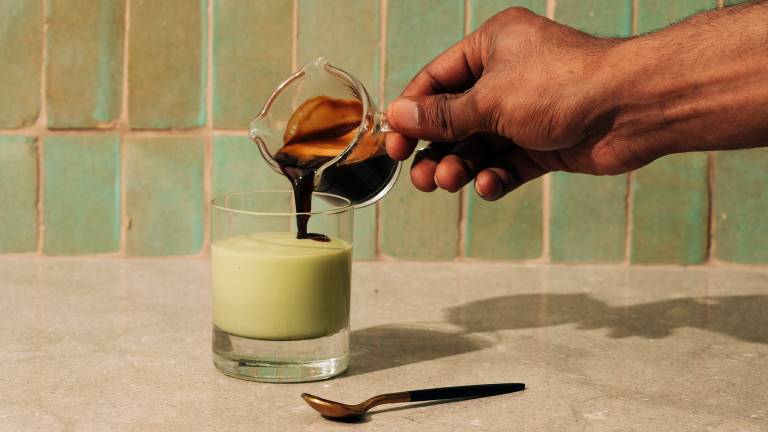
Showing Soon at BAMPFA: Avocado Iced Coffee and Art-Inspired Cakes
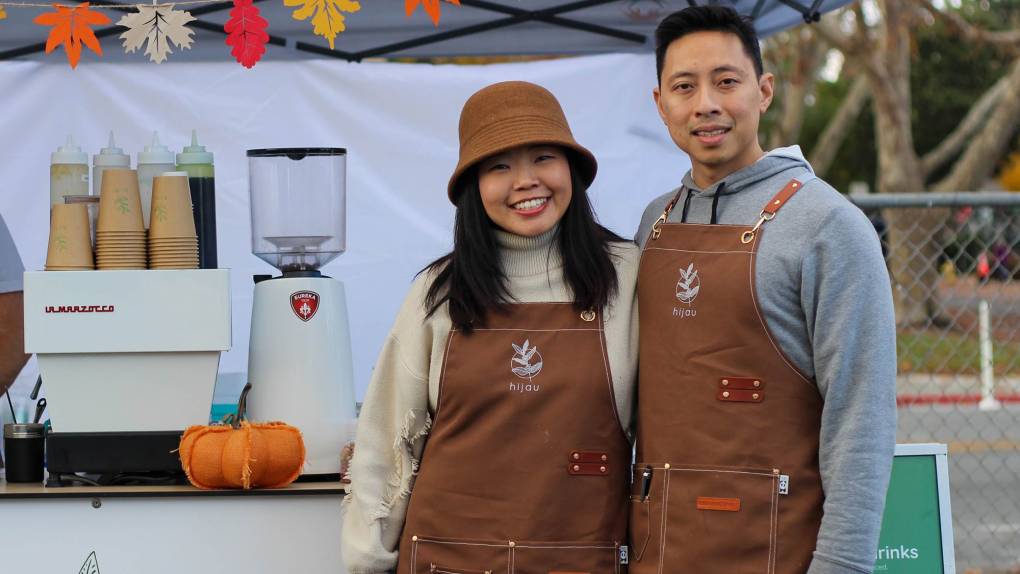
An Indonesian Coffee Pop-up Brings Pandan Lattes to San Jose
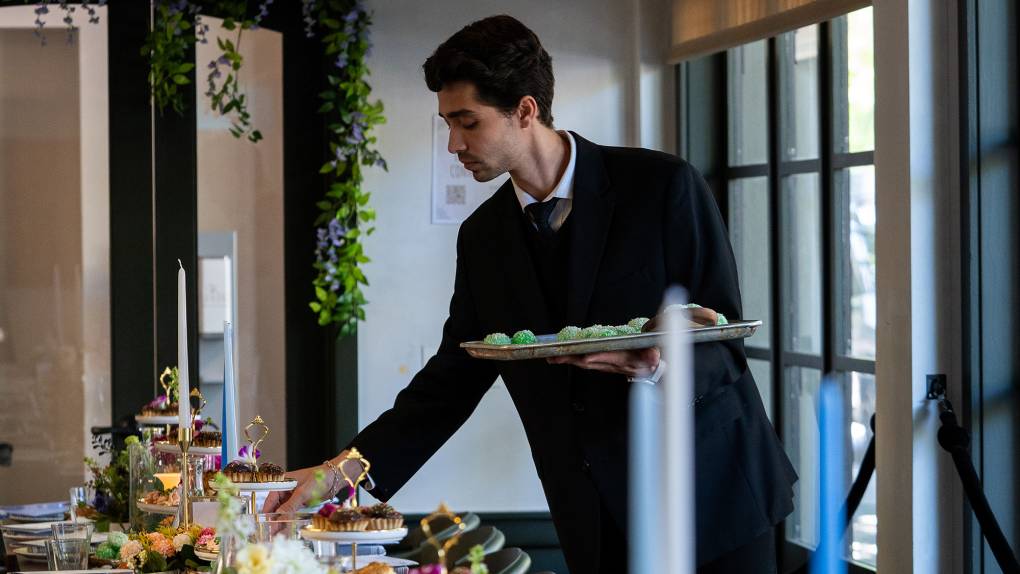
This Indonesian Coffee Shop Puts a Glam Twist on High Tea
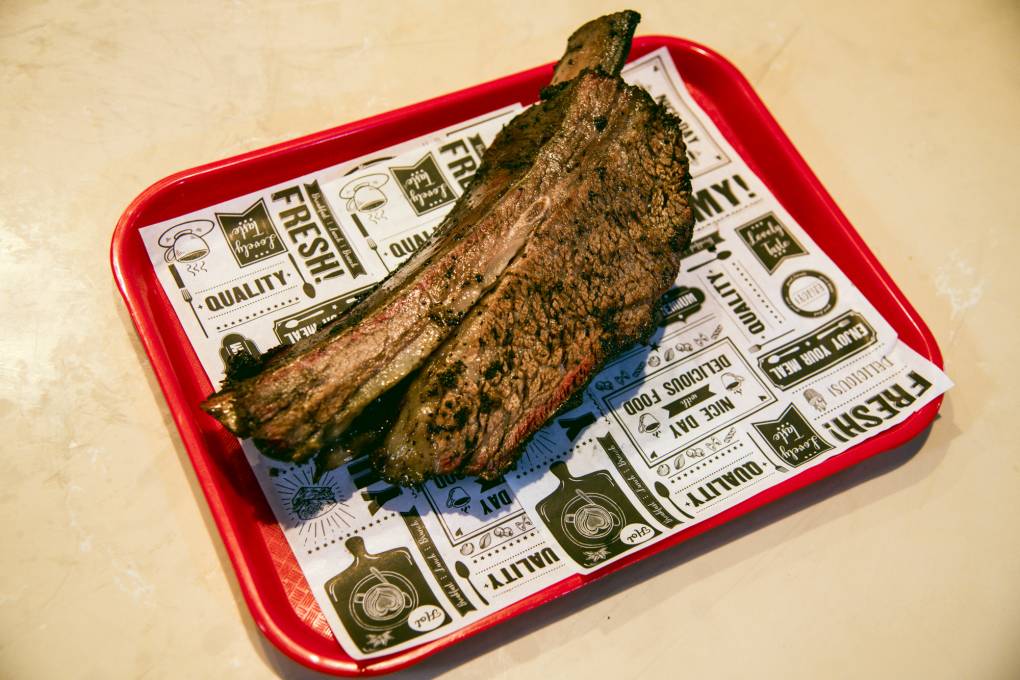
Fikscue’s Indo-Tex BBQ Is a Quintessentially Bay Area Creation
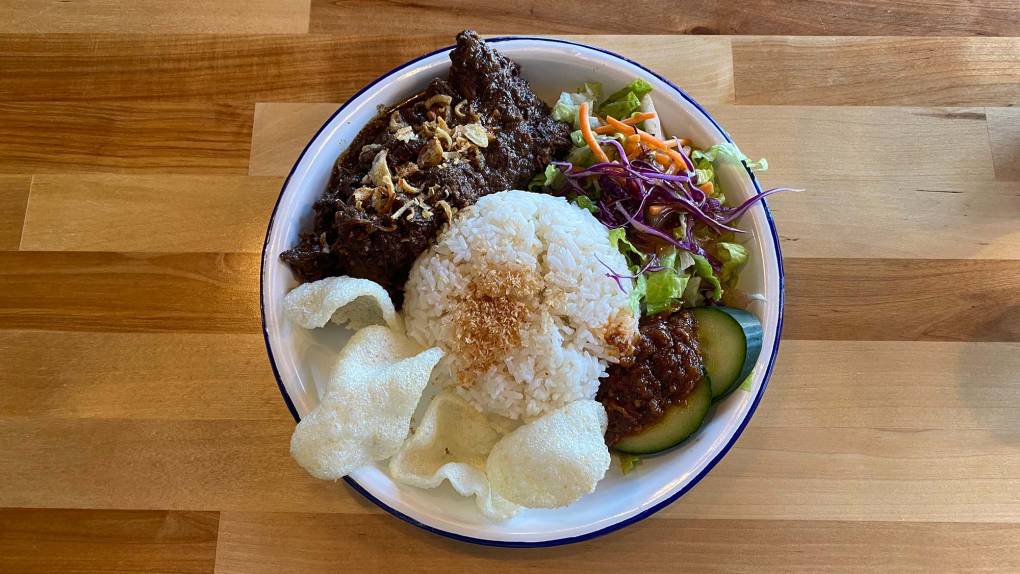
Rasa Rasa Brings Big Indonesian Flavor to the Mission
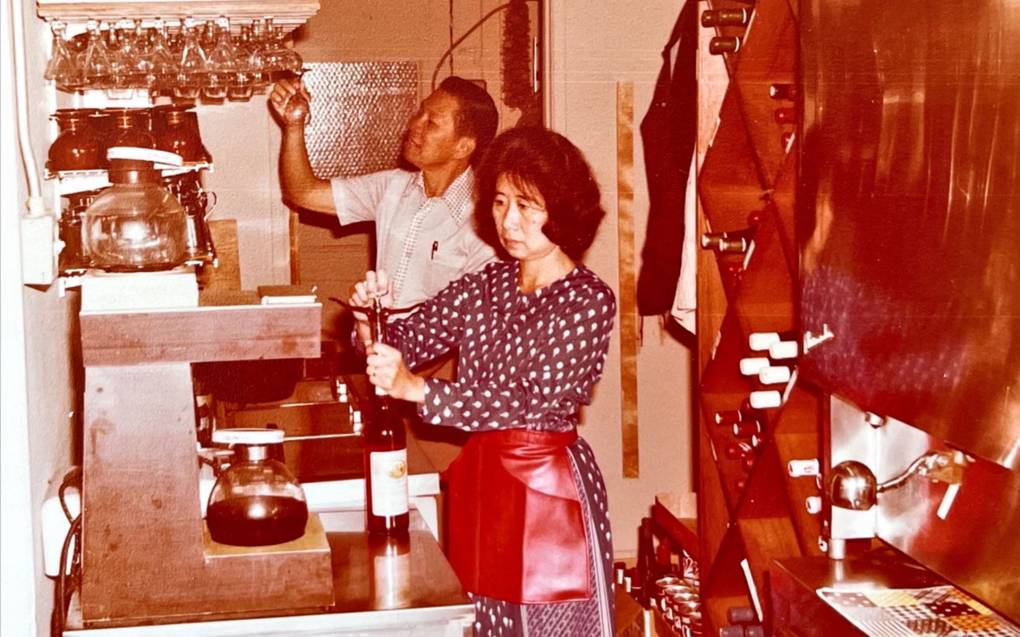
My Grandmother Opened One of the Bay Area's First Indonesian Restaurants
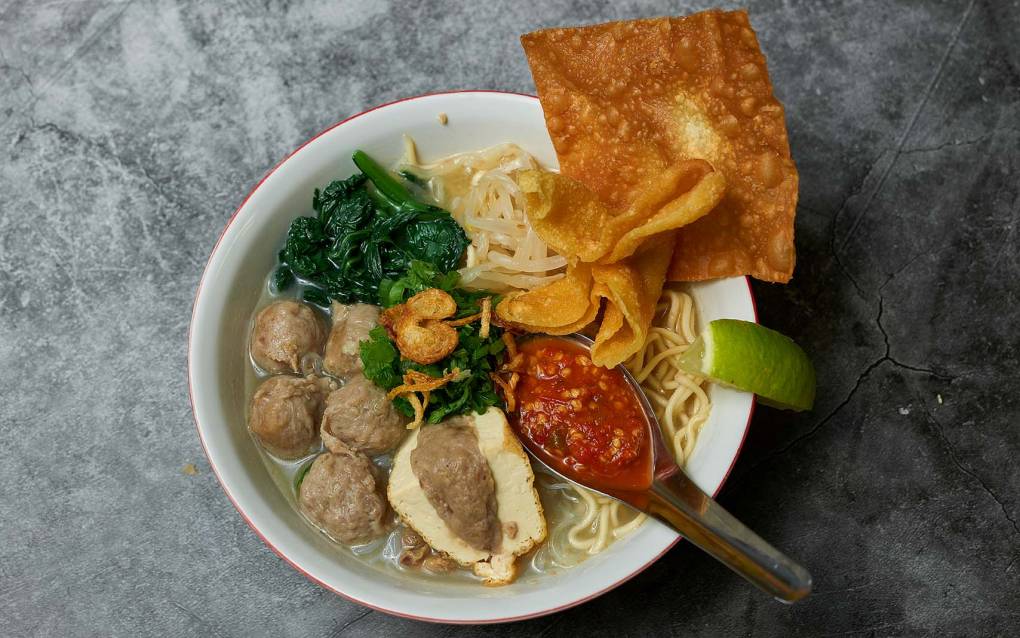
This Indonesian Pop-up Wants to Make Bakso a Household Name in the Bay
Sponsored
Player sponsored by
window.__IS_SSR__=true
window.__INITIAL_STATE__={
"attachmentsReducer": {
"audio_0": {
"type": "attachments",
"id": "audio_0",
"imgSizes": {
"kqedFullSize": {
"file": "https://ww2.kqed.org/news/wp-content/themes/KQED-unified/img/audio_bgs/background0.jpg"
}
}
},
"audio_1": {
"type": "attachments",
"id": "audio_1",
"imgSizes": {
"kqedFullSize": {
"file": "https://ww2.kqed.org/news/wp-content/themes/KQED-unified/img/audio_bgs/background1.jpg"
}
}
},
"audio_2": {
"type": "attachments",
"id": "audio_2",
"imgSizes": {
"kqedFullSize": {
"file": "https://ww2.kqed.org/news/wp-content/themes/KQED-unified/img/audio_bgs/background2.jpg"
}
}
},
"audio_3": {
"type": "attachments",
"id": "audio_3",
"imgSizes": {
"kqedFullSize": {
"file": "https://ww2.kqed.org/news/wp-content/themes/KQED-unified/img/audio_bgs/background3.jpg"
}
}
},
"audio_4": {
"type": "attachments",
"id": "audio_4",
"imgSizes": {
"kqedFullSize": {
"file": "https://ww2.kqed.org/news/wp-content/themes/KQED-unified/img/audio_bgs/background4.jpg"
}
}
},
"placeholder": {
"type": "attachments",
"id": "placeholder",
"imgSizes": {
"thumbnail": {
"file": "https://cdn.kqed.org/wp-content/uploads/2024/12/KQED-Default-Image-816638274-2000x1333-1-160x107.jpg",
"width": 160,
"height": 107,
"mimeType": "image/jpeg"
},
"medium": {
"file": "https://cdn.kqed.org/wp-content/uploads/2024/12/KQED-Default-Image-816638274-2000x1333-1-800x533.jpg",
"width": 800,
"height": 533,
"mimeType": "image/jpeg"
},
"medium_large": {
"file": "https://cdn.kqed.org/wp-content/uploads/2024/12/KQED-Default-Image-816638274-2000x1333-1-768x512.jpg",
"width": 768,
"height": 512,
"mimeType": "image/jpeg"
},
"large": {
"file": "https://cdn.kqed.org/wp-content/uploads/2024/12/KQED-Default-Image-816638274-2000x1333-1-1020x680.jpg",
"width": 1020,
"height": 680,
"mimeType": "image/jpeg"
},
"1536x1536": {
"file": "https://cdn.kqed.org/wp-content/uploads/2024/12/KQED-Default-Image-816638274-2000x1333-1-1536x1024.jpg",
"width": 1536,
"height": 1024,
"mimeType": "image/jpeg"
},
"fd-lrg": {
"file": "https://cdn.kqed.org/wp-content/uploads/2024/12/KQED-Default-Image-816638274-2000x1333-1-1536x1024.jpg",
"width": 1536,
"height": 1024,
"mimeType": "image/jpeg"
},
"fd-med": {
"file": "https://cdn.kqed.org/wp-content/uploads/2024/12/KQED-Default-Image-816638274-2000x1333-1-1020x680.jpg",
"width": 1020,
"height": 680,
"mimeType": "image/jpeg"
},
"fd-sm": {
"file": "https://cdn.kqed.org/wp-content/uploads/2024/12/KQED-Default-Image-816638274-2000x1333-1-800x533.jpg",
"width": 800,
"height": 533,
"mimeType": "image/jpeg"
},
"post-thumbnail": {
"file": "https://cdn.kqed.org/wp-content/uploads/2024/12/KQED-Default-Image-816638274-2000x1333-1-672x372.jpg",
"width": 672,
"height": 372,
"mimeType": "image/jpeg"
},
"twentyfourteen-full-width": {
"file": "https://cdn.kqed.org/wp-content/uploads/2024/12/KQED-Default-Image-816638274-2000x1333-1-1038x576.jpg",
"width": 1038,
"height": 576,
"mimeType": "image/jpeg"
},
"xxsmall": {
"file": "https://cdn.kqed.org/wp-content/uploads/2024/12/KQED-Default-Image-816638274-2000x1333-1-160x107.jpg",
"width": 160,
"height": 107,
"mimeType": "image/jpeg"
},
"xsmall": {
"file": "https://cdn.kqed.org/wp-content/uploads/2024/12/KQED-Default-Image-816638274-2000x1333-1-672x372.jpg",
"width": 672,
"height": 372,
"mimeType": "image/jpeg"
},
"small": {
"file": "https://cdn.kqed.org/wp-content/uploads/2024/12/KQED-Default-Image-816638274-2000x1333-1-672x372.jpg",
"width": 672,
"height": 372,
"mimeType": "image/jpeg"
},
"xlarge": {
"file": "https://cdn.kqed.org/wp-content/uploads/2024/12/KQED-Default-Image-816638274-2000x1333-1-1020x680.jpg",
"width": 1020,
"height": 680,
"mimeType": "image/jpeg"
},
"full-width": {
"file": "https://cdn.kqed.org/wp-content/uploads/2024/12/KQED-Default-Image-816638274-2000x1333-1-1920x1280.jpg",
"width": 1920,
"height": 1280,
"mimeType": "image/jpeg"
},
"guest-author-32": {
"file": "https://cdn.kqed.org/wp-content/uploads/2025/01/KQED-Default-Image-816638274-1333x1333-1-160x160.jpg",
"width": 32,
"height": 32,
"mimeType": "image/jpeg"
},
"guest-author-50": {
"file": "https://cdn.kqed.org/wp-content/uploads/2025/01/KQED-Default-Image-816638274-1333x1333-1-160x160.jpg",
"width": 50,
"height": 50,
"mimeType": "image/jpeg"
},
"guest-author-64": {
"file": "https://cdn.kqed.org/wp-content/uploads/2025/01/KQED-Default-Image-816638274-1333x1333-1-160x160.jpg",
"width": 64,
"height": 64,
"mimeType": "image/jpeg"
},
"guest-author-96": {
"file": "https://cdn.kqed.org/wp-content/uploads/2025/01/KQED-Default-Image-816638274-1333x1333-1-160x160.jpg",
"width": 96,
"height": 96,
"mimeType": "image/jpeg"
},
"guest-author-128": {
"file": "https://cdn.kqed.org/wp-content/uploads/2025/01/KQED-Default-Image-816638274-1333x1333-1-160x160.jpg",
"width": 128,
"height": 128,
"mimeType": "image/jpeg"
},
"detail": {
"file": "https://cdn.kqed.org/wp-content/uploads/2025/01/KQED-Default-Image-816638274-1333x1333-1-160x160.jpg",
"width": 160,
"height": 160,
"mimeType": "image/jpeg"
},
"kqedFullSize": {
"file": "https://cdn.kqed.org/wp-content/uploads/2024/12/KQED-Default-Image-816638274-2000x1333-1.jpg",
"width": 2000,
"height": 1333
}
}
},
"arts_13980471": {
"type": "attachments",
"id": "arts_13980471",
"meta": {
"index": "attachments_1716263798",
"site": "arts",
"id": "13980471",
"found": true
},
"title": "KopiSelect-22",
"publishDate": 1755737348,
"status": "inherit",
"parent": 13980465,
"modified": 1755737593,
"caption": "The Kopi Avocado, one of Kopi Bar's signature Indonesian-inspired coffee drinks. The cafe's new location at the Berkeley Museum of Art and Pacific Film Archive will open is slated to open in the fall of 2025.",
"credit": "Adahlia Cole, courtesy of Kopi Bar & Bakery",
"altTag": "A hand pouring espresso into a blended avocado drink.",
"description": null,
"imgSizes": {
"thumbnail": {
"file": "https://cdn.kqed.org/wp-content/uploads/sites/2/2025/08/KopiSelect-22-160x90.jpg",
"width": 160,
"height": 90,
"mimeType": "image/jpeg"
},
"medium_large": {
"file": "https://cdn.kqed.org/wp-content/uploads/sites/2/2025/08/KopiSelect-22-768x432.jpg",
"width": 768,
"height": 432,
"mimeType": "image/jpeg"
},
"1536x1536": {
"file": "https://cdn.kqed.org/wp-content/uploads/sites/2/2025/08/KopiSelect-22-1536x864.jpg",
"width": 1536,
"height": 864,
"mimeType": "image/jpeg"
},
"post-thumbnail": {
"file": "https://cdn.kqed.org/wp-content/uploads/sites/2/2025/08/KopiSelect-22-672x372.jpg",
"width": 672,
"height": 372,
"mimeType": "image/jpeg"
},
"twentyfourteen-full-width": {
"file": "https://cdn.kqed.org/wp-content/uploads/sites/2/2025/08/KopiSelect-22-1038x576.jpg",
"width": 1038,
"height": 576,
"mimeType": "image/jpeg"
},
"kqedFullSize": {
"file": "https://cdn.kqed.org/wp-content/uploads/sites/2/2025/08/KopiSelect-22.jpg",
"width": 2000,
"height": 1125
}
},
"fetchFailed": false,
"isLoading": false
},
"arts_13969927": {
"type": "attachments",
"id": "arts_13969927",
"meta": {
"index": "attachments_1716263798",
"site": "arts",
"id": "13969927",
"found": true
},
"title": "Hijau_Lisa Maria and Ryan Prawiradjaja",
"publishDate": 1735857182,
"status": "inherit",
"parent": 13969923,
"modified": 1735921901,
"caption": "Lisa Maria (left) and Ryan Prawiradjaja started Hijau in February 2024. The coffee pop-up is a regular at San Jose's Rose Garden Farmers Market.",
"credit": "Octavio Peña",
"altTag": "Two baristas posing for a portrait in front of an outdoor coffee stand.",
"description": null,
"imgSizes": {
"medium": {
"file": "https://cdn.kqed.org/wp-content/uploads/sites/2/2025/01/Hijau_Lisa-Maria-and-Ryan-Prawiradjaja-800x450.jpg",
"width": 800,
"height": 450,
"mimeType": "image/jpeg"
},
"large": {
"file": "https://cdn.kqed.org/wp-content/uploads/sites/2/2025/01/Hijau_Lisa-Maria-and-Ryan-Prawiradjaja-1020x574.jpg",
"width": 1020,
"height": 574,
"mimeType": "image/jpeg"
},
"thumbnail": {
"file": "https://cdn.kqed.org/wp-content/uploads/sites/2/2025/01/Hijau_Lisa-Maria-and-Ryan-Prawiradjaja-160x90.jpg",
"width": 160,
"height": 90,
"mimeType": "image/jpeg"
},
"medium_large": {
"file": "https://cdn.kqed.org/wp-content/uploads/sites/2/2025/01/Hijau_Lisa-Maria-and-Ryan-Prawiradjaja-768x432.jpg",
"width": 768,
"height": 432,
"mimeType": "image/jpeg"
},
"1536x1536": {
"file": "https://cdn.kqed.org/wp-content/uploads/sites/2/2025/01/Hijau_Lisa-Maria-and-Ryan-Prawiradjaja-1536x864.jpg",
"width": 1536,
"height": 864,
"mimeType": "image/jpeg"
},
"post-thumbnail": {
"file": "https://cdn.kqed.org/wp-content/uploads/sites/2/2025/01/Hijau_Lisa-Maria-and-Ryan-Prawiradjaja-672x372.jpg",
"width": 672,
"height": 372,
"mimeType": "image/jpeg"
},
"twentyfourteen-full-width": {
"file": "https://cdn.kqed.org/wp-content/uploads/sites/2/2025/01/Hijau_Lisa-Maria-and-Ryan-Prawiradjaja-1038x576.jpg",
"width": 1038,
"height": 576,
"mimeType": "image/jpeg"
},
"full-width": {
"file": "https://cdn.kqed.org/wp-content/uploads/sites/2/2025/01/Hijau_Lisa-Maria-and-Ryan-Prawiradjaja-1920x1080.jpg",
"width": 1920,
"height": 1080,
"mimeType": "image/jpeg"
},
"kqedFullSize": {
"file": "https://cdn.kqed.org/wp-content/uploads/sites/2/2025/01/Hijau_Lisa-Maria-and-Ryan-Prawiradjaja.jpg",
"width": 2000,
"height": 1125
}
},
"fetchFailed": false,
"isLoading": false
},
"arts_13963232": {
"type": "attachments",
"id": "arts_13963232",
"meta": {
"index": "attachments_1716263798",
"site": "arts",
"id": "13963232",
"found": true
},
"title": "Server plating Klepon (Indo Dessert) crop",
"publishDate": 1724781543,
"status": "inherit",
"parent": 13963228,
"modified": 1724781708,
"caption": "A server serves klepon, a kind of sweet Indonesian rice cake. The treats were part of one of Kopi Bar and Sandai's Indonesian-inspired high tea events in Walnut Creek.",
"credit": "Matchbook Media",
"altTag": "A server in a formal black suit serves a platter of pale green rice cakes.",
"description": null,
"imgSizes": {
"medium": {
"file": "https://cdn.kqed.org/wp-content/uploads/sites/2/2024/08/Server-plating-Klepon-Indo-Dessert-crop-800x450.jpg",
"width": 800,
"height": 450,
"mimeType": "image/jpeg"
},
"large": {
"file": "https://cdn.kqed.org/wp-content/uploads/sites/2/2024/08/Server-plating-Klepon-Indo-Dessert-crop-1020x574.jpg",
"width": 1020,
"height": 574,
"mimeType": "image/jpeg"
},
"thumbnail": {
"file": "https://cdn.kqed.org/wp-content/uploads/sites/2/2024/08/Server-plating-Klepon-Indo-Dessert-crop-160x90.jpg",
"width": 160,
"height": 90,
"mimeType": "image/jpeg"
},
"medium_large": {
"file": "https://cdn.kqed.org/wp-content/uploads/sites/2/2024/08/Server-plating-Klepon-Indo-Dessert-crop-768x432.jpg",
"width": 768,
"height": 432,
"mimeType": "image/jpeg"
},
"1536x1536": {
"file": "https://cdn.kqed.org/wp-content/uploads/sites/2/2024/08/Server-plating-Klepon-Indo-Dessert-crop-1536x864.jpg",
"width": 1536,
"height": 864,
"mimeType": "image/jpeg"
},
"post-thumbnail": {
"file": "https://cdn.kqed.org/wp-content/uploads/sites/2/2024/08/Server-plating-Klepon-Indo-Dessert-crop-672x372.jpg",
"width": 672,
"height": 372,
"mimeType": "image/jpeg"
},
"twentyfourteen-full-width": {
"file": "https://cdn.kqed.org/wp-content/uploads/sites/2/2024/08/Server-plating-Klepon-Indo-Dessert-crop-1038x576.jpg",
"width": 1038,
"height": 576,
"mimeType": "image/jpeg"
},
"full-width": {
"file": "https://cdn.kqed.org/wp-content/uploads/sites/2/2024/08/Server-plating-Klepon-Indo-Dessert-crop-1920x1080.jpg",
"width": 1920,
"height": 1080,
"mimeType": "image/jpeg"
},
"kqedFullSize": {
"file": "https://cdn.kqed.org/wp-content/uploads/sites/2/2024/08/Server-plating-Klepon-Indo-Dessert-crop.jpg",
"width": 2000,
"height": 1125
}
},
"fetchFailed": false,
"isLoading": false
},
"arts_13962178": {
"type": "attachments",
"id": "arts_13962178",
"meta": {
"index": "attachments_1716263798",
"site": "arts",
"id": "13962178",
"found": true
},
"title": "20240804_KQED_FIKSCUE_ML_0219-KQED-2",
"publishDate": 1722981695,
"status": "inherit",
"parent": 0,
"modified": 1733336493,
"caption": "A dino beef rib at Fikscue in Alameda on August 4, 2024. Husband-and-wife team Fik and Reka Saleh opened the restaurant as an Instagram-based pop-up in 2020 before they began serving Texas-style barbecue and Indonesian dishes from their current brick-and-mortar restaurant last November.",
"credit": "Marissa Leshnov for KQED",
"altTag": "A huge smoked \"dinosaur\" beef rib on a paper-lined tray.",
"description": null,
"imgSizes": {
"medium": {
"file": "https://cdn.kqed.org/wp-content/uploads/sites/2/2024/08/20240804_KQED_FIKSCUE_ML_0219-KQED-2-800x533.jpg",
"width": 800,
"height": 533,
"mimeType": "image/jpeg"
},
"large": {
"file": "https://cdn.kqed.org/wp-content/uploads/sites/2/2024/08/20240804_KQED_FIKSCUE_ML_0219-KQED-2-1020x680.jpg",
"width": 1020,
"height": 680,
"mimeType": "image/jpeg"
},
"thumbnail": {
"file": "https://cdn.kqed.org/wp-content/uploads/sites/2/2024/08/20240804_KQED_FIKSCUE_ML_0219-KQED-2-160x107.jpg",
"width": 160,
"height": 107,
"mimeType": "image/jpeg"
},
"medium_large": {
"file": "https://cdn.kqed.org/wp-content/uploads/sites/2/2024/08/20240804_KQED_FIKSCUE_ML_0219-KQED-2-768x512.jpg",
"width": 768,
"height": 512,
"mimeType": "image/jpeg"
},
"1536x1536": {
"file": "https://cdn.kqed.org/wp-content/uploads/sites/2/2024/08/20240804_KQED_FIKSCUE_ML_0219-KQED-2-1536x1024.jpg",
"width": 1536,
"height": 1024,
"mimeType": "image/jpeg"
},
"post-thumbnail": {
"file": "https://cdn.kqed.org/wp-content/uploads/sites/2/2024/08/20240804_KQED_FIKSCUE_ML_0219-KQED-2-672x372.jpg",
"width": 672,
"height": 372,
"mimeType": "image/jpeg"
},
"twentyfourteen-full-width": {
"file": "https://cdn.kqed.org/wp-content/uploads/sites/2/2024/08/20240804_KQED_FIKSCUE_ML_0219-KQED-2-1038x576.jpg",
"width": 1038,
"height": 576,
"mimeType": "image/jpeg"
},
"full-width": {
"file": "https://cdn.kqed.org/wp-content/uploads/sites/2/2024/08/20240804_KQED_FIKSCUE_ML_0219-KQED-2-1920x1280.jpg",
"width": 1920,
"height": 1280,
"mimeType": "image/jpeg"
},
"kqedFullSize": {
"file": "https://cdn.kqed.org/wp-content/uploads/sites/2/2024/08/20240804_KQED_FIKSCUE_ML_0219-KQED-2.jpg",
"width": 2000,
"height": 1333
}
},
"fetchFailed": false,
"isLoading": false
},
"arts_13954942": {
"type": "attachments",
"id": "arts_13954942",
"meta": {
"index": "attachments_1716263798",
"site": "arts",
"id": "13954942",
"found": true
},
"parent": 13954939,
"imgSizes": {
"twentyfourteen-full-width": {
"file": "https://cdn.kqed.org/wp-content/uploads/sites/2/2024/03/rasa-rasa_rendang-feature-1038x576.jpg",
"width": 1038,
"mimeType": "image/jpeg",
"height": 576
},
"thumbnail": {
"file": "https://cdn.kqed.org/wp-content/uploads/sites/2/2024/03/rasa-rasa_rendang-feature-160x90.jpg",
"width": 160,
"mimeType": "image/jpeg",
"height": 90
},
"post-thumbnail": {
"file": "https://cdn.kqed.org/wp-content/uploads/sites/2/2024/03/rasa-rasa_rendang-feature-672x372.jpg",
"width": 672,
"mimeType": "image/jpeg",
"height": 372
},
"kqedFullSize": {
"file": "https://cdn.kqed.org/wp-content/uploads/sites/2/2024/03/rasa-rasa_rendang-feature.jpg",
"width": 2000,
"height": 1125
},
"large": {
"file": "https://cdn.kqed.org/wp-content/uploads/sites/2/2024/03/rasa-rasa_rendang-feature-1020x574.jpg",
"width": 1020,
"mimeType": "image/jpeg",
"height": 574
},
"1536x1536": {
"file": "https://cdn.kqed.org/wp-content/uploads/sites/2/2024/03/rasa-rasa_rendang-feature-1536x864.jpg",
"width": 1536,
"mimeType": "image/jpeg",
"height": 864
},
"full-width": {
"file": "https://cdn.kqed.org/wp-content/uploads/sites/2/2024/03/rasa-rasa_rendang-feature-1920x1080.jpg",
"width": 1920,
"mimeType": "image/jpeg",
"height": 1080
},
"medium": {
"file": "https://cdn.kqed.org/wp-content/uploads/sites/2/2024/03/rasa-rasa_rendang-feature-800x450.jpg",
"width": 800,
"mimeType": "image/jpeg",
"height": 450
},
"medium_large": {
"file": "https://cdn.kqed.org/wp-content/uploads/sites/2/2024/03/rasa-rasa_rendang-feature-768x432.jpg",
"width": 768,
"mimeType": "image/jpeg",
"height": 432
}
},
"publishDate": 1711651347,
"modified": 1711651493,
"caption": "The beef rendang platter is one of the classic Indonesian dishes customers can find at Rasa Rasa Kitchen, a new restaurant in San Francisco's Mission District.",
"description": null,
"title": "rasa rasa_rendang feature",
"credit": "Luke Tsai/KQED",
"status": "inherit",
"altTag": "A bowl loaded with beef rendang, coconut white rice, shrimp chips and a salad.",
"fetchFailed": false,
"isLoading": false
},
"arts_13929186": {
"type": "attachments",
"id": "arts_13929186",
"meta": {
"index": "attachments_1716263798",
"site": "arts",
"id": "13929186",
"found": true
},
"parent": 13929177,
"imgSizes": {
"twentyfourteen-full-width": {
"file": "https://ww2.kqed.org/app/uploads/sites/2/2023/05/borobudur-wine_crop-1038x576.jpg",
"width": 1038,
"mimeType": "image/jpeg",
"height": 576
},
"thumbnail": {
"file": "https://ww2.kqed.org/app/uploads/sites/2/2023/05/borobudur-wine_crop-160x100.jpg",
"width": 160,
"mimeType": "image/jpeg",
"height": 100
},
"post-thumbnail": {
"file": "https://ww2.kqed.org/app/uploads/sites/2/2023/05/borobudur-wine_crop-672x372.jpg",
"width": 672,
"mimeType": "image/jpeg",
"height": 372
},
"kqedFullSize": {
"file": "https://ww2.kqed.org/app/uploads/sites/2/2023/05/borobudur-wine_crop.jpg",
"width": 1920,
"height": 1199
},
"large": {
"file": "https://ww2.kqed.org/app/uploads/sites/2/2023/05/borobudur-wine_crop-1020x637.jpg",
"width": 1020,
"mimeType": "image/jpeg",
"height": 637
},
"1536x1536": {
"file": "https://ww2.kqed.org/app/uploads/sites/2/2023/05/borobudur-wine_crop-1536x959.jpg",
"width": 1536,
"mimeType": "image/jpeg",
"height": 959
},
"medium": {
"file": "https://ww2.kqed.org/app/uploads/sites/2/2023/05/borobudur-wine_crop-800x500.jpg",
"width": 800,
"mimeType": "image/jpeg",
"height": 500
},
"medium_large": {
"file": "https://ww2.kqed.org/app/uploads/sites/2/2023/05/borobudur-wine_crop-768x480.jpg",
"width": 768,
"mimeType": "image/jpeg",
"height": 480
}
},
"publishDate": 1684260509,
"modified": 1684260692,
"caption": "The author's grandmother, Helena Lomanto, opens a bottle of wine at Boroburdur, the Chinese-Indonesian restaurant she ran in San Francisco during the 1980s. It was one of the Bay Area's first Indonesian restaurants.",
"description": null,
"title": "borobudur wine_crop",
"credit": "Courtesy of Helena Lomanto",
"status": "inherit",
"altTag": "A woman in a red apron opens a bottle of wine at a restaurant in this old photograph from the 1980s.",
"fetchFailed": false,
"isLoading": false
},
"arts_13908799": {
"type": "attachments",
"id": "arts_13908799",
"meta": {
"index": "attachments_1716263798",
"site": "arts",
"id": "13908799",
"found": true
},
"parent": 13908798,
"imgSizes": {
"twentyfourteen-full-width": {
"file": "https://ww2.kqed.org/app/uploads/sites/2/2022/02/dgrobak_signaturebakso-1038x576.jpg",
"width": 1038,
"mimeType": "image/jpeg",
"height": 576
},
"thumbnail": {
"file": "https://ww2.kqed.org/app/uploads/sites/2/2022/02/dgrobak_signaturebakso-160x100.jpg",
"width": 160,
"mimeType": "image/jpeg",
"height": 100
},
"post-thumbnail": {
"file": "https://ww2.kqed.org/app/uploads/sites/2/2022/02/dgrobak_signaturebakso-672x372.jpg",
"width": 672,
"mimeType": "image/jpeg",
"height": 372
},
"kqedFullSize": {
"file": "https://ww2.kqed.org/app/uploads/sites/2/2022/02/dgrobak_signaturebakso.jpg",
"width": 1708,
"height": 1068
},
"large": {
"file": "https://ww2.kqed.org/app/uploads/sites/2/2022/02/dgrobak_signaturebakso-1020x638.jpg",
"width": 1020,
"mimeType": "image/jpeg",
"height": 638
},
"1536x1536": {
"file": "https://ww2.kqed.org/app/uploads/sites/2/2022/02/dgrobak_signaturebakso-1536x960.jpg",
"width": 1536,
"mimeType": "image/jpeg",
"height": 960
},
"medium": {
"file": "https://ww2.kqed.org/app/uploads/sites/2/2022/02/dgrobak_signaturebakso-800x500.jpg",
"width": 800,
"mimeType": "image/jpeg",
"height": 500
},
"medium_large": {
"file": "https://ww2.kqed.org/app/uploads/sites/2/2022/02/dgrobak_signaturebakso-768x480.jpg",
"width": 768,
"mimeType": "image/jpeg",
"height": 480
}
},
"publishDate": 1643756232,
"modified": 1643756331,
"caption": "D'Grobak's signature dish is its bakso, a noodle soup made with hand-rolled beef meatballs.",
"description": null,
"title": "d'grobak_signaturebakso",
"credit": "D'Grobak",
"status": "inherit",
"altTag": "Overhead view of a bowl of noodle soup with meatballs and a spoonful of sambal.",
"fetchFailed": false,
"isLoading": false
}
},
"audioPlayerReducer": {
"postId": "stream_live",
"isPaused": true,
"isPlaying": false,
"pfsActive": false,
"pledgeModalIsOpen": true,
"playerDrawerIsOpen": false
},
"authorsReducer": {
"byline_arts_13929177": {
"type": "authors",
"id": "byline_arts_13929177",
"meta": {
"override": true
},
"slug": "byline_arts_13929177",
"name": "Giovanna Lomanto",
"isLoading": false
},
"ltsai": {
"type": "authors",
"id": "11743",
"meta": {
"index": "authors_1716337520",
"id": "11743",
"found": true
},
"name": "Luke Tsai",
"firstName": "Luke",
"lastName": "Tsai",
"slug": "ltsai",
"email": "ltsai@kqed.org",
"display_author_email": true,
"staff_mastheads": [
"arts"
],
"title": "Food Editor",
"bio": "Luke Tsai is KQED's food editor and resident stinky tofu connoisseur. Prior to KQED, he was an editor at Eater SF, \u003cem>San Francisco \u003c/em>magazine, and the \u003cem>East Bay Express\u003c/em>, and his work has also appeared in TASTE, the \u003cem>San Francisco Chronicle\u003c/em>, and the \u003cem>Best Food Writing\u003c/em> anthology. When he isn't writing or editing, you'll find him eating most everything he can get his hands on.",
"avatar": "https://secure.gravatar.com/avatar/d1ff591a3047b143a0e23cf7f28fcac0?s=600&d=blank&r=g",
"twitter": "theluketsai",
"facebook": null,
"instagram": null,
"linkedin": null,
"sites": [
{
"site": "",
"roles": [
"editor"
]
},
{
"site": "arts",
"roles": [
"administrator"
]
},
{
"site": "bayareabites",
"roles": [
"editor"
]
},
{
"site": "food",
"roles": [
"editor"
]
}
],
"headData": {
"title": "Luke Tsai | KQED",
"description": "Food Editor",
"ogImgSrc": "https://secure.gravatar.com/avatar/d1ff591a3047b143a0e23cf7f28fcac0?s=600&d=blank&r=g",
"twImgSrc": "https://secure.gravatar.com/avatar/d1ff591a3047b143a0e23cf7f28fcac0?s=600&d=blank&r=g"
},
"isLoading": false,
"link": "/author/ltsai"
},
"opena": {
"type": "authors",
"id": "11903",
"meta": {
"index": "authors_1716337520",
"id": "11903",
"found": true
},
"name": "Octavio Peña",
"firstName": "Octavio",
"lastName": "Peña",
"slug": "opena",
"email": "octaviopenagutierrez@gmail.com",
"display_author_email": false,
"staff_mastheads": [],
"title": "KQED Contributor",
"bio": null,
"avatar": "https://secure.gravatar.com/avatar/8fb464e0c705ab58fc9d18e06211557c?s=600&d=blank&r=g",
"twitter": null,
"facebook": null,
"instagram": null,
"linkedin": null,
"sites": [
{
"site": "arts",
"roles": [
"contributor"
]
}
],
"headData": {
"title": "Octavio Peña | KQED",
"description": "KQED Contributor",
"ogImgSrc": "https://secure.gravatar.com/avatar/8fb464e0c705ab58fc9d18e06211557c?s=600&d=blank&r=g",
"twImgSrc": "https://secure.gravatar.com/avatar/8fb464e0c705ab58fc9d18e06211557c?s=600&d=blank&r=g"
},
"isLoading": false,
"link": "/author/opena"
}
},
"breakingNewsReducer": {},
"pagesReducer": {},
"postsReducer": {
"stream_live": {
"type": "live",
"id": "stream_live",
"audioUrl": "https://streams.kqed.org/kqedradio",
"title": "Live Stream",
"excerpt": "Live Stream information currently unavailable.",
"link": "/radio",
"featImg": "",
"label": {
"name": "KQED Live",
"link": "/"
}
},
"stream_kqedNewscast": {
"type": "posts",
"id": "stream_kqedNewscast",
"audioUrl": "https://www.kqed.org/.stream/anon/radio/RDnews/newscast.mp3?_=1",
"title": "KQED Newscast",
"featImg": "",
"label": {
"name": "88.5 FM",
"link": "/"
}
},
"arts_13980465": {
"type": "posts",
"id": "arts_13980465",
"meta": {
"index": "posts_1716263798",
"site": "arts",
"id": "13980465",
"score": null,
"sort": [
1755774032000
]
},
"guestAuthors": [],
"slug": "kopi-bar-bampfa-cafe-berkeley-avocado-iced-coffee-kaya-toast",
"title": "Showing Soon at BAMPFA: Avocado Iced Coffee and Art-Inspired Cakes",
"publishDate": 1755774032,
"format": "standard",
"headTitle": "Showing Soon at BAMPFA: Avocado Iced Coffee and Art-Inspired Cakes | KQED",
"labelTerm": {
"site": "arts"
},
"content": "\u003cp>When Nora Haron visited the vacant cafe space at the \u003ca href=\"https://www.kqed.org/arts/tag/bampfa\">Berkeley Art Museum and Pacific Film Archive\u003c/a> earlier this summer, the museum had just put up a beautiful \u003ca href=\"https://www.kqed.org/arts/13977115/bampfa-routed-west-african-american-quilts-review\">exhibition of African American quilts\u003c/a>. Her chef brain was immediately inspired by the colorful patterns: What if she baked a Swiss roll that emulated one of the designs? What if she turned one of the quilts into a cookie?\u003c/p>\n\u003cp>It was a no-brainer, then, for Haron to put in a bid to take over BAMPFA’s upstairs cafe, which has sat empty since its former tenant, Babette, moved out at the end of 2021. And as it turns out, the Berkeley museum was just as enthusiastic about her vision.\u003c/p>\n\u003cp>In a couple of months, Haron will reopen the BAMPFA cafe as a new incarnation of her Indonesian-inspired coffee shop, \u003ca href=\"https://www.instagram.com/kopibar.us/?hl=en\">Kopi Bar & Bakery\u003c/a>. The idea, she says, is to bring a slice of Indonesian and Singaporean cafe culture to Berkeley. Think kaya toast; pastries made with pandan, coconut and palm sugar; and, perhaps Haron’s most famous creation, the iced coffee drink known as the Kopi Avocado.\u003c/p>\n\u003cp>All in all, Haron hopes the cafe will establish itself as an “extended visit for museumgoers” — in other words, that no trip to BAMPFA will feel complete without a stop at Kopi Bar. And yes, part of that will include creating a special art-themed cake or pastry to complement every big new exhibition that opens at the museum.\u003c/p>\n\u003cfigure id=\"attachment_13980472\" class=\"wp-caption alignnone\" style=\"max-width: 2000px\">\u003cimg loading=\"lazy\" decoding=\"async\" class=\"size-full wp-image-13980472\" src=\"https://cdn.kqed.org/wp-content/uploads/sites/2/2025/08/KopiSelect-34.jpg\" alt=\"A big spread of pastries at a cafe\" width=\"2000\" height=\"1125\" srcset=\"https://cdn.kqed.org/wp-content/uploads/sites/2/2025/08/KopiSelect-34.jpg 2000w, https://cdn.kqed.org/wp-content/uploads/sites/2/2025/08/KopiSelect-34-160x90.jpg 160w, https://cdn.kqed.org/wp-content/uploads/sites/2/2025/08/KopiSelect-34-768x432.jpg 768w, https://cdn.kqed.org/wp-content/uploads/sites/2/2025/08/KopiSelect-34-1536x864.jpg 1536w\" sizes=\"auto, (max-width: 2000px) 100vw, 2000px\">\u003cfigcaption class=\"wp-caption-text\">Selection of pastries at the original Kopi Bar in Walnut Creek. \u003ccite>(Adahlia Cole, courtesy of Kopi Bar & Bakery)\u003c/cite>\u003c/figcaption>\u003c/figure>\n\u003cp>In many ways, the project is a dream come true for Haron. “I always wanted to go to Berkeley,” she says.\u003c/p>\n\u003cp>[ad fullwidth]\u003c/p>\n\u003cp>For East Bay food lovers, Haron’s comeback is big news in and of itself. Back in March, the chef made the \u003ca href=\"https://sf.eater.com/closings/203254/sandai-kopi-bar-closing-walnut-creek-east-bay\">difficult decision to close\u003c/a> SanDai, her two-year-old Indonesian-Singaporean restaurant in downtown Walnut Creek, and the original Kopi Bar coffee shop that shared the space. Reached by phone, Haron explained that business had been terribly slow for well over a year — much too slow to justify the nearly $29,000 rent. At first she’d hoped that another restaurant would move into the space, allowing her to continue running Kopi Bar next door. But she never wound up finding the right collaborator.\u003c/p>\n\u003cp>SanDai was a rare East Bay destination for Indonesian food — elegant, umami-packed versions of classics like beef rendang and seafood mee goreng. For the museum cafe, the savory side of the menu will be greatly simplified, consisting mostly of soups, sandwiches and congee.\u003c/p>\n\u003cfigure id=\"attachment_13980473\" class=\"wp-caption alignnone\" style=\"max-width: 2000px\">\u003cimg loading=\"lazy\" decoding=\"async\" class=\"size-full wp-image-13980473\" src=\"https://cdn.kqed.org/wp-content/uploads/sites/2/2025/08/chef-nora.jpg\" alt=\"An Asian woman poses for a portrait inside an empy cafe.\" width=\"2000\" height=\"2000\" srcset=\"https://cdn.kqed.org/wp-content/uploads/sites/2/2025/08/chef-nora.jpg 2000w, https://cdn.kqed.org/wp-content/uploads/sites/2/2025/08/chef-nora-160x160.jpg 160w, https://cdn.kqed.org/wp-content/uploads/sites/2/2025/08/chef-nora-768x768.jpg 768w, https://cdn.kqed.org/wp-content/uploads/sites/2/2025/08/chef-nora-1536x1536.jpg 1536w\" sizes=\"auto, (max-width: 2000px) 100vw, 2000px\">\u003cfigcaption class=\"wp-caption-text\">Chef Nora Haron poses inside the soon-to-be-reopened BAMPFA cafe space. \u003ccite>(Courtesy of Nora Horan)\u003c/cite>\u003c/figcaption>\u003c/figure>\n\u003cp>\u003cspan style=\"font-weight: 400\">[aside postID='arts_13929177,arts_13953078,arts_13969923']\u003c/span>The rotating selection of fusion pastries and creative coffee drinks, on the other hand, will be similar to what she served at the original Kopi Bar, where the Kopi Avocado — a cool, creamy blend of espresso, avocado and coconut condensed milk — was a particular standout. The cafe will also be one of the only places in the East Bay where diners can get the classic Singaporean breakfast of buttered toast slathered with coconut jam. (As a nod to the Bay Area, Kopi Bar’s kaya toast will feature sourdough bread made with a starter Haron has been feeding for 10 years.)\u003c/p>\n\u003cp>And Haron also plans to continue to hold special events at the cafe, like the occasional \u003ca href=\"https://www.kqed.org/arts/13963228/indonesian-high-tea-kopi-bar-sandai-walnut-creek\">Indonesian-Singaporean high tea series\u003c/a> that she used to host in Walnut Creek.\u003c/p>\n\u003cp>Haron says she expects the renovation process to be fairly quick. One of the only big changes that she’s excited to make is hanging up the collection of Balinese carvings that she used to display at the old restaurant. If all goes well, she hopes to open no later than October.\u003c/p>\n\u003chr>\n\u003cp>\u003c/p>\n\u003cp>\u003cem>To start out,\u003c/em> \u003ca href=\"https://www.instagram.com/kopibar.us/?hl=en\">\u003ci>Kopi Bar & Bakery\u003c/i>\u003c/a>\u003ci> will be open Wednesday through Sunday 11 a.m.–3 p.m. (and from 9–11 a.m. for UC Berkeley students and staff only) on the second floor at the Berkeley Art Museum and Pacific Film Archive (2155 Center St., Berkeley).\u003c/i>\u003c/p>\n\n",
"blocks": [],
"excerpt": "Kopi Bar is bringing its Cal-Indonesian pastries and coffee drinks to Berkeley.",
"status": "publish",
"parent": 0,
"modified": 1755895232,
"stats": {
"hasAudio": false,
"hasVideo": false,
"hasChartOrMap": false,
"iframeSrcs": [],
"hasGoogleForm": false,
"hasGallery": false,
"hasHearkenModule": false,
"hasPolis": false,
"paragraphCount": 13,
"wordCount": 709
},
"headData": {
"title": "The Bay Area's Favorite Indonesian Cafe Moves to BAMPFA | KQED",
"description": "Kopi Bar is bringing its Cal-Indonesian pastries and coffee drinks to Berkeley.",
"ogTitle": "Showing Soon at BAMPFA: Avocado Iced Coffee and Art-Inspired Cakes",
"ogDescription": "",
"ogImgId": "",
"twTitle": "Showing Soon at BAMPFA: Avocado Iced Coffee and Art-Inspired Cakes",
"twDescription": "",
"twImgId": "",
"socialTitle": "The Bay Area's Favorite Indonesian Cafe Moves to BAMPFA %%page%% %%sep%% KQED",
"schema": {
"@context": "https://schema.org",
"@type": "Article",
"headline": "Showing Soon at BAMPFA: Avocado Iced Coffee and Art-Inspired Cakes",
"datePublished": "2025-08-21T04:00:32-07:00",
"dateModified": "2025-08-22T13:40:32-07:00",
"image": "https://cdn.kqed.org/wp-content/uploads/2020/02/KQED-OG-Image@1x.png"
}
},
"primaryCategory": {
"termId": 12276,
"slug": "food",
"name": "Food"
},
"sticky": false,
"nprStoryId": "kqed-13980465",
"templateType": "standard",
"featuredImageType": "standard",
"excludeFromSiteSearch": "Include",
"articleAge": "0",
"path": "/arts/13980465/kopi-bar-bampfa-cafe-berkeley-avocado-iced-coffee-kaya-toast",
"audioTrackLength": null,
"parsedContent": [
{
"type": "contentString",
"content": "\u003cdiv class=\"post-body\">\u003cp>\u003cp>When Nora Haron visited the vacant cafe space at the \u003ca href=\"https://www.kqed.org/arts/tag/bampfa\">Berkeley Art Museum and Pacific Film Archive\u003c/a> earlier this summer, the museum had just put up a beautiful \u003ca href=\"https://www.kqed.org/arts/13977115/bampfa-routed-west-african-american-quilts-review\">exhibition of African American quilts\u003c/a>. Her chef brain was immediately inspired by the colorful patterns: What if she baked a Swiss roll that emulated one of the designs? What if she turned one of the quilts into a cookie?\u003c/p>\n\u003cp>It was a no-brainer, then, for Haron to put in a bid to take over BAMPFA’s upstairs cafe, which has sat empty since its former tenant, Babette, moved out at the end of 2021. And as it turns out, the Berkeley museum was just as enthusiastic about her vision.\u003c/p>\n\u003cp>In a couple of months, Haron will reopen the BAMPFA cafe as a new incarnation of her Indonesian-inspired coffee shop, \u003ca href=\"https://www.instagram.com/kopibar.us/?hl=en\">Kopi Bar & Bakery\u003c/a>. The idea, she says, is to bring a slice of Indonesian and Singaporean cafe culture to Berkeley. Think kaya toast; pastries made with pandan, coconut and palm sugar; and, perhaps Haron’s most famous creation, the iced coffee drink known as the Kopi Avocado.\u003c/p>\n\u003cp>All in all, Haron hopes the cafe will establish itself as an “extended visit for museumgoers” — in other words, that no trip to BAMPFA will feel complete without a stop at Kopi Bar. And yes, part of that will include creating a special art-themed cake or pastry to complement every big new exhibition that opens at the museum.\u003c/p>\n\u003cfigure id=\"attachment_13980472\" class=\"wp-caption alignnone\" style=\"max-width: 2000px\">\u003cimg loading=\"lazy\" decoding=\"async\" class=\"size-full wp-image-13980472\" src=\"https://cdn.kqed.org/wp-content/uploads/sites/2/2025/08/KopiSelect-34.jpg\" alt=\"A big spread of pastries at a cafe\" width=\"2000\" height=\"1125\" srcset=\"https://cdn.kqed.org/wp-content/uploads/sites/2/2025/08/KopiSelect-34.jpg 2000w, https://cdn.kqed.org/wp-content/uploads/sites/2/2025/08/KopiSelect-34-160x90.jpg 160w, https://cdn.kqed.org/wp-content/uploads/sites/2/2025/08/KopiSelect-34-768x432.jpg 768w, https://cdn.kqed.org/wp-content/uploads/sites/2/2025/08/KopiSelect-34-1536x864.jpg 1536w\" sizes=\"auto, (max-width: 2000px) 100vw, 2000px\">\u003cfigcaption class=\"wp-caption-text\">Selection of pastries at the original Kopi Bar in Walnut Creek. \u003ccite>(Adahlia Cole, courtesy of Kopi Bar & Bakery)\u003c/cite>\u003c/figcaption>\u003c/figure>\n\u003cp>In many ways, the project is a dream come true for Haron. “I always wanted to go to Berkeley,” she says.\u003c/p>\n\u003cp>\u003c/p>\u003c/div>",
"attributes": {
"named": {},
"numeric": []
}
},
{
"type": "component",
"content": "",
"name": "ad",
"attributes": {
"named": {
"label": "fullwidth"
},
"numeric": [
"fullwidth"
]
}
},
{
"type": "contentString",
"content": "\u003cdiv class=\"post-body\">\u003cp>\u003c/p>\n\u003cp>For East Bay food lovers, Haron’s comeback is big news in and of itself. Back in March, the chef made the \u003ca href=\"https://sf.eater.com/closings/203254/sandai-kopi-bar-closing-walnut-creek-east-bay\">difficult decision to close\u003c/a> SanDai, her two-year-old Indonesian-Singaporean restaurant in downtown Walnut Creek, and the original Kopi Bar coffee shop that shared the space. Reached by phone, Haron explained that business had been terribly slow for well over a year — much too slow to justify the nearly $29,000 rent. At first she’d hoped that another restaurant would move into the space, allowing her to continue running Kopi Bar next door. But she never wound up finding the right collaborator.\u003c/p>\n\u003cp>SanDai was a rare East Bay destination for Indonesian food — elegant, umami-packed versions of classics like beef rendang and seafood mee goreng. For the museum cafe, the savory side of the menu will be greatly simplified, consisting mostly of soups, sandwiches and congee.\u003c/p>\n\u003cfigure id=\"attachment_13980473\" class=\"wp-caption alignnone\" style=\"max-width: 2000px\">\u003cimg loading=\"lazy\" decoding=\"async\" class=\"size-full wp-image-13980473\" src=\"https://cdn.kqed.org/wp-content/uploads/sites/2/2025/08/chef-nora.jpg\" alt=\"An Asian woman poses for a portrait inside an empy cafe.\" width=\"2000\" height=\"2000\" srcset=\"https://cdn.kqed.org/wp-content/uploads/sites/2/2025/08/chef-nora.jpg 2000w, https://cdn.kqed.org/wp-content/uploads/sites/2/2025/08/chef-nora-160x160.jpg 160w, https://cdn.kqed.org/wp-content/uploads/sites/2/2025/08/chef-nora-768x768.jpg 768w, https://cdn.kqed.org/wp-content/uploads/sites/2/2025/08/chef-nora-1536x1536.jpg 1536w\" sizes=\"auto, (max-width: 2000px) 100vw, 2000px\">\u003cfigcaption class=\"wp-caption-text\">Chef Nora Haron poses inside the soon-to-be-reopened BAMPFA cafe space. \u003ccite>(Courtesy of Nora Horan)\u003c/cite>\u003c/figcaption>\u003c/figure>\n\u003cp>\u003cspan style=\"font-weight: 400\">\u003c/p>\u003c/div>",
"attributes": {
"named": {},
"numeric": []
}
},
{
"type": "component",
"content": "",
"name": "aside",
"attributes": {
"named": {
"postid": "arts_13929177,arts_13953078,arts_13969923",
"label": ""
},
"numeric": []
}
},
{
"type": "contentString",
"content": "\u003cdiv class=\"post-body\">\u003cp>\u003c/span>The rotating selection of fusion pastries and creative coffee drinks, on the other hand, will be similar to what she served at the original Kopi Bar, where the Kopi Avocado — a cool, creamy blend of espresso, avocado and coconut condensed milk — was a particular standout. The cafe will also be one of the only places in the East Bay where diners can get the classic Singaporean breakfast of buttered toast slathered with coconut jam. (As a nod to the Bay Area, Kopi Bar’s kaya toast will feature sourdough bread made with a starter Haron has been feeding for 10 years.)\u003c/p>\n\u003cp>And Haron also plans to continue to hold special events at the cafe, like the occasional \u003ca href=\"https://www.kqed.org/arts/13963228/indonesian-high-tea-kopi-bar-sandai-walnut-creek\">Indonesian-Singaporean high tea series\u003c/a> that she used to host in Walnut Creek.\u003c/p>\n\u003cp>Haron says she expects the renovation process to be fairly quick. One of the only big changes that she’s excited to make is hanging up the collection of Balinese carvings that she used to display at the old restaurant. If all goes well, she hopes to open no later than October.\u003c/p>\n\u003chr>\n\u003cp>\u003c/p>\n\u003cp>\u003cem>To start out,\u003c/em> \u003ca href=\"https://www.instagram.com/kopibar.us/?hl=en\">\u003ci>Kopi Bar & Bakery\u003c/i>\u003c/a>\u003ci> will be open Wednesday through Sunday 11 a.m.–3 p.m. (and from 9–11 a.m. for UC Berkeley students and staff only) on the second floor at the Berkeley Art Museum and Pacific Film Archive (2155 Center St., Berkeley).\u003c/i>\u003c/p>\n\n\u003c/div>\u003c/p>",
"attributes": {
"named": {},
"numeric": []
}
}
],
"link": "/arts/13980465/kopi-bar-bampfa-cafe-berkeley-avocado-iced-coffee-kaya-toast",
"authors": [
"11743"
],
"categories": [
"arts_1",
"arts_12276",
"arts_235"
],
"tags": [
"arts_2227",
"arts_1270",
"arts_10278",
"arts_1297",
"arts_22255"
],
"featImg": "arts_13980471",
"label": "arts"
},
"arts_13969923": {
"type": "posts",
"id": "arts_13969923",
"meta": {
"index": "posts_1716263798",
"site": "arts",
"id": "13969923",
"score": null,
"sort": [
1735858207000
]
},
"guestAuthors": [],
"slug": "hijau-indonesian-coffee-pop-up-pandan-latte-san-jose",
"title": "An Indonesian Coffee Pop-up Brings Pandan Lattes to San Jose",
"publishDate": 1735858207,
"format": "standard",
"headTitle": "An Indonesian Coffee Pop-up Brings Pandan Lattes to San Jose | KQED",
"labelTerm": {},
"content": "\u003cp>Indonesian coffee shops are sprouting up in the Bay Area, introducing local caffeine hounds to aromatic, uniquely tropical drinks. The newest addition to the scene is Hijau, a coffee pop-up in San Jose known for crafting lattes with flavors like pineapple, coconut, lemongrass and ginger.\u003c/p>\n\u003cp>South Bay residents Lisa Maria and Ryan Prawiradjaja started Hijau in February of 2024. Maria was born and raised in Bekasi, the largest city in West Java, Indonesia, and immigrated to the United States 15 years ago for college. But when she was laid off from her job as a product manager at a tech startup last year, she decided to revisit an earlier dream. “I’ve always thought about starting a coffee shop,” Maria says. “My mom and dad were coffee roasters in the ’80s.”\u003c/p>\n\u003cp>Her parents’ business supplied roasted coffee beans to local vendors in Bekasi. Maria was too young to enjoy the beverage at the time, but she remembers the aroma of coffee in her childhood home. Now, she and her husband are continuing the tradition by bringing the smell of freshly brewed coffee into the life of their newborn daughter.\u003c/p>\n\u003cfigure id=\"attachment_13969932\" class=\"wp-caption alignnone\" style=\"max-width: 2000px\">\u003cimg loading=\"lazy\" decoding=\"async\" class=\"size-full wp-image-13969932\" src=\"https://cdn.kqed.org/wp-content/uploads/sites/2/2025/01/Wedang-Latte-2.jpg\" alt=\"Overhead view of a latte with foam milk art, topped with a slice of roasted ginger.\" width=\"2000\" height=\"1333\" srcset=\"https://cdn.kqed.org/wp-content/uploads/sites/2/2025/01/Wedang-Latte-2.jpg 2000w, https://cdn.kqed.org/wp-content/uploads/sites/2/2025/01/Wedang-Latte-2-800x533.jpg 800w, https://cdn.kqed.org/wp-content/uploads/sites/2/2025/01/Wedang-Latte-2-1020x680.jpg 1020w, https://cdn.kqed.org/wp-content/uploads/sites/2/2025/01/Wedang-Latte-2-160x107.jpg 160w, https://cdn.kqed.org/wp-content/uploads/sites/2/2025/01/Wedang-Latte-2-768x512.jpg 768w, https://cdn.kqed.org/wp-content/uploads/sites/2/2025/01/Wedang-Latte-2-1536x1024.jpg 1536w, https://cdn.kqed.org/wp-content/uploads/sites/2/2025/01/Wedang-Latte-2-1920x1280.jpg 1920w\" sizes=\"auto, (max-width: 2000px) 100vw, 2000px\">\u003cfigcaption class=\"wp-caption-text\">Inspired by a traditional Indonesian hot drink, Hijau’s wedang latte comes topped with a slice of torched ginger. \u003ccite>(Octavio Peña)\u003c/cite>\u003c/figcaption>\u003c/figure>\n\u003cp>So what exactly makes Hijau’s approach to coffee specifically Indonesian? For starters, some of the drinks are based on traditional Indonesian treats. As Maria puts it, “I think of coffee as my canvas to introduce Indonesian flavors.” Klepon, a pandan rice ball coated with shredded coconut and filled with molten palm sugar, inspired a latte made with pandan-infused palm sugar syrup, coconut milk and a coconut-flake garnish. Nastar, a bite-sized pineapple jam tart, gets reconstructed into a pineapple syrup–spiked latte humming with notes of clove and cinnamon. While the drinks are based on desserts, they’re not cloyingly sweet. Instead, they’re fine-tuned to allow the delicate flavors to shine through.\u003c/p>\n\u003cp>For other drinks, Maria and Prawiradjaja drew inspiration from wedang, a category of hot drinks that can be made with peanuts, mung beans or ginger. Hijau’s wedang latte is made by infusing palm sugar syrup with torched ginger and lemongrass. It’s influenced by wedang jahe, a hot ginger drink popular in the highlands. Maria describes it as a seasonal alternative to a pumpkin spice latte. “We don’t even have that kind of coffee flavor in Indonesia,” says Maria. “So I can take inspiration from what is existing and introduce that flavor in coffee.”\u003c/p>\n\u003cp>[ad fullwidth]\u003c/p>\n\u003cp>Pandan, an aromatic leaf commonly used in Southeast Asian cooking, is a buzzy ingredient at cafes and pastry shops around the Bay, but Maria felt that many renditions weren’t living up to the herb’s potential. “I was underwhelmed by the flavor,” says Maria, “I couldn’t taste the fragrance. I really wanted to represent it well.” Her pandan latte is subtle, grassy and bright green — it’s Maria’s favorite creation and the shop’s most popular drink.\u003c/p>\n\u003cfigure id=\"attachment_13969933\" class=\"wp-caption alignnone\" style=\"max-width: 2000px\">\u003cimg loading=\"lazy\" decoding=\"async\" class=\"size-full wp-image-13969933\" src=\"https://cdn.kqed.org/wp-content/uploads/sites/2/2025/01/Iced-Pandan-Latte.jpg\" alt=\"Iced coffee drink mixed with green-tinted milk.\" width=\"2000\" height=\"1333\" srcset=\"https://cdn.kqed.org/wp-content/uploads/sites/2/2025/01/Iced-Pandan-Latte.jpg 2000w, https://cdn.kqed.org/wp-content/uploads/sites/2/2025/01/Iced-Pandan-Latte-800x533.jpg 800w, https://cdn.kqed.org/wp-content/uploads/sites/2/2025/01/Iced-Pandan-Latte-1020x680.jpg 1020w, https://cdn.kqed.org/wp-content/uploads/sites/2/2025/01/Iced-Pandan-Latte-160x107.jpg 160w, https://cdn.kqed.org/wp-content/uploads/sites/2/2025/01/Iced-Pandan-Latte-768x512.jpg 768w, https://cdn.kqed.org/wp-content/uploads/sites/2/2025/01/Iced-Pandan-Latte-1536x1024.jpg 1536w, https://cdn.kqed.org/wp-content/uploads/sites/2/2025/01/Iced-Pandan-Latte-1920x1280.jpg 1920w\" sizes=\"auto, (max-width: 2000px) 100vw, 2000px\">\u003cfigcaption class=\"wp-caption-text\">An iced pandan latte — Hijau’s most popular drink. \u003ccite>(Octavio Peña)\u003c/cite>\u003c/figcaption>\u003c/figure>\n\u003cp>In the Bay Area, you won’t come across many bakeries offering freshly baked nastar or restaurants serving klepon for dessert. “Indonesia is the fourth most populous country in the world and the largest economy in Southeast Asia,” says Maria. “Why aren’t there more Indonesian establishments here?” In the past few years, a handful of Indonesian restaurants have opened up and gotten some buzz for their takes on classic dishes like \u003ca href=\"https://www.kqed.org/arts/13908798/bakso-indonesian-street-food-noodle-soup-dgrobak-richmond\">bakso\u003c/a> and \u003ca href=\"https://www.kqed.org/arts/13962220/fikscue-best-indonesian-texas-barbecue-smoked-brisket-alameda\">beef rendang\u003c/a>.\u003c/p>\n\u003cp>\u003cspan style=\"font-weight: 400\">\u003cspan style=\"color: #2b2b2b;font-weight: 400\">[aside postID='arts_13963228,arts_13962220,arts_13929177']\u003c/span>\u003c/span>While Indonesia is one of the top coffee-producing countries in the world, its coffee is not as popular in the U.S. as the roasts coming from other, more well-known coffee regions (in South and Central America, for instance). Coffee beans from the Indonesian island of Sumatra have long been a staple at third-wave coffee shops, but until recently, there weren’t any cafes that used these beans exclusively or that specialized in Indonesian-inspired coffee drinks. So far there are only a couple other spots — most notably \u003ca href=\"https://www.kqed.org/arts/13963228/indonesian-high-tea-kopi-bar-sandai-walnut-creek\">Kopi Bar\u003c/a> in Walnut Creek and Kopiku in San Francisco, which both source Indonesian coffee beans through Beaneka Coffee, a local roastery. Hijau doesn’t use Indonesian beans yet but plans to in the next phase of the business.\u003c/p>\n\u003cp>Maria believes part of the reason Indonesian cuisine is underrepresented in the Bay Area is due to the relatively recent arrival of that immigrant community. It wasn’t until the ’80s and ’90s that there was a large wave of Indonesian immigration to the States, she explains.\u003c/p>\n\u003cp>“A lot of us put our roots down here,” says Maria. “More Indonesians are settling down in the U.S. and they want to keep the heritage and tastes of home here.”\u003c/p>\n\u003cfigure id=\"attachment_13969934\" class=\"wp-caption alignnone\" style=\"max-width: 2000px\">\u003cimg loading=\"lazy\" decoding=\"async\" class=\"size-full wp-image-13969934\" src=\"https://cdn.kqed.org/wp-content/uploads/sites/2/2025/01/Pouring-Milk.jpg\" alt=\"Close-up of a barista pour milk into a coffee drink.\" width=\"2000\" height=\"1333\" srcset=\"https://cdn.kqed.org/wp-content/uploads/sites/2/2025/01/Pouring-Milk.jpg 2000w, https://cdn.kqed.org/wp-content/uploads/sites/2/2025/01/Pouring-Milk-800x533.jpg 800w, https://cdn.kqed.org/wp-content/uploads/sites/2/2025/01/Pouring-Milk-1020x680.jpg 1020w, https://cdn.kqed.org/wp-content/uploads/sites/2/2025/01/Pouring-Milk-160x107.jpg 160w, https://cdn.kqed.org/wp-content/uploads/sites/2/2025/01/Pouring-Milk-768x512.jpg 768w, https://cdn.kqed.org/wp-content/uploads/sites/2/2025/01/Pouring-Milk-1536x1024.jpg 1536w, https://cdn.kqed.org/wp-content/uploads/sites/2/2025/01/Pouring-Milk-1920x1280.jpg 1920w\" sizes=\"auto, (max-width: 2000px) 100vw, 2000px\">\u003cfigcaption class=\"wp-caption-text\">A barista pours milk into one of Hijau’s Indonesian-inspired specialty coffee drinks. \u003ccite>(Octavio Peña)\u003c/cite>\u003c/figcaption>\u003c/figure>\n\u003cp>She hopes that Hijau inspires more Indonesians to start their own businesses in the Bay Area. Her goal is to hook coffee lovers with Indonesian flavors before introducing them to the terroir of coffee beans from across Indonesia — specifically, those produced through giling basah (wet grinding), a process that originated in Indonesia that creates a distinct woody, earthy flavor.\u003c/p>\n\u003cp>The couple plans to eventually open a brick-and-mortar coffee shop where they can continue to connect with the community. “It’s a bridge between my roots and future legacy,” says Maria. “I want our daughter to have her heritage represented when she grows up.”\u003c/p>\n\u003chr>\n\u003cp>\u003c/p>\n\u003cp>\u003ca href=\"https://www.instagram.com/wearehijau/\">\u003ci>Hijau\u003c/i>\u003c/a>\u003ci> pops up at the San Jose Rose Garden farmers market (577 Dana Ave) every Saturday. They’ll have two more pop-ups this winter — on Jan. 4 and 11, from 9 a.m.–1 p.m. — before taking a break until March 15, For more information about future pop-ups, check out Hijau’s \u003c/i>\u003ca href=\"https://www.instagram.com/wearehijau/\">\u003ci>Instagram page\u003c/i>\u003c/a>\u003ci>.\u003c/i>\u003c/p>\n\n",
"blocks": [],
"excerpt": "At Hijau, coffee drinks are infused with tropical flavors like pineapple and torched lemongrass.",
"status": "publish",
"parent": 0,
"modified": 1735921908,
"stats": {
"hasAudio": false,
"hasVideo": false,
"hasChartOrMap": false,
"iframeSrcs": [],
"hasGoogleForm": false,
"hasGallery": false,
"hasHearkenModule": false,
"hasPolis": false,
"paragraphCount": 15,
"wordCount": 1053
},
"headData": {
"title": "An Indonesian Coffee Pop-up Brings Pandan Lattes to San Jose | KQED",
"description": "At Hijau, coffee drinks are infused with tropical flavors like pineapple and torched lemongrass.",
"ogTitle": "",
"ogDescription": "",
"ogImgId": "",
"twTitle": "",
"twDescription": "",
"twImgId": "",
"schema": {
"@context": "https://schema.org",
"@type": "Article",
"headline": "An Indonesian Coffee Pop-up Brings Pandan Lattes to San Jose",
"datePublished": "2025-01-02T14:50:07-08:00",
"dateModified": "2025-01-03T08:31:48-08:00",
"image": "https://cdn.kqed.org/wp-content/uploads/2020/02/KQED-OG-Image@1x.png"
}
},
"source": "Food",
"sourceUrl": "https://www.kqed.org/food",
"sticky": false,
"nprStoryId": "kqed-13969923",
"excludeFromSiteSearch": "Include",
"articleAge": "0",
"path": "/arts/13969923/hijau-indonesian-coffee-pop-up-pandan-latte-san-jose",
"audioTrackLength": null,
"parsedContent": [
{
"type": "contentString",
"content": "\u003cdiv class=\"post-body\">\u003cp>\u003cp>Indonesian coffee shops are sprouting up in the Bay Area, introducing local caffeine hounds to aromatic, uniquely tropical drinks. The newest addition to the scene is Hijau, a coffee pop-up in San Jose known for crafting lattes with flavors like pineapple, coconut, lemongrass and ginger.\u003c/p>\n\u003cp>South Bay residents Lisa Maria and Ryan Prawiradjaja started Hijau in February of 2024. Maria was born and raised in Bekasi, the largest city in West Java, Indonesia, and immigrated to the United States 15 years ago for college. But when she was laid off from her job as a product manager at a tech startup last year, she decided to revisit an earlier dream. “I’ve always thought about starting a coffee shop,” Maria says. “My mom and dad were coffee roasters in the ’80s.”\u003c/p>\n\u003cp>Her parents’ business supplied roasted coffee beans to local vendors in Bekasi. Maria was too young to enjoy the beverage at the time, but she remembers the aroma of coffee in her childhood home. Now, she and her husband are continuing the tradition by bringing the smell of freshly brewed coffee into the life of their newborn daughter.\u003c/p>\n\u003cfigure id=\"attachment_13969932\" class=\"wp-caption alignnone\" style=\"max-width: 2000px\">\u003cimg loading=\"lazy\" decoding=\"async\" class=\"size-full wp-image-13969932\" src=\"https://cdn.kqed.org/wp-content/uploads/sites/2/2025/01/Wedang-Latte-2.jpg\" alt=\"Overhead view of a latte with foam milk art, topped with a slice of roasted ginger.\" width=\"2000\" height=\"1333\" srcset=\"https://cdn.kqed.org/wp-content/uploads/sites/2/2025/01/Wedang-Latte-2.jpg 2000w, https://cdn.kqed.org/wp-content/uploads/sites/2/2025/01/Wedang-Latte-2-800x533.jpg 800w, https://cdn.kqed.org/wp-content/uploads/sites/2/2025/01/Wedang-Latte-2-1020x680.jpg 1020w, https://cdn.kqed.org/wp-content/uploads/sites/2/2025/01/Wedang-Latte-2-160x107.jpg 160w, https://cdn.kqed.org/wp-content/uploads/sites/2/2025/01/Wedang-Latte-2-768x512.jpg 768w, https://cdn.kqed.org/wp-content/uploads/sites/2/2025/01/Wedang-Latte-2-1536x1024.jpg 1536w, https://cdn.kqed.org/wp-content/uploads/sites/2/2025/01/Wedang-Latte-2-1920x1280.jpg 1920w\" sizes=\"auto, (max-width: 2000px) 100vw, 2000px\">\u003cfigcaption class=\"wp-caption-text\">Inspired by a traditional Indonesian hot drink, Hijau’s wedang latte comes topped with a slice of torched ginger. \u003ccite>(Octavio Peña)\u003c/cite>\u003c/figcaption>\u003c/figure>\n\u003cp>So what exactly makes Hijau’s approach to coffee specifically Indonesian? For starters, some of the drinks are based on traditional Indonesian treats. As Maria puts it, “I think of coffee as my canvas to introduce Indonesian flavors.” Klepon, a pandan rice ball coated with shredded coconut and filled with molten palm sugar, inspired a latte made with pandan-infused palm sugar syrup, coconut milk and a coconut-flake garnish. Nastar, a bite-sized pineapple jam tart, gets reconstructed into a pineapple syrup–spiked latte humming with notes of clove and cinnamon. While the drinks are based on desserts, they’re not cloyingly sweet. Instead, they’re fine-tuned to allow the delicate flavors to shine through.\u003c/p>\n\u003cp>For other drinks, Maria and Prawiradjaja drew inspiration from wedang, a category of hot drinks that can be made with peanuts, mung beans or ginger. Hijau’s wedang latte is made by infusing palm sugar syrup with torched ginger and lemongrass. It’s influenced by wedang jahe, a hot ginger drink popular in the highlands. Maria describes it as a seasonal alternative to a pumpkin spice latte. “We don’t even have that kind of coffee flavor in Indonesia,” says Maria. “So I can take inspiration from what is existing and introduce that flavor in coffee.”\u003c/p>\n\u003cp>\u003c/p>\u003c/div>",
"attributes": {
"named": {},
"numeric": []
}
},
{
"type": "component",
"content": "",
"name": "ad",
"attributes": {
"named": {
"label": "fullwidth"
},
"numeric": [
"fullwidth"
]
}
},
{
"type": "contentString",
"content": "\u003cdiv class=\"post-body\">\u003cp>\u003c/p>\n\u003cp>Pandan, an aromatic leaf commonly used in Southeast Asian cooking, is a buzzy ingredient at cafes and pastry shops around the Bay, but Maria felt that many renditions weren’t living up to the herb’s potential. “I was underwhelmed by the flavor,” says Maria, “I couldn’t taste the fragrance. I really wanted to represent it well.” Her pandan latte is subtle, grassy and bright green — it’s Maria’s favorite creation and the shop’s most popular drink.\u003c/p>\n\u003cfigure id=\"attachment_13969933\" class=\"wp-caption alignnone\" style=\"max-width: 2000px\">\u003cimg loading=\"lazy\" decoding=\"async\" class=\"size-full wp-image-13969933\" src=\"https://cdn.kqed.org/wp-content/uploads/sites/2/2025/01/Iced-Pandan-Latte.jpg\" alt=\"Iced coffee drink mixed with green-tinted milk.\" width=\"2000\" height=\"1333\" srcset=\"https://cdn.kqed.org/wp-content/uploads/sites/2/2025/01/Iced-Pandan-Latte.jpg 2000w, https://cdn.kqed.org/wp-content/uploads/sites/2/2025/01/Iced-Pandan-Latte-800x533.jpg 800w, https://cdn.kqed.org/wp-content/uploads/sites/2/2025/01/Iced-Pandan-Latte-1020x680.jpg 1020w, https://cdn.kqed.org/wp-content/uploads/sites/2/2025/01/Iced-Pandan-Latte-160x107.jpg 160w, https://cdn.kqed.org/wp-content/uploads/sites/2/2025/01/Iced-Pandan-Latte-768x512.jpg 768w, https://cdn.kqed.org/wp-content/uploads/sites/2/2025/01/Iced-Pandan-Latte-1536x1024.jpg 1536w, https://cdn.kqed.org/wp-content/uploads/sites/2/2025/01/Iced-Pandan-Latte-1920x1280.jpg 1920w\" sizes=\"auto, (max-width: 2000px) 100vw, 2000px\">\u003cfigcaption class=\"wp-caption-text\">An iced pandan latte — Hijau’s most popular drink. \u003ccite>(Octavio Peña)\u003c/cite>\u003c/figcaption>\u003c/figure>\n\u003cp>In the Bay Area, you won’t come across many bakeries offering freshly baked nastar or restaurants serving klepon for dessert. “Indonesia is the fourth most populous country in the world and the largest economy in Southeast Asia,” says Maria. “Why aren’t there more Indonesian establishments here?” In the past few years, a handful of Indonesian restaurants have opened up and gotten some buzz for their takes on classic dishes like \u003ca href=\"https://www.kqed.org/arts/13908798/bakso-indonesian-street-food-noodle-soup-dgrobak-richmond\">bakso\u003c/a> and \u003ca href=\"https://www.kqed.org/arts/13962220/fikscue-best-indonesian-texas-barbecue-smoked-brisket-alameda\">beef rendang\u003c/a>.\u003c/p>\n\u003cp>\u003cspan style=\"font-weight: 400\">\u003cspan style=\"color: #2b2b2b;font-weight: 400\">\u003c/p>\u003c/div>",
"attributes": {
"named": {},
"numeric": []
}
},
{
"type": "component",
"content": "",
"name": "aside",
"attributes": {
"named": {
"postid": "arts_13963228,arts_13962220,arts_13929177",
"label": ""
},
"numeric": []
}
},
{
"type": "contentString",
"content": "\u003cdiv class=\"post-body\">\u003cp>\u003c/span>\u003c/span>While Indonesia is one of the top coffee-producing countries in the world, its coffee is not as popular in the U.S. as the roasts coming from other, more well-known coffee regions (in South and Central America, for instance). Coffee beans from the Indonesian island of Sumatra have long been a staple at third-wave coffee shops, but until recently, there weren’t any cafes that used these beans exclusively or that specialized in Indonesian-inspired coffee drinks. So far there are only a couple other spots — most notably \u003ca href=\"https://www.kqed.org/arts/13963228/indonesian-high-tea-kopi-bar-sandai-walnut-creek\">Kopi Bar\u003c/a> in Walnut Creek and Kopiku in San Francisco, which both source Indonesian coffee beans through Beaneka Coffee, a local roastery. Hijau doesn’t use Indonesian beans yet but plans to in the next phase of the business.\u003c/p>\n\u003cp>Maria believes part of the reason Indonesian cuisine is underrepresented in the Bay Area is due to the relatively recent arrival of that immigrant community. It wasn’t until the ’80s and ’90s that there was a large wave of Indonesian immigration to the States, she explains.\u003c/p>\n\u003cp>“A lot of us put our roots down here,” says Maria. “More Indonesians are settling down in the U.S. and they want to keep the heritage and tastes of home here.”\u003c/p>\n\u003cfigure id=\"attachment_13969934\" class=\"wp-caption alignnone\" style=\"max-width: 2000px\">\u003cimg loading=\"lazy\" decoding=\"async\" class=\"size-full wp-image-13969934\" src=\"https://cdn.kqed.org/wp-content/uploads/sites/2/2025/01/Pouring-Milk.jpg\" alt=\"Close-up of a barista pour milk into a coffee drink.\" width=\"2000\" height=\"1333\" srcset=\"https://cdn.kqed.org/wp-content/uploads/sites/2/2025/01/Pouring-Milk.jpg 2000w, https://cdn.kqed.org/wp-content/uploads/sites/2/2025/01/Pouring-Milk-800x533.jpg 800w, https://cdn.kqed.org/wp-content/uploads/sites/2/2025/01/Pouring-Milk-1020x680.jpg 1020w, https://cdn.kqed.org/wp-content/uploads/sites/2/2025/01/Pouring-Milk-160x107.jpg 160w, https://cdn.kqed.org/wp-content/uploads/sites/2/2025/01/Pouring-Milk-768x512.jpg 768w, https://cdn.kqed.org/wp-content/uploads/sites/2/2025/01/Pouring-Milk-1536x1024.jpg 1536w, https://cdn.kqed.org/wp-content/uploads/sites/2/2025/01/Pouring-Milk-1920x1280.jpg 1920w\" sizes=\"auto, (max-width: 2000px) 100vw, 2000px\">\u003cfigcaption class=\"wp-caption-text\">A barista pours milk into one of Hijau’s Indonesian-inspired specialty coffee drinks. \u003ccite>(Octavio Peña)\u003c/cite>\u003c/figcaption>\u003c/figure>\n\u003cp>She hopes that Hijau inspires more Indonesians to start their own businesses in the Bay Area. Her goal is to hook coffee lovers with Indonesian flavors before introducing them to the terroir of coffee beans from across Indonesia — specifically, those produced through giling basah (wet grinding), a process that originated in Indonesia that creates a distinct woody, earthy flavor.\u003c/p>\n\u003cp>The couple plans to eventually open a brick-and-mortar coffee shop where they can continue to connect with the community. “It’s a bridge between my roots and future legacy,” says Maria. “I want our daughter to have her heritage represented when she grows up.”\u003c/p>\n\u003chr>\n\u003cp>\u003c/p>\n\u003cp>\u003ca href=\"https://www.instagram.com/wearehijau/\">\u003ci>Hijau\u003c/i>\u003c/a>\u003ci> pops up at the San Jose Rose Garden farmers market (577 Dana Ave) every Saturday. They’ll have two more pop-ups this winter — on Jan. 4 and 11, from 9 a.m.–1 p.m. — before taking a break until March 15, For more information about future pop-ups, check out Hijau’s \u003c/i>\u003ca href=\"https://www.instagram.com/wearehijau/\">\u003ci>Instagram page\u003c/i>\u003c/a>\u003ci>.\u003c/i>\u003c/p>\n\n\u003c/div>\u003c/p>",
"attributes": {
"named": {},
"numeric": []
}
}
],
"link": "/arts/13969923/hijau-indonesian-coffee-pop-up-pandan-latte-san-jose",
"authors": [
"11903"
],
"programs": [
"arts_140"
],
"categories": [
"arts_1",
"arts_12276"
],
"tags": [
"arts_20950",
"arts_22099",
"arts_10278",
"arts_1297",
"arts_22255",
"arts_14089",
"arts_1084",
"arts_2475",
"arts_585"
],
"featImg": "arts_13969927",
"label": "source_arts_13969923"
},
"arts_13963228": {
"type": "posts",
"id": "arts_13963228",
"meta": {
"index": "posts_1716263798",
"site": "arts",
"id": "13963228",
"score": null,
"sort": [
1724782684000
]
},
"guestAuthors": [],
"slug": "indonesian-high-tea-kopi-bar-sandai-walnut-creek",
"title": "This Indonesian Coffee Shop Puts a Glam Twist on High Tea",
"publishDate": 1724782684,
"format": "aside",
"headTitle": "This Indonesian Coffee Shop Puts a Glam Twist on High Tea | KQED",
"labelTerm": {},
"content": "\u003cfigure id=\"attachment_13963234\" class=\"wp-caption alignnone\" style=\"max-width: 1920px\">\u003cimg loading=\"lazy\" decoding=\"async\" class=\"size-full wp-image-13963234\" src=\"https://cdn.kqed.org/wp-content/uploads/sites/2/2024/08/Server-plating-Klepon-Indo-Dessert.jpg\" alt=\"A server in a formal black suit serves a platter of pale green rice cakes.\" width=\"1920\" height=\"2169\" srcset=\"https://cdn.kqed.org/wp-content/uploads/sites/2/2024/08/Server-plating-Klepon-Indo-Dessert.jpg 1920w, https://cdn.kqed.org/wp-content/uploads/sites/2/2024/08/Server-plating-Klepon-Indo-Dessert-800x904.jpg 800w, https://cdn.kqed.org/wp-content/uploads/sites/2/2024/08/Server-plating-Klepon-Indo-Dessert-1020x1152.jpg 1020w, https://cdn.kqed.org/wp-content/uploads/sites/2/2024/08/Server-plating-Klepon-Indo-Dessert-160x181.jpg 160w, https://cdn.kqed.org/wp-content/uploads/sites/2/2024/08/Server-plating-Klepon-Indo-Dessert-768x868.jpg 768w, https://cdn.kqed.org/wp-content/uploads/sites/2/2024/08/Server-plating-Klepon-Indo-Dessert-1360x1536.jpg 1360w, https://cdn.kqed.org/wp-content/uploads/sites/2/2024/08/Server-plating-Klepon-Indo-Dessert-1813x2048.jpg 1813w\" sizes=\"(max-width: 1920px) 100vw, 1920px\">\u003cfigcaption class=\"wp-caption-text\">A server serves klepon, a kind of sweet Indonesian rice cake. The treats were part of one of Kopi Bar and Sandai’s Indonesian-inspired high tea events in Walnut Creek. \u003ccite>(Matchbook Media)\u003c/cite>\u003c/figcaption>\u003c/figure>\n\u003cp>The newest contender in the Bay Area’s frill-bedecked world of afternoon tea has all the accoutrements an Anglophile could ask for: dainty finger sandwiches, elegant three-tier cake stands piled high with fresh-baked cakes and pastries and, of course, actually good tea.\u003c/p>\n\u003cp>The only difference? At \u003ca href=\"https://www.instagram.com/kopibar.us/\">Kopi Bar\u003c/a> and \u003ca href=\"https://www.instagram.com/sandai.us/?hl=en\">SanDai’s\u003c/a> monthly Indonesian-inspired \u003ca href=\"https://www.instagram.com/p/C4LmpQuxfEr/\">high tea series\u003c/a> in Walnut Creek, finger sandwiches come spiced up with a hit of sambal. Scones and croissants are infused with pandan or rose syrup. And the tea itself comes sweetened with condensed milk by default, just like how you’d get it in Singapore or Malaysia.\u003c/p>\n\u003cp>The events are the brainchild of chef Nora Haron, and they’re very much in keeping with Haron’s overarching vision for Cali-\u003ca href=\"https://www.worldgastronomy.org/post/nusantara-cuisine-food-that-transcends-southeast-asia-s-borders\">Nusantara\u003c/a> cuisine — food that draws on the flavors of the region encompassing Indonesia, Malaysia and Singapore. In March of 2023, Haron and owner Amanda Toh Steckler opened Kopi Bar as an Indonesian-inspired coffee shop, specializing in croissants and other \u003ca href=\"https://www.instagram.com/p/C6umOYoLy0N/\">Western pastries that incorporate Nusantara flavors and ingredients\u003c/a>.\u003c/p>\n\u003cfigure id=\"attachment_13963231\" class=\"wp-caption alignnone\" style=\"max-width: 2000px\">\u003cimg loading=\"lazy\" decoding=\"async\" class=\"size-full wp-image-13963231\" src=\"https://cdn.kqed.org/wp-content/uploads/sites/2/2024/08/sandai-high-tea-crop.jpg\" alt=\"A three-tiered cake stand loaded with pastries and finger sandwiches.\" width=\"2000\" height=\"1375\" srcset=\"https://cdn.kqed.org/wp-content/uploads/sites/2/2024/08/sandai-high-tea-crop.jpg 2000w, https://cdn.kqed.org/wp-content/uploads/sites/2/2024/08/sandai-high-tea-crop-800x550.jpg 800w, https://cdn.kqed.org/wp-content/uploads/sites/2/2024/08/sandai-high-tea-crop-1020x701.jpg 1020w, https://cdn.kqed.org/wp-content/uploads/sites/2/2024/08/sandai-high-tea-crop-160x110.jpg 160w, https://cdn.kqed.org/wp-content/uploads/sites/2/2024/08/sandai-high-tea-crop-768x528.jpg 768w, https://cdn.kqed.org/wp-content/uploads/sites/2/2024/08/sandai-high-tea-crop-1536x1056.jpg 1536w, https://cdn.kqed.org/wp-content/uploads/sites/2/2024/08/sandai-high-tea-crop-1920x1320.jpg 1920w\" sizes=\"(max-width: 2000px) 100vw, 2000px\">\u003cfigcaption class=\"wp-caption-text\">The pastries and finger sandwiches are infused with Nusantara ingredients like pandan and sambal. \u003ccite>(Matchbook Media)\u003c/cite>\u003c/figcaption>\u003c/figure>\n\u003cp>Inspired by coffee culture in Bali, she also creates original drinks for the shop, like a coconut cappuccino and the “Kopi Avocado” — a blend of fresh avocado, coconut condensed milk and espresso. “It’s so, so good, and we sell so much of it,” Haron says.\u003c/p>\n\u003cp>Just a week after Kopi Bar’s launch, Haron and Toh Steckler opened \u003ca href=\"https://www.instagram.com/sandai.us/?hl=en\">SanDai\u003c/a>, a full-fledged Nusantara Californian restaurant, right next door. It’s one of a handful of new spots in the East Bay serving modern, California-inflected interpretations of \u003ca href=\"https://www.kqed.org/arts/13962220/fikscue-best-indonesian-texas-barbecue-smoked-brisket-alameda\">Indonesian\u003c/a>, \u003ca href=\"https://www.kqed.org/arts/13895713/lion-dance-cafe-shawarmaji-vegan-shawarma-seitan-oakland\">Singaporean\u003c/a> and \u003ca href=\"https://www.kqed.org/arts/13953078/curry-puff-malaysian-damansara-sf-noe-valley\">Malaysian\u003c/a> food.\u003c/p>\n\u003cp>[ad fullwidth]\u003c/p>\n\u003cp>The high tea events — which are really \u003ca href=\"https://www.thespruceeats.com/afternoon-vs-high-tea-difference-435327\">afternoon tea, if we’re being technical\u003c/a> — were born during a rough patch this past spring, when walk-in business had slowed to a trickle at both the coffee shop and restaurant. International Women’s Day was coming up on March 8, and Haron thought about the women in her life who love going out for afternoon tea. Back in Singapore, where she grew up, British-style tea parties were a hugely popular remnant of the island’s colonial history. She remembers attending a particularly grand high tea at Raffles Hotel where they served local foods — mee goreng and nasi lemak — along with little Western finger sandwiches and desserts. There, too, well-dressed guests would sip their tea with their pinkies out.\u003c/p>\n\u003cp>So, Haron thought, “I want to do a one-day high tea to celebrate women — just one day, let’s do it.” After she \u003ca href=\"https://www.instagram.com/p/C3-2ZMcP5fH/?img_index=1\">posted the event\u003c/a>, tickets sold out by the end of the day. Thinking she might be onto something, she scheduled a high tea service every week for the rest of March — and the entire run sold out in two days. Now held on a monthly basis, the high tea series continues to rank among the restaurant’s most popular events. Earlier this summer, after the new season of \u003ci>Bridgerton \u003c/i>came out, Haron put together two \u003ci>Bridgerton\u003c/i>-themed tea parties, and “Oh my God, that thing went nuts,” she says. The outfits alone were \u003ca href=\"https://www.instagram.com/p/C8VpXMvvaU-/?img_index=3\">a sight to behold\u003c/a>.\u003c/p>\n\u003cp>The newest edition of the series has a Bollywood theme. Haron says she had the Indian diaspora on her mind after watching recent footage of the ultra-glamorous, Bollywood star–studded \u003ca href=\"https://www.vanityfair.com/style/story/inside-600-million-dollar-ambani-wedding-jewels-stars-party\">Ambani wedding\u003c/a> (“I was obsessed with it!”) and because of Vice President Kamala Harris’s emergent presidential campaign. (Haron is of Indonesian-Indian descent; her grandfathers on both sides of the family were Indian.)\u003c/p>\n\u003cfigure id=\"attachment_13963238\" class=\"wp-caption alignnone\" style=\"max-width: 1707px\">\u003cimg loading=\"lazy\" decoding=\"async\" class=\"size-full wp-image-13963238\" src=\"https://cdn.kqed.org/wp-content/uploads/sites/2/2024/08/High-Tea-Guests-2-scaled.jpg\" alt=\"Guests in formal attire seated at a long table covered with candles and three-tier cake stands.\" width=\"1707\" height=\"2560\" srcset=\"https://cdn.kqed.org/wp-content/uploads/sites/2/2024/08/High-Tea-Guests-2-scaled.jpg 1707w, https://cdn.kqed.org/wp-content/uploads/sites/2/2024/08/High-Tea-Guests-2-800x1200.jpg 800w, https://cdn.kqed.org/wp-content/uploads/sites/2/2024/08/High-Tea-Guests-2-1020x1530.jpg 1020w, https://cdn.kqed.org/wp-content/uploads/sites/2/2024/08/High-Tea-Guests-2-160x240.jpg 160w, https://cdn.kqed.org/wp-content/uploads/sites/2/2024/08/High-Tea-Guests-2-768x1152.jpg 768w, https://cdn.kqed.org/wp-content/uploads/sites/2/2024/08/High-Tea-Guests-2-1024x1536.jpg 1024w, https://cdn.kqed.org/wp-content/uploads/sites/2/2024/08/High-Tea-Guests-2-1365x2048.jpg 1365w\" sizes=\"(max-width: 1707px) 100vw, 1707px\">\u003cfigcaption class=\"wp-caption-text\">The scene at a ‘Bridgerton’-inspired high tea earlier this summer. \u003ccite>(Matchbook Media)\u003c/cite>\u003c/figcaption>\u003c/figure>\n\u003cp>More than anything, the Bollywood event is meant to be a lot of fun. The tea parties take place in SanDai’s sunny front room with open French doors, and Haron says she goes all out for the tablescapes and decor. For this edition, she expects many of the attendees will come decked out in their finest saris and lehengas. A Bollywood dance instructor will give guests a crash course in the expressive, high-energy moves they may have seen in their favorite Indian blockbusters.\u003c/p>\n\u003cp>\u003cspan style=\"font-weight: 400\">\u003cspan style=\"color: #2b2b2b;font-weight: 400\">[aside postID='arts_13962220,arts_13953078,arts_13908798']\u003c/span>\u003c/span>Foodwise, Haron says the Indian theme nods to the deep influence of \u003ca href=\"https://www.kqed.org/arts/13916794/azalina-malaysian-restaurant-reopening-tenderloin\">Mamak (i.e. Tamil Muslim with roots in India) cuisine\u003c/a> in Malaysia and Singapore. As with her previous high tea events, Haron will serve a full three-tier spread of California-Indonesian pastries, cakes and finger sandwiches, except with more Indian flavors. The hot ginger tea with condensed milk will be spiked with cardamom. Finger sandwiches will feature chicken curry instead of chicken with sambal, and cucumber chutney instead of plain cucumber. There will also be samosas, mee goreng (a Mamak Malaysian noodle stir-fry) and lentils with roti. Nearby restaurant \u003ca href=\"https://www.instagram.com/the_essence_cuisine/\">The Essence\u003c/a> will supply a variety of Indian sweets.\u003c/p>\n\u003cp>The event is likely to sell out quickly, Haron says, but those who miss out this time can look forward to similarly sumptuous takes on afternoon tea in the coming months — a reprise of the Bollywood theme, perhaps, and an \u003ci>Arabian Nights\u003c/i>-inspired cross-cultural edition.\u003c/p>\n\u003cp>“And I would love to do a full-blown Indonesian one where everyone comes in their \u003ca href=\"https://www.tatlerasia.com/style/fashion/8-indonesian-women-who-nailed-the-trendy-kebaya-look\">kebaya\u003c/a>,” Haron says.\u003c/p>\n\u003chr>\n\u003cp>\u003c/p>\n\u003cp>\u003ci>The \u003c/i>\u003ca href=\"https://www.instagram.com/p/C-35gs8Ptrh/\">\u003ci>Bollywood High Tea\u003c/i>\u003c/a>\u003ci> at SanDai and Kopi Bar will take place on Sunday, Sept. 1, noon–2 p.m., at 1526 N. Main St. in Walnut Creek. A limited number of tickets ($65) are available online via \u003c/i>\u003ca href=\"https://www.eventbrite.com/e/bollywood-high-tea-and-brunch-experience-walnut-creek-tickets-989719847707?aff=oddtdtcreator\">\u003ci>Eventbrite\u003c/i>\u003c/a>\u003ci>. The set menu includes a mimosa (or Prosecco) and a choice of coffee or tea. For updates on future high tea events, follow \u003c/i>\u003ca href=\"https://www.instagram.com/sandai.us/?hl=en\">\u003ci>SanDai\u003c/i>\u003c/a>\u003ci> and \u003c/i>\u003ca href=\"https://www.instagram.com/kopibar.us/\">\u003ci>Kopi Bar\u003c/i>\u003c/a>\u003ci> on Instagram.\u003c/i>\u003c/p>\n\n",
"blocks": [],
"excerpt": "Kopi Bar and SanDai are rolling out coconut cappuccinos and cucumber chutney finger sandwiches.",
"status": "publish",
"parent": 0,
"modified": 1724785180,
"stats": {
"hasAudio": false,
"hasVideo": false,
"hasChartOrMap": false,
"iframeSrcs": [],
"hasGoogleForm": false,
"hasGallery": false,
"hasHearkenModule": false,
"hasPolis": false,
"paragraphCount": 15,
"wordCount": 1024
},
"headData": {
"title": "This Indonesian Coffee Shop Serves High Tea in Walnut Creek | KQED",
"description": "Kopi Bar and SanDai are rolling out coconut cappuccinos and cucumber chutney finger sandwiches.",
"ogTitle": "This Indonesian Coffee Shop Puts a Glam Twist on High Tea",
"ogDescription": "",
"ogImgId": "",
"twTitle": "This Indonesian Coffee Shop Puts a Glam Twist on High Tea",
"twDescription": "",
"twImgId": "",
"socialTitle": "This Indonesian Coffee Shop Serves High Tea in Walnut Creek %%page%% %%sep%% KQED",
"schema": {
"@context": "https://schema.org",
"@type": "Article",
"headline": "This Indonesian Coffee Shop Puts a Glam Twist on High Tea",
"datePublished": "2024-08-27T11:18:04-07:00",
"dateModified": "2024-08-27T11:59:40-07:00",
"image": "https://cdn.kqed.org/wp-content/uploads/2020/02/KQED-OG-Image@1x.png"
}
},
"source": "Food",
"sourceUrl": "https://www.kqed.org/food",
"sticky": false,
"nprStoryId": "kqed-13963228",
"excludeFromSiteSearch": "Include",
"articleAge": "0",
"path": "/arts/13963228/indonesian-high-tea-kopi-bar-sandai-walnut-creek",
"audioTrackLength": null,
"parsedContent": [
{
"type": "contentString",
"content": "\u003cdiv class=\"post-body\">\u003cp>\u003cfigure id=\"attachment_13963234\" class=\"wp-caption alignnone\" style=\"max-width: 1920px\">\u003cimg loading=\"lazy\" decoding=\"async\" class=\"size-full wp-image-13963234\" src=\"https://cdn.kqed.org/wp-content/uploads/sites/2/2024/08/Server-plating-Klepon-Indo-Dessert.jpg\" alt=\"A server in a formal black suit serves a platter of pale green rice cakes.\" width=\"1920\" height=\"2169\" srcset=\"https://cdn.kqed.org/wp-content/uploads/sites/2/2024/08/Server-plating-Klepon-Indo-Dessert.jpg 1920w, https://cdn.kqed.org/wp-content/uploads/sites/2/2024/08/Server-plating-Klepon-Indo-Dessert-800x904.jpg 800w, https://cdn.kqed.org/wp-content/uploads/sites/2/2024/08/Server-plating-Klepon-Indo-Dessert-1020x1152.jpg 1020w, https://cdn.kqed.org/wp-content/uploads/sites/2/2024/08/Server-plating-Klepon-Indo-Dessert-160x181.jpg 160w, https://cdn.kqed.org/wp-content/uploads/sites/2/2024/08/Server-plating-Klepon-Indo-Dessert-768x868.jpg 768w, https://cdn.kqed.org/wp-content/uploads/sites/2/2024/08/Server-plating-Klepon-Indo-Dessert-1360x1536.jpg 1360w, https://cdn.kqed.org/wp-content/uploads/sites/2/2024/08/Server-plating-Klepon-Indo-Dessert-1813x2048.jpg 1813w\" sizes=\"(max-width: 1920px) 100vw, 1920px\">\u003cfigcaption class=\"wp-caption-text\">A server serves klepon, a kind of sweet Indonesian rice cake. The treats were part of one of Kopi Bar and Sandai’s Indonesian-inspired high tea events in Walnut Creek. \u003ccite>(Matchbook Media)\u003c/cite>\u003c/figcaption>\u003c/figure>\n\u003cp>The newest contender in the Bay Area’s frill-bedecked world of afternoon tea has all the accoutrements an Anglophile could ask for: dainty finger sandwiches, elegant three-tier cake stands piled high with fresh-baked cakes and pastries and, of course, actually good tea.\u003c/p>\n\u003cp>The only difference? At \u003ca href=\"https://www.instagram.com/kopibar.us/\">Kopi Bar\u003c/a> and \u003ca href=\"https://www.instagram.com/sandai.us/?hl=en\">SanDai’s\u003c/a> monthly Indonesian-inspired \u003ca href=\"https://www.instagram.com/p/C4LmpQuxfEr/\">high tea series\u003c/a> in Walnut Creek, finger sandwiches come spiced up with a hit of sambal. Scones and croissants are infused with pandan or rose syrup. And the tea itself comes sweetened with condensed milk by default, just like how you’d get it in Singapore or Malaysia.\u003c/p>\n\u003cp>The events are the brainchild of chef Nora Haron, and they’re very much in keeping with Haron’s overarching vision for Cali-\u003ca href=\"https://www.worldgastronomy.org/post/nusantara-cuisine-food-that-transcends-southeast-asia-s-borders\">Nusantara\u003c/a> cuisine — food that draws on the flavors of the region encompassing Indonesia, Malaysia and Singapore. In March of 2023, Haron and owner Amanda Toh Steckler opened Kopi Bar as an Indonesian-inspired coffee shop, specializing in croissants and other \u003ca href=\"https://www.instagram.com/p/C6umOYoLy0N/\">Western pastries that incorporate Nusantara flavors and ingredients\u003c/a>.\u003c/p>\n\u003cfigure id=\"attachment_13963231\" class=\"wp-caption alignnone\" style=\"max-width: 2000px\">\u003cimg loading=\"lazy\" decoding=\"async\" class=\"size-full wp-image-13963231\" src=\"https://cdn.kqed.org/wp-content/uploads/sites/2/2024/08/sandai-high-tea-crop.jpg\" alt=\"A three-tiered cake stand loaded with pastries and finger sandwiches.\" width=\"2000\" height=\"1375\" srcset=\"https://cdn.kqed.org/wp-content/uploads/sites/2/2024/08/sandai-high-tea-crop.jpg 2000w, https://cdn.kqed.org/wp-content/uploads/sites/2/2024/08/sandai-high-tea-crop-800x550.jpg 800w, https://cdn.kqed.org/wp-content/uploads/sites/2/2024/08/sandai-high-tea-crop-1020x701.jpg 1020w, https://cdn.kqed.org/wp-content/uploads/sites/2/2024/08/sandai-high-tea-crop-160x110.jpg 160w, https://cdn.kqed.org/wp-content/uploads/sites/2/2024/08/sandai-high-tea-crop-768x528.jpg 768w, https://cdn.kqed.org/wp-content/uploads/sites/2/2024/08/sandai-high-tea-crop-1536x1056.jpg 1536w, https://cdn.kqed.org/wp-content/uploads/sites/2/2024/08/sandai-high-tea-crop-1920x1320.jpg 1920w\" sizes=\"(max-width: 2000px) 100vw, 2000px\">\u003cfigcaption class=\"wp-caption-text\">The pastries and finger sandwiches are infused with Nusantara ingredients like pandan and sambal. \u003ccite>(Matchbook Media)\u003c/cite>\u003c/figcaption>\u003c/figure>\n\u003cp>Inspired by coffee culture in Bali, she also creates original drinks for the shop, like a coconut cappuccino and the “Kopi Avocado” — a blend of fresh avocado, coconut condensed milk and espresso. “It’s so, so good, and we sell so much of it,” Haron says.\u003c/p>\n\u003cp>Just a week after Kopi Bar’s launch, Haron and Toh Steckler opened \u003ca href=\"https://www.instagram.com/sandai.us/?hl=en\">SanDai\u003c/a>, a full-fledged Nusantara Californian restaurant, right next door. It’s one of a handful of new spots in the East Bay serving modern, California-inflected interpretations of \u003ca href=\"https://www.kqed.org/arts/13962220/fikscue-best-indonesian-texas-barbecue-smoked-brisket-alameda\">Indonesian\u003c/a>, \u003ca href=\"https://www.kqed.org/arts/13895713/lion-dance-cafe-shawarmaji-vegan-shawarma-seitan-oakland\">Singaporean\u003c/a> and \u003ca href=\"https://www.kqed.org/arts/13953078/curry-puff-malaysian-damansara-sf-noe-valley\">Malaysian\u003c/a> food.\u003c/p>\n\u003cp>\u003c/p>\u003c/div>",
"attributes": {
"named": {},
"numeric": []
}
},
{
"type": "component",
"content": "",
"name": "ad",
"attributes": {
"named": {
"label": "fullwidth"
},
"numeric": [
"fullwidth"
]
}
},
{
"type": "contentString",
"content": "\u003cdiv class=\"post-body\">\u003cp>\u003c/p>\n\u003cp>The high tea events — which are really \u003ca href=\"https://www.thespruceeats.com/afternoon-vs-high-tea-difference-435327\">afternoon tea, if we’re being technical\u003c/a> — were born during a rough patch this past spring, when walk-in business had slowed to a trickle at both the coffee shop and restaurant. International Women’s Day was coming up on March 8, and Haron thought about the women in her life who love going out for afternoon tea. Back in Singapore, where she grew up, British-style tea parties were a hugely popular remnant of the island’s colonial history. She remembers attending a particularly grand high tea at Raffles Hotel where they served local foods — mee goreng and nasi lemak — along with little Western finger sandwiches and desserts. There, too, well-dressed guests would sip their tea with their pinkies out.\u003c/p>\n\u003cp>So, Haron thought, “I want to do a one-day high tea to celebrate women — just one day, let’s do it.” After she \u003ca href=\"https://www.instagram.com/p/C3-2ZMcP5fH/?img_index=1\">posted the event\u003c/a>, tickets sold out by the end of the day. Thinking she might be onto something, she scheduled a high tea service every week for the rest of March — and the entire run sold out in two days. Now held on a monthly basis, the high tea series continues to rank among the restaurant’s most popular events. Earlier this summer, after the new season of \u003ci>Bridgerton \u003c/i>came out, Haron put together two \u003ci>Bridgerton\u003c/i>-themed tea parties, and “Oh my God, that thing went nuts,” she says. The outfits alone were \u003ca href=\"https://www.instagram.com/p/C8VpXMvvaU-/?img_index=3\">a sight to behold\u003c/a>.\u003c/p>\n\u003cp>The newest edition of the series has a Bollywood theme. Haron says she had the Indian diaspora on her mind after watching recent footage of the ultra-glamorous, Bollywood star–studded \u003ca href=\"https://www.vanityfair.com/style/story/inside-600-million-dollar-ambani-wedding-jewels-stars-party\">Ambani wedding\u003c/a> (“I was obsessed with it!”) and because of Vice President Kamala Harris’s emergent presidential campaign. (Haron is of Indonesian-Indian descent; her grandfathers on both sides of the family were Indian.)\u003c/p>\n\u003cfigure id=\"attachment_13963238\" class=\"wp-caption alignnone\" style=\"max-width: 1707px\">\u003cimg loading=\"lazy\" decoding=\"async\" class=\"size-full wp-image-13963238\" src=\"https://cdn.kqed.org/wp-content/uploads/sites/2/2024/08/High-Tea-Guests-2-scaled.jpg\" alt=\"Guests in formal attire seated at a long table covered with candles and three-tier cake stands.\" width=\"1707\" height=\"2560\" srcset=\"https://cdn.kqed.org/wp-content/uploads/sites/2/2024/08/High-Tea-Guests-2-scaled.jpg 1707w, https://cdn.kqed.org/wp-content/uploads/sites/2/2024/08/High-Tea-Guests-2-800x1200.jpg 800w, https://cdn.kqed.org/wp-content/uploads/sites/2/2024/08/High-Tea-Guests-2-1020x1530.jpg 1020w, https://cdn.kqed.org/wp-content/uploads/sites/2/2024/08/High-Tea-Guests-2-160x240.jpg 160w, https://cdn.kqed.org/wp-content/uploads/sites/2/2024/08/High-Tea-Guests-2-768x1152.jpg 768w, https://cdn.kqed.org/wp-content/uploads/sites/2/2024/08/High-Tea-Guests-2-1024x1536.jpg 1024w, https://cdn.kqed.org/wp-content/uploads/sites/2/2024/08/High-Tea-Guests-2-1365x2048.jpg 1365w\" sizes=\"(max-width: 1707px) 100vw, 1707px\">\u003cfigcaption class=\"wp-caption-text\">The scene at a ‘Bridgerton’-inspired high tea earlier this summer. \u003ccite>(Matchbook Media)\u003c/cite>\u003c/figcaption>\u003c/figure>\n\u003cp>More than anything, the Bollywood event is meant to be a lot of fun. The tea parties take place in SanDai’s sunny front room with open French doors, and Haron says she goes all out for the tablescapes and decor. For this edition, she expects many of the attendees will come decked out in their finest saris and lehengas. A Bollywood dance instructor will give guests a crash course in the expressive, high-energy moves they may have seen in their favorite Indian blockbusters.\u003c/p>\n\u003cp>\u003cspan style=\"font-weight: 400\">\u003cspan style=\"color: #2b2b2b;font-weight: 400\">\u003c/p>\u003c/div>",
"attributes": {
"named": {},
"numeric": []
}
},
{
"type": "component",
"content": "",
"name": "aside",
"attributes": {
"named": {
"postid": "arts_13962220,arts_13953078,arts_13908798",
"label": ""
},
"numeric": []
}
},
{
"type": "contentString",
"content": "\u003cdiv class=\"post-body\">\u003cp>\u003c/span>\u003c/span>Foodwise, Haron says the Indian theme nods to the deep influence of \u003ca href=\"https://www.kqed.org/arts/13916794/azalina-malaysian-restaurant-reopening-tenderloin\">Mamak (i.e. Tamil Muslim with roots in India) cuisine\u003c/a> in Malaysia and Singapore. As with her previous high tea events, Haron will serve a full three-tier spread of California-Indonesian pastries, cakes and finger sandwiches, except with more Indian flavors. The hot ginger tea with condensed milk will be spiked with cardamom. Finger sandwiches will feature chicken curry instead of chicken with sambal, and cucumber chutney instead of plain cucumber. There will also be samosas, mee goreng (a Mamak Malaysian noodle stir-fry) and lentils with roti. Nearby restaurant \u003ca href=\"https://www.instagram.com/the_essence_cuisine/\">The Essence\u003c/a> will supply a variety of Indian sweets.\u003c/p>\n\u003cp>The event is likely to sell out quickly, Haron says, but those who miss out this time can look forward to similarly sumptuous takes on afternoon tea in the coming months — a reprise of the Bollywood theme, perhaps, and an \u003ci>Arabian Nights\u003c/i>-inspired cross-cultural edition.\u003c/p>\n\u003cp>“And I would love to do a full-blown Indonesian one where everyone comes in their \u003ca href=\"https://www.tatlerasia.com/style/fashion/8-indonesian-women-who-nailed-the-trendy-kebaya-look\">kebaya\u003c/a>,” Haron says.\u003c/p>\n\u003chr>\n\u003cp>\u003c/p>\n\u003cp>\u003ci>The \u003c/i>\u003ca href=\"https://www.instagram.com/p/C-35gs8Ptrh/\">\u003ci>Bollywood High Tea\u003c/i>\u003c/a>\u003ci> at SanDai and Kopi Bar will take place on Sunday, Sept. 1, noon–2 p.m., at 1526 N. Main St. in Walnut Creek. A limited number of tickets ($65) are available online via \u003c/i>\u003ca href=\"https://www.eventbrite.com/e/bollywood-high-tea-and-brunch-experience-walnut-creek-tickets-989719847707?aff=oddtdtcreator\">\u003ci>Eventbrite\u003c/i>\u003c/a>\u003ci>. The set menu includes a mimosa (or Prosecco) and a choice of coffee or tea. For updates on future high tea events, follow \u003c/i>\u003ca href=\"https://www.instagram.com/sandai.us/?hl=en\">\u003ci>SanDai\u003c/i>\u003c/a>\u003ci> and \u003c/i>\u003ca href=\"https://www.instagram.com/kopibar.us/\">\u003ci>Kopi Bar\u003c/i>\u003c/a>\u003ci> on Instagram.\u003c/i>\u003c/p>\n\n\u003c/div>\u003c/p>",
"attributes": {
"named": {},
"numeric": []
}
}
],
"link": "/arts/13963228/indonesian-high-tea-kopi-bar-sandai-walnut-creek",
"authors": [
"11743"
],
"programs": [
"arts_140"
],
"categories": [
"arts_1",
"arts_12276"
],
"tags": [
"arts_20950",
"arts_5569",
"arts_10278",
"arts_1297",
"arts_4670",
"arts_16154",
"arts_22255",
"arts_585",
"arts_21957"
],
"featImg": "arts_13963232",
"label": "source_arts_13963228"
},
"arts_13962220": {
"type": "posts",
"id": "arts_13962220",
"meta": {
"index": "posts_1716263798",
"site": "arts",
"id": "13962220",
"score": null,
"sort": [
1723061523000
]
},
"guestAuthors": [],
"slug": "fikscue-best-indonesian-texas-barbecue-smoked-brisket-alameda",
"title": "Fikscue’s Indo-Tex BBQ Is a Quintessentially Bay Area Creation",
"publishDate": 1723061523,
"format": "standard",
"headTitle": "Fikscue’s Indo-Tex BBQ Is a Quintessentially Bay Area Creation | KQED",
"labelTerm": {},
"content": "\u003cp>[dropcap]B[/dropcap]efore I visited \u003ca href=\"https://www.fikscue.com/\">Fikscue\u003c/a>, I had never eaten Texas barbecue in combination with homestyle Indonesian food — thick, jiggly slices of smoked brisket paired with a peanut-sauce slaw, or bites of a prehistoric-sized beef rib interspersed with fragrant nasi goreng fried rice. But by the time I’d finished my lunch, I was convinced this was just about the most ingenious act of culinary fusion anyone had ever concocted.\u003c/p>\n\u003cp>Clearly, I’m not the only one. At around 11:30 on a recent Sunday morning, a half hour before Fikscue’s tiny Alameda storefront opened for business, the queue along Park Street already stretched most of the way down the block. It’s been like this ever since husband-and-wife owners Fik and Reka Saleh opened their brick-and-mortar spot this past November. The restaurant is only open on Saturdays and Sundays, and just for lunch. By 3:30, they’re completely sold out — and even earlier for hot-ticket items like the dino ribs and beef back ribs.\u003c/p>\n\u003cp>Given how delicious the barbecue is — and it’s as good as any I’ve tasted in Northern California — it’s remarkable that Fik, the restaurant’s pitmaster and namesake, only started honing his craft about six years ago, after a life-changing trip to the barbecue heartlands of Austin, Texas. He taught himself how to smoke brisket by watching \u003ca href=\"https://www.youtube.com/user/bbqwithfranklin\">Aaron Franklin videos\u003c/a> on YouTube and began making it at home for friends and family in a backyard offset smoker. He’d nerd out over barbecue minutiae, developing a fondness for the “mohawk” of the brisket — a part most pitmasters trimmed off that made for the \u003ca href=\"https://www.instagram.com/fikscue/reel/CsT8WvApffH/\">best burnt ends\u003c/a>, he discovered.\u003c/p>\n\u003cp>He got good, too. Good enough that when he lost his day job at the start of the pandemic, he asked himself, “Why not?” He started selling brisket via \u003ca href=\"https://www.instagram.com/fikscue/\">Instagram\u003c/a> under the name Fikscue in June of 2020.\u003c/p>\n\u003cfigure id=\"attachment_13962172\" class=\"wp-caption alignnone\" style=\"max-width: 2000px\">\u003cimg loading=\"lazy\" decoding=\"async\" class=\"size-full wp-image-13962172\" src=\"https://cdn.kqed.org/wp-content/uploads/sites/2/2024/08/20240804_KQED_FIKSCUE_ML_0092-KQED.jpg\" alt=\"A long line of people on a sidewalk waiting to get into a restaurant\" width=\"2000\" height=\"1333\" srcset=\"https://cdn.kqed.org/wp-content/uploads/sites/2/2024/08/20240804_KQED_FIKSCUE_ML_0092-KQED.jpg 2000w, https://cdn.kqed.org/wp-content/uploads/sites/2/2024/08/20240804_KQED_FIKSCUE_ML_0092-KQED-800x533.jpg 800w, https://cdn.kqed.org/wp-content/uploads/sites/2/2024/08/20240804_KQED_FIKSCUE_ML_0092-KQED-1020x680.jpg 1020w, https://cdn.kqed.org/wp-content/uploads/sites/2/2024/08/20240804_KQED_FIKSCUE_ML_0092-KQED-160x107.jpg 160w, https://cdn.kqed.org/wp-content/uploads/sites/2/2024/08/20240804_KQED_FIKSCUE_ML_0092-KQED-768x512.jpg 768w, https://cdn.kqed.org/wp-content/uploads/sites/2/2024/08/20240804_KQED_FIKSCUE_ML_0092-KQED-1536x1024.jpg 1536w, https://cdn.kqed.org/wp-content/uploads/sites/2/2024/08/20240804_KQED_FIKSCUE_ML_0092-KQED-1920x1280.jpg 1920w\" sizes=\"(max-width: 2000px) 100vw, 2000px\">\u003cfigcaption class=\"wp-caption-text\">Customers often wait an hour or longer to put in their orders. By 3:30 p.m. — or earlier —the restaurant is usually completely sold out. \u003ccite>(Marissa Leshnov for KQED)\u003c/cite>\u003c/figcaption>\u003c/figure>\n\u003cfigure id=\"attachment_13962171\" class=\"wp-caption alignnone\" style=\"max-width: 2000px\">\u003cimg loading=\"lazy\" decoding=\"async\" class=\"size-full wp-image-13962171\" src=\"https://cdn.kqed.org/wp-content/uploads/sites/2/2024/08/20240804_KQED_FIKSCUE_ML_0077-KQED.jpg\" alt=\"A barbecue chef in a black apron passes out samples to customers waiting in line.\" width=\"2000\" height=\"1333\" srcset=\"https://cdn.kqed.org/wp-content/uploads/sites/2/2024/08/20240804_KQED_FIKSCUE_ML_0077-KQED.jpg 2000w, https://cdn.kqed.org/wp-content/uploads/sites/2/2024/08/20240804_KQED_FIKSCUE_ML_0077-KQED-800x533.jpg 800w, https://cdn.kqed.org/wp-content/uploads/sites/2/2024/08/20240804_KQED_FIKSCUE_ML_0077-KQED-1020x680.jpg 1020w, https://cdn.kqed.org/wp-content/uploads/sites/2/2024/08/20240804_KQED_FIKSCUE_ML_0077-KQED-160x107.jpg 160w, https://cdn.kqed.org/wp-content/uploads/sites/2/2024/08/20240804_KQED_FIKSCUE_ML_0077-KQED-768x512.jpg 768w, https://cdn.kqed.org/wp-content/uploads/sites/2/2024/08/20240804_KQED_FIKSCUE_ML_0077-KQED-1536x1024.jpg 1536w, https://cdn.kqed.org/wp-content/uploads/sites/2/2024/08/20240804_KQED_FIKSCUE_ML_0077-KQED-1920x1280.jpg 1920w\" sizes=\"(max-width: 2000px) 100vw, 2000px\">\u003cfigcaption class=\"wp-caption-text\">Fik Saleh hands out samples of smoked brisket for people waiting in line before opening. \u003ccite>(Marissa Leshnov for KQED)\u003c/cite>\u003c/figcaption>\u003c/figure>\n\u003cp>Meanwhile, Reka had made a study of incorporating leftover brisket into Indonesian food. She launched her own parallel Instagram pop-up, \u003ca href=\"https://www.instagram.com/gurih.table/\">Gurih Table\u003c/a>, selling traditional dishes alongside the couple’s earliest attempts at fusion, including a smoked brisket rendang plate she still considers her proudest creation. When the opportunity to open a full-on brick-and-mortar restaurant presented itself, it was an easy decision to combine the two concepts.\u003c/p>\n\u003cp>[ad fullwidth]\u003c/p>\n\u003cp>According to Reka and Fik, there isn’t really any culture of smoking meat in Indonesia, where both of them were born. But Fik, who grew up in Jakarta until his senior year of high school, remembers how everywhere he went there’d be street food vendors selling satay, Indonesia’s version of grilled meat on a stick. It’s part of what turned him into a “backyard person” — the designated steak-griller and burger-flipper at any outdoor function — once he moved to the Bay Area.\u003c/p>\n\u003cp>Put in that context, Fikscue’s hybridized cuisine just makes sense. I, too, was raised on the kind of first-generation \u003ca href=\"https://www.kqed.org/arts/13915306/bbq-in-the-bay-series-intro-multicultural-barbecue-bay-area\">Asian American immigrant cookout\u003c/a> where we’d pair grilled meats with \u003ca href=\"https://tastecooking.com/jif-peanut-butter-cold-sesame-noodles/\">garlicky cold noodles\u003c/a>, and wash our hot dogs down with lemon aiyu ladled from a punch bowl.\u003c/p>\n\u003cfigure id=\"attachment_13962169\" class=\"wp-caption alignnone\" style=\"max-width: 2000px\">\u003cimg loading=\"lazy\" decoding=\"async\" class=\"size-full wp-image-13962169\" src=\"https://cdn.kqed.org/wp-content/uploads/sites/2/2024/08/20240804_KQED_FIKSCUE_ML_0064-KQED.jpg\" alt=\"A barbecue pitmaster slices brisket on a wooden chopping block.\" width=\"2000\" height=\"1333\" srcset=\"https://cdn.kqed.org/wp-content/uploads/sites/2/2024/08/20240804_KQED_FIKSCUE_ML_0064-KQED.jpg 2000w, https://cdn.kqed.org/wp-content/uploads/sites/2/2024/08/20240804_KQED_FIKSCUE_ML_0064-KQED-800x533.jpg 800w, https://cdn.kqed.org/wp-content/uploads/sites/2/2024/08/20240804_KQED_FIKSCUE_ML_0064-KQED-1020x680.jpg 1020w, https://cdn.kqed.org/wp-content/uploads/sites/2/2024/08/20240804_KQED_FIKSCUE_ML_0064-KQED-160x107.jpg 160w, https://cdn.kqed.org/wp-content/uploads/sites/2/2024/08/20240804_KQED_FIKSCUE_ML_0064-KQED-768x512.jpg 768w, https://cdn.kqed.org/wp-content/uploads/sites/2/2024/08/20240804_KQED_FIKSCUE_ML_0064-KQED-1536x1024.jpg 1536w, https://cdn.kqed.org/wp-content/uploads/sites/2/2024/08/20240804_KQED_FIKSCUE_ML_0064-KQED-1920x1280.jpg 1920w\" sizes=\"(max-width: 2000px) 100vw, 2000px\">\u003cfigcaption class=\"wp-caption-text\">Cutting the brisket. \u003ccite>(Marissa Leshnov for KQED)\u003c/cite>\u003c/figcaption>\u003c/figure>\n\u003cfigure id=\"attachment_13962167\" class=\"wp-caption alignnone\" style=\"max-width: 2000px\">\u003cimg loading=\"lazy\" decoding=\"async\" class=\"size-full wp-image-13962167\" src=\"https://cdn.kqed.org/wp-content/uploads/sites/2/2024/08/20240804_KQED_FIKSCUE_ML_0012-KQED.jpg\" alt=\"A chef dumps a tray of cubed brisket into a pot of brown stew.\" width=\"2000\" height=\"1333\" srcset=\"https://cdn.kqed.org/wp-content/uploads/sites/2/2024/08/20240804_KQED_FIKSCUE_ML_0012-KQED.jpg 2000w, https://cdn.kqed.org/wp-content/uploads/sites/2/2024/08/20240804_KQED_FIKSCUE_ML_0012-KQED-800x533.jpg 800w, https://cdn.kqed.org/wp-content/uploads/sites/2/2024/08/20240804_KQED_FIKSCUE_ML_0012-KQED-1020x680.jpg 1020w, https://cdn.kqed.org/wp-content/uploads/sites/2/2024/08/20240804_KQED_FIKSCUE_ML_0012-KQED-160x107.jpg 160w, https://cdn.kqed.org/wp-content/uploads/sites/2/2024/08/20240804_KQED_FIKSCUE_ML_0012-KQED-768x512.jpg 768w, https://cdn.kqed.org/wp-content/uploads/sites/2/2024/08/20240804_KQED_FIKSCUE_ML_0012-KQED-1536x1024.jpg 1536w, https://cdn.kqed.org/wp-content/uploads/sites/2/2024/08/20240804_KQED_FIKSCUE_ML_0012-KQED-1920x1280.jpg 1920w\" sizes=\"(max-width: 2000px) 100vw, 2000px\">\u003cfigcaption class=\"wp-caption-text\">Reka Saleh prepares adds cubes of smoked brisket to batch of rendang — a unique Indo-Tex interpretation of the classic Indonesian stew. \u003ccite>(Marissa Leshnov for KQED)\u003c/cite>\u003c/figcaption>\u003c/figure>\n\u003cp>So, for me, the food at Fikscue was doubly enjoyable. Again, the barbecue itself is pure Texas style: The dino beef ribs aren’t just jaw-droppingly large; they’re smoked to a wobbly, luxurious tenderness you can cut through with a fork. The beef back ribs, a relative rarity in the \u003ca href=\"https://www.kqed.org/bbq\">Bay Area barbecue scene\u003c/a>, are all crisp, chewy edges — a sheer delight to gnaw off the bone. And, of course, that smoked brisket is as good as advertised, juicy and full-flavored even without sauce, especially if you land a fatty, extra-jiggly slice.\u003c/p>\n\u003cp>\u003cspan style=\"font-weight: 400\">\u003cspan style=\"color: #2b2b2b;font-weight: 400\">[aside postID='arts_13915312,arts_13954939,arts_13908798']\u003c/span>\u003c/span>What I loved even more was eating these smoked meats in combination with the various Indonesian side dishes — an experience that, for me, felt both nostalgic and thrillingly new. Eaten on its own, barbecue can be a little bit too rich and salty to enjoy in large quantities. What a marvel it was, then, to take a bite of brisket or beef rib and then cleanse my palate with Fikscue’s sweet, peanutty, Indonesian-inspired cucumber-and-cabbage slaw studded with chunks of fresh pineapple — so much more interesting than your standard vinegar-based slaw. And who knew that fried rice laced with fish sauce and corned beef, served fresh out of a hot wok, would be the perfect accompaniment to Texas-style ’cue?\u003c/p>\n\u003cp>One of the most enjoyable dishes was also the most overt in its Indo-Texan fusion. The balado plate looks indistinguishable from a classic Indonesian lunch: a mound of rice, a puffy and frilly-edged fried egg, luscious creamed-kale curry (maybe the most compulsively eatable thing on the plate), a pile of colorful garlic chips and a big hunk of smoked brisket or chicken tossed in fiery-red sambal. Somehow, the combination of flavors couldn’t have felt more natural.\u003c/p>\n\u003cfigure id=\"attachment_13962177\" class=\"wp-caption alignnone\" style=\"max-width: 2000px\">\u003cimg loading=\"lazy\" decoding=\"async\" class=\"size-full wp-image-13962177\" src=\"https://cdn.kqed.org/wp-content/uploads/sites/2/2024/08/20240804_KQED_FIKSCUE_ML_0223-KQED_1.jpg\" alt=\"A tray of barbecue includes a dino beef rib, a slice of brisket, a sausage, and a cardboard try of fried rice.\" width=\"2000\" height=\"1333\" srcset=\"https://cdn.kqed.org/wp-content/uploads/sites/2/2024/08/20240804_KQED_FIKSCUE_ML_0223-KQED_1.jpg 2000w, https://cdn.kqed.org/wp-content/uploads/sites/2/2024/08/20240804_KQED_FIKSCUE_ML_0223-KQED_1-800x533.jpg 800w, https://cdn.kqed.org/wp-content/uploads/sites/2/2024/08/20240804_KQED_FIKSCUE_ML_0223-KQED_1-1020x680.jpg 1020w, https://cdn.kqed.org/wp-content/uploads/sites/2/2024/08/20240804_KQED_FIKSCUE_ML_0223-KQED_1-160x107.jpg 160w, https://cdn.kqed.org/wp-content/uploads/sites/2/2024/08/20240804_KQED_FIKSCUE_ML_0223-KQED_1-768x512.jpg 768w, https://cdn.kqed.org/wp-content/uploads/sites/2/2024/08/20240804_KQED_FIKSCUE_ML_0223-KQED_1-1536x1024.jpg 1536w, https://cdn.kqed.org/wp-content/uploads/sites/2/2024/08/20240804_KQED_FIKSCUE_ML_0223-KQED_1-1920x1280.jpg 1920w\" sizes=\"(max-width: 2000px) 100vw, 2000px\">\u003cfigcaption class=\"wp-caption-text\">The perfect combination: smoked brisket, jalapeño-cheese beef sausage, a dino beef rib and a sleeve of Indonesian nasi goreng fried rice. \u003ccite>(Marissa Leshnov for KQED)\u003c/cite>\u003c/figcaption>\u003c/figure>\n\u003cp>During my recent Sunday lunchtime visit, the crowd looked to be about 90% Asian American, which the Salehs say isn’t atypical, though the particular mix of people varies from week to week. But no matter a customer’s background, a meal at Fikscue is likely to introduce them to something new. Barbecue aficionados might be trying Indonesian food for the first time. Folks who come for the Asian food might get their first taste of legit Texas-style barbecue. And since the restaurant is 100% halal, it also attracts Muslim customers who might be new to both cuisines.\u003c/p>\n\u003cp>As Reka puts it, “Our whole goal is to bridge these two food cultures and introduce [them] to the community.”\u003c/p>\n\u003cp>Perhaps the only thing keeping Indo-Tex barbecue from becoming the biggest thing in the Bay Area food scene right now? The long lines and limited hours mean the current iteration of Fikscue is mostly for the diehards — folks willing to plan a big chunk of their weekend around the experience, basically.\u003c/p>\n\u003cfigure id=\"attachment_13962236\" class=\"wp-caption alignnone\" style=\"max-width: 2000px\">\u003cimg loading=\"lazy\" decoding=\"async\" class=\"size-full wp-image-13962236\" src=\"https://cdn.kqed.org/wp-content/uploads/sites/2/2024/08/20240804_KQED_Fikscue_ML_0201_qed.jpg\" alt=\"A paper sleeve of cucumber and cabbage slaw.\" width=\"2000\" height=\"1333\" srcset=\"https://cdn.kqed.org/wp-content/uploads/sites/2/2024/08/20240804_KQED_Fikscue_ML_0201_qed.jpg 2000w, https://cdn.kqed.org/wp-content/uploads/sites/2/2024/08/20240804_KQED_Fikscue_ML_0201_qed-800x533.jpg 800w, https://cdn.kqed.org/wp-content/uploads/sites/2/2024/08/20240804_KQED_Fikscue_ML_0201_qed-1020x680.jpg 1020w, https://cdn.kqed.org/wp-content/uploads/sites/2/2024/08/20240804_KQED_Fikscue_ML_0201_qed-160x107.jpg 160w, https://cdn.kqed.org/wp-content/uploads/sites/2/2024/08/20240804_KQED_Fikscue_ML_0201_qed-768x512.jpg 768w, https://cdn.kqed.org/wp-content/uploads/sites/2/2024/08/20240804_KQED_Fikscue_ML_0201_qed-1536x1024.jpg 1536w, https://cdn.kqed.org/wp-content/uploads/sites/2/2024/08/20240804_KQED_Fikscue_ML_0201_qed-1920x1280.jpg 1920w\" sizes=\"(max-width: 2000px) 100vw, 2000px\">\u003cfigcaption class=\"wp-caption-text\">Fikscue’s peanutty rujak slaw has the flavor profile of an Indonesian fruit salad. \u003ccite>(Marissa Leshnov for KQED)\u003c/cite>\u003c/figcaption>\u003c/figure>\n\u003cfigure id=\"attachment_13962175\" class=\"wp-caption alignnone\" style=\"max-width: 2000px\">\u003cimg loading=\"lazy\" decoding=\"async\" class=\"size-full wp-image-13962175\" src=\"https://cdn.kqed.org/wp-content/uploads/sites/2/2024/08/20240804_KQED_FIKSCUE_ML_0213-KQED.jpg\" alt=\"Customers order at the front counter of a barbecue restaurant.\" width=\"2000\" height=\"1333\" srcset=\"https://cdn.kqed.org/wp-content/uploads/sites/2/2024/08/20240804_KQED_FIKSCUE_ML_0213-KQED.jpg 2000w, https://cdn.kqed.org/wp-content/uploads/sites/2/2024/08/20240804_KQED_FIKSCUE_ML_0213-KQED-800x533.jpg 800w, https://cdn.kqed.org/wp-content/uploads/sites/2/2024/08/20240804_KQED_FIKSCUE_ML_0213-KQED-1020x680.jpg 1020w, https://cdn.kqed.org/wp-content/uploads/sites/2/2024/08/20240804_KQED_FIKSCUE_ML_0213-KQED-160x107.jpg 160w, https://cdn.kqed.org/wp-content/uploads/sites/2/2024/08/20240804_KQED_FIKSCUE_ML_0213-KQED-768x512.jpg 768w, https://cdn.kqed.org/wp-content/uploads/sites/2/2024/08/20240804_KQED_FIKSCUE_ML_0213-KQED-1536x1024.jpg 1536w, https://cdn.kqed.org/wp-content/uploads/sites/2/2024/08/20240804_KQED_FIKSCUE_ML_0213-KQED-1920x1280.jpg 1920w\" sizes=\"(max-width: 2000px) 100vw, 2000px\">\u003cfigcaption class=\"wp-caption-text\">Another busy Sunday at Fikscue. \u003ccite>(Marissa Leshnov for KQED)\u003c/cite>\u003c/figcaption>\u003c/figure>\n\u003cp>At first, the Salehs had hoped to stay open three or four days a week, but a (still unresolved) permitting snafu put a dent in those plans, preventing them from operating their smoker on-site. In the coming months, they’d like to add at least one more day to their weekly schedule — perhaps a non-barbecue dinner service focused on Indonesian-style satay grilling. In past pop-ups, they’ve grilled skewers of cubed, smoked brisket to great acclaim, and Reka has been doing R&D to try to perfect a version of ayam bakar, a classic Indonesian grilled chicken dish with wonderfully caramelized skin. They’d also like to serve Indonesian oxtail soup, but with smoked oxtail to give the dish a Fikscue-style twist.\u003c/p>\n\u003cp>“I think we’ve only scratched the surface of what we can offer,” Fik says.\u003c/p>\n\u003cp>As for those intimidatingly long lines, Fik says he’s always thinking about ways to make the restaurant more accessible to newcomers. But he’s also reminded of the fact that in Texas, it isn’t too uncommon to find barbecue spots set up the same way as theirs — open just two or three days a week with a limited supply of meat and, often, lines that stretch as long as four or five hours. For truly outstanding barbecue, people are willing to wait.\u003c/p>\n\u003cp>With that point of comparison, Fik says with a sheepish laugh, “I think an hour’s not too bad.”\u003c/p>\n\u003cfigure id=\"attachment_13962173\" class=\"wp-caption alignnone\" style=\"max-width: 2000px\">\u003cimg loading=\"lazy\" decoding=\"async\" class=\"size-full wp-image-13962173\" src=\"https://cdn.kqed.org/wp-content/uploads/sites/2/2024/08/20240804_KQED_FIKSCUE_ML_0109-KQED.jpg\" alt='A woman and a man pose for a portrait, both wearing black and gold \"Fikscue\" baseball caps.' width=\"2000\" height=\"1333\" srcset=\"https://cdn.kqed.org/wp-content/uploads/sites/2/2024/08/20240804_KQED_FIKSCUE_ML_0109-KQED.jpg 2000w, https://cdn.kqed.org/wp-content/uploads/sites/2/2024/08/20240804_KQED_FIKSCUE_ML_0109-KQED-800x533.jpg 800w, https://cdn.kqed.org/wp-content/uploads/sites/2/2024/08/20240804_KQED_FIKSCUE_ML_0109-KQED-1020x680.jpg 1020w, https://cdn.kqed.org/wp-content/uploads/sites/2/2024/08/20240804_KQED_FIKSCUE_ML_0109-KQED-160x107.jpg 160w, https://cdn.kqed.org/wp-content/uploads/sites/2/2024/08/20240804_KQED_FIKSCUE_ML_0109-KQED-768x512.jpg 768w, https://cdn.kqed.org/wp-content/uploads/sites/2/2024/08/20240804_KQED_FIKSCUE_ML_0109-KQED-1536x1024.jpg 1536w, https://cdn.kqed.org/wp-content/uploads/sites/2/2024/08/20240804_KQED_FIKSCUE_ML_0109-KQED-1920x1280.jpg 1920w\" sizes=\"(max-width: 2000px) 100vw, 2000px\">\u003cfigcaption class=\"wp-caption-text\">The husband-and-wife team: Fik Saleh (right) is a self-taught barbecue pitmaster. And Reka Saleh has mastered the art of incorporating leftover barbecue into traditional Indonesian dishes. \u003ccite>(Marissa Leshnov for KQED)\u003c/cite>\u003c/figcaption>\u003c/figure>\n\u003chr>\n\u003cp>[ad floatright]\u003c/p>\n\u003cp>\u003ca href=\"https://www.instagram.com/fikscue/\">\u003ci>Fikscue\u003c/i>\u003c/a>\u003ci> is open on Saturdays and Sundays, from noon–4 p.m. (or until sold out), at 1708 Park St. Ste. 120 in Alameda. The restaurant has a few tables set up in its small outdoor courtyard; otherwise, dine-in customers can bring their food into Alameda Island Brewing next door if they purchase a drink.\u003c/i>\u003c/p>\n\n",
"blocks": [],
"excerpt": "This tiny barbecue joint in Alameda is one of the hottest restaurants in the Bay.",
"status": "publish",
"parent": 0,
"modified": 1723136373,
"stats": {
"hasAudio": false,
"hasVideo": false,
"hasChartOrMap": false,
"iframeSrcs": [],
"hasGoogleForm": false,
"hasGallery": false,
"hasHearkenModule": false,
"hasPolis": false,
"paragraphCount": 20,
"wordCount": 1545
},
"headData": {
"title": "This Indonesian-Texan Barbecue Spot Is One of the Bay Area's Hottest Restaurants | KQED",
"description": "This tiny barbecue joint in Alameda is one of the hottest restaurants in the Bay.",
"ogTitle": "Fikscue’s Indo-Tex BBQ Is a Quintessentially Bay Area Creation",
"ogDescription": "",
"ogImgId": "arts_13962178",
"twTitle": "Fikscue’s Indo-Tex BBQ Is a Quintessentially Bay Area Creation",
"twDescription": "",
"twImgId": "arts_13962178",
"socialTitle": "This Indonesian-Texan Barbecue Spot Is One of the Bay Area's Hottest Restaurants %%page%% %%sep%% KQED",
"schema": {
"@context": "https://schema.org",
"@type": "Article",
"headline": "Fikscue’s Indo-Tex BBQ Is a Quintessentially Bay Area Creation",
"datePublished": "2024-08-07T13:12:03-07:00",
"dateModified": "2024-08-08T09:59:33-07:00",
"image": "https://cdn.kqed.org/wp-content/uploads/2020/02/KQED-OG-Image@1x.png"
}
},
"source": "Food",
"sourceUrl": "https://www.kqed.org/food",
"sticky": false,
"nprStoryId": "kqed-13962220",
"excludeFromSiteSearch": "Include",
"articleAge": "0",
"path": "/arts/13962220/fikscue-best-indonesian-texas-barbecue-smoked-brisket-alameda",
"audioTrackLength": null,
"parsedContent": [
{
"type": "contentString",
"content": "\u003cdiv class=\"post-body\">\u003cp>\u003cp>\u003c/p>\u003cp>\u003cspan class=\"utils-parseShortcode-shortcodes-__dropcapShortcode__dropcap\">B\u003c/span>\u003c/p>\u003cp>efore I visited \u003ca href=\"https://www.fikscue.com/\">Fikscue\u003c/a>, I had never eaten Texas barbecue in combination with homestyle Indonesian food — thick, jiggly slices of smoked brisket paired with a peanut-sauce slaw, or bites of a prehistoric-sized beef rib interspersed with fragrant nasi goreng fried rice. But by the time I’d finished my lunch, I was convinced this was just about the most ingenious act of culinary fusion anyone had ever concocted.\u003c/p>\n\u003cp>Clearly, I’m not the only one. At around 11:30 on a recent Sunday morning, a half hour before Fikscue’s tiny Alameda storefront opened for business, the queue along Park Street already stretched most of the way down the block. It’s been like this ever since husband-and-wife owners Fik and Reka Saleh opened their brick-and-mortar spot this past November. The restaurant is only open on Saturdays and Sundays, and just for lunch. By 3:30, they’re completely sold out — and even earlier for hot-ticket items like the dino ribs and beef back ribs.\u003c/p>\n\u003cp>Given how delicious the barbecue is — and it’s as good as any I’ve tasted in Northern California — it’s remarkable that Fik, the restaurant’s pitmaster and namesake, only started honing his craft about six years ago, after a life-changing trip to the barbecue heartlands of Austin, Texas. He taught himself how to smoke brisket by watching \u003ca href=\"https://www.youtube.com/user/bbqwithfranklin\">Aaron Franklin videos\u003c/a> on YouTube and began making it at home for friends and family in a backyard offset smoker. He’d nerd out over barbecue minutiae, developing a fondness for the “mohawk” of the brisket — a part most pitmasters trimmed off that made for the \u003ca href=\"https://www.instagram.com/fikscue/reel/CsT8WvApffH/\">best burnt ends\u003c/a>, he discovered.\u003c/p>\n\u003cp>He got good, too. Good enough that when he lost his day job at the start of the pandemic, he asked himself, “Why not?” He started selling brisket via \u003ca href=\"https://www.instagram.com/fikscue/\">Instagram\u003c/a> under the name Fikscue in June of 2020.\u003c/p>\n\u003cfigure id=\"attachment_13962172\" class=\"wp-caption alignnone\" style=\"max-width: 2000px\">\u003cimg loading=\"lazy\" decoding=\"async\" class=\"size-full wp-image-13962172\" src=\"https://cdn.kqed.org/wp-content/uploads/sites/2/2024/08/20240804_KQED_FIKSCUE_ML_0092-KQED.jpg\" alt=\"A long line of people on a sidewalk waiting to get into a restaurant\" width=\"2000\" height=\"1333\" srcset=\"https://cdn.kqed.org/wp-content/uploads/sites/2/2024/08/20240804_KQED_FIKSCUE_ML_0092-KQED.jpg 2000w, https://cdn.kqed.org/wp-content/uploads/sites/2/2024/08/20240804_KQED_FIKSCUE_ML_0092-KQED-800x533.jpg 800w, https://cdn.kqed.org/wp-content/uploads/sites/2/2024/08/20240804_KQED_FIKSCUE_ML_0092-KQED-1020x680.jpg 1020w, https://cdn.kqed.org/wp-content/uploads/sites/2/2024/08/20240804_KQED_FIKSCUE_ML_0092-KQED-160x107.jpg 160w, https://cdn.kqed.org/wp-content/uploads/sites/2/2024/08/20240804_KQED_FIKSCUE_ML_0092-KQED-768x512.jpg 768w, https://cdn.kqed.org/wp-content/uploads/sites/2/2024/08/20240804_KQED_FIKSCUE_ML_0092-KQED-1536x1024.jpg 1536w, https://cdn.kqed.org/wp-content/uploads/sites/2/2024/08/20240804_KQED_FIKSCUE_ML_0092-KQED-1920x1280.jpg 1920w\" sizes=\"(max-width: 2000px) 100vw, 2000px\">\u003cfigcaption class=\"wp-caption-text\">Customers often wait an hour or longer to put in their orders. By 3:30 p.m. — or earlier —the restaurant is usually completely sold out. \u003ccite>(Marissa Leshnov for KQED)\u003c/cite>\u003c/figcaption>\u003c/figure>\n\u003cfigure id=\"attachment_13962171\" class=\"wp-caption alignnone\" style=\"max-width: 2000px\">\u003cimg loading=\"lazy\" decoding=\"async\" class=\"size-full wp-image-13962171\" src=\"https://cdn.kqed.org/wp-content/uploads/sites/2/2024/08/20240804_KQED_FIKSCUE_ML_0077-KQED.jpg\" alt=\"A barbecue chef in a black apron passes out samples to customers waiting in line.\" width=\"2000\" height=\"1333\" srcset=\"https://cdn.kqed.org/wp-content/uploads/sites/2/2024/08/20240804_KQED_FIKSCUE_ML_0077-KQED.jpg 2000w, https://cdn.kqed.org/wp-content/uploads/sites/2/2024/08/20240804_KQED_FIKSCUE_ML_0077-KQED-800x533.jpg 800w, https://cdn.kqed.org/wp-content/uploads/sites/2/2024/08/20240804_KQED_FIKSCUE_ML_0077-KQED-1020x680.jpg 1020w, https://cdn.kqed.org/wp-content/uploads/sites/2/2024/08/20240804_KQED_FIKSCUE_ML_0077-KQED-160x107.jpg 160w, https://cdn.kqed.org/wp-content/uploads/sites/2/2024/08/20240804_KQED_FIKSCUE_ML_0077-KQED-768x512.jpg 768w, https://cdn.kqed.org/wp-content/uploads/sites/2/2024/08/20240804_KQED_FIKSCUE_ML_0077-KQED-1536x1024.jpg 1536w, https://cdn.kqed.org/wp-content/uploads/sites/2/2024/08/20240804_KQED_FIKSCUE_ML_0077-KQED-1920x1280.jpg 1920w\" sizes=\"(max-width: 2000px) 100vw, 2000px\">\u003cfigcaption class=\"wp-caption-text\">Fik Saleh hands out samples of smoked brisket for people waiting in line before opening. \u003ccite>(Marissa Leshnov for KQED)\u003c/cite>\u003c/figcaption>\u003c/figure>\n\u003cp>Meanwhile, Reka had made a study of incorporating leftover brisket into Indonesian food. She launched her own parallel Instagram pop-up, \u003ca href=\"https://www.instagram.com/gurih.table/\">Gurih Table\u003c/a>, selling traditional dishes alongside the couple’s earliest attempts at fusion, including a smoked brisket rendang plate she still considers her proudest creation. When the opportunity to open a full-on brick-and-mortar restaurant presented itself, it was an easy decision to combine the two concepts.\u003c/p>\n\u003cp>\u003c/p>\u003c/div>",
"attributes": {
"named": {},
"numeric": []
}
},
{
"type": "component",
"content": "",
"name": "ad",
"attributes": {
"named": {
"label": "fullwidth"
},
"numeric": [
"fullwidth"
]
}
},
{
"type": "contentString",
"content": "\u003cdiv class=\"post-body\">\u003cp>\u003c/p>\n\u003cp>According to Reka and Fik, there isn’t really any culture of smoking meat in Indonesia, where both of them were born. But Fik, who grew up in Jakarta until his senior year of high school, remembers how everywhere he went there’d be street food vendors selling satay, Indonesia’s version of grilled meat on a stick. It’s part of what turned him into a “backyard person” — the designated steak-griller and burger-flipper at any outdoor function — once he moved to the Bay Area.\u003c/p>\n\u003cp>Put in that context, Fikscue’s hybridized cuisine just makes sense. I, too, was raised on the kind of first-generation \u003ca href=\"https://www.kqed.org/arts/13915306/bbq-in-the-bay-series-intro-multicultural-barbecue-bay-area\">Asian American immigrant cookout\u003c/a> where we’d pair grilled meats with \u003ca href=\"https://tastecooking.com/jif-peanut-butter-cold-sesame-noodles/\">garlicky cold noodles\u003c/a>, and wash our hot dogs down with lemon aiyu ladled from a punch bowl.\u003c/p>\n\u003cfigure id=\"attachment_13962169\" class=\"wp-caption alignnone\" style=\"max-width: 2000px\">\u003cimg loading=\"lazy\" decoding=\"async\" class=\"size-full wp-image-13962169\" src=\"https://cdn.kqed.org/wp-content/uploads/sites/2/2024/08/20240804_KQED_FIKSCUE_ML_0064-KQED.jpg\" alt=\"A barbecue pitmaster slices brisket on a wooden chopping block.\" width=\"2000\" height=\"1333\" srcset=\"https://cdn.kqed.org/wp-content/uploads/sites/2/2024/08/20240804_KQED_FIKSCUE_ML_0064-KQED.jpg 2000w, https://cdn.kqed.org/wp-content/uploads/sites/2/2024/08/20240804_KQED_FIKSCUE_ML_0064-KQED-800x533.jpg 800w, https://cdn.kqed.org/wp-content/uploads/sites/2/2024/08/20240804_KQED_FIKSCUE_ML_0064-KQED-1020x680.jpg 1020w, https://cdn.kqed.org/wp-content/uploads/sites/2/2024/08/20240804_KQED_FIKSCUE_ML_0064-KQED-160x107.jpg 160w, https://cdn.kqed.org/wp-content/uploads/sites/2/2024/08/20240804_KQED_FIKSCUE_ML_0064-KQED-768x512.jpg 768w, https://cdn.kqed.org/wp-content/uploads/sites/2/2024/08/20240804_KQED_FIKSCUE_ML_0064-KQED-1536x1024.jpg 1536w, https://cdn.kqed.org/wp-content/uploads/sites/2/2024/08/20240804_KQED_FIKSCUE_ML_0064-KQED-1920x1280.jpg 1920w\" sizes=\"(max-width: 2000px) 100vw, 2000px\">\u003cfigcaption class=\"wp-caption-text\">Cutting the brisket. \u003ccite>(Marissa Leshnov for KQED)\u003c/cite>\u003c/figcaption>\u003c/figure>\n\u003cfigure id=\"attachment_13962167\" class=\"wp-caption alignnone\" style=\"max-width: 2000px\">\u003cimg loading=\"lazy\" decoding=\"async\" class=\"size-full wp-image-13962167\" src=\"https://cdn.kqed.org/wp-content/uploads/sites/2/2024/08/20240804_KQED_FIKSCUE_ML_0012-KQED.jpg\" alt=\"A chef dumps a tray of cubed brisket into a pot of brown stew.\" width=\"2000\" height=\"1333\" srcset=\"https://cdn.kqed.org/wp-content/uploads/sites/2/2024/08/20240804_KQED_FIKSCUE_ML_0012-KQED.jpg 2000w, https://cdn.kqed.org/wp-content/uploads/sites/2/2024/08/20240804_KQED_FIKSCUE_ML_0012-KQED-800x533.jpg 800w, https://cdn.kqed.org/wp-content/uploads/sites/2/2024/08/20240804_KQED_FIKSCUE_ML_0012-KQED-1020x680.jpg 1020w, https://cdn.kqed.org/wp-content/uploads/sites/2/2024/08/20240804_KQED_FIKSCUE_ML_0012-KQED-160x107.jpg 160w, https://cdn.kqed.org/wp-content/uploads/sites/2/2024/08/20240804_KQED_FIKSCUE_ML_0012-KQED-768x512.jpg 768w, https://cdn.kqed.org/wp-content/uploads/sites/2/2024/08/20240804_KQED_FIKSCUE_ML_0012-KQED-1536x1024.jpg 1536w, https://cdn.kqed.org/wp-content/uploads/sites/2/2024/08/20240804_KQED_FIKSCUE_ML_0012-KQED-1920x1280.jpg 1920w\" sizes=\"(max-width: 2000px) 100vw, 2000px\">\u003cfigcaption class=\"wp-caption-text\">Reka Saleh prepares adds cubes of smoked brisket to batch of rendang — a unique Indo-Tex interpretation of the classic Indonesian stew. \u003ccite>(Marissa Leshnov for KQED)\u003c/cite>\u003c/figcaption>\u003c/figure>\n\u003cp>So, for me, the food at Fikscue was doubly enjoyable. Again, the barbecue itself is pure Texas style: The dino beef ribs aren’t just jaw-droppingly large; they’re smoked to a wobbly, luxurious tenderness you can cut through with a fork. The beef back ribs, a relative rarity in the \u003ca href=\"https://www.kqed.org/bbq\">Bay Area barbecue scene\u003c/a>, are all crisp, chewy edges — a sheer delight to gnaw off the bone. And, of course, that smoked brisket is as good as advertised, juicy and full-flavored even without sauce, especially if you land a fatty, extra-jiggly slice.\u003c/p>\n\u003cp>\u003cspan style=\"font-weight: 400\">\u003cspan style=\"color: #2b2b2b;font-weight: 400\">\u003c/p>\u003c/div>",
"attributes": {
"named": {},
"numeric": []
}
},
{
"type": "component",
"content": "",
"name": "aside",
"attributes": {
"named": {
"postid": "arts_13915312,arts_13954939,arts_13908798",
"label": ""
},
"numeric": []
}
},
{
"type": "contentString",
"content": "\u003cdiv class=\"post-body\">\u003cp>\u003c/span>\u003c/span>What I loved even more was eating these smoked meats in combination with the various Indonesian side dishes — an experience that, for me, felt both nostalgic and thrillingly new. Eaten on its own, barbecue can be a little bit too rich and salty to enjoy in large quantities. What a marvel it was, then, to take a bite of brisket or beef rib and then cleanse my palate with Fikscue’s sweet, peanutty, Indonesian-inspired cucumber-and-cabbage slaw studded with chunks of fresh pineapple — so much more interesting than your standard vinegar-based slaw. And who knew that fried rice laced with fish sauce and corned beef, served fresh out of a hot wok, would be the perfect accompaniment to Texas-style ’cue?\u003c/p>\n\u003cp>One of the most enjoyable dishes was also the most overt in its Indo-Texan fusion. The balado plate looks indistinguishable from a classic Indonesian lunch: a mound of rice, a puffy and frilly-edged fried egg, luscious creamed-kale curry (maybe the most compulsively eatable thing on the plate), a pile of colorful garlic chips and a big hunk of smoked brisket or chicken tossed in fiery-red sambal. Somehow, the combination of flavors couldn’t have felt more natural.\u003c/p>\n\u003cfigure id=\"attachment_13962177\" class=\"wp-caption alignnone\" style=\"max-width: 2000px\">\u003cimg loading=\"lazy\" decoding=\"async\" class=\"size-full wp-image-13962177\" src=\"https://cdn.kqed.org/wp-content/uploads/sites/2/2024/08/20240804_KQED_FIKSCUE_ML_0223-KQED_1.jpg\" alt=\"A tray of barbecue includes a dino beef rib, a slice of brisket, a sausage, and a cardboard try of fried rice.\" width=\"2000\" height=\"1333\" srcset=\"https://cdn.kqed.org/wp-content/uploads/sites/2/2024/08/20240804_KQED_FIKSCUE_ML_0223-KQED_1.jpg 2000w, https://cdn.kqed.org/wp-content/uploads/sites/2/2024/08/20240804_KQED_FIKSCUE_ML_0223-KQED_1-800x533.jpg 800w, https://cdn.kqed.org/wp-content/uploads/sites/2/2024/08/20240804_KQED_FIKSCUE_ML_0223-KQED_1-1020x680.jpg 1020w, https://cdn.kqed.org/wp-content/uploads/sites/2/2024/08/20240804_KQED_FIKSCUE_ML_0223-KQED_1-160x107.jpg 160w, https://cdn.kqed.org/wp-content/uploads/sites/2/2024/08/20240804_KQED_FIKSCUE_ML_0223-KQED_1-768x512.jpg 768w, https://cdn.kqed.org/wp-content/uploads/sites/2/2024/08/20240804_KQED_FIKSCUE_ML_0223-KQED_1-1536x1024.jpg 1536w, https://cdn.kqed.org/wp-content/uploads/sites/2/2024/08/20240804_KQED_FIKSCUE_ML_0223-KQED_1-1920x1280.jpg 1920w\" sizes=\"(max-width: 2000px) 100vw, 2000px\">\u003cfigcaption class=\"wp-caption-text\">The perfect combination: smoked brisket, jalapeño-cheese beef sausage, a dino beef rib and a sleeve of Indonesian nasi goreng fried rice. \u003ccite>(Marissa Leshnov for KQED)\u003c/cite>\u003c/figcaption>\u003c/figure>\n\u003cp>During my recent Sunday lunchtime visit, the crowd looked to be about 90% Asian American, which the Salehs say isn’t atypical, though the particular mix of people varies from week to week. But no matter a customer’s background, a meal at Fikscue is likely to introduce them to something new. Barbecue aficionados might be trying Indonesian food for the first time. Folks who come for the Asian food might get their first taste of legit Texas-style barbecue. And since the restaurant is 100% halal, it also attracts Muslim customers who might be new to both cuisines.\u003c/p>\n\u003cp>As Reka puts it, “Our whole goal is to bridge these two food cultures and introduce [them] to the community.”\u003c/p>\n\u003cp>Perhaps the only thing keeping Indo-Tex barbecue from becoming the biggest thing in the Bay Area food scene right now? The long lines and limited hours mean the current iteration of Fikscue is mostly for the diehards — folks willing to plan a big chunk of their weekend around the experience, basically.\u003c/p>\n\u003cfigure id=\"attachment_13962236\" class=\"wp-caption alignnone\" style=\"max-width: 2000px\">\u003cimg loading=\"lazy\" decoding=\"async\" class=\"size-full wp-image-13962236\" src=\"https://cdn.kqed.org/wp-content/uploads/sites/2/2024/08/20240804_KQED_Fikscue_ML_0201_qed.jpg\" alt=\"A paper sleeve of cucumber and cabbage slaw.\" width=\"2000\" height=\"1333\" srcset=\"https://cdn.kqed.org/wp-content/uploads/sites/2/2024/08/20240804_KQED_Fikscue_ML_0201_qed.jpg 2000w, https://cdn.kqed.org/wp-content/uploads/sites/2/2024/08/20240804_KQED_Fikscue_ML_0201_qed-800x533.jpg 800w, https://cdn.kqed.org/wp-content/uploads/sites/2/2024/08/20240804_KQED_Fikscue_ML_0201_qed-1020x680.jpg 1020w, https://cdn.kqed.org/wp-content/uploads/sites/2/2024/08/20240804_KQED_Fikscue_ML_0201_qed-160x107.jpg 160w, https://cdn.kqed.org/wp-content/uploads/sites/2/2024/08/20240804_KQED_Fikscue_ML_0201_qed-768x512.jpg 768w, https://cdn.kqed.org/wp-content/uploads/sites/2/2024/08/20240804_KQED_Fikscue_ML_0201_qed-1536x1024.jpg 1536w, https://cdn.kqed.org/wp-content/uploads/sites/2/2024/08/20240804_KQED_Fikscue_ML_0201_qed-1920x1280.jpg 1920w\" sizes=\"(max-width: 2000px) 100vw, 2000px\">\u003cfigcaption class=\"wp-caption-text\">Fikscue’s peanutty rujak slaw has the flavor profile of an Indonesian fruit salad. \u003ccite>(Marissa Leshnov for KQED)\u003c/cite>\u003c/figcaption>\u003c/figure>\n\u003cfigure id=\"attachment_13962175\" class=\"wp-caption alignnone\" style=\"max-width: 2000px\">\u003cimg loading=\"lazy\" decoding=\"async\" class=\"size-full wp-image-13962175\" src=\"https://cdn.kqed.org/wp-content/uploads/sites/2/2024/08/20240804_KQED_FIKSCUE_ML_0213-KQED.jpg\" alt=\"Customers order at the front counter of a barbecue restaurant.\" width=\"2000\" height=\"1333\" srcset=\"https://cdn.kqed.org/wp-content/uploads/sites/2/2024/08/20240804_KQED_FIKSCUE_ML_0213-KQED.jpg 2000w, https://cdn.kqed.org/wp-content/uploads/sites/2/2024/08/20240804_KQED_FIKSCUE_ML_0213-KQED-800x533.jpg 800w, https://cdn.kqed.org/wp-content/uploads/sites/2/2024/08/20240804_KQED_FIKSCUE_ML_0213-KQED-1020x680.jpg 1020w, https://cdn.kqed.org/wp-content/uploads/sites/2/2024/08/20240804_KQED_FIKSCUE_ML_0213-KQED-160x107.jpg 160w, https://cdn.kqed.org/wp-content/uploads/sites/2/2024/08/20240804_KQED_FIKSCUE_ML_0213-KQED-768x512.jpg 768w, https://cdn.kqed.org/wp-content/uploads/sites/2/2024/08/20240804_KQED_FIKSCUE_ML_0213-KQED-1536x1024.jpg 1536w, https://cdn.kqed.org/wp-content/uploads/sites/2/2024/08/20240804_KQED_FIKSCUE_ML_0213-KQED-1920x1280.jpg 1920w\" sizes=\"(max-width: 2000px) 100vw, 2000px\">\u003cfigcaption class=\"wp-caption-text\">Another busy Sunday at Fikscue. \u003ccite>(Marissa Leshnov for KQED)\u003c/cite>\u003c/figcaption>\u003c/figure>\n\u003cp>At first, the Salehs had hoped to stay open three or four days a week, but a (still unresolved) permitting snafu put a dent in those plans, preventing them from operating their smoker on-site. In the coming months, they’d like to add at least one more day to their weekly schedule — perhaps a non-barbecue dinner service focused on Indonesian-style satay grilling. In past pop-ups, they’ve grilled skewers of cubed, smoked brisket to great acclaim, and Reka has been doing R&D to try to perfect a version of ayam bakar, a classic Indonesian grilled chicken dish with wonderfully caramelized skin. They’d also like to serve Indonesian oxtail soup, but with smoked oxtail to give the dish a Fikscue-style twist.\u003c/p>\n\u003cp>“I think we’ve only scratched the surface of what we can offer,” Fik says.\u003c/p>\n\u003cp>As for those intimidatingly long lines, Fik says he’s always thinking about ways to make the restaurant more accessible to newcomers. But he’s also reminded of the fact that in Texas, it isn’t too uncommon to find barbecue spots set up the same way as theirs — open just two or three days a week with a limited supply of meat and, often, lines that stretch as long as four or five hours. For truly outstanding barbecue, people are willing to wait.\u003c/p>\n\u003cp>With that point of comparison, Fik says with a sheepish laugh, “I think an hour’s not too bad.”\u003c/p>\n\u003cfigure id=\"attachment_13962173\" class=\"wp-caption alignnone\" style=\"max-width: 2000px\">\u003cimg loading=\"lazy\" decoding=\"async\" class=\"size-full wp-image-13962173\" src=\"https://cdn.kqed.org/wp-content/uploads/sites/2/2024/08/20240804_KQED_FIKSCUE_ML_0109-KQED.jpg\" alt='A woman and a man pose for a portrait, both wearing black and gold \"Fikscue\" baseball caps.' width=\"2000\" height=\"1333\" srcset=\"https://cdn.kqed.org/wp-content/uploads/sites/2/2024/08/20240804_KQED_FIKSCUE_ML_0109-KQED.jpg 2000w, https://cdn.kqed.org/wp-content/uploads/sites/2/2024/08/20240804_KQED_FIKSCUE_ML_0109-KQED-800x533.jpg 800w, https://cdn.kqed.org/wp-content/uploads/sites/2/2024/08/20240804_KQED_FIKSCUE_ML_0109-KQED-1020x680.jpg 1020w, https://cdn.kqed.org/wp-content/uploads/sites/2/2024/08/20240804_KQED_FIKSCUE_ML_0109-KQED-160x107.jpg 160w, https://cdn.kqed.org/wp-content/uploads/sites/2/2024/08/20240804_KQED_FIKSCUE_ML_0109-KQED-768x512.jpg 768w, https://cdn.kqed.org/wp-content/uploads/sites/2/2024/08/20240804_KQED_FIKSCUE_ML_0109-KQED-1536x1024.jpg 1536w, https://cdn.kqed.org/wp-content/uploads/sites/2/2024/08/20240804_KQED_FIKSCUE_ML_0109-KQED-1920x1280.jpg 1920w\" sizes=\"(max-width: 2000px) 100vw, 2000px\">\u003cfigcaption class=\"wp-caption-text\">The husband-and-wife team: Fik Saleh (right) is a self-taught barbecue pitmaster. And Reka Saleh has mastered the art of incorporating leftover barbecue into traditional Indonesian dishes. \u003ccite>(Marissa Leshnov for KQED)\u003c/cite>\u003c/figcaption>\u003c/figure>\n\u003chr>\n\u003cp>\u003c/p>\u003c/div>",
"attributes": {
"named": {},
"numeric": []
}
},
{
"type": "component",
"content": "",
"name": "ad",
"attributes": {
"named": {
"label": "floatright"
},
"numeric": [
"floatright"
]
}
},
{
"type": "contentString",
"content": "\u003cdiv class=\"post-body\">\u003cp>\u003c/p>\n\u003cp>\u003ca href=\"https://www.instagram.com/fikscue/\">\u003ci>Fikscue\u003c/i>\u003c/a>\u003ci> is open on Saturdays and Sundays, from noon–4 p.m. (or until sold out), at 1708 Park St. Ste. 120 in Alameda. The restaurant has a few tables set up in its small outdoor courtyard; otherwise, dine-in customers can bring their food into Alameda Island Brewing next door if they purchase a drink.\u003c/i>\u003c/p>\n\n\u003c/div>\u003c/p>",
"attributes": {
"named": {},
"numeric": []
}
}
],
"link": "/arts/13962220/fikscue-best-indonesian-texas-barbecue-smoked-brisket-alameda",
"authors": [
"11743"
],
"categories": [
"arts_1",
"arts_12276"
],
"tags": [
"arts_14987",
"arts_13831",
"arts_5569",
"arts_10278",
"arts_1297",
"arts_22255"
],
"featImg": "arts_13962178",
"label": "source_arts_13962220"
},
"arts_13954939": {
"type": "posts",
"id": "arts_13954939",
"meta": {
"index": "posts_1716263798",
"site": "arts",
"id": "13954939",
"score": null,
"sort": [
1711651990000
]
},
"guestAuthors": [],
"slug": "rasa-rasa-indonesian-restaurant-mission-sf",
"title": "Rasa Rasa Brings Big Indonesian Flavor to the Mission",
"publishDate": 1711651990,
"format": "standard",
"headTitle": "Rasa Rasa Brings Big Indonesian Flavor to the Mission | KQED",
"labelTerm": {},
"content": "\u003cp>In 2020 — March 5, to be exact — Joe Sharp and Patty Tang debuted \u003ca href=\"https://www.instagram.com/sf.rasarasa/?hl=en\">Rasa Rasa\u003c/a>, a shiny new food truck with a mission to initiate San Francisco diners into the bold, spice-forward universe of Indonesian home cooking — a universe populated by rich laksa noodle soups, fiery sambals and tenderly slow-cooked beef rendang.\u003c/p>\n\u003cp>Of course, we all know what happened next: Less than two weeks after the truck served its first bowls of laksa at the Parklab Gardens street food park in Mission Bay, COVID-19 pandemic shutdowns hit the Bay Area, and every food business in the region closed for the better part of three months.\u003c/p>\n\u003cp>There’s a sense of poetry, then, to the fact that Sharp and Tang opened their first brick-and-mortar restaurant, \u003ca href=\"https://www.rasarasakitchen.com/\">Rasa Rasa Kitchen\u003c/a>, exactly four years after the truck’s debut. As of March 5, they’ve brought their home-style Indonesian cooking to a sit-down setting in the Mission, with a bigger and even more creative menu.\u003c/p>\n\u003cp>Looking back on those early months of 2020 now, Sharp says, “It was really tough, but we didn’t give up.” Thankfully, business picked up that summer, when everyone was going stir crazy and, for many San Franciscans, takeout from a food truck was the best available option. But in a very real sense, Rasa Rasa fought an uphill battle just to survive its first year.\u003c/p>\n\u003cfigure id=\"attachment_13954943\" class=\"wp-caption alignnone\" style=\"max-width: 2000px\">\u003cimg loading=\"lazy\" decoding=\"async\" class=\"size-full wp-image-13954943\" src=\"https://cdn.kqed.org/wp-content/uploads/sites/2/2024/03/rasa-rasa-exterior.jpg\" alt='Exterior of a restaurant on a street corner, with the sun setting in the background. The sign reads, \"Rasa Rasa.\"' width=\"2000\" height=\"1500\" srcset=\"https://cdn.kqed.org/wp-content/uploads/sites/2/2024/03/rasa-rasa-exterior.jpg 2000w, https://cdn.kqed.org/wp-content/uploads/sites/2/2024/03/rasa-rasa-exterior-800x600.jpg 800w, https://cdn.kqed.org/wp-content/uploads/sites/2/2024/03/rasa-rasa-exterior-1020x765.jpg 1020w, https://cdn.kqed.org/wp-content/uploads/sites/2/2024/03/rasa-rasa-exterior-160x120.jpg 160w, https://cdn.kqed.org/wp-content/uploads/sites/2/2024/03/rasa-rasa-exterior-768x576.jpg 768w, https://cdn.kqed.org/wp-content/uploads/sites/2/2024/03/rasa-rasa-exterior-1536x1152.jpg 1536w, https://cdn.kqed.org/wp-content/uploads/sites/2/2024/03/rasa-rasa-exterior-1920x1440.jpg 1920w\" sizes=\"(max-width: 2000px) 100vw, 2000px\">\u003cfigcaption class=\"wp-caption-text\">The restaurant offers a larger, more family-style menu compared to Rasa Rasa’s original food truck. \u003ccite>(Courtesy of Rasa Rasa)\u003c/cite>\u003c/figcaption>\u003c/figure>\n\u003cp>For fans of Indonesian cuisine, the restaurant’s arrival is game-changing news. There have, of course, been a handful of Indonesian restaurants in the Bay Area going back as far as the \u003ca href=\"https://www.kqed.org/arts/13929177/borobudur-first-indonesian-restaurant-san-francisco-el-cerrito-grandmother-essay\">early 1980s\u003c/a>. But until the pandemic spurred a \u003ca href=\"https://www.sfchronicle.com/food/restaurants/article/Bay-Area-s-underground-Indonesian-food-scene-is-16263823.php\">new wave\u003c/a> of ambitious food trucks and informal \u003ca href=\"https://www.kqed.org/arts/13908798/bakso-indonesian-street-food-noodle-soup-dgrobak-richmond\">pop-ups\u003c/a>, the cuisine has largely languished in obscurity in our region. From the beginning, Sharp and Tang’s motivation has been to introduce Indonesian food to a wider audience — to, as Sharp puts it, prove to people that it’s “actually very tasty.”\u003c/p>\n\u003cp>[ad fullwidth]\u003c/p>\n\u003cp>On that front, the Rasa Rasa food truck has been a resounding success. Its spicy shrimp laksa, in particular, has built up a dedicated fanbase. When the \u003ca href=\"https://www.sfchronicle.com/projects/best-food-trucks-san-francisco-bay-area/#:~:text=Rasa%20Rasa%20is%20a%20Southeast,a%20faintly%20sweet%20coconut%20broth.\">\u003ci>San Francisco Chronicle\u003c/i>\u003c/a> named Rasa Rasa one of the Bay Area’s top food trucks, it praised the noodle soup’s “alluring spice punch tamped with a faintly sweet coconut broth.”\u003c/p>\n\u003cp>So it was a bold decision for Rasa Rasa to not offer the laksa at the restaurant, except perhaps as an occasional weekend special. Sharp says part of their reasoning was that they didn’t want to cannibalize their own business. The food truck is stationed less than two miles away from the restaurant, after all, and they still want customers to have a reason to go to the truck.\u003c/p>\n\u003cp>[aside postID='arts_13908798,arts_13929177,arts_13951914']Beyond that, though, Sharp says the concept behind the restaurant is to serve all of the food in a more traditional family-style format, with large dishes of curry, fried fish and sambal-smothered vegetables placed at the center of the table for everyone to share. Sharp is hoping that old customers who only ever ordered the laksa will come to the restaurant to try Rasa Rasa’s turmeric fried chicken, rica rica (a saucy pork belly stew) and beef rendang.\u003c/p>\n\u003cp>The rendang I tried during my visit was super-savory, tender enough to pull apart with a spoon, with an intricately spiced gravy that proved to be a fantastic vehicle for devouring a large quantity of fragrant coconut rice. Best of all was the little dollop of chunky sambal that came on the side — a chunky, shrimp paste–spiked version, hot enough to set my tongue on fire.\u003c/p>\n\u003cp>Without any prompting, Sharp concedes that his food isn’t strictly “authentic,” mostly to accommodate the more limited palate — and spice tolerance — of most American diners. If, for example, he made the rica rica the way he would serve it in Indonesia, it would be way too spicy for the vast majority of his customers to eat. Instead, he serves the spicy sauce on the side. True chileheads can of course ask for more.\u003c/p>\n\u003cfigure id=\"attachment_13954944\" class=\"wp-caption alignnone\" style=\"max-width: 2000px\">\u003cimg loading=\"lazy\" decoding=\"async\" class=\"size-full wp-image-13954944\" src=\"https://cdn.kqed.org/wp-content/uploads/sites/2/2024/03/rendang-bread-bowl.jpg\" alt=\"Beef rendang overflowing from the inside of a sourdough bread bowl.\" width=\"2000\" height=\"2000\" srcset=\"https://cdn.kqed.org/wp-content/uploads/sites/2/2024/03/rendang-bread-bowl.jpg 2000w, https://cdn.kqed.org/wp-content/uploads/sites/2/2024/03/rendang-bread-bowl-800x800.jpg 800w, https://cdn.kqed.org/wp-content/uploads/sites/2/2024/03/rendang-bread-bowl-1020x1020.jpg 1020w, https://cdn.kqed.org/wp-content/uploads/sites/2/2024/03/rendang-bread-bowl-160x160.jpg 160w, https://cdn.kqed.org/wp-content/uploads/sites/2/2024/03/rendang-bread-bowl-768x768.jpg 768w, https://cdn.kqed.org/wp-content/uploads/sites/2/2024/03/rendang-bread-bowl-1536x1536.jpg 1536w, https://cdn.kqed.org/wp-content/uploads/sites/2/2024/03/rendang-bread-bowl-1920x1920.jpg 1920w\" sizes=\"(max-width: 2000px) 100vw, 2000px\">\u003cfigcaption class=\"wp-caption-text\">Only in San Francisco? Beef rendang served inside a sourdough bread bowl. \u003ccite>(Courtesy of Rasa Rasa)\u003c/cite>\u003c/figcaption>\u003c/figure>\n\u003cp>Apart from the spice adjustment, Sharp and Tang have also embraced the restaurant’s Northern California home. So, for instance, during dinner service, the gado gado (a kind of salad with both raw and cooked vegetables) comes in a baked tortilla bowl — a nod to the Mission’s vibrant Mexican food scene. And while Rasa Rasa does offer its beef rendang the traditional Indonesian way, over rice, you can also order it served inside the most San Francisco of vessels: a Boudin sourdough bread bowl. The most delicious way to eat this rendang bread bowl, Sharp says, is to just pull it apart with your hands after letting the sauce soak in.\u003c/p>\n\u003cp>According to Sharp, the best thing about opening the restaurant is seeing the way that newcomers to Indonesian food have really embraced the cuisine. He recalls one recent customer’s response to his first rendang: “It’s so good! I feel like I have a parade of spice in my mouth!”\u003c/p>\n\u003cp>\u003cimg loading=\"lazy\" decoding=\"async\" class=\"alignnone size-full wp-image-12127869\" src=\"https://cdn.kqed.org/wp-content/uploads/sites/2/2016/09/Q.Logo_.Break_.jpg\" alt=\"\" width=\"800\" height=\"78\" srcset=\"https://cdn.kqed.org/wp-content/uploads/sites/2/2016/09/Q.Logo_.Break_.jpg 800w, https://cdn.kqed.org/wp-content/uploads/sites/2/2016/09/Q.Logo_.Break_-400x39.jpg 400w, https://cdn.kqed.org/wp-content/uploads/sites/2/2016/09/Q.Logo_.Break_-768x75.jpg 768w\" sizes=\"(max-width: 800px) 100vw, 800px\">\u003c/p>\n\u003cp>\u003c/p>\n\u003cp>\u003ca href=\"https://www.instagram.com/sf.rasarasa/?hl=en\">\u003ci>Rasa Rasa Kitchen\u003c/i>\u003c/a>\u003ci> is open Tuesday through Sunday, 11 a.m.–3 p.m. for lunch and 5 p.m.–9 p.m. for dinner, at 2200 Bryant St. in San Francisco. The Rasa Rasa food truck is open 11 a.m.–8 p.m. daily inside \u003c/i>\u003ca href=\"https://www.instagram.com/parklabgardens/?hl=en\">\u003ci>Parklab Gardens\u003c/i>\u003c/a>\u003ci> at 1379 4th St. in San Francisco.\u003c/i>\u003c/p>\n\n",
"blocks": [],
"excerpt": "Known for its laksa, the popular food truck just opened its first brick-and-mortar restaurant.",
"status": "publish",
"parent": 0,
"modified": 1723056977,
"stats": {
"hasAudio": false,
"hasVideo": false,
"hasChartOrMap": false,
"iframeSrcs": [],
"hasGoogleForm": false,
"hasGallery": false,
"hasHearkenModule": false,
"hasPolis": false,
"paragraphCount": 16,
"wordCount": 980
},
"headData": {
"title": "Rasa Rasa Is a New Indonesian Restaurant in San Francisco | KQED",
"description": "Known for its laksa, the popular food truck just opened its first brick-and-mortar restaurant.",
"ogTitle": "Rasa Rasa Brings Big Indonesian Flavor to the Mission",
"ogDescription": "",
"ogImgId": "",
"twTitle": "Rasa Rasa Brings Big Indonesian Flavor to the Mission",
"twDescription": "",
"twImgId": "",
"socialTitle": "Rasa Rasa Is a New Indonesian Restaurant in San Francisco %%page%% %%sep%% KQED",
"schema": {
"@context": "https://schema.org",
"@type": "Article",
"headline": "Rasa Rasa Brings Big Indonesian Flavor to the Mission",
"datePublished": "2024-03-28T11:53:10-07:00",
"dateModified": "2024-08-07T11:56:17-07:00",
"image": "https://cdn.kqed.org/wp-content/uploads/2020/02/KQED-OG-Image@1x.png"
}
},
"source": "Food",
"sourceUrl": "https://www.kqed.org/food",
"sticky": false,
"excludeFromSiteSearch": "Include",
"articleAge": "0",
"path": "/arts/13954939/rasa-rasa-indonesian-restaurant-mission-sf",
"audioTrackLength": null,
"parsedContent": [
{
"type": "contentString",
"content": "\u003cdiv class=\"post-body\">\u003cp>\u003cp>In 2020 — March 5, to be exact — Joe Sharp and Patty Tang debuted \u003ca href=\"https://www.instagram.com/sf.rasarasa/?hl=en\">Rasa Rasa\u003c/a>, a shiny new food truck with a mission to initiate San Francisco diners into the bold, spice-forward universe of Indonesian home cooking — a universe populated by rich laksa noodle soups, fiery sambals and tenderly slow-cooked beef rendang.\u003c/p>\n\u003cp>Of course, we all know what happened next: Less than two weeks after the truck served its first bowls of laksa at the Parklab Gardens street food park in Mission Bay, COVID-19 pandemic shutdowns hit the Bay Area, and every food business in the region closed for the better part of three months.\u003c/p>\n\u003cp>There’s a sense of poetry, then, to the fact that Sharp and Tang opened their first brick-and-mortar restaurant, \u003ca href=\"https://www.rasarasakitchen.com/\">Rasa Rasa Kitchen\u003c/a>, exactly four years after the truck’s debut. As of March 5, they’ve brought their home-style Indonesian cooking to a sit-down setting in the Mission, with a bigger and even more creative menu.\u003c/p>\n\u003cp>Looking back on those early months of 2020 now, Sharp says, “It was really tough, but we didn’t give up.” Thankfully, business picked up that summer, when everyone was going stir crazy and, for many San Franciscans, takeout from a food truck was the best available option. But in a very real sense, Rasa Rasa fought an uphill battle just to survive its first year.\u003c/p>\n\u003cfigure id=\"attachment_13954943\" class=\"wp-caption alignnone\" style=\"max-width: 2000px\">\u003cimg loading=\"lazy\" decoding=\"async\" class=\"size-full wp-image-13954943\" src=\"https://cdn.kqed.org/wp-content/uploads/sites/2/2024/03/rasa-rasa-exterior.jpg\" alt='Exterior of a restaurant on a street corner, with the sun setting in the background. The sign reads, \"Rasa Rasa.\"' width=\"2000\" height=\"1500\" srcset=\"https://cdn.kqed.org/wp-content/uploads/sites/2/2024/03/rasa-rasa-exterior.jpg 2000w, https://cdn.kqed.org/wp-content/uploads/sites/2/2024/03/rasa-rasa-exterior-800x600.jpg 800w, https://cdn.kqed.org/wp-content/uploads/sites/2/2024/03/rasa-rasa-exterior-1020x765.jpg 1020w, https://cdn.kqed.org/wp-content/uploads/sites/2/2024/03/rasa-rasa-exterior-160x120.jpg 160w, https://cdn.kqed.org/wp-content/uploads/sites/2/2024/03/rasa-rasa-exterior-768x576.jpg 768w, https://cdn.kqed.org/wp-content/uploads/sites/2/2024/03/rasa-rasa-exterior-1536x1152.jpg 1536w, https://cdn.kqed.org/wp-content/uploads/sites/2/2024/03/rasa-rasa-exterior-1920x1440.jpg 1920w\" sizes=\"(max-width: 2000px) 100vw, 2000px\">\u003cfigcaption class=\"wp-caption-text\">The restaurant offers a larger, more family-style menu compared to Rasa Rasa’s original food truck. \u003ccite>(Courtesy of Rasa Rasa)\u003c/cite>\u003c/figcaption>\u003c/figure>\n\u003cp>For fans of Indonesian cuisine, the restaurant’s arrival is game-changing news. There have, of course, been a handful of Indonesian restaurants in the Bay Area going back as far as the \u003ca href=\"https://www.kqed.org/arts/13929177/borobudur-first-indonesian-restaurant-san-francisco-el-cerrito-grandmother-essay\">early 1980s\u003c/a>. But until the pandemic spurred a \u003ca href=\"https://www.sfchronicle.com/food/restaurants/article/Bay-Area-s-underground-Indonesian-food-scene-is-16263823.php\">new wave\u003c/a> of ambitious food trucks and informal \u003ca href=\"https://www.kqed.org/arts/13908798/bakso-indonesian-street-food-noodle-soup-dgrobak-richmond\">pop-ups\u003c/a>, the cuisine has largely languished in obscurity in our region. From the beginning, Sharp and Tang’s motivation has been to introduce Indonesian food to a wider audience — to, as Sharp puts it, prove to people that it’s “actually very tasty.”\u003c/p>\n\u003cp>\u003c/p>\u003c/div>",
"attributes": {
"named": {},
"numeric": []
}
},
{
"type": "component",
"content": "",
"name": "ad",
"attributes": {
"named": {
"label": "fullwidth"
},
"numeric": [
"fullwidth"
]
}
},
{
"type": "contentString",
"content": "\u003cdiv class=\"post-body\">\u003cp>\u003c/p>\n\u003cp>On that front, the Rasa Rasa food truck has been a resounding success. Its spicy shrimp laksa, in particular, has built up a dedicated fanbase. When the \u003ca href=\"https://www.sfchronicle.com/projects/best-food-trucks-san-francisco-bay-area/#:~:text=Rasa%20Rasa%20is%20a%20Southeast,a%20faintly%20sweet%20coconut%20broth.\">\u003ci>San Francisco Chronicle\u003c/i>\u003c/a> named Rasa Rasa one of the Bay Area’s top food trucks, it praised the noodle soup’s “alluring spice punch tamped with a faintly sweet coconut broth.”\u003c/p>\n\u003cp>So it was a bold decision for Rasa Rasa to not offer the laksa at the restaurant, except perhaps as an occasional weekend special. Sharp says part of their reasoning was that they didn’t want to cannibalize their own business. The food truck is stationed less than two miles away from the restaurant, after all, and they still want customers to have a reason to go to the truck.\u003c/p>\n\u003cp>\u003c/p>\u003c/div>",
"attributes": {
"named": {},
"numeric": []
}
},
{
"type": "component",
"content": "",
"name": "aside",
"attributes": {
"named": {
"postid": "arts_13908798,arts_13929177,arts_13951914",
"label": ""
},
"numeric": []
}
},
{
"type": "contentString",
"content": "\u003cdiv class=\"post-body\">\u003cp>Beyond that, though, Sharp says the concept behind the restaurant is to serve all of the food in a more traditional family-style format, with large dishes of curry, fried fish and sambal-smothered vegetables placed at the center of the table for everyone to share. Sharp is hoping that old customers who only ever ordered the laksa will come to the restaurant to try Rasa Rasa’s turmeric fried chicken, rica rica (a saucy pork belly stew) and beef rendang.\u003c/p>\n\u003cp>The rendang I tried during my visit was super-savory, tender enough to pull apart with a spoon, with an intricately spiced gravy that proved to be a fantastic vehicle for devouring a large quantity of fragrant coconut rice. Best of all was the little dollop of chunky sambal that came on the side — a chunky, shrimp paste–spiked version, hot enough to set my tongue on fire.\u003c/p>\n\u003cp>Without any prompting, Sharp concedes that his food isn’t strictly “authentic,” mostly to accommodate the more limited palate — and spice tolerance — of most American diners. If, for example, he made the rica rica the way he would serve it in Indonesia, it would be way too spicy for the vast majority of his customers to eat. Instead, he serves the spicy sauce on the side. True chileheads can of course ask for more.\u003c/p>\n\u003cfigure id=\"attachment_13954944\" class=\"wp-caption alignnone\" style=\"max-width: 2000px\">\u003cimg loading=\"lazy\" decoding=\"async\" class=\"size-full wp-image-13954944\" src=\"https://cdn.kqed.org/wp-content/uploads/sites/2/2024/03/rendang-bread-bowl.jpg\" alt=\"Beef rendang overflowing from the inside of a sourdough bread bowl.\" width=\"2000\" height=\"2000\" srcset=\"https://cdn.kqed.org/wp-content/uploads/sites/2/2024/03/rendang-bread-bowl.jpg 2000w, https://cdn.kqed.org/wp-content/uploads/sites/2/2024/03/rendang-bread-bowl-800x800.jpg 800w, https://cdn.kqed.org/wp-content/uploads/sites/2/2024/03/rendang-bread-bowl-1020x1020.jpg 1020w, https://cdn.kqed.org/wp-content/uploads/sites/2/2024/03/rendang-bread-bowl-160x160.jpg 160w, https://cdn.kqed.org/wp-content/uploads/sites/2/2024/03/rendang-bread-bowl-768x768.jpg 768w, https://cdn.kqed.org/wp-content/uploads/sites/2/2024/03/rendang-bread-bowl-1536x1536.jpg 1536w, https://cdn.kqed.org/wp-content/uploads/sites/2/2024/03/rendang-bread-bowl-1920x1920.jpg 1920w\" sizes=\"(max-width: 2000px) 100vw, 2000px\">\u003cfigcaption class=\"wp-caption-text\">Only in San Francisco? Beef rendang served inside a sourdough bread bowl. \u003ccite>(Courtesy of Rasa Rasa)\u003c/cite>\u003c/figcaption>\u003c/figure>\n\u003cp>Apart from the spice adjustment, Sharp and Tang have also embraced the restaurant’s Northern California home. So, for instance, during dinner service, the gado gado (a kind of salad with both raw and cooked vegetables) comes in a baked tortilla bowl — a nod to the Mission’s vibrant Mexican food scene. And while Rasa Rasa does offer its beef rendang the traditional Indonesian way, over rice, you can also order it served inside the most San Francisco of vessels: a Boudin sourdough bread bowl. The most delicious way to eat this rendang bread bowl, Sharp says, is to just pull it apart with your hands after letting the sauce soak in.\u003c/p>\n\u003cp>According to Sharp, the best thing about opening the restaurant is seeing the way that newcomers to Indonesian food have really embraced the cuisine. He recalls one recent customer’s response to his first rendang: “It’s so good! I feel like I have a parade of spice in my mouth!”\u003c/p>\n\u003cp>\u003cimg loading=\"lazy\" decoding=\"async\" class=\"alignnone size-full wp-image-12127869\" src=\"https://cdn.kqed.org/wp-content/uploads/sites/2/2016/09/Q.Logo_.Break_.jpg\" alt=\"\" width=\"800\" height=\"78\" srcset=\"https://cdn.kqed.org/wp-content/uploads/sites/2/2016/09/Q.Logo_.Break_.jpg 800w, https://cdn.kqed.org/wp-content/uploads/sites/2/2016/09/Q.Logo_.Break_-400x39.jpg 400w, https://cdn.kqed.org/wp-content/uploads/sites/2/2016/09/Q.Logo_.Break_-768x75.jpg 768w\" sizes=\"(max-width: 800px) 100vw, 800px\">\u003c/p>\n\u003cp>\u003c/p>\n\u003cp>\u003ca href=\"https://www.instagram.com/sf.rasarasa/?hl=en\">\u003ci>Rasa Rasa Kitchen\u003c/i>\u003c/a>\u003ci> is open Tuesday through Sunday, 11 a.m.–3 p.m. for lunch and 5 p.m.–9 p.m. for dinner, at 2200 Bryant St. in San Francisco. The Rasa Rasa food truck is open 11 a.m.–8 p.m. daily inside \u003c/i>\u003ca href=\"https://www.instagram.com/parklabgardens/?hl=en\">\u003ci>Parklab Gardens\u003c/i>\u003c/a>\u003ci> at 1379 4th St. in San Francisco.\u003c/i>\u003c/p>\n\n\u003c/div>\u003c/p>",
"attributes": {
"named": {},
"numeric": []
}
}
],
"link": "/arts/13954939/rasa-rasa-indonesian-restaurant-mission-sf",
"authors": [
"11743"
],
"categories": [
"arts_1",
"arts_12276"
],
"tags": [
"arts_10278",
"arts_1297",
"arts_22255",
"arts_1257",
"arts_1146"
],
"featImg": "arts_13954942",
"label": "source_arts_13954939"
},
"arts_13929177": {
"type": "posts",
"id": "arts_13929177",
"meta": {
"index": "posts_1716263798",
"site": "arts",
"id": "13929177",
"score": null,
"sort": [
1684262918000
]
},
"guestAuthors": [],
"slug": "borobudur-first-indonesian-restaurant-san-francisco-el-cerrito-grandmother-essay",
"title": "My Grandmother Opened One of the Bay Area's First Indonesian Restaurants",
"publishDate": 1684262918,
"format": "standard",
"headTitle": "My Grandmother Opened One of the Bay Area’s First Indonesian Restaurants | KQED",
"labelTerm": {},
"content": "\u003cp>[dropcap]M[/dropcap]y childhood trips to the Bay Area were a chance for my family to revisit old haunts. Whenever my dad would drive us down the long strip of highway from Sacramento to San Francisco, he would point out every memorable cue through the car window. “That’s the hospital you were born in” or “I used to come here for shakes and soft serve” or, my favorite, “that’s where your grandmother’s old restaurant used to be.”\u003c/p>\n\u003cp>In fact, my grandmother, Helena Lomanto, was one of the Bay Area’s very first Indonesian restaurateurs — though I didn’t know it at the time.\u003c/p>\n\u003cp>That restaurant we’d pass by is now Waikiki Hawaiian BBQ, a humble takeout facade on San Pablo Avenue’s El Cerrito strip. I know it best from old pictures, where my grandmother’s signage displayed the name “BOROBUDUR” in all caps. Inside the restaurant was a takeout counter and pink laminated menus. Served hot and fresh: ayam goreng, or thinly battered fried chicken with sambal goreng on the side, and a variety of rice plates and vegetable stir fries. Like many Asian restaurants in the Bay Area during the ’80s and ’90s, the menu was a mix of timeless classics like bakmi goreng (an Indonesian take on Chinese chow mein) and more fusion-y, Americanized flavors.\u003c/p>\n\u003cp>My grandmother loved to tell me stories about her days in the restaurant and how she learned about the business when she first immigrated stateside and worked as the lettuce slicer at Burger King. Soon enough, she and my grandfather would open not one, but three different Chinese-Indonesian restaurants in the Bay Area — one in San Francisco, one in El Cerrito and yet another in Daly City.\u003c/p>\n\u003cp>[pullquote size=\"large\" align=\"right\"]‘My grandmother was one of the Bay Area’s very first Indonesian restaurateurs — though I didn’t know it at the time.’[/pullquote]And so, when I heard that her restaurants hadn’t done well, I wanted to know more. I wanted to know \u003ci>why\u003c/i> it wasn’t bustling with people. After all, my friends used to fight for a spot at my dining table.\u003c/p>\n\u003cp>[ad fullwidth]\u003c/p>\n\u003cp>Later, my father explained it to me: Borobudur wasn’t an El Cerrito hotspot because people don’t travel to El Cerrito for Chinese-Indonesian cuisine. There’s a word for it in Indonesian — hokee\u003ci>,\u003c/i> which roughly translates to “luck.” The location of that restaurant, plus the exact timing of the cuisine in that specific locale, was not hokee. By the late ’90s, her third and final restaurant — Daly City’s Plantation Golden Fried Chicken — had also closed.\u003c/p>\n\u003cfigure id=\"attachment_13929187\" class=\"wp-caption alignnone\" style=\"max-width: 1920px\">\u003cimg loading=\"lazy\" decoding=\"async\" class=\"size-full wp-image-13929187\" src=\"https://ww2.kqed.org/app/uploads/sites/2/2023/05/plantation-golden-fried-chicken-daly-city.jpg\" alt='Photograph dated April 13, 1991 shows the facade of a strip mall restaurant at dusk. The sign reads, \"Plantation Golden Fried Chicken\" in red letters.' width=\"1920\" height=\"1335\" srcset=\"https://cdn.kqed.org/wp-content/uploads/sites/2/2023/05/plantation-golden-fried-chicken-daly-city.jpg 1920w, https://cdn.kqed.org/wp-content/uploads/sites/2/2023/05/plantation-golden-fried-chicken-daly-city-800x556.jpg 800w, https://cdn.kqed.org/wp-content/uploads/sites/2/2023/05/plantation-golden-fried-chicken-daly-city-1020x709.jpg 1020w, https://cdn.kqed.org/wp-content/uploads/sites/2/2023/05/plantation-golden-fried-chicken-daly-city-160x111.jpg 160w, https://cdn.kqed.org/wp-content/uploads/sites/2/2023/05/plantation-golden-fried-chicken-daly-city-768x534.jpg 768w, https://cdn.kqed.org/wp-content/uploads/sites/2/2023/05/plantation-golden-fried-chicken-daly-city-1536x1068.jpg 1536w\" sizes=\"(max-width: 1920px) 100vw, 1920px\">\u003cfigcaption class=\"wp-caption-text\">Plantation Golden Fried Chicken in Daly City was the last of Lomanto’s restaurants. It closed in the late ’90s. \u003ccite>(Courtesy of Helena Lomanto)\u003c/cite>\u003c/figcaption>\u003c/figure>\n\u003cp>Over the past few years, Indonesian restaurants across the Bay Area have once again been struggling. My standard meeting places with visiting relatives saw less and less traffic in the years before the pandemic: Jayakarta in Berkeley shuttered its windows in the summer of 2019. \u003ca href=\"https://www.sfchronicle.com/food/article/Two-of-the-Bay-Area-s-only-Indonesian-14373778.php\">Another restaurant called Borobudur\u003c/a> — often cited as the oldest Indonesian restaurant in San Francisco — soon followed.\u003c/p>\n\u003cp>As it turns out, that Borobudur was my grandparents’ first restaurant. I didn’t make the connection until recently, when my grandmother showed me some photographs of her San Francisco restaurant: Scrawled in the caption was the same name, the same Post Street address. \u003ca href=\"https://www.kqed.org/checkplease/1461/borobudur-restaurant-review\">New owners\u003c/a> must have taken over the business sometime in the early ’90s.\u003c/p>\n\u003cp>What I knew about Borobudur were the stories she’d tell me. My grandmother’s tenure at the San Francisco restaurant saw its heyday in the 1980s. For a while, the business thrived — especially on Tuesdays, when a certain thin, middle-aged woman would eat at my grandmother’s table during her lunch break. Every time she came in, a horde of other customers would follow, and, in our family lore, this mystery woman came to be regarded as the restaurant’s good luck charm.\u003c/p>\n\u003cfigure id=\"attachment_13929188\" class=\"wp-caption alignnone\" style=\"max-width: 1920px\">\u003cimg loading=\"lazy\" decoding=\"async\" class=\"size-full wp-image-13929188\" src=\"https://ww2.kqed.org/app/uploads/sites/2/2023/05/borobudur-dining-room_5735.jpg\" alt='Man and a woman pose for a photograph in the dining room of their restaurant. A handwritten caption reads, \"Borobudur Resto, 1981. 700 Post St., San Francisco, CA.\"' width=\"1920\" height=\"1403\" srcset=\"https://cdn.kqed.org/wp-content/uploads/sites/2/2023/05/borobudur-dining-room_5735.jpg 1920w, https://cdn.kqed.org/wp-content/uploads/sites/2/2023/05/borobudur-dining-room_5735-800x585.jpg 800w, https://cdn.kqed.org/wp-content/uploads/sites/2/2023/05/borobudur-dining-room_5735-1020x745.jpg 1020w, https://cdn.kqed.org/wp-content/uploads/sites/2/2023/05/borobudur-dining-room_5735-160x117.jpg 160w, https://cdn.kqed.org/wp-content/uploads/sites/2/2023/05/borobudur-dining-room_5735-768x561.jpg 768w, https://cdn.kqed.org/wp-content/uploads/sites/2/2023/05/borobudur-dining-room_5735-1536x1122.jpg 1536w\" sizes=\"(max-width: 1920px) 100vw, 1920px\">\u003cfigcaption class=\"wp-caption-text\">Lomanto and her husband pose in Borobudur’s dining room during the restaurant’s heyday in the early ’80s. \u003ccite>(Courtesy of Helena Lomanto)\u003c/cite>\u003c/figcaption>\u003c/figure>\n\u003cp>In those years, the clientele at Borobudur was diverse, consisting mostly of locals looking for a good hole-in-the-wall Asian food stop. The restaurant’s biggest asset was loyalty. Regular customers would come back again and again to order from the menu’s bilingual offerings — satay ayam (chicken skewers with peanut sauce) or honey walnut prawns made with extra mayonnaise. Even the mystery woman made her way around the menu during her weekly visits.\u003c/p>\n\u003cp>But when the 1989 earthquake struck, in all its 6.9-magnitude glory, Borobudur’s customers proved to be superstitious as well. My grandmother speaks about how she felt the ground shake beneath her feet. Trinkets fell off shelves. Plates rattled in cupboards. Everyone inside the restaurant scrambled for cover. After that, the good luck charm woman did not return, and the Tuesday lunch rush slowed in the weeks that followed.\u003c/p>\n\u003cp>The restaurant’s hokee, it seemed, had run out.\u003c/p>\n\u003cp>[pullquote size=\"large\" align=\"right\"]‘When the 1989 earthquake struck, in all its 6.9-magnitude glory, Borobudur’s customers proved to be superstitious as well.’[/pullquote]I’d always imagined the restaurant having the bustling atmosphere I see in my own favorite restaurants. But my grandmother used to regale us about the toll that cooking took on her body. Eventually, retirement called, and she quickly realized that there were other mouths to feed. Mainly, my sister’s and mine.\u003c/p>\n\u003cp>Growing up, I lived with my grandparents as a part of our family’s intergenerational household. Every night, I would devour a home-cooked meal from my grandma’s well-seasoned wok. Sometimes it was a steaming bowl of pickled greens and pork bone soup — so sour and scintillating that I would call it “refreshing soup.” Sometimes it would be a sweet soy sauce, onion and potato stir-fry that we called “Hayley potatoes,” because it was the only plate our neighbor Hayley would finish. I had every sweet and savory treat I desired because of her prowess in the kitchen.\u003c/p>\n\u003cfigure id=\"attachment_13929189\" class=\"wp-caption alignnone\" style=\"max-width: 1920px\">\u003cimg loading=\"lazy\" decoding=\"async\" class=\"size-full wp-image-13929189\" src=\"https://ww2.kqed.org/app/uploads/sites/2/2023/05/helena-lomanto-90.jpg\" alt=\"A young woman poses with her grandmother in front of a birthday during the grandmother's 90th birthday celebration. The older woman wears a pink sash that reads, "Happy 90th Birthday."\" width=\"1920\" height=\"2560\" srcset=\"https://cdn.kqed.org/wp-content/uploads/sites/2/2023/05/helena-lomanto-90.jpg 1920w, https://cdn.kqed.org/wp-content/uploads/sites/2/2023/05/helena-lomanto-90-800x1067.jpg 800w, https://cdn.kqed.org/wp-content/uploads/sites/2/2023/05/helena-lomanto-90-1020x1360.jpg 1020w, https://cdn.kqed.org/wp-content/uploads/sites/2/2023/05/helena-lomanto-90-160x213.jpg 160w, https://cdn.kqed.org/wp-content/uploads/sites/2/2023/05/helena-lomanto-90-768x1024.jpg 768w, https://cdn.kqed.org/wp-content/uploads/sites/2/2023/05/helena-lomanto-90-1152x1536.jpg 1152w, https://cdn.kqed.org/wp-content/uploads/sites/2/2023/05/helena-lomanto-90-1536x2048.jpg 1536w\" sizes=\"(max-width: 1920px) 100vw, 1920px\">\u003cfigcaption class=\"wp-caption-text\">The author and her grandmother pose for a photo during the grandmother’s 90th birthday celebration. \u003ccite>(Courtesy of Giovanna Lomanto)\u003c/cite>\u003c/figcaption>\u003c/figure>\n\u003cp>My grandma spent her retirement taking care of the two of us, cooking most (if not all) of our meals, and driving us to and from school in our new Sacramento home. After my grandfather passed away, my mother started taking up her mantle in the kitchen, and I began to desire culinary talents of my own.\u003c/p>\n\u003cp>\u003cspan style=\"font-weight: 400\">[aside postID='arts_13904861,arts_13921079,arts_13908798']\u003c/span>A few years ago, my grandmother sent me six notebooks filled with her handwritten recipes. Excited to flip through and learn her secrets, I opened the recipe books only to find that they were all written by hand in Dutch, the language she spoke in a colonized Indonesia. Her loopy cursive fell to sharp corners on her p’s and a’s, and much of the pencil lead was wearing off the faded pages. Suddenly, I was no longer worried about cooking replications of her food. I just wanted to preserve the pages, to seal into memory all the knowledge she had bestowed upon these precious artifacts.\u003c/p>\n\u003cp>The recipe books are in my room, wrapped in a plastic bag and some rubber bands, waiting for the day that I learn Dutch. Maybe it’ll never happen — maybe they’ll be some indecipherable family heirloom I’ll pass down to my children.\u003c/p>\n\u003cp>One thing is certain, though. Along with the other keepsakes I’ve collected from my grandmother’s closet of trinkets and memories, I’ll make sure to share at least one photo for posterity: my grandmother standing in front of the glass window outside her El Cerrito restaurant, surrounded by her husband and her sisters. All of them joined together in the physical space where she once shared a taste of her home.\u003c/p>\n\u003cp>The joy she exudes, in that picture and onwards, has always been the source of my hokee.\u003c/p>\n\u003cfigure id=\"attachment_13929190\" class=\"wp-caption alignnone\" style=\"max-width: 1006px\">\u003cimg loading=\"lazy\" decoding=\"async\" class=\"size-full wp-image-13929190\" src=\"https://ww2.kqed.org/app/uploads/sites/2/2023/05/borobudur-el-cerrito.jpg\" alt='A family poses for a photo in front of a restaurant. A handwritten label reads, \"Borobudur Restaurant, San Pablo Ave., El Cerrito, CA.\"' width=\"1006\" height=\"711\" srcset=\"https://cdn.kqed.org/wp-content/uploads/sites/2/2023/05/borobudur-el-cerrito.jpg 1006w, https://cdn.kqed.org/wp-content/uploads/sites/2/2023/05/borobudur-el-cerrito-800x565.jpg 800w, https://cdn.kqed.org/wp-content/uploads/sites/2/2023/05/borobudur-el-cerrito-160x113.jpg 160w, https://cdn.kqed.org/wp-content/uploads/sites/2/2023/05/borobudur-el-cerrito-768x543.jpg 768w\" sizes=\"(max-width: 1006px) 100vw, 1006px\">\u003cfigcaption class=\"wp-caption-text\">Helena Lomanto and her family pose for a portrait in front of their El Cerrito restaurant. Today the space is occupied by Waikiki Hawaiian BBQ. \u003ccite>(Courtesy of Helena Lomanto)\u003c/cite>\u003c/figcaption>\u003c/figure>\n\u003cp>[ad floatright]\u003c/p>\n\u003cp>\u003cimg loading=\"lazy\" decoding=\"async\" class=\"aligncenter size-full wp-image-12127869\" src=\"https://ww2.kqed.org/app/uploads/sites/2/2016/09/Q.Logo_.Break_.jpg\" alt=\"\" width=\"800\" height=\"78\" srcset=\"https://cdn.kqed.org/wp-content/uploads/sites/2/2016/09/Q.Logo_.Break_.jpg 800w, https://cdn.kqed.org/wp-content/uploads/sites/2/2016/09/Q.Logo_.Break_-400x39.jpg 400w, https://cdn.kqed.org/wp-content/uploads/sites/2/2016/09/Q.Logo_.Break_-768x75.jpg 768w\" sizes=\"(max-width: 800px) 100vw, 800px\">\u003c/p>\n\n",
"blocks": [],
"excerpt": "I grew up eating her home-cooked meals.",
"status": "publish",
"parent": 0,
"modified": 1723056954,
"stats": {
"hasAudio": false,
"hasVideo": false,
"hasChartOrMap": false,
"iframeSrcs": [],
"hasGoogleForm": false,
"hasGallery": false,
"hasHearkenModule": false,
"hasPolis": false,
"paragraphCount": 22,
"wordCount": 1462
},
"headData": {
"title": "Borobudur Was One of the Bay Area's First Indonesian Restaurants | KQED",
"description": "I grew up eating her home-cooked meals.",
"ogTitle": "My Grandmother Opened One of the Bay Area's First Indonesian Restaurants",
"ogDescription": "",
"ogImgId": "",
"twTitle": "My Grandmother Opened One of the Bay Area's First Indonesian Restaurants",
"twDescription": "",
"twImgId": "",
"socialTitle": "Borobudur Was One of the Bay Area's First Indonesian Restaurants %%page%% %%sep%% KQED",
"schema": {
"@context": "https://schema.org",
"@type": "Article",
"headline": "My Grandmother Opened One of the Bay Area's First Indonesian Restaurants",
"datePublished": "2023-05-16T11:48:38-07:00",
"dateModified": "2024-08-07T11:55:54-07:00",
"image": "https://cdn.kqed.org/wp-content/uploads/2020/02/KQED-OG-Image@1x.png"
}
},
"source": "Food",
"sourceUrl": "https://www.kqed.org/food",
"sticky": false,
"nprByline": "Giovanna Lomanto",
"templateType": "standard",
"featuredImageType": "standard",
"excludeFromSiteSearch": "Include",
"showOnAuthorArchivePages": "No",
"articleAge": "0",
"path": "/arts/13929177/borobudur-first-indonesian-restaurant-san-francisco-el-cerrito-grandmother-essay",
"audioTrackLength": null,
"parsedContent": [
{
"type": "contentString",
"content": "\u003cdiv class=\"post-body\">\u003cp>\u003cp>\u003c/p>\u003cp>\u003cspan class=\"utils-parseShortcode-shortcodes-__dropcapShortcode__dropcap\">M\u003c/span>\u003c/p>\u003cp>y childhood trips to the Bay Area were a chance for my family to revisit old haunts. Whenever my dad would drive us down the long strip of highway from Sacramento to San Francisco, he would point out every memorable cue through the car window. “That’s the hospital you were born in” or “I used to come here for shakes and soft serve” or, my favorite, “that’s where your grandmother’s old restaurant used to be.”\u003c/p>\n\u003cp>In fact, my grandmother, Helena Lomanto, was one of the Bay Area’s very first Indonesian restaurateurs — though I didn’t know it at the time.\u003c/p>\n\u003cp>That restaurant we’d pass by is now Waikiki Hawaiian BBQ, a humble takeout facade on San Pablo Avenue’s El Cerrito strip. I know it best from old pictures, where my grandmother’s signage displayed the name “BOROBUDUR” in all caps. Inside the restaurant was a takeout counter and pink laminated menus. Served hot and fresh: ayam goreng, or thinly battered fried chicken with sambal goreng on the side, and a variety of rice plates and vegetable stir fries. Like many Asian restaurants in the Bay Area during the ’80s and ’90s, the menu was a mix of timeless classics like bakmi goreng (an Indonesian take on Chinese chow mein) and more fusion-y, Americanized flavors.\u003c/p>\n\u003cp>My grandmother loved to tell me stories about her days in the restaurant and how she learned about the business when she first immigrated stateside and worked as the lettuce slicer at Burger King. Soon enough, she and my grandfather would open not one, but three different Chinese-Indonesian restaurants in the Bay Area — one in San Francisco, one in El Cerrito and yet another in Daly City.\u003c/p>\n\u003cp>\u003c/p>\u003c/div>",
"attributes": {
"named": {},
"numeric": []
}
},
{
"type": "component",
"content": "‘My grandmother was one of the Bay Area’s very first Indonesian restaurateurs — though I didn’t know it at the time.’",
"name": "pullquote",
"attributes": {
"named": {
"size": "large",
"align": "right",
"label": ""
},
"numeric": []
}
},
{
"type": "contentString",
"content": "\u003cdiv class=\"post-body\">\u003cp>And so, when I heard that her restaurants hadn’t done well, I wanted to know more. I wanted to know \u003ci>why\u003c/i> it wasn’t bustling with people. After all, my friends used to fight for a spot at my dining table.\u003c/p>\n\u003cp>\u003c/p>\u003c/div>",
"attributes": {
"named": {},
"numeric": []
}
},
{
"type": "component",
"content": "",
"name": "ad",
"attributes": {
"named": {
"label": "fullwidth"
},
"numeric": [
"fullwidth"
]
}
},
{
"type": "contentString",
"content": "\u003cdiv class=\"post-body\">\u003cp>\u003c/p>\n\u003cp>Later, my father explained it to me: Borobudur wasn’t an El Cerrito hotspot because people don’t travel to El Cerrito for Chinese-Indonesian cuisine. There’s a word for it in Indonesian — hokee\u003ci>,\u003c/i> which roughly translates to “luck.” The location of that restaurant, plus the exact timing of the cuisine in that specific locale, was not hokee. By the late ’90s, her third and final restaurant — Daly City’s Plantation Golden Fried Chicken — had also closed.\u003c/p>\n\u003cfigure id=\"attachment_13929187\" class=\"wp-caption alignnone\" style=\"max-width: 1920px\">\u003cimg loading=\"lazy\" decoding=\"async\" class=\"size-full wp-image-13929187\" src=\"https://ww2.kqed.org/app/uploads/sites/2/2023/05/plantation-golden-fried-chicken-daly-city.jpg\" alt='Photograph dated April 13, 1991 shows the facade of a strip mall restaurant at dusk. The sign reads, \"Plantation Golden Fried Chicken\" in red letters.' width=\"1920\" height=\"1335\" srcset=\"https://cdn.kqed.org/wp-content/uploads/sites/2/2023/05/plantation-golden-fried-chicken-daly-city.jpg 1920w, https://cdn.kqed.org/wp-content/uploads/sites/2/2023/05/plantation-golden-fried-chicken-daly-city-800x556.jpg 800w, https://cdn.kqed.org/wp-content/uploads/sites/2/2023/05/plantation-golden-fried-chicken-daly-city-1020x709.jpg 1020w, https://cdn.kqed.org/wp-content/uploads/sites/2/2023/05/plantation-golden-fried-chicken-daly-city-160x111.jpg 160w, https://cdn.kqed.org/wp-content/uploads/sites/2/2023/05/plantation-golden-fried-chicken-daly-city-768x534.jpg 768w, https://cdn.kqed.org/wp-content/uploads/sites/2/2023/05/plantation-golden-fried-chicken-daly-city-1536x1068.jpg 1536w\" sizes=\"(max-width: 1920px) 100vw, 1920px\">\u003cfigcaption class=\"wp-caption-text\">Plantation Golden Fried Chicken in Daly City was the last of Lomanto’s restaurants. It closed in the late ’90s. \u003ccite>(Courtesy of Helena Lomanto)\u003c/cite>\u003c/figcaption>\u003c/figure>\n\u003cp>Over the past few years, Indonesian restaurants across the Bay Area have once again been struggling. My standard meeting places with visiting relatives saw less and less traffic in the years before the pandemic: Jayakarta in Berkeley shuttered its windows in the summer of 2019. \u003ca href=\"https://www.sfchronicle.com/food/article/Two-of-the-Bay-Area-s-only-Indonesian-14373778.php\">Another restaurant called Borobudur\u003c/a> — often cited as the oldest Indonesian restaurant in San Francisco — soon followed.\u003c/p>\n\u003cp>As it turns out, that Borobudur was my grandparents’ first restaurant. I didn’t make the connection until recently, when my grandmother showed me some photographs of her San Francisco restaurant: Scrawled in the caption was the same name, the same Post Street address. \u003ca href=\"https://www.kqed.org/checkplease/1461/borobudur-restaurant-review\">New owners\u003c/a> must have taken over the business sometime in the early ’90s.\u003c/p>\n\u003cp>What I knew about Borobudur were the stories she’d tell me. My grandmother’s tenure at the San Francisco restaurant saw its heyday in the 1980s. For a while, the business thrived — especially on Tuesdays, when a certain thin, middle-aged woman would eat at my grandmother’s table during her lunch break. Every time she came in, a horde of other customers would follow, and, in our family lore, this mystery woman came to be regarded as the restaurant’s good luck charm.\u003c/p>\n\u003cfigure id=\"attachment_13929188\" class=\"wp-caption alignnone\" style=\"max-width: 1920px\">\u003cimg loading=\"lazy\" decoding=\"async\" class=\"size-full wp-image-13929188\" src=\"https://ww2.kqed.org/app/uploads/sites/2/2023/05/borobudur-dining-room_5735.jpg\" alt='Man and a woman pose for a photograph in the dining room of their restaurant. A handwritten caption reads, \"Borobudur Resto, 1981. 700 Post St., San Francisco, CA.\"' width=\"1920\" height=\"1403\" srcset=\"https://cdn.kqed.org/wp-content/uploads/sites/2/2023/05/borobudur-dining-room_5735.jpg 1920w, https://cdn.kqed.org/wp-content/uploads/sites/2/2023/05/borobudur-dining-room_5735-800x585.jpg 800w, https://cdn.kqed.org/wp-content/uploads/sites/2/2023/05/borobudur-dining-room_5735-1020x745.jpg 1020w, https://cdn.kqed.org/wp-content/uploads/sites/2/2023/05/borobudur-dining-room_5735-160x117.jpg 160w, https://cdn.kqed.org/wp-content/uploads/sites/2/2023/05/borobudur-dining-room_5735-768x561.jpg 768w, https://cdn.kqed.org/wp-content/uploads/sites/2/2023/05/borobudur-dining-room_5735-1536x1122.jpg 1536w\" sizes=\"(max-width: 1920px) 100vw, 1920px\">\u003cfigcaption class=\"wp-caption-text\">Lomanto and her husband pose in Borobudur’s dining room during the restaurant’s heyday in the early ’80s. \u003ccite>(Courtesy of Helena Lomanto)\u003c/cite>\u003c/figcaption>\u003c/figure>\n\u003cp>In those years, the clientele at Borobudur was diverse, consisting mostly of locals looking for a good hole-in-the-wall Asian food stop. The restaurant’s biggest asset was loyalty. Regular customers would come back again and again to order from the menu’s bilingual offerings — satay ayam (chicken skewers with peanut sauce) or honey walnut prawns made with extra mayonnaise. Even the mystery woman made her way around the menu during her weekly visits.\u003c/p>\n\u003cp>But when the 1989 earthquake struck, in all its 6.9-magnitude glory, Borobudur’s customers proved to be superstitious as well. My grandmother speaks about how she felt the ground shake beneath her feet. Trinkets fell off shelves. Plates rattled in cupboards. Everyone inside the restaurant scrambled for cover. After that, the good luck charm woman did not return, and the Tuesday lunch rush slowed in the weeks that followed.\u003c/p>\n\u003cp>The restaurant’s hokee, it seemed, had run out.\u003c/p>\n\u003cp>\u003c/p>\u003c/div>",
"attributes": {
"named": {},
"numeric": []
}
},
{
"type": "component",
"content": "‘When the 1989 earthquake struck, in all its 6.9-magnitude glory, Borobudur’s customers proved to be superstitious as well.’",
"name": "pullquote",
"attributes": {
"named": {
"size": "large",
"align": "right",
"label": ""
},
"numeric": []
}
},
{
"type": "contentString",
"content": "\u003cdiv class=\"post-body\">\u003cp>I’d always imagined the restaurant having the bustling atmosphere I see in my own favorite restaurants. But my grandmother used to regale us about the toll that cooking took on her body. Eventually, retirement called, and she quickly realized that there were other mouths to feed. Mainly, my sister’s and mine.\u003c/p>\n\u003cp>Growing up, I lived with my grandparents as a part of our family’s intergenerational household. Every night, I would devour a home-cooked meal from my grandma’s well-seasoned wok. Sometimes it was a steaming bowl of pickled greens and pork bone soup — so sour and scintillating that I would call it “refreshing soup.” Sometimes it would be a sweet soy sauce, onion and potato stir-fry that we called “Hayley potatoes,” because it was the only plate our neighbor Hayley would finish. I had every sweet and savory treat I desired because of her prowess in the kitchen.\u003c/p>\n\u003cfigure id=\"attachment_13929189\" class=\"wp-caption alignnone\" style=\"max-width: 1920px\">\u003cimg loading=\"lazy\" decoding=\"async\" class=\"size-full wp-image-13929189\" src=\"https://ww2.kqed.org/app/uploads/sites/2/2023/05/helena-lomanto-90.jpg\" alt=\"A young woman poses with her grandmother in front of a birthday during the grandmother's 90th birthday celebration. The older woman wears a pink sash that reads, "Happy 90th Birthday."\" width=\"1920\" height=\"2560\" srcset=\"https://cdn.kqed.org/wp-content/uploads/sites/2/2023/05/helena-lomanto-90.jpg 1920w, https://cdn.kqed.org/wp-content/uploads/sites/2/2023/05/helena-lomanto-90-800x1067.jpg 800w, https://cdn.kqed.org/wp-content/uploads/sites/2/2023/05/helena-lomanto-90-1020x1360.jpg 1020w, https://cdn.kqed.org/wp-content/uploads/sites/2/2023/05/helena-lomanto-90-160x213.jpg 160w, https://cdn.kqed.org/wp-content/uploads/sites/2/2023/05/helena-lomanto-90-768x1024.jpg 768w, https://cdn.kqed.org/wp-content/uploads/sites/2/2023/05/helena-lomanto-90-1152x1536.jpg 1152w, https://cdn.kqed.org/wp-content/uploads/sites/2/2023/05/helena-lomanto-90-1536x2048.jpg 1536w\" sizes=\"(max-width: 1920px) 100vw, 1920px\">\u003cfigcaption class=\"wp-caption-text\">The author and her grandmother pose for a photo during the grandmother’s 90th birthday celebration. \u003ccite>(Courtesy of Giovanna Lomanto)\u003c/cite>\u003c/figcaption>\u003c/figure>\n\u003cp>My grandma spent her retirement taking care of the two of us, cooking most (if not all) of our meals, and driving us to and from school in our new Sacramento home. After my grandfather passed away, my mother started taking up her mantle in the kitchen, and I began to desire culinary talents of my own.\u003c/p>\n\u003cp>\u003cspan style=\"font-weight: 400\">\u003c/p>\u003c/div>",
"attributes": {
"named": {},
"numeric": []
}
},
{
"type": "component",
"content": "",
"name": "aside",
"attributes": {
"named": {
"postid": "arts_13904861,arts_13921079,arts_13908798",
"label": ""
},
"numeric": []
}
},
{
"type": "contentString",
"content": "\u003cdiv class=\"post-body\">\u003cp>\u003c/span>A few years ago, my grandmother sent me six notebooks filled with her handwritten recipes. Excited to flip through and learn her secrets, I opened the recipe books only to find that they were all written by hand in Dutch, the language she spoke in a colonized Indonesia. Her loopy cursive fell to sharp corners on her p’s and a’s, and much of the pencil lead was wearing off the faded pages. Suddenly, I was no longer worried about cooking replications of her food. I just wanted to preserve the pages, to seal into memory all the knowledge she had bestowed upon these precious artifacts.\u003c/p>\n\u003cp>The recipe books are in my room, wrapped in a plastic bag and some rubber bands, waiting for the day that I learn Dutch. Maybe it’ll never happen — maybe they’ll be some indecipherable family heirloom I’ll pass down to my children.\u003c/p>\n\u003cp>One thing is certain, though. Along with the other keepsakes I’ve collected from my grandmother’s closet of trinkets and memories, I’ll make sure to share at least one photo for posterity: my grandmother standing in front of the glass window outside her El Cerrito restaurant, surrounded by her husband and her sisters. All of them joined together in the physical space where she once shared a taste of her home.\u003c/p>\n\u003cp>The joy she exudes, in that picture and onwards, has always been the source of my hokee.\u003c/p>\n\u003cfigure id=\"attachment_13929190\" class=\"wp-caption alignnone\" style=\"max-width: 1006px\">\u003cimg loading=\"lazy\" decoding=\"async\" class=\"size-full wp-image-13929190\" src=\"https://ww2.kqed.org/app/uploads/sites/2/2023/05/borobudur-el-cerrito.jpg\" alt='A family poses for a photo in front of a restaurant. A handwritten label reads, \"Borobudur Restaurant, San Pablo Ave., El Cerrito, CA.\"' width=\"1006\" height=\"711\" srcset=\"https://cdn.kqed.org/wp-content/uploads/sites/2/2023/05/borobudur-el-cerrito.jpg 1006w, https://cdn.kqed.org/wp-content/uploads/sites/2/2023/05/borobudur-el-cerrito-800x565.jpg 800w, https://cdn.kqed.org/wp-content/uploads/sites/2/2023/05/borobudur-el-cerrito-160x113.jpg 160w, https://cdn.kqed.org/wp-content/uploads/sites/2/2023/05/borobudur-el-cerrito-768x543.jpg 768w\" sizes=\"(max-width: 1006px) 100vw, 1006px\">\u003cfigcaption class=\"wp-caption-text\">Helena Lomanto and her family pose for a portrait in front of their El Cerrito restaurant. Today the space is occupied by Waikiki Hawaiian BBQ. \u003ccite>(Courtesy of Helena Lomanto)\u003c/cite>\u003c/figcaption>\u003c/figure>\n\u003cp>\u003c/p>\u003c/div>",
"attributes": {
"named": {},
"numeric": []
}
},
{
"type": "component",
"content": "",
"name": "ad",
"attributes": {
"named": {
"label": "floatright"
},
"numeric": [
"floatright"
]
}
},
{
"type": "contentString",
"content": "\u003cdiv class=\"post-body\">\u003cp>\u003c/p>\n\u003cp>\u003cimg loading=\"lazy\" decoding=\"async\" class=\"aligncenter size-full wp-image-12127869\" src=\"https://ww2.kqed.org/app/uploads/sites/2/2016/09/Q.Logo_.Break_.jpg\" alt=\"\" width=\"800\" height=\"78\" srcset=\"https://cdn.kqed.org/wp-content/uploads/sites/2/2016/09/Q.Logo_.Break_.jpg 800w, https://cdn.kqed.org/wp-content/uploads/sites/2/2016/09/Q.Logo_.Break_-400x39.jpg 400w, https://cdn.kqed.org/wp-content/uploads/sites/2/2016/09/Q.Logo_.Break_-768x75.jpg 768w\" sizes=\"(max-width: 800px) 100vw, 800px\">\u003c/p>\n\n\u003c/div>\u003c/p>",
"attributes": {
"named": {},
"numeric": []
}
}
],
"link": "/arts/13929177/borobudur-first-indonesian-restaurant-san-francisco-el-cerrito-grandmother-essay",
"authors": [
"byline_arts_13929177"
],
"categories": [
"arts_1",
"arts_12276"
],
"tags": [
"arts_2854",
"arts_19355",
"arts_10278",
"arts_1297",
"arts_22255",
"arts_10426",
"arts_1146"
],
"featImg": "arts_13929186",
"label": "source_arts_13929177"
},
"arts_13908798": {
"type": "posts",
"id": "arts_13908798",
"meta": {
"index": "posts_1716263798",
"site": "arts",
"id": "13908798",
"score": null,
"sort": [
1643761851000
]
},
"guestAuthors": [],
"slug": "bakso-indonesian-street-food-noodle-soup-dgrobak-richmond",
"title": "This Indonesian Pop-up Wants to Make Bakso a Household Name in the Bay",
"publishDate": 1643761851,
"format": "audio",
"headTitle": "This Indonesian Pop-up Wants to Make Bakso a Household Name in the Bay | KQED",
"labelTerm": {},
"content": "\u003cp>\u003cspan style=\"font-weight: 400\">Like so many of the Bay Area’s singular food experiences, \u003c/span>\u003ca href=\"https://www.instagram.com/dgrobak.bayarea/?hl=en\">\u003cspan style=\"font-weight: 400\">D’Grobak\u003c/span>\u003c/a>\u003cspan style=\"font-weight: 400\"> started with a craving. Back in Indonesia, Christna Lim and Yohanes Ng would buy the meatball noodle soup known as bakso from street vendors multiple times a week. But they couldn’t find the dish here in the Bay. \u003c/span>\u003c/p>\n\u003cp>\u003cspan style=\"font-weight: 400\">“We said, ‘Let’s create some bakso because we miss bakso,’” Lim explains.\u003c/span>\u003c/p>\n\u003cp>\u003cspan style=\"font-weight: 400\">Ng, whose day job is at a sushi catering company, already had a reputation as a skilled cook within the couple’s circle of Indonesian friends. One year of experimentation later, he’d nailed down the recipe for a version of the soup that’s popular in the city of Surakarta, made by simmering marrow bones for 12 hours until the broth turns as cloudy-white as a rich tonkotsu ramen. When he served his bakso to friends, they couldn’t stop talking about how much it reminded them of home. “Why don’t you sell it?” they said. When the pandemic hit, Lim and Ng decided to give it a shot. \u003c/span>\u003c/p>\n\u003cp>\u003cspan style=\"font-weight: 400\">Now a weekly pop-up restaurant, D’Grobak (pronounced “\u003c/span>\u003ca href=\"https://www.instagram.com/dgrobak.bayarea/?hl=en\">\u003cspan style=\"font-weight: 400\">the Growbuck\u003c/span>\u003c/a>\u003cspan style=\"font-weight: 400\">”) holds in-person events every other Saturday at various locations. (The next one will be on Saturday, Feb. 12, 11am–4pm, at \u003ca href=\"https://lilikoiboba.com/\">Lilikoi Boba\u003c/a> in San Francisco.) On the Saturdays in between, Lim and Ng sell bakso to \u003c/span>\u003ca href=\"https://www.thethirdplace.is/dgrobak/order/one-off\">\u003cspan style=\"font-weight: 400\">pre-order customers\u003c/span>\u003c/a>\u003cspan style=\"font-weight: 400\"> out of their \u003c/span>\u003ca href=\"http://www.artisankitchenandcafe.com/\">\u003cspan style=\"font-weight: 400\">commissary kitchen\u003c/span>\u003c/a>\u003cspan style=\"font-weight: 400\"> in Richmond, where they live.\u003c/span>\u003c/p>\n\u003cp>\u003cspan style=\"font-weight: 400\">D’Grobak has a growing fan base thanks in part to a \u003c/span>\u003ca href=\"https://www.sfchronicle.com/food/restaurants/article/Bay-Area-s-underground-Indonesian-food-scene-is-16263823.php#photo-21152036\">\u003cspan style=\"font-weight: 400\">shoutout in the \u003c/span>\u003ci>\u003cspan style=\"font-weight: 400\">San Francisco Chronicle\u003c/span>\u003c/i>\u003c/a> \u003cspan style=\"font-weight: 400\">last summer and strong word of mouth within the Bay Area’s tight-knit Indonesian community—and, most of all, because the bakso is delicious. The basic version features two different kinds of noodles (vermicelli and egg noodles); jiggly, soft-cooked tendon; and the “bakso” itself—bouncy, hand-rolled beef meatballs, some of which are stuffed in tofu or wrapped around a boiled quail egg. \u003c/span>\u003c/p>\n\u003cp>[ad fullwidth]\u003c/p>\n\u003cp>\u003cspan style=\"font-weight: 400\">Like all of the great Asian noodle soups, each bowl of bakso comes with an assortment of toppings and condiments to hit every part of the palate: crunchy fried shallots, fried wonton skin, sweet soy sauce, a squeeze of lime and a shot of fiery housemade sambal, the pride of every Indonesian kitchen. The smell of the broth alone—all beef fat and white pepper—is enough to get you salivating.\u003c/span>\u003c/p>\n\u003cp>\u003cspan style=\"font-weight: 400\">The pop-up also sells a vegetarian version of the dish made with Impossible plant-based meat and a version crowned with a well-charred beef short rib. \u003c/span>\u003c/p>\n\u003cfigure id=\"attachment_13908802\" class=\"wp-caption alignnone\" style=\"max-width: 2560px\">\u003cimg loading=\"lazy\" decoding=\"async\" class=\"size-full wp-image-13908802\" src=\"https://ww2.kqed.org/app/uploads/sites/2/2022/02/dgrobak_chefs-scaled.jpg\" alt=\"Two chefs in orange and brown aprons pose in their kitchen in front of many empty soup containers.\" width=\"2560\" height=\"2028\" srcset=\"https://cdn.kqed.org/wp-content/uploads/sites/2/2022/02/dgrobak_chefs-scaled.jpg 2560w, https://cdn.kqed.org/wp-content/uploads/sites/2/2022/02/dgrobak_chefs-800x634.jpg 800w, https://cdn.kqed.org/wp-content/uploads/sites/2/2022/02/dgrobak_chefs-1020x808.jpg 1020w, https://cdn.kqed.org/wp-content/uploads/sites/2/2022/02/dgrobak_chefs-160x127.jpg 160w, https://cdn.kqed.org/wp-content/uploads/sites/2/2022/02/dgrobak_chefs-768x608.jpg 768w, https://cdn.kqed.org/wp-content/uploads/sites/2/2022/02/dgrobak_chefs-1536x1217.jpg 1536w, https://cdn.kqed.org/wp-content/uploads/sites/2/2022/02/dgrobak_chefs-2048x1622.jpg 2048w, https://cdn.kqed.org/wp-content/uploads/sites/2/2022/02/dgrobak_chefs-1920x1521.jpg 1920w\" sizes=\"(max-width: 2560px) 100vw, 2560px\">\u003cfigcaption class=\"wp-caption-text\">Christna Lim (left) and Yohanes Ng started making bakso because they couldn’t find it at any restaurants in the Bay Area. \u003ccite>(D'Grobak)\u003c/cite>\u003c/figcaption>\u003c/figure>\n\u003cp>\u003cspan style=\"font-weight: 400\">Ng and Lim say they never intended to turn the little bakso experiments in their home kitchen into a business. Now, they hope to turn D’Grobak into a proper restaurant, and they’ve made it their personal mission to spread the gospel of Indonesian street food. In her hometown of Jayakarta, Lim explains, there’s a bakso stall on every street corner. In the Bay Area, however, it’s nearly impossible to find: \u003c/span>\u003ca href=\"https://eastbayexpress.com/the-school-of-sambal-1/\">\u003cspan style=\"font-weight: 400\">Padi\u003c/span>\u003c/a>\u003cspan style=\"font-weight: 400\">, a short-lived Sumatran-style Indonesian spot in Berkeley, had a bakso soup on its menu during the restaurant’s early 2010s run. But the Bay Area’s two longtime Indonesian staples—Berkeley’s Jayakarta and San Francisco’s Borobudur, both closed in 2019—didn’t serve the dish. Neither does Redwood City newcomer \u003c/span>\u003ca href=\"https://www.warungsiska.com/menus/#main-menu\">\u003cspan style=\"font-weight: 400\">Warung Siska\u003c/span>\u003c/a>\u003cspan style=\"font-weight: 400\">, currently the region’s buzziest Indonesian restaurant. Apart from D’Grobak, the only place where you can find bakso is at a handful of informal, Instagram-based pop-ups run out of people’s homes. \u003c/span>\u003c/p>\n\u003cp>\u003cspan style=\"font-weight: 400\">[aside postID='arts_13907197,arts_13898743,arts_13897410']Part of the reason for this omission is because the Bay Area really doesn’t have the kind of street food culture found in Asian cities such as Jayakarta. Lim and Ng named their business D’Grobak after the wheeled push carts known as grobak (or “gerobak”), the basic building block of Indonesia’s bustling street food scene and still one of the primary ways that bakso is sold. Ng’s own father sold pickled fruit from a push cart. And Ng has memories of seeing bakso vendors who were even more old-school in their setup: They’d walk through the streets carrying a bucket of broth on one side and a bucket of meatballs on the other, balancing the two on their shoulders with a wooden pole. \u003c/span>\u003c/p>\n\u003cp>\u003cspan style=\"font-weight: 400\">Ng and Lim don’t have any plans to convert their business into an actual push cart or bucket-based operation. (“I would collapse before I get to the distance,” Ng says, laughing.) But they hope to do their part to bring Indonesian street food culture to the Bay Area. At their in-person pop-ups, they’ll sometimes bring in an Indonesian musician to perform, to recreate the feeling of eating at a bakso stand in Jayakarta, where a siter player or ukulele player might wander from stall to stall playing for tips. And they do hope that the word “bakso” will enter into the everyday vocabulary of all Bay Area food enthusiasts. \u003c/span>\u003c/p>\n\u003cp>\u003cspan style=\"font-weight: 400\">“We’re aware that Indonesian food is really underground here,” Ng says. “So why don’t we try to promote this? So that bakso will be known like pho in Vietnam, like ramen in Japan.”\u003c/span>\u003c/p>\n\u003cfigure id=\"attachment_13908804\" class=\"wp-caption alignnone\" style=\"max-width: 2560px\">\u003cimg loading=\"lazy\" decoding=\"async\" class=\"size-full wp-image-13908804\" src=\"https://ww2.kqed.org/app/uploads/sites/2/2022/02/dgrobak_shortrib-scaled.jpg\" alt=\"A bowl of bakso (Indonesian meatball noodle soup) topped with a whole beef short rib.\" width=\"2560\" height=\"1867\" srcset=\"https://cdn.kqed.org/wp-content/uploads/sites/2/2022/02/dgrobak_shortrib-scaled.jpg 2560w, https://cdn.kqed.org/wp-content/uploads/sites/2/2022/02/dgrobak_shortrib-800x584.jpg 800w, https://cdn.kqed.org/wp-content/uploads/sites/2/2022/02/dgrobak_shortrib-1020x744.jpg 1020w, https://cdn.kqed.org/wp-content/uploads/sites/2/2022/02/dgrobak_shortrib-160x117.jpg 160w, https://cdn.kqed.org/wp-content/uploads/sites/2/2022/02/dgrobak_shortrib-768x560.jpg 768w, https://cdn.kqed.org/wp-content/uploads/sites/2/2022/02/dgrobak_shortrib-1536x1120.jpg 1536w, https://cdn.kqed.org/wp-content/uploads/sites/2/2022/02/dgrobak_shortrib-2048x1494.jpg 2048w, https://cdn.kqed.org/wp-content/uploads/sites/2/2022/02/dgrobak_shortrib-1920x1400.jpg 1920w\" sizes=\"(max-width: 2560px) 100vw, 2560px\">\u003cfigcaption class=\"wp-caption-text\">D’Grobak sells a vegetarian version of their signature bakso and another version, pictured, that comes crowned with a well-charred beef short rib. \u003ccite>(D'Grobak)\u003c/cite>\u003c/figcaption>\u003c/figure>\n\u003cp>\u003cimg loading=\"lazy\" decoding=\"async\" class=\"aligncenter size-full wp-image-12904247\" src=\"https://ww2.kqed.org/app/uploads/sites/2/2017/03/Q.Logo_.Break_-400x39.jpg\" alt=\"\" width=\"400\" height=\"39\" srcset=\"https://cdn.kqed.org/wp-content/uploads/sites/2/2017/03/Q.Logo_.Break_-400x39.jpg 400w, https://cdn.kqed.org/wp-content/uploads/sites/2/2017/03/Q.Logo_.Break_-400x39-160x16.jpg 160w, https://cdn.kqed.org/wp-content/uploads/sites/2/2017/03/Q.Logo_.Break_-400x39-240x23.jpg 240w, https://cdn.kqed.org/wp-content/uploads/sites/2/2017/03/Q.Logo_.Break_-400x39-375x37.jpg 375w\" sizes=\"(max-width: 400px) 100vw, 400px\">\u003c/p>\n\u003cp>\u003c/p>\n\u003cp>\u003ci>\u003cspan style=\"font-weight: 400\">D’Grobak takes \u003c/span>\u003c/i>\u003ca href=\"https://www.thethirdplace.is/dgrobak/order/one-off\">\u003ci>\u003cspan style=\"font-weight: 400\">pre-orders for delivery and pickup\u003c/span>\u003c/i>\u003c/a>\u003ci>\u003cspan style=\"font-weight: 400\"> at Artisan Kitchen (865 Marina Bay Pkwy #33, Richmond) every first and third Saturday of the month. (The online pre-ordering window opens on the preceding Monday at noon.) One the second and fourth Saturdays, D’Grobak holds in-person pop-ups at various locations in San Francisco and the East Bay. For details, follow the company on \u003c/span>\u003c/i>\u003ca href=\"https://www.instagram.com/dgrobak.bayarea/?hl=en\">\u003ci>\u003cspan style=\"font-weight: 400\">Instagram\u003c/span>\u003c/i>\u003c/a>\u003ci>\u003cspan style=\"font-weight: 400\">. \u003c/span>\u003c/i>\u003c/p>\n\n",
"blocks": [],
"excerpt": "D’Grobak sells Indonesian street food noodles out of a Richmond commissary kitchen.",
"status": "publish",
"parent": 0,
"modified": 1723056930,
"stats": {
"hasAudio": false,
"hasVideo": false,
"hasChartOrMap": false,
"iframeSrcs": [],
"hasGoogleForm": false,
"hasGallery": false,
"hasHearkenModule": false,
"hasPolis": false,
"paragraphCount": 15,
"wordCount": 1062
},
"headData": {
"title": "Indonesian Pop-up D'Grobak Wants to Make Bakso a Household Name in the Bay | KQED",
"description": "D’Grobak sells Indonesian street food noodles out of a Richmond commissary kitchen.",
"ogTitle": "This Indonesian Pop-up Wants to Make Bakso a Household Name in the Bay",
"ogDescription": "",
"ogImgId": "",
"twTitle": "This Indonesian Pop-up Wants to Make Bakso a Household Name in the Bay",
"twDescription": "",
"twImgId": "",
"socialTitle": "Indonesian Pop-up D'Grobak Wants to Make Bakso a Household Name in the Bay %%page%% %%sep%% KQED",
"schema": {
"@context": "https://schema.org",
"@type": "Article",
"headline": "This Indonesian Pop-up Wants to Make Bakso a Household Name in the Bay",
"datePublished": "2022-02-01T16:30:51-08:00",
"dateModified": "2024-08-07T11:55:30-07:00",
"image": "https://cdn.kqed.org/wp-content/uploads/2020/02/KQED-OG-Image@1x.png"
}
},
"source": "Food",
"sourceUrl": "https://www.kqed.org/food",
"audioUrl": "https://traffic.omny.fm/d/clips/0af137ef-751e-4b19-a055-aaef00d2d578/ffca7e9f-6831-4[…]f-aaef00f5a073/e7340314-4cf4-40a5-82f9-ae370182fc88/audio.mp3",
"sticky": false,
"templateType": "standard",
"featuredImageType": "standard",
"excludeFromSiteSearch": "Include",
"articleAge": "0",
"path": "/arts/13908798/bakso-indonesian-street-food-noodle-soup-dgrobak-richmond",
"audioTrackLength": null,
"parsedContent": [
{
"type": "contentString",
"content": "\u003cdiv class=\"post-body\">\u003cp>\u003cp>\u003cspan style=\"font-weight: 400\">Like so many of the Bay Area’s singular food experiences, \u003c/span>\u003ca href=\"https://www.instagram.com/dgrobak.bayarea/?hl=en\">\u003cspan style=\"font-weight: 400\">D’Grobak\u003c/span>\u003c/a>\u003cspan style=\"font-weight: 400\"> started with a craving. Back in Indonesia, Christna Lim and Yohanes Ng would buy the meatball noodle soup known as bakso from street vendors multiple times a week. But they couldn’t find the dish here in the Bay. \u003c/span>\u003c/p>\n\u003cp>\u003cspan style=\"font-weight: 400\">“We said, ‘Let’s create some bakso because we miss bakso,’” Lim explains.\u003c/span>\u003c/p>\n\u003cp>\u003cspan style=\"font-weight: 400\">Ng, whose day job is at a sushi catering company, already had a reputation as a skilled cook within the couple’s circle of Indonesian friends. One year of experimentation later, he’d nailed down the recipe for a version of the soup that’s popular in the city of Surakarta, made by simmering marrow bones for 12 hours until the broth turns as cloudy-white as a rich tonkotsu ramen. When he served his bakso to friends, they couldn’t stop talking about how much it reminded them of home. “Why don’t you sell it?” they said. When the pandemic hit, Lim and Ng decided to give it a shot. \u003c/span>\u003c/p>\n\u003cp>\u003cspan style=\"font-weight: 400\">Now a weekly pop-up restaurant, D’Grobak (pronounced “\u003c/span>\u003ca href=\"https://www.instagram.com/dgrobak.bayarea/?hl=en\">\u003cspan style=\"font-weight: 400\">the Growbuck\u003c/span>\u003c/a>\u003cspan style=\"font-weight: 400\">”) holds in-person events every other Saturday at various locations. (The next one will be on Saturday, Feb. 12, 11am–4pm, at \u003ca href=\"https://lilikoiboba.com/\">Lilikoi Boba\u003c/a> in San Francisco.) On the Saturdays in between, Lim and Ng sell bakso to \u003c/span>\u003ca href=\"https://www.thethirdplace.is/dgrobak/order/one-off\">\u003cspan style=\"font-weight: 400\">pre-order customers\u003c/span>\u003c/a>\u003cspan style=\"font-weight: 400\"> out of their \u003c/span>\u003ca href=\"http://www.artisankitchenandcafe.com/\">\u003cspan style=\"font-weight: 400\">commissary kitchen\u003c/span>\u003c/a>\u003cspan style=\"font-weight: 400\"> in Richmond, where they live.\u003c/span>\u003c/p>\n\u003cp>\u003cspan style=\"font-weight: 400\">D’Grobak has a growing fan base thanks in part to a \u003c/span>\u003ca href=\"https://www.sfchronicle.com/food/restaurants/article/Bay-Area-s-underground-Indonesian-food-scene-is-16263823.php#photo-21152036\">\u003cspan style=\"font-weight: 400\">shoutout in the \u003c/span>\u003ci>\u003cspan style=\"font-weight: 400\">San Francisco Chronicle\u003c/span>\u003c/i>\u003c/a> \u003cspan style=\"font-weight: 400\">last summer and strong word of mouth within the Bay Area’s tight-knit Indonesian community—and, most of all, because the bakso is delicious. The basic version features two different kinds of noodles (vermicelli and egg noodles); jiggly, soft-cooked tendon; and the “bakso” itself—bouncy, hand-rolled beef meatballs, some of which are stuffed in tofu or wrapped around a boiled quail egg. \u003c/span>\u003c/p>\n\u003cp>\u003c/p>\u003c/div>",
"attributes": {
"named": {},
"numeric": []
}
},
{
"type": "component",
"content": "",
"name": "ad",
"attributes": {
"named": {
"label": "fullwidth"
},
"numeric": [
"fullwidth"
]
}
},
{
"type": "contentString",
"content": "\u003cdiv class=\"post-body\">\u003cp>\u003c/p>\n\u003cp>\u003cspan style=\"font-weight: 400\">Like all of the great Asian noodle soups, each bowl of bakso comes with an assortment of toppings and condiments to hit every part of the palate: crunchy fried shallots, fried wonton skin, sweet soy sauce, a squeeze of lime and a shot of fiery housemade sambal, the pride of every Indonesian kitchen. The smell of the broth alone—all beef fat and white pepper—is enough to get you salivating.\u003c/span>\u003c/p>\n\u003cp>\u003cspan style=\"font-weight: 400\">The pop-up also sells a vegetarian version of the dish made with Impossible plant-based meat and a version crowned with a well-charred beef short rib. \u003c/span>\u003c/p>\n\u003cfigure id=\"attachment_13908802\" class=\"wp-caption alignnone\" style=\"max-width: 2560px\">\u003cimg loading=\"lazy\" decoding=\"async\" class=\"size-full wp-image-13908802\" src=\"https://ww2.kqed.org/app/uploads/sites/2/2022/02/dgrobak_chefs-scaled.jpg\" alt=\"Two chefs in orange and brown aprons pose in their kitchen in front of many empty soup containers.\" width=\"2560\" height=\"2028\" srcset=\"https://cdn.kqed.org/wp-content/uploads/sites/2/2022/02/dgrobak_chefs-scaled.jpg 2560w, https://cdn.kqed.org/wp-content/uploads/sites/2/2022/02/dgrobak_chefs-800x634.jpg 800w, https://cdn.kqed.org/wp-content/uploads/sites/2/2022/02/dgrobak_chefs-1020x808.jpg 1020w, https://cdn.kqed.org/wp-content/uploads/sites/2/2022/02/dgrobak_chefs-160x127.jpg 160w, https://cdn.kqed.org/wp-content/uploads/sites/2/2022/02/dgrobak_chefs-768x608.jpg 768w, https://cdn.kqed.org/wp-content/uploads/sites/2/2022/02/dgrobak_chefs-1536x1217.jpg 1536w, https://cdn.kqed.org/wp-content/uploads/sites/2/2022/02/dgrobak_chefs-2048x1622.jpg 2048w, https://cdn.kqed.org/wp-content/uploads/sites/2/2022/02/dgrobak_chefs-1920x1521.jpg 1920w\" sizes=\"(max-width: 2560px) 100vw, 2560px\">\u003cfigcaption class=\"wp-caption-text\">Christna Lim (left) and Yohanes Ng started making bakso because they couldn’t find it at any restaurants in the Bay Area. \u003ccite>(D'Grobak)\u003c/cite>\u003c/figcaption>\u003c/figure>\n\u003cp>\u003cspan style=\"font-weight: 400\">Ng and Lim say they never intended to turn the little bakso experiments in their home kitchen into a business. Now, they hope to turn D’Grobak into a proper restaurant, and they’ve made it their personal mission to spread the gospel of Indonesian street food. In her hometown of Jayakarta, Lim explains, there’s a bakso stall on every street corner. In the Bay Area, however, it’s nearly impossible to find: \u003c/span>\u003ca href=\"https://eastbayexpress.com/the-school-of-sambal-1/\">\u003cspan style=\"font-weight: 400\">Padi\u003c/span>\u003c/a>\u003cspan style=\"font-weight: 400\">, a short-lived Sumatran-style Indonesian spot in Berkeley, had a bakso soup on its menu during the restaurant’s early 2010s run. But the Bay Area’s two longtime Indonesian staples—Berkeley’s Jayakarta and San Francisco’s Borobudur, both closed in 2019—didn’t serve the dish. Neither does Redwood City newcomer \u003c/span>\u003ca href=\"https://www.warungsiska.com/menus/#main-menu\">\u003cspan style=\"font-weight: 400\">Warung Siska\u003c/span>\u003c/a>\u003cspan style=\"font-weight: 400\">, currently the region’s buzziest Indonesian restaurant. Apart from D’Grobak, the only place where you can find bakso is at a handful of informal, Instagram-based pop-ups run out of people’s homes. \u003c/span>\u003c/p>\n\u003cp>\u003cspan style=\"font-weight: 400\">\u003c/p>\u003c/div>",
"attributes": {
"named": {},
"numeric": []
}
},
{
"type": "component",
"content": "",
"name": "aside",
"attributes": {
"named": {
"postid": "arts_13907197,arts_13898743,arts_13897410",
"label": ""
},
"numeric": []
}
},
{
"type": "contentString",
"content": "\u003cdiv class=\"post-body\">\u003cp>Part of the reason for this omission is because the Bay Area really doesn’t have the kind of street food culture found in Asian cities such as Jayakarta. Lim and Ng named their business D’Grobak after the wheeled push carts known as grobak (or “gerobak”), the basic building block of Indonesia’s bustling street food scene and still one of the primary ways that bakso is sold. Ng’s own father sold pickled fruit from a push cart. And Ng has memories of seeing bakso vendors who were even more old-school in their setup: They’d walk through the streets carrying a bucket of broth on one side and a bucket of meatballs on the other, balancing the two on their shoulders with a wooden pole. \u003c/span>\u003c/p>\n\u003cp>\u003cspan style=\"font-weight: 400\">Ng and Lim don’t have any plans to convert their business into an actual push cart or bucket-based operation. (“I would collapse before I get to the distance,” Ng says, laughing.) But they hope to do their part to bring Indonesian street food culture to the Bay Area. At their in-person pop-ups, they’ll sometimes bring in an Indonesian musician to perform, to recreate the feeling of eating at a bakso stand in Jayakarta, where a siter player or ukulele player might wander from stall to stall playing for tips. And they do hope that the word “bakso” will enter into the everyday vocabulary of all Bay Area food enthusiasts. \u003c/span>\u003c/p>\n\u003cp>\u003cspan style=\"font-weight: 400\">“We’re aware that Indonesian food is really underground here,” Ng says. “So why don’t we try to promote this? So that bakso will be known like pho in Vietnam, like ramen in Japan.”\u003c/span>\u003c/p>\n\u003cfigure id=\"attachment_13908804\" class=\"wp-caption alignnone\" style=\"max-width: 2560px\">\u003cimg loading=\"lazy\" decoding=\"async\" class=\"size-full wp-image-13908804\" src=\"https://ww2.kqed.org/app/uploads/sites/2/2022/02/dgrobak_shortrib-scaled.jpg\" alt=\"A bowl of bakso (Indonesian meatball noodle soup) topped with a whole beef short rib.\" width=\"2560\" height=\"1867\" srcset=\"https://cdn.kqed.org/wp-content/uploads/sites/2/2022/02/dgrobak_shortrib-scaled.jpg 2560w, https://cdn.kqed.org/wp-content/uploads/sites/2/2022/02/dgrobak_shortrib-800x584.jpg 800w, https://cdn.kqed.org/wp-content/uploads/sites/2/2022/02/dgrobak_shortrib-1020x744.jpg 1020w, https://cdn.kqed.org/wp-content/uploads/sites/2/2022/02/dgrobak_shortrib-160x117.jpg 160w, https://cdn.kqed.org/wp-content/uploads/sites/2/2022/02/dgrobak_shortrib-768x560.jpg 768w, https://cdn.kqed.org/wp-content/uploads/sites/2/2022/02/dgrobak_shortrib-1536x1120.jpg 1536w, https://cdn.kqed.org/wp-content/uploads/sites/2/2022/02/dgrobak_shortrib-2048x1494.jpg 2048w, https://cdn.kqed.org/wp-content/uploads/sites/2/2022/02/dgrobak_shortrib-1920x1400.jpg 1920w\" sizes=\"(max-width: 2560px) 100vw, 2560px\">\u003cfigcaption class=\"wp-caption-text\">D’Grobak sells a vegetarian version of their signature bakso and another version, pictured, that comes crowned with a well-charred beef short rib. \u003ccite>(D'Grobak)\u003c/cite>\u003c/figcaption>\u003c/figure>\n\u003cp>\u003cimg loading=\"lazy\" decoding=\"async\" class=\"aligncenter size-full wp-image-12904247\" src=\"https://ww2.kqed.org/app/uploads/sites/2/2017/03/Q.Logo_.Break_-400x39.jpg\" alt=\"\" width=\"400\" height=\"39\" srcset=\"https://cdn.kqed.org/wp-content/uploads/sites/2/2017/03/Q.Logo_.Break_-400x39.jpg 400w, https://cdn.kqed.org/wp-content/uploads/sites/2/2017/03/Q.Logo_.Break_-400x39-160x16.jpg 160w, https://cdn.kqed.org/wp-content/uploads/sites/2/2017/03/Q.Logo_.Break_-400x39-240x23.jpg 240w, https://cdn.kqed.org/wp-content/uploads/sites/2/2017/03/Q.Logo_.Break_-400x39-375x37.jpg 375w\" sizes=\"(max-width: 400px) 100vw, 400px\">\u003c/p>\n\u003cp>\u003c/p>\n\u003cp>\u003ci>\u003cspan style=\"font-weight: 400\">D’Grobak takes \u003c/span>\u003c/i>\u003ca href=\"https://www.thethirdplace.is/dgrobak/order/one-off\">\u003ci>\u003cspan style=\"font-weight: 400\">pre-orders for delivery and pickup\u003c/span>\u003c/i>\u003c/a>\u003ci>\u003cspan style=\"font-weight: 400\"> at Artisan Kitchen (865 Marina Bay Pkwy #33, Richmond) every first and third Saturday of the month. (The online pre-ordering window opens on the preceding Monday at noon.) One the second and fourth Saturdays, D’Grobak holds in-person pop-ups at various locations in San Francisco and the East Bay. For details, follow the company on \u003c/span>\u003c/i>\u003ca href=\"https://www.instagram.com/dgrobak.bayarea/?hl=en\">\u003ci>\u003cspan style=\"font-weight: 400\">Instagram\u003c/span>\u003c/i>\u003c/a>\u003ci>\u003cspan style=\"font-weight: 400\">. \u003c/span>\u003c/i>\u003c/p>\n\n\u003c/div>\u003c/p>",
"attributes": {
"named": {},
"numeric": []
}
}
],
"link": "/arts/13908798/bakso-indonesian-street-food-noodle-soup-dgrobak-richmond",
"authors": [
"11743"
],
"categories": [
"arts_1",
"arts_12276"
],
"tags": [
"arts_10342",
"arts_10278",
"arts_1297",
"arts_22255",
"arts_14089",
"arts_2479"
],
"featImg": "arts_13908799",
"label": "source_arts_13908798"
}
},
"programsReducer": {
"all-things-considered": {
"id": "all-things-considered",
"title": "All Things Considered",
"info": "Every weekday, \u003cem>All Things Considered\u003c/em> hosts Robert Siegel, Audie Cornish, Ari Shapiro, and Kelly McEvers present the program's trademark mix of news, interviews, commentaries, reviews, and offbeat features. Michel Martin hosts on the weekends.",
"airtime": "MON-FRI 1pm-2pm, 4:30pm-6:30pm\u003cbr />SAT-SUN 5pm-6pm",
"imageSrc": "https://cdn.kqed.org/wp-content/uploads/2024/04/All-Things-Considered-Podcast-Tile-360x360-1.jpg",
"officialWebsiteLink": "https://www.npr.org/programs/all-things-considered/",
"meta": {
"site": "news",
"source": "npr"
},
"link": "/radio/program/all-things-considered"
},
"american-suburb-podcast": {
"id": "american-suburb-podcast",
"title": "American Suburb: The Podcast",
"tagline": "The flip side of gentrification, told through one town",
"info": "Gentrification is changing cities across America, forcing people from neighborhoods they have long called home. Call them the displaced. Now those priced out of the Bay Area are looking for a better life in an unlikely place. American Suburb follows this migration to one California town along the Delta, 45 miles from San Francisco. But is this once sleepy suburb ready for them?",
"imageSrc": "https://cdn.kqed.org/wp-content/uploads/2024/04/American-Suburb-Podcast-Tile-703x703-1.jpg",
"officialWebsiteLink": "/news/series/american-suburb-podcast",
"meta": {
"site": "news",
"source": "kqed",
"order": 19
},
"link": "/news/series/american-suburb-podcast/",
"subscribe": {
"npr": "https://rpb3r.app.goo.gl/RBrW",
"apple": "https://itunes.apple.com/WebObjects/MZStore.woa/wa/viewPodcast?mt=2&id=1287748328",
"tuneIn": "https://tunein.com/radio/American-Suburb-p1086805/",
"rss": "https://ww2.kqed.org/news/series/american-suburb-podcast/feed/podcast",
"google": "https://podcasts.google.com/feed/aHR0cHM6Ly9mZWVkcy5tZWdhcGhvbmUuZm0vS1FJTkMzMDExODgxNjA5"
}
},
"baycurious": {
"id": "baycurious",
"title": "Bay Curious",
"tagline": "Exploring the Bay Area, one question at a time",
"info": "KQED’s new podcast, Bay Curious, gets to the bottom of the mysteries — both profound and peculiar — that give the Bay Area its unique identity. And we’ll do it with your help! You ask the questions. You decide what Bay Curious investigates. And you join us on the journey to find the answers.",
"imageSrc": "https://cdn.kqed.org/wp-content/uploads/2024/04/Bay-Curious-Podcast-Tile-703x703-1.jpg",
"imageAlt": "\"KQED Bay Curious",
"officialWebsiteLink": "/news/series/baycurious",
"meta": {
"site": "news",
"source": "kqed",
"order": 3
},
"link": "/podcasts/baycurious",
"subscribe": {
"apple": "https://podcasts.apple.com/us/podcast/bay-curious/id1172473406",
"npr": "https://www.npr.org/podcasts/500557090/bay-curious",
"rss": "https://ww2.kqed.org/news/category/bay-curious-podcast/feed/podcast",
"google": "https://podcasts.google.com/feed/aHR0cHM6Ly93dzIua3FlZC5vcmcvbmV3cy9jYXRlZ29yeS9iYXktY3VyaW91cy1wb2RjYXN0L2ZlZWQvcG9kY2FzdA",
"stitcher": "https://www.stitcher.com/podcast/kqed/bay-curious",
"spotify": "https://open.spotify.com/show/6O76IdmhixfijmhTZLIJ8k"
}
},
"bbc-world-service": {
"id": "bbc-world-service",
"title": "BBC World Service",
"info": "The day's top stories from BBC News compiled twice daily in the week, once at weekends.",
"airtime": "MON-FRI 9pm-10pm, TUE-FRI 1am-2am",
"imageSrc": "https://cdn.kqed.org/wp-content/uploads/2024/04/BBC-World-Service-Podcast-Tile-360x360-1.jpg",
"officialWebsiteLink": "https://www.bbc.co.uk/sounds/play/live:bbc_world_service",
"meta": {
"site": "news",
"source": "BBC World Service"
},
"link": "/radio/program/bbc-world-service",
"subscribe": {
"apple": "https://itunes.apple.com/us/podcast/global-news-podcast/id135067274?mt=2",
"tuneIn": "https://tunein.com/radio/BBC-World-Service-p455581/",
"rss": "https://podcasts.files.bbci.co.uk/p02nq0gn.rss"
}
},
"californiareport": {
"id": "californiareport",
"title": "The California Report",
"tagline": "California, day by day",
"info": "KQED’s statewide radio news program providing daily coverage of issues, trends and public policy decisions.",
"imageSrc": "https://cdn.kqed.org/wp-content/uploads/2024/04/The-California-Report-Podcast-Tile-703x703-1.jpg",
"imageAlt": "KQED The California Report",
"officialWebsiteLink": "/californiareport",
"meta": {
"site": "news",
"source": "kqed",
"order": 8
},
"link": "/californiareport",
"subscribe": {
"apple": "https://podcasts.apple.com/us/podcast/kqeds-the-california-report/id79681292",
"google": "https://podcasts.google.com/feed/aHR0cHM6Ly9mZWVkcy5tZWdhcGhvbmUuZm0vS1FJTkM1MDAyODE4NTgz",
"npr": "https://www.npr.org/podcasts/432285393/the-california-report",
"stitcher": "https://www.stitcher.com/podcast/kqedfm-kqeds-the-california-report-podcast-8838",
"rss": "https://ww2.kqed.org/news/tag/tcram/feed/podcast"
}
},
"californiareportmagazine": {
"id": "californiareportmagazine",
"title": "The California Report Magazine",
"tagline": "Your state, your stories",
"info": "Every week, The California Report Magazine takes you on a road trip for the ears: to visit the places and meet the people who make California unique. The in-depth storytelling podcast from the California Report.",
"airtime": "FRI 4:30pm-5pm, 6:30pm-7pm, 11pm-11:30pm",
"imageSrc": "https://cdn.kqed.org/wp-content/uploads/2024/04/The-California-Report-Magazine-Podcast-Tile-703x703-1.jpg",
"imageAlt": "KQED The California Report Magazine",
"officialWebsiteLink": "/californiareportmagazine",
"meta": {
"site": "news",
"source": "kqed",
"order": 10
},
"link": "/californiareportmagazine",
"subscribe": {
"apple": "https://podcasts.apple.com/us/podcast/the-california-report-magazine/id1314750545",
"google": "https://podcasts.google.com/feed/aHR0cHM6Ly9mZWVkcy5tZWdhcGhvbmUuZm0vS1FJTkM3NjkwNjk1OTAz",
"npr": "https://www.npr.org/podcasts/564733126/the-california-report-magazine",
"stitcher": "https://www.stitcher.com/podcast/kqed/the-california-report-magazine",
"rss": "https://ww2.kqed.org/news/tag/tcrmag/feed/podcast"
}
},
"city-arts": {
"id": "city-arts",
"title": "City Arts & Lectures",
"info": "A one-hour radio program to hear celebrated writers, artists and thinkers address contemporary ideas and values, often discussing the creative process. Please note: tapes or transcripts are not available",
"imageSrc": "https://ww2.kqed.org/radio/wp-content/uploads/sites/50/2018/05/cityartsandlecture-300x300.jpg",
"officialWebsiteLink": "https://www.cityarts.net/",
"airtime": "SUN 1pm-2pm, TUE 10pm, WED 1am",
"meta": {
"site": "news",
"source": "City Arts & Lectures"
},
"link": "https://www.cityarts.net",
"subscribe": {
"tuneIn": "https://tunein.com/radio/City-Arts-and-Lectures-p692/",
"rss": "https://www.cityarts.net/feed/"
}
},
"closealltabs": {
"id": "closealltabs",
"title": "Close All Tabs",
"tagline": "Your irreverent guide to the trends redefining our world",
"info": "Close All Tabs breaks down how digital culture shapes our world through thoughtful insights and irreverent humor.",
"imageSrc": "https://cdn.kqed.org/wp-content/uploads/2025/02/CAT_2_Tile-scaled.jpg",
"imageAlt": "\"KQED Close All Tabs",
"officialWebsiteLink": "/podcasts/closealltabs",
"meta": {
"site": "news",
"source": "kqed",
"order": 1
},
"link": "/podcasts/closealltabs",
"subscribe": {
"apple": "https://podcasts.apple.com/us/podcast/close-all-tabs/id214663465",
"rss": "https://feeds.megaphone.fm/KQINC6993880386",
"amazon": "https://music.amazon.com/podcasts/92d9d4ac-67a3-4eed-b10a-fb45d45b1ef2/close-all-tabs",
"spotify": "https://open.spotify.com/show/6LAJFHnGK1pYXYzv6SIol6?si=deb0cae19813417c"
}
},
"code-switch-life-kit": {
"id": "code-switch-life-kit",
"title": "Code Switch / Life Kit",
"info": "\u003cem>Code Switch\u003c/em>, which listeners will hear in the first part of the hour, has fearless and much-needed conversations about race. Hosted by journalists of color, the show tackles the subject of race head-on, exploring how it impacts every part of society — from politics and pop culture to history, sports and more.\u003cbr />\u003cbr />\u003cem>Life Kit\u003c/em>, which will be in the second part of the hour, guides you through spaces and feelings no one prepares you for — from finances to mental health, from workplace microaggressions to imposter syndrome, from relationships to parenting. The show features experts with real world experience and shares their knowledge. Because everyone needs a little help being human.\u003cbr />\u003cbr />\u003ca href=\"https://www.npr.org/podcasts/510312/codeswitch\">\u003cem>Code Switch\u003c/em> offical site and podcast\u003c/a>\u003cbr />\u003ca href=\"https://www.npr.org/lifekit\">\u003cem>Life Kit\u003c/em> offical site and podcast\u003c/a>\u003cbr />",
"airtime": "SUN 9pm-10pm",
"imageSrc": "https://cdn.kqed.org/wp-content/uploads/2024/04/Code-Switch-Life-Kit-Podcast-Tile-360x360-1.jpg",
"meta": {
"site": "radio",
"source": "npr"
},
"link": "/radio/program/code-switch-life-kit",
"subscribe": {
"apple": "https://podcasts.apple.com/podcast/1112190608?mt=2&at=11l79Y&ct=nprdirectory",
"google": "https://podcasts.google.com/feed/aHR0cHM6Ly93d3cubnByLm9yZy9yc3MvcG9kY2FzdC5waHA_aWQ9NTEwMzEy",
"spotify": "https://open.spotify.com/show/3bExJ9JQpkwNhoHvaIIuyV",
"rss": "https://feeds.npr.org/510312/podcast.xml"
}
},
"commonwealth-club": {
"id": "commonwealth-club",
"title": "Commonwealth Club of California Podcast",
"info": "The Commonwealth Club of California is the nation's oldest and largest public affairs forum. As a non-partisan forum, The Club brings to the public airwaves diverse viewpoints on important topics. The Club's weekly radio broadcast - the oldest in the U.S., dating back to 1924 - is carried across the nation on public radio stations and is now podcasting. Our website archive features audio of our recent programs, as well as selected speeches from our long and distinguished history. This podcast feed is usually updated twice a week and is always un-edited.",
"airtime": "THU 10pm, FRI 1am",
"imageSrc": "https://cdn.kqed.org/wp-content/uploads/2024/04/Commonwealth-Club-Podcast-Tile-360x360-1.jpg",
"officialWebsiteLink": "https://www.commonwealthclub.org/podcasts",
"meta": {
"site": "news",
"source": "Commonwealth Club of California"
},
"link": "/radio/program/commonwealth-club",
"subscribe": {
"apple": "https://itunes.apple.com/us/podcast/commonwealth-club-of-california-podcast/id976334034?mt=2",
"google": "https://podcasts.google.com/feed/aHR0cDovL3d3dy5jb21tb253ZWFsdGhjbHViLm9yZy9hdWRpby9wb2RjYXN0L3dlZWtseS54bWw",
"tuneIn": "https://tunein.com/radio/Commonwealth-Club-of-California-p1060/"
}
},
"forum": {
"id": "forum",
"title": "Forum",
"tagline": "The conversation starts here",
"info": "KQED’s live call-in program discussing local, state, national and international issues, as well as in-depth interviews.",
"airtime": "MON-FRI 9am-11am, 10pm-11pm",
"imageSrc": "https://cdn.kqed.org/wp-content/uploads/2024/04/Forum-Podcast-Tile-703x703-1.jpg",
"imageAlt": "KQED Forum with Mina Kim and Alexis Madrigal",
"officialWebsiteLink": "/forum",
"meta": {
"site": "news",
"source": "kqed",
"order": 9
},
"link": "/forum",
"subscribe": {
"apple": "https://podcasts.apple.com/us/podcast/kqeds-forum/id73329719",
"google": "https://podcasts.google.com/feed/aHR0cHM6Ly9mZWVkcy5tZWdhcGhvbmUuZm0vS1FJTkM5NTU3MzgxNjMz",
"npr": "https://www.npr.org/podcasts/432307980/forum",
"stitcher": "https://www.stitcher.com/podcast/kqedfm-kqeds-forum-podcast",
"rss": "https://feeds.megaphone.fm/KQINC9557381633"
}
},
"freakonomics-radio": {
"id": "freakonomics-radio",
"title": "Freakonomics Radio",
"info": "Freakonomics Radio is a one-hour award-winning podcast and public-radio project hosted by Stephen Dubner, with co-author Steve Levitt as a regular guest. It is produced in partnership with WNYC.",
"imageSrc": "https://ww2.kqed.org/news/wp-content/uploads/sites/10/2018/05/freakonomicsRadio.png",
"officialWebsiteLink": "http://freakonomics.com/",
"airtime": "SUN 1am-2am, SAT 3pm-4pm",
"meta": {
"site": "radio",
"source": "WNYC"
},
"link": "/radio/program/freakonomics-radio",
"subscribe": {
"npr": "https://rpb3r.app.goo.gl/4s8b",
"apple": "https://itunes.apple.com/us/podcast/freakonomics-radio/id354668519",
"tuneIn": "https://tunein.com/podcasts/WNYC-Podcasts/Freakonomics-Radio-p272293/",
"rss": "https://feeds.feedburner.com/freakonomicsradio"
}
},
"fresh-air": {
"id": "fresh-air",
"title": "Fresh Air",
"info": "Hosted by Terry Gross, \u003cem>Fresh Air from WHYY\u003c/em> is the Peabody Award-winning weekday magazine of contemporary arts and issues. One of public radio's most popular programs, Fresh Air features intimate conversations with today's biggest luminaries.",
"airtime": "MON-FRI 7pm-8pm",
"imageSrc": "https://cdn.kqed.org/wp-content/uploads/2024/04/Fresh-Air-Podcast-Tile-360x360-1.jpg",
"officialWebsiteLink": "https://www.npr.org/programs/fresh-air/",
"meta": {
"site": "radio",
"source": "npr"
},
"link": "/radio/program/fresh-air",
"subscribe": {
"npr": "https://rpb3r.app.goo.gl/4s8b",
"apple": "https://itunes.apple.com/WebObjects/MZStore.woa/wa/viewPodcast?s=143441&mt=2&id=214089682&at=11l79Y&ct=nprdirectory",
"tuneIn": "https://tunein.com/radio/Fresh-Air-p17/",
"rss": "https://feeds.npr.org/381444908/podcast.xml"
}
},
"here-and-now": {
"id": "here-and-now",
"title": "Here & Now",
"info": "A live production of NPR and WBUR Boston, in collaboration with stations across the country, Here & Now reflects the fluid world of news as it's happening in the middle of the day, with timely, in-depth news, interviews and conversation. Hosted by Robin Young, Jeremy Hobson and Tonya Mosley.",
"airtime": "MON-THU 11am-12pm",
"imageSrc": "https://cdn.kqed.org/wp-content/uploads/2024/04/Here-And-Now-Podcast-Tile-360x360-1.jpg",
"officialWebsiteLink": "http://www.wbur.org/hereandnow",
"meta": {
"site": "news",
"source": "npr"
},
"link": "/radio/program/here-and-now",
"subsdcribe": {
"apple": "https://itunes.apple.com/WebObjects/MZStore.woa/wa/viewPodcast?mt=2&id=426698661",
"tuneIn": "https://tunein.com/radio/Here--Now-p211/",
"rss": "https://feeds.npr.org/510051/podcast.xml"
}
},
"hidden-brain": {
"id": "hidden-brain",
"title": "Hidden Brain",
"info": "Shankar Vedantam uses science and storytelling to reveal the unconscious patterns that drive human behavior, shape our choices and direct our relationships.",
"imageSrc": "https://ww2.kqed.org/radio/wp-content/uploads/sites/50/2018/05/hiddenbrain.jpg",
"officialWebsiteLink": "https://www.npr.org/series/423302056/hidden-brain",
"airtime": "SUN 7pm-8pm",
"meta": {
"site": "news",
"source": "NPR"
},
"link": "/radio/program/hidden-brain",
"subscribe": {
"apple": "https://itunes.apple.com/us/podcast/hidden-brain/id1028908750?mt=2",
"tuneIn": "https://tunein.com/podcasts/Science-Podcasts/Hidden-Brain-p787503/",
"rss": "https://feeds.npr.org/510308/podcast.xml"
}
},
"how-i-built-this": {
"id": "how-i-built-this",
"title": "How I Built This with Guy Raz",
"info": "Guy Raz dives into the stories behind some of the world's best known companies. How I Built This weaves a narrative journey about innovators, entrepreneurs and idealists—and the movements they built.",
"imageSrc": "https://ww2.kqed.org/news/wp-content/uploads/sites/10/2018/05/howIBuiltThis.png",
"officialWebsiteLink": "https://www.npr.org/podcasts/510313/how-i-built-this",
"airtime": "SUN 7:30pm-8pm",
"meta": {
"site": "news",
"source": "npr"
},
"link": "/radio/program/how-i-built-this",
"subscribe": {
"npr": "https://rpb3r.app.goo.gl/3zxy",
"apple": "https://itunes.apple.com/us/podcast/how-i-built-this-with-guy-raz/id1150510297?mt=2",
"tuneIn": "https://tunein.com/podcasts/Arts--Culture-Podcasts/How-I-Built-This-p910896/",
"rss": "https://feeds.npr.org/510313/podcast.xml"
}
},
"hyphenacion": {
"id": "hyphenacion",
"title": "Hyphenación",
"tagline": "Where conversation and cultura meet",
"info": "What kind of no sabo word is Hyphenación? For us, it’s about living within a hyphenation. Like being a third-gen Mexican-American from the Texas border now living that Bay Area Chicano life. Like Xorje! Each week we bring together a couple of hyphenated Latinos to talk all about personal life choices: family, careers, relationships, belonging … everything is on the table. ",
"imageSrc": "https://cdn.kqed.org/wp-content/uploads/2025/03/Hyphenacion_FinalAssets_PodcastTile.png",
"imageAlt": "KQED Hyphenación",
"officialWebsiteLink": "/podcasts/hyphenacion",
"meta": {
"site": "news",
"source": "kqed",
"order": 15
},
"link": "/podcasts/hyphenacion",
"subscribe": {
"apple": "https://podcasts.apple.com/us/podcast/hyphenaci%C3%B3n/id1191591838",
"spotify": "https://open.spotify.com/show/2p3Fifq96nw9BPcmFdIq0o?si=39209f7b25774f38",
"youtube": "https://www.youtube.com/c/kqedarts",
"amazon": "https://music.amazon.com/podcasts/6c3dd23c-93fb-4aab-97ba-1725fa6315f1/hyphenaci%C3%B3n",
"rss": "https://feeds.megaphone.fm/KQINC2275451163"
}
},
"jerrybrown": {
"id": "jerrybrown",
"title": "The Political Mind of Jerry Brown",
"tagline": "Lessons from a lifetime in politics",
"info": "The Political Mind of Jerry Brown brings listeners the wisdom of the former Governor, Mayor, and presidential candidate. Scott Shafer interviewed Brown for more than 40 hours, covering the former governor's life and half-century in the political game – and Brown has some lessons he'd like to share. ",
"imageSrc": "https://cdn.kqed.org/wp-content/uploads/2024/04/The-Political-Mind-of-Jerry-Brown-Podcast-Tile-703x703-1.jpg",
"imageAlt": "KQED The Political Mind of Jerry Brown",
"officialWebsiteLink": "/podcasts/jerrybrown",
"meta": {
"site": "news",
"source": "kqed",
"order": 18
},
"link": "/podcasts/jerrybrown",
"subscribe": {
"npr": "https://www.npr.org/podcasts/790253322/the-political-mind-of-jerry-brown",
"apple": "https://itunes.apple.com/us/podcast/id1492194549",
"rss": "https://ww2.kqed.org/news/series/jerrybrown/feed/podcast/",
"tuneIn": "http://tun.in/pjGcK",
"stitcher": "https://www.stitcher.com/podcast/kqed/the-political-mind-of-jerry-brown",
"spotify": "https://open.spotify.com/show/54C1dmuyFyKMFttY6X2j6r?si=K8SgRCoISNK6ZbjpXrX5-w",
"google": "https://podcasts.google.com/feed/aHR0cHM6Ly93dzIua3FlZC5vcmcvbmV3cy9zZXJpZXMvamVycnlicm93bi9mZWVkL3BvZGNhc3Qv"
}
},
"latino-usa": {
"id": "latino-usa",
"title": "Latino USA",
"airtime": "MON 1am-2am, SUN 6pm-7pm",
"info": "Latino USA, the radio journal of news and culture, is the only national, English-language radio program produced from a Latino perspective.",
"imageSrc": "https://ww2.kqed.org/radio/wp-content/uploads/sites/50/2018/04/latinoUsa.jpg",
"officialWebsiteLink": "http://latinousa.org/",
"meta": {
"site": "news",
"source": "npr"
},
"link": "/radio/program/latino-usa",
"subscribe": {
"npr": "https://rpb3r.app.goo.gl/xtTd",
"apple": "https://itunes.apple.com/WebObjects/MZStore.woa/wa/viewPodcast?s=143441&mt=2&id=79681317&at=11l79Y&ct=nprdirectory",
"tuneIn": "https://tunein.com/radio/Latino-USA-p621/",
"rss": "https://feeds.npr.org/510016/podcast.xml"
}
},
"marketplace": {
"id": "marketplace",
"title": "Marketplace",
"info": "Our flagship program, helmed by Kai Ryssdal, examines what the day in money delivered, through stories, conversations, newsworthy numbers and more. Updated Monday through Friday at about 3:30 p.m. PT.",
"airtime": "MON-FRI 4pm-4:30pm, MON-WED 6:30pm-7pm",
"imageSrc": "https://cdn.kqed.org/wp-content/uploads/2024/04/Marketplace-Podcast-Tile-360x360-1.jpg",
"officialWebsiteLink": "https://www.marketplace.org/",
"meta": {
"site": "news",
"source": "American Public Media"
},
"link": "/radio/program/marketplace",
"subscribe": {
"apple": "https://itunes.apple.com/WebObjects/MZStore.woa/wa/viewPodcast?s=143441&mt=2&id=201853034&at=11l79Y&ct=nprdirectory",
"tuneIn": "https://tunein.com/radio/APM-Marketplace-p88/",
"rss": "https://feeds.publicradio.org/public_feeds/marketplace-pm/rss/rss"
}
},
"masters-of-scale": {
"id": "masters-of-scale",
"title": "Masters of Scale",
"info": "Masters of Scale is an original podcast in which LinkedIn co-founder and Greylock Partner Reid Hoffman sets out to describe and prove theories that explain how great entrepreneurs take their companies from zero to a gazillion in ingenious fashion.",
"airtime": "Every other Wednesday June 12 through October 16 at 8pm (repeats Thursdays at 2am)",
"imageSrc": "https://cdn.kqed.org/wp-content/uploads/2024/04/Masters-of-Scale-Podcast-Tile-360x360-1.jpg",
"officialWebsiteLink": "https://mastersofscale.com/",
"meta": {
"site": "radio",
"source": "WaitWhat"
},
"link": "/radio/program/masters-of-scale",
"subscribe": {
"apple": "http://mastersofscale.app.link/",
"rss": "https://rss.art19.com/masters-of-scale"
}
},
"mindshift": {
"id": "mindshift",
"title": "MindShift",
"tagline": "A podcast about the future of learning and how we raise our kids",
"info": "The MindShift podcast explores the innovations in education that are shaping how kids learn. Hosts Ki Sung and Katrina Schwartz introduce listeners to educators, researchers, parents and students who are developing effective ways to improve how kids learn. We cover topics like how fed-up administrators are developing surprising tactics to deal with classroom disruptions; how listening to podcasts are helping kids develop reading skills; the consequences of overparenting; and why interdisciplinary learning can engage students on all ends of the traditional achievement spectrum. This podcast is part of the MindShift education site, a division of KQED News. KQED is an NPR/PBS member station based in San Francisco. You can also visit the MindShift website for episodes and supplemental blog posts or tweet us \u003ca href=\"https://twitter.com/MindShiftKQED\">@MindShiftKQED\u003c/a> or visit us at \u003ca href=\"/mindshift\">MindShift.KQED.org\u003c/a>",
"imageSrc": "https://cdn.kqed.org/wp-content/uploads/2024/04/Mindshift-Podcast-Tile-703x703-1.jpg",
"imageAlt": "KQED MindShift: How We Will Learn",
"officialWebsiteLink": "/mindshift/",
"meta": {
"site": "news",
"source": "kqed",
"order": 12
},
"link": "/podcasts/mindshift",
"subscribe": {
"apple": "https://podcasts.apple.com/us/podcast/mindshift-podcast/id1078765985",
"google": "https://podcasts.google.com/feed/aHR0cHM6Ly9mZWVkcy5tZWdhcGhvbmUuZm0vS1FJTkM1NzY0NjAwNDI5",
"npr": "https://www.npr.org/podcasts/464615685/mind-shift-podcast",
"stitcher": "https://www.stitcher.com/podcast/kqed/stories-teachers-share",
"spotify": "https://open.spotify.com/show/0MxSpNYZKNprFLCl7eEtyx"
}
},
"morning-edition": {
"id": "morning-edition",
"title": "Morning Edition",
"info": "\u003cem>Morning Edition\u003c/em> takes listeners around the country and the world with multi-faceted stories and commentaries every weekday. Hosts Steve Inskeep, David Greene and Rachel Martin bring you the latest breaking news and features to prepare you for the day.",
"airtime": "MON-FRI 3am-9am",
"imageSrc": "https://cdn.kqed.org/wp-content/uploads/2024/04/Morning-Edition-Podcast-Tile-360x360-1.jpg",
"officialWebsiteLink": "https://www.npr.org/programs/morning-edition/",
"meta": {
"site": "news",
"source": "npr"
},
"link": "/radio/program/morning-edition"
},
"onourwatch": {
"id": "onourwatch",
"title": "On Our Watch",
"tagline": "Deeply-reported investigative journalism",
"info": "For decades, the process for how police police themselves has been inconsistent – if not opaque. In some states, like California, these proceedings were completely hidden. After a new police transparency law unsealed scores of internal affairs files, our reporters set out to examine these cases and the shadow world of police discipline. On Our Watch brings listeners into the rooms where officers are questioned and witnesses are interrogated to find out who this system is really protecting. Is it the officers, or the public they've sworn to serve?",
"imageSrc": "https://cdn.kqed.org/wp-content/uploads/2024/04/On-Our-Watch-Podcast-Tile-703x703-1.jpg",
"imageAlt": "On Our Watch from NPR and KQED",
"officialWebsiteLink": "/podcasts/onourwatch",
"meta": {
"site": "news",
"source": "kqed",
"order": 11
},
"link": "/podcasts/onourwatch",
"subscribe": {
"apple": "https://podcasts.apple.com/podcast/id1567098962",
"google": "https://podcasts.google.com/feed/aHR0cHM6Ly9mZWVkcy5ucHIub3JnLzUxMDM2MC9wb2RjYXN0LnhtbD9zYz1nb29nbGVwb2RjYXN0cw",
"npr": "https://rpb3r.app.goo.gl/onourwatch",
"spotify": "https://open.spotify.com/show/0OLWoyizopu6tY1XiuX70x",
"tuneIn": "https://tunein.com/radio/On-Our-Watch-p1436229/",
"stitcher": "https://www.stitcher.com/show/on-our-watch",
"rss": "https://feeds.npr.org/510360/podcast.xml"
}
},
"on-the-media": {
"id": "on-the-media",
"title": "On The Media",
"info": "Our weekly podcast explores how the media 'sausage' is made, casts an incisive eye on fluctuations in the marketplace of ideas, and examines threats to the freedom of information and expression in America and abroad. For one hour a week, the show tries to lift the veil from the process of \"making media,\" especially news media, because it's through that lens that we see the world and the world sees us",
"airtime": "SUN 2pm-3pm, MON 12am-1am",
"imageSrc": "https://ww2.kqed.org/radio/wp-content/uploads/sites/50/2018/04/onTheMedia.png",
"officialWebsiteLink": "https://www.wnycstudios.org/shows/otm",
"meta": {
"site": "news",
"source": "wnyc"
},
"link": "/radio/program/on-the-media",
"subscribe": {
"apple": "https://itunes.apple.com/us/podcast/on-the-media/id73330715?mt=2",
"tuneIn": "https://tunein.com/radio/On-the-Media-p69/",
"rss": "http://feeds.wnyc.org/onthemedia"
}
},
"pbs-newshour": {
"id": "pbs-newshour",
"title": "PBS NewsHour",
"info": "Analysis, background reports and updates from the PBS NewsHour putting today's news in context.",
"airtime": "MON-FRI 3pm-4pm",
"imageSrc": "https://cdn.kqed.org/wp-content/uploads/2024/04/PBS-News-Hour-Podcast-Tile-360x360-1.jpg",
"officialWebsiteLink": "https://www.pbs.org/newshour/",
"meta": {
"site": "news",
"source": "pbs"
},
"link": "/radio/program/pbs-newshour",
"subscribe": {
"apple": "https://itunes.apple.com/us/podcast/pbs-newshour-full-show/id394432287?mt=2",
"tuneIn": "https://tunein.com/radio/PBS-NewsHour---Full-Show-p425698/",
"rss": "https://www.pbs.org/newshour/feeds/rss/podcasts/show"
}
},
"perspectives": {
"id": "perspectives",
"title": "Perspectives",
"tagline": "KQED's series of daily listener commentaries since 1991",
"info": "KQED's series of daily listener commentaries since 1991.",
"imageSrc": "https://cdn.kqed.org/wp-content/uploads/2025/01/Perspectives_Tile_Final.jpg",
"officialWebsiteLink": "/perspectives/",
"meta": {
"site": "radio",
"source": "kqed",
"order": 14
},
"link": "/perspectives",
"subscribe": {
"apple": "https://podcasts.apple.com/us/podcast/id73801135",
"npr": "https://www.npr.org/podcasts/432309616/perspectives",
"rss": "https://ww2.kqed.org/perspectives/category/perspectives/feed/",
"google": "https://podcasts.google.com/feed/aHR0cHM6Ly93dzIua3FlZC5vcmcvcGVyc3BlY3RpdmVzL2NhdGVnb3J5L3BlcnNwZWN0aXZlcy9mZWVkLw"
}
},
"planet-money": {
"id": "planet-money",
"title": "Planet Money",
"info": "The economy explained. Imagine you could call up a friend and say, Meet me at the bar and tell me what's going on with the economy. Now imagine that's actually a fun evening.",
"airtime": "SUN 3pm-4pm",
"imageSrc": "https://ww2.kqed.org/radio/wp-content/uploads/sites/50/2018/04/planetmoney.jpg",
"officialWebsiteLink": "https://www.npr.org/sections/money/",
"meta": {
"site": "news",
"source": "npr"
},
"link": "/radio/program/planet-money",
"subscribe": {
"npr": "https://rpb3r.app.goo.gl/M4f5",
"apple": "https://itunes.apple.com/us/podcast/planet-money/id290783428?mt=2",
"tuneIn": "https://tunein.com/podcasts/Business--Economics-Podcasts/Planet-Money-p164680/",
"rss": "https://feeds.npr.org/510289/podcast.xml"
}
},
"politicalbreakdown": {
"id": "politicalbreakdown",
"title": "Political Breakdown",
"tagline": "Politics from a personal perspective",
"info": "Political Breakdown is a new series that explores the political intersection of California and the nation. Each week hosts Scott Shafer and Marisa Lagos are joined with a new special guest to unpack politics -- with personality — and offer an insider’s glimpse at how politics happens.",
"airtime": "THU 6:30pm-7pm",
"imageSrc": "https://cdn.kqed.org/wp-content/uploads/2024/04/Political-Breakdown-2024-Podcast-Tile-703x703-1.jpg",
"imageAlt": "KQED Political Breakdown",
"officialWebsiteLink": "/podcasts/politicalbreakdown",
"meta": {
"site": "radio",
"source": "kqed",
"order": 5
},
"link": "/podcasts/politicalbreakdown",
"subscribe": {
"apple": "https://podcasts.apple.com/us/podcast/political-breakdown/id1327641087",
"google": "https://podcasts.google.com/feed/aHR0cHM6Ly9mZWVkcy5tZWdhcGhvbmUuZm0vS1FJTkM5Nzk2MzI2MTEx",
"npr": "https://www.npr.org/podcasts/572155894/political-breakdown",
"stitcher": "https://www.stitcher.com/podcast/kqed/political-breakdown",
"spotify": "https://open.spotify.com/show/07RVyIjIdk2WDuVehvBMoN",
"rss": "https://ww2.kqed.org/news/tag/political-breakdown/feed/podcast"
}
},
"possible": {
"id": "possible",
"title": "Possible",
"info": "Possible is hosted by entrepreneur Reid Hoffman and writer Aria Finger. Together in Possible, Hoffman and Finger lead enlightening discussions about building a brighter collective future. The show features interviews with visionary guests like Trevor Noah, Sam Altman and Janette Sadik-Khan. Possible paints an optimistic portrait of the world we can create through science, policy, business, art and our shared humanity. It asks: What if everything goes right for once? How can we get there? Each episode also includes a short fiction story generated by advanced AI GPT-4, serving as a thought-provoking springboard to speculate how humanity could leverage technology for good.",
"airtime": "SUN 2pm",
"imageSrc": "https://cdn.kqed.org/wp-content/uploads/2024/04/Possible-Podcast-Tile-360x360-1.jpg",
"officialWebsiteLink": "https://www.possible.fm/",
"meta": {
"site": "news",
"source": "Possible"
},
"link": "/radio/program/possible",
"subscribe": {
"apple": "https://podcasts.apple.com/us/podcast/possible/id1677184070",
"spotify": "https://open.spotify.com/show/730YpdUSNlMyPQwNnyjp4k"
}
},
"pri-the-world": {
"id": "pri-the-world",
"title": "PRI's The World: Latest Edition",
"info": "Each weekday, host Marco Werman and his team of producers bring you the world's most interesting stories in an hour of radio that reminds us just how small our planet really is.",
"airtime": "MON-FRI 2pm-3pm",
"imageSrc": "https://cdn.kqed.org/wp-content/uploads/2024/04/The-World-Podcast-Tile-360x360-1.jpg",
"officialWebsiteLink": "https://www.pri.org/programs/the-world",
"meta": {
"site": "news",
"source": "PRI"
},
"link": "/radio/program/pri-the-world",
"subscribe": {
"apple": "https://itunes.apple.com/us/podcast/pris-the-world-latest-edition/id278196007?mt=2",
"tuneIn": "https://tunein.com/podcasts/News--Politics-Podcasts/PRIs-The-World-p24/",
"rss": "http://feeds.feedburner.com/pri/theworld"
}
},
"radiolab": {
"id": "radiolab",
"title": "Radiolab",
"info": "A two-time Peabody Award-winner, Radiolab is an investigation told through sounds and stories, and centered around one big idea. In the Radiolab world, information sounds like music and science and culture collide. Hosted by Jad Abumrad and Robert Krulwich, the show is designed for listeners who demand skepticism, but appreciate wonder. WNYC Studios is the producer of other leading podcasts including Freakonomics Radio, Death, Sex & Money, On the Media and many more.",
"airtime": "SUN 12am-1am, SAT 2pm-3pm",
"imageSrc": "https://ww2.kqed.org/radio/wp-content/uploads/sites/50/2018/04/radiolab1400.png",
"officialWebsiteLink": "https://www.wnycstudios.org/shows/radiolab/",
"meta": {
"site": "science",
"source": "WNYC"
},
"link": "/radio/program/radiolab",
"subscribe": {
"apple": "https://itunes.apple.com/us/podcast/radiolab/id152249110?mt=2",
"tuneIn": "https://tunein.com/radio/RadioLab-p68032/",
"rss": "https://feeds.wnyc.org/radiolab"
}
},
"reveal": {
"id": "reveal",
"title": "Reveal",
"info": "Created by The Center for Investigative Reporting and PRX, Reveal is public radios first one-hour weekly radio show and podcast dedicated to investigative reporting. Credible, fact based and without a partisan agenda, Reveal combines the power and artistry of driveway moment storytelling with data-rich reporting on critically important issues. The result is stories that inform and inspire, arming our listeners with information to right injustices, hold the powerful accountable and improve lives.Reveal is hosted by Al Letson and showcases the award-winning work of CIR and newsrooms large and small across the nation. In a radio and podcast market crowded with choices, Reveal focuses on important and often surprising stories that illuminate the world for our listeners.",
"airtime": "SAT 4pm-5pm",
"imageSrc": "https://ww2.kqed.org/radio/wp-content/uploads/sites/50/2018/04/reveal300px.png",
"officialWebsiteLink": "https://www.revealnews.org/episodes/",
"meta": {
"site": "news",
"source": "npr"
},
"link": "/radio/program/reveal",
"subscribe": {
"apple": "https://itunes.apple.com/us/podcast/reveal/id886009669",
"tuneIn": "https://tunein.com/radio/Reveal-p679597/",
"rss": "http://feeds.revealradio.org/revealpodcast"
}
},
"rightnowish": {
"id": "rightnowish",
"title": "Rightnowish",
"tagline": "Art is where you find it",
"info": "Rightnowish digs into life in the Bay Area right now… ish. Journalist Pendarvis Harshaw takes us to galleries painted on the sides of liquor stores in West Oakland. We'll dance in warehouses in the Bayview, make smoothies with kids in South Berkeley, and listen to classical music in a 1984 Cutlass Supreme in Richmond. Every week, Pen talks to movers and shakers about how the Bay Area shapes what they create, and how they shape the place we call home.",
"imageSrc": "https://cdn.kqed.org/wp-content/uploads/2024/04/Rightnowish-Podcast-Tile-500x500-1.jpg",
"imageAlt": "KQED Rightnowish with Pendarvis Harshaw",
"officialWebsiteLink": "/podcasts/rightnowish",
"meta": {
"site": "arts",
"source": "kqed",
"order": 16
},
"link": "/podcasts/rightnowish",
"subscribe": {
"npr": "https://www.npr.org/podcasts/721590300/rightnowish",
"rss": "https://ww2.kqed.org/arts/programs/rightnowish/feed/podcast",
"apple": "https://podcasts.apple.com/us/podcast/rightnowish/id1482187648",
"stitcher": "https://www.stitcher.com/podcast/kqed/rightnowish",
"google": "https://podcasts.google.com/feed/aHR0cHM6Ly9mZWVkcy5tZWdhcGhvbmUuZm0vS1FJTkMxMjU5MTY3NDc4",
"spotify": "https://open.spotify.com/show/7kEJuafTzTVan7B78ttz1I"
}
},
"science-friday": {
"id": "science-friday",
"title": "Science Friday",
"info": "Science Friday is a weekly science talk show, broadcast live over public radio stations nationwide. Each week, the show focuses on science topics that are in the news and tries to bring an educated, balanced discussion to bear on the scientific issues at hand. Panels of expert guests join host Ira Flatow, a veteran science journalist, to discuss science and to take questions from listeners during the call-in portion of the program.",
"airtime": "FRI 11am-1pm",
"imageSrc": "https://cdn.kqed.org/wp-content/uploads/2024/04/Science-Friday-Podcast-Tile-360x360-1.jpg",
"officialWebsiteLink": "https://www.wnycstudios.org/shows/science-friday",
"meta": {
"site": "news",
"source": "npr"
},
"link": "/radio/program/science-friday",
"subscribe": {
"apple": "https://itunes.apple.com/WebObjects/MZStore.woa/wa/viewPodcast?s=143441&mt=2&id=73329284&at=11l79Y&ct=nprdirectory",
"tuneIn": "https://tunein.com/radio/Science-Friday-p394/",
"rss": "http://feeds.wnyc.org/science-friday"
}
},
"snap-judgment": {
"id": "snap-judgment",
"title": "Snap Judgment",
"tagline": "Real stories with killer beats",
"info": "The Snap Judgment radio show and podcast mixes real stories with killer beats to produce cinematic, dramatic radio. Snap's musical brand of storytelling dares listeners to see the world through the eyes of another. This is storytelling... with a BEAT!! Snap first aired on public radio stations nationwide in July 2010. Today, Snap Judgment airs on over 450 public radio stations and is brought to the airwaves by KQED & PRX.",
"airtime": "SAT 1pm-2pm, 9pm-10pm",
"imageSrc": "https://cdn.kqed.org/wp-content/uploads/2024/05/Snap-Judgment-Podcast-Tile-703x703-1.jpg",
"officialWebsiteLink": "https://snapjudgment.org",
"meta": {
"site": "arts",
"source": "kqed",
"order": 4
},
"link": "https://snapjudgment.org",
"subscribe": {
"apple": "https://podcasts.apple.com/us/podcast/snap-judgment/id283657561",
"npr": "https://www.npr.org/podcasts/449018144/snap-judgment",
"stitcher": "https://www.pandora.com/podcast/snap-judgment/PC:241?source=stitcher-sunset",
"spotify": "https://open.spotify.com/show/3Cct7ZWmxHNAtLgBTqjC5v",
"rss": "https://snap.feed.snapjudgment.org/"
}
},
"soldout": {
"id": "soldout",
"title": "SOLD OUT: Rethinking Housing in America",
"tagline": "A new future for housing",
"info": "Sold Out: Rethinking Housing in America",
"imageSrc": "https://cdn.kqed.org/wp-content/uploads/2024/04/Sold-Out-Podcast-Tile-703x703-1.jpg",
"imageAlt": "KQED Sold Out: Rethinking Housing in America",
"officialWebsiteLink": "/podcasts/soldout",
"meta": {
"site": "news",
"source": "kqed",
"order": 13
},
"link": "/podcasts/soldout",
"subscribe": {
"npr": "https://www.npr.org/podcasts/911586047/s-o-l-d-o-u-t-a-new-future-for-housing",
"apple": "https://podcasts.apple.com/us/podcast/introducing-sold-out-rethinking-housing-in-america/id1531354937",
"rss": "https://feeds.megaphone.fm/soldout",
"spotify": "https://open.spotify.com/show/38dTBSk2ISFoPiyYNoKn1X",
"stitcher": "https://www.stitcher.com/podcast/kqed/sold-out-rethinking-housing-in-america",
"tunein": "https://tunein.com/radio/SOLD-OUT-Rethinking-Housing-in-America-p1365871/",
"google": "https://podcasts.google.com/feed/aHR0cHM6Ly9mZWVkcy5tZWdhcGhvbmUuZm0vc29sZG91dA"
}
},
"spooked": {
"id": "spooked",
"title": "Spooked",
"tagline": "True-life supernatural stories",
"info": "",
"imageSrc": "https://cdn.kqed.org/wp-content/uploads/2024/10/Spooked-Podcast-Tile-703x703-1.jpg",
"imageAlt": "",
"officialWebsiteLink": "https://spookedpodcast.org/",
"meta": {
"site": "news",
"source": "kqed",
"order": 7
},
"link": "https://spookedpodcast.org/",
"subscribe": {
"apple": "https://podcasts.apple.com/us/podcast/spooked/id1279361017",
"npr": "https://www.npr.org/podcasts/549547848/snap-judgment-presents-spooked",
"spotify": "https://open.spotify.com/show/76571Rfl3m7PLJQZKQIGCT",
"rss": "https://feeds.simplecast.com/TBotaapn"
}
},
"tech-nation": {
"id": "tech-nation",
"title": "Tech Nation Radio Podcast",
"info": "Tech Nation is a weekly public radio program, hosted by Dr. Moira Gunn. Founded in 1993, it has grown from a simple interview show to a multi-faceted production, featuring conversations with noted technology and science leaders, and a weekly science and technology-related commentary.",
"airtime": "FRI 10pm",
"imageSrc": "https://cdn.kqed.org/wp-content/uploads/2024/04/Tech-Nation-Radio-Podcast-Tile-360x360-1.jpg",
"officialWebsiteLink": "http://technation.podomatic.com/",
"meta": {
"site": "science",
"source": "Tech Nation Media"
},
"link": "/radio/program/tech-nation",
"subscribe": {
"rss": "https://technation.podomatic.com/rss2.xml"
}
},
"ted-radio-hour": {
"id": "ted-radio-hour",
"title": "TED Radio Hour",
"info": "The TED Radio Hour is a journey through fascinating ideas, astonishing inventions, fresh approaches to old problems, and new ways to think and create.",
"airtime": "SUN 3pm-4pm, SAT 10pm-11pm",
"imageSrc": "https://ww2.kqed.org/radio/wp-content/uploads/sites/50/2018/04/tedRadioHour.jpg",
"officialWebsiteLink": "https://www.npr.org/programs/ted-radio-hour/?showDate=2018-06-22",
"meta": {
"site": "news",
"source": "npr"
},
"link": "/radio/program/ted-radio-hour",
"subscribe": {
"npr": "https://rpb3r.app.goo.gl/8vsS",
"apple": "https://itunes.apple.com/WebObjects/MZStore.woa/wa/viewPodcast?s=143441&mt=2&id=523121474&at=11l79Y&ct=nprdirectory",
"tuneIn": "https://tunein.com/radio/TED-Radio-Hour-p418021/",
"rss": "https://feeds.npr.org/510298/podcast.xml"
}
},
"thebay": {
"id": "thebay",
"title": "The Bay",
"tagline": "Local news to keep you rooted",
"info": "Host Devin Katayama walks you through the biggest story of the day with reporters and newsmakers.",
"imageSrc": "https://cdn.kqed.org/wp-content/uploads/2024/04/The-Bay-Podcast-Tile-703x703-1.jpg",
"imageAlt": "KQED The Bay",
"officialWebsiteLink": "/podcasts/thebay",
"meta": {
"site": "radio",
"source": "kqed",
"order": 2
},
"link": "/podcasts/thebay",
"subscribe": {
"apple": "https://podcasts.apple.com/us/podcast/the-bay/id1350043452",
"google": "https://podcasts.google.com/feed/aHR0cHM6Ly9mZWVkcy5tZWdhcGhvbmUuZm0vS1FJTkM4MjU5Nzg2MzI3",
"npr": "https://www.npr.org/podcasts/586725995/the-bay",
"stitcher": "https://www.stitcher.com/podcast/kqed/the-bay",
"spotify": "https://open.spotify.com/show/4BIKBKIujizLHlIlBNaAqQ",
"rss": "https://feeds.megaphone.fm/KQINC8259786327"
}
},
"thelatest": {
"id": "thelatest",
"title": "The Latest",
"tagline": "Trusted local news in real time",
"info": "",
"imageSrc": "https://cdn.kqed.org/wp-content/uploads/2025/05/The-Latest-2025-Podcast-Tile-703x703-1.jpg",
"imageAlt": "KQED The Latest",
"officialWebsiteLink": "/thelatest",
"meta": {
"site": "news",
"source": "kqed",
"order": 6
},
"link": "/thelatest",
"subscribe": {
"apple": "https://podcasts.apple.com/us/podcast/the-latest-from-kqed/id1197721799",
"npr": "https://www.npr.org/podcasts/1257949365/the-latest-from-k-q-e-d",
"spotify": "https://open.spotify.com/show/5KIIXMgM9GTi5AepwOYvIZ?si=bd3053fec7244dba",
"rss": "https://feeds.megaphone.fm/KQINC9137121918"
}
},
"theleap": {
"id": "theleap",
"title": "The Leap",
"tagline": "What if you closed your eyes, and jumped?",
"info": "Stories about people making dramatic, risky changes, told by award-winning public radio reporter Judy Campbell.",
"imageSrc": "https://cdn.kqed.org/wp-content/uploads/2024/04/The-Leap-Podcast-Tile-703x703-1.jpg",
"imageAlt": "KQED The Leap",
"officialWebsiteLink": "/podcasts/theleap",
"meta": {
"site": "news",
"source": "kqed",
"order": 17
},
"link": "/podcasts/theleap",
"subscribe": {
"apple": "https://podcasts.apple.com/us/podcast/the-leap/id1046668171",
"google": "https://podcasts.google.com/feed/aHR0cHM6Ly9mZWVkcy5tZWdhcGhvbmUuZm0vS1FJTkM0NTcwODQ2MjY2",
"npr": "https://www.npr.org/podcasts/447248267/the-leap",
"stitcher": "https://www.stitcher.com/podcast/kqed/the-leap",
"spotify": "https://open.spotify.com/show/3sSlVHHzU0ytLwuGs1SD1U",
"rss": "https://ww2.kqed.org/news/programs/the-leap/feed/podcast"
}
},
"the-moth-radio-hour": {
"id": "the-moth-radio-hour",
"title": "The Moth Radio Hour",
"info": "Since its launch in 1997, The Moth has presented thousands of true stories, told live and without notes, to standing-room-only crowds worldwide. Moth storytellers stand alone, under a spotlight, with only a microphone and a roomful of strangers. The storyteller and the audience embark on a high-wire act of shared experience which is both terrifying and exhilarating. Since 2008, The Moth podcast has featured many of our favorite stories told live on Moth stages around the country. For information on all of our programs and live events, visit themoth.org.",
"airtime": "SAT 8pm-9pm and SUN 11am-12pm",
"imageSrc": "https://ww2.kqed.org/radio/wp-content/uploads/sites/50/2018/04/theMoth.jpg",
"officialWebsiteLink": "https://themoth.org/",
"meta": {
"site": "arts",
"source": "prx"
},
"link": "/radio/program/the-moth-radio-hour",
"subscribe": {
"apple": "https://itunes.apple.com/us/podcast/the-moth-podcast/id275699983?mt=2",
"tuneIn": "https://tunein.com/radio/The-Moth-p273888/",
"rss": "http://feeds.themoth.org/themothpodcast"
}
},
"the-new-yorker-radio-hour": {
"id": "the-new-yorker-radio-hour",
"title": "The New Yorker Radio Hour",
"info": "The New Yorker Radio Hour is a weekly program presented by the magazine's editor, David Remnick, and produced by WNYC Studios and The New Yorker. Each episode features a diverse mix of interviews, profiles, storytelling, and an occasional burst of humor inspired by the magazine, and shaped by its writers, artists, and editors. This isn't a radio version of a magazine, but something all its own, reflecting the rich possibilities of audio storytelling and conversation. Theme music for the show was composed and performed by Merrill Garbus of tUnE-YArDs.",
"airtime": "SAT 10am-11am",
"imageSrc": "https://cdn.kqed.org/wp-content/uploads/2024/04/The-New-Yorker-Podcast-Tile-360x360-1.jpg",
"officialWebsiteLink": "https://www.wnycstudios.org/shows/tnyradiohour",
"meta": {
"site": "arts",
"source": "WNYC"
},
"link": "/radio/program/the-new-yorker-radio-hour",
"subscribe": {
"apple": "https://itunes.apple.com/us/podcast/id1050430296",
"tuneIn": "https://tunein.com/podcasts/WNYC-Podcasts/New-Yorker-Radio-Hour-p803804/",
"rss": "https://feeds.feedburner.com/newyorkerradiohour"
}
},
"the-sam-sanders-show": {
"id": "the-sam-sanders-show",
"title": "The Sam Sanders Show",
"info": "One of public radio's most dynamic voices, Sam Sanders helped launch The NPR Politics Podcast and hosted NPR's hit show It's Been A Minute. Now, the award-winning host returns with something brand new, The Sam Sanders Show. Every week, Sam Sanders and friends dig into the culture that shapes our lives: what's driving the biggest trends, how artists really think, and even the memes you can't stop scrolling past. Sam is beloved for his way of unpacking the world and bringing you up close to fresh currents and engaging conversations. The Sam Sanders Show is smart, funny and always a good time.",
"airtime": "FRI 12-1pm AND SAT 11am-12pm",
"imageSrc": "https://cdn.kqed.org/wp-content/uploads/2025/11/The-Sam-Sanders-Show-Podcast-Tile-400x400-1.jpg",
"officialWebsiteLink": "https://www.kcrw.com/shows/the-sam-sanders-show/latest",
"meta": {
"site": "arts",
"source": "KCRW"
},
"link": "https://www.kcrw.com/shows/the-sam-sanders-show/latest",
"subscribe": {
"rss": "https://feed.cdnstream1.com/zjb/feed/download/ac/28/59/ac28594c-e1d0-4231-8728-61865cdc80e8.xml"
}
},
"the-splendid-table": {
"id": "the-splendid-table",
"title": "The Splendid Table",
"info": "\u003cem>The Splendid Table\u003c/em> hosts our nation's conversations about cooking, sustainability and food culture.",
"imageSrc": "https://cdn.kqed.org/wp-content/uploads/2024/04/The-Splendid-Table-Podcast-Tile-360x360-1.jpg",
"officialWebsiteLink": "https://www.splendidtable.org/",
"airtime": "SUN 10-11 pm",
"meta": {
"site": "radio",
"source": "npr"
},
"link": "/radio/program/the-splendid-table"
},
"this-american-life": {
"id": "this-american-life",
"title": "This American Life",
"info": "This American Life is a weekly public radio show, heard by 2.2 million people on more than 500 stations. Another 2.5 million people download the weekly podcast. It is hosted by Ira Glass, produced in collaboration with Chicago Public Media, delivered to stations by PRX The Public Radio Exchange, and has won all of the major broadcasting awards.",
"airtime": "SAT 12pm-1pm, 7pm-8pm",
"imageSrc": "https://ww2.kqed.org/radio/wp-content/uploads/sites/50/2018/04/thisAmericanLife.png",
"officialWebsiteLink": "https://www.thisamericanlife.org/",
"meta": {
"site": "news",
"source": "wbez"
},
"link": "/radio/program/this-american-life",
"subscribe": {
"apple": "https://itunes.apple.com/WebObjects/MZStore.woa/wa/viewPodcast?s=143441&mt=2&id=201671138&at=11l79Y&ct=nprdirectory",
"rss": "https://www.thisamericanlife.org/podcast/rss.xml"
}
},
"tinydeskradio": {
"id": "tinydeskradio",
"title": "Tiny Desk Radio",
"info": "We're bringing the best of Tiny Desk to the airwaves, only on public radio.",
"airtime": "SUN 8pm and SAT 9pm",
"imageSrc": "https://cdn.kqed.org/wp-content/uploads/2025/04/300x300-For-Member-Station-Logo-Tiny-Desk-Radio-@2x.png",
"officialWebsiteLink": "https://www.npr.org/series/g-s1-52030/tiny-desk-radio",
"meta": {
"site": "news",
"source": "npr"
},
"link": "/radio/program/tinydeskradio",
"subscribe": {
"rss": "https://feeds.npr.org/g-s1-52030/rss.xml"
}
},
"wait-wait-dont-tell-me": {
"id": "wait-wait-dont-tell-me",
"title": "Wait Wait... Don't Tell Me!",
"info": "Peter Sagal and Bill Kurtis host the weekly NPR News quiz show alongside some of the best and brightest news and entertainment personalities.",
"airtime": "SUN 10am-11am, SAT 11am-12pm, SAT 6pm-7pm",
"imageSrc": "https://cdn.kqed.org/wp-content/uploads/2024/04/Wait-Wait-Podcast-Tile-300x300-1.jpg",
"officialWebsiteLink": "https://www.npr.org/programs/wait-wait-dont-tell-me/",
"meta": {
"site": "news",
"source": "npr"
},
"link": "/radio/program/wait-wait-dont-tell-me",
"subscribe": {
"npr": "https://rpb3r.app.goo.gl/Xogv",
"apple": "https://itunes.apple.com/WebObjects/MZStore.woa/wa/viewPodcast?s=143441&mt=2&id=121493804&at=11l79Y&ct=nprdirectory",
"tuneIn": "https://tunein.com/radio/Wait-Wait-Dont-Tell-Me-p46/",
"rss": "https://feeds.npr.org/344098539/podcast.xml"
}
},
"weekend-edition-saturday": {
"id": "weekend-edition-saturday",
"title": "Weekend Edition Saturday",
"info": "Weekend Edition Saturday wraps up the week's news and offers a mix of analysis and features on a wide range of topics, including arts, sports, entertainment, and human interest stories. The two-hour program is hosted by NPR's Peabody Award-winning Scott Simon.",
"airtime": "SAT 5am-10am",
"imageSrc": "https://cdn.kqed.org/wp-content/uploads/2024/04/Weekend-Edition-Podcast-Tile-360x360-1.jpg",
"officialWebsiteLink": "https://www.npr.org/programs/weekend-edition-saturday/",
"meta": {
"site": "news",
"source": "npr"
},
"link": "/radio/program/weekend-edition-saturday"
},
"weekend-edition-sunday": {
"id": "weekend-edition-sunday",
"title": "Weekend Edition Sunday",
"info": "Weekend Edition Sunday features interviews with newsmakers, artists, scientists, politicians, musicians, writers, theologians and historians. The program has covered news events from Nelson Mandela's 1990 release from a South African prison to the capture of Saddam Hussein.",
"airtime": "SUN 5am-10am",
"imageSrc": "https://cdn.kqed.org/wp-content/uploads/2024/04/Weekend-Edition-Podcast-Tile-360x360-1.jpg",
"officialWebsiteLink": "https://www.npr.org/programs/weekend-edition-sunday/",
"meta": {
"site": "news",
"source": "npr"
},
"link": "/radio/program/weekend-edition-sunday"
}
},
"racesReducer": {},
"racesGenElectionReducer": {},
"radioSchedulesReducer": {},
"listsReducer": {
"posts/arts?tag=indonesian-food": {
"isFetching": false,
"latestQuery": {
"from": 0,
"postsToRender": 9
},
"tag": null,
"vitalsOnly": true,
"totalRequested": 7,
"isLoading": false,
"isLoadingMore": true,
"total": {
"value": 7,
"relation": "eq"
},
"items": [
"arts_13980465",
"arts_13969923",
"arts_13963228",
"arts_13962220",
"arts_13954939",
"arts_13929177",
"arts_13908798"
]
}
},
"recallGuideReducer": {
"intros": {},
"policy": {},
"candidates": {}
},
"savedArticleReducer": {
"articles": [],
"status": {}
},
"pfsSessionReducer": {},
"subscriptionsReducer": {},
"termsReducer": {
"about": {
"name": "About",
"type": "terms",
"id": "about",
"slug": "about",
"link": "/about",
"taxonomy": "site"
},
"arts": {
"name": "Arts & Culture",
"grouping": [
"arts",
"pop",
"trulyca"
],
"description": "KQED Arts provides daily in-depth coverage of the Bay Area's music, art, film, performing arts, literature and arts news, as well as cultural commentary and criticism.",
"type": "terms",
"id": "arts",
"slug": "arts",
"link": "/arts",
"taxonomy": "site"
},
"artschool": {
"name": "Art School",
"parent": "arts",
"type": "terms",
"id": "artschool",
"slug": "artschool",
"link": "/artschool",
"taxonomy": "site"
},
"bayareabites": {
"name": "KQED food",
"grouping": [
"food",
"bayareabites",
"checkplease"
],
"parent": "food",
"type": "terms",
"id": "bayareabites",
"slug": "bayareabites",
"link": "/food",
"taxonomy": "site"
},
"bayareahiphop": {
"name": "Bay Area Hiphop",
"type": "terms",
"id": "bayareahiphop",
"slug": "bayareahiphop",
"link": "/bayareahiphop",
"taxonomy": "site"
},
"campaign21": {
"name": "Campaign 21",
"type": "terms",
"id": "campaign21",
"slug": "campaign21",
"link": "/campaign21",
"taxonomy": "site"
},
"checkplease": {
"name": "KQED food",
"grouping": [
"food",
"bayareabites",
"checkplease"
],
"parent": "food",
"type": "terms",
"id": "checkplease",
"slug": "checkplease",
"link": "/food",
"taxonomy": "site"
},
"education": {
"name": "Education",
"grouping": [
"education"
],
"type": "terms",
"id": "education",
"slug": "education",
"link": "/education",
"taxonomy": "site"
},
"elections": {
"name": "Elections",
"type": "terms",
"id": "elections",
"slug": "elections",
"link": "/elections",
"taxonomy": "site"
},
"events": {
"name": "Events",
"type": "terms",
"id": "events",
"slug": "events",
"link": "/events",
"taxonomy": "site"
},
"event": {
"name": "Event",
"alias": "events",
"type": "terms",
"id": "event",
"slug": "event",
"link": "/event",
"taxonomy": "site"
},
"filmschoolshorts": {
"name": "Film School Shorts",
"type": "terms",
"id": "filmschoolshorts",
"slug": "filmschoolshorts",
"link": "/filmschoolshorts",
"taxonomy": "site"
},
"food": {
"name": "KQED food",
"grouping": [
"food",
"bayareabites",
"checkplease"
],
"type": "terms",
"id": "food",
"slug": "food",
"link": "/food",
"taxonomy": "site"
},
"forum": {
"name": "Forum",
"relatedContentQuery": "posts/forum?",
"parent": "news",
"type": "terms",
"id": "forum",
"slug": "forum",
"link": "/forum",
"taxonomy": "site"
},
"futureofyou": {
"name": "Future of You",
"grouping": [
"science",
"futureofyou"
],
"parent": "science",
"type": "terms",
"id": "futureofyou",
"slug": "futureofyou",
"link": "/futureofyou",
"taxonomy": "site"
},
"jpepinheart": {
"name": "KQED food",
"relatedContentQuery": "posts/food,bayareabites,checkplease",
"parent": "food",
"type": "terms",
"id": "jpepinheart",
"slug": "jpepinheart",
"link": "/food",
"taxonomy": "site"
},
"liveblog": {
"name": "Live Blog",
"type": "terms",
"id": "liveblog",
"slug": "liveblog",
"link": "/liveblog",
"taxonomy": "site"
},
"livetv": {
"name": "Live TV",
"parent": "tv",
"type": "terms",
"id": "livetv",
"slug": "livetv",
"link": "/livetv",
"taxonomy": "site"
},
"lowdown": {
"name": "The Lowdown",
"relatedContentQuery": "posts/lowdown?",
"parent": "news",
"type": "terms",
"id": "lowdown",
"slug": "lowdown",
"link": "/lowdown",
"taxonomy": "site"
},
"mindshift": {
"name": "Mindshift",
"parent": "news",
"description": "MindShift explores the future of education by highlighting the innovative – and sometimes counterintuitive – ways educators and parents are helping all children succeed.",
"type": "terms",
"id": "mindshift",
"slug": "mindshift",
"link": "/mindshift",
"taxonomy": "site"
},
"news": {
"name": "News",
"grouping": [
"news",
"forum"
],
"type": "terms",
"id": "news",
"slug": "news",
"link": "/news",
"taxonomy": "site"
},
"perspectives": {
"name": "Perspectives",
"parent": "radio",
"type": "terms",
"id": "perspectives",
"slug": "perspectives",
"link": "/perspectives",
"taxonomy": "site"
},
"podcasts": {
"name": "Podcasts",
"type": "terms",
"id": "podcasts",
"slug": "podcasts",
"link": "/podcasts",
"taxonomy": "site"
},
"pop": {
"name": "Pop",
"parent": "arts",
"type": "terms",
"id": "pop",
"slug": "pop",
"link": "/pop",
"taxonomy": "site"
},
"pressroom": {
"name": "Pressroom",
"type": "terms",
"id": "pressroom",
"slug": "pressroom",
"link": "/pressroom",
"taxonomy": "site"
},
"quest": {
"name": "Quest",
"parent": "science",
"type": "terms",
"id": "quest",
"slug": "quest",
"link": "/quest",
"taxonomy": "site"
},
"radio": {
"name": "Radio",
"grouping": [
"forum",
"perspectives"
],
"description": "Listen to KQED Public Radio – home of Forum and The California Report – on 88.5 FM in San Francisco, 89.3 FM in Sacramento, 88.3 FM in Santa Rosa and 88.1 FM in Martinez.",
"type": "terms",
"id": "radio",
"slug": "radio",
"link": "/radio",
"taxonomy": "site"
},
"root": {
"name": "KQED",
"image": "https://ww2.kqed.org/app/uploads/2020/02/KQED-OG-Image@1x.png",
"imageWidth": 1200,
"imageHeight": 630,
"headData": {
"title": "KQED | News, Radio, Podcasts, TV | Public Media for Northern California",
"description": "KQED provides public radio, television, and independent reporting on issues that matter to the Bay Area. We’re the NPR and PBS member station for Northern California."
},
"type": "terms",
"id": "root",
"slug": "root",
"link": "/root",
"taxonomy": "site"
},
"science": {
"name": "Science",
"grouping": [
"science",
"futureofyou"
],
"description": "KQED Science brings you award-winning science and environment coverage from the Bay Area and beyond.",
"type": "terms",
"id": "science",
"slug": "science",
"link": "/science",
"taxonomy": "site"
},
"stateofhealth": {
"name": "State of Health",
"parent": "science",
"type": "terms",
"id": "stateofhealth",
"slug": "stateofhealth",
"link": "/stateofhealth",
"taxonomy": "site"
},
"support": {
"name": "Support",
"type": "terms",
"id": "support",
"slug": "support",
"link": "/support",
"taxonomy": "site"
},
"thedolist": {
"name": "The Do List",
"parent": "arts",
"type": "terms",
"id": "thedolist",
"slug": "thedolist",
"link": "/thedolist",
"taxonomy": "site"
},
"trulyca": {
"name": "Truly CA",
"grouping": [
"arts",
"pop",
"trulyca"
],
"parent": "arts",
"type": "terms",
"id": "trulyca",
"slug": "trulyca",
"link": "/trulyca",
"taxonomy": "site"
},
"tv": {
"name": "TV",
"type": "terms",
"id": "tv",
"slug": "tv",
"link": "/tv",
"taxonomy": "site"
},
"voterguide": {
"name": "Voter Guide",
"parent": "elections",
"alias": "elections",
"type": "terms",
"id": "voterguide",
"slug": "voterguide",
"link": "/voterguide",
"taxonomy": "site"
},
"guiaelectoral": {
"name": "Guia Electoral",
"parent": "elections",
"alias": "elections",
"type": "terms",
"id": "guiaelectoral",
"slug": "guiaelectoral",
"link": "/guiaelectoral",
"taxonomy": "site"
},
"arts_22255": {
"type": "terms",
"id": "arts_22255",
"meta": {
"index": "terms_1716263798",
"site": "arts",
"id": "22255",
"found": true
},
"relationships": {},
"name": "indonesian food",
"slug": "indonesian-food",
"taxonomy": "tag",
"description": null,
"featImg": null,
"headData": {
"title": "indonesian food Archives | KQED Arts",
"description": null,
"ogTitle": null,
"ogDescription": null,
"ogImgId": null,
"twTitle": null,
"twDescription": null,
"twImgId": null,
"imageData": {
"ogImageSize": {
"file": "https://cdn.kqed.org/wp-content/uploads/2020/02/KQED-OG-Image@1x.png",
"width": 1200,
"height": 630
},
"twImageSize": {
"file": "https://cdn.kqed.org/wp-content/uploads/2020/02/KQED-OG-Image@1x.png"
},
"twitterCard": "summary_large_image"
}
},
"ttid": 22267,
"isLoading": false,
"link": "/arts/tag/indonesian-food"
},
"source_arts_13969923": {
"type": "terms",
"id": "source_arts_13969923",
"meta": {
"override": true
},
"name": "Food",
"link": "https://www.kqed.org/food",
"isLoading": false
},
"source_arts_13963228": {
"type": "terms",
"id": "source_arts_13963228",
"meta": {
"override": true
},
"name": "Food",
"link": "https://www.kqed.org/food",
"isLoading": false
},
"source_arts_13962220": {
"type": "terms",
"id": "source_arts_13962220",
"meta": {
"override": true
},
"name": "Food",
"link": "https://www.kqed.org/food",
"isLoading": false
},
"source_arts_13954939": {
"type": "terms",
"id": "source_arts_13954939",
"meta": {
"override": true
},
"name": "Food",
"link": "https://www.kqed.org/food",
"isLoading": false
},
"source_arts_13929177": {
"type": "terms",
"id": "source_arts_13929177",
"meta": {
"override": true
},
"name": "Food",
"link": "https://www.kqed.org/food",
"isLoading": false
},
"source_arts_13908798": {
"type": "terms",
"id": "source_arts_13908798",
"meta": {
"override": true
},
"name": "Food",
"link": "https://www.kqed.org/food",
"isLoading": false
},
"arts_1": {
"type": "terms",
"id": "arts_1",
"meta": {
"index": "terms_1716263798",
"site": "arts",
"id": "1",
"found": true
},
"relationships": {},
"featImg": null,
"name": "Arts",
"description": null,
"taxonomy": "category",
"headData": {
"twImgId": null,
"twTitle": null,
"ogTitle": null,
"ogImgId": null,
"twDescription": null,
"description": null,
"title": "Arts Archives | KQED Arts",
"ogDescription": null
},
"ttid": 1,
"slug": "arts",
"isLoading": false,
"link": "/arts/category/arts"
},
"arts_12276": {
"type": "terms",
"id": "arts_12276",
"meta": {
"index": "terms_1716263798",
"site": "arts",
"id": "12276",
"found": true
},
"relationships": {},
"featImg": null,
"name": "Food",
"description": null,
"taxonomy": "category",
"headData": {
"twImgId": null,
"twTitle": null,
"ogTitle": null,
"ogImgId": null,
"twDescription": null,
"description": "Explore the Bay Area culinary scene through KQED's food stories, recipes, dining experiences, and stories from the diverse tastemakers that define the Bay's cuisines.",
"title": "Bay Area Food Archives, Articles, News, and Reviews | KQED",
"ogDescription": null
},
"ttid": 12288,
"slug": "food",
"isLoading": false,
"link": "/arts/category/food"
},
"arts_235": {
"type": "terms",
"id": "arts_235",
"meta": {
"index": "terms_1716263798",
"site": "arts",
"id": "235",
"found": true
},
"relationships": {},
"featImg": null,
"name": "News",
"description": null,
"taxonomy": "category",
"headData": {
"twImgId": null,
"twTitle": null,
"ogTitle": null,
"ogImgId": null,
"twDescription": null,
"description": null,
"title": "News Archives | KQED Arts",
"ogDescription": null
},
"ttid": 236,
"slug": "news",
"isLoading": false,
"link": "/arts/category/news"
},
"arts_2227": {
"type": "terms",
"id": "arts_2227",
"meta": {
"index": "terms_1716263798",
"site": "arts",
"id": "2227",
"found": true
},
"relationships": {},
"featImg": null,
"name": "BAMPFA",
"description": null,
"taxonomy": "tag",
"headData": {
"twImgId": null,
"twTitle": null,
"ogTitle": null,
"ogImgId": null,
"twDescription": null,
"description": null,
"title": "BAMPFA Archives | KQED Arts",
"ogDescription": null
},
"ttid": 2239,
"slug": "bampfa",
"isLoading": false,
"link": "/arts/tag/bampfa"
},
"arts_1270": {
"type": "terms",
"id": "arts_1270",
"meta": {
"index": "terms_1716263798",
"site": "arts",
"id": "1270",
"found": true
},
"relationships": {},
"featImg": null,
"name": "Berkeley",
"description": null,
"taxonomy": "tag",
"headData": {
"twImgId": null,
"twTitle": null,
"ogTitle": null,
"ogImgId": null,
"twDescription": null,
"description": null,
"title": "Berkeley Archives | KQED Arts",
"ogDescription": null
},
"ttid": 1282,
"slug": "berkeley",
"isLoading": false,
"link": "/arts/tag/berkeley"
},
"arts_10278": {
"type": "terms",
"id": "arts_10278",
"meta": {
"index": "terms_1716263798",
"site": "arts",
"id": "10278",
"found": true
},
"relationships": {},
"featImg": null,
"name": "featured-arts",
"description": null,
"taxonomy": "tag",
"headData": {
"twImgId": null,
"twTitle": null,
"ogTitle": null,
"ogImgId": null,
"twDescription": null,
"description": null,
"title": "featured-arts Archives | KQED Arts",
"ogDescription": null
},
"ttid": 10290,
"slug": "featured-arts",
"isLoading": false,
"link": "/arts/tag/featured-arts"
},
"arts_1297": {
"type": "terms",
"id": "arts_1297",
"meta": {
"index": "terms_1716263798",
"site": "arts",
"id": "1297",
"found": true
},
"relationships": {},
"featImg": null,
"name": "food",
"description": null,
"taxonomy": "tag",
"headData": {
"twImgId": null,
"twTitle": null,
"ogTitle": null,
"ogImgId": null,
"twDescription": null,
"description": null,
"title": "food Archives | KQED Arts",
"ogDescription": null
},
"ttid": 1309,
"slug": "food",
"isLoading": false,
"link": "/arts/tag/food"
},
"arts_21866": {
"type": "terms",
"id": "arts_21866",
"meta": {
"index": "terms_1716263798",
"site": "arts",
"id": "21866",
"found": true
},
"relationships": {},
"featImg": null,
"name": "Arts and Culture",
"description": null,
"taxonomy": "interest",
"headData": {
"twImgId": null,
"twTitle": null,
"ogTitle": null,
"ogImgId": null,
"twDescription": null,
"description": null,
"title": "Arts and Culture Archives | KQED Arts",
"ogDescription": null
},
"ttid": 21878,
"slug": "arts-and-culture",
"isLoading": false,
"link": "/arts/interest/arts-and-culture"
},
"arts_21872": {
"type": "terms",
"id": "arts_21872",
"meta": {
"index": "terms_1716263798",
"site": "arts",
"id": "21872",
"found": true
},
"relationships": {},
"featImg": null,
"name": "Berkeley",
"description": null,
"taxonomy": "interest",
"headData": {
"twImgId": null,
"twTitle": null,
"ogTitle": null,
"ogImgId": null,
"twDescription": null,
"description": null,
"title": "Berkeley Archives | KQED Arts",
"ogDescription": null
},
"ttid": 21884,
"slug": "berkeley",
"isLoading": false,
"link": "/arts/interest/berkeley"
},
"arts_21865": {
"type": "terms",
"id": "arts_21865",
"meta": {
"index": "terms_1716263798",
"site": "arts",
"id": "21865",
"found": true
},
"relationships": {},
"featImg": null,
"name": "Food and Drink",
"description": null,
"taxonomy": "interest",
"headData": {
"twImgId": null,
"twTitle": null,
"ogTitle": null,
"ogImgId": null,
"twDescription": null,
"description": null,
"title": "Food and Drink Archives | KQED Arts",
"ogDescription": null
},
"ttid": 21877,
"slug": "food-and-drink",
"isLoading": false,
"link": "/arts/interest/food-and-drink"
},
"arts_21863": {
"type": "terms",
"id": "arts_21863",
"meta": {
"index": "terms_1716263798",
"site": "arts",
"id": "21863",
"found": true
},
"relationships": {},
"featImg": null,
"name": "News",
"description": null,
"taxonomy": "interest",
"headData": {
"twImgId": null,
"twTitle": null,
"ogTitle": null,
"ogImgId": null,
"twDescription": null,
"description": null,
"title": "News Archives | KQED Arts",
"ogDescription": null
},
"ttid": 21875,
"slug": "news",
"isLoading": false,
"link": "/arts/interest/news"
},
"arts_140": {
"type": "terms",
"id": "arts_140",
"meta": {
"index": "terms_1716263798",
"site": "arts",
"id": "140",
"found": true
},
"relationships": {},
"name": "The Do List",
"slug": "the-do-list",
"taxonomy": "program",
"description": null,
"featImg": "https://cdn.kqed.org/wp-content/uploads/sites/2/2015/11/The-Do-LIst-logo-2014-horizontal-015.png",
"headData": {
"title": "The Do List Archives | KQED Arts",
"description": null,
"ogTitle": null,
"ogDescription": null,
"ogImgId": null,
"twTitle": null,
"twDescription": null,
"twImgId": null
},
"ttid": 141,
"isLoading": false,
"link": "/arts/program/the-do-list"
},
"arts_20950": {
"type": "terms",
"id": "arts_20950",
"meta": {
"index": "terms_1716263798",
"site": "arts",
"id": "20950",
"found": true
},
"relationships": {},
"featImg": null,
"name": "coffee shops",
"description": null,
"taxonomy": "tag",
"headData": {
"twImgId": null,
"twTitle": null,
"ogTitle": null,
"ogImgId": null,
"twDescription": null,
"description": null,
"title": "coffee shops Archives | KQED Arts",
"ogDescription": null
},
"ttid": 20962,
"slug": "coffee-shops",
"isLoading": false,
"link": "/arts/tag/coffee-shops"
},
"arts_22099": {
"type": "terms",
"id": "arts_22099",
"meta": {
"index": "terms_1716263798",
"site": "arts",
"id": "22099",
"found": true
},
"relationships": {},
"featImg": null,
"name": "farmers market",
"description": null,
"taxonomy": "tag",
"headData": {
"twImgId": null,
"twTitle": null,
"ogTitle": null,
"ogImgId": null,
"twDescription": null,
"description": null,
"title": "farmers market Archives | KQED Arts",
"ogDescription": null
},
"ttid": 22111,
"slug": "farmers-market",
"isLoading": false,
"link": "/arts/tag/farmers-market"
},
"arts_14089": {
"type": "terms",
"id": "arts_14089",
"meta": {
"index": "terms_1716263798",
"site": "arts",
"id": "14089",
"found": true
},
"relationships": {},
"featImg": null,
"name": "pop-up",
"description": null,
"taxonomy": "tag",
"headData": {
"twImgId": null,
"twTitle": null,
"ogTitle": null,
"ogImgId": null,
"twDescription": null,
"description": null,
"title": "pop-up Archives | KQED Arts",
"ogDescription": null
},
"ttid": 14101,
"slug": "pop-up",
"isLoading": false,
"link": "/arts/tag/pop-up"
},
"arts_1084": {
"type": "terms",
"id": "arts_1084",
"meta": {
"index": "terms_1716263798",
"site": "arts",
"id": "1084",
"found": true
},
"relationships": {},
"featImg": null,
"name": "San Jose",
"description": null,
"taxonomy": "tag",
"headData": {
"twImgId": null,
"twTitle": null,
"ogTitle": null,
"ogImgId": null,
"twDescription": null,
"description": null,
"title": "San Jose Archives | KQED Arts",
"ogDescription": null
},
"ttid": 1101,
"slug": "san-jose",
"isLoading": false,
"link": "/arts/tag/san-jose"
},
"arts_2475": {
"type": "terms",
"id": "arts_2475",
"meta": {
"index": "terms_1716263798",
"site": "arts",
"id": "2475",
"found": true
},
"relationships": {},
"featImg": null,
"name": "South Bay",
"description": null,
"taxonomy": "tag",
"headData": {
"twImgId": null,
"twTitle": null,
"ogTitle": null,
"ogImgId": null,
"twDescription": null,
"description": null,
"title": "South Bay Archives | KQED Arts",
"ogDescription": null
},
"ttid": 2487,
"slug": "south-bay",
"isLoading": false,
"link": "/arts/tag/south-bay"
},
"arts_585": {
"type": "terms",
"id": "arts_585",
"meta": {
"index": "terms_1716263798",
"site": "arts",
"id": "585",
"found": true
},
"relationships": {},
"featImg": null,
"name": "thedolist",
"description": null,
"taxonomy": "tag",
"headData": {
"twImgId": null,
"twTitle": null,
"ogTitle": null,
"ogImgId": null,
"twDescription": null,
"description": null,
"title": "thedolist Archives | KQED Arts",
"ogDescription": null
},
"ttid": 590,
"slug": "thedolist",
"isLoading": false,
"link": "/arts/tag/thedolist"
},
"arts_21868": {
"type": "terms",
"id": "arts_21868",
"meta": {
"index": "terms_1716263798",
"site": "arts",
"id": "21868",
"found": true
},
"relationships": {},
"featImg": null,
"name": "California",
"description": null,
"taxonomy": "interest",
"headData": {
"twImgId": null,
"twTitle": null,
"ogTitle": null,
"ogImgId": null,
"twDescription": null,
"description": null,
"title": "California Archives | KQED Arts",
"ogDescription": null
},
"ttid": 21880,
"slug": "california",
"isLoading": false,
"link": "/arts/interest/california"
},
"arts_21870": {
"type": "terms",
"id": "arts_21870",
"meta": {
"index": "terms_1716263798",
"site": "arts",
"id": "21870",
"found": true
},
"relationships": {},
"featImg": null,
"name": "Events",
"description": null,
"taxonomy": "interest",
"headData": {
"twImgId": null,
"twTitle": null,
"ogTitle": null,
"ogImgId": null,
"twDescription": null,
"description": null,
"title": "Events Archives | KQED Arts",
"ogDescription": null
},
"ttid": 21882,
"slug": "events",
"isLoading": false,
"link": "/arts/interest/events"
},
"arts_21861": {
"type": "terms",
"id": "arts_21861",
"meta": {
"index": "terms_1716263798",
"site": "arts",
"id": "21861",
"found": true
},
"relationships": {},
"featImg": null,
"name": "South Bay",
"description": null,
"taxonomy": "interest",
"headData": {
"twImgId": null,
"twTitle": null,
"ogTitle": null,
"ogImgId": null,
"twDescription": null,
"description": null,
"title": "South Bay Archives | KQED Arts",
"ogDescription": null
},
"ttid": 21873,
"slug": "south-bay",
"isLoading": false,
"link": "/arts/interest/south-bay"
},
"arts_5569": {
"type": "terms",
"id": "arts_5569",
"meta": {
"index": "terms_1716263798",
"site": "arts",
"id": "5569",
"found": true
},
"relationships": {},
"featImg": null,
"name": "east bay",
"description": null,
"taxonomy": "tag",
"headData": {
"twImgId": null,
"twTitle": null,
"ogTitle": null,
"ogImgId": null,
"twDescription": null,
"description": null,
"title": "east bay Archives | KQED Arts",
"ogDescription": null
},
"ttid": 5581,
"slug": "east-bay",
"isLoading": false,
"link": "/arts/tag/east-bay"
},
"arts_4670": {
"type": "terms",
"id": "arts_4670",
"meta": {
"index": "terms_1716263798",
"site": "arts",
"id": "4670",
"found": true
},
"relationships": {},
"featImg": null,
"name": "Indian",
"description": null,
"taxonomy": "tag",
"headData": {
"twImgId": null,
"twTitle": null,
"ogTitle": null,
"ogImgId": null,
"twDescription": null,
"description": null,
"title": "Indian Archives | KQED Arts",
"ogDescription": null
},
"ttid": 4682,
"slug": "indian",
"isLoading": false,
"link": "/arts/tag/indian"
},
"arts_16154": {
"type": "terms",
"id": "arts_16154",
"meta": {
"index": "terms_1716263798",
"site": "arts",
"id": "16154",
"found": true
},
"relationships": {},
"featImg": null,
"name": "Indian diaspora",
"description": null,
"taxonomy": "tag",
"headData": {
"twImgId": null,
"twTitle": null,
"ogTitle": null,
"ogImgId": null,
"twDescription": null,
"description": null,
"title": "Indian diaspora Archives | KQED Arts",
"ogDescription": null
},
"ttid": 16166,
"slug": "indian-diaspora",
"isLoading": false,
"link": "/arts/tag/indian-diaspora"
},
"arts_21957": {
"type": "terms",
"id": "arts_21957",
"meta": {
"index": "terms_1716263798",
"site": "arts",
"id": "21957",
"found": true
},
"relationships": {},
"featImg": null,
"name": "Walnut Creek",
"description": null,
"taxonomy": "tag",
"headData": {
"twImgId": null,
"twTitle": null,
"ogTitle": null,
"ogImgId": null,
"twDescription": null,
"description": null,
"title": "Walnut Creek Archives | KQED Arts",
"ogDescription": null
},
"ttid": 21969,
"slug": "walnut-creek",
"isLoading": false,
"link": "/arts/tag/walnut-creek"
},
"arts_21871": {
"type": "terms",
"id": "arts_21871",
"meta": {
"index": "terms_1716263798",
"site": "arts",
"id": "21871",
"found": true
},
"relationships": {},
"featImg": null,
"name": "East Bay",
"description": null,
"taxonomy": "interest",
"headData": {
"twImgId": null,
"twTitle": null,
"ogTitle": null,
"ogImgId": null,
"twDescription": null,
"description": null,
"title": "East Bay Archives | KQED Arts",
"ogDescription": null
},
"ttid": 21883,
"slug": "east-bay",
"isLoading": false,
"link": "/arts/interest/east-bay"
},
"arts_21879": {
"type": "terms",
"id": "arts_21879",
"meta": {
"index": "terms_1716263798",
"site": "arts",
"id": "21879",
"found": true
},
"relationships": {},
"featImg": null,
"name": "Entertainment",
"description": null,
"taxonomy": "interest",
"headData": {
"twImgId": null,
"twTitle": null,
"ogTitle": null,
"ogImgId": null,
"twDescription": null,
"description": null,
"title": "Entertainment Archives | KQED Arts",
"ogDescription": null
},
"ttid": 21891,
"slug": "entertainment",
"isLoading": false,
"link": "/arts/interest/entertainment"
},
"arts_14987": {
"type": "terms",
"id": "arts_14987",
"meta": {
"index": "terms_1716263798",
"site": "arts",
"id": "14987",
"found": true
},
"relationships": {},
"featImg": null,
"name": "Alameda",
"description": null,
"taxonomy": "tag",
"headData": {
"twImgId": null,
"twTitle": null,
"ogTitle": null,
"ogImgId": null,
"twDescription": null,
"description": null,
"title": "Alameda Archives | KQED Arts",
"ogDescription": null
},
"ttid": 14999,
"slug": "alameda",
"isLoading": false,
"link": "/arts/tag/alameda"
},
"arts_13831": {
"type": "terms",
"id": "arts_13831",
"meta": {
"index": "terms_1716263798",
"site": "arts",
"id": "13831",
"found": true
},
"relationships": {},
"featImg": null,
"name": "barbecue",
"description": null,
"taxonomy": "tag",
"headData": {
"twImgId": null,
"twTitle": null,
"ogTitle": null,
"ogImgId": null,
"twDescription": null,
"description": null,
"title": "barbecue Archives | KQED Arts",
"ogDescription": null
},
"ttid": 13843,
"slug": "barbecue",
"isLoading": false,
"link": "/arts/tag/barbecue"
},
"arts_1257": {
"type": "terms",
"id": "arts_1257",
"meta": {
"index": "terms_1716263798",
"site": "arts",
"id": "1257",
"found": true
},
"relationships": {},
"featImg": null,
"name": "Mission District",
"description": null,
"taxonomy": "tag",
"headData": {
"twImgId": null,
"twTitle": null,
"ogTitle": null,
"ogImgId": null,
"twDescription": null,
"description": null,
"title": "Mission District Archives | KQED Arts",
"ogDescription": null
},
"ttid": 1269,
"slug": "mission-district",
"isLoading": false,
"link": "/arts/tag/mission-district"
},
"arts_1146": {
"type": "terms",
"id": "arts_1146",
"meta": {
"index": "terms_1716263798",
"site": "arts",
"id": "1146",
"found": true
},
"relationships": {},
"featImg": null,
"name": "San Francisco",
"description": null,
"taxonomy": "tag",
"headData": {
"twImgId": null,
"twTitle": null,
"ogTitle": null,
"ogImgId": null,
"twDescription": null,
"description": null,
"title": "San Francisco Archives | KQED Arts",
"ogDescription": null
},
"ttid": 701,
"slug": "san-francisco",
"isLoading": false,
"link": "/arts/tag/san-francisco"
},
"arts_21859": {
"type": "terms",
"id": "arts_21859",
"meta": {
"index": "terms_1716263798",
"site": "arts",
"id": "21859",
"found": true
},
"relationships": {},
"featImg": null,
"name": "San Francisco",
"description": null,
"taxonomy": "interest",
"headData": {
"twImgId": null,
"twTitle": null,
"ogTitle": null,
"ogImgId": null,
"twDescription": null,
"description": null,
"title": "San Francisco Archives | KQED Arts",
"ogDescription": null
},
"ttid": 21871,
"slug": "san-francisco",
"isLoading": false,
"link": "/arts/interest/san-francisco"
},
"arts_2854": {
"type": "terms",
"id": "arts_2854",
"meta": {
"index": "terms_1716263798",
"site": "arts",
"id": "2854",
"found": true
},
"relationships": {},
"featImg": null,
"name": "daly city",
"description": null,
"taxonomy": "tag",
"headData": {
"twImgId": null,
"twTitle": null,
"ogTitle": null,
"ogImgId": null,
"twDescription": null,
"description": null,
"title": "daly city Archives | KQED Arts",
"ogDescription": null
},
"ttid": 2866,
"slug": "daly-city",
"isLoading": false,
"link": "/arts/tag/daly-city"
},
"arts_19355": {
"type": "terms",
"id": "arts_19355",
"meta": {
"index": "terms_1716263798",
"site": "arts",
"id": "19355",
"found": true
},
"relationships": {},
"featImg": null,
"name": "El Cerrito",
"description": null,
"taxonomy": "tag",
"headData": {
"twImgId": null,
"twTitle": null,
"ogTitle": null,
"ogImgId": null,
"twDescription": null,
"description": null,
"title": "El Cerrito Archives | KQED Arts",
"ogDescription": null
},
"ttid": 19367,
"slug": "el-cerrito",
"isLoading": false,
"link": "/arts/tag/el-cerrito"
},
"arts_10426": {
"type": "terms",
"id": "arts_10426",
"meta": {
"index": "terms_1716263798",
"site": "arts",
"id": "10426",
"found": true
},
"relationships": {},
"featImg": null,
"name": "personal essay",
"description": null,
"taxonomy": "tag",
"headData": {
"twImgId": null,
"twTitle": null,
"ogTitle": null,
"ogImgId": null,
"twDescription": null,
"description": null,
"title": "personal essay Archives | KQED Arts",
"ogDescription": null
},
"ttid": 10438,
"slug": "personal-essay",
"isLoading": false,
"link": "/arts/tag/personal-essay"
},
"arts_10342": {
"type": "terms",
"id": "arts_10342",
"meta": {
"index": "terms_1716263798",
"site": "arts",
"id": "10342",
"found": true
},
"relationships": {},
"featImg": null,
"name": "editorspick",
"description": null,
"taxonomy": "tag",
"headData": {
"twImgId": null,
"twTitle": null,
"ogTitle": null,
"ogImgId": null,
"twDescription": null,
"description": null,
"title": "editorspick Archives | KQED Arts",
"ogDescription": null
},
"ttid": 10354,
"slug": "editorspick",
"isLoading": false,
"link": "/arts/tag/editorspick"
},
"arts_2479": {
"type": "terms",
"id": "arts_2479",
"meta": {
"index": "terms_1716263798",
"site": "arts",
"id": "2479",
"found": true
},
"relationships": {},
"featImg": null,
"name": "Richmond",
"description": null,
"taxonomy": "tag",
"headData": {
"twImgId": null,
"twTitle": null,
"ogTitle": null,
"ogImgId": null,
"twDescription": null,
"description": null,
"title": "Richmond Archives | KQED Arts",
"ogDescription": null
},
"ttid": 2491,
"slug": "richmond",
"isLoading": false,
"link": "/arts/tag/richmond"
}
},
"userAgentReducer": {
"userAgent": "Mozilla/5.0 AppleWebKit/537.36 (KHTML, like Gecko; compatible; ClaudeBot/1.0; +claudebot@anthropic.com)",
"isBot": true
},
"userPermissionsReducer": {
"wpLoggedIn": false
},
"localStorageReducer": {},
"browserHistoryReducer": [],
"eventsReducer": {},
"fssReducer": {},
"tvDailyScheduleReducer": {},
"tvWeeklyScheduleReducer": {},
"tvPrimetimeScheduleReducer": {},
"tvMonthlyScheduleReducer": {},
"userAccountReducer": {
"user": {
"email": null,
"emailStatus": "EMAIL_UNVALIDATED",
"loggedStatus": "LOGGED_OUT",
"loggingChecked": false,
"articles": [],
"firstName": null,
"lastName": null,
"phoneNumber": null,
"fetchingMembership": false,
"membershipError": false,
"memberships": [
{
"id": null,
"startDate": null,
"firstName": null,
"lastName": null,
"familyNumber": null,
"memberNumber": null,
"memberSince": null,
"expirationDate": null,
"pfsEligible": false,
"isSustaining": false,
"membershipLevel": "Prospect",
"membershipStatus": "Non Member",
"lastGiftDate": null,
"renewalDate": null,
"lastDonationAmount": null
}
]
},
"authModal": {
"isOpen": false,
"view": "LANDING_VIEW"
},
"error": null
},
"youthMediaReducer": {},
"checkPleaseReducer": {
"filterData": {},
"restaurantData": []
},
"location": {
"pathname": "/arts/tag/indonesian-food",
"previousPathname": "/"
}
}