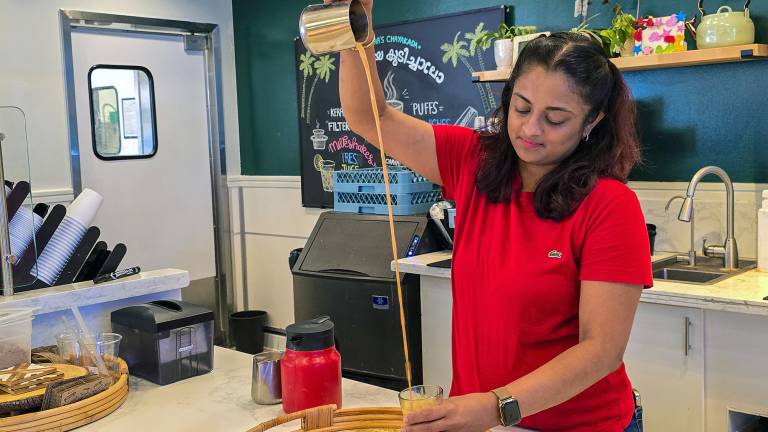
The Bay Area’s First Kerala-Style Chai Shop Opens in San José
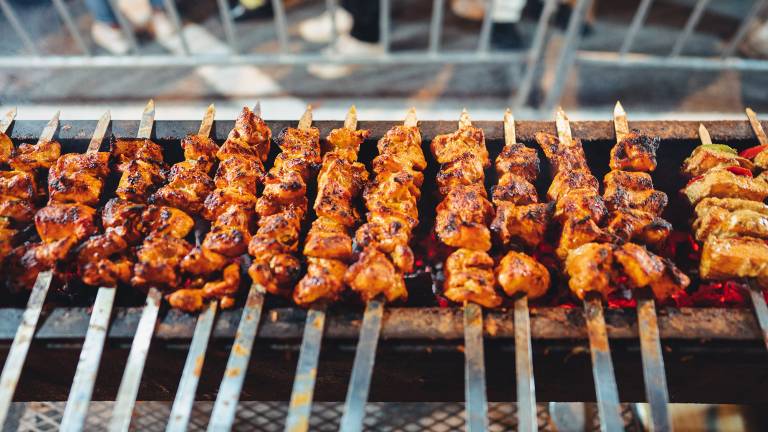
The East Bay’s Most Famous Indian Barbecue Spot Has Closed — For Now
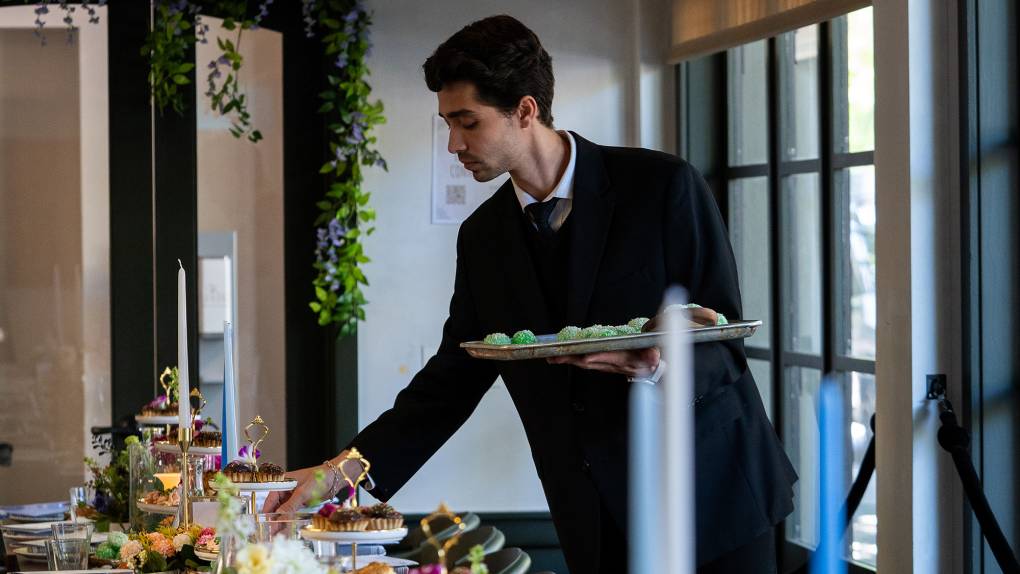
This Indonesian Coffee Shop Puts a Glam Twist on High Tea
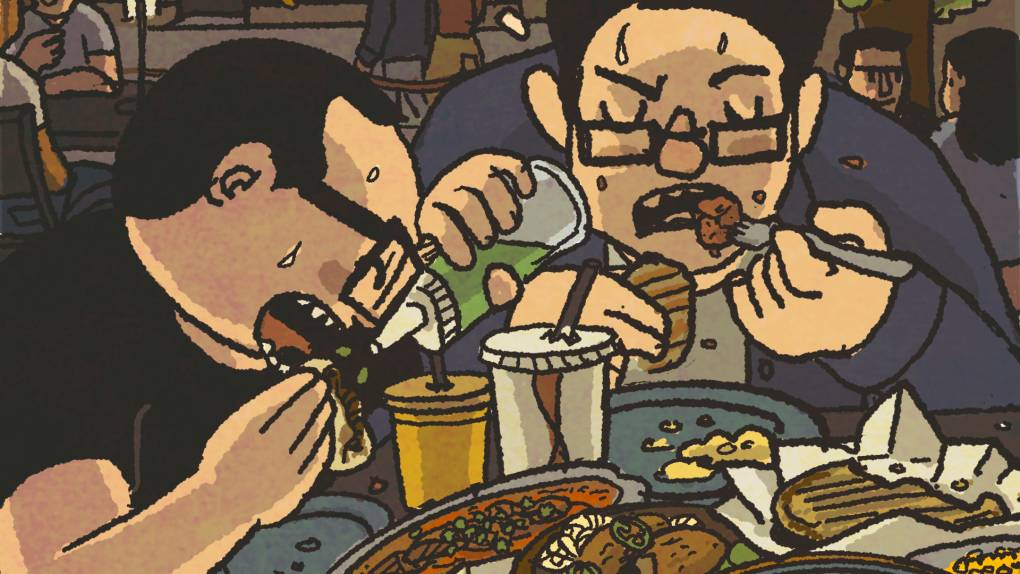
Zareen’s Is a Late-Night Pakistani Food Gem in Palo Alto
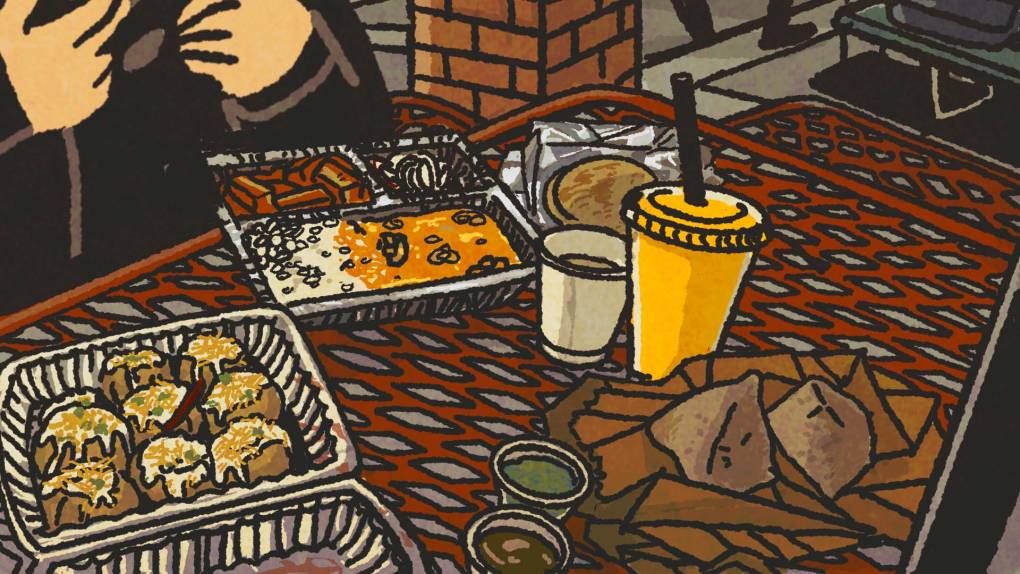
Sunnyvale’s Hottest Late-Night Food Spot Is the 24-Hour Indian Grocery Store
Yes, Fremont Also Has a Restaurant Week. Here’s What to Check Out.
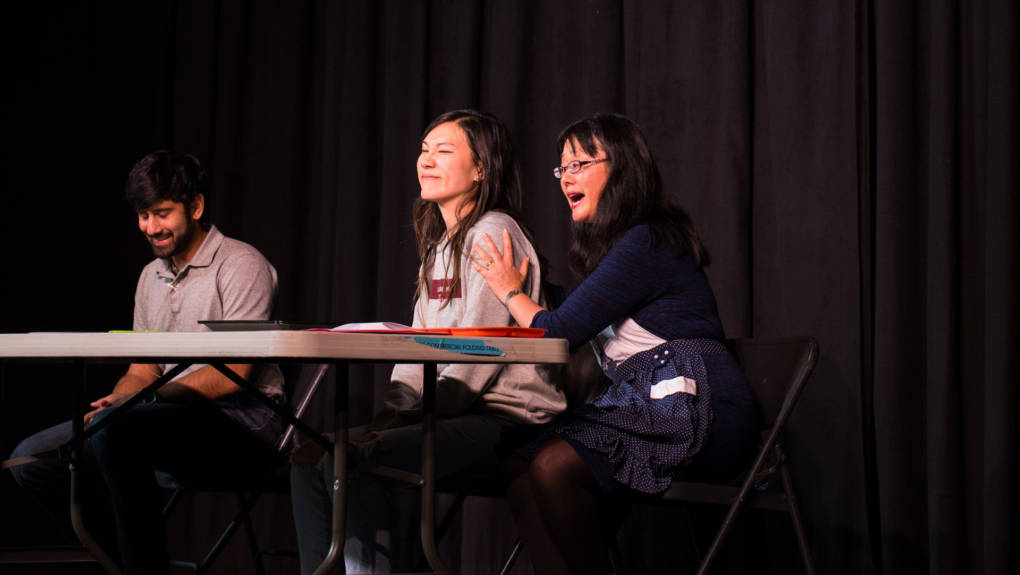
Stanford Psychiatrists Take to the Stage
Sponsored
Player sponsored by
window.__IS_SSR__=true
window.__INITIAL_STATE__={
"attachmentsReducer": {
"audio_0": {
"type": "attachments",
"id": "audio_0",
"imgSizes": {
"kqedFullSize": {
"file": "https://ww2.kqed.org/news/wp-content/themes/KQED-unified/img/audio_bgs/background0.jpg"
}
}
},
"audio_1": {
"type": "attachments",
"id": "audio_1",
"imgSizes": {
"kqedFullSize": {
"file": "https://ww2.kqed.org/news/wp-content/themes/KQED-unified/img/audio_bgs/background1.jpg"
}
}
},
"audio_2": {
"type": "attachments",
"id": "audio_2",
"imgSizes": {
"kqedFullSize": {
"file": "https://ww2.kqed.org/news/wp-content/themes/KQED-unified/img/audio_bgs/background2.jpg"
}
}
},
"audio_3": {
"type": "attachments",
"id": "audio_3",
"imgSizes": {
"kqedFullSize": {
"file": "https://ww2.kqed.org/news/wp-content/themes/KQED-unified/img/audio_bgs/background3.jpg"
}
}
},
"audio_4": {
"type": "attachments",
"id": "audio_4",
"imgSizes": {
"kqedFullSize": {
"file": "https://ww2.kqed.org/news/wp-content/themes/KQED-unified/img/audio_bgs/background4.jpg"
}
}
},
"placeholder": {
"type": "attachments",
"id": "placeholder",
"imgSizes": {
"thumbnail": {
"file": "https://cdn.kqed.org/wp-content/uploads/2024/12/KQED-Default-Image-816638274-2000x1333-1-160x107.jpg",
"width": 160,
"height": 107,
"mimeType": "image/jpeg"
},
"medium": {
"file": "https://cdn.kqed.org/wp-content/uploads/2024/12/KQED-Default-Image-816638274-2000x1333-1-800x533.jpg",
"width": 800,
"height": 533,
"mimeType": "image/jpeg"
},
"medium_large": {
"file": "https://cdn.kqed.org/wp-content/uploads/2024/12/KQED-Default-Image-816638274-2000x1333-1-768x512.jpg",
"width": 768,
"height": 512,
"mimeType": "image/jpeg"
},
"large": {
"file": "https://cdn.kqed.org/wp-content/uploads/2024/12/KQED-Default-Image-816638274-2000x1333-1-1020x680.jpg",
"width": 1020,
"height": 680,
"mimeType": "image/jpeg"
},
"1536x1536": {
"file": "https://cdn.kqed.org/wp-content/uploads/2024/12/KQED-Default-Image-816638274-2000x1333-1-1536x1024.jpg",
"width": 1536,
"height": 1024,
"mimeType": "image/jpeg"
},
"fd-lrg": {
"file": "https://cdn.kqed.org/wp-content/uploads/2024/12/KQED-Default-Image-816638274-2000x1333-1-1536x1024.jpg",
"width": 1536,
"height": 1024,
"mimeType": "image/jpeg"
},
"fd-med": {
"file": "https://cdn.kqed.org/wp-content/uploads/2024/12/KQED-Default-Image-816638274-2000x1333-1-1020x680.jpg",
"width": 1020,
"height": 680,
"mimeType": "image/jpeg"
},
"fd-sm": {
"file": "https://cdn.kqed.org/wp-content/uploads/2024/12/KQED-Default-Image-816638274-2000x1333-1-800x533.jpg",
"width": 800,
"height": 533,
"mimeType": "image/jpeg"
},
"post-thumbnail": {
"file": "https://cdn.kqed.org/wp-content/uploads/2024/12/KQED-Default-Image-816638274-2000x1333-1-672x372.jpg",
"width": 672,
"height": 372,
"mimeType": "image/jpeg"
},
"twentyfourteen-full-width": {
"file": "https://cdn.kqed.org/wp-content/uploads/2024/12/KQED-Default-Image-816638274-2000x1333-1-1038x576.jpg",
"width": 1038,
"height": 576,
"mimeType": "image/jpeg"
},
"xxsmall": {
"file": "https://cdn.kqed.org/wp-content/uploads/2024/12/KQED-Default-Image-816638274-2000x1333-1-160x107.jpg",
"width": 160,
"height": 107,
"mimeType": "image/jpeg"
},
"xsmall": {
"file": "https://cdn.kqed.org/wp-content/uploads/2024/12/KQED-Default-Image-816638274-2000x1333-1-672x372.jpg",
"width": 672,
"height": 372,
"mimeType": "image/jpeg"
},
"small": {
"file": "https://cdn.kqed.org/wp-content/uploads/2024/12/KQED-Default-Image-816638274-2000x1333-1-672x372.jpg",
"width": 672,
"height": 372,
"mimeType": "image/jpeg"
},
"xlarge": {
"file": "https://cdn.kqed.org/wp-content/uploads/2024/12/KQED-Default-Image-816638274-2000x1333-1-1020x680.jpg",
"width": 1020,
"height": 680,
"mimeType": "image/jpeg"
},
"full-width": {
"file": "https://cdn.kqed.org/wp-content/uploads/2024/12/KQED-Default-Image-816638274-2000x1333-1-1920x1280.jpg",
"width": 1920,
"height": 1280,
"mimeType": "image/jpeg"
},
"guest-author-32": {
"file": "https://cdn.kqed.org/wp-content/uploads/2025/01/KQED-Default-Image-816638274-1333x1333-1-160x160.jpg",
"width": 32,
"height": 32,
"mimeType": "image/jpeg"
},
"guest-author-50": {
"file": "https://cdn.kqed.org/wp-content/uploads/2025/01/KQED-Default-Image-816638274-1333x1333-1-160x160.jpg",
"width": 50,
"height": 50,
"mimeType": "image/jpeg"
},
"guest-author-64": {
"file": "https://cdn.kqed.org/wp-content/uploads/2025/01/KQED-Default-Image-816638274-1333x1333-1-160x160.jpg",
"width": 64,
"height": 64,
"mimeType": "image/jpeg"
},
"guest-author-96": {
"file": "https://cdn.kqed.org/wp-content/uploads/2025/01/KQED-Default-Image-816638274-1333x1333-1-160x160.jpg",
"width": 96,
"height": 96,
"mimeType": "image/jpeg"
},
"guest-author-128": {
"file": "https://cdn.kqed.org/wp-content/uploads/2025/01/KQED-Default-Image-816638274-1333x1333-1-160x160.jpg",
"width": 128,
"height": 128,
"mimeType": "image/jpeg"
},
"detail": {
"file": "https://cdn.kqed.org/wp-content/uploads/2025/01/KQED-Default-Image-816638274-1333x1333-1-160x160.jpg",
"width": 160,
"height": 160,
"mimeType": "image/jpeg"
},
"kqedFullSize": {
"file": "https://cdn.kqed.org/wp-content/uploads/2024/12/KQED-Default-Image-816638274-2000x1333-1.jpg",
"width": 2000,
"height": 1333
}
}
},
"arts_13981937": {
"type": "attachments",
"id": "arts_13981937",
"meta": {
"index": "attachments_1716263798",
"site": "arts",
"id": "13981937",
"found": true
},
"title": "Aleena Thomas pouring a meter chai",
"publishDate": 1759260331,
"status": "inherit",
"parent": 13981935,
"modified": 1759280759,
"caption": "Chayakada owner Aleena Thomas pours a cup of traditional Kerala-style meter chai. Thomas' San Jose shop claims to be the first Kerala-style chai cafe in the United States.",
"credit": "Octavio Peña",
"altTag": "Woman in a red t-shirt prepares a cup of chai, a thin stream of the milky tea pouring into the cup from a great height.",
"description": null,
"imgSizes": {
"thumbnail": {
"file": "https://cdn.kqed.org/wp-content/uploads/sites/2/2025/09/Aleena-Thomas-pouring-a-meter-chai-160x90.jpg",
"width": 160,
"height": 90,
"mimeType": "image/jpeg"
},
"medium_large": {
"file": "https://cdn.kqed.org/wp-content/uploads/sites/2/2025/09/Aleena-Thomas-pouring-a-meter-chai-768x432.jpg",
"width": 768,
"height": 432,
"mimeType": "image/jpeg"
},
"1536x1536": {
"file": "https://cdn.kqed.org/wp-content/uploads/sites/2/2025/09/Aleena-Thomas-pouring-a-meter-chai-1536x865.jpg",
"width": 1536,
"height": 865,
"mimeType": "image/jpeg"
},
"post-thumbnail": {
"file": "https://cdn.kqed.org/wp-content/uploads/sites/2/2025/09/Aleena-Thomas-pouring-a-meter-chai-672x372.jpg",
"width": 672,
"height": 372,
"mimeType": "image/jpeg"
},
"twentyfourteen-full-width": {
"file": "https://cdn.kqed.org/wp-content/uploads/sites/2/2025/09/Aleena-Thomas-pouring-a-meter-chai-1038x576.jpg",
"width": 1038,
"height": 576,
"mimeType": "image/jpeg"
},
"kqedFullSize": {
"file": "https://cdn.kqed.org/wp-content/uploads/sites/2/2025/09/Aleena-Thomas-pouring-a-meter-chai.jpg",
"width": 2000,
"height": 1126
}
},
"fetchFailed": false,
"isLoading": false
},
"arts_13980836": {
"type": "attachments",
"id": "arts_13980836",
"meta": {
"index": "attachments_1716263798",
"site": "arts",
"id": "13980836",
"found": true
},
"title": "wah jee wah skewers_lead",
"publishDate": 1756420750,
"status": "inherit",
"parent": 13980829,
"modified": 1756420921,
"caption": "Wah Jee Wah specializes in Indian-style open-fire charcoal grilling. The Hayward restaurant had its last day of business on August 16, 2025, and is now looking to relocate.",
"credit": "Jordan Foster, courtesy of Wah Jee Wah",
"altTag": "Meat kebabs on long, metal skewers cooking over a grill.",
"description": null,
"imgSizes": {
"thumbnail": {
"file": "https://cdn.kqed.org/wp-content/uploads/sites/2/2025/08/wah-jee-wah-skewers_lead-160x90.jpg",
"width": 160,
"height": 90,
"mimeType": "image/jpeg"
},
"medium_large": {
"file": "https://cdn.kqed.org/wp-content/uploads/sites/2/2025/08/wah-jee-wah-skewers_lead-768x432.jpg",
"width": 768,
"height": 432,
"mimeType": "image/jpeg"
},
"1536x1536": {
"file": "https://cdn.kqed.org/wp-content/uploads/sites/2/2025/08/wah-jee-wah-skewers_lead-1536x864.jpg",
"width": 1536,
"height": 864,
"mimeType": "image/jpeg"
},
"post-thumbnail": {
"file": "https://cdn.kqed.org/wp-content/uploads/sites/2/2025/08/wah-jee-wah-skewers_lead-672x372.jpg",
"width": 672,
"height": 372,
"mimeType": "image/jpeg"
},
"twentyfourteen-full-width": {
"file": "https://cdn.kqed.org/wp-content/uploads/sites/2/2025/08/wah-jee-wah-skewers_lead-1038x576.jpg",
"width": 1038,
"height": 576,
"mimeType": "image/jpeg"
},
"kqedFullSize": {
"file": "https://cdn.kqed.org/wp-content/uploads/sites/2/2025/08/wah-jee-wah-skewers_lead.jpg",
"width": 2000,
"height": 1125
}
},
"fetchFailed": false,
"isLoading": false
},
"arts_13963232": {
"type": "attachments",
"id": "arts_13963232",
"meta": {
"index": "attachments_1716263798",
"site": "arts",
"id": "13963232",
"found": true
},
"title": "Server plating Klepon (Indo Dessert) crop",
"publishDate": 1724781543,
"status": "inherit",
"parent": 13963228,
"modified": 1724781708,
"caption": "A server serves klepon, a kind of sweet Indonesian rice cake. The treats were part of one of Kopi Bar and Sandai's Indonesian-inspired high tea events in Walnut Creek.",
"credit": "Matchbook Media",
"altTag": "A server in a formal black suit serves a platter of pale green rice cakes.",
"description": null,
"imgSizes": {
"medium": {
"file": "https://cdn.kqed.org/wp-content/uploads/sites/2/2024/08/Server-plating-Klepon-Indo-Dessert-crop-800x450.jpg",
"width": 800,
"height": 450,
"mimeType": "image/jpeg"
},
"large": {
"file": "https://cdn.kqed.org/wp-content/uploads/sites/2/2024/08/Server-plating-Klepon-Indo-Dessert-crop-1020x574.jpg",
"width": 1020,
"height": 574,
"mimeType": "image/jpeg"
},
"thumbnail": {
"file": "https://cdn.kqed.org/wp-content/uploads/sites/2/2024/08/Server-plating-Klepon-Indo-Dessert-crop-160x90.jpg",
"width": 160,
"height": 90,
"mimeType": "image/jpeg"
},
"medium_large": {
"file": "https://cdn.kqed.org/wp-content/uploads/sites/2/2024/08/Server-plating-Klepon-Indo-Dessert-crop-768x432.jpg",
"width": 768,
"height": 432,
"mimeType": "image/jpeg"
},
"1536x1536": {
"file": "https://cdn.kqed.org/wp-content/uploads/sites/2/2024/08/Server-plating-Klepon-Indo-Dessert-crop-1536x864.jpg",
"width": 1536,
"height": 864,
"mimeType": "image/jpeg"
},
"post-thumbnail": {
"file": "https://cdn.kqed.org/wp-content/uploads/sites/2/2024/08/Server-plating-Klepon-Indo-Dessert-crop-672x372.jpg",
"width": 672,
"height": 372,
"mimeType": "image/jpeg"
},
"twentyfourteen-full-width": {
"file": "https://cdn.kqed.org/wp-content/uploads/sites/2/2024/08/Server-plating-Klepon-Indo-Dessert-crop-1038x576.jpg",
"width": 1038,
"height": 576,
"mimeType": "image/jpeg"
},
"full-width": {
"file": "https://cdn.kqed.org/wp-content/uploads/sites/2/2024/08/Server-plating-Klepon-Indo-Dessert-crop-1920x1080.jpg",
"width": 1920,
"height": 1080,
"mimeType": "image/jpeg"
},
"kqedFullSize": {
"file": "https://cdn.kqed.org/wp-content/uploads/sites/2/2024/08/Server-plating-Klepon-Indo-Dessert-crop.jpg",
"width": 2000,
"height": 1125
}
},
"fetchFailed": false,
"isLoading": false
},
"arts_13961616": {
"type": "attachments",
"id": "arts_13961616",
"meta": {
"index": "attachments_1716263798",
"site": "arts",
"id": "13961616",
"found": true
},
"title": "Zareen's 2 crop",
"publishDate": 1721952503,
"status": "inherit",
"parent": 13961613,
"modified": 1721952591,
"caption": "Zareen's has been a beloved Peninsula institution for the past 10 years, known for its homestyle Pakistani and Indian dishes.",
"credit": "Thien Pham",
"altTag": "Illustration: Two men sweating while they eat Indian/Pakistani food.",
"description": null,
"imgSizes": {
"medium": {
"file": "https://cdn.kqed.org/wp-content/uploads/sites/2/2024/07/Zareens-2-crop-800x450.jpg",
"width": 800,
"height": 450,
"mimeType": "image/jpeg"
},
"large": {
"file": "https://cdn.kqed.org/wp-content/uploads/sites/2/2024/07/Zareens-2-crop-1020x574.jpg",
"width": 1020,
"height": 574,
"mimeType": "image/jpeg"
},
"thumbnail": {
"file": "https://cdn.kqed.org/wp-content/uploads/sites/2/2024/07/Zareens-2-crop-160x90.jpg",
"width": 160,
"height": 90,
"mimeType": "image/jpeg"
},
"medium_large": {
"file": "https://cdn.kqed.org/wp-content/uploads/sites/2/2024/07/Zareens-2-crop-768x432.jpg",
"width": 768,
"height": 432,
"mimeType": "image/jpeg"
},
"1536x1536": {
"file": "https://cdn.kqed.org/wp-content/uploads/sites/2/2024/07/Zareens-2-crop-1536x864.jpg",
"width": 1536,
"height": 864,
"mimeType": "image/jpeg"
},
"post-thumbnail": {
"file": "https://cdn.kqed.org/wp-content/uploads/sites/2/2024/07/Zareens-2-crop-672x372.jpg",
"width": 672,
"height": 372,
"mimeType": "image/jpeg"
},
"twentyfourteen-full-width": {
"file": "https://cdn.kqed.org/wp-content/uploads/sites/2/2024/07/Zareens-2-crop-1038x576.jpg",
"width": 1038,
"height": 576,
"mimeType": "image/jpeg"
},
"kqedFullSize": {
"file": "https://cdn.kqed.org/wp-content/uploads/sites/2/2024/07/Zareens-2-crop.jpg",
"width": 1920,
"height": 1080
}
},
"fetchFailed": false,
"isLoading": false
},
"arts_13955887": {
"type": "attachments",
"id": "arts_13955887",
"meta": {
"index": "attachments_1716263798",
"site": "arts",
"id": "13955887",
"found": true
},
"parent": 13955884,
"imgSizes": {
"twentyfourteen-full-width": {
"file": "https://cdn.kqed.org/wp-content/uploads/sites/2/2024/04/apnimandi-crop-1038x576.jpg",
"width": 1038,
"mimeType": "image/jpeg",
"height": 576
},
"thumbnail": {
"file": "https://cdn.kqed.org/wp-content/uploads/sites/2/2024/04/apnimandi-crop-160x90.jpg",
"width": 160,
"mimeType": "image/jpeg",
"height": 90
},
"post-thumbnail": {
"file": "https://cdn.kqed.org/wp-content/uploads/sites/2/2024/04/apnimandi-crop-672x372.jpg",
"width": 672,
"mimeType": "image/jpeg",
"height": 372
},
"kqedFullSize": {
"file": "https://cdn.kqed.org/wp-content/uploads/sites/2/2024/04/apnimandi-crop.jpg",
"width": 1920,
"height": 1080
},
"large": {
"file": "https://cdn.kqed.org/wp-content/uploads/sites/2/2024/04/apnimandi-crop-1020x574.jpg",
"width": 1020,
"mimeType": "image/jpeg",
"height": 574
},
"1536x1536": {
"file": "https://cdn.kqed.org/wp-content/uploads/sites/2/2024/04/apnimandi-crop-1536x864.jpg",
"width": 1536,
"mimeType": "image/jpeg",
"height": 864
},
"medium": {
"file": "https://cdn.kqed.org/wp-content/uploads/sites/2/2024/04/apnimandi-crop-800x450.jpg",
"width": 800,
"mimeType": "image/jpeg",
"height": 450
},
"medium_large": {
"file": "https://cdn.kqed.org/wp-content/uploads/sites/2/2024/04/apnimandi-crop-768x432.jpg",
"width": 768,
"mimeType": "image/jpeg",
"height": 432
}
},
"publishDate": 1712883835,
"modified": 1712883996,
"caption": "Near midnight, all of the tables outside of Apni Mandi were occupied by diners feasting on chaat and curry. The Sunnyvale grocery store serves hot food 24 hours.",
"description": null,
"title": "apnimandi-crop",
"credit": "Thien Pham",
"status": "inherit",
"altTag": "A spread of Indian food on an outdoor table, including a rice combination tray, two samosas, a mango lassi and a plate of dahi puri. A man puts one of the dahi puri in his mouth.",
"fetchFailed": false,
"isLoading": false
},
"arts_13897879": {
"type": "attachments",
"id": "arts_13897879",
"meta": {
"index": "attachments_1716263798",
"site": "arts",
"id": "13897879",
"found": true
},
"parent": 13897868,
"imgSizes": {
"twentyfourteen-full-width": {
"file": "https://ww2.kqed.org/app/uploads/sites/2/2021/05/CafeMei_burger-1038x576.jpg",
"width": 1038,
"mimeType": "image/jpeg",
"height": 576
},
"thumbnail": {
"file": "https://ww2.kqed.org/app/uploads/sites/2/2021/05/CafeMei_burger-160x120.jpg",
"width": 160,
"mimeType": "image/jpeg",
"height": 120
},
"post-thumbnail": {
"file": "https://ww2.kqed.org/app/uploads/sites/2/2021/05/CafeMei_burger-672x372.jpg",
"width": 672,
"mimeType": "image/jpeg",
"height": 372
},
"kqedFullSize": {
"file": "https://ww2.kqed.org/app/uploads/sites/2/2021/05/CafeMei_burger-scaled.jpg",
"width": 2560,
"height": 1920
},
"2048x2048": {
"file": "https://ww2.kqed.org/app/uploads/sites/2/2021/05/CafeMei_burger-2048x1536.jpg",
"width": 2048,
"mimeType": "image/jpeg",
"height": 1536
},
"large": {
"file": "https://ww2.kqed.org/app/uploads/sites/2/2021/05/CafeMei_burger-1020x765.jpg",
"width": 1020,
"mimeType": "image/jpeg",
"height": 765
},
"1536x1536": {
"file": "https://ww2.kqed.org/app/uploads/sites/2/2021/05/CafeMei_burger-1536x1152.jpg",
"width": 1536,
"mimeType": "image/jpeg",
"height": 1152
},
"full-width": {
"file": "https://ww2.kqed.org/app/uploads/sites/2/2021/05/CafeMei_burger-1920x1440.jpg",
"width": 1920,
"mimeType": "image/jpeg",
"height": 1440
},
"medium": {
"file": "https://ww2.kqed.org/app/uploads/sites/2/2021/05/CafeMei_burger-800x600.jpg",
"width": 800,
"mimeType": "image/jpeg",
"height": 600
},
"medium_large": {
"file": "https://ww2.kqed.org/app/uploads/sites/2/2021/05/CafeMei_burger-768x576.jpg",
"width": 768,
"mimeType": "image/jpeg",
"height": 576
}
},
"publishDate": 1622050142,
"modified": 1622050393,
"caption": "Toppings for the Cafe Mei breakfast burger include tomato, fried egg, and thinly sliced cucumber.",
"description": "Toppings for the Cafe Mei breakfast burger include tomato, fried egg, and thinly sliced cucumber.",
"title": "CafeMei_burger",
"credit": "Luke Tsai",
"status": "inherit",
"altTag": "A Taiwanese breakfast burger, with fried egg, tomato, and cucumber garnish visible, on top of a checker-patterned sheet of wax paper.",
"fetchFailed": false,
"isLoading": false
},
"arts_13113403": {
"type": "attachments",
"id": "arts_13113403",
"meta": {
"index": "attachments_1716263798",
"site": "arts",
"id": "13113403",
"found": true
},
"parent": 13113401,
"imgSizes": {
"small": {
"file": "https://ww2.kqed.org/app/uploads/sites/2/2017/04/RS25034_Enlow_Parent_Skit-017-qut-520x293.jpg",
"width": 520,
"mimeType": "image/jpeg",
"height": 293
},
"twentyfourteen-full-width": {
"file": "https://ww2.kqed.org/app/uploads/sites/2/2017/04/RS25034_Enlow_Parent_Skit-017-qut-1038x576.jpg",
"width": 1038,
"mimeType": "image/jpeg",
"height": 576
},
"thumbnail": {
"file": "https://ww2.kqed.org/app/uploads/sites/2/2017/04/RS25034_Enlow_Parent_Skit-017-qut-160x90.jpg",
"width": 160,
"mimeType": "image/jpeg",
"height": 90
},
"fd-sm": {
"file": "https://ww2.kqed.org/app/uploads/sites/2/2017/04/RS25034_Enlow_Parent_Skit-017-qut-960x541.jpg",
"width": 960,
"mimeType": "image/jpeg",
"height": 541
},
"post-thumbnail": {
"file": "https://ww2.kqed.org/app/uploads/sites/2/2017/04/RS25034_Enlow_Parent_Skit-017-qut-672x372.jpg",
"width": 672,
"mimeType": "image/jpeg",
"height": 372
},
"xsmall": {
"file": "https://ww2.kqed.org/app/uploads/sites/2/2017/04/RS25034_Enlow_Parent_Skit-017-qut-375x211.jpg",
"width": 375,
"mimeType": "image/jpeg",
"height": 211
},
"kqedFullSize": {
"file": "https://ww2.kqed.org/app/uploads/sites/2/2017/04/RS25034_Enlow_Parent_Skit-017-qut.jpg",
"width": 1920,
"height": 1082
},
"large": {
"file": "https://ww2.kqed.org/app/uploads/sites/2/2017/04/RS25034_Enlow_Parent_Skit-017-qut-1020x575.jpg",
"width": 1020,
"mimeType": "image/jpeg",
"height": 575
},
"xlarge": {
"file": "https://ww2.kqed.org/app/uploads/sites/2/2017/04/RS25034_Enlow_Parent_Skit-017-qut-1180x665.jpg",
"width": 1180,
"mimeType": "image/jpeg",
"height": 665
},
"guest-author-50": {
"file": "https://ww2.kqed.org/app/uploads/sites/2/2017/04/RS25034_Enlow_Parent_Skit-017-qut-50x50.jpg",
"width": 50,
"mimeType": "image/jpeg",
"height": 50
},
"guest-author-96": {
"file": "https://ww2.kqed.org/app/uploads/sites/2/2017/04/RS25034_Enlow_Parent_Skit-017-qut-96x96.jpg",
"width": 96,
"mimeType": "image/jpeg",
"height": 96
},
"medium": {
"file": "https://ww2.kqed.org/app/uploads/sites/2/2017/04/RS25034_Enlow_Parent_Skit-017-qut-800x451.jpg",
"width": 800,
"mimeType": "image/jpeg",
"height": 451
},
"guest-author-64": {
"file": "https://ww2.kqed.org/app/uploads/sites/2/2017/04/RS25034_Enlow_Parent_Skit-017-qut-64x64.jpg",
"width": 64,
"mimeType": "image/jpeg",
"height": 64
},
"guest-author-32": {
"file": "https://ww2.kqed.org/app/uploads/sites/2/2017/04/RS25034_Enlow_Parent_Skit-017-qut-32x32.jpg",
"width": 32,
"mimeType": "image/jpeg",
"height": 32
},
"fd-lrg": {
"file": "https://ww2.kqed.org/app/uploads/sites/2/2017/04/RS25034_Enlow_Parent_Skit-017-qut-1920x1082.jpg",
"width": 1920,
"mimeType": "image/jpeg",
"height": 1082
},
"fd-med": {
"file": "https://ww2.kqed.org/app/uploads/sites/2/2017/04/RS25034_Enlow_Parent_Skit-017-qut-1180x665.jpg",
"width": 1180,
"mimeType": "image/jpeg",
"height": 665
},
"full-width": {
"file": "https://ww2.kqed.org/app/uploads/sites/2/2017/04/RS25034_Enlow_Parent_Skit-017-qut-1920x1082.jpg",
"width": 1920,
"mimeType": "image/jpeg",
"height": 1082
},
"detail": {
"file": "https://ww2.kqed.org/app/uploads/sites/2/2017/04/RS25034_Enlow_Parent_Skit-017-qut-150x150.jpg",
"width": 150,
"mimeType": "image/jpeg",
"height": 150
},
"medium_large": {
"file": "https://ww2.kqed.org/app/uploads/sites/2/2017/04/RS25034_Enlow_Parent_Skit-017-qut-768x433.jpg",
"width": 768,
"mimeType": "image/jpeg",
"height": 433
},
"guest-author-128": {
"file": "https://ww2.kqed.org/app/uploads/sites/2/2017/04/RS25034_Enlow_Parent_Skit-017-qut-128x128.jpg",
"width": 128,
"mimeType": "image/jpeg",
"height": 128
},
"xxsmall": {
"file": "https://ww2.kqed.org/app/uploads/sites/2/2017/04/RS25034_Enlow_Parent_Skit-017-qut-240x135.jpg",
"width": 240,
"mimeType": "image/jpeg",
"height": 135
}
},
"publishDate": 1493234177,
"modified": 1493657392,
"caption": "Stanford psychiatrists use the maxim \"Show, don't tell,\" to demonstrate how parents can cultivate emotional closeness with their teenagers - or emotional distance. In this vignette, Dr. Rona Hu plays a mother who disapproves when her daughter, played by Dr. Grace Lee, brings home a non-Chinese boyfriend, playing by Dr. Francesco Dandekar.",
"description": "Stanford psychiatrists use the maxim \"Show, don't tell,\" to demonstrate how parents can cultivate emotional closeness with their teenagers - or emotional distance. In this vignette, Dr. Rona Hu plays a mother who disapproves when her daughter, played by Dr. Grace Lee, brings home a non-Chinese boyfriend, playing by Dr. Francesco Dandekar.",
"title": "RS25034_Enlow_Parent_Skit-017-qut",
"credit": "Photo: Jeff Enlow/KQED",
"status": "inherit",
"fetchFailed": false,
"isLoading": false
}
},
"audioPlayerReducer": {
"postId": "stream_live",
"isPaused": true,
"isPlaying": false,
"pfsActive": false,
"pledgeModalIsOpen": true,
"playerDrawerIsOpen": false
},
"authorsReducer": {
"rachael-myrow": {
"type": "authors",
"id": "251",
"meta": {
"index": "authors_1716337520",
"id": "251",
"found": true
},
"name": "Rachael Myrow",
"firstName": "Rachael",
"lastName": "Myrow",
"slug": "rachael-myrow",
"email": "rmyrow@kqed.org",
"display_author_email": true,
"staff_mastheads": [
"news"
],
"title": "Senior Editor of KQED's Silicon Valley News Desk",
"bio": "\u003cb>What I Cover\u003c/b> I write and edit stories about how Silicon Valley power and policies shape everyday life in California. I’m especially drawn to reporting that centers humans trying to survive and thrive in an ailing democracy increasingly dominated by extractive technologies. I’m also passionate about making Bay Area history and culture more accessible to a broad public. \r\n\r\n\u003cb>My Background\u003c/b> I’ve been a journalist for most of my life, starting with my high school newspaper, The Franklin Press, in Los Angeles, where I grew up. While earning my first degree in English at UC Berkeley, I got my start in public radio at KALX-FM. After completing a second degree in journalism at Berkeley, I landed my first professional job at Marketplace, then moved on to KPCC (now LAist), and then KQED, where I started hosting The California Report for more than seven years. My reporting has appeared on NPR, The World, WBUR’s \u003ci>Here & Now\u003c/i>, and the BBC. I also guest host for KQED’s \u003ci>Forum\u003c/i>, as well as the Commonwealth Club in San Francisco. I speak periodically on media, democracy and technology issues, and do voiceover work for documentaries and educational video projects. Outside of the studio, you'll find me hiking Bay Area trails and whipping up Insta-ready meals in my kitchen. \r\n\r\n\u003cb>Journalistic Ethics\u003c/b> I do not accept gifts, money, or favors from anyone connected to my reporting, and I do not pay people for information. I have no direct financial interest in the subjects I cover, and I do not support or donate to political causes.\r\n\r\nI strive to tell nuanced stories and treat the people I report on with fairness, honesty, and respect. I recognize there are often multiple sides to a story and work to verify information through multiple sources and documentation. If I get something wrong, I correct it.",
"avatar": "https://secure.gravatar.com/avatar/87bf8cb5874e045cdff430523a6d48b1?s=600&d=blank&r=g",
"twitter": "rachaelmyrow",
"facebook": null,
"instagram": null,
"linkedin": "https://www.linkedin.com/in/rachaelmyrow/",
"sites": [
{
"site": "arts",
"roles": [
"administrator"
]
},
{
"site": "news",
"roles": [
"edit_others_posts",
"editor"
]
},
{
"site": "futureofyou",
"roles": [
"editor"
]
},
{
"site": "bayareabites",
"roles": [
"editor"
]
},
{
"site": "stateofhealth",
"roles": [
"editor"
]
},
{
"site": "science",
"roles": [
"editor"
]
},
{
"site": "food",
"roles": [
"editor"
]
},
{
"site": "forum",
"roles": [
"editor"
]
},
{
"site": "liveblog",
"roles": [
"author"
]
}
],
"headData": {
"title": "Rachael Myrow | KQED",
"description": "Senior Editor of KQED's Silicon Valley News Desk",
"ogImgSrc": "https://secure.gravatar.com/avatar/87bf8cb5874e045cdff430523a6d48b1?s=600&d=blank&r=g",
"twImgSrc": "https://secure.gravatar.com/avatar/87bf8cb5874e045cdff430523a6d48b1?s=600&d=blank&r=g"
},
"isLoading": false,
"link": "/author/rachael-myrow"
},
"ltsai": {
"type": "authors",
"id": "11743",
"meta": {
"index": "authors_1716337520",
"id": "11743",
"found": true
},
"name": "Luke Tsai",
"firstName": "Luke",
"lastName": "Tsai",
"slug": "ltsai",
"email": "ltsai@kqed.org",
"display_author_email": true,
"staff_mastheads": [
"arts"
],
"title": "Food Editor",
"bio": "Luke Tsai is KQED's food editor and resident stinky tofu connoisseur. Prior to KQED, he was an editor at Eater SF, \u003cem>San Francisco \u003c/em>magazine, and the \u003cem>East Bay Express\u003c/em>, and his work has also appeared in TASTE, the \u003cem>San Francisco Chronicle\u003c/em>, and the \u003cem>Best Food Writing\u003c/em> anthology. When he isn't writing or editing, you'll find him eating most everything he can get his hands on.",
"avatar": "https://secure.gravatar.com/avatar/d1ff591a3047b143a0e23cf7f28fcac0?s=600&d=blank&r=g",
"twitter": "theluketsai",
"facebook": null,
"instagram": null,
"linkedin": null,
"sites": [
{
"site": "",
"roles": [
"editor"
]
},
{
"site": "arts",
"roles": [
"administrator"
]
},
{
"site": "bayareabites",
"roles": [
"editor"
]
},
{
"site": "food",
"roles": [
"editor"
]
}
],
"headData": {
"title": "Luke Tsai | KQED",
"description": "Food Editor",
"ogImgSrc": "https://secure.gravatar.com/avatar/d1ff591a3047b143a0e23cf7f28fcac0?s=600&d=blank&r=g",
"twImgSrc": "https://secure.gravatar.com/avatar/d1ff591a3047b143a0e23cf7f28fcac0?s=600&d=blank&r=g"
},
"isLoading": false,
"link": "/author/ltsai"
},
"tpham": {
"type": "authors",
"id": "11753",
"meta": {
"index": "authors_1716337520",
"id": "11753",
"found": true
},
"name": "Thien Pham",
"firstName": "Thien",
"lastName": "Pham",
"slug": "tpham",
"email": "thiendog@gmail.com",
"display_author_email": false,
"staff_mastheads": [],
"title": "KQED Contributor",
"bio": null,
"avatar": "https://secure.gravatar.com/avatar/fa68ed7d6a785e5294a7bb79a3f409c3?s=600&d=blank&r=g",
"twitter": null,
"facebook": null,
"instagram": null,
"linkedin": null,
"sites": [
{
"site": "arts",
"roles": [
"contributor"
]
}
],
"headData": {
"title": "Thien Pham | KQED",
"description": "KQED Contributor",
"ogImgSrc": "https://secure.gravatar.com/avatar/fa68ed7d6a785e5294a7bb79a3f409c3?s=600&d=blank&r=g",
"twImgSrc": "https://secure.gravatar.com/avatar/fa68ed7d6a785e5294a7bb79a3f409c3?s=600&d=blank&r=g"
},
"isLoading": false,
"link": "/author/tpham"
},
"opena": {
"type": "authors",
"id": "11903",
"meta": {
"index": "authors_1716337520",
"id": "11903",
"found": true
},
"name": "Octavio Peña",
"firstName": "Octavio",
"lastName": "Peña",
"slug": "opena",
"email": "octaviopenagutierrez@gmail.com",
"display_author_email": false,
"staff_mastheads": [],
"title": "KQED Contributor",
"bio": null,
"avatar": "https://secure.gravatar.com/avatar/8fb464e0c705ab58fc9d18e06211557c?s=600&d=blank&r=g",
"twitter": null,
"facebook": null,
"instagram": null,
"linkedin": null,
"sites": [
{
"site": "arts",
"roles": [
"contributor"
]
}
],
"headData": {
"title": "Octavio Peña | KQED",
"description": "KQED Contributor",
"ogImgSrc": "https://secure.gravatar.com/avatar/8fb464e0c705ab58fc9d18e06211557c?s=600&d=blank&r=g",
"twImgSrc": "https://secure.gravatar.com/avatar/8fb464e0c705ab58fc9d18e06211557c?s=600&d=blank&r=g"
},
"isLoading": false,
"link": "/author/opena"
}
},
"breakingNewsReducer": {},
"pagesReducer": {},
"postsReducer": {
"stream_live": {
"type": "live",
"id": "stream_live",
"audioUrl": "https://streams.kqed.org/kqedradio",
"title": "Live Stream",
"excerpt": "Live Stream information currently unavailable.",
"link": "/radio",
"featImg": "",
"label": {
"name": "KQED Live",
"link": "/"
}
},
"stream_kqedNewscast": {
"type": "posts",
"id": "stream_kqedNewscast",
"audioUrl": "https://www.kqed.org/.stream/anon/radio/RDnews/newscast.mp3?_=1",
"title": "KQED Newscast",
"featImg": "",
"label": {
"name": "88.5 FM",
"link": "/"
}
},
"arts_13981935": {
"type": "posts",
"id": "arts_13981935",
"meta": {
"index": "posts_1716263798",
"site": "arts",
"id": "13981935",
"score": null,
"sort": [
1759264979000
]
},
"guestAuthors": [],
"slug": "chai-cafe-san-jose-kerala-chayakada-indian-tea",
"title": "The Bay Area’s First Kerala-Style Chai Shop Opens in San José",
"publishDate": 1759264979,
"format": "standard",
"headTitle": "The Bay Area’s First Kerala-Style Chai Shop Opens in San José | KQED",
"labelTerm": {},
"content": "\u003cp>At \u003ca href=\"https://www.instagram.com/chayakada.us/?hl=en\">Chayakada\u003c/a> in \u003ca href=\"https://www.kqed.org/arts/tag/san-jose\">San José\u003c/a>, chai baristas juggle a meter-long stream of tea through the air like master \u003ca href=\"https://www.youtube.com/watch?v=dGy0kbk6gYc\">waterbenders\u003c/a>, effortlessly filling each cup to the brim with hot, frothy chai.\u003c/p>\n\u003cp>On a recent Sunday afternoon, the shop was buzzing with late-2000s pop hits while friends sipped chai huddled around tables loaded with egg puffs and boardgames. Open since June, the cafe takes its name from the chaya kada, a kind of small tea shop or tea stall found in the state of Kerala, India. Chayakada \u003ca href=\"https://www.instagram.com/p/DKosIfpxmuB/\">claims to be the first one\u003c/a> in the United States — a small slice of South India tucked away in a South San José strip mall.\u003c/p>\n\u003cp>Owner Aleena Thomas got her start in the food business in 2023, when she quit her job as a program manager at Meta to open Bread Bae, a San José–based ghost kitchen operation focused on baked goods and chai from Kerala. Thomas grew up in Kuwait, but has fond memories of visiting her grandparents and uncles in Kerala. She became nostalgic for the food from her childhood and wanted to share it with others who might be feeling the same way. And while there were \u003ca href=\"https://tastecooking.com/the-rise-of-kerala-cuisine-in-america-cannot-go-unnoticed/\">other restaurants\u003c/a> specializing in the food of Kerala, there weren’t any Kerala-style chai bars.\u003c/p>\n\u003cp>“We didn’t have a single chaya kada in all of America. I was like, ‘Wow, this is crazy,’” says Thomas. “How come we don’t have one? I wanted to have that in the U.S.”\u003c/p>\n\u003cfigure id=\"attachment_13981957\" class=\"wp-caption alignnone\" style=\"max-width: 2000px\">\u003cimg loading=\"lazy\" decoding=\"async\" class=\"size-full wp-image-13981957\" src=\"https://cdn.kqed.org/wp-content/uploads/sites/2/2025/09/Saffron-Meter-Chai.jpg\" alt=\"Overhead view of a cup of very frothy chai.\" width=\"2000\" height=\"1333\" srcset=\"https://cdn.kqed.org/wp-content/uploads/sites/2/2025/09/Saffron-Meter-Chai.jpg 2000w, https://cdn.kqed.org/wp-content/uploads/sites/2/2025/09/Saffron-Meter-Chai-160x107.jpg 160w, https://cdn.kqed.org/wp-content/uploads/sites/2/2025/09/Saffron-Meter-Chai-768x512.jpg 768w, https://cdn.kqed.org/wp-content/uploads/sites/2/2025/09/Saffron-Meter-Chai-1536x1024.jpg 1536w\" sizes=\"auto, (max-width: 2000px) 100vw, 2000px\">\u003cfigcaption class=\"wp-caption-text\">The special, meter-high pouring technique results in an extra-frothy cup of chai. \u003ccite>(Octavio Peña)\u003c/cite>\u003c/figcaption>\u003c/figure>\n\u003cp>Chaya kadas are known for meter chai, a style of tea preparation that involves pouring the tea from a great height to aerate the drink. Thomas suggests the pouring method may have started as a way to attract customers to the tea stalls. But the technique isn’t just for show — it helps create a thick layer of froth in the chai glass, imparting a smoother mouthfeel. The height of the pour also \u003ca href=\"https://www.thekitchn.com/does-pouring-height-make-a-difference-in-coffee-taste-255299\">cools the drink\u003c/a> to a temperature where the tongue can detect more flavors.\u003c/p>\n\u003cp>[ad fullwidth]\u003c/p>\n\u003cp>“Before we had coffee machines and frothers, you needed to get air into your beverages,” says Thomas. “Most of the people who do it are taller than I am and have longer arms. So their arm actually goes up to a meter. I don’t know if my wingspan is that large. We try to get it as far as we can.”\u003c/p>\n\u003cp>It isn’t just the eye-catching pour that makes Chayakada’s drinks special. The cafe is one of the \u003ca href=\"https://www.kqed.org/arts/13932089/indian-coffee-roaster-kaveri-berkeley\">few Bay Area spots\u003c/a> sourcing its tea and coffee from small farms in India. The coffee is from \u003ca href=\"https://www.instagram.com/lemilscoffee/\">Le Mils\u003c/a>, a Bay Area roastery that gets its coffee beans from the owners’ family farm in Chikmanglur. Chayakada is also one of the only shops in the Bay Area that serves traditional Indian filter coffee, a sweet, chicory-infused drink.\u003c/p>\n\u003cfigure id=\"attachment_13981958\" class=\"wp-caption alignnone\" style=\"max-width: 2000px\">\u003cimg loading=\"lazy\" decoding=\"async\" class=\"size-full wp-image-13981958\" src=\"https://cdn.kqed.org/wp-content/uploads/sites/2/2025/09/Egg-Puffs.jpg\" alt='A display tray of crispy, golden-brown pastries labeled \"Egg Puffs.\"' width=\"2000\" height=\"1333\" srcset=\"https://cdn.kqed.org/wp-content/uploads/sites/2/2025/09/Egg-Puffs.jpg 2000w, https://cdn.kqed.org/wp-content/uploads/sites/2/2025/09/Egg-Puffs-160x107.jpg 160w, https://cdn.kqed.org/wp-content/uploads/sites/2/2025/09/Egg-Puffs-768x512.jpg 768w, https://cdn.kqed.org/wp-content/uploads/sites/2/2025/09/Egg-Puffs-1536x1024.jpg 1536w\" sizes=\"auto, (max-width: 2000px) 100vw, 2000px\">\u003cfigcaption class=\"wp-caption-text\">A tray of egg puffs, one of the traditional Kerala-style street snacks served at Chayakada. \u003ccite>(Octavio Peña)\u003c/cite>\u003c/figcaption>\u003c/figure>\n\u003cp>As for the Kerala-style chai, Thomas believes a lot of people don’t see the full spectrum of the drink. “If somebody asks, ‘What’s your favorite chai?’’’ she says. “You’re like, I’m not really sure, what Starbucks gives me?” She wants people to understand that, as with coffee, you can alter a chai’s flavor intensity, roast level and sweetness. At Chayakada’s chai counter, you can also get your tea flavored with saffron, masala, white chocolate or salted caramel. For customers looking to take their chai game to the next level, Thomas offers tea blending and tasting workshops.\u003c/p>\n\u003cp>Chayakada serves the same street food snacks typically found in a traditional chaya kada in Kerala. Specifically, the menu is reflective of the cuisine of the Malayali people who are native to Kerala and make up a majority of its population. The most popular dish is a puff pastry that envelops a boiled egg and caramelized onions. A close second is the pazhampori, which Thomas likens to a plantain tempura. Heartier options include goat biryani, fish cutlets and slow-roasted beef sandwiches. There’s also a large selection of curries served alongside Kerala staples like porotta (a flaky flatbread) and kappa puzhukku (mashed tapioca).\u003c/p>\n\u003cfigure id=\"attachment_13981959\" class=\"wp-caption alignnone\" style=\"max-width: 2000px\">\u003cimg loading=\"lazy\" decoding=\"async\" class=\"size-full wp-image-13981959\" src=\"https://cdn.kqed.org/wp-content/uploads/sites/2/2025/09/Roast-beef-sandwich.jpg\" alt=\"Toasted sandwich filled with saucy shredded beef.\" width=\"2000\" height=\"1126\" srcset=\"https://cdn.kqed.org/wp-content/uploads/sites/2/2025/09/Roast-beef-sandwich.jpg 2000w, https://cdn.kqed.org/wp-content/uploads/sites/2/2025/09/Roast-beef-sandwich-160x90.jpg 160w, https://cdn.kqed.org/wp-content/uploads/sites/2/2025/09/Roast-beef-sandwich-768x432.jpg 768w, https://cdn.kqed.org/wp-content/uploads/sites/2/2025/09/Roast-beef-sandwich-1536x865.jpg 1536w\" sizes=\"auto, (max-width: 2000px) 100vw, 2000px\">\u003cfigcaption class=\"wp-caption-text\">A Kerala-style sandwich filled with shredded, slow-roasted beef. \u003ccite>(Octavio Peña)\u003c/cite>\u003c/figcaption>\u003c/figure>\n\u003cp>“There’s no other place doing this,” says Thomas. “So, I want to make sure authentic food is served first. Eventually, we could add some fusion flare. Right now, I want people to understand I’m not just Indian, we’re Malayali.”\u003c/p>\n\u003cp>\u003cspan style=\"font-weight: 400\">[aside postID='arts_13955884,arts_13912706,arts_13969923']\u003c/span>Thomas is a walking encyclopedia when it comes to the history of chaya kadas in Kerala. The tea shops first appeared in Kerala during the 19th century, when \u003ca href=\"https://www.keralatourism.org/munnar/munnar-history.php\">tea plantations were established in the rural town of Munnar\u003c/a>, and soon spread all across Kerala. “For every chaya kada, there’s a community that is built with it,” says Thomas. In particular, the tea stalls in Kerala have a history of being places of congregation where patrons commonly read the newspaper out loud, making them places for lively social and political discourse. The intermingling of people from different castes at chaya kadas is even credited with helping to ease caste barriers in the region.\u003c/p>\n\u003cp>Thomas continues the tradition of chaya kadas being more than a place to sip tea. “I have a 4-year-old,” says Thomas. With that parental mindset, she designed Chayakada so that guests of all ages could enjoy it. The shop features a mini library, foosball, boardgames and carrom — a popular Indian tabletop game. She has a Bring-Your-Own-Boardgame policy to encourage crowds to come in and kick back. She’s even hosted Charades nights, tea party–themed birthday parties and an Onam celebration.\u003c/p>\n\u003cfigure id=\"attachment_13981960\" class=\"wp-caption alignnone\" style=\"max-width: 2000px\">\u003cimg loading=\"lazy\" decoding=\"async\" class=\"size-full wp-image-13981960\" src=\"https://cdn.kqed.org/wp-content/uploads/sites/2/2025/09/Aleena-Thomas-Owner.jpg\" alt='A woman poses in front of a green plant wall with a neon sign that reads, \"Chai yeah.\"' width=\"2000\" height=\"1126\" srcset=\"https://cdn.kqed.org/wp-content/uploads/sites/2/2025/09/Aleena-Thomas-Owner.jpg 2000w, https://cdn.kqed.org/wp-content/uploads/sites/2/2025/09/Aleena-Thomas-Owner-160x90.jpg 160w, https://cdn.kqed.org/wp-content/uploads/sites/2/2025/09/Aleena-Thomas-Owner-768x432.jpg 768w, https://cdn.kqed.org/wp-content/uploads/sites/2/2025/09/Aleena-Thomas-Owner-1536x865.jpg 1536w\" sizes=\"auto, (max-width: 2000px) 100vw, 2000px\">\u003cfigcaption class=\"wp-caption-text\">Thomas poses for a portrait inside Chayakada, her San Jose tea shop. \u003ccite>(Octavio Peña)\u003c/cite>\u003c/figcaption>\u003c/figure>\n\u003cp>Chayakada is only a few months old, but it has already hooked a community of regulars who pack the dining room during high tea for a late-afternoon snack. Thomas says that half of her customers come in already familiar with chaya kadas and Malayali cuisine. She enjoys having the opportunity to introduce the food to those unfamiliar.\u003c/p>\n\u003cp>“America is considered a coffee country,” says Thomas. “There’s millions of people who are tea drinkers. I really want to get chai to where coffee stands.”\u003c/p>\n\u003chr>\n\u003cp>[ad floatright]\u003c/p>\n\u003cp>\u003ca href=\"https://www.instagram.com/chayakada.us/?hl=en\">\u003ci>Chayakada\u003c/i>\u003c/a>\u003ci> (117 Bernal Rd. Ste. 80, San Jose) is open Wednesday through Monday, 9 a.m.–9 p.m., except Mondays when the shop closes at 7 p.m.\u003c/i>\u003c/p>\n\n",
"blocks": [],
"excerpt": "Chayakada has wowed customers with its showy meter chai, authentic street snacks and friendly atmosphere.",
"status": "publish",
"parent": 0,
"modified": 1759280779,
"stats": {
"hasAudio": false,
"hasVideo": false,
"hasChartOrMap": false,
"iframeSrcs": [],
"hasGoogleForm": false,
"hasGallery": false,
"hasHearkenModule": false,
"hasPolis": false,
"paragraphCount": 17,
"wordCount": 1176
},
"headData": {
"title": "The Bay Area’s First Kerala-Style Chai Shop Opens in San José | KQED",
"description": "Chayakada has wowed customers with its showy meter chai, authentic street snacks and friendly atmosphere.",
"ogTitle": "",
"ogDescription": "",
"ogImgId": "",
"twTitle": "",
"twDescription": "",
"twImgId": "",
"schema": {
"@context": "https://schema.org",
"@type": "Article",
"headline": "The Bay Area’s First Kerala-Style Chai Shop Opens in San José",
"datePublished": "2025-09-30T13:42:59-07:00",
"dateModified": "2025-09-30T18:06:19-07:00",
"image": "https://cdn.kqed.org/wp-content/uploads/2020/02/KQED-OG-Image@1x.png"
}
},
"primaryCategory": {
"termId": 12276,
"slug": "food",
"name": "Food"
},
"source": "Food",
"sourceUrl": "https://www.kqed.org/food",
"sticky": false,
"nprStoryId": "kqed-13981935",
"templateType": "standard",
"featuredImageType": "standard",
"excludeFromSiteSearch": "Include",
"articleAge": "0",
"path": "/arts/13981935/chai-cafe-san-jose-kerala-chayakada-indian-tea",
"audioTrackLength": null,
"parsedContent": [
{
"type": "contentString",
"content": "\u003cdiv class=\"post-body\">\u003cp>\u003cp>At \u003ca href=\"https://www.instagram.com/chayakada.us/?hl=en\">Chayakada\u003c/a> in \u003ca href=\"https://www.kqed.org/arts/tag/san-jose\">San José\u003c/a>, chai baristas juggle a meter-long stream of tea through the air like master \u003ca href=\"https://www.youtube.com/watch?v=dGy0kbk6gYc\">waterbenders\u003c/a>, effortlessly filling each cup to the brim with hot, frothy chai.\u003c/p>\n\u003cp>On a recent Sunday afternoon, the shop was buzzing with late-2000s pop hits while friends sipped chai huddled around tables loaded with egg puffs and boardgames. Open since June, the cafe takes its name from the chaya kada, a kind of small tea shop or tea stall found in the state of Kerala, India. Chayakada \u003ca href=\"https://www.instagram.com/p/DKosIfpxmuB/\">claims to be the first one\u003c/a> in the United States — a small slice of South India tucked away in a South San José strip mall.\u003c/p>\n\u003cp>Owner Aleena Thomas got her start in the food business in 2023, when she quit her job as a program manager at Meta to open Bread Bae, a San José–based ghost kitchen operation focused on baked goods and chai from Kerala. Thomas grew up in Kuwait, but has fond memories of visiting her grandparents and uncles in Kerala. She became nostalgic for the food from her childhood and wanted to share it with others who might be feeling the same way. And while there were \u003ca href=\"https://tastecooking.com/the-rise-of-kerala-cuisine-in-america-cannot-go-unnoticed/\">other restaurants\u003c/a> specializing in the food of Kerala, there weren’t any Kerala-style chai bars.\u003c/p>\n\u003cp>“We didn’t have a single chaya kada in all of America. I was like, ‘Wow, this is crazy,’” says Thomas. “How come we don’t have one? I wanted to have that in the U.S.”\u003c/p>\n\u003cfigure id=\"attachment_13981957\" class=\"wp-caption alignnone\" style=\"max-width: 2000px\">\u003cimg loading=\"lazy\" decoding=\"async\" class=\"size-full wp-image-13981957\" src=\"https://cdn.kqed.org/wp-content/uploads/sites/2/2025/09/Saffron-Meter-Chai.jpg\" alt=\"Overhead view of a cup of very frothy chai.\" width=\"2000\" height=\"1333\" srcset=\"https://cdn.kqed.org/wp-content/uploads/sites/2/2025/09/Saffron-Meter-Chai.jpg 2000w, https://cdn.kqed.org/wp-content/uploads/sites/2/2025/09/Saffron-Meter-Chai-160x107.jpg 160w, https://cdn.kqed.org/wp-content/uploads/sites/2/2025/09/Saffron-Meter-Chai-768x512.jpg 768w, https://cdn.kqed.org/wp-content/uploads/sites/2/2025/09/Saffron-Meter-Chai-1536x1024.jpg 1536w\" sizes=\"auto, (max-width: 2000px) 100vw, 2000px\">\u003cfigcaption class=\"wp-caption-text\">The special, meter-high pouring technique results in an extra-frothy cup of chai. \u003ccite>(Octavio Peña)\u003c/cite>\u003c/figcaption>\u003c/figure>\n\u003cp>Chaya kadas are known for meter chai, a style of tea preparation that involves pouring the tea from a great height to aerate the drink. Thomas suggests the pouring method may have started as a way to attract customers to the tea stalls. But the technique isn’t just for show — it helps create a thick layer of froth in the chai glass, imparting a smoother mouthfeel. The height of the pour also \u003ca href=\"https://www.thekitchn.com/does-pouring-height-make-a-difference-in-coffee-taste-255299\">cools the drink\u003c/a> to a temperature where the tongue can detect more flavors.\u003c/p>\n\u003cp>\u003c/p>\u003c/div>",
"attributes": {
"named": {},
"numeric": []
}
},
{
"type": "component",
"content": "",
"name": "ad",
"attributes": {
"named": {
"label": "fullwidth"
},
"numeric": [
"fullwidth"
]
}
},
{
"type": "contentString",
"content": "\u003cdiv class=\"post-body\">\u003cp>\u003c/p>\n\u003cp>“Before we had coffee machines and frothers, you needed to get air into your beverages,” says Thomas. “Most of the people who do it are taller than I am and have longer arms. So their arm actually goes up to a meter. I don’t know if my wingspan is that large. We try to get it as far as we can.”\u003c/p>\n\u003cp>It isn’t just the eye-catching pour that makes Chayakada’s drinks special. The cafe is one of the \u003ca href=\"https://www.kqed.org/arts/13932089/indian-coffee-roaster-kaveri-berkeley\">few Bay Area spots\u003c/a> sourcing its tea and coffee from small farms in India. The coffee is from \u003ca href=\"https://www.instagram.com/lemilscoffee/\">Le Mils\u003c/a>, a Bay Area roastery that gets its coffee beans from the owners’ family farm in Chikmanglur. Chayakada is also one of the only shops in the Bay Area that serves traditional Indian filter coffee, a sweet, chicory-infused drink.\u003c/p>\n\u003cfigure id=\"attachment_13981958\" class=\"wp-caption alignnone\" style=\"max-width: 2000px\">\u003cimg loading=\"lazy\" decoding=\"async\" class=\"size-full wp-image-13981958\" src=\"https://cdn.kqed.org/wp-content/uploads/sites/2/2025/09/Egg-Puffs.jpg\" alt='A display tray of crispy, golden-brown pastries labeled \"Egg Puffs.\"' width=\"2000\" height=\"1333\" srcset=\"https://cdn.kqed.org/wp-content/uploads/sites/2/2025/09/Egg-Puffs.jpg 2000w, https://cdn.kqed.org/wp-content/uploads/sites/2/2025/09/Egg-Puffs-160x107.jpg 160w, https://cdn.kqed.org/wp-content/uploads/sites/2/2025/09/Egg-Puffs-768x512.jpg 768w, https://cdn.kqed.org/wp-content/uploads/sites/2/2025/09/Egg-Puffs-1536x1024.jpg 1536w\" sizes=\"auto, (max-width: 2000px) 100vw, 2000px\">\u003cfigcaption class=\"wp-caption-text\">A tray of egg puffs, one of the traditional Kerala-style street snacks served at Chayakada. \u003ccite>(Octavio Peña)\u003c/cite>\u003c/figcaption>\u003c/figure>\n\u003cp>As for the Kerala-style chai, Thomas believes a lot of people don’t see the full spectrum of the drink. “If somebody asks, ‘What’s your favorite chai?’’’ she says. “You’re like, I’m not really sure, what Starbucks gives me?” She wants people to understand that, as with coffee, you can alter a chai’s flavor intensity, roast level and sweetness. At Chayakada’s chai counter, you can also get your tea flavored with saffron, masala, white chocolate or salted caramel. For customers looking to take their chai game to the next level, Thomas offers tea blending and tasting workshops.\u003c/p>\n\u003cp>Chayakada serves the same street food snacks typically found in a traditional chaya kada in Kerala. Specifically, the menu is reflective of the cuisine of the Malayali people who are native to Kerala and make up a majority of its population. The most popular dish is a puff pastry that envelops a boiled egg and caramelized onions. A close second is the pazhampori, which Thomas likens to a plantain tempura. Heartier options include goat biryani, fish cutlets and slow-roasted beef sandwiches. There’s also a large selection of curries served alongside Kerala staples like porotta (a flaky flatbread) and kappa puzhukku (mashed tapioca).\u003c/p>\n\u003cfigure id=\"attachment_13981959\" class=\"wp-caption alignnone\" style=\"max-width: 2000px\">\u003cimg loading=\"lazy\" decoding=\"async\" class=\"size-full wp-image-13981959\" src=\"https://cdn.kqed.org/wp-content/uploads/sites/2/2025/09/Roast-beef-sandwich.jpg\" alt=\"Toasted sandwich filled with saucy shredded beef.\" width=\"2000\" height=\"1126\" srcset=\"https://cdn.kqed.org/wp-content/uploads/sites/2/2025/09/Roast-beef-sandwich.jpg 2000w, https://cdn.kqed.org/wp-content/uploads/sites/2/2025/09/Roast-beef-sandwich-160x90.jpg 160w, https://cdn.kqed.org/wp-content/uploads/sites/2/2025/09/Roast-beef-sandwich-768x432.jpg 768w, https://cdn.kqed.org/wp-content/uploads/sites/2/2025/09/Roast-beef-sandwich-1536x865.jpg 1536w\" sizes=\"auto, (max-width: 2000px) 100vw, 2000px\">\u003cfigcaption class=\"wp-caption-text\">A Kerala-style sandwich filled with shredded, slow-roasted beef. \u003ccite>(Octavio Peña)\u003c/cite>\u003c/figcaption>\u003c/figure>\n\u003cp>“There’s no other place doing this,” says Thomas. “So, I want to make sure authentic food is served first. Eventually, we could add some fusion flare. Right now, I want people to understand I’m not just Indian, we’re Malayali.”\u003c/p>\n\u003cp>\u003cspan style=\"font-weight: 400\">\u003c/p>\u003c/div>",
"attributes": {
"named": {},
"numeric": []
}
},
{
"type": "component",
"content": "",
"name": "aside",
"attributes": {
"named": {
"postid": "arts_13955884,arts_13912706,arts_13969923",
"label": ""
},
"numeric": []
}
},
{
"type": "contentString",
"content": "\u003cdiv class=\"post-body\">\u003cp>\u003c/span>Thomas is a walking encyclopedia when it comes to the history of chaya kadas in Kerala. The tea shops first appeared in Kerala during the 19th century, when \u003ca href=\"https://www.keralatourism.org/munnar/munnar-history.php\">tea plantations were established in the rural town of Munnar\u003c/a>, and soon spread all across Kerala. “For every chaya kada, there’s a community that is built with it,” says Thomas. In particular, the tea stalls in Kerala have a history of being places of congregation where patrons commonly read the newspaper out loud, making them places for lively social and political discourse. The intermingling of people from different castes at chaya kadas is even credited with helping to ease caste barriers in the region.\u003c/p>\n\u003cp>Thomas continues the tradition of chaya kadas being more than a place to sip tea. “I have a 4-year-old,” says Thomas. With that parental mindset, she designed Chayakada so that guests of all ages could enjoy it. The shop features a mini library, foosball, boardgames and carrom — a popular Indian tabletop game. She has a Bring-Your-Own-Boardgame policy to encourage crowds to come in and kick back. She’s even hosted Charades nights, tea party–themed birthday parties and an Onam celebration.\u003c/p>\n\u003cfigure id=\"attachment_13981960\" class=\"wp-caption alignnone\" style=\"max-width: 2000px\">\u003cimg loading=\"lazy\" decoding=\"async\" class=\"size-full wp-image-13981960\" src=\"https://cdn.kqed.org/wp-content/uploads/sites/2/2025/09/Aleena-Thomas-Owner.jpg\" alt='A woman poses in front of a green plant wall with a neon sign that reads, \"Chai yeah.\"' width=\"2000\" height=\"1126\" srcset=\"https://cdn.kqed.org/wp-content/uploads/sites/2/2025/09/Aleena-Thomas-Owner.jpg 2000w, https://cdn.kqed.org/wp-content/uploads/sites/2/2025/09/Aleena-Thomas-Owner-160x90.jpg 160w, https://cdn.kqed.org/wp-content/uploads/sites/2/2025/09/Aleena-Thomas-Owner-768x432.jpg 768w, https://cdn.kqed.org/wp-content/uploads/sites/2/2025/09/Aleena-Thomas-Owner-1536x865.jpg 1536w\" sizes=\"auto, (max-width: 2000px) 100vw, 2000px\">\u003cfigcaption class=\"wp-caption-text\">Thomas poses for a portrait inside Chayakada, her San Jose tea shop. \u003ccite>(Octavio Peña)\u003c/cite>\u003c/figcaption>\u003c/figure>\n\u003cp>Chayakada is only a few months old, but it has already hooked a community of regulars who pack the dining room during high tea for a late-afternoon snack. Thomas says that half of her customers come in already familiar with chaya kadas and Malayali cuisine. She enjoys having the opportunity to introduce the food to those unfamiliar.\u003c/p>\n\u003cp>“America is considered a coffee country,” says Thomas. “There’s millions of people who are tea drinkers. I really want to get chai to where coffee stands.”\u003c/p>\n\u003chr>\n\u003cp>\u003c/p>\u003c/div>",
"attributes": {
"named": {},
"numeric": []
}
},
{
"type": "component",
"content": "",
"name": "ad",
"attributes": {
"named": {
"label": "floatright"
},
"numeric": [
"floatright"
]
}
},
{
"type": "contentString",
"content": "\u003cdiv class=\"post-body\">\u003cp>\u003c/p>\n\u003cp>\u003ca href=\"https://www.instagram.com/chayakada.us/?hl=en\">\u003ci>Chayakada\u003c/i>\u003c/a>\u003ci> (117 Bernal Rd. Ste. 80, San Jose) is open Wednesday through Monday, 9 a.m.–9 p.m., except Mondays when the shop closes at 7 p.m.\u003c/i>\u003c/p>\n\n\u003c/div>\u003c/p>",
"attributes": {
"named": {},
"numeric": []
}
}
],
"link": "/arts/13981935/chai-cafe-san-jose-kerala-chayakada-indian-tea",
"authors": [
"11903"
],
"categories": [
"arts_1",
"arts_12276",
"arts_235"
],
"tags": [
"arts_20950",
"arts_10278",
"arts_1297",
"arts_4670",
"arts_16154",
"arts_1084"
],
"featImg": "arts_13981937",
"label": "source_arts_13981935"
},
"arts_13980829": {
"type": "posts",
"id": "arts_13980829",
"meta": {
"index": "posts_1716263798",
"site": "arts",
"id": "13980829",
"score": null,
"sort": [
1756421812000
]
},
"guestAuthors": [],
"slug": "wah-jee-wah-indian-bbq-closed-hayward-fremont-milpitas",
"title": "The East Bay’s Most Famous Indian Barbecue Spot Has Closed — For Now",
"publishDate": 1756421812,
"format": "standard",
"headTitle": "The East Bay’s Most Famous Indian Barbecue Spot Has Closed — For Now | KQED",
"labelTerm": {},
"content": "\u003cp>For the past four years, Wah Jee Wah has tantalized street food lovers with its open-fire, charcoal-grilled Indian \u003ca href=\"https://www.kqed.org/arts/tag/barbecue\">barbecue\u003c/a> — a rarity in the Bay Area. On busy summer nights, crowds would line up outside the low-slung Hayward restaurant as chef-owner Ron Dumra and his team grilled yogurt-marinated chicken and sizzling lamb seekh kebabs over hot coals. Diners devoured the skewers in a haze of smoke at the picnic tables outside.\u003c/p>\n\u003cp>For now, Wah Jee Wah fans will have to travel elsewhere to get their Indian barbecue fix: The Hayward restaurant \u003ca href=\"https://www.instagram.com/p/DNv-wYhZCbz/\">closed earlier this month\u003c/a> after the landlord nearly tripled the rent. Now Dumra is looking to relocate the restaurant, and he says he already has tentative plans in place to open a smaller, takeout-oriented kitchen in Milpitas, a regular pop-up in Fremont and, eventually, a new flagship location closer to San Francisco.\u003c/p>\n\u003cp>“It’s not the end,” Dumra says of his business. “It’s a new beginning.”\u003c/p>\n\u003cp>Reached by phone, Dumra explained that he was forced to close the Hayward location after the landlord increased the rent from $4,000 to more than $11,000 a month after factoring in maintenance and other fees.\u003c/p>\n\u003cp>To Dumra, that large of an increase just didn’t seem reasonable. In particular, he noted that because Wah Jee Wah is an outdoor barbecue restaurant, business tends to be very slow during the winter months. What’s more, Dumra’s father passed away last year, and he’d had to pay a lot of expenses related to that.\u003c/p>\n\u003cp>[ad fullwidth]\u003c/p>\n\u003cp>Ultimately, Dumra says, “We couldn’t afford to pay that much.”\u003c/p>\n\u003cfigure id=\"attachment_13980838\" class=\"wp-caption alignnone\" style=\"max-width: 1336px\">\u003cimg loading=\"lazy\" decoding=\"async\" class=\"size-full wp-image-13980838\" src=\"https://cdn.kqed.org/wp-content/uploads/sites/2/2025/08/wah-jee-wah_ron.jpg\" alt=\"A chef grilling meat skewers outdoors while a crowd looks on.\" width=\"1336\" height=\"2000\" srcset=\"https://cdn.kqed.org/wp-content/uploads/sites/2/2025/08/wah-jee-wah_ron.jpg 1336w, https://cdn.kqed.org/wp-content/uploads/sites/2/2025/08/wah-jee-wah_ron-160x240.jpg 160w, https://cdn.kqed.org/wp-content/uploads/sites/2/2025/08/wah-jee-wah_ron-768x1150.jpg 768w, https://cdn.kqed.org/wp-content/uploads/sites/2/2025/08/wah-jee-wah_ron-1026x1536.jpg 1026w\" sizes=\"auto, (max-width: 1336px) 100vw, 1336px\">\u003cfigcaption class=\"wp-caption-text\">Chef-owner Ron Dumra tends the grill during a past pop-up event. \u003ccite>(Jordan Foster, courtesy of Wah Jee Wah)\u003c/cite>\u003c/figcaption>\u003c/figure>\n\u003cp>Fortunately, it appears that longtime Wah Jee Wah customers won’t have to wait long for the next iteration of the business to emerge. Dumra already has one recurring \u003ca href=\"https://www.instagram.com/p/DN4MgC5gTCl/\">Thursday night pop-up\u003c/a> at \u003ca href=\"https://www.instagram.com/californiacraftbeer/?hl=en\">California Craft Beer\u003c/a>, a brewpub in Fremont. Starting as early as mid-September, he expects to launch another pop-up at the \u003ca href=\"https://www.instagram.com/bayarea.chowpatti/\">Chowpatti food truck park\u003c/a>, also in Fremont, every Friday, Saturday and Sunday.\u003c/p>\n\u003cp>\u003cspan style=\"font-weight: 400\">[aside postID='arts_13963258,arts_13980212,arts_13962220']\u003c/span>Meanwhile, Dumra has a tentative deal in place to open a small, takeout-oriented restaurant in Milpitas that he hopes to have up and running by no later than November. And Dumra says he’s in talks to open a larger flagship restaurant, with both indoor and outdoor seating, at a location in South San Francisco. If it works out, the new restaurant would require an extensive build-out and wouldn’t likely be ready to open until sometime later next year.\u003c/p>\n\u003cp>The important thing, Dumra says, is to find a spot where he can grill outdoors over a live fire just like he did in Hayward — like he’s been doing since he was a seven-year-old kid helping out at his father’s restaurant in Fremont.\u003c/p>\n\u003cp>“I think it’s part of our culture — it’s just the way we cook,” Dumra says. “I don’t even own a gas grill, and I don’t think I ever will.”\u003c/p>\n\u003chr>\n\u003cp>\u003c/p>\n\u003cp>\u003ci>Wah Jee Wah currently pops up at California Craft Beer (43377 Mission Blvd., Fremont) on Thursday nights, 5:30–9 p.m. For updates on other pop-ups and reopening plans, follow the restaurant \u003c/i>\u003ca href=\"https://www.instagram.com/wahjeewah/\">\u003ci>on Instagram\u003c/i>\u003c/a>\u003ci>.\u003c/i>\u003c/p>\n\n",
"blocks": [],
"excerpt": "Wah Jee Wah looks to relocate from its original Hayward location in the aftermath of a landlord dispute. ",
"status": "publish",
"parent": 0,
"modified": 1756421812,
"stats": {
"hasAudio": false,
"hasVideo": false,
"hasChartOrMap": false,
"iframeSrcs": [],
"hasGoogleForm": false,
"hasGallery": false,
"hasHearkenModule": false,
"hasPolis": false,
"paragraphCount": 13,
"wordCount": 594
},
"headData": {
"title": "Wah Jee Wah, Hayward's Indian BBQ Restaurant, Has Closed | KQED",
"description": "Wah Jee Wah looks to relocate from its original Hayward location in the aftermath of a landlord dispute. ",
"ogTitle": "The East Bay’s Most Famous Indian Barbecue Spot Has Closed — For Now",
"ogDescription": "",
"ogImgId": "",
"twTitle": "The East Bay’s Most Famous Indian Barbecue Spot Has Closed — For Now",
"twDescription": "",
"twImgId": "",
"socialTitle": "Wah Jee Wah, Hayward's Indian BBQ Restaurant, Has Closed %%page%% %%sep%% KQED",
"schema": {
"@context": "https://schema.org",
"@type": "Article",
"headline": "The East Bay’s Most Famous Indian Barbecue Spot Has Closed — For Now",
"datePublished": "2025-08-28T15:56:52-07:00",
"dateModified": "2025-08-28T15:56:52-07:00",
"image": "https://cdn.kqed.org/wp-content/uploads/2020/02/KQED-OG-Image@1x.png"
}
},
"primaryCategory": {
"termId": 12276,
"slug": "food",
"name": "Food"
},
"source": "Food",
"sourceUrl": "https://www.kqed.org/food",
"sticky": false,
"nprStoryId": "kqed-13980829",
"templateType": "standard",
"featuredImageType": "standard",
"excludeFromSiteSearch": "Include",
"articleAge": "0",
"path": "/arts/13980829/wah-jee-wah-indian-bbq-closed-hayward-fremont-milpitas",
"audioTrackLength": null,
"parsedContent": [
{
"type": "contentString",
"content": "\u003cdiv class=\"post-body\">\u003cp>\u003cp>For the past four years, Wah Jee Wah has tantalized street food lovers with its open-fire, charcoal-grilled Indian \u003ca href=\"https://www.kqed.org/arts/tag/barbecue\">barbecue\u003c/a> — a rarity in the Bay Area. On busy summer nights, crowds would line up outside the low-slung Hayward restaurant as chef-owner Ron Dumra and his team grilled yogurt-marinated chicken and sizzling lamb seekh kebabs over hot coals. Diners devoured the skewers in a haze of smoke at the picnic tables outside.\u003c/p>\n\u003cp>For now, Wah Jee Wah fans will have to travel elsewhere to get their Indian barbecue fix: The Hayward restaurant \u003ca href=\"https://www.instagram.com/p/DNv-wYhZCbz/\">closed earlier this month\u003c/a> after the landlord nearly tripled the rent. Now Dumra is looking to relocate the restaurant, and he says he already has tentative plans in place to open a smaller, takeout-oriented kitchen in Milpitas, a regular pop-up in Fremont and, eventually, a new flagship location closer to San Francisco.\u003c/p>\n\u003cp>“It’s not the end,” Dumra says of his business. “It’s a new beginning.”\u003c/p>\n\u003cp>Reached by phone, Dumra explained that he was forced to close the Hayward location after the landlord increased the rent from $4,000 to more than $11,000 a month after factoring in maintenance and other fees.\u003c/p>\n\u003cp>To Dumra, that large of an increase just didn’t seem reasonable. In particular, he noted that because Wah Jee Wah is an outdoor barbecue restaurant, business tends to be very slow during the winter months. What’s more, Dumra’s father passed away last year, and he’d had to pay a lot of expenses related to that.\u003c/p>\n\u003cp>\u003c/p>\u003c/div>",
"attributes": {
"named": {},
"numeric": []
}
},
{
"type": "component",
"content": "",
"name": "ad",
"attributes": {
"named": {
"label": "fullwidth"
},
"numeric": [
"fullwidth"
]
}
},
{
"type": "contentString",
"content": "\u003cdiv class=\"post-body\">\u003cp>\u003c/p>\n\u003cp>Ultimately, Dumra says, “We couldn’t afford to pay that much.”\u003c/p>\n\u003cfigure id=\"attachment_13980838\" class=\"wp-caption alignnone\" style=\"max-width: 1336px\">\u003cimg loading=\"lazy\" decoding=\"async\" class=\"size-full wp-image-13980838\" src=\"https://cdn.kqed.org/wp-content/uploads/sites/2/2025/08/wah-jee-wah_ron.jpg\" alt=\"A chef grilling meat skewers outdoors while a crowd looks on.\" width=\"1336\" height=\"2000\" srcset=\"https://cdn.kqed.org/wp-content/uploads/sites/2/2025/08/wah-jee-wah_ron.jpg 1336w, https://cdn.kqed.org/wp-content/uploads/sites/2/2025/08/wah-jee-wah_ron-160x240.jpg 160w, https://cdn.kqed.org/wp-content/uploads/sites/2/2025/08/wah-jee-wah_ron-768x1150.jpg 768w, https://cdn.kqed.org/wp-content/uploads/sites/2/2025/08/wah-jee-wah_ron-1026x1536.jpg 1026w\" sizes=\"auto, (max-width: 1336px) 100vw, 1336px\">\u003cfigcaption class=\"wp-caption-text\">Chef-owner Ron Dumra tends the grill during a past pop-up event. \u003ccite>(Jordan Foster, courtesy of Wah Jee Wah)\u003c/cite>\u003c/figcaption>\u003c/figure>\n\u003cp>Fortunately, it appears that longtime Wah Jee Wah customers won’t have to wait long for the next iteration of the business to emerge. Dumra already has one recurring \u003ca href=\"https://www.instagram.com/p/DN4MgC5gTCl/\">Thursday night pop-up\u003c/a> at \u003ca href=\"https://www.instagram.com/californiacraftbeer/?hl=en\">California Craft Beer\u003c/a>, a brewpub in Fremont. Starting as early as mid-September, he expects to launch another pop-up at the \u003ca href=\"https://www.instagram.com/bayarea.chowpatti/\">Chowpatti food truck park\u003c/a>, also in Fremont, every Friday, Saturday and Sunday.\u003c/p>\n\u003cp>\u003cspan style=\"font-weight: 400\">\u003c/p>\u003c/div>",
"attributes": {
"named": {},
"numeric": []
}
},
{
"type": "component",
"content": "",
"name": "aside",
"attributes": {
"named": {
"postid": "arts_13963258,arts_13980212,arts_13962220",
"label": ""
},
"numeric": []
}
},
{
"type": "contentString",
"content": "\u003cdiv class=\"post-body\">\u003cp>\u003c/span>Meanwhile, Dumra has a tentative deal in place to open a small, takeout-oriented restaurant in Milpitas that he hopes to have up and running by no later than November. And Dumra says he’s in talks to open a larger flagship restaurant, with both indoor and outdoor seating, at a location in South San Francisco. If it works out, the new restaurant would require an extensive build-out and wouldn’t likely be ready to open until sometime later next year.\u003c/p>\n\u003cp>The important thing, Dumra says, is to find a spot where he can grill outdoors over a live fire just like he did in Hayward — like he’s been doing since he was a seven-year-old kid helping out at his father’s restaurant in Fremont.\u003c/p>\n\u003cp>“I think it’s part of our culture — it’s just the way we cook,” Dumra says. “I don’t even own a gas grill, and I don’t think I ever will.”\u003c/p>\n\u003chr>\n\u003cp>\u003c/p>\n\u003cp>\u003ci>Wah Jee Wah currently pops up at California Craft Beer (43377 Mission Blvd., Fremont) on Thursday nights, 5:30–9 p.m. For updates on other pop-ups and reopening plans, follow the restaurant \u003c/i>\u003ca href=\"https://www.instagram.com/wahjeewah/\">\u003ci>on Instagram\u003c/i>\u003c/a>\u003ci>.\u003c/i>\u003c/p>\n\n\u003c/div>\u003c/p>",
"attributes": {
"named": {},
"numeric": []
}
}
],
"link": "/arts/13980829/wah-jee-wah-indian-bbq-closed-hayward-fremont-milpitas",
"authors": [
"11743"
],
"categories": [
"arts_1",
"arts_12276",
"arts_235"
],
"tags": [
"arts_13831",
"arts_10278",
"arts_1297",
"arts_7496",
"arts_22278",
"arts_4670",
"arts_10330",
"arts_4200"
],
"featImg": "arts_13980836",
"label": "source_arts_13980829"
},
"arts_13963228": {
"type": "posts",
"id": "arts_13963228",
"meta": {
"index": "posts_1716263798",
"site": "arts",
"id": "13963228",
"score": null,
"sort": [
1724782684000
]
},
"guestAuthors": [],
"slug": "indonesian-high-tea-kopi-bar-sandai-walnut-creek",
"title": "This Indonesian Coffee Shop Puts a Glam Twist on High Tea",
"publishDate": 1724782684,
"format": "aside",
"headTitle": "This Indonesian Coffee Shop Puts a Glam Twist on High Tea | KQED",
"labelTerm": {},
"content": "\u003cfigure id=\"attachment_13963234\" class=\"wp-caption alignnone\" style=\"max-width: 1920px\">\u003cimg loading=\"lazy\" decoding=\"async\" class=\"size-full wp-image-13963234\" src=\"https://cdn.kqed.org/wp-content/uploads/sites/2/2024/08/Server-plating-Klepon-Indo-Dessert.jpg\" alt=\"A server in a formal black suit serves a platter of pale green rice cakes.\" width=\"1920\" height=\"2169\" srcset=\"https://cdn.kqed.org/wp-content/uploads/sites/2/2024/08/Server-plating-Klepon-Indo-Dessert.jpg 1920w, https://cdn.kqed.org/wp-content/uploads/sites/2/2024/08/Server-plating-Klepon-Indo-Dessert-800x904.jpg 800w, https://cdn.kqed.org/wp-content/uploads/sites/2/2024/08/Server-plating-Klepon-Indo-Dessert-1020x1152.jpg 1020w, https://cdn.kqed.org/wp-content/uploads/sites/2/2024/08/Server-plating-Klepon-Indo-Dessert-160x181.jpg 160w, https://cdn.kqed.org/wp-content/uploads/sites/2/2024/08/Server-plating-Klepon-Indo-Dessert-768x868.jpg 768w, https://cdn.kqed.org/wp-content/uploads/sites/2/2024/08/Server-plating-Klepon-Indo-Dessert-1360x1536.jpg 1360w, https://cdn.kqed.org/wp-content/uploads/sites/2/2024/08/Server-plating-Klepon-Indo-Dessert-1813x2048.jpg 1813w\" sizes=\"(max-width: 1920px) 100vw, 1920px\">\u003cfigcaption class=\"wp-caption-text\">A server serves klepon, a kind of sweet Indonesian rice cake. The treats were part of one of Kopi Bar and Sandai’s Indonesian-inspired high tea events in Walnut Creek. \u003ccite>(Matchbook Media)\u003c/cite>\u003c/figcaption>\u003c/figure>\n\u003cp>The newest contender in the Bay Area’s frill-bedecked world of afternoon tea has all the accoutrements an Anglophile could ask for: dainty finger sandwiches, elegant three-tier cake stands piled high with fresh-baked cakes and pastries and, of course, actually good tea.\u003c/p>\n\u003cp>The only difference? At \u003ca href=\"https://www.instagram.com/kopibar.us/\">Kopi Bar\u003c/a> and \u003ca href=\"https://www.instagram.com/sandai.us/?hl=en\">SanDai’s\u003c/a> monthly Indonesian-inspired \u003ca href=\"https://www.instagram.com/p/C4LmpQuxfEr/\">high tea series\u003c/a> in Walnut Creek, finger sandwiches come spiced up with a hit of sambal. Scones and croissants are infused with pandan or rose syrup. And the tea itself comes sweetened with condensed milk by default, just like how you’d get it in Singapore or Malaysia.\u003c/p>\n\u003cp>The events are the brainchild of chef Nora Haron, and they’re very much in keeping with Haron’s overarching vision for Cali-\u003ca href=\"https://www.worldgastronomy.org/post/nusantara-cuisine-food-that-transcends-southeast-asia-s-borders\">Nusantara\u003c/a> cuisine — food that draws on the flavors of the region encompassing Indonesia, Malaysia and Singapore. In March of 2023, Haron and owner Amanda Toh Steckler opened Kopi Bar as an Indonesian-inspired coffee shop, specializing in croissants and other \u003ca href=\"https://www.instagram.com/p/C6umOYoLy0N/\">Western pastries that incorporate Nusantara flavors and ingredients\u003c/a>.\u003c/p>\n\u003cfigure id=\"attachment_13963231\" class=\"wp-caption alignnone\" style=\"max-width: 2000px\">\u003cimg loading=\"lazy\" decoding=\"async\" class=\"size-full wp-image-13963231\" src=\"https://cdn.kqed.org/wp-content/uploads/sites/2/2024/08/sandai-high-tea-crop.jpg\" alt=\"A three-tiered cake stand loaded with pastries and finger sandwiches.\" width=\"2000\" height=\"1375\" srcset=\"https://cdn.kqed.org/wp-content/uploads/sites/2/2024/08/sandai-high-tea-crop.jpg 2000w, https://cdn.kqed.org/wp-content/uploads/sites/2/2024/08/sandai-high-tea-crop-800x550.jpg 800w, https://cdn.kqed.org/wp-content/uploads/sites/2/2024/08/sandai-high-tea-crop-1020x701.jpg 1020w, https://cdn.kqed.org/wp-content/uploads/sites/2/2024/08/sandai-high-tea-crop-160x110.jpg 160w, https://cdn.kqed.org/wp-content/uploads/sites/2/2024/08/sandai-high-tea-crop-768x528.jpg 768w, https://cdn.kqed.org/wp-content/uploads/sites/2/2024/08/sandai-high-tea-crop-1536x1056.jpg 1536w, https://cdn.kqed.org/wp-content/uploads/sites/2/2024/08/sandai-high-tea-crop-1920x1320.jpg 1920w\" sizes=\"(max-width: 2000px) 100vw, 2000px\">\u003cfigcaption class=\"wp-caption-text\">The pastries and finger sandwiches are infused with Nusantara ingredients like pandan and sambal. \u003ccite>(Matchbook Media)\u003c/cite>\u003c/figcaption>\u003c/figure>\n\u003cp>Inspired by coffee culture in Bali, she also creates original drinks for the shop, like a coconut cappuccino and the “Kopi Avocado” — a blend of fresh avocado, coconut condensed milk and espresso. “It’s so, so good, and we sell so much of it,” Haron says.\u003c/p>\n\u003cp>Just a week after Kopi Bar’s launch, Haron and Toh Steckler opened \u003ca href=\"https://www.instagram.com/sandai.us/?hl=en\">SanDai\u003c/a>, a full-fledged Nusantara Californian restaurant, right next door. It’s one of a handful of new spots in the East Bay serving modern, California-inflected interpretations of \u003ca href=\"https://www.kqed.org/arts/13962220/fikscue-best-indonesian-texas-barbecue-smoked-brisket-alameda\">Indonesian\u003c/a>, \u003ca href=\"https://www.kqed.org/arts/13895713/lion-dance-cafe-shawarmaji-vegan-shawarma-seitan-oakland\">Singaporean\u003c/a> and \u003ca href=\"https://www.kqed.org/arts/13953078/curry-puff-malaysian-damansara-sf-noe-valley\">Malaysian\u003c/a> food.\u003c/p>\n\u003cp>[ad fullwidth]\u003c/p>\n\u003cp>The high tea events — which are really \u003ca href=\"https://www.thespruceeats.com/afternoon-vs-high-tea-difference-435327\">afternoon tea, if we’re being technical\u003c/a> — were born during a rough patch this past spring, when walk-in business had slowed to a trickle at both the coffee shop and restaurant. International Women’s Day was coming up on March 8, and Haron thought about the women in her life who love going out for afternoon tea. Back in Singapore, where she grew up, British-style tea parties were a hugely popular remnant of the island’s colonial history. She remembers attending a particularly grand high tea at Raffles Hotel where they served local foods — mee goreng and nasi lemak — along with little Western finger sandwiches and desserts. There, too, well-dressed guests would sip their tea with their pinkies out.\u003c/p>\n\u003cp>So, Haron thought, “I want to do a one-day high tea to celebrate women — just one day, let’s do it.” After she \u003ca href=\"https://www.instagram.com/p/C3-2ZMcP5fH/?img_index=1\">posted the event\u003c/a>, tickets sold out by the end of the day. Thinking she might be onto something, she scheduled a high tea service every week for the rest of March — and the entire run sold out in two days. Now held on a monthly basis, the high tea series continues to rank among the restaurant’s most popular events. Earlier this summer, after the new season of \u003ci>Bridgerton \u003c/i>came out, Haron put together two \u003ci>Bridgerton\u003c/i>-themed tea parties, and “Oh my God, that thing went nuts,” she says. The outfits alone were \u003ca href=\"https://www.instagram.com/p/C8VpXMvvaU-/?img_index=3\">a sight to behold\u003c/a>.\u003c/p>\n\u003cp>The newest edition of the series has a Bollywood theme. Haron says she had the Indian diaspora on her mind after watching recent footage of the ultra-glamorous, Bollywood star–studded \u003ca href=\"https://www.vanityfair.com/style/story/inside-600-million-dollar-ambani-wedding-jewels-stars-party\">Ambani wedding\u003c/a> (“I was obsessed with it!”) and because of Vice President Kamala Harris’s emergent presidential campaign. (Haron is of Indonesian-Indian descent; her grandfathers on both sides of the family were Indian.)\u003c/p>\n\u003cfigure id=\"attachment_13963238\" class=\"wp-caption alignnone\" style=\"max-width: 1707px\">\u003cimg loading=\"lazy\" decoding=\"async\" class=\"size-full wp-image-13963238\" src=\"https://cdn.kqed.org/wp-content/uploads/sites/2/2024/08/High-Tea-Guests-2-scaled.jpg\" alt=\"Guests in formal attire seated at a long table covered with candles and three-tier cake stands.\" width=\"1707\" height=\"2560\" srcset=\"https://cdn.kqed.org/wp-content/uploads/sites/2/2024/08/High-Tea-Guests-2-scaled.jpg 1707w, https://cdn.kqed.org/wp-content/uploads/sites/2/2024/08/High-Tea-Guests-2-800x1200.jpg 800w, https://cdn.kqed.org/wp-content/uploads/sites/2/2024/08/High-Tea-Guests-2-1020x1530.jpg 1020w, https://cdn.kqed.org/wp-content/uploads/sites/2/2024/08/High-Tea-Guests-2-160x240.jpg 160w, https://cdn.kqed.org/wp-content/uploads/sites/2/2024/08/High-Tea-Guests-2-768x1152.jpg 768w, https://cdn.kqed.org/wp-content/uploads/sites/2/2024/08/High-Tea-Guests-2-1024x1536.jpg 1024w, https://cdn.kqed.org/wp-content/uploads/sites/2/2024/08/High-Tea-Guests-2-1365x2048.jpg 1365w\" sizes=\"(max-width: 1707px) 100vw, 1707px\">\u003cfigcaption class=\"wp-caption-text\">The scene at a ‘Bridgerton’-inspired high tea earlier this summer. \u003ccite>(Matchbook Media)\u003c/cite>\u003c/figcaption>\u003c/figure>\n\u003cp>More than anything, the Bollywood event is meant to be a lot of fun. The tea parties take place in SanDai’s sunny front room with open French doors, and Haron says she goes all out for the tablescapes and decor. For this edition, she expects many of the attendees will come decked out in their finest saris and lehengas. A Bollywood dance instructor will give guests a crash course in the expressive, high-energy moves they may have seen in their favorite Indian blockbusters.\u003c/p>\n\u003cp>\u003cspan style=\"font-weight: 400\">\u003cspan style=\"color: #2b2b2b;font-weight: 400\">[aside postID='arts_13962220,arts_13953078,arts_13908798']\u003c/span>\u003c/span>Foodwise, Haron says the Indian theme nods to the deep influence of \u003ca href=\"https://www.kqed.org/arts/13916794/azalina-malaysian-restaurant-reopening-tenderloin\">Mamak (i.e. Tamil Muslim with roots in India) cuisine\u003c/a> in Malaysia and Singapore. As with her previous high tea events, Haron will serve a full three-tier spread of California-Indonesian pastries, cakes and finger sandwiches, except with more Indian flavors. The hot ginger tea with condensed milk will be spiked with cardamom. Finger sandwiches will feature chicken curry instead of chicken with sambal, and cucumber chutney instead of plain cucumber. There will also be samosas, mee goreng (a Mamak Malaysian noodle stir-fry) and lentils with roti. Nearby restaurant \u003ca href=\"https://www.instagram.com/the_essence_cuisine/\">The Essence\u003c/a> will supply a variety of Indian sweets.\u003c/p>\n\u003cp>The event is likely to sell out quickly, Haron says, but those who miss out this time can look forward to similarly sumptuous takes on afternoon tea in the coming months — a reprise of the Bollywood theme, perhaps, and an \u003ci>Arabian Nights\u003c/i>-inspired cross-cultural edition.\u003c/p>\n\u003cp>“And I would love to do a full-blown Indonesian one where everyone comes in their \u003ca href=\"https://www.tatlerasia.com/style/fashion/8-indonesian-women-who-nailed-the-trendy-kebaya-look\">kebaya\u003c/a>,” Haron says.\u003c/p>\n\u003chr>\n\u003cp>\u003c/p>\n\u003cp>\u003ci>The \u003c/i>\u003ca href=\"https://www.instagram.com/p/C-35gs8Ptrh/\">\u003ci>Bollywood High Tea\u003c/i>\u003c/a>\u003ci> at SanDai and Kopi Bar will take place on Sunday, Sept. 1, noon–2 p.m., at 1526 N. Main St. in Walnut Creek. A limited number of tickets ($65) are available online via \u003c/i>\u003ca href=\"https://www.eventbrite.com/e/bollywood-high-tea-and-brunch-experience-walnut-creek-tickets-989719847707?aff=oddtdtcreator\">\u003ci>Eventbrite\u003c/i>\u003c/a>\u003ci>. The set menu includes a mimosa (or Prosecco) and a choice of coffee or tea. For updates on future high tea events, follow \u003c/i>\u003ca href=\"https://www.instagram.com/sandai.us/?hl=en\">\u003ci>SanDai\u003c/i>\u003c/a>\u003ci> and \u003c/i>\u003ca href=\"https://www.instagram.com/kopibar.us/\">\u003ci>Kopi Bar\u003c/i>\u003c/a>\u003ci> on Instagram.\u003c/i>\u003c/p>\n\n",
"blocks": [],
"excerpt": "Kopi Bar and SanDai are rolling out coconut cappuccinos and cucumber chutney finger sandwiches.",
"status": "publish",
"parent": 0,
"modified": 1724785180,
"stats": {
"hasAudio": false,
"hasVideo": false,
"hasChartOrMap": false,
"iframeSrcs": [],
"hasGoogleForm": false,
"hasGallery": false,
"hasHearkenModule": false,
"hasPolis": false,
"paragraphCount": 15,
"wordCount": 1024
},
"headData": {
"title": "This Indonesian Coffee Shop Serves High Tea in Walnut Creek | KQED",
"description": "Kopi Bar and SanDai are rolling out coconut cappuccinos and cucumber chutney finger sandwiches.",
"ogTitle": "This Indonesian Coffee Shop Puts a Glam Twist on High Tea",
"ogDescription": "",
"ogImgId": "",
"twTitle": "This Indonesian Coffee Shop Puts a Glam Twist on High Tea",
"twDescription": "",
"twImgId": "",
"socialTitle": "This Indonesian Coffee Shop Serves High Tea in Walnut Creek %%page%% %%sep%% KQED",
"schema": {
"@context": "https://schema.org",
"@type": "Article",
"headline": "This Indonesian Coffee Shop Puts a Glam Twist on High Tea",
"datePublished": "2024-08-27T11:18:04-07:00",
"dateModified": "2024-08-27T11:59:40-07:00",
"image": "https://cdn.kqed.org/wp-content/uploads/2020/02/KQED-OG-Image@1x.png"
}
},
"source": "Food",
"sourceUrl": "https://www.kqed.org/food",
"sticky": false,
"nprStoryId": "kqed-13963228",
"excludeFromSiteSearch": "Include",
"articleAge": "0",
"path": "/arts/13963228/indonesian-high-tea-kopi-bar-sandai-walnut-creek",
"audioTrackLength": null,
"parsedContent": [
{
"type": "contentString",
"content": "\u003cdiv class=\"post-body\">\u003cp>\u003cfigure id=\"attachment_13963234\" class=\"wp-caption alignnone\" style=\"max-width: 1920px\">\u003cimg loading=\"lazy\" decoding=\"async\" class=\"size-full wp-image-13963234\" src=\"https://cdn.kqed.org/wp-content/uploads/sites/2/2024/08/Server-plating-Klepon-Indo-Dessert.jpg\" alt=\"A server in a formal black suit serves a platter of pale green rice cakes.\" width=\"1920\" height=\"2169\" srcset=\"https://cdn.kqed.org/wp-content/uploads/sites/2/2024/08/Server-plating-Klepon-Indo-Dessert.jpg 1920w, https://cdn.kqed.org/wp-content/uploads/sites/2/2024/08/Server-plating-Klepon-Indo-Dessert-800x904.jpg 800w, https://cdn.kqed.org/wp-content/uploads/sites/2/2024/08/Server-plating-Klepon-Indo-Dessert-1020x1152.jpg 1020w, https://cdn.kqed.org/wp-content/uploads/sites/2/2024/08/Server-plating-Klepon-Indo-Dessert-160x181.jpg 160w, https://cdn.kqed.org/wp-content/uploads/sites/2/2024/08/Server-plating-Klepon-Indo-Dessert-768x868.jpg 768w, https://cdn.kqed.org/wp-content/uploads/sites/2/2024/08/Server-plating-Klepon-Indo-Dessert-1360x1536.jpg 1360w, https://cdn.kqed.org/wp-content/uploads/sites/2/2024/08/Server-plating-Klepon-Indo-Dessert-1813x2048.jpg 1813w\" sizes=\"(max-width: 1920px) 100vw, 1920px\">\u003cfigcaption class=\"wp-caption-text\">A server serves klepon, a kind of sweet Indonesian rice cake. The treats were part of one of Kopi Bar and Sandai’s Indonesian-inspired high tea events in Walnut Creek. \u003ccite>(Matchbook Media)\u003c/cite>\u003c/figcaption>\u003c/figure>\n\u003cp>The newest contender in the Bay Area’s frill-bedecked world of afternoon tea has all the accoutrements an Anglophile could ask for: dainty finger sandwiches, elegant three-tier cake stands piled high with fresh-baked cakes and pastries and, of course, actually good tea.\u003c/p>\n\u003cp>The only difference? At \u003ca href=\"https://www.instagram.com/kopibar.us/\">Kopi Bar\u003c/a> and \u003ca href=\"https://www.instagram.com/sandai.us/?hl=en\">SanDai’s\u003c/a> monthly Indonesian-inspired \u003ca href=\"https://www.instagram.com/p/C4LmpQuxfEr/\">high tea series\u003c/a> in Walnut Creek, finger sandwiches come spiced up with a hit of sambal. Scones and croissants are infused with pandan or rose syrup. And the tea itself comes sweetened with condensed milk by default, just like how you’d get it in Singapore or Malaysia.\u003c/p>\n\u003cp>The events are the brainchild of chef Nora Haron, and they’re very much in keeping with Haron’s overarching vision for Cali-\u003ca href=\"https://www.worldgastronomy.org/post/nusantara-cuisine-food-that-transcends-southeast-asia-s-borders\">Nusantara\u003c/a> cuisine — food that draws on the flavors of the region encompassing Indonesia, Malaysia and Singapore. In March of 2023, Haron and owner Amanda Toh Steckler opened Kopi Bar as an Indonesian-inspired coffee shop, specializing in croissants and other \u003ca href=\"https://www.instagram.com/p/C6umOYoLy0N/\">Western pastries that incorporate Nusantara flavors and ingredients\u003c/a>.\u003c/p>\n\u003cfigure id=\"attachment_13963231\" class=\"wp-caption alignnone\" style=\"max-width: 2000px\">\u003cimg loading=\"lazy\" decoding=\"async\" class=\"size-full wp-image-13963231\" src=\"https://cdn.kqed.org/wp-content/uploads/sites/2/2024/08/sandai-high-tea-crop.jpg\" alt=\"A three-tiered cake stand loaded with pastries and finger sandwiches.\" width=\"2000\" height=\"1375\" srcset=\"https://cdn.kqed.org/wp-content/uploads/sites/2/2024/08/sandai-high-tea-crop.jpg 2000w, https://cdn.kqed.org/wp-content/uploads/sites/2/2024/08/sandai-high-tea-crop-800x550.jpg 800w, https://cdn.kqed.org/wp-content/uploads/sites/2/2024/08/sandai-high-tea-crop-1020x701.jpg 1020w, https://cdn.kqed.org/wp-content/uploads/sites/2/2024/08/sandai-high-tea-crop-160x110.jpg 160w, https://cdn.kqed.org/wp-content/uploads/sites/2/2024/08/sandai-high-tea-crop-768x528.jpg 768w, https://cdn.kqed.org/wp-content/uploads/sites/2/2024/08/sandai-high-tea-crop-1536x1056.jpg 1536w, https://cdn.kqed.org/wp-content/uploads/sites/2/2024/08/sandai-high-tea-crop-1920x1320.jpg 1920w\" sizes=\"(max-width: 2000px) 100vw, 2000px\">\u003cfigcaption class=\"wp-caption-text\">The pastries and finger sandwiches are infused with Nusantara ingredients like pandan and sambal. \u003ccite>(Matchbook Media)\u003c/cite>\u003c/figcaption>\u003c/figure>\n\u003cp>Inspired by coffee culture in Bali, she also creates original drinks for the shop, like a coconut cappuccino and the “Kopi Avocado” — a blend of fresh avocado, coconut condensed milk and espresso. “It’s so, so good, and we sell so much of it,” Haron says.\u003c/p>\n\u003cp>Just a week after Kopi Bar’s launch, Haron and Toh Steckler opened \u003ca href=\"https://www.instagram.com/sandai.us/?hl=en\">SanDai\u003c/a>, a full-fledged Nusantara Californian restaurant, right next door. It’s one of a handful of new spots in the East Bay serving modern, California-inflected interpretations of \u003ca href=\"https://www.kqed.org/arts/13962220/fikscue-best-indonesian-texas-barbecue-smoked-brisket-alameda\">Indonesian\u003c/a>, \u003ca href=\"https://www.kqed.org/arts/13895713/lion-dance-cafe-shawarmaji-vegan-shawarma-seitan-oakland\">Singaporean\u003c/a> and \u003ca href=\"https://www.kqed.org/arts/13953078/curry-puff-malaysian-damansara-sf-noe-valley\">Malaysian\u003c/a> food.\u003c/p>\n\u003cp>\u003c/p>\u003c/div>",
"attributes": {
"named": {},
"numeric": []
}
},
{
"type": "component",
"content": "",
"name": "ad",
"attributes": {
"named": {
"label": "fullwidth"
},
"numeric": [
"fullwidth"
]
}
},
{
"type": "contentString",
"content": "\u003cdiv class=\"post-body\">\u003cp>\u003c/p>\n\u003cp>The high tea events — which are really \u003ca href=\"https://www.thespruceeats.com/afternoon-vs-high-tea-difference-435327\">afternoon tea, if we’re being technical\u003c/a> — were born during a rough patch this past spring, when walk-in business had slowed to a trickle at both the coffee shop and restaurant. International Women’s Day was coming up on March 8, and Haron thought about the women in her life who love going out for afternoon tea. Back in Singapore, where she grew up, British-style tea parties were a hugely popular remnant of the island’s colonial history. She remembers attending a particularly grand high tea at Raffles Hotel where they served local foods — mee goreng and nasi lemak — along with little Western finger sandwiches and desserts. There, too, well-dressed guests would sip their tea with their pinkies out.\u003c/p>\n\u003cp>So, Haron thought, “I want to do a one-day high tea to celebrate women — just one day, let’s do it.” After she \u003ca href=\"https://www.instagram.com/p/C3-2ZMcP5fH/?img_index=1\">posted the event\u003c/a>, tickets sold out by the end of the day. Thinking she might be onto something, she scheduled a high tea service every week for the rest of March — and the entire run sold out in two days. Now held on a monthly basis, the high tea series continues to rank among the restaurant’s most popular events. Earlier this summer, after the new season of \u003ci>Bridgerton \u003c/i>came out, Haron put together two \u003ci>Bridgerton\u003c/i>-themed tea parties, and “Oh my God, that thing went nuts,” she says. The outfits alone were \u003ca href=\"https://www.instagram.com/p/C8VpXMvvaU-/?img_index=3\">a sight to behold\u003c/a>.\u003c/p>\n\u003cp>The newest edition of the series has a Bollywood theme. Haron says she had the Indian diaspora on her mind after watching recent footage of the ultra-glamorous, Bollywood star–studded \u003ca href=\"https://www.vanityfair.com/style/story/inside-600-million-dollar-ambani-wedding-jewels-stars-party\">Ambani wedding\u003c/a> (“I was obsessed with it!”) and because of Vice President Kamala Harris’s emergent presidential campaign. (Haron is of Indonesian-Indian descent; her grandfathers on both sides of the family were Indian.)\u003c/p>\n\u003cfigure id=\"attachment_13963238\" class=\"wp-caption alignnone\" style=\"max-width: 1707px\">\u003cimg loading=\"lazy\" decoding=\"async\" class=\"size-full wp-image-13963238\" src=\"https://cdn.kqed.org/wp-content/uploads/sites/2/2024/08/High-Tea-Guests-2-scaled.jpg\" alt=\"Guests in formal attire seated at a long table covered with candles and three-tier cake stands.\" width=\"1707\" height=\"2560\" srcset=\"https://cdn.kqed.org/wp-content/uploads/sites/2/2024/08/High-Tea-Guests-2-scaled.jpg 1707w, https://cdn.kqed.org/wp-content/uploads/sites/2/2024/08/High-Tea-Guests-2-800x1200.jpg 800w, https://cdn.kqed.org/wp-content/uploads/sites/2/2024/08/High-Tea-Guests-2-1020x1530.jpg 1020w, https://cdn.kqed.org/wp-content/uploads/sites/2/2024/08/High-Tea-Guests-2-160x240.jpg 160w, https://cdn.kqed.org/wp-content/uploads/sites/2/2024/08/High-Tea-Guests-2-768x1152.jpg 768w, https://cdn.kqed.org/wp-content/uploads/sites/2/2024/08/High-Tea-Guests-2-1024x1536.jpg 1024w, https://cdn.kqed.org/wp-content/uploads/sites/2/2024/08/High-Tea-Guests-2-1365x2048.jpg 1365w\" sizes=\"(max-width: 1707px) 100vw, 1707px\">\u003cfigcaption class=\"wp-caption-text\">The scene at a ‘Bridgerton’-inspired high tea earlier this summer. \u003ccite>(Matchbook Media)\u003c/cite>\u003c/figcaption>\u003c/figure>\n\u003cp>More than anything, the Bollywood event is meant to be a lot of fun. The tea parties take place in SanDai’s sunny front room with open French doors, and Haron says she goes all out for the tablescapes and decor. For this edition, she expects many of the attendees will come decked out in their finest saris and lehengas. A Bollywood dance instructor will give guests a crash course in the expressive, high-energy moves they may have seen in their favorite Indian blockbusters.\u003c/p>\n\u003cp>\u003cspan style=\"font-weight: 400\">\u003cspan style=\"color: #2b2b2b;font-weight: 400\">\u003c/p>\u003c/div>",
"attributes": {
"named": {},
"numeric": []
}
},
{
"type": "component",
"content": "",
"name": "aside",
"attributes": {
"named": {
"postid": "arts_13962220,arts_13953078,arts_13908798",
"label": ""
},
"numeric": []
}
},
{
"type": "contentString",
"content": "\u003cdiv class=\"post-body\">\u003cp>\u003c/span>\u003c/span>Foodwise, Haron says the Indian theme nods to the deep influence of \u003ca href=\"https://www.kqed.org/arts/13916794/azalina-malaysian-restaurant-reopening-tenderloin\">Mamak (i.e. Tamil Muslim with roots in India) cuisine\u003c/a> in Malaysia and Singapore. As with her previous high tea events, Haron will serve a full three-tier spread of California-Indonesian pastries, cakes and finger sandwiches, except with more Indian flavors. The hot ginger tea with condensed milk will be spiked with cardamom. Finger sandwiches will feature chicken curry instead of chicken with sambal, and cucumber chutney instead of plain cucumber. There will also be samosas, mee goreng (a Mamak Malaysian noodle stir-fry) and lentils with roti. Nearby restaurant \u003ca href=\"https://www.instagram.com/the_essence_cuisine/\">The Essence\u003c/a> will supply a variety of Indian sweets.\u003c/p>\n\u003cp>The event is likely to sell out quickly, Haron says, but those who miss out this time can look forward to similarly sumptuous takes on afternoon tea in the coming months — a reprise of the Bollywood theme, perhaps, and an \u003ci>Arabian Nights\u003c/i>-inspired cross-cultural edition.\u003c/p>\n\u003cp>“And I would love to do a full-blown Indonesian one where everyone comes in their \u003ca href=\"https://www.tatlerasia.com/style/fashion/8-indonesian-women-who-nailed-the-trendy-kebaya-look\">kebaya\u003c/a>,” Haron says.\u003c/p>\n\u003chr>\n\u003cp>\u003c/p>\n\u003cp>\u003ci>The \u003c/i>\u003ca href=\"https://www.instagram.com/p/C-35gs8Ptrh/\">\u003ci>Bollywood High Tea\u003c/i>\u003c/a>\u003ci> at SanDai and Kopi Bar will take place on Sunday, Sept. 1, noon–2 p.m., at 1526 N. Main St. in Walnut Creek. A limited number of tickets ($65) are available online via \u003c/i>\u003ca href=\"https://www.eventbrite.com/e/bollywood-high-tea-and-brunch-experience-walnut-creek-tickets-989719847707?aff=oddtdtcreator\">\u003ci>Eventbrite\u003c/i>\u003c/a>\u003ci>. The set menu includes a mimosa (or Prosecco) and a choice of coffee or tea. For updates on future high tea events, follow \u003c/i>\u003ca href=\"https://www.instagram.com/sandai.us/?hl=en\">\u003ci>SanDai\u003c/i>\u003c/a>\u003ci> and \u003c/i>\u003ca href=\"https://www.instagram.com/kopibar.us/\">\u003ci>Kopi Bar\u003c/i>\u003c/a>\u003ci> on Instagram.\u003c/i>\u003c/p>\n\n\u003c/div>\u003c/p>",
"attributes": {
"named": {},
"numeric": []
}
}
],
"link": "/arts/13963228/indonesian-high-tea-kopi-bar-sandai-walnut-creek",
"authors": [
"11743"
],
"programs": [
"arts_140"
],
"categories": [
"arts_1",
"arts_12276"
],
"tags": [
"arts_20950",
"arts_5569",
"arts_10278",
"arts_1297",
"arts_4670",
"arts_16154",
"arts_22255",
"arts_585",
"arts_21957"
],
"featImg": "arts_13963232",
"label": "source_arts_13963228"
},
"arts_13961613": {
"type": "posts",
"id": "arts_13961613",
"meta": {
"index": "posts_1716263798",
"site": "arts",
"id": "13961613",
"score": null,
"sort": [
1721953246000
]
},
"guestAuthors": [],
"slug": "zareens-pakistani-indian-palo-alto-late-night",
"title": "Zareen’s Is a Late-Night Pakistani Food Gem in Palo Alto",
"publishDate": 1721953246,
"format": "aside",
"headTitle": "Zareen’s Is a Late-Night Pakistani Food Gem in Palo Alto | KQED",
"labelTerm": {},
"content": "\u003cfigure id=\"attachment_13961617\" class=\"wp-caption alignnone\" style=\"max-width: 1920px\">\u003cimg loading=\"lazy\" decoding=\"async\" class=\"size-full wp-image-13961617\" src=\"https://cdn.kqed.org/wp-content/uploads/sites/2/2024/07/Zareens-2.jpg\" alt=\"Illustration: Two men sweating while they eat Indian/Pakistani food.\" width=\"1920\" height=\"1920\" srcset=\"https://cdn.kqed.org/wp-content/uploads/sites/2/2024/07/Zareens-2.jpg 1920w, https://cdn.kqed.org/wp-content/uploads/sites/2/2024/07/Zareens-2-800x800.jpg 800w, https://cdn.kqed.org/wp-content/uploads/sites/2/2024/07/Zareens-2-1020x1020.jpg 1020w, https://cdn.kqed.org/wp-content/uploads/sites/2/2024/07/Zareens-2-160x160.jpg 160w, https://cdn.kqed.org/wp-content/uploads/sites/2/2024/07/Zareens-2-768x768.jpg 768w, https://cdn.kqed.org/wp-content/uploads/sites/2/2024/07/Zareens-2-1536x1536.jpg 1536w\" sizes=\"(max-width: 1920px) 100vw, 1920px\">\u003cfigcaption class=\"wp-caption-text\">Zareen’s has been a beloved Peninsula institution for the past 10 years, known for its homestyle Pakistani and Indian dishes. \u003ccite>(Thien Pham)\u003c/cite>\u003c/figcaption>\u003c/figure>\n\u003cp>\u003ca href=\"https://www.kqed.org/arts/tag/the-midnight-diners\">\u003ci>The Midnight Diners\u003c/i>\u003c/a>\u003ci> is a regular collaboration between KQED food editor Luke Tsai and graphic novelist \u003c/i>\u003ca href=\"https://www.instagram.com/thiendog/?hl=en\">\u003ci>Thien Pham\u003c/i>\u003c/a>\u003ci>. Follow them each week as they explore the hot pot restaurants, taco carts and 24-hour casino buffets that make up the Bay Area’s after-hours dining scene.\u003c/i>\u003c/p>\n\u003cp>For me, the most scenic vista in Palo Alto isn’t the view from the top of Hoover Tower, or within Gamble Garden’s immaculately manicured grounds, or deep inside a coastal redwood grove, lovely as all of those might be. As of last week, I’ve decided that the most beautiful sight in the entire city is the front patio at \u003ca href=\"https://www.instagram.com/zareensrestaurant/?hl=en\">Zareen’s\u003c/a> at 10 o’clock on a gorgeous mid-summer night, when the umbrella-bedecked picnic tables are lit up with string lights and bustling with dozens of contented kebab and curry eaters. The vibe was so choice, I started to fall in love even before I took my first bite.\u003c/p>\n\u003cp>The beloved Pakistani and Indian restaurant, a staple on the Peninsula for the past 10 years, has two other locations, including the Mountain View original, which opened in 2014. But the Palo Alto Zareen’s is the only one that’s open late — until midnight every day — so that’s where we headed on a recent Friday night, joining the long queue of customers waiting to order at the front counter.\u003c/p>\n\u003cp>\u003cspan style=\"font-weight: 400\">\u003cspan style=\"color: #2b2b2b;font-weight: 400\">[aside postID='arts_13961328,arts_13958041,arts_13952384']\u003c/span>\u003c/span>The menu covers a wide gamut of contemporary Pakistani and Indian food trends. There is, for instance, a whole section devoted to \u003ca href=\"https://www.kqed.org/arts/13952384/pakistani-desi-burger-fremont-late-night\">desi burgers\u003c/a>, naan wraps and other hybridized street foods that would fit in at any next-generation desi food truck — chapli burgers, fried chicken tikka sandwiches and so forth. Meanwhile, the traditional thali plates, which come with rice, pickles and lentil daal, are perfect for the solo diner.\u003c/p>\n\u003cp>We decided to stick to the kind of cozy, homestyle Indo-Pak dishes upon which Zareen’s first built its reputation. In many ways, the restaurant embodies the apotheosis of fast-casual dining: Within five minutes flat, our order arrives at our patio table piping hot, everything fresh and vibrant as a home-cooked meal. The chicken biryani, a specialty of the restaurant only available on Fridays, is an excellent version of the dish. Each grain of rice is perfectly toothsome, without any clumping, and we couldn’t stop eating the moist, well-spiced chicken and red-tinged potatoes buried underneath. Even better is the lamb gosht, with its tender chunks of meat and rich, savory gravy — the ideal vehicle for Zareen’s outrageously fluffy naan.\u003c/p>\n\u003cfigure id=\"attachment_13961619\" class=\"wp-caption alignnone\" style=\"max-width: 1920px\">\u003cimg loading=\"lazy\" decoding=\"async\" class=\"size-full wp-image-13961619\" src=\"https://cdn.kqed.org/wp-content/uploads/sites/2/2024/07/Zareens.jpg\" alt=\"Illustration: A bustling front patio of a restaurant (the sign reads, "Zareen's") lit up at night.\" width=\"1920\" height=\"1920\" srcset=\"https://cdn.kqed.org/wp-content/uploads/sites/2/2024/07/Zareens.jpg 1920w, https://cdn.kqed.org/wp-content/uploads/sites/2/2024/07/Zareens-800x800.jpg 800w, https://cdn.kqed.org/wp-content/uploads/sites/2/2024/07/Zareens-1020x1020.jpg 1020w, https://cdn.kqed.org/wp-content/uploads/sites/2/2024/07/Zareens-160x160.jpg 160w, https://cdn.kqed.org/wp-content/uploads/sites/2/2024/07/Zareens-768x768.jpg 768w, https://cdn.kqed.org/wp-content/uploads/sites/2/2024/07/Zareens-1536x1536.jpg 1536w\" sizes=\"(max-width: 1920px) 100vw, 1920px\">\u003cfigcaption class=\"wp-caption-text\">The front patio at Zareen’s. The restaurant’s Palo Alto location is open until midnight daily. \u003ccite>(Thien Pham)\u003c/cite>\u003c/figcaption>\u003c/figure>\n\u003cp>I have to admit that I may have been profiled just a bit: When I inquired about the gola kebab sizzler, the staff member at the front counter took a quick glance at me and suggested, not unkindly, that the dish might be too spicy for me. Of course — something something toxic masculinity — I couldn’t back down from that challenge. When the dish came out sizzling intensely, as promised, on a bed of grilled onions atop a cast iron plate, we took our first bite with more than a little trepidation. Thankfully, these beef meatballs were spicy enough to leave our tongues tingling but not so much that they set our mouths on fire. More importantly, they were \u003ci>delicious \u003c/i>— incredibly soft and flavorful. We smashed them onto pieces of sheermal, a slightly sweet, flaky flatbread that the restaurant suggests ordering to accompany its kebabs. It was a killer combo.\u003c/p>\n\u003cp>[ad fullwidth]\u003c/p>\n\u003cp>What we loved best, though, was the whole atmosphere of the place, whether you’re eating outside on the patio or inside the small but cozy dining room, with its chalkboard art and hanging, mobile-style lending library providing a spark of warmth and color. The vibe is equal parts relaxed and lively, but also cosmopolitan in that uniquely Bay Area way — the crowd is a mix of families with kids, tech workers, older white couples and groups of mostly South Asian teens and college kids.\u003c/p>\n\u003cp>On this particular night in Palo Alto, there wasn’t anywhere else we’d rather be.\u003c/p>\n\u003chr>\n\u003cp>\u003c/p>\n\u003cp>\u003ci>The Palo Alto location of \u003c/i>\u003ca href=\"https://www.instagram.com/zareensrestaurant/?hl=en\">\u003ci>Zareen’s\u003c/i>\u003c/a>\u003ci> (365 S. California Ave.) is open 11 a.m. to midnight daily (takeout only after 11 p.m.). The restaurant also has \u003c/i>\u003ca href=\"https://www.zareensrestaurant.com/locations\">\u003ci>locations in Mountain View and Redwood City\u003c/i>\u003c/a>\u003ci> that close earlier in the evening.\u003c/i>\u003c/p>\n\n",
"blocks": [],
"excerpt": "The beloved restaurant serves delicious, homestyle Indian and Pakistani dishes until midnight.",
"status": "publish",
"parent": 0,
"modified": 1726786296,
"stats": {
"hasAudio": false,
"hasVideo": false,
"hasChartOrMap": false,
"iframeSrcs": [],
"hasGoogleForm": false,
"hasGallery": false,
"hasHearkenModule": false,
"hasPolis": false,
"paragraphCount": 11,
"wordCount": 799
},
"headData": {
"title": "Zareen’s Is a Late-Night Pakistani and Indian Food Gem in Palo Alto | KQED",
"description": "The beloved restaurant serves delicious, homestyle Indian and Pakistani dishes until midnight.",
"ogTitle": "Zareen’s Is a Late-Night Pakistani Food Gem in Palo Alto",
"ogDescription": "",
"ogImgId": "",
"twTitle": "Zareen’s Is a Late-Night Pakistani Food Gem in Palo Alto",
"twDescription": "",
"twImgId": "",
"socialTitle": "Zareen’s Is a Late-Night Pakistani and Indian Food Gem in Palo Alto %%page%% %%sep%% KQED",
"schema": {
"@context": "https://schema.org",
"@type": "Article",
"headline": "Zareen’s Is a Late-Night Pakistani Food Gem in Palo Alto",
"datePublished": "2024-07-25T17:20:46-07:00",
"dateModified": "2024-09-19T15:51:36-07:00",
"image": "https://cdn.kqed.org/wp-content/uploads/2020/02/KQED-OG-Image@1x.png"
}
},
"source": "The Midnight Diners",
"sourceUrl": "https://www.kqed.org/arts/tag/the-midnight-diners",
"sticky": false,
"nprStoryId": "kqed-13961613",
"excludeFromSiteSearch": "Include",
"articleAge": "0",
"path": "/arts/13961613/zareens-pakistani-indian-palo-alto-late-night",
"audioTrackLength": null,
"parsedContent": [
{
"type": "contentString",
"content": "\u003cdiv class=\"post-body\">\u003cp>\u003cfigure id=\"attachment_13961617\" class=\"wp-caption alignnone\" style=\"max-width: 1920px\">\u003cimg loading=\"lazy\" decoding=\"async\" class=\"size-full wp-image-13961617\" src=\"https://cdn.kqed.org/wp-content/uploads/sites/2/2024/07/Zareens-2.jpg\" alt=\"Illustration: Two men sweating while they eat Indian/Pakistani food.\" width=\"1920\" height=\"1920\" srcset=\"https://cdn.kqed.org/wp-content/uploads/sites/2/2024/07/Zareens-2.jpg 1920w, https://cdn.kqed.org/wp-content/uploads/sites/2/2024/07/Zareens-2-800x800.jpg 800w, https://cdn.kqed.org/wp-content/uploads/sites/2/2024/07/Zareens-2-1020x1020.jpg 1020w, https://cdn.kqed.org/wp-content/uploads/sites/2/2024/07/Zareens-2-160x160.jpg 160w, https://cdn.kqed.org/wp-content/uploads/sites/2/2024/07/Zareens-2-768x768.jpg 768w, https://cdn.kqed.org/wp-content/uploads/sites/2/2024/07/Zareens-2-1536x1536.jpg 1536w\" sizes=\"(max-width: 1920px) 100vw, 1920px\">\u003cfigcaption class=\"wp-caption-text\">Zareen’s has been a beloved Peninsula institution for the past 10 years, known for its homestyle Pakistani and Indian dishes. \u003ccite>(Thien Pham)\u003c/cite>\u003c/figcaption>\u003c/figure>\n\u003cp>\u003ca href=\"https://www.kqed.org/arts/tag/the-midnight-diners\">\u003ci>The Midnight Diners\u003c/i>\u003c/a>\u003ci> is a regular collaboration between KQED food editor Luke Tsai and graphic novelist \u003c/i>\u003ca href=\"https://www.instagram.com/thiendog/?hl=en\">\u003ci>Thien Pham\u003c/i>\u003c/a>\u003ci>. Follow them each week as they explore the hot pot restaurants, taco carts and 24-hour casino buffets that make up the Bay Area’s after-hours dining scene.\u003c/i>\u003c/p>\n\u003cp>For me, the most scenic vista in Palo Alto isn’t the view from the top of Hoover Tower, or within Gamble Garden’s immaculately manicured grounds, or deep inside a coastal redwood grove, lovely as all of those might be. As of last week, I’ve decided that the most beautiful sight in the entire city is the front patio at \u003ca href=\"https://www.instagram.com/zareensrestaurant/?hl=en\">Zareen’s\u003c/a> at 10 o’clock on a gorgeous mid-summer night, when the umbrella-bedecked picnic tables are lit up with string lights and bustling with dozens of contented kebab and curry eaters. The vibe was so choice, I started to fall in love even before I took my first bite.\u003c/p>\n\u003cp>The beloved Pakistani and Indian restaurant, a staple on the Peninsula for the past 10 years, has two other locations, including the Mountain View original, which opened in 2014. But the Palo Alto Zareen’s is the only one that’s open late — until midnight every day — so that’s where we headed on a recent Friday night, joining the long queue of customers waiting to order at the front counter.\u003c/p>\n\u003cp>\u003cspan style=\"font-weight: 400\">\u003cspan style=\"color: #2b2b2b;font-weight: 400\">\u003c/p>\u003c/div>",
"attributes": {
"named": {},
"numeric": []
}
},
{
"type": "component",
"content": "",
"name": "aside",
"attributes": {
"named": {
"postid": "arts_13961328,arts_13958041,arts_13952384",
"label": ""
},
"numeric": []
}
},
{
"type": "contentString",
"content": "\u003cdiv class=\"post-body\">\u003cp>\u003c/span>\u003c/span>The menu covers a wide gamut of contemporary Pakistani and Indian food trends. There is, for instance, a whole section devoted to \u003ca href=\"https://www.kqed.org/arts/13952384/pakistani-desi-burger-fremont-late-night\">desi burgers\u003c/a>, naan wraps and other hybridized street foods that would fit in at any next-generation desi food truck — chapli burgers, fried chicken tikka sandwiches and so forth. Meanwhile, the traditional thali plates, which come with rice, pickles and lentil daal, are perfect for the solo diner.\u003c/p>\n\u003cp>We decided to stick to the kind of cozy, homestyle Indo-Pak dishes upon which Zareen’s first built its reputation. In many ways, the restaurant embodies the apotheosis of fast-casual dining: Within five minutes flat, our order arrives at our patio table piping hot, everything fresh and vibrant as a home-cooked meal. The chicken biryani, a specialty of the restaurant only available on Fridays, is an excellent version of the dish. Each grain of rice is perfectly toothsome, without any clumping, and we couldn’t stop eating the moist, well-spiced chicken and red-tinged potatoes buried underneath. Even better is the lamb gosht, with its tender chunks of meat and rich, savory gravy — the ideal vehicle for Zareen’s outrageously fluffy naan.\u003c/p>\n\u003cfigure id=\"attachment_13961619\" class=\"wp-caption alignnone\" style=\"max-width: 1920px\">\u003cimg loading=\"lazy\" decoding=\"async\" class=\"size-full wp-image-13961619\" src=\"https://cdn.kqed.org/wp-content/uploads/sites/2/2024/07/Zareens.jpg\" alt=\"Illustration: A bustling front patio of a restaurant (the sign reads, "Zareen's") lit up at night.\" width=\"1920\" height=\"1920\" srcset=\"https://cdn.kqed.org/wp-content/uploads/sites/2/2024/07/Zareens.jpg 1920w, https://cdn.kqed.org/wp-content/uploads/sites/2/2024/07/Zareens-800x800.jpg 800w, https://cdn.kqed.org/wp-content/uploads/sites/2/2024/07/Zareens-1020x1020.jpg 1020w, https://cdn.kqed.org/wp-content/uploads/sites/2/2024/07/Zareens-160x160.jpg 160w, https://cdn.kqed.org/wp-content/uploads/sites/2/2024/07/Zareens-768x768.jpg 768w, https://cdn.kqed.org/wp-content/uploads/sites/2/2024/07/Zareens-1536x1536.jpg 1536w\" sizes=\"(max-width: 1920px) 100vw, 1920px\">\u003cfigcaption class=\"wp-caption-text\">The front patio at Zareen’s. The restaurant’s Palo Alto location is open until midnight daily. \u003ccite>(Thien Pham)\u003c/cite>\u003c/figcaption>\u003c/figure>\n\u003cp>I have to admit that I may have been profiled just a bit: When I inquired about the gola kebab sizzler, the staff member at the front counter took a quick glance at me and suggested, not unkindly, that the dish might be too spicy for me. Of course — something something toxic masculinity — I couldn’t back down from that challenge. When the dish came out sizzling intensely, as promised, on a bed of grilled onions atop a cast iron plate, we took our first bite with more than a little trepidation. Thankfully, these beef meatballs were spicy enough to leave our tongues tingling but not so much that they set our mouths on fire. More importantly, they were \u003ci>delicious \u003c/i>— incredibly soft and flavorful. We smashed them onto pieces of sheermal, a slightly sweet, flaky flatbread that the restaurant suggests ordering to accompany its kebabs. It was a killer combo.\u003c/p>\n\u003cp>\u003c/p>\u003c/div>",
"attributes": {
"named": {},
"numeric": []
}
},
{
"type": "component",
"content": "",
"name": "ad",
"attributes": {
"named": {
"label": "fullwidth"
},
"numeric": [
"fullwidth"
]
}
},
{
"type": "contentString",
"content": "\u003cdiv class=\"post-body\">\u003cp>\u003c/p>\n\u003cp>What we loved best, though, was the whole atmosphere of the place, whether you’re eating outside on the patio or inside the small but cozy dining room, with its chalkboard art and hanging, mobile-style lending library providing a spark of warmth and color. The vibe is equal parts relaxed and lively, but also cosmopolitan in that uniquely Bay Area way — the crowd is a mix of families with kids, tech workers, older white couples and groups of mostly South Asian teens and college kids.\u003c/p>\n\u003cp>On this particular night in Palo Alto, there wasn’t anywhere else we’d rather be.\u003c/p>\n\u003chr>\n\u003cp>\u003c/p>\n\u003cp>\u003ci>The Palo Alto location of \u003c/i>\u003ca href=\"https://www.instagram.com/zareensrestaurant/?hl=en\">\u003ci>Zareen’s\u003c/i>\u003c/a>\u003ci> (365 S. California Ave.) is open 11 a.m. to midnight daily (takeout only after 11 p.m.). The restaurant also has \u003c/i>\u003ca href=\"https://www.zareensrestaurant.com/locations\">\u003ci>locations in Mountain View and Redwood City\u003c/i>\u003c/a>\u003ci> that close earlier in the evening.\u003c/i>\u003c/p>\n\n\u003c/div>\u003c/p>",
"attributes": {
"named": {},
"numeric": []
}
}
],
"link": "/arts/13961613/zareens-pakistani-indian-palo-alto-late-night",
"authors": [
"11743",
"11753"
],
"series": [
"arts_22316"
],
"categories": [
"arts_1",
"arts_12276"
],
"tags": [
"arts_10278",
"arts_1297",
"arts_4670",
"arts_8805",
"arts_1315",
"arts_22210",
"arts_16152",
"arts_21928"
],
"featImg": "arts_13961616",
"label": "source_arts_13961613"
},
"arts_13955884": {
"type": "posts",
"id": "arts_13955884",
"meta": {
"index": "posts_1716263798",
"site": "arts",
"id": "13955884",
"score": null,
"sort": [
1712884798000
]
},
"guestAuthors": [],
"slug": "sunnyvale-late-night-food-24-hour-indian-grocery-apni-mandi-apna-bazar",
"title": "Sunnyvale’s Hottest Late-Night Food Spot Is the 24-Hour Indian Grocery Store",
"publishDate": 1712884798,
"format": "aside",
"headTitle": "Sunnyvale’s Hottest Late-Night Food Spot Is the 24-Hour Indian Grocery Store | KQED",
"labelTerm": {},
"content": "\u003cfigure id=\"attachment_13955888\" class=\"wp-caption alignnone\" style=\"max-width: 1920px\">\u003cimg loading=\"lazy\" decoding=\"async\" class=\"size-full wp-image-13955888\" src=\"https://cdn.kqed.org/wp-content/uploads/sites/2/2024/04/apnimandi.jpg\" alt=\"A spread of Indian food on an outdoor table, including a rice combination tray, two samosas, a mango lassi and a plate of dahi puri. A man puts one of the dahi puri in his mouth.\" width=\"1920\" height=\"1920\" srcset=\"https://cdn.kqed.org/wp-content/uploads/sites/2/2024/04/apnimandi.jpg 1920w, https://cdn.kqed.org/wp-content/uploads/sites/2/2024/04/apnimandi-800x800.jpg 800w, https://cdn.kqed.org/wp-content/uploads/sites/2/2024/04/apnimandi-1020x1020.jpg 1020w, https://cdn.kqed.org/wp-content/uploads/sites/2/2024/04/apnimandi-160x160.jpg 160w, https://cdn.kqed.org/wp-content/uploads/sites/2/2024/04/apnimandi-768x768.jpg 768w, https://cdn.kqed.org/wp-content/uploads/sites/2/2024/04/apnimandi-1536x1536.jpg 1536w\" sizes=\"(max-width: 1920px) 100vw, 1920px\">\u003cfigcaption class=\"wp-caption-text\">Near midnight, all of the tables outside of Apni Mandi were occupied by diners feasting on chaat and curry. The Sunnyvale grocery store serves hot food 24 hours. \u003ccite>(Thien Pham)\u003c/cite>\u003c/figcaption>\u003c/figure>\n\u003cp>\u003ca href=\"https://www.kqed.org/arts/tag/the-midnight-diners\">\u003ci>The Midnight Diners\u003c/i>\u003c/a>\u003ci> is a regular collaboration between KQED food editor Luke Tsai and artist Thien Pham. Follow them each week as they explore the hot pot restaurants, taco carts and 24-hour casino buffets that make up the Bay Area’s after-hours dining scene.\u003c/i>\u003c/p>\n\u003cp>One of my personal oddities is that I love going to the grocery store late at night, strolling the fluorescent-lit aisles of my local Safeway a few minutes before closing, when the place resembles a ghost town. There is a sort of Zen-like quietude, I find, to being the only person in the freezer aisle picking out a tub of ice cream, or contemplating the 17 different varieties of instant noodles. In these days of still-mostly-remote work, sometimes it’s the only time I leave the house all day.\u003c/p>\n\u003cp>Not that any of this could have prepared me for the mind-boggling crowd of produce browsers, chai drinkers and late-night snackers; the heaps of bagged spices and upbeat Bhangra music; and, all together, the glorious chaos of an Indian grocery store at midnight. Specifically, the 24-hour \u003ca href=\"https://apnabazar.com/\">Apni Mandi\u003c/a> (formerly \u003ca href=\"https://www.instagram.com/sunnyvale_adda/\">Apna Bazar\u003c/a>) supermarket in Sunnyvale.\u003c/p>\n\u003cp>Of course, it was news to us that there even \u003ci>is \u003c/i>a 24-hour Indian grocery store in the Bay Area, much less one that sells hot vegetarian curries and chaat at all hours of the night. But even knowing that the place existed in theory, we were amazed to see just how many people — all ages, almost exclusively South Asian — had come to the grocery store past 11 o’clock at night. Outside, the eight or nine umbrella-topped tables in front of the store were all occupied by groups of friends making happy conversation over spreads of roti, curry platters and pani puri, devouring the food in the half-darkness. The only light came from the big, neon-yellow “Apni Mandi” sign glowing overhead.\u003c/p>\n\u003cp>Inside, the aisles were jam-packed with shoppers loading their carts with various sundries — a bag of onions, a bunch of half-ripe bananas, some Maggi noodles. More than a few just stood there chatting with a cup of (quite tasty) hot chai in hand, poured from the free chai dispenser at one end of the store. Others stood in line at a kiosk dedicated to selling assorted Indian cakes and sweets.\u003c/p>\n\u003cp>[ad fullwidth]\u003c/p>\n\u003cp>If my typical late-night grocery jaunts are more of a soothing, slightly antisocial balm, this felt electric — reminiscent of my favorite night markets in Asia.\u003c/p>\n\u003cfigure id=\"attachment_13955889\" class=\"wp-caption alignnone\" style=\"max-width: 1920px\">\u003cimg loading=\"lazy\" decoding=\"async\" class=\"size-full wp-image-13955889\" src=\"https://cdn.kqed.org/wp-content/uploads/sites/2/2024/04/apnimandi-inside.jpg\" alt=\"A crowd of people waiting in line to order food inside an Indian grocery store. \" width=\"1920\" height=\"1920\" srcset=\"https://cdn.kqed.org/wp-content/uploads/sites/2/2024/04/apnimandi-inside.jpg 1920w, https://cdn.kqed.org/wp-content/uploads/sites/2/2024/04/apnimandi-inside-800x800.jpg 800w, https://cdn.kqed.org/wp-content/uploads/sites/2/2024/04/apnimandi-inside-1020x1020.jpg 1020w, https://cdn.kqed.org/wp-content/uploads/sites/2/2024/04/apnimandi-inside-160x160.jpg 160w, https://cdn.kqed.org/wp-content/uploads/sites/2/2024/04/apnimandi-inside-768x768.jpg 768w, https://cdn.kqed.org/wp-content/uploads/sites/2/2024/04/apnimandi-inside-1536x1536.jpg 1536w\" sizes=\"(max-width: 1920px) 100vw, 1920px\">\u003cfigcaption class=\"wp-caption-text\">The longest line is at the hot food kiosk, where customers can choose from a variety of chaat, flatbreads and vegetarian curries. \u003ccite>(Thien Pham)\u003c/cite>\u003c/figcaption>\u003c/figure>\n\u003cp>By far the longest of the lines was the one for hot food. For 24 hours a day, customers can choose from an assortment of chaat, flatbreads and vegetarian curries, a \u003ca href=\"https://www.yelp.com/biz_photos/apna-bazar-sunnyvale?select=3570jvAKSEfKa0hWChZlHg\">rotating selection\u003c/a> of which are displayed in Apni Mandi’s steam table setup. There is, I’ll admit, a certain intimidation factor to ordering here if you’re a first-timer not fluent in the vocabulary of kulchas and bhaturas. When you get to the front of the line, none of the curries are labeled, nor is it obvious what anything on the chaat menu even \u003ci>is\u003c/i> if you haven’t had it before, and the long line behind you might add to the pressure.\u003c/p>\n\u003cp>But look: My feeling is that it’s healthy and character-building for every American to experience this mild level of discomfort at least once in a while — and when it’s in the service of procuring delicious food, who can complain? For the record, Apni Mandi’s friendly employees were happy to answer our questions, and, in a pinch, the smile-and-point method works perfectly well.\u003c/p>\n\u003cp>\u003cspan style=\"color: #2b2b2b;font-weight: 400\">\u003cb>\u003cstrong>\u003cspan style=\"font-weight: 400\">[aside postID='arts_13954983,arts_13954112,arts_13954597']\u003c/span>\u003c/strong>\u003c/b>\u003c/span>For just $8.99, the thali platter comes with rice, onions, roti and your choice of two of the day’s curries. The kadhi pakora was savory and tangy, with bits of vegetable fritter that had soaked in the sauce until they were pleasantly soggy. On the other end of the flavor spectrum, the paneer makhani was a chunky tomato-based curry with a wonderful zip of heat. Lunch, dinner, 3 a.m. snack, it doesn’t matter: This thali would make a fantastic meal at any time of day.\u003c/p>\n\u003cp>But really, everything we wound up ordering was delicious (and absurdly reasonable in price). The market’s hallmarks include its fresh, fat samosas, which come two to an order, with an aggressively well-spiced potato filling — the perfect thing to help you sort yourself out if you’ve had a little too much to drink. And the dahi puri are simply a delight: Close cousins to the better-known pani puri, the crispy semolina shells are topped with spices, tamarind chutney, yogurt and little crispy noodles. Try fitting the whole thing in your mouth at once for the ideal tangy-spicy-sweet bite.\u003c/p>\n\u003cp>With apologies, then, to my local Safeway, let us give praise to the 24-hour Indian grocer — to the pleasures of the hot food stand and the prospect of leaving home at midnight for the express purpose of sipping hot chai with friends in the produce aisle. Now that I’ve experienced it in all its glory, I’m afraid there’s no turning back.\u003c/p>\n\u003chr>\n\u003cp>\u003c/p>\n\u003cp>\u003ca href=\"https://www.instagram.com/sunnyvale_adda/\">\u003ci>Apni Mandi\u003c/i>\u003c/a>\u003ci> is open 24/7 at 1111 W. El Camino Real Ste. 107 in Sunnyvale.\u003c/i>\u003c/p>\n\n",
"blocks": [],
"excerpt": "In the South Bay, Apni Mandi is the place to be for delicious midnight chaat, thalis and chai.",
"status": "publish",
"parent": 0,
"modified": 1726786345,
"stats": {
"hasAudio": false,
"hasVideo": false,
"hasChartOrMap": false,
"iframeSrcs": [],
"hasGoogleForm": false,
"hasGallery": false,
"hasHearkenModule": false,
"hasPolis": false,
"paragraphCount": 14,
"wordCount": 965
},
"headData": {
"title": "Sunnyvale’s Best Late-Night Food Is at the 24-Hour Indian Grocery Store | KQED",
"description": "In the South Bay, Apni Mandi is the place to be for delicious midnight chaat, thalis and chai.",
"ogTitle": "Sunnyvale’s Hottest Late-Night Food Spot Is the 24-Hour Indian Grocery Store",
"ogDescription": "",
"ogImgId": "",
"twTitle": "Sunnyvale’s Hottest Late-Night Food Spot Is the 24-Hour Indian Grocery Store",
"twDescription": "",
"twImgId": "",
"socialTitle": "Sunnyvale’s Best Late-Night Food Is at the 24-Hour Indian Grocery Store %%page%% %%sep%% KQED",
"schema": {
"@context": "https://schema.org",
"@type": "Article",
"headline": "Sunnyvale’s Hottest Late-Night Food Spot Is the 24-Hour Indian Grocery Store",
"datePublished": "2024-04-11T18:19:58-07:00",
"dateModified": "2024-09-19T15:52:25-07:00",
"image": "https://cdn.kqed.org/wp-content/uploads/2020/02/KQED-OG-Image@1x.png"
}
},
"source": "The Midnight Diners",
"sourceUrl": "https://www.kqed.org/arts/tag/the-midnight-diners",
"sticky": false,
"excludeFromSiteSearch": "Include",
"articleAge": "0",
"path": "/arts/13955884/sunnyvale-late-night-food-24-hour-indian-grocery-apni-mandi-apna-bazar",
"audioTrackLength": null,
"parsedContent": [
{
"type": "contentString",
"content": "\u003cdiv class=\"post-body\">\u003cp>\u003cfigure id=\"attachment_13955888\" class=\"wp-caption alignnone\" style=\"max-width: 1920px\">\u003cimg loading=\"lazy\" decoding=\"async\" class=\"size-full wp-image-13955888\" src=\"https://cdn.kqed.org/wp-content/uploads/sites/2/2024/04/apnimandi.jpg\" alt=\"A spread of Indian food on an outdoor table, including a rice combination tray, two samosas, a mango lassi and a plate of dahi puri. A man puts one of the dahi puri in his mouth.\" width=\"1920\" height=\"1920\" srcset=\"https://cdn.kqed.org/wp-content/uploads/sites/2/2024/04/apnimandi.jpg 1920w, https://cdn.kqed.org/wp-content/uploads/sites/2/2024/04/apnimandi-800x800.jpg 800w, https://cdn.kqed.org/wp-content/uploads/sites/2/2024/04/apnimandi-1020x1020.jpg 1020w, https://cdn.kqed.org/wp-content/uploads/sites/2/2024/04/apnimandi-160x160.jpg 160w, https://cdn.kqed.org/wp-content/uploads/sites/2/2024/04/apnimandi-768x768.jpg 768w, https://cdn.kqed.org/wp-content/uploads/sites/2/2024/04/apnimandi-1536x1536.jpg 1536w\" sizes=\"(max-width: 1920px) 100vw, 1920px\">\u003cfigcaption class=\"wp-caption-text\">Near midnight, all of the tables outside of Apni Mandi were occupied by diners feasting on chaat and curry. The Sunnyvale grocery store serves hot food 24 hours. \u003ccite>(Thien Pham)\u003c/cite>\u003c/figcaption>\u003c/figure>\n\u003cp>\u003ca href=\"https://www.kqed.org/arts/tag/the-midnight-diners\">\u003ci>The Midnight Diners\u003c/i>\u003c/a>\u003ci> is a regular collaboration between KQED food editor Luke Tsai and artist Thien Pham. Follow them each week as they explore the hot pot restaurants, taco carts and 24-hour casino buffets that make up the Bay Area’s after-hours dining scene.\u003c/i>\u003c/p>\n\u003cp>One of my personal oddities is that I love going to the grocery store late at night, strolling the fluorescent-lit aisles of my local Safeway a few minutes before closing, when the place resembles a ghost town. There is a sort of Zen-like quietude, I find, to being the only person in the freezer aisle picking out a tub of ice cream, or contemplating the 17 different varieties of instant noodles. In these days of still-mostly-remote work, sometimes it’s the only time I leave the house all day.\u003c/p>\n\u003cp>Not that any of this could have prepared me for the mind-boggling crowd of produce browsers, chai drinkers and late-night snackers; the heaps of bagged spices and upbeat Bhangra music; and, all together, the glorious chaos of an Indian grocery store at midnight. Specifically, the 24-hour \u003ca href=\"https://apnabazar.com/\">Apni Mandi\u003c/a> (formerly \u003ca href=\"https://www.instagram.com/sunnyvale_adda/\">Apna Bazar\u003c/a>) supermarket in Sunnyvale.\u003c/p>\n\u003cp>Of course, it was news to us that there even \u003ci>is \u003c/i>a 24-hour Indian grocery store in the Bay Area, much less one that sells hot vegetarian curries and chaat at all hours of the night. But even knowing that the place existed in theory, we were amazed to see just how many people — all ages, almost exclusively South Asian — had come to the grocery store past 11 o’clock at night. Outside, the eight or nine umbrella-topped tables in front of the store were all occupied by groups of friends making happy conversation over spreads of roti, curry platters and pani puri, devouring the food in the half-darkness. The only light came from the big, neon-yellow “Apni Mandi” sign glowing overhead.\u003c/p>\n\u003cp>Inside, the aisles were jam-packed with shoppers loading their carts with various sundries — a bag of onions, a bunch of half-ripe bananas, some Maggi noodles. More than a few just stood there chatting with a cup of (quite tasty) hot chai in hand, poured from the free chai dispenser at one end of the store. Others stood in line at a kiosk dedicated to selling assorted Indian cakes and sweets.\u003c/p>\n\u003cp>\u003c/p>\u003c/div>",
"attributes": {
"named": {},
"numeric": []
}
},
{
"type": "component",
"content": "",
"name": "ad",
"attributes": {
"named": {
"label": "fullwidth"
},
"numeric": [
"fullwidth"
]
}
},
{
"type": "contentString",
"content": "\u003cdiv class=\"post-body\">\u003cp>\u003c/p>\n\u003cp>If my typical late-night grocery jaunts are more of a soothing, slightly antisocial balm, this felt electric — reminiscent of my favorite night markets in Asia.\u003c/p>\n\u003cfigure id=\"attachment_13955889\" class=\"wp-caption alignnone\" style=\"max-width: 1920px\">\u003cimg loading=\"lazy\" decoding=\"async\" class=\"size-full wp-image-13955889\" src=\"https://cdn.kqed.org/wp-content/uploads/sites/2/2024/04/apnimandi-inside.jpg\" alt=\"A crowd of people waiting in line to order food inside an Indian grocery store. \" width=\"1920\" height=\"1920\" srcset=\"https://cdn.kqed.org/wp-content/uploads/sites/2/2024/04/apnimandi-inside.jpg 1920w, https://cdn.kqed.org/wp-content/uploads/sites/2/2024/04/apnimandi-inside-800x800.jpg 800w, https://cdn.kqed.org/wp-content/uploads/sites/2/2024/04/apnimandi-inside-1020x1020.jpg 1020w, https://cdn.kqed.org/wp-content/uploads/sites/2/2024/04/apnimandi-inside-160x160.jpg 160w, https://cdn.kqed.org/wp-content/uploads/sites/2/2024/04/apnimandi-inside-768x768.jpg 768w, https://cdn.kqed.org/wp-content/uploads/sites/2/2024/04/apnimandi-inside-1536x1536.jpg 1536w\" sizes=\"(max-width: 1920px) 100vw, 1920px\">\u003cfigcaption class=\"wp-caption-text\">The longest line is at the hot food kiosk, where customers can choose from a variety of chaat, flatbreads and vegetarian curries. \u003ccite>(Thien Pham)\u003c/cite>\u003c/figcaption>\u003c/figure>\n\u003cp>By far the longest of the lines was the one for hot food. For 24 hours a day, customers can choose from an assortment of chaat, flatbreads and vegetarian curries, a \u003ca href=\"https://www.yelp.com/biz_photos/apna-bazar-sunnyvale?select=3570jvAKSEfKa0hWChZlHg\">rotating selection\u003c/a> of which are displayed in Apni Mandi’s steam table setup. There is, I’ll admit, a certain intimidation factor to ordering here if you’re a first-timer not fluent in the vocabulary of kulchas and bhaturas. When you get to the front of the line, none of the curries are labeled, nor is it obvious what anything on the chaat menu even \u003ci>is\u003c/i> if you haven’t had it before, and the long line behind you might add to the pressure.\u003c/p>\n\u003cp>But look: My feeling is that it’s healthy and character-building for every American to experience this mild level of discomfort at least once in a while — and when it’s in the service of procuring delicious food, who can complain? For the record, Apni Mandi’s friendly employees were happy to answer our questions, and, in a pinch, the smile-and-point method works perfectly well.\u003c/p>\n\u003cp>\u003cspan style=\"color: #2b2b2b;font-weight: 400\">\u003cb>\u003cstrong>\u003cspan style=\"font-weight: 400\">\u003c/p>\u003c/div>",
"attributes": {
"named": {},
"numeric": []
}
},
{
"type": "component",
"content": "",
"name": "aside",
"attributes": {
"named": {
"postid": "arts_13954983,arts_13954112,arts_13954597",
"label": ""
},
"numeric": []
}
},
{
"type": "contentString",
"content": "\u003cdiv class=\"post-body\">\u003cp>\u003c/span>\u003c/strong>\u003c/b>\u003c/span>For just $8.99, the thali platter comes with rice, onions, roti and your choice of two of the day’s curries. The kadhi pakora was savory and tangy, with bits of vegetable fritter that had soaked in the sauce until they were pleasantly soggy. On the other end of the flavor spectrum, the paneer makhani was a chunky tomato-based curry with a wonderful zip of heat. Lunch, dinner, 3 a.m. snack, it doesn’t matter: This thali would make a fantastic meal at any time of day.\u003c/p>\n\u003cp>But really, everything we wound up ordering was delicious (and absurdly reasonable in price). The market’s hallmarks include its fresh, fat samosas, which come two to an order, with an aggressively well-spiced potato filling — the perfect thing to help you sort yourself out if you’ve had a little too much to drink. And the dahi puri are simply a delight: Close cousins to the better-known pani puri, the crispy semolina shells are topped with spices, tamarind chutney, yogurt and little crispy noodles. Try fitting the whole thing in your mouth at once for the ideal tangy-spicy-sweet bite.\u003c/p>\n\u003cp>With apologies, then, to my local Safeway, let us give praise to the 24-hour Indian grocer — to the pleasures of the hot food stand and the prospect of leaving home at midnight for the express purpose of sipping hot chai with friends in the produce aisle. Now that I’ve experienced it in all its glory, I’m afraid there’s no turning back.\u003c/p>\n\u003chr>\n\u003cp>\u003c/p>\n\u003cp>\u003ca href=\"https://www.instagram.com/sunnyvale_adda/\">\u003ci>Apni Mandi\u003c/i>\u003c/a>\u003ci> is open 24/7 at 1111 W. El Camino Real Ste. 107 in Sunnyvale.\u003c/i>\u003c/p>\n\n\u003c/div>\u003c/p>",
"attributes": {
"named": {},
"numeric": []
}
}
],
"link": "/arts/13955884/sunnyvale-late-night-food-24-hour-indian-grocery-apni-mandi-apna-bazar",
"authors": [
"11743",
"11753"
],
"series": [
"arts_22316"
],
"categories": [
"arts_1",
"arts_12276"
],
"tags": [
"arts_10278",
"arts_1297",
"arts_4670",
"arts_8805",
"arts_3001",
"arts_2475",
"arts_14954",
"arts_21928",
"arts_22075"
],
"featImg": "arts_13955887",
"label": "source_arts_13955884"
},
"arts_13954624": {
"type": "posts",
"id": "arts_13954624",
"meta": {
"index": "posts_1716263798",
"site": "arts",
"id": "13954624",
"score": null,
"sort": [
1711140583000
]
},
"parent": 0,
"labelTerm": {},
"blocks": [],
"publishDate": 1711140583,
"format": "standard",
"title": "Yes, Fremont Also Has a Restaurant Week. Here’s What to Check Out.",
"headTitle": "Yes, Fremont Also Has a Restaurant Week. Here’s What to Check Out. | KQED",
"content": "\u003cp>It’s \u003ca href=\"https://www.kqed.org/arts/13953885/oakland-restaurant-week-2024\">restaurant week\u003c/a> season, apparently, when every \u003ca href=\"https://www.visitberkeley.com/food-drinks/restaurant-week/\">city\u003c/a> and \u003ca href=\"https://www.peninsularestaurantweek.com/\">micro-region\u003c/a> in the Bay rolls out its own lineup of prix-fixe meal deals, as if to say, “Hello! Spring is here! Wouldn’t you like to eat a juicy \u003ca href=\"https://www.fremontrestaurantweek.com/billy-roys-burger-co.html\">burger\u003c/a>?”\u003c/p>\n\u003cp>Fremont is no exception — though its second annual restaurant week, running March 22–31, might be overshadowed by splashier promotions taking place in \u003ca href=\"https://www.sfrestaurantweek.com/\">neighboring cities\u003c/a> with more famous, better-established food scenes.\u003c/p>\n\u003cp>[aside postID='arts_13952384,arts_13901063,arts_13897936']But real ones know that Fremont is one the Bay Area’s \u003ca href=\"https://www.kqed.org/arts/13904835/san-jose-immigrant-food\">great immigrant food cities\u003c/a>, due in part to its proximity to the tech hubs of Silicon Valley. As a result, Fremont has one of the densest concentrations of high-quality Indian restaurants in the Bay Area, many of which specialize in one specific item. It’s one of the best places to go if you’re looking for hard-to-find \u003ca href=\"https://www.kqed.org/arts/13897936/best-taiwanese-restaurants-sf-oakland-cupertino-bay-area\">Taiwanese\u003c/a> dishes. And the city has also long been home to one of the largest Afghan populations in the U.S. — and, with it, the best Afghan food scene.\u003c/p>\n\u003cp>All of which makes \u003ca href=\"https://www.fremontrestaurantweek.com/\">Fremont Restaurant Week\u003c/a> particularly unique. For example, among the suburb’s 45 participating restaurants is my favorite Afghan spot, \u003ca href=\"https://www.fremontrestaurantweek.com/deafghankabobhouse.html\">De Afghanan\u003c/a>, which is offering a deal on a sampler plate of their excellent kebabs during the promotion (pro tip: ask for extra green sauce). \u003ca href=\"https://www.fremontrestaurantweek.com/cafemei.html\">Cafe Mei\u003c/a>, one of the Bay Area’s most singular Taiwanese spots because of its focus on \u003ca href=\"https://www.kqed.org/arts/13901063/cafe-mei-taiwanese-breakfast-sandwich-burger-fremont\">Taiwanese breakfast sandwiches\u003c/a>, is promoting its new deluxe cheeseburger with bacon and egg.\u003c/p>\n\u003cfigure id=\"attachment_13954627\" class=\"wp-caption alignnone\" style=\"max-width: 2000px\">\u003cimg loading=\"lazy\" decoding=\"async\" class=\"size-full wp-image-13954627\" src=\"https://cdn.kqed.org/wp-content/uploads/sites/2/2024/03/YSG-halal-burger.jpg\" alt=\"Hand holding a cheeseburger over a tray of French fries.\" width=\"2000\" height=\"1500\" srcset=\"https://cdn.kqed.org/wp-content/uploads/sites/2/2024/03/YSG-halal-burger.jpg 2000w, https://cdn.kqed.org/wp-content/uploads/sites/2/2024/03/YSG-halal-burger-800x600.jpg 800w, https://cdn.kqed.org/wp-content/uploads/sites/2/2024/03/YSG-halal-burger-1020x765.jpg 1020w, https://cdn.kqed.org/wp-content/uploads/sites/2/2024/03/YSG-halal-burger-160x120.jpg 160w, https://cdn.kqed.org/wp-content/uploads/sites/2/2024/03/YSG-halal-burger-768x576.jpg 768w, https://cdn.kqed.org/wp-content/uploads/sites/2/2024/03/YSG-halal-burger-1536x1152.jpg 1536w, https://cdn.kqed.org/wp-content/uploads/sites/2/2024/03/YSG-halal-burger-1920x1440.jpg 1920w\" sizes=\"(max-width: 2000px) 100vw, 2000px\">\u003cfigcaption class=\"wp-caption-text\">YSG Halal specializes in Pakistani-style desi burgers. \u003ccite>(Luke Tsai/KQED)\u003c/cite>\u003c/figcaption>\u003c/figure>\n\u003cp>Perhaps most exciting is how extensive the South Asian options are. \u003ca href=\"https://www.fremontrestaurantweek.com/dosa-express.html\">Dosa Xpress SAB\u003c/a> is one of the most popular new South Indian dosa specialists in the area, while \u003ca href=\"https://www.fremontrestaurantweek.com/hyderabad-dum-biryani.html\">Hyderabad Dum Biriyani\u003c/a> serves one of the better versions of its namesake dish. There’s also \u003ca href=\"https://www.fremontrestaurantweek.com/mumbai-chowk.html\">Mumbai Chowk\u003c/a>, which specializes in Mumbai street foods and seafood dishes. Meanwhile, Pakistani burger spot \u003ca href=\"https://www.fremontrestaurantweek.com/ysg-halalyeeshaansgrubb.html\">YSG Halal\u003c/a> — recently featured in KQED’s \u003ca href=\"https://www.kqed.org/arts/13952384/pakistani-desi-burger-fremont-late-night\">late-night dining series\u003c/a> — is offering free milkshakes (I highly recommend the mango) with any burger combo.\u003c/p>\n\u003cp>[ad fullwidth]\u003c/p>\n\u003cp>Of course, other immigrant cuisines and local mom-and-pop shops are well represented too. It’s also worth noting that unlike other restaurant week promotions, which tend to focus mostly on two- or three-course prix-fixe meals, most of the participating Fremont restaurants are offering discounts on a handful of specific items — so it’s worth scoping out \u003ca href=\"https://www.fremontrestaurantweek.com/specials.html\">the details\u003c/a> before you make the trek.\u003c/p>\n\u003cp>\u003cimg loading=\"lazy\" decoding=\"async\" class=\"alignnone size-full wp-image-12127869\" src=\"https://cdn.kqed.org/wp-content/uploads/sites/2/2016/09/Q.Logo_.Break_.jpg\" alt=\"\" width=\"800\" height=\"78\" srcset=\"https://cdn.kqed.org/wp-content/uploads/sites/2/2016/09/Q.Logo_.Break_.jpg 800w, https://cdn.kqed.org/wp-content/uploads/sites/2/2016/09/Q.Logo_.Break_-400x39.jpg 400w, https://cdn.kqed.org/wp-content/uploads/sites/2/2016/09/Q.Logo_.Break_-768x75.jpg 768w\" sizes=\"(max-width: 800px) 100vw, 800px\">\u003c/p>\n\u003cp>\u003c/p>\n\u003cp>\u003cem>\u003ca href=\"https://www.fremontrestaurantweek.com/\">Fremont Restaurant Week\u003c/a> takes place from Friday, March 22 through Sunday, March 31. Check each \u003ca href=\"https://www.fremontrestaurantweek.com/specials.html\">specific restaurant’s listing\u003c/a> for details about its promotion.\u003c/em>\u003c/p>\n\n",
"stats": {
"hasVideo": false,
"hasChartOrMap": false,
"hasAudio": false,
"hasPolis": false,
"wordCount": 467,
"hasGoogleForm": false,
"hasGallery": false,
"hasHearkenModule": false,
"iframeSrcs": [],
"paragraphCount": 10
},
"modified": 1711140583,
"excerpt": "Score a deal on some of the Bay Area's best Indian, Afghan and Taiwanese dishes.",
"headData": {
"twImgId": "",
"twTitle": "Yes, Fremont Also Has a Restaurant Week. Here’s What to Check Out.",
"socialTitle": "Fremont Restaurant Week Features Indian, Afghan and Taiwanese Cuisines %%page%% %%sep%% KQED",
"ogTitle": "Yes, Fremont Also Has a Restaurant Week. Here’s What to Check Out.",
"ogImgId": "",
"twDescription": "",
"description": "Score a deal on some of the Bay Area's best Indian, Afghan and Taiwanese dishes.",
"title": "Fremont Restaurant Week Features Indian, Afghan and Taiwanese Cuisines | KQED",
"ogDescription": "",
"schema": {
"@context": "https://schema.org",
"@type": "Article",
"headline": "Yes, Fremont Also Has a Restaurant Week. Here’s What to Check Out.",
"datePublished": "2024-03-22T13:49:43-07:00",
"dateModified": "2024-03-22T13:49:43-07:00",
"image": "https://cdn.kqed.org/wp-content/uploads/2020/02/KQED-OG-Image@1x.png"
}
},
"guestAuthors": [],
"slug": "fremont-restaurant-week-2024-indian-afghan-taiwanese",
"status": "publish",
"sourceUrl": "https://www.kqed.org/food",
"templateType": "standard",
"excludeFromSiteSearch": "Include",
"featuredImageType": "standard",
"sticky": false,
"source": "Food",
"articleAge": "0",
"path": "/arts/13954624/fremont-restaurant-week-2024-indian-afghan-taiwanese",
"audioTrackLength": null,
"parsedContent": [
{
"type": "contentString",
"content": "\u003cdiv class=\"post-body\">\u003cp>\u003cp>It’s \u003ca href=\"https://www.kqed.org/arts/13953885/oakland-restaurant-week-2024\">restaurant week\u003c/a> season, apparently, when every \u003ca href=\"https://www.visitberkeley.com/food-drinks/restaurant-week/\">city\u003c/a> and \u003ca href=\"https://www.peninsularestaurantweek.com/\">micro-region\u003c/a> in the Bay rolls out its own lineup of prix-fixe meal deals, as if to say, “Hello! Spring is here! Wouldn’t you like to eat a juicy \u003ca href=\"https://www.fremontrestaurantweek.com/billy-roys-burger-co.html\">burger\u003c/a>?”\u003c/p>\n\u003cp>Fremont is no exception — though its second annual restaurant week, running March 22–31, might be overshadowed by splashier promotions taking place in \u003ca href=\"https://www.sfrestaurantweek.com/\">neighboring cities\u003c/a> with more famous, better-established food scenes.\u003c/p>\n\u003cp>\u003c/p>\u003c/div>",
"attributes": {
"named": {},
"numeric": []
}
},
{
"type": "component",
"content": "",
"name": "aside",
"attributes": {
"named": {
"postid": "arts_13952384,arts_13901063,arts_13897936",
"label": ""
},
"numeric": []
}
},
{
"type": "contentString",
"content": "\u003cdiv class=\"post-body\">\u003cp>But real ones know that Fremont is one the Bay Area’s \u003ca href=\"https://www.kqed.org/arts/13904835/san-jose-immigrant-food\">great immigrant food cities\u003c/a>, due in part to its proximity to the tech hubs of Silicon Valley. As a result, Fremont has one of the densest concentrations of high-quality Indian restaurants in the Bay Area, many of which specialize in one specific item. It’s one of the best places to go if you’re looking for hard-to-find \u003ca href=\"https://www.kqed.org/arts/13897936/best-taiwanese-restaurants-sf-oakland-cupertino-bay-area\">Taiwanese\u003c/a> dishes. And the city has also long been home to one of the largest Afghan populations in the U.S. — and, with it, the best Afghan food scene.\u003c/p>\n\u003cp>All of which makes \u003ca href=\"https://www.fremontrestaurantweek.com/\">Fremont Restaurant Week\u003c/a> particularly unique. For example, among the suburb’s 45 participating restaurants is my favorite Afghan spot, \u003ca href=\"https://www.fremontrestaurantweek.com/deafghankabobhouse.html\">De Afghanan\u003c/a>, which is offering a deal on a sampler plate of their excellent kebabs during the promotion (pro tip: ask for extra green sauce). \u003ca href=\"https://www.fremontrestaurantweek.com/cafemei.html\">Cafe Mei\u003c/a>, one of the Bay Area’s most singular Taiwanese spots because of its focus on \u003ca href=\"https://www.kqed.org/arts/13901063/cafe-mei-taiwanese-breakfast-sandwich-burger-fremont\">Taiwanese breakfast sandwiches\u003c/a>, is promoting its new deluxe cheeseburger with bacon and egg.\u003c/p>\n\u003cfigure id=\"attachment_13954627\" class=\"wp-caption alignnone\" style=\"max-width: 2000px\">\u003cimg loading=\"lazy\" decoding=\"async\" class=\"size-full wp-image-13954627\" src=\"https://cdn.kqed.org/wp-content/uploads/sites/2/2024/03/YSG-halal-burger.jpg\" alt=\"Hand holding a cheeseburger over a tray of French fries.\" width=\"2000\" height=\"1500\" srcset=\"https://cdn.kqed.org/wp-content/uploads/sites/2/2024/03/YSG-halal-burger.jpg 2000w, https://cdn.kqed.org/wp-content/uploads/sites/2/2024/03/YSG-halal-burger-800x600.jpg 800w, https://cdn.kqed.org/wp-content/uploads/sites/2/2024/03/YSG-halal-burger-1020x765.jpg 1020w, https://cdn.kqed.org/wp-content/uploads/sites/2/2024/03/YSG-halal-burger-160x120.jpg 160w, https://cdn.kqed.org/wp-content/uploads/sites/2/2024/03/YSG-halal-burger-768x576.jpg 768w, https://cdn.kqed.org/wp-content/uploads/sites/2/2024/03/YSG-halal-burger-1536x1152.jpg 1536w, https://cdn.kqed.org/wp-content/uploads/sites/2/2024/03/YSG-halal-burger-1920x1440.jpg 1920w\" sizes=\"(max-width: 2000px) 100vw, 2000px\">\u003cfigcaption class=\"wp-caption-text\">YSG Halal specializes in Pakistani-style desi burgers. \u003ccite>(Luke Tsai/KQED)\u003c/cite>\u003c/figcaption>\u003c/figure>\n\u003cp>Perhaps most exciting is how extensive the South Asian options are. \u003ca href=\"https://www.fremontrestaurantweek.com/dosa-express.html\">Dosa Xpress SAB\u003c/a> is one of the most popular new South Indian dosa specialists in the area, while \u003ca href=\"https://www.fremontrestaurantweek.com/hyderabad-dum-biryani.html\">Hyderabad Dum Biriyani\u003c/a> serves one of the better versions of its namesake dish. There’s also \u003ca href=\"https://www.fremontrestaurantweek.com/mumbai-chowk.html\">Mumbai Chowk\u003c/a>, which specializes in Mumbai street foods and seafood dishes. Meanwhile, Pakistani burger spot \u003ca href=\"https://www.fremontrestaurantweek.com/ysg-halalyeeshaansgrubb.html\">YSG Halal\u003c/a> — recently featured in KQED’s \u003ca href=\"https://www.kqed.org/arts/13952384/pakistani-desi-burger-fremont-late-night\">late-night dining series\u003c/a> — is offering free milkshakes (I highly recommend the mango) with any burger combo.\u003c/p>\n\u003cp>\u003c/p>\u003c/div>",
"attributes": {
"named": {},
"numeric": []
}
},
{
"type": "component",
"content": "",
"name": "ad",
"attributes": {
"named": {
"label": "fullwidth"
},
"numeric": [
"fullwidth"
]
}
},
{
"type": "contentString",
"content": "\u003cdiv class=\"post-body\">\u003cp>\u003c/p>\n\u003cp>Of course, other immigrant cuisines and local mom-and-pop shops are well represented too. It’s also worth noting that unlike other restaurant week promotions, which tend to focus mostly on two- or three-course prix-fixe meals, most of the participating Fremont restaurants are offering discounts on a handful of specific items — so it’s worth scoping out \u003ca href=\"https://www.fremontrestaurantweek.com/specials.html\">the details\u003c/a> before you make the trek.\u003c/p>\n\u003cp>\u003cimg loading=\"lazy\" decoding=\"async\" class=\"alignnone size-full wp-image-12127869\" src=\"https://cdn.kqed.org/wp-content/uploads/sites/2/2016/09/Q.Logo_.Break_.jpg\" alt=\"\" width=\"800\" height=\"78\" srcset=\"https://cdn.kqed.org/wp-content/uploads/sites/2/2016/09/Q.Logo_.Break_.jpg 800w, https://cdn.kqed.org/wp-content/uploads/sites/2/2016/09/Q.Logo_.Break_-400x39.jpg 400w, https://cdn.kqed.org/wp-content/uploads/sites/2/2016/09/Q.Logo_.Break_-768x75.jpg 768w\" sizes=\"(max-width: 800px) 100vw, 800px\">\u003c/p>\n\u003cp>\u003c/p>\n\u003cp>\u003cem>\u003ca href=\"https://www.fremontrestaurantweek.com/\">Fremont Restaurant Week\u003c/a> takes place from Friday, March 22 through Sunday, March 31. Check each \u003ca href=\"https://www.fremontrestaurantweek.com/specials.html\">specific restaurant’s listing\u003c/a> for details about its promotion.\u003c/em>\u003c/p>\n\n\u003c/div>\u003c/p>",
"attributes": {
"named": {},
"numeric": []
}
}
],
"link": "/arts/13954624/fremont-restaurant-week-2024-indian-afghan-taiwanese",
"authors": [
"11743"
],
"programs": [
"arts_140"
],
"categories": [
"arts_1",
"arts_12276"
],
"tags": [
"arts_15221",
"arts_1297",
"arts_7496",
"arts_4670",
"arts_15151",
"arts_585"
],
"featImg": "arts_13897879",
"label": "source_arts_13954624"
},
"arts_13113401": {
"type": "posts",
"id": "arts_13113401",
"meta": {
"index": "posts_1716263798",
"site": "arts",
"id": "13113401",
"score": null,
"sort": [
1493650851000
]
},
"guestAuthors": [],
"slug": "stanford-psychiatrists-take-to-the-stage",
"title": "Stanford Psychiatrists Take to the Stage",
"publishDate": 1493650851,
"format": "audio",
"headTitle": "Stanford Psychiatrists Take to the Stage | KQED",
"labelTerm": {
"site": "arts"
},
"content": "\u003cp>In Palo Alto, where Asian Americans make up nearly 40 percent of the \u003ca href=\"https://www.pausd.org/sites/default/files/pdn-news/attachments/Elementary%20Enrollment%20Demographics.pdf\" target=\"_blank\" rel=\"noopener\">student population\u003c/a>, they also make up roughly 40 percent of youth suicides over the last decade. And in just the last two years, four out of five teen suicides in Palo Alto have been East Asian kids.\u003c/p>\n\u003cp>But many parents are first-generation immigrants, leery of acknowledging and addressing mental health problems. So psychiatrists at \u003ca href=\"http://www.stanfordchipao.com/\" target=\"_blank\" rel=\"noopener\">Stanford University\u003c/a> are turning to an unlikely art form to start the conversation: theater.\u003c/p>\n\u003cp>“A lot of parents are reluctant to talk about their own feelings,” says \u003ca href=\"https://med.stanford.edu/profiles/rona-hu\" target=\"_blank\" rel=\"noopener\">Dr. Rona Hu\u003c/a>, a second-generation Chinese American Stanford psychiatrist and the main force behind a volunteer theater troupe whose job it is to model good parenting techniques informed by American psychiatry. “Immigrant parents often aren’t aware of or prepared for the way that their teenagers behave in this culture, because it’s so different from the way that they were raised.”\u003c/p>\n\u003cfigure id=\"attachment_13113614\" class=\"wp-caption aligncenter\" style=\"max-width: 800px\">\u003cimg loading=\"lazy\" decoding=\"async\" class=\"wp-image-13113614 size-medium\" src=\"https://ww2.kqed.org/arts/wp-content/uploads/sites/2/2017/04/RS25054_Enlow_Parent_Skit-005-qut-800x451.jpg\" alt=\"Each vignette is based on real life, and the psychiatrists channel their younger selves, as well as older relatives when performing on stage. Dr. Rona Hu says she draws on a combination of her mother and her aunt.\" width=\"800\" height=\"451\" srcset=\"https://cdn.kqed.org/wp-content/uploads/sites/2/2017/04/RS25054_Enlow_Parent_Skit-005-qut-800x451.jpg 800w, https://cdn.kqed.org/wp-content/uploads/sites/2/2017/04/RS25054_Enlow_Parent_Skit-005-qut-160x90.jpg 160w, https://cdn.kqed.org/wp-content/uploads/sites/2/2017/04/RS25054_Enlow_Parent_Skit-005-qut-768x433.jpg 768w, https://cdn.kqed.org/wp-content/uploads/sites/2/2017/04/RS25054_Enlow_Parent_Skit-005-qut-1020x575.jpg 1020w, https://cdn.kqed.org/wp-content/uploads/sites/2/2017/04/RS25054_Enlow_Parent_Skit-005-qut.jpg 1920w, https://cdn.kqed.org/wp-content/uploads/sites/2/2017/04/RS25054_Enlow_Parent_Skit-005-qut-1180x665.jpg 1180w, https://cdn.kqed.org/wp-content/uploads/sites/2/2017/04/RS25054_Enlow_Parent_Skit-005-qut-960x541.jpg 960w, https://cdn.kqed.org/wp-content/uploads/sites/2/2017/04/RS25054_Enlow_Parent_Skit-005-qut-240x135.jpg 240w, https://cdn.kqed.org/wp-content/uploads/sites/2/2017/04/RS25054_Enlow_Parent_Skit-005-qut-375x211.jpg 375w, https://cdn.kqed.org/wp-content/uploads/sites/2/2017/04/RS25054_Enlow_Parent_Skit-005-qut-520x293.jpg 520w\" sizes=\"(max-width: 800px) 100vw, 800px\">\u003cfigcaption class=\"wp-caption-text\">Each vignette is based on real life, and the psychiatrists channel their younger selves, as well as older relatives when performing on stage. Dr. Rona Hu says she draws on a combination of her mother and her aunt. \u003ccite>(Photo: Jeff Enlow/KQED)\u003c/cite>\u003c/figcaption>\u003c/figure>\n\u003cp>Hu, who has no performing arts training beyond one drama class in 9th grade, came up with the idea of theatrical, therapeutic vignettes in 2015 while making the rounds as a speaker on mental health at local schools. Parents would come up to her after lectures and panel discussions and ask for more practical help. “You can \u003cem>tell\u003c/em> us to communicate better with our teenagers,” Hu says of her interactions with parents. “But \u003cem>show\u003c/em> us. How do we do it?”\u003c/p>\n\u003cp>She was also inspired by her days as a resident at the University of California, San Francisco (UCSF), where faculty members used theatrical vignettes to help young doctors learn how to interact with difficult patients. During these sessions, teachers would act out a negative exchange, talk in character about what went wrong, and then reenact the scene to demonstrate a better outcome.\u003c/p>\n\u003cp>[ad fullwidth]\u003c/p>\n\u003cp>Hu’s theater troupe is comprised mostly of medical professionals who write and perform skits inspired by their first and second-generation immigrant experience. They’ve been performing since March of 2016.\u003c/p>\n\u003cfigure id=\"attachment_13113615\" class=\"wp-caption aligncenter\" style=\"max-width: 800px\">\u003cimg loading=\"lazy\" decoding=\"async\" class=\"size-medium wp-image-13113615\" src=\"https://ww2.kqed.org/arts/wp-content/uploads/sites/2/2017/04/RS25055_Enlow_Parent_Skit-007-qut-800x451.jpg\" alt='In \"Awkward Hug,\" a son, played by Stanford student Jason Li, has to beg for a physical expression of affection from his father, played by Dr. Steven Sust. ' width=\"800\" height=\"451\" srcset=\"https://cdn.kqed.org/wp-content/uploads/sites/2/2017/04/RS25055_Enlow_Parent_Skit-007-qut-800x451.jpg 800w, https://cdn.kqed.org/wp-content/uploads/sites/2/2017/04/RS25055_Enlow_Parent_Skit-007-qut-160x90.jpg 160w, https://cdn.kqed.org/wp-content/uploads/sites/2/2017/04/RS25055_Enlow_Parent_Skit-007-qut-768x433.jpg 768w, https://cdn.kqed.org/wp-content/uploads/sites/2/2017/04/RS25055_Enlow_Parent_Skit-007-qut-1020x575.jpg 1020w, https://cdn.kqed.org/wp-content/uploads/sites/2/2017/04/RS25055_Enlow_Parent_Skit-007-qut.jpg 1920w, https://cdn.kqed.org/wp-content/uploads/sites/2/2017/04/RS25055_Enlow_Parent_Skit-007-qut-1180x665.jpg 1180w, https://cdn.kqed.org/wp-content/uploads/sites/2/2017/04/RS25055_Enlow_Parent_Skit-007-qut-960x541.jpg 960w, https://cdn.kqed.org/wp-content/uploads/sites/2/2017/04/RS25055_Enlow_Parent_Skit-007-qut-240x135.jpg 240w, https://cdn.kqed.org/wp-content/uploads/sites/2/2017/04/RS25055_Enlow_Parent_Skit-007-qut-375x211.jpg 375w, https://cdn.kqed.org/wp-content/uploads/sites/2/2017/04/RS25055_Enlow_Parent_Skit-007-qut-520x293.jpg 520w\" sizes=\"(max-width: 800px) 100vw, 800px\">\u003cfigcaption class=\"wp-caption-text\">In “Awkward Hug,” a son, played by Stanford student Jason Li, has to beg for a physical expression of affection from his father, played by Dr. Steven Sust. \u003ccite>(Photo: Jeff Enlow/KQED)\u003c/cite>\u003c/figcaption>\u003c/figure>\n\u003cp>On a recent evening, the troupe performed at Jordan Middle School in Palo Alto for an audience of roughly 100 parents.\u003c/p>\n\u003cp>With the barest of sets and costumes, the cast – most of them medical professionals – played out six uncomfortable conversations, covering topics like bad language, poor test scores, and depression.\u003c/p>\n\u003cp>In the staged scenes, the parents all love their children, but their tendency to respond with shock, anger or denial drives an emotional wedge between the generations.\u003c/p>\n\u003cp>Though the scenes are often played broadly for laughs, they also reflect real-life experience. Hu says, “I’ve had any number of parents coming up to me with tears rolling down their cheeks, saying, ‘That vignette was my life.’”\u003c/p>\n\u003cp>\u003ciframe loading=\"lazy\" title=\"Vignettes for Asian Parents of Teens - "What's Wrong With You!"\" width=\"640\" height=\"360\" src=\"https://www.youtube.com/embed/3FFMhUEzB9A?feature=oembed\" frameborder=\"0\" allow=\"accelerometer; autoplay; clipboard-write; encrypted-media; gyroscope; picture-in-picture; web-share\" referrerpolicy=\"strict-origin-when-cross-origin\" allowfullscreen>\u003c/iframe>\u003c/p>\n\u003cp>As with the skits at UCSF, a moderator “interviews” the actors after their scene, so they can explain the psychological underpinnings of the argument. The audience also has an opportunity to weigh in with questions.\u003c/p>\n\u003cp>Then, the actor-psychiatrists model on stage what good parenting looks like. The father who first berated his son for failing another math test offers sympathy and practical solutions instead. The mother who first laughed off her daughter’s depression now agrees to help her consult a medical professional.\u003c/p>\n\u003cp>The overall idea of the theater project is to get parents talking about applying emotional intelligence to their daily interactions with their children. “’What’s wrong, sweetie?’ versus ‘What’s wrong with you?’ which sounds accusatory,” Hu says. “Especially if they’ve been raised in a culture where it was taboo to talk about feelings, these are skills that will take some work to acquire.”\u003c/p>\n\u003cfigure id=\"attachment_13113823\" class=\"wp-caption aligncenter\" style=\"max-width: 800px\">\u003cimg loading=\"lazy\" decoding=\"async\" class=\"wp-image-13113823 size-medium\" src=\"https://ww2.kqed.org/arts/wp-content/uploads/sites/2/2017/04/RS25037_Enlow_Parent_Skit-034-qut-800x450.jpg\" alt='In \"Just Be Happy,\" Dr. Bibi Das plays a mother struggling to talk to her daughter, played by Preeti Talwai, about depression.' width=\"800\" height=\"450\" srcset=\"https://cdn.kqed.org/wp-content/uploads/sites/2/2017/04/RS25037_Enlow_Parent_Skit-034-qut-800x450.jpg 800w, https://cdn.kqed.org/wp-content/uploads/sites/2/2017/04/RS25037_Enlow_Parent_Skit-034-qut-160x90.jpg 160w, https://cdn.kqed.org/wp-content/uploads/sites/2/2017/04/RS25037_Enlow_Parent_Skit-034-qut-768x432.jpg 768w, https://cdn.kqed.org/wp-content/uploads/sites/2/2017/04/RS25037_Enlow_Parent_Skit-034-qut-1020x574.jpg 1020w, https://cdn.kqed.org/wp-content/uploads/sites/2/2017/04/RS25037_Enlow_Parent_Skit-034-qut.jpg 1920w, https://cdn.kqed.org/wp-content/uploads/sites/2/2017/04/RS25037_Enlow_Parent_Skit-034-qut-1180x664.jpg 1180w, https://cdn.kqed.org/wp-content/uploads/sites/2/2017/04/RS25037_Enlow_Parent_Skit-034-qut-960x541.jpg 960w, https://cdn.kqed.org/wp-content/uploads/sites/2/2017/04/RS25037_Enlow_Parent_Skit-034-qut-240x135.jpg 240w, https://cdn.kqed.org/wp-content/uploads/sites/2/2017/04/RS25037_Enlow_Parent_Skit-034-qut-375x211.jpg 375w, https://cdn.kqed.org/wp-content/uploads/sites/2/2017/04/RS25037_Enlow_Parent_Skit-034-qut-520x293.jpg 520w\" sizes=\"(max-width: 800px) 100vw, 800px\">\u003cfigcaption class=\"wp-caption-text\">In “Just Be Happy,” Dr. Bibi Das plays a mother struggling to talk to her daughter, played by Preeti Talwai, about depression. \u003ccite>(Photo: Jeff Enlow/KQED)\u003c/cite>\u003c/figcaption>\u003c/figure>\n\u003cp>Federal researchers who \u003ca href=\"https://www.sccgov.org/sites/sccphd/en-us/Partners/collabproj/epi-aid/Pages/epi-aid.aspx\" target=\"_blank\" rel=\"noopener\">delved into the data\u003c/a> found many teen suicides in Palo Alto in recent years had underlying mental health issues. Each case is unique, but Hu says a child that feels his or her parent is an ally is less likely to hide problems that could develop into something serious, or even life-threatening.\u003c/p>\n\u003cp>“If the parent knows about the issue, then they can do something about it,” Hu says. “But if they don’t know, then there’s really nothing they can do.”\u003c/p>\n\u003cp>Gloria Zhang, a Palo Alto parent present at the Jordan Middle School event, says she doesn’t want to wait till there’s a crisis to develop a better relationship with her middle schooler. She says she feels like she could use more training to talk to her son without losing her temper. “I want to improve; communicate with him better, to let him to understand I love him,” Zhang says. “I want him healthy.”\u003c/p>\n\u003cfigure id=\"attachment_13113824\" class=\"wp-caption aligncenter\" style=\"max-width: 800px\">\u003cimg loading=\"lazy\" decoding=\"async\" class=\"wp-image-13113824 size-medium\" src=\"https://ww2.kqed.org/arts/wp-content/uploads/sites/2/2017/04/RS25035_Enlow_Parent_Skit-020-qut-800x451.jpg\" alt='In \"Party Dress,\" Jaime Jimenez, assistant nurse manager for inpatient psychiatry at Stanford, plays a dad shocked at what his teenage daughter, played by Dr. Renee Garcia, is wearing.' width=\"800\" height=\"451\" srcset=\"https://cdn.kqed.org/wp-content/uploads/sites/2/2017/04/RS25035_Enlow_Parent_Skit-020-qut-800x451.jpg 800w, https://cdn.kqed.org/wp-content/uploads/sites/2/2017/04/RS25035_Enlow_Parent_Skit-020-qut-160x90.jpg 160w, https://cdn.kqed.org/wp-content/uploads/sites/2/2017/04/RS25035_Enlow_Parent_Skit-020-qut-768x433.jpg 768w, https://cdn.kqed.org/wp-content/uploads/sites/2/2017/04/RS25035_Enlow_Parent_Skit-020-qut-1020x575.jpg 1020w, https://cdn.kqed.org/wp-content/uploads/sites/2/2017/04/RS25035_Enlow_Parent_Skit-020-qut.jpg 1920w, https://cdn.kqed.org/wp-content/uploads/sites/2/2017/04/RS25035_Enlow_Parent_Skit-020-qut-1180x665.jpg 1180w, https://cdn.kqed.org/wp-content/uploads/sites/2/2017/04/RS25035_Enlow_Parent_Skit-020-qut-960x541.jpg 960w, https://cdn.kqed.org/wp-content/uploads/sites/2/2017/04/RS25035_Enlow_Parent_Skit-020-qut-240x135.jpg 240w, https://cdn.kqed.org/wp-content/uploads/sites/2/2017/04/RS25035_Enlow_Parent_Skit-020-qut-375x211.jpg 375w, https://cdn.kqed.org/wp-content/uploads/sites/2/2017/04/RS25035_Enlow_Parent_Skit-020-qut-520x293.jpg 520w\" sizes=\"(max-width: 800px) 100vw, 800px\">\u003cfigcaption class=\"wp-caption-text\">In “Party Dress,” Jaime Jimenez, assistant nurse manager for inpatient psychiatry at Stanford, plays a dad shocked at what his teenage daughter, played by Dr. Renee Garcia, is wearing. \u003ccite>(Photo: Jeff Enlow/KQED)\u003c/cite>\u003c/figcaption>\u003c/figure>\n\u003cp>That feeling isn’t limited to East Asian parents. By popular demand, the troupe has expanded its audience base to include Latino and South Asian families.\u003c/p>\n\u003cp>The Stanford psychiatrists are currently applying for grants to study whether the skits work in a scientific sense — as well as a theatrical one.\u003c/p>\n\u003cp>\u003cimg loading=\"lazy\" decoding=\"async\" class=\"aligncenter size-medium wp-image-12127869\" src=\"https://ww2.kqed.org/arts/wp-content/uploads/sites/2/2016/09/Q.Logo_.Break_-800x78.jpg\" alt=\"Q.Logo.Break\" width=\"800\" height=\"78\" srcset=\"https://cdn.kqed.org/wp-content/uploads/sites/2/2016/09/Q.Logo_.Break_.jpg 800w, https://cdn.kqed.org/wp-content/uploads/sites/2/2016/09/Q.Logo_.Break_-400x39.jpg 400w, https://cdn.kqed.org/wp-content/uploads/sites/2/2016/09/Q.Logo_.Break_-768x75.jpg 768w\" sizes=\"(max-width: 800px) 100vw, 800px\">\u003c/p>\n\u003cp>\u003c/p>\n\u003cp>\u003cem>The Stanford psychiatrists perform next for the American Psychiatric Association Saturday, May 20, in San Diego. More info \u003ca href=\"https://www.psychiatry.org/psychiatrists/meetings/annual-meeting\" target=\"_blank\" rel=\"noopener\">\u003cstrong>here\u003c/strong>\u003c/a>.\u003c/em>\u003c/p>\n\n",
"blocks": [],
"excerpt": "In Palo Alto, where Asian Americans make up roughly 40 percent of youth suicides, Stanford psychiatrists are writing and performing skits aimed at educating parents to have more productive conversations with their children.",
"status": "publish",
"parent": 0,
"modified": 1729112036,
"stats": {
"hasAudio": false,
"hasVideo": true,
"hasChartOrMap": false,
"iframeSrcs": [],
"hasGoogleForm": false,
"hasGallery": false,
"hasHearkenModule": false,
"hasPolis": false,
"paragraphCount": 23,
"wordCount": 1023
},
"headData": {
"title": "Stanford Psychiatrists Take to the Stage | KQED",
"description": "In Palo Alto, where Asian Americans make up roughly 40 percent of youth suicides, Stanford psychiatrists are writing and performing skits aimed at educating parents to have more productive conversations with their children.",
"ogTitle": "",
"ogDescription": "",
"ogImgId": "",
"twTitle": "",
"twDescription": "",
"twImgId": "",
"schema": {
"@context": "https://schema.org",
"@type": "Article",
"headline": "Stanford Psychiatrists Take to the Stage",
"datePublished": "2017-05-01T08:00:51-07:00",
"dateModified": "2024-10-16T13:53:56-07:00",
"image": "https://cdn.kqed.org/wp-content/uploads/2020/02/KQED-OG-Image@1x.png"
}
},
"audioUrl": "http://www.kqed.org/.stream/anon/radio/tcr/2017/05/MentalHealthTheatre170501.mp3",
"sticky": false,
"path": "/arts/13113401/stanford-psychiatrists-take-to-the-stage",
"audioTrackLength": null,
"parsedContent": [
{
"type": "contentString",
"content": "\u003cdiv class=\"post-body\">\u003cp>\u003cp>In Palo Alto, where Asian Americans make up nearly 40 percent of the \u003ca href=\"https://www.pausd.org/sites/default/files/pdn-news/attachments/Elementary%20Enrollment%20Demographics.pdf\" target=\"_blank\" rel=\"noopener\">student population\u003c/a>, they also make up roughly 40 percent of youth suicides over the last decade. And in just the last two years, four out of five teen suicides in Palo Alto have been East Asian kids.\u003c/p>\n\u003cp>But many parents are first-generation immigrants, leery of acknowledging and addressing mental health problems. So psychiatrists at \u003ca href=\"http://www.stanfordchipao.com/\" target=\"_blank\" rel=\"noopener\">Stanford University\u003c/a> are turning to an unlikely art form to start the conversation: theater.\u003c/p>\n\u003cp>“A lot of parents are reluctant to talk about their own feelings,” says \u003ca href=\"https://med.stanford.edu/profiles/rona-hu\" target=\"_blank\" rel=\"noopener\">Dr. Rona Hu\u003c/a>, a second-generation Chinese American Stanford psychiatrist and the main force behind a volunteer theater troupe whose job it is to model good parenting techniques informed by American psychiatry. “Immigrant parents often aren’t aware of or prepared for the way that their teenagers behave in this culture, because it’s so different from the way that they were raised.”\u003c/p>\n\u003cfigure id=\"attachment_13113614\" class=\"wp-caption aligncenter\" style=\"max-width: 800px\">\u003cimg loading=\"lazy\" decoding=\"async\" class=\"wp-image-13113614 size-medium\" src=\"https://ww2.kqed.org/arts/wp-content/uploads/sites/2/2017/04/RS25054_Enlow_Parent_Skit-005-qut-800x451.jpg\" alt=\"Each vignette is based on real life, and the psychiatrists channel their younger selves, as well as older relatives when performing on stage. Dr. Rona Hu says she draws on a combination of her mother and her aunt.\" width=\"800\" height=\"451\" srcset=\"https://cdn.kqed.org/wp-content/uploads/sites/2/2017/04/RS25054_Enlow_Parent_Skit-005-qut-800x451.jpg 800w, https://cdn.kqed.org/wp-content/uploads/sites/2/2017/04/RS25054_Enlow_Parent_Skit-005-qut-160x90.jpg 160w, https://cdn.kqed.org/wp-content/uploads/sites/2/2017/04/RS25054_Enlow_Parent_Skit-005-qut-768x433.jpg 768w, https://cdn.kqed.org/wp-content/uploads/sites/2/2017/04/RS25054_Enlow_Parent_Skit-005-qut-1020x575.jpg 1020w, https://cdn.kqed.org/wp-content/uploads/sites/2/2017/04/RS25054_Enlow_Parent_Skit-005-qut.jpg 1920w, https://cdn.kqed.org/wp-content/uploads/sites/2/2017/04/RS25054_Enlow_Parent_Skit-005-qut-1180x665.jpg 1180w, https://cdn.kqed.org/wp-content/uploads/sites/2/2017/04/RS25054_Enlow_Parent_Skit-005-qut-960x541.jpg 960w, https://cdn.kqed.org/wp-content/uploads/sites/2/2017/04/RS25054_Enlow_Parent_Skit-005-qut-240x135.jpg 240w, https://cdn.kqed.org/wp-content/uploads/sites/2/2017/04/RS25054_Enlow_Parent_Skit-005-qut-375x211.jpg 375w, https://cdn.kqed.org/wp-content/uploads/sites/2/2017/04/RS25054_Enlow_Parent_Skit-005-qut-520x293.jpg 520w\" sizes=\"(max-width: 800px) 100vw, 800px\">\u003cfigcaption class=\"wp-caption-text\">Each vignette is based on real life, and the psychiatrists channel their younger selves, as well as older relatives when performing on stage. Dr. Rona Hu says she draws on a combination of her mother and her aunt. \u003ccite>(Photo: Jeff Enlow/KQED)\u003c/cite>\u003c/figcaption>\u003c/figure>\n\u003cp>Hu, who has no performing arts training beyond one drama class in 9th grade, came up with the idea of theatrical, therapeutic vignettes in 2015 while making the rounds as a speaker on mental health at local schools. Parents would come up to her after lectures and panel discussions and ask for more practical help. “You can \u003cem>tell\u003c/em> us to communicate better with our teenagers,” Hu says of her interactions with parents. “But \u003cem>show\u003c/em> us. How do we do it?”\u003c/p>\n\u003cp>She was also inspired by her days as a resident at the University of California, San Francisco (UCSF), where faculty members used theatrical vignettes to help young doctors learn how to interact with difficult patients. During these sessions, teachers would act out a negative exchange, talk in character about what went wrong, and then reenact the scene to demonstrate a better outcome.\u003c/p>\n\u003cp>\u003c/p>\u003c/div>",
"attributes": {
"named": {},
"numeric": []
}
},
{
"type": "component",
"content": "",
"name": "ad",
"attributes": {
"named": {
"label": "fullwidth"
},
"numeric": [
"fullwidth"
]
}
},
{
"type": "contentString",
"content": "\u003cdiv class=\"post-body\">\u003cp>\u003c/p>\n\u003cp>Hu’s theater troupe is comprised mostly of medical professionals who write and perform skits inspired by their first and second-generation immigrant experience. They’ve been performing since March of 2016.\u003c/p>\n\u003cfigure id=\"attachment_13113615\" class=\"wp-caption aligncenter\" style=\"max-width: 800px\">\u003cimg loading=\"lazy\" decoding=\"async\" class=\"size-medium wp-image-13113615\" src=\"https://ww2.kqed.org/arts/wp-content/uploads/sites/2/2017/04/RS25055_Enlow_Parent_Skit-007-qut-800x451.jpg\" alt='In \"Awkward Hug,\" a son, played by Stanford student Jason Li, has to beg for a physical expression of affection from his father, played by Dr. Steven Sust. ' width=\"800\" height=\"451\" srcset=\"https://cdn.kqed.org/wp-content/uploads/sites/2/2017/04/RS25055_Enlow_Parent_Skit-007-qut-800x451.jpg 800w, https://cdn.kqed.org/wp-content/uploads/sites/2/2017/04/RS25055_Enlow_Parent_Skit-007-qut-160x90.jpg 160w, https://cdn.kqed.org/wp-content/uploads/sites/2/2017/04/RS25055_Enlow_Parent_Skit-007-qut-768x433.jpg 768w, https://cdn.kqed.org/wp-content/uploads/sites/2/2017/04/RS25055_Enlow_Parent_Skit-007-qut-1020x575.jpg 1020w, https://cdn.kqed.org/wp-content/uploads/sites/2/2017/04/RS25055_Enlow_Parent_Skit-007-qut.jpg 1920w, https://cdn.kqed.org/wp-content/uploads/sites/2/2017/04/RS25055_Enlow_Parent_Skit-007-qut-1180x665.jpg 1180w, https://cdn.kqed.org/wp-content/uploads/sites/2/2017/04/RS25055_Enlow_Parent_Skit-007-qut-960x541.jpg 960w, https://cdn.kqed.org/wp-content/uploads/sites/2/2017/04/RS25055_Enlow_Parent_Skit-007-qut-240x135.jpg 240w, https://cdn.kqed.org/wp-content/uploads/sites/2/2017/04/RS25055_Enlow_Parent_Skit-007-qut-375x211.jpg 375w, https://cdn.kqed.org/wp-content/uploads/sites/2/2017/04/RS25055_Enlow_Parent_Skit-007-qut-520x293.jpg 520w\" sizes=\"(max-width: 800px) 100vw, 800px\">\u003cfigcaption class=\"wp-caption-text\">In “Awkward Hug,” a son, played by Stanford student Jason Li, has to beg for a physical expression of affection from his father, played by Dr. Steven Sust. \u003ccite>(Photo: Jeff Enlow/KQED)\u003c/cite>\u003c/figcaption>\u003c/figure>\n\u003cp>On a recent evening, the troupe performed at Jordan Middle School in Palo Alto for an audience of roughly 100 parents.\u003c/p>\n\u003cp>With the barest of sets and costumes, the cast – most of them medical professionals – played out six uncomfortable conversations, covering topics like bad language, poor test scores, and depression.\u003c/p>\n\u003cp>In the staged scenes, the parents all love their children, but their tendency to respond with shock, anger or denial drives an emotional wedge between the generations.\u003c/p>\n\u003cp>Though the scenes are often played broadly for laughs, they also reflect real-life experience. Hu says, “I’ve had any number of parents coming up to me with tears rolling down their cheeks, saying, ‘That vignette was my life.’”\u003c/p>\n\u003cp>\u003ciframe loading=\"lazy\" title=\"Vignettes for Asian Parents of Teens - "What's Wrong With You!"\" width=\"640\" height=\"360\" src=\"https://www.youtube.com/embed/3FFMhUEzB9A?feature=oembed\" frameborder=\"0\" allow=\"accelerometer; autoplay; clipboard-write; encrypted-media; gyroscope; picture-in-picture; web-share\" referrerpolicy=\"strict-origin-when-cross-origin\" allowfullscreen>\u003c/iframe>\u003c/p>\n\u003cp>As with the skits at UCSF, a moderator “interviews” the actors after their scene, so they can explain the psychological underpinnings of the argument. The audience also has an opportunity to weigh in with questions.\u003c/p>\n\u003cp>Then, the actor-psychiatrists model on stage what good parenting looks like. The father who first berated his son for failing another math test offers sympathy and practical solutions instead. The mother who first laughed off her daughter’s depression now agrees to help her consult a medical professional.\u003c/p>\n\u003cp>The overall idea of the theater project is to get parents talking about applying emotional intelligence to their daily interactions with their children. “’What’s wrong, sweetie?’ versus ‘What’s wrong with you?’ which sounds accusatory,” Hu says. “Especially if they’ve been raised in a culture where it was taboo to talk about feelings, these are skills that will take some work to acquire.”\u003c/p>\n\u003cfigure id=\"attachment_13113823\" class=\"wp-caption aligncenter\" style=\"max-width: 800px\">\u003cimg loading=\"lazy\" decoding=\"async\" class=\"wp-image-13113823 size-medium\" src=\"https://ww2.kqed.org/arts/wp-content/uploads/sites/2/2017/04/RS25037_Enlow_Parent_Skit-034-qut-800x450.jpg\" alt='In \"Just Be Happy,\" Dr. Bibi Das plays a mother struggling to talk to her daughter, played by Preeti Talwai, about depression.' width=\"800\" height=\"450\" srcset=\"https://cdn.kqed.org/wp-content/uploads/sites/2/2017/04/RS25037_Enlow_Parent_Skit-034-qut-800x450.jpg 800w, https://cdn.kqed.org/wp-content/uploads/sites/2/2017/04/RS25037_Enlow_Parent_Skit-034-qut-160x90.jpg 160w, https://cdn.kqed.org/wp-content/uploads/sites/2/2017/04/RS25037_Enlow_Parent_Skit-034-qut-768x432.jpg 768w, https://cdn.kqed.org/wp-content/uploads/sites/2/2017/04/RS25037_Enlow_Parent_Skit-034-qut-1020x574.jpg 1020w, https://cdn.kqed.org/wp-content/uploads/sites/2/2017/04/RS25037_Enlow_Parent_Skit-034-qut.jpg 1920w, https://cdn.kqed.org/wp-content/uploads/sites/2/2017/04/RS25037_Enlow_Parent_Skit-034-qut-1180x664.jpg 1180w, https://cdn.kqed.org/wp-content/uploads/sites/2/2017/04/RS25037_Enlow_Parent_Skit-034-qut-960x541.jpg 960w, https://cdn.kqed.org/wp-content/uploads/sites/2/2017/04/RS25037_Enlow_Parent_Skit-034-qut-240x135.jpg 240w, https://cdn.kqed.org/wp-content/uploads/sites/2/2017/04/RS25037_Enlow_Parent_Skit-034-qut-375x211.jpg 375w, https://cdn.kqed.org/wp-content/uploads/sites/2/2017/04/RS25037_Enlow_Parent_Skit-034-qut-520x293.jpg 520w\" sizes=\"(max-width: 800px) 100vw, 800px\">\u003cfigcaption class=\"wp-caption-text\">In “Just Be Happy,” Dr. Bibi Das plays a mother struggling to talk to her daughter, played by Preeti Talwai, about depression. \u003ccite>(Photo: Jeff Enlow/KQED)\u003c/cite>\u003c/figcaption>\u003c/figure>\n\u003cp>Federal researchers who \u003ca href=\"https://www.sccgov.org/sites/sccphd/en-us/Partners/collabproj/epi-aid/Pages/epi-aid.aspx\" target=\"_blank\" rel=\"noopener\">delved into the data\u003c/a> found many teen suicides in Palo Alto in recent years had underlying mental health issues. Each case is unique, but Hu says a child that feels his or her parent is an ally is less likely to hide problems that could develop into something serious, or even life-threatening.\u003c/p>\n\u003cp>“If the parent knows about the issue, then they can do something about it,” Hu says. “But if they don’t know, then there’s really nothing they can do.”\u003c/p>\n\u003cp>Gloria Zhang, a Palo Alto parent present at the Jordan Middle School event, says she doesn’t want to wait till there’s a crisis to develop a better relationship with her middle schooler. She says she feels like she could use more training to talk to her son without losing her temper. “I want to improve; communicate with him better, to let him to understand I love him,” Zhang says. “I want him healthy.”\u003c/p>\n\u003cfigure id=\"attachment_13113824\" class=\"wp-caption aligncenter\" style=\"max-width: 800px\">\u003cimg loading=\"lazy\" decoding=\"async\" class=\"wp-image-13113824 size-medium\" src=\"https://ww2.kqed.org/arts/wp-content/uploads/sites/2/2017/04/RS25035_Enlow_Parent_Skit-020-qut-800x451.jpg\" alt='In \"Party Dress,\" Jaime Jimenez, assistant nurse manager for inpatient psychiatry at Stanford, plays a dad shocked at what his teenage daughter, played by Dr. Renee Garcia, is wearing.' width=\"800\" height=\"451\" srcset=\"https://cdn.kqed.org/wp-content/uploads/sites/2/2017/04/RS25035_Enlow_Parent_Skit-020-qut-800x451.jpg 800w, https://cdn.kqed.org/wp-content/uploads/sites/2/2017/04/RS25035_Enlow_Parent_Skit-020-qut-160x90.jpg 160w, https://cdn.kqed.org/wp-content/uploads/sites/2/2017/04/RS25035_Enlow_Parent_Skit-020-qut-768x433.jpg 768w, https://cdn.kqed.org/wp-content/uploads/sites/2/2017/04/RS25035_Enlow_Parent_Skit-020-qut-1020x575.jpg 1020w, https://cdn.kqed.org/wp-content/uploads/sites/2/2017/04/RS25035_Enlow_Parent_Skit-020-qut.jpg 1920w, https://cdn.kqed.org/wp-content/uploads/sites/2/2017/04/RS25035_Enlow_Parent_Skit-020-qut-1180x665.jpg 1180w, https://cdn.kqed.org/wp-content/uploads/sites/2/2017/04/RS25035_Enlow_Parent_Skit-020-qut-960x541.jpg 960w, https://cdn.kqed.org/wp-content/uploads/sites/2/2017/04/RS25035_Enlow_Parent_Skit-020-qut-240x135.jpg 240w, https://cdn.kqed.org/wp-content/uploads/sites/2/2017/04/RS25035_Enlow_Parent_Skit-020-qut-375x211.jpg 375w, https://cdn.kqed.org/wp-content/uploads/sites/2/2017/04/RS25035_Enlow_Parent_Skit-020-qut-520x293.jpg 520w\" sizes=\"(max-width: 800px) 100vw, 800px\">\u003cfigcaption class=\"wp-caption-text\">In “Party Dress,” Jaime Jimenez, assistant nurse manager for inpatient psychiatry at Stanford, plays a dad shocked at what his teenage daughter, played by Dr. Renee Garcia, is wearing. \u003ccite>(Photo: Jeff Enlow/KQED)\u003c/cite>\u003c/figcaption>\u003c/figure>\n\u003cp>That feeling isn’t limited to East Asian parents. By popular demand, the troupe has expanded its audience base to include Latino and South Asian families.\u003c/p>\n\u003cp>The Stanford psychiatrists are currently applying for grants to study whether the skits work in a scientific sense — as well as a theatrical one.\u003c/p>\n\u003cp>\u003cimg loading=\"lazy\" decoding=\"async\" class=\"aligncenter size-medium wp-image-12127869\" src=\"https://ww2.kqed.org/arts/wp-content/uploads/sites/2/2016/09/Q.Logo_.Break_-800x78.jpg\" alt=\"Q.Logo.Break\" width=\"800\" height=\"78\" srcset=\"https://cdn.kqed.org/wp-content/uploads/sites/2/2016/09/Q.Logo_.Break_.jpg 800w, https://cdn.kqed.org/wp-content/uploads/sites/2/2016/09/Q.Logo_.Break_-400x39.jpg 400w, https://cdn.kqed.org/wp-content/uploads/sites/2/2016/09/Q.Logo_.Break_-768x75.jpg 768w\" sizes=\"(max-width: 800px) 100vw, 800px\">\u003c/p>\n\u003cp>\u003c/p>\n\u003cp>\u003cem>The Stanford psychiatrists perform next for the American Psychiatric Association Saturday, May 20, in San Diego. More info \u003ca href=\"https://www.psychiatry.org/psychiatrists/meetings/annual-meeting\" target=\"_blank\" rel=\"noopener\">\u003cstrong>here\u003c/strong>\u003c/a>.\u003c/em>\u003c/p>\n\n\u003c/div>\u003c/p>",
"attributes": {
"named": {},
"numeric": []
}
}
],
"link": "/arts/13113401/stanford-psychiatrists-take-to-the-stage",
"authors": [
"251"
],
"categories": [
"arts_22352",
"arts_235",
"arts_967"
],
"tags": [
"arts_4672",
"arts_5391",
"arts_1119",
"arts_1118",
"arts_1773",
"arts_4670",
"arts_596",
"arts_4642",
"arts_3001"
],
"featImg": "arts_13113403",
"label": "arts"
}
},
"programsReducer": {
"all-things-considered": {
"id": "all-things-considered",
"title": "All Things Considered",
"info": "Every weekday, \u003cem>All Things Considered\u003c/em> hosts Robert Siegel, Audie Cornish, Ari Shapiro, and Kelly McEvers present the program's trademark mix of news, interviews, commentaries, reviews, and offbeat features. Michel Martin hosts on the weekends.",
"airtime": "MON-FRI 1pm-2pm, 4:30pm-6:30pm\u003cbr />SAT-SUN 5pm-6pm",
"imageSrc": "https://cdn.kqed.org/wp-content/uploads/2024/04/All-Things-Considered-Podcast-Tile-360x360-1.jpg",
"officialWebsiteLink": "https://www.npr.org/programs/all-things-considered/",
"meta": {
"site": "news",
"source": "npr"
},
"link": "/radio/program/all-things-considered"
},
"american-suburb-podcast": {
"id": "american-suburb-podcast",
"title": "American Suburb: The Podcast",
"tagline": "The flip side of gentrification, told through one town",
"info": "Gentrification is changing cities across America, forcing people from neighborhoods they have long called home. Call them the displaced. Now those priced out of the Bay Area are looking for a better life in an unlikely place. American Suburb follows this migration to one California town along the Delta, 45 miles from San Francisco. But is this once sleepy suburb ready for them?",
"imageSrc": "https://cdn.kqed.org/wp-content/uploads/2024/04/American-Suburb-Podcast-Tile-703x703-1.jpg",
"officialWebsiteLink": "/news/series/american-suburb-podcast",
"meta": {
"site": "news",
"source": "kqed",
"order": 19
},
"link": "/news/series/american-suburb-podcast/",
"subscribe": {
"npr": "https://rpb3r.app.goo.gl/RBrW",
"apple": "https://itunes.apple.com/WebObjects/MZStore.woa/wa/viewPodcast?mt=2&id=1287748328",
"tuneIn": "https://tunein.com/radio/American-Suburb-p1086805/",
"rss": "https://ww2.kqed.org/news/series/american-suburb-podcast/feed/podcast",
"google": "https://podcasts.google.com/feed/aHR0cHM6Ly9mZWVkcy5tZWdhcGhvbmUuZm0vS1FJTkMzMDExODgxNjA5"
}
},
"baycurious": {
"id": "baycurious",
"title": "Bay Curious",
"tagline": "Exploring the Bay Area, one question at a time",
"info": "KQED’s new podcast, Bay Curious, gets to the bottom of the mysteries — both profound and peculiar — that give the Bay Area its unique identity. And we’ll do it with your help! You ask the questions. You decide what Bay Curious investigates. And you join us on the journey to find the answers.",
"imageSrc": "https://cdn.kqed.org/wp-content/uploads/2024/04/Bay-Curious-Podcast-Tile-703x703-1.jpg",
"imageAlt": "\"KQED Bay Curious",
"officialWebsiteLink": "/news/series/baycurious",
"meta": {
"site": "news",
"source": "kqed",
"order": 3
},
"link": "/podcasts/baycurious",
"subscribe": {
"apple": "https://podcasts.apple.com/us/podcast/bay-curious/id1172473406",
"npr": "https://www.npr.org/podcasts/500557090/bay-curious",
"rss": "https://ww2.kqed.org/news/category/bay-curious-podcast/feed/podcast",
"google": "https://podcasts.google.com/feed/aHR0cHM6Ly93dzIua3FlZC5vcmcvbmV3cy9jYXRlZ29yeS9iYXktY3VyaW91cy1wb2RjYXN0L2ZlZWQvcG9kY2FzdA",
"stitcher": "https://www.stitcher.com/podcast/kqed/bay-curious",
"spotify": "https://open.spotify.com/show/6O76IdmhixfijmhTZLIJ8k"
}
},
"bbc-world-service": {
"id": "bbc-world-service",
"title": "BBC World Service",
"info": "The day's top stories from BBC News compiled twice daily in the week, once at weekends.",
"airtime": "MON-FRI 9pm-10pm, TUE-FRI 1am-2am",
"imageSrc": "https://cdn.kqed.org/wp-content/uploads/2024/04/BBC-World-Service-Podcast-Tile-360x360-1.jpg",
"officialWebsiteLink": "https://www.bbc.co.uk/sounds/play/live:bbc_world_service",
"meta": {
"site": "news",
"source": "BBC World Service"
},
"link": "/radio/program/bbc-world-service",
"subscribe": {
"apple": "https://itunes.apple.com/us/podcast/global-news-podcast/id135067274?mt=2",
"tuneIn": "https://tunein.com/radio/BBC-World-Service-p455581/",
"rss": "https://podcasts.files.bbci.co.uk/p02nq0gn.rss"
}
},
"californiareport": {
"id": "californiareport",
"title": "The California Report",
"tagline": "California, day by day",
"info": "KQED’s statewide radio news program providing daily coverage of issues, trends and public policy decisions.",
"imageSrc": "https://cdn.kqed.org/wp-content/uploads/2024/04/The-California-Report-Podcast-Tile-703x703-1.jpg",
"imageAlt": "KQED The California Report",
"officialWebsiteLink": "/californiareport",
"meta": {
"site": "news",
"source": "kqed",
"order": 8
},
"link": "/californiareport",
"subscribe": {
"apple": "https://podcasts.apple.com/us/podcast/kqeds-the-california-report/id79681292",
"google": "https://podcasts.google.com/feed/aHR0cHM6Ly9mZWVkcy5tZWdhcGhvbmUuZm0vS1FJTkM1MDAyODE4NTgz",
"npr": "https://www.npr.org/podcasts/432285393/the-california-report",
"stitcher": "https://www.stitcher.com/podcast/kqedfm-kqeds-the-california-report-podcast-8838",
"rss": "https://ww2.kqed.org/news/tag/tcram/feed/podcast"
}
},
"californiareportmagazine": {
"id": "californiareportmagazine",
"title": "The California Report Magazine",
"tagline": "Your state, your stories",
"info": "Every week, The California Report Magazine takes you on a road trip for the ears: to visit the places and meet the people who make California unique. The in-depth storytelling podcast from the California Report.",
"airtime": "FRI 4:30pm-5pm, 6:30pm-7pm, 11pm-11:30pm",
"imageSrc": "https://cdn.kqed.org/wp-content/uploads/2024/04/The-California-Report-Magazine-Podcast-Tile-703x703-1.jpg",
"imageAlt": "KQED The California Report Magazine",
"officialWebsiteLink": "/californiareportmagazine",
"meta": {
"site": "news",
"source": "kqed",
"order": 10
},
"link": "/californiareportmagazine",
"subscribe": {
"apple": "https://podcasts.apple.com/us/podcast/the-california-report-magazine/id1314750545",
"google": "https://podcasts.google.com/feed/aHR0cHM6Ly9mZWVkcy5tZWdhcGhvbmUuZm0vS1FJTkM3NjkwNjk1OTAz",
"npr": "https://www.npr.org/podcasts/564733126/the-california-report-magazine",
"stitcher": "https://www.stitcher.com/podcast/kqed/the-california-report-magazine",
"rss": "https://ww2.kqed.org/news/tag/tcrmag/feed/podcast"
}
},
"city-arts": {
"id": "city-arts",
"title": "City Arts & Lectures",
"info": "A one-hour radio program to hear celebrated writers, artists and thinkers address contemporary ideas and values, often discussing the creative process. Please note: tapes or transcripts are not available",
"imageSrc": "https://ww2.kqed.org/radio/wp-content/uploads/sites/50/2018/05/cityartsandlecture-300x300.jpg",
"officialWebsiteLink": "https://www.cityarts.net/",
"airtime": "SUN 1pm-2pm, TUE 10pm, WED 1am",
"meta": {
"site": "news",
"source": "City Arts & Lectures"
},
"link": "https://www.cityarts.net",
"subscribe": {
"tuneIn": "https://tunein.com/radio/City-Arts-and-Lectures-p692/",
"rss": "https://www.cityarts.net/feed/"
}
},
"closealltabs": {
"id": "closealltabs",
"title": "Close All Tabs",
"tagline": "Your irreverent guide to the trends redefining our world",
"info": "Close All Tabs breaks down how digital culture shapes our world through thoughtful insights and irreverent humor.",
"imageSrc": "https://cdn.kqed.org/wp-content/uploads/2025/02/CAT_2_Tile-scaled.jpg",
"imageAlt": "\"KQED Close All Tabs",
"officialWebsiteLink": "/podcasts/closealltabs",
"meta": {
"site": "news",
"source": "kqed",
"order": 1
},
"link": "/podcasts/closealltabs",
"subscribe": {
"apple": "https://podcasts.apple.com/us/podcast/close-all-tabs/id214663465",
"rss": "https://feeds.megaphone.fm/KQINC6993880386",
"amazon": "https://music.amazon.com/podcasts/92d9d4ac-67a3-4eed-b10a-fb45d45b1ef2/close-all-tabs",
"spotify": "https://open.spotify.com/show/6LAJFHnGK1pYXYzv6SIol6?si=deb0cae19813417c"
}
},
"code-switch-life-kit": {
"id": "code-switch-life-kit",
"title": "Code Switch / Life Kit",
"info": "\u003cem>Code Switch\u003c/em>, which listeners will hear in the first part of the hour, has fearless and much-needed conversations about race. Hosted by journalists of color, the show tackles the subject of race head-on, exploring how it impacts every part of society — from politics and pop culture to history, sports and more.\u003cbr />\u003cbr />\u003cem>Life Kit\u003c/em>, which will be in the second part of the hour, guides you through spaces and feelings no one prepares you for — from finances to mental health, from workplace microaggressions to imposter syndrome, from relationships to parenting. The show features experts with real world experience and shares their knowledge. Because everyone needs a little help being human.\u003cbr />\u003cbr />\u003ca href=\"https://www.npr.org/podcasts/510312/codeswitch\">\u003cem>Code Switch\u003c/em> offical site and podcast\u003c/a>\u003cbr />\u003ca href=\"https://www.npr.org/lifekit\">\u003cem>Life Kit\u003c/em> offical site and podcast\u003c/a>\u003cbr />",
"airtime": "SUN 9pm-10pm",
"imageSrc": "https://cdn.kqed.org/wp-content/uploads/2024/04/Code-Switch-Life-Kit-Podcast-Tile-360x360-1.jpg",
"meta": {
"site": "radio",
"source": "npr"
},
"link": "/radio/program/code-switch-life-kit",
"subscribe": {
"apple": "https://podcasts.apple.com/podcast/1112190608?mt=2&at=11l79Y&ct=nprdirectory",
"google": "https://podcasts.google.com/feed/aHR0cHM6Ly93d3cubnByLm9yZy9yc3MvcG9kY2FzdC5waHA_aWQ9NTEwMzEy",
"spotify": "https://open.spotify.com/show/3bExJ9JQpkwNhoHvaIIuyV",
"rss": "https://feeds.npr.org/510312/podcast.xml"
}
},
"commonwealth-club": {
"id": "commonwealth-club",
"title": "Commonwealth Club of California Podcast",
"info": "The Commonwealth Club of California is the nation's oldest and largest public affairs forum. As a non-partisan forum, The Club brings to the public airwaves diverse viewpoints on important topics. The Club's weekly radio broadcast - the oldest in the U.S., dating back to 1924 - is carried across the nation on public radio stations and is now podcasting. Our website archive features audio of our recent programs, as well as selected speeches from our long and distinguished history. This podcast feed is usually updated twice a week and is always un-edited.",
"airtime": "THU 10pm, FRI 1am",
"imageSrc": "https://cdn.kqed.org/wp-content/uploads/2024/04/Commonwealth-Club-Podcast-Tile-360x360-1.jpg",
"officialWebsiteLink": "https://www.commonwealthclub.org/podcasts",
"meta": {
"site": "news",
"source": "Commonwealth Club of California"
},
"link": "/radio/program/commonwealth-club",
"subscribe": {
"apple": "https://itunes.apple.com/us/podcast/commonwealth-club-of-california-podcast/id976334034?mt=2",
"google": "https://podcasts.google.com/feed/aHR0cDovL3d3dy5jb21tb253ZWFsdGhjbHViLm9yZy9hdWRpby9wb2RjYXN0L3dlZWtseS54bWw",
"tuneIn": "https://tunein.com/radio/Commonwealth-Club-of-California-p1060/"
}
},
"forum": {
"id": "forum",
"title": "Forum",
"tagline": "The conversation starts here",
"info": "KQED’s live call-in program discussing local, state, national and international issues, as well as in-depth interviews.",
"airtime": "MON-FRI 9am-11am, 10pm-11pm",
"imageSrc": "https://cdn.kqed.org/wp-content/uploads/2024/04/Forum-Podcast-Tile-703x703-1.jpg",
"imageAlt": "KQED Forum with Mina Kim and Alexis Madrigal",
"officialWebsiteLink": "/forum",
"meta": {
"site": "news",
"source": "kqed",
"order": 9
},
"link": "/forum",
"subscribe": {
"apple": "https://podcasts.apple.com/us/podcast/kqeds-forum/id73329719",
"google": "https://podcasts.google.com/feed/aHR0cHM6Ly9mZWVkcy5tZWdhcGhvbmUuZm0vS1FJTkM5NTU3MzgxNjMz",
"npr": "https://www.npr.org/podcasts/432307980/forum",
"stitcher": "https://www.stitcher.com/podcast/kqedfm-kqeds-forum-podcast",
"rss": "https://feeds.megaphone.fm/KQINC9557381633"
}
},
"freakonomics-radio": {
"id": "freakonomics-radio",
"title": "Freakonomics Radio",
"info": "Freakonomics Radio is a one-hour award-winning podcast and public-radio project hosted by Stephen Dubner, with co-author Steve Levitt as a regular guest. It is produced in partnership with WNYC.",
"imageSrc": "https://ww2.kqed.org/news/wp-content/uploads/sites/10/2018/05/freakonomicsRadio.png",
"officialWebsiteLink": "http://freakonomics.com/",
"airtime": "SUN 1am-2am, SAT 3pm-4pm",
"meta": {
"site": "radio",
"source": "WNYC"
},
"link": "/radio/program/freakonomics-radio",
"subscribe": {
"npr": "https://rpb3r.app.goo.gl/4s8b",
"apple": "https://itunes.apple.com/us/podcast/freakonomics-radio/id354668519",
"tuneIn": "https://tunein.com/podcasts/WNYC-Podcasts/Freakonomics-Radio-p272293/",
"rss": "https://feeds.feedburner.com/freakonomicsradio"
}
},
"fresh-air": {
"id": "fresh-air",
"title": "Fresh Air",
"info": "Hosted by Terry Gross, \u003cem>Fresh Air from WHYY\u003c/em> is the Peabody Award-winning weekday magazine of contemporary arts and issues. One of public radio's most popular programs, Fresh Air features intimate conversations with today's biggest luminaries.",
"airtime": "MON-FRI 7pm-8pm",
"imageSrc": "https://cdn.kqed.org/wp-content/uploads/2024/04/Fresh-Air-Podcast-Tile-360x360-1.jpg",
"officialWebsiteLink": "https://www.npr.org/programs/fresh-air/",
"meta": {
"site": "radio",
"source": "npr"
},
"link": "/radio/program/fresh-air",
"subscribe": {
"npr": "https://rpb3r.app.goo.gl/4s8b",
"apple": "https://itunes.apple.com/WebObjects/MZStore.woa/wa/viewPodcast?s=143441&mt=2&id=214089682&at=11l79Y&ct=nprdirectory",
"tuneIn": "https://tunein.com/radio/Fresh-Air-p17/",
"rss": "https://feeds.npr.org/381444908/podcast.xml"
}
},
"here-and-now": {
"id": "here-and-now",
"title": "Here & Now",
"info": "A live production of NPR and WBUR Boston, in collaboration with stations across the country, Here & Now reflects the fluid world of news as it's happening in the middle of the day, with timely, in-depth news, interviews and conversation. Hosted by Robin Young, Jeremy Hobson and Tonya Mosley.",
"airtime": "MON-THU 11am-12pm",
"imageSrc": "https://cdn.kqed.org/wp-content/uploads/2024/04/Here-And-Now-Podcast-Tile-360x360-1.jpg",
"officialWebsiteLink": "http://www.wbur.org/hereandnow",
"meta": {
"site": "news",
"source": "npr"
},
"link": "/radio/program/here-and-now",
"subsdcribe": {
"apple": "https://itunes.apple.com/WebObjects/MZStore.woa/wa/viewPodcast?mt=2&id=426698661",
"tuneIn": "https://tunein.com/radio/Here--Now-p211/",
"rss": "https://feeds.npr.org/510051/podcast.xml"
}
},
"hidden-brain": {
"id": "hidden-brain",
"title": "Hidden Brain",
"info": "Shankar Vedantam uses science and storytelling to reveal the unconscious patterns that drive human behavior, shape our choices and direct our relationships.",
"imageSrc": "https://ww2.kqed.org/radio/wp-content/uploads/sites/50/2018/05/hiddenbrain.jpg",
"officialWebsiteLink": "https://www.npr.org/series/423302056/hidden-brain",
"airtime": "SUN 7pm-8pm",
"meta": {
"site": "news",
"source": "NPR"
},
"link": "/radio/program/hidden-brain",
"subscribe": {
"apple": "https://itunes.apple.com/us/podcast/hidden-brain/id1028908750?mt=2",
"tuneIn": "https://tunein.com/podcasts/Science-Podcasts/Hidden-Brain-p787503/",
"rss": "https://feeds.npr.org/510308/podcast.xml"
}
},
"how-i-built-this": {
"id": "how-i-built-this",
"title": "How I Built This with Guy Raz",
"info": "Guy Raz dives into the stories behind some of the world's best known companies. How I Built This weaves a narrative journey about innovators, entrepreneurs and idealists—and the movements they built.",
"imageSrc": "https://ww2.kqed.org/news/wp-content/uploads/sites/10/2018/05/howIBuiltThis.png",
"officialWebsiteLink": "https://www.npr.org/podcasts/510313/how-i-built-this",
"airtime": "SUN 7:30pm-8pm",
"meta": {
"site": "news",
"source": "npr"
},
"link": "/radio/program/how-i-built-this",
"subscribe": {
"npr": "https://rpb3r.app.goo.gl/3zxy",
"apple": "https://itunes.apple.com/us/podcast/how-i-built-this-with-guy-raz/id1150510297?mt=2",
"tuneIn": "https://tunein.com/podcasts/Arts--Culture-Podcasts/How-I-Built-This-p910896/",
"rss": "https://feeds.npr.org/510313/podcast.xml"
}
},
"hyphenacion": {
"id": "hyphenacion",
"title": "Hyphenación",
"tagline": "Where conversation and cultura meet",
"info": "What kind of no sabo word is Hyphenación? For us, it’s about living within a hyphenation. Like being a third-gen Mexican-American from the Texas border now living that Bay Area Chicano life. Like Xorje! Each week we bring together a couple of hyphenated Latinos to talk all about personal life choices: family, careers, relationships, belonging … everything is on the table. ",
"imageSrc": "https://cdn.kqed.org/wp-content/uploads/2025/03/Hyphenacion_FinalAssets_PodcastTile.png",
"imageAlt": "KQED Hyphenación",
"officialWebsiteLink": "/podcasts/hyphenacion",
"meta": {
"site": "news",
"source": "kqed",
"order": 15
},
"link": "/podcasts/hyphenacion",
"subscribe": {
"apple": "https://podcasts.apple.com/us/podcast/hyphenaci%C3%B3n/id1191591838",
"spotify": "https://open.spotify.com/show/2p3Fifq96nw9BPcmFdIq0o?si=39209f7b25774f38",
"youtube": "https://www.youtube.com/c/kqedarts",
"amazon": "https://music.amazon.com/podcasts/6c3dd23c-93fb-4aab-97ba-1725fa6315f1/hyphenaci%C3%B3n",
"rss": "https://feeds.megaphone.fm/KQINC2275451163"
}
},
"jerrybrown": {
"id": "jerrybrown",
"title": "The Political Mind of Jerry Brown",
"tagline": "Lessons from a lifetime in politics",
"info": "The Political Mind of Jerry Brown brings listeners the wisdom of the former Governor, Mayor, and presidential candidate. Scott Shafer interviewed Brown for more than 40 hours, covering the former governor's life and half-century in the political game – and Brown has some lessons he'd like to share. ",
"imageSrc": "https://cdn.kqed.org/wp-content/uploads/2024/04/The-Political-Mind-of-Jerry-Brown-Podcast-Tile-703x703-1.jpg",
"imageAlt": "KQED The Political Mind of Jerry Brown",
"officialWebsiteLink": "/podcasts/jerrybrown",
"meta": {
"site": "news",
"source": "kqed",
"order": 18
},
"link": "/podcasts/jerrybrown",
"subscribe": {
"npr": "https://www.npr.org/podcasts/790253322/the-political-mind-of-jerry-brown",
"apple": "https://itunes.apple.com/us/podcast/id1492194549",
"rss": "https://ww2.kqed.org/news/series/jerrybrown/feed/podcast/",
"tuneIn": "http://tun.in/pjGcK",
"stitcher": "https://www.stitcher.com/podcast/kqed/the-political-mind-of-jerry-brown",
"spotify": "https://open.spotify.com/show/54C1dmuyFyKMFttY6X2j6r?si=K8SgRCoISNK6ZbjpXrX5-w",
"google": "https://podcasts.google.com/feed/aHR0cHM6Ly93dzIua3FlZC5vcmcvbmV3cy9zZXJpZXMvamVycnlicm93bi9mZWVkL3BvZGNhc3Qv"
}
},
"latino-usa": {
"id": "latino-usa",
"title": "Latino USA",
"airtime": "MON 1am-2am, SUN 6pm-7pm",
"info": "Latino USA, the radio journal of news and culture, is the only national, English-language radio program produced from a Latino perspective.",
"imageSrc": "https://ww2.kqed.org/radio/wp-content/uploads/sites/50/2018/04/latinoUsa.jpg",
"officialWebsiteLink": "http://latinousa.org/",
"meta": {
"site": "news",
"source": "npr"
},
"link": "/radio/program/latino-usa",
"subscribe": {
"npr": "https://rpb3r.app.goo.gl/xtTd",
"apple": "https://itunes.apple.com/WebObjects/MZStore.woa/wa/viewPodcast?s=143441&mt=2&id=79681317&at=11l79Y&ct=nprdirectory",
"tuneIn": "https://tunein.com/radio/Latino-USA-p621/",
"rss": "https://feeds.npr.org/510016/podcast.xml"
}
},
"marketplace": {
"id": "marketplace",
"title": "Marketplace",
"info": "Our flagship program, helmed by Kai Ryssdal, examines what the day in money delivered, through stories, conversations, newsworthy numbers and more. Updated Monday through Friday at about 3:30 p.m. PT.",
"airtime": "MON-FRI 4pm-4:30pm, MON-WED 6:30pm-7pm",
"imageSrc": "https://cdn.kqed.org/wp-content/uploads/2024/04/Marketplace-Podcast-Tile-360x360-1.jpg",
"officialWebsiteLink": "https://www.marketplace.org/",
"meta": {
"site": "news",
"source": "American Public Media"
},
"link": "/radio/program/marketplace",
"subscribe": {
"apple": "https://itunes.apple.com/WebObjects/MZStore.woa/wa/viewPodcast?s=143441&mt=2&id=201853034&at=11l79Y&ct=nprdirectory",
"tuneIn": "https://tunein.com/radio/APM-Marketplace-p88/",
"rss": "https://feeds.publicradio.org/public_feeds/marketplace-pm/rss/rss"
}
},
"masters-of-scale": {
"id": "masters-of-scale",
"title": "Masters of Scale",
"info": "Masters of Scale is an original podcast in which LinkedIn co-founder and Greylock Partner Reid Hoffman sets out to describe and prove theories that explain how great entrepreneurs take their companies from zero to a gazillion in ingenious fashion.",
"airtime": "Every other Wednesday June 12 through October 16 at 8pm (repeats Thursdays at 2am)",
"imageSrc": "https://cdn.kqed.org/wp-content/uploads/2024/04/Masters-of-Scale-Podcast-Tile-360x360-1.jpg",
"officialWebsiteLink": "https://mastersofscale.com/",
"meta": {
"site": "radio",
"source": "WaitWhat"
},
"link": "/radio/program/masters-of-scale",
"subscribe": {
"apple": "http://mastersofscale.app.link/",
"rss": "https://rss.art19.com/masters-of-scale"
}
},
"mindshift": {
"id": "mindshift",
"title": "MindShift",
"tagline": "A podcast about the future of learning and how we raise our kids",
"info": "The MindShift podcast explores the innovations in education that are shaping how kids learn. Hosts Ki Sung and Katrina Schwartz introduce listeners to educators, researchers, parents and students who are developing effective ways to improve how kids learn. We cover topics like how fed-up administrators are developing surprising tactics to deal with classroom disruptions; how listening to podcasts are helping kids develop reading skills; the consequences of overparenting; and why interdisciplinary learning can engage students on all ends of the traditional achievement spectrum. This podcast is part of the MindShift education site, a division of KQED News. KQED is an NPR/PBS member station based in San Francisco. You can also visit the MindShift website for episodes and supplemental blog posts or tweet us \u003ca href=\"https://twitter.com/MindShiftKQED\">@MindShiftKQED\u003c/a> or visit us at \u003ca href=\"/mindshift\">MindShift.KQED.org\u003c/a>",
"imageSrc": "https://cdn.kqed.org/wp-content/uploads/2024/04/Mindshift-Podcast-Tile-703x703-1.jpg",
"imageAlt": "KQED MindShift: How We Will Learn",
"officialWebsiteLink": "/mindshift/",
"meta": {
"site": "news",
"source": "kqed",
"order": 12
},
"link": "/podcasts/mindshift",
"subscribe": {
"apple": "https://podcasts.apple.com/us/podcast/mindshift-podcast/id1078765985",
"google": "https://podcasts.google.com/feed/aHR0cHM6Ly9mZWVkcy5tZWdhcGhvbmUuZm0vS1FJTkM1NzY0NjAwNDI5",
"npr": "https://www.npr.org/podcasts/464615685/mind-shift-podcast",
"stitcher": "https://www.stitcher.com/podcast/kqed/stories-teachers-share",
"spotify": "https://open.spotify.com/show/0MxSpNYZKNprFLCl7eEtyx"
}
},
"morning-edition": {
"id": "morning-edition",
"title": "Morning Edition",
"info": "\u003cem>Morning Edition\u003c/em> takes listeners around the country and the world with multi-faceted stories and commentaries every weekday. Hosts Steve Inskeep, David Greene and Rachel Martin bring you the latest breaking news and features to prepare you for the day.",
"airtime": "MON-FRI 3am-9am",
"imageSrc": "https://cdn.kqed.org/wp-content/uploads/2024/04/Morning-Edition-Podcast-Tile-360x360-1.jpg",
"officialWebsiteLink": "https://www.npr.org/programs/morning-edition/",
"meta": {
"site": "news",
"source": "npr"
},
"link": "/radio/program/morning-edition"
},
"onourwatch": {
"id": "onourwatch",
"title": "On Our Watch",
"tagline": "Deeply-reported investigative journalism",
"info": "For decades, the process for how police police themselves has been inconsistent – if not opaque. In some states, like California, these proceedings were completely hidden. After a new police transparency law unsealed scores of internal affairs files, our reporters set out to examine these cases and the shadow world of police discipline. On Our Watch brings listeners into the rooms where officers are questioned and witnesses are interrogated to find out who this system is really protecting. Is it the officers, or the public they've sworn to serve?",
"imageSrc": "https://cdn.kqed.org/wp-content/uploads/2024/04/On-Our-Watch-Podcast-Tile-703x703-1.jpg",
"imageAlt": "On Our Watch from NPR and KQED",
"officialWebsiteLink": "/podcasts/onourwatch",
"meta": {
"site": "news",
"source": "kqed",
"order": 11
},
"link": "/podcasts/onourwatch",
"subscribe": {
"apple": "https://podcasts.apple.com/podcast/id1567098962",
"google": "https://podcasts.google.com/feed/aHR0cHM6Ly9mZWVkcy5ucHIub3JnLzUxMDM2MC9wb2RjYXN0LnhtbD9zYz1nb29nbGVwb2RjYXN0cw",
"npr": "https://rpb3r.app.goo.gl/onourwatch",
"spotify": "https://open.spotify.com/show/0OLWoyizopu6tY1XiuX70x",
"tuneIn": "https://tunein.com/radio/On-Our-Watch-p1436229/",
"stitcher": "https://www.stitcher.com/show/on-our-watch",
"rss": "https://feeds.npr.org/510360/podcast.xml"
}
},
"on-the-media": {
"id": "on-the-media",
"title": "On The Media",
"info": "Our weekly podcast explores how the media 'sausage' is made, casts an incisive eye on fluctuations in the marketplace of ideas, and examines threats to the freedom of information and expression in America and abroad. For one hour a week, the show tries to lift the veil from the process of \"making media,\" especially news media, because it's through that lens that we see the world and the world sees us",
"airtime": "SUN 2pm-3pm, MON 12am-1am",
"imageSrc": "https://ww2.kqed.org/radio/wp-content/uploads/sites/50/2018/04/onTheMedia.png",
"officialWebsiteLink": "https://www.wnycstudios.org/shows/otm",
"meta": {
"site": "news",
"source": "wnyc"
},
"link": "/radio/program/on-the-media",
"subscribe": {
"apple": "https://itunes.apple.com/us/podcast/on-the-media/id73330715?mt=2",
"tuneIn": "https://tunein.com/radio/On-the-Media-p69/",
"rss": "http://feeds.wnyc.org/onthemedia"
}
},
"pbs-newshour": {
"id": "pbs-newshour",
"title": "PBS NewsHour",
"info": "Analysis, background reports and updates from the PBS NewsHour putting today's news in context.",
"airtime": "MON-FRI 3pm-4pm",
"imageSrc": "https://cdn.kqed.org/wp-content/uploads/2024/04/PBS-News-Hour-Podcast-Tile-360x360-1.jpg",
"officialWebsiteLink": "https://www.pbs.org/newshour/",
"meta": {
"site": "news",
"source": "pbs"
},
"link": "/radio/program/pbs-newshour",
"subscribe": {
"apple": "https://itunes.apple.com/us/podcast/pbs-newshour-full-show/id394432287?mt=2",
"tuneIn": "https://tunein.com/radio/PBS-NewsHour---Full-Show-p425698/",
"rss": "https://www.pbs.org/newshour/feeds/rss/podcasts/show"
}
},
"perspectives": {
"id": "perspectives",
"title": "Perspectives",
"tagline": "KQED's series of daily listener commentaries since 1991",
"info": "KQED's series of daily listener commentaries since 1991.",
"imageSrc": "https://cdn.kqed.org/wp-content/uploads/2025/01/Perspectives_Tile_Final.jpg",
"officialWebsiteLink": "/perspectives/",
"meta": {
"site": "radio",
"source": "kqed",
"order": 14
},
"link": "/perspectives",
"subscribe": {
"apple": "https://podcasts.apple.com/us/podcast/id73801135",
"npr": "https://www.npr.org/podcasts/432309616/perspectives",
"rss": "https://ww2.kqed.org/perspectives/category/perspectives/feed/",
"google": "https://podcasts.google.com/feed/aHR0cHM6Ly93dzIua3FlZC5vcmcvcGVyc3BlY3RpdmVzL2NhdGVnb3J5L3BlcnNwZWN0aXZlcy9mZWVkLw"
}
},
"planet-money": {
"id": "planet-money",
"title": "Planet Money",
"info": "The economy explained. Imagine you could call up a friend and say, Meet me at the bar and tell me what's going on with the economy. Now imagine that's actually a fun evening.",
"airtime": "SUN 3pm-4pm",
"imageSrc": "https://ww2.kqed.org/radio/wp-content/uploads/sites/50/2018/04/planetmoney.jpg",
"officialWebsiteLink": "https://www.npr.org/sections/money/",
"meta": {
"site": "news",
"source": "npr"
},
"link": "/radio/program/planet-money",
"subscribe": {
"npr": "https://rpb3r.app.goo.gl/M4f5",
"apple": "https://itunes.apple.com/us/podcast/planet-money/id290783428?mt=2",
"tuneIn": "https://tunein.com/podcasts/Business--Economics-Podcasts/Planet-Money-p164680/",
"rss": "https://feeds.npr.org/510289/podcast.xml"
}
},
"politicalbreakdown": {
"id": "politicalbreakdown",
"title": "Political Breakdown",
"tagline": "Politics from a personal perspective",
"info": "Political Breakdown is a new series that explores the political intersection of California and the nation. Each week hosts Scott Shafer and Marisa Lagos are joined with a new special guest to unpack politics -- with personality — and offer an insider’s glimpse at how politics happens.",
"airtime": "THU 6:30pm-7pm",
"imageSrc": "https://cdn.kqed.org/wp-content/uploads/2024/04/Political-Breakdown-2024-Podcast-Tile-703x703-1.jpg",
"imageAlt": "KQED Political Breakdown",
"officialWebsiteLink": "/podcasts/politicalbreakdown",
"meta": {
"site": "radio",
"source": "kqed",
"order": 5
},
"link": "/podcasts/politicalbreakdown",
"subscribe": {
"apple": "https://podcasts.apple.com/us/podcast/political-breakdown/id1327641087",
"google": "https://podcasts.google.com/feed/aHR0cHM6Ly9mZWVkcy5tZWdhcGhvbmUuZm0vS1FJTkM5Nzk2MzI2MTEx",
"npr": "https://www.npr.org/podcasts/572155894/political-breakdown",
"stitcher": "https://www.stitcher.com/podcast/kqed/political-breakdown",
"spotify": "https://open.spotify.com/show/07RVyIjIdk2WDuVehvBMoN",
"rss": "https://ww2.kqed.org/news/tag/political-breakdown/feed/podcast"
}
},
"possible": {
"id": "possible",
"title": "Possible",
"info": "Possible is hosted by entrepreneur Reid Hoffman and writer Aria Finger. Together in Possible, Hoffman and Finger lead enlightening discussions about building a brighter collective future. The show features interviews with visionary guests like Trevor Noah, Sam Altman and Janette Sadik-Khan. Possible paints an optimistic portrait of the world we can create through science, policy, business, art and our shared humanity. It asks: What if everything goes right for once? How can we get there? Each episode also includes a short fiction story generated by advanced AI GPT-4, serving as a thought-provoking springboard to speculate how humanity could leverage technology for good.",
"airtime": "SUN 2pm",
"imageSrc": "https://cdn.kqed.org/wp-content/uploads/2024/04/Possible-Podcast-Tile-360x360-1.jpg",
"officialWebsiteLink": "https://www.possible.fm/",
"meta": {
"site": "news",
"source": "Possible"
},
"link": "/radio/program/possible",
"subscribe": {
"apple": "https://podcasts.apple.com/us/podcast/possible/id1677184070",
"spotify": "https://open.spotify.com/show/730YpdUSNlMyPQwNnyjp4k"
}
},
"pri-the-world": {
"id": "pri-the-world",
"title": "PRI's The World: Latest Edition",
"info": "Each weekday, host Marco Werman and his team of producers bring you the world's most interesting stories in an hour of radio that reminds us just how small our planet really is.",
"airtime": "MON-FRI 2pm-3pm",
"imageSrc": "https://cdn.kqed.org/wp-content/uploads/2024/04/The-World-Podcast-Tile-360x360-1.jpg",
"officialWebsiteLink": "https://www.pri.org/programs/the-world",
"meta": {
"site": "news",
"source": "PRI"
},
"link": "/radio/program/pri-the-world",
"subscribe": {
"apple": "https://itunes.apple.com/us/podcast/pris-the-world-latest-edition/id278196007?mt=2",
"tuneIn": "https://tunein.com/podcasts/News--Politics-Podcasts/PRIs-The-World-p24/",
"rss": "http://feeds.feedburner.com/pri/theworld"
}
},
"radiolab": {
"id": "radiolab",
"title": "Radiolab",
"info": "A two-time Peabody Award-winner, Radiolab is an investigation told through sounds and stories, and centered around one big idea. In the Radiolab world, information sounds like music and science and culture collide. Hosted by Jad Abumrad and Robert Krulwich, the show is designed for listeners who demand skepticism, but appreciate wonder. WNYC Studios is the producer of other leading podcasts including Freakonomics Radio, Death, Sex & Money, On the Media and many more.",
"airtime": "SUN 12am-1am, SAT 2pm-3pm",
"imageSrc": "https://ww2.kqed.org/radio/wp-content/uploads/sites/50/2018/04/radiolab1400.png",
"officialWebsiteLink": "https://www.wnycstudios.org/shows/radiolab/",
"meta": {
"site": "science",
"source": "WNYC"
},
"link": "/radio/program/radiolab",
"subscribe": {
"apple": "https://itunes.apple.com/us/podcast/radiolab/id152249110?mt=2",
"tuneIn": "https://tunein.com/radio/RadioLab-p68032/",
"rss": "https://feeds.wnyc.org/radiolab"
}
},
"reveal": {
"id": "reveal",
"title": "Reveal",
"info": "Created by The Center for Investigative Reporting and PRX, Reveal is public radios first one-hour weekly radio show and podcast dedicated to investigative reporting. Credible, fact based and without a partisan agenda, Reveal combines the power and artistry of driveway moment storytelling with data-rich reporting on critically important issues. The result is stories that inform and inspire, arming our listeners with information to right injustices, hold the powerful accountable and improve lives.Reveal is hosted by Al Letson and showcases the award-winning work of CIR and newsrooms large and small across the nation. In a radio and podcast market crowded with choices, Reveal focuses on important and often surprising stories that illuminate the world for our listeners.",
"airtime": "SAT 4pm-5pm",
"imageSrc": "https://ww2.kqed.org/radio/wp-content/uploads/sites/50/2018/04/reveal300px.png",
"officialWebsiteLink": "https://www.revealnews.org/episodes/",
"meta": {
"site": "news",
"source": "npr"
},
"link": "/radio/program/reveal",
"subscribe": {
"apple": "https://itunes.apple.com/us/podcast/reveal/id886009669",
"tuneIn": "https://tunein.com/radio/Reveal-p679597/",
"rss": "http://feeds.revealradio.org/revealpodcast"
}
},
"rightnowish": {
"id": "rightnowish",
"title": "Rightnowish",
"tagline": "Art is where you find it",
"info": "Rightnowish digs into life in the Bay Area right now… ish. Journalist Pendarvis Harshaw takes us to galleries painted on the sides of liquor stores in West Oakland. We'll dance in warehouses in the Bayview, make smoothies with kids in South Berkeley, and listen to classical music in a 1984 Cutlass Supreme in Richmond. Every week, Pen talks to movers and shakers about how the Bay Area shapes what they create, and how they shape the place we call home.",
"imageSrc": "https://cdn.kqed.org/wp-content/uploads/2024/04/Rightnowish-Podcast-Tile-500x500-1.jpg",
"imageAlt": "KQED Rightnowish with Pendarvis Harshaw",
"officialWebsiteLink": "/podcasts/rightnowish",
"meta": {
"site": "arts",
"source": "kqed",
"order": 16
},
"link": "/podcasts/rightnowish",
"subscribe": {
"npr": "https://www.npr.org/podcasts/721590300/rightnowish",
"rss": "https://ww2.kqed.org/arts/programs/rightnowish/feed/podcast",
"apple": "https://podcasts.apple.com/us/podcast/rightnowish/id1482187648",
"stitcher": "https://www.stitcher.com/podcast/kqed/rightnowish",
"google": "https://podcasts.google.com/feed/aHR0cHM6Ly9mZWVkcy5tZWdhcGhvbmUuZm0vS1FJTkMxMjU5MTY3NDc4",
"spotify": "https://open.spotify.com/show/7kEJuafTzTVan7B78ttz1I"
}
},
"science-friday": {
"id": "science-friday",
"title": "Science Friday",
"info": "Science Friday is a weekly science talk show, broadcast live over public radio stations nationwide. Each week, the show focuses on science topics that are in the news and tries to bring an educated, balanced discussion to bear on the scientific issues at hand. Panels of expert guests join host Ira Flatow, a veteran science journalist, to discuss science and to take questions from listeners during the call-in portion of the program.",
"airtime": "FRI 11am-1pm",
"imageSrc": "https://cdn.kqed.org/wp-content/uploads/2024/04/Science-Friday-Podcast-Tile-360x360-1.jpg",
"officialWebsiteLink": "https://www.wnycstudios.org/shows/science-friday",
"meta": {
"site": "news",
"source": "npr"
},
"link": "/radio/program/science-friday",
"subscribe": {
"apple": "https://itunes.apple.com/WebObjects/MZStore.woa/wa/viewPodcast?s=143441&mt=2&id=73329284&at=11l79Y&ct=nprdirectory",
"tuneIn": "https://tunein.com/radio/Science-Friday-p394/",
"rss": "http://feeds.wnyc.org/science-friday"
}
},
"snap-judgment": {
"id": "snap-judgment",
"title": "Snap Judgment",
"tagline": "Real stories with killer beats",
"info": "The Snap Judgment radio show and podcast mixes real stories with killer beats to produce cinematic, dramatic radio. Snap's musical brand of storytelling dares listeners to see the world through the eyes of another. This is storytelling... with a BEAT!! Snap first aired on public radio stations nationwide in July 2010. Today, Snap Judgment airs on over 450 public radio stations and is brought to the airwaves by KQED & PRX.",
"airtime": "SAT 1pm-2pm, 9pm-10pm",
"imageSrc": "https://cdn.kqed.org/wp-content/uploads/2024/05/Snap-Judgment-Podcast-Tile-703x703-1.jpg",
"officialWebsiteLink": "https://snapjudgment.org",
"meta": {
"site": "arts",
"source": "kqed",
"order": 4
},
"link": "https://snapjudgment.org",
"subscribe": {
"apple": "https://podcasts.apple.com/us/podcast/snap-judgment/id283657561",
"npr": "https://www.npr.org/podcasts/449018144/snap-judgment",
"stitcher": "https://www.pandora.com/podcast/snap-judgment/PC:241?source=stitcher-sunset",
"spotify": "https://open.spotify.com/show/3Cct7ZWmxHNAtLgBTqjC5v",
"rss": "https://snap.feed.snapjudgment.org/"
}
},
"soldout": {
"id": "soldout",
"title": "SOLD OUT: Rethinking Housing in America",
"tagline": "A new future for housing",
"info": "Sold Out: Rethinking Housing in America",
"imageSrc": "https://cdn.kqed.org/wp-content/uploads/2024/04/Sold-Out-Podcast-Tile-703x703-1.jpg",
"imageAlt": "KQED Sold Out: Rethinking Housing in America",
"officialWebsiteLink": "/podcasts/soldout",
"meta": {
"site": "news",
"source": "kqed",
"order": 13
},
"link": "/podcasts/soldout",
"subscribe": {
"npr": "https://www.npr.org/podcasts/911586047/s-o-l-d-o-u-t-a-new-future-for-housing",
"apple": "https://podcasts.apple.com/us/podcast/introducing-sold-out-rethinking-housing-in-america/id1531354937",
"rss": "https://feeds.megaphone.fm/soldout",
"spotify": "https://open.spotify.com/show/38dTBSk2ISFoPiyYNoKn1X",
"stitcher": "https://www.stitcher.com/podcast/kqed/sold-out-rethinking-housing-in-america",
"tunein": "https://tunein.com/radio/SOLD-OUT-Rethinking-Housing-in-America-p1365871/",
"google": "https://podcasts.google.com/feed/aHR0cHM6Ly9mZWVkcy5tZWdhcGhvbmUuZm0vc29sZG91dA"
}
},
"spooked": {
"id": "spooked",
"title": "Spooked",
"tagline": "True-life supernatural stories",
"info": "",
"imageSrc": "https://cdn.kqed.org/wp-content/uploads/2024/10/Spooked-Podcast-Tile-703x703-1.jpg",
"imageAlt": "",
"officialWebsiteLink": "https://spookedpodcast.org/",
"meta": {
"site": "news",
"source": "kqed",
"order": 7
},
"link": "https://spookedpodcast.org/",
"subscribe": {
"apple": "https://podcasts.apple.com/us/podcast/spooked/id1279361017",
"npr": "https://www.npr.org/podcasts/549547848/snap-judgment-presents-spooked",
"spotify": "https://open.spotify.com/show/76571Rfl3m7PLJQZKQIGCT",
"rss": "https://feeds.simplecast.com/TBotaapn"
}
},
"tech-nation": {
"id": "tech-nation",
"title": "Tech Nation Radio Podcast",
"info": "Tech Nation is a weekly public radio program, hosted by Dr. Moira Gunn. Founded in 1993, it has grown from a simple interview show to a multi-faceted production, featuring conversations with noted technology and science leaders, and a weekly science and technology-related commentary.",
"airtime": "FRI 10pm",
"imageSrc": "https://cdn.kqed.org/wp-content/uploads/2024/04/Tech-Nation-Radio-Podcast-Tile-360x360-1.jpg",
"officialWebsiteLink": "http://technation.podomatic.com/",
"meta": {
"site": "science",
"source": "Tech Nation Media"
},
"link": "/radio/program/tech-nation",
"subscribe": {
"rss": "https://technation.podomatic.com/rss2.xml"
}
},
"ted-radio-hour": {
"id": "ted-radio-hour",
"title": "TED Radio Hour",
"info": "The TED Radio Hour is a journey through fascinating ideas, astonishing inventions, fresh approaches to old problems, and new ways to think and create.",
"airtime": "SUN 3pm-4pm, SAT 10pm-11pm",
"imageSrc": "https://ww2.kqed.org/radio/wp-content/uploads/sites/50/2018/04/tedRadioHour.jpg",
"officialWebsiteLink": "https://www.npr.org/programs/ted-radio-hour/?showDate=2018-06-22",
"meta": {
"site": "news",
"source": "npr"
},
"link": "/radio/program/ted-radio-hour",
"subscribe": {
"npr": "https://rpb3r.app.goo.gl/8vsS",
"apple": "https://itunes.apple.com/WebObjects/MZStore.woa/wa/viewPodcast?s=143441&mt=2&id=523121474&at=11l79Y&ct=nprdirectory",
"tuneIn": "https://tunein.com/radio/TED-Radio-Hour-p418021/",
"rss": "https://feeds.npr.org/510298/podcast.xml"
}
},
"thebay": {
"id": "thebay",
"title": "The Bay",
"tagline": "Local news to keep you rooted",
"info": "Host Devin Katayama walks you through the biggest story of the day with reporters and newsmakers.",
"imageSrc": "https://cdn.kqed.org/wp-content/uploads/2024/04/The-Bay-Podcast-Tile-703x703-1.jpg",
"imageAlt": "KQED The Bay",
"officialWebsiteLink": "/podcasts/thebay",
"meta": {
"site": "radio",
"source": "kqed",
"order": 2
},
"link": "/podcasts/thebay",
"subscribe": {
"apple": "https://podcasts.apple.com/us/podcast/the-bay/id1350043452",
"google": "https://podcasts.google.com/feed/aHR0cHM6Ly9mZWVkcy5tZWdhcGhvbmUuZm0vS1FJTkM4MjU5Nzg2MzI3",
"npr": "https://www.npr.org/podcasts/586725995/the-bay",
"stitcher": "https://www.stitcher.com/podcast/kqed/the-bay",
"spotify": "https://open.spotify.com/show/4BIKBKIujizLHlIlBNaAqQ",
"rss": "https://feeds.megaphone.fm/KQINC8259786327"
}
},
"thelatest": {
"id": "thelatest",
"title": "The Latest",
"tagline": "Trusted local news in real time",
"info": "",
"imageSrc": "https://cdn.kqed.org/wp-content/uploads/2025/05/The-Latest-2025-Podcast-Tile-703x703-1.jpg",
"imageAlt": "KQED The Latest",
"officialWebsiteLink": "/thelatest",
"meta": {
"site": "news",
"source": "kqed",
"order": 6
},
"link": "/thelatest",
"subscribe": {
"apple": "https://podcasts.apple.com/us/podcast/the-latest-from-kqed/id1197721799",
"npr": "https://www.npr.org/podcasts/1257949365/the-latest-from-k-q-e-d",
"spotify": "https://open.spotify.com/show/5KIIXMgM9GTi5AepwOYvIZ?si=bd3053fec7244dba",
"rss": "https://feeds.megaphone.fm/KQINC9137121918"
}
},
"theleap": {
"id": "theleap",
"title": "The Leap",
"tagline": "What if you closed your eyes, and jumped?",
"info": "Stories about people making dramatic, risky changes, told by award-winning public radio reporter Judy Campbell.",
"imageSrc": "https://cdn.kqed.org/wp-content/uploads/2024/04/The-Leap-Podcast-Tile-703x703-1.jpg",
"imageAlt": "KQED The Leap",
"officialWebsiteLink": "/podcasts/theleap",
"meta": {
"site": "news",
"source": "kqed",
"order": 17
},
"link": "/podcasts/theleap",
"subscribe": {
"apple": "https://podcasts.apple.com/us/podcast/the-leap/id1046668171",
"google": "https://podcasts.google.com/feed/aHR0cHM6Ly9mZWVkcy5tZWdhcGhvbmUuZm0vS1FJTkM0NTcwODQ2MjY2",
"npr": "https://www.npr.org/podcasts/447248267/the-leap",
"stitcher": "https://www.stitcher.com/podcast/kqed/the-leap",
"spotify": "https://open.spotify.com/show/3sSlVHHzU0ytLwuGs1SD1U",
"rss": "https://ww2.kqed.org/news/programs/the-leap/feed/podcast"
}
},
"the-moth-radio-hour": {
"id": "the-moth-radio-hour",
"title": "The Moth Radio Hour",
"info": "Since its launch in 1997, The Moth has presented thousands of true stories, told live and without notes, to standing-room-only crowds worldwide. Moth storytellers stand alone, under a spotlight, with only a microphone and a roomful of strangers. The storyteller and the audience embark on a high-wire act of shared experience which is both terrifying and exhilarating. Since 2008, The Moth podcast has featured many of our favorite stories told live on Moth stages around the country. For information on all of our programs and live events, visit themoth.org.",
"airtime": "SAT 8pm-9pm and SUN 11am-12pm",
"imageSrc": "https://ww2.kqed.org/radio/wp-content/uploads/sites/50/2018/04/theMoth.jpg",
"officialWebsiteLink": "https://themoth.org/",
"meta": {
"site": "arts",
"source": "prx"
},
"link": "/radio/program/the-moth-radio-hour",
"subscribe": {
"apple": "https://itunes.apple.com/us/podcast/the-moth-podcast/id275699983?mt=2",
"tuneIn": "https://tunein.com/radio/The-Moth-p273888/",
"rss": "http://feeds.themoth.org/themothpodcast"
}
},
"the-new-yorker-radio-hour": {
"id": "the-new-yorker-radio-hour",
"title": "The New Yorker Radio Hour",
"info": "The New Yorker Radio Hour is a weekly program presented by the magazine's editor, David Remnick, and produced by WNYC Studios and The New Yorker. Each episode features a diverse mix of interviews, profiles, storytelling, and an occasional burst of humor inspired by the magazine, and shaped by its writers, artists, and editors. This isn't a radio version of a magazine, but something all its own, reflecting the rich possibilities of audio storytelling and conversation. Theme music for the show was composed and performed by Merrill Garbus of tUnE-YArDs.",
"airtime": "SAT 10am-11am",
"imageSrc": "https://cdn.kqed.org/wp-content/uploads/2024/04/The-New-Yorker-Podcast-Tile-360x360-1.jpg",
"officialWebsiteLink": "https://www.wnycstudios.org/shows/tnyradiohour",
"meta": {
"site": "arts",
"source": "WNYC"
},
"link": "/radio/program/the-new-yorker-radio-hour",
"subscribe": {
"apple": "https://itunes.apple.com/us/podcast/id1050430296",
"tuneIn": "https://tunein.com/podcasts/WNYC-Podcasts/New-Yorker-Radio-Hour-p803804/",
"rss": "https://feeds.feedburner.com/newyorkerradiohour"
}
},
"the-sam-sanders-show": {
"id": "the-sam-sanders-show",
"title": "The Sam Sanders Show",
"info": "One of public radio's most dynamic voices, Sam Sanders helped launch The NPR Politics Podcast and hosted NPR's hit show It's Been A Minute. Now, the award-winning host returns with something brand new, The Sam Sanders Show. Every week, Sam Sanders and friends dig into the culture that shapes our lives: what's driving the biggest trends, how artists really think, and even the memes you can't stop scrolling past. Sam is beloved for his way of unpacking the world and bringing you up close to fresh currents and engaging conversations. The Sam Sanders Show is smart, funny and always a good time.",
"airtime": "FRI 12-1pm AND SAT 11am-12pm",
"imageSrc": "https://cdn.kqed.org/wp-content/uploads/2025/11/The-Sam-Sanders-Show-Podcast-Tile-400x400-1.jpg",
"officialWebsiteLink": "https://www.kcrw.com/shows/the-sam-sanders-show/latest",
"meta": {
"site": "arts",
"source": "KCRW"
},
"link": "https://www.kcrw.com/shows/the-sam-sanders-show/latest",
"subscribe": {
"rss": "https://feed.cdnstream1.com/zjb/feed/download/ac/28/59/ac28594c-e1d0-4231-8728-61865cdc80e8.xml"
}
},
"the-splendid-table": {
"id": "the-splendid-table",
"title": "The Splendid Table",
"info": "\u003cem>The Splendid Table\u003c/em> hosts our nation's conversations about cooking, sustainability and food culture.",
"imageSrc": "https://cdn.kqed.org/wp-content/uploads/2024/04/The-Splendid-Table-Podcast-Tile-360x360-1.jpg",
"officialWebsiteLink": "https://www.splendidtable.org/",
"airtime": "SUN 10-11 pm",
"meta": {
"site": "radio",
"source": "npr"
},
"link": "/radio/program/the-splendid-table"
},
"this-american-life": {
"id": "this-american-life",
"title": "This American Life",
"info": "This American Life is a weekly public radio show, heard by 2.2 million people on more than 500 stations. Another 2.5 million people download the weekly podcast. It is hosted by Ira Glass, produced in collaboration with Chicago Public Media, delivered to stations by PRX The Public Radio Exchange, and has won all of the major broadcasting awards.",
"airtime": "SAT 12pm-1pm, 7pm-8pm",
"imageSrc": "https://ww2.kqed.org/radio/wp-content/uploads/sites/50/2018/04/thisAmericanLife.png",
"officialWebsiteLink": "https://www.thisamericanlife.org/",
"meta": {
"site": "news",
"source": "wbez"
},
"link": "/radio/program/this-american-life",
"subscribe": {
"apple": "https://itunes.apple.com/WebObjects/MZStore.woa/wa/viewPodcast?s=143441&mt=2&id=201671138&at=11l79Y&ct=nprdirectory",
"rss": "https://www.thisamericanlife.org/podcast/rss.xml"
}
},
"tinydeskradio": {
"id": "tinydeskradio",
"title": "Tiny Desk Radio",
"info": "We're bringing the best of Tiny Desk to the airwaves, only on public radio.",
"airtime": "SUN 8pm and SAT 9pm",
"imageSrc": "https://cdn.kqed.org/wp-content/uploads/2025/04/300x300-For-Member-Station-Logo-Tiny-Desk-Radio-@2x.png",
"officialWebsiteLink": "https://www.npr.org/series/g-s1-52030/tiny-desk-radio",
"meta": {
"site": "news",
"source": "npr"
},
"link": "/radio/program/tinydeskradio",
"subscribe": {
"rss": "https://feeds.npr.org/g-s1-52030/rss.xml"
}
},
"wait-wait-dont-tell-me": {
"id": "wait-wait-dont-tell-me",
"title": "Wait Wait... Don't Tell Me!",
"info": "Peter Sagal and Bill Kurtis host the weekly NPR News quiz show alongside some of the best and brightest news and entertainment personalities.",
"airtime": "SUN 10am-11am, SAT 11am-12pm, SAT 6pm-7pm",
"imageSrc": "https://cdn.kqed.org/wp-content/uploads/2024/04/Wait-Wait-Podcast-Tile-300x300-1.jpg",
"officialWebsiteLink": "https://www.npr.org/programs/wait-wait-dont-tell-me/",
"meta": {
"site": "news",
"source": "npr"
},
"link": "/radio/program/wait-wait-dont-tell-me",
"subscribe": {
"npr": "https://rpb3r.app.goo.gl/Xogv",
"apple": "https://itunes.apple.com/WebObjects/MZStore.woa/wa/viewPodcast?s=143441&mt=2&id=121493804&at=11l79Y&ct=nprdirectory",
"tuneIn": "https://tunein.com/radio/Wait-Wait-Dont-Tell-Me-p46/",
"rss": "https://feeds.npr.org/344098539/podcast.xml"
}
},
"weekend-edition-saturday": {
"id": "weekend-edition-saturday",
"title": "Weekend Edition Saturday",
"info": "Weekend Edition Saturday wraps up the week's news and offers a mix of analysis and features on a wide range of topics, including arts, sports, entertainment, and human interest stories. The two-hour program is hosted by NPR's Peabody Award-winning Scott Simon.",
"airtime": "SAT 5am-10am",
"imageSrc": "https://cdn.kqed.org/wp-content/uploads/2024/04/Weekend-Edition-Podcast-Tile-360x360-1.jpg",
"officialWebsiteLink": "https://www.npr.org/programs/weekend-edition-saturday/",
"meta": {
"site": "news",
"source": "npr"
},
"link": "/radio/program/weekend-edition-saturday"
},
"weekend-edition-sunday": {
"id": "weekend-edition-sunday",
"title": "Weekend Edition Sunday",
"info": "Weekend Edition Sunday features interviews with newsmakers, artists, scientists, politicians, musicians, writers, theologians and historians. The program has covered news events from Nelson Mandela's 1990 release from a South African prison to the capture of Saddam Hussein.",
"airtime": "SUN 5am-10am",
"imageSrc": "https://cdn.kqed.org/wp-content/uploads/2024/04/Weekend-Edition-Podcast-Tile-360x360-1.jpg",
"officialWebsiteLink": "https://www.npr.org/programs/weekend-edition-sunday/",
"meta": {
"site": "news",
"source": "npr"
},
"link": "/radio/program/weekend-edition-sunday"
}
},
"racesReducer": {},
"racesGenElectionReducer": {},
"radioSchedulesReducer": {},
"listsReducer": {
"posts/arts?tag=indian": {
"isFetching": false,
"latestQuery": {
"from": 0,
"postsToRender": 9
},
"tag": null,
"vitalsOnly": true,
"totalRequested": 7,
"isLoading": false,
"isLoadingMore": true,
"total": {
"value": 7,
"relation": "eq"
},
"items": [
"arts_13981935",
"arts_13980829",
"arts_13963228",
"arts_13961613",
"arts_13955884",
"arts_13954624",
"arts_13113401"
]
}
},
"recallGuideReducer": {
"intros": {},
"policy": {},
"candidates": {}
},
"savedArticleReducer": {
"articles": [],
"status": {}
},
"pfsSessionReducer": {},
"subscriptionsReducer": {},
"termsReducer": {
"about": {
"name": "About",
"type": "terms",
"id": "about",
"slug": "about",
"link": "/about",
"taxonomy": "site"
},
"arts": {
"name": "Arts & Culture",
"grouping": [
"arts",
"pop",
"trulyca"
],
"description": "KQED Arts provides daily in-depth coverage of the Bay Area's music, art, film, performing arts, literature and arts news, as well as cultural commentary and criticism.",
"type": "terms",
"id": "arts",
"slug": "arts",
"link": "/arts",
"taxonomy": "site"
},
"artschool": {
"name": "Art School",
"parent": "arts",
"type": "terms",
"id": "artschool",
"slug": "artschool",
"link": "/artschool",
"taxonomy": "site"
},
"bayareabites": {
"name": "KQED food",
"grouping": [
"food",
"bayareabites",
"checkplease"
],
"parent": "food",
"type": "terms",
"id": "bayareabites",
"slug": "bayareabites",
"link": "/food",
"taxonomy": "site"
},
"bayareahiphop": {
"name": "Bay Area Hiphop",
"type": "terms",
"id": "bayareahiphop",
"slug": "bayareahiphop",
"link": "/bayareahiphop",
"taxonomy": "site"
},
"campaign21": {
"name": "Campaign 21",
"type": "terms",
"id": "campaign21",
"slug": "campaign21",
"link": "/campaign21",
"taxonomy": "site"
},
"checkplease": {
"name": "KQED food",
"grouping": [
"food",
"bayareabites",
"checkplease"
],
"parent": "food",
"type": "terms",
"id": "checkplease",
"slug": "checkplease",
"link": "/food",
"taxonomy": "site"
},
"education": {
"name": "Education",
"grouping": [
"education"
],
"type": "terms",
"id": "education",
"slug": "education",
"link": "/education",
"taxonomy": "site"
},
"elections": {
"name": "Elections",
"type": "terms",
"id": "elections",
"slug": "elections",
"link": "/elections",
"taxonomy": "site"
},
"events": {
"name": "Events",
"type": "terms",
"id": "events",
"slug": "events",
"link": "/events",
"taxonomy": "site"
},
"event": {
"name": "Event",
"alias": "events",
"type": "terms",
"id": "event",
"slug": "event",
"link": "/event",
"taxonomy": "site"
},
"filmschoolshorts": {
"name": "Film School Shorts",
"type": "terms",
"id": "filmschoolshorts",
"slug": "filmschoolshorts",
"link": "/filmschoolshorts",
"taxonomy": "site"
},
"food": {
"name": "KQED food",
"grouping": [
"food",
"bayareabites",
"checkplease"
],
"type": "terms",
"id": "food",
"slug": "food",
"link": "/food",
"taxonomy": "site"
},
"forum": {
"name": "Forum",
"relatedContentQuery": "posts/forum?",
"parent": "news",
"type": "terms",
"id": "forum",
"slug": "forum",
"link": "/forum",
"taxonomy": "site"
},
"futureofyou": {
"name": "Future of You",
"grouping": [
"science",
"futureofyou"
],
"parent": "science",
"type": "terms",
"id": "futureofyou",
"slug": "futureofyou",
"link": "/futureofyou",
"taxonomy": "site"
},
"jpepinheart": {
"name": "KQED food",
"relatedContentQuery": "posts/food,bayareabites,checkplease",
"parent": "food",
"type": "terms",
"id": "jpepinheart",
"slug": "jpepinheart",
"link": "/food",
"taxonomy": "site"
},
"liveblog": {
"name": "Live Blog",
"type": "terms",
"id": "liveblog",
"slug": "liveblog",
"link": "/liveblog",
"taxonomy": "site"
},
"livetv": {
"name": "Live TV",
"parent": "tv",
"type": "terms",
"id": "livetv",
"slug": "livetv",
"link": "/livetv",
"taxonomy": "site"
},
"lowdown": {
"name": "The Lowdown",
"relatedContentQuery": "posts/lowdown?",
"parent": "news",
"type": "terms",
"id": "lowdown",
"slug": "lowdown",
"link": "/lowdown",
"taxonomy": "site"
},
"mindshift": {
"name": "Mindshift",
"parent": "news",
"description": "MindShift explores the future of education by highlighting the innovative – and sometimes counterintuitive – ways educators and parents are helping all children succeed.",
"type": "terms",
"id": "mindshift",
"slug": "mindshift",
"link": "/mindshift",
"taxonomy": "site"
},
"news": {
"name": "News",
"grouping": [
"news",
"forum"
],
"type": "terms",
"id": "news",
"slug": "news",
"link": "/news",
"taxonomy": "site"
},
"perspectives": {
"name": "Perspectives",
"parent": "radio",
"type": "terms",
"id": "perspectives",
"slug": "perspectives",
"link": "/perspectives",
"taxonomy": "site"
},
"podcasts": {
"name": "Podcasts",
"type": "terms",
"id": "podcasts",
"slug": "podcasts",
"link": "/podcasts",
"taxonomy": "site"
},
"pop": {
"name": "Pop",
"parent": "arts",
"type": "terms",
"id": "pop",
"slug": "pop",
"link": "/pop",
"taxonomy": "site"
},
"pressroom": {
"name": "Pressroom",
"type": "terms",
"id": "pressroom",
"slug": "pressroom",
"link": "/pressroom",
"taxonomy": "site"
},
"quest": {
"name": "Quest",
"parent": "science",
"type": "terms",
"id": "quest",
"slug": "quest",
"link": "/quest",
"taxonomy": "site"
},
"radio": {
"name": "Radio",
"grouping": [
"forum",
"perspectives"
],
"description": "Listen to KQED Public Radio – home of Forum and The California Report – on 88.5 FM in San Francisco, 89.3 FM in Sacramento, 88.3 FM in Santa Rosa and 88.1 FM in Martinez.",
"type": "terms",
"id": "radio",
"slug": "radio",
"link": "/radio",
"taxonomy": "site"
},
"root": {
"name": "KQED",
"image": "https://ww2.kqed.org/app/uploads/2020/02/KQED-OG-Image@1x.png",
"imageWidth": 1200,
"imageHeight": 630,
"headData": {
"title": "KQED | News, Radio, Podcasts, TV | Public Media for Northern California",
"description": "KQED provides public radio, television, and independent reporting on issues that matter to the Bay Area. We’re the NPR and PBS member station for Northern California."
},
"type": "terms",
"id": "root",
"slug": "root",
"link": "/root",
"taxonomy": "site"
},
"science": {
"name": "Science",
"grouping": [
"science",
"futureofyou"
],
"description": "KQED Science brings you award-winning science and environment coverage from the Bay Area and beyond.",
"type": "terms",
"id": "science",
"slug": "science",
"link": "/science",
"taxonomy": "site"
},
"stateofhealth": {
"name": "State of Health",
"parent": "science",
"type": "terms",
"id": "stateofhealth",
"slug": "stateofhealth",
"link": "/stateofhealth",
"taxonomy": "site"
},
"support": {
"name": "Support",
"type": "terms",
"id": "support",
"slug": "support",
"link": "/support",
"taxonomy": "site"
},
"thedolist": {
"name": "The Do List",
"parent": "arts",
"type": "terms",
"id": "thedolist",
"slug": "thedolist",
"link": "/thedolist",
"taxonomy": "site"
},
"trulyca": {
"name": "Truly CA",
"grouping": [
"arts",
"pop",
"trulyca"
],
"parent": "arts",
"type": "terms",
"id": "trulyca",
"slug": "trulyca",
"link": "/trulyca",
"taxonomy": "site"
},
"tv": {
"name": "TV",
"type": "terms",
"id": "tv",
"slug": "tv",
"link": "/tv",
"taxonomy": "site"
},
"voterguide": {
"name": "Voter Guide",
"parent": "elections",
"alias": "elections",
"type": "terms",
"id": "voterguide",
"slug": "voterguide",
"link": "/voterguide",
"taxonomy": "site"
},
"guiaelectoral": {
"name": "Guia Electoral",
"parent": "elections",
"alias": "elections",
"type": "terms",
"id": "guiaelectoral",
"slug": "guiaelectoral",
"link": "/guiaelectoral",
"taxonomy": "site"
},
"arts_4670": {
"type": "terms",
"id": "arts_4670",
"meta": {
"index": "terms_1716263798",
"site": "arts",
"id": "4670",
"found": true
},
"relationships": {},
"featImg": null,
"name": "Indian",
"description": null,
"taxonomy": "tag",
"headData": {
"twImgId": null,
"twTitle": null,
"ogTitle": null,
"ogImgId": null,
"twDescription": null,
"description": null,
"title": "Indian Archives | KQED Arts",
"ogDescription": null,
"imageData": {
"ogImageSize": {
"file": "https://cdn.kqed.org/wp-content/uploads/2020/02/KQED-OG-Image@1x.png",
"width": 1200,
"height": 630
},
"twImageSize": {
"file": "https://cdn.kqed.org/wp-content/uploads/2020/02/KQED-OG-Image@1x.png"
},
"twitterCard": "summary_large_image"
}
},
"ttid": 4682,
"slug": "indian",
"isLoading": false,
"link": "/arts/tag/indian"
},
"source_arts_13981935": {
"type": "terms",
"id": "source_arts_13981935",
"meta": {
"override": true
},
"name": "Food",
"link": "https://www.kqed.org/food",
"isLoading": false
},
"source_arts_13980829": {
"type": "terms",
"id": "source_arts_13980829",
"meta": {
"override": true
},
"name": "Food",
"link": "https://www.kqed.org/food",
"isLoading": false
},
"source_arts_13963228": {
"type": "terms",
"id": "source_arts_13963228",
"meta": {
"override": true
},
"name": "Food",
"link": "https://www.kqed.org/food",
"isLoading": false
},
"source_arts_13961613": {
"type": "terms",
"id": "source_arts_13961613",
"meta": {
"override": true
},
"name": "The Midnight Diners",
"link": "https://www.kqed.org/arts/tag/the-midnight-diners",
"isLoading": false
},
"source_arts_13955884": {
"type": "terms",
"id": "source_arts_13955884",
"meta": {
"override": true
},
"name": "The Midnight Diners",
"link": "https://www.kqed.org/arts/tag/the-midnight-diners",
"isLoading": false
},
"source_arts_13954624": {
"type": "terms",
"id": "source_arts_13954624",
"meta": {
"override": true
},
"name": "Food",
"link": "https://www.kqed.org/food",
"isLoading": false
},
"arts_1": {
"type": "terms",
"id": "arts_1",
"meta": {
"index": "terms_1716263798",
"site": "arts",
"id": "1",
"found": true
},
"relationships": {},
"featImg": null,
"name": "Arts",
"description": null,
"taxonomy": "category",
"headData": {
"twImgId": null,
"twTitle": null,
"ogTitle": null,
"ogImgId": null,
"twDescription": null,
"description": null,
"title": "Arts Archives | KQED Arts",
"ogDescription": null
},
"ttid": 1,
"slug": "arts",
"isLoading": false,
"link": "/arts/category/arts"
},
"arts_12276": {
"type": "terms",
"id": "arts_12276",
"meta": {
"index": "terms_1716263798",
"site": "arts",
"id": "12276",
"found": true
},
"relationships": {},
"featImg": null,
"name": "Food",
"description": null,
"taxonomy": "category",
"headData": {
"twImgId": null,
"twTitle": null,
"ogTitle": null,
"ogImgId": null,
"twDescription": null,
"description": "Explore the Bay Area culinary scene through KQED's food stories, recipes, dining experiences, and stories from the diverse tastemakers that define the Bay's cuisines.",
"title": "Bay Area Food Archives, Articles, News, and Reviews | KQED",
"ogDescription": null
},
"ttid": 12288,
"slug": "food",
"isLoading": false,
"link": "/arts/category/food"
},
"arts_235": {
"type": "terms",
"id": "arts_235",
"meta": {
"index": "terms_1716263798",
"site": "arts",
"id": "235",
"found": true
},
"relationships": {},
"featImg": null,
"name": "News",
"description": null,
"taxonomy": "category",
"headData": {
"twImgId": null,
"twTitle": null,
"ogTitle": null,
"ogImgId": null,
"twDescription": null,
"description": null,
"title": "News Archives | KQED Arts",
"ogDescription": null
},
"ttid": 236,
"slug": "news",
"isLoading": false,
"link": "/arts/category/news"
},
"arts_20950": {
"type": "terms",
"id": "arts_20950",
"meta": {
"index": "terms_1716263798",
"site": "arts",
"id": "20950",
"found": true
},
"relationships": {},
"featImg": null,
"name": "coffee shops",
"description": null,
"taxonomy": "tag",
"headData": {
"twImgId": null,
"twTitle": null,
"ogTitle": null,
"ogImgId": null,
"twDescription": null,
"description": null,
"title": "coffee shops Archives | KQED Arts",
"ogDescription": null
},
"ttid": 20962,
"slug": "coffee-shops",
"isLoading": false,
"link": "/arts/tag/coffee-shops"
},
"arts_10278": {
"type": "terms",
"id": "arts_10278",
"meta": {
"index": "terms_1716263798",
"site": "arts",
"id": "10278",
"found": true
},
"relationships": {},
"featImg": null,
"name": "featured-arts",
"description": null,
"taxonomy": "tag",
"headData": {
"twImgId": null,
"twTitle": null,
"ogTitle": null,
"ogImgId": null,
"twDescription": null,
"description": null,
"title": "featured-arts Archives | KQED Arts",
"ogDescription": null
},
"ttid": 10290,
"slug": "featured-arts",
"isLoading": false,
"link": "/arts/tag/featured-arts"
},
"arts_1297": {
"type": "terms",
"id": "arts_1297",
"meta": {
"index": "terms_1716263798",
"site": "arts",
"id": "1297",
"found": true
},
"relationships": {},
"featImg": null,
"name": "food",
"description": null,
"taxonomy": "tag",
"headData": {
"twImgId": null,
"twTitle": null,
"ogTitle": null,
"ogImgId": null,
"twDescription": null,
"description": null,
"title": "food Archives | KQED Arts",
"ogDescription": null
},
"ttid": 1309,
"slug": "food",
"isLoading": false,
"link": "/arts/tag/food"
},
"arts_16154": {
"type": "terms",
"id": "arts_16154",
"meta": {
"index": "terms_1716263798",
"site": "arts",
"id": "16154",
"found": true
},
"relationships": {},
"featImg": null,
"name": "Indian diaspora",
"description": null,
"taxonomy": "tag",
"headData": {
"twImgId": null,
"twTitle": null,
"ogTitle": null,
"ogImgId": null,
"twDescription": null,
"description": null,
"title": "Indian diaspora Archives | KQED Arts",
"ogDescription": null
},
"ttid": 16166,
"slug": "indian-diaspora",
"isLoading": false,
"link": "/arts/tag/indian-diaspora"
},
"arts_1084": {
"type": "terms",
"id": "arts_1084",
"meta": {
"index": "terms_1716263798",
"site": "arts",
"id": "1084",
"found": true
},
"relationships": {},
"featImg": null,
"name": "San Jose",
"description": null,
"taxonomy": "tag",
"headData": {
"twImgId": null,
"twTitle": null,
"ogTitle": null,
"ogImgId": null,
"twDescription": null,
"description": null,
"title": "San Jose Archives | KQED Arts",
"ogDescription": null
},
"ttid": 1101,
"slug": "san-jose",
"isLoading": false,
"link": "/arts/tag/san-jose"
},
"arts_21866": {
"type": "terms",
"id": "arts_21866",
"meta": {
"index": "terms_1716263798",
"site": "arts",
"id": "21866",
"found": true
},
"relationships": {},
"featImg": null,
"name": "Arts and Culture",
"description": null,
"taxonomy": "interest",
"headData": {
"twImgId": null,
"twTitle": null,
"ogTitle": null,
"ogImgId": null,
"twDescription": null,
"description": null,
"title": "Arts and Culture Archives | KQED Arts",
"ogDescription": null
},
"ttid": 21878,
"slug": "arts-and-culture",
"isLoading": false,
"link": "/arts/interest/arts-and-culture"
},
"arts_21865": {
"type": "terms",
"id": "arts_21865",
"meta": {
"index": "terms_1716263798",
"site": "arts",
"id": "21865",
"found": true
},
"relationships": {},
"featImg": null,
"name": "Food and Drink",
"description": null,
"taxonomy": "interest",
"headData": {
"twImgId": null,
"twTitle": null,
"ogTitle": null,
"ogImgId": null,
"twDescription": null,
"description": null,
"title": "Food and Drink Archives | KQED Arts",
"ogDescription": null
},
"ttid": 21877,
"slug": "food-and-drink",
"isLoading": false,
"link": "/arts/interest/food-and-drink"
},
"arts_21861": {
"type": "terms",
"id": "arts_21861",
"meta": {
"index": "terms_1716263798",
"site": "arts",
"id": "21861",
"found": true
},
"relationships": {},
"featImg": null,
"name": "South Bay",
"description": null,
"taxonomy": "interest",
"headData": {
"twImgId": null,
"twTitle": null,
"ogTitle": null,
"ogImgId": null,
"twDescription": null,
"description": null,
"title": "South Bay Archives | KQED Arts",
"ogDescription": null
},
"ttid": 21873,
"slug": "south-bay",
"isLoading": false,
"link": "/arts/interest/south-bay"
},
"arts_13831": {
"type": "terms",
"id": "arts_13831",
"meta": {
"index": "terms_1716263798",
"site": "arts",
"id": "13831",
"found": true
},
"relationships": {},
"featImg": null,
"name": "barbecue",
"description": null,
"taxonomy": "tag",
"headData": {
"twImgId": null,
"twTitle": null,
"ogTitle": null,
"ogImgId": null,
"twDescription": null,
"description": null,
"title": "barbecue Archives | KQED Arts",
"ogDescription": null
},
"ttid": 13843,
"slug": "barbecue",
"isLoading": false,
"link": "/arts/tag/barbecue"
},
"arts_7496": {
"type": "terms",
"id": "arts_7496",
"meta": {
"index": "terms_1716263798",
"site": "arts",
"id": "7496",
"found": true
},
"relationships": {},
"featImg": null,
"name": "Fremont",
"description": null,
"taxonomy": "tag",
"headData": {
"twImgId": null,
"twTitle": null,
"ogTitle": null,
"ogImgId": null,
"twDescription": null,
"description": null,
"title": "Fremont Archives | KQED Arts",
"ogDescription": null
},
"ttid": 7508,
"slug": "fremont",
"isLoading": false,
"link": "/arts/tag/fremont"
},
"arts_22278": {
"type": "terms",
"id": "arts_22278",
"meta": {
"index": "terms_1716263798",
"site": "arts",
"id": "22278",
"found": true
},
"relationships": {},
"name": "hayward",
"slug": "hayward",
"taxonomy": "tag",
"description": null,
"featImg": null,
"headData": {
"title": "hayward | KQED Arts",
"description": null,
"ogTitle": null,
"ogDescription": null,
"ogImgId": null,
"twTitle": null,
"twDescription": null,
"twImgId": null
},
"ttid": 22290,
"isLoading": false,
"link": "/arts/tag/hayward"
},
"arts_10330": {
"type": "terms",
"id": "arts_10330",
"meta": {
"index": "terms_1716263798",
"site": "arts",
"id": "10330",
"found": true
},
"relationships": {},
"featImg": null,
"name": "restaurants closed",
"description": null,
"taxonomy": "tag",
"headData": {
"twImgId": null,
"twTitle": null,
"ogTitle": null,
"ogImgId": null,
"twDescription": null,
"description": null,
"title": "restaurants closed Archives | KQED Arts",
"ogDescription": null
},
"ttid": 10342,
"slug": "restaurants-closed",
"isLoading": false,
"link": "/arts/tag/restaurants-closed"
},
"arts_4200": {
"type": "terms",
"id": "arts_4200",
"meta": {
"index": "terms_1716263798",
"site": "arts",
"id": "4200",
"found": true
},
"relationships": {},
"featImg": null,
"name": "South San Francisco",
"description": null,
"taxonomy": "tag",
"headData": {
"twImgId": null,
"twTitle": null,
"ogTitle": null,
"ogImgId": null,
"twDescription": null,
"description": null,
"title": "South San Francisco Archives | KQED Arts",
"ogDescription": null
},
"ttid": 4212,
"slug": "south-san-francisco",
"isLoading": false,
"link": "/arts/tag/south-san-francisco"
},
"arts_21871": {
"type": "terms",
"id": "arts_21871",
"meta": {
"index": "terms_1716263798",
"site": "arts",
"id": "21871",
"found": true
},
"relationships": {},
"featImg": null,
"name": "East Bay",
"description": null,
"taxonomy": "interest",
"headData": {
"twImgId": null,
"twTitle": null,
"ogTitle": null,
"ogImgId": null,
"twDescription": null,
"description": null,
"title": "East Bay Archives | KQED Arts",
"ogDescription": null
},
"ttid": 21883,
"slug": "east-bay",
"isLoading": false,
"link": "/arts/interest/east-bay"
},
"arts_21863": {
"type": "terms",
"id": "arts_21863",
"meta": {
"index": "terms_1716263798",
"site": "arts",
"id": "21863",
"found": true
},
"relationships": {},
"featImg": null,
"name": "News",
"description": null,
"taxonomy": "interest",
"headData": {
"twImgId": null,
"twTitle": null,
"ogTitle": null,
"ogImgId": null,
"twDescription": null,
"description": null,
"title": "News Archives | KQED Arts",
"ogDescription": null
},
"ttid": 21875,
"slug": "news",
"isLoading": false,
"link": "/arts/interest/news"
},
"arts_140": {
"type": "terms",
"id": "arts_140",
"meta": {
"index": "terms_1716263798",
"site": "arts",
"id": "140",
"found": true
},
"relationships": {},
"name": "The Do List",
"slug": "the-do-list",
"taxonomy": "program",
"description": null,
"featImg": "https://cdn.kqed.org/wp-content/uploads/sites/2/2015/11/The-Do-LIst-logo-2014-horizontal-015.png",
"headData": {
"title": "The Do List Archives | KQED Arts",
"description": null,
"ogTitle": null,
"ogDescription": null,
"ogImgId": null,
"twTitle": null,
"twDescription": null,
"twImgId": null
},
"ttid": 141,
"isLoading": false,
"link": "/arts/program/the-do-list"
},
"arts_5569": {
"type": "terms",
"id": "arts_5569",
"meta": {
"index": "terms_1716263798",
"site": "arts",
"id": "5569",
"found": true
},
"relationships": {},
"featImg": null,
"name": "east bay",
"description": null,
"taxonomy": "tag",
"headData": {
"twImgId": null,
"twTitle": null,
"ogTitle": null,
"ogImgId": null,
"twDescription": null,
"description": null,
"title": "east bay Archives | KQED Arts",
"ogDescription": null
},
"ttid": 5581,
"slug": "east-bay",
"isLoading": false,
"link": "/arts/tag/east-bay"
},
"arts_22255": {
"type": "terms",
"id": "arts_22255",
"meta": {
"index": "terms_1716263798",
"site": "arts",
"id": "22255",
"found": true
},
"relationships": {},
"name": "indonesian food",
"slug": "indonesian-food",
"taxonomy": "tag",
"description": null,
"featImg": null,
"headData": {
"title": "indonesian food Archives | KQED Arts",
"description": null,
"ogTitle": null,
"ogDescription": null,
"ogImgId": null,
"twTitle": null,
"twDescription": null,
"twImgId": null
},
"ttid": 22267,
"isLoading": false,
"link": "/arts/tag/indonesian-food"
},
"arts_585": {
"type": "terms",
"id": "arts_585",
"meta": {
"index": "terms_1716263798",
"site": "arts",
"id": "585",
"found": true
},
"relationships": {},
"featImg": null,
"name": "thedolist",
"description": null,
"taxonomy": "tag",
"headData": {
"twImgId": null,
"twTitle": null,
"ogTitle": null,
"ogImgId": null,
"twDescription": null,
"description": null,
"title": "thedolist Archives | KQED Arts",
"ogDescription": null
},
"ttid": 590,
"slug": "thedolist",
"isLoading": false,
"link": "/arts/tag/thedolist"
},
"arts_21957": {
"type": "terms",
"id": "arts_21957",
"meta": {
"index": "terms_1716263798",
"site": "arts",
"id": "21957",
"found": true
},
"relationships": {},
"featImg": null,
"name": "Walnut Creek",
"description": null,
"taxonomy": "tag",
"headData": {
"twImgId": null,
"twTitle": null,
"ogTitle": null,
"ogImgId": null,
"twDescription": null,
"description": null,
"title": "Walnut Creek Archives | KQED Arts",
"ogDescription": null
},
"ttid": 21969,
"slug": "walnut-creek",
"isLoading": false,
"link": "/arts/tag/walnut-creek"
},
"arts_21879": {
"type": "terms",
"id": "arts_21879",
"meta": {
"index": "terms_1716263798",
"site": "arts",
"id": "21879",
"found": true
},
"relationships": {},
"featImg": null,
"name": "Entertainment",
"description": null,
"taxonomy": "interest",
"headData": {
"twImgId": null,
"twTitle": null,
"ogTitle": null,
"ogImgId": null,
"twDescription": null,
"description": null,
"title": "Entertainment Archives | KQED Arts",
"ogDescription": null
},
"ttid": 21891,
"slug": "entertainment",
"isLoading": false,
"link": "/arts/interest/entertainment"
},
"arts_21870": {
"type": "terms",
"id": "arts_21870",
"meta": {
"index": "terms_1716263798",
"site": "arts",
"id": "21870",
"found": true
},
"relationships": {},
"featImg": null,
"name": "Events",
"description": null,
"taxonomy": "interest",
"headData": {
"twImgId": null,
"twTitle": null,
"ogTitle": null,
"ogImgId": null,
"twDescription": null,
"description": null,
"title": "Events Archives | KQED Arts",
"ogDescription": null
},
"ttid": 21882,
"slug": "events",
"isLoading": false,
"link": "/arts/interest/events"
},
"arts_22316": {
"type": "terms",
"id": "arts_22316",
"meta": {
"index": "terms_1716263798",
"site": "arts",
"id": "22316",
"found": true
},
"relationships": {},
"name": "The Midnight Diners",
"slug": "midnight-diners",
"taxonomy": "series",
"description": null,
"featImg": null,
"headData": {
"title": "The Midnight Diners | KQED Arts",
"description": null,
"ogTitle": null,
"ogDescription": null,
"ogImgId": null,
"twTitle": null,
"twDescription": null,
"twImgId": null
},
"ttid": 22328,
"isLoading": false,
"link": "/arts/series/midnight-diners"
},
"arts_8805": {
"type": "terms",
"id": "arts_8805",
"meta": {
"index": "terms_1716263798",
"site": "arts",
"id": "8805",
"found": true
},
"relationships": {},
"featImg": null,
"name": "late night",
"description": null,
"taxonomy": "tag",
"headData": {
"twImgId": null,
"twTitle": null,
"ogTitle": null,
"ogImgId": null,
"twDescription": null,
"description": null,
"title": "late night Archives | KQED Arts",
"ogDescription": null
},
"ttid": 8817,
"slug": "late-night",
"isLoading": false,
"link": "/arts/tag/late-night"
},
"arts_1315": {
"type": "terms",
"id": "arts_1315",
"meta": {
"index": "terms_1716263798",
"site": "arts",
"id": "1315",
"found": true
},
"relationships": {},
"featImg": null,
"name": "Palo Alto",
"description": null,
"taxonomy": "tag",
"headData": {
"twImgId": null,
"twTitle": null,
"ogTitle": null,
"ogImgId": null,
"twDescription": null,
"description": null,
"title": "Palo Alto Archives | KQED Arts",
"ogDescription": null
},
"ttid": 1327,
"slug": "palo-alto",
"isLoading": false,
"link": "/arts/tag/palo-alto"
},
"arts_22210": {
"type": "terms",
"id": "arts_22210",
"meta": {
"index": "terms_1716263798",
"site": "arts",
"id": "22210",
"found": true
},
"relationships": {},
"name": "Peninsula",
"slug": "peninsula",
"taxonomy": "tag",
"description": null,
"featImg": null,
"headData": {
"title": "Peninsula Archives | KQED Arts",
"description": null,
"ogTitle": null,
"ogDescription": null,
"ogImgId": null,
"twTitle": null,
"twDescription": null,
"twImgId": null
},
"ttid": 22222,
"isLoading": false,
"link": "/arts/tag/peninsula"
},
"arts_16152": {
"type": "terms",
"id": "arts_16152",
"meta": {
"index": "terms_1716263798",
"site": "arts",
"id": "16152",
"found": true
},
"relationships": {},
"featImg": null,
"name": "South Asian",
"description": null,
"taxonomy": "tag",
"headData": {
"twImgId": null,
"twTitle": null,
"ogTitle": null,
"ogImgId": null,
"twDescription": null,
"description": null,
"title": "South Asian Archives | KQED Arts",
"ogDescription": null
},
"ttid": 16164,
"slug": "south-asian",
"isLoading": false,
"link": "/arts/tag/south-asian"
},
"arts_21928": {
"type": "terms",
"id": "arts_21928",
"meta": {
"index": "terms_1716263798",
"site": "arts",
"id": "21928",
"found": true
},
"relationships": {},
"featImg": null,
"name": "The Midnight Diners",
"description": "The Midnight Diners is a regular collaboration between KQED food editor Luke Tsai and artist Thien Pham. Follow them each week as they explore the hot pot restaurants, taco carts and 24-hour casino buffets that make up the Bay Area’s after-hours dining scene.",
"taxonomy": "tag",
"headData": {
"twImgId": null,
"twTitle": null,
"ogTitle": null,
"ogImgId": null,
"twDescription": null,
"description": "The Midnight Diners is a regular collaboration between KQED food editor Luke Tsai and artist Thien Pham. Follow them each week as they explore the hot pot restaurants, taco carts and 24-hour casino buffets that make up the Bay Area’s after-hours dining scene.",
"title": "The Midnight Diners Archives | KQED Arts",
"ogDescription": null
},
"ttid": 21940,
"slug": "the-midnight-diners",
"isLoading": false,
"link": "/arts/tag/the-midnight-diners"
},
"arts_21868": {
"type": "terms",
"id": "arts_21868",
"meta": {
"index": "terms_1716263798",
"site": "arts",
"id": "21868",
"found": true
},
"relationships": {},
"featImg": null,
"name": "California",
"description": null,
"taxonomy": "interest",
"headData": {
"twImgId": null,
"twTitle": null,
"ogTitle": null,
"ogImgId": null,
"twDescription": null,
"description": null,
"title": "California Archives | KQED Arts",
"ogDescription": null
},
"ttid": 21880,
"slug": "california",
"isLoading": false,
"link": "/arts/interest/california"
},
"arts_21874": {
"type": "terms",
"id": "arts_21874",
"meta": {
"index": "terms_1716263798",
"site": "arts",
"id": "21874",
"found": true
},
"relationships": {},
"featImg": null,
"name": "Peninsula",
"description": null,
"taxonomy": "interest",
"headData": {
"twImgId": null,
"twTitle": null,
"ogTitle": null,
"ogImgId": null,
"twDescription": null,
"description": null,
"title": "Peninsula Archives | KQED Arts",
"ogDescription": null
},
"ttid": 21886,
"slug": "peninsula",
"isLoading": false,
"link": "/arts/interest/peninsula"
},
"arts_3001": {
"type": "terms",
"id": "arts_3001",
"meta": {
"index": "terms_1716263798",
"site": "arts",
"id": "3001",
"found": true
},
"relationships": {},
"featImg": null,
"name": "silicon valley",
"description": null,
"taxonomy": "tag",
"headData": {
"twImgId": null,
"twTitle": null,
"ogTitle": null,
"ogImgId": null,
"twDescription": null,
"description": null,
"title": "silicon valley Archives | KQED Arts",
"ogDescription": null
},
"ttid": 3013,
"slug": "silicon-valley",
"isLoading": false,
"link": "/arts/tag/silicon-valley"
},
"arts_2475": {
"type": "terms",
"id": "arts_2475",
"meta": {
"index": "terms_1716263798",
"site": "arts",
"id": "2475",
"found": true
},
"relationships": {},
"featImg": null,
"name": "South Bay",
"description": null,
"taxonomy": "tag",
"headData": {
"twImgId": null,
"twTitle": null,
"ogTitle": null,
"ogImgId": null,
"twDescription": null,
"description": null,
"title": "South Bay Archives | KQED Arts",
"ogDescription": null
},
"ttid": 2487,
"slug": "south-bay",
"isLoading": false,
"link": "/arts/tag/south-bay"
},
"arts_14954": {
"type": "terms",
"id": "arts_14954",
"meta": {
"index": "terms_1716263798",
"site": "arts",
"id": "14954",
"found": true
},
"relationships": {},
"featImg": null,
"name": "Sunnyvale",
"description": null,
"taxonomy": "tag",
"headData": {
"twImgId": null,
"twTitle": null,
"ogTitle": null,
"ogImgId": null,
"twDescription": null,
"description": null,
"title": "Sunnyvale Archives | KQED Arts",
"ogDescription": null
},
"ttid": 14966,
"slug": "sunnyvale",
"isLoading": false,
"link": "/arts/tag/sunnyvale"
},
"arts_22075": {
"type": "terms",
"id": "arts_22075",
"meta": {
"index": "terms_1716263798",
"site": "arts",
"id": "22075",
"found": true
},
"relationships": {},
"featImg": null,
"name": "vegetarian",
"description": null,
"taxonomy": "tag",
"headData": {
"twImgId": null,
"twTitle": null,
"ogTitle": null,
"ogImgId": null,
"twDescription": null,
"description": null,
"title": "vegetarian Archives | KQED Arts",
"ogDescription": null
},
"ttid": 22087,
"slug": "vegetarian",
"isLoading": false,
"link": "/arts/tag/vegetarian"
},
"arts_15221": {
"type": "terms",
"id": "arts_15221",
"meta": {
"index": "terms_1716263798",
"site": "arts",
"id": "15221",
"found": true
},
"relationships": {},
"featImg": null,
"name": "Afghanistan",
"description": null,
"taxonomy": "tag",
"headData": {
"twImgId": null,
"twTitle": null,
"ogTitle": null,
"ogImgId": null,
"twDescription": null,
"description": null,
"title": "Afghanistan Archives | KQED Arts",
"ogDescription": null
},
"ttid": 15233,
"slug": "afghanistan",
"isLoading": false,
"link": "/arts/tag/afghanistan"
},
"arts_15151": {
"type": "terms",
"id": "arts_15151",
"meta": {
"index": "terms_1716263798",
"site": "arts",
"id": "15151",
"found": true
},
"relationships": {},
"featImg": null,
"name": "taiwanese food",
"description": null,
"taxonomy": "tag",
"headData": {
"twImgId": null,
"twTitle": null,
"ogTitle": null,
"ogImgId": null,
"twDescription": null,
"description": null,
"title": "taiwanese food Archives | KQED Arts",
"ogDescription": null
},
"ttid": 15163,
"slug": "taiwanese-food",
"isLoading": false,
"link": "/arts/tag/taiwanese-food"
},
"arts_22352": {
"type": "terms",
"id": "arts_22352",
"meta": {
"index": "terms_1716263798",
"site": "arts",
"id": "22352",
"found": true
},
"relationships": {},
"name": "Immigration",
"slug": "immigration",
"taxonomy": "category",
"description": null,
"featImg": null,
"headData": {
"title": "Immigration | KQED Arts",
"description": null,
"ogTitle": null,
"ogDescription": null,
"ogImgId": null,
"twTitle": null,
"twDescription": null,
"twImgId": null
},
"ttid": 22364,
"isLoading": false,
"link": "/arts/category/immigration"
},
"arts_967": {
"type": "terms",
"id": "arts_967",
"meta": {
"index": "terms_1716263798",
"site": "arts",
"id": "967",
"found": true
},
"relationships": {},
"featImg": null,
"name": "Theater",
"description": null,
"taxonomy": "category",
"headData": {
"twImgId": null,
"twTitle": null,
"ogTitle": null,
"ogImgId": null,
"twDescription": null,
"description": null,
"title": "Theater Archives | KQED Arts",
"ogDescription": null
},
"ttid": 985,
"slug": "theater",
"isLoading": false,
"link": "/arts/category/theater"
},
"arts_4672": {
"type": "terms",
"id": "arts_4672",
"meta": {
"index": "terms_1716263798",
"site": "arts",
"id": "4672",
"found": true
},
"relationships": {},
"featImg": null,
"name": "Asian American",
"description": null,
"taxonomy": "tag",
"headData": {
"twImgId": null,
"twTitle": null,
"ogTitle": null,
"ogImgId": null,
"twDescription": null,
"description": null,
"title": "Asian American Archives | KQED Arts",
"ogDescription": null
},
"ttid": 4684,
"slug": "asian-american",
"isLoading": false,
"link": "/arts/tag/asian-american"
},
"arts_5391": {
"type": "terms",
"id": "arts_5391",
"meta": {
"index": "terms_1716263798",
"site": "arts",
"id": "5391",
"found": true
},
"relationships": {},
"featImg": null,
"name": "china",
"description": null,
"taxonomy": "tag",
"headData": {
"twImgId": null,
"twTitle": null,
"ogTitle": null,
"ogImgId": null,
"twDescription": null,
"description": null,
"title": "china Archives | KQED Arts",
"ogDescription": null
},
"ttid": 5403,
"slug": "china",
"isLoading": false,
"link": "/arts/tag/china"
},
"arts_1119": {
"type": "terms",
"id": "arts_1119",
"meta": {
"index": "terms_1716263798",
"site": "arts",
"id": "1119",
"found": true
},
"relationships": {},
"featImg": null,
"name": "feature",
"description": null,
"taxonomy": "tag",
"headData": {
"twImgId": null,
"twTitle": null,
"ogTitle": null,
"ogImgId": null,
"twDescription": null,
"description": null,
"title": "feature Archives | KQED Arts",
"ogDescription": null
},
"ttid": 1136,
"slug": "feature",
"isLoading": false,
"link": "/arts/tag/feature"
},
"arts_1118": {
"type": "terms",
"id": "arts_1118",
"meta": {
"index": "terms_1716263798",
"site": "arts",
"id": "1118",
"found": true
},
"relationships": {},
"featImg": null,
"name": "featured",
"description": null,
"taxonomy": "tag",
"headData": {
"twImgId": null,
"twTitle": null,
"ogTitle": null,
"ogImgId": null,
"twDescription": null,
"description": null,
"title": "featured Archives | KQED Arts",
"ogDescription": null
},
"ttid": 1135,
"slug": "featured",
"isLoading": false,
"link": "/arts/tag/featured"
},
"arts_1773": {
"type": "terms",
"id": "arts_1773",
"meta": {
"index": "terms_1716263798",
"site": "arts",
"id": "1773",
"found": true
},
"relationships": {},
"featImg": null,
"name": "immigration",
"description": null,
"taxonomy": "tag",
"headData": {
"twImgId": null,
"twTitle": null,
"ogTitle": null,
"ogImgId": null,
"twDescription": null,
"description": null,
"title": "immigration Archives | KQED Arts",
"ogDescription": null
},
"ttid": 1785,
"slug": "immigration",
"isLoading": false,
"link": "/arts/tag/immigration"
},
"arts_596": {
"type": "terms",
"id": "arts_596",
"meta": {
"index": "terms_1716263798",
"site": "arts",
"id": "596",
"found": true
},
"relationships": {},
"featImg": null,
"name": "ntv",
"description": null,
"taxonomy": "tag",
"headData": {
"twImgId": null,
"twTitle": null,
"ogTitle": null,
"ogImgId": null,
"twDescription": null,
"description": null,
"title": "ntv Archives | KQED Arts",
"ogDescription": null
},
"ttid": 602,
"slug": "ntv",
"isLoading": false,
"link": "/arts/tag/ntv"
},
"arts_4642": {
"type": "terms",
"id": "arts_4642",
"meta": {
"index": "terms_1716263798",
"site": "arts",
"id": "4642",
"found": true
},
"relationships": {},
"featImg": null,
"name": "Rachael Myrow",
"description": null,
"taxonomy": "tag",
"headData": {
"twImgId": null,
"twTitle": null,
"ogTitle": null,
"ogImgId": null,
"twDescription": null,
"description": null,
"title": "Rachael Myrow Archives | KQED Arts",
"ogDescription": null
},
"ttid": 4654,
"slug": "rachael-myrow",
"isLoading": false,
"link": "/arts/tag/rachael-myrow"
}
},
"userAgentReducer": {
"userAgent": "Mozilla/5.0 AppleWebKit/537.36 (KHTML, like Gecko; compatible; ClaudeBot/1.0; +claudebot@anthropic.com)",
"isBot": true
},
"userPermissionsReducer": {
"wpLoggedIn": false
},
"localStorageReducer": {},
"browserHistoryReducer": [],
"eventsReducer": {},
"fssReducer": {},
"tvDailyScheduleReducer": {},
"tvWeeklyScheduleReducer": {},
"tvPrimetimeScheduleReducer": {},
"tvMonthlyScheduleReducer": {},
"userAccountReducer": {
"user": {
"email": null,
"emailStatus": "EMAIL_UNVALIDATED",
"loggedStatus": "LOGGED_OUT",
"loggingChecked": false,
"articles": [],
"firstName": null,
"lastName": null,
"phoneNumber": null,
"fetchingMembership": false,
"membershipError": false,
"memberships": [
{
"id": null,
"startDate": null,
"firstName": null,
"lastName": null,
"familyNumber": null,
"memberNumber": null,
"memberSince": null,
"expirationDate": null,
"pfsEligible": false,
"isSustaining": false,
"membershipLevel": "Prospect",
"membershipStatus": "Non Member",
"lastGiftDate": null,
"renewalDate": null,
"lastDonationAmount": null
}
]
},
"authModal": {
"isOpen": false,
"view": "LANDING_VIEW"
},
"error": null
},
"youthMediaReducer": {},
"checkPleaseReducer": {
"filterData": {},
"restaurantData": []
},
"location": {
"pathname": "/arts/tag/indian",
"previousPathname": "/"
}
}