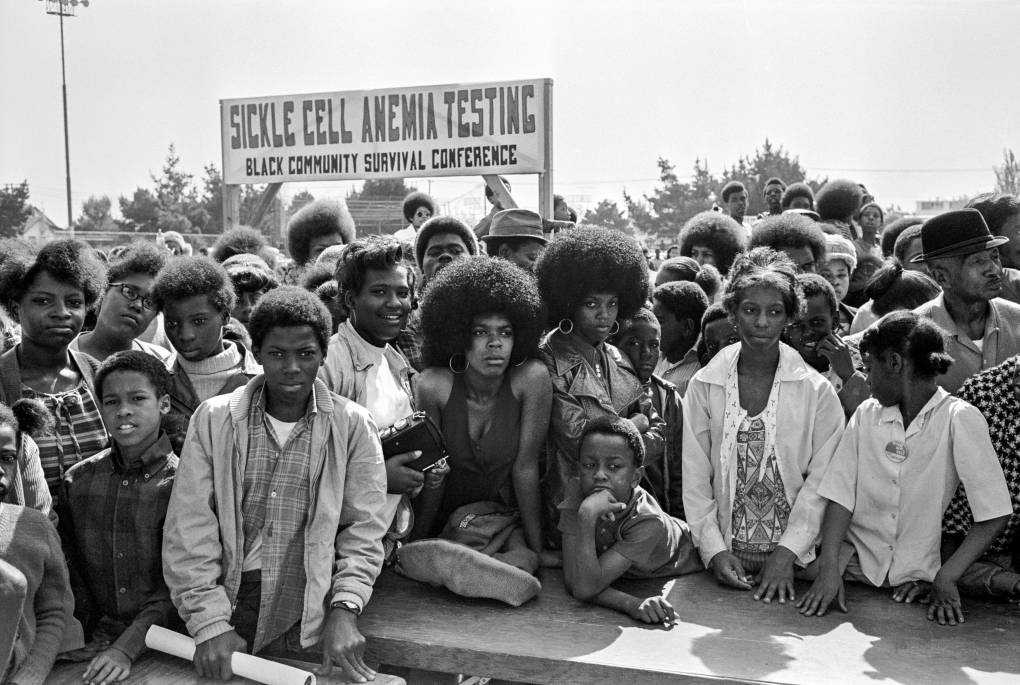
Applying The Black Panther Party's Survival Programs to Today
The Top 10 Hottest Tickets at the SFFILM Festival’s Return to Theaters in 2022
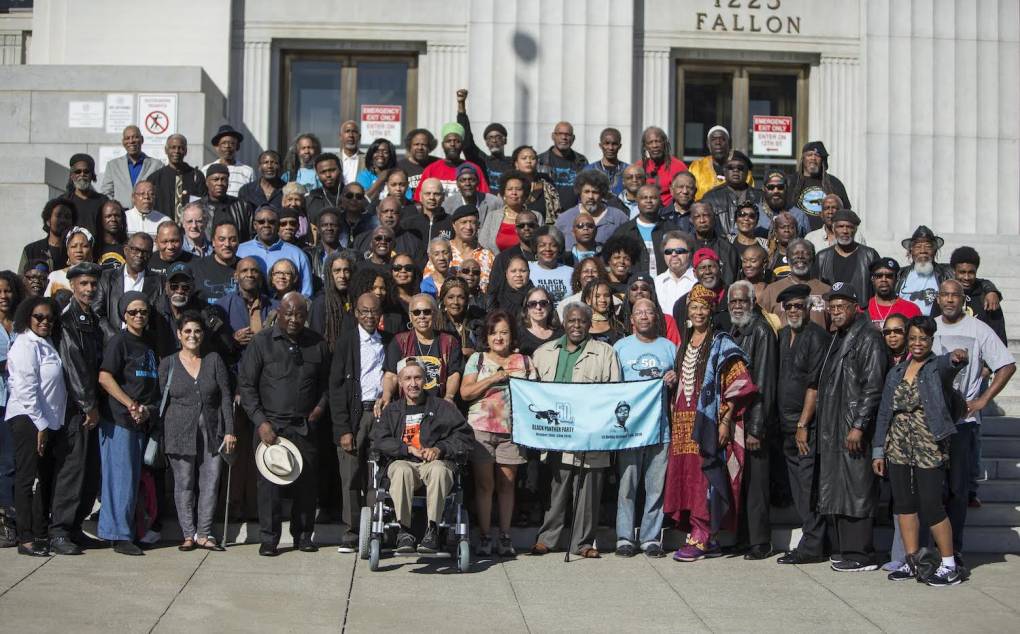
A Full Month of Events for the Black Panther Party's 55th Anniversary
A Month in Pursuit of Freedom
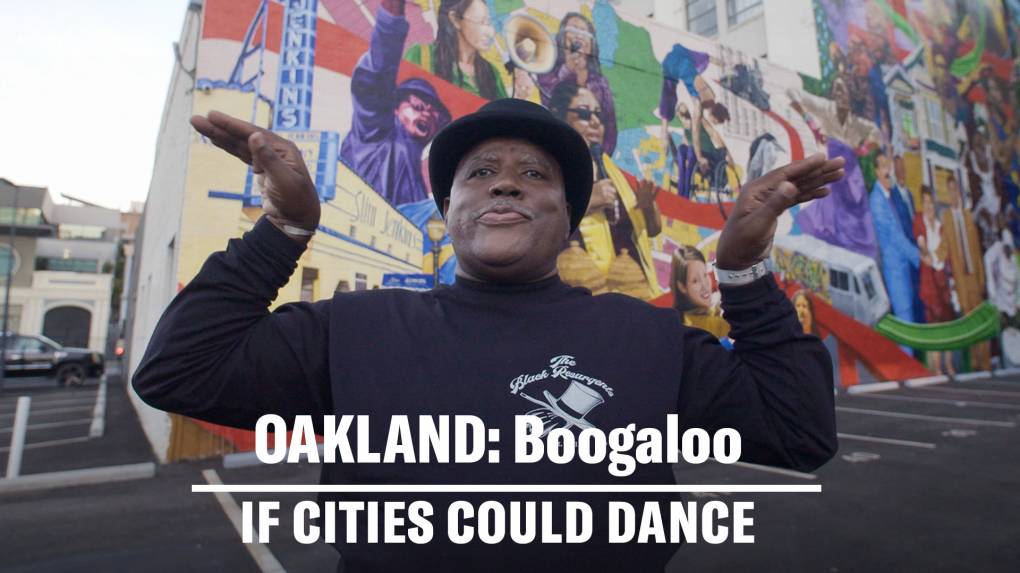
Reclaiming the Legacy of Oakland’s Boogaloo Dance Culture
Huey Newton Was Freed 50 Years Ago. What's Really Changed?
Watch a Huey P. Newton Rally, with H. Rap Brown and Stokely Carmichael, from 1968
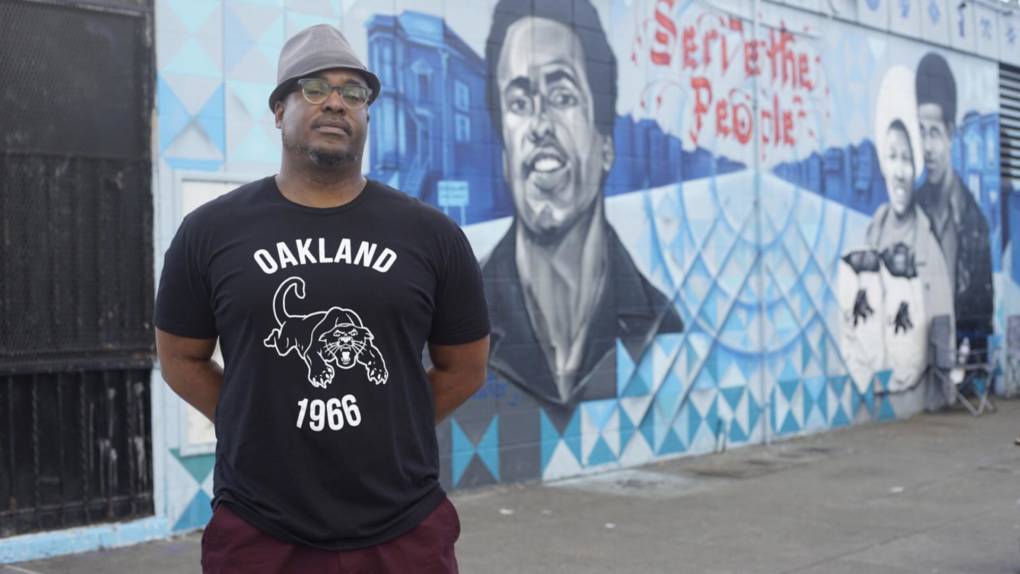
Claiming Community Walls for the Black Panther Party
Oakland Library Wins Grant to Digitize Unused Footage of the Black Panther Party
Sponsored
Player sponsored by
window.__IS_SSR__=true
window.__INITIAL_STATE__={
"attachmentsReducer": {
"audio_0": {
"type": "attachments",
"id": "audio_0",
"imgSizes": {
"kqedFullSize": {
"file": "https://ww2.kqed.org/news/wp-content/themes/KQED-unified/img/audio_bgs/background0.jpg"
}
}
},
"audio_1": {
"type": "attachments",
"id": "audio_1",
"imgSizes": {
"kqedFullSize": {
"file": "https://ww2.kqed.org/news/wp-content/themes/KQED-unified/img/audio_bgs/background1.jpg"
}
}
},
"audio_2": {
"type": "attachments",
"id": "audio_2",
"imgSizes": {
"kqedFullSize": {
"file": "https://ww2.kqed.org/news/wp-content/themes/KQED-unified/img/audio_bgs/background2.jpg"
}
}
},
"audio_3": {
"type": "attachments",
"id": "audio_3",
"imgSizes": {
"kqedFullSize": {
"file": "https://ww2.kqed.org/news/wp-content/themes/KQED-unified/img/audio_bgs/background3.jpg"
}
}
},
"audio_4": {
"type": "attachments",
"id": "audio_4",
"imgSizes": {
"kqedFullSize": {
"file": "https://ww2.kqed.org/news/wp-content/themes/KQED-unified/img/audio_bgs/background4.jpg"
}
}
},
"placeholder": {
"type": "attachments",
"id": "placeholder",
"imgSizes": {
"thumbnail": {
"file": "https://cdn.kqed.org/wp-content/uploads/2024/12/KQED-Default-Image-816638274-2000x1333-1-160x107.jpg",
"width": 160,
"height": 107,
"mimeType": "image/jpeg"
},
"medium": {
"file": "https://cdn.kqed.org/wp-content/uploads/2024/12/KQED-Default-Image-816638274-2000x1333-1-800x533.jpg",
"width": 800,
"height": 533,
"mimeType": "image/jpeg"
},
"medium_large": {
"file": "https://cdn.kqed.org/wp-content/uploads/2024/12/KQED-Default-Image-816638274-2000x1333-1-768x512.jpg",
"width": 768,
"height": 512,
"mimeType": "image/jpeg"
},
"large": {
"file": "https://cdn.kqed.org/wp-content/uploads/2024/12/KQED-Default-Image-816638274-2000x1333-1-1020x680.jpg",
"width": 1020,
"height": 680,
"mimeType": "image/jpeg"
},
"1536x1536": {
"file": "https://cdn.kqed.org/wp-content/uploads/2024/12/KQED-Default-Image-816638274-2000x1333-1-1536x1024.jpg",
"width": 1536,
"height": 1024,
"mimeType": "image/jpeg"
},
"fd-lrg": {
"file": "https://cdn.kqed.org/wp-content/uploads/2024/12/KQED-Default-Image-816638274-2000x1333-1-1536x1024.jpg",
"width": 1536,
"height": 1024,
"mimeType": "image/jpeg"
},
"fd-med": {
"file": "https://cdn.kqed.org/wp-content/uploads/2024/12/KQED-Default-Image-816638274-2000x1333-1-1020x680.jpg",
"width": 1020,
"height": 680,
"mimeType": "image/jpeg"
},
"fd-sm": {
"file": "https://cdn.kqed.org/wp-content/uploads/2024/12/KQED-Default-Image-816638274-2000x1333-1-800x533.jpg",
"width": 800,
"height": 533,
"mimeType": "image/jpeg"
},
"post-thumbnail": {
"file": "https://cdn.kqed.org/wp-content/uploads/2024/12/KQED-Default-Image-816638274-2000x1333-1-672x372.jpg",
"width": 672,
"height": 372,
"mimeType": "image/jpeg"
},
"twentyfourteen-full-width": {
"file": "https://cdn.kqed.org/wp-content/uploads/2024/12/KQED-Default-Image-816638274-2000x1333-1-1038x576.jpg",
"width": 1038,
"height": 576,
"mimeType": "image/jpeg"
},
"xxsmall": {
"file": "https://cdn.kqed.org/wp-content/uploads/2024/12/KQED-Default-Image-816638274-2000x1333-1-160x107.jpg",
"width": 160,
"height": 107,
"mimeType": "image/jpeg"
},
"xsmall": {
"file": "https://cdn.kqed.org/wp-content/uploads/2024/12/KQED-Default-Image-816638274-2000x1333-1-672x372.jpg",
"width": 672,
"height": 372,
"mimeType": "image/jpeg"
},
"small": {
"file": "https://cdn.kqed.org/wp-content/uploads/2024/12/KQED-Default-Image-816638274-2000x1333-1-672x372.jpg",
"width": 672,
"height": 372,
"mimeType": "image/jpeg"
},
"xlarge": {
"file": "https://cdn.kqed.org/wp-content/uploads/2024/12/KQED-Default-Image-816638274-2000x1333-1-1020x680.jpg",
"width": 1020,
"height": 680,
"mimeType": "image/jpeg"
},
"full-width": {
"file": "https://cdn.kqed.org/wp-content/uploads/2024/12/KQED-Default-Image-816638274-2000x1333-1-1920x1280.jpg",
"width": 1920,
"height": 1280,
"mimeType": "image/jpeg"
},
"guest-author-32": {
"file": "https://cdn.kqed.org/wp-content/uploads/2025/01/KQED-Default-Image-816638274-1333x1333-1-160x160.jpg",
"width": 32,
"height": 32,
"mimeType": "image/jpeg"
},
"guest-author-50": {
"file": "https://cdn.kqed.org/wp-content/uploads/2025/01/KQED-Default-Image-816638274-1333x1333-1-160x160.jpg",
"width": 50,
"height": 50,
"mimeType": "image/jpeg"
},
"guest-author-64": {
"file": "https://cdn.kqed.org/wp-content/uploads/2025/01/KQED-Default-Image-816638274-1333x1333-1-160x160.jpg",
"width": 64,
"height": 64,
"mimeType": "image/jpeg"
},
"guest-author-96": {
"file": "https://cdn.kqed.org/wp-content/uploads/2025/01/KQED-Default-Image-816638274-1333x1333-1-160x160.jpg",
"width": 96,
"height": 96,
"mimeType": "image/jpeg"
},
"guest-author-128": {
"file": "https://cdn.kqed.org/wp-content/uploads/2025/01/KQED-Default-Image-816638274-1333x1333-1-160x160.jpg",
"width": 128,
"height": 128,
"mimeType": "image/jpeg"
},
"detail": {
"file": "https://cdn.kqed.org/wp-content/uploads/2025/01/KQED-Default-Image-816638274-1333x1333-1-160x160.jpg",
"width": 160,
"height": 160,
"mimeType": "image/jpeg"
},
"kqedFullSize": {
"file": "https://cdn.kqed.org/wp-content/uploads/2024/12/KQED-Default-Image-816638274-2000x1333-1.jpg",
"width": 2000,
"height": 1333
}
}
},
"arts_13971590": {
"type": "attachments",
"id": "arts_13971590",
"meta": {
"index": "attachments_1716263798",
"site": "arts",
"id": "13971590",
"found": true
},
"title": null,
"publishDate": 1739196558,
"status": "inherit",
"parent": 13971589,
"modified": 1739218493,
"caption": "People gather at a Black Panther Party-run sickle cell anemia testing site at Greenman Field in Oakland on March 31, 1972. ",
"credit": "Stephen Shames",
"altTag": "A black and white archival photo of a large group of African-American people gathered outside, behind them a sign reads \"sickle cell anemia testing.\"",
"description": null,
"imgSizes": {
"medium": {
"file": "https://cdn.kqed.org/wp-content/uploads/sites/2/2025/02/fgD1zByP-800x537.jpg",
"width": 800,
"height": 537,
"mimeType": "image/jpeg"
},
"large": {
"file": "https://cdn.kqed.org/wp-content/uploads/sites/2/2025/02/fgD1zByP-1020x685.jpg",
"width": 1020,
"height": 685,
"mimeType": "image/jpeg"
},
"thumbnail": {
"file": "https://cdn.kqed.org/wp-content/uploads/sites/2/2025/02/fgD1zByP-160x107.jpg",
"width": 160,
"height": 107,
"mimeType": "image/jpeg"
},
"medium_large": {
"file": "https://cdn.kqed.org/wp-content/uploads/sites/2/2025/02/fgD1zByP-768x516.jpg",
"width": 768,
"height": 516,
"mimeType": "image/jpeg"
},
"1536x1536": {
"file": "https://cdn.kqed.org/wp-content/uploads/sites/2/2025/02/fgD1zByP-1536x1031.jpg",
"width": 1536,
"height": 1031,
"mimeType": "image/jpeg"
},
"2048x2048": {
"file": "https://cdn.kqed.org/wp-content/uploads/sites/2/2025/02/fgD1zByP-2048x1375.jpg",
"width": 2048,
"height": 1375,
"mimeType": "image/jpeg"
},
"post-thumbnail": {
"file": "https://cdn.kqed.org/wp-content/uploads/sites/2/2025/02/fgD1zByP-672x372.jpg",
"width": 672,
"height": 372,
"mimeType": "image/jpeg"
},
"twentyfourteen-full-width": {
"file": "https://cdn.kqed.org/wp-content/uploads/sites/2/2025/02/fgD1zByP-1038x576.jpg",
"width": 1038,
"height": 576,
"mimeType": "image/jpeg"
},
"full-width": {
"file": "https://cdn.kqed.org/wp-content/uploads/sites/2/2025/02/fgD1zByP-1920x1289.jpg",
"width": 1920,
"height": 1289,
"mimeType": "image/jpeg"
},
"kqedFullSize": {
"file": "https://cdn.kqed.org/wp-content/uploads/sites/2/2025/02/fgD1zByP-scaled.jpg",
"width": 2560,
"height": 1719
}
},
"fetchFailed": false,
"isLoading": false
},
"arts_13911403": {
"type": "attachments",
"id": "arts_13911403",
"meta": {
"index": "attachments_1716263798",
"site": "arts",
"id": "13911403",
"found": true
},
"parent": 13911372,
"imgSizes": {
"twentyfourteen-full-width": {
"file": "https://ww2.kqed.org/app/uploads/sites/2/2022/03/Yeoh.Slate_-1038x576.jpg",
"width": 1038,
"mimeType": "image/jpeg",
"height": 576
},
"thumbnail": {
"file": "https://ww2.kqed.org/app/uploads/sites/2/2022/03/Yeoh.Slate_-160x90.jpg",
"width": 160,
"mimeType": "image/jpeg",
"height": 90
},
"post-thumbnail": {
"file": "https://ww2.kqed.org/app/uploads/sites/2/2022/03/Yeoh.Slate_-672x372.jpg",
"width": 672,
"mimeType": "image/jpeg",
"height": 372
},
"kqedFullSize": {
"file": "https://ww2.kqed.org/app/uploads/sites/2/2022/03/Yeoh.Slate_.jpg",
"width": 1920,
"height": 1080
},
"large": {
"file": "https://ww2.kqed.org/app/uploads/sites/2/2022/03/Yeoh.Slate_-1020x574.jpg",
"width": 1020,
"mimeType": "image/jpeg",
"height": 574
},
"1536x1536": {
"file": "https://ww2.kqed.org/app/uploads/sites/2/2022/03/Yeoh.Slate_-1536x864.jpg",
"width": 1536,
"mimeType": "image/jpeg",
"height": 864
},
"medium": {
"file": "https://ww2.kqed.org/app/uploads/sites/2/2022/03/Yeoh.Slate_-800x450.jpg",
"width": 800,
"mimeType": "image/jpeg",
"height": 450
},
"medium_large": {
"file": "https://ww2.kqed.org/app/uploads/sites/2/2022/03/Yeoh.Slate_-768x432.jpg",
"width": 768,
"mimeType": "image/jpeg",
"height": 432
}
},
"publishDate": 1648764071,
"modified": 1648764223,
"caption": "Michelle Yeoh and Jenny Slate both appear this year's 65th SFFILM festival.",
"description": null,
"title": "Yeoh.Slate",
"credit": "Thomas Laisne/Getty Images / KatieMcCurdy",
"status": "inherit",
"altTag": null,
"fetchFailed": false,
"isLoading": false
},
"arts_13903864": {
"type": "attachments",
"id": "arts_13903864",
"meta": {
"index": "attachments_1716263798",
"site": "arts",
"id": "13903864",
"found": true
},
"parent": 13903828,
"imgSizes": {
"twentyfourteen-full-width": {
"file": "https://ww2.kqed.org/app/uploads/sites/2/2021/09/0-2-1038x576.jpg",
"width": 1038,
"mimeType": "image/jpeg",
"height": 576
},
"thumbnail": {
"file": "https://ww2.kqed.org/app/uploads/sites/2/2021/09/0-2-160x100.jpg",
"width": 160,
"mimeType": "image/jpeg",
"height": 100
},
"post-thumbnail": {
"file": "https://ww2.kqed.org/app/uploads/sites/2/2021/09/0-2-672x372.jpg",
"width": 672,
"mimeType": "image/jpeg",
"height": 372
},
"kqedFullSize": {
"file": "https://ww2.kqed.org/app/uploads/sites/2/2021/09/0-2.jpg",
"width": 1500,
"height": 933
},
"large": {
"file": "https://ww2.kqed.org/app/uploads/sites/2/2021/09/0-2-1020x634.jpg",
"width": 1020,
"mimeType": "image/jpeg",
"height": 634
},
"medium": {
"file": "https://ww2.kqed.org/app/uploads/sites/2/2021/09/0-2-800x498.jpg",
"width": 800,
"mimeType": "image/jpeg",
"height": 498
},
"medium_large": {
"file": "https://ww2.kqed.org/app/uploads/sites/2/2021/09/0-2-768x478.jpg",
"width": 768,
"mimeType": "image/jpeg",
"height": 478
}
},
"publishDate": 1632844169,
"modified": 1632844584,
"caption": "Black Panther Alumni gathering and celebrating the 50th anniversary of the founding of the Black Panther Party as they stand on the steps of the Alameda County Court House.",
"description": "Black Panther Alumni gathering and celebrating the 50th anniversary of the founding of the Black Panther Party as they stand on the steps of the Alameda County Court House.",
"title": "Black Panther Alumni gathering and celebrating the 50th anniversary of the founding of the Black Panther Party as they stand on the steps of the Alameda County Court House.",
"credit": "It's About Time Archive",
"status": "inherit",
"altTag": "Black Panther Alumni gathering and celebrating the 50th anniversary of the founding of the Black Panther Party as they stand on the steps of the Alameda County Court House.",
"fetchFailed": false,
"isLoading": false
},
"arts_13902193": {
"type": "attachments",
"id": "arts_13902193",
"meta": {
"index": "attachments_1716263798",
"site": "arts",
"id": "13902193",
"found": true
},
"parent": 13902098,
"imgSizes": {
"thumbnail": {
"file": "https://ww2.kqed.org/app/uploads/sites/2/2021/08/CalGlitchOptim-160x90.gif",
"width": 160,
"mimeType": "image/gif",
"height": 90
},
"kqedFullSize": {
"file": "https://ww2.kqed.org/app/uploads/sites/2/2021/08/CalGlitchOptim.gif",
"width": 640,
"height": 359
}
},
"publishDate": 1630430180,
"modified": 1630446496,
"caption": null,
"description": "An old calendar glitches in a moving GIF form",
"title": "CalGlitchOptim",
"credit": "iStock ",
"status": "inherit",
"altTag": "An old calendar glitches in a moving GIF form",
"fetchFailed": false,
"isLoading": false
},
"arts_13891350": {
"type": "attachments",
"id": "arts_13891350",
"meta": {
"index": "attachments_1716263798",
"site": "arts",
"id": "13891350",
"found": true
},
"parent": 13891300,
"imgSizes": {
"twentyfourteen-full-width": {
"file": "https://ww2.kqed.org/app/uploads/sites/2/2021/01/ICCD401_Oakland_WP-1038x576.jpg",
"width": 1038,
"mimeType": "image/jpeg",
"height": 576
},
"thumbnail": {
"file": "https://ww2.kqed.org/app/uploads/sites/2/2021/01/ICCD401_Oakland_WP-160x90.jpg",
"width": 160,
"mimeType": "image/jpeg",
"height": 90
},
"post-thumbnail": {
"file": "https://ww2.kqed.org/app/uploads/sites/2/2021/01/ICCD401_Oakland_WP-672x372.jpg",
"width": 672,
"mimeType": "image/jpeg",
"height": 372
},
"kqedFullSize": {
"file": "https://ww2.kqed.org/app/uploads/sites/2/2021/01/ICCD401_Oakland_WP.jpg",
"width": 1920,
"height": 1079
},
"large": {
"file": "https://ww2.kqed.org/app/uploads/sites/2/2021/01/ICCD401_Oakland_WP-1020x573.jpg",
"width": 1020,
"mimeType": "image/jpeg",
"height": 573
},
"1536x1536": {
"file": "https://ww2.kqed.org/app/uploads/sites/2/2021/01/ICCD401_Oakland_WP-1536x863.jpg",
"width": 1536,
"mimeType": "image/jpeg",
"height": 863
},
"medium": {
"file": "https://ww2.kqed.org/app/uploads/sites/2/2021/01/ICCD401_Oakland_WP-800x450.jpg",
"width": 800,
"mimeType": "image/jpeg",
"height": 450
},
"medium_large": {
"file": "https://ww2.kqed.org/app/uploads/sites/2/2021/01/ICCD401_Oakland_WP-768x432.jpg",
"width": 768,
"mimeType": "image/jpeg",
"height": 432
}
},
"publishDate": 1610749718,
"modified": 1610749821,
"caption": "William Randolph a.k.a. Mr. Penguin of\nThe Black Resurgents \n",
"description": "William Randolph a.k.a. Mr. Penguin of\nThe Black Resurgents \n",
"title": "ICCD401_Oakland_WP",
"credit": "Elie M. Khadra",
"status": "inherit",
"altTag": null,
"fetchFailed": false,
"isLoading": false
},
"arts_13884373": {
"type": "attachments",
"id": "arts_13884373",
"meta": {
"index": "attachments_1716263798",
"site": "arts",
"id": "13884373",
"found": true
},
"parent": 13884294,
"imgSizes": {
"twentyfourteen-full-width": {
"file": "https://ww2.kqed.org/app/uploads/sites/2/2020/08/HueyNewton.Freed_.Aug5_.1970-1038x576.jpg",
"width": 1038,
"mimeType": "image/jpeg",
"height": 576
},
"thumbnail": {
"file": "https://ww2.kqed.org/app/uploads/sites/2/2020/08/HueyNewton.Freed_.Aug5_.1970-160x109.jpg",
"width": 160,
"mimeType": "image/jpeg",
"height": 109
},
"post-thumbnail": {
"file": "https://ww2.kqed.org/app/uploads/sites/2/2020/08/HueyNewton.Freed_.Aug5_.1970-672x372.jpg",
"width": 672,
"mimeType": "image/jpeg",
"height": 372
},
"kqedFullSize": {
"file": "https://ww2.kqed.org/app/uploads/sites/2/2020/08/HueyNewton.Freed_.Aug5_.1970.jpg",
"width": 1416,
"height": 965
},
"large": {
"file": "https://ww2.kqed.org/app/uploads/sites/2/2020/08/HueyNewton.Freed_.Aug5_.1970-1020x695.jpg",
"width": 1020,
"mimeType": "image/jpeg",
"height": 695
},
"medium": {
"file": "https://ww2.kqed.org/app/uploads/sites/2/2020/08/HueyNewton.Freed_.Aug5_.1970-800x545.jpg",
"width": 800,
"mimeType": "image/jpeg",
"height": 545
},
"medium_large": {
"file": "https://ww2.kqed.org/app/uploads/sites/2/2020/08/HueyNewton.Freed_.Aug5_.1970-768x523.jpg",
"width": 768,
"mimeType": "image/jpeg",
"height": 523
}
},
"publishDate": 1596609117,
"modified": 1596609344,
"caption": "Huey P. Newton is freed on Aug. 5, 1970, at the Aladema County Courthouse. ",
"description": "Huey P. Newton is freed on Aug. 5, 1970, at the Aladema County Courthouse. ",
"title": "HueyNewton.Freed.Aug5.1970",
"credit": "KQED Archives",
"status": "inherit",
"fetchFailed": false,
"isLoading": false
},
"arts_13881413": {
"type": "attachments",
"id": "arts_13881413",
"meta": {
"index": "attachments_1716263798",
"site": "arts",
"id": "13881413",
"found": true
},
"parent": 13881407,
"imgSizes": {
"thumbnail": {
"file": "https://ww2.kqed.org/app/uploads/sites/2/2020/06/HRapBrown-160x90.jpg",
"width": 160,
"mimeType": "image/jpeg",
"height": 90
},
"post-thumbnail": {
"file": "https://ww2.kqed.org/app/uploads/sites/2/2020/06/HRapBrown-672x372.jpg",
"width": 672,
"mimeType": "image/jpeg",
"height": 372
},
"kqedFullSize": {
"file": "https://ww2.kqed.org/app/uploads/sites/2/2020/06/HRapBrown.jpg",
"width": 849,
"height": 478
},
"medium": {
"file": "https://ww2.kqed.org/app/uploads/sites/2/2020/06/HRapBrown-800x450.jpg",
"width": 800,
"mimeType": "image/jpeg",
"height": 450
},
"medium_large": {
"file": "https://ww2.kqed.org/app/uploads/sites/2/2020/06/HRapBrown-768x432.jpg",
"width": 768,
"mimeType": "image/jpeg",
"height": 432
}
},
"publishDate": 1591311272,
"modified": 1591311282,
"caption": null,
"description": null,
"title": "HRapBrown",
"credit": "KQED",
"status": "inherit",
"fetchFailed": false,
"isLoading": false
},
"arts_13851522": {
"type": "attachments",
"id": "arts_13851522",
"meta": {
"index": "attachments_1716263798",
"site": "arts",
"id": "13851522",
"found": true
},
"parent": 13851520,
"imgSizes": {
"twentyfourteen-full-width": {
"file": "https://ww2.kqed.org/app/uploads/sites/2/2019/02/RefaOne.MAIN_-1038x576.jpg",
"width": 1038,
"mimeType": "image/jpeg",
"height": 576
},
"thumbnail": {
"file": "https://ww2.kqed.org/app/uploads/sites/2/2019/02/RefaOne.MAIN_-160x90.jpg",
"width": 160,
"mimeType": "image/jpeg",
"height": 90
},
"post-thumbnail": {
"file": "https://ww2.kqed.org/app/uploads/sites/2/2019/02/RefaOne.MAIN_-672x372.jpg",
"width": 672,
"mimeType": "image/jpeg",
"height": 372
},
"kqedFullSize": {
"file": "https://ww2.kqed.org/app/uploads/sites/2/2019/02/RefaOne.MAIN_.jpg",
"width": 1920,
"height": 1080
},
"large": {
"file": "https://ww2.kqed.org/app/uploads/sites/2/2019/02/RefaOne.MAIN_-1020x574.jpg",
"width": 1020,
"mimeType": "image/jpeg",
"height": 574
},
"complete_open_graph": {
"file": "https://ww2.kqed.org/app/uploads/sites/2/2019/02/RefaOne.MAIN_-1200x675.jpg",
"width": 1200,
"mimeType": "image/jpeg",
"height": 675
},
"guest-author-50": {
"file": "https://ww2.kqed.org/app/uploads/sites/2/2019/02/RefaOne.MAIN_-50x50.jpg",
"width": 50,
"mimeType": "image/jpeg",
"height": 50
},
"guest-author-96": {
"file": "https://ww2.kqed.org/app/uploads/sites/2/2019/02/RefaOne.MAIN_-96x96.jpg",
"width": 96,
"mimeType": "image/jpeg",
"height": 96
},
"medium": {
"file": "https://ww2.kqed.org/app/uploads/sites/2/2019/02/RefaOne.MAIN_-800x450.jpg",
"width": 800,
"mimeType": "image/jpeg",
"height": 450
},
"guest-author-64": {
"file": "https://ww2.kqed.org/app/uploads/sites/2/2019/02/RefaOne.MAIN_-64x64.jpg",
"width": 64,
"mimeType": "image/jpeg",
"height": 64
},
"guest-author-32": {
"file": "https://ww2.kqed.org/app/uploads/sites/2/2019/02/RefaOne.MAIN_-32x32.jpg",
"width": 32,
"mimeType": "image/jpeg",
"height": 32
},
"full-width": {
"file": "https://ww2.kqed.org/app/uploads/sites/2/2019/02/RefaOne.MAIN_-1920x1080.jpg",
"width": 1920,
"mimeType": "image/jpeg",
"height": 1080
},
"detail": {
"file": "https://ww2.kqed.org/app/uploads/sites/2/2019/02/RefaOne.MAIN_-150x150.jpg",
"width": 150,
"mimeType": "image/jpeg",
"height": 150
},
"medium_large": {
"file": "https://ww2.kqed.org/app/uploads/sites/2/2019/02/RefaOne.MAIN_-768x432.jpg",
"width": 768,
"mimeType": "image/jpeg",
"height": 432
},
"guest-author-128": {
"file": "https://ww2.kqed.org/app/uploads/sites/2/2019/02/RefaOne.MAIN_-128x128.jpg",
"width": 128,
"mimeType": "image/jpeg",
"height": 128
}
},
"publishDate": 1550872167,
"modified": 1550872290,
"caption": "Artist Refa One with his mural honoring Huey Newton at 14th and Peralta in West Oakland.",
"description": "Artist Refa One with his mural honoring Huey Newton at 14th and Peralta in West Oakland.",
"title": "RefaOne.MAIN",
"credit": "Pendarvis Harshaw/KQED",
"status": "inherit",
"fetchFailed": false,
"isLoading": false
},
"arts_12164010": {
"type": "attachments",
"id": "arts_12164010",
"meta": {
"index": "attachments_1716263798",
"site": "arts",
"id": "12164010",
"found": true
},
"parent": 12158579,
"imgSizes": {
"thumbnail": {
"file": "https://ww2.kqed.org/app/uploads/sites/2/2016/10/BPPEventsCover-400x225.jpg",
"width": 400,
"mimeType": "image/jpeg",
"height": 225
},
"post-thumbnail": {
"file": "https://ww2.kqed.org/app/uploads/sites/2/2016/10/BPPEventsCover-672x372.jpg",
"width": 672,
"mimeType": "image/jpeg",
"height": 372
},
"kqedFullSize": {
"file": "https://ww2.kqed.org/app/uploads/sites/2/2016/10/BPPEventsCover.jpg",
"width": 742,
"height": 417
},
"guest-author-50": {
"file": "https://ww2.kqed.org/app/uploads/sites/2/2016/10/BPPEventsCover-50x50.jpg",
"width": 50,
"mimeType": "image/jpeg",
"height": 50
},
"guest-author-96": {
"file": "https://ww2.kqed.org/app/uploads/sites/2/2016/10/BPPEventsCover-96x96.jpg",
"width": 96,
"mimeType": "image/jpeg",
"height": 96
},
"guest-author-64": {
"file": "https://ww2.kqed.org/app/uploads/sites/2/2016/10/BPPEventsCover-64x64.jpg",
"width": 64,
"mimeType": "image/jpeg",
"height": 64
},
"detail": {
"file": "https://ww2.kqed.org/app/uploads/sites/2/2016/10/BPPEventsCover-150x150.jpg",
"width": 150,
"mimeType": "image/jpeg",
"height": 150
},
"guest-author-32": {
"file": "https://ww2.kqed.org/app/uploads/sites/2/2016/10/BPPEventsCover-32x32.jpg",
"width": 32,
"mimeType": "image/jpeg",
"height": 32
},
"guest-author-128": {
"file": "https://ww2.kqed.org/app/uploads/sites/2/2016/10/BPPEventsCover-128x128.jpg",
"width": 128,
"mimeType": "image/jpeg",
"height": 128
}
},
"publishDate": 1475704095,
"modified": 1475704135,
"caption": "The Black Panthers, with Elbert 'Big Man' Howard at right, engaged in a practice drill.",
"description": "The Black Panthers, with Elbert 'Big Man' Howard at right, engaged in a practice drill.",
"title": "BPPEventsCover",
"credit": "Pirkle Jones",
"status": "inherit",
"fetchFailed": false,
"isLoading": false
}
},
"audioPlayerReducer": {
"postId": "stream_live",
"isPaused": true,
"isPlaying": false,
"pfsActive": false,
"pledgeModalIsOpen": true,
"playerDrawerIsOpen": false
},
"authorsReducer": {
"byline_arts_13891300": {
"type": "authors",
"id": "byline_arts_13891300",
"meta": {
"override": true
},
"slug": "byline_arts_13891300",
"name": "Eric Arnold, Spencer Wilkinson",
"isLoading": false
},
"mfox": {
"type": "authors",
"id": "22",
"meta": {
"index": "authors_1716337520",
"id": "22",
"found": true
},
"name": "Michael Fox",
"firstName": "Michael",
"lastName": "Fox",
"slug": "mfox",
"email": "foxonfilm@yahoo.com",
"display_author_email": false,
"staff_mastheads": [],
"title": "KQED Contributor",
"bio": "Michael Fox has written about film for dozens of publications since 1987. He is a founding member of the San Francisco Bay Area Film Critics Circle.",
"avatar": "https://secure.gravatar.com/avatar/81710be6517181c0d40977bb09011d5f?s=600&d=blank&r=g",
"twitter": null,
"facebook": null,
"instagram": null,
"linkedin": null,
"sites": [
{
"site": "arts",
"roles": [
"Contributor",
"contributor"
]
}
],
"headData": {
"title": "Michael Fox | KQED",
"description": "KQED Contributor",
"ogImgSrc": "https://secure.gravatar.com/avatar/81710be6517181c0d40977bb09011d5f?s=600&d=blank&r=g",
"twImgSrc": "https://secure.gravatar.com/avatar/81710be6517181c0d40977bb09011d5f?s=600&d=blank&r=g"
},
"isLoading": false,
"link": "/author/mfox"
},
"kjones": {
"type": "authors",
"id": "93",
"meta": {
"index": "authors_1716337520",
"id": "93",
"found": true
},
"name": "Kevin L. Jones",
"firstName": "Kevin",
"lastName": "Jones",
"slug": "kjones",
"email": "kjones@kqed.org",
"display_author_email": false,
"staff_mastheads": [],
"title": null,
"bio": null,
"avatar": "https://secure.gravatar.com/avatar/12c65b5633ed39d0a59bb7f497eff645?s=600&d=blank&r=g",
"twitter": null,
"facebook": null,
"instagram": null,
"linkedin": null,
"sites": [
{
"site": "arts",
"roles": [
"subscriber"
]
},
{
"site": "styleguide",
"roles": [
"contributor"
]
},
{
"site": "artschool",
"roles": [
"subscriber"
]
},
{
"site": "news",
"roles": [
"subscriber"
]
},
{
"site": "pop",
"roles": [
"subscriber"
]
}
],
"headData": {
"title": "Kevin L. Jones | KQED",
"description": null,
"ogImgSrc": "https://secure.gravatar.com/avatar/12c65b5633ed39d0a59bb7f497eff645?s=600&d=blank&r=g",
"twImgSrc": "https://secure.gravatar.com/avatar/12c65b5633ed39d0a59bb7f497eff645?s=600&d=blank&r=g"
},
"isLoading": false,
"link": "/author/kjones"
},
"gmeline": {
"type": "authors",
"id": "185",
"meta": {
"index": "authors_1716337520",
"id": "185",
"found": true
},
"name": "Gabe Meline",
"firstName": "Gabe",
"lastName": "Meline",
"slug": "gmeline",
"email": "gmeline@kqed.org",
"display_author_email": false,
"staff_mastheads": [
"arts"
],
"title": "Senior Editor, KQED Arts & Culture",
"bio": "Gabe Meline entered journalism at age 15 making photocopied zines, and has since earned awards from the Edward R. Murrow Awards, the Society for Professional Journalists, the Online Journalism Awards, the Association of Alternative Newsweeklies and the California Newspaper Publishers Association. Prior to KQED, he was the editor of the \u003cem>North Bay Bohemian\u003c/em> and a touring musician. He lives with his wife, his daughter, and a 1964 Volvo in his hometown of Santa Rosa, CA.",
"avatar": "https://secure.gravatar.com/avatar/80e9715844c5fc3f07edac5b08973b76?s=600&d=blank&r=g",
"twitter": null,
"facebook": null,
"instagram": "gmeline",
"linkedin": null,
"sites": [
{
"site": "",
"roles": [
"editor"
]
},
{
"site": "arts",
"roles": [
"administrator"
]
},
{
"site": "artschool",
"roles": [
"editor"
]
},
{
"site": "news",
"roles": [
"author"
]
},
{
"site": "pop",
"roles": [
"editor"
]
},
{
"site": "bayareabites",
"roles": [
"editor"
]
},
{
"site": "food",
"roles": [
"editor"
]
},
{
"site": "liveblog",
"roles": [
"editor"
]
},
{
"site": "hiphop",
"roles": [
"editor"
]
}
],
"headData": {
"title": "Gabe Meline | KQED",
"description": "Senior Editor, KQED Arts & Culture",
"ogImgSrc": "https://secure.gravatar.com/avatar/80e9715844c5fc3f07edac5b08973b76?s=600&d=blank&r=g",
"twImgSrc": "https://secure.gravatar.com/avatar/80e9715844c5fc3f07edac5b08973b76?s=600&d=blank&r=g"
},
"isLoading": false,
"link": "/author/gmeline"
},
"ogpenn": {
"type": "authors",
"id": "11491",
"meta": {
"index": "authors_1716337520",
"id": "11491",
"found": true
},
"name": "Pendarvis Harshaw",
"firstName": "Pendarvis",
"lastName": "Harshaw",
"slug": "ogpenn",
"email": "ogpenn@gmail.com",
"display_author_email": false,
"staff_mastheads": [
"arts"
],
"title": "Community Engagement Reporter",
"bio": "Pendarvis Harshaw is an educator, host and writer with KQED Arts.",
"avatar": "https://secure.gravatar.com/avatar/093d33baff5354890e29ad83d58d2c49?s=600&d=blank&r=g",
"twitter": null,
"facebook": null,
"instagram": "ogpenn",
"linkedin": null,
"sites": [
{
"site": "arts",
"roles": [
"editor"
]
},
{
"site": "news",
"roles": [
"editor"
]
},
{
"site": "bayareabites",
"roles": [
"author"
]
},
{
"site": "hiphop",
"roles": [
"editor"
]
}
],
"headData": {
"title": "Pendarvis Harshaw | KQED",
"description": "Community Engagement Reporter",
"ogImgSrc": "https://secure.gravatar.com/avatar/093d33baff5354890e29ad83d58d2c49?s=600&d=blank&r=g",
"twImgSrc": "https://secure.gravatar.com/avatar/093d33baff5354890e29ad83d58d2c49?s=600&d=blank&r=g"
},
"isLoading": false,
"link": "/author/ogpenn"
}
},
"breakingNewsReducer": {},
"pagesReducer": {},
"postsReducer": {
"stream_live": {
"type": "live",
"id": "stream_live",
"audioUrl": "https://streams.kqed.org/kqedradio",
"title": "Live Stream",
"excerpt": "Live Stream information currently unavailable.",
"link": "/radio",
"featImg": "",
"label": {
"name": "KQED Live",
"link": "/"
}
},
"stream_kqedNewscast": {
"type": "posts",
"id": "stream_kqedNewscast",
"audioUrl": "https://www.kqed.org/.stream/anon/radio/RDnews/newscast.mp3?_=1",
"title": "KQED Newscast",
"featImg": "",
"label": {
"name": "88.5 FM",
"link": "/"
}
},
"arts_13971589": {
"type": "posts",
"id": "arts_13971589",
"meta": {
"index": "posts_1716263798",
"site": "arts",
"id": "13971589",
"score": null,
"sort": [
1739219642000
]
},
"guestAuthors": [],
"slug": "black-panther-party-survival-programs-exhibit",
"title": "Applying The Black Panther Party's Survival Programs to Today",
"publishDate": 1739219642,
"format": "standard",
"headTitle": "Applying The Black Panther Party’s Survival Programs to Today | KQED",
"labelTerm": {
"term": 140,
"site": "arts"
},
"content": "\u003cp>The Black Panther Party For Self-Defense, founded in Oakland in 1966, was a landmark organization that uplifted the Black community by providing resources to neighborhoods neglected by the local and federal government.\u003c/p>\n\u003cp>The Party was well-known for its Free Breakfast Program and its independent newspaper, \u003cem>The Black Panther. \u003c/em>The group was also widely recognized for its fashion, as its members regularly dressed in sleek black leather jackets and berets.\u003c/p>\n\u003cp>But the history of the organization’s survival programs, 65 of them in total ranging from health services to transportation assistance, are often misunderstood or overlooked.\u003c/p>\n\u003cp>To illuminate these programs’ significance, on Thursday, Feb. 13, the\u003ca href=\"https://hueypnewtonfoundation.org/\" target=\"_blank\" rel=\"noopener\"> Dr. Huey P. Newton Foundation\u003c/a> debuts an exhibition of archival photography titled \u003cem>\u003ca href=\"https://www.eventbrite.com/e/survival-pending-revolution-exhibition-opening-tickets-1219614562989?aff=ebdsoporgprofile\" target=\"_blank\" rel=\"noopener\">Survival Pending Revolution: The Black Panther Party Service to the People Programs \u003c/a>\u003c/em>at the \u003ca href=\"https://www.blackpantherpartymuseum.org/\" target=\"_blank\" rel=\"noopener\">Black Panther Party Museum\u003c/a> in downtown Oakland.\u003c/p>\n\u003cfigure id=\"attachment_13971591\" class=\"wp-caption aligncenter\" style=\"max-width: 800px\">\u003cimg loading=\"lazy\" decoding=\"async\" class=\"wp-image-13971591 size-medium\" src=\"https://cdn.kqed.org/wp-content/uploads/sites/2/2025/02/vB7ZgqMy-800x531.jpg\" alt=\"\" width=\"800\" height=\"531\" srcset=\"https://cdn.kqed.org/wp-content/uploads/sites/2/2025/02/vB7ZgqMy-800x531.jpg 800w, https://cdn.kqed.org/wp-content/uploads/sites/2/2025/02/vB7ZgqMy-1020x677.jpg 1020w, https://cdn.kqed.org/wp-content/uploads/sites/2/2025/02/vB7ZgqMy-160x106.jpg 160w, https://cdn.kqed.org/wp-content/uploads/sites/2/2025/02/vB7ZgqMy-768x510.jpg 768w\" sizes=\"auto, (max-width: 800px) 100vw, 800px\">\u003cfigcaption class=\"wp-caption-text\">A glimpse inside one of The Black Panther Party’s survival programs. \u003ccite>(Stephen Shames)\u003c/cite>\u003c/figcaption>\u003c/figure>\n\u003cp>“A lot of folks know about the free breakfast for schoolchildren,” says \u003ca href=\"https://www.xaviergbuck.com/\" target=\"_blank\" rel=\"noopener\">Dr. Xavier Buck\u003c/a>, the executive director of the Dr. Huey P. Newton Foundation. “Some may even know about the free medical clinics.”\u003c/p>\n\u003cp>[ad fullwidth]\u003c/p>\n\u003cp>As for the contents of the exhibition, Dr. Buck explains, “We’re going to talk about the free ambulance service, the free pest control, the free bussing to prisons so families wouldn’t be broken up.”\u003c/p>\n\u003cp>By exhibiting rarely seen photos and sharing insight from veteran party members, Dr. Buck says attendees will gain a better understanding of what the Party did, how they did it and why they did it.\u003c/p>\n\u003cp>Another goal of the exhibition is to dispel the notion of the survival programs as some form of charity. Instead, Dr. Buck explains, the Black Panther Party saw them as organizing tools.\u003c/p>\n\u003cp>[aside postID='news_12014210']An example is the free breakfast program. “Yes, it was feeding kids in our schools,” Dr. Buck says. But it also served as an entry point for party members to inspire children to think critically about their circumstances — by asking questions like, “In such a wealthy country, why were you so hungry in the first place?” says Dr. Buck.\u003c/p>\n\u003cp>In Oakland, grassroots organizing has long connected to electoral politics. Dr. Buck points to the 1973 political campaigns of Black Panther Party co-founder Bobby Seale and former Black Panther Party leader Elaine Brown.\u003c/p>\n\u003cp>“They engaged a new voter bloc,” says Dr. Buck of the Black Panther Party leaders. And four years later, in 1977, when the Black Panthers pushed forward the campaign of mayoral candidate Lionel Wilson, Dr. Buck says, they leveraged that same organized bloc from the survival programs.\u003c/p>\n\u003cp>In result, Wilson was elected as Oakland’s first Black mayor.\u003c/p>\n\u003cp>“It’s really about how we tie the services that we give the people to how we actually gain political power,” says Dr. Buck.\u003c/p>\n\u003cfigure id=\"attachment_13971595\" class=\"wp-caption aligncenter\" style=\"max-width: 1669px\">\u003cimg loading=\"lazy\" decoding=\"async\" class=\"wp-image-13971595 size-full\" src=\"https://cdn.kqed.org/wp-content/uploads/sites/2/2025/02/B49mDBoT-scaled.jpg\" alt=\"\" width=\"1669\" height=\"2560\">\u003cfigcaption class=\"wp-caption-text\">‘The Black Panther,’ the official newspaper of the Black Panther Party, which was circulated to hundreds of thousands of readers all around the United States. \u003ccite>(Stephen Shames)\u003c/cite>\u003c/figcaption>\u003c/figure>\n\u003cp>The forthcoming exhibition shows the practitioners and the beneficiaries of the Black Panther Party’s survival programs through the lens of photographers \u003ca href=\"https://www.duchodennis.com/#/\" target=\"_blank\" rel=\"noopener\">Ducho Dennis\u003c/a>, \u003ca href=\"https://stephenshames.com/\" target=\"_blank\" rel=\"noopener\">Stephen Shames\u003c/a> and \u003ca href=\"https://exhibits.stanford.edu/fitch\" target=\"_blank\" rel=\"noopener\">Bob Fitch\u003c/a>, as well as\u003ca href=\"https://oac.cdlib.org/findaid/ark:/13030/c8b85cfn/\" target=\"_blank\" rel=\"noopener\"> Ruth Marion-Baruch and Pirkle Jones.\u003c/a>\u003c/p>\n\u003cp>The exhibition is set to open on Feb. 13 with a three-hour event where attendees can guide themselves through a tour of the photos; there will also be a 45-minute presentation.\u003c/p>\n\u003cp>Four days later, on Feb. 17, the Dr. Huey P. Newton Foundation will celebrate its 30th anniversary on what would’ve been the late Dr. Huey P. Newton’s 83rd birthday.\u003c/p>\n\u003chr>\n\u003cp>\u003c/p>\n\u003cp>\u003cem>The \u003ca href=\"https://hueypnewtonfoundation.org/\" target=\"_blank\" rel=\"noopener\">Dr. Huey P. Newton Foundation\u003c/a> presents ‘\u003ca href=\"https://www.eventbrite.com/e/survival-pending-revolution-exhibition-opening-tickets-1219614562989?aff=ebdsoporgprofile\" target=\"_blank\" rel=\"noopener\">Survival Pending Revolution: The Black Panther Party Service to the People Programs\u003c/a>’ at the \u003ca href=\"https://www.blackpantherpartymuseum.org/\" target=\"_blank\" rel=\"noopener\">Black Panther Party Museum\u003c/a> in downtown Oakland on Thursday, Feb. 13. \u003ca href=\"https://www.eventbrite.com/e/survival-pending-revolution-exhibition-opening-tickets-1219614562989?aff=ebdsoporgprofile\" target=\"_blank\" rel=\"noopener\">Details here\u003c/a>.\u003c/em>\u003c/p>\n\n",
"blocks": [],
"excerpt": "An exhibit at the Black Panther Party museum shows what a community can do when the government fails them.",
"status": "publish",
"parent": 0,
"modified": 1739220185,
"stats": {
"hasAudio": false,
"hasVideo": false,
"hasChartOrMap": false,
"iframeSrcs": [],
"hasGoogleForm": false,
"hasGallery": false,
"hasHearkenModule": false,
"hasPolis": false,
"paragraphCount": 19,
"wordCount": 665
},
"headData": {
"title": "Applying The Black Panther Party's Survival Programs to Today | KQED",
"description": "An exhibit at the Black Panther Party museum shows what a community can do when the government fails them.",
"ogTitle": "",
"ogDescription": "",
"ogImgId": "",
"twTitle": "",
"twDescription": "",
"twImgId": "",
"schema": {
"@context": "https://schema.org",
"@type": "Article",
"headline": "Applying The Black Panther Party's Survival Programs to Today",
"datePublished": "2025-02-10T12:34:02-08:00",
"dateModified": "2025-02-10T12:43:05-08:00",
"image": "https://cdn.kqed.org/wp-content/uploads/2020/02/KQED-OG-Image@1x.png"
}
},
"sticky": false,
"nprStoryId": "kqed-13971589",
"templateType": "standard",
"featuredImageType": "standard",
"excludeFromSiteSearch": "Include",
"articleAge": "0",
"path": "/arts/13971589/black-panther-party-survival-programs-exhibit",
"audioTrackLength": null,
"parsedContent": [
{
"type": "contentString",
"content": "\u003cdiv class=\"post-body\">\u003cp>\u003cp>The Black Panther Party For Self-Defense, founded in Oakland in 1966, was a landmark organization that uplifted the Black community by providing resources to neighborhoods neglected by the local and federal government.\u003c/p>\n\u003cp>The Party was well-known for its Free Breakfast Program and its independent newspaper, \u003cem>The Black Panther. \u003c/em>The group was also widely recognized for its fashion, as its members regularly dressed in sleek black leather jackets and berets.\u003c/p>\n\u003cp>But the history of the organization’s survival programs, 65 of them in total ranging from health services to transportation assistance, are often misunderstood or overlooked.\u003c/p>\n\u003cp>To illuminate these programs’ significance, on Thursday, Feb. 13, the\u003ca href=\"https://hueypnewtonfoundation.org/\" target=\"_blank\" rel=\"noopener\"> Dr. Huey P. Newton Foundation\u003c/a> debuts an exhibition of archival photography titled \u003cem>\u003ca href=\"https://www.eventbrite.com/e/survival-pending-revolution-exhibition-opening-tickets-1219614562989?aff=ebdsoporgprofile\" target=\"_blank\" rel=\"noopener\">Survival Pending Revolution: The Black Panther Party Service to the People Programs \u003c/a>\u003c/em>at the \u003ca href=\"https://www.blackpantherpartymuseum.org/\" target=\"_blank\" rel=\"noopener\">Black Panther Party Museum\u003c/a> in downtown Oakland.\u003c/p>\n\u003cfigure id=\"attachment_13971591\" class=\"wp-caption aligncenter\" style=\"max-width: 800px\">\u003cimg loading=\"lazy\" decoding=\"async\" class=\"wp-image-13971591 size-medium\" src=\"https://cdn.kqed.org/wp-content/uploads/sites/2/2025/02/vB7ZgqMy-800x531.jpg\" alt=\"\" width=\"800\" height=\"531\" srcset=\"https://cdn.kqed.org/wp-content/uploads/sites/2/2025/02/vB7ZgqMy-800x531.jpg 800w, https://cdn.kqed.org/wp-content/uploads/sites/2/2025/02/vB7ZgqMy-1020x677.jpg 1020w, https://cdn.kqed.org/wp-content/uploads/sites/2/2025/02/vB7ZgqMy-160x106.jpg 160w, https://cdn.kqed.org/wp-content/uploads/sites/2/2025/02/vB7ZgqMy-768x510.jpg 768w\" sizes=\"auto, (max-width: 800px) 100vw, 800px\">\u003cfigcaption class=\"wp-caption-text\">A glimpse inside one of The Black Panther Party’s survival programs. \u003ccite>(Stephen Shames)\u003c/cite>\u003c/figcaption>\u003c/figure>\n\u003cp>“A lot of folks know about the free breakfast for schoolchildren,” says \u003ca href=\"https://www.xaviergbuck.com/\" target=\"_blank\" rel=\"noopener\">Dr. Xavier Buck\u003c/a>, the executive director of the Dr. Huey P. Newton Foundation. “Some may even know about the free medical clinics.”\u003c/p>\n\u003cp>\u003c/p>\u003c/div>",
"attributes": {
"named": {},
"numeric": []
}
},
{
"type": "component",
"content": "",
"name": "ad",
"attributes": {
"named": {
"label": "fullwidth"
},
"numeric": [
"fullwidth"
]
}
},
{
"type": "contentString",
"content": "\u003cdiv class=\"post-body\">\u003cp>\u003c/p>\n\u003cp>As for the contents of the exhibition, Dr. Buck explains, “We’re going to talk about the free ambulance service, the free pest control, the free bussing to prisons so families wouldn’t be broken up.”\u003c/p>\n\u003cp>By exhibiting rarely seen photos and sharing insight from veteran party members, Dr. Buck says attendees will gain a better understanding of what the Party did, how they did it and why they did it.\u003c/p>\n\u003cp>Another goal of the exhibition is to dispel the notion of the survival programs as some form of charity. Instead, Dr. Buck explains, the Black Panther Party saw them as organizing tools.\u003c/p>\n\u003cp>\u003c/p>\u003c/div>",
"attributes": {
"named": {},
"numeric": []
}
},
{
"type": "component",
"content": "",
"name": "aside",
"attributes": {
"named": {
"postid": "news_12014210",
"label": ""
},
"numeric": []
}
},
{
"type": "contentString",
"content": "\u003cdiv class=\"post-body\">\u003cp>An example is the free breakfast program. “Yes, it was feeding kids in our schools,” Dr. Buck says. But it also served as an entry point for party members to inspire children to think critically about their circumstances — by asking questions like, “In such a wealthy country, why were you so hungry in the first place?” says Dr. Buck.\u003c/p>\n\u003cp>In Oakland, grassroots organizing has long connected to electoral politics. Dr. Buck points to the 1973 political campaigns of Black Panther Party co-founder Bobby Seale and former Black Panther Party leader Elaine Brown.\u003c/p>\n\u003cp>“They engaged a new voter bloc,” says Dr. Buck of the Black Panther Party leaders. And four years later, in 1977, when the Black Panthers pushed forward the campaign of mayoral candidate Lionel Wilson, Dr. Buck says, they leveraged that same organized bloc from the survival programs.\u003c/p>\n\u003cp>In result, Wilson was elected as Oakland’s first Black mayor.\u003c/p>\n\u003cp>“It’s really about how we tie the services that we give the people to how we actually gain political power,” says Dr. Buck.\u003c/p>\n\u003cfigure id=\"attachment_13971595\" class=\"wp-caption aligncenter\" style=\"max-width: 1669px\">\u003cimg loading=\"lazy\" decoding=\"async\" class=\"wp-image-13971595 size-full\" src=\"https://cdn.kqed.org/wp-content/uploads/sites/2/2025/02/B49mDBoT-scaled.jpg\" alt=\"\" width=\"1669\" height=\"2560\">\u003cfigcaption class=\"wp-caption-text\">‘The Black Panther,’ the official newspaper of the Black Panther Party, which was circulated to hundreds of thousands of readers all around the United States. \u003ccite>(Stephen Shames)\u003c/cite>\u003c/figcaption>\u003c/figure>\n\u003cp>The forthcoming exhibition shows the practitioners and the beneficiaries of the Black Panther Party’s survival programs through the lens of photographers \u003ca href=\"https://www.duchodennis.com/#/\" target=\"_blank\" rel=\"noopener\">Ducho Dennis\u003c/a>, \u003ca href=\"https://stephenshames.com/\" target=\"_blank\" rel=\"noopener\">Stephen Shames\u003c/a> and \u003ca href=\"https://exhibits.stanford.edu/fitch\" target=\"_blank\" rel=\"noopener\">Bob Fitch\u003c/a>, as well as\u003ca href=\"https://oac.cdlib.org/findaid/ark:/13030/c8b85cfn/\" target=\"_blank\" rel=\"noopener\"> Ruth Marion-Baruch and Pirkle Jones.\u003c/a>\u003c/p>\n\u003cp>The exhibition is set to open on Feb. 13 with a three-hour event where attendees can guide themselves through a tour of the photos; there will also be a 45-minute presentation.\u003c/p>\n\u003cp>Four days later, on Feb. 17, the Dr. Huey P. Newton Foundation will celebrate its 30th anniversary on what would’ve been the late Dr. Huey P. Newton’s 83rd birthday.\u003c/p>\n\u003chr>\n\u003cp>\u003c/p>\n\u003cp>\u003cem>The \u003ca href=\"https://hueypnewtonfoundation.org/\" target=\"_blank\" rel=\"noopener\">Dr. Huey P. Newton Foundation\u003c/a> presents ‘\u003ca href=\"https://www.eventbrite.com/e/survival-pending-revolution-exhibition-opening-tickets-1219614562989?aff=ebdsoporgprofile\" target=\"_blank\" rel=\"noopener\">Survival Pending Revolution: The Black Panther Party Service to the People Programs\u003c/a>’ at the \u003ca href=\"https://www.blackpantherpartymuseum.org/\" target=\"_blank\" rel=\"noopener\">Black Panther Party Museum\u003c/a> in downtown Oakland on Thursday, Feb. 13. \u003ca href=\"https://www.eventbrite.com/e/survival-pending-revolution-exhibition-opening-tickets-1219614562989?aff=ebdsoporgprofile\" target=\"_blank\" rel=\"noopener\">Details here\u003c/a>.\u003c/em>\u003c/p>\n\n\u003c/div>\u003c/p>",
"attributes": {
"named": {},
"numeric": []
}
}
],
"link": "/arts/13971589/black-panther-party-survival-programs-exhibit",
"authors": [
"11491"
],
"programs": [
"arts_140"
],
"categories": [
"arts_1",
"arts_7862",
"arts_22313",
"arts_70"
],
"tags": [
"arts_6775",
"arts_10278",
"arts_5035",
"arts_1143"
],
"featImg": "arts_13971590",
"label": "arts_140"
},
"arts_13911372": {
"type": "posts",
"id": "arts_13911372",
"meta": {
"index": "posts_1716263798",
"site": "arts",
"id": "13911372",
"score": null,
"sort": [
1648765217000
]
},
"parent": 0,
"labelTerm": {
"site": "arts",
"term": 140
},
"blocks": [],
"publishDate": 1648765217,
"format": "standard",
"title": "The Top 10 Hottest Tickets at the SFFILM Festival’s Return to Theaters in 2022",
"headTitle": "The Top 10 Hottest Tickets at the SFFILM Festival’s Return to Theaters in 2022 | KQED",
"content": "\u003cp>I’ve been attending and covering the \u003ca href=\"https://sffilm.org/2022-festival-program/\" rel=\"noopener noreferrer\" target=\"_blank\">SFFILM Festival\u003c/a> (known as the San Francisco International Film Festival for nearly its entire existence) for 35 of its 65 years, and I can’t recall a time when its identity was murkier. To be sure, it was approaching a crossroads even before the pandemic, as the festival and film worlds—and San Francisco itself—had changed in ways that turned SFFILM from a pioneering beacon to a nice regional festival.\u003c/p>\n\u003cp>SFFILM was once the sun around which a handful of much smaller Bay Area film events revolved. Then the local calendar grew full with niche film festivals, crammed with local premieres. The audience for daring foreign films in the Bay Area—one of the top markets in the country for decades—declined. Meanwhile, streaming platforms, in the course of evolving into production houses on par with Hollywood’s legacy studios, have turned your home screen into a first-run theater.\u003c/p>\n\u003cp>[aside postID='arts_13908311']At the same time, the \u003ca href=\"https://sffilm.org/event/rachel-rosen-this-is-your-sffilm-life/\" rel=\"noopener noreferrer\" target=\"_blank\">departure of SFFILM’s popular director of programming Rachel Rosen\u003c/a> after the 2020 festival, and the subsequent departures of longtime programmers Audrey Chang and Amanda Salazar, heralded an abrupt changing of the guard. The current programming team, with the exception of SFFILM veteran Rod Armstrong, consists of newcomers.\u003c/p>\n\u003cp>So if the 2022 edition of the SFFILM Festival (playing April 21–May 1 at the Castro, Roxie, Vogue and Victoria Theaters in San Francisco, and in Berkeley at BAMPFA) feels more like Sundance Redux than Postcards from the Edge of the World, c’est la vie.\u003c/p>\n\u003cp>None of this, however, is meant to dampen your enthusiasm for the dozens of quality films among the 60-odd features and equivalent number of shorts. Here are my guesses as to the programs likely to sell out first.\u003c/p>\n\u003cfigure id=\"attachment_13911402\" class=\"wp-caption aligncenter\" style=\"max-width: 800px\">\u003cimg loading=\"lazy\" decoding=\"async\" src=\"https://ww2.kqed.org/app/uploads/sites/2/2022/03/32sounds.FreeHistoryProject-800x533.jpg\" alt=\"A man stands with a microphone in a soundproof room \" width=\"800\" height=\"533\" class=\"size-medium wp-image-13911402\" srcset=\"https://cdn.kqed.org/wp-content/uploads/sites/2/2022/03/32sounds.FreeHistoryProject-800x533.jpg 800w, https://cdn.kqed.org/wp-content/uploads/sites/2/2022/03/32sounds.FreeHistoryProject-1020x680.jpg 1020w, https://cdn.kqed.org/wp-content/uploads/sites/2/2022/03/32sounds.FreeHistoryProject-160x107.jpg 160w, https://cdn.kqed.org/wp-content/uploads/sites/2/2022/03/32sounds.FreeHistoryProject-768x512.jpg 768w, https://cdn.kqed.org/wp-content/uploads/sites/2/2022/03/32sounds.FreeHistoryProject-1536x1024.jpg 1536w, https://cdn.kqed.org/wp-content/uploads/sites/2/2022/03/32sounds.FreeHistoryProject.jpg 1920w\" sizes=\"(max-width: 800px) 100vw, 800px\">\u003cfigcaption class=\"wp-caption-text\">’32 Sounds.’ \u003ccite>(Free History Project)\u003c/cite>\u003c/figcaption>\u003c/figure>\n\u003cp>\u003cstrong>’32 Sounds’\u003c/strong>\u003cbr>\n\u003cem>April 24, Castro Theatre\u003c/em>\u003cbr>\nSam Green began his career in San Francisco with the wonderful short documentary \u003cem>The Rainbow Man/John 3:16\u003c/em> and the essential feature doc \u003cem>The Weather Underground\u003c/em>. Before he relocated to New York, he devised a unique performance-oriented format that marries his onstage narration and live music to nonfiction film sequences. \u003cem>32 Sounds\u003c/em>, which premiered at Sundance, outfits every audience member with a headset for Green’s iconoclastic and beautifully guided road/head trip through the aural universe. Yes, the Castro is a big house, but trust me: You don’t want to miss this show.\u003c/p>\n\u003cfigure id=\"attachment_13911409\" class=\"wp-caption aligncenter\" style=\"max-width: 800px\">\u003cimg loading=\"lazy\" decoding=\"async\" src=\"https://ww2.kqed.org/app/uploads/sites/2/2022/03/yeoh.ThomasLaisne.GettyImages-800x600.jpg\" alt=\"\" width=\"800\" height=\"600\" class=\"size-medium wp-image-13911409\" srcset=\"https://cdn.kqed.org/wp-content/uploads/sites/2/2022/03/yeoh.ThomasLaisne.GettyImages-800x600.jpg 800w, https://cdn.kqed.org/wp-content/uploads/sites/2/2022/03/yeoh.ThomasLaisne.GettyImages-1020x765.jpg 1020w, https://cdn.kqed.org/wp-content/uploads/sites/2/2022/03/yeoh.ThomasLaisne.GettyImages-160x120.jpg 160w, https://cdn.kqed.org/wp-content/uploads/sites/2/2022/03/yeoh.ThomasLaisne.GettyImages-768x576.jpg 768w, https://cdn.kqed.org/wp-content/uploads/sites/2/2022/03/yeoh.ThomasLaisne.GettyImages-1536x1152.jpg 1536w, https://cdn.kqed.org/wp-content/uploads/sites/2/2022/03/yeoh.ThomasLaisne.GettyImages.jpg 1920w\" sizes=\"(max-width: 800px) 100vw, 800px\">\u003cfigcaption class=\"wp-caption-text\">Michelle Yeoh. \u003ccite>(Thomas Laisne / Getty Images)\u003c/cite>\u003c/figcaption>\u003c/figure>\n\u003cp>\u003cstrong>A Tribute to Michelle Yeoh: In Conversation with Sandra Oh\u003c/strong>\u003cbr>\n\u003cem>April 29, Castro Theatre\u003c/em>\u003cbr>\nLess than two weeks ago, the mere appearance of athletic, acrobatic Malaysian-born action superstar Michelle Yeoh was sufficient to pack the Castro. (OK, \u003ca href=\"https://sfstandard.com/arts-culture/photos-michelle-yeoh-co-stars-at-the-castro-theatre-debut-of-everything-everywhere-all-at-once/\" rel=\"noopener noreferrer\" target=\"_blank\">there was also a film premiere\u003c/a>, and her \u003cem>Everything Everywhere All at Once\u003c/em> costars and directors, but we all know who the draw was.) Surely there are more than enough Yeoh fans in the Bay Area to fill the vast movie house again, especially in the city that she calls her home away from home. (And, as a warmup, the festival is reprising \u003cem>Crouching Tiger, Hidden Dragon\u003c/em> (2000) on 35mm at the Castro on April 27.)\u003c/p>\n\u003cfigure id=\"attachment_13911400\" class=\"wp-caption aligncenter\" style=\"max-width: 800px\">\u003cimg loading=\"lazy\" decoding=\"async\" src=\"https://ww2.kqed.org/app/uploads/sites/2/2022/03/marcel.SFFILM-800x433.jpg\" alt=\"\" width=\"800\" height=\"433\" class=\"size-medium wp-image-13911400\" srcset=\"https://cdn.kqed.org/wp-content/uploads/sites/2/2022/03/marcel.SFFILM-800x433.jpg 800w, https://cdn.kqed.org/wp-content/uploads/sites/2/2022/03/marcel.SFFILM-1020x553.jpg 1020w, https://cdn.kqed.org/wp-content/uploads/sites/2/2022/03/marcel.SFFILM-160x87.jpg 160w, https://cdn.kqed.org/wp-content/uploads/sites/2/2022/03/marcel.SFFILM-768x416.jpg 768w, https://cdn.kqed.org/wp-content/uploads/sites/2/2022/03/marcel.SFFILM-1536x832.jpg 1536w, https://cdn.kqed.org/wp-content/uploads/sites/2/2022/03/marcel.SFFILM.jpg 1920w\" sizes=\"(max-width: 800px) 100vw, 800px\">\u003cfigcaption class=\"wp-caption-text\">‘Marcel the Shell With Shoes On.’ \u003ccite>(Courtesy SFFILM)\u003c/cite>\u003c/figcaption>\u003c/figure>\n\u003cp>\u003cstrong>A Tribute to Jenny Slate\u003c/strong>\u003cbr>\n\u003cem>April 22, Castro Theatre\u003c/em>\u003cbr>\nI’d be surprised if anyone is more surprised that Jenny Slate has become a household name than Jenny Slate. Sure, she’s been working nonstop (although often as a voice actor), going on two decades. But now she’s everywhere, with sufficient box-office clout to leverage her trilogy of animated web shorts into the new feature \u003cem>Marcell the Shell with Shoes On\u003c/em>. A laugh-filled, love-filled evening awaits.\u003c/p>\n\u003cfigure id=\"attachment_13911399\" class=\"wp-caption aligncenter\" style=\"max-width: 800px\">\u003cimg loading=\"lazy\" decoding=\"async\" src=\"https://ww2.kqed.org/app/uploads/sites/2/2022/03/AmJusticeonTrial.SFFILM-800x559.jpg\" alt=\"\" width=\"800\" height=\"559\" class=\"size-medium wp-image-13911399\" srcset=\"https://cdn.kqed.org/wp-content/uploads/sites/2/2022/03/AmJusticeonTrial.SFFILM-800x559.jpg 800w, https://cdn.kqed.org/wp-content/uploads/sites/2/2022/03/AmJusticeonTrial.SFFILM-1020x712.jpg 1020w, https://cdn.kqed.org/wp-content/uploads/sites/2/2022/03/AmJusticeonTrial.SFFILM-160x112.jpg 160w, https://cdn.kqed.org/wp-content/uploads/sites/2/2022/03/AmJusticeonTrial.SFFILM-768x536.jpg 768w, https://cdn.kqed.org/wp-content/uploads/sites/2/2022/03/AmJusticeonTrial.SFFILM-1536x1073.jpg 1536w, https://cdn.kqed.org/wp-content/uploads/sites/2/2022/03/AmJusticeonTrial.SFFILM.jpg 1718w\" sizes=\"(max-width: 800px) 100vw, 800px\">\u003cfigcaption class=\"wp-caption-text\">‘American Justice on Trial.’ \u003ccite>(Courtesy SFFILM)\u003c/cite>\u003c/figcaption>\u003c/figure>\n\u003cp>\u003cstrong>‘American Justice on Trial’\u003c/strong>\u003cbr>\n\u003cem>April 22, Roxie Theater\u003c/em>\u003cbr>\nJudge-turned-author Lise Pearlman struggled for years to make a movie from her 2012 book, \u003cem>The Sky’s The Limit: People v. Newton, The Real Trial of the 20th Century?\u003c/em> She found top-drawer collaborators in Bay Area doc maker Andrew Abrahams (\u003cem>Under the Skin\u003c/em>) and Emmy-winning editor Herb Ferrette, who revisit Black Panther leader Huey P. Newton’s notorious 1967 death-penalty trial for the death of an Oakland policeman. The 40-minute film screens with A.K. Sandhu’s short, \u003cem>For Love and Legacy\u003c/em>, which follows sculptor Dana King as she creates a bust of Newton, \u003ca href=\"https://www.kqed.org/news/11893532/debut-of-dr-huey-p-newton-bust-spotlights-an-influential-black-panther-party-leader\" rel=\"noopener noreferrer\" target=\"_blank\">publicly installed last year\u003c/a> in West Oakland.\u003c/p>\n\u003cfigure id=\"attachment_13911405\" class=\"wp-caption aligncenter\" style=\"max-width: 800px\">\u003cimg loading=\"lazy\" decoding=\"async\" src=\"https://ww2.kqed.org/app/uploads/sites/2/2022/03/IDidntSee.ReidDavenport-800x450.jpg\" alt=\"A shadow of a man in a wheelchair across a crosswalk \" width=\"800\" height=\"450\" class=\"size-medium wp-image-13911405\" srcset=\"https://cdn.kqed.org/wp-content/uploads/sites/2/2022/03/IDidntSee.ReidDavenport-800x450.jpg 800w, https://cdn.kqed.org/wp-content/uploads/sites/2/2022/03/IDidntSee.ReidDavenport-1020x574.jpg 1020w, https://cdn.kqed.org/wp-content/uploads/sites/2/2022/03/IDidntSee.ReidDavenport-160x90.jpg 160w, https://cdn.kqed.org/wp-content/uploads/sites/2/2022/03/IDidntSee.ReidDavenport-768x432.jpg 768w, https://cdn.kqed.org/wp-content/uploads/sites/2/2022/03/IDidntSee.ReidDavenport-1536x864.jpg 1536w, https://cdn.kqed.org/wp-content/uploads/sites/2/2022/03/IDidntSee.ReidDavenport.jpg 1920w\" sizes=\"(max-width: 800px) 100vw, 800px\">\u003cfigcaption class=\"wp-caption-text\">‘I Didn’t See You There.’ \u003ccite>(Reid Davenport)\u003c/cite>\u003c/figcaption>\u003c/figure>\n\u003cp>\u003cstrong>‘I Didn’t See You There’\u003c/strong>\u003cbr>\n\u003cem>April 29, Victoria Theatre; April 30, BAMPFA\u003c/em>\u003cbr>\nReid Davenport’s bracing and beautiful view of Oakland and BART from a wheelchair is off-putting and endearing, pragmatic and poetic, contemporary and historic(al). A landmark in disability representation and one of the most valuable documentaries we’ll see all year. \u003cem>I Didn’t See You There\u003c/em> debuted at Sundance, when we covered it \u003ca href=\"https://www.kqed.org/arts/13908383/i-didnt-see-you-there-documentary-sundance-oakland-disability\" rel=\"noopener noreferrer\" target=\"_blank\">here\u003c/a>.\u003c/p>\n\u003cfigure id=\"attachment_13911407\" class=\"wp-caption aligncenter\" style=\"max-width: 800px\">\u003cimg loading=\"lazy\" decoding=\"async\" src=\"https://ww2.kqed.org/app/uploads/sites/2/2022/03/FireofLove.SFFILM-800x450.jpg\" alt=\"A person in a spacesuit-looking outfit in front of a giant fireball\" width=\"800\" height=\"450\" class=\"size-medium wp-image-13911407\" srcset=\"https://cdn.kqed.org/wp-content/uploads/sites/2/2022/03/FireofLove.SFFILM-800x450.jpg 800w, https://cdn.kqed.org/wp-content/uploads/sites/2/2022/03/FireofLove.SFFILM-1020x574.jpg 1020w, https://cdn.kqed.org/wp-content/uploads/sites/2/2022/03/FireofLove.SFFILM-160x90.jpg 160w, https://cdn.kqed.org/wp-content/uploads/sites/2/2022/03/FireofLove.SFFILM-768x432.jpg 768w, https://cdn.kqed.org/wp-content/uploads/sites/2/2022/03/FireofLove.SFFILM-1536x864.jpg 1536w, https://cdn.kqed.org/wp-content/uploads/sites/2/2022/03/FireofLove.SFFILM.jpg 1920w\" sizes=\"(max-width: 800px) 100vw, 800px\">\u003cfigcaption class=\"wp-caption-text\">‘Fire of Love.’ \u003ccite>(Courtesy SFFILM)\u003c/cite>\u003c/figcaption>\u003c/figure>\n\u003cp>\u003cstrong>‘Fire of Love’\u003c/strong>\u003cbr>\n\u003cem>April 23, Castro Theatre; April 24, BAMPFA\u003c/em>\u003cbr>\nSara Dosa’s heat-seeking portrait of French husband-and-wife volcano nerds, er, scientists Katia and Maurice Krafft opened Sundance to rapturous reviews. Crafted from troves of archival footage, \u003cem>Fire of Love\u003c/em> is the most accomplished film by the beloved Bay Area filmmaker and former SFFILM staffer, though I prefer her \u003cem>The Last Season\u003c/em> and \u003cem>The Seer and the Unseen\u003c/em> (both available on Kanopy, hint hint). An excellent date movie, for obvious reasons. \u003c/p>\n\u003cfigure id=\"attachment_13911401\" class=\"wp-caption aligncenter\" style=\"max-width: 800px\">\u003cimg loading=\"lazy\" decoding=\"async\" src=\"https://ww2.kqed.org/app/uploads/sites/2/2022/03/Navalny.CNNFilms-800x450.jpg\" alt=\"A man sits at a desk \" width=\"800\" height=\"450\" class=\"size-medium wp-image-13911401\" srcset=\"https://cdn.kqed.org/wp-content/uploads/sites/2/2022/03/Navalny.CNNFilms-800x450.jpg 800w, https://cdn.kqed.org/wp-content/uploads/sites/2/2022/03/Navalny.CNNFilms-1020x574.jpg 1020w, https://cdn.kqed.org/wp-content/uploads/sites/2/2022/03/Navalny.CNNFilms-160x90.jpg 160w, https://cdn.kqed.org/wp-content/uploads/sites/2/2022/03/Navalny.CNNFilms-768x432.jpg 768w, https://cdn.kqed.org/wp-content/uploads/sites/2/2022/03/Navalny.CNNFilms-1536x864.jpg 1536w, https://cdn.kqed.org/wp-content/uploads/sites/2/2022/03/Navalny.CNNFilms.jpg 1920w\" sizes=\"(max-width: 800px) 100vw, 800px\">\u003cfigcaption class=\"wp-caption-text\">‘Navalny.’ \u003ccite>(CNN Films)\u003c/cite>\u003c/figcaption>\u003c/figure>\n\u003cp>\u003cstrong>‘Navalny’\u003c/strong>\u003cbr>\n\u003cem>April 23, Castro Theatre\u003c/em>\u003cbr>\nA late and wildly satisfying addition to the Sundance program, this doc has ripped-from-the-headlines political and hot-ticket frisson. The filmmaker had extraordinary access to Russian electoral candidate and opposition leader Alexei Navalny while he recovered in Germany from his Putin-ordered poisoning before courageously flying back to Moscow. Even before Putin’s invasion of Ukraine, and Navalny’s conviction last week for fraud and contempt of (kangaroo) court, \u003cem>Navalny\u003c/em> provided inspiration that people of character and conviction still roam the land.\u003c/p>\n\u003cfigure id=\"attachment_13911408\" class=\"wp-caption aligncenter\" style=\"max-width: 800px\">\u003cimg loading=\"lazy\" decoding=\"async\" src=\"https://ww2.kqed.org/app/uploads/sites/2/2022/03/Happening.CourtesyIFCFilms-800x450.jpg\" alt=\"\" width=\"800\" height=\"450\" class=\"size-medium wp-image-13911408\" srcset=\"https://cdn.kqed.org/wp-content/uploads/sites/2/2022/03/Happening.CourtesyIFCFilms-800x450.jpg 800w, https://cdn.kqed.org/wp-content/uploads/sites/2/2022/03/Happening.CourtesyIFCFilms-1020x573.jpg 1020w, https://cdn.kqed.org/wp-content/uploads/sites/2/2022/03/Happening.CourtesyIFCFilms-160x90.jpg 160w, https://cdn.kqed.org/wp-content/uploads/sites/2/2022/03/Happening.CourtesyIFCFilms-768x432.jpg 768w, https://cdn.kqed.org/wp-content/uploads/sites/2/2022/03/Happening.CourtesyIFCFilms-1536x864.jpg 1536w, https://cdn.kqed.org/wp-content/uploads/sites/2/2022/03/Happening.CourtesyIFCFilms.jpg 1688w\" sizes=\"(max-width: 800px) 100vw, 800px\">\u003cfigcaption class=\"wp-caption-text\">‘Happening.’ \u003ccite>(Courtesy IFC Films)\u003c/cite>\u003c/figcaption>\u003c/figure>\n\u003cp>\u003cstrong>‘Happening’\u003c/strong>\u003cbr>\n\u003cem>April 22, BAMPFA; April 23, Victoria Theatre\u003c/em>\u003cbr>\n\u003cstrong>‘The Janes’\u003c/strong>\u003cbr>\n\u003cem>April 30, Victoria Theatre\u003c/em>\u003cbr>\nAny day now, the headlines will announce the radical Supreme Court’s vote to overturn Roe v. Wade. Tia Lessin and Emma Pirdes’ prosaic yet galvanizing Sundance doc \u003cem>The Janes\u003c/em> collects the memories and testimony of the gutsy young Chicago women who devised and ran an illegal abortion-services operation in the late ’60s. Audrey Diwan’s \u003cem>Happening\u003c/em> is a devastating adaptation of Annie Ernaux’s autobiographical novel about a young French woman seeking to end an unwanted pregnancy in 1963.\u003c/p>\n\u003cfigure id=\"attachment_13911406\" class=\"wp-caption aligncenter\" style=\"max-width: 800px\">\u003cimg loading=\"lazy\" decoding=\"async\" src=\"https://ww2.kqed.org/app/uploads/sites/2/2022/03/ChaCha.CRED_.CourtesySFFILM-800x450.jpg\" alt=\"\" width=\"800\" height=\"450\" class=\"size-medium wp-image-13911406\" srcset=\"https://cdn.kqed.org/wp-content/uploads/sites/2/2022/03/ChaCha.CRED_.CourtesySFFILM-800x450.jpg 800w, https://cdn.kqed.org/wp-content/uploads/sites/2/2022/03/ChaCha.CRED_.CourtesySFFILM-1020x574.jpg 1020w, https://cdn.kqed.org/wp-content/uploads/sites/2/2022/03/ChaCha.CRED_.CourtesySFFILM-160x90.jpg 160w, https://cdn.kqed.org/wp-content/uploads/sites/2/2022/03/ChaCha.CRED_.CourtesySFFILM-768x432.jpg 768w, https://cdn.kqed.org/wp-content/uploads/sites/2/2022/03/ChaCha.CRED_.CourtesySFFILM-1536x864.jpg 1536w, https://cdn.kqed.org/wp-content/uploads/sites/2/2022/03/ChaCha.CRED_.CourtesySFFILM.jpg 1920w\" sizes=\"(max-width: 800px) 100vw, 800px\">\u003cfigcaption class=\"wp-caption-text\">‘Cha Cha Real Smooth.’ \u003ccite>(Courtesy SFFILM)\u003c/cite>\u003c/figcaption>\u003c/figure>\n\u003cp>\u003cstrong>‘Cha Cha Real Smooth’\u003c/strong>\u003cbr>\nApr. 30, Castro Theatre\u003cbr>\nThe festival’s Big Nights—Opening, Centerpiece, Closing—are, by definition, high-profile and quick sellers. I didn’t lead with them because, well, folks who like klieg lights and dressing up for movies and being the first on their block to see a new flick don’t need anyone’s encouragement to hop online and grab tickets.\u003c/p>\n\u003cp>[ad fullwidth]\u003c/p>\n\u003cp>But the Sundance crowd-pleaser \u003cem>Cha Cha Real Smooth\u003c/em> is the perfect Closing Night film: It manages to sustain and entertain the whole way through without being deep or even substantial, and boasts a mainstream star (Dakota Johnson) doing the indie-film thing. Writer-director-star Cooper Raiff—playing a charming, decent, newly coined college grad at loose ends—hugs the camera a little too much for my taste, but I have a hunch you’ll disagree.\u003c/p>\n\u003cp>[aside postID='arts_13870036']Jamie Sisley’s family drama \u003cem>Stay Awake\u003c/em> (April 21, Castro), featuring Chrissy Metz (\u003cem>This is Us\u003c/em>) as a mother addicted to opioids, marks an unexpectedly hard-hitting Opening Night selection. The fact-based Centerpiece pick, Abi Damaris Corbin’s \u003cem>892\u003c/em> (April 27, Castro), blends thriller elements with social concerns in its taut reenactment of an ex-Marine (John Boyega) who goes off in an Atlanta-area bank after Veterans Affairs bungles his disability payment.\u003c/p>\n\u003cp>Once upon a time, I could predict with some confidence that new films by Terence Davies (\u003cem>Benediction\u003c/em>) and Claire Denis (\u003cem>Both Sides of the Blade\u003c/em>) would sell out, along with \u003cem>Nothing Compares\u003c/em>, Kathryn Ferguson’s riveting reframing of Sinéad O’Connor as a no-fucks-to-give artist scarred by childhood abuse instead of the mischaracterizations of her as a shallow pop star/insulting heretic/fashion casualty/spoiled brat (take your pick) following her 1992 performance on \u003cem>Saturday Night Live\u003c/em>.\u003c/p>\n\u003cp>But who can say, at this tenuous moment in our relationship with movies, and the arts-agnostic attitude of so many of San Francisco’s newer arrivals? So my advice is the same as always: If a film catches your interest, don’t hesitate to buy a ticket.\u003c/p>\n\u003cp>\u003cimg loading=\"lazy\" decoding=\"async\" src=\"https://ww2.kqed.org/app/uploads/sites/2/2017/03/Q.Logo_.Break_-400x39.jpg\" alt=\"\" width=\"400\" height=\"39\" class=\"aligncenter size-full wp-image-12904247\" srcset=\"https://cdn.kqed.org/wp-content/uploads/sites/2/2017/03/Q.Logo_.Break_-400x39.jpg 400w, https://cdn.kqed.org/wp-content/uploads/sites/2/2017/03/Q.Logo_.Break_-400x39-160x16.jpg 160w, https://cdn.kqed.org/wp-content/uploads/sites/2/2017/03/Q.Logo_.Break_-400x39-240x23.jpg 240w, https://cdn.kqed.org/wp-content/uploads/sites/2/2017/03/Q.Logo_.Break_-400x39-375x37.jpg 375w\" sizes=\"(max-width: 400px) 100vw, 400px\">\u003c/p>\n\u003cp>[ad floatright]\u003c/p>\n\u003cp>\u003cem>The 65th SFFILM festival runs April 21–May 1, 2022, at various venues. \u003ca href=\"https://sffilm.org/\" rel=\"noopener noreferrer\" target=\"_blank\">Details here\u003c/a>. \u003c/em>\u003c/p>\n\n",
"stats": {
"hasVideo": false,
"hasChartOrMap": false,
"hasAudio": false,
"hasPolis": false,
"wordCount": 1550,
"hasGoogleForm": false,
"hasGallery": false,
"hasHearkenModule": false,
"iframeSrcs": [],
"paragraphCount": 22
},
"modified": 1705007017,
"excerpt": "Tributes to Michelle Yeoh and Jenny Slate, plus films about Huey P. Newton and Alexei Navalny, are among SFFILM's sure-to-sell-out events this year. ",
"headData": {
"twImgId": "",
"twTitle": "",
"ogTitle": "",
"ogImgId": "",
"twDescription": "",
"description": "Tributes to Michelle Yeoh and Jenny Slate, plus films about Huey P. Newton and Alexei Navalny, are among SFFILM's sure-to-sell-out events this year. ",
"title": "The Top 10 Hottest Tickets at the SFFILM Festival’s Return to Theaters in 2022 | KQED",
"ogDescription": "",
"schema": {
"@context": "https://schema.org",
"@type": "Article",
"headline": "The Top 10 Hottest Tickets at the SFFILM Festival’s Return to Theaters in 2022",
"datePublished": "2022-03-31T15:20:17-07:00",
"dateModified": "2024-01-11T13:03:37-08:00",
"image": "https://cdn.kqed.org/wp-content/uploads/2020/02/KQED-OG-Image@1x.png"
}
},
"guestAuthors": [],
"slug": "hottest-tickets-sffilm-2022-jenny-slate-michelle-yeoh-castro-theatre",
"status": "publish",
"templateType": "standard",
"excludeFromSiteSearch": "Include",
"featuredImageType": "standard",
"sticky": false,
"subhead": "Here are our picks to sell out, in an uncertain year.",
"WpOldSlug": "the-top-10-hottest-tickets-at-the-sffilm-festivals-return-to-theaters-in-2022",
"path": "/arts/13911372/hottest-tickets-sffilm-2022-jenny-slate-michelle-yeoh-castro-theatre",
"audioTrackLength": null,
"parsedContent": [
{
"type": "contentString",
"content": "\u003cdiv class=\"post-body\">\u003cp>\u003cp>I’ve been attending and covering the \u003ca href=\"https://sffilm.org/2022-festival-program/\" rel=\"noopener noreferrer\" target=\"_blank\">SFFILM Festival\u003c/a> (known as the San Francisco International Film Festival for nearly its entire existence) for 35 of its 65 years, and I can’t recall a time when its identity was murkier. To be sure, it was approaching a crossroads even before the pandemic, as the festival and film worlds—and San Francisco itself—had changed in ways that turned SFFILM from a pioneering beacon to a nice regional festival.\u003c/p>\n\u003cp>SFFILM was once the sun around which a handful of much smaller Bay Area film events revolved. Then the local calendar grew full with niche film festivals, crammed with local premieres. The audience for daring foreign films in the Bay Area—one of the top markets in the country for decades—declined. Meanwhile, streaming platforms, in the course of evolving into production houses on par with Hollywood’s legacy studios, have turned your home screen into a first-run theater.\u003c/p>\n\u003cp>\u003c/p>\u003c/div>",
"attributes": {
"named": {},
"numeric": []
}
},
{
"type": "component",
"content": "",
"name": "aside",
"attributes": {
"named": {
"postid": "arts_13908311",
"label": ""
},
"numeric": []
}
},
{
"type": "contentString",
"content": "\u003cdiv class=\"post-body\">\u003cp>At the same time, the \u003ca href=\"https://sffilm.org/event/rachel-rosen-this-is-your-sffilm-life/\" rel=\"noopener noreferrer\" target=\"_blank\">departure of SFFILM’s popular director of programming Rachel Rosen\u003c/a> after the 2020 festival, and the subsequent departures of longtime programmers Audrey Chang and Amanda Salazar, heralded an abrupt changing of the guard. The current programming team, with the exception of SFFILM veteran Rod Armstrong, consists of newcomers.\u003c/p>\n\u003cp>So if the 2022 edition of the SFFILM Festival (playing April 21–May 1 at the Castro, Roxie, Vogue and Victoria Theaters in San Francisco, and in Berkeley at BAMPFA) feels more like Sundance Redux than Postcards from the Edge of the World, c’est la vie.\u003c/p>\n\u003cp>None of this, however, is meant to dampen your enthusiasm for the dozens of quality films among the 60-odd features and equivalent number of shorts. Here are my guesses as to the programs likely to sell out first.\u003c/p>\n\u003cfigure id=\"attachment_13911402\" class=\"wp-caption aligncenter\" style=\"max-width: 800px\">\u003cimg loading=\"lazy\" decoding=\"async\" src=\"https://ww2.kqed.org/app/uploads/sites/2/2022/03/32sounds.FreeHistoryProject-800x533.jpg\" alt=\"A man stands with a microphone in a soundproof room \" width=\"800\" height=\"533\" class=\"size-medium wp-image-13911402\" srcset=\"https://cdn.kqed.org/wp-content/uploads/sites/2/2022/03/32sounds.FreeHistoryProject-800x533.jpg 800w, https://cdn.kqed.org/wp-content/uploads/sites/2/2022/03/32sounds.FreeHistoryProject-1020x680.jpg 1020w, https://cdn.kqed.org/wp-content/uploads/sites/2/2022/03/32sounds.FreeHistoryProject-160x107.jpg 160w, https://cdn.kqed.org/wp-content/uploads/sites/2/2022/03/32sounds.FreeHistoryProject-768x512.jpg 768w, https://cdn.kqed.org/wp-content/uploads/sites/2/2022/03/32sounds.FreeHistoryProject-1536x1024.jpg 1536w, https://cdn.kqed.org/wp-content/uploads/sites/2/2022/03/32sounds.FreeHistoryProject.jpg 1920w\" sizes=\"(max-width: 800px) 100vw, 800px\">\u003cfigcaption class=\"wp-caption-text\">’32 Sounds.’ \u003ccite>(Free History Project)\u003c/cite>\u003c/figcaption>\u003c/figure>\n\u003cp>\u003cstrong>’32 Sounds’\u003c/strong>\u003cbr>\n\u003cem>April 24, Castro Theatre\u003c/em>\u003cbr>\nSam Green began his career in San Francisco with the wonderful short documentary \u003cem>The Rainbow Man/John 3:16\u003c/em> and the essential feature doc \u003cem>The Weather Underground\u003c/em>. Before he relocated to New York, he devised a unique performance-oriented format that marries his onstage narration and live music to nonfiction film sequences. \u003cem>32 Sounds\u003c/em>, which premiered at Sundance, outfits every audience member with a headset for Green’s iconoclastic and beautifully guided road/head trip through the aural universe. Yes, the Castro is a big house, but trust me: You don’t want to miss this show.\u003c/p>\n\u003cfigure id=\"attachment_13911409\" class=\"wp-caption aligncenter\" style=\"max-width: 800px\">\u003cimg loading=\"lazy\" decoding=\"async\" src=\"https://ww2.kqed.org/app/uploads/sites/2/2022/03/yeoh.ThomasLaisne.GettyImages-800x600.jpg\" alt=\"\" width=\"800\" height=\"600\" class=\"size-medium wp-image-13911409\" srcset=\"https://cdn.kqed.org/wp-content/uploads/sites/2/2022/03/yeoh.ThomasLaisne.GettyImages-800x600.jpg 800w, https://cdn.kqed.org/wp-content/uploads/sites/2/2022/03/yeoh.ThomasLaisne.GettyImages-1020x765.jpg 1020w, https://cdn.kqed.org/wp-content/uploads/sites/2/2022/03/yeoh.ThomasLaisne.GettyImages-160x120.jpg 160w, https://cdn.kqed.org/wp-content/uploads/sites/2/2022/03/yeoh.ThomasLaisne.GettyImages-768x576.jpg 768w, https://cdn.kqed.org/wp-content/uploads/sites/2/2022/03/yeoh.ThomasLaisne.GettyImages-1536x1152.jpg 1536w, https://cdn.kqed.org/wp-content/uploads/sites/2/2022/03/yeoh.ThomasLaisne.GettyImages.jpg 1920w\" sizes=\"(max-width: 800px) 100vw, 800px\">\u003cfigcaption class=\"wp-caption-text\">Michelle Yeoh. \u003ccite>(Thomas Laisne / Getty Images)\u003c/cite>\u003c/figcaption>\u003c/figure>\n\u003cp>\u003cstrong>A Tribute to Michelle Yeoh: In Conversation with Sandra Oh\u003c/strong>\u003cbr>\n\u003cem>April 29, Castro Theatre\u003c/em>\u003cbr>\nLess than two weeks ago, the mere appearance of athletic, acrobatic Malaysian-born action superstar Michelle Yeoh was sufficient to pack the Castro. (OK, \u003ca href=\"https://sfstandard.com/arts-culture/photos-michelle-yeoh-co-stars-at-the-castro-theatre-debut-of-everything-everywhere-all-at-once/\" rel=\"noopener noreferrer\" target=\"_blank\">there was also a film premiere\u003c/a>, and her \u003cem>Everything Everywhere All at Once\u003c/em> costars and directors, but we all know who the draw was.) Surely there are more than enough Yeoh fans in the Bay Area to fill the vast movie house again, especially in the city that she calls her home away from home. (And, as a warmup, the festival is reprising \u003cem>Crouching Tiger, Hidden Dragon\u003c/em> (2000) on 35mm at the Castro on April 27.)\u003c/p>\n\u003cfigure id=\"attachment_13911400\" class=\"wp-caption aligncenter\" style=\"max-width: 800px\">\u003cimg loading=\"lazy\" decoding=\"async\" src=\"https://ww2.kqed.org/app/uploads/sites/2/2022/03/marcel.SFFILM-800x433.jpg\" alt=\"\" width=\"800\" height=\"433\" class=\"size-medium wp-image-13911400\" srcset=\"https://cdn.kqed.org/wp-content/uploads/sites/2/2022/03/marcel.SFFILM-800x433.jpg 800w, https://cdn.kqed.org/wp-content/uploads/sites/2/2022/03/marcel.SFFILM-1020x553.jpg 1020w, https://cdn.kqed.org/wp-content/uploads/sites/2/2022/03/marcel.SFFILM-160x87.jpg 160w, https://cdn.kqed.org/wp-content/uploads/sites/2/2022/03/marcel.SFFILM-768x416.jpg 768w, https://cdn.kqed.org/wp-content/uploads/sites/2/2022/03/marcel.SFFILM-1536x832.jpg 1536w, https://cdn.kqed.org/wp-content/uploads/sites/2/2022/03/marcel.SFFILM.jpg 1920w\" sizes=\"(max-width: 800px) 100vw, 800px\">\u003cfigcaption class=\"wp-caption-text\">‘Marcel the Shell With Shoes On.’ \u003ccite>(Courtesy SFFILM)\u003c/cite>\u003c/figcaption>\u003c/figure>\n\u003cp>\u003cstrong>A Tribute to Jenny Slate\u003c/strong>\u003cbr>\n\u003cem>April 22, Castro Theatre\u003c/em>\u003cbr>\nI’d be surprised if anyone is more surprised that Jenny Slate has become a household name than Jenny Slate. Sure, she’s been working nonstop (although often as a voice actor), going on two decades. But now she’s everywhere, with sufficient box-office clout to leverage her trilogy of animated web shorts into the new feature \u003cem>Marcell the Shell with Shoes On\u003c/em>. A laugh-filled, love-filled evening awaits.\u003c/p>\n\u003cfigure id=\"attachment_13911399\" class=\"wp-caption aligncenter\" style=\"max-width: 800px\">\u003cimg loading=\"lazy\" decoding=\"async\" src=\"https://ww2.kqed.org/app/uploads/sites/2/2022/03/AmJusticeonTrial.SFFILM-800x559.jpg\" alt=\"\" width=\"800\" height=\"559\" class=\"size-medium wp-image-13911399\" srcset=\"https://cdn.kqed.org/wp-content/uploads/sites/2/2022/03/AmJusticeonTrial.SFFILM-800x559.jpg 800w, https://cdn.kqed.org/wp-content/uploads/sites/2/2022/03/AmJusticeonTrial.SFFILM-1020x712.jpg 1020w, https://cdn.kqed.org/wp-content/uploads/sites/2/2022/03/AmJusticeonTrial.SFFILM-160x112.jpg 160w, https://cdn.kqed.org/wp-content/uploads/sites/2/2022/03/AmJusticeonTrial.SFFILM-768x536.jpg 768w, https://cdn.kqed.org/wp-content/uploads/sites/2/2022/03/AmJusticeonTrial.SFFILM-1536x1073.jpg 1536w, https://cdn.kqed.org/wp-content/uploads/sites/2/2022/03/AmJusticeonTrial.SFFILM.jpg 1718w\" sizes=\"(max-width: 800px) 100vw, 800px\">\u003cfigcaption class=\"wp-caption-text\">‘American Justice on Trial.’ \u003ccite>(Courtesy SFFILM)\u003c/cite>\u003c/figcaption>\u003c/figure>\n\u003cp>\u003cstrong>‘American Justice on Trial’\u003c/strong>\u003cbr>\n\u003cem>April 22, Roxie Theater\u003c/em>\u003cbr>\nJudge-turned-author Lise Pearlman struggled for years to make a movie from her 2012 book, \u003cem>The Sky’s The Limit: People v. Newton, The Real Trial of the 20th Century?\u003c/em> She found top-drawer collaborators in Bay Area doc maker Andrew Abrahams (\u003cem>Under the Skin\u003c/em>) and Emmy-winning editor Herb Ferrette, who revisit Black Panther leader Huey P. Newton’s notorious 1967 death-penalty trial for the death of an Oakland policeman. The 40-minute film screens with A.K. Sandhu’s short, \u003cem>For Love and Legacy\u003c/em>, which follows sculptor Dana King as she creates a bust of Newton, \u003ca href=\"https://www.kqed.org/news/11893532/debut-of-dr-huey-p-newton-bust-spotlights-an-influential-black-panther-party-leader\" rel=\"noopener noreferrer\" target=\"_blank\">publicly installed last year\u003c/a> in West Oakland.\u003c/p>\n\u003cfigure id=\"attachment_13911405\" class=\"wp-caption aligncenter\" style=\"max-width: 800px\">\u003cimg loading=\"lazy\" decoding=\"async\" src=\"https://ww2.kqed.org/app/uploads/sites/2/2022/03/IDidntSee.ReidDavenport-800x450.jpg\" alt=\"A shadow of a man in a wheelchair across a crosswalk \" width=\"800\" height=\"450\" class=\"size-medium wp-image-13911405\" srcset=\"https://cdn.kqed.org/wp-content/uploads/sites/2/2022/03/IDidntSee.ReidDavenport-800x450.jpg 800w, https://cdn.kqed.org/wp-content/uploads/sites/2/2022/03/IDidntSee.ReidDavenport-1020x574.jpg 1020w, https://cdn.kqed.org/wp-content/uploads/sites/2/2022/03/IDidntSee.ReidDavenport-160x90.jpg 160w, https://cdn.kqed.org/wp-content/uploads/sites/2/2022/03/IDidntSee.ReidDavenport-768x432.jpg 768w, https://cdn.kqed.org/wp-content/uploads/sites/2/2022/03/IDidntSee.ReidDavenport-1536x864.jpg 1536w, https://cdn.kqed.org/wp-content/uploads/sites/2/2022/03/IDidntSee.ReidDavenport.jpg 1920w\" sizes=\"(max-width: 800px) 100vw, 800px\">\u003cfigcaption class=\"wp-caption-text\">‘I Didn’t See You There.’ \u003ccite>(Reid Davenport)\u003c/cite>\u003c/figcaption>\u003c/figure>\n\u003cp>\u003cstrong>‘I Didn’t See You There’\u003c/strong>\u003cbr>\n\u003cem>April 29, Victoria Theatre; April 30, BAMPFA\u003c/em>\u003cbr>\nReid Davenport’s bracing and beautiful view of Oakland and BART from a wheelchair is off-putting and endearing, pragmatic and poetic, contemporary and historic(al). A landmark in disability representation and one of the most valuable documentaries we’ll see all year. \u003cem>I Didn’t See You There\u003c/em> debuted at Sundance, when we covered it \u003ca href=\"https://www.kqed.org/arts/13908383/i-didnt-see-you-there-documentary-sundance-oakland-disability\" rel=\"noopener noreferrer\" target=\"_blank\">here\u003c/a>.\u003c/p>\n\u003cfigure id=\"attachment_13911407\" class=\"wp-caption aligncenter\" style=\"max-width: 800px\">\u003cimg loading=\"lazy\" decoding=\"async\" src=\"https://ww2.kqed.org/app/uploads/sites/2/2022/03/FireofLove.SFFILM-800x450.jpg\" alt=\"A person in a spacesuit-looking outfit in front of a giant fireball\" width=\"800\" height=\"450\" class=\"size-medium wp-image-13911407\" srcset=\"https://cdn.kqed.org/wp-content/uploads/sites/2/2022/03/FireofLove.SFFILM-800x450.jpg 800w, https://cdn.kqed.org/wp-content/uploads/sites/2/2022/03/FireofLove.SFFILM-1020x574.jpg 1020w, https://cdn.kqed.org/wp-content/uploads/sites/2/2022/03/FireofLove.SFFILM-160x90.jpg 160w, https://cdn.kqed.org/wp-content/uploads/sites/2/2022/03/FireofLove.SFFILM-768x432.jpg 768w, https://cdn.kqed.org/wp-content/uploads/sites/2/2022/03/FireofLove.SFFILM-1536x864.jpg 1536w, https://cdn.kqed.org/wp-content/uploads/sites/2/2022/03/FireofLove.SFFILM.jpg 1920w\" sizes=\"(max-width: 800px) 100vw, 800px\">\u003cfigcaption class=\"wp-caption-text\">‘Fire of Love.’ \u003ccite>(Courtesy SFFILM)\u003c/cite>\u003c/figcaption>\u003c/figure>\n\u003cp>\u003cstrong>‘Fire of Love’\u003c/strong>\u003cbr>\n\u003cem>April 23, Castro Theatre; April 24, BAMPFA\u003c/em>\u003cbr>\nSara Dosa’s heat-seeking portrait of French husband-and-wife volcano nerds, er, scientists Katia and Maurice Krafft opened Sundance to rapturous reviews. Crafted from troves of archival footage, \u003cem>Fire of Love\u003c/em> is the most accomplished film by the beloved Bay Area filmmaker and former SFFILM staffer, though I prefer her \u003cem>The Last Season\u003c/em> and \u003cem>The Seer and the Unseen\u003c/em> (both available on Kanopy, hint hint). An excellent date movie, for obvious reasons. \u003c/p>\n\u003cfigure id=\"attachment_13911401\" class=\"wp-caption aligncenter\" style=\"max-width: 800px\">\u003cimg loading=\"lazy\" decoding=\"async\" src=\"https://ww2.kqed.org/app/uploads/sites/2/2022/03/Navalny.CNNFilms-800x450.jpg\" alt=\"A man sits at a desk \" width=\"800\" height=\"450\" class=\"size-medium wp-image-13911401\" srcset=\"https://cdn.kqed.org/wp-content/uploads/sites/2/2022/03/Navalny.CNNFilms-800x450.jpg 800w, https://cdn.kqed.org/wp-content/uploads/sites/2/2022/03/Navalny.CNNFilms-1020x574.jpg 1020w, https://cdn.kqed.org/wp-content/uploads/sites/2/2022/03/Navalny.CNNFilms-160x90.jpg 160w, https://cdn.kqed.org/wp-content/uploads/sites/2/2022/03/Navalny.CNNFilms-768x432.jpg 768w, https://cdn.kqed.org/wp-content/uploads/sites/2/2022/03/Navalny.CNNFilms-1536x864.jpg 1536w, https://cdn.kqed.org/wp-content/uploads/sites/2/2022/03/Navalny.CNNFilms.jpg 1920w\" sizes=\"(max-width: 800px) 100vw, 800px\">\u003cfigcaption class=\"wp-caption-text\">‘Navalny.’ \u003ccite>(CNN Films)\u003c/cite>\u003c/figcaption>\u003c/figure>\n\u003cp>\u003cstrong>‘Navalny’\u003c/strong>\u003cbr>\n\u003cem>April 23, Castro Theatre\u003c/em>\u003cbr>\nA late and wildly satisfying addition to the Sundance program, this doc has ripped-from-the-headlines political and hot-ticket frisson. The filmmaker had extraordinary access to Russian electoral candidate and opposition leader Alexei Navalny while he recovered in Germany from his Putin-ordered poisoning before courageously flying back to Moscow. Even before Putin’s invasion of Ukraine, and Navalny’s conviction last week for fraud and contempt of (kangaroo) court, \u003cem>Navalny\u003c/em> provided inspiration that people of character and conviction still roam the land.\u003c/p>\n\u003cfigure id=\"attachment_13911408\" class=\"wp-caption aligncenter\" style=\"max-width: 800px\">\u003cimg loading=\"lazy\" decoding=\"async\" src=\"https://ww2.kqed.org/app/uploads/sites/2/2022/03/Happening.CourtesyIFCFilms-800x450.jpg\" alt=\"\" width=\"800\" height=\"450\" class=\"size-medium wp-image-13911408\" srcset=\"https://cdn.kqed.org/wp-content/uploads/sites/2/2022/03/Happening.CourtesyIFCFilms-800x450.jpg 800w, https://cdn.kqed.org/wp-content/uploads/sites/2/2022/03/Happening.CourtesyIFCFilms-1020x573.jpg 1020w, https://cdn.kqed.org/wp-content/uploads/sites/2/2022/03/Happening.CourtesyIFCFilms-160x90.jpg 160w, https://cdn.kqed.org/wp-content/uploads/sites/2/2022/03/Happening.CourtesyIFCFilms-768x432.jpg 768w, https://cdn.kqed.org/wp-content/uploads/sites/2/2022/03/Happening.CourtesyIFCFilms-1536x864.jpg 1536w, https://cdn.kqed.org/wp-content/uploads/sites/2/2022/03/Happening.CourtesyIFCFilms.jpg 1688w\" sizes=\"(max-width: 800px) 100vw, 800px\">\u003cfigcaption class=\"wp-caption-text\">‘Happening.’ \u003ccite>(Courtesy IFC Films)\u003c/cite>\u003c/figcaption>\u003c/figure>\n\u003cp>\u003cstrong>‘Happening’\u003c/strong>\u003cbr>\n\u003cem>April 22, BAMPFA; April 23, Victoria Theatre\u003c/em>\u003cbr>\n\u003cstrong>‘The Janes’\u003c/strong>\u003cbr>\n\u003cem>April 30, Victoria Theatre\u003c/em>\u003cbr>\nAny day now, the headlines will announce the radical Supreme Court’s vote to overturn Roe v. Wade. Tia Lessin and Emma Pirdes’ prosaic yet galvanizing Sundance doc \u003cem>The Janes\u003c/em> collects the memories and testimony of the gutsy young Chicago women who devised and ran an illegal abortion-services operation in the late ’60s. Audrey Diwan’s \u003cem>Happening\u003c/em> is a devastating adaptation of Annie Ernaux’s autobiographical novel about a young French woman seeking to end an unwanted pregnancy in 1963.\u003c/p>\n\u003cfigure id=\"attachment_13911406\" class=\"wp-caption aligncenter\" style=\"max-width: 800px\">\u003cimg loading=\"lazy\" decoding=\"async\" src=\"https://ww2.kqed.org/app/uploads/sites/2/2022/03/ChaCha.CRED_.CourtesySFFILM-800x450.jpg\" alt=\"\" width=\"800\" height=\"450\" class=\"size-medium wp-image-13911406\" srcset=\"https://cdn.kqed.org/wp-content/uploads/sites/2/2022/03/ChaCha.CRED_.CourtesySFFILM-800x450.jpg 800w, https://cdn.kqed.org/wp-content/uploads/sites/2/2022/03/ChaCha.CRED_.CourtesySFFILM-1020x574.jpg 1020w, https://cdn.kqed.org/wp-content/uploads/sites/2/2022/03/ChaCha.CRED_.CourtesySFFILM-160x90.jpg 160w, https://cdn.kqed.org/wp-content/uploads/sites/2/2022/03/ChaCha.CRED_.CourtesySFFILM-768x432.jpg 768w, https://cdn.kqed.org/wp-content/uploads/sites/2/2022/03/ChaCha.CRED_.CourtesySFFILM-1536x864.jpg 1536w, https://cdn.kqed.org/wp-content/uploads/sites/2/2022/03/ChaCha.CRED_.CourtesySFFILM.jpg 1920w\" sizes=\"(max-width: 800px) 100vw, 800px\">\u003cfigcaption class=\"wp-caption-text\">‘Cha Cha Real Smooth.’ \u003ccite>(Courtesy SFFILM)\u003c/cite>\u003c/figcaption>\u003c/figure>\n\u003cp>\u003cstrong>‘Cha Cha Real Smooth’\u003c/strong>\u003cbr>\nApr. 30, Castro Theatre\u003cbr>\nThe festival’s Big Nights—Opening, Centerpiece, Closing—are, by definition, high-profile and quick sellers. I didn’t lead with them because, well, folks who like klieg lights and dressing up for movies and being the first on their block to see a new flick don’t need anyone’s encouragement to hop online and grab tickets.\u003c/p>\n\u003cp>\u003c/p>\u003c/div>",
"attributes": {
"named": {},
"numeric": []
}
},
{
"type": "component",
"content": "",
"name": "ad",
"attributes": {
"named": {
"label": "fullwidth"
},
"numeric": [
"fullwidth"
]
}
},
{
"type": "contentString",
"content": "\u003cdiv class=\"post-body\">\u003cp>\u003c/p>\n\u003cp>But the Sundance crowd-pleaser \u003cem>Cha Cha Real Smooth\u003c/em> is the perfect Closing Night film: It manages to sustain and entertain the whole way through without being deep or even substantial, and boasts a mainstream star (Dakota Johnson) doing the indie-film thing. Writer-director-star Cooper Raiff—playing a charming, decent, newly coined college grad at loose ends—hugs the camera a little too much for my taste, but I have a hunch you’ll disagree.\u003c/p>\n\u003cp>\u003c/p>\u003c/div>",
"attributes": {
"named": {},
"numeric": []
}
},
{
"type": "component",
"content": "",
"name": "aside",
"attributes": {
"named": {
"postid": "arts_13870036",
"label": ""
},
"numeric": []
}
},
{
"type": "contentString",
"content": "\u003cdiv class=\"post-body\">\u003cp>Jamie Sisley’s family drama \u003cem>Stay Awake\u003c/em> (April 21, Castro), featuring Chrissy Metz (\u003cem>This is Us\u003c/em>) as a mother addicted to opioids, marks an unexpectedly hard-hitting Opening Night selection. The fact-based Centerpiece pick, Abi Damaris Corbin’s \u003cem>892\u003c/em> (April 27, Castro), blends thriller elements with social concerns in its taut reenactment of an ex-Marine (John Boyega) who goes off in an Atlanta-area bank after Veterans Affairs bungles his disability payment.\u003c/p>\n\u003cp>Once upon a time, I could predict with some confidence that new films by Terence Davies (\u003cem>Benediction\u003c/em>) and Claire Denis (\u003cem>Both Sides of the Blade\u003c/em>) would sell out, along with \u003cem>Nothing Compares\u003c/em>, Kathryn Ferguson’s riveting reframing of Sinéad O’Connor as a no-fucks-to-give artist scarred by childhood abuse instead of the mischaracterizations of her as a shallow pop star/insulting heretic/fashion casualty/spoiled brat (take your pick) following her 1992 performance on \u003cem>Saturday Night Live\u003c/em>.\u003c/p>\n\u003cp>But who can say, at this tenuous moment in our relationship with movies, and the arts-agnostic attitude of so many of San Francisco’s newer arrivals? So my advice is the same as always: If a film catches your interest, don’t hesitate to buy a ticket.\u003c/p>\n\u003cp>\u003cimg loading=\"lazy\" decoding=\"async\" src=\"https://ww2.kqed.org/app/uploads/sites/2/2017/03/Q.Logo_.Break_-400x39.jpg\" alt=\"\" width=\"400\" height=\"39\" class=\"aligncenter size-full wp-image-12904247\" srcset=\"https://cdn.kqed.org/wp-content/uploads/sites/2/2017/03/Q.Logo_.Break_-400x39.jpg 400w, https://cdn.kqed.org/wp-content/uploads/sites/2/2017/03/Q.Logo_.Break_-400x39-160x16.jpg 160w, https://cdn.kqed.org/wp-content/uploads/sites/2/2017/03/Q.Logo_.Break_-400x39-240x23.jpg 240w, https://cdn.kqed.org/wp-content/uploads/sites/2/2017/03/Q.Logo_.Break_-400x39-375x37.jpg 375w\" sizes=\"(max-width: 400px) 100vw, 400px\">\u003c/p>\n\u003cp>\u003c/p>\u003c/div>",
"attributes": {
"named": {},
"numeric": []
}
},
{
"type": "component",
"content": "",
"name": "ad",
"attributes": {
"named": {
"label": "floatright"
},
"numeric": [
"floatright"
]
}
},
{
"type": "contentString",
"content": "\u003cdiv class=\"post-body\">\u003cp>\u003c/p>\n\u003cp>\u003cem>The 65th SFFILM festival runs April 21–May 1, 2022, at various venues. \u003ca href=\"https://sffilm.org/\" rel=\"noopener noreferrer\" target=\"_blank\">Details here\u003c/a>. \u003c/em>\u003c/p>\n\n\u003c/div>\u003c/p>",
"attributes": {
"named": {},
"numeric": []
}
}
],
"link": "/arts/13911372/hottest-tickets-sffilm-2022-jenny-slate-michelle-yeoh-castro-theatre",
"authors": [
"22"
],
"programs": [
"arts_140"
],
"categories": [
"arts_74"
],
"tags": [
"arts_2227",
"arts_6476",
"arts_549",
"arts_10342",
"arts_10278",
"arts_977",
"arts_1201",
"arts_5035",
"arts_1674",
"arts_3163",
"arts_3772",
"arts_585",
"arts_4221"
],
"featImg": "arts_13911403",
"label": "arts_140"
},
"arts_13903828": {
"type": "posts",
"id": "arts_13903828",
"meta": {
"index": "posts_1716263798",
"site": "arts",
"id": "13903828",
"score": null,
"sort": [
1632849475000
]
},
"guestAuthors": [],
"slug": "black-panther-party-55th-anniversary-oakland",
"title": "A Full Month of Events for the Black Panther Party's 55th Anniversary",
"publishDate": 1632849475,
"format": "standard",
"headTitle": "A Full Month of Events for the Black Panther Party’s 55th Anniversary | KQED",
"labelTerm": {
"term": 140,
"site": "arts"
},
"content": "\u003cp>This October marks 55 years since Dr. Huey P. Newton and Bobby Seale co-founded the revolutionary organization known as the Black Panther Party for Self-Defense.\u003c/p>\n\u003cp>In honor of the organization’s contributions to societal change through community activism, \u003ca href=\"https://www.bpp55thyearcelebration.com/\" target=\"_blank\" rel=\"noopener noreferrer\">multiple events\u003c/a> are scheduled throughout the month. The itinerary includes visual arts, social gatherings, live performances and the unveiling of a Dr. Huey P. Newtown bust.\u003c/p>\n\u003cp>The first event, on Friday, Oct. 1, at Oakland’s Joyce Gordon Art Gallery, is the \u003ca href=\"https://www.facebook.com/JoyceGordonGallery/posts/4846888492008400\" target=\"_blank\" rel=\"noopener noreferrer\">opening of a visual art exhibition\u003c/a> featuring the works of Emory Douglas, M. Gayle “Asali” Dickson, Malik Edwards and REFA 1. The four artists are also scheduled for a panel discussion on Oct. 9.\u003c/p>\n\u003cfigure id=\"attachment_13903866\" class=\"wp-caption alignnone\" style=\"max-width: 800px\">\u003cimg loading=\"lazy\" decoding=\"async\" class=\"size-medium wp-image-13903866\" src=\"https://ww2.kqed.org/app/uploads/sites/2/2021/09/0-3-800x538.jpg\" alt=\"People gathered for the 30th anniversary of the founding of the Black Panther Party.\" width=\"800\" height=\"538\" srcset=\"https://cdn.kqed.org/wp-content/uploads/sites/2/2021/09/0-3-800x538.jpg 800w, https://cdn.kqed.org/wp-content/uploads/sites/2/2021/09/0-3-1020x686.jpg 1020w, https://cdn.kqed.org/wp-content/uploads/sites/2/2021/09/0-3-160x108.jpg 160w, https://cdn.kqed.org/wp-content/uploads/sites/2/2021/09/0-3-768x516.jpg 768w, https://cdn.kqed.org/wp-content/uploads/sites/2/2021/09/0-3-1536x1033.jpg 1536w, https://cdn.kqed.org/wp-content/uploads/sites/2/2021/09/0-3.jpg 1746w\" sizes=\"(max-width: 800px) 100vw, 800px\">\u003cfigcaption class=\"wp-caption-text\">A 1996 gathering to mark the 30th anniversary of the founding of the Black Panther Party. \u003ccite>(It's About Time Archive)\u003c/cite>\u003c/figcaption>\u003c/figure>\n\u003cp>Billy X Jennings, Black Panther Party archivist, will also display photos and artwork from his collection. Jennings says attendees can expect to see “historical artwork, as well as artwork from artists who did work in the ’70s, and what they’ve done since that time.” Jennings adds: “Keep in mind a lot of them were artists when they were 18 to 20 years old. This exhibition will show how they’ve grown since then.”\u003c/p>\n\u003cp>The growth of the members of the Party, as well as the evolution of the Party’s principles showing up in popular culture and politics, is a theme in many of the events scheduled throughout Panther History Month.\u003c/p>\n\u003cp>[ad fullwidth]\u003c/p>\n\u003cp>On Thursday, Oct. 21, the New Parkway Theatre will host a Black Panther Party-centric film festival. Among other films and clips, the schedule includes a newly recorded speech from Pete O’Neal, the exiled former chairman of the Kansas City Chapter of the Black Panther Party.\u003c/p>\n\u003cfigure id=\"attachment_13903865\" class=\"wp-caption alignnone\" style=\"max-width: 800px\">\u003cimg loading=\"lazy\" decoding=\"async\" class=\"size-medium wp-image-13903865\" src=\"https://ww2.kqed.org/app/uploads/sites/2/2021/09/0-1-800x730.jpg\" alt=\"Charlotte Hill O'Neal wears sunglasses as she poses, showing her forearm tattoos and jewelry as she stands in front of the Alameda County Court House. \" width=\"800\" height=\"730\" srcset=\"https://cdn.kqed.org/wp-content/uploads/sites/2/2021/09/0-1-800x730.jpg 800w, https://cdn.kqed.org/wp-content/uploads/sites/2/2021/09/0-1-1020x931.jpg 1020w, https://cdn.kqed.org/wp-content/uploads/sites/2/2021/09/0-1-160x146.jpg 160w, https://cdn.kqed.org/wp-content/uploads/sites/2/2021/09/0-1-768x701.jpg 768w, https://cdn.kqed.org/wp-content/uploads/sites/2/2021/09/0-1-1536x1401.jpg 1536w, https://cdn.kqed.org/wp-content/uploads/sites/2/2021/09/0-1.jpg 1564w\" sizes=\"(max-width: 800px) 100vw, 800px\">\u003cfigcaption class=\"wp-caption-text\">Charlotte Hill O’Neal in front of the Alameda County Court House. \u003ccite>(It's About Time Archive)\u003c/cite>\u003c/figcaption>\u003c/figure>\n\u003cp>On Friday, Oct. 22, North Oakland’s It’s All Good Bakery, located at the site of the first Black Panther Party office, will install a plaque to commemorate the historic grounds. Replacing an earlier sign, the new plaque will have a virtual reality component allowing viewers to become more deeply immersed in the story of the Black Panther Party.\u003c/p>\n\u003cp>[aside postID='arts_13884294,arts_13902383']\u003c/p>\n\u003cp>On Saturday, Oct. 23, Black Panther Party alumni and community members will gather at Bobby Hutton Park (also known as DeFremery Park) for the month’s centerpiece celebration. Starting the day’s events will be Black Panther leader and co-founder of Tanzania’s United African Alliance Community Center, Charlotte Hill O’Neal, who will preside over a healing circle where the names of ancestors and the stories of fallen comrades will be acknowledged.\u003c/p>\n\u003cp>The healing circle will be followed by a series of speakers, including former head of the Black Panther Party’s school Ericka Huggins and radio host and author Rickey Vincent. Across the street from the park at the West Oakland Library, a walk-through exhibit will feature archival photos of the Black Panther Party.\u003c/p>\n\u003cp>https://www.instagram.com/p/CO81sx6htMa/\u003c/p>\n\u003cp>The month-long celebration concludes on Sunday, Oct. 24, when the \u003ca href=\"https://hueypnewtonfoundation.org/\" target=\"_blank\" rel=\"noopener noreferrer\">Dr. Huey P. Newton Foundation\u003c/a> will unveil a new bust made in the image of Dr. Huey P. Newton. The sculpture, created by artist Dana King, will be located on the corner of Mandela Parkway and 9th Street—or, as it has recently been renamed, Dr. Huey P. Newtown Way.\u003c/p>\n\u003cp>\u003c/p>\n\u003cp>\u003cem>A full \u003ca href=\"https://www.bpp55thyearcelebration.com/\" target=\"_blank\" rel=\"noopener noreferrer\">schedule for the Black Panther Party’s 55th Anniversary\u003c/a> can be found \u003ca href=\"https://www.bpp55thyearcelebration.com/\" target=\"_blank\" rel=\"noopener noreferrer\">here\u003c/a>.\u003c/em>\u003c/p>\n\n",
"blocks": [],
"excerpt": "Art exhibitions, social gatherings, live performances and the unveiling of a Dr. Huey P. Newtown bust help commemorate the founding of the Black Panther Party for Self-Defense.",
"status": "publish",
"parent": 0,
"modified": 1726759800,
"stats": {
"hasAudio": false,
"hasVideo": false,
"hasChartOrMap": false,
"iframeSrcs": [],
"hasGoogleForm": false,
"hasGallery": false,
"hasHearkenModule": false,
"hasPolis": false,
"paragraphCount": 14,
"wordCount": 612
},
"headData": {
"title": "Black Panther Party's 55th Anniversary Celebrated in Oakland Throughout October | KQED",
"description": "Art exhibitions, social gatherings, live performances and the unveiling of a Dr. Huey P. Newtown bust commemorate the founding of the Black Panther Party for Self-Defense.",
"ogTitle": "A Full Month of Events for the Black Panther Party's 55th Anniversary",
"ogDescription": "",
"ogImgId": "",
"twTitle": "Black Panther Party's 55th Anniversary Celebrated in Oakland Throughout October",
"twDescription": "",
"twImgId": "",
"socialTitle": "Black Panther Party's 55th Anniversary Celebrated in Oakland Throughout October %%page%% %%sep%% KQED",
"socialDescription": "Art exhibitions, social gatherings, live performances and the unveiling of a Dr. Huey P. Newtown bust commemorate the founding of the Black Panther Party for Self-Defense.",
"schema": {
"@context": "https://schema.org",
"@type": "Article",
"headline": "A Full Month of Events for the Black Panther Party's 55th Anniversary",
"datePublished": "2021-09-28T10:17:55-07:00",
"dateModified": "2024-09-19T08:30:00-07:00",
"image": "https://cdn.kqed.org/wp-content/uploads/2020/02/KQED-OG-Image@1x.png"
}
},
"sticky": false,
"WpOldSlug": "a-full-month-of-events-for-the-black-panther-partys-55th-anniversary",
"templateType": "standard",
"featuredImageType": "standard",
"path": "/arts/13903828/black-panther-party-55th-anniversary-oakland",
"audioTrackLength": null,
"parsedContent": [
{
"type": "contentString",
"content": "\u003cdiv class=\"post-body\">\u003cp>\u003cp>This October marks 55 years since Dr. Huey P. Newton and Bobby Seale co-founded the revolutionary organization known as the Black Panther Party for Self-Defense.\u003c/p>\n\u003cp>In honor of the organization’s contributions to societal change through community activism, \u003ca href=\"https://www.bpp55thyearcelebration.com/\" target=\"_blank\" rel=\"noopener noreferrer\">multiple events\u003c/a> are scheduled throughout the month. The itinerary includes visual arts, social gatherings, live performances and the unveiling of a Dr. Huey P. Newtown bust.\u003c/p>\n\u003cp>The first event, on Friday, Oct. 1, at Oakland’s Joyce Gordon Art Gallery, is the \u003ca href=\"https://www.facebook.com/JoyceGordonGallery/posts/4846888492008400\" target=\"_blank\" rel=\"noopener noreferrer\">opening of a visual art exhibition\u003c/a> featuring the works of Emory Douglas, M. Gayle “Asali” Dickson, Malik Edwards and REFA 1. The four artists are also scheduled for a panel discussion on Oct. 9.\u003c/p>\n\u003cfigure id=\"attachment_13903866\" class=\"wp-caption alignnone\" style=\"max-width: 800px\">\u003cimg loading=\"lazy\" decoding=\"async\" class=\"size-medium wp-image-13903866\" src=\"https://ww2.kqed.org/app/uploads/sites/2/2021/09/0-3-800x538.jpg\" alt=\"People gathered for the 30th anniversary of the founding of the Black Panther Party.\" width=\"800\" height=\"538\" srcset=\"https://cdn.kqed.org/wp-content/uploads/sites/2/2021/09/0-3-800x538.jpg 800w, https://cdn.kqed.org/wp-content/uploads/sites/2/2021/09/0-3-1020x686.jpg 1020w, https://cdn.kqed.org/wp-content/uploads/sites/2/2021/09/0-3-160x108.jpg 160w, https://cdn.kqed.org/wp-content/uploads/sites/2/2021/09/0-3-768x516.jpg 768w, https://cdn.kqed.org/wp-content/uploads/sites/2/2021/09/0-3-1536x1033.jpg 1536w, https://cdn.kqed.org/wp-content/uploads/sites/2/2021/09/0-3.jpg 1746w\" sizes=\"(max-width: 800px) 100vw, 800px\">\u003cfigcaption class=\"wp-caption-text\">A 1996 gathering to mark the 30th anniversary of the founding of the Black Panther Party. \u003ccite>(It's About Time Archive)\u003c/cite>\u003c/figcaption>\u003c/figure>\n\u003cp>Billy X Jennings, Black Panther Party archivist, will also display photos and artwork from his collection. Jennings says attendees can expect to see “historical artwork, as well as artwork from artists who did work in the ’70s, and what they’ve done since that time.” Jennings adds: “Keep in mind a lot of them were artists when they were 18 to 20 years old. This exhibition will show how they’ve grown since then.”\u003c/p>\n\u003cp>The growth of the members of the Party, as well as the evolution of the Party’s principles showing up in popular culture and politics, is a theme in many of the events scheduled throughout Panther History Month.\u003c/p>\n\u003cp>\u003c/p>\u003c/div>",
"attributes": {
"named": {},
"numeric": []
}
},
{
"type": "component",
"content": "",
"name": "ad",
"attributes": {
"named": {
"label": "fullwidth"
},
"numeric": [
"fullwidth"
]
}
},
{
"type": "contentString",
"content": "\u003cdiv class=\"post-body\">\u003cp>\u003c/p>\n\u003cp>On Thursday, Oct. 21, the New Parkway Theatre will host a Black Panther Party-centric film festival. Among other films and clips, the schedule includes a newly recorded speech from Pete O’Neal, the exiled former chairman of the Kansas City Chapter of the Black Panther Party.\u003c/p>\n\u003cfigure id=\"attachment_13903865\" class=\"wp-caption alignnone\" style=\"max-width: 800px\">\u003cimg loading=\"lazy\" decoding=\"async\" class=\"size-medium wp-image-13903865\" src=\"https://ww2.kqed.org/app/uploads/sites/2/2021/09/0-1-800x730.jpg\" alt=\"Charlotte Hill O'Neal wears sunglasses as she poses, showing her forearm tattoos and jewelry as she stands in front of the Alameda County Court House. \" width=\"800\" height=\"730\" srcset=\"https://cdn.kqed.org/wp-content/uploads/sites/2/2021/09/0-1-800x730.jpg 800w, https://cdn.kqed.org/wp-content/uploads/sites/2/2021/09/0-1-1020x931.jpg 1020w, https://cdn.kqed.org/wp-content/uploads/sites/2/2021/09/0-1-160x146.jpg 160w, https://cdn.kqed.org/wp-content/uploads/sites/2/2021/09/0-1-768x701.jpg 768w, https://cdn.kqed.org/wp-content/uploads/sites/2/2021/09/0-1-1536x1401.jpg 1536w, https://cdn.kqed.org/wp-content/uploads/sites/2/2021/09/0-1.jpg 1564w\" sizes=\"(max-width: 800px) 100vw, 800px\">\u003cfigcaption class=\"wp-caption-text\">Charlotte Hill O’Neal in front of the Alameda County Court House. \u003ccite>(It's About Time Archive)\u003c/cite>\u003c/figcaption>\u003c/figure>\n\u003cp>On Friday, Oct. 22, North Oakland’s It’s All Good Bakery, located at the site of the first Black Panther Party office, will install a plaque to commemorate the historic grounds. Replacing an earlier sign, the new plaque will have a virtual reality component allowing viewers to become more deeply immersed in the story of the Black Panther Party.\u003c/p>\n\u003cp>\u003c/p>\u003c/div>",
"attributes": {
"named": {},
"numeric": []
}
},
{
"type": "component",
"content": "",
"name": "aside",
"attributes": {
"named": {
"postid": "arts_13884294,arts_13902383",
"label": ""
},
"numeric": []
}
},
{
"type": "contentString",
"content": "\u003cdiv class=\"post-body\">\u003cp>\u003c/p>\n\u003cp>On Saturday, Oct. 23, Black Panther Party alumni and community members will gather at Bobby Hutton Park (also known as DeFremery Park) for the month’s centerpiece celebration. Starting the day’s events will be Black Panther leader and co-founder of Tanzania’s United African Alliance Community Center, Charlotte Hill O’Neal, who will preside over a healing circle where the names of ancestors and the stories of fallen comrades will be acknowledged.\u003c/p>\n\u003cp>The healing circle will be followed by a series of speakers, including former head of the Black Panther Party’s school Ericka Huggins and radio host and author Rickey Vincent. Across the street from the park at the West Oakland Library, a walk-through exhibit will feature archival photos of the Black Panther Party.\u003c/p>\u003c/p>\u003c/div>",
"attributes": {
"named": {},
"numeric": []
}
},
{
"type": "component",
"content": "",
"name": "instagramLink",
"attributes": {
"named": {
"instagramUrl": "https://www.instagram.com/p/CO81sx6htMa/"
},
"numeric": []
}
},
{
"type": "contentString",
"content": "\u003cdiv class=\"post-body\">\u003cp>\u003cp>The month-long celebration concludes on Sunday, Oct. 24, when the \u003ca href=\"https://hueypnewtonfoundation.org/\" target=\"_blank\" rel=\"noopener noreferrer\">Dr. Huey P. Newton Foundation\u003c/a> will unveil a new bust made in the image of Dr. Huey P. Newton. The sculpture, created by artist Dana King, will be located on the corner of Mandela Parkway and 9th Street—or, as it has recently been renamed, Dr. Huey P. Newtown Way.\u003c/p>\n\u003cp>\u003c/p>\n\u003cp>\u003cem>A full \u003ca href=\"https://www.bpp55thyearcelebration.com/\" target=\"_blank\" rel=\"noopener noreferrer\">schedule for the Black Panther Party’s 55th Anniversary\u003c/a> can be found \u003ca href=\"https://www.bpp55thyearcelebration.com/\" target=\"_blank\" rel=\"noopener noreferrer\">here\u003c/a>.\u003c/em>\u003c/p>\n\n\u003c/div>\u003c/p>",
"attributes": {
"named": {},
"numeric": []
}
}
],
"link": "/arts/13903828/black-panther-party-55th-anniversary-oakland",
"authors": [
"11491"
],
"programs": [
"arts_140"
],
"categories": [
"arts_1",
"arts_7862",
"arts_235"
],
"tags": [
"arts_6775",
"arts_12555",
"arts_2640",
"arts_5035",
"arts_1143"
],
"featImg": "arts_13903864",
"label": "arts_140"
},
"arts_13902098": {
"type": "posts",
"id": "arts_13902098",
"meta": {
"index": "posts_1716263798",
"site": "arts",
"id": "13902098",
"score": null,
"sort": [
1630446561000
]
},
"guestAuthors": [],
"slug": "a-month-in-pursuit-of-freedom",
"title": "A Month in Pursuit of Freedom",
"publishDate": 1630446561,
"format": "standard",
"headTitle": "A Month in Pursuit of Freedom | KQED",
"labelTerm": {},
"content": "\u003cp>\u003cspan style=\"font-size: 4.6875em;float: left;line-height: 0.733em;padding: 0.05em 0.1em 0 0;font-family: times, serif, georgia\">A\u003c/span>ugust 2021 was a lot. The return to in-class learning. The COVID vaccine debates. The massive fires, big earthquakes and huge storms. And the music. Thank the powers that be for the music.\u003c/p>\n\u003cp>\u003cimg loading=\"lazy\" decoding=\"async\" class=\"alignright size-thumbnail wp-image-13833985\" src=\"https://ww2.kqed.org/arts/wp-content/uploads/sites/2/2018/05/OGPenn.Cap_-160x184.jpg\" alt=\"\" width=\"160\" height=\"184\" srcset=\"https://cdn.kqed.org/wp-content/uploads/sites/2/2018/05/OGPenn.Cap_-160x184.jpg 160w, https://cdn.kqed.org/wp-content/uploads/sites/2/2018/05/OGPenn.Cap_.jpg 180w\" sizes=\"(max-width: 160px) 100vw, 160px\">\u003c/p>\n\u003cp>Kendrick Lamar dropped one verse and smoked your top five rappers, Kanye West took off that goofy red hat and dropped an album, Aaliyah’s discography finally became available on streaming platforms, and The Lox got their flowers.\u003c/p>\n\u003cp>In the Bay Area, meanwhile, music headlines were overshadowed by the unexplained series of events that led to the death of\u003ca href=\"https://www.kqed.org/arts/13901310/baba-zumbi-zion-i-dies\" target=\"_blank\" rel=\"noopener noreferrer\"> Zion I’s Baba Zumbi\u003c/a>.\u003c/p>\n\u003cp>I tested positive for COVID on the same day that Zumbi, a talented artist and friend who I’d seen two months prior at my best friend’s birthday party, was involved in a mysterious conflict at Alta Bates Hospital. While overcoming a case of COVID, Zumbi reportedly became involved in a physical altercation with hospital staff. Berkeley police responded. \u003ca href=\"https://www.kqed.org/arts/13901310/baba-zumbi-zion-i-dies\" target=\"_blank\" rel=\"noopener noreferrer\">Zumbi ended up dead\u003c/a>.\u003c/p>\n\u003cp>[ad fullwidth]\u003c/p>\n\u003cp>I spent a week-plus quarantining and staring at my phone—scrolling, contemplating current events and critically thinking about what it all means—you know, in the larger context of this “freedom” we’re all inherently pursuing.\u003c/p>\n\u003cp>Again, thank God for music.\u003c/p>\n\u003cp>“All my time has been focused on my freedom now,” says Ms. Lauryn Hill, opening her verse on the track “Nobody” from Nas’ latest project \u003ci>King’s Disease II\u003c/i>. The album, a follow up to Nas’ 2020 Grammy-winning \u003ci>King’s Disease\u003c/i>, dropped the first week of the month and quickly topped Billboard’s hip-hop charts.\u003c/p>\n\u003cp>Ms. Hill’s extended barrage of bars on “Nobody” are packed with quotable lines, but nothing spoke to me like the idea of spending every second engaged in the process of emancipation. “Focused on my freedom now.” What an idea. Now I can’t stop thinking: \u003ci>shit, I wanna spend my time focusing on my freedom, too\u003c/i>.\u003c/p>\n\u003cp>Unfortunately, in a lot of ways, my time is spent indirectly paying for continued oppression.\u003c/p>\n\u003cp>https://www.youtube.com/watch?v=234OiGtOvII\u003c/p>\n\u003cp>\u003cspan style=\"font-size: 4.6875em;float: left;line-height: 0.733em;padding: 0.05em 0.1em 0 0;font-family: times, serif, georgia\">E\u003c/span>xactly 20 years ago, Nas was in a dispute with Jay-Z that would be well-documented in a Summer Jam performance, multiple interviews, and of course music—starting with Jay’s “The Takeover,” featured on Jay-Z’s album \u003ci>The Blueprint\u003c/i>, which dropped Sept. 11, 2001. We all know what else happened that day.\u003c/p>\n\u003cp>I was a first-year high school student, living in a small apartment in South Berkeley and attending the Athenian College Preparatory School, 45 minutes away in the town of Danville. A scholarship offered to me through the \u003ca href=\"https://www.abetterchance.org/\" target=\"_blank\" rel=\"noopener noreferrer\">A Better Chance\u003c/a> program landed me at school in one of the wealthiest places in the Bay Area.\u003c/p>\n\u003cp>Every morning I’d get on a big ‘ole Twinkie bus at Berkeley BART and pursue a \u003ci>better chance\u003c/i> of getting out of the hood, going to college, and eventually finding freedom. Between my taped-up Sony headphones and beneath my tightly wrapped durag, my big head bobbled on the back of the bus—I don’t know what I was bumping, but I can tell you that my brain was already brewing up ways to break bondage.\u003c/p>\n\u003cp>I wanted freedom. Economic freedom, specifically. I was told that academia was the way.\u003c/p>\n\u003cp>That first month of school, I got real familiar with the connection between my oppression locally and the oppression of people around the world.\u003c/p>\n\u003cp>[aside postID='arts_13901531']In response to how our friends and neighbors with roots in the Middle East were being treated post-9/11, I worked with my schoolmates, \u003ca href=\"https://www.instagram.com/amis_umi/\" target=\"_blank\" rel=\"noopener noreferrer\">Agzja Carey\u003c/a> and \u003ca href=\"https://www.linkedin.com/in/norah-alyami-5a385511/\" target=\"_blank\" rel=\"noopener noreferrer\">Norah Alyami\u003c/a>, to organize a rally in front of Oakland’s City Hall. The keynote speaker was \u003ca href=\"https://www.daveyd.com/\" target=\"_blank\" rel=\"noopener noreferrer\">Davey D\u003c/a>, a journalist I knew from his KMEL days, and who I’d grow to admire and even mimic in his ability to mix hip-hop, politics, and the fight for freedom into one conversation.\u003c/p>\n\u003cp>Two decades later, life has evolved. Davey is a person I can call with hard journalism questions—I literally did just a few days ago.\u003c/p>\n\u003cp>Nas is seeing great success as of late; he even has a classic instrumental in a\u003ca href=\"https://www.instagram.com/p/CSzRrJQHnQ0/?utm_source=ig_web_copy_link\" target=\"_blank\" rel=\"noopener noreferrer\"> Tiffany and Co. advertisement\u003c/a>… but he’s still overshadowed (for better \u003ca href=\"https://www.kqed.org/arts/13901650/that-beyonce-jay-z-and-basquiat-ad-for-tiffanys-does-have-some-upsides-you-know\" target=\"_blank\" rel=\"noopener noreferrer\">or for worse\u003c/a>) by Jay-Z, who along with Beyoncé was also featured by the same high-end jewelry company.\u003c/p>\n\u003cp>And earlier this month, as the United States pulled out of Afghanistan, and Al Qaeda forces gained control of Kabul, it became clear that our 20-year war effort, launched after 9/11, had failed.\u003c/p>\n\u003cp>I watched the news clips of people running toward large moving jets, even clinging on as the planes took off—just to fall to their deaths. It was reported that \u003ca href=\"https://www.cbsnews.com/news/human-remains-plane-departing-afghanistan/#:~:text=Human%20remains%20were%20found%20in,clamoring%20to%20get%20on%20board.\" target=\"_blank\" rel=\"noopener noreferrer\">human remains were found\u003c/a> in the wheel well of one of the airplanes. For me, it was further clarification of what had been long suspected: this country’s “war on terrorism,” its sacrifice of both civilians and civil liberties, had been pointless.\u003c/p>\n\u003cp>I broke from my anger-inducing news intake to experiment with my COVID-driven lack of taste. I ate cloves of garlic whole and lemons with the rind still on, just for kicks. I couldn’t read my books, so I balanced my intake of important headlines with clips of crate-mountain conquerors falling to their doom for the whole internet to see.\u003c/p>\n\u003cp>And when all else failed, I revisited classic hip-hop albums as an escape. Scarface’s \u003ci>The Fix\u003c/i>, Snoop Dogg’s \u003ci>The Last Meal\u003c/i>, tracks from Foxy Brown’s \u003ci>Broken Silence\u003c/i> and Curren$y’s \u003ci>Pilot Talk\u003c/i> trilogy. I dug up the lesser-known Nas and Lauryn Hill track, “It Wasn’t You,” as well as the staple “If I Ruled The World”—another song about the pursuit of freedom.\u003c/p>\n\u003cp>https://www.youtube.com/watch?v=mlp-IIG9ApU\u003c/p>\n\u003cp>The alone time ate at me. How confined am I? Is my freedom found solely in music? Even then, I pay streaming services or take in unwanted advertisements to taste my source of liberation.\u003c/p>\n\u003cp>How has my push toward freedom led to further oppression? How much have I given to big business? How much revenue have I generated for millionaires with adverse views? Hell, how much have I personally contributed to this country’s war efforts?\u003c/p>\n\u003cp>I was in high school when our government started the longest war in this nation’s history. I entered the workforce shortly thereafter. Every legal dollar I’ve ever earned has been taxed and, in one way or another, used as fuel in this war machine.\u003c/p>\n\u003cp>How many guns have I indirectly purchased? How many were distributed in Black and brown communities overseas? How many have ended up back in my own neighborhood?\u003c/p>\n\u003cp>How many cops’ salaries have I contributed to? How many of those cops have harassed me, pulled over people I know for no reason, or killed someone who looks like me?\u003c/p>\n\u003cp>These are the unforeseen byproducts of working toward what I perceive as financial freedom.\u003c/p>\n\u003cp>https://www.instagram.com/p/CPBy3rqh3z0/\u003c/p>\n\u003cp>\u003cspan style=\"font-size: 4.6875em;float: left;line-height: 0.733em;padding: 0.05em 0.1em 0 0;font-family: times, serif, georgia\">T\u003c/span>his is far from a complaint. I know the significance of being an African American person who gets paid to read and write. I write about artists, creators of color, working-class folks, and disenfranchised Black Americans who have whole bloodlines full of family who were deemed unworthy of the right to read, write, and pursue freedom.\u003c/p>\n\u003cp>I write about them; I write about us. But I’m still not free.\u003c/p>\n\u003cp>“… focused on my freedom now.”\u003c/p>\n\u003cp>August, Black August, is a time we look to honor those who’ve radically committed themselves to the pursuit of freedom. It encompasses Marcus Garvey’s birthdate, Nat Turner’s rebellion, The Haitian Revolution, and George Jackson’s death, as well as the date that Dr. Huey P. Newton was killed.\u003c/p>\n\u003cp>On that day, Aug. 22, the site where Dr. Newton is set to be honored with a bust created by Dana King \u003ca href=\"https://www.instagram.com/p/CS676K9r03y/?utm_source=ig_web_copy_link\" target=\"_blank\" rel=\"noopener noreferrer\">was defaced.\u003c/a>\u003c/p>\n\u003cp>There’s no freedom, not even in death.\u003c/p>\n\u003cp>This August has been rough. There have been a couple of deaths in my inner circle and some unnecessary family drama. I’ve spent ample time reflecting on the nonsense I’ve traversed in my pursuit of freedom. And I’ve gotten wrapped in the pessimism that comes with the potential of dealing with COVID-19 and its variants for another six months, another year, maybe more.\u003c/p>\n\u003cp>My hope for economic, political, or any other substantive form of freedom has turned bleak. I don’t think it’s coming.\u003c/p>\n\u003cp>But more music is.\u003c/p>\n\u003cp>Every Thursday I look forward to new music dropping. After a week of working and inching slowly forward without finding the freedom I’d been told about, at least there’s music.\u003c/p>\n\u003cp>I celebrated every track \u003ca href=\"https://www.instagram.com/rexxliferaj/\" target=\"_blank\" rel=\"noopener noreferrer\">Rexx Life Raj\u003c/a> dropped this summer, got juiced when I saw \u003ca href=\"https://www.instagram.com/p/CS5e3UFlBfz/?utm_source=ig_web_copy_link\" target=\"_blank\" rel=\"noopener noreferrer\">Ruby Ibarra\u003c/a> in the \u003cem>New York Times\u003c/em>, and while I despise the NFL, I love that \u003ca href=\"https://www.instagram.com/p/CTLhzBtlEhm/\" target=\"_blank\" rel=\"noopener noreferrer\">Stunnaman 02\u003c/a> is \u003ca href=\"https://www.instagram.com/p/CS5Mpt5p8K_/\" rel=\"noopener noreferrer\" target=\"_blank\">providing the soundtrack\u003c/a> for the region’s remaining pro football team.\u003c/p>\n\u003cp>The closest I’ve ever been to liberation is within the confines of my headphones. I choose what music I’m going to ride to before I put on my seatbelt. There’s hardly a moment where my house is silent, even if it’s just some instrumentals playing softly in the other room.\u003c/p>\n\u003cp>[ad floatright]\u003c/p>\n\u003cp>I need music all the time. Every moment is focused on my freedom.\u003c/p>\n\n",
"blocks": [],
"excerpt": "Reflecting on a August month of COVID, a friend's death, and the news—but at least there was music.",
"status": "publish",
"parent": 0,
"modified": 1726792536,
"stats": {
"hasAudio": false,
"hasVideo": true,
"hasChartOrMap": false,
"iframeSrcs": [],
"hasGoogleForm": false,
"hasGallery": false,
"hasHearkenModule": false,
"hasPolis": false,
"paragraphCount": 43,
"wordCount": 1652
},
"headData": {
"title": "A Month in Pursuit of Freedom | KQED",
"description": "Reflecting on a August month of COVID, a friend's death, and the news—but at least there was music.",
"ogTitle": "",
"ogDescription": "",
"ogImgId": "",
"twTitle": "",
"twDescription": "",
"twImgId": "",
"schema": {
"@context": "https://schema.org",
"@type": "Article",
"headline": "A Month in Pursuit of Freedom",
"datePublished": "2021-08-31T14:49:21-07:00",
"dateModified": "2024-09-19T17:35:36-07:00",
"image": "https://cdn.kqed.org/wp-content/uploads/2020/02/KQED-OG-Image@1x.png"
}
},
"source": "Commentary ",
"sourceUrl": "https://www.kqed.org/artscommentary",
"sticky": false,
"templateType": "standard",
"featuredImageType": "standard",
"path": "/arts/13902098/a-month-in-pursuit-of-freedom",
"audioTrackLength": null,
"parsedContent": [
{
"type": "contentString",
"content": "\u003cdiv class=\"post-body\">\u003cp>\u003cp>\u003cspan style=\"font-size: 4.6875em;float: left;line-height: 0.733em;padding: 0.05em 0.1em 0 0;font-family: times, serif, georgia\">A\u003c/span>ugust 2021 was a lot. The return to in-class learning. The COVID vaccine debates. The massive fires, big earthquakes and huge storms. And the music. Thank the powers that be for the music.\u003c/p>\n\u003cp>\u003cimg loading=\"lazy\" decoding=\"async\" class=\"alignright size-thumbnail wp-image-13833985\" src=\"https://ww2.kqed.org/arts/wp-content/uploads/sites/2/2018/05/OGPenn.Cap_-160x184.jpg\" alt=\"\" width=\"160\" height=\"184\" srcset=\"https://cdn.kqed.org/wp-content/uploads/sites/2/2018/05/OGPenn.Cap_-160x184.jpg 160w, https://cdn.kqed.org/wp-content/uploads/sites/2/2018/05/OGPenn.Cap_.jpg 180w\" sizes=\"(max-width: 160px) 100vw, 160px\">\u003c/p>\n\u003cp>Kendrick Lamar dropped one verse and smoked your top five rappers, Kanye West took off that goofy red hat and dropped an album, Aaliyah’s discography finally became available on streaming platforms, and The Lox got their flowers.\u003c/p>\n\u003cp>In the Bay Area, meanwhile, music headlines were overshadowed by the unexplained series of events that led to the death of\u003ca href=\"https://www.kqed.org/arts/13901310/baba-zumbi-zion-i-dies\" target=\"_blank\" rel=\"noopener noreferrer\"> Zion I’s Baba Zumbi\u003c/a>.\u003c/p>\n\u003cp>I tested positive for COVID on the same day that Zumbi, a talented artist and friend who I’d seen two months prior at my best friend’s birthday party, was involved in a mysterious conflict at Alta Bates Hospital. While overcoming a case of COVID, Zumbi reportedly became involved in a physical altercation with hospital staff. Berkeley police responded. \u003ca href=\"https://www.kqed.org/arts/13901310/baba-zumbi-zion-i-dies\" target=\"_blank\" rel=\"noopener noreferrer\">Zumbi ended up dead\u003c/a>.\u003c/p>\n\u003cp>\u003c/p>\u003c/div>",
"attributes": {
"named": {},
"numeric": []
}
},
{
"type": "component",
"content": "",
"name": "ad",
"attributes": {
"named": {
"label": "fullwidth"
},
"numeric": [
"fullwidth"
]
}
},
{
"type": "contentString",
"content": "\u003cdiv class=\"post-body\">\u003cp>\u003c/p>\n\u003cp>I spent a week-plus quarantining and staring at my phone—scrolling, contemplating current events and critically thinking about what it all means—you know, in the larger context of this “freedom” we’re all inherently pursuing.\u003c/p>\n\u003cp>Again, thank God for music.\u003c/p>\n\u003cp>“All my time has been focused on my freedom now,” says Ms. Lauryn Hill, opening her verse on the track “Nobody” from Nas’ latest project \u003ci>King’s Disease II\u003c/i>. The album, a follow up to Nas’ 2020 Grammy-winning \u003ci>King’s Disease\u003c/i>, dropped the first week of the month and quickly topped Billboard’s hip-hop charts.\u003c/p>\n\u003cp>Ms. Hill’s extended barrage of bars on “Nobody” are packed with quotable lines, but nothing spoke to me like the idea of spending every second engaged in the process of emancipation. “Focused on my freedom now.” What an idea. Now I can’t stop thinking: \u003ci>shit, I wanna spend my time focusing on my freedom, too\u003c/i>.\u003c/p>\n\u003cp>Unfortunately, in a lot of ways, my time is spent indirectly paying for continued oppression.\u003c/p>\u003c/p>\u003cp>\u003cspan class='utils-parseShortcode-shortcodes-__youtubeShortcode__embedYoutube'>\n \u003cspan class='utils-parseShortcode-shortcodes-__youtubeShortcode__embedYoutubeInside'>\n \u003ciframe\n loading='lazy'\n class='utils-parseShortcode-shortcodes-__youtubeShortcode__youtubePlayer'\n type='text/html'\n src='//www.youtube.com/embed/234OiGtOvII'\n title='//www.youtube.com/embed/234OiGtOvII'\n allowfullscreen='true'\n style='border:0;'>\u003c/iframe>\n \u003c/span>\n \u003c/span>\u003c/p>\u003cp>\u003cp>\u003cspan style=\"font-size: 4.6875em;float: left;line-height: 0.733em;padding: 0.05em 0.1em 0 0;font-family: times, serif, georgia\">E\u003c/span>xactly 20 years ago, Nas was in a dispute with Jay-Z that would be well-documented in a Summer Jam performance, multiple interviews, and of course music—starting with Jay’s “The Takeover,” featured on Jay-Z’s album \u003ci>The Blueprint\u003c/i>, which dropped Sept. 11, 2001. We all know what else happened that day.\u003c/p>\n\u003cp>I was a first-year high school student, living in a small apartment in South Berkeley and attending the Athenian College Preparatory School, 45 minutes away in the town of Danville. A scholarship offered to me through the \u003ca href=\"https://www.abetterchance.org/\" target=\"_blank\" rel=\"noopener noreferrer\">A Better Chance\u003c/a> program landed me at school in one of the wealthiest places in the Bay Area.\u003c/p>\n\u003cp>Every morning I’d get on a big ‘ole Twinkie bus at Berkeley BART and pursue a \u003ci>better chance\u003c/i> of getting out of the hood, going to college, and eventually finding freedom. Between my taped-up Sony headphones and beneath my tightly wrapped durag, my big head bobbled on the back of the bus—I don’t know what I was bumping, but I can tell you that my brain was already brewing up ways to break bondage.\u003c/p>\n\u003cp>I wanted freedom. Economic freedom, specifically. I was told that academia was the way.\u003c/p>\n\u003cp>That first month of school, I got real familiar with the connection between my oppression locally and the oppression of people around the world.\u003c/p>\n\u003cp>\u003c/p>\u003c/div>",
"attributes": {
"named": {},
"numeric": []
}
},
{
"type": "component",
"content": "",
"name": "aside",
"attributes": {
"named": {
"postid": "arts_13901531",
"label": ""
},
"numeric": []
}
},
{
"type": "contentString",
"content": "\u003cdiv class=\"post-body\">\u003cp>In response to how our friends and neighbors with roots in the Middle East were being treated post-9/11, I worked with my schoolmates, \u003ca href=\"https://www.instagram.com/amis_umi/\" target=\"_blank\" rel=\"noopener noreferrer\">Agzja Carey\u003c/a> and \u003ca href=\"https://www.linkedin.com/in/norah-alyami-5a385511/\" target=\"_blank\" rel=\"noopener noreferrer\">Norah Alyami\u003c/a>, to organize a rally in front of Oakland’s City Hall. The keynote speaker was \u003ca href=\"https://www.daveyd.com/\" target=\"_blank\" rel=\"noopener noreferrer\">Davey D\u003c/a>, a journalist I knew from his KMEL days, and who I’d grow to admire and even mimic in his ability to mix hip-hop, politics, and the fight for freedom into one conversation.\u003c/p>\n\u003cp>Two decades later, life has evolved. Davey is a person I can call with hard journalism questions—I literally did just a few days ago.\u003c/p>\n\u003cp>Nas is seeing great success as of late; he even has a classic instrumental in a\u003ca href=\"https://www.instagram.com/p/CSzRrJQHnQ0/?utm_source=ig_web_copy_link\" target=\"_blank\" rel=\"noopener noreferrer\"> Tiffany and Co. advertisement\u003c/a>… but he’s still overshadowed (for better \u003ca href=\"https://www.kqed.org/arts/13901650/that-beyonce-jay-z-and-basquiat-ad-for-tiffanys-does-have-some-upsides-you-know\" target=\"_blank\" rel=\"noopener noreferrer\">or for worse\u003c/a>) by Jay-Z, who along with Beyoncé was also featured by the same high-end jewelry company.\u003c/p>\n\u003cp>And earlier this month, as the United States pulled out of Afghanistan, and Al Qaeda forces gained control of Kabul, it became clear that our 20-year war effort, launched after 9/11, had failed.\u003c/p>\n\u003cp>I watched the news clips of people running toward large moving jets, even clinging on as the planes took off—just to fall to their deaths. It was reported that \u003ca href=\"https://www.cbsnews.com/news/human-remains-plane-departing-afghanistan/#:~:text=Human%20remains%20were%20found%20in,clamoring%20to%20get%20on%20board.\" target=\"_blank\" rel=\"noopener noreferrer\">human remains were found\u003c/a> in the wheel well of one of the airplanes. For me, it was further clarification of what had been long suspected: this country’s “war on terrorism,” its sacrifice of both civilians and civil liberties, had been pointless.\u003c/p>\n\u003cp>I broke from my anger-inducing news intake to experiment with my COVID-driven lack of taste. I ate cloves of garlic whole and lemons with the rind still on, just for kicks. I couldn’t read my books, so I balanced my intake of important headlines with clips of crate-mountain conquerors falling to their doom for the whole internet to see.\u003c/p>\n\u003cp>And when all else failed, I revisited classic hip-hop albums as an escape. Scarface’s \u003ci>The Fix\u003c/i>, Snoop Dogg’s \u003ci>The Last Meal\u003c/i>, tracks from Foxy Brown’s \u003ci>Broken Silence\u003c/i> and Curren$y’s \u003ci>Pilot Talk\u003c/i> trilogy. I dug up the lesser-known Nas and Lauryn Hill track, “It Wasn’t You,” as well as the staple “If I Ruled The World”—another song about the pursuit of freedom.\u003c/p>\u003c/p>\u003cp>\u003cspan class='utils-parseShortcode-shortcodes-__youtubeShortcode__embedYoutube'>\n \u003cspan class='utils-parseShortcode-shortcodes-__youtubeShortcode__embedYoutubeInside'>\n \u003ciframe\n loading='lazy'\n class='utils-parseShortcode-shortcodes-__youtubeShortcode__youtubePlayer'\n type='text/html'\n src='//www.youtube.com/embed/mlp-IIG9ApU'\n title='//www.youtube.com/embed/mlp-IIG9ApU'\n allowfullscreen='true'\n style='border:0;'>\u003c/iframe>\n \u003c/span>\n \u003c/span>\u003c/p>\u003cp>\u003cp>The alone time ate at me. How confined am I? Is my freedom found solely in music? Even then, I pay streaming services or take in unwanted advertisements to taste my source of liberation.\u003c/p>\n\u003cp>How has my push toward freedom led to further oppression? How much have I given to big business? How much revenue have I generated for millionaires with adverse views? Hell, how much have I personally contributed to this country’s war efforts?\u003c/p>\n\u003cp>I was in high school when our government started the longest war in this nation’s history. I entered the workforce shortly thereafter. Every legal dollar I’ve ever earned has been taxed and, in one way or another, used as fuel in this war machine.\u003c/p>\n\u003cp>How many guns have I indirectly purchased? How many were distributed in Black and brown communities overseas? How many have ended up back in my own neighborhood?\u003c/p>\n\u003cp>How many cops’ salaries have I contributed to? How many of those cops have harassed me, pulled over people I know for no reason, or killed someone who looks like me?\u003c/p>\n\u003cp>These are the unforeseen byproducts of working toward what I perceive as financial freedom.\u003c/p>\u003c/p>\u003c/div>",
"attributes": {
"named": {},
"numeric": []
}
},
{
"type": "component",
"content": "",
"name": "instagramLink",
"attributes": {
"named": {
"instagramUrl": "https://www.instagram.com/p/CPBy3rqh3z0/"
},
"numeric": []
}
},
{
"type": "contentString",
"content": "\u003cdiv class=\"post-body\">\u003cp>\u003cp>\u003cspan style=\"font-size: 4.6875em;float: left;line-height: 0.733em;padding: 0.05em 0.1em 0 0;font-family: times, serif, georgia\">T\u003c/span>his is far from a complaint. I know the significance of being an African American person who gets paid to read and write. I write about artists, creators of color, working-class folks, and disenfranchised Black Americans who have whole bloodlines full of family who were deemed unworthy of the right to read, write, and pursue freedom.\u003c/p>\n\u003cp>I write about them; I write about us. But I’m still not free.\u003c/p>\n\u003cp>“… focused on my freedom now.”\u003c/p>\n\u003cp>August, Black August, is a time we look to honor those who’ve radically committed themselves to the pursuit of freedom. It encompasses Marcus Garvey’s birthdate, Nat Turner’s rebellion, The Haitian Revolution, and George Jackson’s death, as well as the date that Dr. Huey P. Newton was killed.\u003c/p>\n\u003cp>On that day, Aug. 22, the site where Dr. Newton is set to be honored with a bust created by Dana King \u003ca href=\"https://www.instagram.com/p/CS676K9r03y/?utm_source=ig_web_copy_link\" target=\"_blank\" rel=\"noopener noreferrer\">was defaced.\u003c/a>\u003c/p>\n\u003cp>There’s no freedom, not even in death.\u003c/p>\n\u003cp>This August has been rough. There have been a couple of deaths in my inner circle and some unnecessary family drama. I’ve spent ample time reflecting on the nonsense I’ve traversed in my pursuit of freedom. And I’ve gotten wrapped in the pessimism that comes with the potential of dealing with COVID-19 and its variants for another six months, another year, maybe more.\u003c/p>\n\u003cp>My hope for economic, political, or any other substantive form of freedom has turned bleak. I don’t think it’s coming.\u003c/p>\n\u003cp>But more music is.\u003c/p>\n\u003cp>Every Thursday I look forward to new music dropping. After a week of working and inching slowly forward without finding the freedom I’d been told about, at least there’s music.\u003c/p>\n\u003cp>I celebrated every track \u003ca href=\"https://www.instagram.com/rexxliferaj/\" target=\"_blank\" rel=\"noopener noreferrer\">Rexx Life Raj\u003c/a> dropped this summer, got juiced when I saw \u003ca href=\"https://www.instagram.com/p/CS5e3UFlBfz/?utm_source=ig_web_copy_link\" target=\"_blank\" rel=\"noopener noreferrer\">Ruby Ibarra\u003c/a> in the \u003cem>New York Times\u003c/em>, and while I despise the NFL, I love that \u003ca href=\"https://www.instagram.com/p/CTLhzBtlEhm/\" target=\"_blank\" rel=\"noopener noreferrer\">Stunnaman 02\u003c/a> is \u003ca href=\"https://www.instagram.com/p/CS5Mpt5p8K_/\" rel=\"noopener noreferrer\" target=\"_blank\">providing the soundtrack\u003c/a> for the region’s remaining pro football team.\u003c/p>\n\u003cp>The closest I’ve ever been to liberation is within the confines of my headphones. I choose what music I’m going to ride to before I put on my seatbelt. There’s hardly a moment where my house is silent, even if it’s just some instrumentals playing softly in the other room.\u003c/p>\n\u003cp>\u003c/p>\u003c/div>",
"attributes": {
"named": {},
"numeric": []
}
},
{
"type": "component",
"content": "",
"name": "ad",
"attributes": {
"named": {
"label": "floatright"
},
"numeric": [
"floatright"
]
}
},
{
"type": "contentString",
"content": "\u003cdiv class=\"post-body\">\u003cp>\u003c/p>\n\u003cp>I need music all the time. Every moment is focused on my freedom.\u003c/p>\n\n\u003c/div>\u003c/p>",
"attributes": {
"named": {},
"numeric": []
}
}
],
"link": "/arts/13902098/a-month-in-pursuit-of-freedom",
"authors": [
"11491"
],
"categories": [
"arts_1",
"arts_2303",
"arts_69"
],
"tags": [
"arts_15221",
"arts_14452",
"arts_2767",
"arts_11014",
"arts_7711",
"arts_10342",
"arts_9598",
"arts_831",
"arts_5035",
"arts_1983"
],
"featImg": "arts_13902193",
"label": "source_arts_13902098"
},
"arts_13891300": {
"type": "posts",
"id": "arts_13891300",
"meta": {
"index": "posts_1716263798",
"site": "arts",
"id": "13891300",
"score": null,
"sort": [
1610754948000
]
},
"guestAuthors": [],
"slug": "reclaiming-the-legacy-of-oaklands-boogaloo-dance-culture",
"title": "Reclaiming the Legacy of Oakland’s Boogaloo Dance Culture",
"publishDate": 1610754948,
"format": "video",
"headTitle": "Reclaiming the Legacy of Oakland’s Boogaloo Dance Culture | KQED",
"labelTerm": {
"term": 4422,
"site": "arts"
},
"content": "\u003cp>\u003cem>Editor’s note: This episode was filmed under strict guidelines due to the coronavirus pandemic. Safety parameters were followed to protect the health of the dancers and video production team.\u003c/em>\u003c/p>\n\u003cp>\u003ca href=\"https://youtube.com/playlist?list=PLeGdTT0--8Kh9ohLGAYIVzVb-TKwEAxER\" target=\"_blank\" rel=\"noopener noreferrer\">\u003cem>If Cities Could Dance\u003c/em>\u003c/a> \u003cem>is KQED Arts’ award-winning video series featuring dancers across the country who represent their city’s signature moves. \u003ca href=\"https://ww2.kqed.org/app/uploads/sites/2/2021/01/ICCD401_Oakland_Captions.pdf\" target=\"_blank\" rel=\"noopener noreferrer\">Download English Transcript.\u003c/a>\u003c/em>\u003c/p>\n\u003cp>Will Randolph was just eight years old when he witnessed something that would change his life forever.\u003c/p>\n\u003cp>The young East Oakland resident was at a New Years’ Eve party thrown by the Pointer Sisters, his neighbors at the time, marveling at two teenagers moving in an animated fashion, craning their necks and striking poses. Randolph remembers thinking to himself: “What in the world is that?”\u003c/p>\n\u003cp>That night launched a six decade-long love affair with boogaloo, a dance form invented by African American youth in Oakland. Taking inspiration from James Brown, the Temptations, Charlie Chaplin, cartoon characters, and sci-fi robots, boogaloo innovators created a repertoire of original moves like the “Dime Stop,” the “Hit,” the “Mack Pose,” and the “Ditallion.” San Francisco and Richmond soon developed variants of boogaloo, respectively known as strutting and robottin’.\u003c/p>\n\u003cfigure id=\"attachment_13891301\" class=\"wp-caption aligncenter\" style=\"max-width: 800px\">\u003ca href=\"https://ww2.kqed.org/app/uploads/sites/2/2021/01/BRS_Posters_Jay_Payton-scaled-e1610693156140.jpg\">\u003cimg loading=\"lazy\" decoding=\"async\" class=\"wp-image-13891301 size-medium\" src=\"https://ww2.kqed.org/app/uploads/sites/2/2021/01/BRS_Posters_Jay_Payton-scaled-e1610693156140-800x949.jpg\" alt=\"The Black Resurgents form a semi circle around TV host Jay Patton and post for a photo\" width=\"800\" height=\"949\" srcset=\"https://cdn.kqed.org/wp-content/uploads/sites/2/2021/01/BRS_Posters_Jay_Payton-scaled-e1610693156140-800x949.jpg 800w, https://cdn.kqed.org/wp-content/uploads/sites/2/2021/01/BRS_Posters_Jay_Payton-scaled-e1610693156140-1020x1210.jpg 1020w, https://cdn.kqed.org/wp-content/uploads/sites/2/2021/01/BRS_Posters_Jay_Payton-scaled-e1610693156140-160x190.jpg 160w, https://cdn.kqed.org/wp-content/uploads/sites/2/2021/01/BRS_Posters_Jay_Payton-scaled-e1610693156140-768x911.jpg 768w, https://cdn.kqed.org/wp-content/uploads/sites/2/2021/01/BRS_Posters_Jay_Payton-scaled-e1610693156140-1295x1536.jpg 1295w, https://cdn.kqed.org/wp-content/uploads/sites/2/2021/01/BRS_Posters_Jay_Payton-scaled-e1610693156140-1726x2048.jpg 1726w, https://cdn.kqed.org/wp-content/uploads/sites/2/2021/01/BRS_Posters_Jay_Payton-scaled-e1610693156140.jpg 1888w\" sizes=\"(max-width: 800px) 100vw, 800px\">\u003c/a>\u003cfigcaption class=\"wp-caption-text\">The Black Resurgents back stage on the Jay Payton Show, a music and dance variety \u003ccite>(Courtesy William Randolph, The Black Resurgents)\u003c/cite>\u003c/figcaption>\u003c/figure>\n\u003cp>Today, these techniques are collectively known in the world of hip-hop dance as “the funk styles,” owing to their development during the funk era. As dance historian Traci Bartlow notes, boogaloo preceded the emergence of hip-hop culture, whose name “was not even thought of for another 10 years.”\u003c/p>\n\u003cp>[ad fullwidth]\u003c/p>\n\u003cp>But despite its pioneering status, boogaloo’s cultural contributions are little-known outside of Bay Area dance circles. That’s why, for the past 20 years, Randolph and other veteran boogaloos have spread the word in an attempt to revive boogaloo, maintain its cultural traditions, and pass them on to a new generation–bridging the gap between boogaloo, pop-locking and contemporary dance forms like turf dancing.\u003c/p>\n\u003cp>“Turfing in the millennium,” Randolph says, “is what boogaloo was in the ’70s.”\u003c/p>\n\u003cp>Randolph’s stories of boogaloo’s evolution and development have a folkloric, even legendary, quality. In 1971, while urban renewal and white flight were underway and East Oakland’s population rapidly became predominantly African American, he and a handful of his classmates at Elmhurst Junior High began entering talent show competitions. Inspired by the Black Panthers and the social justice movements of the post-civil rights era, they named themselves the Black Resurgents.\u003c/p>\n\u003cp>\u003c!-- iframe plugin v.4.3 wordpress.org/plugins/iframe/ -->\u003cbr>\n\u003ciframe loading=\"lazy\" src=\"https://open.spotify.com/embed/playlist/3KXUkne9GxQi43KSpN3Lo5\" width=\"100%\" height=\"380\" frameborder=\"0\" allowtransparency=\"true\" scrolling=\"yes\" class=\"iframe-class\">\u003c/iframe>\u003c/p>\n\u003cp>Throughout the 1970s, boogaloo became the preeminent form of African American youth culture in Oakland. Numerous boogaloo groups formed in the East, including the Black Resurgents and their chief rivals, the Black Messengers. Castlemont High School and Arroyo Park became centers for group competitions. Boogaloo culture also spread to West Oakland, where groups like S.S. Enterprise and Derrick and Company held forth at McClymonds High School and Mosswood Park. (Talent shows at the Oakland Auditorium, centrally situated near Lake Merritt, became a place where dancers from both East and West Oakland converged.)\u003c/p>\n\u003cp>Bartlow, Randolph’s former neighbor, recalls watching the Black Resurgents practice at his home on 96th Ave. and Sunnyside—a formative experience which inspired her to become a dance student and cultural historian. Boogaloo’s concurrent evolution with funk music, she says, resulted in an explosion of youthful expression that reverberated across the Bay Area.\u003c/p>\n\u003cfigure id=\"attachment_13891302\" class=\"wp-caption aligncenter\" style=\"max-width: 800px\">\u003ca href=\"https://ww2.kqed.org/app/uploads/sites/2/2021/01/Screen-Shot-2021-01-12-at-12.58.40-PM-2-scaled.jpg\">\u003cimg loading=\"lazy\" decoding=\"async\" class=\"size-medium wp-image-13891302\" src=\"https://ww2.kqed.org/app/uploads/sites/2/2021/01/Screen-Shot-2021-01-12-at-12.58.40-PM-2-800x449.jpg\" alt=\"Traci Bartlow, wearing a beaded tank with the words "Boogaloo, Robbottin', Struttin'," poses for the camera. Her arms are linked with dancers on both sides, their backs turned to show the backs of their shirts that read "TURF Inc" on one and "1971" on the other\" width=\"800\" height=\"449\" srcset=\"https://cdn.kqed.org/wp-content/uploads/sites/2/2021/01/Screen-Shot-2021-01-12-at-12.58.40-PM-2-800x449.jpg 800w, https://cdn.kqed.org/wp-content/uploads/sites/2/2021/01/Screen-Shot-2021-01-12-at-12.58.40-PM-2-1020x573.jpg 1020w, https://cdn.kqed.org/wp-content/uploads/sites/2/2021/01/Screen-Shot-2021-01-12-at-12.58.40-PM-2-160x90.jpg 160w, https://cdn.kqed.org/wp-content/uploads/sites/2/2021/01/Screen-Shot-2021-01-12-at-12.58.40-PM-2-768x431.jpg 768w, https://cdn.kqed.org/wp-content/uploads/sites/2/2021/01/Screen-Shot-2021-01-12-at-12.58.40-PM-2-1536x862.jpg 1536w, https://cdn.kqed.org/wp-content/uploads/sites/2/2021/01/Screen-Shot-2021-01-12-at-12.58.40-PM-2-2048x1150.jpg 2048w, https://cdn.kqed.org/wp-content/uploads/sites/2/2021/01/Screen-Shot-2021-01-12-at-12.58.40-PM-2-1920x1078.jpg 1920w\" sizes=\"(max-width: 800px) 100vw, 800px\">\u003c/a>\u003cfigcaption class=\"wp-caption-text\">Traci Bartlow poses with dancers of The Black Resurgents and TURFinc \u003ccite>(Elie Khadra, KQED)\u003c/cite>\u003c/figcaption>\u003c/figure>\n\u003cp>“Bass stirred something deep in the souls of Bay Area youth. Talent shows with dances were common all over San Francisco, Oakland and of course, the legendary Richmond Auditorium.”\u003c/p>\n\u003cp>Boogaloo, she says, was seemingly everywhere: “On the blocks, in the recreation centers, the courtyard at public schools. Or even in living rooms with the furniture pushed back. Dancers were blasting funk music and working out free-form body movements that had complex rhythms, visual illusions and robotic moves.”\u003c/p>\n\u003cp>“We were just a bunch of poor kids that didn’t have a lot of money but had massive imaginations,” explains William “Boogaloo Bill” Bilal, a founding member of S.S. Enterprise and a practitioner of the West Oakland style of boogaloo.\u003c/p>\n\u003cp>Boogaloo’s popularity declined in the mid-’80s, when hip-hop emerged and breakdancing briefly became a national trend. The Bay Area’s boogaloo dancers had begun to age out, and with limited career opportunities compared to their counterparts in New York and Los Angeles, the artform became obscured. “It was all but left for dead on the road,” says Bilal.\u003c/p>\n\u003cfigure id=\"attachment_13891344\" class=\"wp-caption alignnone\" style=\"max-width: 800px\">\u003ca href=\"https://ww2.kqed.org/app/uploads/sites/2/2021/01/BoogalooBill_McClymonds2.jpg\">\u003cimg loading=\"lazy\" decoding=\"async\" class=\"wp-image-13891344 size-medium\" src=\"https://ww2.kqed.org/app/uploads/sites/2/2021/01/BoogalooBill_McClymonds2-800x450.jpg\" alt=\"William Bilal, a.k.a. Boogaloo Bill, dances outside McClymonds High School in West Oakland\" width=\"800\" height=\"450\" srcset=\"https://cdn.kqed.org/wp-content/uploads/sites/2/2021/01/BoogalooBill_McClymonds2-800x450.jpg 800w, https://cdn.kqed.org/wp-content/uploads/sites/2/2021/01/BoogalooBill_McClymonds2-1020x574.jpg 1020w, https://cdn.kqed.org/wp-content/uploads/sites/2/2021/01/BoogalooBill_McClymonds2-160x90.jpg 160w, https://cdn.kqed.org/wp-content/uploads/sites/2/2021/01/BoogalooBill_McClymonds2-768x432.jpg 768w, https://cdn.kqed.org/wp-content/uploads/sites/2/2021/01/BoogalooBill_McClymonds2-1536x864.jpg 1536w, https://cdn.kqed.org/wp-content/uploads/sites/2/2021/01/BoogalooBill_McClymonds2.jpg 1703w\" sizes=\"(max-width: 800px) 100vw, 800px\">\u003c/a>\u003cfigcaption class=\"wp-caption-text\">William Bilal, a.k.a. Boogaloo Bill, dances outside McClymonds High School in West Oakland \u003ccite>(Spencer Wilkinson)\u003c/cite>\u003c/figcaption>\u003c/figure>\n\u003cp>But boogaloo never truly died. Its movement vocabulary was adopted—some say appropriated—into the Southern California dance known as locking, eventually widely recognized as pop-locking, which itself became part of hip-hop dance’s canon. Then, in the late ’90s and early 2000s, turf dancing emerged from the same Oakland streets which had birthed the funk boogaloo 30 years earlier.\u003c/p>\n\u003cp>Turfing shares much in common with boogaloo: it’s highly interpretive and improvisational, and varies stylistically from neighborhood to neighborhood. Unknowingly, turfers adapted many boogaloo movements without being aware of their origin.\u003cbr>\n“People need to know where the foundation comes from,” says Johnny “Johnny 5” Lopez, founder of TURFinc. “I just feel like boogaloo started almost everything there is about dancing.”\u003c/p>\n\u003cp>In recent years, turfing and boogaloo have occasionally shared the same stage at TURFinc’s “all styles” events (which have also incorporated breaking and freestyle dance) and at the Oakland Museum of California. Randolph and fellow veterans like “OG Mike” Predovic of the Boogaloo Conservatory have become mentors to turfers like Lopez and Levi “iDummy” Allen.\u003c/p>\n\u003cp>In 2000, Randolph founded the BRS Alliance (the acronym stands for Boogaloo, Robottin’, Strutting) with Richmond’s Ralph “Plik Plok” Montejo and San Francisco’s Lonnie “Pop Tart” Green. Together with Bilal’s Original Boogaloo Movement and numerous Facebook groups, they’ve created a growing online presence and produce an annual “Original Boogaloo Reunion Barbeque” at Oakland’s Shoreline Middle Harbor Park since 2011.\u003c/p>\n\u003cfigure id=\"attachment_13891315\" class=\"wp-caption alignnone\" style=\"max-width: 800px\">\u003ca href=\"https://ww2.kqed.org/app/uploads/sites/2/2021/01/harrybarry.jpg\">\u003cimg loading=\"lazy\" decoding=\"async\" class=\"wp-image-13891315 size-medium\" src=\"https://ww2.kqed.org/app/uploads/sites/2/2021/01/harrybarry-800x450.jpg\" alt=\"Harry Berry, a.k.a. The Legendary Frisco Popper, at one of the Original Boogaloo Reunion BBQ\" width=\"800\" height=\"450\" srcset=\"https://cdn.kqed.org/wp-content/uploads/sites/2/2021/01/harrybarry-800x450.jpg 800w, https://cdn.kqed.org/wp-content/uploads/sites/2/2021/01/harrybarry-1020x574.jpg 1020w, https://cdn.kqed.org/wp-content/uploads/sites/2/2021/01/harrybarry-160x90.jpg 160w, https://cdn.kqed.org/wp-content/uploads/sites/2/2021/01/harrybarry-768x432.jpg 768w, https://cdn.kqed.org/wp-content/uploads/sites/2/2021/01/harrybarry-1536x864.jpg 1536w, https://cdn.kqed.org/wp-content/uploads/sites/2/2021/01/harrybarry.jpg 1920w\" sizes=\"(max-width: 800px) 100vw, 800px\">\u003c/a>\u003cfigcaption class=\"wp-caption-text\">Harry Berry, a.k.a. The Legendary Frisco Popper, at one of the Original Boogaloo Reunion BBQ \u003ccite>(Spencer Wilkinson)\u003c/cite>\u003c/figcaption>\u003c/figure>\n\u003cp>The boogaloo BBQ has not only become a place where veteran dancers interact and relive their glory years, but also a stomping ground for turfers and young dance students who have developed an interest in learning one of the original styles of street dance. Although 2020’s event was cancelled due to COVID, prior years have been graced by legendary boogaloos like Larry Thompson of Pirate and the Easy Walkers; Fayzo and Boogaloo Dana of Demons of the Mind; Darrin “Dub” Hodges of Gentlemen of Production; Kerney Myers, John Murphy, and Chuck Powell of the Black Messengers; and Money B of Playboyz Inc.—along with dance enthusiasts like Agatha “Agatron” Rupniewski of Mix’d Elements.\u003c/p>\n\u003cp>For his part, Randolph is hoping that the upcoming 50th anniversary of the Black Resurgents in November 2021 will be a flashpoint for the culture.\u003c/p>\n\u003cp>But the pandemic and painful loss have thrown the future of live events into question, and the culture is beginning to lose many of its OGs. Randolph’s brother, E. Vic Randolph “The Crowd Pleaser,” passed away not long after he was filmed for this \u003cem>If Cities Could Dance\u003c/em> episode, and other recent deaths of veteran dancers “Boogaloo Dan” Hodges, Harry Berry, and Dan “Reo Robot” Moore have shaken the boogaloo community to its core.\u003c/p>\n\u003cp>Even more chillingly, the name boogaloo has been co-opted by a violent extremist group called the “Boogaloo Bois” who have been linked to murders in Oakland and Santa Cruz and riots in Minneapolis. “We all started hearing about the so-called boogaloo bois creating chaos right here in the Town,” says the Resurgents’ Ricky Wilson Gantt. “I had a gamut of emotions when I heard that,” says Bilal, adding “if [the boogaloo bois] really and truly understood what the definition of boogaloo is, they never would have chosen it as a name in the first place.” He notes that the word ‘boogaloo’ has been part of the African American vernacular for decades, and traces its roots back to slavery.\u003c/p>\n\u003cp>Though national media has overlooked the boogaloo dancers and their history, the true boogaloo believers remain committed to their cause.\u003c/p>\n\u003cp>”There is a notion in our community,” Randolph concludes,” that we have to protect the art form’s name, that we have to protect the culture. This culture did not destroy lives. It saves lives.” \u003cem>— Text by Eric Arnold\u003c/em>\u003c/p>\n\u003cp>\u003c!-- iframe plugin v.4.3 wordpress.org/plugins/iframe/ -->\u003cbr>\n\u003ciframe loading=\"lazy\" src=\"https://uploads.knightlab.com/storymapjs/4d72621d07063db4c4778f6461829723/if-cities-could-dance-oakland/index.html\" frameborder=\"0\" width=\"100%\" height=\"500\" scrolling=\"yes\" class=\"iframe-class\">\u003c/iframe>\u003c/p>\n\u003chr>\n\u003cp>[ad floatright]\u003c/p>\n\u003cp>\u003cem>In a previous post we incorrectly introduced E. Vic Randolph “The Crowd Pleaser.” His family informed us that Vic passed away due to heart failure caused by hypertension, not COVID-19 as previously stated.\u003c/em>\u003c/p>\n\n",
"blocks": [],
"excerpt": "Originators of the 1970s art form are passing its funk-driven, freestyle moves to a new generation.",
"status": "publish",
"parent": 0,
"modified": 1725920582,
"stats": {
"hasAudio": false,
"hasVideo": false,
"hasChartOrMap": true,
"iframeSrcs": [
"https://uploads.knightlab.com/storymapjs/4d72621d07063db4c4778f6461829723/if-cities-could-dance-oakland/index.html"
],
"hasGoogleForm": false,
"hasGallery": false,
"hasHearkenModule": false,
"hasPolis": false,
"paragraphCount": 30,
"wordCount": 1583
},
"headData": {
"title": "Reclaiming the Legacy of Oakland’s Boogaloo Dance Culture | KQED",
"description": "Originators of the 1970s art form are passing its funk-driven, freestyle moves to a new generation.",
"ogTitle": "",
"ogDescription": "",
"ogImgId": "",
"twTitle": "",
"twDescription": "",
"twImgId": "",
"schema": {
"@context": "https://schema.org",
"@type": "Article",
"headline": "Reclaiming the Legacy of Oakland’s Boogaloo Dance Culture",
"datePublished": "2021-01-15T15:55:48-08:00",
"dateModified": "2024-09-09T15:23:02-07:00",
"image": "https://cdn.kqed.org/wp-content/uploads/2020/02/KQED-OG-Image@1x.png"
}
},
"videoEmbed": "https://youtu.be/IUdS6kxw2aI",
"pbsMediaId": "3051464503",
"sticky": false,
"nprByline": "Eric Arnold, Spencer Wilkinson",
"templateType": "standard",
"featuredImageType": "standard",
"excludeFromSiteSearch": "Include",
"showOnAuthorArchivePages": "Yes",
"articleAge": "0",
"path": "/arts/13891300/reclaiming-the-legacy-of-oaklands-boogaloo-dance-culture",
"audioTrackLength": null,
"parsedContent": [
{
"type": "contentString",
"content": "\u003cdiv class=\"post-body\">\u003cp>\u003cp>\u003cem>Editor’s note: This episode was filmed under strict guidelines due to the coronavirus pandemic. Safety parameters were followed to protect the health of the dancers and video production team.\u003c/em>\u003c/p>\n\u003cp>\u003ca href=\"https://youtube.com/playlist?list=PLeGdTT0--8Kh9ohLGAYIVzVb-TKwEAxER\" target=\"_blank\" rel=\"noopener noreferrer\">\u003cem>If Cities Could Dance\u003c/em>\u003c/a> \u003cem>is KQED Arts’ award-winning video series featuring dancers across the country who represent their city’s signature moves. \u003ca href=\"https://ww2.kqed.org/app/uploads/sites/2/2021/01/ICCD401_Oakland_Captions.pdf\" target=\"_blank\" rel=\"noopener noreferrer\">Download English Transcript.\u003c/a>\u003c/em>\u003c/p>\n\u003cp>Will Randolph was just eight years old when he witnessed something that would change his life forever.\u003c/p>\n\u003cp>The young East Oakland resident was at a New Years’ Eve party thrown by the Pointer Sisters, his neighbors at the time, marveling at two teenagers moving in an animated fashion, craning their necks and striking poses. Randolph remembers thinking to himself: “What in the world is that?”\u003c/p>\n\u003cp>That night launched a six decade-long love affair with boogaloo, a dance form invented by African American youth in Oakland. Taking inspiration from James Brown, the Temptations, Charlie Chaplin, cartoon characters, and sci-fi robots, boogaloo innovators created a repertoire of original moves like the “Dime Stop,” the “Hit,” the “Mack Pose,” and the “Ditallion.” San Francisco and Richmond soon developed variants of boogaloo, respectively known as strutting and robottin’.\u003c/p>\n\u003cfigure id=\"attachment_13891301\" class=\"wp-caption aligncenter\" style=\"max-width: 800px\">\u003ca href=\"https://ww2.kqed.org/app/uploads/sites/2/2021/01/BRS_Posters_Jay_Payton-scaled-e1610693156140.jpg\">\u003cimg loading=\"lazy\" decoding=\"async\" class=\"wp-image-13891301 size-medium\" src=\"https://ww2.kqed.org/app/uploads/sites/2/2021/01/BRS_Posters_Jay_Payton-scaled-e1610693156140-800x949.jpg\" alt=\"The Black Resurgents form a semi circle around TV host Jay Patton and post for a photo\" width=\"800\" height=\"949\" srcset=\"https://cdn.kqed.org/wp-content/uploads/sites/2/2021/01/BRS_Posters_Jay_Payton-scaled-e1610693156140-800x949.jpg 800w, https://cdn.kqed.org/wp-content/uploads/sites/2/2021/01/BRS_Posters_Jay_Payton-scaled-e1610693156140-1020x1210.jpg 1020w, https://cdn.kqed.org/wp-content/uploads/sites/2/2021/01/BRS_Posters_Jay_Payton-scaled-e1610693156140-160x190.jpg 160w, https://cdn.kqed.org/wp-content/uploads/sites/2/2021/01/BRS_Posters_Jay_Payton-scaled-e1610693156140-768x911.jpg 768w, https://cdn.kqed.org/wp-content/uploads/sites/2/2021/01/BRS_Posters_Jay_Payton-scaled-e1610693156140-1295x1536.jpg 1295w, https://cdn.kqed.org/wp-content/uploads/sites/2/2021/01/BRS_Posters_Jay_Payton-scaled-e1610693156140-1726x2048.jpg 1726w, https://cdn.kqed.org/wp-content/uploads/sites/2/2021/01/BRS_Posters_Jay_Payton-scaled-e1610693156140.jpg 1888w\" sizes=\"(max-width: 800px) 100vw, 800px\">\u003c/a>\u003cfigcaption class=\"wp-caption-text\">The Black Resurgents back stage on the Jay Payton Show, a music and dance variety \u003ccite>(Courtesy William Randolph, The Black Resurgents)\u003c/cite>\u003c/figcaption>\u003c/figure>\n\u003cp>Today, these techniques are collectively known in the world of hip-hop dance as “the funk styles,” owing to their development during the funk era. As dance historian Traci Bartlow notes, boogaloo preceded the emergence of hip-hop culture, whose name “was not even thought of for another 10 years.”\u003c/p>\n\u003cp>\u003c/p>\u003c/div>",
"attributes": {
"named": {},
"numeric": []
}
},
{
"type": "component",
"content": "",
"name": "ad",
"attributes": {
"named": {
"label": "fullwidth"
},
"numeric": [
"fullwidth"
]
}
},
{
"type": "contentString",
"content": "\u003cdiv class=\"post-body\">\u003cp>\u003c/p>\n\u003cp>But despite its pioneering status, boogaloo’s cultural contributions are little-known outside of Bay Area dance circles. That’s why, for the past 20 years, Randolph and other veteran boogaloos have spread the word in an attempt to revive boogaloo, maintain its cultural traditions, and pass them on to a new generation–bridging the gap between boogaloo, pop-locking and contemporary dance forms like turf dancing.\u003c/p>\n\u003cp>“Turfing in the millennium,” Randolph says, “is what boogaloo was in the ’70s.”\u003c/p>\n\u003cp>Randolph’s stories of boogaloo’s evolution and development have a folkloric, even legendary, quality. In 1971, while urban renewal and white flight were underway and East Oakland’s population rapidly became predominantly African American, he and a handful of his classmates at Elmhurst Junior High began entering talent show competitions. Inspired by the Black Panthers and the social justice movements of the post-civil rights era, they named themselves the Black Resurgents.\u003c/p>\n\u003cp>\u003c!-- iframe plugin v.4.3 wordpress.org/plugins/iframe/ -->\u003cbr>\n\u003ciframe loading=\"lazy\" src=\"https://open.spotify.com/embed/playlist/3KXUkne9GxQi43KSpN3Lo5\" width=\"100%\" height=\"380\" frameborder=\"0\" allowtransparency=\"true\" scrolling=\"yes\" class=\"iframe-class\">\u003c/iframe>\u003c/p>\n\u003cp>Throughout the 1970s, boogaloo became the preeminent form of African American youth culture in Oakland. Numerous boogaloo groups formed in the East, including the Black Resurgents and their chief rivals, the Black Messengers. Castlemont High School and Arroyo Park became centers for group competitions. Boogaloo culture also spread to West Oakland, where groups like S.S. Enterprise and Derrick and Company held forth at McClymonds High School and Mosswood Park. (Talent shows at the Oakland Auditorium, centrally situated near Lake Merritt, became a place where dancers from both East and West Oakland converged.)\u003c/p>\n\u003cp>Bartlow, Randolph’s former neighbor, recalls watching the Black Resurgents practice at his home on 96th Ave. and Sunnyside—a formative experience which inspired her to become a dance student and cultural historian. Boogaloo’s concurrent evolution with funk music, she says, resulted in an explosion of youthful expression that reverberated across the Bay Area.\u003c/p>\n\u003cfigure id=\"attachment_13891302\" class=\"wp-caption aligncenter\" style=\"max-width: 800px\">\u003ca href=\"https://ww2.kqed.org/app/uploads/sites/2/2021/01/Screen-Shot-2021-01-12-at-12.58.40-PM-2-scaled.jpg\">\u003cimg loading=\"lazy\" decoding=\"async\" class=\"size-medium wp-image-13891302\" src=\"https://ww2.kqed.org/app/uploads/sites/2/2021/01/Screen-Shot-2021-01-12-at-12.58.40-PM-2-800x449.jpg\" alt=\"Traci Bartlow, wearing a beaded tank with the words "Boogaloo, Robbottin', Struttin'," poses for the camera. Her arms are linked with dancers on both sides, their backs turned to show the backs of their shirts that read "TURF Inc" on one and "1971" on the other\" width=\"800\" height=\"449\" srcset=\"https://cdn.kqed.org/wp-content/uploads/sites/2/2021/01/Screen-Shot-2021-01-12-at-12.58.40-PM-2-800x449.jpg 800w, https://cdn.kqed.org/wp-content/uploads/sites/2/2021/01/Screen-Shot-2021-01-12-at-12.58.40-PM-2-1020x573.jpg 1020w, https://cdn.kqed.org/wp-content/uploads/sites/2/2021/01/Screen-Shot-2021-01-12-at-12.58.40-PM-2-160x90.jpg 160w, https://cdn.kqed.org/wp-content/uploads/sites/2/2021/01/Screen-Shot-2021-01-12-at-12.58.40-PM-2-768x431.jpg 768w, https://cdn.kqed.org/wp-content/uploads/sites/2/2021/01/Screen-Shot-2021-01-12-at-12.58.40-PM-2-1536x862.jpg 1536w, https://cdn.kqed.org/wp-content/uploads/sites/2/2021/01/Screen-Shot-2021-01-12-at-12.58.40-PM-2-2048x1150.jpg 2048w, https://cdn.kqed.org/wp-content/uploads/sites/2/2021/01/Screen-Shot-2021-01-12-at-12.58.40-PM-2-1920x1078.jpg 1920w\" sizes=\"(max-width: 800px) 100vw, 800px\">\u003c/a>\u003cfigcaption class=\"wp-caption-text\">Traci Bartlow poses with dancers of The Black Resurgents and TURFinc \u003ccite>(Elie Khadra, KQED)\u003c/cite>\u003c/figcaption>\u003c/figure>\n\u003cp>“Bass stirred something deep in the souls of Bay Area youth. Talent shows with dances were common all over San Francisco, Oakland and of course, the legendary Richmond Auditorium.”\u003c/p>\n\u003cp>Boogaloo, she says, was seemingly everywhere: “On the blocks, in the recreation centers, the courtyard at public schools. Or even in living rooms with the furniture pushed back. Dancers were blasting funk music and working out free-form body movements that had complex rhythms, visual illusions and robotic moves.”\u003c/p>\n\u003cp>“We were just a bunch of poor kids that didn’t have a lot of money but had massive imaginations,” explains William “Boogaloo Bill” Bilal, a founding member of S.S. Enterprise and a practitioner of the West Oakland style of boogaloo.\u003c/p>\n\u003cp>Boogaloo’s popularity declined in the mid-’80s, when hip-hop emerged and breakdancing briefly became a national trend. The Bay Area’s boogaloo dancers had begun to age out, and with limited career opportunities compared to their counterparts in New York and Los Angeles, the artform became obscured. “It was all but left for dead on the road,” says Bilal.\u003c/p>\n\u003cfigure id=\"attachment_13891344\" class=\"wp-caption alignnone\" style=\"max-width: 800px\">\u003ca href=\"https://ww2.kqed.org/app/uploads/sites/2/2021/01/BoogalooBill_McClymonds2.jpg\">\u003cimg loading=\"lazy\" decoding=\"async\" class=\"wp-image-13891344 size-medium\" src=\"https://ww2.kqed.org/app/uploads/sites/2/2021/01/BoogalooBill_McClymonds2-800x450.jpg\" alt=\"William Bilal, a.k.a. Boogaloo Bill, dances outside McClymonds High School in West Oakland\" width=\"800\" height=\"450\" srcset=\"https://cdn.kqed.org/wp-content/uploads/sites/2/2021/01/BoogalooBill_McClymonds2-800x450.jpg 800w, https://cdn.kqed.org/wp-content/uploads/sites/2/2021/01/BoogalooBill_McClymonds2-1020x574.jpg 1020w, https://cdn.kqed.org/wp-content/uploads/sites/2/2021/01/BoogalooBill_McClymonds2-160x90.jpg 160w, https://cdn.kqed.org/wp-content/uploads/sites/2/2021/01/BoogalooBill_McClymonds2-768x432.jpg 768w, https://cdn.kqed.org/wp-content/uploads/sites/2/2021/01/BoogalooBill_McClymonds2-1536x864.jpg 1536w, https://cdn.kqed.org/wp-content/uploads/sites/2/2021/01/BoogalooBill_McClymonds2.jpg 1703w\" sizes=\"(max-width: 800px) 100vw, 800px\">\u003c/a>\u003cfigcaption class=\"wp-caption-text\">William Bilal, a.k.a. Boogaloo Bill, dances outside McClymonds High School in West Oakland \u003ccite>(Spencer Wilkinson)\u003c/cite>\u003c/figcaption>\u003c/figure>\n\u003cp>But boogaloo never truly died. Its movement vocabulary was adopted—some say appropriated—into the Southern California dance known as locking, eventually widely recognized as pop-locking, which itself became part of hip-hop dance’s canon. Then, in the late ’90s and early 2000s, turf dancing emerged from the same Oakland streets which had birthed the funk boogaloo 30 years earlier.\u003c/p>\n\u003cp>Turfing shares much in common with boogaloo: it’s highly interpretive and improvisational, and varies stylistically from neighborhood to neighborhood. Unknowingly, turfers adapted many boogaloo movements without being aware of their origin.\u003cbr>\n“People need to know where the foundation comes from,” says Johnny “Johnny 5” Lopez, founder of TURFinc. “I just feel like boogaloo started almost everything there is about dancing.”\u003c/p>\n\u003cp>In recent years, turfing and boogaloo have occasionally shared the same stage at TURFinc’s “all styles” events (which have also incorporated breaking and freestyle dance) and at the Oakland Museum of California. Randolph and fellow veterans like “OG Mike” Predovic of the Boogaloo Conservatory have become mentors to turfers like Lopez and Levi “iDummy” Allen.\u003c/p>\n\u003cp>In 2000, Randolph founded the BRS Alliance (the acronym stands for Boogaloo, Robottin’, Strutting) with Richmond’s Ralph “Plik Plok” Montejo and San Francisco’s Lonnie “Pop Tart” Green. Together with Bilal’s Original Boogaloo Movement and numerous Facebook groups, they’ve created a growing online presence and produce an annual “Original Boogaloo Reunion Barbeque” at Oakland’s Shoreline Middle Harbor Park since 2011.\u003c/p>\n\u003cfigure id=\"attachment_13891315\" class=\"wp-caption alignnone\" style=\"max-width: 800px\">\u003ca href=\"https://ww2.kqed.org/app/uploads/sites/2/2021/01/harrybarry.jpg\">\u003cimg loading=\"lazy\" decoding=\"async\" class=\"wp-image-13891315 size-medium\" src=\"https://ww2.kqed.org/app/uploads/sites/2/2021/01/harrybarry-800x450.jpg\" alt=\"Harry Berry, a.k.a. The Legendary Frisco Popper, at one of the Original Boogaloo Reunion BBQ\" width=\"800\" height=\"450\" srcset=\"https://cdn.kqed.org/wp-content/uploads/sites/2/2021/01/harrybarry-800x450.jpg 800w, https://cdn.kqed.org/wp-content/uploads/sites/2/2021/01/harrybarry-1020x574.jpg 1020w, https://cdn.kqed.org/wp-content/uploads/sites/2/2021/01/harrybarry-160x90.jpg 160w, https://cdn.kqed.org/wp-content/uploads/sites/2/2021/01/harrybarry-768x432.jpg 768w, https://cdn.kqed.org/wp-content/uploads/sites/2/2021/01/harrybarry-1536x864.jpg 1536w, https://cdn.kqed.org/wp-content/uploads/sites/2/2021/01/harrybarry.jpg 1920w\" sizes=\"(max-width: 800px) 100vw, 800px\">\u003c/a>\u003cfigcaption class=\"wp-caption-text\">Harry Berry, a.k.a. The Legendary Frisco Popper, at one of the Original Boogaloo Reunion BBQ \u003ccite>(Spencer Wilkinson)\u003c/cite>\u003c/figcaption>\u003c/figure>\n\u003cp>The boogaloo BBQ has not only become a place where veteran dancers interact and relive their glory years, but also a stomping ground for turfers and young dance students who have developed an interest in learning one of the original styles of street dance. Although 2020’s event was cancelled due to COVID, prior years have been graced by legendary boogaloos like Larry Thompson of Pirate and the Easy Walkers; Fayzo and Boogaloo Dana of Demons of the Mind; Darrin “Dub” Hodges of Gentlemen of Production; Kerney Myers, John Murphy, and Chuck Powell of the Black Messengers; and Money B of Playboyz Inc.—along with dance enthusiasts like Agatha “Agatron” Rupniewski of Mix’d Elements.\u003c/p>\n\u003cp>For his part, Randolph is hoping that the upcoming 50th anniversary of the Black Resurgents in November 2021 will be a flashpoint for the culture.\u003c/p>\n\u003cp>But the pandemic and painful loss have thrown the future of live events into question, and the culture is beginning to lose many of its OGs. Randolph’s brother, E. Vic Randolph “The Crowd Pleaser,” passed away not long after he was filmed for this \u003cem>If Cities Could Dance\u003c/em> episode, and other recent deaths of veteran dancers “Boogaloo Dan” Hodges, Harry Berry, and Dan “Reo Robot” Moore have shaken the boogaloo community to its core.\u003c/p>\n\u003cp>Even more chillingly, the name boogaloo has been co-opted by a violent extremist group called the “Boogaloo Bois” who have been linked to murders in Oakland and Santa Cruz and riots in Minneapolis. “We all started hearing about the so-called boogaloo bois creating chaos right here in the Town,” says the Resurgents’ Ricky Wilson Gantt. “I had a gamut of emotions when I heard that,” says Bilal, adding “if [the boogaloo bois] really and truly understood what the definition of boogaloo is, they never would have chosen it as a name in the first place.” He notes that the word ‘boogaloo’ has been part of the African American vernacular for decades, and traces its roots back to slavery.\u003c/p>\n\u003cp>Though national media has overlooked the boogaloo dancers and their history, the true boogaloo believers remain committed to their cause.\u003c/p>\n\u003cp>”There is a notion in our community,” Randolph concludes,” that we have to protect the art form’s name, that we have to protect the culture. This culture did not destroy lives. It saves lives.” \u003cem>— Text by Eric Arnold\u003c/em>\u003c/p>\n\u003cp>\u003c!-- iframe plugin v.4.3 wordpress.org/plugins/iframe/ -->\u003cbr>\n\u003ciframe loading=\"lazy\" src=\"https://uploads.knightlab.com/storymapjs/4d72621d07063db4c4778f6461829723/if-cities-could-dance-oakland/index.html\" frameborder=\"0\" width=\"100%\" height=\"500\" scrolling=\"yes\" class=\"iframe-class\">\u003c/iframe>\u003c/p>\n\u003chr>\n\u003cp>\u003c/p>\u003c/div>",
"attributes": {
"named": {},
"numeric": []
}
},
{
"type": "component",
"content": "",
"name": "ad",
"attributes": {
"named": {
"label": "floatright"
},
"numeric": [
"floatright"
]
}
},
{
"type": "contentString",
"content": "\u003cdiv class=\"post-body\">\u003cp>\u003c/p>\n\u003cp>\u003cem>In a previous post we incorrectly introduced E. Vic Randolph “The Crowd Pleaser.” His family informed us that Vic passed away due to heart failure caused by hypertension, not COVID-19 as previously stated.\u003c/em>\u003c/p>\n\n\u003c/div>\u003c/p>",
"attributes": {
"named": {},
"numeric": []
}
}
],
"link": "/arts/13891300/reclaiming-the-legacy-of-oaklands-boogaloo-dance-culture",
"authors": [
"byline_arts_13891300"
],
"series": [
"arts_4422"
],
"categories": [
"arts_1",
"arts_22189"
],
"tags": [
"arts_8530",
"arts_888",
"arts_11640",
"arts_11374",
"arts_2944",
"arts_1331",
"arts_6660",
"arts_4097",
"arts_3156",
"arts_6775",
"arts_7409",
"arts_879",
"arts_11238",
"arts_7821",
"arts_10278",
"arts_2640",
"arts_5035",
"arts_4522",
"arts_4524",
"arts_1737",
"arts_596",
"arts_1143",
"arts_11453",
"arts_2908",
"arts_5422",
"arts_4204",
"arts_1007",
"arts_901"
],
"featImg": "arts_13891350",
"label": "arts_4422"
},
"arts_13884294": {
"type": "posts",
"id": "arts_13884294",
"meta": {
"index": "posts_1716263798",
"site": "arts",
"id": "13884294",
"score": null,
"sort": [
1596639648000
]
},
"guestAuthors": [],
"slug": "huey-newton-was-freed-50-years-ago-today-whats-really-changed",
"title": "Huey Newton Was Freed 50 Years Ago. What's Really Changed?",
"publishDate": 1596639648,
"format": "standard",
"headTitle": "Huey Newton Was Freed 50 Years Ago. What’s Really Changed? | KQED",
"labelTerm": {},
"content": "\u003cp>\u003cspan style=\"font-size: 4.6875em;float: left;line-height: 0.733em;padding: 0.05em 0.1em 0 0;font-family: times, serif, georgia\">W\u003c/span>hen Black Panther Party co-founder Huey P. Newton was released from Oakland’s Alameda County Courthouse 50 years ago, on Aug. 5, 1970, he scaled the top of a car and looked out to the crowd of people gathered in support.\u003c/p>\n\u003cp>\u003cimg loading=\"lazy\" decoding=\"async\" class=\"alignright size-thumbnail wp-image-13833985\" src=\"https://ww2.kqed.org/arts/wp-content/uploads/sites/2/2018/05/OGPenn.Cap_-160x184.jpg\" alt=\"\" width=\"160\" height=\"184\" srcset=\"https://cdn.kqed.org/wp-content/uploads/sites/2/2018/05/OGPenn.Cap_-160x184.jpg 160w, https://cdn.kqed.org/wp-content/uploads/sites/2/2018/05/OGPenn.Cap_.jpg 180w\" sizes=\"(max-width: 160px) 100vw, 160px\">\u003c/p>\n\u003cp>\u003ca href=\"https://diva.sfsu.edu/collections/sfbatv/bundles/189469\" target=\"_blank\" rel=\"noopener noreferrer\">Footage\u003c/a> shows all eyes on Newton. He’d \u003ca href=\"https://www.rollingstone.com/culture/culture-news/huey-newton-twenty-five-floors-from-the-street-176820/\">later tell \u003cem>Rolling Stone\u003c/em>\u003c/a> that taking off his prison-issue shirt wasn’t necessarily intended to be a symbolic gesture; it was just the consequence of it being a hot day in August. Nevertheless, Newton stood atop the automobile, shirtless, arm muscles big enough to lift the courthouse he just walked out of, as he addressed the crowd. News cameras rolled as he told those within earshot his soft-spoken words: “You have the power, and the power is with the people.”\u003c/p>\n\u003cp>Last month, on Sunday, July 26, I drove two circles around the Alameda County Courthouse to observe the damage from the night before. The windows were busted, the walls of the joint were tattooed with anti-police graffiti, and burn marks remained from a fire started just inside of the building’s main entry (it was extinguished before causing any major damage). The damage occurred after a protest spearheaded by a group of people said to be in solidarity with the Black Lives Matter protests in Portland, Oregon. The people who actually vandalized the courthouse, and those who did a number on the federal building and Oakland Police headquarters nearby, remain unidentified.\u003c/p>\n\u003cp>I took a picture of the courthouse that Sunday morning and posted it on social media. Many responses hypothesized about the people who did the damage, where they were from, and what their intentions were. Journalist Rasheed Shabazz responded by wondering: where’s the “Free Huey” message?\u003c/p>\n\u003cp>[ad fullwidth]\u003c/p>\n\u003cp>50 years after Huey was freed, that same courthouse is one of the many battlegrounds in the current fight for liberation and justice—but is it the \u003cem>same \u003c/em>fight?\u003c/p>\n\u003cfigure id=\"attachment_13884382\" class=\"wp-caption aligncenter\" style=\"max-width: 800px\">\u003cimg loading=\"lazy\" decoding=\"async\" class=\"size-medium wp-image-13884382\" src=\"https://ww2.kqed.org/app/uploads/sites/2/2020/08/AlamedaCountyCourthouse-800x582.jpg\" alt=\"The Alameda County Courthouse on July 26, 2020, after being spray-painted and torched by protesters.\" width=\"800\" height=\"582\" srcset=\"https://cdn.kqed.org/wp-content/uploads/sites/2/2020/08/AlamedaCountyCourthouse-800x582.jpg 800w, https://cdn.kqed.org/wp-content/uploads/sites/2/2020/08/AlamedaCountyCourthouse-1020x742.jpg 1020w, https://cdn.kqed.org/wp-content/uploads/sites/2/2020/08/AlamedaCountyCourthouse-160x116.jpg 160w, https://cdn.kqed.org/wp-content/uploads/sites/2/2020/08/AlamedaCountyCourthouse-768x559.jpg 768w, https://cdn.kqed.org/wp-content/uploads/sites/2/2020/08/AlamedaCountyCourthouse-1536x1117.jpg 1536w, https://cdn.kqed.org/wp-content/uploads/sites/2/2020/08/AlamedaCountyCourthouse-1920x1397.jpg 1920w, https://cdn.kqed.org/wp-content/uploads/sites/2/2020/08/AlamedaCountyCourthouse.jpg 2047w\" sizes=\"(max-width: 800px) 100vw, 800px\">\u003cfigcaption class=\"wp-caption-text\">The Alameda County Courthouse on July 26, 2020, after being spray-painted and torched by protesters the night before. \u003ccite>(Pendarvis Harshaw/KQED)\u003c/cite>\u003c/figcaption>\u003c/figure>\n\u003cp>\u003cspan style=\"font-size: 4.6875em;float: left;line-height: 0.733em;padding: 0.05em 0.1em 0 0;font-family: times, serif, georgia\">A\u003c/span>round 5am on Oct. 28, 1967, Huey P. Newton was driving a Volkswagen with passenger Gene McKinney when he hit the corner of 7th and Willow Street in West Oakland, \u003ca href=\"https://law.justia.com/cases/california/court-of-appeal/3d/8/359.html\" target=\"_blank\" rel=\"noopener noreferrer\">according to court documents\u003c/a>. That’s where he was pulled over by Oakland Police Officer John Frey; the officer called for backup immediately, which brought Officer Herbert Heanes to the scene.\u003c/p>\n\u003cp>From there, the details get sketchy. There’s a story of Newton being asked to exit his car, and him doing so, law book in hand. There’s a report that Officer Frey might’ve called Newton a derogatory term after telling Newton where he could shove that law book. From all accounts I’ve read, commotion ensued from that point. Shots were fired and Newton was hit in the abdomen. Both officers were hit multiple times. Officer Frey died from his wounds. Officer Heanes survived.\u003c/p>\n\u003cp>The only fired rounds of ammunition retrieved from the scene were police-issued.\u003c/p>\n\u003cp>Huey, reportedly in and out of consciousness, ended up at Kaiser hospital, where he was simultaneously arrested and treated for his wounds. Photos show him \u003ca href=\"https://www.blackresearchcentral.com/uploads/4/1/3/7/4137870/733529614-huey-p-newton-handcuffed-to-hospital-bed-after-killing-cop_orig.jpg\" target=\"_blank\" rel=\"noopener noreferrer\">handcuffed to a medical bed\u003c/a>.\u003c/p>\n\u003cp>In 1968, Newton went to trial and was found guilty of manslaughter. His attorney, Charles Garry, brought the case to the California Courts of Appeal. In May of 1970, it was found that the judge in the first trial held back relevant information to the jury—namely, that Newton’s contention that he was unconscious at the time Officer Frey was shot constituted a complete defense of manslaughter.\u003c/p>\n\u003cp>Police brutality, shoddy evidence and a court system failing to do its job. Similar circumstances exist nowadays.\u003c/p>\n\u003cp>\u003c!-- iframe plugin v.4.3 wordpress.org/plugins/iframe/ -->\u003cbr>\n\u003ciframe loading=\"lazy\" width=\"630\" height=\"730\" src=\"https://diva.sfsu.edu/collections/sfbatv/bundles/189469\" scrolling=\"yes\" class=\"iframe-class\" frameborder=\"0\">\u003c/iframe>\u003c/p>\n\u003cp>The killing of George Floyd, during which multiple officers not only abused their power but also failed to check their coworker, showed that it’s not just about one bad cop. The death of Breonna Taylor, in which officers abused their power \u003cem>and\u003c/em> those in higher office have failed to bring justice, proves that the issues go beyond the officers patrolling the streets.\u003c/p>\n\u003cp>And here in the Bay Area, there’s a long list of similar evidence: you can see recent examples in the California Highway Patrol withholding details in the killing of \u003ca href=\"https://twitter.com/DarwinBondGraha/status/1289363881836425217?s=20\" target=\"_blank\" rel=\"noopener noreferrer\">Erik Salgado\u003c/a> in East Oakland, and the Vallejo Police Department \u003ca href=\"https://www.kqed.org/forum/2010101878756/destruction-of-evidence-in-vallejo-police-shooting-spurs-calls-for-federal-investigation\" target=\"_blank\" rel=\"noopener noreferrer\">destroying evidence\u003c/a> in the killing of Sean Monterrosa.\u003c/p>\n\u003cfigure id=\"attachment_13884376\" class=\"wp-caption alignright\" style=\"max-width: 600px\">\u003cimg loading=\"lazy\" decoding=\"async\" class=\"size-medium wp-image-13884376\" src=\"https://ww2.kqed.org/app/uploads/sites/2/2020/08/FredHamptonGrave-800x1055.jpg\" alt=\"The tombstone of Black Panther Party Chairman Fred Hampton, Sr., which is shot up annually by officers in Haynesville, LA.\" width=\"600\" height=\"800\">\u003cfigcaption class=\"wp-caption-text\">The tombstone of Black Panther Party Chairman Fred Hampton, Sr., which is shot up annually by officers in Haynesville, LA. \u003ccite>(Courtesy \u003ca href=\"https://www.instagram.com/rasceylon/?hl=en\" target=\"_blank\">Ras Ceylon\u003c/a>)\u003c/cite>\u003c/figcaption>\u003c/figure>\n\u003cp>\u003cspan style=\"font-size: 4.6875em;float: left;line-height: 0.733em;padding: 0.05em 0.1em 0 0;font-family: times, serif, georgia\">T\u003c/span>he larger context of Huey P. Newton’s arrest was an all-out war waged on the Black Panther Party, Black Nationalists and Communists, concentrated in the counterintelligence program (\u003ca href=\"https://vault.fbi.gov/cointel-pro\" target=\"_blank\" rel=\"noopener noreferrer\">COINTELPRO\u003c/a>), which was spearheaded by former FBI Director J. Edgar Hoover.\u003c/p>\n\u003cp>This led to the spread of misinformation and the insurgence of agent provocateurs in numerous groups. It also led to the incarceration of numerous Black Panther members and the killings of Black Panther leaders Mark Clark and Fred Hampton, Sr.\u003c/p>\n\u003cp>It’s a stretch to say that unmarked federal agents at protests in Portland and New York are any comparison to the FBI’s massive effort to stop the rise of a singular “Black Messiah,” one of the \u003ca href=\"https://herb.ashp.cuny.edu/items/show/814\" target=\"_blank\" rel=\"noopener noreferrer\">goals of COINTELPRO\u003c/a>. But there’s something eerily similar about the federal government turning on its own people for the act of holding the government accountable.\u003c/p>\n\u003cp>Footage of the federal troops in Portland shocked many, but realistically, it was a natural result of years of heightened state oppression. In 1970, when Newton was released after serving over two years at the California Men’s Colony in San Luis Obispo, California’s prison population was 25,033. It would decline to 16,970 in 1972 before skyrocketing over the next four decades.\u003c/p>\n\u003cp>Over-policing, over-sentencing, “three strikes” laws, the cocaine/crack disparity and mandatory minimums, combined with the demonization of African American youth in the media (see: “\u003ca href=\"https://www.youtube.com/watch?v=mZ4Z-803JZE\" target=\"_blank\" rel=\"noopener noreferrer\">superpredators\u003c/a>“), all made for a prolonged prison boom.\u003c/p>\n\u003cp>For years, the conditions of California’s jails, prisons, juvenile detention centers and ICE facilities have been somewhere between poor and uninhabitable. They have seen prison strikes, riots, and numerous deaths. In 2011, \u003ca href=\"https://www.supremecourt.gov/opinions/10pdf/09-1233.pdf\" target=\"_blank\" rel=\"noopener noreferrer\">the Supreme Court ruled\u003c/a> that the health conditions at California’s prisons constituted a violation of prisoners’ Eighth Amendment rights protecting them from cruel and unusual punishment. The state was ordered to cut its prison population down from a high of over 160,000 to 110,000, or 137.5% of its capacity.\u003c/p>\n\u003cp>A decade later, after numerous legislative changes, a process called “\u003ca href=\"https://www.propublica.org/article/guide-to-california-prisons\" target=\"_blank\" rel=\"noopener noreferrer\">realignment\u003c/a>,” and expedited releases in effort to stop the spread of COVID-19, just last month the overall prison population dropped below 100,000 for the first time in three decades. As of last week, \u003ca href=\"https://www.cdcr.ca.gov/research/wp-content/uploads/sites/174/2020/07/Tpop1d200729.pdf\">California’s prison population is at 114%\u003c/a> of its capacity—meaning that although it’s finally well below federal guidelines, there are still more people behind bars than they were designed to hold.\u003c/p>\n\u003cp>Because of that, this past weekend a group by the name \u003ca href=\"https://www.instagram.com/nojusticeundercapitalism/\" target=\"_blank\" rel=\"noopener noreferrer\">No Justice Under Capitalism\u003c/a> helped to organize protests at San Quentin, where inside the facility about 1/3 of the population has reportedly contracted COVID, and \u003ca href=\"https://www.cdcr.ca.gov/covid19/population-status-tracking/\" target=\"_blank\" rel=\"noopener noreferrer\">over 22 people have died\u003c/a> from the virus. Also, last week, demonstrators gathered in front of Governor Gavin Newsom’s house to protest conditions faced by people in California’s prisons and ICE custody. The 14 protestors \u003ca href=\"https://ciyja.org/wp-content/uploads/2020/07/FreeThemAll14.pdf\" target=\"_blank\" rel=\"noopener noreferrer\">were then arrested\u003c/a>, and experienced the conditions firsthand.\u003c/p>\n\u003cfigure id=\"attachment_13884375\" class=\"wp-caption aligncenter\" style=\"max-width: 800px\">\u003cimg loading=\"lazy\" decoding=\"async\" class=\"size-medium wp-image-13884375\" src=\"https://ww2.kqed.org/app/uploads/sites/2/2020/08/HueyNewton.BillyX-800x525.jpg\" alt=\"Huey P. Newton and Billy X, archivist for the Black Panther Party, together in the 1980s.\" width=\"800\" height=\"525\" srcset=\"https://cdn.kqed.org/wp-content/uploads/sites/2/2020/08/HueyNewton.BillyX-800x525.jpg 800w, https://cdn.kqed.org/wp-content/uploads/sites/2/2020/08/HueyNewton.BillyX-1020x669.jpg 1020w, https://cdn.kqed.org/wp-content/uploads/sites/2/2020/08/HueyNewton.BillyX-160x105.jpg 160w, https://cdn.kqed.org/wp-content/uploads/sites/2/2020/08/HueyNewton.BillyX-768x504.jpg 768w, https://cdn.kqed.org/wp-content/uploads/sites/2/2020/08/HueyNewton.BillyX-1536x1007.jpg 1536w, https://cdn.kqed.org/wp-content/uploads/sites/2/2020/08/HueyNewton.BillyX.jpg 1920w\" sizes=\"(max-width: 800px) 100vw, 800px\">\u003cfigcaption class=\"wp-caption-text\">Huey P. Newton with Billy X, archivist for the Black Panther Party. \u003ccite>(Courtesy Billy X)\u003c/cite>\u003c/figcaption>\u003c/figure>\n\u003cp>\u003cspan style=\"font-size: 4.6875em;float: left;line-height: 0.733em;padding: 0.05em 0.1em 0 0;font-family: times, serif, georgia\">T\u003c/span>he graffiti on the courthouse that Sunday morning in July was markedly different than everything else that’s adorned the walls of downtown Oakland over the past few months. Earlier this summer, in response to threats of vandalism, businesses covered their windows with plywood, providing the perfect canvas for artists to express themselves. In the \u003ca href=\"https://www.kqed.org/arts/13881529/photos-black-lives-matter-murals-call-for-justice-on-oaklands-walls\" target=\"_blank\" rel=\"noopener noreferrer\">open-air art gallery\u003c/a> were raised painted images of Black fists, the names of those slain by police officers, and a mural or two bearing the Black Panther logo.\u003c/p>\n\u003cp>Although Oakland has no permanent monument dedicated to the Black Panther Party, the ideals the party stood for are alive today. They’re shown through the city’s arts and culture, if nowhere else.\u003c/p>\n\u003cp>A plaque on 55th and Market, dedicated to the Black Panthers’ efforts to establish a crossing light for schoolchildren at the former site of Santa Fe Elementary School. A portion of DeFremery Park officially dedicated to Lil Bobby Hutton, the first and youngest Black Panther to be killed by the police.\u003c/p>\n\u003cp>There are multiple murals around the town honoring the Panthers’ legacy, many of them done by artist \u003ca href=\"https://www.kqed.org/arts/13851520/rightnowish-refa-one-spraypaint-in-hand-honors-west-oaklands-history\" target=\"_blank\" rel=\"noopener noreferrer\">Refa-1\u003c/a>. And with guidance from Black Panther leader Ericka Huggins, \u003ca href=\"https://www.kickstarter.com/projects/jilchristinavest/mural-the-women-of-the-black-panther-party\" target=\"_blank\" rel=\"noopener noreferrer\">Jilchristina Vest\u003c/a> is developing a mural in West Oakland dedicated to the women of the party.\u003c/p>\n\u003cp>Last month, council member Lynette McElhaney introduced a resolution to rename 9th Street between Center Street and Chester Street—the place where Newton was shot and killed in 1989—as “Dr. Huey P. Newton Way.”\u003c/p>\n\u003cp>\u003ca href=\"https://hueypnewtonfoundation.org/about-the-foundation\" target=\"_blank\" rel=\"noopener noreferrer\">The Dr. Huey P. Newton Foundation\u003c/a>, with the support of Huey’s widow Fredrika Newton, is currently pushing for a permanent monument honoring Huey in front of the courthouse, among other things.\u003c/p>\n\u003cp>And the Oakland Museum of California is currently remodeling its building and creating an entrance/exit not too far from the proposed monument site. The OMCA knows the impact of the Panthers’ legacy: their 50th anniversary exhibition dedicated to the Party attracted the highest number of attendees in the museum’s history.\u003c/p>\n\u003cfigure id=\"attachment_12278228\" class=\"wp-caption aligncenter\" style=\"max-width: 800px\">\u003cimg loading=\"lazy\" decoding=\"async\" class=\"size-medium wp-image-12278228\" src=\"https://ww2.kqed.org/app/uploads/sites/2/2016/10/13th_01-800x450.jpg\" alt=\"Angela Davis speaks inside West Oakland's abandoned 16th Street train station, in a still from Ava DuVernay's '13th.'\" width=\"800\" height=\"450\" srcset=\"https://cdn.kqed.org/wp-content/uploads/sites/2/2016/10/13th_01-800x450.jpg 800w, https://cdn.kqed.org/wp-content/uploads/sites/2/2016/10/13th_01-160x90.jpg 160w, https://cdn.kqed.org/wp-content/uploads/sites/2/2016/10/13th_01-768x432.jpg 768w, https://cdn.kqed.org/wp-content/uploads/sites/2/2016/10/13th_01-1020x574.jpg 1020w, https://cdn.kqed.org/wp-content/uploads/sites/2/2016/10/13th_01.jpg 1920w, https://cdn.kqed.org/wp-content/uploads/sites/2/2016/10/13th_01-1180x664.jpg 1180w, https://cdn.kqed.org/wp-content/uploads/sites/2/2016/10/13th_01-960x540.jpg 960w, https://cdn.kqed.org/wp-content/uploads/sites/2/2016/10/13th_01-240x135.jpg 240w, https://cdn.kqed.org/wp-content/uploads/sites/2/2016/10/13th_01-375x211.jpg 375w, https://cdn.kqed.org/wp-content/uploads/sites/2/2016/10/13th_01-520x293.jpg 520w\" sizes=\"(max-width: 800px) 100vw, 800px\">\u003cfigcaption class=\"wp-caption-text\">Angela Davis speaks inside West Oakland’s abandoned 16th Street train station, in a still from Ava DuVernay’s ’13th.’ \u003ccite>(Courtesy of SFFS)\u003c/cite>\u003c/figcaption>\u003c/figure>\n\u003cp>\u003cspan style=\"font-size: 4.6875em;float: left;line-height: 0.733em;padding: 0.05em 0.1em 0 0;font-family: times, serif, georgia\">C\u003c/span>ertain things today are clear connections to the past. Dr. Angela Davis continues to appear at both \u003ca href=\"https://twitter.com/CalEndow/status/1276183690289258497\" target=\"_blank\" rel=\"noopener noreferrer\">protests\u003c/a> and \u003ca href=\"https://twitter.com/ShelleDione/status/998622334717124609\" target=\"_blank\" rel=\"noopener noreferrer\">gatherings of Black joy\u003c/a>. There are former Panthers, like \u003ca href=\"https://www.theguardian.com/commentisfree/2020/jun/01/jalil-muntaqim-former-black-panther-covid-19-prison\" target=\"_blank\" rel=\"noopener noreferrer\">Jalil Muntaqim\u003c/a>, who are still incarcerated.\u003c/p>\n\u003cp>Ericka Huggins is still active, working in education. Joan Tarika Lewis is using social media to remain engaged in arts, culture and politics. Fred Hampton Jr. is pushing to \u003ca href=\"https://southsideweekly.com/bigger-than-a-building-hampton-home/\" target=\"_blank\" rel=\"noopener noreferrer\">preserve his father’s childhood house\u003c/a> in Chicago. And Black Panther archivist Billy X Jennings tells me he would’ve helped organize a celebration in honor of Dr. Huey P. Newton today if it weren’t for precautions around large gatherings.\u003c/p>\n\u003cp>\u003ca href=\"http://www.rickeyvincent.com/\" target=\"_blank\" rel=\"noopener noreferrer\">Rickey Vincent\u003c/a>, radio host and author of \u003cem>Party Music\u003c/em>, a book about the Black Panther Party’s house band \u003ca href=\"https://www.kqed.org/arts/13851531/a-brief-history-of-the-lumpen-the-black-panthers-revolutionary-funk-band\" target=\"_blank\" rel=\"noopener noreferrer\">The Lumpen\u003c/a>, told me he’s noticed a few drastic differences between the two eras of protest. For starters, there is no clear leader of this current movement, no “Black Messiah,” for better or for worse. And secondly, while Newton himself advocated for \u003ca href=\"https://www.youtube.com/watch?time_continue=5&v=W3ZV9ingN7g&feature=emb_logo\" target=\"_blank\" rel=\"noopener noreferrer\">freeing all political prisoners\u003c/a>, there is no clear end goal, as there was with the Free Huey movement.\u003c/p>\n\u003cp>At this point, the phrase “Black Lives Matter” has lost whatever teeth it had to start with. Calls to defund the police, while attention-grabbing, remain a nuanced goal, with room for contention. Still, clear end goals exist with specific actionable demands that everyday people can understand, like instructions to \u003ca href=\"https://www.rollingstone.com/culture/culture-news/breonna-taylor-demand-justice-1015060/\" target=\"_blank\" rel=\"noopener noreferrer\">call the District Attorney’s office and demand justice for Breonna Taylor\u003c/a>—that’s where actual change comes from.\u003c/p>\n\u003cp>[ad floatright]\u003c/p>\n\u003cp>What if we focused the next 50 years on specific actionable items to change the justice and prison systems? Now \u003cem>that’d\u003c/em> be a monumental change to the function of the Alameda County Courthouse. And it’d honor Huey P. Newton and the Black Panther Party in the best way possible—to truly bring the power to the people.\u003c/p>\n\n",
"blocks": [],
"excerpt": "Looking back on the Black Panther cofounder's legacy, and its relation to today's Black Lives Matter movement.",
"status": "publish",
"parent": 0,
"modified": 1726761643,
"stats": {
"hasAudio": false,
"hasVideo": false,
"hasChartOrMap": true,
"iframeSrcs": [
"https://diva.sfsu.edu/collections/sfbatv/bundles/189469"
],
"hasGoogleForm": false,
"hasGallery": false,
"hasHearkenModule": false,
"hasPolis": false,
"paragraphCount": 37,
"wordCount": 1999
},
"headData": {
"title": "Huey Newton Was Freed 50 Years Ago. What's Really Changed? | KQED",
"description": "Looking back on the Black Panther cofounder's legacy, and its relation to today's Black Lives Matter movement.",
"ogTitle": "",
"ogDescription": "",
"ogImgId": "",
"twTitle": "",
"twDescription": "",
"twImgId": "",
"schema": {
"@context": "https://schema.org",
"@type": "Article",
"headline": "Huey Newton Was Freed 50 Years Ago. What's Really Changed?",
"datePublished": "2020-08-05T08:00:48-07:00",
"dateModified": "2024-09-19T09:00:43-07:00",
"image": "https://cdn.kqed.org/wp-content/uploads/2020/02/KQED-OG-Image@1x.png"
}
},
"source": "Commentary",
"sourceUrl": "https://www.kqed.org/arts/category/commentary",
"sticky": false,
"templateType": "standard",
"featuredImageType": "standard",
"excludeFromSiteSearch": "Include",
"articleAge": "0",
"path": "/arts/13884294/huey-newton-was-freed-50-years-ago-today-whats-really-changed",
"audioTrackLength": null,
"parsedContent": [
{
"type": "contentString",
"content": "\u003cdiv class=\"post-body\">\u003cp>\u003cp>\u003cspan style=\"font-size: 4.6875em;float: left;line-height: 0.733em;padding: 0.05em 0.1em 0 0;font-family: times, serif, georgia\">W\u003c/span>hen Black Panther Party co-founder Huey P. Newton was released from Oakland’s Alameda County Courthouse 50 years ago, on Aug. 5, 1970, he scaled the top of a car and looked out to the crowd of people gathered in support.\u003c/p>\n\u003cp>\u003cimg loading=\"lazy\" decoding=\"async\" class=\"alignright size-thumbnail wp-image-13833985\" src=\"https://ww2.kqed.org/arts/wp-content/uploads/sites/2/2018/05/OGPenn.Cap_-160x184.jpg\" alt=\"\" width=\"160\" height=\"184\" srcset=\"https://cdn.kqed.org/wp-content/uploads/sites/2/2018/05/OGPenn.Cap_-160x184.jpg 160w, https://cdn.kqed.org/wp-content/uploads/sites/2/2018/05/OGPenn.Cap_.jpg 180w\" sizes=\"(max-width: 160px) 100vw, 160px\">\u003c/p>\n\u003cp>\u003ca href=\"https://diva.sfsu.edu/collections/sfbatv/bundles/189469\" target=\"_blank\" rel=\"noopener noreferrer\">Footage\u003c/a> shows all eyes on Newton. He’d \u003ca href=\"https://www.rollingstone.com/culture/culture-news/huey-newton-twenty-five-floors-from-the-street-176820/\">later tell \u003cem>Rolling Stone\u003c/em>\u003c/a> that taking off his prison-issue shirt wasn’t necessarily intended to be a symbolic gesture; it was just the consequence of it being a hot day in August. Nevertheless, Newton stood atop the automobile, shirtless, arm muscles big enough to lift the courthouse he just walked out of, as he addressed the crowd. News cameras rolled as he told those within earshot his soft-spoken words: “You have the power, and the power is with the people.”\u003c/p>\n\u003cp>Last month, on Sunday, July 26, I drove two circles around the Alameda County Courthouse to observe the damage from the night before. The windows were busted, the walls of the joint were tattooed with anti-police graffiti, and burn marks remained from a fire started just inside of the building’s main entry (it was extinguished before causing any major damage). The damage occurred after a protest spearheaded by a group of people said to be in solidarity with the Black Lives Matter protests in Portland, Oregon. The people who actually vandalized the courthouse, and those who did a number on the federal building and Oakland Police headquarters nearby, remain unidentified.\u003c/p>\n\u003cp>I took a picture of the courthouse that Sunday morning and posted it on social media. Many responses hypothesized about the people who did the damage, where they were from, and what their intentions were. Journalist Rasheed Shabazz responded by wondering: where’s the “Free Huey” message?\u003c/p>\n\u003cp>\u003c/p>\u003c/div>",
"attributes": {
"named": {},
"numeric": []
}
},
{
"type": "component",
"content": "",
"name": "ad",
"attributes": {
"named": {
"label": "fullwidth"
},
"numeric": [
"fullwidth"
]
}
},
{
"type": "contentString",
"content": "\u003cdiv class=\"post-body\">\u003cp>\u003c/p>\n\u003cp>50 years after Huey was freed, that same courthouse is one of the many battlegrounds in the current fight for liberation and justice—but is it the \u003cem>same \u003c/em>fight?\u003c/p>\n\u003cfigure id=\"attachment_13884382\" class=\"wp-caption aligncenter\" style=\"max-width: 800px\">\u003cimg loading=\"lazy\" decoding=\"async\" class=\"size-medium wp-image-13884382\" src=\"https://ww2.kqed.org/app/uploads/sites/2/2020/08/AlamedaCountyCourthouse-800x582.jpg\" alt=\"The Alameda County Courthouse on July 26, 2020, after being spray-painted and torched by protesters.\" width=\"800\" height=\"582\" srcset=\"https://cdn.kqed.org/wp-content/uploads/sites/2/2020/08/AlamedaCountyCourthouse-800x582.jpg 800w, https://cdn.kqed.org/wp-content/uploads/sites/2/2020/08/AlamedaCountyCourthouse-1020x742.jpg 1020w, https://cdn.kqed.org/wp-content/uploads/sites/2/2020/08/AlamedaCountyCourthouse-160x116.jpg 160w, https://cdn.kqed.org/wp-content/uploads/sites/2/2020/08/AlamedaCountyCourthouse-768x559.jpg 768w, https://cdn.kqed.org/wp-content/uploads/sites/2/2020/08/AlamedaCountyCourthouse-1536x1117.jpg 1536w, https://cdn.kqed.org/wp-content/uploads/sites/2/2020/08/AlamedaCountyCourthouse-1920x1397.jpg 1920w, https://cdn.kqed.org/wp-content/uploads/sites/2/2020/08/AlamedaCountyCourthouse.jpg 2047w\" sizes=\"(max-width: 800px) 100vw, 800px\">\u003cfigcaption class=\"wp-caption-text\">The Alameda County Courthouse on July 26, 2020, after being spray-painted and torched by protesters the night before. \u003ccite>(Pendarvis Harshaw/KQED)\u003c/cite>\u003c/figcaption>\u003c/figure>\n\u003cp>\u003cspan style=\"font-size: 4.6875em;float: left;line-height: 0.733em;padding: 0.05em 0.1em 0 0;font-family: times, serif, georgia\">A\u003c/span>round 5am on Oct. 28, 1967, Huey P. Newton was driving a Volkswagen with passenger Gene McKinney when he hit the corner of 7th and Willow Street in West Oakland, \u003ca href=\"https://law.justia.com/cases/california/court-of-appeal/3d/8/359.html\" target=\"_blank\" rel=\"noopener noreferrer\">according to court documents\u003c/a>. That’s where he was pulled over by Oakland Police Officer John Frey; the officer called for backup immediately, which brought Officer Herbert Heanes to the scene.\u003c/p>\n\u003cp>From there, the details get sketchy. There’s a story of Newton being asked to exit his car, and him doing so, law book in hand. There’s a report that Officer Frey might’ve called Newton a derogatory term after telling Newton where he could shove that law book. From all accounts I’ve read, commotion ensued from that point. Shots were fired and Newton was hit in the abdomen. Both officers were hit multiple times. Officer Frey died from his wounds. Officer Heanes survived.\u003c/p>\n\u003cp>The only fired rounds of ammunition retrieved from the scene were police-issued.\u003c/p>\n\u003cp>Huey, reportedly in and out of consciousness, ended up at Kaiser hospital, where he was simultaneously arrested and treated for his wounds. Photos show him \u003ca href=\"https://www.blackresearchcentral.com/uploads/4/1/3/7/4137870/733529614-huey-p-newton-handcuffed-to-hospital-bed-after-killing-cop_orig.jpg\" target=\"_blank\" rel=\"noopener noreferrer\">handcuffed to a medical bed\u003c/a>.\u003c/p>\n\u003cp>In 1968, Newton went to trial and was found guilty of manslaughter. His attorney, Charles Garry, brought the case to the California Courts of Appeal. In May of 1970, it was found that the judge in the first trial held back relevant information to the jury—namely, that Newton’s contention that he was unconscious at the time Officer Frey was shot constituted a complete defense of manslaughter.\u003c/p>\n\u003cp>Police brutality, shoddy evidence and a court system failing to do its job. Similar circumstances exist nowadays.\u003c/p>\n\u003cp>\u003c!-- iframe plugin v.4.3 wordpress.org/plugins/iframe/ -->\u003cbr>\n\u003ciframe loading=\"lazy\" width=\"630\" height=\"730\" src=\"https://diva.sfsu.edu/collections/sfbatv/bundles/189469\" scrolling=\"yes\" class=\"iframe-class\" frameborder=\"0\">\u003c/iframe>\u003c/p>\n\u003cp>The killing of George Floyd, during which multiple officers not only abused their power but also failed to check their coworker, showed that it’s not just about one bad cop. The death of Breonna Taylor, in which officers abused their power \u003cem>and\u003c/em> those in higher office have failed to bring justice, proves that the issues go beyond the officers patrolling the streets.\u003c/p>\n\u003cp>And here in the Bay Area, there’s a long list of similar evidence: you can see recent examples in the California Highway Patrol withholding details in the killing of \u003ca href=\"https://twitter.com/DarwinBondGraha/status/1289363881836425217?s=20\" target=\"_blank\" rel=\"noopener noreferrer\">Erik Salgado\u003c/a> in East Oakland, and the Vallejo Police Department \u003ca href=\"https://www.kqed.org/forum/2010101878756/destruction-of-evidence-in-vallejo-police-shooting-spurs-calls-for-federal-investigation\" target=\"_blank\" rel=\"noopener noreferrer\">destroying evidence\u003c/a> in the killing of Sean Monterrosa.\u003c/p>\n\u003cfigure id=\"attachment_13884376\" class=\"wp-caption alignright\" style=\"max-width: 600px\">\u003cimg loading=\"lazy\" decoding=\"async\" class=\"size-medium wp-image-13884376\" src=\"https://ww2.kqed.org/app/uploads/sites/2/2020/08/FredHamptonGrave-800x1055.jpg\" alt=\"The tombstone of Black Panther Party Chairman Fred Hampton, Sr., which is shot up annually by officers in Haynesville, LA.\" width=\"600\" height=\"800\">\u003cfigcaption class=\"wp-caption-text\">The tombstone of Black Panther Party Chairman Fred Hampton, Sr., which is shot up annually by officers in Haynesville, LA. \u003ccite>(Courtesy \u003ca href=\"https://www.instagram.com/rasceylon/?hl=en\" target=\"_blank\">Ras Ceylon\u003c/a>)\u003c/cite>\u003c/figcaption>\u003c/figure>\n\u003cp>\u003cspan style=\"font-size: 4.6875em;float: left;line-height: 0.733em;padding: 0.05em 0.1em 0 0;font-family: times, serif, georgia\">T\u003c/span>he larger context of Huey P. Newton’s arrest was an all-out war waged on the Black Panther Party, Black Nationalists and Communists, concentrated in the counterintelligence program (\u003ca href=\"https://vault.fbi.gov/cointel-pro\" target=\"_blank\" rel=\"noopener noreferrer\">COINTELPRO\u003c/a>), which was spearheaded by former FBI Director J. Edgar Hoover.\u003c/p>\n\u003cp>This led to the spread of misinformation and the insurgence of agent provocateurs in numerous groups. It also led to the incarceration of numerous Black Panther members and the killings of Black Panther leaders Mark Clark and Fred Hampton, Sr.\u003c/p>\n\u003cp>It’s a stretch to say that unmarked federal agents at protests in Portland and New York are any comparison to the FBI’s massive effort to stop the rise of a singular “Black Messiah,” one of the \u003ca href=\"https://herb.ashp.cuny.edu/items/show/814\" target=\"_blank\" rel=\"noopener noreferrer\">goals of COINTELPRO\u003c/a>. But there’s something eerily similar about the federal government turning on its own people for the act of holding the government accountable.\u003c/p>\n\u003cp>Footage of the federal troops in Portland shocked many, but realistically, it was a natural result of years of heightened state oppression. In 1970, when Newton was released after serving over two years at the California Men’s Colony in San Luis Obispo, California’s prison population was 25,033. It would decline to 16,970 in 1972 before skyrocketing over the next four decades.\u003c/p>\n\u003cp>Over-policing, over-sentencing, “three strikes” laws, the cocaine/crack disparity and mandatory minimums, combined with the demonization of African American youth in the media (see: “\u003ca href=\"https://www.youtube.com/watch?v=mZ4Z-803JZE\" target=\"_blank\" rel=\"noopener noreferrer\">superpredators\u003c/a>“), all made for a prolonged prison boom.\u003c/p>\n\u003cp>For years, the conditions of California’s jails, prisons, juvenile detention centers and ICE facilities have been somewhere between poor and uninhabitable. They have seen prison strikes, riots, and numerous deaths. In 2011, \u003ca href=\"https://www.supremecourt.gov/opinions/10pdf/09-1233.pdf\" target=\"_blank\" rel=\"noopener noreferrer\">the Supreme Court ruled\u003c/a> that the health conditions at California’s prisons constituted a violation of prisoners’ Eighth Amendment rights protecting them from cruel and unusual punishment. The state was ordered to cut its prison population down from a high of over 160,000 to 110,000, or 137.5% of its capacity.\u003c/p>\n\u003cp>A decade later, after numerous legislative changes, a process called “\u003ca href=\"https://www.propublica.org/article/guide-to-california-prisons\" target=\"_blank\" rel=\"noopener noreferrer\">realignment\u003c/a>,” and expedited releases in effort to stop the spread of COVID-19, just last month the overall prison population dropped below 100,000 for the first time in three decades. As of last week, \u003ca href=\"https://www.cdcr.ca.gov/research/wp-content/uploads/sites/174/2020/07/Tpop1d200729.pdf\">California’s prison population is at 114%\u003c/a> of its capacity—meaning that although it’s finally well below federal guidelines, there are still more people behind bars than they were designed to hold.\u003c/p>\n\u003cp>Because of that, this past weekend a group by the name \u003ca href=\"https://www.instagram.com/nojusticeundercapitalism/\" target=\"_blank\" rel=\"noopener noreferrer\">No Justice Under Capitalism\u003c/a> helped to organize protests at San Quentin, where inside the facility about 1/3 of the population has reportedly contracted COVID, and \u003ca href=\"https://www.cdcr.ca.gov/covid19/population-status-tracking/\" target=\"_blank\" rel=\"noopener noreferrer\">over 22 people have died\u003c/a> from the virus. Also, last week, demonstrators gathered in front of Governor Gavin Newsom’s house to protest conditions faced by people in California’s prisons and ICE custody. The 14 protestors \u003ca href=\"https://ciyja.org/wp-content/uploads/2020/07/FreeThemAll14.pdf\" target=\"_blank\" rel=\"noopener noreferrer\">were then arrested\u003c/a>, and experienced the conditions firsthand.\u003c/p>\n\u003cfigure id=\"attachment_13884375\" class=\"wp-caption aligncenter\" style=\"max-width: 800px\">\u003cimg loading=\"lazy\" decoding=\"async\" class=\"size-medium wp-image-13884375\" src=\"https://ww2.kqed.org/app/uploads/sites/2/2020/08/HueyNewton.BillyX-800x525.jpg\" alt=\"Huey P. Newton and Billy X, archivist for the Black Panther Party, together in the 1980s.\" width=\"800\" height=\"525\" srcset=\"https://cdn.kqed.org/wp-content/uploads/sites/2/2020/08/HueyNewton.BillyX-800x525.jpg 800w, https://cdn.kqed.org/wp-content/uploads/sites/2/2020/08/HueyNewton.BillyX-1020x669.jpg 1020w, https://cdn.kqed.org/wp-content/uploads/sites/2/2020/08/HueyNewton.BillyX-160x105.jpg 160w, https://cdn.kqed.org/wp-content/uploads/sites/2/2020/08/HueyNewton.BillyX-768x504.jpg 768w, https://cdn.kqed.org/wp-content/uploads/sites/2/2020/08/HueyNewton.BillyX-1536x1007.jpg 1536w, https://cdn.kqed.org/wp-content/uploads/sites/2/2020/08/HueyNewton.BillyX.jpg 1920w\" sizes=\"(max-width: 800px) 100vw, 800px\">\u003cfigcaption class=\"wp-caption-text\">Huey P. Newton with Billy X, archivist for the Black Panther Party. \u003ccite>(Courtesy Billy X)\u003c/cite>\u003c/figcaption>\u003c/figure>\n\u003cp>\u003cspan style=\"font-size: 4.6875em;float: left;line-height: 0.733em;padding: 0.05em 0.1em 0 0;font-family: times, serif, georgia\">T\u003c/span>he graffiti on the courthouse that Sunday morning in July was markedly different than everything else that’s adorned the walls of downtown Oakland over the past few months. Earlier this summer, in response to threats of vandalism, businesses covered their windows with plywood, providing the perfect canvas for artists to express themselves. In the \u003ca href=\"https://www.kqed.org/arts/13881529/photos-black-lives-matter-murals-call-for-justice-on-oaklands-walls\" target=\"_blank\" rel=\"noopener noreferrer\">open-air art gallery\u003c/a> were raised painted images of Black fists, the names of those slain by police officers, and a mural or two bearing the Black Panther logo.\u003c/p>\n\u003cp>Although Oakland has no permanent monument dedicated to the Black Panther Party, the ideals the party stood for are alive today. They’re shown through the city’s arts and culture, if nowhere else.\u003c/p>\n\u003cp>A plaque on 55th and Market, dedicated to the Black Panthers’ efforts to establish a crossing light for schoolchildren at the former site of Santa Fe Elementary School. A portion of DeFremery Park officially dedicated to Lil Bobby Hutton, the first and youngest Black Panther to be killed by the police.\u003c/p>\n\u003cp>There are multiple murals around the town honoring the Panthers’ legacy, many of them done by artist \u003ca href=\"https://www.kqed.org/arts/13851520/rightnowish-refa-one-spraypaint-in-hand-honors-west-oaklands-history\" target=\"_blank\" rel=\"noopener noreferrer\">Refa-1\u003c/a>. And with guidance from Black Panther leader Ericka Huggins, \u003ca href=\"https://www.kickstarter.com/projects/jilchristinavest/mural-the-women-of-the-black-panther-party\" target=\"_blank\" rel=\"noopener noreferrer\">Jilchristina Vest\u003c/a> is developing a mural in West Oakland dedicated to the women of the party.\u003c/p>\n\u003cp>Last month, council member Lynette McElhaney introduced a resolution to rename 9th Street between Center Street and Chester Street—the place where Newton was shot and killed in 1989—as “Dr. Huey P. Newton Way.”\u003c/p>\n\u003cp>\u003ca href=\"https://hueypnewtonfoundation.org/about-the-foundation\" target=\"_blank\" rel=\"noopener noreferrer\">The Dr. Huey P. Newton Foundation\u003c/a>, with the support of Huey’s widow Fredrika Newton, is currently pushing for a permanent monument honoring Huey in front of the courthouse, among other things.\u003c/p>\n\u003cp>And the Oakland Museum of California is currently remodeling its building and creating an entrance/exit not too far from the proposed monument site. The OMCA knows the impact of the Panthers’ legacy: their 50th anniversary exhibition dedicated to the Party attracted the highest number of attendees in the museum’s history.\u003c/p>\n\u003cfigure id=\"attachment_12278228\" class=\"wp-caption aligncenter\" style=\"max-width: 800px\">\u003cimg loading=\"lazy\" decoding=\"async\" class=\"size-medium wp-image-12278228\" src=\"https://ww2.kqed.org/app/uploads/sites/2/2016/10/13th_01-800x450.jpg\" alt=\"Angela Davis speaks inside West Oakland's abandoned 16th Street train station, in a still from Ava DuVernay's '13th.'\" width=\"800\" height=\"450\" srcset=\"https://cdn.kqed.org/wp-content/uploads/sites/2/2016/10/13th_01-800x450.jpg 800w, https://cdn.kqed.org/wp-content/uploads/sites/2/2016/10/13th_01-160x90.jpg 160w, https://cdn.kqed.org/wp-content/uploads/sites/2/2016/10/13th_01-768x432.jpg 768w, https://cdn.kqed.org/wp-content/uploads/sites/2/2016/10/13th_01-1020x574.jpg 1020w, https://cdn.kqed.org/wp-content/uploads/sites/2/2016/10/13th_01.jpg 1920w, https://cdn.kqed.org/wp-content/uploads/sites/2/2016/10/13th_01-1180x664.jpg 1180w, https://cdn.kqed.org/wp-content/uploads/sites/2/2016/10/13th_01-960x540.jpg 960w, https://cdn.kqed.org/wp-content/uploads/sites/2/2016/10/13th_01-240x135.jpg 240w, https://cdn.kqed.org/wp-content/uploads/sites/2/2016/10/13th_01-375x211.jpg 375w, https://cdn.kqed.org/wp-content/uploads/sites/2/2016/10/13th_01-520x293.jpg 520w\" sizes=\"(max-width: 800px) 100vw, 800px\">\u003cfigcaption class=\"wp-caption-text\">Angela Davis speaks inside West Oakland’s abandoned 16th Street train station, in a still from Ava DuVernay’s ’13th.’ \u003ccite>(Courtesy of SFFS)\u003c/cite>\u003c/figcaption>\u003c/figure>\n\u003cp>\u003cspan style=\"font-size: 4.6875em;float: left;line-height: 0.733em;padding: 0.05em 0.1em 0 0;font-family: times, serif, georgia\">C\u003c/span>ertain things today are clear connections to the past. Dr. Angela Davis continues to appear at both \u003ca href=\"https://twitter.com/CalEndow/status/1276183690289258497\" target=\"_blank\" rel=\"noopener noreferrer\">protests\u003c/a> and \u003ca href=\"https://twitter.com/ShelleDione/status/998622334717124609\" target=\"_blank\" rel=\"noopener noreferrer\">gatherings of Black joy\u003c/a>. There are former Panthers, like \u003ca href=\"https://www.theguardian.com/commentisfree/2020/jun/01/jalil-muntaqim-former-black-panther-covid-19-prison\" target=\"_blank\" rel=\"noopener noreferrer\">Jalil Muntaqim\u003c/a>, who are still incarcerated.\u003c/p>\n\u003cp>Ericka Huggins is still active, working in education. Joan Tarika Lewis is using social media to remain engaged in arts, culture and politics. Fred Hampton Jr. is pushing to \u003ca href=\"https://southsideweekly.com/bigger-than-a-building-hampton-home/\" target=\"_blank\" rel=\"noopener noreferrer\">preserve his father’s childhood house\u003c/a> in Chicago. And Black Panther archivist Billy X Jennings tells me he would’ve helped organize a celebration in honor of Dr. Huey P. Newton today if it weren’t for precautions around large gatherings.\u003c/p>\n\u003cp>\u003ca href=\"http://www.rickeyvincent.com/\" target=\"_blank\" rel=\"noopener noreferrer\">Rickey Vincent\u003c/a>, radio host and author of \u003cem>Party Music\u003c/em>, a book about the Black Panther Party’s house band \u003ca href=\"https://www.kqed.org/arts/13851531/a-brief-history-of-the-lumpen-the-black-panthers-revolutionary-funk-band\" target=\"_blank\" rel=\"noopener noreferrer\">The Lumpen\u003c/a>, told me he’s noticed a few drastic differences between the two eras of protest. For starters, there is no clear leader of this current movement, no “Black Messiah,” for better or for worse. And secondly, while Newton himself advocated for \u003ca href=\"https://www.youtube.com/watch?time_continue=5&v=W3ZV9ingN7g&feature=emb_logo\" target=\"_blank\" rel=\"noopener noreferrer\">freeing all political prisoners\u003c/a>, there is no clear end goal, as there was with the Free Huey movement.\u003c/p>\n\u003cp>At this point, the phrase “Black Lives Matter” has lost whatever teeth it had to start with. Calls to defund the police, while attention-grabbing, remain a nuanced goal, with room for contention. Still, clear end goals exist with specific actionable demands that everyday people can understand, like instructions to \u003ca href=\"https://www.rollingstone.com/culture/culture-news/breonna-taylor-demand-justice-1015060/\" target=\"_blank\" rel=\"noopener noreferrer\">call the District Attorney’s office and demand justice for Breonna Taylor\u003c/a>—that’s where actual change comes from.\u003c/p>\n\u003cp>\u003c/p>\u003c/div>",
"attributes": {
"named": {},
"numeric": []
}
},
{
"type": "component",
"content": "",
"name": "ad",
"attributes": {
"named": {
"label": "floatright"
},
"numeric": [
"floatright"
]
}
},
{
"type": "contentString",
"content": "\u003cdiv class=\"post-body\">\u003cp>\u003c/p>\n\u003cp>What if we focused the next 50 years on specific actionable items to change the justice and prison systems? Now \u003cem>that’d\u003c/em> be a monumental change to the function of the Alameda County Courthouse. And it’d honor Huey P. Newton and the Black Panther Party in the best way possible—to truly bring the power to the people.\u003c/p>\n\n\u003c/div>\u003c/p>",
"attributes": {
"named": {},
"numeric": []
}
}
],
"link": "/arts/13884294/huey-newton-was-freed-50-years-ago-today-whats-really-changed",
"authors": [
"11491"
],
"categories": [
"arts_1",
"arts_2303"
],
"tags": [
"arts_3156",
"arts_6775",
"arts_1346",
"arts_11272",
"arts_11162",
"arts_2767",
"arts_10342",
"arts_10278",
"arts_11163",
"arts_5035",
"arts_1143",
"arts_4730",
"arts_1526"
],
"featImg": "arts_13884373",
"label": "source_arts_13884294"
},
"arts_13881407": {
"type": "posts",
"id": "arts_13881407",
"meta": {
"index": "posts_1716263798",
"site": "arts",
"id": "13881407",
"score": null,
"sort": [
1591311512000
]
},
"guestAuthors": [],
"slug": "huey-newton-h-rap-brown-stokely-carmichael-speech-1968",
"title": "Watch a Huey P. Newton Rally, with H. Rap Brown and Stokely Carmichael, from 1968",
"publishDate": 1591311512,
"format": "video",
"headTitle": "Watch a Huey P. Newton Rally, with H. Rap Brown and Stokely Carmichael, from 1968 | KQED",
"labelTerm": {
"site": "arts"
},
"content": "\u003cp>While Black Panther Party co-founder Huey P. Newton sat in jail on his birthday in 1968, H. Rap Brown and Stokely Carmichael addressed a giant crowd at the Oakland Civic Auditorium in an event known today as the Huey P. Newton Birthday Rally. The day’s events received widespread attention, and catalyzed the “Free Huey” movement.\u003c/p>\n\u003cp>With 5,000 people in attendance, Brown and Carmichael spoke passionately on Newton’s work, the need for black empowerment, the Vietnam war, and the responsibility of the black community to see through a veil of false comfort from white leaders at the height of the civil rights era. \u003c/p>\n\u003cp>As Carmichael says in the clip: “We have to recognize who our major enemy is! The major enemy is not your brother, flesh of your flesh, blood of your blood. The major enemy is the honkey and his institutions of racism! That is the major enemy! That is the major enemy!”\u003c/p>\n\u003cp>Even more pointed were H. Rap Brown’s comments: “A lot of you runnin’ around talkin’ ‘bout you Democrats, and the Democrats got you in the biggest trick goin’—they tell you ‘It ain’t our fault, its the Dixiecrats!’ No such thing as a Dixiecrat! The only difference between George Wallace and Lyndon Johnson is one of ‘em’s wife’s got cancer!” \u003c/p>\n\u003cp>\u003cstrong>KQED recently unearthed this special footage from the KQED archives\u003c/strong>. Watch select moments from their speeches above. \u003c/p>\n\u003cp>[ad fullwidth]\u003c/p>\u003cp>\u003c/p>\n",
"blocks": [],
"excerpt": "The Oakland event drew 5,000 people, received widespread attention and catalyzed the 'Free Huey' movement.",
"status": "publish",
"parent": 0,
"modified": 1726761976,
"stats": {
"hasAudio": false,
"hasVideo": false,
"hasChartOrMap": false,
"iframeSrcs": [],
"hasGoogleForm": false,
"hasGallery": false,
"hasHearkenModule": false,
"hasPolis": false,
"paragraphCount": 7,
"wordCount": 260
},
"headData": {
"title": "Watch a Huey P. Newton Rally, with H. Rap Brown and Stokely Carmichael, from 1968 | KQED",
"description": "The Oakland event drew 5,000 people, received widespread attention and catalyzed the 'Free Huey' movement.",
"ogTitle": "",
"ogDescription": "",
"ogImgId": "",
"twTitle": "",
"twDescription": "",
"twImgId": "",
"schema": {
"@context": "https://schema.org",
"@type": "Article",
"headline": "Watch a Huey P. Newton Rally, with H. Rap Brown and Stokely Carmichael, from 1968",
"datePublished": "2020-06-04T15:58:32-07:00",
"dateModified": "2024-09-19T09:06:16-07:00",
"image": "https://cdn.kqed.org/wp-content/uploads/2020/02/KQED-OG-Image@1x.png"
}
},
"videoEmbed": "https://youtu.be/Ym0h6NusUw0",
"sticky": false,
"templateType": "standard",
"featuredImageType": "standard",
"path": "/arts/13881407/huey-newton-h-rap-brown-stokely-carmichael-speech-1968",
"audioTrackLength": null,
"parsedContent": [
{
"type": "contentString",
"content": "\u003cdiv class=\"post-body\">\u003cp>\u003cp>While Black Panther Party co-founder Huey P. Newton sat in jail on his birthday in 1968, H. Rap Brown and Stokely Carmichael addressed a giant crowd at the Oakland Civic Auditorium in an event known today as the Huey P. Newton Birthday Rally. The day’s events received widespread attention, and catalyzed the “Free Huey” movement.\u003c/p>\n\u003cp>With 5,000 people in attendance, Brown and Carmichael spoke passionately on Newton’s work, the need for black empowerment, the Vietnam war, and the responsibility of the black community to see through a veil of false comfort from white leaders at the height of the civil rights era. \u003c/p>\n\u003cp>As Carmichael says in the clip: “We have to recognize who our major enemy is! The major enemy is not your brother, flesh of your flesh, blood of your blood. The major enemy is the honkey and his institutions of racism! That is the major enemy! That is the major enemy!”\u003c/p>\n\u003cp>Even more pointed were H. Rap Brown’s comments: “A lot of you runnin’ around talkin’ ‘bout you Democrats, and the Democrats got you in the biggest trick goin’—they tell you ‘It ain’t our fault, its the Dixiecrats!’ No such thing as a Dixiecrat! The only difference between George Wallace and Lyndon Johnson is one of ‘em’s wife’s got cancer!” \u003c/p>\n\u003cp>\u003cstrong>KQED recently unearthed this special footage from the KQED archives\u003c/strong>. Watch select moments from their speeches above. \u003c/p>\n\u003cp>\u003c/p>\u003c/div>",
"attributes": {
"named": {},
"numeric": []
}
},
{
"type": "component",
"content": "",
"name": "ad",
"attributes": {
"named": {
"label": "fullwidth"
},
"numeric": [
"fullwidth"
]
}
},
{
"type": "contentString",
"content": "\u003cdiv class=\"post-body\">\u003cp>\u003c/p>\u003cp>\u003c/p>\n\u003c/div>\u003c/p>",
"attributes": {
"named": {},
"numeric": []
}
}
],
"link": "/arts/13881407/huey-newton-h-rap-brown-stokely-carmichael-speech-1968",
"authors": [
"185"
],
"categories": [
"arts_1",
"arts_7862"
],
"tags": [
"arts_7705",
"arts_6775",
"arts_1346",
"arts_5035",
"arts_1143",
"arts_974",
"arts_1007"
],
"featImg": "arts_13881413",
"label": "arts"
},
"arts_13851520": {
"type": "posts",
"id": "arts_13851520",
"meta": {
"index": "posts_1716263798",
"site": "arts",
"id": "13851520",
"score": null,
"sort": [
1577444443000
]
},
"guestAuthors": [],
"slug": "rightnowish-refa-one-spraypaint-in-hand-honors-west-oaklands-history",
"title": "Claiming Community Walls for the Black Panther Party",
"publishDate": 1577444443,
"format": "audio",
"headTitle": "Claiming Community Walls for the Black Panther Party | KQED",
"labelTerm": {},
"content": "\u003cp>\u003ci>Listen to the podcast to hear moments from the Rightnowish Family Gathering.\u003c/i>\u003c/p>\n\u003cp>I stand on the corner of 14th and Peralta in West Oakland, marveling over a mural painted on the broad side of the Sav-Mor liquor store. With a brilliant blue background, African Adinkra symbols along the top and the image of Black Panther Party co-founder Huey Newton squarely in the middle, the words “Serve The People” send a simple, clear mission statement.\u003c/p>\n\u003cp>“We are standing at ground zero, where the Black Panther Party started,” says \u003ca href=\"http://www.refa1.com/\" target=\"_blank\" rel=\"noopener noreferrer\">Refa One\u003c/a>, the artist behind the mural. “And there is nothing in this neighborhood of any consequence that is promoting the legacy of the Black Panther Party.”\u003c/p>\n\u003cp>Until last year, that is, when Refa painted the mural, giving visual honor to one of the most well-known organizations to emerge from the Bay Area.\u003c/p>\n\u003cfigure id=\"attachment_13851524\" class=\"wp-caption aligncenter\" style=\"max-width: 800px\">\u003cimg loading=\"lazy\" decoding=\"async\" class=\"size-medium wp-image-13851524\" src=\"https://ww2.kqed.org/arts/wp-content/uploads/sites/2/2019/02/RefaOne.HueyMural-800x492.jpg\" alt=\"Refa One's mural honoring Huey Newton of the Black Panthers.\" width=\"800\" height=\"492\" srcset=\"https://cdn.kqed.org/wp-content/uploads/sites/2/2019/02/RefaOne.HueyMural-800x492.jpg 800w, https://cdn.kqed.org/wp-content/uploads/sites/2/2019/02/RefaOne.HueyMural-160x98.jpg 160w, https://cdn.kqed.org/wp-content/uploads/sites/2/2019/02/RefaOne.HueyMural-768x472.jpg 768w, https://cdn.kqed.org/wp-content/uploads/sites/2/2019/02/RefaOne.HueyMural-1020x627.jpg 1020w, https://cdn.kqed.org/wp-content/uploads/sites/2/2019/02/RefaOne.HueyMural-1200x738.jpg 1200w, https://cdn.kqed.org/wp-content/uploads/sites/2/2019/02/RefaOne.HueyMural.jpg 1920w\" sizes=\"(max-width: 800px) 100vw, 800px\">\u003cfigcaption class=\"wp-caption-text\">Refa One’s mural honoring Huey Newton of the Black Panthers. \u003ccite>(Pendarvis Harshaw/KQED)\u003c/cite>\u003c/figcaption>\u003c/figure>\n\u003cp>Having his work on the walls around town isn’t new to Refa—he’s been active since the 1980s, when he painted with the graffiti crew BSK. You can see his work \u003ca href=\"http://www.refa1.com/uploads/1/0/4/0/10407124/ahc-mural_orig.jpg\" target=\"_blank\" rel=\"noopener noreferrer\">under the 580 overpass at Market\u003c/a>, or on 8th Street, between Campbell and Willow. He’s currently working on a mural dedicated to the memory of Oscar Grant at Fruitvale BART station, where Grant was fatally shot 10 years ago.\u003c/p>\n\u003cp>[ad fullwidth]\u003c/p>\n\u003cp>Still, the Huey Newton piece is directly representative of the reason Refa, founder of the \u003ca href=\"http://www.aerosoulart.com/\" target=\"_blank\" rel=\"noopener noreferrer\">AeroSoul\u003c/a> art collective, is invested in art. Both of his parents were Black Panther members, rank-and-file, as he called them. His dad, \u003ca href=\"https://www.eastbayexpress.com/oakland/panther-power/Content?oid=4994061\" target=\"_blank\" rel=\"noopener noreferrer\">Ducho Dennis\u003c/a>, served as official photographer for the Panthers, and walls of his photos transform Refa’s living room into a sort of mini-museum.\u003c/p>\n\u003cfigure id=\"attachment_13851523\" class=\"wp-caption aligncenter\" style=\"max-width: 800px\">\u003cimg loading=\"lazy\" decoding=\"async\" class=\"size-medium wp-image-13851523\" src=\"https://ww2.kqed.org/arts/wp-content/uploads/sites/2/2019/02/RefaOne.street-800x535.jpg\" alt=\"Refa One in West Oakland.\" width=\"800\" height=\"535\" srcset=\"https://cdn.kqed.org/wp-content/uploads/sites/2/2019/02/RefaOne.street-800x535.jpg 800w, https://cdn.kqed.org/wp-content/uploads/sites/2/2019/02/RefaOne.street-160x107.jpg 160w, https://cdn.kqed.org/wp-content/uploads/sites/2/2019/02/RefaOne.street-768x513.jpg 768w, https://cdn.kqed.org/wp-content/uploads/sites/2/2019/02/RefaOne.street-1020x682.jpg 1020w, https://cdn.kqed.org/wp-content/uploads/sites/2/2019/02/RefaOne.street-1200x802.jpg 1200w, https://cdn.kqed.org/wp-content/uploads/sites/2/2019/02/RefaOne.street.jpg 1920w\" sizes=\"(max-width: 800px) 100vw, 800px\">\u003cfigcaption class=\"wp-caption-text\">Refa One in West Oakland. \u003ccite>(Pendarvis Harshaw/KQED)\u003c/cite>\u003c/figcaption>\u003c/figure>\n\u003cp>“Yeah I’m a collector of many sorts, mostly related to art. Whether it’s sculpture, paintings, music, you know, I’m also an archivist,” says Refa as we walk into his house. “There’s times where I will meet rank-and-file panthers, and this documentation may be the only physical documentation that records their involvement in the party, and that means a lot to their family.”\u003c/p>\n\u003cp>And it means a lot to me.\u003c/p>\n\u003cp>Knowing how rapidly West Oakland is changing, this documentation is gold. The stories from this soil need to be told, no matter their form. To let them dissipate into history would be a disservice to those who came before us—as well as those who come after us.\u003c/p>\n\u003cfigure id=\"attachment_13851525\" class=\"wp-caption aligncenter\" style=\"max-width: 800px\">\u003cimg loading=\"lazy\" decoding=\"async\" class=\"size-medium wp-image-13851525\" src=\"https://ww2.kqed.org/arts/wp-content/uploads/sites/2/2019/02/RefaOne.fist_-800x535.jpg\" alt=\"Artist Refa One with his mural honoring Huey Newton at 14th and Peralta in West Oakland.\" width=\"800\" height=\"535\" srcset=\"https://cdn.kqed.org/wp-content/uploads/sites/2/2019/02/RefaOne.fist_-800x535.jpg 800w, https://cdn.kqed.org/wp-content/uploads/sites/2/2019/02/RefaOne.fist_-160x107.jpg 160w, https://cdn.kqed.org/wp-content/uploads/sites/2/2019/02/RefaOne.fist_-768x513.jpg 768w, https://cdn.kqed.org/wp-content/uploads/sites/2/2019/02/RefaOne.fist_-1020x682.jpg 1020w, https://cdn.kqed.org/wp-content/uploads/sites/2/2019/02/RefaOne.fist_-1200x802.jpg 1200w, https://cdn.kqed.org/wp-content/uploads/sites/2/2019/02/RefaOne.fist_.jpg 1920w\" sizes=\"(max-width: 800px) 100vw, 800px\">\u003cfigcaption class=\"wp-caption-text\">Artist Refa One with his mural honoring Huey Newton at 14th and Peralta in West Oakland. \u003ccite>(Pendarvis Harshaw/KQED)\u003c/cite>\u003c/figcaption>\u003c/figure>\n\u003cp>Refa One would agree about the importance of that intergenerational connection. Along with his parents’ involvement in the party, his son Senay Alkebu-lan runs a clothing line called \u003ca href=\"https://www.madowfutur.com/\" target=\"_blank\" rel=\"noopener noreferrer\">MADOW FUTUR\u003c/a>, which features images of the Black Panther logo on the apparel.\u003c/p>\n\u003cp>When asked about his art’s purpose, Refa One doesn’t have to deliberate. “My mission statement can be capsulated in the Black Panther commemorative mural around the corner from here: to serve the people.”\u003c/p>\n\u003cp>\u003cem>A shorter version of this episode was first broadcast on February 24, 2019.\u003c/em>\u003c/p>\n\u003cp>\u003c/p>\n\u003cp>\u003cimg loading=\"lazy\" decoding=\"async\" class=\"aligncenter size-medium wp-image-12127869\" src=\"https://ww2.kqed.org/arts/wp-content/uploads/sites/2/2016/09/Q.Logo_.Break_-800x78.jpg\" alt=\"\" width=\"800\" height=\"78\" srcset=\"https://cdn.kqed.org/wp-content/uploads/sites/2/2016/09/Q.Logo_.Break_.jpg 800w, https://cdn.kqed.org/wp-content/uploads/sites/2/2016/09/Q.Logo_.Break_-400x39.jpg 400w, https://cdn.kqed.org/wp-content/uploads/sites/2/2016/09/Q.Logo_.Break_-768x75.jpg 768w\" sizes=\"(max-width: 800px) 100vw, 800px\">\u003c/p>\n\n",
"blocks": [],
"excerpt": "Pendarvis Harshaw's 'Rightnowish' kicks off with Oakland muralist and culture keeper Refa One.",
"status": "publish",
"parent": 0,
"modified": 1726764545,
"stats": {
"hasAudio": false,
"hasVideo": false,
"hasChartOrMap": false,
"iframeSrcs": [],
"hasGoogleForm": false,
"hasGallery": false,
"hasHearkenModule": false,
"hasPolis": false,
"paragraphCount": 15,
"wordCount": 562
},
"headData": {
"title": "Claiming Community Walls for the Black Panther Party | KQED",
"description": "Pendarvis Harshaw's 'Rightnowish' kicks off with Oakland muralist and culture keeper Refa One.",
"ogTitle": "",
"ogDescription": "",
"ogImgId": "",
"twTitle": "",
"twDescription": "",
"twImgId": "",
"schema": {
"@context": "https://schema.org",
"@type": "Article",
"headline": "Claiming Community Walls for the Black Panther Party",
"datePublished": "2019-12-27T03:00:43-08:00",
"dateModified": "2024-09-19T09:49:05-07:00",
"image": "https://cdn.kqed.org/wp-content/uploads/2020/02/KQED-OG-Image@1x.png"
}
},
"source": "Rightnowish",
"sourceUrl": "https://www.kqed.org/podcasts/rightnowish",
"audioUrl": "https://www.kqed.org/.stream/anon/radio/rightnowish/2019/12/RightnowishEp10Refa.mp3",
"sticky": false,
"audioTrackLength": 240,
"path": "/arts/13851520/rightnowish-refa-one-spraypaint-in-hand-honors-west-oaklands-history",
"parsedContent": [
{
"type": "contentString",
"content": "\u003cdiv class=\"post-body\">\u003cp>\u003cp>\u003ci>Listen to the podcast to hear moments from the Rightnowish Family Gathering.\u003c/i>\u003c/p>\n\u003cp>I stand on the corner of 14th and Peralta in West Oakland, marveling over a mural painted on the broad side of the Sav-Mor liquor store. With a brilliant blue background, African Adinkra symbols along the top and the image of Black Panther Party co-founder Huey Newton squarely in the middle, the words “Serve The People” send a simple, clear mission statement.\u003c/p>\n\u003cp>“We are standing at ground zero, where the Black Panther Party started,” says \u003ca href=\"http://www.refa1.com/\" target=\"_blank\" rel=\"noopener noreferrer\">Refa One\u003c/a>, the artist behind the mural. “And there is nothing in this neighborhood of any consequence that is promoting the legacy of the Black Panther Party.”\u003c/p>\n\u003cp>Until last year, that is, when Refa painted the mural, giving visual honor to one of the most well-known organizations to emerge from the Bay Area.\u003c/p>\n\u003cfigure id=\"attachment_13851524\" class=\"wp-caption aligncenter\" style=\"max-width: 800px\">\u003cimg loading=\"lazy\" decoding=\"async\" class=\"size-medium wp-image-13851524\" src=\"https://ww2.kqed.org/arts/wp-content/uploads/sites/2/2019/02/RefaOne.HueyMural-800x492.jpg\" alt=\"Refa One's mural honoring Huey Newton of the Black Panthers.\" width=\"800\" height=\"492\" srcset=\"https://cdn.kqed.org/wp-content/uploads/sites/2/2019/02/RefaOne.HueyMural-800x492.jpg 800w, https://cdn.kqed.org/wp-content/uploads/sites/2/2019/02/RefaOne.HueyMural-160x98.jpg 160w, https://cdn.kqed.org/wp-content/uploads/sites/2/2019/02/RefaOne.HueyMural-768x472.jpg 768w, https://cdn.kqed.org/wp-content/uploads/sites/2/2019/02/RefaOne.HueyMural-1020x627.jpg 1020w, https://cdn.kqed.org/wp-content/uploads/sites/2/2019/02/RefaOne.HueyMural-1200x738.jpg 1200w, https://cdn.kqed.org/wp-content/uploads/sites/2/2019/02/RefaOne.HueyMural.jpg 1920w\" sizes=\"(max-width: 800px) 100vw, 800px\">\u003cfigcaption class=\"wp-caption-text\">Refa One’s mural honoring Huey Newton of the Black Panthers. \u003ccite>(Pendarvis Harshaw/KQED)\u003c/cite>\u003c/figcaption>\u003c/figure>\n\u003cp>Having his work on the walls around town isn’t new to Refa—he’s been active since the 1980s, when he painted with the graffiti crew BSK. You can see his work \u003ca href=\"http://www.refa1.com/uploads/1/0/4/0/10407124/ahc-mural_orig.jpg\" target=\"_blank\" rel=\"noopener noreferrer\">under the 580 overpass at Market\u003c/a>, or on 8th Street, between Campbell and Willow. He’s currently working on a mural dedicated to the memory of Oscar Grant at Fruitvale BART station, where Grant was fatally shot 10 years ago.\u003c/p>\n\u003cp>\u003c/p>\u003c/div>",
"attributes": {
"named": {},
"numeric": []
}
},
{
"type": "component",
"content": "",
"name": "ad",
"attributes": {
"named": {
"label": "fullwidth"
},
"numeric": [
"fullwidth"
]
}
},
{
"type": "contentString",
"content": "\u003cdiv class=\"post-body\">\u003cp>\u003c/p>\n\u003cp>Still, the Huey Newton piece is directly representative of the reason Refa, founder of the \u003ca href=\"http://www.aerosoulart.com/\" target=\"_blank\" rel=\"noopener noreferrer\">AeroSoul\u003c/a> art collective, is invested in art. Both of his parents were Black Panther members, rank-and-file, as he called them. His dad, \u003ca href=\"https://www.eastbayexpress.com/oakland/panther-power/Content?oid=4994061\" target=\"_blank\" rel=\"noopener noreferrer\">Ducho Dennis\u003c/a>, served as official photographer for the Panthers, and walls of his photos transform Refa’s living room into a sort of mini-museum.\u003c/p>\n\u003cfigure id=\"attachment_13851523\" class=\"wp-caption aligncenter\" style=\"max-width: 800px\">\u003cimg loading=\"lazy\" decoding=\"async\" class=\"size-medium wp-image-13851523\" src=\"https://ww2.kqed.org/arts/wp-content/uploads/sites/2/2019/02/RefaOne.street-800x535.jpg\" alt=\"Refa One in West Oakland.\" width=\"800\" height=\"535\" srcset=\"https://cdn.kqed.org/wp-content/uploads/sites/2/2019/02/RefaOne.street-800x535.jpg 800w, https://cdn.kqed.org/wp-content/uploads/sites/2/2019/02/RefaOne.street-160x107.jpg 160w, https://cdn.kqed.org/wp-content/uploads/sites/2/2019/02/RefaOne.street-768x513.jpg 768w, https://cdn.kqed.org/wp-content/uploads/sites/2/2019/02/RefaOne.street-1020x682.jpg 1020w, https://cdn.kqed.org/wp-content/uploads/sites/2/2019/02/RefaOne.street-1200x802.jpg 1200w, https://cdn.kqed.org/wp-content/uploads/sites/2/2019/02/RefaOne.street.jpg 1920w\" sizes=\"(max-width: 800px) 100vw, 800px\">\u003cfigcaption class=\"wp-caption-text\">Refa One in West Oakland. \u003ccite>(Pendarvis Harshaw/KQED)\u003c/cite>\u003c/figcaption>\u003c/figure>\n\u003cp>“Yeah I’m a collector of many sorts, mostly related to art. Whether it’s sculpture, paintings, music, you know, I’m also an archivist,” says Refa as we walk into his house. “There’s times where I will meet rank-and-file panthers, and this documentation may be the only physical documentation that records their involvement in the party, and that means a lot to their family.”\u003c/p>\n\u003cp>And it means a lot to me.\u003c/p>\n\u003cp>Knowing how rapidly West Oakland is changing, this documentation is gold. The stories from this soil need to be told, no matter their form. To let them dissipate into history would be a disservice to those who came before us—as well as those who come after us.\u003c/p>\n\u003cfigure id=\"attachment_13851525\" class=\"wp-caption aligncenter\" style=\"max-width: 800px\">\u003cimg loading=\"lazy\" decoding=\"async\" class=\"size-medium wp-image-13851525\" src=\"https://ww2.kqed.org/arts/wp-content/uploads/sites/2/2019/02/RefaOne.fist_-800x535.jpg\" alt=\"Artist Refa One with his mural honoring Huey Newton at 14th and Peralta in West Oakland.\" width=\"800\" height=\"535\" srcset=\"https://cdn.kqed.org/wp-content/uploads/sites/2/2019/02/RefaOne.fist_-800x535.jpg 800w, https://cdn.kqed.org/wp-content/uploads/sites/2/2019/02/RefaOne.fist_-160x107.jpg 160w, https://cdn.kqed.org/wp-content/uploads/sites/2/2019/02/RefaOne.fist_-768x513.jpg 768w, https://cdn.kqed.org/wp-content/uploads/sites/2/2019/02/RefaOne.fist_-1020x682.jpg 1020w, https://cdn.kqed.org/wp-content/uploads/sites/2/2019/02/RefaOne.fist_-1200x802.jpg 1200w, https://cdn.kqed.org/wp-content/uploads/sites/2/2019/02/RefaOne.fist_.jpg 1920w\" sizes=\"(max-width: 800px) 100vw, 800px\">\u003cfigcaption class=\"wp-caption-text\">Artist Refa One with his mural honoring Huey Newton at 14th and Peralta in West Oakland. \u003ccite>(Pendarvis Harshaw/KQED)\u003c/cite>\u003c/figcaption>\u003c/figure>\n\u003cp>Refa One would agree about the importance of that intergenerational connection. Along with his parents’ involvement in the party, his son Senay Alkebu-lan runs a clothing line called \u003ca href=\"https://www.madowfutur.com/\" target=\"_blank\" rel=\"noopener noreferrer\">MADOW FUTUR\u003c/a>, which features images of the Black Panther logo on the apparel.\u003c/p>\n\u003cp>When asked about his art’s purpose, Refa One doesn’t have to deliberate. “My mission statement can be capsulated in the Black Panther commemorative mural around the corner from here: to serve the people.”\u003c/p>\n\u003cp>\u003cem>A shorter version of this episode was first broadcast on February 24, 2019.\u003c/em>\u003c/p>\n\u003cp>\u003c/p>\n\u003cp>\u003cimg loading=\"lazy\" decoding=\"async\" class=\"aligncenter size-medium wp-image-12127869\" src=\"https://ww2.kqed.org/arts/wp-content/uploads/sites/2/2016/09/Q.Logo_.Break_-800x78.jpg\" alt=\"\" width=\"800\" height=\"78\" srcset=\"https://cdn.kqed.org/wp-content/uploads/sites/2/2016/09/Q.Logo_.Break_.jpg 800w, https://cdn.kqed.org/wp-content/uploads/sites/2/2016/09/Q.Logo_.Break_-400x39.jpg 400w, https://cdn.kqed.org/wp-content/uploads/sites/2/2016/09/Q.Logo_.Break_-768x75.jpg 768w\" sizes=\"(max-width: 800px) 100vw, 800px\">\u003c/p>\n\n\u003c/div>\u003c/p>",
"attributes": {
"named": {},
"numeric": []
}
}
],
"link": "/arts/13851520/rightnowish-refa-one-spraypaint-in-hand-honors-west-oaklands-history",
"authors": [
"11491"
],
"programs": [
"arts_8720"
],
"categories": [
"arts_21759",
"arts_70"
],
"tags": [
"arts_1037",
"arts_1346",
"arts_1118",
"arts_903",
"arts_5035",
"arts_596",
"arts_2356",
"arts_6764",
"arts_2533"
],
"featImg": "arts_13851522",
"label": "source_arts_13851520"
},
"arts_13834135": {
"type": "posts",
"id": "arts_13834135",
"meta": {
"index": "posts_1716263798",
"site": "arts",
"id": "13834135",
"score": null,
"sort": [
1527898128000
]
},
"guestAuthors": [],
"slug": "oakland-library-wins-grant-to-digitize-unused-footage-of-the-black-panther-party",
"title": "Oakland Library Wins Grant to Digitize Unused Footage of the Black Panther Party",
"publishDate": 1527898128,
"format": "standard",
"headTitle": "Oakland Library Wins Grant to Digitize Unused Footage of the Black Panther Party | KQED",
"labelTerm": {
"site": "arts"
},
"content": "\u003cp>The African American Museum & Library at Oakland (AAMLO) \u003ca href=\"http://oaklandlibrary.org/news/2018/05/aamlo-awarded-recordings-risk-grant-digitize-black-panther-party-films\" target=\"_blank\" rel=\"noopener\">announced this week\u003c/a> that it won an almost-$20,000 grant to digitize and preserve donated archival footage of the Black Panther Party.\u003c/p>\n\u003cp>The museum and library received the collection of 98 films and four audiotapes in the early ’90s. The reels reportedly consist of unused footage from the documentary film collective \u003ca href=\"http://raisingofamerica.org/about-california-newsreel\" target=\"_blank\" rel=\"noopener\">California Newsreel\u003c/a>, and show the Black Panther Party and other protest movements from the late ’60s and ’70s. But the museum is not sure about what the 16-mm film footage contains, as its archivists haven’t been able to view it.\u003c/p>\n\u003cp>“We don’t even know what’s on the reels,” AAMLO archivist Sean Heyliger said Friday, adding that even the audio they have for the footage isn’t labeled correctly. “Right now we don’t know what goes with what.”\u003c/p>\n\u003cp>Heyliger says a man named Henry Williams donated the footage around 1992 and lost contact with the museum since.\u003c/p>\n\u003cp>Film footage has a limited lifespan—between 50 to 75 years before it begins to deteriorate, according to Heyliger—and though the Williams archival film is still in good condition, the library wants to keep it that way, especially when it could include unseen footage of Black Panther Party co-founder Huey Newton.\u003c/p>\n\u003cp>[ad fullwidth]\u003c/p>\n\u003cp>“It’s important to fill in the gaps about the history of California and African Americans and the Black Power movement that started in California,” museum interim chief curator Susan Anderson told \u003ca href=\"https://hoodline.com/2018/05/african-american-museum-receives-grant-to-digitize-rare-protest-footage\" target=\"_blank\" rel=\"noopener\">Hoodline Wednesday\u003c/a>.\u003c/p>\n\u003cp>The footage also reportedly features recordings of Vietnam War protesters, as well as student protests at Oakland high schools following the police shooting of 16-year-old Melvin Black in 1979.\u003c/p>\n\u003cp>The grant AAMLO received was one of 16 “Recordings at Risk” grants awarded by the Council on Library and Information Resources (CLIR) this spring. The grant specifically for supporting “the preservation of rare and unique audio and audiovisual content.”\u003c/p>\n\u003cp>\u003c/p>\n\u003cp>After digitizing the film, which AAMLO representatives estimate will take a year to complete, the museum will post the film online and make it accessible to the public. The footage will also be made available for licensing to filmmakers.\u003c/p>\n\n",
"blocks": [],
"excerpt": "The grant will be used to digitize 16-mm film reels that contain b-roll footage of the early days of the Black Panther Party and other protest movements. ",
"status": "publish",
"parent": 0,
"modified": 1726705064,
"stats": {
"hasAudio": false,
"hasVideo": false,
"hasChartOrMap": false,
"iframeSrcs": [],
"hasGoogleForm": false,
"hasGallery": false,
"hasHearkenModule": false,
"hasPolis": false,
"paragraphCount": 11,
"wordCount": 382
},
"headData": {
"title": "Oakland Library Wins Grant to Digitize Unused Footage of the Black Panther Party | KQED",
"description": "The grant will be used to digitize 16-mm film reels that contain b-roll footage of the early days of the Black Panther Party and other protest movements. ",
"ogTitle": "",
"ogDescription": "",
"ogImgId": "",
"twTitle": "",
"twDescription": "",
"twImgId": "",
"schema": {
"@context": "https://schema.org",
"@type": "Article",
"headline": "Oakland Library Wins Grant to Digitize Unused Footage of the Black Panther Party",
"datePublished": "2018-06-01T17:08:48-07:00",
"dateModified": "2024-09-18T17:17:44-07:00",
"image": "https://cdn.kqed.org/wp-content/uploads/2020/02/KQED-OG-Image@1x.png"
}
},
"sticky": false,
"path": "/arts/13834135/oakland-library-wins-grant-to-digitize-unused-footage-of-the-black-panther-party",
"audioTrackLength": null,
"parsedContent": [
{
"type": "contentString",
"content": "\u003cdiv class=\"post-body\">\u003cp>\u003cp>The African American Museum & Library at Oakland (AAMLO) \u003ca href=\"http://oaklandlibrary.org/news/2018/05/aamlo-awarded-recordings-risk-grant-digitize-black-panther-party-films\" target=\"_blank\" rel=\"noopener\">announced this week\u003c/a> that it won an almost-$20,000 grant to digitize and preserve donated archival footage of the Black Panther Party.\u003c/p>\n\u003cp>The museum and library received the collection of 98 films and four audiotapes in the early ’90s. The reels reportedly consist of unused footage from the documentary film collective \u003ca href=\"http://raisingofamerica.org/about-california-newsreel\" target=\"_blank\" rel=\"noopener\">California Newsreel\u003c/a>, and show the Black Panther Party and other protest movements from the late ’60s and ’70s. But the museum is not sure about what the 16-mm film footage contains, as its archivists haven’t been able to view it.\u003c/p>\n\u003cp>“We don’t even know what’s on the reels,” AAMLO archivist Sean Heyliger said Friday, adding that even the audio they have for the footage isn’t labeled correctly. “Right now we don’t know what goes with what.”\u003c/p>\n\u003cp>Heyliger says a man named Henry Williams donated the footage around 1992 and lost contact with the museum since.\u003c/p>\n\u003cp>Film footage has a limited lifespan—between 50 to 75 years before it begins to deteriorate, according to Heyliger—and though the Williams archival film is still in good condition, the library wants to keep it that way, especially when it could include unseen footage of Black Panther Party co-founder Huey Newton.\u003c/p>\n\u003cp>\u003c/p>\u003c/div>",
"attributes": {
"named": {},
"numeric": []
}
},
{
"type": "component",
"content": "",
"name": "ad",
"attributes": {
"named": {
"label": "fullwidth"
},
"numeric": [
"fullwidth"
]
}
},
{
"type": "contentString",
"content": "\u003cdiv class=\"post-body\">\u003cp>\u003c/p>\n\u003cp>“It’s important to fill in the gaps about the history of California and African Americans and the Black Power movement that started in California,” museum interim chief curator Susan Anderson told \u003ca href=\"https://hoodline.com/2018/05/african-american-museum-receives-grant-to-digitize-rare-protest-footage\" target=\"_blank\" rel=\"noopener\">Hoodline Wednesday\u003c/a>.\u003c/p>\n\u003cp>The footage also reportedly features recordings of Vietnam War protesters, as well as student protests at Oakland high schools following the police shooting of 16-year-old Melvin Black in 1979.\u003c/p>\n\u003cp>The grant AAMLO received was one of 16 “Recordings at Risk” grants awarded by the Council on Library and Information Resources (CLIR) this spring. The grant specifically for supporting “the preservation of rare and unique audio and audiovisual content.”\u003c/p>\n\u003cp>\u003c/p>\n\u003cp>After digitizing the film, which AAMLO representatives estimate will take a year to complete, the museum will post the film online and make it accessible to the public. The footage will also be made available for licensing to filmmakers.\u003c/p>\n\n\u003c/div>\u003c/p>",
"attributes": {
"named": {},
"numeric": []
}
}
],
"link": "/arts/13834135/oakland-library-wins-grant-to-digitize-unused-footage-of-the-black-panther-party",
"authors": [
"93"
],
"categories": [
"arts_74",
"arts_235",
"arts_70"
],
"tags": [
"arts_1448",
"arts_1346",
"arts_5035",
"arts_596"
],
"featImg": "arts_12164010",
"label": "arts"
}
},
"programsReducer": {
"all-things-considered": {
"id": "all-things-considered",
"title": "All Things Considered",
"info": "Every weekday, \u003cem>All Things Considered\u003c/em> hosts Robert Siegel, Audie Cornish, Ari Shapiro, and Kelly McEvers present the program's trademark mix of news, interviews, commentaries, reviews, and offbeat features. Michel Martin hosts on the weekends.",
"airtime": "MON-FRI 1pm-2pm, 4:30pm-6:30pm\u003cbr />SAT-SUN 5pm-6pm",
"imageSrc": "https://cdn.kqed.org/wp-content/uploads/2024/04/All-Things-Considered-Podcast-Tile-360x360-1.jpg",
"officialWebsiteLink": "https://www.npr.org/programs/all-things-considered/",
"meta": {
"site": "news",
"source": "npr"
},
"link": "/radio/program/all-things-considered"
},
"american-suburb-podcast": {
"id": "american-suburb-podcast",
"title": "American Suburb: The Podcast",
"tagline": "The flip side of gentrification, told through one town",
"info": "Gentrification is changing cities across America, forcing people from neighborhoods they have long called home. Call them the displaced. Now those priced out of the Bay Area are looking for a better life in an unlikely place. American Suburb follows this migration to one California town along the Delta, 45 miles from San Francisco. But is this once sleepy suburb ready for them?",
"imageSrc": "https://cdn.kqed.org/wp-content/uploads/2024/04/American-Suburb-Podcast-Tile-703x703-1.jpg",
"officialWebsiteLink": "/news/series/american-suburb-podcast",
"meta": {
"site": "news",
"source": "kqed",
"order": 19
},
"link": "/news/series/american-suburb-podcast/",
"subscribe": {
"npr": "https://rpb3r.app.goo.gl/RBrW",
"apple": "https://itunes.apple.com/WebObjects/MZStore.woa/wa/viewPodcast?mt=2&id=1287748328",
"tuneIn": "https://tunein.com/radio/American-Suburb-p1086805/",
"rss": "https://ww2.kqed.org/news/series/american-suburb-podcast/feed/podcast",
"google": "https://podcasts.google.com/feed/aHR0cHM6Ly9mZWVkcy5tZWdhcGhvbmUuZm0vS1FJTkMzMDExODgxNjA5"
}
},
"baycurious": {
"id": "baycurious",
"title": "Bay Curious",
"tagline": "Exploring the Bay Area, one question at a time",
"info": "KQED’s new podcast, Bay Curious, gets to the bottom of the mysteries — both profound and peculiar — that give the Bay Area its unique identity. And we’ll do it with your help! You ask the questions. You decide what Bay Curious investigates. And you join us on the journey to find the answers.",
"imageSrc": "https://cdn.kqed.org/wp-content/uploads/2024/04/Bay-Curious-Podcast-Tile-703x703-1.jpg",
"imageAlt": "\"KQED Bay Curious",
"officialWebsiteLink": "/news/series/baycurious",
"meta": {
"site": "news",
"source": "kqed",
"order": 3
},
"link": "/podcasts/baycurious",
"subscribe": {
"apple": "https://podcasts.apple.com/us/podcast/bay-curious/id1172473406",
"npr": "https://www.npr.org/podcasts/500557090/bay-curious",
"rss": "https://ww2.kqed.org/news/category/bay-curious-podcast/feed/podcast",
"google": "https://podcasts.google.com/feed/aHR0cHM6Ly93dzIua3FlZC5vcmcvbmV3cy9jYXRlZ29yeS9iYXktY3VyaW91cy1wb2RjYXN0L2ZlZWQvcG9kY2FzdA",
"stitcher": "https://www.stitcher.com/podcast/kqed/bay-curious",
"spotify": "https://open.spotify.com/show/6O76IdmhixfijmhTZLIJ8k"
}
},
"bbc-world-service": {
"id": "bbc-world-service",
"title": "BBC World Service",
"info": "The day's top stories from BBC News compiled twice daily in the week, once at weekends.",
"airtime": "MON-FRI 9pm-10pm, TUE-FRI 1am-2am",
"imageSrc": "https://cdn.kqed.org/wp-content/uploads/2024/04/BBC-World-Service-Podcast-Tile-360x360-1.jpg",
"officialWebsiteLink": "https://www.bbc.co.uk/sounds/play/live:bbc_world_service",
"meta": {
"site": "news",
"source": "BBC World Service"
},
"link": "/radio/program/bbc-world-service",
"subscribe": {
"apple": "https://itunes.apple.com/us/podcast/global-news-podcast/id135067274?mt=2",
"tuneIn": "https://tunein.com/radio/BBC-World-Service-p455581/",
"rss": "https://podcasts.files.bbci.co.uk/p02nq0gn.rss"
}
},
"californiareport": {
"id": "californiareport",
"title": "The California Report",
"tagline": "California, day by day",
"info": "KQED’s statewide radio news program providing daily coverage of issues, trends and public policy decisions.",
"imageSrc": "https://cdn.kqed.org/wp-content/uploads/2024/04/The-California-Report-Podcast-Tile-703x703-1.jpg",
"imageAlt": "KQED The California Report",
"officialWebsiteLink": "/californiareport",
"meta": {
"site": "news",
"source": "kqed",
"order": 8
},
"link": "/californiareport",
"subscribe": {
"apple": "https://podcasts.apple.com/us/podcast/kqeds-the-california-report/id79681292",
"google": "https://podcasts.google.com/feed/aHR0cHM6Ly9mZWVkcy5tZWdhcGhvbmUuZm0vS1FJTkM1MDAyODE4NTgz",
"npr": "https://www.npr.org/podcasts/432285393/the-california-report",
"stitcher": "https://www.stitcher.com/podcast/kqedfm-kqeds-the-california-report-podcast-8838",
"rss": "https://ww2.kqed.org/news/tag/tcram/feed/podcast"
}
},
"californiareportmagazine": {
"id": "californiareportmagazine",
"title": "The California Report Magazine",
"tagline": "Your state, your stories",
"info": "Every week, The California Report Magazine takes you on a road trip for the ears: to visit the places and meet the people who make California unique. The in-depth storytelling podcast from the California Report.",
"airtime": "FRI 4:30pm-5pm, 6:30pm-7pm, 11pm-11:30pm",
"imageSrc": "https://cdn.kqed.org/wp-content/uploads/2024/04/The-California-Report-Magazine-Podcast-Tile-703x703-1.jpg",
"imageAlt": "KQED The California Report Magazine",
"officialWebsiteLink": "/californiareportmagazine",
"meta": {
"site": "news",
"source": "kqed",
"order": 10
},
"link": "/californiareportmagazine",
"subscribe": {
"apple": "https://podcasts.apple.com/us/podcast/the-california-report-magazine/id1314750545",
"google": "https://podcasts.google.com/feed/aHR0cHM6Ly9mZWVkcy5tZWdhcGhvbmUuZm0vS1FJTkM3NjkwNjk1OTAz",
"npr": "https://www.npr.org/podcasts/564733126/the-california-report-magazine",
"stitcher": "https://www.stitcher.com/podcast/kqed/the-california-report-magazine",
"rss": "https://ww2.kqed.org/news/tag/tcrmag/feed/podcast"
}
},
"city-arts": {
"id": "city-arts",
"title": "City Arts & Lectures",
"info": "A one-hour radio program to hear celebrated writers, artists and thinkers address contemporary ideas and values, often discussing the creative process. Please note: tapes or transcripts are not available",
"imageSrc": "https://ww2.kqed.org/radio/wp-content/uploads/sites/50/2018/05/cityartsandlecture-300x300.jpg",
"officialWebsiteLink": "https://www.cityarts.net/",
"airtime": "SUN 1pm-2pm, TUE 10pm, WED 1am",
"meta": {
"site": "news",
"source": "City Arts & Lectures"
},
"link": "https://www.cityarts.net",
"subscribe": {
"tuneIn": "https://tunein.com/radio/City-Arts-and-Lectures-p692/",
"rss": "https://www.cityarts.net/feed/"
}
},
"closealltabs": {
"id": "closealltabs",
"title": "Close All Tabs",
"tagline": "Your irreverent guide to the trends redefining our world",
"info": "Close All Tabs breaks down how digital culture shapes our world through thoughtful insights and irreverent humor.",
"imageSrc": "https://cdn.kqed.org/wp-content/uploads/2025/02/CAT_2_Tile-scaled.jpg",
"imageAlt": "\"KQED Close All Tabs",
"officialWebsiteLink": "/podcasts/closealltabs",
"meta": {
"site": "news",
"source": "kqed",
"order": 1
},
"link": "/podcasts/closealltabs",
"subscribe": {
"apple": "https://podcasts.apple.com/us/podcast/close-all-tabs/id214663465",
"rss": "https://feeds.megaphone.fm/KQINC6993880386",
"amazon": "https://music.amazon.com/podcasts/92d9d4ac-67a3-4eed-b10a-fb45d45b1ef2/close-all-tabs",
"spotify": "https://open.spotify.com/show/6LAJFHnGK1pYXYzv6SIol6?si=deb0cae19813417c"
}
},
"code-switch-life-kit": {
"id": "code-switch-life-kit",
"title": "Code Switch / Life Kit",
"info": "\u003cem>Code Switch\u003c/em>, which listeners will hear in the first part of the hour, has fearless and much-needed conversations about race. Hosted by journalists of color, the show tackles the subject of race head-on, exploring how it impacts every part of society — from politics and pop culture to history, sports and more.\u003cbr />\u003cbr />\u003cem>Life Kit\u003c/em>, which will be in the second part of the hour, guides you through spaces and feelings no one prepares you for — from finances to mental health, from workplace microaggressions to imposter syndrome, from relationships to parenting. The show features experts with real world experience and shares their knowledge. Because everyone needs a little help being human.\u003cbr />\u003cbr />\u003ca href=\"https://www.npr.org/podcasts/510312/codeswitch\">\u003cem>Code Switch\u003c/em> offical site and podcast\u003c/a>\u003cbr />\u003ca href=\"https://www.npr.org/lifekit\">\u003cem>Life Kit\u003c/em> offical site and podcast\u003c/a>\u003cbr />",
"airtime": "SUN 9pm-10pm",
"imageSrc": "https://cdn.kqed.org/wp-content/uploads/2024/04/Code-Switch-Life-Kit-Podcast-Tile-360x360-1.jpg",
"meta": {
"site": "radio",
"source": "npr"
},
"link": "/radio/program/code-switch-life-kit",
"subscribe": {
"apple": "https://podcasts.apple.com/podcast/1112190608?mt=2&at=11l79Y&ct=nprdirectory",
"google": "https://podcasts.google.com/feed/aHR0cHM6Ly93d3cubnByLm9yZy9yc3MvcG9kY2FzdC5waHA_aWQ9NTEwMzEy",
"spotify": "https://open.spotify.com/show/3bExJ9JQpkwNhoHvaIIuyV",
"rss": "https://feeds.npr.org/510312/podcast.xml"
}
},
"commonwealth-club": {
"id": "commonwealth-club",
"title": "Commonwealth Club of California Podcast",
"info": "The Commonwealth Club of California is the nation's oldest and largest public affairs forum. As a non-partisan forum, The Club brings to the public airwaves diverse viewpoints on important topics. The Club's weekly radio broadcast - the oldest in the U.S., dating back to 1924 - is carried across the nation on public radio stations and is now podcasting. Our website archive features audio of our recent programs, as well as selected speeches from our long and distinguished history. This podcast feed is usually updated twice a week and is always un-edited.",
"airtime": "THU 10pm, FRI 1am",
"imageSrc": "https://cdn.kqed.org/wp-content/uploads/2024/04/Commonwealth-Club-Podcast-Tile-360x360-1.jpg",
"officialWebsiteLink": "https://www.commonwealthclub.org/podcasts",
"meta": {
"site": "news",
"source": "Commonwealth Club of California"
},
"link": "/radio/program/commonwealth-club",
"subscribe": {
"apple": "https://itunes.apple.com/us/podcast/commonwealth-club-of-california-podcast/id976334034?mt=2",
"google": "https://podcasts.google.com/feed/aHR0cDovL3d3dy5jb21tb253ZWFsdGhjbHViLm9yZy9hdWRpby9wb2RjYXN0L3dlZWtseS54bWw",
"tuneIn": "https://tunein.com/radio/Commonwealth-Club-of-California-p1060/"
}
},
"forum": {
"id": "forum",
"title": "Forum",
"tagline": "The conversation starts here",
"info": "KQED’s live call-in program discussing local, state, national and international issues, as well as in-depth interviews.",
"airtime": "MON-FRI 9am-11am, 10pm-11pm",
"imageSrc": "https://cdn.kqed.org/wp-content/uploads/2024/04/Forum-Podcast-Tile-703x703-1.jpg",
"imageAlt": "KQED Forum with Mina Kim and Alexis Madrigal",
"officialWebsiteLink": "/forum",
"meta": {
"site": "news",
"source": "kqed",
"order": 9
},
"link": "/forum",
"subscribe": {
"apple": "https://podcasts.apple.com/us/podcast/kqeds-forum/id73329719",
"google": "https://podcasts.google.com/feed/aHR0cHM6Ly9mZWVkcy5tZWdhcGhvbmUuZm0vS1FJTkM5NTU3MzgxNjMz",
"npr": "https://www.npr.org/podcasts/432307980/forum",
"stitcher": "https://www.stitcher.com/podcast/kqedfm-kqeds-forum-podcast",
"rss": "https://feeds.megaphone.fm/KQINC9557381633"
}
},
"freakonomics-radio": {
"id": "freakonomics-radio",
"title": "Freakonomics Radio",
"info": "Freakonomics Radio is a one-hour award-winning podcast and public-radio project hosted by Stephen Dubner, with co-author Steve Levitt as a regular guest. It is produced in partnership with WNYC.",
"imageSrc": "https://ww2.kqed.org/news/wp-content/uploads/sites/10/2018/05/freakonomicsRadio.png",
"officialWebsiteLink": "http://freakonomics.com/",
"airtime": "SUN 1am-2am, SAT 3pm-4pm",
"meta": {
"site": "radio",
"source": "WNYC"
},
"link": "/radio/program/freakonomics-radio",
"subscribe": {
"npr": "https://rpb3r.app.goo.gl/4s8b",
"apple": "https://itunes.apple.com/us/podcast/freakonomics-radio/id354668519",
"tuneIn": "https://tunein.com/podcasts/WNYC-Podcasts/Freakonomics-Radio-p272293/",
"rss": "https://feeds.feedburner.com/freakonomicsradio"
}
},
"fresh-air": {
"id": "fresh-air",
"title": "Fresh Air",
"info": "Hosted by Terry Gross, \u003cem>Fresh Air from WHYY\u003c/em> is the Peabody Award-winning weekday magazine of contemporary arts and issues. One of public radio's most popular programs, Fresh Air features intimate conversations with today's biggest luminaries.",
"airtime": "MON-FRI 7pm-8pm",
"imageSrc": "https://cdn.kqed.org/wp-content/uploads/2024/04/Fresh-Air-Podcast-Tile-360x360-1.jpg",
"officialWebsiteLink": "https://www.npr.org/programs/fresh-air/",
"meta": {
"site": "radio",
"source": "npr"
},
"link": "/radio/program/fresh-air",
"subscribe": {
"npr": "https://rpb3r.app.goo.gl/4s8b",
"apple": "https://itunes.apple.com/WebObjects/MZStore.woa/wa/viewPodcast?s=143441&mt=2&id=214089682&at=11l79Y&ct=nprdirectory",
"tuneIn": "https://tunein.com/radio/Fresh-Air-p17/",
"rss": "https://feeds.npr.org/381444908/podcast.xml"
}
},
"here-and-now": {
"id": "here-and-now",
"title": "Here & Now",
"info": "A live production of NPR and WBUR Boston, in collaboration with stations across the country, Here & Now reflects the fluid world of news as it's happening in the middle of the day, with timely, in-depth news, interviews and conversation. Hosted by Robin Young, Jeremy Hobson and Tonya Mosley.",
"airtime": "MON-THU 11am-12pm",
"imageSrc": "https://cdn.kqed.org/wp-content/uploads/2024/04/Here-And-Now-Podcast-Tile-360x360-1.jpg",
"officialWebsiteLink": "http://www.wbur.org/hereandnow",
"meta": {
"site": "news",
"source": "npr"
},
"link": "/radio/program/here-and-now",
"subsdcribe": {
"apple": "https://itunes.apple.com/WebObjects/MZStore.woa/wa/viewPodcast?mt=2&id=426698661",
"tuneIn": "https://tunein.com/radio/Here--Now-p211/",
"rss": "https://feeds.npr.org/510051/podcast.xml"
}
},
"hidden-brain": {
"id": "hidden-brain",
"title": "Hidden Brain",
"info": "Shankar Vedantam uses science and storytelling to reveal the unconscious patterns that drive human behavior, shape our choices and direct our relationships.",
"imageSrc": "https://ww2.kqed.org/radio/wp-content/uploads/sites/50/2018/05/hiddenbrain.jpg",
"officialWebsiteLink": "https://www.npr.org/series/423302056/hidden-brain",
"airtime": "SUN 7pm-8pm",
"meta": {
"site": "news",
"source": "NPR"
},
"link": "/radio/program/hidden-brain",
"subscribe": {
"apple": "https://itunes.apple.com/us/podcast/hidden-brain/id1028908750?mt=2",
"tuneIn": "https://tunein.com/podcasts/Science-Podcasts/Hidden-Brain-p787503/",
"rss": "https://feeds.npr.org/510308/podcast.xml"
}
},
"how-i-built-this": {
"id": "how-i-built-this",
"title": "How I Built This with Guy Raz",
"info": "Guy Raz dives into the stories behind some of the world's best known companies. How I Built This weaves a narrative journey about innovators, entrepreneurs and idealists—and the movements they built.",
"imageSrc": "https://ww2.kqed.org/news/wp-content/uploads/sites/10/2018/05/howIBuiltThis.png",
"officialWebsiteLink": "https://www.npr.org/podcasts/510313/how-i-built-this",
"airtime": "SUN 7:30pm-8pm",
"meta": {
"site": "news",
"source": "npr"
},
"link": "/radio/program/how-i-built-this",
"subscribe": {
"npr": "https://rpb3r.app.goo.gl/3zxy",
"apple": "https://itunes.apple.com/us/podcast/how-i-built-this-with-guy-raz/id1150510297?mt=2",
"tuneIn": "https://tunein.com/podcasts/Arts--Culture-Podcasts/How-I-Built-This-p910896/",
"rss": "https://feeds.npr.org/510313/podcast.xml"
}
},
"hyphenacion": {
"id": "hyphenacion",
"title": "Hyphenación",
"tagline": "Where conversation and cultura meet",
"info": "What kind of no sabo word is Hyphenación? For us, it’s about living within a hyphenation. Like being a third-gen Mexican-American from the Texas border now living that Bay Area Chicano life. Like Xorje! Each week we bring together a couple of hyphenated Latinos to talk all about personal life choices: family, careers, relationships, belonging … everything is on the table. ",
"imageSrc": "https://cdn.kqed.org/wp-content/uploads/2025/03/Hyphenacion_FinalAssets_PodcastTile.png",
"imageAlt": "KQED Hyphenación",
"officialWebsiteLink": "/podcasts/hyphenacion",
"meta": {
"site": "news",
"source": "kqed",
"order": 15
},
"link": "/podcasts/hyphenacion",
"subscribe": {
"apple": "https://podcasts.apple.com/us/podcast/hyphenaci%C3%B3n/id1191591838",
"spotify": "https://open.spotify.com/show/2p3Fifq96nw9BPcmFdIq0o?si=39209f7b25774f38",
"youtube": "https://www.youtube.com/c/kqedarts",
"amazon": "https://music.amazon.com/podcasts/6c3dd23c-93fb-4aab-97ba-1725fa6315f1/hyphenaci%C3%B3n",
"rss": "https://feeds.megaphone.fm/KQINC2275451163"
}
},
"jerrybrown": {
"id": "jerrybrown",
"title": "The Political Mind of Jerry Brown",
"tagline": "Lessons from a lifetime in politics",
"info": "The Political Mind of Jerry Brown brings listeners the wisdom of the former Governor, Mayor, and presidential candidate. Scott Shafer interviewed Brown for more than 40 hours, covering the former governor's life and half-century in the political game – and Brown has some lessons he'd like to share. ",
"imageSrc": "https://cdn.kqed.org/wp-content/uploads/2024/04/The-Political-Mind-of-Jerry-Brown-Podcast-Tile-703x703-1.jpg",
"imageAlt": "KQED The Political Mind of Jerry Brown",
"officialWebsiteLink": "/podcasts/jerrybrown",
"meta": {
"site": "news",
"source": "kqed",
"order": 18
},
"link": "/podcasts/jerrybrown",
"subscribe": {
"npr": "https://www.npr.org/podcasts/790253322/the-political-mind-of-jerry-brown",
"apple": "https://itunes.apple.com/us/podcast/id1492194549",
"rss": "https://ww2.kqed.org/news/series/jerrybrown/feed/podcast/",
"tuneIn": "http://tun.in/pjGcK",
"stitcher": "https://www.stitcher.com/podcast/kqed/the-political-mind-of-jerry-brown",
"spotify": "https://open.spotify.com/show/54C1dmuyFyKMFttY6X2j6r?si=K8SgRCoISNK6ZbjpXrX5-w",
"google": "https://podcasts.google.com/feed/aHR0cHM6Ly93dzIua3FlZC5vcmcvbmV3cy9zZXJpZXMvamVycnlicm93bi9mZWVkL3BvZGNhc3Qv"
}
},
"latino-usa": {
"id": "latino-usa",
"title": "Latino USA",
"airtime": "MON 1am-2am, SUN 6pm-7pm",
"info": "Latino USA, the radio journal of news and culture, is the only national, English-language radio program produced from a Latino perspective.",
"imageSrc": "https://ww2.kqed.org/radio/wp-content/uploads/sites/50/2018/04/latinoUsa.jpg",
"officialWebsiteLink": "http://latinousa.org/",
"meta": {
"site": "news",
"source": "npr"
},
"link": "/radio/program/latino-usa",
"subscribe": {
"npr": "https://rpb3r.app.goo.gl/xtTd",
"apple": "https://itunes.apple.com/WebObjects/MZStore.woa/wa/viewPodcast?s=143441&mt=2&id=79681317&at=11l79Y&ct=nprdirectory",
"tuneIn": "https://tunein.com/radio/Latino-USA-p621/",
"rss": "https://feeds.npr.org/510016/podcast.xml"
}
},
"marketplace": {
"id": "marketplace",
"title": "Marketplace",
"info": "Our flagship program, helmed by Kai Ryssdal, examines what the day in money delivered, through stories, conversations, newsworthy numbers and more. Updated Monday through Friday at about 3:30 p.m. PT.",
"airtime": "MON-FRI 4pm-4:30pm, MON-WED 6:30pm-7pm",
"imageSrc": "https://cdn.kqed.org/wp-content/uploads/2024/04/Marketplace-Podcast-Tile-360x360-1.jpg",
"officialWebsiteLink": "https://www.marketplace.org/",
"meta": {
"site": "news",
"source": "American Public Media"
},
"link": "/radio/program/marketplace",
"subscribe": {
"apple": "https://itunes.apple.com/WebObjects/MZStore.woa/wa/viewPodcast?s=143441&mt=2&id=201853034&at=11l79Y&ct=nprdirectory",
"tuneIn": "https://tunein.com/radio/APM-Marketplace-p88/",
"rss": "https://feeds.publicradio.org/public_feeds/marketplace-pm/rss/rss"
}
},
"masters-of-scale": {
"id": "masters-of-scale",
"title": "Masters of Scale",
"info": "Masters of Scale is an original podcast in which LinkedIn co-founder and Greylock Partner Reid Hoffman sets out to describe and prove theories that explain how great entrepreneurs take their companies from zero to a gazillion in ingenious fashion.",
"airtime": "Every other Wednesday June 12 through October 16 at 8pm (repeats Thursdays at 2am)",
"imageSrc": "https://cdn.kqed.org/wp-content/uploads/2024/04/Masters-of-Scale-Podcast-Tile-360x360-1.jpg",
"officialWebsiteLink": "https://mastersofscale.com/",
"meta": {
"site": "radio",
"source": "WaitWhat"
},
"link": "/radio/program/masters-of-scale",
"subscribe": {
"apple": "http://mastersofscale.app.link/",
"rss": "https://rss.art19.com/masters-of-scale"
}
},
"mindshift": {
"id": "mindshift",
"title": "MindShift",
"tagline": "A podcast about the future of learning and how we raise our kids",
"info": "The MindShift podcast explores the innovations in education that are shaping how kids learn. Hosts Ki Sung and Katrina Schwartz introduce listeners to educators, researchers, parents and students who are developing effective ways to improve how kids learn. We cover topics like how fed-up administrators are developing surprising tactics to deal with classroom disruptions; how listening to podcasts are helping kids develop reading skills; the consequences of overparenting; and why interdisciplinary learning can engage students on all ends of the traditional achievement spectrum. This podcast is part of the MindShift education site, a division of KQED News. KQED is an NPR/PBS member station based in San Francisco. You can also visit the MindShift website for episodes and supplemental blog posts or tweet us \u003ca href=\"https://twitter.com/MindShiftKQED\">@MindShiftKQED\u003c/a> or visit us at \u003ca href=\"/mindshift\">MindShift.KQED.org\u003c/a>",
"imageSrc": "https://cdn.kqed.org/wp-content/uploads/2024/04/Mindshift-Podcast-Tile-703x703-1.jpg",
"imageAlt": "KQED MindShift: How We Will Learn",
"officialWebsiteLink": "/mindshift/",
"meta": {
"site": "news",
"source": "kqed",
"order": 12
},
"link": "/podcasts/mindshift",
"subscribe": {
"apple": "https://podcasts.apple.com/us/podcast/mindshift-podcast/id1078765985",
"google": "https://podcasts.google.com/feed/aHR0cHM6Ly9mZWVkcy5tZWdhcGhvbmUuZm0vS1FJTkM1NzY0NjAwNDI5",
"npr": "https://www.npr.org/podcasts/464615685/mind-shift-podcast",
"stitcher": "https://www.stitcher.com/podcast/kqed/stories-teachers-share",
"spotify": "https://open.spotify.com/show/0MxSpNYZKNprFLCl7eEtyx"
}
},
"morning-edition": {
"id": "morning-edition",
"title": "Morning Edition",
"info": "\u003cem>Morning Edition\u003c/em> takes listeners around the country and the world with multi-faceted stories and commentaries every weekday. Hosts Steve Inskeep, David Greene and Rachel Martin bring you the latest breaking news and features to prepare you for the day.",
"airtime": "MON-FRI 3am-9am",
"imageSrc": "https://cdn.kqed.org/wp-content/uploads/2024/04/Morning-Edition-Podcast-Tile-360x360-1.jpg",
"officialWebsiteLink": "https://www.npr.org/programs/morning-edition/",
"meta": {
"site": "news",
"source": "npr"
},
"link": "/radio/program/morning-edition"
},
"onourwatch": {
"id": "onourwatch",
"title": "On Our Watch",
"tagline": "Deeply-reported investigative journalism",
"info": "For decades, the process for how police police themselves has been inconsistent – if not opaque. In some states, like California, these proceedings were completely hidden. After a new police transparency law unsealed scores of internal affairs files, our reporters set out to examine these cases and the shadow world of police discipline. On Our Watch brings listeners into the rooms where officers are questioned and witnesses are interrogated to find out who this system is really protecting. Is it the officers, or the public they've sworn to serve?",
"imageSrc": "https://cdn.kqed.org/wp-content/uploads/2024/04/On-Our-Watch-Podcast-Tile-703x703-1.jpg",
"imageAlt": "On Our Watch from NPR and KQED",
"officialWebsiteLink": "/podcasts/onourwatch",
"meta": {
"site": "news",
"source": "kqed",
"order": 11
},
"link": "/podcasts/onourwatch",
"subscribe": {
"apple": "https://podcasts.apple.com/podcast/id1567098962",
"google": "https://podcasts.google.com/feed/aHR0cHM6Ly9mZWVkcy5ucHIub3JnLzUxMDM2MC9wb2RjYXN0LnhtbD9zYz1nb29nbGVwb2RjYXN0cw",
"npr": "https://rpb3r.app.goo.gl/onourwatch",
"spotify": "https://open.spotify.com/show/0OLWoyizopu6tY1XiuX70x",
"tuneIn": "https://tunein.com/radio/On-Our-Watch-p1436229/",
"stitcher": "https://www.stitcher.com/show/on-our-watch",
"rss": "https://feeds.npr.org/510360/podcast.xml"
}
},
"on-the-media": {
"id": "on-the-media",
"title": "On The Media",
"info": "Our weekly podcast explores how the media 'sausage' is made, casts an incisive eye on fluctuations in the marketplace of ideas, and examines threats to the freedom of information and expression in America and abroad. For one hour a week, the show tries to lift the veil from the process of \"making media,\" especially news media, because it's through that lens that we see the world and the world sees us",
"airtime": "SUN 2pm-3pm, MON 12am-1am",
"imageSrc": "https://ww2.kqed.org/radio/wp-content/uploads/sites/50/2018/04/onTheMedia.png",
"officialWebsiteLink": "https://www.wnycstudios.org/shows/otm",
"meta": {
"site": "news",
"source": "wnyc"
},
"link": "/radio/program/on-the-media",
"subscribe": {
"apple": "https://itunes.apple.com/us/podcast/on-the-media/id73330715?mt=2",
"tuneIn": "https://tunein.com/radio/On-the-Media-p69/",
"rss": "http://feeds.wnyc.org/onthemedia"
}
},
"pbs-newshour": {
"id": "pbs-newshour",
"title": "PBS NewsHour",
"info": "Analysis, background reports and updates from the PBS NewsHour putting today's news in context.",
"airtime": "MON-FRI 3pm-4pm",
"imageSrc": "https://cdn.kqed.org/wp-content/uploads/2024/04/PBS-News-Hour-Podcast-Tile-360x360-1.jpg",
"officialWebsiteLink": "https://www.pbs.org/newshour/",
"meta": {
"site": "news",
"source": "pbs"
},
"link": "/radio/program/pbs-newshour",
"subscribe": {
"apple": "https://itunes.apple.com/us/podcast/pbs-newshour-full-show/id394432287?mt=2",
"tuneIn": "https://tunein.com/radio/PBS-NewsHour---Full-Show-p425698/",
"rss": "https://www.pbs.org/newshour/feeds/rss/podcasts/show"
}
},
"perspectives": {
"id": "perspectives",
"title": "Perspectives",
"tagline": "KQED's series of daily listener commentaries since 1991",
"info": "KQED's series of daily listener commentaries since 1991.",
"imageSrc": "https://cdn.kqed.org/wp-content/uploads/2025/01/Perspectives_Tile_Final.jpg",
"officialWebsiteLink": "/perspectives/",
"meta": {
"site": "radio",
"source": "kqed",
"order": 14
},
"link": "/perspectives",
"subscribe": {
"apple": "https://podcasts.apple.com/us/podcast/id73801135",
"npr": "https://www.npr.org/podcasts/432309616/perspectives",
"rss": "https://ww2.kqed.org/perspectives/category/perspectives/feed/",
"google": "https://podcasts.google.com/feed/aHR0cHM6Ly93dzIua3FlZC5vcmcvcGVyc3BlY3RpdmVzL2NhdGVnb3J5L3BlcnNwZWN0aXZlcy9mZWVkLw"
}
},
"planet-money": {
"id": "planet-money",
"title": "Planet Money",
"info": "The economy explained. Imagine you could call up a friend and say, Meet me at the bar and tell me what's going on with the economy. Now imagine that's actually a fun evening.",
"airtime": "SUN 3pm-4pm",
"imageSrc": "https://ww2.kqed.org/radio/wp-content/uploads/sites/50/2018/04/planetmoney.jpg",
"officialWebsiteLink": "https://www.npr.org/sections/money/",
"meta": {
"site": "news",
"source": "npr"
},
"link": "/radio/program/planet-money",
"subscribe": {
"npr": "https://rpb3r.app.goo.gl/M4f5",
"apple": "https://itunes.apple.com/us/podcast/planet-money/id290783428?mt=2",
"tuneIn": "https://tunein.com/podcasts/Business--Economics-Podcasts/Planet-Money-p164680/",
"rss": "https://feeds.npr.org/510289/podcast.xml"
}
},
"politicalbreakdown": {
"id": "politicalbreakdown",
"title": "Political Breakdown",
"tagline": "Politics from a personal perspective",
"info": "Political Breakdown is a new series that explores the political intersection of California and the nation. Each week hosts Scott Shafer and Marisa Lagos are joined with a new special guest to unpack politics -- with personality — and offer an insider’s glimpse at how politics happens.",
"airtime": "THU 6:30pm-7pm",
"imageSrc": "https://cdn.kqed.org/wp-content/uploads/2024/04/Political-Breakdown-2024-Podcast-Tile-703x703-1.jpg",
"imageAlt": "KQED Political Breakdown",
"officialWebsiteLink": "/podcasts/politicalbreakdown",
"meta": {
"site": "radio",
"source": "kqed",
"order": 5
},
"link": "/podcasts/politicalbreakdown",
"subscribe": {
"apple": "https://podcasts.apple.com/us/podcast/political-breakdown/id1327641087",
"google": "https://podcasts.google.com/feed/aHR0cHM6Ly9mZWVkcy5tZWdhcGhvbmUuZm0vS1FJTkM5Nzk2MzI2MTEx",
"npr": "https://www.npr.org/podcasts/572155894/political-breakdown",
"stitcher": "https://www.stitcher.com/podcast/kqed/political-breakdown",
"spotify": "https://open.spotify.com/show/07RVyIjIdk2WDuVehvBMoN",
"rss": "https://ww2.kqed.org/news/tag/political-breakdown/feed/podcast"
}
},
"possible": {
"id": "possible",
"title": "Possible",
"info": "Possible is hosted by entrepreneur Reid Hoffman and writer Aria Finger. Together in Possible, Hoffman and Finger lead enlightening discussions about building a brighter collective future. The show features interviews with visionary guests like Trevor Noah, Sam Altman and Janette Sadik-Khan. Possible paints an optimistic portrait of the world we can create through science, policy, business, art and our shared humanity. It asks: What if everything goes right for once? How can we get there? Each episode also includes a short fiction story generated by advanced AI GPT-4, serving as a thought-provoking springboard to speculate how humanity could leverage technology for good.",
"airtime": "SUN 2pm",
"imageSrc": "https://cdn.kqed.org/wp-content/uploads/2024/04/Possible-Podcast-Tile-360x360-1.jpg",
"officialWebsiteLink": "https://www.possible.fm/",
"meta": {
"site": "news",
"source": "Possible"
},
"link": "/radio/program/possible",
"subscribe": {
"apple": "https://podcasts.apple.com/us/podcast/possible/id1677184070",
"spotify": "https://open.spotify.com/show/730YpdUSNlMyPQwNnyjp4k"
}
},
"pri-the-world": {
"id": "pri-the-world",
"title": "PRI's The World: Latest Edition",
"info": "Each weekday, host Marco Werman and his team of producers bring you the world's most interesting stories in an hour of radio that reminds us just how small our planet really is.",
"airtime": "MON-FRI 2pm-3pm",
"imageSrc": "https://cdn.kqed.org/wp-content/uploads/2024/04/The-World-Podcast-Tile-360x360-1.jpg",
"officialWebsiteLink": "https://www.pri.org/programs/the-world",
"meta": {
"site": "news",
"source": "PRI"
},
"link": "/radio/program/pri-the-world",
"subscribe": {
"apple": "https://itunes.apple.com/us/podcast/pris-the-world-latest-edition/id278196007?mt=2",
"tuneIn": "https://tunein.com/podcasts/News--Politics-Podcasts/PRIs-The-World-p24/",
"rss": "http://feeds.feedburner.com/pri/theworld"
}
},
"radiolab": {
"id": "radiolab",
"title": "Radiolab",
"info": "A two-time Peabody Award-winner, Radiolab is an investigation told through sounds and stories, and centered around one big idea. In the Radiolab world, information sounds like music and science and culture collide. Hosted by Jad Abumrad and Robert Krulwich, the show is designed for listeners who demand skepticism, but appreciate wonder. WNYC Studios is the producer of other leading podcasts including Freakonomics Radio, Death, Sex & Money, On the Media and many more.",
"airtime": "SUN 12am-1am, SAT 2pm-3pm",
"imageSrc": "https://ww2.kqed.org/radio/wp-content/uploads/sites/50/2018/04/radiolab1400.png",
"officialWebsiteLink": "https://www.wnycstudios.org/shows/radiolab/",
"meta": {
"site": "science",
"source": "WNYC"
},
"link": "/radio/program/radiolab",
"subscribe": {
"apple": "https://itunes.apple.com/us/podcast/radiolab/id152249110?mt=2",
"tuneIn": "https://tunein.com/radio/RadioLab-p68032/",
"rss": "https://feeds.wnyc.org/radiolab"
}
},
"reveal": {
"id": "reveal",
"title": "Reveal",
"info": "Created by The Center for Investigative Reporting and PRX, Reveal is public radios first one-hour weekly radio show and podcast dedicated to investigative reporting. Credible, fact based and without a partisan agenda, Reveal combines the power and artistry of driveway moment storytelling with data-rich reporting on critically important issues. The result is stories that inform and inspire, arming our listeners with information to right injustices, hold the powerful accountable and improve lives.Reveal is hosted by Al Letson and showcases the award-winning work of CIR and newsrooms large and small across the nation. In a radio and podcast market crowded with choices, Reveal focuses on important and often surprising stories that illuminate the world for our listeners.",
"airtime": "SAT 4pm-5pm",
"imageSrc": "https://ww2.kqed.org/radio/wp-content/uploads/sites/50/2018/04/reveal300px.png",
"officialWebsiteLink": "https://www.revealnews.org/episodes/",
"meta": {
"site": "news",
"source": "npr"
},
"link": "/radio/program/reveal",
"subscribe": {
"apple": "https://itunes.apple.com/us/podcast/reveal/id886009669",
"tuneIn": "https://tunein.com/radio/Reveal-p679597/",
"rss": "http://feeds.revealradio.org/revealpodcast"
}
},
"rightnowish": {
"id": "rightnowish",
"title": "Rightnowish",
"tagline": "Art is where you find it",
"info": "Rightnowish digs into life in the Bay Area right now… ish. Journalist Pendarvis Harshaw takes us to galleries painted on the sides of liquor stores in West Oakland. We'll dance in warehouses in the Bayview, make smoothies with kids in South Berkeley, and listen to classical music in a 1984 Cutlass Supreme in Richmond. Every week, Pen talks to movers and shakers about how the Bay Area shapes what they create, and how they shape the place we call home.",
"imageSrc": "https://cdn.kqed.org/wp-content/uploads/2024/04/Rightnowish-Podcast-Tile-500x500-1.jpg",
"imageAlt": "KQED Rightnowish with Pendarvis Harshaw",
"officialWebsiteLink": "/podcasts/rightnowish",
"meta": {
"site": "arts",
"source": "kqed",
"order": 16
},
"link": "/podcasts/rightnowish",
"subscribe": {
"npr": "https://www.npr.org/podcasts/721590300/rightnowish",
"rss": "https://ww2.kqed.org/arts/programs/rightnowish/feed/podcast",
"apple": "https://podcasts.apple.com/us/podcast/rightnowish/id1482187648",
"stitcher": "https://www.stitcher.com/podcast/kqed/rightnowish",
"google": "https://podcasts.google.com/feed/aHR0cHM6Ly9mZWVkcy5tZWdhcGhvbmUuZm0vS1FJTkMxMjU5MTY3NDc4",
"spotify": "https://open.spotify.com/show/7kEJuafTzTVan7B78ttz1I"
}
},
"science-friday": {
"id": "science-friday",
"title": "Science Friday",
"info": "Science Friday is a weekly science talk show, broadcast live over public radio stations nationwide. Each week, the show focuses on science topics that are in the news and tries to bring an educated, balanced discussion to bear on the scientific issues at hand. Panels of expert guests join host Ira Flatow, a veteran science journalist, to discuss science and to take questions from listeners during the call-in portion of the program.",
"airtime": "FRI 11am-1pm",
"imageSrc": "https://cdn.kqed.org/wp-content/uploads/2024/04/Science-Friday-Podcast-Tile-360x360-1.jpg",
"officialWebsiteLink": "https://www.wnycstudios.org/shows/science-friday",
"meta": {
"site": "news",
"source": "npr"
},
"link": "/radio/program/science-friday",
"subscribe": {
"apple": "https://itunes.apple.com/WebObjects/MZStore.woa/wa/viewPodcast?s=143441&mt=2&id=73329284&at=11l79Y&ct=nprdirectory",
"tuneIn": "https://tunein.com/radio/Science-Friday-p394/",
"rss": "http://feeds.wnyc.org/science-friday"
}
},
"snap-judgment": {
"id": "snap-judgment",
"title": "Snap Judgment",
"tagline": "Real stories with killer beats",
"info": "The Snap Judgment radio show and podcast mixes real stories with killer beats to produce cinematic, dramatic radio. Snap's musical brand of storytelling dares listeners to see the world through the eyes of another. This is storytelling... with a BEAT!! Snap first aired on public radio stations nationwide in July 2010. Today, Snap Judgment airs on over 450 public radio stations and is brought to the airwaves by KQED & PRX.",
"airtime": "SAT 1pm-2pm, 9pm-10pm",
"imageSrc": "https://cdn.kqed.org/wp-content/uploads/2024/05/Snap-Judgment-Podcast-Tile-703x703-1.jpg",
"officialWebsiteLink": "https://snapjudgment.org",
"meta": {
"site": "arts",
"source": "kqed",
"order": 4
},
"link": "https://snapjudgment.org",
"subscribe": {
"apple": "https://podcasts.apple.com/us/podcast/snap-judgment/id283657561",
"npr": "https://www.npr.org/podcasts/449018144/snap-judgment",
"stitcher": "https://www.pandora.com/podcast/snap-judgment/PC:241?source=stitcher-sunset",
"spotify": "https://open.spotify.com/show/3Cct7ZWmxHNAtLgBTqjC5v",
"rss": "https://snap.feed.snapjudgment.org/"
}
},
"soldout": {
"id": "soldout",
"title": "SOLD OUT: Rethinking Housing in America",
"tagline": "A new future for housing",
"info": "Sold Out: Rethinking Housing in America",
"imageSrc": "https://cdn.kqed.org/wp-content/uploads/2024/04/Sold-Out-Podcast-Tile-703x703-1.jpg",
"imageAlt": "KQED Sold Out: Rethinking Housing in America",
"officialWebsiteLink": "/podcasts/soldout",
"meta": {
"site": "news",
"source": "kqed",
"order": 13
},
"link": "/podcasts/soldout",
"subscribe": {
"npr": "https://www.npr.org/podcasts/911586047/s-o-l-d-o-u-t-a-new-future-for-housing",
"apple": "https://podcasts.apple.com/us/podcast/introducing-sold-out-rethinking-housing-in-america/id1531354937",
"rss": "https://feeds.megaphone.fm/soldout",
"spotify": "https://open.spotify.com/show/38dTBSk2ISFoPiyYNoKn1X",
"stitcher": "https://www.stitcher.com/podcast/kqed/sold-out-rethinking-housing-in-america",
"tunein": "https://tunein.com/radio/SOLD-OUT-Rethinking-Housing-in-America-p1365871/",
"google": "https://podcasts.google.com/feed/aHR0cHM6Ly9mZWVkcy5tZWdhcGhvbmUuZm0vc29sZG91dA"
}
},
"spooked": {
"id": "spooked",
"title": "Spooked",
"tagline": "True-life supernatural stories",
"info": "",
"imageSrc": "https://cdn.kqed.org/wp-content/uploads/2024/10/Spooked-Podcast-Tile-703x703-1.jpg",
"imageAlt": "",
"officialWebsiteLink": "https://spookedpodcast.org/",
"meta": {
"site": "news",
"source": "kqed",
"order": 7
},
"link": "https://spookedpodcast.org/",
"subscribe": {
"apple": "https://podcasts.apple.com/us/podcast/spooked/id1279361017",
"npr": "https://www.npr.org/podcasts/549547848/snap-judgment-presents-spooked",
"spotify": "https://open.spotify.com/show/76571Rfl3m7PLJQZKQIGCT",
"rss": "https://feeds.simplecast.com/TBotaapn"
}
},
"tech-nation": {
"id": "tech-nation",
"title": "Tech Nation Radio Podcast",
"info": "Tech Nation is a weekly public radio program, hosted by Dr. Moira Gunn. Founded in 1993, it has grown from a simple interview show to a multi-faceted production, featuring conversations with noted technology and science leaders, and a weekly science and technology-related commentary.",
"airtime": "FRI 10pm",
"imageSrc": "https://cdn.kqed.org/wp-content/uploads/2024/04/Tech-Nation-Radio-Podcast-Tile-360x360-1.jpg",
"officialWebsiteLink": "http://technation.podomatic.com/",
"meta": {
"site": "science",
"source": "Tech Nation Media"
},
"link": "/radio/program/tech-nation",
"subscribe": {
"rss": "https://technation.podomatic.com/rss2.xml"
}
},
"ted-radio-hour": {
"id": "ted-radio-hour",
"title": "TED Radio Hour",
"info": "The TED Radio Hour is a journey through fascinating ideas, astonishing inventions, fresh approaches to old problems, and new ways to think and create.",
"airtime": "SUN 3pm-4pm, SAT 10pm-11pm",
"imageSrc": "https://ww2.kqed.org/radio/wp-content/uploads/sites/50/2018/04/tedRadioHour.jpg",
"officialWebsiteLink": "https://www.npr.org/programs/ted-radio-hour/?showDate=2018-06-22",
"meta": {
"site": "news",
"source": "npr"
},
"link": "/radio/program/ted-radio-hour",
"subscribe": {
"npr": "https://rpb3r.app.goo.gl/8vsS",
"apple": "https://itunes.apple.com/WebObjects/MZStore.woa/wa/viewPodcast?s=143441&mt=2&id=523121474&at=11l79Y&ct=nprdirectory",
"tuneIn": "https://tunein.com/radio/TED-Radio-Hour-p418021/",
"rss": "https://feeds.npr.org/510298/podcast.xml"
}
},
"thebay": {
"id": "thebay",
"title": "The Bay",
"tagline": "Local news to keep you rooted",
"info": "Host Devin Katayama walks you through the biggest story of the day with reporters and newsmakers.",
"imageSrc": "https://cdn.kqed.org/wp-content/uploads/2024/04/The-Bay-Podcast-Tile-703x703-1.jpg",
"imageAlt": "KQED The Bay",
"officialWebsiteLink": "/podcasts/thebay",
"meta": {
"site": "radio",
"source": "kqed",
"order": 2
},
"link": "/podcasts/thebay",
"subscribe": {
"apple": "https://podcasts.apple.com/us/podcast/the-bay/id1350043452",
"google": "https://podcasts.google.com/feed/aHR0cHM6Ly9mZWVkcy5tZWdhcGhvbmUuZm0vS1FJTkM4MjU5Nzg2MzI3",
"npr": "https://www.npr.org/podcasts/586725995/the-bay",
"stitcher": "https://www.stitcher.com/podcast/kqed/the-bay",
"spotify": "https://open.spotify.com/show/4BIKBKIujizLHlIlBNaAqQ",
"rss": "https://feeds.megaphone.fm/KQINC8259786327"
}
},
"thelatest": {
"id": "thelatest",
"title": "The Latest",
"tagline": "Trusted local news in real time",
"info": "",
"imageSrc": "https://cdn.kqed.org/wp-content/uploads/2025/05/The-Latest-2025-Podcast-Tile-703x703-1.jpg",
"imageAlt": "KQED The Latest",
"officialWebsiteLink": "/thelatest",
"meta": {
"site": "news",
"source": "kqed",
"order": 6
},
"link": "/thelatest",
"subscribe": {
"apple": "https://podcasts.apple.com/us/podcast/the-latest-from-kqed/id1197721799",
"npr": "https://www.npr.org/podcasts/1257949365/the-latest-from-k-q-e-d",
"spotify": "https://open.spotify.com/show/5KIIXMgM9GTi5AepwOYvIZ?si=bd3053fec7244dba",
"rss": "https://feeds.megaphone.fm/KQINC9137121918"
}
},
"theleap": {
"id": "theleap",
"title": "The Leap",
"tagline": "What if you closed your eyes, and jumped?",
"info": "Stories about people making dramatic, risky changes, told by award-winning public radio reporter Judy Campbell.",
"imageSrc": "https://cdn.kqed.org/wp-content/uploads/2024/04/The-Leap-Podcast-Tile-703x703-1.jpg",
"imageAlt": "KQED The Leap",
"officialWebsiteLink": "/podcasts/theleap",
"meta": {
"site": "news",
"source": "kqed",
"order": 17
},
"link": "/podcasts/theleap",
"subscribe": {
"apple": "https://podcasts.apple.com/us/podcast/the-leap/id1046668171",
"google": "https://podcasts.google.com/feed/aHR0cHM6Ly9mZWVkcy5tZWdhcGhvbmUuZm0vS1FJTkM0NTcwODQ2MjY2",
"npr": "https://www.npr.org/podcasts/447248267/the-leap",
"stitcher": "https://www.stitcher.com/podcast/kqed/the-leap",
"spotify": "https://open.spotify.com/show/3sSlVHHzU0ytLwuGs1SD1U",
"rss": "https://ww2.kqed.org/news/programs/the-leap/feed/podcast"
}
},
"the-moth-radio-hour": {
"id": "the-moth-radio-hour",
"title": "The Moth Radio Hour",
"info": "Since its launch in 1997, The Moth has presented thousands of true stories, told live and without notes, to standing-room-only crowds worldwide. Moth storytellers stand alone, under a spotlight, with only a microphone and a roomful of strangers. The storyteller and the audience embark on a high-wire act of shared experience which is both terrifying and exhilarating. Since 2008, The Moth podcast has featured many of our favorite stories told live on Moth stages around the country. For information on all of our programs and live events, visit themoth.org.",
"airtime": "SAT 8pm-9pm and SUN 11am-12pm",
"imageSrc": "https://ww2.kqed.org/radio/wp-content/uploads/sites/50/2018/04/theMoth.jpg",
"officialWebsiteLink": "https://themoth.org/",
"meta": {
"site": "arts",
"source": "prx"
},
"link": "/radio/program/the-moth-radio-hour",
"subscribe": {
"apple": "https://itunes.apple.com/us/podcast/the-moth-podcast/id275699983?mt=2",
"tuneIn": "https://tunein.com/radio/The-Moth-p273888/",
"rss": "http://feeds.themoth.org/themothpodcast"
}
},
"the-new-yorker-radio-hour": {
"id": "the-new-yorker-radio-hour",
"title": "The New Yorker Radio Hour",
"info": "The New Yorker Radio Hour is a weekly program presented by the magazine's editor, David Remnick, and produced by WNYC Studios and The New Yorker. Each episode features a diverse mix of interviews, profiles, storytelling, and an occasional burst of humor inspired by the magazine, and shaped by its writers, artists, and editors. This isn't a radio version of a magazine, but something all its own, reflecting the rich possibilities of audio storytelling and conversation. Theme music for the show was composed and performed by Merrill Garbus of tUnE-YArDs.",
"airtime": "SAT 10am-11am",
"imageSrc": "https://cdn.kqed.org/wp-content/uploads/2024/04/The-New-Yorker-Podcast-Tile-360x360-1.jpg",
"officialWebsiteLink": "https://www.wnycstudios.org/shows/tnyradiohour",
"meta": {
"site": "arts",
"source": "WNYC"
},
"link": "/radio/program/the-new-yorker-radio-hour",
"subscribe": {
"apple": "https://itunes.apple.com/us/podcast/id1050430296",
"tuneIn": "https://tunein.com/podcasts/WNYC-Podcasts/New-Yorker-Radio-Hour-p803804/",
"rss": "https://feeds.feedburner.com/newyorkerradiohour"
}
},
"the-sam-sanders-show": {
"id": "the-sam-sanders-show",
"title": "The Sam Sanders Show",
"info": "One of public radio's most dynamic voices, Sam Sanders helped launch The NPR Politics Podcast and hosted NPR's hit show It's Been A Minute. Now, the award-winning host returns with something brand new, The Sam Sanders Show. Every week, Sam Sanders and friends dig into the culture that shapes our lives: what's driving the biggest trends, how artists really think, and even the memes you can't stop scrolling past. Sam is beloved for his way of unpacking the world and bringing you up close to fresh currents and engaging conversations. The Sam Sanders Show is smart, funny and always a good time.",
"airtime": "FRI 12-1pm AND SAT 11am-12pm",
"imageSrc": "https://cdn.kqed.org/wp-content/uploads/2025/11/The-Sam-Sanders-Show-Podcast-Tile-400x400-1.jpg",
"officialWebsiteLink": "https://www.kcrw.com/shows/the-sam-sanders-show/latest",
"meta": {
"site": "arts",
"source": "KCRW"
},
"link": "https://www.kcrw.com/shows/the-sam-sanders-show/latest",
"subscribe": {
"rss": "https://feed.cdnstream1.com/zjb/feed/download/ac/28/59/ac28594c-e1d0-4231-8728-61865cdc80e8.xml"
}
},
"the-splendid-table": {
"id": "the-splendid-table",
"title": "The Splendid Table",
"info": "\u003cem>The Splendid Table\u003c/em> hosts our nation's conversations about cooking, sustainability and food culture.",
"imageSrc": "https://cdn.kqed.org/wp-content/uploads/2024/04/The-Splendid-Table-Podcast-Tile-360x360-1.jpg",
"officialWebsiteLink": "https://www.splendidtable.org/",
"airtime": "SUN 10-11 pm",
"meta": {
"site": "radio",
"source": "npr"
},
"link": "/radio/program/the-splendid-table"
},
"this-american-life": {
"id": "this-american-life",
"title": "This American Life",
"info": "This American Life is a weekly public radio show, heard by 2.2 million people on more than 500 stations. Another 2.5 million people download the weekly podcast. It is hosted by Ira Glass, produced in collaboration with Chicago Public Media, delivered to stations by PRX The Public Radio Exchange, and has won all of the major broadcasting awards.",
"airtime": "SAT 12pm-1pm, 7pm-8pm",
"imageSrc": "https://ww2.kqed.org/radio/wp-content/uploads/sites/50/2018/04/thisAmericanLife.png",
"officialWebsiteLink": "https://www.thisamericanlife.org/",
"meta": {
"site": "news",
"source": "wbez"
},
"link": "/radio/program/this-american-life",
"subscribe": {
"apple": "https://itunes.apple.com/WebObjects/MZStore.woa/wa/viewPodcast?s=143441&mt=2&id=201671138&at=11l79Y&ct=nprdirectory",
"rss": "https://www.thisamericanlife.org/podcast/rss.xml"
}
},
"tinydeskradio": {
"id": "tinydeskradio",
"title": "Tiny Desk Radio",
"info": "We're bringing the best of Tiny Desk to the airwaves, only on public radio.",
"airtime": "SUN 8pm and SAT 9pm",
"imageSrc": "https://cdn.kqed.org/wp-content/uploads/2025/04/300x300-For-Member-Station-Logo-Tiny-Desk-Radio-@2x.png",
"officialWebsiteLink": "https://www.npr.org/series/g-s1-52030/tiny-desk-radio",
"meta": {
"site": "news",
"source": "npr"
},
"link": "/radio/program/tinydeskradio",
"subscribe": {
"rss": "https://feeds.npr.org/g-s1-52030/rss.xml"
}
},
"wait-wait-dont-tell-me": {
"id": "wait-wait-dont-tell-me",
"title": "Wait Wait... Don't Tell Me!",
"info": "Peter Sagal and Bill Kurtis host the weekly NPR News quiz show alongside some of the best and brightest news and entertainment personalities.",
"airtime": "SUN 10am-11am, SAT 11am-12pm, SAT 6pm-7pm",
"imageSrc": "https://cdn.kqed.org/wp-content/uploads/2024/04/Wait-Wait-Podcast-Tile-300x300-1.jpg",
"officialWebsiteLink": "https://www.npr.org/programs/wait-wait-dont-tell-me/",
"meta": {
"site": "news",
"source": "npr"
},
"link": "/radio/program/wait-wait-dont-tell-me",
"subscribe": {
"npr": "https://rpb3r.app.goo.gl/Xogv",
"apple": "https://itunes.apple.com/WebObjects/MZStore.woa/wa/viewPodcast?s=143441&mt=2&id=121493804&at=11l79Y&ct=nprdirectory",
"tuneIn": "https://tunein.com/radio/Wait-Wait-Dont-Tell-Me-p46/",
"rss": "https://feeds.npr.org/344098539/podcast.xml"
}
},
"weekend-edition-saturday": {
"id": "weekend-edition-saturday",
"title": "Weekend Edition Saturday",
"info": "Weekend Edition Saturday wraps up the week's news and offers a mix of analysis and features on a wide range of topics, including arts, sports, entertainment, and human interest stories. The two-hour program is hosted by NPR's Peabody Award-winning Scott Simon.",
"airtime": "SAT 5am-10am",
"imageSrc": "https://cdn.kqed.org/wp-content/uploads/2024/04/Weekend-Edition-Podcast-Tile-360x360-1.jpg",
"officialWebsiteLink": "https://www.npr.org/programs/weekend-edition-saturday/",
"meta": {
"site": "news",
"source": "npr"
},
"link": "/radio/program/weekend-edition-saturday"
},
"weekend-edition-sunday": {
"id": "weekend-edition-sunday",
"title": "Weekend Edition Sunday",
"info": "Weekend Edition Sunday features interviews with newsmakers, artists, scientists, politicians, musicians, writers, theologians and historians. The program has covered news events from Nelson Mandela's 1990 release from a South African prison to the capture of Saddam Hussein.",
"airtime": "SUN 5am-10am",
"imageSrc": "https://cdn.kqed.org/wp-content/uploads/2024/04/Weekend-Edition-Podcast-Tile-360x360-1.jpg",
"officialWebsiteLink": "https://www.npr.org/programs/weekend-edition-sunday/",
"meta": {
"site": "news",
"source": "npr"
},
"link": "/radio/program/weekend-edition-sunday"
}
},
"racesReducer": {},
"racesGenElectionReducer": {},
"radioSchedulesReducer": {},
"listsReducer": {
"posts/arts?tag=huey-newton": {
"isFetching": false,
"latestQuery": {
"from": 0,
"postsToRender": 9
},
"tag": null,
"vitalsOnly": true,
"totalRequested": 9,
"isLoading": false,
"isLoadingMore": true,
"total": {
"value": 9,
"relation": "eq"
},
"items": [
"arts_13971589",
"arts_13911372",
"arts_13903828",
"arts_13902098",
"arts_13891300",
"arts_13884294",
"arts_13881407",
"arts_13851520",
"arts_13834135"
]
}
},
"recallGuideReducer": {
"intros": {},
"policy": {},
"candidates": {}
},
"savedArticleReducer": {
"articles": [],
"status": {}
},
"pfsSessionReducer": {},
"subscriptionsReducer": {},
"termsReducer": {
"about": {
"name": "About",
"type": "terms",
"id": "about",
"slug": "about",
"link": "/about",
"taxonomy": "site"
},
"arts": {
"name": "Arts & Culture",
"grouping": [
"arts",
"pop",
"trulyca"
],
"description": "KQED Arts provides daily in-depth coverage of the Bay Area's music, art, film, performing arts, literature and arts news, as well as cultural commentary and criticism.",
"type": "terms",
"id": "arts",
"slug": "arts",
"link": "/arts",
"taxonomy": "site"
},
"artschool": {
"name": "Art School",
"parent": "arts",
"type": "terms",
"id": "artschool",
"slug": "artschool",
"link": "/artschool",
"taxonomy": "site"
},
"bayareabites": {
"name": "KQED food",
"grouping": [
"food",
"bayareabites",
"checkplease"
],
"parent": "food",
"type": "terms",
"id": "bayareabites",
"slug": "bayareabites",
"link": "/food",
"taxonomy": "site"
},
"bayareahiphop": {
"name": "Bay Area Hiphop",
"type": "terms",
"id": "bayareahiphop",
"slug": "bayareahiphop",
"link": "/bayareahiphop",
"taxonomy": "site"
},
"campaign21": {
"name": "Campaign 21",
"type": "terms",
"id": "campaign21",
"slug": "campaign21",
"link": "/campaign21",
"taxonomy": "site"
},
"checkplease": {
"name": "KQED food",
"grouping": [
"food",
"bayareabites",
"checkplease"
],
"parent": "food",
"type": "terms",
"id": "checkplease",
"slug": "checkplease",
"link": "/food",
"taxonomy": "site"
},
"education": {
"name": "Education",
"grouping": [
"education"
],
"type": "terms",
"id": "education",
"slug": "education",
"link": "/education",
"taxonomy": "site"
},
"elections": {
"name": "Elections",
"type": "terms",
"id": "elections",
"slug": "elections",
"link": "/elections",
"taxonomy": "site"
},
"events": {
"name": "Events",
"type": "terms",
"id": "events",
"slug": "events",
"link": "/events",
"taxonomy": "site"
},
"event": {
"name": "Event",
"alias": "events",
"type": "terms",
"id": "event",
"slug": "event",
"link": "/event",
"taxonomy": "site"
},
"filmschoolshorts": {
"name": "Film School Shorts",
"type": "terms",
"id": "filmschoolshorts",
"slug": "filmschoolshorts",
"link": "/filmschoolshorts",
"taxonomy": "site"
},
"food": {
"name": "KQED food",
"grouping": [
"food",
"bayareabites",
"checkplease"
],
"type": "terms",
"id": "food",
"slug": "food",
"link": "/food",
"taxonomy": "site"
},
"forum": {
"name": "Forum",
"relatedContentQuery": "posts/forum?",
"parent": "news",
"type": "terms",
"id": "forum",
"slug": "forum",
"link": "/forum",
"taxonomy": "site"
},
"futureofyou": {
"name": "Future of You",
"grouping": [
"science",
"futureofyou"
],
"parent": "science",
"type": "terms",
"id": "futureofyou",
"slug": "futureofyou",
"link": "/futureofyou",
"taxonomy": "site"
},
"jpepinheart": {
"name": "KQED food",
"relatedContentQuery": "posts/food,bayareabites,checkplease",
"parent": "food",
"type": "terms",
"id": "jpepinheart",
"slug": "jpepinheart",
"link": "/food",
"taxonomy": "site"
},
"liveblog": {
"name": "Live Blog",
"type": "terms",
"id": "liveblog",
"slug": "liveblog",
"link": "/liveblog",
"taxonomy": "site"
},
"livetv": {
"name": "Live TV",
"parent": "tv",
"type": "terms",
"id": "livetv",
"slug": "livetv",
"link": "/livetv",
"taxonomy": "site"
},
"lowdown": {
"name": "The Lowdown",
"relatedContentQuery": "posts/lowdown?",
"parent": "news",
"type": "terms",
"id": "lowdown",
"slug": "lowdown",
"link": "/lowdown",
"taxonomy": "site"
},
"mindshift": {
"name": "Mindshift",
"parent": "news",
"description": "MindShift explores the future of education by highlighting the innovative – and sometimes counterintuitive – ways educators and parents are helping all children succeed.",
"type": "terms",
"id": "mindshift",
"slug": "mindshift",
"link": "/mindshift",
"taxonomy": "site"
},
"news": {
"name": "News",
"grouping": [
"news",
"forum"
],
"type": "terms",
"id": "news",
"slug": "news",
"link": "/news",
"taxonomy": "site"
},
"perspectives": {
"name": "Perspectives",
"parent": "radio",
"type": "terms",
"id": "perspectives",
"slug": "perspectives",
"link": "/perspectives",
"taxonomy": "site"
},
"podcasts": {
"name": "Podcasts",
"type": "terms",
"id": "podcasts",
"slug": "podcasts",
"link": "/podcasts",
"taxonomy": "site"
},
"pop": {
"name": "Pop",
"parent": "arts",
"type": "terms",
"id": "pop",
"slug": "pop",
"link": "/pop",
"taxonomy": "site"
},
"pressroom": {
"name": "Pressroom",
"type": "terms",
"id": "pressroom",
"slug": "pressroom",
"link": "/pressroom",
"taxonomy": "site"
},
"quest": {
"name": "Quest",
"parent": "science",
"type": "terms",
"id": "quest",
"slug": "quest",
"link": "/quest",
"taxonomy": "site"
},
"radio": {
"name": "Radio",
"grouping": [
"forum",
"perspectives"
],
"description": "Listen to KQED Public Radio – home of Forum and The California Report – on 88.5 FM in San Francisco, 89.3 FM in Sacramento, 88.3 FM in Santa Rosa and 88.1 FM in Martinez.",
"type": "terms",
"id": "radio",
"slug": "radio",
"link": "/radio",
"taxonomy": "site"
},
"root": {
"name": "KQED",
"image": "https://ww2.kqed.org/app/uploads/2020/02/KQED-OG-Image@1x.png",
"imageWidth": 1200,
"imageHeight": 630,
"headData": {
"title": "KQED | News, Radio, Podcasts, TV | Public Media for Northern California",
"description": "KQED provides public radio, television, and independent reporting on issues that matter to the Bay Area. We’re the NPR and PBS member station for Northern California."
},
"type": "terms",
"id": "root",
"slug": "root",
"link": "/root",
"taxonomy": "site"
},
"science": {
"name": "Science",
"grouping": [
"science",
"futureofyou"
],
"description": "KQED Science brings you award-winning science and environment coverage from the Bay Area and beyond.",
"type": "terms",
"id": "science",
"slug": "science",
"link": "/science",
"taxonomy": "site"
},
"stateofhealth": {
"name": "State of Health",
"parent": "science",
"type": "terms",
"id": "stateofhealth",
"slug": "stateofhealth",
"link": "/stateofhealth",
"taxonomy": "site"
},
"support": {
"name": "Support",
"type": "terms",
"id": "support",
"slug": "support",
"link": "/support",
"taxonomy": "site"
},
"thedolist": {
"name": "The Do List",
"parent": "arts",
"type": "terms",
"id": "thedolist",
"slug": "thedolist",
"link": "/thedolist",
"taxonomy": "site"
},
"trulyca": {
"name": "Truly CA",
"grouping": [
"arts",
"pop",
"trulyca"
],
"parent": "arts",
"type": "terms",
"id": "trulyca",
"slug": "trulyca",
"link": "/trulyca",
"taxonomy": "site"
},
"tv": {
"name": "TV",
"type": "terms",
"id": "tv",
"slug": "tv",
"link": "/tv",
"taxonomy": "site"
},
"voterguide": {
"name": "Voter Guide",
"parent": "elections",
"alias": "elections",
"type": "terms",
"id": "voterguide",
"slug": "voterguide",
"link": "/voterguide",
"taxonomy": "site"
},
"guiaelectoral": {
"name": "Guia Electoral",
"parent": "elections",
"alias": "elections",
"type": "terms",
"id": "guiaelectoral",
"slug": "guiaelectoral",
"link": "/guiaelectoral",
"taxonomy": "site"
},
"arts_5035": {
"type": "terms",
"id": "arts_5035",
"meta": {
"index": "terms_1716263798",
"site": "arts",
"id": "5035",
"found": true
},
"relationships": {},
"featImg": null,
"name": "Huey Newton",
"description": null,
"taxonomy": "tag",
"headData": {
"twImgId": null,
"twTitle": null,
"ogTitle": null,
"ogImgId": null,
"twDescription": null,
"description": null,
"title": "Huey Newton Archives | KQED Arts",
"ogDescription": null,
"imageData": {
"ogImageSize": {
"file": "https://cdn.kqed.org/wp-content/uploads/2020/02/KQED-OG-Image@1x.png",
"width": 1200,
"height": 630
},
"twImageSize": {
"file": "https://cdn.kqed.org/wp-content/uploads/2020/02/KQED-OG-Image@1x.png"
},
"twitterCard": "summary_large_image"
}
},
"ttid": 5047,
"slug": "huey-newton",
"isLoading": false,
"link": "/arts/tag/huey-newton"
},
"source_arts_13902098": {
"type": "terms",
"id": "source_arts_13902098",
"meta": {
"override": true
},
"name": "Commentary ",
"link": "https://www.kqed.org/artscommentary",
"isLoading": false
},
"source_arts_13884294": {
"type": "terms",
"id": "source_arts_13884294",
"meta": {
"override": true
},
"name": "Commentary",
"link": "https://www.kqed.org/arts/category/commentary",
"isLoading": false
},
"source_arts_13851520": {
"type": "terms",
"id": "source_arts_13851520",
"meta": {
"override": true
},
"name": "Rightnowish",
"link": "https://www.kqed.org/podcasts/rightnowish",
"isLoading": false
},
"arts_140": {
"type": "terms",
"id": "arts_140",
"meta": {
"index": "terms_1716263798",
"site": "arts",
"id": "140",
"found": true
},
"relationships": {},
"name": "The Do List",
"slug": "the-do-list",
"taxonomy": "program",
"description": null,
"featImg": "https://cdn.kqed.org/wp-content/uploads/sites/2/2015/11/The-Do-LIst-logo-2014-horizontal-015.png",
"headData": {
"title": "The Do List Archives | KQED Arts",
"description": null,
"ogTitle": null,
"ogDescription": null,
"ogImgId": null,
"twTitle": null,
"twDescription": null,
"twImgId": null
},
"ttid": 141,
"isLoading": false,
"link": "/arts/program/the-do-list"
},
"arts_1": {
"type": "terms",
"id": "arts_1",
"meta": {
"index": "terms_1716263798",
"site": "arts",
"id": "1",
"found": true
},
"relationships": {},
"featImg": null,
"name": "Arts",
"description": null,
"taxonomy": "category",
"headData": {
"twImgId": null,
"twTitle": null,
"ogTitle": null,
"ogImgId": null,
"twDescription": null,
"description": null,
"title": "Arts Archives | KQED Arts",
"ogDescription": null
},
"ttid": 1,
"slug": "arts",
"isLoading": false,
"link": "/arts/category/arts"
},
"arts_7862": {
"type": "terms",
"id": "arts_7862",
"meta": {
"index": "terms_1716263798",
"site": "arts",
"id": "7862",
"found": true
},
"relationships": {},
"featImg": null,
"name": "History",
"description": null,
"taxonomy": "category",
"headData": {
"twImgId": null,
"twTitle": null,
"ogTitle": null,
"ogImgId": null,
"twDescription": null,
"description": null,
"title": "History Archives | KQED Arts",
"ogDescription": null
},
"ttid": 7874,
"slug": "history",
"isLoading": false,
"link": "/arts/category/history"
},
"arts_22313": {
"type": "terms",
"id": "arts_22313",
"meta": {
"index": "terms_1716263798",
"site": "arts",
"id": "22313",
"found": true
},
"relationships": {},
"name": "The Do List",
"slug": "the-do-list",
"taxonomy": "category",
"description": null,
"featImg": null,
"headData": {
"title": "The Do List | KQED Arts",
"description": null,
"ogTitle": null,
"ogDescription": null,
"ogImgId": null,
"twTitle": null,
"twDescription": null,
"twImgId": null
},
"ttid": 22325,
"isLoading": false,
"link": "/arts/category/the-do-list"
},
"arts_70": {
"type": "terms",
"id": "arts_70",
"meta": {
"index": "terms_1716263798",
"site": "arts",
"id": "70",
"found": true
},
"relationships": {},
"featImg": null,
"name": "Visual Arts",
"description": null,
"taxonomy": "category",
"headData": {
"twImgId": null,
"twTitle": null,
"ogTitle": null,
"ogImgId": null,
"twDescription": null,
"description": null,
"title": "Visual Arts Archives | KQED Arts",
"ogDescription": null
},
"ttid": 71,
"slug": "visualarts",
"isLoading": false,
"link": "/arts/category/visualarts"
},
"arts_6775": {
"type": "terms",
"id": "arts_6775",
"meta": {
"index": "terms_1716263798",
"site": "arts",
"id": "6775",
"found": true
},
"relationships": {},
"featImg": null,
"name": "black panther party",
"description": null,
"taxonomy": "tag",
"headData": {
"twImgId": null,
"twTitle": null,
"ogTitle": null,
"ogImgId": null,
"twDescription": null,
"description": null,
"title": "black panther party Archives | KQED Arts",
"ogDescription": null
},
"ttid": 6787,
"slug": "black-panther-party",
"isLoading": false,
"link": "/arts/tag/black-panther-party"
},
"arts_10278": {
"type": "terms",
"id": "arts_10278",
"meta": {
"index": "terms_1716263798",
"site": "arts",
"id": "10278",
"found": true
},
"relationships": {},
"featImg": null,
"name": "featured-arts",
"description": null,
"taxonomy": "tag",
"headData": {
"twImgId": null,
"twTitle": null,
"ogTitle": null,
"ogImgId": null,
"twDescription": null,
"description": null,
"title": "featured-arts Archives | KQED Arts",
"ogDescription": null
},
"ttid": 10290,
"slug": "featured-arts",
"isLoading": false,
"link": "/arts/tag/featured-arts"
},
"arts_1143": {
"type": "terms",
"id": "arts_1143",
"meta": {
"index": "terms_1716263798",
"site": "arts",
"id": "1143",
"found": true
},
"relationships": {},
"featImg": null,
"name": "Oakland",
"description": null,
"taxonomy": "tag",
"headData": {
"twImgId": null,
"twTitle": null,
"ogTitle": null,
"ogImgId": null,
"twDescription": null,
"description": null,
"title": "Oakland Archives | KQED Arts",
"ogDescription": null
},
"ttid": 692,
"slug": "oakland",
"isLoading": false,
"link": "/arts/tag/oakland"
},
"arts_21866": {
"type": "terms",
"id": "arts_21866",
"meta": {
"index": "terms_1716263798",
"site": "arts",
"id": "21866",
"found": true
},
"relationships": {},
"featImg": null,
"name": "Arts and Culture",
"description": null,
"taxonomy": "interest",
"headData": {
"twImgId": null,
"twTitle": null,
"ogTitle": null,
"ogImgId": null,
"twDescription": null,
"description": null,
"title": "Arts and Culture Archives | KQED Arts",
"ogDescription": null
},
"ttid": 21878,
"slug": "arts-and-culture",
"isLoading": false,
"link": "/arts/interest/arts-and-culture"
},
"arts_21871": {
"type": "terms",
"id": "arts_21871",
"meta": {
"index": "terms_1716263798",
"site": "arts",
"id": "21871",
"found": true
},
"relationships": {},
"featImg": null,
"name": "East Bay",
"description": null,
"taxonomy": "interest",
"headData": {
"twImgId": null,
"twTitle": null,
"ogTitle": null,
"ogImgId": null,
"twDescription": null,
"description": null,
"title": "East Bay Archives | KQED Arts",
"ogDescription": null
},
"ttid": 21883,
"slug": "east-bay",
"isLoading": false,
"link": "/arts/interest/east-bay"
},
"arts_21870": {
"type": "terms",
"id": "arts_21870",
"meta": {
"index": "terms_1716263798",
"site": "arts",
"id": "21870",
"found": true
},
"relationships": {},
"featImg": null,
"name": "Events",
"description": null,
"taxonomy": "interest",
"headData": {
"twImgId": null,
"twTitle": null,
"ogTitle": null,
"ogImgId": null,
"twDescription": null,
"description": null,
"title": "Events Archives | KQED Arts",
"ogDescription": null
},
"ttid": 21882,
"slug": "events",
"isLoading": false,
"link": "/arts/interest/events"
},
"arts_21860": {
"type": "terms",
"id": "arts_21860",
"meta": {
"index": "terms_1716263798",
"site": "arts",
"id": "21860",
"found": true
},
"relationships": {},
"featImg": null,
"name": "Oakland",
"description": null,
"taxonomy": "interest",
"headData": {
"twImgId": null,
"twTitle": null,
"ogTitle": null,
"ogImgId": null,
"twDescription": null,
"description": null,
"title": "Oakland Archives | KQED Arts",
"ogDescription": null
},
"ttid": 21872,
"slug": "oakland",
"isLoading": false,
"link": "/arts/interest/oakland"
},
"arts_74": {
"type": "terms",
"id": "arts_74",
"meta": {
"index": "terms_1716263798",
"site": "arts",
"id": "74",
"found": true
},
"relationships": {},
"featImg": null,
"name": "Movies",
"description": null,
"taxonomy": "category",
"headData": {
"twImgId": null,
"twTitle": null,
"ogTitle": null,
"ogImgId": null,
"twDescription": null,
"description": null,
"title": "Movies Archives | KQED Arts",
"ogDescription": null
},
"ttid": 75,
"slug": "movies",
"isLoading": false,
"link": "/arts/category/movies"
},
"arts_2227": {
"type": "terms",
"id": "arts_2227",
"meta": {
"index": "terms_1716263798",
"site": "arts",
"id": "2227",
"found": true
},
"relationships": {},
"featImg": null,
"name": "BAMPFA",
"description": null,
"taxonomy": "tag",
"headData": {
"twImgId": null,
"twTitle": null,
"ogTitle": null,
"ogImgId": null,
"twDescription": null,
"description": null,
"title": "BAMPFA Archives | KQED Arts",
"ogDescription": null
},
"ttid": 2239,
"slug": "bampfa",
"isLoading": false,
"link": "/arts/tag/bampfa"
},
"arts_6476": {
"type": "terms",
"id": "arts_6476",
"meta": {
"index": "terms_1716263798",
"site": "arts",
"id": "6476",
"found": true
},
"relationships": {},
"featImg": null,
"name": "castro theatre",
"description": null,
"taxonomy": "tag",
"headData": {
"twImgId": null,
"twTitle": null,
"ogTitle": null,
"ogImgId": null,
"twDescription": null,
"description": null,
"title": "castro theatre Archives | KQED Arts",
"ogDescription": null
},
"ttid": 6488,
"slug": "castro-theatre",
"isLoading": false,
"link": "/arts/tag/castro-theatre"
},
"arts_549": {
"type": "terms",
"id": "arts_549",
"meta": {
"index": "terms_1716263798",
"site": "arts",
"id": "549",
"found": true
},
"relationships": {},
"featImg": null,
"name": "comedy",
"description": null,
"taxonomy": "tag",
"headData": {
"twImgId": null,
"twTitle": null,
"ogTitle": null,
"ogImgId": null,
"twDescription": null,
"description": null,
"title": "comedy Archives | KQED Arts",
"ogDescription": null
},
"ttid": 550,
"slug": "comedy",
"isLoading": false,
"link": "/arts/tag/comedy"
},
"arts_10342": {
"type": "terms",
"id": "arts_10342",
"meta": {
"index": "terms_1716263798",
"site": "arts",
"id": "10342",
"found": true
},
"relationships": {},
"featImg": null,
"name": "editorspick",
"description": null,
"taxonomy": "tag",
"headData": {
"twImgId": null,
"twTitle": null,
"ogTitle": null,
"ogImgId": null,
"twDescription": null,
"description": null,
"title": "editorspick Archives | KQED Arts",
"ogDescription": null
},
"ttid": 10354,
"slug": "editorspick",
"isLoading": false,
"link": "/arts/tag/editorspick"
},
"arts_977": {
"type": "terms",
"id": "arts_977",
"meta": {
"index": "terms_1716263798",
"site": "arts",
"id": "977",
"found": true
},
"relationships": {},
"name": "Film",
"slug": "film",
"taxonomy": "tag",
"description": null,
"featImg": null,
"headData": {
"title": "Film Archives | KQED Arts",
"description": null,
"ogTitle": null,
"ogDescription": null,
"ogImgId": null,
"twTitle": null,
"twDescription": null,
"twImgId": null
},
"ttid": 995,
"isLoading": false,
"link": "/arts/tag/film"
},
"arts_1201": {
"type": "terms",
"id": "arts_1201",
"meta": {
"index": "terms_1716263798",
"site": "arts",
"id": "1201",
"found": true
},
"relationships": {},
"featImg": null,
"name": "film festivals",
"description": null,
"taxonomy": "tag",
"headData": {
"twImgId": null,
"twTitle": null,
"ogTitle": null,
"ogImgId": null,
"twDescription": null,
"description": null,
"title": "film festivals Archives | KQED Arts",
"ogDescription": null
},
"ttid": 1213,
"slug": "film-festivals",
"isLoading": false,
"link": "/arts/tag/film-festivals"
},
"arts_1674": {
"type": "terms",
"id": "arts_1674",
"meta": {
"index": "terms_1716263798",
"site": "arts",
"id": "1674",
"found": true
},
"relationships": {},
"featImg": null,
"name": "roe v. wade",
"description": null,
"taxonomy": "tag",
"headData": {
"twImgId": null,
"twTitle": null,
"ogTitle": null,
"ogImgId": null,
"twDescription": null,
"description": null,
"title": "roe v. wade Archives | KQED Arts",
"ogDescription": null
},
"ttid": 1686,
"slug": "roe-v-wade",
"isLoading": false,
"link": "/arts/tag/roe-v-wade"
},
"arts_3163": {
"type": "terms",
"id": "arts_3163",
"meta": {
"index": "terms_1716263798",
"site": "arts",
"id": "3163",
"found": true
},
"relationships": {},
"featImg": null,
"name": "Roxie Theater",
"description": null,
"taxonomy": "tag",
"headData": {
"twImgId": null,
"twTitle": null,
"ogTitle": null,
"ogImgId": null,
"twDescription": null,
"description": null,
"title": "Roxie Theater Archives | KQED Arts",
"ogDescription": null
},
"ttid": 3175,
"slug": "roxie-theater",
"isLoading": false,
"link": "/arts/tag/roxie-theater"
},
"arts_3772": {
"type": "terms",
"id": "arts_3772",
"meta": {
"index": "terms_1716263798",
"site": "arts",
"id": "3772",
"found": true
},
"relationships": {},
"name": "SFFILM",
"slug": "sffilm",
"taxonomy": "tag",
"description": null,
"featImg": null,
"headData": {
"title": "SFFILM | KQED Arts",
"description": null,
"ogTitle": null,
"ogDescription": null,
"ogImgId": null,
"twTitle": null,
"twDescription": null,
"twImgId": null
},
"ttid": 3784,
"isLoading": false,
"link": "/arts/tag/sffilm"
},
"arts_585": {
"type": "terms",
"id": "arts_585",
"meta": {
"index": "terms_1716263798",
"site": "arts",
"id": "585",
"found": true
},
"relationships": {},
"featImg": null,
"name": "thedolist",
"description": null,
"taxonomy": "tag",
"headData": {
"twImgId": null,
"twTitle": null,
"ogTitle": null,
"ogImgId": null,
"twDescription": null,
"description": null,
"title": "thedolist Archives | KQED Arts",
"ogDescription": null
},
"ttid": 590,
"slug": "thedolist",
"isLoading": false,
"link": "/arts/tag/thedolist"
},
"arts_4221": {
"type": "terms",
"id": "arts_4221",
"meta": {
"index": "terms_1716263798",
"site": "arts",
"id": "4221",
"found": true
},
"relationships": {},
"featImg": null,
"name": "vogue theatre",
"description": null,
"taxonomy": "tag",
"headData": {
"twImgId": null,
"twTitle": null,
"ogTitle": null,
"ogImgId": null,
"twDescription": null,
"description": null,
"title": "vogue theatre Archives | KQED Arts",
"ogDescription": null
},
"ttid": 4233,
"slug": "vogue-theatre",
"isLoading": false,
"link": "/arts/tag/vogue-theatre"
},
"arts_235": {
"type": "terms",
"id": "arts_235",
"meta": {
"index": "terms_1716263798",
"site": "arts",
"id": "235",
"found": true
},
"relationships": {},
"featImg": null,
"name": "News",
"description": null,
"taxonomy": "category",
"headData": {
"twImgId": null,
"twTitle": null,
"ogTitle": null,
"ogImgId": null,
"twDescription": null,
"description": null,
"title": "News Archives | KQED Arts",
"ogDescription": null
},
"ttid": 236,
"slug": "news",
"isLoading": false,
"link": "/arts/category/news"
},
"arts_12555": {
"type": "terms",
"id": "arts_12555",
"meta": {
"index": "terms_1716263798",
"site": "arts",
"id": "12555",
"found": true
},
"relationships": {},
"featImg": null,
"name": "Bobby Seale",
"description": null,
"taxonomy": "tag",
"headData": {
"twImgId": null,
"twTitle": null,
"ogTitle": null,
"ogImgId": null,
"twDescription": null,
"description": null,
"title": "Bobby Seale Archives | KQED Arts",
"ogDescription": null
},
"ttid": 12567,
"slug": "bobby-seale",
"isLoading": false,
"link": "/arts/tag/bobby-seale"
},
"arts_2640": {
"type": "terms",
"id": "arts_2640",
"meta": {
"index": "terms_1716263798",
"site": "arts",
"id": "2640",
"found": true
},
"relationships": {},
"featImg": null,
"name": "history",
"description": null,
"taxonomy": "tag",
"headData": {
"twImgId": null,
"twTitle": null,
"ogTitle": null,
"ogImgId": null,
"twDescription": null,
"description": null,
"title": "history Archives | KQED Arts",
"ogDescription": null
},
"ttid": 2652,
"slug": "history",
"isLoading": false,
"link": "/arts/tag/history"
},
"arts_2303": {
"type": "terms",
"id": "arts_2303",
"meta": {
"index": "terms_1716263798",
"site": "arts",
"id": "2303",
"found": true
},
"relationships": {},
"featImg": null,
"name": "Commentary",
"description": null,
"taxonomy": "category",
"headData": {
"twImgId": null,
"twTitle": null,
"ogTitle": null,
"ogImgId": null,
"twDescription": null,
"description": null,
"title": "Commentary Archives | KQED Arts",
"ogDescription": null
},
"ttid": 2315,
"slug": "commentary",
"isLoading": false,
"link": "/arts/category/commentary"
},
"arts_69": {
"type": "terms",
"id": "arts_69",
"meta": {
"index": "terms_1716263798",
"site": "arts",
"id": "69",
"found": true
},
"relationships": {},
"featImg": null,
"name": "Music",
"description": null,
"taxonomy": "category",
"headData": {
"twImgId": null,
"twTitle": null,
"ogTitle": null,
"ogImgId": null,
"twDescription": null,
"description": null,
"title": "Music Archives | KQED Arts",
"ogDescription": null
},
"ttid": 70,
"slug": "music",
"isLoading": false,
"link": "/arts/category/music"
},
"arts_15221": {
"type": "terms",
"id": "arts_15221",
"meta": {
"index": "terms_1716263798",
"site": "arts",
"id": "15221",
"found": true
},
"relationships": {},
"featImg": null,
"name": "Afghanistan",
"description": null,
"taxonomy": "tag",
"headData": {
"twImgId": null,
"twTitle": null,
"ogTitle": null,
"ogImgId": null,
"twDescription": null,
"description": null,
"title": "Afghanistan Archives | KQED Arts",
"ogDescription": null
},
"ttid": 15233,
"slug": "afghanistan",
"isLoading": false,
"link": "/arts/tag/afghanistan"
},
"arts_14452": {
"type": "terms",
"id": "arts_14452",
"meta": {
"index": "terms_1716263798",
"site": "arts",
"id": "14452",
"found": true
},
"relationships": {},
"featImg": null,
"name": "artscommentary",
"description": null,
"taxonomy": "tag",
"headData": {
"twImgId": null,
"twTitle": null,
"ogTitle": null,
"ogImgId": null,
"twDescription": null,
"description": null,
"title": "artscommentary Archives | KQED Arts",
"ogDescription": null
},
"ttid": 14464,
"slug": "artscommentary",
"isLoading": false,
"link": "/arts/tag/artscommentary"
},
"arts_2767": {
"type": "terms",
"id": "arts_2767",
"meta": {
"index": "terms_1716263798",
"site": "arts",
"id": "2767",
"found": true
},
"relationships": {},
"featImg": null,
"name": "commentary",
"description": null,
"taxonomy": "tag",
"headData": {
"twImgId": null,
"twTitle": null,
"ogTitle": null,
"ogImgId": null,
"twDescription": null,
"description": null,
"title": "commentary Archives | KQED Arts",
"ogDescription": null
},
"ttid": 2779,
"slug": "commentary",
"isLoading": false,
"link": "/arts/tag/commentary"
},
"arts_11014": {
"type": "terms",
"id": "arts_11014",
"meta": {
"index": "terms_1716263798",
"site": "arts",
"id": "11014",
"found": true
},
"relationships": {},
"featImg": null,
"name": "COVID",
"description": null,
"taxonomy": "tag",
"headData": {
"twImgId": null,
"twTitle": null,
"ogTitle": null,
"ogImgId": null,
"twDescription": null,
"description": null,
"title": "COVID Archives | KQED Arts",
"ogDescription": null
},
"ttid": 11026,
"slug": "covid",
"isLoading": false,
"link": "/arts/tag/covid"
},
"arts_7711": {
"type": "terms",
"id": "arts_7711",
"meta": {
"index": "terms_1716263798",
"site": "arts",
"id": "7711",
"found": true
},
"relationships": {},
"featImg": null,
"name": "Davey D",
"description": null,
"taxonomy": "tag",
"headData": {
"twImgId": null,
"twTitle": null,
"ogTitle": null,
"ogImgId": null,
"twDescription": null,
"description": null,
"title": "Davey D Archives | KQED Arts",
"ogDescription": null
},
"ttid": 7723,
"slug": "davey-d",
"isLoading": false,
"link": "/arts/tag/davey-d"
},
"arts_9598": {
"type": "terms",
"id": "arts_9598",
"meta": {
"index": "terms_1716263798",
"site": "arts",
"id": "9598",
"found": true
},
"relationships": {},
"featImg": null,
"name": "health",
"description": null,
"taxonomy": "tag",
"headData": {
"twImgId": null,
"twTitle": null,
"ogTitle": null,
"ogImgId": null,
"twDescription": null,
"description": null,
"title": "health Archives | KQED Arts",
"ogDescription": null
},
"ttid": 9610,
"slug": "health",
"isLoading": false,
"link": "/arts/tag/health"
},
"arts_831": {
"type": "terms",
"id": "arts_831",
"meta": {
"index": "terms_1716263798",
"site": "arts",
"id": "831",
"found": true
},
"relationships": {},
"featImg": null,
"name": "Hip Hop",
"description": null,
"taxonomy": "tag",
"headData": {
"twImgId": null,
"twTitle": null,
"socialTitle": "Fresh Off the Streets: Get Amped by the Bay's Hottest Hip-Hop Stories",
"ogTitle": null,
"ogImgId": null,
"twDescription": null,
"description": "Discover rising stars, hidden gems, and live events that'll keep your head nodding. Find your next favorite local hip hop artist right here.",
"metaRobotsNoIndex": "index",
"title": "Fresh Off the Streets: Get Amped by the Bay's Hottest Hip-Hop Stories",
"ogDescription": null
},
"ttid": 849,
"slug": "hip-hop",
"isLoading": false,
"link": "/arts/tag/hip-hop"
},
"arts_1983": {
"type": "terms",
"id": "arts_1983",
"meta": {
"index": "terms_1716263798",
"site": "arts",
"id": "1983",
"found": true
},
"relationships": {},
"featImg": null,
"name": "rexx life raj",
"description": null,
"taxonomy": "tag",
"headData": {
"twImgId": null,
"twTitle": null,
"ogTitle": null,
"ogImgId": null,
"twDescription": null,
"description": null,
"title": "rexx life raj Archives | KQED Arts",
"ogDescription": null
},
"ttid": 1995,
"slug": "rexx-life-raj",
"isLoading": false,
"link": "/arts/tag/rexx-life-raj"
},
"arts_4422": {
"type": "terms",
"id": "arts_4422",
"meta": {
"index": "terms_1716263798",
"site": "arts",
"id": "4422",
"found": true
},
"relationships": {},
"featImg": null,
"name": "If Cities Could Dance: A Video Series",
"description": null,
"taxonomy": "series",
"headData": {
"twImgId": null,
"twTitle": null,
"ogTitle": null,
"ogImgId": null,
"twDescription": null,
"description": null,
"title": "If Cities Could Dance: A Video Series Archives | KQED Arts",
"ogDescription": null
},
"ttid": 4434,
"slug": "ifcitiescoulddance",
"isLoading": false,
"link": "/arts/series/ifcitiescoulddance"
},
"arts_22189": {
"type": "terms",
"id": "arts_22189",
"meta": {
"index": "terms_1716263798",
"site": "arts",
"id": "22189",
"found": true
},
"relationships": {},
"name": "Video",
"slug": "video",
"taxonomy": "category",
"description": null,
"featImg": null,
"headData": {
"title": "Video Archives | KQED Arts",
"description": null,
"ogTitle": null,
"ogDescription": null,
"ogImgId": null,
"twTitle": null,
"twDescription": null,
"twImgId": null
},
"ttid": 22201,
"isLoading": false,
"link": "/arts/category/video"
},
"arts_8530": {
"type": "terms",
"id": "arts_8530",
"meta": {
"index": "terms_1716263798",
"site": "arts",
"id": "8530",
"found": true
},
"relationships": {},
"featImg": null,
"name": "1970s",
"description": null,
"taxonomy": "tag",
"headData": {
"twImgId": null,
"twTitle": null,
"ogTitle": null,
"ogImgId": null,
"twDescription": null,
"description": null,
"title": "1970s Archives | KQED Arts",
"ogDescription": null
},
"ttid": 8542,
"slug": "1970s",
"isLoading": false,
"link": "/arts/tag/1970s"
},
"arts_888": {
"type": "terms",
"id": "arts_888",
"meta": {
"index": "terms_1716263798",
"site": "arts",
"id": "888",
"found": true
},
"relationships": {},
"featImg": null,
"name": "African American",
"description": null,
"taxonomy": "tag",
"headData": {
"twImgId": null,
"twTitle": null,
"ogTitle": null,
"ogImgId": null,
"twDescription": null,
"description": null,
"title": "African American Archives | KQED Arts",
"ogDescription": null
},
"ttid": 906,
"slug": "african-american",
"isLoading": false,
"link": "/arts/tag/african-american"
},
"arts_11640": {
"type": "terms",
"id": "arts_11640",
"meta": {
"index": "terms_1716263798",
"site": "arts",
"id": "11640",
"found": true
},
"relationships": {},
"featImg": null,
"name": "African American culture",
"description": null,
"taxonomy": "tag",
"headData": {
"twImgId": null,
"twTitle": null,
"ogTitle": null,
"ogImgId": null,
"twDescription": null,
"description": null,
"title": "African American culture Archives | KQED Arts",
"ogDescription": null
},
"ttid": 11652,
"slug": "african-american-culture",
"isLoading": false,
"link": "/arts/tag/african-american-culture"
},
"arts_11374": {
"type": "terms",
"id": "arts_11374",
"meta": {
"index": "terms_1716263798",
"site": "arts",
"id": "11374",
"found": true
},
"relationships": {},
"featImg": null,
"name": "arts-featured",
"description": null,
"taxonomy": "tag",
"headData": {
"twImgId": null,
"twTitle": null,
"ogTitle": null,
"ogImgId": null,
"twDescription": null,
"description": null,
"title": "arts-featured Archives | KQED Arts",
"ogDescription": null
},
"ttid": 11386,
"slug": "arts-featured",
"isLoading": false,
"link": "/arts/tag/arts-featured"
},
"arts_2944": {
"type": "terms",
"id": "arts_2944",
"meta": {
"index": "terms_1716263798",
"site": "arts",
"id": "2944",
"found": true
},
"relationships": {},
"featImg": null,
"name": "arts-video",
"description": null,
"taxonomy": "tag",
"headData": {
"twImgId": null,
"twTitle": null,
"ogTitle": null,
"ogImgId": null,
"twDescription": null,
"description": null,
"title": "arts-video Archives | KQED Arts",
"ogDescription": null
},
"ttid": 2956,
"slug": "arts-video",
"isLoading": false,
"link": "/arts/tag/arts-video"
},
"arts_1331": {
"type": "terms",
"id": "arts_1331",
"meta": {
"index": "terms_1716263798",
"site": "arts",
"id": "1331",
"found": true
},
"relationships": {},
"featImg": null,
"name": "bay area",
"description": null,
"taxonomy": "tag",
"headData": {
"twImgId": null,
"twTitle": null,
"ogTitle": null,
"ogImgId": null,
"twDescription": null,
"description": null,
"title": "bay area Archives | KQED Arts",
"ogDescription": null
},
"ttid": 1343,
"slug": "bay-area",
"isLoading": false,
"link": "/arts/tag/bay-area"
},
"arts_6660": {
"type": "terms",
"id": "arts_6660",
"meta": {
"index": "terms_1716263798",
"site": "arts",
"id": "6660",
"found": true
},
"relationships": {},
"featImg": null,
"name": "bay area history",
"description": null,
"taxonomy": "tag",
"headData": {
"twImgId": null,
"twTitle": null,
"ogTitle": null,
"ogImgId": null,
"twDescription": null,
"description": null,
"title": "bay area history Archives | KQED Arts",
"ogDescription": null
},
"ttid": 6672,
"slug": "bay-area-history",
"isLoading": false,
"link": "/arts/tag/bay-area-history"
},
"arts_4097": {
"type": "terms",
"id": "arts_4097",
"meta": {
"index": "terms_1716263798",
"site": "arts",
"id": "4097",
"found": true
},
"relationships": {},
"featImg": null,
"name": "black history",
"description": null,
"taxonomy": "tag",
"headData": {
"twImgId": null,
"twTitle": null,
"ogTitle": null,
"ogImgId": null,
"twDescription": null,
"description": null,
"title": "black history Archives | KQED Arts",
"ogDescription": null
},
"ttid": 4109,
"slug": "black-history",
"isLoading": false,
"link": "/arts/tag/black-history"
},
"arts_3156": {
"type": "terms",
"id": "arts_3156",
"meta": {
"index": "terms_1716263798",
"site": "arts",
"id": "3156",
"found": true
},
"relationships": {},
"featImg": null,
"name": "Black Lives Matter",
"description": null,
"taxonomy": "tag",
"headData": {
"twImgId": null,
"twTitle": null,
"ogTitle": null,
"ogImgId": null,
"twDescription": null,
"description": null,
"title": "Black Lives Matter Archives | KQED Arts",
"ogDescription": null
},
"ttid": 3168,
"slug": "black-lives-matter",
"isLoading": false,
"link": "/arts/tag/black-lives-matter"
},
"arts_7409": {
"type": "terms",
"id": "arts_7409",
"meta": {
"index": "terms_1716263798",
"site": "arts",
"id": "7409",
"found": true
},
"relationships": {},
"featImg": null,
"name": "choreography",
"description": null,
"taxonomy": "tag",
"headData": {
"twImgId": null,
"twTitle": null,
"ogTitle": null,
"ogImgId": null,
"twDescription": null,
"description": null,
"title": "choreography Archives | KQED Arts",
"ogDescription": null
},
"ttid": 7421,
"slug": "choreography",
"isLoading": false,
"link": "/arts/tag/choreography"
},
"arts_879": {
"type": "terms",
"id": "arts_879",
"meta": {
"index": "terms_1716263798",
"site": "arts",
"id": "879",
"found": true
},
"relationships": {},
"featImg": null,
"name": "dance",
"description": "Covering dance events in the Bay Area and more.",
"taxonomy": "tag",
"headData": {
"twImgId": null,
"twTitle": null,
"ogTitle": null,
"ogImgId": null,
"twDescription": null,
"description": "Covering dance events in the Bay Area and more.",
"title": "dance Archives | KQED Arts",
"ogDescription": null
},
"ttid": 897,
"slug": "dance",
"isLoading": false,
"link": "/arts/tag/dance"
},
"arts_11238": {
"type": "terms",
"id": "arts_11238",
"meta": {
"index": "terms_1716263798",
"site": "arts",
"id": "11238",
"found": true
},
"relationships": {},
"featImg": null,
"name": "dance video",
"description": null,
"taxonomy": "tag",
"headData": {
"twImgId": null,
"twTitle": null,
"ogTitle": null,
"ogImgId": null,
"twDescription": null,
"description": null,
"title": "dance video Archives | KQED Arts",
"ogDescription": null
},
"ttid": 11250,
"slug": "dance-video",
"isLoading": false,
"link": "/arts/tag/dance-video"
},
"arts_7821": {
"type": "terms",
"id": "arts_7821",
"meta": {
"index": "terms_1716263798",
"site": "arts",
"id": "7821",
"found": true
},
"relationships": {},
"featImg": null,
"name": "desi mundo",
"description": null,
"taxonomy": "tag",
"headData": {
"twImgId": null,
"twTitle": null,
"ogTitle": null,
"ogImgId": null,
"twDescription": null,
"description": null,
"title": "desi mundo Archives | KQED Arts",
"ogDescription": null
},
"ttid": 7833,
"slug": "desi-mundo",
"isLoading": false,
"link": "/arts/tag/desi-mundo"
},
"arts_4522": {
"type": "terms",
"id": "arts_4522",
"meta": {
"index": "terms_1716263798",
"site": "arts",
"id": "4522",
"found": true
},
"relationships": {},
"featImg": null,
"name": "if cities could dance",
"description": null,
"taxonomy": "tag",
"headData": {
"twImgId": null,
"twTitle": null,
"ogTitle": null,
"ogImgId": null,
"twDescription": null,
"description": null,
"title": "if cities could dance Archives | KQED Arts",
"ogDescription": null
},
"ttid": 4534,
"slug": "if-cities-could-dance",
"isLoading": false,
"link": "/arts/tag/if-cities-could-dance"
},
"arts_4524": {
"type": "terms",
"id": "arts_4524",
"meta": {
"index": "terms_1716263798",
"site": "arts",
"id": "4524",
"found": true
},
"relationships": {},
"featImg": null,
"name": "if-cities-could-dance-featured",
"description": null,
"taxonomy": "tag",
"headData": {
"twImgId": null,
"twTitle": null,
"ogTitle": null,
"ogImgId": null,
"twDescription": null,
"description": null,
"title": "if-cities-could-dance-featured Archives | KQED Arts",
"ogDescription": null
},
"ttid": 4536,
"slug": "if-cities-could-dance-featured",
"isLoading": false,
"link": "/arts/tag/if-cities-could-dance-featured"
},
"arts_1737": {
"type": "terms",
"id": "arts_1737",
"meta": {
"index": "terms_1716263798",
"site": "arts",
"id": "1737",
"found": true
},
"relationships": {},
"featImg": null,
"name": "murals",
"description": null,
"taxonomy": "tag",
"headData": {
"twImgId": null,
"twTitle": null,
"ogTitle": null,
"ogImgId": null,
"twDescription": null,
"description": null,
"title": "murals Archives | KQED Arts",
"ogDescription": null
},
"ttid": 1749,
"slug": "murals",
"isLoading": false,
"link": "/arts/tag/murals"
},
"arts_596": {
"type": "terms",
"id": "arts_596",
"meta": {
"index": "terms_1716263798",
"site": "arts",
"id": "596",
"found": true
},
"relationships": {},
"featImg": null,
"name": "ntv",
"description": null,
"taxonomy": "tag",
"headData": {
"twImgId": null,
"twTitle": null,
"ogTitle": null,
"ogImgId": null,
"twDescription": null,
"description": null,
"title": "ntv Archives | KQED Arts",
"ogDescription": null
},
"ttid": 602,
"slug": "ntv",
"isLoading": false,
"link": "/arts/tag/ntv"
},
"arts_11453": {
"type": "terms",
"id": "arts_11453",
"meta": {
"index": "terms_1716263798",
"site": "arts",
"id": "11453",
"found": true
},
"relationships": {},
"featImg": null,
"name": "oakland murals",
"description": null,
"taxonomy": "tag",
"headData": {
"twImgId": null,
"twTitle": null,
"ogTitle": null,
"ogImgId": null,
"twDescription": null,
"description": null,
"title": "oakland murals Archives | KQED Arts",
"ogDescription": null
},
"ttid": 11465,
"slug": "oakland-murals",
"isLoading": false,
"link": "/arts/tag/oakland-murals"
},
"arts_2908": {
"type": "terms",
"id": "arts_2908",
"meta": {
"index": "terms_1716263798",
"site": "arts",
"id": "2908",
"found": true
},
"relationships": {},
"featImg": null,
"name": "TDK",
"description": null,
"taxonomy": "tag",
"headData": {
"twImgId": null,
"twTitle": null,
"ogTitle": null,
"ogImgId": null,
"twDescription": null,
"description": null,
"title": "TDK Archives | KQED Arts",
"ogDescription": null
},
"ttid": 2920,
"slug": "tdk",
"isLoading": false,
"link": "/arts/tag/tdk"
},
"arts_5422": {
"type": "terms",
"id": "arts_5422",
"meta": {
"index": "terms_1716263798",
"site": "arts",
"id": "5422",
"found": true
},
"relationships": {},
"featImg": null,
"name": "television",
"description": null,
"taxonomy": "tag",
"headData": {
"twImgId": null,
"twTitle": null,
"ogTitle": null,
"ogImgId": null,
"twDescription": null,
"description": null,
"title": "television Archives | KQED Arts",
"ogDescription": null
},
"ttid": 5434,
"slug": "television",
"isLoading": false,
"link": "/arts/tag/television"
},
"arts_4204": {
"type": "terms",
"id": "arts_4204",
"meta": {
"index": "terms_1716263798",
"site": "arts",
"id": "4204",
"found": true
},
"relationships": {},
"featImg": null,
"name": "top video",
"description": null,
"taxonomy": "tag",
"headData": {
"twImgId": null,
"twTitle": null,
"ogTitle": null,
"ogImgId": null,
"twDescription": null,
"description": null,
"title": "top video Archives | KQED Arts",
"ogDescription": null
},
"ttid": 4216,
"slug": "top-video",
"isLoading": false,
"link": "/arts/tag/top-video"
},
"arts_1007": {
"type": "terms",
"id": "arts_1007",
"meta": {
"index": "terms_1716263798",
"site": "arts",
"id": "1007",
"found": true
},
"relationships": {},
"featImg": null,
"name": "video",
"description": null,
"taxonomy": "tag",
"headData": {
"twImgId": null,
"twTitle": null,
"ogTitle": null,
"ogImgId": null,
"twDescription": null,
"description": null,
"title": "video Archives | KQED Arts",
"ogDescription": null
},
"ttid": 1024,
"slug": "video",
"isLoading": false,
"link": "/arts/tag/video"
},
"arts_901": {
"type": "terms",
"id": "arts_901",
"meta": {
"index": "terms_1716263798",
"site": "arts",
"id": "901",
"found": true
},
"relationships": {},
"featImg": null,
"name": "visual art",
"description": null,
"taxonomy": "tag",
"headData": {
"twImgId": null,
"twTitle": null,
"ogTitle": null,
"ogImgId": null,
"twDescription": null,
"description": null,
"title": "visual art Archives | KQED Arts",
"ogDescription": null
},
"ttid": 919,
"slug": "visual-art",
"isLoading": false,
"link": "/arts/tag/visual-art"
},
"arts_1346": {
"type": "terms",
"id": "arts_1346",
"meta": {
"index": "terms_1716263798",
"site": "arts",
"id": "1346",
"found": true
},
"relationships": {},
"featImg": null,
"name": "Black Panthers",
"description": null,
"taxonomy": "tag",
"headData": {
"twImgId": null,
"twTitle": null,
"ogTitle": null,
"ogImgId": null,
"twDescription": null,
"description": null,
"title": "Black Panthers Archives | KQED Arts",
"ogDescription": null
},
"ttid": 1358,
"slug": "black-panthers",
"isLoading": false,
"link": "/arts/tag/black-panthers"
},
"arts_11272": {
"type": "terms",
"id": "arts_11272",
"meta": {
"index": "terms_1716263798",
"site": "arts",
"id": "11272",
"found": true
},
"relationships": {},
"featImg": null,
"name": "BLM",
"description": null,
"taxonomy": "tag",
"headData": {
"twImgId": null,
"twTitle": null,
"ogTitle": null,
"ogImgId": null,
"twDescription": null,
"description": null,
"title": "BLM Archives | KQED Arts",
"ogDescription": null
},
"ttid": 11284,
"slug": "blm",
"isLoading": false,
"link": "/arts/tag/blm"
},
"arts_11162": {
"type": "terms",
"id": "arts_11162",
"meta": {
"index": "terms_1716263798",
"site": "arts",
"id": "11162",
"found": true
},
"relationships": {},
"featImg": null,
"name": "breonna taylor",
"description": null,
"taxonomy": "tag",
"headData": {
"twImgId": null,
"twTitle": null,
"ogTitle": null,
"ogImgId": null,
"twDescription": null,
"description": null,
"title": "breonna taylor Archives | KQED Arts",
"ogDescription": null
},
"ttid": 11174,
"slug": "breonna-taylor",
"isLoading": false,
"link": "/arts/tag/breonna-taylor"
},
"arts_11163": {
"type": "terms",
"id": "arts_11163",
"meta": {
"index": "terms_1716263798",
"site": "arts",
"id": "11163",
"found": true
},
"relationships": {},
"featImg": null,
"name": "george floyd",
"description": null,
"taxonomy": "tag",
"headData": {
"twImgId": null,
"twTitle": null,
"ogTitle": null,
"ogImgId": null,
"twDescription": null,
"description": null,
"title": "george floyd Archives | KQED Arts",
"ogDescription": null
},
"ttid": 11175,
"slug": "george-floyd",
"isLoading": false,
"link": "/arts/tag/george-floyd"
},
"arts_4730": {
"type": "terms",
"id": "arts_4730",
"meta": {
"index": "terms_1716263798",
"site": "arts",
"id": "4730",
"found": true
},
"relationships": {},
"featImg": null,
"name": "police",
"description": null,
"taxonomy": "tag",
"headData": {
"twImgId": null,
"twTitle": null,
"ogTitle": null,
"ogImgId": null,
"twDescription": null,
"description": null,
"title": "police Archives | KQED Arts",
"ogDescription": null
},
"ttid": 4742,
"slug": "police",
"isLoading": false,
"link": "/arts/tag/police"
},
"arts_1526": {
"type": "terms",
"id": "arts_1526",
"meta": {
"index": "terms_1716263798",
"site": "arts",
"id": "1526",
"found": true
},
"relationships": {},
"featImg": null,
"name": "prison",
"description": null,
"taxonomy": "tag",
"headData": {
"twImgId": null,
"twTitle": null,
"ogTitle": null,
"ogImgId": null,
"twDescription": null,
"description": null,
"title": "prison Archives | KQED Arts",
"ogDescription": null
},
"ttid": 1538,
"slug": "prison",
"isLoading": false,
"link": "/arts/tag/prison"
},
"arts_7705": {
"type": "terms",
"id": "arts_7705",
"meta": {
"index": "terms_1716263798",
"site": "arts",
"id": "7705",
"found": true
},
"relationships": {},
"featImg": null,
"name": "archives",
"description": null,
"taxonomy": "tag",
"headData": {
"twImgId": null,
"twTitle": null,
"ogTitle": null,
"ogImgId": null,
"twDescription": null,
"description": null,
"title": "archives Archives | KQED Arts",
"ogDescription": null
},
"ttid": 7717,
"slug": "archives",
"isLoading": false,
"link": "/arts/tag/archives"
},
"arts_974": {
"type": "terms",
"id": "arts_974",
"meta": {
"index": "terms_1716263798",
"site": "arts",
"id": "974",
"found": true
},
"relationships": {},
"featImg": null,
"name": "rap",
"description": null,
"taxonomy": "tag",
"headData": {
"twImgId": null,
"twTitle": null,
"ogTitle": null,
"ogImgId": null,
"twDescription": null,
"description": null,
"title": "rap Archives | KQED Arts",
"ogDescription": null
},
"ttid": 992,
"slug": "rap",
"isLoading": false,
"link": "/arts/tag/rap"
},
"arts_8720": {
"type": "terms",
"id": "arts_8720",
"meta": {
"index": "terms_1716263798",
"site": "arts",
"id": "8720",
"found": true
},
"relationships": {},
"featImg": null,
"name": "Rightnowish",
"description": null,
"taxonomy": "program",
"headData": {
"twImgId": null,
"twTitle": null,
"ogTitle": null,
"ogImgId": null,
"twDescription": null,
"description": null,
"title": "Rightnowish Archives | KQED Arts",
"ogDescription": null
},
"ttid": 8732,
"slug": "rightnowish",
"isLoading": false,
"link": "/arts/program/rightnowish"
},
"arts_21759": {
"type": "terms",
"id": "arts_21759",
"meta": {
"index": "terms_1716263798",
"site": "arts",
"id": "21759",
"found": true
},
"relationships": {},
"featImg": null,
"name": "Podcast",
"description": null,
"taxonomy": "category",
"headData": {
"twImgId": null,
"twTitle": null,
"ogTitle": null,
"ogImgId": null,
"twDescription": null,
"description": null,
"title": "Podcast Archives | KQED Arts",
"ogDescription": null
},
"ttid": 21771,
"slug": "podcast",
"isLoading": false,
"link": "/arts/category/podcast"
},
"arts_1037": {
"type": "terms",
"id": "arts_1037",
"meta": {
"index": "terms_1716263798",
"site": "arts",
"id": "1037",
"found": true
},
"relationships": {},
"featImg": null,
"name": "audio",
"description": null,
"taxonomy": "tag",
"headData": {
"twImgId": null,
"twTitle": null,
"ogTitle": null,
"ogImgId": null,
"twDescription": null,
"description": null,
"title": "audio Archives | KQED Arts",
"ogDescription": null
},
"ttid": 1054,
"slug": "audio",
"isLoading": false,
"link": "/arts/tag/audio"
},
"arts_1118": {
"type": "terms",
"id": "arts_1118",
"meta": {
"index": "terms_1716263798",
"site": "arts",
"id": "1118",
"found": true
},
"relationships": {},
"featImg": null,
"name": "featured",
"description": null,
"taxonomy": "tag",
"headData": {
"twImgId": null,
"twTitle": null,
"ogTitle": null,
"ogImgId": null,
"twDescription": null,
"description": null,
"title": "featured Archives | KQED Arts",
"ogDescription": null
},
"ttid": 1135,
"slug": "featured",
"isLoading": false,
"link": "/arts/tag/featured"
},
"arts_903": {
"type": "terms",
"id": "arts_903",
"meta": {
"index": "terms_1716263798",
"site": "arts",
"id": "903",
"found": true
},
"relationships": {},
"featImg": null,
"name": "graffiti",
"description": null,
"taxonomy": "tag",
"headData": {
"twImgId": null,
"twTitle": null,
"ogTitle": null,
"ogImgId": null,
"twDescription": null,
"description": null,
"title": "graffiti Archives | KQED Arts",
"ogDescription": null
},
"ttid": 921,
"slug": "graffiti",
"isLoading": false,
"link": "/arts/tag/graffiti"
},
"arts_2356": {
"type": "terms",
"id": "arts_2356",
"meta": {
"index": "terms_1716263798",
"site": "arts",
"id": "2356",
"found": true
},
"relationships": {},
"featImg": null,
"name": "ogpenn",
"description": null,
"taxonomy": "tag",
"headData": {
"twImgId": null,
"twTitle": null,
"ogTitle": null,
"ogImgId": null,
"twDescription": null,
"description": null,
"title": "ogpenn Archives | KQED Arts",
"ogDescription": null
},
"ttid": 2368,
"slug": "ogpenn",
"isLoading": false,
"link": "/arts/tag/ogpenn"
},
"arts_6764": {
"type": "terms",
"id": "arts_6764",
"meta": {
"index": "terms_1716263798",
"site": "arts",
"id": "6764",
"found": true
},
"relationships": {},
"featImg": "https://ww2.kqed.org/app/uploads/sites/2/2019/02/Rightnowish-Link-for-Social.jpg",
"name": "Rightnowish",
"description": "Art is where you find it. Each week, follow lifelong Oaklander, Pendarvis Harshaw, on a brief but memorable trip through the Bay Area’s creative hubs. ",
"taxonomy": "tag",
"headData": {
"twImgId": null,
"twTitle": null,
"ogTitle": null,
"ogImgId": null,
"twDescription": null,
"description": "Art is where you find it. Each week, follow lifelong Oaklander, Pendarvis Harshaw, on a brief but memorable trip through the Bay Area’s creative hubs.",
"title": "Rightnowish Archives | KQED Arts",
"ogDescription": null
},
"ttid": 6776,
"slug": "rightnowish",
"isLoading": false,
"link": "/arts/tag/rightnowish"
},
"arts_2533": {
"type": "terms",
"id": "arts_2533",
"meta": {
"index": "terms_1716263798",
"site": "arts",
"id": "2533",
"found": true
},
"relationships": {},
"featImg": null,
"name": "West Oakland",
"description": null,
"taxonomy": "tag",
"headData": {
"twImgId": null,
"twTitle": null,
"ogTitle": null,
"ogImgId": null,
"twDescription": null,
"description": null,
"title": "West Oakland Archives | KQED Arts",
"ogDescription": null
},
"ttid": 2545,
"slug": "west-oakland",
"isLoading": false,
"link": "/arts/tag/west-oakland"
},
"arts_1448": {
"type": "terms",
"id": "arts_1448",
"meta": {
"index": "terms_1716263798",
"site": "arts",
"id": "1448",
"found": true
},
"relationships": {},
"featImg": null,
"name": "art wire",
"description": null,
"taxonomy": "tag",
"headData": {
"twImgId": null,
"twTitle": null,
"ogTitle": null,
"ogImgId": null,
"twDescription": null,
"description": null,
"title": "art wire Archives | KQED Arts",
"ogDescription": null
},
"ttid": 1460,
"slug": "art-wire",
"isLoading": false,
"link": "/arts/tag/art-wire"
}
},
"userAgentReducer": {
"userAgent": "Mozilla/5.0 AppleWebKit/537.36 (KHTML, like Gecko; compatible; ClaudeBot/1.0; +claudebot@anthropic.com)",
"isBot": true
},
"userPermissionsReducer": {
"wpLoggedIn": false
},
"localStorageReducer": {},
"browserHistoryReducer": [],
"eventsReducer": {},
"fssReducer": {},
"tvDailyScheduleReducer": {},
"tvWeeklyScheduleReducer": {},
"tvPrimetimeScheduleReducer": {},
"tvMonthlyScheduleReducer": {},
"userAccountReducer": {
"user": {
"email": null,
"emailStatus": "EMAIL_UNVALIDATED",
"loggedStatus": "LOGGED_OUT",
"loggingChecked": false,
"articles": [],
"firstName": null,
"lastName": null,
"phoneNumber": null,
"fetchingMembership": false,
"membershipError": false,
"memberships": [
{
"id": null,
"startDate": null,
"firstName": null,
"lastName": null,
"familyNumber": null,
"memberNumber": null,
"memberSince": null,
"expirationDate": null,
"pfsEligible": false,
"isSustaining": false,
"membershipLevel": "Prospect",
"membershipStatus": "Non Member",
"lastGiftDate": null,
"renewalDate": null,
"lastDonationAmount": null
}
]
},
"authModal": {
"isOpen": false,
"view": "LANDING_VIEW"
},
"error": null
},
"youthMediaReducer": {},
"checkPleaseReducer": {
"filterData": {},
"restaurantData": []
},
"location": {
"pathname": "/arts/tag/huey-newton",
"previousPathname": "/"
}
}