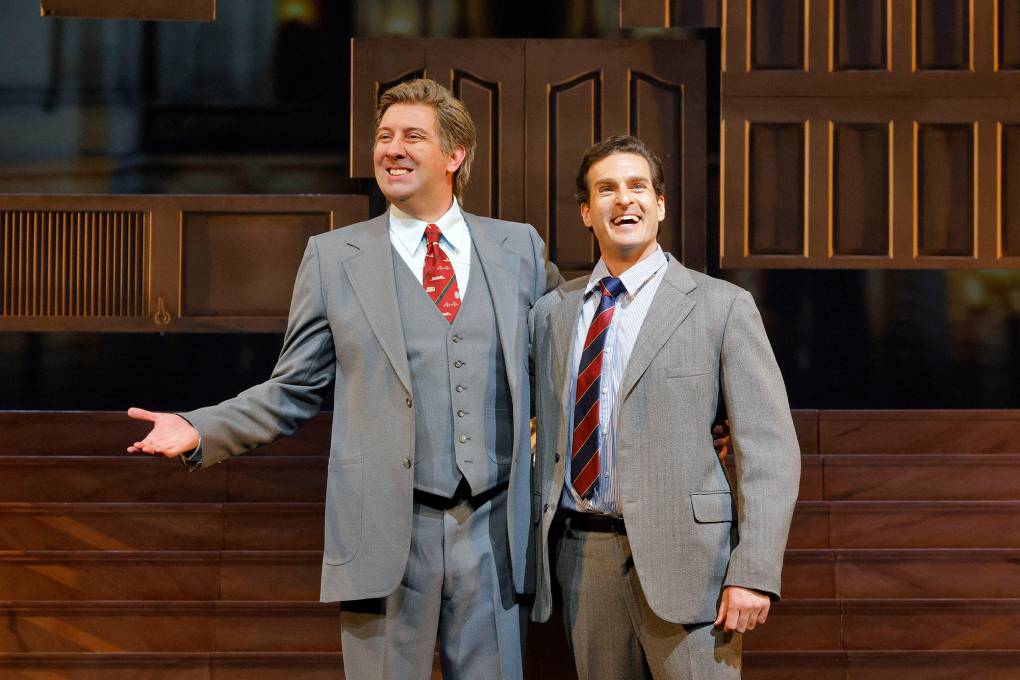
An Opera About Harvey Milk, Newly ‘Reimagined,’ Returns After 30 Years
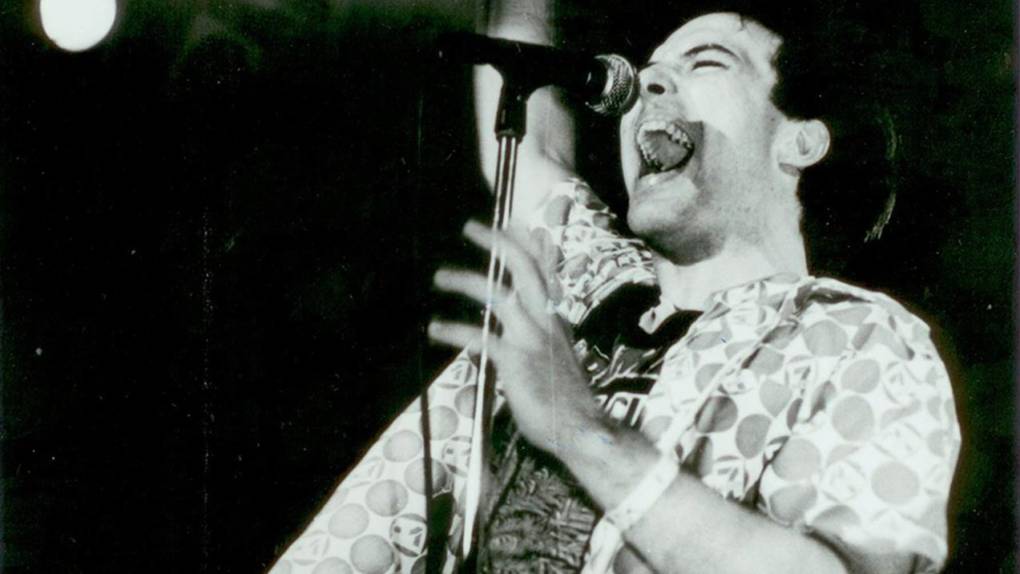
How San Francisco Punk Reacted to Dianne Feinstein in the 1970s
An Ode to Harvey Milk for Smithsonian Folkways’ 75th Birthday
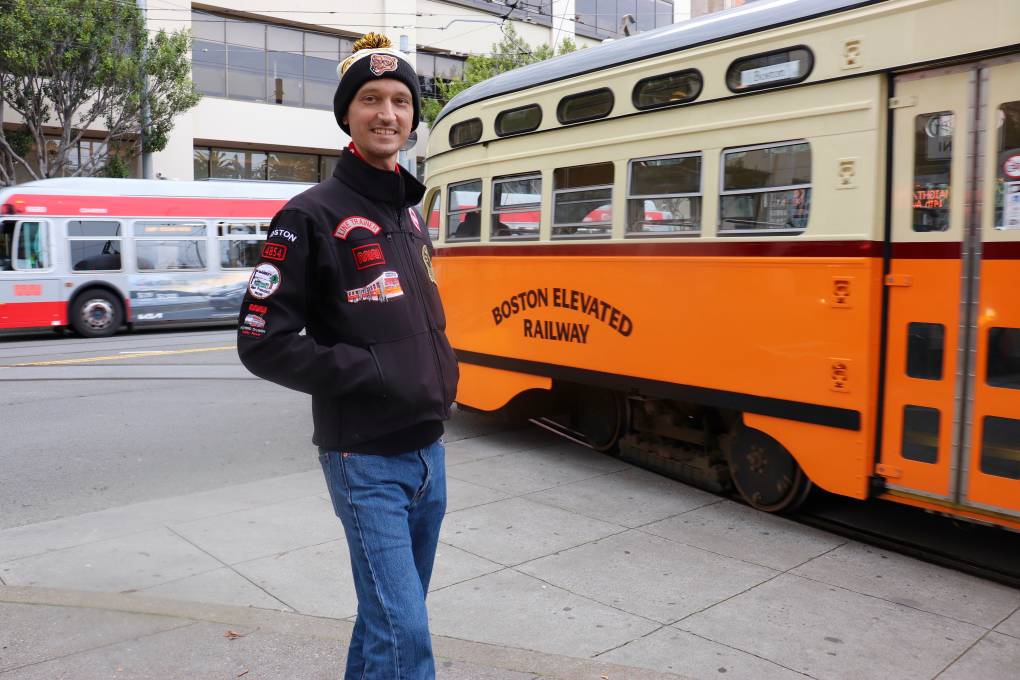
Muni’s Operator of the Year Battles Cancer, Traverses the City Like a Superhero
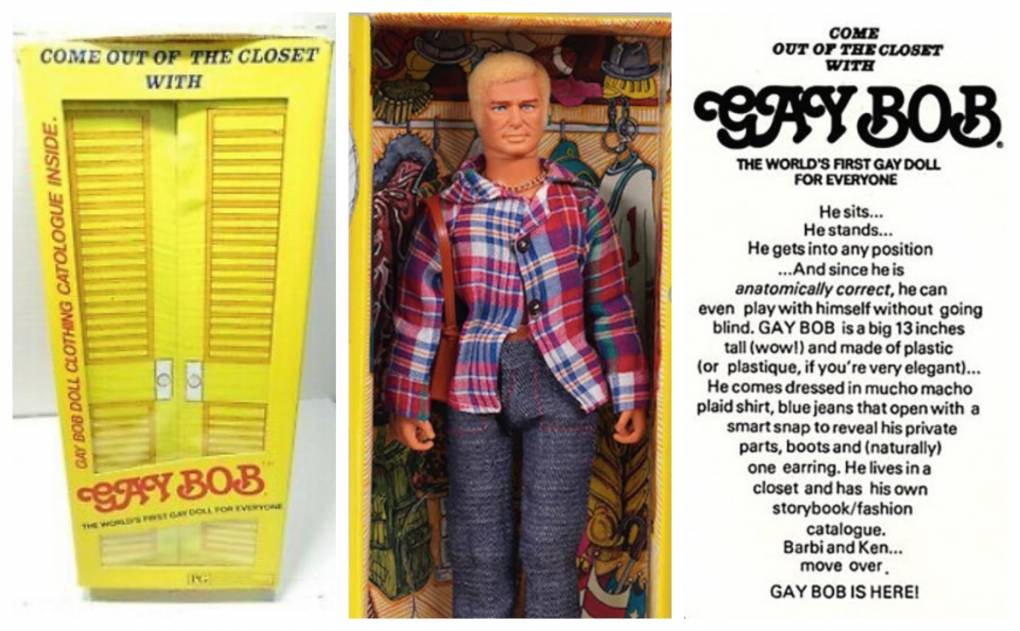
Meet Gay Bob, the 1977 Doll That Urged People to Come Out of the Closet
SFO’s Harvey Milk Terminal 1 to Open With New Public Art
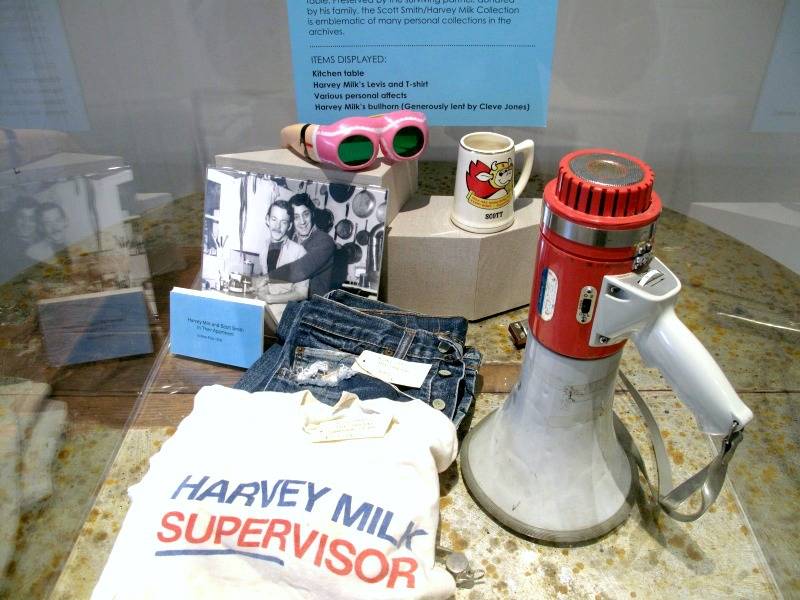
Harvey Milk’s Bullhorn Loaned to Smithsonian
Player sponsored by
window.__IS_SSR__=true
window.__INITIAL_STATE__={
"attachmentsReducer": {
"audio_0": {
"type": "attachments",
"id": "audio_0",
"imgSizes": {
"kqedFullSize": {
"file": "https://ww2.kqed.org/news/wp-content/themes/KQED-unified/img/audio_bgs/background0.jpg"
}
}
},
"audio_1": {
"type": "attachments",
"id": "audio_1",
"imgSizes": {
"kqedFullSize": {
"file": "https://ww2.kqed.org/news/wp-content/themes/KQED-unified/img/audio_bgs/background1.jpg"
}
}
},
"audio_2": {
"type": "attachments",
"id": "audio_2",
"imgSizes": {
"kqedFullSize": {
"file": "https://ww2.kqed.org/news/wp-content/themes/KQED-unified/img/audio_bgs/background2.jpg"
}
}
},
"audio_3": {
"type": "attachments",
"id": "audio_3",
"imgSizes": {
"kqedFullSize": {
"file": "https://ww2.kqed.org/news/wp-content/themes/KQED-unified/img/audio_bgs/background3.jpg"
}
}
},
"audio_4": {
"type": "attachments",
"id": "audio_4",
"imgSizes": {
"kqedFullSize": {
"file": "https://ww2.kqed.org/news/wp-content/themes/KQED-unified/img/audio_bgs/background4.jpg"
}
}
},
"placeholder": {
"type": "attachments",
"id": "placeholder",
"imgSizes": {
"thumbnail": {
"file": "https://cdn.kqed.org/wp-content/uploads/2024/12/KQED-Default-Image-816638274-2000x1333-1-160x107.jpg",
"width": 160,
"height": 107,
"mimeType": "image/jpeg"
},
"medium": {
"file": "https://cdn.kqed.org/wp-content/uploads/2024/12/KQED-Default-Image-816638274-2000x1333-1-800x533.jpg",
"width": 800,
"height": 533,
"mimeType": "image/jpeg"
},
"medium_large": {
"file": "https://cdn.kqed.org/wp-content/uploads/2024/12/KQED-Default-Image-816638274-2000x1333-1-768x512.jpg",
"width": 768,
"height": 512,
"mimeType": "image/jpeg"
},
"large": {
"file": "https://cdn.kqed.org/wp-content/uploads/2024/12/KQED-Default-Image-816638274-2000x1333-1-1020x680.jpg",
"width": 1020,
"height": 680,
"mimeType": "image/jpeg"
},
"1536x1536": {
"file": "https://cdn.kqed.org/wp-content/uploads/2024/12/KQED-Default-Image-816638274-2000x1333-1-1536x1024.jpg",
"width": 1536,
"height": 1024,
"mimeType": "image/jpeg"
},
"fd-lrg": {
"file": "https://cdn.kqed.org/wp-content/uploads/2024/12/KQED-Default-Image-816638274-2000x1333-1-1536x1024.jpg",
"width": 1536,
"height": 1024,
"mimeType": "image/jpeg"
},
"fd-med": {
"file": "https://cdn.kqed.org/wp-content/uploads/2024/12/KQED-Default-Image-816638274-2000x1333-1-1020x680.jpg",
"width": 1020,
"height": 680,
"mimeType": "image/jpeg"
},
"fd-sm": {
"file": "https://cdn.kqed.org/wp-content/uploads/2024/12/KQED-Default-Image-816638274-2000x1333-1-800x533.jpg",
"width": 800,
"height": 533,
"mimeType": "image/jpeg"
},
"post-thumbnail": {
"file": "https://cdn.kqed.org/wp-content/uploads/2024/12/KQED-Default-Image-816638274-2000x1333-1-672x372.jpg",
"width": 672,
"height": 372,
"mimeType": "image/jpeg"
},
"twentyfourteen-full-width": {
"file": "https://cdn.kqed.org/wp-content/uploads/2024/12/KQED-Default-Image-816638274-2000x1333-1-1038x576.jpg",
"width": 1038,
"height": 576,
"mimeType": "image/jpeg"
},
"xxsmall": {
"file": "https://cdn.kqed.org/wp-content/uploads/2024/12/KQED-Default-Image-816638274-2000x1333-1-160x107.jpg",
"width": 160,
"height": 107,
"mimeType": "image/jpeg"
},
"xsmall": {
"file": "https://cdn.kqed.org/wp-content/uploads/2024/12/KQED-Default-Image-816638274-2000x1333-1-672x372.jpg",
"width": 672,
"height": 372,
"mimeType": "image/jpeg"
},
"small": {
"file": "https://cdn.kqed.org/wp-content/uploads/2024/12/KQED-Default-Image-816638274-2000x1333-1-672x372.jpg",
"width": 672,
"height": 372,
"mimeType": "image/jpeg"
},
"xlarge": {
"file": "https://cdn.kqed.org/wp-content/uploads/2024/12/KQED-Default-Image-816638274-2000x1333-1-1020x680.jpg",
"width": 1020,
"height": 680,
"mimeType": "image/jpeg"
},
"full-width": {
"file": "https://cdn.kqed.org/wp-content/uploads/2024/12/KQED-Default-Image-816638274-2000x1333-1-1920x1280.jpg",
"width": 1920,
"height": 1280,
"mimeType": "image/jpeg"
},
"guest-author-32": {
"file": "https://cdn.kqed.org/wp-content/uploads/2025/01/KQED-Default-Image-816638274-1333x1333-1-160x160.jpg",
"width": 32,
"height": 32,
"mimeType": "image/jpeg"
},
"guest-author-50": {
"file": "https://cdn.kqed.org/wp-content/uploads/2025/01/KQED-Default-Image-816638274-1333x1333-1-160x160.jpg",
"width": 50,
"height": 50,
"mimeType": "image/jpeg"
},
"guest-author-64": {
"file": "https://cdn.kqed.org/wp-content/uploads/2025/01/KQED-Default-Image-816638274-1333x1333-1-160x160.jpg",
"width": 64,
"height": 64,
"mimeType": "image/jpeg"
},
"guest-author-96": {
"file": "https://cdn.kqed.org/wp-content/uploads/2025/01/KQED-Default-Image-816638274-1333x1333-1-160x160.jpg",
"width": 96,
"height": 96,
"mimeType": "image/jpeg"
},
"guest-author-128": {
"file": "https://cdn.kqed.org/wp-content/uploads/2025/01/KQED-Default-Image-816638274-1333x1333-1-160x160.jpg",
"width": 128,
"height": 128,
"mimeType": "image/jpeg"
},
"detail": {
"file": "https://cdn.kqed.org/wp-content/uploads/2025/01/KQED-Default-Image-816638274-1333x1333-1-160x160.jpg",
"width": 160,
"height": 160,
"mimeType": "image/jpeg"
},
"kqedFullSize": {
"file": "https://cdn.kqed.org/wp-content/uploads/2024/12/KQED-Default-Image-816638274-2000x1333-1.jpg",
"width": 2000,
"height": 1333
}
}
},
"arts_13976987": {
"type": "attachments",
"id": "arts_13976987",
"meta": {
"index": "attachments_1716263798",
"site": "arts",
"id": "13976987",
"found": true
},
"title": "_75A8399.JPG",
"publishDate": 1748965791,
"status": "inherit",
"parent": 0,
"modified": 1748965952,
"caption": "Michael Kelly (Harvey Milk) and Matt Boehler (Mayor George Moscone) and Michael Kelly (Harvey Milk) in Opera Parallèle’s production of ‘Harvey Milk Reimagined.’ ",
"credit": "Cory Weaver",
"altTag": null,
"description": null,
"imgSizes": {
"medium": {
"file": "https://cdn.kqed.org/wp-content/uploads/sites/2/2025/06/75A8399.JPG-800x534.jpg",
"width": 800,
"height": 534,
"mimeType": "image/jpeg"
},
"large": {
"file": "https://cdn.kqed.org/wp-content/uploads/sites/2/2025/06/75A8399.JPG-1020x680.jpg",
"width": 1020,
"height": 680,
"mimeType": "image/jpeg"
},
"thumbnail": {
"file": "https://cdn.kqed.org/wp-content/uploads/sites/2/2025/06/75A8399.JPG-160x107.jpg",
"width": 160,
"height": 107,
"mimeType": "image/jpeg"
},
"medium_large": {
"file": "https://cdn.kqed.org/wp-content/uploads/sites/2/2025/06/75A8399.JPG-768x512.jpg",
"width": 768,
"height": 512,
"mimeType": "image/jpeg"
},
"1536x1536": {
"file": "https://cdn.kqed.org/wp-content/uploads/sites/2/2025/06/75A8399.JPG-1536x1025.jpg",
"width": 1536,
"height": 1025,
"mimeType": "image/jpeg"
},
"post-thumbnail": {
"file": "https://cdn.kqed.org/wp-content/uploads/sites/2/2025/06/75A8399.JPG-672x372.jpg",
"width": 672,
"height": 372,
"mimeType": "image/jpeg"
},
"twentyfourteen-full-width": {
"file": "https://cdn.kqed.org/wp-content/uploads/sites/2/2025/06/75A8399.JPG-1038x576.jpg",
"width": 1038,
"height": 576,
"mimeType": "image/jpeg"
},
"full-width": {
"file": "https://cdn.kqed.org/wp-content/uploads/sites/2/2025/06/75A8399.JPG-1920x1281.jpg",
"width": 1920,
"height": 1281,
"mimeType": "image/jpeg"
},
"kqedFullSize": {
"file": "https://cdn.kqed.org/wp-content/uploads/sites/2/2025/06/75A8399.JPG.jpg",
"width": 2000,
"height": 1334
}
},
"isLoading": false,
"fetchFailed": false
},
"arts_13845663": {
"type": "attachments",
"id": "arts_13845663",
"meta": {
"index": "attachments_1716263798",
"site": "arts",
"id": "13845663",
"found": true
},
"parent": 13845645,
"imgSizes": {
"small": {
"file": "https://ww2.kqed.org/app/uploads/sites/2/2018/11/JelloBiafra-520x292.jpg",
"width": 520,
"mimeType": "image/jpeg",
"height": 292
},
"twentyfourteen-full-width": {
"file": "https://ww2.kqed.org/app/uploads/sites/2/2018/11/JelloBiafra-1038x576.jpg",
"width": 1038,
"mimeType": "image/jpeg",
"height": 576
},
"thumbnail": {
"file": "https://ww2.kqed.org/app/uploads/sites/2/2018/11/JelloBiafra-160x90.jpg",
"width": 160,
"mimeType": "image/jpeg",
"height": 90
},
"fd-sm": {
"file": "https://ww2.kqed.org/app/uploads/sites/2/2018/11/JelloBiafra-960x540.jpg",
"width": 960,
"mimeType": "image/jpeg",
"height": 540
},
"post-thumbnail": {
"file": "https://ww2.kqed.org/app/uploads/sites/2/2018/11/JelloBiafra-672x372.jpg",
"width": 672,
"mimeType": "image/jpeg",
"height": 372
},
"xsmall": {
"file": "https://ww2.kqed.org/app/uploads/sites/2/2018/11/JelloBiafra-375x211.jpg",
"width": 375,
"mimeType": "image/jpeg",
"height": 211
},
"kqedFullSize": {
"file": "https://ww2.kqed.org/app/uploads/sites/2/2018/11/JelloBiafra.jpg",
"width": 1273,
"height": 716
},
"large": {
"file": "https://ww2.kqed.org/app/uploads/sites/2/2018/11/JelloBiafra-1020x574.jpg",
"width": 1020,
"mimeType": "image/jpeg",
"height": 574
},
"xlarge": {
"file": "https://ww2.kqed.org/app/uploads/sites/2/2018/11/JelloBiafra-1180x664.jpg",
"width": 1180,
"mimeType": "image/jpeg",
"height": 664
},
"complete_open_graph": {
"file": "https://ww2.kqed.org/app/uploads/sites/2/2018/11/JelloBiafra-1200x675.jpg",
"width": 1200,
"mimeType": "image/jpeg",
"height": 675
},
"guest-author-50": {
"file": "https://ww2.kqed.org/app/uploads/sites/2/2018/11/JelloBiafra-50x50.jpg",
"width": 50,
"mimeType": "image/jpeg",
"height": 50
},
"guest-author-96": {
"file": "https://ww2.kqed.org/app/uploads/sites/2/2018/11/JelloBiafra-96x96.jpg",
"width": 96,
"mimeType": "image/jpeg",
"height": 96
},
"medium": {
"file": "https://ww2.kqed.org/app/uploads/sites/2/2018/11/JelloBiafra-800x450.jpg",
"width": 800,
"mimeType": "image/jpeg",
"height": 450
},
"guest-author-64": {
"file": "https://ww2.kqed.org/app/uploads/sites/2/2018/11/JelloBiafra-64x64.jpg",
"width": 64,
"mimeType": "image/jpeg",
"height": 64
},
"guest-author-32": {
"file": "https://ww2.kqed.org/app/uploads/sites/2/2018/11/JelloBiafra-32x32.jpg",
"width": 32,
"mimeType": "image/jpeg",
"height": 32
},
"fd-med": {
"file": "https://ww2.kqed.org/app/uploads/sites/2/2018/11/JelloBiafra-1180x664.jpg",
"width": 1180,
"mimeType": "image/jpeg",
"height": 664
},
"detail": {
"file": "https://ww2.kqed.org/app/uploads/sites/2/2018/11/JelloBiafra-150x150.jpg",
"width": 150,
"mimeType": "image/jpeg",
"height": 150
},
"medium_large": {
"file": "https://ww2.kqed.org/app/uploads/sites/2/2018/11/JelloBiafra-768x432.jpg",
"width": 768,
"mimeType": "image/jpeg",
"height": 432
},
"guest-author-128": {
"file": "https://ww2.kqed.org/app/uploads/sites/2/2018/11/JelloBiafra-128x128.jpg",
"width": 128,
"mimeType": "image/jpeg",
"height": 128
},
"xxsmall": {
"file": "https://ww2.kqed.org/app/uploads/sites/2/2018/11/JelloBiafra-240x135.jpg",
"width": 240,
"mimeType": "image/jpeg",
"height": 135
}
},
"publishDate": 1543272473,
"modified": 1543272860,
"caption": "Jello Biafra, singer for the Dead Kennedys, whose debut album in the wake of the Moscone/Milk murders lambasted San Francisco's new liberal elite.",
"description": "Jello Biafra, singer for the Dead Kennedys, whose debut album in the wake of the Moscone/Milk murders lambasted San Francisco's new liberal elite.",
"title": "JelloBiafra",
"credit": "Courtesy Alternative Tentacles",
"status": "inherit",
"isLoading": false,
"fetchFailed": false
},
"arts_13933975": {
"type": "attachments",
"id": "arts_13933975",
"meta": {
"index": "attachments_1716263798",
"site": "arts",
"id": "13933975",
"found": true
},
"parent": 13933974,
"imgSizes": {
"twentyfourteen-full-width": {
"file": "https://ww2.kqed.org/app/uploads/sites/2/2023/08/gardnermilkportrait_custom-cd2d6fbe6b3345ed978fad35029f73e3e5e39488-scaled-e1693232830373-1038x576.jpg",
"width": 1038,
"mimeType": "image/jpeg",
"height": 576
},
"thumbnail": {
"file": "https://ww2.kqed.org/app/uploads/sites/2/2023/08/gardnermilkportrait_custom-cd2d6fbe6b3345ed978fad35029f73e3e5e39488-scaled-e1693232830373-160x88.jpg",
"width": 160,
"mimeType": "image/jpeg",
"height": 88
},
"post-thumbnail": {
"file": "https://ww2.kqed.org/app/uploads/sites/2/2023/08/gardnermilkportrait_custom-cd2d6fbe6b3345ed978fad35029f73e3e5e39488-scaled-e1693232830373-672x372.jpg",
"width": 672,
"mimeType": "image/jpeg",
"height": 372
},
"kqedFullSize": {
"file": "https://ww2.kqed.org/app/uploads/sites/2/2023/08/gardnermilkportrait_custom-cd2d6fbe6b3345ed978fad35029f73e3e5e39488-scaled-e1693232830373.jpg",
"width": 1920,
"height": 1052
},
"2048x2048": {
"file": "https://ww2.kqed.org/app/uploads/sites/2/2023/08/gardnermilkportrait_custom-cd2d6fbe6b3345ed978fad35029f73e3e5e39488-2048x1121.jpg",
"width": 2048,
"mimeType": "image/jpeg",
"height": 1121
},
"large": {
"file": "https://ww2.kqed.org/app/uploads/sites/2/2023/08/gardnermilkportrait_custom-cd2d6fbe6b3345ed978fad35029f73e3e5e39488-scaled-e1693232830373-1020x559.jpg",
"width": 1020,
"mimeType": "image/jpeg",
"height": 559
},
"1536x1536": {
"file": "https://ww2.kqed.org/app/uploads/sites/2/2023/08/gardnermilkportrait_custom-cd2d6fbe6b3345ed978fad35029f73e3e5e39488-scaled-e1693232830373-1536x842.jpg",
"width": 1536,
"mimeType": "image/jpeg",
"height": 842
},
"full-width": {
"file": "https://ww2.kqed.org/app/uploads/sites/2/2023/08/gardnermilkportrait_custom-cd2d6fbe6b3345ed978fad35029f73e3e5e39488-1920x1051.jpg",
"width": 1920,
"mimeType": "image/jpeg",
"height": 1051
},
"medium": {
"file": "https://ww2.kqed.org/app/uploads/sites/2/2023/08/gardnermilkportrait_custom-cd2d6fbe6b3345ed978fad35029f73e3e5e39488-scaled-e1693232830373-800x438.jpg",
"width": 800,
"mimeType": "image/jpeg",
"height": 438
},
"medium_large": {
"file": "https://ww2.kqed.org/app/uploads/sites/2/2023/08/gardnermilkportrait_custom-cd2d6fbe6b3345ed978fad35029f73e3e5e39488-scaled-e1693232830373-768x421.jpg",
"width": 768,
"mimeType": "image/jpeg",
"height": 421
}
},
"publishDate": 1693232055,
"modified": 1693233016,
"caption": "A new children’s album on Smithsonian Folkways includes a song about Harvey Milk. The album was co-written by Cass McCombs and preschool teacher Greg Gardner.",
"description": null,
"title": "A new children’s album on Smithsonian Folkways includes a song about gay activist and politician Harvey Milk. The album was co-written by Cass McCombs and San Francisco preschool teacher Greg Gardner.",
"credit": "Greg Gardner",
"status": "inherit",
"altTag": "A pastel-shaded illustration of Harvey Milk standing in a park next to water and a bridge. Houses and trees are on the horizon. He is standing next to three people and a child, who are all standing in support of him.",
"isLoading": false,
"fetchFailed": false
},
"arts_13924308": {
"type": "attachments",
"id": "arts_13924308",
"meta": {
"index": "attachments_1716263798",
"site": "arts",
"id": "13924308",
"found": true
},
"parent": 13924307,
"imgSizes": {
"twentyfourteen-full-width": {
"file": "https://ww2.kqed.org/app/uploads/sites/2/2023/01/IMG_1835-1038x576.jpg",
"width": 1038,
"mimeType": "image/jpeg",
"height": 576
},
"thumbnail": {
"file": "https://ww2.kqed.org/app/uploads/sites/2/2023/01/IMG_1835-160x107.jpg",
"width": 160,
"mimeType": "image/jpeg",
"height": 107
},
"post-thumbnail": {
"file": "https://ww2.kqed.org/app/uploads/sites/2/2023/01/IMG_1835-672x372.jpg",
"width": 672,
"mimeType": "image/jpeg",
"height": 372
},
"kqedFullSize": {
"file": "https://ww2.kqed.org/app/uploads/sites/2/2023/01/IMG_1835-scaled.jpg",
"width": 2560,
"height": 1707
},
"2048x2048": {
"file": "https://ww2.kqed.org/app/uploads/sites/2/2023/01/IMG_1835-2048x1365.jpg",
"width": 2048,
"mimeType": "image/jpeg",
"height": 1365
},
"large": {
"file": "https://ww2.kqed.org/app/uploads/sites/2/2023/01/IMG_1835-1020x680.jpg",
"width": 1020,
"mimeType": "image/jpeg",
"height": 680
},
"1536x1536": {
"file": "https://ww2.kqed.org/app/uploads/sites/2/2023/01/IMG_1835-1536x1024.jpg",
"width": 1536,
"mimeType": "image/jpeg",
"height": 1024
},
"full-width": {
"file": "https://ww2.kqed.org/app/uploads/sites/2/2023/01/IMG_1835-1920x1280.jpg",
"width": 1920,
"mimeType": "image/jpeg",
"height": 1280
},
"medium": {
"file": "https://ww2.kqed.org/app/uploads/sites/2/2023/01/IMG_1835-800x533.jpg",
"width": 800,
"mimeType": "image/jpeg",
"height": 533
},
"medium_large": {
"file": "https://ww2.kqed.org/app/uploads/sites/2/2023/01/IMG_1835-768x512.jpg",
"width": 768,
"mimeType": "image/jpeg",
"height": 512
}
},
"publishDate": 1674775126,
"modified": 1674837404,
"caption": "Mike Delia stands in front of the F Line, near Market St. and Embarcadero.",
"description": null,
"title": "IMG_1835",
"credit": "Alan Chazaro/KQED",
"status": "inherit",
"altTag": "a Muni operator stands in front of two transit vehicles near Market Street in San Francisco",
"isLoading": false,
"fetchFailed": false
},
"arts_13880977": {
"type": "attachments",
"id": "arts_13880977",
"meta": {
"index": "attachments_1716263798",
"site": "arts",
"id": "13880977",
"found": true
},
"parent": 13880161,
"imgSizes": {
"twentyfourteen-full-width": {
"file": "https://ww2.kqed.org/app/uploads/sites/2/2020/05/Gay-Bob-Final-1038x576.jpg",
"width": 1038,
"mimeType": "image/jpeg",
"height": 576
},
"thumbnail": {
"file": "https://ww2.kqed.org/app/uploads/sites/2/2020/05/Gay-Bob-Final-160x99.jpg",
"width": 160,
"mimeType": "image/jpeg",
"height": 99
},
"post-thumbnail": {
"file": "https://ww2.kqed.org/app/uploads/sites/2/2020/05/Gay-Bob-Final-672x372.jpg",
"width": 672,
"mimeType": "image/jpeg",
"height": 372
},
"kqedFullSize": {
"file": "https://ww2.kqed.org/app/uploads/sites/2/2020/05/Gay-Bob-Final.jpg",
"width": 2184,
"height": 1351
},
"large": {
"file": "https://ww2.kqed.org/app/uploads/sites/2/2020/05/Gay-Bob-Final-1020x631.jpg",
"width": 1020,
"mimeType": "image/jpeg",
"height": 631
},
"full-width": {
"file": "https://ww2.kqed.org/app/uploads/sites/2/2020/05/Gay-Bob-Final-1920x1188.jpg",
"width": 1920,
"mimeType": "image/jpeg",
"height": 1188
},
"medium": {
"file": "https://ww2.kqed.org/app/uploads/sites/2/2020/05/Gay-Bob-Final-800x495.jpg",
"width": 800,
"mimeType": "image/jpeg",
"height": 495
},
"medium_large": {
"file": "https://ww2.kqed.org/app/uploads/sites/2/2020/05/Gay-Bob-Final-768x475.jpg",
"width": 768,
"mimeType": "image/jpeg",
"height": 475
}
},
"publishDate": 1590521577,
"modified": 1590521577,
"caption": null,
"description": null,
"title": "Gay Bob Final",
"credit": null,
"status": "inherit",
"isLoading": false,
"fetchFailed": false
},
"arts_13860289": {
"type": "attachments",
"id": "arts_13860289",
"meta": {
"index": "attachments_1716263798",
"site": "arts",
"id": "13860289",
"found": true
},
"parent": 13860218,
"imgSizes": {
"twentyfourteen-full-width": {
"file": "https://ww2.kqed.org/app/uploads/sites/2/2019/06/SFO_HarveyMilk_COVER-1038x576.jpg",
"width": 1038,
"mimeType": "image/jpeg",
"height": 576
},
"thumbnail": {
"file": "https://ww2.kqed.org/app/uploads/sites/2/2019/06/SFO_HarveyMilk_COVER-160x90.jpg",
"width": 160,
"mimeType": "image/jpeg",
"height": 90
},
"post-thumbnail": {
"file": "https://ww2.kqed.org/app/uploads/sites/2/2019/06/SFO_HarveyMilk_COVER-672x372.jpg",
"width": 672,
"mimeType": "image/jpeg",
"height": 372
},
"kqedFullSize": {
"file": "https://ww2.kqed.org/app/uploads/sites/2/2019/06/SFO_HarveyMilk_COVER.jpg",
"width": 1360,
"height": 765
},
"large": {
"file": "https://ww2.kqed.org/app/uploads/sites/2/2019/06/SFO_HarveyMilk_COVER-1020x574.jpg",
"width": 1020,
"mimeType": "image/jpeg",
"height": 574
},
"complete_open_graph": {
"file": "https://ww2.kqed.org/app/uploads/sites/2/2019/06/SFO_HarveyMilk_COVER-1200x675.jpg",
"width": 1200,
"mimeType": "image/jpeg",
"height": 675
},
"medium": {
"file": "https://ww2.kqed.org/app/uploads/sites/2/2019/06/SFO_HarveyMilk_COVER-800x450.jpg",
"width": 800,
"mimeType": "image/jpeg",
"height": 450
},
"medium_large": {
"file": "https://ww2.kqed.org/app/uploads/sites/2/2019/06/SFO_HarveyMilk_COVER-768x432.jpg",
"width": 768,
"mimeType": "image/jpeg",
"height": 432
}
},
"publishDate": 1561571774,
"modified": 1561571848,
"caption": "Installation view of 'Harvey Milk: Messenger of Hope' in SFO's Harvey Milk Terminal 1, opening July 23.",
"description": "Installation view of 'Harvey Milk: Messenger of Hope' in SFO's Harvey Milk Terminal 1, opening July 23.",
"title": "SFO_HarveyMilk_COVER",
"credit": "Courtesy of SFO Museum",
"status": "inherit",
"isLoading": false,
"fetchFailed": false
},
"arts_13833088": {
"type": "attachments",
"id": "arts_13833088",
"meta": {
"index": "attachments_1716263798",
"site": "arts",
"id": "13833088",
"found": true
},
"parent": 13833086,
"imgSizes": {
"small": {
"file": "https://ww2.kqed.org/app/uploads/sites/2/2018/05/Milk_Belongings-e1527009170418-520x293.jpg",
"width": 520,
"mimeType": "image/jpeg",
"height": 293
},
"twentyfourteen-full-width": {
"file": "https://ww2.kqed.org/app/uploads/sites/2/2018/05/Milk_Belongings-800x576.jpg",
"width": 800,
"mimeType": "image/jpeg",
"height": 576
},
"thumbnail": {
"file": "https://ww2.kqed.org/app/uploads/sites/2/2018/05/Milk_Belongings-e1527009170418-160x90.jpg",
"width": 160,
"mimeType": "image/jpeg",
"height": 90
},
"post-thumbnail": {
"file": "https://ww2.kqed.org/app/uploads/sites/2/2018/05/Milk_Belongings-e1527009170418-672x372.jpg",
"width": 672,
"mimeType": "image/jpeg",
"height": 372
},
"xsmall": {
"file": "https://ww2.kqed.org/app/uploads/sites/2/2018/05/Milk_Belongings-e1527009170418-375x211.jpg",
"width": 375,
"mimeType": "image/jpeg",
"height": 211
},
"kqedFullSize": {
"file": "https://ww2.kqed.org/app/uploads/sites/2/2018/05/Milk_Belongings-e1527009170418.jpg",
"width": 742,
"height": 418
},
"guest-author-50": {
"file": "https://ww2.kqed.org/app/uploads/sites/2/2018/05/Milk_Belongings-e1527009170418-50x50.jpg",
"width": 50,
"mimeType": "image/jpeg",
"height": 50
},
"guest-author-96": {
"file": "https://ww2.kqed.org/app/uploads/sites/2/2018/05/Milk_Belongings-e1527009170418-96x96.jpg",
"width": 96,
"mimeType": "image/jpeg",
"height": 96
},
"medium": {
"file": "https://ww2.kqed.org/app/uploads/sites/2/2018/05/Milk_Belongings-800x600.jpg",
"width": 800,
"mimeType": "image/jpeg",
"height": 600
},
"guest-author-64": {
"file": "https://ww2.kqed.org/app/uploads/sites/2/2018/05/Milk_Belongings-e1527009170418-64x64.jpg",
"width": 64,
"mimeType": "image/jpeg",
"height": 64
},
"guest-author-32": {
"file": "https://ww2.kqed.org/app/uploads/sites/2/2018/05/Milk_Belongings-e1527009170418-32x32.jpg",
"width": 32,
"mimeType": "image/jpeg",
"height": 32
},
"detail": {
"file": "https://ww2.kqed.org/app/uploads/sites/2/2018/05/Milk_Belongings-e1527009170418-150x150.jpg",
"width": 150,
"mimeType": "image/jpeg",
"height": 150
},
"medium_large": {
"file": "https://ww2.kqed.org/app/uploads/sites/2/2018/05/Milk_Belongings-768x576.jpg",
"width": 768,
"mimeType": "image/jpeg",
"height": 576
},
"guest-author-128": {
"file": "https://ww2.kqed.org/app/uploads/sites/2/2018/05/Milk_Belongings-e1527009170418-128x128.jpg",
"width": 128,
"mimeType": "image/jpeg",
"height": 128
},
"xxsmall": {
"file": "https://ww2.kqed.org/app/uploads/sites/2/2018/05/Milk_Belongings-e1527009170418-240x135.jpg",
"width": 240,
"mimeType": "image/jpeg",
"height": 135
}
},
"publishDate": 1527009031,
"modified": 1527025964,
"caption": "Harvey Milk's bullhorn on display in the 'Our Vast Queer Past: A Celebration of San Francisco's LGBT History,' exhibition at the GLBT History Museum, 2011–2014.",
"description": "Harvey Milk's bullhorn on display in the 'Our Vast Queer Past: A Celebration of San Francisco's LGBT History,' exhibition at the GLBT History Museum, 2011–2014.",
"title": "Milk_Belongings",
"credit": "Gerard Koskovich/GLBT Historical Society",
"status": "inherit",
"isLoading": false,
"fetchFailed": false
}
},
"audioPlayerReducer": {
"postId": "stream_live",
"isPaused": true,
"isPlaying": false,
"pfsActive": false,
"pledgeModalIsOpen": true,
"playerDrawerIsOpen": false,
"liveAudioPlayStartedAt": 0,
"liveAudioPlayContext": ""
},
"authorsReducer": {
"byline_arts_13933974": {
"type": "authors",
"id": "byline_arts_13933974",
"meta": {
"override": true
},
"slug": "byline_arts_13933974",
"name": "Elizabeth Blair",
"isLoading": false
},
"shotchkiss": {
"type": "authors",
"id": "61",
"meta": {
"index": "authors_1716337520",
"id": "61",
"found": true
},
"name": "Sarah Hotchkiss",
"firstName": "Sarah",
"lastName": "Hotchkiss",
"slug": "shotchkiss",
"email": "shotchkiss@kqed.org",
"display_author_email": true,
"staff_mastheads": [
"arts"
],
"title": "Senior Editor",
"bio": "Sarah Hotchkiss is a San Francisco \u003ca href=\"http://www.sarahhotchkiss.com\">artist\u003c/a> and arts writer. In 2019, she received the Dorothea & Leo Rabkin Foundation grant for visual art journalism and in 2020 she received a Society of Professional Journalists, Northern California award for excellence in arts and culture reporting.",
"avatar": "https://secure.gravatar.com/avatar/bc662df144b3d27fd8b1b6f1c2a420d34e91e53154d411bb7ad353cc8b6cea8d?s=600&d=blank&r=g",
"twitter": null,
"bluesky": null,
"facebook": null,
"instagram": null,
"linkedin": null,
"sites": [
{
"site": "",
"roles": [
"editor"
]
},
{
"site": "arts",
"roles": [
"Contributor",
"administrator"
]
},
{
"site": "artschool",
"roles": [
"administrator"
]
},
{
"site": "news",
"roles": [
"editor"
]
},
{
"site": "pop",
"roles": [
"administrator"
]
},
{
"site": "bayareabites",
"roles": [
"editor"
]
},
{
"site": "spark",
"roles": [
"editor"
]
},
{
"site": "checkplease",
"roles": [
"editor"
]
}
],
"headData": {
"title": "Sarah Hotchkiss | KQED",
"description": "Senior Editor",
"ogImgSrc": "https://secure.gravatar.com/avatar/bc662df144b3d27fd8b1b6f1c2a420d34e91e53154d411bb7ad353cc8b6cea8d?s=600&d=blank&r=g",
"twImgSrc": "https://secure.gravatar.com/avatar/bc662df144b3d27fd8b1b6f1c2a420d34e91e53154d411bb7ad353cc8b6cea8d?s=600&d=blank&r=g"
},
"isLoading": false,
"link": "/author/shotchkiss"
},
"gmeline": {
"type": "authors",
"id": "185",
"meta": {
"index": "authors_1716337520",
"id": "185",
"found": true
},
"name": "Gabe Meline",
"firstName": "Gabe",
"lastName": "Meline",
"slug": "gmeline",
"email": "gmeline@kqed.org",
"display_author_email": true,
"staff_mastheads": [
"arts"
],
"title": "Senior Editor, KQED Arts & Culture",
"bio": "Gabe Meline entered journalism at age 15 making photocopied zines, and has since earned awards from the Edward R. Murrow Awards, the Society for Professional Journalists, the Online Journalism Awards, the Association of Alternative Newsweeklies and the California Newspaper Publishers Association. Prior to KQED, he was the editor of the \u003cem>North Bay Bohemian\u003c/em> and a touring musician. He lives with his wife and daughter in his hometown of Santa Rosa, CA.",
"avatar": "https://secure.gravatar.com/avatar/5bebe57be0d8bc2dd318934feb47299e2d2d10cba28d09d8d7afb389a2ce2bdd?s=600&d=blank&r=g",
"twitter": null,
"bluesky": null,
"facebook": null,
"instagram": null,
"linkedin": null,
"sites": [
{
"site": "",
"roles": [
"editor"
]
},
{
"site": "arts",
"roles": [
"administrator"
]
},
{
"site": "artschool",
"roles": [
"editor"
]
},
{
"site": "news",
"roles": [
"author"
]
},
{
"site": "pop",
"roles": [
"editor"
]
},
{
"site": "bayareabites",
"roles": [
"editor"
]
},
{
"site": "food",
"roles": [
"editor"
]
},
{
"site": "forum",
"roles": [
"administrator"
]
},
{
"site": "liveblog",
"roles": [
"editor"
]
},
{
"site": "hiphop",
"roles": [
"editor"
]
}
],
"headData": {
"title": "Gabe Meline | KQED",
"description": "Senior Editor, KQED Arts & Culture",
"ogImgSrc": "https://secure.gravatar.com/avatar/5bebe57be0d8bc2dd318934feb47299e2d2d10cba28d09d8d7afb389a2ce2bdd?s=600&d=blank&r=g",
"twImgSrc": "https://secure.gravatar.com/avatar/5bebe57be0d8bc2dd318934feb47299e2d2d10cba28d09d8d7afb389a2ce2bdd?s=600&d=blank&r=g"
},
"isLoading": false,
"link": "/author/gmeline"
},
"cveltman": {
"type": "authors",
"id": "8608",
"meta": {
"index": "authors_1716337520",
"id": "8608",
"found": true
},
"name": "Chloe Veltman",
"firstName": "Chloe",
"lastName": "Veltman",
"slug": "cveltman",
"email": "cveltman@kqed.org",
"display_author_email": true,
"staff_mastheads": [],
"title": "Arts and Culture Reporter",
"bio": "Chloe Veltman is a former arts and culture reporter for KQED. Prior to joining the organization, she launched and led the arts bureau at Colorado Public Radio, served as the Bay Area's culture columnist for the New York Times, and was the founder, host and executive producer of VoiceBox, a national award-winning weekly podcast/radio show and live events series all about the human voice. Chloe is the recipient of numerous prizes, grants and fellowships including a Webby Award for her work on interactive storytelling, both the John S Knight Journalism Fellowship and Humanities Center Fellowship at Stanford University, the Sundance Arts Writing Fellowship and a Library of Congress Research Fellowship. She is the author of the book \"On Acting\" and has appeared as a guest lecturer at Yale University and the San Francisco Conservatory of Music among other institutions. She holds a BA in english literature from King's College, Cambridge, and a Masters in Dramaturgy from the Central School of Speech and Drama/Harvard Institute for Advanced Theater Training.\r\n\u003ca href=\"https://www.chloeveltman.com\">www.chloeveltman.com\u003c/a>",
"avatar": "https://secure.gravatar.com/avatar/55403394b00a1ddab683952c2eb2cf85?s=600&d=blank&r=g",
"twitter": "chloeveltman",
"facebook": null,
"instagram": null,
"linkedin": null,
"sites": [
{
"site": "arts",
"roles": []
},
{
"site": "news",
"roles": [
"author"
]
},
{
"site": "pop",
"roles": [
"editor"
]
},
{
"site": "science",
"roles": []
}
],
"headData": {
"title": "Chloe Veltman | KQED",
"description": "Arts and Culture Reporter",
"ogImgSrc": "https://secure.gravatar.com/avatar/55403394b00a1ddab683952c2eb2cf85?s=600&d=blank&r=g",
"twImgSrc": "https://secure.gravatar.com/avatar/55403394b00a1ddab683952c2eb2cf85?s=600&d=blank&r=g"
},
"isLoading": false,
"link": "/author/cveltman"
},
"slefebvre": {
"type": "authors",
"id": "11091",
"meta": {
"index": "authors_1716337520",
"id": "11091",
"found": true
},
"name": "Sam Lefebvre",
"firstName": "Sam",
"lastName": "Lefebvre",
"slug": "slefebvre",
"email": "sdlefebvre@gmail.com",
"display_author_email": false,
"staff_mastheads": [],
"title": "KQED Contributor",
"bio": "Sam Lefebvre is an award-winning reporter at KQED Arts. He has worked as an editor and columnist at the \u003cem>East Bay Express\u003c/em>, \u003cem>SF Weekly \u003c/em>and Impose Magazine, and his journalism and criticism has appeared in \u003cem>The New York Times\u003c/em>, the Guardian and Pitchfork.",
"avatar": "https://secure.gravatar.com/avatar/49d39b42930b77fb13784ddd9fa63fe780666b71bf289368509dba576b64e69b?s=600&d=blank&r=g",
"twitter": "Lefebvre_Sam",
"bluesky": null,
"facebook": null,
"instagram": null,
"linkedin": null,
"sites": [
{
"site": "arts",
"roles": [
"subscriber"
]
},
{
"site": "news",
"roles": [
"author"
]
}
],
"headData": {
"title": "Sam Lefebvre | KQED",
"description": "KQED Contributor",
"ogImgSrc": "https://secure.gravatar.com/avatar/49d39b42930b77fb13784ddd9fa63fe780666b71bf289368509dba576b64e69b?s=600&d=blank&r=g",
"twImgSrc": "https://secure.gravatar.com/avatar/49d39b42930b77fb13784ddd9fa63fe780666b71bf289368509dba576b64e69b?s=600&d=blank&r=g"
},
"isLoading": false,
"link": "/author/slefebvre"
},
"ralexandra": {
"type": "authors",
"id": "11242",
"meta": {
"index": "authors_1716337520",
"id": "11242",
"found": true
},
"name": "Rae Alexandra",
"firstName": "Rae",
"lastName": "Alexandra",
"slug": "ralexandra",
"email": "ralexandra@kqed.org",
"display_author_email": true,
"staff_mastheads": [],
"title": "Reporter/Producer",
"bio": "Rae Alexandra is a Reporter/Producer for KQED Arts & Culture, and the creator/author of the \u003ca href=\"https://www.kqed.org/arts/program/rebel-girls-from-bay-area-history\">Rebel Girls From Bay Area History\u003c/a> and \u003ca href=\"https://www.kqed.org/bizarrebayarea\">Bizarre Bay Area\u003c/a> series. Her debut book, \u003ca href=\"https://citylights.com/politics-current-events-history/unsung-heroines35-women-who-changed/\">Unsung Heroines: 35 Women Who Changed the Bay Area\u003c/a> was published by City Lights in March 2026. In 2023, Rae was awarded an SPJ Excellence in Journalism Award for Arts & Culture. Rae was born and raised in Wales and subsequently — even after two decades in Northern California — still uses phrases that regularly baffle her coworkers.",
"avatar": "https://secure.gravatar.com/avatar/edfee8176c80cc0a382b051190f5341997df378a934a5774dcb0977732dfd401?s=600&d=blank&r=g",
"twitter": null,
"bluesky": null,
"facebook": null,
"instagram": null,
"linkedin": null,
"sites": [
{
"site": "arts",
"roles": [
"subscriber"
]
},
{
"site": "news",
"roles": [
"subscriber"
]
},
{
"site": "pop",
"roles": [
"subscriber"
]
},
{
"site": "bayareabites",
"roles": [
"subscriber"
]
},
{
"site": "science",
"roles": [
"subscriber"
]
}
],
"headData": {
"title": "Rae Alexandra | KQED",
"description": "Reporter/Producer",
"ogImgSrc": "https://secure.gravatar.com/avatar/edfee8176c80cc0a382b051190f5341997df378a934a5774dcb0977732dfd401?s=600&d=blank&r=g",
"twImgSrc": "https://secure.gravatar.com/avatar/edfee8176c80cc0a382b051190f5341997df378a934a5774dcb0977732dfd401?s=600&d=blank&r=g"
},
"isLoading": false,
"link": "/author/ralexandra"
},
"achazaro": {
"type": "authors",
"id": "11748",
"meta": {
"index": "authors_1716337520",
"id": "11748",
"found": true
},
"name": "Alan Chazaro",
"firstName": "Alan",
"lastName": "Chazaro",
"slug": "achazaro",
"email": "agchazaro@gmail.com",
"display_author_email": true,
"staff_mastheads": [],
"title": "Food Writer and Reporter",
"bio": "Alan Chazaro is the author of \u003cem>This Is Not a Frank Ocean Cover Album\u003c/em> (Black Lawrence Press, 2019), \u003cem>Piñata Theory\u003c/em> (Black Lawrence Press, 2020), and \u003cem>Notes from the Eastern Span of the Bay Bridge\u003c/em> (Ghost City Press, 2021). He is a graduate of June Jordan’s Poetry for the People program at UC Berkeley and a former Lawrence Ferlinghetti Fellow at the University of San Francisco. He writes about sports, food, art, music, education, and culture while repping the Bay on \u003ca href=\"https://twitter.com/alan_chazaro\">Twitter\u003c/a> and \u003ca href=\"https://www.instagram.com/alan_chazaro/?hl=en\">Instagram\u003c/a> at @alan_chazaro.",
"avatar": "https://secure.gravatar.com/avatar/ea8b6dd970fc5c29e7a188e7d5861df7?s=600&d=blank&r=g",
"twitter": "alan_chazaro",
"facebook": null,
"instagram": null,
"linkedin": null,
"sites": [
{
"site": "arts",
"roles": [
"contributor"
]
},
{
"site": "news",
"roles": [
"editor"
]
}
],
"headData": {
"title": "Alan Chazaro | KQED",
"description": "Food Writer and Reporter",
"ogImgSrc": "https://secure.gravatar.com/avatar/ea8b6dd970fc5c29e7a188e7d5861df7?s=600&d=blank&r=g",
"twImgSrc": "https://secure.gravatar.com/avatar/ea8b6dd970fc5c29e7a188e7d5861df7?s=600&d=blank&r=g"
},
"isLoading": false,
"link": "/author/achazaro"
}
},
"pagesReducer": {
"arts_tag_harvey-milk": {
"type": "terms",
"id": "arts_4913",
"meta": {
"index": "terms_1716263798",
"site": "arts",
"id": "4913",
"score": 9.55735
},
"featImg": null,
"name": "harvey milk",
"description": null,
"taxonomy": "tag",
"headData": {
"twImgId": null,
"twTitle": null,
"ogTitle": null,
"ogImgId": null,
"twDescription": null,
"description": null,
"title": "harvey milk Archives | KQED Arts",
"ogDescription": null
},
"ttid": 4925,
"slug": "harvey-milk",
"isLoading": false,
"title": "harvey milk",
"pageMeta": {
"site": "arts",
"WpPageTemplate": "page-topic-editorial",
"currentPage": 1
},
"blocks": [
{
"blockName": "kqed/post-list",
"attrs": {
"layout": "cardArticle2",
"query": "posts/arts?tag=harvey-milk",
"seeMore": false,
"paginated": true,
"page": 1
}
},
{
"blockName": "kqed/ad"
}
]
}
},
"pfsSessionReducer": {},
"postsReducer": {
"stream_live": {
"type": "live",
"id": "stream_live",
"audioUrl": "https://streams.kqed.org/kqedradio",
"title": "Live Stream",
"excerpt": "Live Stream information currently unavailable.",
"link": "/radio",
"featImg": "",
"label": {
"name": "KQED Live",
"link": "/"
}
},
"stream_kqedNewscast": {
"type": "posts",
"id": "stream_kqedNewscast",
"audioUrl": "https://www.kqed.org/.stream/anon/radio/RDnews/newscast.mp3?_=1",
"title": "KQED Newscast",
"featImg": "",
"label": {
"name": "88.5 FM",
"link": "/"
}
},
"arts_13976935": {
"type": "posts",
"id": "arts_13976935",
"meta": {
"index": "posts_1716263798",
"site": "arts",
"id": "13976935",
"score": null,
"sort": [
1749245354000
]
},
"guestAuthors": [],
"slug": "review-harvey-milk-opera-reimagined-opera-parallele",
"title": "An Opera About Harvey Milk, Newly ‘Reimagined,’ Returns After 30 Years",
"publishDate": 1749245354,
"format": "standard",
"headTitle": "An Opera About Harvey Milk, Newly ‘Reimagined,’ Returns After 30 Years | KQED",
"labelTerm": {},
"content": "\u003cp>Considering the nonstop inanities coming from Washington D.C., it was perhaps inevitable that over the course of its short two-week run, some news or other would elevate the opera \u003cem>Harvey Milk Reimagined\u003c/em>, now playing at YBCA, into the “relevant now more than ever” stratosphere.\u003c/p>\n\u003cp>As if on cue, less than a week after its opening, \u003ca href=\"https://www.kqed.org/news/12032883/the-inside-story-of-how-a-journalist-was-sent-white-house-war-plans\">technologically challenged\u003c/a> Defense Secretary Pete Hedgseth learned about the ship known as the \u003ca href=\"https://en.wikipedia.org/wiki/USNS_Harvey_Milk\">USNS Harvey Milk\u003c/a> and declared that the \u003ca href=\"https://www.kqed.org/news/12042566/shameful-bay-area-leaders-condemn-trumps-threat-to-rename-usns-harvey-milk\">very gay name of the naval ship should be changed\u003c/a>.\u003c/p>\n\u003cp>Is any of this all that important? Cleve Jones, an intern and friend of Milk, said that the gay rights icon would “\u003ca href=\"https://www.kqed.org/news/12042566/shameful-bay-area-leaders-condemn-trumps-threat-to-rename-usns-harvey-milk\">would shrug it off and laugh\u003c/a>.”\u003c/p>\n\u003cfigure id=\"attachment_13976989\" class=\"wp-caption aligncenter\" style=\"max-width: 2000px\">\u003cimg loading=\"lazy\" decoding=\"async\" src=\"https://cdn.kqed.org/wp-content/uploads/sites/2/2025/06/74A2435.JPG.jpg\" alt=\"\" width=\"2000\" height=\"1334\" class=\"size-full wp-image-13976989\" srcset=\"https://cdn.kqed.org/wp-content/uploads/sites/2/2025/06/74A2435.JPG.jpg 2000w, https://cdn.kqed.org/wp-content/uploads/sites/2/2025/06/74A2435.JPG-800x534.jpg 800w, https://cdn.kqed.org/wp-content/uploads/sites/2/2025/06/74A2435.JPG-1020x680.jpg 1020w, https://cdn.kqed.org/wp-content/uploads/sites/2/2025/06/74A2435.JPG-160x107.jpg 160w, https://cdn.kqed.org/wp-content/uploads/sites/2/2025/06/74A2435.JPG-768x512.jpg 768w, https://cdn.kqed.org/wp-content/uploads/sites/2/2025/06/74A2435.JPG-1536x1025.jpg 1536w, https://cdn.kqed.org/wp-content/uploads/sites/2/2025/06/74A2435.JPG-1920x1281.jpg 1920w\" sizes=\"auto, (max-width: 2000px) 100vw, 2000px\">\u003cfigcaption class=\"wp-caption-text\">Michael Kelly (Harvey Milk) and ensemble in Opera Parallèle’s production of ‘Harvey Milk Reimagined.’ \u003ccite>(Cory Weaver)\u003c/cite>\u003c/figcaption>\u003c/figure>\n\u003cp>And yet it underscores the obsessive fear that Milk — a brave, funny, smart and passionate crusader for gay rights — successfully placed into straight America. \u003cem>Harvey Milk Reimagined\u003c/em>, a shortened version of the 1996 opera \u003cem>Harvey Milk\u003c/em> now playing in a production by Opera Parallèle at YBCA in San Francisco, carries that daunting legacy on its shoulders. \u003c/p>\n\u003cp>I caught \u003cem>Harvey Milk Reimagined\u003c/em> on a Sunday matinee, and bumped into composer Stewart Wallace in the lobby beforehand. Watching the crowd reaction on opening night, he told me in the theater lobby, was a “surreal” experience. “There are different resonances now,” he said, comparing the two versions. \u003c/p>\n\u003cp>[ad fullwidth]\u003c/p>\n\u003cp>Cowritten with librettist Michael Korie, \u003cem>Harvey Milk Reimagined\u003c/em> is a nuanced opera befitting a complicated life. Cut down from the original three acts to two, its restaging comes during a time of despair and precariousness, when Milk’s achievements are worth celebrating and his bridge-building strategy worth studying. \u003c/p>\n\u003cfigure id=\"attachment_13976990\" class=\"wp-caption aligncenter\" style=\"max-width: 2000px\">\u003cimg loading=\"lazy\" decoding=\"async\" src=\"https://cdn.kqed.org/wp-content/uploads/sites/2/2025/06/74A2867.JPG.jpg\" alt=\"\" width=\"2000\" height=\"1334\" class=\"size-full wp-image-13976990\" srcset=\"https://cdn.kqed.org/wp-content/uploads/sites/2/2025/06/74A2867.JPG.jpg 2000w, https://cdn.kqed.org/wp-content/uploads/sites/2/2025/06/74A2867.JPG-800x534.jpg 800w, https://cdn.kqed.org/wp-content/uploads/sites/2/2025/06/74A2867.JPG-1020x680.jpg 1020w, https://cdn.kqed.org/wp-content/uploads/sites/2/2025/06/74A2867.JPG-160x107.jpg 160w, https://cdn.kqed.org/wp-content/uploads/sites/2/2025/06/74A2867.JPG-768x512.jpg 768w, https://cdn.kqed.org/wp-content/uploads/sites/2/2025/06/74A2867.JPG-1536x1025.jpg 1536w, https://cdn.kqed.org/wp-content/uploads/sites/2/2025/06/74A2867.JPG-1920x1281.jpg 1920w\" sizes=\"auto, (max-width: 2000px) 100vw, 2000px\">\u003cfigcaption class=\"wp-caption-text\">Marnie Breckenridge (Dianne Feinstein), Matt Boehler (George Moscone), Christopher Oglesby (Dan White), Michael Kelly (Harvey Milk) and Jordan McCready (Dan White’s wife) in Opera Parallèle’s production of ‘Harvey Milk Reimagined.’ \u003ccite>(Cory Weaver)\u003c/cite>\u003c/figcaption>\u003c/figure>\n\u003cp>Across two hours and 20 minutes, Wallace and Korie succeed in the unenviable task of curating important details from Milk’s rich life: a boyhood awakening of getting cruised in the park, a Jewish heritage inspiring his exit from Wall Street to fight for gay rights. Forty minutes in, Milk moves to the promised land of San Francisco to figure out who exactly he wants to be, like so many others before him.\u003c/p>\n\u003cp>As Milk, Michael Kelly is skilled and convincing, although he lacks that contagious, wild-eyed giddiness so inherent to Milk’s personality. (If \u003cem>Mad Men\u003c/em> ever gets turned into an opera, he’s a shoo-in for Don Draper, though.) His pursuit of justice emanates from the stage in certain scenes, escalating alongside the rising tensions inside City Hall.\u003c/p>\n\u003cp>Wallace’s score is welcomingly modern-but-not-cumbersome, with copious portamentos and bent notes. (If this is meant to imply “not straight,” my hat is off.) Korie’s libretto, meanwhile, captures Milk’s humor and earnestness — and occasional discomfort. In an effective juxtaposition, Milk’s mother (Catherine Cook) recalls horrors of the holocaust, singing “they made our skin into lampshades,” while in a split scene, Milk indulges in his first late-night pleasures of the flesh. \u003c/p>\n\u003cfigure id=\"attachment_13976988\" class=\"wp-caption aligncenter\" style=\"max-width: 2000px\">\u003cimg loading=\"lazy\" decoding=\"async\" src=\"https://cdn.kqed.org/wp-content/uploads/sites/2/2025/06/74A2230.JPG.jpg\" alt=\"\" width=\"2000\" height=\"1334\" class=\"size-full wp-image-13976988\" srcset=\"https://cdn.kqed.org/wp-content/uploads/sites/2/2025/06/74A2230.JPG.jpg 2000w, https://cdn.kqed.org/wp-content/uploads/sites/2/2025/06/74A2230.JPG-800x534.jpg 800w, https://cdn.kqed.org/wp-content/uploads/sites/2/2025/06/74A2230.JPG-1020x680.jpg 1020w, https://cdn.kqed.org/wp-content/uploads/sites/2/2025/06/74A2230.JPG-160x107.jpg 160w, https://cdn.kqed.org/wp-content/uploads/sites/2/2025/06/74A2230.JPG-768x512.jpg 768w, https://cdn.kqed.org/wp-content/uploads/sites/2/2025/06/74A2230.JPG-1536x1025.jpg 1536w, https://cdn.kqed.org/wp-content/uploads/sites/2/2025/06/74A2230.JPG-1920x1281.jpg 1920w\" sizes=\"auto, (max-width: 2000px) 100vw, 2000px\">\u003cfigcaption class=\"wp-caption-text\">Michael Kelly (Harvey Milk) and Henry Benson (Scott Smith) and chorus in Opera Parallèle’s production of ‘Harvey Milk Reimagined.’ \u003ccite>(Cory Weaver)\u003c/cite>\u003c/figcaption>\u003c/figure>\n\u003cp>The supporting cast includes the strong-voiced Henry Benson as Milk’s lover Scott Smith and Marnie Breckenridge as Dianne Feinstein; both play their parts perfectly. As Dan White, Christopher Oglesby is so good that one revels in the quandary of applauding for Milk’s assassin during his curtain call. \u003c/p>\n\u003cp>John Adams’ opera \u003cem>Nixon in China\u003c/em>, which caused waves prior to the original staging of \u003cem>Harvey Milk\u003c/em>, seems to have some influence in \u003cem>Harvey Milk Revisited\u003c/em>. Adams-like repetition applied to archival news reports (including from KQED) is deployed effectively, and a fantastic Matt Boehler as Mayor George Moscone has the formal demeanor of James Maddalena’s Nixon. \u003c/p>\n\u003cp>Especially striking is the transformation of Dan White from champion of the diminishing working class to what we know today as a standard-issue conservative grievance machine, resentful and enraged by those he believes are taking away his way of life. As he sings “Whose America is this?,” one can easily picture him on a Fox News broadcast in 2025.\u003c/p>\n\u003cfigure id=\"attachment_13976986\" class=\"wp-caption aligncenter\" style=\"max-width: 1334px\">\u003cimg loading=\"lazy\" decoding=\"async\" src=\"https://cdn.kqed.org/wp-content/uploads/sites/2/2025/06/75A8256.JPG.jpg\" alt=\"\" width=\"1334\" height=\"2000\" class=\"size-full wp-image-13976986\" srcset=\"https://cdn.kqed.org/wp-content/uploads/sites/2/2025/06/75A8256.JPG.jpg 1334w, https://cdn.kqed.org/wp-content/uploads/sites/2/2025/06/75A8256.JPG-800x1199.jpg 800w, https://cdn.kqed.org/wp-content/uploads/sites/2/2025/06/75A8256.JPG-1020x1529.jpg 1020w, https://cdn.kqed.org/wp-content/uploads/sites/2/2025/06/75A8256.JPG-160x240.jpg 160w, https://cdn.kqed.org/wp-content/uploads/sites/2/2025/06/75A8256.JPG-768x1151.jpg 768w, https://cdn.kqed.org/wp-content/uploads/sites/2/2025/06/75A8256.JPG-1025x1536.jpg 1025w\" sizes=\"auto, (max-width: 1334px) 100vw, 1334px\">\u003cfigcaption class=\"wp-caption-text\">Marnie Breckenridge (Diane Feinstein) and Christopher Oglesby (Dan White) in Opera Parallèle’s production of ‘Harvey Milk Reimagined.’ \u003ccite>(Cory Weaver)\u003c/cite>\u003c/figcaption>\u003c/figure>\n\u003cp>White’s frumpy brown suit is emblematic of the sharp costume choices by designer Alina Bokovikova. Meanwhile, choreographer Michael Mohammed delivers an electrifying reenactment of the Stonewall riot — a pivotal moment for Milk, who committed himself to the crusade for gay rights in its aftermath (and rallied the people of San Francisco after an incident of brutal gay bashing, chillingly depicted on stage, to join him).\u003c/p>\n\u003cp>We all know how the story ends. It is not easy to watch. But just as renaming a boat can’t erase Milk’s legacy, his assassination cannot and will not thwart his life’s work, retold in \u003ca href=\"https://en.wikipedia.org/wiki/Milk_(2008_American_film)\">movies\u003c/a>, \u003ca href=\"https://www.kqed.org/arts/128579/california-films-the-times-of-harvey-milk\">documentaries\u003c/a>, \u003ca href=\"https://about.usps.com/news/national-releases/2014/pr14_033.htm\">postage stamps\u003c/a>, \u003ca href=\"https://www.sfomuseum.org/exhibitions/harvey-milk-messenger-hope\">airport terminals\u003c/a> and \u003ca href=\"https://www.tiktok.com/@theactivistarchive/video/7496846694101847327\">TikToks\u003c/a> to inspire generations to come. \u003cem>Harvey Milk Revisited\u003c/em> is a more than worthy addition. \u003c/p>\n\u003chr>\n\u003cp>\u003c/p>\n\u003cp>\u003cem>‘Harvey Milk Revisited’ runs through Saturday, June 7, at YBCA in San Francisco. \u003ca href=\"https://operaparallele.org/harveymilk/\">Details here\u003c/a>.\u003c/em>\u003c/p>\n\n",
"blocks": [],
"excerpt": "‘Harvey Milk Reimagined’ offers a streamlined, inspiring depiction of the gay rights icon's incredible life.",
"status": "publish",
"parent": 0,
"modified": 1749245354,
"stats": {
"hasAudio": false,
"hasVideo": false,
"hasChartOrMap": false,
"iframeSrcs": [],
"hasGoogleForm": false,
"hasGallery": false,
"hasHearkenModule": false,
"hasPolis": false,
"paragraphCount": 17,
"wordCount": 940
},
"headData": {
"title": "An Opera About Harvey Milk, Newly ‘Reimagined,’ Returns After 30 Years | KQED",
"description": "‘Harvey Milk Reimagined’ offers a streamlined, inspiring depiction of the gay rights icon's incredible life.",
"ogTitle": "",
"ogDescription": "",
"ogImgId": "",
"twTitle": "",
"twDescription": "",
"twImgId": "",
"schema": {
"@context": "https://schema.org",
"@type": "Article",
"headline": "An Opera About Harvey Milk, Newly ‘Reimagined,’ Returns After 30 Years",
"datePublished": "2025-06-06T14:29:14-07:00",
"dateModified": "2025-06-06T14:29:14-07:00",
"image": "https://cdn.kqed.org/wp-content/uploads/2020/02/KQED-OG-Image@1x.png"
}
},
"source": "The Do List",
"sourceUrl": "https://www.kqed.org/thedolist",
"sticky": false,
"nprStoryId": "kqed-13976935",
"templateType": "standard",
"featuredImageType": "standard",
"excludeFromSiteSearch": "Include",
"articleAge": "0",
"path": "/arts/13976935/review-harvey-milk-opera-reimagined-opera-parallele",
"audioTrackLength": null,
"parsedContent": [
{
"type": "contentString",
"content": "\u003cdiv class=\"post-body\">\u003cp>\u003cp>Considering the nonstop inanities coming from Washington D.C., it was perhaps inevitable that over the course of its short two-week run, some news or other would elevate the opera \u003cem>Harvey Milk Reimagined\u003c/em>, now playing at YBCA, into the “relevant now more than ever” stratosphere.\u003c/p>\n\u003cp>As if on cue, less than a week after its opening, \u003ca href=\"https://www.kqed.org/news/12032883/the-inside-story-of-how-a-journalist-was-sent-white-house-war-plans\">technologically challenged\u003c/a> Defense Secretary Pete Hedgseth learned about the ship known as the \u003ca href=\"https://en.wikipedia.org/wiki/USNS_Harvey_Milk\">USNS Harvey Milk\u003c/a> and declared that the \u003ca href=\"https://www.kqed.org/news/12042566/shameful-bay-area-leaders-condemn-trumps-threat-to-rename-usns-harvey-milk\">very gay name of the naval ship should be changed\u003c/a>.\u003c/p>\n\u003cp>Is any of this all that important? Cleve Jones, an intern and friend of Milk, said that the gay rights icon would “\u003ca href=\"https://www.kqed.org/news/12042566/shameful-bay-area-leaders-condemn-trumps-threat-to-rename-usns-harvey-milk\">would shrug it off and laugh\u003c/a>.”\u003c/p>\n\u003cfigure id=\"attachment_13976989\" class=\"wp-caption aligncenter\" style=\"max-width: 2000px\">\u003cimg loading=\"lazy\" decoding=\"async\" src=\"https://cdn.kqed.org/wp-content/uploads/sites/2/2025/06/74A2435.JPG.jpg\" alt=\"\" width=\"2000\" height=\"1334\" class=\"size-full wp-image-13976989\" srcset=\"https://cdn.kqed.org/wp-content/uploads/sites/2/2025/06/74A2435.JPG.jpg 2000w, https://cdn.kqed.org/wp-content/uploads/sites/2/2025/06/74A2435.JPG-800x534.jpg 800w, https://cdn.kqed.org/wp-content/uploads/sites/2/2025/06/74A2435.JPG-1020x680.jpg 1020w, https://cdn.kqed.org/wp-content/uploads/sites/2/2025/06/74A2435.JPG-160x107.jpg 160w, https://cdn.kqed.org/wp-content/uploads/sites/2/2025/06/74A2435.JPG-768x512.jpg 768w, https://cdn.kqed.org/wp-content/uploads/sites/2/2025/06/74A2435.JPG-1536x1025.jpg 1536w, https://cdn.kqed.org/wp-content/uploads/sites/2/2025/06/74A2435.JPG-1920x1281.jpg 1920w\" sizes=\"auto, (max-width: 2000px) 100vw, 2000px\">\u003cfigcaption class=\"wp-caption-text\">Michael Kelly (Harvey Milk) and ensemble in Opera Parallèle’s production of ‘Harvey Milk Reimagined.’ \u003ccite>(Cory Weaver)\u003c/cite>\u003c/figcaption>\u003c/figure>\n\u003cp>And yet it underscores the obsessive fear that Milk — a brave, funny, smart and passionate crusader for gay rights — successfully placed into straight America. \u003cem>Harvey Milk Reimagined\u003c/em>, a shortened version of the 1996 opera \u003cem>Harvey Milk\u003c/em> now playing in a production by Opera Parallèle at YBCA in San Francisco, carries that daunting legacy on its shoulders. \u003c/p>\n\u003cp>I caught \u003cem>Harvey Milk Reimagined\u003c/em> on a Sunday matinee, and bumped into composer Stewart Wallace in the lobby beforehand. Watching the crowd reaction on opening night, he told me in the theater lobby, was a “surreal” experience. “There are different resonances now,” he said, comparing the two versions. \u003c/p>\n\u003cp>\u003c/p>\u003c/div>",
"attributes": {
"named": {},
"numeric": []
}
},
{
"type": "component",
"content": "",
"name": "ad",
"attributes": {
"named": {
"label": "fullwidth"
},
"numeric": [
"fullwidth"
]
}
},
{
"type": "contentString",
"content": "\u003cdiv class=\"post-body\">\u003cp>\u003c/p>\n\u003cp>Cowritten with librettist Michael Korie, \u003cem>Harvey Milk Reimagined\u003c/em> is a nuanced opera befitting a complicated life. Cut down from the original three acts to two, its restaging comes during a time of despair and precariousness, when Milk’s achievements are worth celebrating and his bridge-building strategy worth studying. \u003c/p>\n\u003cfigure id=\"attachment_13976990\" class=\"wp-caption aligncenter\" style=\"max-width: 2000px\">\u003cimg loading=\"lazy\" decoding=\"async\" src=\"https://cdn.kqed.org/wp-content/uploads/sites/2/2025/06/74A2867.JPG.jpg\" alt=\"\" width=\"2000\" height=\"1334\" class=\"size-full wp-image-13976990\" srcset=\"https://cdn.kqed.org/wp-content/uploads/sites/2/2025/06/74A2867.JPG.jpg 2000w, https://cdn.kqed.org/wp-content/uploads/sites/2/2025/06/74A2867.JPG-800x534.jpg 800w, https://cdn.kqed.org/wp-content/uploads/sites/2/2025/06/74A2867.JPG-1020x680.jpg 1020w, https://cdn.kqed.org/wp-content/uploads/sites/2/2025/06/74A2867.JPG-160x107.jpg 160w, https://cdn.kqed.org/wp-content/uploads/sites/2/2025/06/74A2867.JPG-768x512.jpg 768w, https://cdn.kqed.org/wp-content/uploads/sites/2/2025/06/74A2867.JPG-1536x1025.jpg 1536w, https://cdn.kqed.org/wp-content/uploads/sites/2/2025/06/74A2867.JPG-1920x1281.jpg 1920w\" sizes=\"auto, (max-width: 2000px) 100vw, 2000px\">\u003cfigcaption class=\"wp-caption-text\">Marnie Breckenridge (Dianne Feinstein), Matt Boehler (George Moscone), Christopher Oglesby (Dan White), Michael Kelly (Harvey Milk) and Jordan McCready (Dan White’s wife) in Opera Parallèle’s production of ‘Harvey Milk Reimagined.’ \u003ccite>(Cory Weaver)\u003c/cite>\u003c/figcaption>\u003c/figure>\n\u003cp>Across two hours and 20 minutes, Wallace and Korie succeed in the unenviable task of curating important details from Milk’s rich life: a boyhood awakening of getting cruised in the park, a Jewish heritage inspiring his exit from Wall Street to fight for gay rights. Forty minutes in, Milk moves to the promised land of San Francisco to figure out who exactly he wants to be, like so many others before him.\u003c/p>\n\u003cp>As Milk, Michael Kelly is skilled and convincing, although he lacks that contagious, wild-eyed giddiness so inherent to Milk’s personality. (If \u003cem>Mad Men\u003c/em> ever gets turned into an opera, he’s a shoo-in for Don Draper, though.) His pursuit of justice emanates from the stage in certain scenes, escalating alongside the rising tensions inside City Hall.\u003c/p>\n\u003cp>Wallace’s score is welcomingly modern-but-not-cumbersome, with copious portamentos and bent notes. (If this is meant to imply “not straight,” my hat is off.) Korie’s libretto, meanwhile, captures Milk’s humor and earnestness — and occasional discomfort. In an effective juxtaposition, Milk’s mother (Catherine Cook) recalls horrors of the holocaust, singing “they made our skin into lampshades,” while in a split scene, Milk indulges in his first late-night pleasures of the flesh. \u003c/p>\n\u003cfigure id=\"attachment_13976988\" class=\"wp-caption aligncenter\" style=\"max-width: 2000px\">\u003cimg loading=\"lazy\" decoding=\"async\" src=\"https://cdn.kqed.org/wp-content/uploads/sites/2/2025/06/74A2230.JPG.jpg\" alt=\"\" width=\"2000\" height=\"1334\" class=\"size-full wp-image-13976988\" srcset=\"https://cdn.kqed.org/wp-content/uploads/sites/2/2025/06/74A2230.JPG.jpg 2000w, https://cdn.kqed.org/wp-content/uploads/sites/2/2025/06/74A2230.JPG-800x534.jpg 800w, https://cdn.kqed.org/wp-content/uploads/sites/2/2025/06/74A2230.JPG-1020x680.jpg 1020w, https://cdn.kqed.org/wp-content/uploads/sites/2/2025/06/74A2230.JPG-160x107.jpg 160w, https://cdn.kqed.org/wp-content/uploads/sites/2/2025/06/74A2230.JPG-768x512.jpg 768w, https://cdn.kqed.org/wp-content/uploads/sites/2/2025/06/74A2230.JPG-1536x1025.jpg 1536w, https://cdn.kqed.org/wp-content/uploads/sites/2/2025/06/74A2230.JPG-1920x1281.jpg 1920w\" sizes=\"auto, (max-width: 2000px) 100vw, 2000px\">\u003cfigcaption class=\"wp-caption-text\">Michael Kelly (Harvey Milk) and Henry Benson (Scott Smith) and chorus in Opera Parallèle’s production of ‘Harvey Milk Reimagined.’ \u003ccite>(Cory Weaver)\u003c/cite>\u003c/figcaption>\u003c/figure>\n\u003cp>The supporting cast includes the strong-voiced Henry Benson as Milk’s lover Scott Smith and Marnie Breckenridge as Dianne Feinstein; both play their parts perfectly. As Dan White, Christopher Oglesby is so good that one revels in the quandary of applauding for Milk’s assassin during his curtain call. \u003c/p>\n\u003cp>John Adams’ opera \u003cem>Nixon in China\u003c/em>, which caused waves prior to the original staging of \u003cem>Harvey Milk\u003c/em>, seems to have some influence in \u003cem>Harvey Milk Revisited\u003c/em>. Adams-like repetition applied to archival news reports (including from KQED) is deployed effectively, and a fantastic Matt Boehler as Mayor George Moscone has the formal demeanor of James Maddalena’s Nixon. \u003c/p>\n\u003cp>Especially striking is the transformation of Dan White from champion of the diminishing working class to what we know today as a standard-issue conservative grievance machine, resentful and enraged by those he believes are taking away his way of life. As he sings “Whose America is this?,” one can easily picture him on a Fox News broadcast in 2025.\u003c/p>\n\u003cfigure id=\"attachment_13976986\" class=\"wp-caption aligncenter\" style=\"max-width: 1334px\">\u003cimg loading=\"lazy\" decoding=\"async\" src=\"https://cdn.kqed.org/wp-content/uploads/sites/2/2025/06/75A8256.JPG.jpg\" alt=\"\" width=\"1334\" height=\"2000\" class=\"size-full wp-image-13976986\" srcset=\"https://cdn.kqed.org/wp-content/uploads/sites/2/2025/06/75A8256.JPG.jpg 1334w, https://cdn.kqed.org/wp-content/uploads/sites/2/2025/06/75A8256.JPG-800x1199.jpg 800w, https://cdn.kqed.org/wp-content/uploads/sites/2/2025/06/75A8256.JPG-1020x1529.jpg 1020w, https://cdn.kqed.org/wp-content/uploads/sites/2/2025/06/75A8256.JPG-160x240.jpg 160w, https://cdn.kqed.org/wp-content/uploads/sites/2/2025/06/75A8256.JPG-768x1151.jpg 768w, https://cdn.kqed.org/wp-content/uploads/sites/2/2025/06/75A8256.JPG-1025x1536.jpg 1025w\" sizes=\"auto, (max-width: 1334px) 100vw, 1334px\">\u003cfigcaption class=\"wp-caption-text\">Marnie Breckenridge (Diane Feinstein) and Christopher Oglesby (Dan White) in Opera Parallèle’s production of ‘Harvey Milk Reimagined.’ \u003ccite>(Cory Weaver)\u003c/cite>\u003c/figcaption>\u003c/figure>\n\u003cp>White’s frumpy brown suit is emblematic of the sharp costume choices by designer Alina Bokovikova. Meanwhile, choreographer Michael Mohammed delivers an electrifying reenactment of the Stonewall riot — a pivotal moment for Milk, who committed himself to the crusade for gay rights in its aftermath (and rallied the people of San Francisco after an incident of brutal gay bashing, chillingly depicted on stage, to join him).\u003c/p>\n\u003cp>We all know how the story ends. It is not easy to watch. But just as renaming a boat can’t erase Milk’s legacy, his assassination cannot and will not thwart his life’s work, retold in \u003ca href=\"https://en.wikipedia.org/wiki/Milk_(2008_American_film)\">movies\u003c/a>, \u003ca href=\"https://www.kqed.org/arts/128579/california-films-the-times-of-harvey-milk\">documentaries\u003c/a>, \u003ca href=\"https://about.usps.com/news/national-releases/2014/pr14_033.htm\">postage stamps\u003c/a>, \u003ca href=\"https://www.sfomuseum.org/exhibitions/harvey-milk-messenger-hope\">airport terminals\u003c/a> and \u003ca href=\"https://www.tiktok.com/@theactivistarchive/video/7496846694101847327\">TikToks\u003c/a> to inspire generations to come. \u003cem>Harvey Milk Revisited\u003c/em> is a more than worthy addition. \u003c/p>\n\u003chr>\n\u003cp>\u003c/p>\n\u003cp>\u003cem>‘Harvey Milk Revisited’ runs through Saturday, June 7, at YBCA in San Francisco. \u003ca href=\"https://operaparallele.org/harveymilk/\">Details here\u003c/a>.\u003c/em>\u003c/p>\n\n\u003c/div>\u003c/p>",
"attributes": {
"named": {},
"numeric": []
}
}
],
"link": "/arts/13976935/review-harvey-milk-opera-reimagined-opera-parallele",
"authors": [
"185"
],
"categories": [
"arts_1",
"arts_69",
"arts_235",
"arts_22313",
"arts_967"
],
"tags": [
"arts_3547",
"arts_4913",
"arts_3226",
"arts_22490",
"arts_1146",
"arts_2176",
"arts_1040"
],
"featImg": "arts_13976987",
"label": "source_arts_13976935"
},
"arts_13845645": {
"type": "posts",
"id": "arts_13845645",
"meta": {
"index": "posts_1716263798",
"site": "arts",
"id": "13845645",
"score": null,
"sort": [
1696005046000
]
},
"parent": 0,
"labelTerm": {
"site": "arts"
},
"blocks": [],
"publishDate": 1696005046,
"format": "standard",
"title": "How San Francisco Punk Reacted to Dianne Feinstein in the 1970s",
"headTitle": "How San Francisco Punk Reacted to Dianne Feinstein in the 1970s | KQED",
"content": "\u003cp>\u003cem>\u003cstrong>Editor’s Note:\u003c/strong> This article was originally published in 2018.\u003c/em>\u003c/p>\n\u003cp>In the fall of 1978, the San Francisco punk scene was thriving. Shows occurred at least once a week at the Mabuhay Gardens, a Filipino supper club in North Beach, and satellite venues such as the Deaf Club and 330 Grove opened and closed amid police harassment in other parts of the city.\u003c/p>\n\u003cp>But there was something different about San Francisco’s strain of punk. According to historian Michael Stewart Foley, San Francisco boasted the most politically active punk scene in the country. Bands such as The Dils parsed tax policy in underground rags like \u003cem>Search & Destroy\u003c/em>, Crime satirized authority in cop drag, and groups including the Avengers and Mutants rallied to support striking coal miners in Kentucky. \u003c/p>\n\u003cp>A new group called the Dead Kennedys courted controversy by booking a show on the November anniversary of their namesake’s assassination, provoking the ire of \u003cem>San Francisco Chronicle\u003c/em> columnist Herb Caen. But then fresh tragedies seized the headlines: a mass murder-suicide on Nov. 18 in Guyana, killing more than 900 followers of onetime San Francisco political darling Jim Jones, followed nine days later by Dan White’s slaying of his former Board of Supervisors colleague Harvey Milk and San Francisco Mayor George Moscone on Nov. 27. \u003c/p>\n\u003cfigure id=\"attachment_13845665\" class=\"wp-caption aligncenter\" style=\"max-width: 800px\">\u003cimg loading=\"lazy\" decoding=\"async\" src=\"https://ww2.kqed.org/arts/wp-content/uploads/sites/2/2018/11/Examiner.DKS_.collage-800x349.jpg\" alt=\"At left, the front page of the San Francisco Examiner after the "White Night" riots followed Dan White's voluntary manslaughter verdict; at right, the cover of the Dead Kennedys' 'Fresh Fruit for Rotting Vegetables.'.\" width=\"800\" height=\"349\" class=\"size-medium wp-image-13845665\" srcset=\"https://cdn.kqed.org/wp-content/uploads/sites/2/2018/11/Examiner.DKS_.collage-800x349.jpg 800w, https://cdn.kqed.org/wp-content/uploads/sites/2/2018/11/Examiner.DKS_.collage-160x70.jpg 160w, https://cdn.kqed.org/wp-content/uploads/sites/2/2018/11/Examiner.DKS_.collage-768x335.jpg 768w, https://cdn.kqed.org/wp-content/uploads/sites/2/2018/11/Examiner.DKS_.collage-1020x445.jpg 1020w, https://cdn.kqed.org/wp-content/uploads/sites/2/2018/11/Examiner.DKS_.collage-1200x523.jpg 1200w, https://cdn.kqed.org/wp-content/uploads/sites/2/2018/11/Examiner.DKS_.collage.jpg 1850w\" sizes=\"(max-width: 800px) 100vw, 800px\">\u003cfigcaption class=\"wp-caption-text\">At left, the front page of the San Francisco Examiner after the “White Night” riots followed Dan White’s voluntary manslaughter verdict; at right, the cover of the Dead Kennedys’ ‘Fresh Fruit for Rotting Vegetables.’. \u003ccite>(SFPOA/Alternative Tentacles)\u003c/cite>\u003c/figcaption>\u003c/figure>\n\u003cp>The deaths of progressive Moscone and gay rights icon Milk created the political landscape lambasted on \u003cem>Fresh Fruit for Rotting Vegetables\u003c/em>, the Dead Kennedys’ debut album and arguably the city’s first punk full-length. Dianne Feinstein succeeded Moscone as mayor, inaugurating a developer- and police-friendly administration. White, a scion of old San Francisco and former cop, was sentenced to seven years in prison. He served five. “I fought the law,” sang Dead Kennedys bandleader Jello Biafra, “and \u003cem>I won\u003c/em>.” \u003c/p>\n\u003cp>[ad fullwidth]\u003c/p>\n\u003cp>Foley’s book on \u003cem>Fresh Fruit for Rotting Vegetables\u003c/em>, \u003ca href=\"https://www.bloomsbury.com/us/dead-kennedys-fresh-fruit-for-rotting-vegetables-9781623567309/\">published\u003c/a> in 2015 as part of the 33 1/3 series, \u003ca href=\"https://www.eastbayexpress.com/oakland/dead-kennedys-and-the-season-of-the-witch/Content?oid=4330654\">contextualizes\u003c/a> the Dead Kennedys’ landmark album in this dark, tumultuous period.\u003c/p>\n\u003cp>Foley, a scholar and researcher who’s published books on draft resistance and student activism, is currently working on a broader history of 1970s San Francisco punk. Below, in an interview edited for length and clarity, he discusses the effects of the deaths and trial on the scene. \u003c/p>\n\u003cfigure id=\"attachment_13845664\" class=\"wp-caption aligncenter\" style=\"max-width: 711px\">\u003cimg loading=\"lazy\" decoding=\"async\" src=\"https://ww2.kqed.org/arts/wp-content/uploads/sites/2/2018/11/nix-on-6-flyer.jpg\" alt=\"A flyer for a 'Nix on 6' benefit at Mabuhay Gardens.\" width=\"711\" height=\"445\" class=\"size-full wp-image-13845664\" srcset=\"https://cdn.kqed.org/wp-content/uploads/sites/2/2018/11/nix-on-6-flyer.jpg 711w, https://cdn.kqed.org/wp-content/uploads/sites/2/2018/11/nix-on-6-flyer-160x100.jpg 160w\" sizes=\"(max-width: 711px) 100vw, 711px\">\u003cfigcaption class=\"wp-caption-text\">A flyer for a ‘Nix on 6’ benefit at Mabuhay Gardens.\u003c/figcaption>\u003c/figure>\n\u003cp>\u003cstrong>How were Harvey Milk and George Moscone connected to the city’s punk scene? \u003c/strong>\u003c/p>\n\u003cp>Many of the punks from that time have nice things to say about Moscone. They remember his daughter, Jennifer, coming to shows at the Mabuhay. And Milk did go to the Mabuhay for a benefit for the No On 6 campaign, the anti-Briggs Initiative. [The failed proposition would’ve banned gays and lesbians from working in public schools.] It was headlined by Crime, and Milk was the MC. We know he appreciated punk’s political engagement with the Briggs Initiative.\u003c/p>\n\u003cp>\u003cstrong>How much overlap was there between the city’s punk and LGBTQ cultures?\u003c/strong>\u003c/p>\n\u003cp>There’s incredible overlap, but it’s complex. You had gay punks who lived in the Castro or spent time at the clubs there, and some knew Harvey Milk. When [415 Records cofounder] Howie Klein moved to San Francisco, Milk loaned him a camera and gave him free darkroom time. But there was also a younger LGBTQ community that didn’t feel so welcome in the Castro. Some of them, gay men I’ve spoken to, refer to the Castro clones, who were kind of upwardly mobile or more respectable. So there’s tension, but people move between the disco and punk scenes, too.\u003c/p>\n\u003cfigure id=\"attachment_13845668\" class=\"wp-caption aligncenter\" style=\"max-width: 621px\">\u003cimg loading=\"lazy\" decoding=\"async\" src=\"https://ww2.kqed.org/arts/wp-content/uploads/sites/2/2018/11/Crime.PoliceOutfits.jpg\" alt=\"San Francisco punk band Crime, who often performed in police uniforms.\" width=\"621\" height=\"389\" class=\"size-full wp-image-13845668\" srcset=\"https://cdn.kqed.org/wp-content/uploads/sites/2/2018/11/Crime.PoliceOutfits.jpg 621w, https://cdn.kqed.org/wp-content/uploads/sites/2/2018/11/Crime.PoliceOutfits-160x100.jpg 160w\" sizes=\"(max-width: 621px) 100vw, 621px\">\u003cfigcaption class=\"wp-caption-text\">San Francisco punk band Crime, who often performed in police uniforms. \u003ccite>(YouTube)\u003c/cite>\u003c/figcaption>\u003c/figure>\n\u003cp>\u003cstrong>Moscone’s murder leads to Dianne Feinstein becoming the mayor of San Francisco. After she assumed power, how did the police department’s approach to the punk scene change?\u003c/strong>\u003c/p>\n\u003cp>In the memories of nearly all the punks that I’ve spoken to, there’s an almost immediate change in the police’s handling of crowds outside of the Mabuhay. They’re rolling up, harassing people, arresting people. There’s a kind of raid on the club, in which even Ness Aquino, the owner, is arrested. That’s a week or so after Feinstein takes office. \u003c/p>\n\u003cp>\u003cstrong>And then she’s blamed for the police preemptively shutting down an Avengers show, right?\u003c/strong>\u003c/p>\n\u003cp>Right. The Avengers and the Mutants were going to do a show at the Art Institute in February of ’79, and \u003ca href=\"http://www.sfmutants.com/800chestnut.html\">the show posters used bondage imagery and partially naked women\u003c/a>. Feinstein’s papers aren’t open for research, so I still have questions, but the word was that she took offense. The posters were all over North Beach, and maybe up closer to her home in Pacific Heights. \u003c/p>\n\u003cp>So the police padlocked the venue the night of the show. Eventually there was a makeup show, with alternate versions of the poster criticizing Feinstein for censorship. There was a definite sense by that point that as part of cleaning up San Francisco, she had it in for the punks. \u003c/p>\n\u003cfigure id=\"attachment_13845666\" class=\"wp-caption aligncenter\" style=\"max-width: 800px\">\u003cimg loading=\"lazy\" decoding=\"async\" src=\"https://ww2.kqed.org/arts/wp-content/uploads/sites/2/2018/11/DanWhite.DKs_-800x517.jpg\" alt=\"Part of the insert booklet for 'Fresh Fruit for Rotting Vegetables,' with extensive criticism of the Dan White verdict.\" width=\"800\" height=\"517\" class=\"size-medium wp-image-13845666\" srcset=\"https://cdn.kqed.org/wp-content/uploads/sites/2/2018/11/DanWhite.DKs_-800x517.jpg 800w, https://cdn.kqed.org/wp-content/uploads/sites/2/2018/11/DanWhite.DKs_-160x103.jpg 160w, https://cdn.kqed.org/wp-content/uploads/sites/2/2018/11/DanWhite.DKs_-768x496.jpg 768w, https://cdn.kqed.org/wp-content/uploads/sites/2/2018/11/DanWhite.DKs_-1020x659.jpg 1020w, https://cdn.kqed.org/wp-content/uploads/sites/2/2018/11/DanWhite.DKs_-960x621.jpg 960w, https://cdn.kqed.org/wp-content/uploads/sites/2/2018/11/DanWhite.DKs_-240x155.jpg 240w, https://cdn.kqed.org/wp-content/uploads/sites/2/2018/11/DanWhite.DKs_-375x242.jpg 375w, https://cdn.kqed.org/wp-content/uploads/sites/2/2018/11/DanWhite.DKs_-520x336.jpg 520w, https://cdn.kqed.org/wp-content/uploads/sites/2/2018/11/DanWhite.DKs_.jpg 1100w\" sizes=\"(max-width: 800px) 100vw, 800px\">\u003cfigcaption class=\"wp-caption-text\">Part of the insert booklet for ‘Fresh Fruit for Rotting Vegetables,’ with extensive criticism of the Dan White verdict. \u003ccite>(Alternative Tentacles)\u003c/cite>\u003c/figcaption>\u003c/figure>\n\u003cp>\u003cstrong>\u003cem>Fresh Fruit for Rotting Vegetables\u003c/em> is arguably the San Francisco punk scene’s first full-length statement, and Feinstein is sort of the album’s antagonist, right?\u003c/strong>\u003c/p>\n\u003cp>She’s certainly the antagonist. She’s the target in “Let’s Lynch the Landlord.” The song could’ve been called “Let’s Lynch the Mayor.” They felt contempt for her as a landlord mayor, married to a real-estate developer, and as a mayor friendly to the police. Jerry Brown is also present on the album, in “California Über Alles.” There’s a consistent thread of criticizing liberals on the record. \u003c/p>\n\u003cp>\u003cem>Watch news coverage of Jello Biafra’s 1979 campaign to unseat Dianne Feinstein as Mayor of San Francisco:\u003c/em>\u003c/p>\n\u003cp>https://www.youtube.com/watch?v=jvjpoy0q66w\u003c/p>\n\u003cp> \u003c/p>\n\u003cp>\u003cstrong>We’re also talking about the wake of Jonestown, this tragedy overseen by someone who was closely tied to the city’s political establishment. Do you think Jonestown connects to the punk scene’s disenchantment with the city’s more traditional sort of progressivism? \u003c/strong>\u003c/p>\n\u003cp>It’s a good question. I only get vague answers about the scene’s interaction with Jim Jones or the Peoples Temple, although it was next door to Temple Beautiful, which had a lot of punk shows. To them, Jonestown was at least confirmation of certain pathologies in American society, but not something they associated necessarily with a liberal political regime. \u003c/p>\n\u003cp>\u003cstrong>How does \u003cem>Fresh Fruit\u003c/em>’s cover reference Dan White?\u003c/strong>\u003c/p>\n\u003cp>The verdict in his trial began the White Night riots. Punks participated. A couple people have told me they were among the first to throw bricks through the windows of City Hall. They were definitely among the first to set police cars on fire, which show up in these iconic \u003cem>Examiner\u003c/em> photos and then on the cover of \u003cem>Fresh Fruit for Rotting Vegetables\u003c/em>. Paired with the font of the band’s name, it has this kind of Kristallnacht look, which was a deliberate provocation. \u003c/p>\n\u003cp>https://www.youtube.com/watch?v=D9lmj8fO64k\u003c/p>\n\u003cp>\u003cstrong>Did other local bands address the killings? \u003c/strong>\u003c/p>\n\u003cp>Yeah. There were benefits for punks arrested during the riots. Tuxedomoon is a good example. Steven Brown from Tuxedomoon was a fiercely political guy and also gay. He had moved to San Francisco from Chicago, where he was involved in a lot of student activism. When the White trial was taking place, they did these performances of ‘19th Nervous Breakdown’ where they read testimony from the newspapers. They also did ‘(Special Treatment for the) Family Man.’ Like the Dead Kennedys version of ‘I Fought the Law,’ it was specifically about Dan White. \u003c/p>\n\u003cp>Another Tuxedomoon song, which has never been released, was called, ‘Dianne, Your Slip is Showing.’ It basically suggests what a lot of punks have relayed to me over the years: that the killings seemed like an orchestrated conspiracy. Most of them consider White killing Moscone and Milk, the verdict, and Feinstein’s rise a win for cops and landlords, if not a right-wing coup.\u003c/p>\n\u003cp>[ad floatright]\u003c/p>\n\u003cp>\u003cimg loading=\"lazy\" decoding=\"async\" src=\"https://ww2.kqed.org/arts/wp-content/uploads/sites/2/2016/09/Q.Logo_.Break_-800x78.jpg\" alt=\"\" width=\"800\" height=\"78\" class=\"aligncenter size-medium wp-image-12127869\" srcset=\"https://cdn.kqed.org/wp-content/uploads/sites/2/2016/09/Q.Logo_.Break_.jpg 800w, https://cdn.kqed.org/wp-content/uploads/sites/2/2016/09/Q.Logo_.Break_-400x39.jpg 400w, https://cdn.kqed.org/wp-content/uploads/sites/2/2016/09/Q.Logo_.Break_-768x75.jpg 768w\" sizes=\"(max-width: 800px) 100vw, 800px\">\u003c/p>\n\n",
"stats": {
"hasVideo": true,
"hasChartOrMap": false,
"hasAudio": false,
"hasPolis": false,
"wordCount": 1475,
"hasGoogleForm": false,
"hasGallery": false,
"hasHearkenModule": false,
"iframeSrcs": [],
"paragraphCount": 29
},
"modified": 1705003306,
"excerpt": "Historian Michael Stewart Foley discusses the effects of Dianne Feinstein's rise to power on the San Francisco punk scene. ",
"headData": {
"twImgId": "",
"twTitle": "",
"ogTitle": "",
"ogImgId": "",
"twDescription": "",
"description": "Historian Michael Stewart Foley discusses the effects of Dianne Feinstein's rise to power on the San Francisco punk scene. ",
"title": "How San Francisco Punk Reacted to Dianne Feinstein in the 1970s | KQED",
"ogDescription": "",
"schema": {
"@context": "https://schema.org",
"@type": "Article",
"headline": "How San Francisco Punk Reacted to Dianne Feinstein in the 1970s",
"datePublished": "2023-09-29T09:30:46-07:00",
"dateModified": "2024-01-11T12:01:46-08:00",
"image": "https://cdn.kqed.org/wp-content/uploads/2020/02/KQED-OG-Image@1x.png"
}
},
"guestAuthors": [],
"slug": "dianne-feinstein-jello-biafra-san-francisco-punk",
"status": "publish",
"templateType": "standard",
"excludeFromSiteSearch": "Include",
"featuredImageType": "standard",
"sticky": false,
"WpOldSlug": "how-san-francisco-punk-reacted-to-harvey-milk-and-george-moscones-deaths",
"articleAge": "0",
"path": "/arts/13845645/dianne-feinstein-jello-biafra-san-francisco-punk",
"audioTrackLength": null,
"parsedContent": [
{
"type": "contentString",
"content": "\u003cdiv class=\"post-body\">\u003cp>\u003cp>\u003cem>\u003cstrong>Editor’s Note:\u003c/strong> This article was originally published in 2018.\u003c/em>\u003c/p>\n\u003cp>In the fall of 1978, the San Francisco punk scene was thriving. Shows occurred at least once a week at the Mabuhay Gardens, a Filipino supper club in North Beach, and satellite venues such as the Deaf Club and 330 Grove opened and closed amid police harassment in other parts of the city.\u003c/p>\n\u003cp>But there was something different about San Francisco’s strain of punk. According to historian Michael Stewart Foley, San Francisco boasted the most politically active punk scene in the country. Bands such as The Dils parsed tax policy in underground rags like \u003cem>Search & Destroy\u003c/em>, Crime satirized authority in cop drag, and groups including the Avengers and Mutants rallied to support striking coal miners in Kentucky. \u003c/p>\n\u003cp>A new group called the Dead Kennedys courted controversy by booking a show on the November anniversary of their namesake’s assassination, provoking the ire of \u003cem>San Francisco Chronicle\u003c/em> columnist Herb Caen. But then fresh tragedies seized the headlines: a mass murder-suicide on Nov. 18 in Guyana, killing more than 900 followers of onetime San Francisco political darling Jim Jones, followed nine days later by Dan White’s slaying of his former Board of Supervisors colleague Harvey Milk and San Francisco Mayor George Moscone on Nov. 27. \u003c/p>\n\u003cfigure id=\"attachment_13845665\" class=\"wp-caption aligncenter\" style=\"max-width: 800px\">\u003cimg loading=\"lazy\" decoding=\"async\" src=\"https://ww2.kqed.org/arts/wp-content/uploads/sites/2/2018/11/Examiner.DKS_.collage-800x349.jpg\" alt=\"At left, the front page of the San Francisco Examiner after the "White Night" riots followed Dan White's voluntary manslaughter verdict; at right, the cover of the Dead Kennedys' 'Fresh Fruit for Rotting Vegetables.'.\" width=\"800\" height=\"349\" class=\"size-medium wp-image-13845665\" srcset=\"https://cdn.kqed.org/wp-content/uploads/sites/2/2018/11/Examiner.DKS_.collage-800x349.jpg 800w, https://cdn.kqed.org/wp-content/uploads/sites/2/2018/11/Examiner.DKS_.collage-160x70.jpg 160w, https://cdn.kqed.org/wp-content/uploads/sites/2/2018/11/Examiner.DKS_.collage-768x335.jpg 768w, https://cdn.kqed.org/wp-content/uploads/sites/2/2018/11/Examiner.DKS_.collage-1020x445.jpg 1020w, https://cdn.kqed.org/wp-content/uploads/sites/2/2018/11/Examiner.DKS_.collage-1200x523.jpg 1200w, https://cdn.kqed.org/wp-content/uploads/sites/2/2018/11/Examiner.DKS_.collage.jpg 1850w\" sizes=\"(max-width: 800px) 100vw, 800px\">\u003cfigcaption class=\"wp-caption-text\">At left, the front page of the San Francisco Examiner after the “White Night” riots followed Dan White’s voluntary manslaughter verdict; at right, the cover of the Dead Kennedys’ ‘Fresh Fruit for Rotting Vegetables.’. \u003ccite>(SFPOA/Alternative Tentacles)\u003c/cite>\u003c/figcaption>\u003c/figure>\n\u003cp>The deaths of progressive Moscone and gay rights icon Milk created the political landscape lambasted on \u003cem>Fresh Fruit for Rotting Vegetables\u003c/em>, the Dead Kennedys’ debut album and arguably the city’s first punk full-length. Dianne Feinstein succeeded Moscone as mayor, inaugurating a developer- and police-friendly administration. White, a scion of old San Francisco and former cop, was sentenced to seven years in prison. He served five. “I fought the law,” sang Dead Kennedys bandleader Jello Biafra, “and \u003cem>I won\u003c/em>.” \u003c/p>\n\u003cp>\u003c/p>\u003c/div>",
"attributes": {
"named": {},
"numeric": []
}
},
{
"type": "component",
"content": "",
"name": "ad",
"attributes": {
"named": {
"label": "fullwidth"
},
"numeric": [
"fullwidth"
]
}
},
{
"type": "contentString",
"content": "\u003cdiv class=\"post-body\">\u003cp>\u003c/p>\n\u003cp>Foley’s book on \u003cem>Fresh Fruit for Rotting Vegetables\u003c/em>, \u003ca href=\"https://www.bloomsbury.com/us/dead-kennedys-fresh-fruit-for-rotting-vegetables-9781623567309/\">published\u003c/a> in 2015 as part of the 33 1/3 series, \u003ca href=\"https://www.eastbayexpress.com/oakland/dead-kennedys-and-the-season-of-the-witch/Content?oid=4330654\">contextualizes\u003c/a> the Dead Kennedys’ landmark album in this dark, tumultuous period.\u003c/p>\n\u003cp>Foley, a scholar and researcher who’s published books on draft resistance and student activism, is currently working on a broader history of 1970s San Francisco punk. Below, in an interview edited for length and clarity, he discusses the effects of the deaths and trial on the scene. \u003c/p>\n\u003cfigure id=\"attachment_13845664\" class=\"wp-caption aligncenter\" style=\"max-width: 711px\">\u003cimg loading=\"lazy\" decoding=\"async\" src=\"https://ww2.kqed.org/arts/wp-content/uploads/sites/2/2018/11/nix-on-6-flyer.jpg\" alt=\"A flyer for a 'Nix on 6' benefit at Mabuhay Gardens.\" width=\"711\" height=\"445\" class=\"size-full wp-image-13845664\" srcset=\"https://cdn.kqed.org/wp-content/uploads/sites/2/2018/11/nix-on-6-flyer.jpg 711w, https://cdn.kqed.org/wp-content/uploads/sites/2/2018/11/nix-on-6-flyer-160x100.jpg 160w\" sizes=\"(max-width: 711px) 100vw, 711px\">\u003cfigcaption class=\"wp-caption-text\">A flyer for a ‘Nix on 6’ benefit at Mabuhay Gardens.\u003c/figcaption>\u003c/figure>\n\u003cp>\u003cstrong>How were Harvey Milk and George Moscone connected to the city’s punk scene? \u003c/strong>\u003c/p>\n\u003cp>Many of the punks from that time have nice things to say about Moscone. They remember his daughter, Jennifer, coming to shows at the Mabuhay. And Milk did go to the Mabuhay for a benefit for the No On 6 campaign, the anti-Briggs Initiative. [The failed proposition would’ve banned gays and lesbians from working in public schools.] It was headlined by Crime, and Milk was the MC. We know he appreciated punk’s political engagement with the Briggs Initiative.\u003c/p>\n\u003cp>\u003cstrong>How much overlap was there between the city’s punk and LGBTQ cultures?\u003c/strong>\u003c/p>\n\u003cp>There’s incredible overlap, but it’s complex. You had gay punks who lived in the Castro or spent time at the clubs there, and some knew Harvey Milk. When [415 Records cofounder] Howie Klein moved to San Francisco, Milk loaned him a camera and gave him free darkroom time. But there was also a younger LGBTQ community that didn’t feel so welcome in the Castro. Some of them, gay men I’ve spoken to, refer to the Castro clones, who were kind of upwardly mobile or more respectable. So there’s tension, but people move between the disco and punk scenes, too.\u003c/p>\n\u003cfigure id=\"attachment_13845668\" class=\"wp-caption aligncenter\" style=\"max-width: 621px\">\u003cimg loading=\"lazy\" decoding=\"async\" src=\"https://ww2.kqed.org/arts/wp-content/uploads/sites/2/2018/11/Crime.PoliceOutfits.jpg\" alt=\"San Francisco punk band Crime, who often performed in police uniforms.\" width=\"621\" height=\"389\" class=\"size-full wp-image-13845668\" srcset=\"https://cdn.kqed.org/wp-content/uploads/sites/2/2018/11/Crime.PoliceOutfits.jpg 621w, https://cdn.kqed.org/wp-content/uploads/sites/2/2018/11/Crime.PoliceOutfits-160x100.jpg 160w\" sizes=\"(max-width: 621px) 100vw, 621px\">\u003cfigcaption class=\"wp-caption-text\">San Francisco punk band Crime, who often performed in police uniforms. \u003ccite>(YouTube)\u003c/cite>\u003c/figcaption>\u003c/figure>\n\u003cp>\u003cstrong>Moscone’s murder leads to Dianne Feinstein becoming the mayor of San Francisco. After she assumed power, how did the police department’s approach to the punk scene change?\u003c/strong>\u003c/p>\n\u003cp>In the memories of nearly all the punks that I’ve spoken to, there’s an almost immediate change in the police’s handling of crowds outside of the Mabuhay. They’re rolling up, harassing people, arresting people. There’s a kind of raid on the club, in which even Ness Aquino, the owner, is arrested. That’s a week or so after Feinstein takes office. \u003c/p>\n\u003cp>\u003cstrong>And then she’s blamed for the police preemptively shutting down an Avengers show, right?\u003c/strong>\u003c/p>\n\u003cp>Right. The Avengers and the Mutants were going to do a show at the Art Institute in February of ’79, and \u003ca href=\"http://www.sfmutants.com/800chestnut.html\">the show posters used bondage imagery and partially naked women\u003c/a>. Feinstein’s papers aren’t open for research, so I still have questions, but the word was that she took offense. The posters were all over North Beach, and maybe up closer to her home in Pacific Heights. \u003c/p>\n\u003cp>So the police padlocked the venue the night of the show. Eventually there was a makeup show, with alternate versions of the poster criticizing Feinstein for censorship. There was a definite sense by that point that as part of cleaning up San Francisco, she had it in for the punks. \u003c/p>\n\u003cfigure id=\"attachment_13845666\" class=\"wp-caption aligncenter\" style=\"max-width: 800px\">\u003cimg loading=\"lazy\" decoding=\"async\" src=\"https://ww2.kqed.org/arts/wp-content/uploads/sites/2/2018/11/DanWhite.DKs_-800x517.jpg\" alt=\"Part of the insert booklet for 'Fresh Fruit for Rotting Vegetables,' with extensive criticism of the Dan White verdict.\" width=\"800\" height=\"517\" class=\"size-medium wp-image-13845666\" srcset=\"https://cdn.kqed.org/wp-content/uploads/sites/2/2018/11/DanWhite.DKs_-800x517.jpg 800w, https://cdn.kqed.org/wp-content/uploads/sites/2/2018/11/DanWhite.DKs_-160x103.jpg 160w, https://cdn.kqed.org/wp-content/uploads/sites/2/2018/11/DanWhite.DKs_-768x496.jpg 768w, https://cdn.kqed.org/wp-content/uploads/sites/2/2018/11/DanWhite.DKs_-1020x659.jpg 1020w, https://cdn.kqed.org/wp-content/uploads/sites/2/2018/11/DanWhite.DKs_-960x621.jpg 960w, https://cdn.kqed.org/wp-content/uploads/sites/2/2018/11/DanWhite.DKs_-240x155.jpg 240w, https://cdn.kqed.org/wp-content/uploads/sites/2/2018/11/DanWhite.DKs_-375x242.jpg 375w, https://cdn.kqed.org/wp-content/uploads/sites/2/2018/11/DanWhite.DKs_-520x336.jpg 520w, https://cdn.kqed.org/wp-content/uploads/sites/2/2018/11/DanWhite.DKs_.jpg 1100w\" sizes=\"(max-width: 800px) 100vw, 800px\">\u003cfigcaption class=\"wp-caption-text\">Part of the insert booklet for ‘Fresh Fruit for Rotting Vegetables,’ with extensive criticism of the Dan White verdict. \u003ccite>(Alternative Tentacles)\u003c/cite>\u003c/figcaption>\u003c/figure>\n\u003cp>\u003cstrong>\u003cem>Fresh Fruit for Rotting Vegetables\u003c/em> is arguably the San Francisco punk scene’s first full-length statement, and Feinstein is sort of the album’s antagonist, right?\u003c/strong>\u003c/p>\n\u003cp>She’s certainly the antagonist. She’s the target in “Let’s Lynch the Landlord.” The song could’ve been called “Let’s Lynch the Mayor.” They felt contempt for her as a landlord mayor, married to a real-estate developer, and as a mayor friendly to the police. Jerry Brown is also present on the album, in “California Über Alles.” There’s a consistent thread of criticizing liberals on the record. \u003c/p>\n\u003cp>\u003cem>Watch news coverage of Jello Biafra’s 1979 campaign to unseat Dianne Feinstein as Mayor of San Francisco:\u003c/em>\u003c/p>\u003c/p>\u003cp>\u003cspan class='utils-parseShortcode-shortcodes-__youtubeShortcode__embedYoutube'>\n \u003cspan class='utils-parseShortcode-shortcodes-__youtubeShortcode__embedYoutubeInside'>\n \u003ciframe\n loading='lazy'\n class='utils-parseShortcode-shortcodes-__youtubeShortcode__youtubePlayer'\n type='text/html'\n src='//www.youtube.com/embed/jvjpoy0q66w'\n title='//www.youtube.com/embed/jvjpoy0q66w'\n allowfullscreen='true'\n style='border:0;'>\u003c/iframe>\n \u003c/span>\n \u003c/span>\u003c/p>\u003cp>\u003cp> \u003c/p>\n\u003cp>\u003cstrong>We’re also talking about the wake of Jonestown, this tragedy overseen by someone who was closely tied to the city’s political establishment. Do you think Jonestown connects to the punk scene’s disenchantment with the city’s more traditional sort of progressivism? \u003c/strong>\u003c/p>\n\u003cp>It’s a good question. I only get vague answers about the scene’s interaction with Jim Jones or the Peoples Temple, although it was next door to Temple Beautiful, which had a lot of punk shows. To them, Jonestown was at least confirmation of certain pathologies in American society, but not something they associated necessarily with a liberal political regime. \u003c/p>\n\u003cp>\u003cstrong>How does \u003cem>Fresh Fruit\u003c/em>’s cover reference Dan White?\u003c/strong>\u003c/p>\n\u003cp>The verdict in his trial began the White Night riots. Punks participated. A couple people have told me they were among the first to throw bricks through the windows of City Hall. They were definitely among the first to set police cars on fire, which show up in these iconic \u003cem>Examiner\u003c/em> photos and then on the cover of \u003cem>Fresh Fruit for Rotting Vegetables\u003c/em>. Paired with the font of the band’s name, it has this kind of Kristallnacht look, which was a deliberate provocation. \u003c/p>\u003c/p>\u003cp>\u003cspan class='utils-parseShortcode-shortcodes-__youtubeShortcode__embedYoutube'>\n \u003cspan class='utils-parseShortcode-shortcodes-__youtubeShortcode__embedYoutubeInside'>\n \u003ciframe\n loading='lazy'\n class='utils-parseShortcode-shortcodes-__youtubeShortcode__youtubePlayer'\n type='text/html'\n src='//www.youtube.com/embed/D9lmj8fO64k'\n title='//www.youtube.com/embed/D9lmj8fO64k'\n allowfullscreen='true'\n style='border:0;'>\u003c/iframe>\n \u003c/span>\n \u003c/span>\u003c/p>\u003cp>\u003cp>\u003cstrong>Did other local bands address the killings? \u003c/strong>\u003c/p>\n\u003cp>Yeah. There were benefits for punks arrested during the riots. Tuxedomoon is a good example. Steven Brown from Tuxedomoon was a fiercely political guy and also gay. He had moved to San Francisco from Chicago, where he was involved in a lot of student activism. When the White trial was taking place, they did these performances of ‘19th Nervous Breakdown’ where they read testimony from the newspapers. They also did ‘(Special Treatment for the) Family Man.’ Like the Dead Kennedys version of ‘I Fought the Law,’ it was specifically about Dan White. \u003c/p>\n\u003cp>Another Tuxedomoon song, which has never been released, was called, ‘Dianne, Your Slip is Showing.’ It basically suggests what a lot of punks have relayed to me over the years: that the killings seemed like an orchestrated conspiracy. Most of them consider White killing Moscone and Milk, the verdict, and Feinstein’s rise a win for cops and landlords, if not a right-wing coup.\u003c/p>\n\u003cp>\u003c/p>\u003c/div>",
"attributes": {
"named": {},
"numeric": []
}
},
{
"type": "component",
"content": "",
"name": "ad",
"attributes": {
"named": {
"label": "floatright"
},
"numeric": [
"floatright"
]
}
},
{
"type": "contentString",
"content": "\u003cdiv class=\"post-body\">\u003cp>\u003c/p>\n\u003cp>\u003cimg loading=\"lazy\" decoding=\"async\" src=\"https://ww2.kqed.org/arts/wp-content/uploads/sites/2/2016/09/Q.Logo_.Break_-800x78.jpg\" alt=\"\" width=\"800\" height=\"78\" class=\"aligncenter size-medium wp-image-12127869\" srcset=\"https://cdn.kqed.org/wp-content/uploads/sites/2/2016/09/Q.Logo_.Break_.jpg 800w, https://cdn.kqed.org/wp-content/uploads/sites/2/2016/09/Q.Logo_.Break_-400x39.jpg 400w, https://cdn.kqed.org/wp-content/uploads/sites/2/2016/09/Q.Logo_.Break_-768x75.jpg 768w\" sizes=\"(max-width: 800px) 100vw, 800px\">\u003c/p>\n\n\u003c/div>\u003c/p>",
"attributes": {
"named": {},
"numeric": []
}
}
],
"link": "/arts/13845645/dianne-feinstein-jello-biafra-san-francisco-punk",
"authors": [
"11091"
],
"categories": [
"arts_1",
"arts_69",
"arts_235"
],
"tags": [
"arts_11374",
"arts_10342",
"arts_10278",
"arts_4913",
"arts_913"
],
"featImg": "arts_13845663",
"label": "arts"
},
"arts_13933974": {
"type": "posts",
"id": "arts_13933974",
"meta": {
"index": "posts_1716263798",
"site": "arts",
"id": "13933974",
"score": null,
"sort": [
1693233700000
]
},
"guestAuthors": [],
"slug": "an-ode-to-harvey-milk-for-smithsonian-folkways-75th-birthday",
"title": "An Ode to Harvey Milk for Smithsonian Folkways’ 75th Birthday",
"publishDate": 1693233700,
"format": "standard",
"headTitle": "An Ode to Harvey Milk for Smithsonian Folkways’ 75th Birthday | KQED",
"labelTerm": {
"term": 140,
"site": "arts"
},
"content": "\u003cp>San Francisco-based preschool teacher Greg Gardner says he and his friend, singer-songwriter Cass McCombs, “have collected way too many Folkways records” over the years — by Woody Guthrie, Michael Hurley, Lead Belly, Mary Lou Williams, Ella Jenkins and others.\u003c/p>\n\u003cp>The pair are huge fans of the influential label founded in 1948 by Moses Asch. So they were thrilled when Folkways agreed to include their new \u003ca href=\"https://folkways.si.edu/news-and-press/mr-greg-cass-mccombs\">album\u003c/a> of children’s songs to the label’s 75th anniversary celebration.\u003c/p>\n\u003cp>\u003cstrong>A storied collection turns 75\u003c/strong>\u003c/p>\n\u003cp>[aside postid='arts_13926121']To say Moses Asch’s interests were eclectic would be an understatement. With \u003ca href=\"https://folkways.si.edu/\">Folkways\u003c/a>, he set out to, quite literally, capture the world’s sounds, from Cajun accordion to Langston Hughes’ voice, Irish ballads to the sound of steam locomotives.\u003c/p>\n\u003cp>His catalogue of more than 2,000 recordings was a fitting sonic addition to the so-called “nation’s attic.” It was also in line with the Smithsonian’s mission statement — “The increase and diffusion of knowledge” — says Folkways spokesperson Jonathan Williger\u003c/p>\n\u003cp>[ad fullwidth]\u003c/p>\n\u003cp>“Knowledge is not just words on a page. Sound is a major way that humans interact with the world,” says Williger, “The Folkways catalog is full of both the monumental and the minute, everything from the sound of a stapler being stapled to the March on Washington.”\u003c/p>\n\u003cfigure id=\"attachment_13933976\" class=\"wp-caption aligncenter\" style=\"max-width: 800px\">\u003cimg loading=\"lazy\" decoding=\"async\" class=\"size-medium wp-image-13933976\" src=\"https://ww2.kqed.org/app/uploads/sites/2/2023/08/gardnermilksfchoir-9822b9538afff78db411a79e6443f37c748df5e8-800x600.jpg\" alt=\"A pastel-shaded illustration of 11 diverse people singing together. Two of them are waving pride flags.\" width=\"800\" height=\"600\" srcset=\"https://cdn.kqed.org/wp-content/uploads/sites/2/2023/08/gardnermilksfchoir-9822b9538afff78db411a79e6443f37c748df5e8-800x600.jpg 800w, https://cdn.kqed.org/wp-content/uploads/sites/2/2023/08/gardnermilksfchoir-9822b9538afff78db411a79e6443f37c748df5e8-1020x765.jpg 1020w, https://cdn.kqed.org/wp-content/uploads/sites/2/2023/08/gardnermilksfchoir-9822b9538afff78db411a79e6443f37c748df5e8-160x120.jpg 160w, https://cdn.kqed.org/wp-content/uploads/sites/2/2023/08/gardnermilksfchoir-9822b9538afff78db411a79e6443f37c748df5e8-768x576.jpg 768w, https://cdn.kqed.org/wp-content/uploads/sites/2/2023/08/gardnermilksfchoir-9822b9538afff78db411a79e6443f37c748df5e8-1536x1152.jpg 1536w, https://cdn.kqed.org/wp-content/uploads/sites/2/2023/08/gardnermilksfchoir-9822b9538afff78db411a79e6443f37c748df5e8-2048x1536.jpg 2048w, https://cdn.kqed.org/wp-content/uploads/sites/2/2023/08/gardnermilksfchoir-9822b9538afff78db411a79e6443f37c748df5e8-1920x1440.jpg 1920w\" sizes=\"(max-width: 800px) 100vw, 800px\">\u003cfigcaption class=\"wp-caption-text\">The San Francisco Gay Men’s Chorus lent their voices to the song ‘Wave a Flag for Harvey Milk’ from the new Smithsonian Folkways’ album ‘Mr. Greg & Cass McCombs Sing and Play New Folk Songs for Children.’ \u003ccite>(Greg Gardner)\u003c/cite>\u003c/figcaption>\u003c/figure>\n\u003cp>“[Folkways] records talk of serious subjects, but they do so in a really fun way, that’s silly at times and heartfelt, and I really connect to that,” says Gardner, “They sound quite simple and they’re also pretty stripped down. I’ve always loved … the realness of that.”\u003c/p>\n\u003cp>\u003cstrong>Crafting a new addition, keeping the old vibe\u003c/strong>\u003c/p>\n\u003cp>Gardner and McCombs tried to approach their new album in a way that would fit the Folkways’ vibe. \u003ca href=\"https://folkways.si.edu/mr-greg-and-cass-mccombs/sing-and-play-new-folk-songs-for-children\">\u003cem>Mr. Greg & Cass McCombs Sing and Play New Folk Songs for Children\u003c/em>\u003c/a> ranges from silly to serious with songs about a worm named \u003ca href=\"https://www.youtube.com/watch?v=_fg-YJ6to40\">Wilma\u003c/a>\u003cem>, \u003c/em>flying a paper airplane, recycling and Ruth Bader Ginsburg.\u003c/p>\n\u003cp>The lead single is \u003cem>Wave a Flag for Harvey Milk\u003c/em>\u003cem>, \u003c/em>a simple ode to the renowned gay activist and politician. The song was released in June, during Pride Month, in advance of the full album’s August release.\u003c/p>\n\u003cp>https://www.youtube.com/watch?v=V4IZKm88PGE\u003c/p>\n\u003cp>McCombs and Gardner’s effort is a continuation of Folkways’ long history of releasing children’s albums such as Woody Guthrie’s \u003cem>Songs To Grow On\u003c/em> and numerous recordings by the ‘First Lady of Children’s Music,’ \u003ca href=\"https://www.npr.org/artists/16319751/ella-jenkins\">Ella Jenkins\u003c/a>.\u003c/p>\n\u003cp>Folk songs for children are, “easy to play and can be passed down from person to person,” says Williger. As a subject for a song, Harvey Milk fits Folkways’ “long history of social justice music.” Plus, it’s “about the social issues of your place,” notes Williger.\u003c/p>\n\u003cp>Gardner teaches at a school five blocks from San Francisco’s Castro District where Milk lived, worked and campaigned. He says the song began as “a sing along coloring book” he created for his preschool students. “I thought they might engage with the coloring book more than they would with me just talking about Harvey Milk,” he explains.\u003c/p>\n\u003cp>\u003cstrong>Harvey Milk “stood up for his people down by the Golden Gate”\u003c/strong>\u003c/p>\n\u003cp>In 1977, \u003ca href=\"https://milkfoundation.org/about/harvey-milk-biography\">Milk\u003c/a> became one of the first openly gay public officials in the U.S. when he was elected to the San Francisco Board of Supervisors. At the time, people could be fired from their jobs for being gay.\u003c/p>\n\u003cp>[aside postid='arts_13845645']Milk, along with other activists, campaigned to defeat a ballot proposition that would have banned gay people from working in California schools. On November 7th, 1978, the proposition was \u003ca href=\"https://www.aclunc.org/blog/celebrating-harvey-milk-and-defeat-briggs-initiative-aclutimemachine\">defeated\u003c/a> by more than a million votes.\u003c/p>\n\u003cp>Three weeks later, Milk and San Francisco Mayor George Moscone were \u003ca href=\"https://www.npr.org/2018/11/27/670657965/40-years-after-the-assassination-of-harvey-milk-lgbt-candidates-find-success\">assassinated\u003c/a> by a former city supervisor.\u003c/p>\n\u003cp>“Harvey Milk’s message of advocating for others and treating people fairly and being proud to be your true self is in line with the values that we hope to instill in the preschool classroom,” says Gardner.\u003c/p>\n\u003cp>\u003cstrong>Kids like rainbows\u003c/strong>\u003c/p>\n\u003cp>Students, parents and other community members sing\u003cem> “\u003c/em>Wave a Flag” at the annual Harvey Milk Celebration at Children’s Day School where Gardner’s been teaching for 12 years.\u003c/p>\n\u003cfigure id=\"attachment_13933977\" class=\"wp-caption aligncenter\" style=\"max-width: 800px\">\u003cimg loading=\"lazy\" decoding=\"async\" class=\"size-medium wp-image-13933977\" src=\"https://ww2.kqed.org/app/uploads/sites/2/2023/08/gardnermilkastronaut-f037f62835c620433a15aa0add8db9940320460d-800x600.jpg\" alt=\"A pastel-shaded illustration of an astronaut planing a pride flag on the moon.\" width=\"800\" height=\"600\" srcset=\"https://cdn.kqed.org/wp-content/uploads/sites/2/2023/08/gardnermilkastronaut-f037f62835c620433a15aa0add8db9940320460d-800x600.jpg 800w, https://cdn.kqed.org/wp-content/uploads/sites/2/2023/08/gardnermilkastronaut-f037f62835c620433a15aa0add8db9940320460d-1020x765.jpg 1020w, https://cdn.kqed.org/wp-content/uploads/sites/2/2023/08/gardnermilkastronaut-f037f62835c620433a15aa0add8db9940320460d-160x120.jpg 160w, https://cdn.kqed.org/wp-content/uploads/sites/2/2023/08/gardnermilkastronaut-f037f62835c620433a15aa0add8db9940320460d-768x576.jpg 768w, https://cdn.kqed.org/wp-content/uploads/sites/2/2023/08/gardnermilkastronaut-f037f62835c620433a15aa0add8db9940320460d.jpg 1462w\" sizes=\"(max-width: 800px) 100vw, 800px\">\u003cfigcaption class=\"wp-caption-text\">What does an astronaut have to do with Harvey Milk? Greg Gardner admits he was “running out of ideas.” But, since kids love outer space, “I thought it would be fun to include a page that has an astronaut that’s also an advocate of Harvey Milk.” \u003ccite>(Greg Gardner)\u003c/cite>\u003c/figcaption>\u003c/figure>\n\u003cp>To help preschoolers understand Milk’s legacy of human rights, Gardner tries to make parallels with their own lives.\u003c/p>\n\u003cp>“Kids will have different interests and then others will question their interests. And then the original kid will, you know, get down and say, ‘Well, this person said that I can’t be Elsa, too, because they’re already Elsa.’ And, ‘I’m a boy and I can’t be Elsa.'” Gardner says he tells them, “‘Everybody has their own interests and everybody can be who they want to be, and it’s just up to you.’ And then they kind of get that and it clicks.”\u003c/p>\n\u003cp>[aside postid='arts_13880161']There’s another reason Harvey Milk’s legacy “clicks” with kids: rainbows.\u003c/p>\n\u003cp>“All kids like rainbows, seems,” Gardner has learned. When he talks to his students about Milk, they also learn about \u003ca href=\"https://gilbertbaker.com/biography/\">Gilbert Baker\u003c/a>, the San Francisco flag-maker who came up with what has become the international symbol for the LGBTQ movement. As the song says, “A flag that stands for love made of rainbow colored silk.”\u003c/p>\n\u003cp>\u003c/p>\n\u003cp>\u003cem>This story was edited by Rose Friedman.\u003c/em>\u003c/p>\n\u003cdiv class=\"fullattribution\">\u003cem>Copyright 2023 NPR. To see more, \u003ca href=\"https://www.npr.org\">visit NPR\u003c/a>.\u003cimg decoding=\"async\" src=\"https://www.google-analytics.com/__utm.gif?utmac=UA-5828686-4&utmdt=An+ode+to+Harvey+Milk+for+Smithsonian+Folkways%27+75th+birthday&utme=8(APIKey)9(MDAxOTAwOTE4MDEyMTkxMDAzNjczZDljZA004)\">\u003c/em>\u003c/div>\n\n",
"blocks": [],
"excerpt": "Cass McCombs and San Francisco preschool teacher Greg Gardner have written a collection of new folk songs for children. ",
"status": "publish",
"parent": 0,
"modified": 1726771081,
"stats": {
"hasAudio": false,
"hasVideo": true,
"hasChartOrMap": false,
"iframeSrcs": [],
"hasGoogleForm": false,
"hasGallery": false,
"hasHearkenModule": false,
"hasPolis": false,
"paragraphCount": 27,
"wordCount": 1066
},
"headData": {
"title": "An Ode to Harvey Milk for Smithsonian Folkways’ 75th Birthday | KQED",
"description": "Cass McCombs and San Francisco preschool teacher Greg Gardner have written a collection of new folk songs for children. ",
"ogTitle": "",
"ogDescription": "",
"ogImgId": "",
"twTitle": "",
"twDescription": "",
"twImgId": "",
"schema": {
"@context": "https://schema.org",
"@type": "Article",
"headline": "An Ode to Harvey Milk for Smithsonian Folkways’ 75th Birthday",
"datePublished": "2023-08-28T07:41:40-07:00",
"dateModified": "2024-09-19T11:38:01-07:00",
"image": "https://cdn.kqed.org/wp-content/uploads/2020/02/KQED-OG-Image@1x.png"
}
},
"sticky": false,
"nprByline": "Elizabeth Blair",
"nprImageAgency": "Greg Gardner",
"nprStoryId": "1194172163",
"nprApiLink": "http://api.npr.org/query?id=1194172163&apiKey=MDAxOTAwOTE4MDEyMTkxMDAzNjczZDljZA004",
"nprHtmlLink": "https://www.npr.org/2023/08/27/1194172163/an-ode-to-harvey-milk-for-smithsonian-folkways-75th-birthday?ft=nprml&f=1194172163",
"nprRetrievedStory": "1",
"nprPubDate": "Mon, 28 Aug 2023 07:59:00 -0400",
"nprStoryDate": "Sun, 27 Aug 2023 07:51:32 -0400",
"nprLastModifiedDate": "Mon, 28 Aug 2023 07:59:12 -0400",
"templateType": "standard",
"featuredImageType": "standard",
"excludeFromSiteSearch": "Include",
"showOnAuthorArchivePages": "No",
"articleAge": "0",
"path": "/arts/13933974/an-ode-to-harvey-milk-for-smithsonian-folkways-75th-birthday",
"audioTrackLength": null,
"parsedContent": [
{
"type": "contentString",
"content": "\u003cdiv class=\"post-body\">\u003cp>\u003cp>San Francisco-based preschool teacher Greg Gardner says he and his friend, singer-songwriter Cass McCombs, “have collected way too many Folkways records” over the years — by Woody Guthrie, Michael Hurley, Lead Belly, Mary Lou Williams, Ella Jenkins and others.\u003c/p>\n\u003cp>The pair are huge fans of the influential label founded in 1948 by Moses Asch. So they were thrilled when Folkways agreed to include their new \u003ca href=\"https://folkways.si.edu/news-and-press/mr-greg-cass-mccombs\">album\u003c/a> of children’s songs to the label’s 75th anniversary celebration.\u003c/p>\n\u003cp>\u003cstrong>A storied collection turns 75\u003c/strong>\u003c/p>\n\u003cp>\u003c/p>\u003c/div>",
"attributes": {
"named": {},
"numeric": []
}
},
{
"type": "component",
"content": "",
"name": "aside",
"attributes": {
"named": {
"postid": "arts_13926121",
"label": ""
},
"numeric": []
}
},
{
"type": "contentString",
"content": "\u003cdiv class=\"post-body\">\u003cp>To say Moses Asch’s interests were eclectic would be an understatement. With \u003ca href=\"https://folkways.si.edu/\">Folkways\u003c/a>, he set out to, quite literally, capture the world’s sounds, from Cajun accordion to Langston Hughes’ voice, Irish ballads to the sound of steam locomotives.\u003c/p>\n\u003cp>His catalogue of more than 2,000 recordings was a fitting sonic addition to the so-called “nation’s attic.” It was also in line with the Smithsonian’s mission statement — “The increase and diffusion of knowledge” — says Folkways spokesperson Jonathan Williger\u003c/p>\n\u003cp>\u003c/p>\u003c/div>",
"attributes": {
"named": {},
"numeric": []
}
},
{
"type": "component",
"content": "",
"name": "ad",
"attributes": {
"named": {
"label": "fullwidth"
},
"numeric": [
"fullwidth"
]
}
},
{
"type": "contentString",
"content": "\u003cdiv class=\"post-body\">\u003cp>\u003c/p>\n\u003cp>“Knowledge is not just words on a page. Sound is a major way that humans interact with the world,” says Williger, “The Folkways catalog is full of both the monumental and the minute, everything from the sound of a stapler being stapled to the March on Washington.”\u003c/p>\n\u003cfigure id=\"attachment_13933976\" class=\"wp-caption aligncenter\" style=\"max-width: 800px\">\u003cimg loading=\"lazy\" decoding=\"async\" class=\"size-medium wp-image-13933976\" src=\"https://ww2.kqed.org/app/uploads/sites/2/2023/08/gardnermilksfchoir-9822b9538afff78db411a79e6443f37c748df5e8-800x600.jpg\" alt=\"A pastel-shaded illustration of 11 diverse people singing together. Two of them are waving pride flags.\" width=\"800\" height=\"600\" srcset=\"https://cdn.kqed.org/wp-content/uploads/sites/2/2023/08/gardnermilksfchoir-9822b9538afff78db411a79e6443f37c748df5e8-800x600.jpg 800w, https://cdn.kqed.org/wp-content/uploads/sites/2/2023/08/gardnermilksfchoir-9822b9538afff78db411a79e6443f37c748df5e8-1020x765.jpg 1020w, https://cdn.kqed.org/wp-content/uploads/sites/2/2023/08/gardnermilksfchoir-9822b9538afff78db411a79e6443f37c748df5e8-160x120.jpg 160w, https://cdn.kqed.org/wp-content/uploads/sites/2/2023/08/gardnermilksfchoir-9822b9538afff78db411a79e6443f37c748df5e8-768x576.jpg 768w, https://cdn.kqed.org/wp-content/uploads/sites/2/2023/08/gardnermilksfchoir-9822b9538afff78db411a79e6443f37c748df5e8-1536x1152.jpg 1536w, https://cdn.kqed.org/wp-content/uploads/sites/2/2023/08/gardnermilksfchoir-9822b9538afff78db411a79e6443f37c748df5e8-2048x1536.jpg 2048w, https://cdn.kqed.org/wp-content/uploads/sites/2/2023/08/gardnermilksfchoir-9822b9538afff78db411a79e6443f37c748df5e8-1920x1440.jpg 1920w\" sizes=\"(max-width: 800px) 100vw, 800px\">\u003cfigcaption class=\"wp-caption-text\">The San Francisco Gay Men’s Chorus lent their voices to the song ‘Wave a Flag for Harvey Milk’ from the new Smithsonian Folkways’ album ‘Mr. Greg & Cass McCombs Sing and Play New Folk Songs for Children.’ \u003ccite>(Greg Gardner)\u003c/cite>\u003c/figcaption>\u003c/figure>\n\u003cp>“[Folkways] records talk of serious subjects, but they do so in a really fun way, that’s silly at times and heartfelt, and I really connect to that,” says Gardner, “They sound quite simple and they’re also pretty stripped down. I’ve always loved … the realness of that.”\u003c/p>\n\u003cp>\u003cstrong>Crafting a new addition, keeping the old vibe\u003c/strong>\u003c/p>\n\u003cp>Gardner and McCombs tried to approach their new album in a way that would fit the Folkways’ vibe. \u003ca href=\"https://folkways.si.edu/mr-greg-and-cass-mccombs/sing-and-play-new-folk-songs-for-children\">\u003cem>Mr. Greg & Cass McCombs Sing and Play New Folk Songs for Children\u003c/em>\u003c/a> ranges from silly to serious with songs about a worm named \u003ca href=\"https://www.youtube.com/watch?v=_fg-YJ6to40\">Wilma\u003c/a>\u003cem>, \u003c/em>flying a paper airplane, recycling and Ruth Bader Ginsburg.\u003c/p>\n\u003cp>The lead single is \u003cem>Wave a Flag for Harvey Milk\u003c/em>\u003cem>, \u003c/em>a simple ode to the renowned gay activist and politician. The song was released in June, during Pride Month, in advance of the full album’s August release.\u003c/p>\u003c/p>\u003cp>\u003cspan class='utils-parseShortcode-shortcodes-__youtubeShortcode__embedYoutube'>\n \u003cspan class='utils-parseShortcode-shortcodes-__youtubeShortcode__embedYoutubeInside'>\n \u003ciframe\n loading='lazy'\n class='utils-parseShortcode-shortcodes-__youtubeShortcode__youtubePlayer'\n type='text/html'\n src='//www.youtube.com/embed/V4IZKm88PGE'\n title='//www.youtube.com/embed/V4IZKm88PGE'\n allowfullscreen='true'\n style='border:0;'>\u003c/iframe>\n \u003c/span>\n \u003c/span>\u003c/p>\u003cp>\u003cp>McCombs and Gardner’s effort is a continuation of Folkways’ long history of releasing children’s albums such as Woody Guthrie’s \u003cem>Songs To Grow On\u003c/em> and numerous recordings by the ‘First Lady of Children’s Music,’ \u003ca href=\"https://www.npr.org/artists/16319751/ella-jenkins\">Ella Jenkins\u003c/a>.\u003c/p>\n\u003cp>Folk songs for children are, “easy to play and can be passed down from person to person,” says Williger. As a subject for a song, Harvey Milk fits Folkways’ “long history of social justice music.” Plus, it’s “about the social issues of your place,” notes Williger.\u003c/p>\n\u003cp>Gardner teaches at a school five blocks from San Francisco’s Castro District where Milk lived, worked and campaigned. He says the song began as “a sing along coloring book” he created for his preschool students. “I thought they might engage with the coloring book more than they would with me just talking about Harvey Milk,” he explains.\u003c/p>\n\u003cp>\u003cstrong>Harvey Milk “stood up for his people down by the Golden Gate”\u003c/strong>\u003c/p>\n\u003cp>In 1977, \u003ca href=\"https://milkfoundation.org/about/harvey-milk-biography\">Milk\u003c/a> became one of the first openly gay public officials in the U.S. when he was elected to the San Francisco Board of Supervisors. At the time, people could be fired from their jobs for being gay.\u003c/p>\n\u003cp>\u003c/p>\u003c/div>",
"attributes": {
"named": {},
"numeric": []
}
},
{
"type": "component",
"content": "",
"name": "aside",
"attributes": {
"named": {
"postid": "arts_13845645",
"label": ""
},
"numeric": []
}
},
{
"type": "contentString",
"content": "\u003cdiv class=\"post-body\">\u003cp>Milk, along with other activists, campaigned to defeat a ballot proposition that would have banned gay people from working in California schools. On November 7th, 1978, the proposition was \u003ca href=\"https://www.aclunc.org/blog/celebrating-harvey-milk-and-defeat-briggs-initiative-aclutimemachine\">defeated\u003c/a> by more than a million votes.\u003c/p>\n\u003cp>Three weeks later, Milk and San Francisco Mayor George Moscone were \u003ca href=\"https://www.npr.org/2018/11/27/670657965/40-years-after-the-assassination-of-harvey-milk-lgbt-candidates-find-success\">assassinated\u003c/a> by a former city supervisor.\u003c/p>\n\u003cp>“Harvey Milk’s message of advocating for others and treating people fairly and being proud to be your true self is in line with the values that we hope to instill in the preschool classroom,” says Gardner.\u003c/p>\n\u003cp>\u003cstrong>Kids like rainbows\u003c/strong>\u003c/p>\n\u003cp>Students, parents and other community members sing\u003cem> “\u003c/em>Wave a Flag” at the annual Harvey Milk Celebration at Children’s Day School where Gardner’s been teaching for 12 years.\u003c/p>\n\u003cfigure id=\"attachment_13933977\" class=\"wp-caption aligncenter\" style=\"max-width: 800px\">\u003cimg loading=\"lazy\" decoding=\"async\" class=\"size-medium wp-image-13933977\" src=\"https://ww2.kqed.org/app/uploads/sites/2/2023/08/gardnermilkastronaut-f037f62835c620433a15aa0add8db9940320460d-800x600.jpg\" alt=\"A pastel-shaded illustration of an astronaut planing a pride flag on the moon.\" width=\"800\" height=\"600\" srcset=\"https://cdn.kqed.org/wp-content/uploads/sites/2/2023/08/gardnermilkastronaut-f037f62835c620433a15aa0add8db9940320460d-800x600.jpg 800w, https://cdn.kqed.org/wp-content/uploads/sites/2/2023/08/gardnermilkastronaut-f037f62835c620433a15aa0add8db9940320460d-1020x765.jpg 1020w, https://cdn.kqed.org/wp-content/uploads/sites/2/2023/08/gardnermilkastronaut-f037f62835c620433a15aa0add8db9940320460d-160x120.jpg 160w, https://cdn.kqed.org/wp-content/uploads/sites/2/2023/08/gardnermilkastronaut-f037f62835c620433a15aa0add8db9940320460d-768x576.jpg 768w, https://cdn.kqed.org/wp-content/uploads/sites/2/2023/08/gardnermilkastronaut-f037f62835c620433a15aa0add8db9940320460d.jpg 1462w\" sizes=\"(max-width: 800px) 100vw, 800px\">\u003cfigcaption class=\"wp-caption-text\">What does an astronaut have to do with Harvey Milk? Greg Gardner admits he was “running out of ideas.” But, since kids love outer space, “I thought it would be fun to include a page that has an astronaut that’s also an advocate of Harvey Milk.” \u003ccite>(Greg Gardner)\u003c/cite>\u003c/figcaption>\u003c/figure>\n\u003cp>To help preschoolers understand Milk’s legacy of human rights, Gardner tries to make parallels with their own lives.\u003c/p>\n\u003cp>“Kids will have different interests and then others will question their interests. And then the original kid will, you know, get down and say, ‘Well, this person said that I can’t be Elsa, too, because they’re already Elsa.’ And, ‘I’m a boy and I can’t be Elsa.'” Gardner says he tells them, “‘Everybody has their own interests and everybody can be who they want to be, and it’s just up to you.’ And then they kind of get that and it clicks.”\u003c/p>\n\u003cp>\u003c/p>\u003c/div>",
"attributes": {
"named": {},
"numeric": []
}
},
{
"type": "component",
"content": "",
"name": "aside",
"attributes": {
"named": {
"postid": "arts_13880161",
"label": ""
},
"numeric": []
}
},
{
"type": "contentString",
"content": "\u003cdiv class=\"post-body\">\u003cp>There’s another reason Harvey Milk’s legacy “clicks” with kids: rainbows.\u003c/p>\n\u003cp>“All kids like rainbows, seems,” Gardner has learned. When he talks to his students about Milk, they also learn about \u003ca href=\"https://gilbertbaker.com/biography/\">Gilbert Baker\u003c/a>, the San Francisco flag-maker who came up with what has become the international symbol for the LGBTQ movement. As the song says, “A flag that stands for love made of rainbow colored silk.”\u003c/p>\n\u003cp>\u003c/p>\n\u003cp>\u003cem>This story was edited by Rose Friedman.\u003c/em>\u003c/p>\n\u003cdiv class=\"fullattribution\">\u003cem>Copyright 2023 NPR. To see more, \u003ca href=\"https://www.npr.org\">visit NPR\u003c/a>.\u003cimg decoding=\"async\" src=\"https://www.google-analytics.com/__utm.gif?utmac=UA-5828686-4&utmdt=An+ode+to+Harvey+Milk+for+Smithsonian+Folkways%27+75th+birthday&utme=8(APIKey)9(MDAxOTAwOTE4MDEyMTkxMDAzNjczZDljZA004)\">\u003c/em>\u003c/div>\n\n\u003c/div>\u003c/p>",
"attributes": {
"named": {},
"numeric": []
}
}
],
"link": "/arts/13933974/an-ode-to-harvey-milk-for-smithsonian-folkways-75th-birthday",
"authors": [
"byline_arts_13933974"
],
"programs": [
"arts_140"
],
"categories": [
"arts_1",
"arts_69",
"arts_75"
],
"tags": [
"arts_2415",
"arts_4913",
"arts_3226",
"arts_585"
],
"affiliates": [
"arts_137"
],
"featImg": "arts_13933975",
"label": "arts_140"
},
"arts_13924307": {
"type": "posts",
"id": "arts_13924307",
"meta": {
"index": "posts_1716263798",
"site": "arts",
"id": "13924307",
"score": null,
"sort": [
1674835249000
]
},
"guestAuthors": [],
"slug": "munis-operator-of-the-year-battles-cancer-traverses-the-city-like-a-superhero",
"title": "Muni’s Operator of the Year Battles Cancer, Traverses the City Like a Superhero",
"publishDate": 1674835249,
"format": "standard",
"headTitle": "Muni’s Operator of the Year Battles Cancer, Traverses the City Like a Superhero | KQED",
"labelTerm": {
"site": "arts"
},
"content": "\u003cp>What do San Francisco Mayor London Breed, SFMTA Director of Transportation Jeffrey Tumlin and former Boston Red Sox relief pitcher Jonathan Papelbon have in common?\u003c/p>\n\u003cp>They all have a commemorative baseball card signed by the same Muni employee: \u003ca href=\"https://twitter.com/misterboston617\">Mike Delia\u003c/a>.\u003c/p>\n\u003cp>Delia made the limited-edition cards himself. But the collector’s items — which feature Delia wearing a fully retro-fitted Muni uniform, including an 8-point cap from the 1950s, while posing inside some of San Francisco’s most historic trains — are just one of the operator’s high-motor quirks.[aside label=\"Related Stories\" postID=\"arts_13902470,arts_13860143\"]\u003c/p>\n\u003cp>After moving cross country in 2014 to pursue a career with Muni, Delia has steered a variety of the city’s most important routes, including the F Line. Unfortunately, he was diagnosed with acute myeloid leukemia in October 2021, forcing him to take medical leave for over a year. It’s the second time Delia has battled cancer, which he previously overcame in 2019.\u003c/p>\n\u003cp>Since then, Delia has been in and out of remission, undergoing a chemotherapy regimen — it consists of a series of shots for weeklong periods and a daily set of prescriptions that must be closely monitored by his doctors. After a bone marrow transplant that saved his life last spring, he has a renewed sense of gratitude. Throughout it all, Delia miraculously hasn’t shied away from what he enjoys most: the movement of this city and its people.\u003c/p>\n\u003cfigure id=\"attachment_13924310\" class=\"wp-caption alignnone\" style=\"max-width: 800px\">\u003cimg loading=\"lazy\" decoding=\"async\" class=\"size-medium wp-image-13924310\" src=\"https://ww2.kqed.org/app/uploads/sites/2/2023/01/20230125_221955-800x294.jpg\" alt=\"two rows of Mike Delia's custom made Muni baseball cards\" width=\"800\" height=\"294\" srcset=\"https://cdn.kqed.org/wp-content/uploads/sites/2/2023/01/20230125_221955-800x294.jpg 800w, https://cdn.kqed.org/wp-content/uploads/sites/2/2023/01/20230125_221955-1020x375.jpg 1020w, https://cdn.kqed.org/wp-content/uploads/sites/2/2023/01/20230125_221955-160x59.jpg 160w, https://cdn.kqed.org/wp-content/uploads/sites/2/2023/01/20230125_221955-768x282.jpg 768w, https://cdn.kqed.org/wp-content/uploads/sites/2/2023/01/20230125_221955-1536x565.jpg 1536w, https://cdn.kqed.org/wp-content/uploads/sites/2/2023/01/20230125_221955-2048x753.jpg 2048w, https://cdn.kqed.org/wp-content/uploads/sites/2/2023/01/20230125_221955-1920x706.jpg 1920w\" sizes=\"(max-width: 800px) 100vw, 800px\">\u003cfigcaption class=\"wp-caption-text\">Delia’s custom made Muni baseball cards. \u003ccite>(Mike Delia)\u003c/cite>\u003c/figcaption>\u003c/figure>\n\u003cp>“The short of it is this: I love what I do,” says Delia, who speaks with an unmistakably Bostonian accent. “I always had a passion for public service. Maybe this is just my gift. At several points I considered giving up, but my wife, family, friends and colleagues encouraged me to fight. I look for those warning signs in others going through similar cancers and try to help them through opportunities that allow me to tell my story. I am thankful to be alive and try to inspire others.”\u003c/p>\n\u003cp>Originally from Massachusetts — where his 69-year-old father still serves as a “semi-retired” transit employee — Delia, or Mr. Boston, as riders and colleagues know him as, has become a staple in San Francisco’s transportation community. In 2022, he earned SFMTA’s Operator of the Year Award for his eight years of service, despite being out of commission from his day-to-day duties.\u003c/p>\n\u003cp>This week, he rejoined Muni, leaving the operational side to work as a member of the Chief of Staff’s Office, which will include collecting and sharing stories about Muni internally with employees. I shadowed Delia on a cloudy Thursday as he took me for a spin around The City, beginning in the Castro District.\u003c/p>\n\u003ch2>A ride to remember\u003c/h2>\n\u003cp>After a round of routine blood transfusions at UCSF Hospital, Delia meets me for his usual afternoon brew at Castro Coffee Company. We then hop across the street to Rossi’s Deli for lunch. One employee, a Central American immigrant, immediately comes from behind the counter to give him a hug, and after preparing his sandwich order, insists on Delia’s return.\u003c/p>\n\u003cfigure id=\"attachment_13924313\" class=\"wp-caption aligncenter\" style=\"max-width: 800px\">\u003cimg loading=\"lazy\" decoding=\"async\" class=\"wp-image-13924313 size-medium\" src=\"https://ww2.kqed.org/app/uploads/sites/2/2023/01/IMG_1604-800x533.jpg\" alt=\"A Muni worker holds up a sandwich inside a deli in the Castro District\" width=\"800\" height=\"533\" srcset=\"https://cdn.kqed.org/wp-content/uploads/sites/2/2023/01/IMG_1604-800x533.jpg 800w, https://cdn.kqed.org/wp-content/uploads/sites/2/2023/01/IMG_1604-1020x680.jpg 1020w, https://cdn.kqed.org/wp-content/uploads/sites/2/2023/01/IMG_1604-160x107.jpg 160w, https://cdn.kqed.org/wp-content/uploads/sites/2/2023/01/IMG_1604-768x512.jpg 768w, https://cdn.kqed.org/wp-content/uploads/sites/2/2023/01/IMG_1604-1536x1024.jpg 1536w, https://cdn.kqed.org/wp-content/uploads/sites/2/2023/01/IMG_1604-2048x1365.jpg 2048w, https://cdn.kqed.org/wp-content/uploads/sites/2/2023/01/IMG_1604-1920x1280.jpg 1920w\" sizes=\"(max-width: 800px) 100vw, 800px\">\u003cfigcaption class=\"wp-caption-text\">Delia is a beloved customer at Rossi’s Deli near SFMTA’s Castro Station. \u003ccite>(Alan Chazaro)\u003c/cite>\u003c/figcaption>\u003c/figure>\n\u003cp>“He has a beautiful spirit and is always friendly,” Rina Flores, a Salvadoran worker at the deli, tells me in Spanish. “He’s always in a good mood when he stops by. He survived cancer and he’s inspiring to us.”\u003c/p>\n\u003cp>Delia isn’t the only SFMTA employee to frequent these haunts. With a major station around the corner, it’s a regular stop-off for the city’s transit employees during their breaks. But it’s clear that Delia’s connection is deep — and genuine.\u003c/p>\n\u003cp>We then make our trek underground to say hello to a few of his former colleagues — who each react with the same level of adoration as the deli workers, calling Delia their “ambassador” — before Delia takes me back up for his favorite train ride: the historic F Line down Market Street.\u003c/p>\n\u003cp>By chance, we’re picked up by none other than “the Harvey Milk Streetcar,” which Delia tells me was \u003ca href=\"https://www.sfmta.com/blog/we-welcome-harvey-milk-streetcar-back-service\">reinstated into service in 2017\u003c/a>. It honors Castro’s very own Harvey Milk, who advocated for public transit during his time as the first openly gay politician in California.\u003c/p>\n\u003cp>The green car is painted in the color and design scheme from the days when Milk himself rode Muni from Castro to City Hall. When Muni introduced their monthly “Fast Pass” in 1978, Milk helped to promote it, along with Curtis Green, the \u003ca href=\"https://www.sfgate.com/bayarea/article/Curtis-E-Green-rose-from-bus-driver-to-head-2816575.php\">first Black transit manager\u003c/a> in the nation. (Green began his career as a Muni bus operator after serving in World War II and became one of the first “Muni Man of the Month” recipients in the 1950s).\u003c/p>\n\u003cfigure id=\"attachment_13924311\" class=\"wp-caption alignnone\" style=\"max-width: 800px\">\u003cimg loading=\"lazy\" decoding=\"async\" class=\"wp-image-13924311 size-medium\" src=\"https://ww2.kqed.org/app/uploads/sites/2/2023/01/HarveyMilk-800x606.jpg\" alt=\"Curtis Greene and Harvey Milk introduce the MUNI “Fast Pass” in 1978. (SFMTA’s online archive)\" width=\"800\" height=\"606\" srcset=\"https://cdn.kqed.org/wp-content/uploads/sites/2/2023/01/HarveyMilk-800x606.jpg 800w, https://cdn.kqed.org/wp-content/uploads/sites/2/2023/01/HarveyMilk-1020x772.jpg 1020w, https://cdn.kqed.org/wp-content/uploads/sites/2/2023/01/HarveyMilk-160x121.jpg 160w, https://cdn.kqed.org/wp-content/uploads/sites/2/2023/01/HarveyMilk-768x581.jpg 768w, https://cdn.kqed.org/wp-content/uploads/sites/2/2023/01/HarveyMilk.jpg 1432w\" sizes=\"(max-width: 800px) 100vw, 800px\">\u003cfigcaption class=\"wp-caption-text\">Curtis Green and Harvey Milk introduce the MUNI “Fast Pass” in 1978. \u003ccite>(SFMTA public archive)\u003c/cite>\u003c/figcaption>\u003c/figure>\n\u003cp>It turns out you can learn a lot about a city by simply tracing its transit history. According to Delia, San Francisco is one of the few cities remaining in the country that continues to use a historic trolley system, providing a literal preservation of memories that are often dismissed in the internet age.\u003c/p>\n\u003cp>But the city’s interchanging host of archaic street cars — which have been accumulated over decades from other cities, after their railways were dismantled or downsized — are still in service to remind us of our region’s eccentric past. The trolleys are as well-traveled as the many immigrants who ride them, with \u003ca href=\"https://www.streetcar.org/streetcars/1072-1072-mexico-city/\">vehicles from various time periods\u003c/a> spanning origins from Mexico City, Philadelphia and Milan.\u003c/p>\n\u003cp>The modern streetcar in San Francisco \u003ca href=\"https://www.sfmta.com/getting-around/muni/historic-streetcars\">dates back to 1962\u003c/a>, when a $792 million bond for BART’s construction ultimately led to the “beautification” of roads like Market Street and the increase of above-ground trolleys, particularly in the Financial District.\u003c/p>\n\u003cp>They’ve since become a symbol of San Francisco’s forward-motion spirit. Inaugurated by then-Mayor Dianne Feinstein in 1983, \u003ca href=\"https://www.sfmta.com/blog/looking-back-roots-muni-heritage-day\">Muni Heritage Day\u003c/a> (formerly “Historic Trolley Festival”) is an example of how the city has embraced the charm of its street cars. But it hasn’t always been smooth riding. At one point, Muni didn’t want to expand their trolley service. It wasn’t until the mid-90s that the F Line — which Delia says serves mostly workers and business people — was built. Nowadays, the F Line has become an enjoyable way for visitors from around the globe to see a side of San Francisco, making it one of SF’s most iconic transit routes.\u003c/p>\n\u003cfigure id=\"attachment_13924312\" class=\"wp-caption alignnone\" style=\"max-width: 800px\">\u003cimg loading=\"lazy\" decoding=\"async\" class=\"size-medium wp-image-13924312\" src=\"https://ww2.kqed.org/app/uploads/sites/2/2023/01/Feinstein-800x532.png\" alt=\"Mayor Dianne Feinstein inaugurates the first Muni Heritage Day, 1983\" width=\"800\" height=\"532\" srcset=\"https://cdn.kqed.org/wp-content/uploads/sites/2/2023/01/Feinstein-800x532.png 800w, https://cdn.kqed.org/wp-content/uploads/sites/2/2023/01/Feinstein-1020x679.png 1020w, https://cdn.kqed.org/wp-content/uploads/sites/2/2023/01/Feinstein-160x106.png 160w, https://cdn.kqed.org/wp-content/uploads/sites/2/2023/01/Feinstein-768x511.png 768w, https://cdn.kqed.org/wp-content/uploads/sites/2/2023/01/Feinstein.png 1441w\" sizes=\"(max-width: 800px) 100vw, 800px\">\u003cfigcaption class=\"wp-caption-text\">Mayor Dianne Feinstein inaugurates the first Muni Heritage Day, 1983. \u003ccite>(SFMTA public archive)\u003c/cite>\u003c/figcaption>\u003c/figure>\n\u003cp>“I came here initially as an outsider, a visitor, a tourist,” Delia says. “Muni gave me a good cross section of this city — the Wharf, Bayview, Marina, Castro. I’ve been all over. I worked here all these years. I feel connected. I especially cherish the F Line, its workers, the visitors, tourists. You don’t even have to pay any special fee to ride it like you do with the [Powell St.] cable cars.”\u003c/p>\n\u003ch2>For the love of Muni\u003c/h2>\n\u003cp>Despite the wilder things Delia has seen or encountered as a Muni operator — including a belligerent passenger who violently swiped an entire stack of transfer tickets from him before jetting away — Mr. Boston mostly has a positive impression of San Francisco’s riders.\u003c/p>\n\u003cp>There was the time he picked up a bride on Valentine’s Day and took her and her bridesmaids to City Hall, becoming an unofficial member of their wedding. Another time, he picked up a mom and her kids, one of whom was part of New Jersey’s Make-A-Wish Foundation and requested to ride a street car in San Francisco — so Delia invited the child to ring the bell and open doors for oncoming passengers. Delia has also collaborated with artists like the \u003ca href=\"https://www.sfmoma.org/exhibition/jr/\">French photographer JR\u003c/a> on projects about the city and its people. Through it all, working with Muni has been “eye-opening” for Delia as a transplant.\u003c/p>\n\u003cp>A typical day for him as an operator might include a handful of trips around the city, often hitting the 10-hour mark, with a two-hour break in between. Though transit workers aren’t often held in the same noble light as educators or firefighters, folks who rely on drivers will tell you they’re a glue for any metro region, maintaining the essential needs for daily transportation and road safety. It’s a role Delia describes as being “representative” of and “respectful” towards one’s city.\u003c/p>\n\u003cp>On this particular excursion, we rumble towards the Wharf, hopping off at the \u003ca href=\"https://www.streetcar.org/museum/\">San Francisco Railway Museum\u003c/a>, where Mission Street tapers off into Embarcadero. Though the trolley continues down the pier with its mix of riders, we take a detour into the museum.\u003c/p>\n\u003cfigure id=\"attachment_13924309\" class=\"wp-caption alignnone\" style=\"max-width: 800px\">\u003cimg loading=\"lazy\" decoding=\"async\" class=\"size-medium wp-image-13924309\" src=\"https://ww2.kqed.org/app/uploads/sites/2/2023/01/IMG_1813-800x533.jpg\" alt=\"A collection of vintage Muni patches and pins at the SF Railway Museum\" width=\"800\" height=\"533\" srcset=\"https://cdn.kqed.org/wp-content/uploads/sites/2/2023/01/IMG_1813-800x533.jpg 800w, https://cdn.kqed.org/wp-content/uploads/sites/2/2023/01/IMG_1813-1020x680.jpg 1020w, https://cdn.kqed.org/wp-content/uploads/sites/2/2023/01/IMG_1813-160x107.jpg 160w, https://cdn.kqed.org/wp-content/uploads/sites/2/2023/01/IMG_1813-768x512.jpg 768w, https://cdn.kqed.org/wp-content/uploads/sites/2/2023/01/IMG_1813-1536x1024.jpg 1536w, https://cdn.kqed.org/wp-content/uploads/sites/2/2023/01/IMG_1813-2048x1365.jpg 2048w, https://cdn.kqed.org/wp-content/uploads/sites/2/2023/01/IMG_1813-1920x1280.jpg 1920w\" sizes=\"(max-width: 800px) 100vw, 800px\">\u003cfigcaption class=\"wp-caption-text\">A collection of vintage Muni patches and pins at the SF Railway Museum. \u003ccite>(Alan Chazaro)\u003c/cite>\u003c/figcaption>\u003c/figure>\n\u003cp>Alison Cant, a founder and director of the museum, describes its unique relationship with Muni: “We are detached from Muni so we have no obligations to them, but we see ourselves as advocates and guardians of the F Line and we feel strongly about it,” she says, noting that museum staff serve on an advisory board that consults with Muni on how to accurate preserve the system’s history.\u003c/p>\n\u003cp>The museum, which was founded in 1995, highlights moments like \u003ca href=\"https://www.wnyc.org/story/maya-angelou-was-san-franciscos-first-black-streetcar-driver/\">Maya Angelou becoming San Francisco’s first Black woman Muni conductor\u003c/a> in 1944, and displays artifacts like advertisements for the 45th Annual Cable Car Bell Ringing Contest. Studying these displays, it’s evident how the many colorful and sometimes forgotten influences of San Francisco all converge through Muni’s history.\u003c/p>\n\u003cp>https://www.youtube.com/watch?v=_sHk2bveJZ4\u003c/p>\n\u003cp>It’s no wonder that Muni has served as inspiration for so many creative Bay Area residents, like Optimist Williams (a graffiti artist whose 2021 exhibit “\u003ca href=\"https://48hills.org/2021/10/with-ticket-to-ride-optimist-williams-channeled-muni-memories-and-frisco-legends/\">Ticket to Ride\u003c/a>” honored famous locals by printing their names and birthdates on oversized Muni transfer tickets); Kurt Schwartzman (whose illustration project “\u003ca href=\"http://www.yellowlineart.com/\">Yellow Line Art\u003c/a>” features portraits of Muni’s sights and workers); and the folks at \u003ca href=\"https://www.munidiaries.com/\">Muni Diaries\u003c/a> (a live event series and podcast that chronicles tales from Muni riders and employees alike).\u003c/p>\n\u003cp>There’s also the rap song “\u003ca href=\"https://www.munidiaries.com/2012/02/27/muni-rap-im-on-the-bus/\">I’m on the Bus!\u003c/a>” by local emcee Satellite High, and a rap album, \u003cem>\u003ca href=\"https://archives.sfweekly.com/shookdown/2011/11/10/take-a-ride-on-muni-with-sf-rapper-richie-cunning-in-the-station\">Night Train\u003c/a>\u003c/em>, with SF lyricist Richie Cunning, which pay homage to Frisco’s many modes of public transit. And who can forget that \u003ca href=\"https://www.kqed.org/arts/13902470/shang-chi-bus-fight-chase-muni-chinatown-san-francisco\">epic battle scene on Muni \u003c/a>from Marvel’s Shang-Chi, as poetic homage?\u003c/p>\n\u003cp>It’s all a part of what Delia loves — and a part of what keeps him in his role despite his battle with cancer.\u003c/p>\n\u003cfigure id=\"attachment_13924315\" class=\"wp-caption alignright\" style=\"max-width: 800px\">\u003cimg loading=\"lazy\" decoding=\"async\" class=\"size-medium wp-image-13924315\" src=\"https://ww2.kqed.org/app/uploads/sites/2/2023/01/IMG_1862-800x1200.jpg\" alt=\"A jacket with custom public transit patches\" width=\"800\" height=\"1200\" srcset=\"https://cdn.kqed.org/wp-content/uploads/sites/2/2023/01/IMG_1862-800x1200.jpg 800w, https://cdn.kqed.org/wp-content/uploads/sites/2/2023/01/IMG_1862-1020x1530.jpg 1020w, https://cdn.kqed.org/wp-content/uploads/sites/2/2023/01/IMG_1862-160x240.jpg 160w, https://cdn.kqed.org/wp-content/uploads/sites/2/2023/01/IMG_1862-768x1152.jpg 768w, https://cdn.kqed.org/wp-content/uploads/sites/2/2023/01/IMG_1862-1024x1536.jpg 1024w, https://cdn.kqed.org/wp-content/uploads/sites/2/2023/01/IMG_1862-1365x2048.jpg 1365w, https://cdn.kqed.org/wp-content/uploads/sites/2/2023/01/IMG_1862-1920x2880.jpg 1920w, https://cdn.kqed.org/wp-content/uploads/sites/2/2023/01/IMG_1862-scaled.jpg 1707w\" sizes=\"(max-width: 800px) 100vw, 800px\">\u003cfigcaption class=\"wp-caption-text\">The custom Muni jacket that Delia’s colleagues gifted him during his medical leave. \u003ccite>(Alan Chazaro)\u003c/cite>\u003c/figcaption>\u003c/figure>\n\u003cp>“When you’re faced with a long-term illness and you work for the city, you have options to consider a re-assignment,” he says. “If you meet certain parameters, you can maintain your employment. I’m a direct result of that, and I feel fortunate. I can still be a part of Muni and they can accommodate my illness.”\u003c/p>\n\u003cp>Before our multi-hour trip ends, Delia and I take the faster, more modernized Muni subway back to Castro. Mr. Boston shows me his array of patches on a jacket that his colleagues got for him as a gift. I finally ask him how he first felt when he found out about his cancer, and what drove him to return to the public demands of Muni.\u003c/p>\n\u003cp>“I was so distraught when I first got sick,” he admits. “Depression, anxiety. Was I going to survive? But then I started thinking, if you can meet someone with a similar problem and help them through that, that’s rewarding. Through the course of this, I’ve met so many people and shared my story. I won’t have that same face-to-face with riders anymore, but I’ll have a connection with the public. And I think that’s what’s most important. I’m on the road to recovery.”\u003c/p>\n\u003cp>\u003cimg loading=\"lazy\" decoding=\"async\" class=\"alignnone size-full wp-image-12904247\" src=\"https://ww2.kqed.org/app/uploads/sites/2/2017/03/Q.Logo_.Break_-400x39.jpg\" alt=\"\" width=\"400\" height=\"39\" srcset=\"https://cdn.kqed.org/wp-content/uploads/sites/2/2017/03/Q.Logo_.Break_-400x39.jpg 400w, https://cdn.kqed.org/wp-content/uploads/sites/2/2017/03/Q.Logo_.Break_-400x39-160x16.jpg 160w, https://cdn.kqed.org/wp-content/uploads/sites/2/2017/03/Q.Logo_.Break_-400x39-240x23.jpg 240w, https://cdn.kqed.org/wp-content/uploads/sites/2/2017/03/Q.Logo_.Break_-400x39-375x37.jpg 375w\" sizes=\"(max-width: 400px) 100vw, 400px\">\u003c/p>\n\u003cp>\u003cem>The San Francisco Railway Museum is planning a celebration for the 150th anniversary of \u003ca href=\"https://www.sfmta.com/getting-around/muni/cable-cars/cable-car-history\">Andrew Halladie’s first cable car\u003c/a>. And this fall, Muni’s annual Heritage Weekend will see a special vintage fleet of buses and streetcars operating near the Ferry Building. Both events are free. Visit \u003ca href=\"https://www.streetcar.org/\">www.streetcar.org\u003c/a> for updates and information.\u003c/em>\u003c/p>\n\u003cp>[ad fullwidth]\u003c/p>\n\u003cp>[ad floatright]\u003c/p>\n",
"blocks": [],
"excerpt": "Mike Delia, an amateur transit historian and lifelong Muni enthusiast, returned to work this week — and let us ride along.",
"status": "publish",
"parent": 0,
"modified": 1726759063,
"stats": {
"hasAudio": false,
"hasVideo": true,
"hasChartOrMap": false,
"iframeSrcs": [],
"hasGoogleForm": false,
"hasGallery": false,
"hasHearkenModule": false,
"hasPolis": false,
"paragraphCount": 35,
"wordCount": 2212
},
"headData": {
"title": "Muni’s Operator of the Year Battles Cancer, Traverses the City Like a Superhero | KQED",
"description": "Mike Delia, an amateur transit historian and lifelong Muni enthusiast, returned to work this week — and let us ride along.",
"ogTitle": "",
"ogDescription": "",
"ogImgId": "",
"twTitle": "",
"twDescription": "",
"twImgId": "",
"schema": {
"@context": "https://schema.org",
"@type": "Article",
"headline": "Muni’s Operator of the Year Battles Cancer, Traverses the City Like a Superhero",
"datePublished": "2023-01-27T08:00:49-08:00",
"dateModified": "2024-09-19T08:17:43-07:00",
"image": "https://cdn.kqed.org/wp-content/uploads/2020/02/KQED-OG-Image@1x.png"
}
},
"audioUrl": "https://ww2.kqed.org/app/uploads/sites/2/2023/01/MIKE-DELIA-ON-THE-HARVEY-MILK-TROLLEY.m4a",
"sticky": false,
"excludeFromSiteSearch": "Include",
"articleAge": "0",
"path": "/arts/13924307/munis-operator-of-the-year-battles-cancer-traverses-the-city-like-a-superhero",
"audioTrackLength": null,
"parsedContent": [
{
"type": "contentString",
"content": "\u003cdiv class=\"post-body\">\u003cp>\u003cp>What do San Francisco Mayor London Breed, SFMTA Director of Transportation Jeffrey Tumlin and former Boston Red Sox relief pitcher Jonathan Papelbon have in common?\u003c/p>\n\u003cp>They all have a commemorative baseball card signed by the same Muni employee: \u003ca href=\"https://twitter.com/misterboston617\">Mike Delia\u003c/a>.\u003c/p>\n\u003cp>Delia made the limited-edition cards himself. But the collector’s items — which feature Delia wearing a fully retro-fitted Muni uniform, including an 8-point cap from the 1950s, while posing inside some of San Francisco’s most historic trains — are just one of the operator’s high-motor quirks.\u003c/p>\u003c/div>",
"attributes": {
"named": {},
"numeric": []
}
},
{
"type": "component",
"content": "",
"name": "aside",
"attributes": {
"named": {
"label": "Related Stories ",
"postid": "arts_13902470,arts_13860143"
},
"numeric": []
}
},
{
"type": "contentString",
"content": "\u003cdiv class=\"post-body\">\u003cp>\u003c/p>\n\u003cp>After moving cross country in 2014 to pursue a career with Muni, Delia has steered a variety of the city’s most important routes, including the F Line. Unfortunately, he was diagnosed with acute myeloid leukemia in October 2021, forcing him to take medical leave for over a year. It’s the second time Delia has battled cancer, which he previously overcame in 2019.\u003c/p>\n\u003cp>Since then, Delia has been in and out of remission, undergoing a chemotherapy regimen — it consists of a series of shots for weeklong periods and a daily set of prescriptions that must be closely monitored by his doctors. After a bone marrow transplant that saved his life last spring, he has a renewed sense of gratitude. Throughout it all, Delia miraculously hasn’t shied away from what he enjoys most: the movement of this city and its people.\u003c/p>\n\u003cfigure id=\"attachment_13924310\" class=\"wp-caption alignnone\" style=\"max-width: 800px\">\u003cimg loading=\"lazy\" decoding=\"async\" class=\"size-medium wp-image-13924310\" src=\"https://ww2.kqed.org/app/uploads/sites/2/2023/01/20230125_221955-800x294.jpg\" alt=\"two rows of Mike Delia's custom made Muni baseball cards\" width=\"800\" height=\"294\" srcset=\"https://cdn.kqed.org/wp-content/uploads/sites/2/2023/01/20230125_221955-800x294.jpg 800w, https://cdn.kqed.org/wp-content/uploads/sites/2/2023/01/20230125_221955-1020x375.jpg 1020w, https://cdn.kqed.org/wp-content/uploads/sites/2/2023/01/20230125_221955-160x59.jpg 160w, https://cdn.kqed.org/wp-content/uploads/sites/2/2023/01/20230125_221955-768x282.jpg 768w, https://cdn.kqed.org/wp-content/uploads/sites/2/2023/01/20230125_221955-1536x565.jpg 1536w, https://cdn.kqed.org/wp-content/uploads/sites/2/2023/01/20230125_221955-2048x753.jpg 2048w, https://cdn.kqed.org/wp-content/uploads/sites/2/2023/01/20230125_221955-1920x706.jpg 1920w\" sizes=\"(max-width: 800px) 100vw, 800px\">\u003cfigcaption class=\"wp-caption-text\">Delia’s custom made Muni baseball cards. \u003ccite>(Mike Delia)\u003c/cite>\u003c/figcaption>\u003c/figure>\n\u003cp>“The short of it is this: I love what I do,” says Delia, who speaks with an unmistakably Bostonian accent. “I always had a passion for public service. Maybe this is just my gift. At several points I considered giving up, but my wife, family, friends and colleagues encouraged me to fight. I look for those warning signs in others going through similar cancers and try to help them through opportunities that allow me to tell my story. I am thankful to be alive and try to inspire others.”\u003c/p>\n\u003cp>Originally from Massachusetts — where his 69-year-old father still serves as a “semi-retired” transit employee — Delia, or Mr. Boston, as riders and colleagues know him as, has become a staple in San Francisco’s transportation community. In 2022, he earned SFMTA’s Operator of the Year Award for his eight years of service, despite being out of commission from his day-to-day duties.\u003c/p>\n\u003cp>This week, he rejoined Muni, leaving the operational side to work as a member of the Chief of Staff’s Office, which will include collecting and sharing stories about Muni internally with employees. I shadowed Delia on a cloudy Thursday as he took me for a spin around The City, beginning in the Castro District.\u003c/p>\n\u003ch2>A ride to remember\u003c/h2>\n\u003cp>After a round of routine blood transfusions at UCSF Hospital, Delia meets me for his usual afternoon brew at Castro Coffee Company. We then hop across the street to Rossi’s Deli for lunch. One employee, a Central American immigrant, immediately comes from behind the counter to give him a hug, and after preparing his sandwich order, insists on Delia’s return.\u003c/p>\n\u003cfigure id=\"attachment_13924313\" class=\"wp-caption aligncenter\" style=\"max-width: 800px\">\u003cimg loading=\"lazy\" decoding=\"async\" class=\"wp-image-13924313 size-medium\" src=\"https://ww2.kqed.org/app/uploads/sites/2/2023/01/IMG_1604-800x533.jpg\" alt=\"A Muni worker holds up a sandwich inside a deli in the Castro District\" width=\"800\" height=\"533\" srcset=\"https://cdn.kqed.org/wp-content/uploads/sites/2/2023/01/IMG_1604-800x533.jpg 800w, https://cdn.kqed.org/wp-content/uploads/sites/2/2023/01/IMG_1604-1020x680.jpg 1020w, https://cdn.kqed.org/wp-content/uploads/sites/2/2023/01/IMG_1604-160x107.jpg 160w, https://cdn.kqed.org/wp-content/uploads/sites/2/2023/01/IMG_1604-768x512.jpg 768w, https://cdn.kqed.org/wp-content/uploads/sites/2/2023/01/IMG_1604-1536x1024.jpg 1536w, https://cdn.kqed.org/wp-content/uploads/sites/2/2023/01/IMG_1604-2048x1365.jpg 2048w, https://cdn.kqed.org/wp-content/uploads/sites/2/2023/01/IMG_1604-1920x1280.jpg 1920w\" sizes=\"(max-width: 800px) 100vw, 800px\">\u003cfigcaption class=\"wp-caption-text\">Delia is a beloved customer at Rossi’s Deli near SFMTA’s Castro Station. \u003ccite>(Alan Chazaro)\u003c/cite>\u003c/figcaption>\u003c/figure>\n\u003cp>“He has a beautiful spirit and is always friendly,” Rina Flores, a Salvadoran worker at the deli, tells me in Spanish. “He’s always in a good mood when he stops by. He survived cancer and he’s inspiring to us.”\u003c/p>\n\u003cp>Delia isn’t the only SFMTA employee to frequent these haunts. With a major station around the corner, it’s a regular stop-off for the city’s transit employees during their breaks. But it’s clear that Delia’s connection is deep — and genuine.\u003c/p>\n\u003cp>We then make our trek underground to say hello to a few of his former colleagues — who each react with the same level of adoration as the deli workers, calling Delia their “ambassador” — before Delia takes me back up for his favorite train ride: the historic F Line down Market Street.\u003c/p>\n\u003cp>By chance, we’re picked up by none other than “the Harvey Milk Streetcar,” which Delia tells me was \u003ca href=\"https://www.sfmta.com/blog/we-welcome-harvey-milk-streetcar-back-service\">reinstated into service in 2017\u003c/a>. It honors Castro’s very own Harvey Milk, who advocated for public transit during his time as the first openly gay politician in California.\u003c/p>\n\u003cp>The green car is painted in the color and design scheme from the days when Milk himself rode Muni from Castro to City Hall. When Muni introduced their monthly “Fast Pass” in 1978, Milk helped to promote it, along with Curtis Green, the \u003ca href=\"https://www.sfgate.com/bayarea/article/Curtis-E-Green-rose-from-bus-driver-to-head-2816575.php\">first Black transit manager\u003c/a> in the nation. (Green began his career as a Muni bus operator after serving in World War II and became one of the first “Muni Man of the Month” recipients in the 1950s).\u003c/p>\n\u003cfigure id=\"attachment_13924311\" class=\"wp-caption alignnone\" style=\"max-width: 800px\">\u003cimg loading=\"lazy\" decoding=\"async\" class=\"wp-image-13924311 size-medium\" src=\"https://ww2.kqed.org/app/uploads/sites/2/2023/01/HarveyMilk-800x606.jpg\" alt=\"Curtis Greene and Harvey Milk introduce the MUNI “Fast Pass” in 1978. (SFMTA’s online archive)\" width=\"800\" height=\"606\" srcset=\"https://cdn.kqed.org/wp-content/uploads/sites/2/2023/01/HarveyMilk-800x606.jpg 800w, https://cdn.kqed.org/wp-content/uploads/sites/2/2023/01/HarveyMilk-1020x772.jpg 1020w, https://cdn.kqed.org/wp-content/uploads/sites/2/2023/01/HarveyMilk-160x121.jpg 160w, https://cdn.kqed.org/wp-content/uploads/sites/2/2023/01/HarveyMilk-768x581.jpg 768w, https://cdn.kqed.org/wp-content/uploads/sites/2/2023/01/HarveyMilk.jpg 1432w\" sizes=\"(max-width: 800px) 100vw, 800px\">\u003cfigcaption class=\"wp-caption-text\">Curtis Green and Harvey Milk introduce the MUNI “Fast Pass” in 1978. \u003ccite>(SFMTA public archive)\u003c/cite>\u003c/figcaption>\u003c/figure>\n\u003cp>It turns out you can learn a lot about a city by simply tracing its transit history. According to Delia, San Francisco is one of the few cities remaining in the country that continues to use a historic trolley system, providing a literal preservation of memories that are often dismissed in the internet age.\u003c/p>\n\u003cp>But the city’s interchanging host of archaic street cars — which have been accumulated over decades from other cities, after their railways were dismantled or downsized — are still in service to remind us of our region’s eccentric past. The trolleys are as well-traveled as the many immigrants who ride them, with \u003ca href=\"https://www.streetcar.org/streetcars/1072-1072-mexico-city/\">vehicles from various time periods\u003c/a> spanning origins from Mexico City, Philadelphia and Milan.\u003c/p>\n\u003cp>The modern streetcar in San Francisco \u003ca href=\"https://www.sfmta.com/getting-around/muni/historic-streetcars\">dates back to 1962\u003c/a>, when a $792 million bond for BART’s construction ultimately led to the “beautification” of roads like Market Street and the increase of above-ground trolleys, particularly in the Financial District.\u003c/p>\n\u003cp>They’ve since become a symbol of San Francisco’s forward-motion spirit. Inaugurated by then-Mayor Dianne Feinstein in 1983, \u003ca href=\"https://www.sfmta.com/blog/looking-back-roots-muni-heritage-day\">Muni Heritage Day\u003c/a> (formerly “Historic Trolley Festival”) is an example of how the city has embraced the charm of its street cars. But it hasn’t always been smooth riding. At one point, Muni didn’t want to expand their trolley service. It wasn’t until the mid-90s that the F Line — which Delia says serves mostly workers and business people — was built. Nowadays, the F Line has become an enjoyable way for visitors from around the globe to see a side of San Francisco, making it one of SF’s most iconic transit routes.\u003c/p>\n\u003cfigure id=\"attachment_13924312\" class=\"wp-caption alignnone\" style=\"max-width: 800px\">\u003cimg loading=\"lazy\" decoding=\"async\" class=\"size-medium wp-image-13924312\" src=\"https://ww2.kqed.org/app/uploads/sites/2/2023/01/Feinstein-800x532.png\" alt=\"Mayor Dianne Feinstein inaugurates the first Muni Heritage Day, 1983\" width=\"800\" height=\"532\" srcset=\"https://cdn.kqed.org/wp-content/uploads/sites/2/2023/01/Feinstein-800x532.png 800w, https://cdn.kqed.org/wp-content/uploads/sites/2/2023/01/Feinstein-1020x679.png 1020w, https://cdn.kqed.org/wp-content/uploads/sites/2/2023/01/Feinstein-160x106.png 160w, https://cdn.kqed.org/wp-content/uploads/sites/2/2023/01/Feinstein-768x511.png 768w, https://cdn.kqed.org/wp-content/uploads/sites/2/2023/01/Feinstein.png 1441w\" sizes=\"(max-width: 800px) 100vw, 800px\">\u003cfigcaption class=\"wp-caption-text\">Mayor Dianne Feinstein inaugurates the first Muni Heritage Day, 1983. \u003ccite>(SFMTA public archive)\u003c/cite>\u003c/figcaption>\u003c/figure>\n\u003cp>“I came here initially as an outsider, a visitor, a tourist,” Delia says. “Muni gave me a good cross section of this city — the Wharf, Bayview, Marina, Castro. I’ve been all over. I worked here all these years. I feel connected. I especially cherish the F Line, its workers, the visitors, tourists. You don’t even have to pay any special fee to ride it like you do with the [Powell St.] cable cars.”\u003c/p>\n\u003ch2>For the love of Muni\u003c/h2>\n\u003cp>Despite the wilder things Delia has seen or encountered as a Muni operator — including a belligerent passenger who violently swiped an entire stack of transfer tickets from him before jetting away — Mr. Boston mostly has a positive impression of San Francisco’s riders.\u003c/p>\n\u003cp>There was the time he picked up a bride on Valentine’s Day and took her and her bridesmaids to City Hall, becoming an unofficial member of their wedding. Another time, he picked up a mom and her kids, one of whom was part of New Jersey’s Make-A-Wish Foundation and requested to ride a street car in San Francisco — so Delia invited the child to ring the bell and open doors for oncoming passengers. Delia has also collaborated with artists like the \u003ca href=\"https://www.sfmoma.org/exhibition/jr/\">French photographer JR\u003c/a> on projects about the city and its people. Through it all, working with Muni has been “eye-opening” for Delia as a transplant.\u003c/p>\n\u003cp>A typical day for him as an operator might include a handful of trips around the city, often hitting the 10-hour mark, with a two-hour break in between. Though transit workers aren’t often held in the same noble light as educators or firefighters, folks who rely on drivers will tell you they’re a glue for any metro region, maintaining the essential needs for daily transportation and road safety. It’s a role Delia describes as being “representative” of and “respectful” towards one’s city.\u003c/p>\n\u003cp>On this particular excursion, we rumble towards the Wharf, hopping off at the \u003ca href=\"https://www.streetcar.org/museum/\">San Francisco Railway Museum\u003c/a>, where Mission Street tapers off into Embarcadero. Though the trolley continues down the pier with its mix of riders, we take a detour into the museum.\u003c/p>\n\u003cfigure id=\"attachment_13924309\" class=\"wp-caption alignnone\" style=\"max-width: 800px\">\u003cimg loading=\"lazy\" decoding=\"async\" class=\"size-medium wp-image-13924309\" src=\"https://ww2.kqed.org/app/uploads/sites/2/2023/01/IMG_1813-800x533.jpg\" alt=\"A collection of vintage Muni patches and pins at the SF Railway Museum\" width=\"800\" height=\"533\" srcset=\"https://cdn.kqed.org/wp-content/uploads/sites/2/2023/01/IMG_1813-800x533.jpg 800w, https://cdn.kqed.org/wp-content/uploads/sites/2/2023/01/IMG_1813-1020x680.jpg 1020w, https://cdn.kqed.org/wp-content/uploads/sites/2/2023/01/IMG_1813-160x107.jpg 160w, https://cdn.kqed.org/wp-content/uploads/sites/2/2023/01/IMG_1813-768x512.jpg 768w, https://cdn.kqed.org/wp-content/uploads/sites/2/2023/01/IMG_1813-1536x1024.jpg 1536w, https://cdn.kqed.org/wp-content/uploads/sites/2/2023/01/IMG_1813-2048x1365.jpg 2048w, https://cdn.kqed.org/wp-content/uploads/sites/2/2023/01/IMG_1813-1920x1280.jpg 1920w\" sizes=\"(max-width: 800px) 100vw, 800px\">\u003cfigcaption class=\"wp-caption-text\">A collection of vintage Muni patches and pins at the SF Railway Museum. \u003ccite>(Alan Chazaro)\u003c/cite>\u003c/figcaption>\u003c/figure>\n\u003cp>Alison Cant, a founder and director of the museum, describes its unique relationship with Muni: “We are detached from Muni so we have no obligations to them, but we see ourselves as advocates and guardians of the F Line and we feel strongly about it,” she says, noting that museum staff serve on an advisory board that consults with Muni on how to accurate preserve the system’s history.\u003c/p>\n\u003cp>The museum, which was founded in 1995, highlights moments like \u003ca href=\"https://www.wnyc.org/story/maya-angelou-was-san-franciscos-first-black-streetcar-driver/\">Maya Angelou becoming San Francisco’s first Black woman Muni conductor\u003c/a> in 1944, and displays artifacts like advertisements for the 45th Annual Cable Car Bell Ringing Contest. Studying these displays, it’s evident how the many colorful and sometimes forgotten influences of San Francisco all converge through Muni’s history.\u003c/p>\u003c/p>\u003cp>\u003cspan class='utils-parseShortcode-shortcodes-__youtubeShortcode__embedYoutube'>\n \u003cspan class='utils-parseShortcode-shortcodes-__youtubeShortcode__embedYoutubeInside'>\n \u003ciframe\n loading='lazy'\n class='utils-parseShortcode-shortcodes-__youtubeShortcode__youtubePlayer'\n type='text/html'\n src='//www.youtube.com/embed/_sHk2bveJZ4'\n title='//www.youtube.com/embed/_sHk2bveJZ4'\n allowfullscreen='true'\n style='border:0;'>\u003c/iframe>\n \u003c/span>\n \u003c/span>\u003c/p>\u003cp>\u003cp>It’s no wonder that Muni has served as inspiration for so many creative Bay Area residents, like Optimist Williams (a graffiti artist whose 2021 exhibit “\u003ca href=\"https://48hills.org/2021/10/with-ticket-to-ride-optimist-williams-channeled-muni-memories-and-frisco-legends/\">Ticket to Ride\u003c/a>” honored famous locals by printing their names and birthdates on oversized Muni transfer tickets); Kurt Schwartzman (whose illustration project “\u003ca href=\"http://www.yellowlineart.com/\">Yellow Line Art\u003c/a>” features portraits of Muni’s sights and workers); and the folks at \u003ca href=\"https://www.munidiaries.com/\">Muni Diaries\u003c/a> (a live event series and podcast that chronicles tales from Muni riders and employees alike).\u003c/p>\n\u003cp>There’s also the rap song “\u003ca href=\"https://www.munidiaries.com/2012/02/27/muni-rap-im-on-the-bus/\">I’m on the Bus!\u003c/a>” by local emcee Satellite High, and a rap album, \u003cem>\u003ca href=\"https://archives.sfweekly.com/shookdown/2011/11/10/take-a-ride-on-muni-with-sf-rapper-richie-cunning-in-the-station\">Night Train\u003c/a>\u003c/em>, with SF lyricist Richie Cunning, which pay homage to Frisco’s many modes of public transit. And who can forget that \u003ca href=\"https://www.kqed.org/arts/13902470/shang-chi-bus-fight-chase-muni-chinatown-san-francisco\">epic battle scene on Muni \u003c/a>from Marvel’s Shang-Chi, as poetic homage?\u003c/p>\n\u003cp>It’s all a part of what Delia loves — and a part of what keeps him in his role despite his battle with cancer.\u003c/p>\n\u003cfigure id=\"attachment_13924315\" class=\"wp-caption alignright\" style=\"max-width: 800px\">\u003cimg loading=\"lazy\" decoding=\"async\" class=\"size-medium wp-image-13924315\" src=\"https://ww2.kqed.org/app/uploads/sites/2/2023/01/IMG_1862-800x1200.jpg\" alt=\"A jacket with custom public transit patches\" width=\"800\" height=\"1200\" srcset=\"https://cdn.kqed.org/wp-content/uploads/sites/2/2023/01/IMG_1862-800x1200.jpg 800w, https://cdn.kqed.org/wp-content/uploads/sites/2/2023/01/IMG_1862-1020x1530.jpg 1020w, https://cdn.kqed.org/wp-content/uploads/sites/2/2023/01/IMG_1862-160x240.jpg 160w, https://cdn.kqed.org/wp-content/uploads/sites/2/2023/01/IMG_1862-768x1152.jpg 768w, https://cdn.kqed.org/wp-content/uploads/sites/2/2023/01/IMG_1862-1024x1536.jpg 1024w, https://cdn.kqed.org/wp-content/uploads/sites/2/2023/01/IMG_1862-1365x2048.jpg 1365w, https://cdn.kqed.org/wp-content/uploads/sites/2/2023/01/IMG_1862-1920x2880.jpg 1920w, https://cdn.kqed.org/wp-content/uploads/sites/2/2023/01/IMG_1862-scaled.jpg 1707w\" sizes=\"(max-width: 800px) 100vw, 800px\">\u003cfigcaption class=\"wp-caption-text\">The custom Muni jacket that Delia’s colleagues gifted him during his medical leave. \u003ccite>(Alan Chazaro)\u003c/cite>\u003c/figcaption>\u003c/figure>\n\u003cp>“When you’re faced with a long-term illness and you work for the city, you have options to consider a re-assignment,” he says. “If you meet certain parameters, you can maintain your employment. I’m a direct result of that, and I feel fortunate. I can still be a part of Muni and they can accommodate my illness.”\u003c/p>\n\u003cp>Before our multi-hour trip ends, Delia and I take the faster, more modernized Muni subway back to Castro. Mr. Boston shows me his array of patches on a jacket that his colleagues got for him as a gift. I finally ask him how he first felt when he found out about his cancer, and what drove him to return to the public demands of Muni.\u003c/p>\n\u003cp>“I was so distraught when I first got sick,” he admits. “Depression, anxiety. Was I going to survive? But then I started thinking, if you can meet someone with a similar problem and help them through that, that’s rewarding. Through the course of this, I’ve met so many people and shared my story. I won’t have that same face-to-face with riders anymore, but I’ll have a connection with the public. And I think that’s what’s most important. I’m on the road to recovery.”\u003c/p>\n\u003cp>\u003cimg loading=\"lazy\" decoding=\"async\" class=\"alignnone size-full wp-image-12904247\" src=\"https://ww2.kqed.org/app/uploads/sites/2/2017/03/Q.Logo_.Break_-400x39.jpg\" alt=\"\" width=\"400\" height=\"39\" srcset=\"https://cdn.kqed.org/wp-content/uploads/sites/2/2017/03/Q.Logo_.Break_-400x39.jpg 400w, https://cdn.kqed.org/wp-content/uploads/sites/2/2017/03/Q.Logo_.Break_-400x39-160x16.jpg 160w, https://cdn.kqed.org/wp-content/uploads/sites/2/2017/03/Q.Logo_.Break_-400x39-240x23.jpg 240w, https://cdn.kqed.org/wp-content/uploads/sites/2/2017/03/Q.Logo_.Break_-400x39-375x37.jpg 375w\" sizes=\"(max-width: 400px) 100vw, 400px\">\u003c/p>\n\u003cp>\u003cem>The San Francisco Railway Museum is planning a celebration for the 150th anniversary of \u003ca href=\"https://www.sfmta.com/getting-around/muni/cable-cars/cable-car-history\">Andrew Halladie’s first cable car\u003c/a>. And this fall, Muni’s annual Heritage Weekend will see a special vintage fleet of buses and streetcars operating near the Ferry Building. Both events are free. Visit \u003ca href=\"https://www.streetcar.org/\">www.streetcar.org\u003c/a> for updates and information.\u003c/em>\u003c/p>\n\u003cp>\u003c/p>\u003c/div>",
"attributes": {
"named": {},
"numeric": []
}
},
{
"type": "component",
"content": "",
"name": "ad",
"attributes": {
"named": {
"label": "fullwidth"
},
"numeric": [
"fullwidth"
]
}
},
{
"type": "contentString",
"content": "\u003cdiv class=\"post-body\">\u003cp>\u003c/p>\n\u003cp>\u003c/p>\u003c/div>",
"attributes": {
"named": {},
"numeric": []
}
},
{
"type": "component",
"content": "",
"name": "ad",
"attributes": {
"named": {
"label": "floatright"
},
"numeric": [
"floatright"
]
}
},
{
"type": "contentString",
"content": "\u003cdiv class=\"post-body\">\u003cp>\u003c/p>\n\u003c/div>\u003c/p>",
"attributes": {
"named": {},
"numeric": []
}
}
],
"link": "/arts/13924307/munis-operator-of-the-year-battles-cancer-traverses-the-city-like-a-superhero",
"authors": [
"11748"
],
"categories": [
"arts_1"
],
"tags": [
"arts_11374",
"arts_5814",
"arts_11690",
"arts_10278",
"arts_4913",
"arts_7718",
"arts_1401",
"arts_19533"
],
"featImg": "arts_13924308",
"label": "arts"
},
"arts_13880161": {
"type": "posts",
"id": "arts_13880161",
"meta": {
"index": "posts_1716263798",
"site": "arts",
"id": "13880161",
"score": null,
"sort": [
1591991565000
]
},
"guestAuthors": [],
"slug": "meet-gay-bob-the-1977-doll-that-urged-people-to-come-out-of-the-closet",
"title": "Meet Gay Bob, the 1977 Doll That Urged People to Come Out of the Closet",
"publishDate": 1591991565,
"format": "standard",
"headTitle": "Meet Gay Bob, the 1977 Doll That Urged People to Come Out of the Closet | KQED",
"labelTerm": {
"site": "arts"
},
"content": "\u003cp>In 1860s Germany, \u003ca href=\"https://en.wikipedia.org/wiki/Karl_Heinrich_Ulrichs\" target=\"_blank\" rel=\"noopener noreferrer\">Karl Heinrich Ulrichs\u003c/a> urged other gay people to publicly reveal their sexual orientation. In 1914, \u003ca href=\"https://books.google.com/books/about/The_Homosexuality_of_Men_and_Women.html?id=iDhWtiLsIMwC\" target=\"_blank\" rel=\"noopener noreferrer\">Magnus Hirschfeld wrote\u003c/a> of the revolutionary potential of respected gay women and men coming out en masse. By the late 1960s, coming out was treated with the utmost importance within the gay rights movement. And in 1977, Gay Bob arrived.\u003c/p>\n\u003cp>It was the same year that Harvey Milk became the first openly gay man elected to public office in California. And while Milk was urging his friends and community to \u003ca href=\"https://www.huffpost.com/entry/how-harvey-milks-challeng_b_5960258\" target=\"_blank\" rel=\"noopener noreferrer\">come out of the closet\u003c/a>, the “World’s First Gay Doll” was doing the exact same thing.\u003c/p>\n\u003cfigure id=\"attachment_13880946\" class=\"wp-caption aligncenter\" style=\"max-width: 420px\">\u003cimg loading=\"lazy\" decoding=\"async\" class=\"size-full wp-image-13880946\" src=\"https://ww2.kqed.org/app/uploads/sites/2/2020/05/gay-bob-doll-4.jpg\" alt=\"An original ad for the Gay Bob doll.\" width=\"420\" height=\"640\" srcset=\"https://cdn.kqed.org/wp-content/uploads/sites/2/2020/05/gay-bob-doll-4.jpg 420w, https://cdn.kqed.org/wp-content/uploads/sites/2/2020/05/gay-bob-doll-4-160x244.jpg 160w\" sizes=\"auto, (max-width: 420px) 100vw, 420px\">\u003cfigcaption class=\"wp-caption-text\">An original ad for the Gay Bob doll.\u003c/figcaption>\u003c/figure>\n\u003cp>Designed to look like a combination of Paul Newman and Robert Redford and packed into his own cardboard closet, Gay Bob was the brainchild of former advertising executive Harvey Rosenberg. The New Yorker used $10,000 of his own money to launch the doll and had it made in Hong Kong after American \u003ca href=\"https://hornet.com/stories/gay-bob-doll/\" target=\"_blank\" rel=\"noopener noreferrer\">manufacturers refused\u003c/a> to make Bob’s groin anatomically correct.\u003c/p>\n\u003cp>Rosenberg wanted Gay Bob to normalize the coming out process, while also acting as a fun accessory for those who were already out and proud. In \u003ca href=\"https://www.youtube.com/watch?v=3z6jPlHMlxU\" target=\"_blank\" rel=\"noopener noreferrer\">an interview\u003c/a> to promote Gay Bob, Rosenberg once said, “Bob’s perfect for an executive’s desk, dash board ornament, the attache case, the bathtub rim, a health club gym bag.”\u003c/p>\n\u003cp>Despite Gay Bob having a realistic penis, the snazzy fashion catalog contained in the doll’s packaging was distinctly child-friendly:\u003c/p>\n\u003cblockquote>\u003cp>Hi boys, girls and grownups, I’m Gay Bob, the world’s first gay doll. I bet you are wondering why I come packed in a closet. ‘Coming out of the closet’ is an expression which means that you admit the truth about yourself and are no longer ashamed of what you are… Gay people are no different than straight people. If everyone came out of their closets, there wouldn’t be so many angry, frustrated, frightened people… It’s not easy to be honest about what you are, in fact it takes a great deal of courage. But remember, if Gay Bob has the courage to come out of his closet, so can you!\u003c/p>\u003c/blockquote>\n\u003cp>Despite his optimistic message, conservative groups of the era viewed Gay Bob as a threat to family values. Edward Rowe, the executive director of Protect America’s Children, was quoted in a \u003ca href=\"https://www.newspapers.com/clip/32186037/gays-and-dolls-a-piece-about-the-gay/\" target=\"_blank\" rel=\"noopener noreferrer\">1978 issue of the \u003cem>Pittsburgh Post-Gazette\u003c/em>\u003c/a> describing Gay Bob as “another evidence of the desperation the homosexual campaign has reached in its effort to put homosexual lifestyle, which is a death style, across to the American people. I can only hope that the children who are given these Gay Bob dolls will not comprehend the meaning and intent of the campaign.”\u003c/p>\n\u003cp>[ad fullwidth]\u003c/p>\n\u003cp>Attempts to get the doll into department stores were largely a failure, so Rosenberg primarily sold Gay Bob via mail order ads in gay magazines. One doll cost $19.50, including shipping and handling, and it was $35 for a pair. Two thousand people snapped up their own Gay Bobs in the first two months of the doll being available, and Bob was later stocked in San Francisco and New York boutiques.\u003c/p>\n\u003cp>In addition to winning \u003cem>Esquire’\u003c/em>s “\u003ca href=\"https://artsandculture.google.com/asset/doll-gay-bob-harvey-rosenberg-inc/7AH5W5xCmLdaPg?hl=en\" target=\"_blank\" rel=\"noopener noreferrer\">Dubious Achievement Award\u003c/a>” in 1978, Gay Bob got his very own storyline in Frank Zappa’s 9-minute ode to sexual experimentation, “\u003ca href=\"https://www.youtube.com/watch?v=-u-0e4Gn2BU\" target=\"_blank\" rel=\"noopener noreferrer\">Sy Borg\u003c/a>.” In the song, a robotic voice tells a human man: “I share this apartment with a modified Gay Bob doll. He goes all the way! Ever try oral sex with a miniature rubberized homo-replica?” And then later: “This is him. Your wish is his command. He likes you. He wants to kiss you always. Just tell him what you want.”\u003c/p>\n\u003cp>\u003c/p>\n\u003cp>Today, Gay Bob is simply an amusing quirk on the timeline of LGBTQ+ history. But he remains in demand as a collector’s item, fetching \u003ca href=\"https://www.ebay.com/itm/1977-GAY-BOB-OUT-THE-CLOSET-13-DOLL-never-pulled-from-box/293550344513?hash=item4458f6c941:g:gHwAAOSwrENemg4G\" target=\"_blank\" rel=\"noopener noreferrer\">upwards of $200\u003c/a> on auction websites. At the time he was made, tongue-in-cheek though he was, Bob was meant to increase the visibility of gay people everywhere. “We had something to learn from the gay movement, just like we did from the Black civil rights movement and the women’s movement,” \u003ca href=\"https://www.babiafi.co.uk/2015/07/gay-bob.html\" target=\"_blank\" rel=\"noopener noreferrer\">Harvey Rosenberg once said\u003c/a>. “And that is having the courage to stand up and say ‘I have a right to be what I am.’”\u003c/p>\n\n",
"blocks": [],
"excerpt": "In 1977, the world's first gay doll was launched. And to play with him, you had to literally take him out of his closet.",
"status": "publish",
"parent": 0,
"modified": 1741366945,
"stats": {
"hasAudio": false,
"hasVideo": false,
"hasChartOrMap": false,
"iframeSrcs": [],
"hasGoogleForm": false,
"hasGallery": false,
"hasHearkenModule": false,
"hasPolis": false,
"paragraphCount": 12,
"wordCount": 767
},
"headData": {
"title": "Meet Gay Bob, the 1977 Doll That Urged People to Come Out of the Closet | KQED",
"description": "In 1977, the world's first gay doll was launched. And to play with him, you had to literally take him out of his closet.",
"ogTitle": "",
"ogDescription": "",
"ogImgId": "",
"twTitle": "",
"twDescription": "",
"twImgId": "",
"schema": {
"@context": "https://schema.org",
"@type": "Article",
"headline": "Meet Gay Bob, the 1977 Doll That Urged People to Come Out of the Closet",
"datePublished": "2020-06-12T12:52:45-07:00",
"dateModified": "2025-03-07T09:02:25-08:00",
"image": "https://cdn.kqed.org/wp-content/uploads/2020/02/KQED-OG-Image@1x.png"
}
},
"sticky": false,
"templateType": "standard",
"featuredImageType": "standard",
"path": "/arts/13880161/meet-gay-bob-the-1977-doll-that-urged-people-to-come-out-of-the-closet",
"audioTrackLength": null,
"parsedContent": [
{
"type": "contentString",
"content": "\u003cdiv class=\"post-body\">\u003cp>\u003cp>In 1860s Germany, \u003ca href=\"https://en.wikipedia.org/wiki/Karl_Heinrich_Ulrichs\" target=\"_blank\" rel=\"noopener noreferrer\">Karl Heinrich Ulrichs\u003c/a> urged other gay people to publicly reveal their sexual orientation. In 1914, \u003ca href=\"https://books.google.com/books/about/The_Homosexuality_of_Men_and_Women.html?id=iDhWtiLsIMwC\" target=\"_blank\" rel=\"noopener noreferrer\">Magnus Hirschfeld wrote\u003c/a> of the revolutionary potential of respected gay women and men coming out en masse. By the late 1960s, coming out was treated with the utmost importance within the gay rights movement. And in 1977, Gay Bob arrived.\u003c/p>\n\u003cp>It was the same year that Harvey Milk became the first openly gay man elected to public office in California. And while Milk was urging his friends and community to \u003ca href=\"https://www.huffpost.com/entry/how-harvey-milks-challeng_b_5960258\" target=\"_blank\" rel=\"noopener noreferrer\">come out of the closet\u003c/a>, the “World’s First Gay Doll” was doing the exact same thing.\u003c/p>\n\u003cfigure id=\"attachment_13880946\" class=\"wp-caption aligncenter\" style=\"max-width: 420px\">\u003cimg loading=\"lazy\" decoding=\"async\" class=\"size-full wp-image-13880946\" src=\"https://ww2.kqed.org/app/uploads/sites/2/2020/05/gay-bob-doll-4.jpg\" alt=\"An original ad for the Gay Bob doll.\" width=\"420\" height=\"640\" srcset=\"https://cdn.kqed.org/wp-content/uploads/sites/2/2020/05/gay-bob-doll-4.jpg 420w, https://cdn.kqed.org/wp-content/uploads/sites/2/2020/05/gay-bob-doll-4-160x244.jpg 160w\" sizes=\"auto, (max-width: 420px) 100vw, 420px\">\u003cfigcaption class=\"wp-caption-text\">An original ad for the Gay Bob doll.\u003c/figcaption>\u003c/figure>\n\u003cp>Designed to look like a combination of Paul Newman and Robert Redford and packed into his own cardboard closet, Gay Bob was the brainchild of former advertising executive Harvey Rosenberg. The New Yorker used $10,000 of his own money to launch the doll and had it made in Hong Kong after American \u003ca href=\"https://hornet.com/stories/gay-bob-doll/\" target=\"_blank\" rel=\"noopener noreferrer\">manufacturers refused\u003c/a> to make Bob’s groin anatomically correct.\u003c/p>\n\u003cp>Rosenberg wanted Gay Bob to normalize the coming out process, while also acting as a fun accessory for those who were already out and proud. In \u003ca href=\"https://www.youtube.com/watch?v=3z6jPlHMlxU\" target=\"_blank\" rel=\"noopener noreferrer\">an interview\u003c/a> to promote Gay Bob, Rosenberg once said, “Bob’s perfect for an executive’s desk, dash board ornament, the attache case, the bathtub rim, a health club gym bag.”\u003c/p>\n\u003cp>Despite Gay Bob having a realistic penis, the snazzy fashion catalog contained in the doll’s packaging was distinctly child-friendly:\u003c/p>\n\u003cblockquote>\u003cp>Hi boys, girls and grownups, I’m Gay Bob, the world’s first gay doll. I bet you are wondering why I come packed in a closet. ‘Coming out of the closet’ is an expression which means that you admit the truth about yourself and are no longer ashamed of what you are… Gay people are no different than straight people. If everyone came out of their closets, there wouldn’t be so many angry, frustrated, frightened people… It’s not easy to be honest about what you are, in fact it takes a great deal of courage. But remember, if Gay Bob has the courage to come out of his closet, so can you!\u003c/p>\u003c/blockquote>\n\u003cp>Despite his optimistic message, conservative groups of the era viewed Gay Bob as a threat to family values. Edward Rowe, the executive director of Protect America’s Children, was quoted in a \u003ca href=\"https://www.newspapers.com/clip/32186037/gays-and-dolls-a-piece-about-the-gay/\" target=\"_blank\" rel=\"noopener noreferrer\">1978 issue of the \u003cem>Pittsburgh Post-Gazette\u003c/em>\u003c/a> describing Gay Bob as “another evidence of the desperation the homosexual campaign has reached in its effort to put homosexual lifestyle, which is a death style, across to the American people. I can only hope that the children who are given these Gay Bob dolls will not comprehend the meaning and intent of the campaign.”\u003c/p>\n\u003cp>\u003c/p>\u003c/div>",
"attributes": {
"named": {},
"numeric": []
}
},
{
"type": "component",
"content": "",
"name": "ad",
"attributes": {
"named": {
"label": "fullwidth"
},
"numeric": [
"fullwidth"
]
}
},
{
"type": "contentString",
"content": "\u003cdiv class=\"post-body\">\u003cp>\u003c/p>\n\u003cp>Attempts to get the doll into department stores were largely a failure, so Rosenberg primarily sold Gay Bob via mail order ads in gay magazines. One doll cost $19.50, including shipping and handling, and it was $35 for a pair. Two thousand people snapped up their own Gay Bobs in the first two months of the doll being available, and Bob was later stocked in San Francisco and New York boutiques.\u003c/p>\n\u003cp>In addition to winning \u003cem>Esquire’\u003c/em>s “\u003ca href=\"https://artsandculture.google.com/asset/doll-gay-bob-harvey-rosenberg-inc/7AH5W5xCmLdaPg?hl=en\" target=\"_blank\" rel=\"noopener noreferrer\">Dubious Achievement Award\u003c/a>” in 1978, Gay Bob got his very own storyline in Frank Zappa’s 9-minute ode to sexual experimentation, “\u003ca href=\"https://www.youtube.com/watch?v=-u-0e4Gn2BU\" target=\"_blank\" rel=\"noopener noreferrer\">Sy Borg\u003c/a>.” In the song, a robotic voice tells a human man: “I share this apartment with a modified Gay Bob doll. He goes all the way! Ever try oral sex with a miniature rubberized homo-replica?” And then later: “This is him. Your wish is his command. He likes you. He wants to kiss you always. Just tell him what you want.”\u003c/p>\n\u003cp>\u003c/p>\n\u003cp>Today, Gay Bob is simply an amusing quirk on the timeline of LGBTQ+ history. But he remains in demand as a collector’s item, fetching \u003ca href=\"https://www.ebay.com/itm/1977-GAY-BOB-OUT-THE-CLOSET-13-DOLL-never-pulled-from-box/293550344513?hash=item4458f6c941:g:gHwAAOSwrENemg4G\" target=\"_blank\" rel=\"noopener noreferrer\">upwards of $200\u003c/a> on auction websites. At the time he was made, tongue-in-cheek though he was, Bob was meant to increase the visibility of gay people everywhere. “We had something to learn from the gay movement, just like we did from the Black civil rights movement and the women’s movement,” \u003ca href=\"https://www.babiafi.co.uk/2015/07/gay-bob.html\" target=\"_blank\" rel=\"noopener noreferrer\">Harvey Rosenberg once said\u003c/a>. “And that is having the courage to stand up and say ‘I have a right to be what I am.’”\u003c/p>\n\n\u003c/div>\u003c/p>",
"attributes": {
"named": {},
"numeric": []
}
}
],
"link": "/arts/13880161/meet-gay-bob-the-1977-doll-that-urged-people-to-come-out-of-the-closet",
"authors": [
"11242"
],
"categories": [
"arts_1",
"arts_7862",
"arts_75"
],
"tags": [
"arts_10278",
"arts_4913",
"arts_2640",
"arts_3226"
],
"featImg": "arts_13880977",
"label": "arts"
},
"arts_13860218": {
"type": "posts",
"id": "arts_13860218",
"meta": {
"index": "posts_1716263798",
"site": "arts",
"id": "13860218",
"score": null,
"sort": [
1561561236000
]
},
"parent": 0,
"labelTerm": {
"site": "arts"
},
"blocks": [],
"publishDate": 1561561236,
"format": "standard",
"title": "SFO’s Harvey Milk Terminal 1 to Open With New Public Art",
"headTitle": "SFO’s Harvey Milk Terminal 1 to Open With New Public Art | KQED",
"content": "\u003cp>When you’re listing off the Bay Area’s great art collections, chances are you’re forgetting one very important stockpile of visual art—the airport.\u003c/p>\n\u003cp>Outside of local museums, the San Francisco International Airport is, in fact, home to the largest and most valuable public collection of art in the region. \u003c/p>\n\u003cp>And it’s getting bigger.\u003c/p>\n\u003cp>[aside postID='arts_10998106' hero='https://ww2.kqed.org/wp-content/uploads/sites/2/2015/10/EllingsonCover-1180x664.jpg']\u003c/p>\n\u003cp>When the Harvey Milk Terminal 1 opens with nine of its planned 25 gates on July 23, it will contain five new public art commissions and 25 two-dimensional works, many of which are by Bay Area artists. Ultimately, the terminal will be home to a total of 14 new public artworks.\u003c/p>\n\u003cp>The terminal’s redesign and expansion will continue until 2023, but it’s the steady whine of construction that funds the airport’s art—SFO is subject to the Art Enrichment Ordinance, which requires two percent of the gross construction costs of publicly funded capital projects be allocated for public art. \u003c/p>\n\u003cp>As the first airport terminal in the world named for an LGBTQ+ leader, it’s fitting that a huge amount of temporary wall space is given over to the text and images of \u003ci>Harvey Milk: Messenger of Hope\u003c/i>, an SFO museum exhibit that will remain in place for at least two years. \u003c/p>\n\u003cfigure id=\"attachment_13860224\" class=\"wp-caption aligncenter\" style=\"max-width: 1200px\">\u003cimg loading=\"lazy\" decoding=\"async\" src=\"https://ww2.kqed.org/arts/wp-content/uploads/sites/2/2019/06/Mark-Handforth_1200.jpg\" alt=\"Rendering of Mark Handforth's ' Cadmium Red Giant' in Harvey Milk Terminal 1, SFO.\" width=\"1200\" height=\"1043\" class=\"size-full wp-image-13860224\" srcset=\"https://cdn.kqed.org/wp-content/uploads/sites/2/2019/06/Mark-Handforth_1200.jpg 1200w, https://cdn.kqed.org/wp-content/uploads/sites/2/2019/06/Mark-Handforth_1200-160x139.jpg 160w, https://cdn.kqed.org/wp-content/uploads/sites/2/2019/06/Mark-Handforth_1200-800x695.jpg 800w, https://cdn.kqed.org/wp-content/uploads/sites/2/2019/06/Mark-Handforth_1200-768x668.jpg 768w, https://cdn.kqed.org/wp-content/uploads/sites/2/2019/06/Mark-Handforth_1200-1020x887.jpg 1020w\" sizes=\"(max-width: 1200px) 100vw, 1200px\">\u003cfigcaption class=\"wp-caption-text\">Rendering of Mark Handforth’s ‘ Cadmium Red Giant’ in Harvey Milk Terminal 1, SFO. \u003ccite>(Courtesy of the San Francisco Arts Commission)\u003c/cite>\u003c/figcaption>\u003c/figure>\n\u003cp>“I have high hopes for the future of San Francisco,” reads a quote from Milk, in a block of introductory wall text just after the terminal’s security checkpoint. Stretching 380 feet, the exhibit includes dramatically blown-up images of Milk meeting with constituents; ephemera from his runs for city supervisor; newspaper articles documenting his assassination, along with that of Mayor George Moscone, by former Supervisor Dan White; and one particularly heartfelt handwritten note of condolence.\u003c/p>\n\u003cp>The nearly 100 images were gathered from the San Francisco Public Library and the GLBT Historical Society—and a November 2018 public call for images, which yielded some results that will actually enter the aforementioned collections, SFO Museum representatives say. \u003c/p>\n\u003cfigure id=\"attachment_13860222\" class=\"wp-caption alignright\" style=\"max-width: 500px\">\u003cimg loading=\"lazy\" decoding=\"async\" src=\"https://ww2.kqed.org/arts/wp-content/uploads/sites/2/2019/06/AMC1738_Untitled_sm_web.jpg\" alt=\"Artwork by Alicia McCarthy inside Harvey Milk Terminal 1 at the San Francisco International Airport.\" width=\"500\" height=\"495\" class=\"size-full wp-image-13860222\" srcset=\"https://cdn.kqed.org/wp-content/uploads/sites/2/2019/06/AMC1738_Untitled_sm_web.jpg 500w, https://cdn.kqed.org/wp-content/uploads/sites/2/2019/06/AMC1738_Untitled_sm_web-160x158.jpg 160w\" sizes=\"(max-width: 500px) 100vw, 500px\">\u003cfigcaption class=\"wp-caption-text\">Artwork by Alicia McCarthy inside Harvey Milk Terminal 1 at the San Francisco International Airport. \u003ccite>(Courtesy of the San Francisco Arts Comission )\u003c/cite>\u003c/figcaption>\u003c/figure>\n\u003cp>Until Terminal 1 construction is completed, this impressive display is only available to ticketed passengers, but a permanent (and much smaller) exhibition on the life and legacy of Harvey Milk will be installed outside the security checkpoint for the general public in 2021.\u003c/p>\n\u003cp>What isn’t going away is the first batch of the terminal’s permanent public artworks: two mosaic murals (\u003ca href=\"http://www.robertminervini.com/\" rel=\"noopener\" target=\"_blank\">Robert Minervini\u003c/a> and \u003ca href=\"http://www.jasonjagel.com/\" rel=\"noopener\" target=\"_blank\">Jason Jägel\u003c/a>), two hanging sculptures (\u003ca href=\"http://lizglynn.work/\" rel=\"noopener\" target=\"_blank\">Liz Glynn\u003c/a> and \u003ca href=\"https://gavinbrown.biz/artists/mark_handforth/works\" rel=\"noopener\" target=\"_blank\">Mark Hanforth\u003c/a>) and a wall installation (\u003ca href=\"https://art21.org/artist/leonardo-drew/\" rel=\"noopener\" target=\"_blank\">Leonardo Drew\u003c/a>).\u003c/p>\n\u003cp>Such artworks fulfill many functions at the airport, says Susan Pontious, the SFAC’s civic art collection and public art program director. One is wayfinding. Such as: “Meet me under that witchy red metal star with the silver tree branch and neon bits” (Hanforth’s \u003ci>Cadmium Red Giant\u003c/i>).\u003c/p>\n\u003cp>Another is as an introduction to the particular aesthetics of San Francisco. See the terminal’s “Mission Wall,” an alcove hung with two-dimensional work by artists associated with the Mission School—Barry McGee, Chris Johanson and Alicia McCarthy.\u003c/p>\n\u003cp>And then there’s the bald reality of how most people will spend quality time with SFO’s art: waiting for flights. Here we have Minervini’s delightfully intricate mosaic piece, \u003ci>Hyper-Natural Bay Area\u003c/i>, designed like a window looking across the Bay to a blue-hued San Francisco skyline (with the Salesforce tower still under construction). On the window’s “ledge,” an assortment of potted plants, cats, classical and Brancusi-looking sculpture, and a friendly wooden bear take shape courtesy of what Minervini estimates are millions of tile pieces. \u003c/p>\n\u003cfigure id=\"attachment_13860223\" class=\"wp-caption aligncenter\" style=\"max-width: 1200px\">\u003cimg loading=\"lazy\" decoding=\"async\" src=\"https://ww2.kqed.org/arts/wp-content/uploads/sites/2/2019/06/Jason-Jagel_1200.jpg\" alt=\"Rendering of Jason Jagel's 'The Author & Her Story,' in Harvey Milk Terminal 1, SFO.\" width=\"1200\" height=\"679\" class=\"size-full wp-image-13860223\" srcset=\"https://cdn.kqed.org/wp-content/uploads/sites/2/2019/06/Jason-Jagel_1200.jpg 1200w, https://cdn.kqed.org/wp-content/uploads/sites/2/2019/06/Jason-Jagel_1200-160x91.jpg 160w, https://cdn.kqed.org/wp-content/uploads/sites/2/2019/06/Jason-Jagel_1200-800x453.jpg 800w, https://cdn.kqed.org/wp-content/uploads/sites/2/2019/06/Jason-Jagel_1200-768x435.jpg 768w, https://cdn.kqed.org/wp-content/uploads/sites/2/2019/06/Jason-Jagel_1200-1020x577.jpg 1020w\" sizes=\"(max-width: 1200px) 100vw, 1200px\">\u003cfigcaption class=\"wp-caption-text\">Rendering of Jason Jagel’s ‘The Author & Her Story,’ in Harvey Milk Terminal 1, SFO. \u003ccite>(Courtesy of the San Francisco Arts Commission)\u003c/cite>\u003c/figcaption>\u003c/figure>\n\u003cp>A few gates down, Jägel’s \u003ci>The Author & Her Story\u003c/i>—despite being made from glazed tile and stretched to 13-by-33 feet—retains the rich, moody hues of the original oil painting that served as its model. Its fantastical scene of multicolored characters sitting around a sphere (a globe? a fortune teller’s crystal ball?) spreads to the mural’s very margins, suggesting imaginative possibilities beyond the tiles’ edges. Suffice to say: Both mosaics are full of details to keep the impatient traveler engaged and amused. \u003c/p>\n\u003cp>Unfortunately, the most unconventional pieces of the five new public artworks are the ones that might be hardest to observe for any substantial period of time. Drew’s \u003ci>Number 69S\u003c/i>, assembled from recycled materials and past artworks, spans three walls of a boarding area’s bulkheads and is best viewed from the center of the terminal walkway, likely to be too busy for looky-looing. \u003c/p>\n\u003cp>And Liz Glynn’s incredible \u003ci>Terra-Techne\u003c/i> hangs above the terminal’s new security check-in area—six separate representations of the world’s continents. Seen from below, cast stainless steel plants native to California seem to grow upside-down from each land mass. From above, Glynn covers the continents in circuit-board patterns made up of three-dimensional terracotta tiles.\u003c/p>\n\u003cp>Which is all to say: Next time you fly Jet Blue or Southwest, you might end up hoping for some slow lines. \u003c/p>\n\u003cp>\u003cimg loading=\"lazy\" decoding=\"async\" src=\"https://ww2.kqed.org/arts/wp-content/uploads/sites/2/2016/09/Q.Logo_.Break_.jpg\" alt=\"\" width=\"800\" height=\"78\" class=\"aligncenter size-full wp-image-12127869\" srcset=\"https://cdn.kqed.org/wp-content/uploads/sites/2/2016/09/Q.Logo_.Break_.jpg 800w, https://cdn.kqed.org/wp-content/uploads/sites/2/2016/09/Q.Logo_.Break_-400x39.jpg 400w, https://cdn.kqed.org/wp-content/uploads/sites/2/2016/09/Q.Logo_.Break_-768x75.jpg 768w\" sizes=\"(max-width: 800px) 100vw, 800px\">\u003c/p>\n\u003cp>\u003ci>Harvey Milk Terminal 1 opens to the public on July 23, 2019, with a free community day scheduled for Saturday, July 20. \u003ca href=\"https://www.eventbrite.com/e/sfo-harvey-milk-terminal-1-community-day-tickets-61464561157\" rel=\"noopener\" target=\"_blank\">Details here\u003c/a>.\u003c/i> \u003c/p>\n\u003cp>[ad fullwidth]\u003c/p>\n\u003cp>\u003c/p>\n",
"stats": {
"hasVideo": false,
"hasChartOrMap": false,
"hasAudio": false,
"hasPolis": false,
"wordCount": 984,
"hasGoogleForm": false,
"hasGallery": false,
"hasHearkenModule": false,
"iframeSrcs": [],
"paragraphCount": 22
},
"modified": 1705022608,
"excerpt": "The first phase of the redeveloped terminal, opening July 23, features five new public art pieces and an exhibition about Harvey Milk. ",
"headData": {
"twImgId": "",
"twTitle": "",
"ogTitle": "",
"ogImgId": "",
"twDescription": "",
"description": "The first phase of the redeveloped terminal, opening July 23, features five new public art pieces and an exhibition about Harvey Milk. ",
"title": "SFO’s Harvey Milk Terminal 1 to Open With New Public Art | KQED",
"ogDescription": "",
"schema": {
"@context": "https://schema.org",
"@type": "Article",
"headline": "SFO’s Harvey Milk Terminal 1 to Open With New Public Art",
"datePublished": "2019-06-26T08:00:36-07:00",
"dateModified": "2024-01-11T17:23:28-08:00",
"image": "https://cdn.kqed.org/wp-content/uploads/2020/02/KQED-OG-Image@1x.png"
}
},
"guestAuthors": [],
"slug": "sfos-harvey-milk-terminal-1-to-open-with-new-public-art",
"status": "publish",
"templateType": "standard",
"featuredImageType": "standard",
"sticky": false,
"path": "/arts/13860218/sfos-harvey-milk-terminal-1-to-open-with-new-public-art",
"audioTrackLength": null,
"parsedContent": [
{
"type": "contentString",
"content": "\u003cdiv class=\"post-body\">\u003cp>\u003cp>When you’re listing off the Bay Area’s great art collections, chances are you’re forgetting one very important stockpile of visual art—the airport.\u003c/p>\n\u003cp>Outside of local museums, the San Francisco International Airport is, in fact, home to the largest and most valuable public collection of art in the region. \u003c/p>\n\u003cp>And it’s getting bigger.\u003c/p>\n\u003cp>\u003c/p>\u003c/div>",
"attributes": {
"named": {},
"numeric": []
}
},
{
"type": "component",
"content": "",
"name": "aside",
"attributes": {
"named": {
"postid": "arts_10998106",
"hero": "https://ww2.kqed.org/wp-content/uploads/sites/2/2015/10/EllingsonCover-1180x664.jpg",
"label": ""
},
"numeric": []
}
},
{
"type": "contentString",
"content": "\u003cdiv class=\"post-body\">\u003cp>\u003c/p>\n\u003cp>When the Harvey Milk Terminal 1 opens with nine of its planned 25 gates on July 23, it will contain five new public art commissions and 25 two-dimensional works, many of which are by Bay Area artists. Ultimately, the terminal will be home to a total of 14 new public artworks.\u003c/p>\n\u003cp>The terminal’s redesign and expansion will continue until 2023, but it’s the steady whine of construction that funds the airport’s art—SFO is subject to the Art Enrichment Ordinance, which requires two percent of the gross construction costs of publicly funded capital projects be allocated for public art. \u003c/p>\n\u003cp>As the first airport terminal in the world named for an LGBTQ+ leader, it’s fitting that a huge amount of temporary wall space is given over to the text and images of \u003ci>Harvey Milk: Messenger of Hope\u003c/i>, an SFO museum exhibit that will remain in place for at least two years. \u003c/p>\n\u003cfigure id=\"attachment_13860224\" class=\"wp-caption aligncenter\" style=\"max-width: 1200px\">\u003cimg loading=\"lazy\" decoding=\"async\" src=\"https://ww2.kqed.org/arts/wp-content/uploads/sites/2/2019/06/Mark-Handforth_1200.jpg\" alt=\"Rendering of Mark Handforth's ' Cadmium Red Giant' in Harvey Milk Terminal 1, SFO.\" width=\"1200\" height=\"1043\" class=\"size-full wp-image-13860224\" srcset=\"https://cdn.kqed.org/wp-content/uploads/sites/2/2019/06/Mark-Handforth_1200.jpg 1200w, https://cdn.kqed.org/wp-content/uploads/sites/2/2019/06/Mark-Handforth_1200-160x139.jpg 160w, https://cdn.kqed.org/wp-content/uploads/sites/2/2019/06/Mark-Handforth_1200-800x695.jpg 800w, https://cdn.kqed.org/wp-content/uploads/sites/2/2019/06/Mark-Handforth_1200-768x668.jpg 768w, https://cdn.kqed.org/wp-content/uploads/sites/2/2019/06/Mark-Handforth_1200-1020x887.jpg 1020w\" sizes=\"(max-width: 1200px) 100vw, 1200px\">\u003cfigcaption class=\"wp-caption-text\">Rendering of Mark Handforth’s ‘ Cadmium Red Giant’ in Harvey Milk Terminal 1, SFO. \u003ccite>(Courtesy of the San Francisco Arts Commission)\u003c/cite>\u003c/figcaption>\u003c/figure>\n\u003cp>“I have high hopes for the future of San Francisco,” reads a quote from Milk, in a block of introductory wall text just after the terminal’s security checkpoint. Stretching 380 feet, the exhibit includes dramatically blown-up images of Milk meeting with constituents; ephemera from his runs for city supervisor; newspaper articles documenting his assassination, along with that of Mayor George Moscone, by former Supervisor Dan White; and one particularly heartfelt handwritten note of condolence.\u003c/p>\n\u003cp>The nearly 100 images were gathered from the San Francisco Public Library and the GLBT Historical Society—and a November 2018 public call for images, which yielded some results that will actually enter the aforementioned collections, SFO Museum representatives say. \u003c/p>\n\u003cfigure id=\"attachment_13860222\" class=\"wp-caption alignright\" style=\"max-width: 500px\">\u003cimg loading=\"lazy\" decoding=\"async\" src=\"https://ww2.kqed.org/arts/wp-content/uploads/sites/2/2019/06/AMC1738_Untitled_sm_web.jpg\" alt=\"Artwork by Alicia McCarthy inside Harvey Milk Terminal 1 at the San Francisco International Airport.\" width=\"500\" height=\"495\" class=\"size-full wp-image-13860222\" srcset=\"https://cdn.kqed.org/wp-content/uploads/sites/2/2019/06/AMC1738_Untitled_sm_web.jpg 500w, https://cdn.kqed.org/wp-content/uploads/sites/2/2019/06/AMC1738_Untitled_sm_web-160x158.jpg 160w\" sizes=\"(max-width: 500px) 100vw, 500px\">\u003cfigcaption class=\"wp-caption-text\">Artwork by Alicia McCarthy inside Harvey Milk Terminal 1 at the San Francisco International Airport. \u003ccite>(Courtesy of the San Francisco Arts Comission )\u003c/cite>\u003c/figcaption>\u003c/figure>\n\u003cp>Until Terminal 1 construction is completed, this impressive display is only available to ticketed passengers, but a permanent (and much smaller) exhibition on the life and legacy of Harvey Milk will be installed outside the security checkpoint for the general public in 2021.\u003c/p>\n\u003cp>What isn’t going away is the first batch of the terminal’s permanent public artworks: two mosaic murals (\u003ca href=\"http://www.robertminervini.com/\" rel=\"noopener\" target=\"_blank\">Robert Minervini\u003c/a> and \u003ca href=\"http://www.jasonjagel.com/\" rel=\"noopener\" target=\"_blank\">Jason Jägel\u003c/a>), two hanging sculptures (\u003ca href=\"http://lizglynn.work/\" rel=\"noopener\" target=\"_blank\">Liz Glynn\u003c/a> and \u003ca href=\"https://gavinbrown.biz/artists/mark_handforth/works\" rel=\"noopener\" target=\"_blank\">Mark Hanforth\u003c/a>) and a wall installation (\u003ca href=\"https://art21.org/artist/leonardo-drew/\" rel=\"noopener\" target=\"_blank\">Leonardo Drew\u003c/a>).\u003c/p>\n\u003cp>Such artworks fulfill many functions at the airport, says Susan Pontious, the SFAC’s civic art collection and public art program director. One is wayfinding. Such as: “Meet me under that witchy red metal star with the silver tree branch and neon bits” (Hanforth’s \u003ci>Cadmium Red Giant\u003c/i>).\u003c/p>\n\u003cp>Another is as an introduction to the particular aesthetics of San Francisco. See the terminal’s “Mission Wall,” an alcove hung with two-dimensional work by artists associated with the Mission School—Barry McGee, Chris Johanson and Alicia McCarthy.\u003c/p>\n\u003cp>And then there’s the bald reality of how most people will spend quality time with SFO’s art: waiting for flights. Here we have Minervini’s delightfully intricate mosaic piece, \u003ci>Hyper-Natural Bay Area\u003c/i>, designed like a window looking across the Bay to a blue-hued San Francisco skyline (with the Salesforce tower still under construction). On the window’s “ledge,” an assortment of potted plants, cats, classical and Brancusi-looking sculpture, and a friendly wooden bear take shape courtesy of what Minervini estimates are millions of tile pieces. \u003c/p>\n\u003cfigure id=\"attachment_13860223\" class=\"wp-caption aligncenter\" style=\"max-width: 1200px\">\u003cimg loading=\"lazy\" decoding=\"async\" src=\"https://ww2.kqed.org/arts/wp-content/uploads/sites/2/2019/06/Jason-Jagel_1200.jpg\" alt=\"Rendering of Jason Jagel's 'The Author & Her Story,' in Harvey Milk Terminal 1, SFO.\" width=\"1200\" height=\"679\" class=\"size-full wp-image-13860223\" srcset=\"https://cdn.kqed.org/wp-content/uploads/sites/2/2019/06/Jason-Jagel_1200.jpg 1200w, https://cdn.kqed.org/wp-content/uploads/sites/2/2019/06/Jason-Jagel_1200-160x91.jpg 160w, https://cdn.kqed.org/wp-content/uploads/sites/2/2019/06/Jason-Jagel_1200-800x453.jpg 800w, https://cdn.kqed.org/wp-content/uploads/sites/2/2019/06/Jason-Jagel_1200-768x435.jpg 768w, https://cdn.kqed.org/wp-content/uploads/sites/2/2019/06/Jason-Jagel_1200-1020x577.jpg 1020w\" sizes=\"(max-width: 1200px) 100vw, 1200px\">\u003cfigcaption class=\"wp-caption-text\">Rendering of Jason Jagel’s ‘The Author & Her Story,’ in Harvey Milk Terminal 1, SFO. \u003ccite>(Courtesy of the San Francisco Arts Commission)\u003c/cite>\u003c/figcaption>\u003c/figure>\n\u003cp>A few gates down, Jägel’s \u003ci>The Author & Her Story\u003c/i>—despite being made from glazed tile and stretched to 13-by-33 feet—retains the rich, moody hues of the original oil painting that served as its model. Its fantastical scene of multicolored characters sitting around a sphere (a globe? a fortune teller’s crystal ball?) spreads to the mural’s very margins, suggesting imaginative possibilities beyond the tiles’ edges. Suffice to say: Both mosaics are full of details to keep the impatient traveler engaged and amused. \u003c/p>\n\u003cp>Unfortunately, the most unconventional pieces of the five new public artworks are the ones that might be hardest to observe for any substantial period of time. Drew’s \u003ci>Number 69S\u003c/i>, assembled from recycled materials and past artworks, spans three walls of a boarding area’s bulkheads and is best viewed from the center of the terminal walkway, likely to be too busy for looky-looing. \u003c/p>\n\u003cp>And Liz Glynn’s incredible \u003ci>Terra-Techne\u003c/i> hangs above the terminal’s new security check-in area—six separate representations of the world’s continents. Seen from below, cast stainless steel plants native to California seem to grow upside-down from each land mass. From above, Glynn covers the continents in circuit-board patterns made up of three-dimensional terracotta tiles.\u003c/p>\n\u003cp>Which is all to say: Next time you fly Jet Blue or Southwest, you might end up hoping for some slow lines. \u003c/p>\n\u003cp>\u003cimg loading=\"lazy\" decoding=\"async\" src=\"https://ww2.kqed.org/arts/wp-content/uploads/sites/2/2016/09/Q.Logo_.Break_.jpg\" alt=\"\" width=\"800\" height=\"78\" class=\"aligncenter size-full wp-image-12127869\" srcset=\"https://cdn.kqed.org/wp-content/uploads/sites/2/2016/09/Q.Logo_.Break_.jpg 800w, https://cdn.kqed.org/wp-content/uploads/sites/2/2016/09/Q.Logo_.Break_-400x39.jpg 400w, https://cdn.kqed.org/wp-content/uploads/sites/2/2016/09/Q.Logo_.Break_-768x75.jpg 768w\" sizes=\"(max-width: 800px) 100vw, 800px\">\u003c/p>\n\u003cp>\u003ci>Harvey Milk Terminal 1 opens to the public on July 23, 2019, with a free community day scheduled for Saturday, July 20. \u003ca href=\"https://www.eventbrite.com/e/sfo-harvey-milk-terminal-1-community-day-tickets-61464561157\" rel=\"noopener\" target=\"_blank\">Details here\u003c/a>.\u003c/i> \u003c/p>\n\u003cp>\u003c/p>\u003c/div>",
"attributes": {
"named": {},
"numeric": []
}
},
{
"type": "component",
"content": "",
"name": "ad",
"attributes": {
"named": {
"label": "fullwidth"
},
"numeric": [
"fullwidth"
]
}
},
{
"type": "contentString",
"content": "\u003cdiv class=\"post-body\">\u003cp>\u003c/p>\n\u003cp>\u003c/p>\n\u003c/div>\u003c/p>",
"attributes": {
"named": {},
"numeric": []
}
}
],
"link": "/arts/13860218/sfos-harvey-milk-terminal-1-to-open-with-new-public-art",
"authors": [
"61"
],
"categories": [
"arts_235",
"arts_70"
],
"tags": [
"arts_1118",
"arts_4913",
"arts_596",
"arts_2628",
"arts_1879",
"arts_4231"
],
"featImg": "arts_13860289",
"label": "arts"
},
"arts_13833086": {
"type": "posts",
"id": "arts_13833086",
"meta": {
"index": "posts_1716263798",
"site": "arts",
"id": "13833086",
"score": null,
"sort": [
1527025974000
]
},
"guestAuthors": [],
"slug": "harvey-milks-bullhorn-loaned-to-smithsonian",
"title": "Harvey Milk’s Bullhorn Loaned to Smithsonian",
"publishDate": 1527025974,
"format": "audio",
"headTitle": "Harvey Milk’s Bullhorn Loaned to Smithsonian | KQED",
"labelTerm": {
"site": "arts"
},
"content": "\u003cp>Today, May 22, is Harvey Milk Day. And the slain gay San Francisco supervisor’s iconic bullhorn is now on view in \u003ca href=\"https://www.si.edu/exhibitions/outbreak-epidemics-connected-world-6197\" target=\"_blank\" rel=\"noopener\">a new exhibition\u003c/a> at the Smithsonian in Washington, D.C.\u003c/p>\n\u003cp>Milk used the now-battered bullhorn at many rallies in the late 1970s. The charismatic supervisor received it as a gift from teamster Allan Baird, and eventually passed it on to activist Cleve Jones. Jones went on to use it to corral support for gay rights and other social justice causes.\u003c/p>\n\u003cp>Jones, the bullhorn’s current owner, eventually donated the artifact to San Francisco’s \u003ca href=\"http://www.glbthistory.org/\" target=\"_blank\" rel=\"noopener\">GLBT Historical Society\u003c/a>. The organization’s executive director, Terry Beswick, says the artifact has near-religious significance for the gay community.\u003c/p>\n\u003cfigure id=\"attachment_128585\" class=\"wp-caption alignright\" style=\"max-width: 300px\">\u003cimg loading=\"lazy\" decoding=\"async\" class=\"size-medium wp-image-128585\" src=\"https://ww2.kqed.org/arts/wp-content/uploads/sites/2/2014/03/harveymilk360-300x168.jpg\" alt=\"The Times of Harvey Milk poster\" width=\"300\" height=\"168\" srcset=\"https://cdn.kqed.org/wp-content/uploads/sites/2/2014/03/harveymilk360-300x168.jpg 300w, https://cdn.kqed.org/wp-content/uploads/sites/2/2014/03/harveymilk360-400x225.jpg 400w, https://cdn.kqed.org/wp-content/uploads/sites/2/2014/03/harveymilk360.jpg 640w\" sizes=\"(max-width: 300px) 100vw, 300px\">\u003cfigcaption class=\"wp-caption-text\">The Times of Harvey Milk poster \u003ccite>(Photo: The Criterion Collection)\u003c/cite>\u003c/figcaption>\u003c/figure>\n\u003cp>“The bullhorn is one of our icons,” Beswick says. “This represents all the struggles since, all the marches, all the protests that we had to stage just to claim our piece of serenity, to claim our piece of the American dream.”\u003c/p>\n\u003cp>Beswick says the Smithsonian is the first major institution to borrow the bullhorn. It was previously used in the Gus Van Sant movie about Milk’s life, \u003cem>Milk\u003c/em>, as well as the ABC miniseries \u003cem>When We Rise\u003c/em>.\u003c/p>\n\u003cp>[ad fullwidth]\u003c/p>\n\u003cp>The bullhorn is on display at the Smithsonian National Museum of Natural History for the next three years as part of the \u003ca href=\"https://www.si.edu/exhibitions/outbreak-epidemics-connected-world-6197\">\u003cem>Outbreak: Epidemics in a Connected World\u003c/em>\u003c/a> exhibition.\u003c/p>\n\u003cfigure id=\"attachment_13833148\" class=\"wp-caption aligncenter\" style=\"max-width: 800px\">\u003cimg loading=\"lazy\" decoding=\"async\" class=\"size-medium wp-image-13833148\" src=\"https://ww2.kqed.org/arts/wp-content/uploads/sites/2/2018/05/Museum_Bullhorn_on_Loan-800x1067.jpg\" alt=\"GLBT museum display case showing spot where Milk's iconic bullhorn usually sits. \" width=\"800\" height=\"1067\" srcset=\"https://cdn.kqed.org/wp-content/uploads/sites/2/2018/05/Museum_Bullhorn_on_Loan-800x1067.jpg 800w, https://cdn.kqed.org/wp-content/uploads/sites/2/2018/05/Museum_Bullhorn_on_Loan-160x213.jpg 160w, https://cdn.kqed.org/wp-content/uploads/sites/2/2018/05/Museum_Bullhorn_on_Loan-768x1024.jpg 768w, https://cdn.kqed.org/wp-content/uploads/sites/2/2018/05/Museum_Bullhorn_on_Loan-1020x1360.jpg 1020w, https://cdn.kqed.org/wp-content/uploads/sites/2/2018/05/Museum_Bullhorn_on_Loan-900x1200.jpg 900w, https://cdn.kqed.org/wp-content/uploads/sites/2/2018/05/Museum_Bullhorn_on_Loan-1180x1574.jpg 1180w, https://cdn.kqed.org/wp-content/uploads/sites/2/2018/05/Museum_Bullhorn_on_Loan-960x1280.jpg 960w, https://cdn.kqed.org/wp-content/uploads/sites/2/2018/05/Museum_Bullhorn_on_Loan-240x320.jpg 240w, https://cdn.kqed.org/wp-content/uploads/sites/2/2018/05/Museum_Bullhorn_on_Loan-375x500.jpg 375w, https://cdn.kqed.org/wp-content/uploads/sites/2/2018/05/Museum_Bullhorn_on_Loan-520x694.jpg 520w, https://cdn.kqed.org/wp-content/uploads/sites/2/2018/05/Museum_Bullhorn_on_Loan.jpg 1522w\" sizes=\"(max-width: 800px) 100vw, 800px\">\u003cfigcaption class=\"wp-caption-text\">GLBT museum display case showing the spot where Milk’s iconic bullhorn usually sits. \u003ccite>(Photo: Gerard Koskovich/GLBT Historical Society)\u003c/cite>\u003c/figcaption>\u003c/figure>\n\u003cp>Beswick says although Milk died before the AIDS epidemic emerged in 1981, Jones used the bullhorn in many marches and protests related to AIDS, including the rally where he launched the influential \u003ca href=\"http://www.aidsquilt.org/\" target=\"_blank\" rel=\"noopener\">AIDS Memorial Quilt\u003c/a> project.\u003c/p>\n\u003cp>Milk was the first openly gay person elected to office in California when he became a San Francisco supervisor in 1977. He was assassinated, along with then-mayor George Moscone, by ex-supervisor Dan White in November 1978.\u003c/p>\n\u003cp>\u003c/p>\n\u003cp>Beswick says the Smithsonian exhibition runs through 2021, at which point he expects the bullhorn to return to San Francisco.\u003c/p>\n\n",
"blocks": [],
"excerpt": "The slain gay supervisor’s iconic voice projection tool is part of the Smithsonian National Museum of Natural History’s new exhibition 'Outbreak: Epidemics in a Connected World.'",
"status": "publish",
"parent": 0,
"modified": 1726771123,
"stats": {
"hasAudio": false,
"hasVideo": false,
"hasChartOrMap": false,
"iframeSrcs": [],
"hasGoogleForm": false,
"hasGallery": false,
"hasHearkenModule": false,
"hasPolis": false,
"paragraphCount": 11,
"wordCount": 366
},
"headData": {
"title": "Harvey Milk’s Bullhorn Loaned to Smithsonian | KQED",
"description": "The slain gay supervisor’s iconic voice projection tool is part of the Smithsonian National Museum of Natural History’s new exhibition 'Outbreak: Epidemics in a Connected World.'",
"ogTitle": "",
"ogDescription": "",
"ogImgId": "",
"twTitle": "",
"twDescription": "",
"twImgId": "",
"schema": {
"@context": "https://schema.org",
"@type": "Article",
"headline": "Harvey Milk’s Bullhorn Loaned to Smithsonian",
"datePublished": "2018-05-22T14:52:54-07:00",
"dateModified": "2024-09-19T11:38:43-07:00",
"image": "https://cdn.kqed.org/wp-content/uploads/2020/02/KQED-OG-Image@1x.png"
}
},
"audioUrl": "https://www.kqed.org/.stream/anon/radio/RDnews/2018/05/VeltmanHarveyMilkBullhorn.mp3 ",
"sticky": false,
"path": "/arts/13833086/harvey-milks-bullhorn-loaned-to-smithsonian",
"audioTrackLength": null,
"parsedContent": [
{
"type": "contentString",
"content": "\u003cdiv class=\"post-body\">\u003cp>\u003cp>Today, May 22, is Harvey Milk Day. And the slain gay San Francisco supervisor’s iconic bullhorn is now on view in \u003ca href=\"https://www.si.edu/exhibitions/outbreak-epidemics-connected-world-6197\" target=\"_blank\" rel=\"noopener\">a new exhibition\u003c/a> at the Smithsonian in Washington, D.C.\u003c/p>\n\u003cp>Milk used the now-battered bullhorn at many rallies in the late 1970s. The charismatic supervisor received it as a gift from teamster Allan Baird, and eventually passed it on to activist Cleve Jones. Jones went on to use it to corral support for gay rights and other social justice causes.\u003c/p>\n\u003cp>Jones, the bullhorn’s current owner, eventually donated the artifact to San Francisco’s \u003ca href=\"http://www.glbthistory.org/\" target=\"_blank\" rel=\"noopener\">GLBT Historical Society\u003c/a>. The organization’s executive director, Terry Beswick, says the artifact has near-religious significance for the gay community.\u003c/p>\n\u003cfigure id=\"attachment_128585\" class=\"wp-caption alignright\" style=\"max-width: 300px\">\u003cimg loading=\"lazy\" decoding=\"async\" class=\"size-medium wp-image-128585\" src=\"https://ww2.kqed.org/arts/wp-content/uploads/sites/2/2014/03/harveymilk360-300x168.jpg\" alt=\"The Times of Harvey Milk poster\" width=\"300\" height=\"168\" srcset=\"https://cdn.kqed.org/wp-content/uploads/sites/2/2014/03/harveymilk360-300x168.jpg 300w, https://cdn.kqed.org/wp-content/uploads/sites/2/2014/03/harveymilk360-400x225.jpg 400w, https://cdn.kqed.org/wp-content/uploads/sites/2/2014/03/harveymilk360.jpg 640w\" sizes=\"(max-width: 300px) 100vw, 300px\">\u003cfigcaption class=\"wp-caption-text\">The Times of Harvey Milk poster \u003ccite>(Photo: The Criterion Collection)\u003c/cite>\u003c/figcaption>\u003c/figure>\n\u003cp>“The bullhorn is one of our icons,” Beswick says. “This represents all the struggles since, all the marches, all the protests that we had to stage just to claim our piece of serenity, to claim our piece of the American dream.”\u003c/p>\n\u003cp>Beswick says the Smithsonian is the first major institution to borrow the bullhorn. It was previously used in the Gus Van Sant movie about Milk’s life, \u003cem>Milk\u003c/em>, as well as the ABC miniseries \u003cem>When We Rise\u003c/em>.\u003c/p>\n\u003cp>\u003c/p>\u003c/div>",
"attributes": {
"named": {},
"numeric": []
}
},
{
"type": "component",
"content": "",
"name": "ad",
"attributes": {
"named": {
"label": "fullwidth"
},
"numeric": [
"fullwidth"
]
}
},
{
"type": "contentString",
"content": "\u003cdiv class=\"post-body\">\u003cp>\u003c/p>\n\u003cp>The bullhorn is on display at the Smithsonian National Museum of Natural History for the next three years as part of the \u003ca href=\"https://www.si.edu/exhibitions/outbreak-epidemics-connected-world-6197\">\u003cem>Outbreak: Epidemics in a Connected World\u003c/em>\u003c/a> exhibition.\u003c/p>\n\u003cfigure id=\"attachment_13833148\" class=\"wp-caption aligncenter\" style=\"max-width: 800px\">\u003cimg loading=\"lazy\" decoding=\"async\" class=\"size-medium wp-image-13833148\" src=\"https://ww2.kqed.org/arts/wp-content/uploads/sites/2/2018/05/Museum_Bullhorn_on_Loan-800x1067.jpg\" alt=\"GLBT museum display case showing spot where Milk's iconic bullhorn usually sits. \" width=\"800\" height=\"1067\" srcset=\"https://cdn.kqed.org/wp-content/uploads/sites/2/2018/05/Museum_Bullhorn_on_Loan-800x1067.jpg 800w, https://cdn.kqed.org/wp-content/uploads/sites/2/2018/05/Museum_Bullhorn_on_Loan-160x213.jpg 160w, https://cdn.kqed.org/wp-content/uploads/sites/2/2018/05/Museum_Bullhorn_on_Loan-768x1024.jpg 768w, https://cdn.kqed.org/wp-content/uploads/sites/2/2018/05/Museum_Bullhorn_on_Loan-1020x1360.jpg 1020w, https://cdn.kqed.org/wp-content/uploads/sites/2/2018/05/Museum_Bullhorn_on_Loan-900x1200.jpg 900w, https://cdn.kqed.org/wp-content/uploads/sites/2/2018/05/Museum_Bullhorn_on_Loan-1180x1574.jpg 1180w, https://cdn.kqed.org/wp-content/uploads/sites/2/2018/05/Museum_Bullhorn_on_Loan-960x1280.jpg 960w, https://cdn.kqed.org/wp-content/uploads/sites/2/2018/05/Museum_Bullhorn_on_Loan-240x320.jpg 240w, https://cdn.kqed.org/wp-content/uploads/sites/2/2018/05/Museum_Bullhorn_on_Loan-375x500.jpg 375w, https://cdn.kqed.org/wp-content/uploads/sites/2/2018/05/Museum_Bullhorn_on_Loan-520x694.jpg 520w, https://cdn.kqed.org/wp-content/uploads/sites/2/2018/05/Museum_Bullhorn_on_Loan.jpg 1522w\" sizes=\"(max-width: 800px) 100vw, 800px\">\u003cfigcaption class=\"wp-caption-text\">GLBT museum display case showing the spot where Milk’s iconic bullhorn usually sits. \u003ccite>(Photo: Gerard Koskovich/GLBT Historical Society)\u003c/cite>\u003c/figcaption>\u003c/figure>\n\u003cp>Beswick says although Milk died before the AIDS epidemic emerged in 1981, Jones used the bullhorn in many marches and protests related to AIDS, including the rally where he launched the influential \u003ca href=\"http://www.aidsquilt.org/\" target=\"_blank\" rel=\"noopener\">AIDS Memorial Quilt\u003c/a> project.\u003c/p>\n\u003cp>Milk was the first openly gay person elected to office in California when he became a San Francisco supervisor in 1977. He was assassinated, along with then-mayor George Moscone, by ex-supervisor Dan White in November 1978.\u003c/p>\n\u003cp>\u003c/p>\n\u003cp>Beswick says the Smithsonian exhibition runs through 2021, at which point he expects the bullhorn to return to San Francisco.\u003c/p>\n\n\u003c/div>\u003c/p>",
"attributes": {
"named": {},
"numeric": []
}
}
],
"link": "/arts/13833086/harvey-milks-bullhorn-loaned-to-smithsonian",
"authors": [
"8608"
],
"categories": [
"arts_235"
],
"tags": [
"arts_3547",
"arts_4913",
"arts_3648",
"arts_596"
],
"featImg": "arts_13833088",
"label": "arts"
}
},
"podcastsReducer": {
"isFetching": false,
"fetchFailed": false,
"hasFetched": false,
"podcasts": {}
},
"radioProgramsReducer": {
"isFetching": false,
"fetchFailed": false,
"hasFetched": false,
"radioPrograms": {}
},
"radioSearchSegmentsReducer": {},
"programsReducer": {
"all-things-considered": {
"id": "all-things-considered",
"title": "All Things Considered",
"info": "Every weekday, \u003cem>All Things Considered\u003c/em> hosts Robert Siegel, Audie Cornish, Ari Shapiro, and Kelly McEvers present the program's trademark mix of news, interviews, commentaries, reviews, and offbeat features. Michel Martin hosts on the weekends.",
"airtime": "MON-FRI 1pm-2pm, 4:30pm-6:30pm\u003cbr />SAT-SUN 5pm-6pm",
"imageSrc": "https://cdn.kqed.org/wp-content/uploads/2024/04/All-Things-Considered-Podcast-Tile-360x360-1.jpg",
"officialWebsiteLink": "https://www.npr.org/programs/all-things-considered/",
"meta": {
"site": "news",
"source": "npr"
},
"link": "/radio/program/all-things-considered"
},
"american-suburb-podcast": {
"id": "american-suburb-podcast",
"title": "American Suburb: The Podcast",
"tagline": "The flip side of gentrification, told through one town",
"info": "Gentrification is changing cities across America, forcing people from neighborhoods they have long called home. Call them the displaced. Now those priced out of the Bay Area are looking for a better life in an unlikely place. American Suburb follows this migration to one California town along the Delta, 45 miles from San Francisco. But is this once sleepy suburb ready for them?",
"imageSrc": "https://cdn.kqed.org/wp-content/uploads/2024/04/American-Suburb-Podcast-Tile-703x703-1.jpg",
"officialWebsiteLink": "/news/series/american-suburb-podcast",
"meta": {
"site": "news",
"source": "kqed",
"order": 19
},
"link": "/news/series/american-suburb-podcast/",
"subscribe": {
"npr": "https://rpb3r.app.goo.gl/RBrW",
"apple": "https://itunes.apple.com/WebObjects/MZStore.woa/wa/viewPodcast?mt=2&id=1287748328",
"tuneIn": "https://tunein.com/radio/American-Suburb-p1086805/",
"rss": "https://ww2.kqed.org/news/series/american-suburb-podcast/feed/podcast",
"google": "https://podcasts.google.com/feed/aHR0cHM6Ly9mZWVkcy5tZWdhcGhvbmUuZm0vS1FJTkMzMDExODgxNjA5"
}
},
"baycurious": {
"id": "baycurious",
"title": "Bay Curious",
"tagline": "Exploring the Bay Area, one question at a time",
"info": "KQED’s new podcast, Bay Curious, gets to the bottom of the mysteries — both profound and peculiar — that give the Bay Area its unique identity. And we’ll do it with your help! You ask the questions. You decide what Bay Curious investigates. And you join us on the journey to find the answers.",
"imageSrc": "https://cdn.kqed.org/wp-content/uploads/2024/04/Bay-Curious-Podcast-Tile-703x703-1.jpg",
"imageAlt": "KQED Bay Curious",
"officialWebsiteLink": "/news/series/baycurious",
"meta": {
"site": "news",
"source": "kqed",
"order": 3
},
"link": "/podcasts/baycurious",
"subscribe": {
"apple": "https://podcasts.apple.com/us/podcast/bay-curious/id1172473406",
"npr": "https://www.npr.org/podcasts/500557090/bay-curious",
"rss": "https://ww2.kqed.org/news/category/bay-curious-podcast/feed/podcast",
"amazon": "https://music.amazon.com/podcasts/9a90d476-aa04-455d-9a4c-0871ed6216d4/bay-curious",
"stitcher": "https://www.stitcher.com/podcast/kqed/bay-curious",
"spotify": "https://open.spotify.com/show/6O76IdmhixfijmhTZLIJ8k"
}
},
"bbc-world-service": {
"id": "bbc-world-service",
"title": "BBC World Service",
"info": "The day's top stories from BBC News compiled twice daily in the week, once at weekends.",
"airtime": "MON-FRI 9pm-10pm, TUE-FRI 1am-2am",
"imageSrc": "https://cdn.kqed.org/wp-content/uploads/2024/04/BBC-World-Service-Podcast-Tile-360x360-1.jpg",
"officialWebsiteLink": "https://www.bbc.co.uk/sounds/play/live:bbc_world_service",
"meta": {
"site": "news",
"source": "BBC World Service"
},
"link": "/radio/program/bbc-world-service",
"subscribe": {
"apple": "https://itunes.apple.com/us/podcast/global-news-podcast/id135067274?mt=2",
"tuneIn": "https://tunein.com/radio/BBC-World-Service-p455581/",
"rss": "https://podcasts.files.bbci.co.uk/p02nq0gn.rss"
}
},
"californiareport": {
"id": "californiareport",
"title": "The California Report",
"tagline": "California, day by day",
"info": "KQED’s statewide radio news program providing daily coverage of issues, trends and public policy decisions.",
"imageSrc": "https://cdn.kqed.org/wp-content/uploads/2024/04/The-California-Report-Podcast-Tile-703x703-1.jpg",
"imageAlt": "KQED The California Report",
"officialWebsiteLink": "/californiareport",
"meta": {
"site": "news",
"source": "kqed",
"order": 8
},
"link": "/californiareport",
"subscribe": {
"apple": "https://podcasts.apple.com/us/podcast/kqeds-the-california-report/id79681292",
"amazon": "https://music.amazon.com/podcasts/26099305-72af-4542-9dde-ac1807fe36d5/kqed-s-the-california-report",
"npr": "https://www.npr.org/podcasts/432285393/the-california-report",
"stitcher": "https://www.stitcher.com/podcast/kqedfm-kqeds-the-california-report-podcast-8838",
"rss": "https://ww2.kqed.org/news/tag/tcram/feed/podcast"
}
},
"californiareportmagazine": {
"id": "californiareportmagazine",
"title": "The California Report Magazine",
"tagline": "Your state, your stories",
"info": "Every week, The California Report Magazine takes you on a road trip for the ears: to visit the places and meet the people who make California unique. The in-depth storytelling podcast from the California Report.",
"airtime": "FRI 4:30pm-5pm, 6:30pm-7pm, 11pm-11:30pm",
"imageSrc": "https://cdn.kqed.org/wp-content/uploads/2024/04/The-California-Report-Magazine-Podcast-Tile-703x703-1.jpg",
"imageAlt": "KQED The California Report Magazine",
"officialWebsiteLink": "/californiareportmagazine",
"meta": {
"site": "news",
"source": "kqed",
"order": 10
},
"link": "/californiareportmagazine",
"subscribe": {
"apple": "https://podcasts.apple.com/us/podcast/the-california-report-magazine/id1314750545",
"google": "https://podcasts.google.com/feed/aHR0cHM6Ly9mZWVkcy5tZWdhcGhvbmUuZm0vS1FJTkM3NjkwNjk1OTAz",
"npr": "https://www.npr.org/podcasts/564733126/the-california-report-magazine",
"stitcher": "https://www.stitcher.com/podcast/kqed/the-california-report-magazine",
"rss": "https://ww2.kqed.org/news/tag/tcrmag/feed/podcast"
}
},
"city-arts": {
"id": "city-arts",
"title": "City Arts & Lectures",
"info": "A one-hour radio program to hear celebrated writers, artists and thinkers address contemporary ideas and values, often discussing the creative process. Please note: tapes or transcripts are not available",
"imageSrc": "https://ww2.kqed.org/radio/wp-content/uploads/sites/50/2018/05/cityartsandlecture-300x300.jpg",
"officialWebsiteLink": "https://www.cityarts.net/",
"airtime": "SUN 1pm-2pm, TUE 10pm, WED 1am",
"meta": {
"site": "news",
"source": "City Arts & Lectures"
},
"link": "https://www.cityarts.net",
"subscribe": {
"tuneIn": "https://tunein.com/radio/City-Arts-and-Lectures-p692/",
"rss": "https://www.cityarts.net/feed/"
}
},
"closealltabs": {
"id": "closealltabs",
"title": "Close All Tabs",
"tagline": "Your irreverent guide to the trends redefining our world",
"info": "Close All Tabs breaks down how digital culture shapes our world through thoughtful insights and irreverent humor.",
"imageSrc": "https://cdn.kqed.org/wp-content/uploads/2025/02/CAT_2_Tile-scaled.jpg",
"imageAlt": "KQED Close All Tabs",
"officialWebsiteLink": "/podcasts/closealltabs",
"meta": {
"site": "news",
"source": "kqed",
"order": 1
},
"link": "/podcasts/closealltabs",
"subscribe": {
"apple": "https://podcasts.apple.com/us/podcast/close-all-tabs/id214663465",
"rss": "https://feeds.megaphone.fm/KQINC6993880386",
"amazon": "https://music.amazon.com/podcasts/92d9d4ac-67a3-4eed-b10a-fb45d45b1ef2/close-all-tabs",
"spotify": "https://open.spotify.com/show/6LAJFHnGK1pYXYzv6SIol6?si=deb0cae19813417c"
}
},
"code-switch-life-kit": {
"id": "code-switch-life-kit",
"title": "Code Switch / Life Kit",
"info": "\u003cem>Code Switch\u003c/em>, which listeners will hear in the first part of the hour, has fearless and much-needed conversations about race. Hosted by journalists of color, the show tackles the subject of race head-on, exploring how it impacts every part of society — from politics and pop culture to history, sports and more.\u003cbr />\u003cbr />\u003cem>Life Kit\u003c/em>, which will be in the second part of the hour, guides you through spaces and feelings no one prepares you for — from finances to mental health, from workplace microaggressions to imposter syndrome, from relationships to parenting. The show features experts with real world experience and shares their knowledge. Because everyone needs a little help being human.\u003cbr />\u003cbr />\u003ca href=\"https://www.npr.org/podcasts/510312/codeswitch\">\u003cem>Code Switch\u003c/em> offical site and podcast\u003c/a>\u003cbr />\u003ca href=\"https://www.npr.org/lifekit\">\u003cem>Life Kit\u003c/em> offical site and podcast\u003c/a>\u003cbr />",
"airtime": "SUN 9pm-10pm",
"imageSrc": "https://cdn.kqed.org/wp-content/uploads/2024/04/Code-Switch-Life-Kit-Podcast-Tile-360x360-1.jpg",
"meta": {
"site": "radio",
"source": "npr"
},
"link": "/radio/program/code-switch-life-kit",
"subscribe": {
"apple": "https://podcasts.apple.com/podcast/1112190608?mt=2&at=11l79Y&ct=nprdirectory",
"google": "https://podcasts.google.com/feed/aHR0cHM6Ly93d3cubnByLm9yZy9yc3MvcG9kY2FzdC5waHA_aWQ9NTEwMzEy",
"spotify": "https://open.spotify.com/show/3bExJ9JQpkwNhoHvaIIuyV",
"rss": "https://feeds.npr.org/510312/podcast.xml"
}
},
"commonwealth-club": {
"id": "commonwealth-club",
"title": "Commonwealth Club of California Podcast",
"info": "The Commonwealth Club of California is the nation's oldest and largest public affairs forum. As a non-partisan forum, The Club brings to the public airwaves diverse viewpoints on important topics. The Club's weekly radio broadcast - the oldest in the U.S., dating back to 1924 - is carried across the nation on public radio stations and is now podcasting. Our website archive features audio of our recent programs, as well as selected speeches from our long and distinguished history. This podcast feed is usually updated twice a week and is always un-edited.",
"airtime": "THU 10pm, FRI 1am",
"imageSrc": "https://cdn.kqed.org/wp-content/uploads/2024/04/Commonwealth-Club-Podcast-Tile-360x360-1.jpg",
"officialWebsiteLink": "https://www.commonwealthclub.org/podcasts",
"meta": {
"site": "news",
"source": "Commonwealth Club of California"
},
"link": "/radio/program/commonwealth-club",
"subscribe": {
"apple": "https://itunes.apple.com/us/podcast/commonwealth-club-of-california-podcast/id976334034?mt=2",
"google": "https://podcasts.google.com/feed/aHR0cDovL3d3dy5jb21tb253ZWFsdGhjbHViLm9yZy9hdWRpby9wb2RjYXN0L3dlZWtseS54bWw",
"tuneIn": "https://tunein.com/radio/Commonwealth-Club-of-California-p1060/"
}
},
"forum": {
"id": "forum",
"title": "Forum",
"tagline": "The conversation starts here",
"info": "KQED’s live call-in program discussing local, state, national and international issues, as well as in-depth interviews.",
"airtime": "MON-FRI 9am-11am, 10pm-11pm",
"imageSrc": "https://cdn.kqed.org/wp-content/uploads/2024/04/Forum-Podcast-Tile-703x703-1.jpg",
"imageAlt": "KQED Forum with Mina Kim and Alexis Madrigal",
"officialWebsiteLink": "/forum",
"meta": {
"site": "news",
"source": "kqed",
"order": 9
},
"link": "/forum",
"subscribe": {
"apple": "https://podcasts.apple.com/us/podcast/kqeds-forum/id73329719",
"google": "https://podcasts.google.com/feed/aHR0cHM6Ly9mZWVkcy5tZWdhcGhvbmUuZm0vS1FJTkM5NTU3MzgxNjMz",
"npr": "https://www.npr.org/podcasts/432307980/forum",
"stitcher": "https://www.stitcher.com/podcast/kqedfm-kqeds-forum-podcast",
"rss": "https://feeds.megaphone.fm/KQINC9557381633"
}
},
"freakonomics-radio": {
"id": "freakonomics-radio",
"title": "Freakonomics Radio",
"info": "Freakonomics Radio is a one-hour award-winning podcast and public-radio project hosted by Stephen Dubner, with co-author Steve Levitt as a regular guest. It is produced in partnership with WNYC.",
"imageSrc": "https://ww2.kqed.org/news/wp-content/uploads/sites/10/2018/05/freakonomicsRadio.png",
"officialWebsiteLink": "http://freakonomics.com/",
"airtime": "SUN 1am-2am, SAT 3pm-4pm",
"meta": {
"site": "radio",
"source": "WNYC"
},
"link": "/radio/program/freakonomics-radio",
"subscribe": {
"npr": "https://rpb3r.app.goo.gl/4s8b",
"apple": "https://itunes.apple.com/us/podcast/freakonomics-radio/id354668519",
"tuneIn": "https://tunein.com/podcasts/WNYC-Podcasts/Freakonomics-Radio-p272293/",
"rss": "https://feeds.feedburner.com/freakonomicsradio"
}
},
"fresh-air": {
"id": "fresh-air",
"title": "Fresh Air",
"info": "Hosted by Terry Gross, \u003cem>Fresh Air from WHYY\u003c/em> is the Peabody Award-winning weekday magazine of contemporary arts and issues. One of public radio's most popular programs, Fresh Air features intimate conversations with today's biggest luminaries.",
"airtime": "MON-FRI 7pm-8pm",
"imageSrc": "https://cdn.kqed.org/wp-content/uploads/2024/04/Fresh-Air-Podcast-Tile-360x360-1.jpg",
"officialWebsiteLink": "https://www.npr.org/programs/fresh-air/",
"meta": {
"site": "radio",
"source": "npr"
},
"link": "/radio/program/fresh-air",
"subscribe": {
"npr": "https://rpb3r.app.goo.gl/4s8b",
"apple": "https://itunes.apple.com/WebObjects/MZStore.woa/wa/viewPodcast?s=143441&mt=2&id=214089682&at=11l79Y&ct=nprdirectory",
"tuneIn": "https://tunein.com/radio/Fresh-Air-p17/",
"rss": "https://feeds.npr.org/381444908/podcast.xml"
}
},
"here-and-now": {
"id": "here-and-now",
"title": "Here & Now",
"info": "A live production of NPR and WBUR Boston, in collaboration with stations across the country, Here & Now reflects the fluid world of news as it's happening in the middle of the day, with timely, in-depth news, interviews and conversation. Hosted by Robin Young, Jeremy Hobson and Tonya Mosley.",
"airtime": "MON-THU 11am-12pm",
"imageSrc": "https://cdn.kqed.org/wp-content/uploads/2024/04/Here-And-Now-Podcast-Tile-360x360-1.jpg",
"officialWebsiteLink": "http://www.wbur.org/hereandnow",
"meta": {
"site": "news",
"source": "npr"
},
"link": "/radio/program/here-and-now",
"subsdcribe": {
"apple": "https://itunes.apple.com/WebObjects/MZStore.woa/wa/viewPodcast?mt=2&id=426698661",
"tuneIn": "https://tunein.com/radio/Here--Now-p211/",
"rss": "https://feeds.npr.org/510051/podcast.xml"
}
},
"hidden-brain": {
"id": "hidden-brain",
"title": "Hidden Brain",
"info": "Shankar Vedantam uses science and storytelling to reveal the unconscious patterns that drive human behavior, shape our choices and direct our relationships.",
"imageSrc": "https://ww2.kqed.org/radio/wp-content/uploads/sites/50/2018/05/hiddenbrain.jpg",
"officialWebsiteLink": "https://www.npr.org/series/423302056/hidden-brain",
"airtime": "SUN 7pm-8pm",
"meta": {
"site": "news",
"source": "NPR"
},
"link": "/radio/program/hidden-brain",
"subscribe": {
"apple": "https://itunes.apple.com/us/podcast/hidden-brain/id1028908750?mt=2",
"tuneIn": "https://tunein.com/podcasts/Science-Podcasts/Hidden-Brain-p787503/",
"rss": "https://feeds.npr.org/510308/podcast.xml"
}
},
"how-i-built-this": {
"id": "how-i-built-this",
"title": "How I Built This with Guy Raz",
"info": "Guy Raz dives into the stories behind some of the world's best known companies. How I Built This weaves a narrative journey about innovators, entrepreneurs and idealists—and the movements they built.",
"imageSrc": "https://ww2.kqed.org/news/wp-content/uploads/sites/10/2018/05/howIBuiltThis.png",
"officialWebsiteLink": "https://www.npr.org/podcasts/510313/how-i-built-this",
"airtime": "SUN 7:30pm-8pm",
"meta": {
"site": "news",
"source": "npr"
},
"link": "/radio/program/how-i-built-this",
"subscribe": {
"npr": "https://rpb3r.app.goo.gl/3zxy",
"apple": "https://itunes.apple.com/us/podcast/how-i-built-this-with-guy-raz/id1150510297?mt=2",
"tuneIn": "https://tunein.com/podcasts/Arts--Culture-Podcasts/How-I-Built-This-p910896/",
"rss": "https://feeds.npr.org/510313/podcast.xml"
}
},
"hyphenacion": {
"id": "hyphenacion",
"title": "Hyphenación",
"tagline": "Where conversation and cultura meet",
"info": "What kind of no sabo word is Hyphenación? For us, it’s about living within a hyphenation. Like being a third-gen Mexican-American from the Texas border now living that Bay Area Chicano life. Like Xorje! Each week we bring together a couple of hyphenated Latinos to talk all about personal life choices: family, careers, relationships, belonging … everything is on the table. ",
"imageSrc": "https://cdn.kqed.org/wp-content/uploads/2025/03/Hyphenacion_FinalAssets_PodcastTile.png",
"imageAlt": "KQED Hyphenación",
"officialWebsiteLink": "/podcasts/hyphenacion",
"meta": {
"site": "news",
"source": "kqed",
"order": 15
},
"link": "/podcasts/hyphenacion",
"subscribe": {
"apple": "https://podcasts.apple.com/us/podcast/hyphenaci%C3%B3n/id1191591838",
"spotify": "https://open.spotify.com/show/2p3Fifq96nw9BPcmFdIq0o?si=39209f7b25774f38",
"youtube": "https://www.youtube.com/c/kqedarts",
"amazon": "https://music.amazon.com/podcasts/6c3dd23c-93fb-4aab-97ba-1725fa6315f1/hyphenaci%C3%B3n",
"rss": "https://feeds.megaphone.fm/KQINC2275451163"
}
},
"jerrybrown": {
"id": "jerrybrown",
"title": "The Political Mind of Jerry Brown",
"tagline": "Lessons from a lifetime in politics",
"info": "The Political Mind of Jerry Brown brings listeners the wisdom of the former Governor, Mayor, and presidential candidate. Scott Shafer interviewed Brown for more than 40 hours, covering the former governor's life and half-century in the political game – and Brown has some lessons he'd like to share. ",
"imageSrc": "https://cdn.kqed.org/wp-content/uploads/2024/04/The-Political-Mind-of-Jerry-Brown-Podcast-Tile-703x703-1.jpg",
"imageAlt": "KQED The Political Mind of Jerry Brown",
"officialWebsiteLink": "/podcasts/jerrybrown",
"meta": {
"site": "news",
"source": "kqed",
"order": 18
},
"link": "/podcasts/jerrybrown",
"subscribe": {
"npr": "https://www.npr.org/podcasts/790253322/the-political-mind-of-jerry-brown",
"apple": "https://itunes.apple.com/us/podcast/id1492194549",
"rss": "https://ww2.kqed.org/news/series/jerrybrown/feed/podcast/",
"tuneIn": "http://tun.in/pjGcK",
"stitcher": "https://www.stitcher.com/podcast/kqed/the-political-mind-of-jerry-brown",
"spotify": "https://open.spotify.com/show/54C1dmuyFyKMFttY6X2j6r?si=K8SgRCoISNK6ZbjpXrX5-w",
"amazon": "https://music.amazon.com/podcasts/44420f75-3b0e-4301-ab3b-16da6b09e543/the-political-mind-of-jerry-brown"
}
},
"latino-usa": {
"id": "latino-usa",
"title": "Latino USA",
"airtime": "MON 1am-2am, SUN 6pm-7pm",
"info": "Latino USA, the radio journal of news and culture, is the only national, English-language radio program produced from a Latino perspective.",
"imageSrc": "https://ww2.kqed.org/radio/wp-content/uploads/sites/50/2018/04/latinoUsa.jpg",
"officialWebsiteLink": "http://latinousa.org/",
"meta": {
"site": "news",
"source": "npr"
},
"link": "/radio/program/latino-usa",
"subscribe": {
"npr": "https://rpb3r.app.goo.gl/xtTd",
"apple": "https://itunes.apple.com/WebObjects/MZStore.woa/wa/viewPodcast?s=143441&mt=2&id=79681317&at=11l79Y&ct=nprdirectory",
"tuneIn": "https://tunein.com/radio/Latino-USA-p621/",
"rss": "https://feeds.npr.org/510016/podcast.xml"
}
},
"marketplace": {
"id": "marketplace",
"title": "Marketplace",
"info": "Our flagship program, helmed by Kai Ryssdal, examines what the day in money delivered, through stories, conversations, newsworthy numbers and more. Updated Monday through Friday at about 3:30 p.m. PT.",
"airtime": "MON-FRI 4pm-4:30pm, MON-WED 6:30pm-7pm",
"imageSrc": "https://cdn.kqed.org/wp-content/uploads/2024/04/Marketplace-Podcast-Tile-360x360-1.jpg",
"officialWebsiteLink": "https://www.marketplace.org/",
"meta": {
"site": "news",
"source": "American Public Media"
},
"link": "/radio/program/marketplace",
"subscribe": {
"apple": "https://itunes.apple.com/WebObjects/MZStore.woa/wa/viewPodcast?s=143441&mt=2&id=201853034&at=11l79Y&ct=nprdirectory",
"tuneIn": "https://tunein.com/radio/APM-Marketplace-p88/",
"rss": "https://feeds.publicradio.org/public_feeds/marketplace-pm/rss/rss"
}
},
"masters-of-scale": {
"id": "masters-of-scale",
"title": "Masters of Scale",
"info": "Masters of Scale is an original podcast in which LinkedIn co-founder and Greylock Partner Reid Hoffman sets out to describe and prove theories that explain how great entrepreneurs take their companies from zero to a gazillion in ingenious fashion.",
"airtime": "Every other Wednesday June 12 through October 16 at 8pm (repeats Thursdays at 2am)",
"imageSrc": "https://cdn.kqed.org/wp-content/uploads/2024/04/Masters-of-Scale-Podcast-Tile-360x360-1.jpg",
"officialWebsiteLink": "https://mastersofscale.com/",
"meta": {
"site": "radio",
"source": "WaitWhat"
},
"link": "/radio/program/masters-of-scale",
"subscribe": {
"apple": "http://mastersofscale.app.link/",
"rss": "https://rss.art19.com/masters-of-scale"
}
},
"mindshift": {
"id": "mindshift",
"title": "MindShift",
"tagline": "A podcast about the future of learning and how we raise our kids",
"info": "The MindShift podcast explores the innovations in education that are shaping how kids learn. Hosts Ki Sung and Katrina Schwartz introduce listeners to educators, researchers, parents and students who are developing effective ways to improve how kids learn. We cover topics like how fed-up administrators are developing surprising tactics to deal with classroom disruptions; how listening to podcasts are helping kids develop reading skills; the consequences of overparenting; and why interdisciplinary learning can engage students on all ends of the traditional achievement spectrum. This podcast is part of the MindShift education site, a division of KQED News. KQED is an NPR/PBS member station based in San Francisco. You can also visit the MindShift website for episodes and supplemental blog posts or tweet us \u003ca href=\"https://twitter.com/MindShiftKQED\">@MindShiftKQED\u003c/a> or visit us at \u003ca href=\"/mindshift\">MindShift.KQED.org\u003c/a>",
"imageSrc": "https://cdn.kqed.org/wp-content/uploads/2024/04/Mindshift-Podcast-Tile-703x703-1.jpg",
"imageAlt": "KQED MindShift: How We Will Learn",
"officialWebsiteLink": "/mindshift/",
"meta": {
"site": "news",
"source": "kqed",
"order": 12
},
"link": "/podcasts/mindshift",
"subscribe": {
"apple": "https://podcasts.apple.com/us/podcast/mindshift-podcast/id1078765985",
"google": "https://podcasts.google.com/feed/aHR0cHM6Ly9mZWVkcy5tZWdhcGhvbmUuZm0vS1FJTkM1NzY0NjAwNDI5",
"npr": "https://www.npr.org/podcasts/464615685/mind-shift-podcast",
"stitcher": "https://www.stitcher.com/podcast/kqed/stories-teachers-share",
"spotify": "https://open.spotify.com/show/0MxSpNYZKNprFLCl7eEtyx"
}
},
"morning-edition": {
"id": "morning-edition",
"title": "Morning Edition",
"info": "\u003cem>Morning Edition\u003c/em> takes listeners around the country and the world with multi-faceted stories and commentaries every weekday. Hosts Steve Inskeep, David Greene and Rachel Martin bring you the latest breaking news and features to prepare you for the day.",
"airtime": "MON-FRI 3am-9am",
"imageSrc": "https://cdn.kqed.org/wp-content/uploads/2024/04/Morning-Edition-Podcast-Tile-360x360-1.jpg",
"officialWebsiteLink": "https://www.npr.org/programs/morning-edition/",
"meta": {
"site": "news",
"source": "npr"
},
"link": "/radio/program/morning-edition"
},
"onourwatch": {
"id": "onourwatch",
"title": "On Our Watch",
"tagline": "Deeply-reported investigative journalism",
"info": "For decades, the process for how police police themselves has been inconsistent – if not opaque. In some states, like California, these proceedings were completely hidden. After a new police transparency law unsealed scores of internal affairs files, our reporters set out to examine these cases and the shadow world of police discipline. On Our Watch brings listeners into the rooms where officers are questioned and witnesses are interrogated to find out who this system is really protecting. Is it the officers, or the public they've sworn to serve?",
"imageSrc": "https://cdn.kqed.org/wp-content/uploads/2024/04/On-Our-Watch-Podcast-Tile-703x703-1.jpg",
"imageAlt": "On Our Watch from NPR and KQED",
"officialWebsiteLink": "/podcasts/onourwatch",
"meta": {
"site": "news",
"source": "kqed",
"order": 11
},
"link": "/podcasts/onourwatch",
"subscribe": {
"apple": "https://podcasts.apple.com/podcast/id1567098962",
"google": "https://podcasts.google.com/feed/aHR0cHM6Ly9mZWVkcy5ucHIub3JnLzUxMDM2MC9wb2RjYXN0LnhtbD9zYz1nb29nbGVwb2RjYXN0cw",
"npr": "https://rpb3r.app.goo.gl/onourwatch",
"spotify": "https://open.spotify.com/show/0OLWoyizopu6tY1XiuX70x",
"tuneIn": "https://tunein.com/radio/On-Our-Watch-p1436229/",
"stitcher": "https://www.stitcher.com/show/on-our-watch",
"rss": "https://feeds.npr.org/510360/podcast.xml"
}
},
"on-the-media": {
"id": "on-the-media",
"title": "On The Media",
"info": "Our weekly podcast explores how the media 'sausage' is made, casts an incisive eye on fluctuations in the marketplace of ideas, and examines threats to the freedom of information and expression in America and abroad. For one hour a week, the show tries to lift the veil from the process of \"making media,\" especially news media, because it's through that lens that we see the world and the world sees us",
"airtime": "SUN 2pm-3pm, MON 12am-1am",
"imageSrc": "https://ww2.kqed.org/radio/wp-content/uploads/sites/50/2018/04/onTheMedia.png",
"officialWebsiteLink": "https://www.wnycstudios.org/shows/otm",
"meta": {
"site": "news",
"source": "wnyc"
},
"link": "/radio/program/on-the-media",
"subscribe": {
"apple": "https://itunes.apple.com/us/podcast/on-the-media/id73330715?mt=2",
"tuneIn": "https://tunein.com/radio/On-the-Media-p69/",
"rss": "http://feeds.wnyc.org/onthemedia"
}
},
"pbs-newshour": {
"id": "pbs-newshour",
"title": "PBS NewsHour",
"info": "Analysis, background reports and updates from the PBS NewsHour putting today's news in context.",
"airtime": "MON-FRI 3pm-4pm",
"imageSrc": "https://cdn.kqed.org/wp-content/uploads/2024/04/PBS-News-Hour-Podcast-Tile-360x360-1.jpg",
"officialWebsiteLink": "https://www.pbs.org/newshour/",
"meta": {
"site": "news",
"source": "pbs"
},
"link": "/radio/program/pbs-newshour",
"subscribe": {
"apple": "https://itunes.apple.com/us/podcast/pbs-newshour-full-show/id394432287?mt=2",
"tuneIn": "https://tunein.com/radio/PBS-NewsHour---Full-Show-p425698/",
"rss": "https://www.pbs.org/newshour/feeds/rss/podcasts/show"
}
},
"perspectives": {
"id": "perspectives",
"title": "Perspectives",
"tagline": "KQED's series of daily listener commentaries since 1991",
"info": "KQED's series of daily listener commentaries since 1991.",
"imageSrc": "https://cdn.kqed.org/wp-content/uploads/2025/01/Perspectives_Tile_Final.jpg",
"imageAlt": "KQED Perspectives",
"officialWebsiteLink": "/perspectives/",
"meta": {
"site": "radio",
"source": "kqed",
"order": 14
},
"link": "/perspectives",
"subscribe": {
"apple": "https://podcasts.apple.com/us/podcast/id73801135",
"npr": "https://www.npr.org/podcasts/432309616/perspectives",
"rss": "https://ww2.kqed.org/perspectives/category/perspectives/feed/",
"google": "https://podcasts.google.com/feed/aHR0cHM6Ly93dzIua3FlZC5vcmcvcGVyc3BlY3RpdmVzL2NhdGVnb3J5L3BlcnNwZWN0aXZlcy9mZWVkLw"
}
},
"planet-money": {
"id": "planet-money",
"title": "Planet Money",
"info": "The economy explained. Imagine you could call up a friend and say, Meet me at the bar and tell me what's going on with the economy. Now imagine that's actually a fun evening.",
"airtime": "SUN 3pm-4pm",
"imageSrc": "https://ww2.kqed.org/radio/wp-content/uploads/sites/50/2018/04/planetmoney.jpg",
"officialWebsiteLink": "https://www.npr.org/sections/money/",
"meta": {
"site": "news",
"source": "npr"
},
"link": "/radio/program/planet-money",
"subscribe": {
"npr": "https://rpb3r.app.goo.gl/M4f5",
"apple": "https://itunes.apple.com/us/podcast/planet-money/id290783428?mt=2",
"tuneIn": "https://tunein.com/podcasts/Business--Economics-Podcasts/Planet-Money-p164680/",
"rss": "https://feeds.npr.org/510289/podcast.xml"
}
},
"politicalbreakdown": {
"id": "politicalbreakdown",
"title": "Political Breakdown",
"tagline": "Politics from a personal perspective",
"info": "Political Breakdown is a new series that explores the political intersection of California and the nation. Each week hosts Scott Shafer and Marisa Lagos are joined with a new special guest to unpack politics -- with personality — and offer an insider’s glimpse at how politics happens.",
"airtime": "THU 6:30pm-7pm",
"imageSrc": "https://cdn.kqed.org/wp-content/uploads/2024/04/Political-Breakdown-2024-Podcast-Tile-703x703-1.jpg",
"imageAlt": "KQED Political Breakdown",
"officialWebsiteLink": "/podcasts/politicalbreakdown",
"meta": {
"site": "radio",
"source": "kqed",
"order": 5
},
"link": "/podcasts/politicalbreakdown",
"subscribe": {
"apple": "https://podcasts.apple.com/us/podcast/political-breakdown/id1327641087",
"amazon": "https://music.amazon.com/podcasts/e0c2d153-ad36-4c8d-901d-f1da6a724824/political-breakdown",
"npr": "https://www.npr.org/podcasts/572155894/political-breakdown",
"stitcher": "https://www.stitcher.com/podcast/kqed/political-breakdown",
"spotify": "https://open.spotify.com/show/07RVyIjIdk2WDuVehvBMoN",
"rss": "https://ww2.kqed.org/news/tag/political-breakdown/feed/podcast"
}
},
"possible": {
"id": "possible",
"title": "Possible",
"info": "Possible is hosted by entrepreneur Reid Hoffman and writer Aria Finger. Together in Possible, Hoffman and Finger lead enlightening discussions about building a brighter collective future. The show features interviews with visionary guests like Trevor Noah, Sam Altman and Janette Sadik-Khan. Possible paints an optimistic portrait of the world we can create through science, policy, business, art and our shared humanity. It asks: What if everything goes right for once? How can we get there? Each episode also includes a short fiction story generated by advanced AI GPT-4, serving as a thought-provoking springboard to speculate how humanity could leverage technology for good.",
"airtime": "SUN 2pm",
"imageSrc": "https://cdn.kqed.org/wp-content/uploads/2024/04/Possible-Podcast-Tile-360x360-1.jpg",
"officialWebsiteLink": "https://www.possible.fm/",
"meta": {
"site": "news",
"source": "Possible"
},
"link": "/radio/program/possible",
"subscribe": {
"apple": "https://podcasts.apple.com/us/podcast/possible/id1677184070",
"spotify": "https://open.spotify.com/show/730YpdUSNlMyPQwNnyjp4k"
}
},
"pri-the-world": {
"id": "pri-the-world",
"title": "PRI's The World: Latest Edition",
"info": "Each weekday, host Marco Werman and his team of producers bring you the world's most interesting stories in an hour of radio that reminds us just how small our planet really is.",
"airtime": "MON-FRI 2pm-3pm",
"imageSrc": "https://cdn.kqed.org/wp-content/uploads/2024/04/The-World-Podcast-Tile-360x360-1.jpg",
"officialWebsiteLink": "https://www.pri.org/programs/the-world",
"meta": {
"site": "news",
"source": "PRI"
},
"link": "/radio/program/pri-the-world",
"subscribe": {
"apple": "https://itunes.apple.com/us/podcast/pris-the-world-latest-edition/id278196007?mt=2",
"tuneIn": "https://tunein.com/podcasts/News--Politics-Podcasts/PRIs-The-World-p24/",
"rss": "http://feeds.feedburner.com/pri/theworld"
}
},
"radiolab": {
"id": "radiolab",
"title": "Radiolab",
"info": "A two-time Peabody Award-winner, Radiolab is an investigation told through sounds and stories, and centered around one big idea. In the Radiolab world, information sounds like music and science and culture collide. Hosted by Jad Abumrad and Robert Krulwich, the show is designed for listeners who demand skepticism, but appreciate wonder. WNYC Studios is the producer of other leading podcasts including Freakonomics Radio, Death, Sex & Money, On the Media and many more.",
"airtime": "SUN 12am-1am, SAT 2pm-3pm",
"imageSrc": "https://ww2.kqed.org/radio/wp-content/uploads/sites/50/2018/04/radiolab1400.png",
"officialWebsiteLink": "https://www.wnycstudios.org/shows/radiolab/",
"meta": {
"site": "science",
"source": "WNYC"
},
"link": "/radio/program/radiolab",
"subscribe": {
"apple": "https://itunes.apple.com/us/podcast/radiolab/id152249110?mt=2",
"tuneIn": "https://tunein.com/radio/RadioLab-p68032/",
"rss": "https://feeds.wnyc.org/radiolab"
}
},
"reveal": {
"id": "reveal",
"title": "Reveal",
"info": "Created by The Center for Investigative Reporting and PRX, Reveal is public radios first one-hour weekly radio show and podcast dedicated to investigative reporting. Credible, fact based and without a partisan agenda, Reveal combines the power and artistry of driveway moment storytelling with data-rich reporting on critically important issues. The result is stories that inform and inspire, arming our listeners with information to right injustices, hold the powerful accountable and improve lives.Reveal is hosted by Al Letson and showcases the award-winning work of CIR and newsrooms large and small across the nation. In a radio and podcast market crowded with choices, Reveal focuses on important and often surprising stories that illuminate the world for our listeners.",
"airtime": "SAT 4pm-5pm",
"imageSrc": "https://ww2.kqed.org/radio/wp-content/uploads/sites/50/2018/04/reveal300px.png",
"officialWebsiteLink": "https://www.revealnews.org/episodes/",
"meta": {
"site": "news",
"source": "npr"
},
"link": "/radio/program/reveal",
"subscribe": {
"apple": "https://itunes.apple.com/us/podcast/reveal/id886009669",
"tuneIn": "https://tunein.com/radio/Reveal-p679597/",
"rss": "http://feeds.revealradio.org/revealpodcast"
}
},
"rightnowish": {
"id": "rightnowish",
"title": "Rightnowish",
"tagline": "Art is where you find it",
"info": "Rightnowish digs into life in the Bay Area right now… ish. Journalist Pendarvis Harshaw takes us to galleries painted on the sides of liquor stores in West Oakland. We'll dance in warehouses in the Bayview, make smoothies with kids in South Berkeley, and listen to classical music in a 1984 Cutlass Supreme in Richmond. Every week, Pen talks to movers and shakers about how the Bay Area shapes what they create, and how they shape the place we call home.",
"imageSrc": "https://cdn.kqed.org/wp-content/uploads/2024/04/Rightnowish-Podcast-Tile-500x500-1.jpg",
"imageAlt": "KQED Rightnowish with Pendarvis Harshaw",
"officialWebsiteLink": "/podcasts/rightnowish",
"meta": {
"site": "arts",
"source": "kqed",
"order": 16
},
"link": "/podcasts/rightnowish",
"subscribe": {
"npr": "https://www.npr.org/podcasts/721590300/rightnowish",
"rss": "https://ww2.kqed.org/arts/programs/rightnowish/feed/podcast",
"apple": "https://podcasts.apple.com/us/podcast/rightnowish/id1482187648",
"stitcher": "https://www.stitcher.com/podcast/kqed/rightnowish",
"google": "https://podcasts.google.com/feed/aHR0cHM6Ly9mZWVkcy5tZWdhcGhvbmUuZm0vS1FJTkMxMjU5MTY3NDc4",
"spotify": "https://open.spotify.com/show/7kEJuafTzTVan7B78ttz1I"
}
},
"science-friday": {
"id": "science-friday",
"title": "Science Friday",
"info": "Science Friday is a weekly science talk show, broadcast live over public radio stations nationwide. Each week, the show focuses on science topics that are in the news and tries to bring an educated, balanced discussion to bear on the scientific issues at hand. Panels of expert guests join host Ira Flatow, a veteran science journalist, to discuss science and to take questions from listeners during the call-in portion of the program.",
"airtime": "FRI 11am-1pm",
"imageSrc": "https://cdn.kqed.org/wp-content/uploads/2024/04/Science-Friday-Podcast-Tile-360x360-1.jpg",
"officialWebsiteLink": "https://www.wnycstudios.org/shows/science-friday",
"meta": {
"site": "news",
"source": "npr"
},
"link": "/radio/program/science-friday",
"subscribe": {
"apple": "https://itunes.apple.com/WebObjects/MZStore.woa/wa/viewPodcast?s=143441&mt=2&id=73329284&at=11l79Y&ct=nprdirectory",
"tuneIn": "https://tunein.com/radio/Science-Friday-p394/",
"rss": "http://feeds.wnyc.org/science-friday"
}
},
"snap-judgment": {
"id": "snap-judgment",
"title": "Snap Judgment",
"tagline": "Real stories with killer beats",
"info": "The Snap Judgment radio show and podcast mixes real stories with killer beats to produce cinematic, dramatic radio. Snap's musical brand of storytelling dares listeners to see the world through the eyes of another. This is storytelling... with a BEAT!! Snap first aired on public radio stations nationwide in July 2010. Today, Snap Judgment airs on over 450 public radio stations and is brought to the airwaves by KQED & PRX.",
"airtime": "SAT 1pm-2pm, 9pm-10pm",
"imageSrc": "https://cdn.kqed.org/wp-content/uploads/2024/05/Snap-Judgment-Podcast-Tile-703x703-1.jpg",
"imageAlt": "KQED Snap Judgment",
"officialWebsiteLink": "https://snapjudgment.org",
"meta": {
"site": "arts",
"source": "kqed",
"order": 4
},
"link": "https://snapjudgment.org",
"subscribe": {
"apple": "https://podcasts.apple.com/us/podcast/snap-judgment/id283657561",
"npr": "https://www.npr.org/podcasts/449018144/snap-judgment",
"stitcher": "https://www.pandora.com/podcast/snap-judgment/PC:241?source=stitcher-sunset",
"spotify": "https://open.spotify.com/show/3Cct7ZWmxHNAtLgBTqjC5v",
"rss": "https://snap.feed.snapjudgment.org/"
}
},
"soldout": {
"id": "soldout",
"title": "SOLD OUT: Rethinking Housing in America",
"tagline": "A new future for housing",
"info": "Sold Out: Rethinking Housing in America",
"imageSrc": "https://cdn.kqed.org/wp-content/uploads/2024/04/Sold-Out-Podcast-Tile-703x703-1.jpg",
"imageAlt": "KQED Sold Out: Rethinking Housing in America",
"officialWebsiteLink": "/podcasts/soldout",
"meta": {
"site": "news",
"source": "kqed",
"order": 13
},
"link": "/podcasts/soldout",
"subscribe": {
"npr": "https://www.npr.org/podcasts/911586047/s-o-l-d-o-u-t-a-new-future-for-housing",
"apple": "https://podcasts.apple.com/us/podcast/introducing-sold-out-rethinking-housing-in-america/id1531354937",
"rss": "https://feeds.megaphone.fm/soldout",
"spotify": "https://open.spotify.com/show/38dTBSk2ISFoPiyYNoKn1X",
"stitcher": "https://www.stitcher.com/podcast/kqed/sold-out-rethinking-housing-in-america",
"tunein": "https://tunein.com/radio/SOLD-OUT-Rethinking-Housing-in-America-p1365871/"
}
},
"spooked": {
"id": "spooked",
"title": "Spooked",
"tagline": "True-life supernatural stories",
"info": "",
"imageSrc": "https://cdn.kqed.org/wp-content/uploads/2024/10/Spooked-Podcast-Tile-703x703-1.jpg",
"imageAlt": "KQED Spooked",
"officialWebsiteLink": "https://spookedpodcast.org/",
"meta": {
"site": "news",
"source": "kqed",
"order": 7
},
"link": "https://spookedpodcast.org/",
"subscribe": {
"apple": "https://podcasts.apple.com/us/podcast/spooked/id1279361017",
"npr": "https://www.npr.org/podcasts/549547848/snap-judgment-presents-spooked",
"spotify": "https://open.spotify.com/show/76571Rfl3m7PLJQZKQIGCT",
"rss": "https://feeds.simplecast.com/TBotaapn"
}
},
"tech-nation": {
"id": "tech-nation",
"title": "Tech Nation Radio Podcast",
"info": "Tech Nation is a weekly public radio program, hosted by Dr. Moira Gunn. Founded in 1993, it has grown from a simple interview show to a multi-faceted production, featuring conversations with noted technology and science leaders, and a weekly science and technology-related commentary.",
"airtime": "FRI 10pm",
"imageSrc": "https://cdn.kqed.org/wp-content/uploads/2024/04/Tech-Nation-Radio-Podcast-Tile-360x360-1.jpg",
"officialWebsiteLink": "http://technation.podomatic.com/",
"meta": {
"site": "science",
"source": "Tech Nation Media"
},
"link": "/radio/program/tech-nation",
"subscribe": {
"rss": "https://technation.podomatic.com/rss2.xml"
}
},
"ted-radio-hour": {
"id": "ted-radio-hour",
"title": "TED Radio Hour",
"info": "The TED Radio Hour is a journey through fascinating ideas, astonishing inventions, fresh approaches to old problems, and new ways to think and create.",
"airtime": "SUN 3pm-4pm, SAT 10pm-11pm",
"imageSrc": "https://ww2.kqed.org/radio/wp-content/uploads/sites/50/2018/04/tedRadioHour.jpg",
"officialWebsiteLink": "https://www.npr.org/programs/ted-radio-hour/?showDate=2018-06-22",
"meta": {
"site": "news",
"source": "npr"
},
"link": "/radio/program/ted-radio-hour",
"subscribe": {
"npr": "https://rpb3r.app.goo.gl/8vsS",
"apple": "https://itunes.apple.com/WebObjects/MZStore.woa/wa/viewPodcast?s=143441&mt=2&id=523121474&at=11l79Y&ct=nprdirectory",
"tuneIn": "https://tunein.com/radio/TED-Radio-Hour-p418021/",
"rss": "https://feeds.npr.org/510298/podcast.xml"
}
},
"thebay": {
"id": "thebay",
"title": "The Bay",
"tagline": "Local news to keep you rooted",
"info": "Host Devin Katayama walks you through the biggest story of the day with reporters and newsmakers.",
"imageSrc": "https://cdn.kqed.org/wp-content/uploads/2024/04/The-Bay-Podcast-Tile-703x703-1.jpg",
"imageAlt": "KQED The Bay",
"officialWebsiteLink": "/podcasts/thebay",
"meta": {
"site": "radio",
"source": "kqed",
"order": 2
},
"link": "/podcasts/thebay",
"subscribe": {
"apple": "https://podcasts.apple.com/us/podcast/the-bay/id1350043452",
"amazon": "https://music.amazon.com/podcasts/d800ea4c-7a2c-42f2-b861-edaf78a5db0b/the-bay",
"npr": "https://www.npr.org/podcasts/586725995/the-bay",
"stitcher": "https://www.stitcher.com/podcast/kqed/the-bay",
"spotify": "https://open.spotify.com/show/4BIKBKIujizLHlIlBNaAqQ",
"rss": "https://feeds.megaphone.fm/KQINC8259786327"
}
},
"thelatest": {
"id": "thelatest",
"title": "The Latest",
"tagline": "Trusted local news in real time",
"info": "",
"imageSrc": "https://cdn.kqed.org/wp-content/uploads/2025/05/The-Latest-2025-Podcast-Tile-703x703-1.jpg",
"imageAlt": "KQED The Latest",
"officialWebsiteLink": "/thelatest",
"meta": {
"site": "news",
"source": "kqed",
"order": 6
},
"link": "/thelatest",
"subscribe": {
"apple": "https://podcasts.apple.com/us/podcast/the-latest-from-kqed/id1197721799",
"npr": "https://www.npr.org/podcasts/1257949365/the-latest-from-k-q-e-d",
"spotify": "https://open.spotify.com/show/5KIIXMgM9GTi5AepwOYvIZ?si=bd3053fec7244dba",
"rss": "https://feeds.megaphone.fm/KQINC9137121918"
}
},
"theleap": {
"id": "theleap",
"title": "The Leap",
"tagline": "What if you closed your eyes, and jumped?",
"info": "Stories about people making dramatic, risky changes, told by award-winning public radio reporter Judy Campbell.",
"imageSrc": "https://cdn.kqed.org/wp-content/uploads/2024/04/The-Leap-Podcast-Tile-703x703-1.jpg",
"imageAlt": "KQED The Leap",
"officialWebsiteLink": "/podcasts/theleap",
"meta": {
"site": "news",
"source": "kqed",
"order": 17
},
"link": "/podcasts/theleap",
"subscribe": {
"apple": "https://podcasts.apple.com/us/podcast/the-leap/id1046668171",
"npr": "https://www.npr.org/podcasts/447248267/the-leap",
"stitcher": "https://www.stitcher.com/podcast/kqed/the-leap",
"spotify": "https://open.spotify.com/show/3sSlVHHzU0ytLwuGs1SD1U",
"rss": "https://ww2.kqed.org/news/programs/the-leap/feed/podcast"
}
},
"the-moth-radio-hour": {
"id": "the-moth-radio-hour",
"title": "The Moth Radio Hour",
"info": "Since its launch in 1997, The Moth has presented thousands of true stories, told live and without notes, to standing-room-only crowds worldwide. Moth storytellers stand alone, under a spotlight, with only a microphone and a roomful of strangers. The storyteller and the audience embark on a high-wire act of shared experience which is both terrifying and exhilarating. Since 2008, The Moth podcast has featured many of our favorite stories told live on Moth stages around the country. For information on all of our programs and live events, visit themoth.org.",
"airtime": "SAT 8pm-9pm and SUN 11am-12pm",
"imageSrc": "https://ww2.kqed.org/radio/wp-content/uploads/sites/50/2018/04/theMoth.jpg",
"officialWebsiteLink": "https://themoth.org/",
"meta": {
"site": "arts",
"source": "prx"
},
"link": "/radio/program/the-moth-radio-hour",
"subscribe": {
"apple": "https://itunes.apple.com/us/podcast/the-moth-podcast/id275699983?mt=2",
"tuneIn": "https://tunein.com/radio/The-Moth-p273888/",
"rss": "http://feeds.themoth.org/themothpodcast"
}
},
"the-new-yorker-radio-hour": {
"id": "the-new-yorker-radio-hour",
"title": "The New Yorker Radio Hour",
"info": "The New Yorker Radio Hour is a weekly program presented by the magazine's editor, David Remnick, and produced by WNYC Studios and The New Yorker. Each episode features a diverse mix of interviews, profiles, storytelling, and an occasional burst of humor inspired by the magazine, and shaped by its writers, artists, and editors. This isn't a radio version of a magazine, but something all its own, reflecting the rich possibilities of audio storytelling and conversation. Theme music for the show was composed and performed by Merrill Garbus of tUnE-YArDs.",
"airtime": "SAT 10am-11am",
"imageSrc": "https://cdn.kqed.org/wp-content/uploads/2024/04/The-New-Yorker-Podcast-Tile-360x360-1.jpg",
"officialWebsiteLink": "https://www.wnycstudios.org/shows/tnyradiohour",
"meta": {
"site": "arts",
"source": "WNYC"
},
"link": "/radio/program/the-new-yorker-radio-hour",
"subscribe": {
"apple": "https://itunes.apple.com/us/podcast/id1050430296",
"tuneIn": "https://tunein.com/podcasts/WNYC-Podcasts/New-Yorker-Radio-Hour-p803804/",
"rss": "https://feeds.feedburner.com/newyorkerradiohour"
}
},
"the-sam-sanders-show": {
"id": "the-sam-sanders-show",
"title": "The Sam Sanders Show",
"info": "One of public radio's most dynamic voices, Sam Sanders helped launch The NPR Politics Podcast and hosted NPR's hit show It's Been A Minute. Now, the award-winning host returns with something brand new, The Sam Sanders Show. Every week, Sam Sanders and friends dig into the culture that shapes our lives: what's driving the biggest trends, how artists really think, and even the memes you can't stop scrolling past. Sam is beloved for his way of unpacking the world and bringing you up close to fresh currents and engaging conversations. The Sam Sanders Show is smart, funny and always a good time.",
"airtime": "FRI 12-1pm AND SAT 11am-12pm",
"imageSrc": "https://cdn.kqed.org/wp-content/uploads/2025/11/The-Sam-Sanders-Show-Podcast-Tile-400x400-1.jpg",
"officialWebsiteLink": "https://www.kcrw.com/shows/the-sam-sanders-show/latest",
"meta": {
"site": "arts",
"source": "KCRW"
},
"link": "https://www.kcrw.com/shows/the-sam-sanders-show/latest",
"subscribe": {
"rss": "https://feed.cdnstream1.com/zjb/feed/download/ac/28/59/ac28594c-e1d0-4231-8728-61865cdc80e8.xml"
}
},
"the-splendid-table": {
"id": "the-splendid-table",
"title": "The Splendid Table",
"info": "\u003cem>The Splendid Table\u003c/em> hosts our nation's conversations about cooking, sustainability and food culture.",
"imageSrc": "https://cdn.kqed.org/wp-content/uploads/2024/04/The-Splendid-Table-Podcast-Tile-360x360-1.jpg",
"officialWebsiteLink": "https://www.splendidtable.org/",
"airtime": "SUN 10-11 pm",
"meta": {
"site": "radio",
"source": "npr"
},
"link": "/radio/program/the-splendid-table"
},
"this-american-life": {
"id": "this-american-life",
"title": "This American Life",
"info": "This American Life is a weekly public radio show, heard by 2.2 million people on more than 500 stations. Another 2.5 million people download the weekly podcast. It is hosted by Ira Glass, produced in collaboration with Chicago Public Media, delivered to stations by PRX The Public Radio Exchange, and has won all of the major broadcasting awards.",
"airtime": "SAT 12pm-1pm, 7pm-8pm",
"imageSrc": "https://ww2.kqed.org/radio/wp-content/uploads/sites/50/2018/04/thisAmericanLife.png",
"officialWebsiteLink": "https://www.thisamericanlife.org/",
"meta": {
"site": "news",
"source": "wbez"
},
"link": "/radio/program/this-american-life",
"subscribe": {
"apple": "https://itunes.apple.com/WebObjects/MZStore.woa/wa/viewPodcast?s=143441&mt=2&id=201671138&at=11l79Y&ct=nprdirectory",
"rss": "https://www.thisamericanlife.org/podcast/rss.xml"
}
},
"tinydeskradio": {
"id": "tinydeskradio",
"title": "Tiny Desk Radio",
"info": "We're bringing the best of Tiny Desk to the airwaves, only on public radio.",
"airtime": "SUN 8pm and SAT 9pm",
"imageSrc": "https://cdn.kqed.org/wp-content/uploads/2025/04/300x300-For-Member-Station-Logo-Tiny-Desk-Radio-@2x.png",
"officialWebsiteLink": "https://www.npr.org/series/g-s1-52030/tiny-desk-radio",
"meta": {
"site": "news",
"source": "npr"
},
"link": "/radio/program/tinydeskradio",
"subscribe": {
"rss": "https://feeds.npr.org/g-s1-52030/rss.xml"
}
},
"wait-wait-dont-tell-me": {
"id": "wait-wait-dont-tell-me",
"title": "Wait Wait... Don't Tell Me!",
"info": "Peter Sagal and Bill Kurtis host the weekly NPR News quiz show alongside some of the best and brightest news and entertainment personalities.",
"airtime": "SUN 10am-11am, SAT 11am-12pm, SAT 6pm-7pm",
"imageSrc": "https://cdn.kqed.org/wp-content/uploads/2024/04/Wait-Wait-Podcast-Tile-300x300-1.jpg",
"officialWebsiteLink": "https://www.npr.org/programs/wait-wait-dont-tell-me/",
"meta": {
"site": "news",
"source": "npr"
},
"link": "/radio/program/wait-wait-dont-tell-me",
"subscribe": {
"npr": "https://rpb3r.app.goo.gl/Xogv",
"apple": "https://itunes.apple.com/WebObjects/MZStore.woa/wa/viewPodcast?s=143441&mt=2&id=121493804&at=11l79Y&ct=nprdirectory",
"tuneIn": "https://tunein.com/radio/Wait-Wait-Dont-Tell-Me-p46/",
"rss": "https://feeds.npr.org/344098539/podcast.xml"
}
},
"weekend-edition-saturday": {
"id": "weekend-edition-saturday",
"title": "Weekend Edition Saturday",
"info": "Weekend Edition Saturday wraps up the week's news and offers a mix of analysis and features on a wide range of topics, including arts, sports, entertainment, and human interest stories. The two-hour program is hosted by NPR's Peabody Award-winning Scott Simon.",
"airtime": "SAT 5am-10am",
"imageSrc": "https://cdn.kqed.org/wp-content/uploads/2024/04/Weekend-Edition-Podcast-Tile-360x360-1.jpg",
"officialWebsiteLink": "https://www.npr.org/programs/weekend-edition-saturday/",
"meta": {
"site": "news",
"source": "npr"
},
"link": "/radio/program/weekend-edition-saturday"
},
"weekend-edition-sunday": {
"id": "weekend-edition-sunday",
"title": "Weekend Edition Sunday",
"info": "Weekend Edition Sunday features interviews with newsmakers, artists, scientists, politicians, musicians, writers, theologians and historians. The program has covered news events from Nelson Mandela's 1990 release from a South African prison to the capture of Saddam Hussein.",
"airtime": "SUN 5am-10am",
"imageSrc": "https://cdn.kqed.org/wp-content/uploads/2024/04/Weekend-Edition-Podcast-Tile-360x360-1.jpg",
"officialWebsiteLink": "https://www.npr.org/programs/weekend-edition-sunday/",
"meta": {
"site": "news",
"source": "npr"
},
"link": "/radio/program/weekend-edition-sunday"
}
},
"racesReducer": {},
"racesGenElectionReducer": {},
"racesGenElection2026Reducer": {},
"racesGenElection2026PresidentialReducer": {},
"radioSchedulesReducer": {},
"listsReducer": {
"posts/arts?tag=harvey-milk": {
"isFetching": false,
"latestQuery": {
"from": 0,
"size": 12
},
"vitalsOnly": false,
"totalRequested": 7,
"isLoading": false,
"isLoadingMore": true,
"total": {
"value": 7,
"relation": "eq"
},
"items": [
"arts_13976935",
"arts_13845645",
"arts_13933974",
"arts_13924307",
"arts_13880161",
"arts_13860218",
"arts_13833086"
],
"complete": true
}
},
"recallGuideReducer": {
"intros": {},
"policy": {},
"candidates": {}
},
"savedArticleReducer": {
"articles": [],
"status": {}
},
"newslettersReducer": {
"isFetching": false,
"fetchFailed": false,
"hasFetched": false,
"newsletters": {},
"isSubscribing": false,
"isUnsubscribing": false,
"subscribedNewsletters": {}
},
"termsReducer": {
"about": {
"name": "About",
"type": "terms",
"id": "about",
"slug": "about",
"link": "/about",
"taxonomy": "site"
},
"arts": {
"name": "Arts & Culture",
"grouping": [
"arts",
"pop",
"trulyca"
],
"description": "KQED Arts provides daily in-depth coverage of the Bay Area's music, art, film, performing arts, literature and arts news, as well as cultural commentary and criticism.",
"type": "terms",
"id": "arts",
"slug": "arts",
"link": "/arts",
"taxonomy": "site"
},
"artschool": {
"name": "Art School",
"parent": "arts",
"type": "terms",
"id": "artschool",
"slug": "artschool",
"link": "/artschool",
"taxonomy": "site"
},
"bayareabites": {
"name": "KQED food",
"grouping": [
"food",
"bayareabites",
"checkplease"
],
"parent": "food",
"type": "terms",
"id": "bayareabites",
"slug": "bayareabites",
"link": "/food",
"taxonomy": "site"
},
"bayareahiphop": {
"name": "Bay Area Hiphop",
"type": "terms",
"id": "bayareahiphop",
"slug": "bayareahiphop",
"link": "/bayareahiphop",
"taxonomy": "site"
},
"campaign21": {
"name": "Campaign 21",
"type": "terms",
"id": "campaign21",
"slug": "campaign21",
"link": "/campaign21",
"taxonomy": "site"
},
"careers": {
"name": "Careers",
"type": "terms",
"id": "careers",
"slug": "careers",
"link": "/careers",
"taxonomy": "site"
},
"checkplease": {
"name": "KQED food",
"grouping": [
"food",
"bayareabites",
"checkplease"
],
"parent": "food",
"type": "terms",
"id": "checkplease",
"slug": "checkplease",
"link": "/food",
"taxonomy": "site"
},
"education": {
"name": "Education",
"grouping": [
"education"
],
"type": "terms",
"id": "education",
"slug": "education",
"link": "/education",
"taxonomy": "site"
},
"elections": {
"name": "Elections",
"type": "terms",
"id": "elections",
"slug": "elections",
"link": "/elections",
"taxonomy": "site"
},
"events": {
"name": "Events",
"type": "terms",
"id": "events",
"slug": "events",
"link": "/events",
"taxonomy": "site"
},
"event": {
"name": "Event",
"alias": "events",
"type": "terms",
"id": "event",
"slug": "event",
"link": "/event",
"taxonomy": "site"
},
"filmschoolshorts": {
"name": "Film School Shorts",
"type": "terms",
"id": "filmschoolshorts",
"slug": "filmschoolshorts",
"link": "/filmschoolshorts",
"taxonomy": "site"
},
"food": {
"name": "KQED food",
"grouping": [
"food",
"bayareabites",
"checkplease"
],
"type": "terms",
"id": "food",
"slug": "food",
"link": "/food",
"taxonomy": "site"
},
"forum": {
"name": "Forum",
"relatedContentQuery": "posts/forum?",
"parent": "news",
"type": "terms",
"id": "forum",
"slug": "forum",
"link": "/forum",
"taxonomy": "site"
},
"futureofyou": {
"name": "Future of You",
"grouping": [
"science",
"futureofyou"
],
"parent": "science",
"type": "terms",
"id": "futureofyou",
"slug": "futureofyou",
"link": "/futureofyou",
"taxonomy": "site"
},
"jpepinheart": {
"name": "KQED food",
"relatedContentQuery": "posts/food,bayareabites,checkplease",
"parent": "food",
"type": "terms",
"id": "jpepinheart",
"slug": "jpepinheart",
"link": "/food",
"taxonomy": "site"
},
"liveblog": {
"name": "Live Blog",
"type": "terms",
"id": "liveblog",
"slug": "liveblog",
"link": "/liveblog",
"taxonomy": "site"
},
"livetv": {
"name": "Live TV",
"parent": "tv",
"type": "terms",
"id": "livetv",
"slug": "livetv",
"link": "/livetv",
"taxonomy": "site"
},
"lowdown": {
"name": "The Lowdown",
"relatedContentQuery": "posts/lowdown?",
"parent": "news",
"type": "terms",
"id": "lowdown",
"slug": "lowdown",
"link": "/lowdown",
"taxonomy": "site"
},
"mindshift": {
"name": "Mindshift",
"parent": "news",
"description": "MindShift explores the future of education by highlighting the innovative – and sometimes counterintuitive – ways educators and parents are helping all children succeed.",
"type": "terms",
"id": "mindshift",
"slug": "mindshift",
"link": "/mindshift",
"taxonomy": "site"
},
"news": {
"name": "News",
"grouping": [
"news",
"forum"
],
"type": "terms",
"id": "news",
"slug": "news",
"link": "/news",
"taxonomy": "site"
},
"newsletters": {
"name": "newsletters",
"type": "terms",
"id": "newsletters",
"slug": "newsletters",
"link": "/newsletters",
"taxonomy": "site"
},
"perspectives": {
"name": "Perspectives",
"parent": "radio",
"type": "terms",
"id": "perspectives",
"slug": "perspectives",
"link": "/perspectives",
"taxonomy": "site"
},
"podcasts": {
"name": "Podcasts",
"type": "terms",
"id": "podcasts",
"slug": "podcasts",
"link": "/podcasts",
"taxonomy": "site"
},
"pop": {
"name": "Pop",
"parent": "arts",
"type": "terms",
"id": "pop",
"slug": "pop",
"link": "/pop",
"taxonomy": "site"
},
"pressroom": {
"name": "Pressroom",
"type": "terms",
"id": "pressroom",
"slug": "pressroom",
"link": "/pressroom",
"taxonomy": "site"
},
"quest": {
"name": "Quest",
"parent": "science",
"type": "terms",
"id": "quest",
"slug": "quest",
"link": "/quest",
"taxonomy": "site"
},
"radio": {
"name": "Radio",
"grouping": [
"forum",
"perspectives"
],
"description": "Listen to KQED Public Radio – home of Forum and The California Report – on 88.5 FM in San Francisco, 89.3 FM in Sacramento, 88.3 FM in Santa Rosa and 88.1 FM in Martinez.",
"type": "terms",
"id": "radio",
"slug": "radio",
"link": "/radio",
"taxonomy": "site"
},
"root": {
"name": "KQED",
"image": "https://ww2.kqed.org/app/uploads/2020/02/KQED-OG-Image@1x.png",
"imageWidth": 1200,
"imageHeight": 630,
"headData": {
"title": "KQED | News, Radio, Podcasts, TV | Public Media for Northern California",
"description": "KQED provides public radio, television, and independent reporting on issues that matter to the Bay Area. We’re the NPR and PBS member station for Northern California."
},
"type": "terms",
"id": "root",
"slug": "root",
"link": "/root",
"taxonomy": "site"
},
"science": {
"name": "Science",
"grouping": [
"science",
"futureofyou"
],
"description": "KQED Science brings you award-winning science and environment coverage from the Bay Area and beyond.",
"type": "terms",
"id": "science",
"slug": "science",
"link": "/science",
"taxonomy": "site"
},
"stateofhealth": {
"name": "State of Health",
"parent": "science",
"type": "terms",
"id": "stateofhealth",
"slug": "stateofhealth",
"link": "/stateofhealth",
"taxonomy": "site"
},
"support": {
"name": "Support",
"type": "terms",
"id": "support",
"slug": "support",
"link": "/support",
"taxonomy": "site"
},
"thedolist": {
"name": "The Do List",
"parent": "arts",
"type": "terms",
"id": "thedolist",
"slug": "thedolist",
"link": "/thedolist",
"taxonomy": "site"
},
"trulyca": {
"name": "Truly CA",
"grouping": [
"arts",
"pop",
"trulyca"
],
"parent": "arts",
"type": "terms",
"id": "trulyca",
"slug": "trulyca",
"link": "/trulyca",
"taxonomy": "site"
},
"tv": {
"name": "TV",
"type": "terms",
"id": "tv",
"slug": "tv",
"link": "/tv",
"taxonomy": "site"
},
"voterguide": {
"name": "Voter Guide",
"parent": "elections",
"alias": "elections",
"type": "terms",
"id": "voterguide",
"slug": "voterguide",
"link": "/voterguide",
"taxonomy": "site"
},
"guiaelectoral": {
"name": "Guia Electoral",
"parent": "elections",
"alias": "elections",
"type": "terms",
"id": "guiaelectoral",
"slug": "guiaelectoral",
"link": "/guiaelectoral",
"taxonomy": "site"
},
"arts_tag_harvey-milk": {
"isLoading": true
},
"arts_4913": {
"type": "terms",
"id": "arts_4913",
"meta": {
"index": "terms_1716263798",
"site": "arts",
"id": "4913",
"found": true
},
"relationships": {},
"featImg": null,
"name": "harvey milk",
"description": null,
"taxonomy": "tag",
"headData": {
"twImgId": null,
"twTitle": null,
"ogTitle": null,
"ogImgId": null,
"twDescription": null,
"description": null,
"title": "harvey milk Archives | KQED Arts",
"ogDescription": null
},
"ttid": 4925,
"slug": "harvey-milk",
"isLoading": false,
"link": "/arts/tag/harvey-milk"
},
"source_arts_13976935": {
"type": "terms",
"id": "source_arts_13976935",
"meta": {
"override": true
},
"name": "The Do List",
"link": "https://www.kqed.org/thedolist",
"isLoading": false
},
"arts_1": {
"type": "terms",
"id": "arts_1",
"meta": {
"index": "terms_1716263798",
"site": "arts",
"id": "1",
"found": true
},
"relationships": {},
"featImg": null,
"name": "Arts",
"description": null,
"taxonomy": "category",
"headData": {
"twImgId": null,
"twTitle": null,
"ogTitle": null,
"ogImgId": null,
"twDescription": null,
"description": null,
"title": "Arts Archives | KQED Arts",
"ogDescription": null
},
"ttid": 1,
"slug": "arts",
"isLoading": false,
"link": "/arts/category/arts"
},
"arts_69": {
"type": "terms",
"id": "arts_69",
"meta": {
"index": "terms_1716263798",
"site": "arts",
"id": "69",
"found": true
},
"relationships": {},
"featImg": null,
"name": "Music",
"description": null,
"taxonomy": "category",
"headData": {
"twImgId": null,
"twTitle": null,
"ogTitle": null,
"ogImgId": null,
"twDescription": null,
"description": null,
"title": "Music Archives | KQED Arts",
"ogDescription": null
},
"ttid": 70,
"slug": "music",
"isLoading": false,
"link": "/arts/category/music"
},
"arts_235": {
"type": "terms",
"id": "arts_235",
"meta": {
"index": "terms_1716263798",
"site": "arts",
"id": "235",
"found": true
},
"relationships": {},
"featImg": null,
"name": "News",
"description": null,
"taxonomy": "category",
"headData": {
"twImgId": null,
"twTitle": null,
"ogTitle": null,
"ogImgId": null,
"twDescription": null,
"description": null,
"title": "News Archives | KQED Arts",
"ogDescription": null
},
"ttid": 236,
"slug": "news",
"isLoading": false,
"link": "/arts/category/news"
},
"arts_22313": {
"type": "terms",
"id": "arts_22313",
"meta": {
"index": "terms_1716263798",
"site": "arts",
"id": "22313",
"found": true
},
"relationships": {},
"name": "The Do List",
"slug": "the-do-list",
"taxonomy": "category",
"description": null,
"featImg": null,
"headData": {
"title": "The Do List | KQED Arts",
"description": null,
"ogTitle": null,
"ogDescription": null,
"ogImgId": null,
"twTitle": null,
"twDescription": null,
"twImgId": null
},
"ttid": 22325,
"isLoading": false,
"link": "/arts/category/the-do-list"
},
"arts_967": {
"type": "terms",
"id": "arts_967",
"meta": {
"index": "terms_1716263798",
"site": "arts",
"id": "967",
"found": true
},
"relationships": {},
"featImg": null,
"name": "Theater",
"description": null,
"taxonomy": "category",
"headData": {
"twImgId": null,
"twTitle": null,
"ogTitle": null,
"ogImgId": null,
"twDescription": null,
"description": null,
"title": "Theater Archives | KQED Arts",
"ogDescription": null
},
"ttid": 985,
"slug": "theater",
"isLoading": false,
"link": "/arts/category/theater"
},
"arts_3547": {
"type": "terms",
"id": "arts_3547",
"meta": {
"index": "terms_1716263798",
"site": "arts",
"id": "3547",
"found": true
},
"relationships": {},
"featImg": null,
"name": "castro",
"description": null,
"taxonomy": "tag",
"headData": {
"twImgId": null,
"twTitle": null,
"ogTitle": null,
"ogImgId": null,
"twDescription": null,
"description": null,
"title": "castro Archives | KQED Arts",
"ogDescription": null
},
"ttid": 3559,
"slug": "castro",
"isLoading": false,
"link": "/arts/tag/castro"
},
"arts_3226": {
"type": "terms",
"id": "arts_3226",
"meta": {
"index": "terms_1716263798",
"site": "arts",
"id": "3226",
"found": true
},
"relationships": {},
"name": "LGBTQ+",
"slug": "lgbtq",
"taxonomy": "tag",
"description": null,
"featImg": null,
"headData": {
"title": "LGBTQ+ | KQED Arts",
"description": null,
"ogTitle": null,
"ogDescription": null,
"ogImgId": null,
"twTitle": null,
"twDescription": null,
"twImgId": null
},
"ttid": 3238,
"isLoading": false,
"link": "/arts/tag/lgbtq"
},
"arts_22490": {
"type": "terms",
"id": "arts_22490",
"meta": {
"index": "terms_1716263798",
"site": "arts",
"id": "22490",
"found": true
},
"relationships": {},
"name": "opera parallele",
"slug": "opera-parallele",
"taxonomy": "tag",
"description": null,
"featImg": null,
"headData": {
"title": "opera parallele | KQED Arts",
"description": null,
"ogTitle": null,
"ogDescription": null,
"ogImgId": null,
"twTitle": null,
"twDescription": null,
"twImgId": null
},
"ttid": 22502,
"isLoading": false,
"link": "/arts/tag/opera-parallele"
},
"arts_1146": {
"type": "terms",
"id": "arts_1146",
"meta": {
"index": "terms_1716263798",
"site": "arts",
"id": "1146",
"found": true
},
"relationships": {},
"featImg": null,
"name": "San Francisco",
"description": null,
"taxonomy": "tag",
"headData": {
"twImgId": null,
"twTitle": null,
"ogTitle": null,
"ogImgId": null,
"twDescription": null,
"description": null,
"title": "San Francisco Archives | KQED Arts",
"ogDescription": null
},
"ttid": 701,
"slug": "san-francisco",
"isLoading": false,
"link": "/arts/tag/san-francisco"
},
"arts_2176": {
"type": "terms",
"id": "arts_2176",
"meta": {
"index": "terms_1716263798",
"site": "arts",
"id": "2176",
"found": true
},
"relationships": {},
"featImg": null,
"name": "san francisco gay men's chorus",
"description": null,
"taxonomy": "tag",
"headData": {
"twImgId": null,
"twTitle": null,
"ogTitle": null,
"ogImgId": null,
"twDescription": null,
"description": null,
"title": "san francisco gay men's chorus Archives | KQED Arts",
"ogDescription": null
},
"ttid": 2188,
"slug": "san-francisco-gay-mens-chorus",
"isLoading": false,
"link": "/arts/tag/san-francisco-gay-mens-chorus"
},
"arts_1040": {
"type": "terms",
"id": "arts_1040",
"meta": {
"index": "terms_1716263798",
"site": "arts",
"id": "1040",
"found": true
},
"relationships": {},
"featImg": null,
"name": "YBCA",
"description": null,
"taxonomy": "tag",
"headData": {
"twImgId": null,
"twTitle": null,
"ogTitle": null,
"ogImgId": null,
"twDescription": null,
"description": null,
"title": "YBCA Archives | KQED Arts",
"ogDescription": null
},
"ttid": 1057,
"slug": "ybca",
"isLoading": false,
"link": "/arts/tag/ybca"
},
"arts_21866": {
"type": "terms",
"id": "arts_21866",
"meta": {
"index": "terms_1716263798",
"site": "arts",
"id": "21866",
"found": true
},
"relationships": {},
"featImg": null,
"name": "Arts and Culture",
"description": null,
"taxonomy": "interest",
"headData": {
"twImgId": null,
"twTitle": null,
"ogTitle": null,
"ogImgId": null,
"twDescription": null,
"description": null,
"title": "Arts and Culture Archives | KQED Arts",
"ogDescription": null
},
"ttid": 21878,
"slug": "arts-and-culture",
"isLoading": false,
"link": "/arts/interest/arts-and-culture"
},
"arts_21879": {
"type": "terms",
"id": "arts_21879",
"meta": {
"index": "terms_1716263798",
"site": "arts",
"id": "21879",
"found": true
},
"relationships": {},
"featImg": null,
"name": "Entertainment",
"description": null,
"taxonomy": "interest",
"headData": {
"twImgId": null,
"twTitle": null,
"ogTitle": null,
"ogImgId": null,
"twDescription": null,
"description": null,
"title": "Entertainment Archives | KQED Arts",
"ogDescription": null
},
"ttid": 21891,
"slug": "entertainment",
"isLoading": false,
"link": "/arts/interest/entertainment"
},
"arts_21859": {
"type": "terms",
"id": "arts_21859",
"meta": {
"index": "terms_1716263798",
"site": "arts",
"id": "21859",
"found": true
},
"relationships": {},
"featImg": null,
"name": "San Francisco",
"description": null,
"taxonomy": "interest",
"headData": {
"twImgId": null,
"twTitle": null,
"ogTitle": null,
"ogImgId": null,
"twDescription": null,
"description": null,
"title": "San Francisco Archives | KQED Arts",
"ogDescription": null
},
"ttid": 21871,
"slug": "san-francisco",
"isLoading": false,
"link": "/arts/interest/san-francisco"
},
"arts_11374": {
"type": "terms",
"id": "arts_11374",
"meta": {
"index": "terms_1716263798",
"site": "arts",
"id": "11374",
"found": true
},
"relationships": {},
"featImg": null,
"name": "arts-featured",
"description": null,
"taxonomy": "tag",
"headData": {
"twImgId": null,
"twTitle": null,
"ogTitle": null,
"ogImgId": null,
"twDescription": null,
"description": null,
"title": "arts-featured Archives | KQED Arts",
"ogDescription": null
},
"ttid": 11386,
"slug": "arts-featured",
"isLoading": false,
"link": "/arts/tag/arts-featured"
},
"arts_10342": {
"type": "terms",
"id": "arts_10342",
"meta": {
"index": "terms_1716263798",
"site": "arts",
"id": "10342",
"found": true
},
"relationships": {},
"featImg": null,
"name": "editorspick",
"description": null,
"taxonomy": "tag",
"headData": {
"twImgId": null,
"twTitle": null,
"ogTitle": null,
"ogImgId": null,
"twDescription": null,
"description": null,
"title": "editorspick Archives | KQED Arts",
"ogDescription": null
},
"ttid": 10354,
"slug": "editorspick",
"isLoading": false,
"link": "/arts/tag/editorspick"
},
"arts_10278": {
"type": "terms",
"id": "arts_10278",
"meta": {
"index": "terms_1716263798",
"site": "arts",
"id": "10278",
"found": true
},
"relationships": {},
"featImg": null,
"name": "featured-arts",
"description": null,
"taxonomy": "tag",
"headData": {
"twImgId": null,
"twTitle": null,
"ogTitle": null,
"ogImgId": null,
"twDescription": null,
"description": null,
"title": "featured-arts Archives | KQED Arts",
"ogDescription": null
},
"ttid": 10290,
"slug": "featured-arts",
"isLoading": false,
"link": "/arts/tag/featured-arts"
},
"arts_913": {
"type": "terms",
"id": "arts_913",
"meta": {
"index": "terms_1716263798",
"site": "arts",
"id": "913",
"found": true
},
"relationships": {},
"featImg": null,
"name": "punk",
"description": null,
"taxonomy": "tag",
"headData": {
"twImgId": null,
"twTitle": null,
"ogTitle": null,
"ogImgId": null,
"twDescription": null,
"description": null,
"title": "punk Archives | KQED Arts",
"ogDescription": null
},
"ttid": 931,
"slug": "punk",
"isLoading": false,
"link": "/arts/tag/punk"
},
"arts_140": {
"type": "terms",
"id": "arts_140",
"meta": {
"index": "terms_1716263798",
"site": "arts",
"id": "140",
"found": true
},
"relationships": {},
"name": "The Do List",
"slug": "the-do-list",
"taxonomy": "program",
"description": null,
"featImg": "https://cdn.kqed.org/wp-content/uploads/sites/2/2015/11/The-Do-LIst-logo-2014-horizontal-015.png",
"headData": {
"title": "The Do List Archives | KQED Arts",
"description": null,
"ogTitle": null,
"ogDescription": null,
"ogImgId": null,
"twTitle": null,
"twDescription": null,
"twImgId": null
},
"ttid": 141,
"isLoading": false,
"link": "/arts/program/the-do-list"
},
"arts_75": {
"type": "terms",
"id": "arts_75",
"meta": {
"index": "terms_1716263798",
"site": "arts",
"id": "75",
"found": true
},
"relationships": {},
"featImg": null,
"name": "Pop Culture",
"description": null,
"taxonomy": "category",
"headData": {
"twImgId": null,
"twTitle": null,
"ogTitle": null,
"ogImgId": null,
"twDescription": null,
"description": null,
"title": "Pop Culture Archives | KQED Arts",
"ogDescription": null
},
"ttid": 76,
"slug": "popculture",
"isLoading": false,
"link": "/arts/category/popculture"
},
"arts_2415": {
"type": "terms",
"id": "arts_2415",
"meta": {
"index": "terms_1716263798",
"site": "arts",
"id": "2415",
"found": true
},
"relationships": {},
"featImg": null,
"name": "folk music",
"description": null,
"taxonomy": "tag",
"headData": {
"twImgId": null,
"twTitle": null,
"ogTitle": null,
"ogImgId": null,
"twDescription": null,
"description": null,
"title": "folk music Archives | KQED Arts",
"ogDescription": null
},
"ttid": 2427,
"slug": "folk-music",
"isLoading": false,
"link": "/arts/tag/folk-music"
},
"arts_585": {
"type": "terms",
"id": "arts_585",
"meta": {
"index": "terms_1716263798",
"site": "arts",
"id": "585",
"found": true
},
"relationships": {},
"featImg": null,
"name": "thedolist",
"description": null,
"taxonomy": "tag",
"headData": {
"twImgId": null,
"twTitle": null,
"ogTitle": null,
"ogImgId": null,
"twDescription": null,
"description": null,
"title": "thedolist Archives | KQED Arts",
"ogDescription": null
},
"ttid": 590,
"slug": "thedolist",
"isLoading": false,
"link": "/arts/tag/thedolist"
},
"arts_137": {
"type": "terms",
"id": "arts_137",
"meta": {
"index": "terms_1716263798",
"site": "arts",
"id": "137",
"found": true
},
"relationships": {},
"featImg": "https://ww2.kqed.org/app/uploads/sites/2/2014/04/logo-npr-lg1.png",
"name": "NPR",
"description": null,
"taxonomy": "affiliate",
"headData": {
"twImgId": null,
"twTitle": null,
"ogTitle": null,
"ogImgId": null,
"twDescription": null,
"description": null,
"title": "NPR Archives | KQED Arts",
"ogDescription": null
},
"ttid": 138,
"slug": "npr",
"isLoading": false,
"link": "/arts/affiliate/npr"
},
"arts_5814": {
"type": "terms",
"id": "arts_5814",
"meta": {
"index": "terms_1716263798",
"site": "arts",
"id": "5814",
"found": true
},
"relationships": {},
"featImg": null,
"name": "BART",
"description": null,
"taxonomy": "tag",
"headData": {
"twImgId": null,
"twTitle": null,
"ogTitle": null,
"ogImgId": null,
"twDescription": null,
"description": null,
"title": "BART Archives | KQED Arts",
"ogDescription": null
},
"ttid": 5826,
"slug": "bart",
"isLoading": false,
"link": "/arts/tag/bart"
},
"arts_11690": {
"type": "terms",
"id": "arts_11690",
"meta": {
"index": "terms_1716263798",
"site": "arts",
"id": "11690",
"found": true
},
"relationships": {},
"featImg": null,
"name": "cancer",
"description": null,
"taxonomy": "tag",
"headData": {
"twImgId": null,
"twTitle": null,
"ogTitle": null,
"ogImgId": null,
"twDescription": null,
"description": null,
"title": "cancer Archives | KQED Arts",
"ogDescription": null
},
"ttid": 11702,
"slug": "cancer",
"isLoading": false,
"link": "/arts/tag/cancer"
},
"arts_7718": {
"type": "terms",
"id": "arts_7718",
"meta": {
"index": "terms_1716263798",
"site": "arts",
"id": "7718",
"found": true
},
"relationships": {},
"featImg": null,
"name": "muni",
"description": null,
"taxonomy": "tag",
"headData": {
"twImgId": null,
"twTitle": null,
"ogTitle": null,
"ogImgId": null,
"twDescription": null,
"description": null,
"title": "muni Archives | KQED Arts",
"ogDescription": null
},
"ttid": 7730,
"slug": "muni",
"isLoading": false,
"link": "/arts/tag/muni"
},
"arts_1401": {
"type": "terms",
"id": "arts_1401",
"meta": {
"index": "terms_1716263798",
"site": "arts",
"id": "1401",
"found": true
},
"relationships": {},
"featImg": null,
"name": "profile",
"description": null,
"taxonomy": "tag",
"headData": {
"twImgId": null,
"twTitle": null,
"ogTitle": null,
"ogImgId": null,
"twDescription": null,
"description": null,
"title": "profile Archives | KQED Arts",
"ogDescription": null
},
"ttid": 1413,
"slug": "profile",
"isLoading": false,
"link": "/arts/tag/profile"
},
"arts_19533": {
"type": "terms",
"id": "arts_19533",
"meta": {
"index": "terms_1716263798",
"site": "arts",
"id": "19533",
"found": true
},
"relationships": {},
"featImg": null,
"name": "transit",
"description": null,
"taxonomy": "tag",
"headData": {
"twImgId": null,
"twTitle": null,
"ogTitle": null,
"ogImgId": null,
"twDescription": null,
"description": null,
"title": "transit Archives | KQED Arts",
"ogDescription": null
},
"ttid": 19545,
"slug": "transit",
"isLoading": false,
"link": "/arts/tag/transit"
},
"arts_7862": {
"type": "terms",
"id": "arts_7862",
"meta": {
"index": "terms_1716263798",
"site": "arts",
"id": "7862",
"found": true
},
"relationships": {},
"featImg": null,
"name": "History",
"description": null,
"taxonomy": "category",
"headData": {
"twImgId": null,
"twTitle": null,
"ogTitle": null,
"ogImgId": null,
"twDescription": null,
"description": null,
"title": "History Archives | KQED Arts",
"ogDescription": null
},
"ttid": 7874,
"slug": "history",
"isLoading": false,
"link": "/arts/category/history"
},
"arts_2640": {
"type": "terms",
"id": "arts_2640",
"meta": {
"index": "terms_1716263798",
"site": "arts",
"id": "2640",
"found": true
},
"relationships": {},
"featImg": null,
"name": "history",
"description": null,
"taxonomy": "tag",
"headData": {
"twImgId": null,
"twTitle": null,
"ogTitle": null,
"ogImgId": null,
"twDescription": null,
"description": null,
"title": "history Archives | KQED Arts",
"ogDescription": null
},
"ttid": 2652,
"slug": "history",
"isLoading": false,
"link": "/arts/tag/history"
},
"arts_70": {
"type": "terms",
"id": "arts_70",
"meta": {
"index": "terms_1716263798",
"site": "arts",
"id": "70",
"found": true
},
"relationships": {},
"featImg": null,
"name": "Visual Arts",
"description": null,
"taxonomy": "category",
"headData": {
"twImgId": null,
"twTitle": null,
"ogTitle": null,
"ogImgId": null,
"twDescription": null,
"description": null,
"title": "Visual Arts Archives | KQED Arts",
"ogDescription": null
},
"ttid": 71,
"slug": "visualarts",
"isLoading": false,
"link": "/arts/category/visualarts"
},
"arts_1118": {
"type": "terms",
"id": "arts_1118",
"meta": {
"index": "terms_1716263798",
"site": "arts",
"id": "1118",
"found": true
},
"relationships": {},
"featImg": null,
"name": "featured",
"description": null,
"taxonomy": "tag",
"headData": {
"twImgId": null,
"twTitle": null,
"ogTitle": null,
"ogImgId": null,
"twDescription": null,
"description": null,
"title": "featured Archives | KQED Arts",
"ogDescription": null
},
"ttid": 1135,
"slug": "featured",
"isLoading": false,
"link": "/arts/tag/featured"
},
"arts_596": {
"type": "terms",
"id": "arts_596",
"meta": {
"index": "terms_1716263798",
"site": "arts",
"id": "596",
"found": true
},
"relationships": {},
"featImg": null,
"name": "ntv",
"description": null,
"taxonomy": "tag",
"headData": {
"twImgId": null,
"twTitle": null,
"ogTitle": null,
"ogImgId": null,
"twDescription": null,
"description": null,
"title": "ntv Archives | KQED Arts",
"ogDescription": null
},
"ttid": 602,
"slug": "ntv",
"isLoading": false,
"link": "/arts/tag/ntv"
},
"arts_2628": {
"type": "terms",
"id": "arts_2628",
"meta": {
"index": "terms_1716263798",
"site": "arts",
"id": "2628",
"found": true
},
"relationships": {},
"name": "Public Art",
"slug": "public-art",
"taxonomy": "tag",
"description": null,
"featImg": null,
"headData": {
"title": "Public Art | KQED Arts",
"description": null,
"ogTitle": null,
"ogDescription": null,
"ogImgId": null,
"twTitle": null,
"twDescription": null,
"twImgId": null
},
"ttid": 2640,
"isLoading": false,
"link": "/arts/tag/public-art"
},
"arts_1879": {
"type": "terms",
"id": "arts_1879",
"meta": {
"index": "terms_1716263798",
"site": "arts",
"id": "1879",
"found": true
},
"relationships": {},
"featImg": null,
"name": "sfac",
"description": null,
"taxonomy": "tag",
"headData": {
"twImgId": null,
"twTitle": null,
"ogTitle": null,
"ogImgId": null,
"twDescription": null,
"description": null,
"title": "sfac Archives | KQED Arts",
"ogDescription": null
},
"ttid": 1891,
"slug": "sfac",
"isLoading": false,
"link": "/arts/tag/sfac"
},
"arts_4231": {
"type": "terms",
"id": "arts_4231",
"meta": {
"index": "terms_1716263798",
"site": "arts",
"id": "4231",
"found": true
},
"relationships": {},
"featImg": null,
"name": "SFO",
"description": null,
"taxonomy": "tag",
"headData": {
"twImgId": null,
"twTitle": null,
"ogTitle": null,
"ogImgId": null,
"twDescription": null,
"description": null,
"title": "SFO Archives | KQED Arts",
"ogDescription": null
},
"ttid": 4243,
"slug": "sfo",
"isLoading": false,
"link": "/arts/tag/sfo"
},
"arts_3648": {
"type": "terms",
"id": "arts_3648",
"meta": {
"index": "terms_1716263798",
"site": "arts",
"id": "3648",
"found": true
},
"relationships": {},
"featImg": null,
"name": "museums",
"description": null,
"taxonomy": "tag",
"headData": {
"twImgId": null,
"twTitle": null,
"ogTitle": null,
"ogImgId": null,
"twDescription": null,
"description": null,
"title": "museums Archives | KQED Arts",
"ogDescription": null
},
"ttid": 3660,
"slug": "museums",
"isLoading": false,
"link": "/arts/tag/museums"
}
},
"userPermissionsReducer": {
"wpLoggedIn": false
},
"eventsReducer": {},
"fssReducer": {},
"tvDailyScheduleReducer": {},
"tvWeeklyScheduleReducer": {},
"tvPrimetimeScheduleReducer": {},
"tvMonthlyScheduleReducer": {},
"userAccountReducer": {
"user": {
"email": null,
"emailStatus": "EMAIL_UNVALIDATED",
"loggedStatus": "LOGGED_OUT",
"loggingChecked": false,
"articles": [],
"firstName": null,
"lastName": null,
"phoneNumber": null,
"fetchingMembership": false,
"membershipError": false,
"memberships": [
{
"id": null,
"startDate": null,
"firstName": null,
"lastName": null,
"familyNumber": null,
"memberNumber": null,
"memberSince": null,
"expirationDate": null,
"pfsEligible": false,
"isSustaining": false,
"membershipLevel": "Prospect",
"membershipStatus": "Non Member",
"lastGiftDate": null,
"renewalDate": null,
"lastDonationAmount": null
}
]
},
"authModal": {
"isOpen": false,
"view": "LANDING_VIEW"
},
"error": null
},
"youthMediaReducer": {},
"checkPleaseReducer": {
"filterData": {
"region": {
"key": "Restaurant Region",
"filters": [
"Any Region"
]
},
"cuisine": {
"key": "Restaurant Cuisine",
"filters": [
"Any Cuisine"
]
}
},
"restaurantDataById": {},
"restaurantIdsSorted": [],
"error": null
},
"userAgentReducer": {
"userAgent": "Mozilla/5.0 AppleWebKit/537.36 (KHTML, like Gecko; compatible; ClaudeBot/1.0; +claudebot@anthropic.com)",
"isBot": true
},
"requestOutcomesReducer": {
"notFound": []
}
}