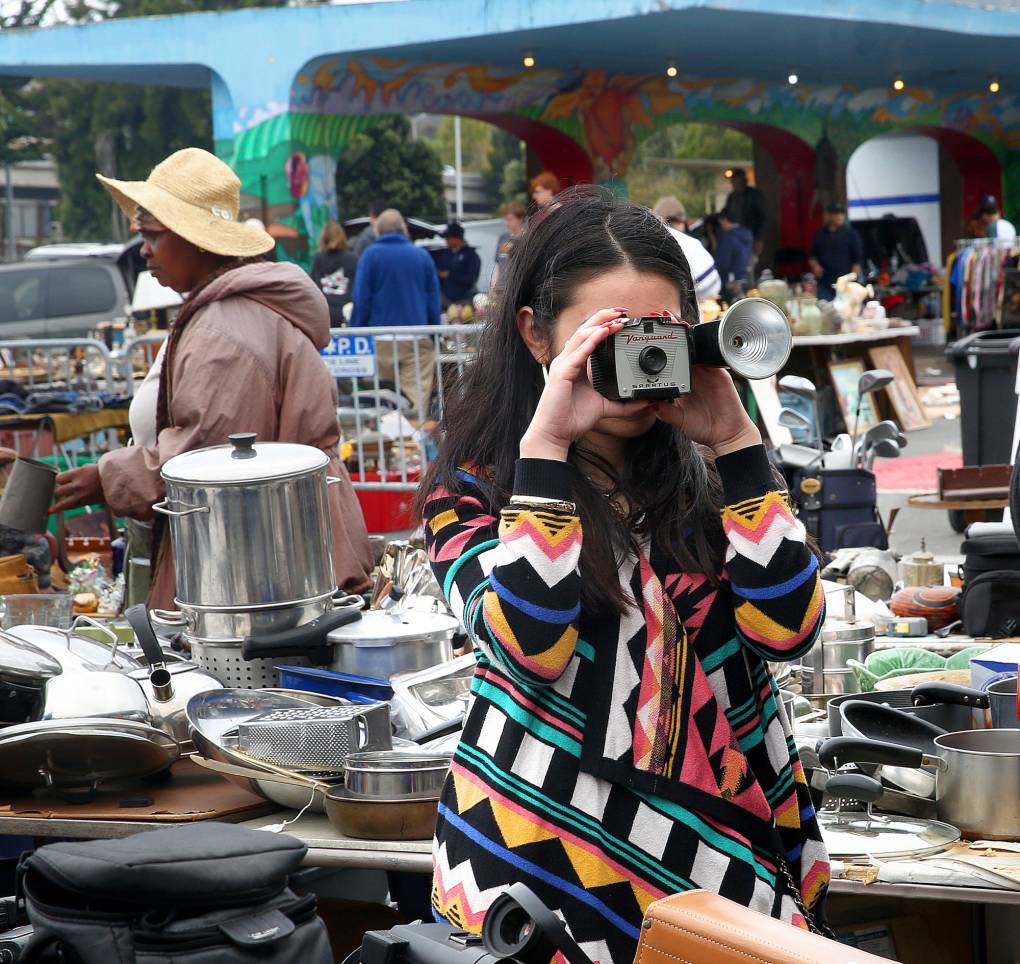
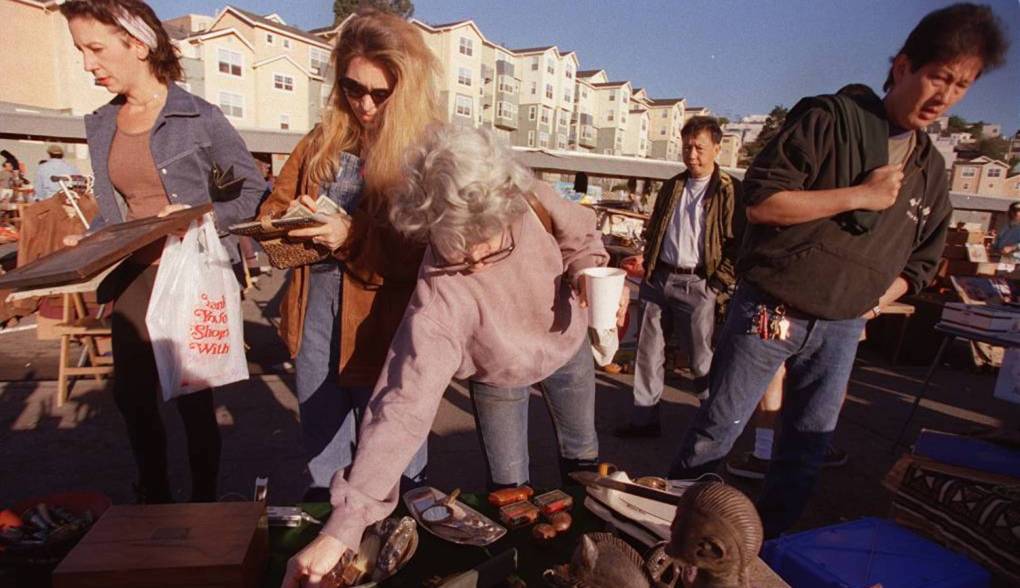
Vendors and Customers Rally to Save the Alemany Flea Market
The Downtown San Francisco I Loved Was a Holiday Wonderland
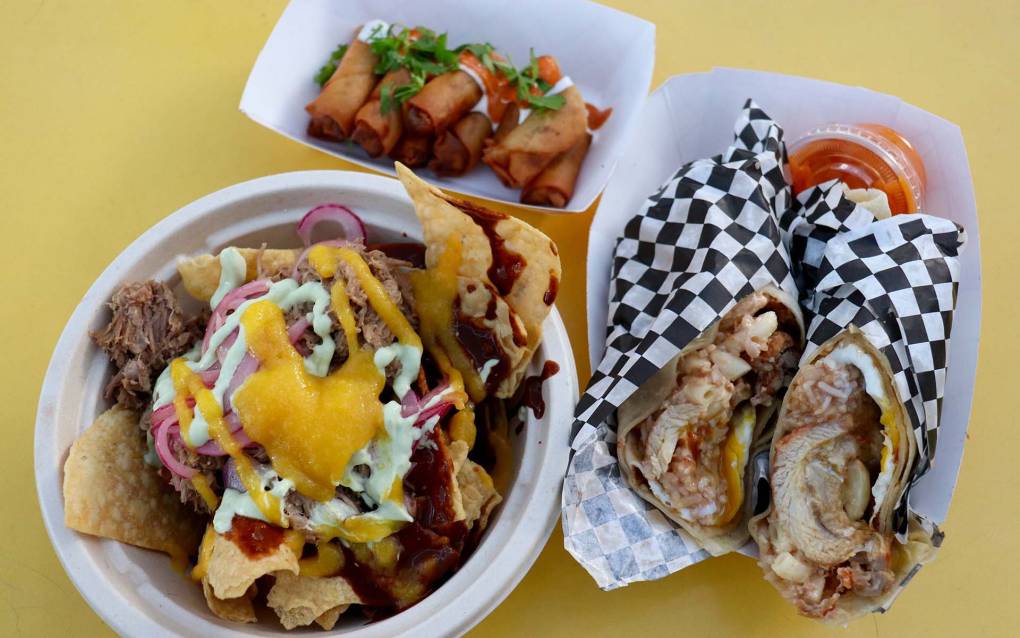
A New San Jose Food Truck Fuses Filipino, Mexican and Hawaiian Flavors
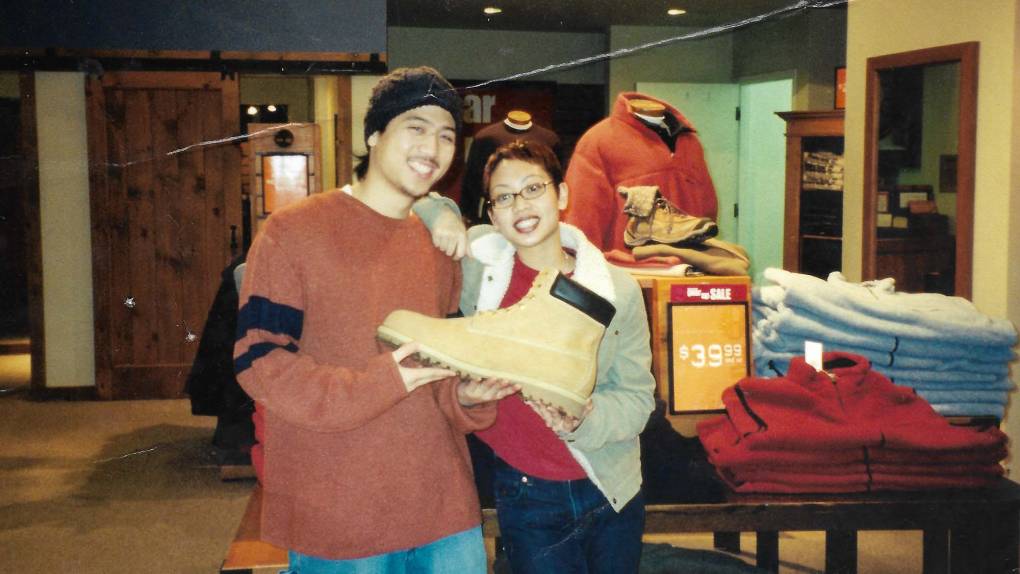
The Flea Market Is My Weekend
Player sponsored by
window.__IS_SSR__=true
window.__INITIAL_STATE__={
"attachmentsReducer": {
"audio_0": {
"type": "attachments",
"id": "audio_0",
"imgSizes": {
"kqedFullSize": {
"file": "https://ww2.kqed.org/news/wp-content/themes/KQED-unified/img/audio_bgs/background0.jpg"
}
}
},
"audio_1": {
"type": "attachments",
"id": "audio_1",
"imgSizes": {
"kqedFullSize": {
"file": "https://ww2.kqed.org/news/wp-content/themes/KQED-unified/img/audio_bgs/background1.jpg"
}
}
},
"audio_2": {
"type": "attachments",
"id": "audio_2",
"imgSizes": {
"kqedFullSize": {
"file": "https://ww2.kqed.org/news/wp-content/themes/KQED-unified/img/audio_bgs/background2.jpg"
}
}
},
"audio_3": {
"type": "attachments",
"id": "audio_3",
"imgSizes": {
"kqedFullSize": {
"file": "https://ww2.kqed.org/news/wp-content/themes/KQED-unified/img/audio_bgs/background3.jpg"
}
}
},
"audio_4": {
"type": "attachments",
"id": "audio_4",
"imgSizes": {
"kqedFullSize": {
"file": "https://ww2.kqed.org/news/wp-content/themes/KQED-unified/img/audio_bgs/background4.jpg"
}
}
},
"placeholder": {
"type": "attachments",
"id": "placeholder",
"imgSizes": {
"thumbnail": {
"file": "https://cdn.kqed.org/wp-content/uploads/2024/12/KQED-Default-Image-816638274-2000x1333-1-160x107.jpg",
"width": 160,
"height": 107,
"mimeType": "image/jpeg"
},
"medium": {
"file": "https://cdn.kqed.org/wp-content/uploads/2024/12/KQED-Default-Image-816638274-2000x1333-1-800x533.jpg",
"width": 800,
"height": 533,
"mimeType": "image/jpeg"
},
"medium_large": {
"file": "https://cdn.kqed.org/wp-content/uploads/2024/12/KQED-Default-Image-816638274-2000x1333-1-768x512.jpg",
"width": 768,
"height": 512,
"mimeType": "image/jpeg"
},
"large": {
"file": "https://cdn.kqed.org/wp-content/uploads/2024/12/KQED-Default-Image-816638274-2000x1333-1-1020x680.jpg",
"width": 1020,
"height": 680,
"mimeType": "image/jpeg"
},
"1536x1536": {
"file": "https://cdn.kqed.org/wp-content/uploads/2024/12/KQED-Default-Image-816638274-2000x1333-1-1536x1024.jpg",
"width": 1536,
"height": 1024,
"mimeType": "image/jpeg"
},
"fd-lrg": {
"file": "https://cdn.kqed.org/wp-content/uploads/2024/12/KQED-Default-Image-816638274-2000x1333-1-1536x1024.jpg",
"width": 1536,
"height": 1024,
"mimeType": "image/jpeg"
},
"fd-med": {
"file": "https://cdn.kqed.org/wp-content/uploads/2024/12/KQED-Default-Image-816638274-2000x1333-1-1020x680.jpg",
"width": 1020,
"height": 680,
"mimeType": "image/jpeg"
},
"fd-sm": {
"file": "https://cdn.kqed.org/wp-content/uploads/2024/12/KQED-Default-Image-816638274-2000x1333-1-800x533.jpg",
"width": 800,
"height": 533,
"mimeType": "image/jpeg"
},
"post-thumbnail": {
"file": "https://cdn.kqed.org/wp-content/uploads/2024/12/KQED-Default-Image-816638274-2000x1333-1-672x372.jpg",
"width": 672,
"height": 372,
"mimeType": "image/jpeg"
},
"twentyfourteen-full-width": {
"file": "https://cdn.kqed.org/wp-content/uploads/2024/12/KQED-Default-Image-816638274-2000x1333-1-1038x576.jpg",
"width": 1038,
"height": 576,
"mimeType": "image/jpeg"
},
"xxsmall": {
"file": "https://cdn.kqed.org/wp-content/uploads/2024/12/KQED-Default-Image-816638274-2000x1333-1-160x107.jpg",
"width": 160,
"height": 107,
"mimeType": "image/jpeg"
},
"xsmall": {
"file": "https://cdn.kqed.org/wp-content/uploads/2024/12/KQED-Default-Image-816638274-2000x1333-1-672x372.jpg",
"width": 672,
"height": 372,
"mimeType": "image/jpeg"
},
"small": {
"file": "https://cdn.kqed.org/wp-content/uploads/2024/12/KQED-Default-Image-816638274-2000x1333-1-672x372.jpg",
"width": 672,
"height": 372,
"mimeType": "image/jpeg"
},
"xlarge": {
"file": "https://cdn.kqed.org/wp-content/uploads/2024/12/KQED-Default-Image-816638274-2000x1333-1-1020x680.jpg",
"width": 1020,
"height": 680,
"mimeType": "image/jpeg"
},
"full-width": {
"file": "https://cdn.kqed.org/wp-content/uploads/2024/12/KQED-Default-Image-816638274-2000x1333-1-1920x1280.jpg",
"width": 1920,
"height": 1280,
"mimeType": "image/jpeg"
},
"guest-author-32": {
"file": "https://cdn.kqed.org/wp-content/uploads/2025/01/KQED-Default-Image-816638274-1333x1333-1-160x160.jpg",
"width": 32,
"height": 32,
"mimeType": "image/jpeg"
},
"guest-author-50": {
"file": "https://cdn.kqed.org/wp-content/uploads/2025/01/KQED-Default-Image-816638274-1333x1333-1-160x160.jpg",
"width": 50,
"height": 50,
"mimeType": "image/jpeg"
},
"guest-author-64": {
"file": "https://cdn.kqed.org/wp-content/uploads/2025/01/KQED-Default-Image-816638274-1333x1333-1-160x160.jpg",
"width": 64,
"height": 64,
"mimeType": "image/jpeg"
},
"guest-author-96": {
"file": "https://cdn.kqed.org/wp-content/uploads/2025/01/KQED-Default-Image-816638274-1333x1333-1-160x160.jpg",
"width": 96,
"height": 96,
"mimeType": "image/jpeg"
},
"guest-author-128": {
"file": "https://cdn.kqed.org/wp-content/uploads/2025/01/KQED-Default-Image-816638274-1333x1333-1-160x160.jpg",
"width": 128,
"height": 128,
"mimeType": "image/jpeg"
},
"detail": {
"file": "https://cdn.kqed.org/wp-content/uploads/2025/01/KQED-Default-Image-816638274-1333x1333-1-160x160.jpg",
"width": 160,
"height": 160,
"mimeType": "image/jpeg"
},
"kqedFullSize": {
"file": "https://cdn.kqed.org/wp-content/uploads/2024/12/KQED-Default-Image-816638274-2000x1333-1.jpg",
"width": 2000,
"height": 1333
}
}
},
"arts_13960103": {
"type": "attachments",
"id": "arts_13960103",
"meta": {
"index": "attachments_1716263798",
"site": "arts",
"id": "13960103",
"found": true
},
"title": "GettyImages-1321749252_200",
"publishDate": 1718932110,
"status": "inherit",
"parent": 13960097,
"modified": 1718932267,
"caption": "A potential customer checks out wares at the Alemany Flea Market in 2016.",
"credit": "Liz Hafalia/The San Francisco Chronicle via Getty Images",
"altTag": "Person holds a vintage camera to their face surrounded by housewares and other used objects",
"description": null,
"imgSizes": {
"medium": {
"file": "https://cdn.kqed.org/wp-content/uploads/sites/2/2024/06/GettyImages-1321749252_200-800x756.jpg",
"width": 800,
"height": 756,
"mimeType": "image/jpeg"
},
"large": {
"file": "https://cdn.kqed.org/wp-content/uploads/sites/2/2024/06/GettyImages-1321749252_200-1020x964.jpg",
"width": 1020,
"height": 964,
"mimeType": "image/jpeg"
},
"thumbnail": {
"file": "https://cdn.kqed.org/wp-content/uploads/sites/2/2024/06/GettyImages-1321749252_200-160x151.jpg",
"width": 160,
"height": 151,
"mimeType": "image/jpeg"
},
"medium_large": {
"file": "https://cdn.kqed.org/wp-content/uploads/sites/2/2024/06/GettyImages-1321749252_200-768x726.jpg",
"width": 768,
"height": 726,
"mimeType": "image/jpeg"
},
"1536x1536": {
"file": "https://cdn.kqed.org/wp-content/uploads/sites/2/2024/06/GettyImages-1321749252_200-1536x1452.jpg",
"width": 1536,
"height": 1452,
"mimeType": "image/jpeg"
},
"post-thumbnail": {
"file": "https://cdn.kqed.org/wp-content/uploads/sites/2/2024/06/GettyImages-1321749252_200-672x372.jpg",
"width": 672,
"height": 372,
"mimeType": "image/jpeg"
},
"twentyfourteen-full-width": {
"file": "https://cdn.kqed.org/wp-content/uploads/sites/2/2024/06/GettyImages-1321749252_200-1038x576.jpg",
"width": 1038,
"height": 576,
"mimeType": "image/jpeg"
},
"full-width": {
"file": "https://cdn.kqed.org/wp-content/uploads/sites/2/2024/06/GettyImages-1321749252_200-1920x1814.jpg",
"width": 1920,
"height": 1814,
"mimeType": "image/jpeg"
},
"kqedFullSize": {
"file": "https://cdn.kqed.org/wp-content/uploads/sites/2/2024/06/GettyImages-1321749252_200.jpg",
"width": 2000,
"height": 1890
}
},
"isLoading": false,
"fetchFailed": false
},
"arts_13939428": {
"type": "attachments",
"id": "arts_13939428",
"meta": {
"index": "attachments_1716263798",
"site": "arts",
"id": "13939428",
"found": true
},
"parent": 13939383,
"imgSizes": {
"twentyfourteen-full-width": {
"file": "https://cdn.kqed.org/wp-content/uploads/sites/2/2023/12/Timberland-Scan-crop_RR-1038x576.jpg",
"width": 1038,
"mimeType": "image/jpeg",
"height": 576
},
"thumbnail": {
"file": "https://cdn.kqed.org/wp-content/uploads/sites/2/2023/12/Timberland-Scan-crop_RR-160x90.jpg",
"width": 160,
"mimeType": "image/jpeg",
"height": 90
},
"post-thumbnail": {
"file": "https://cdn.kqed.org/wp-content/uploads/sites/2/2023/12/Timberland-Scan-crop_RR-672x372.jpg",
"width": 672,
"mimeType": "image/jpeg",
"height": 372
},
"kqedFullSize": {
"file": "https://cdn.kqed.org/wp-content/uploads/sites/2/2023/12/Timberland-Scan-crop_RR.jpg",
"width": 2000,
"height": 1125
},
"large": {
"file": "https://cdn.kqed.org/wp-content/uploads/sites/2/2023/12/Timberland-Scan-crop_RR-1020x574.jpg",
"width": 1020,
"mimeType": "image/jpeg",
"height": 574
},
"1536x1536": {
"file": "https://cdn.kqed.org/wp-content/uploads/sites/2/2023/12/Timberland-Scan-crop_RR-1536x864.jpg",
"width": 1536,
"mimeType": "image/jpeg",
"height": 864
},
"full-width": {
"file": "https://cdn.kqed.org/wp-content/uploads/sites/2/2023/12/Timberland-Scan-crop_RR-1920x1080.jpg",
"width": 1920,
"mimeType": "image/jpeg",
"height": 1080
},
"medium": {
"file": "https://cdn.kqed.org/wp-content/uploads/sites/2/2023/12/Timberland-Scan-crop_RR-800x450.jpg",
"width": 800,
"mimeType": "image/jpeg",
"height": 450
},
"medium_large": {
"file": "https://cdn.kqed.org/wp-content/uploads/sites/2/2023/12/Timberland-Scan-crop_RR-768x432.jpg",
"width": 768,
"mimeType": "image/jpeg",
"height": 432
}
},
"publishDate": 1702579071,
"modified": 1702579258,
"caption": "A young Rocky Rivera (right) poses with her beloved wheat color Timberland boot. She worked in the downtown San Francisco Timberland store in the early 2000s.",
"description": null,
"title": "Timberland Scan-crop_RR",
"credit": "Courtesy of Rocky Rivera",
"status": "inherit",
"altTag": "A young man and woman pose for a photo inside a clothing store while holding a oversized Timberland work boot.",
"isLoading": false,
"fetchFailed": false
},
"arts_13932744": {
"type": "attachments",
"id": "arts_13932744",
"meta": {
"index": "attachments_1716263798",
"site": "arts",
"id": "13932744",
"found": true
},
"parent": 13932574,
"imgSizes": {
"twentyfourteen-full-width": {
"file": "https://ww2.kqed.org/app/uploads/sites/2/2023/08/mestizo_threedishes-crop-1038x576.jpg",
"width": 1038,
"mimeType": "image/jpeg",
"height": 576
},
"thumbnail": {
"file": "https://ww2.kqed.org/app/uploads/sites/2/2023/08/mestizo_threedishes-crop-160x100.jpg",
"width": 160,
"mimeType": "image/jpeg",
"height": 100
},
"post-thumbnail": {
"file": "https://ww2.kqed.org/app/uploads/sites/2/2023/08/mestizo_threedishes-crop-672x372.jpg",
"width": 672,
"mimeType": "image/jpeg",
"height": 372
},
"kqedFullSize": {
"file": "https://ww2.kqed.org/app/uploads/sites/2/2023/08/mestizo_threedishes-crop.jpg",
"width": 1920,
"height": 1200
},
"large": {
"file": "https://ww2.kqed.org/app/uploads/sites/2/2023/08/mestizo_threedishes-crop-1020x638.jpg",
"width": 1020,
"mimeType": "image/jpeg",
"height": 638
},
"1536x1536": {
"file": "https://ww2.kqed.org/app/uploads/sites/2/2023/08/mestizo_threedishes-crop-1536x960.jpg",
"width": 1536,
"mimeType": "image/jpeg",
"height": 960
},
"medium": {
"file": "https://ww2.kqed.org/app/uploads/sites/2/2023/08/mestizo_threedishes-crop-800x500.jpg",
"width": 800,
"mimeType": "image/jpeg",
"height": 500
},
"medium_large": {
"file": "https://ww2.kqed.org/app/uploads/sites/2/2023/08/mestizo_threedishes-crop-768x480.jpg",
"width": 768,
"mimeType": "image/jpeg",
"height": 480
}
},
"publishDate": 1691430790,
"modified": 1691431062,
"caption": "Three dishes from Mestizo showcase the food truck's many cultural influences: Filipino lumpia; a Mexican burrito with fried chicken, gravy and mac salad; and chilaquiles topped with Hawaiian kalua pork.",
"description": null,
"title": "mestizo_threedishes-crop",
"credit": "Alan Chazaro",
"status": "inherit",
"altTag": "a burrito, chilaquiles, and lumpia are showcased on a yellow table outdoors",
"isLoading": false,
"fetchFailed": false
},
"arts_13922220": {
"type": "attachments",
"id": "arts_13922220",
"meta": {
"index": "attachments_1716263798",
"site": "arts",
"id": "13922220",
"found": true
},
"parent": 13921882,
"imgSizes": {
"twentyfourteen-full-width": {
"file": "https://ww2.kqed.org/app/uploads/sites/2/2022/12/GettyImages-1322401462-1020x685-1-1038x576.jpg",
"width": 1038,
"mimeType": "image/jpeg",
"height": 576
},
"thumbnail": {
"file": "https://ww2.kqed.org/app/uploads/sites/2/2022/12/GettyImages-1322401462-1020x685-1-160x92.jpg",
"width": 160,
"mimeType": "image/jpeg",
"height": 92
},
"post-thumbnail": {
"file": "https://ww2.kqed.org/app/uploads/sites/2/2022/12/GettyImages-1322401462-1020x685-1-672x372.jpg",
"width": 672,
"mimeType": "image/jpeg",
"height": 372
},
"kqedFullSize": {
"file": "https://ww2.kqed.org/app/uploads/sites/2/2022/12/GettyImages-1322401462-1020x685-1.jpg",
"width": 1920,
"height": 1107
},
"large": {
"file": "https://ww2.kqed.org/app/uploads/sites/2/2022/12/GettyImages-1322401462-1020x685-1-1020x588.jpg",
"width": 1020,
"mimeType": "image/jpeg",
"height": 588
},
"1536x1536": {
"file": "https://ww2.kqed.org/app/uploads/sites/2/2022/12/GettyImages-1322401462-1020x685-1-1536x886.jpg",
"width": 1536,
"mimeType": "image/jpeg",
"height": 886
},
"medium": {
"file": "https://ww2.kqed.org/app/uploads/sites/2/2022/12/GettyImages-1322401462-1020x685-1-800x461.jpg",
"width": 800,
"mimeType": "image/jpeg",
"height": 461
},
"medium_large": {
"file": "https://ww2.kqed.org/app/uploads/sites/2/2022/12/GettyImages-1322401462-1020x685-1-768x443.jpg",
"width": 768,
"mimeType": "image/jpeg",
"height": 443
}
},
"publishDate": 1669922499,
"modified": 1669922535,
"caption": "Shoppers at the Alemany flea market look over a table in 1997.",
"description": null,
"title": "GettyImages-1322401462-1020x685",
"credit": "Photo by Lea Suzuki / The San Francisco Chronicle via Getty Images",
"status": "inherit",
"altTag": null,
"isLoading": false,
"fetchFailed": false
}
},
"audioPlayerReducer": {
"postId": "stream_live",
"isPaused": true,
"isPlaying": false,
"pfsActive": false,
"pledgeModalIsOpen": true,
"playerDrawerIsOpen": false,
"liveAudioPlayStartedAt": 0,
"liveAudioPlayContext": ""
},
"authorsReducer": {
"shotchkiss": {
"type": "authors",
"id": "61",
"meta": {
"index": "authors_1716337520",
"id": "61",
"found": true
},
"name": "Sarah Hotchkiss",
"firstName": "Sarah",
"lastName": "Hotchkiss",
"slug": "shotchkiss",
"email": "shotchkiss@kqed.org",
"display_author_email": true,
"staff_mastheads": [
"arts"
],
"title": "Senior Editor",
"bio": "Sarah Hotchkiss is a San Francisco \u003ca href=\"http://www.sarahhotchkiss.com\">artist\u003c/a> and arts writer. In 2019, she received the Dorothea & Leo Rabkin Foundation grant for visual art journalism and in 2020 she received a Society of Professional Journalists, Northern California award for excellence in arts and culture reporting.",
"avatar": "https://secure.gravatar.com/avatar/bc662df144b3d27fd8b1b6f1c2a420d34e91e53154d411bb7ad353cc8b6cea8d?s=600&d=blank&r=g",
"twitter": null,
"bluesky": null,
"facebook": null,
"instagram": null,
"linkedin": null,
"sites": [
{
"site": "",
"roles": [
"editor"
]
},
{
"site": "arts",
"roles": [
"Contributor",
"administrator"
]
},
{
"site": "artschool",
"roles": [
"administrator"
]
},
{
"site": "news",
"roles": [
"editor"
]
},
{
"site": "pop",
"roles": [
"administrator"
]
},
{
"site": "bayareabites",
"roles": [
"editor"
]
},
{
"site": "spark",
"roles": [
"editor"
]
},
{
"site": "checkplease",
"roles": [
"editor"
]
}
],
"headData": {
"title": "Sarah Hotchkiss | KQED",
"description": "Senior Editor",
"ogImgSrc": "https://secure.gravatar.com/avatar/bc662df144b3d27fd8b1b6f1c2a420d34e91e53154d411bb7ad353cc8b6cea8d?s=600&d=blank&r=g",
"twImgSrc": "https://secure.gravatar.com/avatar/bc662df144b3d27fd8b1b6f1c2a420d34e91e53154d411bb7ad353cc8b6cea8d?s=600&d=blank&r=g"
},
"isLoading": false,
"link": "/author/shotchkiss"
},
"achazaro": {
"type": "authors",
"id": "11748",
"meta": {
"index": "authors_1716337520",
"id": "11748",
"found": true
},
"name": "Alan Chazaro",
"firstName": "Alan",
"lastName": "Chazaro",
"slug": "achazaro",
"email": "agchazaro@gmail.com",
"display_author_email": true,
"staff_mastheads": [],
"title": "Food Writer and Reporter",
"bio": "Alan Chazaro is the author of \u003cem>This Is Not a Frank Ocean Cover Album\u003c/em> (Black Lawrence Press, 2019), \u003cem>Piñata Theory\u003c/em> (Black Lawrence Press, 2020), and \u003cem>Notes from the Eastern Span of the Bay Bridge\u003c/em> (Ghost City Press, 2021). He is a graduate of June Jordan’s Poetry for the People program at UC Berkeley and a former Lawrence Ferlinghetti Fellow at the University of San Francisco. He writes about sports, food, art, music, education, and culture while repping the Bay on \u003ca href=\"https://twitter.com/alan_chazaro\">Twitter\u003c/a> and \u003ca href=\"https://www.instagram.com/alan_chazaro/?hl=en\">Instagram\u003c/a> at @alan_chazaro.",
"avatar": "https://secure.gravatar.com/avatar/ea8b6dd970fc5c29e7a188e7d5861df7?s=600&d=blank&r=g",
"twitter": "alan_chazaro",
"facebook": null,
"instagram": null,
"linkedin": null,
"sites": [
{
"site": "arts",
"roles": [
"contributor"
]
},
{
"site": "news",
"roles": [
"editor"
]
}
],
"headData": {
"title": "Alan Chazaro | KQED",
"description": "Food Writer and Reporter",
"ogImgSrc": "https://secure.gravatar.com/avatar/ea8b6dd970fc5c29e7a188e7d5861df7?s=600&d=blank&r=g",
"twImgSrc": "https://secure.gravatar.com/avatar/ea8b6dd970fc5c29e7a188e7d5861df7?s=600&d=blank&r=g"
},
"isLoading": false,
"link": "/author/achazaro"
},
"rockyrivera": {
"type": "authors",
"id": "11846",
"meta": {
"index": "authors_1716337520",
"id": "11846",
"found": true
},
"name": "Rocky Rivera",
"firstName": "Rocky",
"lastName": "Rivera",
"slug": "rockyrivera",
"email": "ms.rocky.rivera@gmail.com",
"display_author_email": false,
"staff_mastheads": [],
"title": "KQED Contributor",
"bio": "Rocky Rivera is a journalist, emcee, author and activist from San Francisco. She has released four albums through her label, Beatrock Music, and a ten-volume mixtape series with DJ Roza. She released her first book in 2021, entitled \u003cem>Snakeskin: Essays by Rocky Rivera\u003c/em>. Her latest album dropped in September 2024 and is called \"Long Kiss Goodnight\" with emcee/producer Otayo Dubb. She currently writes the Frisco Foodies column as a love letter to her hometown.",
"avatar": "https://secure.gravatar.com/avatar/946241ee2c59e6040607dfc75240d91b?s=600&d=blank&r=g",
"twitter": null,
"facebook": "https://m.facebook.com/rockyriveramusic",
"instagram": "https://instagram.com/rockyrivera",
"linkedin": "https://www.linkedin.com/in/krishtinedeleon/",
"sites": [
{
"site": "arts",
"roles": [
"author"
]
}
],
"headData": {
"title": "Rocky Rivera | KQED",
"description": "KQED Contributor",
"ogImgSrc": "https://secure.gravatar.com/avatar/946241ee2c59e6040607dfc75240d91b?s=600&d=blank&r=g",
"twImgSrc": "https://secure.gravatar.com/avatar/946241ee2c59e6040607dfc75240d91b?s=600&d=blank&r=g"
},
"isLoading": false,
"link": "/author/rockyrivera"
}
},
"pagesReducer": {
"arts_tag_flea-markets": {
"type": "terms",
"id": "arts_19125",
"meta": {
"index": "terms_1716263798",
"site": "arts",
"id": "19125",
"score": 10.398907
},
"featImg": null,
"name": "flea markets",
"description": null,
"taxonomy": "tag",
"headData": {
"twImgId": null,
"twTitle": null,
"ogTitle": null,
"ogImgId": null,
"twDescription": null,
"description": null,
"title": "flea markets Archives | KQED Arts",
"ogDescription": null
},
"ttid": 19137,
"slug": "flea-markets",
"isLoading": false,
"title": "flea markets",
"pageMeta": {
"site": "arts",
"WpPageTemplate": "page-topic-editorial"
},
"blocks": [
{
"blockName": "kqed/post-list",
"attrs": {
"layout": "cardArticle2",
"query": "posts/arts?tag=flea-markets",
"seeMore": true
}
},
{
"blockName": "kqed/ad"
}
]
}
},
"pfsSessionReducer": {},
"postsReducer": {
"stream_live": {
"type": "live",
"id": "stream_live",
"audioUrl": "https://streams.kqed.org/kqedradio",
"title": "Live Stream",
"excerpt": "Live Stream information currently unavailable.",
"link": "/radio",
"featImg": "",
"label": {
"name": "KQED Live",
"link": "/"
}
},
"stream_kqedNewscast": {
"type": "posts",
"id": "stream_kqedNewscast",
"audioUrl": "https://www.kqed.org/.stream/anon/radio/RDnews/newscast.mp3?_=1",
"title": "KQED Newscast",
"featImg": "",
"label": {
"name": "88.5 FM",
"link": "/"
}
},
"arts_13960097": {
"type": "posts",
"id": "arts_13960097",
"meta": {
"index": "posts_1716263798",
"site": "arts",
"id": "13960097",
"score": null,
"sort": [
1718998712000
]
},
"guestAuthors": [],
"slug": "alemany-flea-market-san-francisco-city-budget-cuts",
"title": "Vendors and Customers Rally to Save the Alemany Flea Market",
"publishDate": 1718998712,
"format": "standard",
"headTitle": "Vendors and Customers Rally to Save the Alemany Flea Market | KQED",
"labelTerm": {
"site": "arts"
},
"content": "\u003cp>\u003cb>Update, 10:00 a.m. Saturday:\u003c/b> Supervisor Hillary Ronen \u003ca href=\"https://www.instagram.com/p/C8fL1I6vk6g/?img_index=1\">announced on social media\u003c/a> that the Alemany Flea Market will not be cut from the city budget for at least the next year. “Thank you to the outpouring of community members who spoke up to defend the market,” she wrote. “Your advocacy made a difference!”\u003c/p>\n\u003cp>\u003cb>Original story, 12:38 p.m. Friday:\u003c/b> Vendors at San Francisco’s \u003ca href=\"https://www.sf.gov/location/alemany-flea-market\">Alemany Flea Market\u003c/a> and their loyal customers are rallying to save the weekly event at 100 Alemany Blvd., which is in danger of being eliminated by upcoming city budget cuts.\u003c/p>\n\u003cp>After a week of emails and phone calls to supervisors and city representatives, it seems the flea market’s supporters have made an impact. The City Administrator’s Office provided a statement to KQED that it is “working with the Mayor’s Office to maintain funding, including long term solutions, for the Flea Market.”\u003c/p>\n\u003cp>The City Administrator’s Office stated that the flea market has been “operating at a deficit for some time.” City departments have been tasked by Mayor London Breed with cutting 10% of their general operating expenses to help close an $800 million deficit over the next two years. \u003c/p>\n\u003cp>Rico Duenas, a regular flea market attendee who grew up going every Sunday with his family, was shocked to learn, only through word of mouth, that the event might be eliminated from the city’s budget. “I don’t understand how it could have just ended,” he said. “No one would have said anything, and it just would be gone one day, which is crazy to me.”\u003c/p>\n\u003cp>[ad fullwidth]\u003c/p>\n\u003cp>The Board of Supervisors is expected to finalize the budget in July, and the mayor will sign it into law. The \u003ca href=\"https://sfbos.org/sites/default/files/2024_Public_Comment_Day_Details.pdf\">public can provide comment\u003c/a> on the annual budget at the Budget and Appropriations Committee meeting on Monday, June 24, at 10 a.m.\u003c/p>\n\u003cp>[aside postID='arts_13921882']The Alemany Flea Market is the scruffier sibling of the Alemany Farmers’ Market, which occupies the same lot and stalls on Saturdays. The flea market’s size has contracted since the pandemic, but any given Sunday sees hundreds of attendees roaming the eight-hour event.\u003c/p>\n\u003cp>Supervisor Hillary Ronen, whose district includes 100 Alemany Blvd., is against ending the flea market.\u003c/p>\n\u003cp>“I fully support the Alemany Flea Market, and will oppose any attempt to eliminate it through any proposed cuts in the current budget or otherwise,” Ronen said in a statement to KQED. “The flea market is a historical and cultural San Francisco landmark that plays an important role in the economic security of people who sell and buy at the weekly market, supporting small businesses and individuals in District 9 and Citywide.”\u003c/p>\n\u003cp>In a \u003ca href=\"https://www.instagram.com/p/C8WFpzJOHkT/?hl=en\">video posted to social media\u003c/a>, Jon Rolston, owner of a \u003ca href=\"https://www.haulerfame.com/\">junk hauling service\u003c/a> and a frequent vendor at the flea market, urged his many followers to contact their city representatives. “That flea market is 100 small business owners, and they in turn sell to another 100 small business owners,” he said. “All those cool shops that people love to go to … where do you think that stuff is coming from? It’s coming from the flea market.”\u003c/p>\n\u003cp>The Alemany Flea Market is managed by the city’s Real Estate Division. Since the \u003ca href=\"https://sfstandard.com/2024/03/21/un-plaza-gift-gallery-closes/\">abrupt closure of the Fulton Plaza Gift Gallery\u003c/a> on April 1, the Alemany Flea Market remains the only city-managed venue for the sale of used goods. Stalls cost vendors $50 each. \u003c/p>\n\u003cp>Concern about the future of the flea market began in early March, when the Real Estate Division released a \u003ca href=\"https://www.sf.gov/sites/default/files/2024-03/LEASE%20OF%20REAL%20PROPERTY%20RED%20%E2%80%93%20RFP24%20%E2%80%93%20001%20AFM.pdf\">request for proposals\u003c/a> to manage 100 Alemany Blvd.\u003c/p>\n\u003cp>The RFP, though standard enough, put flea market vendors and customers on edge: nowhere in the 78-page document was there mention of the Sunday flea market. The Saturday farmers’ market, meanwhile, was enshrined within the proposal. (The address was referred to throughout by the shorthand “Alemany Farmers’ Market Property.”)\u003c/p>\n\u003cp>The Real Estate Division did not receive any responses to the RFP, even after extending the deadline for an additional 10 days past the original April 12 due date. \u003c/p>\n\u003cp>The flea market didn’t always operate at a deficit. A \u003ca href=\"https://sfbos.org/sites/default/files/FileCenter/Documents/37009-Alemany_Farmers_Market_Real_Estate_Div_Final_Report_101310.pdf\">2010 audit\u003c/a> shows that the flea market created $255,644 of net revenue; combined with the farmers’ market, the Alemany markets sent $424,243 back into the general operating fund.\u003c/p>\n\u003cp>For lifetime customers like Duenas, it’s difficult to quantify the value of the flea market, which he grew up referring to as “church.”\u003c/p>\n\u003cp>\u003c/p>\n\u003cp>“I understand that cities change, but can’t we keep some of the old?” Duenas said. “Everything doesn’t have to be this shiny new park, this shiny new thing. This is a trash flea market, but it is a part of the community.”\u003c/p>\n\n",
"blocks": [],
"excerpt": "A campaign launched by vendors and customers aims to ensure the event’s continuation despite city budget cuts.",
"status": "publish",
"parent": 0,
"modified": 1726701165,
"stats": {
"hasAudio": false,
"hasVideo": false,
"hasChartOrMap": false,
"iframeSrcs": [],
"hasGoogleForm": false,
"hasGallery": false,
"hasHearkenModule": false,
"hasPolis": false,
"paragraphCount": 19,
"wordCount": 834
},
"headData": {
"title": "Vendors and Customers Rally to Save the Alemany Flea Market | KQED",
"description": "A campaign launched by vendors and customers aims to ensure the event’s continuation despite city budget cuts.",
"ogTitle": "",
"ogDescription": "",
"ogImgId": "",
"twTitle": "",
"twDescription": "",
"twImgId": "",
"schema": {
"@context": "https://schema.org",
"@type": "Article",
"headline": "Vendors and Customers Rally to Save the Alemany Flea Market",
"datePublished": "2024-06-21T12:38:32-07:00",
"dateModified": "2024-09-18T16:12:45-07:00",
"image": "https://cdn.kqed.org/wp-content/uploads/2020/02/KQED-OG-Image@1x.png"
}
},
"sticky": false,
"nprStoryId": "kqed-13960097",
"templateType": "standard",
"featuredImageType": "standard",
"excludeFromSiteSearch": "Include",
"articleAge": "0",
"path": "/arts/13960097/alemany-flea-market-san-francisco-city-budget-cuts",
"audioTrackLength": null,
"parsedContent": [
{
"type": "contentString",
"content": "\u003cdiv class=\"post-body\">\u003cp>\u003cp>\u003cb>Update, 10:00 a.m. Saturday:\u003c/b> Supervisor Hillary Ronen \u003ca href=\"https://www.instagram.com/p/C8fL1I6vk6g/?img_index=1\">announced on social media\u003c/a> that the Alemany Flea Market will not be cut from the city budget for at least the next year. “Thank you to the outpouring of community members who spoke up to defend the market,” she wrote. “Your advocacy made a difference!”\u003c/p>\n\u003cp>\u003cb>Original story, 12:38 p.m. Friday:\u003c/b> Vendors at San Francisco’s \u003ca href=\"https://www.sf.gov/location/alemany-flea-market\">Alemany Flea Market\u003c/a> and their loyal customers are rallying to save the weekly event at 100 Alemany Blvd., which is in danger of being eliminated by upcoming city budget cuts.\u003c/p>\n\u003cp>After a week of emails and phone calls to supervisors and city representatives, it seems the flea market’s supporters have made an impact. The City Administrator’s Office provided a statement to KQED that it is “working with the Mayor’s Office to maintain funding, including long term solutions, for the Flea Market.”\u003c/p>\n\u003cp>The City Administrator’s Office stated that the flea market has been “operating at a deficit for some time.” City departments have been tasked by Mayor London Breed with cutting 10% of their general operating expenses to help close an $800 million deficit over the next two years. \u003c/p>\n\u003cp>Rico Duenas, a regular flea market attendee who grew up going every Sunday with his family, was shocked to learn, only through word of mouth, that the event might be eliminated from the city’s budget. “I don’t understand how it could have just ended,” he said. “No one would have said anything, and it just would be gone one day, which is crazy to me.”\u003c/p>\n\u003cp>\u003c/p>\u003c/div>",
"attributes": {
"named": {},
"numeric": []
}
},
{
"type": "component",
"content": "",
"name": "ad",
"attributes": {
"named": {
"label": "fullwidth"
},
"numeric": [
"fullwidth"
]
}
},
{
"type": "contentString",
"content": "\u003cdiv class=\"post-body\">\u003cp>\u003c/p>\n\u003cp>The Board of Supervisors is expected to finalize the budget in July, and the mayor will sign it into law. The \u003ca href=\"https://sfbos.org/sites/default/files/2024_Public_Comment_Day_Details.pdf\">public can provide comment\u003c/a> on the annual budget at the Budget and Appropriations Committee meeting on Monday, June 24, at 10 a.m.\u003c/p>\n\u003cp>\u003c/p>\u003c/div>",
"attributes": {
"named": {},
"numeric": []
}
},
{
"type": "component",
"content": "",
"name": "aside",
"attributes": {
"named": {
"postid": "arts_13921882",
"label": ""
},
"numeric": []
}
},
{
"type": "contentString",
"content": "\u003cdiv class=\"post-body\">\u003cp>The Alemany Flea Market is the scruffier sibling of the Alemany Farmers’ Market, which occupies the same lot and stalls on Saturdays. The flea market’s size has contracted since the pandemic, but any given Sunday sees hundreds of attendees roaming the eight-hour event.\u003c/p>\n\u003cp>Supervisor Hillary Ronen, whose district includes 100 Alemany Blvd., is against ending the flea market.\u003c/p>\n\u003cp>“I fully support the Alemany Flea Market, and will oppose any attempt to eliminate it through any proposed cuts in the current budget or otherwise,” Ronen said in a statement to KQED. “The flea market is a historical and cultural San Francisco landmark that plays an important role in the economic security of people who sell and buy at the weekly market, supporting small businesses and individuals in District 9 and Citywide.”\u003c/p>\n\u003cp>In a \u003ca href=\"https://www.instagram.com/p/C8WFpzJOHkT/?hl=en\">video posted to social media\u003c/a>, Jon Rolston, owner of a \u003ca href=\"https://www.haulerfame.com/\">junk hauling service\u003c/a> and a frequent vendor at the flea market, urged his many followers to contact their city representatives. “That flea market is 100 small business owners, and they in turn sell to another 100 small business owners,” he said. “All those cool shops that people love to go to … where do you think that stuff is coming from? It’s coming from the flea market.”\u003c/p>\n\u003cp>The Alemany Flea Market is managed by the city’s Real Estate Division. Since the \u003ca href=\"https://sfstandard.com/2024/03/21/un-plaza-gift-gallery-closes/\">abrupt closure of the Fulton Plaza Gift Gallery\u003c/a> on April 1, the Alemany Flea Market remains the only city-managed venue for the sale of used goods. Stalls cost vendors $50 each. \u003c/p>\n\u003cp>Concern about the future of the flea market began in early March, when the Real Estate Division released a \u003ca href=\"https://www.sf.gov/sites/default/files/2024-03/LEASE%20OF%20REAL%20PROPERTY%20RED%20%E2%80%93%20RFP24%20%E2%80%93%20001%20AFM.pdf\">request for proposals\u003c/a> to manage 100 Alemany Blvd.\u003c/p>\n\u003cp>The RFP, though standard enough, put flea market vendors and customers on edge: nowhere in the 78-page document was there mention of the Sunday flea market. The Saturday farmers’ market, meanwhile, was enshrined within the proposal. (The address was referred to throughout by the shorthand “Alemany Farmers’ Market Property.”)\u003c/p>\n\u003cp>The Real Estate Division did not receive any responses to the RFP, even after extending the deadline for an additional 10 days past the original April 12 due date. \u003c/p>\n\u003cp>The flea market didn’t always operate at a deficit. A \u003ca href=\"https://sfbos.org/sites/default/files/FileCenter/Documents/37009-Alemany_Farmers_Market_Real_Estate_Div_Final_Report_101310.pdf\">2010 audit\u003c/a> shows that the flea market created $255,644 of net revenue; combined with the farmers’ market, the Alemany markets sent $424,243 back into the general operating fund.\u003c/p>\n\u003cp>For lifetime customers like Duenas, it’s difficult to quantify the value of the flea market, which he grew up referring to as “church.”\u003c/p>\n\u003cp>\u003c/p>\n\u003cp>“I understand that cities change, but can’t we keep some of the old?” Duenas said. “Everything doesn’t have to be this shiny new park, this shiny new thing. This is a trash flea market, but it is a part of the community.”\u003c/p>\n\n\u003c/div>\u003c/p>",
"attributes": {
"named": {},
"numeric": []
}
}
],
"link": "/arts/13960097/alemany-flea-market-san-francisco-city-budget-cuts",
"authors": [
"61"
],
"categories": [
"arts_1",
"arts_235"
],
"tags": [
"arts_22185",
"arts_10278",
"arts_19125",
"arts_1146"
],
"featImg": "arts_13960103",
"label": "arts"
},
"arts_13939383": {
"type": "posts",
"id": "arts_13939383",
"meta": {
"index": "posts_1716263798",
"site": "arts",
"id": "13939383",
"score": null,
"sort": [
1702584960000
]
},
"parent": 0,
"labelTerm": {},
"blocks": [],
"publishDate": 1702584960,
"format": "standard",
"title": "The Downtown San Francisco I Loved Was a Holiday Wonderland",
"headTitle": "The Downtown San Francisco I Loved Was a Holiday Wonderland | KQED",
"content": "\u003cp>\u003cstrong>\u003cem>Frisco Foodies is a recurring column in which a San Francisco local shares food memories of growing up in a now rapidly changing city.\u003c/em>\u003c/strong>\u003c/p>\n\u003cp>[dropcap]T[/dropcap]his holiday season, my teenage son asked for his first pair of classic wheat Timberland boots. Favored by construction workers and rap legends, Timberlands are prized for their lifelong durability and rugged aesthetic. I should know — I’ve had my own pair of wheats on ice for over twenty years. The style of shoe is canon in hip-hop history; when I interviewed the Wu-Tang Clan for \u003ci>The Source\u003c/i> in 2007, they mentioned that their performance fee back then, split between the nine original members, was sometimes only enough for a pair of Timbs.\u003c/p>\n\u003cp>In the early 2000s, when I worked as a retail associate at Timberland’s downtown San Francisco store, I learned that only the classics were resoleable for life, and that they were water-resistant enough to withstand a quick downpour but not a heavy deluge. They were a good investment, I told my son, but please let Mom pick them out. I wanted him to have a lasting pair.\u003c/p>\n\u003cp>I loved that downtown Timberland job and have fond memories of taking the J-Church train from Mission Terrace over Dolores Park and through the Castro, before it finally dropped me off at Market & Powell. I was convinced it was the most beautiful Muni line in the city, and the holiday season, with the Embarcadero skyline lit up, made the trip even more festive. It was just close enough to Union Square to feel the holiday cheer in the crisp winter air and hear a melancholy Coltrane song from a street performer’s saxophone. The store itself was small enough for me to form lasting relationships there. And the employee discount was good enough to allow me to play Santa during the holidays.\u003c/p>\n\u003cfigure id=\"attachment_13939440\" class=\"wp-caption alignnone\" style=\"max-width: 2000px\">\u003cimg loading=\"lazy\" decoding=\"async\" class=\"size-full wp-image-13939440\" src=\"https://cdn.kqed.org/wp-content/uploads/sites/2/2023/12/timberland-tag_RR.jpg\" alt='Over a box a Timberland boots, a hand holds up an engraved leather name tag that reads \"Krishtine\"' width=\"2000\" height=\"1983\" srcset=\"https://cdn.kqed.org/wp-content/uploads/sites/2/2023/12/timberland-tag_RR.jpg 2000w, https://cdn.kqed.org/wp-content/uploads/sites/2/2023/12/timberland-tag_RR-800x793.jpg 800w, https://cdn.kqed.org/wp-content/uploads/sites/2/2023/12/timberland-tag_RR-1020x1011.jpg 1020w, https://cdn.kqed.org/wp-content/uploads/sites/2/2023/12/timberland-tag_RR-160x159.jpg 160w, https://cdn.kqed.org/wp-content/uploads/sites/2/2023/12/timberland-tag_RR-768x761.jpg 768w, https://cdn.kqed.org/wp-content/uploads/sites/2/2023/12/timberland-tag_RR-1536x1523.jpg 1536w, https://cdn.kqed.org/wp-content/uploads/sites/2/2023/12/timberland-tag_RR-1920x1904.jpg 1920w\" sizes=\"(max-width: 2000px) 100vw, 2000px\">\u003cfigcaption class=\"wp-caption-text\">A relic of the downtown San Francisco of the early 2000s. \u003ccite>(Courtesy of Rocky Rivera)\u003c/cite>\u003c/figcaption>\u003c/figure>\n\u003cp>Fast forward to 2023 and I haven’t stepped foot in downtown for years — not since the pandemic accelerated the neighborhood’s retail apocalypse. What used to be the prime destination for Christmas shopping now has to contend with two-day Amazon Prime shipping and a barrage of Fox News reports about the whole area being an open-air drug market. Cop cars park on the corner next to Louis Vuitton, hoping to deter roving gangs of juvenile shoplifters known for their \u003ca href=\"https://www.ktvu.com/news/video-shows-san-franciscos-union-square-louis-vuitton-store-after-it-was-emptied-out-by-thieves\">chaotic smash-and-grabs\u003c/a>. Even a high-end supermarket couldn’t save its customers from \u003ca href=\"https://www.nytimes.com/2023/04/30/us/san-francisco-whole-foods-crime-economy.html\">“machete-wielding” assailants and drug users overdosing in the bathroom\u003c/a> — though locals might wonder who Whole Foods was trying to cater to downtown in the first place.\u003c/p>\n\u003cp>[ad fullwidth]\u003c/p>\n\u003cp>The neighborhood’s food scene isn’t doing much better. Chefs lament about how the lack of foot traffic and downtown office workers has shut down both trendy power-lunch spots (\u003ca href=\"https://www.sfchronicle.com/food/restaurants/article/barbacco-italian-san-francisco-18376833.php\">Barbacco\u003c/a>) and beloved family-run staples (\u003ca href=\"https://www.sfchronicle.com/food/restaurants/article/turtle-tower-vietnamese-closed-18519642.php\">Turtle Tower\u003c/a>). The nearby San Francisco Shopping Centre Mall is a shell of itself — about \u003ca href=\"https://www.nytimes.com/2023/06/14/business/westfield-mall-sf.html\">45 percent empty\u003c/a> after the Nordstrom closed over the summer. Even during the lunch rush, the food court often feels deserted.\u003c/p>\n\u003cp>\u003cspan style=\"font-weight: 400\">[aside postID='arts_13929836,arts_13923127,arts_13921079']\u003c/span>The downtown I remember had shoplifters, drug users, scammers and weirdos, too — that part hasn’t changed as much as today’s news headlines might lead you to believe. But back when I worked downtown, I could spend my half-hour lunch breaks on a $2.50 slice combo at Blondie’s Pizza or splurge on a $15 roast chicken with mashed potatoes at Wolfgang Puck’s bistro in the Macy’s Cellar. Sometimes I’d have clam chowder in a sourdough bowl at Boudin; other days, I would save my pennies and meet my family for a celebratory dinner at Tad’s Steakhouse. When I was really broke, there was always the McDonald’s on Powell, where the old Filipino manongs used to hang out and watch the tourists on cable cars go past — not to mention the countless corner stores that sold bagels, coffee and sandwiches next to the Swisher Sweet cigars I used to wrap my blunts.\u003c/p>\n\u003cp>Most of these places are gone or relocated from where they originally stood. Even the McDonald’s are \u003ca href=\"https://sfstandard.com/2023/10/31/downtown-san-francisco-mcdonalds-closes/\">shutting down\u003c/a>. And the Timberland store I loved so much? That’s gone as well. My engraved leather name tag and pristine-condition wheats are all that remain of that era of downtown San Francisco.\u003c/p>\n\u003ch2>\u003cb>‘Make the City Better’\u003c/b>\u003c/h2>\n\u003cp>“No one remembers, right before the pandemic, how many restaurants were closing, how many chefs burned out, how bad business was, how bad the rent was,” says Christian Ciscle, a chef and longtime San Francisco resident who owns \u003ca href=\"https://www.instagram.com/sfchickenbox/?hl=en\">SF Chickenbox \u003c/a>— a restaurant known for its perfectly golden-fried chicken, homemade hot sauces and chewy-pillowy mochi muffins. I’ve followed Ciscle’s seasoned breadcrumb trail from Little Skillet, where he served chicken and waffles to clubgoers at 330 Ritch, to Wing Wings in Lower Haight and now his new location in North Beach.\u003c/p>\n\u003cfigure id=\"attachment_13937770\" class=\"wp-caption alignnone\" style=\"max-width: 2000px\">\u003cimg loading=\"lazy\" decoding=\"async\" class=\"size-full wp-image-13937770\" src=\"https://cdn.kqed.org/wp-content/uploads/sites/2/2023/11/231108-SUCK-FLEA-MARKET-AC-05-KQED.jpg\" alt=\"A person in a baseball cap stands in the doorway of a city building.\" width=\"2000\" height=\"1333\" srcset=\"https://cdn.kqed.org/wp-content/uploads/sites/2/2023/11/231108-SUCK-FLEA-MARKET-AC-05-KQED.jpg 2000w, https://cdn.kqed.org/wp-content/uploads/sites/2/2023/11/231108-SUCK-FLEA-MARKET-AC-05-KQED-800x533.jpg 800w, https://cdn.kqed.org/wp-content/uploads/sites/2/2023/11/231108-SUCK-FLEA-MARKET-AC-05-KQED-1020x680.jpg 1020w, https://cdn.kqed.org/wp-content/uploads/sites/2/2023/11/231108-SUCK-FLEA-MARKET-AC-05-KQED-160x107.jpg 160w, https://cdn.kqed.org/wp-content/uploads/sites/2/2023/11/231108-SUCK-FLEA-MARKET-AC-05-KQED-768x512.jpg 768w, https://cdn.kqed.org/wp-content/uploads/sites/2/2023/11/231108-SUCK-FLEA-MARKET-AC-05-KQED-1536x1024.jpg 1536w, https://cdn.kqed.org/wp-content/uploads/sites/2/2023/11/231108-SUCK-FLEA-MARKET-AC-05-KQED-1920x1280.jpg 1920w\" sizes=\"(max-width: 2000px) 100vw, 2000px\">\u003cfigcaption class=\"wp-caption-text\">Christian Ciscle stands outside of the 332 Pine St. location of his latest project, Sucka Flea, a pop-up flea and swap market. \u003ccite>(Aryk Copley for KQED)\u003c/cite>\u003c/figcaption>\u003c/figure>\n\u003cp>Ciscle believes the mental health crisis and crime that have always existed in San Francisco are now compounded by the \u003ca href=\"https://www.sfexaminer.com/news/cocaine-buffets-and-meth-poop-meet-twitter-s-rising-anti-san-francisco-influencers/article_723ddc00-24b0-11ed-bfc5-732c1fb7fc07.html\">constant barrage of videos\u003c/a> that serve as fuel for conservative media outlets looking to blame progressive politicians. Experiencing even one incident first-hand is enough to make a liberal store owner switch ideologies to welcome increased police presence — an approach Ciscle believes doesn’t actually deter property crime but instead targets the most vulnerable. “There’s truth to how bad it is, but unhoused people didn’t make [downtown] bad,” he says. “What made them unhoused did.”\u003c/p>\n\u003cp>Downtown San Francisco has never been an ideal place for a food business, in Ciscle’s opinion: “It was always dead after 5 p.m. on weekdays and weekends. It was never a place to do business, unless you’re Tyler Florence.” And when the pandemic hit and business came to a screeching halt, he saw how vulnerable everyone was to closing down. “Nobody was bulletproof,” he says. “Everyone had to reassess their business model, their values.”\u003c/p>\n\u003cfigure id=\"attachment_13937771\" class=\"wp-caption alignnone\" style=\"max-width: 2000px\">\u003cimg loading=\"lazy\" decoding=\"async\" class=\"size-full wp-image-13937771\" src=\"https://cdn.kqed.org/wp-content/uploads/sites/2/2023/11/231108-SUCK-FLEA-MARKET-AC-06-KQED.jpg\" alt=\"A group of people stand stand outside of a city building.\" width=\"2000\" height=\"1333\" srcset=\"https://cdn.kqed.org/wp-content/uploads/sites/2/2023/11/231108-SUCK-FLEA-MARKET-AC-06-KQED.jpg 2000w, https://cdn.kqed.org/wp-content/uploads/sites/2/2023/11/231108-SUCK-FLEA-MARKET-AC-06-KQED-800x533.jpg 800w, https://cdn.kqed.org/wp-content/uploads/sites/2/2023/11/231108-SUCK-FLEA-MARKET-AC-06-KQED-1020x680.jpg 1020w, https://cdn.kqed.org/wp-content/uploads/sites/2/2023/11/231108-SUCK-FLEA-MARKET-AC-06-KQED-160x107.jpg 160w, https://cdn.kqed.org/wp-content/uploads/sites/2/2023/11/231108-SUCK-FLEA-MARKET-AC-06-KQED-768x512.jpg 768w, https://cdn.kqed.org/wp-content/uploads/sites/2/2023/11/231108-SUCK-FLEA-MARKET-AC-06-KQED-1536x1024.jpg 1536w, https://cdn.kqed.org/wp-content/uploads/sites/2/2023/11/231108-SUCK-FLEA-MARKET-AC-06-KQED-1920x1280.jpg 1920w\" sizes=\"(max-width: 2000px) 100vw, 2000px\">\u003cfigcaption class=\"wp-caption-text\">Vendors take a break outside of 332 Pine St. from the Sucka Flea market in San Francisco, Calif. on Nov. 5, 2023. \u003ccite>(Aryk Copley for KQED)\u003c/cite>\u003c/figcaption>\u003c/figure>\n\u003cp>Luckily, a newly created nonprofit called \u003ca href=\"https://sfnewdeal.org/\">SF New Deal\u003c/a> supported food businesses by paying them to provide meals for various community orgs. It paid SF Chickenbox for 200 meals a day — a source of money Ciscle could rely on in unsteady times, enabling him to keep his business open. Earlier this year, the program evolved into \u003ca href=\"https://www.vibrantsf.org/how-we-work\">Vacant to Vibrant\u003c/a> (V2V), a new initiative that tries to activate empty office spaces to accommodate small business pop-ups.\u003c/p>\n\u003cp>[pullquote size=\"large\" align=\"right\" citation=\"Christian Ciscle\"]‘Unhoused people didn’t make downtown bad. What made them unhoused did.’[/pullquote]Ciscle didn’t want to expand SF Chickenbox into downtown. But his experience throwing community festivals in years past made him perk up at the prospect of doing more than just food. The V2V program would allow him to utilize his long-standing relationships with vendors, artists, DJs and local artisans. So Ciscle created Sucka Flea, a pop-up flea market (and homage to San Francisco’s “Sucka Free” alias) that would also include local food vendors like \u003ca href=\"https://www.kqed.org/arts/13928804/hyphy-iceez-icee-slushy-filipino-hip-hop-mission-district-sf\">Hyphy Iceez\u003c/a> and \u003ca href=\"https://www.kqed.org/arts/13926749/tasty-tings-jamaican-beef-patties-sf-oakland\">Tasty Tings\u003c/a>. The flea market’s last event of the year — a \u003ca href=\"https://www.instagram.com/p/C0f3tPKLJZt/\">holiday-themed market\u003c/a> — will take place at Hub Embarcadero (Howard St. and Embarcadero) on Saturday, Dec. 16.\u003c/p>\n\u003cp>For jewelry designer \u003ca href=\"https://www.kqed.org/arts/13932647/rightnowish-presents-adorned-the-art-of-self-expression-affirmation\">Chelsea Macalino-Calalay\u003c/a>, Sucka Flea has provided a consistent space to sell her wares. At the Pine Street pop-up, her colorful baubles catch the eye of my five-year-old daughter, who otherwise would have no business in the Financial District on a Sunday afternoon. Macalino-Calalay is one of the thousands of Filipino Americans who were displaced from SoMa’s Manilatown enclave that once spanned ten city blocks to the International Hotel on Kearny Street. Macalino-Calalay’s family emigrated in the late ’60s and early ’70s. Her grandfather’s siblings were first employed as sign-painters at the Thomas Swan Sign Company when it was on Howard Street, then as food and service industry workers.\u003c/p>\n\u003cfigure id=\"attachment_13939443\" class=\"wp-caption alignnone\" style=\"max-width: 1920px\">\u003cimg loading=\"lazy\" decoding=\"async\" class=\"size-full wp-image-13939443\" src=\"https://cdn.kqed.org/wp-content/uploads/sites/2/2023/12/L1002703-qut.jpg\" alt=\"A smiling vendor greets a customer at an indoor flea market.\" width=\"1920\" height=\"1280\" srcset=\"https://cdn.kqed.org/wp-content/uploads/sites/2/2023/12/L1002703-qut.jpg 1920w, https://cdn.kqed.org/wp-content/uploads/sites/2/2023/12/L1002703-qut-800x533.jpg 800w, https://cdn.kqed.org/wp-content/uploads/sites/2/2023/12/L1002703-qut-1020x680.jpg 1020w, https://cdn.kqed.org/wp-content/uploads/sites/2/2023/12/L1002703-qut-160x107.jpg 160w, https://cdn.kqed.org/wp-content/uploads/sites/2/2023/12/L1002703-qut-768x512.jpg 768w, https://cdn.kqed.org/wp-content/uploads/sites/2/2023/12/L1002703-qut-1536x1024.jpg 1536w\" sizes=\"(max-width: 1920px) 100vw, 1920px\">\u003cfigcaption class=\"wp-caption-text\">The author chats with vendors Chelsea Macalino-Calalay (center) and Dante Kaleo during the November edition of Sucka Flea’s downtown pop-up. \u003ccite>(Aryk Copley for KQED)\u003c/cite>\u003c/figcaption>\u003c/figure>\n\u003cp>“I used to be a crepe chef and a cake decorator and a hostess and a waitress. So I worked in food, too. It showed me a lot about work ethic as well as perseverance,” she recalls with pride. “But it also showed me what I don’t want in a work environment.”\u003c/p>\n\u003cp>\u003cspan style=\"font-weight: 400\">[aside postID='arts_13933833']\u003c/span>Macalino-Calalay remembers downtown San Francisco as the place her family squeezed into on weekends, patronizing the fresh Filipino food at Aling Mary’s Unimart, relishing her lola’s home cooking, and enjoying meals from the McDonald’s on Bryant, where her father worked as a manager with an all-Filipino staff. Community orgs like West Bay, Soma Pilipinas and United Playaz helped her as a young girl, and Macalino-Calalay is seeing a resurgence of these kinds of resources that she hopes will continue.\u003c/p>\n\u003cp>When asked if things are better or worse today, she pauses. “From someone who didn’t grow up in SF, ‘worse’ is very subjective. Things being worse just looks like us not being there,” she says about her family of SF locals, who are now scattered throughout the East Bay and Outer Mission. Some are still in the SoMa, where her jewelry is now being shown in a special exhibit at SFMOMA with artist Pacita Abad. It’s a full-circle moment for a Frisco girl, who used to see parts of the museum being painted below the front steps of her family home on Langton Street.\u003c/p>\n\u003cfigure id=\"attachment_13937768\" class=\"wp-caption alignnone\" style=\"max-width: 2000px\">\u003cimg loading=\"lazy\" decoding=\"async\" class=\"size-full wp-image-13937768\" src=\"https://cdn.kqed.org/wp-content/uploads/sites/2/2023/11/231108-SUCK-FLEA-MARKET-AC-03-KQED.jpg\" alt=\"A person poses for a photo holding up a bowl of food in an indoor setting.\" width=\"2000\" height=\"1333\" srcset=\"https://cdn.kqed.org/wp-content/uploads/sites/2/2023/11/231108-SUCK-FLEA-MARKET-AC-03-KQED.jpg 2000w, https://cdn.kqed.org/wp-content/uploads/sites/2/2023/11/231108-SUCK-FLEA-MARKET-AC-03-KQED-800x533.jpg 800w, https://cdn.kqed.org/wp-content/uploads/sites/2/2023/11/231108-SUCK-FLEA-MARKET-AC-03-KQED-1020x680.jpg 1020w, https://cdn.kqed.org/wp-content/uploads/sites/2/2023/11/231108-SUCK-FLEA-MARKET-AC-03-KQED-160x107.jpg 160w, https://cdn.kqed.org/wp-content/uploads/sites/2/2023/11/231108-SUCK-FLEA-MARKET-AC-03-KQED-768x512.jpg 768w, https://cdn.kqed.org/wp-content/uploads/sites/2/2023/11/231108-SUCK-FLEA-MARKET-AC-03-KQED-1536x1024.jpg 1536w, https://cdn.kqed.org/wp-content/uploads/sites/2/2023/11/231108-SUCK-FLEA-MARKET-AC-03-KQED-1920x1280.jpg 1920w\" sizes=\"(max-width: 2000px) 100vw, 2000px\">\u003cfigcaption class=\"wp-caption-text\">Tanya Herrera (left) and Catherine Pham enjoy taking photos with some vintage collectibles. \u003ccite>(Aryk Copley for KQED)\u003c/cite>\u003c/figcaption>\u003c/figure>\n\u003cp>Meanwhile, \u003ca href=\"https://www.instagram.com/whackdonuts/?hl=en\">Whack Donuts\u003c/a> owner Vandor Hill, a born-and-raised San Franciscan, \u003ca href=\"https://www.sfchronicle.com/food/restaurants/article/downtown-sf-pop-ups-18392057.php\">opened his own temporary pop-up shop\u003c/a> through the V2V program. who sells delectable-looking peach cobbler doughnuts and Donkey Kong bread doughnuts, alongside trendy flavors like Thai tea and horchata. While he has appreciated the opportunity, He believes first-time business owners in San Francisco need even more support from City Hall — and actual follow-through from local politicians. “Like the Bobby Byrd song, ‘Saying It and Doing It Are Two Different Things.’ The mayor along with the Board of Supervisors have been saying a lot in terms of enforcing law and the homeless situation, but have yet to really make any lasting moves for improving these topics,” he says.\u003c/p>\n\u003cp>Ciscle, for his part, believes pandemic-era programs like SF New Deal and Vacant to Vibrant are proof that money is out there for local food business owners: “There’s billionaires blocks away from us right now that could literally fund some shit and make it better — not that they should be running the city,” he says. “There’s money to fund programs out there, not just locking people up. To feed people, put people in houses. Make the city better.”\u003c/p>\n\u003cp>“People are more concerned with seeing [the unhoused] on the street,” Ciscle says. “They’re gonna put a planter on the sidewalk there so they can’t sleep and then be mad it gets knocked over or graffiti-ed up. And now we have two problems.”\u003c/p>\n\u003cfigure id=\"attachment_13937769\" class=\"wp-caption alignnone\" style=\"max-width: 2000px\">\u003cimg loading=\"lazy\" decoding=\"async\" class=\"size-full wp-image-13937769\" src=\"https://cdn.kqed.org/wp-content/uploads/sites/2/2023/11/231108-SUCK-FLEA-MARKET-AC-04-KQED.jpg\" alt=\"A person with long hair laughs while sitting at a table talking to someone else.\" width=\"2000\" height=\"1333\" srcset=\"https://cdn.kqed.org/wp-content/uploads/sites/2/2023/11/231108-SUCK-FLEA-MARKET-AC-04-KQED.jpg 2000w, https://cdn.kqed.org/wp-content/uploads/sites/2/2023/11/231108-SUCK-FLEA-MARKET-AC-04-KQED-800x533.jpg 800w, https://cdn.kqed.org/wp-content/uploads/sites/2/2023/11/231108-SUCK-FLEA-MARKET-AC-04-KQED-1020x680.jpg 1020w, https://cdn.kqed.org/wp-content/uploads/sites/2/2023/11/231108-SUCK-FLEA-MARKET-AC-04-KQED-160x107.jpg 160w, https://cdn.kqed.org/wp-content/uploads/sites/2/2023/11/231108-SUCK-FLEA-MARKET-AC-04-KQED-768x512.jpg 768w, https://cdn.kqed.org/wp-content/uploads/sites/2/2023/11/231108-SUCK-FLEA-MARKET-AC-04-KQED-1536x1024.jpg 1536w, https://cdn.kqed.org/wp-content/uploads/sites/2/2023/11/231108-SUCK-FLEA-MARKET-AC-04-KQED-1920x1280.jpg 1920w\" sizes=\"(max-width: 2000px) 100vw, 2000px\">\u003cfigcaption class=\"wp-caption-text\">Nina Parks gives the author a tarot card reading. \u003ccite>(Aryk Copley for KQED)\u003c/cite>\u003c/figcaption>\u003c/figure>\n\u003cp>For now, Sucka Flea is occupying some of these empty spaces and providing small business owners with shared foot traffic and community. It can’t fix all of the problems facing downtown San Francisco, but it’s a start. After all, creating a family-friendly space that attracts folks from all over the Bay Area to shop downtown is no small feat — and \u003ca href=\"https://www.instagram.com/reel/C05JjsuvGK0/?igshid=MzRlODBiNWFlZA%3D%3D\">spending holiday shopping dollars with local vendors\u003c/a> seems more sustainable than throwing it away on chain restaurants and national department stores that never felt connected to community residents anyway. In a small way, the flea market has brought back some of that old holiday spirit I remember from my own time working in the neighborhood.\u003c/p>\n\u003cp>At the last flea market we attended, my son found a vintage button-down Ben Davis — another Frisco workwear staple — to go with the Timbs that he has yet to receive. Though I don’t consider my own pair vintage, I guess you can say those boots have walked many hills and seen a lot of change. Hopefully they’ll last long enough to live through a revitalization of downtown SF that is truly for the people who built it.\u003c/p>\n\u003cp>\u003cimg loading=\"lazy\" decoding=\"async\" class=\"alignnone size-full wp-image-12127869\" src=\"https://cdn.kqed.org/wp-content/uploads/sites/2/2016/09/Q.Logo_.Break_.jpg\" alt=\"\" width=\"800\" height=\"78\" srcset=\"https://cdn.kqed.org/wp-content/uploads/sites/2/2016/09/Q.Logo_.Break_.jpg 800w, https://cdn.kqed.org/wp-content/uploads/sites/2/2016/09/Q.Logo_.Break_-400x39.jpg 400w, https://cdn.kqed.org/wp-content/uploads/sites/2/2016/09/Q.Logo_.Break_-768x75.jpg 768w\" sizes=\"(max-width: 800px) 100vw, 800px\">\u003c/p>\n\u003cp>\u003ca href=\"https://www.suckaflea.com/\">\u003ci>Sucka Flea\u003c/i>\u003c/a>\u003ci>’s pop-up holiday market will take place on Saturday, Dec. 16, 10 a.m.–4 p.m., at Howard Street and Embarcadero in San Francisco. The downtown pop-up is normally held at 332 Pine St. Its Mission District outpost will have its next event at CityStation SF (701 Valencia St.) on Jan. 14.\u003c/i>\u003c/p>\n\u003cp>[ad floatright]\u003c/p>\n\u003cp>\u003cem>\u003ca href=\"https://www.kqed.org/arts/13921079/mom-tribute-dia-de-los-muertos-filipino-food-altar-frisco-foodies\">Rocky Rivera\u003c/a> is a journalist, emcee, author and activist from San Francisco. She has four musical projects out, three of those with her label Beatrock Music. She released her first book last year, entitled \u003c/em>Snakeskin: Essays by Rocky Rivera\u003cem>.\u003c/em>\u003c/p>\n\n",
"stats": {
"hasVideo": false,
"hasChartOrMap": false,
"hasAudio": false,
"hasPolis": false,
"wordCount": 2358,
"hasGoogleForm": false,
"hasGallery": false,
"hasHearkenModule": false,
"iframeSrcs": [],
"paragraphCount": 27
},
"modified": 1705002975,
"excerpt": "The new Sucka Flea pop-up flea market is helping to bring that feeling back.",
"headData": {
"twImgId": "",
"twTitle": "The Downtown San Francisco I Loved Was a Holiday Wonderland",
"socialTitle": "A New Flea Market Brings Holiday Spirit to Downtown San Francisco %%page%% %%sep%% KQED",
"ogTitle": "The Downtown San Francisco I Loved Was a Holiday Wonderland",
"ogImgId": "",
"twDescription": "",
"description": "The new Sucka Flea pop-up flea market is helping to bring that feeling back.",
"title": "A New Flea Market Brings Holiday Spirit to Downtown San Francisco | KQED",
"ogDescription": "",
"schema": {
"@context": "https://schema.org",
"@type": "Article",
"headline": "The Downtown San Francisco I Loved Was a Holiday Wonderland",
"datePublished": "2023-12-14T12:16:00-08:00",
"dateModified": "2024-01-11T11:56:15-08:00",
"image": "https://cdn.kqed.org/wp-content/uploads/2020/02/KQED-OG-Image@1x.png"
}
},
"guestAuthors": [],
"slug": "downtown-san-francisco-doom-spiral-sucka-flea-market-holiday-spirit",
"status": "publish",
"sourceUrl": "https://www.kqed.org/arts/tag/frisco-foodies",
"templateType": "standard",
"excludeFromSiteSearch": "Include",
"featuredImageType": "standard",
"sticky": false,
"source": "Frisco Foodies",
"articleAge": "0",
"path": "/arts/13939383/downtown-san-francisco-doom-spiral-sucka-flea-market-holiday-spirit",
"audioTrackLength": null,
"parsedContent": [
{
"type": "contentString",
"content": "\u003cdiv class=\"post-body\">\u003cp>\u003cp>\u003cstrong>\u003cem>Frisco Foodies is a recurring column in which a San Francisco local shares food memories of growing up in a now rapidly changing city.\u003c/em>\u003c/strong>\u003c/p>\n\u003cp>\u003c/p>\u003cp>\u003cspan class=\"utils-parseShortcode-shortcodes-__dropcapShortcode__dropcap\">T\u003c/span>\u003c/p>\u003cp>his holiday season, my teenage son asked for his first pair of classic wheat Timberland boots. Favored by construction workers and rap legends, Timberlands are prized for their lifelong durability and rugged aesthetic. I should know — I’ve had my own pair of wheats on ice for over twenty years. The style of shoe is canon in hip-hop history; when I interviewed the Wu-Tang Clan for \u003ci>The Source\u003c/i> in 2007, they mentioned that their performance fee back then, split between the nine original members, was sometimes only enough for a pair of Timbs.\u003c/p>\n\u003cp>In the early 2000s, when I worked as a retail associate at Timberland’s downtown San Francisco store, I learned that only the classics were resoleable for life, and that they were water-resistant enough to withstand a quick downpour but not a heavy deluge. They were a good investment, I told my son, but please let Mom pick them out. I wanted him to have a lasting pair.\u003c/p>\n\u003cp>I loved that downtown Timberland job and have fond memories of taking the J-Church train from Mission Terrace over Dolores Park and through the Castro, before it finally dropped me off at Market & Powell. I was convinced it was the most beautiful Muni line in the city, and the holiday season, with the Embarcadero skyline lit up, made the trip even more festive. It was just close enough to Union Square to feel the holiday cheer in the crisp winter air and hear a melancholy Coltrane song from a street performer’s saxophone. The store itself was small enough for me to form lasting relationships there. And the employee discount was good enough to allow me to play Santa during the holidays.\u003c/p>\n\u003cfigure id=\"attachment_13939440\" class=\"wp-caption alignnone\" style=\"max-width: 2000px\">\u003cimg loading=\"lazy\" decoding=\"async\" class=\"size-full wp-image-13939440\" src=\"https://cdn.kqed.org/wp-content/uploads/sites/2/2023/12/timberland-tag_RR.jpg\" alt='Over a box a Timberland boots, a hand holds up an engraved leather name tag that reads \"Krishtine\"' width=\"2000\" height=\"1983\" srcset=\"https://cdn.kqed.org/wp-content/uploads/sites/2/2023/12/timberland-tag_RR.jpg 2000w, https://cdn.kqed.org/wp-content/uploads/sites/2/2023/12/timberland-tag_RR-800x793.jpg 800w, https://cdn.kqed.org/wp-content/uploads/sites/2/2023/12/timberland-tag_RR-1020x1011.jpg 1020w, https://cdn.kqed.org/wp-content/uploads/sites/2/2023/12/timberland-tag_RR-160x159.jpg 160w, https://cdn.kqed.org/wp-content/uploads/sites/2/2023/12/timberland-tag_RR-768x761.jpg 768w, https://cdn.kqed.org/wp-content/uploads/sites/2/2023/12/timberland-tag_RR-1536x1523.jpg 1536w, https://cdn.kqed.org/wp-content/uploads/sites/2/2023/12/timberland-tag_RR-1920x1904.jpg 1920w\" sizes=\"(max-width: 2000px) 100vw, 2000px\">\u003cfigcaption class=\"wp-caption-text\">A relic of the downtown San Francisco of the early 2000s. \u003ccite>(Courtesy of Rocky Rivera)\u003c/cite>\u003c/figcaption>\u003c/figure>\n\u003cp>Fast forward to 2023 and I haven’t stepped foot in downtown for years — not since the pandemic accelerated the neighborhood’s retail apocalypse. What used to be the prime destination for Christmas shopping now has to contend with two-day Amazon Prime shipping and a barrage of Fox News reports about the whole area being an open-air drug market. Cop cars park on the corner next to Louis Vuitton, hoping to deter roving gangs of juvenile shoplifters known for their \u003ca href=\"https://www.ktvu.com/news/video-shows-san-franciscos-union-square-louis-vuitton-store-after-it-was-emptied-out-by-thieves\">chaotic smash-and-grabs\u003c/a>. Even a high-end supermarket couldn’t save its customers from \u003ca href=\"https://www.nytimes.com/2023/04/30/us/san-francisco-whole-foods-crime-economy.html\">“machete-wielding” assailants and drug users overdosing in the bathroom\u003c/a> — though locals might wonder who Whole Foods was trying to cater to downtown in the first place.\u003c/p>\n\u003cp>\u003c/p>\u003c/div>",
"attributes": {
"named": {},
"numeric": []
}
},
{
"type": "component",
"content": "",
"name": "ad",
"attributes": {
"named": {
"label": "fullwidth"
},
"numeric": [
"fullwidth"
]
}
},
{
"type": "contentString",
"content": "\u003cdiv class=\"post-body\">\u003cp>\u003c/p>\n\u003cp>The neighborhood’s food scene isn’t doing much better. Chefs lament about how the lack of foot traffic and downtown office workers has shut down both trendy power-lunch spots (\u003ca href=\"https://www.sfchronicle.com/food/restaurants/article/barbacco-italian-san-francisco-18376833.php\">Barbacco\u003c/a>) and beloved family-run staples (\u003ca href=\"https://www.sfchronicle.com/food/restaurants/article/turtle-tower-vietnamese-closed-18519642.php\">Turtle Tower\u003c/a>). The nearby San Francisco Shopping Centre Mall is a shell of itself — about \u003ca href=\"https://www.nytimes.com/2023/06/14/business/westfield-mall-sf.html\">45 percent empty\u003c/a> after the Nordstrom closed over the summer. Even during the lunch rush, the food court often feels deserted.\u003c/p>\n\u003cp>\u003cspan style=\"font-weight: 400\">\u003c/p>\u003c/div>",
"attributes": {
"named": {},
"numeric": []
}
},
{
"type": "component",
"content": "",
"name": "aside",
"attributes": {
"named": {
"postid": "arts_13929836,arts_13923127,arts_13921079",
"label": ""
},
"numeric": []
}
},
{
"type": "contentString",
"content": "\u003cdiv class=\"post-body\">\u003cp>\u003c/span>The downtown I remember had shoplifters, drug users, scammers and weirdos, too — that part hasn’t changed as much as today’s news headlines might lead you to believe. But back when I worked downtown, I could spend my half-hour lunch breaks on a $2.50 slice combo at Blondie’s Pizza or splurge on a $15 roast chicken with mashed potatoes at Wolfgang Puck’s bistro in the Macy’s Cellar. Sometimes I’d have clam chowder in a sourdough bowl at Boudin; other days, I would save my pennies and meet my family for a celebratory dinner at Tad’s Steakhouse. When I was really broke, there was always the McDonald’s on Powell, where the old Filipino manongs used to hang out and watch the tourists on cable cars go past — not to mention the countless corner stores that sold bagels, coffee and sandwiches next to the Swisher Sweet cigars I used to wrap my blunts.\u003c/p>\n\u003cp>Most of these places are gone or relocated from where they originally stood. Even the McDonald’s are \u003ca href=\"https://sfstandard.com/2023/10/31/downtown-san-francisco-mcdonalds-closes/\">shutting down\u003c/a>. And the Timberland store I loved so much? That’s gone as well. My engraved leather name tag and pristine-condition wheats are all that remain of that era of downtown San Francisco.\u003c/p>\n\u003ch2>\u003cb>‘Make the City Better’\u003c/b>\u003c/h2>\n\u003cp>“No one remembers, right before the pandemic, how many restaurants were closing, how many chefs burned out, how bad business was, how bad the rent was,” says Christian Ciscle, a chef and longtime San Francisco resident who owns \u003ca href=\"https://www.instagram.com/sfchickenbox/?hl=en\">SF Chickenbox \u003c/a>— a restaurant known for its perfectly golden-fried chicken, homemade hot sauces and chewy-pillowy mochi muffins. I’ve followed Ciscle’s seasoned breadcrumb trail from Little Skillet, where he served chicken and waffles to clubgoers at 330 Ritch, to Wing Wings in Lower Haight and now his new location in North Beach.\u003c/p>\n\u003cfigure id=\"attachment_13937770\" class=\"wp-caption alignnone\" style=\"max-width: 2000px\">\u003cimg loading=\"lazy\" decoding=\"async\" class=\"size-full wp-image-13937770\" src=\"https://cdn.kqed.org/wp-content/uploads/sites/2/2023/11/231108-SUCK-FLEA-MARKET-AC-05-KQED.jpg\" alt=\"A person in a baseball cap stands in the doorway of a city building.\" width=\"2000\" height=\"1333\" srcset=\"https://cdn.kqed.org/wp-content/uploads/sites/2/2023/11/231108-SUCK-FLEA-MARKET-AC-05-KQED.jpg 2000w, https://cdn.kqed.org/wp-content/uploads/sites/2/2023/11/231108-SUCK-FLEA-MARKET-AC-05-KQED-800x533.jpg 800w, https://cdn.kqed.org/wp-content/uploads/sites/2/2023/11/231108-SUCK-FLEA-MARKET-AC-05-KQED-1020x680.jpg 1020w, https://cdn.kqed.org/wp-content/uploads/sites/2/2023/11/231108-SUCK-FLEA-MARKET-AC-05-KQED-160x107.jpg 160w, https://cdn.kqed.org/wp-content/uploads/sites/2/2023/11/231108-SUCK-FLEA-MARKET-AC-05-KQED-768x512.jpg 768w, https://cdn.kqed.org/wp-content/uploads/sites/2/2023/11/231108-SUCK-FLEA-MARKET-AC-05-KQED-1536x1024.jpg 1536w, https://cdn.kqed.org/wp-content/uploads/sites/2/2023/11/231108-SUCK-FLEA-MARKET-AC-05-KQED-1920x1280.jpg 1920w\" sizes=\"(max-width: 2000px) 100vw, 2000px\">\u003cfigcaption class=\"wp-caption-text\">Christian Ciscle stands outside of the 332 Pine St. location of his latest project, Sucka Flea, a pop-up flea and swap market. \u003ccite>(Aryk Copley for KQED)\u003c/cite>\u003c/figcaption>\u003c/figure>\n\u003cp>Ciscle believes the mental health crisis and crime that have always existed in San Francisco are now compounded by the \u003ca href=\"https://www.sfexaminer.com/news/cocaine-buffets-and-meth-poop-meet-twitter-s-rising-anti-san-francisco-influencers/article_723ddc00-24b0-11ed-bfc5-732c1fb7fc07.html\">constant barrage of videos\u003c/a> that serve as fuel for conservative media outlets looking to blame progressive politicians. Experiencing even one incident first-hand is enough to make a liberal store owner switch ideologies to welcome increased police presence — an approach Ciscle believes doesn’t actually deter property crime but instead targets the most vulnerable. “There’s truth to how bad it is, but unhoused people didn’t make [downtown] bad,” he says. “What made them unhoused did.”\u003c/p>\n\u003cp>Downtown San Francisco has never been an ideal place for a food business, in Ciscle’s opinion: “It was always dead after 5 p.m. on weekdays and weekends. It was never a place to do business, unless you’re Tyler Florence.” And when the pandemic hit and business came to a screeching halt, he saw how vulnerable everyone was to closing down. “Nobody was bulletproof,” he says. “Everyone had to reassess their business model, their values.”\u003c/p>\n\u003cfigure id=\"attachment_13937771\" class=\"wp-caption alignnone\" style=\"max-width: 2000px\">\u003cimg loading=\"lazy\" decoding=\"async\" class=\"size-full wp-image-13937771\" src=\"https://cdn.kqed.org/wp-content/uploads/sites/2/2023/11/231108-SUCK-FLEA-MARKET-AC-06-KQED.jpg\" alt=\"A group of people stand stand outside of a city building.\" width=\"2000\" height=\"1333\" srcset=\"https://cdn.kqed.org/wp-content/uploads/sites/2/2023/11/231108-SUCK-FLEA-MARKET-AC-06-KQED.jpg 2000w, https://cdn.kqed.org/wp-content/uploads/sites/2/2023/11/231108-SUCK-FLEA-MARKET-AC-06-KQED-800x533.jpg 800w, https://cdn.kqed.org/wp-content/uploads/sites/2/2023/11/231108-SUCK-FLEA-MARKET-AC-06-KQED-1020x680.jpg 1020w, https://cdn.kqed.org/wp-content/uploads/sites/2/2023/11/231108-SUCK-FLEA-MARKET-AC-06-KQED-160x107.jpg 160w, https://cdn.kqed.org/wp-content/uploads/sites/2/2023/11/231108-SUCK-FLEA-MARKET-AC-06-KQED-768x512.jpg 768w, https://cdn.kqed.org/wp-content/uploads/sites/2/2023/11/231108-SUCK-FLEA-MARKET-AC-06-KQED-1536x1024.jpg 1536w, https://cdn.kqed.org/wp-content/uploads/sites/2/2023/11/231108-SUCK-FLEA-MARKET-AC-06-KQED-1920x1280.jpg 1920w\" sizes=\"(max-width: 2000px) 100vw, 2000px\">\u003cfigcaption class=\"wp-caption-text\">Vendors take a break outside of 332 Pine St. from the Sucka Flea market in San Francisco, Calif. on Nov. 5, 2023. \u003ccite>(Aryk Copley for KQED)\u003c/cite>\u003c/figcaption>\u003c/figure>\n\u003cp>Luckily, a newly created nonprofit called \u003ca href=\"https://sfnewdeal.org/\">SF New Deal\u003c/a> supported food businesses by paying them to provide meals for various community orgs. It paid SF Chickenbox for 200 meals a day — a source of money Ciscle could rely on in unsteady times, enabling him to keep his business open. Earlier this year, the program evolved into \u003ca href=\"https://www.vibrantsf.org/how-we-work\">Vacant to Vibrant\u003c/a> (V2V), a new initiative that tries to activate empty office spaces to accommodate small business pop-ups.\u003c/p>\n\u003cp>\u003c/p>\u003c/div>",
"attributes": {
"named": {},
"numeric": []
}
},
{
"type": "component",
"content": "‘Unhoused people didn’t make downtown bad. What made them unhoused did.’",
"name": "pullquote",
"attributes": {
"named": {
"size": "large",
"align": "right",
"citation": "Christian Ciscle",
"label": ""
},
"numeric": []
}
},
{
"type": "contentString",
"content": "\u003cdiv class=\"post-body\">\u003cp>Ciscle didn’t want to expand SF Chickenbox into downtown. But his experience throwing community festivals in years past made him perk up at the prospect of doing more than just food. The V2V program would allow him to utilize his long-standing relationships with vendors, artists, DJs and local artisans. So Ciscle created Sucka Flea, a pop-up flea market (and homage to San Francisco’s “Sucka Free” alias) that would also include local food vendors like \u003ca href=\"https://www.kqed.org/arts/13928804/hyphy-iceez-icee-slushy-filipino-hip-hop-mission-district-sf\">Hyphy Iceez\u003c/a> and \u003ca href=\"https://www.kqed.org/arts/13926749/tasty-tings-jamaican-beef-patties-sf-oakland\">Tasty Tings\u003c/a>. The flea market’s last event of the year — a \u003ca href=\"https://www.instagram.com/p/C0f3tPKLJZt/\">holiday-themed market\u003c/a> — will take place at Hub Embarcadero (Howard St. and Embarcadero) on Saturday, Dec. 16.\u003c/p>\n\u003cp>For jewelry designer \u003ca href=\"https://www.kqed.org/arts/13932647/rightnowish-presents-adorned-the-art-of-self-expression-affirmation\">Chelsea Macalino-Calalay\u003c/a>, Sucka Flea has provided a consistent space to sell her wares. At the Pine Street pop-up, her colorful baubles catch the eye of my five-year-old daughter, who otherwise would have no business in the Financial District on a Sunday afternoon. Macalino-Calalay is one of the thousands of Filipino Americans who were displaced from SoMa’s Manilatown enclave that once spanned ten city blocks to the International Hotel on Kearny Street. Macalino-Calalay’s family emigrated in the late ’60s and early ’70s. Her grandfather’s siblings were first employed as sign-painters at the Thomas Swan Sign Company when it was on Howard Street, then as food and service industry workers.\u003c/p>\n\u003cfigure id=\"attachment_13939443\" class=\"wp-caption alignnone\" style=\"max-width: 1920px\">\u003cimg loading=\"lazy\" decoding=\"async\" class=\"size-full wp-image-13939443\" src=\"https://cdn.kqed.org/wp-content/uploads/sites/2/2023/12/L1002703-qut.jpg\" alt=\"A smiling vendor greets a customer at an indoor flea market.\" width=\"1920\" height=\"1280\" srcset=\"https://cdn.kqed.org/wp-content/uploads/sites/2/2023/12/L1002703-qut.jpg 1920w, https://cdn.kqed.org/wp-content/uploads/sites/2/2023/12/L1002703-qut-800x533.jpg 800w, https://cdn.kqed.org/wp-content/uploads/sites/2/2023/12/L1002703-qut-1020x680.jpg 1020w, https://cdn.kqed.org/wp-content/uploads/sites/2/2023/12/L1002703-qut-160x107.jpg 160w, https://cdn.kqed.org/wp-content/uploads/sites/2/2023/12/L1002703-qut-768x512.jpg 768w, https://cdn.kqed.org/wp-content/uploads/sites/2/2023/12/L1002703-qut-1536x1024.jpg 1536w\" sizes=\"(max-width: 1920px) 100vw, 1920px\">\u003cfigcaption class=\"wp-caption-text\">The author chats with vendors Chelsea Macalino-Calalay (center) and Dante Kaleo during the November edition of Sucka Flea’s downtown pop-up. \u003ccite>(Aryk Copley for KQED)\u003c/cite>\u003c/figcaption>\u003c/figure>\n\u003cp>“I used to be a crepe chef and a cake decorator and a hostess and a waitress. So I worked in food, too. It showed me a lot about work ethic as well as perseverance,” she recalls with pride. “But it also showed me what I don’t want in a work environment.”\u003c/p>\n\u003cp>\u003cspan style=\"font-weight: 400\">\u003c/p>\u003c/div>",
"attributes": {
"named": {},
"numeric": []
}
},
{
"type": "component",
"content": "",
"name": "aside",
"attributes": {
"named": {
"postid": "arts_13933833",
"label": ""
},
"numeric": []
}
},
{
"type": "contentString",
"content": "\u003cdiv class=\"post-body\">\u003cp>\u003c/span>Macalino-Calalay remembers downtown San Francisco as the place her family squeezed into on weekends, patronizing the fresh Filipino food at Aling Mary’s Unimart, relishing her lola’s home cooking, and enjoying meals from the McDonald’s on Bryant, where her father worked as a manager with an all-Filipino staff. Community orgs like West Bay, Soma Pilipinas and United Playaz helped her as a young girl, and Macalino-Calalay is seeing a resurgence of these kinds of resources that she hopes will continue.\u003c/p>\n\u003cp>When asked if things are better or worse today, she pauses. “From someone who didn’t grow up in SF, ‘worse’ is very subjective. Things being worse just looks like us not being there,” she says about her family of SF locals, who are now scattered throughout the East Bay and Outer Mission. Some are still in the SoMa, where her jewelry is now being shown in a special exhibit at SFMOMA with artist Pacita Abad. It’s a full-circle moment for a Frisco girl, who used to see parts of the museum being painted below the front steps of her family home on Langton Street.\u003c/p>\n\u003cfigure id=\"attachment_13937768\" class=\"wp-caption alignnone\" style=\"max-width: 2000px\">\u003cimg loading=\"lazy\" decoding=\"async\" class=\"size-full wp-image-13937768\" src=\"https://cdn.kqed.org/wp-content/uploads/sites/2/2023/11/231108-SUCK-FLEA-MARKET-AC-03-KQED.jpg\" alt=\"A person poses for a photo holding up a bowl of food in an indoor setting.\" width=\"2000\" height=\"1333\" srcset=\"https://cdn.kqed.org/wp-content/uploads/sites/2/2023/11/231108-SUCK-FLEA-MARKET-AC-03-KQED.jpg 2000w, https://cdn.kqed.org/wp-content/uploads/sites/2/2023/11/231108-SUCK-FLEA-MARKET-AC-03-KQED-800x533.jpg 800w, https://cdn.kqed.org/wp-content/uploads/sites/2/2023/11/231108-SUCK-FLEA-MARKET-AC-03-KQED-1020x680.jpg 1020w, https://cdn.kqed.org/wp-content/uploads/sites/2/2023/11/231108-SUCK-FLEA-MARKET-AC-03-KQED-160x107.jpg 160w, https://cdn.kqed.org/wp-content/uploads/sites/2/2023/11/231108-SUCK-FLEA-MARKET-AC-03-KQED-768x512.jpg 768w, https://cdn.kqed.org/wp-content/uploads/sites/2/2023/11/231108-SUCK-FLEA-MARKET-AC-03-KQED-1536x1024.jpg 1536w, https://cdn.kqed.org/wp-content/uploads/sites/2/2023/11/231108-SUCK-FLEA-MARKET-AC-03-KQED-1920x1280.jpg 1920w\" sizes=\"(max-width: 2000px) 100vw, 2000px\">\u003cfigcaption class=\"wp-caption-text\">Tanya Herrera (left) and Catherine Pham enjoy taking photos with some vintage collectibles. \u003ccite>(Aryk Copley for KQED)\u003c/cite>\u003c/figcaption>\u003c/figure>\n\u003cp>Meanwhile, \u003ca href=\"https://www.instagram.com/whackdonuts/?hl=en\">Whack Donuts\u003c/a> owner Vandor Hill, a born-and-raised San Franciscan, \u003ca href=\"https://www.sfchronicle.com/food/restaurants/article/downtown-sf-pop-ups-18392057.php\">opened his own temporary pop-up shop\u003c/a> through the V2V program. who sells delectable-looking peach cobbler doughnuts and Donkey Kong bread doughnuts, alongside trendy flavors like Thai tea and horchata. While he has appreciated the opportunity, He believes first-time business owners in San Francisco need even more support from City Hall — and actual follow-through from local politicians. “Like the Bobby Byrd song, ‘Saying It and Doing It Are Two Different Things.’ The mayor along with the Board of Supervisors have been saying a lot in terms of enforcing law and the homeless situation, but have yet to really make any lasting moves for improving these topics,” he says.\u003c/p>\n\u003cp>Ciscle, for his part, believes pandemic-era programs like SF New Deal and Vacant to Vibrant are proof that money is out there for local food business owners: “There’s billionaires blocks away from us right now that could literally fund some shit and make it better — not that they should be running the city,” he says. “There’s money to fund programs out there, not just locking people up. To feed people, put people in houses. Make the city better.”\u003c/p>\n\u003cp>“People are more concerned with seeing [the unhoused] on the street,” Ciscle says. “They’re gonna put a planter on the sidewalk there so they can’t sleep and then be mad it gets knocked over or graffiti-ed up. And now we have two problems.”\u003c/p>\n\u003cfigure id=\"attachment_13937769\" class=\"wp-caption alignnone\" style=\"max-width: 2000px\">\u003cimg loading=\"lazy\" decoding=\"async\" class=\"size-full wp-image-13937769\" src=\"https://cdn.kqed.org/wp-content/uploads/sites/2/2023/11/231108-SUCK-FLEA-MARKET-AC-04-KQED.jpg\" alt=\"A person with long hair laughs while sitting at a table talking to someone else.\" width=\"2000\" height=\"1333\" srcset=\"https://cdn.kqed.org/wp-content/uploads/sites/2/2023/11/231108-SUCK-FLEA-MARKET-AC-04-KQED.jpg 2000w, https://cdn.kqed.org/wp-content/uploads/sites/2/2023/11/231108-SUCK-FLEA-MARKET-AC-04-KQED-800x533.jpg 800w, https://cdn.kqed.org/wp-content/uploads/sites/2/2023/11/231108-SUCK-FLEA-MARKET-AC-04-KQED-1020x680.jpg 1020w, https://cdn.kqed.org/wp-content/uploads/sites/2/2023/11/231108-SUCK-FLEA-MARKET-AC-04-KQED-160x107.jpg 160w, https://cdn.kqed.org/wp-content/uploads/sites/2/2023/11/231108-SUCK-FLEA-MARKET-AC-04-KQED-768x512.jpg 768w, https://cdn.kqed.org/wp-content/uploads/sites/2/2023/11/231108-SUCK-FLEA-MARKET-AC-04-KQED-1536x1024.jpg 1536w, https://cdn.kqed.org/wp-content/uploads/sites/2/2023/11/231108-SUCK-FLEA-MARKET-AC-04-KQED-1920x1280.jpg 1920w\" sizes=\"(max-width: 2000px) 100vw, 2000px\">\u003cfigcaption class=\"wp-caption-text\">Nina Parks gives the author a tarot card reading. \u003ccite>(Aryk Copley for KQED)\u003c/cite>\u003c/figcaption>\u003c/figure>\n\u003cp>For now, Sucka Flea is occupying some of these empty spaces and providing small business owners with shared foot traffic and community. It can’t fix all of the problems facing downtown San Francisco, but it’s a start. After all, creating a family-friendly space that attracts folks from all over the Bay Area to shop downtown is no small feat — and \u003ca href=\"https://www.instagram.com/reel/C05JjsuvGK0/?igshid=MzRlODBiNWFlZA%3D%3D\">spending holiday shopping dollars with local vendors\u003c/a> seems more sustainable than throwing it away on chain restaurants and national department stores that never felt connected to community residents anyway. In a small way, the flea market has brought back some of that old holiday spirit I remember from my own time working in the neighborhood.\u003c/p>\n\u003cp>At the last flea market we attended, my son found a vintage button-down Ben Davis — another Frisco workwear staple — to go with the Timbs that he has yet to receive. Though I don’t consider my own pair vintage, I guess you can say those boots have walked many hills and seen a lot of change. Hopefully they’ll last long enough to live through a revitalization of downtown SF that is truly for the people who built it.\u003c/p>\n\u003cp>\u003cimg loading=\"lazy\" decoding=\"async\" class=\"alignnone size-full wp-image-12127869\" src=\"https://cdn.kqed.org/wp-content/uploads/sites/2/2016/09/Q.Logo_.Break_.jpg\" alt=\"\" width=\"800\" height=\"78\" srcset=\"https://cdn.kqed.org/wp-content/uploads/sites/2/2016/09/Q.Logo_.Break_.jpg 800w, https://cdn.kqed.org/wp-content/uploads/sites/2/2016/09/Q.Logo_.Break_-400x39.jpg 400w, https://cdn.kqed.org/wp-content/uploads/sites/2/2016/09/Q.Logo_.Break_-768x75.jpg 768w\" sizes=\"(max-width: 800px) 100vw, 800px\">\u003c/p>\n\u003cp>\u003ca href=\"https://www.suckaflea.com/\">\u003ci>Sucka Flea\u003c/i>\u003c/a>\u003ci>’s pop-up holiday market will take place on Saturday, Dec. 16, 10 a.m.–4 p.m., at Howard Street and Embarcadero in San Francisco. The downtown pop-up is normally held at 332 Pine St. Its Mission District outpost will have its next event at CityStation SF (701 Valencia St.) on Jan. 14.\u003c/i>\u003c/p>\n\u003cp>\u003c/p>\u003c/div>",
"attributes": {
"named": {},
"numeric": []
}
},
{
"type": "component",
"content": "",
"name": "ad",
"attributes": {
"named": {
"label": "floatright"
},
"numeric": [
"floatright"
]
}
},
{
"type": "contentString",
"content": "\u003cdiv class=\"post-body\">\u003cp>\u003c/p>\n\u003cp>\u003cem>\u003ca href=\"https://www.kqed.org/arts/13921079/mom-tribute-dia-de-los-muertos-filipino-food-altar-frisco-foodies\">Rocky Rivera\u003c/a> is a journalist, emcee, author and activist from San Francisco. She has four musical projects out, three of those with her label Beatrock Music. She released her first book last year, entitled \u003c/em>Snakeskin: Essays by Rocky Rivera\u003cem>.\u003c/em>\u003c/p>\n\n\u003c/div>\u003c/p>",
"attributes": {
"named": {},
"numeric": []
}
}
],
"link": "/arts/13939383/downtown-san-francisco-doom-spiral-sucka-flea-market-holiday-spirit",
"authors": [
"11846"
],
"programs": [
"arts_140"
],
"categories": [
"arts_1",
"arts_12276"
],
"tags": [
"arts_10278",
"arts_19125",
"arts_1297",
"arts_18971",
"arts_10166",
"arts_10426",
"arts_14089",
"arts_1146",
"arts_585"
],
"featImg": "arts_13939428",
"label": "source_arts_13939383"
},
"arts_13932574": {
"type": "posts",
"id": "arts_13932574",
"meta": {
"index": "posts_1716263798",
"site": "arts",
"id": "13932574",
"score": null,
"sort": [
1691431891000
]
},
"guestAuthors": [],
"slug": "mestizo-san-jose-filipino-food-truck-la-pulga-mexican-hawaiian",
"title": "A New San Jose Food Truck Fuses Filipino, Mexican and Hawaiian Flavors",
"publishDate": 1691431891,
"format": "standard",
"headTitle": "A New San Jose Food Truck Fuses Filipino, Mexican and Hawaiian Flavors | KQED",
"labelTerm": {},
"content": "\u003cp>\u003cb>\u003ci>¡Hella Hungry! is a column about Bay Area foodmakers, exploring the region’s culinary cultures through the mouth of a first-generation local.\u003c/i>\u003c/b>\u003c/p>\n\u003cp>\u003cspan style=\"font-weight: 400\">For anyone with childhood memories of growing up in the South Bay, San Jose’s Berryessa Flea Market — or “\u003c/span>\u003ca href=\"https://www.kqed.org/arts/13905374/la-pulga-san-jose-flea-market-redevelopment-eulogy\">\u003cspan style=\"font-weight: 400\">La Pulga\u003c/span>\u003c/a>\u003cspan style=\"font-weight: 400\">,” as it’s endearingly known — has long been a haven of joy, particularly for immigrant families. \u003c/span>\u003cspan style=\"font-weight: 400\">La Pulga truly had it all. \u003c/span>\u003c/p>\n\u003cp>\u003cspan style=\"font-weight: 400\">For as long as I can remember, the flea market has always been a humble space for entrepreneurial beginnings. At one point, my mom even ran her own stand selling used clothes there. \u003c/span>\u003c/p>\n\u003cp>\u003cspan style=\"font-weight: 400\">More recently, though, the historic flea market, like much of the region, has undergone seismic redevelopments. There’s now a BART station within walking distance, adding metropolitan accessibility to the formerly industrial area — but also \u003c/span>\u003ca href=\"https://www.kalw.org/economy-business-labor/2023-02-27/a-family-at-the-berryessa-flea-market-fights-to-stay\">\u003cspan style=\"font-weight: 400\">displacing many longtime, predominantly Latinx vendors\u003c/span>\u003c/a>\u003cspan style=\"font-weight: 400\">. Across the street, there’s a glamorous new condominium complex where a dusty parking lot used to be. It all underscores the ongoing contradictions of a region that is \u003c/span>\u003ca href=\"https://www.archpaper.com/2021/07/san-jose-berryessa-flea-market-replaced-by-sprawling-mixed-use-development/\">\u003cspan style=\"font-weight: 400\">yearning to grow\u003c/span>\u003c/a>\u003cspan style=\"font-weight: 400\"> while simultaneously introducing a new set of \u003c/span>\u003ca href=\"https://sanjosespotlight.com/san-jose-berryessa-flea-market-changes-prove-costly-for-vendors/\">\u003cspan style=\"font-weight: 400\">costly challenges for longtime community members\u003c/span>\u003c/a>\u003cspan style=\"font-weight: 400\">.\u003c/span>\u003c/p>\n\u003cp>\u003cspan style=\"font-weight: 400\">Despite its struggles and the ensuing public backlash, the Berryessa Flea Market — which is still among the largest open-air markets in the United States — remains vibrant in a different kind of way. There’s a funky beer garden with live music and a weekly Friday night market. The reimagined space has allowed emerging food makers to gain visibility by introducing an assortment of new cuisines and experiences.\u003c/span>\u003c/p>\n\u003cfigure id=\"attachment_13932716\" class=\"wp-caption alignnone\" style=\"max-width: 800px\">\u003cimg loading=\"lazy\" decoding=\"async\" class=\"size-medium wp-image-13932716\" src=\"https://ww2.kqed.org/app/uploads/sites/2/2023/08/mestizo_truck-800x533.jpg\" alt=\"a crowd gathers in front of a food truck in San Jose\" width=\"800\" height=\"533\" srcset=\"https://cdn.kqed.org/wp-content/uploads/sites/2/2023/08/mestizo_truck-800x533.jpg 800w, https://cdn.kqed.org/wp-content/uploads/sites/2/2023/08/mestizo_truck-1020x680.jpg 1020w, https://cdn.kqed.org/wp-content/uploads/sites/2/2023/08/mestizo_truck-160x107.jpg 160w, https://cdn.kqed.org/wp-content/uploads/sites/2/2023/08/mestizo_truck-768x512.jpg 768w, https://cdn.kqed.org/wp-content/uploads/sites/2/2023/08/mestizo_truck-1536x1024.jpg 1536w, https://cdn.kqed.org/wp-content/uploads/sites/2/2023/08/mestizo_truck.jpg 1920w\" sizes=\"(max-width: 800px) 100vw, 800px\">\u003cfigcaption class=\"wp-caption-text\">Mestizo is building a loyal following in the South Bay with appearances at La Pulga in San Jose. \u003ccite>(Alan Chazaro)\u003c/cite>\u003c/figcaption>\u003c/figure>\n\u003cp>\u003cspan style=\"font-weight: 400\">That new wave includes \u003c/span>\u003ca href=\"https://www.instagram.com/westaymixin/\">\u003cspan style=\"font-weight: 400\">Mestizo\u003c/span>\u003c/a>\u003cspan style=\"font-weight: 400\">, a homegrown trio of Filipino Americans who roll around the 408 in their food truck (not to be confused with San Francisco’s Yucatan-inspired food truck that has the same name). Childhood friends Keith Canda, Chris Zamora and Anthony Cruzet are dishing out fire meals of Filipino, Mexican and Hawaiian eats, including fried chicken mac salad burritos, tempura salmon tacos and “KaluaQuiles” — mole-bathed chilaquiles with fresh mango sauce and kalua pork. They also organized \u003c/span>\u003ca href=\"https://www.instagram.com/p/CtIC0ivL_DR/\">\u003cspan style=\"font-weight: 400\">San Jose’s first-ever lumpia eating contest\u003c/span>\u003c/a>\u003cspan style=\"font-weight: 400\"> and frequently collaborate with popular San Jose streetwear brands like \u003c/span>\u003ca href=\"https://www.instagram.com/cukui/\">\u003cspan style=\"font-weight: 400\">Cukui\u003c/span>\u003c/a>\u003cspan style=\"font-weight: 400\">, as well as a variety of local organizations — everything from low-rider bike clubs to \u003c/span>\u003ca href=\"https://www.kqed.org/arts/13930207/the-simpsons-flash-tattoo-party-parallax-art-studio-milpitas\">\u003cspan style=\"font-weight: 400\">tattoo shops\u003c/span>\u003c/a>\u003cspan style=\"font-weight: 400\">. \u003c/span>\u003c/p>\n\u003cp>[ad fullwidth]\u003c/p>\n\u003cp>\u003cspan style=\"font-weight: 400\">I swung by with my older brother and dad on a busy night earlier this summer to meet Mestizo’s crew and soak up some nostalgic vibes. It was the first time my family had been back to La Pulga together in decades.\u003c/span>\u003c/p>\n\u003cp>\u003ci>\u003cspan style=\"font-weight: 400\">This interview has been edited for length and clarity.\u003c/span>\u003c/i>\u003c/p>\n\u003cp style=\"text-align: center\">\u003cspan style=\"font-weight: 400\">********\u003c/span>\u003c/p>\n\u003cp>\u003cb>ALAN CHAZARO: When and how did you all launch your Mestizo food truck together?\u003c/b>\u003c/p>\n\u003cp>\u003cb>CHRIS ZAMORA:\u003c/b>\u003cspan style=\"font-weight: 400\"> We just started the truck this year. We wanted to come in and take it slow, but we’ve realized it’s all happening so quickly, especially this summer. It’s a culmination of our friendship over 20 years. We’ve always tried to find a project to work on together. We’re in three different industries as professionals, and we’ve never been able to officially collaborate on anything. This is that pinnacle for us. It’s not just getting together and partying like we did in our 20s. This has a deeper purpose.\u003c/span>\u003c/p>\n\u003cp>\u003cb>ANTHONY CRUZET:\u003c/b>\u003cspan style=\"font-weight: 400\"> We decided on a food truck because Keith already had a food truck from a business he was doing with his cousins in the past. He was thinking of selling it, and Chris looked at me and asked if we should just try to run our own food truck. It was literally that easy. Why not? It fell into place, and we’re figuring it out as we go.\u003c/span>\u003c/p>\n\u003cfigure id=\"attachment_13932710\" class=\"wp-caption alignnone\" style=\"max-width: 800px\">\u003cimg loading=\"lazy\" decoding=\"async\" class=\"size-medium wp-image-13932710\" src=\"https://ww2.kqed.org/app/uploads/sites/2/2023/08/mestizo_group_photo-800x533.jpg\" alt=\"a group of three friends stand in front of their new food truck in San Jose\" width=\"800\" height=\"533\" srcset=\"https://cdn.kqed.org/wp-content/uploads/sites/2/2023/08/mestizo_group_photo-800x533.jpg 800w, https://cdn.kqed.org/wp-content/uploads/sites/2/2023/08/mestizo_group_photo-1020x680.jpg 1020w, https://cdn.kqed.org/wp-content/uploads/sites/2/2023/08/mestizo_group_photo-160x107.jpg 160w, https://cdn.kqed.org/wp-content/uploads/sites/2/2023/08/mestizo_group_photo-768x512.jpg 768w, https://cdn.kqed.org/wp-content/uploads/sites/2/2023/08/mestizo_group_photo-1536x1024.jpg 1536w, https://cdn.kqed.org/wp-content/uploads/sites/2/2023/08/mestizo_group_photo.jpg 1920w\" sizes=\"(max-width: 800px) 100vw, 800px\">\u003cfigcaption class=\"wp-caption-text\">Mestizo owners Chris Zamora (left), Anthony Cruzet (center) and Keith Canda (right) have known each other since grade school. \u003ccite>(Alan Chazaro)\u003c/cite>\u003c/figcaption>\u003c/figure>\n\u003cp>\u003cb>Talk to me about the name and concept of Mestizo. Where does that come from, and what does it represent for you all as mixed Filipinos?\u003c/b>\u003c/p>\n\u003cp>\u003cb>ANTHONY:\u003c/b>\u003cspan style=\"font-weight: 400\"> In coming up with our name, we discussed the different kinds of foods we could do. It’s fusion, mixed. The definition of “mestizo” is being mixed race. We want our own version of that. I’m literally mestizo — half Filipino, half Mexican. So it’s a representation of myself. That’s connected with the foods we want to do, being Filipino-rooted with other influences.\u003c/span>\u003c/p>\n\u003cp>\u003cb>CHRIS: \u003c/b>\u003cspan style=\"font-weight: 400\">We also wanted flexibility with our menu. Some places only do Filipino food, but we wanted versatility to evolve our dishes over time. We’re all in different stages in our lives right now. Me and Ant just got back from Thailand, so we’re coming back with new flavors, new concepts. We want that evolutionary kind of experience to provide our community. Yes, we’re known for our fried-chicken-and-gravy burrito and our KaluaQuiles, but we can imagine new things, too.\u003c/span>\u003c/p>\n\u003cp>\u003cb>KEITH CANDA:\u003c/b>\u003cspan style=\"font-weight: 400\"> For me, Mestizo is a combination of a few things. All of us coming together is a mix of what we believe in, outside of food. We’re all mixed: We have different ideas, different goals, different careers. Then we put the food truck into play. Chris’s expertise in the kitchen. Ant in marketing and sales. And my little experience with running a food truck in the past. We stand by Mestizo because we believe in not just cultural fusion – Filipino, Hawaiian, Mexican – but in coming together as people with different skills.\u003c/span>\u003c/p>\n\u003cp>\u003cb>Describe your food. What’s an example of a popular dish on your menu? What makes Mestizo unique?\u003c/b>\u003c/p>\n\u003cp>\u003cb>CHRIS:\u003c/b>\u003cspan style=\"font-weight: 400\"> The “Stay Rooted” burrito has fried chicken, which comes from one of us tasting chicken karaage in Japan. The mac salad in the burrito is from another one of us who took a trip to Hawaii. And then the gravy rice is from my memory of KFC gravy as a kid. There’s no rice at KFC, but I’ve always wanted to put that gravy on rice. So that’s all of us in one dish, literally. \u003c/span>\u003c/p>\n\u003cfigure id=\"attachment_13932707\" class=\"wp-caption alignnone\" style=\"max-width: 800px\">\u003cimg loading=\"lazy\" decoding=\"async\" class=\"size-medium wp-image-13932707\" src=\"https://ww2.kqed.org/app/uploads/sites/2/2023/08/mestizo_burrito-800x533.jpg\" alt=\"a fried chicken burrito with Hawaiian mac salad is on display\" width=\"800\" height=\"533\" srcset=\"https://cdn.kqed.org/wp-content/uploads/sites/2/2023/08/mestizo_burrito-800x533.jpg 800w, https://cdn.kqed.org/wp-content/uploads/sites/2/2023/08/mestizo_burrito-1020x680.jpg 1020w, https://cdn.kqed.org/wp-content/uploads/sites/2/2023/08/mestizo_burrito-160x107.jpg 160w, https://cdn.kqed.org/wp-content/uploads/sites/2/2023/08/mestizo_burrito-768x512.jpg 768w, https://cdn.kqed.org/wp-content/uploads/sites/2/2023/08/mestizo_burrito-1536x1024.jpg 1536w, https://cdn.kqed.org/wp-content/uploads/sites/2/2023/08/mestizo_burrito.jpg 1920w\" sizes=\"(max-width: 800px) 100vw, 800px\">\u003cfigcaption class=\"wp-caption-text\">The “Stay Rooted” burrito, which features fried chicken, Hawaiian mac salad and gravy, inspired an accompanying T-shirt made in collaboration with Cukui Clothing. \u003ccite>(Alan Chazaro)\u003c/cite>\u003c/figcaption>\u003c/figure>\n\u003cp>\u003cspan style=\"font-weight: 400\">From a menu-building standpoint, what I think is unique about us is that it’s really just all of us and our wives literally putting ideas together from scratch. One time, Ant sent us a video of an ube grilled cheese sandwich using ube jam. The text messages just started going off after that, and I showed my wife, who had some of her own thoughts to add, and we just combined all of that into our own idea. So the concepts just build from there within our own little community. It comes from our travels, our experiences, our families.\u003c/span>\u003c/p>\n\u003cp>\u003cb>KEITH: \u003c/b>\u003cspan style=\"font-weight: 400\">Having a collaboration with Cukui with the Stay Rooted burrito adds another layer of community, too. We share a goal to bring the community together and collaborate, to give whatever we can offer. I work at a print shop that makes shirts for Cukui, and our businesses have grown up hand in hand because we’ve been printing for them for years. I just had the idea to offer a \u003c/span>\u003ca href=\"https://cukui.com/collections/mens/products/mestizo-x-cukui-lowrider-tee-cream\">\u003cspan style=\"font-weight: 400\">collaborative T-shirt\u003c/span>\u003c/a>\u003cspan style=\"font-weight: 400\"> as part of our menu. That’s the vibe we wanted. We bring those creative juices, our designs, the hype. Cukui has a super big following as it is. So having them to work with is huge.\u003c/span>\u003c/p>\n\u003cp>\u003cspan style=\"font-weight: 400\">And we [co-hosted] a lowrider bike anniversary event at History Park in San Jose with our T-shirts and food, so it’s a cross-pollination of businesses and representation. For the event, we partnered with \u003c/span>\u003ca href=\"https://www.instagram.com/shinysideupshow/?hl=en\">\u003cspan style=\"font-weight: 400\">Shiny Side Up\u003c/span>\u003c/a>\u003cspan style=\"font-weight: 400\"> from San Jose to design original shirts. That kind of community interaction is a staple for Mestizo.\u003c/span>\u003c/p>\n\u003cfigure id=\"attachment_13932714\" class=\"wp-caption alignleft\" style=\"max-width: 800px\">\u003cimg loading=\"lazy\" decoding=\"async\" class=\"size-medium wp-image-13932714\" src=\"https://ww2.kqed.org/app/uploads/sites/2/2023/08/mestizo_menushirts-800x1200.jpg\" alt=\"a food truck displays their food menu, along with custom t-shirts and basketball shorts\" width=\"800\" height=\"1200\" srcset=\"https://cdn.kqed.org/wp-content/uploads/sites/2/2023/08/mestizo_menushirts-800x1200.jpg 800w, https://cdn.kqed.org/wp-content/uploads/sites/2/2023/08/mestizo_menushirts-1020x1530.jpg 1020w, https://cdn.kqed.org/wp-content/uploads/sites/2/2023/08/mestizo_menushirts-160x240.jpg 160w, https://cdn.kqed.org/wp-content/uploads/sites/2/2023/08/mestizo_menushirts-768x1152.jpg 768w, https://cdn.kqed.org/wp-content/uploads/sites/2/2023/08/mestizo_menushirts-1024x1536.jpg 1024w, https://cdn.kqed.org/wp-content/uploads/sites/2/2023/08/mestizo_menushirts-1365x2048.jpg 1365w, https://cdn.kqed.org/wp-content/uploads/sites/2/2023/08/mestizo_menushirts-scaled.jpg 1707w\" sizes=\"(max-width: 800px) 100vw, 800px\">\u003cfigcaption class=\"wp-caption-text\">Mestizo regularly collaborates with boutique streetwear makers around the Bay Area for custom apparel at their events. \u003ccite>(Alan Chazaro)\u003c/cite>\u003c/figcaption>\u003c/figure>\n\u003cp>\u003cb>CHRIS:\u003c/b>\u003cspan style=\"font-weight: 400\"> It’s also with \u003c/span>\u003ca href=\"https://www.instagram.com/thecruisershop/\">\u003cspan style=\"font-weight: 400\">Cruiser Shop\u003c/span>\u003c/a>\u003cspan style=\"font-weight: 400\">, a custom bicycle shop [in Campbell]. It’s like a car show for bicycles. With food and custom clothing.\u003c/span>\u003c/p>\n\u003cp>\u003cb>You seem very rooted in San Jose and the South Bay. What’s your connection to the culture there?\u003c/b>\u003c/p>\n\u003cp>\u003cb>CHRIS:\u003c/b>\u003cspan style=\"font-weight: 400\"> We’re all born and raised in either Milpitas or San Jose. Ant and I went to kindergarten together, and we met Keith as teenagers. We all had Mustangs growing up and cruised together. That’s where it all kind of sparked from. I still have my ’73 Mach 1.\u003c/span>\u003c/p>\n\u003cp>\u003cb>ANTHONY:\u003c/b>\u003cspan style=\"font-weight: 400\"> Keith has a ’67. I got a ’70 fastback. \u003c/span>\u003c/p>\n\u003cp>\u003cb>KEITH:\u003c/b>\u003cspan style=\"font-weight: 400\"> Mine has a 298 engine with a cam, nothing too crazy. \u003c/span>\u003c/p>\n\u003cp>\u003cb>CHRIS:\u003c/b>\u003cspan style=\"font-weight: 400\"> Keith has a solid connection and foundation to San Jose and the brands and people here. I live in Milpitas now, but my cousins and I grew up in the Alum Rock area of East San Jose. That’s a whole thing to unravel in itself. There’s so much variety of cooking and food. Everyone has a favorite taco spot or torta spot, but there are so many to choose from that I think everyone finds their own way to stand out. It has influenced me and the way I cook and how we build menus by just taking the same simple ingredients to make our own magic. \u003c/span>\u003c/p>\n\u003cp>\u003cb>ANTHONY:\u003c/b>\u003cspan style=\"font-weight: 400\"> Keith is Mr. San Jose.\u003c/span>\u003c/p>\n\u003cp>\u003cb>What does “Mr. San Jose” have to say about the city’s food and culture?\u003c/b>\u003c/p>\n\u003cp>\u003cb>KEITH: \u003c/b>\u003cspan style=\"font-weight: 400\">San Jose has a huge reputation for great Mexican food. But once you cross into Milpitas, there are a few great Filipino spots for such a small city. We wanted to bring that together since we are accustomed to growing up eating at Jaliscos and off of Alum Rock. Without growing up in San Jose and tasting the different spices and recipes of authentic immigrant foods, we wouldn’t be doing this. We’re coming together collectively and putting that all on one plate. We’re strongly rooted in that.\u003c/span>\u003c/p>\n\u003cp>\u003cb>ANTHONY:\u003c/b>\u003cspan style=\"font-weight: 400\"> The South Bay is such a big melting pot. Our palates were forced to get accustomed to all these different flavors. Indian food with Vietnamese food across the street and Chinese food next door. That’s the whole idea of Mestizo. We don’t want to be in a box. We want to open our menu to anything we grew up eating around the South Bay. Maybe we’ll do Filipino and Indian. We can do that. We know those flavors. Let’s see what we can create and who we might collaborate with for that.\u003c/span>\u003c/p>\n\u003cp>\u003cb>What do you think of Filipino food in the Bay Area? Besides your own kitchens, where do you go for the best Filipino dishes and how does it compare to your experiences in the Philippines?\u003c/b>\u003c/p>\n\u003cp>\u003cb>CHRIS:\u003c/b>\u003cspan style=\"font-weight: 400\"> Around here, there’s \u003c/span>\u003ca href=\"http://www.mykalesa.com/\">\u003cspan style=\"font-weight: 400\">Kalesa\u003c/span>\u003c/a>\u003cspan style=\"font-weight: 400\">. That’s a sit-down. \u003c/span>\u003ca href=\"https://www.maxsrestaurantna.com/daly-city\">\u003cspan style=\"font-weight: 400\">Max’s\u003c/span>\u003c/a>\u003cspan style=\"font-weight: 400\">, even though it’s a global chain. But I think Filipino food is actually underrepresented overall. We’re seeing it a lot more now on food shows and the cooking channels of the world, but it’s still underrepresented. For a long time, it’s been represented to us as “turo turo.” That means “point point.” If you go to \u003c/span>\u003ca href=\"https://www.instagram.com/goldilocksph/?hl=en\">\u003cspan style=\"font-weight: 400\">Goldilocks\u003c/span>\u003c/a>\u003cspan style=\"font-weight: 400\">, you point at what you want to get. That’s what we were used to seeing growing up. But there’s a lot of space to explore where Filipino food is in the Bay Area right now and where it can be. \u003c/span>\u003c/p>\n\u003cfigure id=\"attachment_13932713\" class=\"wp-caption alignnone\" style=\"max-width: 800px\">\u003cimg loading=\"lazy\" decoding=\"async\" class=\"size-medium wp-image-13932713\" src=\"https://ww2.kqed.org/app/uploads/sites/2/2023/08/mestizo_lumpia-800x533.jpg\" alt=\"a plate of lumpia with orange sauce on display\" width=\"800\" height=\"533\" srcset=\"https://cdn.kqed.org/wp-content/uploads/sites/2/2023/08/mestizo_lumpia-800x533.jpg 800w, https://cdn.kqed.org/wp-content/uploads/sites/2/2023/08/mestizo_lumpia-1020x680.jpg 1020w, https://cdn.kqed.org/wp-content/uploads/sites/2/2023/08/mestizo_lumpia-160x107.jpg 160w, https://cdn.kqed.org/wp-content/uploads/sites/2/2023/08/mestizo_lumpia-768x512.jpg 768w, https://cdn.kqed.org/wp-content/uploads/sites/2/2023/08/mestizo_lumpia-1536x1024.jpg 1536w, https://cdn.kqed.org/wp-content/uploads/sites/2/2023/08/mestizo_lumpia.jpg 1920w\" sizes=\"(max-width: 800px) 100vw, 800px\">\u003cfigcaption class=\"wp-caption-text\">Pounds of “Mestizo Lumpia” were served in San Jose’s first ever lumpia eating contest earlier this year. \u003ccite>(Alan Chazaro)\u003c/cite>\u003c/figcaption>\u003c/figure>\n\u003cp>\u003cspan style=\"font-weight: 400\">We just got back from the Philippines recently. But even there, it’s not always represented well because the food is so connected to the U.S. nowadays. Burgers, fried chicken, hot dogs. You’ll find more of that than traditional Filipino food sometimes. For middle- and upper-class people, they don’t go out to eat Filipino food. Over there, there are thousands of islands, so there’s a thousand ways to make adobo, lumpia, all of it, and people do that at home. There’s this one dish I love with fish balls on a wooden stick. It’s barbecued street food from the Philippines. We want to do that kind of stuff.\u003c/span>\u003c/p>\n\u003cp>\u003cspan style=\"font-weight: 400\">[aside postID='arts_13928804,arts_13919707,arts_13905374']There’s also kamayan [a traditional Filipino method of eating with your bare hands]. Back in the day, during war times, the military was figuring out a way for generals and privates to share a table together. Typically, the tables were set up in ranks and separated. But they wanted a collaborative meal. So they laid out banana leaves on a big table and put rice and different proteins out for everyone to share. It’s called \u003c/span>\u003ca href=\"https://www.hungryhuy.com/kamayan-feast/\">\u003cspan style=\"font-weight: 400\">a “boodle fight,” a shared meal together\u003c/span>\u003c/a>\u003cspan style=\"font-weight: 400\">. No utensils, just hands. It’s an interesting way of eating, since it’s very primal, but also offers space for a different kind of connection. That’s something I’d like to experiment with but not with the food truck. Our vision with that is to set up an event at a park and essentially put the banana leaves out, the decor, and do private events for small groups of friends. It could be weird if you do that with a complete stranger. \u003c/span>\u003c/p>\n\u003cp>\u003cb>That sounds amazing. You also recently hosted San Jose’s first lumpia eating contest. Is there any chance we’ll see that again?\u003c/b>\u003c/p>\n\u003cp>\u003cb>CHRIS:\u003c/b>\u003cspan style=\"font-weight: 400\"> I’m the one who wants to do it every week [laughs]. We want to bring it back. My idea is to do a “champions league” lumpia eating contest. Champions from different events, from different parts of San Jose. But that’s still a dream in the conceptual stage. You do the math and you’re like, man, eating that much lumpia? We can do that. But then you see it, and it’s actually kind of hard to do.\u003c/span>\u003c/p>\n\u003cp>\u003cb>ANTHONY:\u003c/b>\u003cspan style=\"font-weight: 400\"> We’ve talked about doing it again. But with more than just pork lumpia, since that’s limiting for some people’s diet. We want to try to do something with \u003c/span>\u003ca href=\"https://www.kqed.org/arts/13907726/e-40-goon-with-the-spoon-bay-area-rappers-food-entrepreneurs-hustle\">\u003cspan style=\"font-weight: 400\">E-40’s Lumpia Company\u003c/span>\u003c/a>\u003cspan style=\"font-weight: 400\">. That would be dope to do something bigger featuring their lumpia and hosted by us. That’s just me putting that out into the universe.\u003c/span>\u003c/p>\n\u003cp>\u003cimg loading=\"lazy\" decoding=\"async\" class=\"alignnone size-medium wp-image-12127869\" src=\"https://ww2.kqed.org/app/uploads/sites/2/2016/09/Q.Logo_.Break_-800x78.jpg\" alt=\"\" width=\"800\" height=\"78\" srcset=\"https://cdn.kqed.org/wp-content/uploads/sites/2/2016/09/Q.Logo_.Break_.jpg 800w, https://cdn.kqed.org/wp-content/uploads/sites/2/2016/09/Q.Logo_.Break_-400x39.jpg 400w, https://cdn.kqed.org/wp-content/uploads/sites/2/2016/09/Q.Logo_.Break_-768x75.jpg 768w\" sizes=\"(max-width: 800px) 100vw, 800px\">\u003c/p>\n\u003cp>[ad floatright]\u003c/p>\n\u003cp>\u003ci>\u003cspan style=\"font-weight: 400\">The Mestizo food truck pops up at various events around the South Bay. Their next appearance at La Pulga (1590 Berryessa Rd., San Jose) will be for the flea market’s \u003c/span>\u003c/i>\u003ca href=\"https://gardenattheflea.com/event/bnm-taco-night-of-innovation/\">\u003ci>\u003cspan style=\"font-weight: 400\">Taco Night of Innovation\u003c/span>\u003c/i>\u003c/a>\u003ci>\u003cspan style=\"font-weight: 400\"> on Fri., Aug. 18. For updates, follow Mestizo \u003c/span>\u003c/i>\u003ca href=\"https://www.instagram.com/westaymixin/\">\u003ci>\u003cspan style=\"font-weight: 400\">on Instagram\u003c/span>\u003c/i>\u003c/a>\u003ci>\u003cspan style=\"font-weight: 400\">.\u003c/span>\u003c/i>\u003c/p>\n\n",
"blocks": [],
"excerpt": "Mestizo is making a name for itself in the South Bay's underground street food scene.",
"status": "publish",
"parent": 0,
"modified": 1727131836,
"stats": {
"hasAudio": false,
"hasVideo": false,
"hasChartOrMap": false,
"iframeSrcs": [],
"hasGoogleForm": false,
"hasGallery": false,
"hasHearkenModule": false,
"hasPolis": false,
"paragraphCount": 41,
"wordCount": 2566
},
"headData": {
"title": "Mestizo Food Truck in San Jose Fuses Filipino, Mexican and Hawaiian Flavors | KQED",
"description": "Mestizo is making a name for itself in the South Bay's underground street food scene.",
"ogTitle": "A New San Jose Food Truck Fuses Filipino, Mexican and Hawaiian Flavors",
"ogDescription": "",
"ogImgId": "",
"twTitle": "A New San Jose Food Truck Fuses Filipino, Mexican and Hawaiian Flavors",
"twDescription": "",
"twImgId": "",
"socialTitle": "Mestizo Food Truck in San Jose Fuses Filipino, Mexican and Hawaiian Flavors %%page%% %%sep%% KQED",
"schema": {
"@context": "https://schema.org",
"@type": "Article",
"headline": "A New San Jose Food Truck Fuses Filipino, Mexican and Hawaiian Flavors",
"datePublished": "2023-08-07T11:11:31-07:00",
"dateModified": "2024-09-23T15:50:36-07:00",
"image": "https://cdn.kqed.org/wp-content/uploads/2020/02/KQED-OG-Image@1x.png"
}
},
"source": "Food",
"sourceUrl": "https://www.kqed.org/food",
"sticky": false,
"excludeFromSiteSearch": "Include",
"articleAge": "0",
"path": "/arts/13932574/mestizo-san-jose-filipino-food-truck-la-pulga-mexican-hawaiian",
"audioTrackLength": null,
"parsedContent": [
{
"type": "contentString",
"content": "\u003cdiv class=\"post-body\">\u003cp>\u003cp>\u003cb>\u003ci>¡Hella Hungry! is a column about Bay Area foodmakers, exploring the region’s culinary cultures through the mouth of a first-generation local.\u003c/i>\u003c/b>\u003c/p>\n\u003cp>\u003cspan style=\"font-weight: 400\">For anyone with childhood memories of growing up in the South Bay, San Jose’s Berryessa Flea Market — or “\u003c/span>\u003ca href=\"https://www.kqed.org/arts/13905374/la-pulga-san-jose-flea-market-redevelopment-eulogy\">\u003cspan style=\"font-weight: 400\">La Pulga\u003c/span>\u003c/a>\u003cspan style=\"font-weight: 400\">,” as it’s endearingly known — has long been a haven of joy, particularly for immigrant families. \u003c/span>\u003cspan style=\"font-weight: 400\">La Pulga truly had it all. \u003c/span>\u003c/p>\n\u003cp>\u003cspan style=\"font-weight: 400\">For as long as I can remember, the flea market has always been a humble space for entrepreneurial beginnings. At one point, my mom even ran her own stand selling used clothes there. \u003c/span>\u003c/p>\n\u003cp>\u003cspan style=\"font-weight: 400\">More recently, though, the historic flea market, like much of the region, has undergone seismic redevelopments. There’s now a BART station within walking distance, adding metropolitan accessibility to the formerly industrial area — but also \u003c/span>\u003ca href=\"https://www.kalw.org/economy-business-labor/2023-02-27/a-family-at-the-berryessa-flea-market-fights-to-stay\">\u003cspan style=\"font-weight: 400\">displacing many longtime, predominantly Latinx vendors\u003c/span>\u003c/a>\u003cspan style=\"font-weight: 400\">. Across the street, there’s a glamorous new condominium complex where a dusty parking lot used to be. It all underscores the ongoing contradictions of a region that is \u003c/span>\u003ca href=\"https://www.archpaper.com/2021/07/san-jose-berryessa-flea-market-replaced-by-sprawling-mixed-use-development/\">\u003cspan style=\"font-weight: 400\">yearning to grow\u003c/span>\u003c/a>\u003cspan style=\"font-weight: 400\"> while simultaneously introducing a new set of \u003c/span>\u003ca href=\"https://sanjosespotlight.com/san-jose-berryessa-flea-market-changes-prove-costly-for-vendors/\">\u003cspan style=\"font-weight: 400\">costly challenges for longtime community members\u003c/span>\u003c/a>\u003cspan style=\"font-weight: 400\">.\u003c/span>\u003c/p>\n\u003cp>\u003cspan style=\"font-weight: 400\">Despite its struggles and the ensuing public backlash, the Berryessa Flea Market — which is still among the largest open-air markets in the United States — remains vibrant in a different kind of way. There’s a funky beer garden with live music and a weekly Friday night market. The reimagined space has allowed emerging food makers to gain visibility by introducing an assortment of new cuisines and experiences.\u003c/span>\u003c/p>\n\u003cfigure id=\"attachment_13932716\" class=\"wp-caption alignnone\" style=\"max-width: 800px\">\u003cimg loading=\"lazy\" decoding=\"async\" class=\"size-medium wp-image-13932716\" src=\"https://ww2.kqed.org/app/uploads/sites/2/2023/08/mestizo_truck-800x533.jpg\" alt=\"a crowd gathers in front of a food truck in San Jose\" width=\"800\" height=\"533\" srcset=\"https://cdn.kqed.org/wp-content/uploads/sites/2/2023/08/mestizo_truck-800x533.jpg 800w, https://cdn.kqed.org/wp-content/uploads/sites/2/2023/08/mestizo_truck-1020x680.jpg 1020w, https://cdn.kqed.org/wp-content/uploads/sites/2/2023/08/mestizo_truck-160x107.jpg 160w, https://cdn.kqed.org/wp-content/uploads/sites/2/2023/08/mestizo_truck-768x512.jpg 768w, https://cdn.kqed.org/wp-content/uploads/sites/2/2023/08/mestizo_truck-1536x1024.jpg 1536w, https://cdn.kqed.org/wp-content/uploads/sites/2/2023/08/mestizo_truck.jpg 1920w\" sizes=\"(max-width: 800px) 100vw, 800px\">\u003cfigcaption class=\"wp-caption-text\">Mestizo is building a loyal following in the South Bay with appearances at La Pulga in San Jose. \u003ccite>(Alan Chazaro)\u003c/cite>\u003c/figcaption>\u003c/figure>\n\u003cp>\u003cspan style=\"font-weight: 400\">That new wave includes \u003c/span>\u003ca href=\"https://www.instagram.com/westaymixin/\">\u003cspan style=\"font-weight: 400\">Mestizo\u003c/span>\u003c/a>\u003cspan style=\"font-weight: 400\">, a homegrown trio of Filipino Americans who roll around the 408 in their food truck (not to be confused with San Francisco’s Yucatan-inspired food truck that has the same name). Childhood friends Keith Canda, Chris Zamora and Anthony Cruzet are dishing out fire meals of Filipino, Mexican and Hawaiian eats, including fried chicken mac salad burritos, tempura salmon tacos and “KaluaQuiles” — mole-bathed chilaquiles with fresh mango sauce and kalua pork. They also organized \u003c/span>\u003ca href=\"https://www.instagram.com/p/CtIC0ivL_DR/\">\u003cspan style=\"font-weight: 400\">San Jose’s first-ever lumpia eating contest\u003c/span>\u003c/a>\u003cspan style=\"font-weight: 400\"> and frequently collaborate with popular San Jose streetwear brands like \u003c/span>\u003ca href=\"https://www.instagram.com/cukui/\">\u003cspan style=\"font-weight: 400\">Cukui\u003c/span>\u003c/a>\u003cspan style=\"font-weight: 400\">, as well as a variety of local organizations — everything from low-rider bike clubs to \u003c/span>\u003ca href=\"https://www.kqed.org/arts/13930207/the-simpsons-flash-tattoo-party-parallax-art-studio-milpitas\">\u003cspan style=\"font-weight: 400\">tattoo shops\u003c/span>\u003c/a>\u003cspan style=\"font-weight: 400\">. \u003c/span>\u003c/p>\n\u003cp>\u003c/p>\u003c/div>",
"attributes": {
"named": {},
"numeric": []
}
},
{
"type": "component",
"content": "",
"name": "ad",
"attributes": {
"named": {
"label": "fullwidth"
},
"numeric": [
"fullwidth"
]
}
},
{
"type": "contentString",
"content": "\u003cdiv class=\"post-body\">\u003cp>\u003c/p>\n\u003cp>\u003cspan style=\"font-weight: 400\">I swung by with my older brother and dad on a busy night earlier this summer to meet Mestizo’s crew and soak up some nostalgic vibes. It was the first time my family had been back to La Pulga together in decades.\u003c/span>\u003c/p>\n\u003cp>\u003ci>\u003cspan style=\"font-weight: 400\">This interview has been edited for length and clarity.\u003c/span>\u003c/i>\u003c/p>\n\u003cp style=\"text-align: center\">\u003cspan style=\"font-weight: 400\">********\u003c/span>\u003c/p>\n\u003cp>\u003cb>ALAN CHAZARO: When and how did you all launch your Mestizo food truck together?\u003c/b>\u003c/p>\n\u003cp>\u003cb>CHRIS ZAMORA:\u003c/b>\u003cspan style=\"font-weight: 400\"> We just started the truck this year. We wanted to come in and take it slow, but we’ve realized it’s all happening so quickly, especially this summer. It’s a culmination of our friendship over 20 years. We’ve always tried to find a project to work on together. We’re in three different industries as professionals, and we’ve never been able to officially collaborate on anything. This is that pinnacle for us. It’s not just getting together and partying like we did in our 20s. This has a deeper purpose.\u003c/span>\u003c/p>\n\u003cp>\u003cb>ANTHONY CRUZET:\u003c/b>\u003cspan style=\"font-weight: 400\"> We decided on a food truck because Keith already had a food truck from a business he was doing with his cousins in the past. He was thinking of selling it, and Chris looked at me and asked if we should just try to run our own food truck. It was literally that easy. Why not? It fell into place, and we’re figuring it out as we go.\u003c/span>\u003c/p>\n\u003cfigure id=\"attachment_13932710\" class=\"wp-caption alignnone\" style=\"max-width: 800px\">\u003cimg loading=\"lazy\" decoding=\"async\" class=\"size-medium wp-image-13932710\" src=\"https://ww2.kqed.org/app/uploads/sites/2/2023/08/mestizo_group_photo-800x533.jpg\" alt=\"a group of three friends stand in front of their new food truck in San Jose\" width=\"800\" height=\"533\" srcset=\"https://cdn.kqed.org/wp-content/uploads/sites/2/2023/08/mestizo_group_photo-800x533.jpg 800w, https://cdn.kqed.org/wp-content/uploads/sites/2/2023/08/mestizo_group_photo-1020x680.jpg 1020w, https://cdn.kqed.org/wp-content/uploads/sites/2/2023/08/mestizo_group_photo-160x107.jpg 160w, https://cdn.kqed.org/wp-content/uploads/sites/2/2023/08/mestizo_group_photo-768x512.jpg 768w, https://cdn.kqed.org/wp-content/uploads/sites/2/2023/08/mestizo_group_photo-1536x1024.jpg 1536w, https://cdn.kqed.org/wp-content/uploads/sites/2/2023/08/mestizo_group_photo.jpg 1920w\" sizes=\"(max-width: 800px) 100vw, 800px\">\u003cfigcaption class=\"wp-caption-text\">Mestizo owners Chris Zamora (left), Anthony Cruzet (center) and Keith Canda (right) have known each other since grade school. \u003ccite>(Alan Chazaro)\u003c/cite>\u003c/figcaption>\u003c/figure>\n\u003cp>\u003cb>Talk to me about the name and concept of Mestizo. Where does that come from, and what does it represent for you all as mixed Filipinos?\u003c/b>\u003c/p>\n\u003cp>\u003cb>ANTHONY:\u003c/b>\u003cspan style=\"font-weight: 400\"> In coming up with our name, we discussed the different kinds of foods we could do. It’s fusion, mixed. The definition of “mestizo” is being mixed race. We want our own version of that. I’m literally mestizo — half Filipino, half Mexican. So it’s a representation of myself. That’s connected with the foods we want to do, being Filipino-rooted with other influences.\u003c/span>\u003c/p>\n\u003cp>\u003cb>CHRIS: \u003c/b>\u003cspan style=\"font-weight: 400\">We also wanted flexibility with our menu. Some places only do Filipino food, but we wanted versatility to evolve our dishes over time. We’re all in different stages in our lives right now. Me and Ant just got back from Thailand, so we’re coming back with new flavors, new concepts. We want that evolutionary kind of experience to provide our community. Yes, we’re known for our fried-chicken-and-gravy burrito and our KaluaQuiles, but we can imagine new things, too.\u003c/span>\u003c/p>\n\u003cp>\u003cb>KEITH CANDA:\u003c/b>\u003cspan style=\"font-weight: 400\"> For me, Mestizo is a combination of a few things. All of us coming together is a mix of what we believe in, outside of food. We’re all mixed: We have different ideas, different goals, different careers. Then we put the food truck into play. Chris’s expertise in the kitchen. Ant in marketing and sales. And my little experience with running a food truck in the past. We stand by Mestizo because we believe in not just cultural fusion – Filipino, Hawaiian, Mexican – but in coming together as people with different skills.\u003c/span>\u003c/p>\n\u003cp>\u003cb>Describe your food. What’s an example of a popular dish on your menu? What makes Mestizo unique?\u003c/b>\u003c/p>\n\u003cp>\u003cb>CHRIS:\u003c/b>\u003cspan style=\"font-weight: 400\"> The “Stay Rooted” burrito has fried chicken, which comes from one of us tasting chicken karaage in Japan. The mac salad in the burrito is from another one of us who took a trip to Hawaii. And then the gravy rice is from my memory of KFC gravy as a kid. There’s no rice at KFC, but I’ve always wanted to put that gravy on rice. So that’s all of us in one dish, literally. \u003c/span>\u003c/p>\n\u003cfigure id=\"attachment_13932707\" class=\"wp-caption alignnone\" style=\"max-width: 800px\">\u003cimg loading=\"lazy\" decoding=\"async\" class=\"size-medium wp-image-13932707\" src=\"https://ww2.kqed.org/app/uploads/sites/2/2023/08/mestizo_burrito-800x533.jpg\" alt=\"a fried chicken burrito with Hawaiian mac salad is on display\" width=\"800\" height=\"533\" srcset=\"https://cdn.kqed.org/wp-content/uploads/sites/2/2023/08/mestizo_burrito-800x533.jpg 800w, https://cdn.kqed.org/wp-content/uploads/sites/2/2023/08/mestizo_burrito-1020x680.jpg 1020w, https://cdn.kqed.org/wp-content/uploads/sites/2/2023/08/mestizo_burrito-160x107.jpg 160w, https://cdn.kqed.org/wp-content/uploads/sites/2/2023/08/mestizo_burrito-768x512.jpg 768w, https://cdn.kqed.org/wp-content/uploads/sites/2/2023/08/mestizo_burrito-1536x1024.jpg 1536w, https://cdn.kqed.org/wp-content/uploads/sites/2/2023/08/mestizo_burrito.jpg 1920w\" sizes=\"(max-width: 800px) 100vw, 800px\">\u003cfigcaption class=\"wp-caption-text\">The “Stay Rooted” burrito, which features fried chicken, Hawaiian mac salad and gravy, inspired an accompanying T-shirt made in collaboration with Cukui Clothing. \u003ccite>(Alan Chazaro)\u003c/cite>\u003c/figcaption>\u003c/figure>\n\u003cp>\u003cspan style=\"font-weight: 400\">From a menu-building standpoint, what I think is unique about us is that it’s really just all of us and our wives literally putting ideas together from scratch. One time, Ant sent us a video of an ube grilled cheese sandwich using ube jam. The text messages just started going off after that, and I showed my wife, who had some of her own thoughts to add, and we just combined all of that into our own idea. So the concepts just build from there within our own little community. It comes from our travels, our experiences, our families.\u003c/span>\u003c/p>\n\u003cp>\u003cb>KEITH: \u003c/b>\u003cspan style=\"font-weight: 400\">Having a collaboration with Cukui with the Stay Rooted burrito adds another layer of community, too. We share a goal to bring the community together and collaborate, to give whatever we can offer. I work at a print shop that makes shirts for Cukui, and our businesses have grown up hand in hand because we’ve been printing for them for years. I just had the idea to offer a \u003c/span>\u003ca href=\"https://cukui.com/collections/mens/products/mestizo-x-cukui-lowrider-tee-cream\">\u003cspan style=\"font-weight: 400\">collaborative T-shirt\u003c/span>\u003c/a>\u003cspan style=\"font-weight: 400\"> as part of our menu. That’s the vibe we wanted. We bring those creative juices, our designs, the hype. Cukui has a super big following as it is. So having them to work with is huge.\u003c/span>\u003c/p>\n\u003cp>\u003cspan style=\"font-weight: 400\">And we [co-hosted] a lowrider bike anniversary event at History Park in San Jose with our T-shirts and food, so it’s a cross-pollination of businesses and representation. For the event, we partnered with \u003c/span>\u003ca href=\"https://www.instagram.com/shinysideupshow/?hl=en\">\u003cspan style=\"font-weight: 400\">Shiny Side Up\u003c/span>\u003c/a>\u003cspan style=\"font-weight: 400\"> from San Jose to design original shirts. That kind of community interaction is a staple for Mestizo.\u003c/span>\u003c/p>\n\u003cfigure id=\"attachment_13932714\" class=\"wp-caption alignleft\" style=\"max-width: 800px\">\u003cimg loading=\"lazy\" decoding=\"async\" class=\"size-medium wp-image-13932714\" src=\"https://ww2.kqed.org/app/uploads/sites/2/2023/08/mestizo_menushirts-800x1200.jpg\" alt=\"a food truck displays their food menu, along with custom t-shirts and basketball shorts\" width=\"800\" height=\"1200\" srcset=\"https://cdn.kqed.org/wp-content/uploads/sites/2/2023/08/mestizo_menushirts-800x1200.jpg 800w, https://cdn.kqed.org/wp-content/uploads/sites/2/2023/08/mestizo_menushirts-1020x1530.jpg 1020w, https://cdn.kqed.org/wp-content/uploads/sites/2/2023/08/mestizo_menushirts-160x240.jpg 160w, https://cdn.kqed.org/wp-content/uploads/sites/2/2023/08/mestizo_menushirts-768x1152.jpg 768w, https://cdn.kqed.org/wp-content/uploads/sites/2/2023/08/mestizo_menushirts-1024x1536.jpg 1024w, https://cdn.kqed.org/wp-content/uploads/sites/2/2023/08/mestizo_menushirts-1365x2048.jpg 1365w, https://cdn.kqed.org/wp-content/uploads/sites/2/2023/08/mestizo_menushirts-scaled.jpg 1707w\" sizes=\"(max-width: 800px) 100vw, 800px\">\u003cfigcaption class=\"wp-caption-text\">Mestizo regularly collaborates with boutique streetwear makers around the Bay Area for custom apparel at their events. \u003ccite>(Alan Chazaro)\u003c/cite>\u003c/figcaption>\u003c/figure>\n\u003cp>\u003cb>CHRIS:\u003c/b>\u003cspan style=\"font-weight: 400\"> It’s also with \u003c/span>\u003ca href=\"https://www.instagram.com/thecruisershop/\">\u003cspan style=\"font-weight: 400\">Cruiser Shop\u003c/span>\u003c/a>\u003cspan style=\"font-weight: 400\">, a custom bicycle shop [in Campbell]. It’s like a car show for bicycles. With food and custom clothing.\u003c/span>\u003c/p>\n\u003cp>\u003cb>You seem very rooted in San Jose and the South Bay. What’s your connection to the culture there?\u003c/b>\u003c/p>\n\u003cp>\u003cb>CHRIS:\u003c/b>\u003cspan style=\"font-weight: 400\"> We’re all born and raised in either Milpitas or San Jose. Ant and I went to kindergarten together, and we met Keith as teenagers. We all had Mustangs growing up and cruised together. That’s where it all kind of sparked from. I still have my ’73 Mach 1.\u003c/span>\u003c/p>\n\u003cp>\u003cb>ANTHONY:\u003c/b>\u003cspan style=\"font-weight: 400\"> Keith has a ’67. I got a ’70 fastback. \u003c/span>\u003c/p>\n\u003cp>\u003cb>KEITH:\u003c/b>\u003cspan style=\"font-weight: 400\"> Mine has a 298 engine with a cam, nothing too crazy. \u003c/span>\u003c/p>\n\u003cp>\u003cb>CHRIS:\u003c/b>\u003cspan style=\"font-weight: 400\"> Keith has a solid connection and foundation to San Jose and the brands and people here. I live in Milpitas now, but my cousins and I grew up in the Alum Rock area of East San Jose. That’s a whole thing to unravel in itself. There’s so much variety of cooking and food. Everyone has a favorite taco spot or torta spot, but there are so many to choose from that I think everyone finds their own way to stand out. It has influenced me and the way I cook and how we build menus by just taking the same simple ingredients to make our own magic. \u003c/span>\u003c/p>\n\u003cp>\u003cb>ANTHONY:\u003c/b>\u003cspan style=\"font-weight: 400\"> Keith is Mr. San Jose.\u003c/span>\u003c/p>\n\u003cp>\u003cb>What does “Mr. San Jose” have to say about the city’s food and culture?\u003c/b>\u003c/p>\n\u003cp>\u003cb>KEITH: \u003c/b>\u003cspan style=\"font-weight: 400\">San Jose has a huge reputation for great Mexican food. But once you cross into Milpitas, there are a few great Filipino spots for such a small city. We wanted to bring that together since we are accustomed to growing up eating at Jaliscos and off of Alum Rock. Without growing up in San Jose and tasting the different spices and recipes of authentic immigrant foods, we wouldn’t be doing this. We’re coming together collectively and putting that all on one plate. We’re strongly rooted in that.\u003c/span>\u003c/p>\n\u003cp>\u003cb>ANTHONY:\u003c/b>\u003cspan style=\"font-weight: 400\"> The South Bay is such a big melting pot. Our palates were forced to get accustomed to all these different flavors. Indian food with Vietnamese food across the street and Chinese food next door. That’s the whole idea of Mestizo. We don’t want to be in a box. We want to open our menu to anything we grew up eating around the South Bay. Maybe we’ll do Filipino and Indian. We can do that. We know those flavors. Let’s see what we can create and who we might collaborate with for that.\u003c/span>\u003c/p>\n\u003cp>\u003cb>What do you think of Filipino food in the Bay Area? Besides your own kitchens, where do you go for the best Filipino dishes and how does it compare to your experiences in the Philippines?\u003c/b>\u003c/p>\n\u003cp>\u003cb>CHRIS:\u003c/b>\u003cspan style=\"font-weight: 400\"> Around here, there’s \u003c/span>\u003ca href=\"http://www.mykalesa.com/\">\u003cspan style=\"font-weight: 400\">Kalesa\u003c/span>\u003c/a>\u003cspan style=\"font-weight: 400\">. That’s a sit-down. \u003c/span>\u003ca href=\"https://www.maxsrestaurantna.com/daly-city\">\u003cspan style=\"font-weight: 400\">Max’s\u003c/span>\u003c/a>\u003cspan style=\"font-weight: 400\">, even though it’s a global chain. But I think Filipino food is actually underrepresented overall. We’re seeing it a lot more now on food shows and the cooking channels of the world, but it’s still underrepresented. For a long time, it’s been represented to us as “turo turo.” That means “point point.” If you go to \u003c/span>\u003ca href=\"https://www.instagram.com/goldilocksph/?hl=en\">\u003cspan style=\"font-weight: 400\">Goldilocks\u003c/span>\u003c/a>\u003cspan style=\"font-weight: 400\">, you point at what you want to get. That’s what we were used to seeing growing up. But there’s a lot of space to explore where Filipino food is in the Bay Area right now and where it can be. \u003c/span>\u003c/p>\n\u003cfigure id=\"attachment_13932713\" class=\"wp-caption alignnone\" style=\"max-width: 800px\">\u003cimg loading=\"lazy\" decoding=\"async\" class=\"size-medium wp-image-13932713\" src=\"https://ww2.kqed.org/app/uploads/sites/2/2023/08/mestizo_lumpia-800x533.jpg\" alt=\"a plate of lumpia with orange sauce on display\" width=\"800\" height=\"533\" srcset=\"https://cdn.kqed.org/wp-content/uploads/sites/2/2023/08/mestizo_lumpia-800x533.jpg 800w, https://cdn.kqed.org/wp-content/uploads/sites/2/2023/08/mestizo_lumpia-1020x680.jpg 1020w, https://cdn.kqed.org/wp-content/uploads/sites/2/2023/08/mestizo_lumpia-160x107.jpg 160w, https://cdn.kqed.org/wp-content/uploads/sites/2/2023/08/mestizo_lumpia-768x512.jpg 768w, https://cdn.kqed.org/wp-content/uploads/sites/2/2023/08/mestizo_lumpia-1536x1024.jpg 1536w, https://cdn.kqed.org/wp-content/uploads/sites/2/2023/08/mestizo_lumpia.jpg 1920w\" sizes=\"(max-width: 800px) 100vw, 800px\">\u003cfigcaption class=\"wp-caption-text\">Pounds of “Mestizo Lumpia” were served in San Jose’s first ever lumpia eating contest earlier this year. \u003ccite>(Alan Chazaro)\u003c/cite>\u003c/figcaption>\u003c/figure>\n\u003cp>\u003cspan style=\"font-weight: 400\">We just got back from the Philippines recently. But even there, it’s not always represented well because the food is so connected to the U.S. nowadays. Burgers, fried chicken, hot dogs. You’ll find more of that than traditional Filipino food sometimes. For middle- and upper-class people, they don’t go out to eat Filipino food. Over there, there are thousands of islands, so there’s a thousand ways to make adobo, lumpia, all of it, and people do that at home. There’s this one dish I love with fish balls on a wooden stick. It’s barbecued street food from the Philippines. We want to do that kind of stuff.\u003c/span>\u003c/p>\n\u003cp>\u003cspan style=\"font-weight: 400\">\u003c/p>\u003c/div>",
"attributes": {
"named": {},
"numeric": []
}
},
{
"type": "component",
"content": "",
"name": "aside",
"attributes": {
"named": {
"postid": "arts_13928804,arts_13919707,arts_13905374",
"label": ""
},
"numeric": []
}
},
{
"type": "contentString",
"content": "\u003cdiv class=\"post-body\">\u003cp>There’s also kamayan [a traditional Filipino method of eating with your bare hands]. Back in the day, during war times, the military was figuring out a way for generals and privates to share a table together. Typically, the tables were set up in ranks and separated. But they wanted a collaborative meal. So they laid out banana leaves on a big table and put rice and different proteins out for everyone to share. It’s called \u003c/span>\u003ca href=\"https://www.hungryhuy.com/kamayan-feast/\">\u003cspan style=\"font-weight: 400\">a “boodle fight,” a shared meal together\u003c/span>\u003c/a>\u003cspan style=\"font-weight: 400\">. No utensils, just hands. It’s an interesting way of eating, since it’s very primal, but also offers space for a different kind of connection. That’s something I’d like to experiment with but not with the food truck. Our vision with that is to set up an event at a park and essentially put the banana leaves out, the decor, and do private events for small groups of friends. It could be weird if you do that with a complete stranger. \u003c/span>\u003c/p>\n\u003cp>\u003cb>That sounds amazing. You also recently hosted San Jose’s first lumpia eating contest. Is there any chance we’ll see that again?\u003c/b>\u003c/p>\n\u003cp>\u003cb>CHRIS:\u003c/b>\u003cspan style=\"font-weight: 400\"> I’m the one who wants to do it every week [laughs]. We want to bring it back. My idea is to do a “champions league” lumpia eating contest. Champions from different events, from different parts of San Jose. But that’s still a dream in the conceptual stage. You do the math and you’re like, man, eating that much lumpia? We can do that. But then you see it, and it’s actually kind of hard to do.\u003c/span>\u003c/p>\n\u003cp>\u003cb>ANTHONY:\u003c/b>\u003cspan style=\"font-weight: 400\"> We’ve talked about doing it again. But with more than just pork lumpia, since that’s limiting for some people’s diet. We want to try to do something with \u003c/span>\u003ca href=\"https://www.kqed.org/arts/13907726/e-40-goon-with-the-spoon-bay-area-rappers-food-entrepreneurs-hustle\">\u003cspan style=\"font-weight: 400\">E-40’s Lumpia Company\u003c/span>\u003c/a>\u003cspan style=\"font-weight: 400\">. That would be dope to do something bigger featuring their lumpia and hosted by us. That’s just me putting that out into the universe.\u003c/span>\u003c/p>\n\u003cp>\u003cimg loading=\"lazy\" decoding=\"async\" class=\"alignnone size-medium wp-image-12127869\" src=\"https://ww2.kqed.org/app/uploads/sites/2/2016/09/Q.Logo_.Break_-800x78.jpg\" alt=\"\" width=\"800\" height=\"78\" srcset=\"https://cdn.kqed.org/wp-content/uploads/sites/2/2016/09/Q.Logo_.Break_.jpg 800w, https://cdn.kqed.org/wp-content/uploads/sites/2/2016/09/Q.Logo_.Break_-400x39.jpg 400w, https://cdn.kqed.org/wp-content/uploads/sites/2/2016/09/Q.Logo_.Break_-768x75.jpg 768w\" sizes=\"(max-width: 800px) 100vw, 800px\">\u003c/p>\n\u003cp>\u003c/p>\u003c/div>",
"attributes": {
"named": {},
"numeric": []
}
},
{
"type": "component",
"content": "",
"name": "ad",
"attributes": {
"named": {
"label": "floatright"
},
"numeric": [
"floatright"
]
}
},
{
"type": "contentString",
"content": "\u003cdiv class=\"post-body\">\u003cp>\u003c/p>\n\u003cp>\u003ci>\u003cspan style=\"font-weight: 400\">The Mestizo food truck pops up at various events around the South Bay. Their next appearance at La Pulga (1590 Berryessa Rd., San Jose) will be for the flea market’s \u003c/span>\u003c/i>\u003ca href=\"https://gardenattheflea.com/event/bnm-taco-night-of-innovation/\">\u003ci>\u003cspan style=\"font-weight: 400\">Taco Night of Innovation\u003c/span>\u003c/i>\u003c/a>\u003ci>\u003cspan style=\"font-weight: 400\"> on Fri., Aug. 18. For updates, follow Mestizo \u003c/span>\u003c/i>\u003ca href=\"https://www.instagram.com/westaymixin/\">\u003ci>\u003cspan style=\"font-weight: 400\">on Instagram\u003c/span>\u003c/i>\u003c/a>\u003ci>\u003cspan style=\"font-weight: 400\">.\u003c/span>\u003c/i>\u003c/p>\n\n\u003c/div>\u003c/p>",
"attributes": {
"named": {},
"numeric": []
}
}
],
"link": "/arts/13932574/mestizo-san-jose-filipino-food-truck-la-pulga-mexican-hawaiian",
"authors": [
"11748"
],
"programs": [
"arts_140"
],
"series": [
"arts_22307"
],
"categories": [
"arts_1",
"arts_12276"
],
"tags": [
"arts_15945",
"arts_21731",
"arts_3419",
"arts_10278",
"arts_2855",
"arts_14183",
"arts_19125",
"arts_1297",
"arts_17573",
"arts_15942",
"arts_15892",
"arts_14985",
"arts_1084",
"arts_585"
],
"featImg": "arts_13932744",
"label": "source_arts_13932574"
},
"arts_13921882": {
"type": "posts",
"id": "arts_13921882",
"meta": {
"index": "posts_1716263798",
"site": "arts",
"id": "13921882",
"score": null,
"sort": [
1669923419000
]
},
"parent": 0,
"labelTerm": {},
"blocks": [],
"publishDate": 1669923419,
"format": "aside",
"title": "The Flea Market Is My Weekend",
"headTitle": "The Flea Market Is My Weekend | KQED",
"content": "\u003cfigure id=\"attachment_13921891\" class=\"wp-caption aligncenter\" style=\"max-width: 800px\">\u003ca href=\"https://ww2.kqed.org/app/uploads/sites/2/2022/11/GettyImages-1322401462.jpg\">\u003cimg loading=\"lazy\" decoding=\"async\" class=\"size-medium wp-image-13921891\" src=\"https://ww2.kqed.org/app/uploads/sites/2/2022/11/GettyImages-1322401462-800x537.jpg\" alt=\"Crowd of people examine used objects\" width=\"800\" height=\"537\" srcset=\"https://cdn.kqed.org/wp-content/uploads/sites/2/2022/11/GettyImages-1322401462-800x537.jpg 800w, https://cdn.kqed.org/wp-content/uploads/sites/2/2022/11/GettyImages-1322401462-1020x685.jpg 1020w, https://cdn.kqed.org/wp-content/uploads/sites/2/2022/11/GettyImages-1322401462-160x107.jpg 160w, https://cdn.kqed.org/wp-content/uploads/sites/2/2022/11/GettyImages-1322401462-768x516.jpg 768w, https://cdn.kqed.org/wp-content/uploads/sites/2/2022/11/GettyImages-1322401462.jpg 1502w\" sizes=\"(max-width: 800px) 100vw, 800px\">\u003c/a>\u003cfigcaption class=\"wp-caption-text\">Shoppers at the Alemany flea market look over a table in 1997. \u003ccite>(Photo by Lea Suzuki / The San Francisco Chronicle via Getty Images)\u003c/cite>\u003c/figcaption>\u003c/figure>\n\u003cp>\u003cem>At we near the end of 2022, each of us writers and editors at KQED Arts & Culture are reflecting on \u003ca href=\"https://www.kqed.org/arts/tag/one-beautiful-thing\">one beautiful thing\u003c/a> from the year. Here, in a year where our work lives and personal lives became ever more intertwined, our editor Sarah Hotchkiss explains how visiting flea markets helped her retain the concept of free time. \u003c/em>\u003c/p>\n\u003cp>[dropcap]I[/dropcap] am very bad at weekends. I do not relax, I do not go on local hikes or drink mimosas at brunch or do any of the million things the Bay Area has to offer its more sane residents. I know I’m doing this wrong. While other people replenish their work-addled minds by taking in vistas, eating delicious food (leisurely) or simply enjoying the year-round comfort of our Bay Area weather, I spend my weekends alone in a frigid concrete-lined studio, hunched under fluorescent lights.\u003c/p>\n\u003cp>Ostensibly, I am doing the thing I love, which is making art. But my body does not thank me for these extra hours of work and isolation. It’s lonely and sometimes painful (neck aches, finger cramps, eye twitches). Periodically, I remember to move around a bit and shove some snacks in my face. I listen to hours of tinny podcasts and audiobooks on my phone.\u003c/p>\n\u003cp>\u003cimg loading=\"lazy\" decoding=\"async\" class=\"alignright size-full wp-image-13922215\" src=\"https://ww2.kqed.org/app/uploads/sites/2/2022/11/Sarah.bio_.headshot.thumb_.jpg\" alt=\"\" width=\"160\" height=\"177\">When I look back at a 2022 of un-weekends, the highlights were the moments when I portioned off something that might resemble a more ordinary understanding of what those days are for. For three hours each Sunday, I go to the flea market.\u003c/p>\n\u003cp>This is a very specific, not-for-everyone ritual. Because I live with a flea market aficionado and meet a select group of friends there nearly weekly, I sometimes forget that. I have recommended the flea market to people who cruise through in 15 minutes or less and never return. Family members who seem to like old, interesting things have humored me, then touched nothing and bought nothing, confused by my dedication to this activity and place.\u003c/p>\n\u003cp>I have to remind myself that even though there is something for everyone at the flea market, the flea market is not \u003ci>for\u003c/i> everyone.\u003c/p>\n\u003cp>Despite the flea market’s polarizing effect, I have found my people. My boyfriend, a total fiend for used books, odd objects and anything that might be described as a “deal” or a “find,” has been known to visit foreign cities and feel satisfied only when he has attended the local flea market. Kassel, Germany? Pretty good. Mexico City? Amazing. Turin, Italy? We ran out of room in our luggage.\u003c/p>\n\u003cfigure id=\"attachment_13922224\" class=\"wp-caption aligncenter\" style=\"max-width: 800px\">\u003ca href=\"https://ww2.kqed.org/app/uploads/sites/2/2022/12/GettyImages-1256176605.jpg\">\u003cimg loading=\"lazy\" decoding=\"async\" class=\"size-medium wp-image-13922224\" src=\"https://ww2.kqed.org/app/uploads/sites/2/2022/12/GettyImages-1256176605-800x535.jpg\" alt=\"Three African-American family members laughing and gesturing at items on a table during a flea market\" width=\"800\" height=\"535\" srcset=\"https://cdn.kqed.org/wp-content/uploads/sites/2/2022/12/GettyImages-1256176605-800x535.jpg 800w, https://cdn.kqed.org/wp-content/uploads/sites/2/2022/12/GettyImages-1256176605-1020x682.jpg 1020w, https://cdn.kqed.org/wp-content/uploads/sites/2/2022/12/GettyImages-1256176605-160x107.jpg 160w, https://cdn.kqed.org/wp-content/uploads/sites/2/2022/12/GettyImages-1256176605-768x514.jpg 768w, https://cdn.kqed.org/wp-content/uploads/sites/2/2022/12/GettyImages-1256176605.jpg 1024w\" sizes=\"(max-width: 800px) 100vw, 800px\">\u003c/a>\u003cfigcaption class=\"wp-caption-text\">A family sells items at a flea market in San Francisco, 1984. \u003ccite>(Clarence Gatson Collection/Gado/Getty Images)\u003c/cite>\u003c/figcaption>\u003c/figure>\n\u003cp>Our home is filled with things picked up off the streets of San Francisco. Our shelves are lined with used books like \u003ci>Flim-Flam!\u003c/i> (because exclamation marks are delightful), pulp paperbacks stacked two-deep, and even (in a meta-moment) a photo book of ’70s and ’80s California flea markets.\u003c/p>\n\u003cp>The joy of the flea market is the browse, not necessarily the find. Meander past sellers with their wares spread across folding tables or moving blankets with a concrete goal and you’ll likely never find the object you’re looking for, especially if you’ve seen it every week prior. You have to let the flea market come to you.\u003c/p>\n\u003cp>And even if you’re never going to purchase a plaster rooster or a pair of silver shoes or a crated sculpture made from spray foam and corrugated aluminum, seeing these things, knowing they were once loved or worn or made, is enough. It’s enough to remember that the people who owned them are strange and not like you — a great thing. They had different tastes and needs. They wore silver shoes! And kept a plaster rooster in their dinette! And made a weird-ass sculpture that might actually be good!\u003c/p>\n\u003cfigure id=\"attachment_13922222\" class=\"wp-caption aligncenter\" style=\"max-width: 800px\">\u003ca href=\"https://ww2.kqed.org/app/uploads/sites/2/2022/12/GettyImages-1321749318.jpg\">\u003cimg loading=\"lazy\" decoding=\"async\" class=\"size-medium wp-image-13922222\" src=\"https://ww2.kqed.org/app/uploads/sites/2/2022/12/GettyImages-1321749318-800x634.jpg\" alt=\"a pile of baseball cards and money among other antique on a table\" width=\"800\" height=\"634\" srcset=\"https://cdn.kqed.org/wp-content/uploads/sites/2/2022/12/GettyImages-1321749318-800x634.jpg 800w, https://cdn.kqed.org/wp-content/uploads/sites/2/2022/12/GettyImages-1321749318-1020x808.jpg 1020w, https://cdn.kqed.org/wp-content/uploads/sites/2/2022/12/GettyImages-1321749318-160x127.jpg 160w, https://cdn.kqed.org/wp-content/uploads/sites/2/2022/12/GettyImages-1321749318-768x608.jpg 768w, https://cdn.kqed.org/wp-content/uploads/sites/2/2022/12/GettyImages-1321749318.jpg 1024w\" sizes=\"(max-width: 800px) 100vw, 800px\">\u003c/a>\u003cfigcaption class=\"wp-caption-text\">Stamp books, money from around the world and baseball cards at the Alemany Flea Market in San Francisco. \u003ccite>(Liz Hafalia/The San Francisco Chronicle via Getty Images)\u003c/cite>\u003c/figcaption>\u003c/figure>\n\u003cp>In these moments, the flea market is a reminder that different lives (expressed through objects) can coexist. Such reminders don’t happen that often anymore: jury duty, public transit, the library. But we are usually here to seek out joy and small pleasures, not just metaphors for a healthy society.\u003c/p>\n\u003cp>When you find a thing at the flea market that is so wonderful you don’t even bother to haggle over the price, that you must have for some deeply felt reason despite the accumulation of stuff on your shelves, that is an even more wonderful connection. You now share a relationship to that object with someone else. And you are not different. You and one other, unknowable person are the same.\u003c/p>\n\u003cp>What is the weekend if not a momentary forgetting of your work-week self?\u003c/p>\n\u003cp>\u003cimg loading=\"lazy\" decoding=\"async\" class=\"aligncenter size-full wp-image-12127869\" src=\"https://ww2.kqed.org/app/uploads/sites/2/2016/09/Q.Logo_.Break_.jpg\" alt=\"\" width=\"800\" height=\"78\" srcset=\"https://cdn.kqed.org/wp-content/uploads/sites/2/2016/09/Q.Logo_.Break_.jpg 800w, https://cdn.kqed.org/wp-content/uploads/sites/2/2016/09/Q.Logo_.Break_-400x39.jpg 400w, https://cdn.kqed.org/wp-content/uploads/sites/2/2016/09/Q.Logo_.Break_-768x75.jpg 768w\" sizes=\"(max-width: 800px) 100vw, 800px\">\u003c/p>\n\u003cp>[ad fullwidth]\u003c/p>\n\u003cp>\u003c/p>\n",
"stats": {
"hasVideo": false,
"hasChartOrMap": false,
"hasAudio": false,
"hasPolis": false,
"wordCount": 857,
"hasGoogleForm": false,
"hasGallery": false,
"hasHearkenModule": false,
"iframeSrcs": [],
"paragraphCount": 16
},
"modified": 1705006107,
"excerpt": "This year, browsing delightful curios for three hours every Sunday helped me forget myself.",
"headData": {
"twImgId": "",
"twTitle": "",
"ogTitle": "",
"ogImgId": "",
"twDescription": "",
"description": "This year, browsing delightful curios for three hours every Sunday helped me forget myself.",
"title": "The Flea Market Is My Weekend | KQED",
"ogDescription": "",
"schema": {
"@context": "https://schema.org",
"@type": "Article",
"headline": "The Flea Market Is My Weekend",
"datePublished": "2022-12-01T11:36:59-08:00",
"dateModified": "2024-01-11T12:48:27-08:00",
"image": "https://cdn.kqed.org/wp-content/uploads/2020/02/KQED-OG-Image@1x.png"
}
},
"guestAuthors": [],
"slug": "flea-market-san-francisco-weekends",
"status": "publish",
"sourceUrl": "https://www.kqed.org/arts/tag/one-beautiful-thing",
"templateType": "standard",
"excludeFromSiteSearch": "Include",
"featuredImageType": "standard",
"sticky": false,
"source": "One Beautiful Thing From 2022",
"articleAge": "0",
"path": "/arts/13921882/flea-market-san-francisco-weekends",
"audioTrackLength": null,
"parsedContent": [
{
"type": "contentString",
"content": "\u003cdiv class=\"post-body\">\u003cp>\u003cfigure id=\"attachment_13921891\" class=\"wp-caption aligncenter\" style=\"max-width: 800px\">\u003ca href=\"https://ww2.kqed.org/app/uploads/sites/2/2022/11/GettyImages-1322401462.jpg\">\u003cimg loading=\"lazy\" decoding=\"async\" class=\"size-medium wp-image-13921891\" src=\"https://ww2.kqed.org/app/uploads/sites/2/2022/11/GettyImages-1322401462-800x537.jpg\" alt=\"Crowd of people examine used objects\" width=\"800\" height=\"537\" srcset=\"https://cdn.kqed.org/wp-content/uploads/sites/2/2022/11/GettyImages-1322401462-800x537.jpg 800w, https://cdn.kqed.org/wp-content/uploads/sites/2/2022/11/GettyImages-1322401462-1020x685.jpg 1020w, https://cdn.kqed.org/wp-content/uploads/sites/2/2022/11/GettyImages-1322401462-160x107.jpg 160w, https://cdn.kqed.org/wp-content/uploads/sites/2/2022/11/GettyImages-1322401462-768x516.jpg 768w, https://cdn.kqed.org/wp-content/uploads/sites/2/2022/11/GettyImages-1322401462.jpg 1502w\" sizes=\"(max-width: 800px) 100vw, 800px\">\u003c/a>\u003cfigcaption class=\"wp-caption-text\">Shoppers at the Alemany flea market look over a table in 1997. \u003ccite>(Photo by Lea Suzuki / The San Francisco Chronicle via Getty Images)\u003c/cite>\u003c/figcaption>\u003c/figure>\n\u003cp>\u003cem>At we near the end of 2022, each of us writers and editors at KQED Arts & Culture are reflecting on \u003ca href=\"https://www.kqed.org/arts/tag/one-beautiful-thing\">one beautiful thing\u003c/a> from the year. Here, in a year where our work lives and personal lives became ever more intertwined, our editor Sarah Hotchkiss explains how visiting flea markets helped her retain the concept of free time. \u003c/em>\u003c/p>\n\u003cp>\u003c/p>\u003cp>\u003cspan class=\"utils-parseShortcode-shortcodes-__dropcapShortcode__dropcap\">I\u003c/span>\u003c/p>\u003cp> am very bad at weekends. I do not relax, I do not go on local hikes or drink mimosas at brunch or do any of the million things the Bay Area has to offer its more sane residents. I know I’m doing this wrong. While other people replenish their work-addled minds by taking in vistas, eating delicious food (leisurely) or simply enjoying the year-round comfort of our Bay Area weather, I spend my weekends alone in a frigid concrete-lined studio, hunched under fluorescent lights.\u003c/p>\n\u003cp>Ostensibly, I am doing the thing I love, which is making art. But my body does not thank me for these extra hours of work and isolation. It’s lonely and sometimes painful (neck aches, finger cramps, eye twitches). Periodically, I remember to move around a bit and shove some snacks in my face. I listen to hours of tinny podcasts and audiobooks on my phone.\u003c/p>\n\u003cp>\u003cimg loading=\"lazy\" decoding=\"async\" class=\"alignright size-full wp-image-13922215\" src=\"https://ww2.kqed.org/app/uploads/sites/2/2022/11/Sarah.bio_.headshot.thumb_.jpg\" alt=\"\" width=\"160\" height=\"177\">When I look back at a 2022 of un-weekends, the highlights were the moments when I portioned off something that might resemble a more ordinary understanding of what those days are for. For three hours each Sunday, I go to the flea market.\u003c/p>\n\u003cp>This is a very specific, not-for-everyone ritual. Because I live with a flea market aficionado and meet a select group of friends there nearly weekly, I sometimes forget that. I have recommended the flea market to people who cruise through in 15 minutes or less and never return. Family members who seem to like old, interesting things have humored me, then touched nothing and bought nothing, confused by my dedication to this activity and place.\u003c/p>\n\u003cp>I have to remind myself that even though there is something for everyone at the flea market, the flea market is not \u003ci>for\u003c/i> everyone.\u003c/p>\n\u003cp>Despite the flea market’s polarizing effect, I have found my people. My boyfriend, a total fiend for used books, odd objects and anything that might be described as a “deal” or a “find,” has been known to visit foreign cities and feel satisfied only when he has attended the local flea market. Kassel, Germany? Pretty good. Mexico City? Amazing. Turin, Italy? We ran out of room in our luggage.\u003c/p>\n\u003cfigure id=\"attachment_13922224\" class=\"wp-caption aligncenter\" style=\"max-width: 800px\">\u003ca href=\"https://ww2.kqed.org/app/uploads/sites/2/2022/12/GettyImages-1256176605.jpg\">\u003cimg loading=\"lazy\" decoding=\"async\" class=\"size-medium wp-image-13922224\" src=\"https://ww2.kqed.org/app/uploads/sites/2/2022/12/GettyImages-1256176605-800x535.jpg\" alt=\"Three African-American family members laughing and gesturing at items on a table during a flea market\" width=\"800\" height=\"535\" srcset=\"https://cdn.kqed.org/wp-content/uploads/sites/2/2022/12/GettyImages-1256176605-800x535.jpg 800w, https://cdn.kqed.org/wp-content/uploads/sites/2/2022/12/GettyImages-1256176605-1020x682.jpg 1020w, https://cdn.kqed.org/wp-content/uploads/sites/2/2022/12/GettyImages-1256176605-160x107.jpg 160w, https://cdn.kqed.org/wp-content/uploads/sites/2/2022/12/GettyImages-1256176605-768x514.jpg 768w, https://cdn.kqed.org/wp-content/uploads/sites/2/2022/12/GettyImages-1256176605.jpg 1024w\" sizes=\"(max-width: 800px) 100vw, 800px\">\u003c/a>\u003cfigcaption class=\"wp-caption-text\">A family sells items at a flea market in San Francisco, 1984. \u003ccite>(Clarence Gatson Collection/Gado/Getty Images)\u003c/cite>\u003c/figcaption>\u003c/figure>\n\u003cp>Our home is filled with things picked up off the streets of San Francisco. Our shelves are lined with used books like \u003ci>Flim-Flam!\u003c/i> (because exclamation marks are delightful), pulp paperbacks stacked two-deep, and even (in a meta-moment) a photo book of ’70s and ’80s California flea markets.\u003c/p>\n\u003cp>The joy of the flea market is the browse, not necessarily the find. Meander past sellers with their wares spread across folding tables or moving blankets with a concrete goal and you’ll likely never find the object you’re looking for, especially if you’ve seen it every week prior. You have to let the flea market come to you.\u003c/p>\n\u003cp>And even if you’re never going to purchase a plaster rooster or a pair of silver shoes or a crated sculpture made from spray foam and corrugated aluminum, seeing these things, knowing they were once loved or worn or made, is enough. It’s enough to remember that the people who owned them are strange and not like you — a great thing. They had different tastes and needs. They wore silver shoes! And kept a plaster rooster in their dinette! And made a weird-ass sculpture that might actually be good!\u003c/p>\n\u003cfigure id=\"attachment_13922222\" class=\"wp-caption aligncenter\" style=\"max-width: 800px\">\u003ca href=\"https://ww2.kqed.org/app/uploads/sites/2/2022/12/GettyImages-1321749318.jpg\">\u003cimg loading=\"lazy\" decoding=\"async\" class=\"size-medium wp-image-13922222\" src=\"https://ww2.kqed.org/app/uploads/sites/2/2022/12/GettyImages-1321749318-800x634.jpg\" alt=\"a pile of baseball cards and money among other antique on a table\" width=\"800\" height=\"634\" srcset=\"https://cdn.kqed.org/wp-content/uploads/sites/2/2022/12/GettyImages-1321749318-800x634.jpg 800w, https://cdn.kqed.org/wp-content/uploads/sites/2/2022/12/GettyImages-1321749318-1020x808.jpg 1020w, https://cdn.kqed.org/wp-content/uploads/sites/2/2022/12/GettyImages-1321749318-160x127.jpg 160w, https://cdn.kqed.org/wp-content/uploads/sites/2/2022/12/GettyImages-1321749318-768x608.jpg 768w, https://cdn.kqed.org/wp-content/uploads/sites/2/2022/12/GettyImages-1321749318.jpg 1024w\" sizes=\"(max-width: 800px) 100vw, 800px\">\u003c/a>\u003cfigcaption class=\"wp-caption-text\">Stamp books, money from around the world and baseball cards at the Alemany Flea Market in San Francisco. \u003ccite>(Liz Hafalia/The San Francisco Chronicle via Getty Images)\u003c/cite>\u003c/figcaption>\u003c/figure>\n\u003cp>In these moments, the flea market is a reminder that different lives (expressed through objects) can coexist. Such reminders don’t happen that often anymore: jury duty, public transit, the library. But we are usually here to seek out joy and small pleasures, not just metaphors for a healthy society.\u003c/p>\n\u003cp>When you find a thing at the flea market that is so wonderful you don’t even bother to haggle over the price, that you must have for some deeply felt reason despite the accumulation of stuff on your shelves, that is an even more wonderful connection. You now share a relationship to that object with someone else. And you are not different. You and one other, unknowable person are the same.\u003c/p>\n\u003cp>What is the weekend if not a momentary forgetting of your work-week self?\u003c/p>\n\u003cp>\u003cimg loading=\"lazy\" decoding=\"async\" class=\"aligncenter size-full wp-image-12127869\" src=\"https://ww2.kqed.org/app/uploads/sites/2/2016/09/Q.Logo_.Break_.jpg\" alt=\"\" width=\"800\" height=\"78\" srcset=\"https://cdn.kqed.org/wp-content/uploads/sites/2/2016/09/Q.Logo_.Break_.jpg 800w, https://cdn.kqed.org/wp-content/uploads/sites/2/2016/09/Q.Logo_.Break_-400x39.jpg 400w, https://cdn.kqed.org/wp-content/uploads/sites/2/2016/09/Q.Logo_.Break_-768x75.jpg 768w\" sizes=\"(max-width: 800px) 100vw, 800px\">\u003c/p>\n\u003cp>\u003c/p>\u003c/div>",
"attributes": {
"named": {},
"numeric": []
}
},
{
"type": "component",
"content": "",
"name": "ad",
"attributes": {
"named": {
"label": "fullwidth"
},
"numeric": [
"fullwidth"
]
}
},
{
"type": "contentString",
"content": "\u003cdiv class=\"post-body\">\u003cp>\u003c/p>\n\u003cp>\u003c/p>\n\u003c/div>\u003c/p>",
"attributes": {
"named": {},
"numeric": []
}
}
],
"link": "/arts/13921882/flea-market-san-francisco-weekends",
"authors": [
"61"
],
"categories": [
"arts_1",
"arts_2303"
],
"tags": [
"arts_11374",
"arts_2767",
"arts_10342",
"arts_10278",
"arts_19125",
"arts_19127"
],
"featImg": "arts_13922220",
"label": "source_arts_13921882"
}
},
"podcastsReducer": {
"isFetching": false,
"fetchFailed": false,
"hasFetched": false,
"podcasts": {}
},
"radioProgramsReducer": {
"isFetching": false,
"fetchFailed": false,
"hasFetched": false,
"radioPrograms": {}
},
"programsReducer": {
"all-things-considered": {
"id": "all-things-considered",
"title": "All Things Considered",
"info": "Every weekday, \u003cem>All Things Considered\u003c/em> hosts Robert Siegel, Audie Cornish, Ari Shapiro, and Kelly McEvers present the program's trademark mix of news, interviews, commentaries, reviews, and offbeat features. Michel Martin hosts on the weekends.",
"airtime": "MON-FRI 1pm-2pm, 4:30pm-6:30pm\u003cbr />SAT-SUN 5pm-6pm",
"imageSrc": "https://cdn.kqed.org/wp-content/uploads/2024/04/All-Things-Considered-Podcast-Tile-360x360-1.jpg",
"officialWebsiteLink": "https://www.npr.org/programs/all-things-considered/",
"meta": {
"site": "news",
"source": "npr"
},
"link": "/radio/program/all-things-considered"
},
"american-suburb-podcast": {
"id": "american-suburb-podcast",
"title": "American Suburb: The Podcast",
"tagline": "The flip side of gentrification, told through one town",
"info": "Gentrification is changing cities across America, forcing people from neighborhoods they have long called home. Call them the displaced. Now those priced out of the Bay Area are looking for a better life in an unlikely place. American Suburb follows this migration to one California town along the Delta, 45 miles from San Francisco. But is this once sleepy suburb ready for them?",
"imageSrc": "https://cdn.kqed.org/wp-content/uploads/2024/04/American-Suburb-Podcast-Tile-703x703-1.jpg",
"officialWebsiteLink": "/news/series/american-suburb-podcast",
"meta": {
"site": "news",
"source": "kqed",
"order": 19
},
"link": "/news/series/american-suburb-podcast/",
"subscribe": {
"npr": "https://rpb3r.app.goo.gl/RBrW",
"apple": "https://itunes.apple.com/WebObjects/MZStore.woa/wa/viewPodcast?mt=2&id=1287748328",
"tuneIn": "https://tunein.com/radio/American-Suburb-p1086805/",
"rss": "https://ww2.kqed.org/news/series/american-suburb-podcast/feed/podcast",
"google": "https://podcasts.google.com/feed/aHR0cHM6Ly9mZWVkcy5tZWdhcGhvbmUuZm0vS1FJTkMzMDExODgxNjA5"
}
},
"baycurious": {
"id": "baycurious",
"title": "Bay Curious",
"tagline": "Exploring the Bay Area, one question at a time",
"info": "KQED’s new podcast, Bay Curious, gets to the bottom of the mysteries — both profound and peculiar — that give the Bay Area its unique identity. And we’ll do it with your help! You ask the questions. You decide what Bay Curious investigates. And you join us on the journey to find the answers.",
"imageSrc": "https://cdn.kqed.org/wp-content/uploads/2024/04/Bay-Curious-Podcast-Tile-703x703-1.jpg",
"imageAlt": "KQED Bay Curious",
"officialWebsiteLink": "/news/series/baycurious",
"meta": {
"site": "news",
"source": "kqed",
"order": 3
},
"link": "/podcasts/baycurious",
"subscribe": {
"apple": "https://podcasts.apple.com/us/podcast/bay-curious/id1172473406",
"npr": "https://www.npr.org/podcasts/500557090/bay-curious",
"rss": "https://ww2.kqed.org/news/category/bay-curious-podcast/feed/podcast",
"amazon": "https://music.amazon.com/podcasts/9a90d476-aa04-455d-9a4c-0871ed6216d4/bay-curious",
"stitcher": "https://www.stitcher.com/podcast/kqed/bay-curious",
"spotify": "https://open.spotify.com/show/6O76IdmhixfijmhTZLIJ8k"
}
},
"bbc-world-service": {
"id": "bbc-world-service",
"title": "BBC World Service",
"info": "The day's top stories from BBC News compiled twice daily in the week, once at weekends.",
"airtime": "MON-FRI 9pm-10pm, TUE-FRI 1am-2am",
"imageSrc": "https://cdn.kqed.org/wp-content/uploads/2024/04/BBC-World-Service-Podcast-Tile-360x360-1.jpg",
"officialWebsiteLink": "https://www.bbc.co.uk/sounds/play/live:bbc_world_service",
"meta": {
"site": "news",
"source": "BBC World Service"
},
"link": "/radio/program/bbc-world-service",
"subscribe": {
"apple": "https://itunes.apple.com/us/podcast/global-news-podcast/id135067274?mt=2",
"tuneIn": "https://tunein.com/radio/BBC-World-Service-p455581/",
"rss": "https://podcasts.files.bbci.co.uk/p02nq0gn.rss"
}
},
"californiareport": {
"id": "californiareport",
"title": "The California Report",
"tagline": "California, day by day",
"info": "KQED’s statewide radio news program providing daily coverage of issues, trends and public policy decisions.",
"imageSrc": "https://cdn.kqed.org/wp-content/uploads/2024/04/The-California-Report-Podcast-Tile-703x703-1.jpg",
"imageAlt": "KQED The California Report",
"officialWebsiteLink": "/californiareport",
"meta": {
"site": "news",
"source": "kqed",
"order": 8
},
"link": "/californiareport",
"subscribe": {
"apple": "https://podcasts.apple.com/us/podcast/kqeds-the-california-report/id79681292",
"amazon": "https://music.amazon.com/podcasts/26099305-72af-4542-9dde-ac1807fe36d5/kqed-s-the-california-report",
"npr": "https://www.npr.org/podcasts/432285393/the-california-report",
"stitcher": "https://www.stitcher.com/podcast/kqedfm-kqeds-the-california-report-podcast-8838",
"rss": "https://ww2.kqed.org/news/tag/tcram/feed/podcast"
}
},
"californiareportmagazine": {
"id": "californiareportmagazine",
"title": "The California Report Magazine",
"tagline": "Your state, your stories",
"info": "Every week, The California Report Magazine takes you on a road trip for the ears: to visit the places and meet the people who make California unique. The in-depth storytelling podcast from the California Report.",
"airtime": "FRI 4:30pm-5pm, 6:30pm-7pm, 11pm-11:30pm",
"imageSrc": "https://cdn.kqed.org/wp-content/uploads/2024/04/The-California-Report-Magazine-Podcast-Tile-703x703-1.jpg",
"imageAlt": "KQED The California Report Magazine",
"officialWebsiteLink": "/californiareportmagazine",
"meta": {
"site": "news",
"source": "kqed",
"order": 10
},
"link": "/californiareportmagazine",
"subscribe": {
"apple": "https://podcasts.apple.com/us/podcast/the-california-report-magazine/id1314750545",
"google": "https://podcasts.google.com/feed/aHR0cHM6Ly9mZWVkcy5tZWdhcGhvbmUuZm0vS1FJTkM3NjkwNjk1OTAz",
"npr": "https://www.npr.org/podcasts/564733126/the-california-report-magazine",
"stitcher": "https://www.stitcher.com/podcast/kqed/the-california-report-magazine",
"rss": "https://ww2.kqed.org/news/tag/tcrmag/feed/podcast"
}
},
"city-arts": {
"id": "city-arts",
"title": "City Arts & Lectures",
"info": "A one-hour radio program to hear celebrated writers, artists and thinkers address contemporary ideas and values, often discussing the creative process. Please note: tapes or transcripts are not available",
"imageSrc": "https://ww2.kqed.org/radio/wp-content/uploads/sites/50/2018/05/cityartsandlecture-300x300.jpg",
"officialWebsiteLink": "https://www.cityarts.net/",
"airtime": "SUN 1pm-2pm, TUE 10pm, WED 1am",
"meta": {
"site": "news",
"source": "City Arts & Lectures"
},
"link": "https://www.cityarts.net",
"subscribe": {
"tuneIn": "https://tunein.com/radio/City-Arts-and-Lectures-p692/",
"rss": "https://www.cityarts.net/feed/"
}
},
"closealltabs": {
"id": "closealltabs",
"title": "Close All Tabs",
"tagline": "Your irreverent guide to the trends redefining our world",
"info": "Close All Tabs breaks down how digital culture shapes our world through thoughtful insights and irreverent humor.",
"imageSrc": "https://cdn.kqed.org/wp-content/uploads/2025/02/CAT_2_Tile-scaled.jpg",
"imageAlt": "KQED Close All Tabs",
"officialWebsiteLink": "/podcasts/closealltabs",
"meta": {
"site": "news",
"source": "kqed",
"order": 1
},
"link": "/podcasts/closealltabs",
"subscribe": {
"apple": "https://podcasts.apple.com/us/podcast/close-all-tabs/id214663465",
"rss": "https://feeds.megaphone.fm/KQINC6993880386",
"amazon": "https://music.amazon.com/podcasts/92d9d4ac-67a3-4eed-b10a-fb45d45b1ef2/close-all-tabs",
"spotify": "https://open.spotify.com/show/6LAJFHnGK1pYXYzv6SIol6?si=deb0cae19813417c"
}
},
"code-switch-life-kit": {
"id": "code-switch-life-kit",
"title": "Code Switch / Life Kit",
"info": "\u003cem>Code Switch\u003c/em>, which listeners will hear in the first part of the hour, has fearless and much-needed conversations about race. Hosted by journalists of color, the show tackles the subject of race head-on, exploring how it impacts every part of society — from politics and pop culture to history, sports and more.\u003cbr />\u003cbr />\u003cem>Life Kit\u003c/em>, which will be in the second part of the hour, guides you through spaces and feelings no one prepares you for — from finances to mental health, from workplace microaggressions to imposter syndrome, from relationships to parenting. The show features experts with real world experience and shares their knowledge. Because everyone needs a little help being human.\u003cbr />\u003cbr />\u003ca href=\"https://www.npr.org/podcasts/510312/codeswitch\">\u003cem>Code Switch\u003c/em> offical site and podcast\u003c/a>\u003cbr />\u003ca href=\"https://www.npr.org/lifekit\">\u003cem>Life Kit\u003c/em> offical site and podcast\u003c/a>\u003cbr />",
"airtime": "SUN 9pm-10pm",
"imageSrc": "https://cdn.kqed.org/wp-content/uploads/2024/04/Code-Switch-Life-Kit-Podcast-Tile-360x360-1.jpg",
"meta": {
"site": "radio",
"source": "npr"
},
"link": "/radio/program/code-switch-life-kit",
"subscribe": {
"apple": "https://podcasts.apple.com/podcast/1112190608?mt=2&at=11l79Y&ct=nprdirectory",
"google": "https://podcasts.google.com/feed/aHR0cHM6Ly93d3cubnByLm9yZy9yc3MvcG9kY2FzdC5waHA_aWQ9NTEwMzEy",
"spotify": "https://open.spotify.com/show/3bExJ9JQpkwNhoHvaIIuyV",
"rss": "https://feeds.npr.org/510312/podcast.xml"
}
},
"commonwealth-club": {
"id": "commonwealth-club",
"title": "Commonwealth Club of California Podcast",
"info": "The Commonwealth Club of California is the nation's oldest and largest public affairs forum. As a non-partisan forum, The Club brings to the public airwaves diverse viewpoints on important topics. The Club's weekly radio broadcast - the oldest in the U.S., dating back to 1924 - is carried across the nation on public radio stations and is now podcasting. Our website archive features audio of our recent programs, as well as selected speeches from our long and distinguished history. This podcast feed is usually updated twice a week and is always un-edited.",
"airtime": "THU 10pm, FRI 1am",
"imageSrc": "https://cdn.kqed.org/wp-content/uploads/2024/04/Commonwealth-Club-Podcast-Tile-360x360-1.jpg",
"officialWebsiteLink": "https://www.commonwealthclub.org/podcasts",
"meta": {
"site": "news",
"source": "Commonwealth Club of California"
},
"link": "/radio/program/commonwealth-club",
"subscribe": {
"apple": "https://itunes.apple.com/us/podcast/commonwealth-club-of-california-podcast/id976334034?mt=2",
"google": "https://podcasts.google.com/feed/aHR0cDovL3d3dy5jb21tb253ZWFsdGhjbHViLm9yZy9hdWRpby9wb2RjYXN0L3dlZWtseS54bWw",
"tuneIn": "https://tunein.com/radio/Commonwealth-Club-of-California-p1060/"
}
},
"forum": {
"id": "forum",
"title": "Forum",
"tagline": "The conversation starts here",
"info": "KQED’s live call-in program discussing local, state, national and international issues, as well as in-depth interviews.",
"airtime": "MON-FRI 9am-11am, 10pm-11pm",
"imageSrc": "https://cdn.kqed.org/wp-content/uploads/2024/04/Forum-Podcast-Tile-703x703-1.jpg",
"imageAlt": "KQED Forum with Mina Kim and Alexis Madrigal",
"officialWebsiteLink": "/forum",
"meta": {
"site": "news",
"source": "kqed",
"order": 9
},
"link": "/forum",
"subscribe": {
"apple": "https://podcasts.apple.com/us/podcast/kqeds-forum/id73329719",
"google": "https://podcasts.google.com/feed/aHR0cHM6Ly9mZWVkcy5tZWdhcGhvbmUuZm0vS1FJTkM5NTU3MzgxNjMz",
"npr": "https://www.npr.org/podcasts/432307980/forum",
"stitcher": "https://www.stitcher.com/podcast/kqedfm-kqeds-forum-podcast",
"rss": "https://feeds.megaphone.fm/KQINC9557381633"
}
},
"freakonomics-radio": {
"id": "freakonomics-radio",
"title": "Freakonomics Radio",
"info": "Freakonomics Radio is a one-hour award-winning podcast and public-radio project hosted by Stephen Dubner, with co-author Steve Levitt as a regular guest. It is produced in partnership with WNYC.",
"imageSrc": "https://ww2.kqed.org/news/wp-content/uploads/sites/10/2018/05/freakonomicsRadio.png",
"officialWebsiteLink": "http://freakonomics.com/",
"airtime": "SUN 1am-2am, SAT 3pm-4pm",
"meta": {
"site": "radio",
"source": "WNYC"
},
"link": "/radio/program/freakonomics-radio",
"subscribe": {
"npr": "https://rpb3r.app.goo.gl/4s8b",
"apple": "https://itunes.apple.com/us/podcast/freakonomics-radio/id354668519",
"tuneIn": "https://tunein.com/podcasts/WNYC-Podcasts/Freakonomics-Radio-p272293/",
"rss": "https://feeds.feedburner.com/freakonomicsradio"
}
},
"fresh-air": {
"id": "fresh-air",
"title": "Fresh Air",
"info": "Hosted by Terry Gross, \u003cem>Fresh Air from WHYY\u003c/em> is the Peabody Award-winning weekday magazine of contemporary arts and issues. One of public radio's most popular programs, Fresh Air features intimate conversations with today's biggest luminaries.",
"airtime": "MON-FRI 7pm-8pm",
"imageSrc": "https://cdn.kqed.org/wp-content/uploads/2024/04/Fresh-Air-Podcast-Tile-360x360-1.jpg",
"officialWebsiteLink": "https://www.npr.org/programs/fresh-air/",
"meta": {
"site": "radio",
"source": "npr"
},
"link": "/radio/program/fresh-air",
"subscribe": {
"npr": "https://rpb3r.app.goo.gl/4s8b",
"apple": "https://itunes.apple.com/WebObjects/MZStore.woa/wa/viewPodcast?s=143441&mt=2&id=214089682&at=11l79Y&ct=nprdirectory",
"tuneIn": "https://tunein.com/radio/Fresh-Air-p17/",
"rss": "https://feeds.npr.org/381444908/podcast.xml"
}
},
"here-and-now": {
"id": "here-and-now",
"title": "Here & Now",
"info": "A live production of NPR and WBUR Boston, in collaboration with stations across the country, Here & Now reflects the fluid world of news as it's happening in the middle of the day, with timely, in-depth news, interviews and conversation. Hosted by Robin Young, Jeremy Hobson and Tonya Mosley.",
"airtime": "MON-THU 11am-12pm",
"imageSrc": "https://cdn.kqed.org/wp-content/uploads/2024/04/Here-And-Now-Podcast-Tile-360x360-1.jpg",
"officialWebsiteLink": "http://www.wbur.org/hereandnow",
"meta": {
"site": "news",
"source": "npr"
},
"link": "/radio/program/here-and-now",
"subsdcribe": {
"apple": "https://itunes.apple.com/WebObjects/MZStore.woa/wa/viewPodcast?mt=2&id=426698661",
"tuneIn": "https://tunein.com/radio/Here--Now-p211/",
"rss": "https://feeds.npr.org/510051/podcast.xml"
}
},
"hidden-brain": {
"id": "hidden-brain",
"title": "Hidden Brain",
"info": "Shankar Vedantam uses science and storytelling to reveal the unconscious patterns that drive human behavior, shape our choices and direct our relationships.",
"imageSrc": "https://ww2.kqed.org/radio/wp-content/uploads/sites/50/2018/05/hiddenbrain.jpg",
"officialWebsiteLink": "https://www.npr.org/series/423302056/hidden-brain",
"airtime": "SUN 7pm-8pm",
"meta": {
"site": "news",
"source": "NPR"
},
"link": "/radio/program/hidden-brain",
"subscribe": {
"apple": "https://itunes.apple.com/us/podcast/hidden-brain/id1028908750?mt=2",
"tuneIn": "https://tunein.com/podcasts/Science-Podcasts/Hidden-Brain-p787503/",
"rss": "https://feeds.npr.org/510308/podcast.xml"
}
},
"how-i-built-this": {
"id": "how-i-built-this",
"title": "How I Built This with Guy Raz",
"info": "Guy Raz dives into the stories behind some of the world's best known companies. How I Built This weaves a narrative journey about innovators, entrepreneurs and idealists—and the movements they built.",
"imageSrc": "https://ww2.kqed.org/news/wp-content/uploads/sites/10/2018/05/howIBuiltThis.png",
"officialWebsiteLink": "https://www.npr.org/podcasts/510313/how-i-built-this",
"airtime": "SUN 7:30pm-8pm",
"meta": {
"site": "news",
"source": "npr"
},
"link": "/radio/program/how-i-built-this",
"subscribe": {
"npr": "https://rpb3r.app.goo.gl/3zxy",
"apple": "https://itunes.apple.com/us/podcast/how-i-built-this-with-guy-raz/id1150510297?mt=2",
"tuneIn": "https://tunein.com/podcasts/Arts--Culture-Podcasts/How-I-Built-This-p910896/",
"rss": "https://feeds.npr.org/510313/podcast.xml"
}
},
"hyphenacion": {
"id": "hyphenacion",
"title": "Hyphenación",
"tagline": "Where conversation and cultura meet",
"info": "What kind of no sabo word is Hyphenación? For us, it’s about living within a hyphenation. Like being a third-gen Mexican-American from the Texas border now living that Bay Area Chicano life. Like Xorje! Each week we bring together a couple of hyphenated Latinos to talk all about personal life choices: family, careers, relationships, belonging … everything is on the table. ",
"imageSrc": "https://cdn.kqed.org/wp-content/uploads/2025/03/Hyphenacion_FinalAssets_PodcastTile.png",
"imageAlt": "KQED Hyphenación",
"officialWebsiteLink": "/podcasts/hyphenacion",
"meta": {
"site": "news",
"source": "kqed",
"order": 15
},
"link": "/podcasts/hyphenacion",
"subscribe": {
"apple": "https://podcasts.apple.com/us/podcast/hyphenaci%C3%B3n/id1191591838",
"spotify": "https://open.spotify.com/show/2p3Fifq96nw9BPcmFdIq0o?si=39209f7b25774f38",
"youtube": "https://www.youtube.com/c/kqedarts",
"amazon": "https://music.amazon.com/podcasts/6c3dd23c-93fb-4aab-97ba-1725fa6315f1/hyphenaci%C3%B3n",
"rss": "https://feeds.megaphone.fm/KQINC2275451163"
}
},
"jerrybrown": {
"id": "jerrybrown",
"title": "The Political Mind of Jerry Brown",
"tagline": "Lessons from a lifetime in politics",
"info": "The Political Mind of Jerry Brown brings listeners the wisdom of the former Governor, Mayor, and presidential candidate. Scott Shafer interviewed Brown for more than 40 hours, covering the former governor's life and half-century in the political game – and Brown has some lessons he'd like to share. ",
"imageSrc": "https://cdn.kqed.org/wp-content/uploads/2024/04/The-Political-Mind-of-Jerry-Brown-Podcast-Tile-703x703-1.jpg",
"imageAlt": "KQED The Political Mind of Jerry Brown",
"officialWebsiteLink": "/podcasts/jerrybrown",
"meta": {
"site": "news",
"source": "kqed",
"order": 18
},
"link": "/podcasts/jerrybrown",
"subscribe": {
"npr": "https://www.npr.org/podcasts/790253322/the-political-mind-of-jerry-brown",
"apple": "https://itunes.apple.com/us/podcast/id1492194549",
"rss": "https://ww2.kqed.org/news/series/jerrybrown/feed/podcast/",
"tuneIn": "http://tun.in/pjGcK",
"stitcher": "https://www.stitcher.com/podcast/kqed/the-political-mind-of-jerry-brown",
"spotify": "https://open.spotify.com/show/54C1dmuyFyKMFttY6X2j6r?si=K8SgRCoISNK6ZbjpXrX5-w",
"amazon": "https://music.amazon.com/podcasts/44420f75-3b0e-4301-ab3b-16da6b09e543/the-political-mind-of-jerry-brown"
}
},
"latino-usa": {
"id": "latino-usa",
"title": "Latino USA",
"airtime": "MON 1am-2am, SUN 6pm-7pm",
"info": "Latino USA, the radio journal of news and culture, is the only national, English-language radio program produced from a Latino perspective.",
"imageSrc": "https://ww2.kqed.org/radio/wp-content/uploads/sites/50/2018/04/latinoUsa.jpg",
"officialWebsiteLink": "http://latinousa.org/",
"meta": {
"site": "news",
"source": "npr"
},
"link": "/radio/program/latino-usa",
"subscribe": {
"npr": "https://rpb3r.app.goo.gl/xtTd",
"apple": "https://itunes.apple.com/WebObjects/MZStore.woa/wa/viewPodcast?s=143441&mt=2&id=79681317&at=11l79Y&ct=nprdirectory",
"tuneIn": "https://tunein.com/radio/Latino-USA-p621/",
"rss": "https://feeds.npr.org/510016/podcast.xml"
}
},
"marketplace": {
"id": "marketplace",
"title": "Marketplace",
"info": "Our flagship program, helmed by Kai Ryssdal, examines what the day in money delivered, through stories, conversations, newsworthy numbers and more. Updated Monday through Friday at about 3:30 p.m. PT.",
"airtime": "MON-FRI 4pm-4:30pm, MON-WED 6:30pm-7pm",
"imageSrc": "https://cdn.kqed.org/wp-content/uploads/2024/04/Marketplace-Podcast-Tile-360x360-1.jpg",
"officialWebsiteLink": "https://www.marketplace.org/",
"meta": {
"site": "news",
"source": "American Public Media"
},
"link": "/radio/program/marketplace",
"subscribe": {
"apple": "https://itunes.apple.com/WebObjects/MZStore.woa/wa/viewPodcast?s=143441&mt=2&id=201853034&at=11l79Y&ct=nprdirectory",
"tuneIn": "https://tunein.com/radio/APM-Marketplace-p88/",
"rss": "https://feeds.publicradio.org/public_feeds/marketplace-pm/rss/rss"
}
},
"masters-of-scale": {
"id": "masters-of-scale",
"title": "Masters of Scale",
"info": "Masters of Scale is an original podcast in which LinkedIn co-founder and Greylock Partner Reid Hoffman sets out to describe and prove theories that explain how great entrepreneurs take their companies from zero to a gazillion in ingenious fashion.",
"airtime": "Every other Wednesday June 12 through October 16 at 8pm (repeats Thursdays at 2am)",
"imageSrc": "https://cdn.kqed.org/wp-content/uploads/2024/04/Masters-of-Scale-Podcast-Tile-360x360-1.jpg",
"officialWebsiteLink": "https://mastersofscale.com/",
"meta": {
"site": "radio",
"source": "WaitWhat"
},
"link": "/radio/program/masters-of-scale",
"subscribe": {
"apple": "http://mastersofscale.app.link/",
"rss": "https://rss.art19.com/masters-of-scale"
}
},
"mindshift": {
"id": "mindshift",
"title": "MindShift",
"tagline": "A podcast about the future of learning and how we raise our kids",
"info": "The MindShift podcast explores the innovations in education that are shaping how kids learn. Hosts Ki Sung and Katrina Schwartz introduce listeners to educators, researchers, parents and students who are developing effective ways to improve how kids learn. We cover topics like how fed-up administrators are developing surprising tactics to deal with classroom disruptions; how listening to podcasts are helping kids develop reading skills; the consequences of overparenting; and why interdisciplinary learning can engage students on all ends of the traditional achievement spectrum. This podcast is part of the MindShift education site, a division of KQED News. KQED is an NPR/PBS member station based in San Francisco. You can also visit the MindShift website for episodes and supplemental blog posts or tweet us \u003ca href=\"https://twitter.com/MindShiftKQED\">@MindShiftKQED\u003c/a> or visit us at \u003ca href=\"/mindshift\">MindShift.KQED.org\u003c/a>",
"imageSrc": "https://cdn.kqed.org/wp-content/uploads/2024/04/Mindshift-Podcast-Tile-703x703-1.jpg",
"imageAlt": "KQED MindShift: How We Will Learn",
"officialWebsiteLink": "/mindshift/",
"meta": {
"site": "news",
"source": "kqed",
"order": 12
},
"link": "/podcasts/mindshift",
"subscribe": {
"apple": "https://podcasts.apple.com/us/podcast/mindshift-podcast/id1078765985",
"google": "https://podcasts.google.com/feed/aHR0cHM6Ly9mZWVkcy5tZWdhcGhvbmUuZm0vS1FJTkM1NzY0NjAwNDI5",
"npr": "https://www.npr.org/podcasts/464615685/mind-shift-podcast",
"stitcher": "https://www.stitcher.com/podcast/kqed/stories-teachers-share",
"spotify": "https://open.spotify.com/show/0MxSpNYZKNprFLCl7eEtyx"
}
},
"morning-edition": {
"id": "morning-edition",
"title": "Morning Edition",
"info": "\u003cem>Morning Edition\u003c/em> takes listeners around the country and the world with multi-faceted stories and commentaries every weekday. Hosts Steve Inskeep, David Greene and Rachel Martin bring you the latest breaking news and features to prepare you for the day.",
"airtime": "MON-FRI 3am-9am",
"imageSrc": "https://cdn.kqed.org/wp-content/uploads/2024/04/Morning-Edition-Podcast-Tile-360x360-1.jpg",
"officialWebsiteLink": "https://www.npr.org/programs/morning-edition/",
"meta": {
"site": "news",
"source": "npr"
},
"link": "/radio/program/morning-edition"
},
"onourwatch": {
"id": "onourwatch",
"title": "On Our Watch",
"tagline": "Deeply-reported investigative journalism",
"info": "For decades, the process for how police police themselves has been inconsistent – if not opaque. In some states, like California, these proceedings were completely hidden. After a new police transparency law unsealed scores of internal affairs files, our reporters set out to examine these cases and the shadow world of police discipline. On Our Watch brings listeners into the rooms where officers are questioned and witnesses are interrogated to find out who this system is really protecting. Is it the officers, or the public they've sworn to serve?",
"imageSrc": "https://cdn.kqed.org/wp-content/uploads/2024/04/On-Our-Watch-Podcast-Tile-703x703-1.jpg",
"imageAlt": "On Our Watch from NPR and KQED",
"officialWebsiteLink": "/podcasts/onourwatch",
"meta": {
"site": "news",
"source": "kqed",
"order": 11
},
"link": "/podcasts/onourwatch",
"subscribe": {
"apple": "https://podcasts.apple.com/podcast/id1567098962",
"google": "https://podcasts.google.com/feed/aHR0cHM6Ly9mZWVkcy5ucHIub3JnLzUxMDM2MC9wb2RjYXN0LnhtbD9zYz1nb29nbGVwb2RjYXN0cw",
"npr": "https://rpb3r.app.goo.gl/onourwatch",
"spotify": "https://open.spotify.com/show/0OLWoyizopu6tY1XiuX70x",
"tuneIn": "https://tunein.com/radio/On-Our-Watch-p1436229/",
"stitcher": "https://www.stitcher.com/show/on-our-watch",
"rss": "https://feeds.npr.org/510360/podcast.xml"
}
},
"on-the-media": {
"id": "on-the-media",
"title": "On The Media",
"info": "Our weekly podcast explores how the media 'sausage' is made, casts an incisive eye on fluctuations in the marketplace of ideas, and examines threats to the freedom of information and expression in America and abroad. For one hour a week, the show tries to lift the veil from the process of \"making media,\" especially news media, because it's through that lens that we see the world and the world sees us",
"airtime": "SUN 2pm-3pm, MON 12am-1am",
"imageSrc": "https://ww2.kqed.org/radio/wp-content/uploads/sites/50/2018/04/onTheMedia.png",
"officialWebsiteLink": "https://www.wnycstudios.org/shows/otm",
"meta": {
"site": "news",
"source": "wnyc"
},
"link": "/radio/program/on-the-media",
"subscribe": {
"apple": "https://itunes.apple.com/us/podcast/on-the-media/id73330715?mt=2",
"tuneIn": "https://tunein.com/radio/On-the-Media-p69/",
"rss": "http://feeds.wnyc.org/onthemedia"
}
},
"pbs-newshour": {
"id": "pbs-newshour",
"title": "PBS NewsHour",
"info": "Analysis, background reports and updates from the PBS NewsHour putting today's news in context.",
"airtime": "MON-FRI 3pm-4pm",
"imageSrc": "https://cdn.kqed.org/wp-content/uploads/2024/04/PBS-News-Hour-Podcast-Tile-360x360-1.jpg",
"officialWebsiteLink": "https://www.pbs.org/newshour/",
"meta": {
"site": "news",
"source": "pbs"
},
"link": "/radio/program/pbs-newshour",
"subscribe": {
"apple": "https://itunes.apple.com/us/podcast/pbs-newshour-full-show/id394432287?mt=2",
"tuneIn": "https://tunein.com/radio/PBS-NewsHour---Full-Show-p425698/",
"rss": "https://www.pbs.org/newshour/feeds/rss/podcasts/show"
}
},
"perspectives": {
"id": "perspectives",
"title": "Perspectives",
"tagline": "KQED's series of daily listener commentaries since 1991",
"info": "KQED's series of daily listener commentaries since 1991.",
"imageSrc": "https://cdn.kqed.org/wp-content/uploads/2025/01/Perspectives_Tile_Final.jpg",
"imageAlt": "KQED Perspectives",
"officialWebsiteLink": "/perspectives/",
"meta": {
"site": "radio",
"source": "kqed",
"order": 14
},
"link": "/perspectives",
"subscribe": {
"apple": "https://podcasts.apple.com/us/podcast/id73801135",
"npr": "https://www.npr.org/podcasts/432309616/perspectives",
"rss": "https://ww2.kqed.org/perspectives/category/perspectives/feed/",
"google": "https://podcasts.google.com/feed/aHR0cHM6Ly93dzIua3FlZC5vcmcvcGVyc3BlY3RpdmVzL2NhdGVnb3J5L3BlcnNwZWN0aXZlcy9mZWVkLw"
}
},
"planet-money": {
"id": "planet-money",
"title": "Planet Money",
"info": "The economy explained. Imagine you could call up a friend and say, Meet me at the bar and tell me what's going on with the economy. Now imagine that's actually a fun evening.",
"airtime": "SUN 3pm-4pm",
"imageSrc": "https://ww2.kqed.org/radio/wp-content/uploads/sites/50/2018/04/planetmoney.jpg",
"officialWebsiteLink": "https://www.npr.org/sections/money/",
"meta": {
"site": "news",
"source": "npr"
},
"link": "/radio/program/planet-money",
"subscribe": {
"npr": "https://rpb3r.app.goo.gl/M4f5",
"apple": "https://itunes.apple.com/us/podcast/planet-money/id290783428?mt=2",
"tuneIn": "https://tunein.com/podcasts/Business--Economics-Podcasts/Planet-Money-p164680/",
"rss": "https://feeds.npr.org/510289/podcast.xml"
}
},
"politicalbreakdown": {
"id": "politicalbreakdown",
"title": "Political Breakdown",
"tagline": "Politics from a personal perspective",
"info": "Political Breakdown is a new series that explores the political intersection of California and the nation. Each week hosts Scott Shafer and Marisa Lagos are joined with a new special guest to unpack politics -- with personality — and offer an insider’s glimpse at how politics happens.",
"airtime": "THU 6:30pm-7pm",
"imageSrc": "https://cdn.kqed.org/wp-content/uploads/2024/04/Political-Breakdown-2024-Podcast-Tile-703x703-1.jpg",
"imageAlt": "KQED Political Breakdown",
"officialWebsiteLink": "/podcasts/politicalbreakdown",
"meta": {
"site": "radio",
"source": "kqed",
"order": 5
},
"link": "/podcasts/politicalbreakdown",
"subscribe": {
"apple": "https://podcasts.apple.com/us/podcast/political-breakdown/id1327641087",
"amazon": "https://music.amazon.com/podcasts/e0c2d153-ad36-4c8d-901d-f1da6a724824/political-breakdown",
"npr": "https://www.npr.org/podcasts/572155894/political-breakdown",
"stitcher": "https://www.stitcher.com/podcast/kqed/political-breakdown",
"spotify": "https://open.spotify.com/show/07RVyIjIdk2WDuVehvBMoN",
"rss": "https://ww2.kqed.org/news/tag/political-breakdown/feed/podcast"
}
},
"possible": {
"id": "possible",
"title": "Possible",
"info": "Possible is hosted by entrepreneur Reid Hoffman and writer Aria Finger. Together in Possible, Hoffman and Finger lead enlightening discussions about building a brighter collective future. The show features interviews with visionary guests like Trevor Noah, Sam Altman and Janette Sadik-Khan. Possible paints an optimistic portrait of the world we can create through science, policy, business, art and our shared humanity. It asks: What if everything goes right for once? How can we get there? Each episode also includes a short fiction story generated by advanced AI GPT-4, serving as a thought-provoking springboard to speculate how humanity could leverage technology for good.",
"airtime": "SUN 2pm",
"imageSrc": "https://cdn.kqed.org/wp-content/uploads/2024/04/Possible-Podcast-Tile-360x360-1.jpg",
"officialWebsiteLink": "https://www.possible.fm/",
"meta": {
"site": "news",
"source": "Possible"
},
"link": "/radio/program/possible",
"subscribe": {
"apple": "https://podcasts.apple.com/us/podcast/possible/id1677184070",
"spotify": "https://open.spotify.com/show/730YpdUSNlMyPQwNnyjp4k"
}
},
"pri-the-world": {
"id": "pri-the-world",
"title": "PRI's The World: Latest Edition",
"info": "Each weekday, host Marco Werman and his team of producers bring you the world's most interesting stories in an hour of radio that reminds us just how small our planet really is.",
"airtime": "MON-FRI 2pm-3pm",
"imageSrc": "https://cdn.kqed.org/wp-content/uploads/2024/04/The-World-Podcast-Tile-360x360-1.jpg",
"officialWebsiteLink": "https://www.pri.org/programs/the-world",
"meta": {
"site": "news",
"source": "PRI"
},
"link": "/radio/program/pri-the-world",
"subscribe": {
"apple": "https://itunes.apple.com/us/podcast/pris-the-world-latest-edition/id278196007?mt=2",
"tuneIn": "https://tunein.com/podcasts/News--Politics-Podcasts/PRIs-The-World-p24/",
"rss": "http://feeds.feedburner.com/pri/theworld"
}
},
"radiolab": {
"id": "radiolab",
"title": "Radiolab",
"info": "A two-time Peabody Award-winner, Radiolab is an investigation told through sounds and stories, and centered around one big idea. In the Radiolab world, information sounds like music and science and culture collide. Hosted by Jad Abumrad and Robert Krulwich, the show is designed for listeners who demand skepticism, but appreciate wonder. WNYC Studios is the producer of other leading podcasts including Freakonomics Radio, Death, Sex & Money, On the Media and many more.",
"airtime": "SUN 12am-1am, SAT 2pm-3pm",
"imageSrc": "https://ww2.kqed.org/radio/wp-content/uploads/sites/50/2018/04/radiolab1400.png",
"officialWebsiteLink": "https://www.wnycstudios.org/shows/radiolab/",
"meta": {
"site": "science",
"source": "WNYC"
},
"link": "/radio/program/radiolab",
"subscribe": {
"apple": "https://itunes.apple.com/us/podcast/radiolab/id152249110?mt=2",
"tuneIn": "https://tunein.com/radio/RadioLab-p68032/",
"rss": "https://feeds.wnyc.org/radiolab"
}
},
"reveal": {
"id": "reveal",
"title": "Reveal",
"info": "Created by The Center for Investigative Reporting and PRX, Reveal is public radios first one-hour weekly radio show and podcast dedicated to investigative reporting. Credible, fact based and without a partisan agenda, Reveal combines the power and artistry of driveway moment storytelling with data-rich reporting on critically important issues. The result is stories that inform and inspire, arming our listeners with information to right injustices, hold the powerful accountable and improve lives.Reveal is hosted by Al Letson and showcases the award-winning work of CIR and newsrooms large and small across the nation. In a radio and podcast market crowded with choices, Reveal focuses on important and often surprising stories that illuminate the world for our listeners.",
"airtime": "SAT 4pm-5pm",
"imageSrc": "https://ww2.kqed.org/radio/wp-content/uploads/sites/50/2018/04/reveal300px.png",
"officialWebsiteLink": "https://www.revealnews.org/episodes/",
"meta": {
"site": "news",
"source": "npr"
},
"link": "/radio/program/reveal",
"subscribe": {
"apple": "https://itunes.apple.com/us/podcast/reveal/id886009669",
"tuneIn": "https://tunein.com/radio/Reveal-p679597/",
"rss": "http://feeds.revealradio.org/revealpodcast"
}
},
"rightnowish": {
"id": "rightnowish",
"title": "Rightnowish",
"tagline": "Art is where you find it",
"info": "Rightnowish digs into life in the Bay Area right now… ish. Journalist Pendarvis Harshaw takes us to galleries painted on the sides of liquor stores in West Oakland. We'll dance in warehouses in the Bayview, make smoothies with kids in South Berkeley, and listen to classical music in a 1984 Cutlass Supreme in Richmond. Every week, Pen talks to movers and shakers about how the Bay Area shapes what they create, and how they shape the place we call home.",
"imageSrc": "https://cdn.kqed.org/wp-content/uploads/2024/04/Rightnowish-Podcast-Tile-500x500-1.jpg",
"imageAlt": "KQED Rightnowish with Pendarvis Harshaw",
"officialWebsiteLink": "/podcasts/rightnowish",
"meta": {
"site": "arts",
"source": "kqed",
"order": 16
},
"link": "/podcasts/rightnowish",
"subscribe": {
"npr": "https://www.npr.org/podcasts/721590300/rightnowish",
"rss": "https://ww2.kqed.org/arts/programs/rightnowish/feed/podcast",
"apple": "https://podcasts.apple.com/us/podcast/rightnowish/id1482187648",
"stitcher": "https://www.stitcher.com/podcast/kqed/rightnowish",
"google": "https://podcasts.google.com/feed/aHR0cHM6Ly9mZWVkcy5tZWdhcGhvbmUuZm0vS1FJTkMxMjU5MTY3NDc4",
"spotify": "https://open.spotify.com/show/7kEJuafTzTVan7B78ttz1I"
}
},
"science-friday": {
"id": "science-friday",
"title": "Science Friday",
"info": "Science Friday is a weekly science talk show, broadcast live over public radio stations nationwide. Each week, the show focuses on science topics that are in the news and tries to bring an educated, balanced discussion to bear on the scientific issues at hand. Panels of expert guests join host Ira Flatow, a veteran science journalist, to discuss science and to take questions from listeners during the call-in portion of the program.",
"airtime": "FRI 11am-1pm",
"imageSrc": "https://cdn.kqed.org/wp-content/uploads/2024/04/Science-Friday-Podcast-Tile-360x360-1.jpg",
"officialWebsiteLink": "https://www.wnycstudios.org/shows/science-friday",
"meta": {
"site": "news",
"source": "npr"
},
"link": "/radio/program/science-friday",
"subscribe": {
"apple": "https://itunes.apple.com/WebObjects/MZStore.woa/wa/viewPodcast?s=143441&mt=2&id=73329284&at=11l79Y&ct=nprdirectory",
"tuneIn": "https://tunein.com/radio/Science-Friday-p394/",
"rss": "http://feeds.wnyc.org/science-friday"
}
},
"snap-judgment": {
"id": "snap-judgment",
"title": "Snap Judgment",
"tagline": "Real stories with killer beats",
"info": "The Snap Judgment radio show and podcast mixes real stories with killer beats to produce cinematic, dramatic radio. Snap's musical brand of storytelling dares listeners to see the world through the eyes of another. This is storytelling... with a BEAT!! Snap first aired on public radio stations nationwide in July 2010. Today, Snap Judgment airs on over 450 public radio stations and is brought to the airwaves by KQED & PRX.",
"airtime": "SAT 1pm-2pm, 9pm-10pm",
"imageSrc": "https://cdn.kqed.org/wp-content/uploads/2024/05/Snap-Judgment-Podcast-Tile-703x703-1.jpg",
"imageAlt": "KQED Snap Judgment",
"officialWebsiteLink": "https://snapjudgment.org",
"meta": {
"site": "arts",
"source": "kqed",
"order": 4
},
"link": "https://snapjudgment.org",
"subscribe": {
"apple": "https://podcasts.apple.com/us/podcast/snap-judgment/id283657561",
"npr": "https://www.npr.org/podcasts/449018144/snap-judgment",
"stitcher": "https://www.pandora.com/podcast/snap-judgment/PC:241?source=stitcher-sunset",
"spotify": "https://open.spotify.com/show/3Cct7ZWmxHNAtLgBTqjC5v",
"rss": "https://snap.feed.snapjudgment.org/"
}
},
"soldout": {
"id": "soldout",
"title": "SOLD OUT: Rethinking Housing in America",
"tagline": "A new future for housing",
"info": "Sold Out: Rethinking Housing in America",
"imageSrc": "https://cdn.kqed.org/wp-content/uploads/2024/04/Sold-Out-Podcast-Tile-703x703-1.jpg",
"imageAlt": "KQED Sold Out: Rethinking Housing in America",
"officialWebsiteLink": "/podcasts/soldout",
"meta": {
"site": "news",
"source": "kqed",
"order": 13
},
"link": "/podcasts/soldout",
"subscribe": {
"npr": "https://www.npr.org/podcasts/911586047/s-o-l-d-o-u-t-a-new-future-for-housing",
"apple": "https://podcasts.apple.com/us/podcast/introducing-sold-out-rethinking-housing-in-america/id1531354937",
"rss": "https://feeds.megaphone.fm/soldout",
"spotify": "https://open.spotify.com/show/38dTBSk2ISFoPiyYNoKn1X",
"stitcher": "https://www.stitcher.com/podcast/kqed/sold-out-rethinking-housing-in-america",
"tunein": "https://tunein.com/radio/SOLD-OUT-Rethinking-Housing-in-America-p1365871/"
}
},
"spooked": {
"id": "spooked",
"title": "Spooked",
"tagline": "True-life supernatural stories",
"info": "",
"imageSrc": "https://cdn.kqed.org/wp-content/uploads/2024/10/Spooked-Podcast-Tile-703x703-1.jpg",
"imageAlt": "KQED Spooked",
"officialWebsiteLink": "https://spookedpodcast.org/",
"meta": {
"site": "news",
"source": "kqed",
"order": 7
},
"link": "https://spookedpodcast.org/",
"subscribe": {
"apple": "https://podcasts.apple.com/us/podcast/spooked/id1279361017",
"npr": "https://www.npr.org/podcasts/549547848/snap-judgment-presents-spooked",
"spotify": "https://open.spotify.com/show/76571Rfl3m7PLJQZKQIGCT",
"rss": "https://feeds.simplecast.com/TBotaapn"
}
},
"tech-nation": {
"id": "tech-nation",
"title": "Tech Nation Radio Podcast",
"info": "Tech Nation is a weekly public radio program, hosted by Dr. Moira Gunn. Founded in 1993, it has grown from a simple interview show to a multi-faceted production, featuring conversations with noted technology and science leaders, and a weekly science and technology-related commentary.",
"airtime": "FRI 10pm",
"imageSrc": "https://cdn.kqed.org/wp-content/uploads/2024/04/Tech-Nation-Radio-Podcast-Tile-360x360-1.jpg",
"officialWebsiteLink": "http://technation.podomatic.com/",
"meta": {
"site": "science",
"source": "Tech Nation Media"
},
"link": "/radio/program/tech-nation",
"subscribe": {
"rss": "https://technation.podomatic.com/rss2.xml"
}
},
"ted-radio-hour": {
"id": "ted-radio-hour",
"title": "TED Radio Hour",
"info": "The TED Radio Hour is a journey through fascinating ideas, astonishing inventions, fresh approaches to old problems, and new ways to think and create.",
"airtime": "SUN 3pm-4pm, SAT 10pm-11pm",
"imageSrc": "https://ww2.kqed.org/radio/wp-content/uploads/sites/50/2018/04/tedRadioHour.jpg",
"officialWebsiteLink": "https://www.npr.org/programs/ted-radio-hour/?showDate=2018-06-22",
"meta": {
"site": "news",
"source": "npr"
},
"link": "/radio/program/ted-radio-hour",
"subscribe": {
"npr": "https://rpb3r.app.goo.gl/8vsS",
"apple": "https://itunes.apple.com/WebObjects/MZStore.woa/wa/viewPodcast?s=143441&mt=2&id=523121474&at=11l79Y&ct=nprdirectory",
"tuneIn": "https://tunein.com/radio/TED-Radio-Hour-p418021/",
"rss": "https://feeds.npr.org/510298/podcast.xml"
}
},
"thebay": {
"id": "thebay",
"title": "The Bay",
"tagline": "Local news to keep you rooted",
"info": "Host Devin Katayama walks you through the biggest story of the day with reporters and newsmakers.",
"imageSrc": "https://cdn.kqed.org/wp-content/uploads/2024/04/The-Bay-Podcast-Tile-703x703-1.jpg",
"imageAlt": "KQED The Bay",
"officialWebsiteLink": "/podcasts/thebay",
"meta": {
"site": "radio",
"source": "kqed",
"order": 2
},
"link": "/podcasts/thebay",
"subscribe": {
"apple": "https://podcasts.apple.com/us/podcast/the-bay/id1350043452",
"amazon": "https://music.amazon.com/podcasts/d800ea4c-7a2c-42f2-b861-edaf78a5db0b/the-bay",
"npr": "https://www.npr.org/podcasts/586725995/the-bay",
"stitcher": "https://www.stitcher.com/podcast/kqed/the-bay",
"spotify": "https://open.spotify.com/show/4BIKBKIujizLHlIlBNaAqQ",
"rss": "https://feeds.megaphone.fm/KQINC8259786327"
}
},
"thelatest": {
"id": "thelatest",
"title": "The Latest",
"tagline": "Trusted local news in real time",
"info": "",
"imageSrc": "https://cdn.kqed.org/wp-content/uploads/2025/05/The-Latest-2025-Podcast-Tile-703x703-1.jpg",
"imageAlt": "KQED The Latest",
"officialWebsiteLink": "/thelatest",
"meta": {
"site": "news",
"source": "kqed",
"order": 6
},
"link": "/thelatest",
"subscribe": {
"apple": "https://podcasts.apple.com/us/podcast/the-latest-from-kqed/id1197721799",
"npr": "https://www.npr.org/podcasts/1257949365/the-latest-from-k-q-e-d",
"spotify": "https://open.spotify.com/show/5KIIXMgM9GTi5AepwOYvIZ?si=bd3053fec7244dba",
"rss": "https://feeds.megaphone.fm/KQINC9137121918"
}
},
"theleap": {
"id": "theleap",
"title": "The Leap",
"tagline": "What if you closed your eyes, and jumped?",
"info": "Stories about people making dramatic, risky changes, told by award-winning public radio reporter Judy Campbell.",
"imageSrc": "https://cdn.kqed.org/wp-content/uploads/2024/04/The-Leap-Podcast-Tile-703x703-1.jpg",
"imageAlt": "KQED The Leap",
"officialWebsiteLink": "/podcasts/theleap",
"meta": {
"site": "news",
"source": "kqed",
"order": 17
},
"link": "/podcasts/theleap",
"subscribe": {
"apple": "https://podcasts.apple.com/us/podcast/the-leap/id1046668171",
"npr": "https://www.npr.org/podcasts/447248267/the-leap",
"stitcher": "https://www.stitcher.com/podcast/kqed/the-leap",
"spotify": "https://open.spotify.com/show/3sSlVHHzU0ytLwuGs1SD1U",
"rss": "https://ww2.kqed.org/news/programs/the-leap/feed/podcast"
}
},
"the-moth-radio-hour": {
"id": "the-moth-radio-hour",
"title": "The Moth Radio Hour",
"info": "Since its launch in 1997, The Moth has presented thousands of true stories, told live and without notes, to standing-room-only crowds worldwide. Moth storytellers stand alone, under a spotlight, with only a microphone and a roomful of strangers. The storyteller and the audience embark on a high-wire act of shared experience which is both terrifying and exhilarating. Since 2008, The Moth podcast has featured many of our favorite stories told live on Moth stages around the country. For information on all of our programs and live events, visit themoth.org.",
"airtime": "SAT 8pm-9pm and SUN 11am-12pm",
"imageSrc": "https://ww2.kqed.org/radio/wp-content/uploads/sites/50/2018/04/theMoth.jpg",
"officialWebsiteLink": "https://themoth.org/",
"meta": {
"site": "arts",
"source": "prx"
},
"link": "/radio/program/the-moth-radio-hour",
"subscribe": {
"apple": "https://itunes.apple.com/us/podcast/the-moth-podcast/id275699983?mt=2",
"tuneIn": "https://tunein.com/radio/The-Moth-p273888/",
"rss": "http://feeds.themoth.org/themothpodcast"
}
},
"the-new-yorker-radio-hour": {
"id": "the-new-yorker-radio-hour",
"title": "The New Yorker Radio Hour",
"info": "The New Yorker Radio Hour is a weekly program presented by the magazine's editor, David Remnick, and produced by WNYC Studios and The New Yorker. Each episode features a diverse mix of interviews, profiles, storytelling, and an occasional burst of humor inspired by the magazine, and shaped by its writers, artists, and editors. This isn't a radio version of a magazine, but something all its own, reflecting the rich possibilities of audio storytelling and conversation. Theme music for the show was composed and performed by Merrill Garbus of tUnE-YArDs.",
"airtime": "SAT 10am-11am",
"imageSrc": "https://cdn.kqed.org/wp-content/uploads/2024/04/The-New-Yorker-Podcast-Tile-360x360-1.jpg",
"officialWebsiteLink": "https://www.wnycstudios.org/shows/tnyradiohour",
"meta": {
"site": "arts",
"source": "WNYC"
},
"link": "/radio/program/the-new-yorker-radio-hour",
"subscribe": {
"apple": "https://itunes.apple.com/us/podcast/id1050430296",
"tuneIn": "https://tunein.com/podcasts/WNYC-Podcasts/New-Yorker-Radio-Hour-p803804/",
"rss": "https://feeds.feedburner.com/newyorkerradiohour"
}
},
"the-sam-sanders-show": {
"id": "the-sam-sanders-show",
"title": "The Sam Sanders Show",
"info": "One of public radio's most dynamic voices, Sam Sanders helped launch The NPR Politics Podcast and hosted NPR's hit show It's Been A Minute. Now, the award-winning host returns with something brand new, The Sam Sanders Show. Every week, Sam Sanders and friends dig into the culture that shapes our lives: what's driving the biggest trends, how artists really think, and even the memes you can't stop scrolling past. Sam is beloved for his way of unpacking the world and bringing you up close to fresh currents and engaging conversations. The Sam Sanders Show is smart, funny and always a good time.",
"airtime": "FRI 12-1pm AND SAT 11am-12pm",
"imageSrc": "https://cdn.kqed.org/wp-content/uploads/2025/11/The-Sam-Sanders-Show-Podcast-Tile-400x400-1.jpg",
"officialWebsiteLink": "https://www.kcrw.com/shows/the-sam-sanders-show/latest",
"meta": {
"site": "arts",
"source": "KCRW"
},
"link": "https://www.kcrw.com/shows/the-sam-sanders-show/latest",
"subscribe": {
"rss": "https://feed.cdnstream1.com/zjb/feed/download/ac/28/59/ac28594c-e1d0-4231-8728-61865cdc80e8.xml"
}
},
"the-splendid-table": {
"id": "the-splendid-table",
"title": "The Splendid Table",
"info": "\u003cem>The Splendid Table\u003c/em> hosts our nation's conversations about cooking, sustainability and food culture.",
"imageSrc": "https://cdn.kqed.org/wp-content/uploads/2024/04/The-Splendid-Table-Podcast-Tile-360x360-1.jpg",
"officialWebsiteLink": "https://www.splendidtable.org/",
"airtime": "SUN 10-11 pm",
"meta": {
"site": "radio",
"source": "npr"
},
"link": "/radio/program/the-splendid-table"
},
"this-american-life": {
"id": "this-american-life",
"title": "This American Life",
"info": "This American Life is a weekly public radio show, heard by 2.2 million people on more than 500 stations. Another 2.5 million people download the weekly podcast. It is hosted by Ira Glass, produced in collaboration with Chicago Public Media, delivered to stations by PRX The Public Radio Exchange, and has won all of the major broadcasting awards.",
"airtime": "SAT 12pm-1pm, 7pm-8pm",
"imageSrc": "https://ww2.kqed.org/radio/wp-content/uploads/sites/50/2018/04/thisAmericanLife.png",
"officialWebsiteLink": "https://www.thisamericanlife.org/",
"meta": {
"site": "news",
"source": "wbez"
},
"link": "/radio/program/this-american-life",
"subscribe": {
"apple": "https://itunes.apple.com/WebObjects/MZStore.woa/wa/viewPodcast?s=143441&mt=2&id=201671138&at=11l79Y&ct=nprdirectory",
"rss": "https://www.thisamericanlife.org/podcast/rss.xml"
}
},
"tinydeskradio": {
"id": "tinydeskradio",
"title": "Tiny Desk Radio",
"info": "We're bringing the best of Tiny Desk to the airwaves, only on public radio.",
"airtime": "SUN 8pm and SAT 9pm",
"imageSrc": "https://cdn.kqed.org/wp-content/uploads/2025/04/300x300-For-Member-Station-Logo-Tiny-Desk-Radio-@2x.png",
"officialWebsiteLink": "https://www.npr.org/series/g-s1-52030/tiny-desk-radio",
"meta": {
"site": "news",
"source": "npr"
},
"link": "/radio/program/tinydeskradio",
"subscribe": {
"rss": "https://feeds.npr.org/g-s1-52030/rss.xml"
}
},
"wait-wait-dont-tell-me": {
"id": "wait-wait-dont-tell-me",
"title": "Wait Wait... Don't Tell Me!",
"info": "Peter Sagal and Bill Kurtis host the weekly NPR News quiz show alongside some of the best and brightest news and entertainment personalities.",
"airtime": "SUN 10am-11am, SAT 11am-12pm, SAT 6pm-7pm",
"imageSrc": "https://cdn.kqed.org/wp-content/uploads/2024/04/Wait-Wait-Podcast-Tile-300x300-1.jpg",
"officialWebsiteLink": "https://www.npr.org/programs/wait-wait-dont-tell-me/",
"meta": {
"site": "news",
"source": "npr"
},
"link": "/radio/program/wait-wait-dont-tell-me",
"subscribe": {
"npr": "https://rpb3r.app.goo.gl/Xogv",
"apple": "https://itunes.apple.com/WebObjects/MZStore.woa/wa/viewPodcast?s=143441&mt=2&id=121493804&at=11l79Y&ct=nprdirectory",
"tuneIn": "https://tunein.com/radio/Wait-Wait-Dont-Tell-Me-p46/",
"rss": "https://feeds.npr.org/344098539/podcast.xml"
}
},
"weekend-edition-saturday": {
"id": "weekend-edition-saturday",
"title": "Weekend Edition Saturday",
"info": "Weekend Edition Saturday wraps up the week's news and offers a mix of analysis and features on a wide range of topics, including arts, sports, entertainment, and human interest stories. The two-hour program is hosted by NPR's Peabody Award-winning Scott Simon.",
"airtime": "SAT 5am-10am",
"imageSrc": "https://cdn.kqed.org/wp-content/uploads/2024/04/Weekend-Edition-Podcast-Tile-360x360-1.jpg",
"officialWebsiteLink": "https://www.npr.org/programs/weekend-edition-saturday/",
"meta": {
"site": "news",
"source": "npr"
},
"link": "/radio/program/weekend-edition-saturday"
},
"weekend-edition-sunday": {
"id": "weekend-edition-sunday",
"title": "Weekend Edition Sunday",
"info": "Weekend Edition Sunday features interviews with newsmakers, artists, scientists, politicians, musicians, writers, theologians and historians. The program has covered news events from Nelson Mandela's 1990 release from a South African prison to the capture of Saddam Hussein.",
"airtime": "SUN 5am-10am",
"imageSrc": "https://cdn.kqed.org/wp-content/uploads/2024/04/Weekend-Edition-Podcast-Tile-360x360-1.jpg",
"officialWebsiteLink": "https://www.npr.org/programs/weekend-edition-sunday/",
"meta": {
"site": "news",
"source": "npr"
},
"link": "/radio/program/weekend-edition-sunday"
}
},
"racesReducer": {},
"racesGenElectionReducer": {},
"racesGenElection2026Reducer": {},
"radioSchedulesReducer": {},
"listsReducer": {
"posts/arts?tag=flea-markets": {
"isFetching": false,
"latestQuery": {
"from": 0,
"size": 9
},
"vitalsOnly": false,
"totalRequested": 4,
"isLoading": false,
"isLoadingMore": true,
"total": {
"value": 4,
"relation": "eq"
},
"items": [
"arts_13960097",
"arts_13939383",
"arts_13932574",
"arts_13921882"
],
"complete": true
}
},
"recallGuideReducer": {
"intros": {},
"policy": {},
"candidates": {}
},
"savedArticleReducer": {
"articles": [],
"status": {}
},
"newslettersReducer": {
"isFetching": false,
"fetchFailed": false,
"hasFetched": false,
"newsletters": {},
"isSubscribing": false,
"isUnsubscribing": false,
"subscribedNewsletters": {}
},
"termsReducer": {
"about": {
"name": "About",
"type": "terms",
"id": "about",
"slug": "about",
"link": "/about",
"taxonomy": "site"
},
"arts": {
"name": "Arts & Culture",
"grouping": [
"arts",
"pop",
"trulyca"
],
"description": "KQED Arts provides daily in-depth coverage of the Bay Area's music, art, film, performing arts, literature and arts news, as well as cultural commentary and criticism.",
"type": "terms",
"id": "arts",
"slug": "arts",
"link": "/arts",
"taxonomy": "site"
},
"artschool": {
"name": "Art School",
"parent": "arts",
"type": "terms",
"id": "artschool",
"slug": "artschool",
"link": "/artschool",
"taxonomy": "site"
},
"bayareabites": {
"name": "KQED food",
"grouping": [
"food",
"bayareabites",
"checkplease"
],
"parent": "food",
"type": "terms",
"id": "bayareabites",
"slug": "bayareabites",
"link": "/food",
"taxonomy": "site"
},
"bayareahiphop": {
"name": "Bay Area Hiphop",
"type": "terms",
"id": "bayareahiphop",
"slug": "bayareahiphop",
"link": "/bayareahiphop",
"taxonomy": "site"
},
"campaign21": {
"name": "Campaign 21",
"type": "terms",
"id": "campaign21",
"slug": "campaign21",
"link": "/campaign21",
"taxonomy": "site"
},
"careers": {
"name": "Careers",
"type": "terms",
"id": "careers",
"slug": "careers",
"link": "/careers",
"taxonomy": "site"
},
"checkplease": {
"name": "KQED food",
"grouping": [
"food",
"bayareabites",
"checkplease"
],
"parent": "food",
"type": "terms",
"id": "checkplease",
"slug": "checkplease",
"link": "/food",
"taxonomy": "site"
},
"education": {
"name": "Education",
"grouping": [
"education"
],
"type": "terms",
"id": "education",
"slug": "education",
"link": "/education",
"taxonomy": "site"
},
"elections": {
"name": "Elections",
"type": "terms",
"id": "elections",
"slug": "elections",
"link": "/elections",
"taxonomy": "site"
},
"events": {
"name": "Events",
"type": "terms",
"id": "events",
"slug": "events",
"link": "/events",
"taxonomy": "site"
},
"event": {
"name": "Event",
"alias": "events",
"type": "terms",
"id": "event",
"slug": "event",
"link": "/event",
"taxonomy": "site"
},
"filmschoolshorts": {
"name": "Film School Shorts",
"type": "terms",
"id": "filmschoolshorts",
"slug": "filmschoolshorts",
"link": "/filmschoolshorts",
"taxonomy": "site"
},
"food": {
"name": "KQED food",
"grouping": [
"food",
"bayareabites",
"checkplease"
],
"type": "terms",
"id": "food",
"slug": "food",
"link": "/food",
"taxonomy": "site"
},
"forum": {
"name": "Forum",
"relatedContentQuery": "posts/forum?",
"parent": "news",
"type": "terms",
"id": "forum",
"slug": "forum",
"link": "/forum",
"taxonomy": "site"
},
"futureofyou": {
"name": "Future of You",
"grouping": [
"science",
"futureofyou"
],
"parent": "science",
"type": "terms",
"id": "futureofyou",
"slug": "futureofyou",
"link": "/futureofyou",
"taxonomy": "site"
},
"jpepinheart": {
"name": "KQED food",
"relatedContentQuery": "posts/food,bayareabites,checkplease",
"parent": "food",
"type": "terms",
"id": "jpepinheart",
"slug": "jpepinheart",
"link": "/food",
"taxonomy": "site"
},
"liveblog": {
"name": "Live Blog",
"type": "terms",
"id": "liveblog",
"slug": "liveblog",
"link": "/liveblog",
"taxonomy": "site"
},
"livetv": {
"name": "Live TV",
"parent": "tv",
"type": "terms",
"id": "livetv",
"slug": "livetv",
"link": "/livetv",
"taxonomy": "site"
},
"lowdown": {
"name": "The Lowdown",
"relatedContentQuery": "posts/lowdown?",
"parent": "news",
"type": "terms",
"id": "lowdown",
"slug": "lowdown",
"link": "/lowdown",
"taxonomy": "site"
},
"mindshift": {
"name": "Mindshift",
"parent": "news",
"description": "MindShift explores the future of education by highlighting the innovative – and sometimes counterintuitive – ways educators and parents are helping all children succeed.",
"type": "terms",
"id": "mindshift",
"slug": "mindshift",
"link": "/mindshift",
"taxonomy": "site"
},
"news": {
"name": "News",
"grouping": [
"news",
"forum"
],
"type": "terms",
"id": "news",
"slug": "news",
"link": "/news",
"taxonomy": "site"
},
"newsletters": {
"name": "newsletters",
"type": "terms",
"id": "newsletters",
"slug": "newsletters",
"link": "/newsletters",
"taxonomy": "site"
},
"perspectives": {
"name": "Perspectives",
"parent": "radio",
"type": "terms",
"id": "perspectives",
"slug": "perspectives",
"link": "/perspectives",
"taxonomy": "site"
},
"podcasts": {
"name": "Podcasts",
"type": "terms",
"id": "podcasts",
"slug": "podcasts",
"link": "/podcasts",
"taxonomy": "site"
},
"pop": {
"name": "Pop",
"parent": "arts",
"type": "terms",
"id": "pop",
"slug": "pop",
"link": "/pop",
"taxonomy": "site"
},
"pressroom": {
"name": "Pressroom",
"type": "terms",
"id": "pressroom",
"slug": "pressroom",
"link": "/pressroom",
"taxonomy": "site"
},
"quest": {
"name": "Quest",
"parent": "science",
"type": "terms",
"id": "quest",
"slug": "quest",
"link": "/quest",
"taxonomy": "site"
},
"radio": {
"name": "Radio",
"grouping": [
"forum",
"perspectives"
],
"description": "Listen to KQED Public Radio – home of Forum and The California Report – on 88.5 FM in San Francisco, 89.3 FM in Sacramento, 88.3 FM in Santa Rosa and 88.1 FM in Martinez.",
"type": "terms",
"id": "radio",
"slug": "radio",
"link": "/radio",
"taxonomy": "site"
},
"root": {
"name": "KQED",
"image": "https://ww2.kqed.org/app/uploads/2020/02/KQED-OG-Image@1x.png",
"imageWidth": 1200,
"imageHeight": 630,
"headData": {
"title": "KQED | News, Radio, Podcasts, TV | Public Media for Northern California",
"description": "KQED provides public radio, television, and independent reporting on issues that matter to the Bay Area. We’re the NPR and PBS member station for Northern California."
},
"type": "terms",
"id": "root",
"slug": "root",
"link": "/root",
"taxonomy": "site"
},
"science": {
"name": "Science",
"grouping": [
"science",
"futureofyou"
],
"description": "KQED Science brings you award-winning science and environment coverage from the Bay Area and beyond.",
"type": "terms",
"id": "science",
"slug": "science",
"link": "/science",
"taxonomy": "site"
},
"stateofhealth": {
"name": "State of Health",
"parent": "science",
"type": "terms",
"id": "stateofhealth",
"slug": "stateofhealth",
"link": "/stateofhealth",
"taxonomy": "site"
},
"support": {
"name": "Support",
"type": "terms",
"id": "support",
"slug": "support",
"link": "/support",
"taxonomy": "site"
},
"thedolist": {
"name": "The Do List",
"parent": "arts",
"type": "terms",
"id": "thedolist",
"slug": "thedolist",
"link": "/thedolist",
"taxonomy": "site"
},
"trulyca": {
"name": "Truly CA",
"grouping": [
"arts",
"pop",
"trulyca"
],
"parent": "arts",
"type": "terms",
"id": "trulyca",
"slug": "trulyca",
"link": "/trulyca",
"taxonomy": "site"
},
"tv": {
"name": "TV",
"type": "terms",
"id": "tv",
"slug": "tv",
"link": "/tv",
"taxonomy": "site"
},
"voterguide": {
"name": "Voter Guide",
"parent": "elections",
"alias": "elections",
"type": "terms",
"id": "voterguide",
"slug": "voterguide",
"link": "/voterguide",
"taxonomy": "site"
},
"guiaelectoral": {
"name": "Guia Electoral",
"parent": "elections",
"alias": "elections",
"type": "terms",
"id": "guiaelectoral",
"slug": "guiaelectoral",
"link": "/guiaelectoral",
"taxonomy": "site"
},
"arts_tag_flea-markets": {
"isLoading": true
},
"arts_19125": {
"type": "terms",
"id": "arts_19125",
"meta": {
"index": "terms_1716263798",
"site": "arts",
"id": "19125",
"found": true
},
"relationships": {},
"featImg": null,
"name": "flea markets",
"description": null,
"taxonomy": "tag",
"headData": {
"twImgId": null,
"twTitle": null,
"ogTitle": null,
"ogImgId": null,
"twDescription": null,
"description": null,
"title": "flea markets Archives | KQED Arts",
"ogDescription": null
},
"ttid": 19137,
"slug": "flea-markets",
"isLoading": false,
"link": "/arts/tag/flea-markets"
},
"source_arts_13939383": {
"type": "terms",
"id": "source_arts_13939383",
"meta": {
"override": true
},
"name": "Frisco Foodies",
"link": "https://www.kqed.org/arts/tag/frisco-foodies",
"isLoading": false
},
"source_arts_13932574": {
"type": "terms",
"id": "source_arts_13932574",
"meta": {
"override": true
},
"name": "Food",
"link": "https://www.kqed.org/food",
"isLoading": false
},
"source_arts_13921882": {
"type": "terms",
"id": "source_arts_13921882",
"meta": {
"override": true
},
"name": "One Beautiful Thing From 2022",
"link": "https://www.kqed.org/arts/tag/one-beautiful-thing",
"isLoading": false
},
"arts_1": {
"type": "terms",
"id": "arts_1",
"meta": {
"index": "terms_1716263798",
"site": "arts",
"id": "1",
"found": true
},
"relationships": {},
"featImg": null,
"name": "Arts",
"description": null,
"taxonomy": "category",
"headData": {
"twImgId": null,
"twTitle": null,
"ogTitle": null,
"ogImgId": null,
"twDescription": null,
"description": null,
"title": "Arts Archives | KQED Arts",
"ogDescription": null
},
"ttid": 1,
"slug": "arts",
"isLoading": false,
"link": "/arts/category/arts"
},
"arts_235": {
"type": "terms",
"id": "arts_235",
"meta": {
"index": "terms_1716263798",
"site": "arts",
"id": "235",
"found": true
},
"relationships": {},
"featImg": null,
"name": "News",
"description": null,
"taxonomy": "category",
"headData": {
"twImgId": null,
"twTitle": null,
"ogTitle": null,
"ogImgId": null,
"twDescription": null,
"description": null,
"title": "News Archives | KQED Arts",
"ogDescription": null
},
"ttid": 236,
"slug": "news",
"isLoading": false,
"link": "/arts/category/news"
},
"arts_22185": {
"type": "terms",
"id": "arts_22185",
"meta": {
"index": "terms_1716263798",
"site": "arts",
"id": "22185",
"found": true
},
"relationships": {},
"name": "affordability",
"slug": "affordability",
"taxonomy": "tag",
"description": null,
"featImg": null,
"headData": {
"title": "affordability Archives | KQED Arts",
"description": null,
"ogTitle": null,
"ogDescription": null,
"ogImgId": null,
"twTitle": null,
"twDescription": null,
"twImgId": null
},
"ttid": 22197,
"isLoading": false,
"link": "/arts/tag/affordability"
},
"arts_10278": {
"type": "terms",
"id": "arts_10278",
"meta": {
"index": "terms_1716263798",
"site": "arts",
"id": "10278",
"found": true
},
"relationships": {},
"featImg": null,
"name": "featured-arts",
"description": null,
"taxonomy": "tag",
"headData": {
"twImgId": null,
"twTitle": null,
"ogTitle": null,
"ogImgId": null,
"twDescription": null,
"description": null,
"title": "featured-arts Archives | KQED Arts",
"ogDescription": null
},
"ttid": 10290,
"slug": "featured-arts",
"isLoading": false,
"link": "/arts/tag/featured-arts"
},
"arts_1146": {
"type": "terms",
"id": "arts_1146",
"meta": {
"index": "terms_1716263798",
"site": "arts",
"id": "1146",
"found": true
},
"relationships": {},
"featImg": null,
"name": "San Francisco",
"description": null,
"taxonomy": "tag",
"headData": {
"twImgId": null,
"twTitle": null,
"ogTitle": null,
"ogImgId": null,
"twDescription": null,
"description": null,
"title": "San Francisco Archives | KQED Arts",
"ogDescription": null
},
"ttid": 701,
"slug": "san-francisco",
"isLoading": false,
"link": "/arts/tag/san-francisco"
},
"arts_21866": {
"type": "terms",
"id": "arts_21866",
"meta": {
"index": "terms_1716263798",
"site": "arts",
"id": "21866",
"found": true
},
"relationships": {},
"featImg": null,
"name": "Arts and Culture",
"description": null,
"taxonomy": "interest",
"headData": {
"twImgId": null,
"twTitle": null,
"ogTitle": null,
"ogImgId": null,
"twDescription": null,
"description": null,
"title": "Arts and Culture Archives | KQED Arts",
"ogDescription": null
},
"ttid": 21878,
"slug": "arts-and-culture",
"isLoading": false,
"link": "/arts/interest/arts-and-culture"
},
"arts_21859": {
"type": "terms",
"id": "arts_21859",
"meta": {
"index": "terms_1716263798",
"site": "arts",
"id": "21859",
"found": true
},
"relationships": {},
"featImg": null,
"name": "San Francisco",
"description": null,
"taxonomy": "interest",
"headData": {
"twImgId": null,
"twTitle": null,
"ogTitle": null,
"ogImgId": null,
"twDescription": null,
"description": null,
"title": "San Francisco Archives | KQED Arts",
"ogDescription": null
},
"ttid": 21871,
"slug": "san-francisco",
"isLoading": false,
"link": "/arts/interest/san-francisco"
},
"arts_140": {
"type": "terms",
"id": "arts_140",
"meta": {
"index": "terms_1716263798",
"site": "arts",
"id": "140",
"found": true
},
"relationships": {},
"name": "The Do List",
"slug": "the-do-list",
"taxonomy": "program",
"description": null,
"featImg": "https://cdn.kqed.org/wp-content/uploads/sites/2/2015/11/The-Do-LIst-logo-2014-horizontal-015.png",
"headData": {
"title": "The Do List Archives | KQED Arts",
"description": null,
"ogTitle": null,
"ogDescription": null,
"ogImgId": null,
"twTitle": null,
"twDescription": null,
"twImgId": null
},
"ttid": 141,
"isLoading": false,
"link": "/arts/program/the-do-list"
},
"arts_12276": {
"type": "terms",
"id": "arts_12276",
"meta": {
"index": "terms_1716263798",
"site": "arts",
"id": "12276",
"found": true
},
"relationships": {},
"featImg": null,
"name": "Food",
"description": null,
"taxonomy": "category",
"headData": {
"twImgId": null,
"twTitle": null,
"ogTitle": null,
"ogImgId": null,
"twDescription": null,
"description": "Explore the Bay Area culinary scene through KQED's food stories, recipes, dining experiences, and stories from the diverse tastemakers that define the Bay's cuisines.",
"title": "Bay Area Food Archives, Articles, News, and Reviews | KQED",
"ogDescription": null
},
"ttid": 12288,
"slug": "food",
"isLoading": false,
"link": "/arts/category/food"
},
"arts_1297": {
"type": "terms",
"id": "arts_1297",
"meta": {
"index": "terms_1716263798",
"site": "arts",
"id": "1297",
"found": true
},
"relationships": {},
"featImg": null,
"name": "food",
"description": null,
"taxonomy": "tag",
"headData": {
"twImgId": null,
"twTitle": null,
"ogTitle": null,
"ogImgId": null,
"twDescription": null,
"description": null,
"title": "food Archives | KQED Arts",
"ogDescription": null
},
"ttid": 1309,
"slug": "food",
"isLoading": false,
"link": "/arts/tag/food"
},
"arts_18971": {
"type": "terms",
"id": "arts_18971",
"meta": {
"index": "terms_1716263798",
"site": "arts",
"id": "18971",
"found": true
},
"relationships": {},
"featImg": null,
"name": "frisco foodies",
"description": null,
"taxonomy": "tag",
"headData": {
"twImgId": null,
"twTitle": null,
"ogTitle": null,
"ogImgId": null,
"twDescription": null,
"description": null,
"title": "frisco foodies Archives | KQED Arts",
"ogDescription": null
},
"ttid": 18983,
"slug": "frisco-foodies",
"isLoading": false,
"link": "/arts/tag/frisco-foodies"
},
"arts_10166": {
"type": "terms",
"id": "arts_10166",
"meta": {
"index": "terms_1716263798",
"site": "arts",
"id": "10166",
"found": true
},
"relationships": {},
"featImg": null,
"name": "pandemic",
"description": null,
"taxonomy": "tag",
"headData": {
"twImgId": null,
"twTitle": null,
"ogTitle": null,
"ogImgId": null,
"twDescription": null,
"description": null,
"title": "pandemic Archives | KQED Arts",
"ogDescription": null
},
"ttid": 10178,
"slug": "pandemic",
"isLoading": false,
"link": "/arts/tag/pandemic"
},
"arts_10426": {
"type": "terms",
"id": "arts_10426",
"meta": {
"index": "terms_1716263798",
"site": "arts",
"id": "10426",
"found": true
},
"relationships": {},
"featImg": null,
"name": "personal essay",
"description": null,
"taxonomy": "tag",
"headData": {
"twImgId": null,
"twTitle": null,
"ogTitle": null,
"ogImgId": null,
"twDescription": null,
"description": null,
"title": "personal essay Archives | KQED Arts",
"ogDescription": null
},
"ttid": 10438,
"slug": "personal-essay",
"isLoading": false,
"link": "/arts/tag/personal-essay"
},
"arts_14089": {
"type": "terms",
"id": "arts_14089",
"meta": {
"index": "terms_1716263798",
"site": "arts",
"id": "14089",
"found": true
},
"relationships": {},
"featImg": null,
"name": "pop-up",
"description": null,
"taxonomy": "tag",
"headData": {
"twImgId": null,
"twTitle": null,
"ogTitle": null,
"ogImgId": null,
"twDescription": null,
"description": null,
"title": "pop-up Archives | KQED Arts",
"ogDescription": null
},
"ttid": 14101,
"slug": "pop-up",
"isLoading": false,
"link": "/arts/tag/pop-up"
},
"arts_585": {
"type": "terms",
"id": "arts_585",
"meta": {
"index": "terms_1716263798",
"site": "arts",
"id": "585",
"found": true
},
"relationships": {},
"featImg": null,
"name": "thedolist",
"description": null,
"taxonomy": "tag",
"headData": {
"twImgId": null,
"twTitle": null,
"ogTitle": null,
"ogImgId": null,
"twDescription": null,
"description": null,
"title": "thedolist Archives | KQED Arts",
"ogDescription": null
},
"ttid": 590,
"slug": "thedolist",
"isLoading": false,
"link": "/arts/tag/thedolist"
},
"arts_22307": {
"type": "terms",
"id": "arts_22307",
"meta": {
"index": "terms_1716263798",
"site": "arts",
"id": "22307",
"found": true
},
"relationships": {},
"name": "¡Hella Hungry!",
"slug": "hella-hungry",
"taxonomy": "series",
"description": null,
"featImg": null,
"headData": {
"title": "¡Hella Hungry! | KQED Arts",
"description": null,
"ogTitle": null,
"ogDescription": null,
"ogImgId": null,
"twTitle": null,
"twDescription": null,
"twImgId": null
},
"ttid": 22319,
"isLoading": false,
"link": "/arts/series/hella-hungry"
},
"arts_15945": {
"type": "terms",
"id": "arts_15945",
"meta": {
"index": "terms_1716263798",
"site": "arts",
"id": "15945",
"found": true
},
"relationships": {},
"featImg": null,
"name": "Berryessa BART Urban Village",
"description": null,
"taxonomy": "tag",
"headData": {
"twImgId": null,
"twTitle": null,
"ogTitle": null,
"ogImgId": null,
"twDescription": null,
"description": null,
"title": "Berryessa BART Urban Village Archives | KQED Arts",
"ogDescription": null
},
"ttid": 15957,
"slug": "berryessa-bart-urban-village",
"isLoading": false,
"link": "/arts/tag/berryessa-bart-urban-village"
},
"arts_21731": {
"type": "terms",
"id": "arts_21731",
"meta": {
"index": "terms_1716263798",
"site": "arts",
"id": "21731",
"found": true
},
"relationships": {},
"featImg": null,
"name": "burrito",
"description": null,
"taxonomy": "tag",
"headData": {
"twImgId": null,
"twTitle": null,
"ogTitle": null,
"ogImgId": null,
"twDescription": null,
"description": null,
"title": "burrito Archives | KQED Arts",
"ogDescription": null
},
"ttid": 21743,
"slug": "burrito",
"isLoading": false,
"link": "/arts/tag/burrito"
},
"arts_3419": {
"type": "terms",
"id": "arts_3419",
"meta": {
"index": "terms_1716263798",
"site": "arts",
"id": "3419",
"found": true
},
"relationships": {},
"featImg": null,
"name": "Chicano",
"description": null,
"taxonomy": "tag",
"headData": {
"twImgId": null,
"twTitle": null,
"ogTitle": null,
"ogImgId": null,
"twDescription": null,
"description": null,
"title": "Chicano Archives | KQED Arts",
"ogDescription": null
},
"ttid": 3431,
"slug": "chicano",
"isLoading": false,
"link": "/arts/tag/chicano"
},
"arts_2855": {
"type": "terms",
"id": "arts_2855",
"meta": {
"index": "terms_1716263798",
"site": "arts",
"id": "2855",
"found": true
},
"relationships": {},
"featImg": null,
"name": "Filipino",
"description": null,
"taxonomy": "tag",
"headData": {
"twImgId": null,
"twTitle": null,
"ogTitle": null,
"ogImgId": null,
"twDescription": null,
"description": null,
"title": "Filipino Archives | KQED Arts",
"ogDescription": null
},
"ttid": 2867,
"slug": "filipino",
"isLoading": false,
"link": "/arts/tag/filipino"
},
"arts_14183": {
"type": "terms",
"id": "arts_14183",
"meta": {
"index": "terms_1716263798",
"site": "arts",
"id": "14183",
"found": true
},
"relationships": {},
"featImg": null,
"name": "Filipino food",
"description": null,
"taxonomy": "tag",
"headData": {
"twImgId": null,
"twTitle": null,
"ogTitle": null,
"ogImgId": null,
"twDescription": null,
"description": null,
"title": "Filipino food Archives | KQED Arts",
"ogDescription": null
},
"ttid": 14195,
"slug": "filipino-food",
"isLoading": false,
"link": "/arts/tag/filipino-food"
},
"arts_17573": {
"type": "terms",
"id": "arts_17573",
"meta": {
"index": "terms_1716263798",
"site": "arts",
"id": "17573",
"found": true
},
"relationships": {},
"featImg": null,
"name": "hella hungry",
"description": null,
"taxonomy": "tag",
"headData": {
"twImgId": null,
"twTitle": null,
"socialTitle": "From Tamales to Trendy Toasts: Hella Hungry Tours Bay Area Flavors",
"ogTitle": null,
"ogImgId": null,
"twDescription": null,
"description": "KQED's food blog, Hella Hungry, dives into the Bay Area's diverse culinary scene. Discover hidden gems, meet passionate chefs, and explore the stories behind the flavors.",
"metaRobotsNoIndex": "index",
"title": "From Tamales to Trendy Toasts: Hella Hungry Tours Bay Area Flavors",
"ogDescription": null
},
"ttid": 17585,
"slug": "hella-hungry",
"isLoading": false,
"link": "/arts/tag/hella-hungry"
},
"arts_15942": {
"type": "terms",
"id": "arts_15942",
"meta": {
"index": "terms_1716263798",
"site": "arts",
"id": "15942",
"found": true
},
"relationships": {},
"featImg": null,
"name": "la pulga",
"description": null,
"taxonomy": "tag",
"headData": {
"twImgId": null,
"twTitle": null,
"ogTitle": null,
"ogImgId": null,
"twDescription": null,
"description": null,
"title": "la pulga Archives | KQED Arts",
"ogDescription": null
},
"ttid": 15954,
"slug": "la-pulga",
"isLoading": false,
"link": "/arts/tag/la-pulga"
},
"arts_15892": {
"type": "terms",
"id": "arts_15892",
"meta": {
"index": "terms_1716263798",
"site": "arts",
"id": "15892",
"found": true
},
"relationships": {},
"featImg": null,
"name": "lumpia",
"description": null,
"taxonomy": "tag",
"headData": {
"twImgId": null,
"twTitle": null,
"ogTitle": null,
"ogImgId": null,
"twDescription": null,
"description": null,
"title": "lumpia Archives | KQED Arts",
"ogDescription": null
},
"ttid": 15904,
"slug": "lumpia",
"isLoading": false,
"link": "/arts/tag/lumpia"
},
"arts_14985": {
"type": "terms",
"id": "arts_14985",
"meta": {
"index": "terms_1716263798",
"site": "arts",
"id": "14985",
"found": true
},
"relationships": {},
"featImg": null,
"name": "mexican food",
"description": null,
"taxonomy": "tag",
"headData": {
"twImgId": null,
"twTitle": null,
"ogTitle": null,
"ogImgId": null,
"twDescription": null,
"description": null,
"title": "mexican food Archives | KQED Arts",
"ogDescription": null
},
"ttid": 14997,
"slug": "mexican-food",
"isLoading": false,
"link": "/arts/tag/mexican-food"
},
"arts_1084": {
"type": "terms",
"id": "arts_1084",
"meta": {
"index": "terms_1716263798",
"site": "arts",
"id": "1084",
"found": true
},
"relationships": {},
"featImg": null,
"name": "San Jose",
"description": null,
"taxonomy": "tag",
"headData": {
"twImgId": null,
"twTitle": null,
"ogTitle": null,
"ogImgId": null,
"twDescription": null,
"description": null,
"title": "San Jose Archives | KQED Arts",
"ogDescription": null
},
"ttid": 1101,
"slug": "san-jose",
"isLoading": false,
"link": "/arts/tag/san-jose"
},
"arts_2303": {
"type": "terms",
"id": "arts_2303",
"meta": {
"index": "terms_1716263798",
"site": "arts",
"id": "2303",
"found": true
},
"relationships": {},
"featImg": null,
"name": "Commentary",
"description": null,
"taxonomy": "category",
"headData": {
"twImgId": null,
"twTitle": null,
"ogTitle": null,
"ogImgId": null,
"twDescription": null,
"description": null,
"title": "Commentary Archives | KQED Arts",
"ogDescription": null
},
"ttid": 2315,
"slug": "commentary",
"isLoading": false,
"link": "/arts/category/commentary"
},
"arts_11374": {
"type": "terms",
"id": "arts_11374",
"meta": {
"index": "terms_1716263798",
"site": "arts",
"id": "11374",
"found": true
},
"relationships": {},
"featImg": null,
"name": "arts-featured",
"description": null,
"taxonomy": "tag",
"headData": {
"twImgId": null,
"twTitle": null,
"ogTitle": null,
"ogImgId": null,
"twDescription": null,
"description": null,
"title": "arts-featured Archives | KQED Arts",
"ogDescription": null
},
"ttid": 11386,
"slug": "arts-featured",
"isLoading": false,
"link": "/arts/tag/arts-featured"
},
"arts_2767": {
"type": "terms",
"id": "arts_2767",
"meta": {
"index": "terms_1716263798",
"site": "arts",
"id": "2767",
"found": true
},
"relationships": {},
"featImg": null,
"name": "commentary",
"description": null,
"taxonomy": "tag",
"headData": {
"twImgId": null,
"twTitle": null,
"ogTitle": null,
"ogImgId": null,
"twDescription": null,
"description": null,
"title": "commentary Archives | KQED Arts",
"ogDescription": null
},
"ttid": 2779,
"slug": "commentary",
"isLoading": false,
"link": "/arts/tag/commentary"
},
"arts_10342": {
"type": "terms",
"id": "arts_10342",
"meta": {
"index": "terms_1716263798",
"site": "arts",
"id": "10342",
"found": true
},
"relationships": {},
"featImg": null,
"name": "editorspick",
"description": null,
"taxonomy": "tag",
"headData": {
"twImgId": null,
"twTitle": null,
"ogTitle": null,
"ogImgId": null,
"twDescription": null,
"description": null,
"title": "editorspick Archives | KQED Arts",
"ogDescription": null
},
"ttid": 10354,
"slug": "editorspick",
"isLoading": false,
"link": "/arts/tag/editorspick"
},
"arts_19127": {
"type": "terms",
"id": "arts_19127",
"meta": {
"index": "terms_1716263798",
"site": "arts",
"id": "19127",
"found": true
},
"relationships": {},
"name": "One Beautiful Thing",
"slug": "one-beautiful-thing",
"taxonomy": "tag",
"description": null,
"featImg": null,
"headData": {
"title": "One Beautiful Thing | KQED Arts",
"description": null,
"ogTitle": null,
"ogDescription": null,
"ogImgId": null,
"twTitle": null,
"twDescription": null,
"twImgId": null
},
"ttid": 19139,
"isLoading": false,
"link": "/arts/tag/one-beautiful-thing"
}
},
"userPermissionsReducer": {
"wpLoggedIn": false
},
"eventsReducer": {},
"fssReducer": {},
"tvDailyScheduleReducer": {},
"tvWeeklyScheduleReducer": {},
"tvPrimetimeScheduleReducer": {},
"tvMonthlyScheduleReducer": {},
"userAccountReducer": {
"user": {
"email": null,
"emailStatus": "EMAIL_UNVALIDATED",
"loggedStatus": "LOGGED_OUT",
"loggingChecked": false,
"articles": [],
"firstName": null,
"lastName": null,
"phoneNumber": null,
"fetchingMembership": false,
"membershipError": false,
"memberships": [
{
"id": null,
"startDate": null,
"firstName": null,
"lastName": null,
"familyNumber": null,
"memberNumber": null,
"memberSince": null,
"expirationDate": null,
"pfsEligible": false,
"isSustaining": false,
"membershipLevel": "Prospect",
"membershipStatus": "Non Member",
"lastGiftDate": null,
"renewalDate": null,
"lastDonationAmount": null
}
]
},
"authModal": {
"isOpen": false,
"view": "LANDING_VIEW"
},
"error": null
},
"youthMediaReducer": {},
"checkPleaseReducer": {
"filterData": {
"region": {
"key": "Restaurant Region",
"filters": [
"Any Region"
]
},
"cuisine": {
"key": "Restaurant Cuisine",
"filters": [
"Any Cuisine"
]
}
},
"restaurantDataById": {},
"restaurantIdsSorted": [],
"error": null
},
"userAgentReducer": {
"userAgent": "Mozilla/5.0 AppleWebKit/537.36 (KHTML, like Gecko; compatible; ClaudeBot/1.0; +claudebot@anthropic.com)",
"isBot": true
}
}