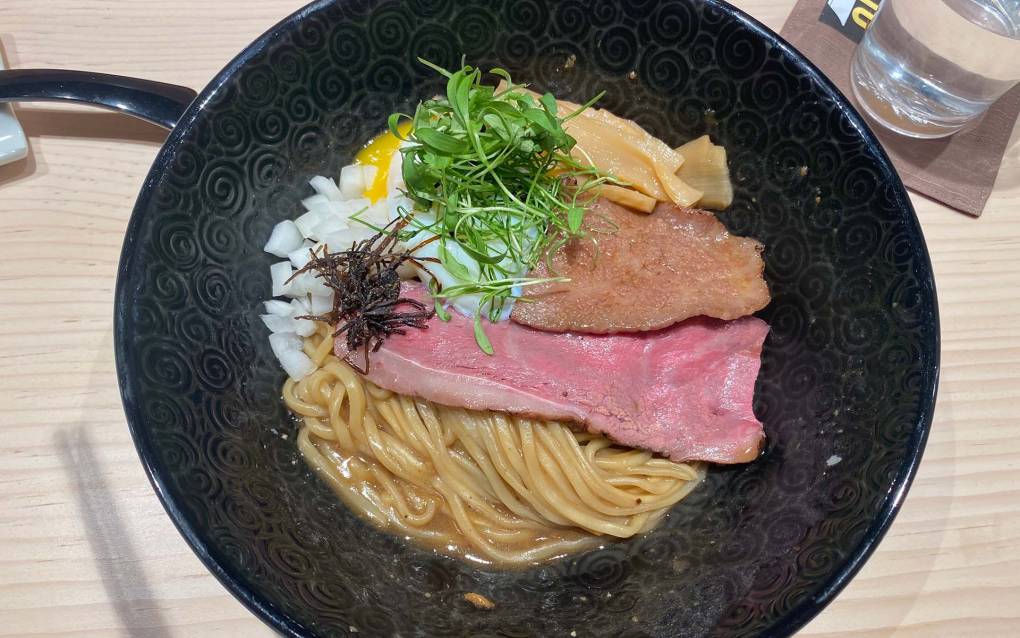
Dumpling House Mongolian CuisineDumpling House Mongolian Cuisine
The Best Dishes I Ate in 2022
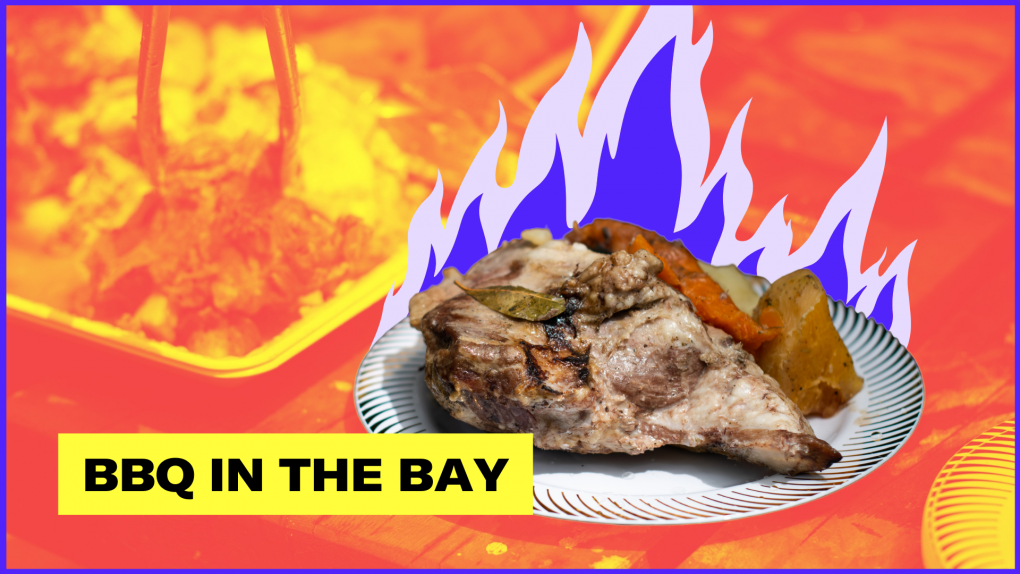
The Real Mongolian Barbecue
Sponsored
Player sponsored by
window.__IS_SSR__=true
window.__INITIAL_STATE__={
"attachmentsReducer": {
"audio_0": {
"type": "attachments",
"id": "audio_0",
"imgSizes": {
"kqedFullSize": {
"file": "https://ww2.kqed.org/news/wp-content/themes/KQED-unified/img/audio_bgs/background0.jpg"
}
}
},
"audio_1": {
"type": "attachments",
"id": "audio_1",
"imgSizes": {
"kqedFullSize": {
"file": "https://ww2.kqed.org/news/wp-content/themes/KQED-unified/img/audio_bgs/background1.jpg"
}
}
},
"audio_2": {
"type": "attachments",
"id": "audio_2",
"imgSizes": {
"kqedFullSize": {
"file": "https://ww2.kqed.org/news/wp-content/themes/KQED-unified/img/audio_bgs/background2.jpg"
}
}
},
"audio_3": {
"type": "attachments",
"id": "audio_3",
"imgSizes": {
"kqedFullSize": {
"file": "https://ww2.kqed.org/news/wp-content/themes/KQED-unified/img/audio_bgs/background3.jpg"
}
}
},
"audio_4": {
"type": "attachments",
"id": "audio_4",
"imgSizes": {
"kqedFullSize": {
"file": "https://ww2.kqed.org/news/wp-content/themes/KQED-unified/img/audio_bgs/background4.jpg"
}
}
},
"placeholder": {
"type": "attachments",
"id": "placeholder",
"imgSizes": {
"thumbnail": {
"file": "https://cdn.kqed.org/wp-content/uploads/2024/12/KQED-Default-Image-816638274-2000x1333-1-160x107.jpg",
"width": 160,
"height": 107,
"mimeType": "image/jpeg"
},
"medium": {
"file": "https://cdn.kqed.org/wp-content/uploads/2024/12/KQED-Default-Image-816638274-2000x1333-1-800x533.jpg",
"width": 800,
"height": 533,
"mimeType": "image/jpeg"
},
"medium_large": {
"file": "https://cdn.kqed.org/wp-content/uploads/2024/12/KQED-Default-Image-816638274-2000x1333-1-768x512.jpg",
"width": 768,
"height": 512,
"mimeType": "image/jpeg"
},
"large": {
"file": "https://cdn.kqed.org/wp-content/uploads/2024/12/KQED-Default-Image-816638274-2000x1333-1-1020x680.jpg",
"width": 1020,
"height": 680,
"mimeType": "image/jpeg"
},
"1536x1536": {
"file": "https://cdn.kqed.org/wp-content/uploads/2024/12/KQED-Default-Image-816638274-2000x1333-1-1536x1024.jpg",
"width": 1536,
"height": 1024,
"mimeType": "image/jpeg"
},
"fd-lrg": {
"file": "https://cdn.kqed.org/wp-content/uploads/2024/12/KQED-Default-Image-816638274-2000x1333-1-1536x1024.jpg",
"width": 1536,
"height": 1024,
"mimeType": "image/jpeg"
},
"fd-med": {
"file": "https://cdn.kqed.org/wp-content/uploads/2024/12/KQED-Default-Image-816638274-2000x1333-1-1020x680.jpg",
"width": 1020,
"height": 680,
"mimeType": "image/jpeg"
},
"fd-sm": {
"file": "https://cdn.kqed.org/wp-content/uploads/2024/12/KQED-Default-Image-816638274-2000x1333-1-800x533.jpg",
"width": 800,
"height": 533,
"mimeType": "image/jpeg"
},
"post-thumbnail": {
"file": "https://cdn.kqed.org/wp-content/uploads/2024/12/KQED-Default-Image-816638274-2000x1333-1-672x372.jpg",
"width": 672,
"height": 372,
"mimeType": "image/jpeg"
},
"twentyfourteen-full-width": {
"file": "https://cdn.kqed.org/wp-content/uploads/2024/12/KQED-Default-Image-816638274-2000x1333-1-1038x576.jpg",
"width": 1038,
"height": 576,
"mimeType": "image/jpeg"
},
"xxsmall": {
"file": "https://cdn.kqed.org/wp-content/uploads/2024/12/KQED-Default-Image-816638274-2000x1333-1-160x107.jpg",
"width": 160,
"height": 107,
"mimeType": "image/jpeg"
},
"xsmall": {
"file": "https://cdn.kqed.org/wp-content/uploads/2024/12/KQED-Default-Image-816638274-2000x1333-1-672x372.jpg",
"width": 672,
"height": 372,
"mimeType": "image/jpeg"
},
"small": {
"file": "https://cdn.kqed.org/wp-content/uploads/2024/12/KQED-Default-Image-816638274-2000x1333-1-672x372.jpg",
"width": 672,
"height": 372,
"mimeType": "image/jpeg"
},
"xlarge": {
"file": "https://cdn.kqed.org/wp-content/uploads/2024/12/KQED-Default-Image-816638274-2000x1333-1-1020x680.jpg",
"width": 1020,
"height": 680,
"mimeType": "image/jpeg"
},
"full-width": {
"file": "https://cdn.kqed.org/wp-content/uploads/2024/12/KQED-Default-Image-816638274-2000x1333-1-1920x1280.jpg",
"width": 1920,
"height": 1280,
"mimeType": "image/jpeg"
},
"guest-author-32": {
"file": "https://cdn.kqed.org/wp-content/uploads/2025/01/KQED-Default-Image-816638274-1333x1333-1-160x160.jpg",
"width": 32,
"height": 32,
"mimeType": "image/jpeg"
},
"guest-author-50": {
"file": "https://cdn.kqed.org/wp-content/uploads/2025/01/KQED-Default-Image-816638274-1333x1333-1-160x160.jpg",
"width": 50,
"height": 50,
"mimeType": "image/jpeg"
},
"guest-author-64": {
"file": "https://cdn.kqed.org/wp-content/uploads/2025/01/KQED-Default-Image-816638274-1333x1333-1-160x160.jpg",
"width": 64,
"height": 64,
"mimeType": "image/jpeg"
},
"guest-author-96": {
"file": "https://cdn.kqed.org/wp-content/uploads/2025/01/KQED-Default-Image-816638274-1333x1333-1-160x160.jpg",
"width": 96,
"height": 96,
"mimeType": "image/jpeg"
},
"guest-author-128": {
"file": "https://cdn.kqed.org/wp-content/uploads/2025/01/KQED-Default-Image-816638274-1333x1333-1-160x160.jpg",
"width": 128,
"height": 128,
"mimeType": "image/jpeg"
},
"detail": {
"file": "https://cdn.kqed.org/wp-content/uploads/2025/01/KQED-Default-Image-816638274-1333x1333-1-160x160.jpg",
"width": 160,
"height": 160,
"mimeType": "image/jpeg"
},
"kqedFullSize": {
"file": "https://cdn.kqed.org/wp-content/uploads/2024/12/KQED-Default-Image-816638274-2000x1333-1.jpg",
"width": 2000,
"height": 1333
}
}
},
"arts_13921920": {
"type": "attachments",
"id": "arts_13921920",
"meta": {
"index": "attachments_1716263798",
"site": "arts",
"id": "13921920",
"found": true
},
"parent": 13921917,
"imgSizes": {
"twentyfourteen-full-width": {
"file": "https://ww2.kqed.org/app/uploads/sites/2/2022/11/noodle-in-a-haystack_abura-soba-cropped-1038x576.jpg",
"width": 1038,
"mimeType": "image/jpeg",
"height": 576
},
"thumbnail": {
"file": "https://ww2.kqed.org/app/uploads/sites/2/2022/11/noodle-in-a-haystack_abura-soba-cropped-160x100.jpg",
"width": 160,
"mimeType": "image/jpeg",
"height": 100
},
"post-thumbnail": {
"file": "https://ww2.kqed.org/app/uploads/sites/2/2022/11/noodle-in-a-haystack_abura-soba-cropped-672x372.jpg",
"width": 672,
"mimeType": "image/jpeg",
"height": 372
},
"kqedFullSize": {
"file": "https://ww2.kqed.org/app/uploads/sites/2/2022/11/noodle-in-a-haystack_abura-soba-cropped.jpg",
"width": 1920,
"height": 1200
},
"large": {
"file": "https://ww2.kqed.org/app/uploads/sites/2/2022/11/noodle-in-a-haystack_abura-soba-cropped-1020x638.jpg",
"width": 1020,
"mimeType": "image/jpeg",
"height": 638
},
"1536x1536": {
"file": "https://ww2.kqed.org/app/uploads/sites/2/2022/11/noodle-in-a-haystack_abura-soba-cropped-1536x960.jpg",
"width": 1536,
"mimeType": "image/jpeg",
"height": 960
},
"medium": {
"file": "https://ww2.kqed.org/app/uploads/sites/2/2022/11/noodle-in-a-haystack_abura-soba-cropped-800x500.jpg",
"width": 800,
"mimeType": "image/jpeg",
"height": 500
},
"medium_large": {
"file": "https://ww2.kqed.org/app/uploads/sites/2/2022/11/noodle-in-a-haystack_abura-soba-cropped-768x480.jpg",
"width": 768,
"mimeType": "image/jpeg",
"height": 480
}
},
"publishDate": 1669188444,
"modified": 1669188573,
"caption": "The wagyu abura soba at Noodle in a Haystack might be the best ramen dish in the Bay Area.",
"description": null,
"title": "noodle in a haystack_abura soba-cropped",
"credit": "Luke Tsai",
"status": "inherit",
"altTag": "A bowl of soup-less ramen, with thick noodles and a topping of two different cuts of wagyu beef.",
"fetchFailed": false,
"isLoading": false
},
"arts_13915323": {
"type": "attachments",
"id": "arts_13915323",
"meta": {
"index": "attachments_1716263798",
"site": "arts",
"id": "13915323",
"found": true
},
"parent": 13915312,
"imgSizes": {
"twentyfourteen-full-width": {
"file": "https://ww2.kqed.org/app/uploads/sites/2/2022/06/MongolianBBQ_Thumbnail-1038x576.png",
"width": 1038,
"mimeType": "image/png",
"height": 576
},
"thumbnail": {
"file": "https://ww2.kqed.org/app/uploads/sites/2/2022/06/MongolianBBQ_Thumbnail-160x90.png",
"width": 160,
"mimeType": "image/png",
"height": 90
},
"post-thumbnail": {
"file": "https://ww2.kqed.org/app/uploads/sites/2/2022/06/MongolianBBQ_Thumbnail-672x372.png",
"width": 672,
"mimeType": "image/png",
"height": 372
},
"kqedFullSize": {
"file": "https://ww2.kqed.org/app/uploads/sites/2/2022/06/MongolianBBQ_Thumbnail.png",
"width": 1920,
"height": 1080
},
"large": {
"file": "https://ww2.kqed.org/app/uploads/sites/2/2022/06/MongolianBBQ_Thumbnail-1020x574.png",
"width": 1020,
"mimeType": "image/png",
"height": 574
},
"1536x1536": {
"file": "https://ww2.kqed.org/app/uploads/sites/2/2022/06/MongolianBBQ_Thumbnail-1536x864.png",
"width": 1536,
"mimeType": "image/png",
"height": 864
},
"medium": {
"file": "https://ww2.kqed.org/app/uploads/sites/2/2022/06/MongolianBBQ_Thumbnail-800x450.png",
"width": 800,
"mimeType": "image/png",
"height": 450
},
"medium_large": {
"file": "https://ww2.kqed.org/app/uploads/sites/2/2022/06/MongolianBBQ_Thumbnail-768x432.png",
"width": 768,
"mimeType": "image/png",
"height": 432
}
},
"publishDate": 1656410231,
"modified": 1656410325,
"caption": null,
"description": null,
"title": "MongolianBBQ_Thumbnail",
"credit": "Photo by Beth LaBerge; design by Rebecca Kao",
"status": "inherit",
"altTag": "A close-up of a large piece of roasted lamb on the bone, with stylized blue flames against a yellow-orange backdrop. The text reads, \"BBQ in the Bay.\"",
"fetchFailed": false,
"isLoading": false
},
"arts_13915325": {
"type": "attachments",
"id": "arts_13915325",
"meta": {
"index": "attachments_1716263798",
"site": "arts",
"id": "13915325",
"found": true
},
"parent": 13915312,
"imgSizes": {
"twentyfourteen-full-width": {
"file": "https://ww2.kqed.org/app/uploads/sites/2/2022/06/020_KQEDArts_MongolianKhorkhog_05092022-1038x576.jpg",
"width": 1038,
"mimeType": "image/jpeg",
"height": 576
},
"thumbnail": {
"file": "https://ww2.kqed.org/app/uploads/sites/2/2022/06/020_KQEDArts_MongolianKhorkhog_05092022-160x107.jpg",
"width": 160,
"mimeType": "image/jpeg",
"height": 107
},
"post-thumbnail": {
"file": "https://ww2.kqed.org/app/uploads/sites/2/2022/06/020_KQEDArts_MongolianKhorkhog_05092022-672x372.jpg",
"width": 672,
"mimeType": "image/jpeg",
"height": 372
},
"kqedFullSize": {
"file": "https://ww2.kqed.org/app/uploads/sites/2/2022/06/020_KQEDArts_MongolianKhorkhog_05092022.jpg",
"width": 1911,
"height": 1274
},
"large": {
"file": "https://ww2.kqed.org/app/uploads/sites/2/2022/06/020_KQEDArts_MongolianKhorkhog_05092022-1020x680.jpg",
"width": 1020,
"mimeType": "image/jpeg",
"height": 680
},
"1536x1536": {
"file": "https://ww2.kqed.org/app/uploads/sites/2/2022/06/020_KQEDArts_MongolianKhorkhog_05092022-1536x1024.jpg",
"width": 1536,
"mimeType": "image/jpeg",
"height": 1024
},
"medium": {
"file": "https://ww2.kqed.org/app/uploads/sites/2/2022/06/020_KQEDArts_MongolianKhorkhog_05092022-800x533.jpg",
"width": 800,
"mimeType": "image/jpeg",
"height": 533
},
"medium_large": {
"file": "https://ww2.kqed.org/app/uploads/sites/2/2022/06/020_KQEDArts_MongolianKhorkhog_05092022-768x512.jpg",
"width": 768,
"mimeType": "image/jpeg",
"height": 512
}
},
"publishDate": 1656410431,
"modified": 1656411196,
"caption": "In the U.S., Mongolian khorkhog is prepared by filling a pressure cooker with lamb meat, vegetables and blazing hot stones.",
"description": null,
"title": "020_KQEDArts_MongolianKhorkhog_05092022",
"credit": "Beth LaBerge",
"status": "inherit",
"altTag": "A metal pot filled with chunks of raw meat sits on an outdoor grill area with wisps of smoke rising up.",
"fetchFailed": false,
"isLoading": false
}
},
"audioPlayerReducer": {
"postId": "stream_live",
"isPaused": true,
"isPlaying": false,
"pfsActive": false,
"pledgeModalIsOpen": true,
"playerDrawerIsOpen": false
},
"authorsReducer": {
"ltsai": {
"type": "authors",
"id": "11743",
"meta": {
"index": "authors_1716337520",
"id": "11743",
"found": true
},
"name": "Luke Tsai",
"firstName": "Luke",
"lastName": "Tsai",
"slug": "ltsai",
"email": "ltsai@kqed.org",
"display_author_email": true,
"staff_mastheads": [
"arts"
],
"title": "Food Editor",
"bio": "Luke Tsai is KQED's food editor and resident stinky tofu connoisseur. Prior to KQED, he was an editor at Eater SF, \u003cem>San Francisco \u003c/em>magazine, and the \u003cem>East Bay Express\u003c/em>, and his work has also appeared in TASTE, the \u003cem>San Francisco Chronicle\u003c/em>, and the \u003cem>Best Food Writing\u003c/em> anthology. When he isn't writing or editing, you'll find him eating most everything he can get his hands on.",
"avatar": "https://secure.gravatar.com/avatar/d1ff591a3047b143a0e23cf7f28fcac0?s=600&d=blank&r=g",
"twitter": "theluketsai",
"facebook": null,
"instagram": null,
"linkedin": null,
"sites": [
{
"site": "",
"roles": [
"editor"
]
},
{
"site": "arts",
"roles": [
"administrator"
]
},
{
"site": "bayareabites",
"roles": [
"editor"
]
},
{
"site": "food",
"roles": [
"editor"
]
}
],
"headData": {
"title": "Luke Tsai | KQED",
"description": "Food Editor",
"ogImgSrc": "https://secure.gravatar.com/avatar/d1ff591a3047b143a0e23cf7f28fcac0?s=600&d=blank&r=g",
"twImgSrc": "https://secure.gravatar.com/avatar/d1ff591a3047b143a0e23cf7f28fcac0?s=600&d=blank&r=g"
},
"isLoading": false,
"link": "/author/ltsai"
}
},
"breakingNewsReducer": {},
"pagesReducer": {},
"postsReducer": {
"stream_live": {
"type": "live",
"id": "stream_live",
"audioUrl": "https://streams.kqed.org/kqedradio",
"title": "Live Stream",
"excerpt": "Live Stream information currently unavailable.",
"link": "/radio",
"featImg": "",
"label": {
"name": "KQED Live",
"link": "/"
}
},
"stream_kqedNewscast": {
"type": "posts",
"id": "stream_kqedNewscast",
"audioUrl": "https://www.kqed.org/.stream/anon/radio/RDnews/newscast.mp3?_=1",
"title": "KQED Newscast",
"featImg": "",
"label": {
"name": "88.5 FM",
"link": "/"
}
},
"arts_13921917": {
"type": "posts",
"id": "arts_13921917",
"meta": {
"index": "posts_1716263798",
"site": "arts",
"id": "13921917",
"score": null,
"sort": [
1670275354000
]
},
"parent": 0,
"labelTerm": {},
"blocks": [],
"publishDate": 1670275354,
"format": "standard",
"title": "The Best Dishes I Ate in 2022",
"headTitle": "The Best Dishes I Ate in 2022 | KQED",
"content": "\u003cp>I used to think that deliciousness was something that could be measured in absolute terms — that, even with elements of subjectivity, a dish’s taste came down to some combination of the skill of the cook and the quality of the ingredients.\u003c/p>\n\u003cp>Lately, though, I’ve been thinking about how much external circumstance is tied to many of my fondest food memories. Sometimes the food tasted better because I’d eaten it standing up — the only proper way to eat street food, after all. Sometimes deliciousness snuck up on me in an unusual, unexpected place. Oftentimes a loved one or dear friend was involved.\u003c/p>\n\u003cp>This year, too, as I thought about the best dishes I ate, it really felt like I was compiling a list of my most memorable experiences of the year — not just the tastiest bowl of stew, but the one I ate in the park with my bare hands. Not just a good sandwich, but one that I devoured in quiet contemplation on one of the rare weekends I had to spend on my own, doing whatever I pleased.\u003c/p>\n\u003cp>With that caveat, here are the 10 best things I ate in 2022, presented in roughly chronological order. I think you’ll find them pretty delicious too.\u003c/p>\n\u003cfigure id=\"attachment_13921974\" class=\"wp-caption alignnone\" style=\"max-width: 1920px\">\u003cimg loading=\"lazy\" decoding=\"async\" class=\"size-full wp-image-13921974\" src=\"https://ww2.kqed.org/app/uploads/sites/2/2022/11/dgrobak_bakso.jpg\" alt=\"Overhead view of a bowl of noodle soup with a bone-in short rib.\" width=\"1920\" height=\"1440\" srcset=\"https://cdn.kqed.org/wp-content/uploads/sites/2/2022/11/dgrobak_bakso.jpg 1920w, https://cdn.kqed.org/wp-content/uploads/sites/2/2022/11/dgrobak_bakso-800x600.jpg 800w, https://cdn.kqed.org/wp-content/uploads/sites/2/2022/11/dgrobak_bakso-1020x765.jpg 1020w, https://cdn.kqed.org/wp-content/uploads/sites/2/2022/11/dgrobak_bakso-160x120.jpg 160w, https://cdn.kqed.org/wp-content/uploads/sites/2/2022/11/dgrobak_bakso-768x576.jpg 768w, https://cdn.kqed.org/wp-content/uploads/sites/2/2022/11/dgrobak_bakso-1536x1152.jpg 1536w\" sizes=\"(max-width: 1920px) 100vw, 1920px\">\u003cfigcaption class=\"wp-caption-text\">D’Grobak specializes in the Indonesian noodle soup known as bakso. \u003ccite>(Luke Tsai)\u003c/cite>\u003c/figcaption>\u003c/figure>\n\u003ch2>1. Bakso at D’Grobak\u003c/h2>\n\u003cp>\u003ci>865 Marina Bay Pkwy. #865, Richmond\u003c/i>\u003c/p>\n\u003cp>[ad fullwidth]\u003c/p>\n\u003cp>One of the pandemic’s silver linings has been the rise of the meal kit — a dish’s component parts packaged into neat compartments for you to assemble and heat up at home, avoiding the usual limp-tortilla and soggy-noodle pitfalls of takeout. In the case of \u003ca href=\"https://www.kqed.org/arts/13908798/bakso-indonesian-street-food-noodle-soup-dgrobak-richmond\">the Indonesian pop-up D’Grobak’s\u003c/a> bakso noodle soup, it’s like a magic trick transporting you to a street stall in Indonesia: the rich smell of beef fat and white pepper that wafts up as you warm the broth. The crisp, charred exterior of the bone-in short rib you’ve briefly reheated in the oven. The bounce of the signature bakso meatballs. The jiggle of soft tendon. What else is there to say? The dish tastes like home.\u003c/p>\n\u003cfigure id=\"attachment_13921973\" class=\"wp-caption aligncenter\" style=\"max-width: 640px\">\u003cimg loading=\"lazy\" decoding=\"async\" src=\"https://ww2.kqed.org/app/uploads/sites/2/2022/11/duc-huong_dac-biet-1020x1360.jpg\" alt=\"A banh mi sandwich held up with a drive-in theater movie screen in the background.\" width=\"640\" height=\"853\" class=\"size-large wp-image-13921973\" srcset=\"https://cdn.kqed.org/wp-content/uploads/sites/2/2022/11/duc-huong_dac-biet-1020x1360.jpg 1020w, https://cdn.kqed.org/wp-content/uploads/sites/2/2022/11/duc-huong_dac-biet-800x1067.jpg 800w, https://cdn.kqed.org/wp-content/uploads/sites/2/2022/11/duc-huong_dac-biet-160x213.jpg 160w, https://cdn.kqed.org/wp-content/uploads/sites/2/2022/11/duc-huong_dac-biet-768x1024.jpg 768w, https://cdn.kqed.org/wp-content/uploads/sites/2/2022/11/duc-huong_dac-biet-1152x1536.jpg 1152w, https://cdn.kqed.org/wp-content/uploads/sites/2/2022/11/duc-huong_dac-biet-1536x2048.jpg 1536w, https://cdn.kqed.org/wp-content/uploads/sites/2/2022/11/duc-huong_dac-biet.jpg 1920w\" sizes=\"(max-width: 640px) 100vw, 640px\">\u003cfigcaption class=\"wp-caption-text\">The ideal movie snack, courtesy of Duc Huong. \u003ccite>(Luke Tsai)\u003c/cite>\u003c/figcaption>\u003c/figure>\n\u003ch2>2. Banh mi dac biet at Duc Huong\u003c/h2>\n\u003cp>\u003ci>2345 McKee Road, San Jose\u003c/i>\u003c/p>\n\u003cp>Sometimes you want cloth napkins, “still or sparkling” and a dozen courses of beautifully composed plates with complicated garnishes. Other times (maybe even \u003ci>most \u003c/i>of the time), you just want to pull up to the drive-in theater and eat banh mi on the hood of your car while watching the latest Marvel movie with your kids. In that case, you might as well head to Duc Huong, which almost certainly deserves to be in the conversation for best banh mi in San Jose — and, therefore, the best banh mi in the Bay — even if it isn’t your personal pick. The local mini-chain has five locations, each with a briskly efficient line out the door and the kind of fresh-baked baguettes and masterfully constructed sandwiches that are well worth the wait.\u003c/p>\n\u003cp>I love how Duc Huong offers a small, half-size option that allows an indecisive banh mi orderer to try two or three different sandwiches. When in doubt, though, go for the dac biet, with its hefty slices of headcheese and other cold cuts, and the precise balance it strikes between its bright pickled veggies and earthy swipe of pâté. For me, it was more satisfying, even, than a big tub of buttered popcorn: The trailers had barely ended, and I’d already finished every last bite.\u003c/p>\n\u003cfigure id=\"attachment_13915379\" class=\"wp-caption alignnone\" style=\"max-width: 1920px\">\u003cimg loading=\"lazy\" decoding=\"async\" class=\"size-full wp-image-13915379\" src=\"https://ww2.kqed.org/app/uploads/sites/2/2022/06/038_KQEDArts_MongolianKhorkhog_05092022.jpg\" alt=\"A man lifts up the lid of a pressure cooker to reveal lamb and cabbage inside.\" width=\"1920\" height=\"1280\" srcset=\"https://cdn.kqed.org/wp-content/uploads/sites/2/2022/06/038_KQEDArts_MongolianKhorkhog_05092022.jpg 1920w, https://cdn.kqed.org/wp-content/uploads/sites/2/2022/06/038_KQEDArts_MongolianKhorkhog_05092022-800x533.jpg 800w, https://cdn.kqed.org/wp-content/uploads/sites/2/2022/06/038_KQEDArts_MongolianKhorkhog_05092022-1020x680.jpg 1020w, https://cdn.kqed.org/wp-content/uploads/sites/2/2022/06/038_KQEDArts_MongolianKhorkhog_05092022-160x107.jpg 160w, https://cdn.kqed.org/wp-content/uploads/sites/2/2022/06/038_KQEDArts_MongolianKhorkhog_05092022-768x512.jpg 768w, https://cdn.kqed.org/wp-content/uploads/sites/2/2022/06/038_KQEDArts_MongolianKhorkhog_05092022-1536x1024.jpg 1536w\" sizes=\"(max-width: 1920px) 100vw, 1920px\">\u003cfigcaption class=\"wp-caption-text\">Khorkhog, a Mongolian dish of pressure-cooked lamb, served at Wildcat Canyon Regional Park in Richmond. \u003ccite>(Beth LaBerge)\u003c/cite>\u003c/figcaption>\u003c/figure>\n\u003ch2>3. Khorkhog at Dumpling House Mongolian Cuisine\u003c/h2>\n\u003cp>\u003ci>2221 San Pablo Ave. #6, Richmond\u003c/i>\u003c/p>\n\u003cp>I’d wanted to try the dish that had been described to me as “\u003ca href=\"https://www.kqed.org/arts/13915312/real-mongolian-barbecue-khorkhog-richmond\">the real Mongolian barbecue\u003c/a>” for several years. Then, in June, the kind Mongolian family that runs Richmond’s Dumpling House brought me to a park in the East Bay hills and showed me how they make the slow-cooked whole lamb dish known as khorkhog the traditional way — over a live fire, inside a heavy-duty, old-school pressure cooker that’s been sealed tight and filled with blistering hot rocks. We tore off hunks of meat and ate with our bare hands, scooping up pieces of carrot, cabbage and rutabaga that had soaked up the same savory lamb juices that were dripping down our chins. And while I cannot promise you the exact same experience, I can tell you that you can, in fact, order an indoor version of khorkhog at the restaurant. All you need to do is call a few hours ahead and bring at least three or four hungry carnivores with you to share the bounty.\u003c/p>\n\u003cfigure id=\"attachment_13921972\" class=\"wp-caption alignnone\" style=\"max-width: 1920px\">\u003cimg loading=\"lazy\" decoding=\"async\" class=\"size-full wp-image-13921972\" src=\"https://ww2.kqed.org/app/uploads/sites/2/2022/11/rocky-island_oysters.jpg\" alt=\"A tray of oysters on ice.\" width=\"1920\" height=\"1440\" srcset=\"https://cdn.kqed.org/wp-content/uploads/sites/2/2022/11/rocky-island_oysters.jpg 1920w, https://cdn.kqed.org/wp-content/uploads/sites/2/2022/11/rocky-island_oysters-800x600.jpg 800w, https://cdn.kqed.org/wp-content/uploads/sites/2/2022/11/rocky-island_oysters-1020x765.jpg 1020w, https://cdn.kqed.org/wp-content/uploads/sites/2/2022/11/rocky-island_oysters-160x120.jpg 160w, https://cdn.kqed.org/wp-content/uploads/sites/2/2022/11/rocky-island_oysters-768x576.jpg 768w, https://cdn.kqed.org/wp-content/uploads/sites/2/2022/11/rocky-island_oysters-1536x1152.jpg 1536w\" sizes=\"(max-width: 1920px) 100vw, 1920px\">\u003cfigcaption class=\"wp-caption-text\">Rocky Island Oyster Co. puts the spotlight on East Coast oysters. \u003ccite>(Luke Tsai)\u003c/cite>\u003c/figcaption>\u003c/figure>\n\u003ch2>4. East Coast oysters at Rocky Island Oyster Co.\u003c/h2>\n\u003cp>\u003ci>1440 Harbour Way S., Richmond\u003c/i>\u003c/p>\n\u003cp>A freshly shucked Pacific oyster is a lovely thing. But when Rocky Island Oyster Co. \u003ca href=\"https://www.kqed.org/arts/13909648/rocky-island-oyster-bar-richmond-waterfront-view-lobster-roll\">opened in Richmond late last year\u003c/a>, it was with the express purpose of introducing Bay Area shellfish enthusiasts to a new love: the East Coast oyster. Specifically, oysters from the area near owner Danny Pirello’s hometown on the Massachusetts shoreline. And I must admit: It didn’t take more than a single slurp to turn me into a convert to the pleasures of these crisp, briny-sweet beauties (saltier and more substantial than, say, your typical Kumamoto), which I’d have happily made an entire meal of with no other addition than a lemon wedge and a little tub of mignonette. Of course, the waterfront outdoor seating area’s immaculate vibes and million-dollar view of Bay made everything taste even sweeter.\u003c/p>\n\u003cfigure id=\"attachment_13921976\" class=\"wp-caption alignnone\" style=\"max-width: 1920px\">\u003cimg loading=\"lazy\" decoding=\"async\" class=\"size-full wp-image-13921976\" src=\"https://ww2.kqed.org/app/uploads/sites/2/2022/11/wahpepahs_three-sisters.jpg\" alt=\"A salad with cooked grains, squash, nuts, heirloom corn and more.\" width=\"1920\" height=\"1440\" srcset=\"https://cdn.kqed.org/wp-content/uploads/sites/2/2022/11/wahpepahs_three-sisters.jpg 1920w, https://cdn.kqed.org/wp-content/uploads/sites/2/2022/11/wahpepahs_three-sisters-800x600.jpg 800w, https://cdn.kqed.org/wp-content/uploads/sites/2/2022/11/wahpepahs_three-sisters-1020x765.jpg 1020w, https://cdn.kqed.org/wp-content/uploads/sites/2/2022/11/wahpepahs_three-sisters-160x120.jpg 160w, https://cdn.kqed.org/wp-content/uploads/sites/2/2022/11/wahpepahs_three-sisters-768x576.jpg 768w, https://cdn.kqed.org/wp-content/uploads/sites/2/2022/11/wahpepahs_three-sisters-1536x1152.jpg 1536w\" sizes=\"(max-width: 1920px) 100vw, 1920px\">\u003cfigcaption class=\"wp-caption-text\">A salad featuring the “three sisters” (corn, squash and beans) that are traditional in several Native food cultures. \u003ccite>(Luke Tsai)\u003c/cite>\u003c/figcaption>\u003c/figure>\n\u003ch2>5a. Three Sisters’ Salad at Wahpepah’s Kitchen\u003c/h2>\n\u003cp>\u003ci>3301 E. 12th St. #133, Oakland\u003c/i>\u003c/p>\n\u003cp>I have said on the record many times that I do not, as a general rule, particularly care for salads. Maybe it’s more accurate to say I don’t like the kind of endlessly monotonous, Eurocentric salads made up of nothing but raw vegetables. Give me all the nuts, seeds and other assorted crunchy things! Mix in some cooked ingredients, fish sauce or fermented tea leaves, or big chunks of meat and cheese. The Three Sisters’ Salad at \u003ca href=\"https://www.kqed.org/arts/13903531/wahpepahs-kitchen-fruitvale-indigenous-restaurant\">Wahpepah’s Kitchen, a new indigenous-owned restaurant in Oakland’s Fruitvale neighborhood\u003c/a>, was the perfect antidote to my bland-salad doldrums. I loved all of the different textures from the variety of raw and cooked elements: the quinoa, amaranth, chopped nuts and, of course, the traditional “sisters” themselves (heirloom corn, beans and squash). And the dressing — a maple reduction mixed with chili oil — was such a memorable combination of sweet, spicy, smoky flavors that the only word that came to mind was one I almost never use to describe a salad: It was thrilling.\u003c/p>\n\u003cfigure id=\"attachment_13921980\" class=\"wp-caption alignnone\" style=\"max-width: 1920px\">\u003cimg loading=\"lazy\" decoding=\"async\" class=\"size-full wp-image-13921980\" src=\"https://ww2.kqed.org/app/uploads/sites/2/2022/11/2207_salad.jpg\" alt=\"Takeout box filled with grain salad.\" width=\"1920\" height=\"1440\" srcset=\"https://cdn.kqed.org/wp-content/uploads/sites/2/2022/11/2207_salad.jpg 1920w, https://cdn.kqed.org/wp-content/uploads/sites/2/2022/11/2207_salad-800x600.jpg 800w, https://cdn.kqed.org/wp-content/uploads/sites/2/2022/11/2207_salad-1020x765.jpg 1020w, https://cdn.kqed.org/wp-content/uploads/sites/2/2022/11/2207_salad-160x120.jpg 160w, https://cdn.kqed.org/wp-content/uploads/sites/2/2022/11/2207_salad-768x576.jpg 768w, https://cdn.kqed.org/wp-content/uploads/sites/2/2022/11/2207_salad-1536x1152.jpg 1536w\" sizes=\"(max-width: 1920px) 100vw, 1920px\">\u003cfigcaption class=\"wp-caption-text\">A salad that’s not just salad greens and other raw vegetables. \u003ccite>(Luke Tsai)\u003c/cite>\u003c/figcaption>\u003c/figure>\n\u003ch2>5b. Market grain salad with harissa grilled chicken at 2207\u003c/h2>\n\u003cp>\u003ci>2207 Macdonald Ave., Richmond\u003c/i>\u003c/p>\n\u003cp>No, no one has taken me hostage: I do in fact have (count ’em) \u003ci>two\u003c/i> salads in this top 10 list. This one’s an old favorite recently brought back into the rotation now that my neighborhood takeout lunch spot, 2207, has reopened — on a \u003ca href=\"https://twenty2zero7.square.site/?location=11eb70099aab40c6889eac1f6bbbd01e\">preorder-only basis\u003c/a> — after shutting down for the first two-plus years of the pandemic. The restaurant makes a fabulously beefy patty melt and some of my favorite fried chicken in the Bay, so it’s saying something that the one menu staple I keep coming back to is a \u003ci>market grain salad\u003c/i>. It comes loaded not just with your usual mixed greens, but also cooked grains, thick slabs of feta, chicken thigh meat with the impeccably crispy skin still attached and whatever gorgeous produce happens to be in season — pomegranate seeds and slices of persimmon, perhaps, or sweet corn and ripe stone fruit if you’re lucky enough to snag this during the summer months. The tahini-based dressing is a little bit sweet, a little bit spicy and, like everything else about this salad, \u003ci>just right\u003c/i>.\u003c/p>\n\u003cfigure id=\"attachment_13921975\" class=\"wp-caption alignnone\" style=\"max-width: 1920px\">\u003cimg loading=\"lazy\" decoding=\"async\" class=\"size-full wp-image-13921975\" src=\"https://ww2.kqed.org/app/uploads/sites/2/2022/11/noodle-in-a-haystack_abura-soba.jpg\" alt=\"A bowl of ramen with no soup, topped with a slice of wagyu beef.\" width=\"1920\" height=\"1440\" srcset=\"https://cdn.kqed.org/wp-content/uploads/sites/2/2022/11/noodle-in-a-haystack_abura-soba.jpg 1920w, https://cdn.kqed.org/wp-content/uploads/sites/2/2022/11/noodle-in-a-haystack_abura-soba-800x600.jpg 800w, https://cdn.kqed.org/wp-content/uploads/sites/2/2022/11/noodle-in-a-haystack_abura-soba-1020x765.jpg 1020w, https://cdn.kqed.org/wp-content/uploads/sites/2/2022/11/noodle-in-a-haystack_abura-soba-160x120.jpg 160w, https://cdn.kqed.org/wp-content/uploads/sites/2/2022/11/noodle-in-a-haystack_abura-soba-768x576.jpg 768w, https://cdn.kqed.org/wp-content/uploads/sites/2/2022/11/noodle-in-a-haystack_abura-soba-1536x1152.jpg 1536w\" sizes=\"(max-width: 1920px) 100vw, 1920px\">\u003cfigcaption class=\"wp-caption-text\">Hype-worthy noodles. \u003ccite>(Luke Tsai)\u003c/cite>\u003c/figcaption>\u003c/figure>\n\u003ch2>6. Wagyu beef abura soba at Noodle in a Haystack\u003c/h2>\n\u003cp>\u003ci>4601 Geary Blvd., San Francisco\u003c/i>\u003c/p>\n\u003cp>Noodle in a Haystack’s \u003ca href=\"https://www.kqed.org/arts/13898743/noodle-in-a-haystack-ramen-pop-up-sf-richmond\">legend preceded it\u003c/a>. From its roots as an underground supper club run out of its founders’ home kitchen, San Francisco’s most ambitious and eccentric ramen shop had acquired a reputation for serving \u003ca href=\"https://www.sfchronicle.com/food/article/noodle-haystack-ramen-17458157.php\">the Bay Area’s best ramen\u003c/a> by a wide margin — and, perhaps, some of the best you can find outside of Japan — years before its tiny Inner Richmond storefront debuted earlier this spring. I am simply here to tell you that the place lives up to all of the hype, even if the $175 price tag (for a 10-plus course tasting menu) isn’t for everyone.\u003c/p>\n\u003cp>I could write separate, well-deserved entries about the deviled egg opener (supercharged with fish powder, fish roe and crispy chicken skin), the crab and tofu soup or the fried pork belly. But suffice it to say that the ramen dish they were serving on the night of my visit — a soupless version featuring thick, springy noodles coated in a rich sauce made with rendered wagyu beef fat — was so delicious that it left me completely speechless.\u003c/p>\n\u003cfigure id=\"attachment_13921982\" class=\"wp-caption alignnone\" style=\"max-width: 1920px\">\u003cimg loading=\"lazy\" decoding=\"async\" class=\"size-full wp-image-13921982\" src=\"https://ww2.kqed.org/app/uploads/sites/2/2022/11/marvins_chicken-fried-steak.jpg\" alt=\"A plate of chicken fried steak, toast and hash browns.\" width=\"1920\" height=\"1440\" srcset=\"https://cdn.kqed.org/wp-content/uploads/sites/2/2022/11/marvins_chicken-fried-steak.jpg 1920w, https://cdn.kqed.org/wp-content/uploads/sites/2/2022/11/marvins_chicken-fried-steak-800x600.jpg 800w, https://cdn.kqed.org/wp-content/uploads/sites/2/2022/11/marvins_chicken-fried-steak-1020x765.jpg 1020w, https://cdn.kqed.org/wp-content/uploads/sites/2/2022/11/marvins_chicken-fried-steak-160x120.jpg 160w, https://cdn.kqed.org/wp-content/uploads/sites/2/2022/11/marvins_chicken-fried-steak-768x576.jpg 768w, https://cdn.kqed.org/wp-content/uploads/sites/2/2022/11/marvins_chicken-fried-steak-1536x1152.jpg 1536w\" sizes=\"(max-width: 1920px) 100vw, 1920px\">\u003cfigcaption class=\"wp-caption-text\">Marvin’s is the North Bay’s short-order breakfast king. \u003ccite>(Luke Tsai)\u003c/cite>\u003c/figcaption>\u003c/figure>\n\u003ch2>7. Chicken fried steak at Marvin’s Breakfast Club in Novato\u003c/h2>\n\u003cp>\u003ci>1112 Grant Ave., Novato\u003c/i>\u003c/p>\n\u003cp>Let us take a moment to praise the short-order breakfast cook, whose workmanlike ranks have probably brought as much pleasure to my life as any Michelin star–chasing chef. This was the year I discovered Marvin’s Breakfast Club, a Platonic ideal of the short-order breakfast genre in Marin County, with its dependably crispy hash browns and its classic roster of omelets and Benedicts, each item as steadfast as your most dependable old childhood friend. What I love best is going to Marvin’s as a solo diner on a lazy Sunday, sliding into a counter stool with a paperback and ordering the chicken fried steak. This is a monstrous, supremely comforting plate of food, piled high with crisp, battered steak, runny-yolked eggs, country gravy, hash browns and buttered toast. I’ve been known to (against all odds) finish the entire thing, cross the bridge back home to the East Bay and immediately curl up for a nice long nap.\u003c/p>\n\u003cfigure id=\"attachment_13921979\" class=\"wp-caption alignnone\" style=\"max-width: 1920px\">\u003cimg loading=\"lazy\" decoding=\"async\" class=\"size-full wp-image-13921979\" src=\"https://ww2.kqed.org/app/uploads/sites/2/2022/11/good-to-eat_bbq.jpg\" alt=\"Small bowl of lu rou fan next to a plate of grilled chicken.\" width=\"1920\" height=\"1440\" srcset=\"https://cdn.kqed.org/wp-content/uploads/sites/2/2022/11/good-to-eat_bbq.jpg 1920w, https://cdn.kqed.org/wp-content/uploads/sites/2/2022/11/good-to-eat_bbq-800x600.jpg 800w, https://cdn.kqed.org/wp-content/uploads/sites/2/2022/11/good-to-eat_bbq-1020x765.jpg 1020w, https://cdn.kqed.org/wp-content/uploads/sites/2/2022/11/good-to-eat_bbq-160x120.jpg 160w, https://cdn.kqed.org/wp-content/uploads/sites/2/2022/11/good-to-eat_bbq-768x576.jpg 768w, https://cdn.kqed.org/wp-content/uploads/sites/2/2022/11/good-to-eat_bbq-1536x1152.jpg 1536w\" sizes=\"(max-width: 1920px) 100vw, 1920px\">\u003cfigcaption class=\"wp-caption-text\">Lu rou fan and Taiwanese-style grilled chicken were just two of the offerings at Good-to-Eat Dumplings’ Mid-Autumn Festival event. \u003ccite>(Luke Tsai)\u003c/cite>\u003c/figcaption>\u003c/figure>\n\u003ch2>8. Taiwanese barbecue at Good-to-Eat Dumplings\u003c/h2>\n\u003cp>\u003ci>1298 65th St., Emeryville\u003c/i>\u003c/p>\n\u003cp>In Taiwan, Mid-Autumn Festival isn’t just an occasion to eat mooncakes; it has also become the unofficial national day of grilling, when folks young and old gather in riverside parks or \u003ca href=\"https://www.kqed.org/arts/13915306/bbq-in-the-bay-series-intro-multicultural-barbecue-bay-area\">crouch on the sidewalk over makeshift grill grates set over cement blocks or car tire rims\u003c/a>, gorging themselves on meat skewer after well-charred meat skewer. This year, newly opened Taiwanese hotspot Good-to-Eat Dumplings celebrated Mid-Autumn Festival by firing up the grill and bringing this tradition to its Emeryville back patio, serving a slew of oversized grilled chicken breasts, sweet Taiwanese-style sausages, corn on the cob slathered in Taiwanese barbecue sauce and big bowls of \u003ca href=\"https://www.kqed.org/arts/13897498/mama-liu-lu-rou-fan-taiwanese-food-comic\">lu rou fan\u003c/a> for good measure. Needless to say, all of the food was delicious — but beyond that, watching the long queue of diners waiting in line for Taiwanese barbecue in the restaurant’s little backyard, the smell of charcoal wafting in the air, I felt closer to my home country than I had at any other point of the pandemic.\u003c/p>\n\u003cfigure id=\"attachment_13921978\" class=\"wp-caption alignnone\" style=\"max-width: 1920px\">\u003cimg loading=\"lazy\" decoding=\"async\" class=\"size-full wp-image-13921978\" src=\"https://ww2.kqed.org/app/uploads/sites/2/2022/11/san-ho-won_galbi.jpg\" alt=\"Korean-style short ribs on a rack.\" width=\"1920\" height=\"1440\" srcset=\"https://cdn.kqed.org/wp-content/uploads/sites/2/2022/11/san-ho-won_galbi.jpg 1920w, https://cdn.kqed.org/wp-content/uploads/sites/2/2022/11/san-ho-won_galbi-800x600.jpg 800w, https://cdn.kqed.org/wp-content/uploads/sites/2/2022/11/san-ho-won_galbi-1020x765.jpg 1020w, https://cdn.kqed.org/wp-content/uploads/sites/2/2022/11/san-ho-won_galbi-160x120.jpg 160w, https://cdn.kqed.org/wp-content/uploads/sites/2/2022/11/san-ho-won_galbi-768x576.jpg 768w, https://cdn.kqed.org/wp-content/uploads/sites/2/2022/11/san-ho-won_galbi-1536x1152.jpg 1536w\" sizes=\"(max-width: 1920px) 100vw, 1920px\">\u003cfigcaption class=\"wp-caption-text\">The galbi at San Ho Won is as tender as butter. \u003ccite>(Luke Tsai)\u003c/cite>\u003c/figcaption>\u003c/figure>\n\u003ch2>9. Galbi and beef neck at San Ho Won\u003c/h2>\n\u003cp>\u003ci>2170 Bryant St., San Francisco\u003c/i>\u003c/p>\n\u003cp>[aside postID='arts_13907197']San Ho Won might be the most affordable among multiple-Michelin man Corey Lee’s fleet of San Francisco restaurants, but few diners would mistake it for an everyday kind of place. As a destination for celebrating that job promotion, or stimulus check, or unusually generous New Year’s red envelope? The \u003ca href=\"https://www.kqed.org/arts/13921461/san-ho-won-korean-lager-fort-point-beer-corey-lee-san-francisco\">charcoal barbecue spot\u003c/a> is pretty darn great — especially if grilled beef is your indulgence of choice. Here, even more than at your average Korean barbecue joint, each order of beef neck and thick, double-cut galbi is the product of literal sweat labor: The grill masters spend the whole night on their feet, toiling in the smoke in front of red-hot charcoal. The first time I ate at San Ho Won, it was to celebrate an unexpected windfall of my own — and so, every precisely cut, crisp-edged, impossibly tender piece of meat felt like the luckiest kind of gift.\u003c/p>\n\u003cfigure id=\"attachment_13921981\" class=\"wp-caption alignnone\" style=\"max-width: 1920px\">\u003cimg loading=\"lazy\" decoding=\"async\" class=\"size-full wp-image-13921981\" src=\"https://ww2.kqed.org/app/uploads/sites/2/2022/11/delirama_og.jpg\" alt=\"A massive sandwich overflowing with pastrami and slaw.\" width=\"1920\" height=\"1440\" srcset=\"https://cdn.kqed.org/wp-content/uploads/sites/2/2022/11/delirama_og.jpg 1920w, https://cdn.kqed.org/wp-content/uploads/sites/2/2022/11/delirama_og-800x600.jpg 800w, https://cdn.kqed.org/wp-content/uploads/sites/2/2022/11/delirama_og-1020x765.jpg 1020w, https://cdn.kqed.org/wp-content/uploads/sites/2/2022/11/delirama_og-160x120.jpg 160w, https://cdn.kqed.org/wp-content/uploads/sites/2/2022/11/delirama_og-768x576.jpg 768w, https://cdn.kqed.org/wp-content/uploads/sites/2/2022/11/delirama_og-1536x1152.jpg 1536w\" sizes=\"(max-width: 1920px) 100vw, 1920px\">\u003cfigcaption class=\"wp-caption-text\">The “OG.” \u003ccite>(Luke Tsai)\u003c/cite>\u003c/figcaption>\u003c/figure>\n\u003ch2>10. The ‘O.G.’ at Delirama\u003c/h2>\n\u003cp>\u003ci>1746 Solano Ave., Berkeley\u003c/i>\u003c/p>\n\u003cp>[ad floatright]\u003c/p>\n\u003cp>The best sandwich I ate in the Bay Area this year came on thick slices of fresh-baked rye bread griddled in enough butter to raise eyebrows. It was loaded with coleslaw (more mustardy than sweet), with Thousand Island dressing and gruyere cheese. And because I’d ordered the sandwich “husky,” with extra meat — since that’s the kind of sandwich eater I am — it came practically overflowing with Delirama’s claim to fame: house-made pastrami so flavorful, so lusciously fatty and crisp around the edges, that it set a new Bay Area standard for the deli classic \u003ca href=\"https://www.kqed.org/arts/13917120/delirama-pastrami-berkeley-opening-hella-hungry\">from the first day the restaurant opened\u003c/a>. This is a sandwich that commands your full attention — and requires short breaks to finish the whole thing. Let the record show: I was up to the task.\u003c/p>\n\n",
"stats": {
"hasVideo": false,
"hasChartOrMap": false,
"hasAudio": false,
"hasPolis": false,
"wordCount": 2425,
"hasGoogleForm": false,
"hasGallery": false,
"hasHearkenModule": false,
"iframeSrcs": [],
"paragraphCount": 30
},
"modified": 1705006091,
"excerpt": "My year in ad hoc barbecue, memorable salads and game-changing pastrami.",
"headData": {
"twImgId": "",
"twTitle": "The Best Dishes I Ate in 2022",
"socialTitle": "KQED Food Editor Luke Tsai's Best Dishes of 2022 %%page%% %%sep%% KQED",
"ogTitle": "The Best Dishes I Ate in 2022",
"ogImgId": "",
"twDescription": "",
"description": "My year in ad hoc barbecue, memorable salads and game-changing pastrami.",
"title": "KQED Food Editor Luke Tsai's Best Dishes of 2022 | KQED",
"ogDescription": "",
"schema": {
"@context": "https://schema.org",
"@type": "Article",
"headline": "The Best Dishes I Ate in 2022",
"datePublished": "2022-12-05T13:22:34-08:00",
"dateModified": "2024-01-11T12:48:11-08:00",
"image": "https://cdn.kqed.org/wp-content/uploads/2020/02/KQED-OG-Image@1x.png"
}
},
"guestAuthors": [],
"slug": "best-dishes-bay-area-2022",
"status": "publish",
"sourceUrl": "/food/",
"templateType": "standard",
"excludeFromSiteSearch": "Include",
"featuredImageType": "standard",
"sticky": false,
"source": "Food",
"path": "/arts/13921917/best-dishes-bay-area-2022",
"audioTrackLength": null,
"parsedContent": [
{
"type": "contentString",
"content": "\u003cdiv class=\"post-body\">\u003cp>\u003cp>I used to think that deliciousness was something that could be measured in absolute terms — that, even with elements of subjectivity, a dish’s taste came down to some combination of the skill of the cook and the quality of the ingredients.\u003c/p>\n\u003cp>Lately, though, I’ve been thinking about how much external circumstance is tied to many of my fondest food memories. Sometimes the food tasted better because I’d eaten it standing up — the only proper way to eat street food, after all. Sometimes deliciousness snuck up on me in an unusual, unexpected place. Oftentimes a loved one or dear friend was involved.\u003c/p>\n\u003cp>This year, too, as I thought about the best dishes I ate, it really felt like I was compiling a list of my most memorable experiences of the year — not just the tastiest bowl of stew, but the one I ate in the park with my bare hands. Not just a good sandwich, but one that I devoured in quiet contemplation on one of the rare weekends I had to spend on my own, doing whatever I pleased.\u003c/p>\n\u003cp>With that caveat, here are the 10 best things I ate in 2022, presented in roughly chronological order. I think you’ll find them pretty delicious too.\u003c/p>\n\u003cfigure id=\"attachment_13921974\" class=\"wp-caption alignnone\" style=\"max-width: 1920px\">\u003cimg loading=\"lazy\" decoding=\"async\" class=\"size-full wp-image-13921974\" src=\"https://ww2.kqed.org/app/uploads/sites/2/2022/11/dgrobak_bakso.jpg\" alt=\"Overhead view of a bowl of noodle soup with a bone-in short rib.\" width=\"1920\" height=\"1440\" srcset=\"https://cdn.kqed.org/wp-content/uploads/sites/2/2022/11/dgrobak_bakso.jpg 1920w, https://cdn.kqed.org/wp-content/uploads/sites/2/2022/11/dgrobak_bakso-800x600.jpg 800w, https://cdn.kqed.org/wp-content/uploads/sites/2/2022/11/dgrobak_bakso-1020x765.jpg 1020w, https://cdn.kqed.org/wp-content/uploads/sites/2/2022/11/dgrobak_bakso-160x120.jpg 160w, https://cdn.kqed.org/wp-content/uploads/sites/2/2022/11/dgrobak_bakso-768x576.jpg 768w, https://cdn.kqed.org/wp-content/uploads/sites/2/2022/11/dgrobak_bakso-1536x1152.jpg 1536w\" sizes=\"(max-width: 1920px) 100vw, 1920px\">\u003cfigcaption class=\"wp-caption-text\">D’Grobak specializes in the Indonesian noodle soup known as bakso. \u003ccite>(Luke Tsai)\u003c/cite>\u003c/figcaption>\u003c/figure>\n\u003ch2>1. Bakso at D’Grobak\u003c/h2>\n\u003cp>\u003ci>865 Marina Bay Pkwy. #865, Richmond\u003c/i>\u003c/p>\n\u003cp>\u003c/p>\u003c/div>",
"attributes": {
"named": {},
"numeric": []
}
},
{
"type": "component",
"content": "",
"name": "ad",
"attributes": {
"named": {
"label": "fullwidth"
},
"numeric": [
"fullwidth"
]
}
},
{
"type": "contentString",
"content": "\u003cdiv class=\"post-body\">\u003cp>\u003c/p>\n\u003cp>One of the pandemic’s silver linings has been the rise of the meal kit — a dish’s component parts packaged into neat compartments for you to assemble and heat up at home, avoiding the usual limp-tortilla and soggy-noodle pitfalls of takeout. In the case of \u003ca href=\"https://www.kqed.org/arts/13908798/bakso-indonesian-street-food-noodle-soup-dgrobak-richmond\">the Indonesian pop-up D’Grobak’s\u003c/a> bakso noodle soup, it’s like a magic trick transporting you to a street stall in Indonesia: the rich smell of beef fat and white pepper that wafts up as you warm the broth. The crisp, charred exterior of the bone-in short rib you’ve briefly reheated in the oven. The bounce of the signature bakso meatballs. The jiggle of soft tendon. What else is there to say? The dish tastes like home.\u003c/p>\n\u003cfigure id=\"attachment_13921973\" class=\"wp-caption aligncenter\" style=\"max-width: 640px\">\u003cimg loading=\"lazy\" decoding=\"async\" src=\"https://ww2.kqed.org/app/uploads/sites/2/2022/11/duc-huong_dac-biet-1020x1360.jpg\" alt=\"A banh mi sandwich held up with a drive-in theater movie screen in the background.\" width=\"640\" height=\"853\" class=\"size-large wp-image-13921973\" srcset=\"https://cdn.kqed.org/wp-content/uploads/sites/2/2022/11/duc-huong_dac-biet-1020x1360.jpg 1020w, https://cdn.kqed.org/wp-content/uploads/sites/2/2022/11/duc-huong_dac-biet-800x1067.jpg 800w, https://cdn.kqed.org/wp-content/uploads/sites/2/2022/11/duc-huong_dac-biet-160x213.jpg 160w, https://cdn.kqed.org/wp-content/uploads/sites/2/2022/11/duc-huong_dac-biet-768x1024.jpg 768w, https://cdn.kqed.org/wp-content/uploads/sites/2/2022/11/duc-huong_dac-biet-1152x1536.jpg 1152w, https://cdn.kqed.org/wp-content/uploads/sites/2/2022/11/duc-huong_dac-biet-1536x2048.jpg 1536w, https://cdn.kqed.org/wp-content/uploads/sites/2/2022/11/duc-huong_dac-biet.jpg 1920w\" sizes=\"(max-width: 640px) 100vw, 640px\">\u003cfigcaption class=\"wp-caption-text\">The ideal movie snack, courtesy of Duc Huong. \u003ccite>(Luke Tsai)\u003c/cite>\u003c/figcaption>\u003c/figure>\n\u003ch2>2. Banh mi dac biet at Duc Huong\u003c/h2>\n\u003cp>\u003ci>2345 McKee Road, San Jose\u003c/i>\u003c/p>\n\u003cp>Sometimes you want cloth napkins, “still or sparkling” and a dozen courses of beautifully composed plates with complicated garnishes. Other times (maybe even \u003ci>most \u003c/i>of the time), you just want to pull up to the drive-in theater and eat banh mi on the hood of your car while watching the latest Marvel movie with your kids. In that case, you might as well head to Duc Huong, which almost certainly deserves to be in the conversation for best banh mi in San Jose — and, therefore, the best banh mi in the Bay — even if it isn’t your personal pick. The local mini-chain has five locations, each with a briskly efficient line out the door and the kind of fresh-baked baguettes and masterfully constructed sandwiches that are well worth the wait.\u003c/p>\n\u003cp>I love how Duc Huong offers a small, half-size option that allows an indecisive banh mi orderer to try two or three different sandwiches. When in doubt, though, go for the dac biet, with its hefty slices of headcheese and other cold cuts, and the precise balance it strikes between its bright pickled veggies and earthy swipe of pâté. For me, it was more satisfying, even, than a big tub of buttered popcorn: The trailers had barely ended, and I’d already finished every last bite.\u003c/p>\n\u003cfigure id=\"attachment_13915379\" class=\"wp-caption alignnone\" style=\"max-width: 1920px\">\u003cimg loading=\"lazy\" decoding=\"async\" class=\"size-full wp-image-13915379\" src=\"https://ww2.kqed.org/app/uploads/sites/2/2022/06/038_KQEDArts_MongolianKhorkhog_05092022.jpg\" alt=\"A man lifts up the lid of a pressure cooker to reveal lamb and cabbage inside.\" width=\"1920\" height=\"1280\" srcset=\"https://cdn.kqed.org/wp-content/uploads/sites/2/2022/06/038_KQEDArts_MongolianKhorkhog_05092022.jpg 1920w, https://cdn.kqed.org/wp-content/uploads/sites/2/2022/06/038_KQEDArts_MongolianKhorkhog_05092022-800x533.jpg 800w, https://cdn.kqed.org/wp-content/uploads/sites/2/2022/06/038_KQEDArts_MongolianKhorkhog_05092022-1020x680.jpg 1020w, https://cdn.kqed.org/wp-content/uploads/sites/2/2022/06/038_KQEDArts_MongolianKhorkhog_05092022-160x107.jpg 160w, https://cdn.kqed.org/wp-content/uploads/sites/2/2022/06/038_KQEDArts_MongolianKhorkhog_05092022-768x512.jpg 768w, https://cdn.kqed.org/wp-content/uploads/sites/2/2022/06/038_KQEDArts_MongolianKhorkhog_05092022-1536x1024.jpg 1536w\" sizes=\"(max-width: 1920px) 100vw, 1920px\">\u003cfigcaption class=\"wp-caption-text\">Khorkhog, a Mongolian dish of pressure-cooked lamb, served at Wildcat Canyon Regional Park in Richmond. \u003ccite>(Beth LaBerge)\u003c/cite>\u003c/figcaption>\u003c/figure>\n\u003ch2>3. Khorkhog at Dumpling House Mongolian Cuisine\u003c/h2>\n\u003cp>\u003ci>2221 San Pablo Ave. #6, Richmond\u003c/i>\u003c/p>\n\u003cp>I’d wanted to try the dish that had been described to me as “\u003ca href=\"https://www.kqed.org/arts/13915312/real-mongolian-barbecue-khorkhog-richmond\">the real Mongolian barbecue\u003c/a>” for several years. Then, in June, the kind Mongolian family that runs Richmond’s Dumpling House brought me to a park in the East Bay hills and showed me how they make the slow-cooked whole lamb dish known as khorkhog the traditional way — over a live fire, inside a heavy-duty, old-school pressure cooker that’s been sealed tight and filled with blistering hot rocks. We tore off hunks of meat and ate with our bare hands, scooping up pieces of carrot, cabbage and rutabaga that had soaked up the same savory lamb juices that were dripping down our chins. And while I cannot promise you the exact same experience, I can tell you that you can, in fact, order an indoor version of khorkhog at the restaurant. All you need to do is call a few hours ahead and bring at least three or four hungry carnivores with you to share the bounty.\u003c/p>\n\u003cfigure id=\"attachment_13921972\" class=\"wp-caption alignnone\" style=\"max-width: 1920px\">\u003cimg loading=\"lazy\" decoding=\"async\" class=\"size-full wp-image-13921972\" src=\"https://ww2.kqed.org/app/uploads/sites/2/2022/11/rocky-island_oysters.jpg\" alt=\"A tray of oysters on ice.\" width=\"1920\" height=\"1440\" srcset=\"https://cdn.kqed.org/wp-content/uploads/sites/2/2022/11/rocky-island_oysters.jpg 1920w, https://cdn.kqed.org/wp-content/uploads/sites/2/2022/11/rocky-island_oysters-800x600.jpg 800w, https://cdn.kqed.org/wp-content/uploads/sites/2/2022/11/rocky-island_oysters-1020x765.jpg 1020w, https://cdn.kqed.org/wp-content/uploads/sites/2/2022/11/rocky-island_oysters-160x120.jpg 160w, https://cdn.kqed.org/wp-content/uploads/sites/2/2022/11/rocky-island_oysters-768x576.jpg 768w, https://cdn.kqed.org/wp-content/uploads/sites/2/2022/11/rocky-island_oysters-1536x1152.jpg 1536w\" sizes=\"(max-width: 1920px) 100vw, 1920px\">\u003cfigcaption class=\"wp-caption-text\">Rocky Island Oyster Co. puts the spotlight on East Coast oysters. \u003ccite>(Luke Tsai)\u003c/cite>\u003c/figcaption>\u003c/figure>\n\u003ch2>4. East Coast oysters at Rocky Island Oyster Co.\u003c/h2>\n\u003cp>\u003ci>1440 Harbour Way S., Richmond\u003c/i>\u003c/p>\n\u003cp>A freshly shucked Pacific oyster is a lovely thing. But when Rocky Island Oyster Co. \u003ca href=\"https://www.kqed.org/arts/13909648/rocky-island-oyster-bar-richmond-waterfront-view-lobster-roll\">opened in Richmond late last year\u003c/a>, it was with the express purpose of introducing Bay Area shellfish enthusiasts to a new love: the East Coast oyster. Specifically, oysters from the area near owner Danny Pirello’s hometown on the Massachusetts shoreline. And I must admit: It didn’t take more than a single slurp to turn me into a convert to the pleasures of these crisp, briny-sweet beauties (saltier and more substantial than, say, your typical Kumamoto), which I’d have happily made an entire meal of with no other addition than a lemon wedge and a little tub of mignonette. Of course, the waterfront outdoor seating area’s immaculate vibes and million-dollar view of Bay made everything taste even sweeter.\u003c/p>\n\u003cfigure id=\"attachment_13921976\" class=\"wp-caption alignnone\" style=\"max-width: 1920px\">\u003cimg loading=\"lazy\" decoding=\"async\" class=\"size-full wp-image-13921976\" src=\"https://ww2.kqed.org/app/uploads/sites/2/2022/11/wahpepahs_three-sisters.jpg\" alt=\"A salad with cooked grains, squash, nuts, heirloom corn and more.\" width=\"1920\" height=\"1440\" srcset=\"https://cdn.kqed.org/wp-content/uploads/sites/2/2022/11/wahpepahs_three-sisters.jpg 1920w, https://cdn.kqed.org/wp-content/uploads/sites/2/2022/11/wahpepahs_three-sisters-800x600.jpg 800w, https://cdn.kqed.org/wp-content/uploads/sites/2/2022/11/wahpepahs_three-sisters-1020x765.jpg 1020w, https://cdn.kqed.org/wp-content/uploads/sites/2/2022/11/wahpepahs_three-sisters-160x120.jpg 160w, https://cdn.kqed.org/wp-content/uploads/sites/2/2022/11/wahpepahs_three-sisters-768x576.jpg 768w, https://cdn.kqed.org/wp-content/uploads/sites/2/2022/11/wahpepahs_three-sisters-1536x1152.jpg 1536w\" sizes=\"(max-width: 1920px) 100vw, 1920px\">\u003cfigcaption class=\"wp-caption-text\">A salad featuring the “three sisters” (corn, squash and beans) that are traditional in several Native food cultures. \u003ccite>(Luke Tsai)\u003c/cite>\u003c/figcaption>\u003c/figure>\n\u003ch2>5a. Three Sisters’ Salad at Wahpepah’s Kitchen\u003c/h2>\n\u003cp>\u003ci>3301 E. 12th St. #133, Oakland\u003c/i>\u003c/p>\n\u003cp>I have said on the record many times that I do not, as a general rule, particularly care for salads. Maybe it’s more accurate to say I don’t like the kind of endlessly monotonous, Eurocentric salads made up of nothing but raw vegetables. Give me all the nuts, seeds and other assorted crunchy things! Mix in some cooked ingredients, fish sauce or fermented tea leaves, or big chunks of meat and cheese. The Three Sisters’ Salad at \u003ca href=\"https://www.kqed.org/arts/13903531/wahpepahs-kitchen-fruitvale-indigenous-restaurant\">Wahpepah’s Kitchen, a new indigenous-owned restaurant in Oakland’s Fruitvale neighborhood\u003c/a>, was the perfect antidote to my bland-salad doldrums. I loved all of the different textures from the variety of raw and cooked elements: the quinoa, amaranth, chopped nuts and, of course, the traditional “sisters” themselves (heirloom corn, beans and squash). And the dressing — a maple reduction mixed with chili oil — was such a memorable combination of sweet, spicy, smoky flavors that the only word that came to mind was one I almost never use to describe a salad: It was thrilling.\u003c/p>\n\u003cfigure id=\"attachment_13921980\" class=\"wp-caption alignnone\" style=\"max-width: 1920px\">\u003cimg loading=\"lazy\" decoding=\"async\" class=\"size-full wp-image-13921980\" src=\"https://ww2.kqed.org/app/uploads/sites/2/2022/11/2207_salad.jpg\" alt=\"Takeout box filled with grain salad.\" width=\"1920\" height=\"1440\" srcset=\"https://cdn.kqed.org/wp-content/uploads/sites/2/2022/11/2207_salad.jpg 1920w, https://cdn.kqed.org/wp-content/uploads/sites/2/2022/11/2207_salad-800x600.jpg 800w, https://cdn.kqed.org/wp-content/uploads/sites/2/2022/11/2207_salad-1020x765.jpg 1020w, https://cdn.kqed.org/wp-content/uploads/sites/2/2022/11/2207_salad-160x120.jpg 160w, https://cdn.kqed.org/wp-content/uploads/sites/2/2022/11/2207_salad-768x576.jpg 768w, https://cdn.kqed.org/wp-content/uploads/sites/2/2022/11/2207_salad-1536x1152.jpg 1536w\" sizes=\"(max-width: 1920px) 100vw, 1920px\">\u003cfigcaption class=\"wp-caption-text\">A salad that’s not just salad greens and other raw vegetables. \u003ccite>(Luke Tsai)\u003c/cite>\u003c/figcaption>\u003c/figure>\n\u003ch2>5b. Market grain salad with harissa grilled chicken at 2207\u003c/h2>\n\u003cp>\u003ci>2207 Macdonald Ave., Richmond\u003c/i>\u003c/p>\n\u003cp>No, no one has taken me hostage: I do in fact have (count ’em) \u003ci>two\u003c/i> salads in this top 10 list. This one’s an old favorite recently brought back into the rotation now that my neighborhood takeout lunch spot, 2207, has reopened — on a \u003ca href=\"https://twenty2zero7.square.site/?location=11eb70099aab40c6889eac1f6bbbd01e\">preorder-only basis\u003c/a> — after shutting down for the first two-plus years of the pandemic. The restaurant makes a fabulously beefy patty melt and some of my favorite fried chicken in the Bay, so it’s saying something that the one menu staple I keep coming back to is a \u003ci>market grain salad\u003c/i>. It comes loaded not just with your usual mixed greens, but also cooked grains, thick slabs of feta, chicken thigh meat with the impeccably crispy skin still attached and whatever gorgeous produce happens to be in season — pomegranate seeds and slices of persimmon, perhaps, or sweet corn and ripe stone fruit if you’re lucky enough to snag this during the summer months. The tahini-based dressing is a little bit sweet, a little bit spicy and, like everything else about this salad, \u003ci>just right\u003c/i>.\u003c/p>\n\u003cfigure id=\"attachment_13921975\" class=\"wp-caption alignnone\" style=\"max-width: 1920px\">\u003cimg loading=\"lazy\" decoding=\"async\" class=\"size-full wp-image-13921975\" src=\"https://ww2.kqed.org/app/uploads/sites/2/2022/11/noodle-in-a-haystack_abura-soba.jpg\" alt=\"A bowl of ramen with no soup, topped with a slice of wagyu beef.\" width=\"1920\" height=\"1440\" srcset=\"https://cdn.kqed.org/wp-content/uploads/sites/2/2022/11/noodle-in-a-haystack_abura-soba.jpg 1920w, https://cdn.kqed.org/wp-content/uploads/sites/2/2022/11/noodle-in-a-haystack_abura-soba-800x600.jpg 800w, https://cdn.kqed.org/wp-content/uploads/sites/2/2022/11/noodle-in-a-haystack_abura-soba-1020x765.jpg 1020w, https://cdn.kqed.org/wp-content/uploads/sites/2/2022/11/noodle-in-a-haystack_abura-soba-160x120.jpg 160w, https://cdn.kqed.org/wp-content/uploads/sites/2/2022/11/noodle-in-a-haystack_abura-soba-768x576.jpg 768w, https://cdn.kqed.org/wp-content/uploads/sites/2/2022/11/noodle-in-a-haystack_abura-soba-1536x1152.jpg 1536w\" sizes=\"(max-width: 1920px) 100vw, 1920px\">\u003cfigcaption class=\"wp-caption-text\">Hype-worthy noodles. \u003ccite>(Luke Tsai)\u003c/cite>\u003c/figcaption>\u003c/figure>\n\u003ch2>6. Wagyu beef abura soba at Noodle in a Haystack\u003c/h2>\n\u003cp>\u003ci>4601 Geary Blvd., San Francisco\u003c/i>\u003c/p>\n\u003cp>Noodle in a Haystack’s \u003ca href=\"https://www.kqed.org/arts/13898743/noodle-in-a-haystack-ramen-pop-up-sf-richmond\">legend preceded it\u003c/a>. From its roots as an underground supper club run out of its founders’ home kitchen, San Francisco’s most ambitious and eccentric ramen shop had acquired a reputation for serving \u003ca href=\"https://www.sfchronicle.com/food/article/noodle-haystack-ramen-17458157.php\">the Bay Area’s best ramen\u003c/a> by a wide margin — and, perhaps, some of the best you can find outside of Japan — years before its tiny Inner Richmond storefront debuted earlier this spring. I am simply here to tell you that the place lives up to all of the hype, even if the $175 price tag (for a 10-plus course tasting menu) isn’t for everyone.\u003c/p>\n\u003cp>I could write separate, well-deserved entries about the deviled egg opener (supercharged with fish powder, fish roe and crispy chicken skin), the crab and tofu soup or the fried pork belly. But suffice it to say that the ramen dish they were serving on the night of my visit — a soupless version featuring thick, springy noodles coated in a rich sauce made with rendered wagyu beef fat — was so delicious that it left me completely speechless.\u003c/p>\n\u003cfigure id=\"attachment_13921982\" class=\"wp-caption alignnone\" style=\"max-width: 1920px\">\u003cimg loading=\"lazy\" decoding=\"async\" class=\"size-full wp-image-13921982\" src=\"https://ww2.kqed.org/app/uploads/sites/2/2022/11/marvins_chicken-fried-steak.jpg\" alt=\"A plate of chicken fried steak, toast and hash browns.\" width=\"1920\" height=\"1440\" srcset=\"https://cdn.kqed.org/wp-content/uploads/sites/2/2022/11/marvins_chicken-fried-steak.jpg 1920w, https://cdn.kqed.org/wp-content/uploads/sites/2/2022/11/marvins_chicken-fried-steak-800x600.jpg 800w, https://cdn.kqed.org/wp-content/uploads/sites/2/2022/11/marvins_chicken-fried-steak-1020x765.jpg 1020w, https://cdn.kqed.org/wp-content/uploads/sites/2/2022/11/marvins_chicken-fried-steak-160x120.jpg 160w, https://cdn.kqed.org/wp-content/uploads/sites/2/2022/11/marvins_chicken-fried-steak-768x576.jpg 768w, https://cdn.kqed.org/wp-content/uploads/sites/2/2022/11/marvins_chicken-fried-steak-1536x1152.jpg 1536w\" sizes=\"(max-width: 1920px) 100vw, 1920px\">\u003cfigcaption class=\"wp-caption-text\">Marvin’s is the North Bay’s short-order breakfast king. \u003ccite>(Luke Tsai)\u003c/cite>\u003c/figcaption>\u003c/figure>\n\u003ch2>7. Chicken fried steak at Marvin’s Breakfast Club in Novato\u003c/h2>\n\u003cp>\u003ci>1112 Grant Ave., Novato\u003c/i>\u003c/p>\n\u003cp>Let us take a moment to praise the short-order breakfast cook, whose workmanlike ranks have probably brought as much pleasure to my life as any Michelin star–chasing chef. This was the year I discovered Marvin’s Breakfast Club, a Platonic ideal of the short-order breakfast genre in Marin County, with its dependably crispy hash browns and its classic roster of omelets and Benedicts, each item as steadfast as your most dependable old childhood friend. What I love best is going to Marvin’s as a solo diner on a lazy Sunday, sliding into a counter stool with a paperback and ordering the chicken fried steak. This is a monstrous, supremely comforting plate of food, piled high with crisp, battered steak, runny-yolked eggs, country gravy, hash browns and buttered toast. I’ve been known to (against all odds) finish the entire thing, cross the bridge back home to the East Bay and immediately curl up for a nice long nap.\u003c/p>\n\u003cfigure id=\"attachment_13921979\" class=\"wp-caption alignnone\" style=\"max-width: 1920px\">\u003cimg loading=\"lazy\" decoding=\"async\" class=\"size-full wp-image-13921979\" src=\"https://ww2.kqed.org/app/uploads/sites/2/2022/11/good-to-eat_bbq.jpg\" alt=\"Small bowl of lu rou fan next to a plate of grilled chicken.\" width=\"1920\" height=\"1440\" srcset=\"https://cdn.kqed.org/wp-content/uploads/sites/2/2022/11/good-to-eat_bbq.jpg 1920w, https://cdn.kqed.org/wp-content/uploads/sites/2/2022/11/good-to-eat_bbq-800x600.jpg 800w, https://cdn.kqed.org/wp-content/uploads/sites/2/2022/11/good-to-eat_bbq-1020x765.jpg 1020w, https://cdn.kqed.org/wp-content/uploads/sites/2/2022/11/good-to-eat_bbq-160x120.jpg 160w, https://cdn.kqed.org/wp-content/uploads/sites/2/2022/11/good-to-eat_bbq-768x576.jpg 768w, https://cdn.kqed.org/wp-content/uploads/sites/2/2022/11/good-to-eat_bbq-1536x1152.jpg 1536w\" sizes=\"(max-width: 1920px) 100vw, 1920px\">\u003cfigcaption class=\"wp-caption-text\">Lu rou fan and Taiwanese-style grilled chicken were just two of the offerings at Good-to-Eat Dumplings’ Mid-Autumn Festival event. \u003ccite>(Luke Tsai)\u003c/cite>\u003c/figcaption>\u003c/figure>\n\u003ch2>8. Taiwanese barbecue at Good-to-Eat Dumplings\u003c/h2>\n\u003cp>\u003ci>1298 65th St., Emeryville\u003c/i>\u003c/p>\n\u003cp>In Taiwan, Mid-Autumn Festival isn’t just an occasion to eat mooncakes; it has also become the unofficial national day of grilling, when folks young and old gather in riverside parks or \u003ca href=\"https://www.kqed.org/arts/13915306/bbq-in-the-bay-series-intro-multicultural-barbecue-bay-area\">crouch on the sidewalk over makeshift grill grates set over cement blocks or car tire rims\u003c/a>, gorging themselves on meat skewer after well-charred meat skewer. This year, newly opened Taiwanese hotspot Good-to-Eat Dumplings celebrated Mid-Autumn Festival by firing up the grill and bringing this tradition to its Emeryville back patio, serving a slew of oversized grilled chicken breasts, sweet Taiwanese-style sausages, corn on the cob slathered in Taiwanese barbecue sauce and big bowls of \u003ca href=\"https://www.kqed.org/arts/13897498/mama-liu-lu-rou-fan-taiwanese-food-comic\">lu rou fan\u003c/a> for good measure. Needless to say, all of the food was delicious — but beyond that, watching the long queue of diners waiting in line for Taiwanese barbecue in the restaurant’s little backyard, the smell of charcoal wafting in the air, I felt closer to my home country than I had at any other point of the pandemic.\u003c/p>\n\u003cfigure id=\"attachment_13921978\" class=\"wp-caption alignnone\" style=\"max-width: 1920px\">\u003cimg loading=\"lazy\" decoding=\"async\" class=\"size-full wp-image-13921978\" src=\"https://ww2.kqed.org/app/uploads/sites/2/2022/11/san-ho-won_galbi.jpg\" alt=\"Korean-style short ribs on a rack.\" width=\"1920\" height=\"1440\" srcset=\"https://cdn.kqed.org/wp-content/uploads/sites/2/2022/11/san-ho-won_galbi.jpg 1920w, https://cdn.kqed.org/wp-content/uploads/sites/2/2022/11/san-ho-won_galbi-800x600.jpg 800w, https://cdn.kqed.org/wp-content/uploads/sites/2/2022/11/san-ho-won_galbi-1020x765.jpg 1020w, https://cdn.kqed.org/wp-content/uploads/sites/2/2022/11/san-ho-won_galbi-160x120.jpg 160w, https://cdn.kqed.org/wp-content/uploads/sites/2/2022/11/san-ho-won_galbi-768x576.jpg 768w, https://cdn.kqed.org/wp-content/uploads/sites/2/2022/11/san-ho-won_galbi-1536x1152.jpg 1536w\" sizes=\"(max-width: 1920px) 100vw, 1920px\">\u003cfigcaption class=\"wp-caption-text\">The galbi at San Ho Won is as tender as butter. \u003ccite>(Luke Tsai)\u003c/cite>\u003c/figcaption>\u003c/figure>\n\u003ch2>9. Galbi and beef neck at San Ho Won\u003c/h2>\n\u003cp>\u003ci>2170 Bryant St., San Francisco\u003c/i>\u003c/p>\n\u003cp>\u003c/p>\u003c/div>",
"attributes": {
"named": {},
"numeric": []
}
},
{
"type": "component",
"content": "",
"name": "aside",
"attributes": {
"named": {
"postid": "arts_13907197",
"label": ""
},
"numeric": []
}
},
{
"type": "contentString",
"content": "\u003cdiv class=\"post-body\">\u003cp>San Ho Won might be the most affordable among multiple-Michelin man Corey Lee’s fleet of San Francisco restaurants, but few diners would mistake it for an everyday kind of place. As a destination for celebrating that job promotion, or stimulus check, or unusually generous New Year’s red envelope? The \u003ca href=\"https://www.kqed.org/arts/13921461/san-ho-won-korean-lager-fort-point-beer-corey-lee-san-francisco\">charcoal barbecue spot\u003c/a> is pretty darn great — especially if grilled beef is your indulgence of choice. Here, even more than at your average Korean barbecue joint, each order of beef neck and thick, double-cut galbi is the product of literal sweat labor: The grill masters spend the whole night on their feet, toiling in the smoke in front of red-hot charcoal. The first time I ate at San Ho Won, it was to celebrate an unexpected windfall of my own — and so, every precisely cut, crisp-edged, impossibly tender piece of meat felt like the luckiest kind of gift.\u003c/p>\n\u003cfigure id=\"attachment_13921981\" class=\"wp-caption alignnone\" style=\"max-width: 1920px\">\u003cimg loading=\"lazy\" decoding=\"async\" class=\"size-full wp-image-13921981\" src=\"https://ww2.kqed.org/app/uploads/sites/2/2022/11/delirama_og.jpg\" alt=\"A massive sandwich overflowing with pastrami and slaw.\" width=\"1920\" height=\"1440\" srcset=\"https://cdn.kqed.org/wp-content/uploads/sites/2/2022/11/delirama_og.jpg 1920w, https://cdn.kqed.org/wp-content/uploads/sites/2/2022/11/delirama_og-800x600.jpg 800w, https://cdn.kqed.org/wp-content/uploads/sites/2/2022/11/delirama_og-1020x765.jpg 1020w, https://cdn.kqed.org/wp-content/uploads/sites/2/2022/11/delirama_og-160x120.jpg 160w, https://cdn.kqed.org/wp-content/uploads/sites/2/2022/11/delirama_og-768x576.jpg 768w, https://cdn.kqed.org/wp-content/uploads/sites/2/2022/11/delirama_og-1536x1152.jpg 1536w\" sizes=\"(max-width: 1920px) 100vw, 1920px\">\u003cfigcaption class=\"wp-caption-text\">The “OG.” \u003ccite>(Luke Tsai)\u003c/cite>\u003c/figcaption>\u003c/figure>\n\u003ch2>10. The ‘O.G.’ at Delirama\u003c/h2>\n\u003cp>\u003ci>1746 Solano Ave., Berkeley\u003c/i>\u003c/p>\n\u003cp>\u003c/p>\u003c/div>",
"attributes": {
"named": {},
"numeric": []
}
},
{
"type": "component",
"content": "",
"name": "ad",
"attributes": {
"named": {
"label": "floatright"
},
"numeric": [
"floatright"
]
}
},
{
"type": "contentString",
"content": "\u003cdiv class=\"post-body\">\u003cp>\u003c/p>\n\u003cp>The best sandwich I ate in the Bay Area this year came on thick slices of fresh-baked rye bread griddled in enough butter to raise eyebrows. It was loaded with coleslaw (more mustardy than sweet), with Thousand Island dressing and gruyere cheese. And because I’d ordered the sandwich “husky,” with extra meat — since that’s the kind of sandwich eater I am — it came practically overflowing with Delirama’s claim to fame: house-made pastrami so flavorful, so lusciously fatty and crisp around the edges, that it set a new Bay Area standard for the deli classic \u003ca href=\"https://www.kqed.org/arts/13917120/delirama-pastrami-berkeley-opening-hella-hungry\">from the first day the restaurant opened\u003c/a>. This is a sandwich that commands your full attention — and requires short breaks to finish the whole thing. Let the record show: I was up to the task.\u003c/p>\n\n\u003c/div>\u003c/p>",
"attributes": {
"named": {},
"numeric": []
}
}
],
"link": "/arts/13921917/best-dishes-bay-area-2022",
"authors": [
"11743"
],
"categories": [
"arts_1",
"arts_12276"
],
"tags": [
"arts_16340",
"arts_1331",
"arts_17897",
"arts_10342",
"arts_10278",
"arts_1297",
"arts_15618"
],
"featImg": "arts_13921920",
"label": "source_arts_13921917"
},
"arts_13915312": {
"type": "posts",
"id": "arts_13915312",
"meta": {
"index": "posts_1716263798",
"site": "arts",
"id": "13915312",
"score": null,
"sort": [
1656435647000
]
},
"parent": 0,
"labelTerm": {},
"blocks": [],
"publishDate": 1656435647,
"format": "aside",
"title": "The Real Mongolian Barbecue",
"headTitle": "The Real Mongolian Barbecue | KQED",
"content": "\u003cfigure id=\"attachment_13915325\" class=\"wp-caption alignnone\" style=\"max-width: 1911px\">\u003cimg loading=\"lazy\" decoding=\"async\" class=\"wp-image-13915325 size-full\" src=\"https://ww2.kqed.org/app/uploads/sites/2/2022/06/020_KQEDArts_MongolianKhorkhog_05092022.jpg\" alt=\"A metal pot filled with chunks of raw meat sits on an outdoor grill area with wisps of smoke rising up.\" width=\"1911\" height=\"1274\" srcset=\"https://cdn.kqed.org/wp-content/uploads/sites/2/2022/06/020_KQEDArts_MongolianKhorkhog_05092022.jpg 1911w, https://cdn.kqed.org/wp-content/uploads/sites/2/2022/06/020_KQEDArts_MongolianKhorkhog_05092022-800x533.jpg 800w, https://cdn.kqed.org/wp-content/uploads/sites/2/2022/06/020_KQEDArts_MongolianKhorkhog_05092022-1020x680.jpg 1020w, https://cdn.kqed.org/wp-content/uploads/sites/2/2022/06/020_KQEDArts_MongolianKhorkhog_05092022-160x107.jpg 160w, https://cdn.kqed.org/wp-content/uploads/sites/2/2022/06/020_KQEDArts_MongolianKhorkhog_05092022-768x512.jpg 768w, https://cdn.kqed.org/wp-content/uploads/sites/2/2022/06/020_KQEDArts_MongolianKhorkhog_05092022-1536x1024.jpg 1536w\" sizes=\"(max-width: 1911px) 100vw, 1911px\">\u003cfigcaption class=\"wp-caption-text\">To cook khorkhog outdoors at Richmond’s Wildcat Canyon Regional Park, Battulga Ochirpurev filled a pressure cooker with lamb meat, vegetables and blazing hot stones. \u003ccite>(Beth LaBerge)\u003c/cite>\u003c/figcaption>\u003c/figure>\n\u003cp>\u003cem>\u003ci data-stringify-type=\"italic\">KQED’s \u003c/i>\u003c/em>BBQ in the Bay\u003cem>\u003ci data-stringify-type=\"italic\"> is a \u003ca href=\"https://www.kqed.org/bbq\">series of stories\u003c/a> exploring the Bay Area’s multicultural barbecue scene. New installments will post every day from June 28–July 1. \u003c/i>\u003c/em>\u003c/p>\n\u003cp>\u003cspan style=\"font-weight: 400\">[dropcap]L[/dropcap]ooking back, it’s a bit embarrassing that I ever believed Mongolian barbecue had anything to do with Mongolia, the country. \u003c/span>\u003c/p>\n\u003cp>\u003cspan style=\"font-weight: 400\">I was probably 10 or 11 years old when some distant Canadian cousins introduced me to the pleasures of all-you-can-eat griddle-cooked meats, treating my family to what they’d offered up as a fun and novel lunch option in the Toronto suburbs. There was the buffet line where you could customize your sauce and pile as many thinly sliced meats and vegetables onto your tray as you liked. There were the chefs in paper hats, who’d dump everything onto the sizzling flat-top. There was the giant gong that they would bang, unironically, anytime someone’s order was ready.\u003c/span>\u003c/p>\n\u003cp>\u003cspan style=\"font-weight: 400\">Years later, while working as the food critic for the \u003c/span>\u003ci>\u003cspan style=\"font-weight: 400\">East Bay Express\u003c/span>\u003c/i>\u003cspan style=\"font-weight: 400\">, I sheepishly recounted this memory to Togi Sukhbaatar, who ran \u003c/span>\u003ca href=\"https://eastbayexpress.com/togis-serves-real-mongolian-food-2-1/\">\u003cspan style=\"font-weight: 400\">a Mongolian restaurant in downtown Oakland\u003c/span>\u003c/a>\u003cspan style=\"font-weight: 400\"> at the time. “That isn’t really Mongolian at all, is it?” I asked him. \u003c/span>\u003c/p>\n\u003cp>\u003cspan style=\"font-weight: 400\">No, it is not. As the story goes, Mongolian barbecue was actually invented in the 1950s by a Taiwanese comedian with no connection to Mongolia. Mong gu kao rou, or “Mongolian barbecue,” wasn’t even his first name choice: He would have advertised his restaurant as serving “Beijing barbecue” if it weren’t politically risky in Taiwan to invoke China so directly at that time. \u003c/span>\u003ca href=\"https://www.nytimes.com/1988/12/14/garden/at-the-nation-s-table-appleton-wis.html\">\u003cspan style=\"font-weight: 400\">By the ’80s\u003c/span>\u003c/a>\u003cspan style=\"font-weight: 400\">, kitschy and vaguely Orientalist versions of the restaurant genre had \u003c/span>\u003ca href=\"https://la.eater.com/2018/1/12/16885612/los-angeles-founder-mongolian-bbq-dies\">\u003cspan style=\"font-weight: 400\">become popular\u003c/span>\u003c/a>\u003cspan style=\"font-weight: 400\"> in much of the United States.\u003c/span>\u003c/p>\n\u003cp>[ad fullwidth]\u003c/p>\n\u003cp>\u003cspan style=\"font-weight: 400\">Still, Sukhbaatar said, there \u003c/span>\u003ci>\u003cspan style=\"font-weight: 400\">was\u003c/span>\u003c/i>\u003cspan style=\"font-weight: 400\"> a well-loved Mongolian food that better fit the term “Mongolian barbecue”—a slow-cooked lamb or mutton dish known as khorkhog, which Mongolians eat at every birthday, every wedding, every big family gathering. Even here in the Bay Area, almost any time more than 10 or 20 Mongolian Americans get together—say, in a park or in someone’s backyard—they’ll build a fire to prepare a big pot of khorkhog: a sealed vessel, usually a pressure cooker, filled to the brim with the meat from a whole sheep or lamb, potatoes, carrots, onions and blazing hot rocks.\u003c/span>\u003c/p>\n\u003cp>\u003cspan style=\"font-weight: 400\">This, Sukhbaatar told me, was the real Mongolian barbecue.\u003c/span>\u003c/p>\n\u003cp>\u003cspan style=\"font-weight: 400\">After I learned about khorkhog, I became mildly obsessed with the dish. But it wasn’t easy to track down. There are only a handful of Mongolian restaurants in the Bay Area to begin with, and only the most ambitious of these even list khorkhog on the menu because the process of cooking it is so time-consuming and unwieldy in the context of a restaurant kitchen.\u003c/span>\u003c/p>\n\u003cfigure id=\"attachment_13915331\" class=\"wp-caption alignnone\" style=\"max-width: 1920px\">\u003cimg loading=\"lazy\" decoding=\"async\" class=\"wp-image-13915331 size-full\" src=\"https://ww2.kqed.org/app/uploads/sites/2/2022/06/005_KQEDArts_MongolianKhorkhog_05092022.jpg\" alt=\"An old pressure cooking sitting on a grill grate, with trees in the background.\" width=\"1920\" height=\"1280\" srcset=\"https://cdn.kqed.org/wp-content/uploads/sites/2/2022/06/005_KQEDArts_MongolianKhorkhog_05092022.jpg 1920w, https://cdn.kqed.org/wp-content/uploads/sites/2/2022/06/005_KQEDArts_MongolianKhorkhog_05092022-800x533.jpg 800w, https://cdn.kqed.org/wp-content/uploads/sites/2/2022/06/005_KQEDArts_MongolianKhorkhog_05092022-1020x680.jpg 1020w, https://cdn.kqed.org/wp-content/uploads/sites/2/2022/06/005_KQEDArts_MongolianKhorkhog_05092022-160x107.jpg 160w, https://cdn.kqed.org/wp-content/uploads/sites/2/2022/06/005_KQEDArts_MongolianKhorkhog_05092022-768x512.jpg 768w, https://cdn.kqed.org/wp-content/uploads/sites/2/2022/06/005_KQEDArts_MongolianKhorkhog_05092022-1536x1024.jpg 1536w\" sizes=\"(max-width: 1920px) 100vw, 1920px\">\u003cfigcaption class=\"wp-caption-text\">Most Mongolian American families own at least one old-school pressure cooker like this one, which they use for making the slow-cooked lamb dish known as khorkhog. \u003ccite>(Beth LaBerge)\u003c/cite>\u003c/figcaption>\u003c/figure>\n\u003cp>\u003cspan style=\"font-weight: 400\">After years of searching, I finally stumbled across \u003c/span>\u003ca href=\"https://www.facebook.com/Dumpling-House-Mongolian-cuisine-111983887822655/\">\u003cspan style=\"font-weight: 400\">Dumpling House Mongolian Cuisine\u003c/span>\u003c/a>\u003cspan style=\"font-weight: 400\">, a Mongolian restaurant in Richmond that serves khorkhog all the time, as long as you call ahead to give them a couple of hours of advance notice. Finally, then, I’d have a chance to taste khorkhog for myself. Owners Erika Terbish Erdenechimeg and Battulga Ochirpurev even agreed to cook it for me in the traditional way—outdoors, over a blazing fire. \u003c/span>\u003c/p>\n\u003cp>\u003cspan style=\"font-weight: 400\">It was also a chance to dig deeper into the questions that had bothered me ever since I first learned about khorkhog. Why was it that, while most everyone in the U.S. is familiar with so-called “Mongolian barbecue,” traditional Mongolian foodways seem to have been completely erased? And why had I heard so little about the Bay Area’s Mongolian community to begin with? \u003c/span>\u003c/p>\n\u003cp>\u003cspan style=\"font-weight: 400\">Marketing copy for the American chain restaurant version of Mongolian barbecue often cites an \u003c/span>\u003ca href=\"http://www.changsmongoliangrill.com/history/\">\u003cspan style=\"font-weight: 400\">origin story\u003c/span>\u003c/a>\u003cspan style=\"font-weight: 400\"> for the dish in which Genghis Khan’s band of fierce nomadic warriors would hunt animals between battles, then grill the meat over fire, using the tops of their shields as a cooking surface. \u003c/span>\u003cspan style=\"font-weight: 400\">This, too, is a total fiction. It turns out the story of real Mongolian barbecue—and what it represents for Mongolian Americans looking to connect with their community in the Bay Area today—is far more interesting.\u003c/span>\u003c/p>\n\u003ch2>Cooking \u003cspan style=\"font-weight: 400\">‘American’ Style\u003c/span>\u003c/h2>\n\u003cp>\u003cspan style=\"font-weight: 400\">Ochirpurev and Sukhbaatar (who now works in construction) meet me near the entrance of Wildcat Canyon Regional Park, a woodsy stretch of the Richmond hills, on a Monday morning armed with a sack of root vegetables and a cooler full of meat. Because of childcare duties, Terbish Erdenechimeg isn’t able to make it, even though Ochirpurev says she’s the real chef of the family. Meanwhile, Ochirpurev’s elderly parents, visiting from Mongolia, join us for the early afternoon khorkhog feast. \u003c/span>\u003c/p>\n\u003cfigure id=\"attachment_13915335\" class=\"wp-caption alignnone\" style=\"max-width: 1920px\">\u003cimg loading=\"lazy\" decoding=\"async\" class=\"size-full wp-image-13915335\" src=\"https://ww2.kqed.org/app/uploads/sites/2/2022/06/031_KQEDArts_MongolianKhorkhog_05092022.jpg\" alt=\"An older woman and a man smile, looking down toward the ground in a wooded area.\" width=\"1920\" height=\"1280\" srcset=\"https://cdn.kqed.org/wp-content/uploads/sites/2/2022/06/031_KQEDArts_MongolianKhorkhog_05092022.jpg 1920w, https://cdn.kqed.org/wp-content/uploads/sites/2/2022/06/031_KQEDArts_MongolianKhorkhog_05092022-800x533.jpg 800w, https://cdn.kqed.org/wp-content/uploads/sites/2/2022/06/031_KQEDArts_MongolianKhorkhog_05092022-1020x680.jpg 1020w, https://cdn.kqed.org/wp-content/uploads/sites/2/2022/06/031_KQEDArts_MongolianKhorkhog_05092022-160x107.jpg 160w, https://cdn.kqed.org/wp-content/uploads/sites/2/2022/06/031_KQEDArts_MongolianKhorkhog_05092022-768x512.jpg 768w, https://cdn.kqed.org/wp-content/uploads/sites/2/2022/06/031_KQEDArts_MongolianKhorkhog_05092022-1536x1024.jpg 1536w\" sizes=\"(max-width: 1920px) 100vw, 1920px\">\u003cfigcaption class=\"wp-caption-text\">Altangerel Deleg (left) and her son Battulga Ochirpurev take a break from preparing the khorkhog. \u003ccite>(Beth LaBerge)\u003c/cite>\u003c/figcaption>\u003c/figure>\n\u003cp>\u003cspan style=\"font-weight: 400\">Ochirpurev is a rangy, jovial fellow with close-cropped hair, puffy foam slippers and big, good-natured Asian dad energy. “I drank beer for 30 years. I quit for two years,” he tells me, ripping open a variety pack of Jarritos fruit soda to hand me a bottle. \u003c/span>\u003c/p>\n\u003cp>\u003cspan style=\"font-weight: 400\">He and his wife got married in Mongolia in 2000, when she was a 19-year-old volleyball champion. The couple moved to the United States a few years later with their three-year-old son, and worked whatever odd jobs they could get—Ochirpurev’s first gig was sweeping floors at a Kmart in Missouri. (Now, he tells me, reaching for a fist bump, that same son attends UC Davis.) Terbish Erdenechimeg, for her part, cooked at a few different restaurants before the couple \u003c/span>\u003ca href=\"https://richmondconfidential.org/2019/11/19/a-taste-of-mongolia-for-richmond-residents/\">\u003cspan style=\"font-weight: 400\">opened their own place in Richmond in 2012.\u003c/span>\u003c/a>\u003c/p>\n\u003cp>\u003cspan style=\"font-weight: 400\">While it’s hard to get an accurate count, most estimates peg the Mongolian population in Northern California at around \u003c/span>\u003ca href=\"https://www.sfexaminer.com/our_sections/forum/mongolians-in-the-bay-area-are-optimistic-about-the-future/article_34cfc134-4488-55ce-ab59-25000109856e.html\">\u003cspan style=\"font-weight: 400\">8,000 to 10,000\u003c/span>\u003c/a>\u003cspan style=\"font-weight: 400\">—a tight-knit community, but one that’s too small and dispersed to easily support a business like Dumpling House on its own. Indeed, Ochirpurev estimates that about 70% of his customers are actually Tibetan; the two cuisines share a similar array of dumplings and noodle dishes. But it’s usually only Mongolians who will order khorkhog, Ochirpurev says. No one else knows what it is.\u003c/span>\u003c/p>\n\u003cp>\u003cspan style=\"font-weight: 400\">He shows me the weathered, ancient pressure cooker that he’s brought along for the occasion, one of several that he and his wife have collected from flea markets over the years. This particular model was originally used by the American military—“heavy duty,” he tells me, rapping on the lid.\u003c/span>\u003c/p>\n\u003cfigure id=\"attachment_13915328\" class=\"wp-caption alignnone\" style=\"max-width: 1853px\">\u003cimg loading=\"lazy\" decoding=\"async\" class=\"size-full wp-image-13915328\" src=\"https://ww2.kqed.org/app/uploads/sites/2/2022/06/014_KQEDArts_MongolianKhorkhog_05092022.jpg\" alt=\"Overhead view of a pot filled with chunks of raw meat and rocks with wisps of smoke rising up.\" width=\"1853\" height=\"1236\" srcset=\"https://cdn.kqed.org/wp-content/uploads/sites/2/2022/06/014_KQEDArts_MongolianKhorkhog_05092022.jpg 1853w, https://cdn.kqed.org/wp-content/uploads/sites/2/2022/06/014_KQEDArts_MongolianKhorkhog_05092022-800x534.jpg 800w, https://cdn.kqed.org/wp-content/uploads/sites/2/2022/06/014_KQEDArts_MongolianKhorkhog_05092022-1020x680.jpg 1020w, https://cdn.kqed.org/wp-content/uploads/sites/2/2022/06/014_KQEDArts_MongolianKhorkhog_05092022-160x107.jpg 160w, https://cdn.kqed.org/wp-content/uploads/sites/2/2022/06/014_KQEDArts_MongolianKhorkhog_05092022-768x512.jpg 768w, https://cdn.kqed.org/wp-content/uploads/sites/2/2022/06/014_KQEDArts_MongolianKhorkhog_05092022-1536x1025.jpg 1536w\" sizes=\"(max-width: 1853px) 100vw, 1853px\">\u003cfigcaption class=\"wp-caption-text\">To assemble the khorkhog, add alternating layers of meat and hot rocks. \u003ccite>(Beth LaBerge)\u003c/cite>\u003c/figcaption>\u003c/figure>\n\u003cp>\u003cspan style=\"font-weight: 400\">Ochirpurev describes his method of cooking khorkhog as “American style,” explaining that most people in Mongolia don’t have access to pressure cookers. Back home, the most common way to prepare khorkhog is to cook the meat inside the metallic 40-liter Russian water jugs scattered throughout the countryside—remnants of the Soviet military presence in Mongolia. Crafty home cooks turn these water jugs into makeshift pressure cookers by standing on top of the lid while the meat is cooking, using the full weight of their body to hold it down. \u003c/span>\u003c/p>\n\u003cp>\u003cspan style=\"font-weight: 400\">“Isn’t that dangerous?” I ask when Ochirpurev shows me a Facebook photo of his cousin doing exactly that, teetering precariously like he’s about to fall off. “It is dangerous!” he says, cackling. “Sometimes they go flying!”\u003c/span>\u003c/p>\n\u003cp>\u003cspan style=\"font-weight: 400\">The “American” style of making khorkhog has a kind of improvised, off-the-cuff quality to it, at least as practiced by Ochirpurev and his family on this Monday afternoon. Ochirpurev pours a bag of self-lighting charcoal and piles it at the base of the outdoor grill, then lights up the coals with a flick of his cigarette lighter. (People don’t have much access to charcoal in Mongolia, he explains, so they just use some combination of wood chips and fallen tree branches, which he also applies liberally to feed the flames.) \u003c/span>\u003c/p>\n\u003cp>\u003cspan style=\"font-weight: 400\">Traditionally, one of the keys to making proper khorkhog is to gather stones from a nearby river—smooth river stones being the ideal vessel to withstand high heat without cracking or splintering. For his Americanized version, Ochirpurev has brought a large bag of decorative “creek stones,” the kind you can buy at Home Depot or any garden store. After they’ve been buried inside the burning charcoal for about half an hour, the stones are blazing hot. To assemble the khorkhog, Ochirpurev layers the hot rocks with big pieces of freshly butchered lamb from a local halal ranch, alternating layers of lamb and rocks until the pressure cooker is filled to the top. \u003c/span>\u003c/p>\n\u003cfigure id=\"attachment_13915337\" class=\"wp-caption aligncenter\" style=\"max-width: 1920px\">\u003cimg loading=\"lazy\" decoding=\"async\" class=\"size-full wp-image-13915337\" src=\"https://ww2.kqed.org/app/uploads/sites/2/2022/06/016_KQEDArts_MongolianKhorkhog_05092022.jpg\" alt=\"A woman tosses carrots and potatoes into a pot.\" width=\"1920\" height=\"1280\" srcset=\"https://cdn.kqed.org/wp-content/uploads/sites/2/2022/06/016_KQEDArts_MongolianKhorkhog_05092022.jpg 1920w, https://cdn.kqed.org/wp-content/uploads/sites/2/2022/06/016_KQEDArts_MongolianKhorkhog_05092022-800x533.jpg 800w, https://cdn.kqed.org/wp-content/uploads/sites/2/2022/06/016_KQEDArts_MongolianKhorkhog_05092022-1020x680.jpg 1020w, https://cdn.kqed.org/wp-content/uploads/sites/2/2022/06/016_KQEDArts_MongolianKhorkhog_05092022-160x107.jpg 160w, https://cdn.kqed.org/wp-content/uploads/sites/2/2022/06/016_KQEDArts_MongolianKhorkhog_05092022-768x512.jpg 768w, https://cdn.kqed.org/wp-content/uploads/sites/2/2022/06/016_KQEDArts_MongolianKhorkhog_05092022-1536x1024.jpg 1536w\" sizes=\"(max-width: 1920px) 100vw, 1920px\">\u003cfigcaption class=\"wp-caption-text\">Altangerel Deleg adds fresh vegetables to the pot. \u003ccite>(Beth LaBerge)\u003c/cite>\u003c/figcaption>\u003c/figure>\n\u003cp>\u003cspan style=\"font-weight: 400\">Meanwhile, Ochirpurev’s mother adds fresh vegetables to the pot: potatoes, onions, carrots, cabbage and rutabaga. (Rutabaga is the secret ingredient that makes khorkhog and many other Mongolian dishes taste delicious, Ochirpurev says.) Then come big handfuls of spice, pre-measured by Terbish Erdenechimeg back at the restaurant—a mixture that smells strongly of garlic and onion powder, though it’s mostly just salt, black pepper and bay leaves. Sukhbaatar, the former Oakland restaurant owner, explains that the seasoning is meant to be very simple, in order to bring out the natural flavor of the meat. A little bit of water goes in the pot too, to form the base of a soup.\u003c/span>\u003c/p>\n\u003cp>\u003cspan style=\"font-weight: 400\">Really, though, the hot stones inside the pot are what set khorkhog apart from any other slow-cooked stew. Once the pressure cooker is sealed up, Ochirpurev sets it over the fire. About an hour later, we’re ready to open up the pot and dig in.\u003c/span>\u003c/p>\n\u003ch2>\u003cspan style=\"font-weight: 400\">The Father of Khorkhog\u003c/span>\u003c/h2>\n\u003cp>\u003cspan style=\"font-weight: 400\">Even within Mongolia, khorkhog is very much an evolving tradition. The proliferation of those big Soviet-era water jugs throughout Mongolia is part of the dish’s origin story, according to Shirchin Baatar, a local Mongolian community leader who founded the Bay Area Mongolian Community Association (BAMCA) in 2003. In that sense, the modern form of the dish is a byproduct of Mongolia’s complicated politics in the 20th century—its history as a landlocked buffer zone during various conflicts between China and the USSR and its many decades of Soviet occupation. “Khorkhog was invented during Soviet times,” Baatar says.\u003c/span>\u003c/p>\n\u003cp>\u003cspan style=\"font-weight: 400\">Nevertheless, the dish traces its roots to a much older Mongolian food tradition known as boodog, a dish that Mongolian hunters have prepared for centuries, removing all the bones from a deer, antelope or other wild game in order to form a “bag” out of its skin. Then they’d cut up the meat, put it back inside the skin bag along with hot rocks, and tie it up tight. The whole thing would be cooked over fire, with the skin bag essentially serving as a natural form of “pressure cooker.” \u003c/span>\u003c/p>\n\u003cp>\u003cspan style=\"font-weight: 400\">As Baatar puts it, “Boodog is the father of khorkhog.” The basic principle is the same: The meat gets steamed inside the bag, but it also gets burned by the hot rocks, so you end up with a final product that’s “half steamed, half burned.” That’s the essence of what makes khorkhog taste so good. In that way, it follows the same principle as all great barbecue dishes that combine some form of slow cooking with a scorching flame. \u003c/span>\u003c/p>\n\u003cfigure id=\"attachment_13915339\" class=\"wp-caption alignnone\" style=\"max-width: 1920px\">\u003cimg loading=\"lazy\" decoding=\"async\" class=\"size-full wp-image-13915339\" src=\"https://ww2.kqed.org/app/uploads/sites/2/2022/06/026_KQEDArts_MongolianKhorkhog_05092022.jpg\" alt=\"An old-fashioned pressure cooker heated over a fire outdoors.\" width=\"1920\" height=\"1280\" srcset=\"https://cdn.kqed.org/wp-content/uploads/sites/2/2022/06/026_KQEDArts_MongolianKhorkhog_05092022.jpg 1920w, https://cdn.kqed.org/wp-content/uploads/sites/2/2022/06/026_KQEDArts_MongolianKhorkhog_05092022-800x533.jpg 800w, https://cdn.kqed.org/wp-content/uploads/sites/2/2022/06/026_KQEDArts_MongolianKhorkhog_05092022-1020x680.jpg 1020w, https://cdn.kqed.org/wp-content/uploads/sites/2/2022/06/026_KQEDArts_MongolianKhorkhog_05092022-160x107.jpg 160w, https://cdn.kqed.org/wp-content/uploads/sites/2/2022/06/026_KQEDArts_MongolianKhorkhog_05092022-768x512.jpg 768w, https://cdn.kqed.org/wp-content/uploads/sites/2/2022/06/026_KQEDArts_MongolianKhorkhog_05092022-1536x1024.jpg 1536w\" sizes=\"(max-width: 1920px) 100vw, 1920px\">\u003cfigcaption class=\"wp-caption-text\">The hot rocks inside scorch the meat while the fire builds up the steam pressure inside the pot. \u003ccite>(Beth LaBerge)\u003c/cite>\u003c/figcaption>\u003c/figure>\n\u003cp>\u003cspan style=\"font-weight: 400\">But the tastiest part of the boodog, according to Baatar? When you put the skin bag over the fire, all the hair burns off and the skin gets nice and crispy. It’s a cooking vessel you can eat.\u003c/span>\u003c/p>\n\u003cp>\u003cspan style=\"font-weight: 400\">Baatar says his uncles and grand-uncles in Mongolia still prepare boodog the old-fashioned way when they go hunting in the summer. Even in the United States, if you’re friends with the right Mongolian folks, you might have a chance to experience it. He’s had friends who have cooked wild boars and marmots that way after hunting trips in Colorado or in the Sacramento area. “Marmots are very delicious,” he says.\u003c/span>\u003c/p>\n\u003ch2>\u003cspan style=\"font-weight: 400\">‘We Have to Have That Kind of Place’\u003c/span>\u003c/h2>\n\u003cp>\u003cspan style=\"font-weight: 400\">As extraordinary as an excursion like that sounds, these foodways are largely invisible to the majority of Northern Californians. It’s fairly easy to speculate why Mongolians in the Bay Area don’t have the same kind of visibility as more well-known Asian immigrant groups like the region’s Chinese American and Korean American communities. The population is just much, much smaller, and it isn’t necessarily concentrated in any single ethnic enclave. \u003c/span>\u003c/p>\n\u003cp>\u003cspan style=\"font-weight: 400\">It’s also a relatively new immigrant community, explains Baatar. Mongolians didn’t really start arriving in the Bay Area until the mid-’90s, when a number of them received student visas to study English at a language school in San Francisco. Many of those early arrivals either overstayed their visas or were able to find jobs here, but when Baatar himself arrived in 1998, there were still only about 70 Mongolians in the Bay Area. It wasn’t until the mid-2000s that there were at least a couple thousand Mongolian immigrants living in the region.\u003c/span>\u003c/p>\n\u003cp>\u003cspan style=\"font-weight: 400\">Sukhbaatar, who only ran his restaurant—Togi’s Mongolian Cuisine—for a couple of years, says the cuisine has had even less visibility because there have never been very many real Mongolian restaurants. Many of that early wave of immigrants worked in restaurants or even opened restaurants of their own—but often they would be Japanese sushi restaurants, or restaurants specializing in other Asian cuisines that seemed more viable from a business perspective. Only in the last few years have there been a greater number of restaurants that put traditional Mongolian food front and center.\u003c/span>\u003c/p>\n\u003cfigure id=\"attachment_13915352\" class=\"wp-caption alignnone\" style=\"max-width: 1920px\">\u003cimg loading=\"lazy\" decoding=\"async\" class=\"size-full wp-image-13915352\" src=\"https://ww2.kqed.org/app/uploads/sites/2/2022/06/037_KQEDArts_MongolianKhorkhog_05092022.jpg\" alt=\"Ochirpurev Sambuudorj and Altangerel Deleg sit at a picnic table.\" width=\"1920\" height=\"1280\" srcset=\"https://cdn.kqed.org/wp-content/uploads/sites/2/2022/06/037_KQEDArts_MongolianKhorkhog_05092022.jpg 1920w, https://cdn.kqed.org/wp-content/uploads/sites/2/2022/06/037_KQEDArts_MongolianKhorkhog_05092022-800x533.jpg 800w, https://cdn.kqed.org/wp-content/uploads/sites/2/2022/06/037_KQEDArts_MongolianKhorkhog_05092022-1020x680.jpg 1020w, https://cdn.kqed.org/wp-content/uploads/sites/2/2022/06/037_KQEDArts_MongolianKhorkhog_05092022-160x107.jpg 160w, https://cdn.kqed.org/wp-content/uploads/sites/2/2022/06/037_KQEDArts_MongolianKhorkhog_05092022-768x512.jpg 768w, https://cdn.kqed.org/wp-content/uploads/sites/2/2022/06/037_KQEDArts_MongolianKhorkhog_05092022-1536x1024.jpg 1536w\" sizes=\"(max-width: 1920px) 100vw, 1920px\">\u003cfigcaption class=\"wp-caption-text\">Ochirpurev Sambuudorj and Altangerel Deleg sit at an outdoor picnic table at Wildcat Canyon Regional Park, listening to Mongolian music while they wait for the khorkhog to cook. \u003ccite>(Beth LaBerge)\u003c/cite>\u003c/figcaption>\u003c/figure>\n\u003cp>\u003cspan style=\"font-weight: 400\">Baatar and Sukhbaatar say these restaurants are some of the few remaining places where Mongolians can socialize together outside their homes. The pandemic, in particular, has had a pronounced alienating effect on the community. In Oakland, a Mongolian language school for kids, which also taught Mongolian music and dancing, closed down during the pandemic. Each summer, the community usually gathers together to celebrate Naadaam, a traditional festival with wrestling, archery and horse racing. It was canceled the past two years.\u003c/span>\u003c/p>\n\u003cp>\u003cspan style=\"font-weight: 400\">[aside postID='arts_13915306,arts_13915387,arts_13904835']Most significant, says Sukhbaatar, was the closure of \u003c/span>\u003ca href=\"https://www.yelp.com/biz/mongol-bar-oakland\">\u003cspan style=\"font-weight: 400\">Mongol Bar\u003c/span>\u003c/a>\u003cspan style=\"font-weight: 400\">, a community club and informal bar in downtown Oakland, down the street from his former restaurant, where he used to go after work almost every night. Located above a Thai restaurant on Webster Street, without any sign to mark its existence, the bar was completely invisible to those outside of the local Mongolian community. But inside, it was a lively scene night after night—the one place where Sukhbaatar knew he could always go to hang out with other Mongolians. \u003c/span>\u003c/p>\n\u003cp>\u003cspan style=\"font-weight: 400\">Beke (who preferred not to give his last name), Mongol Bar’s last owner, says on busy nights there were as many as 100 people packed inside the space, which featured a karaoke room, pool tables and a small dance floor. Some nights would be loud and high-energy, “like we’re in the club,” Beke recalls. Other nights, it would be more low-key—just groups of friends drinking Heinekens, shooting pool and having quiet conversation. \u003c/span>\u003c/p>\n\u003cfigure id=\"attachment_13915353\" class=\"wp-caption alignnone\" style=\"max-width: 1920px\">\u003cimg loading=\"lazy\" decoding=\"async\" class=\"size-full wp-image-13915353\" src=\"https://ww2.kqed.org/app/uploads/sites/2/2022/06/053_KQEDArts_MongolianKhorkhog_05092022.jpg\" alt=\"Togi Sukhbaatar and Battulga Ochirpurev stand over an outdoor spread of roast meats and vegetables.\" width=\"1920\" height=\"1280\" srcset=\"https://cdn.kqed.org/wp-content/uploads/sites/2/2022/06/053_KQEDArts_MongolianKhorkhog_05092022.jpg 1920w, https://cdn.kqed.org/wp-content/uploads/sites/2/2022/06/053_KQEDArts_MongolianKhorkhog_05092022-800x533.jpg 800w, https://cdn.kqed.org/wp-content/uploads/sites/2/2022/06/053_KQEDArts_MongolianKhorkhog_05092022-1020x680.jpg 1020w, https://cdn.kqed.org/wp-content/uploads/sites/2/2022/06/053_KQEDArts_MongolianKhorkhog_05092022-160x107.jpg 160w, https://cdn.kqed.org/wp-content/uploads/sites/2/2022/06/053_KQEDArts_MongolianKhorkhog_05092022-768x512.jpg 768w, https://cdn.kqed.org/wp-content/uploads/sites/2/2022/06/053_KQEDArts_MongolianKhorkhog_05092022-1536x1024.jpg 1536w\" sizes=\"(max-width: 1920px) 100vw, 1920px\">\u003cfigcaption class=\"wp-caption-text\">Togi Sukhbaatar and Battulga Ochirpurev get ready to dig into their khorkhog feast. \u003ccite>(Beth LaBerge)\u003c/cite>\u003c/figcaption>\u003c/figure>\n\u003cp>\u003cspan style=\"font-weight: 400\">Beke closed the bar late in 2019, even before COVID hit, in part because the finances weren’t sustainable, but more so because he was burned out running the place by himself. Many nights he’d keep the place open until 4 or 5am, and he just couldn’t do it anymore.\u003c/span>\u003c/p>\n\u003cp>\u003cspan style=\"font-weight: 400\">Bay Area Mongolian Americans like Sukhbaatar and Ochirpurev still mourn the loss of the bar. “I was living there for 10 years,” Ochirpurev says. Sukhbaatar says he feels its absence most intensely when he thinks about young people in the Mongolian American community who no longer have many places where they can connect with others who share their culture. “We have to have that kind of place,” he says. \u003c/span>\u003c/p>\n\u003cp>\u003cspan style=\"font-weight: 400\">In that context, informal khorkhog gatherings like the ones that Sukhbaatar and Ochirpurev organize take on even greater significance. Where else, after all, are Bay Area Mongolians going to gather? And what better way to do it than over some giant hunks of slow-cooked lamb?\u003c/span>\u003cspan style=\"font-weight: 400\">\u003cbr>\n\u003c/span>\u003c/p>\n\u003cp>https://www.youtube.com/watch?v=FtqxNcqA1SU\u003c/p>\n\u003ch2>Eating the Traditional Way\u003c/h2>\n\u003cp>\u003cspan style=\"font-weight: 400\">The first thing that hits when you open up the pot of khorkhog is the smell of the lightly charred meat and the sweet soft-cooked cabbage, which is enough to get you salivating straight away. Sukhbaatar and Ochirpurev pile everything onto big plastic platters, the hunks of lamb comically oversized and dripping with juices.\u003c/span>\u003c/p>\n\u003cp>\u003cspan style=\"font-weight: 400\">With tongs, they remove the smooth stones, still hot and now fully black, and pass them around for us to hold in our hands, tossing them back and forth like a hot potato. (Just holding the stones is supposed to have health benefits.) \u003c/span>\u003c/p>\n\u003cp>\u003cspan style=\"font-weight: 400\">Meanwhile, Ochirpurev has forgotten to bring forks and knives, so we eat our khorkhog in the “really traditional” way: ripping the meat apart with our hands, the juices dripping down our chins. It’s a clean and simple taste, so purely lamb-y and elemental. The vegetables have taken on all the savory flavor of the meat. Sukhbaatar warns me that the soup is a little bit oily, but I love how salty and rich and fortifying it is—the perfect thing to warm us up on a cold, drizzly day.\u003c/span>\u003c/p>\n\u003cfigure id=\"attachment_13915349\" class=\"wp-caption alignnone\" style=\"max-width: 1920px\">\u003cimg loading=\"lazy\" decoding=\"async\" class=\"wp-image-13915349 size-full\" src=\"https://ww2.kqed.org/app/uploads/sites/2/2022/06/044_KQEDArts_MongolianKhorkhog_05092022.jpg\" alt=\"Man in white T-shirt and blue rubber gloves cuts a piece of lamb with a box cutter.\" width=\"1920\" height=\"1280\" srcset=\"https://cdn.kqed.org/wp-content/uploads/sites/2/2022/06/044_KQEDArts_MongolianKhorkhog_05092022.jpg 1920w, https://cdn.kqed.org/wp-content/uploads/sites/2/2022/06/044_KQEDArts_MongolianKhorkhog_05092022-800x533.jpg 800w, https://cdn.kqed.org/wp-content/uploads/sites/2/2022/06/044_KQEDArts_MongolianKhorkhog_05092022-1020x680.jpg 1020w, https://cdn.kqed.org/wp-content/uploads/sites/2/2022/06/044_KQEDArts_MongolianKhorkhog_05092022-160x107.jpg 160w, https://cdn.kqed.org/wp-content/uploads/sites/2/2022/06/044_KQEDArts_MongolianKhorkhog_05092022-768x512.jpg 768w, https://cdn.kqed.org/wp-content/uploads/sites/2/2022/06/044_KQEDArts_MongolianKhorkhog_05092022-1536x1024.jpg 1536w\" sizes=\"(max-width: 1920px) 100vw, 1920px\">\u003cfigcaption class=\"wp-caption-text\">In lieu of standard utensils, Togi Sukhbaatar uses a box cutter to cut off a slice of lamb. \u003ccite>(Beth LaBerge)\u003c/cite>\u003c/figcaption>\u003c/figure>\n\u003cp>\u003cspan style=\"font-weight: 400\">Every occasion of note in the Bay Area’s Mongolian community has been marked in just this way. Ochirpurev says he still remembers celebrating his youngest son’s traditional first-haircut party, when he turned three years old, in this very same park in the Richmond hills. There were 100 or 200 Mongolians who turned up to offer their congratulations—and, of course, there was plenty of khorkhog for everyone to share.\u003c/span>\u003c/p>\n\u003cp>\u003cspan style=\"font-weight: 400\">Yes, it’s true that the Mongolian community has faced a lot of challenges in the past few years, but it’s hard to feel anything but optimistic with a stomach full of khorkhog. And anyway, 2022 is looking up: The Naadam festival is back in person this year, on July 9 at Alameda Point, with well over 1,000 people expected to attend.\u003c/span>\u003c/p>\n\u003cp>\u003cspan style=\"font-weight: 400\">Baatar, who’s helping to organize the event, tells me there won’t be khorkhog at the festival; it isn’t easy to make enough to feed thousands. But they’ll serve the fried dumplings known as khuushuur. There will be wrestling and archery demonstrations and Mongolian music. Times are changing, Baatar says. Just like the world at large, some Mongolians are getting together virtually on Zoom more often than they do in person.\u003c/span>\u003c/p>\n\u003cp>\u003cspan style=\"font-weight: 400\">“America is a melting pot,” Baatar says. “But we’re trying to keep Mongolian culture the same way as in Mongolia.”\u003c/span>\u003c/p>\n\u003cfigure id=\"attachment_13915350\" class=\"wp-caption alignnone\" style=\"max-width: 1920px\">\u003cimg loading=\"lazy\" decoding=\"async\" class=\"size-full wp-image-13915350\" src=\"https://ww2.kqed.org/app/uploads/sites/2/2022/06/061_KQEDArts_MongolianKhorkhog_05092022.jpg\" alt=\"A plate of khorkhog, or Mongolian-style pressure-cooked lamb.\" width=\"1920\" height=\"1280\" srcset=\"https://cdn.kqed.org/wp-content/uploads/sites/2/2022/06/061_KQEDArts_MongolianKhorkhog_05092022.jpg 1920w, https://cdn.kqed.org/wp-content/uploads/sites/2/2022/06/061_KQEDArts_MongolianKhorkhog_05092022-800x533.jpg 800w, https://cdn.kqed.org/wp-content/uploads/sites/2/2022/06/061_KQEDArts_MongolianKhorkhog_05092022-1020x680.jpg 1020w, https://cdn.kqed.org/wp-content/uploads/sites/2/2022/06/061_KQEDArts_MongolianKhorkhog_05092022-160x107.jpg 160w, https://cdn.kqed.org/wp-content/uploads/sites/2/2022/06/061_KQEDArts_MongolianKhorkhog_05092022-768x512.jpg 768w, https://cdn.kqed.org/wp-content/uploads/sites/2/2022/06/061_KQEDArts_MongolianKhorkhog_05092022-1536x1024.jpg 1536w\" sizes=\"(max-width: 1920px) 100vw, 1920px\">\u003cfigcaption class=\"wp-caption-text\">A single portion of khorkhog, ready to eat. \u003ccite>(Beth LaBerge)\u003c/cite>\u003c/figcaption>\u003c/figure>\n\u003cp>\u003cimg loading=\"lazy\" decoding=\"async\" class=\"aligncenter size-full wp-image-12904247\" src=\"https://ww2.kqed.org/app/uploads/sites/2/2017/03/Q.Logo_.Break_-400x39.jpg\" alt=\"\" width=\"400\" height=\"39\" srcset=\"https://cdn.kqed.org/wp-content/uploads/sites/2/2017/03/Q.Logo_.Break_-400x39.jpg 400w, https://cdn.kqed.org/wp-content/uploads/sites/2/2017/03/Q.Logo_.Break_-400x39-160x16.jpg 160w, https://cdn.kqed.org/wp-content/uploads/sites/2/2017/03/Q.Logo_.Break_-400x39-240x23.jpg 240w, https://cdn.kqed.org/wp-content/uploads/sites/2/2017/03/Q.Logo_.Break_-400x39-375x37.jpg 375w\" sizes=\"(max-width: 400px) 100vw, 400px\">\u003c/p>\n\u003cp>[ad floatright]\u003c/p>\n\u003cp>\u003cem>Luke Tsai is KQED’s food editor.\u003c/em>\u003c/p>\n\n",
"stats": {
"hasVideo": true,
"hasChartOrMap": false,
"hasAudio": false,
"hasPolis": false,
"wordCount": 3440,
"hasGoogleForm": false,
"hasGallery": false,
"hasHearkenModule": false,
"iframeSrcs": [],
"paragraphCount": 47
},
"modified": 1705006680,
"excerpt": "A search for the true history of the dish—and a lesson in how hot rocks and pressure-cooked lamb bring the Bay Area’s Mongolian community together.",
"headData": {
"twImgId": "arts_13915325",
"twTitle": "The Real Mongolian Barbecue",
"socialTitle": "Khorkhog Is the Real Mongolian Barbecue %%page%% %%sep%% KQED",
"ogTitle": "The Real Mongolian Barbecue",
"ogImgId": "arts_13915325",
"twDescription": "",
"description": "A search for the true history of the dish—and a lesson in how hot rocks and pressure-cooked lamb bring the Bay Area’s Mongolian community together.",
"title": "Khorkhog Is the Real Mongolian Barbecue | KQED",
"ogDescription": "",
"schema": {
"@context": "https://schema.org",
"@type": "Article",
"headline": "The Real Mongolian Barbecue",
"datePublished": "2022-06-28T10:00:47-07:00",
"dateModified": "2024-01-11T12:58:00-08:00",
"image": "https://cdn.kqed.org/wp-content/uploads/2020/02/KQED-OG-Image@1x.png"
}
},
"guestAuthors": [],
"slug": "real-mongolian-barbecue-khorkhog-richmond",
"status": "publish",
"sourceUrl": "https://www.kqed.org/bbq",
"excludeFromSiteSearch": "Include",
"sticky": false,
"source": "BBQ in the Bay",
"path": "/arts/13915312/real-mongolian-barbecue-khorkhog-richmond",
"audioTrackLength": null,
"parsedContent": [
{
"type": "contentString",
"content": "\u003cdiv class=\"post-body\">\u003cp>\u003cfigure id=\"attachment_13915325\" class=\"wp-caption alignnone\" style=\"max-width: 1911px\">\u003cimg loading=\"lazy\" decoding=\"async\" class=\"wp-image-13915325 size-full\" src=\"https://ww2.kqed.org/app/uploads/sites/2/2022/06/020_KQEDArts_MongolianKhorkhog_05092022.jpg\" alt=\"A metal pot filled with chunks of raw meat sits on an outdoor grill area with wisps of smoke rising up.\" width=\"1911\" height=\"1274\" srcset=\"https://cdn.kqed.org/wp-content/uploads/sites/2/2022/06/020_KQEDArts_MongolianKhorkhog_05092022.jpg 1911w, https://cdn.kqed.org/wp-content/uploads/sites/2/2022/06/020_KQEDArts_MongolianKhorkhog_05092022-800x533.jpg 800w, https://cdn.kqed.org/wp-content/uploads/sites/2/2022/06/020_KQEDArts_MongolianKhorkhog_05092022-1020x680.jpg 1020w, https://cdn.kqed.org/wp-content/uploads/sites/2/2022/06/020_KQEDArts_MongolianKhorkhog_05092022-160x107.jpg 160w, https://cdn.kqed.org/wp-content/uploads/sites/2/2022/06/020_KQEDArts_MongolianKhorkhog_05092022-768x512.jpg 768w, https://cdn.kqed.org/wp-content/uploads/sites/2/2022/06/020_KQEDArts_MongolianKhorkhog_05092022-1536x1024.jpg 1536w\" sizes=\"(max-width: 1911px) 100vw, 1911px\">\u003cfigcaption class=\"wp-caption-text\">To cook khorkhog outdoors at Richmond’s Wildcat Canyon Regional Park, Battulga Ochirpurev filled a pressure cooker with lamb meat, vegetables and blazing hot stones. \u003ccite>(Beth LaBerge)\u003c/cite>\u003c/figcaption>\u003c/figure>\n\u003cp>\u003cem>\u003ci data-stringify-type=\"italic\">KQED’s \u003c/i>\u003c/em>BBQ in the Bay\u003cem>\u003ci data-stringify-type=\"italic\"> is a \u003ca href=\"https://www.kqed.org/bbq\">series of stories\u003c/a> exploring the Bay Area’s multicultural barbecue scene. New installments will post every day from June 28–July 1. \u003c/i>\u003c/em>\u003c/p>\n\u003cp>\u003cspan style=\"font-weight: 400\">\u003c/p>\u003cp>\u003cspan class=\"utils-parseShortcode-shortcodes-__dropcapShortcode__dropcap\">L\u003c/span>\u003c/p>\u003cp>ooking back, it’s a bit embarrassing that I ever believed Mongolian barbecue had anything to do with Mongolia, the country. \u003c/span>\u003c/p>\n\u003cp>\u003cspan style=\"font-weight: 400\">I was probably 10 or 11 years old when some distant Canadian cousins introduced me to the pleasures of all-you-can-eat griddle-cooked meats, treating my family to what they’d offered up as a fun and novel lunch option in the Toronto suburbs. There was the buffet line where you could customize your sauce and pile as many thinly sliced meats and vegetables onto your tray as you liked. There were the chefs in paper hats, who’d dump everything onto the sizzling flat-top. There was the giant gong that they would bang, unironically, anytime someone’s order was ready.\u003c/span>\u003c/p>\n\u003cp>\u003cspan style=\"font-weight: 400\">Years later, while working as the food critic for the \u003c/span>\u003ci>\u003cspan style=\"font-weight: 400\">East Bay Express\u003c/span>\u003c/i>\u003cspan style=\"font-weight: 400\">, I sheepishly recounted this memory to Togi Sukhbaatar, who ran \u003c/span>\u003ca href=\"https://eastbayexpress.com/togis-serves-real-mongolian-food-2-1/\">\u003cspan style=\"font-weight: 400\">a Mongolian restaurant in downtown Oakland\u003c/span>\u003c/a>\u003cspan style=\"font-weight: 400\"> at the time. “That isn’t really Mongolian at all, is it?” I asked him. \u003c/span>\u003c/p>\n\u003cp>\u003cspan style=\"font-weight: 400\">No, it is not. As the story goes, Mongolian barbecue was actually invented in the 1950s by a Taiwanese comedian with no connection to Mongolia. Mong gu kao rou, or “Mongolian barbecue,” wasn’t even his first name choice: He would have advertised his restaurant as serving “Beijing barbecue” if it weren’t politically risky in Taiwan to invoke China so directly at that time. \u003c/span>\u003ca href=\"https://www.nytimes.com/1988/12/14/garden/at-the-nation-s-table-appleton-wis.html\">\u003cspan style=\"font-weight: 400\">By the ’80s\u003c/span>\u003c/a>\u003cspan style=\"font-weight: 400\">, kitschy and vaguely Orientalist versions of the restaurant genre had \u003c/span>\u003ca href=\"https://la.eater.com/2018/1/12/16885612/los-angeles-founder-mongolian-bbq-dies\">\u003cspan style=\"font-weight: 400\">become popular\u003c/span>\u003c/a>\u003cspan style=\"font-weight: 400\"> in much of the United States.\u003c/span>\u003c/p>\n\u003cp>\u003c/p>\u003c/div>",
"attributes": {
"named": {},
"numeric": []
}
},
{
"type": "component",
"content": "",
"name": "ad",
"attributes": {
"named": {
"label": "fullwidth"
},
"numeric": [
"fullwidth"
]
}
},
{
"type": "contentString",
"content": "\u003cdiv class=\"post-body\">\u003cp>\u003c/p>\n\u003cp>\u003cspan style=\"font-weight: 400\">Still, Sukhbaatar said, there \u003c/span>\u003ci>\u003cspan style=\"font-weight: 400\">was\u003c/span>\u003c/i>\u003cspan style=\"font-weight: 400\"> a well-loved Mongolian food that better fit the term “Mongolian barbecue”—a slow-cooked lamb or mutton dish known as khorkhog, which Mongolians eat at every birthday, every wedding, every big family gathering. Even here in the Bay Area, almost any time more than 10 or 20 Mongolian Americans get together—say, in a park or in someone’s backyard—they’ll build a fire to prepare a big pot of khorkhog: a sealed vessel, usually a pressure cooker, filled to the brim with the meat from a whole sheep or lamb, potatoes, carrots, onions and blazing hot rocks.\u003c/span>\u003c/p>\n\u003cp>\u003cspan style=\"font-weight: 400\">This, Sukhbaatar told me, was the real Mongolian barbecue.\u003c/span>\u003c/p>\n\u003cp>\u003cspan style=\"font-weight: 400\">After I learned about khorkhog, I became mildly obsessed with the dish. But it wasn’t easy to track down. There are only a handful of Mongolian restaurants in the Bay Area to begin with, and only the most ambitious of these even list khorkhog on the menu because the process of cooking it is so time-consuming and unwieldy in the context of a restaurant kitchen.\u003c/span>\u003c/p>\n\u003cfigure id=\"attachment_13915331\" class=\"wp-caption alignnone\" style=\"max-width: 1920px\">\u003cimg loading=\"lazy\" decoding=\"async\" class=\"wp-image-13915331 size-full\" src=\"https://ww2.kqed.org/app/uploads/sites/2/2022/06/005_KQEDArts_MongolianKhorkhog_05092022.jpg\" alt=\"An old pressure cooking sitting on a grill grate, with trees in the background.\" width=\"1920\" height=\"1280\" srcset=\"https://cdn.kqed.org/wp-content/uploads/sites/2/2022/06/005_KQEDArts_MongolianKhorkhog_05092022.jpg 1920w, https://cdn.kqed.org/wp-content/uploads/sites/2/2022/06/005_KQEDArts_MongolianKhorkhog_05092022-800x533.jpg 800w, https://cdn.kqed.org/wp-content/uploads/sites/2/2022/06/005_KQEDArts_MongolianKhorkhog_05092022-1020x680.jpg 1020w, https://cdn.kqed.org/wp-content/uploads/sites/2/2022/06/005_KQEDArts_MongolianKhorkhog_05092022-160x107.jpg 160w, https://cdn.kqed.org/wp-content/uploads/sites/2/2022/06/005_KQEDArts_MongolianKhorkhog_05092022-768x512.jpg 768w, https://cdn.kqed.org/wp-content/uploads/sites/2/2022/06/005_KQEDArts_MongolianKhorkhog_05092022-1536x1024.jpg 1536w\" sizes=\"(max-width: 1920px) 100vw, 1920px\">\u003cfigcaption class=\"wp-caption-text\">Most Mongolian American families own at least one old-school pressure cooker like this one, which they use for making the slow-cooked lamb dish known as khorkhog. \u003ccite>(Beth LaBerge)\u003c/cite>\u003c/figcaption>\u003c/figure>\n\u003cp>\u003cspan style=\"font-weight: 400\">After years of searching, I finally stumbled across \u003c/span>\u003ca href=\"https://www.facebook.com/Dumpling-House-Mongolian-cuisine-111983887822655/\">\u003cspan style=\"font-weight: 400\">Dumpling House Mongolian Cuisine\u003c/span>\u003c/a>\u003cspan style=\"font-weight: 400\">, a Mongolian restaurant in Richmond that serves khorkhog all the time, as long as you call ahead to give them a couple of hours of advance notice. Finally, then, I’d have a chance to taste khorkhog for myself. Owners Erika Terbish Erdenechimeg and Battulga Ochirpurev even agreed to cook it for me in the traditional way—outdoors, over a blazing fire. \u003c/span>\u003c/p>\n\u003cp>\u003cspan style=\"font-weight: 400\">It was also a chance to dig deeper into the questions that had bothered me ever since I first learned about khorkhog. Why was it that, while most everyone in the U.S. is familiar with so-called “Mongolian barbecue,” traditional Mongolian foodways seem to have been completely erased? And why had I heard so little about the Bay Area’s Mongolian community to begin with? \u003c/span>\u003c/p>\n\u003cp>\u003cspan style=\"font-weight: 400\">Marketing copy for the American chain restaurant version of Mongolian barbecue often cites an \u003c/span>\u003ca href=\"http://www.changsmongoliangrill.com/history/\">\u003cspan style=\"font-weight: 400\">origin story\u003c/span>\u003c/a>\u003cspan style=\"font-weight: 400\"> for the dish in which Genghis Khan’s band of fierce nomadic warriors would hunt animals between battles, then grill the meat over fire, using the tops of their shields as a cooking surface. \u003c/span>\u003cspan style=\"font-weight: 400\">This, too, is a total fiction. It turns out the story of real Mongolian barbecue—and what it represents for Mongolian Americans looking to connect with their community in the Bay Area today—is far more interesting.\u003c/span>\u003c/p>\n\u003ch2>Cooking \u003cspan style=\"font-weight: 400\">‘American’ Style\u003c/span>\u003c/h2>\n\u003cp>\u003cspan style=\"font-weight: 400\">Ochirpurev and Sukhbaatar (who now works in construction) meet me near the entrance of Wildcat Canyon Regional Park, a woodsy stretch of the Richmond hills, on a Monday morning armed with a sack of root vegetables and a cooler full of meat. Because of childcare duties, Terbish Erdenechimeg isn’t able to make it, even though Ochirpurev says she’s the real chef of the family. Meanwhile, Ochirpurev’s elderly parents, visiting from Mongolia, join us for the early afternoon khorkhog feast. \u003c/span>\u003c/p>\n\u003cfigure id=\"attachment_13915335\" class=\"wp-caption alignnone\" style=\"max-width: 1920px\">\u003cimg loading=\"lazy\" decoding=\"async\" class=\"size-full wp-image-13915335\" src=\"https://ww2.kqed.org/app/uploads/sites/2/2022/06/031_KQEDArts_MongolianKhorkhog_05092022.jpg\" alt=\"An older woman and a man smile, looking down toward the ground in a wooded area.\" width=\"1920\" height=\"1280\" srcset=\"https://cdn.kqed.org/wp-content/uploads/sites/2/2022/06/031_KQEDArts_MongolianKhorkhog_05092022.jpg 1920w, https://cdn.kqed.org/wp-content/uploads/sites/2/2022/06/031_KQEDArts_MongolianKhorkhog_05092022-800x533.jpg 800w, https://cdn.kqed.org/wp-content/uploads/sites/2/2022/06/031_KQEDArts_MongolianKhorkhog_05092022-1020x680.jpg 1020w, https://cdn.kqed.org/wp-content/uploads/sites/2/2022/06/031_KQEDArts_MongolianKhorkhog_05092022-160x107.jpg 160w, https://cdn.kqed.org/wp-content/uploads/sites/2/2022/06/031_KQEDArts_MongolianKhorkhog_05092022-768x512.jpg 768w, https://cdn.kqed.org/wp-content/uploads/sites/2/2022/06/031_KQEDArts_MongolianKhorkhog_05092022-1536x1024.jpg 1536w\" sizes=\"(max-width: 1920px) 100vw, 1920px\">\u003cfigcaption class=\"wp-caption-text\">Altangerel Deleg (left) and her son Battulga Ochirpurev take a break from preparing the khorkhog. \u003ccite>(Beth LaBerge)\u003c/cite>\u003c/figcaption>\u003c/figure>\n\u003cp>\u003cspan style=\"font-weight: 400\">Ochirpurev is a rangy, jovial fellow with close-cropped hair, puffy foam slippers and big, good-natured Asian dad energy. “I drank beer for 30 years. I quit for two years,” he tells me, ripping open a variety pack of Jarritos fruit soda to hand me a bottle. \u003c/span>\u003c/p>\n\u003cp>\u003cspan style=\"font-weight: 400\">He and his wife got married in Mongolia in 2000, when she was a 19-year-old volleyball champion. The couple moved to the United States a few years later with their three-year-old son, and worked whatever odd jobs they could get—Ochirpurev’s first gig was sweeping floors at a Kmart in Missouri. (Now, he tells me, reaching for a fist bump, that same son attends UC Davis.) Terbish Erdenechimeg, for her part, cooked at a few different restaurants before the couple \u003c/span>\u003ca href=\"https://richmondconfidential.org/2019/11/19/a-taste-of-mongolia-for-richmond-residents/\">\u003cspan style=\"font-weight: 400\">opened their own place in Richmond in 2012.\u003c/span>\u003c/a>\u003c/p>\n\u003cp>\u003cspan style=\"font-weight: 400\">While it’s hard to get an accurate count, most estimates peg the Mongolian population in Northern California at around \u003c/span>\u003ca href=\"https://www.sfexaminer.com/our_sections/forum/mongolians-in-the-bay-area-are-optimistic-about-the-future/article_34cfc134-4488-55ce-ab59-25000109856e.html\">\u003cspan style=\"font-weight: 400\">8,000 to 10,000\u003c/span>\u003c/a>\u003cspan style=\"font-weight: 400\">—a tight-knit community, but one that’s too small and dispersed to easily support a business like Dumpling House on its own. Indeed, Ochirpurev estimates that about 70% of his customers are actually Tibetan; the two cuisines share a similar array of dumplings and noodle dishes. But it’s usually only Mongolians who will order khorkhog, Ochirpurev says. No one else knows what it is.\u003c/span>\u003c/p>\n\u003cp>\u003cspan style=\"font-weight: 400\">He shows me the weathered, ancient pressure cooker that he’s brought along for the occasion, one of several that he and his wife have collected from flea markets over the years. This particular model was originally used by the American military—“heavy duty,” he tells me, rapping on the lid.\u003c/span>\u003c/p>\n\u003cfigure id=\"attachment_13915328\" class=\"wp-caption alignnone\" style=\"max-width: 1853px\">\u003cimg loading=\"lazy\" decoding=\"async\" class=\"size-full wp-image-13915328\" src=\"https://ww2.kqed.org/app/uploads/sites/2/2022/06/014_KQEDArts_MongolianKhorkhog_05092022.jpg\" alt=\"Overhead view of a pot filled with chunks of raw meat and rocks with wisps of smoke rising up.\" width=\"1853\" height=\"1236\" srcset=\"https://cdn.kqed.org/wp-content/uploads/sites/2/2022/06/014_KQEDArts_MongolianKhorkhog_05092022.jpg 1853w, https://cdn.kqed.org/wp-content/uploads/sites/2/2022/06/014_KQEDArts_MongolianKhorkhog_05092022-800x534.jpg 800w, https://cdn.kqed.org/wp-content/uploads/sites/2/2022/06/014_KQEDArts_MongolianKhorkhog_05092022-1020x680.jpg 1020w, https://cdn.kqed.org/wp-content/uploads/sites/2/2022/06/014_KQEDArts_MongolianKhorkhog_05092022-160x107.jpg 160w, https://cdn.kqed.org/wp-content/uploads/sites/2/2022/06/014_KQEDArts_MongolianKhorkhog_05092022-768x512.jpg 768w, https://cdn.kqed.org/wp-content/uploads/sites/2/2022/06/014_KQEDArts_MongolianKhorkhog_05092022-1536x1025.jpg 1536w\" sizes=\"(max-width: 1853px) 100vw, 1853px\">\u003cfigcaption class=\"wp-caption-text\">To assemble the khorkhog, add alternating layers of meat and hot rocks. \u003ccite>(Beth LaBerge)\u003c/cite>\u003c/figcaption>\u003c/figure>\n\u003cp>\u003cspan style=\"font-weight: 400\">Ochirpurev describes his method of cooking khorkhog as “American style,” explaining that most people in Mongolia don’t have access to pressure cookers. Back home, the most common way to prepare khorkhog is to cook the meat inside the metallic 40-liter Russian water jugs scattered throughout the countryside—remnants of the Soviet military presence in Mongolia. Crafty home cooks turn these water jugs into makeshift pressure cookers by standing on top of the lid while the meat is cooking, using the full weight of their body to hold it down. \u003c/span>\u003c/p>\n\u003cp>\u003cspan style=\"font-weight: 400\">“Isn’t that dangerous?” I ask when Ochirpurev shows me a Facebook photo of his cousin doing exactly that, teetering precariously like he’s about to fall off. “It is dangerous!” he says, cackling. “Sometimes they go flying!”\u003c/span>\u003c/p>\n\u003cp>\u003cspan style=\"font-weight: 400\">The “American” style of making khorkhog has a kind of improvised, off-the-cuff quality to it, at least as practiced by Ochirpurev and his family on this Monday afternoon. Ochirpurev pours a bag of self-lighting charcoal and piles it at the base of the outdoor grill, then lights up the coals with a flick of his cigarette lighter. (People don’t have much access to charcoal in Mongolia, he explains, so they just use some combination of wood chips and fallen tree branches, which he also applies liberally to feed the flames.) \u003c/span>\u003c/p>\n\u003cp>\u003cspan style=\"font-weight: 400\">Traditionally, one of the keys to making proper khorkhog is to gather stones from a nearby river—smooth river stones being the ideal vessel to withstand high heat without cracking or splintering. For his Americanized version, Ochirpurev has brought a large bag of decorative “creek stones,” the kind you can buy at Home Depot or any garden store. After they’ve been buried inside the burning charcoal for about half an hour, the stones are blazing hot. To assemble the khorkhog, Ochirpurev layers the hot rocks with big pieces of freshly butchered lamb from a local halal ranch, alternating layers of lamb and rocks until the pressure cooker is filled to the top. \u003c/span>\u003c/p>\n\u003cfigure id=\"attachment_13915337\" class=\"wp-caption aligncenter\" style=\"max-width: 1920px\">\u003cimg loading=\"lazy\" decoding=\"async\" class=\"size-full wp-image-13915337\" src=\"https://ww2.kqed.org/app/uploads/sites/2/2022/06/016_KQEDArts_MongolianKhorkhog_05092022.jpg\" alt=\"A woman tosses carrots and potatoes into a pot.\" width=\"1920\" height=\"1280\" srcset=\"https://cdn.kqed.org/wp-content/uploads/sites/2/2022/06/016_KQEDArts_MongolianKhorkhog_05092022.jpg 1920w, https://cdn.kqed.org/wp-content/uploads/sites/2/2022/06/016_KQEDArts_MongolianKhorkhog_05092022-800x533.jpg 800w, https://cdn.kqed.org/wp-content/uploads/sites/2/2022/06/016_KQEDArts_MongolianKhorkhog_05092022-1020x680.jpg 1020w, https://cdn.kqed.org/wp-content/uploads/sites/2/2022/06/016_KQEDArts_MongolianKhorkhog_05092022-160x107.jpg 160w, https://cdn.kqed.org/wp-content/uploads/sites/2/2022/06/016_KQEDArts_MongolianKhorkhog_05092022-768x512.jpg 768w, https://cdn.kqed.org/wp-content/uploads/sites/2/2022/06/016_KQEDArts_MongolianKhorkhog_05092022-1536x1024.jpg 1536w\" sizes=\"(max-width: 1920px) 100vw, 1920px\">\u003cfigcaption class=\"wp-caption-text\">Altangerel Deleg adds fresh vegetables to the pot. \u003ccite>(Beth LaBerge)\u003c/cite>\u003c/figcaption>\u003c/figure>\n\u003cp>\u003cspan style=\"font-weight: 400\">Meanwhile, Ochirpurev’s mother adds fresh vegetables to the pot: potatoes, onions, carrots, cabbage and rutabaga. (Rutabaga is the secret ingredient that makes khorkhog and many other Mongolian dishes taste delicious, Ochirpurev says.) Then come big handfuls of spice, pre-measured by Terbish Erdenechimeg back at the restaurant—a mixture that smells strongly of garlic and onion powder, though it’s mostly just salt, black pepper and bay leaves. Sukhbaatar, the former Oakland restaurant owner, explains that the seasoning is meant to be very simple, in order to bring out the natural flavor of the meat. A little bit of water goes in the pot too, to form the base of a soup.\u003c/span>\u003c/p>\n\u003cp>\u003cspan style=\"font-weight: 400\">Really, though, the hot stones inside the pot are what set khorkhog apart from any other slow-cooked stew. Once the pressure cooker is sealed up, Ochirpurev sets it over the fire. About an hour later, we’re ready to open up the pot and dig in.\u003c/span>\u003c/p>\n\u003ch2>\u003cspan style=\"font-weight: 400\">The Father of Khorkhog\u003c/span>\u003c/h2>\n\u003cp>\u003cspan style=\"font-weight: 400\">Even within Mongolia, khorkhog is very much an evolving tradition. The proliferation of those big Soviet-era water jugs throughout Mongolia is part of the dish’s origin story, according to Shirchin Baatar, a local Mongolian community leader who founded the Bay Area Mongolian Community Association (BAMCA) in 2003. In that sense, the modern form of the dish is a byproduct of Mongolia’s complicated politics in the 20th century—its history as a landlocked buffer zone during various conflicts between China and the USSR and its many decades of Soviet occupation. “Khorkhog was invented during Soviet times,” Baatar says.\u003c/span>\u003c/p>\n\u003cp>\u003cspan style=\"font-weight: 400\">Nevertheless, the dish traces its roots to a much older Mongolian food tradition known as boodog, a dish that Mongolian hunters have prepared for centuries, removing all the bones from a deer, antelope or other wild game in order to form a “bag” out of its skin. Then they’d cut up the meat, put it back inside the skin bag along with hot rocks, and tie it up tight. The whole thing would be cooked over fire, with the skin bag essentially serving as a natural form of “pressure cooker.” \u003c/span>\u003c/p>\n\u003cp>\u003cspan style=\"font-weight: 400\">As Baatar puts it, “Boodog is the father of khorkhog.” The basic principle is the same: The meat gets steamed inside the bag, but it also gets burned by the hot rocks, so you end up with a final product that’s “half steamed, half burned.” That’s the essence of what makes khorkhog taste so good. In that way, it follows the same principle as all great barbecue dishes that combine some form of slow cooking with a scorching flame. \u003c/span>\u003c/p>\n\u003cfigure id=\"attachment_13915339\" class=\"wp-caption alignnone\" style=\"max-width: 1920px\">\u003cimg loading=\"lazy\" decoding=\"async\" class=\"size-full wp-image-13915339\" src=\"https://ww2.kqed.org/app/uploads/sites/2/2022/06/026_KQEDArts_MongolianKhorkhog_05092022.jpg\" alt=\"An old-fashioned pressure cooker heated over a fire outdoors.\" width=\"1920\" height=\"1280\" srcset=\"https://cdn.kqed.org/wp-content/uploads/sites/2/2022/06/026_KQEDArts_MongolianKhorkhog_05092022.jpg 1920w, https://cdn.kqed.org/wp-content/uploads/sites/2/2022/06/026_KQEDArts_MongolianKhorkhog_05092022-800x533.jpg 800w, https://cdn.kqed.org/wp-content/uploads/sites/2/2022/06/026_KQEDArts_MongolianKhorkhog_05092022-1020x680.jpg 1020w, https://cdn.kqed.org/wp-content/uploads/sites/2/2022/06/026_KQEDArts_MongolianKhorkhog_05092022-160x107.jpg 160w, https://cdn.kqed.org/wp-content/uploads/sites/2/2022/06/026_KQEDArts_MongolianKhorkhog_05092022-768x512.jpg 768w, https://cdn.kqed.org/wp-content/uploads/sites/2/2022/06/026_KQEDArts_MongolianKhorkhog_05092022-1536x1024.jpg 1536w\" sizes=\"(max-width: 1920px) 100vw, 1920px\">\u003cfigcaption class=\"wp-caption-text\">The hot rocks inside scorch the meat while the fire builds up the steam pressure inside the pot. \u003ccite>(Beth LaBerge)\u003c/cite>\u003c/figcaption>\u003c/figure>\n\u003cp>\u003cspan style=\"font-weight: 400\">But the tastiest part of the boodog, according to Baatar? When you put the skin bag over the fire, all the hair burns off and the skin gets nice and crispy. It’s a cooking vessel you can eat.\u003c/span>\u003c/p>\n\u003cp>\u003cspan style=\"font-weight: 400\">Baatar says his uncles and grand-uncles in Mongolia still prepare boodog the old-fashioned way when they go hunting in the summer. Even in the United States, if you’re friends with the right Mongolian folks, you might have a chance to experience it. He’s had friends who have cooked wild boars and marmots that way after hunting trips in Colorado or in the Sacramento area. “Marmots are very delicious,” he says.\u003c/span>\u003c/p>\n\u003ch2>\u003cspan style=\"font-weight: 400\">‘We Have to Have That Kind of Place’\u003c/span>\u003c/h2>\n\u003cp>\u003cspan style=\"font-weight: 400\">As extraordinary as an excursion like that sounds, these foodways are largely invisible to the majority of Northern Californians. It’s fairly easy to speculate why Mongolians in the Bay Area don’t have the same kind of visibility as more well-known Asian immigrant groups like the region’s Chinese American and Korean American communities. The population is just much, much smaller, and it isn’t necessarily concentrated in any single ethnic enclave. \u003c/span>\u003c/p>\n\u003cp>\u003cspan style=\"font-weight: 400\">It’s also a relatively new immigrant community, explains Baatar. Mongolians didn’t really start arriving in the Bay Area until the mid-’90s, when a number of them received student visas to study English at a language school in San Francisco. Many of those early arrivals either overstayed their visas or were able to find jobs here, but when Baatar himself arrived in 1998, there were still only about 70 Mongolians in the Bay Area. It wasn’t until the mid-2000s that there were at least a couple thousand Mongolian immigrants living in the region.\u003c/span>\u003c/p>\n\u003cp>\u003cspan style=\"font-weight: 400\">Sukhbaatar, who only ran his restaurant—Togi’s Mongolian Cuisine—for a couple of years, says the cuisine has had even less visibility because there have never been very many real Mongolian restaurants. Many of that early wave of immigrants worked in restaurants or even opened restaurants of their own—but often they would be Japanese sushi restaurants, or restaurants specializing in other Asian cuisines that seemed more viable from a business perspective. Only in the last few years have there been a greater number of restaurants that put traditional Mongolian food front and center.\u003c/span>\u003c/p>\n\u003cfigure id=\"attachment_13915352\" class=\"wp-caption alignnone\" style=\"max-width: 1920px\">\u003cimg loading=\"lazy\" decoding=\"async\" class=\"size-full wp-image-13915352\" src=\"https://ww2.kqed.org/app/uploads/sites/2/2022/06/037_KQEDArts_MongolianKhorkhog_05092022.jpg\" alt=\"Ochirpurev Sambuudorj and Altangerel Deleg sit at a picnic table.\" width=\"1920\" height=\"1280\" srcset=\"https://cdn.kqed.org/wp-content/uploads/sites/2/2022/06/037_KQEDArts_MongolianKhorkhog_05092022.jpg 1920w, https://cdn.kqed.org/wp-content/uploads/sites/2/2022/06/037_KQEDArts_MongolianKhorkhog_05092022-800x533.jpg 800w, https://cdn.kqed.org/wp-content/uploads/sites/2/2022/06/037_KQEDArts_MongolianKhorkhog_05092022-1020x680.jpg 1020w, https://cdn.kqed.org/wp-content/uploads/sites/2/2022/06/037_KQEDArts_MongolianKhorkhog_05092022-160x107.jpg 160w, https://cdn.kqed.org/wp-content/uploads/sites/2/2022/06/037_KQEDArts_MongolianKhorkhog_05092022-768x512.jpg 768w, https://cdn.kqed.org/wp-content/uploads/sites/2/2022/06/037_KQEDArts_MongolianKhorkhog_05092022-1536x1024.jpg 1536w\" sizes=\"(max-width: 1920px) 100vw, 1920px\">\u003cfigcaption class=\"wp-caption-text\">Ochirpurev Sambuudorj and Altangerel Deleg sit at an outdoor picnic table at Wildcat Canyon Regional Park, listening to Mongolian music while they wait for the khorkhog to cook. \u003ccite>(Beth LaBerge)\u003c/cite>\u003c/figcaption>\u003c/figure>\n\u003cp>\u003cspan style=\"font-weight: 400\">Baatar and Sukhbaatar say these restaurants are some of the few remaining places where Mongolians can socialize together outside their homes. The pandemic, in particular, has had a pronounced alienating effect on the community. In Oakland, a Mongolian language school for kids, which also taught Mongolian music and dancing, closed down during the pandemic. Each summer, the community usually gathers together to celebrate Naadaam, a traditional festival with wrestling, archery and horse racing. It was canceled the past two years.\u003c/span>\u003c/p>\n\u003cp>\u003cspan style=\"font-weight: 400\">\u003c/p>\u003c/div>",
"attributes": {
"named": {},
"numeric": []
}
},
{
"type": "component",
"content": "",
"name": "aside",
"attributes": {
"named": {
"postid": "arts_13915306,arts_13915387,arts_13904835",
"label": ""
},
"numeric": []
}
},
{
"type": "contentString",
"content": "\u003cdiv class=\"post-body\">\u003cp>Most significant, says Sukhbaatar, was the closure of \u003c/span>\u003ca href=\"https://www.yelp.com/biz/mongol-bar-oakland\">\u003cspan style=\"font-weight: 400\">Mongol Bar\u003c/span>\u003c/a>\u003cspan style=\"font-weight: 400\">, a community club and informal bar in downtown Oakland, down the street from his former restaurant, where he used to go after work almost every night. Located above a Thai restaurant on Webster Street, without any sign to mark its existence, the bar was completely invisible to those outside of the local Mongolian community. But inside, it was a lively scene night after night—the one place where Sukhbaatar knew he could always go to hang out with other Mongolians. \u003c/span>\u003c/p>\n\u003cp>\u003cspan style=\"font-weight: 400\">Beke (who preferred not to give his last name), Mongol Bar’s last owner, says on busy nights there were as many as 100 people packed inside the space, which featured a karaoke room, pool tables and a small dance floor. Some nights would be loud and high-energy, “like we’re in the club,” Beke recalls. Other nights, it would be more low-key—just groups of friends drinking Heinekens, shooting pool and having quiet conversation. \u003c/span>\u003c/p>\n\u003cfigure id=\"attachment_13915353\" class=\"wp-caption alignnone\" style=\"max-width: 1920px\">\u003cimg loading=\"lazy\" decoding=\"async\" class=\"size-full wp-image-13915353\" src=\"https://ww2.kqed.org/app/uploads/sites/2/2022/06/053_KQEDArts_MongolianKhorkhog_05092022.jpg\" alt=\"Togi Sukhbaatar and Battulga Ochirpurev stand over an outdoor spread of roast meats and vegetables.\" width=\"1920\" height=\"1280\" srcset=\"https://cdn.kqed.org/wp-content/uploads/sites/2/2022/06/053_KQEDArts_MongolianKhorkhog_05092022.jpg 1920w, https://cdn.kqed.org/wp-content/uploads/sites/2/2022/06/053_KQEDArts_MongolianKhorkhog_05092022-800x533.jpg 800w, https://cdn.kqed.org/wp-content/uploads/sites/2/2022/06/053_KQEDArts_MongolianKhorkhog_05092022-1020x680.jpg 1020w, https://cdn.kqed.org/wp-content/uploads/sites/2/2022/06/053_KQEDArts_MongolianKhorkhog_05092022-160x107.jpg 160w, https://cdn.kqed.org/wp-content/uploads/sites/2/2022/06/053_KQEDArts_MongolianKhorkhog_05092022-768x512.jpg 768w, https://cdn.kqed.org/wp-content/uploads/sites/2/2022/06/053_KQEDArts_MongolianKhorkhog_05092022-1536x1024.jpg 1536w\" sizes=\"(max-width: 1920px) 100vw, 1920px\">\u003cfigcaption class=\"wp-caption-text\">Togi Sukhbaatar and Battulga Ochirpurev get ready to dig into their khorkhog feast. \u003ccite>(Beth LaBerge)\u003c/cite>\u003c/figcaption>\u003c/figure>\n\u003cp>\u003cspan style=\"font-weight: 400\">Beke closed the bar late in 2019, even before COVID hit, in part because the finances weren’t sustainable, but more so because he was burned out running the place by himself. Many nights he’d keep the place open until 4 or 5am, and he just couldn’t do it anymore.\u003c/span>\u003c/p>\n\u003cp>\u003cspan style=\"font-weight: 400\">Bay Area Mongolian Americans like Sukhbaatar and Ochirpurev still mourn the loss of the bar. “I was living there for 10 years,” Ochirpurev says. Sukhbaatar says he feels its absence most intensely when he thinks about young people in the Mongolian American community who no longer have many places where they can connect with others who share their culture. “We have to have that kind of place,” he says. \u003c/span>\u003c/p>\n\u003cp>\u003cspan style=\"font-weight: 400\">In that context, informal khorkhog gatherings like the ones that Sukhbaatar and Ochirpurev organize take on even greater significance. Where else, after all, are Bay Area Mongolians going to gather? And what better way to do it than over some giant hunks of slow-cooked lamb?\u003c/span>\u003cspan style=\"font-weight: 400\">\u003cbr>\n\u003c/span>\u003c/p>\u003c/p>\u003cp>\u003cspan class='utils-parseShortcode-shortcodes-__youtubeShortcode__embedYoutube'>\n \u003cspan class='utils-parseShortcode-shortcodes-__youtubeShortcode__embedYoutubeInside'>\n \u003ciframe\n loading='lazy'\n class='utils-parseShortcode-shortcodes-__youtubeShortcode__youtubePlayer'\n type='text/html'\n src='//www.youtube.com/embed/FtqxNcqA1SU'\n title='//www.youtube.com/embed/FtqxNcqA1SU'\n allowfullscreen='true'\n style='border:0;'>\u003c/iframe>\n \u003c/span>\n \u003c/span>\u003c/p>\u003cp>\u003ch2>Eating the Traditional Way\u003c/h2>\n\u003cp>\u003cspan style=\"font-weight: 400\">The first thing that hits when you open up the pot of khorkhog is the smell of the lightly charred meat and the sweet soft-cooked cabbage, which is enough to get you salivating straight away. Sukhbaatar and Ochirpurev pile everything onto big plastic platters, the hunks of lamb comically oversized and dripping with juices.\u003c/span>\u003c/p>\n\u003cp>\u003cspan style=\"font-weight: 400\">With tongs, they remove the smooth stones, still hot and now fully black, and pass them around for us to hold in our hands, tossing them back and forth like a hot potato. (Just holding the stones is supposed to have health benefits.) \u003c/span>\u003c/p>\n\u003cp>\u003cspan style=\"font-weight: 400\">Meanwhile, Ochirpurev has forgotten to bring forks and knives, so we eat our khorkhog in the “really traditional” way: ripping the meat apart with our hands, the juices dripping down our chins. It’s a clean and simple taste, so purely lamb-y and elemental. The vegetables have taken on all the savory flavor of the meat. Sukhbaatar warns me that the soup is a little bit oily, but I love how salty and rich and fortifying it is—the perfect thing to warm us up on a cold, drizzly day.\u003c/span>\u003c/p>\n\u003cfigure id=\"attachment_13915349\" class=\"wp-caption alignnone\" style=\"max-width: 1920px\">\u003cimg loading=\"lazy\" decoding=\"async\" class=\"wp-image-13915349 size-full\" src=\"https://ww2.kqed.org/app/uploads/sites/2/2022/06/044_KQEDArts_MongolianKhorkhog_05092022.jpg\" alt=\"Man in white T-shirt and blue rubber gloves cuts a piece of lamb with a box cutter.\" width=\"1920\" height=\"1280\" srcset=\"https://cdn.kqed.org/wp-content/uploads/sites/2/2022/06/044_KQEDArts_MongolianKhorkhog_05092022.jpg 1920w, https://cdn.kqed.org/wp-content/uploads/sites/2/2022/06/044_KQEDArts_MongolianKhorkhog_05092022-800x533.jpg 800w, https://cdn.kqed.org/wp-content/uploads/sites/2/2022/06/044_KQEDArts_MongolianKhorkhog_05092022-1020x680.jpg 1020w, https://cdn.kqed.org/wp-content/uploads/sites/2/2022/06/044_KQEDArts_MongolianKhorkhog_05092022-160x107.jpg 160w, https://cdn.kqed.org/wp-content/uploads/sites/2/2022/06/044_KQEDArts_MongolianKhorkhog_05092022-768x512.jpg 768w, https://cdn.kqed.org/wp-content/uploads/sites/2/2022/06/044_KQEDArts_MongolianKhorkhog_05092022-1536x1024.jpg 1536w\" sizes=\"(max-width: 1920px) 100vw, 1920px\">\u003cfigcaption class=\"wp-caption-text\">In lieu of standard utensils, Togi Sukhbaatar uses a box cutter to cut off a slice of lamb. \u003ccite>(Beth LaBerge)\u003c/cite>\u003c/figcaption>\u003c/figure>\n\u003cp>\u003cspan style=\"font-weight: 400\">Every occasion of note in the Bay Area’s Mongolian community has been marked in just this way. Ochirpurev says he still remembers celebrating his youngest son’s traditional first-haircut party, when he turned three years old, in this very same park in the Richmond hills. There were 100 or 200 Mongolians who turned up to offer their congratulations—and, of course, there was plenty of khorkhog for everyone to share.\u003c/span>\u003c/p>\n\u003cp>\u003cspan style=\"font-weight: 400\">Yes, it’s true that the Mongolian community has faced a lot of challenges in the past few years, but it’s hard to feel anything but optimistic with a stomach full of khorkhog. And anyway, 2022 is looking up: The Naadam festival is back in person this year, on July 9 at Alameda Point, with well over 1,000 people expected to attend.\u003c/span>\u003c/p>\n\u003cp>\u003cspan style=\"font-weight: 400\">Baatar, who’s helping to organize the event, tells me there won’t be khorkhog at the festival; it isn’t easy to make enough to feed thousands. But they’ll serve the fried dumplings known as khuushuur. There will be wrestling and archery demonstrations and Mongolian music. Times are changing, Baatar says. Just like the world at large, some Mongolians are getting together virtually on Zoom more often than they do in person.\u003c/span>\u003c/p>\n\u003cp>\u003cspan style=\"font-weight: 400\">“America is a melting pot,” Baatar says. “But we’re trying to keep Mongolian culture the same way as in Mongolia.”\u003c/span>\u003c/p>\n\u003cfigure id=\"attachment_13915350\" class=\"wp-caption alignnone\" style=\"max-width: 1920px\">\u003cimg loading=\"lazy\" decoding=\"async\" class=\"size-full wp-image-13915350\" src=\"https://ww2.kqed.org/app/uploads/sites/2/2022/06/061_KQEDArts_MongolianKhorkhog_05092022.jpg\" alt=\"A plate of khorkhog, or Mongolian-style pressure-cooked lamb.\" width=\"1920\" height=\"1280\" srcset=\"https://cdn.kqed.org/wp-content/uploads/sites/2/2022/06/061_KQEDArts_MongolianKhorkhog_05092022.jpg 1920w, https://cdn.kqed.org/wp-content/uploads/sites/2/2022/06/061_KQEDArts_MongolianKhorkhog_05092022-800x533.jpg 800w, https://cdn.kqed.org/wp-content/uploads/sites/2/2022/06/061_KQEDArts_MongolianKhorkhog_05092022-1020x680.jpg 1020w, https://cdn.kqed.org/wp-content/uploads/sites/2/2022/06/061_KQEDArts_MongolianKhorkhog_05092022-160x107.jpg 160w, https://cdn.kqed.org/wp-content/uploads/sites/2/2022/06/061_KQEDArts_MongolianKhorkhog_05092022-768x512.jpg 768w, https://cdn.kqed.org/wp-content/uploads/sites/2/2022/06/061_KQEDArts_MongolianKhorkhog_05092022-1536x1024.jpg 1536w\" sizes=\"(max-width: 1920px) 100vw, 1920px\">\u003cfigcaption class=\"wp-caption-text\">A single portion of khorkhog, ready to eat. \u003ccite>(Beth LaBerge)\u003c/cite>\u003c/figcaption>\u003c/figure>\n\u003cp>\u003cimg loading=\"lazy\" decoding=\"async\" class=\"aligncenter size-full wp-image-12904247\" src=\"https://ww2.kqed.org/app/uploads/sites/2/2017/03/Q.Logo_.Break_-400x39.jpg\" alt=\"\" width=\"400\" height=\"39\" srcset=\"https://cdn.kqed.org/wp-content/uploads/sites/2/2017/03/Q.Logo_.Break_-400x39.jpg 400w, https://cdn.kqed.org/wp-content/uploads/sites/2/2017/03/Q.Logo_.Break_-400x39-160x16.jpg 160w, https://cdn.kqed.org/wp-content/uploads/sites/2/2017/03/Q.Logo_.Break_-400x39-240x23.jpg 240w, https://cdn.kqed.org/wp-content/uploads/sites/2/2017/03/Q.Logo_.Break_-400x39-375x37.jpg 375w\" sizes=\"(max-width: 400px) 100vw, 400px\">\u003c/p>\n\u003cp>\u003c/p>\u003c/div>",
"attributes": {
"named": {},
"numeric": []
}
},
{
"type": "component",
"content": "",
"name": "ad",
"attributes": {
"named": {
"label": "floatright"
},
"numeric": [
"floatright"
]
}
},
{
"type": "contentString",
"content": "\u003cdiv class=\"post-body\">\u003cp>\u003c/p>\n\u003cp>\u003cem>Luke Tsai is KQED’s food editor.\u003c/em>\u003c/p>\n\n\u003c/div>\u003c/p>",
"attributes": {
"named": {},
"numeric": []
}
}
],
"link": "/arts/13915312/real-mongolian-barbecue-khorkhog-richmond",
"authors": [
"11743"
],
"categories": [
"arts_1",
"arts_12276"
],
"tags": [
"arts_13831",
"arts_17893",
"arts_17897",
"arts_1297"
],
"featImg": "arts_13915323",
"label": "source_arts_13915312"
}
},
"programsReducer": {
"all-things-considered": {
"id": "all-things-considered",
"title": "All Things Considered",
"info": "Every weekday, \u003cem>All Things Considered\u003c/em> hosts Robert Siegel, Audie Cornish, Ari Shapiro, and Kelly McEvers present the program's trademark mix of news, interviews, commentaries, reviews, and offbeat features. Michel Martin hosts on the weekends.",
"airtime": "MON-FRI 1pm-2pm, 4:30pm-6:30pm\u003cbr />SAT-SUN 5pm-6pm",
"imageSrc": "https://cdn.kqed.org/wp-content/uploads/2024/04/All-Things-Considered-Podcast-Tile-360x360-1.jpg",
"officialWebsiteLink": "https://www.npr.org/programs/all-things-considered/",
"meta": {
"site": "news",
"source": "npr"
},
"link": "/radio/program/all-things-considered"
},
"american-suburb-podcast": {
"id": "american-suburb-podcast",
"title": "American Suburb: The Podcast",
"tagline": "The flip side of gentrification, told through one town",
"info": "Gentrification is changing cities across America, forcing people from neighborhoods they have long called home. Call them the displaced. Now those priced out of the Bay Area are looking for a better life in an unlikely place. American Suburb follows this migration to one California town along the Delta, 45 miles from San Francisco. But is this once sleepy suburb ready for them?",
"imageSrc": "https://cdn.kqed.org/wp-content/uploads/2024/04/American-Suburb-Podcast-Tile-703x703-1.jpg",
"officialWebsiteLink": "/news/series/american-suburb-podcast",
"meta": {
"site": "news",
"source": "kqed",
"order": 19
},
"link": "/news/series/american-suburb-podcast/",
"subscribe": {
"npr": "https://rpb3r.app.goo.gl/RBrW",
"apple": "https://itunes.apple.com/WebObjects/MZStore.woa/wa/viewPodcast?mt=2&id=1287748328",
"tuneIn": "https://tunein.com/radio/American-Suburb-p1086805/",
"rss": "https://ww2.kqed.org/news/series/american-suburb-podcast/feed/podcast",
"google": "https://podcasts.google.com/feed/aHR0cHM6Ly9mZWVkcy5tZWdhcGhvbmUuZm0vS1FJTkMzMDExODgxNjA5"
}
},
"baycurious": {
"id": "baycurious",
"title": "Bay Curious",
"tagline": "Exploring the Bay Area, one question at a time",
"info": "KQED’s new podcast, Bay Curious, gets to the bottom of the mysteries — both profound and peculiar — that give the Bay Area its unique identity. And we’ll do it with your help! You ask the questions. You decide what Bay Curious investigates. And you join us on the journey to find the answers.",
"imageSrc": "https://cdn.kqed.org/wp-content/uploads/2024/04/Bay-Curious-Podcast-Tile-703x703-1.jpg",
"imageAlt": "\"KQED Bay Curious",
"officialWebsiteLink": "/news/series/baycurious",
"meta": {
"site": "news",
"source": "kqed",
"order": 3
},
"link": "/podcasts/baycurious",
"subscribe": {
"apple": "https://podcasts.apple.com/us/podcast/bay-curious/id1172473406",
"npr": "https://www.npr.org/podcasts/500557090/bay-curious",
"rss": "https://ww2.kqed.org/news/category/bay-curious-podcast/feed/podcast",
"google": "https://podcasts.google.com/feed/aHR0cHM6Ly93dzIua3FlZC5vcmcvbmV3cy9jYXRlZ29yeS9iYXktY3VyaW91cy1wb2RjYXN0L2ZlZWQvcG9kY2FzdA",
"stitcher": "https://www.stitcher.com/podcast/kqed/bay-curious",
"spotify": "https://open.spotify.com/show/6O76IdmhixfijmhTZLIJ8k"
}
},
"bbc-world-service": {
"id": "bbc-world-service",
"title": "BBC World Service",
"info": "The day's top stories from BBC News compiled twice daily in the week, once at weekends.",
"airtime": "MON-FRI 9pm-10pm, TUE-FRI 1am-2am",
"imageSrc": "https://cdn.kqed.org/wp-content/uploads/2024/04/BBC-World-Service-Podcast-Tile-360x360-1.jpg",
"officialWebsiteLink": "https://www.bbc.co.uk/sounds/play/live:bbc_world_service",
"meta": {
"site": "news",
"source": "BBC World Service"
},
"link": "/radio/program/bbc-world-service",
"subscribe": {
"apple": "https://itunes.apple.com/us/podcast/global-news-podcast/id135067274?mt=2",
"tuneIn": "https://tunein.com/radio/BBC-World-Service-p455581/",
"rss": "https://podcasts.files.bbci.co.uk/p02nq0gn.rss"
}
},
"californiareport": {
"id": "californiareport",
"title": "The California Report",
"tagline": "California, day by day",
"info": "KQED’s statewide radio news program providing daily coverage of issues, trends and public policy decisions.",
"imageSrc": "https://cdn.kqed.org/wp-content/uploads/2024/04/The-California-Report-Podcast-Tile-703x703-1.jpg",
"imageAlt": "KQED The California Report",
"officialWebsiteLink": "/californiareport",
"meta": {
"site": "news",
"source": "kqed",
"order": 8
},
"link": "/californiareport",
"subscribe": {
"apple": "https://podcasts.apple.com/us/podcast/kqeds-the-california-report/id79681292",
"google": "https://podcasts.google.com/feed/aHR0cHM6Ly9mZWVkcy5tZWdhcGhvbmUuZm0vS1FJTkM1MDAyODE4NTgz",
"npr": "https://www.npr.org/podcasts/432285393/the-california-report",
"stitcher": "https://www.stitcher.com/podcast/kqedfm-kqeds-the-california-report-podcast-8838",
"rss": "https://ww2.kqed.org/news/tag/tcram/feed/podcast"
}
},
"californiareportmagazine": {
"id": "californiareportmagazine",
"title": "The California Report Magazine",
"tagline": "Your state, your stories",
"info": "Every week, The California Report Magazine takes you on a road trip for the ears: to visit the places and meet the people who make California unique. The in-depth storytelling podcast from the California Report.",
"airtime": "FRI 4:30pm-5pm, 6:30pm-7pm, 11pm-11:30pm",
"imageSrc": "https://cdn.kqed.org/wp-content/uploads/2024/04/The-California-Report-Magazine-Podcast-Tile-703x703-1.jpg",
"imageAlt": "KQED The California Report Magazine",
"officialWebsiteLink": "/californiareportmagazine",
"meta": {
"site": "news",
"source": "kqed",
"order": 10
},
"link": "/californiareportmagazine",
"subscribe": {
"apple": "https://podcasts.apple.com/us/podcast/the-california-report-magazine/id1314750545",
"google": "https://podcasts.google.com/feed/aHR0cHM6Ly9mZWVkcy5tZWdhcGhvbmUuZm0vS1FJTkM3NjkwNjk1OTAz",
"npr": "https://www.npr.org/podcasts/564733126/the-california-report-magazine",
"stitcher": "https://www.stitcher.com/podcast/kqed/the-california-report-magazine",
"rss": "https://ww2.kqed.org/news/tag/tcrmag/feed/podcast"
}
},
"city-arts": {
"id": "city-arts",
"title": "City Arts & Lectures",
"info": "A one-hour radio program to hear celebrated writers, artists and thinkers address contemporary ideas and values, often discussing the creative process. Please note: tapes or transcripts are not available",
"imageSrc": "https://ww2.kqed.org/radio/wp-content/uploads/sites/50/2018/05/cityartsandlecture-300x300.jpg",
"officialWebsiteLink": "https://www.cityarts.net/",
"airtime": "SUN 1pm-2pm, TUE 10pm, WED 1am",
"meta": {
"site": "news",
"source": "City Arts & Lectures"
},
"link": "https://www.cityarts.net",
"subscribe": {
"tuneIn": "https://tunein.com/radio/City-Arts-and-Lectures-p692/",
"rss": "https://www.cityarts.net/feed/"
}
},
"closealltabs": {
"id": "closealltabs",
"title": "Close All Tabs",
"tagline": "Your irreverent guide to the trends redefining our world",
"info": "Close All Tabs breaks down how digital culture shapes our world through thoughtful insights and irreverent humor.",
"imageSrc": "https://cdn.kqed.org/wp-content/uploads/2025/02/CAT_2_Tile-scaled.jpg",
"imageAlt": "\"KQED Close All Tabs",
"officialWebsiteLink": "/podcasts/closealltabs",
"meta": {
"site": "news",
"source": "kqed",
"order": 1
},
"link": "/podcasts/closealltabs",
"subscribe": {
"apple": "https://podcasts.apple.com/us/podcast/close-all-tabs/id214663465",
"rss": "https://feeds.megaphone.fm/KQINC6993880386",
"amazon": "https://music.amazon.com/podcasts/92d9d4ac-67a3-4eed-b10a-fb45d45b1ef2/close-all-tabs",
"spotify": "https://open.spotify.com/show/6LAJFHnGK1pYXYzv6SIol6?si=deb0cae19813417c"
}
},
"code-switch-life-kit": {
"id": "code-switch-life-kit",
"title": "Code Switch / Life Kit",
"info": "\u003cem>Code Switch\u003c/em>, which listeners will hear in the first part of the hour, has fearless and much-needed conversations about race. Hosted by journalists of color, the show tackles the subject of race head-on, exploring how it impacts every part of society — from politics and pop culture to history, sports and more.\u003cbr />\u003cbr />\u003cem>Life Kit\u003c/em>, which will be in the second part of the hour, guides you through spaces and feelings no one prepares you for — from finances to mental health, from workplace microaggressions to imposter syndrome, from relationships to parenting. The show features experts with real world experience and shares their knowledge. Because everyone needs a little help being human.\u003cbr />\u003cbr />\u003ca href=\"https://www.npr.org/podcasts/510312/codeswitch\">\u003cem>Code Switch\u003c/em> offical site and podcast\u003c/a>\u003cbr />\u003ca href=\"https://www.npr.org/lifekit\">\u003cem>Life Kit\u003c/em> offical site and podcast\u003c/a>\u003cbr />",
"airtime": "SUN 9pm-10pm",
"imageSrc": "https://cdn.kqed.org/wp-content/uploads/2024/04/Code-Switch-Life-Kit-Podcast-Tile-360x360-1.jpg",
"meta": {
"site": "radio",
"source": "npr"
},
"link": "/radio/program/code-switch-life-kit",
"subscribe": {
"apple": "https://podcasts.apple.com/podcast/1112190608?mt=2&at=11l79Y&ct=nprdirectory",
"google": "https://podcasts.google.com/feed/aHR0cHM6Ly93d3cubnByLm9yZy9yc3MvcG9kY2FzdC5waHA_aWQ9NTEwMzEy",
"spotify": "https://open.spotify.com/show/3bExJ9JQpkwNhoHvaIIuyV",
"rss": "https://feeds.npr.org/510312/podcast.xml"
}
},
"commonwealth-club": {
"id": "commonwealth-club",
"title": "Commonwealth Club of California Podcast",
"info": "The Commonwealth Club of California is the nation's oldest and largest public affairs forum. As a non-partisan forum, The Club brings to the public airwaves diverse viewpoints on important topics. The Club's weekly radio broadcast - the oldest in the U.S., dating back to 1924 - is carried across the nation on public radio stations and is now podcasting. Our website archive features audio of our recent programs, as well as selected speeches from our long and distinguished history. This podcast feed is usually updated twice a week and is always un-edited.",
"airtime": "THU 10pm, FRI 1am",
"imageSrc": "https://cdn.kqed.org/wp-content/uploads/2024/04/Commonwealth-Club-Podcast-Tile-360x360-1.jpg",
"officialWebsiteLink": "https://www.commonwealthclub.org/podcasts",
"meta": {
"site": "news",
"source": "Commonwealth Club of California"
},
"link": "/radio/program/commonwealth-club",
"subscribe": {
"apple": "https://itunes.apple.com/us/podcast/commonwealth-club-of-california-podcast/id976334034?mt=2",
"google": "https://podcasts.google.com/feed/aHR0cDovL3d3dy5jb21tb253ZWFsdGhjbHViLm9yZy9hdWRpby9wb2RjYXN0L3dlZWtseS54bWw",
"tuneIn": "https://tunein.com/radio/Commonwealth-Club-of-California-p1060/"
}
},
"forum": {
"id": "forum",
"title": "Forum",
"tagline": "The conversation starts here",
"info": "KQED’s live call-in program discussing local, state, national and international issues, as well as in-depth interviews.",
"airtime": "MON-FRI 9am-11am, 10pm-11pm",
"imageSrc": "https://cdn.kqed.org/wp-content/uploads/2024/04/Forum-Podcast-Tile-703x703-1.jpg",
"imageAlt": "KQED Forum with Mina Kim and Alexis Madrigal",
"officialWebsiteLink": "/forum",
"meta": {
"site": "news",
"source": "kqed",
"order": 9
},
"link": "/forum",
"subscribe": {
"apple": "https://podcasts.apple.com/us/podcast/kqeds-forum/id73329719",
"google": "https://podcasts.google.com/feed/aHR0cHM6Ly9mZWVkcy5tZWdhcGhvbmUuZm0vS1FJTkM5NTU3MzgxNjMz",
"npr": "https://www.npr.org/podcasts/432307980/forum",
"stitcher": "https://www.stitcher.com/podcast/kqedfm-kqeds-forum-podcast",
"rss": "https://feeds.megaphone.fm/KQINC9557381633"
}
},
"freakonomics-radio": {
"id": "freakonomics-radio",
"title": "Freakonomics Radio",
"info": "Freakonomics Radio is a one-hour award-winning podcast and public-radio project hosted by Stephen Dubner, with co-author Steve Levitt as a regular guest. It is produced in partnership with WNYC.",
"imageSrc": "https://ww2.kqed.org/news/wp-content/uploads/sites/10/2018/05/freakonomicsRadio.png",
"officialWebsiteLink": "http://freakonomics.com/",
"airtime": "SUN 1am-2am, SAT 3pm-4pm",
"meta": {
"site": "radio",
"source": "WNYC"
},
"link": "/radio/program/freakonomics-radio",
"subscribe": {
"npr": "https://rpb3r.app.goo.gl/4s8b",
"apple": "https://itunes.apple.com/us/podcast/freakonomics-radio/id354668519",
"tuneIn": "https://tunein.com/podcasts/WNYC-Podcasts/Freakonomics-Radio-p272293/",
"rss": "https://feeds.feedburner.com/freakonomicsradio"
}
},
"fresh-air": {
"id": "fresh-air",
"title": "Fresh Air",
"info": "Hosted by Terry Gross, \u003cem>Fresh Air from WHYY\u003c/em> is the Peabody Award-winning weekday magazine of contemporary arts and issues. One of public radio's most popular programs, Fresh Air features intimate conversations with today's biggest luminaries.",
"airtime": "MON-FRI 7pm-8pm",
"imageSrc": "https://cdn.kqed.org/wp-content/uploads/2024/04/Fresh-Air-Podcast-Tile-360x360-1.jpg",
"officialWebsiteLink": "https://www.npr.org/programs/fresh-air/",
"meta": {
"site": "radio",
"source": "npr"
},
"link": "/radio/program/fresh-air",
"subscribe": {
"npr": "https://rpb3r.app.goo.gl/4s8b",
"apple": "https://itunes.apple.com/WebObjects/MZStore.woa/wa/viewPodcast?s=143441&mt=2&id=214089682&at=11l79Y&ct=nprdirectory",
"tuneIn": "https://tunein.com/radio/Fresh-Air-p17/",
"rss": "https://feeds.npr.org/381444908/podcast.xml"
}
},
"here-and-now": {
"id": "here-and-now",
"title": "Here & Now",
"info": "A live production of NPR and WBUR Boston, in collaboration with stations across the country, Here & Now reflects the fluid world of news as it's happening in the middle of the day, with timely, in-depth news, interviews and conversation. Hosted by Robin Young, Jeremy Hobson and Tonya Mosley.",
"airtime": "MON-THU 11am-12pm",
"imageSrc": "https://cdn.kqed.org/wp-content/uploads/2024/04/Here-And-Now-Podcast-Tile-360x360-1.jpg",
"officialWebsiteLink": "http://www.wbur.org/hereandnow",
"meta": {
"site": "news",
"source": "npr"
},
"link": "/radio/program/here-and-now",
"subsdcribe": {
"apple": "https://itunes.apple.com/WebObjects/MZStore.woa/wa/viewPodcast?mt=2&id=426698661",
"tuneIn": "https://tunein.com/radio/Here--Now-p211/",
"rss": "https://feeds.npr.org/510051/podcast.xml"
}
},
"hidden-brain": {
"id": "hidden-brain",
"title": "Hidden Brain",
"info": "Shankar Vedantam uses science and storytelling to reveal the unconscious patterns that drive human behavior, shape our choices and direct our relationships.",
"imageSrc": "https://ww2.kqed.org/radio/wp-content/uploads/sites/50/2018/05/hiddenbrain.jpg",
"officialWebsiteLink": "https://www.npr.org/series/423302056/hidden-brain",
"airtime": "SUN 7pm-8pm",
"meta": {
"site": "news",
"source": "NPR"
},
"link": "/radio/program/hidden-brain",
"subscribe": {
"apple": "https://itunes.apple.com/us/podcast/hidden-brain/id1028908750?mt=2",
"tuneIn": "https://tunein.com/podcasts/Science-Podcasts/Hidden-Brain-p787503/",
"rss": "https://feeds.npr.org/510308/podcast.xml"
}
},
"how-i-built-this": {
"id": "how-i-built-this",
"title": "How I Built This with Guy Raz",
"info": "Guy Raz dives into the stories behind some of the world's best known companies. How I Built This weaves a narrative journey about innovators, entrepreneurs and idealists—and the movements they built.",
"imageSrc": "https://ww2.kqed.org/news/wp-content/uploads/sites/10/2018/05/howIBuiltThis.png",
"officialWebsiteLink": "https://www.npr.org/podcasts/510313/how-i-built-this",
"airtime": "SUN 7:30pm-8pm",
"meta": {
"site": "news",
"source": "npr"
},
"link": "/radio/program/how-i-built-this",
"subscribe": {
"npr": "https://rpb3r.app.goo.gl/3zxy",
"apple": "https://itunes.apple.com/us/podcast/how-i-built-this-with-guy-raz/id1150510297?mt=2",
"tuneIn": "https://tunein.com/podcasts/Arts--Culture-Podcasts/How-I-Built-This-p910896/",
"rss": "https://feeds.npr.org/510313/podcast.xml"
}
},
"hyphenacion": {
"id": "hyphenacion",
"title": "Hyphenación",
"tagline": "Where conversation and cultura meet",
"info": "What kind of no sabo word is Hyphenación? For us, it’s about living within a hyphenation. Like being a third-gen Mexican-American from the Texas border now living that Bay Area Chicano life. Like Xorje! Each week we bring together a couple of hyphenated Latinos to talk all about personal life choices: family, careers, relationships, belonging … everything is on the table. ",
"imageSrc": "https://cdn.kqed.org/wp-content/uploads/2025/03/Hyphenacion_FinalAssets_PodcastTile.png",
"imageAlt": "KQED Hyphenación",
"officialWebsiteLink": "/podcasts/hyphenacion",
"meta": {
"site": "news",
"source": "kqed",
"order": 15
},
"link": "/podcasts/hyphenacion",
"subscribe": {
"apple": "https://podcasts.apple.com/us/podcast/hyphenaci%C3%B3n/id1191591838",
"spotify": "https://open.spotify.com/show/2p3Fifq96nw9BPcmFdIq0o?si=39209f7b25774f38",
"youtube": "https://www.youtube.com/c/kqedarts",
"amazon": "https://music.amazon.com/podcasts/6c3dd23c-93fb-4aab-97ba-1725fa6315f1/hyphenaci%C3%B3n",
"rss": "https://feeds.megaphone.fm/KQINC2275451163"
}
},
"jerrybrown": {
"id": "jerrybrown",
"title": "The Political Mind of Jerry Brown",
"tagline": "Lessons from a lifetime in politics",
"info": "The Political Mind of Jerry Brown brings listeners the wisdom of the former Governor, Mayor, and presidential candidate. Scott Shafer interviewed Brown for more than 40 hours, covering the former governor's life and half-century in the political game – and Brown has some lessons he'd like to share. ",
"imageSrc": "https://cdn.kqed.org/wp-content/uploads/2024/04/The-Political-Mind-of-Jerry-Brown-Podcast-Tile-703x703-1.jpg",
"imageAlt": "KQED The Political Mind of Jerry Brown",
"officialWebsiteLink": "/podcasts/jerrybrown",
"meta": {
"site": "news",
"source": "kqed",
"order": 18
},
"link": "/podcasts/jerrybrown",
"subscribe": {
"npr": "https://www.npr.org/podcasts/790253322/the-political-mind-of-jerry-brown",
"apple": "https://itunes.apple.com/us/podcast/id1492194549",
"rss": "https://ww2.kqed.org/news/series/jerrybrown/feed/podcast/",
"tuneIn": "http://tun.in/pjGcK",
"stitcher": "https://www.stitcher.com/podcast/kqed/the-political-mind-of-jerry-brown",
"spotify": "https://open.spotify.com/show/54C1dmuyFyKMFttY6X2j6r?si=K8SgRCoISNK6ZbjpXrX5-w",
"google": "https://podcasts.google.com/feed/aHR0cHM6Ly93dzIua3FlZC5vcmcvbmV3cy9zZXJpZXMvamVycnlicm93bi9mZWVkL3BvZGNhc3Qv"
}
},
"latino-usa": {
"id": "latino-usa",
"title": "Latino USA",
"airtime": "MON 1am-2am, SUN 6pm-7pm",
"info": "Latino USA, the radio journal of news and culture, is the only national, English-language radio program produced from a Latino perspective.",
"imageSrc": "https://ww2.kqed.org/radio/wp-content/uploads/sites/50/2018/04/latinoUsa.jpg",
"officialWebsiteLink": "http://latinousa.org/",
"meta": {
"site": "news",
"source": "npr"
},
"link": "/radio/program/latino-usa",
"subscribe": {
"npr": "https://rpb3r.app.goo.gl/xtTd",
"apple": "https://itunes.apple.com/WebObjects/MZStore.woa/wa/viewPodcast?s=143441&mt=2&id=79681317&at=11l79Y&ct=nprdirectory",
"tuneIn": "https://tunein.com/radio/Latino-USA-p621/",
"rss": "https://feeds.npr.org/510016/podcast.xml"
}
},
"marketplace": {
"id": "marketplace",
"title": "Marketplace",
"info": "Our flagship program, helmed by Kai Ryssdal, examines what the day in money delivered, through stories, conversations, newsworthy numbers and more. Updated Monday through Friday at about 3:30 p.m. PT.",
"airtime": "MON-FRI 4pm-4:30pm, MON-WED 6:30pm-7pm",
"imageSrc": "https://cdn.kqed.org/wp-content/uploads/2024/04/Marketplace-Podcast-Tile-360x360-1.jpg",
"officialWebsiteLink": "https://www.marketplace.org/",
"meta": {
"site": "news",
"source": "American Public Media"
},
"link": "/radio/program/marketplace",
"subscribe": {
"apple": "https://itunes.apple.com/WebObjects/MZStore.woa/wa/viewPodcast?s=143441&mt=2&id=201853034&at=11l79Y&ct=nprdirectory",
"tuneIn": "https://tunein.com/radio/APM-Marketplace-p88/",
"rss": "https://feeds.publicradio.org/public_feeds/marketplace-pm/rss/rss"
}
},
"masters-of-scale": {
"id": "masters-of-scale",
"title": "Masters of Scale",
"info": "Masters of Scale is an original podcast in which LinkedIn co-founder and Greylock Partner Reid Hoffman sets out to describe and prove theories that explain how great entrepreneurs take their companies from zero to a gazillion in ingenious fashion.",
"airtime": "Every other Wednesday June 12 through October 16 at 8pm (repeats Thursdays at 2am)",
"imageSrc": "https://cdn.kqed.org/wp-content/uploads/2024/04/Masters-of-Scale-Podcast-Tile-360x360-1.jpg",
"officialWebsiteLink": "https://mastersofscale.com/",
"meta": {
"site": "radio",
"source": "WaitWhat"
},
"link": "/radio/program/masters-of-scale",
"subscribe": {
"apple": "http://mastersofscale.app.link/",
"rss": "https://rss.art19.com/masters-of-scale"
}
},
"mindshift": {
"id": "mindshift",
"title": "MindShift",
"tagline": "A podcast about the future of learning and how we raise our kids",
"info": "The MindShift podcast explores the innovations in education that are shaping how kids learn. Hosts Ki Sung and Katrina Schwartz introduce listeners to educators, researchers, parents and students who are developing effective ways to improve how kids learn. We cover topics like how fed-up administrators are developing surprising tactics to deal with classroom disruptions; how listening to podcasts are helping kids develop reading skills; the consequences of overparenting; and why interdisciplinary learning can engage students on all ends of the traditional achievement spectrum. This podcast is part of the MindShift education site, a division of KQED News. KQED is an NPR/PBS member station based in San Francisco. You can also visit the MindShift website for episodes and supplemental blog posts or tweet us \u003ca href=\"https://twitter.com/MindShiftKQED\">@MindShiftKQED\u003c/a> or visit us at \u003ca href=\"/mindshift\">MindShift.KQED.org\u003c/a>",
"imageSrc": "https://cdn.kqed.org/wp-content/uploads/2024/04/Mindshift-Podcast-Tile-703x703-1.jpg",
"imageAlt": "KQED MindShift: How We Will Learn",
"officialWebsiteLink": "/mindshift/",
"meta": {
"site": "news",
"source": "kqed",
"order": 12
},
"link": "/podcasts/mindshift",
"subscribe": {
"apple": "https://podcasts.apple.com/us/podcast/mindshift-podcast/id1078765985",
"google": "https://podcasts.google.com/feed/aHR0cHM6Ly9mZWVkcy5tZWdhcGhvbmUuZm0vS1FJTkM1NzY0NjAwNDI5",
"npr": "https://www.npr.org/podcasts/464615685/mind-shift-podcast",
"stitcher": "https://www.stitcher.com/podcast/kqed/stories-teachers-share",
"spotify": "https://open.spotify.com/show/0MxSpNYZKNprFLCl7eEtyx"
}
},
"morning-edition": {
"id": "morning-edition",
"title": "Morning Edition",
"info": "\u003cem>Morning Edition\u003c/em> takes listeners around the country and the world with multi-faceted stories and commentaries every weekday. Hosts Steve Inskeep, David Greene and Rachel Martin bring you the latest breaking news and features to prepare you for the day.",
"airtime": "MON-FRI 3am-9am",
"imageSrc": "https://cdn.kqed.org/wp-content/uploads/2024/04/Morning-Edition-Podcast-Tile-360x360-1.jpg",
"officialWebsiteLink": "https://www.npr.org/programs/morning-edition/",
"meta": {
"site": "news",
"source": "npr"
},
"link": "/radio/program/morning-edition"
},
"onourwatch": {
"id": "onourwatch",
"title": "On Our Watch",
"tagline": "Deeply-reported investigative journalism",
"info": "For decades, the process for how police police themselves has been inconsistent – if not opaque. In some states, like California, these proceedings were completely hidden. After a new police transparency law unsealed scores of internal affairs files, our reporters set out to examine these cases and the shadow world of police discipline. On Our Watch brings listeners into the rooms where officers are questioned and witnesses are interrogated to find out who this system is really protecting. Is it the officers, or the public they've sworn to serve?",
"imageSrc": "https://cdn.kqed.org/wp-content/uploads/2024/04/On-Our-Watch-Podcast-Tile-703x703-1.jpg",
"imageAlt": "On Our Watch from NPR and KQED",
"officialWebsiteLink": "/podcasts/onourwatch",
"meta": {
"site": "news",
"source": "kqed",
"order": 11
},
"link": "/podcasts/onourwatch",
"subscribe": {
"apple": "https://podcasts.apple.com/podcast/id1567098962",
"google": "https://podcasts.google.com/feed/aHR0cHM6Ly9mZWVkcy5ucHIub3JnLzUxMDM2MC9wb2RjYXN0LnhtbD9zYz1nb29nbGVwb2RjYXN0cw",
"npr": "https://rpb3r.app.goo.gl/onourwatch",
"spotify": "https://open.spotify.com/show/0OLWoyizopu6tY1XiuX70x",
"tuneIn": "https://tunein.com/radio/On-Our-Watch-p1436229/",
"stitcher": "https://www.stitcher.com/show/on-our-watch",
"rss": "https://feeds.npr.org/510360/podcast.xml"
}
},
"on-the-media": {
"id": "on-the-media",
"title": "On The Media",
"info": "Our weekly podcast explores how the media 'sausage' is made, casts an incisive eye on fluctuations in the marketplace of ideas, and examines threats to the freedom of information and expression in America and abroad. For one hour a week, the show tries to lift the veil from the process of \"making media,\" especially news media, because it's through that lens that we see the world and the world sees us",
"airtime": "SUN 2pm-3pm, MON 12am-1am",
"imageSrc": "https://ww2.kqed.org/radio/wp-content/uploads/sites/50/2018/04/onTheMedia.png",
"officialWebsiteLink": "https://www.wnycstudios.org/shows/otm",
"meta": {
"site": "news",
"source": "wnyc"
},
"link": "/radio/program/on-the-media",
"subscribe": {
"apple": "https://itunes.apple.com/us/podcast/on-the-media/id73330715?mt=2",
"tuneIn": "https://tunein.com/radio/On-the-Media-p69/",
"rss": "http://feeds.wnyc.org/onthemedia"
}
},
"pbs-newshour": {
"id": "pbs-newshour",
"title": "PBS NewsHour",
"info": "Analysis, background reports and updates from the PBS NewsHour putting today's news in context.",
"airtime": "MON-FRI 3pm-4pm",
"imageSrc": "https://cdn.kqed.org/wp-content/uploads/2024/04/PBS-News-Hour-Podcast-Tile-360x360-1.jpg",
"officialWebsiteLink": "https://www.pbs.org/newshour/",
"meta": {
"site": "news",
"source": "pbs"
},
"link": "/radio/program/pbs-newshour",
"subscribe": {
"apple": "https://itunes.apple.com/us/podcast/pbs-newshour-full-show/id394432287?mt=2",
"tuneIn": "https://tunein.com/radio/PBS-NewsHour---Full-Show-p425698/",
"rss": "https://www.pbs.org/newshour/feeds/rss/podcasts/show"
}
},
"perspectives": {
"id": "perspectives",
"title": "Perspectives",
"tagline": "KQED's series of daily listener commentaries since 1991",
"info": "KQED's series of daily listener commentaries since 1991.",
"imageSrc": "https://cdn.kqed.org/wp-content/uploads/2025/01/Perspectives_Tile_Final.jpg",
"officialWebsiteLink": "/perspectives/",
"meta": {
"site": "radio",
"source": "kqed",
"order": 14
},
"link": "/perspectives",
"subscribe": {
"apple": "https://podcasts.apple.com/us/podcast/id73801135",
"npr": "https://www.npr.org/podcasts/432309616/perspectives",
"rss": "https://ww2.kqed.org/perspectives/category/perspectives/feed/",
"google": "https://podcasts.google.com/feed/aHR0cHM6Ly93dzIua3FlZC5vcmcvcGVyc3BlY3RpdmVzL2NhdGVnb3J5L3BlcnNwZWN0aXZlcy9mZWVkLw"
}
},
"planet-money": {
"id": "planet-money",
"title": "Planet Money",
"info": "The economy explained. Imagine you could call up a friend and say, Meet me at the bar and tell me what's going on with the economy. Now imagine that's actually a fun evening.",
"airtime": "SUN 3pm-4pm",
"imageSrc": "https://ww2.kqed.org/radio/wp-content/uploads/sites/50/2018/04/planetmoney.jpg",
"officialWebsiteLink": "https://www.npr.org/sections/money/",
"meta": {
"site": "news",
"source": "npr"
},
"link": "/radio/program/planet-money",
"subscribe": {
"npr": "https://rpb3r.app.goo.gl/M4f5",
"apple": "https://itunes.apple.com/us/podcast/planet-money/id290783428?mt=2",
"tuneIn": "https://tunein.com/podcasts/Business--Economics-Podcasts/Planet-Money-p164680/",
"rss": "https://feeds.npr.org/510289/podcast.xml"
}
},
"politicalbreakdown": {
"id": "politicalbreakdown",
"title": "Political Breakdown",
"tagline": "Politics from a personal perspective",
"info": "Political Breakdown is a new series that explores the political intersection of California and the nation. Each week hosts Scott Shafer and Marisa Lagos are joined with a new special guest to unpack politics -- with personality — and offer an insider’s glimpse at how politics happens.",
"airtime": "THU 6:30pm-7pm",
"imageSrc": "https://cdn.kqed.org/wp-content/uploads/2024/04/Political-Breakdown-2024-Podcast-Tile-703x703-1.jpg",
"imageAlt": "KQED Political Breakdown",
"officialWebsiteLink": "/podcasts/politicalbreakdown",
"meta": {
"site": "radio",
"source": "kqed",
"order": 5
},
"link": "/podcasts/politicalbreakdown",
"subscribe": {
"apple": "https://podcasts.apple.com/us/podcast/political-breakdown/id1327641087",
"google": "https://podcasts.google.com/feed/aHR0cHM6Ly9mZWVkcy5tZWdhcGhvbmUuZm0vS1FJTkM5Nzk2MzI2MTEx",
"npr": "https://www.npr.org/podcasts/572155894/political-breakdown",
"stitcher": "https://www.stitcher.com/podcast/kqed/political-breakdown",
"spotify": "https://open.spotify.com/show/07RVyIjIdk2WDuVehvBMoN",
"rss": "https://ww2.kqed.org/news/tag/political-breakdown/feed/podcast"
}
},
"possible": {
"id": "possible",
"title": "Possible",
"info": "Possible is hosted by entrepreneur Reid Hoffman and writer Aria Finger. Together in Possible, Hoffman and Finger lead enlightening discussions about building a brighter collective future. The show features interviews with visionary guests like Trevor Noah, Sam Altman and Janette Sadik-Khan. Possible paints an optimistic portrait of the world we can create through science, policy, business, art and our shared humanity. It asks: What if everything goes right for once? How can we get there? Each episode also includes a short fiction story generated by advanced AI GPT-4, serving as a thought-provoking springboard to speculate how humanity could leverage technology for good.",
"airtime": "SUN 2pm",
"imageSrc": "https://cdn.kqed.org/wp-content/uploads/2024/04/Possible-Podcast-Tile-360x360-1.jpg",
"officialWebsiteLink": "https://www.possible.fm/",
"meta": {
"site": "news",
"source": "Possible"
},
"link": "/radio/program/possible",
"subscribe": {
"apple": "https://podcasts.apple.com/us/podcast/possible/id1677184070",
"spotify": "https://open.spotify.com/show/730YpdUSNlMyPQwNnyjp4k"
}
},
"pri-the-world": {
"id": "pri-the-world",
"title": "PRI's The World: Latest Edition",
"info": "Each weekday, host Marco Werman and his team of producers bring you the world's most interesting stories in an hour of radio that reminds us just how small our planet really is.",
"airtime": "MON-FRI 2pm-3pm",
"imageSrc": "https://cdn.kqed.org/wp-content/uploads/2024/04/The-World-Podcast-Tile-360x360-1.jpg",
"officialWebsiteLink": "https://www.pri.org/programs/the-world",
"meta": {
"site": "news",
"source": "PRI"
},
"link": "/radio/program/pri-the-world",
"subscribe": {
"apple": "https://itunes.apple.com/us/podcast/pris-the-world-latest-edition/id278196007?mt=2",
"tuneIn": "https://tunein.com/podcasts/News--Politics-Podcasts/PRIs-The-World-p24/",
"rss": "http://feeds.feedburner.com/pri/theworld"
}
},
"radiolab": {
"id": "radiolab",
"title": "Radiolab",
"info": "A two-time Peabody Award-winner, Radiolab is an investigation told through sounds and stories, and centered around one big idea. In the Radiolab world, information sounds like music and science and culture collide. Hosted by Jad Abumrad and Robert Krulwich, the show is designed for listeners who demand skepticism, but appreciate wonder. WNYC Studios is the producer of other leading podcasts including Freakonomics Radio, Death, Sex & Money, On the Media and many more.",
"airtime": "SUN 12am-1am, SAT 2pm-3pm",
"imageSrc": "https://ww2.kqed.org/radio/wp-content/uploads/sites/50/2018/04/radiolab1400.png",
"officialWebsiteLink": "https://www.wnycstudios.org/shows/radiolab/",
"meta": {
"site": "science",
"source": "WNYC"
},
"link": "/radio/program/radiolab",
"subscribe": {
"apple": "https://itunes.apple.com/us/podcast/radiolab/id152249110?mt=2",
"tuneIn": "https://tunein.com/radio/RadioLab-p68032/",
"rss": "https://feeds.wnyc.org/radiolab"
}
},
"reveal": {
"id": "reveal",
"title": "Reveal",
"info": "Created by The Center for Investigative Reporting and PRX, Reveal is public radios first one-hour weekly radio show and podcast dedicated to investigative reporting. Credible, fact based and without a partisan agenda, Reveal combines the power and artistry of driveway moment storytelling with data-rich reporting on critically important issues. The result is stories that inform and inspire, arming our listeners with information to right injustices, hold the powerful accountable and improve lives.Reveal is hosted by Al Letson and showcases the award-winning work of CIR and newsrooms large and small across the nation. In a radio and podcast market crowded with choices, Reveal focuses on important and often surprising stories that illuminate the world for our listeners.",
"airtime": "SAT 4pm-5pm",
"imageSrc": "https://ww2.kqed.org/radio/wp-content/uploads/sites/50/2018/04/reveal300px.png",
"officialWebsiteLink": "https://www.revealnews.org/episodes/",
"meta": {
"site": "news",
"source": "npr"
},
"link": "/radio/program/reveal",
"subscribe": {
"apple": "https://itunes.apple.com/us/podcast/reveal/id886009669",
"tuneIn": "https://tunein.com/radio/Reveal-p679597/",
"rss": "http://feeds.revealradio.org/revealpodcast"
}
},
"rightnowish": {
"id": "rightnowish",
"title": "Rightnowish",
"tagline": "Art is where you find it",
"info": "Rightnowish digs into life in the Bay Area right now… ish. Journalist Pendarvis Harshaw takes us to galleries painted on the sides of liquor stores in West Oakland. We'll dance in warehouses in the Bayview, make smoothies with kids in South Berkeley, and listen to classical music in a 1984 Cutlass Supreme in Richmond. Every week, Pen talks to movers and shakers about how the Bay Area shapes what they create, and how they shape the place we call home.",
"imageSrc": "https://cdn.kqed.org/wp-content/uploads/2024/04/Rightnowish-Podcast-Tile-500x500-1.jpg",
"imageAlt": "KQED Rightnowish with Pendarvis Harshaw",
"officialWebsiteLink": "/podcasts/rightnowish",
"meta": {
"site": "arts",
"source": "kqed",
"order": 16
},
"link": "/podcasts/rightnowish",
"subscribe": {
"npr": "https://www.npr.org/podcasts/721590300/rightnowish",
"rss": "https://ww2.kqed.org/arts/programs/rightnowish/feed/podcast",
"apple": "https://podcasts.apple.com/us/podcast/rightnowish/id1482187648",
"stitcher": "https://www.stitcher.com/podcast/kqed/rightnowish",
"google": "https://podcasts.google.com/feed/aHR0cHM6Ly9mZWVkcy5tZWdhcGhvbmUuZm0vS1FJTkMxMjU5MTY3NDc4",
"spotify": "https://open.spotify.com/show/7kEJuafTzTVan7B78ttz1I"
}
},
"science-friday": {
"id": "science-friday",
"title": "Science Friday",
"info": "Science Friday is a weekly science talk show, broadcast live over public radio stations nationwide. Each week, the show focuses on science topics that are in the news and tries to bring an educated, balanced discussion to bear on the scientific issues at hand. Panels of expert guests join host Ira Flatow, a veteran science journalist, to discuss science and to take questions from listeners during the call-in portion of the program.",
"airtime": "FRI 11am-1pm",
"imageSrc": "https://cdn.kqed.org/wp-content/uploads/2024/04/Science-Friday-Podcast-Tile-360x360-1.jpg",
"officialWebsiteLink": "https://www.wnycstudios.org/shows/science-friday",
"meta": {
"site": "news",
"source": "npr"
},
"link": "/radio/program/science-friday",
"subscribe": {
"apple": "https://itunes.apple.com/WebObjects/MZStore.woa/wa/viewPodcast?s=143441&mt=2&id=73329284&at=11l79Y&ct=nprdirectory",
"tuneIn": "https://tunein.com/radio/Science-Friday-p394/",
"rss": "http://feeds.wnyc.org/science-friday"
}
},
"snap-judgment": {
"id": "snap-judgment",
"title": "Snap Judgment",
"tagline": "Real stories with killer beats",
"info": "The Snap Judgment radio show and podcast mixes real stories with killer beats to produce cinematic, dramatic radio. Snap's musical brand of storytelling dares listeners to see the world through the eyes of another. This is storytelling... with a BEAT!! Snap first aired on public radio stations nationwide in July 2010. Today, Snap Judgment airs on over 450 public radio stations and is brought to the airwaves by KQED & PRX.",
"airtime": "SAT 1pm-2pm, 9pm-10pm",
"imageSrc": "https://cdn.kqed.org/wp-content/uploads/2024/05/Snap-Judgment-Podcast-Tile-703x703-1.jpg",
"officialWebsiteLink": "https://snapjudgment.org",
"meta": {
"site": "arts",
"source": "kqed",
"order": 4
},
"link": "https://snapjudgment.org",
"subscribe": {
"apple": "https://podcasts.apple.com/us/podcast/snap-judgment/id283657561",
"npr": "https://www.npr.org/podcasts/449018144/snap-judgment",
"stitcher": "https://www.pandora.com/podcast/snap-judgment/PC:241?source=stitcher-sunset",
"spotify": "https://open.spotify.com/show/3Cct7ZWmxHNAtLgBTqjC5v",
"rss": "https://snap.feed.snapjudgment.org/"
}
},
"soldout": {
"id": "soldout",
"title": "SOLD OUT: Rethinking Housing in America",
"tagline": "A new future for housing",
"info": "Sold Out: Rethinking Housing in America",
"imageSrc": "https://cdn.kqed.org/wp-content/uploads/2024/04/Sold-Out-Podcast-Tile-703x703-1.jpg",
"imageAlt": "KQED Sold Out: Rethinking Housing in America",
"officialWebsiteLink": "/podcasts/soldout",
"meta": {
"site": "news",
"source": "kqed",
"order": 13
},
"link": "/podcasts/soldout",
"subscribe": {
"npr": "https://www.npr.org/podcasts/911586047/s-o-l-d-o-u-t-a-new-future-for-housing",
"apple": "https://podcasts.apple.com/us/podcast/introducing-sold-out-rethinking-housing-in-america/id1531354937",
"rss": "https://feeds.megaphone.fm/soldout",
"spotify": "https://open.spotify.com/show/38dTBSk2ISFoPiyYNoKn1X",
"stitcher": "https://www.stitcher.com/podcast/kqed/sold-out-rethinking-housing-in-america",
"tunein": "https://tunein.com/radio/SOLD-OUT-Rethinking-Housing-in-America-p1365871/",
"google": "https://podcasts.google.com/feed/aHR0cHM6Ly9mZWVkcy5tZWdhcGhvbmUuZm0vc29sZG91dA"
}
},
"spooked": {
"id": "spooked",
"title": "Spooked",
"tagline": "True-life supernatural stories",
"info": "",
"imageSrc": "https://cdn.kqed.org/wp-content/uploads/2024/10/Spooked-Podcast-Tile-703x703-1.jpg",
"imageAlt": "",
"officialWebsiteLink": "https://spookedpodcast.org/",
"meta": {
"site": "news",
"source": "kqed",
"order": 7
},
"link": "https://spookedpodcast.org/",
"subscribe": {
"apple": "https://podcasts.apple.com/us/podcast/spooked/id1279361017",
"npr": "https://www.npr.org/podcasts/549547848/snap-judgment-presents-spooked",
"spotify": "https://open.spotify.com/show/76571Rfl3m7PLJQZKQIGCT",
"rss": "https://feeds.simplecast.com/TBotaapn"
}
},
"tech-nation": {
"id": "tech-nation",
"title": "Tech Nation Radio Podcast",
"info": "Tech Nation is a weekly public radio program, hosted by Dr. Moira Gunn. Founded in 1993, it has grown from a simple interview show to a multi-faceted production, featuring conversations with noted technology and science leaders, and a weekly science and technology-related commentary.",
"airtime": "FRI 10pm",
"imageSrc": "https://cdn.kqed.org/wp-content/uploads/2024/04/Tech-Nation-Radio-Podcast-Tile-360x360-1.jpg",
"officialWebsiteLink": "http://technation.podomatic.com/",
"meta": {
"site": "science",
"source": "Tech Nation Media"
},
"link": "/radio/program/tech-nation",
"subscribe": {
"rss": "https://technation.podomatic.com/rss2.xml"
}
},
"ted-radio-hour": {
"id": "ted-radio-hour",
"title": "TED Radio Hour",
"info": "The TED Radio Hour is a journey through fascinating ideas, astonishing inventions, fresh approaches to old problems, and new ways to think and create.",
"airtime": "SUN 3pm-4pm, SAT 10pm-11pm",
"imageSrc": "https://ww2.kqed.org/radio/wp-content/uploads/sites/50/2018/04/tedRadioHour.jpg",
"officialWebsiteLink": "https://www.npr.org/programs/ted-radio-hour/?showDate=2018-06-22",
"meta": {
"site": "news",
"source": "npr"
},
"link": "/radio/program/ted-radio-hour",
"subscribe": {
"npr": "https://rpb3r.app.goo.gl/8vsS",
"apple": "https://itunes.apple.com/WebObjects/MZStore.woa/wa/viewPodcast?s=143441&mt=2&id=523121474&at=11l79Y&ct=nprdirectory",
"tuneIn": "https://tunein.com/radio/TED-Radio-Hour-p418021/",
"rss": "https://feeds.npr.org/510298/podcast.xml"
}
},
"thebay": {
"id": "thebay",
"title": "The Bay",
"tagline": "Local news to keep you rooted",
"info": "Host Devin Katayama walks you through the biggest story of the day with reporters and newsmakers.",
"imageSrc": "https://cdn.kqed.org/wp-content/uploads/2024/04/The-Bay-Podcast-Tile-703x703-1.jpg",
"imageAlt": "KQED The Bay",
"officialWebsiteLink": "/podcasts/thebay",
"meta": {
"site": "radio",
"source": "kqed",
"order": 2
},
"link": "/podcasts/thebay",
"subscribe": {
"apple": "https://podcasts.apple.com/us/podcast/the-bay/id1350043452",
"google": "https://podcasts.google.com/feed/aHR0cHM6Ly9mZWVkcy5tZWdhcGhvbmUuZm0vS1FJTkM4MjU5Nzg2MzI3",
"npr": "https://www.npr.org/podcasts/586725995/the-bay",
"stitcher": "https://www.stitcher.com/podcast/kqed/the-bay",
"spotify": "https://open.spotify.com/show/4BIKBKIujizLHlIlBNaAqQ",
"rss": "https://feeds.megaphone.fm/KQINC8259786327"
}
},
"thelatest": {
"id": "thelatest",
"title": "The Latest",
"tagline": "Trusted local news in real time",
"info": "",
"imageSrc": "https://cdn.kqed.org/wp-content/uploads/2025/05/The-Latest-2025-Podcast-Tile-703x703-1.jpg",
"imageAlt": "KQED The Latest",
"officialWebsiteLink": "/thelatest",
"meta": {
"site": "news",
"source": "kqed",
"order": 6
},
"link": "/thelatest",
"subscribe": {
"apple": "https://podcasts.apple.com/us/podcast/the-latest-from-kqed/id1197721799",
"npr": "https://www.npr.org/podcasts/1257949365/the-latest-from-k-q-e-d",
"spotify": "https://open.spotify.com/show/5KIIXMgM9GTi5AepwOYvIZ?si=bd3053fec7244dba",
"rss": "https://feeds.megaphone.fm/KQINC9137121918"
}
},
"theleap": {
"id": "theleap",
"title": "The Leap",
"tagline": "What if you closed your eyes, and jumped?",
"info": "Stories about people making dramatic, risky changes, told by award-winning public radio reporter Judy Campbell.",
"imageSrc": "https://cdn.kqed.org/wp-content/uploads/2024/04/The-Leap-Podcast-Tile-703x703-1.jpg",
"imageAlt": "KQED The Leap",
"officialWebsiteLink": "/podcasts/theleap",
"meta": {
"site": "news",
"source": "kqed",
"order": 17
},
"link": "/podcasts/theleap",
"subscribe": {
"apple": "https://podcasts.apple.com/us/podcast/the-leap/id1046668171",
"google": "https://podcasts.google.com/feed/aHR0cHM6Ly9mZWVkcy5tZWdhcGhvbmUuZm0vS1FJTkM0NTcwODQ2MjY2",
"npr": "https://www.npr.org/podcasts/447248267/the-leap",
"stitcher": "https://www.stitcher.com/podcast/kqed/the-leap",
"spotify": "https://open.spotify.com/show/3sSlVHHzU0ytLwuGs1SD1U",
"rss": "https://ww2.kqed.org/news/programs/the-leap/feed/podcast"
}
},
"the-moth-radio-hour": {
"id": "the-moth-radio-hour",
"title": "The Moth Radio Hour",
"info": "Since its launch in 1997, The Moth has presented thousands of true stories, told live and without notes, to standing-room-only crowds worldwide. Moth storytellers stand alone, under a spotlight, with only a microphone and a roomful of strangers. The storyteller and the audience embark on a high-wire act of shared experience which is both terrifying and exhilarating. Since 2008, The Moth podcast has featured many of our favorite stories told live on Moth stages around the country. For information on all of our programs and live events, visit themoth.org.",
"airtime": "SAT 8pm-9pm and SUN 11am-12pm",
"imageSrc": "https://ww2.kqed.org/radio/wp-content/uploads/sites/50/2018/04/theMoth.jpg",
"officialWebsiteLink": "https://themoth.org/",
"meta": {
"site": "arts",
"source": "prx"
},
"link": "/radio/program/the-moth-radio-hour",
"subscribe": {
"apple": "https://itunes.apple.com/us/podcast/the-moth-podcast/id275699983?mt=2",
"tuneIn": "https://tunein.com/radio/The-Moth-p273888/",
"rss": "http://feeds.themoth.org/themothpodcast"
}
},
"the-new-yorker-radio-hour": {
"id": "the-new-yorker-radio-hour",
"title": "The New Yorker Radio Hour",
"info": "The New Yorker Radio Hour is a weekly program presented by the magazine's editor, David Remnick, and produced by WNYC Studios and The New Yorker. Each episode features a diverse mix of interviews, profiles, storytelling, and an occasional burst of humor inspired by the magazine, and shaped by its writers, artists, and editors. This isn't a radio version of a magazine, but something all its own, reflecting the rich possibilities of audio storytelling and conversation. Theme music for the show was composed and performed by Merrill Garbus of tUnE-YArDs.",
"airtime": "SAT 10am-11am",
"imageSrc": "https://cdn.kqed.org/wp-content/uploads/2024/04/The-New-Yorker-Podcast-Tile-360x360-1.jpg",
"officialWebsiteLink": "https://www.wnycstudios.org/shows/tnyradiohour",
"meta": {
"site": "arts",
"source": "WNYC"
},
"link": "/radio/program/the-new-yorker-radio-hour",
"subscribe": {
"apple": "https://itunes.apple.com/us/podcast/id1050430296",
"tuneIn": "https://tunein.com/podcasts/WNYC-Podcasts/New-Yorker-Radio-Hour-p803804/",
"rss": "https://feeds.feedburner.com/newyorkerradiohour"
}
},
"the-sam-sanders-show": {
"id": "the-sam-sanders-show",
"title": "The Sam Sanders Show",
"info": "One of public radio's most dynamic voices, Sam Sanders helped launch The NPR Politics Podcast and hosted NPR's hit show It's Been A Minute. Now, the award-winning host returns with something brand new, The Sam Sanders Show. Every week, Sam Sanders and friends dig into the culture that shapes our lives: what's driving the biggest trends, how artists really think, and even the memes you can't stop scrolling past. Sam is beloved for his way of unpacking the world and bringing you up close to fresh currents and engaging conversations. The Sam Sanders Show is smart, funny and always a good time.",
"airtime": "FRI 12-1pm AND SAT 11am-12pm",
"imageSrc": "https://cdn.kqed.org/wp-content/uploads/2025/11/The-Sam-Sanders-Show-Podcast-Tile-400x400-1.jpg",
"officialWebsiteLink": "https://www.kcrw.com/shows/the-sam-sanders-show/latest",
"meta": {
"site": "arts",
"source": "KCRW"
},
"link": "https://www.kcrw.com/shows/the-sam-sanders-show/latest",
"subscribe": {
"rss": "https://feed.cdnstream1.com/zjb/feed/download/ac/28/59/ac28594c-e1d0-4231-8728-61865cdc80e8.xml"
}
},
"the-splendid-table": {
"id": "the-splendid-table",
"title": "The Splendid Table",
"info": "\u003cem>The Splendid Table\u003c/em> hosts our nation's conversations about cooking, sustainability and food culture.",
"imageSrc": "https://cdn.kqed.org/wp-content/uploads/2024/04/The-Splendid-Table-Podcast-Tile-360x360-1.jpg",
"officialWebsiteLink": "https://www.splendidtable.org/",
"airtime": "SUN 10-11 pm",
"meta": {
"site": "radio",
"source": "npr"
},
"link": "/radio/program/the-splendid-table"
},
"this-american-life": {
"id": "this-american-life",
"title": "This American Life",
"info": "This American Life is a weekly public radio show, heard by 2.2 million people on more than 500 stations. Another 2.5 million people download the weekly podcast. It is hosted by Ira Glass, produced in collaboration with Chicago Public Media, delivered to stations by PRX The Public Radio Exchange, and has won all of the major broadcasting awards.",
"airtime": "SAT 12pm-1pm, 7pm-8pm",
"imageSrc": "https://ww2.kqed.org/radio/wp-content/uploads/sites/50/2018/04/thisAmericanLife.png",
"officialWebsiteLink": "https://www.thisamericanlife.org/",
"meta": {
"site": "news",
"source": "wbez"
},
"link": "/radio/program/this-american-life",
"subscribe": {
"apple": "https://itunes.apple.com/WebObjects/MZStore.woa/wa/viewPodcast?s=143441&mt=2&id=201671138&at=11l79Y&ct=nprdirectory",
"rss": "https://www.thisamericanlife.org/podcast/rss.xml"
}
},
"tinydeskradio": {
"id": "tinydeskradio",
"title": "Tiny Desk Radio",
"info": "We're bringing the best of Tiny Desk to the airwaves, only on public radio.",
"airtime": "SUN 8pm and SAT 9pm",
"imageSrc": "https://cdn.kqed.org/wp-content/uploads/2025/04/300x300-For-Member-Station-Logo-Tiny-Desk-Radio-@2x.png",
"officialWebsiteLink": "https://www.npr.org/series/g-s1-52030/tiny-desk-radio",
"meta": {
"site": "news",
"source": "npr"
},
"link": "/radio/program/tinydeskradio",
"subscribe": {
"rss": "https://feeds.npr.org/g-s1-52030/rss.xml"
}
},
"wait-wait-dont-tell-me": {
"id": "wait-wait-dont-tell-me",
"title": "Wait Wait... Don't Tell Me!",
"info": "Peter Sagal and Bill Kurtis host the weekly NPR News quiz show alongside some of the best and brightest news and entertainment personalities.",
"airtime": "SUN 10am-11am, SAT 11am-12pm, SAT 6pm-7pm",
"imageSrc": "https://cdn.kqed.org/wp-content/uploads/2024/04/Wait-Wait-Podcast-Tile-300x300-1.jpg",
"officialWebsiteLink": "https://www.npr.org/programs/wait-wait-dont-tell-me/",
"meta": {
"site": "news",
"source": "npr"
},
"link": "/radio/program/wait-wait-dont-tell-me",
"subscribe": {
"npr": "https://rpb3r.app.goo.gl/Xogv",
"apple": "https://itunes.apple.com/WebObjects/MZStore.woa/wa/viewPodcast?s=143441&mt=2&id=121493804&at=11l79Y&ct=nprdirectory",
"tuneIn": "https://tunein.com/radio/Wait-Wait-Dont-Tell-Me-p46/",
"rss": "https://feeds.npr.org/344098539/podcast.xml"
}
},
"weekend-edition-saturday": {
"id": "weekend-edition-saturday",
"title": "Weekend Edition Saturday",
"info": "Weekend Edition Saturday wraps up the week's news and offers a mix of analysis and features on a wide range of topics, including arts, sports, entertainment, and human interest stories. The two-hour program is hosted by NPR's Peabody Award-winning Scott Simon.",
"airtime": "SAT 5am-10am",
"imageSrc": "https://cdn.kqed.org/wp-content/uploads/2024/04/Weekend-Edition-Podcast-Tile-360x360-1.jpg",
"officialWebsiteLink": "https://www.npr.org/programs/weekend-edition-saturday/",
"meta": {
"site": "news",
"source": "npr"
},
"link": "/radio/program/weekend-edition-saturday"
},
"weekend-edition-sunday": {
"id": "weekend-edition-sunday",
"title": "Weekend Edition Sunday",
"info": "Weekend Edition Sunday features interviews with newsmakers, artists, scientists, politicians, musicians, writers, theologians and historians. The program has covered news events from Nelson Mandela's 1990 release from a South African prison to the capture of Saddam Hussein.",
"airtime": "SUN 5am-10am",
"imageSrc": "https://cdn.kqed.org/wp-content/uploads/2024/04/Weekend-Edition-Podcast-Tile-360x360-1.jpg",
"officialWebsiteLink": "https://www.npr.org/programs/weekend-edition-sunday/",
"meta": {
"site": "news",
"source": "npr"
},
"link": "/radio/program/weekend-edition-sunday"
}
},
"racesReducer": {},
"racesGenElectionReducer": {},
"radioSchedulesReducer": {},
"listsReducer": {
"posts/arts?tag=dumpling-house-mongolian-cuisine": {
"isFetching": false,
"latestQuery": {
"from": 0,
"postsToRender": 9
},
"tag": null,
"vitalsOnly": true,
"totalRequested": 2,
"isLoading": false,
"isLoadingMore": true,
"total": {
"value": 2,
"relation": "eq"
},
"items": [
"arts_13921917",
"arts_13915312"
]
}
},
"recallGuideReducer": {
"intros": {},
"policy": {},
"candidates": {}
},
"savedArticleReducer": {
"articles": [],
"status": {}
},
"pfsSessionReducer": {},
"subscriptionsReducer": {},
"termsReducer": {
"about": {
"name": "About",
"type": "terms",
"id": "about",
"slug": "about",
"link": "/about",
"taxonomy": "site"
},
"arts": {
"name": "Arts & Culture",
"grouping": [
"arts",
"pop",
"trulyca"
],
"description": "KQED Arts provides daily in-depth coverage of the Bay Area's music, art, film, performing arts, literature and arts news, as well as cultural commentary and criticism.",
"type": "terms",
"id": "arts",
"slug": "arts",
"link": "/arts",
"taxonomy": "site"
},
"artschool": {
"name": "Art School",
"parent": "arts",
"type": "terms",
"id": "artschool",
"slug": "artschool",
"link": "/artschool",
"taxonomy": "site"
},
"bayareabites": {
"name": "KQED food",
"grouping": [
"food",
"bayareabites",
"checkplease"
],
"parent": "food",
"type": "terms",
"id": "bayareabites",
"slug": "bayareabites",
"link": "/food",
"taxonomy": "site"
},
"bayareahiphop": {
"name": "Bay Area Hiphop",
"type": "terms",
"id": "bayareahiphop",
"slug": "bayareahiphop",
"link": "/bayareahiphop",
"taxonomy": "site"
},
"campaign21": {
"name": "Campaign 21",
"type": "terms",
"id": "campaign21",
"slug": "campaign21",
"link": "/campaign21",
"taxonomy": "site"
},
"checkplease": {
"name": "KQED food",
"grouping": [
"food",
"bayareabites",
"checkplease"
],
"parent": "food",
"type": "terms",
"id": "checkplease",
"slug": "checkplease",
"link": "/food",
"taxonomy": "site"
},
"education": {
"name": "Education",
"grouping": [
"education"
],
"type": "terms",
"id": "education",
"slug": "education",
"link": "/education",
"taxonomy": "site"
},
"elections": {
"name": "Elections",
"type": "terms",
"id": "elections",
"slug": "elections",
"link": "/elections",
"taxonomy": "site"
},
"events": {
"name": "Events",
"type": "terms",
"id": "events",
"slug": "events",
"link": "/events",
"taxonomy": "site"
},
"event": {
"name": "Event",
"alias": "events",
"type": "terms",
"id": "event",
"slug": "event",
"link": "/event",
"taxonomy": "site"
},
"filmschoolshorts": {
"name": "Film School Shorts",
"type": "terms",
"id": "filmschoolshorts",
"slug": "filmschoolshorts",
"link": "/filmschoolshorts",
"taxonomy": "site"
},
"food": {
"name": "KQED food",
"grouping": [
"food",
"bayareabites",
"checkplease"
],
"type": "terms",
"id": "food",
"slug": "food",
"link": "/food",
"taxonomy": "site"
},
"forum": {
"name": "Forum",
"relatedContentQuery": "posts/forum?",
"parent": "news",
"type": "terms",
"id": "forum",
"slug": "forum",
"link": "/forum",
"taxonomy": "site"
},
"futureofyou": {
"name": "Future of You",
"grouping": [
"science",
"futureofyou"
],
"parent": "science",
"type": "terms",
"id": "futureofyou",
"slug": "futureofyou",
"link": "/futureofyou",
"taxonomy": "site"
},
"jpepinheart": {
"name": "KQED food",
"relatedContentQuery": "posts/food,bayareabites,checkplease",
"parent": "food",
"type": "terms",
"id": "jpepinheart",
"slug": "jpepinheart",
"link": "/food",
"taxonomy": "site"
},
"liveblog": {
"name": "Live Blog",
"type": "terms",
"id": "liveblog",
"slug": "liveblog",
"link": "/liveblog",
"taxonomy": "site"
},
"livetv": {
"name": "Live TV",
"parent": "tv",
"type": "terms",
"id": "livetv",
"slug": "livetv",
"link": "/livetv",
"taxonomy": "site"
},
"lowdown": {
"name": "The Lowdown",
"relatedContentQuery": "posts/lowdown?",
"parent": "news",
"type": "terms",
"id": "lowdown",
"slug": "lowdown",
"link": "/lowdown",
"taxonomy": "site"
},
"mindshift": {
"name": "Mindshift",
"parent": "news",
"description": "MindShift explores the future of education by highlighting the innovative – and sometimes counterintuitive – ways educators and parents are helping all children succeed.",
"type": "terms",
"id": "mindshift",
"slug": "mindshift",
"link": "/mindshift",
"taxonomy": "site"
},
"news": {
"name": "News",
"grouping": [
"news",
"forum"
],
"type": "terms",
"id": "news",
"slug": "news",
"link": "/news",
"taxonomy": "site"
},
"perspectives": {
"name": "Perspectives",
"parent": "radio",
"type": "terms",
"id": "perspectives",
"slug": "perspectives",
"link": "/perspectives",
"taxonomy": "site"
},
"podcasts": {
"name": "Podcasts",
"type": "terms",
"id": "podcasts",
"slug": "podcasts",
"link": "/podcasts",
"taxonomy": "site"
},
"pop": {
"name": "Pop",
"parent": "arts",
"type": "terms",
"id": "pop",
"slug": "pop",
"link": "/pop",
"taxonomy": "site"
},
"pressroom": {
"name": "Pressroom",
"type": "terms",
"id": "pressroom",
"slug": "pressroom",
"link": "/pressroom",
"taxonomy": "site"
},
"quest": {
"name": "Quest",
"parent": "science",
"type": "terms",
"id": "quest",
"slug": "quest",
"link": "/quest",
"taxonomy": "site"
},
"radio": {
"name": "Radio",
"grouping": [
"forum",
"perspectives"
],
"description": "Listen to KQED Public Radio – home of Forum and The California Report – on 88.5 FM in San Francisco, 89.3 FM in Sacramento, 88.3 FM in Santa Rosa and 88.1 FM in Martinez.",
"type": "terms",
"id": "radio",
"slug": "radio",
"link": "/radio",
"taxonomy": "site"
},
"root": {
"name": "KQED",
"image": "https://ww2.kqed.org/app/uploads/2020/02/KQED-OG-Image@1x.png",
"imageWidth": 1200,
"imageHeight": 630,
"headData": {
"title": "KQED | News, Radio, Podcasts, TV | Public Media for Northern California",
"description": "KQED provides public radio, television, and independent reporting on issues that matter to the Bay Area. We’re the NPR and PBS member station for Northern California."
},
"type": "terms",
"id": "root",
"slug": "root",
"link": "/root",
"taxonomy": "site"
},
"science": {
"name": "Science",
"grouping": [
"science",
"futureofyou"
],
"description": "KQED Science brings you award-winning science and environment coverage from the Bay Area and beyond.",
"type": "terms",
"id": "science",
"slug": "science",
"link": "/science",
"taxonomy": "site"
},
"stateofhealth": {
"name": "State of Health",
"parent": "science",
"type": "terms",
"id": "stateofhealth",
"slug": "stateofhealth",
"link": "/stateofhealth",
"taxonomy": "site"
},
"support": {
"name": "Support",
"type": "terms",
"id": "support",
"slug": "support",
"link": "/support",
"taxonomy": "site"
},
"thedolist": {
"name": "The Do List",
"parent": "arts",
"type": "terms",
"id": "thedolist",
"slug": "thedolist",
"link": "/thedolist",
"taxonomy": "site"
},
"trulyca": {
"name": "Truly CA",
"grouping": [
"arts",
"pop",
"trulyca"
],
"parent": "arts",
"type": "terms",
"id": "trulyca",
"slug": "trulyca",
"link": "/trulyca",
"taxonomy": "site"
},
"tv": {
"name": "TV",
"type": "terms",
"id": "tv",
"slug": "tv",
"link": "/tv",
"taxonomy": "site"
},
"voterguide": {
"name": "Voter Guide",
"parent": "elections",
"alias": "elections",
"type": "terms",
"id": "voterguide",
"slug": "voterguide",
"link": "/voterguide",
"taxonomy": "site"
},
"guiaelectoral": {
"name": "Guia Electoral",
"parent": "elections",
"alias": "elections",
"type": "terms",
"id": "guiaelectoral",
"slug": "guiaelectoral",
"link": "/guiaelectoral",
"taxonomy": "site"
},
"arts_17897": {
"type": "terms",
"id": "arts_17897",
"meta": {
"index": "terms_1716263798",
"site": "arts",
"id": "17897",
"found": true
},
"relationships": {},
"featImg": null,
"name": "Dumpling House Mongolian Cuisine",
"description": null,
"taxonomy": "tag",
"headData": {
"twImgId": null,
"twTitle": null,
"ogTitle": null,
"ogImgId": null,
"twDescription": null,
"description": null,
"title": "Dumpling House Mongolian Cuisine Archives | KQED Arts",
"ogDescription": null,
"imageData": {
"ogImageSize": {
"file": "https://cdn.kqed.org/wp-content/uploads/2020/02/KQED-OG-Image@1x.png",
"width": 1200,
"height": 630
},
"twImageSize": {
"file": "https://cdn.kqed.org/wp-content/uploads/2020/02/KQED-OG-Image@1x.png"
},
"twitterCard": "summary_large_image"
}
},
"ttid": 17909,
"slug": "dumpling-house-mongolian-cuisine",
"isLoading": false,
"link": "/arts/tag/dumpling-house-mongolian-cuisine"
},
"source_arts_13921917": {
"type": "terms",
"id": "source_arts_13921917",
"meta": {
"override": true
},
"name": "Food",
"link": "/food/",
"isLoading": false
},
"source_arts_13915312": {
"type": "terms",
"id": "source_arts_13915312",
"meta": {
"override": true
},
"name": "BBQ in the Bay",
"link": "https://www.kqed.org/bbq",
"isLoading": false
},
"arts_1": {
"type": "terms",
"id": "arts_1",
"meta": {
"index": "terms_1716263798",
"site": "arts",
"id": "1",
"found": true
},
"relationships": {},
"featImg": null,
"name": "Arts",
"description": null,
"taxonomy": "category",
"headData": {
"twImgId": null,
"twTitle": null,
"ogTitle": null,
"ogImgId": null,
"twDescription": null,
"description": null,
"title": "Arts Archives | KQED Arts",
"ogDescription": null
},
"ttid": 1,
"slug": "arts",
"isLoading": false,
"link": "/arts/category/arts"
},
"arts_12276": {
"type": "terms",
"id": "arts_12276",
"meta": {
"index": "terms_1716263798",
"site": "arts",
"id": "12276",
"found": true
},
"relationships": {},
"featImg": null,
"name": "Food",
"description": null,
"taxonomy": "category",
"headData": {
"twImgId": null,
"twTitle": null,
"ogTitle": null,
"ogImgId": null,
"twDescription": null,
"description": "Explore the Bay Area culinary scene through KQED's food stories, recipes, dining experiences, and stories from the diverse tastemakers that define the Bay's cuisines.",
"title": "Bay Area Food Archives, Articles, News, and Reviews | KQED",
"ogDescription": null
},
"ttid": 12288,
"slug": "food",
"isLoading": false,
"link": "/arts/category/food"
},
"arts_16340": {
"type": "terms",
"id": "arts_16340",
"meta": {
"index": "terms_1716263798",
"site": "arts",
"id": "16340",
"found": true
},
"relationships": {},
"featImg": null,
"name": "2022",
"description": null,
"taxonomy": "tag",
"headData": {
"twImgId": null,
"twTitle": null,
"ogTitle": null,
"ogImgId": null,
"twDescription": null,
"description": null,
"title": "2022 Archives | KQED Arts",
"ogDescription": null
},
"ttid": 16352,
"slug": "2022",
"isLoading": false,
"link": "/arts/tag/2022"
},
"arts_1331": {
"type": "terms",
"id": "arts_1331",
"meta": {
"index": "terms_1716263798",
"site": "arts",
"id": "1331",
"found": true
},
"relationships": {},
"featImg": null,
"name": "bay area",
"description": null,
"taxonomy": "tag",
"headData": {
"twImgId": null,
"twTitle": null,
"ogTitle": null,
"ogImgId": null,
"twDescription": null,
"description": null,
"title": "bay area Archives | KQED Arts",
"ogDescription": null
},
"ttid": 1343,
"slug": "bay-area",
"isLoading": false,
"link": "/arts/tag/bay-area"
},
"arts_10342": {
"type": "terms",
"id": "arts_10342",
"meta": {
"index": "terms_1716263798",
"site": "arts",
"id": "10342",
"found": true
},
"relationships": {},
"featImg": null,
"name": "editorspick",
"description": null,
"taxonomy": "tag",
"headData": {
"twImgId": null,
"twTitle": null,
"ogTitle": null,
"ogImgId": null,
"twDescription": null,
"description": null,
"title": "editorspick Archives | KQED Arts",
"ogDescription": null
},
"ttid": 10354,
"slug": "editorspick",
"isLoading": false,
"link": "/arts/tag/editorspick"
},
"arts_10278": {
"type": "terms",
"id": "arts_10278",
"meta": {
"index": "terms_1716263798",
"site": "arts",
"id": "10278",
"found": true
},
"relationships": {},
"featImg": null,
"name": "featured-arts",
"description": null,
"taxonomy": "tag",
"headData": {
"twImgId": null,
"twTitle": null,
"ogTitle": null,
"ogImgId": null,
"twDescription": null,
"description": null,
"title": "featured-arts Archives | KQED Arts",
"ogDescription": null
},
"ttid": 10290,
"slug": "featured-arts",
"isLoading": false,
"link": "/arts/tag/featured-arts"
},
"arts_1297": {
"type": "terms",
"id": "arts_1297",
"meta": {
"index": "terms_1716263798",
"site": "arts",
"id": "1297",
"found": true
},
"relationships": {},
"featImg": null,
"name": "food",
"description": null,
"taxonomy": "tag",
"headData": {
"twImgId": null,
"twTitle": null,
"ogTitle": null,
"ogImgId": null,
"twDescription": null,
"description": null,
"title": "food Archives | KQED Arts",
"ogDescription": null
},
"ttid": 1309,
"slug": "food",
"isLoading": false,
"link": "/arts/tag/food"
},
"arts_15618": {
"type": "terms",
"id": "arts_15618",
"meta": {
"index": "terms_1716263798",
"site": "arts",
"id": "15618",
"found": true
},
"relationships": {},
"featImg": null,
"name": "wahpepah's kitchen",
"description": null,
"taxonomy": "tag",
"headData": {
"twImgId": null,
"twTitle": null,
"ogTitle": null,
"ogImgId": null,
"twDescription": null,
"description": null,
"title": "wahpepah's kitchen Archives | KQED Arts",
"ogDescription": null
},
"ttid": 15630,
"slug": "wahpepahs-kitchen",
"isLoading": false,
"link": "/arts/tag/wahpepahs-kitchen"
},
"arts_13831": {
"type": "terms",
"id": "arts_13831",
"meta": {
"index": "terms_1716263798",
"site": "arts",
"id": "13831",
"found": true
},
"relationships": {},
"featImg": null,
"name": "barbecue",
"description": null,
"taxonomy": "tag",
"headData": {
"twImgId": null,
"twTitle": null,
"ogTitle": null,
"ogImgId": null,
"twDescription": null,
"description": null,
"title": "barbecue Archives | KQED Arts",
"ogDescription": null
},
"ttid": 13843,
"slug": "barbecue",
"isLoading": false,
"link": "/arts/tag/barbecue"
},
"arts_17893": {
"type": "terms",
"id": "arts_17893",
"meta": {
"index": "terms_1716263798",
"site": "arts",
"id": "17893",
"found": true
},
"relationships": {},
"featImg": null,
"name": "bbqinthebay",
"description": null,
"taxonomy": "tag",
"headData": {
"twImgId": null,
"twTitle": null,
"ogTitle": null,
"ogImgId": null,
"twDescription": null,
"description": null,
"title": "bbqinthebay Archives | KQED Arts",
"ogDescription": null
},
"ttid": 17905,
"slug": "bbqinthebay",
"isLoading": false,
"link": "/arts/tag/bbqinthebay"
}
},
"userAgentReducer": {
"userAgent": "Mozilla/5.0 AppleWebKit/537.36 (KHTML, like Gecko; compatible; ClaudeBot/1.0; +claudebot@anthropic.com)",
"isBot": true
},
"userPermissionsReducer": {
"wpLoggedIn": false
},
"localStorageReducer": {},
"browserHistoryReducer": [],
"eventsReducer": {},
"fssReducer": {},
"tvDailyScheduleReducer": {},
"tvWeeklyScheduleReducer": {},
"tvPrimetimeScheduleReducer": {},
"tvMonthlyScheduleReducer": {},
"userAccountReducer": {
"user": {
"email": null,
"emailStatus": "EMAIL_UNVALIDATED",
"loggedStatus": "LOGGED_OUT",
"loggingChecked": false,
"articles": [],
"firstName": null,
"lastName": null,
"phoneNumber": null,
"fetchingMembership": false,
"membershipError": false,
"memberships": [
{
"id": null,
"startDate": null,
"firstName": null,
"lastName": null,
"familyNumber": null,
"memberNumber": null,
"memberSince": null,
"expirationDate": null,
"pfsEligible": false,
"isSustaining": false,
"membershipLevel": "Prospect",
"membershipStatus": "Non Member",
"lastGiftDate": null,
"renewalDate": null,
"lastDonationAmount": null
}
]
},
"authModal": {
"isOpen": false,
"view": "LANDING_VIEW"
},
"error": null
},
"youthMediaReducer": {},
"checkPleaseReducer": {
"filterData": {},
"restaurantData": []
},
"location": {
"pathname": "/arts/tag/dumpling-house-mongolian-cuisine",
"previousPathname": "/"
}
}