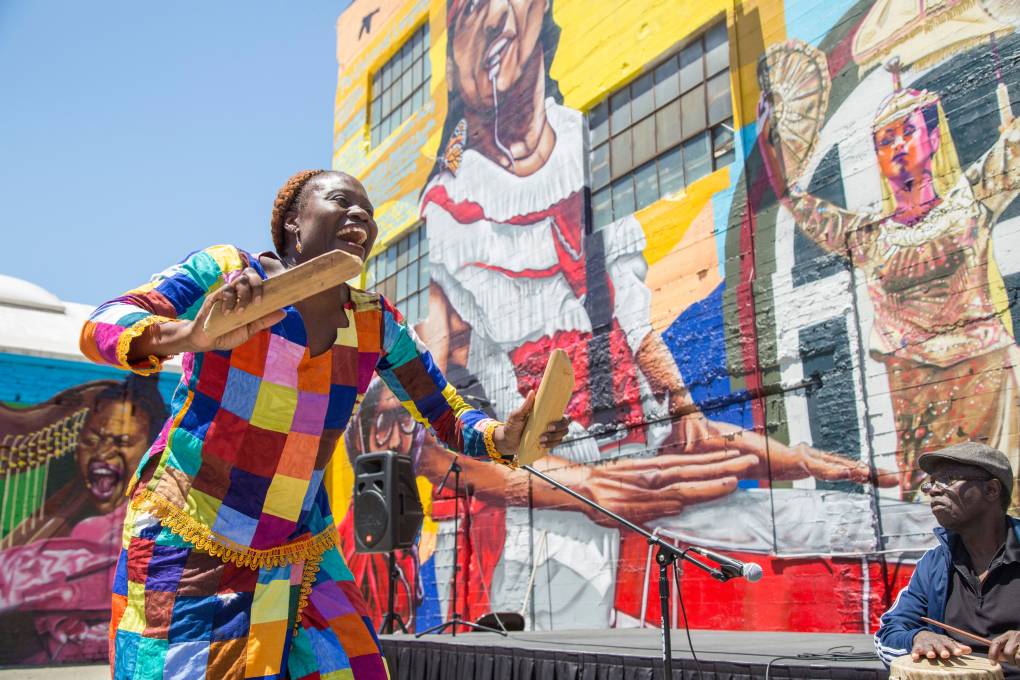
A Film About Oakland's Most Important Mural That You Can't See
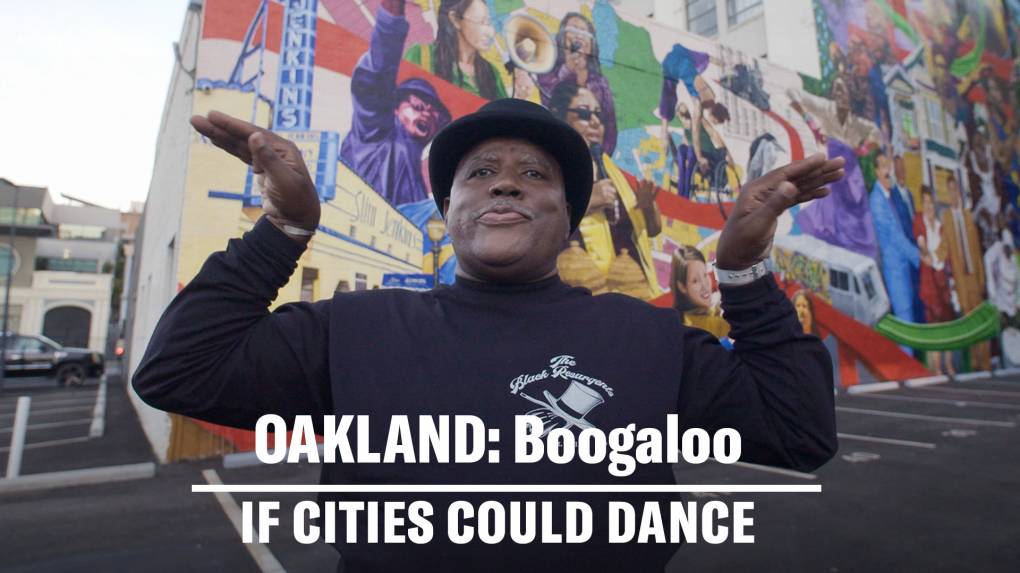
Reclaiming the Legacy of Oakland’s Boogaloo Dance Culture
In ‘Alice Street,’ Oakland Artist-Activists Build Power By Bridging Communities
'It’s Criminal': Cultural Funding Cuts Frustrate Oakland Artists
Sponsored
Player sponsored by
window.__IS_SSR__=true
window.__INITIAL_STATE__={
"attachmentsReducer": {
"audio_0": {
"type": "attachments",
"id": "audio_0",
"imgSizes": {
"kqedFullSize": {
"file": "https://ww2.kqed.org/news/wp-content/themes/KQED-unified/img/audio_bgs/background0.jpg"
}
}
},
"audio_1": {
"type": "attachments",
"id": "audio_1",
"imgSizes": {
"kqedFullSize": {
"file": "https://ww2.kqed.org/news/wp-content/themes/KQED-unified/img/audio_bgs/background1.jpg"
}
}
},
"audio_2": {
"type": "attachments",
"id": "audio_2",
"imgSizes": {
"kqedFullSize": {
"file": "https://ww2.kqed.org/news/wp-content/themes/KQED-unified/img/audio_bgs/background2.jpg"
}
}
},
"audio_3": {
"type": "attachments",
"id": "audio_3",
"imgSizes": {
"kqedFullSize": {
"file": "https://ww2.kqed.org/news/wp-content/themes/KQED-unified/img/audio_bgs/background3.jpg"
}
}
},
"audio_4": {
"type": "attachments",
"id": "audio_4",
"imgSizes": {
"kqedFullSize": {
"file": "https://ww2.kqed.org/news/wp-content/themes/KQED-unified/img/audio_bgs/background4.jpg"
}
}
},
"placeholder": {
"type": "attachments",
"id": "placeholder",
"imgSizes": {
"thumbnail": {
"file": "https://cdn.kqed.org/wp-content/uploads/2024/12/KQED-Default-Image-816638274-2000x1333-1-160x107.jpg",
"width": 160,
"height": 107,
"mimeType": "image/jpeg"
},
"medium": {
"file": "https://cdn.kqed.org/wp-content/uploads/2024/12/KQED-Default-Image-816638274-2000x1333-1-800x533.jpg",
"width": 800,
"height": 533,
"mimeType": "image/jpeg"
},
"medium_large": {
"file": "https://cdn.kqed.org/wp-content/uploads/2024/12/KQED-Default-Image-816638274-2000x1333-1-768x512.jpg",
"width": 768,
"height": 512,
"mimeType": "image/jpeg"
},
"large": {
"file": "https://cdn.kqed.org/wp-content/uploads/2024/12/KQED-Default-Image-816638274-2000x1333-1-1020x680.jpg",
"width": 1020,
"height": 680,
"mimeType": "image/jpeg"
},
"1536x1536": {
"file": "https://cdn.kqed.org/wp-content/uploads/2024/12/KQED-Default-Image-816638274-2000x1333-1-1536x1024.jpg",
"width": 1536,
"height": 1024,
"mimeType": "image/jpeg"
},
"fd-lrg": {
"file": "https://cdn.kqed.org/wp-content/uploads/2024/12/KQED-Default-Image-816638274-2000x1333-1-1536x1024.jpg",
"width": 1536,
"height": 1024,
"mimeType": "image/jpeg"
},
"fd-med": {
"file": "https://cdn.kqed.org/wp-content/uploads/2024/12/KQED-Default-Image-816638274-2000x1333-1-1020x680.jpg",
"width": 1020,
"height": 680,
"mimeType": "image/jpeg"
},
"fd-sm": {
"file": "https://cdn.kqed.org/wp-content/uploads/2024/12/KQED-Default-Image-816638274-2000x1333-1-800x533.jpg",
"width": 800,
"height": 533,
"mimeType": "image/jpeg"
},
"post-thumbnail": {
"file": "https://cdn.kqed.org/wp-content/uploads/2024/12/KQED-Default-Image-816638274-2000x1333-1-672x372.jpg",
"width": 672,
"height": 372,
"mimeType": "image/jpeg"
},
"twentyfourteen-full-width": {
"file": "https://cdn.kqed.org/wp-content/uploads/2024/12/KQED-Default-Image-816638274-2000x1333-1-1038x576.jpg",
"width": 1038,
"height": 576,
"mimeType": "image/jpeg"
},
"xxsmall": {
"file": "https://cdn.kqed.org/wp-content/uploads/2024/12/KQED-Default-Image-816638274-2000x1333-1-160x107.jpg",
"width": 160,
"height": 107,
"mimeType": "image/jpeg"
},
"xsmall": {
"file": "https://cdn.kqed.org/wp-content/uploads/2024/12/KQED-Default-Image-816638274-2000x1333-1-672x372.jpg",
"width": 672,
"height": 372,
"mimeType": "image/jpeg"
},
"small": {
"file": "https://cdn.kqed.org/wp-content/uploads/2024/12/KQED-Default-Image-816638274-2000x1333-1-672x372.jpg",
"width": 672,
"height": 372,
"mimeType": "image/jpeg"
},
"xlarge": {
"file": "https://cdn.kqed.org/wp-content/uploads/2024/12/KQED-Default-Image-816638274-2000x1333-1-1020x680.jpg",
"width": 1020,
"height": 680,
"mimeType": "image/jpeg"
},
"full-width": {
"file": "https://cdn.kqed.org/wp-content/uploads/2024/12/KQED-Default-Image-816638274-2000x1333-1-1920x1280.jpg",
"width": 1920,
"height": 1280,
"mimeType": "image/jpeg"
},
"guest-author-32": {
"file": "https://cdn.kqed.org/wp-content/uploads/2025/01/KQED-Default-Image-816638274-1333x1333-1-160x160.jpg",
"width": 32,
"height": 32,
"mimeType": "image/jpeg"
},
"guest-author-50": {
"file": "https://cdn.kqed.org/wp-content/uploads/2025/01/KQED-Default-Image-816638274-1333x1333-1-160x160.jpg",
"width": 50,
"height": 50,
"mimeType": "image/jpeg"
},
"guest-author-64": {
"file": "https://cdn.kqed.org/wp-content/uploads/2025/01/KQED-Default-Image-816638274-1333x1333-1-160x160.jpg",
"width": 64,
"height": 64,
"mimeType": "image/jpeg"
},
"guest-author-96": {
"file": "https://cdn.kqed.org/wp-content/uploads/2025/01/KQED-Default-Image-816638274-1333x1333-1-160x160.jpg",
"width": 96,
"height": 96,
"mimeType": "image/jpeg"
},
"guest-author-128": {
"file": "https://cdn.kqed.org/wp-content/uploads/2025/01/KQED-Default-Image-816638274-1333x1333-1-160x160.jpg",
"width": 128,
"height": 128,
"mimeType": "image/jpeg"
},
"detail": {
"file": "https://cdn.kqed.org/wp-content/uploads/2025/01/KQED-Default-Image-816638274-1333x1333-1-160x160.jpg",
"width": 160,
"height": 160,
"mimeType": "image/jpeg"
},
"kqedFullSize": {
"file": "https://cdn.kqed.org/wp-content/uploads/2024/12/KQED-Default-Image-816638274-2000x1333-1.jpg",
"width": 2000,
"height": 1333
}
}
},
"arts_13906002": {
"type": "attachments",
"id": "arts_13906002",
"meta": {
"index": "attachments_1716263798",
"site": "arts",
"id": "13906002",
"found": true
},
"parent": 13905625,
"imgSizes": {
"twentyfourteen-full-width": {
"file": "https://ww2.kqed.org/app/uploads/sites/2/2021/11/Alice-Street-2-1038x576.jpeg",
"width": 1038,
"mimeType": "image/jpeg",
"height": 576
},
"thumbnail": {
"file": "https://ww2.kqed.org/app/uploads/sites/2/2021/11/Alice-Street-2-160x107.jpeg",
"width": 160,
"mimeType": "image/jpeg",
"height": 107
},
"post-thumbnail": {
"file": "https://ww2.kqed.org/app/uploads/sites/2/2021/11/Alice-Street-2-672x372.jpeg",
"width": 672,
"mimeType": "image/jpeg",
"height": 372
},
"kqedFullSize": {
"file": "https://ww2.kqed.org/app/uploads/sites/2/2021/11/Alice-Street-2-scaled.jpeg",
"width": 2560,
"height": 1707
},
"2048x2048": {
"file": "https://ww2.kqed.org/app/uploads/sites/2/2021/11/Alice-Street-2-2048x1365.jpeg",
"width": 2048,
"mimeType": "image/jpeg",
"height": 1365
},
"large": {
"file": "https://ww2.kqed.org/app/uploads/sites/2/2021/11/Alice-Street-2-1020x680.jpeg",
"width": 1020,
"mimeType": "image/jpeg",
"height": 680
},
"1536x1536": {
"file": "https://ww2.kqed.org/app/uploads/sites/2/2021/11/Alice-Street-2-1536x1024.jpeg",
"width": 1536,
"mimeType": "image/jpeg",
"height": 1024
},
"full-width": {
"file": "https://ww2.kqed.org/app/uploads/sites/2/2021/11/Alice-Street-2-1920x1280.jpeg",
"width": 1920,
"mimeType": "image/jpeg",
"height": 1280
},
"medium": {
"file": "https://ww2.kqed.org/app/uploads/sites/2/2021/11/Alice-Street-2-800x533.jpeg",
"width": 800,
"mimeType": "image/jpeg",
"height": 533
},
"medium_large": {
"file": "https://ww2.kqed.org/app/uploads/sites/2/2021/11/Alice-Street-2-768x512.jpeg",
"width": 768,
"mimeType": "image/jpeg",
"height": 512
}
},
"publishDate": 1636428809,
"modified": 1636498002,
"caption": "Esailama Artry-Diouf from the West African group Diamano Coura is dressed in bright multicolored fabric, as she dances in front of the now invisible mural in downtown Oakland.",
"description": "Esailama Artry-Diouf from the West African group Diamano Coura is dressed in bright multicolored fabric, as she dances in front of the now invisible mural in downtown Oakland.",
"title": "Esailama Artry-Diouf from the West African group Diamano Coura is dressed in bright multicolored fabric, as she dances in front of the now invisible mural in downtown Oakland.",
"credit": "Ayse Gursoz",
"status": "inherit",
"altTag": "Esailama Artry-Diouf from the West African group Diamano Coura is dressed in bright multicolored fabric, as she dances in front of the now invisible mural in downtown Oakland.",
"fetchFailed": false,
"isLoading": false
},
"arts_13891350": {
"type": "attachments",
"id": "arts_13891350",
"meta": {
"index": "attachments_1716263798",
"site": "arts",
"id": "13891350",
"found": true
},
"parent": 13891300,
"imgSizes": {
"twentyfourteen-full-width": {
"file": "https://ww2.kqed.org/app/uploads/sites/2/2021/01/ICCD401_Oakland_WP-1038x576.jpg",
"width": 1038,
"mimeType": "image/jpeg",
"height": 576
},
"thumbnail": {
"file": "https://ww2.kqed.org/app/uploads/sites/2/2021/01/ICCD401_Oakland_WP-160x90.jpg",
"width": 160,
"mimeType": "image/jpeg",
"height": 90
},
"post-thumbnail": {
"file": "https://ww2.kqed.org/app/uploads/sites/2/2021/01/ICCD401_Oakland_WP-672x372.jpg",
"width": 672,
"mimeType": "image/jpeg",
"height": 372
},
"kqedFullSize": {
"file": "https://ww2.kqed.org/app/uploads/sites/2/2021/01/ICCD401_Oakland_WP.jpg",
"width": 1920,
"height": 1079
},
"large": {
"file": "https://ww2.kqed.org/app/uploads/sites/2/2021/01/ICCD401_Oakland_WP-1020x573.jpg",
"width": 1020,
"mimeType": "image/jpeg",
"height": 573
},
"1536x1536": {
"file": "https://ww2.kqed.org/app/uploads/sites/2/2021/01/ICCD401_Oakland_WP-1536x863.jpg",
"width": 1536,
"mimeType": "image/jpeg",
"height": 863
},
"medium": {
"file": "https://ww2.kqed.org/app/uploads/sites/2/2021/01/ICCD401_Oakland_WP-800x450.jpg",
"width": 800,
"mimeType": "image/jpeg",
"height": 450
},
"medium_large": {
"file": "https://ww2.kqed.org/app/uploads/sites/2/2021/01/ICCD401_Oakland_WP-768x432.jpg",
"width": 768,
"mimeType": "image/jpeg",
"height": 432
}
},
"publishDate": 1610749718,
"modified": 1610749821,
"caption": "William Randolph a.k.a. Mr. Penguin of\nThe Black Resurgents \n",
"description": "William Randolph a.k.a. Mr. Penguin of\nThe Black Resurgents \n",
"title": "ICCD401_Oakland_WP",
"credit": "Elie M. Khadra",
"status": "inherit",
"altTag": null,
"fetchFailed": false,
"isLoading": false
},
"arts_13875808": {
"type": "attachments",
"id": "arts_13875808",
"meta": {
"index": "attachments_1716263798",
"site": "arts",
"id": "13875808",
"found": true
},
"parent": 13875585,
"imgSizes": {
"twentyfourteen-full-width": {
"file": "https://ww2.kqed.org/app/uploads/sites/2/2020/03/photo-by-Zoe-Mountain-1038x576.jpg",
"width": 1038,
"mimeType": "image/jpeg",
"height": 576
},
"thumbnail": {
"file": "https://ww2.kqed.org/app/uploads/sites/2/2020/03/photo-by-Zoe-Mountain-160x90.jpg",
"width": 160,
"mimeType": "image/jpeg",
"height": 90
},
"post-thumbnail": {
"file": "https://ww2.kqed.org/app/uploads/sites/2/2020/03/photo-by-Zoe-Mountain-672x372.jpg",
"width": 672,
"mimeType": "image/jpeg",
"height": 372
},
"kqedFullSize": {
"file": "https://ww2.kqed.org/app/uploads/sites/2/2020/03/photo-by-Zoe-Mountain.jpg",
"width": 1920,
"height": 1080
},
"large": {
"file": "https://ww2.kqed.org/app/uploads/sites/2/2020/03/photo-by-Zoe-Mountain-1020x574.jpg",
"width": 1020,
"mimeType": "image/jpeg",
"height": 574
},
"full-width": {
"file": "https://ww2.kqed.org/app/uploads/sites/2/2020/03/photo-by-Zoe-Mountain-1920x1080.jpg",
"width": 1920,
"mimeType": "image/jpeg",
"height": 1080
},
"medium": {
"file": "https://ww2.kqed.org/app/uploads/sites/2/2020/03/photo-by-Zoe-Mountain-800x450.jpg",
"width": 800,
"mimeType": "image/jpeg",
"height": 450
},
"medium_large": {
"file": "https://ww2.kqed.org/app/uploads/sites/2/2020/03/photo-by-Zoe-Mountain-768x432.jpg",
"width": 768,
"mimeType": "image/jpeg",
"height": 432
}
},
"publishDate": 1583172030,
"modified": 1583172118,
"caption": "The creation and erasure of a mural catalyzes an anti-gentrification coalition in 'Alice Street.'",
"description": "The creation and erasure of a mural catalyzes an anti-gentrification coalition in 'Alice Street.'",
"title": "The creation and erasure of a mural catalyzes an anti-gentrification coalition in 'Alice Street.'",
"credit": "Zoe Mountain/Courtesy of filmmaker",
"status": "inherit",
"fetchFailed": false,
"isLoading": false
},
"arts_13861185": {
"type": "attachments",
"id": "arts_13861185",
"meta": {
"index": "attachments_1716263798",
"site": "arts",
"id": "13861185",
"found": true
},
"parent": 0,
"imgSizes": {
"twentyfourteen-full-width": {
"file": "https://ww2.kqed.org/app/uploads/sites/2/2019/07/Theo-Aytchan-Williams-of-Sambafunk-1038x576.jpg",
"width": 1038,
"mimeType": "image/jpeg",
"height": 576
},
"thumbnail": {
"file": "https://ww2.kqed.org/app/uploads/sites/2/2019/07/Theo-Aytchan-Williams-of-Sambafunk-160x90.jpg",
"width": 160,
"mimeType": "image/jpeg",
"height": 90
},
"post-thumbnail": {
"file": "https://ww2.kqed.org/app/uploads/sites/2/2019/07/Theo-Aytchan-Williams-of-Sambafunk-672x372.jpg",
"width": 672,
"mimeType": "image/jpeg",
"height": 372
},
"kqedFullSize": {
"file": "https://ww2.kqed.org/app/uploads/sites/2/2019/07/Theo-Aytchan-Williams-of-Sambafunk.jpg",
"width": 1920,
"height": 1080
},
"large": {
"file": "https://ww2.kqed.org/app/uploads/sites/2/2019/07/Theo-Aytchan-Williams-of-Sambafunk-1020x574.jpg",
"width": 1020,
"mimeType": "image/jpeg",
"height": 574
},
"complete_open_graph": {
"file": "https://ww2.kqed.org/app/uploads/sites/2/2019/07/Theo-Aytchan-Williams-of-Sambafunk-1200x675.jpg",
"width": 1200,
"mimeType": "image/jpeg",
"height": 675
},
"full-width": {
"file": "https://ww2.kqed.org/app/uploads/sites/2/2019/07/Theo-Aytchan-Williams-of-Sambafunk-1920x1080.jpg",
"width": 1920,
"mimeType": "image/jpeg",
"height": 1080
},
"medium": {
"file": "https://ww2.kqed.org/app/uploads/sites/2/2019/07/Theo-Aytchan-Williams-of-Sambafunk-800x450.jpg",
"width": 800,
"mimeType": "image/jpeg",
"height": 450
},
"medium_large": {
"file": "https://ww2.kqed.org/app/uploads/sites/2/2019/07/Theo-Aytchan-Williams-of-Sambafunk-768x432.jpg",
"width": 768,
"mimeType": "image/jpeg",
"height": 432
}
},
"publishDate": 1562869467,
"modified": 1562869841,
"caption": "Theo Aytchan Williams, the founding director of SambaFunk!, stands outside the Malonga Casquelourd Center for the Arts in downtown Oakland. ",
"description": "Theo Aytchan Williams, the founding director of SambaFunk!, stands outside the Malonga Casquelourd Center for the Arts in downtown Oakland. ",
"title": "Theo-Aytchan-Williams-of-Sambafunk",
"credit": "Sam Lefebvre/KQED",
"status": "inherit",
"fetchFailed": false,
"isLoading": false
}
},
"audioPlayerReducer": {
"postId": "stream_live",
"isPaused": true,
"isPlaying": false,
"pfsActive": false,
"pledgeModalIsOpen": true,
"playerDrawerIsOpen": false
},
"authorsReducer": {
"byline_arts_13891300": {
"type": "authors",
"id": "byline_arts_13891300",
"meta": {
"override": true
},
"slug": "byline_arts_13891300",
"name": "Eric Arnold, Spencer Wilkinson",
"isLoading": false
},
"slefebvre": {
"type": "authors",
"id": "11091",
"meta": {
"index": "authors_1716337520",
"id": "11091",
"found": true
},
"name": "Sam Lefebvre",
"firstName": "Sam",
"lastName": "Lefebvre",
"slug": "slefebvre",
"email": "sdlefebvre@gmail.com",
"display_author_email": false,
"staff_mastheads": [],
"title": null,
"bio": "Sam Lefebvre is an award-winning reporter at KQED Arts. He has worked as an editor and columnist at the \u003cem>East Bay Express\u003c/em>, \u003cem>SF Weekly \u003c/em>and Impose Magazine, and his journalism and criticism has appeared in \u003cem>The New York Times\u003c/em>, the Guardian and Pitchfork.",
"avatar": "https://secure.gravatar.com/avatar/143b570c3dec13ae74c6aa2369b04fc8?s=600&d=blank&r=g",
"twitter": "Lefebvre_Sam",
"facebook": null,
"instagram": null,
"linkedin": null,
"sites": [
{
"site": "arts",
"roles": [
"editor"
]
},
{
"site": "news",
"roles": [
"author"
]
}
],
"headData": {
"title": "Sam Lefebvre | KQED",
"description": null,
"ogImgSrc": "https://secure.gravatar.com/avatar/143b570c3dec13ae74c6aa2369b04fc8?s=600&d=blank&r=g",
"twImgSrc": "https://secure.gravatar.com/avatar/143b570c3dec13ae74c6aa2369b04fc8?s=600&d=blank&r=g"
},
"isLoading": false,
"link": "/author/slefebvre"
},
"ogpenn": {
"type": "authors",
"id": "11491",
"meta": {
"index": "authors_1716337520",
"id": "11491",
"found": true
},
"name": "Pendarvis Harshaw",
"firstName": "Pendarvis",
"lastName": "Harshaw",
"slug": "ogpenn",
"email": "ogpenn@gmail.com",
"display_author_email": false,
"staff_mastheads": [
"arts"
],
"title": "Community Engagement Reporter",
"bio": "Pendarvis Harshaw is an educator, host and writer with KQED Arts.",
"avatar": "https://secure.gravatar.com/avatar/093d33baff5354890e29ad83d58d2c49?s=600&d=blank&r=g",
"twitter": null,
"facebook": null,
"instagram": "ogpenn",
"linkedin": null,
"sites": [
{
"site": "arts",
"roles": [
"editor"
]
},
{
"site": "news",
"roles": [
"editor"
]
},
{
"site": "bayareabites",
"roles": [
"author"
]
},
{
"site": "hiphop",
"roles": [
"editor"
]
}
],
"headData": {
"title": "Pendarvis Harshaw | KQED",
"description": "Community Engagement Reporter",
"ogImgSrc": "https://secure.gravatar.com/avatar/093d33baff5354890e29ad83d58d2c49?s=600&d=blank&r=g",
"twImgSrc": "https://secure.gravatar.com/avatar/093d33baff5354890e29ad83d58d2c49?s=600&d=blank&r=g"
},
"isLoading": false,
"link": "/author/ogpenn"
}
},
"breakingNewsReducer": {},
"pagesReducer": {},
"postsReducer": {
"stream_live": {
"type": "live",
"id": "stream_live",
"audioUrl": "https://streams.kqed.org/kqedradio",
"title": "Live Stream",
"excerpt": "Live Stream information currently unavailable.",
"link": "/radio",
"featImg": "",
"label": {
"name": "KQED Live",
"link": "/"
}
},
"stream_kqedNewscast": {
"type": "posts",
"id": "stream_kqedNewscast",
"audioUrl": "https://www.kqed.org/.stream/anon/radio/RDnews/newscast.mp3?_=1",
"title": "KQED Newscast",
"featImg": "",
"label": {
"name": "88.5 FM",
"link": "/"
}
},
"arts_13905625": {
"type": "posts",
"id": "arts_13905625",
"meta": {
"index": "posts_1716263798",
"site": "arts",
"id": "13905625",
"score": null,
"sort": [
1636498388000
]
},
"guestAuthors": [],
"slug": "alice-street-mural-documentary",
"title": "A Film About Oakland's Most Important Mural That You Can't See",
"publishDate": 1636498388,
"format": "standard",
"headTitle": "A Film About Oakland’s Most Important Mural That You Can’t See | KQED",
"labelTerm": {
"term": 140,
"site": "arts"
},
"content": "\u003cp>A mural stands in downtown Oakland that honors the city’s culture and history. It’s a giant artwork birthed out of years and years of community conversations and the artists’ commitment to the concept.\u003c/p>\n\u003cp>The problem is that nobody can see the mural. Not anymore, at least. Except for a small patch of paint poking from behind a barrier, the mural depicting Oakland’s culture is now completely blocked by a new six-story luxury high-rise.\u003c/p>\n\u003cp>The story of the mural, and its disappearance, is shown in the full-length documentary \u003ca href=\"https://www.instagram.com/p/CV_mXnkP8fz/\" target=\"_blank\" rel=\"noopener noreferrer\">\u003cem>Alice Street\u003c/em>\u003c/a>. On Tuesday, Nov. 16, as a part of the Berkeley Film Foundation’s documentary screening series, the film will be shown at Oakland’s \u003ca href=\"https://ticketing.uswest.veezi.com/purchase/10159?siteToken=P5WXdOEJ3Eq2eHbZHTAtbg%3D%3D\" target=\"_blank\" rel=\"noopener noreferrer\">New Parkway Theatre\u003c/a>.\u003c/p>\n\u003cfigure id=\"attachment_13906006\" class=\"wp-caption alignnone\" style=\"max-width: 800px\">\u003cimg loading=\"lazy\" decoding=\"async\" class=\"size-medium wp-image-13906006\" src=\"https://ww2.kqed.org/app/uploads/sites/2/2021/11/Alice-Street-1-800x532.jpeg\" alt=\"Artists marching to City Hall to make sure their voices are heard. \" width=\"800\" height=\"532\" srcset=\"https://cdn.kqed.org/wp-content/uploads/sites/2/2021/11/Alice-Street-1-800x532.jpeg 800w, https://cdn.kqed.org/wp-content/uploads/sites/2/2021/11/Alice-Street-1-1020x678.jpeg 1020w, https://cdn.kqed.org/wp-content/uploads/sites/2/2021/11/Alice-Street-1-160x106.jpeg 160w, https://cdn.kqed.org/wp-content/uploads/sites/2/2021/11/Alice-Street-1-768x511.jpeg 768w, https://cdn.kqed.org/wp-content/uploads/sites/2/2021/11/Alice-Street-1-1536x1021.jpeg 1536w, https://cdn.kqed.org/wp-content/uploads/sites/2/2021/11/Alice-Street-1-2048x1362.jpeg 2048w, https://cdn.kqed.org/wp-content/uploads/sites/2/2021/11/Alice-Street-1-1920x1277.jpeg 1920w\" sizes=\"(max-width: 800px) 100vw, 800px\">\u003cfigcaption class=\"wp-caption-text\">Artists gathered and marched to City Hall to make sure their voices are heard. \u003ccite>(Pancho Pescador)\u003c/cite>\u003c/figcaption>\u003c/figure>\n\u003cp>Lead artists \u003ca href=\"https://www.instagram.com/withoutmyego/\" target=\"_blank\" rel=\"noopener noreferrer\">Desi Mundo\u003c/a> (founder of the \u003ca href=\"https://crpbayarea.org/\" target=\"_blank\" rel=\"noopener noreferrer\">Community Rejuvenation Project\u003c/a>) and \u003ca href=\"https://www.instagram.com/panchopescador/\" target=\"_blank\" rel=\"noopener noreferrer\">Pancho Pescador\u003c/a> began the project over a decade ago. The process was documented, from idea to outline. There were community conferences and government gatherings, as well as critiques and criticisms from neighbors who felt like the theme—people of color pushing for resistance against oppressive forces—didn’t represent their experience.\u003c/p>\n\u003cp>Nearby cultural centers were also included. At 14th Street and Alice Street, right across the street from the mural, is the Malonga Casquelourd Center, a hub for African drumming and dance performances. On the other side sits Hotel Oakland, a residential and cultural space for older Asian folks. Elements from the two centers—both the physical design of the buildings and faces of the people who’ve graced those grounds—were incorporated into the artwork.\u003c/p>\n\u003cp>[ad fullwidth]\u003c/p>\n\u003cp>The artists eventually created a mural covering four large walls of a sizable parking lot. But as the paint dried and the \u003ca href=\"https://www.kqed.org/arts/10139706/oaklands-newest-mural\" target=\"_blank\" rel=\"noopener noreferrer\">ribbon was cut in\u003c/a> August of 2014, a new development was being planned on that very spot.\u003c/p>\n\u003cfigure id=\"attachment_13906005\" class=\"wp-caption alignnone\" style=\"max-width: 800px\">\u003cimg loading=\"lazy\" decoding=\"async\" class=\"size-medium wp-image-13906005\" src=\"https://ww2.kqed.org/app/uploads/sites/2/2021/11/Alice-Street-3-800x553.jpeg\" alt=\"Performers playing instruments inside of Hotel Oakland.\" width=\"800\" height=\"553\" srcset=\"https://cdn.kqed.org/wp-content/uploads/sites/2/2021/11/Alice-Street-3-800x553.jpeg 800w, https://cdn.kqed.org/wp-content/uploads/sites/2/2021/11/Alice-Street-3-1020x705.jpeg 1020w, https://cdn.kqed.org/wp-content/uploads/sites/2/2021/11/Alice-Street-3-160x111.jpeg 160w, https://cdn.kqed.org/wp-content/uploads/sites/2/2021/11/Alice-Street-3-768x531.jpeg 768w, https://cdn.kqed.org/wp-content/uploads/sites/2/2021/11/Alice-Street-3-1536x1061.jpeg 1536w, https://cdn.kqed.org/wp-content/uploads/sites/2/2021/11/Alice-Street-3-2048x1415.jpeg 2048w, https://cdn.kqed.org/wp-content/uploads/sites/2/2021/11/Alice-Street-3-1920x1326.jpeg 1920w\" sizes=\"(max-width: 800px) 100vw, 800px\">\u003cfigcaption class=\"wp-caption-text\">Performers play instruments inside of Hotel Oakland. \u003ccite>(Spencer Wilkinson)\u003c/cite>\u003c/figcaption>\u003c/figure>\n\u003cp>“I’m excited to highlight the artists and what’s happened since the documentary took place,” says film producer \u003ca href=\"https://linktr.ee/spenceriwilkinson\" target=\"_blank\" rel=\"noopener noreferrer\">Spencer Wilkinson.\u003c/a>\u003c/p>\n\u003cp>He says the two lead artists on the project will be present for a post-screening dialogue on Nov. 16. They’ll be joined by drummer \u003ca href=\"https://actaonline.org/profile/kiazi-malonga/\" target=\"_blank\" rel=\"noopener noreferrer\">Kiazi Malonga\u003c/a>, son of the late world-renown artist Malonga Casquelourd and head of the \u003ca href=\"https://www.actaonline.org/profile/fua-dia-congo/\" target=\"_blank\" rel=\"noopener noreferrer\">Fua Dia Congo\u003c/a> performance group, as well as musician and poet \u003ca href=\"https://destinymuhammad.net/home\" target=\"_blank\" rel=\"noopener noreferrer\">Destiny Muhammad,\u003c/a> who is featured in the film asking the poignant question: “Is what’s coming better than what’s here?”\u003c/p>\n\u003cp>The film concludes with a note that individuals and community organizations such as the \u003ca href=\"https://www.ccedoakland.org/\" target=\"_blank\" rel=\"noopener noreferrer\">Community Coalition For Equitable Development (CCED)\u003c/a> have pushed for and received a set of community benefit agreements, which have led to more low-income housing, more parking—and, in addition to other agreements, they’ve been financially supported in the painting of a new mural.\u003c/p>\n\u003cfigure id=\"attachment_13906004\" class=\"wp-caption alignnone\" style=\"max-width: 800px\">\u003cimg loading=\"lazy\" decoding=\"async\" class=\"size-medium wp-image-13906004\" src=\"https://ww2.kqed.org/app/uploads/sites/2/2021/11/DK6dODsQ-800x640.jpeg\" alt=\"Drummers gather at a celebration for the new mural on 14th Street in Oakland.\" width=\"800\" height=\"640\" srcset=\"https://cdn.kqed.org/wp-content/uploads/sites/2/2021/11/DK6dODsQ-800x640.jpeg 800w, https://cdn.kqed.org/wp-content/uploads/sites/2/2021/11/DK6dODsQ-1020x816.jpeg 1020w, https://cdn.kqed.org/wp-content/uploads/sites/2/2021/11/DK6dODsQ-160x128.jpeg 160w, https://cdn.kqed.org/wp-content/uploads/sites/2/2021/11/DK6dODsQ-768x615.jpeg 768w, https://cdn.kqed.org/wp-content/uploads/sites/2/2021/11/DK6dODsQ-1536x1229.jpeg 1536w, https://cdn.kqed.org/wp-content/uploads/sites/2/2021/11/DK6dODsQ-2048x1639.jpeg 2048w, https://cdn.kqed.org/wp-content/uploads/sites/2/2021/11/DK6dODsQ-1920x1537.jpeg 1920w\" sizes=\"(max-width: 800px) 100vw, 800px\">\u003cfigcaption class=\"wp-caption-text\">Drummers gather at a celebration for the new mural on 14th Street in Oakland. \u003ccite>(Rudi Tcruz and Galex Tcruz)\u003c/cite>\u003c/figcaption>\u003c/figure>\n\u003cp>A couple blocks down from the location of the site of the previous mural, on the side of the \u003ca href=\"https://greenlining.org/?gclid=CjwKCAiA1aiMBhAUEiwACw25MbNayyyBrFf0DTmTvP6XMoVjjDk6eJKLCYNgCPH7y_LpXVuc66ElURoCvyEQAvD_BwE\" target=\"_blank\" rel=\"noopener noreferrer\">Greenlining Institute\u003c/a>, now stands a new painting featuring some of the same artists as the previous piece, as well as the themes of housing justice, diversity and cultural arts.\u003c/p>\n\u003cp>As for the old mural, mummified by a new building? Maybe years, or decades from now it will see new light. But for now, all that’s visible are the names of the artists and the website where you can get more information about \u003ca href=\"https://www.alicestreetfilm.com/\" target=\"_blank\" rel=\"noopener noreferrer\">the film\u003c/a>—and the ongoing conversation about the arts, community and urban development.\u003c/p>\n\u003cp>\u003cimg loading=\"lazy\" decoding=\"async\" class=\"aligncenter size-full wp-image-12904247\" src=\"https://ww2.kqed.org/app/uploads/sites/2/2017/03/Q.Logo_.Break_-400x39.jpg\" alt=\"\" width=\"400\" height=\"39\" srcset=\"https://cdn.kqed.org/wp-content/uploads/sites/2/2017/03/Q.Logo_.Break_-400x39.jpg 400w, https://cdn.kqed.org/wp-content/uploads/sites/2/2017/03/Q.Logo_.Break_-400x39-160x16.jpg 160w, https://cdn.kqed.org/wp-content/uploads/sites/2/2017/03/Q.Logo_.Break_-400x39-240x23.jpg 240w, https://cdn.kqed.org/wp-content/uploads/sites/2/2017/03/Q.Logo_.Break_-400x39-375x37.jpg 375w\" sizes=\"(max-width: 400px) 100vw, 400px\">\u003c/p>\n\u003cp>\u003c/p>\n\u003cp>\u003cem>‘Alice Street’ screens Tuesday, Nov. 16, at the New Parkway in Oakland. \u003ca href=\"https://www.youtube.com/watch?v=1lJRPZLuY9c\" target=\"_blank\" rel=\"noopener noreferrer\">Trailer here\u003c/a>, and \u003ca href=\"https://ticketing.uswest.veezi.com/purchase/10159?siteToken=P5WXdOEJ3Eq2eHbZHTAtbg%3D%3D\" target=\"_blank\" rel=\"noopener noreferrer\">details here\u003c/a>. \u003c/em>\u003c/p>\n\n",
"blocks": [],
"excerpt": "'Alice Street,' about a years-in-the-making mural now obscured by new development, screens at the New Parkway in Oakland. ",
"status": "publish",
"parent": 0,
"modified": 1726759735,
"stats": {
"hasAudio": false,
"hasVideo": false,
"hasChartOrMap": false,
"iframeSrcs": [],
"hasGoogleForm": false,
"hasGallery": false,
"hasHearkenModule": false,
"hasPolis": false,
"paragraphCount": 15,
"wordCount": 647
},
"headData": {
"title": "'Alice Street' Documents Oakland's Hidden Downtown Mural | KQED",
"description": "'Alice Street,' about a years-in-the-making mural now obscured by new development, screens at the New Parkway in Oakland. ",
"ogTitle": "A Film About Oakland's Most Important Mural That You Can't See",
"ogDescription": "",
"ogImgId": "",
"twTitle": "A Film About Oakland's Most Important Mural That You Can't See",
"twDescription": "",
"twImgId": "",
"socialTitle": "'Alice Street' Documents Oakland's Hidden Downtown Mural %%page%% %%sep%% KQED",
"schema": {
"@context": "https://schema.org",
"@type": "Article",
"headline": "A Film About Oakland's Most Important Mural That You Can't See",
"datePublished": "2021-11-09T14:53:08-08:00",
"dateModified": "2024-09-19T08:28:55-07:00",
"image": "https://cdn.kqed.org/wp-content/uploads/2020/02/KQED-OG-Image@1x.png"
}
},
"sticky": false,
"templateType": "standard",
"featuredImageType": "standard",
"excludeFromSiteSearch": "Include",
"path": "/arts/13905625/alice-street-mural-documentary",
"audioTrackLength": null,
"parsedContent": [
{
"type": "contentString",
"content": "\u003cdiv class=\"post-body\">\u003cp>\u003cp>A mural stands in downtown Oakland that honors the city’s culture and history. It’s a giant artwork birthed out of years and years of community conversations and the artists’ commitment to the concept.\u003c/p>\n\u003cp>The problem is that nobody can see the mural. Not anymore, at least. Except for a small patch of paint poking from behind a barrier, the mural depicting Oakland’s culture is now completely blocked by a new six-story luxury high-rise.\u003c/p>\n\u003cp>The story of the mural, and its disappearance, is shown in the full-length documentary \u003ca href=\"https://www.instagram.com/p/CV_mXnkP8fz/\" target=\"_blank\" rel=\"noopener noreferrer\">\u003cem>Alice Street\u003c/em>\u003c/a>. On Tuesday, Nov. 16, as a part of the Berkeley Film Foundation’s documentary screening series, the film will be shown at Oakland’s \u003ca href=\"https://ticketing.uswest.veezi.com/purchase/10159?siteToken=P5WXdOEJ3Eq2eHbZHTAtbg%3D%3D\" target=\"_blank\" rel=\"noopener noreferrer\">New Parkway Theatre\u003c/a>.\u003c/p>\n\u003cfigure id=\"attachment_13906006\" class=\"wp-caption alignnone\" style=\"max-width: 800px\">\u003cimg loading=\"lazy\" decoding=\"async\" class=\"size-medium wp-image-13906006\" src=\"https://ww2.kqed.org/app/uploads/sites/2/2021/11/Alice-Street-1-800x532.jpeg\" alt=\"Artists marching to City Hall to make sure their voices are heard. \" width=\"800\" height=\"532\" srcset=\"https://cdn.kqed.org/wp-content/uploads/sites/2/2021/11/Alice-Street-1-800x532.jpeg 800w, https://cdn.kqed.org/wp-content/uploads/sites/2/2021/11/Alice-Street-1-1020x678.jpeg 1020w, https://cdn.kqed.org/wp-content/uploads/sites/2/2021/11/Alice-Street-1-160x106.jpeg 160w, https://cdn.kqed.org/wp-content/uploads/sites/2/2021/11/Alice-Street-1-768x511.jpeg 768w, https://cdn.kqed.org/wp-content/uploads/sites/2/2021/11/Alice-Street-1-1536x1021.jpeg 1536w, https://cdn.kqed.org/wp-content/uploads/sites/2/2021/11/Alice-Street-1-2048x1362.jpeg 2048w, https://cdn.kqed.org/wp-content/uploads/sites/2/2021/11/Alice-Street-1-1920x1277.jpeg 1920w\" sizes=\"(max-width: 800px) 100vw, 800px\">\u003cfigcaption class=\"wp-caption-text\">Artists gathered and marched to City Hall to make sure their voices are heard. \u003ccite>(Pancho Pescador)\u003c/cite>\u003c/figcaption>\u003c/figure>\n\u003cp>Lead artists \u003ca href=\"https://www.instagram.com/withoutmyego/\" target=\"_blank\" rel=\"noopener noreferrer\">Desi Mundo\u003c/a> (founder of the \u003ca href=\"https://crpbayarea.org/\" target=\"_blank\" rel=\"noopener noreferrer\">Community Rejuvenation Project\u003c/a>) and \u003ca href=\"https://www.instagram.com/panchopescador/\" target=\"_blank\" rel=\"noopener noreferrer\">Pancho Pescador\u003c/a> began the project over a decade ago. The process was documented, from idea to outline. There were community conferences and government gatherings, as well as critiques and criticisms from neighbors who felt like the theme—people of color pushing for resistance against oppressive forces—didn’t represent their experience.\u003c/p>\n\u003cp>Nearby cultural centers were also included. At 14th Street and Alice Street, right across the street from the mural, is the Malonga Casquelourd Center, a hub for African drumming and dance performances. On the other side sits Hotel Oakland, a residential and cultural space for older Asian folks. Elements from the two centers—both the physical design of the buildings and faces of the people who’ve graced those grounds—were incorporated into the artwork.\u003c/p>\n\u003cp>\u003c/p>\u003c/div>",
"attributes": {
"named": {},
"numeric": []
}
},
{
"type": "component",
"content": "",
"name": "ad",
"attributes": {
"named": {
"label": "fullwidth"
},
"numeric": [
"fullwidth"
]
}
},
{
"type": "contentString",
"content": "\u003cdiv class=\"post-body\">\u003cp>\u003c/p>\n\u003cp>The artists eventually created a mural covering four large walls of a sizable parking lot. But as the paint dried and the \u003ca href=\"https://www.kqed.org/arts/10139706/oaklands-newest-mural\" target=\"_blank\" rel=\"noopener noreferrer\">ribbon was cut in\u003c/a> August of 2014, a new development was being planned on that very spot.\u003c/p>\n\u003cfigure id=\"attachment_13906005\" class=\"wp-caption alignnone\" style=\"max-width: 800px\">\u003cimg loading=\"lazy\" decoding=\"async\" class=\"size-medium wp-image-13906005\" src=\"https://ww2.kqed.org/app/uploads/sites/2/2021/11/Alice-Street-3-800x553.jpeg\" alt=\"Performers playing instruments inside of Hotel Oakland.\" width=\"800\" height=\"553\" srcset=\"https://cdn.kqed.org/wp-content/uploads/sites/2/2021/11/Alice-Street-3-800x553.jpeg 800w, https://cdn.kqed.org/wp-content/uploads/sites/2/2021/11/Alice-Street-3-1020x705.jpeg 1020w, https://cdn.kqed.org/wp-content/uploads/sites/2/2021/11/Alice-Street-3-160x111.jpeg 160w, https://cdn.kqed.org/wp-content/uploads/sites/2/2021/11/Alice-Street-3-768x531.jpeg 768w, https://cdn.kqed.org/wp-content/uploads/sites/2/2021/11/Alice-Street-3-1536x1061.jpeg 1536w, https://cdn.kqed.org/wp-content/uploads/sites/2/2021/11/Alice-Street-3-2048x1415.jpeg 2048w, https://cdn.kqed.org/wp-content/uploads/sites/2/2021/11/Alice-Street-3-1920x1326.jpeg 1920w\" sizes=\"(max-width: 800px) 100vw, 800px\">\u003cfigcaption class=\"wp-caption-text\">Performers play instruments inside of Hotel Oakland. \u003ccite>(Spencer Wilkinson)\u003c/cite>\u003c/figcaption>\u003c/figure>\n\u003cp>“I’m excited to highlight the artists and what’s happened since the documentary took place,” says film producer \u003ca href=\"https://linktr.ee/spenceriwilkinson\" target=\"_blank\" rel=\"noopener noreferrer\">Spencer Wilkinson.\u003c/a>\u003c/p>\n\u003cp>He says the two lead artists on the project will be present for a post-screening dialogue on Nov. 16. They’ll be joined by drummer \u003ca href=\"https://actaonline.org/profile/kiazi-malonga/\" target=\"_blank\" rel=\"noopener noreferrer\">Kiazi Malonga\u003c/a>, son of the late world-renown artist Malonga Casquelourd and head of the \u003ca href=\"https://www.actaonline.org/profile/fua-dia-congo/\" target=\"_blank\" rel=\"noopener noreferrer\">Fua Dia Congo\u003c/a> performance group, as well as musician and poet \u003ca href=\"https://destinymuhammad.net/home\" target=\"_blank\" rel=\"noopener noreferrer\">Destiny Muhammad,\u003c/a> who is featured in the film asking the poignant question: “Is what’s coming better than what’s here?”\u003c/p>\n\u003cp>The film concludes with a note that individuals and community organizations such as the \u003ca href=\"https://www.ccedoakland.org/\" target=\"_blank\" rel=\"noopener noreferrer\">Community Coalition For Equitable Development (CCED)\u003c/a> have pushed for and received a set of community benefit agreements, which have led to more low-income housing, more parking—and, in addition to other agreements, they’ve been financially supported in the painting of a new mural.\u003c/p>\n\u003cfigure id=\"attachment_13906004\" class=\"wp-caption alignnone\" style=\"max-width: 800px\">\u003cimg loading=\"lazy\" decoding=\"async\" class=\"size-medium wp-image-13906004\" src=\"https://ww2.kqed.org/app/uploads/sites/2/2021/11/DK6dODsQ-800x640.jpeg\" alt=\"Drummers gather at a celebration for the new mural on 14th Street in Oakland.\" width=\"800\" height=\"640\" srcset=\"https://cdn.kqed.org/wp-content/uploads/sites/2/2021/11/DK6dODsQ-800x640.jpeg 800w, https://cdn.kqed.org/wp-content/uploads/sites/2/2021/11/DK6dODsQ-1020x816.jpeg 1020w, https://cdn.kqed.org/wp-content/uploads/sites/2/2021/11/DK6dODsQ-160x128.jpeg 160w, https://cdn.kqed.org/wp-content/uploads/sites/2/2021/11/DK6dODsQ-768x615.jpeg 768w, https://cdn.kqed.org/wp-content/uploads/sites/2/2021/11/DK6dODsQ-1536x1229.jpeg 1536w, https://cdn.kqed.org/wp-content/uploads/sites/2/2021/11/DK6dODsQ-2048x1639.jpeg 2048w, https://cdn.kqed.org/wp-content/uploads/sites/2/2021/11/DK6dODsQ-1920x1537.jpeg 1920w\" sizes=\"(max-width: 800px) 100vw, 800px\">\u003cfigcaption class=\"wp-caption-text\">Drummers gather at a celebration for the new mural on 14th Street in Oakland. \u003ccite>(Rudi Tcruz and Galex Tcruz)\u003c/cite>\u003c/figcaption>\u003c/figure>\n\u003cp>A couple blocks down from the location of the site of the previous mural, on the side of the \u003ca href=\"https://greenlining.org/?gclid=CjwKCAiA1aiMBhAUEiwACw25MbNayyyBrFf0DTmTvP6XMoVjjDk6eJKLCYNgCPH7y_LpXVuc66ElURoCvyEQAvD_BwE\" target=\"_blank\" rel=\"noopener noreferrer\">Greenlining Institute\u003c/a>, now stands a new painting featuring some of the same artists as the previous piece, as well as the themes of housing justice, diversity and cultural arts.\u003c/p>\n\u003cp>As for the old mural, mummified by a new building? Maybe years, or decades from now it will see new light. But for now, all that’s visible are the names of the artists and the website where you can get more information about \u003ca href=\"https://www.alicestreetfilm.com/\" target=\"_blank\" rel=\"noopener noreferrer\">the film\u003c/a>—and the ongoing conversation about the arts, community and urban development.\u003c/p>\n\u003cp>\u003cimg loading=\"lazy\" decoding=\"async\" class=\"aligncenter size-full wp-image-12904247\" src=\"https://ww2.kqed.org/app/uploads/sites/2/2017/03/Q.Logo_.Break_-400x39.jpg\" alt=\"\" width=\"400\" height=\"39\" srcset=\"https://cdn.kqed.org/wp-content/uploads/sites/2/2017/03/Q.Logo_.Break_-400x39.jpg 400w, https://cdn.kqed.org/wp-content/uploads/sites/2/2017/03/Q.Logo_.Break_-400x39-160x16.jpg 160w, https://cdn.kqed.org/wp-content/uploads/sites/2/2017/03/Q.Logo_.Break_-400x39-240x23.jpg 240w, https://cdn.kqed.org/wp-content/uploads/sites/2/2017/03/Q.Logo_.Break_-400x39-375x37.jpg 375w\" sizes=\"(max-width: 400px) 100vw, 400px\">\u003c/p>\n\u003cp>\u003c/p>\n\u003cp>\u003cem>‘Alice Street’ screens Tuesday, Nov. 16, at the New Parkway in Oakland. \u003ca href=\"https://www.youtube.com/watch?v=1lJRPZLuY9c\" target=\"_blank\" rel=\"noopener noreferrer\">Trailer here\u003c/a>, and \u003ca href=\"https://ticketing.uswest.veezi.com/purchase/10159?siteToken=P5WXdOEJ3Eq2eHbZHTAtbg%3D%3D\" target=\"_blank\" rel=\"noopener noreferrer\">details here\u003c/a>. \u003c/em>\u003c/p>\n\n\u003c/div>\u003c/p>",
"attributes": {
"named": {},
"numeric": []
}
}
],
"link": "/arts/13905625/alice-street-mural-documentary",
"authors": [
"11491"
],
"programs": [
"arts_140"
],
"categories": [
"arts_1",
"arts_70"
],
"tags": [
"arts_7821",
"arts_13672",
"arts_10342",
"arts_10278",
"arts_1332",
"arts_1737",
"arts_2196",
"arts_1143",
"arts_585"
],
"featImg": "arts_13906002",
"label": "arts_140"
},
"arts_13891300": {
"type": "posts",
"id": "arts_13891300",
"meta": {
"index": "posts_1716263798",
"site": "arts",
"id": "13891300",
"score": null,
"sort": [
1610754948000
]
},
"guestAuthors": [],
"slug": "reclaiming-the-legacy-of-oaklands-boogaloo-dance-culture",
"title": "Reclaiming the Legacy of Oakland’s Boogaloo Dance Culture",
"publishDate": 1610754948,
"format": "video",
"headTitle": "Reclaiming the Legacy of Oakland’s Boogaloo Dance Culture | KQED",
"labelTerm": {
"term": 4422,
"site": "arts"
},
"content": "\u003cp>\u003cem>Editor’s note: This episode was filmed under strict guidelines due to the coronavirus pandemic. Safety parameters were followed to protect the health of the dancers and video production team.\u003c/em>\u003c/p>\n\u003cp>\u003ca href=\"https://youtube.com/playlist?list=PLeGdTT0--8Kh9ohLGAYIVzVb-TKwEAxER\" target=\"_blank\" rel=\"noopener noreferrer\">\u003cem>If Cities Could Dance\u003c/em>\u003c/a> \u003cem>is KQED Arts’ award-winning video series featuring dancers across the country who represent their city’s signature moves. \u003ca href=\"https://ww2.kqed.org/app/uploads/sites/2/2021/01/ICCD401_Oakland_Captions.pdf\" target=\"_blank\" rel=\"noopener noreferrer\">Download English Transcript.\u003c/a>\u003c/em>\u003c/p>\n\u003cp>Will Randolph was just eight years old when he witnessed something that would change his life forever.\u003c/p>\n\u003cp>The young East Oakland resident was at a New Years’ Eve party thrown by the Pointer Sisters, his neighbors at the time, marveling at two teenagers moving in an animated fashion, craning their necks and striking poses. Randolph remembers thinking to himself: “What in the world is that?”\u003c/p>\n\u003cp>That night launched a six decade-long love affair with boogaloo, a dance form invented by African American youth in Oakland. Taking inspiration from James Brown, the Temptations, Charlie Chaplin, cartoon characters, and sci-fi robots, boogaloo innovators created a repertoire of original moves like the “Dime Stop,” the “Hit,” the “Mack Pose,” and the “Ditallion.” San Francisco and Richmond soon developed variants of boogaloo, respectively known as strutting and robottin’.\u003c/p>\n\u003cfigure id=\"attachment_13891301\" class=\"wp-caption aligncenter\" style=\"max-width: 800px\">\u003ca href=\"https://ww2.kqed.org/app/uploads/sites/2/2021/01/BRS_Posters_Jay_Payton-scaled-e1610693156140.jpg\">\u003cimg loading=\"lazy\" decoding=\"async\" class=\"wp-image-13891301 size-medium\" src=\"https://ww2.kqed.org/app/uploads/sites/2/2021/01/BRS_Posters_Jay_Payton-scaled-e1610693156140-800x949.jpg\" alt=\"The Black Resurgents form a semi circle around TV host Jay Patton and post for a photo\" width=\"800\" height=\"949\" srcset=\"https://cdn.kqed.org/wp-content/uploads/sites/2/2021/01/BRS_Posters_Jay_Payton-scaled-e1610693156140-800x949.jpg 800w, https://cdn.kqed.org/wp-content/uploads/sites/2/2021/01/BRS_Posters_Jay_Payton-scaled-e1610693156140-1020x1210.jpg 1020w, https://cdn.kqed.org/wp-content/uploads/sites/2/2021/01/BRS_Posters_Jay_Payton-scaled-e1610693156140-160x190.jpg 160w, https://cdn.kqed.org/wp-content/uploads/sites/2/2021/01/BRS_Posters_Jay_Payton-scaled-e1610693156140-768x911.jpg 768w, https://cdn.kqed.org/wp-content/uploads/sites/2/2021/01/BRS_Posters_Jay_Payton-scaled-e1610693156140-1295x1536.jpg 1295w, https://cdn.kqed.org/wp-content/uploads/sites/2/2021/01/BRS_Posters_Jay_Payton-scaled-e1610693156140-1726x2048.jpg 1726w, https://cdn.kqed.org/wp-content/uploads/sites/2/2021/01/BRS_Posters_Jay_Payton-scaled-e1610693156140.jpg 1888w\" sizes=\"(max-width: 800px) 100vw, 800px\">\u003c/a>\u003cfigcaption class=\"wp-caption-text\">The Black Resurgents back stage on the Jay Payton Show, a music and dance variety \u003ccite>(Courtesy William Randolph, The Black Resurgents)\u003c/cite>\u003c/figcaption>\u003c/figure>\n\u003cp>Today, these techniques are collectively known in the world of hip-hop dance as “the funk styles,” owing to their development during the funk era. As dance historian Traci Bartlow notes, boogaloo preceded the emergence of hip-hop culture, whose name “was not even thought of for another 10 years.”\u003c/p>\n\u003cp>[ad fullwidth]\u003c/p>\n\u003cp>But despite its pioneering status, boogaloo’s cultural contributions are little-known outside of Bay Area dance circles. That’s why, for the past 20 years, Randolph and other veteran boogaloos have spread the word in an attempt to revive boogaloo, maintain its cultural traditions, and pass them on to a new generation–bridging the gap between boogaloo, pop-locking and contemporary dance forms like turf dancing.\u003c/p>\n\u003cp>“Turfing in the millennium,” Randolph says, “is what boogaloo was in the ’70s.”\u003c/p>\n\u003cp>Randolph’s stories of boogaloo’s evolution and development have a folkloric, even legendary, quality. In 1971, while urban renewal and white flight were underway and East Oakland’s population rapidly became predominantly African American, he and a handful of his classmates at Elmhurst Junior High began entering talent show competitions. Inspired by the Black Panthers and the social justice movements of the post-civil rights era, they named themselves the Black Resurgents.\u003c/p>\n\u003cp>\u003c!-- iframe plugin v.4.3 wordpress.org/plugins/iframe/ -->\u003cbr>\n\u003ciframe loading=\"lazy\" src=\"https://open.spotify.com/embed/playlist/3KXUkne9GxQi43KSpN3Lo5\" width=\"100%\" height=\"380\" frameborder=\"0\" allowtransparency=\"true\" scrolling=\"yes\" class=\"iframe-class\">\u003c/iframe>\u003c/p>\n\u003cp>Throughout the 1970s, boogaloo became the preeminent form of African American youth culture in Oakland. Numerous boogaloo groups formed in the East, including the Black Resurgents and their chief rivals, the Black Messengers. Castlemont High School and Arroyo Park became centers for group competitions. Boogaloo culture also spread to West Oakland, where groups like S.S. Enterprise and Derrick and Company held forth at McClymonds High School and Mosswood Park. (Talent shows at the Oakland Auditorium, centrally situated near Lake Merritt, became a place where dancers from both East and West Oakland converged.)\u003c/p>\n\u003cp>Bartlow, Randolph’s former neighbor, recalls watching the Black Resurgents practice at his home on 96th Ave. and Sunnyside—a formative experience which inspired her to become a dance student and cultural historian. Boogaloo’s concurrent evolution with funk music, she says, resulted in an explosion of youthful expression that reverberated across the Bay Area.\u003c/p>\n\u003cfigure id=\"attachment_13891302\" class=\"wp-caption aligncenter\" style=\"max-width: 800px\">\u003ca href=\"https://ww2.kqed.org/app/uploads/sites/2/2021/01/Screen-Shot-2021-01-12-at-12.58.40-PM-2-scaled.jpg\">\u003cimg loading=\"lazy\" decoding=\"async\" class=\"size-medium wp-image-13891302\" src=\"https://ww2.kqed.org/app/uploads/sites/2/2021/01/Screen-Shot-2021-01-12-at-12.58.40-PM-2-800x449.jpg\" alt=\"Traci Bartlow, wearing a beaded tank with the words "Boogaloo, Robbottin', Struttin'," poses for the camera. Her arms are linked with dancers on both sides, their backs turned to show the backs of their shirts that read "TURF Inc" on one and "1971" on the other\" width=\"800\" height=\"449\" srcset=\"https://cdn.kqed.org/wp-content/uploads/sites/2/2021/01/Screen-Shot-2021-01-12-at-12.58.40-PM-2-800x449.jpg 800w, https://cdn.kqed.org/wp-content/uploads/sites/2/2021/01/Screen-Shot-2021-01-12-at-12.58.40-PM-2-1020x573.jpg 1020w, https://cdn.kqed.org/wp-content/uploads/sites/2/2021/01/Screen-Shot-2021-01-12-at-12.58.40-PM-2-160x90.jpg 160w, https://cdn.kqed.org/wp-content/uploads/sites/2/2021/01/Screen-Shot-2021-01-12-at-12.58.40-PM-2-768x431.jpg 768w, https://cdn.kqed.org/wp-content/uploads/sites/2/2021/01/Screen-Shot-2021-01-12-at-12.58.40-PM-2-1536x862.jpg 1536w, https://cdn.kqed.org/wp-content/uploads/sites/2/2021/01/Screen-Shot-2021-01-12-at-12.58.40-PM-2-2048x1150.jpg 2048w, https://cdn.kqed.org/wp-content/uploads/sites/2/2021/01/Screen-Shot-2021-01-12-at-12.58.40-PM-2-1920x1078.jpg 1920w\" sizes=\"(max-width: 800px) 100vw, 800px\">\u003c/a>\u003cfigcaption class=\"wp-caption-text\">Traci Bartlow poses with dancers of The Black Resurgents and TURFinc \u003ccite>(Elie Khadra, KQED)\u003c/cite>\u003c/figcaption>\u003c/figure>\n\u003cp>“Bass stirred something deep in the souls of Bay Area youth. Talent shows with dances were common all over San Francisco, Oakland and of course, the legendary Richmond Auditorium.”\u003c/p>\n\u003cp>Boogaloo, she says, was seemingly everywhere: “On the blocks, in the recreation centers, the courtyard at public schools. Or even in living rooms with the furniture pushed back. Dancers were blasting funk music and working out free-form body movements that had complex rhythms, visual illusions and robotic moves.”\u003c/p>\n\u003cp>“We were just a bunch of poor kids that didn’t have a lot of money but had massive imaginations,” explains William “Boogaloo Bill” Bilal, a founding member of S.S. Enterprise and a practitioner of the West Oakland style of boogaloo.\u003c/p>\n\u003cp>Boogaloo’s popularity declined in the mid-’80s, when hip-hop emerged and breakdancing briefly became a national trend. The Bay Area’s boogaloo dancers had begun to age out, and with limited career opportunities compared to their counterparts in New York and Los Angeles, the artform became obscured. “It was all but left for dead on the road,” says Bilal.\u003c/p>\n\u003cfigure id=\"attachment_13891344\" class=\"wp-caption alignnone\" style=\"max-width: 800px\">\u003ca href=\"https://ww2.kqed.org/app/uploads/sites/2/2021/01/BoogalooBill_McClymonds2.jpg\">\u003cimg loading=\"lazy\" decoding=\"async\" class=\"wp-image-13891344 size-medium\" src=\"https://ww2.kqed.org/app/uploads/sites/2/2021/01/BoogalooBill_McClymonds2-800x450.jpg\" alt=\"William Bilal, a.k.a. Boogaloo Bill, dances outside McClymonds High School in West Oakland\" width=\"800\" height=\"450\" srcset=\"https://cdn.kqed.org/wp-content/uploads/sites/2/2021/01/BoogalooBill_McClymonds2-800x450.jpg 800w, https://cdn.kqed.org/wp-content/uploads/sites/2/2021/01/BoogalooBill_McClymonds2-1020x574.jpg 1020w, https://cdn.kqed.org/wp-content/uploads/sites/2/2021/01/BoogalooBill_McClymonds2-160x90.jpg 160w, https://cdn.kqed.org/wp-content/uploads/sites/2/2021/01/BoogalooBill_McClymonds2-768x432.jpg 768w, https://cdn.kqed.org/wp-content/uploads/sites/2/2021/01/BoogalooBill_McClymonds2-1536x864.jpg 1536w, https://cdn.kqed.org/wp-content/uploads/sites/2/2021/01/BoogalooBill_McClymonds2.jpg 1703w\" sizes=\"(max-width: 800px) 100vw, 800px\">\u003c/a>\u003cfigcaption class=\"wp-caption-text\">William Bilal, a.k.a. Boogaloo Bill, dances outside McClymonds High School in West Oakland \u003ccite>(Spencer Wilkinson)\u003c/cite>\u003c/figcaption>\u003c/figure>\n\u003cp>But boogaloo never truly died. Its movement vocabulary was adopted—some say appropriated—into the Southern California dance known as locking, eventually widely recognized as pop-locking, which itself became part of hip-hop dance’s canon. Then, in the late ’90s and early 2000s, turf dancing emerged from the same Oakland streets which had birthed the funk boogaloo 30 years earlier.\u003c/p>\n\u003cp>Turfing shares much in common with boogaloo: it’s highly interpretive and improvisational, and varies stylistically from neighborhood to neighborhood. Unknowingly, turfers adapted many boogaloo movements without being aware of their origin.\u003cbr>\n“People need to know where the foundation comes from,” says Johnny “Johnny 5” Lopez, founder of TURFinc. “I just feel like boogaloo started almost everything there is about dancing.”\u003c/p>\n\u003cp>In recent years, turfing and boogaloo have occasionally shared the same stage at TURFinc’s “all styles” events (which have also incorporated breaking and freestyle dance) and at the Oakland Museum of California. Randolph and fellow veterans like “OG Mike” Predovic of the Boogaloo Conservatory have become mentors to turfers like Lopez and Levi “iDummy” Allen.\u003c/p>\n\u003cp>In 2000, Randolph founded the BRS Alliance (the acronym stands for Boogaloo, Robottin’, Strutting) with Richmond’s Ralph “Plik Plok” Montejo and San Francisco’s Lonnie “Pop Tart” Green. Together with Bilal’s Original Boogaloo Movement and numerous Facebook groups, they’ve created a growing online presence and produce an annual “Original Boogaloo Reunion Barbeque” at Oakland’s Shoreline Middle Harbor Park since 2011.\u003c/p>\n\u003cfigure id=\"attachment_13891315\" class=\"wp-caption alignnone\" style=\"max-width: 800px\">\u003ca href=\"https://ww2.kqed.org/app/uploads/sites/2/2021/01/harrybarry.jpg\">\u003cimg loading=\"lazy\" decoding=\"async\" class=\"wp-image-13891315 size-medium\" src=\"https://ww2.kqed.org/app/uploads/sites/2/2021/01/harrybarry-800x450.jpg\" alt=\"Harry Berry, a.k.a. The Legendary Frisco Popper, at one of the Original Boogaloo Reunion BBQ\" width=\"800\" height=\"450\" srcset=\"https://cdn.kqed.org/wp-content/uploads/sites/2/2021/01/harrybarry-800x450.jpg 800w, https://cdn.kqed.org/wp-content/uploads/sites/2/2021/01/harrybarry-1020x574.jpg 1020w, https://cdn.kqed.org/wp-content/uploads/sites/2/2021/01/harrybarry-160x90.jpg 160w, https://cdn.kqed.org/wp-content/uploads/sites/2/2021/01/harrybarry-768x432.jpg 768w, https://cdn.kqed.org/wp-content/uploads/sites/2/2021/01/harrybarry-1536x864.jpg 1536w, https://cdn.kqed.org/wp-content/uploads/sites/2/2021/01/harrybarry.jpg 1920w\" sizes=\"(max-width: 800px) 100vw, 800px\">\u003c/a>\u003cfigcaption class=\"wp-caption-text\">Harry Berry, a.k.a. The Legendary Frisco Popper, at one of the Original Boogaloo Reunion BBQ \u003ccite>(Spencer Wilkinson)\u003c/cite>\u003c/figcaption>\u003c/figure>\n\u003cp>The boogaloo BBQ has not only become a place where veteran dancers interact and relive their glory years, but also a stomping ground for turfers and young dance students who have developed an interest in learning one of the original styles of street dance. Although 2020’s event was cancelled due to COVID, prior years have been graced by legendary boogaloos like Larry Thompson of Pirate and the Easy Walkers; Fayzo and Boogaloo Dana of Demons of the Mind; Darrin “Dub” Hodges of Gentlemen of Production; Kerney Myers, John Murphy, and Chuck Powell of the Black Messengers; and Money B of Playboyz Inc.—along with dance enthusiasts like Agatha “Agatron” Rupniewski of Mix’d Elements.\u003c/p>\n\u003cp>For his part, Randolph is hoping that the upcoming 50th anniversary of the Black Resurgents in November 2021 will be a flashpoint for the culture.\u003c/p>\n\u003cp>But the pandemic and painful loss have thrown the future of live events into question, and the culture is beginning to lose many of its OGs. Randolph’s brother, E. Vic Randolph “The Crowd Pleaser,” passed away not long after he was filmed for this \u003cem>If Cities Could Dance\u003c/em> episode, and other recent deaths of veteran dancers “Boogaloo Dan” Hodges, Harry Berry, and Dan “Reo Robot” Moore have shaken the boogaloo community to its core.\u003c/p>\n\u003cp>Even more chillingly, the name boogaloo has been co-opted by a violent extremist group called the “Boogaloo Bois” who have been linked to murders in Oakland and Santa Cruz and riots in Minneapolis. “We all started hearing about the so-called boogaloo bois creating chaos right here in the Town,” says the Resurgents’ Ricky Wilson Gantt. “I had a gamut of emotions when I heard that,” says Bilal, adding “if [the boogaloo bois] really and truly understood what the definition of boogaloo is, they never would have chosen it as a name in the first place.” He notes that the word ‘boogaloo’ has been part of the African American vernacular for decades, and traces its roots back to slavery.\u003c/p>\n\u003cp>Though national media has overlooked the boogaloo dancers and their history, the true boogaloo believers remain committed to their cause.\u003c/p>\n\u003cp>”There is a notion in our community,” Randolph concludes,” that we have to protect the art form’s name, that we have to protect the culture. This culture did not destroy lives. It saves lives.” \u003cem>— Text by Eric Arnold\u003c/em>\u003c/p>\n\u003cp>\u003c!-- iframe plugin v.4.3 wordpress.org/plugins/iframe/ -->\u003cbr>\n\u003ciframe loading=\"lazy\" src=\"https://uploads.knightlab.com/storymapjs/4d72621d07063db4c4778f6461829723/if-cities-could-dance-oakland/index.html\" frameborder=\"0\" width=\"100%\" height=\"500\" scrolling=\"yes\" class=\"iframe-class\">\u003c/iframe>\u003c/p>\n\u003chr>\n\u003cp>[ad floatright]\u003c/p>\n\u003cp>\u003cem>In a previous post we incorrectly introduced E. Vic Randolph “The Crowd Pleaser.” His family informed us that Vic passed away due to heart failure caused by hypertension, not COVID-19 as previously stated.\u003c/em>\u003c/p>\n\n",
"blocks": [],
"excerpt": "Originators of the 1970s art form are passing its funk-driven, freestyle moves to a new generation.",
"status": "publish",
"parent": 0,
"modified": 1725920582,
"stats": {
"hasAudio": false,
"hasVideo": false,
"hasChartOrMap": true,
"iframeSrcs": [
"https://uploads.knightlab.com/storymapjs/4d72621d07063db4c4778f6461829723/if-cities-could-dance-oakland/index.html"
],
"hasGoogleForm": false,
"hasGallery": false,
"hasHearkenModule": false,
"hasPolis": false,
"paragraphCount": 30,
"wordCount": 1583
},
"headData": {
"title": "Reclaiming the Legacy of Oakland’s Boogaloo Dance Culture | KQED",
"description": "Originators of the 1970s art form are passing its funk-driven, freestyle moves to a new generation.",
"ogTitle": "",
"ogDescription": "",
"ogImgId": "",
"twTitle": "",
"twDescription": "",
"twImgId": "",
"schema": {
"@context": "https://schema.org",
"@type": "Article",
"headline": "Reclaiming the Legacy of Oakland’s Boogaloo Dance Culture",
"datePublished": "2021-01-15T15:55:48-08:00",
"dateModified": "2024-09-09T15:23:02-07:00",
"image": "https://cdn.kqed.org/wp-content/uploads/2020/02/KQED-OG-Image@1x.png"
}
},
"videoEmbed": "https://youtu.be/IUdS6kxw2aI",
"pbsMediaId": "3051464503",
"sticky": false,
"nprByline": "Eric Arnold, Spencer Wilkinson",
"templateType": "standard",
"featuredImageType": "standard",
"excludeFromSiteSearch": "Include",
"showOnAuthorArchivePages": "Yes",
"articleAge": "0",
"path": "/arts/13891300/reclaiming-the-legacy-of-oaklands-boogaloo-dance-culture",
"audioTrackLength": null,
"parsedContent": [
{
"type": "contentString",
"content": "\u003cdiv class=\"post-body\">\u003cp>\u003cp>\u003cem>Editor’s note: This episode was filmed under strict guidelines due to the coronavirus pandemic. Safety parameters were followed to protect the health of the dancers and video production team.\u003c/em>\u003c/p>\n\u003cp>\u003ca href=\"https://youtube.com/playlist?list=PLeGdTT0--8Kh9ohLGAYIVzVb-TKwEAxER\" target=\"_blank\" rel=\"noopener noreferrer\">\u003cem>If Cities Could Dance\u003c/em>\u003c/a> \u003cem>is KQED Arts’ award-winning video series featuring dancers across the country who represent their city’s signature moves. \u003ca href=\"https://ww2.kqed.org/app/uploads/sites/2/2021/01/ICCD401_Oakland_Captions.pdf\" target=\"_blank\" rel=\"noopener noreferrer\">Download English Transcript.\u003c/a>\u003c/em>\u003c/p>\n\u003cp>Will Randolph was just eight years old when he witnessed something that would change his life forever.\u003c/p>\n\u003cp>The young East Oakland resident was at a New Years’ Eve party thrown by the Pointer Sisters, his neighbors at the time, marveling at two teenagers moving in an animated fashion, craning their necks and striking poses. Randolph remembers thinking to himself: “What in the world is that?”\u003c/p>\n\u003cp>That night launched a six decade-long love affair with boogaloo, a dance form invented by African American youth in Oakland. Taking inspiration from James Brown, the Temptations, Charlie Chaplin, cartoon characters, and sci-fi robots, boogaloo innovators created a repertoire of original moves like the “Dime Stop,” the “Hit,” the “Mack Pose,” and the “Ditallion.” San Francisco and Richmond soon developed variants of boogaloo, respectively known as strutting and robottin’.\u003c/p>\n\u003cfigure id=\"attachment_13891301\" class=\"wp-caption aligncenter\" style=\"max-width: 800px\">\u003ca href=\"https://ww2.kqed.org/app/uploads/sites/2/2021/01/BRS_Posters_Jay_Payton-scaled-e1610693156140.jpg\">\u003cimg loading=\"lazy\" decoding=\"async\" class=\"wp-image-13891301 size-medium\" src=\"https://ww2.kqed.org/app/uploads/sites/2/2021/01/BRS_Posters_Jay_Payton-scaled-e1610693156140-800x949.jpg\" alt=\"The Black Resurgents form a semi circle around TV host Jay Patton and post for a photo\" width=\"800\" height=\"949\" srcset=\"https://cdn.kqed.org/wp-content/uploads/sites/2/2021/01/BRS_Posters_Jay_Payton-scaled-e1610693156140-800x949.jpg 800w, https://cdn.kqed.org/wp-content/uploads/sites/2/2021/01/BRS_Posters_Jay_Payton-scaled-e1610693156140-1020x1210.jpg 1020w, https://cdn.kqed.org/wp-content/uploads/sites/2/2021/01/BRS_Posters_Jay_Payton-scaled-e1610693156140-160x190.jpg 160w, https://cdn.kqed.org/wp-content/uploads/sites/2/2021/01/BRS_Posters_Jay_Payton-scaled-e1610693156140-768x911.jpg 768w, https://cdn.kqed.org/wp-content/uploads/sites/2/2021/01/BRS_Posters_Jay_Payton-scaled-e1610693156140-1295x1536.jpg 1295w, https://cdn.kqed.org/wp-content/uploads/sites/2/2021/01/BRS_Posters_Jay_Payton-scaled-e1610693156140-1726x2048.jpg 1726w, https://cdn.kqed.org/wp-content/uploads/sites/2/2021/01/BRS_Posters_Jay_Payton-scaled-e1610693156140.jpg 1888w\" sizes=\"(max-width: 800px) 100vw, 800px\">\u003c/a>\u003cfigcaption class=\"wp-caption-text\">The Black Resurgents back stage on the Jay Payton Show, a music and dance variety \u003ccite>(Courtesy William Randolph, The Black Resurgents)\u003c/cite>\u003c/figcaption>\u003c/figure>\n\u003cp>Today, these techniques are collectively known in the world of hip-hop dance as “the funk styles,” owing to their development during the funk era. As dance historian Traci Bartlow notes, boogaloo preceded the emergence of hip-hop culture, whose name “was not even thought of for another 10 years.”\u003c/p>\n\u003cp>\u003c/p>\u003c/div>",
"attributes": {
"named": {},
"numeric": []
}
},
{
"type": "component",
"content": "",
"name": "ad",
"attributes": {
"named": {
"label": "fullwidth"
},
"numeric": [
"fullwidth"
]
}
},
{
"type": "contentString",
"content": "\u003cdiv class=\"post-body\">\u003cp>\u003c/p>\n\u003cp>But despite its pioneering status, boogaloo’s cultural contributions are little-known outside of Bay Area dance circles. That’s why, for the past 20 years, Randolph and other veteran boogaloos have spread the word in an attempt to revive boogaloo, maintain its cultural traditions, and pass them on to a new generation–bridging the gap between boogaloo, pop-locking and contemporary dance forms like turf dancing.\u003c/p>\n\u003cp>“Turfing in the millennium,” Randolph says, “is what boogaloo was in the ’70s.”\u003c/p>\n\u003cp>Randolph’s stories of boogaloo’s evolution and development have a folkloric, even legendary, quality. In 1971, while urban renewal and white flight were underway and East Oakland’s population rapidly became predominantly African American, he and a handful of his classmates at Elmhurst Junior High began entering talent show competitions. Inspired by the Black Panthers and the social justice movements of the post-civil rights era, they named themselves the Black Resurgents.\u003c/p>\n\u003cp>\u003c!-- iframe plugin v.4.3 wordpress.org/plugins/iframe/ -->\u003cbr>\n\u003ciframe loading=\"lazy\" src=\"https://open.spotify.com/embed/playlist/3KXUkne9GxQi43KSpN3Lo5\" width=\"100%\" height=\"380\" frameborder=\"0\" allowtransparency=\"true\" scrolling=\"yes\" class=\"iframe-class\">\u003c/iframe>\u003c/p>\n\u003cp>Throughout the 1970s, boogaloo became the preeminent form of African American youth culture in Oakland. Numerous boogaloo groups formed in the East, including the Black Resurgents and their chief rivals, the Black Messengers. Castlemont High School and Arroyo Park became centers for group competitions. Boogaloo culture also spread to West Oakland, where groups like S.S. Enterprise and Derrick and Company held forth at McClymonds High School and Mosswood Park. (Talent shows at the Oakland Auditorium, centrally situated near Lake Merritt, became a place where dancers from both East and West Oakland converged.)\u003c/p>\n\u003cp>Bartlow, Randolph’s former neighbor, recalls watching the Black Resurgents practice at his home on 96th Ave. and Sunnyside—a formative experience which inspired her to become a dance student and cultural historian. Boogaloo’s concurrent evolution with funk music, she says, resulted in an explosion of youthful expression that reverberated across the Bay Area.\u003c/p>\n\u003cfigure id=\"attachment_13891302\" class=\"wp-caption aligncenter\" style=\"max-width: 800px\">\u003ca href=\"https://ww2.kqed.org/app/uploads/sites/2/2021/01/Screen-Shot-2021-01-12-at-12.58.40-PM-2-scaled.jpg\">\u003cimg loading=\"lazy\" decoding=\"async\" class=\"size-medium wp-image-13891302\" src=\"https://ww2.kqed.org/app/uploads/sites/2/2021/01/Screen-Shot-2021-01-12-at-12.58.40-PM-2-800x449.jpg\" alt=\"Traci Bartlow, wearing a beaded tank with the words "Boogaloo, Robbottin', Struttin'," poses for the camera. Her arms are linked with dancers on both sides, their backs turned to show the backs of their shirts that read "TURF Inc" on one and "1971" on the other\" width=\"800\" height=\"449\" srcset=\"https://cdn.kqed.org/wp-content/uploads/sites/2/2021/01/Screen-Shot-2021-01-12-at-12.58.40-PM-2-800x449.jpg 800w, https://cdn.kqed.org/wp-content/uploads/sites/2/2021/01/Screen-Shot-2021-01-12-at-12.58.40-PM-2-1020x573.jpg 1020w, https://cdn.kqed.org/wp-content/uploads/sites/2/2021/01/Screen-Shot-2021-01-12-at-12.58.40-PM-2-160x90.jpg 160w, https://cdn.kqed.org/wp-content/uploads/sites/2/2021/01/Screen-Shot-2021-01-12-at-12.58.40-PM-2-768x431.jpg 768w, https://cdn.kqed.org/wp-content/uploads/sites/2/2021/01/Screen-Shot-2021-01-12-at-12.58.40-PM-2-1536x862.jpg 1536w, https://cdn.kqed.org/wp-content/uploads/sites/2/2021/01/Screen-Shot-2021-01-12-at-12.58.40-PM-2-2048x1150.jpg 2048w, https://cdn.kqed.org/wp-content/uploads/sites/2/2021/01/Screen-Shot-2021-01-12-at-12.58.40-PM-2-1920x1078.jpg 1920w\" sizes=\"(max-width: 800px) 100vw, 800px\">\u003c/a>\u003cfigcaption class=\"wp-caption-text\">Traci Bartlow poses with dancers of The Black Resurgents and TURFinc \u003ccite>(Elie Khadra, KQED)\u003c/cite>\u003c/figcaption>\u003c/figure>\n\u003cp>“Bass stirred something deep in the souls of Bay Area youth. Talent shows with dances were common all over San Francisco, Oakland and of course, the legendary Richmond Auditorium.”\u003c/p>\n\u003cp>Boogaloo, she says, was seemingly everywhere: “On the blocks, in the recreation centers, the courtyard at public schools. Or even in living rooms with the furniture pushed back. Dancers were blasting funk music and working out free-form body movements that had complex rhythms, visual illusions and robotic moves.”\u003c/p>\n\u003cp>“We were just a bunch of poor kids that didn’t have a lot of money but had massive imaginations,” explains William “Boogaloo Bill” Bilal, a founding member of S.S. Enterprise and a practitioner of the West Oakland style of boogaloo.\u003c/p>\n\u003cp>Boogaloo’s popularity declined in the mid-’80s, when hip-hop emerged and breakdancing briefly became a national trend. The Bay Area’s boogaloo dancers had begun to age out, and with limited career opportunities compared to their counterparts in New York and Los Angeles, the artform became obscured. “It was all but left for dead on the road,” says Bilal.\u003c/p>\n\u003cfigure id=\"attachment_13891344\" class=\"wp-caption alignnone\" style=\"max-width: 800px\">\u003ca href=\"https://ww2.kqed.org/app/uploads/sites/2/2021/01/BoogalooBill_McClymonds2.jpg\">\u003cimg loading=\"lazy\" decoding=\"async\" class=\"wp-image-13891344 size-medium\" src=\"https://ww2.kqed.org/app/uploads/sites/2/2021/01/BoogalooBill_McClymonds2-800x450.jpg\" alt=\"William Bilal, a.k.a. Boogaloo Bill, dances outside McClymonds High School in West Oakland\" width=\"800\" height=\"450\" srcset=\"https://cdn.kqed.org/wp-content/uploads/sites/2/2021/01/BoogalooBill_McClymonds2-800x450.jpg 800w, https://cdn.kqed.org/wp-content/uploads/sites/2/2021/01/BoogalooBill_McClymonds2-1020x574.jpg 1020w, https://cdn.kqed.org/wp-content/uploads/sites/2/2021/01/BoogalooBill_McClymonds2-160x90.jpg 160w, https://cdn.kqed.org/wp-content/uploads/sites/2/2021/01/BoogalooBill_McClymonds2-768x432.jpg 768w, https://cdn.kqed.org/wp-content/uploads/sites/2/2021/01/BoogalooBill_McClymonds2-1536x864.jpg 1536w, https://cdn.kqed.org/wp-content/uploads/sites/2/2021/01/BoogalooBill_McClymonds2.jpg 1703w\" sizes=\"(max-width: 800px) 100vw, 800px\">\u003c/a>\u003cfigcaption class=\"wp-caption-text\">William Bilal, a.k.a. Boogaloo Bill, dances outside McClymonds High School in West Oakland \u003ccite>(Spencer Wilkinson)\u003c/cite>\u003c/figcaption>\u003c/figure>\n\u003cp>But boogaloo never truly died. Its movement vocabulary was adopted—some say appropriated—into the Southern California dance known as locking, eventually widely recognized as pop-locking, which itself became part of hip-hop dance’s canon. Then, in the late ’90s and early 2000s, turf dancing emerged from the same Oakland streets which had birthed the funk boogaloo 30 years earlier.\u003c/p>\n\u003cp>Turfing shares much in common with boogaloo: it’s highly interpretive and improvisational, and varies stylistically from neighborhood to neighborhood. Unknowingly, turfers adapted many boogaloo movements without being aware of their origin.\u003cbr>\n“People need to know where the foundation comes from,” says Johnny “Johnny 5” Lopez, founder of TURFinc. “I just feel like boogaloo started almost everything there is about dancing.”\u003c/p>\n\u003cp>In recent years, turfing and boogaloo have occasionally shared the same stage at TURFinc’s “all styles” events (which have also incorporated breaking and freestyle dance) and at the Oakland Museum of California. Randolph and fellow veterans like “OG Mike” Predovic of the Boogaloo Conservatory have become mentors to turfers like Lopez and Levi “iDummy” Allen.\u003c/p>\n\u003cp>In 2000, Randolph founded the BRS Alliance (the acronym stands for Boogaloo, Robottin’, Strutting) with Richmond’s Ralph “Plik Plok” Montejo and San Francisco’s Lonnie “Pop Tart” Green. Together with Bilal’s Original Boogaloo Movement and numerous Facebook groups, they’ve created a growing online presence and produce an annual “Original Boogaloo Reunion Barbeque” at Oakland’s Shoreline Middle Harbor Park since 2011.\u003c/p>\n\u003cfigure id=\"attachment_13891315\" class=\"wp-caption alignnone\" style=\"max-width: 800px\">\u003ca href=\"https://ww2.kqed.org/app/uploads/sites/2/2021/01/harrybarry.jpg\">\u003cimg loading=\"lazy\" decoding=\"async\" class=\"wp-image-13891315 size-medium\" src=\"https://ww2.kqed.org/app/uploads/sites/2/2021/01/harrybarry-800x450.jpg\" alt=\"Harry Berry, a.k.a. The Legendary Frisco Popper, at one of the Original Boogaloo Reunion BBQ\" width=\"800\" height=\"450\" srcset=\"https://cdn.kqed.org/wp-content/uploads/sites/2/2021/01/harrybarry-800x450.jpg 800w, https://cdn.kqed.org/wp-content/uploads/sites/2/2021/01/harrybarry-1020x574.jpg 1020w, https://cdn.kqed.org/wp-content/uploads/sites/2/2021/01/harrybarry-160x90.jpg 160w, https://cdn.kqed.org/wp-content/uploads/sites/2/2021/01/harrybarry-768x432.jpg 768w, https://cdn.kqed.org/wp-content/uploads/sites/2/2021/01/harrybarry-1536x864.jpg 1536w, https://cdn.kqed.org/wp-content/uploads/sites/2/2021/01/harrybarry.jpg 1920w\" sizes=\"(max-width: 800px) 100vw, 800px\">\u003c/a>\u003cfigcaption class=\"wp-caption-text\">Harry Berry, a.k.a. The Legendary Frisco Popper, at one of the Original Boogaloo Reunion BBQ \u003ccite>(Spencer Wilkinson)\u003c/cite>\u003c/figcaption>\u003c/figure>\n\u003cp>The boogaloo BBQ has not only become a place where veteran dancers interact and relive their glory years, but also a stomping ground for turfers and young dance students who have developed an interest in learning one of the original styles of street dance. Although 2020’s event was cancelled due to COVID, prior years have been graced by legendary boogaloos like Larry Thompson of Pirate and the Easy Walkers; Fayzo and Boogaloo Dana of Demons of the Mind; Darrin “Dub” Hodges of Gentlemen of Production; Kerney Myers, John Murphy, and Chuck Powell of the Black Messengers; and Money B of Playboyz Inc.—along with dance enthusiasts like Agatha “Agatron” Rupniewski of Mix’d Elements.\u003c/p>\n\u003cp>For his part, Randolph is hoping that the upcoming 50th anniversary of the Black Resurgents in November 2021 will be a flashpoint for the culture.\u003c/p>\n\u003cp>But the pandemic and painful loss have thrown the future of live events into question, and the culture is beginning to lose many of its OGs. Randolph’s brother, E. Vic Randolph “The Crowd Pleaser,” passed away not long after he was filmed for this \u003cem>If Cities Could Dance\u003c/em> episode, and other recent deaths of veteran dancers “Boogaloo Dan” Hodges, Harry Berry, and Dan “Reo Robot” Moore have shaken the boogaloo community to its core.\u003c/p>\n\u003cp>Even more chillingly, the name boogaloo has been co-opted by a violent extremist group called the “Boogaloo Bois” who have been linked to murders in Oakland and Santa Cruz and riots in Minneapolis. “We all started hearing about the so-called boogaloo bois creating chaos right here in the Town,” says the Resurgents’ Ricky Wilson Gantt. “I had a gamut of emotions when I heard that,” says Bilal, adding “if [the boogaloo bois] really and truly understood what the definition of boogaloo is, they never would have chosen it as a name in the first place.” He notes that the word ‘boogaloo’ has been part of the African American vernacular for decades, and traces its roots back to slavery.\u003c/p>\n\u003cp>Though national media has overlooked the boogaloo dancers and their history, the true boogaloo believers remain committed to their cause.\u003c/p>\n\u003cp>”There is a notion in our community,” Randolph concludes,” that we have to protect the art form’s name, that we have to protect the culture. This culture did not destroy lives. It saves lives.” \u003cem>— Text by Eric Arnold\u003c/em>\u003c/p>\n\u003cp>\u003c!-- iframe plugin v.4.3 wordpress.org/plugins/iframe/ -->\u003cbr>\n\u003ciframe loading=\"lazy\" src=\"https://uploads.knightlab.com/storymapjs/4d72621d07063db4c4778f6461829723/if-cities-could-dance-oakland/index.html\" frameborder=\"0\" width=\"100%\" height=\"500\" scrolling=\"yes\" class=\"iframe-class\">\u003c/iframe>\u003c/p>\n\u003chr>\n\u003cp>\u003c/p>\u003c/div>",
"attributes": {
"named": {},
"numeric": []
}
},
{
"type": "component",
"content": "",
"name": "ad",
"attributes": {
"named": {
"label": "floatright"
},
"numeric": [
"floatright"
]
}
},
{
"type": "contentString",
"content": "\u003cdiv class=\"post-body\">\u003cp>\u003c/p>\n\u003cp>\u003cem>In a previous post we incorrectly introduced E. Vic Randolph “The Crowd Pleaser.” His family informed us that Vic passed away due to heart failure caused by hypertension, not COVID-19 as previously stated.\u003c/em>\u003c/p>\n\n\u003c/div>\u003c/p>",
"attributes": {
"named": {},
"numeric": []
}
}
],
"link": "/arts/13891300/reclaiming-the-legacy-of-oaklands-boogaloo-dance-culture",
"authors": [
"byline_arts_13891300"
],
"series": [
"arts_4422"
],
"categories": [
"arts_1",
"arts_22189"
],
"tags": [
"arts_8530",
"arts_888",
"arts_11640",
"arts_11374",
"arts_2944",
"arts_1331",
"arts_6660",
"arts_4097",
"arts_3156",
"arts_6775",
"arts_7409",
"arts_879",
"arts_11238",
"arts_7821",
"arts_10278",
"arts_2640",
"arts_5035",
"arts_4522",
"arts_4524",
"arts_1737",
"arts_596",
"arts_1143",
"arts_11453",
"arts_2908",
"arts_5422",
"arts_4204",
"arts_1007",
"arts_901"
],
"featImg": "arts_13891350",
"label": "arts_4422"
},
"arts_13875585": {
"type": "posts",
"id": "arts_13875585",
"meta": {
"index": "posts_1716263798",
"site": "arts",
"id": "13875585",
"score": null,
"sort": [
1583190041000
]
},
"guestAuthors": [],
"slug": "in-alice-street-oakland-artist-activists-build-power-by-bridging-communities",
"title": "In ‘Alice Street,’ Oakland Artist-Activists Build Power By Bridging Communities",
"publishDate": 1583190041,
"format": "standard",
"headTitle": "In ‘Alice Street,’ Oakland Artist-Activists Build Power By Bridging Communities | KQED",
"labelTerm": {
"site": "arts"
},
"content": "\u003cp>Throughout last year, the steel and concrete frame of a new building in downtown Oakland grew to obscure a sprawling mural. Protesters with picket signs disappeared from view, along with dancers, drummers and martial arts practitioners, leaving the faces of centerpieces Malonga Casquelourd and Ruth Beckford, pillars of the city’s black performing arts tradition. To passersby today the entire artwork is imperceptible behind an incoming housing development. [aside postID=arts_13861153,arts_13875113,arts_13866026,arts_13861121]\u003c/p>\n\u003cp>\u003cem>Alice Street\u003c/em>, a forthcoming documentary by Spencer Wilkinson, shows how the \u003cem>Universal Language\u003c/em> mural’s creation and erasure alike catalyzed a multiracial anti-gentrification coalition with significant, ongoing effects on real estate development and city planning in downtown Oakland. Set in just a few city blocks, it’s a story about intractable loss as well as collective refusal, depicting artists’ role in grassroots activism that builds power by bridging communities.\u003c/p>\n\u003cp>Wilkinson, 44, an Oakland filmmaker whose first feature, \u003cem>One Voice\u003c/em> (2018), focused on the Oakland Interfaith Gospel Choir, did not anticipate filming for five years when he started chronicling the mural’s design as part of a work-trade deal in 2014. Now he’s submitting the 70-minute \u003cem>\u003ca href=\"https://alicestreetfilm.com/\">Alice Street\u003c/a>\u003c/em> documentary to film festivals and arranging screenings in other cities grappling with gentrification. Wilkinson expects to announce more Bay Area screenings in the coming months.\u003c/p>\n\u003cp>[youtube https://www.youtube.com/watch?v=1lJRPZLuY9c&w=560&h=315]\u003c/p>\n\u003cp>\u003cem>Alice Street\u003c/em> begins with Destiny Muhammad reciting a poem at the corner of 14th and Alice streets in downtown Oakland to subtle, vaguely religious music by Micah Berek. “An intersection of traditions, ancient rhythms, culture keepers and urban oracles,” she says. A montage shows the neighborhood’s cultural diversity and changing built environment. The credits roll, framed by cranes. Imposed on aerial footage of the low-slung flatlands are sharply rising housing costs.\u003c/p>\n\u003cp>[ad fullwidth]\u003c/p>\n\u003cp>The film shortly settles on aerosol artist Desi Mundo and studio painter Pancho Pescador of the Community Rejuvenation Project embarking on their largest mural yet: Four walls around a parking lot at Alice and 14th streets. For inspiration, they look directly across the street to the Malonga Casquelourd Center for the Arts, a historic city-owned hub of Afro-diasporic drumming and dance, and also to the Chinatown senior apartments and community center Hotel Oakland.\u003c/p>\n\u003cp>The story has no single conflict or antagonist. The challenge at first appears to be the muralists’ desire to represent two communities to which they’re admitted outsiders, and the project’s most outspoken opponent is an elderly white woman who objects to its exclusion of white people. As soon as the mural is designed and painted to the satisfaction of most neighborhood stakeholders, though, a housing development proposal threatens to render it totally invisible.\u003c/p>\n\u003cfigure id=\"attachment_10139725\" class=\"wp-caption aligncenter\" style=\"max-width: 800px\">\u003cimg loading=\"lazy\" decoding=\"async\" src=\"https://ww2.kqed.org/app/uploads/sites/2/2014/07/Mural-Wide.jpg\" alt='The \"Universal Language\" mural on Alice Street in downtown Oakland in 2014.' width=\"800\" height=\"533\" class=\"size-full wp-image-10139725\" srcset=\"https://cdn.kqed.org/wp-content/uploads/sites/2/2014/07/Mural-Wide.jpg 800w, https://cdn.kqed.org/wp-content/uploads/sites/2/2014/07/Mural-Wide-400x266.jpg 400w, https://cdn.kqed.org/wp-content/uploads/sites/2/2014/07/Mural-Wide-300x199.jpg 300w\" sizes=\"(max-width: 800px) 100vw, 800px\">\u003cfigcaption class=\"wp-caption-text\">The “Universal Language” mural on Alice Street in downtown Oakland in 2014. \u003ccite>(Courtesy Community Rejuvenation Project)\u003c/cite>\u003c/figcaption>\u003c/figure>\n\u003cp>“People in the Bay Area are starting to see the benefits of Oakland,” says Maria Poncel of Bay Development, explaining to Mundo and Pescador that the mural will continue to exist behind the planned 16-story tower. “We’re going through sort of a second renaissance.” It’s one of several awkward remarks from developers, property owners and elected officials (has Mayor Libby Schaaf retired “secret sauce”?) that Wilkinson seems to highlight for their evident shallowness.\u003c/p>\n\u003cp>Halfway through the documentary, then, the mural intended to celebrate cultures at risk of displacement itself confronts disappearance, multiplying its symbolic potency. And the Malonga-Hotel Oakland bloc strengthened through the mural’s development acquires political power that Wilkinson—using interviews and historical flashbacks about racist city planning practices and housing discrimination in Oakland—casts in a longer lineage of racial solidarity.\u003c/p>\n\u003cp>The goal of the new coalition isn’t immediately evident in the documentary. Theo Williams, leader of Malonga tenant SambaFunk, says at a meeting that he doesn’t necessarily oppose the development, yet no one in the film persuasively argues on its behalf. Complicating the narrative are new problems: Noise complaints resurface concerns about intolerant new neighbors to the Malonga, and the activists crash a city planning process, demanding meaningful representation.\u003c/p>\n\u003cfigure id=\"attachment_13875809\" class=\"wp-caption aligncenter\" style=\"max-width: 1920px\">\u003cimg loading=\"lazy\" decoding=\"async\" src=\"https://ww2.kqed.org/app/uploads/sites/2/2020/03/Diamano-Coura.photo-Spencer.jpg\" alt=\"The Diamano Coura West African Dance Company rehearses at the Malonga Casquelourd Center for the Arts.\" width=\"1920\" height=\"1069\" class=\"size-full wp-image-13875809\" srcset=\"https://cdn.kqed.org/wp-content/uploads/sites/2/2020/03/Diamano-Coura.photo-Spencer.jpg 1920w, https://cdn.kqed.org/wp-content/uploads/sites/2/2020/03/Diamano-Coura.photo-Spencer-160x89.jpg 160w, https://cdn.kqed.org/wp-content/uploads/sites/2/2020/03/Diamano-Coura.photo-Spencer-800x445.jpg 800w, https://cdn.kqed.org/wp-content/uploads/sites/2/2020/03/Diamano-Coura.photo-Spencer-768x428.jpg 768w, https://cdn.kqed.org/wp-content/uploads/sites/2/2020/03/Diamano-Coura.photo-Spencer-1020x568.jpg 1020w\" sizes=\"(max-width: 1920px) 100vw, 1920px\">\u003cfigcaption class=\"wp-caption-text\">The Diamano Coura West African Dance Company rehearses at the Malonga Casquelourd Center for the Arts. \u003ccite>(Spencer Wilkinson)\u003c/cite>\u003c/figcaption>\u003c/figure>\n\u003cp>Unsurprisingly for grassroots activism, it’s a dizzying cycle of setback and success. A subplot about Jerry Brown’s early 2000s attempt as Oakland mayor to shutter what was then the Alice Arts Center is a welcome rejoinder to recent hagiography, but it creates some narrative whiplash. Still, the story regains focus when the coalition formally appeals the building’s planning commission approval in order to negotiate a community benefits agreement with the developer.\u003c/p>\n\u003cp>The coalition secured funds for the Malonga and for a replacement mural (now being designed for the wall of the Greenlining Institute nearby). It also modeled a strategy since used by the coalition to extract concessions from developers worth an estimated $20 million, organizer Eric Arnold says in the film—including 90 affordable homes. With this tactic the same activists \u003ca href=\"https://www.kqed.org/arts/13861121/kaiser-auditorium-redevelopment-proceeds-with-permanent-affordability-for-arts-groups\">recently won\u003c/a> a raft of benefits for arts groups in the Kaiser Convention Center redevelopment.\u003c/p>\n\u003cp>“Resilience” is too often a buzzword that serves to normalize communities’ capacity to withstand abuse, especially from the mouths of powerful people in media and politics. It’s also too flat for the dynamic artist-activists shown in \u003cem>Alice Street\u003c/em>, who dance in the streets and navigate city bureaucracy with equal verve. “And then we marched over to the planning office,” recalls Arnold of one decisive action. “It was probably the first time they’ve heard music inside of that office.”\u003c/p>\n\u003cfigure id=\"attachment_13875810\" class=\"wp-caption aligncenter\" style=\"max-width: 1920px\">\u003cimg loading=\"lazy\" decoding=\"async\" src=\"https://ww2.kqed.org/app/uploads/sites/2/2020/03/Mural-Construction-photo-Spencer.jpg\" alt=\"The 'Universal Language' mural is today completely obscured by a housing development.\" width=\"1920\" height=\"1080\" class=\"size-full wp-image-13875810\" srcset=\"https://cdn.kqed.org/wp-content/uploads/sites/2/2020/03/Mural-Construction-photo-Spencer.jpg 1920w, https://cdn.kqed.org/wp-content/uploads/sites/2/2020/03/Mural-Construction-photo-Spencer-160x90.jpg 160w, https://cdn.kqed.org/wp-content/uploads/sites/2/2020/03/Mural-Construction-photo-Spencer-800x450.jpg 800w, https://cdn.kqed.org/wp-content/uploads/sites/2/2020/03/Mural-Construction-photo-Spencer-768x432.jpg 768w, https://cdn.kqed.org/wp-content/uploads/sites/2/2020/03/Mural-Construction-photo-Spencer-1020x574.jpg 1020w\" sizes=\"(max-width: 1920px) 100vw, 1920px\">\u003cfigcaption class=\"wp-caption-text\">The ‘Universal Language’ mural is today completely obscured by a housing development. \u003ccite>(Spencer Wilkinson)\u003c/cite>\u003c/figcaption>\u003c/figure>\n\u003cp>Inevitably some of the story lines in \u003cem>Alice Street\u003c/em> go unresolved. The cultural stabilization strategies in the Downtown Oakland Specific Plan published last year derive partly from activism shown in the film, but supporters are \u003ca href=\"https://www.kqed.org/arts/13866026/will-oaklands-new-plan-to-protect-downtown-arts-and-culture-succeed\">disappointed\u003c/a> with what little officials have done to enact them. Likewise, tenants of the city-owned Malonga continue to feel chronically neglected, with Williams of SambaFunk recently \u003ca href=\"https://www.kqed.org/arts/13875113/oakland-appoints-cultural-affairs-commissioners\">telling KQED\u003c/a> its problems haven’t changed since 1998.\u003c/p>\n\u003cp>Still, the documentary also captures a heartening generational shift. Standout interviewees Beckford and Michael Lange, the actor and director, died before the film’s completion, but \u003cem>Alice Street\u003c/em> shows their commitment to Oakland’s cultural life enduring in Lailan Sandra Huen, Anyka Barber, Casquelourd’s son Kiazi Malonga and others. Wilkinson, meanwhile, is developing educational curriculum to promote the community benefits agreement model beyond Oakland.\u003c/p>\n\u003cp>[ad floatright]\u003c/p>\n\u003cp>It probably doesn’t feel like a silver lining to the muralists, but the four walls of \u003cem>Universal Language\u003c/em> haven’t been buffed or repainted. The artwork remains. Recently on Broadway, demolition exposed some mid-20th century advertisements on the side of a building, relics of a barely-recognizable city. It suggests the possibility that \u003cem>Universal Language\u003c/em> could daylight again in the lifetime of Oakland’s current residents. The question is who among us will be here to see.\u003c/p>\n\n",
"blocks": [],
"excerpt": "How a mural’s creation and erasure catalyzed an anti-gentrification coalition in Oakland. ",
"status": "publish",
"parent": 0,
"modified": 1726764217,
"stats": {
"hasAudio": false,
"hasVideo": true,
"hasChartOrMap": false,
"iframeSrcs": [],
"hasGoogleForm": false,
"hasGallery": false,
"hasHearkenModule": false,
"hasPolis": false,
"paragraphCount": 18,
"wordCount": 1212
},
"headData": {
"title": "In ‘Alice Street,’ Oakland Artist-Activists Build Power By Bridging Communities | KQED",
"description": "How a mural’s creation and erasure catalyzed an anti-gentrification coalition in Oakland. ",
"ogTitle": "",
"ogDescription": "",
"ogImgId": "",
"twTitle": "",
"twDescription": "",
"twImgId": "",
"schema": {
"@context": "https://schema.org",
"@type": "Article",
"headline": "In ‘Alice Street,’ Oakland Artist-Activists Build Power By Bridging Communities",
"datePublished": "2020-03-02T15:00:41-08:00",
"dateModified": "2024-09-19T09:43:37-07:00",
"image": "https://cdn.kqed.org/wp-content/uploads/2020/02/KQED-OG-Image@1x.png"
}
},
"sticky": false,
"templateType": "standard",
"featuredImageType": "standard",
"path": "/arts/13875585/in-alice-street-oakland-artist-activists-build-power-by-bridging-communities",
"audioTrackLength": null,
"parsedContent": [
{
"type": "contentString",
"content": "\u003cdiv class=\"post-body\">\u003cp>\u003cp>Throughout last year, the steel and concrete frame of a new building in downtown Oakland grew to obscure a sprawling mural. Protesters with picket signs disappeared from view, along with dancers, drummers and martial arts practitioners, leaving the faces of centerpieces Malonga Casquelourd and Ruth Beckford, pillars of the city’s black performing arts tradition. To passersby today the entire artwork is imperceptible behind an incoming housing development. \u003c/p>\u003c/div>",
"attributes": {
"named": {},
"numeric": []
}
},
{
"type": "component",
"content": "",
"name": "aside",
"attributes": {
"named": {
"postid": "arts_13861153,arts_13875113,arts_13866026,arts_13861121",
"label": ""
},
"numeric": []
}
},
{
"type": "contentString",
"content": "\u003cdiv class=\"post-body\">\u003cp>\u003c/p>\n\u003cp>\u003cem>Alice Street\u003c/em>, a forthcoming documentary by Spencer Wilkinson, shows how the \u003cem>Universal Language\u003c/em> mural’s creation and erasure alike catalyzed a multiracial anti-gentrification coalition with significant, ongoing effects on real estate development and city planning in downtown Oakland. Set in just a few city blocks, it’s a story about intractable loss as well as collective refusal, depicting artists’ role in grassroots activism that builds power by bridging communities.\u003c/p>\n\u003cp>Wilkinson, 44, an Oakland filmmaker whose first feature, \u003cem>One Voice\u003c/em> (2018), focused on the Oakland Interfaith Gospel Choir, did not anticipate filming for five years when he started chronicling the mural’s design as part of a work-trade deal in 2014. Now he’s submitting the 70-minute \u003cem>\u003ca href=\"https://alicestreetfilm.com/\">Alice Street\u003c/a>\u003c/em> documentary to film festivals and arranging screenings in other cities grappling with gentrification. Wilkinson expects to announce more Bay Area screenings in the coming months.\u003c/p>\n\u003cp>\u003c/p>\u003cp>\u003cspan class='utils-parseShortcode-shortcodes-__youtubeShortcode__embedYoutube'>\n \u003cspan class='utils-parseShortcode-shortcodes-__youtubeShortcode__embedYoutubeInside'>\n \u003ciframe\n loading='lazy'\n class='utils-parseShortcode-shortcodes-__youtubeShortcode__youtubePlayer'\n type='text/html'\n src='//www.youtube.com/embed/1lJRPZLuY9c'\n title='//www.youtube.com/embed/1lJRPZLuY9c'\n allowfullscreen='true'\n style='border:0;'>\u003c/iframe>\n \u003c/span>\n \u003c/span>\u003c/p>\u003cp>\u003c/p>\n\u003cp>\u003cem>Alice Street\u003c/em> begins with Destiny Muhammad reciting a poem at the corner of 14th and Alice streets in downtown Oakland to subtle, vaguely religious music by Micah Berek. “An intersection of traditions, ancient rhythms, culture keepers and urban oracles,” she says. A montage shows the neighborhood’s cultural diversity and changing built environment. The credits roll, framed by cranes. Imposed on aerial footage of the low-slung flatlands are sharply rising housing costs.\u003c/p>\n\u003cp>\u003c/p>\u003c/div>",
"attributes": {
"named": {},
"numeric": []
}
},
{
"type": "component",
"content": "",
"name": "ad",
"attributes": {
"named": {
"label": "fullwidth"
},
"numeric": [
"fullwidth"
]
}
},
{
"type": "contentString",
"content": "\u003cdiv class=\"post-body\">\u003cp>\u003c/p>\n\u003cp>The film shortly settles on aerosol artist Desi Mundo and studio painter Pancho Pescador of the Community Rejuvenation Project embarking on their largest mural yet: Four walls around a parking lot at Alice and 14th streets. For inspiration, they look directly across the street to the Malonga Casquelourd Center for the Arts, a historic city-owned hub of Afro-diasporic drumming and dance, and also to the Chinatown senior apartments and community center Hotel Oakland.\u003c/p>\n\u003cp>The story has no single conflict or antagonist. The challenge at first appears to be the muralists’ desire to represent two communities to which they’re admitted outsiders, and the project’s most outspoken opponent is an elderly white woman who objects to its exclusion of white people. As soon as the mural is designed and painted to the satisfaction of most neighborhood stakeholders, though, a housing development proposal threatens to render it totally invisible.\u003c/p>\n\u003cfigure id=\"attachment_10139725\" class=\"wp-caption aligncenter\" style=\"max-width: 800px\">\u003cimg loading=\"lazy\" decoding=\"async\" src=\"https://ww2.kqed.org/app/uploads/sites/2/2014/07/Mural-Wide.jpg\" alt='The \"Universal Language\" mural on Alice Street in downtown Oakland in 2014.' width=\"800\" height=\"533\" class=\"size-full wp-image-10139725\" srcset=\"https://cdn.kqed.org/wp-content/uploads/sites/2/2014/07/Mural-Wide.jpg 800w, https://cdn.kqed.org/wp-content/uploads/sites/2/2014/07/Mural-Wide-400x266.jpg 400w, https://cdn.kqed.org/wp-content/uploads/sites/2/2014/07/Mural-Wide-300x199.jpg 300w\" sizes=\"(max-width: 800px) 100vw, 800px\">\u003cfigcaption class=\"wp-caption-text\">The “Universal Language” mural on Alice Street in downtown Oakland in 2014. \u003ccite>(Courtesy Community Rejuvenation Project)\u003c/cite>\u003c/figcaption>\u003c/figure>\n\u003cp>“People in the Bay Area are starting to see the benefits of Oakland,” says Maria Poncel of Bay Development, explaining to Mundo and Pescador that the mural will continue to exist behind the planned 16-story tower. “We’re going through sort of a second renaissance.” It’s one of several awkward remarks from developers, property owners and elected officials (has Mayor Libby Schaaf retired “secret sauce”?) that Wilkinson seems to highlight for their evident shallowness.\u003c/p>\n\u003cp>Halfway through the documentary, then, the mural intended to celebrate cultures at risk of displacement itself confronts disappearance, multiplying its symbolic potency. And the Malonga-Hotel Oakland bloc strengthened through the mural’s development acquires political power that Wilkinson—using interviews and historical flashbacks about racist city planning practices and housing discrimination in Oakland—casts in a longer lineage of racial solidarity.\u003c/p>\n\u003cp>The goal of the new coalition isn’t immediately evident in the documentary. Theo Williams, leader of Malonga tenant SambaFunk, says at a meeting that he doesn’t necessarily oppose the development, yet no one in the film persuasively argues on its behalf. Complicating the narrative are new problems: Noise complaints resurface concerns about intolerant new neighbors to the Malonga, and the activists crash a city planning process, demanding meaningful representation.\u003c/p>\n\u003cfigure id=\"attachment_13875809\" class=\"wp-caption aligncenter\" style=\"max-width: 1920px\">\u003cimg loading=\"lazy\" decoding=\"async\" src=\"https://ww2.kqed.org/app/uploads/sites/2/2020/03/Diamano-Coura.photo-Spencer.jpg\" alt=\"The Diamano Coura West African Dance Company rehearses at the Malonga Casquelourd Center for the Arts.\" width=\"1920\" height=\"1069\" class=\"size-full wp-image-13875809\" srcset=\"https://cdn.kqed.org/wp-content/uploads/sites/2/2020/03/Diamano-Coura.photo-Spencer.jpg 1920w, https://cdn.kqed.org/wp-content/uploads/sites/2/2020/03/Diamano-Coura.photo-Spencer-160x89.jpg 160w, https://cdn.kqed.org/wp-content/uploads/sites/2/2020/03/Diamano-Coura.photo-Spencer-800x445.jpg 800w, https://cdn.kqed.org/wp-content/uploads/sites/2/2020/03/Diamano-Coura.photo-Spencer-768x428.jpg 768w, https://cdn.kqed.org/wp-content/uploads/sites/2/2020/03/Diamano-Coura.photo-Spencer-1020x568.jpg 1020w\" sizes=\"(max-width: 1920px) 100vw, 1920px\">\u003cfigcaption class=\"wp-caption-text\">The Diamano Coura West African Dance Company rehearses at the Malonga Casquelourd Center for the Arts. \u003ccite>(Spencer Wilkinson)\u003c/cite>\u003c/figcaption>\u003c/figure>\n\u003cp>Unsurprisingly for grassroots activism, it’s a dizzying cycle of setback and success. A subplot about Jerry Brown’s early 2000s attempt as Oakland mayor to shutter what was then the Alice Arts Center is a welcome rejoinder to recent hagiography, but it creates some narrative whiplash. Still, the story regains focus when the coalition formally appeals the building’s planning commission approval in order to negotiate a community benefits agreement with the developer.\u003c/p>\n\u003cp>The coalition secured funds for the Malonga and for a replacement mural (now being designed for the wall of the Greenlining Institute nearby). It also modeled a strategy since used by the coalition to extract concessions from developers worth an estimated $20 million, organizer Eric Arnold says in the film—including 90 affordable homes. With this tactic the same activists \u003ca href=\"https://www.kqed.org/arts/13861121/kaiser-auditorium-redevelopment-proceeds-with-permanent-affordability-for-arts-groups\">recently won\u003c/a> a raft of benefits for arts groups in the Kaiser Convention Center redevelopment.\u003c/p>\n\u003cp>“Resilience” is too often a buzzword that serves to normalize communities’ capacity to withstand abuse, especially from the mouths of powerful people in media and politics. It’s also too flat for the dynamic artist-activists shown in \u003cem>Alice Street\u003c/em>, who dance in the streets and navigate city bureaucracy with equal verve. “And then we marched over to the planning office,” recalls Arnold of one decisive action. “It was probably the first time they’ve heard music inside of that office.”\u003c/p>\n\u003cfigure id=\"attachment_13875810\" class=\"wp-caption aligncenter\" style=\"max-width: 1920px\">\u003cimg loading=\"lazy\" decoding=\"async\" src=\"https://ww2.kqed.org/app/uploads/sites/2/2020/03/Mural-Construction-photo-Spencer.jpg\" alt=\"The 'Universal Language' mural is today completely obscured by a housing development.\" width=\"1920\" height=\"1080\" class=\"size-full wp-image-13875810\" srcset=\"https://cdn.kqed.org/wp-content/uploads/sites/2/2020/03/Mural-Construction-photo-Spencer.jpg 1920w, https://cdn.kqed.org/wp-content/uploads/sites/2/2020/03/Mural-Construction-photo-Spencer-160x90.jpg 160w, https://cdn.kqed.org/wp-content/uploads/sites/2/2020/03/Mural-Construction-photo-Spencer-800x450.jpg 800w, https://cdn.kqed.org/wp-content/uploads/sites/2/2020/03/Mural-Construction-photo-Spencer-768x432.jpg 768w, https://cdn.kqed.org/wp-content/uploads/sites/2/2020/03/Mural-Construction-photo-Spencer-1020x574.jpg 1020w\" sizes=\"(max-width: 1920px) 100vw, 1920px\">\u003cfigcaption class=\"wp-caption-text\">The ‘Universal Language’ mural is today completely obscured by a housing development. \u003ccite>(Spencer Wilkinson)\u003c/cite>\u003c/figcaption>\u003c/figure>\n\u003cp>Inevitably some of the story lines in \u003cem>Alice Street\u003c/em> go unresolved. The cultural stabilization strategies in the Downtown Oakland Specific Plan published last year derive partly from activism shown in the film, but supporters are \u003ca href=\"https://www.kqed.org/arts/13866026/will-oaklands-new-plan-to-protect-downtown-arts-and-culture-succeed\">disappointed\u003c/a> with what little officials have done to enact them. Likewise, tenants of the city-owned Malonga continue to feel chronically neglected, with Williams of SambaFunk recently \u003ca href=\"https://www.kqed.org/arts/13875113/oakland-appoints-cultural-affairs-commissioners\">telling KQED\u003c/a> its problems haven’t changed since 1998.\u003c/p>\n\u003cp>Still, the documentary also captures a heartening generational shift. Standout interviewees Beckford and Michael Lange, the actor and director, died before the film’s completion, but \u003cem>Alice Street\u003c/em> shows their commitment to Oakland’s cultural life enduring in Lailan Sandra Huen, Anyka Barber, Casquelourd’s son Kiazi Malonga and others. Wilkinson, meanwhile, is developing educational curriculum to promote the community benefits agreement model beyond Oakland.\u003c/p>\n\u003cp>\u003c/p>\u003c/div>",
"attributes": {
"named": {},
"numeric": []
}
},
{
"type": "component",
"content": "",
"name": "ad",
"attributes": {
"named": {
"label": "floatright"
},
"numeric": [
"floatright"
]
}
},
{
"type": "contentString",
"content": "\u003cdiv class=\"post-body\">\u003cp>\u003c/p>\n\u003cp>It probably doesn’t feel like a silver lining to the muralists, but the four walls of \u003cem>Universal Language\u003c/em> haven’t been buffed or repainted. The artwork remains. Recently on Broadway, demolition exposed some mid-20th century advertisements on the side of a building, relics of a barely-recognizable city. It suggests the possibility that \u003cem>Universal Language\u003c/em> could daylight again in the lifetime of Oakland’s current residents. The question is who among us will be here to see.\u003c/p>\n\n\u003c/div>\u003c/p>",
"attributes": {
"named": {},
"numeric": []
}
}
],
"link": "/arts/13875585/in-alice-street-oakland-artist-activists-build-power-by-bridging-communities",
"authors": [
"11091"
],
"categories": [
"arts_1",
"arts_966",
"arts_74"
],
"tags": [
"arts_7821",
"arts_13672",
"arts_1118",
"arts_2819",
"arts_1737",
"arts_596",
"arts_1143"
],
"featImg": "arts_13875808",
"label": "arts"
},
"arts_13861153": {
"type": "posts",
"id": "arts_13861153",
"meta": {
"index": "posts_1716263798",
"site": "arts",
"id": "13861153",
"score": null,
"sort": [
1562871417000
]
},
"guestAuthors": [],
"slug": "its-criminal-cultural-funding-cuts-frustrate-oakland-artists",
"title": "'It’s Criminal': Cultural Funding Cuts Frustrate Oakland Artists",
"publishDate": 1562871417,
"format": "standard",
"headTitle": "‘It’s Criminal’: Cultural Funding Cuts Frustrate Oakland Artists | KQED",
"labelTerm": {
"site": "arts"
},
"content": "\u003cp>At 14th and Alice Streets in downtown Oakland, the “Universal Language” mural traces the city’s black performing arts heritage. The late dancer Ruth Beckford, an influential promoter of Afro-Haitian styles, looms above performers with her mentee Deborah Vaughan’s Dimensions Dance Theater, which operates nearby at the \u003ca href=\"http://mccatheater.com/\">Malonga Casquelourd Center for the Arts\u003c/a>. The center’s namesake, Congolese artist and teacher Malonga Casquelourd, beats a drum at the center of another wall.\u003c/p>\n\u003cp>The arts are but one theme of the 2,500 square foot mural, which also references organized labor and grassroots activism in Oakland’s black and Asian neighborhoods. Lead artists Desi Mundo and Pancho Peskador worked with the nonprofit Community Rejuvenation Project to conduct research and community outreach for six months before beginning to paint—an undertaking significantly buoyed a $40,000 grant from the City of Oakland’s Cultural Funding Program.\u003c/p>\n\u003cp>Fewer than five years after its completion in 2014, though, the mural is disappearing behind a housing development on what was previously a parking lot. At the same time, the city program that supported the mural, plus many individual artists and Malonga tenants, recently had its grant-making budget reduced by 17 percent. “It’s criminal,” said Theo Aytchan Williams, director of Malonga tenant \u003ca href=\"https://sambafunk.com/\">SambaFunk\u003c/a>. “How can that happen while the city is beginning to prosper?”\u003c/p>\n\u003cfigure id=\"attachment_13861188\" class=\"wp-caption aligncenter\" style=\"max-width: 800px\">\u003cimg loading=\"lazy\" decoding=\"async\" class=\"size-medium wp-image-13861188\" src=\"https://ww2.kqed.org/arts/wp-content/uploads/sites/2/2019/07/Universal-Language-Mural-Obscured-by-Development-2-800x450.jpg\" alt=\""Universal Language," a mural depicting Oakland's black performing arts heritage, will soon be completely obscured.\" width=\"800\" height=\"450\" srcset=\"https://cdn.kqed.org/wp-content/uploads/sites/2/2019/07/Universal-Language-Mural-Obscured-by-Development-2-800x450.jpg 800w, https://cdn.kqed.org/wp-content/uploads/sites/2/2019/07/Universal-Language-Mural-Obscured-by-Development-2-160x90.jpg 160w, https://cdn.kqed.org/wp-content/uploads/sites/2/2019/07/Universal-Language-Mural-Obscured-by-Development-2-768x432.jpg 768w, https://cdn.kqed.org/wp-content/uploads/sites/2/2019/07/Universal-Language-Mural-Obscured-by-Development-2-1020x574.jpg 1020w, https://cdn.kqed.org/wp-content/uploads/sites/2/2019/07/Universal-Language-Mural-Obscured-by-Development-2-1200x675.jpg 1200w, https://cdn.kqed.org/wp-content/uploads/sites/2/2019/07/Universal-Language-Mural-Obscured-by-Development-2.jpg 1920w\" sizes=\"(max-width: 800px) 100vw, 800px\">\u003cfigcaption class=\"wp-caption-text\">“Universal Language,” a mural depicting Oakland’s black performing arts heritage, will soon be completely obscured. \u003ccite>(Sam Lefebvre/KQED)\u003c/cite>\u003c/figcaption>\u003c/figure>\n\u003cp>Oakland artists and activists have long agitated for boosting the Cultural Funding Program’s budget and infrastructure, holding it up as an important front in the fight against displacement. The grant-making operation rates applicants with an equity lens, supporting work that lifts up communities at risk of cultural erasure as the affordability crisis reshapes the city. “The roster of those top-ranked organizations is the backbone of the Oakland arts community,” said Mundo.\u003c/p>\n\u003cp>In 2018, the Cultural Funding Program supported individual artist projects such as murals, performance series and documentaries; art-in-schools programs run by nonprofits including Destiny Arts Center and Women’s Audio Mission; and general operating subsidies for Creative Growth Art Center, Eastside Arts Alliance and the Oakland Ballet, among other institutions.\u003c/p>\n\u003cp>[ad fullwidth]\u003c/p>\n\u003cp>In some ways, the program has lately grown: Roberto Bedoya became the first Cultural Affairs Director in 2016, announcing an agenda of redressing historical injustice in the Cultural Plan last year. He also secured funding for a staffer to help reestablish an Art Commission; Oakland City Council approved related legislation Tuesday. And soon Bedoya will announce the first “cultural strategists in government”—artists embedded as “thought partners” in city departments.\u003c/p>\n\u003cfigure id=\"attachment_13861187\" class=\"wp-caption aligncenter\" style=\"max-width: 800px\">\u003cimg loading=\"lazy\" decoding=\"async\" class=\"size-medium wp-image-13861187\" src=\"https://ww2.kqed.org/arts/wp-content/uploads/sites/2/2019/07/Universal-Language-Mural-Obscured-by-Development-800x481.jpg\" alt=\"Another panel of "Universal Language," showing the Congolese artist Malonga Casquelourd, in front of Oakland's changing skyline.\" width=\"800\" height=\"481\" srcset=\"https://cdn.kqed.org/wp-content/uploads/sites/2/2019/07/Universal-Language-Mural-Obscured-by-Development-800x481.jpg 800w, https://cdn.kqed.org/wp-content/uploads/sites/2/2019/07/Universal-Language-Mural-Obscured-by-Development-160x96.jpg 160w, https://cdn.kqed.org/wp-content/uploads/sites/2/2019/07/Universal-Language-Mural-Obscured-by-Development-768x462.jpg 768w, https://cdn.kqed.org/wp-content/uploads/sites/2/2019/07/Universal-Language-Mural-Obscured-by-Development-1020x614.jpg 1020w, https://cdn.kqed.org/wp-content/uploads/sites/2/2019/07/Universal-Language-Mural-Obscured-by-Development-1200x722.jpg 1200w, https://cdn.kqed.org/wp-content/uploads/sites/2/2019/07/Universal-Language-Mural-Obscured-by-Development.jpg 1920w\" sizes=\"(max-width: 800px) 100vw, 800px\">\u003cfigcaption class=\"wp-caption-text\">Another panel of “Universal Language,” showing the Congolese artist Malonga Casquelourd, in front of Oakland’s changing skyline. \u003ccite>(Sam Lefebvre/KQED)\u003c/cite>\u003c/figcaption>\u003c/figure>\n\u003cp>As KQED \u003ca href=\"https://www.kqed.org/arts/13840996/oakland-introduces-expanded-art-grants-program-announces-2018-awardees\">previously reported\u003c/a>, Oakland Mayor Libby Schaaf has described Bedoya’s initiatives as part of the Cultural Affairs Unit’s rebound from the “devastating cuts of the recession,” but the budget City Council approved last month leaves his agency with more plans and less money: The annual grants budget is approximately 1,030,000, comprised of $730,000 from the general purpose fund and an anticipated $300,000 from hotel tax revenue, compared to $1,243,120 earmarked in 2017.\u003c/p>\n\u003cp>“Organizational support and arts in schools are the cornerstones of the creation of a future for the arts in our beloved city, and given the rapid, dizzying gentrification we’re experiencing it’s fundamental that you remove not one dollar from our cultural funding program,” said Angela Wellman, director of the Oakland Public Conservatory of Music, at the June 24 meeting.\u003c/p>\n\u003cp>The councilmembers included a policy directive in their budget urging city staff to “identify ways to restore and make permanent additional funding for cultural affairs” by May of next year.\u003c/p>\n\u003cp>According to the Cultural Plan, Oakland’s inflation-adjusted grant-making budget is nearly half of what was in 2001, and in recent years the number of applications has dramatically increased. This year, according to Bedoya, there were 25 percent more grant applicants than in 2018. “People are asking for support,” he said. “We’re still hoping the budget will increase along with the need.”\u003c/p>\n\u003cfigure id=\"attachment_13861183\" class=\"wp-caption aligncenter\" style=\"max-width: 800px\">\u003cimg loading=\"lazy\" decoding=\"async\" class=\"size-medium wp-image-13861183\" src=\"https://ww2.kqed.org/arts/wp-content/uploads/sites/2/2019/07/Malonga-Casquelourd-Center-for-the-Arts-800x450.jpg\" alt=\"The Cultural Funding Program supports many tenants of the city-owned Malonga Casquelourd Center for the Arts.\" width=\"800\" height=\"450\" srcset=\"https://cdn.kqed.org/wp-content/uploads/sites/2/2019/07/Malonga-Casquelourd-Center-for-the-Arts-800x450.jpg 800w, https://cdn.kqed.org/wp-content/uploads/sites/2/2019/07/Malonga-Casquelourd-Center-for-the-Arts-160x90.jpg 160w, https://cdn.kqed.org/wp-content/uploads/sites/2/2019/07/Malonga-Casquelourd-Center-for-the-Arts-768x432.jpg 768w, https://cdn.kqed.org/wp-content/uploads/sites/2/2019/07/Malonga-Casquelourd-Center-for-the-Arts-1020x574.jpg 1020w, https://cdn.kqed.org/wp-content/uploads/sites/2/2019/07/Malonga-Casquelourd-Center-for-the-Arts-1200x675.jpg 1200w, https://cdn.kqed.org/wp-content/uploads/sites/2/2019/07/Malonga-Casquelourd-Center-for-the-Arts.jpg 1920w\" sizes=\"(max-width: 800px) 100vw, 800px\">\u003cfigcaption class=\"wp-caption-text\">The Cultural Funding Program supports many tenants of the city-owned Malonga Casquelourd Center for the Arts. \u003ccite>(Sam Lefebvre/KQED)\u003c/cite>\u003c/figcaption>\u003c/figure>\n\u003cp>Mundo, head of the Community Rejuvenation Project, believes declining grant dollars reflects the “privatization of public artwork.” In downtown Oakland, there are more murals than ever; housing developers tout them as amenities, and sports teams sponsor them for promotion in the guise of grassroots fandom. Instead of the deeply-researched “Universal Language” mural, Mundo said, public artwork is increasingly advertisements or corporate commissions.\u003c/p>\n\u003cp>Mundo noted the bureaucracy of the Cultural Funding Program is its own frustration: Artists shouldn’t have to also be lobbyists and nonprofit administrators. Still, he called it a reliable supporter of projects with a point of view and rich cultural texture. The CFP’s support of “Universal Language,” for example, offset the cost of a Cantonese translator to interview neighbors, and to study performances to capture dancers’ expressive gestures on the wall.\u003c/p>\n\u003cp>“Universal Language” also depicts artists at a City Council meeting in 2003 to protest then-Mayor Jerry Brown’s attempt to shutter the Malonga Casquelourd Center for the Arts (then the Alice Arts Center)—content that isn’t likely to appear in public artwork sponsored by the city’s tourism bureau, Visit Oakland. “But now we’re moving towards a patronage system,” Mundo said. “Less cultural stories, less of the struggle, more of the commercial and abstract.”\u003c/p>\n\u003cfigure id=\"attachment_13861182\" class=\"wp-caption aligncenter\" style=\"max-width: 800px\">\u003cimg loading=\"lazy\" decoding=\"async\" class=\"size-medium wp-image-13861182\" src=\"https://ww2.kqed.org/arts/wp-content/uploads/sites/2/2019/07/CRP-Mural-on-Grand-Showing-Garvey-Community-Rejuvenation-Project-800x450.jpg\" alt=\"A Community Rejuvenation Project on Grand Ave in Oakland depicts the Pan-Africanist Marcus Garvey.\" width=\"800\" height=\"450\" srcset=\"https://cdn.kqed.org/wp-content/uploads/sites/2/2019/07/CRP-Mural-on-Grand-Showing-Garvey-Community-Rejuvenation-Project-800x450.jpg 800w, https://cdn.kqed.org/wp-content/uploads/sites/2/2019/07/CRP-Mural-on-Grand-Showing-Garvey-Community-Rejuvenation-Project-160x90.jpg 160w, https://cdn.kqed.org/wp-content/uploads/sites/2/2019/07/CRP-Mural-on-Grand-Showing-Garvey-Community-Rejuvenation-Project-768x432.jpg 768w, https://cdn.kqed.org/wp-content/uploads/sites/2/2019/07/CRP-Mural-on-Grand-Showing-Garvey-Community-Rejuvenation-Project-1020x574.jpg 1020w, https://cdn.kqed.org/wp-content/uploads/sites/2/2019/07/CRP-Mural-on-Grand-Showing-Garvey-Community-Rejuvenation-Project-1200x675.jpg 1200w, https://cdn.kqed.org/wp-content/uploads/sites/2/2019/07/CRP-Mural-on-Grand-Showing-Garvey-Community-Rejuvenation-Project.jpg 1920w\" sizes=\"(max-width: 800px) 100vw, 800px\">\u003cfigcaption class=\"wp-caption-text\">A Community Rejuvenation Project on Grand Ave in Oakland depicts the Pan-Africanist Marcus Garvey. \u003ccite>(Sam Lefebvre/KQED)\u003c/cite>\u003c/figcaption>\u003c/figure>\n\u003cp>The budget passed last month does include a $100,000 “community murals” fund, but it mostly continues a preexisting “graffiti abatement” fund by another name. Mundo’s organization tracked the abatement dollars, finding some councilmembers didn’t use them for public artwork at all. “It’s really a slush fund,” he said. “They’re almost appropriating money from cultural funding.”\u003c/p>\n\u003cp>Bedoya acknowledged the new fund is similarly aimed at deterring graffiti, but said his department will more closely oversee councilmembers’ projects. And Councilmember Dan Kalb said at the June 24 meeting that he welcomes the greater involvement from Bedoya’s department. “It’s better government to do this through cultural affairs,” Kalb said.\u003c/p>\n\u003cp>Also new in the city’s budget is $75,000 for signage and “capacity building” in the Black Arts Movement Business District, which Oakland established downtown in 2016. Ayodele Nzinga, founding director of Lower Bottom Playaz, said it’s the first time the city has funded the district at all. “The point is they created a district three years ago without so much as a plan or budget for a banner,” she said, adding that district stakeholders will use the money to seek private grants.\u003c/p>\n\u003cfigure id=\"attachment_10139725\" class=\"wp-caption alignright\" style=\"max-width: 300px\">\u003cimg loading=\"lazy\" decoding=\"async\" src=\"https://ww2.kqed.org/arts/wp-content/uploads/sites/2/2014/07/Mural-Wide-300x199.jpg\" alt='The \"Universal Language\" mural on Alice Street in downtown Oakland in 2014. ' width=\"300\" height=\"199\" class=\"size-medium wp-image-10139725\" srcset=\"https://cdn.kqed.org/wp-content/uploads/sites/2/2014/07/Mural-Wide-300x199.jpg 300w, https://cdn.kqed.org/wp-content/uploads/sites/2/2014/07/Mural-Wide-400x266.jpg 400w, https://cdn.kqed.org/wp-content/uploads/sites/2/2014/07/Mural-Wide.jpg 800w\" sizes=\"(max-width: 300px) 100vw, 300px\">\u003cfigcaption class=\"wp-caption-text\">The “Universal Language” mural on Alice Street in downtown Oakland in 2014. \u003ccite>(Courtesy Community Rejuvenation Project)\u003c/cite>\u003c/figcaption>\u003c/figure>\n\u003cp>As much as the “Universal Language” mural shows what Oakland stands to lose by reducing its investment in the arts, it also illustrates the power of cultural groups united by a common grievance. In 2016, when the project set to block “Universal Language” was first approved, the mural’s creators joined with neighborhood activists and Malonga tenants to appeal the development, citing concerns that it would further destabilize the scrappy cultural center.\u003c/p>\n\u003cp>They won a community benefits agreement—and modeled a negotiating tactic \u003ca href=\"https://www.kqed.org/arts/13861121/kaiser-auditorium-redevelopment-proceeds-with-permanent-affordability-for-arts-groups\">recently used\u003c/a> by critics of Orton Development’s plan to renovate the Henry J. Kaiser Convention Center—that required the developer to donate money to the Malonga, and also to help pay for a replacement mural nearby. Eric Arnold, who helped negotiate the deal, said the replacement mural will deal with similar themes, and that it will be on the wall of the Greenlining Institute two blocks away.\u003c/p>\n\u003cp>[ad floatright]\u003c/p>\n\u003cp>To Arnold, the way the mural’s removal spurred a powerful coalition of arts and neighborhood groups is a heartening example of frustrated community members taking matters into their own hands. “Whatever you think is against you, developers, city hall—there’s a way to change the narrative,” he said. The new mural, he added, might incorporate the tale of the old one.\u003c/p>\n\n",
"blocks": [],
"excerpt": "Oakland City Council’s recently approved budget leaves the Cultural Funding Program with more plans and less money. ",
"status": "publish",
"parent": 0,
"modified": 1726766680,
"stats": {
"hasAudio": false,
"hasVideo": false,
"hasChartOrMap": false,
"iframeSrcs": [],
"hasGoogleForm": false,
"hasGallery": false,
"hasHearkenModule": false,
"hasPolis": false,
"paragraphCount": 21,
"wordCount": 1480
},
"headData": {
"title": "'It’s Criminal': Cultural Funding Cuts Frustrate Oakland Artists | KQED",
"description": "Oakland City Council’s recently approved budget leaves the Cultural Funding Program with more plans and less money. ",
"ogTitle": "",
"ogDescription": "",
"ogImgId": "",
"twTitle": "",
"twDescription": "",
"twImgId": "",
"schema": {
"@context": "https://schema.org",
"@type": "Article",
"headline": "'It’s Criminal': Cultural Funding Cuts Frustrate Oakland Artists",
"datePublished": "2019-07-11T11:56:57-07:00",
"dateModified": "2024-09-19T10:24:40-07:00",
"image": "https://cdn.kqed.org/wp-content/uploads/2020/02/KQED-OG-Image@1x.png"
}
},
"sticky": false,
"templateType": "standard",
"featuredImageType": "standard",
"path": "/arts/13861153/its-criminal-cultural-funding-cuts-frustrate-oakland-artists",
"audioTrackLength": null,
"parsedContent": [
{
"type": "contentString",
"content": "\u003cdiv class=\"post-body\">\u003cp>\u003cp>At 14th and Alice Streets in downtown Oakland, the “Universal Language” mural traces the city’s black performing arts heritage. The late dancer Ruth Beckford, an influential promoter of Afro-Haitian styles, looms above performers with her mentee Deborah Vaughan’s Dimensions Dance Theater, which operates nearby at the \u003ca href=\"http://mccatheater.com/\">Malonga Casquelourd Center for the Arts\u003c/a>. The center’s namesake, Congolese artist and teacher Malonga Casquelourd, beats a drum at the center of another wall.\u003c/p>\n\u003cp>The arts are but one theme of the 2,500 square foot mural, which also references organized labor and grassroots activism in Oakland’s black and Asian neighborhoods. Lead artists Desi Mundo and Pancho Peskador worked with the nonprofit Community Rejuvenation Project to conduct research and community outreach for six months before beginning to paint—an undertaking significantly buoyed a $40,000 grant from the City of Oakland’s Cultural Funding Program.\u003c/p>\n\u003cp>Fewer than five years after its completion in 2014, though, the mural is disappearing behind a housing development on what was previously a parking lot. At the same time, the city program that supported the mural, plus many individual artists and Malonga tenants, recently had its grant-making budget reduced by 17 percent. “It’s criminal,” said Theo Aytchan Williams, director of Malonga tenant \u003ca href=\"https://sambafunk.com/\">SambaFunk\u003c/a>. “How can that happen while the city is beginning to prosper?”\u003c/p>\n\u003cfigure id=\"attachment_13861188\" class=\"wp-caption aligncenter\" style=\"max-width: 800px\">\u003cimg loading=\"lazy\" decoding=\"async\" class=\"size-medium wp-image-13861188\" src=\"https://ww2.kqed.org/arts/wp-content/uploads/sites/2/2019/07/Universal-Language-Mural-Obscured-by-Development-2-800x450.jpg\" alt=\""Universal Language," a mural depicting Oakland's black performing arts heritage, will soon be completely obscured.\" width=\"800\" height=\"450\" srcset=\"https://cdn.kqed.org/wp-content/uploads/sites/2/2019/07/Universal-Language-Mural-Obscured-by-Development-2-800x450.jpg 800w, https://cdn.kqed.org/wp-content/uploads/sites/2/2019/07/Universal-Language-Mural-Obscured-by-Development-2-160x90.jpg 160w, https://cdn.kqed.org/wp-content/uploads/sites/2/2019/07/Universal-Language-Mural-Obscured-by-Development-2-768x432.jpg 768w, https://cdn.kqed.org/wp-content/uploads/sites/2/2019/07/Universal-Language-Mural-Obscured-by-Development-2-1020x574.jpg 1020w, https://cdn.kqed.org/wp-content/uploads/sites/2/2019/07/Universal-Language-Mural-Obscured-by-Development-2-1200x675.jpg 1200w, https://cdn.kqed.org/wp-content/uploads/sites/2/2019/07/Universal-Language-Mural-Obscured-by-Development-2.jpg 1920w\" sizes=\"(max-width: 800px) 100vw, 800px\">\u003cfigcaption class=\"wp-caption-text\">“Universal Language,” a mural depicting Oakland’s black performing arts heritage, will soon be completely obscured. \u003ccite>(Sam Lefebvre/KQED)\u003c/cite>\u003c/figcaption>\u003c/figure>\n\u003cp>Oakland artists and activists have long agitated for boosting the Cultural Funding Program’s budget and infrastructure, holding it up as an important front in the fight against displacement. The grant-making operation rates applicants with an equity lens, supporting work that lifts up communities at risk of cultural erasure as the affordability crisis reshapes the city. “The roster of those top-ranked organizations is the backbone of the Oakland arts community,” said Mundo.\u003c/p>\n\u003cp>In 2018, the Cultural Funding Program supported individual artist projects such as murals, performance series and documentaries; art-in-schools programs run by nonprofits including Destiny Arts Center and Women’s Audio Mission; and general operating subsidies for Creative Growth Art Center, Eastside Arts Alliance and the Oakland Ballet, among other institutions.\u003c/p>\n\u003cp>\u003c/p>\u003c/div>",
"attributes": {
"named": {},
"numeric": []
}
},
{
"type": "component",
"content": "",
"name": "ad",
"attributes": {
"named": {
"label": "fullwidth"
},
"numeric": [
"fullwidth"
]
}
},
{
"type": "contentString",
"content": "\u003cdiv class=\"post-body\">\u003cp>\u003c/p>\n\u003cp>In some ways, the program has lately grown: Roberto Bedoya became the first Cultural Affairs Director in 2016, announcing an agenda of redressing historical injustice in the Cultural Plan last year. He also secured funding for a staffer to help reestablish an Art Commission; Oakland City Council approved related legislation Tuesday. And soon Bedoya will announce the first “cultural strategists in government”—artists embedded as “thought partners” in city departments.\u003c/p>\n\u003cfigure id=\"attachment_13861187\" class=\"wp-caption aligncenter\" style=\"max-width: 800px\">\u003cimg loading=\"lazy\" decoding=\"async\" class=\"size-medium wp-image-13861187\" src=\"https://ww2.kqed.org/arts/wp-content/uploads/sites/2/2019/07/Universal-Language-Mural-Obscured-by-Development-800x481.jpg\" alt=\"Another panel of "Universal Language," showing the Congolese artist Malonga Casquelourd, in front of Oakland's changing skyline.\" width=\"800\" height=\"481\" srcset=\"https://cdn.kqed.org/wp-content/uploads/sites/2/2019/07/Universal-Language-Mural-Obscured-by-Development-800x481.jpg 800w, https://cdn.kqed.org/wp-content/uploads/sites/2/2019/07/Universal-Language-Mural-Obscured-by-Development-160x96.jpg 160w, https://cdn.kqed.org/wp-content/uploads/sites/2/2019/07/Universal-Language-Mural-Obscured-by-Development-768x462.jpg 768w, https://cdn.kqed.org/wp-content/uploads/sites/2/2019/07/Universal-Language-Mural-Obscured-by-Development-1020x614.jpg 1020w, https://cdn.kqed.org/wp-content/uploads/sites/2/2019/07/Universal-Language-Mural-Obscured-by-Development-1200x722.jpg 1200w, https://cdn.kqed.org/wp-content/uploads/sites/2/2019/07/Universal-Language-Mural-Obscured-by-Development.jpg 1920w\" sizes=\"(max-width: 800px) 100vw, 800px\">\u003cfigcaption class=\"wp-caption-text\">Another panel of “Universal Language,” showing the Congolese artist Malonga Casquelourd, in front of Oakland’s changing skyline. \u003ccite>(Sam Lefebvre/KQED)\u003c/cite>\u003c/figcaption>\u003c/figure>\n\u003cp>As KQED \u003ca href=\"https://www.kqed.org/arts/13840996/oakland-introduces-expanded-art-grants-program-announces-2018-awardees\">previously reported\u003c/a>, Oakland Mayor Libby Schaaf has described Bedoya’s initiatives as part of the Cultural Affairs Unit’s rebound from the “devastating cuts of the recession,” but the budget City Council approved last month leaves his agency with more plans and less money: The annual grants budget is approximately 1,030,000, comprised of $730,000 from the general purpose fund and an anticipated $300,000 from hotel tax revenue, compared to $1,243,120 earmarked in 2017.\u003c/p>\n\u003cp>“Organizational support and arts in schools are the cornerstones of the creation of a future for the arts in our beloved city, and given the rapid, dizzying gentrification we’re experiencing it’s fundamental that you remove not one dollar from our cultural funding program,” said Angela Wellman, director of the Oakland Public Conservatory of Music, at the June 24 meeting.\u003c/p>\n\u003cp>The councilmembers included a policy directive in their budget urging city staff to “identify ways to restore and make permanent additional funding for cultural affairs” by May of next year.\u003c/p>\n\u003cp>According to the Cultural Plan, Oakland’s inflation-adjusted grant-making budget is nearly half of what was in 2001, and in recent years the number of applications has dramatically increased. This year, according to Bedoya, there were 25 percent more grant applicants than in 2018. “People are asking for support,” he said. “We’re still hoping the budget will increase along with the need.”\u003c/p>\n\u003cfigure id=\"attachment_13861183\" class=\"wp-caption aligncenter\" style=\"max-width: 800px\">\u003cimg loading=\"lazy\" decoding=\"async\" class=\"size-medium wp-image-13861183\" src=\"https://ww2.kqed.org/arts/wp-content/uploads/sites/2/2019/07/Malonga-Casquelourd-Center-for-the-Arts-800x450.jpg\" alt=\"The Cultural Funding Program supports many tenants of the city-owned Malonga Casquelourd Center for the Arts.\" width=\"800\" height=\"450\" srcset=\"https://cdn.kqed.org/wp-content/uploads/sites/2/2019/07/Malonga-Casquelourd-Center-for-the-Arts-800x450.jpg 800w, https://cdn.kqed.org/wp-content/uploads/sites/2/2019/07/Malonga-Casquelourd-Center-for-the-Arts-160x90.jpg 160w, https://cdn.kqed.org/wp-content/uploads/sites/2/2019/07/Malonga-Casquelourd-Center-for-the-Arts-768x432.jpg 768w, https://cdn.kqed.org/wp-content/uploads/sites/2/2019/07/Malonga-Casquelourd-Center-for-the-Arts-1020x574.jpg 1020w, https://cdn.kqed.org/wp-content/uploads/sites/2/2019/07/Malonga-Casquelourd-Center-for-the-Arts-1200x675.jpg 1200w, https://cdn.kqed.org/wp-content/uploads/sites/2/2019/07/Malonga-Casquelourd-Center-for-the-Arts.jpg 1920w\" sizes=\"(max-width: 800px) 100vw, 800px\">\u003cfigcaption class=\"wp-caption-text\">The Cultural Funding Program supports many tenants of the city-owned Malonga Casquelourd Center for the Arts. \u003ccite>(Sam Lefebvre/KQED)\u003c/cite>\u003c/figcaption>\u003c/figure>\n\u003cp>Mundo, head of the Community Rejuvenation Project, believes declining grant dollars reflects the “privatization of public artwork.” In downtown Oakland, there are more murals than ever; housing developers tout them as amenities, and sports teams sponsor them for promotion in the guise of grassroots fandom. Instead of the deeply-researched “Universal Language” mural, Mundo said, public artwork is increasingly advertisements or corporate commissions.\u003c/p>\n\u003cp>Mundo noted the bureaucracy of the Cultural Funding Program is its own frustration: Artists shouldn’t have to also be lobbyists and nonprofit administrators. Still, he called it a reliable supporter of projects with a point of view and rich cultural texture. The CFP’s support of “Universal Language,” for example, offset the cost of a Cantonese translator to interview neighbors, and to study performances to capture dancers’ expressive gestures on the wall.\u003c/p>\n\u003cp>“Universal Language” also depicts artists at a City Council meeting in 2003 to protest then-Mayor Jerry Brown’s attempt to shutter the Malonga Casquelourd Center for the Arts (then the Alice Arts Center)—content that isn’t likely to appear in public artwork sponsored by the city’s tourism bureau, Visit Oakland. “But now we’re moving towards a patronage system,” Mundo said. “Less cultural stories, less of the struggle, more of the commercial and abstract.”\u003c/p>\n\u003cfigure id=\"attachment_13861182\" class=\"wp-caption aligncenter\" style=\"max-width: 800px\">\u003cimg loading=\"lazy\" decoding=\"async\" class=\"size-medium wp-image-13861182\" src=\"https://ww2.kqed.org/arts/wp-content/uploads/sites/2/2019/07/CRP-Mural-on-Grand-Showing-Garvey-Community-Rejuvenation-Project-800x450.jpg\" alt=\"A Community Rejuvenation Project on Grand Ave in Oakland depicts the Pan-Africanist Marcus Garvey.\" width=\"800\" height=\"450\" srcset=\"https://cdn.kqed.org/wp-content/uploads/sites/2/2019/07/CRP-Mural-on-Grand-Showing-Garvey-Community-Rejuvenation-Project-800x450.jpg 800w, https://cdn.kqed.org/wp-content/uploads/sites/2/2019/07/CRP-Mural-on-Grand-Showing-Garvey-Community-Rejuvenation-Project-160x90.jpg 160w, https://cdn.kqed.org/wp-content/uploads/sites/2/2019/07/CRP-Mural-on-Grand-Showing-Garvey-Community-Rejuvenation-Project-768x432.jpg 768w, https://cdn.kqed.org/wp-content/uploads/sites/2/2019/07/CRP-Mural-on-Grand-Showing-Garvey-Community-Rejuvenation-Project-1020x574.jpg 1020w, https://cdn.kqed.org/wp-content/uploads/sites/2/2019/07/CRP-Mural-on-Grand-Showing-Garvey-Community-Rejuvenation-Project-1200x675.jpg 1200w, https://cdn.kqed.org/wp-content/uploads/sites/2/2019/07/CRP-Mural-on-Grand-Showing-Garvey-Community-Rejuvenation-Project.jpg 1920w\" sizes=\"(max-width: 800px) 100vw, 800px\">\u003cfigcaption class=\"wp-caption-text\">A Community Rejuvenation Project on Grand Ave in Oakland depicts the Pan-Africanist Marcus Garvey. \u003ccite>(Sam Lefebvre/KQED)\u003c/cite>\u003c/figcaption>\u003c/figure>\n\u003cp>The budget passed last month does include a $100,000 “community murals” fund, but it mostly continues a preexisting “graffiti abatement” fund by another name. Mundo’s organization tracked the abatement dollars, finding some councilmembers didn’t use them for public artwork at all. “It’s really a slush fund,” he said. “They’re almost appropriating money from cultural funding.”\u003c/p>\n\u003cp>Bedoya acknowledged the new fund is similarly aimed at deterring graffiti, but said his department will more closely oversee councilmembers’ projects. And Councilmember Dan Kalb said at the June 24 meeting that he welcomes the greater involvement from Bedoya’s department. “It’s better government to do this through cultural affairs,” Kalb said.\u003c/p>\n\u003cp>Also new in the city’s budget is $75,000 for signage and “capacity building” in the Black Arts Movement Business District, which Oakland established downtown in 2016. Ayodele Nzinga, founding director of Lower Bottom Playaz, said it’s the first time the city has funded the district at all. “The point is they created a district three years ago without so much as a plan or budget for a banner,” she said, adding that district stakeholders will use the money to seek private grants.\u003c/p>\n\u003cfigure id=\"attachment_10139725\" class=\"wp-caption alignright\" style=\"max-width: 300px\">\u003cimg loading=\"lazy\" decoding=\"async\" src=\"https://ww2.kqed.org/arts/wp-content/uploads/sites/2/2014/07/Mural-Wide-300x199.jpg\" alt='The \"Universal Language\" mural on Alice Street in downtown Oakland in 2014. ' width=\"300\" height=\"199\" class=\"size-medium wp-image-10139725\" srcset=\"https://cdn.kqed.org/wp-content/uploads/sites/2/2014/07/Mural-Wide-300x199.jpg 300w, https://cdn.kqed.org/wp-content/uploads/sites/2/2014/07/Mural-Wide-400x266.jpg 400w, https://cdn.kqed.org/wp-content/uploads/sites/2/2014/07/Mural-Wide.jpg 800w\" sizes=\"(max-width: 300px) 100vw, 300px\">\u003cfigcaption class=\"wp-caption-text\">The “Universal Language” mural on Alice Street in downtown Oakland in 2014. \u003ccite>(Courtesy Community Rejuvenation Project)\u003c/cite>\u003c/figcaption>\u003c/figure>\n\u003cp>As much as the “Universal Language” mural shows what Oakland stands to lose by reducing its investment in the arts, it also illustrates the power of cultural groups united by a common grievance. In 2016, when the project set to block “Universal Language” was first approved, the mural’s creators joined with neighborhood activists and Malonga tenants to appeal the development, citing concerns that it would further destabilize the scrappy cultural center.\u003c/p>\n\u003cp>They won a community benefits agreement—and modeled a negotiating tactic \u003ca href=\"https://www.kqed.org/arts/13861121/kaiser-auditorium-redevelopment-proceeds-with-permanent-affordability-for-arts-groups\">recently used\u003c/a> by critics of Orton Development’s plan to renovate the Henry J. Kaiser Convention Center—that required the developer to donate money to the Malonga, and also to help pay for a replacement mural nearby. Eric Arnold, who helped negotiate the deal, said the replacement mural will deal with similar themes, and that it will be on the wall of the Greenlining Institute two blocks away.\u003c/p>\n\u003cp>\u003c/p>\u003c/div>",
"attributes": {
"named": {},
"numeric": []
}
},
{
"type": "component",
"content": "",
"name": "ad",
"attributes": {
"named": {
"label": "floatright"
},
"numeric": [
"floatright"
]
}
},
{
"type": "contentString",
"content": "\u003cdiv class=\"post-body\">\u003cp>\u003c/p>\n\u003cp>To Arnold, the way the mural’s removal spurred a powerful coalition of arts and neighborhood groups is a heartening example of frustrated community members taking matters into their own hands. “Whatever you think is against you, developers, city hall—there’s a way to change the narrative,” he said. The new mural, he added, might incorporate the tale of the old one.\u003c/p>\n\n\u003c/div>\u003c/p>",
"attributes": {
"named": {},
"numeric": []
}
}
],
"link": "/arts/13861153/its-criminal-cultural-funding-cuts-frustrate-oakland-artists",
"authors": [
"11091"
],
"categories": [
"arts_1",
"arts_966",
"arts_235"
],
"tags": [
"arts_3560",
"arts_7624",
"arts_7821",
"arts_5914",
"arts_7819",
"arts_1118",
"arts_2819",
"arts_1737",
"arts_746",
"arts_596",
"arts_1143",
"arts_2628",
"arts_5637"
],
"featImg": "arts_13861185",
"label": "arts"
}
},
"programsReducer": {
"all-things-considered": {
"id": "all-things-considered",
"title": "All Things Considered",
"info": "Every weekday, \u003cem>All Things Considered\u003c/em> hosts Robert Siegel, Audie Cornish, Ari Shapiro, and Kelly McEvers present the program's trademark mix of news, interviews, commentaries, reviews, and offbeat features. Michel Martin hosts on the weekends.",
"airtime": "MON-FRI 1pm-2pm, 4:30pm-6:30pm\u003cbr />SAT-SUN 5pm-6pm",
"imageSrc": "https://cdn.kqed.org/wp-content/uploads/2024/04/All-Things-Considered-Podcast-Tile-360x360-1.jpg",
"officialWebsiteLink": "https://www.npr.org/programs/all-things-considered/",
"meta": {
"site": "news",
"source": "npr"
},
"link": "/radio/program/all-things-considered"
},
"american-suburb-podcast": {
"id": "american-suburb-podcast",
"title": "American Suburb: The Podcast",
"tagline": "The flip side of gentrification, told through one town",
"info": "Gentrification is changing cities across America, forcing people from neighborhoods they have long called home. Call them the displaced. Now those priced out of the Bay Area are looking for a better life in an unlikely place. American Suburb follows this migration to one California town along the Delta, 45 miles from San Francisco. But is this once sleepy suburb ready for them?",
"imageSrc": "https://cdn.kqed.org/wp-content/uploads/2024/04/American-Suburb-Podcast-Tile-703x703-1.jpg",
"officialWebsiteLink": "/news/series/american-suburb-podcast",
"meta": {
"site": "news",
"source": "kqed",
"order": 19
},
"link": "/news/series/american-suburb-podcast/",
"subscribe": {
"npr": "https://rpb3r.app.goo.gl/RBrW",
"apple": "https://itunes.apple.com/WebObjects/MZStore.woa/wa/viewPodcast?mt=2&id=1287748328",
"tuneIn": "https://tunein.com/radio/American-Suburb-p1086805/",
"rss": "https://ww2.kqed.org/news/series/american-suburb-podcast/feed/podcast",
"google": "https://podcasts.google.com/feed/aHR0cHM6Ly9mZWVkcy5tZWdhcGhvbmUuZm0vS1FJTkMzMDExODgxNjA5"
}
},
"baycurious": {
"id": "baycurious",
"title": "Bay Curious",
"tagline": "Exploring the Bay Area, one question at a time",
"info": "KQED’s new podcast, Bay Curious, gets to the bottom of the mysteries — both profound and peculiar — that give the Bay Area its unique identity. And we’ll do it with your help! You ask the questions. You decide what Bay Curious investigates. And you join us on the journey to find the answers.",
"imageSrc": "https://cdn.kqed.org/wp-content/uploads/2024/04/Bay-Curious-Podcast-Tile-703x703-1.jpg",
"imageAlt": "\"KQED Bay Curious",
"officialWebsiteLink": "/news/series/baycurious",
"meta": {
"site": "news",
"source": "kqed",
"order": 3
},
"link": "/podcasts/baycurious",
"subscribe": {
"apple": "https://podcasts.apple.com/us/podcast/bay-curious/id1172473406",
"npr": "https://www.npr.org/podcasts/500557090/bay-curious",
"rss": "https://ww2.kqed.org/news/category/bay-curious-podcast/feed/podcast",
"google": "https://podcasts.google.com/feed/aHR0cHM6Ly93dzIua3FlZC5vcmcvbmV3cy9jYXRlZ29yeS9iYXktY3VyaW91cy1wb2RjYXN0L2ZlZWQvcG9kY2FzdA",
"stitcher": "https://www.stitcher.com/podcast/kqed/bay-curious",
"spotify": "https://open.spotify.com/show/6O76IdmhixfijmhTZLIJ8k"
}
},
"bbc-world-service": {
"id": "bbc-world-service",
"title": "BBC World Service",
"info": "The day's top stories from BBC News compiled twice daily in the week, once at weekends.",
"airtime": "MON-FRI 9pm-10pm, TUE-FRI 1am-2am",
"imageSrc": "https://cdn.kqed.org/wp-content/uploads/2024/04/BBC-World-Service-Podcast-Tile-360x360-1.jpg",
"officialWebsiteLink": "https://www.bbc.co.uk/sounds/play/live:bbc_world_service",
"meta": {
"site": "news",
"source": "BBC World Service"
},
"link": "/radio/program/bbc-world-service",
"subscribe": {
"apple": "https://itunes.apple.com/us/podcast/global-news-podcast/id135067274?mt=2",
"tuneIn": "https://tunein.com/radio/BBC-World-Service-p455581/",
"rss": "https://podcasts.files.bbci.co.uk/p02nq0gn.rss"
}
},
"californiareport": {
"id": "californiareport",
"title": "The California Report",
"tagline": "California, day by day",
"info": "KQED’s statewide radio news program providing daily coverage of issues, trends and public policy decisions.",
"imageSrc": "https://cdn.kqed.org/wp-content/uploads/2024/04/The-California-Report-Podcast-Tile-703x703-1.jpg",
"imageAlt": "KQED The California Report",
"officialWebsiteLink": "/californiareport",
"meta": {
"site": "news",
"source": "kqed",
"order": 8
},
"link": "/californiareport",
"subscribe": {
"apple": "https://podcasts.apple.com/us/podcast/kqeds-the-california-report/id79681292",
"google": "https://podcasts.google.com/feed/aHR0cHM6Ly9mZWVkcy5tZWdhcGhvbmUuZm0vS1FJTkM1MDAyODE4NTgz",
"npr": "https://www.npr.org/podcasts/432285393/the-california-report",
"stitcher": "https://www.stitcher.com/podcast/kqedfm-kqeds-the-california-report-podcast-8838",
"rss": "https://ww2.kqed.org/news/tag/tcram/feed/podcast"
}
},
"californiareportmagazine": {
"id": "californiareportmagazine",
"title": "The California Report Magazine",
"tagline": "Your state, your stories",
"info": "Every week, The California Report Magazine takes you on a road trip for the ears: to visit the places and meet the people who make California unique. The in-depth storytelling podcast from the California Report.",
"airtime": "FRI 4:30pm-5pm, 6:30pm-7pm, 11pm-11:30pm",
"imageSrc": "https://cdn.kqed.org/wp-content/uploads/2024/04/The-California-Report-Magazine-Podcast-Tile-703x703-1.jpg",
"imageAlt": "KQED The California Report Magazine",
"officialWebsiteLink": "/californiareportmagazine",
"meta": {
"site": "news",
"source": "kqed",
"order": 10
},
"link": "/californiareportmagazine",
"subscribe": {
"apple": "https://podcasts.apple.com/us/podcast/the-california-report-magazine/id1314750545",
"google": "https://podcasts.google.com/feed/aHR0cHM6Ly9mZWVkcy5tZWdhcGhvbmUuZm0vS1FJTkM3NjkwNjk1OTAz",
"npr": "https://www.npr.org/podcasts/564733126/the-california-report-magazine",
"stitcher": "https://www.stitcher.com/podcast/kqed/the-california-report-magazine",
"rss": "https://ww2.kqed.org/news/tag/tcrmag/feed/podcast"
}
},
"city-arts": {
"id": "city-arts",
"title": "City Arts & Lectures",
"info": "A one-hour radio program to hear celebrated writers, artists and thinkers address contemporary ideas and values, often discussing the creative process. Please note: tapes or transcripts are not available",
"imageSrc": "https://ww2.kqed.org/radio/wp-content/uploads/sites/50/2018/05/cityartsandlecture-300x300.jpg",
"officialWebsiteLink": "https://www.cityarts.net/",
"airtime": "SUN 1pm-2pm, TUE 10pm, WED 1am",
"meta": {
"site": "news",
"source": "City Arts & Lectures"
},
"link": "https://www.cityarts.net",
"subscribe": {
"tuneIn": "https://tunein.com/radio/City-Arts-and-Lectures-p692/",
"rss": "https://www.cityarts.net/feed/"
}
},
"closealltabs": {
"id": "closealltabs",
"title": "Close All Tabs",
"tagline": "Your irreverent guide to the trends redefining our world",
"info": "Close All Tabs breaks down how digital culture shapes our world through thoughtful insights and irreverent humor.",
"imageSrc": "https://cdn.kqed.org/wp-content/uploads/2025/02/CAT_2_Tile-scaled.jpg",
"imageAlt": "\"KQED Close All Tabs",
"officialWebsiteLink": "/podcasts/closealltabs",
"meta": {
"site": "news",
"source": "kqed",
"order": 1
},
"link": "/podcasts/closealltabs",
"subscribe": {
"apple": "https://podcasts.apple.com/us/podcast/close-all-tabs/id214663465",
"rss": "https://feeds.megaphone.fm/KQINC6993880386",
"amazon": "https://music.amazon.com/podcasts/92d9d4ac-67a3-4eed-b10a-fb45d45b1ef2/close-all-tabs",
"spotify": "https://open.spotify.com/show/6LAJFHnGK1pYXYzv6SIol6?si=deb0cae19813417c"
}
},
"code-switch-life-kit": {
"id": "code-switch-life-kit",
"title": "Code Switch / Life Kit",
"info": "\u003cem>Code Switch\u003c/em>, which listeners will hear in the first part of the hour, has fearless and much-needed conversations about race. Hosted by journalists of color, the show tackles the subject of race head-on, exploring how it impacts every part of society — from politics and pop culture to history, sports and more.\u003cbr />\u003cbr />\u003cem>Life Kit\u003c/em>, which will be in the second part of the hour, guides you through spaces and feelings no one prepares you for — from finances to mental health, from workplace microaggressions to imposter syndrome, from relationships to parenting. The show features experts with real world experience and shares their knowledge. Because everyone needs a little help being human.\u003cbr />\u003cbr />\u003ca href=\"https://www.npr.org/podcasts/510312/codeswitch\">\u003cem>Code Switch\u003c/em> offical site and podcast\u003c/a>\u003cbr />\u003ca href=\"https://www.npr.org/lifekit\">\u003cem>Life Kit\u003c/em> offical site and podcast\u003c/a>\u003cbr />",
"airtime": "SUN 9pm-10pm",
"imageSrc": "https://cdn.kqed.org/wp-content/uploads/2024/04/Code-Switch-Life-Kit-Podcast-Tile-360x360-1.jpg",
"meta": {
"site": "radio",
"source": "npr"
},
"link": "/radio/program/code-switch-life-kit",
"subscribe": {
"apple": "https://podcasts.apple.com/podcast/1112190608?mt=2&at=11l79Y&ct=nprdirectory",
"google": "https://podcasts.google.com/feed/aHR0cHM6Ly93d3cubnByLm9yZy9yc3MvcG9kY2FzdC5waHA_aWQ9NTEwMzEy",
"spotify": "https://open.spotify.com/show/3bExJ9JQpkwNhoHvaIIuyV",
"rss": "https://feeds.npr.org/510312/podcast.xml"
}
},
"commonwealth-club": {
"id": "commonwealth-club",
"title": "Commonwealth Club of California Podcast",
"info": "The Commonwealth Club of California is the nation's oldest and largest public affairs forum. As a non-partisan forum, The Club brings to the public airwaves diverse viewpoints on important topics. The Club's weekly radio broadcast - the oldest in the U.S., dating back to 1924 - is carried across the nation on public radio stations and is now podcasting. Our website archive features audio of our recent programs, as well as selected speeches from our long and distinguished history. This podcast feed is usually updated twice a week and is always un-edited.",
"airtime": "THU 10pm, FRI 1am",
"imageSrc": "https://cdn.kqed.org/wp-content/uploads/2024/04/Commonwealth-Club-Podcast-Tile-360x360-1.jpg",
"officialWebsiteLink": "https://www.commonwealthclub.org/podcasts",
"meta": {
"site": "news",
"source": "Commonwealth Club of California"
},
"link": "/radio/program/commonwealth-club",
"subscribe": {
"apple": "https://itunes.apple.com/us/podcast/commonwealth-club-of-california-podcast/id976334034?mt=2",
"google": "https://podcasts.google.com/feed/aHR0cDovL3d3dy5jb21tb253ZWFsdGhjbHViLm9yZy9hdWRpby9wb2RjYXN0L3dlZWtseS54bWw",
"tuneIn": "https://tunein.com/radio/Commonwealth-Club-of-California-p1060/"
}
},
"forum": {
"id": "forum",
"title": "Forum",
"tagline": "The conversation starts here",
"info": "KQED’s live call-in program discussing local, state, national and international issues, as well as in-depth interviews.",
"airtime": "MON-FRI 9am-11am, 10pm-11pm",
"imageSrc": "https://cdn.kqed.org/wp-content/uploads/2024/04/Forum-Podcast-Tile-703x703-1.jpg",
"imageAlt": "KQED Forum with Mina Kim and Alexis Madrigal",
"officialWebsiteLink": "/forum",
"meta": {
"site": "news",
"source": "kqed",
"order": 9
},
"link": "/forum",
"subscribe": {
"apple": "https://podcasts.apple.com/us/podcast/kqeds-forum/id73329719",
"google": "https://podcasts.google.com/feed/aHR0cHM6Ly9mZWVkcy5tZWdhcGhvbmUuZm0vS1FJTkM5NTU3MzgxNjMz",
"npr": "https://www.npr.org/podcasts/432307980/forum",
"stitcher": "https://www.stitcher.com/podcast/kqedfm-kqeds-forum-podcast",
"rss": "https://feeds.megaphone.fm/KQINC9557381633"
}
},
"freakonomics-radio": {
"id": "freakonomics-radio",
"title": "Freakonomics Radio",
"info": "Freakonomics Radio is a one-hour award-winning podcast and public-radio project hosted by Stephen Dubner, with co-author Steve Levitt as a regular guest. It is produced in partnership with WNYC.",
"imageSrc": "https://ww2.kqed.org/news/wp-content/uploads/sites/10/2018/05/freakonomicsRadio.png",
"officialWebsiteLink": "http://freakonomics.com/",
"airtime": "SUN 1am-2am, SAT 3pm-4pm",
"meta": {
"site": "radio",
"source": "WNYC"
},
"link": "/radio/program/freakonomics-radio",
"subscribe": {
"npr": "https://rpb3r.app.goo.gl/4s8b",
"apple": "https://itunes.apple.com/us/podcast/freakonomics-radio/id354668519",
"tuneIn": "https://tunein.com/podcasts/WNYC-Podcasts/Freakonomics-Radio-p272293/",
"rss": "https://feeds.feedburner.com/freakonomicsradio"
}
},
"fresh-air": {
"id": "fresh-air",
"title": "Fresh Air",
"info": "Hosted by Terry Gross, \u003cem>Fresh Air from WHYY\u003c/em> is the Peabody Award-winning weekday magazine of contemporary arts and issues. One of public radio's most popular programs, Fresh Air features intimate conversations with today's biggest luminaries.",
"airtime": "MON-FRI 7pm-8pm",
"imageSrc": "https://cdn.kqed.org/wp-content/uploads/2024/04/Fresh-Air-Podcast-Tile-360x360-1.jpg",
"officialWebsiteLink": "https://www.npr.org/programs/fresh-air/",
"meta": {
"site": "radio",
"source": "npr"
},
"link": "/radio/program/fresh-air",
"subscribe": {
"npr": "https://rpb3r.app.goo.gl/4s8b",
"apple": "https://itunes.apple.com/WebObjects/MZStore.woa/wa/viewPodcast?s=143441&mt=2&id=214089682&at=11l79Y&ct=nprdirectory",
"tuneIn": "https://tunein.com/radio/Fresh-Air-p17/",
"rss": "https://feeds.npr.org/381444908/podcast.xml"
}
},
"here-and-now": {
"id": "here-and-now",
"title": "Here & Now",
"info": "A live production of NPR and WBUR Boston, in collaboration with stations across the country, Here & Now reflects the fluid world of news as it's happening in the middle of the day, with timely, in-depth news, interviews and conversation. Hosted by Robin Young, Jeremy Hobson and Tonya Mosley.",
"airtime": "MON-THU 11am-12pm",
"imageSrc": "https://cdn.kqed.org/wp-content/uploads/2024/04/Here-And-Now-Podcast-Tile-360x360-1.jpg",
"officialWebsiteLink": "http://www.wbur.org/hereandnow",
"meta": {
"site": "news",
"source": "npr"
},
"link": "/radio/program/here-and-now",
"subsdcribe": {
"apple": "https://itunes.apple.com/WebObjects/MZStore.woa/wa/viewPodcast?mt=2&id=426698661",
"tuneIn": "https://tunein.com/radio/Here--Now-p211/",
"rss": "https://feeds.npr.org/510051/podcast.xml"
}
},
"hidden-brain": {
"id": "hidden-brain",
"title": "Hidden Brain",
"info": "Shankar Vedantam uses science and storytelling to reveal the unconscious patterns that drive human behavior, shape our choices and direct our relationships.",
"imageSrc": "https://ww2.kqed.org/radio/wp-content/uploads/sites/50/2018/05/hiddenbrain.jpg",
"officialWebsiteLink": "https://www.npr.org/series/423302056/hidden-brain",
"airtime": "SUN 7pm-8pm",
"meta": {
"site": "news",
"source": "NPR"
},
"link": "/radio/program/hidden-brain",
"subscribe": {
"apple": "https://itunes.apple.com/us/podcast/hidden-brain/id1028908750?mt=2",
"tuneIn": "https://tunein.com/podcasts/Science-Podcasts/Hidden-Brain-p787503/",
"rss": "https://feeds.npr.org/510308/podcast.xml"
}
},
"how-i-built-this": {
"id": "how-i-built-this",
"title": "How I Built This with Guy Raz",
"info": "Guy Raz dives into the stories behind some of the world's best known companies. How I Built This weaves a narrative journey about innovators, entrepreneurs and idealists—and the movements they built.",
"imageSrc": "https://ww2.kqed.org/news/wp-content/uploads/sites/10/2018/05/howIBuiltThis.png",
"officialWebsiteLink": "https://www.npr.org/podcasts/510313/how-i-built-this",
"airtime": "SUN 7:30pm-8pm",
"meta": {
"site": "news",
"source": "npr"
},
"link": "/radio/program/how-i-built-this",
"subscribe": {
"npr": "https://rpb3r.app.goo.gl/3zxy",
"apple": "https://itunes.apple.com/us/podcast/how-i-built-this-with-guy-raz/id1150510297?mt=2",
"tuneIn": "https://tunein.com/podcasts/Arts--Culture-Podcasts/How-I-Built-This-p910896/",
"rss": "https://feeds.npr.org/510313/podcast.xml"
}
},
"hyphenacion": {
"id": "hyphenacion",
"title": "Hyphenación",
"tagline": "Where conversation and cultura meet",
"info": "What kind of no sabo word is Hyphenación? For us, it’s about living within a hyphenation. Like being a third-gen Mexican-American from the Texas border now living that Bay Area Chicano life. Like Xorje! Each week we bring together a couple of hyphenated Latinos to talk all about personal life choices: family, careers, relationships, belonging … everything is on the table. ",
"imageSrc": "https://cdn.kqed.org/wp-content/uploads/2025/03/Hyphenacion_FinalAssets_PodcastTile.png",
"imageAlt": "KQED Hyphenación",
"officialWebsiteLink": "/podcasts/hyphenacion",
"meta": {
"site": "news",
"source": "kqed",
"order": 15
},
"link": "/podcasts/hyphenacion",
"subscribe": {
"apple": "https://podcasts.apple.com/us/podcast/hyphenaci%C3%B3n/id1191591838",
"spotify": "https://open.spotify.com/show/2p3Fifq96nw9BPcmFdIq0o?si=39209f7b25774f38",
"youtube": "https://www.youtube.com/c/kqedarts",
"amazon": "https://music.amazon.com/podcasts/6c3dd23c-93fb-4aab-97ba-1725fa6315f1/hyphenaci%C3%B3n",
"rss": "https://feeds.megaphone.fm/KQINC2275451163"
}
},
"jerrybrown": {
"id": "jerrybrown",
"title": "The Political Mind of Jerry Brown",
"tagline": "Lessons from a lifetime in politics",
"info": "The Political Mind of Jerry Brown brings listeners the wisdom of the former Governor, Mayor, and presidential candidate. Scott Shafer interviewed Brown for more than 40 hours, covering the former governor's life and half-century in the political game – and Brown has some lessons he'd like to share. ",
"imageSrc": "https://cdn.kqed.org/wp-content/uploads/2024/04/The-Political-Mind-of-Jerry-Brown-Podcast-Tile-703x703-1.jpg",
"imageAlt": "KQED The Political Mind of Jerry Brown",
"officialWebsiteLink": "/podcasts/jerrybrown",
"meta": {
"site": "news",
"source": "kqed",
"order": 18
},
"link": "/podcasts/jerrybrown",
"subscribe": {
"npr": "https://www.npr.org/podcasts/790253322/the-political-mind-of-jerry-brown",
"apple": "https://itunes.apple.com/us/podcast/id1492194549",
"rss": "https://ww2.kqed.org/news/series/jerrybrown/feed/podcast/",
"tuneIn": "http://tun.in/pjGcK",
"stitcher": "https://www.stitcher.com/podcast/kqed/the-political-mind-of-jerry-brown",
"spotify": "https://open.spotify.com/show/54C1dmuyFyKMFttY6X2j6r?si=K8SgRCoISNK6ZbjpXrX5-w",
"google": "https://podcasts.google.com/feed/aHR0cHM6Ly93dzIua3FlZC5vcmcvbmV3cy9zZXJpZXMvamVycnlicm93bi9mZWVkL3BvZGNhc3Qv"
}
},
"latino-usa": {
"id": "latino-usa",
"title": "Latino USA",
"airtime": "MON 1am-2am, SUN 6pm-7pm",
"info": "Latino USA, the radio journal of news and culture, is the only national, English-language radio program produced from a Latino perspective.",
"imageSrc": "https://ww2.kqed.org/radio/wp-content/uploads/sites/50/2018/04/latinoUsa.jpg",
"officialWebsiteLink": "http://latinousa.org/",
"meta": {
"site": "news",
"source": "npr"
},
"link": "/radio/program/latino-usa",
"subscribe": {
"npr": "https://rpb3r.app.goo.gl/xtTd",
"apple": "https://itunes.apple.com/WebObjects/MZStore.woa/wa/viewPodcast?s=143441&mt=2&id=79681317&at=11l79Y&ct=nprdirectory",
"tuneIn": "https://tunein.com/radio/Latino-USA-p621/",
"rss": "https://feeds.npr.org/510016/podcast.xml"
}
},
"marketplace": {
"id": "marketplace",
"title": "Marketplace",
"info": "Our flagship program, helmed by Kai Ryssdal, examines what the day in money delivered, through stories, conversations, newsworthy numbers and more. Updated Monday through Friday at about 3:30 p.m. PT.",
"airtime": "MON-FRI 4pm-4:30pm, MON-WED 6:30pm-7pm",
"imageSrc": "https://cdn.kqed.org/wp-content/uploads/2024/04/Marketplace-Podcast-Tile-360x360-1.jpg",
"officialWebsiteLink": "https://www.marketplace.org/",
"meta": {
"site": "news",
"source": "American Public Media"
},
"link": "/radio/program/marketplace",
"subscribe": {
"apple": "https://itunes.apple.com/WebObjects/MZStore.woa/wa/viewPodcast?s=143441&mt=2&id=201853034&at=11l79Y&ct=nprdirectory",
"tuneIn": "https://tunein.com/radio/APM-Marketplace-p88/",
"rss": "https://feeds.publicradio.org/public_feeds/marketplace-pm/rss/rss"
}
},
"masters-of-scale": {
"id": "masters-of-scale",
"title": "Masters of Scale",
"info": "Masters of Scale is an original podcast in which LinkedIn co-founder and Greylock Partner Reid Hoffman sets out to describe and prove theories that explain how great entrepreneurs take their companies from zero to a gazillion in ingenious fashion.",
"airtime": "Every other Wednesday June 12 through October 16 at 8pm (repeats Thursdays at 2am)",
"imageSrc": "https://cdn.kqed.org/wp-content/uploads/2024/04/Masters-of-Scale-Podcast-Tile-360x360-1.jpg",
"officialWebsiteLink": "https://mastersofscale.com/",
"meta": {
"site": "radio",
"source": "WaitWhat"
},
"link": "/radio/program/masters-of-scale",
"subscribe": {
"apple": "http://mastersofscale.app.link/",
"rss": "https://rss.art19.com/masters-of-scale"
}
},
"mindshift": {
"id": "mindshift",
"title": "MindShift",
"tagline": "A podcast about the future of learning and how we raise our kids",
"info": "The MindShift podcast explores the innovations in education that are shaping how kids learn. Hosts Ki Sung and Katrina Schwartz introduce listeners to educators, researchers, parents and students who are developing effective ways to improve how kids learn. We cover topics like how fed-up administrators are developing surprising tactics to deal with classroom disruptions; how listening to podcasts are helping kids develop reading skills; the consequences of overparenting; and why interdisciplinary learning can engage students on all ends of the traditional achievement spectrum. This podcast is part of the MindShift education site, a division of KQED News. KQED is an NPR/PBS member station based in San Francisco. You can also visit the MindShift website for episodes and supplemental blog posts or tweet us \u003ca href=\"https://twitter.com/MindShiftKQED\">@MindShiftKQED\u003c/a> or visit us at \u003ca href=\"/mindshift\">MindShift.KQED.org\u003c/a>",
"imageSrc": "https://cdn.kqed.org/wp-content/uploads/2024/04/Mindshift-Podcast-Tile-703x703-1.jpg",
"imageAlt": "KQED MindShift: How We Will Learn",
"officialWebsiteLink": "/mindshift/",
"meta": {
"site": "news",
"source": "kqed",
"order": 12
},
"link": "/podcasts/mindshift",
"subscribe": {
"apple": "https://podcasts.apple.com/us/podcast/mindshift-podcast/id1078765985",
"google": "https://podcasts.google.com/feed/aHR0cHM6Ly9mZWVkcy5tZWdhcGhvbmUuZm0vS1FJTkM1NzY0NjAwNDI5",
"npr": "https://www.npr.org/podcasts/464615685/mind-shift-podcast",
"stitcher": "https://www.stitcher.com/podcast/kqed/stories-teachers-share",
"spotify": "https://open.spotify.com/show/0MxSpNYZKNprFLCl7eEtyx"
}
},
"morning-edition": {
"id": "morning-edition",
"title": "Morning Edition",
"info": "\u003cem>Morning Edition\u003c/em> takes listeners around the country and the world with multi-faceted stories and commentaries every weekday. Hosts Steve Inskeep, David Greene and Rachel Martin bring you the latest breaking news and features to prepare you for the day.",
"airtime": "MON-FRI 3am-9am",
"imageSrc": "https://cdn.kqed.org/wp-content/uploads/2024/04/Morning-Edition-Podcast-Tile-360x360-1.jpg",
"officialWebsiteLink": "https://www.npr.org/programs/morning-edition/",
"meta": {
"site": "news",
"source": "npr"
},
"link": "/radio/program/morning-edition"
},
"onourwatch": {
"id": "onourwatch",
"title": "On Our Watch",
"tagline": "Deeply-reported investigative journalism",
"info": "For decades, the process for how police police themselves has been inconsistent – if not opaque. In some states, like California, these proceedings were completely hidden. After a new police transparency law unsealed scores of internal affairs files, our reporters set out to examine these cases and the shadow world of police discipline. On Our Watch brings listeners into the rooms where officers are questioned and witnesses are interrogated to find out who this system is really protecting. Is it the officers, or the public they've sworn to serve?",
"imageSrc": "https://cdn.kqed.org/wp-content/uploads/2024/04/On-Our-Watch-Podcast-Tile-703x703-1.jpg",
"imageAlt": "On Our Watch from NPR and KQED",
"officialWebsiteLink": "/podcasts/onourwatch",
"meta": {
"site": "news",
"source": "kqed",
"order": 11
},
"link": "/podcasts/onourwatch",
"subscribe": {
"apple": "https://podcasts.apple.com/podcast/id1567098962",
"google": "https://podcasts.google.com/feed/aHR0cHM6Ly9mZWVkcy5ucHIub3JnLzUxMDM2MC9wb2RjYXN0LnhtbD9zYz1nb29nbGVwb2RjYXN0cw",
"npr": "https://rpb3r.app.goo.gl/onourwatch",
"spotify": "https://open.spotify.com/show/0OLWoyizopu6tY1XiuX70x",
"tuneIn": "https://tunein.com/radio/On-Our-Watch-p1436229/",
"stitcher": "https://www.stitcher.com/show/on-our-watch",
"rss": "https://feeds.npr.org/510360/podcast.xml"
}
},
"on-the-media": {
"id": "on-the-media",
"title": "On The Media",
"info": "Our weekly podcast explores how the media 'sausage' is made, casts an incisive eye on fluctuations in the marketplace of ideas, and examines threats to the freedom of information and expression in America and abroad. For one hour a week, the show tries to lift the veil from the process of \"making media,\" especially news media, because it's through that lens that we see the world and the world sees us",
"airtime": "SUN 2pm-3pm, MON 12am-1am",
"imageSrc": "https://ww2.kqed.org/radio/wp-content/uploads/sites/50/2018/04/onTheMedia.png",
"officialWebsiteLink": "https://www.wnycstudios.org/shows/otm",
"meta": {
"site": "news",
"source": "wnyc"
},
"link": "/radio/program/on-the-media",
"subscribe": {
"apple": "https://itunes.apple.com/us/podcast/on-the-media/id73330715?mt=2",
"tuneIn": "https://tunein.com/radio/On-the-Media-p69/",
"rss": "http://feeds.wnyc.org/onthemedia"
}
},
"pbs-newshour": {
"id": "pbs-newshour",
"title": "PBS NewsHour",
"info": "Analysis, background reports and updates from the PBS NewsHour putting today's news in context.",
"airtime": "MON-FRI 3pm-4pm",
"imageSrc": "https://cdn.kqed.org/wp-content/uploads/2024/04/PBS-News-Hour-Podcast-Tile-360x360-1.jpg",
"officialWebsiteLink": "https://www.pbs.org/newshour/",
"meta": {
"site": "news",
"source": "pbs"
},
"link": "/radio/program/pbs-newshour",
"subscribe": {
"apple": "https://itunes.apple.com/us/podcast/pbs-newshour-full-show/id394432287?mt=2",
"tuneIn": "https://tunein.com/radio/PBS-NewsHour---Full-Show-p425698/",
"rss": "https://www.pbs.org/newshour/feeds/rss/podcasts/show"
}
},
"perspectives": {
"id": "perspectives",
"title": "Perspectives",
"tagline": "KQED's series of daily listener commentaries since 1991",
"info": "KQED's series of daily listener commentaries since 1991.",
"imageSrc": "https://cdn.kqed.org/wp-content/uploads/2025/01/Perspectives_Tile_Final.jpg",
"officialWebsiteLink": "/perspectives/",
"meta": {
"site": "radio",
"source": "kqed",
"order": 14
},
"link": "/perspectives",
"subscribe": {
"apple": "https://podcasts.apple.com/us/podcast/id73801135",
"npr": "https://www.npr.org/podcasts/432309616/perspectives",
"rss": "https://ww2.kqed.org/perspectives/category/perspectives/feed/",
"google": "https://podcasts.google.com/feed/aHR0cHM6Ly93dzIua3FlZC5vcmcvcGVyc3BlY3RpdmVzL2NhdGVnb3J5L3BlcnNwZWN0aXZlcy9mZWVkLw"
}
},
"planet-money": {
"id": "planet-money",
"title": "Planet Money",
"info": "The economy explained. Imagine you could call up a friend and say, Meet me at the bar and tell me what's going on with the economy. Now imagine that's actually a fun evening.",
"airtime": "SUN 3pm-4pm",
"imageSrc": "https://ww2.kqed.org/radio/wp-content/uploads/sites/50/2018/04/planetmoney.jpg",
"officialWebsiteLink": "https://www.npr.org/sections/money/",
"meta": {
"site": "news",
"source": "npr"
},
"link": "/radio/program/planet-money",
"subscribe": {
"npr": "https://rpb3r.app.goo.gl/M4f5",
"apple": "https://itunes.apple.com/us/podcast/planet-money/id290783428?mt=2",
"tuneIn": "https://tunein.com/podcasts/Business--Economics-Podcasts/Planet-Money-p164680/",
"rss": "https://feeds.npr.org/510289/podcast.xml"
}
},
"politicalbreakdown": {
"id": "politicalbreakdown",
"title": "Political Breakdown",
"tagline": "Politics from a personal perspective",
"info": "Political Breakdown is a new series that explores the political intersection of California and the nation. Each week hosts Scott Shafer and Marisa Lagos are joined with a new special guest to unpack politics -- with personality — and offer an insider’s glimpse at how politics happens.",
"airtime": "THU 6:30pm-7pm",
"imageSrc": "https://cdn.kqed.org/wp-content/uploads/2024/04/Political-Breakdown-2024-Podcast-Tile-703x703-1.jpg",
"imageAlt": "KQED Political Breakdown",
"officialWebsiteLink": "/podcasts/politicalbreakdown",
"meta": {
"site": "radio",
"source": "kqed",
"order": 5
},
"link": "/podcasts/politicalbreakdown",
"subscribe": {
"apple": "https://podcasts.apple.com/us/podcast/political-breakdown/id1327641087",
"google": "https://podcasts.google.com/feed/aHR0cHM6Ly9mZWVkcy5tZWdhcGhvbmUuZm0vS1FJTkM5Nzk2MzI2MTEx",
"npr": "https://www.npr.org/podcasts/572155894/political-breakdown",
"stitcher": "https://www.stitcher.com/podcast/kqed/political-breakdown",
"spotify": "https://open.spotify.com/show/07RVyIjIdk2WDuVehvBMoN",
"rss": "https://ww2.kqed.org/news/tag/political-breakdown/feed/podcast"
}
},
"possible": {
"id": "possible",
"title": "Possible",
"info": "Possible is hosted by entrepreneur Reid Hoffman and writer Aria Finger. Together in Possible, Hoffman and Finger lead enlightening discussions about building a brighter collective future. The show features interviews with visionary guests like Trevor Noah, Sam Altman and Janette Sadik-Khan. Possible paints an optimistic portrait of the world we can create through science, policy, business, art and our shared humanity. It asks: What if everything goes right for once? How can we get there? Each episode also includes a short fiction story generated by advanced AI GPT-4, serving as a thought-provoking springboard to speculate how humanity could leverage technology for good.",
"airtime": "SUN 2pm",
"imageSrc": "https://cdn.kqed.org/wp-content/uploads/2024/04/Possible-Podcast-Tile-360x360-1.jpg",
"officialWebsiteLink": "https://www.possible.fm/",
"meta": {
"site": "news",
"source": "Possible"
},
"link": "/radio/program/possible",
"subscribe": {
"apple": "https://podcasts.apple.com/us/podcast/possible/id1677184070",
"spotify": "https://open.spotify.com/show/730YpdUSNlMyPQwNnyjp4k"
}
},
"pri-the-world": {
"id": "pri-the-world",
"title": "PRI's The World: Latest Edition",
"info": "Each weekday, host Marco Werman and his team of producers bring you the world's most interesting stories in an hour of radio that reminds us just how small our planet really is.",
"airtime": "MON-FRI 2pm-3pm",
"imageSrc": "https://cdn.kqed.org/wp-content/uploads/2024/04/The-World-Podcast-Tile-360x360-1.jpg",
"officialWebsiteLink": "https://www.pri.org/programs/the-world",
"meta": {
"site": "news",
"source": "PRI"
},
"link": "/radio/program/pri-the-world",
"subscribe": {
"apple": "https://itunes.apple.com/us/podcast/pris-the-world-latest-edition/id278196007?mt=2",
"tuneIn": "https://tunein.com/podcasts/News--Politics-Podcasts/PRIs-The-World-p24/",
"rss": "http://feeds.feedburner.com/pri/theworld"
}
},
"radiolab": {
"id": "radiolab",
"title": "Radiolab",
"info": "A two-time Peabody Award-winner, Radiolab is an investigation told through sounds and stories, and centered around one big idea. In the Radiolab world, information sounds like music and science and culture collide. Hosted by Jad Abumrad and Robert Krulwich, the show is designed for listeners who demand skepticism, but appreciate wonder. WNYC Studios is the producer of other leading podcasts including Freakonomics Radio, Death, Sex & Money, On the Media and many more.",
"airtime": "SUN 12am-1am, SAT 2pm-3pm",
"imageSrc": "https://ww2.kqed.org/radio/wp-content/uploads/sites/50/2018/04/radiolab1400.png",
"officialWebsiteLink": "https://www.wnycstudios.org/shows/radiolab/",
"meta": {
"site": "science",
"source": "WNYC"
},
"link": "/radio/program/radiolab",
"subscribe": {
"apple": "https://itunes.apple.com/us/podcast/radiolab/id152249110?mt=2",
"tuneIn": "https://tunein.com/radio/RadioLab-p68032/",
"rss": "https://feeds.wnyc.org/radiolab"
}
},
"reveal": {
"id": "reveal",
"title": "Reveal",
"info": "Created by The Center for Investigative Reporting and PRX, Reveal is public radios first one-hour weekly radio show and podcast dedicated to investigative reporting. Credible, fact based and without a partisan agenda, Reveal combines the power and artistry of driveway moment storytelling with data-rich reporting on critically important issues. The result is stories that inform and inspire, arming our listeners with information to right injustices, hold the powerful accountable and improve lives.Reveal is hosted by Al Letson and showcases the award-winning work of CIR and newsrooms large and small across the nation. In a radio and podcast market crowded with choices, Reveal focuses on important and often surprising stories that illuminate the world for our listeners.",
"airtime": "SAT 4pm-5pm",
"imageSrc": "https://ww2.kqed.org/radio/wp-content/uploads/sites/50/2018/04/reveal300px.png",
"officialWebsiteLink": "https://www.revealnews.org/episodes/",
"meta": {
"site": "news",
"source": "npr"
},
"link": "/radio/program/reveal",
"subscribe": {
"apple": "https://itunes.apple.com/us/podcast/reveal/id886009669",
"tuneIn": "https://tunein.com/radio/Reveal-p679597/",
"rss": "http://feeds.revealradio.org/revealpodcast"
}
},
"rightnowish": {
"id": "rightnowish",
"title": "Rightnowish",
"tagline": "Art is where you find it",
"info": "Rightnowish digs into life in the Bay Area right now… ish. Journalist Pendarvis Harshaw takes us to galleries painted on the sides of liquor stores in West Oakland. We'll dance in warehouses in the Bayview, make smoothies with kids in South Berkeley, and listen to classical music in a 1984 Cutlass Supreme in Richmond. Every week, Pen talks to movers and shakers about how the Bay Area shapes what they create, and how they shape the place we call home.",
"imageSrc": "https://cdn.kqed.org/wp-content/uploads/2024/04/Rightnowish-Podcast-Tile-500x500-1.jpg",
"imageAlt": "KQED Rightnowish with Pendarvis Harshaw",
"officialWebsiteLink": "/podcasts/rightnowish",
"meta": {
"site": "arts",
"source": "kqed",
"order": 16
},
"link": "/podcasts/rightnowish",
"subscribe": {
"npr": "https://www.npr.org/podcasts/721590300/rightnowish",
"rss": "https://ww2.kqed.org/arts/programs/rightnowish/feed/podcast",
"apple": "https://podcasts.apple.com/us/podcast/rightnowish/id1482187648",
"stitcher": "https://www.stitcher.com/podcast/kqed/rightnowish",
"google": "https://podcasts.google.com/feed/aHR0cHM6Ly9mZWVkcy5tZWdhcGhvbmUuZm0vS1FJTkMxMjU5MTY3NDc4",
"spotify": "https://open.spotify.com/show/7kEJuafTzTVan7B78ttz1I"
}
},
"science-friday": {
"id": "science-friday",
"title": "Science Friday",
"info": "Science Friday is a weekly science talk show, broadcast live over public radio stations nationwide. Each week, the show focuses on science topics that are in the news and tries to bring an educated, balanced discussion to bear on the scientific issues at hand. Panels of expert guests join host Ira Flatow, a veteran science journalist, to discuss science and to take questions from listeners during the call-in portion of the program.",
"airtime": "FRI 11am-1pm",
"imageSrc": "https://cdn.kqed.org/wp-content/uploads/2024/04/Science-Friday-Podcast-Tile-360x360-1.jpg",
"officialWebsiteLink": "https://www.wnycstudios.org/shows/science-friday",
"meta": {
"site": "news",
"source": "npr"
},
"link": "/radio/program/science-friday",
"subscribe": {
"apple": "https://itunes.apple.com/WebObjects/MZStore.woa/wa/viewPodcast?s=143441&mt=2&id=73329284&at=11l79Y&ct=nprdirectory",
"tuneIn": "https://tunein.com/radio/Science-Friday-p394/",
"rss": "http://feeds.wnyc.org/science-friday"
}
},
"snap-judgment": {
"id": "snap-judgment",
"title": "Snap Judgment",
"tagline": "Real stories with killer beats",
"info": "The Snap Judgment radio show and podcast mixes real stories with killer beats to produce cinematic, dramatic radio. Snap's musical brand of storytelling dares listeners to see the world through the eyes of another. This is storytelling... with a BEAT!! Snap first aired on public radio stations nationwide in July 2010. Today, Snap Judgment airs on over 450 public radio stations and is brought to the airwaves by KQED & PRX.",
"airtime": "SAT 1pm-2pm, 9pm-10pm",
"imageSrc": "https://cdn.kqed.org/wp-content/uploads/2024/05/Snap-Judgment-Podcast-Tile-703x703-1.jpg",
"officialWebsiteLink": "https://snapjudgment.org",
"meta": {
"site": "arts",
"source": "kqed",
"order": 4
},
"link": "https://snapjudgment.org",
"subscribe": {
"apple": "https://podcasts.apple.com/us/podcast/snap-judgment/id283657561",
"npr": "https://www.npr.org/podcasts/449018144/snap-judgment",
"stitcher": "https://www.pandora.com/podcast/snap-judgment/PC:241?source=stitcher-sunset",
"spotify": "https://open.spotify.com/show/3Cct7ZWmxHNAtLgBTqjC5v",
"rss": "https://snap.feed.snapjudgment.org/"
}
},
"soldout": {
"id": "soldout",
"title": "SOLD OUT: Rethinking Housing in America",
"tagline": "A new future for housing",
"info": "Sold Out: Rethinking Housing in America",
"imageSrc": "https://cdn.kqed.org/wp-content/uploads/2024/04/Sold-Out-Podcast-Tile-703x703-1.jpg",
"imageAlt": "KQED Sold Out: Rethinking Housing in America",
"officialWebsiteLink": "/podcasts/soldout",
"meta": {
"site": "news",
"source": "kqed",
"order": 13
},
"link": "/podcasts/soldout",
"subscribe": {
"npr": "https://www.npr.org/podcasts/911586047/s-o-l-d-o-u-t-a-new-future-for-housing",
"apple": "https://podcasts.apple.com/us/podcast/introducing-sold-out-rethinking-housing-in-america/id1531354937",
"rss": "https://feeds.megaphone.fm/soldout",
"spotify": "https://open.spotify.com/show/38dTBSk2ISFoPiyYNoKn1X",
"stitcher": "https://www.stitcher.com/podcast/kqed/sold-out-rethinking-housing-in-america",
"tunein": "https://tunein.com/radio/SOLD-OUT-Rethinking-Housing-in-America-p1365871/",
"google": "https://podcasts.google.com/feed/aHR0cHM6Ly9mZWVkcy5tZWdhcGhvbmUuZm0vc29sZG91dA"
}
},
"spooked": {
"id": "spooked",
"title": "Spooked",
"tagline": "True-life supernatural stories",
"info": "",
"imageSrc": "https://cdn.kqed.org/wp-content/uploads/2024/10/Spooked-Podcast-Tile-703x703-1.jpg",
"imageAlt": "",
"officialWebsiteLink": "https://spookedpodcast.org/",
"meta": {
"site": "news",
"source": "kqed",
"order": 7
},
"link": "https://spookedpodcast.org/",
"subscribe": {
"apple": "https://podcasts.apple.com/us/podcast/spooked/id1279361017",
"npr": "https://www.npr.org/podcasts/549547848/snap-judgment-presents-spooked",
"spotify": "https://open.spotify.com/show/76571Rfl3m7PLJQZKQIGCT",
"rss": "https://feeds.simplecast.com/TBotaapn"
}
},
"tech-nation": {
"id": "tech-nation",
"title": "Tech Nation Radio Podcast",
"info": "Tech Nation is a weekly public radio program, hosted by Dr. Moira Gunn. Founded in 1993, it has grown from a simple interview show to a multi-faceted production, featuring conversations with noted technology and science leaders, and a weekly science and technology-related commentary.",
"airtime": "FRI 10pm",
"imageSrc": "https://cdn.kqed.org/wp-content/uploads/2024/04/Tech-Nation-Radio-Podcast-Tile-360x360-1.jpg",
"officialWebsiteLink": "http://technation.podomatic.com/",
"meta": {
"site": "science",
"source": "Tech Nation Media"
},
"link": "/radio/program/tech-nation",
"subscribe": {
"rss": "https://technation.podomatic.com/rss2.xml"
}
},
"ted-radio-hour": {
"id": "ted-radio-hour",
"title": "TED Radio Hour",
"info": "The TED Radio Hour is a journey through fascinating ideas, astonishing inventions, fresh approaches to old problems, and new ways to think and create.",
"airtime": "SUN 3pm-4pm, SAT 10pm-11pm",
"imageSrc": "https://ww2.kqed.org/radio/wp-content/uploads/sites/50/2018/04/tedRadioHour.jpg",
"officialWebsiteLink": "https://www.npr.org/programs/ted-radio-hour/?showDate=2018-06-22",
"meta": {
"site": "news",
"source": "npr"
},
"link": "/radio/program/ted-radio-hour",
"subscribe": {
"npr": "https://rpb3r.app.goo.gl/8vsS",
"apple": "https://itunes.apple.com/WebObjects/MZStore.woa/wa/viewPodcast?s=143441&mt=2&id=523121474&at=11l79Y&ct=nprdirectory",
"tuneIn": "https://tunein.com/radio/TED-Radio-Hour-p418021/",
"rss": "https://feeds.npr.org/510298/podcast.xml"
}
},
"thebay": {
"id": "thebay",
"title": "The Bay",
"tagline": "Local news to keep you rooted",
"info": "Host Devin Katayama walks you through the biggest story of the day with reporters and newsmakers.",
"imageSrc": "https://cdn.kqed.org/wp-content/uploads/2024/04/The-Bay-Podcast-Tile-703x703-1.jpg",
"imageAlt": "KQED The Bay",
"officialWebsiteLink": "/podcasts/thebay",
"meta": {
"site": "radio",
"source": "kqed",
"order": 2
},
"link": "/podcasts/thebay",
"subscribe": {
"apple": "https://podcasts.apple.com/us/podcast/the-bay/id1350043452",
"google": "https://podcasts.google.com/feed/aHR0cHM6Ly9mZWVkcy5tZWdhcGhvbmUuZm0vS1FJTkM4MjU5Nzg2MzI3",
"npr": "https://www.npr.org/podcasts/586725995/the-bay",
"stitcher": "https://www.stitcher.com/podcast/kqed/the-bay",
"spotify": "https://open.spotify.com/show/4BIKBKIujizLHlIlBNaAqQ",
"rss": "https://feeds.megaphone.fm/KQINC8259786327"
}
},
"thelatest": {
"id": "thelatest",
"title": "The Latest",
"tagline": "Trusted local news in real time",
"info": "",
"imageSrc": "https://cdn.kqed.org/wp-content/uploads/2025/05/The-Latest-2025-Podcast-Tile-703x703-1.jpg",
"imageAlt": "KQED The Latest",
"officialWebsiteLink": "/thelatest",
"meta": {
"site": "news",
"source": "kqed",
"order": 6
},
"link": "/thelatest",
"subscribe": {
"apple": "https://podcasts.apple.com/us/podcast/the-latest-from-kqed/id1197721799",
"npr": "https://www.npr.org/podcasts/1257949365/the-latest-from-k-q-e-d",
"spotify": "https://open.spotify.com/show/5KIIXMgM9GTi5AepwOYvIZ?si=bd3053fec7244dba",
"rss": "https://feeds.megaphone.fm/KQINC9137121918"
}
},
"theleap": {
"id": "theleap",
"title": "The Leap",
"tagline": "What if you closed your eyes, and jumped?",
"info": "Stories about people making dramatic, risky changes, told by award-winning public radio reporter Judy Campbell.",
"imageSrc": "https://cdn.kqed.org/wp-content/uploads/2024/04/The-Leap-Podcast-Tile-703x703-1.jpg",
"imageAlt": "KQED The Leap",
"officialWebsiteLink": "/podcasts/theleap",
"meta": {
"site": "news",
"source": "kqed",
"order": 17
},
"link": "/podcasts/theleap",
"subscribe": {
"apple": "https://podcasts.apple.com/us/podcast/the-leap/id1046668171",
"google": "https://podcasts.google.com/feed/aHR0cHM6Ly9mZWVkcy5tZWdhcGhvbmUuZm0vS1FJTkM0NTcwODQ2MjY2",
"npr": "https://www.npr.org/podcasts/447248267/the-leap",
"stitcher": "https://www.stitcher.com/podcast/kqed/the-leap",
"spotify": "https://open.spotify.com/show/3sSlVHHzU0ytLwuGs1SD1U",
"rss": "https://ww2.kqed.org/news/programs/the-leap/feed/podcast"
}
},
"the-moth-radio-hour": {
"id": "the-moth-radio-hour",
"title": "The Moth Radio Hour",
"info": "Since its launch in 1997, The Moth has presented thousands of true stories, told live and without notes, to standing-room-only crowds worldwide. Moth storytellers stand alone, under a spotlight, with only a microphone and a roomful of strangers. The storyteller and the audience embark on a high-wire act of shared experience which is both terrifying and exhilarating. Since 2008, The Moth podcast has featured many of our favorite stories told live on Moth stages around the country. For information on all of our programs and live events, visit themoth.org.",
"airtime": "SAT 8pm-9pm and SUN 11am-12pm",
"imageSrc": "https://ww2.kqed.org/radio/wp-content/uploads/sites/50/2018/04/theMoth.jpg",
"officialWebsiteLink": "https://themoth.org/",
"meta": {
"site": "arts",
"source": "prx"
},
"link": "/radio/program/the-moth-radio-hour",
"subscribe": {
"apple": "https://itunes.apple.com/us/podcast/the-moth-podcast/id275699983?mt=2",
"tuneIn": "https://tunein.com/radio/The-Moth-p273888/",
"rss": "http://feeds.themoth.org/themothpodcast"
}
},
"the-new-yorker-radio-hour": {
"id": "the-new-yorker-radio-hour",
"title": "The New Yorker Radio Hour",
"info": "The New Yorker Radio Hour is a weekly program presented by the magazine's editor, David Remnick, and produced by WNYC Studios and The New Yorker. Each episode features a diverse mix of interviews, profiles, storytelling, and an occasional burst of humor inspired by the magazine, and shaped by its writers, artists, and editors. This isn't a radio version of a magazine, but something all its own, reflecting the rich possibilities of audio storytelling and conversation. Theme music for the show was composed and performed by Merrill Garbus of tUnE-YArDs.",
"airtime": "SAT 10am-11am",
"imageSrc": "https://cdn.kqed.org/wp-content/uploads/2024/04/The-New-Yorker-Podcast-Tile-360x360-1.jpg",
"officialWebsiteLink": "https://www.wnycstudios.org/shows/tnyradiohour",
"meta": {
"site": "arts",
"source": "WNYC"
},
"link": "/radio/program/the-new-yorker-radio-hour",
"subscribe": {
"apple": "https://itunes.apple.com/us/podcast/id1050430296",
"tuneIn": "https://tunein.com/podcasts/WNYC-Podcasts/New-Yorker-Radio-Hour-p803804/",
"rss": "https://feeds.feedburner.com/newyorkerradiohour"
}
},
"the-sam-sanders-show": {
"id": "the-sam-sanders-show",
"title": "The Sam Sanders Show",
"info": "One of public radio's most dynamic voices, Sam Sanders helped launch The NPR Politics Podcast and hosted NPR's hit show It's Been A Minute. Now, the award-winning host returns with something brand new, The Sam Sanders Show. Every week, Sam Sanders and friends dig into the culture that shapes our lives: what's driving the biggest trends, how artists really think, and even the memes you can't stop scrolling past. Sam is beloved for his way of unpacking the world and bringing you up close to fresh currents and engaging conversations. The Sam Sanders Show is smart, funny and always a good time.",
"airtime": "FRI 12-1pm AND SAT 11am-12pm",
"imageSrc": "https://cdn.kqed.org/wp-content/uploads/2025/11/The-Sam-Sanders-Show-Podcast-Tile-400x400-1.jpg",
"officialWebsiteLink": "https://www.kcrw.com/shows/the-sam-sanders-show/latest",
"meta": {
"site": "arts",
"source": "KCRW"
},
"link": "https://www.kcrw.com/shows/the-sam-sanders-show/latest",
"subscribe": {
"rss": "https://feed.cdnstream1.com/zjb/feed/download/ac/28/59/ac28594c-e1d0-4231-8728-61865cdc80e8.xml"
}
},
"the-splendid-table": {
"id": "the-splendid-table",
"title": "The Splendid Table",
"info": "\u003cem>The Splendid Table\u003c/em> hosts our nation's conversations about cooking, sustainability and food culture.",
"imageSrc": "https://cdn.kqed.org/wp-content/uploads/2024/04/The-Splendid-Table-Podcast-Tile-360x360-1.jpg",
"officialWebsiteLink": "https://www.splendidtable.org/",
"airtime": "SUN 10-11 pm",
"meta": {
"site": "radio",
"source": "npr"
},
"link": "/radio/program/the-splendid-table"
},
"this-american-life": {
"id": "this-american-life",
"title": "This American Life",
"info": "This American Life is a weekly public radio show, heard by 2.2 million people on more than 500 stations. Another 2.5 million people download the weekly podcast. It is hosted by Ira Glass, produced in collaboration with Chicago Public Media, delivered to stations by PRX The Public Radio Exchange, and has won all of the major broadcasting awards.",
"airtime": "SAT 12pm-1pm, 7pm-8pm",
"imageSrc": "https://ww2.kqed.org/radio/wp-content/uploads/sites/50/2018/04/thisAmericanLife.png",
"officialWebsiteLink": "https://www.thisamericanlife.org/",
"meta": {
"site": "news",
"source": "wbez"
},
"link": "/radio/program/this-american-life",
"subscribe": {
"apple": "https://itunes.apple.com/WebObjects/MZStore.woa/wa/viewPodcast?s=143441&mt=2&id=201671138&at=11l79Y&ct=nprdirectory",
"rss": "https://www.thisamericanlife.org/podcast/rss.xml"
}
},
"tinydeskradio": {
"id": "tinydeskradio",
"title": "Tiny Desk Radio",
"info": "We're bringing the best of Tiny Desk to the airwaves, only on public radio.",
"airtime": "SUN 8pm and SAT 9pm",
"imageSrc": "https://cdn.kqed.org/wp-content/uploads/2025/04/300x300-For-Member-Station-Logo-Tiny-Desk-Radio-@2x.png",
"officialWebsiteLink": "https://www.npr.org/series/g-s1-52030/tiny-desk-radio",
"meta": {
"site": "news",
"source": "npr"
},
"link": "/radio/program/tinydeskradio",
"subscribe": {
"rss": "https://feeds.npr.org/g-s1-52030/rss.xml"
}
},
"wait-wait-dont-tell-me": {
"id": "wait-wait-dont-tell-me",
"title": "Wait Wait... Don't Tell Me!",
"info": "Peter Sagal and Bill Kurtis host the weekly NPR News quiz show alongside some of the best and brightest news and entertainment personalities.",
"airtime": "SUN 10am-11am, SAT 11am-12pm, SAT 6pm-7pm",
"imageSrc": "https://cdn.kqed.org/wp-content/uploads/2024/04/Wait-Wait-Podcast-Tile-300x300-1.jpg",
"officialWebsiteLink": "https://www.npr.org/programs/wait-wait-dont-tell-me/",
"meta": {
"site": "news",
"source": "npr"
},
"link": "/radio/program/wait-wait-dont-tell-me",
"subscribe": {
"npr": "https://rpb3r.app.goo.gl/Xogv",
"apple": "https://itunes.apple.com/WebObjects/MZStore.woa/wa/viewPodcast?s=143441&mt=2&id=121493804&at=11l79Y&ct=nprdirectory",
"tuneIn": "https://tunein.com/radio/Wait-Wait-Dont-Tell-Me-p46/",
"rss": "https://feeds.npr.org/344098539/podcast.xml"
}
},
"weekend-edition-saturday": {
"id": "weekend-edition-saturday",
"title": "Weekend Edition Saturday",
"info": "Weekend Edition Saturday wraps up the week's news and offers a mix of analysis and features on a wide range of topics, including arts, sports, entertainment, and human interest stories. The two-hour program is hosted by NPR's Peabody Award-winning Scott Simon.",
"airtime": "SAT 5am-10am",
"imageSrc": "https://cdn.kqed.org/wp-content/uploads/2024/04/Weekend-Edition-Podcast-Tile-360x360-1.jpg",
"officialWebsiteLink": "https://www.npr.org/programs/weekend-edition-saturday/",
"meta": {
"site": "news",
"source": "npr"
},
"link": "/radio/program/weekend-edition-saturday"
},
"weekend-edition-sunday": {
"id": "weekend-edition-sunday",
"title": "Weekend Edition Sunday",
"info": "Weekend Edition Sunday features interviews with newsmakers, artists, scientists, politicians, musicians, writers, theologians and historians. The program has covered news events from Nelson Mandela's 1990 release from a South African prison to the capture of Saddam Hussein.",
"airtime": "SUN 5am-10am",
"imageSrc": "https://cdn.kqed.org/wp-content/uploads/2024/04/Weekend-Edition-Podcast-Tile-360x360-1.jpg",
"officialWebsiteLink": "https://www.npr.org/programs/weekend-edition-sunday/",
"meta": {
"site": "news",
"source": "npr"
},
"link": "/radio/program/weekend-edition-sunday"
}
},
"racesReducer": {},
"racesGenElectionReducer": {},
"radioSchedulesReducer": {},
"listsReducer": {
"posts/arts?tag=desi-mundo": {
"isFetching": false,
"latestQuery": {
"from": 0,
"postsToRender": 9
},
"tag": null,
"vitalsOnly": true,
"totalRequested": 4,
"isLoading": false,
"isLoadingMore": true,
"total": {
"value": 4,
"relation": "eq"
},
"items": [
"arts_13905625",
"arts_13891300",
"arts_13875585",
"arts_13861153"
]
}
},
"recallGuideReducer": {
"intros": {},
"policy": {},
"candidates": {}
},
"savedArticleReducer": {
"articles": [],
"status": {}
},
"pfsSessionReducer": {},
"subscriptionsReducer": {},
"termsReducer": {
"about": {
"name": "About",
"type": "terms",
"id": "about",
"slug": "about",
"link": "/about",
"taxonomy": "site"
},
"arts": {
"name": "Arts & Culture",
"grouping": [
"arts",
"pop",
"trulyca"
],
"description": "KQED Arts provides daily in-depth coverage of the Bay Area's music, art, film, performing arts, literature and arts news, as well as cultural commentary and criticism.",
"type": "terms",
"id": "arts",
"slug": "arts",
"link": "/arts",
"taxonomy": "site"
},
"artschool": {
"name": "Art School",
"parent": "arts",
"type": "terms",
"id": "artschool",
"slug": "artschool",
"link": "/artschool",
"taxonomy": "site"
},
"bayareabites": {
"name": "KQED food",
"grouping": [
"food",
"bayareabites",
"checkplease"
],
"parent": "food",
"type": "terms",
"id": "bayareabites",
"slug": "bayareabites",
"link": "/food",
"taxonomy": "site"
},
"bayareahiphop": {
"name": "Bay Area Hiphop",
"type": "terms",
"id": "bayareahiphop",
"slug": "bayareahiphop",
"link": "/bayareahiphop",
"taxonomy": "site"
},
"campaign21": {
"name": "Campaign 21",
"type": "terms",
"id": "campaign21",
"slug": "campaign21",
"link": "/campaign21",
"taxonomy": "site"
},
"checkplease": {
"name": "KQED food",
"grouping": [
"food",
"bayareabites",
"checkplease"
],
"parent": "food",
"type": "terms",
"id": "checkplease",
"slug": "checkplease",
"link": "/food",
"taxonomy": "site"
},
"education": {
"name": "Education",
"grouping": [
"education"
],
"type": "terms",
"id": "education",
"slug": "education",
"link": "/education",
"taxonomy": "site"
},
"elections": {
"name": "Elections",
"type": "terms",
"id": "elections",
"slug": "elections",
"link": "/elections",
"taxonomy": "site"
},
"events": {
"name": "Events",
"type": "terms",
"id": "events",
"slug": "events",
"link": "/events",
"taxonomy": "site"
},
"event": {
"name": "Event",
"alias": "events",
"type": "terms",
"id": "event",
"slug": "event",
"link": "/event",
"taxonomy": "site"
},
"filmschoolshorts": {
"name": "Film School Shorts",
"type": "terms",
"id": "filmschoolshorts",
"slug": "filmschoolshorts",
"link": "/filmschoolshorts",
"taxonomy": "site"
},
"food": {
"name": "KQED food",
"grouping": [
"food",
"bayareabites",
"checkplease"
],
"type": "terms",
"id": "food",
"slug": "food",
"link": "/food",
"taxonomy": "site"
},
"forum": {
"name": "Forum",
"relatedContentQuery": "posts/forum?",
"parent": "news",
"type": "terms",
"id": "forum",
"slug": "forum",
"link": "/forum",
"taxonomy": "site"
},
"futureofyou": {
"name": "Future of You",
"grouping": [
"science",
"futureofyou"
],
"parent": "science",
"type": "terms",
"id": "futureofyou",
"slug": "futureofyou",
"link": "/futureofyou",
"taxonomy": "site"
},
"jpepinheart": {
"name": "KQED food",
"relatedContentQuery": "posts/food,bayareabites,checkplease",
"parent": "food",
"type": "terms",
"id": "jpepinheart",
"slug": "jpepinheart",
"link": "/food",
"taxonomy": "site"
},
"liveblog": {
"name": "Live Blog",
"type": "terms",
"id": "liveblog",
"slug": "liveblog",
"link": "/liveblog",
"taxonomy": "site"
},
"livetv": {
"name": "Live TV",
"parent": "tv",
"type": "terms",
"id": "livetv",
"slug": "livetv",
"link": "/livetv",
"taxonomy": "site"
},
"lowdown": {
"name": "The Lowdown",
"relatedContentQuery": "posts/lowdown?",
"parent": "news",
"type": "terms",
"id": "lowdown",
"slug": "lowdown",
"link": "/lowdown",
"taxonomy": "site"
},
"mindshift": {
"name": "Mindshift",
"parent": "news",
"description": "MindShift explores the future of education by highlighting the innovative – and sometimes counterintuitive – ways educators and parents are helping all children succeed.",
"type": "terms",
"id": "mindshift",
"slug": "mindshift",
"link": "/mindshift",
"taxonomy": "site"
},
"news": {
"name": "News",
"grouping": [
"news",
"forum"
],
"type": "terms",
"id": "news",
"slug": "news",
"link": "/news",
"taxonomy": "site"
},
"perspectives": {
"name": "Perspectives",
"parent": "radio",
"type": "terms",
"id": "perspectives",
"slug": "perspectives",
"link": "/perspectives",
"taxonomy": "site"
},
"podcasts": {
"name": "Podcasts",
"type": "terms",
"id": "podcasts",
"slug": "podcasts",
"link": "/podcasts",
"taxonomy": "site"
},
"pop": {
"name": "Pop",
"parent": "arts",
"type": "terms",
"id": "pop",
"slug": "pop",
"link": "/pop",
"taxonomy": "site"
},
"pressroom": {
"name": "Pressroom",
"type": "terms",
"id": "pressroom",
"slug": "pressroom",
"link": "/pressroom",
"taxonomy": "site"
},
"quest": {
"name": "Quest",
"parent": "science",
"type": "terms",
"id": "quest",
"slug": "quest",
"link": "/quest",
"taxonomy": "site"
},
"radio": {
"name": "Radio",
"grouping": [
"forum",
"perspectives"
],
"description": "Listen to KQED Public Radio – home of Forum and The California Report – on 88.5 FM in San Francisco, 89.3 FM in Sacramento, 88.3 FM in Santa Rosa and 88.1 FM in Martinez.",
"type": "terms",
"id": "radio",
"slug": "radio",
"link": "/radio",
"taxonomy": "site"
},
"root": {
"name": "KQED",
"image": "https://ww2.kqed.org/app/uploads/2020/02/KQED-OG-Image@1x.png",
"imageWidth": 1200,
"imageHeight": 630,
"headData": {
"title": "KQED | News, Radio, Podcasts, TV | Public Media for Northern California",
"description": "KQED provides public radio, television, and independent reporting on issues that matter to the Bay Area. We’re the NPR and PBS member station for Northern California."
},
"type": "terms",
"id": "root",
"slug": "root",
"link": "/root",
"taxonomy": "site"
},
"science": {
"name": "Science",
"grouping": [
"science",
"futureofyou"
],
"description": "KQED Science brings you award-winning science and environment coverage from the Bay Area and beyond.",
"type": "terms",
"id": "science",
"slug": "science",
"link": "/science",
"taxonomy": "site"
},
"stateofhealth": {
"name": "State of Health",
"parent": "science",
"type": "terms",
"id": "stateofhealth",
"slug": "stateofhealth",
"link": "/stateofhealth",
"taxonomy": "site"
},
"support": {
"name": "Support",
"type": "terms",
"id": "support",
"slug": "support",
"link": "/support",
"taxonomy": "site"
},
"thedolist": {
"name": "The Do List",
"parent": "arts",
"type": "terms",
"id": "thedolist",
"slug": "thedolist",
"link": "/thedolist",
"taxonomy": "site"
},
"trulyca": {
"name": "Truly CA",
"grouping": [
"arts",
"pop",
"trulyca"
],
"parent": "arts",
"type": "terms",
"id": "trulyca",
"slug": "trulyca",
"link": "/trulyca",
"taxonomy": "site"
},
"tv": {
"name": "TV",
"type": "terms",
"id": "tv",
"slug": "tv",
"link": "/tv",
"taxonomy": "site"
},
"voterguide": {
"name": "Voter Guide",
"parent": "elections",
"alias": "elections",
"type": "terms",
"id": "voterguide",
"slug": "voterguide",
"link": "/voterguide",
"taxonomy": "site"
},
"guiaelectoral": {
"name": "Guia Electoral",
"parent": "elections",
"alias": "elections",
"type": "terms",
"id": "guiaelectoral",
"slug": "guiaelectoral",
"link": "/guiaelectoral",
"taxonomy": "site"
},
"arts_7821": {
"type": "terms",
"id": "arts_7821",
"meta": {
"index": "terms_1716263798",
"site": "arts",
"id": "7821",
"found": true
},
"relationships": {},
"featImg": null,
"name": "desi mundo",
"description": null,
"taxonomy": "tag",
"headData": {
"twImgId": null,
"twTitle": null,
"ogTitle": null,
"ogImgId": null,
"twDescription": null,
"description": null,
"title": "desi mundo Archives | KQED Arts",
"ogDescription": null,
"imageData": {
"ogImageSize": {
"file": "https://cdn.kqed.org/wp-content/uploads/2020/02/KQED-OG-Image@1x.png",
"width": 1200,
"height": 630
},
"twImageSize": {
"file": "https://cdn.kqed.org/wp-content/uploads/2020/02/KQED-OG-Image@1x.png"
},
"twitterCard": "summary_large_image"
}
},
"ttid": 7833,
"slug": "desi-mundo",
"isLoading": false,
"link": "/arts/tag/desi-mundo"
},
"arts_140": {
"type": "terms",
"id": "arts_140",
"meta": {
"index": "terms_1716263798",
"site": "arts",
"id": "140",
"found": true
},
"relationships": {},
"name": "The Do List",
"slug": "the-do-list",
"taxonomy": "program",
"description": null,
"featImg": "https://cdn.kqed.org/wp-content/uploads/sites/2/2015/11/The-Do-LIst-logo-2014-horizontal-015.png",
"headData": {
"title": "The Do List Archives | KQED Arts",
"description": null,
"ogTitle": null,
"ogDescription": null,
"ogImgId": null,
"twTitle": null,
"twDescription": null,
"twImgId": null
},
"ttid": 141,
"isLoading": false,
"link": "/arts/program/the-do-list"
},
"arts_1": {
"type": "terms",
"id": "arts_1",
"meta": {
"index": "terms_1716263798",
"site": "arts",
"id": "1",
"found": true
},
"relationships": {},
"featImg": null,
"name": "Arts",
"description": null,
"taxonomy": "category",
"headData": {
"twImgId": null,
"twTitle": null,
"ogTitle": null,
"ogImgId": null,
"twDescription": null,
"description": null,
"title": "Arts Archives | KQED Arts",
"ogDescription": null
},
"ttid": 1,
"slug": "arts",
"isLoading": false,
"link": "/arts/category/arts"
},
"arts_70": {
"type": "terms",
"id": "arts_70",
"meta": {
"index": "terms_1716263798",
"site": "arts",
"id": "70",
"found": true
},
"relationships": {},
"featImg": null,
"name": "Visual Arts",
"description": null,
"taxonomy": "category",
"headData": {
"twImgId": null,
"twTitle": null,
"ogTitle": null,
"ogImgId": null,
"twDescription": null,
"description": null,
"title": "Visual Arts Archives | KQED Arts",
"ogDescription": null
},
"ttid": 71,
"slug": "visualarts",
"isLoading": false,
"link": "/arts/category/visualarts"
},
"arts_13672": {
"type": "terms",
"id": "arts_13672",
"meta": {
"index": "terms_1716263798",
"site": "arts",
"id": "13672",
"found": true
},
"relationships": {},
"name": "Documentaries",
"slug": "documentaries",
"taxonomy": "tag",
"description": null,
"featImg": null,
"headData": {
"title": "Documentaries | KQED Arts",
"description": null,
"ogTitle": null,
"ogDescription": null,
"ogImgId": null,
"twTitle": null,
"twDescription": null,
"twImgId": null
},
"ttid": 13684,
"isLoading": false,
"link": "/arts/tag/documentaries"
},
"arts_10342": {
"type": "terms",
"id": "arts_10342",
"meta": {
"index": "terms_1716263798",
"site": "arts",
"id": "10342",
"found": true
},
"relationships": {},
"featImg": null,
"name": "editorspick",
"description": null,
"taxonomy": "tag",
"headData": {
"twImgId": null,
"twTitle": null,
"ogTitle": null,
"ogImgId": null,
"twDescription": null,
"description": null,
"title": "editorspick Archives | KQED Arts",
"ogDescription": null
},
"ttid": 10354,
"slug": "editorspick",
"isLoading": false,
"link": "/arts/tag/editorspick"
},
"arts_10278": {
"type": "terms",
"id": "arts_10278",
"meta": {
"index": "terms_1716263798",
"site": "arts",
"id": "10278",
"found": true
},
"relationships": {},
"featImg": null,
"name": "featured-arts",
"description": null,
"taxonomy": "tag",
"headData": {
"twImgId": null,
"twTitle": null,
"ogTitle": null,
"ogImgId": null,
"twDescription": null,
"description": null,
"title": "featured-arts Archives | KQED Arts",
"ogDescription": null
},
"ttid": 10290,
"slug": "featured-arts",
"isLoading": false,
"link": "/arts/tag/featured-arts"
},
"arts_1332": {
"type": "terms",
"id": "arts_1332",
"meta": {
"index": "terms_1716263798",
"site": "arts",
"id": "1332",
"found": true
},
"relationships": {},
"featImg": null,
"name": "gentrification",
"description": null,
"taxonomy": "tag",
"headData": {
"twImgId": null,
"twTitle": null,
"ogTitle": null,
"ogImgId": null,
"twDescription": null,
"description": null,
"title": "gentrification Archives | KQED Arts",
"ogDescription": null
},
"ttid": 1344,
"slug": "gentrification",
"isLoading": false,
"link": "/arts/tag/gentrification"
},
"arts_1737": {
"type": "terms",
"id": "arts_1737",
"meta": {
"index": "terms_1716263798",
"site": "arts",
"id": "1737",
"found": true
},
"relationships": {},
"featImg": null,
"name": "murals",
"description": null,
"taxonomy": "tag",
"headData": {
"twImgId": null,
"twTitle": null,
"ogTitle": null,
"ogImgId": null,
"twDescription": null,
"description": null,
"title": "murals Archives | KQED Arts",
"ogDescription": null
},
"ttid": 1749,
"slug": "murals",
"isLoading": false,
"link": "/arts/tag/murals"
},
"arts_2196": {
"type": "terms",
"id": "arts_2196",
"meta": {
"index": "terms_1716263798",
"site": "arts",
"id": "2196",
"found": true
},
"relationships": {},
"featImg": null,
"name": "New Parkway",
"description": null,
"taxonomy": "tag",
"headData": {
"twImgId": null,
"twTitle": null,
"ogTitle": null,
"ogImgId": null,
"twDescription": null,
"description": null,
"title": "New Parkway Archives | KQED Arts",
"ogDescription": null
},
"ttid": 2208,
"slug": "new-parkway",
"isLoading": false,
"link": "/arts/tag/new-parkway"
},
"arts_1143": {
"type": "terms",
"id": "arts_1143",
"meta": {
"index": "terms_1716263798",
"site": "arts",
"id": "1143",
"found": true
},
"relationships": {},
"featImg": null,
"name": "Oakland",
"description": null,
"taxonomy": "tag",
"headData": {
"twImgId": null,
"twTitle": null,
"ogTitle": null,
"ogImgId": null,
"twDescription": null,
"description": null,
"title": "Oakland Archives | KQED Arts",
"ogDescription": null
},
"ttid": 692,
"slug": "oakland",
"isLoading": false,
"link": "/arts/tag/oakland"
},
"arts_585": {
"type": "terms",
"id": "arts_585",
"meta": {
"index": "terms_1716263798",
"site": "arts",
"id": "585",
"found": true
},
"relationships": {},
"featImg": null,
"name": "thedolist",
"description": null,
"taxonomy": "tag",
"headData": {
"twImgId": null,
"twTitle": null,
"ogTitle": null,
"ogImgId": null,
"twDescription": null,
"description": null,
"title": "thedolist Archives | KQED Arts",
"ogDescription": null
},
"ttid": 590,
"slug": "thedolist",
"isLoading": false,
"link": "/arts/tag/thedolist"
},
"arts_4422": {
"type": "terms",
"id": "arts_4422",
"meta": {
"index": "terms_1716263798",
"site": "arts",
"id": "4422",
"found": true
},
"relationships": {},
"featImg": null,
"name": "If Cities Could Dance: A Video Series",
"description": null,
"taxonomy": "series",
"headData": {
"twImgId": null,
"twTitle": null,
"ogTitle": null,
"ogImgId": null,
"twDescription": null,
"description": null,
"title": "If Cities Could Dance: A Video Series Archives | KQED Arts",
"ogDescription": null
},
"ttid": 4434,
"slug": "ifcitiescoulddance",
"isLoading": false,
"link": "/arts/series/ifcitiescoulddance"
},
"arts_22189": {
"type": "terms",
"id": "arts_22189",
"meta": {
"index": "terms_1716263798",
"site": "arts",
"id": "22189",
"found": true
},
"relationships": {},
"name": "Video",
"slug": "video",
"taxonomy": "category",
"description": null,
"featImg": null,
"headData": {
"title": "Video Archives | KQED Arts",
"description": null,
"ogTitle": null,
"ogDescription": null,
"ogImgId": null,
"twTitle": null,
"twDescription": null,
"twImgId": null
},
"ttid": 22201,
"isLoading": false,
"link": "/arts/category/video"
},
"arts_8530": {
"type": "terms",
"id": "arts_8530",
"meta": {
"index": "terms_1716263798",
"site": "arts",
"id": "8530",
"found": true
},
"relationships": {},
"featImg": null,
"name": "1970s",
"description": null,
"taxonomy": "tag",
"headData": {
"twImgId": null,
"twTitle": null,
"ogTitle": null,
"ogImgId": null,
"twDescription": null,
"description": null,
"title": "1970s Archives | KQED Arts",
"ogDescription": null
},
"ttid": 8542,
"slug": "1970s",
"isLoading": false,
"link": "/arts/tag/1970s"
},
"arts_888": {
"type": "terms",
"id": "arts_888",
"meta": {
"index": "terms_1716263798",
"site": "arts",
"id": "888",
"found": true
},
"relationships": {},
"featImg": null,
"name": "African American",
"description": null,
"taxonomy": "tag",
"headData": {
"twImgId": null,
"twTitle": null,
"ogTitle": null,
"ogImgId": null,
"twDescription": null,
"description": null,
"title": "African American Archives | KQED Arts",
"ogDescription": null
},
"ttid": 906,
"slug": "african-american",
"isLoading": false,
"link": "/arts/tag/african-american"
},
"arts_11640": {
"type": "terms",
"id": "arts_11640",
"meta": {
"index": "terms_1716263798",
"site": "arts",
"id": "11640",
"found": true
},
"relationships": {},
"featImg": null,
"name": "African American culture",
"description": null,
"taxonomy": "tag",
"headData": {
"twImgId": null,
"twTitle": null,
"ogTitle": null,
"ogImgId": null,
"twDescription": null,
"description": null,
"title": "African American culture Archives | KQED Arts",
"ogDescription": null
},
"ttid": 11652,
"slug": "african-american-culture",
"isLoading": false,
"link": "/arts/tag/african-american-culture"
},
"arts_11374": {
"type": "terms",
"id": "arts_11374",
"meta": {
"index": "terms_1716263798",
"site": "arts",
"id": "11374",
"found": true
},
"relationships": {},
"featImg": null,
"name": "arts-featured",
"description": null,
"taxonomy": "tag",
"headData": {
"twImgId": null,
"twTitle": null,
"ogTitle": null,
"ogImgId": null,
"twDescription": null,
"description": null,
"title": "arts-featured Archives | KQED Arts",
"ogDescription": null
},
"ttid": 11386,
"slug": "arts-featured",
"isLoading": false,
"link": "/arts/tag/arts-featured"
},
"arts_2944": {
"type": "terms",
"id": "arts_2944",
"meta": {
"index": "terms_1716263798",
"site": "arts",
"id": "2944",
"found": true
},
"relationships": {},
"featImg": null,
"name": "arts-video",
"description": null,
"taxonomy": "tag",
"headData": {
"twImgId": null,
"twTitle": null,
"ogTitle": null,
"ogImgId": null,
"twDescription": null,
"description": null,
"title": "arts-video Archives | KQED Arts",
"ogDescription": null
},
"ttid": 2956,
"slug": "arts-video",
"isLoading": false,
"link": "/arts/tag/arts-video"
},
"arts_1331": {
"type": "terms",
"id": "arts_1331",
"meta": {
"index": "terms_1716263798",
"site": "arts",
"id": "1331",
"found": true
},
"relationships": {},
"featImg": null,
"name": "bay area",
"description": null,
"taxonomy": "tag",
"headData": {
"twImgId": null,
"twTitle": null,
"ogTitle": null,
"ogImgId": null,
"twDescription": null,
"description": null,
"title": "bay area Archives | KQED Arts",
"ogDescription": null
},
"ttid": 1343,
"slug": "bay-area",
"isLoading": false,
"link": "/arts/tag/bay-area"
},
"arts_6660": {
"type": "terms",
"id": "arts_6660",
"meta": {
"index": "terms_1716263798",
"site": "arts",
"id": "6660",
"found": true
},
"relationships": {},
"featImg": null,
"name": "bay area history",
"description": null,
"taxonomy": "tag",
"headData": {
"twImgId": null,
"twTitle": null,
"ogTitle": null,
"ogImgId": null,
"twDescription": null,
"description": null,
"title": "bay area history Archives | KQED Arts",
"ogDescription": null
},
"ttid": 6672,
"slug": "bay-area-history",
"isLoading": false,
"link": "/arts/tag/bay-area-history"
},
"arts_4097": {
"type": "terms",
"id": "arts_4097",
"meta": {
"index": "terms_1716263798",
"site": "arts",
"id": "4097",
"found": true
},
"relationships": {},
"featImg": null,
"name": "black history",
"description": null,
"taxonomy": "tag",
"headData": {
"twImgId": null,
"twTitle": null,
"ogTitle": null,
"ogImgId": null,
"twDescription": null,
"description": null,
"title": "black history Archives | KQED Arts",
"ogDescription": null
},
"ttid": 4109,
"slug": "black-history",
"isLoading": false,
"link": "/arts/tag/black-history"
},
"arts_3156": {
"type": "terms",
"id": "arts_3156",
"meta": {
"index": "terms_1716263798",
"site": "arts",
"id": "3156",
"found": true
},
"relationships": {},
"featImg": null,
"name": "Black Lives Matter",
"description": null,
"taxonomy": "tag",
"headData": {
"twImgId": null,
"twTitle": null,
"ogTitle": null,
"ogImgId": null,
"twDescription": null,
"description": null,
"title": "Black Lives Matter Archives | KQED Arts",
"ogDescription": null
},
"ttid": 3168,
"slug": "black-lives-matter",
"isLoading": false,
"link": "/arts/tag/black-lives-matter"
},
"arts_6775": {
"type": "terms",
"id": "arts_6775",
"meta": {
"index": "terms_1716263798",
"site": "arts",
"id": "6775",
"found": true
},
"relationships": {},
"featImg": null,
"name": "black panther party",
"description": null,
"taxonomy": "tag",
"headData": {
"twImgId": null,
"twTitle": null,
"ogTitle": null,
"ogImgId": null,
"twDescription": null,
"description": null,
"title": "black panther party Archives | KQED Arts",
"ogDescription": null
},
"ttid": 6787,
"slug": "black-panther-party",
"isLoading": false,
"link": "/arts/tag/black-panther-party"
},
"arts_7409": {
"type": "terms",
"id": "arts_7409",
"meta": {
"index": "terms_1716263798",
"site": "arts",
"id": "7409",
"found": true
},
"relationships": {},
"featImg": null,
"name": "choreography",
"description": null,
"taxonomy": "tag",
"headData": {
"twImgId": null,
"twTitle": null,
"ogTitle": null,
"ogImgId": null,
"twDescription": null,
"description": null,
"title": "choreography Archives | KQED Arts",
"ogDescription": null
},
"ttid": 7421,
"slug": "choreography",
"isLoading": false,
"link": "/arts/tag/choreography"
},
"arts_879": {
"type": "terms",
"id": "arts_879",
"meta": {
"index": "terms_1716263798",
"site": "arts",
"id": "879",
"found": true
},
"relationships": {},
"featImg": null,
"name": "dance",
"description": "Covering dance events in the Bay Area and more.",
"taxonomy": "tag",
"headData": {
"twImgId": null,
"twTitle": null,
"ogTitle": null,
"ogImgId": null,
"twDescription": null,
"description": "Covering dance events in the Bay Area and more.",
"title": "dance Archives | KQED Arts",
"ogDescription": null
},
"ttid": 897,
"slug": "dance",
"isLoading": false,
"link": "/arts/tag/dance"
},
"arts_11238": {
"type": "terms",
"id": "arts_11238",
"meta": {
"index": "terms_1716263798",
"site": "arts",
"id": "11238",
"found": true
},
"relationships": {},
"featImg": null,
"name": "dance video",
"description": null,
"taxonomy": "tag",
"headData": {
"twImgId": null,
"twTitle": null,
"ogTitle": null,
"ogImgId": null,
"twDescription": null,
"description": null,
"title": "dance video Archives | KQED Arts",
"ogDescription": null
},
"ttid": 11250,
"slug": "dance-video",
"isLoading": false,
"link": "/arts/tag/dance-video"
},
"arts_2640": {
"type": "terms",
"id": "arts_2640",
"meta": {
"index": "terms_1716263798",
"site": "arts",
"id": "2640",
"found": true
},
"relationships": {},
"featImg": null,
"name": "history",
"description": null,
"taxonomy": "tag",
"headData": {
"twImgId": null,
"twTitle": null,
"ogTitle": null,
"ogImgId": null,
"twDescription": null,
"description": null,
"title": "history Archives | KQED Arts",
"ogDescription": null
},
"ttid": 2652,
"slug": "history",
"isLoading": false,
"link": "/arts/tag/history"
},
"arts_5035": {
"type": "terms",
"id": "arts_5035",
"meta": {
"index": "terms_1716263798",
"site": "arts",
"id": "5035",
"found": true
},
"relationships": {},
"featImg": null,
"name": "Huey Newton",
"description": null,
"taxonomy": "tag",
"headData": {
"twImgId": null,
"twTitle": null,
"ogTitle": null,
"ogImgId": null,
"twDescription": null,
"description": null,
"title": "Huey Newton Archives | KQED Arts",
"ogDescription": null
},
"ttid": 5047,
"slug": "huey-newton",
"isLoading": false,
"link": "/arts/tag/huey-newton"
},
"arts_4522": {
"type": "terms",
"id": "arts_4522",
"meta": {
"index": "terms_1716263798",
"site": "arts",
"id": "4522",
"found": true
},
"relationships": {},
"featImg": null,
"name": "if cities could dance",
"description": null,
"taxonomy": "tag",
"headData": {
"twImgId": null,
"twTitle": null,
"ogTitle": null,
"ogImgId": null,
"twDescription": null,
"description": null,
"title": "if cities could dance Archives | KQED Arts",
"ogDescription": null
},
"ttid": 4534,
"slug": "if-cities-could-dance",
"isLoading": false,
"link": "/arts/tag/if-cities-could-dance"
},
"arts_4524": {
"type": "terms",
"id": "arts_4524",
"meta": {
"index": "terms_1716263798",
"site": "arts",
"id": "4524",
"found": true
},
"relationships": {},
"featImg": null,
"name": "if-cities-could-dance-featured",
"description": null,
"taxonomy": "tag",
"headData": {
"twImgId": null,
"twTitle": null,
"ogTitle": null,
"ogImgId": null,
"twDescription": null,
"description": null,
"title": "if-cities-could-dance-featured Archives | KQED Arts",
"ogDescription": null
},
"ttid": 4536,
"slug": "if-cities-could-dance-featured",
"isLoading": false,
"link": "/arts/tag/if-cities-could-dance-featured"
},
"arts_596": {
"type": "terms",
"id": "arts_596",
"meta": {
"index": "terms_1716263798",
"site": "arts",
"id": "596",
"found": true
},
"relationships": {},
"featImg": null,
"name": "ntv",
"description": null,
"taxonomy": "tag",
"headData": {
"twImgId": null,
"twTitle": null,
"ogTitle": null,
"ogImgId": null,
"twDescription": null,
"description": null,
"title": "ntv Archives | KQED Arts",
"ogDescription": null
},
"ttid": 602,
"slug": "ntv",
"isLoading": false,
"link": "/arts/tag/ntv"
},
"arts_11453": {
"type": "terms",
"id": "arts_11453",
"meta": {
"index": "terms_1716263798",
"site": "arts",
"id": "11453",
"found": true
},
"relationships": {},
"featImg": null,
"name": "oakland murals",
"description": null,
"taxonomy": "tag",
"headData": {
"twImgId": null,
"twTitle": null,
"ogTitle": null,
"ogImgId": null,
"twDescription": null,
"description": null,
"title": "oakland murals Archives | KQED Arts",
"ogDescription": null
},
"ttid": 11465,
"slug": "oakland-murals",
"isLoading": false,
"link": "/arts/tag/oakland-murals"
},
"arts_2908": {
"type": "terms",
"id": "arts_2908",
"meta": {
"index": "terms_1716263798",
"site": "arts",
"id": "2908",
"found": true
},
"relationships": {},
"featImg": null,
"name": "TDK",
"description": null,
"taxonomy": "tag",
"headData": {
"twImgId": null,
"twTitle": null,
"ogTitle": null,
"ogImgId": null,
"twDescription": null,
"description": null,
"title": "TDK Archives | KQED Arts",
"ogDescription": null
},
"ttid": 2920,
"slug": "tdk",
"isLoading": false,
"link": "/arts/tag/tdk"
},
"arts_5422": {
"type": "terms",
"id": "arts_5422",
"meta": {
"index": "terms_1716263798",
"site": "arts",
"id": "5422",
"found": true
},
"relationships": {},
"featImg": null,
"name": "television",
"description": null,
"taxonomy": "tag",
"headData": {
"twImgId": null,
"twTitle": null,
"ogTitle": null,
"ogImgId": null,
"twDescription": null,
"description": null,
"title": "television Archives | KQED Arts",
"ogDescription": null
},
"ttid": 5434,
"slug": "television",
"isLoading": false,
"link": "/arts/tag/television"
},
"arts_4204": {
"type": "terms",
"id": "arts_4204",
"meta": {
"index": "terms_1716263798",
"site": "arts",
"id": "4204",
"found": true
},
"relationships": {},
"featImg": null,
"name": "top video",
"description": null,
"taxonomy": "tag",
"headData": {
"twImgId": null,
"twTitle": null,
"ogTitle": null,
"ogImgId": null,
"twDescription": null,
"description": null,
"title": "top video Archives | KQED Arts",
"ogDescription": null
},
"ttid": 4216,
"slug": "top-video",
"isLoading": false,
"link": "/arts/tag/top-video"
},
"arts_1007": {
"type": "terms",
"id": "arts_1007",
"meta": {
"index": "terms_1716263798",
"site": "arts",
"id": "1007",
"found": true
},
"relationships": {},
"featImg": null,
"name": "video",
"description": null,
"taxonomy": "tag",
"headData": {
"twImgId": null,
"twTitle": null,
"ogTitle": null,
"ogImgId": null,
"twDescription": null,
"description": null,
"title": "video Archives | KQED Arts",
"ogDescription": null
},
"ttid": 1024,
"slug": "video",
"isLoading": false,
"link": "/arts/tag/video"
},
"arts_901": {
"type": "terms",
"id": "arts_901",
"meta": {
"index": "terms_1716263798",
"site": "arts",
"id": "901",
"found": true
},
"relationships": {},
"featImg": null,
"name": "visual art",
"description": null,
"taxonomy": "tag",
"headData": {
"twImgId": null,
"twTitle": null,
"ogTitle": null,
"ogImgId": null,
"twDescription": null,
"description": null,
"title": "visual art Archives | KQED Arts",
"ogDescription": null
},
"ttid": 919,
"slug": "visual-art",
"isLoading": false,
"link": "/arts/tag/visual-art"
},
"arts_966": {
"type": "terms",
"id": "arts_966",
"meta": {
"index": "terms_1716263798",
"site": "arts",
"id": "966",
"found": true
},
"relationships": {},
"featImg": null,
"name": "Dance",
"description": null,
"taxonomy": "category",
"headData": {
"twImgId": null,
"twTitle": null,
"ogTitle": null,
"ogImgId": null,
"twDescription": null,
"description": null,
"title": "Dance Archives | KQED Arts",
"ogDescription": null
},
"ttid": 984,
"slug": "dance",
"isLoading": false,
"link": "/arts/category/dance"
},
"arts_74": {
"type": "terms",
"id": "arts_74",
"meta": {
"index": "terms_1716263798",
"site": "arts",
"id": "74",
"found": true
},
"relationships": {},
"featImg": null,
"name": "Movies",
"description": null,
"taxonomy": "category",
"headData": {
"twImgId": null,
"twTitle": null,
"ogTitle": null,
"ogImgId": null,
"twDescription": null,
"description": null,
"title": "Movies Archives | KQED Arts",
"ogDescription": null
},
"ttid": 75,
"slug": "movies",
"isLoading": false,
"link": "/arts/category/movies"
},
"arts_1118": {
"type": "terms",
"id": "arts_1118",
"meta": {
"index": "terms_1716263798",
"site": "arts",
"id": "1118",
"found": true
},
"relationships": {},
"featImg": null,
"name": "featured",
"description": null,
"taxonomy": "tag",
"headData": {
"twImgId": null,
"twTitle": null,
"ogTitle": null,
"ogImgId": null,
"twDescription": null,
"description": null,
"title": "featured Archives | KQED Arts",
"ogDescription": null
},
"ttid": 1135,
"slug": "featured",
"isLoading": false,
"link": "/arts/tag/featured"
},
"arts_2819": {
"type": "terms",
"id": "arts_2819",
"meta": {
"index": "terms_1716263798",
"site": "arts",
"id": "2819",
"found": true
},
"relationships": {},
"featImg": null,
"name": "Malonga Casquelourd Center for the Arts",
"description": null,
"taxonomy": "tag",
"headData": {
"twImgId": null,
"twTitle": null,
"ogTitle": null,
"ogImgId": null,
"twDescription": null,
"description": null,
"title": "Malonga Casquelourd Center for the Arts Archives | KQED Arts",
"ogDescription": null
},
"ttid": 2831,
"slug": "malonga-casquelourd-center-for-the-arts",
"isLoading": false,
"link": "/arts/tag/malonga-casquelourd-center-for-the-arts"
},
"arts_235": {
"type": "terms",
"id": "arts_235",
"meta": {
"index": "terms_1716263798",
"site": "arts",
"id": "235",
"found": true
},
"relationships": {},
"featImg": null,
"name": "News",
"description": null,
"taxonomy": "category",
"headData": {
"twImgId": null,
"twTitle": null,
"ogTitle": null,
"ogImgId": null,
"twDescription": null,
"description": null,
"title": "News Archives | KQED Arts",
"ogDescription": null
},
"ttid": 236,
"slug": "news",
"isLoading": false,
"link": "/arts/category/news"
},
"arts_3560": {
"type": "terms",
"id": "arts_3560",
"meta": {
"index": "terms_1716263798",
"site": "arts",
"id": "3560",
"found": true
},
"relationships": {},
"featImg": null,
"name": "art grants",
"description": null,
"taxonomy": "tag",
"headData": {
"twImgId": null,
"twTitle": null,
"ogTitle": null,
"ogImgId": null,
"twDescription": null,
"description": null,
"title": "art grants Archives | KQED Arts",
"ogDescription": null
},
"ttid": 3572,
"slug": "art-grants",
"isLoading": false,
"link": "/arts/tag/art-grants"
},
"arts_7624": {
"type": "terms",
"id": "arts_7624",
"meta": {
"index": "terms_1716263798",
"site": "arts",
"id": "7624",
"found": true
},
"relationships": {},
"featImg": null,
"name": "ayodele nzinga",
"description": null,
"taxonomy": "tag",
"headData": {
"twImgId": null,
"twTitle": null,
"ogTitle": null,
"ogImgId": null,
"twDescription": null,
"description": null,
"title": "ayodele nzinga Archives | KQED Arts",
"ogDescription": null
},
"ttid": 7636,
"slug": "ayodele-nzinga",
"isLoading": false,
"link": "/arts/tag/ayodele-nzinga"
},
"arts_5914": {
"type": "terms",
"id": "arts_5914",
"meta": {
"index": "terms_1716263798",
"site": "arts",
"id": "5914",
"found": true
},
"relationships": {},
"featImg": null,
"name": "displacement",
"description": null,
"taxonomy": "tag",
"headData": {
"twImgId": null,
"twTitle": null,
"ogTitle": null,
"ogImgId": null,
"twDescription": null,
"description": null,
"title": "displacement Archives | KQED Arts",
"ogDescription": null
},
"ttid": 5926,
"slug": "displacement",
"isLoading": false,
"link": "/arts/tag/displacement"
},
"arts_7819": {
"type": "terms",
"id": "arts_7819",
"meta": {
"index": "terms_1716263798",
"site": "arts",
"id": "7819",
"found": true
},
"relationships": {},
"featImg": null,
"name": "eric arnold",
"description": null,
"taxonomy": "tag",
"headData": {
"twImgId": null,
"twTitle": null,
"ogTitle": null,
"ogImgId": null,
"twDescription": null,
"description": null,
"title": "eric arnold Archives | KQED Arts",
"ogDescription": null
},
"ttid": 7831,
"slug": "eric-arnold",
"isLoading": false,
"link": "/arts/tag/eric-arnold"
},
"arts_746": {
"type": "terms",
"id": "arts_746",
"meta": {
"index": "terms_1716263798",
"site": "arts",
"id": "746",
"found": true
},
"relationships": {},
"featImg": null,
"name": "news",
"description": null,
"taxonomy": "tag",
"headData": {
"twImgId": null,
"twTitle": null,
"ogTitle": null,
"ogImgId": null,
"twDescription": null,
"description": null,
"title": "news Archives | KQED Arts",
"ogDescription": null
},
"ttid": 764,
"slug": "news-2",
"isLoading": false,
"link": "/arts/tag/news-2"
},
"arts_2628": {
"type": "terms",
"id": "arts_2628",
"meta": {
"index": "terms_1716263798",
"site": "arts",
"id": "2628",
"found": true
},
"relationships": {},
"name": "Public Art",
"slug": "public-art",
"taxonomy": "tag",
"description": null,
"featImg": null,
"headData": {
"title": "Public Art | KQED Arts",
"description": null,
"ogTitle": null,
"ogDescription": null,
"ogImgId": null,
"twTitle": null,
"twDescription": null,
"twImgId": null
},
"ttid": 2640,
"isLoading": false,
"link": "/arts/tag/public-art"
},
"arts_5637": {
"type": "terms",
"id": "arts_5637",
"meta": {
"index": "terms_1716263798",
"site": "arts",
"id": "5637",
"found": true
},
"relationships": {},
"featImg": null,
"name": "roberto bedoya",
"description": null,
"taxonomy": "tag",
"headData": {
"twImgId": null,
"twTitle": null,
"ogTitle": null,
"ogImgId": null,
"twDescription": null,
"description": null,
"title": "roberto bedoya Archives | KQED Arts",
"ogDescription": null
},
"ttid": 5649,
"slug": "roberto-bedoya",
"isLoading": false,
"link": "/arts/tag/roberto-bedoya"
}
},
"userAgentReducer": {
"userAgent": "Mozilla/5.0 AppleWebKit/537.36 (KHTML, like Gecko; compatible; ClaudeBot/1.0; +claudebot@anthropic.com)",
"isBot": true
},
"userPermissionsReducer": {
"wpLoggedIn": false
},
"localStorageReducer": {},
"browserHistoryReducer": [],
"eventsReducer": {},
"fssReducer": {},
"tvDailyScheduleReducer": {},
"tvWeeklyScheduleReducer": {},
"tvPrimetimeScheduleReducer": {},
"tvMonthlyScheduleReducer": {},
"userAccountReducer": {
"user": {
"email": null,
"emailStatus": "EMAIL_UNVALIDATED",
"loggedStatus": "LOGGED_OUT",
"loggingChecked": false,
"articles": [],
"firstName": null,
"lastName": null,
"phoneNumber": null,
"fetchingMembership": false,
"membershipError": false,
"memberships": [
{
"id": null,
"startDate": null,
"firstName": null,
"lastName": null,
"familyNumber": null,
"memberNumber": null,
"memberSince": null,
"expirationDate": null,
"pfsEligible": false,
"isSustaining": false,
"membershipLevel": "Prospect",
"membershipStatus": "Non Member",
"lastGiftDate": null,
"renewalDate": null,
"lastDonationAmount": null
}
]
},
"authModal": {
"isOpen": false,
"view": "LANDING_VIEW"
},
"error": null
},
"youthMediaReducer": {},
"checkPleaseReducer": {
"filterData": {},
"restaurantData": []
},
"location": {
"pathname": "/arts/tag/desi-mundo",
"previousPathname": "/"
}
}