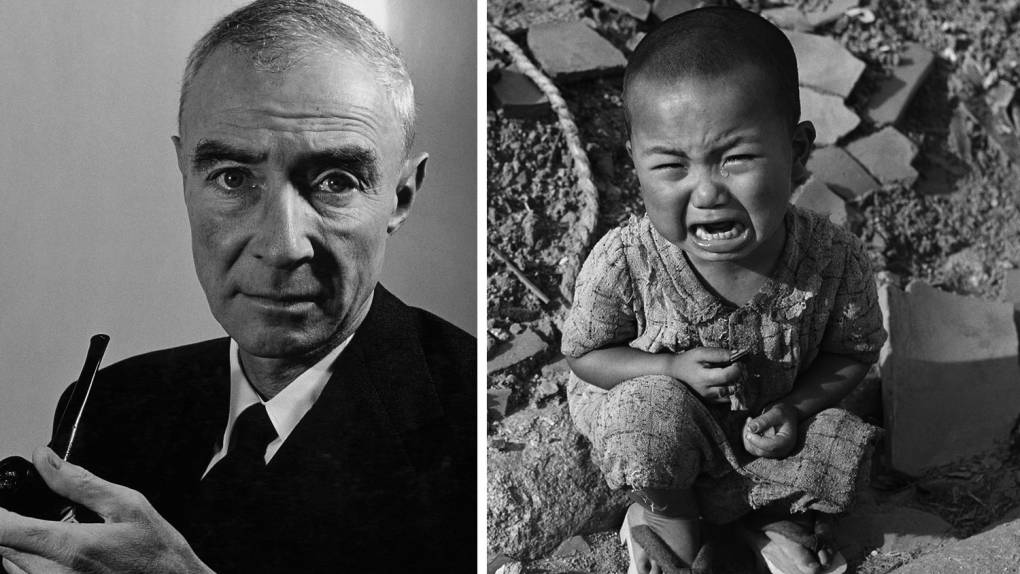
In ‘Oppenheimer,’ Christopher Nolan Builds a Thrilling, Serious Blockbuster for Adults
'Tenet' Opens Internationally and in Select U.S. Cities Next Month
Player sponsored by
window.__IS_SSR__=true
window.__INITIAL_STATE__={
"attachmentsReducer": {
"audio_0": {
"type": "attachments",
"id": "audio_0",
"imgSizes": {
"kqedFullSize": {
"file": "https://ww2.kqed.org/news/wp-content/themes/KQED-unified/img/audio_bgs/background0.jpg"
}
}
},
"audio_1": {
"type": "attachments",
"id": "audio_1",
"imgSizes": {
"kqedFullSize": {
"file": "https://ww2.kqed.org/news/wp-content/themes/KQED-unified/img/audio_bgs/background1.jpg"
}
}
},
"audio_2": {
"type": "attachments",
"id": "audio_2",
"imgSizes": {
"kqedFullSize": {
"file": "https://ww2.kqed.org/news/wp-content/themes/KQED-unified/img/audio_bgs/background2.jpg"
}
}
},
"audio_3": {
"type": "attachments",
"id": "audio_3",
"imgSizes": {
"kqedFullSize": {
"file": "https://ww2.kqed.org/news/wp-content/themes/KQED-unified/img/audio_bgs/background3.jpg"
}
}
},
"audio_4": {
"type": "attachments",
"id": "audio_4",
"imgSizes": {
"kqedFullSize": {
"file": "https://ww2.kqed.org/news/wp-content/themes/KQED-unified/img/audio_bgs/background4.jpg"
}
}
},
"placeholder": {
"type": "attachments",
"id": "placeholder",
"imgSizes": {
"thumbnail": {
"file": "https://cdn.kqed.org/wp-content/uploads/2024/12/KQED-Default-Image-816638274-2000x1333-1-160x107.jpg",
"width": 160,
"height": 107,
"mimeType": "image/jpeg"
},
"medium": {
"file": "https://cdn.kqed.org/wp-content/uploads/2024/12/KQED-Default-Image-816638274-2000x1333-1-800x533.jpg",
"width": 800,
"height": 533,
"mimeType": "image/jpeg"
},
"medium_large": {
"file": "https://cdn.kqed.org/wp-content/uploads/2024/12/KQED-Default-Image-816638274-2000x1333-1-768x512.jpg",
"width": 768,
"height": 512,
"mimeType": "image/jpeg"
},
"large": {
"file": "https://cdn.kqed.org/wp-content/uploads/2024/12/KQED-Default-Image-816638274-2000x1333-1-1020x680.jpg",
"width": 1020,
"height": 680,
"mimeType": "image/jpeg"
},
"1536x1536": {
"file": "https://cdn.kqed.org/wp-content/uploads/2024/12/KQED-Default-Image-816638274-2000x1333-1-1536x1024.jpg",
"width": 1536,
"height": 1024,
"mimeType": "image/jpeg"
},
"fd-lrg": {
"file": "https://cdn.kqed.org/wp-content/uploads/2024/12/KQED-Default-Image-816638274-2000x1333-1-1536x1024.jpg",
"width": 1536,
"height": 1024,
"mimeType": "image/jpeg"
},
"fd-med": {
"file": "https://cdn.kqed.org/wp-content/uploads/2024/12/KQED-Default-Image-816638274-2000x1333-1-1020x680.jpg",
"width": 1020,
"height": 680,
"mimeType": "image/jpeg"
},
"fd-sm": {
"file": "https://cdn.kqed.org/wp-content/uploads/2024/12/KQED-Default-Image-816638274-2000x1333-1-800x533.jpg",
"width": 800,
"height": 533,
"mimeType": "image/jpeg"
},
"post-thumbnail": {
"file": "https://cdn.kqed.org/wp-content/uploads/2024/12/KQED-Default-Image-816638274-2000x1333-1-672x372.jpg",
"width": 672,
"height": 372,
"mimeType": "image/jpeg"
},
"twentyfourteen-full-width": {
"file": "https://cdn.kqed.org/wp-content/uploads/2024/12/KQED-Default-Image-816638274-2000x1333-1-1038x576.jpg",
"width": 1038,
"height": 576,
"mimeType": "image/jpeg"
},
"xxsmall": {
"file": "https://cdn.kqed.org/wp-content/uploads/2024/12/KQED-Default-Image-816638274-2000x1333-1-160x107.jpg",
"width": 160,
"height": 107,
"mimeType": "image/jpeg"
},
"xsmall": {
"file": "https://cdn.kqed.org/wp-content/uploads/2024/12/KQED-Default-Image-816638274-2000x1333-1-672x372.jpg",
"width": 672,
"height": 372,
"mimeType": "image/jpeg"
},
"small": {
"file": "https://cdn.kqed.org/wp-content/uploads/2024/12/KQED-Default-Image-816638274-2000x1333-1-672x372.jpg",
"width": 672,
"height": 372,
"mimeType": "image/jpeg"
},
"xlarge": {
"file": "https://cdn.kqed.org/wp-content/uploads/2024/12/KQED-Default-Image-816638274-2000x1333-1-1020x680.jpg",
"width": 1020,
"height": 680,
"mimeType": "image/jpeg"
},
"full-width": {
"file": "https://cdn.kqed.org/wp-content/uploads/2024/12/KQED-Default-Image-816638274-2000x1333-1-1920x1280.jpg",
"width": 1920,
"height": 1280,
"mimeType": "image/jpeg"
},
"guest-author-32": {
"file": "https://cdn.kqed.org/wp-content/uploads/2025/01/KQED-Default-Image-816638274-1333x1333-1-160x160.jpg",
"width": 32,
"height": 32,
"mimeType": "image/jpeg"
},
"guest-author-50": {
"file": "https://cdn.kqed.org/wp-content/uploads/2025/01/KQED-Default-Image-816638274-1333x1333-1-160x160.jpg",
"width": 50,
"height": 50,
"mimeType": "image/jpeg"
},
"guest-author-64": {
"file": "https://cdn.kqed.org/wp-content/uploads/2025/01/KQED-Default-Image-816638274-1333x1333-1-160x160.jpg",
"width": 64,
"height": 64,
"mimeType": "image/jpeg"
},
"guest-author-96": {
"file": "https://cdn.kqed.org/wp-content/uploads/2025/01/KQED-Default-Image-816638274-1333x1333-1-160x160.jpg",
"width": 96,
"height": 96,
"mimeType": "image/jpeg"
},
"guest-author-128": {
"file": "https://cdn.kqed.org/wp-content/uploads/2025/01/KQED-Default-Image-816638274-1333x1333-1-160x160.jpg",
"width": 128,
"height": 128,
"mimeType": "image/jpeg"
},
"detail": {
"file": "https://cdn.kqed.org/wp-content/uploads/2025/01/KQED-Default-Image-816638274-1333x1333-1-160x160.jpg",
"width": 160,
"height": 160,
"mimeType": "image/jpeg"
},
"kqedFullSize": {
"file": "https://cdn.kqed.org/wp-content/uploads/2024/12/KQED-Default-Image-816638274-2000x1333-1.jpg",
"width": 2000,
"height": 1333
}
}
},
"arts_13932247": {
"type": "attachments",
"id": "arts_13932247",
"meta": {
"index": "attachments_1716263798",
"site": "arts",
"id": "13932247",
"found": true
},
"parent": 13932204,
"imgSizes": {
"twentyfourteen-full-width": {
"file": "https://ww2.kqed.org/app/uploads/sites/2/2023/07/Oppenheimer.composite.rev_-1038x576.jpg",
"width": 1038,
"mimeType": "image/jpeg",
"height": 576
},
"thumbnail": {
"file": "https://ww2.kqed.org/app/uploads/sites/2/2023/07/Oppenheimer.composite.rev_-160x90.jpg",
"width": 160,
"mimeType": "image/jpeg",
"height": 90
},
"post-thumbnail": {
"file": "https://ww2.kqed.org/app/uploads/sites/2/2023/07/Oppenheimer.composite.rev_-672x372.jpg",
"width": 672,
"mimeType": "image/jpeg",
"height": 372
},
"kqedFullSize": {
"file": "https://ww2.kqed.org/app/uploads/sites/2/2023/07/Oppenheimer.composite.rev_.jpg",
"width": 1500,
"height": 844
},
"large": {
"file": "https://ww2.kqed.org/app/uploads/sites/2/2023/07/Oppenheimer.composite.rev_-1020x574.jpg",
"width": 1020,
"mimeType": "image/jpeg",
"height": 574
},
"medium": {
"file": "https://ww2.kqed.org/app/uploads/sites/2/2023/07/Oppenheimer.composite.rev_-800x450.jpg",
"width": 800,
"mimeType": "image/jpeg",
"height": 450
},
"medium_large": {
"file": "https://ww2.kqed.org/app/uploads/sites/2/2023/07/Oppenheimer.composite.rev_-768x432.jpg",
"width": 768,
"mimeType": "image/jpeg",
"height": 432
}
},
"publishDate": 1690572471,
"modified": 1690572639,
"caption": "In the film 'Oppemnheimer,' Robert Oppenheimer (left) wrestles with his development of the atomic bomb, while victims of his creation (right) go unseen on the screen.",
"description": null,
"title": "Oppenheimer.composite.rev",
"credit": "Getty Images",
"status": "inherit",
"altTag": null,
"isLoading": false,
"fetchFailed": false
},
"arts_13931578": {
"type": "attachments",
"id": "arts_13931578",
"meta": {
"index": "attachments_1716263798",
"site": "arts",
"id": "13931578",
"found": true
},
"parent": 13931577,
"imgSizes": {
"twentyfourteen-full-width": {
"file": "https://ww2.kqed.org/app/uploads/sites/2/2023/07/Screen-Shot-2023-07-13-at-11.44.49-AM-1038x576.png",
"width": 1038,
"mimeType": "image/png",
"height": 576
},
"thumbnail": {
"file": "https://ww2.kqed.org/app/uploads/sites/2/2023/07/Screen-Shot-2023-07-13-at-11.44.49-AM-160x100.png",
"width": 160,
"mimeType": "image/png",
"height": 100
},
"post-thumbnail": {
"file": "https://ww2.kqed.org/app/uploads/sites/2/2023/07/Screen-Shot-2023-07-13-at-11.44.49-AM-672x372.png",
"width": 672,
"mimeType": "image/png",
"height": 372
},
"kqedFullSize": {
"file": "https://ww2.kqed.org/app/uploads/sites/2/2023/07/Screen-Shot-2023-07-13-at-11.44.49-AM.png",
"width": 1878,
"height": 1168
},
"large": {
"file": "https://ww2.kqed.org/app/uploads/sites/2/2023/07/Screen-Shot-2023-07-13-at-11.44.49-AM-1020x634.png",
"width": 1020,
"mimeType": "image/png",
"height": 634
},
"1536x1536": {
"file": "https://ww2.kqed.org/app/uploads/sites/2/2023/07/Screen-Shot-2023-07-13-at-11.44.49-AM-1536x955.png",
"width": 1536,
"mimeType": "image/png",
"height": 955
},
"medium": {
"file": "https://ww2.kqed.org/app/uploads/sites/2/2023/07/Screen-Shot-2023-07-13-at-11.44.49-AM-800x498.png",
"width": 800,
"mimeType": "image/png",
"height": 498
},
"medium_large": {
"file": "https://ww2.kqed.org/app/uploads/sites/2/2023/07/Screen-Shot-2023-07-13-at-11.44.49-AM-768x478.png",
"width": 768,
"mimeType": "image/png",
"height": 478
}
},
"publishDate": 1689273927,
"modified": 1689274044,
"caption": "Cillian Murphy stars in ‘Oppenheimer.’",
"description": null,
"title": "Cillian Murphy stars in ‘Oppenheimer.’",
"credit": "Syncopy/ Universal",
"status": "inherit",
"altTag": "A thin white man with sharp cheekbones stands alone outside, concern etched on his face. He is wearing a brown suit and hat.",
"isLoading": false,
"fetchFailed": false
},
"arts_13885363": {
"type": "attachments",
"id": "arts_13885363",
"meta": {
"index": "attachments_1716263798",
"site": "arts",
"id": "13885363",
"found": true
},
"parent": 13885352,
"imgSizes": {
"twentyfourteen-full-width": {
"file": "https://ww2.kqed.org/app/uploads/sites/2/2020/08/TenetTrailerRSPost-1038x576.jpg",
"width": 1038,
"mimeType": "image/jpeg",
"height": 576
},
"thumbnail": {
"file": "https://ww2.kqed.org/app/uploads/sites/2/2020/08/TenetTrailerRSPost-160x87.jpg",
"width": 160,
"mimeType": "image/jpeg",
"height": 87
},
"post-thumbnail": {
"file": "https://ww2.kqed.org/app/uploads/sites/2/2020/08/TenetTrailerRSPost-672x372.jpg",
"width": 672,
"mimeType": "image/jpeg",
"height": 372
},
"kqedFullSize": {
"file": "https://ww2.kqed.org/app/uploads/sites/2/2020/08/TenetTrailerRSPost-e1598467715687.jpg",
"width": 1920,
"height": 1047
},
"2048x2048": {
"file": "https://ww2.kqed.org/app/uploads/sites/2/2020/08/TenetTrailerRSPost-2048x1117.jpg",
"width": 2048,
"mimeType": "image/jpeg",
"height": 1117
},
"large": {
"file": "https://ww2.kqed.org/app/uploads/sites/2/2020/08/TenetTrailerRSPost-1020x556.jpg",
"width": 1020,
"mimeType": "image/jpeg",
"height": 556
},
"1536x1536": {
"file": "https://ww2.kqed.org/app/uploads/sites/2/2020/08/TenetTrailerRSPost-1536x838.jpg",
"width": 1536,
"mimeType": "image/jpeg",
"height": 838
},
"full-width": {
"file": "https://ww2.kqed.org/app/uploads/sites/2/2020/08/TenetTrailerRSPost-1920x1047.jpg",
"width": 1920,
"mimeType": "image/jpeg",
"height": 1047
},
"medium": {
"file": "https://ww2.kqed.org/app/uploads/sites/2/2020/08/TenetTrailerRSPost-800x436.jpg",
"width": 800,
"mimeType": "image/jpeg",
"height": 436
},
"medium_large": {
"file": "https://ww2.kqed.org/app/uploads/sites/2/2020/08/TenetTrailerRSPost-768x419.jpg",
"width": 768,
"mimeType": "image/jpeg",
"height": 419
}
},
"publishDate": 1598467695,
"modified": 1598467731,
"caption": "John David Washington stars in Christopher Nolan's 'Tenet.'",
"description": "John David Washington stars in Christopher Nolan's 'Tenet.'",
"title": "John David Washington stars in Christopher Nolan's 'Tenet.'",
"credit": null,
"status": "inherit",
"isLoading": false,
"fetchFailed": false
}
},
"audioPlayerReducer": {
"postId": "stream_live",
"isPaused": true,
"isPlaying": false,
"pfsActive": false,
"pledgeModalIsOpen": true,
"playerDrawerIsOpen": false
},
"authorsReducer": {
"byline_arts_13931577": {
"type": "authors",
"id": "byline_arts_13931577",
"meta": {
"override": true
},
"slug": "byline_arts_13931577",
"name": "Lindsey Bahr, Associated Press",
"isLoading": false
},
"byline_arts_13885352": {
"type": "authors",
"id": "byline_arts_13885352",
"meta": {
"override": true
},
"slug": "byline_arts_13885352",
"name": "Mandalit del Barco",
"isLoading": false
},
"omayeda": {
"type": "authors",
"id": "11872",
"meta": {
"index": "authors_1716337520",
"id": "11872",
"found": true
},
"name": "Olivia Cruz Mayeda",
"firstName": "Olivia Cruz",
"lastName": "Mayeda",
"slug": "omayeda",
"email": "omayeda@kqed.org",
"display_author_email": false,
"staff_mastheads": [],
"title": "Reporter",
"bio": "Olivia Cruz Mayeda is a journalist covering style, culture and reparations in the Bay Area, a place that has been home to her family for over 100 years. Her writing has also appeared in the \u003cem>San Francisco Chronicle\u003c/em> and \u003cem>El Tecolote\u003c/em>.",
"avatar": "https://secure.gravatar.com/avatar/a8c0baa30219ce1071a9474f4c14141f?s=600&d=blank&r=g",
"twitter": null,
"facebook": null,
"instagram": null,
"linkedin": null,
"sites": [
{
"site": "arts",
"roles": [
"contributor"
]
}
],
"headData": {
"title": "Olivia Cruz Mayeda | KQED",
"description": "Reporter",
"ogImgSrc": "https://secure.gravatar.com/avatar/a8c0baa30219ce1071a9474f4c14141f?s=600&d=blank&r=g",
"twImgSrc": "https://secure.gravatar.com/avatar/a8c0baa30219ce1071a9474f4c14141f?s=600&d=blank&r=g"
},
"isLoading": false,
"link": "/author/omayeda"
}
},
"breakingNewsReducer": {},
"pagesReducer": {},
"postsReducer": {
"stream_live": {
"type": "live",
"id": "stream_live",
"audioUrl": "https://streams.kqed.org/kqedradio",
"title": "Live Stream",
"excerpt": "Live Stream information currently unavailable.",
"link": "/radio",
"featImg": "",
"label": {
"name": "KQED Live",
"link": "/"
}
},
"stream_kqedNewscast": {
"type": "posts",
"id": "stream_kqedNewscast",
"audioUrl": "https://www.kqed.org/.stream/anon/radio/RDnews/newscast.mp3?_=1",
"title": "KQED Newscast",
"featImg": "",
"label": {
"name": "88.5 FM",
"link": "/"
}
},
"arts_13932204": {
"type": "posts",
"id": "arts_13932204",
"meta": {
"index": "posts_1716263798",
"site": "arts",
"id": "13932204",
"score": null,
"sort": [
1690573762000
]
},
"guestAuthors": [],
"slug": "oppenheimer-japanese-erasure",
"title": "Who 'Oppenheimer' Erases",
"publishDate": 1690573762,
"format": "standard",
"headTitle": "Who ‘Oppenheimer’ Erases | KQED",
"labelTerm": {},
"content": "\u003cp>After Li Lai watched an advance screening of \u003cem>Oppenheimer\u003c/em> in Seattle, she didn’t expect her take on the movie to go viral — or for it to receive so much backlash from “WWII bros,” as Lai calls them.\u003c/p>\n\u003cp>“People seem to love #Oppenheimer, but I’ll just say it,” \u003ca href=\"https://twitter.com/MediaversityRev/status/1681534717043277824\">wrote Lai\u003c/a>, the Bay Area-born Taiwanese American founder of a site called Mediaversity that grades films based on their diversity, before she went to bed that night. “I was uncomfy watching yet another movie about tortured white male genius when the victims of the atrocities glossed over by the script — Japanese people, interned Japanese Americans, and Native Americans — had no voice.”\u003c/p>\n\u003cp>“It isn’t about Japanese Americans or native Americans,” one Twitter user replied. “Anything more you wanna cry about?”\u003c/p>\n\u003cp>[aside postID='news_11906518']One only has to glance at the replies to Lai to see that people have complicated feelings about \u003cem>Oppenheimer\u003c/em>, and that some still justify the atomic bombing of Japan and its ongoing consequences for victims’ families.\u003c/p>\n\u003cp>As a Japanese and Filipina American who has lived with the generational trauma caused by the bomb, I felt conflicted about whether or not to even see \u003cem>Oppenheimer\u003c/em>. Of course, it turned out I wasn’t alone.\u003c/p>\n\u003ch2>‘Who was this movie intended for?’\u003c/h2>\n\u003cp>Miya Sommers is a fifth-generation Japanese American living in Oakland who doesn’t plan on seeing \u003cem>Oppenheimer\u003c/em>. Sommers’ grandfather lived in a town outside of Hiroshima when the atomic bomb hit, killing several of her family members.\u003c/p>\n\u003cp>[ad fullwidth]\u003c/p>\n\u003cp>“I’m feeling more and more resistant to wanting to pay money to sit through that, knowing that it’s going to be pretty traumatizing,” Sommers said. “I don’t care about [Oppenheimer’s sense of] guilt. Basically my whole family is dead because of him.”\u003c/p>\n\u003cfigure id=\"attachment_13931578\" class=\"wp-caption aligncenter\" style=\"max-width: 800px\">\u003ca href=\"https://ww2.kqed.org/app/uploads/sites/2/2023/07/Screen-Shot-2023-07-13-at-11.44.49-AM.png\">\u003cimg loading=\"lazy\" decoding=\"async\" class=\"size-medium wp-image-13931578\" src=\"https://ww2.kqed.org/app/uploads/sites/2/2023/07/Screen-Shot-2023-07-13-at-11.44.49-AM-800x498.png\" alt=\"A thin white man with sharp cheekbones stands alone outside, concern etched on his face. He is wearing a brown suit and hat.\" width=\"800\" height=\"498\" srcset=\"https://cdn.kqed.org/wp-content/uploads/sites/2/2023/07/Screen-Shot-2023-07-13-at-11.44.49-AM-800x498.png 800w, https://cdn.kqed.org/wp-content/uploads/sites/2/2023/07/Screen-Shot-2023-07-13-at-11.44.49-AM-1020x634.png 1020w, https://cdn.kqed.org/wp-content/uploads/sites/2/2023/07/Screen-Shot-2023-07-13-at-11.44.49-AM-160x100.png 160w, https://cdn.kqed.org/wp-content/uploads/sites/2/2023/07/Screen-Shot-2023-07-13-at-11.44.49-AM-768x478.png 768w, https://cdn.kqed.org/wp-content/uploads/sites/2/2023/07/Screen-Shot-2023-07-13-at-11.44.49-AM-1536x955.png 1536w, https://cdn.kqed.org/wp-content/uploads/sites/2/2023/07/Screen-Shot-2023-07-13-at-11.44.49-AM.png 1878w\" sizes=\"(max-width: 800px) 100vw, 800px\">\u003c/a>\u003cfigcaption class=\"wp-caption-text\">Cillian Murphy stars in ‘Oppenheimer.’ \u003ccite>(Syncopy/ Universal)\u003c/cite>\u003c/figcaption>\u003c/figure>\n\u003cp>In \u003cem>Oppenheimer\u003c/em>, the post-bomb carnage that Sommers’ grandfather once described to her in vivid detail — severed limbs, bodies stripped of skin — goes unseen by the viewer. In its place are the reactions of Robert Oppenheimer and other white Americans as he watches a slideshow of the aftermath, his stiff, haunted face illuminated by the white glow of a projector screen thousands of miles from the final resting places of over 100,000 Japanese people.\u003c/p>\n\u003cp>Granted, Oppenheimer’s own perspective is to be expected in an Oppenheimer biopic. But the total absence of Japanese people in the film raises questions for Lai.\u003c/p>\n\u003cp>“It was very chilling that you never get to see any Japanese or Japanese Americans in the movie,” Lai said. “Like, who was this movie intended for? Was the erasure of Japanese voices purposeful or was it just lazy?”\u003c/p>\n\u003cp>Karen Umemoto, a second-generation Japanese American and the director of Asian American Studies at the University of California Los Angeles, says that she can’t erase the graphic images of bomb victims she saw at the Hiroshima Peace Memorial Museum in Japan from her mind.\u003c/p>\n\u003cp>“But those images were what made me so resolute in my belief that the nuclear option is bad and should be destroyed,” she said.\u003c/p>\n\u003cfigure id=\"attachment_13932210\" class=\"wp-caption aligncenter\" style=\"max-width: 800px\">\u003ca href=\"https://ww2.kqed.org/app/uploads/sites/2/2023/07/GettyImages-1255649844.jpg\">\u003cimg loading=\"lazy\" decoding=\"async\" class=\"size-medium wp-image-13932210\" src=\"https://ww2.kqed.org/app/uploads/sites/2/2023/07/GettyImages-1255649844-800x534.jpg\" alt=\"The Atomic Bomb Dome at the Hiroshima Peace Memorial\" width=\"800\" height=\"534\" srcset=\"https://cdn.kqed.org/wp-content/uploads/sites/2/2023/07/GettyImages-1255649844-800x534.jpg 800w, https://cdn.kqed.org/wp-content/uploads/sites/2/2023/07/GettyImages-1255649844-1020x680.jpg 1020w, https://cdn.kqed.org/wp-content/uploads/sites/2/2023/07/GettyImages-1255649844-160x107.jpg 160w, https://cdn.kqed.org/wp-content/uploads/sites/2/2023/07/GettyImages-1255649844-768x512.jpg 768w, https://cdn.kqed.org/wp-content/uploads/sites/2/2023/07/GettyImages-1255649844.jpg 1024w\" sizes=\"(max-width: 800px) 100vw, 800px\">\u003c/a>\u003cfigcaption class=\"wp-caption-text\">The Atomic Bomb Dome is seen at the Hiroshima Peace Memorial ahead of the G7 Leaders’ Summit in Hiroshima on May 18, 2023. \u003ccite>(Ludovic Marin/AFP via Getty Images)\u003c/cite>\u003c/figcaption>\u003c/figure>\n\u003cp>Umemoto, a former community organizer for Bay Area Asians for Nuclear Disarmament, says that the vast majority of Americans don’t understand the full horrific gravity of nuclear warfare, which is what makes images of the atomic bombings so powerful.\u003c/p>\n\u003cp>“I would show depictions of the bombings that are raw and honest,” Umemoto said. “But that’s not what sells movie tickets.”\u003c/p>\n\u003cp>What makes a film like \u003cem>Oppenheimer\u003c/em> feel even weightier is absence of blockbuster Hollywood films that represent nonwhite perspectives on the war, says Umemoto.\u003c/p>\n\u003ch2>‘A powerful tool for white male perspectives’\u003c/h2>\n\u003cp>Directed by acclaimed filmmaker Christopher Nolan, the film has also received praise — even from critics of its exclusively white male viewpoint of Asian pain. For some, its technical and cinematic merits have made the debate about its narrow perspective even more fraught.\u003c/p>\n\u003cp>“I thought it was cool that the movie achieved this sense of uneasiness, which I think was purposeful,” Lai said. “I just don’t feel good about it for other reasons.”\u003c/p>\n\u003cp>[aside postID='news_11821133']Ponipate Rokolekutu, a professor of Race and Resistance Studies at San Francisco State University, said he wanted to scream out into the theater of mostly white moviegoers when he saw the film. As an Indigenous Fijian, Rokolekutu had hoped that Oppenheimer might shed light on the Manhattan project’s consequences for the Pacific Islands; \u003ca href=\"https://www.latimes.com/projects/marshall-islands-nuclear-testing-sea-level-rise/\">the U.S. dropped 67 nuclear test bombs\u003c/a> on and above the Marshall Islands between 1946 and 1958. He was also hoping for the perspectives of Japanese and Japanese American people, whose home nation was also brutally occupying islands in the Pacific during the war.\u003c/p>\n\u003cp>“I was struck by the dilemma that Oppenheimer had when he was fighting with the morality of the whole project,” Rokolekutu said. But what was more striking, he said, was everyone who was left out, who is consistently left out in blockbuster war movies.\u003c/p>\n\u003cp>“Hollywood is a powerful tool for white perspectives,” he said. “They don’t want other histories to be known.”\u003c/p>\n\u003cp>The film does bring nuance to Oppenheimer’s experience, from his emotional suffering over the atomic bomb to the anti-Communist witch hunt levied against him in 1954. Elsewhere in the film, though, Nolan hints at people of color as expediently as possible.[pullquote size='large' align='right' citation='Miya Sommers']Basically my whole family is dead because of him.[/pullquote]\u003c/p>\n\u003cp>When the Manhattan project breaks ground in Los Alamos, Oppenheimer makes a short quip about the “Indians” who live there, but the film doesn’t elaborate on that detail. \u003ca href=\"https://nuclearprinceton.princeton.edu/impacts-native-communities-hanford-site#:~:text=The%20Manhattan%20project%20had%20profound,uranium%20mining%20and%20Los%20Alamos\">The Native peoples who were displaced by the project\u003c/a> and whose resources were contaminated by uranium mining and nuclear testing are mentioned only one more time: after the bombing, when Oppenheimer, talking about the land, says, “give it back to the Indians.”\u003c/p>\n\u003cp>For Lai, watching the point of view that Hollywood deemed worthy of a $100 million budget, “I felt very invisible and lonely for another three hours dedicated to a white male genius.”\u003c/p>\n\u003cfigure id=\"attachment_13932208\" class=\"wp-caption aligncenter\" style=\"max-width: 800px\">\u003ca href=\"https://ww2.kqed.org/app/uploads/sites/2/2023/07/GettyImages-1555745048.jpg\">\u003cimg loading=\"lazy\" decoding=\"async\" class=\"size-medium wp-image-13932208\" src=\"https://ww2.kqed.org/app/uploads/sites/2/2023/07/GettyImages-1555745048-800x534.jpg\" alt=\"movie posters for 'barbie' and 'oppenheimer' next to each other\" width=\"800\" height=\"534\" srcset=\"https://cdn.kqed.org/wp-content/uploads/sites/2/2023/07/GettyImages-1555745048-800x534.jpg 800w, https://cdn.kqed.org/wp-content/uploads/sites/2/2023/07/GettyImages-1555745048-1020x680.jpg 1020w, https://cdn.kqed.org/wp-content/uploads/sites/2/2023/07/GettyImages-1555745048-160x107.jpg 160w, https://cdn.kqed.org/wp-content/uploads/sites/2/2023/07/GettyImages-1555745048-768x512.jpg 768w, https://cdn.kqed.org/wp-content/uploads/sites/2/2023/07/GettyImages-1555745048.jpg 1024w\" sizes=\"(max-width: 800px) 100vw, 800px\">\u003c/a>\u003cfigcaption class=\"wp-caption-text\">Movie posters for ‘Barbie’ and ‘Oppenheimer’ are pictured outside of the Cinemark Somerdale 16 and XD in Somerdale, New Jersey. \u003ccite>(Hannah Beier/Washington Post/Getty Images)\u003c/cite>\u003c/figcaption>\u003c/figure>\n\u003cp>In the end, I decided it was worth seeing \u003cem>Oppenheimer\u003c/em>, because I wanted to know how the film did and didn’t uphold Hollywood’s legacy. When my partner and I made our way to the auditorium through crowds of monochromatic Barbie-goers, we felt nervous about what we were about to put ourselves through as Japanese Americans. (The “Barbenheimer” media frenzy, including fan-made costumes and movie poster mashups of Barbie with a fiery mushroom cloud, only further obscures \u003cem>Oppenheimer\u003c/em>’s omissions.)\u003c/p>\n\u003cp>As Oppenheimer and friends triumphed onscreen — their successful test bomb bathing the theater in blinding orange light — we sobbed quietly.\u003c/p>\n\u003cp>[aside postID='news_11956611']“That scene made me think of how my grandfather climbed to the top of a hill near his house outside Hiroshima when he was 10 and watched the mushroom cloud get bigger,” my partner told me as we exited the theater.\u003c/p>\n\u003cp>By the film’s end, Oppenheimer is remorseful — not that he ever apologized for the atrocities in Japan — and completes his heavy-hearted hero’s journey with a profound understanding of how his invention will change the world. I was left thinking of the quote by Scottish comedian Frankie Boyle: “Not only will America go to your country and kill all your people … they’ll come back 20 years later and make a movie about how killing your people made their soldiers feel sad.”\u003c/p>\n\u003cp>\u003cem>Oppenheimer\u003c/em> does stay true to its scope, which is one man’s perspective. It’s also disappointingly faithful to a Hollywood canon that prioritizes white American experiences, leaving the pain, self-reflections and nuanced interiority of America’s victims unseen and unheard.\u003c/p>\n\u003cp>[ad floatright]\u003c/p>\n\u003cp>\u003cimg loading=\"lazy\" decoding=\"async\" class=\"aligncenter size-full wp-image-12127869\" src=\"https://ww2.kqed.org/app/uploads/sites/2/2016/09/Q.Logo_.Break_.jpg\" alt=\"\" width=\"800\" height=\"78\" srcset=\"https://cdn.kqed.org/wp-content/uploads/sites/2/2016/09/Q.Logo_.Break_.jpg 800w, https://cdn.kqed.org/wp-content/uploads/sites/2/2016/09/Q.Logo_.Break_-400x39.jpg 400w, https://cdn.kqed.org/wp-content/uploads/sites/2/2016/09/Q.Logo_.Break_-768x75.jpg 768w\" sizes=\"(max-width: 800px) 100vw, 800px\">\u003c/p>\n\n",
"blocks": [],
"excerpt": "The film's omission of Japanese bombing victims is an all too common failure in Hollywood.",
"status": "publish",
"parent": 0,
"modified": 1726758419,
"stats": {
"hasAudio": false,
"hasVideo": false,
"hasChartOrMap": false,
"iframeSrcs": [],
"hasGoogleForm": false,
"hasGallery": false,
"hasHearkenModule": false,
"hasPolis": false,
"paragraphCount": 31,
"wordCount": 1439
},
"headData": {
"title": "The Japanese Erasure of 'Oppenheimer' | KQED",
"description": "The film's omission of bombing victims is an all too common Hollywood failure.",
"ogTitle": "",
"ogDescription": "",
"ogImgId": "",
"twTitle": "",
"twDescription": "",
"twImgId": "",
"socialTitle": "The Japanese Erasure of 'Oppenheimer' %%page%% %%sep%% KQED",
"socialDescription": "The film's omission of bombing victims is an all too common Hollywood failure.",
"schema": {
"@context": "https://schema.org",
"@type": "Article",
"headline": "Who 'Oppenheimer' Erases",
"datePublished": "2023-07-28T12:49:22-07:00",
"dateModified": "2024-09-19T08:06:59-07:00",
"image": "https://cdn.kqed.org/wp-content/uploads/2020/02/KQED-OG-Image@1x.png"
}
},
"source": "commentary",
"sourceUrl": "https://www.kqed.org/artscommentary",
"sticky": false,
"templateType": "standard",
"featuredImageType": "standard",
"excludeFromSiteSearch": "Include",
"articleAge": "0",
"path": "/arts/13932204/oppenheimer-japanese-erasure",
"audioTrackLength": null,
"parsedContent": [
{
"type": "contentString",
"content": "\u003cdiv class=\"post-body\">\u003cp>\u003cp>After Li Lai watched an advance screening of \u003cem>Oppenheimer\u003c/em> in Seattle, she didn’t expect her take on the movie to go viral — or for it to receive so much backlash from “WWII bros,” as Lai calls them.\u003c/p>\n\u003cp>“People seem to love #Oppenheimer, but I’ll just say it,” \u003ca href=\"https://twitter.com/MediaversityRev/status/1681534717043277824\">wrote Lai\u003c/a>, the Bay Area-born Taiwanese American founder of a site called Mediaversity that grades films based on their diversity, before she went to bed that night. “I was uncomfy watching yet another movie about tortured white male genius when the victims of the atrocities glossed over by the script — Japanese people, interned Japanese Americans, and Native Americans — had no voice.”\u003c/p>\n\u003cp>“It isn’t about Japanese Americans or native Americans,” one Twitter user replied. “Anything more you wanna cry about?”\u003c/p>\n\u003cp>\u003c/p>\u003c/div>",
"attributes": {
"named": {},
"numeric": []
}
},
{
"type": "component",
"content": "",
"name": "aside",
"attributes": {
"named": {
"postid": "news_11906518",
"label": ""
},
"numeric": []
}
},
{
"type": "contentString",
"content": "\u003cdiv class=\"post-body\">\u003cp>One only has to glance at the replies to Lai to see that people have complicated feelings about \u003cem>Oppenheimer\u003c/em>, and that some still justify the atomic bombing of Japan and its ongoing consequences for victims’ families.\u003c/p>\n\u003cp>As a Japanese and Filipina American who has lived with the generational trauma caused by the bomb, I felt conflicted about whether or not to even see \u003cem>Oppenheimer\u003c/em>. Of course, it turned out I wasn’t alone.\u003c/p>\n\u003ch2>‘Who was this movie intended for?’\u003c/h2>\n\u003cp>Miya Sommers is a fifth-generation Japanese American living in Oakland who doesn’t plan on seeing \u003cem>Oppenheimer\u003c/em>. Sommers’ grandfather lived in a town outside of Hiroshima when the atomic bomb hit, killing several of her family members.\u003c/p>\n\u003cp>\u003c/p>\u003c/div>",
"attributes": {
"named": {},
"numeric": []
}
},
{
"type": "component",
"content": "",
"name": "ad",
"attributes": {
"named": {
"label": "fullwidth"
},
"numeric": [
"fullwidth"
]
}
},
{
"type": "contentString",
"content": "\u003cdiv class=\"post-body\">\u003cp>\u003c/p>\n\u003cp>“I’m feeling more and more resistant to wanting to pay money to sit through that, knowing that it’s going to be pretty traumatizing,” Sommers said. “I don’t care about [Oppenheimer’s sense of] guilt. Basically my whole family is dead because of him.”\u003c/p>\n\u003cfigure id=\"attachment_13931578\" class=\"wp-caption aligncenter\" style=\"max-width: 800px\">\u003ca href=\"https://ww2.kqed.org/app/uploads/sites/2/2023/07/Screen-Shot-2023-07-13-at-11.44.49-AM.png\">\u003cimg loading=\"lazy\" decoding=\"async\" class=\"size-medium wp-image-13931578\" src=\"https://ww2.kqed.org/app/uploads/sites/2/2023/07/Screen-Shot-2023-07-13-at-11.44.49-AM-800x498.png\" alt=\"A thin white man with sharp cheekbones stands alone outside, concern etched on his face. He is wearing a brown suit and hat.\" width=\"800\" height=\"498\" srcset=\"https://cdn.kqed.org/wp-content/uploads/sites/2/2023/07/Screen-Shot-2023-07-13-at-11.44.49-AM-800x498.png 800w, https://cdn.kqed.org/wp-content/uploads/sites/2/2023/07/Screen-Shot-2023-07-13-at-11.44.49-AM-1020x634.png 1020w, https://cdn.kqed.org/wp-content/uploads/sites/2/2023/07/Screen-Shot-2023-07-13-at-11.44.49-AM-160x100.png 160w, https://cdn.kqed.org/wp-content/uploads/sites/2/2023/07/Screen-Shot-2023-07-13-at-11.44.49-AM-768x478.png 768w, https://cdn.kqed.org/wp-content/uploads/sites/2/2023/07/Screen-Shot-2023-07-13-at-11.44.49-AM-1536x955.png 1536w, https://cdn.kqed.org/wp-content/uploads/sites/2/2023/07/Screen-Shot-2023-07-13-at-11.44.49-AM.png 1878w\" sizes=\"(max-width: 800px) 100vw, 800px\">\u003c/a>\u003cfigcaption class=\"wp-caption-text\">Cillian Murphy stars in ‘Oppenheimer.’ \u003ccite>(Syncopy/ Universal)\u003c/cite>\u003c/figcaption>\u003c/figure>\n\u003cp>In \u003cem>Oppenheimer\u003c/em>, the post-bomb carnage that Sommers’ grandfather once described to her in vivid detail — severed limbs, bodies stripped of skin — goes unseen by the viewer. In its place are the reactions of Robert Oppenheimer and other white Americans as he watches a slideshow of the aftermath, his stiff, haunted face illuminated by the white glow of a projector screen thousands of miles from the final resting places of over 100,000 Japanese people.\u003c/p>\n\u003cp>Granted, Oppenheimer’s own perspective is to be expected in an Oppenheimer biopic. But the total absence of Japanese people in the film raises questions for Lai.\u003c/p>\n\u003cp>“It was very chilling that you never get to see any Japanese or Japanese Americans in the movie,” Lai said. “Like, who was this movie intended for? Was the erasure of Japanese voices purposeful or was it just lazy?”\u003c/p>\n\u003cp>Karen Umemoto, a second-generation Japanese American and the director of Asian American Studies at the University of California Los Angeles, says that she can’t erase the graphic images of bomb victims she saw at the Hiroshima Peace Memorial Museum in Japan from her mind.\u003c/p>\n\u003cp>“But those images were what made me so resolute in my belief that the nuclear option is bad and should be destroyed,” she said.\u003c/p>\n\u003cfigure id=\"attachment_13932210\" class=\"wp-caption aligncenter\" style=\"max-width: 800px\">\u003ca href=\"https://ww2.kqed.org/app/uploads/sites/2/2023/07/GettyImages-1255649844.jpg\">\u003cimg loading=\"lazy\" decoding=\"async\" class=\"size-medium wp-image-13932210\" src=\"https://ww2.kqed.org/app/uploads/sites/2/2023/07/GettyImages-1255649844-800x534.jpg\" alt=\"The Atomic Bomb Dome at the Hiroshima Peace Memorial\" width=\"800\" height=\"534\" srcset=\"https://cdn.kqed.org/wp-content/uploads/sites/2/2023/07/GettyImages-1255649844-800x534.jpg 800w, https://cdn.kqed.org/wp-content/uploads/sites/2/2023/07/GettyImages-1255649844-1020x680.jpg 1020w, https://cdn.kqed.org/wp-content/uploads/sites/2/2023/07/GettyImages-1255649844-160x107.jpg 160w, https://cdn.kqed.org/wp-content/uploads/sites/2/2023/07/GettyImages-1255649844-768x512.jpg 768w, https://cdn.kqed.org/wp-content/uploads/sites/2/2023/07/GettyImages-1255649844.jpg 1024w\" sizes=\"(max-width: 800px) 100vw, 800px\">\u003c/a>\u003cfigcaption class=\"wp-caption-text\">The Atomic Bomb Dome is seen at the Hiroshima Peace Memorial ahead of the G7 Leaders’ Summit in Hiroshima on May 18, 2023. \u003ccite>(Ludovic Marin/AFP via Getty Images)\u003c/cite>\u003c/figcaption>\u003c/figure>\n\u003cp>Umemoto, a former community organizer for Bay Area Asians for Nuclear Disarmament, says that the vast majority of Americans don’t understand the full horrific gravity of nuclear warfare, which is what makes images of the atomic bombings so powerful.\u003c/p>\n\u003cp>“I would show depictions of the bombings that are raw and honest,” Umemoto said. “But that’s not what sells movie tickets.”\u003c/p>\n\u003cp>What makes a film like \u003cem>Oppenheimer\u003c/em> feel even weightier is absence of blockbuster Hollywood films that represent nonwhite perspectives on the war, says Umemoto.\u003c/p>\n\u003ch2>‘A powerful tool for white male perspectives’\u003c/h2>\n\u003cp>Directed by acclaimed filmmaker Christopher Nolan, the film has also received praise — even from critics of its exclusively white male viewpoint of Asian pain. For some, its technical and cinematic merits have made the debate about its narrow perspective even more fraught.\u003c/p>\n\u003cp>“I thought it was cool that the movie achieved this sense of uneasiness, which I think was purposeful,” Lai said. “I just don’t feel good about it for other reasons.”\u003c/p>\n\u003cp>\u003c/p>\u003c/div>",
"attributes": {
"named": {},
"numeric": []
}
},
{
"type": "component",
"content": "",
"name": "aside",
"attributes": {
"named": {
"postid": "news_11821133",
"label": ""
},
"numeric": []
}
},
{
"type": "contentString",
"content": "\u003cdiv class=\"post-body\">\u003cp>Ponipate Rokolekutu, a professor of Race and Resistance Studies at San Francisco State University, said he wanted to scream out into the theater of mostly white moviegoers when he saw the film. As an Indigenous Fijian, Rokolekutu had hoped that Oppenheimer might shed light on the Manhattan project’s consequences for the Pacific Islands; \u003ca href=\"https://www.latimes.com/projects/marshall-islands-nuclear-testing-sea-level-rise/\">the U.S. dropped 67 nuclear test bombs\u003c/a> on and above the Marshall Islands between 1946 and 1958. He was also hoping for the perspectives of Japanese and Japanese American people, whose home nation was also brutally occupying islands in the Pacific during the war.\u003c/p>\n\u003cp>“I was struck by the dilemma that Oppenheimer had when he was fighting with the morality of the whole project,” Rokolekutu said. But what was more striking, he said, was everyone who was left out, who is consistently left out in blockbuster war movies.\u003c/p>\n\u003cp>“Hollywood is a powerful tool for white perspectives,” he said. “They don’t want other histories to be known.”\u003c/p>\n\u003cp>The film does bring nuance to Oppenheimer’s experience, from his emotional suffering over the atomic bomb to the anti-Communist witch hunt levied against him in 1954. Elsewhere in the film, though, Nolan hints at people of color as expediently as possible.\u003c/p>\u003c/div>",
"attributes": {
"named": {},
"numeric": []
}
},
{
"type": "component",
"content": "Basically my whole family is dead because of him.",
"name": "pullquote",
"attributes": {
"named": {
"size": "large",
"align": "right",
"citation": "Miya Sommers",
"label": ""
},
"numeric": []
}
},
{
"type": "contentString",
"content": "\u003cdiv class=\"post-body\">\u003cp>\u003c/p>\n\u003cp>When the Manhattan project breaks ground in Los Alamos, Oppenheimer makes a short quip about the “Indians” who live there, but the film doesn’t elaborate on that detail. \u003ca href=\"https://nuclearprinceton.princeton.edu/impacts-native-communities-hanford-site#:~:text=The%20Manhattan%20project%20had%20profound,uranium%20mining%20and%20Los%20Alamos\">The Native peoples who were displaced by the project\u003c/a> and whose resources were contaminated by uranium mining and nuclear testing are mentioned only one more time: after the bombing, when Oppenheimer, talking about the land, says, “give it back to the Indians.”\u003c/p>\n\u003cp>For Lai, watching the point of view that Hollywood deemed worthy of a $100 million budget, “I felt very invisible and lonely for another three hours dedicated to a white male genius.”\u003c/p>\n\u003cfigure id=\"attachment_13932208\" class=\"wp-caption aligncenter\" style=\"max-width: 800px\">\u003ca href=\"https://ww2.kqed.org/app/uploads/sites/2/2023/07/GettyImages-1555745048.jpg\">\u003cimg loading=\"lazy\" decoding=\"async\" class=\"size-medium wp-image-13932208\" src=\"https://ww2.kqed.org/app/uploads/sites/2/2023/07/GettyImages-1555745048-800x534.jpg\" alt=\"movie posters for 'barbie' and 'oppenheimer' next to each other\" width=\"800\" height=\"534\" srcset=\"https://cdn.kqed.org/wp-content/uploads/sites/2/2023/07/GettyImages-1555745048-800x534.jpg 800w, https://cdn.kqed.org/wp-content/uploads/sites/2/2023/07/GettyImages-1555745048-1020x680.jpg 1020w, https://cdn.kqed.org/wp-content/uploads/sites/2/2023/07/GettyImages-1555745048-160x107.jpg 160w, https://cdn.kqed.org/wp-content/uploads/sites/2/2023/07/GettyImages-1555745048-768x512.jpg 768w, https://cdn.kqed.org/wp-content/uploads/sites/2/2023/07/GettyImages-1555745048.jpg 1024w\" sizes=\"(max-width: 800px) 100vw, 800px\">\u003c/a>\u003cfigcaption class=\"wp-caption-text\">Movie posters for ‘Barbie’ and ‘Oppenheimer’ are pictured outside of the Cinemark Somerdale 16 and XD in Somerdale, New Jersey. \u003ccite>(Hannah Beier/Washington Post/Getty Images)\u003c/cite>\u003c/figcaption>\u003c/figure>\n\u003cp>In the end, I decided it was worth seeing \u003cem>Oppenheimer\u003c/em>, because I wanted to know how the film did and didn’t uphold Hollywood’s legacy. When my partner and I made our way to the auditorium through crowds of monochromatic Barbie-goers, we felt nervous about what we were about to put ourselves through as Japanese Americans. (The “Barbenheimer” media frenzy, including fan-made costumes and movie poster mashups of Barbie with a fiery mushroom cloud, only further obscures \u003cem>Oppenheimer\u003c/em>’s omissions.)\u003c/p>\n\u003cp>As Oppenheimer and friends triumphed onscreen — their successful test bomb bathing the theater in blinding orange light — we sobbed quietly.\u003c/p>\n\u003cp>\u003c/p>\u003c/div>",
"attributes": {
"named": {},
"numeric": []
}
},
{
"type": "component",
"content": "",
"name": "aside",
"attributes": {
"named": {
"postid": "news_11956611",
"label": ""
},
"numeric": []
}
},
{
"type": "contentString",
"content": "\u003cdiv class=\"post-body\">\u003cp>“That scene made me think of how my grandfather climbed to the top of a hill near his house outside Hiroshima when he was 10 and watched the mushroom cloud get bigger,” my partner told me as we exited the theater.\u003c/p>\n\u003cp>By the film’s end, Oppenheimer is remorseful — not that he ever apologized for the atrocities in Japan — and completes his heavy-hearted hero’s journey with a profound understanding of how his invention will change the world. I was left thinking of the quote by Scottish comedian Frankie Boyle: “Not only will America go to your country and kill all your people … they’ll come back 20 years later and make a movie about how killing your people made their soldiers feel sad.”\u003c/p>\n\u003cp>\u003cem>Oppenheimer\u003c/em> does stay true to its scope, which is one man’s perspective. It’s also disappointingly faithful to a Hollywood canon that prioritizes white American experiences, leaving the pain, self-reflections and nuanced interiority of America’s victims unseen and unheard.\u003c/p>\n\u003cp>\u003c/p>\u003c/div>",
"attributes": {
"named": {},
"numeric": []
}
},
{
"type": "component",
"content": "",
"name": "ad",
"attributes": {
"named": {
"label": "floatright"
},
"numeric": [
"floatright"
]
}
},
{
"type": "contentString",
"content": "\u003cdiv class=\"post-body\">\u003cp>\u003c/p>\n\u003cp>\u003cimg loading=\"lazy\" decoding=\"async\" class=\"aligncenter size-full wp-image-12127869\" src=\"https://ww2.kqed.org/app/uploads/sites/2/2016/09/Q.Logo_.Break_.jpg\" alt=\"\" width=\"800\" height=\"78\" srcset=\"https://cdn.kqed.org/wp-content/uploads/sites/2/2016/09/Q.Logo_.Break_.jpg 800w, https://cdn.kqed.org/wp-content/uploads/sites/2/2016/09/Q.Logo_.Break_-400x39.jpg 400w, https://cdn.kqed.org/wp-content/uploads/sites/2/2016/09/Q.Logo_.Break_-768x75.jpg 768w\" sizes=\"(max-width: 800px) 100vw, 800px\">\u003c/p>\n\n\u003c/div>\u003c/p>",
"attributes": {
"named": {},
"numeric": []
}
}
],
"link": "/arts/13932204/oppenheimer-japanese-erasure",
"authors": [
"11872"
],
"categories": [
"arts_1",
"arts_2303",
"arts_74"
],
"tags": [
"arts_4672",
"arts_11977",
"arts_2767",
"arts_10342",
"arts_10278",
"arts_2640",
"arts_17106",
"arts_3465",
"arts_21156"
],
"featImg": "arts_13932247",
"label": "source_arts_13932204"
},
"arts_13931577": {
"type": "posts",
"id": "arts_13931577",
"meta": {
"index": "posts_1716263798",
"site": "arts",
"id": "13931577",
"score": null,
"sort": [
1689274902000
]
},
"parent": 0,
"labelTerm": {
"site": "arts",
"term": 140
},
"blocks": [],
"publishDate": 1689274902,
"format": "standard",
"title": "In ‘Oppenheimer,’ Christopher Nolan Builds a Thrilling, Serious Blockbuster for Adults",
"headTitle": "In ‘Oppenheimer,’ Christopher Nolan Builds a Thrilling, Serious Blockbuster for Adults | KQED",
"content": "\u003cp>Christopher Nolan has never been one to take the easy or straightforward route while making a movie.\u003c/p>\n\u003cp>He shoots on large-format film with large, cumbersome cameras to get the best possible cinematic image. He prefers practical effects over computer-generated ones and real locations over soundstages — even when that means recreating an atomic explosion in the harsh winds of the New Mexico desert in the middle of the night for \u003cem>Oppenheimer\u003c/em>, out July 21.\u003c/p>\n\u003cp>Though, despite internet rumors, they did not detonate an actual nuclear weapon.\u003c/p>\n\u003cp>[aside postid='arts_13931543']And as for the biography that inspired his newest film, Kai Bird and Martin J. Sherwin’s riveting, linear narrative \u003cem>American Prometheus\u003c/em> was simply the starting point from which Nolan crafted a beguiling labyrinth of suspense and drama.\u003c/p>\n\u003cp>It’s why, in his two decades working in Hollywood, Nolan has become a franchise unto himself — the rare auteur writer-director who makes films that are both intellectually stimulating and commercial, accounting for more than $5 billion in box office receipts. That combination is part of the reason why he’s able to attract Oscar winners and movie stars not just to headline his films, but also to turn out for just a scene or two.\u003c/p>\n\u003cp>[ad fullwidth]\u003c/p>\n\u003cp>“We’ve all been so intoxicated by his films,” said Emily Blunt, who plays J. Robert Oppenheimer’s wife, Kitty. “That exploration of huge themes in an entertaining way doesn’t happen. It just doesn’t happen. That depth, the depth of the material, and yet on this massive epic scale.”\u003c/p>\n\u003cp>In the vast and complex story of the brilliant theoretical physicist who oversaw the Manhattan Project and the development of the atomic bomb during World War II, Nolan saw exciting possibilities to play with genre and form. There was the race to develop it before the Germans did, espionage, romance, domestic turmoil, a courtroom drama, bruised egos, political machinations, communist panic, and the burden of having created something that could destroy the world.\u003c/p>\n\u003cp>https://www.youtube.com/watch?v=uYPbbksJxIg\u003c/p>\n\u003cp>And then there was the man himself, beloved by most but hated by enough, who, after achieving icon status in American society, saw his reputation and sense of self annihilated by the very institutions that built him.\u003c/p>\n\u003cp>“It’s such an ambitious story to tell,” said Matt Damon, who plays Gen. Leslie Groves Jr. “Reading the script, I had the same feeling I had when I read \u003cem>Interstellar\u003c/em>, which was: ‘This is great. How the hell is he going to do this?’”\u003c/p>\n\u003cp>It’s not so disconnected from Nolan’s other films, either. As critic Tom Shone noted in his book about the director, “Looked at one way, Nolan’s films are all allegories of men who first find their salvation in structure only to find themselves betrayed or engulfed by it.”\u003c/p>\n\u003cp>[aside postid='arts_13931287']Nolan turned to Cillian Murphy to take on the gargantuan task of portraying Oppenheimer. Murphy had already acted in five Nolan films, including the Batman trilogy, \u003cem>Dunkirk\u003c/em> and \u003cem>Inception\u003c/em>, but this would be his first time as a lead — something he had secretly pined for.\u003c/p>\n\u003cp>“You feel a responsibility, but then a great hunger and excitement to try and do it, to see where you can get,” said Murphy, who prepped extensively for six months before filming, working closely with Nolan throughout. “It was an awful lot of work, but I loved it. There is this kind of frisson, this energy when you’re on a Chris Nolan set about the potential for what you’re going to achieve.”\u003c/p>\n\u003cfigure id=\"attachment_13931579\" class=\"wp-caption aligncenter\" style=\"max-width: 800px\">\u003cimg loading=\"lazy\" decoding=\"async\" class=\"size-medium wp-image-13931579\" src=\"https://ww2.kqed.org/app/uploads/sites/2/2023/07/Screen-Shot-2023-07-13-at-11.44.16-AM-800x518.png\" alt=\"A man in a grey hat and suit looks off to one side. He is standing outside, wooden buildings visible behind him. \" width=\"800\" height=\"518\" srcset=\"https://cdn.kqed.org/wp-content/uploads/sites/2/2023/07/Screen-Shot-2023-07-13-at-11.44.16-AM-800x518.png 800w, https://cdn.kqed.org/wp-content/uploads/sites/2/2023/07/Screen-Shot-2023-07-13-at-11.44.16-AM-1020x661.png 1020w, https://cdn.kqed.org/wp-content/uploads/sites/2/2023/07/Screen-Shot-2023-07-13-at-11.44.16-AM-160x104.png 160w, https://cdn.kqed.org/wp-content/uploads/sites/2/2023/07/Screen-Shot-2023-07-13-at-11.44.16-AM-768x497.png 768w, https://cdn.kqed.org/wp-content/uploads/sites/2/2023/07/Screen-Shot-2023-07-13-at-11.44.16-AM-1536x995.png 1536w, https://cdn.kqed.org/wp-content/uploads/sites/2/2023/07/Screen-Shot-2023-07-13-at-11.44.16-AM.png 1868w\" sizes=\"(max-width: 800px) 100vw, 800px\">\u003cfigcaption class=\"wp-caption-text\">Cillian Murphy in ‘Oppenheimer.’ \u003ccite>(Syncopy/ Universal)\u003c/cite>\u003c/figcaption>\u003c/figure>\n\u003cp>It would be an all-consuming role that would require some physical transformation to approximate that famously thin silhouette. A complex, contradictory figure, Oppenheimer emerged from a somewhat awkward youth to become a renaissance man who seemed to carry equal passion for the Bhagavad Gita, Proust, physics, languages, New Mexico, philosophical questions about disarmament and the perfectly mixed martini. But Murphy knew he was in safe hands with Nolan.\u003c/p>\n\u003cp>“He’s the most natural director I’ve ever worked with. And the notes that he gives to an actor are quite remarkable. How he can gently bring you to a different place with your performance is quite stunning in such a subtle, low-key, understated way,” Murphy said. “It can have a profound effect on the way you look at a scene from one take to another take.”\u003c/p>\n\u003cp>Nolan wrote the main timeline of the film in the first person, to represent Oppenheimer’s subjective experience.\u003c/p>\n\u003cp>[aside postid='arts_13931189']“We want to see everything through Oppenheimer’s point of view,” Nolan said. “That’s a huge challenge for an actor to take on because they’re having to worry about the performance, the truth of the performance, but also make sure that that’s always open to the audience.”\u003c/p>\n\u003cp>The other timeline, filmed in black and white, is more objective and focused on Lewis Strauss (Robert Downey Jr.), a founding member of the Atomic Energy Commission and a supporter of the development of the more destructive hydrogen bomb.\u003c/p>\n\u003cp>\u003cem>Oppenheimer\u003c/em> is Nolan’s first R-rated film since 2002’s \u003cem>Insomnia\u003c/em>, which after years of working exclusively in PG-13, he’s comfortable with. It fits the gravity of the material.\u003c/p>\n\u003cp>“We’re dealing with the most serious and adult story you could imagine — very important, dramatic events that changed the world and defined the world we live in today,” Nolan said. “You don’t want to compromise in any way.”\u003c/p>\n\u003cp>Much of the filming took place in New Mexico, including at the real Los Alamos laboratory where thousands of scientists, technicians and their families lived and worked for two years in the effort to develop the bomb. Nolan enlisted many of his frequent behind-the-scenes collaborators, including his wife and producer Emma Thomas, cinematographer Hoyte Van Hoytema, composer Ludwig Göransson and special effects supervisors Scott Fisher and Andrew Jackson, as well as some newcomers like production designer Ruth de Jong and costume designer Ellen Mirojnick to help bring this world to life.\u003c/p>\n\u003cp>“It was a very focused set — fun set as well, not too serious. But the work was serious, the sweating of the details was serious,” Blunt said. “Everyone needs to kind of match Chris’ excellence, or want to.”\u003c/p>\n\u003cfigure id=\"attachment_13931581\" class=\"wp-caption aligncenter\" style=\"max-width: 800px\">\u003cimg loading=\"lazy\" decoding=\"async\" class=\"size-medium wp-image-13931581\" src=\"https://ww2.kqed.org/app/uploads/sites/2/2023/07/matt-damon-800x496.png\" alt=\"A white man with a mustache sits in an office chair. He is wearing a military uniform, tie slightly undone.\" width=\"800\" height=\"496\" srcset=\"https://cdn.kqed.org/wp-content/uploads/sites/2/2023/07/matt-damon-800x496.png 800w, https://cdn.kqed.org/wp-content/uploads/sites/2/2023/07/matt-damon-1020x633.png 1020w, https://cdn.kqed.org/wp-content/uploads/sites/2/2023/07/matt-damon-160x99.png 160w, https://cdn.kqed.org/wp-content/uploads/sites/2/2023/07/matt-damon-768x476.png 768w, https://cdn.kqed.org/wp-content/uploads/sites/2/2023/07/matt-damon-1536x952.png 1536w, https://cdn.kqed.org/wp-content/uploads/sites/2/2023/07/matt-damon.png 1890w\" sizes=\"(max-width: 800px) 100vw, 800px\">\u003cfigcaption class=\"wp-caption-text\">Matt Damon playing Gen. Leslie Groves Jr. in ‘Oppenheimer.’ \u003ccite>(Syncopy/ Universal)\u003c/cite>\u003c/figcaption>\u003c/figure>\n\u003cp>When it came to recreating the Trinity test, Oppenheimer’s chosen name for the first nuclear detonation, art and life blended in a visceral way.\u003c/p>\n\u003cp>“We wanted to put the audience there in that bunker,” Nolan said. “That meant really trying to make these things as beautiful and frightening and awe inspiring as they would have been to the people at the time.”\u003c/p>\n\u003cp>Though no real nukes were used, they did stage a lot of real explosions to approximate the blindingly bright atomic fire and mushroom cloud.\u003c/p>\n\u003cp>[aside postid='arts_13931405']“To do those safely in a real environment out in the nighttime desert, there’s a degree of discipline and focus and adrenaline and just executing that for the film that echoes and mirrors what these guys went through on the grandest scale in a really interesting way,” Nolan said. “I felt everybody had that very, very tight sense of tension and focus around all those shooting nights.”\u003c/p>\n\u003cp>The weather also “did what it needed to do, as per history,” Murphy said, as the wind picked up and whipped around the set.\u003c/p>\n\u003cp>“I’m rumored to be very lucky with the weather and it’s not the case. It’s just that we decide to shoot whatever the weather,” Nolan said. “In the case of the Trinity test, it was essential, central to the story that this big storm rolls in with tremendous drama. And it did. That really made the sequence come to life.”\u003c/p>\n\u003cp>He added: “The extremity of it put me very much in the mindset of what it must have been like for these guys. It really felt like we were out in it.”\u003c/p>\n\u003cp>Then, of course, there is the experience of watching \u003cem>Oppenheimer\u003c/em>.\u003c/p>\n\u003cp>“When you’re making a movie, I feel like you’re on the inside looking out,” Blunt said. “It’s really overwhelming to see it reflected back at you, especially one of this magnitude. … I just felt like my breastplate was going to shatter, it was so intense.”\u003c/p>\n\u003cfigure id=\"attachment_13931580\" class=\"wp-caption aligncenter\" style=\"max-width: 800px\">\u003cimg loading=\"lazy\" decoding=\"async\" class=\"size-medium wp-image-13931580\" src=\"https://ww2.kqed.org/app/uploads/sites/2/2023/07/emily-blunt-800x504.png\" alt=\"A woman in casual 1940s shirt and cardigan sweeps hair away from her face. Behind her is a laundry line covered in sheets.\" width=\"800\" height=\"504\" srcset=\"https://cdn.kqed.org/wp-content/uploads/sites/2/2023/07/emily-blunt-800x504.png 800w, https://cdn.kqed.org/wp-content/uploads/sites/2/2023/07/emily-blunt-1020x642.png 1020w, https://cdn.kqed.org/wp-content/uploads/sites/2/2023/07/emily-blunt-160x101.png 160w, https://cdn.kqed.org/wp-content/uploads/sites/2/2023/07/emily-blunt-768x484.png 768w, https://cdn.kqed.org/wp-content/uploads/sites/2/2023/07/emily-blunt-1536x967.png 1536w, https://cdn.kqed.org/wp-content/uploads/sites/2/2023/07/emily-blunt.png 1566w\" sizes=\"(max-width: 800px) 100vw, 800px\">\u003cfigcaption class=\"wp-caption-text\">Emily Blunt stars as Kitty Oppenheimer. \u003ccite>(Syncopy/ Universal)\u003c/cite>\u003c/figcaption>\u003c/figure>\n\u003cp>The hope is that when \u003cem>Oppenheimer\u003c/em> is unleashed on the world, audiences will be as invested and will seek it out on the biggest screen they can find. The film has a run in IMAX theaters around the country, not something often afforded serious-minded, R-rated movies in the middle of the busy summer season. But this is also the essential Nolan impossibility. As more and more auteurs have had to compromise — to either go smaller or team with streamers to get the kind of budget they might once have had at studios, like even Ridley Scott and Martin Scorsese have had to do this year — Nolan continues to make his movies on the grandest scale.\u003c/p>\n\u003cp>[ad floatright]\u003c/p>\n\u003cp>“Each of his films has been revolutionary in their own way,” Murphy said. “It’s an event every time he releases a film, and rightly so.”\u003c/p>\n\n",
"stats": {
"hasVideo": true,
"hasChartOrMap": false,
"hasAudio": false,
"hasPolis": false,
"wordCount": 1653,
"hasGoogleForm": false,
"hasGallery": false,
"hasHearkenModule": false,
"iframeSrcs": [],
"paragraphCount": 34
},
"modified": 1705005278,
"excerpt": "As more and more auteurs have had to compromise, Nolan continues to make his movies on the grandest scale.",
"headData": {
"twImgId": "",
"twTitle": "",
"ogTitle": "",
"ogImgId": "",
"twDescription": "",
"description": "As more and more auteurs have had to compromise, Nolan continues to make his movies on the grandest scale.",
"title": "In ‘Oppenheimer,’ Christopher Nolan Builds a Thrilling, Serious Blockbuster for Adults | KQED",
"ogDescription": "",
"schema": {
"@context": "https://schema.org",
"@type": "Article",
"headline": "In ‘Oppenheimer,’ Christopher Nolan Builds a Thrilling, Serious Blockbuster for Adults",
"datePublished": "2023-07-13T12:01:42-07:00",
"dateModified": "2024-01-11T12:34:38-08:00",
"image": "https://cdn.kqed.org/wp-content/uploads/2020/02/KQED-OG-Image@1x.png"
}
},
"guestAuthors": [],
"slug": "in-oppenheimer-christopher-nolan-builds-a-thrilling-serious-blockbuster-for-adults",
"status": "publish",
"templateType": "standard",
"nprByline": "Lindsey Bahr, Associated Press",
"excludeFromSiteSearch": "Include",
"featuredImageType": "standard",
"sticky": false,
"showOnAuthorArchivePages": "No",
"articleAge": "0",
"path": "/arts/13931577/in-oppenheimer-christopher-nolan-builds-a-thrilling-serious-blockbuster-for-adults",
"audioTrackLength": null,
"parsedContent": [
{
"type": "contentString",
"content": "\u003cdiv class=\"post-body\">\u003cp>\u003cp>Christopher Nolan has never been one to take the easy or straightforward route while making a movie.\u003c/p>\n\u003cp>He shoots on large-format film with large, cumbersome cameras to get the best possible cinematic image. He prefers practical effects over computer-generated ones and real locations over soundstages — even when that means recreating an atomic explosion in the harsh winds of the New Mexico desert in the middle of the night for \u003cem>Oppenheimer\u003c/em>, out July 21.\u003c/p>\n\u003cp>Though, despite internet rumors, they did not detonate an actual nuclear weapon.\u003c/p>\n\u003cp>\u003c/p>\u003c/div>",
"attributes": {
"named": {},
"numeric": []
}
},
{
"type": "component",
"content": "",
"name": "aside",
"attributes": {
"named": {
"postid": "arts_13931543",
"label": ""
},
"numeric": []
}
},
{
"type": "contentString",
"content": "\u003cdiv class=\"post-body\">\u003cp>And as for the biography that inspired his newest film, Kai Bird and Martin J. Sherwin’s riveting, linear narrative \u003cem>American Prometheus\u003c/em> was simply the starting point from which Nolan crafted a beguiling labyrinth of suspense and drama.\u003c/p>\n\u003cp>It’s why, in his two decades working in Hollywood, Nolan has become a franchise unto himself — the rare auteur writer-director who makes films that are both intellectually stimulating and commercial, accounting for more than $5 billion in box office receipts. That combination is part of the reason why he’s able to attract Oscar winners and movie stars not just to headline his films, but also to turn out for just a scene or two.\u003c/p>\n\u003cp>\u003c/p>\u003c/div>",
"attributes": {
"named": {},
"numeric": []
}
},
{
"type": "component",
"content": "",
"name": "ad",
"attributes": {
"named": {
"label": "fullwidth"
},
"numeric": [
"fullwidth"
]
}
},
{
"type": "contentString",
"content": "\u003cdiv class=\"post-body\">\u003cp>\u003c/p>\n\u003cp>“We’ve all been so intoxicated by his films,” said Emily Blunt, who plays J. Robert Oppenheimer’s wife, Kitty. “That exploration of huge themes in an entertaining way doesn’t happen. It just doesn’t happen. That depth, the depth of the material, and yet on this massive epic scale.”\u003c/p>\n\u003cp>In the vast and complex story of the brilliant theoretical physicist who oversaw the Manhattan Project and the development of the atomic bomb during World War II, Nolan saw exciting possibilities to play with genre and form. There was the race to develop it before the Germans did, espionage, romance, domestic turmoil, a courtroom drama, bruised egos, political machinations, communist panic, and the burden of having created something that could destroy the world.\u003c/p>\u003c/p>\u003cp>\u003cspan class='utils-parseShortcode-shortcodes-__youtubeShortcode__embedYoutube'>\n \u003cspan class='utils-parseShortcode-shortcodes-__youtubeShortcode__embedYoutubeInside'>\n \u003ciframe\n loading='lazy'\n class='utils-parseShortcode-shortcodes-__youtubeShortcode__youtubePlayer'\n type='text/html'\n src='//www.youtube.com/embed/uYPbbksJxIg'\n title='//www.youtube.com/embed/uYPbbksJxIg'\n allowfullscreen='true'\n style='border:0;'>\u003c/iframe>\n \u003c/span>\n \u003c/span>\u003c/p>\u003cp>\u003cp>And then there was the man himself, beloved by most but hated by enough, who, after achieving icon status in American society, saw his reputation and sense of self annihilated by the very institutions that built him.\u003c/p>\n\u003cp>“It’s such an ambitious story to tell,” said Matt Damon, who plays Gen. Leslie Groves Jr. “Reading the script, I had the same feeling I had when I read \u003cem>Interstellar\u003c/em>, which was: ‘This is great. How the hell is he going to do this?’”\u003c/p>\n\u003cp>It’s not so disconnected from Nolan’s other films, either. As critic Tom Shone noted in his book about the director, “Looked at one way, Nolan’s films are all allegories of men who first find their salvation in structure only to find themselves betrayed or engulfed by it.”\u003c/p>\n\u003cp>\u003c/p>\u003c/div>",
"attributes": {
"named": {},
"numeric": []
}
},
{
"type": "component",
"content": "",
"name": "aside",
"attributes": {
"named": {
"postid": "arts_13931287",
"label": ""
},
"numeric": []
}
},
{
"type": "contentString",
"content": "\u003cdiv class=\"post-body\">\u003cp>Nolan turned to Cillian Murphy to take on the gargantuan task of portraying Oppenheimer. Murphy had already acted in five Nolan films, including the Batman trilogy, \u003cem>Dunkirk\u003c/em> and \u003cem>Inception\u003c/em>, but this would be his first time as a lead — something he had secretly pined for.\u003c/p>\n\u003cp>“You feel a responsibility, but then a great hunger and excitement to try and do it, to see where you can get,” said Murphy, who prepped extensively for six months before filming, working closely with Nolan throughout. “It was an awful lot of work, but I loved it. There is this kind of frisson, this energy when you’re on a Chris Nolan set about the potential for what you’re going to achieve.”\u003c/p>\n\u003cfigure id=\"attachment_13931579\" class=\"wp-caption aligncenter\" style=\"max-width: 800px\">\u003cimg loading=\"lazy\" decoding=\"async\" class=\"size-medium wp-image-13931579\" src=\"https://ww2.kqed.org/app/uploads/sites/2/2023/07/Screen-Shot-2023-07-13-at-11.44.16-AM-800x518.png\" alt=\"A man in a grey hat and suit looks off to one side. He is standing outside, wooden buildings visible behind him. \" width=\"800\" height=\"518\" srcset=\"https://cdn.kqed.org/wp-content/uploads/sites/2/2023/07/Screen-Shot-2023-07-13-at-11.44.16-AM-800x518.png 800w, https://cdn.kqed.org/wp-content/uploads/sites/2/2023/07/Screen-Shot-2023-07-13-at-11.44.16-AM-1020x661.png 1020w, https://cdn.kqed.org/wp-content/uploads/sites/2/2023/07/Screen-Shot-2023-07-13-at-11.44.16-AM-160x104.png 160w, https://cdn.kqed.org/wp-content/uploads/sites/2/2023/07/Screen-Shot-2023-07-13-at-11.44.16-AM-768x497.png 768w, https://cdn.kqed.org/wp-content/uploads/sites/2/2023/07/Screen-Shot-2023-07-13-at-11.44.16-AM-1536x995.png 1536w, https://cdn.kqed.org/wp-content/uploads/sites/2/2023/07/Screen-Shot-2023-07-13-at-11.44.16-AM.png 1868w\" sizes=\"(max-width: 800px) 100vw, 800px\">\u003cfigcaption class=\"wp-caption-text\">Cillian Murphy in ‘Oppenheimer.’ \u003ccite>(Syncopy/ Universal)\u003c/cite>\u003c/figcaption>\u003c/figure>\n\u003cp>It would be an all-consuming role that would require some physical transformation to approximate that famously thin silhouette. A complex, contradictory figure, Oppenheimer emerged from a somewhat awkward youth to become a renaissance man who seemed to carry equal passion for the Bhagavad Gita, Proust, physics, languages, New Mexico, philosophical questions about disarmament and the perfectly mixed martini. But Murphy knew he was in safe hands with Nolan.\u003c/p>\n\u003cp>“He’s the most natural director I’ve ever worked with. And the notes that he gives to an actor are quite remarkable. How he can gently bring you to a different place with your performance is quite stunning in such a subtle, low-key, understated way,” Murphy said. “It can have a profound effect on the way you look at a scene from one take to another take.”\u003c/p>\n\u003cp>Nolan wrote the main timeline of the film in the first person, to represent Oppenheimer’s subjective experience.\u003c/p>\n\u003cp>\u003c/p>\u003c/div>",
"attributes": {
"named": {},
"numeric": []
}
},
{
"type": "component",
"content": "",
"name": "aside",
"attributes": {
"named": {
"postid": "arts_13931189",
"label": ""
},
"numeric": []
}
},
{
"type": "contentString",
"content": "\u003cdiv class=\"post-body\">\u003cp>“We want to see everything through Oppenheimer’s point of view,” Nolan said. “That’s a huge challenge for an actor to take on because they’re having to worry about the performance, the truth of the performance, but also make sure that that’s always open to the audience.”\u003c/p>\n\u003cp>The other timeline, filmed in black and white, is more objective and focused on Lewis Strauss (Robert Downey Jr.), a founding member of the Atomic Energy Commission and a supporter of the development of the more destructive hydrogen bomb.\u003c/p>\n\u003cp>\u003cem>Oppenheimer\u003c/em> is Nolan’s first R-rated film since 2002’s \u003cem>Insomnia\u003c/em>, which after years of working exclusively in PG-13, he’s comfortable with. It fits the gravity of the material.\u003c/p>\n\u003cp>“We’re dealing with the most serious and adult story you could imagine — very important, dramatic events that changed the world and defined the world we live in today,” Nolan said. “You don’t want to compromise in any way.”\u003c/p>\n\u003cp>Much of the filming took place in New Mexico, including at the real Los Alamos laboratory where thousands of scientists, technicians and their families lived and worked for two years in the effort to develop the bomb. Nolan enlisted many of his frequent behind-the-scenes collaborators, including his wife and producer Emma Thomas, cinematographer Hoyte Van Hoytema, composer Ludwig Göransson and special effects supervisors Scott Fisher and Andrew Jackson, as well as some newcomers like production designer Ruth de Jong and costume designer Ellen Mirojnick to help bring this world to life.\u003c/p>\n\u003cp>“It was a very focused set — fun set as well, not too serious. But the work was serious, the sweating of the details was serious,” Blunt said. “Everyone needs to kind of match Chris’ excellence, or want to.”\u003c/p>\n\u003cfigure id=\"attachment_13931581\" class=\"wp-caption aligncenter\" style=\"max-width: 800px\">\u003cimg loading=\"lazy\" decoding=\"async\" class=\"size-medium wp-image-13931581\" src=\"https://ww2.kqed.org/app/uploads/sites/2/2023/07/matt-damon-800x496.png\" alt=\"A white man with a mustache sits in an office chair. He is wearing a military uniform, tie slightly undone.\" width=\"800\" height=\"496\" srcset=\"https://cdn.kqed.org/wp-content/uploads/sites/2/2023/07/matt-damon-800x496.png 800w, https://cdn.kqed.org/wp-content/uploads/sites/2/2023/07/matt-damon-1020x633.png 1020w, https://cdn.kqed.org/wp-content/uploads/sites/2/2023/07/matt-damon-160x99.png 160w, https://cdn.kqed.org/wp-content/uploads/sites/2/2023/07/matt-damon-768x476.png 768w, https://cdn.kqed.org/wp-content/uploads/sites/2/2023/07/matt-damon-1536x952.png 1536w, https://cdn.kqed.org/wp-content/uploads/sites/2/2023/07/matt-damon.png 1890w\" sizes=\"(max-width: 800px) 100vw, 800px\">\u003cfigcaption class=\"wp-caption-text\">Matt Damon playing Gen. Leslie Groves Jr. in ‘Oppenheimer.’ \u003ccite>(Syncopy/ Universal)\u003c/cite>\u003c/figcaption>\u003c/figure>\n\u003cp>When it came to recreating the Trinity test, Oppenheimer’s chosen name for the first nuclear detonation, art and life blended in a visceral way.\u003c/p>\n\u003cp>“We wanted to put the audience there in that bunker,” Nolan said. “That meant really trying to make these things as beautiful and frightening and awe inspiring as they would have been to the people at the time.”\u003c/p>\n\u003cp>Though no real nukes were used, they did stage a lot of real explosions to approximate the blindingly bright atomic fire and mushroom cloud.\u003c/p>\n\u003cp>\u003c/p>\u003c/div>",
"attributes": {
"named": {},
"numeric": []
}
},
{
"type": "component",
"content": "",
"name": "aside",
"attributes": {
"named": {
"postid": "arts_13931405",
"label": ""
},
"numeric": []
}
},
{
"type": "contentString",
"content": "\u003cdiv class=\"post-body\">\u003cp>“To do those safely in a real environment out in the nighttime desert, there’s a degree of discipline and focus and adrenaline and just executing that for the film that echoes and mirrors what these guys went through on the grandest scale in a really interesting way,” Nolan said. “I felt everybody had that very, very tight sense of tension and focus around all those shooting nights.”\u003c/p>\n\u003cp>The weather also “did what it needed to do, as per history,” Murphy said, as the wind picked up and whipped around the set.\u003c/p>\n\u003cp>“I’m rumored to be very lucky with the weather and it’s not the case. It’s just that we decide to shoot whatever the weather,” Nolan said. “In the case of the Trinity test, it was essential, central to the story that this big storm rolls in with tremendous drama. And it did. That really made the sequence come to life.”\u003c/p>\n\u003cp>He added: “The extremity of it put me very much in the mindset of what it must have been like for these guys. It really felt like we were out in it.”\u003c/p>\n\u003cp>Then, of course, there is the experience of watching \u003cem>Oppenheimer\u003c/em>.\u003c/p>\n\u003cp>“When you’re making a movie, I feel like you’re on the inside looking out,” Blunt said. “It’s really overwhelming to see it reflected back at you, especially one of this magnitude. … I just felt like my breastplate was going to shatter, it was so intense.”\u003c/p>\n\u003cfigure id=\"attachment_13931580\" class=\"wp-caption aligncenter\" style=\"max-width: 800px\">\u003cimg loading=\"lazy\" decoding=\"async\" class=\"size-medium wp-image-13931580\" src=\"https://ww2.kqed.org/app/uploads/sites/2/2023/07/emily-blunt-800x504.png\" alt=\"A woman in casual 1940s shirt and cardigan sweeps hair away from her face. Behind her is a laundry line covered in sheets.\" width=\"800\" height=\"504\" srcset=\"https://cdn.kqed.org/wp-content/uploads/sites/2/2023/07/emily-blunt-800x504.png 800w, https://cdn.kqed.org/wp-content/uploads/sites/2/2023/07/emily-blunt-1020x642.png 1020w, https://cdn.kqed.org/wp-content/uploads/sites/2/2023/07/emily-blunt-160x101.png 160w, https://cdn.kqed.org/wp-content/uploads/sites/2/2023/07/emily-blunt-768x484.png 768w, https://cdn.kqed.org/wp-content/uploads/sites/2/2023/07/emily-blunt-1536x967.png 1536w, https://cdn.kqed.org/wp-content/uploads/sites/2/2023/07/emily-blunt.png 1566w\" sizes=\"(max-width: 800px) 100vw, 800px\">\u003cfigcaption class=\"wp-caption-text\">Emily Blunt stars as Kitty Oppenheimer. \u003ccite>(Syncopy/ Universal)\u003c/cite>\u003c/figcaption>\u003c/figure>\n\u003cp>The hope is that when \u003cem>Oppenheimer\u003c/em> is unleashed on the world, audiences will be as invested and will seek it out on the biggest screen they can find. The film has a run in IMAX theaters around the country, not something often afforded serious-minded, R-rated movies in the middle of the busy summer season. But this is also the essential Nolan impossibility. As more and more auteurs have had to compromise — to either go smaller or team with streamers to get the kind of budget they might once have had at studios, like even Ridley Scott and Martin Scorsese have had to do this year — Nolan continues to make his movies on the grandest scale.\u003c/p>\n\u003cp>\u003c/p>\u003c/div>",
"attributes": {
"named": {},
"numeric": []
}
},
{
"type": "component",
"content": "",
"name": "ad",
"attributes": {
"named": {
"label": "floatright"
},
"numeric": [
"floatright"
]
}
},
{
"type": "contentString",
"content": "\u003cdiv class=\"post-body\">\u003cp>\u003c/p>\n\u003cp>“Each of his films has been revolutionary in their own way,” Murphy said. “It’s an event every time he releases a film, and rightly so.”\u003c/p>\n\n\u003c/div>\u003c/p>",
"attributes": {
"named": {},
"numeric": []
}
}
],
"link": "/arts/13931577/in-oppenheimer-christopher-nolan-builds-a-thrilling-serious-blockbuster-for-adults",
"authors": [
"byline_arts_13931577"
],
"programs": [
"arts_140"
],
"categories": [
"arts_1",
"arts_74",
"arts_75"
],
"tags": [
"arts_11906",
"arts_11977",
"arts_14639",
"arts_977",
"arts_21156",
"arts_585",
"arts_3038"
],
"featImg": "arts_13931578",
"label": "arts_140"
},
"arts_13885352": {
"type": "posts",
"id": "arts_13885352",
"meta": {
"index": "posts_1716263798",
"site": "arts",
"id": "13885352",
"score": null,
"sort": [
1598467396000
]
},
"parent": 0,
"labelTerm": {
"site": "arts",
"term": 137
},
"blocks": [],
"publishDate": 1598467396,
"format": "standard",
"title": "'Tenet' Opens Internationally and in Select U.S. Cities Next Month",
"headTitle": "‘Tenet’ Opens Internationally and in Select U.S. Cities Next Month | KQED",
"content": "\u003cp>It’s always been about timing with \u003cem>Tenet\u003c/em>. Christopher Nolan’s highly anticipated action thriller stars John David Washington as a secret agent who inverts time to try to save the world from an impending World War III.\u003c/p>\n\u003cp>His character apparently doesn’t so much time travel as bend time. The actor has told reporters he had to run and do stunts backwards for his scenes. “Don’t try to understand it, just feel it,” he said to \u003cem>ET Canada\u003c/em>, about the film’s complicated story line. “Just enjoy being in a theater and looking at an event. It’s such wonder and spectacle and location and scale, beautiful scenery … And then on the second and third viewing, try to deconstruct it and break it down.”\u003c/p>\n\u003cp>To open\u003cem> Tenet\u003c/em> in theaters, Warner Brothers also had to bend time. The studio originally slated it to open in July, but repeatedly rescheduled the film’s release while the coronavirus pandemic shuttered cinemas around the globe. Now that theaters have reopened, \u003cem>Tenet\u003c/em> has already premiered in Australia, and opens Wednesday in Canada, South Korea, and much of Europe. Next week, it opens in select American cities, though not Los Angeles or New York. Following that will be Russia, China, Brazil, Mexico and Japan.\u003c/p>\n\u003cp>https://www.youtube.com/watch?v=AZGcmvrTX9M\u003c/p>\n\u003cp>“They wanted enough available theaters to make it worth their while, that over the long term they can make their money back,” says Paul Dergarabedian, senior media analyst with Comscore. “This was not an inexpensive movie.” He says the $200 million plus movie is not the first big film to open overseas before it does domestically:\u003cem> The Avengers\u003c/em> and the \u003cem>Fast and Furious\u003c/em> franchise also opened globally first. But Dergarabedian says \u003cem>Tenet\u003c/em> is seen as the big American studio film that might lure people back to theaters around the world.\u003c/p>\n\u003cp>[ad fullwidth]\u003c/p>\n\u003cp>“This is an industry that’s been blind-sided by the pandemic,” Dergarabedian says. “A lot of people are saying it’s over, people are going to just stream movies now at home. That’s not true. People are going back to the movie theater, and they want to feel safe and secure doing that. And \u003cem>Tenet\u003c/em> is the big ticket, the movie that everyone has been waiting for.”\u003c/p>\n\u003cp>\u003c/p>\n\u003cp>Christopher Nolan, who shot \u003cem>Tenet\u003c/em> on 70 millimeter and IMAX, has long championed the cinematic experience. He made a direct pitch to China, where the film is set to open on Sept. 4. “I like nothing more than escaping to another world through the power of movies,” he said in a video for Chinese audience.” And \u003cem>Tenet\u003c/em> is our attempt to make as big a film as possible, with as immersive action as possible for the big screen.” As for U.S. audiences, there are sneak previews Aug. 30. It opens wider Sept. 3. So if you want to go back to the movies, set your timers.\u003c/p>\n\u003cdiv class=\"fullattribution\">\u003cem>Copyright 2020 NPR. To see more, visit \u003ca href=\"https://www.npr.org\" target=\"_blank\" rel=\"noopener noreferrer\">NPR\u003c/a>.\u003cimg decoding=\"async\" src=\"https://www.google-analytics.com/__utm.gif?utmac=UA-5828686-4&utmdt=%27Tenet%27+Opens+Internationally.+Will+Be+Shown+In+Select+U.S.+Cities+Next+Month&utme=8(APIKey)9(MDAxOTAwOTE4MDEyMTkxMDAzNjczZDljZA004)\">\u003c/em>\u003c/div>\n\n",
"stats": {
"hasVideo": true,
"hasChartOrMap": false,
"hasAudio": false,
"hasPolis": false,
"wordCount": 520,
"hasGoogleForm": false,
"hasGallery": false,
"hasHearkenModule": false,
"iframeSrcs": [],
"paragraphCount": 8
},
"modified": 1705020223,
"excerpt": "The sci-fi thriller 'Tenet,' which had its release repeatedly rescheduled due to shelter in place, is about to hit theaters.",
"headData": {
"twImgId": "",
"twTitle": "",
"ogTitle": "",
"ogImgId": "",
"twDescription": "",
"description": "The sci-fi thriller 'Tenet,' which had its release repeatedly rescheduled due to shelter in place, is about to hit theaters.",
"title": "'Tenet' Opens Internationally and in Select U.S. Cities Next Month | KQED",
"ogDescription": "",
"schema": {
"@context": "https://schema.org",
"@type": "Article",
"headline": "'Tenet' Opens Internationally and in Select U.S. Cities Next Month",
"datePublished": "2020-08-26T11:43:16-07:00",
"dateModified": "2024-01-11T16:43:43-08:00",
"image": "https://cdn.kqed.org/wp-content/uploads/2020/02/KQED-OG-Image@1x.png"
}
},
"guestAuthors": [],
"slug": "tenet-opens-internationally-and-in-select-u-s-cities-next-month",
"status": "publish",
"nprApiLink": "http://api.npr.org/query?id=906040788&apiKey=MDAxOTAwOTE4MDEyMTkxMDAzNjczZDljZA004",
"templateType": "standard",
"nprStoryDate": "Wed, 26 Aug 2020 05:07:00 -0400",
"nprLastModifiedDate": "Wed, 26 Aug 2020 05:57:10 -0400",
"featuredImageType": "standard",
"nprHtmlLink": "https://www.npr.org/sections/coronavirus-live-updates/2020/08/26/906040788/tenet-opens-internationally-will-be-shown-in-select-u-s-cities-next-month?ft=nprml&f=906040788",
"nprAudio": "https://ondemand.npr.org/anon.npr-mp3/npr/me/2020/08/20200826_me_tenet_opens_internationally_will_be_shown_in_select_us_cities_next_month.mp3?orgId=1&topicId=1045&d=136&p=3&story=906040788&ft=nprml&f=906040788",
"nprAudioM3u": "http://api.npr.org/m3u/1906145066-413923.m3u?orgId=1&topicId=1045&d=136&p=3&story=906040788&ft=nprml&f=906040788",
"nprStoryId": "906040788",
"nprByline": "Mandalit del Barco",
"sticky": false,
"nprRetrievedStory": "1",
"nprPubDate": "Wed, 26 Aug 2020 11:02:00 -0400",
"path": "/arts/13885352/tenet-opens-internationally-and-in-select-u-s-cities-next-month",
"audioUrl": "https://ondemand.npr.org/anon.npr-mp3/npr/me/2020/08/20200826_me_tenet_opens_internationally_will_be_shown_in_select_us_cities_next_month.mp3?orgId=1&topicId=1045&d=136&p=3&story=906040788&ft=nprml&f=906040788",
"audioTrackLength": null,
"parsedContent": [
{
"type": "contentString",
"content": "\u003cdiv class=\"post-body\">\u003cp>\u003cp>It’s always been about timing with \u003cem>Tenet\u003c/em>. Christopher Nolan’s highly anticipated action thriller stars John David Washington as a secret agent who inverts time to try to save the world from an impending World War III.\u003c/p>\n\u003cp>His character apparently doesn’t so much time travel as bend time. The actor has told reporters he had to run and do stunts backwards for his scenes. “Don’t try to understand it, just feel it,” he said to \u003cem>ET Canada\u003c/em>, about the film’s complicated story line. “Just enjoy being in a theater and looking at an event. It’s such wonder and spectacle and location and scale, beautiful scenery … And then on the second and third viewing, try to deconstruct it and break it down.”\u003c/p>\n\u003cp>To open\u003cem> Tenet\u003c/em> in theaters, Warner Brothers also had to bend time. The studio originally slated it to open in July, but repeatedly rescheduled the film’s release while the coronavirus pandemic shuttered cinemas around the globe. Now that theaters have reopened, \u003cem>Tenet\u003c/em> has already premiered in Australia, and opens Wednesday in Canada, South Korea, and much of Europe. Next week, it opens in select American cities, though not Los Angeles or New York. Following that will be Russia, China, Brazil, Mexico and Japan.\u003c/p>\u003c/p>\u003cp>\u003cspan class='utils-parseShortcode-shortcodes-__youtubeShortcode__embedYoutube'>\n \u003cspan class='utils-parseShortcode-shortcodes-__youtubeShortcode__embedYoutubeInside'>\n \u003ciframe\n loading='lazy'\n class='utils-parseShortcode-shortcodes-__youtubeShortcode__youtubePlayer'\n type='text/html'\n src='//www.youtube.com/embed/AZGcmvrTX9M'\n title='//www.youtube.com/embed/AZGcmvrTX9M'\n allowfullscreen='true'\n style='border:0;'>\u003c/iframe>\n \u003c/span>\n \u003c/span>\u003c/p>\u003cp>\u003cp>“They wanted enough available theaters to make it worth their while, that over the long term they can make their money back,” says Paul Dergarabedian, senior media analyst with Comscore. “This was not an inexpensive movie.” He says the $200 million plus movie is not the first big film to open overseas before it does domestically:\u003cem> The Avengers\u003c/em> and the \u003cem>Fast and Furious\u003c/em> franchise also opened globally first. But Dergarabedian says \u003cem>Tenet\u003c/em> is seen as the big American studio film that might lure people back to theaters around the world.\u003c/p>\n\u003cp>\u003c/p>\u003c/div>",
"attributes": {
"named": {},
"numeric": []
}
},
{
"type": "component",
"content": "",
"name": "ad",
"attributes": {
"named": {
"label": "fullwidth"
},
"numeric": [
"fullwidth"
]
}
},
{
"type": "contentString",
"content": "\u003cdiv class=\"post-body\">\u003cp>\u003c/p>\n\u003cp>“This is an industry that’s been blind-sided by the pandemic,” Dergarabedian says. “A lot of people are saying it’s over, people are going to just stream movies now at home. That’s not true. People are going back to the movie theater, and they want to feel safe and secure doing that. And \u003cem>Tenet\u003c/em> is the big ticket, the movie that everyone has been waiting for.”\u003c/p>\n\u003cp>\u003c/p>\n\u003cp>Christopher Nolan, who shot \u003cem>Tenet\u003c/em> on 70 millimeter and IMAX, has long championed the cinematic experience. He made a direct pitch to China, where the film is set to open on Sept. 4. “I like nothing more than escaping to another world through the power of movies,” he said in a video for Chinese audience.” And \u003cem>Tenet\u003c/em> is our attempt to make as big a film as possible, with as immersive action as possible for the big screen.” As for U.S. audiences, there are sneak previews Aug. 30. It opens wider Sept. 3. So if you want to go back to the movies, set your timers.\u003c/p>\n\u003cdiv class=\"fullattribution\">\u003cem>Copyright 2020 NPR. To see more, visit \u003ca href=\"https://www.npr.org\" target=\"_blank\" rel=\"noopener noreferrer\">NPR\u003c/a>.\u003cimg decoding=\"async\" src=\"https://www.google-analytics.com/__utm.gif?utmac=UA-5828686-4&utmdt=%27Tenet%27+Opens+Internationally.+Will+Be+Shown+In+Select+U.S.+Cities+Next+Month&utme=8(APIKey)9(MDAxOTAwOTE4MDEyMTkxMDAzNjczZDljZA004)\">\u003c/em>\u003c/div>\n\n\u003c/div>\u003c/p>",
"attributes": {
"named": {},
"numeric": []
}
}
],
"link": "/arts/13885352/tenet-opens-internationally-and-in-select-u-s-cities-next-month",
"authors": [
"byline_arts_13885352"
],
"categories": [
"arts_1",
"arts_74",
"arts_75"
],
"tags": [
"arts_11977",
"arts_977"
],
"affiliates": [
"arts_137"
],
"featImg": "arts_13885363",
"label": "arts_137"
}
},
"programsReducer": {
"all-things-considered": {
"id": "all-things-considered",
"title": "All Things Considered",
"info": "Every weekday, \u003cem>All Things Considered\u003c/em> hosts Robert Siegel, Audie Cornish, Ari Shapiro, and Kelly McEvers present the program's trademark mix of news, interviews, commentaries, reviews, and offbeat features. Michel Martin hosts on the weekends.",
"airtime": "MON-FRI 1pm-2pm, 4:30pm-6:30pm\u003cbr />SAT-SUN 5pm-6pm",
"imageSrc": "https://cdn.kqed.org/wp-content/uploads/2024/04/All-Things-Considered-Podcast-Tile-360x360-1.jpg",
"officialWebsiteLink": "https://www.npr.org/programs/all-things-considered/",
"meta": {
"site": "news",
"source": "npr"
},
"link": "/radio/program/all-things-considered"
},
"american-suburb-podcast": {
"id": "american-suburb-podcast",
"title": "American Suburb: The Podcast",
"tagline": "The flip side of gentrification, told through one town",
"info": "Gentrification is changing cities across America, forcing people from neighborhoods they have long called home. Call them the displaced. Now those priced out of the Bay Area are looking for a better life in an unlikely place. American Suburb follows this migration to one California town along the Delta, 45 miles from San Francisco. But is this once sleepy suburb ready for them?",
"imageSrc": "https://cdn.kqed.org/wp-content/uploads/2024/04/American-Suburb-Podcast-Tile-703x703-1.jpg",
"officialWebsiteLink": "/news/series/american-suburb-podcast",
"meta": {
"site": "news",
"source": "kqed",
"order": 19
},
"link": "/news/series/american-suburb-podcast/",
"subscribe": {
"npr": "https://rpb3r.app.goo.gl/RBrW",
"apple": "https://itunes.apple.com/WebObjects/MZStore.woa/wa/viewPodcast?mt=2&id=1287748328",
"tuneIn": "https://tunein.com/radio/American-Suburb-p1086805/",
"rss": "https://ww2.kqed.org/news/series/american-suburb-podcast/feed/podcast",
"google": "https://podcasts.google.com/feed/aHR0cHM6Ly9mZWVkcy5tZWdhcGhvbmUuZm0vS1FJTkMzMDExODgxNjA5"
}
},
"baycurious": {
"id": "baycurious",
"title": "Bay Curious",
"tagline": "Exploring the Bay Area, one question at a time",
"info": "KQED’s new podcast, Bay Curious, gets to the bottom of the mysteries — both profound and peculiar — that give the Bay Area its unique identity. And we’ll do it with your help! You ask the questions. You decide what Bay Curious investigates. And you join us on the journey to find the answers.",
"imageSrc": "https://cdn.kqed.org/wp-content/uploads/2024/04/Bay-Curious-Podcast-Tile-703x703-1.jpg",
"imageAlt": "KQED Bay Curious",
"officialWebsiteLink": "/news/series/baycurious",
"meta": {
"site": "news",
"source": "kqed",
"order": 3
},
"link": "/podcasts/baycurious",
"subscribe": {
"apple": "https://podcasts.apple.com/us/podcast/bay-curious/id1172473406",
"npr": "https://www.npr.org/podcasts/500557090/bay-curious",
"rss": "https://ww2.kqed.org/news/category/bay-curious-podcast/feed/podcast",
"amazon": "https://music.amazon.com/podcasts/9a90d476-aa04-455d-9a4c-0871ed6216d4/bay-curious",
"stitcher": "https://www.stitcher.com/podcast/kqed/bay-curious",
"spotify": "https://open.spotify.com/show/6O76IdmhixfijmhTZLIJ8k"
}
},
"bbc-world-service": {
"id": "bbc-world-service",
"title": "BBC World Service",
"info": "The day's top stories from BBC News compiled twice daily in the week, once at weekends.",
"airtime": "MON-FRI 9pm-10pm, TUE-FRI 1am-2am",
"imageSrc": "https://cdn.kqed.org/wp-content/uploads/2024/04/BBC-World-Service-Podcast-Tile-360x360-1.jpg",
"officialWebsiteLink": "https://www.bbc.co.uk/sounds/play/live:bbc_world_service",
"meta": {
"site": "news",
"source": "BBC World Service"
},
"link": "/radio/program/bbc-world-service",
"subscribe": {
"apple": "https://itunes.apple.com/us/podcast/global-news-podcast/id135067274?mt=2",
"tuneIn": "https://tunein.com/radio/BBC-World-Service-p455581/",
"rss": "https://podcasts.files.bbci.co.uk/p02nq0gn.rss"
}
},
"californiareport": {
"id": "californiareport",
"title": "The California Report",
"tagline": "California, day by day",
"info": "KQED’s statewide radio news program providing daily coverage of issues, trends and public policy decisions.",
"imageSrc": "https://cdn.kqed.org/wp-content/uploads/2024/04/The-California-Report-Podcast-Tile-703x703-1.jpg",
"imageAlt": "KQED The California Report",
"officialWebsiteLink": "/californiareport",
"meta": {
"site": "news",
"source": "kqed",
"order": 8
},
"link": "/californiareport",
"subscribe": {
"apple": "https://podcasts.apple.com/us/podcast/kqeds-the-california-report/id79681292",
"amazon": "https://music.amazon.com/podcasts/26099305-72af-4542-9dde-ac1807fe36d5/kqed-s-the-california-report",
"npr": "https://www.npr.org/podcasts/432285393/the-california-report",
"stitcher": "https://www.stitcher.com/podcast/kqedfm-kqeds-the-california-report-podcast-8838",
"rss": "https://ww2.kqed.org/news/tag/tcram/feed/podcast"
}
},
"californiareportmagazine": {
"id": "californiareportmagazine",
"title": "The California Report Magazine",
"tagline": "Your state, your stories",
"info": "Every week, The California Report Magazine takes you on a road trip for the ears: to visit the places and meet the people who make California unique. The in-depth storytelling podcast from the California Report.",
"airtime": "FRI 4:30pm-5pm, 6:30pm-7pm, 11pm-11:30pm",
"imageSrc": "https://cdn.kqed.org/wp-content/uploads/2024/04/The-California-Report-Magazine-Podcast-Tile-703x703-1.jpg",
"imageAlt": "KQED The California Report Magazine",
"officialWebsiteLink": "/californiareportmagazine",
"meta": {
"site": "news",
"source": "kqed",
"order": 10
},
"link": "/californiareportmagazine",
"subscribe": {
"apple": "https://podcasts.apple.com/us/podcast/the-california-report-magazine/id1314750545",
"google": "https://podcasts.google.com/feed/aHR0cHM6Ly9mZWVkcy5tZWdhcGhvbmUuZm0vS1FJTkM3NjkwNjk1OTAz",
"npr": "https://www.npr.org/podcasts/564733126/the-california-report-magazine",
"stitcher": "https://www.stitcher.com/podcast/kqed/the-california-report-magazine",
"rss": "https://ww2.kqed.org/news/tag/tcrmag/feed/podcast"
}
},
"city-arts": {
"id": "city-arts",
"title": "City Arts & Lectures",
"info": "A one-hour radio program to hear celebrated writers, artists and thinkers address contemporary ideas and values, often discussing the creative process. Please note: tapes or transcripts are not available",
"imageSrc": "https://ww2.kqed.org/radio/wp-content/uploads/sites/50/2018/05/cityartsandlecture-300x300.jpg",
"officialWebsiteLink": "https://www.cityarts.net/",
"airtime": "SUN 1pm-2pm, TUE 10pm, WED 1am",
"meta": {
"site": "news",
"source": "City Arts & Lectures"
},
"link": "https://www.cityarts.net",
"subscribe": {
"tuneIn": "https://tunein.com/radio/City-Arts-and-Lectures-p692/",
"rss": "https://www.cityarts.net/feed/"
}
},
"closealltabs": {
"id": "closealltabs",
"title": "Close All Tabs",
"tagline": "Your irreverent guide to the trends redefining our world",
"info": "Close All Tabs breaks down how digital culture shapes our world through thoughtful insights and irreverent humor.",
"imageSrc": "https://cdn.kqed.org/wp-content/uploads/2025/02/CAT_2_Tile-scaled.jpg",
"imageAlt": "KQED Close All Tabs",
"officialWebsiteLink": "/podcasts/closealltabs",
"meta": {
"site": "news",
"source": "kqed",
"order": 1
},
"link": "/podcasts/closealltabs",
"subscribe": {
"apple": "https://podcasts.apple.com/us/podcast/close-all-tabs/id214663465",
"rss": "https://feeds.megaphone.fm/KQINC6993880386",
"amazon": "https://music.amazon.com/podcasts/92d9d4ac-67a3-4eed-b10a-fb45d45b1ef2/close-all-tabs",
"spotify": "https://open.spotify.com/show/6LAJFHnGK1pYXYzv6SIol6?si=deb0cae19813417c"
}
},
"code-switch-life-kit": {
"id": "code-switch-life-kit",
"title": "Code Switch / Life Kit",
"info": "\u003cem>Code Switch\u003c/em>, which listeners will hear in the first part of the hour, has fearless and much-needed conversations about race. Hosted by journalists of color, the show tackles the subject of race head-on, exploring how it impacts every part of society — from politics and pop culture to history, sports and more.\u003cbr />\u003cbr />\u003cem>Life Kit\u003c/em>, which will be in the second part of the hour, guides you through spaces and feelings no one prepares you for — from finances to mental health, from workplace microaggressions to imposter syndrome, from relationships to parenting. The show features experts with real world experience and shares their knowledge. Because everyone needs a little help being human.\u003cbr />\u003cbr />\u003ca href=\"https://www.npr.org/podcasts/510312/codeswitch\">\u003cem>Code Switch\u003c/em> offical site and podcast\u003c/a>\u003cbr />\u003ca href=\"https://www.npr.org/lifekit\">\u003cem>Life Kit\u003c/em> offical site and podcast\u003c/a>\u003cbr />",
"airtime": "SUN 9pm-10pm",
"imageSrc": "https://cdn.kqed.org/wp-content/uploads/2024/04/Code-Switch-Life-Kit-Podcast-Tile-360x360-1.jpg",
"meta": {
"site": "radio",
"source": "npr"
},
"link": "/radio/program/code-switch-life-kit",
"subscribe": {
"apple": "https://podcasts.apple.com/podcast/1112190608?mt=2&at=11l79Y&ct=nprdirectory",
"google": "https://podcasts.google.com/feed/aHR0cHM6Ly93d3cubnByLm9yZy9yc3MvcG9kY2FzdC5waHA_aWQ9NTEwMzEy",
"spotify": "https://open.spotify.com/show/3bExJ9JQpkwNhoHvaIIuyV",
"rss": "https://feeds.npr.org/510312/podcast.xml"
}
},
"commonwealth-club": {
"id": "commonwealth-club",
"title": "Commonwealth Club of California Podcast",
"info": "The Commonwealth Club of California is the nation's oldest and largest public affairs forum. As a non-partisan forum, The Club brings to the public airwaves diverse viewpoints on important topics. The Club's weekly radio broadcast - the oldest in the U.S., dating back to 1924 - is carried across the nation on public radio stations and is now podcasting. Our website archive features audio of our recent programs, as well as selected speeches from our long and distinguished history. This podcast feed is usually updated twice a week and is always un-edited.",
"airtime": "THU 10pm, FRI 1am",
"imageSrc": "https://cdn.kqed.org/wp-content/uploads/2024/04/Commonwealth-Club-Podcast-Tile-360x360-1.jpg",
"officialWebsiteLink": "https://www.commonwealthclub.org/podcasts",
"meta": {
"site": "news",
"source": "Commonwealth Club of California"
},
"link": "/radio/program/commonwealth-club",
"subscribe": {
"apple": "https://itunes.apple.com/us/podcast/commonwealth-club-of-california-podcast/id976334034?mt=2",
"google": "https://podcasts.google.com/feed/aHR0cDovL3d3dy5jb21tb253ZWFsdGhjbHViLm9yZy9hdWRpby9wb2RjYXN0L3dlZWtseS54bWw",
"tuneIn": "https://tunein.com/radio/Commonwealth-Club-of-California-p1060/"
}
},
"forum": {
"id": "forum",
"title": "Forum",
"tagline": "The conversation starts here",
"info": "KQED’s live call-in program discussing local, state, national and international issues, as well as in-depth interviews.",
"airtime": "MON-FRI 9am-11am, 10pm-11pm",
"imageSrc": "https://cdn.kqed.org/wp-content/uploads/2024/04/Forum-Podcast-Tile-703x703-1.jpg",
"imageAlt": "KQED Forum with Mina Kim and Alexis Madrigal",
"officialWebsiteLink": "/forum",
"meta": {
"site": "news",
"source": "kqed",
"order": 9
},
"link": "/forum",
"subscribe": {
"apple": "https://podcasts.apple.com/us/podcast/kqeds-forum/id73329719",
"google": "https://podcasts.google.com/feed/aHR0cHM6Ly9mZWVkcy5tZWdhcGhvbmUuZm0vS1FJTkM5NTU3MzgxNjMz",
"npr": "https://www.npr.org/podcasts/432307980/forum",
"stitcher": "https://www.stitcher.com/podcast/kqedfm-kqeds-forum-podcast",
"rss": "https://feeds.megaphone.fm/KQINC9557381633"
}
},
"freakonomics-radio": {
"id": "freakonomics-radio",
"title": "Freakonomics Radio",
"info": "Freakonomics Radio is a one-hour award-winning podcast and public-radio project hosted by Stephen Dubner, with co-author Steve Levitt as a regular guest. It is produced in partnership with WNYC.",
"imageSrc": "https://ww2.kqed.org/news/wp-content/uploads/sites/10/2018/05/freakonomicsRadio.png",
"officialWebsiteLink": "http://freakonomics.com/",
"airtime": "SUN 1am-2am, SAT 3pm-4pm",
"meta": {
"site": "radio",
"source": "WNYC"
},
"link": "/radio/program/freakonomics-radio",
"subscribe": {
"npr": "https://rpb3r.app.goo.gl/4s8b",
"apple": "https://itunes.apple.com/us/podcast/freakonomics-radio/id354668519",
"tuneIn": "https://tunein.com/podcasts/WNYC-Podcasts/Freakonomics-Radio-p272293/",
"rss": "https://feeds.feedburner.com/freakonomicsradio"
}
},
"fresh-air": {
"id": "fresh-air",
"title": "Fresh Air",
"info": "Hosted by Terry Gross, \u003cem>Fresh Air from WHYY\u003c/em> is the Peabody Award-winning weekday magazine of contemporary arts and issues. One of public radio's most popular programs, Fresh Air features intimate conversations with today's biggest luminaries.",
"airtime": "MON-FRI 7pm-8pm",
"imageSrc": "https://cdn.kqed.org/wp-content/uploads/2024/04/Fresh-Air-Podcast-Tile-360x360-1.jpg",
"officialWebsiteLink": "https://www.npr.org/programs/fresh-air/",
"meta": {
"site": "radio",
"source": "npr"
},
"link": "/radio/program/fresh-air",
"subscribe": {
"npr": "https://rpb3r.app.goo.gl/4s8b",
"apple": "https://itunes.apple.com/WebObjects/MZStore.woa/wa/viewPodcast?s=143441&mt=2&id=214089682&at=11l79Y&ct=nprdirectory",
"tuneIn": "https://tunein.com/radio/Fresh-Air-p17/",
"rss": "https://feeds.npr.org/381444908/podcast.xml"
}
},
"here-and-now": {
"id": "here-and-now",
"title": "Here & Now",
"info": "A live production of NPR and WBUR Boston, in collaboration with stations across the country, Here & Now reflects the fluid world of news as it's happening in the middle of the day, with timely, in-depth news, interviews and conversation. Hosted by Robin Young, Jeremy Hobson and Tonya Mosley.",
"airtime": "MON-THU 11am-12pm",
"imageSrc": "https://cdn.kqed.org/wp-content/uploads/2024/04/Here-And-Now-Podcast-Tile-360x360-1.jpg",
"officialWebsiteLink": "http://www.wbur.org/hereandnow",
"meta": {
"site": "news",
"source": "npr"
},
"link": "/radio/program/here-and-now",
"subsdcribe": {
"apple": "https://itunes.apple.com/WebObjects/MZStore.woa/wa/viewPodcast?mt=2&id=426698661",
"tuneIn": "https://tunein.com/radio/Here--Now-p211/",
"rss": "https://feeds.npr.org/510051/podcast.xml"
}
},
"hidden-brain": {
"id": "hidden-brain",
"title": "Hidden Brain",
"info": "Shankar Vedantam uses science and storytelling to reveal the unconscious patterns that drive human behavior, shape our choices and direct our relationships.",
"imageSrc": "https://ww2.kqed.org/radio/wp-content/uploads/sites/50/2018/05/hiddenbrain.jpg",
"officialWebsiteLink": "https://www.npr.org/series/423302056/hidden-brain",
"airtime": "SUN 7pm-8pm",
"meta": {
"site": "news",
"source": "NPR"
},
"link": "/radio/program/hidden-brain",
"subscribe": {
"apple": "https://itunes.apple.com/us/podcast/hidden-brain/id1028908750?mt=2",
"tuneIn": "https://tunein.com/podcasts/Science-Podcasts/Hidden-Brain-p787503/",
"rss": "https://feeds.npr.org/510308/podcast.xml"
}
},
"how-i-built-this": {
"id": "how-i-built-this",
"title": "How I Built This with Guy Raz",
"info": "Guy Raz dives into the stories behind some of the world's best known companies. How I Built This weaves a narrative journey about innovators, entrepreneurs and idealists—and the movements they built.",
"imageSrc": "https://ww2.kqed.org/news/wp-content/uploads/sites/10/2018/05/howIBuiltThis.png",
"officialWebsiteLink": "https://www.npr.org/podcasts/510313/how-i-built-this",
"airtime": "SUN 7:30pm-8pm",
"meta": {
"site": "news",
"source": "npr"
},
"link": "/radio/program/how-i-built-this",
"subscribe": {
"npr": "https://rpb3r.app.goo.gl/3zxy",
"apple": "https://itunes.apple.com/us/podcast/how-i-built-this-with-guy-raz/id1150510297?mt=2",
"tuneIn": "https://tunein.com/podcasts/Arts--Culture-Podcasts/How-I-Built-This-p910896/",
"rss": "https://feeds.npr.org/510313/podcast.xml"
}
},
"hyphenacion": {
"id": "hyphenacion",
"title": "Hyphenación",
"tagline": "Where conversation and cultura meet",
"info": "What kind of no sabo word is Hyphenación? For us, it’s about living within a hyphenation. Like being a third-gen Mexican-American from the Texas border now living that Bay Area Chicano life. Like Xorje! Each week we bring together a couple of hyphenated Latinos to talk all about personal life choices: family, careers, relationships, belonging … everything is on the table. ",
"imageSrc": "https://cdn.kqed.org/wp-content/uploads/2025/03/Hyphenacion_FinalAssets_PodcastTile.png",
"imageAlt": "KQED Hyphenación",
"officialWebsiteLink": "/podcasts/hyphenacion",
"meta": {
"site": "news",
"source": "kqed",
"order": 15
},
"link": "/podcasts/hyphenacion",
"subscribe": {
"apple": "https://podcasts.apple.com/us/podcast/hyphenaci%C3%B3n/id1191591838",
"spotify": "https://open.spotify.com/show/2p3Fifq96nw9BPcmFdIq0o?si=39209f7b25774f38",
"youtube": "https://www.youtube.com/c/kqedarts",
"amazon": "https://music.amazon.com/podcasts/6c3dd23c-93fb-4aab-97ba-1725fa6315f1/hyphenaci%C3%B3n",
"rss": "https://feeds.megaphone.fm/KQINC2275451163"
}
},
"jerrybrown": {
"id": "jerrybrown",
"title": "The Political Mind of Jerry Brown",
"tagline": "Lessons from a lifetime in politics",
"info": "The Political Mind of Jerry Brown brings listeners the wisdom of the former Governor, Mayor, and presidential candidate. Scott Shafer interviewed Brown for more than 40 hours, covering the former governor's life and half-century in the political game – and Brown has some lessons he'd like to share. ",
"imageSrc": "https://cdn.kqed.org/wp-content/uploads/2024/04/The-Political-Mind-of-Jerry-Brown-Podcast-Tile-703x703-1.jpg",
"imageAlt": "KQED The Political Mind of Jerry Brown",
"officialWebsiteLink": "/podcasts/jerrybrown",
"meta": {
"site": "news",
"source": "kqed",
"order": 18
},
"link": "/podcasts/jerrybrown",
"subscribe": {
"npr": "https://www.npr.org/podcasts/790253322/the-political-mind-of-jerry-brown",
"apple": "https://itunes.apple.com/us/podcast/id1492194549",
"rss": "https://ww2.kqed.org/news/series/jerrybrown/feed/podcast/",
"tuneIn": "http://tun.in/pjGcK",
"stitcher": "https://www.stitcher.com/podcast/kqed/the-political-mind-of-jerry-brown",
"spotify": "https://open.spotify.com/show/54C1dmuyFyKMFttY6X2j6r?si=K8SgRCoISNK6ZbjpXrX5-w",
"amazon": "https://music.amazon.com/podcasts/44420f75-3b0e-4301-ab3b-16da6b09e543/the-political-mind-of-jerry-brown"
}
},
"latino-usa": {
"id": "latino-usa",
"title": "Latino USA",
"airtime": "MON 1am-2am, SUN 6pm-7pm",
"info": "Latino USA, the radio journal of news and culture, is the only national, English-language radio program produced from a Latino perspective.",
"imageSrc": "https://ww2.kqed.org/radio/wp-content/uploads/sites/50/2018/04/latinoUsa.jpg",
"officialWebsiteLink": "http://latinousa.org/",
"meta": {
"site": "news",
"source": "npr"
},
"link": "/radio/program/latino-usa",
"subscribe": {
"npr": "https://rpb3r.app.goo.gl/xtTd",
"apple": "https://itunes.apple.com/WebObjects/MZStore.woa/wa/viewPodcast?s=143441&mt=2&id=79681317&at=11l79Y&ct=nprdirectory",
"tuneIn": "https://tunein.com/radio/Latino-USA-p621/",
"rss": "https://feeds.npr.org/510016/podcast.xml"
}
},
"marketplace": {
"id": "marketplace",
"title": "Marketplace",
"info": "Our flagship program, helmed by Kai Ryssdal, examines what the day in money delivered, through stories, conversations, newsworthy numbers and more. Updated Monday through Friday at about 3:30 p.m. PT.",
"airtime": "MON-FRI 4pm-4:30pm, MON-WED 6:30pm-7pm",
"imageSrc": "https://cdn.kqed.org/wp-content/uploads/2024/04/Marketplace-Podcast-Tile-360x360-1.jpg",
"officialWebsiteLink": "https://www.marketplace.org/",
"meta": {
"site": "news",
"source": "American Public Media"
},
"link": "/radio/program/marketplace",
"subscribe": {
"apple": "https://itunes.apple.com/WebObjects/MZStore.woa/wa/viewPodcast?s=143441&mt=2&id=201853034&at=11l79Y&ct=nprdirectory",
"tuneIn": "https://tunein.com/radio/APM-Marketplace-p88/",
"rss": "https://feeds.publicradio.org/public_feeds/marketplace-pm/rss/rss"
}
},
"masters-of-scale": {
"id": "masters-of-scale",
"title": "Masters of Scale",
"info": "Masters of Scale is an original podcast in which LinkedIn co-founder and Greylock Partner Reid Hoffman sets out to describe and prove theories that explain how great entrepreneurs take their companies from zero to a gazillion in ingenious fashion.",
"airtime": "Every other Wednesday June 12 through October 16 at 8pm (repeats Thursdays at 2am)",
"imageSrc": "https://cdn.kqed.org/wp-content/uploads/2024/04/Masters-of-Scale-Podcast-Tile-360x360-1.jpg",
"officialWebsiteLink": "https://mastersofscale.com/",
"meta": {
"site": "radio",
"source": "WaitWhat"
},
"link": "/radio/program/masters-of-scale",
"subscribe": {
"apple": "http://mastersofscale.app.link/",
"rss": "https://rss.art19.com/masters-of-scale"
}
},
"mindshift": {
"id": "mindshift",
"title": "MindShift",
"tagline": "A podcast about the future of learning and how we raise our kids",
"info": "The MindShift podcast explores the innovations in education that are shaping how kids learn. Hosts Ki Sung and Katrina Schwartz introduce listeners to educators, researchers, parents and students who are developing effective ways to improve how kids learn. We cover topics like how fed-up administrators are developing surprising tactics to deal with classroom disruptions; how listening to podcasts are helping kids develop reading skills; the consequences of overparenting; and why interdisciplinary learning can engage students on all ends of the traditional achievement spectrum. This podcast is part of the MindShift education site, a division of KQED News. KQED is an NPR/PBS member station based in San Francisco. You can also visit the MindShift website for episodes and supplemental blog posts or tweet us \u003ca href=\"https://twitter.com/MindShiftKQED\">@MindShiftKQED\u003c/a> or visit us at \u003ca href=\"/mindshift\">MindShift.KQED.org\u003c/a>",
"imageSrc": "https://cdn.kqed.org/wp-content/uploads/2024/04/Mindshift-Podcast-Tile-703x703-1.jpg",
"imageAlt": "KQED MindShift: How We Will Learn",
"officialWebsiteLink": "/mindshift/",
"meta": {
"site": "news",
"source": "kqed",
"order": 12
},
"link": "/podcasts/mindshift",
"subscribe": {
"apple": "https://podcasts.apple.com/us/podcast/mindshift-podcast/id1078765985",
"google": "https://podcasts.google.com/feed/aHR0cHM6Ly9mZWVkcy5tZWdhcGhvbmUuZm0vS1FJTkM1NzY0NjAwNDI5",
"npr": "https://www.npr.org/podcasts/464615685/mind-shift-podcast",
"stitcher": "https://www.stitcher.com/podcast/kqed/stories-teachers-share",
"spotify": "https://open.spotify.com/show/0MxSpNYZKNprFLCl7eEtyx"
}
},
"morning-edition": {
"id": "morning-edition",
"title": "Morning Edition",
"info": "\u003cem>Morning Edition\u003c/em> takes listeners around the country and the world with multi-faceted stories and commentaries every weekday. Hosts Steve Inskeep, David Greene and Rachel Martin bring you the latest breaking news and features to prepare you for the day.",
"airtime": "MON-FRI 3am-9am",
"imageSrc": "https://cdn.kqed.org/wp-content/uploads/2024/04/Morning-Edition-Podcast-Tile-360x360-1.jpg",
"officialWebsiteLink": "https://www.npr.org/programs/morning-edition/",
"meta": {
"site": "news",
"source": "npr"
},
"link": "/radio/program/morning-edition"
},
"onourwatch": {
"id": "onourwatch",
"title": "On Our Watch",
"tagline": "Deeply-reported investigative journalism",
"info": "For decades, the process for how police police themselves has been inconsistent – if not opaque. In some states, like California, these proceedings were completely hidden. After a new police transparency law unsealed scores of internal affairs files, our reporters set out to examine these cases and the shadow world of police discipline. On Our Watch brings listeners into the rooms where officers are questioned and witnesses are interrogated to find out who this system is really protecting. Is it the officers, or the public they've sworn to serve?",
"imageSrc": "https://cdn.kqed.org/wp-content/uploads/2024/04/On-Our-Watch-Podcast-Tile-703x703-1.jpg",
"imageAlt": "On Our Watch from NPR and KQED",
"officialWebsiteLink": "/podcasts/onourwatch",
"meta": {
"site": "news",
"source": "kqed",
"order": 11
},
"link": "/podcasts/onourwatch",
"subscribe": {
"apple": "https://podcasts.apple.com/podcast/id1567098962",
"google": "https://podcasts.google.com/feed/aHR0cHM6Ly9mZWVkcy5ucHIub3JnLzUxMDM2MC9wb2RjYXN0LnhtbD9zYz1nb29nbGVwb2RjYXN0cw",
"npr": "https://rpb3r.app.goo.gl/onourwatch",
"spotify": "https://open.spotify.com/show/0OLWoyizopu6tY1XiuX70x",
"tuneIn": "https://tunein.com/radio/On-Our-Watch-p1436229/",
"stitcher": "https://www.stitcher.com/show/on-our-watch",
"rss": "https://feeds.npr.org/510360/podcast.xml"
}
},
"on-the-media": {
"id": "on-the-media",
"title": "On The Media",
"info": "Our weekly podcast explores how the media 'sausage' is made, casts an incisive eye on fluctuations in the marketplace of ideas, and examines threats to the freedom of information and expression in America and abroad. For one hour a week, the show tries to lift the veil from the process of \"making media,\" especially news media, because it's through that lens that we see the world and the world sees us",
"airtime": "SUN 2pm-3pm, MON 12am-1am",
"imageSrc": "https://ww2.kqed.org/radio/wp-content/uploads/sites/50/2018/04/onTheMedia.png",
"officialWebsiteLink": "https://www.wnycstudios.org/shows/otm",
"meta": {
"site": "news",
"source": "wnyc"
},
"link": "/radio/program/on-the-media",
"subscribe": {
"apple": "https://itunes.apple.com/us/podcast/on-the-media/id73330715?mt=2",
"tuneIn": "https://tunein.com/radio/On-the-Media-p69/",
"rss": "http://feeds.wnyc.org/onthemedia"
}
},
"pbs-newshour": {
"id": "pbs-newshour",
"title": "PBS NewsHour",
"info": "Analysis, background reports and updates from the PBS NewsHour putting today's news in context.",
"airtime": "MON-FRI 3pm-4pm",
"imageSrc": "https://cdn.kqed.org/wp-content/uploads/2024/04/PBS-News-Hour-Podcast-Tile-360x360-1.jpg",
"officialWebsiteLink": "https://www.pbs.org/newshour/",
"meta": {
"site": "news",
"source": "pbs"
},
"link": "/radio/program/pbs-newshour",
"subscribe": {
"apple": "https://itunes.apple.com/us/podcast/pbs-newshour-full-show/id394432287?mt=2",
"tuneIn": "https://tunein.com/radio/PBS-NewsHour---Full-Show-p425698/",
"rss": "https://www.pbs.org/newshour/feeds/rss/podcasts/show"
}
},
"perspectives": {
"id": "perspectives",
"title": "Perspectives",
"tagline": "KQED's series of daily listener commentaries since 1991",
"info": "KQED's series of daily listener commentaries since 1991.",
"imageSrc": "https://cdn.kqed.org/wp-content/uploads/2025/01/Perspectives_Tile_Final.jpg",
"imageAlt": "KQED Perspectives",
"officialWebsiteLink": "/perspectives/",
"meta": {
"site": "radio",
"source": "kqed",
"order": 14
},
"link": "/perspectives",
"subscribe": {
"apple": "https://podcasts.apple.com/us/podcast/id73801135",
"npr": "https://www.npr.org/podcasts/432309616/perspectives",
"rss": "https://ww2.kqed.org/perspectives/category/perspectives/feed/",
"google": "https://podcasts.google.com/feed/aHR0cHM6Ly93dzIua3FlZC5vcmcvcGVyc3BlY3RpdmVzL2NhdGVnb3J5L3BlcnNwZWN0aXZlcy9mZWVkLw"
}
},
"planet-money": {
"id": "planet-money",
"title": "Planet Money",
"info": "The economy explained. Imagine you could call up a friend and say, Meet me at the bar and tell me what's going on with the economy. Now imagine that's actually a fun evening.",
"airtime": "SUN 3pm-4pm",
"imageSrc": "https://ww2.kqed.org/radio/wp-content/uploads/sites/50/2018/04/planetmoney.jpg",
"officialWebsiteLink": "https://www.npr.org/sections/money/",
"meta": {
"site": "news",
"source": "npr"
},
"link": "/radio/program/planet-money",
"subscribe": {
"npr": "https://rpb3r.app.goo.gl/M4f5",
"apple": "https://itunes.apple.com/us/podcast/planet-money/id290783428?mt=2",
"tuneIn": "https://tunein.com/podcasts/Business--Economics-Podcasts/Planet-Money-p164680/",
"rss": "https://feeds.npr.org/510289/podcast.xml"
}
},
"politicalbreakdown": {
"id": "politicalbreakdown",
"title": "Political Breakdown",
"tagline": "Politics from a personal perspective",
"info": "Political Breakdown is a new series that explores the political intersection of California and the nation. Each week hosts Scott Shafer and Marisa Lagos are joined with a new special guest to unpack politics -- with personality — and offer an insider’s glimpse at how politics happens.",
"airtime": "THU 6:30pm-7pm",
"imageSrc": "https://cdn.kqed.org/wp-content/uploads/2024/04/Political-Breakdown-2024-Podcast-Tile-703x703-1.jpg",
"imageAlt": "KQED Political Breakdown",
"officialWebsiteLink": "/podcasts/politicalbreakdown",
"meta": {
"site": "radio",
"source": "kqed",
"order": 5
},
"link": "/podcasts/politicalbreakdown",
"subscribe": {
"apple": "https://podcasts.apple.com/us/podcast/political-breakdown/id1327641087",
"amazon": "https://music.amazon.com/podcasts/e0c2d153-ad36-4c8d-901d-f1da6a724824/political-breakdown",
"npr": "https://www.npr.org/podcasts/572155894/political-breakdown",
"stitcher": "https://www.stitcher.com/podcast/kqed/political-breakdown",
"spotify": "https://open.spotify.com/show/07RVyIjIdk2WDuVehvBMoN",
"rss": "https://ww2.kqed.org/news/tag/political-breakdown/feed/podcast"
}
},
"possible": {
"id": "possible",
"title": "Possible",
"info": "Possible is hosted by entrepreneur Reid Hoffman and writer Aria Finger. Together in Possible, Hoffman and Finger lead enlightening discussions about building a brighter collective future. The show features interviews with visionary guests like Trevor Noah, Sam Altman and Janette Sadik-Khan. Possible paints an optimistic portrait of the world we can create through science, policy, business, art and our shared humanity. It asks: What if everything goes right for once? How can we get there? Each episode also includes a short fiction story generated by advanced AI GPT-4, serving as a thought-provoking springboard to speculate how humanity could leverage technology for good.",
"airtime": "SUN 2pm",
"imageSrc": "https://cdn.kqed.org/wp-content/uploads/2024/04/Possible-Podcast-Tile-360x360-1.jpg",
"officialWebsiteLink": "https://www.possible.fm/",
"meta": {
"site": "news",
"source": "Possible"
},
"link": "/radio/program/possible",
"subscribe": {
"apple": "https://podcasts.apple.com/us/podcast/possible/id1677184070",
"spotify": "https://open.spotify.com/show/730YpdUSNlMyPQwNnyjp4k"
}
},
"pri-the-world": {
"id": "pri-the-world",
"title": "PRI's The World: Latest Edition",
"info": "Each weekday, host Marco Werman and his team of producers bring you the world's most interesting stories in an hour of radio that reminds us just how small our planet really is.",
"airtime": "MON-FRI 2pm-3pm",
"imageSrc": "https://cdn.kqed.org/wp-content/uploads/2024/04/The-World-Podcast-Tile-360x360-1.jpg",
"officialWebsiteLink": "https://www.pri.org/programs/the-world",
"meta": {
"site": "news",
"source": "PRI"
},
"link": "/radio/program/pri-the-world",
"subscribe": {
"apple": "https://itunes.apple.com/us/podcast/pris-the-world-latest-edition/id278196007?mt=2",
"tuneIn": "https://tunein.com/podcasts/News--Politics-Podcasts/PRIs-The-World-p24/",
"rss": "http://feeds.feedburner.com/pri/theworld"
}
},
"radiolab": {
"id": "radiolab",
"title": "Radiolab",
"info": "A two-time Peabody Award-winner, Radiolab is an investigation told through sounds and stories, and centered around one big idea. In the Radiolab world, information sounds like music and science and culture collide. Hosted by Jad Abumrad and Robert Krulwich, the show is designed for listeners who demand skepticism, but appreciate wonder. WNYC Studios is the producer of other leading podcasts including Freakonomics Radio, Death, Sex & Money, On the Media and many more.",
"airtime": "SUN 12am-1am, SAT 2pm-3pm",
"imageSrc": "https://ww2.kqed.org/radio/wp-content/uploads/sites/50/2018/04/radiolab1400.png",
"officialWebsiteLink": "https://www.wnycstudios.org/shows/radiolab/",
"meta": {
"site": "science",
"source": "WNYC"
},
"link": "/radio/program/radiolab",
"subscribe": {
"apple": "https://itunes.apple.com/us/podcast/radiolab/id152249110?mt=2",
"tuneIn": "https://tunein.com/radio/RadioLab-p68032/",
"rss": "https://feeds.wnyc.org/radiolab"
}
},
"reveal": {
"id": "reveal",
"title": "Reveal",
"info": "Created by The Center for Investigative Reporting and PRX, Reveal is public radios first one-hour weekly radio show and podcast dedicated to investigative reporting. Credible, fact based and without a partisan agenda, Reveal combines the power and artistry of driveway moment storytelling with data-rich reporting on critically important issues. The result is stories that inform and inspire, arming our listeners with information to right injustices, hold the powerful accountable and improve lives.Reveal is hosted by Al Letson and showcases the award-winning work of CIR and newsrooms large and small across the nation. In a radio and podcast market crowded with choices, Reveal focuses on important and often surprising stories that illuminate the world for our listeners.",
"airtime": "SAT 4pm-5pm",
"imageSrc": "https://ww2.kqed.org/radio/wp-content/uploads/sites/50/2018/04/reveal300px.png",
"officialWebsiteLink": "https://www.revealnews.org/episodes/",
"meta": {
"site": "news",
"source": "npr"
},
"link": "/radio/program/reveal",
"subscribe": {
"apple": "https://itunes.apple.com/us/podcast/reveal/id886009669",
"tuneIn": "https://tunein.com/radio/Reveal-p679597/",
"rss": "http://feeds.revealradio.org/revealpodcast"
}
},
"rightnowish": {
"id": "rightnowish",
"title": "Rightnowish",
"tagline": "Art is where you find it",
"info": "Rightnowish digs into life in the Bay Area right now… ish. Journalist Pendarvis Harshaw takes us to galleries painted on the sides of liquor stores in West Oakland. We'll dance in warehouses in the Bayview, make smoothies with kids in South Berkeley, and listen to classical music in a 1984 Cutlass Supreme in Richmond. Every week, Pen talks to movers and shakers about how the Bay Area shapes what they create, and how they shape the place we call home.",
"imageSrc": "https://cdn.kqed.org/wp-content/uploads/2024/04/Rightnowish-Podcast-Tile-500x500-1.jpg",
"imageAlt": "KQED Rightnowish with Pendarvis Harshaw",
"officialWebsiteLink": "/podcasts/rightnowish",
"meta": {
"site": "arts",
"source": "kqed",
"order": 16
},
"link": "/podcasts/rightnowish",
"subscribe": {
"npr": "https://www.npr.org/podcasts/721590300/rightnowish",
"rss": "https://ww2.kqed.org/arts/programs/rightnowish/feed/podcast",
"apple": "https://podcasts.apple.com/us/podcast/rightnowish/id1482187648",
"stitcher": "https://www.stitcher.com/podcast/kqed/rightnowish",
"google": "https://podcasts.google.com/feed/aHR0cHM6Ly9mZWVkcy5tZWdhcGhvbmUuZm0vS1FJTkMxMjU5MTY3NDc4",
"spotify": "https://open.spotify.com/show/7kEJuafTzTVan7B78ttz1I"
}
},
"science-friday": {
"id": "science-friday",
"title": "Science Friday",
"info": "Science Friday is a weekly science talk show, broadcast live over public radio stations nationwide. Each week, the show focuses on science topics that are in the news and tries to bring an educated, balanced discussion to bear on the scientific issues at hand. Panels of expert guests join host Ira Flatow, a veteran science journalist, to discuss science and to take questions from listeners during the call-in portion of the program.",
"airtime": "FRI 11am-1pm",
"imageSrc": "https://cdn.kqed.org/wp-content/uploads/2024/04/Science-Friday-Podcast-Tile-360x360-1.jpg",
"officialWebsiteLink": "https://www.wnycstudios.org/shows/science-friday",
"meta": {
"site": "news",
"source": "npr"
},
"link": "/radio/program/science-friday",
"subscribe": {
"apple": "https://itunes.apple.com/WebObjects/MZStore.woa/wa/viewPodcast?s=143441&mt=2&id=73329284&at=11l79Y&ct=nprdirectory",
"tuneIn": "https://tunein.com/radio/Science-Friday-p394/",
"rss": "http://feeds.wnyc.org/science-friday"
}
},
"snap-judgment": {
"id": "snap-judgment",
"title": "Snap Judgment",
"tagline": "Real stories with killer beats",
"info": "The Snap Judgment radio show and podcast mixes real stories with killer beats to produce cinematic, dramatic radio. Snap's musical brand of storytelling dares listeners to see the world through the eyes of another. This is storytelling... with a BEAT!! Snap first aired on public radio stations nationwide in July 2010. Today, Snap Judgment airs on over 450 public radio stations and is brought to the airwaves by KQED & PRX.",
"airtime": "SAT 1pm-2pm, 9pm-10pm",
"imageSrc": "https://cdn.kqed.org/wp-content/uploads/2024/05/Snap-Judgment-Podcast-Tile-703x703-1.jpg",
"imageAlt": "KQED Snap Judgment",
"officialWebsiteLink": "https://snapjudgment.org",
"meta": {
"site": "arts",
"source": "kqed",
"order": 4
},
"link": "https://snapjudgment.org",
"subscribe": {
"apple": "https://podcasts.apple.com/us/podcast/snap-judgment/id283657561",
"npr": "https://www.npr.org/podcasts/449018144/snap-judgment",
"stitcher": "https://www.pandora.com/podcast/snap-judgment/PC:241?source=stitcher-sunset",
"spotify": "https://open.spotify.com/show/3Cct7ZWmxHNAtLgBTqjC5v",
"rss": "https://snap.feed.snapjudgment.org/"
}
},
"soldout": {
"id": "soldout",
"title": "SOLD OUT: Rethinking Housing in America",
"tagline": "A new future for housing",
"info": "Sold Out: Rethinking Housing in America",
"imageSrc": "https://cdn.kqed.org/wp-content/uploads/2024/04/Sold-Out-Podcast-Tile-703x703-1.jpg",
"imageAlt": "KQED Sold Out: Rethinking Housing in America",
"officialWebsiteLink": "/podcasts/soldout",
"meta": {
"site": "news",
"source": "kqed",
"order": 13
},
"link": "/podcasts/soldout",
"subscribe": {
"npr": "https://www.npr.org/podcasts/911586047/s-o-l-d-o-u-t-a-new-future-for-housing",
"apple": "https://podcasts.apple.com/us/podcast/introducing-sold-out-rethinking-housing-in-america/id1531354937",
"rss": "https://feeds.megaphone.fm/soldout",
"spotify": "https://open.spotify.com/show/38dTBSk2ISFoPiyYNoKn1X",
"stitcher": "https://www.stitcher.com/podcast/kqed/sold-out-rethinking-housing-in-america",
"tunein": "https://tunein.com/radio/SOLD-OUT-Rethinking-Housing-in-America-p1365871/"
}
},
"spooked": {
"id": "spooked",
"title": "Spooked",
"tagline": "True-life supernatural stories",
"info": "",
"imageSrc": "https://cdn.kqed.org/wp-content/uploads/2024/10/Spooked-Podcast-Tile-703x703-1.jpg",
"imageAlt": "KQED Spooked",
"officialWebsiteLink": "https://spookedpodcast.org/",
"meta": {
"site": "news",
"source": "kqed",
"order": 7
},
"link": "https://spookedpodcast.org/",
"subscribe": {
"apple": "https://podcasts.apple.com/us/podcast/spooked/id1279361017",
"npr": "https://www.npr.org/podcasts/549547848/snap-judgment-presents-spooked",
"spotify": "https://open.spotify.com/show/76571Rfl3m7PLJQZKQIGCT",
"rss": "https://feeds.simplecast.com/TBotaapn"
}
},
"tech-nation": {
"id": "tech-nation",
"title": "Tech Nation Radio Podcast",
"info": "Tech Nation is a weekly public radio program, hosted by Dr. Moira Gunn. Founded in 1993, it has grown from a simple interview show to a multi-faceted production, featuring conversations with noted technology and science leaders, and a weekly science and technology-related commentary.",
"airtime": "FRI 10pm",
"imageSrc": "https://cdn.kqed.org/wp-content/uploads/2024/04/Tech-Nation-Radio-Podcast-Tile-360x360-1.jpg",
"officialWebsiteLink": "http://technation.podomatic.com/",
"meta": {
"site": "science",
"source": "Tech Nation Media"
},
"link": "/radio/program/tech-nation",
"subscribe": {
"rss": "https://technation.podomatic.com/rss2.xml"
}
},
"ted-radio-hour": {
"id": "ted-radio-hour",
"title": "TED Radio Hour",
"info": "The TED Radio Hour is a journey through fascinating ideas, astonishing inventions, fresh approaches to old problems, and new ways to think and create.",
"airtime": "SUN 3pm-4pm, SAT 10pm-11pm",
"imageSrc": "https://ww2.kqed.org/radio/wp-content/uploads/sites/50/2018/04/tedRadioHour.jpg",
"officialWebsiteLink": "https://www.npr.org/programs/ted-radio-hour/?showDate=2018-06-22",
"meta": {
"site": "news",
"source": "npr"
},
"link": "/radio/program/ted-radio-hour",
"subscribe": {
"npr": "https://rpb3r.app.goo.gl/8vsS",
"apple": "https://itunes.apple.com/WebObjects/MZStore.woa/wa/viewPodcast?s=143441&mt=2&id=523121474&at=11l79Y&ct=nprdirectory",
"tuneIn": "https://tunein.com/radio/TED-Radio-Hour-p418021/",
"rss": "https://feeds.npr.org/510298/podcast.xml"
}
},
"thebay": {
"id": "thebay",
"title": "The Bay",
"tagline": "Local news to keep you rooted",
"info": "Host Devin Katayama walks you through the biggest story of the day with reporters and newsmakers.",
"imageSrc": "https://cdn.kqed.org/wp-content/uploads/2024/04/The-Bay-Podcast-Tile-703x703-1.jpg",
"imageAlt": "KQED The Bay",
"officialWebsiteLink": "/podcasts/thebay",
"meta": {
"site": "radio",
"source": "kqed",
"order": 2
},
"link": "/podcasts/thebay",
"subscribe": {
"apple": "https://podcasts.apple.com/us/podcast/the-bay/id1350043452",
"amazon": "https://music.amazon.com/podcasts/d800ea4c-7a2c-42f2-b861-edaf78a5db0b/the-bay",
"npr": "https://www.npr.org/podcasts/586725995/the-bay",
"stitcher": "https://www.stitcher.com/podcast/kqed/the-bay",
"spotify": "https://open.spotify.com/show/4BIKBKIujizLHlIlBNaAqQ",
"rss": "https://feeds.megaphone.fm/KQINC8259786327"
}
},
"thelatest": {
"id": "thelatest",
"title": "The Latest",
"tagline": "Trusted local news in real time",
"info": "",
"imageSrc": "https://cdn.kqed.org/wp-content/uploads/2025/05/The-Latest-2025-Podcast-Tile-703x703-1.jpg",
"imageAlt": "KQED The Latest",
"officialWebsiteLink": "/thelatest",
"meta": {
"site": "news",
"source": "kqed",
"order": 6
},
"link": "/thelatest",
"subscribe": {
"apple": "https://podcasts.apple.com/us/podcast/the-latest-from-kqed/id1197721799",
"npr": "https://www.npr.org/podcasts/1257949365/the-latest-from-k-q-e-d",
"spotify": "https://open.spotify.com/show/5KIIXMgM9GTi5AepwOYvIZ?si=bd3053fec7244dba",
"rss": "https://feeds.megaphone.fm/KQINC9137121918"
}
},
"theleap": {
"id": "theleap",
"title": "The Leap",
"tagline": "What if you closed your eyes, and jumped?",
"info": "Stories about people making dramatic, risky changes, told by award-winning public radio reporter Judy Campbell.",
"imageSrc": "https://cdn.kqed.org/wp-content/uploads/2024/04/The-Leap-Podcast-Tile-703x703-1.jpg",
"imageAlt": "KQED The Leap",
"officialWebsiteLink": "/podcasts/theleap",
"meta": {
"site": "news",
"source": "kqed",
"order": 17
},
"link": "/podcasts/theleap",
"subscribe": {
"apple": "https://podcasts.apple.com/us/podcast/the-leap/id1046668171",
"npr": "https://www.npr.org/podcasts/447248267/the-leap",
"stitcher": "https://www.stitcher.com/podcast/kqed/the-leap",
"spotify": "https://open.spotify.com/show/3sSlVHHzU0ytLwuGs1SD1U",
"rss": "https://ww2.kqed.org/news/programs/the-leap/feed/podcast"
}
},
"the-moth-radio-hour": {
"id": "the-moth-radio-hour",
"title": "The Moth Radio Hour",
"info": "Since its launch in 1997, The Moth has presented thousands of true stories, told live and without notes, to standing-room-only crowds worldwide. Moth storytellers stand alone, under a spotlight, with only a microphone and a roomful of strangers. The storyteller and the audience embark on a high-wire act of shared experience which is both terrifying and exhilarating. Since 2008, The Moth podcast has featured many of our favorite stories told live on Moth stages around the country. For information on all of our programs and live events, visit themoth.org.",
"airtime": "SAT 8pm-9pm and SUN 11am-12pm",
"imageSrc": "https://ww2.kqed.org/radio/wp-content/uploads/sites/50/2018/04/theMoth.jpg",
"officialWebsiteLink": "https://themoth.org/",
"meta": {
"site": "arts",
"source": "prx"
},
"link": "/radio/program/the-moth-radio-hour",
"subscribe": {
"apple": "https://itunes.apple.com/us/podcast/the-moth-podcast/id275699983?mt=2",
"tuneIn": "https://tunein.com/radio/The-Moth-p273888/",
"rss": "http://feeds.themoth.org/themothpodcast"
}
},
"the-new-yorker-radio-hour": {
"id": "the-new-yorker-radio-hour",
"title": "The New Yorker Radio Hour",
"info": "The New Yorker Radio Hour is a weekly program presented by the magazine's editor, David Remnick, and produced by WNYC Studios and The New Yorker. Each episode features a diverse mix of interviews, profiles, storytelling, and an occasional burst of humor inspired by the magazine, and shaped by its writers, artists, and editors. This isn't a radio version of a magazine, but something all its own, reflecting the rich possibilities of audio storytelling and conversation. Theme music for the show was composed and performed by Merrill Garbus of tUnE-YArDs.",
"airtime": "SAT 10am-11am",
"imageSrc": "https://cdn.kqed.org/wp-content/uploads/2024/04/The-New-Yorker-Podcast-Tile-360x360-1.jpg",
"officialWebsiteLink": "https://www.wnycstudios.org/shows/tnyradiohour",
"meta": {
"site": "arts",
"source": "WNYC"
},
"link": "/radio/program/the-new-yorker-radio-hour",
"subscribe": {
"apple": "https://itunes.apple.com/us/podcast/id1050430296",
"tuneIn": "https://tunein.com/podcasts/WNYC-Podcasts/New-Yorker-Radio-Hour-p803804/",
"rss": "https://feeds.feedburner.com/newyorkerradiohour"
}
},
"the-sam-sanders-show": {
"id": "the-sam-sanders-show",
"title": "The Sam Sanders Show",
"info": "One of public radio's most dynamic voices, Sam Sanders helped launch The NPR Politics Podcast and hosted NPR's hit show It's Been A Minute. Now, the award-winning host returns with something brand new, The Sam Sanders Show. Every week, Sam Sanders and friends dig into the culture that shapes our lives: what's driving the biggest trends, how artists really think, and even the memes you can't stop scrolling past. Sam is beloved for his way of unpacking the world and bringing you up close to fresh currents and engaging conversations. The Sam Sanders Show is smart, funny and always a good time.",
"airtime": "FRI 12-1pm AND SAT 11am-12pm",
"imageSrc": "https://cdn.kqed.org/wp-content/uploads/2025/11/The-Sam-Sanders-Show-Podcast-Tile-400x400-1.jpg",
"officialWebsiteLink": "https://www.kcrw.com/shows/the-sam-sanders-show/latest",
"meta": {
"site": "arts",
"source": "KCRW"
},
"link": "https://www.kcrw.com/shows/the-sam-sanders-show/latest",
"subscribe": {
"rss": "https://feed.cdnstream1.com/zjb/feed/download/ac/28/59/ac28594c-e1d0-4231-8728-61865cdc80e8.xml"
}
},
"the-splendid-table": {
"id": "the-splendid-table",
"title": "The Splendid Table",
"info": "\u003cem>The Splendid Table\u003c/em> hosts our nation's conversations about cooking, sustainability and food culture.",
"imageSrc": "https://cdn.kqed.org/wp-content/uploads/2024/04/The-Splendid-Table-Podcast-Tile-360x360-1.jpg",
"officialWebsiteLink": "https://www.splendidtable.org/",
"airtime": "SUN 10-11 pm",
"meta": {
"site": "radio",
"source": "npr"
},
"link": "/radio/program/the-splendid-table"
},
"this-american-life": {
"id": "this-american-life",
"title": "This American Life",
"info": "This American Life is a weekly public radio show, heard by 2.2 million people on more than 500 stations. Another 2.5 million people download the weekly podcast. It is hosted by Ira Glass, produced in collaboration with Chicago Public Media, delivered to stations by PRX The Public Radio Exchange, and has won all of the major broadcasting awards.",
"airtime": "SAT 12pm-1pm, 7pm-8pm",
"imageSrc": "https://ww2.kqed.org/radio/wp-content/uploads/sites/50/2018/04/thisAmericanLife.png",
"officialWebsiteLink": "https://www.thisamericanlife.org/",
"meta": {
"site": "news",
"source": "wbez"
},
"link": "/radio/program/this-american-life",
"subscribe": {
"apple": "https://itunes.apple.com/WebObjects/MZStore.woa/wa/viewPodcast?s=143441&mt=2&id=201671138&at=11l79Y&ct=nprdirectory",
"rss": "https://www.thisamericanlife.org/podcast/rss.xml"
}
},
"tinydeskradio": {
"id": "tinydeskradio",
"title": "Tiny Desk Radio",
"info": "We're bringing the best of Tiny Desk to the airwaves, only on public radio.",
"airtime": "SUN 8pm and SAT 9pm",
"imageSrc": "https://cdn.kqed.org/wp-content/uploads/2025/04/300x300-For-Member-Station-Logo-Tiny-Desk-Radio-@2x.png",
"officialWebsiteLink": "https://www.npr.org/series/g-s1-52030/tiny-desk-radio",
"meta": {
"site": "news",
"source": "npr"
},
"link": "/radio/program/tinydeskradio",
"subscribe": {
"rss": "https://feeds.npr.org/g-s1-52030/rss.xml"
}
},
"wait-wait-dont-tell-me": {
"id": "wait-wait-dont-tell-me",
"title": "Wait Wait... Don't Tell Me!",
"info": "Peter Sagal and Bill Kurtis host the weekly NPR News quiz show alongside some of the best and brightest news and entertainment personalities.",
"airtime": "SUN 10am-11am, SAT 11am-12pm, SAT 6pm-7pm",
"imageSrc": "https://cdn.kqed.org/wp-content/uploads/2024/04/Wait-Wait-Podcast-Tile-300x300-1.jpg",
"officialWebsiteLink": "https://www.npr.org/programs/wait-wait-dont-tell-me/",
"meta": {
"site": "news",
"source": "npr"
},
"link": "/radio/program/wait-wait-dont-tell-me",
"subscribe": {
"npr": "https://rpb3r.app.goo.gl/Xogv",
"apple": "https://itunes.apple.com/WebObjects/MZStore.woa/wa/viewPodcast?s=143441&mt=2&id=121493804&at=11l79Y&ct=nprdirectory",
"tuneIn": "https://tunein.com/radio/Wait-Wait-Dont-Tell-Me-p46/",
"rss": "https://feeds.npr.org/344098539/podcast.xml"
}
},
"weekend-edition-saturday": {
"id": "weekend-edition-saturday",
"title": "Weekend Edition Saturday",
"info": "Weekend Edition Saturday wraps up the week's news and offers a mix of analysis and features on a wide range of topics, including arts, sports, entertainment, and human interest stories. The two-hour program is hosted by NPR's Peabody Award-winning Scott Simon.",
"airtime": "SAT 5am-10am",
"imageSrc": "https://cdn.kqed.org/wp-content/uploads/2024/04/Weekend-Edition-Podcast-Tile-360x360-1.jpg",
"officialWebsiteLink": "https://www.npr.org/programs/weekend-edition-saturday/",
"meta": {
"site": "news",
"source": "npr"
},
"link": "/radio/program/weekend-edition-saturday"
},
"weekend-edition-sunday": {
"id": "weekend-edition-sunday",
"title": "Weekend Edition Sunday",
"info": "Weekend Edition Sunday features interviews with newsmakers, artists, scientists, politicians, musicians, writers, theologians and historians. The program has covered news events from Nelson Mandela's 1990 release from a South African prison to the capture of Saddam Hussein.",
"airtime": "SUN 5am-10am",
"imageSrc": "https://cdn.kqed.org/wp-content/uploads/2024/04/Weekend-Edition-Podcast-Tile-360x360-1.jpg",
"officialWebsiteLink": "https://www.npr.org/programs/weekend-edition-sunday/",
"meta": {
"site": "news",
"source": "npr"
},
"link": "/radio/program/weekend-edition-sunday"
}
},
"racesReducer": {},
"racesGenElectionReducer": {},
"racesGenElection2026Reducer": {},
"radioSchedulesReducer": {},
"listsReducer": {
"posts/arts?tag=christopher-nolan": {
"isFetching": false,
"latestQuery": {
"from": 0,
"postsToRender": 9
},
"tag": null,
"vitalsOnly": true,
"totalRequested": 3,
"isLoading": false,
"isLoadingMore": true,
"total": {
"value": 3,
"relation": "eq"
},
"items": [
"arts_13932204",
"arts_13931577",
"arts_13885352"
]
}
},
"recallGuideReducer": {
"intros": {},
"policy": {},
"candidates": {}
},
"savedArticleReducer": {
"articles": [],
"status": {}
},
"pfsSessionReducer": {},
"subscriptionsReducer": {},
"termsReducer": {
"about": {
"name": "About",
"type": "terms",
"id": "about",
"slug": "about",
"link": "/about",
"taxonomy": "site"
},
"arts": {
"name": "Arts & Culture",
"grouping": [
"arts",
"pop",
"trulyca"
],
"description": "KQED Arts provides daily in-depth coverage of the Bay Area's music, art, film, performing arts, literature and arts news, as well as cultural commentary and criticism.",
"type": "terms",
"id": "arts",
"slug": "arts",
"link": "/arts",
"taxonomy": "site"
},
"artschool": {
"name": "Art School",
"parent": "arts",
"type": "terms",
"id": "artschool",
"slug": "artschool",
"link": "/artschool",
"taxonomy": "site"
},
"bayareabites": {
"name": "KQED food",
"grouping": [
"food",
"bayareabites",
"checkplease"
],
"parent": "food",
"type": "terms",
"id": "bayareabites",
"slug": "bayareabites",
"link": "/food",
"taxonomy": "site"
},
"bayareahiphop": {
"name": "Bay Area Hiphop",
"type": "terms",
"id": "bayareahiphop",
"slug": "bayareahiphop",
"link": "/bayareahiphop",
"taxonomy": "site"
},
"campaign21": {
"name": "Campaign 21",
"type": "terms",
"id": "campaign21",
"slug": "campaign21",
"link": "/campaign21",
"taxonomy": "site"
},
"checkplease": {
"name": "KQED food",
"grouping": [
"food",
"bayareabites",
"checkplease"
],
"parent": "food",
"type": "terms",
"id": "checkplease",
"slug": "checkplease",
"link": "/food",
"taxonomy": "site"
},
"education": {
"name": "Education",
"grouping": [
"education"
],
"type": "terms",
"id": "education",
"slug": "education",
"link": "/education",
"taxonomy": "site"
},
"elections": {
"name": "Elections",
"type": "terms",
"id": "elections",
"slug": "elections",
"link": "/elections",
"taxonomy": "site"
},
"events": {
"name": "Events",
"type": "terms",
"id": "events",
"slug": "events",
"link": "/events",
"taxonomy": "site"
},
"event": {
"name": "Event",
"alias": "events",
"type": "terms",
"id": "event",
"slug": "event",
"link": "/event",
"taxonomy": "site"
},
"filmschoolshorts": {
"name": "Film School Shorts",
"type": "terms",
"id": "filmschoolshorts",
"slug": "filmschoolshorts",
"link": "/filmschoolshorts",
"taxonomy": "site"
},
"food": {
"name": "KQED food",
"grouping": [
"food",
"bayareabites",
"checkplease"
],
"type": "terms",
"id": "food",
"slug": "food",
"link": "/food",
"taxonomy": "site"
},
"forum": {
"name": "Forum",
"relatedContentQuery": "posts/forum?",
"parent": "news",
"type": "terms",
"id": "forum",
"slug": "forum",
"link": "/forum",
"taxonomy": "site"
},
"futureofyou": {
"name": "Future of You",
"grouping": [
"science",
"futureofyou"
],
"parent": "science",
"type": "terms",
"id": "futureofyou",
"slug": "futureofyou",
"link": "/futureofyou",
"taxonomy": "site"
},
"jpepinheart": {
"name": "KQED food",
"relatedContentQuery": "posts/food,bayareabites,checkplease",
"parent": "food",
"type": "terms",
"id": "jpepinheart",
"slug": "jpepinheart",
"link": "/food",
"taxonomy": "site"
},
"liveblog": {
"name": "Live Blog",
"type": "terms",
"id": "liveblog",
"slug": "liveblog",
"link": "/liveblog",
"taxonomy": "site"
},
"livetv": {
"name": "Live TV",
"parent": "tv",
"type": "terms",
"id": "livetv",
"slug": "livetv",
"link": "/livetv",
"taxonomy": "site"
},
"lowdown": {
"name": "The Lowdown",
"relatedContentQuery": "posts/lowdown?",
"parent": "news",
"type": "terms",
"id": "lowdown",
"slug": "lowdown",
"link": "/lowdown",
"taxonomy": "site"
},
"mindshift": {
"name": "Mindshift",
"parent": "news",
"description": "MindShift explores the future of education by highlighting the innovative – and sometimes counterintuitive – ways educators and parents are helping all children succeed.",
"type": "terms",
"id": "mindshift",
"slug": "mindshift",
"link": "/mindshift",
"taxonomy": "site"
},
"news": {
"name": "News",
"grouping": [
"news",
"forum"
],
"type": "terms",
"id": "news",
"slug": "news",
"link": "/news",
"taxonomy": "site"
},
"perspectives": {
"name": "Perspectives",
"parent": "radio",
"type": "terms",
"id": "perspectives",
"slug": "perspectives",
"link": "/perspectives",
"taxonomy": "site"
},
"podcasts": {
"name": "Podcasts",
"type": "terms",
"id": "podcasts",
"slug": "podcasts",
"link": "/podcasts",
"taxonomy": "site"
},
"pop": {
"name": "Pop",
"parent": "arts",
"type": "terms",
"id": "pop",
"slug": "pop",
"link": "/pop",
"taxonomy": "site"
},
"pressroom": {
"name": "Pressroom",
"type": "terms",
"id": "pressroom",
"slug": "pressroom",
"link": "/pressroom",
"taxonomy": "site"
},
"quest": {
"name": "Quest",
"parent": "science",
"type": "terms",
"id": "quest",
"slug": "quest",
"link": "/quest",
"taxonomy": "site"
},
"radio": {
"name": "Radio",
"grouping": [
"forum",
"perspectives"
],
"description": "Listen to KQED Public Radio – home of Forum and The California Report – on 88.5 FM in San Francisco, 89.3 FM in Sacramento, 88.3 FM in Santa Rosa and 88.1 FM in Martinez.",
"type": "terms",
"id": "radio",
"slug": "radio",
"link": "/radio",
"taxonomy": "site"
},
"root": {
"name": "KQED",
"image": "https://ww2.kqed.org/app/uploads/2020/02/KQED-OG-Image@1x.png",
"imageWidth": 1200,
"imageHeight": 630,
"headData": {
"title": "KQED | News, Radio, Podcasts, TV | Public Media for Northern California",
"description": "KQED provides public radio, television, and independent reporting on issues that matter to the Bay Area. We’re the NPR and PBS member station for Northern California."
},
"type": "terms",
"id": "root",
"slug": "root",
"link": "/root",
"taxonomy": "site"
},
"science": {
"name": "Science",
"grouping": [
"science",
"futureofyou"
],
"description": "KQED Science brings you award-winning science and environment coverage from the Bay Area and beyond.",
"type": "terms",
"id": "science",
"slug": "science",
"link": "/science",
"taxonomy": "site"
},
"stateofhealth": {
"name": "State of Health",
"parent": "science",
"type": "terms",
"id": "stateofhealth",
"slug": "stateofhealth",
"link": "/stateofhealth",
"taxonomy": "site"
},
"support": {
"name": "Support",
"type": "terms",
"id": "support",
"slug": "support",
"link": "/support",
"taxonomy": "site"
},
"thedolist": {
"name": "The Do List",
"parent": "arts",
"type": "terms",
"id": "thedolist",
"slug": "thedolist",
"link": "/thedolist",
"taxonomy": "site"
},
"trulyca": {
"name": "Truly CA",
"grouping": [
"arts",
"pop",
"trulyca"
],
"parent": "arts",
"type": "terms",
"id": "trulyca",
"slug": "trulyca",
"link": "/trulyca",
"taxonomy": "site"
},
"tv": {
"name": "TV",
"type": "terms",
"id": "tv",
"slug": "tv",
"link": "/tv",
"taxonomy": "site"
},
"voterguide": {
"name": "Voter Guide",
"parent": "elections",
"alias": "elections",
"type": "terms",
"id": "voterguide",
"slug": "voterguide",
"link": "/voterguide",
"taxonomy": "site"
},
"guiaelectoral": {
"name": "Guia Electoral",
"parent": "elections",
"alias": "elections",
"type": "terms",
"id": "guiaelectoral",
"slug": "guiaelectoral",
"link": "/guiaelectoral",
"taxonomy": "site"
},
"arts_11977": {
"type": "terms",
"id": "arts_11977",
"meta": {
"index": "terms_1716263798",
"site": "arts",
"id": "11977",
"found": true
},
"relationships": {},
"featImg": null,
"name": "Christopher Nolan",
"description": null,
"taxonomy": "tag",
"headData": {
"twImgId": null,
"twTitle": null,
"ogTitle": null,
"ogImgId": null,
"twDescription": null,
"description": null,
"title": "Christopher Nolan Archives | KQED Arts",
"ogDescription": null,
"imageData": {
"ogImageSize": {
"file": "https://cdn.kqed.org/wp-content/uploads/2020/02/KQED-OG-Image@1x.png",
"width": 1200,
"height": 630
},
"twImageSize": {
"file": "https://cdn.kqed.org/wp-content/uploads/2020/02/KQED-OG-Image@1x.png"
},
"twitterCard": "summary_large_image"
}
},
"ttid": 11989,
"slug": "christopher-nolan",
"isLoading": false,
"link": "/arts/tag/christopher-nolan"
},
"source_arts_13932204": {
"type": "terms",
"id": "source_arts_13932204",
"meta": {
"override": true
},
"name": "commentary",
"link": "https://www.kqed.org/artscommentary",
"isLoading": false
},
"arts_1": {
"type": "terms",
"id": "arts_1",
"meta": {
"index": "terms_1716263798",
"site": "arts",
"id": "1",
"found": true
},
"relationships": {},
"featImg": null,
"name": "Arts",
"description": null,
"taxonomy": "category",
"headData": {
"twImgId": null,
"twTitle": null,
"ogTitle": null,
"ogImgId": null,
"twDescription": null,
"description": null,
"title": "Arts Archives | KQED Arts",
"ogDescription": null
},
"ttid": 1,
"slug": "arts",
"isLoading": false,
"link": "/arts/category/arts"
},
"arts_2303": {
"type": "terms",
"id": "arts_2303",
"meta": {
"index": "terms_1716263798",
"site": "arts",
"id": "2303",
"found": true
},
"relationships": {},
"featImg": null,
"name": "Commentary",
"description": null,
"taxonomy": "category",
"headData": {
"twImgId": null,
"twTitle": null,
"ogTitle": null,
"ogImgId": null,
"twDescription": null,
"description": null,
"title": "Commentary Archives | KQED Arts",
"ogDescription": null
},
"ttid": 2315,
"slug": "commentary",
"isLoading": false,
"link": "/arts/category/commentary"
},
"arts_74": {
"type": "terms",
"id": "arts_74",
"meta": {
"index": "terms_1716263798",
"site": "arts",
"id": "74",
"found": true
},
"relationships": {},
"featImg": null,
"name": "Movies",
"description": null,
"taxonomy": "category",
"headData": {
"twImgId": null,
"twTitle": null,
"ogTitle": null,
"ogImgId": null,
"twDescription": null,
"description": null,
"title": "Movies Archives | KQED Arts",
"ogDescription": null
},
"ttid": 75,
"slug": "movies",
"isLoading": false,
"link": "/arts/category/movies"
},
"arts_4672": {
"type": "terms",
"id": "arts_4672",
"meta": {
"index": "terms_1716263798",
"site": "arts",
"id": "4672",
"found": true
},
"relationships": {},
"featImg": null,
"name": "Asian American",
"description": null,
"taxonomy": "tag",
"headData": {
"twImgId": null,
"twTitle": null,
"ogTitle": null,
"ogImgId": null,
"twDescription": null,
"description": null,
"title": "Asian American Archives | KQED Arts",
"ogDescription": null
},
"ttid": 4684,
"slug": "asian-american",
"isLoading": false,
"link": "/arts/tag/asian-american"
},
"arts_2767": {
"type": "terms",
"id": "arts_2767",
"meta": {
"index": "terms_1716263798",
"site": "arts",
"id": "2767",
"found": true
},
"relationships": {},
"featImg": null,
"name": "commentary",
"description": null,
"taxonomy": "tag",
"headData": {
"twImgId": null,
"twTitle": null,
"ogTitle": null,
"ogImgId": null,
"twDescription": null,
"description": null,
"title": "commentary Archives | KQED Arts",
"ogDescription": null
},
"ttid": 2779,
"slug": "commentary",
"isLoading": false,
"link": "/arts/tag/commentary"
},
"arts_10342": {
"type": "terms",
"id": "arts_10342",
"meta": {
"index": "terms_1716263798",
"site": "arts",
"id": "10342",
"found": true
},
"relationships": {},
"featImg": null,
"name": "editorspick",
"description": null,
"taxonomy": "tag",
"headData": {
"twImgId": null,
"twTitle": null,
"ogTitle": null,
"ogImgId": null,
"twDescription": null,
"description": null,
"title": "editorspick Archives | KQED Arts",
"ogDescription": null
},
"ttid": 10354,
"slug": "editorspick",
"isLoading": false,
"link": "/arts/tag/editorspick"
},
"arts_10278": {
"type": "terms",
"id": "arts_10278",
"meta": {
"index": "terms_1716263798",
"site": "arts",
"id": "10278",
"found": true
},
"relationships": {},
"featImg": null,
"name": "featured-arts",
"description": null,
"taxonomy": "tag",
"headData": {
"twImgId": null,
"twTitle": null,
"ogTitle": null,
"ogImgId": null,
"twDescription": null,
"description": null,
"title": "featured-arts Archives | KQED Arts",
"ogDescription": null
},
"ttid": 10290,
"slug": "featured-arts",
"isLoading": false,
"link": "/arts/tag/featured-arts"
},
"arts_2640": {
"type": "terms",
"id": "arts_2640",
"meta": {
"index": "terms_1716263798",
"site": "arts",
"id": "2640",
"found": true
},
"relationships": {},
"featImg": null,
"name": "history",
"description": null,
"taxonomy": "tag",
"headData": {
"twImgId": null,
"twTitle": null,
"ogTitle": null,
"ogImgId": null,
"twDescription": null,
"description": null,
"title": "history Archives | KQED Arts",
"ogDescription": null
},
"ttid": 2652,
"slug": "history",
"isLoading": false,
"link": "/arts/tag/history"
},
"arts_17106": {
"type": "terms",
"id": "arts_17106",
"meta": {
"index": "terms_1716263798",
"site": "arts",
"id": "17106",
"found": true
},
"relationships": {},
"featImg": null,
"name": "japanese american culture",
"description": null,
"taxonomy": "tag",
"headData": {
"twImgId": null,
"twTitle": null,
"ogTitle": null,
"ogImgId": null,
"twDescription": null,
"description": null,
"title": "japanese american culture Archives | KQED Arts",
"ogDescription": null
},
"ttid": 17118,
"slug": "japanese-american-culture",
"isLoading": false,
"link": "/arts/tag/japanese-american-culture"
},
"arts_3465": {
"type": "terms",
"id": "arts_3465",
"meta": {
"index": "terms_1716263798",
"site": "arts",
"id": "3465",
"found": true
},
"relationships": {},
"featImg": null,
"name": "movies",
"description": null,
"taxonomy": "tag",
"headData": {
"twImgId": null,
"twTitle": null,
"ogTitle": null,
"ogImgId": null,
"twDescription": null,
"description": null,
"title": "movies Archives | KQED Arts",
"ogDescription": null
},
"ttid": 3477,
"slug": "movies",
"isLoading": false,
"link": "/arts/tag/movies"
},
"arts_21156": {
"type": "terms",
"id": "arts_21156",
"meta": {
"index": "terms_1716263798",
"site": "arts",
"id": "21156",
"found": true
},
"relationships": {},
"featImg": null,
"name": "Oppenheimer",
"description": null,
"taxonomy": "tag",
"headData": {
"twImgId": null,
"twTitle": null,
"ogTitle": null,
"ogImgId": null,
"twDescription": null,
"description": null,
"title": "Oppenheimer Archives | KQED Arts",
"ogDescription": null
},
"ttid": 21168,
"slug": "oppenheimer",
"isLoading": false,
"link": "/arts/tag/oppenheimer"
},
"arts_140": {
"type": "terms",
"id": "arts_140",
"meta": {
"index": "terms_1716263798",
"site": "arts",
"id": "140",
"found": true
},
"relationships": {},
"name": "The Do List",
"slug": "the-do-list",
"taxonomy": "program",
"description": null,
"featImg": "https://cdn.kqed.org/wp-content/uploads/sites/2/2015/11/The-Do-LIst-logo-2014-horizontal-015.png",
"headData": {
"title": "The Do List Archives | KQED Arts",
"description": null,
"ogTitle": null,
"ogDescription": null,
"ogImgId": null,
"twTitle": null,
"twDescription": null,
"twImgId": null
},
"ttid": 141,
"isLoading": false,
"link": "/arts/program/the-do-list"
},
"arts_75": {
"type": "terms",
"id": "arts_75",
"meta": {
"index": "terms_1716263798",
"site": "arts",
"id": "75",
"found": true
},
"relationships": {},
"featImg": null,
"name": "Pop Culture",
"description": null,
"taxonomy": "category",
"headData": {
"twImgId": null,
"twTitle": null,
"ogTitle": null,
"ogImgId": null,
"twDescription": null,
"description": null,
"title": "Pop Culture Archives | KQED Arts",
"ogDescription": null
},
"ttid": 76,
"slug": "popculture",
"isLoading": false,
"link": "/arts/category/popculture"
},
"arts_11906": {
"type": "terms",
"id": "arts_11906",
"meta": {
"index": "terms_1716263798",
"site": "arts",
"id": "11906",
"found": true
},
"relationships": {},
"featImg": null,
"name": "atomic bomb",
"description": null,
"taxonomy": "tag",
"headData": {
"twImgId": null,
"twTitle": null,
"ogTitle": null,
"ogImgId": null,
"twDescription": null,
"description": null,
"title": "atomic bomb Archives | KQED Arts",
"ogDescription": null
},
"ttid": 11918,
"slug": "atomic-bomb",
"isLoading": false,
"link": "/arts/tag/atomic-bomb"
},
"arts_14639": {
"type": "terms",
"id": "arts_14639",
"meta": {
"index": "terms_1716263798",
"site": "arts",
"id": "14639",
"found": true
},
"relationships": {},
"featImg": null,
"name": "Cillian Murphy",
"description": null,
"taxonomy": "tag",
"headData": {
"twImgId": null,
"twTitle": null,
"ogTitle": null,
"ogImgId": null,
"twDescription": null,
"description": null,
"title": "Cillian Murphy Archives | KQED Arts",
"ogDescription": null
},
"ttid": 14651,
"slug": "cillian-murphy",
"isLoading": false,
"link": "/arts/tag/cillian-murphy"
},
"arts_977": {
"type": "terms",
"id": "arts_977",
"meta": {
"index": "terms_1716263798",
"site": "arts",
"id": "977",
"found": true
},
"relationships": {},
"name": "Film",
"slug": "film",
"taxonomy": "tag",
"description": null,
"featImg": null,
"headData": {
"title": "Film Archives | KQED Arts",
"description": null,
"ogTitle": null,
"ogDescription": null,
"ogImgId": null,
"twTitle": null,
"twDescription": null,
"twImgId": null
},
"ttid": 995,
"isLoading": false,
"link": "/arts/tag/film"
},
"arts_585": {
"type": "terms",
"id": "arts_585",
"meta": {
"index": "terms_1716263798",
"site": "arts",
"id": "585",
"found": true
},
"relationships": {},
"featImg": null,
"name": "thedolist",
"description": null,
"taxonomy": "tag",
"headData": {
"twImgId": null,
"twTitle": null,
"ogTitle": null,
"ogImgId": null,
"twDescription": null,
"description": null,
"title": "thedolist Archives | KQED Arts",
"ogDescription": null
},
"ttid": 590,
"slug": "thedolist",
"isLoading": false,
"link": "/arts/tag/thedolist"
},
"arts_3038": {
"type": "terms",
"id": "arts_3038",
"meta": {
"index": "terms_1716263798",
"site": "arts",
"id": "3038",
"found": true
},
"relationships": {},
"featImg": null,
"name": "World War II",
"description": null,
"taxonomy": "tag",
"headData": {
"twImgId": null,
"twTitle": null,
"ogTitle": null,
"ogImgId": null,
"twDescription": null,
"description": null,
"title": "World War II Archives | KQED Arts",
"ogDescription": null
},
"ttid": 3050,
"slug": "world-war-ii",
"isLoading": false,
"link": "/arts/tag/world-war-ii"
},
"arts_137": {
"type": "terms",
"id": "arts_137",
"meta": {
"index": "terms_1716263798",
"site": "arts",
"id": "137",
"found": true
},
"relationships": {},
"featImg": "https://ww2.kqed.org/app/uploads/sites/2/2014/04/logo-npr-lg1.png",
"name": "NPR",
"description": null,
"taxonomy": "affiliate",
"headData": {
"twImgId": null,
"twTitle": null,
"ogTitle": null,
"ogImgId": null,
"twDescription": null,
"description": null,
"title": "NPR Archives | KQED Arts",
"ogDescription": null
},
"ttid": 138,
"slug": "npr",
"isLoading": false,
"link": "/arts/affiliate/npr"
}
},
"userAgentReducer": {
"userAgent": "Mozilla/5.0 AppleWebKit/537.36 (KHTML, like Gecko; compatible; ClaudeBot/1.0; +claudebot@anthropic.com)",
"isBot": true
},
"userPermissionsReducer": {
"wpLoggedIn": false
},
"localStorageReducer": {},
"browserHistoryReducer": [],
"eventsReducer": {},
"fssReducer": {},
"tvDailyScheduleReducer": {},
"tvWeeklyScheduleReducer": {},
"tvPrimetimeScheduleReducer": {},
"tvMonthlyScheduleReducer": {},
"userAccountReducer": {
"user": {
"email": null,
"emailStatus": "EMAIL_UNVALIDATED",
"loggedStatus": "LOGGED_OUT",
"loggingChecked": false,
"articles": [],
"firstName": null,
"lastName": null,
"phoneNumber": null,
"fetchingMembership": false,
"membershipError": false,
"memberships": [
{
"id": null,
"startDate": null,
"firstName": null,
"lastName": null,
"familyNumber": null,
"memberNumber": null,
"memberSince": null,
"expirationDate": null,
"pfsEligible": false,
"isSustaining": false,
"membershipLevel": "Prospect",
"membershipStatus": "Non Member",
"lastGiftDate": null,
"renewalDate": null,
"lastDonationAmount": null
}
]
},
"authModal": {
"isOpen": false,
"view": "LANDING_VIEW"
},
"error": null
},
"youthMediaReducer": {},
"checkPleaseReducer": {
"filterData": {
"region": {
"key": "Restaurant Region",
"filters": [
"Any Region"
]
},
"cuisine": {
"key": "Restaurant Cuisine",
"filters": [
"Any Cuisine"
]
}
},
"restaurantDataById": {},
"restaurantIdsSorted": [],
"error": null
},
"location": {
"pathname": "/arts/tag/christopher-nolan",
"previousPathname": "/"
}
}