Oaklanders Say ‘We Still Here’ With a 510 Day Rally and Free Concert
The Rainin Foundation Announces Its 2024 Fellows, Receiving $100,000 Each
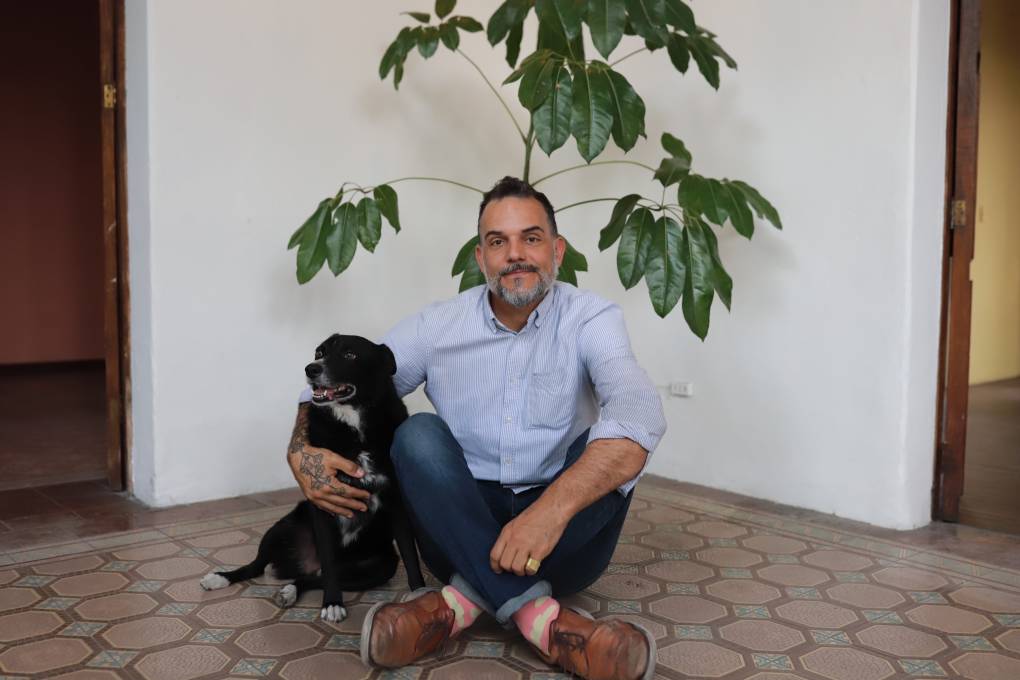
In Southern Mexico, Bay Area Artists Seek Refuge and Cultural Exchange
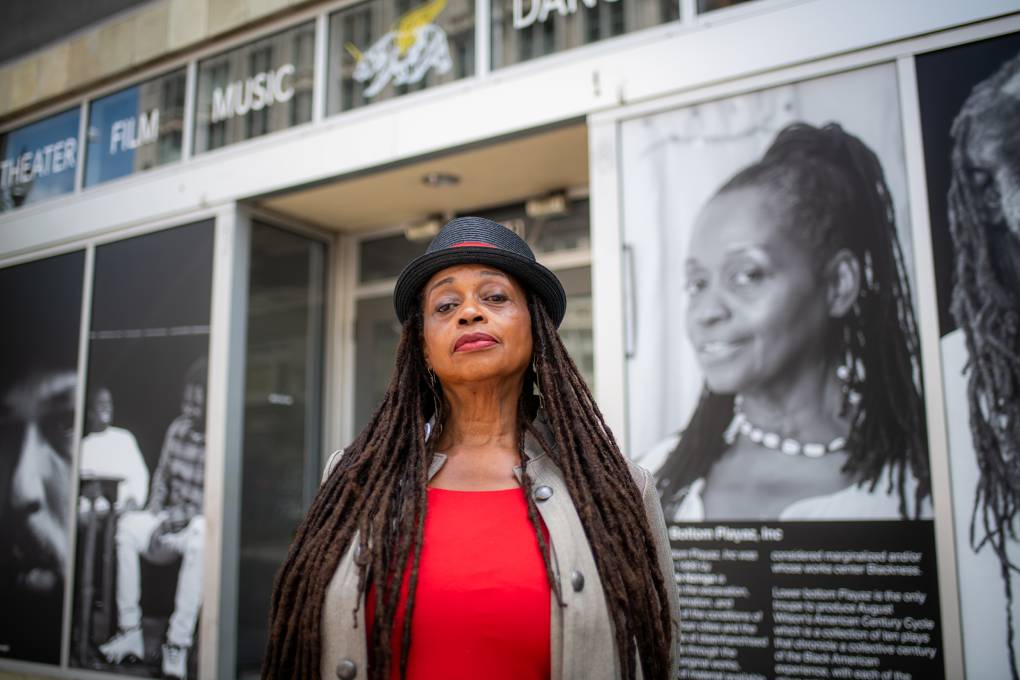
Ayodele Nzinga Opens Curtain at BAM House, a New Home for Black Arts
Watch Adrian L. Burrell's 'The Game God(s)'
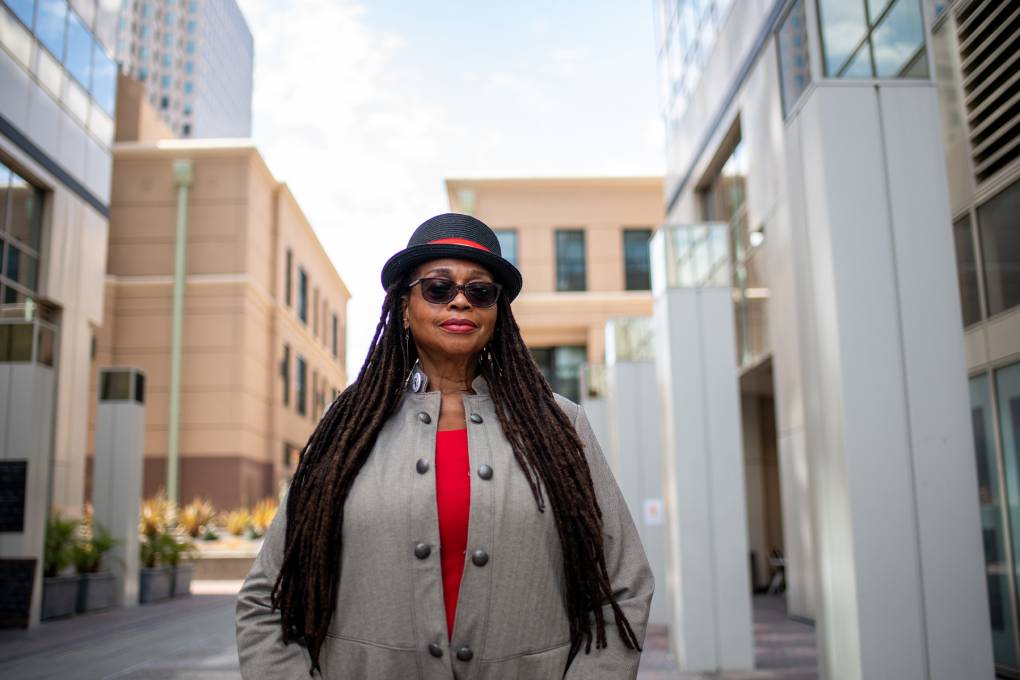
Ayodele Nzinga, Oakland’s First Poet Laureate, Is Here for the People
Ensemble Artists are Ready to BUILD a New World. Is the World Ready to Let Them?
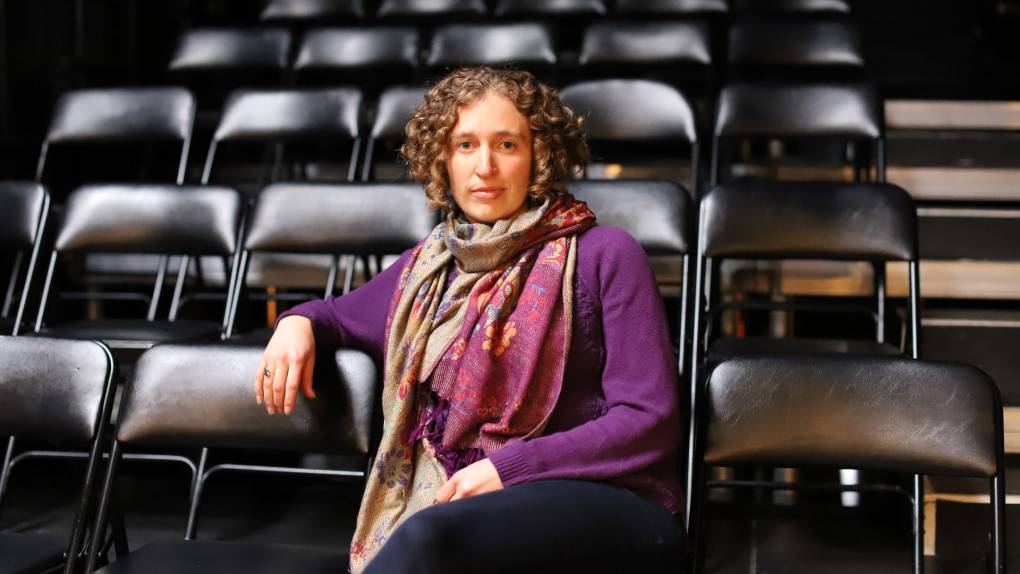
Flight Deck, Oakland’s Only Black Box Theater, to Close in March
Rightnowish: 'Iya Iya's House Of Burning Souls' Offers Healing Through Theater
Sponsored
Player sponsored by
window.__IS_SSR__=true
window.__INITIAL_STATE__={
"attachmentsReducer": {
"audio_0": {
"type": "attachments",
"id": "audio_0",
"imgSizes": {
"kqedFullSize": {
"file": "https://ww2.kqed.org/news/wp-content/themes/KQED-unified/img/audio_bgs/background0.jpg"
}
}
},
"audio_1": {
"type": "attachments",
"id": "audio_1",
"imgSizes": {
"kqedFullSize": {
"file": "https://ww2.kqed.org/news/wp-content/themes/KQED-unified/img/audio_bgs/background1.jpg"
}
}
},
"audio_2": {
"type": "attachments",
"id": "audio_2",
"imgSizes": {
"kqedFullSize": {
"file": "https://ww2.kqed.org/news/wp-content/themes/KQED-unified/img/audio_bgs/background2.jpg"
}
}
},
"audio_3": {
"type": "attachments",
"id": "audio_3",
"imgSizes": {
"kqedFullSize": {
"file": "https://ww2.kqed.org/news/wp-content/themes/KQED-unified/img/audio_bgs/background3.jpg"
}
}
},
"audio_4": {
"type": "attachments",
"id": "audio_4",
"imgSizes": {
"kqedFullSize": {
"file": "https://ww2.kqed.org/news/wp-content/themes/KQED-unified/img/audio_bgs/background4.jpg"
}
}
},
"placeholder": {
"type": "attachments",
"id": "placeholder",
"imgSizes": {
"thumbnail": {
"file": "https://cdn.kqed.org/wp-content/uploads/2024/12/KQED-Default-Image-816638274-2000x1333-1-160x107.jpg",
"width": 160,
"height": 107,
"mimeType": "image/jpeg"
},
"medium": {
"file": "https://cdn.kqed.org/wp-content/uploads/2024/12/KQED-Default-Image-816638274-2000x1333-1-800x533.jpg",
"width": 800,
"height": 533,
"mimeType": "image/jpeg"
},
"medium_large": {
"file": "https://cdn.kqed.org/wp-content/uploads/2024/12/KQED-Default-Image-816638274-2000x1333-1-768x512.jpg",
"width": 768,
"height": 512,
"mimeType": "image/jpeg"
},
"large": {
"file": "https://cdn.kqed.org/wp-content/uploads/2024/12/KQED-Default-Image-816638274-2000x1333-1-1020x680.jpg",
"width": 1020,
"height": 680,
"mimeType": "image/jpeg"
},
"1536x1536": {
"file": "https://cdn.kqed.org/wp-content/uploads/2024/12/KQED-Default-Image-816638274-2000x1333-1-1536x1024.jpg",
"width": 1536,
"height": 1024,
"mimeType": "image/jpeg"
},
"fd-lrg": {
"file": "https://cdn.kqed.org/wp-content/uploads/2024/12/KQED-Default-Image-816638274-2000x1333-1-1536x1024.jpg",
"width": 1536,
"height": 1024,
"mimeType": "image/jpeg"
},
"fd-med": {
"file": "https://cdn.kqed.org/wp-content/uploads/2024/12/KQED-Default-Image-816638274-2000x1333-1-1020x680.jpg",
"width": 1020,
"height": 680,
"mimeType": "image/jpeg"
},
"fd-sm": {
"file": "https://cdn.kqed.org/wp-content/uploads/2024/12/KQED-Default-Image-816638274-2000x1333-1-800x533.jpg",
"width": 800,
"height": 533,
"mimeType": "image/jpeg"
},
"post-thumbnail": {
"file": "https://cdn.kqed.org/wp-content/uploads/2024/12/KQED-Default-Image-816638274-2000x1333-1-672x372.jpg",
"width": 672,
"height": 372,
"mimeType": "image/jpeg"
},
"twentyfourteen-full-width": {
"file": "https://cdn.kqed.org/wp-content/uploads/2024/12/KQED-Default-Image-816638274-2000x1333-1-1038x576.jpg",
"width": 1038,
"height": 576,
"mimeType": "image/jpeg"
},
"xxsmall": {
"file": "https://cdn.kqed.org/wp-content/uploads/2024/12/KQED-Default-Image-816638274-2000x1333-1-160x107.jpg",
"width": 160,
"height": 107,
"mimeType": "image/jpeg"
},
"xsmall": {
"file": "https://cdn.kqed.org/wp-content/uploads/2024/12/KQED-Default-Image-816638274-2000x1333-1-672x372.jpg",
"width": 672,
"height": 372,
"mimeType": "image/jpeg"
},
"small": {
"file": "https://cdn.kqed.org/wp-content/uploads/2024/12/KQED-Default-Image-816638274-2000x1333-1-672x372.jpg",
"width": 672,
"height": 372,
"mimeType": "image/jpeg"
},
"xlarge": {
"file": "https://cdn.kqed.org/wp-content/uploads/2024/12/KQED-Default-Image-816638274-2000x1333-1-1020x680.jpg",
"width": 1020,
"height": 680,
"mimeType": "image/jpeg"
},
"full-width": {
"file": "https://cdn.kqed.org/wp-content/uploads/2024/12/KQED-Default-Image-816638274-2000x1333-1-1920x1280.jpg",
"width": 1920,
"height": 1280,
"mimeType": "image/jpeg"
},
"guest-author-32": {
"file": "https://cdn.kqed.org/wp-content/uploads/2025/01/KQED-Default-Image-816638274-1333x1333-1-160x160.jpg",
"width": 32,
"height": 32,
"mimeType": "image/jpeg"
},
"guest-author-50": {
"file": "https://cdn.kqed.org/wp-content/uploads/2025/01/KQED-Default-Image-816638274-1333x1333-1-160x160.jpg",
"width": 50,
"height": 50,
"mimeType": "image/jpeg"
},
"guest-author-64": {
"file": "https://cdn.kqed.org/wp-content/uploads/2025/01/KQED-Default-Image-816638274-1333x1333-1-160x160.jpg",
"width": 64,
"height": 64,
"mimeType": "image/jpeg"
},
"guest-author-96": {
"file": "https://cdn.kqed.org/wp-content/uploads/2025/01/KQED-Default-Image-816638274-1333x1333-1-160x160.jpg",
"width": 96,
"height": 96,
"mimeType": "image/jpeg"
},
"guest-author-128": {
"file": "https://cdn.kqed.org/wp-content/uploads/2025/01/KQED-Default-Image-816638274-1333x1333-1-160x160.jpg",
"width": 128,
"height": 128,
"mimeType": "image/jpeg"
},
"detail": {
"file": "https://cdn.kqed.org/wp-content/uploads/2025/01/KQED-Default-Image-816638274-1333x1333-1-160x160.jpg",
"width": 160,
"height": 160,
"mimeType": "image/jpeg"
},
"kqedFullSize": {
"file": "https://cdn.kqed.org/wp-content/uploads/2024/12/KQED-Default-Image-816638274-2000x1333-1.jpg",
"width": 2000,
"height": 1333
}
}
},
"arts_13876766": {
"type": "attachments",
"id": "arts_13876766",
"meta": {
"index": "attachments_1716263798",
"site": "arts",
"id": "13876766",
"found": true
},
"parent": 13876714,
"imgSizes": {
"thumbnail": {
"file": "https://ww2.kqed.org/app/uploads/sites/2/2020/03/RyanNicoleAustin_COVER-160x90.jpg",
"width": 160,
"mimeType": "image/jpeg",
"height": 90
},
"post-thumbnail": {
"file": "https://ww2.kqed.org/app/uploads/sites/2/2020/03/RyanNicoleAustin_COVER-672x372.jpg",
"width": 672,
"mimeType": "image/jpeg",
"height": 372
},
"kqedFullSize": {
"file": "https://ww2.kqed.org/app/uploads/sites/2/2020/03/RyanNicoleAustin_COVER.jpg",
"width": 750,
"height": 422
}
},
"publishDate": 1584385151,
"modified": 1608234627,
"caption": "RyanNicole Austin performing on stage at the 2020 Black Joy Parade in Oakland.",
"description": "RyanNicole Austin performing on stage at the Black Joy Parade in Oakland.",
"title": "RyanNicoleAustin_COVER",
"credit": "@jmalphotography",
"status": "inherit",
"altTag": null,
"fetchFailed": false,
"isLoading": false
},
"arts_13956434": {
"type": "attachments",
"id": "arts_13956434",
"meta": {
"index": "attachments_1716263798",
"site": "arts",
"id": "13956434",
"found": true
},
"parent": 13956359,
"imgSizes": {
"twentyfourteen-full-width": {
"file": "https://cdn.kqed.org/wp-content/uploads/sites/2/2024/04/025_KQEDArts_Oakland_AyodeleNzinga_07192021-1038x576.jpg",
"width": 1038,
"mimeType": "image/jpeg",
"height": 576
},
"thumbnail": {
"file": "https://cdn.kqed.org/wp-content/uploads/sites/2/2024/04/025_KQEDArts_Oakland_AyodeleNzinga_07192021-160x107.jpg",
"width": 160,
"mimeType": "image/jpeg",
"height": 107
},
"post-thumbnail": {
"file": "https://cdn.kqed.org/wp-content/uploads/sites/2/2024/04/025_KQEDArts_Oakland_AyodeleNzinga_07192021-672x372.jpg",
"width": 672,
"mimeType": "image/jpeg",
"height": 372
},
"kqedFullSize": {
"file": "https://cdn.kqed.org/wp-content/uploads/sites/2/2024/04/025_KQEDArts_Oakland_AyodeleNzinga_07192021.jpg",
"width": 1920,
"height": 1280
},
"large": {
"file": "https://cdn.kqed.org/wp-content/uploads/sites/2/2024/04/025_KQEDArts_Oakland_AyodeleNzinga_07192021-1020x680.jpg",
"width": 1020,
"mimeType": "image/jpeg",
"height": 680
},
"1536x1536": {
"file": "https://cdn.kqed.org/wp-content/uploads/sites/2/2024/04/025_KQEDArts_Oakland_AyodeleNzinga_07192021-1536x1024.jpg",
"width": 1536,
"mimeType": "image/jpeg",
"height": 1024
},
"medium": {
"file": "https://cdn.kqed.org/wp-content/uploads/sites/2/2024/04/025_KQEDArts_Oakland_AyodeleNzinga_07192021-800x533.jpg",
"width": 800,
"mimeType": "image/jpeg",
"height": 533
},
"medium_large": {
"file": "https://cdn.kqed.org/wp-content/uploads/sites/2/2024/04/025_KQEDArts_Oakland_AyodeleNzinga_07192021-768x512.jpg",
"width": 768,
"mimeType": "image/jpeg",
"height": 512
}
},
"publishDate": 1713902958,
"modified": 1713903009,
"caption": "Ayodele Nzinga stands in front of a photo of herself, a part of the project Story Windows, at PianoFight theater in Oakland on July 19, 2021.",
"description": "Ayodele Nzinga stands in front of a photo of herself, a part of the project Story Windows, at PianoFight theater in Oakland on July 19, 2021.",
"title": "Ayodele Nzinga stands in front of a photo of herself, a part of the project Story Windows, at PianoFight theater in Oakland on July 19, 2021.",
"credit": "(Beth LaBerge/KQED)",
"status": "inherit",
"altTag": "Ayodele Nzinga stands in front of a photo of herself, a part of the project Story Windows, at PianoFight theater in Oakland on July 19, 2021.",
"fetchFailed": false,
"isLoading": false
},
"arts_13955337": {
"type": "attachments",
"id": "arts_13955337",
"meta": {
"index": "attachments_1716263798",
"site": "arts",
"id": "13955337",
"found": true
},
"parent": 13954736,
"imgSizes": {
"twentyfourteen-full-width": {
"file": "https://cdn.kqed.org/wp-content/uploads/sites/2/2024/04/Xalapa1-1038x576.jpg",
"width": 1038,
"mimeType": "image/jpeg",
"height": 576
},
"thumbnail": {
"file": "https://cdn.kqed.org/wp-content/uploads/sites/2/2024/04/Xalapa1-160x107.jpg",
"width": 160,
"mimeType": "image/jpeg",
"height": 107
},
"post-thumbnail": {
"file": "https://cdn.kqed.org/wp-content/uploads/sites/2/2024/04/Xalapa1-672x372.jpg",
"width": 672,
"mimeType": "image/jpeg",
"height": 372
},
"kqedFullSize": {
"file": "https://cdn.kqed.org/wp-content/uploads/sites/2/2024/04/Xalapa1-scaled.jpg",
"width": 2560,
"height": 1707
},
"2048x2048": {
"file": "https://cdn.kqed.org/wp-content/uploads/sites/2/2024/04/Xalapa1-2048x1365.jpg",
"width": 2048,
"mimeType": "image/jpeg",
"height": 1365
},
"large": {
"file": "https://cdn.kqed.org/wp-content/uploads/sites/2/2024/04/Xalapa1-1020x680.jpg",
"width": 1020,
"mimeType": "image/jpeg",
"height": 680
},
"1536x1536": {
"file": "https://cdn.kqed.org/wp-content/uploads/sites/2/2024/04/Xalapa1-1536x1024.jpg",
"width": 1536,
"mimeType": "image/jpeg",
"height": 1024
},
"full-width": {
"file": "https://cdn.kqed.org/wp-content/uploads/sites/2/2024/04/Xalapa1-1920x1280.jpg",
"width": 1920,
"mimeType": "image/jpeg",
"height": 1280
},
"medium": {
"file": "https://cdn.kqed.org/wp-content/uploads/sites/2/2024/04/Xalapa1-800x533.jpg",
"width": 800,
"mimeType": "image/jpeg",
"height": 533
},
"medium_large": {
"file": "https://cdn.kqed.org/wp-content/uploads/sites/2/2024/04/Xalapa1-768x512.jpg",
"width": 768,
"mimeType": "image/jpeg",
"height": 512
}
},
"publishDate": 1712163296,
"modified": 1712163540,
"caption": "J.K. Fowler has been living in Xalapa, Veracruz, for over a year; he's inviting Bay Area artists to join him as part of a new residency. ",
"description": null,
"title": "Xalapa1",
"credit": "Alan Chazaro",
"status": "inherit",
"altTag": "a man and his dog sit in front of a plant at his home in southern Mexico",
"fetchFailed": false,
"isLoading": false
},
"arts_13900172": {
"type": "attachments",
"id": "arts_13900172",
"meta": {
"index": "attachments_1716263798",
"site": "arts",
"id": "13900172",
"found": true
},
"title": "005_KQEDArts_Oakland_AyodeleNzinga_07192021",
"publishDate": 1626979303,
"status": "inherit",
"parent": 13900077,
"modified": 1727909154,
"caption": "Ayodele Nzinga, Oakland poet, playwright, community activist and the city’s inaugural poet laureate, pictured in downtown Oakland in 2021.",
"credit": "Beth LaBerge/KQED",
"altTag": null,
"description": "Ayodele Nzinga, Oakland poet, playwright, community activist, and the city’s inaugural poet laureate, poses for a portrait in downtown Oakland on July 19, 2021.",
"imgSizes": {
"medium": {
"file": "https://cdn.kqed.org/wp-content/uploads/sites/2/2021/07/005_KQEDArts_Oakland_AyodeleNzinga_07192021-800x533.jpg",
"width": 800,
"height": 533,
"mimeType": "image/jpeg"
},
"large": {
"file": "https://cdn.kqed.org/wp-content/uploads/sites/2/2021/07/005_KQEDArts_Oakland_AyodeleNzinga_07192021-1020x680.jpg",
"width": 1020,
"height": 680,
"mimeType": "image/jpeg"
},
"thumbnail": {
"file": "https://cdn.kqed.org/wp-content/uploads/sites/2/2021/07/005_KQEDArts_Oakland_AyodeleNzinga_07192021-160x107.jpg",
"width": 160,
"height": 107,
"mimeType": "image/jpeg"
},
"medium_large": {
"file": "https://cdn.kqed.org/wp-content/uploads/sites/2/2021/07/005_KQEDArts_Oakland_AyodeleNzinga_07192021-768x512.jpg",
"width": 768,
"height": 512,
"mimeType": "image/jpeg"
},
"1536x1536": {
"file": "https://cdn.kqed.org/wp-content/uploads/sites/2/2021/07/005_KQEDArts_Oakland_AyodeleNzinga_07192021-1536x1024.jpg",
"width": 1536,
"height": 1024,
"mimeType": "image/jpeg"
},
"post-thumbnail": {
"file": "https://cdn.kqed.org/wp-content/uploads/sites/2/2021/07/005_KQEDArts_Oakland_AyodeleNzinga_07192021-672x372.jpg",
"width": 672,
"height": 372,
"mimeType": "image/jpeg"
},
"twentyfourteen-full-width": {
"file": "https://cdn.kqed.org/wp-content/uploads/sites/2/2021/07/005_KQEDArts_Oakland_AyodeleNzinga_07192021-1038x576.jpg",
"width": 1038,
"height": 576,
"mimeType": "image/jpeg"
},
"kqedFullSize": {
"file": "https://cdn.kqed.org/wp-content/uploads/sites/2/2021/07/005_KQEDArts_Oakland_AyodeleNzinga_07192021.jpg",
"width": 1920,
"height": 1280
}
},
"fetchFailed": false,
"isLoading": false
},
"arts_13852495": {
"type": "attachments",
"id": "arts_13852495",
"meta": {
"index": "attachments_1716263798",
"site": "arts",
"id": "13852495",
"found": true
},
"parent": 13852433,
"imgSizes": {
"twentyfourteen-full-width": {
"file": "https://ww2.kqed.org/app/uploads/sites/2/2019/03/AdrianBurrell.MAIN_-1038x576.jpg",
"width": 1038,
"mimeType": "image/jpeg",
"height": 576
},
"thumbnail": {
"file": "https://ww2.kqed.org/app/uploads/sites/2/2019/03/AdrianBurrell.MAIN_-160x90.jpg",
"width": 160,
"mimeType": "image/jpeg",
"height": 90
},
"post-thumbnail": {
"file": "https://ww2.kqed.org/app/uploads/sites/2/2019/03/AdrianBurrell.MAIN_-672x372.jpg",
"width": 672,
"mimeType": "image/jpeg",
"height": 372
},
"kqedFullSize": {
"file": "https://ww2.kqed.org/app/uploads/sites/2/2019/03/AdrianBurrell.MAIN_.jpg",
"width": 1920,
"height": 1080
},
"large": {
"file": "https://ww2.kqed.org/app/uploads/sites/2/2019/03/AdrianBurrell.MAIN_-1020x574.jpg",
"width": 1020,
"mimeType": "image/jpeg",
"height": 574
},
"complete_open_graph": {
"file": "https://ww2.kqed.org/app/uploads/sites/2/2019/03/AdrianBurrell.MAIN_-1200x675.jpg",
"width": 1200,
"mimeType": "image/jpeg",
"height": 675
},
"guest-author-50": {
"file": "https://ww2.kqed.org/app/uploads/sites/2/2019/03/AdrianBurrell.MAIN_-50x50.jpg",
"width": 50,
"mimeType": "image/jpeg",
"height": 50
},
"guest-author-96": {
"file": "https://ww2.kqed.org/app/uploads/sites/2/2019/03/AdrianBurrell.MAIN_-96x96.jpg",
"width": 96,
"mimeType": "image/jpeg",
"height": 96
},
"medium": {
"file": "https://ww2.kqed.org/app/uploads/sites/2/2019/03/AdrianBurrell.MAIN_-800x450.jpg",
"width": 800,
"mimeType": "image/jpeg",
"height": 450
},
"guest-author-64": {
"file": "https://ww2.kqed.org/app/uploads/sites/2/2019/03/AdrianBurrell.MAIN_-64x64.jpg",
"width": 64,
"mimeType": "image/jpeg",
"height": 64
},
"guest-author-32": {
"file": "https://ww2.kqed.org/app/uploads/sites/2/2019/03/AdrianBurrell.MAIN_-32x32.jpg",
"width": 32,
"mimeType": "image/jpeg",
"height": 32
},
"full-width": {
"file": "https://ww2.kqed.org/app/uploads/sites/2/2019/03/AdrianBurrell.MAIN_-1920x1080.jpg",
"width": 1920,
"mimeType": "image/jpeg",
"height": 1080
},
"medium_large": {
"file": "https://ww2.kqed.org/app/uploads/sites/2/2019/03/AdrianBurrell.MAIN_-768x432.jpg",
"width": 768,
"mimeType": "image/jpeg",
"height": 432
},
"guest-author-128": {
"file": "https://ww2.kqed.org/app/uploads/sites/2/2019/03/AdrianBurrell.MAIN_-128x128.jpg",
"width": 128,
"mimeType": "image/jpeg",
"height": 128
}
},
"publishDate": 1551998420,
"modified": 1551998437,
"caption": "Adrian Burrell outside of Vallejo City Hall.",
"description": "Adrian Burrell outside of Vallejo City Hall.",
"title": "AdrianBurrell.MAIN",
"credit": "Pendarvis Harshaw/KQED",
"status": "inherit",
"fetchFailed": false,
"isLoading": false
},
"arts_13900171": {
"type": "attachments",
"id": "arts_13900171",
"meta": {
"index": "attachments_1716263798",
"site": "arts",
"id": "13900171",
"found": true
},
"parent": 0,
"imgSizes": {
"twentyfourteen-full-width": {
"file": "https://ww2.kqed.org/app/uploads/sites/2/2021/07/018_KQEDArts_Oakland_AyodeleNzinga_07192021-1-1038x576.jpg",
"width": 1038,
"mimeType": "image/jpeg",
"height": 576
},
"thumbnail": {
"file": "https://ww2.kqed.org/app/uploads/sites/2/2021/07/018_KQEDArts_Oakland_AyodeleNzinga_07192021-1-160x107.jpg",
"width": 160,
"mimeType": "image/jpeg",
"height": 107
},
"post-thumbnail": {
"file": "https://ww2.kqed.org/app/uploads/sites/2/2021/07/018_KQEDArts_Oakland_AyodeleNzinga_07192021-1-672x372.jpg",
"width": 672,
"mimeType": "image/jpeg",
"height": 372
},
"kqedFullSize": {
"file": "https://ww2.kqed.org/app/uploads/sites/2/2021/07/018_KQEDArts_Oakland_AyodeleNzinga_07192021-1.jpg",
"width": 1920,
"height": 1280
},
"large": {
"file": "https://ww2.kqed.org/app/uploads/sites/2/2021/07/018_KQEDArts_Oakland_AyodeleNzinga_07192021-1-1020x680.jpg",
"width": 1020,
"mimeType": "image/jpeg",
"height": 680
},
"1536x1536": {
"file": "https://ww2.kqed.org/app/uploads/sites/2/2021/07/018_KQEDArts_Oakland_AyodeleNzinga_07192021-1-1536x1024.jpg",
"width": 1536,
"mimeType": "image/jpeg",
"height": 1024
},
"medium": {
"file": "https://ww2.kqed.org/app/uploads/sites/2/2021/07/018_KQEDArts_Oakland_AyodeleNzinga_07192021-1-800x533.jpg",
"width": 800,
"mimeType": "image/jpeg",
"height": 533
},
"medium_large": {
"file": "https://ww2.kqed.org/app/uploads/sites/2/2021/07/018_KQEDArts_Oakland_AyodeleNzinga_07192021-1-768x512.jpg",
"width": 768,
"mimeType": "image/jpeg",
"height": 512
}
},
"publishDate": 1626979294,
"modified": 1626979591,
"caption": "Ayodele Nzinga raises her fist in front of a mural that says, \"We Got Us\" by the organization AeroSoul in Oakland on July 19, 2021.",
"description": "Ayodele Nzinga raises her fist in front of a mural that says, \"We Got Us\" by the organization AeroSoul in Oakland on July 19, 2021.",
"title": "018_KQEDArts_Oakland_AyodeleNzinga_07192021 (1)",
"credit": "Beth LaBerge/KQED",
"status": "inherit",
"altTag": "Ayodele Nzinga raises her fist in front of a mural that says, \"We Got Us\" by the organization AeroSoul in Oakland on July 19, 2021.",
"fetchFailed": false,
"isLoading": false
},
"arts_13886298": {
"type": "attachments",
"id": "arts_13886298",
"meta": {
"index": "attachments_1716263798",
"site": "arts",
"id": "13886298",
"found": true
},
"parent": 13886293,
"imgSizes": {
"twentyfourteen-full-width": {
"file": "https://ww2.kqed.org/app/uploads/sites/2/2020/09/BUILD_Kristina-Wong.-Photo-by-Annie-Lesser-1038x576.jpg",
"width": 1038,
"mimeType": "image/jpeg",
"height": 576
},
"thumbnail": {
"file": "https://ww2.kqed.org/app/uploads/sites/2/2020/09/BUILD_Kristina-Wong.-Photo-by-Annie-Lesser-160x107.jpg",
"width": 160,
"mimeType": "image/jpeg",
"height": 107
},
"post-thumbnail": {
"file": "https://ww2.kqed.org/app/uploads/sites/2/2020/09/BUILD_Kristina-Wong.-Photo-by-Annie-Lesser-672x372.jpg",
"width": 672,
"mimeType": "image/jpeg",
"height": 372
},
"kqedFullSize": {
"file": "https://ww2.kqed.org/app/uploads/sites/2/2020/09/BUILD_Kristina-Wong.-Photo-by-Annie-Lesser.jpg",
"width": 1620,
"height": 1080
},
"large": {
"file": "https://ww2.kqed.org/app/uploads/sites/2/2020/09/BUILD_Kristina-Wong.-Photo-by-Annie-Lesser-1020x680.jpg",
"width": 1020,
"mimeType": "image/jpeg",
"height": 680
},
"1536x1536": {
"file": "https://ww2.kqed.org/app/uploads/sites/2/2020/09/BUILD_Kristina-Wong.-Photo-by-Annie-Lesser-1536x1024.jpg",
"width": 1536,
"mimeType": "image/jpeg",
"height": 1024
},
"medium": {
"file": "https://ww2.kqed.org/app/uploads/sites/2/2020/09/BUILD_Kristina-Wong.-Photo-by-Annie-Lesser-800x533.jpg",
"width": 800,
"mimeType": "image/jpeg",
"height": 533
},
"medium_large": {
"file": "https://ww2.kqed.org/app/uploads/sites/2/2020/09/BUILD_Kristina-Wong.-Photo-by-Annie-Lesser-768x512.jpg",
"width": 768,
"mimeType": "image/jpeg",
"height": 512
}
},
"publishDate": 1600124853,
"modified": 1600124912,
"caption": "Kristina Wong on the campaign trail.",
"description": "Kristina Wong on the campaign trail.",
"title": "BUILD_Kristina Wong. Photo by Annie Lesser",
"credit": "Annie Lesser",
"status": "inherit",
"fetchFailed": false,
"isLoading": false
},
"arts_13870006": {
"type": "attachments",
"id": "arts_13870006",
"meta": {
"index": "attachments_1716263798",
"site": "arts",
"id": "13870006",
"found": true
},
"parent": 13870004,
"imgSizes": {
"twentyfourteen-full-width": {
"file": "https://ww2.kqed.org/app/uploads/sites/2/2019/11/Anna-Shneiderman-in-theater-3-1038x576.jpg",
"width": 1038,
"mimeType": "image/jpeg",
"height": 576
},
"thumbnail": {
"file": "https://ww2.kqed.org/app/uploads/sites/2/2019/11/Anna-Shneiderman-in-theater-3-160x90.jpg",
"width": 160,
"mimeType": "image/jpeg",
"height": 90
},
"post-thumbnail": {
"file": "https://ww2.kqed.org/app/uploads/sites/2/2019/11/Anna-Shneiderman-in-theater-3-672x372.jpg",
"width": 672,
"mimeType": "image/jpeg",
"height": 372
},
"kqedFullSize": {
"file": "https://ww2.kqed.org/app/uploads/sites/2/2019/11/Anna-Shneiderman-in-theater-3.jpg",
"width": 1920,
"height": 1080
},
"large": {
"file": "https://ww2.kqed.org/app/uploads/sites/2/2019/11/Anna-Shneiderman-in-theater-3-1020x574.jpg",
"width": 1020,
"mimeType": "image/jpeg",
"height": 574
},
"complete_open_graph": {
"file": "https://ww2.kqed.org/app/uploads/sites/2/2019/11/Anna-Shneiderman-in-theater-3-1200x675.jpg",
"width": 1200,
"mimeType": "image/jpeg",
"height": 675
},
"full-width": {
"file": "https://ww2.kqed.org/app/uploads/sites/2/2019/11/Anna-Shneiderman-in-theater-3-1920x1080.jpg",
"width": 1920,
"mimeType": "image/jpeg",
"height": 1080
},
"medium": {
"file": "https://ww2.kqed.org/app/uploads/sites/2/2019/11/Anna-Shneiderman-in-theater-3-800x450.jpg",
"width": 800,
"mimeType": "image/jpeg",
"height": 450
},
"medium_large": {
"file": "https://ww2.kqed.org/app/uploads/sites/2/2019/11/Anna-Shneiderman-in-theater-3-768x432.jpg",
"width": 768,
"mimeType": "image/jpeg",
"height": 432
}
},
"publishDate": 1574109337,
"modified": 1574109468,
"caption": "Anna Shneiderman, seated, is the co-founder and director of Flight Deck operator Ragged Wing Ensemble.",
"description": "Anna Shneiderman, seated, is the co-founder and director of Flight Deck operator Ragged Wing Ensemble.",
"title": "Anna Shneiderman, seated, is the co-founder and director of Flight Deck operator Ragged Wing Ensemble.",
"credit": "Sam Lefebvre/KQED",
"status": "inherit",
"fetchFailed": false,
"isLoading": false
},
"arts_13866356": {
"type": "attachments",
"id": "arts_13866356",
"meta": {
"index": "attachments_1716263798",
"site": "arts",
"id": "13866356",
"found": true
},
"parent": 13866354,
"imgSizes": {
"twentyfourteen-full-width": {
"file": "https://ww2.kqed.org/app/uploads/sites/2/2019/09/69594648_10218058476866012_3330403304441118720_o-1038x576.jpg",
"width": 1038,
"mimeType": "image/jpeg",
"height": 576
},
"thumbnail": {
"file": "https://ww2.kqed.org/app/uploads/sites/2/2019/09/69594648_10218058476866012_3330403304441118720_o-160x107.jpg",
"width": 160,
"mimeType": "image/jpeg",
"height": 107
},
"post-thumbnail": {
"file": "https://ww2.kqed.org/app/uploads/sites/2/2019/09/69594648_10218058476866012_3330403304441118720_o-672x372.jpg",
"width": 672,
"mimeType": "image/jpeg",
"height": 372
},
"kqedFullSize": {
"file": "https://ww2.kqed.org/app/uploads/sites/2/2019/09/69594648_10218058476866012_3330403304441118720_o.jpg",
"width": 2048,
"height": 1365
},
"large": {
"file": "https://ww2.kqed.org/app/uploads/sites/2/2019/09/69594648_10218058476866012_3330403304441118720_o-1020x680.jpg",
"width": 1020,
"mimeType": "image/jpeg",
"height": 680
},
"complete_open_graph": {
"file": "https://ww2.kqed.org/app/uploads/sites/2/2019/09/69594648_10218058476866012_3330403304441118720_o-1200x800.jpg",
"width": 1200,
"mimeType": "image/jpeg",
"height": 800
},
"full-width": {
"file": "https://ww2.kqed.org/app/uploads/sites/2/2019/09/69594648_10218058476866012_3330403304441118720_o-1920x1280.jpg",
"width": 1920,
"mimeType": "image/jpeg",
"height": 1280
},
"medium": {
"file": "https://ww2.kqed.org/app/uploads/sites/2/2019/09/69594648_10218058476866012_3330403304441118720_o-800x533.jpg",
"width": 800,
"mimeType": "image/jpeg",
"height": 533
},
"medium_large": {
"file": "https://ww2.kqed.org/app/uploads/sites/2/2019/09/69594648_10218058476866012_3330403304441118720_o-768x512.jpg",
"width": 768,
"mimeType": "image/jpeg",
"height": 512
}
},
"publishDate": 1568390104,
"modified": 1568409336,
"caption": "Kharyshi Wigington, Ayodele Nzinga and Cat Brooks.",
"description": "Kharyshi Wigington, Ayodele Nzinga and Cat Brooks.",
"title": "Kharyshi Wigington, Ayodele Nzinga and Cat Brooks",
"credit": "TaSin Sabir",
"status": "inherit",
"fetchFailed": false,
"isLoading": false
}
},
"audioPlayerReducer": {
"postId": "stream_live",
"isPaused": true,
"isPlaying": false,
"pfsActive": false,
"pledgeModalIsOpen": true,
"playerDrawerIsOpen": false
},
"authorsReducer": {
"gmeline": {
"type": "authors",
"id": "185",
"meta": {
"index": "authors_1716337520",
"id": "185",
"found": true
},
"name": "Gabe Meline",
"firstName": "Gabe",
"lastName": "Meline",
"slug": "gmeline",
"email": "gmeline@kqed.org",
"display_author_email": false,
"staff_mastheads": [
"arts"
],
"title": "Senior Editor, KQED Arts & Culture",
"bio": "Gabe Meline entered journalism at age 15 making photocopied zines, and has since earned awards from the Edward R. Murrow Awards, the Society for Professional Journalists, the Online Journalism Awards, the Association of Alternative Newsweeklies and the California Newspaper Publishers Association. Prior to KQED, he was the editor of the \u003cem>North Bay Bohemian\u003c/em> and a touring musician. He lives with his wife, his daughter, and a 1964 Volvo in his hometown of Santa Rosa, CA.",
"avatar": "https://secure.gravatar.com/avatar/80e9715844c5fc3f07edac5b08973b76?s=600&d=blank&r=g",
"twitter": null,
"facebook": null,
"instagram": "gmeline",
"linkedin": null,
"sites": [
{
"site": "",
"roles": [
"editor"
]
},
{
"site": "arts",
"roles": [
"administrator"
]
},
{
"site": "artschool",
"roles": [
"editor"
]
},
{
"site": "news",
"roles": [
"author"
]
},
{
"site": "pop",
"roles": [
"editor"
]
},
{
"site": "bayareabites",
"roles": [
"editor"
]
},
{
"site": "food",
"roles": [
"editor"
]
},
{
"site": "liveblog",
"roles": [
"editor"
]
},
{
"site": "hiphop",
"roles": [
"editor"
]
}
],
"headData": {
"title": "Gabe Meline | KQED",
"description": "Senior Editor, KQED Arts & Culture",
"ogImgSrc": "https://secure.gravatar.com/avatar/80e9715844c5fc3f07edac5b08973b76?s=600&d=blank&r=g",
"twImgSrc": "https://secure.gravatar.com/avatar/80e9715844c5fc3f07edac5b08973b76?s=600&d=blank&r=g"
},
"isLoading": false,
"link": "/author/gmeline"
},
"slefebvre": {
"type": "authors",
"id": "11091",
"meta": {
"index": "authors_1716337520",
"id": "11091",
"found": true
},
"name": "Sam Lefebvre",
"firstName": "Sam",
"lastName": "Lefebvre",
"slug": "slefebvre",
"email": "sdlefebvre@gmail.com",
"display_author_email": false,
"staff_mastheads": [],
"title": null,
"bio": "Sam Lefebvre is an award-winning reporter at KQED Arts. He has worked as an editor and columnist at the \u003cem>East Bay Express\u003c/em>, \u003cem>SF Weekly \u003c/em>and Impose Magazine, and his journalism and criticism has appeared in \u003cem>The New York Times\u003c/em>, the Guardian and Pitchfork.",
"avatar": "https://secure.gravatar.com/avatar/143b570c3dec13ae74c6aa2369b04fc8?s=600&d=blank&r=g",
"twitter": "Lefebvre_Sam",
"facebook": null,
"instagram": null,
"linkedin": null,
"sites": [
{
"site": "arts",
"roles": [
"editor"
]
},
{
"site": "news",
"roles": [
"author"
]
}
],
"headData": {
"title": "Sam Lefebvre | KQED",
"description": null,
"ogImgSrc": "https://secure.gravatar.com/avatar/143b570c3dec13ae74c6aa2369b04fc8?s=600&d=blank&r=g",
"twImgSrc": "https://secure.gravatar.com/avatar/143b570c3dec13ae74c6aa2369b04fc8?s=600&d=blank&r=g"
},
"isLoading": false,
"link": "/author/slefebvre"
},
"aproehl": {
"type": "authors",
"id": "11296",
"meta": {
"index": "authors_1716337520",
"id": "11296",
"found": true
},
"name": "Ariana Proehl",
"firstName": "Ariana",
"lastName": "Proehl",
"slug": "aproehl",
"email": "aproehl@KQED.org",
"display_author_email": true,
"staff_mastheads": [
"news"
],
"title": "Culture Reporter, KQED",
"bio": "Ariana Proehl is a Culture Reporter and Host.",
"avatar": "https://secure.gravatar.com/avatar/c96b24567eb5bb3a4f8bb295ed53e232?s=600&d=blank&r=g",
"twitter": "ArianaProehl",
"facebook": null,
"instagram": null,
"linkedin": null,
"sites": [
{
"site": "arts",
"roles": []
},
{
"site": "news",
"roles": []
},
{
"site": "education",
"roles": []
},
{
"site": "forum",
"roles": []
}
],
"headData": {
"title": "Ariana Proehl | KQED",
"description": "Culture Reporter, KQED",
"ogImgSrc": "https://secure.gravatar.com/avatar/c96b24567eb5bb3a4f8bb295ed53e232?s=600&d=blank&r=g",
"twImgSrc": "https://secure.gravatar.com/avatar/c96b24567eb5bb3a4f8bb295ed53e232?s=600&d=blank&r=g"
},
"isLoading": false,
"link": "/author/aproehl"
},
"nvoynovskaya": {
"type": "authors",
"id": "11387",
"meta": {
"index": "authors_1716337520",
"id": "11387",
"found": true
},
"name": "Nastia Voynovskaya",
"firstName": "Nastia",
"lastName": "Voynovskaya",
"slug": "nvoynovskaya",
"email": "nvoynovskaya@kqed.org",
"display_author_email": false,
"staff_mastheads": [
"arts"
],
"title": "Editor and reporter",
"bio": "Nastia Voynovskaya is a reporter and editor at KQED Arts & Culture. She's been covering the arts in the Bay Area for over a decade, with a focus on music, queer culture, labor issues and grassroots organizing. She has edited KQED story series such as Trans Bay: A History of San Francisco's Gender-Diverse Community, and co-created KQED's Bay Area hip-hop history project, That's My Word. Nastia's work has been recognized by the Society of Professional Journalists and San Francisco Press Club. She holds a BA in comparative literature from UC Berkeley.",
"avatar": "https://secure.gravatar.com/avatar/310649817772dd2a98e5dfecb6b24842?s=600&d=blank&r=g",
"twitter": null,
"facebook": null,
"instagram": "https://www.instagram.com/nananastia/",
"linkedin": null,
"sites": [
{
"site": "arts",
"roles": [
"administrator"
]
},
{
"site": "news",
"roles": [
"editor"
]
},
{
"site": "pop",
"roles": [
"administrator"
]
},
{
"site": "bayareabites",
"roles": [
"editor"
]
},
{
"site": "podcasts",
"roles": [
"editor"
]
},
{
"site": "hiphop",
"roles": [
"editor"
]
}
],
"headData": {
"title": "Nastia Voynovskaya | KQED",
"description": "Editor and reporter",
"ogImgSrc": "https://secure.gravatar.com/avatar/310649817772dd2a98e5dfecb6b24842?s=600&d=blank&r=g",
"twImgSrc": "https://secure.gravatar.com/avatar/310649817772dd2a98e5dfecb6b24842?s=600&d=blank&r=g"
},
"isLoading": false,
"link": "/author/nvoynovskaya"
},
"ogpenn": {
"type": "authors",
"id": "11491",
"meta": {
"index": "authors_1716337520",
"id": "11491",
"found": true
},
"name": "Pendarvis Harshaw",
"firstName": "Pendarvis",
"lastName": "Harshaw",
"slug": "ogpenn",
"email": "ogpenn@gmail.com",
"display_author_email": false,
"staff_mastheads": [
"arts"
],
"title": "Community Engagement Reporter",
"bio": "Pendarvis Harshaw is an educator, host and writer with KQED Arts.",
"avatar": "https://secure.gravatar.com/avatar/093d33baff5354890e29ad83d58d2c49?s=600&d=blank&r=g",
"twitter": null,
"facebook": null,
"instagram": "ogpenn",
"linkedin": null,
"sites": [
{
"site": "arts",
"roles": [
"editor"
]
},
{
"site": "news",
"roles": [
"editor"
]
},
{
"site": "bayareabites",
"roles": [
"author"
]
},
{
"site": "hiphop",
"roles": [
"editor"
]
}
],
"headData": {
"title": "Pendarvis Harshaw | KQED",
"description": "Community Engagement Reporter",
"ogImgSrc": "https://secure.gravatar.com/avatar/093d33baff5354890e29ad83d58d2c49?s=600&d=blank&r=g",
"twImgSrc": "https://secure.gravatar.com/avatar/093d33baff5354890e29ad83d58d2c49?s=600&d=blank&r=g"
},
"isLoading": false,
"link": "/author/ogpenn"
},
"ngluckstern": {
"type": "authors",
"id": "11497",
"meta": {
"index": "authors_1716337520",
"id": "11497",
"found": true
},
"name": "Nicole Gluckstern",
"firstName": "Nicole",
"lastName": "Gluckstern",
"slug": "ngluckstern",
"email": "gluckstern.nicole@gmail.com",
"display_author_email": false,
"staff_mastheads": [],
"title": null,
"bio": null,
"avatar": "https://secure.gravatar.com/avatar/4fa7e0128404fc3d06ce5f9e27ab9e5a?s=600&d=blank&r=g",
"twitter": null,
"facebook": null,
"instagram": null,
"linkedin": null,
"sites": [
{
"site": "arts",
"roles": [
"author"
]
}
],
"headData": {
"title": "Nicole Gluckstern | KQED",
"description": null,
"ogImgSrc": "https://secure.gravatar.com/avatar/4fa7e0128404fc3d06ce5f9e27ab9e5a?s=600&d=blank&r=g",
"twImgSrc": "https://secure.gravatar.com/avatar/4fa7e0128404fc3d06ce5f9e27ab9e5a?s=600&d=blank&r=g"
},
"isLoading": false,
"link": "/author/ngluckstern"
},
"achazaro": {
"type": "authors",
"id": "11748",
"meta": {
"index": "authors_1716337520",
"id": "11748",
"found": true
},
"name": "Alan Chazaro",
"firstName": "Alan",
"lastName": "Chazaro",
"slug": "achazaro",
"email": "agchazaro@gmail.com",
"display_author_email": true,
"staff_mastheads": [],
"title": "Food Writer and Reporter",
"bio": "Alan Chazaro is the author of \u003cem>This Is Not a Frank Ocean Cover Album\u003c/em> (Black Lawrence Press, 2019), \u003cem>Piñata Theory\u003c/em> (Black Lawrence Press, 2020), and \u003cem>Notes from the Eastern Span of the Bay Bridge\u003c/em> (Ghost City Press, 2021). He is a graduate of June Jordan’s Poetry for the People program at UC Berkeley and a former Lawrence Ferlinghetti Fellow at the University of San Francisco. He writes about sports, food, art, music, education, and culture while repping the Bay on \u003ca href=\"https://twitter.com/alan_chazaro\">Twitter\u003c/a> and \u003ca href=\"https://www.instagram.com/alan_chazaro/?hl=en\">Instagram\u003c/a> at @alan_chazaro.",
"avatar": "https://secure.gravatar.com/avatar/ea8b6dd970fc5c29e7a188e7d5861df7?s=600&d=blank&r=g",
"twitter": "alan_chazaro",
"facebook": null,
"instagram": null,
"linkedin": null,
"sites": [
{
"site": "arts",
"roles": [
"contributor"
]
},
{
"site": "news",
"roles": [
"editor"
]
}
],
"headData": {
"title": "Alan Chazaro | KQED",
"description": "Food Writer and Reporter",
"ogImgSrc": "https://secure.gravatar.com/avatar/ea8b6dd970fc5c29e7a188e7d5861df7?s=600&d=blank&r=g",
"twImgSrc": "https://secure.gravatar.com/avatar/ea8b6dd970fc5c29e7a188e7d5861df7?s=600&d=blank&r=g"
},
"isLoading": false,
"link": "/author/achazaro"
}
},
"breakingNewsReducer": {},
"pagesReducer": {},
"postsReducer": {
"stream_live": {
"type": "live",
"id": "stream_live",
"audioUrl": "https://streams.kqed.org/kqedradio",
"title": "Live Stream",
"excerpt": "Live Stream information currently unavailable.",
"link": "/radio",
"featImg": "",
"label": {
"name": "KQED Live",
"link": "/"
}
},
"stream_kqedNewscast": {
"type": "posts",
"id": "stream_kqedNewscast",
"audioUrl": "https://www.kqed.org/.stream/anon/radio/RDnews/newscast.mp3?_=1",
"title": "KQED Newscast",
"featImg": "",
"label": {
"name": "88.5 FM",
"link": "/"
}
},
"arts_13957193": {
"type": "posts",
"id": "arts_13957193",
"meta": {
"index": "posts_1716263798",
"site": "arts",
"id": "13957193",
"score": null,
"sort": [
1714759368000
]
},
"guestAuthors": [],
"slug": "510-day-oakland-anti-gentrification-rally-concert",
"title": "Oaklanders Say ‘We Still Here’ With a 510 Day Rally and Free Concert",
"publishDate": 1714759368,
"format": "standard",
"headTitle": "Oaklanders Say ‘We Still Here’ With a 510 Day Rally and Free Concert | KQED",
"labelTerm": {
"term": 140,
"site": "arts"
},
"content": "\u003cp>For the past nine years on May 10, Oaklanders born and raised in the Town have been celebrating 510 Day with the rallying cry of “We Still Here.” Part party, part protest, 510 Day brings together artists and activists to uplift local culture and strategize about strengthening Black, brown and working class communities in the face of gentrification.\u003c/p>\n\u003cp>Hosted by rapper, poet, thespian (and co-host of the \u003ca href=\"https://www.kqed.org/arts/tag/whats-pimpin\">KQED-produced vodcast \u003cem>What’s Pimpin’?\u003c/em>\u003c/a>) RyanNicole and \u003ca href=\"https://www.kqed.org/arts/13832886/were-still-here-bbqn-while-black-draws-out-oaklanders-in-force\">community advocate\u003c/a> Kenzie Smith, festivities kick off at 1 p.m. at Lake Merritt with an artist vendor marketplace on Lakeshore and Grand Avenues. DJ Infinxte Soul will spin to get the vibe right; at 3:30 p.m., young people are invited to make their voices heard in a youth rally and march that takes off on Lakeshore, across from the Cleveland Cascade stairs. At 4 p.m., unhoused Oaklanders will take the mic and share their experiences. [aside postid='arts_13918908']\u003c/p>\n\u003cp>Starting promptly at 5:10 p.m. at the pillars of the Pergola, the evening will continue on the We Still Here main stage with performances from \u003ca href=\"https://www.kqed.org/arts/13900077/ayodele-nzinga-oaklands-first-poet-laureate-is-here-for-the-people\">Oakland Poet Laureate Ayodele Nzinga\u003c/a>, hip-hop artists Raw G, Champ Green and Loove Moore, youth org 67 Sueños and others. A second Black Market Stage will feature additional performances from Felonious Music Group.\u003c/p>\n\u003cp>\u003ca href=\"https://www.kqed.org/arts/13950643/mistah-fab-week-oakland-2024\">Mistah F.A.B.\u003c/a>’s Dope Era Whips car club will post up across from the We Still Here stage. Performances continue until 8 p.m. Afterwards, \u003ca href=\"https://www.kqed.org/arts/13915614/black-the-bay-areas-mother-of-djs-is-getting-the-recognition-she-deserves\">Black, the Bay’s “mother of DJs,”\u003c/a> will close out the evening with a \u003ca href=\"https://www.kqed.org/arts/13934148/days-like-this-oakland-lake-merritt-house-music-dance-party\">Days Like This dance party\u003c/a>, in homage to the free dance music gathering at the lake.\u003c/p>\n\u003cp>510 Day is sponsored by The Village, a grassroots organization supporting unhoused people; Communities United for Restorative Justice and Young Women’s Freedom Center (which both fight mass incarceration and support system-impacted youth); and other community groups.\u003c/p>\n\u003chr>\n\u003cp>\u003cem>510 Day is free to attend on May 10, 1–10 p.m. For the full schedule and updates, check the \u003ca href=\"https://www.instagram.com/510day/\">@510Day Instagram\u003c/a>.\u003c/em>\u003c/p>\n\u003cp>[ad fullwidth]\u003c/p>\u003cp>\u003c/p>\n",
"blocks": [],
"excerpt": "The May 10 event at Lake Merritt celebrates local culture in the face of gentrification. ",
"status": "publish",
"parent": 0,
"modified": 1726701576,
"stats": {
"hasAudio": false,
"hasVideo": false,
"hasChartOrMap": false,
"iframeSrcs": [],
"hasGoogleForm": false,
"hasGallery": false,
"hasHearkenModule": false,
"hasPolis": false,
"paragraphCount": 8,
"wordCount": 351
},
"headData": {
"title": "With Free 510 Day Celebrations, Oaklanders Say ‘We Still Here’ | KQED",
"description": "The May 10 event at Lake Merritt celebrates local culture in the face of gentrification. ",
"ogTitle": "Oaklanders Say ‘We Still Here’ With a 510 Day Rally and Free Concert",
"ogDescription": "",
"ogImgId": "",
"twTitle": "Oaklanders Say ‘We Still Here’ With a 510 Day Rally and Free Concert",
"twDescription": "",
"twImgId": "",
"socialTitle": "With Free 510 Day Celebrations, Oaklanders Say ‘We Still Here’ %%page%% %%sep%% KQED",
"schema": {
"@context": "https://schema.org",
"@type": "Article",
"headline": "Oaklanders Say ‘We Still Here’ With a 510 Day Rally and Free Concert",
"datePublished": "2024-05-03T11:02:48-07:00",
"dateModified": "2024-09-18T16:19:36-07:00",
"image": "https://cdn.kqed.org/wp-content/uploads/2020/02/KQED-OG-Image@1x.png"
}
},
"sticky": false,
"nprStoryId": "kqed-13957193",
"templateType": "standard",
"featuredImageType": "standard",
"excludeFromSiteSearch": "Include",
"articleAge": "0",
"path": "/arts/13957193/510-day-oakland-anti-gentrification-rally-concert",
"audioTrackLength": null,
"parsedContent": [
{
"type": "contentString",
"content": "\u003cdiv class=\"post-body\">\u003cp>\u003cp>For the past nine years on May 10, Oaklanders born and raised in the Town have been celebrating 510 Day with the rallying cry of “We Still Here.” Part party, part protest, 510 Day brings together artists and activists to uplift local culture and strategize about strengthening Black, brown and working class communities in the face of gentrification.\u003c/p>\n\u003cp>Hosted by rapper, poet, thespian (and co-host of the \u003ca href=\"https://www.kqed.org/arts/tag/whats-pimpin\">KQED-produced vodcast \u003cem>What’s Pimpin’?\u003c/em>\u003c/a>) RyanNicole and \u003ca href=\"https://www.kqed.org/arts/13832886/were-still-here-bbqn-while-black-draws-out-oaklanders-in-force\">community advocate\u003c/a> Kenzie Smith, festivities kick off at 1 p.m. at Lake Merritt with an artist vendor marketplace on Lakeshore and Grand Avenues. DJ Infinxte Soul will spin to get the vibe right; at 3:30 p.m., young people are invited to make their voices heard in a youth rally and march that takes off on Lakeshore, across from the Cleveland Cascade stairs. At 4 p.m., unhoused Oaklanders will take the mic and share their experiences. \u003c/p>\u003c/div>",
"attributes": {
"named": {},
"numeric": []
}
},
{
"type": "component",
"content": "",
"name": "aside",
"attributes": {
"named": {
"postid": "arts_13918908",
"label": ""
},
"numeric": []
}
},
{
"type": "contentString",
"content": "\u003cdiv class=\"post-body\">\u003cp>\u003c/p>\n\u003cp>Starting promptly at 5:10 p.m. at the pillars of the Pergola, the evening will continue on the We Still Here main stage with performances from \u003ca href=\"https://www.kqed.org/arts/13900077/ayodele-nzinga-oaklands-first-poet-laureate-is-here-for-the-people\">Oakland Poet Laureate Ayodele Nzinga\u003c/a>, hip-hop artists Raw G, Champ Green and Loove Moore, youth org 67 Sueños and others. A second Black Market Stage will feature additional performances from Felonious Music Group.\u003c/p>\n\u003cp>\u003ca href=\"https://www.kqed.org/arts/13950643/mistah-fab-week-oakland-2024\">Mistah F.A.B.\u003c/a>’s Dope Era Whips car club will post up across from the We Still Here stage. Performances continue until 8 p.m. Afterwards, \u003ca href=\"https://www.kqed.org/arts/13915614/black-the-bay-areas-mother-of-djs-is-getting-the-recognition-she-deserves\">Black, the Bay’s “mother of DJs,”\u003c/a> will close out the evening with a \u003ca href=\"https://www.kqed.org/arts/13934148/days-like-this-oakland-lake-merritt-house-music-dance-party\">Days Like This dance party\u003c/a>, in homage to the free dance music gathering at the lake.\u003c/p>\n\u003cp>510 Day is sponsored by The Village, a grassroots organization supporting unhoused people; Communities United for Restorative Justice and Young Women’s Freedom Center (which both fight mass incarceration and support system-impacted youth); and other community groups.\u003c/p>\n\u003chr>\n\u003cp>\u003cem>510 Day is free to attend on May 10, 1–10 p.m. For the full schedule and updates, check the \u003ca href=\"https://www.instagram.com/510day/\">@510Day Instagram\u003c/a>.\u003c/em>\u003c/p>\n\u003cp>\u003c/p>\u003c/div>",
"attributes": {
"named": {},
"numeric": []
}
},
{
"type": "component",
"content": "",
"name": "ad",
"attributes": {
"named": {
"label": "fullwidth"
},
"numeric": [
"fullwidth"
]
}
},
{
"type": "contentString",
"content": "\u003cdiv class=\"post-body\">\u003cp>\u003c/p>\u003cp>\u003c/p>\n\u003c/div>\u003c/p>",
"attributes": {
"named": {},
"numeric": []
}
}
],
"link": "/arts/13957193/510-day-oakland-anti-gentrification-rally-concert",
"authors": [
"11387"
],
"programs": [
"arts_140"
],
"categories": [
"arts_1",
"arts_69"
],
"tags": [
"arts_7624",
"arts_10278",
"arts_1332",
"arts_1143",
"arts_585"
],
"featImg": "arts_13876766",
"label": "arts_140"
},
"arts_13956359": {
"type": "posts",
"id": "arts_13956359",
"meta": {
"index": "posts_1716263798",
"site": "arts",
"id": "13956359",
"score": null,
"sort": [
1713982102000
]
},
"guestAuthors": [],
"slug": "rainin-grants-ayodele-nzinga-antoine-hunter-adrian-burrell-tnt-traysikel",
"title": "The Rainin Foundation Announces Its 2024 Fellows, Receiving $100,000 Each",
"publishDate": 1713982102,
"format": "standard",
"headTitle": "The Rainin Foundation Announces Its 2024 Fellows, Receiving $100,000 Each | KQED",
"labelTerm": {
"site": "arts"
},
"content": "\u003cp>The Kenneth Rainin Foundation announced its 2024 class of fellows on Wednesday, giving unrestricted grants of $100,000 each to three individual artists and one trio of creatives.\u003c/p>\n\u003cp>The list includes filmmaker \u003ca href=\"https://www.instagram.com/adrianlburrell/\" target=\"_blank\" rel=\"noopener\">Adrian L. Burrell\u003c/a>, dancer \u003ca href=\"https://www.danceforallbodies.org/antoinehunter\" target=\"_blank\" rel=\"noopener noreferrer\">Antoine Hunter, a.k.a. Purple Fire Crow\u003c/a>, poet and thespian \u003ca href=\"https://www.ayodelenzinga.com/\" target=\"_blank\" rel=\"noopener noreferrer\">Ayodele ‘WordSlanger’ Nzinga\u003c/a>, and the trio of Mike Arcega, Paolo Asuncion, and Rachel Lastimosa of the \u003ca href=\"https://arcega.us/section/501274-TNT%20Traysikel.html\" target=\"_blank\" rel=\"noopener\">TNT Traysikel\u003c/a> mobile art exhibition.\u003c/p>\n\u003cfigure id=\"attachment_13956437\" class=\"wp-caption aligncenter\" style=\"max-width: 800px\">\u003cimg loading=\"lazy\" decoding=\"async\" class=\"size-medium wp-image-13956437\" src=\"https://cdn.kqed.org/wp-content/uploads/sites/2/2024/04/b46deecd95380203a29c0adb7ee6ec25-800x621.jpg\" alt=\"TNT Traysikel, a roaming sculpture that represents the Filipino-American community, parked in front of the Golden Gate Bridge. \" width=\"800\" height=\"621\" srcset=\"https://cdn.kqed.org/wp-content/uploads/sites/2/2024/04/b46deecd95380203a29c0adb7ee6ec25-800x621.jpg 800w, https://cdn.kqed.org/wp-content/uploads/sites/2/2024/04/b46deecd95380203a29c0adb7ee6ec25-1020x792.jpg 1020w, https://cdn.kqed.org/wp-content/uploads/sites/2/2024/04/b46deecd95380203a29c0adb7ee6ec25-160x124.jpg 160w, https://cdn.kqed.org/wp-content/uploads/sites/2/2024/04/b46deecd95380203a29c0adb7ee6ec25-768x596.jpg 768w, https://cdn.kqed.org/wp-content/uploads/sites/2/2024/04/b46deecd95380203a29c0adb7ee6ec25-1536x1192.jpg 1536w, https://cdn.kqed.org/wp-content/uploads/sites/2/2024/04/b46deecd95380203a29c0adb7ee6ec25.jpg 1572w\" sizes=\"(max-width: 800px) 100vw, 800px\">\u003cfigcaption class=\"wp-caption-text\">TNT Traysikel, a roaming sculpture that represents the Filipino-American community, seen parked in front of the Golden Gate Bridge. \u003ccite>(Mark Baugh-Sasaki)\u003c/cite>\u003c/figcaption>\u003c/figure>\n\u003cp>When asked what it feels like to receive the award, Oakland Poet Laureate Ayodele Nzinga says: “Liberated… It affords me a tiny bit of security here in the Bay.”\u003c/p>\n\u003cp>A playwright and owner of the \u003ca href=\"https://www.kqed.org/arts/13933205/ayodele-nzinga-opens-curtain-at-bam-house-a-new-home-for-black-arts\" target=\"_blank\" rel=\"noopener\">BAM House\u003c/a> theatre, Nzinga has produced shows in Oakland for more than two decades. She founded the theatre company the Lower Bottom Playaz in 1999, and in 2021 was awarded the title of \u003ca href=\"https://www.npr.org/2021/07/15/1013730633/meet-oaklands-first-poet-laureate-dr-ayodele-wordslanger-nzinga\" target=\"_blank\" rel=\"noopener\">Oakland’s first Poet Laureate.\u003c/a>\u003c/p>\n\u003cp>“I spent most of the time as Poet Laureate hoping that I could stay in Oakland for the term of laureatecy,” says Nzinga, adding that the ability to “root” both personally and professionally is her biggest takeaway from the grant.\u003c/p>\n\u003cfigure id=\"attachment_13956481\" class=\"wp-caption aligncenter\" style=\"max-width: 1000px\">\u003cimg loading=\"lazy\" decoding=\"async\" class=\"size-full wp-image-13956481\" src=\"https://cdn.kqed.org/wp-content/uploads/sites/2/2024/04/0.jpg\" alt=\"\" width=\"1000\" height=\"1250\" srcset=\"https://cdn.kqed.org/wp-content/uploads/sites/2/2024/04/0.jpg 1000w, https://cdn.kqed.org/wp-content/uploads/sites/2/2024/04/0-800x1000.jpg 800w, https://cdn.kqed.org/wp-content/uploads/sites/2/2024/04/0-160x200.jpg 160w, https://cdn.kqed.org/wp-content/uploads/sites/2/2024/04/0-768x960.jpg 768w\" sizes=\"(max-width: 1000px) 100vw, 1000px\">\u003cfigcaption class=\"wp-caption-text\">Adrian L. Burrell. \u003ccite>(Dondre Stutley )\u003c/cite>\u003c/figcaption>\u003c/figure>\n\u003cp>Adrian L. Burrell echoes Nzinga’s plan to invest the funds into personal and professional development.\u003c/p>\n\u003cp>[ad fullwidth]\u003c/p>\n\u003cp>Burrell is a filmmaker, photographer and proud third-generation Oakland representative. He makes multimedia works comprised of his personal sojourns, family video archives and elements of Afrocentric spirituality. His work has received national acclaim; earlier this year, he was the recipient of \u003ca href=\"https://thegrio.com/2024/02/27/meet-adrian-burrell-the-first-recipient-of-thegrios-emerging-filmmaker-fellowship/\" target=\"_blank\" rel=\"noopener\">TheGrio’s Emerging Filmmaker Fellowship\u003c/a>.\u003c/p>\n\u003cp>But the Rainin Fellowship has special meaning to him. “It feels good to be supported by the soil,” Burrell says. As an independent artist, with no official gallery representation, he knows such recognition is rare.\u003c/p>\n\u003cp>“It’s been cool to be in a position where I can make my work and it touches people,” says Burrell, who will be at the \u003ca href=\"https://museumca.org/event/book-release-and-conversation-with-filmmaker-artist-and-author-adrian-burrell/\" target=\"_blank\" rel=\"noopener\">Oakland Museum of California\u003c/a> on May 4 for a Q&A about his book, \u003cem>Sugarcane & Lighting\u003c/em>, and a screening of his short film, \u003cem>The Saints Step in Kongo Time\u003c/em>. Burrell says support from local institutions is important: “That allows me to grow my practice, and continue to try to grow toward being a practicing sustainable artist.”\u003c/p>\n\u003cfigure id=\"attachment_13956558\" class=\"wp-caption aligncenter\" style=\"max-width: 1170px\">\u003cimg loading=\"lazy\" decoding=\"async\" class=\"wp-image-13956558 size-full\" src=\"https://cdn.kqed.org/wp-content/uploads/sites/2/2024/04/unnamed-1.jpg\" alt=\"Antoine Hunter (Purple Fire Crow) poses for a photo while wearing a golden-brown cloth draped over his upper body. \" width=\"1170\" height=\"1476\" srcset=\"https://cdn.kqed.org/wp-content/uploads/sites/2/2024/04/unnamed-1.jpg 1170w, https://cdn.kqed.org/wp-content/uploads/sites/2/2024/04/unnamed-1-800x1009.jpg 800w, https://cdn.kqed.org/wp-content/uploads/sites/2/2024/04/unnamed-1-1020x1287.jpg 1020w, https://cdn.kqed.org/wp-content/uploads/sites/2/2024/04/unnamed-1-160x202.jpg 160w, https://cdn.kqed.org/wp-content/uploads/sites/2/2024/04/unnamed-1-768x969.jpg 768w\" sizes=\"(max-width: 1170px) 100vw, 1170px\">\u003cfigcaption class=\"wp-caption-text\">Award-winning dancer Antoine ‘Purple Fire Crow’ Hunter. \u003ccite>(Mark Kitoaka)\u003c/cite>\u003c/figcaption>\u003c/figure>\n\u003cp>Sustainability, for self and community, are on the mind of dancer Antoine Hunter as he receives the fellowship. Hunter, also known as Purple Fire Crow, says when he learned about the award, he was hit with a mixture of emotion — joy and gratitude, as well as the “stress to stay the best human being I can be to support my community.” He was reminded, he says, of how there’s more work to do, as his goal is to open more doors for people to come after him.\u003c/p>\n\u003cp>An award winning-dancer and choreographer from Oakland, Hunter is Deaf and creates work for people living with disabilities. “This award is a milestone blessing that adds on the layer to the story of my career with the \u003ca href=\"https://www.realurbanjazzdance.com/\" target=\"_blank\" rel=\"noopener\">Urban Jazz Dance Company\u003c/a> (UJDC),” Hunter writes in an email. He adds that the fellowship is a way of recognizing the challenges faced by members of the Deaf and Disabled communities who are working to overcome ableism, and that it will deepen the impact of his work in the Bay Area arts community — “particularly in advocating for Deaf (and) Disabled folks of many kinds of artists, and promoting inclusivity in dance.”\u003c/p>\n\u003cfigure id=\"attachment_13956574\" class=\"wp-caption aligncenter\" style=\"max-width: 800px\">\u003cimg loading=\"lazy\" decoding=\"async\" class=\"wp-image-13956574 size-medium\" src=\"https://cdn.kqed.org/wp-content/uploads/sites/2/2024/04/unnamed-800x450.jpg\" alt=\"The TNT Traysikel trio and their three-wheeled vehicle. \" width=\"800\" height=\"450\" srcset=\"https://cdn.kqed.org/wp-content/uploads/sites/2/2024/04/unnamed-800x450.jpg 800w, https://cdn.kqed.org/wp-content/uploads/sites/2/2024/04/unnamed-1020x574.jpg 1020w, https://cdn.kqed.org/wp-content/uploads/sites/2/2024/04/unnamed-160x90.jpg 160w, https://cdn.kqed.org/wp-content/uploads/sites/2/2024/04/unnamed-768x432.jpg 768w, https://cdn.kqed.org/wp-content/uploads/sites/2/2024/04/unnamed-1536x864.jpg 1536w, https://cdn.kqed.org/wp-content/uploads/sites/2/2024/04/unnamed-2048x1152.jpg 2048w, https://cdn.kqed.org/wp-content/uploads/sites/2/2024/04/unnamed-1920x1080.jpg 1920w\" sizes=\"(max-width: 800px) 100vw, 800px\">\u003cfigcaption class=\"wp-caption-text\">The TNT Traysikel trio and their three-wheeled vehicle. \u003ccite>(Alvin Dizon)\u003c/cite>\u003c/figcaption>\u003c/figure>\n\u003cp>Mike Arcega of TNT Traysikel says the fellowship feels like validation for the group’s work. They created a vehicle that speaks to the culture of the Philippines and connects Filipino community members here in the Bay, and it’s paying off.\u003c/p>\n\u003cp>TNT Traysikel’s Rachel Lastimosa says the stipulation-free grant “signals that artists know what they’re doing, and that they know how to get the job done.” She adds that “the job” isn’t always about producing. “There’s more parts to being an artist that are very human — like housing, healthcare, childcare for example — that contribute to the work we do,” says Lastimosa. “It’s validating to get this sense of self-determination.” \u003c/p>\n\u003cp>Paolo Asuncion, the third member of TNT Traysikel, says the group plans on taking their vehicle on the road, connecting with Filipino communities in Stockton, Morro Bay and as far as \u003ca href=\"https://filipinola.com/st-malo/\" target=\"_blank\" rel=\"noopener\">Bayou St. Malo in Louisiana\u003c/a>.\u003c/p>\n\u003cp>\u003c/p>\n\u003cp>“The plan is to ride TNT across the states,” Asuncion says, “to collect stories from all of these people and to spread the joy outward from San Francisco Bay.” \u003c/p>\n\n",
"blocks": [],
"excerpt": "Three artists and one trio will receive the unrestricted grants, which one calls 'a milestone blessing.'",
"status": "publish",
"parent": 0,
"modified": 1726792398,
"stats": {
"hasAudio": false,
"hasVideo": false,
"hasChartOrMap": false,
"iframeSrcs": [],
"hasGoogleForm": false,
"hasGallery": false,
"hasHearkenModule": false,
"hasPolis": false,
"paragraphCount": 17,
"wordCount": 847
},
"headData": {
"title": "The Rainin Foundation Announces Its 2024 Fellows, Receiving $100,000 Each | KQED",
"description": "Three artists and one trio will receive the unrestricted grants, which one calls 'a milestone blessing.'",
"ogTitle": "",
"ogDescription": "",
"ogImgId": "",
"twTitle": "",
"twDescription": "",
"twImgId": "",
"schema": {
"@context": "https://schema.org",
"@type": "Article",
"headline": "The Rainin Foundation Announces Its 2024 Fellows, Receiving $100,000 Each",
"datePublished": "2024-04-24T11:08:22-07:00",
"dateModified": "2024-09-19T17:33:18-07:00",
"image": "https://cdn.kqed.org/wp-content/uploads/2020/02/KQED-OG-Image@1x.png"
}
},
"sticky": false,
"nprStoryId": "kqed-13956359",
"templateType": "standard",
"featuredImageType": "standard",
"excludeFromSiteSearch": "Include",
"articleAge": "0",
"path": "/arts/13956359/rainin-grants-ayodele-nzinga-antoine-hunter-adrian-burrell-tnt-traysikel",
"audioTrackLength": null,
"parsedContent": [
{
"type": "contentString",
"content": "\u003cdiv class=\"post-body\">\u003cp>\u003cp>The Kenneth Rainin Foundation announced its 2024 class of fellows on Wednesday, giving unrestricted grants of $100,000 each to three individual artists and one trio of creatives.\u003c/p>\n\u003cp>The list includes filmmaker \u003ca href=\"https://www.instagram.com/adrianlburrell/\" target=\"_blank\" rel=\"noopener\">Adrian L. Burrell\u003c/a>, dancer \u003ca href=\"https://www.danceforallbodies.org/antoinehunter\" target=\"_blank\" rel=\"noopener noreferrer\">Antoine Hunter, a.k.a. Purple Fire Crow\u003c/a>, poet and thespian \u003ca href=\"https://www.ayodelenzinga.com/\" target=\"_blank\" rel=\"noopener noreferrer\">Ayodele ‘WordSlanger’ Nzinga\u003c/a>, and the trio of Mike Arcega, Paolo Asuncion, and Rachel Lastimosa of the \u003ca href=\"https://arcega.us/section/501274-TNT%20Traysikel.html\" target=\"_blank\" rel=\"noopener\">TNT Traysikel\u003c/a> mobile art exhibition.\u003c/p>\n\u003cfigure id=\"attachment_13956437\" class=\"wp-caption aligncenter\" style=\"max-width: 800px\">\u003cimg loading=\"lazy\" decoding=\"async\" class=\"size-medium wp-image-13956437\" src=\"https://cdn.kqed.org/wp-content/uploads/sites/2/2024/04/b46deecd95380203a29c0adb7ee6ec25-800x621.jpg\" alt=\"TNT Traysikel, a roaming sculpture that represents the Filipino-American community, parked in front of the Golden Gate Bridge. \" width=\"800\" height=\"621\" srcset=\"https://cdn.kqed.org/wp-content/uploads/sites/2/2024/04/b46deecd95380203a29c0adb7ee6ec25-800x621.jpg 800w, https://cdn.kqed.org/wp-content/uploads/sites/2/2024/04/b46deecd95380203a29c0adb7ee6ec25-1020x792.jpg 1020w, https://cdn.kqed.org/wp-content/uploads/sites/2/2024/04/b46deecd95380203a29c0adb7ee6ec25-160x124.jpg 160w, https://cdn.kqed.org/wp-content/uploads/sites/2/2024/04/b46deecd95380203a29c0adb7ee6ec25-768x596.jpg 768w, https://cdn.kqed.org/wp-content/uploads/sites/2/2024/04/b46deecd95380203a29c0adb7ee6ec25-1536x1192.jpg 1536w, https://cdn.kqed.org/wp-content/uploads/sites/2/2024/04/b46deecd95380203a29c0adb7ee6ec25.jpg 1572w\" sizes=\"(max-width: 800px) 100vw, 800px\">\u003cfigcaption class=\"wp-caption-text\">TNT Traysikel, a roaming sculpture that represents the Filipino-American community, seen parked in front of the Golden Gate Bridge. \u003ccite>(Mark Baugh-Sasaki)\u003c/cite>\u003c/figcaption>\u003c/figure>\n\u003cp>When asked what it feels like to receive the award, Oakland Poet Laureate Ayodele Nzinga says: “Liberated… It affords me a tiny bit of security here in the Bay.”\u003c/p>\n\u003cp>A playwright and owner of the \u003ca href=\"https://www.kqed.org/arts/13933205/ayodele-nzinga-opens-curtain-at-bam-house-a-new-home-for-black-arts\" target=\"_blank\" rel=\"noopener\">BAM House\u003c/a> theatre, Nzinga has produced shows in Oakland for more than two decades. She founded the theatre company the Lower Bottom Playaz in 1999, and in 2021 was awarded the title of \u003ca href=\"https://www.npr.org/2021/07/15/1013730633/meet-oaklands-first-poet-laureate-dr-ayodele-wordslanger-nzinga\" target=\"_blank\" rel=\"noopener\">Oakland’s first Poet Laureate.\u003c/a>\u003c/p>\n\u003cp>“I spent most of the time as Poet Laureate hoping that I could stay in Oakland for the term of laureatecy,” says Nzinga, adding that the ability to “root” both personally and professionally is her biggest takeaway from the grant.\u003c/p>\n\u003cfigure id=\"attachment_13956481\" class=\"wp-caption aligncenter\" style=\"max-width: 1000px\">\u003cimg loading=\"lazy\" decoding=\"async\" class=\"size-full wp-image-13956481\" src=\"https://cdn.kqed.org/wp-content/uploads/sites/2/2024/04/0.jpg\" alt=\"\" width=\"1000\" height=\"1250\" srcset=\"https://cdn.kqed.org/wp-content/uploads/sites/2/2024/04/0.jpg 1000w, https://cdn.kqed.org/wp-content/uploads/sites/2/2024/04/0-800x1000.jpg 800w, https://cdn.kqed.org/wp-content/uploads/sites/2/2024/04/0-160x200.jpg 160w, https://cdn.kqed.org/wp-content/uploads/sites/2/2024/04/0-768x960.jpg 768w\" sizes=\"(max-width: 1000px) 100vw, 1000px\">\u003cfigcaption class=\"wp-caption-text\">Adrian L. Burrell. \u003ccite>(Dondre Stutley )\u003c/cite>\u003c/figcaption>\u003c/figure>\n\u003cp>Adrian L. Burrell echoes Nzinga’s plan to invest the funds into personal and professional development.\u003c/p>\n\u003cp>\u003c/p>\u003c/div>",
"attributes": {
"named": {},
"numeric": []
}
},
{
"type": "component",
"content": "",
"name": "ad",
"attributes": {
"named": {
"label": "fullwidth"
},
"numeric": [
"fullwidth"
]
}
},
{
"type": "contentString",
"content": "\u003cdiv class=\"post-body\">\u003cp>\u003c/p>\n\u003cp>Burrell is a filmmaker, photographer and proud third-generation Oakland representative. He makes multimedia works comprised of his personal sojourns, family video archives and elements of Afrocentric spirituality. His work has received national acclaim; earlier this year, he was the recipient of \u003ca href=\"https://thegrio.com/2024/02/27/meet-adrian-burrell-the-first-recipient-of-thegrios-emerging-filmmaker-fellowship/\" target=\"_blank\" rel=\"noopener\">TheGrio’s Emerging Filmmaker Fellowship\u003c/a>.\u003c/p>\n\u003cp>But the Rainin Fellowship has special meaning to him. “It feels good to be supported by the soil,” Burrell says. As an independent artist, with no official gallery representation, he knows such recognition is rare.\u003c/p>\n\u003cp>“It’s been cool to be in a position where I can make my work and it touches people,” says Burrell, who will be at the \u003ca href=\"https://museumca.org/event/book-release-and-conversation-with-filmmaker-artist-and-author-adrian-burrell/\" target=\"_blank\" rel=\"noopener\">Oakland Museum of California\u003c/a> on May 4 for a Q&A about his book, \u003cem>Sugarcane & Lighting\u003c/em>, and a screening of his short film, \u003cem>The Saints Step in Kongo Time\u003c/em>. Burrell says support from local institutions is important: “That allows me to grow my practice, and continue to try to grow toward being a practicing sustainable artist.”\u003c/p>\n\u003cfigure id=\"attachment_13956558\" class=\"wp-caption aligncenter\" style=\"max-width: 1170px\">\u003cimg loading=\"lazy\" decoding=\"async\" class=\"wp-image-13956558 size-full\" src=\"https://cdn.kqed.org/wp-content/uploads/sites/2/2024/04/unnamed-1.jpg\" alt=\"Antoine Hunter (Purple Fire Crow) poses for a photo while wearing a golden-brown cloth draped over his upper body. \" width=\"1170\" height=\"1476\" srcset=\"https://cdn.kqed.org/wp-content/uploads/sites/2/2024/04/unnamed-1.jpg 1170w, https://cdn.kqed.org/wp-content/uploads/sites/2/2024/04/unnamed-1-800x1009.jpg 800w, https://cdn.kqed.org/wp-content/uploads/sites/2/2024/04/unnamed-1-1020x1287.jpg 1020w, https://cdn.kqed.org/wp-content/uploads/sites/2/2024/04/unnamed-1-160x202.jpg 160w, https://cdn.kqed.org/wp-content/uploads/sites/2/2024/04/unnamed-1-768x969.jpg 768w\" sizes=\"(max-width: 1170px) 100vw, 1170px\">\u003cfigcaption class=\"wp-caption-text\">Award-winning dancer Antoine ‘Purple Fire Crow’ Hunter. \u003ccite>(Mark Kitoaka)\u003c/cite>\u003c/figcaption>\u003c/figure>\n\u003cp>Sustainability, for self and community, are on the mind of dancer Antoine Hunter as he receives the fellowship. Hunter, also known as Purple Fire Crow, says when he learned about the award, he was hit with a mixture of emotion — joy and gratitude, as well as the “stress to stay the best human being I can be to support my community.” He was reminded, he says, of how there’s more work to do, as his goal is to open more doors for people to come after him.\u003c/p>\n\u003cp>An award winning-dancer and choreographer from Oakland, Hunter is Deaf and creates work for people living with disabilities. “This award is a milestone blessing that adds on the layer to the story of my career with the \u003ca href=\"https://www.realurbanjazzdance.com/\" target=\"_blank\" rel=\"noopener\">Urban Jazz Dance Company\u003c/a> (UJDC),” Hunter writes in an email. He adds that the fellowship is a way of recognizing the challenges faced by members of the Deaf and Disabled communities who are working to overcome ableism, and that it will deepen the impact of his work in the Bay Area arts community — “particularly in advocating for Deaf (and) Disabled folks of many kinds of artists, and promoting inclusivity in dance.”\u003c/p>\n\u003cfigure id=\"attachment_13956574\" class=\"wp-caption aligncenter\" style=\"max-width: 800px\">\u003cimg loading=\"lazy\" decoding=\"async\" class=\"wp-image-13956574 size-medium\" src=\"https://cdn.kqed.org/wp-content/uploads/sites/2/2024/04/unnamed-800x450.jpg\" alt=\"The TNT Traysikel trio and their three-wheeled vehicle. \" width=\"800\" height=\"450\" srcset=\"https://cdn.kqed.org/wp-content/uploads/sites/2/2024/04/unnamed-800x450.jpg 800w, https://cdn.kqed.org/wp-content/uploads/sites/2/2024/04/unnamed-1020x574.jpg 1020w, https://cdn.kqed.org/wp-content/uploads/sites/2/2024/04/unnamed-160x90.jpg 160w, https://cdn.kqed.org/wp-content/uploads/sites/2/2024/04/unnamed-768x432.jpg 768w, https://cdn.kqed.org/wp-content/uploads/sites/2/2024/04/unnamed-1536x864.jpg 1536w, https://cdn.kqed.org/wp-content/uploads/sites/2/2024/04/unnamed-2048x1152.jpg 2048w, https://cdn.kqed.org/wp-content/uploads/sites/2/2024/04/unnamed-1920x1080.jpg 1920w\" sizes=\"(max-width: 800px) 100vw, 800px\">\u003cfigcaption class=\"wp-caption-text\">The TNT Traysikel trio and their three-wheeled vehicle. \u003ccite>(Alvin Dizon)\u003c/cite>\u003c/figcaption>\u003c/figure>\n\u003cp>Mike Arcega of TNT Traysikel says the fellowship feels like validation for the group’s work. They created a vehicle that speaks to the culture of the Philippines and connects Filipino community members here in the Bay, and it’s paying off.\u003c/p>\n\u003cp>TNT Traysikel’s Rachel Lastimosa says the stipulation-free grant “signals that artists know what they’re doing, and that they know how to get the job done.” She adds that “the job” isn’t always about producing. “There’s more parts to being an artist that are very human — like housing, healthcare, childcare for example — that contribute to the work we do,” says Lastimosa. “It’s validating to get this sense of self-determination.” \u003c/p>\n\u003cp>Paolo Asuncion, the third member of TNT Traysikel, says the group plans on taking their vehicle on the road, connecting with Filipino communities in Stockton, Morro Bay and as far as \u003ca href=\"https://filipinola.com/st-malo/\" target=\"_blank\" rel=\"noopener\">Bayou St. Malo in Louisiana\u003c/a>.\u003c/p>\n\u003cp>\u003c/p>\n\u003cp>“The plan is to ride TNT across the states,” Asuncion says, “to collect stories from all of these people and to spread the joy outward from San Francisco Bay.” \u003c/p>\n\n\u003c/div>\u003c/p>",
"attributes": {
"named": {},
"numeric": []
}
}
],
"link": "/arts/13956359/rainin-grants-ayodele-nzinga-antoine-hunter-adrian-burrell-tnt-traysikel",
"authors": [
"11491"
],
"categories": [
"arts_1",
"arts_73",
"arts_966",
"arts_74",
"arts_967",
"arts_70"
],
"tags": [
"arts_7624",
"arts_10278",
"arts_3590",
"arts_22105"
],
"featImg": "arts_13956434",
"label": "arts"
},
"arts_13954736": {
"type": "posts",
"id": "arts_13954736",
"meta": {
"index": "posts_1716263798",
"site": "arts",
"id": "13954736",
"score": null,
"sort": [
1712167804000
]
},
"guestAuthors": [],
"slug": "jk-fowler-heurto-osos-perezosos-xalapa-mexico-artist-residency",
"title": "In Southern Mexico, Bay Area Artists Seek Refuge and Cultural Exchange",
"publishDate": 1712167804,
"format": "standard",
"headTitle": "In Southern Mexico, Bay Area Artists Seek Refuge and Cultural Exchange | KQED",
"labelTerm": {
"site": "arts"
},
"content": "\u003cp>\u003cspan style=\"font-weight: 400\">“Xalapa is a magical portal of colors, culture, great energy and healing. It felt like my soul knew it was right at home.”\u003c/span>\u003c/p>\n\u003cp>\u003cspan style=\"font-weight: 400\">Those are the words of \u003c/span>\u003ca href=\"https://www.kqed.org/forum/2010101894675/poet-mimi-tempestt-defies-and-reclaims-her-identity-in-new-book\">\u003cspan style=\"font-weight: 400\">Oakland poet Mimi Tempestt\u003c/span>\u003c/a>\u003cspan style=\"font-weight: 400\">, who recently traveled to Xalapa — the capital of Veracruz, Mexico. She spent a week in the Spanish colonial city, visiting for the first time as part of a new artist residency that has taken root in the city’s downtown: \u003c/span>\u003ca href=\"https://www.huertodeososperezosos.org/\">\u003cspan style=\"font-weight: 400\">Huerto de Osos Perezosos\u003c/span>\u003c/a>\u003cspan style=\"font-weight: 400\"> (“vegetable patch of the sloths”).\u003c/span>\u003c/p>\n\u003cfigure id=\"attachment_13955339\" class=\"wp-caption aligncenter\" style=\"max-width: 1707px\">\u003cimg loading=\"lazy\" decoding=\"async\" class=\"size-full wp-image-13955339\" src=\"https://cdn.kqed.org/wp-content/uploads/sites/2/2024/04/Xalapa3-scaled.jpg\" alt=\"a mural of a sloth is painted on a tall concrete wall in an outdoor garden\" width=\"1707\" height=\"2560\" srcset=\"https://cdn.kqed.org/wp-content/uploads/sites/2/2024/04/Xalapa3-scaled.jpg 1707w, https://cdn.kqed.org/wp-content/uploads/sites/2/2024/04/Xalapa3-800x1200.jpg 800w, https://cdn.kqed.org/wp-content/uploads/sites/2/2024/04/Xalapa3-1020x1530.jpg 1020w, https://cdn.kqed.org/wp-content/uploads/sites/2/2024/04/Xalapa3-160x240.jpg 160w, https://cdn.kqed.org/wp-content/uploads/sites/2/2024/04/Xalapa3-768x1152.jpg 768w, https://cdn.kqed.org/wp-content/uploads/sites/2/2024/04/Xalapa3-1024x1536.jpg 1024w, https://cdn.kqed.org/wp-content/uploads/sites/2/2024/04/Xalapa3-1365x2048.jpg 1365w, https://cdn.kqed.org/wp-content/uploads/sites/2/2024/04/Xalapa3-1920x2880.jpg 1920w\" sizes=\"(max-width: 1707px) 100vw, 1707px\">\u003cfigcaption class=\"wp-caption-text\">A mural of a sloth (or “oso perezoso”) is painted within the arts residency compound. The mural was painted by San Francisco’s Adrian Arias, who visited Xalapa last year. \u003ccite>(Alan Chazaro)\u003c/cite>\u003c/figcaption>\u003c/figure>\n\u003cp>\u003cspan style=\"font-weight: 400\">It’s not every day that a Bay Area poet decides to visit Xalapa. I would know. It’s \u003ca href=\"https://www.latimes.com/food/story/2022-10-16/history-pickled-jalapenos-xalapa-veracruz-mexican-food\">my parents’ hometown\u003c/a>, where my mother and grandfather currently live. I’ve been there many times throughout my life, and have always enjoyed its quaint historical vibe with narrow cobblestone roads, orchid blooms and artistic ebullience. But I’ve never encountered Bay Area artists there, especially ones who aren’t Mexican.\u003c/span>\u003c/p>\n\u003cp>\u003cspan style=\"font-weight: 400\">So I was delighted — and surprised — when I heard that a poetry acquaintance of mine, \u003c/span>\u003ca href=\"https://www.kqed.org/arts/13924716/nomadic-press-a-chosen-family-for-queer-and-bipoc-writers-closes-up-shop\">\u003cspan style=\"font-weight: 400\">J.K. Fowler\u003c/span>\u003c/a>, \u003cspan style=\"font-weight: 400\">had relocated from the Bay to Xalapa, a place that feels hidden, tucked in the misty mountains along Mexico’s southeastern shoreline. \u003ca href=\"https://www.kqed.org/arts/13924716/nomadic-press-a-chosen-family-for-queer-and-bipoc-writers-closes-up-shop\">Previously, Fowler operated Nomadic Press in Oakland\u003c/a>, which was known as a grassroots hub for diverse voices until it shuttered about a year ago. (Over the years, I read my work at several of their events.) [aside postid='arts_13955195']\u003c/span>\u003c/p>\n\u003cp>\u003cspan style=\"font-weight: 400\">As Fowler does, he is now working down there to connect others through his growing network of local artists — and he has a slate of Bay Area writers, muralists and multidisciplinary creators who are just beginning to enter Xalapa’s “magical portal.”\u003c/span>\u003c/p>\n\u003cp>[ad fullwidth]\u003c/p>\n\u003cp>\u003cspan style=\"font-weight: 400\">On my recent trip to see family in Xalapa, I caught up with Fowler at his artist compound. “Consider it your second home,” he told me as we strolled through a wondrous garden where he hosts events.\u003c/span>\u003c/p>\n\u003cp>\u003cspan style=\"font-weight: 400\">“If you ever need chayote, you can take some from here,” he said, and I could tell he meant it.\u003c/span>\u003c/p>\n\u003cfigure id=\"attachment_13955343\" class=\"wp-caption alignnone\" style=\"max-width: 2560px\">\u003cimg loading=\"lazy\" decoding=\"async\" class=\"size-full wp-image-13955343\" src=\"https://cdn.kqed.org/wp-content/uploads/sites/2/2024/04/Xalapa7-scaled.jpg\" alt=\"a tropical garden in southern Mexico\" width=\"2560\" height=\"1707\" srcset=\"https://cdn.kqed.org/wp-content/uploads/sites/2/2024/04/Xalapa7-scaled.jpg 2560w, https://cdn.kqed.org/wp-content/uploads/sites/2/2024/04/Xalapa7-800x533.jpg 800w, https://cdn.kqed.org/wp-content/uploads/sites/2/2024/04/Xalapa7-1020x680.jpg 1020w, https://cdn.kqed.org/wp-content/uploads/sites/2/2024/04/Xalapa7-160x107.jpg 160w, https://cdn.kqed.org/wp-content/uploads/sites/2/2024/04/Xalapa7-768x512.jpg 768w, https://cdn.kqed.org/wp-content/uploads/sites/2/2024/04/Xalapa7-1536x1024.jpg 1536w, https://cdn.kqed.org/wp-content/uploads/sites/2/2024/04/Xalapa7-2048x1365.jpg 2048w, https://cdn.kqed.org/wp-content/uploads/sites/2/2024/04/Xalapa7-1920x1280.jpg 1920w\" sizes=\"(max-width: 2560px) 100vw, 2560px\">\u003cfigcaption class=\"wp-caption-text\">One of Xalapa’s biggest attractions is the verdant greenery. Within the artist residency, there are two tropical outdoor gardens. \u003ccite>(Alan Chazaro)\u003c/cite>\u003c/figcaption>\u003c/figure>\n\u003cp>\u003cspan style=\"font-weight: 400\">The thing about Fowler’s vision is that it doesn’t function like a simple Airbnb might. It’s an integrated cultural exchange, in which Fowler partners with artists from the region and fosters an international dialogue through collaborations and events.\u003c/span>\u003c/p>\n\u003cp>\u003cspan style=\"font-weight: 400\">Fowler also has a cafe, Bundo, which used to be located less than a 10 minute walk from the residency, and offered an array of beverages and snacks, specializing in oven-fired pizzas. He is currently in the process of moving the cafe inside of Huerto to give visiting artists an on-site dining option. (Xalapa has a heralded food scene, even by Mexico’s standards.) \u003c/span>\u003c/p>\n\u003cp>\u003cspan style=\"font-weight: 400\">Huerto has high ceilings and earth tones that radiate a modern, minimalist Mexican aura. The lower portion of the living space has a total of five rooms, including a dining area, lounging spaces, an office, a bedroom and a kitchen, with Fowler’s living quarters located beyond the courtyard’s garden. While touring the spacious property, I met two local artists lounging in the outdoor patio discussing their ideas in Spanish, before switching over to English to introduce themselves to me.\u003c/span>\u003c/p>\n\u003cfigure id=\"attachment_13955341\" class=\"wp-caption alignnone\" style=\"max-width: 2560px\">\u003cimg loading=\"lazy\" decoding=\"async\" class=\"size-full wp-image-13955341\" src=\"https://cdn.kqed.org/wp-content/uploads/sites/2/2024/04/Xalapa5-scaled.jpg\" alt=\"plates of food are laid out on a wooden table\" width=\"2560\" height=\"1707\" srcset=\"https://cdn.kqed.org/wp-content/uploads/sites/2/2024/04/Xalapa5-scaled.jpg 2560w, https://cdn.kqed.org/wp-content/uploads/sites/2/2024/04/Xalapa5-800x533.jpg 800w, https://cdn.kqed.org/wp-content/uploads/sites/2/2024/04/Xalapa5-1020x680.jpg 1020w, https://cdn.kqed.org/wp-content/uploads/sites/2/2024/04/Xalapa5-160x107.jpg 160w, https://cdn.kqed.org/wp-content/uploads/sites/2/2024/04/Xalapa5-768x512.jpg 768w, https://cdn.kqed.org/wp-content/uploads/sites/2/2024/04/Xalapa5-1536x1024.jpg 1536w, https://cdn.kqed.org/wp-content/uploads/sites/2/2024/04/Xalapa5-2048x1365.jpg 2048w, https://cdn.kqed.org/wp-content/uploads/sites/2/2024/04/Xalapa5-1920x1280.jpg 1920w\" sizes=\"(max-width: 2560px) 100vw, 2560px\">\u003cfigcaption class=\"wp-caption-text\">Part of Fowler’s vision is to provide a cafe space for locals and visiting artists. At Bundo’s former location in downtown, the cafe served a variety of fresh dishes. Fowler plans to relocate Bundo. \u003ccite>(Alan Chazaro)\u003c/cite>\u003c/figcaption>\u003c/figure>\n\u003cp>\u003cspan style=\"font-weight: 400\">Huerto feels fresh, and full of potential. It’s a bicultural space where artists of diverse backgrounds can intermingle and inform each other’s practices. It also offers respite and privacy for those in need of a fresh environment.\u003c/span>\u003c/p>\n\u003cp>\u003cspan style=\"font-weight: 400\">Visiting artists from Northern California include Tempestt (who recently published her debut book with City Lights), Keenan Norris (a novelist who received the 2022 Northern California Book Award), E.K. Keith (a San Francisco-based poet) and Adrian Arias (a Bay Area writer, painter and illustrator). \u003c/span>\u003c/p>\n\u003cfigure id=\"attachment_13955340\" class=\"wp-caption aligncenter\" style=\"max-width: 2560px\">\u003cimg loading=\"lazy\" decoding=\"async\" class=\"size-full wp-image-13955340\" src=\"https://cdn.kqed.org/wp-content/uploads/sites/2/2024/04/Xalapa4-scaled.jpg\" alt=\"books about Oakland art are on display at a shop in Mexico\" width=\"2560\" height=\"1707\" srcset=\"https://cdn.kqed.org/wp-content/uploads/sites/2/2024/04/Xalapa4-scaled.jpg 2560w, https://cdn.kqed.org/wp-content/uploads/sites/2/2024/04/Xalapa4-800x533.jpg 800w, https://cdn.kqed.org/wp-content/uploads/sites/2/2024/04/Xalapa4-1020x680.jpg 1020w, https://cdn.kqed.org/wp-content/uploads/sites/2/2024/04/Xalapa4-160x107.jpg 160w, https://cdn.kqed.org/wp-content/uploads/sites/2/2024/04/Xalapa4-768x512.jpg 768w, https://cdn.kqed.org/wp-content/uploads/sites/2/2024/04/Xalapa4-1536x1024.jpg 1536w, https://cdn.kqed.org/wp-content/uploads/sites/2/2024/04/Xalapa4-2048x1365.jpg 2048w, https://cdn.kqed.org/wp-content/uploads/sites/2/2024/04/Xalapa4-1920x1280.jpg 1920w\" sizes=\"(max-width: 2560px) 100vw, 2560px\">\u003cfigcaption class=\"wp-caption-text\">Fowler’s mission is to create an international exchange between artists, and he shares work from Bay Area authors and painters with local Xalapeños. \u003ccite>(Alan Chazaro)\u003c/cite>\u003c/figcaption>\u003c/figure>\n\u003cp>\u003cspan style=\"font-weight: 400\">This summer, \u003c/span>\u003ca href=\"https://www.kqed.org/arts/13900077/ayodele-nzinga-oaklands-first-poet-laureate-is-here-for-the-people\">\u003cspan style=\"font-weight: 400\">Ayodele Nzinga\u003c/span>\u003c/a>\u003cspan style=\"font-weight: 400\"> (Oakland’s poet laureate) and \u003c/span>\u003ca href=\"https://www.kqed.org/arts/13916674/tongo-eisen-martin-poet-laureate-parker-occupied-school-city-lights\">\u003cspan style=\"font-weight: 400\">Tongo Eisen-Martin\u003c/span>\u003c/a>\u003cspan style=\"font-weight: 400\"> (San Francisco’s poet laureate) have signed up for visits. Nzinga is planning an anthology titled \u003c/span>\u003ci>\u003cspan style=\"font-weight: 400\">The Bridge\u003c/span>\u003c/i>\u003cspan style=\"font-weight: 400\">, in which she will gather poems from authors based in both the Bay Area and Xalapa, culminating with a reading at Bundo.\u003c/span>\u003c/p>\n\u003cp>And it’s not only for Bay Area artists, either. Huerto is also a way-point for local Xalapeños and Mexican nationals from other parts of the country. In fact, Huerto’s inaugural resident was Javier Peñalosa\u003cem>, \u003c/em>a screenwriter and children’s book author from Mexico City. [aside postid='arts_13954510']\u003c/p>\n\u003cp>“The space is genuinely tranquil and inspiring,” Peñalosa wrote in Spanish on Huerto’s website. “It’s like an oasis in the heart of Xalapa,”\u003c/p>\n\u003cp>\u003cspan style=\"font-weight: 400\">For first-timers in Xalapa — a small city that has virtually no foreigner presence, \u003ca href=\"https://www.latimes.com/food/story/2023-07-13/mexico-city-essay-daniel-hernandez\">unlike Mexico City with its influx of U.S. transplants \u003c/a>— the scenery and ambiance can overwhelm with its quiet positivity and reflective possibility.\u003c/span>\u003c/p>\n\u003cfigure id=\"attachment_13955338\" class=\"wp-caption alignnone\" style=\"max-width: 1707px\">\u003cimg loading=\"lazy\" decoding=\"async\" class=\"size-full wp-image-13955338\" src=\"https://cdn.kqed.org/wp-content/uploads/sites/2/2024/04/Xalapa2-scaled.jpg\" alt=\"a quaint kitchen in Mexico \" width=\"1707\" height=\"2560\" srcset=\"https://cdn.kqed.org/wp-content/uploads/sites/2/2024/04/Xalapa2-scaled.jpg 1707w, https://cdn.kqed.org/wp-content/uploads/sites/2/2024/04/Xalapa2-800x1200.jpg 800w, https://cdn.kqed.org/wp-content/uploads/sites/2/2024/04/Xalapa2-1020x1530.jpg 1020w, https://cdn.kqed.org/wp-content/uploads/sites/2/2024/04/Xalapa2-160x240.jpg 160w, https://cdn.kqed.org/wp-content/uploads/sites/2/2024/04/Xalapa2-768x1152.jpg 768w, https://cdn.kqed.org/wp-content/uploads/sites/2/2024/04/Xalapa2-1024x1536.jpg 1024w, https://cdn.kqed.org/wp-content/uploads/sites/2/2024/04/Xalapa2-1365x2048.jpg 1365w, https://cdn.kqed.org/wp-content/uploads/sites/2/2024/04/Xalapa2-1920x2880.jpg 1920w\" sizes=\"(max-width: 1707px) 100vw, 1707px\">\u003cfigcaption class=\"wp-caption-text\">Huerto de Osos Perezosos offers ample living space for visiting artists, including a full kitchen that is attached to an outdoor garden. \u003ccite>(Alan Chazaro)\u003c/cite>\u003c/figcaption>\u003c/figure>\n\u003cp>\u003cspan style=\"font-weight: 400\">There’s a certain synergy that artists can tap into in this off-the-radar destination, whose population is slightly larger than Oakland’s. Xalapa is ensconced in verdant greenery and often clouded and foggy like London, but with much warmer weather and tree-lined avenues where friendly women sell banana leaf-wrapped tamales. It’s the kind of unknown dimension that you might stumble into as a U.S. citizen and return from with an altered sense of gratitude.\u003c/span>\u003c/p>\n\u003cp>\u003cspan style=\"font-weight: 400\">“My last night at Huerto, I walked out to the courtyard after dinner and stood in the lovely mist, and appreciated the way the lamplight fell over the compound walls and into the courtyard, beautifying the quiet, tropical scene,” Norris shared in a testimonial. “It really did feel like a caesura in time itself, a space to contemplate.” \u003c/span>\u003c/p>\n\u003cp>\u003cimg loading=\"lazy\" decoding=\"async\" class=\"alignnone size-full wp-image-12127869\" src=\"https://cdn.kqed.org/wp-content/uploads/sites/2/2016/09/Q.Logo_.Break_.jpg\" alt=\"\" width=\"800\" height=\"78\" srcset=\"https://cdn.kqed.org/wp-content/uploads/sites/2/2016/09/Q.Logo_.Break_.jpg 800w, https://cdn.kqed.org/wp-content/uploads/sites/2/2016/09/Q.Logo_.Break_-400x39.jpg 400w, https://cdn.kqed.org/wp-content/uploads/sites/2/2016/09/Q.Logo_.Break_-768x75.jpg 768w\" sizes=\"(max-width: 800px) 100vw, 800px\">\u003c/p>\n\u003cp>[ad floatright]\u003c/p>\n\u003cp>\u003cem>\u003ca href=\"https://www.huertodeososperezosos.org/\">\u003cspan style=\"font-weight: 400\">Huerto de Osos Perezosos\u003c/span>\u003c/a>\u003cspan style=\"font-weight: 400\"> (located in Xalapa’s historic center) is available for seven-day visits with varying price ranges. Xalapa is roughly four and a half hours from Mexico City’s easternmost airport via bus, and one hour via taxi from Veracruz’s international airport.\u003c/span>\u003c/em>\u003c/p>\n\n",
"blocks": [],
"excerpt": "After closing Nomadic Press, J.K. Fowler created an artist residency in the verdant, historic city of Xalapa.",
"status": "publish",
"parent": 0,
"modified": 1726701751,
"stats": {
"hasAudio": false,
"hasVideo": false,
"hasChartOrMap": false,
"iframeSrcs": [],
"hasGoogleForm": false,
"hasGallery": false,
"hasHearkenModule": false,
"hasPolis": false,
"paragraphCount": 22,
"wordCount": 1168
},
"headData": {
"title": "In Southern Mexico, Bay Area Artists Seek Refuge and Cultural Exchange | KQED",
"description": "After closing Nomadic Press, J.K. Fowler created an artist residency in the verdant, historic city of Xalapa.",
"ogTitle": "",
"ogDescription": "",
"ogImgId": "",
"twTitle": "",
"twDescription": "",
"twImgId": "",
"schema": {
"@context": "https://schema.org",
"@type": "Article",
"headline": "In Southern Mexico, Bay Area Artists Seek Refuge and Cultural Exchange",
"datePublished": "2024-04-03T11:10:04-07:00",
"dateModified": "2024-09-18T16:22:31-07:00",
"image": "https://cdn.kqed.org/wp-content/uploads/2020/02/KQED-OG-Image@1x.png"
}
},
"sticky": false,
"nprStoryId": "kqed-13954736",
"templateType": "standard",
"featuredImageType": "standard",
"excludeFromSiteSearch": "Include",
"articleAge": "0",
"path": "/arts/13954736/jk-fowler-heurto-osos-perezosos-xalapa-mexico-artist-residency",
"audioTrackLength": null,
"parsedContent": [
{
"type": "contentString",
"content": "\u003cdiv class=\"post-body\">\u003cp>\u003cp>\u003cspan style=\"font-weight: 400\">“Xalapa is a magical portal of colors, culture, great energy and healing. It felt like my soul knew it was right at home.”\u003c/span>\u003c/p>\n\u003cp>\u003cspan style=\"font-weight: 400\">Those are the words of \u003c/span>\u003ca href=\"https://www.kqed.org/forum/2010101894675/poet-mimi-tempestt-defies-and-reclaims-her-identity-in-new-book\">\u003cspan style=\"font-weight: 400\">Oakland poet Mimi Tempestt\u003c/span>\u003c/a>\u003cspan style=\"font-weight: 400\">, who recently traveled to Xalapa — the capital of Veracruz, Mexico. She spent a week in the Spanish colonial city, visiting for the first time as part of a new artist residency that has taken root in the city’s downtown: \u003c/span>\u003ca href=\"https://www.huertodeososperezosos.org/\">\u003cspan style=\"font-weight: 400\">Huerto de Osos Perezosos\u003c/span>\u003c/a>\u003cspan style=\"font-weight: 400\"> (“vegetable patch of the sloths”).\u003c/span>\u003c/p>\n\u003cfigure id=\"attachment_13955339\" class=\"wp-caption aligncenter\" style=\"max-width: 1707px\">\u003cimg loading=\"lazy\" decoding=\"async\" class=\"size-full wp-image-13955339\" src=\"https://cdn.kqed.org/wp-content/uploads/sites/2/2024/04/Xalapa3-scaled.jpg\" alt=\"a mural of a sloth is painted on a tall concrete wall in an outdoor garden\" width=\"1707\" height=\"2560\" srcset=\"https://cdn.kqed.org/wp-content/uploads/sites/2/2024/04/Xalapa3-scaled.jpg 1707w, https://cdn.kqed.org/wp-content/uploads/sites/2/2024/04/Xalapa3-800x1200.jpg 800w, https://cdn.kqed.org/wp-content/uploads/sites/2/2024/04/Xalapa3-1020x1530.jpg 1020w, https://cdn.kqed.org/wp-content/uploads/sites/2/2024/04/Xalapa3-160x240.jpg 160w, https://cdn.kqed.org/wp-content/uploads/sites/2/2024/04/Xalapa3-768x1152.jpg 768w, https://cdn.kqed.org/wp-content/uploads/sites/2/2024/04/Xalapa3-1024x1536.jpg 1024w, https://cdn.kqed.org/wp-content/uploads/sites/2/2024/04/Xalapa3-1365x2048.jpg 1365w, https://cdn.kqed.org/wp-content/uploads/sites/2/2024/04/Xalapa3-1920x2880.jpg 1920w\" sizes=\"(max-width: 1707px) 100vw, 1707px\">\u003cfigcaption class=\"wp-caption-text\">A mural of a sloth (or “oso perezoso”) is painted within the arts residency compound. The mural was painted by San Francisco’s Adrian Arias, who visited Xalapa last year. \u003ccite>(Alan Chazaro)\u003c/cite>\u003c/figcaption>\u003c/figure>\n\u003cp>\u003cspan style=\"font-weight: 400\">It’s not every day that a Bay Area poet decides to visit Xalapa. I would know. It’s \u003ca href=\"https://www.latimes.com/food/story/2022-10-16/history-pickled-jalapenos-xalapa-veracruz-mexican-food\">my parents’ hometown\u003c/a>, where my mother and grandfather currently live. I’ve been there many times throughout my life, and have always enjoyed its quaint historical vibe with narrow cobblestone roads, orchid blooms and artistic ebullience. But I’ve never encountered Bay Area artists there, especially ones who aren’t Mexican.\u003c/span>\u003c/p>\n\u003cp>\u003cspan style=\"font-weight: 400\">So I was delighted — and surprised — when I heard that a poetry acquaintance of mine, \u003c/span>\u003ca href=\"https://www.kqed.org/arts/13924716/nomadic-press-a-chosen-family-for-queer-and-bipoc-writers-closes-up-shop\">\u003cspan style=\"font-weight: 400\">J.K. Fowler\u003c/span>\u003c/a>, \u003cspan style=\"font-weight: 400\">had relocated from the Bay to Xalapa, a place that feels hidden, tucked in the misty mountains along Mexico’s southeastern shoreline. \u003ca href=\"https://www.kqed.org/arts/13924716/nomadic-press-a-chosen-family-for-queer-and-bipoc-writers-closes-up-shop\">Previously, Fowler operated Nomadic Press in Oakland\u003c/a>, which was known as a grassroots hub for diverse voices until it shuttered about a year ago. (Over the years, I read my work at several of their events.) \u003c/p>\u003c/div>",
"attributes": {
"named": {},
"numeric": []
}
},
{
"type": "component",
"content": "",
"name": "aside",
"attributes": {
"named": {
"postid": "arts_13955195",
"label": ""
},
"numeric": []
}
},
{
"type": "contentString",
"content": "\u003cdiv class=\"post-body\">\u003cp>\u003c/span>\u003c/p>\n\u003cp>\u003cspan style=\"font-weight: 400\">As Fowler does, he is now working down there to connect others through his growing network of local artists — and he has a slate of Bay Area writers, muralists and multidisciplinary creators who are just beginning to enter Xalapa’s “magical portal.”\u003c/span>\u003c/p>\n\u003cp>\u003c/p>\u003c/div>",
"attributes": {
"named": {},
"numeric": []
}
},
{
"type": "component",
"content": "",
"name": "ad",
"attributes": {
"named": {
"label": "fullwidth"
},
"numeric": [
"fullwidth"
]
}
},
{
"type": "contentString",
"content": "\u003cdiv class=\"post-body\">\u003cp>\u003c/p>\n\u003cp>\u003cspan style=\"font-weight: 400\">On my recent trip to see family in Xalapa, I caught up with Fowler at his artist compound. “Consider it your second home,” he told me as we strolled through a wondrous garden where he hosts events.\u003c/span>\u003c/p>\n\u003cp>\u003cspan style=\"font-weight: 400\">“If you ever need chayote, you can take some from here,” he said, and I could tell he meant it.\u003c/span>\u003c/p>\n\u003cfigure id=\"attachment_13955343\" class=\"wp-caption alignnone\" style=\"max-width: 2560px\">\u003cimg loading=\"lazy\" decoding=\"async\" class=\"size-full wp-image-13955343\" src=\"https://cdn.kqed.org/wp-content/uploads/sites/2/2024/04/Xalapa7-scaled.jpg\" alt=\"a tropical garden in southern Mexico\" width=\"2560\" height=\"1707\" srcset=\"https://cdn.kqed.org/wp-content/uploads/sites/2/2024/04/Xalapa7-scaled.jpg 2560w, https://cdn.kqed.org/wp-content/uploads/sites/2/2024/04/Xalapa7-800x533.jpg 800w, https://cdn.kqed.org/wp-content/uploads/sites/2/2024/04/Xalapa7-1020x680.jpg 1020w, https://cdn.kqed.org/wp-content/uploads/sites/2/2024/04/Xalapa7-160x107.jpg 160w, https://cdn.kqed.org/wp-content/uploads/sites/2/2024/04/Xalapa7-768x512.jpg 768w, https://cdn.kqed.org/wp-content/uploads/sites/2/2024/04/Xalapa7-1536x1024.jpg 1536w, https://cdn.kqed.org/wp-content/uploads/sites/2/2024/04/Xalapa7-2048x1365.jpg 2048w, https://cdn.kqed.org/wp-content/uploads/sites/2/2024/04/Xalapa7-1920x1280.jpg 1920w\" sizes=\"(max-width: 2560px) 100vw, 2560px\">\u003cfigcaption class=\"wp-caption-text\">One of Xalapa’s biggest attractions is the verdant greenery. Within the artist residency, there are two tropical outdoor gardens. \u003ccite>(Alan Chazaro)\u003c/cite>\u003c/figcaption>\u003c/figure>\n\u003cp>\u003cspan style=\"font-weight: 400\">The thing about Fowler’s vision is that it doesn’t function like a simple Airbnb might. It’s an integrated cultural exchange, in which Fowler partners with artists from the region and fosters an international dialogue through collaborations and events.\u003c/span>\u003c/p>\n\u003cp>\u003cspan style=\"font-weight: 400\">Fowler also has a cafe, Bundo, which used to be located less than a 10 minute walk from the residency, and offered an array of beverages and snacks, specializing in oven-fired pizzas. He is currently in the process of moving the cafe inside of Huerto to give visiting artists an on-site dining option. (Xalapa has a heralded food scene, even by Mexico’s standards.) \u003c/span>\u003c/p>\n\u003cp>\u003cspan style=\"font-weight: 400\">Huerto has high ceilings and earth tones that radiate a modern, minimalist Mexican aura. The lower portion of the living space has a total of five rooms, including a dining area, lounging spaces, an office, a bedroom and a kitchen, with Fowler’s living quarters located beyond the courtyard’s garden. While touring the spacious property, I met two local artists lounging in the outdoor patio discussing their ideas in Spanish, before switching over to English to introduce themselves to me.\u003c/span>\u003c/p>\n\u003cfigure id=\"attachment_13955341\" class=\"wp-caption alignnone\" style=\"max-width: 2560px\">\u003cimg loading=\"lazy\" decoding=\"async\" class=\"size-full wp-image-13955341\" src=\"https://cdn.kqed.org/wp-content/uploads/sites/2/2024/04/Xalapa5-scaled.jpg\" alt=\"plates of food are laid out on a wooden table\" width=\"2560\" height=\"1707\" srcset=\"https://cdn.kqed.org/wp-content/uploads/sites/2/2024/04/Xalapa5-scaled.jpg 2560w, https://cdn.kqed.org/wp-content/uploads/sites/2/2024/04/Xalapa5-800x533.jpg 800w, https://cdn.kqed.org/wp-content/uploads/sites/2/2024/04/Xalapa5-1020x680.jpg 1020w, https://cdn.kqed.org/wp-content/uploads/sites/2/2024/04/Xalapa5-160x107.jpg 160w, https://cdn.kqed.org/wp-content/uploads/sites/2/2024/04/Xalapa5-768x512.jpg 768w, https://cdn.kqed.org/wp-content/uploads/sites/2/2024/04/Xalapa5-1536x1024.jpg 1536w, https://cdn.kqed.org/wp-content/uploads/sites/2/2024/04/Xalapa5-2048x1365.jpg 2048w, https://cdn.kqed.org/wp-content/uploads/sites/2/2024/04/Xalapa5-1920x1280.jpg 1920w\" sizes=\"(max-width: 2560px) 100vw, 2560px\">\u003cfigcaption class=\"wp-caption-text\">Part of Fowler’s vision is to provide a cafe space for locals and visiting artists. At Bundo’s former location in downtown, the cafe served a variety of fresh dishes. Fowler plans to relocate Bundo. \u003ccite>(Alan Chazaro)\u003c/cite>\u003c/figcaption>\u003c/figure>\n\u003cp>\u003cspan style=\"font-weight: 400\">Huerto feels fresh, and full of potential. It’s a bicultural space where artists of diverse backgrounds can intermingle and inform each other’s practices. It also offers respite and privacy for those in need of a fresh environment.\u003c/span>\u003c/p>\n\u003cp>\u003cspan style=\"font-weight: 400\">Visiting artists from Northern California include Tempestt (who recently published her debut book with City Lights), Keenan Norris (a novelist who received the 2022 Northern California Book Award), E.K. Keith (a San Francisco-based poet) and Adrian Arias (a Bay Area writer, painter and illustrator). \u003c/span>\u003c/p>\n\u003cfigure id=\"attachment_13955340\" class=\"wp-caption aligncenter\" style=\"max-width: 2560px\">\u003cimg loading=\"lazy\" decoding=\"async\" class=\"size-full wp-image-13955340\" src=\"https://cdn.kqed.org/wp-content/uploads/sites/2/2024/04/Xalapa4-scaled.jpg\" alt=\"books about Oakland art are on display at a shop in Mexico\" width=\"2560\" height=\"1707\" srcset=\"https://cdn.kqed.org/wp-content/uploads/sites/2/2024/04/Xalapa4-scaled.jpg 2560w, https://cdn.kqed.org/wp-content/uploads/sites/2/2024/04/Xalapa4-800x533.jpg 800w, https://cdn.kqed.org/wp-content/uploads/sites/2/2024/04/Xalapa4-1020x680.jpg 1020w, https://cdn.kqed.org/wp-content/uploads/sites/2/2024/04/Xalapa4-160x107.jpg 160w, https://cdn.kqed.org/wp-content/uploads/sites/2/2024/04/Xalapa4-768x512.jpg 768w, https://cdn.kqed.org/wp-content/uploads/sites/2/2024/04/Xalapa4-1536x1024.jpg 1536w, https://cdn.kqed.org/wp-content/uploads/sites/2/2024/04/Xalapa4-2048x1365.jpg 2048w, https://cdn.kqed.org/wp-content/uploads/sites/2/2024/04/Xalapa4-1920x1280.jpg 1920w\" sizes=\"(max-width: 2560px) 100vw, 2560px\">\u003cfigcaption class=\"wp-caption-text\">Fowler’s mission is to create an international exchange between artists, and he shares work from Bay Area authors and painters with local Xalapeños. \u003ccite>(Alan Chazaro)\u003c/cite>\u003c/figcaption>\u003c/figure>\n\u003cp>\u003cspan style=\"font-weight: 400\">This summer, \u003c/span>\u003ca href=\"https://www.kqed.org/arts/13900077/ayodele-nzinga-oaklands-first-poet-laureate-is-here-for-the-people\">\u003cspan style=\"font-weight: 400\">Ayodele Nzinga\u003c/span>\u003c/a>\u003cspan style=\"font-weight: 400\"> (Oakland’s poet laureate) and \u003c/span>\u003ca href=\"https://www.kqed.org/arts/13916674/tongo-eisen-martin-poet-laureate-parker-occupied-school-city-lights\">\u003cspan style=\"font-weight: 400\">Tongo Eisen-Martin\u003c/span>\u003c/a>\u003cspan style=\"font-weight: 400\"> (San Francisco’s poet laureate) have signed up for visits. Nzinga is planning an anthology titled \u003c/span>\u003ci>\u003cspan style=\"font-weight: 400\">The Bridge\u003c/span>\u003c/i>\u003cspan style=\"font-weight: 400\">, in which she will gather poems from authors based in both the Bay Area and Xalapa, culminating with a reading at Bundo.\u003c/span>\u003c/p>\n\u003cp>And it’s not only for Bay Area artists, either. Huerto is also a way-point for local Xalapeños and Mexican nationals from other parts of the country. In fact, Huerto’s inaugural resident was Javier Peñalosa\u003cem>, \u003c/em>a screenwriter and children’s book author from Mexico City. \u003c/p>\u003c/div>",
"attributes": {
"named": {},
"numeric": []
}
},
{
"type": "component",
"content": "",
"name": "aside",
"attributes": {
"named": {
"postid": "arts_13954510",
"label": ""
},
"numeric": []
}
},
{
"type": "contentString",
"content": "\u003cdiv class=\"post-body\">\u003cp>\u003c/p>\n\u003cp>“The space is genuinely tranquil and inspiring,” Peñalosa wrote in Spanish on Huerto’s website. “It’s like an oasis in the heart of Xalapa,”\u003c/p>\n\u003cp>\u003cspan style=\"font-weight: 400\">For first-timers in Xalapa — a small city that has virtually no foreigner presence, \u003ca href=\"https://www.latimes.com/food/story/2023-07-13/mexico-city-essay-daniel-hernandez\">unlike Mexico City with its influx of U.S. transplants \u003c/a>— the scenery and ambiance can overwhelm with its quiet positivity and reflective possibility.\u003c/span>\u003c/p>\n\u003cfigure id=\"attachment_13955338\" class=\"wp-caption alignnone\" style=\"max-width: 1707px\">\u003cimg loading=\"lazy\" decoding=\"async\" class=\"size-full wp-image-13955338\" src=\"https://cdn.kqed.org/wp-content/uploads/sites/2/2024/04/Xalapa2-scaled.jpg\" alt=\"a quaint kitchen in Mexico \" width=\"1707\" height=\"2560\" srcset=\"https://cdn.kqed.org/wp-content/uploads/sites/2/2024/04/Xalapa2-scaled.jpg 1707w, https://cdn.kqed.org/wp-content/uploads/sites/2/2024/04/Xalapa2-800x1200.jpg 800w, https://cdn.kqed.org/wp-content/uploads/sites/2/2024/04/Xalapa2-1020x1530.jpg 1020w, https://cdn.kqed.org/wp-content/uploads/sites/2/2024/04/Xalapa2-160x240.jpg 160w, https://cdn.kqed.org/wp-content/uploads/sites/2/2024/04/Xalapa2-768x1152.jpg 768w, https://cdn.kqed.org/wp-content/uploads/sites/2/2024/04/Xalapa2-1024x1536.jpg 1024w, https://cdn.kqed.org/wp-content/uploads/sites/2/2024/04/Xalapa2-1365x2048.jpg 1365w, https://cdn.kqed.org/wp-content/uploads/sites/2/2024/04/Xalapa2-1920x2880.jpg 1920w\" sizes=\"(max-width: 1707px) 100vw, 1707px\">\u003cfigcaption class=\"wp-caption-text\">Huerto de Osos Perezosos offers ample living space for visiting artists, including a full kitchen that is attached to an outdoor garden. \u003ccite>(Alan Chazaro)\u003c/cite>\u003c/figcaption>\u003c/figure>\n\u003cp>\u003cspan style=\"font-weight: 400\">There’s a certain synergy that artists can tap into in this off-the-radar destination, whose population is slightly larger than Oakland’s. Xalapa is ensconced in verdant greenery and often clouded and foggy like London, but with much warmer weather and tree-lined avenues where friendly women sell banana leaf-wrapped tamales. It’s the kind of unknown dimension that you might stumble into as a U.S. citizen and return from with an altered sense of gratitude.\u003c/span>\u003c/p>\n\u003cp>\u003cspan style=\"font-weight: 400\">“My last night at Huerto, I walked out to the courtyard after dinner and stood in the lovely mist, and appreciated the way the lamplight fell over the compound walls and into the courtyard, beautifying the quiet, tropical scene,” Norris shared in a testimonial. “It really did feel like a caesura in time itself, a space to contemplate.” \u003c/span>\u003c/p>\n\u003cp>\u003cimg loading=\"lazy\" decoding=\"async\" class=\"alignnone size-full wp-image-12127869\" src=\"https://cdn.kqed.org/wp-content/uploads/sites/2/2016/09/Q.Logo_.Break_.jpg\" alt=\"\" width=\"800\" height=\"78\" srcset=\"https://cdn.kqed.org/wp-content/uploads/sites/2/2016/09/Q.Logo_.Break_.jpg 800w, https://cdn.kqed.org/wp-content/uploads/sites/2/2016/09/Q.Logo_.Break_-400x39.jpg 400w, https://cdn.kqed.org/wp-content/uploads/sites/2/2016/09/Q.Logo_.Break_-768x75.jpg 768w\" sizes=\"(max-width: 800px) 100vw, 800px\">\u003c/p>\n\u003cp>\u003c/p>\u003c/div>",
"attributes": {
"named": {},
"numeric": []
}
},
{
"type": "component",
"content": "",
"name": "ad",
"attributes": {
"named": {
"label": "floatright"
},
"numeric": [
"floatright"
]
}
},
{
"type": "contentString",
"content": "\u003cdiv class=\"post-body\">\u003cp>\u003c/p>\n\u003cp>\u003cem>\u003ca href=\"https://www.huertodeososperezosos.org/\">\u003cspan style=\"font-weight: 400\">Huerto de Osos Perezosos\u003c/span>\u003c/a>\u003cspan style=\"font-weight: 400\"> (located in Xalapa’s historic center) is available for seven-day visits with varying price ranges. Xalapa is roughly four and a half hours from Mexico City’s easternmost airport via bus, and one hour via taxi from Veracruz’s international airport.\u003c/span>\u003c/em>\u003c/p>\n\n\u003c/div>\u003c/p>",
"attributes": {
"named": {},
"numeric": []
}
}
],
"link": "/arts/13954736/jk-fowler-heurto-osos-perezosos-xalapa-mexico-artist-residency",
"authors": [
"11748"
],
"categories": [
"arts_1"
],
"tags": [
"arts_22040",
"arts_7624",
"arts_10278",
"arts_14985",
"arts_5573",
"arts_17282",
"arts_1496",
"arts_2209",
"arts_7085"
],
"featImg": "arts_13955337",
"label": "arts"
},
"arts_13933205": {
"type": "posts",
"id": "arts_13933205",
"meta": {
"index": "posts_1716263798",
"site": "arts",
"id": "13933205",
"score": null,
"sort": [
1692133614000
]
},
"guestAuthors": [],
"slug": "ayodele-nzinga-opens-curtain-at-bam-house-a-new-home-for-black-arts",
"title": "Ayodele Nzinga Opens Curtain at BAM House, a New Home for Black Arts",
"publishDate": 1692133614,
"format": "standard",
"headTitle": "Ayodele Nzinga Opens Curtain at BAM House, a New Home for Black Arts | KQED",
"labelTerm": {
"site": "arts"
},
"content": "\u003cp>When I visit Ayodele Nzinga, founder and director of the \u003ca href=\"http://www.lowerbottomplayaz.com/\" target=\"_blank\" rel=\"noopener\">Lower Bottom Playaz\u003c/a> theater troupe, in late July, she’s directing rehearsal for their latest production, August Wilson’s \u003cem>Radio Golf\u003c/em>. The play, which runs through Aug. 27, is the troupe’s first formal production since the start of the pandemic. And while the show closes the company’s 24th season, it also opens a new chapter.[aside postid='arts_13900077']\u003c/p>\n\u003cp>“It feels stupendous. I’m not even gonna front,” says Nzinga, who is also Oakland’s first poet laureate. “I’m having the time of my life. I feel like a lot of what it took to be right here isn’t glamorous or sexy work.”\u003c/p>\n\u003cp>“Right here” is in the newly named BAM (Black Arts Movement) House on 1540 Broadway in downtown Oakland — a 100-seat black-box theater space formerly known as PianoFight (and before that, known as The Flight Deck, before their closure in 2020). After years of renting out space from the previous tenants, Nzinga’s nonprofit, the \u003ca href=\"http://www.bambdcdc.com/\">Black Arts Movement and Business District Community Development Corporation\u003c/a>, now holds the lease.\u003c/p>\n\u003cfigure id=\"attachment_13933234\" class=\"wp-caption aligncenter\" style=\"max-width: 1679px\">\u003cimg loading=\"lazy\" decoding=\"async\" class=\"size-full wp-image-13933234\" src=\"https://ww2.kqed.org/app/uploads/sites/2/2023/08/image1.jpg\" alt=\"a red and black and green painted building\" width=\"1679\" height=\"1208\" srcset=\"https://cdn.kqed.org/wp-content/uploads/sites/2/2023/08/image1.jpg 1679w, https://cdn.kqed.org/wp-content/uploads/sites/2/2023/08/image1-800x576.jpg 800w, https://cdn.kqed.org/wp-content/uploads/sites/2/2023/08/image1-1020x734.jpg 1020w, https://cdn.kqed.org/wp-content/uploads/sites/2/2023/08/image1-160x115.jpg 160w, https://cdn.kqed.org/wp-content/uploads/sites/2/2023/08/image1-768x553.jpg 768w, https://cdn.kqed.org/wp-content/uploads/sites/2/2023/08/image1-1536x1105.jpg 1536w\" sizes=\"(max-width: 1679px) 100vw, 1679px\">\u003cfigcaption class=\"wp-caption-text\">The newly painted exterior of BAM House at 1540 Broadway in downtown Oakland. \u003ccite>(Ariana Proehl/KQED)\u003c/cite>\u003c/figcaption>\u003c/figure>\n\u003cp>When Nzinga and the Lower Bottom Playaz got word from PianoFight in February that \u003ca href=\"https://www.kqed.org/arts/13924185/pianofights-theatre-was-independent-creative-accessible-and-necessary\" target=\"_blank\" rel=\"noopener\">it would be closing down\u003c/a>, Nzinga’s first thought was how they might rent the space through the end of the year. “That blossomed into a conversation about, why not BAMBD CDC take over this space, and have its first official headquarters,” Nzinga says.\u003c/p>\n\u003cp>In 2016, the Oakland City Council\u003ca href=\"https://oaklandlibrary.org/wp-content/uploads/sites/100/2021/08/BAMBD-Resolution-85958-CMS-ATT-C.pdf\"> designated sections\u003c/a> (PDF) of downtown and West Oakland as the Black Arts Movement and Business District. In response, Nzinga founded her community development corporation, BAMBD CDC, to help sustain local artists and ensure they’re able to live and work in Oakland. But neither the district nor the nonprofit have had a formal space for artists or the public to visit. Now, they have BAM House — and Nzinga’s been making the house a home.\u003c/p>\n\u003cp>[ad fullwidth]\u003c/p>\n\u003cp>“It was a bit ragged on the edges when we came in,” Nzinga says. “So [now], you’ll notice were just in the most pristine black box ever. And we thought that the outside of the building needed to make a statement.”\u003c/p>\n\u003cp>The exterior has been painted red, black and green with a shield on top that has the organization’s initials.\u003c/p>\n\u003cp>“The weapons that cross the shield are a paintbrush and a pen. We just made this sacred space right here on Broadway,” Nzinga says.\u003c/p>\n\u003cp>And right on time for the \u003ca href=\"http://www.bambdfest.com/\">BAMBDFEST Biennial\u003c/a>, a month-long festival which includes the production of \u003cem>Radio Golf\u003c/em>, and various other theater and literary events across various venues in Oakland. It all culminates in an official black carpet ribbon-cutting ceremony for BAM House on Sept. 1.\u003c/p>\n\u003cfigure id=\"attachment_13933236\" class=\"wp-caption aligncenter\" style=\"max-width: 800px\">\u003ca href=\"https://ww2.kqed.org/app/uploads/sites/2/2023/08/image2.jpg\">\u003cimg loading=\"lazy\" decoding=\"async\" class=\"size-medium wp-image-13933236\" src=\"https://ww2.kqed.org/app/uploads/sites/2/2023/08/image2-800x600.jpg\" alt=\"a stage with two desks and two Black men, actors, sitting behind them \" width=\"800\" height=\"600\" srcset=\"https://cdn.kqed.org/wp-content/uploads/sites/2/2023/08/image2-800x600.jpg 800w, https://cdn.kqed.org/wp-content/uploads/sites/2/2023/08/image2-1020x765.jpg 1020w, https://cdn.kqed.org/wp-content/uploads/sites/2/2023/08/image2-160x120.jpg 160w, https://cdn.kqed.org/wp-content/uploads/sites/2/2023/08/image2-768x576.jpg 768w, https://cdn.kqed.org/wp-content/uploads/sites/2/2023/08/image2-1536x1153.jpg 1536w, https://cdn.kqed.org/wp-content/uploads/sites/2/2023/08/image2-1920x1441.jpg 1920w, https://cdn.kqed.org/wp-content/uploads/sites/2/2023/08/image2.jpg 1999w\" sizes=\"(max-width: 800px) 100vw, 800px\">\u003c/a>\u003cfigcaption class=\"wp-caption-text\">Stanley T. Hunt II (left) as Harmond Wilks alongside Koran Streets as Roosevelt Hicks in a scene from the Lower Bottom Playaz’s production of August Wilson’s play ‘Radio Golf.’ \u003ccite>(Ariana Proehl/KQED)\u003c/cite>\u003c/figcaption>\u003c/figure>\n\u003cp>“It is the platform for so much more potential,” Nzinga says. “Now, being in the building, it’d be nice to buy it. We want to turn this into a cultural center as opposed to a building that we have to rent out in order to pay the rent.”\u003c/p>\n\u003cp>She cites \u003ca href=\"https://www.eastsideartsalliance.org/\">Eastside Arts Alliance\u003c/a> in East Oakland as a model for what she hopes BAM House will represent for downtown and West Oakland.\u003c/p>\n\u003cp>“This is a space for dreamers,” Nzinga says. “Maybe this is a place to train replacements so that we make sure that there’s an after. After me, after the Lower Bottom Playaz. There’s an after in Oakland for people of color and artists.”\u003c/p>\n\u003cp>\u003cimg loading=\"lazy\" decoding=\"async\" class=\"aligncenter size-full wp-image-12127869\" src=\"https://ww2.kqed.org/app/uploads/sites/2/2016/09/Q.Logo_.Break_.jpg\" alt=\"\" width=\"800\" height=\"78\" srcset=\"https://cdn.kqed.org/wp-content/uploads/sites/2/2016/09/Q.Logo_.Break_.jpg 800w, https://cdn.kqed.org/wp-content/uploads/sites/2/2016/09/Q.Logo_.Break_-400x39.jpg 400w, https://cdn.kqed.org/wp-content/uploads/sites/2/2016/09/Q.Logo_.Break_-768x75.jpg 768w\" sizes=\"(max-width: 800px) 100vw, 800px\">\u003c/p>\n\u003cp>\u003c/p>\n\u003cp>\u003cem>The BAMBDFEST Biennial runs through Sept. 1. For details, \u003ca href=\"http://www.bambdfest.com/\" target=\"_blank\" rel=\"noopener\">click here\u003c/a>. The Lower Bottom Playaz production of ‘Radio Golf’ plays through Aug. 27. For ticket info, \u003ca href=\"http://www.lowerbottomplayaz.com/Box-Office.php\">click here\u003c/a>.\u003c/em>\u003c/p>\n\n",
"blocks": [],
"excerpt": "Oakland's poet laureate envisions the theater as a community-oriented performance and cultural center.",
"status": "publish",
"parent": 0,
"modified": 1726757904,
"stats": {
"hasAudio": false,
"hasVideo": false,
"hasChartOrMap": false,
"iframeSrcs": [],
"hasGoogleForm": false,
"hasGallery": false,
"hasHearkenModule": false,
"hasPolis": false,
"paragraphCount": 16,
"wordCount": 703
},
"headData": {
"title": "Ayodele Nzinga Opens Curtain at BAM House, a New Home for Black Arts | KQED",
"description": "Oakland's poet laureate envisions the theater as a community-oriented performance and cultural center.",
"ogTitle": "",
"ogDescription": "",
"ogImgId": "",
"twTitle": "",
"twDescription": "",
"twImgId": "",
"schema": {
"@context": "https://schema.org",
"@type": "Article",
"headline": "Ayodele Nzinga Opens Curtain at BAM House, a New Home for Black Arts",
"datePublished": "2023-08-15T14:06:54-07:00",
"dateModified": "2024-09-19T07:58:24-07:00",
"image": "https://cdn.kqed.org/wp-content/uploads/2020/02/KQED-OG-Image@1x.png"
}
},
"audioUrl": "https://traffic.omny.fm/d/clips/0af137ef-751e-4b19-a055-aaef00d2d578/ffca7e9f-6831-41c5-bcaf-aaef00f5a073/35d632b4-3f70-4d5d-8535-b05101021c3f/audio.mp3",
"sticky": false,
"templateType": "standard",
"featuredImageType": "standard",
"excludeFromSiteSearch": "Include",
"articleAge": "0",
"path": "/arts/13933205/ayodele-nzinga-opens-curtain-at-bam-house-a-new-home-for-black-arts",
"audioTrackLength": null,
"parsedContent": [
{
"type": "contentString",
"content": "\u003cdiv class=\"post-body\">\u003cp>\u003cp>When I visit Ayodele Nzinga, founder and director of the \u003ca href=\"http://www.lowerbottomplayaz.com/\" target=\"_blank\" rel=\"noopener\">Lower Bottom Playaz\u003c/a> theater troupe, in late July, she’s directing rehearsal for their latest production, August Wilson’s \u003cem>Radio Golf\u003c/em>. The play, which runs through Aug. 27, is the troupe’s first formal production since the start of the pandemic. And while the show closes the company’s 24th season, it also opens a new chapter.\u003c/p>\u003c/div>",
"attributes": {
"named": {},
"numeric": []
}
},
{
"type": "component",
"content": "",
"name": "aside",
"attributes": {
"named": {
"postid": "arts_13900077",
"label": ""
},
"numeric": []
}
},
{
"type": "contentString",
"content": "\u003cdiv class=\"post-body\">\u003cp>\u003c/p>\n\u003cp>“It feels stupendous. I’m not even gonna front,” says Nzinga, who is also Oakland’s first poet laureate. “I’m having the time of my life. I feel like a lot of what it took to be right here isn’t glamorous or sexy work.”\u003c/p>\n\u003cp>“Right here” is in the newly named BAM (Black Arts Movement) House on 1540 Broadway in downtown Oakland — a 100-seat black-box theater space formerly known as PianoFight (and before that, known as The Flight Deck, before their closure in 2020). After years of renting out space from the previous tenants, Nzinga’s nonprofit, the \u003ca href=\"http://www.bambdcdc.com/\">Black Arts Movement and Business District Community Development Corporation\u003c/a>, now holds the lease.\u003c/p>\n\u003cfigure id=\"attachment_13933234\" class=\"wp-caption aligncenter\" style=\"max-width: 1679px\">\u003cimg loading=\"lazy\" decoding=\"async\" class=\"size-full wp-image-13933234\" src=\"https://ww2.kqed.org/app/uploads/sites/2/2023/08/image1.jpg\" alt=\"a red and black and green painted building\" width=\"1679\" height=\"1208\" srcset=\"https://cdn.kqed.org/wp-content/uploads/sites/2/2023/08/image1.jpg 1679w, https://cdn.kqed.org/wp-content/uploads/sites/2/2023/08/image1-800x576.jpg 800w, https://cdn.kqed.org/wp-content/uploads/sites/2/2023/08/image1-1020x734.jpg 1020w, https://cdn.kqed.org/wp-content/uploads/sites/2/2023/08/image1-160x115.jpg 160w, https://cdn.kqed.org/wp-content/uploads/sites/2/2023/08/image1-768x553.jpg 768w, https://cdn.kqed.org/wp-content/uploads/sites/2/2023/08/image1-1536x1105.jpg 1536w\" sizes=\"(max-width: 1679px) 100vw, 1679px\">\u003cfigcaption class=\"wp-caption-text\">The newly painted exterior of BAM House at 1540 Broadway in downtown Oakland. \u003ccite>(Ariana Proehl/KQED)\u003c/cite>\u003c/figcaption>\u003c/figure>\n\u003cp>When Nzinga and the Lower Bottom Playaz got word from PianoFight in February that \u003ca href=\"https://www.kqed.org/arts/13924185/pianofights-theatre-was-independent-creative-accessible-and-necessary\" target=\"_blank\" rel=\"noopener\">it would be closing down\u003c/a>, Nzinga’s first thought was how they might rent the space through the end of the year. “That blossomed into a conversation about, why not BAMBD CDC take over this space, and have its first official headquarters,” Nzinga says.\u003c/p>\n\u003cp>In 2016, the Oakland City Council\u003ca href=\"https://oaklandlibrary.org/wp-content/uploads/sites/100/2021/08/BAMBD-Resolution-85958-CMS-ATT-C.pdf\"> designated sections\u003c/a> (PDF) of downtown and West Oakland as the Black Arts Movement and Business District. In response, Nzinga founded her community development corporation, BAMBD CDC, to help sustain local artists and ensure they’re able to live and work in Oakland. But neither the district nor the nonprofit have had a formal space for artists or the public to visit. Now, they have BAM House — and Nzinga’s been making the house a home.\u003c/p>\n\u003cp>\u003c/p>\u003c/div>",
"attributes": {
"named": {},
"numeric": []
}
},
{
"type": "component",
"content": "",
"name": "ad",
"attributes": {
"named": {
"label": "fullwidth"
},
"numeric": [
"fullwidth"
]
}
},
{
"type": "contentString",
"content": "\u003cdiv class=\"post-body\">\u003cp>\u003c/p>\n\u003cp>“It was a bit ragged on the edges when we came in,” Nzinga says. “So [now], you’ll notice were just in the most pristine black box ever. And we thought that the outside of the building needed to make a statement.”\u003c/p>\n\u003cp>The exterior has been painted red, black and green with a shield on top that has the organization’s initials.\u003c/p>\n\u003cp>“The weapons that cross the shield are a paintbrush and a pen. We just made this sacred space right here on Broadway,” Nzinga says.\u003c/p>\n\u003cp>And right on time for the \u003ca href=\"http://www.bambdfest.com/\">BAMBDFEST Biennial\u003c/a>, a month-long festival which includes the production of \u003cem>Radio Golf\u003c/em>, and various other theater and literary events across various venues in Oakland. It all culminates in an official black carpet ribbon-cutting ceremony for BAM House on Sept. 1.\u003c/p>\n\u003cfigure id=\"attachment_13933236\" class=\"wp-caption aligncenter\" style=\"max-width: 800px\">\u003ca href=\"https://ww2.kqed.org/app/uploads/sites/2/2023/08/image2.jpg\">\u003cimg loading=\"lazy\" decoding=\"async\" class=\"size-medium wp-image-13933236\" src=\"https://ww2.kqed.org/app/uploads/sites/2/2023/08/image2-800x600.jpg\" alt=\"a stage with two desks and two Black men, actors, sitting behind them \" width=\"800\" height=\"600\" srcset=\"https://cdn.kqed.org/wp-content/uploads/sites/2/2023/08/image2-800x600.jpg 800w, https://cdn.kqed.org/wp-content/uploads/sites/2/2023/08/image2-1020x765.jpg 1020w, https://cdn.kqed.org/wp-content/uploads/sites/2/2023/08/image2-160x120.jpg 160w, https://cdn.kqed.org/wp-content/uploads/sites/2/2023/08/image2-768x576.jpg 768w, https://cdn.kqed.org/wp-content/uploads/sites/2/2023/08/image2-1536x1153.jpg 1536w, https://cdn.kqed.org/wp-content/uploads/sites/2/2023/08/image2-1920x1441.jpg 1920w, https://cdn.kqed.org/wp-content/uploads/sites/2/2023/08/image2.jpg 1999w\" sizes=\"(max-width: 800px) 100vw, 800px\">\u003c/a>\u003cfigcaption class=\"wp-caption-text\">Stanley T. Hunt II (left) as Harmond Wilks alongside Koran Streets as Roosevelt Hicks in a scene from the Lower Bottom Playaz’s production of August Wilson’s play ‘Radio Golf.’ \u003ccite>(Ariana Proehl/KQED)\u003c/cite>\u003c/figcaption>\u003c/figure>\n\u003cp>“It is the platform for so much more potential,” Nzinga says. “Now, being in the building, it’d be nice to buy it. We want to turn this into a cultural center as opposed to a building that we have to rent out in order to pay the rent.”\u003c/p>\n\u003cp>She cites \u003ca href=\"https://www.eastsideartsalliance.org/\">Eastside Arts Alliance\u003c/a> in East Oakland as a model for what she hopes BAM House will represent for downtown and West Oakland.\u003c/p>\n\u003cp>“This is a space for dreamers,” Nzinga says. “Maybe this is a place to train replacements so that we make sure that there’s an after. After me, after the Lower Bottom Playaz. There’s an after in Oakland for people of color and artists.”\u003c/p>\n\u003cp>\u003cimg loading=\"lazy\" decoding=\"async\" class=\"aligncenter size-full wp-image-12127869\" src=\"https://ww2.kqed.org/app/uploads/sites/2/2016/09/Q.Logo_.Break_.jpg\" alt=\"\" width=\"800\" height=\"78\" srcset=\"https://cdn.kqed.org/wp-content/uploads/sites/2/2016/09/Q.Logo_.Break_.jpg 800w, https://cdn.kqed.org/wp-content/uploads/sites/2/2016/09/Q.Logo_.Break_-400x39.jpg 400w, https://cdn.kqed.org/wp-content/uploads/sites/2/2016/09/Q.Logo_.Break_-768x75.jpg 768w\" sizes=\"(max-width: 800px) 100vw, 800px\">\u003c/p>\n\u003cp>\u003c/p>\n\u003cp>\u003cem>The BAMBDFEST Biennial runs through Sept. 1. For details, \u003ca href=\"http://www.bambdfest.com/\" target=\"_blank\" rel=\"noopener\">click here\u003c/a>. The Lower Bottom Playaz production of ‘Radio Golf’ plays through Aug. 27. For ticket info, \u003ca href=\"http://www.lowerbottomplayaz.com/Box-Office.php\">click here\u003c/a>.\u003c/em>\u003c/p>\n\n\u003c/div>\u003c/p>",
"attributes": {
"named": {},
"numeric": []
}
}
],
"link": "/arts/13933205/ayodele-nzinga-opens-curtain-at-bam-house-a-new-home-for-black-arts",
"authors": [
"11296"
],
"categories": [
"arts_1",
"arts_967"
],
"tags": [
"arts_11374",
"arts_7624",
"arts_4876",
"arts_10278",
"arts_1143",
"arts_1072",
"arts_585"
],
"featImg": "arts_13900172",
"label": "arts"
},
"arts_13908852": {
"type": "posts",
"id": "arts_13908852",
"meta": {
"index": "posts_1716263798",
"site": "arts",
"id": "13908852",
"score": null,
"sort": [
1643833110000
]
},
"guestAuthors": [],
"slug": "watch-adrian-l-burrells-the-game-gods",
"title": "Watch Adrian L. Burrell's 'The Game God(s)'",
"publishDate": 1643833110,
"format": "video",
"headTitle": "Watch Adrian L. Burrell’s ‘The Game God(s)’ | KQED",
"labelTerm": {
"term": 140,
"site": "arts"
},
"content": "\u003cp>We live in two Americas. This is a long-established fact in the United States, and it’s at the core of Adrian L. Burrell’s new film, \u003cem>The Game God(S)\u003c/em>, which \u003ca href=\"https://www.newyorker.com/culture/the-new-yorker-documentary/shaking-the-foundations-of-the-american-dream\" rel=\"noopener noreferrer\" target=\"_blank\">premiered today via the \u003cem>New Yorker\u003c/em>\u003c/a>. \u003c/p>\n\u003cp>Across the film’s 17 minutes, Burrell, raised in Oakland, doesn’t dissect the myth of the American Dream so much as impart the visceral feeling of its central lie to the viewer. Throughout, Oakland poet laureate Ayodele Nzinga delivers a vivid monologue, as Burrell’s camera visits people who’ve made lives both in and out of the game—hustling, pimping, dealing—and navigating an alternate economy made necessary by American capitalism’s 400-year-old churn against Black people. \u003c/p>\n\u003cp>[aside postID=arts_13852433,arts_13894843]Burrell is no stranger to the ways the cards are stacked. In 2019, his footage of a Vallejo police officer assaulting him on his front porch showed how, as he told the \u003cem>New Yorker\u003c/em>, “at any given moment you can be snatched back to 1942.” \u003c/p>\n\u003cp>Watch \u003cem>The Game God(S)\u003c/em> above.\u003c/p>\n\u003cp>[ad fullwidth]\u003c/p>\u003cp>\u003c/p>\n",
"blocks": [],
"excerpt": "A new film by the Oakland-raised artist dispels the myth of the American Dream. ",
"status": "publish",
"parent": 0,
"modified": 1726759693,
"stats": {
"hasAudio": false,
"hasVideo": false,
"hasChartOrMap": false,
"iframeSrcs": [],
"hasGoogleForm": false,
"hasGallery": false,
"hasHearkenModule": false,
"hasPolis": false,
"paragraphCount": 6,
"wordCount": 188
},
"headData": {
"title": "Watch Adrian L. Burrell's 'The Game God(s)' | KQED",
"description": "A new film by the Oakland-raised artist dispels the myth of the American Dream. ",
"ogTitle": "",
"ogDescription": "",
"ogImgId": "",
"twTitle": "",
"twDescription": "",
"twImgId": "",
"schema": {
"@context": "https://schema.org",
"@type": "Article",
"headline": "Watch Adrian L. Burrell's 'The Game God(s)'",
"datePublished": "2022-02-02T12:18:30-08:00",
"dateModified": "2024-09-19T08:28:13-07:00",
"image": "https://cdn.kqed.org/wp-content/uploads/2020/02/KQED-OG-Image@1x.png"
}
},
"videoEmbed": "https://youtu.be/N1sINtcuW-8",
"sticky": false,
"templateType": "standard",
"featuredImageType": "standard",
"excludeFromSiteSearch": "Include",
"path": "/arts/13908852/watch-adrian-l-burrells-the-game-gods",
"audioTrackLength": null,
"parsedContent": [
{
"type": "contentString",
"content": "\u003cdiv class=\"post-body\">\u003cp>\u003cp>We live in two Americas. This is a long-established fact in the United States, and it’s at the core of Adrian L. Burrell’s new film, \u003cem>The Game God(S)\u003c/em>, which \u003ca href=\"https://www.newyorker.com/culture/the-new-yorker-documentary/shaking-the-foundations-of-the-american-dream\" rel=\"noopener noreferrer\" target=\"_blank\">premiered today via the \u003cem>New Yorker\u003c/em>\u003c/a>. \u003c/p>\n\u003cp>Across the film’s 17 minutes, Burrell, raised in Oakland, doesn’t dissect the myth of the American Dream so much as impart the visceral feeling of its central lie to the viewer. Throughout, Oakland poet laureate Ayodele Nzinga delivers a vivid monologue, as Burrell’s camera visits people who’ve made lives both in and out of the game—hustling, pimping, dealing—and navigating an alternate economy made necessary by American capitalism’s 400-year-old churn against Black people. \u003c/p>\n\u003cp>\u003c/p>\u003c/div>",
"attributes": {
"named": {},
"numeric": []
}
},
{
"type": "component",
"content": "",
"name": "aside",
"attributes": {
"named": {
"postid": "arts_13852433,arts_13894843",
"label": ""
},
"numeric": []
}
},
{
"type": "contentString",
"content": "\u003cdiv class=\"post-body\">\u003cp>Burrell is no stranger to the ways the cards are stacked. In 2019, his footage of a Vallejo police officer assaulting him on his front porch showed how, as he told the \u003cem>New Yorker\u003c/em>, “at any given moment you can be snatched back to 1942.” \u003c/p>\n\u003cp>Watch \u003cem>The Game God(S)\u003c/em> above.\u003c/p>\n\u003cp>\u003c/p>\u003c/div>",
"attributes": {
"named": {},
"numeric": []
}
},
{
"type": "component",
"content": "",
"name": "ad",
"attributes": {
"named": {
"label": "fullwidth"
},
"numeric": [
"fullwidth"
]
}
},
{
"type": "contentString",
"content": "\u003cdiv class=\"post-body\">\u003cp>\u003c/p>\u003cp>\u003c/p>\n\u003c/div>\u003c/p>",
"attributes": {
"named": {},
"numeric": []
}
}
],
"link": "/arts/13908852/watch-adrian-l-burrells-the-game-gods",
"authors": [
"185"
],
"programs": [
"arts_140"
],
"categories": [
"arts_1",
"arts_74"
],
"tags": [
"arts_7624",
"arts_4096",
"arts_977",
"arts_7970",
"arts_1143",
"arts_5848",
"arts_3652",
"arts_585",
"arts_901"
],
"featImg": "arts_13852495",
"label": "arts_140"
},
"arts_13900077": {
"type": "posts",
"id": "arts_13900077",
"meta": {
"index": "posts_1716263798",
"site": "arts",
"id": "13900077",
"score": null,
"sort": [
1627056022000
]
},
"parent": 0,
"labelTerm": {
"site": "arts"
},
"blocks": [],
"publishDate": 1627056022,
"format": "standard",
"title": "Ayodele Nzinga, Oakland’s First Poet Laureate, Is Here for the People",
"headTitle": "Ayodele Nzinga, Oakland’s First Poet Laureate, Is Here for the People | KQED",
"content": "\u003cp>\u003cspan style=\"font-weight: 400\">[dropcap]P[/dropcap]oets often exaggerate and embellish to make their points. Well, here’s something that may seem hyperbolic but isn’t: Oakland is currently undergoing some of its most significant changes in recent years, by and for the people. \u003c/span>\u003c/p>\n\u003cp>\u003cspan style=\"font-weight: 400\">Whether it’s \u003c/span>\u003ca href=\"https://www.kqed.org/news/11842392/how-moms-4-housing-changed-laws-and-inspired-a-movement\" target=\"_blank\" rel=\"noopener noreferrer\">\u003cspan style=\"font-weight: 400\">a group of mothers resisting displacement\u003c/span>\u003c/a>\u003cspan style=\"font-weight: 400\"> or artists \u003c/span>\u003ca href=\"https://www.kqed.org/arts/13897823/nft-artists-bay-area\" target=\"_blank\" rel=\"noopener noreferrer\">\u003cspan style=\"font-weight: 400\">turning the empty fifth floor of the Tribune Tower into an art installation\u003c/span>\u003c/a>\u003cspan style=\"font-weight: 400\">, you only need to look around to appreciate the work happening here. \u003c/span>\u003ca href=\"https://www.kqed.org/news/11858928/west-oakland-mural-honors-women-of-black-panther-party\" target=\"_blank\" rel=\"noopener noreferrer\">\u003cspan style=\"font-weight: 400\">Muralists\u003c/span>\u003c/a>\u003cspan style=\"font-weight: 400\">, \u003c/span>\u003ca href=\"https://www.kqed.org/podcasts/rightnowish\" target=\"_blank\" rel=\"noopener noreferrer\">\u003cspan style=\"font-weight: 400\">journalists\u003c/span>\u003c/a>\u003cspan style=\"font-weight: 400\">, \u003c/span>\u003ca href=\"https://www.kqed.org/arts/13897246/with-j-dillas-help-rapper-seti-x-launches-a-new-music-program-for-sf-youth\" target=\"_blank\" rel=\"noopener noreferrer\">\u003cspan style=\"font-weight: 400\">educators\u003c/span>\u003c/a>\u003cspan style=\"font-weight: 400\">, \u003c/span>\u003ca href=\"https://www.kqed.org/arts/13885918/grand-nationxl-a-wolf-pack-of-artists\" target=\"_blank\" rel=\"noopener noreferrer\">\u003cspan style=\"font-weight: 400\">rappers\u003c/span>\u003c/a>\u003cspan style=\"font-weight: 400\">, \u003c/span>\u003ca href=\"https://thebolditalic.com/bay-area-mural-program-on-full-display-at-oaklands-art-clash-d9ea1b5a46b8\" target=\"_blank\" rel=\"noopener noreferrer\">\u003cspan style=\"font-weight: 400\">community organizations\u003c/span>\u003c/a>\u003cspan style=\"font-weight: 400\">, \u003c/span>\u003ca href=\"https://www.kqed.org/news/11854487/by-the-people-youve-protested-voted-donated-cat-brooks-on-whats-next\" target=\"_blank\" rel=\"noopener noreferrer\">\u003cspan style=\"font-weight: 400\">activists\u003c/span>\u003c/a>\u003cspan style=\"font-weight: 400\"> and everyday Oaklanders are united on the front lines of change, and making visible progress.\u003c/span>\u003c/p>\n\u003cp>\u003cspan style=\"font-weight: 400\">Now, thanks to their collective efforts, we can finally add a Poet Laureate of Oakland to that list. For the first time in the Town’s 169-year history, the city has announced an official literary arts representative—a designated wordsmith who will not only capture Oakland on the page, but share it throughout the world’s literary circuit. The champion selected for this tremendous task? \u003c/span>\u003c/p>\n\u003cp>\u003ca href=\"https://www.ayodelenzinga.com/\" target=\"_blank\" rel=\"noopener noreferrer\">\u003cspan style=\"font-weight: 400\">Ayodele Nzinga\u003c/span>\u003c/a>\u003cspan style=\"font-weight: 400\">.\u003c/span>\u003c/p>\n\u003cp>\u003cspan style=\"font-weight: 400\">You might’ve heard of Dr. Nzinga before. She’s a longtime West Oakland resident who founded and directs the Lower Bottom Playaz, a local theater company that centers Black stories, established in 1999. In addition to being a respected community playwright and poet, she’s also an educator and activist who was most recently involved in the city’s massive \u003ca href=\"https://oaklandvoices.us/2021/03/29/oakland-reimagining-public-safety/\" target=\"_blank\" rel=\"noopener noreferrer\">Refund movement\u003c/a>, the campaign to reallocate resources from the police budget to community programs.\u003c/span>\u003c/p>\n\u003cp>\u003cspan style=\"font-weight: 400\">“I hate politics. It’s the art of compromise,” Nzinga tells me. “But some things cannot be compromised, and if there’s any hope for politics, it’s local. I couldn’t just be an artist anymore.” \u003c/span>\u003c/p>\n\u003cp>\u003cspan style=\"font-weight: 400\">In addition to her creative efforts, she has attended countless meetings and hearings with local officials, delivering messages on behalf of her people. The collective efforts of Nzinga, Cat Brooks, the Anti Police-Terror Project, the Oakland Progressive Alliance and many others helped ensure \u003c/span>\u003ca href=\"https://www.kqed.org/news/11879404/oakland-just-redirected-18-million-away-from-police-into-violence-prevention-programs\">\u003cspan style=\"font-weight: 400\">a victory for the Refund movement\u003c/span>\u003c/a>. In June, Oakland C\u003cspan style=\"font-weight: 400\">ity Council voted to redirect $18 million away from the mayor’s proposed police budget into alternative methods for community crime prevention.\u003c/span>\u003c/p>\n\u003cp>\u003cspan style=\"font-weight: 400\">As Nzinga’s collaborator, Brooks, wrote in her piece \u003c/span>\u003ca href=\"https://oaklandvoices.us/2021/03/29/oakland-reimagining-public-safety/\" target=\"_blank\" rel=\"noopener noreferrer\">\u003cspan style=\"font-weight: 400\">“Oakland can ‘Defund the Police’ and ‘Refund the Community,’”\u003c/span>\u003c/a>\u003cspan style=\"font-weight: 400\"> “‘all violence is state violence’ [and] it is the state that creates the conditions under which tragic realities play out.” If that’s true, then it must mean that our poets and artists are fostering the conditions in which the possibilities for healing can occur.\u003c/span>\u003c/p>\n\u003cp>\u003cspan style=\"font-weight: 400\">And healing is what Nzinga knows best; it’s her chosen form of poetry.\u003c/span>\u003c/p>\n\u003cp>\u003cspan style=\"font-weight: 400\">“I have lived in every segment of Oakland,” she tells me during our phone conversation. “I appreciate the slightly different flavors, and I am interested in every little nuance.” \u003c/span>\u003c/p>\n\u003cfigure id=\"attachment_13900172\" class=\"wp-caption aligncenter\" style=\"max-width: 800px\">\u003cimg loading=\"lazy\" decoding=\"async\" class=\"size-medium wp-image-13900172\" src=\"https://ww2.kqed.org/app/uploads/sites/2/2021/07/005_KQEDArts_Oakland_AyodeleNzinga_07192021-800x533.jpg\" alt=\"\" width=\"800\" height=\"533\" srcset=\"https://cdn.kqed.org/wp-content/uploads/sites/2/2021/07/005_KQEDArts_Oakland_AyodeleNzinga_07192021-800x533.jpg 800w, https://cdn.kqed.org/wp-content/uploads/sites/2/2021/07/005_KQEDArts_Oakland_AyodeleNzinga_07192021-1020x680.jpg 1020w, https://cdn.kqed.org/wp-content/uploads/sites/2/2021/07/005_KQEDArts_Oakland_AyodeleNzinga_07192021-160x107.jpg 160w, https://cdn.kqed.org/wp-content/uploads/sites/2/2021/07/005_KQEDArts_Oakland_AyodeleNzinga_07192021-768x512.jpg 768w, https://cdn.kqed.org/wp-content/uploads/sites/2/2021/07/005_KQEDArts_Oakland_AyodeleNzinga_07192021-1536x1024.jpg 1536w, https://cdn.kqed.org/wp-content/uploads/sites/2/2021/07/005_KQEDArts_Oakland_AyodeleNzinga_07192021.jpg 1920w\" sizes=\"(max-width: 800px) 100vw, 800px\">\u003cfigcaption class=\"wp-caption-text\">Ayodele Nzinga, Oakland poet, playwright, community activist, and the city’s inaugural poet laureate, poses for a portrait in downtown Oakland on July 19, 2021. \u003ccite>(Beth LaBerge/KQED)\u003c/cite>\u003c/figcaption>\u003c/figure>\n\u003cp>\u003cspan style=\"font-weight: 400\">[dropcap]A[/dropcap]s she gets accustomed to her new role, Nzinga is indulging in her desires to build bridges across Oakland’s mosaic of neighborhoods. What poets has she yet to meet in Little Saigon? What writers in Fruitvale will she meet and kick it with? There is a Hmong community in East Oakland, and she \u003c/span>wants to be among them. She will be everywhere “where people want to see a laureate.”\u003c/p>\n\u003cp>\u003cspan style=\"font-weight: 400\">Nzinga has a peaceful aura. But don’t get it twisted: she’s a warrior who is strongly rooted in herself, in her beliefs, in her people. She has demands for city officials and challenges for her audiences, too. \u003c/span>\u003c/p>\n\u003cp>\u003cspan style=\"font-weight: 400\">“If you want this, you also have to listen to the truth,” she says. “The truth can be beautiful. Maybe I won’t get invited back to some of these places after they hear me, and that’s okay.”\u003c/span>\u003c/p>\n\u003cfigure id=\"attachment_13900169\" class=\"wp-caption aligncenter\" style=\"max-width: 800px\">\u003cimg loading=\"lazy\" decoding=\"async\" class=\"size-medium wp-image-13900169\" src=\"https://ww2.kqed.org/app/uploads/sites/2/2021/07/029_KQEDArts_Oakland_AyodeleNzinga_07192021-1-800x533.jpg\" alt=\"\" width=\"800\" height=\"533\" srcset=\"https://cdn.kqed.org/wp-content/uploads/sites/2/2021/07/029_KQEDArts_Oakland_AyodeleNzinga_07192021-1-800x533.jpg 800w, https://cdn.kqed.org/wp-content/uploads/sites/2/2021/07/029_KQEDArts_Oakland_AyodeleNzinga_07192021-1-1020x680.jpg 1020w, https://cdn.kqed.org/wp-content/uploads/sites/2/2021/07/029_KQEDArts_Oakland_AyodeleNzinga_07192021-1-160x107.jpg 160w, https://cdn.kqed.org/wp-content/uploads/sites/2/2021/07/029_KQEDArts_Oakland_AyodeleNzinga_07192021-1-768x512.jpg 768w, https://cdn.kqed.org/wp-content/uploads/sites/2/2021/07/029_KQEDArts_Oakland_AyodeleNzinga_07192021-1-1536x1024.jpg 1536w, https://cdn.kqed.org/wp-content/uploads/sites/2/2021/07/029_KQEDArts_Oakland_AyodeleNzinga_07192021-1.jpg 1920w\" sizes=\"(max-width: 800px) 100vw, 800px\">\u003cfigcaption class=\"wp-caption-text\">Ayodele Nzinga, Oakland poet, playwright, community activist, and the city’s inaugural poet laureate, poses for a portrait in downtown Oakland on July 19, 2021. \u003ccite>(Beth LaBerge/KQED)\u003c/cite>\u003c/figcaption>\u003c/figure>\n\u003cp>\u003cspan style=\"font-weight: 400\">[dropcap]N[/dropcap]zinga holds an MFA in Writing and Consciousness from the New College of California and a Ph.D. in Transformative Education & Change from the California Institute of Integral Studies in San Francisco. She’s fiercely perceptive and resolute, yet tender-eared, as the most generous of poets must be. An afternoon talking to her simultaneously feels like reconnecting with a favorite family member and attending a profound seminar. She is both a communal elder and a judicious scholar; a loving aunt who slips you $5 on a hot day then, later on, asks you to join her as she leads a group of folks on the frontlines of a protest. \u003c/span>\u003c/p>\n\u003cp>\u003cspan style=\"font-weight: 400\">She writes poetry on paper, of course, but it’s her actions that express her highest form of poetic engagement with her surroundings. She breaks lines in our society’s flawed barriers and clarifies ancient truths many of us know to exist but cannot articulate with the same level of candor, intuition and clarity. And she doesn’t merely bury this knowledge inside her books, either.\u003c/span>\u003c/p>\n\u003cp>\u003cspan style=\"font-weight: 400\">“If I want to continue to make art in Oakland, I have to do more than make art,” Nzinga says. “Can you have anything you’re not really willing to roll up your sleeves and work for?”\u003c/span>\u003c/p>\n\u003cfigure id=\"attachment_13900174\" class=\"wp-caption aligncenter\" style=\"max-width: 800px\">\u003cimg loading=\"lazy\" decoding=\"async\" class=\"size-medium wp-image-13900174\" src=\"https://ww2.kqed.org/app/uploads/sites/2/2021/07/009_KQEDArts_Oakland_AyodeleNzinga_07192021-800x533.jpg\" alt=\"\" width=\"800\" height=\"533\" srcset=\"https://cdn.kqed.org/wp-content/uploads/sites/2/2021/07/009_KQEDArts_Oakland_AyodeleNzinga_07192021-800x533.jpg 800w, https://cdn.kqed.org/wp-content/uploads/sites/2/2021/07/009_KQEDArts_Oakland_AyodeleNzinga_07192021-1020x680.jpg 1020w, https://cdn.kqed.org/wp-content/uploads/sites/2/2021/07/009_KQEDArts_Oakland_AyodeleNzinga_07192021-160x107.jpg 160w, https://cdn.kqed.org/wp-content/uploads/sites/2/2021/07/009_KQEDArts_Oakland_AyodeleNzinga_07192021-768x512.jpg 768w, https://cdn.kqed.org/wp-content/uploads/sites/2/2021/07/009_KQEDArts_Oakland_AyodeleNzinga_07192021-1536x1024.jpg 1536w, https://cdn.kqed.org/wp-content/uploads/sites/2/2021/07/009_KQEDArts_Oakland_AyodeleNzinga_07192021.jpg 1920w\" sizes=\"(max-width: 800px) 100vw, 800px\">\u003cfigcaption class=\"wp-caption-text\">Ayodele Nzinga speaks with Oakland’s Cultural Affairs Manager Roberto Bedoya in downtown Oakland on July 19, 2021. \u003ccite>(Beth LaBerge/KQED)\u003c/cite>\u003c/figcaption>\u003c/figure>\n\u003cp>\u003cspan style=\"font-weight: 400\">Over the years, she has worked her way into local political spaces, not for ego’s sake, but with purpose and intention. In receiving a title like poet laureate, she hopes to galvanize more residents to disrupt systemic iniquity. Or, as she poetically puts it, “to educate [the community] that they are already aware of the intersections of inequalities and point them to soft spots in places we can leverage.”\u003c/span>\u003c/p>\n\u003cp>\u003cspan style=\"font-weight: 400\">During our conversation, she speaks of her admiration for Amiri Baraka, the transcendent writer from the Black Arts Movement who became laureate of Newark, New Jersey in 2002. Bakara created a roadmap for how Nzinga envisions her new role, and she speaks of subverting the “top-down model” by favoring a “bottom-up” approach—in both the political and literary sense.\u003c/span>\u003c/p>\n\u003cp>\u003cspan style=\"font-weight: 400\">Inviting children to share a microphone in North Oakland. Hosting celebrations at San Antonio Park in East Oakland. Leading a workshop at a home in West Oakland. Going to a country club and requiring “those in upper places” to pay a fee to listen to poets from the flatlands. These are the sorts of things we can expect from this laureate.\u003c/span>\u003c/p>\n\u003cp>\u003cspan style=\"font-weight: 400\">“There are no boundaries,” she says, with excitement in her tone. “How many places can we illuminate by literature? How many people can we give permission to tell their stories and provide an audience to listen?”\u003c/span>\u003c/p>\n\u003cp>\u003cspan style=\"font-weight: 400\">Nzinga’s term as the Oakland laureate will last two years. The position comes with a $5,000 stipend and additional funding to organize events through the Oakland Public Library. And though Oakland has appointed a youth poet laureate for the past decade (spotlighting young writers such as Leila Mottley, \u003c/span>\u003ca href=\"https://oaklandlibrary.org/blogs/library-community/2020-poem-oaklands-youth-poet-laureate-greer-nakadegawa-lee\" target=\"_blank\" rel=\"noopener noreferrer\">\u003cspan style=\"font-weight: 400\">Greer Nakadegawa-Lee\u003c/span>\u003c/a>\u003cspan style=\"font-weight: 400\">, former KQED Arts intern Samuel Getachew and, most recently, \u003ca href=\"https://www.kalw.org/news/2021-06-10/myra-estrada-named-oaklands-youth-poet-laureate\" target=\"_blank\" rel=\"noopener noreferrer\">Myra Estrada\u003c/a>) the induction of an adult position is nothing short of monumental. \u003c/span>\u003c/p>\n\u003cfigure id=\"attachment_13900173\" class=\"wp-caption aligncenter\" style=\"max-width: 800px\">\u003cimg loading=\"lazy\" decoding=\"async\" class=\"size-medium wp-image-13900173\" src=\"https://ww2.kqed.org/app/uploads/sites/2/2021/07/019_KQEDArts_Oakland_AyodeleNzinga_07192021-800x533.jpg\" alt=\"\" width=\"800\" height=\"533\" srcset=\"https://cdn.kqed.org/wp-content/uploads/sites/2/2021/07/019_KQEDArts_Oakland_AyodeleNzinga_07192021-800x533.jpg 800w, https://cdn.kqed.org/wp-content/uploads/sites/2/2021/07/019_KQEDArts_Oakland_AyodeleNzinga_07192021-1020x680.jpg 1020w, https://cdn.kqed.org/wp-content/uploads/sites/2/2021/07/019_KQEDArts_Oakland_AyodeleNzinga_07192021-160x107.jpg 160w, https://cdn.kqed.org/wp-content/uploads/sites/2/2021/07/019_KQEDArts_Oakland_AyodeleNzinga_07192021-768x512.jpg 768w, https://cdn.kqed.org/wp-content/uploads/sites/2/2021/07/019_KQEDArts_Oakland_AyodeleNzinga_07192021-1536x1024.jpg 1536w, https://cdn.kqed.org/wp-content/uploads/sites/2/2021/07/019_KQEDArts_Oakland_AyodeleNzinga_07192021.jpg 1920w\" sizes=\"(max-width: 800px) 100vw, 800px\">\u003cfigcaption class=\"wp-caption-text\">Ayodele Nzinga points to a mural of Bobby Seale that says “Seize the Time” by Madow Futur and AeroSoul in Oakland on July 19, 2021. \u003ccite>(Beth LaBerge/KQED)\u003c/cite>\u003c/figcaption>\u003c/figure>\n\u003cp>\u003cspan style=\"font-weight: 400\">[dropcap]N[/dropcap]zinga and Cultural Affairs Commissioners Roberto Bedoya and J.K. Fowler, who have long been involved in helping make this position a reality, have plans to expand the laureate’s reach beyond Oakland’s limits. They have already hinted at collaborations across the Bay Bridge and throughout the East Bay, with other poets and laureates in neighboring cities, an act of intentional solidarity that isn’t as common as you might think.\u003c/span>\u003c/p>\n\u003cp>\u003cspan style=\"font-weight: 400\">“How can a poet emblematize community engagement across Oakland, and beyond? Who could best represent the seven districts?” Fowler, the founding executive director of Oakland’s Nomadic Press, says.\u003c/span>\u003c/p>\n\u003cp>\u003cspan style=\"font-weight: 400\">He, Bedoya and others on the commission have spearheaded the launch of Oakland’s inaugural laureateship as a way to deepen the public’s engagement with the literary arts, and to use the literary arts as a form of civic engagement.\u003c/span>\u003c/p>\n\u003cp>\u003cspan style=\"font-weight: 400\">“It seemed silly that Oakland, of all cities, didn’t have this position available,” Fowler says. “We wanted to be sure to bring someone in who was honestly and truly engaged across communities. Who is the people’s poet?”\u003c/span>\u003c/p>\n\u003cp>\u003cspan style=\"font-weight: 400\">Nzinga might be the first to fill that role, but Oakland’s tradition of activism and poetry runs deep. With luminaries like Ishmael Reed and Chinaka Hodge, poetry and activism go hand-in-hand in this city and region. (San Francisco has been going hard with \u003c/span>\u003ca href=\"https://sfpl.org/books-and-media/san-francisco-poet-laureate#:~:text=Breed%20announced%20San%20Francisco's%208th%20Poet%20Laureate%20is%20Tongo%20Eisen%2DMartin.\">\u003cspan style=\"font-weight: 400\">official laureates since 1998\u003c/span>\u003c/a>\u003cspan style=\"font-weight: 400\">.) But Oakland hasn’t officially recognized poetry’s impact in a formalized, financially-supported and keys-to-all-the-libraries kind of way. Not until this year. And that is progress that can lead to future opportunities for more voices to be heard across more platforms. Seeing that finally happen “is dope,” Nzinga says.\u003c/span>\u003c/p>\n\u003cp>\u003cspan style=\"font-weight: 400\">Still, she is aware of her position as the first-ever laureate, and doesn’t plan to just read from behind a dusty podium or hoard clout for herself. \u003c/span>\u003c/p>\n\u003cfigure id=\"attachment_13900168\" class=\"wp-caption aligncenter\" style=\"max-width: 800px\">\u003cimg loading=\"lazy\" decoding=\"async\" class=\"size-medium wp-image-13900168\" src=\"https://ww2.kqed.org/app/uploads/sites/2/2021/07/025_KQEDArts_Oakland_AyodeleNzinga_07192021-800x533.jpg\" alt=\"\" width=\"800\" height=\"533\" srcset=\"https://cdn.kqed.org/wp-content/uploads/sites/2/2021/07/025_KQEDArts_Oakland_AyodeleNzinga_07192021-800x533.jpg 800w, https://cdn.kqed.org/wp-content/uploads/sites/2/2021/07/025_KQEDArts_Oakland_AyodeleNzinga_07192021-1020x680.jpg 1020w, https://cdn.kqed.org/wp-content/uploads/sites/2/2021/07/025_KQEDArts_Oakland_AyodeleNzinga_07192021-160x107.jpg 160w, https://cdn.kqed.org/wp-content/uploads/sites/2/2021/07/025_KQEDArts_Oakland_AyodeleNzinga_07192021-768x512.jpg 768w, https://cdn.kqed.org/wp-content/uploads/sites/2/2021/07/025_KQEDArts_Oakland_AyodeleNzinga_07192021-1536x1024.jpg 1536w, https://cdn.kqed.org/wp-content/uploads/sites/2/2021/07/025_KQEDArts_Oakland_AyodeleNzinga_07192021.jpg 1920w\" sizes=\"(max-width: 800px) 100vw, 800px\">\u003cfigcaption class=\"wp-caption-text\">Ayodele Nzinga stands in front of a photo of herself, a part of the project Story Windows, at PianoFight theater in Oakland on July 19, 2021. \u003ccite>(Beth LaBerge/KQED)\u003c/cite>\u003c/figcaption>\u003c/figure>\n\u003cp>\u003cspan style=\"font-weight: 400\">“My job is to keep that door open, not to let it close,” Nzinga declares. “I got my feet and shoulders in the door, and if I’m successful, there won’t be a door when I’m done. We need to collect all the Black and Brown poets throughout Oakland, and the East Bay, and raise hell.”\u003c/span>\u003c/p>\n\u003cp>\u003cspan style=\"font-weight: 400\">To some, this might seem like a confrontational or aggressive approach. And maybe it is; maybe it has to be, when positions like this have been historically denied to these communities for centuries. But above that, it’s a statement born from undiluted love—a love for her people, a love for her craft, a love for leading the way into what she calls a more “humanist” future. \u003c/span>\u003c/p>\n\u003cp>\u003cspan style=\"font-weight: 400\">“Being a laureate puts me in conversation with more people,” she says. “The message doesn’t change. There is a steadfastness in what I do. I’m just trying to see liberty and good, strong living for humans, for Black people.”\u003c/span>\u003c/p>\n\u003cp>\u003cspan style=\"font-weight: 400\">Poetry may get a bad reputation for being overly complex and inaccessible, but for Nzinga, its purpose is simple: to unite us. Join her in conversation as she reads poems and organizes events throughout the next 24 months. To be sure, Nzinga’s legacy won’t be a fleeting stanza, but an epic.\u003c/span>\u003c/p>\n\u003cp>\u003cem>\u003ca href=\"https://www.ayodelenzinga.com/\" target=\"_blank\" rel=\"noopener noreferrer\">\u003cspan style=\"font-weight: 400\">Ayodele Nzinga\u003c/span>\u003c/a>\u003cspan style=\"font-weight: 400\"> is the author of \u003c/span>\u003c/em>\u003cspan style=\"font-weight: 400\">The Horse Eaters\u003c/span>\u003cem>\u003cspan style=\"font-weight: 400\"> (2017), \u003c/span>\u003c/em>\u003cspan style=\"font-weight: 400\">Sorrowland Oracle\u003c/span>\u003cem>\u003cspan style=\"font-weight: 400\"> (2020), and the forthcoming \u003c/span>\u003c/em>\u003cspan style=\"font-weight: 400\">Incandescent: Poems of Power \u003c/span>\u003cem>\u003cspan style=\"font-weight: 400\">(2021).\u003c/span>\u003c/em>\u003c/p>\n\u003cp>[ad fullwidth]\u003c/p>\n\u003cp>[ad floatright]\u003c/p>\n",
"stats": {
"hasVideo": false,
"hasChartOrMap": false,
"hasAudio": false,
"hasPolis": false,
"wordCount": 1951,
"hasGoogleForm": false,
"hasGallery": false,
"hasHearkenModule": false,
"iframeSrcs": [],
"paragraphCount": 34
},
"modified": 1705008059,
"excerpt": "The poet, playwright and activist is the Town's first official literary representative, and she wants to bring Oakland's Black and Brown poets with her. ",
"headData": {
"twImgId": "",
"twTitle": "",
"ogTitle": "",
"ogImgId": "",
"twDescription": "",
"description": "The poet, playwright and activist is the Town's first official literary representative, and she wants to bring Oakland's Black and Brown poets with her. ",
"title": "Ayodele Nzinga, Oakland’s First Poet Laureate, Is Here for the People | KQED",
"ogDescription": "",
"schema": {
"@context": "https://schema.org",
"@type": "Article",
"headline": "Ayodele Nzinga, Oakland’s First Poet Laureate, Is Here for the People",
"datePublished": "2021-07-23T09:00:22-07:00",
"dateModified": "2024-01-11T13:20:59-08:00",
"image": "https://cdn.kqed.org/wp-content/uploads/2020/02/KQED-OG-Image@1x.png"
}
},
"guestAuthors": [],
"slug": "ayodele-nzinga-oaklands-first-poet-laureate-is-here-for-the-people",
"status": "publish",
"templateType": "standard",
"excludeFromSiteSearch": "Include",
"featuredImageType": "standard",
"sticky": false,
"articleAge": "0",
"path": "/arts/13900077/ayodele-nzinga-oaklands-first-poet-laureate-is-here-for-the-people",
"audioTrackLength": null,
"parsedContent": [
{
"type": "contentString",
"content": "\u003cdiv class=\"post-body\">\u003cp>\u003cp>\u003cspan style=\"font-weight: 400\">\u003c/p>\u003cp>\u003cspan class=\"utils-parseShortcode-shortcodes-__dropcapShortcode__dropcap\">P\u003c/span>\u003c/p>\u003cp>oets often exaggerate and embellish to make their points. Well, here’s something that may seem hyperbolic but isn’t: Oakland is currently undergoing some of its most significant changes in recent years, by and for the people. \u003c/span>\u003c/p>\n\u003cp>\u003cspan style=\"font-weight: 400\">Whether it’s \u003c/span>\u003ca href=\"https://www.kqed.org/news/11842392/how-moms-4-housing-changed-laws-and-inspired-a-movement\" target=\"_blank\" rel=\"noopener noreferrer\">\u003cspan style=\"font-weight: 400\">a group of mothers resisting displacement\u003c/span>\u003c/a>\u003cspan style=\"font-weight: 400\"> or artists \u003c/span>\u003ca href=\"https://www.kqed.org/arts/13897823/nft-artists-bay-area\" target=\"_blank\" rel=\"noopener noreferrer\">\u003cspan style=\"font-weight: 400\">turning the empty fifth floor of the Tribune Tower into an art installation\u003c/span>\u003c/a>\u003cspan style=\"font-weight: 400\">, you only need to look around to appreciate the work happening here. \u003c/span>\u003ca href=\"https://www.kqed.org/news/11858928/west-oakland-mural-honors-women-of-black-panther-party\" target=\"_blank\" rel=\"noopener noreferrer\">\u003cspan style=\"font-weight: 400\">Muralists\u003c/span>\u003c/a>\u003cspan style=\"font-weight: 400\">, \u003c/span>\u003ca href=\"https://www.kqed.org/podcasts/rightnowish\" target=\"_blank\" rel=\"noopener noreferrer\">\u003cspan style=\"font-weight: 400\">journalists\u003c/span>\u003c/a>\u003cspan style=\"font-weight: 400\">, \u003c/span>\u003ca href=\"https://www.kqed.org/arts/13897246/with-j-dillas-help-rapper-seti-x-launches-a-new-music-program-for-sf-youth\" target=\"_blank\" rel=\"noopener noreferrer\">\u003cspan style=\"font-weight: 400\">educators\u003c/span>\u003c/a>\u003cspan style=\"font-weight: 400\">, \u003c/span>\u003ca href=\"https://www.kqed.org/arts/13885918/grand-nationxl-a-wolf-pack-of-artists\" target=\"_blank\" rel=\"noopener noreferrer\">\u003cspan style=\"font-weight: 400\">rappers\u003c/span>\u003c/a>\u003cspan style=\"font-weight: 400\">, \u003c/span>\u003ca href=\"https://thebolditalic.com/bay-area-mural-program-on-full-display-at-oaklands-art-clash-d9ea1b5a46b8\" target=\"_blank\" rel=\"noopener noreferrer\">\u003cspan style=\"font-weight: 400\">community organizations\u003c/span>\u003c/a>\u003cspan style=\"font-weight: 400\">, \u003c/span>\u003ca href=\"https://www.kqed.org/news/11854487/by-the-people-youve-protested-voted-donated-cat-brooks-on-whats-next\" target=\"_blank\" rel=\"noopener noreferrer\">\u003cspan style=\"font-weight: 400\">activists\u003c/span>\u003c/a>\u003cspan style=\"font-weight: 400\"> and everyday Oaklanders are united on the front lines of change, and making visible progress.\u003c/span>\u003c/p>\n\u003cp>\u003cspan style=\"font-weight: 400\">Now, thanks to their collective efforts, we can finally add a Poet Laureate of Oakland to that list. For the first time in the Town’s 169-year history, the city has announced an official literary arts representative—a designated wordsmith who will not only capture Oakland on the page, but share it throughout the world’s literary circuit. The champion selected for this tremendous task? \u003c/span>\u003c/p>\n\u003cp>\u003ca href=\"https://www.ayodelenzinga.com/\" target=\"_blank\" rel=\"noopener noreferrer\">\u003cspan style=\"font-weight: 400\">Ayodele Nzinga\u003c/span>\u003c/a>\u003cspan style=\"font-weight: 400\">.\u003c/span>\u003c/p>\n\u003cp>\u003cspan style=\"font-weight: 400\">You might’ve heard of Dr. Nzinga before. She’s a longtime West Oakland resident who founded and directs the Lower Bottom Playaz, a local theater company that centers Black stories, established in 1999. In addition to being a respected community playwright and poet, she’s also an educator and activist who was most recently involved in the city’s massive \u003ca href=\"https://oaklandvoices.us/2021/03/29/oakland-reimagining-public-safety/\" target=\"_blank\" rel=\"noopener noreferrer\">Refund movement\u003c/a>, the campaign to reallocate resources from the police budget to community programs.\u003c/span>\u003c/p>\n\u003cp>\u003cspan style=\"font-weight: 400\">“I hate politics. It’s the art of compromise,” Nzinga tells me. “But some things cannot be compromised, and if there’s any hope for politics, it’s local. I couldn’t just be an artist anymore.” \u003c/span>\u003c/p>\n\u003cp>\u003cspan style=\"font-weight: 400\">In addition to her creative efforts, she has attended countless meetings and hearings with local officials, delivering messages on behalf of her people. The collective efforts of Nzinga, Cat Brooks, the Anti Police-Terror Project, the Oakland Progressive Alliance and many others helped ensure \u003c/span>\u003ca href=\"https://www.kqed.org/news/11879404/oakland-just-redirected-18-million-away-from-police-into-violence-prevention-programs\">\u003cspan style=\"font-weight: 400\">a victory for the Refund movement\u003c/span>\u003c/a>. In June, Oakland C\u003cspan style=\"font-weight: 400\">ity Council voted to redirect $18 million away from the mayor’s proposed police budget into alternative methods for community crime prevention.\u003c/span>\u003c/p>\n\u003cp>\u003cspan style=\"font-weight: 400\">As Nzinga’s collaborator, Brooks, wrote in her piece \u003c/span>\u003ca href=\"https://oaklandvoices.us/2021/03/29/oakland-reimagining-public-safety/\" target=\"_blank\" rel=\"noopener noreferrer\">\u003cspan style=\"font-weight: 400\">“Oakland can ‘Defund the Police’ and ‘Refund the Community,’”\u003c/span>\u003c/a>\u003cspan style=\"font-weight: 400\"> “‘all violence is state violence’ [and] it is the state that creates the conditions under which tragic realities play out.” If that’s true, then it must mean that our poets and artists are fostering the conditions in which the possibilities for healing can occur.\u003c/span>\u003c/p>\n\u003cp>\u003cspan style=\"font-weight: 400\">And healing is what Nzinga knows best; it’s her chosen form of poetry.\u003c/span>\u003c/p>\n\u003cp>\u003cspan style=\"font-weight: 400\">“I have lived in every segment of Oakland,” she tells me during our phone conversation. “I appreciate the slightly different flavors, and I am interested in every little nuance.” \u003c/span>\u003c/p>\n\u003cfigure id=\"attachment_13900172\" class=\"wp-caption aligncenter\" style=\"max-width: 800px\">\u003cimg loading=\"lazy\" decoding=\"async\" class=\"size-medium wp-image-13900172\" src=\"https://ww2.kqed.org/app/uploads/sites/2/2021/07/005_KQEDArts_Oakland_AyodeleNzinga_07192021-800x533.jpg\" alt=\"\" width=\"800\" height=\"533\" srcset=\"https://cdn.kqed.org/wp-content/uploads/sites/2/2021/07/005_KQEDArts_Oakland_AyodeleNzinga_07192021-800x533.jpg 800w, https://cdn.kqed.org/wp-content/uploads/sites/2/2021/07/005_KQEDArts_Oakland_AyodeleNzinga_07192021-1020x680.jpg 1020w, https://cdn.kqed.org/wp-content/uploads/sites/2/2021/07/005_KQEDArts_Oakland_AyodeleNzinga_07192021-160x107.jpg 160w, https://cdn.kqed.org/wp-content/uploads/sites/2/2021/07/005_KQEDArts_Oakland_AyodeleNzinga_07192021-768x512.jpg 768w, https://cdn.kqed.org/wp-content/uploads/sites/2/2021/07/005_KQEDArts_Oakland_AyodeleNzinga_07192021-1536x1024.jpg 1536w, https://cdn.kqed.org/wp-content/uploads/sites/2/2021/07/005_KQEDArts_Oakland_AyodeleNzinga_07192021.jpg 1920w\" sizes=\"(max-width: 800px) 100vw, 800px\">\u003cfigcaption class=\"wp-caption-text\">Ayodele Nzinga, Oakland poet, playwright, community activist, and the city’s inaugural poet laureate, poses for a portrait in downtown Oakland on July 19, 2021. \u003ccite>(Beth LaBerge/KQED)\u003c/cite>\u003c/figcaption>\u003c/figure>\n\u003cp>\u003cspan style=\"font-weight: 400\">\u003c/p>\u003cp>\u003cspan class=\"utils-parseShortcode-shortcodes-__dropcapShortcode__dropcap\">A\u003c/span>\u003c/p>\u003cp>s she gets accustomed to her new role, Nzinga is indulging in her desires to build bridges across Oakland’s mosaic of neighborhoods. What poets has she yet to meet in Little Saigon? What writers in Fruitvale will she meet and kick it with? There is a Hmong community in East Oakland, and she \u003c/span>wants to be among them. She will be everywhere “where people want to see a laureate.”\u003c/p>\n\u003cp>\u003cspan style=\"font-weight: 400\">Nzinga has a peaceful aura. But don’t get it twisted: she’s a warrior who is strongly rooted in herself, in her beliefs, in her people. She has demands for city officials and challenges for her audiences, too. \u003c/span>\u003c/p>\n\u003cp>\u003cspan style=\"font-weight: 400\">“If you want this, you also have to listen to the truth,” she says. “The truth can be beautiful. Maybe I won’t get invited back to some of these places after they hear me, and that’s okay.”\u003c/span>\u003c/p>\n\u003cfigure id=\"attachment_13900169\" class=\"wp-caption aligncenter\" style=\"max-width: 800px\">\u003cimg loading=\"lazy\" decoding=\"async\" class=\"size-medium wp-image-13900169\" src=\"https://ww2.kqed.org/app/uploads/sites/2/2021/07/029_KQEDArts_Oakland_AyodeleNzinga_07192021-1-800x533.jpg\" alt=\"\" width=\"800\" height=\"533\" srcset=\"https://cdn.kqed.org/wp-content/uploads/sites/2/2021/07/029_KQEDArts_Oakland_AyodeleNzinga_07192021-1-800x533.jpg 800w, https://cdn.kqed.org/wp-content/uploads/sites/2/2021/07/029_KQEDArts_Oakland_AyodeleNzinga_07192021-1-1020x680.jpg 1020w, https://cdn.kqed.org/wp-content/uploads/sites/2/2021/07/029_KQEDArts_Oakland_AyodeleNzinga_07192021-1-160x107.jpg 160w, https://cdn.kqed.org/wp-content/uploads/sites/2/2021/07/029_KQEDArts_Oakland_AyodeleNzinga_07192021-1-768x512.jpg 768w, https://cdn.kqed.org/wp-content/uploads/sites/2/2021/07/029_KQEDArts_Oakland_AyodeleNzinga_07192021-1-1536x1024.jpg 1536w, https://cdn.kqed.org/wp-content/uploads/sites/2/2021/07/029_KQEDArts_Oakland_AyodeleNzinga_07192021-1.jpg 1920w\" sizes=\"(max-width: 800px) 100vw, 800px\">\u003cfigcaption class=\"wp-caption-text\">Ayodele Nzinga, Oakland poet, playwright, community activist, and the city’s inaugural poet laureate, poses for a portrait in downtown Oakland on July 19, 2021. \u003ccite>(Beth LaBerge/KQED)\u003c/cite>\u003c/figcaption>\u003c/figure>\n\u003cp>\u003cspan style=\"font-weight: 400\">\u003c/p>\u003cp>\u003cspan class=\"utils-parseShortcode-shortcodes-__dropcapShortcode__dropcap\">N\u003c/span>\u003c/p>\u003cp>zinga holds an MFA in Writing and Consciousness from the New College of California and a Ph.D. in Transformative Education & Change from the California Institute of Integral Studies in San Francisco. She’s fiercely perceptive and resolute, yet tender-eared, as the most generous of poets must be. An afternoon talking to her simultaneously feels like reconnecting with a favorite family member and attending a profound seminar. She is both a communal elder and a judicious scholar; a loving aunt who slips you $5 on a hot day then, later on, asks you to join her as she leads a group of folks on the frontlines of a protest. \u003c/span>\u003c/p>\n\u003cp>\u003cspan style=\"font-weight: 400\">She writes poetry on paper, of course, but it’s her actions that express her highest form of poetic engagement with her surroundings. She breaks lines in our society’s flawed barriers and clarifies ancient truths many of us know to exist but cannot articulate with the same level of candor, intuition and clarity. And she doesn’t merely bury this knowledge inside her books, either.\u003c/span>\u003c/p>\n\u003cp>\u003cspan style=\"font-weight: 400\">“If I want to continue to make art in Oakland, I have to do more than make art,” Nzinga says. “Can you have anything you’re not really willing to roll up your sleeves and work for?”\u003c/span>\u003c/p>\n\u003cfigure id=\"attachment_13900174\" class=\"wp-caption aligncenter\" style=\"max-width: 800px\">\u003cimg loading=\"lazy\" decoding=\"async\" class=\"size-medium wp-image-13900174\" src=\"https://ww2.kqed.org/app/uploads/sites/2/2021/07/009_KQEDArts_Oakland_AyodeleNzinga_07192021-800x533.jpg\" alt=\"\" width=\"800\" height=\"533\" srcset=\"https://cdn.kqed.org/wp-content/uploads/sites/2/2021/07/009_KQEDArts_Oakland_AyodeleNzinga_07192021-800x533.jpg 800w, https://cdn.kqed.org/wp-content/uploads/sites/2/2021/07/009_KQEDArts_Oakland_AyodeleNzinga_07192021-1020x680.jpg 1020w, https://cdn.kqed.org/wp-content/uploads/sites/2/2021/07/009_KQEDArts_Oakland_AyodeleNzinga_07192021-160x107.jpg 160w, https://cdn.kqed.org/wp-content/uploads/sites/2/2021/07/009_KQEDArts_Oakland_AyodeleNzinga_07192021-768x512.jpg 768w, https://cdn.kqed.org/wp-content/uploads/sites/2/2021/07/009_KQEDArts_Oakland_AyodeleNzinga_07192021-1536x1024.jpg 1536w, https://cdn.kqed.org/wp-content/uploads/sites/2/2021/07/009_KQEDArts_Oakland_AyodeleNzinga_07192021.jpg 1920w\" sizes=\"(max-width: 800px) 100vw, 800px\">\u003cfigcaption class=\"wp-caption-text\">Ayodele Nzinga speaks with Oakland’s Cultural Affairs Manager Roberto Bedoya in downtown Oakland on July 19, 2021. \u003ccite>(Beth LaBerge/KQED)\u003c/cite>\u003c/figcaption>\u003c/figure>\n\u003cp>\u003cspan style=\"font-weight: 400\">Over the years, she has worked her way into local political spaces, not for ego’s sake, but with purpose and intention. In receiving a title like poet laureate, she hopes to galvanize more residents to disrupt systemic iniquity. Or, as she poetically puts it, “to educate [the community] that they are already aware of the intersections of inequalities and point them to soft spots in places we can leverage.”\u003c/span>\u003c/p>\n\u003cp>\u003cspan style=\"font-weight: 400\">During our conversation, she speaks of her admiration for Amiri Baraka, the transcendent writer from the Black Arts Movement who became laureate of Newark, New Jersey in 2002. Bakara created a roadmap for how Nzinga envisions her new role, and she speaks of subverting the “top-down model” by favoring a “bottom-up” approach—in both the political and literary sense.\u003c/span>\u003c/p>\n\u003cp>\u003cspan style=\"font-weight: 400\">Inviting children to share a microphone in North Oakland. Hosting celebrations at San Antonio Park in East Oakland. Leading a workshop at a home in West Oakland. Going to a country club and requiring “those in upper places” to pay a fee to listen to poets from the flatlands. These are the sorts of things we can expect from this laureate.\u003c/span>\u003c/p>\n\u003cp>\u003cspan style=\"font-weight: 400\">“There are no boundaries,” she says, with excitement in her tone. “How many places can we illuminate by literature? How many people can we give permission to tell their stories and provide an audience to listen?”\u003c/span>\u003c/p>\n\u003cp>\u003cspan style=\"font-weight: 400\">Nzinga’s term as the Oakland laureate will last two years. The position comes with a $5,000 stipend and additional funding to organize events through the Oakland Public Library. And though Oakland has appointed a youth poet laureate for the past decade (spotlighting young writers such as Leila Mottley, \u003c/span>\u003ca href=\"https://oaklandlibrary.org/blogs/library-community/2020-poem-oaklands-youth-poet-laureate-greer-nakadegawa-lee\" target=\"_blank\" rel=\"noopener noreferrer\">\u003cspan style=\"font-weight: 400\">Greer Nakadegawa-Lee\u003c/span>\u003c/a>\u003cspan style=\"font-weight: 400\">, former KQED Arts intern Samuel Getachew and, most recently, \u003ca href=\"https://www.kalw.org/news/2021-06-10/myra-estrada-named-oaklands-youth-poet-laureate\" target=\"_blank\" rel=\"noopener noreferrer\">Myra Estrada\u003c/a>) the induction of an adult position is nothing short of monumental. \u003c/span>\u003c/p>\n\u003cfigure id=\"attachment_13900173\" class=\"wp-caption aligncenter\" style=\"max-width: 800px\">\u003cimg loading=\"lazy\" decoding=\"async\" class=\"size-medium wp-image-13900173\" src=\"https://ww2.kqed.org/app/uploads/sites/2/2021/07/019_KQEDArts_Oakland_AyodeleNzinga_07192021-800x533.jpg\" alt=\"\" width=\"800\" height=\"533\" srcset=\"https://cdn.kqed.org/wp-content/uploads/sites/2/2021/07/019_KQEDArts_Oakland_AyodeleNzinga_07192021-800x533.jpg 800w, https://cdn.kqed.org/wp-content/uploads/sites/2/2021/07/019_KQEDArts_Oakland_AyodeleNzinga_07192021-1020x680.jpg 1020w, https://cdn.kqed.org/wp-content/uploads/sites/2/2021/07/019_KQEDArts_Oakland_AyodeleNzinga_07192021-160x107.jpg 160w, https://cdn.kqed.org/wp-content/uploads/sites/2/2021/07/019_KQEDArts_Oakland_AyodeleNzinga_07192021-768x512.jpg 768w, https://cdn.kqed.org/wp-content/uploads/sites/2/2021/07/019_KQEDArts_Oakland_AyodeleNzinga_07192021-1536x1024.jpg 1536w, https://cdn.kqed.org/wp-content/uploads/sites/2/2021/07/019_KQEDArts_Oakland_AyodeleNzinga_07192021.jpg 1920w\" sizes=\"(max-width: 800px) 100vw, 800px\">\u003cfigcaption class=\"wp-caption-text\">Ayodele Nzinga points to a mural of Bobby Seale that says “Seize the Time” by Madow Futur and AeroSoul in Oakland on July 19, 2021. \u003ccite>(Beth LaBerge/KQED)\u003c/cite>\u003c/figcaption>\u003c/figure>\n\u003cp>\u003cspan style=\"font-weight: 400\">\u003c/p>\u003cp>\u003cspan class=\"utils-parseShortcode-shortcodes-__dropcapShortcode__dropcap\">N\u003c/span>\u003c/p>\u003cp>zinga and Cultural Affairs Commissioners Roberto Bedoya and J.K. Fowler, who have long been involved in helping make this position a reality, have plans to expand the laureate’s reach beyond Oakland’s limits. They have already hinted at collaborations across the Bay Bridge and throughout the East Bay, with other poets and laureates in neighboring cities, an act of intentional solidarity that isn’t as common as you might think.\u003c/span>\u003c/p>\n\u003cp>\u003cspan style=\"font-weight: 400\">“How can a poet emblematize community engagement across Oakland, and beyond? Who could best represent the seven districts?” Fowler, the founding executive director of Oakland’s Nomadic Press, says.\u003c/span>\u003c/p>\n\u003cp>\u003cspan style=\"font-weight: 400\">He, Bedoya and others on the commission have spearheaded the launch of Oakland’s inaugural laureateship as a way to deepen the public’s engagement with the literary arts, and to use the literary arts as a form of civic engagement.\u003c/span>\u003c/p>\n\u003cp>\u003cspan style=\"font-weight: 400\">“It seemed silly that Oakland, of all cities, didn’t have this position available,” Fowler says. “We wanted to be sure to bring someone in who was honestly and truly engaged across communities. Who is the people’s poet?”\u003c/span>\u003c/p>\n\u003cp>\u003cspan style=\"font-weight: 400\">Nzinga might be the first to fill that role, but Oakland’s tradition of activism and poetry runs deep. With luminaries like Ishmael Reed and Chinaka Hodge, poetry and activism go hand-in-hand in this city and region. (San Francisco has been going hard with \u003c/span>\u003ca href=\"https://sfpl.org/books-and-media/san-francisco-poet-laureate#:~:text=Breed%20announced%20San%20Francisco's%208th%20Poet%20Laureate%20is%20Tongo%20Eisen%2DMartin.\">\u003cspan style=\"font-weight: 400\">official laureates since 1998\u003c/span>\u003c/a>\u003cspan style=\"font-weight: 400\">.) But Oakland hasn’t officially recognized poetry’s impact in a formalized, financially-supported and keys-to-all-the-libraries kind of way. Not until this year. And that is progress that can lead to future opportunities for more voices to be heard across more platforms. Seeing that finally happen “is dope,” Nzinga says.\u003c/span>\u003c/p>\n\u003cp>\u003cspan style=\"font-weight: 400\">Still, she is aware of her position as the first-ever laureate, and doesn’t plan to just read from behind a dusty podium or hoard clout for herself. \u003c/span>\u003c/p>\n\u003cfigure id=\"attachment_13900168\" class=\"wp-caption aligncenter\" style=\"max-width: 800px\">\u003cimg loading=\"lazy\" decoding=\"async\" class=\"size-medium wp-image-13900168\" src=\"https://ww2.kqed.org/app/uploads/sites/2/2021/07/025_KQEDArts_Oakland_AyodeleNzinga_07192021-800x533.jpg\" alt=\"\" width=\"800\" height=\"533\" srcset=\"https://cdn.kqed.org/wp-content/uploads/sites/2/2021/07/025_KQEDArts_Oakland_AyodeleNzinga_07192021-800x533.jpg 800w, https://cdn.kqed.org/wp-content/uploads/sites/2/2021/07/025_KQEDArts_Oakland_AyodeleNzinga_07192021-1020x680.jpg 1020w, https://cdn.kqed.org/wp-content/uploads/sites/2/2021/07/025_KQEDArts_Oakland_AyodeleNzinga_07192021-160x107.jpg 160w, https://cdn.kqed.org/wp-content/uploads/sites/2/2021/07/025_KQEDArts_Oakland_AyodeleNzinga_07192021-768x512.jpg 768w, https://cdn.kqed.org/wp-content/uploads/sites/2/2021/07/025_KQEDArts_Oakland_AyodeleNzinga_07192021-1536x1024.jpg 1536w, https://cdn.kqed.org/wp-content/uploads/sites/2/2021/07/025_KQEDArts_Oakland_AyodeleNzinga_07192021.jpg 1920w\" sizes=\"(max-width: 800px) 100vw, 800px\">\u003cfigcaption class=\"wp-caption-text\">Ayodele Nzinga stands in front of a photo of herself, a part of the project Story Windows, at PianoFight theater in Oakland on July 19, 2021. \u003ccite>(Beth LaBerge/KQED)\u003c/cite>\u003c/figcaption>\u003c/figure>\n\u003cp>\u003cspan style=\"font-weight: 400\">“My job is to keep that door open, not to let it close,” Nzinga declares. “I got my feet and shoulders in the door, and if I’m successful, there won’t be a door when I’m done. We need to collect all the Black and Brown poets throughout Oakland, and the East Bay, and raise hell.”\u003c/span>\u003c/p>\n\u003cp>\u003cspan style=\"font-weight: 400\">To some, this might seem like a confrontational or aggressive approach. And maybe it is; maybe it has to be, when positions like this have been historically denied to these communities for centuries. But above that, it’s a statement born from undiluted love—a love for her people, a love for her craft, a love for leading the way into what she calls a more “humanist” future. \u003c/span>\u003c/p>\n\u003cp>\u003cspan style=\"font-weight: 400\">“Being a laureate puts me in conversation with more people,” she says. “The message doesn’t change. There is a steadfastness in what I do. I’m just trying to see liberty and good, strong living for humans, for Black people.”\u003c/span>\u003c/p>\n\u003cp>\u003cspan style=\"font-weight: 400\">Poetry may get a bad reputation for being overly complex and inaccessible, but for Nzinga, its purpose is simple: to unite us. Join her in conversation as she reads poems and organizes events throughout the next 24 months. To be sure, Nzinga’s legacy won’t be a fleeting stanza, but an epic.\u003c/span>\u003c/p>\n\u003cp>\u003cem>\u003ca href=\"https://www.ayodelenzinga.com/\" target=\"_blank\" rel=\"noopener noreferrer\">\u003cspan style=\"font-weight: 400\">Ayodele Nzinga\u003c/span>\u003c/a>\u003cspan style=\"font-weight: 400\"> is the author of \u003c/span>\u003c/em>\u003cspan style=\"font-weight: 400\">The Horse Eaters\u003c/span>\u003cem>\u003cspan style=\"font-weight: 400\"> (2017), \u003c/span>\u003c/em>\u003cspan style=\"font-weight: 400\">Sorrowland Oracle\u003c/span>\u003cem>\u003cspan style=\"font-weight: 400\"> (2020), and the forthcoming \u003c/span>\u003c/em>\u003cspan style=\"font-weight: 400\">Incandescent: Poems of Power \u003c/span>\u003cem>\u003cspan style=\"font-weight: 400\">(2021).\u003c/span>\u003c/em>\u003c/p>\n\u003cp>\u003c/p>\u003c/div>",
"attributes": {
"named": {},
"numeric": []
}
},
{
"type": "component",
"content": "",
"name": "ad",
"attributes": {
"named": {
"label": "fullwidth"
},
"numeric": [
"fullwidth"
]
}
},
{
"type": "contentString",
"content": "\u003cdiv class=\"post-body\">\u003cp>\u003c/p>\n\u003cp>\u003c/p>\u003c/div>",
"attributes": {
"named": {},
"numeric": []
}
},
{
"type": "component",
"content": "",
"name": "ad",
"attributes": {
"named": {
"label": "floatright"
},
"numeric": [
"floatright"
]
}
},
{
"type": "contentString",
"content": "\u003cdiv class=\"post-body\">\u003cp>\u003c/p>\n\u003c/div>\u003c/p>",
"attributes": {
"named": {},
"numeric": []
}
}
],
"link": "/arts/13900077/ayodele-nzinga-oaklands-first-poet-laureate-is-here-for-the-people",
"authors": [
"11748"
],
"categories": [
"arts_1"
],
"tags": [
"arts_7624",
"arts_10342",
"arts_1143",
"arts_1496",
"arts_5637",
"arts_1072"
],
"featImg": "arts_13900171",
"label": "arts"
},
"arts_13886293": {
"type": "posts",
"id": "arts_13886293",
"meta": {
"index": "posts_1716263798",
"site": "arts",
"id": "13886293",
"score": null,
"sort": [
1600214422000
]
},
"parent": 0,
"labelTerm": {
"site": "arts"
},
"blocks": [],
"publishDate": 1600214422,
"format": "standard",
"title": "Ensemble Artists are Ready to BUILD a New World. Is the World Ready to Let Them?",
"headTitle": "Ensemble Artists are Ready to BUILD a New World. Is the World Ready to Let Them? | KQED",
"content": "\u003cp>Normally, every two years, the performance venues located in and around San Francisco’s Project Artaud buzz with activity from a variety of ensemble theater-makers for foolsFURY’s Fury Factory Festival. On any given day of the festival, one might see fragments of works-in-progress, wild forays into the furthest reaches of imagination, reflections on the nature of a mediated existence, works that explore how history and story are shaped, and pieces that thrust the audience into an active, participatory role. It’s a glorious assemblage of collective creation.\u003c/p>\n\u003cp>As a field, ensemble theater has long challenged industry “norms,” often with transformative results. While there are almost as many ways to create as there are ensembles creating it, the process is frequently open-ended. A single work might take years of collaborative, multi-disciplinary endeavor before it’s staged for a particular audience. Characteristics that ensemble artists share include an appetite for exploration, a flexibility of medium, and an ability—even enthusiasm—for adapting to unusual and challenging circumstances.\u003c/p>\n\u003cfigure id=\"attachment_13886297\" class=\"wp-caption aligncenter\" style=\"max-width: 800px\">\u003cimg loading=\"lazy\" decoding=\"async\" class=\"size-medium wp-image-13886297\" src=\"https://ww2.kqed.org/app/uploads/sites/2/2020/09/Build_ClaudiaAlick_DeborahEliezer-800x394.png\" alt=\"\" width=\"800\" height=\"394\" srcset=\"https://cdn.kqed.org/wp-content/uploads/sites/2/2020/09/Build_ClaudiaAlick_DeborahEliezer-800x394.png 800w, https://cdn.kqed.org/wp-content/uploads/sites/2/2020/09/Build_ClaudiaAlick_DeborahEliezer-1020x502.png 1020w, https://cdn.kqed.org/wp-content/uploads/sites/2/2020/09/Build_ClaudiaAlick_DeborahEliezer-160x79.png 160w, https://cdn.kqed.org/wp-content/uploads/sites/2/2020/09/Build_ClaudiaAlick_DeborahEliezer-768x378.png 768w, https://cdn.kqed.org/wp-content/uploads/sites/2/2020/09/Build_ClaudiaAlick_DeborahEliezer.png 1170w\" sizes=\"(max-width: 800px) 100vw, 800px\">\u003cfigcaption class=\"wp-caption-text\">The BUILD organizers in conversation: Festival Director Claudia Alick and foolsFURY Artistic Director Debórah Eliezer. \u003ccite>(screenshot courtesy of foolsFURY)\u003c/cite>\u003c/figcaption>\u003c/figure>\n\u003cp>This year, foolsFURY got the opportunity to display their own adaptability by postponing this year’s Fury Factory festival to 2021, and instead have reapportioned their energies towards a digital convening for ensemble artists intent on reimagining not only their own work, but the field at large. In the wake of the pandemic shutdown, the pressing calls for racial and economic justice that have entered the national discourse have proliferated in the arts sector as well. And who better to tackle those issues head-on than the artists whose practice frequently asks them to iterate, to challenge, to dismantle, and to reconstruct?\u003c/p>\n\u003cp>So instead of attending the Fury Factory as I’d originally planned, this weekend I attended foolsFURY’s BUILD From Here, a two-day online workshop addressing these exact issues. As foolsFURY artistic director Debórah Eliezer observed in her opening remarks, “ensemble practices have prepared us uniquely for this moment.” And with Guest Festival Director and transmedia specialist Claudia Alick at the helm, it wasn’t just ensemble practices but technological know-how that made foolsFURY’s convening possible, and impactful for participants on both side of the screen.\u003c/p>\n\u003cp>At the core of much of the discourse was the role of artists and arts workers in reshaping not only the way we work, but the cultural landscape, and by extension, the political one as well. And who better to kick off that conversation than the multi-talented performance artist \u003ca href=\"http://kristinawong.com/\">Kristina Wong\u003c/a>, who, rather than embarking on her previously scheduled “political campaign” around the country, was forced to stay home with the rest of us.\u003c/p>\n\u003cfigure id=\"attachment_13886299\" class=\"wp-caption aligncenter\" style=\"max-width: 800px\">\u003cimg loading=\"lazy\" decoding=\"async\" class=\"size-medium wp-image-13886299\" src=\"https://ww2.kqed.org/app/uploads/sites/2/2020/09/BUILD_Brunch-and-Budgets-Dyalekt-and-Pamela-Capalad.-Photo-courtesy-of-Brunch-and-Budget-800x1066.jpg\" alt=\"\" width=\"800\" height=\"1066\" srcset=\"https://cdn.kqed.org/wp-content/uploads/sites/2/2020/09/BUILD_Brunch-and-Budgets-Dyalekt-and-Pamela-Capalad.-Photo-courtesy-of-Brunch-and-Budget-800x1066.jpg 800w, https://cdn.kqed.org/wp-content/uploads/sites/2/2020/09/BUILD_Brunch-and-Budgets-Dyalekt-and-Pamela-Capalad.-Photo-courtesy-of-Brunch-and-Budget-160x213.jpg 160w, https://cdn.kqed.org/wp-content/uploads/sites/2/2020/09/BUILD_Brunch-and-Budgets-Dyalekt-and-Pamela-Capalad.-Photo-courtesy-of-Brunch-and-Budget-768x1024.jpg 768w, https://cdn.kqed.org/wp-content/uploads/sites/2/2020/09/BUILD_Brunch-and-Budgets-Dyalekt-and-Pamela-Capalad.-Photo-courtesy-of-Brunch-and-Budget.jpg 1000w\" sizes=\"(max-width: 800px) 100vw, 800px\">\u003cfigcaption class=\"wp-caption-text\">Dyalekt and Pamela Capalad of Brunch and Budget, who presented on the racial wealth gap and art shaping culture. \u003ccite>(courtesy of Brunch and Budget)\u003c/cite>\u003c/figcaption>\u003c/figure>\n\u003cp>Instead of spending time mourning what could have been, Wong pivoted to digital performance, and, more importantly, used her considerable skills as a designer and fabric artist to mastermind a nationwide network of volunteer mask-sewers. Donating PPE to frontline workers and vulnerable populations across the country, the\u003ca href=\"https://www.facebook.com/auntiesewing/\"> Auntie Sewing Squad\u003c/a> (ASS) is but one example of how creative energy can be harnessed to meet societal needs outside of the walls of a “theater.”\u003c/p>\n\u003cp>[ad fullwidth]\u003c/p>\n\u003cp>“Culture has the power to organize faster than our politicians,” Wong pointed out, showing off her new home “theater” from which she’s also recently launched a completely-reimagined digital version of her erstwhile “political campaign.”\u003c/p>\n\u003cp>“Art shapes our culture, it shapes our society, and not only that but it shapes policies that we make,” Dyalekt, from the \u003ca href=\"http://dyalekt.com/\">Museum of Dead Words\u003c/a>, emphasized in a later presentation, with wife Pamela Capalad of \u003ca href=\"https://brunchandbudget.com\">Brunch and Budget\u003c/a>. It was a reminder, as Dyalekt said, that “government is run by \u003cem>people\u003c/em>.”\u003c/p>\n\u003cfigure id=\"attachment_13886300\" class=\"wp-caption aligncenter\" style=\"max-width: 800px\">\u003cimg loading=\"lazy\" decoding=\"async\" class=\"size-medium wp-image-13886300\" src=\"https://ww2.kqed.org/app/uploads/sites/2/2020/09/BUILD_Alison-De-La-Cruz.-Photo-courtesy-of-the-artist-800x600.jpg\" alt=\"\" width=\"800\" height=\"600\" srcset=\"https://cdn.kqed.org/wp-content/uploads/sites/2/2020/09/BUILD_Alison-De-La-Cruz.-Photo-courtesy-of-the-artist-800x600.jpg 800w, https://cdn.kqed.org/wp-content/uploads/sites/2/2020/09/BUILD_Alison-De-La-Cruz.-Photo-courtesy-of-the-artist-1020x765.jpg 1020w, https://cdn.kqed.org/wp-content/uploads/sites/2/2020/09/BUILD_Alison-De-La-Cruz.-Photo-courtesy-of-the-artist-160x120.jpg 160w, https://cdn.kqed.org/wp-content/uploads/sites/2/2020/09/BUILD_Alison-De-La-Cruz.-Photo-courtesy-of-the-artist-768x576.jpg 768w, https://cdn.kqed.org/wp-content/uploads/sites/2/2020/09/BUILD_Alison-De-La-Cruz.-Photo-courtesy-of-the-artist.jpg 1200w\" sizes=\"(max-width: 800px) 100vw, 800px\">\u003cfigcaption class=\"wp-caption-text\">NET’s Alison De La Cruz, who presented on aesthetic equity. \u003ccite>(courtesy of Alison De La Cruz)\u003c/cite>\u003c/figcaption>\u003c/figure>\n\u003cp>At the heart of the convening were deep conversations about the matter at hand. Namely, how do we reconfigure the cultural sector to center racial justice, economic equity, accessibility, and care for community in every project and organization? A facilitated conversation about the concept of aesthetic equity led by Alison De La Cruz (representing the \u003ca href=\"https://www.ensembletheaters.net/\">Network of Ensemble Theatres\u003c/a>) generated action steps among the participants. These included changing philanthropic funding criteria, acknowledging the value of lived experience over academic experience, decolonizing the field of criticism, and working to counteract the scarcity model that fosters a climate of competition over limited resources, focusing instead on \u003cem>generation\u003c/em> by pooling together materials, space, skills, and knowledge.\u003c/p>\n\u003cp>On day two, those conversations were expanded and built upon with presentations about alternative economic models and financial acumen, horizontal leadership, the racial wealth divide, and the ways that culture actively shapes society. One of many takeaways being: if creatives are shaping the culture that shapes society, why shouldn’t we put that energy to work in creating the society we want to live in, with the communities we want to be a part of?\u003c/p>\n\u003cp>Panel discussions with members of culturally specific organizations, and ensemble artists who have been discovering new ways to create work both digitally and distanced, bookended the conference with considerations of joyous possibility.\u003c/p>\n\u003cfigure id=\"attachment_13886295\" class=\"wp-caption aligncenter\" style=\"max-width: 800px\">\u003cimg loading=\"lazy\" decoding=\"async\" class=\"size-medium wp-image-13886295\" src=\"https://ww2.kqed.org/app/uploads/sites/2/2020/09/BUILD_Dr.-Ayodele-Nzinga--800x396.png\" alt=\"\" width=\"800\" height=\"396\" srcset=\"https://cdn.kqed.org/wp-content/uploads/sites/2/2020/09/BUILD_Dr.-Ayodele-Nzinga--800x396.png 800w, https://cdn.kqed.org/wp-content/uploads/sites/2/2020/09/BUILD_Dr.-Ayodele-Nzinga--1020x504.png 1020w, https://cdn.kqed.org/wp-content/uploads/sites/2/2020/09/BUILD_Dr.-Ayodele-Nzinga--160x79.png 160w, https://cdn.kqed.org/wp-content/uploads/sites/2/2020/09/BUILD_Dr.-Ayodele-Nzinga--768x380.png 768w, https://cdn.kqed.org/wp-content/uploads/sites/2/2020/09/BUILD_Dr.-Ayodele-Nzinga-.png 1169w\" sizes=\"(max-width: 800px) 100vw, 800px\">\u003cfigcaption class=\"wp-caption-text\">Dr. Ayodele Nzinga reflects on creating theater for the now. \u003ccite>(screenshot courtesy of foolsFURY)\u003c/cite>\u003c/figcaption>\u003c/figure>\n\u003cp>“We learned something really crucial about capital… we are amazingly abundant in terms of \u003cem>relationships\u003c/em>,” remarked Dr. Ayodele Nzinga of Oakland’s Lower Bottom Playaz, who just wrapped up a \u003ca href=\"http://www.bambdfest.com\">digitally reimagined festival of their own\u003c/a>. Inviting collaborators from around the world, BAMBDFEST grew from its initial projection of 2,500 audience members and participants in physical space to over 10,000 in digital space (breaking down barriers of time, space, and budget being several advantages of pandemic producing).\u003c/p>\n\u003cp>Interwoven throughout the weekend were 18 mini-performances created by the companies originally slated for the Fury Factory, giving a real-time snapshot of the various methods other makers are incorporating in their own work now that much of the work has to be recreated or reconfigured for distanced audiences and collaborators. Short films, songs, conversations, clips from past performances, live beatboxing, and even a few familiar Zoom boxes highlighted the many creative problem-solving tools that artists work with every day. The challenge at hand is how to use those tools both to dismantle and to rebuild—in and outside of the performing arts.\u003c/p>\n\u003cfigure id=\"attachment_13886296\" class=\"wp-caption aligncenter\" style=\"max-width: 800px\">\u003cimg loading=\"lazy\" decoding=\"async\" class=\"size-medium wp-image-13886296\" src=\"https://ww2.kqed.org/app/uploads/sites/2/2020/09/BUILD_Pratik_Motwani-800x396.png\" alt=\"\" width=\"800\" height=\"396\" srcset=\"https://cdn.kqed.org/wp-content/uploads/sites/2/2020/09/BUILD_Pratik_Motwani-800x396.png 800w, https://cdn.kqed.org/wp-content/uploads/sites/2/2020/09/BUILD_Pratik_Motwani-1020x504.png 1020w, https://cdn.kqed.org/wp-content/uploads/sites/2/2020/09/BUILD_Pratik_Motwani-160x79.png 160w, https://cdn.kqed.org/wp-content/uploads/sites/2/2020/09/BUILD_Pratik_Motwani-768x380.png 768w, https://cdn.kqed.org/wp-content/uploads/sites/2/2020/09/BUILD_Pratik_Motwani.png 1167w\" sizes=\"(max-width: 800px) 100vw, 800px\">\u003cfigcaption class=\"wp-caption-text\">Performer Pratik Motwani, presenting his artistic manifesto at BUILD From Here. \u003ccite>(screenshot courtesy of foolsFURY)\u003c/cite>\u003c/figcaption>\u003c/figure>\n\u003cp>“I am beginning to see the shape of that art hammer that has the potential to make that foundational impact,” performer Pratik Motwani declared in his passionate manifesto. “Which nail shall we strike first?”\u003c/p>\n\u003cp>\u003cimg loading=\"lazy\" decoding=\"async\" src=\"https://ww2.kqed.org/app/uploads/sites/2/2016/09/Q.Logo_.Break_.jpg\" alt=\"\" width=\"800\" height=\"78\" class=\"aligncenter size-full wp-image-12127869\" srcset=\"https://cdn.kqed.org/wp-content/uploads/sites/2/2016/09/Q.Logo_.Break_.jpg 800w, https://cdn.kqed.org/wp-content/uploads/sites/2/2016/09/Q.Logo_.Break_-400x39.jpg 400w, https://cdn.kqed.org/wp-content/uploads/sites/2/2016/09/Q.Logo_.Break_-768x75.jpg 768w\" sizes=\"(max-width: 800px) 100vw, 800px\">\u003c/p>\n\u003cp>[ad floatright]\u003c/p>\n\u003cp>\u003cem>Find out more about foolsFURY and BUILD\u003ca href=\"https://www.foolsfury.org/\"> here.\u003c/a>\u003c/em>\u003c/p>\n\n",
"stats": {
"hasVideo": false,
"hasChartOrMap": false,
"hasAudio": false,
"hasPolis": false,
"wordCount": 1183,
"hasGoogleForm": false,
"hasGallery": false,
"hasHearkenModule": false,
"iframeSrcs": [],
"paragraphCount": 18
},
"modified": 1705020133,
"excerpt": "A two-day workshop replacing this year's Fury Factory festival, BUILD From Here explored equity in theater—and the world.",
"headData": {
"twImgId": "",
"twTitle": "",
"ogTitle": "",
"ogImgId": "",
"twDescription": "",
"description": "A two-day workshop replacing this year's Fury Factory festival, BUILD From Here explored equity in theater—and the world.",
"title": "Ensemble Artists are Ready to BUILD a New World. Is the World Ready to Let Them? | KQED",
"ogDescription": "",
"schema": {
"@context": "https://schema.org",
"@type": "Article",
"headline": "Ensemble Artists are Ready to BUILD a New World. Is the World Ready to Let Them?",
"datePublished": "2020-09-15T17:00:22-07:00",
"dateModified": "2024-01-11T16:42:13-08:00",
"image": "https://cdn.kqed.org/wp-content/uploads/2020/02/KQED-OG-Image@1x.png"
}
},
"guestAuthors": [],
"slug": "ensemble-artists-are-ready-to-build-a-new-world-is-the-world-ready-to-let-them",
"status": "publish",
"templateType": "standard",
"featuredImageType": "standard",
"sticky": false,
"path": "/arts/13886293/ensemble-artists-are-ready-to-build-a-new-world-is-the-world-ready-to-let-them",
"audioTrackLength": null,
"parsedContent": [
{
"type": "contentString",
"content": "\u003cdiv class=\"post-body\">\u003cp>\u003cp>Normally, every two years, the performance venues located in and around San Francisco’s Project Artaud buzz with activity from a variety of ensemble theater-makers for foolsFURY’s Fury Factory Festival. On any given day of the festival, one might see fragments of works-in-progress, wild forays into the furthest reaches of imagination, reflections on the nature of a mediated existence, works that explore how history and story are shaped, and pieces that thrust the audience into an active, participatory role. It’s a glorious assemblage of collective creation.\u003c/p>\n\u003cp>As a field, ensemble theater has long challenged industry “norms,” often with transformative results. While there are almost as many ways to create as there are ensembles creating it, the process is frequently open-ended. A single work might take years of collaborative, multi-disciplinary endeavor before it’s staged for a particular audience. Characteristics that ensemble artists share include an appetite for exploration, a flexibility of medium, and an ability—even enthusiasm—for adapting to unusual and challenging circumstances.\u003c/p>\n\u003cfigure id=\"attachment_13886297\" class=\"wp-caption aligncenter\" style=\"max-width: 800px\">\u003cimg loading=\"lazy\" decoding=\"async\" class=\"size-medium wp-image-13886297\" src=\"https://ww2.kqed.org/app/uploads/sites/2/2020/09/Build_ClaudiaAlick_DeborahEliezer-800x394.png\" alt=\"\" width=\"800\" height=\"394\" srcset=\"https://cdn.kqed.org/wp-content/uploads/sites/2/2020/09/Build_ClaudiaAlick_DeborahEliezer-800x394.png 800w, https://cdn.kqed.org/wp-content/uploads/sites/2/2020/09/Build_ClaudiaAlick_DeborahEliezer-1020x502.png 1020w, https://cdn.kqed.org/wp-content/uploads/sites/2/2020/09/Build_ClaudiaAlick_DeborahEliezer-160x79.png 160w, https://cdn.kqed.org/wp-content/uploads/sites/2/2020/09/Build_ClaudiaAlick_DeborahEliezer-768x378.png 768w, https://cdn.kqed.org/wp-content/uploads/sites/2/2020/09/Build_ClaudiaAlick_DeborahEliezer.png 1170w\" sizes=\"(max-width: 800px) 100vw, 800px\">\u003cfigcaption class=\"wp-caption-text\">The BUILD organizers in conversation: Festival Director Claudia Alick and foolsFURY Artistic Director Debórah Eliezer. \u003ccite>(screenshot courtesy of foolsFURY)\u003c/cite>\u003c/figcaption>\u003c/figure>\n\u003cp>This year, foolsFURY got the opportunity to display their own adaptability by postponing this year’s Fury Factory festival to 2021, and instead have reapportioned their energies towards a digital convening for ensemble artists intent on reimagining not only their own work, but the field at large. In the wake of the pandemic shutdown, the pressing calls for racial and economic justice that have entered the national discourse have proliferated in the arts sector as well. And who better to tackle those issues head-on than the artists whose practice frequently asks them to iterate, to challenge, to dismantle, and to reconstruct?\u003c/p>\n\u003cp>So instead of attending the Fury Factory as I’d originally planned, this weekend I attended foolsFURY’s BUILD From Here, a two-day online workshop addressing these exact issues. As foolsFURY artistic director Debórah Eliezer observed in her opening remarks, “ensemble practices have prepared us uniquely for this moment.” And with Guest Festival Director and transmedia specialist Claudia Alick at the helm, it wasn’t just ensemble practices but technological know-how that made foolsFURY’s convening possible, and impactful for participants on both side of the screen.\u003c/p>\n\u003cp>At the core of much of the discourse was the role of artists and arts workers in reshaping not only the way we work, but the cultural landscape, and by extension, the political one as well. And who better to kick off that conversation than the multi-talented performance artist \u003ca href=\"http://kristinawong.com/\">Kristina Wong\u003c/a>, who, rather than embarking on her previously scheduled “political campaign” around the country, was forced to stay home with the rest of us.\u003c/p>\n\u003cfigure id=\"attachment_13886299\" class=\"wp-caption aligncenter\" style=\"max-width: 800px\">\u003cimg loading=\"lazy\" decoding=\"async\" class=\"size-medium wp-image-13886299\" src=\"https://ww2.kqed.org/app/uploads/sites/2/2020/09/BUILD_Brunch-and-Budgets-Dyalekt-and-Pamela-Capalad.-Photo-courtesy-of-Brunch-and-Budget-800x1066.jpg\" alt=\"\" width=\"800\" height=\"1066\" srcset=\"https://cdn.kqed.org/wp-content/uploads/sites/2/2020/09/BUILD_Brunch-and-Budgets-Dyalekt-and-Pamela-Capalad.-Photo-courtesy-of-Brunch-and-Budget-800x1066.jpg 800w, https://cdn.kqed.org/wp-content/uploads/sites/2/2020/09/BUILD_Brunch-and-Budgets-Dyalekt-and-Pamela-Capalad.-Photo-courtesy-of-Brunch-and-Budget-160x213.jpg 160w, https://cdn.kqed.org/wp-content/uploads/sites/2/2020/09/BUILD_Brunch-and-Budgets-Dyalekt-and-Pamela-Capalad.-Photo-courtesy-of-Brunch-and-Budget-768x1024.jpg 768w, https://cdn.kqed.org/wp-content/uploads/sites/2/2020/09/BUILD_Brunch-and-Budgets-Dyalekt-and-Pamela-Capalad.-Photo-courtesy-of-Brunch-and-Budget.jpg 1000w\" sizes=\"(max-width: 800px) 100vw, 800px\">\u003cfigcaption class=\"wp-caption-text\">Dyalekt and Pamela Capalad of Brunch and Budget, who presented on the racial wealth gap and art shaping culture. \u003ccite>(courtesy of Brunch and Budget)\u003c/cite>\u003c/figcaption>\u003c/figure>\n\u003cp>Instead of spending time mourning what could have been, Wong pivoted to digital performance, and, more importantly, used her considerable skills as a designer and fabric artist to mastermind a nationwide network of volunteer mask-sewers. Donating PPE to frontline workers and vulnerable populations across the country, the\u003ca href=\"https://www.facebook.com/auntiesewing/\"> Auntie Sewing Squad\u003c/a> (ASS) is but one example of how creative energy can be harnessed to meet societal needs outside of the walls of a “theater.”\u003c/p>\n\u003cp>\u003c/p>\u003c/div>",
"attributes": {
"named": {},
"numeric": []
}
},
{
"type": "component",
"content": "",
"name": "ad",
"attributes": {
"named": {
"label": "fullwidth"
},
"numeric": [
"fullwidth"
]
}
},
{
"type": "contentString",
"content": "\u003cdiv class=\"post-body\">\u003cp>\u003c/p>\n\u003cp>“Culture has the power to organize faster than our politicians,” Wong pointed out, showing off her new home “theater” from which she’s also recently launched a completely-reimagined digital version of her erstwhile “political campaign.”\u003c/p>\n\u003cp>“Art shapes our culture, it shapes our society, and not only that but it shapes policies that we make,” Dyalekt, from the \u003ca href=\"http://dyalekt.com/\">Museum of Dead Words\u003c/a>, emphasized in a later presentation, with wife Pamela Capalad of \u003ca href=\"https://brunchandbudget.com\">Brunch and Budget\u003c/a>. It was a reminder, as Dyalekt said, that “government is run by \u003cem>people\u003c/em>.”\u003c/p>\n\u003cfigure id=\"attachment_13886300\" class=\"wp-caption aligncenter\" style=\"max-width: 800px\">\u003cimg loading=\"lazy\" decoding=\"async\" class=\"size-medium wp-image-13886300\" src=\"https://ww2.kqed.org/app/uploads/sites/2/2020/09/BUILD_Alison-De-La-Cruz.-Photo-courtesy-of-the-artist-800x600.jpg\" alt=\"\" width=\"800\" height=\"600\" srcset=\"https://cdn.kqed.org/wp-content/uploads/sites/2/2020/09/BUILD_Alison-De-La-Cruz.-Photo-courtesy-of-the-artist-800x600.jpg 800w, https://cdn.kqed.org/wp-content/uploads/sites/2/2020/09/BUILD_Alison-De-La-Cruz.-Photo-courtesy-of-the-artist-1020x765.jpg 1020w, https://cdn.kqed.org/wp-content/uploads/sites/2/2020/09/BUILD_Alison-De-La-Cruz.-Photo-courtesy-of-the-artist-160x120.jpg 160w, https://cdn.kqed.org/wp-content/uploads/sites/2/2020/09/BUILD_Alison-De-La-Cruz.-Photo-courtesy-of-the-artist-768x576.jpg 768w, https://cdn.kqed.org/wp-content/uploads/sites/2/2020/09/BUILD_Alison-De-La-Cruz.-Photo-courtesy-of-the-artist.jpg 1200w\" sizes=\"(max-width: 800px) 100vw, 800px\">\u003cfigcaption class=\"wp-caption-text\">NET’s Alison De La Cruz, who presented on aesthetic equity. \u003ccite>(courtesy of Alison De La Cruz)\u003c/cite>\u003c/figcaption>\u003c/figure>\n\u003cp>At the heart of the convening were deep conversations about the matter at hand. Namely, how do we reconfigure the cultural sector to center racial justice, economic equity, accessibility, and care for community in every project and organization? A facilitated conversation about the concept of aesthetic equity led by Alison De La Cruz (representing the \u003ca href=\"https://www.ensembletheaters.net/\">Network of Ensemble Theatres\u003c/a>) generated action steps among the participants. These included changing philanthropic funding criteria, acknowledging the value of lived experience over academic experience, decolonizing the field of criticism, and working to counteract the scarcity model that fosters a climate of competition over limited resources, focusing instead on \u003cem>generation\u003c/em> by pooling together materials, space, skills, and knowledge.\u003c/p>\n\u003cp>On day two, those conversations were expanded and built upon with presentations about alternative economic models and financial acumen, horizontal leadership, the racial wealth divide, and the ways that culture actively shapes society. One of many takeaways being: if creatives are shaping the culture that shapes society, why shouldn’t we put that energy to work in creating the society we want to live in, with the communities we want to be a part of?\u003c/p>\n\u003cp>Panel discussions with members of culturally specific organizations, and ensemble artists who have been discovering new ways to create work both digitally and distanced, bookended the conference with considerations of joyous possibility.\u003c/p>\n\u003cfigure id=\"attachment_13886295\" class=\"wp-caption aligncenter\" style=\"max-width: 800px\">\u003cimg loading=\"lazy\" decoding=\"async\" class=\"size-medium wp-image-13886295\" src=\"https://ww2.kqed.org/app/uploads/sites/2/2020/09/BUILD_Dr.-Ayodele-Nzinga--800x396.png\" alt=\"\" width=\"800\" height=\"396\" srcset=\"https://cdn.kqed.org/wp-content/uploads/sites/2/2020/09/BUILD_Dr.-Ayodele-Nzinga--800x396.png 800w, https://cdn.kqed.org/wp-content/uploads/sites/2/2020/09/BUILD_Dr.-Ayodele-Nzinga--1020x504.png 1020w, https://cdn.kqed.org/wp-content/uploads/sites/2/2020/09/BUILD_Dr.-Ayodele-Nzinga--160x79.png 160w, https://cdn.kqed.org/wp-content/uploads/sites/2/2020/09/BUILD_Dr.-Ayodele-Nzinga--768x380.png 768w, https://cdn.kqed.org/wp-content/uploads/sites/2/2020/09/BUILD_Dr.-Ayodele-Nzinga-.png 1169w\" sizes=\"(max-width: 800px) 100vw, 800px\">\u003cfigcaption class=\"wp-caption-text\">Dr. Ayodele Nzinga reflects on creating theater for the now. \u003ccite>(screenshot courtesy of foolsFURY)\u003c/cite>\u003c/figcaption>\u003c/figure>\n\u003cp>“We learned something really crucial about capital… we are amazingly abundant in terms of \u003cem>relationships\u003c/em>,” remarked Dr. Ayodele Nzinga of Oakland’s Lower Bottom Playaz, who just wrapped up a \u003ca href=\"http://www.bambdfest.com\">digitally reimagined festival of their own\u003c/a>. Inviting collaborators from around the world, BAMBDFEST grew from its initial projection of 2,500 audience members and participants in physical space to over 10,000 in digital space (breaking down barriers of time, space, and budget being several advantages of pandemic producing).\u003c/p>\n\u003cp>Interwoven throughout the weekend were 18 mini-performances created by the companies originally slated for the Fury Factory, giving a real-time snapshot of the various methods other makers are incorporating in their own work now that much of the work has to be recreated or reconfigured for distanced audiences and collaborators. Short films, songs, conversations, clips from past performances, live beatboxing, and even a few familiar Zoom boxes highlighted the many creative problem-solving tools that artists work with every day. The challenge at hand is how to use those tools both to dismantle and to rebuild—in and outside of the performing arts.\u003c/p>\n\u003cfigure id=\"attachment_13886296\" class=\"wp-caption aligncenter\" style=\"max-width: 800px\">\u003cimg loading=\"lazy\" decoding=\"async\" class=\"size-medium wp-image-13886296\" src=\"https://ww2.kqed.org/app/uploads/sites/2/2020/09/BUILD_Pratik_Motwani-800x396.png\" alt=\"\" width=\"800\" height=\"396\" srcset=\"https://cdn.kqed.org/wp-content/uploads/sites/2/2020/09/BUILD_Pratik_Motwani-800x396.png 800w, https://cdn.kqed.org/wp-content/uploads/sites/2/2020/09/BUILD_Pratik_Motwani-1020x504.png 1020w, https://cdn.kqed.org/wp-content/uploads/sites/2/2020/09/BUILD_Pratik_Motwani-160x79.png 160w, https://cdn.kqed.org/wp-content/uploads/sites/2/2020/09/BUILD_Pratik_Motwani-768x380.png 768w, https://cdn.kqed.org/wp-content/uploads/sites/2/2020/09/BUILD_Pratik_Motwani.png 1167w\" sizes=\"(max-width: 800px) 100vw, 800px\">\u003cfigcaption class=\"wp-caption-text\">Performer Pratik Motwani, presenting his artistic manifesto at BUILD From Here. \u003ccite>(screenshot courtesy of foolsFURY)\u003c/cite>\u003c/figcaption>\u003c/figure>\n\u003cp>“I am beginning to see the shape of that art hammer that has the potential to make that foundational impact,” performer Pratik Motwani declared in his passionate manifesto. “Which nail shall we strike first?”\u003c/p>\n\u003cp>\u003cimg loading=\"lazy\" decoding=\"async\" src=\"https://ww2.kqed.org/app/uploads/sites/2/2016/09/Q.Logo_.Break_.jpg\" alt=\"\" width=\"800\" height=\"78\" class=\"aligncenter size-full wp-image-12127869\" srcset=\"https://cdn.kqed.org/wp-content/uploads/sites/2/2016/09/Q.Logo_.Break_.jpg 800w, https://cdn.kqed.org/wp-content/uploads/sites/2/2016/09/Q.Logo_.Break_-400x39.jpg 400w, https://cdn.kqed.org/wp-content/uploads/sites/2/2016/09/Q.Logo_.Break_-768x75.jpg 768w\" sizes=\"(max-width: 800px) 100vw, 800px\">\u003c/p>\n\u003cp>\u003c/p>\u003c/div>",
"attributes": {
"named": {},
"numeric": []
}
},
{
"type": "component",
"content": "",
"name": "ad",
"attributes": {
"named": {
"label": "floatright"
},
"numeric": [
"floatright"
]
}
},
{
"type": "contentString",
"content": "\u003cdiv class=\"post-body\">\u003cp>\u003c/p>\n\u003cp>\u003cem>Find out more about foolsFURY and BUILD\u003ca href=\"https://www.foolsfury.org/\"> here.\u003c/a>\u003c/em>\u003c/p>\n\n\u003c/div>\u003c/p>",
"attributes": {
"named": {},
"numeric": []
}
}
],
"link": "/arts/13886293/ensemble-artists-are-ready-to-build-a-new-world-is-the-world-ready-to-let-them",
"authors": [
"11497"
],
"categories": [
"arts_1"
],
"tags": [
"arts_7624",
"arts_10278",
"arts_1146",
"arts_1072"
],
"featImg": "arts_13886298",
"label": "arts"
},
"arts_13870004": {
"type": "posts",
"id": "arts_13870004",
"meta": {
"index": "posts_1716263798",
"site": "arts",
"id": "13870004",
"score": null,
"sort": [
1574193702000
]
},
"guestAuthors": [],
"slug": "flight-deck-oaklands-only-black-box-theater-to-close-in-march",
"title": "Flight Deck, Oakland’s Only Black Box Theater, to Close in March",
"publishDate": 1574193702,
"format": "standard",
"headTitle": "Flight Deck, Oakland’s Only Black Box Theater, to Close in March | KQED",
"labelTerm": {
"site": "arts"
},
"content": "\u003cp>\u003cspan style=\"font-weight: 400\">Ragged Wing Ensemble announced Tuesday that \u003ca href=\"http://www.theflightdeck.org/\">Flight Deck\u003c/a>, Oakland’s only shared black-box theater, will close early next year in a serious loss for the East Bay’s performing arts landscape. \u003c/span>\u003c/p>\n\u003cp>Anna Shneiderman, co-founder and executive director of \u003ca href=\"https://www.raggedwing.org/\">Ragged Wing Ensemble\u003c/a>, stood in the 99-seat theater at 1540 Broadway in downtown Oakland, a venue used for performance, rehearsal and administration by 70 artists and organizations annually, and described the building seven years ago. “The roof was caving in,” she said. “You could see through this floor to the dirt underneath.” [aside postID=arts_13861153,arts_13866354,arts_13850988]\u003c/p>\n\u003cp>Shneiderman, who’d run Ragged Wing as a nomadic theater troupe with artistic director Amy Sass since 2004, raised $300,000 to create a 4,000-square-foot performing-arts hub within the dilapidated warehouse, immediately attracting resident companies such as \u003ca href=\"http://www.lowerbottomplayaz.com/\">Lower Bottom Playaz\u003c/a>. “With no marketing, people were banging on the door,” she said. Flight Deck, which Ragged Wing operates, is now booked 50 weeks a year, and since 2014 has quintupled its budget to more than $500,000.\u003c/p>\n\u003cp>Yet Flight Deck’s critical role in the East Bay theater community belies Ragged Wing’s financial insecurity. Facilities costs are double the rental revenue, Shneiderman said, and ticket prices similarly lag behind production expenses. Ragged Wing raises the shortfall, but even with key institutional support, its several part-time employees remain underpaid and without benefits. With its five-year lease set to lapse, Shneiderman sees little more room to grow.\u003c/p>\n\u003cp>“The looming lease renewal prompted some soul-searching,” she said. “Is this sustainable?”\u003c/p>\n\u003cp>[ad fullwidth]\u003c/p>\n\u003cp>Flight Deck will close following a “\u003ca href=\"http://www.theflightdeck.org/the-art-of-leaving.html\">ceremonial exit\u003c/a>” program March 29, 2020 entitled \u003cem>The Art of Leaving\u003c/em>. Ragged Wing, like Ayodele Nzinga’s troupe Lower Bottom Playaz, will resume a nomadic existence; an Oakland beacon and resource to dozens of artists will go dark. Shneiderman wants another entity to take over the lease, but Flight Deck as it’s known is done.\u003c/p>\n\u003cp>“Ragged Wing started Flight Deck because there was nowhere to stage a play in downtown Oakland,” she said. “Unless someone takes over our lease, it could be that way again.”\u003c/p>\n\u003cp>In either case, Shneiderman now believes the nonprofit arts system is broken beyond repair.\u003c/p>\n\u003cfigure id=\"attachment_13870008\" class=\"wp-caption aligncenter\" style=\"max-width: 800px\">\u003cimg loading=\"lazy\" decoding=\"async\" class=\"size-medium wp-image-13870008\" src=\"https://ww2.kqed.org/app/uploads/sites/2/2019/11/Ayodele-Nzinga-Alone-Seated-Frowning-800x450.jpg\" alt=\"Ayodele Nzinga, seated, is an artist and activist who runs Flight Deck resident company Lower Bottom Playaz.\" width=\"800\" height=\"450\" srcset=\"https://cdn.kqed.org/wp-content/uploads/sites/2/2019/11/Ayodele-Nzinga-Alone-Seated-Frowning-800x450.jpg 800w, https://cdn.kqed.org/wp-content/uploads/sites/2/2019/11/Ayodele-Nzinga-Alone-Seated-Frowning-160x90.jpg 160w, https://cdn.kqed.org/wp-content/uploads/sites/2/2019/11/Ayodele-Nzinga-Alone-Seated-Frowning-768x432.jpg 768w, https://cdn.kqed.org/wp-content/uploads/sites/2/2019/11/Ayodele-Nzinga-Alone-Seated-Frowning-1020x574.jpg 1020w, https://cdn.kqed.org/wp-content/uploads/sites/2/2019/11/Ayodele-Nzinga-Alone-Seated-Frowning-1200x675.jpg 1200w, https://cdn.kqed.org/wp-content/uploads/sites/2/2019/11/Ayodele-Nzinga-Alone-Seated-Frowning.jpg 1920w\" sizes=\"(max-width: 800px) 100vw, 800px\">\u003cfigcaption class=\"wp-caption-text\">Ayodele Nzinga, seated, is an artist and activist who runs Flight Deck resident company Lower Bottom Playaz. \u003ccite>(Sam Lefebvre/KQED)\u003c/cite>\u003c/figcaption>\u003c/figure>\n\u003cp>Nzinga founded Lower Bottom Playaz, an original Flight Deck resident, 20 years ago to produce original works and canonical black theater. It’s known for staging all of \u003cem>Century Cycle\u003c/em>, August Wilson’s epic exploration of the African-American experience, and in September premiered one-woman plays by Nzinga, Cat Brooks and Kharyshi Wiginton. Nzinga is also an activist who helps run a new \u003ca href=\"https://www.ccedoakland.org/\">anti-displacement fund\u003c/a>, and one day recently she sat in Flight Deck’s gallery distributing checks. “It feels fantastic,” she said, smiling to note the ironic timing and setting.\u003c/p>\n\u003cp>Theater in Oakland faces challenges besides the lack of venues. San Francisco companies tend to charge more at the door, and city government exponentially outspends Oakland in art grants; in Oakland’s most recent budget process, arts funding \u003ca href=\"https://www.kqed.org/arts/13861153/its-criminal-cultural-funding-cuts-frustrate-oakland-artists\">even dipped\u003c/a>. Berkeley has several venues with resident companies supported by a wealthier, better-established audience. “We’re courting a different demographic,” Nzinga said. “We have a pricing scale, and we pass a hat at the end of each show—the joke is you have to pay at the door and then pay to leave.”\u003c/p>\n\u003cp>Flight Deck’s monthly overhead, according to Shneiderman, is $20,000-$25,000. Rental rates, though subsidized by fundraising, make it difficult to fairly compensate performers while offering affordable tickets. TheatreFIRST, at Berkeley’s Live Oak Theater, this year replaced stipends with an hourly rate. Ragged Wing is instituting a similar policy in order to “prioritize people over space,” Shneiderman said. “Why commit all this money to rent and not pay our people right?”\u003c/p>\n\u003cp>For companies such as Ragged Wing and Lower Bottom Playaz, reducing overhead is necessary to offer a living wage. Gritty City Repertory Youth Theatre, a former resident company at Flight Deck, earlier this year moved its office and rehearsal space to the Flax Building, where Ubuntu Theater Project also operates. Nzinga similarly foresees a roving future—anchored in Oakland, performing in surrounding cities—for Lower Bottom Playaz.\u003c/p>\n\u003cp>“Maybe we need to be nimble enough again to perform in homeless shelters and halfway houses like when we started out, or outdoors in Frank Ogawa Plaza,” Nzinga said.\u003c/p>\n\u003cfigure id=\"attachment_13870009\" class=\"wp-caption aligncenter\" style=\"max-width: 800px\">\u003cimg loading=\"lazy\" decoding=\"async\" class=\"size-medium wp-image-13870009\" src=\"https://ww2.kqed.org/app/uploads/sites/2/2019/11/Workspace-in-Flight-Deck-office-800x450.jpg\" alt=\"Props and posters rest in Flight Deck's office mezzanine.\" width=\"800\" height=\"450\" srcset=\"https://cdn.kqed.org/wp-content/uploads/sites/2/2019/11/Workspace-in-Flight-Deck-office-800x450.jpg 800w, https://cdn.kqed.org/wp-content/uploads/sites/2/2019/11/Workspace-in-Flight-Deck-office-160x90.jpg 160w, https://cdn.kqed.org/wp-content/uploads/sites/2/2019/11/Workspace-in-Flight-Deck-office-768x432.jpg 768w, https://cdn.kqed.org/wp-content/uploads/sites/2/2019/11/Workspace-in-Flight-Deck-office-1020x574.jpg 1020w, https://cdn.kqed.org/wp-content/uploads/sites/2/2019/11/Workspace-in-Flight-Deck-office-1200x675.jpg 1200w, https://cdn.kqed.org/wp-content/uploads/sites/2/2019/11/Workspace-in-Flight-Deck-office.jpg 1920w\" sizes=\"(max-width: 800px) 100vw, 800px\">\u003cfigcaption class=\"wp-caption-text\">Props and posters rest in Flight Deck’s office mezzanine. \u003ccite>(Sam Lefebvre/KQED)\u003c/cite>\u003c/figcaption>\u003c/figure>\n\u003cp>Earlier this month Shneiderman spoke at a “social impact” business conference in Berkeley about “endemic problems in the nonprofit arts sector,” describing the struggles of Flight Deck and Ragged Wing as systemic problems of an industry beholden to philanthropic largesse.\u003c/p>\n\u003cp>Institutional funders want to support projects with marquee visibility instead of humdrum operating costs, and wages for staff suffer, she explained. Organizations compete against each other for grants, yielding programming tailored to the vision of a few private foundations. Nonprofits with too little or too much money alienate funders, discouraging growth. And few audience members realize this constant hustle effectively subsidizes the price of their tickets.\u003c/p>\n\u003cp>Part of the problem is the city’s cost-of-living outpacing public and private arts funding. Another is development: Cranes and new luxury housing in downtown Oakland make the neighborhood’s art spaces look like placeholders. Highbridge Capital Management, a hedge fund subsidiary of JPMorgan Chase, bought the Flight Deck building two years ago as part of a rush on commercial real-estate in the area. It’s the only single-story structure on the block.\u003c/p>\n\u003cfigure id=\"attachment_13870010\" class=\"wp-caption alignright\" style=\"max-width: 800px\">\u003cimg loading=\"lazy\" decoding=\"async\" class=\"size-medium wp-image-13870010\" src=\"https://ww2.kqed.org/app/uploads/sites/2/2019/11/Play-posters-in-hallway-flight-deck-800x533.jpg\" alt=\"Posters for past productions hang framed in the Flight Deck hallway.\" width=\"800\" height=\"533\" srcset=\"https://cdn.kqed.org/wp-content/uploads/sites/2/2019/11/Play-posters-in-hallway-flight-deck-800x533.jpg 800w, https://cdn.kqed.org/wp-content/uploads/sites/2/2019/11/Play-posters-in-hallway-flight-deck-160x107.jpg 160w, https://cdn.kqed.org/wp-content/uploads/sites/2/2019/11/Play-posters-in-hallway-flight-deck-768x512.jpg 768w, https://cdn.kqed.org/wp-content/uploads/sites/2/2019/11/Play-posters-in-hallway-flight-deck-1020x680.jpg 1020w, https://cdn.kqed.org/wp-content/uploads/sites/2/2019/11/Play-posters-in-hallway-flight-deck-1200x800.jpg 1200w, https://cdn.kqed.org/wp-content/uploads/sites/2/2019/11/Play-posters-in-hallway-flight-deck.jpg 1920w\" sizes=\"(max-width: 800px) 100vw, 800px\">\u003cfigcaption class=\"wp-caption-text\">Posters for past productions hang framed in the Flight Deck hallway. \u003ccite>(Sam Lefebvre/KQED)\u003c/cite>\u003c/figcaption>\u003c/figure>\n\u003cp>But even an abundance of grants and a longer-term lease on friendly terms wouldn’t address the underlying issue, Shneiderman believes. Relying on wealthy individual donors bends programming to a narrow demographic. “It begs the question of who’s being served,” she said. The arts nonprofit system entrenches instead of disperses social and economic standing, and donors receive tax advantages and burnished names without “rebalancing wealth or power in any significant way,” Shneiderman said, calling the model a form of “extractive capitalism.”\u003c/p>\n\u003cp>For Shneiderman, this critique is the prelude to a pitch for what she’s calling the “Oakland Cultural Space Cooperative,” a network of extant spaces for rehearsal and performance with a centralized booking portal. She’s preparing to begin a year-long design process—supported by local and state philanthropies—in collaboration with several other organizations. “We want it to also have a pathway to ownership,” she added.\u003c/p>\n\u003cp>Before then, Ragged Wing Ensemble will present \u003cem>The Art of Leaving\u003c/em>, its final program at Flight Deck, on March 29, 2020. Shneiderman describes it as a “multi-layered, participatory project” to gather thoughts on leaving from attendees, celebrate resiliency and culminate with a raucous march along Broadway. Like Nzinga with Lower Bottom Playaz, Shneiderman anticipates Ragged Wing returning to presenting compact, tourable productions in nontraditional venues such as homes and outdoor spaces.\u003c/p>\n\u003cp>[ad floatright]\u003c/p>\n\u003cp>“It’s sad,” she said. “But it’s precipitating something new.”\u003c/p>\n\n",
"blocks": [],
"excerpt": "Anna Shneiderman of Flight Deck and Ragged Wing Ensemble believes the nonprofit arts system is broken beyond repair.",
"status": "publish",
"parent": 0,
"modified": 1726764865,
"stats": {
"hasAudio": false,
"hasVideo": false,
"hasChartOrMap": false,
"iframeSrcs": [],
"hasGoogleForm": false,
"hasGallery": false,
"hasHearkenModule": false,
"hasPolis": false,
"paragraphCount": 22,
"wordCount": 1270
},
"headData": {
"title": "Flight Deck, Oakland’s Only Black Box Theater, to Close in March | KQED",
"description": "Anna Shneiderman of Flight Deck and Ragged Wing Ensemble believes the nonprofit arts system is broken beyond repair.",
"ogTitle": "",
"ogDescription": "",
"ogImgId": "",
"twTitle": "",
"twDescription": "",
"twImgId": "",
"schema": {
"@context": "https://schema.org",
"@type": "Article",
"headline": "Flight Deck, Oakland’s Only Black Box Theater, to Close in March",
"datePublished": "2019-11-19T12:01:42-08:00",
"dateModified": "2024-09-19T09:54:25-07:00",
"image": "https://cdn.kqed.org/wp-content/uploads/2020/02/KQED-OG-Image@1x.png"
}
},
"sticky": false,
"templateType": "standard",
"featuredImageType": "standard",
"path": "/arts/13870004/flight-deck-oaklands-only-black-box-theater-to-close-in-march",
"audioTrackLength": null,
"parsedContent": [
{
"type": "contentString",
"content": "\u003cdiv class=\"post-body\">\u003cp>\u003cp>\u003cspan style=\"font-weight: 400\">Ragged Wing Ensemble announced Tuesday that \u003ca href=\"http://www.theflightdeck.org/\">Flight Deck\u003c/a>, Oakland’s only shared black-box theater, will close early next year in a serious loss for the East Bay’s performing arts landscape. \u003c/span>\u003c/p>\n\u003cp>Anna Shneiderman, co-founder and executive director of \u003ca href=\"https://www.raggedwing.org/\">Ragged Wing Ensemble\u003c/a>, stood in the 99-seat theater at 1540 Broadway in downtown Oakland, a venue used for performance, rehearsal and administration by 70 artists and organizations annually, and described the building seven years ago. “The roof was caving in,” she said. “You could see through this floor to the dirt underneath.” \u003c/p>\u003c/div>",
"attributes": {
"named": {},
"numeric": []
}
},
{
"type": "component",
"content": "",
"name": "aside",
"attributes": {
"named": {
"postid": "arts_13861153,arts_13866354,arts_13850988",
"label": ""
},
"numeric": []
}
},
{
"type": "contentString",
"content": "\u003cdiv class=\"post-body\">\u003cp>\u003c/p>\n\u003cp>Shneiderman, who’d run Ragged Wing as a nomadic theater troupe with artistic director Amy Sass since 2004, raised $300,000 to create a 4,000-square-foot performing-arts hub within the dilapidated warehouse, immediately attracting resident companies such as \u003ca href=\"http://www.lowerbottomplayaz.com/\">Lower Bottom Playaz\u003c/a>. “With no marketing, people were banging on the door,” she said. Flight Deck, which Ragged Wing operates, is now booked 50 weeks a year, and since 2014 has quintupled its budget to more than $500,000.\u003c/p>\n\u003cp>Yet Flight Deck’s critical role in the East Bay theater community belies Ragged Wing’s financial insecurity. Facilities costs are double the rental revenue, Shneiderman said, and ticket prices similarly lag behind production expenses. Ragged Wing raises the shortfall, but even with key institutional support, its several part-time employees remain underpaid and without benefits. With its five-year lease set to lapse, Shneiderman sees little more room to grow.\u003c/p>\n\u003cp>“The looming lease renewal prompted some soul-searching,” she said. “Is this sustainable?”\u003c/p>\n\u003cp>\u003c/p>\u003c/div>",
"attributes": {
"named": {},
"numeric": []
}
},
{
"type": "component",
"content": "",
"name": "ad",
"attributes": {
"named": {
"label": "fullwidth"
},
"numeric": [
"fullwidth"
]
}
},
{
"type": "contentString",
"content": "\u003cdiv class=\"post-body\">\u003cp>\u003c/p>\n\u003cp>Flight Deck will close following a “\u003ca href=\"http://www.theflightdeck.org/the-art-of-leaving.html\">ceremonial exit\u003c/a>” program March 29, 2020 entitled \u003cem>The Art of Leaving\u003c/em>. Ragged Wing, like Ayodele Nzinga’s troupe Lower Bottom Playaz, will resume a nomadic existence; an Oakland beacon and resource to dozens of artists will go dark. Shneiderman wants another entity to take over the lease, but Flight Deck as it’s known is done.\u003c/p>\n\u003cp>“Ragged Wing started Flight Deck because there was nowhere to stage a play in downtown Oakland,” she said. “Unless someone takes over our lease, it could be that way again.”\u003c/p>\n\u003cp>In either case, Shneiderman now believes the nonprofit arts system is broken beyond repair.\u003c/p>\n\u003cfigure id=\"attachment_13870008\" class=\"wp-caption aligncenter\" style=\"max-width: 800px\">\u003cimg loading=\"lazy\" decoding=\"async\" class=\"size-medium wp-image-13870008\" src=\"https://ww2.kqed.org/app/uploads/sites/2/2019/11/Ayodele-Nzinga-Alone-Seated-Frowning-800x450.jpg\" alt=\"Ayodele Nzinga, seated, is an artist and activist who runs Flight Deck resident company Lower Bottom Playaz.\" width=\"800\" height=\"450\" srcset=\"https://cdn.kqed.org/wp-content/uploads/sites/2/2019/11/Ayodele-Nzinga-Alone-Seated-Frowning-800x450.jpg 800w, https://cdn.kqed.org/wp-content/uploads/sites/2/2019/11/Ayodele-Nzinga-Alone-Seated-Frowning-160x90.jpg 160w, https://cdn.kqed.org/wp-content/uploads/sites/2/2019/11/Ayodele-Nzinga-Alone-Seated-Frowning-768x432.jpg 768w, https://cdn.kqed.org/wp-content/uploads/sites/2/2019/11/Ayodele-Nzinga-Alone-Seated-Frowning-1020x574.jpg 1020w, https://cdn.kqed.org/wp-content/uploads/sites/2/2019/11/Ayodele-Nzinga-Alone-Seated-Frowning-1200x675.jpg 1200w, https://cdn.kqed.org/wp-content/uploads/sites/2/2019/11/Ayodele-Nzinga-Alone-Seated-Frowning.jpg 1920w\" sizes=\"(max-width: 800px) 100vw, 800px\">\u003cfigcaption class=\"wp-caption-text\">Ayodele Nzinga, seated, is an artist and activist who runs Flight Deck resident company Lower Bottom Playaz. \u003ccite>(Sam Lefebvre/KQED)\u003c/cite>\u003c/figcaption>\u003c/figure>\n\u003cp>Nzinga founded Lower Bottom Playaz, an original Flight Deck resident, 20 years ago to produce original works and canonical black theater. It’s known for staging all of \u003cem>Century Cycle\u003c/em>, August Wilson’s epic exploration of the African-American experience, and in September premiered one-woman plays by Nzinga, Cat Brooks and Kharyshi Wiginton. Nzinga is also an activist who helps run a new \u003ca href=\"https://www.ccedoakland.org/\">anti-displacement fund\u003c/a>, and one day recently she sat in Flight Deck’s gallery distributing checks. “It feels fantastic,” she said, smiling to note the ironic timing and setting.\u003c/p>\n\u003cp>Theater in Oakland faces challenges besides the lack of venues. San Francisco companies tend to charge more at the door, and city government exponentially outspends Oakland in art grants; in Oakland’s most recent budget process, arts funding \u003ca href=\"https://www.kqed.org/arts/13861153/its-criminal-cultural-funding-cuts-frustrate-oakland-artists\">even dipped\u003c/a>. Berkeley has several venues with resident companies supported by a wealthier, better-established audience. “We’re courting a different demographic,” Nzinga said. “We have a pricing scale, and we pass a hat at the end of each show—the joke is you have to pay at the door and then pay to leave.”\u003c/p>\n\u003cp>Flight Deck’s monthly overhead, according to Shneiderman, is $20,000-$25,000. Rental rates, though subsidized by fundraising, make it difficult to fairly compensate performers while offering affordable tickets. TheatreFIRST, at Berkeley’s Live Oak Theater, this year replaced stipends with an hourly rate. Ragged Wing is instituting a similar policy in order to “prioritize people over space,” Shneiderman said. “Why commit all this money to rent and not pay our people right?”\u003c/p>\n\u003cp>For companies such as Ragged Wing and Lower Bottom Playaz, reducing overhead is necessary to offer a living wage. Gritty City Repertory Youth Theatre, a former resident company at Flight Deck, earlier this year moved its office and rehearsal space to the Flax Building, where Ubuntu Theater Project also operates. Nzinga similarly foresees a roving future—anchored in Oakland, performing in surrounding cities—for Lower Bottom Playaz.\u003c/p>\n\u003cp>“Maybe we need to be nimble enough again to perform in homeless shelters and halfway houses like when we started out, or outdoors in Frank Ogawa Plaza,” Nzinga said.\u003c/p>\n\u003cfigure id=\"attachment_13870009\" class=\"wp-caption aligncenter\" style=\"max-width: 800px\">\u003cimg loading=\"lazy\" decoding=\"async\" class=\"size-medium wp-image-13870009\" src=\"https://ww2.kqed.org/app/uploads/sites/2/2019/11/Workspace-in-Flight-Deck-office-800x450.jpg\" alt=\"Props and posters rest in Flight Deck's office mezzanine.\" width=\"800\" height=\"450\" srcset=\"https://cdn.kqed.org/wp-content/uploads/sites/2/2019/11/Workspace-in-Flight-Deck-office-800x450.jpg 800w, https://cdn.kqed.org/wp-content/uploads/sites/2/2019/11/Workspace-in-Flight-Deck-office-160x90.jpg 160w, https://cdn.kqed.org/wp-content/uploads/sites/2/2019/11/Workspace-in-Flight-Deck-office-768x432.jpg 768w, https://cdn.kqed.org/wp-content/uploads/sites/2/2019/11/Workspace-in-Flight-Deck-office-1020x574.jpg 1020w, https://cdn.kqed.org/wp-content/uploads/sites/2/2019/11/Workspace-in-Flight-Deck-office-1200x675.jpg 1200w, https://cdn.kqed.org/wp-content/uploads/sites/2/2019/11/Workspace-in-Flight-Deck-office.jpg 1920w\" sizes=\"(max-width: 800px) 100vw, 800px\">\u003cfigcaption class=\"wp-caption-text\">Props and posters rest in Flight Deck’s office mezzanine. \u003ccite>(Sam Lefebvre/KQED)\u003c/cite>\u003c/figcaption>\u003c/figure>\n\u003cp>Earlier this month Shneiderman spoke at a “social impact” business conference in Berkeley about “endemic problems in the nonprofit arts sector,” describing the struggles of Flight Deck and Ragged Wing as systemic problems of an industry beholden to philanthropic largesse.\u003c/p>\n\u003cp>Institutional funders want to support projects with marquee visibility instead of humdrum operating costs, and wages for staff suffer, she explained. Organizations compete against each other for grants, yielding programming tailored to the vision of a few private foundations. Nonprofits with too little or too much money alienate funders, discouraging growth. And few audience members realize this constant hustle effectively subsidizes the price of their tickets.\u003c/p>\n\u003cp>Part of the problem is the city’s cost-of-living outpacing public and private arts funding. Another is development: Cranes and new luxury housing in downtown Oakland make the neighborhood’s art spaces look like placeholders. Highbridge Capital Management, a hedge fund subsidiary of JPMorgan Chase, bought the Flight Deck building two years ago as part of a rush on commercial real-estate in the area. It’s the only single-story structure on the block.\u003c/p>\n\u003cfigure id=\"attachment_13870010\" class=\"wp-caption alignright\" style=\"max-width: 800px\">\u003cimg loading=\"lazy\" decoding=\"async\" class=\"size-medium wp-image-13870010\" src=\"https://ww2.kqed.org/app/uploads/sites/2/2019/11/Play-posters-in-hallway-flight-deck-800x533.jpg\" alt=\"Posters for past productions hang framed in the Flight Deck hallway.\" width=\"800\" height=\"533\" srcset=\"https://cdn.kqed.org/wp-content/uploads/sites/2/2019/11/Play-posters-in-hallway-flight-deck-800x533.jpg 800w, https://cdn.kqed.org/wp-content/uploads/sites/2/2019/11/Play-posters-in-hallway-flight-deck-160x107.jpg 160w, https://cdn.kqed.org/wp-content/uploads/sites/2/2019/11/Play-posters-in-hallway-flight-deck-768x512.jpg 768w, https://cdn.kqed.org/wp-content/uploads/sites/2/2019/11/Play-posters-in-hallway-flight-deck-1020x680.jpg 1020w, https://cdn.kqed.org/wp-content/uploads/sites/2/2019/11/Play-posters-in-hallway-flight-deck-1200x800.jpg 1200w, https://cdn.kqed.org/wp-content/uploads/sites/2/2019/11/Play-posters-in-hallway-flight-deck.jpg 1920w\" sizes=\"(max-width: 800px) 100vw, 800px\">\u003cfigcaption class=\"wp-caption-text\">Posters for past productions hang framed in the Flight Deck hallway. \u003ccite>(Sam Lefebvre/KQED)\u003c/cite>\u003c/figcaption>\u003c/figure>\n\u003cp>But even an abundance of grants and a longer-term lease on friendly terms wouldn’t address the underlying issue, Shneiderman believes. Relying on wealthy individual donors bends programming to a narrow demographic. “It begs the question of who’s being served,” she said. The arts nonprofit system entrenches instead of disperses social and economic standing, and donors receive tax advantages and burnished names without “rebalancing wealth or power in any significant way,” Shneiderman said, calling the model a form of “extractive capitalism.”\u003c/p>\n\u003cp>For Shneiderman, this critique is the prelude to a pitch for what she’s calling the “Oakland Cultural Space Cooperative,” a network of extant spaces for rehearsal and performance with a centralized booking portal. She’s preparing to begin a year-long design process—supported by local and state philanthropies—in collaboration with several other organizations. “We want it to also have a pathway to ownership,” she added.\u003c/p>\n\u003cp>Before then, Ragged Wing Ensemble will present \u003cem>The Art of Leaving\u003c/em>, its final program at Flight Deck, on March 29, 2020. Shneiderman describes it as a “multi-layered, participatory project” to gather thoughts on leaving from attendees, celebrate resiliency and culminate with a raucous march along Broadway. Like Nzinga with Lower Bottom Playaz, Shneiderman anticipates Ragged Wing returning to presenting compact, tourable productions in nontraditional venues such as homes and outdoor spaces.\u003c/p>\n\u003cp>\u003c/p>\u003c/div>",
"attributes": {
"named": {},
"numeric": []
}
},
{
"type": "component",
"content": "",
"name": "ad",
"attributes": {
"named": {
"label": "floatright"
},
"numeric": [
"floatright"
]
}
},
{
"type": "contentString",
"content": "\u003cdiv class=\"post-body\">\u003cp>\u003c/p>\n\u003cp>“It’s sad,” she said. “But it’s precipitating something new.”\u003c/p>\n\n\u003c/div>\u003c/p>",
"attributes": {
"named": {},
"numeric": []
}
}
],
"link": "/arts/13870004/flight-deck-oaklands-only-black-box-theater-to-close-in-march",
"authors": [
"11091"
],
"categories": [
"arts_1",
"arts_235",
"arts_967"
],
"tags": [
"arts_3560",
"arts_2552",
"arts_7624",
"arts_5914",
"arts_1118",
"arts_746",
"arts_596",
"arts_1143",
"arts_1072",
"arts_3879"
],
"featImg": "arts_13870006",
"label": "arts"
},
"arts_13866354": {
"type": "posts",
"id": "arts_13866354",
"meta": {
"index": "posts_1716263798",
"site": "arts",
"id": "13866354",
"score": null,
"sort": [
1568502658000
]
},
"parent": 0,
"labelTerm": {
"site": "arts",
"term": 8720
},
"blocks": [],
"publishDate": 1568502658,
"format": "audio",
"title": "Rightnowish: 'Iya Iya's House Of Burning Souls' Offers Healing Through Theater",
"headTitle": "Rightnowish: ‘Iya Iya’s House Of Burning Souls’ Offers Healing Through Theater | KQED",
"content": "\u003cp>\u003ca href=\"https://www.facebook.com/events/oakland-california/iya-iyas-house-of-burning-souls/1395285927291627/\" target=\"_blank\" rel=\"noopener noreferrer\">\u003cem>Iya Iya’s House of Burning Souls\u003c/em>\u003c/a>, a trio of one-woman plays, is all about women’s ability to not only heal themselves, but also heal the women in their lineage.\u003c/p>\n\u003cp>The show addresses body shaming in \u003cspan style=\"font-weight: 400\">Kharyshi Wiginton’s\u003c/span> \u003cem>Too Much Woman For This World;\u003c/em> discusses police brutality in Cat Brooks’ \u003cem>Tasha;\u003c/em> and the illuminates our connections to our ancestors in \u003cem>Glory\u003c/em> by Ayodele Nzinga.\u003c/p>\n\u003cp>“\u003cem>Iya Iya\u003c/em> is a Yoruba word for ‘grandmother’,” Nzinga told as we sat in the basement of the community space Omni Commons in North Oakland.\u003c/p>\n\u003cp>“\u003cspan style=\"font-weight: 400\">When you think of the lineage of North-American Africans, if you believe that post-traumatic stress is encountered before birth and passed on, most grandmothers’ houses are full of burning souls,” she said.\u003c/span>\u003c/p>\n\u003cp>\u003cspan style=\"font-weight: 400\">Nzinga continued, “This work centers very much on North-American African women telling stories designed to heal. Because the world needs healing. It’s a lot of brokenness right now, and because if a woman heals herself, she heals every woman in her line before her and every woman in her line after her. That’s ipso facto healing a nation.”\u003c/span>\u003c/p>\n\u003cp>[ad fullwidth]\u003c/p>\n\u003cp>Nzinga is the head of the production company behind the play, \u003ca href=\"http://www.lowerbottomplayaz.com/\" target=\"_blank\" rel=\"noopener noreferrer\">Lower Bottoms Playaz\u003c/a>. Through this company, she’s been putting on performances in Oakland for over two decades. That’s an amazing feat when you consider the instability that comes with running a theater company in Oakland, where space is at a premium and art is often placed at the bottom of the totem pole of priorities.\u003c/p>\n\u003cp>I talked with Nzinga, as well as\u003cspan style=\"font-weight: 400\"> Wiginton and Brooks\u003c/span>, about the significance of the characters in their plays, as well as the hurdles they had to overcome in order to simply have a space to perform this show.\u003c/p>\n\u003cp>To hear our conversation, click the link above.\u003c/p>\n\u003cp>\u003c/p>\n\u003cp>\u003cem>Iya Iya’s House of Burning Souls \u003c/em>runs through Sept. 22. \u003ca href=\"http://www.lowerbottomplayaz.com/?fbclid=IwAR3nc0xGb0K3QsMC401O1P6KeNkk_8FiNFpzDJviNXjG3jxFqCAPrgD6NVg\" target=\"_blank\" rel=\"noopener noreferrer\">Details here\u003c/a>.\u003c/p>\n\n",
"stats": {
"hasVideo": false,
"hasChartOrMap": false,
"hasAudio": false,
"hasPolis": false,
"wordCount": 343,
"hasGoogleForm": false,
"hasGallery": false,
"hasHearkenModule": false,
"iframeSrcs": [],
"paragraphCount": 11
},
"modified": 1705022150,
"excerpt": "\"If a woman heals herself, she heals every woman in her line before her and every woman in her line after her,\" says playwright Ayodele Nzinga. ",
"headData": {
"twImgId": "",
"twTitle": "",
"ogTitle": "",
"ogImgId": "",
"twDescription": "",
"description": ""If a woman heals herself, she heals every woman in her line before her and every woman in her line after her," says playwright Ayodele Nzinga. ",
"title": "Rightnowish: 'Iya Iya's House Of Burning Souls' Offers Healing Through Theater | KQED",
"ogDescription": "",
"schema": {
"@context": "https://schema.org",
"@type": "Article",
"headline": "Rightnowish: 'Iya Iya's House Of Burning Souls' Offers Healing Through Theater",
"datePublished": "2019-09-14T16:10:58-07:00",
"dateModified": "2024-01-11T17:15:50-08:00",
"image": "https://cdn.kqed.org/wp-content/uploads/2020/02/KQED-OG-Image@1x.png"
}
},
"guestAuthors": [],
"slug": "rightnowish-iya-iyas-house-of-burning-souls-offers-healing-through-theater",
"status": "publish",
"templateType": "standard",
"audioUrl": "https://www.kqed.org/.stream/anon/radio/rightnowish/2019/09/RightnowishEp29AyodeleNzinga.mp3",
"excludeFromSiteSearch": "Include",
"featuredImageType": "standard",
"sticky": false,
"audioTrackLength": 246,
"path": "/arts/13866354/rightnowish-iya-iyas-house-of-burning-souls-offers-healing-through-theater",
"audioDuration": 246000,
"parsedContent": [
{
"type": "contentString",
"content": "\u003cdiv class=\"post-body\">\u003cp>\u003cp>\u003ca href=\"https://www.facebook.com/events/oakland-california/iya-iyas-house-of-burning-souls/1395285927291627/\" target=\"_blank\" rel=\"noopener noreferrer\">\u003cem>Iya Iya’s House of Burning Souls\u003c/em>\u003c/a>, a trio of one-woman plays, is all about women’s ability to not only heal themselves, but also heal the women in their lineage.\u003c/p>\n\u003cp>The show addresses body shaming in \u003cspan style=\"font-weight: 400\">Kharyshi Wiginton’s\u003c/span> \u003cem>Too Much Woman For This World;\u003c/em> discusses police brutality in Cat Brooks’ \u003cem>Tasha;\u003c/em> and the illuminates our connections to our ancestors in \u003cem>Glory\u003c/em> by Ayodele Nzinga.\u003c/p>\n\u003cp>“\u003cem>Iya Iya\u003c/em> is a Yoruba word for ‘grandmother’,” Nzinga told as we sat in the basement of the community space Omni Commons in North Oakland.\u003c/p>\n\u003cp>“\u003cspan style=\"font-weight: 400\">When you think of the lineage of North-American Africans, if you believe that post-traumatic stress is encountered before birth and passed on, most grandmothers’ houses are full of burning souls,” she said.\u003c/span>\u003c/p>\n\u003cp>\u003cspan style=\"font-weight: 400\">Nzinga continued, “This work centers very much on North-American African women telling stories designed to heal. Because the world needs healing. It’s a lot of brokenness right now, and because if a woman heals herself, she heals every woman in her line before her and every woman in her line after her. That’s ipso facto healing a nation.”\u003c/span>\u003c/p>\n\u003cp>\u003c/p>\u003c/div>",
"attributes": {
"named": {},
"numeric": []
}
},
{
"type": "component",
"content": "",
"name": "ad",
"attributes": {
"named": {
"label": "fullwidth"
},
"numeric": [
"fullwidth"
]
}
},
{
"type": "contentString",
"content": "\u003cdiv class=\"post-body\">\u003cp>\u003c/p>\n\u003cp>Nzinga is the head of the production company behind the play, \u003ca href=\"http://www.lowerbottomplayaz.com/\" target=\"_blank\" rel=\"noopener noreferrer\">Lower Bottoms Playaz\u003c/a>. Through this company, she’s been putting on performances in Oakland for over two decades. That’s an amazing feat when you consider the instability that comes with running a theater company in Oakland, where space is at a premium and art is often placed at the bottom of the totem pole of priorities.\u003c/p>\n\u003cp>I talked with Nzinga, as well as\u003cspan style=\"font-weight: 400\"> Wiginton and Brooks\u003c/span>, about the significance of the characters in their plays, as well as the hurdles they had to overcome in order to simply have a space to perform this show.\u003c/p>\n\u003cp>To hear our conversation, click the link above.\u003c/p>\n\u003cp>\u003c/p>\n\u003cp>\u003cem>Iya Iya’s House of Burning Souls \u003c/em>runs through Sept. 22. \u003ca href=\"http://www.lowerbottomplayaz.com/?fbclid=IwAR3nc0xGb0K3QsMC401O1P6KeNkk_8FiNFpzDJviNXjG3jxFqCAPrgD6NVg\" target=\"_blank\" rel=\"noopener noreferrer\">Details here\u003c/a>.\u003c/p>\n\n\u003c/div>\u003c/p>",
"attributes": {
"named": {},
"numeric": []
}
}
],
"link": "/arts/13866354/rightnowish-iya-iyas-house-of-burning-souls-offers-healing-through-theater",
"authors": [
"11491"
],
"programs": [
"arts_8720"
],
"categories": [
"arts_21759",
"arts_967"
],
"tags": [
"arts_7624",
"arts_5945",
"arts_1118",
"arts_6764",
"arts_1072"
],
"featImg": "arts_13866356",
"label": "arts_8720"
}
},
"programsReducer": {
"all-things-considered": {
"id": "all-things-considered",
"title": "All Things Considered",
"info": "Every weekday, \u003cem>All Things Considered\u003c/em> hosts Robert Siegel, Audie Cornish, Ari Shapiro, and Kelly McEvers present the program's trademark mix of news, interviews, commentaries, reviews, and offbeat features. Michel Martin hosts on the weekends.",
"airtime": "MON-FRI 1pm-2pm, 4:30pm-6:30pm\u003cbr />SAT-SUN 5pm-6pm",
"imageSrc": "https://cdn.kqed.org/wp-content/uploads/2024/04/All-Things-Considered-Podcast-Tile-360x360-1.jpg",
"officialWebsiteLink": "https://www.npr.org/programs/all-things-considered/",
"meta": {
"site": "news",
"source": "npr"
},
"link": "/radio/program/all-things-considered"
},
"american-suburb-podcast": {
"id": "american-suburb-podcast",
"title": "American Suburb: The Podcast",
"tagline": "The flip side of gentrification, told through one town",
"info": "Gentrification is changing cities across America, forcing people from neighborhoods they have long called home. Call them the displaced. Now those priced out of the Bay Area are looking for a better life in an unlikely place. American Suburb follows this migration to one California town along the Delta, 45 miles from San Francisco. But is this once sleepy suburb ready for them?",
"imageSrc": "https://cdn.kqed.org/wp-content/uploads/2024/04/American-Suburb-Podcast-Tile-703x703-1.jpg",
"officialWebsiteLink": "/news/series/american-suburb-podcast",
"meta": {
"site": "news",
"source": "kqed",
"order": 19
},
"link": "/news/series/american-suburb-podcast/",
"subscribe": {
"npr": "https://rpb3r.app.goo.gl/RBrW",
"apple": "https://itunes.apple.com/WebObjects/MZStore.woa/wa/viewPodcast?mt=2&id=1287748328",
"tuneIn": "https://tunein.com/radio/American-Suburb-p1086805/",
"rss": "https://ww2.kqed.org/news/series/american-suburb-podcast/feed/podcast",
"google": "https://podcasts.google.com/feed/aHR0cHM6Ly9mZWVkcy5tZWdhcGhvbmUuZm0vS1FJTkMzMDExODgxNjA5"
}
},
"baycurious": {
"id": "baycurious",
"title": "Bay Curious",
"tagline": "Exploring the Bay Area, one question at a time",
"info": "KQED’s new podcast, Bay Curious, gets to the bottom of the mysteries — both profound and peculiar — that give the Bay Area its unique identity. And we’ll do it with your help! You ask the questions. You decide what Bay Curious investigates. And you join us on the journey to find the answers.",
"imageSrc": "https://cdn.kqed.org/wp-content/uploads/2024/04/Bay-Curious-Podcast-Tile-703x703-1.jpg",
"imageAlt": "\"KQED Bay Curious",
"officialWebsiteLink": "/news/series/baycurious",
"meta": {
"site": "news",
"source": "kqed",
"order": 3
},
"link": "/podcasts/baycurious",
"subscribe": {
"apple": "https://podcasts.apple.com/us/podcast/bay-curious/id1172473406",
"npr": "https://www.npr.org/podcasts/500557090/bay-curious",
"rss": "https://ww2.kqed.org/news/category/bay-curious-podcast/feed/podcast",
"google": "https://podcasts.google.com/feed/aHR0cHM6Ly93dzIua3FlZC5vcmcvbmV3cy9jYXRlZ29yeS9iYXktY3VyaW91cy1wb2RjYXN0L2ZlZWQvcG9kY2FzdA",
"stitcher": "https://www.stitcher.com/podcast/kqed/bay-curious",
"spotify": "https://open.spotify.com/show/6O76IdmhixfijmhTZLIJ8k"
}
},
"bbc-world-service": {
"id": "bbc-world-service",
"title": "BBC World Service",
"info": "The day's top stories from BBC News compiled twice daily in the week, once at weekends.",
"airtime": "MON-FRI 9pm-10pm, TUE-FRI 1am-2am",
"imageSrc": "https://cdn.kqed.org/wp-content/uploads/2024/04/BBC-World-Service-Podcast-Tile-360x360-1.jpg",
"officialWebsiteLink": "https://www.bbc.co.uk/sounds/play/live:bbc_world_service",
"meta": {
"site": "news",
"source": "BBC World Service"
},
"link": "/radio/program/bbc-world-service",
"subscribe": {
"apple": "https://itunes.apple.com/us/podcast/global-news-podcast/id135067274?mt=2",
"tuneIn": "https://tunein.com/radio/BBC-World-Service-p455581/",
"rss": "https://podcasts.files.bbci.co.uk/p02nq0gn.rss"
}
},
"californiareport": {
"id": "californiareport",
"title": "The California Report",
"tagline": "California, day by day",
"info": "KQED’s statewide radio news program providing daily coverage of issues, trends and public policy decisions.",
"imageSrc": "https://cdn.kqed.org/wp-content/uploads/2024/04/The-California-Report-Podcast-Tile-703x703-1.jpg",
"imageAlt": "KQED The California Report",
"officialWebsiteLink": "/californiareport",
"meta": {
"site": "news",
"source": "kqed",
"order": 8
},
"link": "/californiareport",
"subscribe": {
"apple": "https://podcasts.apple.com/us/podcast/kqeds-the-california-report/id79681292",
"google": "https://podcasts.google.com/feed/aHR0cHM6Ly9mZWVkcy5tZWdhcGhvbmUuZm0vS1FJTkM1MDAyODE4NTgz",
"npr": "https://www.npr.org/podcasts/432285393/the-california-report",
"stitcher": "https://www.stitcher.com/podcast/kqedfm-kqeds-the-california-report-podcast-8838",
"rss": "https://ww2.kqed.org/news/tag/tcram/feed/podcast"
}
},
"californiareportmagazine": {
"id": "californiareportmagazine",
"title": "The California Report Magazine",
"tagline": "Your state, your stories",
"info": "Every week, The California Report Magazine takes you on a road trip for the ears: to visit the places and meet the people who make California unique. The in-depth storytelling podcast from the California Report.",
"airtime": "FRI 4:30pm-5pm, 6:30pm-7pm, 11pm-11:30pm",
"imageSrc": "https://cdn.kqed.org/wp-content/uploads/2024/04/The-California-Report-Magazine-Podcast-Tile-703x703-1.jpg",
"imageAlt": "KQED The California Report Magazine",
"officialWebsiteLink": "/californiareportmagazine",
"meta": {
"site": "news",
"source": "kqed",
"order": 10
},
"link": "/californiareportmagazine",
"subscribe": {
"apple": "https://podcasts.apple.com/us/podcast/the-california-report-magazine/id1314750545",
"google": "https://podcasts.google.com/feed/aHR0cHM6Ly9mZWVkcy5tZWdhcGhvbmUuZm0vS1FJTkM3NjkwNjk1OTAz",
"npr": "https://www.npr.org/podcasts/564733126/the-california-report-magazine",
"stitcher": "https://www.stitcher.com/podcast/kqed/the-california-report-magazine",
"rss": "https://ww2.kqed.org/news/tag/tcrmag/feed/podcast"
}
},
"city-arts": {
"id": "city-arts",
"title": "City Arts & Lectures",
"info": "A one-hour radio program to hear celebrated writers, artists and thinkers address contemporary ideas and values, often discussing the creative process. Please note: tapes or transcripts are not available",
"imageSrc": "https://ww2.kqed.org/radio/wp-content/uploads/sites/50/2018/05/cityartsandlecture-300x300.jpg",
"officialWebsiteLink": "https://www.cityarts.net/",
"airtime": "SUN 1pm-2pm, TUE 10pm, WED 1am",
"meta": {
"site": "news",
"source": "City Arts & Lectures"
},
"link": "https://www.cityarts.net",
"subscribe": {
"tuneIn": "https://tunein.com/radio/City-Arts-and-Lectures-p692/",
"rss": "https://www.cityarts.net/feed/"
}
},
"closealltabs": {
"id": "closealltabs",
"title": "Close All Tabs",
"tagline": "Your irreverent guide to the trends redefining our world",
"info": "Close All Tabs breaks down how digital culture shapes our world through thoughtful insights and irreverent humor.",
"imageSrc": "https://cdn.kqed.org/wp-content/uploads/2025/02/CAT_2_Tile-scaled.jpg",
"imageAlt": "\"KQED Close All Tabs",
"officialWebsiteLink": "/podcasts/closealltabs",
"meta": {
"site": "news",
"source": "kqed",
"order": 1
},
"link": "/podcasts/closealltabs",
"subscribe": {
"apple": "https://podcasts.apple.com/us/podcast/close-all-tabs/id214663465",
"rss": "https://feeds.megaphone.fm/KQINC6993880386",
"amazon": "https://music.amazon.com/podcasts/92d9d4ac-67a3-4eed-b10a-fb45d45b1ef2/close-all-tabs",
"spotify": "https://open.spotify.com/show/6LAJFHnGK1pYXYzv6SIol6?si=deb0cae19813417c"
}
},
"code-switch-life-kit": {
"id": "code-switch-life-kit",
"title": "Code Switch / Life Kit",
"info": "\u003cem>Code Switch\u003c/em>, which listeners will hear in the first part of the hour, has fearless and much-needed conversations about race. Hosted by journalists of color, the show tackles the subject of race head-on, exploring how it impacts every part of society — from politics and pop culture to history, sports and more.\u003cbr />\u003cbr />\u003cem>Life Kit\u003c/em>, which will be in the second part of the hour, guides you through spaces and feelings no one prepares you for — from finances to mental health, from workplace microaggressions to imposter syndrome, from relationships to parenting. The show features experts with real world experience and shares their knowledge. Because everyone needs a little help being human.\u003cbr />\u003cbr />\u003ca href=\"https://www.npr.org/podcasts/510312/codeswitch\">\u003cem>Code Switch\u003c/em> offical site and podcast\u003c/a>\u003cbr />\u003ca href=\"https://www.npr.org/lifekit\">\u003cem>Life Kit\u003c/em> offical site and podcast\u003c/a>\u003cbr />",
"airtime": "SUN 9pm-10pm",
"imageSrc": "https://cdn.kqed.org/wp-content/uploads/2024/04/Code-Switch-Life-Kit-Podcast-Tile-360x360-1.jpg",
"meta": {
"site": "radio",
"source": "npr"
},
"link": "/radio/program/code-switch-life-kit",
"subscribe": {
"apple": "https://podcasts.apple.com/podcast/1112190608?mt=2&at=11l79Y&ct=nprdirectory",
"google": "https://podcasts.google.com/feed/aHR0cHM6Ly93d3cubnByLm9yZy9yc3MvcG9kY2FzdC5waHA_aWQ9NTEwMzEy",
"spotify": "https://open.spotify.com/show/3bExJ9JQpkwNhoHvaIIuyV",
"rss": "https://feeds.npr.org/510312/podcast.xml"
}
},
"commonwealth-club": {
"id": "commonwealth-club",
"title": "Commonwealth Club of California Podcast",
"info": "The Commonwealth Club of California is the nation's oldest and largest public affairs forum. As a non-partisan forum, The Club brings to the public airwaves diverse viewpoints on important topics. The Club's weekly radio broadcast - the oldest in the U.S., dating back to 1924 - is carried across the nation on public radio stations and is now podcasting. Our website archive features audio of our recent programs, as well as selected speeches from our long and distinguished history. This podcast feed is usually updated twice a week and is always un-edited.",
"airtime": "THU 10pm, FRI 1am",
"imageSrc": "https://cdn.kqed.org/wp-content/uploads/2024/04/Commonwealth-Club-Podcast-Tile-360x360-1.jpg",
"officialWebsiteLink": "https://www.commonwealthclub.org/podcasts",
"meta": {
"site": "news",
"source": "Commonwealth Club of California"
},
"link": "/radio/program/commonwealth-club",
"subscribe": {
"apple": "https://itunes.apple.com/us/podcast/commonwealth-club-of-california-podcast/id976334034?mt=2",
"google": "https://podcasts.google.com/feed/aHR0cDovL3d3dy5jb21tb253ZWFsdGhjbHViLm9yZy9hdWRpby9wb2RjYXN0L3dlZWtseS54bWw",
"tuneIn": "https://tunein.com/radio/Commonwealth-Club-of-California-p1060/"
}
},
"forum": {
"id": "forum",
"title": "Forum",
"tagline": "The conversation starts here",
"info": "KQED’s live call-in program discussing local, state, national and international issues, as well as in-depth interviews.",
"airtime": "MON-FRI 9am-11am, 10pm-11pm",
"imageSrc": "https://cdn.kqed.org/wp-content/uploads/2024/04/Forum-Podcast-Tile-703x703-1.jpg",
"imageAlt": "KQED Forum with Mina Kim and Alexis Madrigal",
"officialWebsiteLink": "/forum",
"meta": {
"site": "news",
"source": "kqed",
"order": 9
},
"link": "/forum",
"subscribe": {
"apple": "https://podcasts.apple.com/us/podcast/kqeds-forum/id73329719",
"google": "https://podcasts.google.com/feed/aHR0cHM6Ly9mZWVkcy5tZWdhcGhvbmUuZm0vS1FJTkM5NTU3MzgxNjMz",
"npr": "https://www.npr.org/podcasts/432307980/forum",
"stitcher": "https://www.stitcher.com/podcast/kqedfm-kqeds-forum-podcast",
"rss": "https://feeds.megaphone.fm/KQINC9557381633"
}
},
"freakonomics-radio": {
"id": "freakonomics-radio",
"title": "Freakonomics Radio",
"info": "Freakonomics Radio is a one-hour award-winning podcast and public-radio project hosted by Stephen Dubner, with co-author Steve Levitt as a regular guest. It is produced in partnership with WNYC.",
"imageSrc": "https://ww2.kqed.org/news/wp-content/uploads/sites/10/2018/05/freakonomicsRadio.png",
"officialWebsiteLink": "http://freakonomics.com/",
"airtime": "SUN 1am-2am, SAT 3pm-4pm",
"meta": {
"site": "radio",
"source": "WNYC"
},
"link": "/radio/program/freakonomics-radio",
"subscribe": {
"npr": "https://rpb3r.app.goo.gl/4s8b",
"apple": "https://itunes.apple.com/us/podcast/freakonomics-radio/id354668519",
"tuneIn": "https://tunein.com/podcasts/WNYC-Podcasts/Freakonomics-Radio-p272293/",
"rss": "https://feeds.feedburner.com/freakonomicsradio"
}
},
"fresh-air": {
"id": "fresh-air",
"title": "Fresh Air",
"info": "Hosted by Terry Gross, \u003cem>Fresh Air from WHYY\u003c/em> is the Peabody Award-winning weekday magazine of contemporary arts and issues. One of public radio's most popular programs, Fresh Air features intimate conversations with today's biggest luminaries.",
"airtime": "MON-FRI 7pm-8pm",
"imageSrc": "https://cdn.kqed.org/wp-content/uploads/2024/04/Fresh-Air-Podcast-Tile-360x360-1.jpg",
"officialWebsiteLink": "https://www.npr.org/programs/fresh-air/",
"meta": {
"site": "radio",
"source": "npr"
},
"link": "/radio/program/fresh-air",
"subscribe": {
"npr": "https://rpb3r.app.goo.gl/4s8b",
"apple": "https://itunes.apple.com/WebObjects/MZStore.woa/wa/viewPodcast?s=143441&mt=2&id=214089682&at=11l79Y&ct=nprdirectory",
"tuneIn": "https://tunein.com/radio/Fresh-Air-p17/",
"rss": "https://feeds.npr.org/381444908/podcast.xml"
}
},
"here-and-now": {
"id": "here-and-now",
"title": "Here & Now",
"info": "A live production of NPR and WBUR Boston, in collaboration with stations across the country, Here & Now reflects the fluid world of news as it's happening in the middle of the day, with timely, in-depth news, interviews and conversation. Hosted by Robin Young, Jeremy Hobson and Tonya Mosley.",
"airtime": "MON-THU 11am-12pm",
"imageSrc": "https://cdn.kqed.org/wp-content/uploads/2024/04/Here-And-Now-Podcast-Tile-360x360-1.jpg",
"officialWebsiteLink": "http://www.wbur.org/hereandnow",
"meta": {
"site": "news",
"source": "npr"
},
"link": "/radio/program/here-and-now",
"subsdcribe": {
"apple": "https://itunes.apple.com/WebObjects/MZStore.woa/wa/viewPodcast?mt=2&id=426698661",
"tuneIn": "https://tunein.com/radio/Here--Now-p211/",
"rss": "https://feeds.npr.org/510051/podcast.xml"
}
},
"hidden-brain": {
"id": "hidden-brain",
"title": "Hidden Brain",
"info": "Shankar Vedantam uses science and storytelling to reveal the unconscious patterns that drive human behavior, shape our choices and direct our relationships.",
"imageSrc": "https://ww2.kqed.org/radio/wp-content/uploads/sites/50/2018/05/hiddenbrain.jpg",
"officialWebsiteLink": "https://www.npr.org/series/423302056/hidden-brain",
"airtime": "SUN 7pm-8pm",
"meta": {
"site": "news",
"source": "NPR"
},
"link": "/radio/program/hidden-brain",
"subscribe": {
"apple": "https://itunes.apple.com/us/podcast/hidden-brain/id1028908750?mt=2",
"tuneIn": "https://tunein.com/podcasts/Science-Podcasts/Hidden-Brain-p787503/",
"rss": "https://feeds.npr.org/510308/podcast.xml"
}
},
"how-i-built-this": {
"id": "how-i-built-this",
"title": "How I Built This with Guy Raz",
"info": "Guy Raz dives into the stories behind some of the world's best known companies. How I Built This weaves a narrative journey about innovators, entrepreneurs and idealists—and the movements they built.",
"imageSrc": "https://ww2.kqed.org/news/wp-content/uploads/sites/10/2018/05/howIBuiltThis.png",
"officialWebsiteLink": "https://www.npr.org/podcasts/510313/how-i-built-this",
"airtime": "SUN 7:30pm-8pm",
"meta": {
"site": "news",
"source": "npr"
},
"link": "/radio/program/how-i-built-this",
"subscribe": {
"npr": "https://rpb3r.app.goo.gl/3zxy",
"apple": "https://itunes.apple.com/us/podcast/how-i-built-this-with-guy-raz/id1150510297?mt=2",
"tuneIn": "https://tunein.com/podcasts/Arts--Culture-Podcasts/How-I-Built-This-p910896/",
"rss": "https://feeds.npr.org/510313/podcast.xml"
}
},
"hyphenacion": {
"id": "hyphenacion",
"title": "Hyphenación",
"tagline": "Where conversation and cultura meet",
"info": "What kind of no sabo word is Hyphenación? For us, it’s about living within a hyphenation. Like being a third-gen Mexican-American from the Texas border now living that Bay Area Chicano life. Like Xorje! Each week we bring together a couple of hyphenated Latinos to talk all about personal life choices: family, careers, relationships, belonging … everything is on the table. ",
"imageSrc": "https://cdn.kqed.org/wp-content/uploads/2025/03/Hyphenacion_FinalAssets_PodcastTile.png",
"imageAlt": "KQED Hyphenación",
"officialWebsiteLink": "/podcasts/hyphenacion",
"meta": {
"site": "news",
"source": "kqed",
"order": 15
},
"link": "/podcasts/hyphenacion",
"subscribe": {
"apple": "https://podcasts.apple.com/us/podcast/hyphenaci%C3%B3n/id1191591838",
"spotify": "https://open.spotify.com/show/2p3Fifq96nw9BPcmFdIq0o?si=39209f7b25774f38",
"youtube": "https://www.youtube.com/c/kqedarts",
"amazon": "https://music.amazon.com/podcasts/6c3dd23c-93fb-4aab-97ba-1725fa6315f1/hyphenaci%C3%B3n",
"rss": "https://feeds.megaphone.fm/KQINC2275451163"
}
},
"jerrybrown": {
"id": "jerrybrown",
"title": "The Political Mind of Jerry Brown",
"tagline": "Lessons from a lifetime in politics",
"info": "The Political Mind of Jerry Brown brings listeners the wisdom of the former Governor, Mayor, and presidential candidate. Scott Shafer interviewed Brown for more than 40 hours, covering the former governor's life and half-century in the political game – and Brown has some lessons he'd like to share. ",
"imageSrc": "https://cdn.kqed.org/wp-content/uploads/2024/04/The-Political-Mind-of-Jerry-Brown-Podcast-Tile-703x703-1.jpg",
"imageAlt": "KQED The Political Mind of Jerry Brown",
"officialWebsiteLink": "/podcasts/jerrybrown",
"meta": {
"site": "news",
"source": "kqed",
"order": 18
},
"link": "/podcasts/jerrybrown",
"subscribe": {
"npr": "https://www.npr.org/podcasts/790253322/the-political-mind-of-jerry-brown",
"apple": "https://itunes.apple.com/us/podcast/id1492194549",
"rss": "https://ww2.kqed.org/news/series/jerrybrown/feed/podcast/",
"tuneIn": "http://tun.in/pjGcK",
"stitcher": "https://www.stitcher.com/podcast/kqed/the-political-mind-of-jerry-brown",
"spotify": "https://open.spotify.com/show/54C1dmuyFyKMFttY6X2j6r?si=K8SgRCoISNK6ZbjpXrX5-w",
"google": "https://podcasts.google.com/feed/aHR0cHM6Ly93dzIua3FlZC5vcmcvbmV3cy9zZXJpZXMvamVycnlicm93bi9mZWVkL3BvZGNhc3Qv"
}
},
"latino-usa": {
"id": "latino-usa",
"title": "Latino USA",
"airtime": "MON 1am-2am, SUN 6pm-7pm",
"info": "Latino USA, the radio journal of news and culture, is the only national, English-language radio program produced from a Latino perspective.",
"imageSrc": "https://ww2.kqed.org/radio/wp-content/uploads/sites/50/2018/04/latinoUsa.jpg",
"officialWebsiteLink": "http://latinousa.org/",
"meta": {
"site": "news",
"source": "npr"
},
"link": "/radio/program/latino-usa",
"subscribe": {
"npr": "https://rpb3r.app.goo.gl/xtTd",
"apple": "https://itunes.apple.com/WebObjects/MZStore.woa/wa/viewPodcast?s=143441&mt=2&id=79681317&at=11l79Y&ct=nprdirectory",
"tuneIn": "https://tunein.com/radio/Latino-USA-p621/",
"rss": "https://feeds.npr.org/510016/podcast.xml"
}
},
"marketplace": {
"id": "marketplace",
"title": "Marketplace",
"info": "Our flagship program, helmed by Kai Ryssdal, examines what the day in money delivered, through stories, conversations, newsworthy numbers and more. Updated Monday through Friday at about 3:30 p.m. PT.",
"airtime": "MON-FRI 4pm-4:30pm, MON-WED 6:30pm-7pm",
"imageSrc": "https://cdn.kqed.org/wp-content/uploads/2024/04/Marketplace-Podcast-Tile-360x360-1.jpg",
"officialWebsiteLink": "https://www.marketplace.org/",
"meta": {
"site": "news",
"source": "American Public Media"
},
"link": "/radio/program/marketplace",
"subscribe": {
"apple": "https://itunes.apple.com/WebObjects/MZStore.woa/wa/viewPodcast?s=143441&mt=2&id=201853034&at=11l79Y&ct=nprdirectory",
"tuneIn": "https://tunein.com/radio/APM-Marketplace-p88/",
"rss": "https://feeds.publicradio.org/public_feeds/marketplace-pm/rss/rss"
}
},
"masters-of-scale": {
"id": "masters-of-scale",
"title": "Masters of Scale",
"info": "Masters of Scale is an original podcast in which LinkedIn co-founder and Greylock Partner Reid Hoffman sets out to describe and prove theories that explain how great entrepreneurs take their companies from zero to a gazillion in ingenious fashion.",
"airtime": "Every other Wednesday June 12 through October 16 at 8pm (repeats Thursdays at 2am)",
"imageSrc": "https://cdn.kqed.org/wp-content/uploads/2024/04/Masters-of-Scale-Podcast-Tile-360x360-1.jpg",
"officialWebsiteLink": "https://mastersofscale.com/",
"meta": {
"site": "radio",
"source": "WaitWhat"
},
"link": "/radio/program/masters-of-scale",
"subscribe": {
"apple": "http://mastersofscale.app.link/",
"rss": "https://rss.art19.com/masters-of-scale"
}
},
"mindshift": {
"id": "mindshift",
"title": "MindShift",
"tagline": "A podcast about the future of learning and how we raise our kids",
"info": "The MindShift podcast explores the innovations in education that are shaping how kids learn. Hosts Ki Sung and Katrina Schwartz introduce listeners to educators, researchers, parents and students who are developing effective ways to improve how kids learn. We cover topics like how fed-up administrators are developing surprising tactics to deal with classroom disruptions; how listening to podcasts are helping kids develop reading skills; the consequences of overparenting; and why interdisciplinary learning can engage students on all ends of the traditional achievement spectrum. This podcast is part of the MindShift education site, a division of KQED News. KQED is an NPR/PBS member station based in San Francisco. You can also visit the MindShift website for episodes and supplemental blog posts or tweet us \u003ca href=\"https://twitter.com/MindShiftKQED\">@MindShiftKQED\u003c/a> or visit us at \u003ca href=\"/mindshift\">MindShift.KQED.org\u003c/a>",
"imageSrc": "https://cdn.kqed.org/wp-content/uploads/2024/04/Mindshift-Podcast-Tile-703x703-1.jpg",
"imageAlt": "KQED MindShift: How We Will Learn",
"officialWebsiteLink": "/mindshift/",
"meta": {
"site": "news",
"source": "kqed",
"order": 12
},
"link": "/podcasts/mindshift",
"subscribe": {
"apple": "https://podcasts.apple.com/us/podcast/mindshift-podcast/id1078765985",
"google": "https://podcasts.google.com/feed/aHR0cHM6Ly9mZWVkcy5tZWdhcGhvbmUuZm0vS1FJTkM1NzY0NjAwNDI5",
"npr": "https://www.npr.org/podcasts/464615685/mind-shift-podcast",
"stitcher": "https://www.stitcher.com/podcast/kqed/stories-teachers-share",
"spotify": "https://open.spotify.com/show/0MxSpNYZKNprFLCl7eEtyx"
}
},
"morning-edition": {
"id": "morning-edition",
"title": "Morning Edition",
"info": "\u003cem>Morning Edition\u003c/em> takes listeners around the country and the world with multi-faceted stories and commentaries every weekday. Hosts Steve Inskeep, David Greene and Rachel Martin bring you the latest breaking news and features to prepare you for the day.",
"airtime": "MON-FRI 3am-9am",
"imageSrc": "https://cdn.kqed.org/wp-content/uploads/2024/04/Morning-Edition-Podcast-Tile-360x360-1.jpg",
"officialWebsiteLink": "https://www.npr.org/programs/morning-edition/",
"meta": {
"site": "news",
"source": "npr"
},
"link": "/radio/program/morning-edition"
},
"onourwatch": {
"id": "onourwatch",
"title": "On Our Watch",
"tagline": "Deeply-reported investigative journalism",
"info": "For decades, the process for how police police themselves has been inconsistent – if not opaque. In some states, like California, these proceedings were completely hidden. After a new police transparency law unsealed scores of internal affairs files, our reporters set out to examine these cases and the shadow world of police discipline. On Our Watch brings listeners into the rooms where officers are questioned and witnesses are interrogated to find out who this system is really protecting. Is it the officers, or the public they've sworn to serve?",
"imageSrc": "https://cdn.kqed.org/wp-content/uploads/2024/04/On-Our-Watch-Podcast-Tile-703x703-1.jpg",
"imageAlt": "On Our Watch from NPR and KQED",
"officialWebsiteLink": "/podcasts/onourwatch",
"meta": {
"site": "news",
"source": "kqed",
"order": 11
},
"link": "/podcasts/onourwatch",
"subscribe": {
"apple": "https://podcasts.apple.com/podcast/id1567098962",
"google": "https://podcasts.google.com/feed/aHR0cHM6Ly9mZWVkcy5ucHIub3JnLzUxMDM2MC9wb2RjYXN0LnhtbD9zYz1nb29nbGVwb2RjYXN0cw",
"npr": "https://rpb3r.app.goo.gl/onourwatch",
"spotify": "https://open.spotify.com/show/0OLWoyizopu6tY1XiuX70x",
"tuneIn": "https://tunein.com/radio/On-Our-Watch-p1436229/",
"stitcher": "https://www.stitcher.com/show/on-our-watch",
"rss": "https://feeds.npr.org/510360/podcast.xml"
}
},
"on-the-media": {
"id": "on-the-media",
"title": "On The Media",
"info": "Our weekly podcast explores how the media 'sausage' is made, casts an incisive eye on fluctuations in the marketplace of ideas, and examines threats to the freedom of information and expression in America and abroad. For one hour a week, the show tries to lift the veil from the process of \"making media,\" especially news media, because it's through that lens that we see the world and the world sees us",
"airtime": "SUN 2pm-3pm, MON 12am-1am",
"imageSrc": "https://ww2.kqed.org/radio/wp-content/uploads/sites/50/2018/04/onTheMedia.png",
"officialWebsiteLink": "https://www.wnycstudios.org/shows/otm",
"meta": {
"site": "news",
"source": "wnyc"
},
"link": "/radio/program/on-the-media",
"subscribe": {
"apple": "https://itunes.apple.com/us/podcast/on-the-media/id73330715?mt=2",
"tuneIn": "https://tunein.com/radio/On-the-Media-p69/",
"rss": "http://feeds.wnyc.org/onthemedia"
}
},
"pbs-newshour": {
"id": "pbs-newshour",
"title": "PBS NewsHour",
"info": "Analysis, background reports and updates from the PBS NewsHour putting today's news in context.",
"airtime": "MON-FRI 3pm-4pm",
"imageSrc": "https://cdn.kqed.org/wp-content/uploads/2024/04/PBS-News-Hour-Podcast-Tile-360x360-1.jpg",
"officialWebsiteLink": "https://www.pbs.org/newshour/",
"meta": {
"site": "news",
"source": "pbs"
},
"link": "/radio/program/pbs-newshour",
"subscribe": {
"apple": "https://itunes.apple.com/us/podcast/pbs-newshour-full-show/id394432287?mt=2",
"tuneIn": "https://tunein.com/radio/PBS-NewsHour---Full-Show-p425698/",
"rss": "https://www.pbs.org/newshour/feeds/rss/podcasts/show"
}
},
"perspectives": {
"id": "perspectives",
"title": "Perspectives",
"tagline": "KQED's series of daily listener commentaries since 1991",
"info": "KQED's series of daily listener commentaries since 1991.",
"imageSrc": "https://cdn.kqed.org/wp-content/uploads/2025/01/Perspectives_Tile_Final.jpg",
"officialWebsiteLink": "/perspectives/",
"meta": {
"site": "radio",
"source": "kqed",
"order": 14
},
"link": "/perspectives",
"subscribe": {
"apple": "https://podcasts.apple.com/us/podcast/id73801135",
"npr": "https://www.npr.org/podcasts/432309616/perspectives",
"rss": "https://ww2.kqed.org/perspectives/category/perspectives/feed/",
"google": "https://podcasts.google.com/feed/aHR0cHM6Ly93dzIua3FlZC5vcmcvcGVyc3BlY3RpdmVzL2NhdGVnb3J5L3BlcnNwZWN0aXZlcy9mZWVkLw"
}
},
"planet-money": {
"id": "planet-money",
"title": "Planet Money",
"info": "The economy explained. Imagine you could call up a friend and say, Meet me at the bar and tell me what's going on with the economy. Now imagine that's actually a fun evening.",
"airtime": "SUN 3pm-4pm",
"imageSrc": "https://ww2.kqed.org/radio/wp-content/uploads/sites/50/2018/04/planetmoney.jpg",
"officialWebsiteLink": "https://www.npr.org/sections/money/",
"meta": {
"site": "news",
"source": "npr"
},
"link": "/radio/program/planet-money",
"subscribe": {
"npr": "https://rpb3r.app.goo.gl/M4f5",
"apple": "https://itunes.apple.com/us/podcast/planet-money/id290783428?mt=2",
"tuneIn": "https://tunein.com/podcasts/Business--Economics-Podcasts/Planet-Money-p164680/",
"rss": "https://feeds.npr.org/510289/podcast.xml"
}
},
"politicalbreakdown": {
"id": "politicalbreakdown",
"title": "Political Breakdown",
"tagline": "Politics from a personal perspective",
"info": "Political Breakdown is a new series that explores the political intersection of California and the nation. Each week hosts Scott Shafer and Marisa Lagos are joined with a new special guest to unpack politics -- with personality — and offer an insider’s glimpse at how politics happens.",
"airtime": "THU 6:30pm-7pm",
"imageSrc": "https://cdn.kqed.org/wp-content/uploads/2024/04/Political-Breakdown-2024-Podcast-Tile-703x703-1.jpg",
"imageAlt": "KQED Political Breakdown",
"officialWebsiteLink": "/podcasts/politicalbreakdown",
"meta": {
"site": "radio",
"source": "kqed",
"order": 5
},
"link": "/podcasts/politicalbreakdown",
"subscribe": {
"apple": "https://podcasts.apple.com/us/podcast/political-breakdown/id1327641087",
"google": "https://podcasts.google.com/feed/aHR0cHM6Ly9mZWVkcy5tZWdhcGhvbmUuZm0vS1FJTkM5Nzk2MzI2MTEx",
"npr": "https://www.npr.org/podcasts/572155894/political-breakdown",
"stitcher": "https://www.stitcher.com/podcast/kqed/political-breakdown",
"spotify": "https://open.spotify.com/show/07RVyIjIdk2WDuVehvBMoN",
"rss": "https://ww2.kqed.org/news/tag/political-breakdown/feed/podcast"
}
},
"possible": {
"id": "possible",
"title": "Possible",
"info": "Possible is hosted by entrepreneur Reid Hoffman and writer Aria Finger. Together in Possible, Hoffman and Finger lead enlightening discussions about building a brighter collective future. The show features interviews with visionary guests like Trevor Noah, Sam Altman and Janette Sadik-Khan. Possible paints an optimistic portrait of the world we can create through science, policy, business, art and our shared humanity. It asks: What if everything goes right for once? How can we get there? Each episode also includes a short fiction story generated by advanced AI GPT-4, serving as a thought-provoking springboard to speculate how humanity could leverage technology for good.",
"airtime": "SUN 2pm",
"imageSrc": "https://cdn.kqed.org/wp-content/uploads/2024/04/Possible-Podcast-Tile-360x360-1.jpg",
"officialWebsiteLink": "https://www.possible.fm/",
"meta": {
"site": "news",
"source": "Possible"
},
"link": "/radio/program/possible",
"subscribe": {
"apple": "https://podcasts.apple.com/us/podcast/possible/id1677184070",
"spotify": "https://open.spotify.com/show/730YpdUSNlMyPQwNnyjp4k"
}
},
"pri-the-world": {
"id": "pri-the-world",
"title": "PRI's The World: Latest Edition",
"info": "Each weekday, host Marco Werman and his team of producers bring you the world's most interesting stories in an hour of radio that reminds us just how small our planet really is.",
"airtime": "MON-FRI 2pm-3pm",
"imageSrc": "https://cdn.kqed.org/wp-content/uploads/2024/04/The-World-Podcast-Tile-360x360-1.jpg",
"officialWebsiteLink": "https://www.pri.org/programs/the-world",
"meta": {
"site": "news",
"source": "PRI"
},
"link": "/radio/program/pri-the-world",
"subscribe": {
"apple": "https://itunes.apple.com/us/podcast/pris-the-world-latest-edition/id278196007?mt=2",
"tuneIn": "https://tunein.com/podcasts/News--Politics-Podcasts/PRIs-The-World-p24/",
"rss": "http://feeds.feedburner.com/pri/theworld"
}
},
"radiolab": {
"id": "radiolab",
"title": "Radiolab",
"info": "A two-time Peabody Award-winner, Radiolab is an investigation told through sounds and stories, and centered around one big idea. In the Radiolab world, information sounds like music and science and culture collide. Hosted by Jad Abumrad and Robert Krulwich, the show is designed for listeners who demand skepticism, but appreciate wonder. WNYC Studios is the producer of other leading podcasts including Freakonomics Radio, Death, Sex & Money, On the Media and many more.",
"airtime": "SUN 12am-1am, SAT 2pm-3pm",
"imageSrc": "https://ww2.kqed.org/radio/wp-content/uploads/sites/50/2018/04/radiolab1400.png",
"officialWebsiteLink": "https://www.wnycstudios.org/shows/radiolab/",
"meta": {
"site": "science",
"source": "WNYC"
},
"link": "/radio/program/radiolab",
"subscribe": {
"apple": "https://itunes.apple.com/us/podcast/radiolab/id152249110?mt=2",
"tuneIn": "https://tunein.com/radio/RadioLab-p68032/",
"rss": "https://feeds.wnyc.org/radiolab"
}
},
"reveal": {
"id": "reveal",
"title": "Reveal",
"info": "Created by The Center for Investigative Reporting and PRX, Reveal is public radios first one-hour weekly radio show and podcast dedicated to investigative reporting. Credible, fact based and without a partisan agenda, Reveal combines the power and artistry of driveway moment storytelling with data-rich reporting on critically important issues. The result is stories that inform and inspire, arming our listeners with information to right injustices, hold the powerful accountable and improve lives.Reveal is hosted by Al Letson and showcases the award-winning work of CIR and newsrooms large and small across the nation. In a radio and podcast market crowded with choices, Reveal focuses on important and often surprising stories that illuminate the world for our listeners.",
"airtime": "SAT 4pm-5pm",
"imageSrc": "https://ww2.kqed.org/radio/wp-content/uploads/sites/50/2018/04/reveal300px.png",
"officialWebsiteLink": "https://www.revealnews.org/episodes/",
"meta": {
"site": "news",
"source": "npr"
},
"link": "/radio/program/reveal",
"subscribe": {
"apple": "https://itunes.apple.com/us/podcast/reveal/id886009669",
"tuneIn": "https://tunein.com/radio/Reveal-p679597/",
"rss": "http://feeds.revealradio.org/revealpodcast"
}
},
"rightnowish": {
"id": "rightnowish",
"title": "Rightnowish",
"tagline": "Art is where you find it",
"info": "Rightnowish digs into life in the Bay Area right now… ish. Journalist Pendarvis Harshaw takes us to galleries painted on the sides of liquor stores in West Oakland. We'll dance in warehouses in the Bayview, make smoothies with kids in South Berkeley, and listen to classical music in a 1984 Cutlass Supreme in Richmond. Every week, Pen talks to movers and shakers about how the Bay Area shapes what they create, and how they shape the place we call home.",
"imageSrc": "https://cdn.kqed.org/wp-content/uploads/2024/04/Rightnowish-Podcast-Tile-500x500-1.jpg",
"imageAlt": "KQED Rightnowish with Pendarvis Harshaw",
"officialWebsiteLink": "/podcasts/rightnowish",
"meta": {
"site": "arts",
"source": "kqed",
"order": 16
},
"link": "/podcasts/rightnowish",
"subscribe": {
"npr": "https://www.npr.org/podcasts/721590300/rightnowish",
"rss": "https://ww2.kqed.org/arts/programs/rightnowish/feed/podcast",
"apple": "https://podcasts.apple.com/us/podcast/rightnowish/id1482187648",
"stitcher": "https://www.stitcher.com/podcast/kqed/rightnowish",
"google": "https://podcasts.google.com/feed/aHR0cHM6Ly9mZWVkcy5tZWdhcGhvbmUuZm0vS1FJTkMxMjU5MTY3NDc4",
"spotify": "https://open.spotify.com/show/7kEJuafTzTVan7B78ttz1I"
}
},
"science-friday": {
"id": "science-friday",
"title": "Science Friday",
"info": "Science Friday is a weekly science talk show, broadcast live over public radio stations nationwide. Each week, the show focuses on science topics that are in the news and tries to bring an educated, balanced discussion to bear on the scientific issues at hand. Panels of expert guests join host Ira Flatow, a veteran science journalist, to discuss science and to take questions from listeners during the call-in portion of the program.",
"airtime": "FRI 11am-1pm",
"imageSrc": "https://cdn.kqed.org/wp-content/uploads/2024/04/Science-Friday-Podcast-Tile-360x360-1.jpg",
"officialWebsiteLink": "https://www.wnycstudios.org/shows/science-friday",
"meta": {
"site": "news",
"source": "npr"
},
"link": "/radio/program/science-friday",
"subscribe": {
"apple": "https://itunes.apple.com/WebObjects/MZStore.woa/wa/viewPodcast?s=143441&mt=2&id=73329284&at=11l79Y&ct=nprdirectory",
"tuneIn": "https://tunein.com/radio/Science-Friday-p394/",
"rss": "http://feeds.wnyc.org/science-friday"
}
},
"snap-judgment": {
"id": "snap-judgment",
"title": "Snap Judgment",
"tagline": "Real stories with killer beats",
"info": "The Snap Judgment radio show and podcast mixes real stories with killer beats to produce cinematic, dramatic radio. Snap's musical brand of storytelling dares listeners to see the world through the eyes of another. This is storytelling... with a BEAT!! Snap first aired on public radio stations nationwide in July 2010. Today, Snap Judgment airs on over 450 public radio stations and is brought to the airwaves by KQED & PRX.",
"airtime": "SAT 1pm-2pm, 9pm-10pm",
"imageSrc": "https://cdn.kqed.org/wp-content/uploads/2024/05/Snap-Judgment-Podcast-Tile-703x703-1.jpg",
"officialWebsiteLink": "https://snapjudgment.org",
"meta": {
"site": "arts",
"source": "kqed",
"order": 4
},
"link": "https://snapjudgment.org",
"subscribe": {
"apple": "https://podcasts.apple.com/us/podcast/snap-judgment/id283657561",
"npr": "https://www.npr.org/podcasts/449018144/snap-judgment",
"stitcher": "https://www.pandora.com/podcast/snap-judgment/PC:241?source=stitcher-sunset",
"spotify": "https://open.spotify.com/show/3Cct7ZWmxHNAtLgBTqjC5v",
"rss": "https://snap.feed.snapjudgment.org/"
}
},
"soldout": {
"id": "soldout",
"title": "SOLD OUT: Rethinking Housing in America",
"tagline": "A new future for housing",
"info": "Sold Out: Rethinking Housing in America",
"imageSrc": "https://cdn.kqed.org/wp-content/uploads/2024/04/Sold-Out-Podcast-Tile-703x703-1.jpg",
"imageAlt": "KQED Sold Out: Rethinking Housing in America",
"officialWebsiteLink": "/podcasts/soldout",
"meta": {
"site": "news",
"source": "kqed",
"order": 13
},
"link": "/podcasts/soldout",
"subscribe": {
"npr": "https://www.npr.org/podcasts/911586047/s-o-l-d-o-u-t-a-new-future-for-housing",
"apple": "https://podcasts.apple.com/us/podcast/introducing-sold-out-rethinking-housing-in-america/id1531354937",
"rss": "https://feeds.megaphone.fm/soldout",
"spotify": "https://open.spotify.com/show/38dTBSk2ISFoPiyYNoKn1X",
"stitcher": "https://www.stitcher.com/podcast/kqed/sold-out-rethinking-housing-in-america",
"tunein": "https://tunein.com/radio/SOLD-OUT-Rethinking-Housing-in-America-p1365871/",
"google": "https://podcasts.google.com/feed/aHR0cHM6Ly9mZWVkcy5tZWdhcGhvbmUuZm0vc29sZG91dA"
}
},
"spooked": {
"id": "spooked",
"title": "Spooked",
"tagline": "True-life supernatural stories",
"info": "",
"imageSrc": "https://cdn.kqed.org/wp-content/uploads/2024/10/Spooked-Podcast-Tile-703x703-1.jpg",
"imageAlt": "",
"officialWebsiteLink": "https://spookedpodcast.org/",
"meta": {
"site": "news",
"source": "kqed",
"order": 7
},
"link": "https://spookedpodcast.org/",
"subscribe": {
"apple": "https://podcasts.apple.com/us/podcast/spooked/id1279361017",
"npr": "https://www.npr.org/podcasts/549547848/snap-judgment-presents-spooked",
"spotify": "https://open.spotify.com/show/76571Rfl3m7PLJQZKQIGCT",
"rss": "https://feeds.simplecast.com/TBotaapn"
}
},
"tech-nation": {
"id": "tech-nation",
"title": "Tech Nation Radio Podcast",
"info": "Tech Nation is a weekly public radio program, hosted by Dr. Moira Gunn. Founded in 1993, it has grown from a simple interview show to a multi-faceted production, featuring conversations with noted technology and science leaders, and a weekly science and technology-related commentary.",
"airtime": "FRI 10pm",
"imageSrc": "https://cdn.kqed.org/wp-content/uploads/2024/04/Tech-Nation-Radio-Podcast-Tile-360x360-1.jpg",
"officialWebsiteLink": "http://technation.podomatic.com/",
"meta": {
"site": "science",
"source": "Tech Nation Media"
},
"link": "/radio/program/tech-nation",
"subscribe": {
"rss": "https://technation.podomatic.com/rss2.xml"
}
},
"ted-radio-hour": {
"id": "ted-radio-hour",
"title": "TED Radio Hour",
"info": "The TED Radio Hour is a journey through fascinating ideas, astonishing inventions, fresh approaches to old problems, and new ways to think and create.",
"airtime": "SUN 3pm-4pm, SAT 10pm-11pm",
"imageSrc": "https://ww2.kqed.org/radio/wp-content/uploads/sites/50/2018/04/tedRadioHour.jpg",
"officialWebsiteLink": "https://www.npr.org/programs/ted-radio-hour/?showDate=2018-06-22",
"meta": {
"site": "news",
"source": "npr"
},
"link": "/radio/program/ted-radio-hour",
"subscribe": {
"npr": "https://rpb3r.app.goo.gl/8vsS",
"apple": "https://itunes.apple.com/WebObjects/MZStore.woa/wa/viewPodcast?s=143441&mt=2&id=523121474&at=11l79Y&ct=nprdirectory",
"tuneIn": "https://tunein.com/radio/TED-Radio-Hour-p418021/",
"rss": "https://feeds.npr.org/510298/podcast.xml"
}
},
"thebay": {
"id": "thebay",
"title": "The Bay",
"tagline": "Local news to keep you rooted",
"info": "Host Devin Katayama walks you through the biggest story of the day with reporters and newsmakers.",
"imageSrc": "https://cdn.kqed.org/wp-content/uploads/2024/04/The-Bay-Podcast-Tile-703x703-1.jpg",
"imageAlt": "KQED The Bay",
"officialWebsiteLink": "/podcasts/thebay",
"meta": {
"site": "radio",
"source": "kqed",
"order": 2
},
"link": "/podcasts/thebay",
"subscribe": {
"apple": "https://podcasts.apple.com/us/podcast/the-bay/id1350043452",
"google": "https://podcasts.google.com/feed/aHR0cHM6Ly9mZWVkcy5tZWdhcGhvbmUuZm0vS1FJTkM4MjU5Nzg2MzI3",
"npr": "https://www.npr.org/podcasts/586725995/the-bay",
"stitcher": "https://www.stitcher.com/podcast/kqed/the-bay",
"spotify": "https://open.spotify.com/show/4BIKBKIujizLHlIlBNaAqQ",
"rss": "https://feeds.megaphone.fm/KQINC8259786327"
}
},
"thelatest": {
"id": "thelatest",
"title": "The Latest",
"tagline": "Trusted local news in real time",
"info": "",
"imageSrc": "https://cdn.kqed.org/wp-content/uploads/2025/05/The-Latest-2025-Podcast-Tile-703x703-1.jpg",
"imageAlt": "KQED The Latest",
"officialWebsiteLink": "/thelatest",
"meta": {
"site": "news",
"source": "kqed",
"order": 6
},
"link": "/thelatest",
"subscribe": {
"apple": "https://podcasts.apple.com/us/podcast/the-latest-from-kqed/id1197721799",
"npr": "https://www.npr.org/podcasts/1257949365/the-latest-from-k-q-e-d",
"spotify": "https://open.spotify.com/show/5KIIXMgM9GTi5AepwOYvIZ?si=bd3053fec7244dba",
"rss": "https://feeds.megaphone.fm/KQINC9137121918"
}
},
"theleap": {
"id": "theleap",
"title": "The Leap",
"tagline": "What if you closed your eyes, and jumped?",
"info": "Stories about people making dramatic, risky changes, told by award-winning public radio reporter Judy Campbell.",
"imageSrc": "https://cdn.kqed.org/wp-content/uploads/2024/04/The-Leap-Podcast-Tile-703x703-1.jpg",
"imageAlt": "KQED The Leap",
"officialWebsiteLink": "/podcasts/theleap",
"meta": {
"site": "news",
"source": "kqed",
"order": 17
},
"link": "/podcasts/theleap",
"subscribe": {
"apple": "https://podcasts.apple.com/us/podcast/the-leap/id1046668171",
"google": "https://podcasts.google.com/feed/aHR0cHM6Ly9mZWVkcy5tZWdhcGhvbmUuZm0vS1FJTkM0NTcwODQ2MjY2",
"npr": "https://www.npr.org/podcasts/447248267/the-leap",
"stitcher": "https://www.stitcher.com/podcast/kqed/the-leap",
"spotify": "https://open.spotify.com/show/3sSlVHHzU0ytLwuGs1SD1U",
"rss": "https://ww2.kqed.org/news/programs/the-leap/feed/podcast"
}
},
"the-moth-radio-hour": {
"id": "the-moth-radio-hour",
"title": "The Moth Radio Hour",
"info": "Since its launch in 1997, The Moth has presented thousands of true stories, told live and without notes, to standing-room-only crowds worldwide. Moth storytellers stand alone, under a spotlight, with only a microphone and a roomful of strangers. The storyteller and the audience embark on a high-wire act of shared experience which is both terrifying and exhilarating. Since 2008, The Moth podcast has featured many of our favorite stories told live on Moth stages around the country. For information on all of our programs and live events, visit themoth.org.",
"airtime": "SAT 8pm-9pm and SUN 11am-12pm",
"imageSrc": "https://ww2.kqed.org/radio/wp-content/uploads/sites/50/2018/04/theMoth.jpg",
"officialWebsiteLink": "https://themoth.org/",
"meta": {
"site": "arts",
"source": "prx"
},
"link": "/radio/program/the-moth-radio-hour",
"subscribe": {
"apple": "https://itunes.apple.com/us/podcast/the-moth-podcast/id275699983?mt=2",
"tuneIn": "https://tunein.com/radio/The-Moth-p273888/",
"rss": "http://feeds.themoth.org/themothpodcast"
}
},
"the-new-yorker-radio-hour": {
"id": "the-new-yorker-radio-hour",
"title": "The New Yorker Radio Hour",
"info": "The New Yorker Radio Hour is a weekly program presented by the magazine's editor, David Remnick, and produced by WNYC Studios and The New Yorker. Each episode features a diverse mix of interviews, profiles, storytelling, and an occasional burst of humor inspired by the magazine, and shaped by its writers, artists, and editors. This isn't a radio version of a magazine, but something all its own, reflecting the rich possibilities of audio storytelling and conversation. Theme music for the show was composed and performed by Merrill Garbus of tUnE-YArDs.",
"airtime": "SAT 10am-11am",
"imageSrc": "https://cdn.kqed.org/wp-content/uploads/2024/04/The-New-Yorker-Podcast-Tile-360x360-1.jpg",
"officialWebsiteLink": "https://www.wnycstudios.org/shows/tnyradiohour",
"meta": {
"site": "arts",
"source": "WNYC"
},
"link": "/radio/program/the-new-yorker-radio-hour",
"subscribe": {
"apple": "https://itunes.apple.com/us/podcast/id1050430296",
"tuneIn": "https://tunein.com/podcasts/WNYC-Podcasts/New-Yorker-Radio-Hour-p803804/",
"rss": "https://feeds.feedburner.com/newyorkerradiohour"
}
},
"the-sam-sanders-show": {
"id": "the-sam-sanders-show",
"title": "The Sam Sanders Show",
"info": "One of public radio's most dynamic voices, Sam Sanders helped launch The NPR Politics Podcast and hosted NPR's hit show It's Been A Minute. Now, the award-winning host returns with something brand new, The Sam Sanders Show. Every week, Sam Sanders and friends dig into the culture that shapes our lives: what's driving the biggest trends, how artists really think, and even the memes you can't stop scrolling past. Sam is beloved for his way of unpacking the world and bringing you up close to fresh currents and engaging conversations. The Sam Sanders Show is smart, funny and always a good time.",
"airtime": "FRI 12-1pm AND SAT 11am-12pm",
"imageSrc": "https://cdn.kqed.org/wp-content/uploads/2025/11/The-Sam-Sanders-Show-Podcast-Tile-400x400-1.jpg",
"officialWebsiteLink": "https://www.kcrw.com/shows/the-sam-sanders-show/latest",
"meta": {
"site": "arts",
"source": "KCRW"
},
"link": "https://www.kcrw.com/shows/the-sam-sanders-show/latest",
"subscribe": {
"rss": "https://feed.cdnstream1.com/zjb/feed/download/ac/28/59/ac28594c-e1d0-4231-8728-61865cdc80e8.xml"
}
},
"the-splendid-table": {
"id": "the-splendid-table",
"title": "The Splendid Table",
"info": "\u003cem>The Splendid Table\u003c/em> hosts our nation's conversations about cooking, sustainability and food culture.",
"imageSrc": "https://cdn.kqed.org/wp-content/uploads/2024/04/The-Splendid-Table-Podcast-Tile-360x360-1.jpg",
"officialWebsiteLink": "https://www.splendidtable.org/",
"airtime": "SUN 10-11 pm",
"meta": {
"site": "radio",
"source": "npr"
},
"link": "/radio/program/the-splendid-table"
},
"this-american-life": {
"id": "this-american-life",
"title": "This American Life",
"info": "This American Life is a weekly public radio show, heard by 2.2 million people on more than 500 stations. Another 2.5 million people download the weekly podcast. It is hosted by Ira Glass, produced in collaboration with Chicago Public Media, delivered to stations by PRX The Public Radio Exchange, and has won all of the major broadcasting awards.",
"airtime": "SAT 12pm-1pm, 7pm-8pm",
"imageSrc": "https://ww2.kqed.org/radio/wp-content/uploads/sites/50/2018/04/thisAmericanLife.png",
"officialWebsiteLink": "https://www.thisamericanlife.org/",
"meta": {
"site": "news",
"source": "wbez"
},
"link": "/radio/program/this-american-life",
"subscribe": {
"apple": "https://itunes.apple.com/WebObjects/MZStore.woa/wa/viewPodcast?s=143441&mt=2&id=201671138&at=11l79Y&ct=nprdirectory",
"rss": "https://www.thisamericanlife.org/podcast/rss.xml"
}
},
"tinydeskradio": {
"id": "tinydeskradio",
"title": "Tiny Desk Radio",
"info": "We're bringing the best of Tiny Desk to the airwaves, only on public radio.",
"airtime": "SUN 8pm and SAT 9pm",
"imageSrc": "https://cdn.kqed.org/wp-content/uploads/2025/04/300x300-For-Member-Station-Logo-Tiny-Desk-Radio-@2x.png",
"officialWebsiteLink": "https://www.npr.org/series/g-s1-52030/tiny-desk-radio",
"meta": {
"site": "news",
"source": "npr"
},
"link": "/radio/program/tinydeskradio",
"subscribe": {
"rss": "https://feeds.npr.org/g-s1-52030/rss.xml"
}
},
"wait-wait-dont-tell-me": {
"id": "wait-wait-dont-tell-me",
"title": "Wait Wait... Don't Tell Me!",
"info": "Peter Sagal and Bill Kurtis host the weekly NPR News quiz show alongside some of the best and brightest news and entertainment personalities.",
"airtime": "SUN 10am-11am, SAT 11am-12pm, SAT 6pm-7pm",
"imageSrc": "https://cdn.kqed.org/wp-content/uploads/2024/04/Wait-Wait-Podcast-Tile-300x300-1.jpg",
"officialWebsiteLink": "https://www.npr.org/programs/wait-wait-dont-tell-me/",
"meta": {
"site": "news",
"source": "npr"
},
"link": "/radio/program/wait-wait-dont-tell-me",
"subscribe": {
"npr": "https://rpb3r.app.goo.gl/Xogv",
"apple": "https://itunes.apple.com/WebObjects/MZStore.woa/wa/viewPodcast?s=143441&mt=2&id=121493804&at=11l79Y&ct=nprdirectory",
"tuneIn": "https://tunein.com/radio/Wait-Wait-Dont-Tell-Me-p46/",
"rss": "https://feeds.npr.org/344098539/podcast.xml"
}
},
"weekend-edition-saturday": {
"id": "weekend-edition-saturday",
"title": "Weekend Edition Saturday",
"info": "Weekend Edition Saturday wraps up the week's news and offers a mix of analysis and features on a wide range of topics, including arts, sports, entertainment, and human interest stories. The two-hour program is hosted by NPR's Peabody Award-winning Scott Simon.",
"airtime": "SAT 5am-10am",
"imageSrc": "https://cdn.kqed.org/wp-content/uploads/2024/04/Weekend-Edition-Podcast-Tile-360x360-1.jpg",
"officialWebsiteLink": "https://www.npr.org/programs/weekend-edition-saturday/",
"meta": {
"site": "news",
"source": "npr"
},
"link": "/radio/program/weekend-edition-saturday"
},
"weekend-edition-sunday": {
"id": "weekend-edition-sunday",
"title": "Weekend Edition Sunday",
"info": "Weekend Edition Sunday features interviews with newsmakers, artists, scientists, politicians, musicians, writers, theologians and historians. The program has covered news events from Nelson Mandela's 1990 release from a South African prison to the capture of Saddam Hussein.",
"airtime": "SUN 5am-10am",
"imageSrc": "https://cdn.kqed.org/wp-content/uploads/2024/04/Weekend-Edition-Podcast-Tile-360x360-1.jpg",
"officialWebsiteLink": "https://www.npr.org/programs/weekend-edition-sunday/",
"meta": {
"site": "news",
"source": "npr"
},
"link": "/radio/program/weekend-edition-sunday"
}
},
"racesReducer": {},
"racesGenElectionReducer": {},
"radioSchedulesReducer": {},
"listsReducer": {
"posts/arts?tag=ayodele-nzinga": {
"isFetching": false,
"latestQuery": {
"from": 0,
"postsToRender": 9
},
"tag": null,
"vitalsOnly": true,
"totalRequested": 9,
"isLoading": false,
"isLoadingMore": true,
"total": {
"value": 11,
"relation": "eq"
},
"items": [
"arts_13957193",
"arts_13956359",
"arts_13954736",
"arts_13933205",
"arts_13908852",
"arts_13900077",
"arts_13886293",
"arts_13870004",
"arts_13866354"
]
}
},
"recallGuideReducer": {
"intros": {},
"policy": {},
"candidates": {}
},
"savedArticleReducer": {
"articles": [],
"status": {}
},
"pfsSessionReducer": {},
"subscriptionsReducer": {},
"termsReducer": {
"about": {
"name": "About",
"type": "terms",
"id": "about",
"slug": "about",
"link": "/about",
"taxonomy": "site"
},
"arts": {
"name": "Arts & Culture",
"grouping": [
"arts",
"pop",
"trulyca"
],
"description": "KQED Arts provides daily in-depth coverage of the Bay Area's music, art, film, performing arts, literature and arts news, as well as cultural commentary and criticism.",
"type": "terms",
"id": "arts",
"slug": "arts",
"link": "/arts",
"taxonomy": "site"
},
"artschool": {
"name": "Art School",
"parent": "arts",
"type": "terms",
"id": "artschool",
"slug": "artschool",
"link": "/artschool",
"taxonomy": "site"
},
"bayareabites": {
"name": "KQED food",
"grouping": [
"food",
"bayareabites",
"checkplease"
],
"parent": "food",
"type": "terms",
"id": "bayareabites",
"slug": "bayareabites",
"link": "/food",
"taxonomy": "site"
},
"bayareahiphop": {
"name": "Bay Area Hiphop",
"type": "terms",
"id": "bayareahiphop",
"slug": "bayareahiphop",
"link": "/bayareahiphop",
"taxonomy": "site"
},
"campaign21": {
"name": "Campaign 21",
"type": "terms",
"id": "campaign21",
"slug": "campaign21",
"link": "/campaign21",
"taxonomy": "site"
},
"checkplease": {
"name": "KQED food",
"grouping": [
"food",
"bayareabites",
"checkplease"
],
"parent": "food",
"type": "terms",
"id": "checkplease",
"slug": "checkplease",
"link": "/food",
"taxonomy": "site"
},
"education": {
"name": "Education",
"grouping": [
"education"
],
"type": "terms",
"id": "education",
"slug": "education",
"link": "/education",
"taxonomy": "site"
},
"elections": {
"name": "Elections",
"type": "terms",
"id": "elections",
"slug": "elections",
"link": "/elections",
"taxonomy": "site"
},
"events": {
"name": "Events",
"type": "terms",
"id": "events",
"slug": "events",
"link": "/events",
"taxonomy": "site"
},
"event": {
"name": "Event",
"alias": "events",
"type": "terms",
"id": "event",
"slug": "event",
"link": "/event",
"taxonomy": "site"
},
"filmschoolshorts": {
"name": "Film School Shorts",
"type": "terms",
"id": "filmschoolshorts",
"slug": "filmschoolshorts",
"link": "/filmschoolshorts",
"taxonomy": "site"
},
"food": {
"name": "KQED food",
"grouping": [
"food",
"bayareabites",
"checkplease"
],
"type": "terms",
"id": "food",
"slug": "food",
"link": "/food",
"taxonomy": "site"
},
"forum": {
"name": "Forum",
"relatedContentQuery": "posts/forum?",
"parent": "news",
"type": "terms",
"id": "forum",
"slug": "forum",
"link": "/forum",
"taxonomy": "site"
},
"futureofyou": {
"name": "Future of You",
"grouping": [
"science",
"futureofyou"
],
"parent": "science",
"type": "terms",
"id": "futureofyou",
"slug": "futureofyou",
"link": "/futureofyou",
"taxonomy": "site"
},
"jpepinheart": {
"name": "KQED food",
"relatedContentQuery": "posts/food,bayareabites,checkplease",
"parent": "food",
"type": "terms",
"id": "jpepinheart",
"slug": "jpepinheart",
"link": "/food",
"taxonomy": "site"
},
"liveblog": {
"name": "Live Blog",
"type": "terms",
"id": "liveblog",
"slug": "liveblog",
"link": "/liveblog",
"taxonomy": "site"
},
"livetv": {
"name": "Live TV",
"parent": "tv",
"type": "terms",
"id": "livetv",
"slug": "livetv",
"link": "/livetv",
"taxonomy": "site"
},
"lowdown": {
"name": "The Lowdown",
"relatedContentQuery": "posts/lowdown?",
"parent": "news",
"type": "terms",
"id": "lowdown",
"slug": "lowdown",
"link": "/lowdown",
"taxonomy": "site"
},
"mindshift": {
"name": "Mindshift",
"parent": "news",
"description": "MindShift explores the future of education by highlighting the innovative – and sometimes counterintuitive – ways educators and parents are helping all children succeed.",
"type": "terms",
"id": "mindshift",
"slug": "mindshift",
"link": "/mindshift",
"taxonomy": "site"
},
"news": {
"name": "News",
"grouping": [
"news",
"forum"
],
"type": "terms",
"id": "news",
"slug": "news",
"link": "/news",
"taxonomy": "site"
},
"perspectives": {
"name": "Perspectives",
"parent": "radio",
"type": "terms",
"id": "perspectives",
"slug": "perspectives",
"link": "/perspectives",
"taxonomy": "site"
},
"podcasts": {
"name": "Podcasts",
"type": "terms",
"id": "podcasts",
"slug": "podcasts",
"link": "/podcasts",
"taxonomy": "site"
},
"pop": {
"name": "Pop",
"parent": "arts",
"type": "terms",
"id": "pop",
"slug": "pop",
"link": "/pop",
"taxonomy": "site"
},
"pressroom": {
"name": "Pressroom",
"type": "terms",
"id": "pressroom",
"slug": "pressroom",
"link": "/pressroom",
"taxonomy": "site"
},
"quest": {
"name": "Quest",
"parent": "science",
"type": "terms",
"id": "quest",
"slug": "quest",
"link": "/quest",
"taxonomy": "site"
},
"radio": {
"name": "Radio",
"grouping": [
"forum",
"perspectives"
],
"description": "Listen to KQED Public Radio – home of Forum and The California Report – on 88.5 FM in San Francisco, 89.3 FM in Sacramento, 88.3 FM in Santa Rosa and 88.1 FM in Martinez.",
"type": "terms",
"id": "radio",
"slug": "radio",
"link": "/radio",
"taxonomy": "site"
},
"root": {
"name": "KQED",
"image": "https://ww2.kqed.org/app/uploads/2020/02/KQED-OG-Image@1x.png",
"imageWidth": 1200,
"imageHeight": 630,
"headData": {
"title": "KQED | News, Radio, Podcasts, TV | Public Media for Northern California",
"description": "KQED provides public radio, television, and independent reporting on issues that matter to the Bay Area. We’re the NPR and PBS member station for Northern California."
},
"type": "terms",
"id": "root",
"slug": "root",
"link": "/root",
"taxonomy": "site"
},
"science": {
"name": "Science",
"grouping": [
"science",
"futureofyou"
],
"description": "KQED Science brings you award-winning science and environment coverage from the Bay Area and beyond.",
"type": "terms",
"id": "science",
"slug": "science",
"link": "/science",
"taxonomy": "site"
},
"stateofhealth": {
"name": "State of Health",
"parent": "science",
"type": "terms",
"id": "stateofhealth",
"slug": "stateofhealth",
"link": "/stateofhealth",
"taxonomy": "site"
},
"support": {
"name": "Support",
"type": "terms",
"id": "support",
"slug": "support",
"link": "/support",
"taxonomy": "site"
},
"thedolist": {
"name": "The Do List",
"parent": "arts",
"type": "terms",
"id": "thedolist",
"slug": "thedolist",
"link": "/thedolist",
"taxonomy": "site"
},
"trulyca": {
"name": "Truly CA",
"grouping": [
"arts",
"pop",
"trulyca"
],
"parent": "arts",
"type": "terms",
"id": "trulyca",
"slug": "trulyca",
"link": "/trulyca",
"taxonomy": "site"
},
"tv": {
"name": "TV",
"type": "terms",
"id": "tv",
"slug": "tv",
"link": "/tv",
"taxonomy": "site"
},
"voterguide": {
"name": "Voter Guide",
"parent": "elections",
"alias": "elections",
"type": "terms",
"id": "voterguide",
"slug": "voterguide",
"link": "/voterguide",
"taxonomy": "site"
},
"guiaelectoral": {
"name": "Guia Electoral",
"parent": "elections",
"alias": "elections",
"type": "terms",
"id": "guiaelectoral",
"slug": "guiaelectoral",
"link": "/guiaelectoral",
"taxonomy": "site"
},
"arts_7624": {
"type": "terms",
"id": "arts_7624",
"meta": {
"index": "terms_1716263798",
"site": "arts",
"id": "7624",
"found": true
},
"relationships": {},
"featImg": null,
"name": "ayodele nzinga",
"description": null,
"taxonomy": "tag",
"headData": {
"twImgId": null,
"twTitle": null,
"ogTitle": null,
"ogImgId": null,
"twDescription": null,
"description": null,
"title": "ayodele nzinga Archives | KQED Arts",
"ogDescription": null,
"imageData": {
"ogImageSize": {
"file": "https://cdn.kqed.org/wp-content/uploads/2020/02/KQED-OG-Image@1x.png",
"width": 1200,
"height": 630
},
"twImageSize": {
"file": "https://cdn.kqed.org/wp-content/uploads/2020/02/KQED-OG-Image@1x.png"
},
"twitterCard": "summary_large_image"
}
},
"ttid": 7636,
"slug": "ayodele-nzinga",
"isLoading": false,
"link": "/arts/tag/ayodele-nzinga"
},
"arts_140": {
"type": "terms",
"id": "arts_140",
"meta": {
"index": "terms_1716263798",
"site": "arts",
"id": "140",
"found": true
},
"relationships": {},
"name": "The Do List",
"slug": "the-do-list",
"taxonomy": "program",
"description": null,
"featImg": "https://cdn.kqed.org/wp-content/uploads/sites/2/2015/11/The-Do-LIst-logo-2014-horizontal-015.png",
"headData": {
"title": "The Do List Archives | KQED Arts",
"description": null,
"ogTitle": null,
"ogDescription": null,
"ogImgId": null,
"twTitle": null,
"twDescription": null,
"twImgId": null
},
"ttid": 141,
"isLoading": false,
"link": "/arts/program/the-do-list"
},
"arts_1": {
"type": "terms",
"id": "arts_1",
"meta": {
"index": "terms_1716263798",
"site": "arts",
"id": "1",
"found": true
},
"relationships": {},
"featImg": null,
"name": "Arts",
"description": null,
"taxonomy": "category",
"headData": {
"twImgId": null,
"twTitle": null,
"ogTitle": null,
"ogImgId": null,
"twDescription": null,
"description": null,
"title": "Arts Archives | KQED Arts",
"ogDescription": null
},
"ttid": 1,
"slug": "arts",
"isLoading": false,
"link": "/arts/category/arts"
},
"arts_69": {
"type": "terms",
"id": "arts_69",
"meta": {
"index": "terms_1716263798",
"site": "arts",
"id": "69",
"found": true
},
"relationships": {},
"featImg": null,
"name": "Music",
"description": null,
"taxonomy": "category",
"headData": {
"twImgId": null,
"twTitle": null,
"ogTitle": null,
"ogImgId": null,
"twDescription": null,
"description": null,
"title": "Music Archives | KQED Arts",
"ogDescription": null
},
"ttid": 70,
"slug": "music",
"isLoading": false,
"link": "/arts/category/music"
},
"arts_10278": {
"type": "terms",
"id": "arts_10278",
"meta": {
"index": "terms_1716263798",
"site": "arts",
"id": "10278",
"found": true
},
"relationships": {},
"featImg": null,
"name": "featured-arts",
"description": null,
"taxonomy": "tag",
"headData": {
"twImgId": null,
"twTitle": null,
"ogTitle": null,
"ogImgId": null,
"twDescription": null,
"description": null,
"title": "featured-arts Archives | KQED Arts",
"ogDescription": null
},
"ttid": 10290,
"slug": "featured-arts",
"isLoading": false,
"link": "/arts/tag/featured-arts"
},
"arts_1332": {
"type": "terms",
"id": "arts_1332",
"meta": {
"index": "terms_1716263798",
"site": "arts",
"id": "1332",
"found": true
},
"relationships": {},
"featImg": null,
"name": "gentrification",
"description": null,
"taxonomy": "tag",
"headData": {
"twImgId": null,
"twTitle": null,
"ogTitle": null,
"ogImgId": null,
"twDescription": null,
"description": null,
"title": "gentrification Archives | KQED Arts",
"ogDescription": null
},
"ttid": 1344,
"slug": "gentrification",
"isLoading": false,
"link": "/arts/tag/gentrification"
},
"arts_1143": {
"type": "terms",
"id": "arts_1143",
"meta": {
"index": "terms_1716263798",
"site": "arts",
"id": "1143",
"found": true
},
"relationships": {},
"featImg": null,
"name": "Oakland",
"description": null,
"taxonomy": "tag",
"headData": {
"twImgId": null,
"twTitle": null,
"ogTitle": null,
"ogImgId": null,
"twDescription": null,
"description": null,
"title": "Oakland Archives | KQED Arts",
"ogDescription": null
},
"ttid": 692,
"slug": "oakland",
"isLoading": false,
"link": "/arts/tag/oakland"
},
"arts_585": {
"type": "terms",
"id": "arts_585",
"meta": {
"index": "terms_1716263798",
"site": "arts",
"id": "585",
"found": true
},
"relationships": {},
"featImg": null,
"name": "thedolist",
"description": null,
"taxonomy": "tag",
"headData": {
"twImgId": null,
"twTitle": null,
"ogTitle": null,
"ogImgId": null,
"twDescription": null,
"description": null,
"title": "thedolist Archives | KQED Arts",
"ogDescription": null
},
"ttid": 590,
"slug": "thedolist",
"isLoading": false,
"link": "/arts/tag/thedolist"
},
"arts_21866": {
"type": "terms",
"id": "arts_21866",
"meta": {
"index": "terms_1716263798",
"site": "arts",
"id": "21866",
"found": true
},
"relationships": {},
"featImg": null,
"name": "Arts and Culture",
"description": null,
"taxonomy": "interest",
"headData": {
"twImgId": null,
"twTitle": null,
"ogTitle": null,
"ogImgId": null,
"twDescription": null,
"description": null,
"title": "Arts and Culture Archives | KQED Arts",
"ogDescription": null
},
"ttid": 21878,
"slug": "arts-and-culture",
"isLoading": false,
"link": "/arts/interest/arts-and-culture"
},
"arts_21871": {
"type": "terms",
"id": "arts_21871",
"meta": {
"index": "terms_1716263798",
"site": "arts",
"id": "21871",
"found": true
},
"relationships": {},
"featImg": null,
"name": "East Bay",
"description": null,
"taxonomy": "interest",
"headData": {
"twImgId": null,
"twTitle": null,
"ogTitle": null,
"ogImgId": null,
"twDescription": null,
"description": null,
"title": "East Bay Archives | KQED Arts",
"ogDescription": null
},
"ttid": 21883,
"slug": "east-bay",
"isLoading": false,
"link": "/arts/interest/east-bay"
},
"arts_21860": {
"type": "terms",
"id": "arts_21860",
"meta": {
"index": "terms_1716263798",
"site": "arts",
"id": "21860",
"found": true
},
"relationships": {},
"featImg": null,
"name": "Oakland",
"description": null,
"taxonomy": "interest",
"headData": {
"twImgId": null,
"twTitle": null,
"ogTitle": null,
"ogImgId": null,
"twDescription": null,
"description": null,
"title": "Oakland Archives | KQED Arts",
"ogDescription": null
},
"ttid": 21872,
"slug": "oakland",
"isLoading": false,
"link": "/arts/interest/oakland"
},
"arts_73": {
"type": "terms",
"id": "arts_73",
"meta": {
"index": "terms_1716263798",
"site": "arts",
"id": "73",
"found": true
},
"relationships": {},
"featImg": null,
"name": "Books",
"description": null,
"taxonomy": "category",
"headData": {
"twImgId": null,
"twTitle": null,
"ogTitle": null,
"ogImgId": null,
"twDescription": null,
"description": null,
"title": "Books Archives | KQED Arts",
"ogDescription": null
},
"ttid": 74,
"slug": "literature",
"isLoading": false,
"link": "/arts/category/literature"
},
"arts_966": {
"type": "terms",
"id": "arts_966",
"meta": {
"index": "terms_1716263798",
"site": "arts",
"id": "966",
"found": true
},
"relationships": {},
"featImg": null,
"name": "Dance",
"description": null,
"taxonomy": "category",
"headData": {
"twImgId": null,
"twTitle": null,
"ogTitle": null,
"ogImgId": null,
"twDescription": null,
"description": null,
"title": "Dance Archives | KQED Arts",
"ogDescription": null
},
"ttid": 984,
"slug": "dance",
"isLoading": false,
"link": "/arts/category/dance"
},
"arts_74": {
"type": "terms",
"id": "arts_74",
"meta": {
"index": "terms_1716263798",
"site": "arts",
"id": "74",
"found": true
},
"relationships": {},
"featImg": null,
"name": "Movies",
"description": null,
"taxonomy": "category",
"headData": {
"twImgId": null,
"twTitle": null,
"ogTitle": null,
"ogImgId": null,
"twDescription": null,
"description": null,
"title": "Movies Archives | KQED Arts",
"ogDescription": null
},
"ttid": 75,
"slug": "movies",
"isLoading": false,
"link": "/arts/category/movies"
},
"arts_967": {
"type": "terms",
"id": "arts_967",
"meta": {
"index": "terms_1716263798",
"site": "arts",
"id": "967",
"found": true
},
"relationships": {},
"featImg": null,
"name": "Theater",
"description": null,
"taxonomy": "category",
"headData": {
"twImgId": null,
"twTitle": null,
"ogTitle": null,
"ogImgId": null,
"twDescription": null,
"description": null,
"title": "Theater Archives | KQED Arts",
"ogDescription": null
},
"ttid": 985,
"slug": "theater",
"isLoading": false,
"link": "/arts/category/theater"
},
"arts_70": {
"type": "terms",
"id": "arts_70",
"meta": {
"index": "terms_1716263798",
"site": "arts",
"id": "70",
"found": true
},
"relationships": {},
"featImg": null,
"name": "Visual Arts",
"description": null,
"taxonomy": "category",
"headData": {
"twImgId": null,
"twTitle": null,
"ogTitle": null,
"ogImgId": null,
"twDescription": null,
"description": null,
"title": "Visual Arts Archives | KQED Arts",
"ogDescription": null
},
"ttid": 71,
"slug": "visualarts",
"isLoading": false,
"link": "/arts/category/visualarts"
},
"arts_3590": {
"type": "terms",
"id": "arts_3590",
"meta": {
"index": "terms_1716263798",
"site": "arts",
"id": "3590",
"found": true
},
"relationships": {},
"featImg": null,
"name": "grants",
"description": null,
"taxonomy": "tag",
"headData": {
"twImgId": null,
"twTitle": null,
"ogTitle": null,
"ogImgId": null,
"twDescription": null,
"description": null,
"title": "grants Archives | KQED Arts",
"ogDescription": null
},
"ttid": 3602,
"slug": "grants",
"isLoading": false,
"link": "/arts/tag/grants"
},
"arts_22105": {
"type": "terms",
"id": "arts_22105",
"meta": {
"index": "terms_1716263798",
"site": "arts",
"id": "22105",
"found": true
},
"relationships": {},
"featImg": null,
"name": "Rainin Foundation",
"description": null,
"taxonomy": "tag",
"headData": {
"twImgId": null,
"twTitle": null,
"ogTitle": null,
"ogImgId": null,
"twDescription": null,
"description": null,
"title": "Rainin Foundation Archives | KQED Arts",
"ogDescription": null
},
"ttid": 22117,
"slug": "rainin-foundation",
"isLoading": false,
"link": "/arts/tag/rainin-foundation"
},
"arts_21872": {
"type": "terms",
"id": "arts_21872",
"meta": {
"index": "terms_1716263798",
"site": "arts",
"id": "21872",
"found": true
},
"relationships": {},
"featImg": null,
"name": "Berkeley",
"description": null,
"taxonomy": "interest",
"headData": {
"twImgId": null,
"twTitle": null,
"ogTitle": null,
"ogImgId": null,
"twDescription": null,
"description": null,
"title": "Berkeley Archives | KQED Arts",
"ogDescription": null
},
"ttid": 21884,
"slug": "berkeley",
"isLoading": false,
"link": "/arts/interest/berkeley"
},
"arts_21859": {
"type": "terms",
"id": "arts_21859",
"meta": {
"index": "terms_1716263798",
"site": "arts",
"id": "21859",
"found": true
},
"relationships": {},
"featImg": null,
"name": "San Francisco",
"description": null,
"taxonomy": "interest",
"headData": {
"twImgId": null,
"twTitle": null,
"ogTitle": null,
"ogImgId": null,
"twDescription": null,
"description": null,
"title": "San Francisco Archives | KQED Arts",
"ogDescription": null
},
"ttid": 21871,
"slug": "san-francisco",
"isLoading": false,
"link": "/arts/interest/san-francisco"
},
"arts_22040": {
"type": "terms",
"id": "arts_22040",
"meta": {
"index": "terms_1716263798",
"site": "arts",
"id": "22040",
"found": true
},
"relationships": {},
"featImg": null,
"name": "arts",
"description": null,
"taxonomy": "tag",
"headData": {
"twImgId": null,
"twTitle": null,
"ogTitle": null,
"ogImgId": null,
"twDescription": null,
"description": null,
"title": "arts Archives | KQED Arts",
"ogDescription": null
},
"ttid": 22052,
"slug": "arts",
"isLoading": false,
"link": "/arts/tag/arts"
},
"arts_14985": {
"type": "terms",
"id": "arts_14985",
"meta": {
"index": "terms_1716263798",
"site": "arts",
"id": "14985",
"found": true
},
"relationships": {},
"featImg": null,
"name": "mexican food",
"description": null,
"taxonomy": "tag",
"headData": {
"twImgId": null,
"twTitle": null,
"ogTitle": null,
"ogImgId": null,
"twDescription": null,
"description": null,
"title": "mexican food Archives | KQED Arts",
"ogDescription": null
},
"ttid": 14997,
"slug": "mexican-food",
"isLoading": false,
"link": "/arts/tag/mexican-food"
},
"arts_5573": {
"type": "terms",
"id": "arts_5573",
"meta": {
"index": "terms_1716263798",
"site": "arts",
"id": "5573",
"found": true
},
"relationships": {},
"featImg": null,
"name": "mexico",
"description": null,
"taxonomy": "tag",
"headData": {
"twImgId": null,
"twTitle": null,
"ogTitle": null,
"ogImgId": null,
"twDescription": null,
"description": null,
"title": "mexico Archives | KQED Arts",
"ogDescription": null
},
"ttid": 5585,
"slug": "mexico",
"isLoading": false,
"link": "/arts/tag/mexico"
},
"arts_17282": {
"type": "terms",
"id": "arts_17282",
"meta": {
"index": "terms_1716263798",
"site": "arts",
"id": "17282",
"found": true
},
"relationships": {},
"featImg": null,
"name": "nomadic press",
"description": null,
"taxonomy": "tag",
"headData": {
"twImgId": null,
"twTitle": null,
"ogTitle": null,
"ogImgId": null,
"twDescription": null,
"description": null,
"title": "nomadic press Archives | KQED Arts",
"ogDescription": null
},
"ttid": 17294,
"slug": "nomadic-press",
"isLoading": false,
"link": "/arts/tag/nomadic-press"
},
"arts_1496": {
"type": "terms",
"id": "arts_1496",
"meta": {
"index": "terms_1716263798",
"site": "arts",
"id": "1496",
"found": true
},
"relationships": {},
"featImg": null,
"name": "Poetry",
"description": null,
"taxonomy": "tag",
"headData": {
"twImgId": null,
"twTitle": null,
"ogTitle": null,
"ogImgId": null,
"twDescription": null,
"description": null,
"title": "Poetry Archives | KQED Arts",
"ogDescription": null
},
"ttid": 1508,
"slug": "poetry",
"isLoading": false,
"link": "/arts/tag/poetry"
},
"arts_2209": {
"type": "terms",
"id": "arts_2209",
"meta": {
"index": "terms_1716263798",
"site": "arts",
"id": "2209",
"found": true
},
"relationships": {},
"featImg": null,
"name": "Tongo Eisen-Martin",
"description": null,
"taxonomy": "tag",
"headData": {
"twImgId": null,
"twTitle": null,
"ogTitle": null,
"ogImgId": null,
"twDescription": null,
"description": null,
"title": "Tongo Eisen-Martin Archives | KQED Arts",
"ogDescription": null
},
"ttid": 2221,
"slug": "tongo-eisen-martin",
"isLoading": false,
"link": "/arts/tag/tongo-eisen-martin"
},
"arts_7085": {
"type": "terms",
"id": "arts_7085",
"meta": {
"index": "terms_1716263798",
"site": "arts",
"id": "7085",
"found": true
},
"relationships": {},
"featImg": null,
"name": "Travel",
"description": null,
"taxonomy": "tag",
"headData": {
"twImgId": null,
"twTitle": null,
"ogTitle": null,
"ogImgId": null,
"twDescription": null,
"description": null,
"title": "Travel Archives | KQED Arts",
"ogDescription": null
},
"ttid": 7097,
"slug": "travel",
"isLoading": false,
"link": "/arts/tag/travel"
},
"arts_21865": {
"type": "terms",
"id": "arts_21865",
"meta": {
"index": "terms_1716263798",
"site": "arts",
"id": "21865",
"found": true
},
"relationships": {},
"featImg": null,
"name": "Food and Drink",
"description": null,
"taxonomy": "interest",
"headData": {
"twImgId": null,
"twTitle": null,
"ogTitle": null,
"ogImgId": null,
"twDescription": null,
"description": null,
"title": "Food and Drink Archives | KQED Arts",
"ogDescription": null
},
"ttid": 21877,
"slug": "food-and-drink",
"isLoading": false,
"link": "/arts/interest/food-and-drink"
},
"arts_11374": {
"type": "terms",
"id": "arts_11374",
"meta": {
"index": "terms_1716263798",
"site": "arts",
"id": "11374",
"found": true
},
"relationships": {},
"featImg": null,
"name": "arts-featured",
"description": null,
"taxonomy": "tag",
"headData": {
"twImgId": null,
"twTitle": null,
"ogTitle": null,
"ogImgId": null,
"twDescription": null,
"description": null,
"title": "arts-featured Archives | KQED Arts",
"ogDescription": null
},
"ttid": 11386,
"slug": "arts-featured",
"isLoading": false,
"link": "/arts/tag/arts-featured"
},
"arts_4876": {
"type": "terms",
"id": "arts_4876",
"meta": {
"index": "terms_1716263798",
"site": "arts",
"id": "4876",
"found": true
},
"relationships": {},
"featImg": null,
"name": "bay area theater",
"description": null,
"taxonomy": "tag",
"headData": {
"twImgId": null,
"twTitle": null,
"ogTitle": null,
"ogImgId": null,
"twDescription": null,
"description": null,
"title": "bay area theater Archives | KQED Arts",
"ogDescription": null
},
"ttid": 4888,
"slug": "bay-area-theater",
"isLoading": false,
"link": "/arts/tag/bay-area-theater"
},
"arts_1072": {
"type": "terms",
"id": "arts_1072",
"meta": {
"index": "terms_1716263798",
"site": "arts",
"id": "1072",
"found": true
},
"relationships": {},
"featImg": null,
"name": "theater",
"description": null,
"taxonomy": "tag",
"headData": {
"twImgId": null,
"twTitle": null,
"ogTitle": null,
"ogImgId": null,
"twDescription": null,
"description": null,
"title": "theater Archives | KQED Arts",
"ogDescription": null
},
"ttid": 1089,
"slug": "theater",
"isLoading": false,
"link": "/arts/tag/theater"
},
"arts_4096": {
"type": "terms",
"id": "arts_4096",
"meta": {
"index": "terms_1716263798",
"site": "arts",
"id": "4096",
"found": true
},
"relationships": {},
"featImg": null,
"name": "black history month",
"description": null,
"taxonomy": "tag",
"headData": {
"twImgId": null,
"twTitle": null,
"ogTitle": null,
"ogImgId": null,
"twDescription": null,
"description": null,
"title": "black history month Archives | KQED Arts",
"ogDescription": null
},
"ttid": 4108,
"slug": "black-history-month",
"isLoading": false,
"link": "/arts/tag/black-history-month"
},
"arts_977": {
"type": "terms",
"id": "arts_977",
"meta": {
"index": "terms_1716263798",
"site": "arts",
"id": "977",
"found": true
},
"relationships": {},
"name": "Film",
"slug": "film",
"taxonomy": "tag",
"description": null,
"featImg": null,
"headData": {
"title": "Film Archives | KQED Arts",
"description": null,
"ogTitle": null,
"ogDescription": null,
"ogImgId": null,
"twTitle": null,
"twDescription": null,
"twImgId": null
},
"ttid": 995,
"isLoading": false,
"link": "/arts/tag/film"
},
"arts_7970": {
"type": "terms",
"id": "arts_7970",
"meta": {
"index": "terms_1716263798",
"site": "arts",
"id": "7970",
"found": true
},
"relationships": {},
"featImg": null,
"name": "magazines",
"description": null,
"taxonomy": "tag",
"headData": {
"twImgId": null,
"twTitle": null,
"ogTitle": null,
"ogImgId": null,
"twDescription": null,
"description": null,
"title": "magazines Archives | KQED Arts",
"ogDescription": null
},
"ttid": 7982,
"slug": "magazines",
"isLoading": false,
"link": "/arts/tag/magazines"
},
"arts_5848": {
"type": "terms",
"id": "arts_5848",
"meta": {
"index": "terms_1716263798",
"site": "arts",
"id": "5848",
"found": true
},
"relationships": {},
"featImg": null,
"name": "police brutality",
"description": null,
"taxonomy": "tag",
"headData": {
"twImgId": null,
"twTitle": null,
"ogTitle": null,
"ogImgId": null,
"twDescription": null,
"description": null,
"title": "police brutality Archives | KQED Arts",
"ogDescription": null
},
"ttid": 5860,
"slug": "police-brutality",
"isLoading": false,
"link": "/arts/tag/police-brutality"
},
"arts_3652": {
"type": "terms",
"id": "arts_3652",
"meta": {
"index": "terms_1716263798",
"site": "arts",
"id": "3652",
"found": true
},
"relationships": {},
"featImg": null,
"name": "racism",
"description": null,
"taxonomy": "tag",
"headData": {
"twImgId": null,
"twTitle": null,
"ogTitle": null,
"ogImgId": null,
"twDescription": null,
"description": null,
"title": "racism Archives | KQED Arts",
"ogDescription": null
},
"ttid": 3664,
"slug": "racism",
"isLoading": false,
"link": "/arts/tag/racism"
},
"arts_901": {
"type": "terms",
"id": "arts_901",
"meta": {
"index": "terms_1716263798",
"site": "arts",
"id": "901",
"found": true
},
"relationships": {},
"featImg": null,
"name": "visual art",
"description": null,
"taxonomy": "tag",
"headData": {
"twImgId": null,
"twTitle": null,
"ogTitle": null,
"ogImgId": null,
"twDescription": null,
"description": null,
"title": "visual art Archives | KQED Arts",
"ogDescription": null
},
"ttid": 919,
"slug": "visual-art",
"isLoading": false,
"link": "/arts/tag/visual-art"
},
"arts_10342": {
"type": "terms",
"id": "arts_10342",
"meta": {
"index": "terms_1716263798",
"site": "arts",
"id": "10342",
"found": true
},
"relationships": {},
"featImg": null,
"name": "editorspick",
"description": null,
"taxonomy": "tag",
"headData": {
"twImgId": null,
"twTitle": null,
"ogTitle": null,
"ogImgId": null,
"twDescription": null,
"description": null,
"title": "editorspick Archives | KQED Arts",
"ogDescription": null
},
"ttid": 10354,
"slug": "editorspick",
"isLoading": false,
"link": "/arts/tag/editorspick"
},
"arts_5637": {
"type": "terms",
"id": "arts_5637",
"meta": {
"index": "terms_1716263798",
"site": "arts",
"id": "5637",
"found": true
},
"relationships": {},
"featImg": null,
"name": "roberto bedoya",
"description": null,
"taxonomy": "tag",
"headData": {
"twImgId": null,
"twTitle": null,
"ogTitle": null,
"ogImgId": null,
"twDescription": null,
"description": null,
"title": "roberto bedoya Archives | KQED Arts",
"ogDescription": null
},
"ttid": 5649,
"slug": "roberto-bedoya",
"isLoading": false,
"link": "/arts/tag/roberto-bedoya"
},
"arts_1146": {
"type": "terms",
"id": "arts_1146",
"meta": {
"index": "terms_1716263798",
"site": "arts",
"id": "1146",
"found": true
},
"relationships": {},
"featImg": null,
"name": "San Francisco",
"description": null,
"taxonomy": "tag",
"headData": {
"twImgId": null,
"twTitle": null,
"ogTitle": null,
"ogImgId": null,
"twDescription": null,
"description": null,
"title": "San Francisco Archives | KQED Arts",
"ogDescription": null
},
"ttid": 701,
"slug": "san-francisco",
"isLoading": false,
"link": "/arts/tag/san-francisco"
},
"arts_235": {
"type": "terms",
"id": "arts_235",
"meta": {
"index": "terms_1716263798",
"site": "arts",
"id": "235",
"found": true
},
"relationships": {},
"featImg": null,
"name": "News",
"description": null,
"taxonomy": "category",
"headData": {
"twImgId": null,
"twTitle": null,
"ogTitle": null,
"ogImgId": null,
"twDescription": null,
"description": null,
"title": "News Archives | KQED Arts",
"ogDescription": null
},
"ttid": 236,
"slug": "news",
"isLoading": false,
"link": "/arts/category/news"
},
"arts_3560": {
"type": "terms",
"id": "arts_3560",
"meta": {
"index": "terms_1716263798",
"site": "arts",
"id": "3560",
"found": true
},
"relationships": {},
"featImg": null,
"name": "art grants",
"description": null,
"taxonomy": "tag",
"headData": {
"twImgId": null,
"twTitle": null,
"ogTitle": null,
"ogImgId": null,
"twDescription": null,
"description": null,
"title": "art grants Archives | KQED Arts",
"ogDescription": null
},
"ttid": 3572,
"slug": "art-grants",
"isLoading": false,
"link": "/arts/tag/art-grants"
},
"arts_2552": {
"type": "terms",
"id": "arts_2552",
"meta": {
"index": "terms_1716263798",
"site": "arts",
"id": "2552",
"found": true
},
"relationships": {},
"featImg": null,
"name": "Arts Funding",
"description": null,
"taxonomy": "tag",
"headData": {
"twImgId": null,
"twTitle": null,
"ogTitle": null,
"ogImgId": null,
"twDescription": null,
"description": null,
"title": "Arts Funding Archives | KQED Arts",
"ogDescription": null
},
"ttid": 2564,
"slug": "arts-funding",
"isLoading": false,
"link": "/arts/tag/arts-funding"
},
"arts_5914": {
"type": "terms",
"id": "arts_5914",
"meta": {
"index": "terms_1716263798",
"site": "arts",
"id": "5914",
"found": true
},
"relationships": {},
"featImg": null,
"name": "displacement",
"description": null,
"taxonomy": "tag",
"headData": {
"twImgId": null,
"twTitle": null,
"ogTitle": null,
"ogImgId": null,
"twDescription": null,
"description": null,
"title": "displacement Archives | KQED Arts",
"ogDescription": null
},
"ttid": 5926,
"slug": "displacement",
"isLoading": false,
"link": "/arts/tag/displacement"
},
"arts_1118": {
"type": "terms",
"id": "arts_1118",
"meta": {
"index": "terms_1716263798",
"site": "arts",
"id": "1118",
"found": true
},
"relationships": {},
"featImg": null,
"name": "featured",
"description": null,
"taxonomy": "tag",
"headData": {
"twImgId": null,
"twTitle": null,
"ogTitle": null,
"ogImgId": null,
"twDescription": null,
"description": null,
"title": "featured Archives | KQED Arts",
"ogDescription": null
},
"ttid": 1135,
"slug": "featured",
"isLoading": false,
"link": "/arts/tag/featured"
},
"arts_746": {
"type": "terms",
"id": "arts_746",
"meta": {
"index": "terms_1716263798",
"site": "arts",
"id": "746",
"found": true
},
"relationships": {},
"featImg": null,
"name": "news",
"description": null,
"taxonomy": "tag",
"headData": {
"twImgId": null,
"twTitle": null,
"ogTitle": null,
"ogImgId": null,
"twDescription": null,
"description": null,
"title": "news Archives | KQED Arts",
"ogDescription": null
},
"ttid": 764,
"slug": "news-2",
"isLoading": false,
"link": "/arts/tag/news-2"
},
"arts_596": {
"type": "terms",
"id": "arts_596",
"meta": {
"index": "terms_1716263798",
"site": "arts",
"id": "596",
"found": true
},
"relationships": {},
"featImg": null,
"name": "ntv",
"description": null,
"taxonomy": "tag",
"headData": {
"twImgId": null,
"twTitle": null,
"ogTitle": null,
"ogImgId": null,
"twDescription": null,
"description": null,
"title": "ntv Archives | KQED Arts",
"ogDescription": null
},
"ttid": 602,
"slug": "ntv",
"isLoading": false,
"link": "/arts/tag/ntv"
},
"arts_3879": {
"type": "terms",
"id": "arts_3879",
"meta": {
"index": "terms_1716263798",
"site": "arts",
"id": "3879",
"found": true
},
"relationships": {},
"featImg": null,
"name": "Ubuntu Theater Project",
"description": null,
"taxonomy": "tag",
"headData": {
"twImgId": null,
"twTitle": null,
"ogTitle": null,
"ogImgId": null,
"twDescription": null,
"description": null,
"title": "Ubuntu Theater Project Archives | KQED Arts",
"ogDescription": null
},
"ttid": 3891,
"slug": "ubuntu-theater-project",
"isLoading": false,
"link": "/arts/tag/ubuntu-theater-project"
},
"arts_8720": {
"type": "terms",
"id": "arts_8720",
"meta": {
"index": "terms_1716263798",
"site": "arts",
"id": "8720",
"found": true
},
"relationships": {},
"featImg": null,
"name": "Rightnowish",
"description": null,
"taxonomy": "program",
"headData": {
"twImgId": null,
"twTitle": null,
"ogTitle": null,
"ogImgId": null,
"twDescription": null,
"description": null,
"title": "Rightnowish Archives | KQED Arts",
"ogDescription": null
},
"ttid": 8732,
"slug": "rightnowish",
"isLoading": false,
"link": "/arts/program/rightnowish"
},
"arts_21759": {
"type": "terms",
"id": "arts_21759",
"meta": {
"index": "terms_1716263798",
"site": "arts",
"id": "21759",
"found": true
},
"relationships": {},
"featImg": null,
"name": "Podcast",
"description": null,
"taxonomy": "category",
"headData": {
"twImgId": null,
"twTitle": null,
"ogTitle": null,
"ogImgId": null,
"twDescription": null,
"description": null,
"title": "Podcast Archives | KQED Arts",
"ogDescription": null
},
"ttid": 21771,
"slug": "podcast",
"isLoading": false,
"link": "/arts/category/podcast"
},
"arts_5945": {
"type": "terms",
"id": "arts_5945",
"meta": {
"index": "terms_1716263798",
"site": "arts",
"id": "5945",
"found": true
},
"relationships": {},
"featImg": null,
"name": "cat brooks",
"description": null,
"taxonomy": "tag",
"headData": {
"twImgId": null,
"twTitle": null,
"ogTitle": null,
"ogImgId": null,
"twDescription": null,
"description": null,
"title": "cat brooks Archives | KQED Arts",
"ogDescription": null
},
"ttid": 5957,
"slug": "cat-brooks",
"isLoading": false,
"link": "/arts/tag/cat-brooks"
},
"arts_6764": {
"type": "terms",
"id": "arts_6764",
"meta": {
"index": "terms_1716263798",
"site": "arts",
"id": "6764",
"found": true
},
"relationships": {},
"featImg": "https://ww2.kqed.org/app/uploads/sites/2/2019/02/Rightnowish-Link-for-Social.jpg",
"name": "Rightnowish",
"description": "Art is where you find it. Each week, follow lifelong Oaklander, Pendarvis Harshaw, on a brief but memorable trip through the Bay Area’s creative hubs. ",
"taxonomy": "tag",
"headData": {
"twImgId": null,
"twTitle": null,
"ogTitle": null,
"ogImgId": null,
"twDescription": null,
"description": "Art is where you find it. Each week, follow lifelong Oaklander, Pendarvis Harshaw, on a brief but memorable trip through the Bay Area’s creative hubs.",
"title": "Rightnowish Archives | KQED Arts",
"ogDescription": null
},
"ttid": 6776,
"slug": "rightnowish",
"isLoading": false,
"link": "/arts/tag/rightnowish"
}
},
"userAgentReducer": {
"userAgent": "Mozilla/5.0 AppleWebKit/537.36 (KHTML, like Gecko; compatible; ClaudeBot/1.0; +claudebot@anthropic.com)",
"isBot": true
},
"userPermissionsReducer": {
"wpLoggedIn": false
},
"localStorageReducer": {},
"browserHistoryReducer": [],
"eventsReducer": {},
"fssReducer": {},
"tvDailyScheduleReducer": {},
"tvWeeklyScheduleReducer": {},
"tvPrimetimeScheduleReducer": {},
"tvMonthlyScheduleReducer": {},
"userAccountReducer": {
"user": {
"email": null,
"emailStatus": "EMAIL_UNVALIDATED",
"loggedStatus": "LOGGED_OUT",
"loggingChecked": false,
"articles": [],
"firstName": null,
"lastName": null,
"phoneNumber": null,
"fetchingMembership": false,
"membershipError": false,
"memberships": [
{
"id": null,
"startDate": null,
"firstName": null,
"lastName": null,
"familyNumber": null,
"memberNumber": null,
"memberSince": null,
"expirationDate": null,
"pfsEligible": false,
"isSustaining": false,
"membershipLevel": "Prospect",
"membershipStatus": "Non Member",
"lastGiftDate": null,
"renewalDate": null,
"lastDonationAmount": null
}
]
},
"authModal": {
"isOpen": false,
"view": "LANDING_VIEW"
},
"error": null
},
"youthMediaReducer": {},
"checkPleaseReducer": {
"filterData": {},
"restaurantData": []
},
"location": {
"pathname": "/arts/tag/ayodele-nzinga",
"previousPathname": "/"
}
}