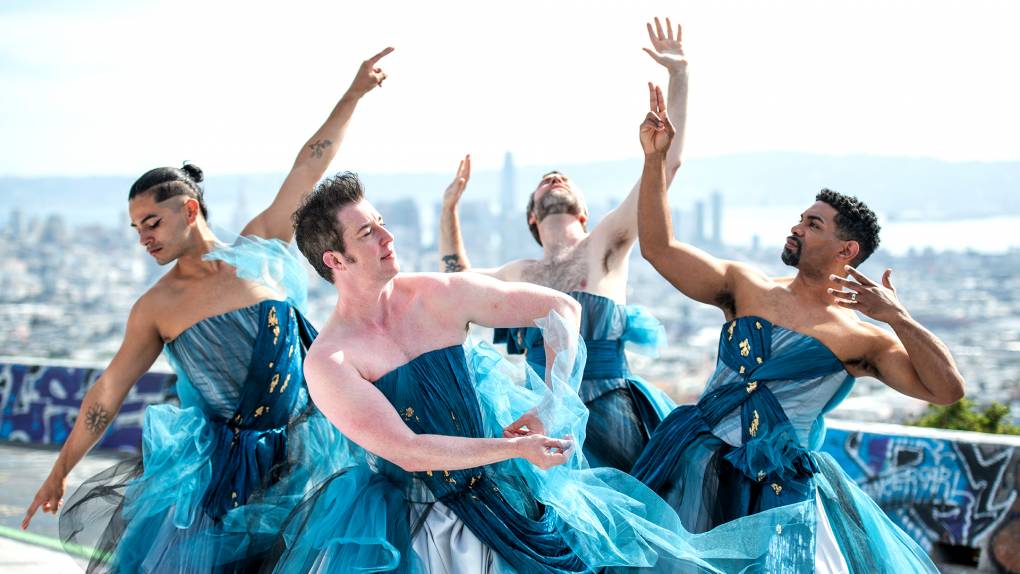
Transgender Dancer Sean Dorsey Dreams of a Limitless Future for Trans and Queer Communities
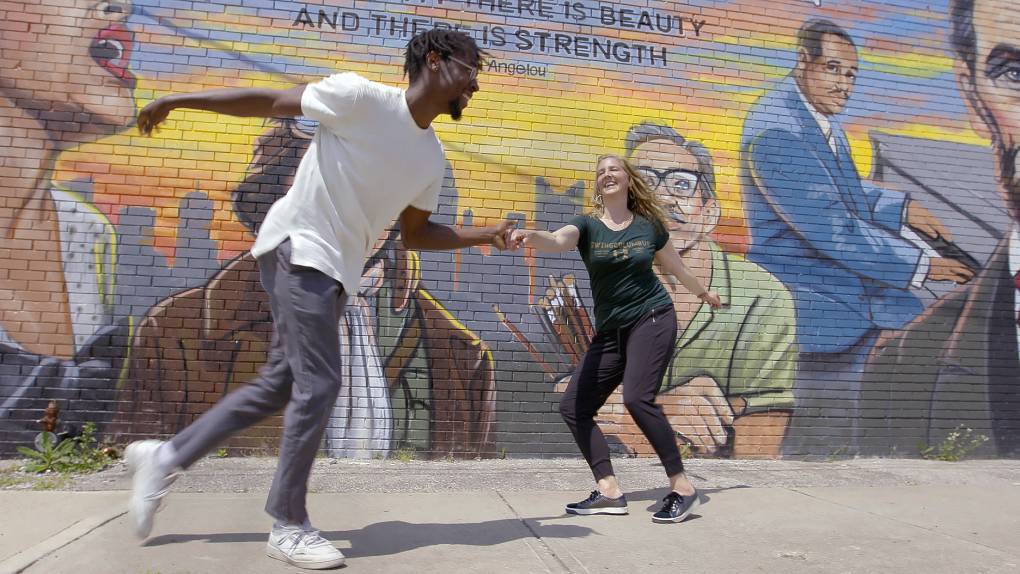
Lindy Hop Dancers Bring Back the Roots of this Black American Dance
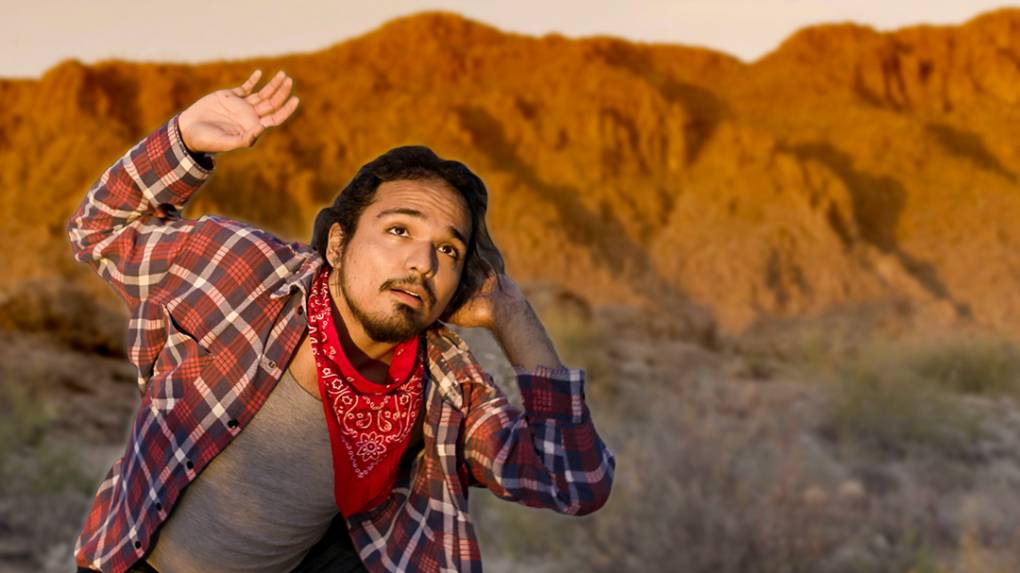
In Tucson, Latinx Dancers Honor Migrant Stories From the Borderlands
Meet Women Drummers Keeping the Japanese Art of Taiko Strong
Kinetic Light Dancers Take Disability Arts to New Heights
How Hip-Hop Dance Legend Rennie Harris Came to Pioneer Street Dance Theater
Meet Philadelphia’s House Dancers Preserving the Soul of the Scene
Black Joy, Black Power: Dancing the Legacy of Katherine Dunham
How Hawaiian Culture Thrives through the Timeless Poetry of Hula
Player sponsored by
window.__IS_SSR__=true
window.__INITIAL_STATE__={
"attachmentsReducer": {
"audio_0": {
"type": "attachments",
"id": "audio_0",
"imgSizes": {
"kqedFullSize": {
"file": "https://ww2.kqed.org/news/wp-content/themes/KQED-unified/img/audio_bgs/background0.jpg"
}
}
},
"audio_1": {
"type": "attachments",
"id": "audio_1",
"imgSizes": {
"kqedFullSize": {
"file": "https://ww2.kqed.org/news/wp-content/themes/KQED-unified/img/audio_bgs/background1.jpg"
}
}
},
"audio_2": {
"type": "attachments",
"id": "audio_2",
"imgSizes": {
"kqedFullSize": {
"file": "https://ww2.kqed.org/news/wp-content/themes/KQED-unified/img/audio_bgs/background2.jpg"
}
}
},
"audio_3": {
"type": "attachments",
"id": "audio_3",
"imgSizes": {
"kqedFullSize": {
"file": "https://ww2.kqed.org/news/wp-content/themes/KQED-unified/img/audio_bgs/background3.jpg"
}
}
},
"audio_4": {
"type": "attachments",
"id": "audio_4",
"imgSizes": {
"kqedFullSize": {
"file": "https://ww2.kqed.org/news/wp-content/themes/KQED-unified/img/audio_bgs/background4.jpg"
}
}
},
"placeholder": {
"type": "attachments",
"id": "placeholder",
"imgSizes": {
"thumbnail": {
"file": "https://cdn.kqed.org/wp-content/uploads/2024/12/KQED-Default-Image-816638274-2000x1333-1-160x107.jpg",
"width": 160,
"height": 107,
"mimeType": "image/jpeg"
},
"medium": {
"file": "https://cdn.kqed.org/wp-content/uploads/2024/12/KQED-Default-Image-816638274-2000x1333-1-800x533.jpg",
"width": 800,
"height": 533,
"mimeType": "image/jpeg"
},
"medium_large": {
"file": "https://cdn.kqed.org/wp-content/uploads/2024/12/KQED-Default-Image-816638274-2000x1333-1-768x512.jpg",
"width": 768,
"height": 512,
"mimeType": "image/jpeg"
},
"large": {
"file": "https://cdn.kqed.org/wp-content/uploads/2024/12/KQED-Default-Image-816638274-2000x1333-1-1020x680.jpg",
"width": 1020,
"height": 680,
"mimeType": "image/jpeg"
},
"1536x1536": {
"file": "https://cdn.kqed.org/wp-content/uploads/2024/12/KQED-Default-Image-816638274-2000x1333-1-1536x1024.jpg",
"width": 1536,
"height": 1024,
"mimeType": "image/jpeg"
},
"fd-lrg": {
"file": "https://cdn.kqed.org/wp-content/uploads/2024/12/KQED-Default-Image-816638274-2000x1333-1-1536x1024.jpg",
"width": 1536,
"height": 1024,
"mimeType": "image/jpeg"
},
"fd-med": {
"file": "https://cdn.kqed.org/wp-content/uploads/2024/12/KQED-Default-Image-816638274-2000x1333-1-1020x680.jpg",
"width": 1020,
"height": 680,
"mimeType": "image/jpeg"
},
"fd-sm": {
"file": "https://cdn.kqed.org/wp-content/uploads/2024/12/KQED-Default-Image-816638274-2000x1333-1-800x533.jpg",
"width": 800,
"height": 533,
"mimeType": "image/jpeg"
},
"post-thumbnail": {
"file": "https://cdn.kqed.org/wp-content/uploads/2024/12/KQED-Default-Image-816638274-2000x1333-1-672x372.jpg",
"width": 672,
"height": 372,
"mimeType": "image/jpeg"
},
"twentyfourteen-full-width": {
"file": "https://cdn.kqed.org/wp-content/uploads/2024/12/KQED-Default-Image-816638274-2000x1333-1-1038x576.jpg",
"width": 1038,
"height": 576,
"mimeType": "image/jpeg"
},
"xxsmall": {
"file": "https://cdn.kqed.org/wp-content/uploads/2024/12/KQED-Default-Image-816638274-2000x1333-1-160x107.jpg",
"width": 160,
"height": 107,
"mimeType": "image/jpeg"
},
"xsmall": {
"file": "https://cdn.kqed.org/wp-content/uploads/2024/12/KQED-Default-Image-816638274-2000x1333-1-672x372.jpg",
"width": 672,
"height": 372,
"mimeType": "image/jpeg"
},
"small": {
"file": "https://cdn.kqed.org/wp-content/uploads/2024/12/KQED-Default-Image-816638274-2000x1333-1-672x372.jpg",
"width": 672,
"height": 372,
"mimeType": "image/jpeg"
},
"xlarge": {
"file": "https://cdn.kqed.org/wp-content/uploads/2024/12/KQED-Default-Image-816638274-2000x1333-1-1020x680.jpg",
"width": 1020,
"height": 680,
"mimeType": "image/jpeg"
},
"full-width": {
"file": "https://cdn.kqed.org/wp-content/uploads/2024/12/KQED-Default-Image-816638274-2000x1333-1-1920x1280.jpg",
"width": 1920,
"height": 1280,
"mimeType": "image/jpeg"
},
"guest-author-32": {
"file": "https://cdn.kqed.org/wp-content/uploads/2025/01/KQED-Default-Image-816638274-1333x1333-1-160x160.jpg",
"width": 32,
"height": 32,
"mimeType": "image/jpeg"
},
"guest-author-50": {
"file": "https://cdn.kqed.org/wp-content/uploads/2025/01/KQED-Default-Image-816638274-1333x1333-1-160x160.jpg",
"width": 50,
"height": 50,
"mimeType": "image/jpeg"
},
"guest-author-64": {
"file": "https://cdn.kqed.org/wp-content/uploads/2025/01/KQED-Default-Image-816638274-1333x1333-1-160x160.jpg",
"width": 64,
"height": 64,
"mimeType": "image/jpeg"
},
"guest-author-96": {
"file": "https://cdn.kqed.org/wp-content/uploads/2025/01/KQED-Default-Image-816638274-1333x1333-1-160x160.jpg",
"width": 96,
"height": 96,
"mimeType": "image/jpeg"
},
"guest-author-128": {
"file": "https://cdn.kqed.org/wp-content/uploads/2025/01/KQED-Default-Image-816638274-1333x1333-1-160x160.jpg",
"width": 128,
"height": 128,
"mimeType": "image/jpeg"
},
"detail": {
"file": "https://cdn.kqed.org/wp-content/uploads/2025/01/KQED-Default-Image-816638274-1333x1333-1-160x160.jpg",
"width": 160,
"height": 160,
"mimeType": "image/jpeg"
},
"kqedFullSize": {
"file": "https://cdn.kqed.org/wp-content/uploads/2024/12/KQED-Default-Image-816638274-2000x1333-1.jpg",
"width": 2000,
"height": 1333
}
}
},
"arts_13915529": {
"type": "attachments",
"id": "arts_13915529",
"meta": {
"index": "attachments_1716263798",
"site": "arts",
"id": "13915529",
"found": true
},
"parent": 13915486,
"imgSizes": {
"twentyfourteen-full-width": {
"file": "https://ww2.kqed.org/app/uploads/sites/2/2022/06/SDforWP-1038x576.jpg",
"width": 1038,
"mimeType": "image/jpeg",
"height": 576
},
"thumbnail": {
"file": "https://ww2.kqed.org/app/uploads/sites/2/2022/06/SDforWP-160x90.jpg",
"width": 160,
"mimeType": "image/jpeg",
"height": 90
},
"post-thumbnail": {
"file": "https://ww2.kqed.org/app/uploads/sites/2/2022/06/SDforWP-672x372.jpg",
"width": 672,
"mimeType": "image/jpeg",
"height": 372
},
"kqedFullSize": {
"file": "https://ww2.kqed.org/app/uploads/sites/2/2022/06/SDforWP.jpg",
"width": 1920,
"height": 1080
},
"large": {
"file": "https://ww2.kqed.org/app/uploads/sites/2/2022/06/SDforWP-1020x574.jpg",
"width": 1020,
"mimeType": "image/jpeg",
"height": 574
},
"1536x1536": {
"file": "https://ww2.kqed.org/app/uploads/sites/2/2022/06/SDforWP-1536x864.jpg",
"width": 1536,
"mimeType": "image/jpeg",
"height": 864
},
"medium": {
"file": "https://ww2.kqed.org/app/uploads/sites/2/2022/06/SDforWP-800x450.jpg",
"width": 800,
"mimeType": "image/jpeg",
"height": 450
},
"medium_large": {
"file": "https://ww2.kqed.org/app/uploads/sites/2/2022/06/SDforWP-768x432.jpg",
"width": 768,
"mimeType": "image/jpeg",
"height": 432
}
},
"publishDate": 1656530676,
"modified": 1656530785,
"caption": "Sean Dorsey Dance (from left to right): Héctor Jaime, Sean Dorsey, Nol Simonse, Will Woodward",
"description": "Sean Dorsey Dance (from left to right): Héctor Jaime, Sean Dorsey, Nol Simonse, Will Woodward",
"title": "SDforWP",
"credit": "Beth LaBerge",
"status": "inherit",
"altTag": "Four dancers in blue gowns are posing against a wide shot of San Franciso's skyline",
"isLoading": false,
"fetchFailed": false
},
"arts_13914859": {
"type": "attachments",
"id": "arts_13914859",
"meta": {
"index": "attachments_1716263798",
"site": "arts",
"id": "13914859",
"found": true
},
"parent": 13914855,
"imgSizes": {
"twentyfourteen-full-width": {
"file": "https://ww2.kqed.org/app/uploads/sites/2/2022/06/ColumbusKQED_thumb-1038x576.jpg",
"width": 1038,
"mimeType": "image/jpeg",
"height": 576
},
"thumbnail": {
"file": "https://ww2.kqed.org/app/uploads/sites/2/2022/06/ColumbusKQED_thumb-160x90.jpg",
"width": 160,
"mimeType": "image/jpeg",
"height": 90
},
"post-thumbnail": {
"file": "https://ww2.kqed.org/app/uploads/sites/2/2022/06/ColumbusKQED_thumb-672x372.jpg",
"width": 672,
"mimeType": "image/jpeg",
"height": 372
},
"kqedFullSize": {
"file": "https://ww2.kqed.org/app/uploads/sites/2/2022/06/ColumbusKQED_thumb.jpg",
"width": 1873,
"height": 1054
},
"large": {
"file": "https://ww2.kqed.org/app/uploads/sites/2/2022/06/ColumbusKQED_thumb-1020x574.jpg",
"width": 1020,
"mimeType": "image/jpeg",
"height": 574
},
"1536x1536": {
"file": "https://ww2.kqed.org/app/uploads/sites/2/2022/06/ColumbusKQED_thumb-1536x864.jpg",
"width": 1536,
"mimeType": "image/jpeg",
"height": 864
},
"medium": {
"file": "https://ww2.kqed.org/app/uploads/sites/2/2022/06/ColumbusKQED_thumb-800x450.jpg",
"width": 800,
"mimeType": "image/jpeg",
"height": 450
},
"medium_large": {
"file": "https://ww2.kqed.org/app/uploads/sites/2/2022/06/ColumbusKQED_thumb-768x432.jpg",
"width": 768,
"mimeType": "image/jpeg",
"height": 432
}
},
"publishDate": 1655320899,
"modified": 1655321178,
"caption": "Columbus, Ohio Lindy Hoppers Tyedric Hill and Shannon Varner dance in the city's historic Black neighborhood King-Lincoln Bronzeville",
"description": "Two dancers swing out in front of a colorful mural with portraits of jazz musician Duke Ellington and other legends.",
"title": "ColumbusKQED_thumb",
"credit": "De’Niel Phipps",
"status": "inherit",
"altTag": null,
"isLoading": false,
"fetchFailed": false
},
"arts_13912549": {
"type": "attachments",
"id": "arts_13912549",
"meta": {
"index": "attachments_1716263798",
"site": "arts",
"id": "13912549",
"found": true
},
"parent": 13912474,
"imgSizes": {
"twentyfourteen-full-width": {
"file": "https://ww2.kqed.org/app/uploads/sites/2/2022/04/Tucson_Mountains_Steve_NoText-1038x576.jpg",
"width": 1038,
"mimeType": "image/jpeg",
"height": 576
},
"thumbnail": {
"file": "https://ww2.kqed.org/app/uploads/sites/2/2022/04/Tucson_Mountains_Steve_NoText-160x90.jpg",
"width": 160,
"mimeType": "image/jpeg",
"height": 90
},
"post-thumbnail": {
"file": "https://ww2.kqed.org/app/uploads/sites/2/2022/04/Tucson_Mountains_Steve_NoText-672x372.jpg",
"width": 672,
"mimeType": "image/jpeg",
"height": 372
},
"kqedFullSize": {
"file": "https://ww2.kqed.org/app/uploads/sites/2/2022/04/Tucson_Mountains_Steve_NoText.jpg",
"width": 1080,
"height": 607
},
"large": {
"file": "https://ww2.kqed.org/app/uploads/sites/2/2022/04/Tucson_Mountains_Steve_NoText-1020x573.jpg",
"width": 1020,
"mimeType": "image/jpeg",
"height": 573
},
"medium": {
"file": "https://ww2.kqed.org/app/uploads/sites/2/2022/04/Tucson_Mountains_Steve_NoText-800x450.jpg",
"width": 800,
"mimeType": "image/jpeg",
"height": 450
},
"medium_large": {
"file": "https://ww2.kqed.org/app/uploads/sites/2/2022/04/Tucson_Mountains_Steve_NoText-768x432.jpg",
"width": 768,
"mimeType": "image/jpeg",
"height": 432
}
},
"publishDate": 1651081951,
"modified": 1651082969,
"caption": "Steve Rosales of Safos Dance Theatre performs an excerpt from \"Braceros\"",
"description": "Steve Rosales of Safos Dance Theatre performs an excerpt from \"Braceros\"",
"title": "Tucson_Mountains_Steve_NoText",
"credit": "Brandon Yadegari",
"status": "inherit",
"altTag": "A male dancer stands mid-pose with the Arizona mountains behind him during golden hour",
"isLoading": false,
"fetchFailed": false
},
"arts_13911297": {
"type": "attachments",
"id": "arts_13911297",
"meta": {
"index": "attachments_1716263798",
"site": "arts",
"id": "13911297",
"found": true
},
"parent": 13911290,
"imgSizes": {
"twentyfourteen-full-width": {
"file": "https://ww2.kqed.org/app/uploads/sites/2/2022/03/ICCD503_SAC_20220108_FS7_10144.MXF_.04_05_38_09.Still010-2-1038x576.jpg",
"width": 1038,
"mimeType": "image/jpeg",
"height": 576
},
"thumbnail": {
"file": "https://ww2.kqed.org/app/uploads/sites/2/2022/03/ICCD503_SAC_20220108_FS7_10144.MXF_.04_05_38_09.Still010-2-160x90.jpg",
"width": 160,
"mimeType": "image/jpeg",
"height": 90
},
"post-thumbnail": {
"file": "https://ww2.kqed.org/app/uploads/sites/2/2022/03/ICCD503_SAC_20220108_FS7_10144.MXF_.04_05_38_09.Still010-2-672x372.jpg",
"width": 672,
"mimeType": "image/jpeg",
"height": 372
},
"kqedFullSize": {
"file": "https://ww2.kqed.org/app/uploads/sites/2/2022/03/ICCD503_SAC_20220108_FS7_10144.MXF_.04_05_38_09.Still010-2.jpg",
"width": 1695,
"height": 953
},
"large": {
"file": "https://ww2.kqed.org/app/uploads/sites/2/2022/03/ICCD503_SAC_20220108_FS7_10144.MXF_.04_05_38_09.Still010-2-1020x573.jpg",
"width": 1020,
"mimeType": "image/jpeg",
"height": 573
},
"1536x1536": {
"file": "https://ww2.kqed.org/app/uploads/sites/2/2022/03/ICCD503_SAC_20220108_FS7_10144.MXF_.04_05_38_09.Still010-2-1536x864.jpg",
"width": 1536,
"mimeType": "image/jpeg",
"height": 864
},
"medium": {
"file": "https://ww2.kqed.org/app/uploads/sites/2/2022/03/ICCD503_SAC_20220108_FS7_10144.MXF_.04_05_38_09.Still010-2-800x450.jpg",
"width": 800,
"mimeType": "image/jpeg",
"height": 450
},
"medium_large": {
"file": "https://ww2.kqed.org/app/uploads/sites/2/2022/03/ICCD503_SAC_20220108_FS7_10144.MXF_.04_05_38_09.Still010-2-768x432.jpg",
"width": 768,
"mimeType": "image/jpeg",
"height": 432
}
},
"publishDate": 1648601064,
"modified": 1648601361,
"caption": "From left to right: Nicole Stansbury, Tiffany Tamaribuchi, and Sascha Molina are playing taiko drums at William Land Regional Park in Sacramento, CA.",
"description": "From left to right: Nicole Stansbury, Tiffany Tamaribuchi, and Sascha Molina are playing taiko drums at William Land Regional Park in Sacramento, CA.",
"title": "ICCD503_SAC_20220108_FS7_10144.MXF.04_05_38_09.Still010-2",
"credit": "Elie M. Khadra",
"status": "inherit",
"altTag": "Three women wearing traditional taiko player attire raise their arms to srike big taiko drums with wooden sticks.",
"isLoading": false,
"fetchFailed": false
},
"arts_13905760": {
"type": "attachments",
"id": "arts_13905760",
"meta": {
"index": "attachments_1716263798",
"site": "arts",
"id": "13905760",
"found": true
},
"parent": 13905452,
"imgSizes": {
"twentyfourteen-full-width": {
"file": "https://ww2.kqed.org/app/uploads/sites/2/2021/11/ICCD407_Bay_Area_WP_All_Versions-1038x576.jpg",
"width": 1038,
"mimeType": "image/jpeg",
"height": 576
},
"thumbnail": {
"file": "https://ww2.kqed.org/app/uploads/sites/2/2021/11/ICCD407_Bay_Area_WP_All_Versions-160x90.jpg",
"width": 160,
"mimeType": "image/jpeg",
"height": 90
},
"post-thumbnail": {
"file": "https://ww2.kqed.org/app/uploads/sites/2/2021/11/ICCD407_Bay_Area_WP_All_Versions-672x372.jpg",
"width": 672,
"mimeType": "image/jpeg",
"height": 372
},
"kqedFullSize": {
"file": "https://ww2.kqed.org/app/uploads/sites/2/2021/11/ICCD407_Bay_Area_WP_All_Versions.jpg",
"width": 1920,
"height": 1079
},
"large": {
"file": "https://ww2.kqed.org/app/uploads/sites/2/2021/11/ICCD407_Bay_Area_WP_All_Versions-1020x573.jpg",
"width": 1020,
"mimeType": "image/jpeg",
"height": 573
},
"1536x1536": {
"file": "https://ww2.kqed.org/app/uploads/sites/2/2021/11/ICCD407_Bay_Area_WP_All_Versions-1536x863.jpg",
"width": 1536,
"mimeType": "image/jpeg",
"height": 863
},
"medium": {
"file": "https://ww2.kqed.org/app/uploads/sites/2/2021/11/ICCD407_Bay_Area_WP_All_Versions-800x450.jpg",
"width": 800,
"mimeType": "image/jpeg",
"height": 450
},
"medium_large": {
"file": "https://ww2.kqed.org/app/uploads/sites/2/2021/11/ICCD407_Bay_Area_WP_All_Versions-768x432.jpg",
"width": 768,
"mimeType": "image/jpeg",
"height": 432
}
},
"publishDate": 1635965191,
"modified": 1635967650,
"caption": "Members of Kinetic Light at Z Space in San Francisco, CA.",
"description": "Members of Kinetic Light at Z Space in San Francisco, CA.",
"title": "ICCD407_Bay_Area_WP_All_Versions",
"credit": "Manjula Varghese",
"status": "inherit",
"altTag": "A wide shot of three dancers on a dimly lit stage; the floor is awash in patterned green and blue light. Two dancers in wheelchairs hover above the ground, each with one arm extended up, holding on to a thick cable; Alice is a multiracial Black woman with coffee-colored skin and short curly hair and Laurel is a white woman with very short cropped hair. They each gaze at and tilt down toward Jerron, a dark-skinned Black man with blonde hair who is crouched between them, wrapped in barbed wire. All dancers are wearing shimmery green and gold costumes.",
"isLoading": false,
"fetchFailed": false
},
"arts_13901894": {
"type": "attachments",
"id": "arts_13901894",
"meta": {
"index": "attachments_1716263798",
"site": "arts",
"id": "13901894",
"found": true
},
"parent": 13901890,
"imgSizes": {
"twentyfourteen-full-width": {
"file": "https://ww2.kqed.org/app/uploads/sites/2/2021/08/Rennie-Thumb-WP-1038x576.jpg",
"width": 1038,
"mimeType": "image/jpeg",
"height": 576
},
"thumbnail": {
"file": "https://ww2.kqed.org/app/uploads/sites/2/2021/08/Rennie-Thumb-WP-160x90.jpg",
"width": 160,
"mimeType": "image/jpeg",
"height": 90
},
"post-thumbnail": {
"file": "https://ww2.kqed.org/app/uploads/sites/2/2021/08/Rennie-Thumb-WP-672x372.jpg",
"width": 672,
"mimeType": "image/jpeg",
"height": 372
},
"kqedFullSize": {
"file": "https://ww2.kqed.org/app/uploads/sites/2/2021/08/Rennie-Thumb-WP.jpg",
"width": 1920,
"height": 1079
},
"large": {
"file": "https://ww2.kqed.org/app/uploads/sites/2/2021/08/Rennie-Thumb-WP-1020x573.jpg",
"width": 1020,
"mimeType": "image/jpeg",
"height": 573
},
"1536x1536": {
"file": "https://ww2.kqed.org/app/uploads/sites/2/2021/08/Rennie-Thumb-WP-1536x863.jpg",
"width": 1536,
"mimeType": "image/jpeg",
"height": 863
},
"medium": {
"file": "https://ww2.kqed.org/app/uploads/sites/2/2021/08/Rennie-Thumb-WP-800x450.jpg",
"width": 800,
"mimeType": "image/jpeg",
"height": 450
},
"medium_large": {
"file": "https://ww2.kqed.org/app/uploads/sites/2/2021/08/Rennie-Thumb-WP-768x432.jpg",
"width": 768,
"mimeType": "image/jpeg",
"height": 432
}
},
"publishDate": 1629934115,
"modified": 1629934399,
"caption": "Dancer, choreographer, artistic director Rennie Harris.",
"description": "Dancer, choreographer, artistic director Rennie Harris.",
"title": "Rennie Thumb WP",
"credit": "Bob Emmott, Manjula Varghese",
"status": "inherit",
"altTag": "A split screen image of choreographer Rennie Harris: a black and white photo of Rennie dancing in the 1990s on the left and a still from a sit down interview with Rennie taken in 2021 on the right.",
"isLoading": false,
"fetchFailed": false
},
"arts_13900186": {
"type": "attachments",
"id": "arts_13900186",
"meta": {
"index": "attachments_1716263798",
"site": "arts",
"id": "13900186",
"found": true
},
"parent": 13900185,
"imgSizes": {
"twentyfourteen-full-width": {
"file": "https://ww2.kqed.org/app/uploads/sites/2/2021/07/ICCD-Philly-Thumb-WP-1038x576.jpg",
"width": 1038,
"mimeType": "image/jpeg",
"height": 576
},
"thumbnail": {
"file": "https://ww2.kqed.org/app/uploads/sites/2/2021/07/ICCD-Philly-Thumb-WP-160x90.jpg",
"width": 160,
"mimeType": "image/jpeg",
"height": 90
},
"post-thumbnail": {
"file": "https://ww2.kqed.org/app/uploads/sites/2/2021/07/ICCD-Philly-Thumb-WP-672x372.jpg",
"width": 672,
"mimeType": "image/jpeg",
"height": 372
},
"kqedFullSize": {
"file": "https://ww2.kqed.org/app/uploads/sites/2/2021/07/ICCD-Philly-Thumb-WP.jpg",
"width": 1920,
"height": 1079
},
"large": {
"file": "https://ww2.kqed.org/app/uploads/sites/2/2021/07/ICCD-Philly-Thumb-WP-1020x573.jpg",
"width": 1020,
"mimeType": "image/jpeg",
"height": 573
},
"1536x1536": {
"file": "https://ww2.kqed.org/app/uploads/sites/2/2021/07/ICCD-Philly-Thumb-WP-1536x863.jpg",
"width": 1536,
"mimeType": "image/jpeg",
"height": 863
},
"medium": {
"file": "https://ww2.kqed.org/app/uploads/sites/2/2021/07/ICCD-Philly-Thumb-WP-800x450.jpg",
"width": 800,
"mimeType": "image/jpeg",
"height": 450
},
"medium_large": {
"file": "https://ww2.kqed.org/app/uploads/sites/2/2021/07/ICCD-Philly-Thumb-WP-768x432.jpg",
"width": 768,
"mimeType": "image/jpeg",
"height": 432
}
},
"publishDate": 1626984197,
"modified": 1626984459,
"caption": "Kyle and Dinita Clark of Just Sole! Street Dance Co. with their students in front of the Rotunda in Philadelphia, PA.",
"description": "Kyle and Dinita Clark of Just Sole! Street Dance Co. with their students in front of the Rotunda in Philadelphia, PA.",
"title": "ICCD Philly Thumb WP",
"credit": "Derrick Woodyard",
"status": "inherit",
"altTag": "A male and female couple are looking at the camera and smiling while a small crowd of people is dancing behind them.",
"isLoading": false,
"fetchFailed": false
},
"arts_13899195": {
"type": "attachments",
"id": "arts_13899195",
"meta": {
"index": "attachments_1716263798",
"site": "arts",
"id": "13899195",
"found": true
},
"parent": 13899186,
"imgSizes": {
"twentyfourteen-full-width": {
"file": "https://ww2.kqed.org/app/uploads/sites/2/2021/06/ICCD405_ESTL_Dunham-1038x576.jpg",
"width": 1038,
"mimeType": "image/jpeg",
"height": 576
},
"thumbnail": {
"file": "https://ww2.kqed.org/app/uploads/sites/2/2021/06/ICCD405_ESTL_Dunham-160x90.jpg",
"width": 160,
"mimeType": "image/jpeg",
"height": 90
},
"post-thumbnail": {
"file": "https://ww2.kqed.org/app/uploads/sites/2/2021/06/ICCD405_ESTL_Dunham-672x372.jpg",
"width": 672,
"mimeType": "image/jpeg",
"height": 372
},
"kqedFullSize": {
"file": "https://ww2.kqed.org/app/uploads/sites/2/2021/06/ICCD405_ESTL_Dunham.jpg",
"width": 1920,
"height": 1079
},
"large": {
"file": "https://ww2.kqed.org/app/uploads/sites/2/2021/06/ICCD405_ESTL_Dunham-1020x573.jpg",
"width": 1020,
"mimeType": "image/jpeg",
"height": 573
},
"1536x1536": {
"file": "https://ww2.kqed.org/app/uploads/sites/2/2021/06/ICCD405_ESTL_Dunham-1536x863.jpg",
"width": 1536,
"mimeType": "image/jpeg",
"height": 863
},
"medium": {
"file": "https://ww2.kqed.org/app/uploads/sites/2/2021/06/ICCD405_ESTL_Dunham-800x450.jpg",
"width": 800,
"mimeType": "image/jpeg",
"height": 450
},
"medium_large": {
"file": "https://ww2.kqed.org/app/uploads/sites/2/2021/06/ICCD405_ESTL_Dunham-768x432.jpg",
"width": 768,
"mimeType": "image/jpeg",
"height": 432
}
},
"publishDate": 1624420355,
"modified": 1624420610,
"caption": "Heather Beal dances outside the Katherine Dunham Museum in East St. Louis ",
"description": "Dancer Heather Beal dips her head back with arms extended and palms up, against a backdrop of green bushes and warm light leaks ",
"title": "ICCD405_ESTL_Dunham",
"credit": "Christopher Phillip",
"status": "inherit",
"altTag": "Heather Beal dances outside",
"isLoading": false,
"fetchFailed": false
},
"arts_13897908": {
"type": "attachments",
"id": "arts_13897908",
"meta": {
"index": "attachments_1716263798",
"site": "arts",
"id": "13897908",
"found": true
},
"parent": 13897894,
"imgSizes": {
"twentyfourteen-full-width": {
"file": "https://ww2.kqed.org/app/uploads/sites/2/2021/05/ICCD403_Honolulu_WP-1038x576.jpg",
"width": 1038,
"mimeType": "image/jpeg",
"height": 576
},
"thumbnail": {
"file": "https://ww2.kqed.org/app/uploads/sites/2/2021/05/ICCD403_Honolulu_WP-160x90.jpg",
"width": 160,
"mimeType": "image/jpeg",
"height": 90
},
"post-thumbnail": {
"file": "https://ww2.kqed.org/app/uploads/sites/2/2021/05/ICCD403_Honolulu_WP-672x372.jpg",
"width": 672,
"mimeType": "image/jpeg",
"height": 372
},
"kqedFullSize": {
"file": "https://ww2.kqed.org/app/uploads/sites/2/2021/05/ICCD403_Honolulu_WP.jpg",
"width": 1920,
"height": 1079
},
"large": {
"file": "https://ww2.kqed.org/app/uploads/sites/2/2021/05/ICCD403_Honolulu_WP-1020x573.jpg",
"width": 1020,
"mimeType": "image/jpeg",
"height": 573
},
"1536x1536": {
"file": "https://ww2.kqed.org/app/uploads/sites/2/2021/05/ICCD403_Honolulu_WP-1536x863.jpg",
"width": 1536,
"mimeType": "image/jpeg",
"height": 863
},
"medium": {
"file": "https://ww2.kqed.org/app/uploads/sites/2/2021/05/ICCD403_Honolulu_WP-800x450.jpg",
"width": 800,
"mimeType": "image/jpeg",
"height": 450
},
"medium_large": {
"file": "https://ww2.kqed.org/app/uploads/sites/2/2021/05/ICCD403_Honolulu_WP-768x432.jpg",
"width": 768,
"mimeType": "image/jpeg",
"height": 432
}
},
"publishDate": 1622057826,
"modified": 1622059154,
"caption": "Dancers of the hālau hula (hula school) Ka Pā Hula O Ka Lei Lehua in front of the Iolani Palace in Honolulu, HI.",
"description": "Dancers of the hālau hula (hula school) Ka Pā Hula O Ka Lei Lehua in front of the Iolani Palace in Honolulu, HI.",
"title": "ICCD403_Honolulu_WP",
"credit": "Keli'i Grace",
"status": "inherit",
"altTag": "Female hula dancer in traditional attire extends her arm towards the camera.",
"isLoading": false,
"fetchFailed": false
}
},
"audioPlayerReducer": {
"postId": "stream_live",
"isPaused": true,
"isPlaying": false,
"pfsActive": false,
"pledgeModalIsOpen": true,
"playerDrawerIsOpen": false
},
"authorsReducer": {
"byline_arts_13915486": {
"type": "authors",
"id": "byline_arts_13915486",
"meta": {
"override": true
},
"slug": "byline_arts_13915486",
"name": "Lindsay Gauthier",
"isLoading": false
},
"byline_arts_13914855": {
"type": "authors",
"id": "byline_arts_13914855",
"meta": {
"override": true
},
"slug": "byline_arts_13914855",
"name": "Selena Burks-Rentschler, Masha Pershay and Kelly Whalen ",
"isLoading": false
},
"byline_arts_13912474": {
"type": "authors",
"id": "byline_arts_13912474",
"meta": {
"override": true
},
"slug": "byline_arts_13912474",
"name": "Melissa del Bosque and Manjula Varghese",
"isLoading": false
},
"byline_arts_13911290": {
"type": "authors",
"id": "byline_arts_13911290",
"meta": {
"override": true
},
"slug": "byline_arts_13911290",
"name": "Lauren Kawana",
"isLoading": false
},
"byline_arts_13905452": {
"type": "authors",
"id": "byline_arts_13905452",
"meta": {
"override": true
},
"slug": "byline_arts_13905452",
"name": "Kelly Whalen, Isara Krieger",
"isLoading": false
},
"byline_arts_13899186": {
"type": "authors",
"id": "byline_arts_13899186",
"meta": {
"override": true
},
"slug": "byline_arts_13899186",
"name": "Charlotte Buchen Khadra, Jon Alexander",
"isLoading": false
},
"byline_arts_13897894": {
"type": "authors",
"id": "byline_arts_13897894",
"meta": {
"override": true
},
"slug": "byline_arts_13897894",
"name": "Lauren Kawana",
"isLoading": false
},
"kwhalen": {
"type": "authors",
"id": "3248",
"meta": {
"index": "authors_1716337520",
"id": "3248",
"found": true
},
"name": "Kelly Whalen",
"firstName": "Kelly",
"lastName": "Whalen",
"slug": "kwhalen",
"email": "kwhalen@kqed.org",
"display_author_email": false,
"staff_mastheads": [],
"title": "Senior Video Producer",
"bio": "Kelly Whalen is a filmmaker and educator who directs and produces social justice documentaries and award-winning arts and culture web series. She is the creator of KQED Arts’ three-time Webby Award-winning YouTube series \u003cem>If Cities Could Dance\u003c/em>, featuring dancers across the country representing their cities’ signature moves, and the director of \u003cem>When the Waters Get Deep\u003c/em>, a documentary about Oakland-based artists SOL Development and their work toward healing their communities’ trauma from gun violence.",
"avatar": "https://secure.gravatar.com/avatar/1a2b57e8a13abdcfc3d4966d9c0e1512?s=600&d=blank&r=g",
"twitter": "kellyfilmmaker",
"facebook": null,
"instagram": null,
"linkedin": null,
"sites": [
{
"site": "arts",
"roles": [
"subscriber"
]
}
],
"headData": {
"title": "Kelly Whalen | KQED",
"description": "Senior Video Producer",
"ogImgSrc": "https://secure.gravatar.com/avatar/1a2b57e8a13abdcfc3d4966d9c0e1512?s=600&d=blank&r=g",
"twImgSrc": "https://secure.gravatar.com/avatar/1a2b57e8a13abdcfc3d4966d9c0e1512?s=600&d=blank&r=g"
},
"isLoading": false,
"link": "/author/kwhalen"
},
"mpershay": {
"type": "authors",
"id": "11261",
"meta": {
"index": "authors_1716337520",
"id": "11261",
"found": true
},
"name": "Masha Pershay",
"firstName": "Masha",
"lastName": "Pershay",
"slug": "mpershay",
"email": "mpershay@KQED.org",
"display_author_email": false,
"staff_mastheads": [],
"title": "Digital Video Producer",
"bio": "Masha Pershay is an associate video producer for KQED Arts. Masha got her start in media production in 2009, when she joined college station KUSF as a radio host. She holds a B.A. in Broadcasting and Electronic Communication Arts from San Francisco State University and a certificate in sound recording from City College of San Francisco. In her spare time, she's an avid record collector and a DJ in San Francisco's Italo disco DJ collective Galaxy Radio.",
"avatar": "https://secure.gravatar.com/avatar/0dadfc89413a2219896bb9cfda408bf8?s=600&d=mm&r=g",
"twitter": null,
"facebook": null,
"instagram": null,
"linkedin": null,
"sites": [
{
"site": "",
"roles": [
"editor"
]
},
{
"site": "arts",
"roles": []
},
{
"site": "education",
"roles": []
},
{
"site": "food",
"roles": []
}
],
"headData": {
"title": "Masha Pershay | KQED",
"description": "Digital Video Producer",
"ogImgSrc": "https://secure.gravatar.com/avatar/0dadfc89413a2219896bb9cfda408bf8?s=600&d=mm&r=g",
"twImgSrc": "https://secure.gravatar.com/avatar/0dadfc89413a2219896bb9cfda408bf8?s=600&d=mm&r=g"
},
"isLoading": false,
"link": "/author/mpershay"
},
"mvarghese": {
"type": "authors",
"id": "11804",
"meta": {
"index": "authors_1716337520",
"id": "11804",
"found": true
},
"name": "Manjula Varghese",
"firstName": "Manjula",
"lastName": "Varghese",
"slug": "mvarghese",
"email": "mvarghese@kqed.org",
"display_author_email": true,
"staff_mastheads": [],
"title": "Digital Producer/Editor",
"bio": "Manjula Varghese is the Digital Producer/Editor for KQED Arts & Culture. Before KQED, she produced \u003ca href=\"https://www.manjulav.com/\">videos\u003c/a> for the \u003cem>San Francisco Chronicle\u003c/em>, exploring issues of race, gun violence and immigration. As a D.C. native, she managed to escape the East Coast, run her own production company Mirrorlake Films based in Utah, and graduate from Berkeley's Graduate School of Journalism unscathed. Believing in the power of community, she is active in the local \u003ca href=\"https://california.comcast.com/2019/08/19/hella-asian-a-live-storytelling-fundraiser-for-diverse-newsrooms/\">Asian American Journalists Association\u003c/a>, \u003ca href=\"https://browngirlsdocmafia.com/members/recKKw8eM2sPzwSPk/\">Brown Girls Doc Mafia\u003c/a> and, on occasion, \u003ca href=\"https://journalism.berkeley.edu/person/manjula_varghese/#:~:text=Lecturer,Alumni&text=Manjula%20Varghese%20is%20a%20journalist,skills%20in%20multi%2Dmedia%20journalism.\">teaches\u003c/a> at UC Berkeley's school of journalism. Her free time is filled with day trips around the Bay, live music, befriending stranger’s dogs and attempting her mom’s South Indian cooking.",
"avatar": "https://secure.gravatar.com/avatar/b3d87eb6dee081d2d9c8e64667ef4873?s=600&d=mm&r=g",
"twitter": null,
"facebook": null,
"instagram": null,
"linkedin": null,
"sites": [
{
"site": "arts",
"roles": []
},
{
"site": "news",
"roles": []
},
{
"site": "food",
"roles": []
}
],
"headData": {
"title": "Manjula Varghese | KQED",
"description": "Digital Producer/Editor",
"ogImgSrc": "https://secure.gravatar.com/avatar/b3d87eb6dee081d2d9c8e64667ef4873?s=600&d=mm&r=g",
"twImgSrc": "https://secure.gravatar.com/avatar/b3d87eb6dee081d2d9c8e64667ef4873?s=600&d=mm&r=g"
},
"isLoading": false,
"link": "/author/mvarghese"
}
},
"breakingNewsReducer": {},
"pagesReducer": {},
"postsReducer": {
"stream_live": {
"type": "live",
"id": "stream_live",
"audioUrl": "https://streams.kqed.org/kqedradio",
"title": "Live Stream",
"excerpt": "Live Stream information currently unavailable.",
"link": "/radio",
"featImg": "",
"label": {
"name": "KQED Live",
"link": "/"
}
},
"stream_kqedNewscast": {
"type": "posts",
"id": "stream_kqedNewscast",
"audioUrl": "https://www.kqed.org/.stream/anon/radio/RDnews/newscast.mp3?_=1",
"title": "KQED Newscast",
"featImg": "",
"label": {
"name": "88.5 FM",
"link": "/"
}
},
"arts_13915486": {
"type": "posts",
"id": "arts_13915486",
"meta": {
"index": "posts_1716263798",
"site": "arts",
"id": "13915486",
"score": null,
"sort": [
1656531968000
]
},
"guestAuthors": [],
"slug": "seandorseydance",
"title": "Transgender Dancer Sean Dorsey Dreams of a Limitless Future for Trans and Queer Communities",
"publishDate": 1656531968,
"format": "video",
"headTitle": "Transgender Dancer Sean Dorsey Dreams of a Limitless Future for Trans and Queer Communities | KQED",
"labelTerm": {
"term": 4422,
"site": "arts"
},
"content": "\u003cp>\u003cem>\u003ca href=\"https://youtube.com/playlist?list=PLeGdTT0--8KhbKEVbBBpeaZd9fAznBzz9\" target=\"_blank\" rel=\"noopener noreferrer\">If Cities Could Dance\u003c/a> is KQED Arts and Culture’s award-winning video series featuring dancers across the country who represent their city’s signature moves. \u003ca href=\"https://www.youtube.com/user/KQEDart\" target=\"_blank\" rel=\"noopener noreferrer\">Subscribe to our YouTube Channel\u003c/a> to never miss a new episode.\u003c/em>\u003c/p>\n\u003cp>As a choreographer and as a trans person, Sean Dorsey felt irresistibly drawn to San Francisco. “It was this deep gut calling,” he says. “For so many trans and queer folks, San Francisco is the only place that we can live.” And yet, the city he moved to in the early 2000s was not the city he had envisioned.\u003c/p>\n\u003cp>“I thought, ‘This is it, I’m finally going to live in this city and meet the hundreds of other \u003cspan style=\"font-weight: 400\">transgender modern dance choreographers \u003c/span>\u003cspan style=\"font-weight: 400\">who must be living here,’” he recalls. “And there were none. There were trans hip-hop artists, visual artists, musicians, playwrights and writers. But when it came to trans modern dance choreographers or dancers, it was like crickets. And nobody was putting trans artists onstage.”\u003c/span>\u003c/p>\n\u003cfigure id=\"attachment_13915530\" class=\"wp-caption aligncenter\" style=\"max-width: 800px\">\u003cimg loading=\"lazy\" decoding=\"async\" class=\"size-medium wp-image-13915530\" src=\"https://ww2.kqed.org/app/uploads/sites/2/2022/06/KQED_SDD_2022-766-800x533.jpg\" alt=\"Four dancers in magenta gowns perform modern dance choreography against pillars at a cliff overlooking the Pacific ocean in San Francisco, CA\" width=\"800\" height=\"533\" srcset=\"https://cdn.kqed.org/wp-content/uploads/sites/2/2022/06/KQED_SDD_2022-766-800x533.jpg 800w, https://cdn.kqed.org/wp-content/uploads/sites/2/2022/06/KQED_SDD_2022-766-1020x680.jpg 1020w, https://cdn.kqed.org/wp-content/uploads/sites/2/2022/06/KQED_SDD_2022-766-160x107.jpg 160w, https://cdn.kqed.org/wp-content/uploads/sites/2/2022/06/KQED_SDD_2022-766-768x512.jpg 768w, https://cdn.kqed.org/wp-content/uploads/sites/2/2022/06/KQED_SDD_2022-766-1536x1024.jpg 1536w, https://cdn.kqed.org/wp-content/uploads/sites/2/2022/06/KQED_SDD_2022-766-2048x1365.jpg 2048w, https://cdn.kqed.org/wp-content/uploads/sites/2/2022/06/KQED_SDD_2022-766-1920x1280.jpg 1920w\" sizes=\"auto, (max-width: 800px) 100vw, 800px\">\u003cfigcaption class=\"wp-caption-text\">Sean Dorsey Dance (from left to right): Sean Dorsey, Héctor Jaime, Will Woodward, Nol Simonse \u003ccite>(Lydia Daniller)\u003c/cite>\u003c/figcaption>\u003c/figure>\n\u003cp>Dorsey spent the next two decades championing trans and queer performing arts in the city, hand in hand with his life partner, the musician, filmmaker and transgender activist Shawna Virago. Their \u003ca href=\"https://www.freshmeatfest.com\" target=\"_blank\" rel=\"noopener noreferrer\">Fresh Meat Festival\u003c/a> is in its 21st season of showcasing trans and queer performance; Sean Dorsey Dance has toured innovative modern dance to more than 30 cities in the U.S. and abroad; and accolades have arrived in the form of prestigious national awards, commissions and grants.\u003c/p>\n\u003cp>And while San Francisco has offered Dorsey fertile ground for artmaking, and a community hungry to see itself represented onstage, he has returned the favor by enriching the city’s awareness of itself. “San Francisco is this incredible epicenter of trans and queer history of resistance,” he says. New York City’s Stonewall gets all the glory, but it was in the Tenderloin at \u003ca href=\"https://www.youtube.com/watch?v=G-WASW9dRBU\" target=\"_blank\" rel=\"noopener noreferrer\">Compton’s Cafeteria \u003c/a>where drag queens and trans women of color first resisted police harassment and rioted for their rights, in August 1966—nearly three years before Stonewall.\u003c/p>\n\u003cp>[ad fullwidth]\u003c/p>\n\u003cp>Dorsey unearthed the city’s deep, rich, influential legacy of trans and queer lives in an epic dance-theater trilogy of \u003ci>\u003cspan style=\"font-weight: 400\">Uncovered: The Diary Project\u003c/span>\u003c/i>\u003cspan style=\"font-weight: 400\">, \u003c/span>\u003ci>\u003cspan style=\"font-weight: 400\">The Secret History of Love\u003c/span>\u003c/i>\u003cspan style=\"font-weight: 400\"> and \u003c/span>\u003ci>\u003cspan style=\"font-weight: 400\">The Missing Generation\u003c/span>\u003c/i>\u003cspan style=\"font-weight: 400\">. Theatrical, humorous, deeply compassionate and beautifully danced, those works made space for people of all identities to gather and truly see each other. “My goal is to make dances that people can relate to deeply and are transformed by in some way,” he says. “I want all of us to be breathing together, dreaming together, sharing compassion and story and embodiment.”\u003c/span>\u003c/p>\n\u003cp>That sense of hope is at the heart of Dorsey’s new work, \u003ca href=\"https://seandorseydance.com/works/the-lost-art-of-dreaming/\" target=\"_blank\" rel=\"noopener noreferrer\">\u003ci>\u003cspan style=\"font-weight: 400\">The Lost Art of Dreaming\u003c/span>\u003c/i>\u003c/a>\u003cspan style=\"font-weight: 400\">. It’s also the impetus for a new, forward-looking phase of Dorsey’s artistic life, focused on encouraging trans and nonbinary people to claim their right to a life they love. “So many trans people are told that we won’t have a future,” Dorsey says. “So many of us are discouraged from dreaming, are discouraged from imagining, finding love, finding community. \u003c/span>\u003ci>\u003cspan style=\"font-weight: 400\">Dreaming\u003c/span>\u003c/i>\u003cspan style=\"font-weight: 400\"> invites us all to imagine expansive futures that are joyful and liberated, and in which we lift each other up with love.”\u003c/span>\u003c/p>\n\u003cfigure id=\"attachment_13915524\" class=\"wp-caption aligncenter\" style=\"max-width: 800px\">\u003cimg loading=\"lazy\" decoding=\"async\" class=\"size-medium wp-image-13915524\" src=\"https://ww2.kqed.org/app/uploads/sites/2/2022/06/KQED_SDD_2022-169-800x533.jpg\" alt=\"Four dancers in blue and white gowns pose on a concrete sculpture resembling a bed on a grassy lawn situated near the San Francisco Bay\" width=\"800\" height=\"533\" srcset=\"https://cdn.kqed.org/wp-content/uploads/sites/2/2022/06/KQED_SDD_2022-169-800x533.jpg 800w, https://cdn.kqed.org/wp-content/uploads/sites/2/2022/06/KQED_SDD_2022-169-1020x680.jpg 1020w, https://cdn.kqed.org/wp-content/uploads/sites/2/2022/06/KQED_SDD_2022-169-160x107.jpg 160w, https://cdn.kqed.org/wp-content/uploads/sites/2/2022/06/KQED_SDD_2022-169-768x512.jpg 768w, https://cdn.kqed.org/wp-content/uploads/sites/2/2022/06/KQED_SDD_2022-169-1536x1024.jpg 1536w, https://cdn.kqed.org/wp-content/uploads/sites/2/2022/06/KQED_SDD_2022-169-2048x1365.jpg 2048w, https://cdn.kqed.org/wp-content/uploads/sites/2/2022/06/KQED_SDD_2022-169-1920x1280.jpg 1920w\" sizes=\"auto, (max-width: 800px) 100vw, 800px\">\u003cfigcaption class=\"wp-caption-text\">Sean Dorsey Dance (from left to right): Sean Dorsey, Héctor Jaime, Will Woodward, Nol SImonse \u003ccite>(Lydia Daniller)\u003c/cite>\u003c/figcaption>\u003c/figure>\n\u003cp>\u003ci>\u003cem>The Lost Art of\u003c/em> Dreaming\u003c/i>\u003cspan style=\"font-weight: 400\"> proposes a new paradigm through the embodied, kinesthetic art of dance. Dorsey’s modern choreography melds with the expressive dancers, spectacular couture costumes and an uninhibited, enthusiastic embrace of joy. Watching, you can sense the connection among the artists and between them and the city itself. “San Francisco is like a magical sanctuary,” Dorsey says. “It whispers to us from all across the country and around the world. Sean Dorsey Dance is by, of and for San Francisco. In this city, I stand on the shoulders of my Transcestors.”\u003c/span>\u003c/p>\n\u003cfigure id=\"attachment_13915541\" class=\"wp-caption aligncenter\" style=\"max-width: 800px\">\u003cimg loading=\"lazy\" decoding=\"async\" class=\"size-medium wp-image-13915541\" src=\"https://ww2.kqed.org/app/uploads/sites/2/2022/06/083_KQEDArts_IfCitiesCouldDance_05122022-Beth-LaBerge-800x533.jpg\" alt=\"Four members of Sean Dorsey Dance are smiling and posing with filmmaker Lindsay Gauthier at the top of Twin Peaks with San Francisco's skyline behind them\" width=\"800\" height=\"533\" srcset=\"https://cdn.kqed.org/wp-content/uploads/sites/2/2022/06/083_KQEDArts_IfCitiesCouldDance_05122022-Beth-LaBerge-800x533.jpg 800w, https://cdn.kqed.org/wp-content/uploads/sites/2/2022/06/083_KQEDArts_IfCitiesCouldDance_05122022-Beth-LaBerge-1020x679.jpg 1020w, https://cdn.kqed.org/wp-content/uploads/sites/2/2022/06/083_KQEDArts_IfCitiesCouldDance_05122022-Beth-LaBerge-160x107.jpg 160w, https://cdn.kqed.org/wp-content/uploads/sites/2/2022/06/083_KQEDArts_IfCitiesCouldDance_05122022-Beth-LaBerge-768x511.jpg 768w, https://cdn.kqed.org/wp-content/uploads/sites/2/2022/06/083_KQEDArts_IfCitiesCouldDance_05122022-Beth-LaBerge-1536x1022.jpg 1536w, https://cdn.kqed.org/wp-content/uploads/sites/2/2022/06/083_KQEDArts_IfCitiesCouldDance_05122022-Beth-LaBerge-2048x1363.jpg 2048w, https://cdn.kqed.org/wp-content/uploads/sites/2/2022/06/083_KQEDArts_IfCitiesCouldDance_05122022-Beth-LaBerge-1920x1278.jpg 1920w\" sizes=\"auto, (max-width: 800px) 100vw, 800px\">\u003cfigcaption class=\"wp-caption-text\">Sean Dorsey and his dance company pose with filmmaker Lindsay Gauthier at Twin Peaks in San Francisco on May 12, 2022. \u003ccite>(Beth LaBerge)\u003c/cite>\u003c/figcaption>\u003c/figure>\n\u003cp>\u003c/p>\n\u003cp>Experience Dorsey and members of Sean Dorsey Dance perform excerpts from \u003ci>\u003cspan style=\"font-weight: 400\">The Lost Art of Dreaming\u003c/span>\u003c/i>\u003cspan style=\"font-weight: 400\"> in some of San Francisco’s most inspiring settings—\u003c/span>\u003cspan style=\"font-weight: 400\">Twin Peaks, Hillpoint Park, and the Cliff House above Ocean Beach– \u003c/span>\u003cspan style=\"font-weight: 400\">then go see them in person! \u003c/span>\u003ci>\u003cspan style=\"font-weight: 400\">The Lost Art of Dreaming\u003c/span>\u003c/i> \u003ca href=\"https://seandorseydance.com/calendar/upcoming-events/\">\u003cspan style=\"font-weight: 400\">premieres\u003c/span>\u003c/a>\u003cspan style=\"font-weight: 400\"> November 17–20 at Z Space. \u003cem>– Written by Claudia Bauer\u003c/em>\u003cbr>\n\u003c/span>\u003c/p>\n\n",
"blocks": [],
"excerpt": "As anti-trans attacks escalate, an audacious dance work encourages LGBTQ+ people to claim their right to a life they love.",
"status": "publish",
"parent": 0,
"modified": 1741366450,
"stats": {
"hasAudio": false,
"hasVideo": false,
"hasChartOrMap": false,
"iframeSrcs": [],
"hasGoogleForm": false,
"hasGallery": false,
"hasHearkenModule": false,
"hasPolis": false,
"paragraphCount": 11,
"wordCount": 792
},
"headData": {
"title": "Transgender Dancer Sean Dorsey Dreams of a Limitless Future for Trans and Queer Communities | KQED",
"description": "Sean Dorsey has spent the last two decades championing trans and queer performing arts in San Francisco, with the Fresh Meat Festival he founded, showcasing trans and queer performance. And he has toured his own innovative modern dance to more than 30 cities in the U.S. and abroad.",
"ogTitle": "",
"ogDescription": "",
"ogImgId": "",
"twTitle": "",
"twDescription": "",
"twImgId": "",
"socialDescription": "Sean Dorsey has spent the last two decades championing trans and queer performing arts in San Francisco, with the Fresh Meat Festival he founded, showcasing trans and queer performance. And he has toured his own innovative modern dance to more than 30 cities in the U.S. and abroad.",
"schema": {
"@context": "https://schema.org",
"@type": "Article",
"headline": "Transgender Dancer Sean Dorsey Dreams of a Limitless Future for Trans and Queer Communities",
"datePublished": "2022-06-29T12:46:08-07:00",
"dateModified": "2025-03-07T08:54:10-08:00",
"image": "https://cdn.kqed.org/wp-content/uploads/2020/02/KQED-OG-Image@1x.png"
}
},
"videoEmbed": "https://youtu.be/HnP2yjqrZDg",
"pbsMediaId": "3071277360",
"sticky": false,
"nprByline": "Lindsay Gauthier",
"templateType": "standard",
"featuredImageType": "standard",
"excludeFromSiteSearch": "Include",
"showOnAuthorArchivePages": "No",
"articleAge": "0",
"path": "/arts/13915486/seandorseydance",
"audioTrackLength": null,
"parsedContent": [
{
"type": "contentString",
"content": "\u003cdiv class=\"post-body\">\u003cp>\u003cp>\u003cem>\u003ca href=\"https://youtube.com/playlist?list=PLeGdTT0--8KhbKEVbBBpeaZd9fAznBzz9\" target=\"_blank\" rel=\"noopener noreferrer\">If Cities Could Dance\u003c/a> is KQED Arts and Culture’s award-winning video series featuring dancers across the country who represent their city’s signature moves. \u003ca href=\"https://www.youtube.com/user/KQEDart\" target=\"_blank\" rel=\"noopener noreferrer\">Subscribe to our YouTube Channel\u003c/a> to never miss a new episode.\u003c/em>\u003c/p>\n\u003cp>As a choreographer and as a trans person, Sean Dorsey felt irresistibly drawn to San Francisco. “It was this deep gut calling,” he says. “For so many trans and queer folks, San Francisco is the only place that we can live.” And yet, the city he moved to in the early 2000s was not the city he had envisioned.\u003c/p>\n\u003cp>“I thought, ‘This is it, I’m finally going to live in this city and meet the hundreds of other \u003cspan style=\"font-weight: 400\">transgender modern dance choreographers \u003c/span>\u003cspan style=\"font-weight: 400\">who must be living here,’” he recalls. “And there were none. There were trans hip-hop artists, visual artists, musicians, playwrights and writers. But when it came to trans modern dance choreographers or dancers, it was like crickets. And nobody was putting trans artists onstage.”\u003c/span>\u003c/p>\n\u003cfigure id=\"attachment_13915530\" class=\"wp-caption aligncenter\" style=\"max-width: 800px\">\u003cimg loading=\"lazy\" decoding=\"async\" class=\"size-medium wp-image-13915530\" src=\"https://ww2.kqed.org/app/uploads/sites/2/2022/06/KQED_SDD_2022-766-800x533.jpg\" alt=\"Four dancers in magenta gowns perform modern dance choreography against pillars at a cliff overlooking the Pacific ocean in San Francisco, CA\" width=\"800\" height=\"533\" srcset=\"https://cdn.kqed.org/wp-content/uploads/sites/2/2022/06/KQED_SDD_2022-766-800x533.jpg 800w, https://cdn.kqed.org/wp-content/uploads/sites/2/2022/06/KQED_SDD_2022-766-1020x680.jpg 1020w, https://cdn.kqed.org/wp-content/uploads/sites/2/2022/06/KQED_SDD_2022-766-160x107.jpg 160w, https://cdn.kqed.org/wp-content/uploads/sites/2/2022/06/KQED_SDD_2022-766-768x512.jpg 768w, https://cdn.kqed.org/wp-content/uploads/sites/2/2022/06/KQED_SDD_2022-766-1536x1024.jpg 1536w, https://cdn.kqed.org/wp-content/uploads/sites/2/2022/06/KQED_SDD_2022-766-2048x1365.jpg 2048w, https://cdn.kqed.org/wp-content/uploads/sites/2/2022/06/KQED_SDD_2022-766-1920x1280.jpg 1920w\" sizes=\"auto, (max-width: 800px) 100vw, 800px\">\u003cfigcaption class=\"wp-caption-text\">Sean Dorsey Dance (from left to right): Sean Dorsey, Héctor Jaime, Will Woodward, Nol Simonse \u003ccite>(Lydia Daniller)\u003c/cite>\u003c/figcaption>\u003c/figure>\n\u003cp>Dorsey spent the next two decades championing trans and queer performing arts in the city, hand in hand with his life partner, the musician, filmmaker and transgender activist Shawna Virago. Their \u003ca href=\"https://www.freshmeatfest.com\" target=\"_blank\" rel=\"noopener noreferrer\">Fresh Meat Festival\u003c/a> is in its 21st season of showcasing trans and queer performance; Sean Dorsey Dance has toured innovative modern dance to more than 30 cities in the U.S. and abroad; and accolades have arrived in the form of prestigious national awards, commissions and grants.\u003c/p>\n\u003cp>And while San Francisco has offered Dorsey fertile ground for artmaking, and a community hungry to see itself represented onstage, he has returned the favor by enriching the city’s awareness of itself. “San Francisco is this incredible epicenter of trans and queer history of resistance,” he says. New York City’s Stonewall gets all the glory, but it was in the Tenderloin at \u003ca href=\"https://www.youtube.com/watch?v=G-WASW9dRBU\" target=\"_blank\" rel=\"noopener noreferrer\">Compton’s Cafeteria \u003c/a>where drag queens and trans women of color first resisted police harassment and rioted for their rights, in August 1966—nearly three years before Stonewall.\u003c/p>\n\u003cp>\u003c/p>\u003c/div>",
"attributes": {
"named": {},
"numeric": []
}
},
{
"type": "component",
"content": "",
"name": "ad",
"attributes": {
"named": {
"label": "fullwidth"
},
"numeric": [
"fullwidth"
]
}
},
{
"type": "contentString",
"content": "\u003cdiv class=\"post-body\">\u003cp>\u003c/p>\n\u003cp>Dorsey unearthed the city’s deep, rich, influential legacy of trans and queer lives in an epic dance-theater trilogy of \u003ci>\u003cspan style=\"font-weight: 400\">Uncovered: The Diary Project\u003c/span>\u003c/i>\u003cspan style=\"font-weight: 400\">, \u003c/span>\u003ci>\u003cspan style=\"font-weight: 400\">The Secret History of Love\u003c/span>\u003c/i>\u003cspan style=\"font-weight: 400\"> and \u003c/span>\u003ci>\u003cspan style=\"font-weight: 400\">The Missing Generation\u003c/span>\u003c/i>\u003cspan style=\"font-weight: 400\">. Theatrical, humorous, deeply compassionate and beautifully danced, those works made space for people of all identities to gather and truly see each other. “My goal is to make dances that people can relate to deeply and are transformed by in some way,” he says. “I want all of us to be breathing together, dreaming together, sharing compassion and story and embodiment.”\u003c/span>\u003c/p>\n\u003cp>That sense of hope is at the heart of Dorsey’s new work, \u003ca href=\"https://seandorseydance.com/works/the-lost-art-of-dreaming/\" target=\"_blank\" rel=\"noopener noreferrer\">\u003ci>\u003cspan style=\"font-weight: 400\">The Lost Art of Dreaming\u003c/span>\u003c/i>\u003c/a>\u003cspan style=\"font-weight: 400\">. It’s also the impetus for a new, forward-looking phase of Dorsey’s artistic life, focused on encouraging trans and nonbinary people to claim their right to a life they love. “So many trans people are told that we won’t have a future,” Dorsey says. “So many of us are discouraged from dreaming, are discouraged from imagining, finding love, finding community. \u003c/span>\u003ci>\u003cspan style=\"font-weight: 400\">Dreaming\u003c/span>\u003c/i>\u003cspan style=\"font-weight: 400\"> invites us all to imagine expansive futures that are joyful and liberated, and in which we lift each other up with love.”\u003c/span>\u003c/p>\n\u003cfigure id=\"attachment_13915524\" class=\"wp-caption aligncenter\" style=\"max-width: 800px\">\u003cimg loading=\"lazy\" decoding=\"async\" class=\"size-medium wp-image-13915524\" src=\"https://ww2.kqed.org/app/uploads/sites/2/2022/06/KQED_SDD_2022-169-800x533.jpg\" alt=\"Four dancers in blue and white gowns pose on a concrete sculpture resembling a bed on a grassy lawn situated near the San Francisco Bay\" width=\"800\" height=\"533\" srcset=\"https://cdn.kqed.org/wp-content/uploads/sites/2/2022/06/KQED_SDD_2022-169-800x533.jpg 800w, https://cdn.kqed.org/wp-content/uploads/sites/2/2022/06/KQED_SDD_2022-169-1020x680.jpg 1020w, https://cdn.kqed.org/wp-content/uploads/sites/2/2022/06/KQED_SDD_2022-169-160x107.jpg 160w, https://cdn.kqed.org/wp-content/uploads/sites/2/2022/06/KQED_SDD_2022-169-768x512.jpg 768w, https://cdn.kqed.org/wp-content/uploads/sites/2/2022/06/KQED_SDD_2022-169-1536x1024.jpg 1536w, https://cdn.kqed.org/wp-content/uploads/sites/2/2022/06/KQED_SDD_2022-169-2048x1365.jpg 2048w, https://cdn.kqed.org/wp-content/uploads/sites/2/2022/06/KQED_SDD_2022-169-1920x1280.jpg 1920w\" sizes=\"auto, (max-width: 800px) 100vw, 800px\">\u003cfigcaption class=\"wp-caption-text\">Sean Dorsey Dance (from left to right): Sean Dorsey, Héctor Jaime, Will Woodward, Nol SImonse \u003ccite>(Lydia Daniller)\u003c/cite>\u003c/figcaption>\u003c/figure>\n\u003cp>\u003ci>\u003cem>The Lost Art of\u003c/em> Dreaming\u003c/i>\u003cspan style=\"font-weight: 400\"> proposes a new paradigm through the embodied, kinesthetic art of dance. Dorsey’s modern choreography melds with the expressive dancers, spectacular couture costumes and an uninhibited, enthusiastic embrace of joy. Watching, you can sense the connection among the artists and between them and the city itself. “San Francisco is like a magical sanctuary,” Dorsey says. “It whispers to us from all across the country and around the world. Sean Dorsey Dance is by, of and for San Francisco. In this city, I stand on the shoulders of my Transcestors.”\u003c/span>\u003c/p>\n\u003cfigure id=\"attachment_13915541\" class=\"wp-caption aligncenter\" style=\"max-width: 800px\">\u003cimg loading=\"lazy\" decoding=\"async\" class=\"size-medium wp-image-13915541\" src=\"https://ww2.kqed.org/app/uploads/sites/2/2022/06/083_KQEDArts_IfCitiesCouldDance_05122022-Beth-LaBerge-800x533.jpg\" alt=\"Four members of Sean Dorsey Dance are smiling and posing with filmmaker Lindsay Gauthier at the top of Twin Peaks with San Francisco's skyline behind them\" width=\"800\" height=\"533\" srcset=\"https://cdn.kqed.org/wp-content/uploads/sites/2/2022/06/083_KQEDArts_IfCitiesCouldDance_05122022-Beth-LaBerge-800x533.jpg 800w, https://cdn.kqed.org/wp-content/uploads/sites/2/2022/06/083_KQEDArts_IfCitiesCouldDance_05122022-Beth-LaBerge-1020x679.jpg 1020w, https://cdn.kqed.org/wp-content/uploads/sites/2/2022/06/083_KQEDArts_IfCitiesCouldDance_05122022-Beth-LaBerge-160x107.jpg 160w, https://cdn.kqed.org/wp-content/uploads/sites/2/2022/06/083_KQEDArts_IfCitiesCouldDance_05122022-Beth-LaBerge-768x511.jpg 768w, https://cdn.kqed.org/wp-content/uploads/sites/2/2022/06/083_KQEDArts_IfCitiesCouldDance_05122022-Beth-LaBerge-1536x1022.jpg 1536w, https://cdn.kqed.org/wp-content/uploads/sites/2/2022/06/083_KQEDArts_IfCitiesCouldDance_05122022-Beth-LaBerge-2048x1363.jpg 2048w, https://cdn.kqed.org/wp-content/uploads/sites/2/2022/06/083_KQEDArts_IfCitiesCouldDance_05122022-Beth-LaBerge-1920x1278.jpg 1920w\" sizes=\"auto, (max-width: 800px) 100vw, 800px\">\u003cfigcaption class=\"wp-caption-text\">Sean Dorsey and his dance company pose with filmmaker Lindsay Gauthier at Twin Peaks in San Francisco on May 12, 2022. \u003ccite>(Beth LaBerge)\u003c/cite>\u003c/figcaption>\u003c/figure>\n\u003cp>\u003c/p>\n\u003cp>Experience Dorsey and members of Sean Dorsey Dance perform excerpts from \u003ci>\u003cspan style=\"font-weight: 400\">The Lost Art of Dreaming\u003c/span>\u003c/i>\u003cspan style=\"font-weight: 400\"> in some of San Francisco’s most inspiring settings—\u003c/span>\u003cspan style=\"font-weight: 400\">Twin Peaks, Hillpoint Park, and the Cliff House above Ocean Beach– \u003c/span>\u003cspan style=\"font-weight: 400\">then go see them in person! \u003c/span>\u003ci>\u003cspan style=\"font-weight: 400\">The Lost Art of Dreaming\u003c/span>\u003c/i> \u003ca href=\"https://seandorseydance.com/calendar/upcoming-events/\">\u003cspan style=\"font-weight: 400\">premieres\u003c/span>\u003c/a>\u003cspan style=\"font-weight: 400\"> November 17–20 at Z Space. \u003cem>– Written by Claudia Bauer\u003c/em>\u003cbr>\n\u003c/span>\u003c/p>\n\n\u003c/div>\u003c/p>",
"attributes": {
"named": {},
"numeric": []
}
}
],
"link": "/arts/13915486/seandorseydance",
"authors": [
"byline_arts_13915486"
],
"series": [
"arts_4422"
],
"categories": [
"arts_1",
"arts_22189"
],
"tags": [
"arts_11374",
"arts_2944",
"arts_7409",
"arts_5142",
"arts_879",
"arts_11238",
"arts_10278",
"arts_13515",
"arts_2640",
"arts_4522",
"arts_4524",
"arts_3226",
"arts_7408",
"arts_5158",
"arts_12080",
"arts_1146",
"arts_1020",
"arts_4204",
"arts_702",
"arts_1007"
],
"featImg": "arts_13915529",
"label": "arts_4422"
},
"arts_13914855": {
"type": "posts",
"id": "arts_13914855",
"meta": {
"index": "posts_1716263798",
"site": "arts",
"id": "13914855",
"score": null,
"sort": [
1655332563000
]
},
"guestAuthors": [],
"slug": "if-cities-could-dance-lindy-hop",
"title": "Lindy Hop Dancers Bring Back the Roots of this Black American Dance",
"publishDate": 1655332563,
"format": "video",
"headTitle": "Lindy Hop Dancers Bring Back the Roots of this Black American Dance | KQED",
"labelTerm": {
"term": 4422,
"site": "arts"
},
"content": "\u003cp>The jazz band is swinging hard as two Black dancers Charleston in the middle of a jam. The crowd roars as one kicks wildly in every direction and then drops into a jazz split. This isn’t 1922—it’s May 2022 in Harlem, New York.\u003c/p>\n\u003cp>“I feel called to learn more about these traditions,” says Tyedric Hill. “I do a lot to make it visible—making Black people aware that there is a history of theirs that is worth learning about and being proud of.” Hill is a Columbus, Ohio-based practitioner of Lindy Hop, an energetic, joyful dance that was born in Harlem in the 1920s.\u003c/p>\n\u003cp>Today, Lindy Hop is a global phenomenon with dance communities in places like Stockholm, Seoul and San Francisco. Much of that popularity can be traced back to a swing craze in the 1990s, fueled by movies like \u003ci>\u003cspan style=\"font-weight: 400\">Swingers\u003c/span>\u003c/i>\u003cspan style=\"font-weight: 400\"> and \u003c/span>\u003ci>\u003cspan style=\"font-weight: 400\">Swing Kids\u003c/span>\u003c/i>\u003cspan style=\"font-weight: 400\"> and \u003c/span>\u003ca href=\"https://www.youtube.com/watch?v=XJ735krOiPo\">\u003cspan style=\"font-weight: 400\">a Gap clothing ad\u003c/span>\u003c/a>\u003cspan style=\"font-weight: 400\"> featuring mostly white dancers jitterbugging in khakis. In popular media, the dance has been largely represented by white and non-Black dancers, obscuring its beginnings as a Black art form.\u003c/span>\u003c/p>\n\u003cp>But in recent years, an intergenerational group of Black dancers, through efforts like the \u003ca href=\"https://blacklindyhoppersfund.org/\" target=\"_blank\" rel=\"noopener noreferrer\">\u003cspan style=\"font-weight: 400\">Black Lindy Hoppers Fund\u003c/span>\u003c/a>\u003cspan style=\"font-weight: 400\">, have been fighting to ensure that their history and continued participation in this dance is \u003c/span>\u003ca href=\"https://www.npr.org/2021/12/22/1066965712/may-we-have-this-dance\" target=\"_blank\" rel=\"noopener noreferrer\">\u003cspan style=\"font-weight: 400\">recognized and honored\u003c/span>\u003c/a>\u003cspan style=\"font-weight: 400\">. \u003c/span>\u003c/p>\n\u003cfigure id=\"attachment_13914861\" class=\"wp-caption aligncenter\" style=\"max-width: 800px\">\u003cimg loading=\"lazy\" decoding=\"async\" class=\"size-medium wp-image-13914861\" src=\"https://ww2.kqed.org/app/uploads/sites/2/2022/06/Whiteys-800x606.jpg\" alt=\"\" width=\"800\" height=\"606\" srcset=\"https://cdn.kqed.org/wp-content/uploads/sites/2/2022/06/Whiteys-800x606.jpg 800w, https://cdn.kqed.org/wp-content/uploads/sites/2/2022/06/Whiteys-1020x772.jpg 1020w, https://cdn.kqed.org/wp-content/uploads/sites/2/2022/06/Whiteys-160x121.jpg 160w, https://cdn.kqed.org/wp-content/uploads/sites/2/2022/06/Whiteys-768x582.jpg 768w, https://cdn.kqed.org/wp-content/uploads/sites/2/2022/06/Whiteys-1536x1163.jpg 1536w, https://cdn.kqed.org/wp-content/uploads/sites/2/2022/06/Whiteys-2048x1551.jpg 2048w, https://cdn.kqed.org/wp-content/uploads/sites/2/2022/06/Whiteys-1920x1454.jpg 1920w\" sizes=\"(max-width: 800px) 100vw, 800px\">\u003cfigcaption class=\"wp-caption-text\">Whitey’s Lindy Hoppers was a professional group of exceptional dancers who formed in the 1920s at the Savoy Ballroom in Harlem, New York. \u003ccite>(Courtesy the Frankie Manning Foundation)\u003c/cite>\u003c/figcaption>\u003c/figure>\n\u003cp>\u003cspan style=\"font-weight: 400\">Lindy Hop emerged as part of the 1918–1930s explosion of Black artistic creativity dubbed the “Harlem Renaissance.” \u003c/span>\u003cspan style=\"font-weight: 400\">Musical legends Duke Ellington, Count Basie, and Ella Fitzgerald helped create the era’s soundtrack.\u003c/span> \u003cspan style=\"font-weight: 400\">New York may have been the center of activity, but Black musicians, dancers, authors, poets and artists were producing incredible work from urban centers all over the United States. Columbus, particularly the King-Lincoln Bronzeville neighborhood, was one of those hubs, where theaters, jazz clubs and other Black-owned businesses flourished.\u003c/span>\u003c/p>\n\u003cp>[ad fullwidth]\u003c/p>\n\u003cp>\u003cspan style=\"font-weight: 400\">The Lindy Hop was born out of the popular music of the time – swing jazz – and created by Black dancers who fused older dance traditions like the Black Bottom, the Breakaway, the Charleston and European partnered dances. These innovators also added their own unique styling and steps, such as the now iconic “airsteps” where one dancer propels their partner high into the air.\u003c/span>\u003c/p>\n\u003cp>\u003c/p>\n\u003cp>\u003cspan style=\"font-weight: 400\">Watch as Tyedric Hill and his dance partner Shannon Varner swing out in Columbus, Ohio. Then we travel with them to New York City for the \u003c/span>\u003ca href=\"http://ilhc.com/\" target=\"_blank\" rel=\"noopener noreferrer\">\u003cspan style=\"font-weight: 400\">International Lindy Hop Championships\u003c/span>\u003c/a>\u003cspan style=\"font-weight: 400\">, where the best of the best from all over the world compete and celebrate this quintessentially American dance. –\u003c/span>\u003ci>\u003cspan style=\"font-weight: 400\">Text by Rik Panganiban, editor-in-chief of \u003ca href=\"http://www.yehoodi.com\">Yehoodi.com,\u003c/a>\u003c/span>\u003c/i>\u003ci>\u003cspan style=\"font-weight: 400\"> dedicated to all things Lindy Hop, swing dancing and swing jazz.\u003c/span>\u003c/i>\u003c/p>\n\n",
"blocks": [],
"excerpt": "After decades of white appropriation, dancers are reimagining the Lindy Hop scene to center Blackness.",
"status": "publish",
"parent": 0,
"modified": 1726705655,
"stats": {
"hasAudio": false,
"hasVideo": false,
"hasChartOrMap": false,
"iframeSrcs": [],
"hasGoogleForm": false,
"hasGallery": false,
"hasHearkenModule": false,
"hasPolis": false,
"paragraphCount": 9,
"wordCount": 490
},
"headData": {
"title": "Lindy Hop Dancers Bring Back the Roots of this Black American Dance | KQED",
"description": "An intergenerational group of Black Lindy Hoppers are fighting to ensure that their history and continued participation in this dance is recognized and honored. ",
"ogTitle": "",
"ogDescription": "",
"ogImgId": "",
"twTitle": "",
"twDescription": "",
"twImgId": "",
"socialDescription": "An intergenerational group of Black Lindy Hoppers are fighting to ensure that their history and continued participation in this dance is recognized and honored. ",
"schema": {
"@context": "https://schema.org",
"@type": "Article",
"headline": "Lindy Hop Dancers Bring Back the Roots of this Black American Dance",
"datePublished": "2022-06-15T15:36:03-07:00",
"dateModified": "2024-09-18T17:27:35-07:00",
"image": "https://cdn.kqed.org/wp-content/uploads/2020/02/KQED-OG-Image@1x.png"
}
},
"videoEmbed": "https://youtu.be/JkonZbTj2wE",
"pbsMediaId": "3071173945",
"sticky": false,
"nprByline": "Selena Burks-Rentschler, Masha Pershay and Kelly Whalen ",
"excludeFromSiteSearch": "Include",
"showOnAuthorArchivePages": "No",
"path": "/arts/13914855/if-cities-could-dance-lindy-hop",
"audioTrackLength": null,
"parsedContent": [
{
"type": "contentString",
"content": "\u003cdiv class=\"post-body\">\u003cp>\u003cp>The jazz band is swinging hard as two Black dancers Charleston in the middle of a jam. The crowd roars as one kicks wildly in every direction and then drops into a jazz split. This isn’t 1922—it’s May 2022 in Harlem, New York.\u003c/p>\n\u003cp>“I feel called to learn more about these traditions,” says Tyedric Hill. “I do a lot to make it visible—making Black people aware that there is a history of theirs that is worth learning about and being proud of.” Hill is a Columbus, Ohio-based practitioner of Lindy Hop, an energetic, joyful dance that was born in Harlem in the 1920s.\u003c/p>\n\u003cp>Today, Lindy Hop is a global phenomenon with dance communities in places like Stockholm, Seoul and San Francisco. Much of that popularity can be traced back to a swing craze in the 1990s, fueled by movies like \u003ci>\u003cspan style=\"font-weight: 400\">Swingers\u003c/span>\u003c/i>\u003cspan style=\"font-weight: 400\"> and \u003c/span>\u003ci>\u003cspan style=\"font-weight: 400\">Swing Kids\u003c/span>\u003c/i>\u003cspan style=\"font-weight: 400\"> and \u003c/span>\u003ca href=\"https://www.youtube.com/watch?v=XJ735krOiPo\">\u003cspan style=\"font-weight: 400\">a Gap clothing ad\u003c/span>\u003c/a>\u003cspan style=\"font-weight: 400\"> featuring mostly white dancers jitterbugging in khakis. In popular media, the dance has been largely represented by white and non-Black dancers, obscuring its beginnings as a Black art form.\u003c/span>\u003c/p>\n\u003cp>But in recent years, an intergenerational group of Black dancers, through efforts like the \u003ca href=\"https://blacklindyhoppersfund.org/\" target=\"_blank\" rel=\"noopener noreferrer\">\u003cspan style=\"font-weight: 400\">Black Lindy Hoppers Fund\u003c/span>\u003c/a>\u003cspan style=\"font-weight: 400\">, have been fighting to ensure that their history and continued participation in this dance is \u003c/span>\u003ca href=\"https://www.npr.org/2021/12/22/1066965712/may-we-have-this-dance\" target=\"_blank\" rel=\"noopener noreferrer\">\u003cspan style=\"font-weight: 400\">recognized and honored\u003c/span>\u003c/a>\u003cspan style=\"font-weight: 400\">. \u003c/span>\u003c/p>\n\u003cfigure id=\"attachment_13914861\" class=\"wp-caption aligncenter\" style=\"max-width: 800px\">\u003cimg loading=\"lazy\" decoding=\"async\" class=\"size-medium wp-image-13914861\" src=\"https://ww2.kqed.org/app/uploads/sites/2/2022/06/Whiteys-800x606.jpg\" alt=\"\" width=\"800\" height=\"606\" srcset=\"https://cdn.kqed.org/wp-content/uploads/sites/2/2022/06/Whiteys-800x606.jpg 800w, https://cdn.kqed.org/wp-content/uploads/sites/2/2022/06/Whiteys-1020x772.jpg 1020w, https://cdn.kqed.org/wp-content/uploads/sites/2/2022/06/Whiteys-160x121.jpg 160w, https://cdn.kqed.org/wp-content/uploads/sites/2/2022/06/Whiteys-768x582.jpg 768w, https://cdn.kqed.org/wp-content/uploads/sites/2/2022/06/Whiteys-1536x1163.jpg 1536w, https://cdn.kqed.org/wp-content/uploads/sites/2/2022/06/Whiteys-2048x1551.jpg 2048w, https://cdn.kqed.org/wp-content/uploads/sites/2/2022/06/Whiteys-1920x1454.jpg 1920w\" sizes=\"(max-width: 800px) 100vw, 800px\">\u003cfigcaption class=\"wp-caption-text\">Whitey’s Lindy Hoppers was a professional group of exceptional dancers who formed in the 1920s at the Savoy Ballroom in Harlem, New York. \u003ccite>(Courtesy the Frankie Manning Foundation)\u003c/cite>\u003c/figcaption>\u003c/figure>\n\u003cp>\u003cspan style=\"font-weight: 400\">Lindy Hop emerged as part of the 1918–1930s explosion of Black artistic creativity dubbed the “Harlem Renaissance.” \u003c/span>\u003cspan style=\"font-weight: 400\">Musical legends Duke Ellington, Count Basie, and Ella Fitzgerald helped create the era’s soundtrack.\u003c/span> \u003cspan style=\"font-weight: 400\">New York may have been the center of activity, but Black musicians, dancers, authors, poets and artists were producing incredible work from urban centers all over the United States. Columbus, particularly the King-Lincoln Bronzeville neighborhood, was one of those hubs, where theaters, jazz clubs and other Black-owned businesses flourished.\u003c/span>\u003c/p>\n\u003cp>\u003c/p>\u003c/div>",
"attributes": {
"named": {},
"numeric": []
}
},
{
"type": "component",
"content": "",
"name": "ad",
"attributes": {
"named": {
"label": "fullwidth"
},
"numeric": [
"fullwidth"
]
}
},
{
"type": "contentString",
"content": "\u003cdiv class=\"post-body\">\u003cp>\u003c/p>\n\u003cp>\u003cspan style=\"font-weight: 400\">The Lindy Hop was born out of the popular music of the time – swing jazz – and created by Black dancers who fused older dance traditions like the Black Bottom, the Breakaway, the Charleston and European partnered dances. These innovators also added their own unique styling and steps, such as the now iconic “airsteps” where one dancer propels their partner high into the air.\u003c/span>\u003c/p>\n\u003cp>\u003c/p>\n\u003cp>\u003cspan style=\"font-weight: 400\">Watch as Tyedric Hill and his dance partner Shannon Varner swing out in Columbus, Ohio. Then we travel with them to New York City for the \u003c/span>\u003ca href=\"http://ilhc.com/\" target=\"_blank\" rel=\"noopener noreferrer\">\u003cspan style=\"font-weight: 400\">International Lindy Hop Championships\u003c/span>\u003c/a>\u003cspan style=\"font-weight: 400\">, where the best of the best from all over the world compete and celebrate this quintessentially American dance. –\u003c/span>\u003ci>\u003cspan style=\"font-weight: 400\">Text by Rik Panganiban, editor-in-chief of \u003ca href=\"http://www.yehoodi.com\">Yehoodi.com,\u003c/a>\u003c/span>\u003c/i>\u003ci>\u003cspan style=\"font-weight: 400\"> dedicated to all things Lindy Hop, swing dancing and swing jazz.\u003c/span>\u003c/i>\u003c/p>\n\n\u003c/div>\u003c/p>",
"attributes": {
"named": {},
"numeric": []
}
}
],
"link": "/arts/13914855/if-cities-could-dance-lindy-hop",
"authors": [
"byline_arts_13914855"
],
"series": [
"arts_4422"
],
"categories": [
"arts_1",
"arts_22189",
"arts_70"
],
"tags": [
"arts_2944",
"arts_879",
"arts_10278",
"arts_4522",
"arts_4524",
"arts_1420",
"arts_596",
"arts_4204",
"arts_1007"
],
"featImg": "arts_13914859",
"label": "arts_4422"
},
"arts_13912474": {
"type": "posts",
"id": "arts_13912474",
"meta": {
"index": "posts_1716263798",
"site": "arts",
"id": "13912474",
"score": null,
"sort": [
1651078811000
]
},
"guestAuthors": [],
"slug": "latinx-dancers-honor-migrant-stories-from-the-borderlands",
"title": "In Tucson, Latinx Dancers Honor Migrant Stories From the Borderlands",
"publishDate": 1651078811,
"format": "video",
"headTitle": "In Tucson, Latinx Dancers Honor Migrant Stories From the Borderlands | KQED",
"labelTerm": {
"term": 4422,
"site": "arts"
},
"content": "\u003cp>\u003cem>\u003ca href=\"https://youtube.com/playlist?list=PLeGdTT0--8KhbKEVbBBpeaZd9fAznBzz9\" target=\"_blank\" rel=\"noopener noreferrer\">If Cities Could Dance\u003c/a> is KQED Arts and Culture’s award-winning video series featuring dancers across the country who represent their city’s signature moves. \u003ca href=\"https://bit.ly/SubscribeKQEDArts\" target=\"_blank\" rel=\"noopener noreferrer\">Subscribe to our YouTube Channel\u003c/a> to never miss a new episode.\u003c/em>\u003c/p>\n\u003cp>For Yvonne Montoya, the U.S.-Mexico borderlands are an infinite source of inspiration. “The expanse of landscapes, the colors, the sky,” says Montoya, the founder of \u003ca href=\"http://safosdance.org\" target=\"_blank\" rel=\"noopener noreferrer\">Safos Dance Theatre\u003c/a> in Tucson, Arizona. “This is indigenous land. It was also Spain and Mexico and a part of Latin America for longer than it has been part of the United States.”\u003c/p>\n\u003cp>Montoya, a native New Mexican, is the descendant of Mexicans “who the border crossed in 1848,” she says, referring to the Mexican-American war and the ceding of Mexican territory to the U.S. government. “My roots in the Southwest run really deep,” she says. “I am a non-immigrant Chicana Latina. And like in New Mexico, there are Tucsonsenses that have been here since before Tucson was part of the United States.”\u003c/p>\n\u003cp>As a dancer and choreographer, Montoya was shaped by her hometown of Albuquerque, New Mexico, and her adopted home of Tucson, where she has lived for the last several years. Tucson—Arizona’s second largest city—sits just an hour’s drive north of the U.S.-Mexico border and has strong cultural ties with Mexico, where Montoya often participates in cross-border dance collaborations.\u003c/p>\n\u003cfigure id=\"attachment_13912551\" class=\"wp-caption aligncenter\" style=\"max-width: 800px\">\u003cimg loading=\"lazy\" decoding=\"async\" class=\"wp-image-13912551 size-medium\" src=\"https://ww2.kqed.org/app/uploads/sites/2/2022/04/YvonneforWP-800x450.jpg\" alt=\"A female dancer in vibrant blue top looks straight into the camera while lifting her arms up.\" width=\"800\" height=\"450\" srcset=\"https://cdn.kqed.org/wp-content/uploads/sites/2/2022/04/YvonneforWP-800x450.jpg 800w, https://cdn.kqed.org/wp-content/uploads/sites/2/2022/04/YvonneforWP-1020x573.jpg 1020w, https://cdn.kqed.org/wp-content/uploads/sites/2/2022/04/YvonneforWP-160x90.jpg 160w, https://cdn.kqed.org/wp-content/uploads/sites/2/2022/04/YvonneforWP-768x432.jpg 768w, https://cdn.kqed.org/wp-content/uploads/sites/2/2022/04/YvonneforWP.jpg 1080w\" sizes=\"(max-width: 800px) 100vw, 800px\">\u003cfigcaption class=\"wp-caption-text\">Yvonne Montoya, founder of Safos Dance Theatre in Tucson, Arizona \u003ccite>(Brandon Yadegari)\u003c/cite>\u003c/figcaption>\u003c/figure>\n\u003cp>In her work, Montoya mixes contemporary dance with oral histories from the Southwest borderlands, often placing her choreography in site-specific and non-traditional spaces—such as alongside the U.S.-Mexico border wall or in the Sonoran Desert. “The entire reason Safos was founded was to nurture a local community of dance artists who are Latinx, Mexican American, Chicanx, Mexican immigrants, and other immigrants, so that we could support ourselves in finding that multiplicity of voices, experiences and how our bodies move.”\u003c/p>\n\u003cp>[ad fullwidth]\u003c/p>\n\u003cp>In “Stories from Home,” a deeply personal series performed by a cast of all Latinx dancers, Montoya draws from her family’s experiences and stories handed down through generations. The dance “Braceros” was inspired by her late father, Juan “Johnny” Montoya Sena, who as a child worked alongside Mexican migrant farmworkers in the fields picking cantaloupe and watermelon near Yuma, Arizona.\u003c/p>\n\u003cfigure id=\"attachment_13912517\" class=\"wp-caption aligncenter\" style=\"max-width: 800px\">\u003cimg loading=\"lazy\" decoding=\"async\" class=\"size-medium wp-image-13912517\" src=\"https://ww2.kqed.org/app/uploads/sites/2/2022/04/PICT0211-800x622.jpg\" alt=\"Yvonne and her father embrace\" width=\"800\" height=\"622\" srcset=\"https://cdn.kqed.org/wp-content/uploads/sites/2/2022/04/PICT0211-800x622.jpg 800w, https://cdn.kqed.org/wp-content/uploads/sites/2/2022/04/PICT0211-160x124.jpg 160w, https://cdn.kqed.org/wp-content/uploads/sites/2/2022/04/PICT0211-768x597.jpg 768w, https://cdn.kqed.org/wp-content/uploads/sites/2/2022/04/PICT0211.jpg 957w\" sizes=\"(max-width: 800px) 100vw, 800px\">\u003cfigcaption class=\"wp-caption-text\">Yvonne Montoya (left) with her father (right) Juan “Johnny” Montoya Sena, who worked alongside migrants in the Braceros Program \u003ccite>(Yvonne Montoya )\u003c/cite>\u003c/figcaption>\u003c/figure>\n\u003cp>The Bracero Program, a labor agreement struck in 1942 between the United States and Mexico to provide Mexican workers to pick U.S. crops during World War II, continued until 1964. The program provided Mexican laborers or “braceros” with short-term labor contracts and U.S. visas. The labor they provided was vital to the U.S. economy, but the work was often poorly paid, and they worked under harsh conditions.\u003c/p>\n\u003cp>As a boy, Montoya’s father, a U.S. citizen from Santa Fe, New Mexico, worked as a bracero, along with his father and brothers, to support their family. Montoya had always wanted to choreograph a dance based on her father’s experience. “In dance we talk about how the dancer’s body is an instrument, but working-class bodies are also instruments,” she says. “I wanted to find that parallel. Working-class bodies are mechanized in ways that are almost dehumanizing, and I try to capture that in the choreography—making the bodies look like pistons and cogs in a machine exerting this labor and this force.”\u003c/p>\n\u003cfigure id=\"attachment_13912516\" class=\"wp-caption aligncenter\" style=\"max-width: 800px\">\u003cimg loading=\"lazy\" decoding=\"async\" class=\"wp-image-13912516 size-medium\" src=\"https://ww2.kqed.org/app/uploads/sites/2/2022/04/SafosDanceCompany-800x450.jpg\" alt=\"Three dancers dressed in work shirts and jeans express exhaustion from physical labor\" width=\"800\" height=\"450\" srcset=\"https://cdn.kqed.org/wp-content/uploads/sites/2/2022/04/SafosDanceCompany-800x450.jpg 800w, https://cdn.kqed.org/wp-content/uploads/sites/2/2022/04/SafosDanceCompany-1020x573.jpg 1020w, https://cdn.kqed.org/wp-content/uploads/sites/2/2022/04/SafosDanceCompany-160x90.jpg 160w, https://cdn.kqed.org/wp-content/uploads/sites/2/2022/04/SafosDanceCompany-768x432.jpg 768w, https://cdn.kqed.org/wp-content/uploads/sites/2/2022/04/SafosDanceCompany-1536x863.jpg 1536w, https://cdn.kqed.org/wp-content/uploads/sites/2/2022/04/SafosDanceCompany.jpg 1607w\" sizes=\"(max-width: 800px) 100vw, 800px\">\u003cfigcaption class=\"wp-caption-text\">Members of Safos Dance Theatre perform an excerpt from “Braceros” (From Left to Right, Yvonne Montoya, Steve Rosales, Ruby Morales) Photo Credit: Brandon Yadegari \u003ccite>(Brandon Yadegari)\u003c/cite>\u003c/figcaption>\u003c/figure>\n\u003cp>Dancer Ruby Morales knew little about the hardships of the braceros until she started learning Montoya’s choreography. As a first-generation American with Mexican immigrant parents, Morales said it sparked a conversation with her family about working as immigrants in a new country. “My father is a mechanic, my grandmother cleaned houses,” she says. “They didn’t have a direct connection to the Bracero program, but they understood what it meant to work with their hands, to use their bodies and put forth that labor.”\u003c/p>\n\u003cp>Before meeting Montoya, Morales says she often felt like an outsider when it came to the larger contemporary dance community, which was predominantly white. “I realized that there was a really big gap in representation,” she says. “And very few who could relate to me in the way that I was growing up as a Latina, as a Mexicana, and as a first-generation [American] with two immigrant parents.”\u003c/p>\n\u003cp>Working with Montoya and being a part of the Safos Dance Theater has made her feel seen for the first time. “When I dance and someone witnesses me, I don’t feel like they’re just watching,” says Morales. “I feel like they’re affirming my life in that very moment.”\u003c/p>\n\u003cp>\u003c/p>\n\u003cp>Watch as the Safos Dance Theater company brings their unique history and experiences to life at Gate’s Pass in Tucson Mountain Park, Barrio Viejo and other iconic locations in Tucson. – \u003cem>Text by Melissa del Bosque\u003c/em>\u003c/p>\n\n",
"blocks": [],
"excerpt": "Blending contemporary dance with oral histories, Safos Dance Theatre brings migration and tradition to life.",
"status": "publish",
"parent": 0,
"modified": 1727395591,
"stats": {
"hasAudio": false,
"hasVideo": false,
"hasChartOrMap": false,
"iframeSrcs": [],
"hasGoogleForm": false,
"hasGallery": false,
"hasHearkenModule": false,
"hasPolis": false,
"paragraphCount": 14,
"wordCount": 920
},
"headData": {
"title": "In Tucson, Latinx Dancers Honor Migrant Stories From the Borderlands | Latinx Dancers Honor Migrant Stories from the U.S.-Mexico Borderlands",
"description": "The Southwest contemporary dance company Safos Dance Theatre showcases the diversity of voices, experiences and movements of Latinx, Mexican American, Chicanx, Mexican and other immigrants dancers",
"ogTitle": "",
"ogDescription": "",
"ogImgId": "",
"twTitle": "",
"twDescription": "",
"twImgId": "",
"socialTitle": "%%title%% %%page%% %%sep%% Latinx Dancers Honor Migrant Stories from the U.S.-Mexico Borderlands",
"socialDescription": "The Southwest contemporary dance company Safos Dance Theatre showcases the diversity of voices, experiences and movements of Latinx, Mexican American, Chicanx, Mexican and other immigrants dancers",
"schema": {
"@context": "https://schema.org",
"@type": "Article",
"headline": "In Tucson, Latinx Dancers Honor Migrant Stories From the Borderlands",
"datePublished": "2022-04-27T10:00:11-07:00",
"dateModified": "2024-09-26T17:06:31-07:00",
"image": "https://cdn.kqed.org/wp-content/uploads/2020/02/KQED-OG-Image@1x.png"
}
},
"videoEmbed": "https://youtu.be/Ub_CXFmF4sA",
"pbsMediaId": "3071278713",
"sticky": false,
"nprByline": "Melissa del Bosque and Manjula Varghese",
"templateType": "standard",
"featuredImageType": "standard",
"excludeFromSiteSearch": "Include",
"showOnAuthorArchivePages": "Yes",
"articleAge": "0",
"path": "/arts/13912474/latinx-dancers-honor-migrant-stories-from-the-borderlands",
"audioTrackLength": null,
"parsedContent": [
{
"type": "contentString",
"content": "\u003cdiv class=\"post-body\">\u003cp>\u003cp>\u003cem>\u003ca href=\"https://youtube.com/playlist?list=PLeGdTT0--8KhbKEVbBBpeaZd9fAznBzz9\" target=\"_blank\" rel=\"noopener noreferrer\">If Cities Could Dance\u003c/a> is KQED Arts and Culture’s award-winning video series featuring dancers across the country who represent their city’s signature moves. \u003ca href=\"https://bit.ly/SubscribeKQEDArts\" target=\"_blank\" rel=\"noopener noreferrer\">Subscribe to our YouTube Channel\u003c/a> to never miss a new episode.\u003c/em>\u003c/p>\n\u003cp>For Yvonne Montoya, the U.S.-Mexico borderlands are an infinite source of inspiration. “The expanse of landscapes, the colors, the sky,” says Montoya, the founder of \u003ca href=\"http://safosdance.org\" target=\"_blank\" rel=\"noopener noreferrer\">Safos Dance Theatre\u003c/a> in Tucson, Arizona. “This is indigenous land. It was also Spain and Mexico and a part of Latin America for longer than it has been part of the United States.”\u003c/p>\n\u003cp>Montoya, a native New Mexican, is the descendant of Mexicans “who the border crossed in 1848,” she says, referring to the Mexican-American war and the ceding of Mexican territory to the U.S. government. “My roots in the Southwest run really deep,” she says. “I am a non-immigrant Chicana Latina. And like in New Mexico, there are Tucsonsenses that have been here since before Tucson was part of the United States.”\u003c/p>\n\u003cp>As a dancer and choreographer, Montoya was shaped by her hometown of Albuquerque, New Mexico, and her adopted home of Tucson, where she has lived for the last several years. Tucson—Arizona’s second largest city—sits just an hour’s drive north of the U.S.-Mexico border and has strong cultural ties with Mexico, where Montoya often participates in cross-border dance collaborations.\u003c/p>\n\u003cfigure id=\"attachment_13912551\" class=\"wp-caption aligncenter\" style=\"max-width: 800px\">\u003cimg loading=\"lazy\" decoding=\"async\" class=\"wp-image-13912551 size-medium\" src=\"https://ww2.kqed.org/app/uploads/sites/2/2022/04/YvonneforWP-800x450.jpg\" alt=\"A female dancer in vibrant blue top looks straight into the camera while lifting her arms up.\" width=\"800\" height=\"450\" srcset=\"https://cdn.kqed.org/wp-content/uploads/sites/2/2022/04/YvonneforWP-800x450.jpg 800w, https://cdn.kqed.org/wp-content/uploads/sites/2/2022/04/YvonneforWP-1020x573.jpg 1020w, https://cdn.kqed.org/wp-content/uploads/sites/2/2022/04/YvonneforWP-160x90.jpg 160w, https://cdn.kqed.org/wp-content/uploads/sites/2/2022/04/YvonneforWP-768x432.jpg 768w, https://cdn.kqed.org/wp-content/uploads/sites/2/2022/04/YvonneforWP.jpg 1080w\" sizes=\"(max-width: 800px) 100vw, 800px\">\u003cfigcaption class=\"wp-caption-text\">Yvonne Montoya, founder of Safos Dance Theatre in Tucson, Arizona \u003ccite>(Brandon Yadegari)\u003c/cite>\u003c/figcaption>\u003c/figure>\n\u003cp>In her work, Montoya mixes contemporary dance with oral histories from the Southwest borderlands, often placing her choreography in site-specific and non-traditional spaces—such as alongside the U.S.-Mexico border wall or in the Sonoran Desert. “The entire reason Safos was founded was to nurture a local community of dance artists who are Latinx, Mexican American, Chicanx, Mexican immigrants, and other immigrants, so that we could support ourselves in finding that multiplicity of voices, experiences and how our bodies move.”\u003c/p>\n\u003cp>\u003c/p>\u003c/div>",
"attributes": {
"named": {},
"numeric": []
}
},
{
"type": "component",
"content": "",
"name": "ad",
"attributes": {
"named": {
"label": "fullwidth"
},
"numeric": [
"fullwidth"
]
}
},
{
"type": "contentString",
"content": "\u003cdiv class=\"post-body\">\u003cp>\u003c/p>\n\u003cp>In “Stories from Home,” a deeply personal series performed by a cast of all Latinx dancers, Montoya draws from her family’s experiences and stories handed down through generations. The dance “Braceros” was inspired by her late father, Juan “Johnny” Montoya Sena, who as a child worked alongside Mexican migrant farmworkers in the fields picking cantaloupe and watermelon near Yuma, Arizona.\u003c/p>\n\u003cfigure id=\"attachment_13912517\" class=\"wp-caption aligncenter\" style=\"max-width: 800px\">\u003cimg loading=\"lazy\" decoding=\"async\" class=\"size-medium wp-image-13912517\" src=\"https://ww2.kqed.org/app/uploads/sites/2/2022/04/PICT0211-800x622.jpg\" alt=\"Yvonne and her father embrace\" width=\"800\" height=\"622\" srcset=\"https://cdn.kqed.org/wp-content/uploads/sites/2/2022/04/PICT0211-800x622.jpg 800w, https://cdn.kqed.org/wp-content/uploads/sites/2/2022/04/PICT0211-160x124.jpg 160w, https://cdn.kqed.org/wp-content/uploads/sites/2/2022/04/PICT0211-768x597.jpg 768w, https://cdn.kqed.org/wp-content/uploads/sites/2/2022/04/PICT0211.jpg 957w\" sizes=\"(max-width: 800px) 100vw, 800px\">\u003cfigcaption class=\"wp-caption-text\">Yvonne Montoya (left) with her father (right) Juan “Johnny” Montoya Sena, who worked alongside migrants in the Braceros Program \u003ccite>(Yvonne Montoya )\u003c/cite>\u003c/figcaption>\u003c/figure>\n\u003cp>The Bracero Program, a labor agreement struck in 1942 between the United States and Mexico to provide Mexican workers to pick U.S. crops during World War II, continued until 1964. The program provided Mexican laborers or “braceros” with short-term labor contracts and U.S. visas. The labor they provided was vital to the U.S. economy, but the work was often poorly paid, and they worked under harsh conditions.\u003c/p>\n\u003cp>As a boy, Montoya’s father, a U.S. citizen from Santa Fe, New Mexico, worked as a bracero, along with his father and brothers, to support their family. Montoya had always wanted to choreograph a dance based on her father’s experience. “In dance we talk about how the dancer’s body is an instrument, but working-class bodies are also instruments,” she says. “I wanted to find that parallel. Working-class bodies are mechanized in ways that are almost dehumanizing, and I try to capture that in the choreography—making the bodies look like pistons and cogs in a machine exerting this labor and this force.”\u003c/p>\n\u003cfigure id=\"attachment_13912516\" class=\"wp-caption aligncenter\" style=\"max-width: 800px\">\u003cimg loading=\"lazy\" decoding=\"async\" class=\"wp-image-13912516 size-medium\" src=\"https://ww2.kqed.org/app/uploads/sites/2/2022/04/SafosDanceCompany-800x450.jpg\" alt=\"Three dancers dressed in work shirts and jeans express exhaustion from physical labor\" width=\"800\" height=\"450\" srcset=\"https://cdn.kqed.org/wp-content/uploads/sites/2/2022/04/SafosDanceCompany-800x450.jpg 800w, https://cdn.kqed.org/wp-content/uploads/sites/2/2022/04/SafosDanceCompany-1020x573.jpg 1020w, https://cdn.kqed.org/wp-content/uploads/sites/2/2022/04/SafosDanceCompany-160x90.jpg 160w, https://cdn.kqed.org/wp-content/uploads/sites/2/2022/04/SafosDanceCompany-768x432.jpg 768w, https://cdn.kqed.org/wp-content/uploads/sites/2/2022/04/SafosDanceCompany-1536x863.jpg 1536w, https://cdn.kqed.org/wp-content/uploads/sites/2/2022/04/SafosDanceCompany.jpg 1607w\" sizes=\"(max-width: 800px) 100vw, 800px\">\u003cfigcaption class=\"wp-caption-text\">Members of Safos Dance Theatre perform an excerpt from “Braceros” (From Left to Right, Yvonne Montoya, Steve Rosales, Ruby Morales) Photo Credit: Brandon Yadegari \u003ccite>(Brandon Yadegari)\u003c/cite>\u003c/figcaption>\u003c/figure>\n\u003cp>Dancer Ruby Morales knew little about the hardships of the braceros until she started learning Montoya’s choreography. As a first-generation American with Mexican immigrant parents, Morales said it sparked a conversation with her family about working as immigrants in a new country. “My father is a mechanic, my grandmother cleaned houses,” she says. “They didn’t have a direct connection to the Bracero program, but they understood what it meant to work with their hands, to use their bodies and put forth that labor.”\u003c/p>\n\u003cp>Before meeting Montoya, Morales says she often felt like an outsider when it came to the larger contemporary dance community, which was predominantly white. “I realized that there was a really big gap in representation,” she says. “And very few who could relate to me in the way that I was growing up as a Latina, as a Mexicana, and as a first-generation [American] with two immigrant parents.”\u003c/p>\n\u003cp>Working with Montoya and being a part of the Safos Dance Theater has made her feel seen for the first time. “When I dance and someone witnesses me, I don’t feel like they’re just watching,” says Morales. “I feel like they’re affirming my life in that very moment.”\u003c/p>\n\u003cp>\u003c/p>\n\u003cp>Watch as the Safos Dance Theater company brings their unique history and experiences to life at Gate’s Pass in Tucson Mountain Park, Barrio Viejo and other iconic locations in Tucson. – \u003cem>Text by Melissa del Bosque\u003c/em>\u003c/p>\n\n\u003c/div>\u003c/p>",
"attributes": {
"named": {},
"numeric": []
}
}
],
"link": "/arts/13912474/latinx-dancers-honor-migrant-stories-from-the-borderlands",
"authors": [
"byline_arts_13912474"
],
"series": [
"arts_4422"
],
"categories": [
"arts_1",
"arts_966",
"arts_22189"
],
"tags": [
"arts_11374",
"arts_2944",
"arts_5180",
"arts_4523",
"arts_879",
"arts_10278",
"arts_4522",
"arts_4524",
"arts_16105",
"arts_5747",
"arts_5573",
"arts_8725",
"arts_7408",
"arts_596",
"arts_4204",
"arts_1007"
],
"featImg": "arts_13912549",
"label": "arts_4422"
},
"arts_13911290": {
"type": "posts",
"id": "arts_13911290",
"meta": {
"index": "posts_1716263798",
"site": "arts",
"id": "13911290",
"score": null,
"sort": [
1648656022000
]
},
"guestAuthors": [],
"slug": "if-cities-could-dance-sacramento-taiko",
"title": "Meet Women Drummers Keeping the Japanese Art of Taiko Strong",
"publishDate": 1648656022,
"format": "video",
"headTitle": "Meet Women Drummers Keeping the Japanese Art of Taiko Strong | KQED",
"labelTerm": {
"term": 4422,
"site": "arts"
},
"content": "\u003cp>\u003cem>\u003ca href=\"https://youtube.com/playlist?list=PLeGdTT0--8KhbKEVbBBpeaZd9fAznBzz9\" target=\"_blank\" rel=\"noopener noreferrer\">If Cities Could Dance\u003c/a> is KQED Arts and Culture’s award-winning video series featuring dancers across the country who represent their city’s signature moves. \u003ca href=\"https://bit.ly/SubscribeKQEDArts\" target=\"_blank\" rel=\"noopener noreferrer\">Subscribe to our YouTube Channel\u003c/a> to never miss a new episode.\u003c/em>\u003c/p>\n\u003cp>Throughout her career as a professional taiko player and instructor, Tiffany Tamaribuchi has always managed to elevate women in taiko. In the ’90s, she traveled the world touring with the first international taiko performance group from Japan, \u003ca href=\"http://ondekoza.com/aboutus.html\" target=\"_blank\" rel=\"noopener noreferrer\">Ondekoza\u003c/a>, honing her skills on the odaiko—the largest drum in an ensemble usually played by men. In 2002, she was the only woman out of 23 contestants in a national odaiko competition in Fukui, Japan—and she took home the trophy.\u003c/p>\n\u003cp>As a child, the Sacramento native was captivated by the Japanese folk music and the big drum that kept a steady beat as people danced at the Placer Buddhist Church during Obon, the Japanese festival honoring one’s ancestors. She clearly remembers being told she could not play the drum because of her gender, but she didn’t let that stop her.\u003c/p>\n\u003cp>“After decades of only men doing Obon dance drumming, I’m the first woman in Sacramento to be the Obon dance drummer,” Tamaribuchi says, recalling the many years she dedicated to observing, learning and patiently waiting to be given the honor. “The traditions are changing. Here I am.”\u003c/p>\n\u003cp>In 1988, Tamaribuchi established \u003ca href=\"https://www.taikoandcommunity.org/jodaiko\" target=\"_blank\" rel=\"noopener noreferrer\">Jodaiko\u003c/a>, the first all-women taiko ensemble which showcased the talent of the many female taiko players she had met through her classes and workshops. “It was basically to practice the power styles that we weren’t encouraged to necessarily perform,” Tamaribuchi says.\u003c/p>\n\u003cp>[ad fullwidth]\u003c/p>\n\u003cp>A year later, she founded \u003ca href=\"http://sactaiko.com/\" target=\"_blank\" rel=\"noopener noreferrer\">Sacramento Taiko Dan\u003c/a> to keep the heartbeat of Japanese culture and community alive in her hometown. “ I realized that it was really accessible and really popular and people could find a sense of joy, accomplishment and empowerment through it,” Tamaribuchi says. “One of the best things about it is that it doesn’t matter who you are, or where you’re from…You can play taiko.”\u003c/p>\n\u003cp>Just off the I-80 in the industrial Arden Arcade area of Sacramento, sandwiched between a shipping container facility and some auto body shops, Sacramento Taiko Dan has occupied a nondescript warehouse space for nearly 20 years. On one end of the dojo, about 50 drums of various sizes sit at the ready for those interested in learning to play. This space is also currently home to the largest traditionally crafted odaiko in North America, on loan to Tamaribuchi from 413-year-old Japanese manufacturer Asano Taiko.\u003c/p>\n\u003cfigure id=\"attachment_13911304\" class=\"wp-caption aligncenter\" style=\"max-width: 800px\">\u003cimg loading=\"lazy\" decoding=\"async\" class=\"wp-image-13911304 size-medium\" src=\"https://ww2.kqed.org/app/uploads/sites/2/2022/03/TaikoDan_Tiffany_6-800x450.jpg\" alt=\"A woman dressed in traditional taiko player attire is about to hit a huge drum with a pair of wooden sticks.\" width=\"800\" height=\"450\" srcset=\"https://cdn.kqed.org/wp-content/uploads/sites/2/2022/03/TaikoDan_Tiffany_6-800x450.jpg 800w, https://cdn.kqed.org/wp-content/uploads/sites/2/2022/03/TaikoDan_Tiffany_6-1020x574.jpg 1020w, https://cdn.kqed.org/wp-content/uploads/sites/2/2022/03/TaikoDan_Tiffany_6-160x90.jpg 160w, https://cdn.kqed.org/wp-content/uploads/sites/2/2022/03/TaikoDan_Tiffany_6-768x432.jpg 768w, https://cdn.kqed.org/wp-content/uploads/sites/2/2022/03/TaikoDan_Tiffany_6-1536x864.jpg 1536w, https://cdn.kqed.org/wp-content/uploads/sites/2/2022/03/TaikoDan_Tiffany_6.jpg 1660w\" sizes=\"(max-width: 800px) 100vw, 800px\">\u003cfigcaption class=\"wp-caption-text\">Tiffany Tamaribuchi plays the largest traditionally crafted odaiko in North America. \u003ccite>(Elie M. Khadra)\u003c/cite>\u003c/figcaption>\u003c/figure>\n\u003cp>Tamaribuchi pays her respects to the 780-pound drum with a light bow before she begins to play, planting her feet firmly and drawing in a grounding breath. She hits her bachi, or drumsticks, powerfully against the hide of the drum, pausing with her arms in the air to leave space for reverberation before she strikes again—a mesmerizing duet of decisive movement and booming sound.\u003c/p>\n\u003cp>“It’s more feeling than thinking,” Tamaribuchi says. “I’m reaching for that state of no mind. In Buddhism, it’s called mushin, a state of empty-mindedness, so that I’m not just reacting to what’s happening, but I’m open and connected in a way.”\u003c/p>\n\u003cp>Today, Assistant Director Sascha Molina leads the educational component of Sacramento Taiko Dan, teaching four classes a week for students ages “five to 89,” Molina says. After coming across a YouTube video of Kodo, another professional taiko group from Japan, “I saw it and instantly was just drawn to it and thought, ‘Oh man, I want to do this,’” Molina says.\u003c/p>\n\u003cp>\u003ciframe loading=\"lazy\" title=\"Learn 3 Taiko Drumming Beats for Beginners | If Cities Could Dance\" width=\"640\" height=\"360\" src=\"https://www.youtube.com/embed/-Qsa5JWs8f4?feature=oembed\" frameborder=\"0\" allow=\"accelerometer; autoplay; clipboard-write; encrypted-media; gyroscope; picture-in-picture; web-share\" referrerpolicy=\"strict-origin-when-cross-origin\" allowfullscreen>\u003c/iframe>\u003c/p>\n\u003cp>Training under Tamaribuchi since 2006, Molina enjoyed performing with the group her first couple of years, but says she had to “get over not being Japanese” when Tamaribuchi asked her if she wanted to teach.\u003c/p>\n\u003cp>“I was a little apprehensive, because I am African American and it’s a Japanese cultural art,” Molina says. “But as I started teaching, I realized that I really had a voice. Because I wasn’t a Japanese American teaching taiko, I could be a model—that you could learn an art of a culture that’s not yours and show it respect.”\u003c/p>\n\u003cp>Fellow player Nicole Stansbury was introduced to taiko during a special collaborative performance between dancers and taiko players in 2005 at ORTS Theatre for Dance in Tucson, Arizona. “I was a tap dancer all through elementary and high school—taiko mixed in my love of rhythm and dance.” In 2014, Stansbury began officially learning taiko from Tamaribuchi as her deshi, or apprentice, traveling to Sacramento from Tucson for lessons.\u003c/p>\n\u003cfigure id=\"attachment_13911306\" class=\"wp-caption aligncenter\" style=\"max-width: 800px\">\u003cimg loading=\"lazy\" decoding=\"async\" class=\"size-medium wp-image-13911306\" src=\"https://ww2.kqed.org/app/uploads/sites/2/2022/03/ICCD503_SAC_20220108_FS7_10141.MXF_.04_01_29_21.Still002-2-800x450.jpg\" alt=\"Three women taiko drummers raise their right hand holding a drumstick.\" width=\"800\" height=\"450\" srcset=\"https://cdn.kqed.org/wp-content/uploads/sites/2/2022/03/ICCD503_SAC_20220108_FS7_10141.MXF_.04_01_29_21.Still002-2-800x450.jpg 800w, https://cdn.kqed.org/wp-content/uploads/sites/2/2022/03/ICCD503_SAC_20220108_FS7_10141.MXF_.04_01_29_21.Still002-2-1020x574.jpg 1020w, https://cdn.kqed.org/wp-content/uploads/sites/2/2022/03/ICCD503_SAC_20220108_FS7_10141.MXF_.04_01_29_21.Still002-2-160x90.jpg 160w, https://cdn.kqed.org/wp-content/uploads/sites/2/2022/03/ICCD503_SAC_20220108_FS7_10141.MXF_.04_01_29_21.Still002-2-768x432.jpg 768w, https://cdn.kqed.org/wp-content/uploads/sites/2/2022/03/ICCD503_SAC_20220108_FS7_10141.MXF_.04_01_29_21.Still002-2-1536x864.jpg 1536w, https://cdn.kqed.org/wp-content/uploads/sites/2/2022/03/ICCD503_SAC_20220108_FS7_10141.MXF_.04_01_29_21.Still002-2-2048x1152.jpg 2048w, https://cdn.kqed.org/wp-content/uploads/sites/2/2022/03/ICCD503_SAC_20220108_FS7_10141.MXF_.04_01_29_21.Still002-2-1920x1080.jpg 1920w\" sizes=\"(max-width: 800px) 100vw, 800px\">\u003cfigcaption class=\"wp-caption-text\">From left to right: Nicole Stansbury, Tiffany Tamaribuchi, and Sascha Molina play taiko drums at William Land Regional Park in Sacramento, CA. \u003ccite>(Elie M. Khadra)\u003c/cite>\u003c/figcaption>\u003c/figure>\n\u003cp>Now Stansbury is mastering Tamaribuchi’s other passion, ondeko, or “demon taiko.” It is a festival tradition that originated in Sado Island, Japan. Dancers wear oni, or demon, masks and visit homes and businesses to pull out all the bad energy, banish it through taiko beats and invite in good luck and prosperity.\u003c/p>\n\u003cp>“We really work to cultivate these relationships with Japanese artists and practice things like ondeko as true to the origins and traditions as we can get,” says Tamaribuchi, who, pre-pandemic, traveled to Sado Island every spring to participate in the Ondeko festival.\u003c/p>\n\u003cp>The lunging, crouching, jumping and drumming of this grounded dance form is done all while wearing a hand-carved mask with a 45-pound horsehair wig. “I was always told I danced too much like a boy, jumped too much, too hard-edged,” Stansbury says. “[With ondeko,] I can be the things I naturally am as a dancer.” Tamaribuchi, Molina and Stansbury are all members of the Kasuga Onigumi on Sado Island, which is one of the first ondeko groups to allow women to dance.\u003c/p>\n\u003cfigure id=\"attachment_13911308\" class=\"wp-caption aligncenter\" style=\"max-width: 800px\">\u003cimg loading=\"lazy\" decoding=\"async\" class=\"size-medium wp-image-13911308\" src=\"https://ww2.kqed.org/app/uploads/sites/2/2022/03/OsakaYa_Group_Shot_3-800x450.jpg\" alt=\"Two people on the left hold Japanese lanterns, while the woman on the right plays a taiko drum, with another woman in the center striking a pose while wearing a hand-carved mask.\" width=\"800\" height=\"450\" srcset=\"https://cdn.kqed.org/wp-content/uploads/sites/2/2022/03/OsakaYa_Group_Shot_3-800x450.jpg 800w, https://cdn.kqed.org/wp-content/uploads/sites/2/2022/03/OsakaYa_Group_Shot_3-1020x574.jpg 1020w, https://cdn.kqed.org/wp-content/uploads/sites/2/2022/03/OsakaYa_Group_Shot_3-160x90.jpg 160w, https://cdn.kqed.org/wp-content/uploads/sites/2/2022/03/OsakaYa_Group_Shot_3-768x432.jpg 768w, https://cdn.kqed.org/wp-content/uploads/sites/2/2022/03/OsakaYa_Group_Shot_3-1536x864.jpg 1536w, https://cdn.kqed.org/wp-content/uploads/sites/2/2022/03/OsakaYa_Group_Shot_3.jpg 1920w\" sizes=\"(max-width: 800px) 100vw, 800px\">\u003cfigcaption class=\"wp-caption-text\">From left to right: Ezrah Molina, Claire Yee, Nicole Stansbury, and Sascha Molina perform ondeko or “demon taiko” in front of one of the last remaining Japantown businesses in Sacramento, CA. \u003ccite>(Elie M. Khadra)\u003c/cite>\u003c/figcaption>\u003c/figure>\n\u003cp>Just before the pandemic, women in taiko celebrated an exciting milestone. In February 2020, Tamaribuchi and Jennifer Weir of TaikoArts MidWest organized a program called “\u003ca href=\"https://www.taikoartsmidwest.org/herbeat\" target=\"_blank\" rel=\"noopener noreferrer\">HERBeat\u003c/a>,” bringing women from North American and Japanese taiko groups together for the first time for a two-week cultural exchange culminating in an inspiring performance. A documentary profiling their efforts, \u003ca href=\"https://www.herbeatfilm.com/\" target=\"_blank\" rel=\"noopener noreferrer\">\u003cem>Finding Her Beat\u003c/em>\u003c/a>, is currently in production.\u003c/p>\n\u003cp>“I feel so fortunate to be part of this legacy of awesome women taiko players that Tiffany has somehow corralled and brought together in order to make magic happen,” Molina says. “Taiko is my joy.”\u003c/p>\n\u003cp>[ad floatright]\u003c/p>\n\u003cp>Watch the taiko players perform at William Land Park and in what remains of Sacramento’s Japantown.\u003c/p>\n\n",
"blocks": [],
"excerpt": "While men once dominated taiko, Sacramento’s Tiffany Tamaribuchi is among today’s master practitioners.",
"status": "publish",
"parent": 0,
"modified": 1727396056,
"stats": {
"hasAudio": false,
"hasVideo": true,
"hasChartOrMap": false,
"iframeSrcs": [],
"hasGoogleForm": false,
"hasGallery": false,
"hasHearkenModule": false,
"hasPolis": false,
"paragraphCount": 22,
"wordCount": 1216
},
"headData": {
"title": "Meet Women Drummers Keeping the Japanese Art of Taiko Strong | KQED",
"description": "While men once dominated taiko, Sacramento’s Tiffany Tamaribuchi is among today’s master practitioners.",
"ogTitle": "",
"ogDescription": "",
"ogImgId": "",
"twTitle": "",
"twDescription": "",
"twImgId": "",
"schema": {
"@context": "https://schema.org",
"@type": "Article",
"headline": "Meet Women Drummers Keeping the Japanese Art of Taiko Strong",
"datePublished": "2022-03-30T09:00:22-07:00",
"dateModified": "2024-09-26T17:14:16-07:00",
"image": "https://cdn.kqed.org/wp-content/uploads/2020/02/KQED-OG-Image@1x.png"
}
},
"videoEmbed": "https://youtu.be/szc8nR9wU-M",
"pbsMediaId": "3071278363",
"sticky": false,
"nprByline": "Lauren Kawana",
"templateType": "standard",
"featuredImageType": "standard",
"excludeFromSiteSearch": "Include",
"showOnAuthorArchivePages": "Yes",
"articleAge": "0",
"path": "/arts/13911290/if-cities-could-dance-sacramento-taiko",
"audioTrackLength": null,
"parsedContent": [
{
"type": "contentString",
"content": "\u003cdiv class=\"post-body\">\u003cp>\u003cp>\u003cem>\u003ca href=\"https://youtube.com/playlist?list=PLeGdTT0--8KhbKEVbBBpeaZd9fAznBzz9\" target=\"_blank\" rel=\"noopener noreferrer\">If Cities Could Dance\u003c/a> is KQED Arts and Culture’s award-winning video series featuring dancers across the country who represent their city’s signature moves. \u003ca href=\"https://bit.ly/SubscribeKQEDArts\" target=\"_blank\" rel=\"noopener noreferrer\">Subscribe to our YouTube Channel\u003c/a> to never miss a new episode.\u003c/em>\u003c/p>\n\u003cp>Throughout her career as a professional taiko player and instructor, Tiffany Tamaribuchi has always managed to elevate women in taiko. In the ’90s, she traveled the world touring with the first international taiko performance group from Japan, \u003ca href=\"http://ondekoza.com/aboutus.html\" target=\"_blank\" rel=\"noopener noreferrer\">Ondekoza\u003c/a>, honing her skills on the odaiko—the largest drum in an ensemble usually played by men. In 2002, she was the only woman out of 23 contestants in a national odaiko competition in Fukui, Japan—and she took home the trophy.\u003c/p>\n\u003cp>As a child, the Sacramento native was captivated by the Japanese folk music and the big drum that kept a steady beat as people danced at the Placer Buddhist Church during Obon, the Japanese festival honoring one’s ancestors. She clearly remembers being told she could not play the drum because of her gender, but she didn’t let that stop her.\u003c/p>\n\u003cp>“After decades of only men doing Obon dance drumming, I’m the first woman in Sacramento to be the Obon dance drummer,” Tamaribuchi says, recalling the many years she dedicated to observing, learning and patiently waiting to be given the honor. “The traditions are changing. Here I am.”\u003c/p>\n\u003cp>In 1988, Tamaribuchi established \u003ca href=\"https://www.taikoandcommunity.org/jodaiko\" target=\"_blank\" rel=\"noopener noreferrer\">Jodaiko\u003c/a>, the first all-women taiko ensemble which showcased the talent of the many female taiko players she had met through her classes and workshops. “It was basically to practice the power styles that we weren’t encouraged to necessarily perform,” Tamaribuchi says.\u003c/p>\n\u003cp>\u003c/p>\u003c/div>",
"attributes": {
"named": {},
"numeric": []
}
},
{
"type": "component",
"content": "",
"name": "ad",
"attributes": {
"named": {
"label": "fullwidth"
},
"numeric": [
"fullwidth"
]
}
},
{
"type": "contentString",
"content": "\u003cdiv class=\"post-body\">\u003cp>\u003c/p>\n\u003cp>A year later, she founded \u003ca href=\"http://sactaiko.com/\" target=\"_blank\" rel=\"noopener noreferrer\">Sacramento Taiko Dan\u003c/a> to keep the heartbeat of Japanese culture and community alive in her hometown. “ I realized that it was really accessible and really popular and people could find a sense of joy, accomplishment and empowerment through it,” Tamaribuchi says. “One of the best things about it is that it doesn’t matter who you are, or where you’re from…You can play taiko.”\u003c/p>\n\u003cp>Just off the I-80 in the industrial Arden Arcade area of Sacramento, sandwiched between a shipping container facility and some auto body shops, Sacramento Taiko Dan has occupied a nondescript warehouse space for nearly 20 years. On one end of the dojo, about 50 drums of various sizes sit at the ready for those interested in learning to play. This space is also currently home to the largest traditionally crafted odaiko in North America, on loan to Tamaribuchi from 413-year-old Japanese manufacturer Asano Taiko.\u003c/p>\n\u003cfigure id=\"attachment_13911304\" class=\"wp-caption aligncenter\" style=\"max-width: 800px\">\u003cimg loading=\"lazy\" decoding=\"async\" class=\"wp-image-13911304 size-medium\" src=\"https://ww2.kqed.org/app/uploads/sites/2/2022/03/TaikoDan_Tiffany_6-800x450.jpg\" alt=\"A woman dressed in traditional taiko player attire is about to hit a huge drum with a pair of wooden sticks.\" width=\"800\" height=\"450\" srcset=\"https://cdn.kqed.org/wp-content/uploads/sites/2/2022/03/TaikoDan_Tiffany_6-800x450.jpg 800w, https://cdn.kqed.org/wp-content/uploads/sites/2/2022/03/TaikoDan_Tiffany_6-1020x574.jpg 1020w, https://cdn.kqed.org/wp-content/uploads/sites/2/2022/03/TaikoDan_Tiffany_6-160x90.jpg 160w, https://cdn.kqed.org/wp-content/uploads/sites/2/2022/03/TaikoDan_Tiffany_6-768x432.jpg 768w, https://cdn.kqed.org/wp-content/uploads/sites/2/2022/03/TaikoDan_Tiffany_6-1536x864.jpg 1536w, https://cdn.kqed.org/wp-content/uploads/sites/2/2022/03/TaikoDan_Tiffany_6.jpg 1660w\" sizes=\"(max-width: 800px) 100vw, 800px\">\u003cfigcaption class=\"wp-caption-text\">Tiffany Tamaribuchi plays the largest traditionally crafted odaiko in North America. \u003ccite>(Elie M. Khadra)\u003c/cite>\u003c/figcaption>\u003c/figure>\n\u003cp>Tamaribuchi pays her respects to the 780-pound drum with a light bow before she begins to play, planting her feet firmly and drawing in a grounding breath. She hits her bachi, or drumsticks, powerfully against the hide of the drum, pausing with her arms in the air to leave space for reverberation before she strikes again—a mesmerizing duet of decisive movement and booming sound.\u003c/p>\n\u003cp>“It’s more feeling than thinking,” Tamaribuchi says. “I’m reaching for that state of no mind. In Buddhism, it’s called mushin, a state of empty-mindedness, so that I’m not just reacting to what’s happening, but I’m open and connected in a way.”\u003c/p>\n\u003cp>Today, Assistant Director Sascha Molina leads the educational component of Sacramento Taiko Dan, teaching four classes a week for students ages “five to 89,” Molina says. After coming across a YouTube video of Kodo, another professional taiko group from Japan, “I saw it and instantly was just drawn to it and thought, ‘Oh man, I want to do this,’” Molina says.\u003c/p>\n\u003cp>\u003ciframe loading=\"lazy\" title=\"Learn 3 Taiko Drumming Beats for Beginners | If Cities Could Dance\" width=\"640\" height=\"360\" src=\"https://www.youtube.com/embed/-Qsa5JWs8f4?feature=oembed\" frameborder=\"0\" allow=\"accelerometer; autoplay; clipboard-write; encrypted-media; gyroscope; picture-in-picture; web-share\" referrerpolicy=\"strict-origin-when-cross-origin\" allowfullscreen>\u003c/iframe>\u003c/p>\n\u003cp>Training under Tamaribuchi since 2006, Molina enjoyed performing with the group her first couple of years, but says she had to “get over not being Japanese” when Tamaribuchi asked her if she wanted to teach.\u003c/p>\n\u003cp>“I was a little apprehensive, because I am African American and it’s a Japanese cultural art,” Molina says. “But as I started teaching, I realized that I really had a voice. Because I wasn’t a Japanese American teaching taiko, I could be a model—that you could learn an art of a culture that’s not yours and show it respect.”\u003c/p>\n\u003cp>Fellow player Nicole Stansbury was introduced to taiko during a special collaborative performance between dancers and taiko players in 2005 at ORTS Theatre for Dance in Tucson, Arizona. “I was a tap dancer all through elementary and high school—taiko mixed in my love of rhythm and dance.” In 2014, Stansbury began officially learning taiko from Tamaribuchi as her deshi, or apprentice, traveling to Sacramento from Tucson for lessons.\u003c/p>\n\u003cfigure id=\"attachment_13911306\" class=\"wp-caption aligncenter\" style=\"max-width: 800px\">\u003cimg loading=\"lazy\" decoding=\"async\" class=\"size-medium wp-image-13911306\" src=\"https://ww2.kqed.org/app/uploads/sites/2/2022/03/ICCD503_SAC_20220108_FS7_10141.MXF_.04_01_29_21.Still002-2-800x450.jpg\" alt=\"Three women taiko drummers raise their right hand holding a drumstick.\" width=\"800\" height=\"450\" srcset=\"https://cdn.kqed.org/wp-content/uploads/sites/2/2022/03/ICCD503_SAC_20220108_FS7_10141.MXF_.04_01_29_21.Still002-2-800x450.jpg 800w, https://cdn.kqed.org/wp-content/uploads/sites/2/2022/03/ICCD503_SAC_20220108_FS7_10141.MXF_.04_01_29_21.Still002-2-1020x574.jpg 1020w, https://cdn.kqed.org/wp-content/uploads/sites/2/2022/03/ICCD503_SAC_20220108_FS7_10141.MXF_.04_01_29_21.Still002-2-160x90.jpg 160w, https://cdn.kqed.org/wp-content/uploads/sites/2/2022/03/ICCD503_SAC_20220108_FS7_10141.MXF_.04_01_29_21.Still002-2-768x432.jpg 768w, https://cdn.kqed.org/wp-content/uploads/sites/2/2022/03/ICCD503_SAC_20220108_FS7_10141.MXF_.04_01_29_21.Still002-2-1536x864.jpg 1536w, https://cdn.kqed.org/wp-content/uploads/sites/2/2022/03/ICCD503_SAC_20220108_FS7_10141.MXF_.04_01_29_21.Still002-2-2048x1152.jpg 2048w, https://cdn.kqed.org/wp-content/uploads/sites/2/2022/03/ICCD503_SAC_20220108_FS7_10141.MXF_.04_01_29_21.Still002-2-1920x1080.jpg 1920w\" sizes=\"(max-width: 800px) 100vw, 800px\">\u003cfigcaption class=\"wp-caption-text\">From left to right: Nicole Stansbury, Tiffany Tamaribuchi, and Sascha Molina play taiko drums at William Land Regional Park in Sacramento, CA. \u003ccite>(Elie M. Khadra)\u003c/cite>\u003c/figcaption>\u003c/figure>\n\u003cp>Now Stansbury is mastering Tamaribuchi’s other passion, ondeko, or “demon taiko.” It is a festival tradition that originated in Sado Island, Japan. Dancers wear oni, or demon, masks and visit homes and businesses to pull out all the bad energy, banish it through taiko beats and invite in good luck and prosperity.\u003c/p>\n\u003cp>“We really work to cultivate these relationships with Japanese artists and practice things like ondeko as true to the origins and traditions as we can get,” says Tamaribuchi, who, pre-pandemic, traveled to Sado Island every spring to participate in the Ondeko festival.\u003c/p>\n\u003cp>The lunging, crouching, jumping and drumming of this grounded dance form is done all while wearing a hand-carved mask with a 45-pound horsehair wig. “I was always told I danced too much like a boy, jumped too much, too hard-edged,” Stansbury says. “[With ondeko,] I can be the things I naturally am as a dancer.” Tamaribuchi, Molina and Stansbury are all members of the Kasuga Onigumi on Sado Island, which is one of the first ondeko groups to allow women to dance.\u003c/p>\n\u003cfigure id=\"attachment_13911308\" class=\"wp-caption aligncenter\" style=\"max-width: 800px\">\u003cimg loading=\"lazy\" decoding=\"async\" class=\"size-medium wp-image-13911308\" src=\"https://ww2.kqed.org/app/uploads/sites/2/2022/03/OsakaYa_Group_Shot_3-800x450.jpg\" alt=\"Two people on the left hold Japanese lanterns, while the woman on the right plays a taiko drum, with another woman in the center striking a pose while wearing a hand-carved mask.\" width=\"800\" height=\"450\" srcset=\"https://cdn.kqed.org/wp-content/uploads/sites/2/2022/03/OsakaYa_Group_Shot_3-800x450.jpg 800w, https://cdn.kqed.org/wp-content/uploads/sites/2/2022/03/OsakaYa_Group_Shot_3-1020x574.jpg 1020w, https://cdn.kqed.org/wp-content/uploads/sites/2/2022/03/OsakaYa_Group_Shot_3-160x90.jpg 160w, https://cdn.kqed.org/wp-content/uploads/sites/2/2022/03/OsakaYa_Group_Shot_3-768x432.jpg 768w, https://cdn.kqed.org/wp-content/uploads/sites/2/2022/03/OsakaYa_Group_Shot_3-1536x864.jpg 1536w, https://cdn.kqed.org/wp-content/uploads/sites/2/2022/03/OsakaYa_Group_Shot_3.jpg 1920w\" sizes=\"(max-width: 800px) 100vw, 800px\">\u003cfigcaption class=\"wp-caption-text\">From left to right: Ezrah Molina, Claire Yee, Nicole Stansbury, and Sascha Molina perform ondeko or “demon taiko” in front of one of the last remaining Japantown businesses in Sacramento, CA. \u003ccite>(Elie M. Khadra)\u003c/cite>\u003c/figcaption>\u003c/figure>\n\u003cp>Just before the pandemic, women in taiko celebrated an exciting milestone. In February 2020, Tamaribuchi and Jennifer Weir of TaikoArts MidWest organized a program called “\u003ca href=\"https://www.taikoartsmidwest.org/herbeat\" target=\"_blank\" rel=\"noopener noreferrer\">HERBeat\u003c/a>,” bringing women from North American and Japanese taiko groups together for the first time for a two-week cultural exchange culminating in an inspiring performance. A documentary profiling their efforts, \u003ca href=\"https://www.herbeatfilm.com/\" target=\"_blank\" rel=\"noopener noreferrer\">\u003cem>Finding Her Beat\u003c/em>\u003c/a>, is currently in production.\u003c/p>\n\u003cp>“I feel so fortunate to be part of this legacy of awesome women taiko players that Tiffany has somehow corralled and brought together in order to make magic happen,” Molina says. “Taiko is my joy.”\u003c/p>\n\u003cp>\u003c/p>\u003c/div>",
"attributes": {
"named": {},
"numeric": []
}
},
{
"type": "component",
"content": "",
"name": "ad",
"attributes": {
"named": {
"label": "floatright"
},
"numeric": [
"floatright"
]
}
},
{
"type": "contentString",
"content": "\u003cdiv class=\"post-body\">\u003cp>\u003c/p>\n\u003cp>Watch the taiko players perform at William Land Park and in what remains of Sacramento’s Japantown.\u003c/p>\n\n\u003c/div>\u003c/p>",
"attributes": {
"named": {},
"numeric": []
}
}
],
"link": "/arts/13911290/if-cities-could-dance-sacramento-taiko",
"authors": [
"byline_arts_13911290"
],
"series": [
"arts_4422"
],
"categories": [
"arts_1",
"arts_22189"
],
"tags": [
"arts_11374",
"arts_2944",
"arts_4672",
"arts_10278",
"arts_17110",
"arts_4522",
"arts_4524",
"arts_17106",
"arts_17097",
"arts_596",
"arts_5779",
"arts_4204",
"arts_1007"
],
"featImg": "arts_13911297",
"label": "arts_4422"
},
"arts_13905452": {
"type": "posts",
"id": "arts_13905452",
"meta": {
"index": "posts_1716263798",
"site": "arts",
"id": "13905452",
"score": null,
"sort": [
1635972591000
]
},
"guestAuthors": [],
"slug": "kinetic-light",
"title": "Kinetic Light Dancers Take Disability Arts to New Heights",
"publishDate": 1635972591,
"format": "video",
"headTitle": "Kinetic Light Dancers Take Disability Arts to New Heights | KQED",
"labelTerm": {
"term": 4422,
"site": "arts"
},
"content": "\u003cp>This episode of \u003cem>\u003ca href=\"https://youtube.com/playlist?list=PLeGdTT0--8KhbKEVbBBpeaZd9fAznBzz9\" target=\"_blank\" rel=\"noopener noreferrer\">If Cities Could Dance\u003c/a>\u003c/em> is presented in several accessible versions. Each is the same work, hosted on Youtube, and provides a different encounter:\u003c/p>\n\u003cp>\u003ca href=\"https://youtu.be/r0ty_1A5WfE\" target=\"_blank\" rel=\"noopener noreferrer\">Video with American Sign Language, Open Captions, Audio Description, and Closed Captions.\u003c/a>\u003c/p>\n\u003cp>\u003ca href=\"https://youtu.be/t5eaaI54zz8\" target=\"_blank\" rel=\"noopener noreferrer\">Video with Open Captions, Audio Description, and Closed Captions.\u003c/a>\u003c/p>\n\u003cp>\u003ca href=\"https://youtu.be/Pltu4IbNvxA\" target=\"_blank\" rel=\"noopener noreferrer\">Video with Closed Captions only.\u003c/a>\u003c/p>\n\u003cp>\u003ca href=\"https://ww2.kqed.org/app/uploads/sites/2/2021/11/Kinetic-Light-Audio.mp3\">Audio only.\u003c/a>\u003c/p>\n\u003cp>[ad fullwidth]\u003c/p>\n\u003cp>\u003ca href=\"https://ww2.kqed.org/app/uploads/sites/2/2021/11/ICCD407-Kinetic-Light-Captions-w-Timestamps.pdf\">Enhanced Transcript with Timecodes.\u003c/a> (PDF)\u003c/p>\n\u003cp>\u003ca href=\"https://ww2.kqed.org/app/uploads/sites/2/2021/11/KineticLightTranscriptNoTimecodes.pdf\">Enhanced Transcript without Timecodes.\u003c/a> (PDF)\u003c/p>\n\u003cp>\u003cem>The episode features American Sign Language by interpreter Angela Vilavong, who collaborated with interpreter Pilar Marsh. The voice-over appears in the integrated open captions (OC,) which are visible at the bottom of the screen. Audio Description (AD) includes a verbal description of the episode, with narration by Rebecca Singh. The Audio Description can optionally be downloaded as a separate audio file, and a transcript of the Audio Description and voice-over are also available for download to experience alongside the episode.\u003c/em>\u003c/p>\n\u003cp>For the disability arts ensemble Kinetic Light, whose members are spread across the country, working on their forthcoming piece \u003cem>Wired\u003c/em> in the San Francisco Bay Area has been a kind of coming home. Not only because dancer Jerron Herman grew up in Alameda, or because artistic director Alice Sheppard performed with AXIS Dance Company, but because of the region’s role in the history of the disability rights movement, which started in Berkeley in the 1960s.\u003c/p>\n\u003cp>Today, Berkeley’s Ed Roberts Campus stands as a physical reminder of those demonstrations, struggles and achievements — and a testament to the ways access can create welcoming, equitable and just spaces. “\u003cspan style=\"font-weight: 400\">We’re at home physically in a way we are in so few other places,” Kinetic Light artist and engineer Laurel Lawson says of the campus, which has what she describes as one of the “great ramps of the world.” \u003c/span>\u003c/p>\n\u003cp>“Places where I can say somebody thought about me when they were designing this — that sparks joy,” Lawson says. “That sparks a desire to explore and to find out what the designer might have had in mind. It’s like an artistic collaboration.”\u003c/p>\n\u003cfigure id=\"attachment_13905736\" class=\"wp-caption aligncenter\" style=\"max-width: 800px\">\u003ca href=\"https://ww2.kqed.org/app/uploads/sites/2/2021/11/aliceLaureldancing.jpg\">\u003cimg loading=\"lazy\" decoding=\"async\" class=\"wp-image-13905736 size-medium\" src=\"https://ww2.kqed.org/app/uploads/sites/2/2021/11/aliceLaureldancing-800x450.jpg\" alt=\"Disabled dancers Alice Sheppard and Laurel Lawson dance, holding hands as they face each other in their chairs. \" width=\"800\" height=\"450\" srcset=\"https://cdn.kqed.org/wp-content/uploads/sites/2/2021/11/aliceLaureldancing-800x450.jpg 800w, https://cdn.kqed.org/wp-content/uploads/sites/2/2021/11/aliceLaureldancing-1020x574.jpg 1020w, https://cdn.kqed.org/wp-content/uploads/sites/2/2021/11/aliceLaureldancing-160x90.jpg 160w, https://cdn.kqed.org/wp-content/uploads/sites/2/2021/11/aliceLaureldancing-768x432.jpg 768w, https://cdn.kqed.org/wp-content/uploads/sites/2/2021/11/aliceLaureldancing-1536x864.jpg 1536w, https://cdn.kqed.org/wp-content/uploads/sites/2/2021/11/aliceLaureldancing.jpg 1920w\" sizes=\"(max-width: 800px) 100vw, 800px\">\u003c/a>\u003cfigcaption class=\"wp-caption-text\">Members of Kinetic Light took time off from their technical residency for “Wired,” to visit the universally accessible Ed Roberts Campus in Berkeley. \u003ccite>(Kelly Whalen)\u003c/cite>\u003c/figcaption>\u003c/figure>\n\u003cp>\u003ca href=\"https://kineticlight.org\" target=\"_blank\" rel=\"noopener noreferrer\">Kinetic Light\u003c/a>, founded in 2016, seeks out a similar quality of engagement with audiences when creating their own productions. Lighting and projection designer Michael Maag describes the group as much more than a dance company. The ensemble is led by disabled artists, collaborates regularly with disabled artists across disciplines, and includes a uniquely talented and experienced group of professionals who work together on production, technical, artistic, and administrative aspects of the company.\u003c/p>\n\u003cp>Each decision Maag makes with regards to lighting is rooted in the company’s ongoing conversations about an artistic and aesthetic disability lens, about wheelchairs as extensions of a dancer’s embodiment. “I want to create lighting for the people that experience the world the way that I do,” Maag explains.\u003c/p>\n\u003cp>“Once you commit to imagining a disabled audience as primary and not as incidental,” Sheppard says. “It changes the understanding of the work.”\u003c/p>\n\u003cp>Perhaps most importantly, to Kinetic Light, access is not a static checklist, but a promise and continual learning process. The company engages with the disability community constantly, conducting extensive audience research in the making of their work. As Maag says, “It’s a two-way conversation when we present our work and audience members experience it.”\u003c/p>\n\u003cfigure id=\"attachment_13905737\" class=\"wp-caption aligncenter\" style=\"max-width: 800px\">\u003ca href=\"https://ww2.kqed.org/app/uploads/sites/2/2021/11/ICCD407_groupshotoutsideZSpace.jpg\">\u003cimg loading=\"lazy\" decoding=\"async\" class=\"wp-image-13905737 size-medium\" src=\"https://ww2.kqed.org/app/uploads/sites/2/2021/11/ICCD407_groupshotoutsideZSpace-800x450.jpg\" alt=\"Alice, Michael, and Laurel sit in their chairs, while Jerron stands leaning against the back of Laurel’s chair, in front of the ramp to the brick warehouse performance space.\" width=\"800\" height=\"450\" srcset=\"https://cdn.kqed.org/wp-content/uploads/sites/2/2021/11/ICCD407_groupshotoutsideZSpace-800x450.jpg 800w, https://cdn.kqed.org/wp-content/uploads/sites/2/2021/11/ICCD407_groupshotoutsideZSpace-1020x574.jpg 1020w, https://cdn.kqed.org/wp-content/uploads/sites/2/2021/11/ICCD407_groupshotoutsideZSpace-160x90.jpg 160w, https://cdn.kqed.org/wp-content/uploads/sites/2/2021/11/ICCD407_groupshotoutsideZSpace-768x432.jpg 768w, https://cdn.kqed.org/wp-content/uploads/sites/2/2021/11/ICCD407_groupshotoutsideZSpace-1536x864.jpg 1536w, https://cdn.kqed.org/wp-content/uploads/sites/2/2021/11/ICCD407_groupshotoutsideZSpace.jpg 1819w\" sizes=\"(max-width: 800px) 100vw, 800px\">\u003c/a>\u003cfigcaption class=\"wp-caption-text\">From left to right, Laurel, Jerron, Alice and Michael, in front of Z Space in San Francisco, CA. \u003ccite>(Peter Ruocco)\u003c/cite>\u003c/figcaption>\u003c/figure>\n\u003cp>While many performing arts companies increasingly integrate audio description to provide non-visual audience members with verbal descriptions of the on-stage action, and caption their videos or include an ASL interpreter in documentation, Kinetic Light is interested in offering audiences choice as they experience a performance. In conjunction with their 2018 production \u003cem>DESCENT\u003c/em>, Lawson developed the app \u003ca href=\"https://kineticlight.org/audimance\" target=\"_blank\" rel=\"noopener noreferrer\">\u003cspan style=\"font-weight: 400\">Audimance\u003c/span>\u003c/a>\u003cspan style=\"font-weight: 400\">. Users can select and shift from a variety of different styles of description (screenplay, sounds of the dancers’ bodies, a poetic rendition), choosing a focus that works for them.\u003c/span>\u003c/p>\n\u003cp>Sheppard references an idea from \u003ca href=\"https://vcresearch.berkeley.edu/faculty/georgina-kleege\" target=\"_blank\" rel=\"noopener noreferrer\">Georgina Kleege\u003c/a>, noted UC Berkeley professor who writes about access, disability and the arts (and advised on the creation of Audimance). “If someone in the audience gasps,” Sheppard explains, “the thing that produced that gasp should be available to everyone. Otherwise, why are you here?”\u003c/p>\n\u003cp>The company’s artists describe this approach as aesthetic equity.\u003c/p>\n\u003cfigure id=\"attachment_13905739\" class=\"wp-caption aligncenter\" style=\"max-width: 800px\">\u003ca href=\"https://ww2.kqed.org/app/uploads/sites/2/2021/11/jerronwrappedinwire2-2.jpg\">\u003cimg loading=\"lazy\" decoding=\"async\" class=\"wp-image-13905739 size-medium\" src=\"https://ww2.kqed.org/app/uploads/sites/2/2021/11/jerronwrappedinwire2-2-800x450.jpg\" alt=\"Kinetic Light dancer Jerron Herman dances wrapped in barb wire for technical rehearsals of “Wired.”\" width=\"800\" height=\"450\" srcset=\"https://cdn.kqed.org/wp-content/uploads/sites/2/2021/11/jerronwrappedinwire2-2-800x450.jpg 800w, https://cdn.kqed.org/wp-content/uploads/sites/2/2021/11/jerronwrappedinwire2-2-1020x574.jpg 1020w, https://cdn.kqed.org/wp-content/uploads/sites/2/2021/11/jerronwrappedinwire2-2-160x90.jpg 160w, https://cdn.kqed.org/wp-content/uploads/sites/2/2021/11/jerronwrappedinwire2-2-768x432.jpg 768w, https://cdn.kqed.org/wp-content/uploads/sites/2/2021/11/jerronwrappedinwire2-2-1536x864.jpg 1536w, https://cdn.kqed.org/wp-content/uploads/sites/2/2021/11/jerronwrappedinwire2-2.jpg 1920w\" sizes=\"(max-width: 800px) 100vw, 800px\">\u003c/a>\u003cfigcaption class=\"wp-caption-text\">Jerron Herman, in rehearsals at Z Space, says he felt a strong sense of independence growing up in the Bay Area, home of the disability rights movement. \u003ccite>(Peter Ruocco)\u003c/cite>\u003c/figcaption>\u003c/figure>\n\u003cp>\u003cem>Wired\u003c/em>, Kinetic Light’s first aerial production, will premiere in 2022 after pandemic-related delays and shifts in production. The show uses sound, light and movement to reflect on the stories and history of barbed wire, and how it has been used to separate people, groups, and movements on the basis of gender, race, sexuality and disability. As with previous work, the form and presentation of \u003cem>Wired\u003c/em> are both deeply rooted in access. Considering the ways people will encounter the work is inextricable from the process of fine-tuning the technical aspects of complex aerial choreography.\u003c/p>\n\u003cp>Thirty years after the passing of the American with Disabilities Act, the conversation around access has renewed energy, due in large part to the effects of COVID-19 on remote work, learning and entertainment. But access is too often approached as an accommodation or service, says Sheppard, which treats disabled people as different and lesser. Kinetic Light models a different relationship for those seeking to push the conversation about disability ever further.\u003c/p>\n\u003cp>“For us, access is a creative force,” Sheppard says, “It is a culture … how we want to be together and how we want our audiences to be with us.” — \u003ci>Article written by Sarah Hotchkiss\u003c/i>\u003c/p>\n\u003cp>Image Descriptions (in order of article):\u003c/p>\n\u003cp>A wide shot of three dancers on a dimly lit stage; the floor is awash in patterned green and blue light. Two dancers in wheelchairs hover above the ground, each with one arm extended up, holding on to a thick cable; Alice Sheppard is a multiracial Black woman with coffee-colored skin and short curly hair, and Laurel Lawson is a white woman with very short cropped hair. They each gaze at and tilt down toward Jerron Herman, a dark-skinned Black man with blonde hair who is crouched between them, wrapped in barbed wire. All dancers are wearing shimmery green and gold costumes. White Text: “BAY AREA: Disability Arts / IF CITIES COULD DANCE”\u003c/p>\n\u003cp>Kinetic Light dancers Laurel Lawson, a white woman with very short cropped brown hair\u003cb>,\u003c/b>\u003cspan style=\"font-weight: 400\"> and Alice Sheppard, a multiracial Black woman with coffee-colored skin and short curly brown hair, are holding both hands as they face each other in their chairs. Laurel is wearing a gray tank top and black leggings; Alice is wearing a pink and purple long-sleeved top with black leggings. They’re dancing in the lobby of the Ed Roberts Campus, with a historical black-and-white photo mural in the background, polished floors and curved red ramp behind them.\u003c/span>\u003c/p>\n\u003cp>A wide shot of the four members of the Kinetic Light disability arts ensemble pose in front of the Z Space building in San Francisco, CA. Alice is a multiracial Black woman with coffee-colored skin and short curly hair. She wears a pink hoodie, tan puffy vest, shimmery leggings and sheepskin boots; she leans back in her chair, balancing. Michael Maag, a white man with long white hair and beard, is wearing a black, short-sleeved cotton shirt, jeans and black sneakers; he poses in his chair, hand on his lap. Laurel is a white woman with very short cropped hair wearing a white, long-sleeved top, shimmery blue leggings and tan leather boots; she sits in her chair and holds her hands together. Jerron Herman, a dark-skinned Black man with blonde hair wears a black long-sleeved top with a yellow tank over it with black jeans and sneakers as he stands behind Laurel and rests his arm on her chair.\u003c/p>\n\u003cp>Kinetic Light dancer Jerron Herman, a dark-skinned Black man with blonde hair and dark moustache, \u003cspan style=\"font-weight: 400\">is kneeling on his left leg on a stage illuminated by a white spotlight and smoke. He wears a loose black tunic-like hooded top with shimmery leggings and is barefoot; barbed wire is coiled around his upper torso. His right arm is stretched over his head in a curved arc, while his left arm is tucked close to his chest. He looks upward with his mouth slightly open in an expression of deep concentration.\u003cbr>\n\u003c/span>\u003c/p>\n\u003cp> \u003c/p>\n\u003cp>[ad floatright]\u003c/p>\n\u003cp> \u003c/p>\n\n",
"blocks": [],
"excerpt": "Experience disabled artists create a thrilling aerial performance in the SF Bay Area, home of the disability rights movement.",
"status": "publish",
"parent": 0,
"modified": 1726705692,
"stats": {
"hasAudio": false,
"hasVideo": false,
"hasChartOrMap": false,
"iframeSrcs": [],
"hasGoogleForm": false,
"hasGallery": false,
"hasHearkenModule": false,
"hasPolis": false,
"paragraphCount": 28,
"wordCount": 1482
},
"headData": {
"title": "Kinetic Light Dancers Take Disability Arts to New Heights | KQED",
"description": "Experience disabled artists create a thrilling aerial dance performance in the San Francisco Bay Area, home of the disability rights movement.",
"ogTitle": "",
"ogDescription": "",
"ogImgId": "",
"twTitle": "",
"twDescription": "",
"twImgId": "",
"socialDescription": "Experience disabled artists create a thrilling aerial dance performance in the San Francisco Bay Area, home of the disability rights movement.",
"schema": {
"@context": "https://schema.org",
"@type": "Article",
"headline": "Kinetic Light Dancers Take Disability Arts to New Heights",
"datePublished": "2021-11-03T13:49:51-07:00",
"dateModified": "2024-09-18T17:28:12-07:00",
"image": "https://cdn.kqed.org/wp-content/uploads/2020/02/KQED-OG-Image@1x.png"
}
},
"videoEmbed": "https://youtu.be/r0ty_1A5WfE",
"pbsMediaId": "3071279192",
"sticky": false,
"nprByline": "Kelly Whalen, Isara Krieger",
"templateType": "standard",
"featuredImageType": "standard",
"excludeFromSiteSearch": "Include",
"showOnAuthorArchivePages": "No",
"path": "/arts/13905452/kinetic-light",
"audioUrl": "https://ww2.kqed.org/app/uploads/sites/2/2021/11/Kinetic-Light-Audio.mp3",
"audioDuration": null,
"audioTrackLength": null,
"parsedContent": [
{
"type": "contentString",
"content": "\u003cdiv class=\"post-body\">\u003cp>\u003cp>This episode of \u003cem>\u003ca href=\"https://youtube.com/playlist?list=PLeGdTT0--8KhbKEVbBBpeaZd9fAznBzz9\" target=\"_blank\" rel=\"noopener noreferrer\">If Cities Could Dance\u003c/a>\u003c/em> is presented in several accessible versions. Each is the same work, hosted on Youtube, and provides a different encounter:\u003c/p>\n\u003cp>\u003ca href=\"https://youtu.be/r0ty_1A5WfE\" target=\"_blank\" rel=\"noopener noreferrer\">Video with American Sign Language, Open Captions, Audio Description, and Closed Captions.\u003c/a>\u003c/p>\n\u003cp>\u003ca href=\"https://youtu.be/t5eaaI54zz8\" target=\"_blank\" rel=\"noopener noreferrer\">Video with Open Captions, Audio Description, and Closed Captions.\u003c/a>\u003c/p>\n\u003cp>\u003ca href=\"https://youtu.be/Pltu4IbNvxA\" target=\"_blank\" rel=\"noopener noreferrer\">Video with Closed Captions only.\u003c/a>\u003c/p>\n\u003cp>\u003ca href=\"https://ww2.kqed.org/app/uploads/sites/2/2021/11/Kinetic-Light-Audio.mp3\">Audio only.\u003c/a>\u003c/p>\n\u003cp>\u003c/p>\u003c/div>",
"attributes": {
"named": {},
"numeric": []
}
},
{
"type": "component",
"content": "",
"name": "ad",
"attributes": {
"named": {
"label": "fullwidth"
},
"numeric": [
"fullwidth"
]
}
},
{
"type": "contentString",
"content": "\u003cdiv class=\"post-body\">\u003cp>\u003c/p>\n\u003cp>\u003ca href=\"https://ww2.kqed.org/app/uploads/sites/2/2021/11/ICCD407-Kinetic-Light-Captions-w-Timestamps.pdf\">Enhanced Transcript with Timecodes.\u003c/a> (PDF)\u003c/p>\n\u003cp>\u003ca href=\"https://ww2.kqed.org/app/uploads/sites/2/2021/11/KineticLightTranscriptNoTimecodes.pdf\">Enhanced Transcript without Timecodes.\u003c/a> (PDF)\u003c/p>\n\u003cp>\u003cem>The episode features American Sign Language by interpreter Angela Vilavong, who collaborated with interpreter Pilar Marsh. The voice-over appears in the integrated open captions (OC,) which are visible at the bottom of the screen. Audio Description (AD) includes a verbal description of the episode, with narration by Rebecca Singh. The Audio Description can optionally be downloaded as a separate audio file, and a transcript of the Audio Description and voice-over are also available for download to experience alongside the episode.\u003c/em>\u003c/p>\n\u003cp>For the disability arts ensemble Kinetic Light, whose members are spread across the country, working on their forthcoming piece \u003cem>Wired\u003c/em> in the San Francisco Bay Area has been a kind of coming home. Not only because dancer Jerron Herman grew up in Alameda, or because artistic director Alice Sheppard performed with AXIS Dance Company, but because of the region’s role in the history of the disability rights movement, which started in Berkeley in the 1960s.\u003c/p>\n\u003cp>Today, Berkeley’s Ed Roberts Campus stands as a physical reminder of those demonstrations, struggles and achievements — and a testament to the ways access can create welcoming, equitable and just spaces. “\u003cspan style=\"font-weight: 400\">We’re at home physically in a way we are in so few other places,” Kinetic Light artist and engineer Laurel Lawson says of the campus, which has what she describes as one of the “great ramps of the world.” \u003c/span>\u003c/p>\n\u003cp>“Places where I can say somebody thought about me when they were designing this — that sparks joy,” Lawson says. “That sparks a desire to explore and to find out what the designer might have had in mind. It’s like an artistic collaboration.”\u003c/p>\n\u003cfigure id=\"attachment_13905736\" class=\"wp-caption aligncenter\" style=\"max-width: 800px\">\u003ca href=\"https://ww2.kqed.org/app/uploads/sites/2/2021/11/aliceLaureldancing.jpg\">\u003cimg loading=\"lazy\" decoding=\"async\" class=\"wp-image-13905736 size-medium\" src=\"https://ww2.kqed.org/app/uploads/sites/2/2021/11/aliceLaureldancing-800x450.jpg\" alt=\"Disabled dancers Alice Sheppard and Laurel Lawson dance, holding hands as they face each other in their chairs. \" width=\"800\" height=\"450\" srcset=\"https://cdn.kqed.org/wp-content/uploads/sites/2/2021/11/aliceLaureldancing-800x450.jpg 800w, https://cdn.kqed.org/wp-content/uploads/sites/2/2021/11/aliceLaureldancing-1020x574.jpg 1020w, https://cdn.kqed.org/wp-content/uploads/sites/2/2021/11/aliceLaureldancing-160x90.jpg 160w, https://cdn.kqed.org/wp-content/uploads/sites/2/2021/11/aliceLaureldancing-768x432.jpg 768w, https://cdn.kqed.org/wp-content/uploads/sites/2/2021/11/aliceLaureldancing-1536x864.jpg 1536w, https://cdn.kqed.org/wp-content/uploads/sites/2/2021/11/aliceLaureldancing.jpg 1920w\" sizes=\"(max-width: 800px) 100vw, 800px\">\u003c/a>\u003cfigcaption class=\"wp-caption-text\">Members of Kinetic Light took time off from their technical residency for “Wired,” to visit the universally accessible Ed Roberts Campus in Berkeley. \u003ccite>(Kelly Whalen)\u003c/cite>\u003c/figcaption>\u003c/figure>\n\u003cp>\u003ca href=\"https://kineticlight.org\" target=\"_blank\" rel=\"noopener noreferrer\">Kinetic Light\u003c/a>, founded in 2016, seeks out a similar quality of engagement with audiences when creating their own productions. Lighting and projection designer Michael Maag describes the group as much more than a dance company. The ensemble is led by disabled artists, collaborates regularly with disabled artists across disciplines, and includes a uniquely talented and experienced group of professionals who work together on production, technical, artistic, and administrative aspects of the company.\u003c/p>\n\u003cp>Each decision Maag makes with regards to lighting is rooted in the company’s ongoing conversations about an artistic and aesthetic disability lens, about wheelchairs as extensions of a dancer’s embodiment. “I want to create lighting for the people that experience the world the way that I do,” Maag explains.\u003c/p>\n\u003cp>“Once you commit to imagining a disabled audience as primary and not as incidental,” Sheppard says. “It changes the understanding of the work.”\u003c/p>\n\u003cp>Perhaps most importantly, to Kinetic Light, access is not a static checklist, but a promise and continual learning process. The company engages with the disability community constantly, conducting extensive audience research in the making of their work. As Maag says, “It’s a two-way conversation when we present our work and audience members experience it.”\u003c/p>\n\u003cfigure id=\"attachment_13905737\" class=\"wp-caption aligncenter\" style=\"max-width: 800px\">\u003ca href=\"https://ww2.kqed.org/app/uploads/sites/2/2021/11/ICCD407_groupshotoutsideZSpace.jpg\">\u003cimg loading=\"lazy\" decoding=\"async\" class=\"wp-image-13905737 size-medium\" src=\"https://ww2.kqed.org/app/uploads/sites/2/2021/11/ICCD407_groupshotoutsideZSpace-800x450.jpg\" alt=\"Alice, Michael, and Laurel sit in their chairs, while Jerron stands leaning against the back of Laurel’s chair, in front of the ramp to the brick warehouse performance space.\" width=\"800\" height=\"450\" srcset=\"https://cdn.kqed.org/wp-content/uploads/sites/2/2021/11/ICCD407_groupshotoutsideZSpace-800x450.jpg 800w, https://cdn.kqed.org/wp-content/uploads/sites/2/2021/11/ICCD407_groupshotoutsideZSpace-1020x574.jpg 1020w, https://cdn.kqed.org/wp-content/uploads/sites/2/2021/11/ICCD407_groupshotoutsideZSpace-160x90.jpg 160w, https://cdn.kqed.org/wp-content/uploads/sites/2/2021/11/ICCD407_groupshotoutsideZSpace-768x432.jpg 768w, https://cdn.kqed.org/wp-content/uploads/sites/2/2021/11/ICCD407_groupshotoutsideZSpace-1536x864.jpg 1536w, https://cdn.kqed.org/wp-content/uploads/sites/2/2021/11/ICCD407_groupshotoutsideZSpace.jpg 1819w\" sizes=\"(max-width: 800px) 100vw, 800px\">\u003c/a>\u003cfigcaption class=\"wp-caption-text\">From left to right, Laurel, Jerron, Alice and Michael, in front of Z Space in San Francisco, CA. \u003ccite>(Peter Ruocco)\u003c/cite>\u003c/figcaption>\u003c/figure>\n\u003cp>While many performing arts companies increasingly integrate audio description to provide non-visual audience members with verbal descriptions of the on-stage action, and caption their videos or include an ASL interpreter in documentation, Kinetic Light is interested in offering audiences choice as they experience a performance. In conjunction with their 2018 production \u003cem>DESCENT\u003c/em>, Lawson developed the app \u003ca href=\"https://kineticlight.org/audimance\" target=\"_blank\" rel=\"noopener noreferrer\">\u003cspan style=\"font-weight: 400\">Audimance\u003c/span>\u003c/a>\u003cspan style=\"font-weight: 400\">. Users can select and shift from a variety of different styles of description (screenplay, sounds of the dancers’ bodies, a poetic rendition), choosing a focus that works for them.\u003c/span>\u003c/p>\n\u003cp>Sheppard references an idea from \u003ca href=\"https://vcresearch.berkeley.edu/faculty/georgina-kleege\" target=\"_blank\" rel=\"noopener noreferrer\">Georgina Kleege\u003c/a>, noted UC Berkeley professor who writes about access, disability and the arts (and advised on the creation of Audimance). “If someone in the audience gasps,” Sheppard explains, “the thing that produced that gasp should be available to everyone. Otherwise, why are you here?”\u003c/p>\n\u003cp>The company’s artists describe this approach as aesthetic equity.\u003c/p>\n\u003cfigure id=\"attachment_13905739\" class=\"wp-caption aligncenter\" style=\"max-width: 800px\">\u003ca href=\"https://ww2.kqed.org/app/uploads/sites/2/2021/11/jerronwrappedinwire2-2.jpg\">\u003cimg loading=\"lazy\" decoding=\"async\" class=\"wp-image-13905739 size-medium\" src=\"https://ww2.kqed.org/app/uploads/sites/2/2021/11/jerronwrappedinwire2-2-800x450.jpg\" alt=\"Kinetic Light dancer Jerron Herman dances wrapped in barb wire for technical rehearsals of “Wired.”\" width=\"800\" height=\"450\" srcset=\"https://cdn.kqed.org/wp-content/uploads/sites/2/2021/11/jerronwrappedinwire2-2-800x450.jpg 800w, https://cdn.kqed.org/wp-content/uploads/sites/2/2021/11/jerronwrappedinwire2-2-1020x574.jpg 1020w, https://cdn.kqed.org/wp-content/uploads/sites/2/2021/11/jerronwrappedinwire2-2-160x90.jpg 160w, https://cdn.kqed.org/wp-content/uploads/sites/2/2021/11/jerronwrappedinwire2-2-768x432.jpg 768w, https://cdn.kqed.org/wp-content/uploads/sites/2/2021/11/jerronwrappedinwire2-2-1536x864.jpg 1536w, https://cdn.kqed.org/wp-content/uploads/sites/2/2021/11/jerronwrappedinwire2-2.jpg 1920w\" sizes=\"(max-width: 800px) 100vw, 800px\">\u003c/a>\u003cfigcaption class=\"wp-caption-text\">Jerron Herman, in rehearsals at Z Space, says he felt a strong sense of independence growing up in the Bay Area, home of the disability rights movement. \u003ccite>(Peter Ruocco)\u003c/cite>\u003c/figcaption>\u003c/figure>\n\u003cp>\u003cem>Wired\u003c/em>, Kinetic Light’s first aerial production, will premiere in 2022 after pandemic-related delays and shifts in production. The show uses sound, light and movement to reflect on the stories and history of barbed wire, and how it has been used to separate people, groups, and movements on the basis of gender, race, sexuality and disability. As with previous work, the form and presentation of \u003cem>Wired\u003c/em> are both deeply rooted in access. Considering the ways people will encounter the work is inextricable from the process of fine-tuning the technical aspects of complex aerial choreography.\u003c/p>\n\u003cp>Thirty years after the passing of the American with Disabilities Act, the conversation around access has renewed energy, due in large part to the effects of COVID-19 on remote work, learning and entertainment. But access is too often approached as an accommodation or service, says Sheppard, which treats disabled people as different and lesser. Kinetic Light models a different relationship for those seeking to push the conversation about disability ever further.\u003c/p>\n\u003cp>“For us, access is a creative force,” Sheppard says, “It is a culture … how we want to be together and how we want our audiences to be with us.” — \u003ci>Article written by Sarah Hotchkiss\u003c/i>\u003c/p>\n\u003cp>Image Descriptions (in order of article):\u003c/p>\n\u003cp>A wide shot of three dancers on a dimly lit stage; the floor is awash in patterned green and blue light. Two dancers in wheelchairs hover above the ground, each with one arm extended up, holding on to a thick cable; Alice Sheppard is a multiracial Black woman with coffee-colored skin and short curly hair, and Laurel Lawson is a white woman with very short cropped hair. They each gaze at and tilt down toward Jerron Herman, a dark-skinned Black man with blonde hair who is crouched between them, wrapped in barbed wire. All dancers are wearing shimmery green and gold costumes. White Text: “BAY AREA: Disability Arts / IF CITIES COULD DANCE”\u003c/p>\n\u003cp>Kinetic Light dancers Laurel Lawson, a white woman with very short cropped brown hair\u003cb>,\u003c/b>\u003cspan style=\"font-weight: 400\"> and Alice Sheppard, a multiracial Black woman with coffee-colored skin and short curly brown hair, are holding both hands as they face each other in their chairs. Laurel is wearing a gray tank top and black leggings; Alice is wearing a pink and purple long-sleeved top with black leggings. They’re dancing in the lobby of the Ed Roberts Campus, with a historical black-and-white photo mural in the background, polished floors and curved red ramp behind them.\u003c/span>\u003c/p>\n\u003cp>A wide shot of the four members of the Kinetic Light disability arts ensemble pose in front of the Z Space building in San Francisco, CA. Alice is a multiracial Black woman with coffee-colored skin and short curly hair. She wears a pink hoodie, tan puffy vest, shimmery leggings and sheepskin boots; she leans back in her chair, balancing. Michael Maag, a white man with long white hair and beard, is wearing a black, short-sleeved cotton shirt, jeans and black sneakers; he poses in his chair, hand on his lap. Laurel is a white woman with very short cropped hair wearing a white, long-sleeved top, shimmery blue leggings and tan leather boots; she sits in her chair and holds her hands together. Jerron Herman, a dark-skinned Black man with blonde hair wears a black long-sleeved top with a yellow tank over it with black jeans and sneakers as he stands behind Laurel and rests his arm on her chair.\u003c/p>\n\u003cp>Kinetic Light dancer Jerron Herman, a dark-skinned Black man with blonde hair and dark moustache, \u003cspan style=\"font-weight: 400\">is kneeling on his left leg on a stage illuminated by a white spotlight and smoke. He wears a loose black tunic-like hooded top with shimmery leggings and is barefoot; barbed wire is coiled around his upper torso. His right arm is stretched over his head in a curved arc, while his left arm is tucked close to his chest. He looks upward with his mouth slightly open in an expression of deep concentration.\u003cbr>\n\u003c/span>\u003c/p>\n\u003cp> \u003c/p>\n\u003cp>\u003c/p>\u003c/div>",
"attributes": {
"named": {},
"numeric": []
}
},
{
"type": "component",
"content": "",
"name": "ad",
"attributes": {
"named": {
"label": "floatright"
},
"numeric": [
"floatright"
]
}
},
{
"type": "contentString",
"content": "\u003cdiv class=\"post-body\">\u003cp>\u003c/p>\n\u003cp> \u003c/p>\n\n\u003c/div>\u003c/p>",
"attributes": {
"named": {},
"numeric": []
}
}
],
"link": "/arts/13905452/kinetic-light",
"authors": [
"byline_arts_13905452"
],
"series": [
"arts_4422"
],
"categories": [
"arts_1",
"arts_22189"
],
"tags": [
"arts_11374",
"arts_2944",
"arts_1331",
"arts_1270",
"arts_879",
"arts_11238",
"arts_9693",
"arts_10278",
"arts_2640",
"arts_4522",
"arts_4524",
"arts_7408",
"arts_596",
"arts_1146",
"arts_4204",
"arts_1007"
],
"featImg": "arts_13905760",
"label": "arts_4422"
},
"arts_13901890": {
"type": "posts",
"id": "arts_13901890",
"meta": {
"index": "posts_1716263798",
"site": "arts",
"id": "13901890",
"score": null,
"sort": [
1629939644000
]
},
"guestAuthors": [],
"slug": "how-hip-hop-dance-legend-rennie-harris-came-to-pioneer-street-dance-theater",
"title": "How Hip-Hop Dance Legend Rennie Harris Came to Pioneer Street Dance Theater",
"publishDate": 1629939644,
"format": "video",
"headTitle": "How Hip-Hop Dance Legend Rennie Harris Came to Pioneer Street Dance Theater | KQED",
"labelTerm": {
"term": 4422,
"site": "arts"
},
"content": "\u003cp>\u003ca href=\"https://youtube.com/playlist?list=PLeGdTT0--8KhVf4tLBAdplUY3Bl1iqKWC\" target=\"_blank\" rel=\"noopener noreferrer\">\u003cem>If Cities Could Dance\u003c/em>\u003c/a> \u003cem>is KQED Arts’ award-winning video series featuring dancers across the country who represent their city’s signature moves.\u003c/em>\u003cbr>\n\u003ca href=\"https://ww2.kqed.org/app/uploads/sites/2/2021/08/ICCD404C_Philadelphia_Rennie_Harris_Captions.pdf\" target=\"_blank\" rel=\"noopener noreferrer\">\u003cem>Download English transcript.\u003c/em>\u003c/a>\u003c/p>\n\u003cp>Before \u003cem>Hamilton\u003c/em> and hip-hop theater became mainstream, there was dancer and choreographer Lorenzo “Rennie” Harris, who helped pioneer the artform.\u003c/p>\n\u003cp>In 1992, Harris founded the country’s first and longest running street dance theater company, \u003ca href=\"https://www.rhpm.org/\" target=\"_blank\" rel=\"noopener noreferrer\">Rennie Harris Puremovement\u003c/a> (RHPM). As choreographer and artistic director, he’s created celebrated works like “Rome and Jewels,” a recasting of \u003cem>Romeo and Juliet\u003c/em> with rival gangs in his hometown of Philadelphia; “Facing Mekka,” an exploration of the global face of Islam; and “Funkedified,” a tribute to the funk music he came up dancing to in the 1970s.\u003c/p>\n\u003cfigure id=\"attachment_13901908\" class=\"wp-caption aligncenter\" style=\"max-width: 800px\">\u003ca href=\"https://ww2.kqed.org/app/uploads/sites/2/2021/08/RennieScarecrow_photobyiBobEmmott-1.jpg\">\u003cimg loading=\"lazy\" decoding=\"async\" class=\"size-medium wp-image-13901908\" src=\"https://ww2.kqed.org/app/uploads/sites/2/2021/08/RennieScarecrow_photobyiBobEmmott-1-800x1025.jpg\" alt=\"Black and white photo of Rennie Harris captured mid-jump.\" width=\"800\" height=\"1025\" srcset=\"https://cdn.kqed.org/wp-content/uploads/sites/2/2021/08/RennieScarecrow_photobyiBobEmmott-1-800x1025.jpg 800w, https://cdn.kqed.org/wp-content/uploads/sites/2/2021/08/RennieScarecrow_photobyiBobEmmott-1-1020x1306.jpg 1020w, https://cdn.kqed.org/wp-content/uploads/sites/2/2021/08/RennieScarecrow_photobyiBobEmmott-1-160x205.jpg 160w, https://cdn.kqed.org/wp-content/uploads/sites/2/2021/08/RennieScarecrow_photobyiBobEmmott-1-768x984.jpg 768w, https://cdn.kqed.org/wp-content/uploads/sites/2/2021/08/RennieScarecrow_photobyiBobEmmott-1-1199x1536.jpg 1199w, https://cdn.kqed.org/wp-content/uploads/sites/2/2021/08/RennieScarecrow_photobyiBobEmmott-1.jpg 1500w\" sizes=\"(max-width: 800px) 100vw, 800px\">\u003c/a>\u003cfigcaption class=\"wp-caption-text\">Dancer, choreographer, artistic director Rennie Harris. \u003ccite>(Bob Emmott)\u003c/cite>\u003c/figcaption>\u003c/figure>\n\u003cp>In the 1980s, funk morphed into hip-hop, and Harris became a well-known popper and danced with the crew The Scanner Boys. He performed on the country’s first hip-hop tour, The Fresh Festival, with Run DMC, Fat Boys, Kurtis Blow, and Whodini. He also hosted the popular TV show \u003cem>One House Street\u003c/em>, which rivaled \u003cem>Club MTV\u003c/em> in ratings.\u003c/p>\n\u003cfigure id=\"attachment_13901906\" class=\"wp-caption aligncenter\" style=\"max-width: 800px\">\u003ca href=\"https://ww2.kqed.org/app/uploads/sites/2/2021/08/ScannerBoys_FAF1984_0374_edit_01.jpg\">\u003cimg loading=\"lazy\" decoding=\"async\" class=\"size-medium wp-image-13901906\" src=\"https://ww2.kqed.org/app/uploads/sites/2/2021/08/ScannerBoys_FAF1984_0374_edit_01-800x522.jpg\" alt=\"A hip-hop dance and dj crew in the 1980s featuring young male dancers performing on stage while the djs in the back get ready to play a record.\" width=\"800\" height=\"522\" srcset=\"https://cdn.kqed.org/wp-content/uploads/sites/2/2021/08/ScannerBoys_FAF1984_0374_edit_01-800x522.jpg 800w, https://cdn.kqed.org/wp-content/uploads/sites/2/2021/08/ScannerBoys_FAF1984_0374_edit_01-1020x666.jpg 1020w, https://cdn.kqed.org/wp-content/uploads/sites/2/2021/08/ScannerBoys_FAF1984_0374_edit_01-160x104.jpg 160w, https://cdn.kqed.org/wp-content/uploads/sites/2/2021/08/ScannerBoys_FAF1984_0374_edit_01-768x501.jpg 768w, https://cdn.kqed.org/wp-content/uploads/sites/2/2021/08/ScannerBoys_FAF1984_0374_edit_01.jpg 1200w\" sizes=\"(max-width: 800px) 100vw, 800px\">\u003c/a>\u003cfigcaption class=\"wp-caption-text\">The Scanner Boys, featuring Rennie Harris on the top left. \u003ccite>(Courtesy Smithsonian Institution)\u003c/cite>\u003c/figcaption>\u003c/figure>\n\u003cp>The eldest of seven kids raised by a single mom in North Philadelphia, Harris bounced around between life at home and the houses of his aunties and family friends. In his early solo work, he references experiences of being molested and growing up under the constant threat of violence. His approach to dance, even when creating work for concert stages, has always been about his own healing—a way for him “to see and feel God,” says Harris. With a through line in his work of spiritual enlightenment, he’s been dubbed the “High Priest of Hip-Hop” by \u003cem>Dance Magazine\u003c/em>, who recognized Harris with a \u003ca href=\"https://www.dancemagazine.com/rennie-harris-2508392306.html\" target=\"_blank\" rel=\"noopener noreferrer\">“Living Legends” award\u003c/a> in 2017.\u003c/p>\n\u003cp>[ad fullwidth]\u003c/p>\n\u003cp>Audiences and critics weren’t always so accepting, says Harris. In the early days of his company, “You had people picketing, and they would send police to our shows. They’d show up, verbatim, ‘I hear there’s some hip-hop here,’” he says. Officers would arrive prepared to break up fights. Instead, Harris’ stage manager would offer them seats to watch the show. “Their faces were like, ‘What?’ They didn’t get it.”\u003c/p>\n\u003cfigure id=\"attachment_13901916\" class=\"wp-caption aligncenter\" style=\"max-width: 800px\">\u003ca href=\"https://ww2.kqed.org/app/uploads/sites/2/2021/08/RennieHarris_082421.00_05_20_13.Still007.jpg\">\u003cimg loading=\"lazy\" decoding=\"async\" class=\"size-medium wp-image-13901916\" src=\"https://ww2.kqed.org/app/uploads/sites/2/2021/08/RennieHarris_082421.00_05_20_13.Still007-800x545.jpg\" alt=\"A still from a hip-hop theater production featuring several dancers on a stage of a theater with a big projection screen showing childhood photos of Rennie Harris.\" width=\"800\" height=\"545\" srcset=\"https://cdn.kqed.org/wp-content/uploads/sites/2/2021/08/RennieHarris_082421.00_05_20_13.Still007-800x545.jpg 800w, https://cdn.kqed.org/wp-content/uploads/sites/2/2021/08/RennieHarris_082421.00_05_20_13.Still007-1020x695.jpg 1020w, https://cdn.kqed.org/wp-content/uploads/sites/2/2021/08/RennieHarris_082421.00_05_20_13.Still007-160x109.jpg 160w, https://cdn.kqed.org/wp-content/uploads/sites/2/2021/08/RennieHarris_082421.00_05_20_13.Still007-768x523.jpg 768w, https://cdn.kqed.org/wp-content/uploads/sites/2/2021/08/RennieHarris_082421.00_05_20_13.Still007-1536x1046.jpg 1536w, https://cdn.kqed.org/wp-content/uploads/sites/2/2021/08/RennieHarris_082421.00_05_20_13.Still007.jpg 1586w\" sizes=\"(max-width: 800px) 100vw, 800px\">\u003c/a>\u003cfigcaption class=\"wp-caption-text\">Still from “Funkedified,” a Rennie Harris Puremovement Production. \u003ccite>(Courtesy New Victory Theater, powered by New 42)\u003c/cite>\u003c/figcaption>\u003c/figure>\n\u003cp>Before long, Harris would become a highly sought-after choreographer and artistic director, and RHPM toured globally after Harris was appointed a cultural ambassador for President Obama’s Dance Motion USA program. “For the first 20 years of the company, people had never seen anything like it—they’ve seen hip-hop in theater, the acrobatic entertainment part of it, but they hadn’t seen street dance used in an expressive way, with a narrative, abstractly,” he says. “We shifted their concept of what hip-hop or street dance was.”\u003c/p>\n\u003cfigure id=\"attachment_13901913\" class=\"wp-caption aligncenter\" style=\"max-width: 800px\">\u003ca href=\"https://ww2.kqed.org/app/uploads/sites/2/2021/08/RennieHarris_082421.00_17_40_22.Still003.jpg\">\u003cimg loading=\"lazy\" decoding=\"async\" class=\"size-medium wp-image-13901913\" src=\"https://ww2.kqed.org/app/uploads/sites/2/2021/08/RennieHarris_082421.00_17_40_22.Still003-800x457.jpg\" alt=\"A still from a hip-hop theater performance that shows dancers and singers on a stage in front of an actor playing a priest.\" width=\"800\" height=\"457\" srcset=\"https://cdn.kqed.org/wp-content/uploads/sites/2/2021/08/RennieHarris_082421.00_17_40_22.Still003-800x457.jpg 800w, https://cdn.kqed.org/wp-content/uploads/sites/2/2021/08/RennieHarris_082421.00_17_40_22.Still003-1020x583.jpg 1020w, https://cdn.kqed.org/wp-content/uploads/sites/2/2021/08/RennieHarris_082421.00_17_40_22.Still003-160x91.jpg 160w, https://cdn.kqed.org/wp-content/uploads/sites/2/2021/08/RennieHarris_082421.00_17_40_22.Still003-768x439.jpg 768w, https://cdn.kqed.org/wp-content/uploads/sites/2/2021/08/RennieHarris_082421.00_17_40_22.Still003-1536x877.jpg 1536w, https://cdn.kqed.org/wp-content/uploads/sites/2/2021/08/RennieHarris_082421.00_17_40_22.Still003.jpg 1712w\" sizes=\"(max-width: 800px) 100vw, 800px\">\u003c/a>\u003cfigcaption class=\"wp-caption-text\">Still from “LIFTED,” a Rennie Harris Puremovement Production. \u003ccite>(Courtesy Bates Dance Festival)\u003c/cite>\u003c/figcaption>\u003c/figure>\n\u003cp>Over the years, San Francisco has proven to be a loyal audience for Harris and RHPM productions, with performances at Stern Grove Festival, the San Francisco International Hip-Hop Festival and YBCA. Bay Area audiences were first introduced to him in 1999 at Theater Artaud with “Rome and Jewels.” The story centers on rival street gangs battling for control of the city, and integrates the East and West Coast hip-hop wars that claimed the lives of Notorious B.I.G. and Tupac Shakur. “The title is a dig at the hip-hop community. ‘Rome’ is short for roaming. ‘Jewels’ is short for jewelry—roaming for jewelry,” says Harris of the show, which is being restaged for the 30th anniversary of RHMP.\u003c/p>\n\u003cp>Harris recites the opening lines, written and performed by dancer Ozzie Jones. “‘BIG and Pac roam for jewels, but don’t we all? / We ain’t nobody until we a mural on somebody’s wall.’ I love that. If you’re really listening to what is being said, it’s prophetic.”\u003c/p>\n\u003cp>In this If Cities Could Dance special release, Harris breaks down five major moments from his life.\u003cem> — Text by Kelly Whalen\u003c/em>\u003c/p>\n\u003cp>ICYMI, also check out our Philadelphia house dance episode, in which Harris makes a cameo.\u003c/p>\n\u003cp>\u003c/p>\n\u003cp>\u003ciframe loading=\"lazy\" title=\"Meet Philadelphia’s Soulful House Dancers | If Cities Could Dance\" width=\"640\" height=\"360\" src=\"https://www.youtube.com/embed/01dOePGSSw8?feature=oembed\" frameborder=\"0\" allow=\"accelerometer; autoplay; clipboard-write; encrypted-media; gyroscope; picture-in-picture; web-share\" referrerpolicy=\"strict-origin-when-cross-origin\" allowfullscreen>\u003c/iframe>\u003c/p>\n\n",
"blocks": [],
"excerpt": "Before founding the country’s first street dance theater company, Harris was a popper in the Philadelphia battle scene, toured with top rap artists, and hosted a TV show.",
"status": "publish",
"parent": 0,
"modified": 1727394417,
"stats": {
"hasAudio": false,
"hasVideo": true,
"hasChartOrMap": false,
"iframeSrcs": [],
"hasGoogleForm": false,
"hasGallery": false,
"hasHearkenModule": false,
"hasPolis": false,
"paragraphCount": 14,
"wordCount": 781
},
"headData": {
"title": "How Hip-Hop Dance Legend Rennie Harris Came to Pioneer Street Dance Theater | KQED",
"description": "Before founding the country’s first street dance theater company, Harris was a popper in the Philadelphia battle scene, toured with top rap artists, and hosted a TV show.",
"ogTitle": "",
"ogDescription": "",
"ogImgId": "",
"twTitle": "",
"twDescription": "",
"twImgId": "",
"schema": {
"@context": "https://schema.org",
"@type": "Article",
"headline": "How Hip-Hop Dance Legend Rennie Harris Came to Pioneer Street Dance Theater",
"datePublished": "2021-08-25T18:00:44-07:00",
"dateModified": "2024-09-26T16:46:57-07:00",
"image": "https://cdn.kqed.org/wp-content/uploads/2020/02/KQED-OG-Image@1x.png"
}
},
"videoEmbed": "https://youtu.be/SCTOARX73tk",
"pbsMediaId": "3060188480",
"sticky": false,
"templateType": "standard",
"featuredImageType": "standard",
"excludeFromSiteSearch": "Include",
"showOnAuthorArchivePages": "No",
"articleAge": "0",
"path": "/arts/13901890/how-hip-hop-dance-legend-rennie-harris-came-to-pioneer-street-dance-theater",
"audioTrackLength": null,
"parsedContent": [
{
"type": "contentString",
"content": "\u003cdiv class=\"post-body\">\u003cp>\u003cp>\u003ca href=\"https://youtube.com/playlist?list=PLeGdTT0--8KhVf4tLBAdplUY3Bl1iqKWC\" target=\"_blank\" rel=\"noopener noreferrer\">\u003cem>If Cities Could Dance\u003c/em>\u003c/a> \u003cem>is KQED Arts’ award-winning video series featuring dancers across the country who represent their city’s signature moves.\u003c/em>\u003cbr>\n\u003ca href=\"https://ww2.kqed.org/app/uploads/sites/2/2021/08/ICCD404C_Philadelphia_Rennie_Harris_Captions.pdf\" target=\"_blank\" rel=\"noopener noreferrer\">\u003cem>Download English transcript.\u003c/em>\u003c/a>\u003c/p>\n\u003cp>Before \u003cem>Hamilton\u003c/em> and hip-hop theater became mainstream, there was dancer and choreographer Lorenzo “Rennie” Harris, who helped pioneer the artform.\u003c/p>\n\u003cp>In 1992, Harris founded the country’s first and longest running street dance theater company, \u003ca href=\"https://www.rhpm.org/\" target=\"_blank\" rel=\"noopener noreferrer\">Rennie Harris Puremovement\u003c/a> (RHPM). As choreographer and artistic director, he’s created celebrated works like “Rome and Jewels,” a recasting of \u003cem>Romeo and Juliet\u003c/em> with rival gangs in his hometown of Philadelphia; “Facing Mekka,” an exploration of the global face of Islam; and “Funkedified,” a tribute to the funk music he came up dancing to in the 1970s.\u003c/p>\n\u003cfigure id=\"attachment_13901908\" class=\"wp-caption aligncenter\" style=\"max-width: 800px\">\u003ca href=\"https://ww2.kqed.org/app/uploads/sites/2/2021/08/RennieScarecrow_photobyiBobEmmott-1.jpg\">\u003cimg loading=\"lazy\" decoding=\"async\" class=\"size-medium wp-image-13901908\" src=\"https://ww2.kqed.org/app/uploads/sites/2/2021/08/RennieScarecrow_photobyiBobEmmott-1-800x1025.jpg\" alt=\"Black and white photo of Rennie Harris captured mid-jump.\" width=\"800\" height=\"1025\" srcset=\"https://cdn.kqed.org/wp-content/uploads/sites/2/2021/08/RennieScarecrow_photobyiBobEmmott-1-800x1025.jpg 800w, https://cdn.kqed.org/wp-content/uploads/sites/2/2021/08/RennieScarecrow_photobyiBobEmmott-1-1020x1306.jpg 1020w, https://cdn.kqed.org/wp-content/uploads/sites/2/2021/08/RennieScarecrow_photobyiBobEmmott-1-160x205.jpg 160w, https://cdn.kqed.org/wp-content/uploads/sites/2/2021/08/RennieScarecrow_photobyiBobEmmott-1-768x984.jpg 768w, https://cdn.kqed.org/wp-content/uploads/sites/2/2021/08/RennieScarecrow_photobyiBobEmmott-1-1199x1536.jpg 1199w, https://cdn.kqed.org/wp-content/uploads/sites/2/2021/08/RennieScarecrow_photobyiBobEmmott-1.jpg 1500w\" sizes=\"(max-width: 800px) 100vw, 800px\">\u003c/a>\u003cfigcaption class=\"wp-caption-text\">Dancer, choreographer, artistic director Rennie Harris. \u003ccite>(Bob Emmott)\u003c/cite>\u003c/figcaption>\u003c/figure>\n\u003cp>In the 1980s, funk morphed into hip-hop, and Harris became a well-known popper and danced with the crew The Scanner Boys. He performed on the country’s first hip-hop tour, The Fresh Festival, with Run DMC, Fat Boys, Kurtis Blow, and Whodini. He also hosted the popular TV show \u003cem>One House Street\u003c/em>, which rivaled \u003cem>Club MTV\u003c/em> in ratings.\u003c/p>\n\u003cfigure id=\"attachment_13901906\" class=\"wp-caption aligncenter\" style=\"max-width: 800px\">\u003ca href=\"https://ww2.kqed.org/app/uploads/sites/2/2021/08/ScannerBoys_FAF1984_0374_edit_01.jpg\">\u003cimg loading=\"lazy\" decoding=\"async\" class=\"size-medium wp-image-13901906\" src=\"https://ww2.kqed.org/app/uploads/sites/2/2021/08/ScannerBoys_FAF1984_0374_edit_01-800x522.jpg\" alt=\"A hip-hop dance and dj crew in the 1980s featuring young male dancers performing on stage while the djs in the back get ready to play a record.\" width=\"800\" height=\"522\" srcset=\"https://cdn.kqed.org/wp-content/uploads/sites/2/2021/08/ScannerBoys_FAF1984_0374_edit_01-800x522.jpg 800w, https://cdn.kqed.org/wp-content/uploads/sites/2/2021/08/ScannerBoys_FAF1984_0374_edit_01-1020x666.jpg 1020w, https://cdn.kqed.org/wp-content/uploads/sites/2/2021/08/ScannerBoys_FAF1984_0374_edit_01-160x104.jpg 160w, https://cdn.kqed.org/wp-content/uploads/sites/2/2021/08/ScannerBoys_FAF1984_0374_edit_01-768x501.jpg 768w, https://cdn.kqed.org/wp-content/uploads/sites/2/2021/08/ScannerBoys_FAF1984_0374_edit_01.jpg 1200w\" sizes=\"(max-width: 800px) 100vw, 800px\">\u003c/a>\u003cfigcaption class=\"wp-caption-text\">The Scanner Boys, featuring Rennie Harris on the top left. \u003ccite>(Courtesy Smithsonian Institution)\u003c/cite>\u003c/figcaption>\u003c/figure>\n\u003cp>The eldest of seven kids raised by a single mom in North Philadelphia, Harris bounced around between life at home and the houses of his aunties and family friends. In his early solo work, he references experiences of being molested and growing up under the constant threat of violence. His approach to dance, even when creating work for concert stages, has always been about his own healing—a way for him “to see and feel God,” says Harris. With a through line in his work of spiritual enlightenment, he’s been dubbed the “High Priest of Hip-Hop” by \u003cem>Dance Magazine\u003c/em>, who recognized Harris with a \u003ca href=\"https://www.dancemagazine.com/rennie-harris-2508392306.html\" target=\"_blank\" rel=\"noopener noreferrer\">“Living Legends” award\u003c/a> in 2017.\u003c/p>\n\u003cp>\u003c/p>\u003c/div>",
"attributes": {
"named": {},
"numeric": []
}
},
{
"type": "component",
"content": "",
"name": "ad",
"attributes": {
"named": {
"label": "fullwidth"
},
"numeric": [
"fullwidth"
]
}
},
{
"type": "contentString",
"content": "\u003cdiv class=\"post-body\">\u003cp>\u003c/p>\n\u003cp>Audiences and critics weren’t always so accepting, says Harris. In the early days of his company, “You had people picketing, and they would send police to our shows. They’d show up, verbatim, ‘I hear there’s some hip-hop here,’” he says. Officers would arrive prepared to break up fights. Instead, Harris’ stage manager would offer them seats to watch the show. “Their faces were like, ‘What?’ They didn’t get it.”\u003c/p>\n\u003cfigure id=\"attachment_13901916\" class=\"wp-caption aligncenter\" style=\"max-width: 800px\">\u003ca href=\"https://ww2.kqed.org/app/uploads/sites/2/2021/08/RennieHarris_082421.00_05_20_13.Still007.jpg\">\u003cimg loading=\"lazy\" decoding=\"async\" class=\"size-medium wp-image-13901916\" src=\"https://ww2.kqed.org/app/uploads/sites/2/2021/08/RennieHarris_082421.00_05_20_13.Still007-800x545.jpg\" alt=\"A still from a hip-hop theater production featuring several dancers on a stage of a theater with a big projection screen showing childhood photos of Rennie Harris.\" width=\"800\" height=\"545\" srcset=\"https://cdn.kqed.org/wp-content/uploads/sites/2/2021/08/RennieHarris_082421.00_05_20_13.Still007-800x545.jpg 800w, https://cdn.kqed.org/wp-content/uploads/sites/2/2021/08/RennieHarris_082421.00_05_20_13.Still007-1020x695.jpg 1020w, https://cdn.kqed.org/wp-content/uploads/sites/2/2021/08/RennieHarris_082421.00_05_20_13.Still007-160x109.jpg 160w, https://cdn.kqed.org/wp-content/uploads/sites/2/2021/08/RennieHarris_082421.00_05_20_13.Still007-768x523.jpg 768w, https://cdn.kqed.org/wp-content/uploads/sites/2/2021/08/RennieHarris_082421.00_05_20_13.Still007-1536x1046.jpg 1536w, https://cdn.kqed.org/wp-content/uploads/sites/2/2021/08/RennieHarris_082421.00_05_20_13.Still007.jpg 1586w\" sizes=\"(max-width: 800px) 100vw, 800px\">\u003c/a>\u003cfigcaption class=\"wp-caption-text\">Still from “Funkedified,” a Rennie Harris Puremovement Production. \u003ccite>(Courtesy New Victory Theater, powered by New 42)\u003c/cite>\u003c/figcaption>\u003c/figure>\n\u003cp>Before long, Harris would become a highly sought-after choreographer and artistic director, and RHPM toured globally after Harris was appointed a cultural ambassador for President Obama’s Dance Motion USA program. “For the first 20 years of the company, people had never seen anything like it—they’ve seen hip-hop in theater, the acrobatic entertainment part of it, but they hadn’t seen street dance used in an expressive way, with a narrative, abstractly,” he says. “We shifted their concept of what hip-hop or street dance was.”\u003c/p>\n\u003cfigure id=\"attachment_13901913\" class=\"wp-caption aligncenter\" style=\"max-width: 800px\">\u003ca href=\"https://ww2.kqed.org/app/uploads/sites/2/2021/08/RennieHarris_082421.00_17_40_22.Still003.jpg\">\u003cimg loading=\"lazy\" decoding=\"async\" class=\"size-medium wp-image-13901913\" src=\"https://ww2.kqed.org/app/uploads/sites/2/2021/08/RennieHarris_082421.00_17_40_22.Still003-800x457.jpg\" alt=\"A still from a hip-hop theater performance that shows dancers and singers on a stage in front of an actor playing a priest.\" width=\"800\" height=\"457\" srcset=\"https://cdn.kqed.org/wp-content/uploads/sites/2/2021/08/RennieHarris_082421.00_17_40_22.Still003-800x457.jpg 800w, https://cdn.kqed.org/wp-content/uploads/sites/2/2021/08/RennieHarris_082421.00_17_40_22.Still003-1020x583.jpg 1020w, https://cdn.kqed.org/wp-content/uploads/sites/2/2021/08/RennieHarris_082421.00_17_40_22.Still003-160x91.jpg 160w, https://cdn.kqed.org/wp-content/uploads/sites/2/2021/08/RennieHarris_082421.00_17_40_22.Still003-768x439.jpg 768w, https://cdn.kqed.org/wp-content/uploads/sites/2/2021/08/RennieHarris_082421.00_17_40_22.Still003-1536x877.jpg 1536w, https://cdn.kqed.org/wp-content/uploads/sites/2/2021/08/RennieHarris_082421.00_17_40_22.Still003.jpg 1712w\" sizes=\"(max-width: 800px) 100vw, 800px\">\u003c/a>\u003cfigcaption class=\"wp-caption-text\">Still from “LIFTED,” a Rennie Harris Puremovement Production. \u003ccite>(Courtesy Bates Dance Festival)\u003c/cite>\u003c/figcaption>\u003c/figure>\n\u003cp>Over the years, San Francisco has proven to be a loyal audience for Harris and RHPM productions, with performances at Stern Grove Festival, the San Francisco International Hip-Hop Festival and YBCA. Bay Area audiences were first introduced to him in 1999 at Theater Artaud with “Rome and Jewels.” The story centers on rival street gangs battling for control of the city, and integrates the East and West Coast hip-hop wars that claimed the lives of Notorious B.I.G. and Tupac Shakur. “The title is a dig at the hip-hop community. ‘Rome’ is short for roaming. ‘Jewels’ is short for jewelry—roaming for jewelry,” says Harris of the show, which is being restaged for the 30th anniversary of RHMP.\u003c/p>\n\u003cp>Harris recites the opening lines, written and performed by dancer Ozzie Jones. “‘BIG and Pac roam for jewels, but don’t we all? / We ain’t nobody until we a mural on somebody’s wall.’ I love that. If you’re really listening to what is being said, it’s prophetic.”\u003c/p>\n\u003cp>In this If Cities Could Dance special release, Harris breaks down five major moments from his life.\u003cem> — Text by Kelly Whalen\u003c/em>\u003c/p>\n\u003cp>ICYMI, also check out our Philadelphia house dance episode, in which Harris makes a cameo.\u003c/p>\n\u003cp>\u003c/p>\n\u003cp>\u003ciframe loading=\"lazy\" title=\"Meet Philadelphia’s Soulful House Dancers | If Cities Could Dance\" width=\"640\" height=\"360\" src=\"https://www.youtube.com/embed/01dOePGSSw8?feature=oembed\" frameborder=\"0\" allow=\"accelerometer; autoplay; clipboard-write; encrypted-media; gyroscope; picture-in-picture; web-share\" referrerpolicy=\"strict-origin-when-cross-origin\" allowfullscreen>\u003c/iframe>\u003c/p>\n\n\u003c/div>\u003c/p>",
"attributes": {
"named": {},
"numeric": []
}
}
],
"link": "/arts/13901890/how-hip-hop-dance-legend-rennie-harris-came-to-pioneer-street-dance-theater",
"authors": [
"3248",
"11804"
],
"series": [
"arts_4422"
],
"categories": [
"arts_1",
"arts_22189"
],
"tags": [
"arts_11374",
"arts_2944",
"arts_879",
"arts_11238",
"arts_10278",
"arts_831",
"arts_4522",
"arts_4524",
"arts_596",
"arts_3371",
"arts_15005",
"arts_7084",
"arts_4204",
"arts_5267",
"arts_1007"
],
"featImg": "arts_13901894",
"label": "arts_4422"
},
"arts_13900185": {
"type": "posts",
"id": "arts_13900185",
"meta": {
"index": "posts_1716263798",
"site": "arts",
"id": "13900185",
"score": null,
"sort": [
1627000641000
]
},
"guestAuthors": [],
"slug": "if-cities-could-dance-philadelphia-house",
"title": "Meet Philadelphia’s House Dancers Preserving the Soul of the Scene",
"publishDate": 1627000641,
"format": "video",
"headTitle": "Meet Philadelphia’s House Dancers Preserving the Soul of the Scene | KQED",
"labelTerm": {
"term": 4422,
"site": "arts"
},
"content": "\u003cp>\u003ca href=\"https://youtube.com/playlist?list=PLeGdTT0--8KhVf4tLBAdplUY3Bl1iqKWC\" target=\"_blank\" rel=\"noopener noreferrer\">\u003cem>If Cities Could Dance\u003c/em>\u003c/a> \u003cem>is KQED Arts’ award-winning video series featuring dancers across the country who represent their city’s signature moves.\u003c/em>\u003cbr>\n\u003cem>\u003ca href=\"https://ww2.kqed.org/app/uploads/sites/2/2021/07/ICCD404_Philadelphia_Captions.pdf\" target=\"_blank\" rel=\"noopener noreferrer\">Download English transcript.\u003c/a>\u003c/em>\u003c/p>\n\u003cp>Philadelphia has a rich history of producing world-class dance talent, from virtuoso tap dancers LaVaughn Robinson and the Nicholas Brothers to the contemporary house and street dancers from \u003ca href=\"https://www.rhpm.org/\" target=\"_blank\" rel=\"noopener noreferrer\">Rennie Harris Puremovement\u003c/a>, the longest running street dance theater company in the world.\u003c/p>\n\u003cp>And, like the signature Philly sound, the city has moves with soul.\u003c/p>\n\u003cp>“Philly has always been a very soulful town, and the dancers here have always danced a little different, with their own flavor,” says David Austin, a pioneering dancer in Philadelphia’s 1980s house scene who was drawn to its rhythmic music and freestyle dance styles with African diasporic and Latin influences. “We’re family when we were out at these clubs,” Austin adds. “There’s a connection that we share with one another that is really unique, and I think that’s why the house scene is so lasting.”\u003c/p>\n\u003cp>More than three decades later, Austin is part of a tight-knit, intergenerational community of house dancers, DJs and event producers in Philadelphia who have worked, amidst commercialization and club closures, to keep the original underground spirit of the scene alive.\u003c/p>\n\u003cp>[ad fullwidth]\u003c/p>\n\u003cp>\u003cstrong>The Roots of Philly House\u003c/strong>\u003c/p>\n\u003cp>House culture has roots dating back to the late 1970s, when DJ Frankie Knuckles remixed funk, R&B and disco records at the Warehouse in Chicago’s South Side for largely Black and brown gay partygoers. The distinctive world of sound he spun at the late-night dance parties was so influential that the Warehouse is widely credited as the place that gave house its name.\u003c/p>\n\u003cp>“House—there is a message in the music about yourself, about spirituality, your relationship with people … it eliminates all that is wrong at that moment in the world, and can take us to that very special place,” says \u003ca href=\"https://funkypeopleonline.com/about/\" target=\"_blank\" rel=\"noopener noreferrer\">DJ Terry “Tee” Alford\u003c/a>, who with a crew of deejay friends and producers started a Sunday night house party at the Impulse Club in North Philly in 1988. By that time, Philly’s queer clubs were already hosting all-night dance parties in speakeasys and spaces like Second Story and Catacombs. Clubs like the Impulse introduced the culture to a whole new audience.\u003c/p>\n\u003cfigure id=\"attachment_13900197\" class=\"wp-caption aligncenter\" style=\"max-width: 800px\">\u003ca href=\"https://ww2.kqed.org/app/uploads/sites/2/2021/07/Wide_Clubimpulse.jpg\">\u003cimg loading=\"lazy\" decoding=\"async\" class=\"size-medium wp-image-13900197\" src=\"https://ww2.kqed.org/app/uploads/sites/2/2021/07/Wide_Clubimpulse-800x597.jpg\" alt=\"Interior shot of mostly African American crowd dancing in a crowded club in the late 1980's.\" width=\"800\" height=\"597\" srcset=\"https://cdn.kqed.org/wp-content/uploads/sites/2/2021/07/Wide_Clubimpulse-800x597.jpg 800w, https://cdn.kqed.org/wp-content/uploads/sites/2/2021/07/Wide_Clubimpulse-1020x762.jpg 1020w, https://cdn.kqed.org/wp-content/uploads/sites/2/2021/07/Wide_Clubimpulse-160x119.jpg 160w, https://cdn.kqed.org/wp-content/uploads/sites/2/2021/07/Wide_Clubimpulse-768x573.jpg 768w, https://cdn.kqed.org/wp-content/uploads/sites/2/2021/07/Wide_Clubimpulse.jpg 1058w\" sizes=\"(max-width: 800px) 100vw, 800px\">\u003c/a>\u003cfigcaption class=\"wp-caption-text\">Club Impulse in Philadelphia, PA. \u003ccite>(Christopher S. Webster)\u003c/cite>\u003c/figcaption>\u003c/figure>\n\u003cp>Philadelphia house was distinct from its harder-edged Chicago, Detroit and New York counterparts. The smooth, string-laden productions of Kenny Gamble and Leon Huff had set the tone for the city’s silky soul in the 1970s through their record label Philadelphia International, its house band MFSB, and the landmark hit “T.S.O.P. (The Sound of Philadelphia).” Even in other cities, early house DJs like Knuckles drew on Philly soul for their club sets, bringing Gamble & Huff’s aesthetic into house music throughout the 1980s.\u003c/p>\n\u003cp>By 1991, some of Philly’s best house dancers began starring on the TV show One House Street, hosted by street dancer Rennie Harris.\u003cbr>\nHarris had recently toured with the country’s first official hip-hop tour, the Fresh Festival, and when the television producers tapped him to host a dance show, he insisted on making it all house. “My whole thing was, this has to be what I’m into right now—nothing but the house underground,” says Harris, who recruited dancers in local clubs and beyond to appear on the weekly show. While the show was short-lived, it was watched widely. “We were killing Soul Train, we were killing MTV,” Harris adds.\u003c/p>\n\u003cp>“[House dance], the je ne sais quoi, it’s flowy, dynamic footwork patterns, the manipulation of time and space,” says Kyle “JustSole” Clark, who discovered and fell in love with the culture in the early 2000s. Today, he teaches the foundation, culture, and history of the scene as a dance educator at the University of the Arts in Philadelphia and as co-founder of \u003ca href=\"https://www.justsoledance.com/\" target=\"_blank\" rel=\"noopener noreferrer\">Just Sole! Street Dance Company\u003c/a>. “How [the pioneers] put the steps together—not just that they do the steps—that’s the inspiration I’m drawing from.”\u003c/p>\n\u003cp>\u003c!-- iframe plugin v.4.3 wordpress.org/plugins/iframe/ -->\u003cbr>\n\u003ciframe loading=\"lazy\" src=\"https://open.spotify.com/embed/playlist/7AsJrdf2r8ROdWuRmJNDTW\" width=\"100%\" height=\"380\" frameborder=\"0\" allowtransparency=\"true\" scrolling=\"yes\" class=\"iframe-class\">\u003c/iframe>\u003c/p>\n\u003cp>\u003cstrong>Keeping the Culture Alive\u003c/strong>\u003c/p>\n\u003cp>In the decade before Clark came onto the scene, many of the original clubs in Philadelphia where house had thrived closed down. While some new clubs replaced them, many of these were lounge-style clubs, offering VIP sections and bottle service to reserved tables. Dance floors shrunk, and spaces for unapologetic self-expression and inclusivity began disappearing.\u003c/p>\n\u003cp>Then, DJs Lee Jones and Francisco Collazo founded the Sundae Party, one of the longest running house parties in Philadelphia. Over its 18-year history, the all-ages Sunday afternoon dance party has moved from club to club in Philadelphia and spilled into alleyways and outdoor venues, with both local and guest DJs including Rich Medina and Questlove keeping the soul of the scene.\u003c/p>\n\u003cfigure id=\"attachment_13900199\" class=\"wp-caption aligncenter\" style=\"max-width: 800px\">\u003ca href=\"https://ww2.kqed.org/app/uploads/sites/2/2021/07/QuestLove.png\">\u003cimg loading=\"lazy\" decoding=\"async\" class=\"size-medium wp-image-13900199\" src=\"https://ww2.kqed.org/app/uploads/sites/2/2021/07/QuestLove-800x534.png\" alt=\"A close-up shot of two DJs; one of them has his headphones on.\" width=\"800\" height=\"534\" srcset=\"https://cdn.kqed.org/wp-content/uploads/sites/2/2021/07/QuestLove-800x534.png 800w, https://cdn.kqed.org/wp-content/uploads/sites/2/2021/07/QuestLove-1020x681.png 1020w, https://cdn.kqed.org/wp-content/uploads/sites/2/2021/07/QuestLove-160x107.png 160w, https://cdn.kqed.org/wp-content/uploads/sites/2/2021/07/QuestLove-768x513.png 768w, https://cdn.kqed.org/wp-content/uploads/sites/2/2021/07/QuestLove.png 1420w\" sizes=\"(max-width: 800px) 100vw, 800px\">\u003c/a>\u003cfigcaption class=\"wp-caption-text\">QuestLove djing at the Sundae Party, along with co-founder Lee Jones, on Sundae on June 2, 2013 in Philadelphia, PA. \u003ccite>(Kevin C. Brown)\u003c/cite>\u003c/figcaption>\u003c/figure>\n\u003cp>“The number one rule of Sundae is if you’re not here to dance, go home,” says Jones. “And I think one thing that the dancers pride ourselves on is that we never break the cipher. What we broke was people standing around trying to videotape. I would call people out, like, ‘Get off the floor.’”\u003c/p>\n\u003cp>The first time Clark rolled up at a Sundae Party, it felt like home. “Young, old, Black, white, everything in between, everybody dancing and nobody is standing on the wall—it was community, it was love,” says Clark, who was a dance major at the University of the Arts at the time. But, he says, he received his real education in dance through what remained of the club scene, the Sundae Parties, and the battle culture.\u003c/p>\n\u003cp>Clark, along with his partner Dinita “Queen Dinita” Clark, soon became the first “house heads” to show up and the last to leave. They learned from and traded rounds with OGs like Moncell Durden, Fabian Ballantine, Shachon Conway Kasey, and others.\u003c/p>\n\u003cp>“In the beginning,” Clark says, “it was a little intimidating, but they would encourage me to share myself, like, ‘Hey, sis, I see you. What is it you have to say?’”\u003c/p>\n\u003cp>\u003ciframe loading=\"lazy\" title=\"House Dance Tutorial, Philadelphia Style | If Cities Could Dance\" width=\"640\" height=\"360\" src=\"https://www.youtube.com/embed/aWkIGkPPfGs?feature=oembed\" frameborder=\"0\" allow=\"accelerometer; autoplay; clipboard-write; encrypted-media; gyroscope; picture-in-picture; web-share\" referrerpolicy=\"strict-origin-when-cross-origin\" allowfullscreen>\u003c/iframe>\u003c/p>\n\u003cp>\u003cstrong>A Bridge to the New Generation\u003c/strong>\u003c/p>\n\u003cp>Today, the Clarks serve as a connector to the roots of Philly house for newer generations of dancers, who they push to get out of the studio and into the streets.\u003c/p>\n\u003cfigure id=\"attachment_13900195\" class=\"wp-caption aligncenter\" style=\"max-width: 800px\">\u003ca href=\"https://ww2.kqed.org/app/uploads/sites/2/2021/07/Justsole.jpg\">\u003cimg loading=\"lazy\" decoding=\"async\" class=\"size-medium wp-image-13900195\" src=\"https://ww2.kqed.org/app/uploads/sites/2/2021/07/Justsole-800x450.jpg\" alt=\"Ten members of Just Sole! Street Dance Theater face the camera and smile.\" width=\"800\" height=\"450\" srcset=\"https://cdn.kqed.org/wp-content/uploads/sites/2/2021/07/Justsole-800x450.jpg 800w, https://cdn.kqed.org/wp-content/uploads/sites/2/2021/07/Justsole-1020x574.jpg 1020w, https://cdn.kqed.org/wp-content/uploads/sites/2/2021/07/Justsole-160x90.jpg 160w, https://cdn.kqed.org/wp-content/uploads/sites/2/2021/07/Justsole-768x432.jpg 768w, https://cdn.kqed.org/wp-content/uploads/sites/2/2021/07/Justsole-1536x864.jpg 1536w, https://cdn.kqed.org/wp-content/uploads/sites/2/2021/07/Justsole.jpg 1920w\" sizes=\"(max-width: 800px) 100vw, 800px\">\u003c/a>\u003cfigcaption class=\"wp-caption-text\">Just Sole! Street Dance Theater. \u003ccite>(Courtesy of Just Sole! Street Dance Theater.)\u003c/cite>\u003c/figcaption>\u003c/figure>\n\u003cp>“Being that bridge, we carry that with great honor and respect, because that’s the way the people, our OGs, carried it—culture and community first,” says Dinita.\u003c/p>\n\u003cp>“When the kids come and say, ‘Yo, I didn’t even know I was looking for [this],’ that’s exactly how Dinita and I felt when we walked into the Philly house clubs for the first time,” says Clark. “These spaces, being the through line from the beginning of our relationship to our marriage, just shows how much of an impact house dance music and culture, here in Philly, has had on us.”\u003c/p>\n\u003cp>[ad floatright]\u003c/p>\n\u003cp>Watch members of Just Sole! and pioneers of Philadelphia’s house scene dance together at Sundae Party (the first one since the pandemic’s lockdown) at the Kensington artspace Sunflower Philly; at a cipher in front of the Rotunda; and getting down on Percy Street in South Philly.\u003cem> — Text by Kelly Whalen\u003c/em>\u003c/p>\n\n",
"blocks": [],
"excerpt": "A tight-knit, intergenerational community revives Philly’s soulful and inclusive house scene.",
"status": "publish",
"parent": 0,
"modified": 1727393698,
"stats": {
"hasAudio": false,
"hasVideo": true,
"hasChartOrMap": false,
"iframeSrcs": [],
"hasGoogleForm": false,
"hasGallery": false,
"hasHearkenModule": false,
"hasPolis": false,
"paragraphCount": 27,
"wordCount": 1323
},
"headData": {
"title": "Meet Philadelphia’s House Dancers Preserving the Soul of the Scene | KQED",
"description": "A tight-knit, intergenerational community revives Philly’s soulful and inclusive house scene.",
"ogTitle": "",
"ogDescription": "",
"ogImgId": "",
"twTitle": "",
"twDescription": "",
"twImgId": "",
"schema": {
"@context": "https://schema.org",
"@type": "Article",
"headline": "Meet Philadelphia’s House Dancers Preserving the Soul of the Scene",
"datePublished": "2021-07-22T17:37:21-07:00",
"dateModified": "2024-09-26T16:34:58-07:00",
"image": "https://cdn.kqed.org/wp-content/uploads/2020/02/KQED-OG-Image@1x.png"
}
},
"videoEmbed": "https://youtu.be/01dOePGSSw8",
"pbsMediaId": "3060188198",
"sticky": false,
"WpOldSlug": "meet-philadelphias-house-dancers-preserving-the-soul-of-the-scene",
"templateType": "standard",
"featuredImageType": "standard",
"excludeFromSiteSearch": "Include",
"articleAge": "0",
"path": "/arts/13900185/if-cities-could-dance-philadelphia-house",
"audioTrackLength": null,
"parsedContent": [
{
"type": "contentString",
"content": "\u003cdiv class=\"post-body\">\u003cp>\u003cp>\u003ca href=\"https://youtube.com/playlist?list=PLeGdTT0--8KhVf4tLBAdplUY3Bl1iqKWC\" target=\"_blank\" rel=\"noopener noreferrer\">\u003cem>If Cities Could Dance\u003c/em>\u003c/a> \u003cem>is KQED Arts’ award-winning video series featuring dancers across the country who represent their city’s signature moves.\u003c/em>\u003cbr>\n\u003cem>\u003ca href=\"https://ww2.kqed.org/app/uploads/sites/2/2021/07/ICCD404_Philadelphia_Captions.pdf\" target=\"_blank\" rel=\"noopener noreferrer\">Download English transcript.\u003c/a>\u003c/em>\u003c/p>\n\u003cp>Philadelphia has a rich history of producing world-class dance talent, from virtuoso tap dancers LaVaughn Robinson and the Nicholas Brothers to the contemporary house and street dancers from \u003ca href=\"https://www.rhpm.org/\" target=\"_blank\" rel=\"noopener noreferrer\">Rennie Harris Puremovement\u003c/a>, the longest running street dance theater company in the world.\u003c/p>\n\u003cp>And, like the signature Philly sound, the city has moves with soul.\u003c/p>\n\u003cp>“Philly has always been a very soulful town, and the dancers here have always danced a little different, with their own flavor,” says David Austin, a pioneering dancer in Philadelphia’s 1980s house scene who was drawn to its rhythmic music and freestyle dance styles with African diasporic and Latin influences. “We’re family when we were out at these clubs,” Austin adds. “There’s a connection that we share with one another that is really unique, and I think that’s why the house scene is so lasting.”\u003c/p>\n\u003cp>More than three decades later, Austin is part of a tight-knit, intergenerational community of house dancers, DJs and event producers in Philadelphia who have worked, amidst commercialization and club closures, to keep the original underground spirit of the scene alive.\u003c/p>\n\u003cp>\u003c/p>\u003c/div>",
"attributes": {
"named": {},
"numeric": []
}
},
{
"type": "component",
"content": "",
"name": "ad",
"attributes": {
"named": {
"label": "fullwidth"
},
"numeric": [
"fullwidth"
]
}
},
{
"type": "contentString",
"content": "\u003cdiv class=\"post-body\">\u003cp>\u003c/p>\n\u003cp>\u003cstrong>The Roots of Philly House\u003c/strong>\u003c/p>\n\u003cp>House culture has roots dating back to the late 1970s, when DJ Frankie Knuckles remixed funk, R&B and disco records at the Warehouse in Chicago’s South Side for largely Black and brown gay partygoers. The distinctive world of sound he spun at the late-night dance parties was so influential that the Warehouse is widely credited as the place that gave house its name.\u003c/p>\n\u003cp>“House—there is a message in the music about yourself, about spirituality, your relationship with people … it eliminates all that is wrong at that moment in the world, and can take us to that very special place,” says \u003ca href=\"https://funkypeopleonline.com/about/\" target=\"_blank\" rel=\"noopener noreferrer\">DJ Terry “Tee” Alford\u003c/a>, who with a crew of deejay friends and producers started a Sunday night house party at the Impulse Club in North Philly in 1988. By that time, Philly’s queer clubs were already hosting all-night dance parties in speakeasys and spaces like Second Story and Catacombs. Clubs like the Impulse introduced the culture to a whole new audience.\u003c/p>\n\u003cfigure id=\"attachment_13900197\" class=\"wp-caption aligncenter\" style=\"max-width: 800px\">\u003ca href=\"https://ww2.kqed.org/app/uploads/sites/2/2021/07/Wide_Clubimpulse.jpg\">\u003cimg loading=\"lazy\" decoding=\"async\" class=\"size-medium wp-image-13900197\" src=\"https://ww2.kqed.org/app/uploads/sites/2/2021/07/Wide_Clubimpulse-800x597.jpg\" alt=\"Interior shot of mostly African American crowd dancing in a crowded club in the late 1980's.\" width=\"800\" height=\"597\" srcset=\"https://cdn.kqed.org/wp-content/uploads/sites/2/2021/07/Wide_Clubimpulse-800x597.jpg 800w, https://cdn.kqed.org/wp-content/uploads/sites/2/2021/07/Wide_Clubimpulse-1020x762.jpg 1020w, https://cdn.kqed.org/wp-content/uploads/sites/2/2021/07/Wide_Clubimpulse-160x119.jpg 160w, https://cdn.kqed.org/wp-content/uploads/sites/2/2021/07/Wide_Clubimpulse-768x573.jpg 768w, https://cdn.kqed.org/wp-content/uploads/sites/2/2021/07/Wide_Clubimpulse.jpg 1058w\" sizes=\"(max-width: 800px) 100vw, 800px\">\u003c/a>\u003cfigcaption class=\"wp-caption-text\">Club Impulse in Philadelphia, PA. \u003ccite>(Christopher S. Webster)\u003c/cite>\u003c/figcaption>\u003c/figure>\n\u003cp>Philadelphia house was distinct from its harder-edged Chicago, Detroit and New York counterparts. The smooth, string-laden productions of Kenny Gamble and Leon Huff had set the tone for the city’s silky soul in the 1970s through their record label Philadelphia International, its house band MFSB, and the landmark hit “T.S.O.P. (The Sound of Philadelphia).” Even in other cities, early house DJs like Knuckles drew on Philly soul for their club sets, bringing Gamble & Huff’s aesthetic into house music throughout the 1980s.\u003c/p>\n\u003cp>By 1991, some of Philly’s best house dancers began starring on the TV show One House Street, hosted by street dancer Rennie Harris.\u003cbr>\nHarris had recently toured with the country’s first official hip-hop tour, the Fresh Festival, and when the television producers tapped him to host a dance show, he insisted on making it all house. “My whole thing was, this has to be what I’m into right now—nothing but the house underground,” says Harris, who recruited dancers in local clubs and beyond to appear on the weekly show. While the show was short-lived, it was watched widely. “We were killing Soul Train, we were killing MTV,” Harris adds.\u003c/p>\n\u003cp>“[House dance], the je ne sais quoi, it’s flowy, dynamic footwork patterns, the manipulation of time and space,” says Kyle “JustSole” Clark, who discovered and fell in love with the culture in the early 2000s. Today, he teaches the foundation, culture, and history of the scene as a dance educator at the University of the Arts in Philadelphia and as co-founder of \u003ca href=\"https://www.justsoledance.com/\" target=\"_blank\" rel=\"noopener noreferrer\">Just Sole! Street Dance Company\u003c/a>. “How [the pioneers] put the steps together—not just that they do the steps—that’s the inspiration I’m drawing from.”\u003c/p>\n\u003cp>\u003c!-- iframe plugin v.4.3 wordpress.org/plugins/iframe/ -->\u003cbr>\n\u003ciframe loading=\"lazy\" src=\"https://open.spotify.com/embed/playlist/7AsJrdf2r8ROdWuRmJNDTW\" width=\"100%\" height=\"380\" frameborder=\"0\" allowtransparency=\"true\" scrolling=\"yes\" class=\"iframe-class\">\u003c/iframe>\u003c/p>\n\u003cp>\u003cstrong>Keeping the Culture Alive\u003c/strong>\u003c/p>\n\u003cp>In the decade before Clark came onto the scene, many of the original clubs in Philadelphia where house had thrived closed down. While some new clubs replaced them, many of these were lounge-style clubs, offering VIP sections and bottle service to reserved tables. Dance floors shrunk, and spaces for unapologetic self-expression and inclusivity began disappearing.\u003c/p>\n\u003cp>Then, DJs Lee Jones and Francisco Collazo founded the Sundae Party, one of the longest running house parties in Philadelphia. Over its 18-year history, the all-ages Sunday afternoon dance party has moved from club to club in Philadelphia and spilled into alleyways and outdoor venues, with both local and guest DJs including Rich Medina and Questlove keeping the soul of the scene.\u003c/p>\n\u003cfigure id=\"attachment_13900199\" class=\"wp-caption aligncenter\" style=\"max-width: 800px\">\u003ca href=\"https://ww2.kqed.org/app/uploads/sites/2/2021/07/QuestLove.png\">\u003cimg loading=\"lazy\" decoding=\"async\" class=\"size-medium wp-image-13900199\" src=\"https://ww2.kqed.org/app/uploads/sites/2/2021/07/QuestLove-800x534.png\" alt=\"A close-up shot of two DJs; one of them has his headphones on.\" width=\"800\" height=\"534\" srcset=\"https://cdn.kqed.org/wp-content/uploads/sites/2/2021/07/QuestLove-800x534.png 800w, https://cdn.kqed.org/wp-content/uploads/sites/2/2021/07/QuestLove-1020x681.png 1020w, https://cdn.kqed.org/wp-content/uploads/sites/2/2021/07/QuestLove-160x107.png 160w, https://cdn.kqed.org/wp-content/uploads/sites/2/2021/07/QuestLove-768x513.png 768w, https://cdn.kqed.org/wp-content/uploads/sites/2/2021/07/QuestLove.png 1420w\" sizes=\"(max-width: 800px) 100vw, 800px\">\u003c/a>\u003cfigcaption class=\"wp-caption-text\">QuestLove djing at the Sundae Party, along with co-founder Lee Jones, on Sundae on June 2, 2013 in Philadelphia, PA. \u003ccite>(Kevin C. Brown)\u003c/cite>\u003c/figcaption>\u003c/figure>\n\u003cp>“The number one rule of Sundae is if you’re not here to dance, go home,” says Jones. “And I think one thing that the dancers pride ourselves on is that we never break the cipher. What we broke was people standing around trying to videotape. I would call people out, like, ‘Get off the floor.’”\u003c/p>\n\u003cp>The first time Clark rolled up at a Sundae Party, it felt like home. “Young, old, Black, white, everything in between, everybody dancing and nobody is standing on the wall—it was community, it was love,” says Clark, who was a dance major at the University of the Arts at the time. But, he says, he received his real education in dance through what remained of the club scene, the Sundae Parties, and the battle culture.\u003c/p>\n\u003cp>Clark, along with his partner Dinita “Queen Dinita” Clark, soon became the first “house heads” to show up and the last to leave. They learned from and traded rounds with OGs like Moncell Durden, Fabian Ballantine, Shachon Conway Kasey, and others.\u003c/p>\n\u003cp>“In the beginning,” Clark says, “it was a little intimidating, but they would encourage me to share myself, like, ‘Hey, sis, I see you. What is it you have to say?’”\u003c/p>\n\u003cp>\u003ciframe loading=\"lazy\" title=\"House Dance Tutorial, Philadelphia Style | If Cities Could Dance\" width=\"640\" height=\"360\" src=\"https://www.youtube.com/embed/aWkIGkPPfGs?feature=oembed\" frameborder=\"0\" allow=\"accelerometer; autoplay; clipboard-write; encrypted-media; gyroscope; picture-in-picture; web-share\" referrerpolicy=\"strict-origin-when-cross-origin\" allowfullscreen>\u003c/iframe>\u003c/p>\n\u003cp>\u003cstrong>A Bridge to the New Generation\u003c/strong>\u003c/p>\n\u003cp>Today, the Clarks serve as a connector to the roots of Philly house for newer generations of dancers, who they push to get out of the studio and into the streets.\u003c/p>\n\u003cfigure id=\"attachment_13900195\" class=\"wp-caption aligncenter\" style=\"max-width: 800px\">\u003ca href=\"https://ww2.kqed.org/app/uploads/sites/2/2021/07/Justsole.jpg\">\u003cimg loading=\"lazy\" decoding=\"async\" class=\"size-medium wp-image-13900195\" src=\"https://ww2.kqed.org/app/uploads/sites/2/2021/07/Justsole-800x450.jpg\" alt=\"Ten members of Just Sole! Street Dance Theater face the camera and smile.\" width=\"800\" height=\"450\" srcset=\"https://cdn.kqed.org/wp-content/uploads/sites/2/2021/07/Justsole-800x450.jpg 800w, https://cdn.kqed.org/wp-content/uploads/sites/2/2021/07/Justsole-1020x574.jpg 1020w, https://cdn.kqed.org/wp-content/uploads/sites/2/2021/07/Justsole-160x90.jpg 160w, https://cdn.kqed.org/wp-content/uploads/sites/2/2021/07/Justsole-768x432.jpg 768w, https://cdn.kqed.org/wp-content/uploads/sites/2/2021/07/Justsole-1536x864.jpg 1536w, https://cdn.kqed.org/wp-content/uploads/sites/2/2021/07/Justsole.jpg 1920w\" sizes=\"(max-width: 800px) 100vw, 800px\">\u003c/a>\u003cfigcaption class=\"wp-caption-text\">Just Sole! Street Dance Theater. \u003ccite>(Courtesy of Just Sole! Street Dance Theater.)\u003c/cite>\u003c/figcaption>\u003c/figure>\n\u003cp>“Being that bridge, we carry that with great honor and respect, because that’s the way the people, our OGs, carried it—culture and community first,” says Dinita.\u003c/p>\n\u003cp>“When the kids come and say, ‘Yo, I didn’t even know I was looking for [this],’ that’s exactly how Dinita and I felt when we walked into the Philly house clubs for the first time,” says Clark. “These spaces, being the through line from the beginning of our relationship to our marriage, just shows how much of an impact house dance music and culture, here in Philly, has had on us.”\u003c/p>\n\u003cp>\u003c/p>\u003c/div>",
"attributes": {
"named": {},
"numeric": []
}
},
{
"type": "component",
"content": "",
"name": "ad",
"attributes": {
"named": {
"label": "floatright"
},
"numeric": [
"floatright"
]
}
},
{
"type": "contentString",
"content": "\u003cdiv class=\"post-body\">\u003cp>\u003c/p>\n\u003cp>Watch members of Just Sole! and pioneers of Philadelphia’s house scene dance together at Sundae Party (the first one since the pandemic’s lockdown) at the Kensington artspace Sunflower Philly; at a cipher in front of the Rotunda; and getting down on Percy Street in South Philly.\u003cem> — Text by Kelly Whalen\u003c/em>\u003c/p>\n\n\u003c/div>\u003c/p>",
"attributes": {
"named": {},
"numeric": []
}
}
],
"link": "/arts/13900185/if-cities-could-dance-philadelphia-house",
"authors": [
"3248",
"11261",
"11804"
],
"series": [
"arts_4422"
],
"categories": [
"arts_1",
"arts_22189"
],
"tags": [
"arts_10493",
"arts_8054",
"arts_11374",
"arts_2944",
"arts_7409",
"arts_879",
"arts_11238",
"arts_10278",
"arts_4522",
"arts_4524",
"arts_1737",
"arts_596",
"arts_3371",
"arts_14882",
"arts_4204",
"arts_1007"
],
"featImg": "arts_13900186",
"label": "arts_4422"
},
"arts_13899186": {
"type": "posts",
"id": "arts_13899186",
"meta": {
"index": "posts_1716263798",
"site": "arts",
"id": "13899186",
"score": null,
"sort": [
1624487302000
]
},
"guestAuthors": [],
"slug": "if-cities-could-dance-east-st-louis",
"title": "Black Joy, Black Power: Dancing the Legacy of Katherine Dunham",
"publishDate": 1624487302,
"format": "video",
"headTitle": "Black Joy, Black Power: Dancing the Legacy of Katherine Dunham | KQED",
"labelTerm": {
"term": 4422,
"site": "arts"
},
"content": "\u003cp>\u003cem>\u003ca href=\"https://youtube.com/playlist?list=PLeGdTT0--8KhbKEVbBBpeaZd9fAznBzz9\" target=\"_blank\" rel=\"noopener noreferrer\">If Cities Could Dance\u003c/a> is KQED Arts’ award-winning video series featuring dancers across the country who represent their city’s signature moves. \u003ca href=\"https://ww2.kqed.org/app/uploads/sites/2/2021/06/ICCD405_East_St_Louis_Captions.pdf\" target=\"_blank\" rel=\"noopener noreferrer\">Download English transcript.\u003c/a>\u003c/em>\u003c/p>\n\u003cp>On the banks of the wide, gray Mississippi River sit two cities. The better known St. Louis, Missouri boasts a tall, elegant national landmark: the Gateway Arch. And across the river is the Illinois city of East St. Louis, surrounded by silent traces of former industry, and nearly all-Black.\u003c/p>\n\u003cp>This is where, in the late 1960s, global dance legend Katherine Dunham put down roots and taught the arts of the African diaspora to local children and teenagers. The program she created runs to this day at the Katherine Dunham Centers for Arts and Humanities, revolutionizing lives with dance and culture. Classes are led by Ruby Streate, director of dance and education and artistic director of \u003ca href=\"http://kdcah.org/museum/\" target=\"_blank\" rel=\"noopener noreferrer\">the Katherine Dunham Children’s Workshop\u003c/a>.\u003c/p>\n\u003cfigure id=\"attachment_13899188\" class=\"wp-caption aligncenter\" style=\"max-width: 800px\">\u003ca href=\"https://ww2.kqed.org/app/uploads/sites/2/2021/06/N28543_0001-scaled.jpg\">\u003cimg loading=\"lazy\" decoding=\"async\" class=\"size-medium wp-image-13899188\" src=\"https://ww2.kqed.org/app/uploads/sites/2/2021/06/N28543_0001-800x632.jpg\" alt=\"Katherine Dunham interacts with a visitor, who places a pot on her head, in her museum.\" width=\"800\" height=\"632\" srcset=\"https://cdn.kqed.org/wp-content/uploads/sites/2/2021/06/N28543_0001-800x632.jpg 800w, https://cdn.kqed.org/wp-content/uploads/sites/2/2021/06/N28543_0001-1020x806.jpg 1020w, https://cdn.kqed.org/wp-content/uploads/sites/2/2021/06/N28543_0001-160x126.jpg 160w, https://cdn.kqed.org/wp-content/uploads/sites/2/2021/06/N28543_0001-768x607.jpg 768w, https://cdn.kqed.org/wp-content/uploads/sites/2/2021/06/N28543_0001-1536x1213.jpg 1536w, https://cdn.kqed.org/wp-content/uploads/sites/2/2021/06/N28543_0001-2048x1618.jpg 2048w, https://cdn.kqed.org/wp-content/uploads/sites/2/2021/06/N28543_0001-1920x1517.jpg 1920w\" sizes=\"(max-width: 800px) 100vw, 800px\">\u003c/a>\u003cfigcaption class=\"wp-caption-text\">International dance icon Katherine Dunham (right,) also an anthropologist, founded an art museum in East St. Louis, IL. \u003ccite>((Photographer unknown, Courtesy of Missouri History Museum Photograph and Prints collection. Dunham, Katherine Collection.))\u003c/cite>\u003c/figcaption>\u003c/figure>\n\u003cp>Streate started dancing herself in the Dunham program as a self-described “angry 17-year-old,” saddled with grown-up responsibilities and with few outlets to express herself. Then, she says, “I started to really change my attitude, because I was wanting to perform really bad. My instructors knew I was talented—that I could do whatever I needed to do on stage.”\u003c/p>\n\u003cp>Today, she’s a culture-keeper, as one of Dunham’s most trusted teachers (Dunham died in 2006). “I’m proud of all of my students because all of them have learned the fact that they can do anything that they want to do,” Streate says.\u003c/p>\n\u003cp>[ad fullwidth]\u003c/p>\n\u003cp>Heather Beal is one of those students and recalls a choreography Streate put together based on \u003ca href=\"https://www.poetryfoundation.org/poems/48985/phenomenal-woman\" target=\"_blank\" rel=\"noopener noreferrer\">Maya Angelous’ poem “Phenomenal Woman.”\u003c/a> “Imagine, every day we are rehearsing, saying those words, ‘Phenomenal woman, that’s me,’” says Beal, one of thousands of East St. Louis residents who came through the welcoming doors of Katherine Dunham’s Children’s Workshop.\u003c/p>\n\u003cp>“Imagine what that’s like for a 15-year-old girl every day to say––but also to embody it, because the choreography embodied that,” Beal says. “You don’t have any option but to be a phenomenal woman. So that foundation is priceless. And it’s the way that I teach children today.”\u003c/p>\n\u003cfigure id=\"attachment_13899191\" class=\"wp-caption aligncenter\" style=\"max-width: 800px\">\u003ca href=\"https://ww2.kqed.org/app/uploads/sites/2/2021/06/Fine_v1-SocialMedia.00_04_35_06.Still01_CC.jpg\">\u003cimg loading=\"lazy\" decoding=\"async\" class=\"size-medium wp-image-13899191\" src=\"https://ww2.kqed.org/app/uploads/sites/2/2021/06/Fine_v1-SocialMedia.00_04_35_06.Still01_CC-800x450.jpg\" alt=\"Ruby Streate and Heather Beal embrace one another and look into the distance\" width=\"800\" height=\"450\" srcset=\"https://cdn.kqed.org/wp-content/uploads/sites/2/2021/06/Fine_v1-SocialMedia.00_04_35_06.Still01_CC-800x450.jpg 800w, https://cdn.kqed.org/wp-content/uploads/sites/2/2021/06/Fine_v1-SocialMedia.00_04_35_06.Still01_CC-1020x574.jpg 1020w, https://cdn.kqed.org/wp-content/uploads/sites/2/2021/06/Fine_v1-SocialMedia.00_04_35_06.Still01_CC-160x90.jpg 160w, https://cdn.kqed.org/wp-content/uploads/sites/2/2021/06/Fine_v1-SocialMedia.00_04_35_06.Still01_CC-768x432.jpg 768w, https://cdn.kqed.org/wp-content/uploads/sites/2/2021/06/Fine_v1-SocialMedia.00_04_35_06.Still01_CC.jpg 1521w\" sizes=\"(max-width: 800px) 100vw, 800px\">\u003c/a>\u003cfigcaption class=\"wp-caption-text\">Heather Beal (right) was a student of Ruby Streate (left) at the Katherine Dunham Centers for Arts and Humanities in East St. Louis, IL. \u003ccite>(Christopher Phillips )\u003c/cite>\u003c/figcaption>\u003c/figure>\n\u003cp>Beal runs a dance collective called \u003ca href=\"https://www.theseventhfloor.org/choreography\" target=\"_blank\" rel=\"noopener noreferrer\">The Seventh Floor\u003c/a>, and like Dunham, brings a fierce sense of purpose to her dance. She also is director of audience services at the Black Repertory Theater in St. Louis. “I consider myself a truth teller,” says Beal. “The work I create is for Black folks. My movement is Black joy and Black activism. And I shine a mirror on what is happening in the world today.”\u003c/p>\n\u003cp>Beal is also a certified teacher of the Dunham Technique, a dance methodology created by Dunham in the late 1930s, which brings together elements of the dances she filmed over two years as a young anthropology student in Haiti, Jamaica, Martinique and Trinidad, as well as modern dance and ballet. The rigorous technique is credited for bringing Black dance to the classroom and to the stage, where it has mesmerized audiences globally and transformed the world of dance.\u003c/p>\n\u003cp>“She was Beyoncé before Beyoncé,” says Beal, describing Dunham’s extraordinary talent and widespread appeal, but also the savvy way she ran her own company, and her desire to connect to African diasporic culture. From the 1930s to the early 1960s, Dunham’s company toured over 60 countries. She also made a mark on Broadway and in Hollywood, appearing in films like the 1943 musicals Cabin in the Sky and Stormy Weather. Even as she aged out of her dancing years, Dunham was a well-connected cosmopolitan in high demand as a choreographer. She was also \u003ca href=\"https://pulitzercenter.org/stories/fighting-katherine-dunhams-dream-east-st-louis\" target=\"_blank\" rel=\"noopener noreferrer\">an outspoken activist\u003c/a> long before the height of the civil rights movement. When she encountered East St. Louis in 1967, something touched a nerve. “I view East St. Louis as an outpost in the world,” she told the St. Louis Post-Dispatch. It reminded her of Haiti. It felt like a place where she was needed.\u003c/p>\n\u003cfigure id=\"attachment_13899192\" class=\"wp-caption aligncenter\" style=\"max-width: 800px\">\u003ca href=\"https://ww2.kqed.org/app/uploads/sites/2/2021/06/Fine_v1-SocialMedia.00_03_56_21.Still010_CC.jpg\">\u003cimg loading=\"lazy\" decoding=\"async\" class=\"size-medium wp-image-13899192\" src=\"https://ww2.kqed.org/app/uploads/sites/2/2021/06/Fine_v1-SocialMedia.00_03_56_21.Still010_CC-800x450.jpg\" alt=\"Three woman dancers on a grassy field, wearing matching off-white blouses and flowing white skirts, are in synchronized flying pose, against a backdrop of the St. Louis skyline and iconic St. Louis Gateway Arch.\" width=\"800\" height=\"450\" srcset=\"https://cdn.kqed.org/wp-content/uploads/sites/2/2021/06/Fine_v1-SocialMedia.00_03_56_21.Still010_CC-800x450.jpg 800w, https://cdn.kqed.org/wp-content/uploads/sites/2/2021/06/Fine_v1-SocialMedia.00_03_56_21.Still010_CC-1020x574.jpg 1020w, https://cdn.kqed.org/wp-content/uploads/sites/2/2021/06/Fine_v1-SocialMedia.00_03_56_21.Still010_CC-160x90.jpg 160w, https://cdn.kqed.org/wp-content/uploads/sites/2/2021/06/Fine_v1-SocialMedia.00_03_56_21.Still010_CC-768x432.jpg 768w, https://cdn.kqed.org/wp-content/uploads/sites/2/2021/06/Fine_v1-SocialMedia.00_03_56_21.Still010_CC-1536x864.jpg 1536w, https://cdn.kqed.org/wp-content/uploads/sites/2/2021/06/Fine_v1-SocialMedia.00_03_56_21.Still010_CC.jpg 1651w\" sizes=\"(max-width: 800px) 100vw, 800px\">\u003c/a>\u003cfigcaption class=\"wp-caption-text\">Dancers perform an excerpt of Choreographer Keith Tyrone Williams’ work “The Ties That Bind” \u003ccite>(Jon Alexander)\u003c/cite>\u003c/figcaption>\u003c/figure>\n\u003cp>“Miss Dunham could have chosen anywhere in the world to settle down, yet she chose East St. Louis—a challenged, impoverished, but prideful city that she felt some kind of connection to,” says Keith Tyrone Williams, a renowned St. Louis performing artist and teacher who grew up in East St. Louis and was transformed by a Dunham class he encountered in his late teens. “She obviously [felt] some sort of spiritual, emotional and mental connection with the people.”\u003c/p>\n\u003cp>Difficult circumstances continue in East St. Louis; the city has a high murder rate and low rates of employment. \u003ca href=\"https://estl1917ccci.us\" target=\"_blank\" rel=\"noopener noreferrer\">A particularly horrific moment\u003c/a> in East St. Louis’ history is little known on the national stage. In 1917, after a labor dispute, a mob of white men rampaged through the city, driving Black families from their homes and businesses, and murdering over 100 Black people. The city paid some damages to the deeply traumatized Black community, but didn’t fully acknowledge what happened until 2017, when a commission examined the events and placed historical markers throughout the city—the start of a much-needed reckoning with the past.\u003c/p>\n\u003cfigure id=\"attachment_13899193\" class=\"wp-caption aligncenter\" style=\"max-width: 800px\">\u003ca href=\"https://ww2.kqed.org/app/uploads/sites/2/2021/06/N33831_0001-scaled.jpg\">\u003cimg loading=\"lazy\" decoding=\"async\" class=\"size-medium wp-image-13899193\" src=\"https://ww2.kqed.org/app/uploads/sites/2/2021/06/N33831_0001-800x623.jpg\" alt=\"Katherine Dunham sits at a press conference table beside Reverend Charles Koen, Poet Eugene Redmond, and two members of the Black Eqyptians street gang.\" width=\"800\" height=\"623\" srcset=\"https://cdn.kqed.org/wp-content/uploads/sites/2/2021/06/N33831_0001-800x623.jpg 800w, https://cdn.kqed.org/wp-content/uploads/sites/2/2021/06/N33831_0001-1020x794.jpg 1020w, https://cdn.kqed.org/wp-content/uploads/sites/2/2021/06/N33831_0001-160x125.jpg 160w, https://cdn.kqed.org/wp-content/uploads/sites/2/2021/06/N33831_0001-768x598.jpg 768w, https://cdn.kqed.org/wp-content/uploads/sites/2/2021/06/N33831_0001-1536x1196.jpg 1536w, https://cdn.kqed.org/wp-content/uploads/sites/2/2021/06/N33831_0001-2048x1595.jpg 2048w, https://cdn.kqed.org/wp-content/uploads/sites/2/2021/06/N33831_0001-1920x1495.jpg 1920w\" sizes=\"(max-width: 800px) 100vw, 800px\">\u003c/a>\u003cfigcaption class=\"wp-caption-text\">Katherine Dunham (center) participates in a press conference with Reverend Charles Koen, Poet Eugene Redmond, and two members of the Black Eqyptians street gang. Dunham recognized the need to build trusting relationships with local gangs, as well as Black Power leaders in order to improve young people’s lives. \u003ccite>(Courtesy Missouri Historical Society Photographs and Prints Collections)\u003c/cite>\u003c/figcaption>\u003c/figure>\n\u003cp>The East St. Louis that Dunham saw on that first visit was a shell of its former self: industry declined following World War II, and though white families fled for the suburbs, the city was still governed and policed largely by white folks, with very few jobs left for the remaining Black population.\u003c/p>\n\u003cp>Yet behind the tropes of a city in decline was a tightly held culture doing its best. Williams says, “Even in the midst of some challenges, growing up, it was a community that teachers, neighbors, elders and educators invested back into their community. East St. Louis has an incredible heart. And that’s what keeps me.”\u003c/p>\n\u003cp>Dunham wrote numerous proposals extolling the virtues of “socialization through the arts” and spent hours in meetings convincing funders that dance and culture could provide an alternative to gangs and violence. By 1972 her program became known as the Children’s Workshop. Dunham had enrolled over 1,000 students in her program, offered courses for college credit, founded a student dance company and opened a museum dedicated to African art. Her classes were free or affordable, giving all local kids the opportunity to attend—and she drew students in with martial arts and drumming courses in addition to dance. “Within a few years, Dunham had turned the troubled city… into an important hub of the Black Arts movement,” writes Joanna Dee Das in her book Katherine Dunham: Dance and the African Diaspora.\u003c/p>\n\u003cp>Dunham’s program opened doors into culture, pride and discipline that have been powerful forces for many, whether they’ve stayed with dance like Beal and Williams, or gone on to other professions. “Being part of the Dunham family is an honor,” says dancer Jared Belk, grandson of Ruby Streate and son of master drummer James Belk. The honor, he says, is “to be able to be part of this legacy, see it preserved and help teach other people.”\u003c/p>\n\u003cfigure id=\"attachment_13899194\" class=\"wp-caption aligncenter\" style=\"max-width: 800px\">\u003ca href=\"https://ww2.kqed.org/app/uploads/sites/2/2021/06/Fine_v1-SocialMedia.00_06_33_12.Still017-copy.jpg\">\u003cimg loading=\"lazy\" decoding=\"async\" class=\"size-medium wp-image-13899194\" src=\"https://ww2.kqed.org/app/uploads/sites/2/2021/06/Fine_v1-SocialMedia.00_06_33_12.Still017-copy-800x450.jpg\" alt=\"\" width=\"800\" height=\"450\" srcset=\"https://cdn.kqed.org/wp-content/uploads/sites/2/2021/06/Fine_v1-SocialMedia.00_06_33_12.Still017-copy-800x450.jpg 800w, https://cdn.kqed.org/wp-content/uploads/sites/2/2021/06/Fine_v1-SocialMedia.00_06_33_12.Still017-copy-1020x574.jpg 1020w, https://cdn.kqed.org/wp-content/uploads/sites/2/2021/06/Fine_v1-SocialMedia.00_06_33_12.Still017-copy-160x90.jpg 160w, https://cdn.kqed.org/wp-content/uploads/sites/2/2021/06/Fine_v1-SocialMedia.00_06_33_12.Still017-copy-768x432.jpg 768w, https://cdn.kqed.org/wp-content/uploads/sites/2/2021/06/Fine_v1-SocialMedia.00_06_33_12.Still017-copy-1536x864.jpg 1536w, https://cdn.kqed.org/wp-content/uploads/sites/2/2021/06/Fine_v1-SocialMedia.00_06_33_12.Still017-copy.jpg 1920w\" sizes=\"(max-width: 800px) 100vw, 800px\">\u003c/a>\u003cfigcaption class=\"wp-caption-text\">East St. Louis dancers who participated in Dunham’s dance and education programs perform in front of the Katherine Dunham Museum. \u003ccite>(Jon Alexander)\u003c/cite>\u003c/figcaption>\u003c/figure>\n\u003cp>And though Dunham’s Museum and Workshop struggle to raise adequate funds (\u003ca href=\"https://pulitzercenter.org/stories/fighting-katherine-dunhams-dream-east-st-louis\" target=\"_blank\" rel=\"noopener noreferrer\">according to reporting by Eric Berger\u003c/a>, they raised only $50,000 in 2018), Beal is confident Dunham’s legacy will continue in East St. Louis, whether recognized more broadly or not.\u003c/p>\n\u003cp>“I want to make sure that the work that I’m doing is for the people, and to give back and not to be worried about recognition. Because ain’t nobody—nobody—going to recognize us, but us,” Beal says. “So as long as I acknowledge the people who poured into me and I continue to take what they’ve poured into me and pour into the generations that are behind me … the legacy will never die.”\u003c/p>\n\u003cp>[ad floatright]\u003c/p>\n\u003cp>Watch Beal and East St. Louis movement artists dance at the Mississippi River’s edge, in front of the Katherine Dunham Museum and in downtown East St. Louis. – \u003cem>Article written by Charlotte Buchen Khadra\u003c/em>\u003c/p>\n\n",
"blocks": [],
"excerpt": "The international dance icon brought dances from the African diaspora to stages around the world, then made a home in East St. Louis.",
"status": "publish",
"parent": 0,
"modified": 1726705717,
"stats": {
"hasAudio": false,
"hasVideo": false,
"hasChartOrMap": false,
"iframeSrcs": [],
"hasGoogleForm": false,
"hasGallery": false,
"hasHearkenModule": false,
"hasPolis": false,
"paragraphCount": 21,
"wordCount": 1576
},
"headData": {
"title": "Black Joy, Black Power: Dancing the Legacy of Katherine Dunham | KQED",
"description": "The international dance icon brought dances from the African diaspora to stages around the world, then made a home in East St. Louis.",
"ogTitle": "",
"ogDescription": "",
"ogImgId": "",
"twTitle": "",
"twDescription": "",
"twImgId": "",
"schema": {
"@context": "https://schema.org",
"@type": "Article",
"headline": "Black Joy, Black Power: Dancing the Legacy of Katherine Dunham",
"datePublished": "2021-06-23T15:28:22-07:00",
"dateModified": "2024-09-18T17:28:37-07:00",
"image": "https://cdn.kqed.org/wp-content/uploads/2020/02/KQED-OG-Image@1x.png"
}
},
"videoEmbed": "https://youtu.be/7k7SLEaTh7U",
"pbsMediaId": "3060189318",
"sticky": false,
"nprByline": "Charlotte Buchen Khadra, Jon Alexander",
"excludeFromSiteSearch": "Include",
"showOnAuthorArchivePages": "No",
"path": "/arts/13899186/if-cities-could-dance-east-st-louis",
"audioTrackLength": null,
"parsedContent": [
{
"type": "contentString",
"content": "\u003cdiv class=\"post-body\">\u003cp>\u003cp>\u003cem>\u003ca href=\"https://youtube.com/playlist?list=PLeGdTT0--8KhbKEVbBBpeaZd9fAznBzz9\" target=\"_blank\" rel=\"noopener noreferrer\">If Cities Could Dance\u003c/a> is KQED Arts’ award-winning video series featuring dancers across the country who represent their city’s signature moves. \u003ca href=\"https://ww2.kqed.org/app/uploads/sites/2/2021/06/ICCD405_East_St_Louis_Captions.pdf\" target=\"_blank\" rel=\"noopener noreferrer\">Download English transcript.\u003c/a>\u003c/em>\u003c/p>\n\u003cp>On the banks of the wide, gray Mississippi River sit two cities. The better known St. Louis, Missouri boasts a tall, elegant national landmark: the Gateway Arch. And across the river is the Illinois city of East St. Louis, surrounded by silent traces of former industry, and nearly all-Black.\u003c/p>\n\u003cp>This is where, in the late 1960s, global dance legend Katherine Dunham put down roots and taught the arts of the African diaspora to local children and teenagers. The program she created runs to this day at the Katherine Dunham Centers for Arts and Humanities, revolutionizing lives with dance and culture. Classes are led by Ruby Streate, director of dance and education and artistic director of \u003ca href=\"http://kdcah.org/museum/\" target=\"_blank\" rel=\"noopener noreferrer\">the Katherine Dunham Children’s Workshop\u003c/a>.\u003c/p>\n\u003cfigure id=\"attachment_13899188\" class=\"wp-caption aligncenter\" style=\"max-width: 800px\">\u003ca href=\"https://ww2.kqed.org/app/uploads/sites/2/2021/06/N28543_0001-scaled.jpg\">\u003cimg loading=\"lazy\" decoding=\"async\" class=\"size-medium wp-image-13899188\" src=\"https://ww2.kqed.org/app/uploads/sites/2/2021/06/N28543_0001-800x632.jpg\" alt=\"Katherine Dunham interacts with a visitor, who places a pot on her head, in her museum.\" width=\"800\" height=\"632\" srcset=\"https://cdn.kqed.org/wp-content/uploads/sites/2/2021/06/N28543_0001-800x632.jpg 800w, https://cdn.kqed.org/wp-content/uploads/sites/2/2021/06/N28543_0001-1020x806.jpg 1020w, https://cdn.kqed.org/wp-content/uploads/sites/2/2021/06/N28543_0001-160x126.jpg 160w, https://cdn.kqed.org/wp-content/uploads/sites/2/2021/06/N28543_0001-768x607.jpg 768w, https://cdn.kqed.org/wp-content/uploads/sites/2/2021/06/N28543_0001-1536x1213.jpg 1536w, https://cdn.kqed.org/wp-content/uploads/sites/2/2021/06/N28543_0001-2048x1618.jpg 2048w, https://cdn.kqed.org/wp-content/uploads/sites/2/2021/06/N28543_0001-1920x1517.jpg 1920w\" sizes=\"(max-width: 800px) 100vw, 800px\">\u003c/a>\u003cfigcaption class=\"wp-caption-text\">International dance icon Katherine Dunham (right,) also an anthropologist, founded an art museum in East St. Louis, IL. \u003ccite>((Photographer unknown, Courtesy of Missouri History Museum Photograph and Prints collection. Dunham, Katherine Collection.))\u003c/cite>\u003c/figcaption>\u003c/figure>\n\u003cp>Streate started dancing herself in the Dunham program as a self-described “angry 17-year-old,” saddled with grown-up responsibilities and with few outlets to express herself. Then, she says, “I started to really change my attitude, because I was wanting to perform really bad. My instructors knew I was talented—that I could do whatever I needed to do on stage.”\u003c/p>\n\u003cp>Today, she’s a culture-keeper, as one of Dunham’s most trusted teachers (Dunham died in 2006). “I’m proud of all of my students because all of them have learned the fact that they can do anything that they want to do,” Streate says.\u003c/p>\n\u003cp>\u003c/p>\u003c/div>",
"attributes": {
"named": {},
"numeric": []
}
},
{
"type": "component",
"content": "",
"name": "ad",
"attributes": {
"named": {
"label": "fullwidth"
},
"numeric": [
"fullwidth"
]
}
},
{
"type": "contentString",
"content": "\u003cdiv class=\"post-body\">\u003cp>\u003c/p>\n\u003cp>Heather Beal is one of those students and recalls a choreography Streate put together based on \u003ca href=\"https://www.poetryfoundation.org/poems/48985/phenomenal-woman\" target=\"_blank\" rel=\"noopener noreferrer\">Maya Angelous’ poem “Phenomenal Woman.”\u003c/a> “Imagine, every day we are rehearsing, saying those words, ‘Phenomenal woman, that’s me,’” says Beal, one of thousands of East St. Louis residents who came through the welcoming doors of Katherine Dunham’s Children’s Workshop.\u003c/p>\n\u003cp>“Imagine what that’s like for a 15-year-old girl every day to say––but also to embody it, because the choreography embodied that,” Beal says. “You don’t have any option but to be a phenomenal woman. So that foundation is priceless. And it’s the way that I teach children today.”\u003c/p>\n\u003cfigure id=\"attachment_13899191\" class=\"wp-caption aligncenter\" style=\"max-width: 800px\">\u003ca href=\"https://ww2.kqed.org/app/uploads/sites/2/2021/06/Fine_v1-SocialMedia.00_04_35_06.Still01_CC.jpg\">\u003cimg loading=\"lazy\" decoding=\"async\" class=\"size-medium wp-image-13899191\" src=\"https://ww2.kqed.org/app/uploads/sites/2/2021/06/Fine_v1-SocialMedia.00_04_35_06.Still01_CC-800x450.jpg\" alt=\"Ruby Streate and Heather Beal embrace one another and look into the distance\" width=\"800\" height=\"450\" srcset=\"https://cdn.kqed.org/wp-content/uploads/sites/2/2021/06/Fine_v1-SocialMedia.00_04_35_06.Still01_CC-800x450.jpg 800w, https://cdn.kqed.org/wp-content/uploads/sites/2/2021/06/Fine_v1-SocialMedia.00_04_35_06.Still01_CC-1020x574.jpg 1020w, https://cdn.kqed.org/wp-content/uploads/sites/2/2021/06/Fine_v1-SocialMedia.00_04_35_06.Still01_CC-160x90.jpg 160w, https://cdn.kqed.org/wp-content/uploads/sites/2/2021/06/Fine_v1-SocialMedia.00_04_35_06.Still01_CC-768x432.jpg 768w, https://cdn.kqed.org/wp-content/uploads/sites/2/2021/06/Fine_v1-SocialMedia.00_04_35_06.Still01_CC.jpg 1521w\" sizes=\"(max-width: 800px) 100vw, 800px\">\u003c/a>\u003cfigcaption class=\"wp-caption-text\">Heather Beal (right) was a student of Ruby Streate (left) at the Katherine Dunham Centers for Arts and Humanities in East St. Louis, IL. \u003ccite>(Christopher Phillips )\u003c/cite>\u003c/figcaption>\u003c/figure>\n\u003cp>Beal runs a dance collective called \u003ca href=\"https://www.theseventhfloor.org/choreography\" target=\"_blank\" rel=\"noopener noreferrer\">The Seventh Floor\u003c/a>, and like Dunham, brings a fierce sense of purpose to her dance. She also is director of audience services at the Black Repertory Theater in St. Louis. “I consider myself a truth teller,” says Beal. “The work I create is for Black folks. My movement is Black joy and Black activism. And I shine a mirror on what is happening in the world today.”\u003c/p>\n\u003cp>Beal is also a certified teacher of the Dunham Technique, a dance methodology created by Dunham in the late 1930s, which brings together elements of the dances she filmed over two years as a young anthropology student in Haiti, Jamaica, Martinique and Trinidad, as well as modern dance and ballet. The rigorous technique is credited for bringing Black dance to the classroom and to the stage, where it has mesmerized audiences globally and transformed the world of dance.\u003c/p>\n\u003cp>“She was Beyoncé before Beyoncé,” says Beal, describing Dunham’s extraordinary talent and widespread appeal, but also the savvy way she ran her own company, and her desire to connect to African diasporic culture. From the 1930s to the early 1960s, Dunham’s company toured over 60 countries. She also made a mark on Broadway and in Hollywood, appearing in films like the 1943 musicals Cabin in the Sky and Stormy Weather. Even as she aged out of her dancing years, Dunham was a well-connected cosmopolitan in high demand as a choreographer. She was also \u003ca href=\"https://pulitzercenter.org/stories/fighting-katherine-dunhams-dream-east-st-louis\" target=\"_blank\" rel=\"noopener noreferrer\">an outspoken activist\u003c/a> long before the height of the civil rights movement. When she encountered East St. Louis in 1967, something touched a nerve. “I view East St. Louis as an outpost in the world,” she told the St. Louis Post-Dispatch. It reminded her of Haiti. It felt like a place where she was needed.\u003c/p>\n\u003cfigure id=\"attachment_13899192\" class=\"wp-caption aligncenter\" style=\"max-width: 800px\">\u003ca href=\"https://ww2.kqed.org/app/uploads/sites/2/2021/06/Fine_v1-SocialMedia.00_03_56_21.Still010_CC.jpg\">\u003cimg loading=\"lazy\" decoding=\"async\" class=\"size-medium wp-image-13899192\" src=\"https://ww2.kqed.org/app/uploads/sites/2/2021/06/Fine_v1-SocialMedia.00_03_56_21.Still010_CC-800x450.jpg\" alt=\"Three woman dancers on a grassy field, wearing matching off-white blouses and flowing white skirts, are in synchronized flying pose, against a backdrop of the St. Louis skyline and iconic St. Louis Gateway Arch.\" width=\"800\" height=\"450\" srcset=\"https://cdn.kqed.org/wp-content/uploads/sites/2/2021/06/Fine_v1-SocialMedia.00_03_56_21.Still010_CC-800x450.jpg 800w, https://cdn.kqed.org/wp-content/uploads/sites/2/2021/06/Fine_v1-SocialMedia.00_03_56_21.Still010_CC-1020x574.jpg 1020w, https://cdn.kqed.org/wp-content/uploads/sites/2/2021/06/Fine_v1-SocialMedia.00_03_56_21.Still010_CC-160x90.jpg 160w, https://cdn.kqed.org/wp-content/uploads/sites/2/2021/06/Fine_v1-SocialMedia.00_03_56_21.Still010_CC-768x432.jpg 768w, https://cdn.kqed.org/wp-content/uploads/sites/2/2021/06/Fine_v1-SocialMedia.00_03_56_21.Still010_CC-1536x864.jpg 1536w, https://cdn.kqed.org/wp-content/uploads/sites/2/2021/06/Fine_v1-SocialMedia.00_03_56_21.Still010_CC.jpg 1651w\" sizes=\"(max-width: 800px) 100vw, 800px\">\u003c/a>\u003cfigcaption class=\"wp-caption-text\">Dancers perform an excerpt of Choreographer Keith Tyrone Williams’ work “The Ties That Bind” \u003ccite>(Jon Alexander)\u003c/cite>\u003c/figcaption>\u003c/figure>\n\u003cp>“Miss Dunham could have chosen anywhere in the world to settle down, yet she chose East St. Louis—a challenged, impoverished, but prideful city that she felt some kind of connection to,” says Keith Tyrone Williams, a renowned St. Louis performing artist and teacher who grew up in East St. Louis and was transformed by a Dunham class he encountered in his late teens. “She obviously [felt] some sort of spiritual, emotional and mental connection with the people.”\u003c/p>\n\u003cp>Difficult circumstances continue in East St. Louis; the city has a high murder rate and low rates of employment. \u003ca href=\"https://estl1917ccci.us\" target=\"_blank\" rel=\"noopener noreferrer\">A particularly horrific moment\u003c/a> in East St. Louis’ history is little known on the national stage. In 1917, after a labor dispute, a mob of white men rampaged through the city, driving Black families from their homes and businesses, and murdering over 100 Black people. The city paid some damages to the deeply traumatized Black community, but didn’t fully acknowledge what happened until 2017, when a commission examined the events and placed historical markers throughout the city—the start of a much-needed reckoning with the past.\u003c/p>\n\u003cfigure id=\"attachment_13899193\" class=\"wp-caption aligncenter\" style=\"max-width: 800px\">\u003ca href=\"https://ww2.kqed.org/app/uploads/sites/2/2021/06/N33831_0001-scaled.jpg\">\u003cimg loading=\"lazy\" decoding=\"async\" class=\"size-medium wp-image-13899193\" src=\"https://ww2.kqed.org/app/uploads/sites/2/2021/06/N33831_0001-800x623.jpg\" alt=\"Katherine Dunham sits at a press conference table beside Reverend Charles Koen, Poet Eugene Redmond, and two members of the Black Eqyptians street gang.\" width=\"800\" height=\"623\" srcset=\"https://cdn.kqed.org/wp-content/uploads/sites/2/2021/06/N33831_0001-800x623.jpg 800w, https://cdn.kqed.org/wp-content/uploads/sites/2/2021/06/N33831_0001-1020x794.jpg 1020w, https://cdn.kqed.org/wp-content/uploads/sites/2/2021/06/N33831_0001-160x125.jpg 160w, https://cdn.kqed.org/wp-content/uploads/sites/2/2021/06/N33831_0001-768x598.jpg 768w, https://cdn.kqed.org/wp-content/uploads/sites/2/2021/06/N33831_0001-1536x1196.jpg 1536w, https://cdn.kqed.org/wp-content/uploads/sites/2/2021/06/N33831_0001-2048x1595.jpg 2048w, https://cdn.kqed.org/wp-content/uploads/sites/2/2021/06/N33831_0001-1920x1495.jpg 1920w\" sizes=\"(max-width: 800px) 100vw, 800px\">\u003c/a>\u003cfigcaption class=\"wp-caption-text\">Katherine Dunham (center) participates in a press conference with Reverend Charles Koen, Poet Eugene Redmond, and two members of the Black Eqyptians street gang. Dunham recognized the need to build trusting relationships with local gangs, as well as Black Power leaders in order to improve young people’s lives. \u003ccite>(Courtesy Missouri Historical Society Photographs and Prints Collections)\u003c/cite>\u003c/figcaption>\u003c/figure>\n\u003cp>The East St. Louis that Dunham saw on that first visit was a shell of its former self: industry declined following World War II, and though white families fled for the suburbs, the city was still governed and policed largely by white folks, with very few jobs left for the remaining Black population.\u003c/p>\n\u003cp>Yet behind the tropes of a city in decline was a tightly held culture doing its best. Williams says, “Even in the midst of some challenges, growing up, it was a community that teachers, neighbors, elders and educators invested back into their community. East St. Louis has an incredible heart. And that’s what keeps me.”\u003c/p>\n\u003cp>Dunham wrote numerous proposals extolling the virtues of “socialization through the arts” and spent hours in meetings convincing funders that dance and culture could provide an alternative to gangs and violence. By 1972 her program became known as the Children’s Workshop. Dunham had enrolled over 1,000 students in her program, offered courses for college credit, founded a student dance company and opened a museum dedicated to African art. Her classes were free or affordable, giving all local kids the opportunity to attend—and she drew students in with martial arts and drumming courses in addition to dance. “Within a few years, Dunham had turned the troubled city… into an important hub of the Black Arts movement,” writes Joanna Dee Das in her book Katherine Dunham: Dance and the African Diaspora.\u003c/p>\n\u003cp>Dunham’s program opened doors into culture, pride and discipline that have been powerful forces for many, whether they’ve stayed with dance like Beal and Williams, or gone on to other professions. “Being part of the Dunham family is an honor,” says dancer Jared Belk, grandson of Ruby Streate and son of master drummer James Belk. The honor, he says, is “to be able to be part of this legacy, see it preserved and help teach other people.”\u003c/p>\n\u003cfigure id=\"attachment_13899194\" class=\"wp-caption aligncenter\" style=\"max-width: 800px\">\u003ca href=\"https://ww2.kqed.org/app/uploads/sites/2/2021/06/Fine_v1-SocialMedia.00_06_33_12.Still017-copy.jpg\">\u003cimg loading=\"lazy\" decoding=\"async\" class=\"size-medium wp-image-13899194\" src=\"https://ww2.kqed.org/app/uploads/sites/2/2021/06/Fine_v1-SocialMedia.00_06_33_12.Still017-copy-800x450.jpg\" alt=\"\" width=\"800\" height=\"450\" srcset=\"https://cdn.kqed.org/wp-content/uploads/sites/2/2021/06/Fine_v1-SocialMedia.00_06_33_12.Still017-copy-800x450.jpg 800w, https://cdn.kqed.org/wp-content/uploads/sites/2/2021/06/Fine_v1-SocialMedia.00_06_33_12.Still017-copy-1020x574.jpg 1020w, https://cdn.kqed.org/wp-content/uploads/sites/2/2021/06/Fine_v1-SocialMedia.00_06_33_12.Still017-copy-160x90.jpg 160w, https://cdn.kqed.org/wp-content/uploads/sites/2/2021/06/Fine_v1-SocialMedia.00_06_33_12.Still017-copy-768x432.jpg 768w, https://cdn.kqed.org/wp-content/uploads/sites/2/2021/06/Fine_v1-SocialMedia.00_06_33_12.Still017-copy-1536x864.jpg 1536w, https://cdn.kqed.org/wp-content/uploads/sites/2/2021/06/Fine_v1-SocialMedia.00_06_33_12.Still017-copy.jpg 1920w\" sizes=\"(max-width: 800px) 100vw, 800px\">\u003c/a>\u003cfigcaption class=\"wp-caption-text\">East St. Louis dancers who participated in Dunham’s dance and education programs perform in front of the Katherine Dunham Museum. \u003ccite>(Jon Alexander)\u003c/cite>\u003c/figcaption>\u003c/figure>\n\u003cp>And though Dunham’s Museum and Workshop struggle to raise adequate funds (\u003ca href=\"https://pulitzercenter.org/stories/fighting-katherine-dunhams-dream-east-st-louis\" target=\"_blank\" rel=\"noopener noreferrer\">according to reporting by Eric Berger\u003c/a>, they raised only $50,000 in 2018), Beal is confident Dunham’s legacy will continue in East St. Louis, whether recognized more broadly or not.\u003c/p>\n\u003cp>“I want to make sure that the work that I’m doing is for the people, and to give back and not to be worried about recognition. Because ain’t nobody—nobody—going to recognize us, but us,” Beal says. “So as long as I acknowledge the people who poured into me and I continue to take what they’ve poured into me and pour into the generations that are behind me … the legacy will never die.”\u003c/p>\n\u003cp>\u003c/p>\u003c/div>",
"attributes": {
"named": {},
"numeric": []
}
},
{
"type": "component",
"content": "",
"name": "ad",
"attributes": {
"named": {
"label": "floatright"
},
"numeric": [
"floatright"
]
}
},
{
"type": "contentString",
"content": "\u003cdiv class=\"post-body\">\u003cp>\u003c/p>\n\u003cp>Watch Beal and East St. Louis movement artists dance at the Mississippi River’s edge, in front of the Katherine Dunham Museum and in downtown East St. Louis. – \u003cem>Article written by Charlotte Buchen Khadra\u003c/em>\u003c/p>\n\n\u003c/div>\u003c/p>",
"attributes": {
"named": {},
"numeric": []
}
}
],
"link": "/arts/13899186/if-cities-could-dance-east-st-louis",
"authors": [
"byline_arts_13899186"
],
"series": [
"arts_4422"
],
"categories": [
"arts_1",
"arts_22189"
],
"tags": [
"arts_2438",
"arts_11374",
"arts_2944",
"arts_3156",
"arts_879",
"arts_11238",
"arts_1118",
"arts_10278",
"arts_4522",
"arts_4524",
"arts_7408",
"arts_596",
"arts_4204",
"arts_1007"
],
"featImg": "arts_13899195",
"label": "arts_4422"
},
"arts_13897894": {
"type": "posts",
"id": "arts_13897894",
"meta": {
"index": "posts_1716263798",
"site": "arts",
"id": "13897894",
"score": null,
"sort": [
1622057367000
]
},
"guestAuthors": [],
"slug": "if-cities-could-dance-honolulu-hula",
"title": "How Hawaiian Culture Thrives through the Timeless Poetry of Hula",
"publishDate": 1622057367,
"format": "video",
"headTitle": "How Hawaiian Culture Thrives through the Timeless Poetry of Hula | KQED",
"labelTerm": {
"term": 4422,
"site": "arts"
},
"content": "\u003cp>\u003cem>Editor’s note: This episode was filmed under strict guidelines due to the coronavirus pandemic. Safety parameters were followed to protect the health of the dancers and video production team.\u003c/em>\u003c/p>\n\u003cp>\u003ca href=\"https://youtube.com/playlist?list=PLeGdTT0--8KhVf4tLBAdplUY3Bl1iqKWC\" target=\"_blank\" rel=\"noopener noreferrer\">\u003cem>If Cities Could Dance\u003c/em>\u003c/a> \u003cem>is KQED Arts’ award-winning video series featuring dancers across the country who represent their city’s signature moves.\u003c/em>\u003cbr>\n\u003cem>\u003ca href=\"https://ww2.kqed.org/app/uploads/sites/2/2021/05/ICCD403B_Honolulu_Captions.pdf\" target=\"_blank\" rel=\"noopener noreferrer\">Download English transcript.\u003c/a>\u003c/em>\u003c/p>\n\u003cp>When she was nine years old, Snowbird Puananiopaokalani Bento took the bus from downtown Honolulu to Plumeria Square in Kaimuki for hula class every Saturday morning. She’d pack her hula bag the night before and gladly sacrifice Saturday morning cartoons for an hour of dance with her first kumu hula, or hula instructor, Leimomi Ho. She never skipped a lesson.\u003c/p>\n\u003cp>“You know when you’re a kid and you’re in school, you know the subjects that really just pique your interest and you could do it all day long? Like a great book and you don’t want to put it down, you end up reading like crazy for two days straight? That was hula for me,” says Bento, who is now a kumu hula herself. She is teaching the next generation of dancers through her hālau hula (hula school) Ka Pā Hula O Ka Lei Lehua.\u003c/p>\n\u003cfigure id=\"attachment_13897912\" class=\"wp-caption aligncenter\" style=\"max-width: 800px\">\u003ca href=\"https://ww2.kqed.org/app/uploads/sites/2/2021/05/SALT-Group-Shot-2-1.jpg\">\u003cimg loading=\"lazy\" decoding=\"async\" class=\"wp-image-13897912 size-medium\" src=\"https://ww2.kqed.org/app/uploads/sites/2/2021/05/SALT-Group-Shot-2-1-800x450.jpg\" alt=\"Four hula dancers in traditional attire pose in front of a colorful mural.\" width=\"800\" height=\"450\" srcset=\"https://cdn.kqed.org/wp-content/uploads/sites/2/2021/05/SALT-Group-Shot-2-1-800x450.jpg 800w, https://cdn.kqed.org/wp-content/uploads/sites/2/2021/05/SALT-Group-Shot-2-1-1020x573.jpg 1020w, https://cdn.kqed.org/wp-content/uploads/sites/2/2021/05/SALT-Group-Shot-2-1-160x90.jpg 160w, https://cdn.kqed.org/wp-content/uploads/sites/2/2021/05/SALT-Group-Shot-2-1-768x432.jpg 768w, https://cdn.kqed.org/wp-content/uploads/sites/2/2021/05/SALT-Group-Shot-2-1-1536x863.jpg 1536w, https://cdn.kqed.org/wp-content/uploads/sites/2/2021/05/SALT-Group-Shot-2-1.jpg 1920w\" sizes=\"(max-width: 800px) 100vw, 800px\">\u003c/a>\u003cfigcaption class=\"wp-caption-text\">From left to right: Pilialoha Kamakea‐Young, Snowbird Bento, Diane Leinani Paloma, and Kilinoe Kimura in front of a mural at SALT at Kaka’ako in Honolulu, HI. \u003ccite>(Keli'i Grace)\u003c/cite>\u003c/figcaption>\u003c/figure>\n\u003cp>For many Native Hawaiian practitioners like Bento, hula is far from just an extracurricular activity. Its origins are deeply spiritual and rooted in Hawai‘i’s creation stories and the history of Bento’s kūpuna (ancestors) before her. Driven by the mele (poetry), hula marries movement with spoken word to express stories about specific deities, people, places and events.\u003c/p>\n\u003cp>[ad fullwidth]\u003c/p>\n\u003cp>Modern styles of hula influenced by Western music and instrumentation may come to mind when people think of Honolulu, home to tourism hotspot Waikīkī, but there are also sacred dances that have been passed down through centuries of kumu hula like Bento who train to master the language, choreography and protocols. “I knew I could commit myself to it for my lifetime,” Bento says of hula. “It wasn’t just a trending thing for me.”\u003c/p>\n\u003cp>\u003c!-- iframe plugin v.4.3 wordpress.org/plugins/iframe/ -->\u003cbr>\n\u003ciframe loading=\"lazy\" src=\"https://open.spotify.com/embed/playlist/5zfYvd6gfjUjTVcQp11Ztv\" width=\"100%\" height=\"380\" frameborder=\"0\" allowtransparency=\"true\" scrolling=\"yes\" class=\"iframe-class\">\u003c/iframe>\u003c/p>\n\u003cp>Born in 1975 in Pauoa Valley to a musical family, Bento grew up singing with her grandparents and parents in church and at home, with autoharp and ukulele constantly in her ear as they sang together after dinner on Sundays. Rhythms, beats and vocals came naturally to her.\u003c/p>\n\u003cp>But she also grew up during what is called the “Hawaiian Renaissance,” when many Native Hawaiian activists and leaders fought for the reinstitution of Hawaiian cultural values and practices. The movement countered a long history of Christian missionary influence and the United States’ forced takeover of the Hawaiian Kingdom in 1893, which led to Hawai‘i’s annexation as a territory and its eventual statehood. Starting in the 1960s, their efforts led to the revival of hula and the 1971 establishment of the Merrie Monarch Festival as a hula competition; the end of U.S. military test bombing on the island of Kaho‘olawe after protests in 1973; and the reinstitution of Hawaiian as an official language in 1978.\u003c/p>\n\u003cp>“I am a direct result of that generation,” says Bento. “My mom is almost full Hawaiian. But she faced some ridicule and hardship for dancing hula. She was told, ‘You cannot dance hula and go to church at the same time.’”\u003c/p>\n\u003cp>While attending Kamehameha Schools in this changed cultural landscape, Bento perfected her ‘ōlelo Hawai‘i (Hawaiian language), and through diligent study became a rising hula star under Kumu Hula Holoua Stender. In 2001, Stender selected her to compete as Miss Aloha Hula at the Merrie Monarch Festival, the most renowned hula event in the world. To this day, people still approach Bento to gush about her electric performance. For a time, Bento even took over her kumu’s hālau until eventually establishing her own in 2004, which came with a great responsibility to pass on his teachings.\u003c/p>\n\u003cfigure id=\"attachment_13897903\" class=\"wp-caption aligncenter\" style=\"max-width: 800px\">\u003ca href=\"https://ww2.kqed.org/app/uploads/sites/2/2021/05/Snow-1.jpg\">\u003cimg loading=\"lazy\" decoding=\"async\" class=\"size-medium wp-image-13897903\" src=\"https://ww2.kqed.org/app/uploads/sites/2/2021/05/Snow-1-800x450.jpg\" alt=\"Native Hawaiian woman is sitting down while playing a large wooden drum in front of the steps of Iolani Palace in Honolulu. HI.\" width=\"800\" height=\"450\" srcset=\"https://cdn.kqed.org/wp-content/uploads/sites/2/2021/05/Snow-1-800x450.jpg 800w, https://cdn.kqed.org/wp-content/uploads/sites/2/2021/05/Snow-1-1020x573.jpg 1020w, https://cdn.kqed.org/wp-content/uploads/sites/2/2021/05/Snow-1-160x90.jpg 160w, https://cdn.kqed.org/wp-content/uploads/sites/2/2021/05/Snow-1-768x432.jpg 768w, https://cdn.kqed.org/wp-content/uploads/sites/2/2021/05/Snow-1-1536x863.jpg 1536w, https://cdn.kqed.org/wp-content/uploads/sites/2/2021/05/Snow-1.jpg 1920w\" sizes=\"(max-width: 800px) 100vw, 800px\">\u003c/a>\u003cfigcaption class=\"wp-caption-text\">Kumu hula, or hula instructor, Snowbird Bento posing with her pahu (drum) in front of the steps of the Iolani Palace in Honolulu, HI. \u003ccite>(Keli'i Grace)\u003c/cite>\u003c/figcaption>\u003c/figure>\n\u003cp>Diane Leinani Paloma, one of Bento’s students, danced alongside Bento in high school and watched her blossom into a kumu hula. “I would just describe Snow as the modern‐day Renaissance mana wahine—this bad ass, super‐charged woman—who knows her culture and how to cultivate culture in others,” she says.\u003c/p>\n\u003cp>Paloma has been dancing for over 35 years, but is now studying under Bento to become a ho‘opa‘a (chanter and musical accompanist to the dancers) through a process called ‘ūniki—rigorous training which culminates in a ceremony that tests the student’s knowledge of hula traditions. “Generally, the definition of ‘ūniki means to bind or to tie,” Bento says, “so an ‘’ūniki ceremony basically is to bind or to tie the knowledge of your teachers to you.”\u003c/p>\n\u003cp>Before one can train to become a ho’opa’a, they must first ‘ūniki as an ‘ōlapa, or skilled dancer. Only when both levels are completed can you be considered for training as a kumu hula. Bento went through the ‘ūniki process under her Kumu Hula Holoua Stender, who ‘ūniki‐ed under Keli’i Tau‘a. Tau‘a ‘ūniki-ed under Maiki Aiu Lake, who ‘ūniki-ed under Lokalia Montgomery—both very prominent figures in modern-day hula lineages who connect to a continuum of hula that spans centuries.\u003c/p>\n\u003cp>\u003ciframe loading=\"lazy\" title=\"Hula How-To with Snowbird Bento | If Cities Could Dance\" width=\"640\" height=\"360\" src=\"https://www.youtube.com/embed/xCWhAwllo38?feature=oembed\" frameborder=\"0\" allow=\"accelerometer; autoplay; clipboard-write; encrypted-media; gyroscope; picture-in-picture; web-share\" referrerpolicy=\"strict-origin-when-cross-origin\" allowfullscreen>\u003c/iframe>\u003c/p>\n\u003cp>Pilialoha Kamakea‐Young and Kilinoe Kimura are among the current cohort Bento is training to become ‘ōlapa. If it is safe to gather, their ‘ūniki ceremony will be held later this fall. “They represent to me the hope of where hula can continue to go and grow,” Bento says. Kamakea‐Young is a Hawaiian language teacher at Mid-Pacific Institute, and Kimura is a soon‐to‐be graduate of the University of Hawai‘i at Mānoa, with a major in Hawaiian studies and Hawaiian language. In stark contrast to previous generations, both are fluent in ‘ōlelo Hawai‘i.\u003c/p>\n\u003cp>In addition to her precise teaching of technical movement of the hands and feet, Bento cultivates a long view of hula that comes with a serious commitment to its continuance. “I’m putting those stories right into the hands of the Pilis and the Kilis of the group,” she says. “I’m saying to them, ‘This body of work will become yours. And you will train for the rest of your life to be able to share it with the next generations.’”\u003c/p>\n\u003cp>[ad floatright]\u003c/p>\n\u003cp>Watch Kumu Snowbird Bento and members of her hālau dance in Honolulu at Pu’u ‘Ualaka’a State Park, SALT at Our Kaka’ako, and the historic Iolani Palace, the home of Hawai‘i’s last reigning monarchs. \u003cem>— Article by Lauren Kawana\u003c/em>\u003c/p>\n\n",
"blocks": [],
"excerpt": "Watch Honolulu's Kumu Hula Snowbird Bento and members of her school share the dances of their ancestors, passed down through the generations.",
"status": "publish",
"parent": 0,
"modified": 1727396041,
"stats": {
"hasAudio": false,
"hasVideo": true,
"hasChartOrMap": false,
"iframeSrcs": [],
"hasGoogleForm": false,
"hasGallery": false,
"hasHearkenModule": false,
"hasPolis": false,
"paragraphCount": 20,
"wordCount": 1268
},
"headData": {
"title": "How Hawaiian Culture Thrives through the Timeless Poetry of Hula | KQED",
"description": "Watch Honolulu's Kumu Hula Snowbird Bento and members of her school share the dances of their ancestors, passed down through the generations.",
"ogTitle": "",
"ogDescription": "",
"ogImgId": "",
"twTitle": "",
"twDescription": "",
"twImgId": "",
"schema": {
"@context": "https://schema.org",
"@type": "Article",
"headline": "How Hawaiian Culture Thrives through the Timeless Poetry of Hula",
"datePublished": "2021-05-26T12:29:27-07:00",
"dateModified": "2024-09-26T17:14:01-07:00",
"image": "https://cdn.kqed.org/wp-content/uploads/2020/02/KQED-OG-Image@1x.png"
}
},
"videoEmbed": "https://youtu.be/UpzXrAYpUhA",
"pbsMediaId": "3060187829",
"sticky": false,
"nprByline": "Lauren Kawana",
"templateType": "standard",
"featuredImageType": "standard",
"excludeFromSiteSearch": "Include",
"showOnAuthorArchivePages": "Yes",
"articleAge": "0",
"path": "/arts/13897894/if-cities-could-dance-honolulu-hula",
"audioTrackLength": null,
"parsedContent": [
{
"type": "contentString",
"content": "\u003cdiv class=\"post-body\">\u003cp>\u003cp>\u003cem>Editor’s note: This episode was filmed under strict guidelines due to the coronavirus pandemic. Safety parameters were followed to protect the health of the dancers and video production team.\u003c/em>\u003c/p>\n\u003cp>\u003ca href=\"https://youtube.com/playlist?list=PLeGdTT0--8KhVf4tLBAdplUY3Bl1iqKWC\" target=\"_blank\" rel=\"noopener noreferrer\">\u003cem>If Cities Could Dance\u003c/em>\u003c/a> \u003cem>is KQED Arts’ award-winning video series featuring dancers across the country who represent their city’s signature moves.\u003c/em>\u003cbr>\n\u003cem>\u003ca href=\"https://ww2.kqed.org/app/uploads/sites/2/2021/05/ICCD403B_Honolulu_Captions.pdf\" target=\"_blank\" rel=\"noopener noreferrer\">Download English transcript.\u003c/a>\u003c/em>\u003c/p>\n\u003cp>When she was nine years old, Snowbird Puananiopaokalani Bento took the bus from downtown Honolulu to Plumeria Square in Kaimuki for hula class every Saturday morning. She’d pack her hula bag the night before and gladly sacrifice Saturday morning cartoons for an hour of dance with her first kumu hula, or hula instructor, Leimomi Ho. She never skipped a lesson.\u003c/p>\n\u003cp>“You know when you’re a kid and you’re in school, you know the subjects that really just pique your interest and you could do it all day long? Like a great book and you don’t want to put it down, you end up reading like crazy for two days straight? That was hula for me,” says Bento, who is now a kumu hula herself. She is teaching the next generation of dancers through her hālau hula (hula school) Ka Pā Hula O Ka Lei Lehua.\u003c/p>\n\u003cfigure id=\"attachment_13897912\" class=\"wp-caption aligncenter\" style=\"max-width: 800px\">\u003ca href=\"https://ww2.kqed.org/app/uploads/sites/2/2021/05/SALT-Group-Shot-2-1.jpg\">\u003cimg loading=\"lazy\" decoding=\"async\" class=\"wp-image-13897912 size-medium\" src=\"https://ww2.kqed.org/app/uploads/sites/2/2021/05/SALT-Group-Shot-2-1-800x450.jpg\" alt=\"Four hula dancers in traditional attire pose in front of a colorful mural.\" width=\"800\" height=\"450\" srcset=\"https://cdn.kqed.org/wp-content/uploads/sites/2/2021/05/SALT-Group-Shot-2-1-800x450.jpg 800w, https://cdn.kqed.org/wp-content/uploads/sites/2/2021/05/SALT-Group-Shot-2-1-1020x573.jpg 1020w, https://cdn.kqed.org/wp-content/uploads/sites/2/2021/05/SALT-Group-Shot-2-1-160x90.jpg 160w, https://cdn.kqed.org/wp-content/uploads/sites/2/2021/05/SALT-Group-Shot-2-1-768x432.jpg 768w, https://cdn.kqed.org/wp-content/uploads/sites/2/2021/05/SALT-Group-Shot-2-1-1536x863.jpg 1536w, https://cdn.kqed.org/wp-content/uploads/sites/2/2021/05/SALT-Group-Shot-2-1.jpg 1920w\" sizes=\"(max-width: 800px) 100vw, 800px\">\u003c/a>\u003cfigcaption class=\"wp-caption-text\">From left to right: Pilialoha Kamakea‐Young, Snowbird Bento, Diane Leinani Paloma, and Kilinoe Kimura in front of a mural at SALT at Kaka’ako in Honolulu, HI. \u003ccite>(Keli'i Grace)\u003c/cite>\u003c/figcaption>\u003c/figure>\n\u003cp>For many Native Hawaiian practitioners like Bento, hula is far from just an extracurricular activity. Its origins are deeply spiritual and rooted in Hawai‘i’s creation stories and the history of Bento’s kūpuna (ancestors) before her. Driven by the mele (poetry), hula marries movement with spoken word to express stories about specific deities, people, places and events.\u003c/p>\n\u003cp>\u003c/p>\u003c/div>",
"attributes": {
"named": {},
"numeric": []
}
},
{
"type": "component",
"content": "",
"name": "ad",
"attributes": {
"named": {
"label": "fullwidth"
},
"numeric": [
"fullwidth"
]
}
},
{
"type": "contentString",
"content": "\u003cdiv class=\"post-body\">\u003cp>\u003c/p>\n\u003cp>Modern styles of hula influenced by Western music and instrumentation may come to mind when people think of Honolulu, home to tourism hotspot Waikīkī, but there are also sacred dances that have been passed down through centuries of kumu hula like Bento who train to master the language, choreography and protocols. “I knew I could commit myself to it for my lifetime,” Bento says of hula. “It wasn’t just a trending thing for me.”\u003c/p>\n\u003cp>\u003c!-- iframe plugin v.4.3 wordpress.org/plugins/iframe/ -->\u003cbr>\n\u003ciframe loading=\"lazy\" src=\"https://open.spotify.com/embed/playlist/5zfYvd6gfjUjTVcQp11Ztv\" width=\"100%\" height=\"380\" frameborder=\"0\" allowtransparency=\"true\" scrolling=\"yes\" class=\"iframe-class\">\u003c/iframe>\u003c/p>\n\u003cp>Born in 1975 in Pauoa Valley to a musical family, Bento grew up singing with her grandparents and parents in church and at home, with autoharp and ukulele constantly in her ear as they sang together after dinner on Sundays. Rhythms, beats and vocals came naturally to her.\u003c/p>\n\u003cp>But she also grew up during what is called the “Hawaiian Renaissance,” when many Native Hawaiian activists and leaders fought for the reinstitution of Hawaiian cultural values and practices. The movement countered a long history of Christian missionary influence and the United States’ forced takeover of the Hawaiian Kingdom in 1893, which led to Hawai‘i’s annexation as a territory and its eventual statehood. Starting in the 1960s, their efforts led to the revival of hula and the 1971 establishment of the Merrie Monarch Festival as a hula competition; the end of U.S. military test bombing on the island of Kaho‘olawe after protests in 1973; and the reinstitution of Hawaiian as an official language in 1978.\u003c/p>\n\u003cp>“I am a direct result of that generation,” says Bento. “My mom is almost full Hawaiian. But she faced some ridicule and hardship for dancing hula. She was told, ‘You cannot dance hula and go to church at the same time.’”\u003c/p>\n\u003cp>While attending Kamehameha Schools in this changed cultural landscape, Bento perfected her ‘ōlelo Hawai‘i (Hawaiian language), and through diligent study became a rising hula star under Kumu Hula Holoua Stender. In 2001, Stender selected her to compete as Miss Aloha Hula at the Merrie Monarch Festival, the most renowned hula event in the world. To this day, people still approach Bento to gush about her electric performance. For a time, Bento even took over her kumu’s hālau until eventually establishing her own in 2004, which came with a great responsibility to pass on his teachings.\u003c/p>\n\u003cfigure id=\"attachment_13897903\" class=\"wp-caption aligncenter\" style=\"max-width: 800px\">\u003ca href=\"https://ww2.kqed.org/app/uploads/sites/2/2021/05/Snow-1.jpg\">\u003cimg loading=\"lazy\" decoding=\"async\" class=\"size-medium wp-image-13897903\" src=\"https://ww2.kqed.org/app/uploads/sites/2/2021/05/Snow-1-800x450.jpg\" alt=\"Native Hawaiian woman is sitting down while playing a large wooden drum in front of the steps of Iolani Palace in Honolulu. HI.\" width=\"800\" height=\"450\" srcset=\"https://cdn.kqed.org/wp-content/uploads/sites/2/2021/05/Snow-1-800x450.jpg 800w, https://cdn.kqed.org/wp-content/uploads/sites/2/2021/05/Snow-1-1020x573.jpg 1020w, https://cdn.kqed.org/wp-content/uploads/sites/2/2021/05/Snow-1-160x90.jpg 160w, https://cdn.kqed.org/wp-content/uploads/sites/2/2021/05/Snow-1-768x432.jpg 768w, https://cdn.kqed.org/wp-content/uploads/sites/2/2021/05/Snow-1-1536x863.jpg 1536w, https://cdn.kqed.org/wp-content/uploads/sites/2/2021/05/Snow-1.jpg 1920w\" sizes=\"(max-width: 800px) 100vw, 800px\">\u003c/a>\u003cfigcaption class=\"wp-caption-text\">Kumu hula, or hula instructor, Snowbird Bento posing with her pahu (drum) in front of the steps of the Iolani Palace in Honolulu, HI. \u003ccite>(Keli'i Grace)\u003c/cite>\u003c/figcaption>\u003c/figure>\n\u003cp>Diane Leinani Paloma, one of Bento’s students, danced alongside Bento in high school and watched her blossom into a kumu hula. “I would just describe Snow as the modern‐day Renaissance mana wahine—this bad ass, super‐charged woman—who knows her culture and how to cultivate culture in others,” she says.\u003c/p>\n\u003cp>Paloma has been dancing for over 35 years, but is now studying under Bento to become a ho‘opa‘a (chanter and musical accompanist to the dancers) through a process called ‘ūniki—rigorous training which culminates in a ceremony that tests the student’s knowledge of hula traditions. “Generally, the definition of ‘ūniki means to bind or to tie,” Bento says, “so an ‘’ūniki ceremony basically is to bind or to tie the knowledge of your teachers to you.”\u003c/p>\n\u003cp>Before one can train to become a ho’opa’a, they must first ‘ūniki as an ‘ōlapa, or skilled dancer. Only when both levels are completed can you be considered for training as a kumu hula. Bento went through the ‘ūniki process under her Kumu Hula Holoua Stender, who ‘ūniki‐ed under Keli’i Tau‘a. Tau‘a ‘ūniki-ed under Maiki Aiu Lake, who ‘ūniki-ed under Lokalia Montgomery—both very prominent figures in modern-day hula lineages who connect to a continuum of hula that spans centuries.\u003c/p>\n\u003cp>\u003ciframe loading=\"lazy\" title=\"Hula How-To with Snowbird Bento | If Cities Could Dance\" width=\"640\" height=\"360\" src=\"https://www.youtube.com/embed/xCWhAwllo38?feature=oembed\" frameborder=\"0\" allow=\"accelerometer; autoplay; clipboard-write; encrypted-media; gyroscope; picture-in-picture; web-share\" referrerpolicy=\"strict-origin-when-cross-origin\" allowfullscreen>\u003c/iframe>\u003c/p>\n\u003cp>Pilialoha Kamakea‐Young and Kilinoe Kimura are among the current cohort Bento is training to become ‘ōlapa. If it is safe to gather, their ‘ūniki ceremony will be held later this fall. “They represent to me the hope of where hula can continue to go and grow,” Bento says. Kamakea‐Young is a Hawaiian language teacher at Mid-Pacific Institute, and Kimura is a soon‐to‐be graduate of the University of Hawai‘i at Mānoa, with a major in Hawaiian studies and Hawaiian language. In stark contrast to previous generations, both are fluent in ‘ōlelo Hawai‘i.\u003c/p>\n\u003cp>In addition to her precise teaching of technical movement of the hands and feet, Bento cultivates a long view of hula that comes with a serious commitment to its continuance. “I’m putting those stories right into the hands of the Pilis and the Kilis of the group,” she says. “I’m saying to them, ‘This body of work will become yours. And you will train for the rest of your life to be able to share it with the next generations.’”\u003c/p>\n\u003cp>\u003c/p>\u003c/div>",
"attributes": {
"named": {},
"numeric": []
}
},
{
"type": "component",
"content": "",
"name": "ad",
"attributes": {
"named": {
"label": "floatright"
},
"numeric": [
"floatright"
]
}
},
{
"type": "contentString",
"content": "\u003cdiv class=\"post-body\">\u003cp>\u003c/p>\n\u003cp>Watch Kumu Snowbird Bento and members of her hālau dance in Honolulu at Pu’u ‘Ualaka’a State Park, SALT at Our Kaka’ako, and the historic Iolani Palace, the home of Hawai‘i’s last reigning monarchs. \u003cem>— Article by Lauren Kawana\u003c/em>\u003c/p>\n\n\u003c/div>\u003c/p>",
"attributes": {
"named": {},
"numeric": []
}
}
],
"link": "/arts/13897894/if-cities-could-dance-honolulu-hula",
"authors": [
"byline_arts_13897894"
],
"series": [
"arts_4422"
],
"categories": [
"arts_1",
"arts_22189"
],
"tags": [
"arts_11374",
"arts_2944",
"arts_879",
"arts_11238",
"arts_10278",
"arts_4522",
"arts_4524",
"arts_1737",
"arts_596",
"arts_4204",
"arts_1007"
],
"featImg": "arts_13897908",
"label": "arts_4422"
}
},
"programsReducer": {
"all-things-considered": {
"id": "all-things-considered",
"title": "All Things Considered",
"info": "Every weekday, \u003cem>All Things Considered\u003c/em> hosts Robert Siegel, Audie Cornish, Ari Shapiro, and Kelly McEvers present the program's trademark mix of news, interviews, commentaries, reviews, and offbeat features. Michel Martin hosts on the weekends.",
"airtime": "MON-FRI 1pm-2pm, 4:30pm-6:30pm\u003cbr />SAT-SUN 5pm-6pm",
"imageSrc": "https://cdn.kqed.org/wp-content/uploads/2024/04/All-Things-Considered-Podcast-Tile-360x360-1.jpg",
"officialWebsiteLink": "https://www.npr.org/programs/all-things-considered/",
"meta": {
"site": "news",
"source": "npr"
},
"link": "/radio/program/all-things-considered"
},
"american-suburb-podcast": {
"id": "american-suburb-podcast",
"title": "American Suburb: The Podcast",
"tagline": "The flip side of gentrification, told through one town",
"info": "Gentrification is changing cities across America, forcing people from neighborhoods they have long called home. Call them the displaced. Now those priced out of the Bay Area are looking for a better life in an unlikely place. American Suburb follows this migration to one California town along the Delta, 45 miles from San Francisco. But is this once sleepy suburb ready for them?",
"imageSrc": "https://cdn.kqed.org/wp-content/uploads/2024/04/American-Suburb-Podcast-Tile-703x703-1.jpg",
"officialWebsiteLink": "/news/series/american-suburb-podcast",
"meta": {
"site": "news",
"source": "kqed",
"order": 19
},
"link": "/news/series/american-suburb-podcast/",
"subscribe": {
"npr": "https://rpb3r.app.goo.gl/RBrW",
"apple": "https://itunes.apple.com/WebObjects/MZStore.woa/wa/viewPodcast?mt=2&id=1287748328",
"tuneIn": "https://tunein.com/radio/American-Suburb-p1086805/",
"rss": "https://ww2.kqed.org/news/series/american-suburb-podcast/feed/podcast",
"google": "https://podcasts.google.com/feed/aHR0cHM6Ly9mZWVkcy5tZWdhcGhvbmUuZm0vS1FJTkMzMDExODgxNjA5"
}
},
"baycurious": {
"id": "baycurious",
"title": "Bay Curious",
"tagline": "Exploring the Bay Area, one question at a time",
"info": "KQED’s new podcast, Bay Curious, gets to the bottom of the mysteries — both profound and peculiar — that give the Bay Area its unique identity. And we’ll do it with your help! You ask the questions. You decide what Bay Curious investigates. And you join us on the journey to find the answers.",
"imageSrc": "https://cdn.kqed.org/wp-content/uploads/2024/04/Bay-Curious-Podcast-Tile-703x703-1.jpg",
"imageAlt": "KQED Bay Curious",
"officialWebsiteLink": "/news/series/baycurious",
"meta": {
"site": "news",
"source": "kqed",
"order": 3
},
"link": "/podcasts/baycurious",
"subscribe": {
"apple": "https://podcasts.apple.com/us/podcast/bay-curious/id1172473406",
"npr": "https://www.npr.org/podcasts/500557090/bay-curious",
"rss": "https://ww2.kqed.org/news/category/bay-curious-podcast/feed/podcast",
"amazon": "https://music.amazon.com/podcasts/9a90d476-aa04-455d-9a4c-0871ed6216d4/bay-curious",
"stitcher": "https://www.stitcher.com/podcast/kqed/bay-curious",
"spotify": "https://open.spotify.com/show/6O76IdmhixfijmhTZLIJ8k"
}
},
"bbc-world-service": {
"id": "bbc-world-service",
"title": "BBC World Service",
"info": "The day's top stories from BBC News compiled twice daily in the week, once at weekends.",
"airtime": "MON-FRI 9pm-10pm, TUE-FRI 1am-2am",
"imageSrc": "https://cdn.kqed.org/wp-content/uploads/2024/04/BBC-World-Service-Podcast-Tile-360x360-1.jpg",
"officialWebsiteLink": "https://www.bbc.co.uk/sounds/play/live:bbc_world_service",
"meta": {
"site": "news",
"source": "BBC World Service"
},
"link": "/radio/program/bbc-world-service",
"subscribe": {
"apple": "https://itunes.apple.com/us/podcast/global-news-podcast/id135067274?mt=2",
"tuneIn": "https://tunein.com/radio/BBC-World-Service-p455581/",
"rss": "https://podcasts.files.bbci.co.uk/p02nq0gn.rss"
}
},
"californiareport": {
"id": "californiareport",
"title": "The California Report",
"tagline": "California, day by day",
"info": "KQED’s statewide radio news program providing daily coverage of issues, trends and public policy decisions.",
"imageSrc": "https://cdn.kqed.org/wp-content/uploads/2024/04/The-California-Report-Podcast-Tile-703x703-1.jpg",
"imageAlt": "KQED The California Report",
"officialWebsiteLink": "/californiareport",
"meta": {
"site": "news",
"source": "kqed",
"order": 8
},
"link": "/californiareport",
"subscribe": {
"apple": "https://podcasts.apple.com/us/podcast/kqeds-the-california-report/id79681292",
"amazon": "https://music.amazon.com/podcasts/26099305-72af-4542-9dde-ac1807fe36d5/kqed-s-the-california-report",
"npr": "https://www.npr.org/podcasts/432285393/the-california-report",
"stitcher": "https://www.stitcher.com/podcast/kqedfm-kqeds-the-california-report-podcast-8838",
"rss": "https://ww2.kqed.org/news/tag/tcram/feed/podcast"
}
},
"californiareportmagazine": {
"id": "californiareportmagazine",
"title": "The California Report Magazine",
"tagline": "Your state, your stories",
"info": "Every week, The California Report Magazine takes you on a road trip for the ears: to visit the places and meet the people who make California unique. The in-depth storytelling podcast from the California Report.",
"airtime": "FRI 4:30pm-5pm, 6:30pm-7pm, 11pm-11:30pm",
"imageSrc": "https://cdn.kqed.org/wp-content/uploads/2024/04/The-California-Report-Magazine-Podcast-Tile-703x703-1.jpg",
"imageAlt": "KQED The California Report Magazine",
"officialWebsiteLink": "/californiareportmagazine",
"meta": {
"site": "news",
"source": "kqed",
"order": 10
},
"link": "/californiareportmagazine",
"subscribe": {
"apple": "https://podcasts.apple.com/us/podcast/the-california-report-magazine/id1314750545",
"google": "https://podcasts.google.com/feed/aHR0cHM6Ly9mZWVkcy5tZWdhcGhvbmUuZm0vS1FJTkM3NjkwNjk1OTAz",
"npr": "https://www.npr.org/podcasts/564733126/the-california-report-magazine",
"stitcher": "https://www.stitcher.com/podcast/kqed/the-california-report-magazine",
"rss": "https://ww2.kqed.org/news/tag/tcrmag/feed/podcast"
}
},
"city-arts": {
"id": "city-arts",
"title": "City Arts & Lectures",
"info": "A one-hour radio program to hear celebrated writers, artists and thinkers address contemporary ideas and values, often discussing the creative process. Please note: tapes or transcripts are not available",
"imageSrc": "https://ww2.kqed.org/radio/wp-content/uploads/sites/50/2018/05/cityartsandlecture-300x300.jpg",
"officialWebsiteLink": "https://www.cityarts.net/",
"airtime": "SUN 1pm-2pm, TUE 10pm, WED 1am",
"meta": {
"site": "news",
"source": "City Arts & Lectures"
},
"link": "https://www.cityarts.net",
"subscribe": {
"tuneIn": "https://tunein.com/radio/City-Arts-and-Lectures-p692/",
"rss": "https://www.cityarts.net/feed/"
}
},
"closealltabs": {
"id": "closealltabs",
"title": "Close All Tabs",
"tagline": "Your irreverent guide to the trends redefining our world",
"info": "Close All Tabs breaks down how digital culture shapes our world through thoughtful insights and irreverent humor.",
"imageSrc": "https://cdn.kqed.org/wp-content/uploads/2025/02/CAT_2_Tile-scaled.jpg",
"imageAlt": "KQED Close All Tabs",
"officialWebsiteLink": "/podcasts/closealltabs",
"meta": {
"site": "news",
"source": "kqed",
"order": 1
},
"link": "/podcasts/closealltabs",
"subscribe": {
"apple": "https://podcasts.apple.com/us/podcast/close-all-tabs/id214663465",
"rss": "https://feeds.megaphone.fm/KQINC6993880386",
"amazon": "https://music.amazon.com/podcasts/92d9d4ac-67a3-4eed-b10a-fb45d45b1ef2/close-all-tabs",
"spotify": "https://open.spotify.com/show/6LAJFHnGK1pYXYzv6SIol6?si=deb0cae19813417c"
}
},
"code-switch-life-kit": {
"id": "code-switch-life-kit",
"title": "Code Switch / Life Kit",
"info": "\u003cem>Code Switch\u003c/em>, which listeners will hear in the first part of the hour, has fearless and much-needed conversations about race. Hosted by journalists of color, the show tackles the subject of race head-on, exploring how it impacts every part of society — from politics and pop culture to history, sports and more.\u003cbr />\u003cbr />\u003cem>Life Kit\u003c/em>, which will be in the second part of the hour, guides you through spaces and feelings no one prepares you for — from finances to mental health, from workplace microaggressions to imposter syndrome, from relationships to parenting. The show features experts with real world experience and shares their knowledge. Because everyone needs a little help being human.\u003cbr />\u003cbr />\u003ca href=\"https://www.npr.org/podcasts/510312/codeswitch\">\u003cem>Code Switch\u003c/em> offical site and podcast\u003c/a>\u003cbr />\u003ca href=\"https://www.npr.org/lifekit\">\u003cem>Life Kit\u003c/em> offical site and podcast\u003c/a>\u003cbr />",
"airtime": "SUN 9pm-10pm",
"imageSrc": "https://cdn.kqed.org/wp-content/uploads/2024/04/Code-Switch-Life-Kit-Podcast-Tile-360x360-1.jpg",
"meta": {
"site": "radio",
"source": "npr"
},
"link": "/radio/program/code-switch-life-kit",
"subscribe": {
"apple": "https://podcasts.apple.com/podcast/1112190608?mt=2&at=11l79Y&ct=nprdirectory",
"google": "https://podcasts.google.com/feed/aHR0cHM6Ly93d3cubnByLm9yZy9yc3MvcG9kY2FzdC5waHA_aWQ9NTEwMzEy",
"spotify": "https://open.spotify.com/show/3bExJ9JQpkwNhoHvaIIuyV",
"rss": "https://feeds.npr.org/510312/podcast.xml"
}
},
"commonwealth-club": {
"id": "commonwealth-club",
"title": "Commonwealth Club of California Podcast",
"info": "The Commonwealth Club of California is the nation's oldest and largest public affairs forum. As a non-partisan forum, The Club brings to the public airwaves diverse viewpoints on important topics. The Club's weekly radio broadcast - the oldest in the U.S., dating back to 1924 - is carried across the nation on public radio stations and is now podcasting. Our website archive features audio of our recent programs, as well as selected speeches from our long and distinguished history. This podcast feed is usually updated twice a week and is always un-edited.",
"airtime": "THU 10pm, FRI 1am",
"imageSrc": "https://cdn.kqed.org/wp-content/uploads/2024/04/Commonwealth-Club-Podcast-Tile-360x360-1.jpg",
"officialWebsiteLink": "https://www.commonwealthclub.org/podcasts",
"meta": {
"site": "news",
"source": "Commonwealth Club of California"
},
"link": "/radio/program/commonwealth-club",
"subscribe": {
"apple": "https://itunes.apple.com/us/podcast/commonwealth-club-of-california-podcast/id976334034?mt=2",
"google": "https://podcasts.google.com/feed/aHR0cDovL3d3dy5jb21tb253ZWFsdGhjbHViLm9yZy9hdWRpby9wb2RjYXN0L3dlZWtseS54bWw",
"tuneIn": "https://tunein.com/radio/Commonwealth-Club-of-California-p1060/"
}
},
"forum": {
"id": "forum",
"title": "Forum",
"tagline": "The conversation starts here",
"info": "KQED’s live call-in program discussing local, state, national and international issues, as well as in-depth interviews.",
"airtime": "MON-FRI 9am-11am, 10pm-11pm",
"imageSrc": "https://cdn.kqed.org/wp-content/uploads/2024/04/Forum-Podcast-Tile-703x703-1.jpg",
"imageAlt": "KQED Forum with Mina Kim and Alexis Madrigal",
"officialWebsiteLink": "/forum",
"meta": {
"site": "news",
"source": "kqed",
"order": 9
},
"link": "/forum",
"subscribe": {
"apple": "https://podcasts.apple.com/us/podcast/kqeds-forum/id73329719",
"google": "https://podcasts.google.com/feed/aHR0cHM6Ly9mZWVkcy5tZWdhcGhvbmUuZm0vS1FJTkM5NTU3MzgxNjMz",
"npr": "https://www.npr.org/podcasts/432307980/forum",
"stitcher": "https://www.stitcher.com/podcast/kqedfm-kqeds-forum-podcast",
"rss": "https://feeds.megaphone.fm/KQINC9557381633"
}
},
"freakonomics-radio": {
"id": "freakonomics-radio",
"title": "Freakonomics Radio",
"info": "Freakonomics Radio is a one-hour award-winning podcast and public-radio project hosted by Stephen Dubner, with co-author Steve Levitt as a regular guest. It is produced in partnership with WNYC.",
"imageSrc": "https://ww2.kqed.org/news/wp-content/uploads/sites/10/2018/05/freakonomicsRadio.png",
"officialWebsiteLink": "http://freakonomics.com/",
"airtime": "SUN 1am-2am, SAT 3pm-4pm",
"meta": {
"site": "radio",
"source": "WNYC"
},
"link": "/radio/program/freakonomics-radio",
"subscribe": {
"npr": "https://rpb3r.app.goo.gl/4s8b",
"apple": "https://itunes.apple.com/us/podcast/freakonomics-radio/id354668519",
"tuneIn": "https://tunein.com/podcasts/WNYC-Podcasts/Freakonomics-Radio-p272293/",
"rss": "https://feeds.feedburner.com/freakonomicsradio"
}
},
"fresh-air": {
"id": "fresh-air",
"title": "Fresh Air",
"info": "Hosted by Terry Gross, \u003cem>Fresh Air from WHYY\u003c/em> is the Peabody Award-winning weekday magazine of contemporary arts and issues. One of public radio's most popular programs, Fresh Air features intimate conversations with today's biggest luminaries.",
"airtime": "MON-FRI 7pm-8pm",
"imageSrc": "https://cdn.kqed.org/wp-content/uploads/2024/04/Fresh-Air-Podcast-Tile-360x360-1.jpg",
"officialWebsiteLink": "https://www.npr.org/programs/fresh-air/",
"meta": {
"site": "radio",
"source": "npr"
},
"link": "/radio/program/fresh-air",
"subscribe": {
"npr": "https://rpb3r.app.goo.gl/4s8b",
"apple": "https://itunes.apple.com/WebObjects/MZStore.woa/wa/viewPodcast?s=143441&mt=2&id=214089682&at=11l79Y&ct=nprdirectory",
"tuneIn": "https://tunein.com/radio/Fresh-Air-p17/",
"rss": "https://feeds.npr.org/381444908/podcast.xml"
}
},
"here-and-now": {
"id": "here-and-now",
"title": "Here & Now",
"info": "A live production of NPR and WBUR Boston, in collaboration with stations across the country, Here & Now reflects the fluid world of news as it's happening in the middle of the day, with timely, in-depth news, interviews and conversation. Hosted by Robin Young, Jeremy Hobson and Tonya Mosley.",
"airtime": "MON-THU 11am-12pm",
"imageSrc": "https://cdn.kqed.org/wp-content/uploads/2024/04/Here-And-Now-Podcast-Tile-360x360-1.jpg",
"officialWebsiteLink": "http://www.wbur.org/hereandnow",
"meta": {
"site": "news",
"source": "npr"
},
"link": "/radio/program/here-and-now",
"subsdcribe": {
"apple": "https://itunes.apple.com/WebObjects/MZStore.woa/wa/viewPodcast?mt=2&id=426698661",
"tuneIn": "https://tunein.com/radio/Here--Now-p211/",
"rss": "https://feeds.npr.org/510051/podcast.xml"
}
},
"hidden-brain": {
"id": "hidden-brain",
"title": "Hidden Brain",
"info": "Shankar Vedantam uses science and storytelling to reveal the unconscious patterns that drive human behavior, shape our choices and direct our relationships.",
"imageSrc": "https://ww2.kqed.org/radio/wp-content/uploads/sites/50/2018/05/hiddenbrain.jpg",
"officialWebsiteLink": "https://www.npr.org/series/423302056/hidden-brain",
"airtime": "SUN 7pm-8pm",
"meta": {
"site": "news",
"source": "NPR"
},
"link": "/radio/program/hidden-brain",
"subscribe": {
"apple": "https://itunes.apple.com/us/podcast/hidden-brain/id1028908750?mt=2",
"tuneIn": "https://tunein.com/podcasts/Science-Podcasts/Hidden-Brain-p787503/",
"rss": "https://feeds.npr.org/510308/podcast.xml"
}
},
"how-i-built-this": {
"id": "how-i-built-this",
"title": "How I Built This with Guy Raz",
"info": "Guy Raz dives into the stories behind some of the world's best known companies. How I Built This weaves a narrative journey about innovators, entrepreneurs and idealists—and the movements they built.",
"imageSrc": "https://ww2.kqed.org/news/wp-content/uploads/sites/10/2018/05/howIBuiltThis.png",
"officialWebsiteLink": "https://www.npr.org/podcasts/510313/how-i-built-this",
"airtime": "SUN 7:30pm-8pm",
"meta": {
"site": "news",
"source": "npr"
},
"link": "/radio/program/how-i-built-this",
"subscribe": {
"npr": "https://rpb3r.app.goo.gl/3zxy",
"apple": "https://itunes.apple.com/us/podcast/how-i-built-this-with-guy-raz/id1150510297?mt=2",
"tuneIn": "https://tunein.com/podcasts/Arts--Culture-Podcasts/How-I-Built-This-p910896/",
"rss": "https://feeds.npr.org/510313/podcast.xml"
}
},
"hyphenacion": {
"id": "hyphenacion",
"title": "Hyphenación",
"tagline": "Where conversation and cultura meet",
"info": "What kind of no sabo word is Hyphenación? For us, it’s about living within a hyphenation. Like being a third-gen Mexican-American from the Texas border now living that Bay Area Chicano life. Like Xorje! Each week we bring together a couple of hyphenated Latinos to talk all about personal life choices: family, careers, relationships, belonging … everything is on the table. ",
"imageSrc": "https://cdn.kqed.org/wp-content/uploads/2025/03/Hyphenacion_FinalAssets_PodcastTile.png",
"imageAlt": "KQED Hyphenación",
"officialWebsiteLink": "/podcasts/hyphenacion",
"meta": {
"site": "news",
"source": "kqed",
"order": 15
},
"link": "/podcasts/hyphenacion",
"subscribe": {
"apple": "https://podcasts.apple.com/us/podcast/hyphenaci%C3%B3n/id1191591838",
"spotify": "https://open.spotify.com/show/2p3Fifq96nw9BPcmFdIq0o?si=39209f7b25774f38",
"youtube": "https://www.youtube.com/c/kqedarts",
"amazon": "https://music.amazon.com/podcasts/6c3dd23c-93fb-4aab-97ba-1725fa6315f1/hyphenaci%C3%B3n",
"rss": "https://feeds.megaphone.fm/KQINC2275451163"
}
},
"jerrybrown": {
"id": "jerrybrown",
"title": "The Political Mind of Jerry Brown",
"tagline": "Lessons from a lifetime in politics",
"info": "The Political Mind of Jerry Brown brings listeners the wisdom of the former Governor, Mayor, and presidential candidate. Scott Shafer interviewed Brown for more than 40 hours, covering the former governor's life and half-century in the political game – and Brown has some lessons he'd like to share. ",
"imageSrc": "https://cdn.kqed.org/wp-content/uploads/2024/04/The-Political-Mind-of-Jerry-Brown-Podcast-Tile-703x703-1.jpg",
"imageAlt": "KQED The Political Mind of Jerry Brown",
"officialWebsiteLink": "/podcasts/jerrybrown",
"meta": {
"site": "news",
"source": "kqed",
"order": 18
},
"link": "/podcasts/jerrybrown",
"subscribe": {
"npr": "https://www.npr.org/podcasts/790253322/the-political-mind-of-jerry-brown",
"apple": "https://itunes.apple.com/us/podcast/id1492194549",
"rss": "https://ww2.kqed.org/news/series/jerrybrown/feed/podcast/",
"tuneIn": "http://tun.in/pjGcK",
"stitcher": "https://www.stitcher.com/podcast/kqed/the-political-mind-of-jerry-brown",
"spotify": "https://open.spotify.com/show/54C1dmuyFyKMFttY6X2j6r?si=K8SgRCoISNK6ZbjpXrX5-w",
"amazon": "https://music.amazon.com/podcasts/44420f75-3b0e-4301-ab3b-16da6b09e543/the-political-mind-of-jerry-brown"
}
},
"latino-usa": {
"id": "latino-usa",
"title": "Latino USA",
"airtime": "MON 1am-2am, SUN 6pm-7pm",
"info": "Latino USA, the radio journal of news and culture, is the only national, English-language radio program produced from a Latino perspective.",
"imageSrc": "https://ww2.kqed.org/radio/wp-content/uploads/sites/50/2018/04/latinoUsa.jpg",
"officialWebsiteLink": "http://latinousa.org/",
"meta": {
"site": "news",
"source": "npr"
},
"link": "/radio/program/latino-usa",
"subscribe": {
"npr": "https://rpb3r.app.goo.gl/xtTd",
"apple": "https://itunes.apple.com/WebObjects/MZStore.woa/wa/viewPodcast?s=143441&mt=2&id=79681317&at=11l79Y&ct=nprdirectory",
"tuneIn": "https://tunein.com/radio/Latino-USA-p621/",
"rss": "https://feeds.npr.org/510016/podcast.xml"
}
},
"marketplace": {
"id": "marketplace",
"title": "Marketplace",
"info": "Our flagship program, helmed by Kai Ryssdal, examines what the day in money delivered, through stories, conversations, newsworthy numbers and more. Updated Monday through Friday at about 3:30 p.m. PT.",
"airtime": "MON-FRI 4pm-4:30pm, MON-WED 6:30pm-7pm",
"imageSrc": "https://cdn.kqed.org/wp-content/uploads/2024/04/Marketplace-Podcast-Tile-360x360-1.jpg",
"officialWebsiteLink": "https://www.marketplace.org/",
"meta": {
"site": "news",
"source": "American Public Media"
},
"link": "/radio/program/marketplace",
"subscribe": {
"apple": "https://itunes.apple.com/WebObjects/MZStore.woa/wa/viewPodcast?s=143441&mt=2&id=201853034&at=11l79Y&ct=nprdirectory",
"tuneIn": "https://tunein.com/radio/APM-Marketplace-p88/",
"rss": "https://feeds.publicradio.org/public_feeds/marketplace-pm/rss/rss"
}
},
"masters-of-scale": {
"id": "masters-of-scale",
"title": "Masters of Scale",
"info": "Masters of Scale is an original podcast in which LinkedIn co-founder and Greylock Partner Reid Hoffman sets out to describe and prove theories that explain how great entrepreneurs take their companies from zero to a gazillion in ingenious fashion.",
"airtime": "Every other Wednesday June 12 through October 16 at 8pm (repeats Thursdays at 2am)",
"imageSrc": "https://cdn.kqed.org/wp-content/uploads/2024/04/Masters-of-Scale-Podcast-Tile-360x360-1.jpg",
"officialWebsiteLink": "https://mastersofscale.com/",
"meta": {
"site": "radio",
"source": "WaitWhat"
},
"link": "/radio/program/masters-of-scale",
"subscribe": {
"apple": "http://mastersofscale.app.link/",
"rss": "https://rss.art19.com/masters-of-scale"
}
},
"mindshift": {
"id": "mindshift",
"title": "MindShift",
"tagline": "A podcast about the future of learning and how we raise our kids",
"info": "The MindShift podcast explores the innovations in education that are shaping how kids learn. Hosts Ki Sung and Katrina Schwartz introduce listeners to educators, researchers, parents and students who are developing effective ways to improve how kids learn. We cover topics like how fed-up administrators are developing surprising tactics to deal with classroom disruptions; how listening to podcasts are helping kids develop reading skills; the consequences of overparenting; and why interdisciplinary learning can engage students on all ends of the traditional achievement spectrum. This podcast is part of the MindShift education site, a division of KQED News. KQED is an NPR/PBS member station based in San Francisco. You can also visit the MindShift website for episodes and supplemental blog posts or tweet us \u003ca href=\"https://twitter.com/MindShiftKQED\">@MindShiftKQED\u003c/a> or visit us at \u003ca href=\"/mindshift\">MindShift.KQED.org\u003c/a>",
"imageSrc": "https://cdn.kqed.org/wp-content/uploads/2024/04/Mindshift-Podcast-Tile-703x703-1.jpg",
"imageAlt": "KQED MindShift: How We Will Learn",
"officialWebsiteLink": "/mindshift/",
"meta": {
"site": "news",
"source": "kqed",
"order": 12
},
"link": "/podcasts/mindshift",
"subscribe": {
"apple": "https://podcasts.apple.com/us/podcast/mindshift-podcast/id1078765985",
"google": "https://podcasts.google.com/feed/aHR0cHM6Ly9mZWVkcy5tZWdhcGhvbmUuZm0vS1FJTkM1NzY0NjAwNDI5",
"npr": "https://www.npr.org/podcasts/464615685/mind-shift-podcast",
"stitcher": "https://www.stitcher.com/podcast/kqed/stories-teachers-share",
"spotify": "https://open.spotify.com/show/0MxSpNYZKNprFLCl7eEtyx"
}
},
"morning-edition": {
"id": "morning-edition",
"title": "Morning Edition",
"info": "\u003cem>Morning Edition\u003c/em> takes listeners around the country and the world with multi-faceted stories and commentaries every weekday. Hosts Steve Inskeep, David Greene and Rachel Martin bring you the latest breaking news and features to prepare you for the day.",
"airtime": "MON-FRI 3am-9am",
"imageSrc": "https://cdn.kqed.org/wp-content/uploads/2024/04/Morning-Edition-Podcast-Tile-360x360-1.jpg",
"officialWebsiteLink": "https://www.npr.org/programs/morning-edition/",
"meta": {
"site": "news",
"source": "npr"
},
"link": "/radio/program/morning-edition"
},
"onourwatch": {
"id": "onourwatch",
"title": "On Our Watch",
"tagline": "Deeply-reported investigative journalism",
"info": "For decades, the process for how police police themselves has been inconsistent – if not opaque. In some states, like California, these proceedings were completely hidden. After a new police transparency law unsealed scores of internal affairs files, our reporters set out to examine these cases and the shadow world of police discipline. On Our Watch brings listeners into the rooms where officers are questioned and witnesses are interrogated to find out who this system is really protecting. Is it the officers, or the public they've sworn to serve?",
"imageSrc": "https://cdn.kqed.org/wp-content/uploads/2024/04/On-Our-Watch-Podcast-Tile-703x703-1.jpg",
"imageAlt": "On Our Watch from NPR and KQED",
"officialWebsiteLink": "/podcasts/onourwatch",
"meta": {
"site": "news",
"source": "kqed",
"order": 11
},
"link": "/podcasts/onourwatch",
"subscribe": {
"apple": "https://podcasts.apple.com/podcast/id1567098962",
"google": "https://podcasts.google.com/feed/aHR0cHM6Ly9mZWVkcy5ucHIub3JnLzUxMDM2MC9wb2RjYXN0LnhtbD9zYz1nb29nbGVwb2RjYXN0cw",
"npr": "https://rpb3r.app.goo.gl/onourwatch",
"spotify": "https://open.spotify.com/show/0OLWoyizopu6tY1XiuX70x",
"tuneIn": "https://tunein.com/radio/On-Our-Watch-p1436229/",
"stitcher": "https://www.stitcher.com/show/on-our-watch",
"rss": "https://feeds.npr.org/510360/podcast.xml"
}
},
"on-the-media": {
"id": "on-the-media",
"title": "On The Media",
"info": "Our weekly podcast explores how the media 'sausage' is made, casts an incisive eye on fluctuations in the marketplace of ideas, and examines threats to the freedom of information and expression in America and abroad. For one hour a week, the show tries to lift the veil from the process of \"making media,\" especially news media, because it's through that lens that we see the world and the world sees us",
"airtime": "SUN 2pm-3pm, MON 12am-1am",
"imageSrc": "https://ww2.kqed.org/radio/wp-content/uploads/sites/50/2018/04/onTheMedia.png",
"officialWebsiteLink": "https://www.wnycstudios.org/shows/otm",
"meta": {
"site": "news",
"source": "wnyc"
},
"link": "/radio/program/on-the-media",
"subscribe": {
"apple": "https://itunes.apple.com/us/podcast/on-the-media/id73330715?mt=2",
"tuneIn": "https://tunein.com/radio/On-the-Media-p69/",
"rss": "http://feeds.wnyc.org/onthemedia"
}
},
"pbs-newshour": {
"id": "pbs-newshour",
"title": "PBS NewsHour",
"info": "Analysis, background reports and updates from the PBS NewsHour putting today's news in context.",
"airtime": "MON-FRI 3pm-4pm",
"imageSrc": "https://cdn.kqed.org/wp-content/uploads/2024/04/PBS-News-Hour-Podcast-Tile-360x360-1.jpg",
"officialWebsiteLink": "https://www.pbs.org/newshour/",
"meta": {
"site": "news",
"source": "pbs"
},
"link": "/radio/program/pbs-newshour",
"subscribe": {
"apple": "https://itunes.apple.com/us/podcast/pbs-newshour-full-show/id394432287?mt=2",
"tuneIn": "https://tunein.com/radio/PBS-NewsHour---Full-Show-p425698/",
"rss": "https://www.pbs.org/newshour/feeds/rss/podcasts/show"
}
},
"perspectives": {
"id": "perspectives",
"title": "Perspectives",
"tagline": "KQED's series of daily listener commentaries since 1991",
"info": "KQED's series of daily listener commentaries since 1991.",
"imageSrc": "https://cdn.kqed.org/wp-content/uploads/2025/01/Perspectives_Tile_Final.jpg",
"imageAlt": "KQED Perspectives",
"officialWebsiteLink": "/perspectives/",
"meta": {
"site": "radio",
"source": "kqed",
"order": 14
},
"link": "/perspectives",
"subscribe": {
"apple": "https://podcasts.apple.com/us/podcast/id73801135",
"npr": "https://www.npr.org/podcasts/432309616/perspectives",
"rss": "https://ww2.kqed.org/perspectives/category/perspectives/feed/",
"google": "https://podcasts.google.com/feed/aHR0cHM6Ly93dzIua3FlZC5vcmcvcGVyc3BlY3RpdmVzL2NhdGVnb3J5L3BlcnNwZWN0aXZlcy9mZWVkLw"
}
},
"planet-money": {
"id": "planet-money",
"title": "Planet Money",
"info": "The economy explained. Imagine you could call up a friend and say, Meet me at the bar and tell me what's going on with the economy. Now imagine that's actually a fun evening.",
"airtime": "SUN 3pm-4pm",
"imageSrc": "https://ww2.kqed.org/radio/wp-content/uploads/sites/50/2018/04/planetmoney.jpg",
"officialWebsiteLink": "https://www.npr.org/sections/money/",
"meta": {
"site": "news",
"source": "npr"
},
"link": "/radio/program/planet-money",
"subscribe": {
"npr": "https://rpb3r.app.goo.gl/M4f5",
"apple": "https://itunes.apple.com/us/podcast/planet-money/id290783428?mt=2",
"tuneIn": "https://tunein.com/podcasts/Business--Economics-Podcasts/Planet-Money-p164680/",
"rss": "https://feeds.npr.org/510289/podcast.xml"
}
},
"politicalbreakdown": {
"id": "politicalbreakdown",
"title": "Political Breakdown",
"tagline": "Politics from a personal perspective",
"info": "Political Breakdown is a new series that explores the political intersection of California and the nation. Each week hosts Scott Shafer and Marisa Lagos are joined with a new special guest to unpack politics -- with personality — and offer an insider’s glimpse at how politics happens.",
"airtime": "THU 6:30pm-7pm",
"imageSrc": "https://cdn.kqed.org/wp-content/uploads/2024/04/Political-Breakdown-2024-Podcast-Tile-703x703-1.jpg",
"imageAlt": "KQED Political Breakdown",
"officialWebsiteLink": "/podcasts/politicalbreakdown",
"meta": {
"site": "radio",
"source": "kqed",
"order": 5
},
"link": "/podcasts/politicalbreakdown",
"subscribe": {
"apple": "https://podcasts.apple.com/us/podcast/political-breakdown/id1327641087",
"amazon": "https://music.amazon.com/podcasts/e0c2d153-ad36-4c8d-901d-f1da6a724824/political-breakdown",
"npr": "https://www.npr.org/podcasts/572155894/political-breakdown",
"stitcher": "https://www.stitcher.com/podcast/kqed/political-breakdown",
"spotify": "https://open.spotify.com/show/07RVyIjIdk2WDuVehvBMoN",
"rss": "https://ww2.kqed.org/news/tag/political-breakdown/feed/podcast"
}
},
"possible": {
"id": "possible",
"title": "Possible",
"info": "Possible is hosted by entrepreneur Reid Hoffman and writer Aria Finger. Together in Possible, Hoffman and Finger lead enlightening discussions about building a brighter collective future. The show features interviews with visionary guests like Trevor Noah, Sam Altman and Janette Sadik-Khan. Possible paints an optimistic portrait of the world we can create through science, policy, business, art and our shared humanity. It asks: What if everything goes right for once? How can we get there? Each episode also includes a short fiction story generated by advanced AI GPT-4, serving as a thought-provoking springboard to speculate how humanity could leverage technology for good.",
"airtime": "SUN 2pm",
"imageSrc": "https://cdn.kqed.org/wp-content/uploads/2024/04/Possible-Podcast-Tile-360x360-1.jpg",
"officialWebsiteLink": "https://www.possible.fm/",
"meta": {
"site": "news",
"source": "Possible"
},
"link": "/radio/program/possible",
"subscribe": {
"apple": "https://podcasts.apple.com/us/podcast/possible/id1677184070",
"spotify": "https://open.spotify.com/show/730YpdUSNlMyPQwNnyjp4k"
}
},
"pri-the-world": {
"id": "pri-the-world",
"title": "PRI's The World: Latest Edition",
"info": "Each weekday, host Marco Werman and his team of producers bring you the world's most interesting stories in an hour of radio that reminds us just how small our planet really is.",
"airtime": "MON-FRI 2pm-3pm",
"imageSrc": "https://cdn.kqed.org/wp-content/uploads/2024/04/The-World-Podcast-Tile-360x360-1.jpg",
"officialWebsiteLink": "https://www.pri.org/programs/the-world",
"meta": {
"site": "news",
"source": "PRI"
},
"link": "/radio/program/pri-the-world",
"subscribe": {
"apple": "https://itunes.apple.com/us/podcast/pris-the-world-latest-edition/id278196007?mt=2",
"tuneIn": "https://tunein.com/podcasts/News--Politics-Podcasts/PRIs-The-World-p24/",
"rss": "http://feeds.feedburner.com/pri/theworld"
}
},
"radiolab": {
"id": "radiolab",
"title": "Radiolab",
"info": "A two-time Peabody Award-winner, Radiolab is an investigation told through sounds and stories, and centered around one big idea. In the Radiolab world, information sounds like music and science and culture collide. Hosted by Jad Abumrad and Robert Krulwich, the show is designed for listeners who demand skepticism, but appreciate wonder. WNYC Studios is the producer of other leading podcasts including Freakonomics Radio, Death, Sex & Money, On the Media and many more.",
"airtime": "SUN 12am-1am, SAT 2pm-3pm",
"imageSrc": "https://ww2.kqed.org/radio/wp-content/uploads/sites/50/2018/04/radiolab1400.png",
"officialWebsiteLink": "https://www.wnycstudios.org/shows/radiolab/",
"meta": {
"site": "science",
"source": "WNYC"
},
"link": "/radio/program/radiolab",
"subscribe": {
"apple": "https://itunes.apple.com/us/podcast/radiolab/id152249110?mt=2",
"tuneIn": "https://tunein.com/radio/RadioLab-p68032/",
"rss": "https://feeds.wnyc.org/radiolab"
}
},
"reveal": {
"id": "reveal",
"title": "Reveal",
"info": "Created by The Center for Investigative Reporting and PRX, Reveal is public radios first one-hour weekly radio show and podcast dedicated to investigative reporting. Credible, fact based and without a partisan agenda, Reveal combines the power and artistry of driveway moment storytelling with data-rich reporting on critically important issues. The result is stories that inform and inspire, arming our listeners with information to right injustices, hold the powerful accountable and improve lives.Reveal is hosted by Al Letson and showcases the award-winning work of CIR and newsrooms large and small across the nation. In a radio and podcast market crowded with choices, Reveal focuses on important and often surprising stories that illuminate the world for our listeners.",
"airtime": "SAT 4pm-5pm",
"imageSrc": "https://ww2.kqed.org/radio/wp-content/uploads/sites/50/2018/04/reveal300px.png",
"officialWebsiteLink": "https://www.revealnews.org/episodes/",
"meta": {
"site": "news",
"source": "npr"
},
"link": "/radio/program/reveal",
"subscribe": {
"apple": "https://itunes.apple.com/us/podcast/reveal/id886009669",
"tuneIn": "https://tunein.com/radio/Reveal-p679597/",
"rss": "http://feeds.revealradio.org/revealpodcast"
}
},
"rightnowish": {
"id": "rightnowish",
"title": "Rightnowish",
"tagline": "Art is where you find it",
"info": "Rightnowish digs into life in the Bay Area right now… ish. Journalist Pendarvis Harshaw takes us to galleries painted on the sides of liquor stores in West Oakland. We'll dance in warehouses in the Bayview, make smoothies with kids in South Berkeley, and listen to classical music in a 1984 Cutlass Supreme in Richmond. Every week, Pen talks to movers and shakers about how the Bay Area shapes what they create, and how they shape the place we call home.",
"imageSrc": "https://cdn.kqed.org/wp-content/uploads/2024/04/Rightnowish-Podcast-Tile-500x500-1.jpg",
"imageAlt": "KQED Rightnowish with Pendarvis Harshaw",
"officialWebsiteLink": "/podcasts/rightnowish",
"meta": {
"site": "arts",
"source": "kqed",
"order": 16
},
"link": "/podcasts/rightnowish",
"subscribe": {
"npr": "https://www.npr.org/podcasts/721590300/rightnowish",
"rss": "https://ww2.kqed.org/arts/programs/rightnowish/feed/podcast",
"apple": "https://podcasts.apple.com/us/podcast/rightnowish/id1482187648",
"stitcher": "https://www.stitcher.com/podcast/kqed/rightnowish",
"google": "https://podcasts.google.com/feed/aHR0cHM6Ly9mZWVkcy5tZWdhcGhvbmUuZm0vS1FJTkMxMjU5MTY3NDc4",
"spotify": "https://open.spotify.com/show/7kEJuafTzTVan7B78ttz1I"
}
},
"science-friday": {
"id": "science-friday",
"title": "Science Friday",
"info": "Science Friday is a weekly science talk show, broadcast live over public radio stations nationwide. Each week, the show focuses on science topics that are in the news and tries to bring an educated, balanced discussion to bear on the scientific issues at hand. Panels of expert guests join host Ira Flatow, a veteran science journalist, to discuss science and to take questions from listeners during the call-in portion of the program.",
"airtime": "FRI 11am-1pm",
"imageSrc": "https://cdn.kqed.org/wp-content/uploads/2024/04/Science-Friday-Podcast-Tile-360x360-1.jpg",
"officialWebsiteLink": "https://www.wnycstudios.org/shows/science-friday",
"meta": {
"site": "news",
"source": "npr"
},
"link": "/radio/program/science-friday",
"subscribe": {
"apple": "https://itunes.apple.com/WebObjects/MZStore.woa/wa/viewPodcast?s=143441&mt=2&id=73329284&at=11l79Y&ct=nprdirectory",
"tuneIn": "https://tunein.com/radio/Science-Friday-p394/",
"rss": "http://feeds.wnyc.org/science-friday"
}
},
"snap-judgment": {
"id": "snap-judgment",
"title": "Snap Judgment",
"tagline": "Real stories with killer beats",
"info": "The Snap Judgment radio show and podcast mixes real stories with killer beats to produce cinematic, dramatic radio. Snap's musical brand of storytelling dares listeners to see the world through the eyes of another. This is storytelling... with a BEAT!! Snap first aired on public radio stations nationwide in July 2010. Today, Snap Judgment airs on over 450 public radio stations and is brought to the airwaves by KQED & PRX.",
"airtime": "SAT 1pm-2pm, 9pm-10pm",
"imageSrc": "https://cdn.kqed.org/wp-content/uploads/2024/05/Snap-Judgment-Podcast-Tile-703x703-1.jpg",
"imageAlt": "KQED Snap Judgment",
"officialWebsiteLink": "https://snapjudgment.org",
"meta": {
"site": "arts",
"source": "kqed",
"order": 4
},
"link": "https://snapjudgment.org",
"subscribe": {
"apple": "https://podcasts.apple.com/us/podcast/snap-judgment/id283657561",
"npr": "https://www.npr.org/podcasts/449018144/snap-judgment",
"stitcher": "https://www.pandora.com/podcast/snap-judgment/PC:241?source=stitcher-sunset",
"spotify": "https://open.spotify.com/show/3Cct7ZWmxHNAtLgBTqjC5v",
"rss": "https://snap.feed.snapjudgment.org/"
}
},
"soldout": {
"id": "soldout",
"title": "SOLD OUT: Rethinking Housing in America",
"tagline": "A new future for housing",
"info": "Sold Out: Rethinking Housing in America",
"imageSrc": "https://cdn.kqed.org/wp-content/uploads/2024/04/Sold-Out-Podcast-Tile-703x703-1.jpg",
"imageAlt": "KQED Sold Out: Rethinking Housing in America",
"officialWebsiteLink": "/podcasts/soldout",
"meta": {
"site": "news",
"source": "kqed",
"order": 13
},
"link": "/podcasts/soldout",
"subscribe": {
"npr": "https://www.npr.org/podcasts/911586047/s-o-l-d-o-u-t-a-new-future-for-housing",
"apple": "https://podcasts.apple.com/us/podcast/introducing-sold-out-rethinking-housing-in-america/id1531354937",
"rss": "https://feeds.megaphone.fm/soldout",
"spotify": "https://open.spotify.com/show/38dTBSk2ISFoPiyYNoKn1X",
"stitcher": "https://www.stitcher.com/podcast/kqed/sold-out-rethinking-housing-in-america",
"tunein": "https://tunein.com/radio/SOLD-OUT-Rethinking-Housing-in-America-p1365871/"
}
},
"spooked": {
"id": "spooked",
"title": "Spooked",
"tagline": "True-life supernatural stories",
"info": "",
"imageSrc": "https://cdn.kqed.org/wp-content/uploads/2024/10/Spooked-Podcast-Tile-703x703-1.jpg",
"imageAlt": "KQED Spooked",
"officialWebsiteLink": "https://spookedpodcast.org/",
"meta": {
"site": "news",
"source": "kqed",
"order": 7
},
"link": "https://spookedpodcast.org/",
"subscribe": {
"apple": "https://podcasts.apple.com/us/podcast/spooked/id1279361017",
"npr": "https://www.npr.org/podcasts/549547848/snap-judgment-presents-spooked",
"spotify": "https://open.spotify.com/show/76571Rfl3m7PLJQZKQIGCT",
"rss": "https://feeds.simplecast.com/TBotaapn"
}
},
"tech-nation": {
"id": "tech-nation",
"title": "Tech Nation Radio Podcast",
"info": "Tech Nation is a weekly public radio program, hosted by Dr. Moira Gunn. Founded in 1993, it has grown from a simple interview show to a multi-faceted production, featuring conversations with noted technology and science leaders, and a weekly science and technology-related commentary.",
"airtime": "FRI 10pm",
"imageSrc": "https://cdn.kqed.org/wp-content/uploads/2024/04/Tech-Nation-Radio-Podcast-Tile-360x360-1.jpg",
"officialWebsiteLink": "http://technation.podomatic.com/",
"meta": {
"site": "science",
"source": "Tech Nation Media"
},
"link": "/radio/program/tech-nation",
"subscribe": {
"rss": "https://technation.podomatic.com/rss2.xml"
}
},
"ted-radio-hour": {
"id": "ted-radio-hour",
"title": "TED Radio Hour",
"info": "The TED Radio Hour is a journey through fascinating ideas, astonishing inventions, fresh approaches to old problems, and new ways to think and create.",
"airtime": "SUN 3pm-4pm, SAT 10pm-11pm",
"imageSrc": "https://ww2.kqed.org/radio/wp-content/uploads/sites/50/2018/04/tedRadioHour.jpg",
"officialWebsiteLink": "https://www.npr.org/programs/ted-radio-hour/?showDate=2018-06-22",
"meta": {
"site": "news",
"source": "npr"
},
"link": "/radio/program/ted-radio-hour",
"subscribe": {
"npr": "https://rpb3r.app.goo.gl/8vsS",
"apple": "https://itunes.apple.com/WebObjects/MZStore.woa/wa/viewPodcast?s=143441&mt=2&id=523121474&at=11l79Y&ct=nprdirectory",
"tuneIn": "https://tunein.com/radio/TED-Radio-Hour-p418021/",
"rss": "https://feeds.npr.org/510298/podcast.xml"
}
},
"thebay": {
"id": "thebay",
"title": "The Bay",
"tagline": "Local news to keep you rooted",
"info": "Host Devin Katayama walks you through the biggest story of the day with reporters and newsmakers.",
"imageSrc": "https://cdn.kqed.org/wp-content/uploads/2024/04/The-Bay-Podcast-Tile-703x703-1.jpg",
"imageAlt": "KQED The Bay",
"officialWebsiteLink": "/podcasts/thebay",
"meta": {
"site": "radio",
"source": "kqed",
"order": 2
},
"link": "/podcasts/thebay",
"subscribe": {
"apple": "https://podcasts.apple.com/us/podcast/the-bay/id1350043452",
"amazon": "https://music.amazon.com/podcasts/d800ea4c-7a2c-42f2-b861-edaf78a5db0b/the-bay",
"npr": "https://www.npr.org/podcasts/586725995/the-bay",
"stitcher": "https://www.stitcher.com/podcast/kqed/the-bay",
"spotify": "https://open.spotify.com/show/4BIKBKIujizLHlIlBNaAqQ",
"rss": "https://feeds.megaphone.fm/KQINC8259786327"
}
},
"thelatest": {
"id": "thelatest",
"title": "The Latest",
"tagline": "Trusted local news in real time",
"info": "",
"imageSrc": "https://cdn.kqed.org/wp-content/uploads/2025/05/The-Latest-2025-Podcast-Tile-703x703-1.jpg",
"imageAlt": "KQED The Latest",
"officialWebsiteLink": "/thelatest",
"meta": {
"site": "news",
"source": "kqed",
"order": 6
},
"link": "/thelatest",
"subscribe": {
"apple": "https://podcasts.apple.com/us/podcast/the-latest-from-kqed/id1197721799",
"npr": "https://www.npr.org/podcasts/1257949365/the-latest-from-k-q-e-d",
"spotify": "https://open.spotify.com/show/5KIIXMgM9GTi5AepwOYvIZ?si=bd3053fec7244dba",
"rss": "https://feeds.megaphone.fm/KQINC9137121918"
}
},
"theleap": {
"id": "theleap",
"title": "The Leap",
"tagline": "What if you closed your eyes, and jumped?",
"info": "Stories about people making dramatic, risky changes, told by award-winning public radio reporter Judy Campbell.",
"imageSrc": "https://cdn.kqed.org/wp-content/uploads/2024/04/The-Leap-Podcast-Tile-703x703-1.jpg",
"imageAlt": "KQED The Leap",
"officialWebsiteLink": "/podcasts/theleap",
"meta": {
"site": "news",
"source": "kqed",
"order": 17
},
"link": "/podcasts/theleap",
"subscribe": {
"apple": "https://podcasts.apple.com/us/podcast/the-leap/id1046668171",
"npr": "https://www.npr.org/podcasts/447248267/the-leap",
"stitcher": "https://www.stitcher.com/podcast/kqed/the-leap",
"spotify": "https://open.spotify.com/show/3sSlVHHzU0ytLwuGs1SD1U",
"rss": "https://ww2.kqed.org/news/programs/the-leap/feed/podcast"
}
},
"the-moth-radio-hour": {
"id": "the-moth-radio-hour",
"title": "The Moth Radio Hour",
"info": "Since its launch in 1997, The Moth has presented thousands of true stories, told live and without notes, to standing-room-only crowds worldwide. Moth storytellers stand alone, under a spotlight, with only a microphone and a roomful of strangers. The storyteller and the audience embark on a high-wire act of shared experience which is both terrifying and exhilarating. Since 2008, The Moth podcast has featured many of our favorite stories told live on Moth stages around the country. For information on all of our programs and live events, visit themoth.org.",
"airtime": "SAT 8pm-9pm and SUN 11am-12pm",
"imageSrc": "https://ww2.kqed.org/radio/wp-content/uploads/sites/50/2018/04/theMoth.jpg",
"officialWebsiteLink": "https://themoth.org/",
"meta": {
"site": "arts",
"source": "prx"
},
"link": "/radio/program/the-moth-radio-hour",
"subscribe": {
"apple": "https://itunes.apple.com/us/podcast/the-moth-podcast/id275699983?mt=2",
"tuneIn": "https://tunein.com/radio/The-Moth-p273888/",
"rss": "http://feeds.themoth.org/themothpodcast"
}
},
"the-new-yorker-radio-hour": {
"id": "the-new-yorker-radio-hour",
"title": "The New Yorker Radio Hour",
"info": "The New Yorker Radio Hour is a weekly program presented by the magazine's editor, David Remnick, and produced by WNYC Studios and The New Yorker. Each episode features a diverse mix of interviews, profiles, storytelling, and an occasional burst of humor inspired by the magazine, and shaped by its writers, artists, and editors. This isn't a radio version of a magazine, but something all its own, reflecting the rich possibilities of audio storytelling and conversation. Theme music for the show was composed and performed by Merrill Garbus of tUnE-YArDs.",
"airtime": "SAT 10am-11am",
"imageSrc": "https://cdn.kqed.org/wp-content/uploads/2024/04/The-New-Yorker-Podcast-Tile-360x360-1.jpg",
"officialWebsiteLink": "https://www.wnycstudios.org/shows/tnyradiohour",
"meta": {
"site": "arts",
"source": "WNYC"
},
"link": "/radio/program/the-new-yorker-radio-hour",
"subscribe": {
"apple": "https://itunes.apple.com/us/podcast/id1050430296",
"tuneIn": "https://tunein.com/podcasts/WNYC-Podcasts/New-Yorker-Radio-Hour-p803804/",
"rss": "https://feeds.feedburner.com/newyorkerradiohour"
}
},
"the-sam-sanders-show": {
"id": "the-sam-sanders-show",
"title": "The Sam Sanders Show",
"info": "One of public radio's most dynamic voices, Sam Sanders helped launch The NPR Politics Podcast and hosted NPR's hit show It's Been A Minute. Now, the award-winning host returns with something brand new, The Sam Sanders Show. Every week, Sam Sanders and friends dig into the culture that shapes our lives: what's driving the biggest trends, how artists really think, and even the memes you can't stop scrolling past. Sam is beloved for his way of unpacking the world and bringing you up close to fresh currents and engaging conversations. The Sam Sanders Show is smart, funny and always a good time.",
"airtime": "FRI 12-1pm AND SAT 11am-12pm",
"imageSrc": "https://cdn.kqed.org/wp-content/uploads/2025/11/The-Sam-Sanders-Show-Podcast-Tile-400x400-1.jpg",
"officialWebsiteLink": "https://www.kcrw.com/shows/the-sam-sanders-show/latest",
"meta": {
"site": "arts",
"source": "KCRW"
},
"link": "https://www.kcrw.com/shows/the-sam-sanders-show/latest",
"subscribe": {
"rss": "https://feed.cdnstream1.com/zjb/feed/download/ac/28/59/ac28594c-e1d0-4231-8728-61865cdc80e8.xml"
}
},
"the-splendid-table": {
"id": "the-splendid-table",
"title": "The Splendid Table",
"info": "\u003cem>The Splendid Table\u003c/em> hosts our nation's conversations about cooking, sustainability and food culture.",
"imageSrc": "https://cdn.kqed.org/wp-content/uploads/2024/04/The-Splendid-Table-Podcast-Tile-360x360-1.jpg",
"officialWebsiteLink": "https://www.splendidtable.org/",
"airtime": "SUN 10-11 pm",
"meta": {
"site": "radio",
"source": "npr"
},
"link": "/radio/program/the-splendid-table"
},
"this-american-life": {
"id": "this-american-life",
"title": "This American Life",
"info": "This American Life is a weekly public radio show, heard by 2.2 million people on more than 500 stations. Another 2.5 million people download the weekly podcast. It is hosted by Ira Glass, produced in collaboration with Chicago Public Media, delivered to stations by PRX The Public Radio Exchange, and has won all of the major broadcasting awards.",
"airtime": "SAT 12pm-1pm, 7pm-8pm",
"imageSrc": "https://ww2.kqed.org/radio/wp-content/uploads/sites/50/2018/04/thisAmericanLife.png",
"officialWebsiteLink": "https://www.thisamericanlife.org/",
"meta": {
"site": "news",
"source": "wbez"
},
"link": "/radio/program/this-american-life",
"subscribe": {
"apple": "https://itunes.apple.com/WebObjects/MZStore.woa/wa/viewPodcast?s=143441&mt=2&id=201671138&at=11l79Y&ct=nprdirectory",
"rss": "https://www.thisamericanlife.org/podcast/rss.xml"
}
},
"tinydeskradio": {
"id": "tinydeskradio",
"title": "Tiny Desk Radio",
"info": "We're bringing the best of Tiny Desk to the airwaves, only on public radio.",
"airtime": "SUN 8pm and SAT 9pm",
"imageSrc": "https://cdn.kqed.org/wp-content/uploads/2025/04/300x300-For-Member-Station-Logo-Tiny-Desk-Radio-@2x.png",
"officialWebsiteLink": "https://www.npr.org/series/g-s1-52030/tiny-desk-radio",
"meta": {
"site": "news",
"source": "npr"
},
"link": "/radio/program/tinydeskradio",
"subscribe": {
"rss": "https://feeds.npr.org/g-s1-52030/rss.xml"
}
},
"wait-wait-dont-tell-me": {
"id": "wait-wait-dont-tell-me",
"title": "Wait Wait... Don't Tell Me!",
"info": "Peter Sagal and Bill Kurtis host the weekly NPR News quiz show alongside some of the best and brightest news and entertainment personalities.",
"airtime": "SUN 10am-11am, SAT 11am-12pm, SAT 6pm-7pm",
"imageSrc": "https://cdn.kqed.org/wp-content/uploads/2024/04/Wait-Wait-Podcast-Tile-300x300-1.jpg",
"officialWebsiteLink": "https://www.npr.org/programs/wait-wait-dont-tell-me/",
"meta": {
"site": "news",
"source": "npr"
},
"link": "/radio/program/wait-wait-dont-tell-me",
"subscribe": {
"npr": "https://rpb3r.app.goo.gl/Xogv",
"apple": "https://itunes.apple.com/WebObjects/MZStore.woa/wa/viewPodcast?s=143441&mt=2&id=121493804&at=11l79Y&ct=nprdirectory",
"tuneIn": "https://tunein.com/radio/Wait-Wait-Dont-Tell-Me-p46/",
"rss": "https://feeds.npr.org/344098539/podcast.xml"
}
},
"weekend-edition-saturday": {
"id": "weekend-edition-saturday",
"title": "Weekend Edition Saturday",
"info": "Weekend Edition Saturday wraps up the week's news and offers a mix of analysis and features on a wide range of topics, including arts, sports, entertainment, and human interest stories. The two-hour program is hosted by NPR's Peabody Award-winning Scott Simon.",
"airtime": "SAT 5am-10am",
"imageSrc": "https://cdn.kqed.org/wp-content/uploads/2024/04/Weekend-Edition-Podcast-Tile-360x360-1.jpg",
"officialWebsiteLink": "https://www.npr.org/programs/weekend-edition-saturday/",
"meta": {
"site": "news",
"source": "npr"
},
"link": "/radio/program/weekend-edition-saturday"
},
"weekend-edition-sunday": {
"id": "weekend-edition-sunday",
"title": "Weekend Edition Sunday",
"info": "Weekend Edition Sunday features interviews with newsmakers, artists, scientists, politicians, musicians, writers, theologians and historians. The program has covered news events from Nelson Mandela's 1990 release from a South African prison to the capture of Saddam Hussein.",
"airtime": "SUN 5am-10am",
"imageSrc": "https://cdn.kqed.org/wp-content/uploads/2024/04/Weekend-Edition-Podcast-Tile-360x360-1.jpg",
"officialWebsiteLink": "https://www.npr.org/programs/weekend-edition-sunday/",
"meta": {
"site": "news",
"source": "npr"
},
"link": "/radio/program/weekend-edition-sunday"
}
},
"racesReducer": {},
"racesGenElectionReducer": {},
"radioSchedulesReducer": {},
"listsReducer": {
"posts/arts?tag=arts-video": {
"isFetching": false,
"latestQuery": {
"from": 0,
"postsToRender": 9
},
"tag": null,
"vitalsOnly": true,
"totalRequested": 9,
"isLoading": false,
"isLoadingMore": true,
"total": {
"value": 22,
"relation": "eq"
},
"items": [
"arts_13915486",
"arts_13914855",
"arts_13912474",
"arts_13911290",
"arts_13905452",
"arts_13901890",
"arts_13900185",
"arts_13899186",
"arts_13897894"
]
}
},
"recallGuideReducer": {
"intros": {},
"policy": {},
"candidates": {}
},
"savedArticleReducer": {
"articles": [],
"status": {}
},
"pfsSessionReducer": {},
"subscriptionsReducer": {},
"termsReducer": {
"about": {
"name": "About",
"type": "terms",
"id": "about",
"slug": "about",
"link": "/about",
"taxonomy": "site"
},
"arts": {
"name": "Arts & Culture",
"grouping": [
"arts",
"pop",
"trulyca"
],
"description": "KQED Arts provides daily in-depth coverage of the Bay Area's music, art, film, performing arts, literature and arts news, as well as cultural commentary and criticism.",
"type": "terms",
"id": "arts",
"slug": "arts",
"link": "/arts",
"taxonomy": "site"
},
"artschool": {
"name": "Art School",
"parent": "arts",
"type": "terms",
"id": "artschool",
"slug": "artschool",
"link": "/artschool",
"taxonomy": "site"
},
"bayareabites": {
"name": "KQED food",
"grouping": [
"food",
"bayareabites",
"checkplease"
],
"parent": "food",
"type": "terms",
"id": "bayareabites",
"slug": "bayareabites",
"link": "/food",
"taxonomy": "site"
},
"bayareahiphop": {
"name": "Bay Area Hiphop",
"type": "terms",
"id": "bayareahiphop",
"slug": "bayareahiphop",
"link": "/bayareahiphop",
"taxonomy": "site"
},
"campaign21": {
"name": "Campaign 21",
"type": "terms",
"id": "campaign21",
"slug": "campaign21",
"link": "/campaign21",
"taxonomy": "site"
},
"checkplease": {
"name": "KQED food",
"grouping": [
"food",
"bayareabites",
"checkplease"
],
"parent": "food",
"type": "terms",
"id": "checkplease",
"slug": "checkplease",
"link": "/food",
"taxonomy": "site"
},
"education": {
"name": "Education",
"grouping": [
"education"
],
"type": "terms",
"id": "education",
"slug": "education",
"link": "/education",
"taxonomy": "site"
},
"elections": {
"name": "Elections",
"type": "terms",
"id": "elections",
"slug": "elections",
"link": "/elections",
"taxonomy": "site"
},
"events": {
"name": "Events",
"type": "terms",
"id": "events",
"slug": "events",
"link": "/events",
"taxonomy": "site"
},
"event": {
"name": "Event",
"alias": "events",
"type": "terms",
"id": "event",
"slug": "event",
"link": "/event",
"taxonomy": "site"
},
"filmschoolshorts": {
"name": "Film School Shorts",
"type": "terms",
"id": "filmschoolshorts",
"slug": "filmschoolshorts",
"link": "/filmschoolshorts",
"taxonomy": "site"
},
"food": {
"name": "KQED food",
"grouping": [
"food",
"bayareabites",
"checkplease"
],
"type": "terms",
"id": "food",
"slug": "food",
"link": "/food",
"taxonomy": "site"
},
"forum": {
"name": "Forum",
"relatedContentQuery": "posts/forum?",
"parent": "news",
"type": "terms",
"id": "forum",
"slug": "forum",
"link": "/forum",
"taxonomy": "site"
},
"futureofyou": {
"name": "Future of You",
"grouping": [
"science",
"futureofyou"
],
"parent": "science",
"type": "terms",
"id": "futureofyou",
"slug": "futureofyou",
"link": "/futureofyou",
"taxonomy": "site"
},
"jpepinheart": {
"name": "KQED food",
"relatedContentQuery": "posts/food,bayareabites,checkplease",
"parent": "food",
"type": "terms",
"id": "jpepinheart",
"slug": "jpepinheart",
"link": "/food",
"taxonomy": "site"
},
"liveblog": {
"name": "Live Blog",
"type": "terms",
"id": "liveblog",
"slug": "liveblog",
"link": "/liveblog",
"taxonomy": "site"
},
"livetv": {
"name": "Live TV",
"parent": "tv",
"type": "terms",
"id": "livetv",
"slug": "livetv",
"link": "/livetv",
"taxonomy": "site"
},
"lowdown": {
"name": "The Lowdown",
"relatedContentQuery": "posts/lowdown?",
"parent": "news",
"type": "terms",
"id": "lowdown",
"slug": "lowdown",
"link": "/lowdown",
"taxonomy": "site"
},
"mindshift": {
"name": "Mindshift",
"parent": "news",
"description": "MindShift explores the future of education by highlighting the innovative – and sometimes counterintuitive – ways educators and parents are helping all children succeed.",
"type": "terms",
"id": "mindshift",
"slug": "mindshift",
"link": "/mindshift",
"taxonomy": "site"
},
"news": {
"name": "News",
"grouping": [
"news",
"forum"
],
"type": "terms",
"id": "news",
"slug": "news",
"link": "/news",
"taxonomy": "site"
},
"perspectives": {
"name": "Perspectives",
"parent": "radio",
"type": "terms",
"id": "perspectives",
"slug": "perspectives",
"link": "/perspectives",
"taxonomy": "site"
},
"podcasts": {
"name": "Podcasts",
"type": "terms",
"id": "podcasts",
"slug": "podcasts",
"link": "/podcasts",
"taxonomy": "site"
},
"pop": {
"name": "Pop",
"parent": "arts",
"type": "terms",
"id": "pop",
"slug": "pop",
"link": "/pop",
"taxonomy": "site"
},
"pressroom": {
"name": "Pressroom",
"type": "terms",
"id": "pressroom",
"slug": "pressroom",
"link": "/pressroom",
"taxonomy": "site"
},
"quest": {
"name": "Quest",
"parent": "science",
"type": "terms",
"id": "quest",
"slug": "quest",
"link": "/quest",
"taxonomy": "site"
},
"radio": {
"name": "Radio",
"grouping": [
"forum",
"perspectives"
],
"description": "Listen to KQED Public Radio – home of Forum and The California Report – on 88.5 FM in San Francisco, 89.3 FM in Sacramento, 88.3 FM in Santa Rosa and 88.1 FM in Martinez.",
"type": "terms",
"id": "radio",
"slug": "radio",
"link": "/radio",
"taxonomy": "site"
},
"root": {
"name": "KQED",
"image": "https://ww2.kqed.org/app/uploads/2020/02/KQED-OG-Image@1x.png",
"imageWidth": 1200,
"imageHeight": 630,
"headData": {
"title": "KQED | News, Radio, Podcasts, TV | Public Media for Northern California",
"description": "KQED provides public radio, television, and independent reporting on issues that matter to the Bay Area. We’re the NPR and PBS member station for Northern California."
},
"type": "terms",
"id": "root",
"slug": "root",
"link": "/root",
"taxonomy": "site"
},
"science": {
"name": "Science",
"grouping": [
"science",
"futureofyou"
],
"description": "KQED Science brings you award-winning science and environment coverage from the Bay Area and beyond.",
"type": "terms",
"id": "science",
"slug": "science",
"link": "/science",
"taxonomy": "site"
},
"stateofhealth": {
"name": "State of Health",
"parent": "science",
"type": "terms",
"id": "stateofhealth",
"slug": "stateofhealth",
"link": "/stateofhealth",
"taxonomy": "site"
},
"support": {
"name": "Support",
"type": "terms",
"id": "support",
"slug": "support",
"link": "/support",
"taxonomy": "site"
},
"thedolist": {
"name": "The Do List",
"parent": "arts",
"type": "terms",
"id": "thedolist",
"slug": "thedolist",
"link": "/thedolist",
"taxonomy": "site"
},
"trulyca": {
"name": "Truly CA",
"grouping": [
"arts",
"pop",
"trulyca"
],
"parent": "arts",
"type": "terms",
"id": "trulyca",
"slug": "trulyca",
"link": "/trulyca",
"taxonomy": "site"
},
"tv": {
"name": "TV",
"type": "terms",
"id": "tv",
"slug": "tv",
"link": "/tv",
"taxonomy": "site"
},
"voterguide": {
"name": "Voter Guide",
"parent": "elections",
"alias": "elections",
"type": "terms",
"id": "voterguide",
"slug": "voterguide",
"link": "/voterguide",
"taxonomy": "site"
},
"guiaelectoral": {
"name": "Guia Electoral",
"parent": "elections",
"alias": "elections",
"type": "terms",
"id": "guiaelectoral",
"slug": "guiaelectoral",
"link": "/guiaelectoral",
"taxonomy": "site"
},
"arts_2944": {
"type": "terms",
"id": "arts_2944",
"meta": {
"index": "terms_1716263798",
"site": "arts",
"id": "2944",
"found": true
},
"relationships": {},
"featImg": null,
"name": "arts-video",
"description": null,
"taxonomy": "tag",
"headData": {
"twImgId": null,
"twTitle": null,
"ogTitle": null,
"ogImgId": null,
"twDescription": null,
"description": null,
"title": "arts-video Archives | KQED Arts",
"ogDescription": null,
"imageData": {
"ogImageSize": {
"file": "https://cdn.kqed.org/wp-content/uploads/2020/02/KQED-OG-Image@1x.png",
"width": 1200,
"height": 630
},
"twImageSize": {
"file": "https://cdn.kqed.org/wp-content/uploads/2020/02/KQED-OG-Image@1x.png"
},
"twitterCard": "summary_large_image"
}
},
"ttid": 2956,
"slug": "arts-video",
"isLoading": false,
"link": "/arts/tag/arts-video"
},
"arts_4422": {
"type": "terms",
"id": "arts_4422",
"meta": {
"index": "terms_1716263798",
"site": "arts",
"id": "4422",
"found": true
},
"relationships": {},
"featImg": null,
"name": "If Cities Could Dance: A Video Series",
"description": null,
"taxonomy": "series",
"headData": {
"twImgId": null,
"twTitle": null,
"ogTitle": null,
"ogImgId": null,
"twDescription": null,
"description": null,
"title": "If Cities Could Dance: A Video Series Archives | KQED Arts",
"ogDescription": null
},
"ttid": 4434,
"slug": "ifcitiescoulddance",
"isLoading": false,
"link": "/arts/series/ifcitiescoulddance"
},
"arts_1": {
"type": "terms",
"id": "arts_1",
"meta": {
"index": "terms_1716263798",
"site": "arts",
"id": "1",
"found": true
},
"relationships": {},
"featImg": null,
"name": "Arts",
"description": null,
"taxonomy": "category",
"headData": {
"twImgId": null,
"twTitle": null,
"ogTitle": null,
"ogImgId": null,
"twDescription": null,
"description": null,
"title": "Arts Archives | KQED Arts",
"ogDescription": null
},
"ttid": 1,
"slug": "arts",
"isLoading": false,
"link": "/arts/category/arts"
},
"arts_22189": {
"type": "terms",
"id": "arts_22189",
"meta": {
"index": "terms_1716263798",
"site": "arts",
"id": "22189",
"found": true
},
"relationships": {},
"name": "Video",
"slug": "video",
"taxonomy": "category",
"description": null,
"featImg": null,
"headData": {
"title": "Video Archives | KQED Arts",
"description": null,
"ogTitle": null,
"ogDescription": null,
"ogImgId": null,
"twTitle": null,
"twDescription": null,
"twImgId": null
},
"ttid": 22201,
"isLoading": false,
"link": "/arts/category/video"
},
"arts_11374": {
"type": "terms",
"id": "arts_11374",
"meta": {
"index": "terms_1716263798",
"site": "arts",
"id": "11374",
"found": true
},
"relationships": {},
"featImg": null,
"name": "arts-featured",
"description": null,
"taxonomy": "tag",
"headData": {
"twImgId": null,
"twTitle": null,
"ogTitle": null,
"ogImgId": null,
"twDescription": null,
"description": null,
"title": "arts-featured Archives | KQED Arts",
"ogDescription": null
},
"ttid": 11386,
"slug": "arts-featured",
"isLoading": false,
"link": "/arts/tag/arts-featured"
},
"arts_7409": {
"type": "terms",
"id": "arts_7409",
"meta": {
"index": "terms_1716263798",
"site": "arts",
"id": "7409",
"found": true
},
"relationships": {},
"featImg": null,
"name": "choreography",
"description": null,
"taxonomy": "tag",
"headData": {
"twImgId": null,
"twTitle": null,
"ogTitle": null,
"ogImgId": null,
"twDescription": null,
"description": null,
"title": "choreography Archives | KQED Arts",
"ogDescription": null
},
"ttid": 7421,
"slug": "choreography",
"isLoading": false,
"link": "/arts/tag/choreography"
},
"arts_5142": {
"type": "terms",
"id": "arts_5142",
"meta": {
"index": "terms_1716263798",
"site": "arts",
"id": "5142",
"found": true
},
"relationships": {},
"featImg": null,
"name": "compton's cafeteria riot",
"description": null,
"taxonomy": "tag",
"headData": {
"twImgId": null,
"twTitle": null,
"ogTitle": null,
"ogImgId": null,
"twDescription": null,
"description": null,
"title": "compton's cafeteria riot Archives | KQED Arts",
"ogDescription": null
},
"ttid": 5154,
"slug": "comptons-cafeteria-riot",
"isLoading": false,
"link": "/arts/tag/comptons-cafeteria-riot"
},
"arts_879": {
"type": "terms",
"id": "arts_879",
"meta": {
"index": "terms_1716263798",
"site": "arts",
"id": "879",
"found": true
},
"relationships": {},
"featImg": null,
"name": "dance",
"description": "Covering dance events in the Bay Area and more.",
"taxonomy": "tag",
"headData": {
"twImgId": null,
"twTitle": null,
"ogTitle": null,
"ogImgId": null,
"twDescription": null,
"description": "Covering dance events in the Bay Area and more.",
"title": "dance Archives | KQED Arts",
"ogDescription": null
},
"ttid": 897,
"slug": "dance",
"isLoading": false,
"link": "/arts/tag/dance"
},
"arts_11238": {
"type": "terms",
"id": "arts_11238",
"meta": {
"index": "terms_1716263798",
"site": "arts",
"id": "11238",
"found": true
},
"relationships": {},
"featImg": null,
"name": "dance video",
"description": null,
"taxonomy": "tag",
"headData": {
"twImgId": null,
"twTitle": null,
"ogTitle": null,
"ogImgId": null,
"twDescription": null,
"description": null,
"title": "dance video Archives | KQED Arts",
"ogDescription": null
},
"ttid": 11250,
"slug": "dance-video",
"isLoading": false,
"link": "/arts/tag/dance-video"
},
"arts_10278": {
"type": "terms",
"id": "arts_10278",
"meta": {
"index": "terms_1716263798",
"site": "arts",
"id": "10278",
"found": true
},
"relationships": {},
"featImg": null,
"name": "featured-arts",
"description": null,
"taxonomy": "tag",
"headData": {
"twImgId": null,
"twTitle": null,
"ogTitle": null,
"ogImgId": null,
"twDescription": null,
"description": null,
"title": "featured-arts Archives | KQED Arts",
"ogDescription": null
},
"ttid": 10290,
"slug": "featured-arts",
"isLoading": false,
"link": "/arts/tag/featured-arts"
},
"arts_13515": {
"type": "terms",
"id": "arts_13515",
"meta": {
"index": "terms_1716263798",
"site": "arts",
"id": "13515",
"found": true
},
"relationships": {},
"featImg": null,
"name": "Gender Nonconforming",
"description": null,
"taxonomy": "tag",
"headData": {
"twImgId": null,
"twTitle": null,
"ogTitle": null,
"ogImgId": null,
"twDescription": null,
"description": null,
"title": "Gender Nonconforming Archives | KQED Arts",
"ogDescription": null
},
"ttid": 13527,
"slug": "gender-nonconforming",
"isLoading": false,
"link": "/arts/tag/gender-nonconforming"
},
"arts_2640": {
"type": "terms",
"id": "arts_2640",
"meta": {
"index": "terms_1716263798",
"site": "arts",
"id": "2640",
"found": true
},
"relationships": {},
"featImg": null,
"name": "history",
"description": null,
"taxonomy": "tag",
"headData": {
"twImgId": null,
"twTitle": null,
"ogTitle": null,
"ogImgId": null,
"twDescription": null,
"description": null,
"title": "history Archives | KQED Arts",
"ogDescription": null
},
"ttid": 2652,
"slug": "history",
"isLoading": false,
"link": "/arts/tag/history"
},
"arts_4522": {
"type": "terms",
"id": "arts_4522",
"meta": {
"index": "terms_1716263798",
"site": "arts",
"id": "4522",
"found": true
},
"relationships": {},
"featImg": null,
"name": "if cities could dance",
"description": null,
"taxonomy": "tag",
"headData": {
"twImgId": null,
"twTitle": null,
"ogTitle": null,
"ogImgId": null,
"twDescription": null,
"description": null,
"title": "if cities could dance Archives | KQED Arts",
"ogDescription": null
},
"ttid": 4534,
"slug": "if-cities-could-dance",
"isLoading": false,
"link": "/arts/tag/if-cities-could-dance"
},
"arts_4524": {
"type": "terms",
"id": "arts_4524",
"meta": {
"index": "terms_1716263798",
"site": "arts",
"id": "4524",
"found": true
},
"relationships": {},
"featImg": null,
"name": "if-cities-could-dance-featured",
"description": null,
"taxonomy": "tag",
"headData": {
"twImgId": null,
"twTitle": null,
"ogTitle": null,
"ogImgId": null,
"twDescription": null,
"description": null,
"title": "if-cities-could-dance-featured Archives | KQED Arts",
"ogDescription": null
},
"ttid": 4536,
"slug": "if-cities-could-dance-featured",
"isLoading": false,
"link": "/arts/tag/if-cities-could-dance-featured"
},
"arts_3226": {
"type": "terms",
"id": "arts_3226",
"meta": {
"index": "terms_1716263798",
"site": "arts",
"id": "3226",
"found": true
},
"relationships": {},
"name": "LGBTQ+",
"slug": "lgbtq",
"taxonomy": "tag",
"description": null,
"featImg": null,
"headData": {
"title": "LGBTQ+ | KQED Arts",
"description": null,
"ogTitle": null,
"ogDescription": null,
"ogImgId": null,
"twTitle": null,
"twDescription": null,
"twImgId": null
},
"ttid": 3238,
"isLoading": false,
"link": "/arts/tag/lgbtq"
},
"arts_7408": {
"type": "terms",
"id": "arts_7408",
"meta": {
"index": "terms_1716263798",
"site": "arts",
"id": "7408",
"found": true
},
"relationships": {},
"featImg": null,
"name": "modern dance",
"description": null,
"taxonomy": "tag",
"headData": {
"twImgId": null,
"twTitle": null,
"ogTitle": null,
"ogImgId": null,
"twDescription": null,
"description": null,
"title": "modern dance Archives | KQED Arts",
"ogDescription": null
},
"ttid": 7420,
"slug": "modern-dance",
"isLoading": false,
"link": "/arts/tag/modern-dance"
},
"arts_5158": {
"type": "terms",
"id": "arts_5158",
"meta": {
"index": "terms_1716263798",
"site": "arts",
"id": "5158",
"found": true
},
"relationships": {},
"name": "Pride",
"slug": "pride",
"taxonomy": "tag",
"description": null,
"featImg": null,
"headData": {
"title": "Pride | KQED Arts",
"description": null,
"ogTitle": null,
"ogDescription": null,
"ogImgId": null,
"twTitle": null,
"twDescription": null,
"twImgId": null
},
"ttid": 5170,
"isLoading": false,
"link": "/arts/tag/pride"
},
"arts_12080": {
"type": "terms",
"id": "arts_12080",
"meta": {
"index": "terms_1716263798",
"site": "arts",
"id": "12080",
"found": true
},
"relationships": {},
"featImg": null,
"name": "queer culture",
"description": null,
"taxonomy": "tag",
"headData": {
"twImgId": null,
"twTitle": null,
"ogTitle": null,
"ogImgId": null,
"twDescription": null,
"description": null,
"title": "queer culture Archives | KQED Arts",
"ogDescription": null
},
"ttid": 12092,
"slug": "queer-culture",
"isLoading": false,
"link": "/arts/tag/queer-culture"
},
"arts_1146": {
"type": "terms",
"id": "arts_1146",
"meta": {
"index": "terms_1716263798",
"site": "arts",
"id": "1146",
"found": true
},
"relationships": {},
"featImg": null,
"name": "San Francisco",
"description": null,
"taxonomy": "tag",
"headData": {
"twImgId": null,
"twTitle": null,
"ogTitle": null,
"ogImgId": null,
"twDescription": null,
"description": null,
"title": "San Francisco Archives | KQED Arts",
"ogDescription": null
},
"ttid": 701,
"slug": "san-francisco",
"isLoading": false,
"link": "/arts/tag/san-francisco"
},
"arts_1020": {
"type": "terms",
"id": "arts_1020",
"meta": {
"index": "terms_1716263798",
"site": "arts",
"id": "1020",
"found": true
},
"relationships": {},
"featImg": null,
"name": "Tenderloin",
"description": null,
"taxonomy": "tag",
"headData": {
"twImgId": null,
"twTitle": null,
"ogTitle": null,
"ogImgId": null,
"twDescription": null,
"description": null,
"title": "Tenderloin Archives | KQED Arts",
"ogDescription": null
},
"ttid": 1037,
"slug": "tenderloin",
"isLoading": false,
"link": "/arts/tag/tenderloin"
},
"arts_4204": {
"type": "terms",
"id": "arts_4204",
"meta": {
"index": "terms_1716263798",
"site": "arts",
"id": "4204",
"found": true
},
"relationships": {},
"featImg": null,
"name": "top video",
"description": null,
"taxonomy": "tag",
"headData": {
"twImgId": null,
"twTitle": null,
"ogTitle": null,
"ogImgId": null,
"twDescription": null,
"description": null,
"title": "top video Archives | KQED Arts",
"ogDescription": null
},
"ttid": 4216,
"slug": "top-video",
"isLoading": false,
"link": "/arts/tag/top-video"
},
"arts_702": {
"type": "terms",
"id": "arts_702",
"meta": {
"index": "terms_1716263798",
"site": "arts",
"id": "702",
"found": true
},
"relationships": {},
"featImg": null,
"name": "transgender",
"description": null,
"taxonomy": "tag",
"headData": {
"twImgId": null,
"twTitle": null,
"ogTitle": null,
"ogImgId": null,
"twDescription": null,
"description": null,
"title": "transgender Archives | KQED Arts",
"ogDescription": null
},
"ttid": 713,
"slug": "transgender",
"isLoading": false,
"link": "/arts/tag/transgender"
},
"arts_1007": {
"type": "terms",
"id": "arts_1007",
"meta": {
"index": "terms_1716263798",
"site": "arts",
"id": "1007",
"found": true
},
"relationships": {},
"featImg": null,
"name": "video",
"description": null,
"taxonomy": "tag",
"headData": {
"twImgId": null,
"twTitle": null,
"ogTitle": null,
"ogImgId": null,
"twDescription": null,
"description": null,
"title": "video Archives | KQED Arts",
"ogDescription": null
},
"ttid": 1024,
"slug": "video",
"isLoading": false,
"link": "/arts/tag/video"
},
"arts_70": {
"type": "terms",
"id": "arts_70",
"meta": {
"index": "terms_1716263798",
"site": "arts",
"id": "70",
"found": true
},
"relationships": {},
"featImg": null,
"name": "Visual Arts",
"description": null,
"taxonomy": "category",
"headData": {
"twImgId": null,
"twTitle": null,
"ogTitle": null,
"ogImgId": null,
"twDescription": null,
"description": null,
"title": "Visual Arts Archives | KQED Arts",
"ogDescription": null
},
"ttid": 71,
"slug": "visualarts",
"isLoading": false,
"link": "/arts/category/visualarts"
},
"arts_1420": {
"type": "terms",
"id": "arts_1420",
"meta": {
"index": "terms_1716263798",
"site": "arts",
"id": "1420",
"found": true
},
"relationships": {},
"featImg": null,
"name": "jazz",
"description": null,
"taxonomy": "tag",
"headData": {
"twImgId": null,
"twTitle": null,
"ogTitle": null,
"ogImgId": null,
"twDescription": null,
"description": null,
"title": "jazz Archives | KQED Arts",
"ogDescription": null
},
"ttid": 1432,
"slug": "jazz",
"isLoading": false,
"link": "/arts/tag/jazz"
},
"arts_596": {
"type": "terms",
"id": "arts_596",
"meta": {
"index": "terms_1716263798",
"site": "arts",
"id": "596",
"found": true
},
"relationships": {},
"featImg": null,
"name": "ntv",
"description": null,
"taxonomy": "tag",
"headData": {
"twImgId": null,
"twTitle": null,
"ogTitle": null,
"ogImgId": null,
"twDescription": null,
"description": null,
"title": "ntv Archives | KQED Arts",
"ogDescription": null
},
"ttid": 602,
"slug": "ntv",
"isLoading": false,
"link": "/arts/tag/ntv"
},
"arts_966": {
"type": "terms",
"id": "arts_966",
"meta": {
"index": "terms_1716263798",
"site": "arts",
"id": "966",
"found": true
},
"relationships": {},
"featImg": null,
"name": "Dance",
"description": null,
"taxonomy": "category",
"headData": {
"twImgId": null,
"twTitle": null,
"ogTitle": null,
"ogImgId": null,
"twDescription": null,
"description": null,
"title": "Dance Archives | KQED Arts",
"ogDescription": null
},
"ttid": 984,
"slug": "dance",
"isLoading": false,
"link": "/arts/category/dance"
},
"arts_5180": {
"type": "terms",
"id": "arts_5180",
"meta": {
"index": "terms_1716263798",
"site": "arts",
"id": "5180",
"found": true
},
"relationships": {},
"featImg": null,
"name": "border",
"description": null,
"taxonomy": "tag",
"headData": {
"twImgId": null,
"twTitle": null,
"ogTitle": null,
"ogImgId": null,
"twDescription": null,
"description": null,
"title": "border Archives | KQED Arts",
"ogDescription": null
},
"ttid": 5192,
"slug": "border",
"isLoading": false,
"link": "/arts/tag/border"
},
"arts_4523": {
"type": "terms",
"id": "arts_4523",
"meta": {
"index": "terms_1716263798",
"site": "arts",
"id": "4523",
"found": true
},
"relationships": {},
"featImg": null,
"name": "contemporary dance",
"description": null,
"taxonomy": "tag",
"headData": {
"twImgId": null,
"twTitle": null,
"ogTitle": null,
"ogImgId": null,
"twDescription": null,
"description": null,
"title": "contemporary dance Archives | KQED Arts",
"ogDescription": null
},
"ttid": 4535,
"slug": "contemporary-dance",
"isLoading": false,
"link": "/arts/tag/contemporary-dance"
},
"arts_16105": {
"type": "terms",
"id": "arts_16105",
"meta": {
"index": "terms_1716263798",
"site": "arts",
"id": "16105",
"found": true
},
"relationships": {},
"featImg": null,
"name": "immigrants",
"description": null,
"taxonomy": "tag",
"headData": {
"twImgId": null,
"twTitle": null,
"ogTitle": null,
"ogImgId": null,
"twDescription": null,
"description": null,
"title": "immigrants Archives | KQED Arts",
"ogDescription": null
},
"ttid": 16117,
"slug": "immigrants",
"isLoading": false,
"link": "/arts/tag/immigrants"
},
"arts_5747": {
"type": "terms",
"id": "arts_5747",
"meta": {
"index": "terms_1716263798",
"site": "arts",
"id": "5747",
"found": true
},
"relationships": {},
"featImg": null,
"name": "latinx",
"description": null,
"taxonomy": "tag",
"headData": {
"twImgId": null,
"twTitle": null,
"ogTitle": null,
"ogImgId": null,
"twDescription": null,
"description": null,
"title": "latinx Archives | KQED Arts",
"ogDescription": null
},
"ttid": 5759,
"slug": "latinx",
"isLoading": false,
"link": "/arts/tag/latinx"
},
"arts_5573": {
"type": "terms",
"id": "arts_5573",
"meta": {
"index": "terms_1716263798",
"site": "arts",
"id": "5573",
"found": true
},
"relationships": {},
"featImg": null,
"name": "mexico",
"description": null,
"taxonomy": "tag",
"headData": {
"twImgId": null,
"twTitle": null,
"ogTitle": null,
"ogImgId": null,
"twDescription": null,
"description": null,
"title": "mexico Archives | KQED Arts",
"ogDescription": null
},
"ttid": 5585,
"slug": "mexico",
"isLoading": false,
"link": "/arts/tag/mexico"
},
"arts_8725": {
"type": "terms",
"id": "arts_8725",
"meta": {
"index": "terms_1716263798",
"site": "arts",
"id": "8725",
"found": true
},
"relationships": {},
"featImg": null,
"name": "migrant farm workers",
"description": null,
"taxonomy": "tag",
"headData": {
"twImgId": null,
"twTitle": null,
"ogTitle": null,
"ogImgId": null,
"twDescription": null,
"description": null,
"title": "migrant farm workers Archives | KQED Arts",
"ogDescription": null
},
"ttid": 8737,
"slug": "migrant-farm-workers",
"isLoading": false,
"link": "/arts/tag/migrant-farm-workers"
},
"arts_4672": {
"type": "terms",
"id": "arts_4672",
"meta": {
"index": "terms_1716263798",
"site": "arts",
"id": "4672",
"found": true
},
"relationships": {},
"featImg": null,
"name": "Asian American",
"description": null,
"taxonomy": "tag",
"headData": {
"twImgId": null,
"twTitle": null,
"ogTitle": null,
"ogImgId": null,
"twDescription": null,
"description": null,
"title": "Asian American Archives | KQED Arts",
"ogDescription": null
},
"ttid": 4684,
"slug": "asian-american",
"isLoading": false,
"link": "/arts/tag/asian-american"
},
"arts_17110": {
"type": "terms",
"id": "arts_17110",
"meta": {
"index": "terms_1716263798",
"site": "arts",
"id": "17110",
"found": true
},
"relationships": {},
"featImg": null,
"name": "female musicians",
"description": null,
"taxonomy": "tag",
"headData": {
"twImgId": null,
"twTitle": null,
"ogTitle": null,
"ogImgId": null,
"twDescription": null,
"description": null,
"title": "female musicians Archives | KQED Arts",
"ogDescription": null
},
"ttid": 17122,
"slug": "female-musicians",
"isLoading": false,
"link": "/arts/tag/female-musicians"
},
"arts_17106": {
"type": "terms",
"id": "arts_17106",
"meta": {
"index": "terms_1716263798",
"site": "arts",
"id": "17106",
"found": true
},
"relationships": {},
"featImg": null,
"name": "japanese american culture",
"description": null,
"taxonomy": "tag",
"headData": {
"twImgId": null,
"twTitle": null,
"ogTitle": null,
"ogImgId": null,
"twDescription": null,
"description": null,
"title": "japanese american culture Archives | KQED Arts",
"ogDescription": null
},
"ttid": 17118,
"slug": "japanese-american-culture",
"isLoading": false,
"link": "/arts/tag/japanese-american-culture"
},
"arts_17097": {
"type": "terms",
"id": "arts_17097",
"meta": {
"index": "terms_1716263798",
"site": "arts",
"id": "17097",
"found": true
},
"relationships": {},
"featImg": null,
"name": "japanese drumming",
"description": null,
"taxonomy": "tag",
"headData": {
"twImgId": null,
"twTitle": null,
"ogTitle": null,
"ogImgId": null,
"twDescription": null,
"description": null,
"title": "japanese drumming Archives | KQED Arts",
"ogDescription": null
},
"ttid": 17109,
"slug": "japanese-drumming",
"isLoading": false,
"link": "/arts/tag/japanese-drumming"
},
"arts_5779": {
"type": "terms",
"id": "arts_5779",
"meta": {
"index": "terms_1716263798",
"site": "arts",
"id": "5779",
"found": true
},
"relationships": {},
"featImg": null,
"name": "sacramento",
"description": null,
"taxonomy": "tag",
"headData": {
"twImgId": null,
"twTitle": null,
"ogTitle": null,
"ogImgId": null,
"twDescription": null,
"description": null,
"title": "sacramento Archives | KQED Arts",
"ogDescription": null
},
"ttid": 5791,
"slug": "sacramento",
"isLoading": false,
"link": "/arts/tag/sacramento"
},
"arts_1331": {
"type": "terms",
"id": "arts_1331",
"meta": {
"index": "terms_1716263798",
"site": "arts",
"id": "1331",
"found": true
},
"relationships": {},
"featImg": null,
"name": "bay area",
"description": null,
"taxonomy": "tag",
"headData": {
"twImgId": null,
"twTitle": null,
"ogTitle": null,
"ogImgId": null,
"twDescription": null,
"description": null,
"title": "bay area Archives | KQED Arts",
"ogDescription": null
},
"ttid": 1343,
"slug": "bay-area",
"isLoading": false,
"link": "/arts/tag/bay-area"
},
"arts_1270": {
"type": "terms",
"id": "arts_1270",
"meta": {
"index": "terms_1716263798",
"site": "arts",
"id": "1270",
"found": true
},
"relationships": {},
"featImg": null,
"name": "Berkeley",
"description": null,
"taxonomy": "tag",
"headData": {
"twImgId": null,
"twTitle": null,
"ogTitle": null,
"ogImgId": null,
"twDescription": null,
"description": null,
"title": "Berkeley Archives | KQED Arts",
"ogDescription": null
},
"ttid": 1282,
"slug": "berkeley",
"isLoading": false,
"link": "/arts/tag/berkeley"
},
"arts_9693": {
"type": "terms",
"id": "arts_9693",
"meta": {
"index": "terms_1716263798",
"site": "arts",
"id": "9693",
"found": true
},
"relationships": {},
"featImg": null,
"name": "disability",
"description": null,
"taxonomy": "tag",
"headData": {
"twImgId": null,
"twTitle": null,
"ogTitle": null,
"ogImgId": null,
"twDescription": null,
"description": null,
"title": "disability Archives | KQED Arts",
"ogDescription": null
},
"ttid": 9705,
"slug": "disability",
"isLoading": false,
"link": "/arts/tag/disability"
},
"arts_831": {
"type": "terms",
"id": "arts_831",
"meta": {
"index": "terms_1716263798",
"site": "arts",
"id": "831",
"found": true
},
"relationships": {},
"featImg": null,
"name": "Hip Hop",
"description": null,
"taxonomy": "tag",
"headData": {
"twImgId": null,
"twTitle": null,
"socialTitle": "Fresh Off the Streets: Get Amped by the Bay's Hottest Hip-Hop Stories",
"ogTitle": null,
"ogImgId": null,
"twDescription": null,
"description": "Discover rising stars, hidden gems, and live events that'll keep your head nodding. Find your next favorite local hip hop artist right here.",
"metaRobotsNoIndex": "index",
"title": "Fresh Off the Streets: Get Amped by the Bay's Hottest Hip-Hop Stories",
"ogDescription": null
},
"ttid": 849,
"slug": "hip-hop",
"isLoading": false,
"link": "/arts/tag/hip-hop"
},
"arts_3371": {
"type": "terms",
"id": "arts_3371",
"meta": {
"index": "terms_1716263798",
"site": "arts",
"id": "3371",
"found": true
},
"relationships": {},
"featImg": null,
"name": "performing arts",
"description": null,
"taxonomy": "tag",
"headData": {
"twImgId": null,
"twTitle": null,
"ogTitle": null,
"ogImgId": null,
"twDescription": null,
"description": null,
"title": "performing arts Archives | KQED Arts",
"ogDescription": null
},
"ttid": 3383,
"slug": "performing-arts",
"isLoading": false,
"link": "/arts/tag/performing-arts"
},
"arts_15005": {
"type": "terms",
"id": "arts_15005",
"meta": {
"index": "terms_1716263798",
"site": "arts",
"id": "15005",
"found": true
},
"relationships": {},
"featImg": null,
"name": "Philly",
"description": null,
"taxonomy": "tag",
"headData": {
"twImgId": null,
"twTitle": null,
"ogTitle": null,
"ogImgId": null,
"twDescription": null,
"description": null,
"title": "Philly Archives | KQED Arts",
"ogDescription": null
},
"ttid": 15017,
"slug": "philly",
"isLoading": false,
"link": "/arts/tag/philly"
},
"arts_7084": {
"type": "terms",
"id": "arts_7084",
"meta": {
"index": "terms_1716263798",
"site": "arts",
"id": "7084",
"found": true
},
"relationships": {},
"featImg": null,
"name": "Street Dance",
"description": null,
"taxonomy": "tag",
"headData": {
"twImgId": null,
"twTitle": null,
"ogTitle": null,
"ogImgId": null,
"twDescription": null,
"description": null,
"title": "Street Dance Archives | KQED Arts",
"ogDescription": null
},
"ttid": 7096,
"slug": "street-dance",
"isLoading": false,
"link": "/arts/tag/street-dance"
},
"arts_5267": {
"type": "terms",
"id": "arts_5267",
"meta": {
"index": "terms_1716263798",
"site": "arts",
"id": "5267",
"found": true
},
"relationships": {},
"featImg": null,
"name": "topvideo",
"description": null,
"taxonomy": "tag",
"headData": {
"twImgId": null,
"twTitle": null,
"ogTitle": null,
"ogImgId": null,
"twDescription": null,
"description": null,
"title": "topvideo Archives | KQED Arts",
"ogDescription": null
},
"ttid": 5279,
"slug": "topvideo",
"isLoading": false,
"link": "/arts/tag/topvideo"
},
"arts_10493": {
"type": "terms",
"id": "arts_10493",
"meta": {
"index": "terms_1716263798",
"site": "arts",
"id": "10493",
"found": true
},
"relationships": {},
"featImg": null,
"name": "1980s",
"description": null,
"taxonomy": "tag",
"headData": {
"twImgId": null,
"twTitle": null,
"ogTitle": null,
"ogImgId": null,
"twDescription": null,
"description": null,
"title": "1980s Archives | KQED Arts",
"ogDescription": null
},
"ttid": 10505,
"slug": "1980s",
"isLoading": false,
"link": "/arts/tag/1980s"
},
"arts_8054": {
"type": "terms",
"id": "arts_8054",
"meta": {
"index": "terms_1716263798",
"site": "arts",
"id": "8054",
"found": true
},
"relationships": {},
"featImg": null,
"name": "1990s",
"description": null,
"taxonomy": "tag",
"headData": {
"twImgId": null,
"twTitle": null,
"ogTitle": null,
"ogImgId": null,
"twDescription": null,
"description": null,
"title": "1990s Archives | KQED Arts",
"ogDescription": null
},
"ttid": 8066,
"slug": "1990s",
"isLoading": false,
"link": "/arts/tag/1990s"
},
"arts_1737": {
"type": "terms",
"id": "arts_1737",
"meta": {
"index": "terms_1716263798",
"site": "arts",
"id": "1737",
"found": true
},
"relationships": {},
"featImg": null,
"name": "murals",
"description": null,
"taxonomy": "tag",
"headData": {
"twImgId": null,
"twTitle": null,
"ogTitle": null,
"ogImgId": null,
"twDescription": null,
"description": null,
"title": "murals Archives | KQED Arts",
"ogDescription": null
},
"ttid": 1749,
"slug": "murals",
"isLoading": false,
"link": "/arts/tag/murals"
},
"arts_14882": {
"type": "terms",
"id": "arts_14882",
"meta": {
"index": "terms_1716263798",
"site": "arts",
"id": "14882",
"found": true
},
"relationships": {},
"featImg": null,
"name": "Questlove",
"description": null,
"taxonomy": "tag",
"headData": {
"twImgId": null,
"twTitle": null,
"ogTitle": null,
"ogImgId": null,
"twDescription": null,
"description": null,
"title": "Questlove Archives | KQED Arts",
"ogDescription": null
},
"ttid": 14894,
"slug": "questlove",
"isLoading": false,
"link": "/arts/tag/questlove"
},
"arts_2438": {
"type": "terms",
"id": "arts_2438",
"meta": {
"index": "terms_1716263798",
"site": "arts",
"id": "2438",
"found": true
},
"relationships": {},
"featImg": null,
"name": "African diaspora",
"description": null,
"taxonomy": "tag",
"headData": {
"twImgId": null,
"twTitle": null,
"ogTitle": null,
"ogImgId": null,
"twDescription": null,
"description": null,
"title": "African diaspora Archives | KQED Arts",
"ogDescription": null
},
"ttid": 2450,
"slug": "african-diaspora",
"isLoading": false,
"link": "/arts/tag/african-diaspora"
},
"arts_3156": {
"type": "terms",
"id": "arts_3156",
"meta": {
"index": "terms_1716263798",
"site": "arts",
"id": "3156",
"found": true
},
"relationships": {},
"featImg": null,
"name": "Black Lives Matter",
"description": null,
"taxonomy": "tag",
"headData": {
"twImgId": null,
"twTitle": null,
"ogTitle": null,
"ogImgId": null,
"twDescription": null,
"description": null,
"title": "Black Lives Matter Archives | KQED Arts",
"ogDescription": null
},
"ttid": 3168,
"slug": "black-lives-matter",
"isLoading": false,
"link": "/arts/tag/black-lives-matter"
},
"arts_1118": {
"type": "terms",
"id": "arts_1118",
"meta": {
"index": "terms_1716263798",
"site": "arts",
"id": "1118",
"found": true
},
"relationships": {},
"featImg": null,
"name": "featured",
"description": null,
"taxonomy": "tag",
"headData": {
"twImgId": null,
"twTitle": null,
"ogTitle": null,
"ogImgId": null,
"twDescription": null,
"description": null,
"title": "featured Archives | KQED Arts",
"ogDescription": null
},
"ttid": 1135,
"slug": "featured",
"isLoading": false,
"link": "/arts/tag/featured"
}
},
"userAgentReducer": {
"userAgent": "Mozilla/5.0 AppleWebKit/537.36 (KHTML, like Gecko; compatible; ClaudeBot/1.0; +claudebot@anthropic.com)",
"isBot": true
},
"userPermissionsReducer": {
"wpLoggedIn": false
},
"localStorageReducer": {},
"browserHistoryReducer": [],
"eventsReducer": {},
"fssReducer": {},
"tvDailyScheduleReducer": {},
"tvWeeklyScheduleReducer": {},
"tvPrimetimeScheduleReducer": {},
"tvMonthlyScheduleReducer": {},
"userAccountReducer": {
"user": {
"email": null,
"emailStatus": "EMAIL_UNVALIDATED",
"loggedStatus": "LOGGED_OUT",
"loggingChecked": false,
"articles": [],
"firstName": null,
"lastName": null,
"phoneNumber": null,
"fetchingMembership": false,
"membershipError": false,
"memberships": [
{
"id": null,
"startDate": null,
"firstName": null,
"lastName": null,
"familyNumber": null,
"memberNumber": null,
"memberSince": null,
"expirationDate": null,
"pfsEligible": false,
"isSustaining": false,
"membershipLevel": "Prospect",
"membershipStatus": "Non Member",
"lastGiftDate": null,
"renewalDate": null,
"lastDonationAmount": null
}
]
},
"authModal": {
"isOpen": false,
"view": "LANDING_VIEW"
},
"error": null
},
"youthMediaReducer": {},
"checkPleaseReducer": {
"filterData": {
"region": {
"key": "Restaurant Region",
"filters": [
"Any Region"
]
},
"cuisine": {
"key": "Restaurant Cuisine",
"filters": [
"Any Cuisine"
]
}
},
"restaurantDataById": {},
"restaurantIdsSorted": [],
"error": null
},
"location": {
"pathname": "/arts/tag/arts-video",
"previousPathname": "/"
}
}